Dementia doesn’t just affect the person living with it.
For families, it can mean adjusting to changes, finding new levels of patience and navigating difficult moments together.
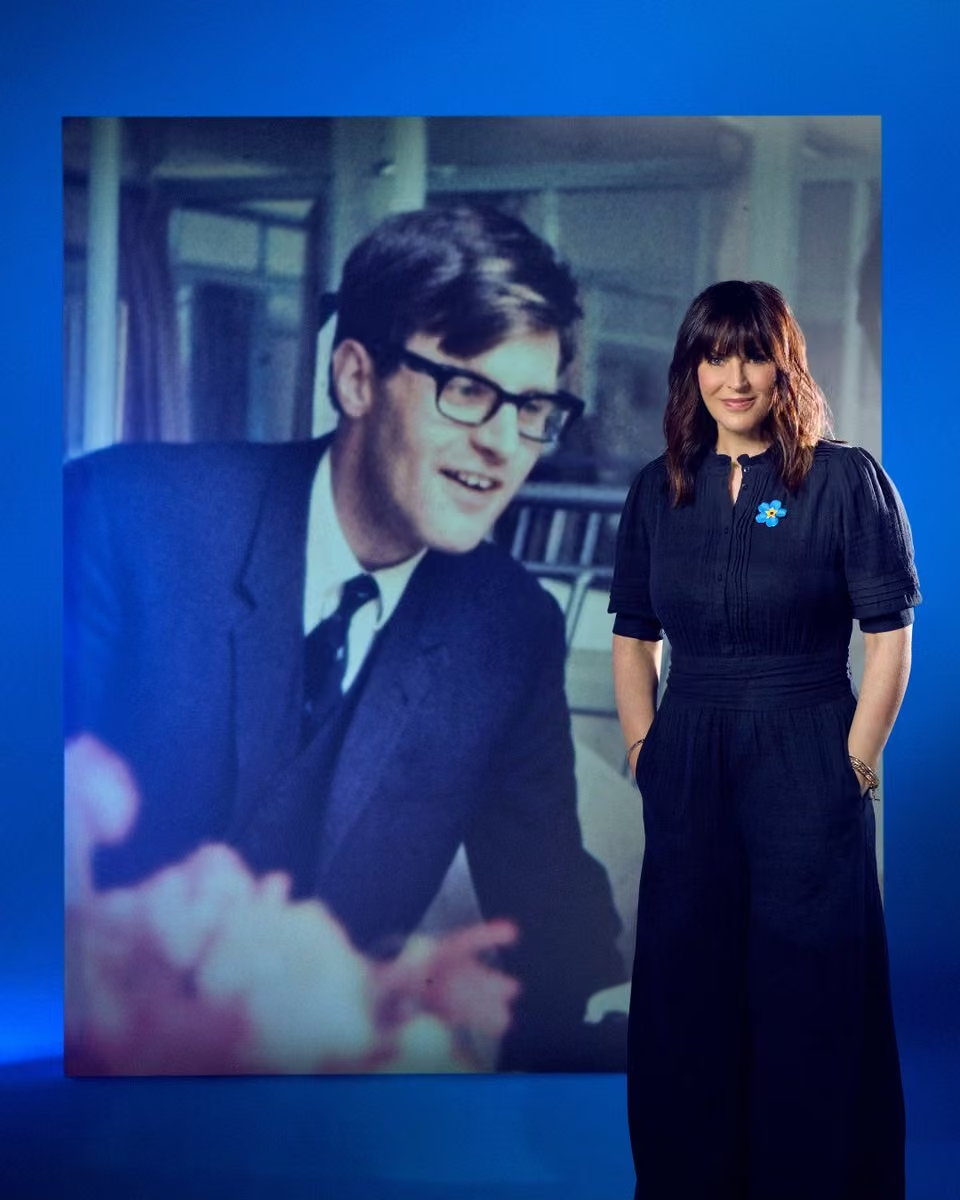
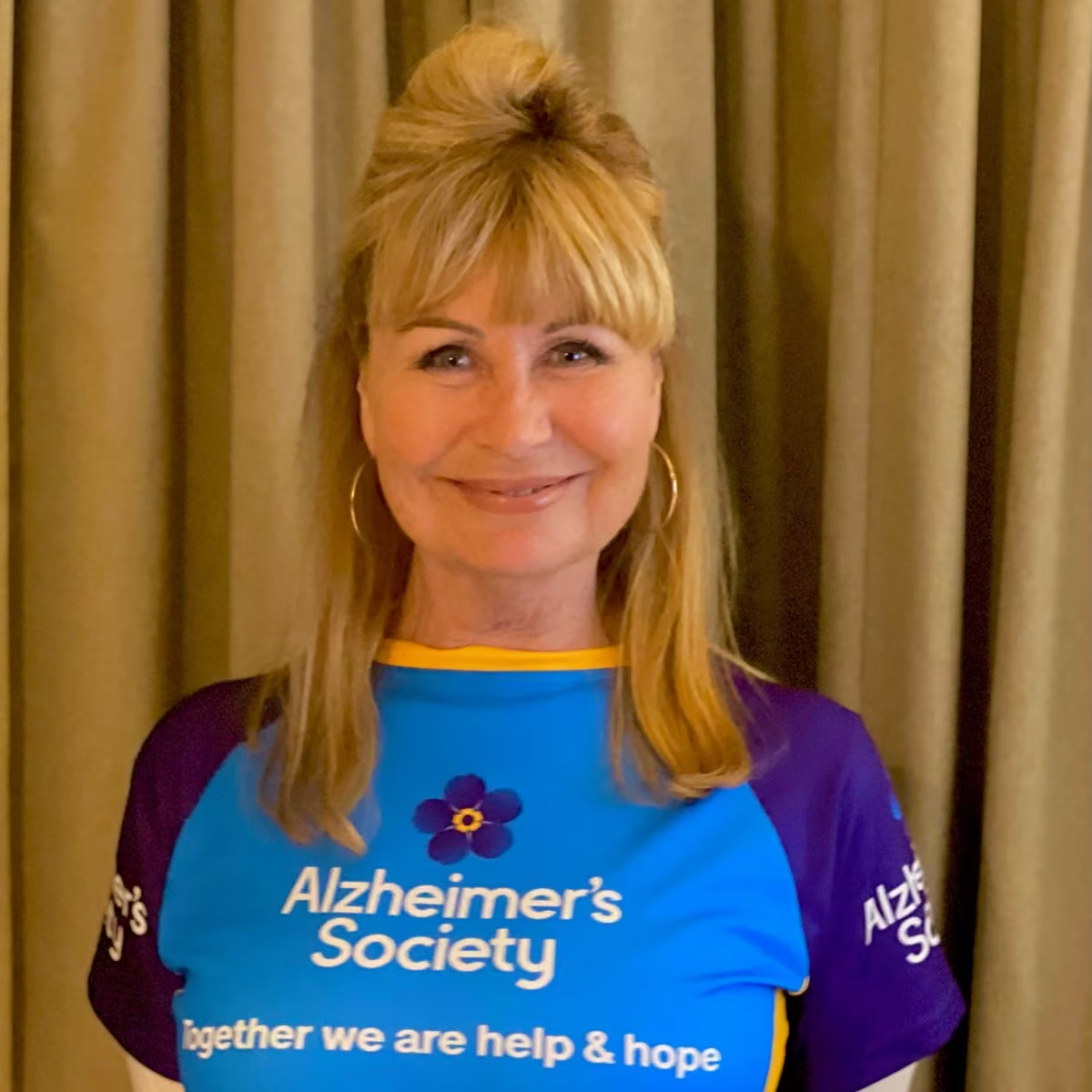
As her dad’s dementia has progressed, Teri Hatcher has seen the impact it can have on the whole family.
She opens up about the challenges her mum has faced, the changes in her dad’s memory and independence, and learning to understand what someone living with dementia can and can’t do.
Alzheimer's Society
Alzheimer's Society is a United Kingdom care and research charity for people with dementia and their carers. It operates in England, Wales and Northern Ireland, while its sister charities Alzheimer Scotland and Alzheimer Society of Ireland cover Scotland and the Republic of Ireland respectively. More on Wikipedia
-
Alzheimer's Society
@alzheimerssoc
This media couldn't be displayed. See it on the original post. -
Alzheimer's Society reposted
Lawrence Booth
@BoothCricket
Grateful to ECB chairman Richard Thompson for speaking so honestly and movingly about the dementia that laid low both his parents. With thanks to @alzheimerssoc and @DailyMail for their Dementia Carers Together campaign www.dailymail.com/sport/cricket/article-16283927/ECB-chai…
-
Alzheimer's Society
@alzheimerssoc
Dementia can make dental care challenging.
Someone with dementia might struggle with remembering their mouth care routine, holding a toothbrush, or doing tasks in the right order. Toothbrushing can become confusing, uncomfortable or even distressing.
That’s the challenge that inspired DentaBlue, created by Molly Baldini after her experience working in NHS dementia services.
Molly saw how often people affected by dementia struggled with toothbrushing and mouth care, while families and professionals had few practical alternatives to try.
DentaBlue offers another option for days when toothbrushing is hard. It can be chewed and swallowed, with no water, rinsing or spitting required.
While not a replacement for brushing, it offers an easy way to freshen up between brushes.
And importantly, it has been developed with people affected by dementia.
We’re proud to have supported DentaBlue on its journey through our AS Innovation Programme, bringing it from an early idea to a product that people can now access through our online shop.
After joining the first Alzheimer’s Society Launchpad cohort in 2025, it became a finalist in the National Care Forum’s Care Innovation Challenge and is now part of our Accelerator Programme.
Dementia devastates lives, but through innovation, we can transform them.
Alzheimer's Society
@alzheimerssoc
DentaBlue is available now in the Alzheimer’s Society shop: shop.alzheimers.org.uk
-
Alzheimer's Society
@alzheimerssoc
Could a tablet offer a totally new way to treat early Alzheimer’s disease?
New Phase 3 trial results for a drug called AR1001 are an exciting sign of what could be possible.
Over the year-long trial, it slowed decline in memory and thinking by nearly a third in people who weren’t taking other drugs for Alzheimer’s symptoms.
The treatment takes a novel approach, relaxing blood vessels to increase blood flow to the brain.
Dr Richard Oakley, our Associate Director for Research and Innovation, said:
‘It’s fantastic to see research and clinical trials unlocking promising new ways to target Alzheimer’s disease.’
AR1001 is from the same family of medicines as Viagra, but is being developed specifically for Alzheimer’s disease. People should not take Viagra to try to treat Alzheimer’s.
There’s still more to learn. AR1001 isn’t yet available to the public and would need to be assessed and approved by UK regulatory bodies before it could be offered in the UK.
But research is making huge progress, and every potential new treatment brings us closer to changing the future of dementia.
Alzheimer's Society
@alzheimerssoc
Read the full story by Shaun Wooller in the Daily Mail at www.dailymail.com/news/article-16297465/New-Viagra-brain-…. Headline via Daily Mail.
-
Alzheimer's Society
@alzheimerssoc
A widespread global outage is currently affecting Microsoft, so we may have difficulty receiving and responding to any enquires sent to us by email or through our general enquiries form.
For immediate assistance please contact us on 0330 333 0804 for general enquiries or call 0333 150 3456 for dementia support and advice.
And you can find answers to the most frequently asked questions on our FAQs page: www.alzheimers.org.uk/about-us/how-can-we-help-you -
Alzheimer's Society
@alzheimerssoc
'Taking care of your parents, your life, your children... it’s a lot.'
Teri Hatcher opens up about caring for her dad who is living with dementia, and the pressure of feeling sandwiched between caring for your parents, your children and yourself.
Her message to other carers? You have to give yourself grace. 💙This media couldn't be displayed. See it on the original post. -
Alzheimer's Society
@alzheimerssoc
Three years, after sharing his dementia diagnosis publicly, Alastair Stewart is supporting our new Dementia Cares Together Appeal in partnership with @DailyMail
www.dailymail.com/health/article-16265751/Alastair-Stewar…
Alzheimer's Society
@alzheimerssoc
If you have been affected by this article or need help, advice, or support, please contact our Dementia Support Line on 0333 150 3456.
-
Alzheimer's Society
@alzheimerssoc
‘From what I experienced, the emotional toll [of dementia] is a burden that is unbearable. The weight is unbearable - it gets too big.
Prime Minister Andy Burnham has backed our Dementia Carers Together Appeal with the Daily Mail after revealing how his mother was left “sinking” under the strain of caring for his father, Roy, who had Alzheimer’s disease.
‘I saw it directly - I saw my mum sinking under the size of that weight.‘
‘There was a tendency to focus on the person with dementia and miss some of what was going on around, and particularly the impact of carrying that daily burden on my mum.’
‘We as a family, we had basically worked on the principle for many years that we wouldn’t want to see my dad going into care - that we would find a way [of keeping him at home].
‘And I think because of that feeling that we had - and because perhaps we were looking at my dad all the time, not necessarily looking at my mum - I think it took possibly too long to make that decision.’
Andy believes his family would have benefited from the practical advice and peer support the new Dementia Carers Together service will provide.
‘Often what happens to a family is that the diagnosis is confirmed, and in our case, you get paperwork, you get all kinds of stuff but none of it really helped.’
‘It was all delivered just via pamphlets and it would have helped to have had some more practical advice as to how things will progress and what you need to be ready for.’
‘From experience, just a little bit of help can make something feel bearable or doable that, without it, would all of a sudden just overwhelm somebody.'
‘I can absolutely see that the sessions would have been helpful.’
’The country is dependent upon people who are caring for partners, loved ones, unpaid and we’ve got to see them, recognise them, hear them when they say that I need more to make this sustainable.’ -
Alzheimer's Society
@alzheimerssoc
More than a third of dementia carers provide over 100 hours of care every week.
Nearly one in five say they have no control over their daily lives.
And almost one in five don’t spend any time at all doing things they value or enjoy.
Carers shouldn’t have to sacrifice their own wellbeing to get through each day. And the support available shouldn’t depend on where they live.
But currently, the impact of caring is a postcode lottery.
The latest Survey of Adult Carers in England shows that in areas where carers report a better quality of life, more carers are also satisfied with the support they receive, feel involved in discussions about care and find information and advice easier to access.
These findings underline just how vital it is that every family can access the information and support they need, wherever they live.
That is why our Dementia Carers Together service will offer practical advice and opportunities for carers to connect, share experiences and learn from others, both online and in person,
Because every dementia carer deserves to feel informed, involved and supported.
Read the full story here: www.dailymail.com/health/article-16276859/Dementia-carers… -
Alzheimer's Society
@alzheimerssoc
Dementia doesn’t just affect the person diagnosed. It has a huge impact on the family and friends who care for them too.
That’s why, in partnership with @DailyMail we’re launching the Dementia Carers Together Appeal.
Our ambition is to create a national network where carers can get practical advice, understand their rights and connect with people who truly understand what they are going through.
Alzheimer's Society
@alzheimerssoc
Too many carers are facing loneliness, exhaustion and overwhelming responsibilities without the help or information they need.
Together, we can change that by making sure fewer carers face caring for someone with dementia alone.
Find out more about the appeal and the new service: www.alzheimers.org.uk/get-support/help-dementia-care/deme… -
Alzheimer's Society
@alzheimerssoc
Could virtual reality help us understand what it’s like to live with dementia?
For people living with dementia, everyday activities like shopping can become challenging.
Busy environments, communication difficulties and sensory changes can all make retail settings stressful and hard to navigate.
That’s why researchers have developed a virtual reality training tool that lets users step into the shoes of a person living with dementia as they navigate a supermarket.
The aim is to help retail workers and members of the public better understand the challenges people with dementia may experience - and explore whether this could help them feel more confident offering support.
The research has been shaped by people living with and affected by dementia, who helped refine the VR experience through focus groups and workshops.
The team is now evaluating the VR tool with retail workers and members of the public. Their work is still ongoing, but the findings could help us understand the role VR could play in dementia education and developing more dementia-friendly communities.
This research was co-funded by Alzheimer’s Society and @arc_nwc-funded researcher @ReadmanRose and colleagues at @LivUni, @OfficialUoM, and @KingsCollegeLon. -
Alzheimer's Society
@alzheimerssoc
Winter can bring extra challenges for people living with dementia, particularly when it comes to staying warm at home.
Someone with dementia might be less active, elderly, and feel the cold more, meaning they use a lot of energy. Confusion and forgetfulness could also cause them to use more energy than they mean to.
Understanding how to use gas and electricity efficiently, stay safe, and access support can help reduce energy use and keep bills manageable.
Here are our tips:
First, make sure you’re using energy efficiently at home by using energy efficient bulbs and turning off lights and electrical appliances when not in use.
Use curtains and draught excluders to keep warmth inside. Set your thermostat and use timers to control when the heating comes on. Make sure to have your boiler checked annually to keep it running efficiently and safely.
Next, find out if you’re eligible for help with heating costs. You might be able to get support from schemes like the Winter Fuel Payment, Cold Weather Payment, Warm Home Discount, or Energy Company Obligation (ECO).
Make sure to join the free Priority Services Register. This can give you access to advance notice of planned disruptions to your gas, water or electricity. You could get help with meter readings and potentially free annual boiler checks or gas safety checks.
You can also request accessible communication formats, like large print or braille and nominate someone as your main contact.
To sign up, contact your Gas Distribution Network or energy supplier, or contact us on our Dementia Support Line to sign up on your behalf.
And finally, remember carbon monoxide safety. Install and check CO alarms near gas appliances, and have those appliances checked annually by a Gas Safe registered engineer.
Learn the signs of CO poisoning, such as headaches, dizziness, nausea and breathlessness. Remember, CO is odourless and colourless.
And if you suspect a leak, open windows, leave the property, and call the National Gas Emergency Service on 0800 111 999.
The energy support we provide is possible as a result of our partnerships with @CadentGasLtd, @WWUtilities, @SGNgas, @edfenergy and @OVOEnergy.
Find more info about energy efficiency, the Priority Services Register and carbon monoxide safety, produced through our Gas Distribution Network partnership, here: www.alzheimers.org.uk/get-support/publications-and-factsh… -
Alzheimer's Society
@alzheimerssoc
Today marks 120 years since Alzheimer’s disease was first described.
And thanks to decades of research, we have many reasons to be hopeful for the future.
We've funded over £120 million of dementia research since 1989 which has led to ground-breaking discoveries:
In the 1990s we supported the early work of Professor Sir John Hardy, which helped establish the leading theory that amyloid causes Alzheimer’s. This laid the foundations for advances including the development of lecanemab and donanemab - the first drugs that can slow down early-stage Alzheimer's (though not currently available on the NHS).
We also funded research by Professor Nick Fox, who found changes in the brains of people with a rare genetic form of Alzheimer's several years before symptoms appeared. This reshaped our understanding of when Alzheimer’s begins and opened up possibilities for treatments earlier in the course of disease.
Our researchers have also developed ways to help manage symptoms like aggression and agitation in people with advanced dementia without the need for antipsychotic drugs - giving families more precious time with their loved ones.
Research led by Professor Rob Howard showed that the drug donepezil could help people with more advanced Alzheimer's stay at home with their loved ones for longer. In 2019 alone, this led to an estimated 500,000 additional months at home for people living with the condition.
And the Blood Biomarker Challenge aims to bring blood tests for dementia diagnosis into the NHS by 2030, offering a simpler, less invasive way to diagnose Alzheimer’s earlier and more accurately.
In 120 years, we’ve gone from first recognising Alzheimer’s disease to being able to change its course.
Today, we're supporting over £50 million in dementia research, working with over 400 researchers across the UK.
There is still a long way to go, but research gives us more reasons than ever to believe in a future where can be diagnosed earlier, treated more effectively and, some day, cured. -
Alzheimer's Society
@alzheimerssoc
Ever wondered what the difference is between Alzheimer’s disease and dementia?
They’re often used to mean the same thing, but there’s an important difference. Dementia describes a group of symptoms, while Alzheimer’s disease is a condition that can cause dementia.
Watch to find out more, and share this with someone who might find it useful.This media couldn't be displayed. See it on the original post. -
Alzheimer's Society
@alzheimerssoc
If you notice someone you love is having problems with their memory, it’s not always easy to talk about.
Anxiety, fear, and the stigma that still exists around discussing dementia can all make it more difficult to bring up changes you might have noticed.
But starting the conversation is the first step towards finding answers and getting support.
There isn't a right or wrong way to have this discussion. However, it can be a good idea to consider in advance what you want to say. Think about how your loved one might be feeling, and how you could address any worries they have.
If you’ve decided to start the conversation, here are our tips:
Pick a place that is familiar to the person and non-threatening. Talk about it where you both feel comfortable.
Find a quiet time to speak. Choose a moment when you won’t be rushed, disturbed or interrupted.
Choose the words you use carefully. Use reassuring and non-judgmental language. You might start the conversation by gently asking the person if they’ve noticed any changes about themselves recently or been feeling any different from usual. Are they struggling with anything?
If appropriate, mention things you’ve noticed or examples that you’re concerned about. Show that you're raising concerns because you care about them and want to offer support.
Be positive. If their problems are due to an illness such as dementia, talking to a GP can lead to the help and support they need.
Listen to the person and take on board how they respond. They may not react how you expect them to. You may need to adapt your approach but try not to worry if they don’t respond well.
This may come as a surprise to them and make them frightened and confused. Or they may not be aware of the problems you’ve noticed.
If you can’t persuade someone to see their GP and you're still worried, you could mention your concerns to their GP yourself.
Patient confidentiality means GPs can’t give out information about a patient, but they are able to receive information. You can write them a letter sharing your concerns.
And if you need more support or advice, give our Dementia Support Line a call on 0333 150 3456. -
Alzheimer's Society
@alzheimerssoc
You may have read about Lewy body dementia in the news recently following the sad passing of Sir Patrick Stewart.
If you don’t know what Lewy body dementia is, you’re not alone. Here’s what you need to know.
Dementia is caused by different diseases that affect the brain. Lewy body dementia is caused by Lewy body disease. About 1 in 10 people with dementia has Lewy body dementia.
In this disease, tiny clumps of proteins known as Lewy bodies appear in the nerve cells of the brain, causing a range of symptoms, some of which are shared by Alzheimer’s disease and some by Parkinson’s disease.
For this reason, dementia with Lewy bodies is often wrongly diagnosed.
Everyone experiences dementia differently. Both Lewy body dementia and Alzheimer’s disease can cause problems with staying focused, difficulties with making decisions, memory loss, and problems with the way the person sees things around them.
However, Lewy body dementia also causes symptoms that are not usually seen in Alzheimer's disease. These include hallucinations, problems staying fully awake, difficulties with movement and very disturbed sleep.
We have more information about Lewy body dementia on our website.
And if you’re worried about yourself or someone else, give our Dementia Support Line a call on 0333 150 3456. -
Alzheimer's Society
@alzheimerssoc
💙 We are deeply saddened by the news that Sir Patrick Stewart has died following a brief journey with Alzheimer’s disease and Lewy body dementia.
Our CEO, Michelle Dyson, said, 'Sir Patrick was an extraordinarily talented and much-loved actor, admired by millions around the world, and our thoughts are with his family, friends and all those who loved him.
“Both Alzheimer’s disease and Lewy body dementia are progressive conditions that can affect memory, thinking and behaviour, gradually changing how a person experiences and interacts with the world around them.
“His death is a heartbreaking reminder of the devastating impact dementia has on people and families across the globe. Alzheimer’s Society is here for everyone affected by dementia. For expert advice and support, visit alzheimers.org.uk or call our Dementia Support Line on 0333 150 3456.”
Alzheimer's Society
@alzheimerssoc
Image credit: Gage Skidmore, CC BY-SA 3.0, via Wikimedia Commons
-
Alzheimer's Society
@alzheimerssoc
Navigating the social care system can feel overwhelming, especially if you’re not sure where to start.
If you or someone you care for is living with dementia, here are five practical steps that can help:
1. Know who to contact
For social care and support with everyday activities, contact your local authority’s adult social care team. They can explain what support may be available in your area.
2. Think about the support you need
Before getting in touch, think about what you or the person you care for is finding difficult day to day. This could include washing and dressing, preparing meals, getting around safely or managing at home.
3. Ask for a care needs assessment
Contact your local authority and ask for a care needs assessment. Explain what you’re finding difficult and how it affects everyday life. If you care for someone with dementia, you can also ask about an assessment of your own needs as a carer.
4. Understand paying for care
Depending on your circumstances, you may have to contribute towards the cost of social care. Your local authority can explain what financial assessment may be needed and what support you could receive.
5. Keep a record
Make a note of who you speak to, when you contacted them and what was agreed. If there’s anything you don’t understand, ask for it to be explained, and ask what you can do if you’re not getting the support you need.
Save this post so you can come back to it when you need it 💙 -
Alzheimer's Society
@alzheimerssoc
This early-stage research is an exciting glimpse of what the future of Alzheimer's treatment could look like.
There is a long way to go - this was laboratory research in cells so we don't yet know whether it will be safe or effective in the human body - but it's an encouraging first step.
With around one million people in the UK living with dementia, we urgently need treatments that can slow it more effectively, stop it progressing or prevent it altogether.
Read more here: www.dailymail.com/health/article-16239361/Gene-switch-the… -
Alzheimer's Society
@alzheimerssoc
In the latest episode of Life Without, our amazing Lived Experience Ambassador Keith Oliver shares his experience of Alzheimer's disease, and how memory loss has affected him. Listen here: www.bbc.co.uk/sounds/play/m00333sg
-
Alzheimer's Society
@alzheimerssoc
This is terrible. If you've spotted this story and are worried that you or a loved one with dementia might be susceptible to scams, have a read through our advice on how to keep yourself and loved ones safe from financial scams: www.alzheimers.org.uk/blog/financial-scams-dementia-safet…
Metro
@MetroUK
‘Scammers took every penny my mum’s got – and got away with it’ metro.co.uk/2026/10/24/scammers-took-every-penny-mums-got…
-
Alzheimer's Society
@alzheimerssoc
What’s your advice for starting a conversation about dementia?
When you spot worrying symptoms in a loved one, or yourself, it can feel scary, uncertain, and not easy to talk about.
But having the conversation is the first step in getting support and working out what’s causing these symptoms – whether that’s dementia, or something else.
What advice would you give for starting the conversation? -
Alzheimer's Society
@alzheimerssoc
Our partners at @edfenergy are offering households free electric blankets, heaters and debt support to help vulnerable households this winter 💙
If you're affected by dementia and struggling with energy costs, speak to your energy provider to find out what support may be available and ensure you’re accessing the help you’re entitled to.
Read more here: www.express.co.uk/finance/personalfinance/2258635/edf-fre… -
Alzheimer's Society
@alzheimerssoc
Michael Dyson, our CEO, comments on a new report from the Care Quality Commission (CQC). The report lays bare the reality of a system unable to keep pace with growing demand, while access to high-quality care is a postcode lottery.
'For people living with dementia, who bear the brunt of these shortcomings, the findings will be particularly alarming. The report highlights concerning gaps in training, with fewer than half of care staff receiving dementia-specific training as part of their induction. This leaves many without the skills needed to deliver high-quality care.
'People living with dementia are one of the largest groups of people who rely on care. We welcome Baroness Casey’s review of social care and the government’s proposed National Care Service. Dementia must be at the heart of these reforms and people affected by dementia cannot be left waiting.
'Alzheimer’s Society is calling for mandatory dementia training for the social care workforce, so staff have the skills, knowledge and confidence to provide high-quality, person-centred dementia care.'
🔗 click here to read more: www.cqc.org.uk/publications/major-report/state-care -
Alzheimer's Society
@alzheimerssoc
A first-of-its-kind clinical trial could cut years from the search for treatments that work for people with Alzheimer’s disease.
The national trial, called AD-SMART, will test multiple drugs simultaneously, starting with two repurposed medicines already used to treat type 2 diabetes and ADHD.
Testing drugs that are already approved to treat other conditions and known to be safe means that, if successful, treatments can reach people living with Alzheimer’s much faster than a medicine developed from scratch.
Trials like this, which test multiple drugs simultaneously, have been successfully used across other diseases such as cancer. Now we hope to see dementia research follow in their footsteps to speed up advances.
We know that people affected by dementia are eager to see effective drug options, so it's fantastic to see an innovative trial like AD-SMART recruiting patients.
The national trial is led by the UK Dementia Research Institute and Alzheimer’s Research UK, in partnership with the National Institute for Health and Care Research, the Medical Research Council and Health Data Research UK, with ongoing funding committed by UK government to support the trial. -
Alzheimer's Society
@alzheimerssoc
Are you ready for winter? ❄️
The colder months can be tough for people living with dementia – but with the right support and a little bit of forward planning, we can help our loved ones stay safe, warm, and independent.
Thanks to our partnership with the Gas Distribution Network, there are several ways to access financial and practical support before the cold weather sets in and things become more urgent.
If you care for someone with dementia, here are a few things you can do now to help make sure the winter is safe, comfortable and affordable:
Fit & test carbon monoxide alarms regularly.
Get your boiler serviced ahead of winter.
Call our Dementia Support Line for info on local grants for energy costs.
Close curtains at dusk and use draught excluders to keep warmth inside.
Set the thermostat and use timers – aiming for around 18–21°C.
Join the Priority Services Register – a free support service for people living with dementia.
Alzheimer's Society
@alzheimerssoc
Find more info about energy efficiency, the Priority Services Register and carbon monoxide safety, produced through our Gas Distribution Network partnership, here: www.alzheimers.org.uk/get-support/publications-and-factsh…
-
Alzheimer's Society
@alzheimerssoc
Kelsea wrote this wonderful poem for Nanny Linda who had dementia, but sadly passed away last month. 💙
The poem, titled Nan, reads:
Nan
Where are you going?
Please come back
Seeing you disappear in front of our eyes
Breaking our hearts
We just wanted you back
Sometimes you showed glimpses
Glimpses that you was still there
You still made us all smile and laugh
But seconds later we could see it in your eyes
We knew, we knew you was scared
We were too and we still are.
This horrible disease called Alzheimer’s
It come along and was taking you away right in front of our eyes
And now it has taken you
How is this fair?
You didn’t know what was happening
You were scared, confused & sad
We are so sorry that this happened to you
If there is anything we could have done
We would have, to make this all stop and bring you back
But unfortunately we can’t
No matter what, you had your family
For the rest of your days
Although it may have been too late on your last day
We were all there
Your husband, your sons, your grandchildren and your daughter-in-laws
We were all there
And no matter what Alzheimer’s took from us all.
We know what you will always be to us.
A Beautiful Wife, a Amazing Mum and a Wonderful Nanny.
Love you Nan -
Alzheimer's Society
@alzheimerssoc
75% of people believe the NHS should fund new treatments that slow the progression of Alzheimer's disease.
While current dementia medications can help some people manage symptoms, new disease-modifying treatments are designed to slow the underlying disease process in people with early Alzheimer's disease, which is the leading cause of dementia.
Two of these treatments, lecanemab and donanemab, were licensed as safe and effective in Britain in 2024. But NICE, the organisation which assesses treatments and decides which ones should be available on the NHS, did not recommend them for routine NHS use.
However discussions are now taking place about alternative arrangements that could enable people to access these drugs.
As well as considering the impact on people living with dementia, for the first time NICE is considering the potential benefits to carers as part of its appraisal.
These treatments mark an important step in how we treat and view dementia.
We’ve seen with cancer how new treatments have become more effective, safer and more affordable over time. And with the right support, we believe this will happen with dementia.
Like this post if you agree that the NHS should fund these treatments. -
Alzheimer's Society
@alzheimerssoc
Menopause or dementia? Some of the symptoms can look surprisingly similar.
Symptoms of menopause and perimenopause can include mood changes, brain fog and problems with memory.
These can also be early symptoms of dementia.
Menopause generally occurs between ages 45-55 (though this varies), and perimenopause symptoms can appear much earlier. Dementia usually develops after 65, but can happen earlier - meaning there can be an overlap in when symptoms appear.
However experiencing brain fog or forgetfulness during menopause does not necessarily mean that you have dementia.
A key difference is that, with dementia, problems tend to get progressively worse over time. You may also notice additional symptoms appearing - like problems with language, and needing help with everyday tasks.
But if you’re worried about changes you’re experiencing, it’s important not to dismiss your concerns. Speak to your GP about your symptoms, as knowing what’s causing them can help you find the right support.
And if you’re unhappy with your GP’s assessment, remember that you can always request a second opinion.
By talking more openly about dementia and menopause, we can help people recognise when something has changed and feel confident seeking support.
And if you need more information, support or advice, give our Dementia Support Line a call on 0333 150 3456. -
Alzheimer's Society
@alzheimerssoc
A simple blood test could help change the future of dementia diagnosis.
The Blood Biomarker Challenge is a ground-breaking research initiative which aims to bring blood tests for dementia diagnosis into the NHS by 2030.
Dementia is the leading cause of death in the UK, yet over a third of people living with the condition remain undiagnosed - meaning they can’t access the treatment, care, and support they urgently need.
These blood tests could offer a less invasive and more accessible way to help identify the diseases that cause dementia, helping more people get the early and accurate diagnosis they deserve.
This would give more families the chance to plan for the future, access appropriate treatments and support, and take part in research. In due course, these tests are likely to be needed to access emerging treatments that may slow the progression of dementia.
Watch our video to find out more about how these blood tests work, and the difference they could make.
The Blood Biomarker Challenge is supported by Alzheimer’s Society, @AlzResearchUK, @NIHRresearch, Gates Ventures and @PostcodeLottery players.
Alzheimer's Society
@alzheimerssoc
Learn more by visiting the Blood Biomarker Challenge website: www.bloodbiomarkerchallenge.org
-
Alzheimer's Society
@alzheimerssoc
Jon Snow is bringing his signature colourful style to Alzheimer’s Society! 🧦
Together with designer Victoria Richards, legendary broadcaster Jon Snow has created a pair of luxury socks and a limited-edition silk tie, inspired by our colours and his unmistakable style.
Following his Alzheimer’s diagnosis, @jonsnowC4 hopes the collection will help raise awareness and vital funds for Alzheimer’s Society.
Alzheimer's Society
@alzheimerssoc
Want your own? The socks and tie are both available for pre-order in our online shop!
Grab yours here: shop.alzheimers.org.uk/products/luxury-jon-snow-inspired-… -
Alzheimer's Society
@alzheimerssoc
We were at the Conservative Party Conference in Birmingham last week, putting dementia firmly on the agenda.
Alongside @TotalPolitics, we hosted a panel exploring whether the UK is ready for the future of dementia care, including how we improve diagnosis, support the workforce and ensure innovation reaches people affected by dementia safely and fairly.
We were grateful to hear from Maria Higson, @GregoryStafford MP, Lord @JimBethell , Professor Paresh Malhotra, and our very own Jennifer Keen, discussing the big issues facing dementia today, but also sharing their hopes for the future.
A special thanks to those who attended and contributed to such important conversations surrounding dementia.This media couldn't be displayed. See it on the original post. -
Alzheimer's Society
@alzheimerssoc
'Hard. It took approx 18 months in total. Family Doctor initially laughed it off saying we all get forgetful as we get older. What, at 52 years?'
What was your experience of getting a dementia diagnosis?
We asked you this question and had hundreds of replies sharing the huge challenges you've faced when trying to get a dementia diagnosis for your self or a loved one.
‘Shocking. Wrong diagnosis 3 times. Each time diagnosed and discharge. No support or after care for a life limiting condition.’
‘It took so long from raising concerns to get a diagnosis. Now we have it and thats it, no support or assessment/monitoring.’
‘It’s been absolutely horrific experience and it’s taking an extremely long time to get anywhere. Constantly get given time frames that aren’t stuck too.’
‘The doctors delayed it by 2 years . Do not let them . Say you want a memory assessment. Doctors cannot diagnose it with 5 questions.’
‘Let's just say it's not for the faint hearted or someone who doesn't have the resilience, motivation or energy to constantly chase things up, which it would seem is the only way to progress anything. Exhausting for carers.’
‘Shocking experience. the doctor just not good enough in diagnosing. My father ended up getting sectioned after almost burning the house down and flooding it several times. it’s one of the saddest diseases known to mankind.’
‘Distressing for my mum, the consultants treated my mum as if she wasn’t present and frightened the life out of her whereby she thought she was going to be taken away.’
Which of these reflect the experience you’ve had? -
Alzheimer's Society
@alzheimerssoc
'Now I'm Prime Minister, it's a personal mission I'm determined to see through.'
Fresh after announcing new investment to make dementia research a national priority, Andy Burnham has vowed to 'throw the weight of government' at defeating dementia in memory of his father.
'This is personal for me. I know how it feels to lose a loved one to dementia.
'That's why I'm pleased to support the Daily Mail and Alzheimer's Society's Defeating Dementia campaign. We'll throw the weight of government behind that effort.'
'Not just because of my dad, but because this is a country full of fathers and mothers, friends and loved ones, who all deserve to be treated with dignity as they age.
'Dementia is a devastatingly cruel disease, not only for those who live with it, but for the families who care for them.'
'For too long, we have accepted dementia as something to be managed later in life, rather than a disease we can defeat. I don't accept that.
'I want Britain to be the leading nation in dementia research, making the breakthroughs that change people's lives.
This is a significant moment for dementia and we welcome the Prime Minister’s ambition for the UK to lead the world in discovering new treatments to beat dementia.
Read the full articles in the Daily Mail at www.dailymail.com/health/article-16193425/Andy-Burnham-ba…
Image credit: Simon Dawson / No 10 Downing Street commons.wikimedia.org/wiki/File:Prime_Minister_Andy_Burnh… Edited to add blue background. -
Alzheimer's Society
@alzheimerssoc
The Prime Minister is making dementia research a priority. This is a huge moment!
He set out an ambition for the UK to lead the world in discovering new treatments to beat dementia, alongside substantial new investment in The BARBARA Alliance.
It's a major vote of confidence in the researchers, clinicians and organisations working together to accelerate progress, remove barriers to clinical trials and accelerate progress towards new treatments.
With sustained investment, earlier diagnosis and a determination to make research accessible to everyone, we have a real opportunity to create the change that's so desperately needed.
Read more about this announcement at: www.dailymail.com/health/article-16193425/Andy-Burnham-ba…
Photo credit: By Alecsandra Dragoi / No 10 Downing Street, OGL 3, commons.wikimedia.org/w/index.php?curid=196791206 -
Alzheimer's Society
@alzheimerssoc
📣 ‘Join me in demanding better dementia diagnosis.’
Actor, broadcaster, author, national treasure and Alzheimer’s Society Ambassador, Sir Tony Robinson, shares our belief that a dementia diagnosis should be more than being handed a leaflet and left to get on with it.
A diagnosis should give answers, not create more questions. It should unlock access to vital treatment and support.
But together, we have a cunning plan.
We're calling on government to demand that after being referred by their GP, everyone with dementia receives a diagnosis, a care plan, and, where appropriate, begins treatment - all within 18 weeks.
If you agree with Sir Tony that everyone affected by dementia deserves the same care and support we’d expect for other serious health conditions, then join us.
Add your name to our call to end the wait for dementia diagnosis: action.alzheimers.org.uk/page/198458/petition/1?ea.tracki…This media couldn't be displayed. See it on the original post. -
Alzheimer's Society
@alzheimerssoc
Our incredible supporter and volunteer, Emily, shares why she's campaigning for better dementia diagnosis and support, after her late husband Jim was diagnosed in his early fifties.
UTV Live News
@UTVNews
In the latest edition of the UTV podcast, Going the Extra Mile, @CarolJordanTV sits down with Emily Wilson.
Emily campaigns for faster dignosis and better support services for young-onset dementia after her husband Jim started to develop the condition in his early fifties. @alzheimerssoc
More here: www.itv.com/news/utv/2026-10-02/campaigning-for-better-al… -
Alzheimer's Society
@alzheimerssoc
What's a part of everyday life that dementia has changed?
-
Alzheimer's Society
@alzheimerssoc
Wow!
Look at everything that has happened this World Alzheimer’s Month 💙
This September, everyone came together to shine a light on dementia - raising awareness, sharing powerful personal stories, demanding better diagnosis, and championing the support people deserve.
Thanks to supporters, volunteers, partners and campaigners across the UK, we’ve seen extraordinary momentum:
- We saw Andy Burnham wear our badge
- Recruitment for Dementia Tsar has started
- Thomas Tuchel wore our badge
- Managers supported our LMA badge campaign
- We handed in our open letter with over 60,000 signatures
- Jon Snow also backed this open letter
- The launch of Manchester brain Health Centre
World Alzheimer’s Month reminds us that dementia can be challenged - and everyone involved is proving it. We’re only just getting started, and every voice, every badge, every moment of support moves us closer to ending the devastation caused by dementia. 💙 -
Alzheimer's Society
@alzheimerssoc
A new £80 million challenge could help people receive a dementia diagnosis sooner.
Nine new technologies are set to be tested in the NHS as part of a Dementia Challenge aiming to deliver faster and better dementia diagnosis, including faster MRI scans, remote cognitive assessments and blood-based biomarkers for dementia.
The goal is for 92% of people to be diagnosed within 18 weeks of a referral, up from around 60% today with diagnosis often taking more than a year.
The projects will undergo real world testing and only get more funding by proving they're working, speeding up the process of getting what works to patients.
Early dementia diagnosis can provide answers, help people plan for the future, connect them to support, and open the door to research and clinical trials.
It can also reduce the likelihood of emergency hospital admissions and delay the need for greater care support, reducing the impact of dementia on services within the NHS.
That’s why we’re proud to support the UKRI Dementia Challenge as a key delivery partner to help turn promising innovations into real improvements for people affected by dementia.
Now the Government must match this ambition by introducing a national 18-week target from referral to diagnosis. -
Alzheimer's Society
@alzheimerssoc
'We would never accept people diagnosed with another major health condition, such as cancer, being denied the support and compassionate care they need, so why should we for dementia?'
Our chief executive, Michelle Dyson, believes the Prime Minister’s recent announcement of a National Care Service for England could be a turning point for millions affected by dementia.
‘People affected by dementia have paid the price for decades of political failure on social care, but the Prime Minister’s vision of a National Care Service – informed by his own family’s heartbreaking experience of this disease – could bring about a truly seismic shift.’
'At Alzheimer’s Society we hear every day from people across the country who turn to us, desperate for help.
'Families are struggling to navigate disjointed NHS and social care systems, unpaid carers are stretched beyond breaking point and people are facing ruinous care costs.
'For so long there have been collective shoulder shrugs from politicians, clinicians and society itself – all resigned to the belief that, when it comes to dementia, there’s not much to be done. Now, however, there is hope and a huge opportunity.
'It is now clear that, far from being an inevitable part of ageing, dementia is a disease like any other – one that can be prevented, diagnosed and treated.
'That’s why we must see urgent progress, to reduce the pressure on both the NHS and social care, and help prepare for the introduction of a National Care Service.
'We commend the Prime Minister’s vision. But the success of his reforms will ultimately be judged by their results – whether people living with dementia receive the care, treatment, dignity and support they need today, as well as in the future.'
Headline via Daily Mail.
Alzheimer's Society
@alzheimerssoc
Read the full article here: www.dailymail.com/news/article-16173953/MICHELLE-DYSON-Fa…
-
Alzheimer's Society
@alzheimerssoc
Join Alzheimer's Society on 7-8 October at #nicon2026 - Northern Ireland's biggest event for health and social care leaders and partner organisations.
Visit our stand and join our sponsored lunch session at 11.45 am (Glen 1-2): Mental Health in a Neighbourhood Paradigm.
We look forward to seeing you there!
#dementia #nihealthcare -
Alzheimer's Society
@alzheimerssoc
For some people with dementia, their landline can be a lifeline.
So if you’re living with dementia or supporting someone who is, it’s important to be prepared for the digital switchover that’s happening in January 2027.
In January, landlines across the UK are moving from traditional phone lines to digital services that work through a broadband connection.
Save our checklist for what you need to do before the switch to make sure your home phone and certain telecare devices continue to work smoothly.
Visit our website for more key information you'll need, including who to contact, what questions to ask, and how to prepare for the change: www.alzheimers.org.uk/blog/how-get-ready-switchover-digit…
And if you need further advice and support, just call Alzheimer’s Society’s Dementia Support Line on 0333 150 3456.
@bt_uk #dontputofftheswitch -
Alzheimer's Society
@alzheimerssoc
'My father’s official diagnosis of vascular dementia with Alzheimer’s disease was in 2011.
Mama had visited their GP several times expressing concern, she duly accompanied Papa to the NHS Memory Clinic and every time he passed the tests that are supposed to spot the early warning signs of dementia.
Now we know early dementia doesn’t have a timetable, it can descend like a fog and lift just as quickly: like the weather there are good days and bad days. It so happened every time Papa sat those tests, he was having a Good Day.
Now we know the only truly accurate diagnosis can come via a brain scan but by the time we had done this, it was too late.
There are drugs that can slow down the march of this inexorable disease but my mother’s natural instincts to protect Papa and us, and I suspect the prevailing stigma attached to admitting there was something wrong “in his head” meant by the time my brother and I knew the full extent of Papa’s condition, we had missed that deadline of early intervention.
We went from wondering if there was Something Wrong to full on crisis management in 24 hours.'
Like many families, Meera's faced delays with dementia diagnosis. It should open the door to support, hope and progress. But too many people are still missing out, and that’s not fair.
Meera Syal talks openly about her experience of dementia and the role of Alzheimer's Society in her book Vigilauntie: A Memoir - Innit? out now in hardback, ebook and audio. -
Alzheimer's Society
@alzheimerssoc
Home phones across the UK are switching from analogue to digital.
If you or a loved one have a landline you want to keep using, this change affects you.
Visit our website to find out what you need to do before the switch to make sure your home phone and telecare devices continue to work smoothly: www.alzheimers.org.uk/blog/how-get-ready-switchover-digit… -
Alzheimer's Society
@alzheimerssoc
Did you spot Thomas Tuchel wearing a blue and yellow flower last night? 👀
This is the Alzheimer's Society Forget Me Not badge.
The badge is a symbol of remembrance, understanding and solidarity with everyone affected by dementia.
Wearing it helps to raise awareness, challenge stigma and send a powerful reminder to people living with dementia, and those who care for them, that they are not alone.
Thank you, Thomas. 💙 @England -
Alzheimer's Society
@alzheimerssoc
For decades, people affected by dementia have paid the price for political failure on social care. Today the Prime Minister has set out a vision to change that.
Families have been pushed to breaking point by patchy support and impossible choices about how to care for someone they love.
From his personal experience Andy Burnham, like the millions of people across the UK affected by dementia, understands why people can no longer be asked to wait for change.
That's why we welcome the Prime Minister's commitment to build a National Care Service, which could be a historic turning point.
Dementia is one of the biggest drivers of demand for social care and, as the Prime Minister pointed out, if social care continues to fail, pressure on the NHS will only grow.
People living with dementia must be at the heart of these plans. That means access to high-quality care and support when it is needed, a skilled and valued workforce with dementia expertise, and better support for unpaid carers.
The measure of success will not be the ambition of today's announcement. It will be whether people living with dementia and their families finally get the care and support they have been denied for far too long.
This must be the moment social care is finally fixed.
Headline via BBC.
Alzheimer's Society
@alzheimerssoc
Read the full story here: www.bbc.co.uk/news/articles/crwyzd3gv519o
-
Alzheimer's Society
@alzheimerssoc
We’re attending the @uklabour Conference in Liverpool this week, bringing dementia to the heart of discussions about the future of health and social care reform.
Earlier today, we held a roundtable in collaboration with @ippr_uk, titled 'Stronger for Longer: Building a health and care system for an ageing Britain'.
Here’s what our attendees had to say 👇
Alzheimer's Society
@alzheimerssoc
‘People with dementia deserve more accurate and earlier diagnosis’ - Linsey Farnsworth, MP for Amber Valley (@LFarnz)
Post not available here, view on X
Alzheimer's Society
@alzheimerssoc
We were also grateful to have Anna Dixon MP attend our afternoon panel event - hosted with @TheKingsFund and @age_uk - to discuss how the Government can maintain momentum on adult social care reform, highlighting the importance of practical action on tackling dementia, workforce planning, staff pay and retention, development and training, use of technology and digitization.
Alzheimer's Society
@alzheimerssoc
A special thanks to @LFarnz, @jim4dartford and @annalouisedixon for attending and contributing to such important conversations surrounding dementia at the #labourpartyconference today 💙
-
Alzheimer's Society
@alzheimerssoc
‘Being a GP, I’ve seen first-hand the difference a diagnosis can make in someone’s life – and with new research and treatments on the horizon, the earlier we can act, the better.’
A huge thank you to @DrHilaryJones, who is sharing his support for our campaign to make sure everyone living with dementia receives a diagnosis, personalised care plan and, where appropriate, treatment within 18 weeks.
Alzheimer's Society
@alzheimerssoc
Dementia doesn’t wait; neither should a diagnosis. If you agree, tap the link: action.alzheimers.org.uk/page/198458/petition/1?ea.tracki…
-
Alzheimer's Society
@alzheimerssoc
Could personalised brain scans help us spot dementia earlier?
Brain scans are an important tool for diagnosing dementia. Looking for changes in the brain can help us assess whether someone may have a disease that causes dementia.
But today, many brain scans are compared against a single 'average' brain, instead of taking into account the natural differences in size and shape that we all have.
A team of researchers led by Prof James Cole at UCL, and funded by Alzheimer’s Society, are working to change that.
Using brain scans from almost 60,000 people, the team is building a more personalised way to assess changes that might be associated with dementia.
By comparing someone’s scan with people of a similar age, sex and background, they hope to identify brain changes linked to dementia more accurately.
These personalised brain maps could potentially detect subtle brain changes before symptoms appear, improve diagnosis for people from underrepresented groups, and help researchers better measure whether potential new treatments are working.
While the work is still ongoing, this research could help move dementia diagnosis away from a one-size-fits-all approach and towards more personalised care in the future.
One in three people living with dementia don’t even have a diagnosis. And for those that do, on average, people live with symptoms for three and a half years before receiving it. That's three and a half years of worry and uncertainty, all without the support, treatment or guidance that could help.
That’s why we’re funding research like this to find better ways to diagnose dementia.
And it’s why we’re demanding that after being referred by their GP, everyone with dementia receives a diagnosis, a care plan, and, where appropriate, begins treatment - all within 18 weeks.
Sign the petition and demand better for everyone affected by dementia - link in comments ⬇️
Alzheimer's Society
@alzheimerssoc
Join us and demand better. Demand that after being referred by their GP everyone with dementia receives a diagnosis, a care plan, and, where appropriate, begins treatment - all within 18 weeks: action.alzheimers.org.uk/page/198458/petition/1?ea.tracki…
-
Alzheimer's Society
@alzheimerssoc
How do we make sure people can get a timely dementia diagnosis and access the support they need afterwards?
That’s the next question you asked Baroness Louise Casey, Chair of the Independent Commission on Adult Social Care.
Baroness Casey argues that if we want faster diagnoses, better support and a more joined-up approach to care, dementia and Alzheimer's must be placed firmly on the nation's agenda.
Because until dementia is taken seriously as one of the biggest challenges facing our society, the change people need simply won't happen.
Take part in the Big Conversation on Care, where people across the country are debating and voting on ideas for reform. caseycommission.co.uk/bigconversation/This media couldn't be displayed. See it on the original post. -
Alzheimer's Society
@alzheimerssoc
'We have never been more excited than we are right now about the progress we’re making.’
During #worldalzheimersmonth, we held our annual conference, focusing this year on ‘thinking differently about dementia'.
We're so grateful to the hundreds of people who came together to discuss how we can tackle the challenges people affected by dementia are facing – both now and in the future.
Our Associate Director of Research and Innovation, Rich Oakley, and our two event hosts, Michaela Williams and Professor Dame Louise Robinson, share some of their reflections on this year’s conference.
If you joined us for #asac26, we'd love to hear your thoughts - share your own reflections in the comments.This media couldn't be displayed. See it on the original post.
Alzheimer's Society
@alzheimerssoc
Already excited to book your spot at ASAC 2027? You can register your interest for next year’s event right now! www.smartsurvey.co.uk/s/ASAC27/
-
Alzheimer's Society
@alzheimerssoc
No family should be left waiting for answers.
At any time 1 in 3 people with dementia don't have a diagnosis.
Every month spent waiting for a dementia diagnosis is another month without understanding, support or access to treatment. Earlier diagnosis means more time to plan, more time to access support, and more time living as well as possible.
A diagnosis should be a lifeline, not just a label. It should open the door to personalised support, clear information, access to research and treatment, and a plan for the future.
But for too long, people affected by dementia have faced long waits, patchy support and limited access to treatment. We've come to accept a standard of care that would be unacceptable for many other serious health conditions.
With research advancing and new treatments emerging, we have an opportunity to change the story. The Government must make timely diagnosis, personalised support and access to treatment the standard, not the exception.
Join us and demand better 👇 action.alzheimers.org.uk/page/198458/petition/1?ea.tracki…
[Image description: A photo of a golden autumn landscape green field and distant hills has a partial beige overlay with text that reads: '1 in 3 people with dementia don't have a diagnosis. No family should be left waiting for a dementia diagnosis. Here's why we're demanding faster diagnosis (see caption)’] -
Alzheimer's Society
@alzheimerssoc
‘One of the hardest things has been navigating the support and care system.'
This World Alzheimer's Month, we're sharing Dekho, a powerful film created with writer, director and actor Manjinder Virk.
Seen through the eyes of a young boy, the film shows how dementia can affect family relationships, caring responsibilities and communication across generations.
For families like the one portrayed in this film, a dementia diagnosis should be a lifeline. It can be the first step towards understanding what's happening, accessing support and planning for the future.
Yet one in three people living with dementia still don't have a diagnosis.
‘I often think about people going through this alone and wonder how they cope - practically, emotionally and financially.'
A dementia diagnosis can bring answers and understanding after months or even years of uncertainty.
But diagnosis must be the beginning of support, not the end of the conversation. -
Alzheimer's Society
@alzheimerssoc
Too many people are left in the dark after a dementia diagnosis. But you don't have to navigate dementia alone. From local support to financial assistance, there is help available. Find out what you could be missing with this @dailymail quiz👇 www.dailymail.com/health/article-16148197/avoid-dementia-…
-
Alzheimer's Society reposted
DP World Tour
@DPWorldTour
A first birdie. A round with Dad. A hole-in-one. 💙
Our fans share their favourite golfing memories on World Alzheimer’s Day in support of @alzheimerssoc.
#worldalzheimersdayThis media couldn't be displayed. See it on the original post. -
Alzheimer's Society
@alzheimerssoc
We’re proud to be a partner of the Manchester Brain Health Centre, a two-year pilot helping to change the game on dementia in the UK.
Around one million people are living with dementia in the UK, yet, at any time, more than a third don’t have a diagnosis.
But if we can identify people in the earliest stages of memory and thinking difficulties, we can significantly improve their brain health and help put the brakes on dementia, keeping people living better for longer. [1/4]
(Headline via BBC)Post not available here, view on X
Alzheimer's Society
@alzheimerssoc
People who meet the requirements for the MBHC will be identified through existing memory assessment services and referred directly. Those who take part in the pilot in central Manchester will also be given the chance, if they are eligible, to take part in research and clinical trials.
Delaying or preventing dementia will help reduce the impact on health and social care systems, support people to live better for longer and ensure fewer people die from dementia. [3/4]
Alzheimer's Society
@alzheimerssoc
If you’re worried about yourself, or someone close to you, our symptoms checklist can help you start a conversation with your GP. Visit alzheimers.org.uk/checklist or call our Dementia Support Line on 0333 150 3456 [4/4]
-
Alzheimer's Society
@alzheimerssoc
"We've got to do it now and not wait too long for that change."
What can dementia care and support learn from the progress we've seen in other serious conditions like cancer?
To mark World Alzheimer's Day, Baroness Louise Casey, Chair of the Independent Commission on Adult Social Care, is answering your questions about the future of dementia care.
She reflects on the transformation that's taken place in cancer care since the 1970s and what lessons that could hold for the future of dementia care and support.
Change is possible. But as Baroness Casey says, we can't afford to wait too long to make it happen.
What question would you ask about the future of dementia care and support?
Let us know below, and keep an eye out for Part 2 coming soon. 👇
Take part in the Big Conversation on Care, where people across the country are debating and voting on ideas for reform. caseycommission.co.uk/bigconversation/This media couldn't be displayed. See it on the original post. -
Alzheimer's Society
@alzheimerssoc
We're at the Liberal Democrats Party Conference in Brighton 📍
Earlier today, we held a #worldalzheimersday breakfast reception, bringing together MPs, Peers and Councillors with people affected by dementia to consider the future of dementia health and social care reform.
Here’s what a few of our attendees had to say 👇Post not available here, view on X
Alzheimer's Society
@alzheimerssoc
Katy, who cares for a two people living with dementia, joined us to say; ‘People with dementia deserve an accurate and timely diagnosis.’
Alzheimer's Society
@alzheimerssoc
A special thanks to Alison Bennett MP, Baroness Barker, Caroline and Katy for attending and contributing to such an important conversation this #worldalzheimersday 💙
-
Alzheimer's Society reposted
Harwich Town Council
@HarwichTown
💙 A huge thank you to everyone who joined our Annual Memory Walk and generously sponsored our walkers. Together, we raised vital funds for the @alzheimerssoc 🚶♀️🚶♂️
#memorywalk #alzheimerssociety #dementiaawareness #harwich #dovercourt
www.smugmug.com/gallery/n-p9WkZb -
Alzheimer's Society reposted
DP World Tour
@DPWorldTour
1 in 3 people born today will develop dementia. 1 in 3 people with dementia do not have a formal diagnosis.
At the BMW PGA Championship, the DP World Tour joined forces with @alzheimerssoc to highlight the fight against dementia through their pioneering campaign, Sport United Against Dementia (SUAD).
Visit Alzheimer’s Society symptoms checklist: www.alzheimers.org.uk/about-dementia/dementia-diagnosis/h…
#worldalzheimersdayThis media couldn't be displayed. See it on the original post. -
Alzheimer's Society
@alzheimerssoc
Together, we’re changing the game on dementia.
We’re proud to be a partner of the Manchester Brain Health Centre (MBHC), an innovative pilot pioneering a new approach to dementia in the UK.
Around one million people are living with dementia in the UK, yet at any time, a third do not have a diagnosis.
But if we can identify people in the earliest stages of memory and thinking difficulties, we can significantly improve their brain health and help put the brakes on dementia, keeping people living better for longer.
The MBHC is a two-year pilot spearheaded by Alzheimer’s Society in partnership with @MFTnhs, @GMMH_NHS, @OfficialUoM and supported by NHS Greater Manchester. The clinic is hosted at the NIHR @ManchesterCRF at Manchester Royal Infirmary.
This unique joined-up, single service brings together psychiatrists, vascular specialists, clinical academics, and a multidisciplinary team to identify and support people at the earliest stages of memory loss, who will be identified through existing memory assessment services and referred directly.
Alzheimer’s Society Brain Health Advisers will also work alongside NHS clinicians to offer personalised support, guidance and information to people with mild cognitive impairment, early-stage memory and thinking changes, or dementia, as well as anyone looking to improve their brain health.
Those who take part in the pilot in central Manchester will also be given the chance, if they are eligible, to take part in research and clinical trials.
Through this expert team the MBHC will bring earlier, accurate diagnosis and prevention under one roof, representing a major step forward in reshaping the UK’s approach to brain health. -
Alzheimer's Society
@alzheimerssoc
💙 Share this post and help end the wait for dementia.
It’s #worldalzheimersday. Today, the global dementia community is united in sharing one message – people living with dementia have waited too long for answers.
We’re shining a spotlight on the timely and important issue of early diagnosis under the theme:
The earlier you know, the more you can do: A dementia diagnosis matters.
That’s why we’re calling for a new ‘national standard’ for dementia diagnosis. Meaning that after being referred by their GP, everyone with dementia receives a diagnosis, a care plan, and, where appropriate, begins treatment - all within 18 weeks.
Tap the link to join us and demand better: action.alzheimers.org.uk/page/198458/petition/1?ea.tracki…
#wad #wad2026 -
Alzheimer's Society
@alzheimerssoc
‘He wasn’t well, he wasn’t himself.’
Liz first noticed the signs of dementia when her husband and lifelong Aston Villa Jim rang her with an out of character message after a visit to Villa Park.
‘Liz, I can’t find the car.’
That was the moment that prompted them to go to the doctor’s and seek a dementia diagnosis.
The diagnosis was life changing, and although it is a daily struggle, the dementia diagnosis opened the door to vital support.This media couldn't be displayed. See it on the original post. -
Alzheimer's Society
@alzheimerssoc
🔶 We're at the @LibDems Party Conference in Brighton from 19-22 September, putting dementia firmly on the political agenda. We'll be meeting parliamentarians, councillors, and health and care leaders to discuss the reforms needed to improve dementia diagnosis, treatment, care and support.
If you're in Brighton, join us for our World Alzheimer's Day Breakfast Reception on Monday 21 September to discuss why health and care reform must deliver for everyone affected by dementia.
📍 Consort Room, The Grand Hotel
🕣 8.30am-10.00am
We'd love to see you there - contact Public.Affairs@alzheimers.org.uk for more information -
Alzheimer's Society
@alzheimerssoc
This is a REAL opportunity.
The Government has announced that it will appoint a Dementia Tsar, as recommended by Baroness Casey.
The role will be tasked with providing the 'leadership, focus and accountability needed to drive change with urgency, ambition and sustained focus'.
Dementia has been neglected for far too long. This appointment will help dementia finally receive long overdue attention.
But they must be a catalyst for change and drive forward the progress we need in research, diagnosis and social care.
And they must champion dementia as both an NHS and social care priority and have the power to bring together leaders across all sectors.
Above all, they must involve people living with dementia and their loved ones.
This is a real opportunity for the UK government to deliver on their commitments and change the future for people living with dementia.
Read the full story by Shaun Wooller in the Daily Mail: www.dailymail.com/health/article-16140027/Government-appo… -
Alzheimer's Society
@alzheimerssoc
1 in 3 people living with dementia don’t have a diagnosis, so they miss out on life-changing support.
This needs to change.
You might spot managers and coaches wearing their Alzheimer’s Society badges this weekend.
Together they are uniting for World Alzheimer’s Month to raise awareness of dementia. 💙
If you’re worried about yourself or a loved one, visit the Alzheimer’s Society symptoms checklist today at www.alzheimers.org.uk/get-involved/events-and-fundraising…
@LMA_Managers -
Alzheimer's Society
@alzheimerssoc
And that is #asac26 all wrapped up!
What a day. It's so inspiring to have so many people come together sharing their insight, their ideas and committing to making dementia a priority.
Get home safe and we’ll see you next year! 👋 -
Alzheimer's Society
@alzheimerssoc
'If we can do it for cancer, if we can do it for heart disease, if we can do it for other conditions - why aren't we doing it for the thing that, statistically, people are most frightened of?'
A powerful question from Baroness Casey at #asac26.
During 'From Evidence to Action: Embedding Dementia into the Changing Social Care Landscape', Baroness Casey joined Kieran Winterburn, Head of National Influencing at Alzheimer's Society. They discussed the changes that must be made to ensure that dementia is prioritised within the future of social care. -
Alzheimer's Society
@alzheimerssoc
'We have breakthrough treatments coming down the system is not ready for, and yet you speak to system leaders and they're really wanting to roll them out.'
Rich Oakley's key takeaway from ASAC is that more work is needed to make sure the breakthroughs in science are translated into real world differences for people living with dementia.This media couldn't be displayed. See it on the original post. -
Alzheimer's Society
@alzheimerssoc
'Why is cancer so thought about, and why is dementia not?'
#asac26 host Michaela Williams shares some of the key themes and discussions that have been taking place throughout the day.This media couldn't be displayed. See it on the original post. -
Alzheimer's Society
@alzheimerssoc
'Dementia has been neglected for far too long. We must put a floor under the kind of care people can expect.'
A keynote address from Alison McGovern MP, Minister of State for Social Care, Department of Health and Social Care (@DHSCgovuk).
Speaking at #asac26, Alison shared her perspective on the future of social care and the action needed to improve support for people affected by dementia.
@Alison_McGovern is joined by Dame Suzi Leather, Chair of Alzheimer's Society's Board of Trustees. -
Alzheimer's Society
@alzheimerssoc
Dementia deserves the same ambition that has transformed cancer care.
Survival rates for cancer have almost doubled since the early 1970s, when it was broadly considered a death sentence.
This progress over 50 years gives the blueprint for tackling dementia, but we have to get there faster.
There is still much to do for cancer care, but it is treated urgently, you get a specific diagnosis, and there is a clear pathway that takes you through your care and treatment.
With dementia, it can be years before you get a diagnosis and, all too often, people are sent home with a leaflet and little else.
People who’ve experienced both conditions tell us that after a cancer diagnosis ‘there was immediate support available’, but after a dementia diagnosis ‘it was like being told to go away and die’.
Both are horrendous conditions, but people’s experiences are worlds apart.
Urgency is critical. Dementia is the UK’s biggest killer and we cannot afford for this to take 50 years.
Government must make dementia a priority and learn what it can from cancer to create a future where dementia no longer devastates lives.
Read the full story by Shaun Wooller at www.dailymail.com/health/article-16136101/The-fight-again….
Headline via: Daily Mail -
Alzheimer's Society
@alzheimerssoc
Our first panel of the day!
Jennifer Keen, Associate Director, Evidence, Policy and Influencing, Alzheimer's Society speaks to Professor Sir Mike Richards, Former National Cancer Director for England, Sarah Woolnough, Chief Executive Officer, Kings Fund and our CEO, Michelle Dyson.
Together, they discussed 'Transforming the dementia journey: learning from cancer and other long-term conditions' – which you may have seen in the news today. -
Alzheimer's Society
@alzheimerssoc
'It may take years to get results, but we will get results.’
Professor Cath Mummery highlighted the progress being made in dementia research, and the reasons for optimism about the future, at our #asac26 session 'From Despair to Hope: The New Era of Dementia Research'. -
Alzheimer's Society
@alzheimerssoc
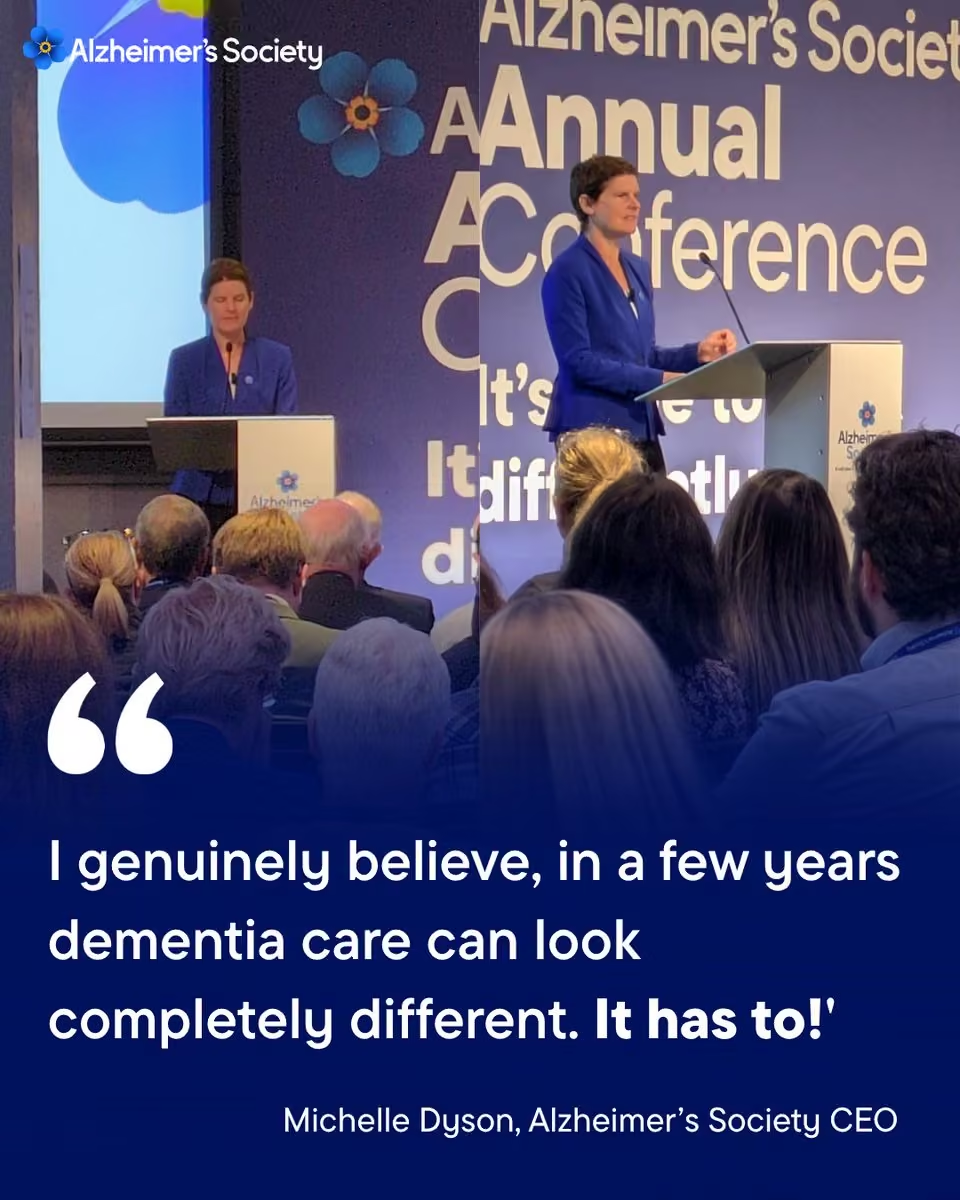
'I genuinely believe, in a few years dementia care can look completely different. It has to!'
Our CEO, Michelle Dyson, opened #asac26 with a powerful welcome address, sharing her belief that dementia care can look completely different in the years ahead - and that together, we have the opportunity to make it happen. -
Alzheimer's Society
@alzheimerssoc
Such a powerful moment to see Andy Burnham and Canadian Prime Minister Mark Carney wearing our Forget Me Not Badge. 💙
The badge is a symbol of remembrance, understanding and solidarity with everyone affected by dementia.
By wearing it, they are also helping to raise awareness, challenge stigma and send a powerful reminder to people living with dementia, and those who care for them, that they are not alone.
We're incredibly grateful to both leaders for speaking so openly about their personal experiences of dementia.
Their voices are helping to shine a light on the realities of the condition and reinforce an important message: dementia can touch any family, anywhere in the world. -
Alzheimer's Society
@alzheimerssoc
'Dementia cannot be treated as an afterthought. Together, we must deliver meaningful improvements by everyone affected by dementia.'
A warm welcome to our #asac26 hosts, Michaela Williams and Professor Dame Louise Robinson!
Join our hosts as they bring together policymakers, decision-makers and people with lived experience, to understand how we can build a future where dementia is never treated as an afterthought.
We're looking forward to a day of thought-provoking conversations and meaningful change. -
Alzheimer's Society
@alzheimerssoc
Excited to welcome researchers, policymakers, health and social care professionals, and people affected by dementia at a truly critical point for our cause.
The window to prioritise dementia at every level is open and the decisions made now will shape dementia care for a generation.
We’d love to hear all your thoughts on the conference throughout the day, so please share any photos and any reflections on the event here on social.
Tag us in and use the hashtag #asac26This media couldn't be displayed. See it on the original post. -
Alzheimer's Society
@alzheimerssoc
Welcome to #asac26! We're all set up and ready to go.
It's going to be a big day - can't wait to see you there!
Send us your photos throughout the day if you're heading down. -
Alzheimer's Society
@alzheimerssoc
Legendary journalist, newscaster, and Alzheimer’s Society supporter, @AlStewartOBE, is showing his support for our campaign calling on the government to end the wait for dementia diagnosis.
Alastair told us:
‘As someone living with vascular dementia, I know how important it is to get answers after a period of uncertainty. I believe everyone with dementia deserves a timely and accurate diagnosis.’
‘No family should be left waiting for a dementia diagnosis. I’m supporting Alzheimer’s Society’s call for faster diagnosis, support and treatment for people affected by dementia.’
If you agree with Alastair that everyone affected by dementia deserves better, join us!
Alzheimer's Society
@alzheimerssoc
Tap the link to add your voice to our campaign: action.alzheimers.org.uk/page/198458/petition/1?ea.tracki…
-
Alzheimer's Society
@alzheimerssoc
📣 Introducing your hosts for the Alzheimer’s Society Annual Conference this Thursday – Michaela Williams and Professor Dame Louise Robinson.
ℹ️ Michaela Williams is the founder and lead of Spring Bleau Dementia Café, a community initiative supporting people living with dementia, their families and carers.
With lived experience as a carer, she brings a deep personal understanding of the realities, challenges and emotional journey that can come with caring for someone with dementia.
Michaela is incredibly passionate about ensuring that the voices of people living with dementia, and those who care for them, remain at the heart of conversations about support and services.
ℹ️ Professor Dame Louise Robinson works as an Academic GP.
Her research programme focuses on primary care for people with dementia, including early intervention, end-of-life care, and the role of assistive technologies.
Louise leads Alzheimer’s Society’s Centres of Excellence in Dementia Care Research, which focuses on developing and evaluating post-diagnostic support for people with dementia.
💬 On being one of this year’s co-hosts, she told us:
‘I am delighted to be co-hosting the 2026 conference at what is a pivotal time for dementia.
‘Alongside exciting innovations for Alzheimer's Dementia, we await news about social care reform and future dementia services (via the Modern Service Framework for Dementia and Frailty).
‘Also, the global recognition of dementia as a Non-Communicable Disease (NCD) allows us to share lessons from how the management of other major NCDs, such as cancer, has transformed care.'
We’re so excited to welcome Michaela and Louise as our co-hosts – their range of experience and expertise represents exactly what #asac is about.
If you’ll be with us on 17 September, we hope you’ll join us in giving them a warm reception. #asac26
Alzheimer's Society
@alzheimerssoc
Due to high demand, all in-person spots at ASAC have been snapped up. But don’t worry, you can still join the action, hear all the news and incredible insights - all from the comfort of your own home - by joining us online.
Register your interest to watch the key sessions online and access exclusive content here: www.smartsurvey.co.uk/s/QYCGL5/ -
Alzheimer's Society
@alzheimerssoc
Hi, I’m Baroness Louise Casey. I chair the Independent Commission on Adult Social Care, which will recommend how to reform the adult social care system.
I’ve described dementia as “the elephant in the room”. The condition we all worry about the most, something we know is a huge challenge, and yet, too little has been done to address it for too long.
So, with Alzheimer’s Society, this World Alzheimer’s Day, we’re shining a light on how we’re going to make tackling dementia a priority.
I’ll be coming along on 21 September to answer some of your questions about how we move forward together to tackle the UK’s biggest killer.
In the meantime, you can take part in our Big Conversation on Care at caseycommission.co.uk/bigconversation/ where people across the country are debating and voting on ideas for reform.
So, tell me, what’s one question you’d ask about the future of dementia care? -
Alzheimer's Society
@alzheimerssoc
We are deeply saddened by the news that Roy Burnham – the Prime Minister’s father – has died. Roy had been living with Alzheimer’s disease.
The loss of a parent leaves an immeasurable gap in our lives.
While every family's experience is unique, many of us understand the long and often challenging journey that Alzheimer's disease can bring, not only for the person living with the condition but for those who love them.
The Prime Minister has been a longstanding advocate for improving the lives of people affected by dementia, often drawing on his father's experiences.
As Mayor of Greater Manchester, he supported dementia-focused initiatives delivered with us, including the expansion of our Singing for the Brain programme and ran alongside thousands at the Great North Run for Alzheimer’s Society in 2024. Most importantly, he has consistently used his voice to highlight the urgent need for social care and dementia care reforms.
We send our heartfelt condolences to his family and to anyone else who has experienced the heartache of losing someone to dementia. -
Alzheimer's Society
@alzheimerssoc
If you or a loved one are experiencing dementia symptoms, seeking a diagnosis is the best way to get access to the support, treatments and benefits you deserve.
However we know that getting a dementia diagnosis isn’t always easy.
People with a diagnosis have, on average, lived with symptoms for three and a half years before receiving it. That's three years of worry, uncertainty, and stress.
Here is our advice if you’re struggling to get a diagnosis.
Once you’ve made an appointment with your GP, there are a few things you can do to prepare:
– Write down what you want to say beforehand, and bring your notes to the appointment. You can also fill out and print our symptoms checklist as a helpful first step in starting the conversation.
– Take someone with you as support. If you’re supporting a loved one to get a diagnosis, it can help to go with them and share your own observations.
– Be honest and specific with the doctor. It can be hard to open up about dementia symptoms, but it’s their job to respect and support you as their patient. Don’t be afraid to share examples of specific things you’re not coping with or are worried about.
And if you don’t get the answers you need from the first appointment, here are some tips for what to do next:
– Keep a detailed symptoms diary, so you have a record of how frequently symptoms are appearing, how they’re affecting your day-to-day life, and any that may be getting worse.
– Write a letter to the GP sharing that information. This can be helpful if you’re worried about a loved one – GPs can’t discuss their patients with you, but they can receive information about them.
– And lastly, remember that you can request a second opinion from another GP, or a referral to a specialist.
For more support, advice and information, call the Dementia Support Line on 0333 150 3456.
And please join us to demand that everyone affected by dementia gets the early, accurate diagnosis they deserve.
It will take a society to beat dementia. Will you campaign with us?
Alzheimer's Society
@alzheimerssoc
Join us and demand better. Demand that after being referred by their GP everyone with dementia receives a diagnosis, a care plan, and, where appropriate, begins treatment - all within 18 weeks. action.alzheimers.org.uk/page/198458/petition/1?ea.tracki…
-
Alzheimer's Society
@alzheimerssoc
We are so pleased to have won Large Charity of the Year at the Third Sector Awards 2026! 🎉
The last year has been truly exceptional for Alzheimer's Society. We have raised more money than ever before, secured some amazing partnerships, been involved in incredible developments in research and, most importantly, supported even more people affected by dementia.
A huge thank you and well done to all of our employees, volunteers, supporters and partners - this award is for all the dedication, passion and commitment you show every day. 💙 -
Alzheimer's Society
@alzheimerssoc
📢 We're delighted to announce that we're at capacity for in-person attendees for our 2026 Annual Conference.
It's inspiring to see so many people wanting to come together to discuss how we prioritise and tackle dementia across society 💪
But if you were still hoping to participate in the conference, don't worry!
You can still take part and stay updated on all the news and incredible insights - all from the comfort of your own home- by joining us virtually.
Register your interest to watch the key sessions and access exclusive online content here: www.smartsurvey.co.uk/s/QYCGL5/
Alzheimer's Society
@alzheimerssoc
Thank you to our conference sponsors! 👏
We're delighted to welcome @EliLillyandCo as a sponsor of this year's Alzheimer’s Society Annual Conference, alongside our existing sponsor, Rothesay.
We're grateful for their support in bringing together the people, ideas and conversations that help shape the future of dementia care. -
Alzheimer's Society reposted
Alzheimer's Society
@alzheimerssoc
Thank you to our conference sponsors! 👏
We're delighted to welcome @EliLillyandCo as a sponsor of this year's Alzheimer’s Society Annual Conference, alongside our existing sponsor, Rothesay.
We're grateful for their support in bringing together the people, ideas and conversations that help shape the future of dementia care. -
Alzheimer's Society
@alzheimerssoc
Thank you to our conference sponsors! 👏
We're delighted to welcome @EliLillyandCo as a sponsor of this year's Alzheimer’s Society Annual Conference, alongside our existing sponsor, Rothesay.
We're grateful for their support in bringing together the people, ideas and conversations that help shape the future of dementia care.
Alzheimer's Society
@alzheimerssoc
🚨 We'd love for you to join us at #asac26. Registration closes today at 5pm, so don’t miss out!
Tap the link below to grab your ticket:
www.alzheimers.org.uk/dementia-professionals/conferences-…
Alzheimer's Society
@alzheimerssoc
Important information: In-person tickets to #asac26 have all been snapped up. But you can still join us online!
Register your interest to watch the key sessions online and access exclusive content here: www.smartsurvey.co.uk/s/QYCGL5/ -
Alzheimer's Society
@alzheimerssoc
💬 ‘If you feel it, then do it!’
Our amazing Ambassador, Dame Arlene Phillips, wants you to join her in calling for every dementia diagnosis to come with answers, support and a clear plan for what happens next.
Dame Arlene knows the steps and the moves government needs to take to make diagnosis the lifeline it should be.
So, if like us, like Dame Arlene, you feel like people affected by dementia deserve better, then join us in demanding a nationally recognised guarantee that people receive a diagnosis, a personalised care plan and, where appropriate, treatment within 18 weeks.
Alzheimer's Society
@alzheimerssoc
If you feel it – tap the link: action.alzheimers.org.uk/page/198458/petition/1?ea.tracki…
-
Alzheimer's Society
@alzheimerssoc
‘The man I grew up with is not here anymore, and I miss him everyday.’
Our incredible supporter Hayley shared her experience of caring for her Dad, Tony, who has dementia, in a powerful piece for @BBCWomansHour. Listen here: www.bbc.co.uk/sounds/play/m00316yj -
Alzheimer's Society
@alzheimerssoc
We're excited to welcome The Baroness Casey of Blackstock DBE CB as a keynote speaker at our Alzheimer’s Society Annual Conference! 📣
Baroness Casey will be speaking at our session ‘From Evidence to Action: Embedding Dementia into the Changing Social Care Landscape’.
Join our discussion which will bring together policymakers, decision makers and those with lived experience to explore the future of social care and dementia support.
Alzheimer's Society
@alzheimerssoc
🚨 Registration closes 11 September - Don’t miss the opportunity to hear from Baroness Casey on one of the biggest challenges facing dementia care today.
Grab your ticket for #asac26 at the link below:
www.alzheimers.org.uk/dementia-professionals/conferences-… -
Alzheimer's Society
@alzheimerssoc
How many times have you heard someone say, ‘There's no point getting a dementia diagnosis’?
While there isn't currently a cure for dementia, an early and accurate diagnosis can open the door to support and treatment that may help you live well for longer. Here are 5 reasons why it’s worth pursuing:
Benefits and protection -
You may be entitled to financial benefits, and you are legally protected from discrimination.
Practical support -
A diagnosis can also help you plan for the future and access therapies and support groups.
Treatments -
Some medicines, including donepezil, rivastigmine, galantamine and memantine, can temporarily help with memory and thinking symptoms for people with certain types of dementia.
Clarity on your challenges -
Your problems are worth investigating – you deserve to know what is behind them. It can also help others to adjust to the changes you’re experiencing and support you more effectively.
Knowledge for the future -
An accurate diagnosis can lead to better emotional and practical support and make dementia feel less daunting for those affected by the condition.
If you're worried about symptoms in yourself or a loved one, it's important to remember that your concerns are worth investigating. You deserve answers, and support is available every step of the way.
Join us and demand better. Demand that after being referred by their GP everyone with dementia receives a diagnosis, a care plan, and, where appropriate, begins treatment - all within 18 weeks action.alzheimers.org.uk/page/198458/petition/1?ea.tracki…
[Image description: A text graphic reads ‘The truth about dementia diagnosis’. Below is a red cross emoji next to the word ‘myth’ followed by the sentence ‘There's no point getting a dementia diagnosis because nothing can be done’. A green tick emoji next to the word ‘truth’ is followed by the sentence ‘There may not yet be a cure for dementia, but a diagnosis can help you in many ways’. A single sentence the bottom of the graphic reads ‘open the caption to read more’ followed by an upwards pointing finger emoji.] -
Alzheimer's Society
@alzheimerssoc
‘It’s time for decisive action to begin today.’
This week, our friend Tricia headed to Downing Street to demand better for everyone affected by dementia.
Along with other incredible campaigners, they knocked on the door of Number 10 to deliver an open letter, signed by nearly 60,000 people, who agree that enough is enough – it’s time for change.
Being part of this campaign meant a lot to Tricia. She explains:
'We have spoken. The government must now listen and, most importantly, act. Dementia must be treated as a national priority, not pushed further down the political agenda where it continues to be treated as an issue for another day and for another government.
'Behind our 58,000 voices are real people: people living with dementia, families watching loved ones struggle, and carers who are exhausted and too often left to cope without the support they need. We deserve better than political rhetoric. We deserve action, and we deserve that action now.
'The government must be held accountable for what it does next. We will be watching, we will continue to speak out, and we will not allow dementia to continue to be quietly pushed down the political agenda.
'58,000 people, including myself, have made their voices heard. The government has a responsibility to listen and we have every right to demand results. The time for excuses is over. The time for action has come.'
Alzheimer's Society
@alzheimerssoc
If, like Tricia, you believe that we’ve accepted less for dementia for too long, then join us. Tap the link and demand a nationally recognised guarantee that people receive a diagnosis, personalised care plan and, where appropriate, treatment within 18 weeks.
-
Alzheimer's Society
@alzheimerssoc
🚨 It's the final week to register for the Alzheimer’s Society Annual Conference on 17 September.
Don’t miss expert keynotes, panels & the latest in dementia care.
Registration closes 14 September - that's just over seven days to make sure you're part of it!
Grab your ticket for #asac26 at the link below.
alzheimers.org.uk/dementia-professionals/conferences-and-… -
Alzheimer's Society
@alzheimerssoc
A dementia diagnosis can open the door to treatments, support and the reassurance of knowing what you're dealing with.
That's why it's just not good enough that at least 1 in 3 people with dementia don't have a diagnosis.
Now, pundits from TNT Sports, Sky Sports and talkSPORT have come together with one simple message:
It's just not good enough. -
Alzheimer's Society
@alzheimerssoc
A dementia diagnosis should be a lifeline.
It should unlock a clear path forward, giving people answers, personalised support and confidence about the future.
Yet 1 in 3 people living with dementia don't have a diagnosis, so they miss out on vital support.
And those who do manage to get a diagnosis can spend months, or sometimes years, waiting for answers while their condition progresses.
Every month spent waiting is another month without answers, support or treatment. People with dementia and their families don't get that time back.
That’s why we’re calling for a bold and ambitious plan for earlier diagnosis so families can get earlier support, care planning and clear next steps they need.
Headline via BBC.
Dementia doesn’t wait; neither should a diagnosis. If you agree visit action.alzheimers.org.uk/page/198458/petition/1?ea.tracki…
Read the full story by Dominic Hughes and Camilla Horrox at www.bbc.co.uk/news/articles/cvgyp2n1e75o. -
Alzheimer's Society
@alzheimerssoc
We’ve accepted less for dementia for too long.
Because for decades, people affected by dementia have faced long waits, patchy support and limited access to treatment.
We've accepted a standard of care that wouldn’t be tolerated for many other serious health conditions.
People are waiting months, or even years, for a diagnosis and often, when they get it, they are handed a leaflet and ushered out the door.
Enough is enough.
We know what good diagnosis looks like. We know what people need, and we know change is possible.
So, we’re calling for a new ‘national standard’ for dementia diagnosis. Meaning that after being referred by their GP, everyone with dementia receives a diagnosis, a care plan, and, where appropriate, begins treatment - all within 18 weeks.
Tap the link to join us and demand better.
action.alzheimers.org.uk/page/198458/petition/1?ea.tracki… -
Alzheimer's Society
@alzheimerssoc
It’s been a whirlwind day for our absolutely incredible campaigners.
As well as knocking on the PM’s door, Ruth and Tricia shared their experience and the importance of diagnosis with @TinaDaheley on @BBCRadio2's @theJeremyVine Show.
Alzheimer's Society
@alzheimerssoc
And our wonderful campaigner, Trish, was delighted to bump into the equally wonderful @vernonkay.
Alzheimer's Society
@alzheimerssoc
The team then sat down with @channel5_tv. Ruth spoke about her own diagnosis of Alzheimer's disease and taking part in clinical trials.
-
Alzheimer's Society
@alzheimerssoc
Proud today to be on the doorstep of Number 10 with some truly incredible campaigners who, along with 58.763 others, are demanding better for everyone affected by dementia.
Tricia, John, Ruth and Morcea took this message directly to Downing Street. Their experiences show why urgent action is needed and why dementia must be a priority for Government.
The message is clear – we need a bold and ambitious plan for dementia. And that must start with timely and accurate diagnosis.
Too many people are left waiting for answers, support and treatment while their dementia progresses. Now is the moment for the government to act and make sure no one - people living with dementia, their families, their friends, their carers - is left in the dark, fighting for answers -
Alzheimer's Society
@alzheimerssoc
Today, we’re making sure that dementia is top of the agenda for #worldalzheimersmonth.
This year’s theme is “The Earlier You Know, The More You Can Do: A Dementia Diagnosis Matters”.
We’re getting the news out there and making sure as many people as possible hear the message of the importance of an early and accurate diagnosis.
And that includes heading over to Downing Street today to hand in our open letter, signed by nearly 60,000 people, calling for a bold and ambitious plan to end the long waits for dementia diagnosis.
[Image description: Various newspaper headlines cut-outs, all discussing dementia diagnosis. Titles include: Daily Mail, Independent, Mirror, BBC, LBC, ITV News, The Telegraph. Many mention Jon Snow advocating for earlier diagnosis and better care. A central blue banner reads: "Putting dementia at the top of the news agenda this #worldalzheimersmonth."] -
Alzheimer's Society
@alzheimerssoc
We’re on the way to 10 Downing Street to hand in our open letter signed by nearly 60,000 people, including broadcasting icon Jon Snow.
We’re dropping our weighty open letter on the PM’s doorstep just as we’ve released new research revealing how families affected by dementia are being forced to put their lives on hold as they wait for a diagnosis.
That’s why we’re calling for a bold and ambitious plan for earlier diagnosis.
Our CEO, Michelle Dyson, said:
'Too many families spend months, and sometimes years, waiting for answers while their dementia progresses. It is like trying to plan a journey without knowing where you are going or when you will arrive. Behind every delayed diagnosis is a family living with uncertainty and trying to prepare for the future without the support they need.'
Do you feel like your life was ‘put on hold’ while waiting for a diagnosis? Share your experience in the comments.
Read the full story by Shaun Wooller in today’s @DailyMail.
Alzheimer's Society
@alzheimerssoc
You can check out the full story online here: www.dailymail.com/health/article-16095971/Jon-Snow-backs-…
-
Alzheimer's Society
@alzheimerssoc
🗓️ Tomorrow, we’re heading to Downing Street with nearly 60,000 voices behind us.
Almost 60,000 people who feel dementia has been forgotten.
Tens of thousands who signed our open letter demanding bold and ambitious action for everyone affected by dementia.
And we're grateful to every single one of you who have joined us to demand better.
Now, it’s over to the government. The time to act is now 💪
@andyburnham @10DowningStreet @UKParliament @DHSCgovuk
#worldalzheimersmonth -
Alzheimer's Society
@alzheimerssoc
No one should face dementia alone.
Today, we're launching our new TV advert to highlight the devastation dementia brings and the role we can all play to beat it.
We're Alzheimer's Society, the UK's leading dementia support and research charity.
And we're bringing the right people together to end the devastation dementia causes.
We give vital support now, fund groundbreaking research, and campaign for change.
Because a future without the devastation of dementia is possible.
And we won't stop until we've made it a reality.
Because it will take a society to beat it. -
Alzheimer's Society
@alzheimerssoc
‘Dementia isn't just ‘forgetting things’ - it’s so much more than that.’
We asked you, what’s the one thing you wish everyone knew about dementia?
Here’s what you told us:
‘It’s not just ‘getting old’ it’s a disease.’
‘It affects everyone around that person immensely, not the person alone.’
‘Losing a loved one while they are still here isn’t something that gets easier with time.’
‘How hard it is to be the partner of someone with dementia, especially when you’re young.’
‘It can be violent. even the nicest of people. Mostly out of fear, which is heart-breaking.'
‘There can still be joy in every day'
If there’s something you wish the world knew about dementia, share it in the comments. -
Alzheimer's Society
@alzheimerssoc
Sundowning can make late afternoons and evenings really tough for people living with dementia. As the day winds down, confusion or agitation can rise - sometimes because of something that happened earlier, sometimes because a need isn’t being met. Gentle reassurance, distraction, and familiar memories can help bring them back to a calmer place.
Here are 3 tips to help you navigate a loved one experiencing sundowning:
1. Sometimes what seems like ‘sundowning’ could be the person trying to communicate a need. This could be needing the toilet, feeling hungry or being in pain.
2. Uneven indoor lighting and reflective surfaces can sometimes cause confusion by creating disturbing shadows or mirrors. Close the curtains or blinds once it starts to get dark and cover the television with a dust cover, if it’s not being used.
3. If they seem unsettled, think about whether something earlier in the day may have affected them. Try calming them with distraction - like talking about a favourite memory. If they stay agitated, they may have an unmet need.
If you’re supporting someone through this, you’re doing an incredible job. 💙 -
Alzheimer's Society
@alzheimerssoc
ℹ️ One in four people aged over 40 can't name a single risk factor for dementia. Can you?
Today, we've published new research showing that many people are unaware of the factors that may influence their chances of developing dementia, including high blood pressure, hearing loss and high cholesterol.
Just 1 in 5 people surveyed knew that up to 45% of dementia cases may be linked to factors that can be prevented, treated or modified.
While there is currently no guaranteed way to prevent dementia, growing evidence suggests that taking steps to look after our brain health could help reduce risk, including:
- Managing high blood pressure
- Getting hearing problems checked
- Staying physically active
- Keeping socially connected
These findings highlight why more public awareness is needed, so people have the information they need to make informed choices about their health.
What surprised you most about these findings?
Read the full story by Emily Stearn in today's @TheSun 👇 www.thesun.co.uk/health/40165868/daily-habits-risk-dement…
[Image description: A blurry image of a doctor holding up brain scan images, with a centred headline that reads 'Memory rob. Millions of Brits have no idea their daily habits risk dementia and are 'missing the chance' to stop it'. Positioned just above the headline is a 'The Sun' red and white logo. At the bottom left page is a credit that reads 'Headline via The Sun'.] -
Alzheimer's Society
@alzheimerssoc
'The one thing we can and should continue doing is collaborate.'
Just one of many reflections on last year's incredible Alzheimer's Society Annual Conference. If you were there, you know the feeling of being in a room full of people who share your passion for ending the devastation of dementia.
And if you weren't, we hope you'll join us for #asac 2026 on 17 September!
This is the year of ambition, hope, and change.
Our Annual Conference brings together health and social care leaders, policymakers, campaigners, researchers, and people with lived experience at a critical moment. The decisions we make now will shape dementia care for a generation. It really is society in action.
It's time to think differently about dementia. Will you be a part of that change?
Tap the link to grab your ticket for #asac26.
www.alzheimers.org.uk/dementia-professionals/conferences-…This media couldn't be displayed. See it on the original post. -
Alzheimer's Society reposted
TALKING ReDS
@TalkingRedsPod
Please (if you can) support our good friend @pnlindsay and the incredible work being done by him and the @alzheimerssoc!
Here is the next adventure for the Hiking Ginger and the fundraising he is doing for supporting those with Alzheimer’s and Dementia and their families. 🙏🏻
🚶♂️ THE HIKING GINGER’S NEXT ADVENTURE! | Coast to Coast Charity Walk 2027 🥾💙
youtu.be/Inh5sYcRT_8 -
Alzheimer's Society
@alzheimerssoc
Did you know that women have a greater risk of developing dementia over their lifetime?
Around two thirds of people living with dementia are women, and dementia is the leading cause of death for women in the UK.
The main reason for this is thought to be because women live longer than men, as age is the biggest risk factor for dementia. However, other factors also play a part in women’s dementia risk.
Over the course of a lifetime, women tend to have different experiences than men.
Some of these are caused by differences in biology, such as menstruation, pregnancy and menopause. Oestrogen is thought to play an important role in maintaining brain health, including blocking some of the harmful effects of substances involved in Alzheimer’s disease.
Some research suggests that a very early menopause may increase the risk of dementia. Researchers are looking into whether menopausal HRT could reduce dementia risk.
Social factors like education, work and lifestyle also play a part in women’s dementia risk, especially for older generations.
Having a full education and opportunities for lifelong mental stimulation helps to delay dementia in old age. Historically, women have had fewer opportunities to attend university or work in highly skilled occupations.
Genetics also play a role. Nearly two thirds of people with Alzheimer’s have at least one copy of the ApoE4 gene. However, while men and women are just as likely to have this gene, its effect on dementia risk seems to be greater in women than it is in men. We don’t fully understand why this is
And more men are involved in research trials. With women being less represented in research, we still don’t fully understand how the diseases that cause dementia may affect women differently.
Finally, when it comes to dementia, caring duties are more likely to fall to women than men.
68% of informal or unpaid carers of people with dementia are women, and more than three quarters of the social care workforce are women too. -
Alzheimer's Society
@alzheimerssoc
Frontotemporal dementia (FTD) is a major cause of dementia in younger people under the age of 65.
There are currently no treatments that can stop or slow FTD. But Alzheimer’s Society-funded researchers are working to change that:
Our funded researchers are:
🔎 Studying MRI brain scans to understand how different genetic forms of FTD affect the brain over time, including before symptoms appear. This could help improve diagnosis and how future clinical trials measure whether treatments are working.
🧠 Investigating how genetic changes linked to FTD may trigger inflammation in the brain. Understanding these processes could reveal potential targets for future treatments.
⏱️ Studying young people from families affected by genetic forms of FTD to better understand when the earliest changes may occur. This could help researchers spot the earliest signs of the disease and understand when future treatments might need to be given.
🔬 Exploring whether increasing levels of a protein called C9orf72, which helps keep brain cells healthy, could restore healthy cell function for some people with FTD. This is early-stage laboratory research, but it could identify new avenues for developing future treatments.
There is still much we don’t know about frontotemporal dementia, but by funding studies like these we are building the knowledge we need to improve diagnosis, design better clinical trials and, ultimately, develop new treatments. -
Alzheimer's Society
@alzheimerssoc
Was there anything that stopped you seeking a dementia diagnosis sooner, either for yourself or someone close to you?
Deciding to seek a dementia diagnosis can be a big step, and everyone's experience is different.
Whether it was uncertainty about symptoms, concerns about what a diagnosis might mean, or something else entirely, we'd love to hear your perspective. -
Alzheimer's Society
@alzheimerssoc
'I was just 18 when my mum was diagnosed with dementia. It catapulted me into a complete different lifestyle and way of life.'
James wrote this poem for his mum, who is living with dementia.
'Today my mum is in a care home with round the clock care, and this is a letter to the mummy she once was.'
Dear Mummy,
by James Pollitt
I remember –
it was your eyes that guided me,
your eyes that helped me see
not the world as it has grown so harsh,
but as it was always meant to be.
I remember –
it was your hugs that held me tight,
that made the dark feel less like night.
Even when you weren’t always there,
your warmth was something I could wear–
a quiet cure, a steady friend
a love I thought would never end.
I remember –
watching your feet move without care,
dancing, laughter through the air.
That wild, beautiful woman I call mother –
there could never be another.
I thought you would always stay.
But what do I do now?
The world is shifting, fast and deep
and something steals you while I weep.
That simple cure of being your friend
can’t fight this thing I can’t comprehend –
it’s stronger, stranger... and it wants you.
My best friend,
It’s your eyes I see – so tired now,
awake, yet lost in some way, somehow.
I see the questions in your gaze:
Who is this? Where are we? What day?
Where were we?
It’s your arms I see –
the ones that made my whole world light,
now searching still for something right.
That hug that once could heal it all –
what is this shadow I can’t recall?
Alzheimer’s... a word so vast,
I reach for you, but cannot grasp.
It’s your feet I see –
the ones I followed, step by step,
through every memory we’ve kept.
Now slow, uncertain, yet still strong,
as if they know, but don’t belong.
They no longer lead like they used to do...
and it breaks my heart watching you.
My best friend –
the one I’ve called Mummy for so long,
your love in me will still live on.
Though this is frightening, unclear, and new,
I promise – we will carry you.
Through every moment, come what may,
we’ll hold you close along the way.
Love from your Blue Eyed Boy x -
Alzheimer's Society
@alzheimerssoc
🧠 Up to 45% of dementia cases could be altered or prevented through lifestyle changes, but many people feel uncertain about what that means for them personally.
New research has found that awareness of dementia prevention is on the rise, yet confidence in knowing how to reduce risk remains low.
The findings highlight an important gap between knowledge and action, and also show that there is a real opportunity for innovation and technology to help people understand, adopt and maintain brain-healthy habits.
Digital technologies which are already being widely used, like smartphones and smartwatches, could help many people adopt healthier behaviours to reduce their risk of dementia in the future.
Preventing dementia from devastating lives is just as important as improving diagnosis, treatment, care and support.
By better understanding how innovation can help people take practical action for their brain health, we can empower more people to reduce their risk and live well for longer.
We're proud to have contributed to this research alongside our partners at Centre for Aging + Brain Health Innovation (CABHI), Toronto Metropolitan University's National Institute on Ageing and the Toronto Dementia Research Alliance. -
Alzheimer's Society reposted
Joe Robertson MP
@JoePJRobertson
Over 60 MPs from across Parliament have signed my letter calling for an 18-week dementia diagnosis target.
The Prime Minister must turn his words on social care into action. A concrete commitment on dementia is the first test. -
Alzheimer's Society
@alzheimerssoc
As we get older, we’re likely to notice some changes in our mental abilities. For most of us, it’s nothing to worry about.
But dementia is different. It’s not a normal part of getting older.
The first signs of dementia are often small to start with, but get noticeably worse over a matter of months, as opposed to more gradual changes over many years.
Symptoms may start to affect your daily life, making it more difficult to manage everyday tasks and activities by yourself.
Dementia looks different for everyone, but we’ve put together some common ways these symptoms might appear.
By knowing the signs, we can make sure that we don’t brush off or ignore some of the lesser-known symptoms, to help everyone with dementia get a crucial early diagnosis.
If you recognise any of these signs in yourself or someone else, it could be a good idea to check in with your GP. It doesn’t necessarily mean that you have dementia – just that something might be wrong.
And if you’d like more information or advice, visit our website or give our Dementia Support Line a call on 0333 150 3456. -
Alzheimer's Society
@alzheimerssoc
What don't people realise about dementia unless they've experienced it? 💙
Dementia can affect people in ways that aren't always obvious from the outside.
Whether it's something you've learned, witnessed or experienced yourself, your perspective could help others understand a little more.
Share your thoughts below 👇 -
Alzheimer's Society
@alzheimerssoc
Should you lie to someone with dementia?
Questions like “Where’s my mum?” or “When am I going home?” can be challenging and emotional for families and carers. Dementia can affect how a person experiences time and reality, so what feels true to them in that moment may be very different from what we know to be true.
Rather than focusing on being right, it can help to focus on the feelings behind the question. Offering reassurance, comfort and understanding can often be more important than correcting facts. This could look like:
- "No, your mum isn't coming. She died years ago." Vs "You seem to be thinking about your mum today. What was she like?"
- "Nobody has stolen your handbag." Vs "That sounds worrying. Let's see if we can find it together."
- "You're retired. You don't need to go to work." Vs "You always worked hard. What did you enjoy most about your job?"
Every situation is different, and there is no right or wrong way to respond to difficult questions.
If you're supporting someone living with dementia, remember to be kind to yourself too – caring can be rewarding, but it can also be incredibly challenging.
[Image description: A light blue infographic with text centred in a white circle that reads “What to do when someone with dementia asks a difficult question”. Surrounding this are four separate points that read: Acknowledge feelings (validate how they feel, even if the facts aren’t as they believe); offer comfort and reassurance (a kind response can help reduce anxiety and distress); listen to what they're really saying (it may be a need for reassurance, comfort or connection); and gently redirect if needed (change the focus to something positive or enjoyable). Each point is illustrated with an icon, such as a heart, an ear, a person hugging, and arrows.] -
Alzheimer's Society
@alzheimerssoc
Have you got what it takes to become a Lord's Centurion?
On Monday 28th September, Alzheimer's Society's Sport United Against Dementia campaign is offering you the chance to do what all cricketers dream of, reach a century at Lord's.
Participants in Your Hundred at Lord’s in aid of Alzheimer’s Society will each be walking 100 laps (over a marathon) of the historic Lord's pitch, over a marathon distance, all whilst raising a minimum of £2,500 which will help fund the Society's vital work to end the devastation caused by dementia. There will be plenty of refreshments and rest stops along the way, ending with our incredible supporters walking up the iconic steps into the pavilion as a Lord's centurion and for a celebratory reception in the famous Long Room.
If you would like to take part or find out more – you can register your interest below. Only limited spaces remain of the maximum 100 participants, so don’t miss your chance to be part of something incredible!
Register your interest 👇 eur01.safelinks.protection.outlook.com?url=https%3A%2F%2F…
[Image description: A photo of Lord's Cricket Ground with a green pitch, full grandstands, and a person walking on the field under a cloudy sky. Overlay text reads: ‘Calling all cricket fans (cricket bat and ball emoji) Want to get a unique century at the iconic Lord's and help end the devastation of dementia? Read the caption’ followed by an upward arrow emoji.] -
Alzheimer's Society
@alzheimerssoc
Dementia is devastating – but research gives us reasons to be hopeful.
More than 150 Alzheimer’s disease drugs are in clinical trials today, and we continue to hear from researchers about promising new treatments being developed.
Around 1,600 people will take part in a trial to find out whether a drug called trontinemab could delay or prevent Alzheimer’s symptoms from ever developing.
Advances in blood tests and brain imaging are bringing researchers closer to more personalised diagnosis and treatment, with blood tests showing promise for helping more people receive an earlier and more accurate diagnosis of Alzheimer's disease.
While there’s no guaranteed way to prevent dementia, a large study suggested that healthy lifestyle choices may benefit brain health regardless of a person's genetic risk of Alzheimer's disease.
And in the US, a self-injectable form of lecanemab, a treatment that can slow the progression of early Alzheimer's disease in eligible people, has been approved. While not available in the UK currently, this progress shows that self-injectable treatments could be part of how we treat dementia in the future.
We work with world-leading scientists and people affected by dementia to make sure the research we fund is the highest quality and addresses the highest-priority issues.
Because we know that through research we will make breakthroughs in how we understand the causes of dementia, develop effective treatments, improve care, and ultimately, one day, find a cure.
Alzheimer's Society
@alzheimerssoc
Visit our website to learn more about trontinemab: www.alzheimers.org.uk/blog/dementia-research-trials-what-…
-
Alzheimer's Society
@alzheimerssoc
People with learning disabilities, particularly Down's syndrome, are at increased risk of developing dementia.
When a person with a learning disability develops dementia, they will face different and additional challenges to people who don’t have a learning disability.
However just as every person with a learning disability is different, so is every person with dementia.
One challenge that many people with dementia face is communication.
The person you care for will already have their own ways of communicating, so you should continue to communicate in a way that suits them.
Here are some things to try if dementia is making verbal communication more difficult:
Try using a range of non-verbal communication. This includes gestures, body language and tone of voice.
Keep sentences short and simple.
Avoid asking too many questions or giving too much information at once.
Listen to the person carefully and give them lots of time to respond.
Consider using pictures or photos as prompts for conversation or to help the person understand what is being said.
And if you need support or advice, just give our Dementia Support Line a call on 0333 150 3456 -
Alzheimer's Society
@alzheimerssoc
ℹ️Today, our new Prime Minister has promised to put everything he’s got into fixing social care.
We welcome that commitment and are glad to hear that tackling issues in the sector will be a priority for the new government.
As the Prime Minister knows first-hand, people living with dementia need good quality care as early as possible. But too often, families have been left to find their way through a complicated social care system alone – facing emotional, practical and financial pressure in the process.
That’s why we need to see action on these promises sooner rather than later. Our CEO, Michelle Dyson, said:
‘Dementia is one of the biggest drivers of demand on the care system.
‘Yet, as Baroness Casey points out, we do not treat dementia with anything like the priority we give to other conditions such as cancer and heart disease.
‘Getting social care right depends heavily on getting dementia care right, making the most of the new opportunities afforded by scientific breakthroughs, which mean we can intervene earlier and keep people well for longer.
‘Urgency is key – so it is great to see that Baroness Casey’s review will be brought forward by a year.
‘We are also pleased to see a commitment to addressing the workforce as a matter of priority, which is a real opportunity to make sure that care workers get the dementia-specific training they need to deliver high-quality care.
'We look forward to working with our new Prime Minister on reforms that will leave a lasting legacy for people living with dementia now and in the future.’ -
Alzheimer's Society
@alzheimerssoc
42% of people with dementia feel ashamed or stigmatised because of their symptoms.
Negative attitudes towards people living with dementia can lead to unfair treatment, make it harder to seek diagnosis and support, and affect everyday life.
People affected by dementia shared their experiences of stigma and how it has affected them:
'I'm treated as though nothing I have to say about myself would be taken into account.'
'On the train, a woman refused to move when I asked, stating "I'm not moving. You look younger than me. You don't look disabled."'
'People don't believe me when I tell them my husband has dementia, as he is 60 and physically fit.'
'You see people looking, and I know they're thinking "What's wrong with her?"'
'There seems to be so much stigma around dementia, but with the ageing population, a lot more people are going to get it.'
Have you experienced stigma around dementia? -
Alzheimer's Society
@alzheimerssoc
ℹ️ 81% of people want dementia to be made a national healthcare priority. Do you feel the same?
Today, we’ve published polling data that shows the public agrees - we need urgent government action on dementia.
The people surveyed told us they're worried about whether the system can properly support the growing number of people affected by the condition. We also heard that most people feel there’s a big gap between the care our loved ones receive and what we feel they should be getting.
That’s why we’re calling on our new Prime Minister, Andy Burnham, to make dementia a national priority.
An important stat for our leaders to think about is that 52% of people would be willing to support a political party that commits to increasing funding for dementia.
Alzheimer's Society
@alzheimerssoc
Read the full story by Shaun Wooller in today's @DailyMail:
www.dailymail.com/health/article-15999589/brits-want-Burn… -
Alzheimer's Society
@alzheimerssoc
Lots of people enjoy humour, including people living with dementia, their family, friends and carers.
Everyone’s experience is different, but some people find sharing the lighthearted, even funny, moments of living with a diagnosis can be a way to connect with others, reduce stress, and make difficult experiences feel a little less heavy.
However some jokes can be hurtful, cruel and unnecessary.
Generally, if a person with dementia is the target of the joke, or isn’t let in on the joke, this can be harmful and upsetting.
The types of jokes we want to challenge are the tasteless, misinformed comments made about dementia, or about people living with the condition.
These only heighten the stigma associated with dementia and can have a negative impact on those affected who may read or hear them.
If you experience ignorant comments or unkind jokes, you may feel like you want to correct or educate the person making them.
Here are our tips on how to challenge hurtful dementia 'jokes’:
If you don’t find it funny, don’t laugh at it. It’s tempting to go along with everybody else in a group and laugh along, but if someone makes a joke that you find cruel and unfunny, not laughing is the simplest way to show that you didn’t like it.
Explain that it's not funny for everybody. Ask the person to think about whether they would tell that joke in front of a person with dementia, or their family members or friends.
See the person, not the dementia. Remind the person telling the joke that dementia is not the defining aspect of a person, their personality, or their life.
Remind them that unkind jokes add to the stigma. Ignorant comments and jokes spread wrong information and increase the stigma around dementia. By telling the joke, they are making it harder to break the stigma for people affected by dementia.
Encourage them to learn more about dementia. They can find accurate, reliable information on our website, and real, personal stories from our blog. They could also become one of our Dementia Friends. -
Alzheimer's Society
@alzheimerssoc
It can be helpful to think of dementia progressing in three stages.
This is a guide to some of the common symptoms at each stage, although it’s important to remember that everyone’s dementia journey is different. (1/3)
Alzheimer's Society
@alzheimerssoc
Symptoms may appear in a different order to how we’ve presented them here, and the stages may overlap.
Some symptoms, particularly those linked to behaviours, may develop at one stage and then reduce or even disappear later on. Other symptoms, such as memory loss and problems with language and thinking, tend to stay and get worse with time. (2/3)
Alzheimer's Society
@alzheimerssoc
It’s natural to want to know which stage a person is at or what might happen next so we can plan for the future. But the most important thing we can do is focus on the person in the present moment, to help them live well for as long as possible.
If you need more help or advice we’re here for you, just give our Dementia Support Line a call on 0333 150 3456. (3/3) -
Alzheimer's Society
@alzheimerssoc
📣 Today, we’re welcoming in a new Prime Minister. One who has bravely shared his family’s personal experience with Alzheimer’s disease and his desire for reform in dementia care. 1/3
Alzheimer's Society
@alzheimerssoc
It comes at a crucial moment, with a number of important opportunities on the horizon that could significantly impact everyone affected by the condition. Now is the time to change the story of dementia for people today and future generations. 2/3
Alzheimer's Society
@alzheimerssoc
Our CEO, Michelle Dyson, said:
‘Dementia is the UK's biggest killer, yet it has been overlooked for far too long. With the Modern Service Framework for Dementia and Frailty and the Casey Commission underway, it is critical that the new Prime Minister seizes this moment to transform diagnosis, care and support.’
If the new government is ready to put in the graft, we’ll be by their side the whole way. We’re looking forward to working together 💙 3/3
Alzheimer's Society
@alzheimerssoc
Andy Burnham image credit: Scottish Government
-
Alzheimer's Society
@alzheimerssoc
Dementia research is moving fast. But the NHS isn’t keeping pace.
This year’s Alzheimer's Association International Conference reminded us what an exciting time we’re in for dementia research.
For the first time, we have treatments that can slow the progression of Alzheimer's disease.
More than 150 Alzheimer’s disease drugs are in clinical trials today, and we continue to hear from researchers about promising new treatments being developed.
Blood tests and advanced technologies are opening up new possibilities for earlier and more accurate diagnosis.
But while the science is accelerating, policy and the NHS are struggling to keep pace.
And if the systems aren’t ready, we won’t be able to deliver future ground-breaking treatments to the people who need them most.
That’s why we’ve put together our prescription for change.
We need a system that delivers earlier and more accurate diagnosis to everyone affected by dementia.
We need to be able to deliver new treatments safely and fairly.
And we need everyone living with dementia to be given the opportunity to take part in research, if they want to.
People with dementia deserve the same ambition that the NHS applies elsewhere.
The science has already changed. Now we need our policies, services and systems to change with it. -
Alzheimer's Society
@alzheimerssoc
What do you wish more people understood about dementia?
There’s still so much that people don’t see or fully understand.
By sharing your perspective, you could help others better understand and help someone feel less alone. -
Alzheimer's Society
@alzheimerssoc
There have been many iconic moments for England over the years.
The 1966 World Cup triumph, the 5-1 thrashing of Germany, and Gordan Banks’ incredible save to deny Pele in 1970.
And hopefully tonight against Argentina in the 2026 World Cup semi-final goes down in history as another iconic victory.
All these moments should live forever in the memories of those who witnessed them.
Sadly, for around one million people living with dementia, even memories this powerful can fade. -
Alzheimer's Society
@alzheimerssoc
Around 1,600 people will take part in a landmark trial to investigate whether an Alzheimer’s drug could delay or prevent symptoms from ever developing.
We know that changes associated with Alzheimer's disease can begin in the brain many years before symptoms appear. The trial, using an antibody treatment called trontinemab, will now be tested on people without cognitive impairment, but who have increased levels of the biomarker ptau217, which is linked to Alzheimer’s disease.
ptau217 can be detected using a blood test, and if someone has increased levels, indicates they have amyloid beta in the brain – another protein linked to Alzheimer’s disease.
Trontinemab works in a similar way to other antibody treatments, like lecanemab and donanemab, where the antibody recognises and binds with amyloid beta in the brain. But, it has been designed with a protein attached to the antibody, which helps it enter the brain more easily.
These trials are among the most anticipated and exciting developments we have seen in Alzheimer’s research for some time, and we look forward to the results.
Clinical trials are the only way to know whether new treatments work, but breakthroughs will only happen if more people have the opportunity to take part.
In 2025, just 173 people with Alzheimer's disease in England participated in late-stage clinical trials.
We're proud to have invested £3 million in the Alzheimer's Society UK Dementia Trials Network Research Nurses programme.
These specialist nurses are helping connect people with pioneering studies such as the trontinemab trials, supporting them to take part, ensuring more people, and particularly from diverse communities, can play a part in breakthroughs.
Headline via Daily Express.
You can read the full article by Toby Codd in the Daily Express here: www.express.co.uk/life-style/health/2229260/major-alzheim….
To find out more about dementia research and taking part in dementia clinical trials visit www.alzheimers.org.uk/what-we-do/our-research?alzsoc_ad_i…. -
Alzheimer's Society
@alzheimerssoc
What if a routine eye scan could help identify the earliest signs of Alzheimer's disease before memory problems begin?
New research suggests that subtle changes at the back of the eye may be linked to the biological markers of Alzheimer's disease in otherwise healthy adults.
The study, led by Professor Julie-Anne Little, Dr Aoife Hunter and Professor Imre Lengyel, adds to growing evidence that the eye may provide a unique window into brain health.
While more research is needed, eye scans could one day offer a quick, non-invasive way to identify people at risk of developing Alzheimer's disease, opening the door to earlier monitoring, diagnosis, and treatment.
Professor Lengyel is one of the researchers we support through funding, and this week his team presented these findings at the Alzheimer's Association International Conference (AAIC), the world’s largest gathering of dementia researchers.
It’s an exciting time for dementia research, and AAIC provides an invaluable opportunity to showcase and discuss the ground-breaking work being done across the world
Together, we will make breakthrough discoveries that improve our understanding of dementia, enable the development of effective treatments, enhance care and, ultimately, help bring us closer to a cure. -
Alzheimer's Society
@alzheimerssoc
Holidays can be a much-needed pause from day-to-day life - but you might be feeling anxious or unsure about travelling if you or a loved one live with dementia.
If you feel this way, you're not alone. Travelling with dementia can bring extra challenges, but often with the right support and planning, holidays can still be safe, enjoyable and a chance to create special memories together.
If you're thinking about going on holiday, this advice can help you travel with confidence and make the most of your time away:
Pack essentials, medication and comfort items in your carry-on in case of delays. Familiar items from home, such as a pillowcase, bath towel or favourite mug, can help people with dementia feel more settled in unfamiliar surroundings.
Stay identifiable. Keep a recent photo of the person with you, note what they're wearing each day and consider taking a new photo every morning while you're away. This can be helpful if they become separated from you.
Prepare for your flight. Many airlines offer support such as priority boarding for people living with dementia. Let the airline know your needs when booking and try to choose seats together, ideally with an aisle seat for easier assistance.
Help the person with dementia settle in by involving them in simple tasks like unpacking. If they're feeling tired or overwhelmed, take a break first. Keep familiar items visible and make sure they have your room number with them in case they become disorientated.
Stick to familiar routines where possible, including mealtimes and bedtimes. Keeping daily routines as close to normal as possible can help reduce confusion and anxiety.
When you return home, it may take time to readjust. Whether the trip felt smooth or challenging, remember support is available for carers. If you're concerned about any changes in behaviour, speak to your GP.
Alzheimer's Society
@alzheimerssoc
Looking for more holiday tips or support after your trip? Find advice for both here: www.alzheimers.org.uk/get-support/living-with-dementia/ho…
-
Alzheimer's Society reposted
PanelWood&SSurface
@PMRowden
Featured on page 5 of our latest issue: Travis Perkins reaches fundraising milestone for Alzheimer’s Society @TravisPerkinsCo @alzheimerssoc . www.pawprintuk.co.uk/0726std.pdf
-
Alzheimer's Society
@alzheimerssoc
With football fever sweeping the nation, Alzheimer's Society fielded a team of people affected by dementia against the UK Parliamentary Football Club in a walking football match.
But this was about more than just the love of the game.
The real win came off the pitch with the opportunity to bring the voices of people living with dementia directly into conversations with MPs.
We believe the best policy is shaped by the people it affects. That's why we used the occasion to launch our World Café report. The report builds on a lived experience workshop with people affected by dementia and the Department of Health and Social Care, helping to shape the Modern Service Framework for Dementia and Frailty.
There were some great goals on the pitch, but the hat-trick we really want to see delivered is set out in the report:
• Early and accurate diagnosis.
• A skilled and confident dementia workforce.
• A health and care system ready to deliver the next generation of dementia treatments.
Read the full report here: www.alzheimers.org.uk/what-we-do/policy-and-influencing/w…
A huge thank you to everyone who took part - on and off the pitch - to help make sure lived experience remains at the heart of shaping the future of dementia care. -
Alzheimer's Society
@alzheimerssoc
⚠️ Heatwave conditions are set to return, and it’s important to keep our loved ones with dementia well hydrated.
Dehydration is a common challenge for people living with dementia, even in milder weather, so it’s important to take extra caution when temperature soar.
If you have a loved one living with dementia, take note of these ways to support them in the heat:
Leave beakers or jugs of water in easy reach. This is especially important for people with limited mobility, who aren’t able to get up and make themselves a drink.
Make drinking easier. Try a brightly coloured cup or straw to draw attention. Make sure the beaker is within line of sight, and not too heavy or an odd shape.
Share a drink together. Have a cup of tea or a soft drink with the person, and make sure they're drinking during mealtimes.
Leave prompts and reminders. Try leaving notes out for your loved one or putting up notices around the house. You could also set up a phone reminder or set an alarm clock.
Offer high-water content foods. Supplement water and other drinks with foods that are high in fluids. Some good options include soup, cucumber and fruit like melon.
Try offering something that feels like a treat. Ice lollies and ice cream are cooling and have a high water content, while Jelly Drops are 95% water and designed to help you stay hydrated.
📢 Please share so we can keep everyone living with dementia safe and hydrated in the heat. -
Alzheimer's Society
@alzheimerssoc
Many people still think that dementia is just a natural part of ageing, that it’s only forgetting things, and that it’s something that only happens to old people.
But none of that is true.
Dementia is a medical condition caused by different diseases that damage the brain, including Alzheimer’s disease, vascular disease and Lewy body disease.
It has a wide range of symptoms including memory loss, confusion, needing help with daily tasks, problems with language, and changes in behaviour.
These symptoms are progressive, which means they may be relatively mild to begin with, but they get worse over time. Occasional forgetfulness, like misplacing your keys or getting the time wrong for an appointment, is different from dementia.
Dementia affects around a million people in the UK. Over 70,000 people living with dementia are under 65 – this is called young onset dementia.
And importantly, dementia is different for everyone. No two individuals' experience of dementia will be the same. Different types of dementia also tend to affect people differently, especially in the early stages.
What do you wish more people understood about dementia? -
Alzheimer's Society
@alzheimerssoc
'Imagine being told you have a disease that will rob you of your memory, your independence and your ability to recognise the people you love – and then being sent home with a leaflet.
'That would be unthinkable for cancer.
'Yet for dementia, it happens all the time.
'A leaflet is not care or treatment.
'It doesn't help a frightened husband, wife or daughter when the person they love starts to disappear in front of them.
'The NHS is meant to be there for everyone who needs it but people with dementia are being cast aside and left to fend for themselves.
'People with dementia are not asking for special treatment. They are asking to be taken as seriously – and with the same urgency and compassion – that we rightly expect for cancer and heart disease.
'We need the same national mission, the same targets, the same urgency and the same refusal to accept late diagnosis and poor care as inevitable.
'If ministers can find the will to transform cancer care, they can find the will to transform dementia care.'
Michelle Dyson speaking to @DailyMailUK as part of our joint Defeating Dementia campaign.
Headline via Daily Mail.
Join us in demanding better for everyone affected by dementia: action.alzheimers.org.uk/page/198458/petition/1?ea.tracki…
Read the full article by Shaun Wooller at the Daily Mail: www.dailymail.com/health/article-15944087/NHS-dementia-pa… -
Alzheimer's Society
@alzheimerssoc
Lethal Weapon star Danny Glover, 79, has shared the devastating news that he is living with Alzheimer’s disease. Our thoughts are with him and his loved ones following his announcement.
Sharing such personal news publicly helps raise vital awareness of Alzheimer’s - the most common form of dementia - and we’re deeply grateful to Danny for speaking so openly about his diagnosis.
Read more on the @dailymail
Alzheimer's Society
@alzheimerssoc
Read more here 👇www.dailymail.com/tvshowbiz/article-15944695/Danny-Glover…
-
Alzheimer's Society
@alzheimerssoc
What a month it's been!
As our Forget Me Not Appeal 2026 comes to a close, we're looking back on some incredible moments made possible by our supporters, volunteers, partners and campaigners.
Across the month of June, we 👇
- Saw more than 117,000 people proudly wear our Forget Me Not Appeal badge in honour of loved ones affected by dementia
- Joined with 50,000 supporters and @jonsnowC4 to call for better dementia diagnosis through our open letter
- Announced 17 new research grants to help explore dementia's causes, diagnosis, treatment and prevention
- Celebrated the two-year extension of our partnership with The FA
- Raised an amazing £1.5 million to help fund life-changing support and ground-breaking research
- Celebrated our incredible volunteers during Volunteers' Week
- Helped deliver support through over 6,000 calls to our Dementia Support Line
Thank you for making this Forget Me Not Appeal so special and helping us get one step closer to ending the devastation caused by dementia 💙
[Image description: A light blue graphic with a white rounded box with a red heart icon above, that reads: ‘Good news and things to celebrate this month’. Below, a blue forget-me-not flower is surrounded by curved text that reads: ‘Forget Me Not Appeal edition’.] -
Alzheimer's Society
@alzheimerssoc
Everyone's been talking about Jon Snow: A Last Big Story.
‘Powerful. Beautiful. Impactful. Thought-provoking.' The reviews are in from the only people that matter - you.
The @channel4 documentary, produced in collaboration with Alzheimer’s Society, has struck a chord with so many people affected by dementia. We’re so grateful to Jon and his wife Precious for so bravely opening up their lives and sharing with all of us to help raise much-needed awareness.
And we’d love to know what you thought, too. Drop us a comment and tell us how Jon’s story made you feel.
@jonsnowc4
Alzheimer's Society
@alzheimerssoc
Missed A Last Big Story last weekend? You can catch up on Channel 4 now: www.channel4.com/programmes/jon-snow-a-last-big-story
-
Alzheimer's Society
@alzheimerssoc
Jon Snow and his wife Precious Lunga experienced first-hand the importance of an early and accurate diagnosis.
Now they’re supporting our call to the Government for a bold and ambitious plan for dementia.
For too long, people living with dementia, and their families and carers, have not been prioritised.
Join Jon and Precious.
Sign our open letter to call on the Government to improve diagnosis and treatment for people living with dementia action.alzheimers.org.uk/page/187651/petition/1?ea.tracki… -
Alzheimer's Society
@alzheimerssoc
‘Dementia is the thing the public worry about the most. It’s like an elephant in the room.’
The words of Baroness Casey advocating for more decisive action on dementia to today’s Health and Social Care Committee.
Echoing Baroness Casey’s position, our CEO, Michelle Dyson, said:
'Despite being the UK’s biggest killer, people living with the condition still face fragmented care, long waits for diagnosis and inadequate support. This is something we would never accept for conditions like cancer or heart disease, and we firmly agree with Baroness Casey that progress desperately needs to be driven by UK government.
‘The Modern Service Framework for Dementia and Frailty is a once-in-a-generation opportunity to change this and build a future where dementia no longer devastates lives. But as it stands, the current direction does not match the scale of the challenge or set out the level of change needed to truly improve the lives of people living with dementia, now and in the future.’
‘We must now see a bold, credible plan for dementia care that will deliver real change for the nearly one million people living with dementia and their families.’
If, like us, you want our leaders to seize this opportunity to change the story of dementia, please sign our open letter to the government demanding that the Modern Service Framework delivers the bold action everyone affected by dementia needs.This media couldn't be displayed. See it on the original post.
Alzheimer's Society
@alzheimerssoc
Tap the link to speak up for people living with dementia: action.alzheimers.org.uk/page/187651/petition/1?ea.tracki…
-
Alzheimer's Society reposted
Nursing Times
@NursingTimes
Meet the UK nurses working to find a cure for the causes of dementia www.nursingtimes.net/dementia/meet-the-uk-nurses-working-…
-
Alzheimer's Society
@alzheimerssoc
⚠️ Red and Amber weather warnings for extreme heat have been issued for many parts of the UK until midnight on Thursday June 25.
People living with dementia are likely to be more vulnerable in hot weather, and with potentially record-breaking temperatures on the way, it's vitally important to take extra caution.
If you’re supporting someone with dementia, here are a few things that can help:
Make sure the person is dressed appropriately. Try light-coloured, loose-fitting clothes made from natural fibres.
Keep the house as cool as possible. Keep curtains or blinds closed during the day - especially in south-facing rooms. In the evening, open the windows to let the warm air out and the colder air in.
Avoid the midday sun. Stay out of the sun during the hottest part of the day (between 11am and 3pm). Seek out plenty of shade and reapply sunscreen regularly when out.
Find ways to cool off. Help them take a cool bath or shower. Place a washcloth and some iced water nearby to dab themselves with.
Stay hydrated. Leave beakers or jugs of water within easy reach. Provide high-water-content foods like ice lollies, jelly, ice cream, soup, and fruit such as melon.
Ask friends and neighbours to pop in and check the person is ok if you don’t live near them. Perhaps the visitor could stay, have a drink with the person, and make sure the person has everything they need.
📢 Please share so we can keep everyone living with dementia safe in the heat. -
Alzheimer's Society
@alzheimerssoc
Who’s watched Jon Snow: A Last Big Story?
If you’ve seen it, let us know what you thought 👇
Created by @Channel4 in association with Alzheimer's Society, you can stream Jon Snow: A Last Big Story now at www.channel4.com/programmes/jon-snow-a-last-big-story
#c4jonsnow
@jonsnowC4 -
Alzheimer's Society
@alzheimerssoc
If Jon Snow: A Last Big Story has raised any concerns about dementia for you or a loved one, our Support Line is open until 10.30pm this evening.
If you need to talk, please give us a call on 0333 150 3456. You can also find more ways to get in touch, along with lots of information and resources, on our website alzheimers.org.uk
#c4jonsnow -
Alzheimer's Society
@alzheimerssoc
Watch Jon Snow: A Last Big Story at 8pm tonight on @channel4 – created in association with Alzheimer’s Society.
@jonsnowC4
Alzheimer's Society
@alzheimerssoc
See Jon still pursuing his passion for journalism while navigating life with dementia.
#c4jonsnow -
Alzheimer's Society
@alzheimerssoc
Jon Snow: A Last Big Story is on @Channel4 tonight at 8pm!
Find out more about his dementia diagnosis and how's living with the condition now via @thetimes
@jonsnowC4
www.thetimes.com/culture/tv-radio/article/jon-snow-interv… -
Alzheimer's Society
@alzheimerssoc
This Saturday, don't miss Jon Snow: A Last Big Story.
In this powerful documentary, Jon and his family open up about living with Alzheimer's disease as he embarks on an investigation into a Zambian community whose land and water were devastated by a mining disaster. Watch this Saturday at 8pm on @Channel4
Read more in the @dailymail www.dailymail.com/tvshowbiz/article-15910191/Jon-Snows-wi… -
Alzheimer's Society reposted
The FA
@FA
We're delighted to announce a new two-year extension of our charity partnership with @alzheimerssoc - taking our collaboration into a seventh year 💙
-
Alzheimer's Society
@alzheimerssoc
A message to @England. 💙
At Wembley, we were proud to walk beside you. 22 people living with dementia, each with a story that deserved to be seen and heard.
Thank you for taking those steps, sharing that moment with us, and recognising how powerful football can be. It has the ability to bring people together, to build understanding, and to shine a light on those affected by dementia.
Every day, people living with dementia face challenges that often go unseen. But on that pitch, they stood tall, and you stood with them.
As you head to the World Cup, remember this: you carry more than just a nation’s hopes. You carry a whole community. Families, friends, and millions of people whose lives have been touched by dementia.
Play with pride, with heart, and for every person living with dementia, and everyone beside them.
From Alzheimer's Society, the 22 mascots, and the millions affected by dementia, thank you and good luck. We're proud of you. -
Alzheimer's Society reposted
Channel 4 Dispatches
@C4Dispatches
In a new @Channel4 documentary, broadcasting legend Jon Snow reflects on finding out about his Alzheimer’s diagnosis and his journey with the disease so far.
-
Alzheimer's Society
@alzheimerssoc
We're thrilled to announce the charity partnership between Alzheimer's Society and The FA has been extended by a further two years.
Together we've created some incredible moments, spread important awareness, and supported groundbreaking research.
Thanks to Thomas Tuchel and Sarina Wiegman for proudly wearing their Forget Me Not badges this month.
@England @Lionesses @EnglandFootball -
Alzheimer's Society
@alzheimerssoc
What does Alzheimer’s Society have in common with veteran news anchor Jon Snow @jonsnowC4? We know that stories matter.
Created by @Channel4 in association with Alzheimer's Society, Jon Snow: A Last Big Story shows how Jon is navigating life with a dementia diagnosis — and how, when we all come together, we can change the story.
Watch Jon Snow: A Last Big Story at 8pm on Saturday 20 June on Channel 4, or stream it later on demand.
The documentary has been produced by award-winning Basement Films and director Laura Warner. -
Alzheimer's Society
@alzheimerssoc
71% of carers say they are already grieving the person they knew while still caring for them.
If this feels familiar, you’re not alone.
When someone close to you develops dementia, both of you may experience a profound sense of loss that can change over time.
Depending on your relationship and circumstances, you may feel you are losing, or have already lost: your relationship with the person; companionship, support and special understanding; a particular lifestyle; intimacy with the person; freedom to work or take part in other activities; communication between you; future plans; and the person themselves.
You may grieve for a short time as you experience these changes, or grief can be ongoing.
Your feelings of grief may also change or go back and forth over time.
Feelings of loss and grief might make it harder for you to cope with caring.
Some of the changes you both go through can be harder to process than the person’s death.
It’s important to acknowledge any feelings you have and try not to feel guilty about them. There is no right or wrong way to grieve.
If you need any support or advice, please call our Dementia Support Line on 033 150 3456 or access peer support via our Dementia Support Forum 👇 forum.alzheimers.org.uk
[Image description: A graphic titled 'Grieving a person with dementia can feel like you’re losing or have already lost...' depicts a person sat down, holding their knees towards their chest, as if something is troubling them. They are surrounded by short sentences describing the the different types of 'loss', which include: Intimacy with the person; Your relationship with the person; Companionship, support and special understanding; A particular lifestyle; Freedom to work or take part in other activities; Communication between you; Future plans; and The person. An Alzheimer's Society logo can be seen in the bottom left corner.] -
Alzheimer's Society
@alzheimerssoc
'I’m truly bowled over by the outpouring of support and affection since revealing my dementia diagnosis.
'Receiving a dementia diagnosis can turn your world upside down, but I really do believe it’s better to know.
'Too many people are experiencing delays in diagnosis - on average 3.5 years - meaning they’re left in limbo without the help they need.
'An early diagnosis can open the door to treatment, support, care and the chance to take part in research that could change the future.
'People living with dementia and their families have waited long enough for change. We must demand better for everyone affected.
'I would urge everyone to join me in signing Alzheimer’s Society’s open letter calling on government to deliver a bold and ambitious plan for dementia.’
@jonsnowC4
Alzheimer's Society
@alzheimerssoc
Join @jonsnowC4 now by signing our open letter to call on the Government to improve diagnosis and treatment for people living with dementia: action.alzheimers.org.uk/page/198458/petition/1?ea.tracki…
-
Alzheimer's Society
@alzheimerssoc
‘When your loved one can't remember who you are, it's horrible.’
Behind every Forget Me Not is a story
Alessia Russo, Beth Mead, and Georgia Stanway met with people affected by dementia to share stories and their own personal reason for wearing their Forget Me Not badges.
Join a movement of hope, of action and unity by tapping www.alzheimers.org.uk?alzsoc_ad_id=300002376769858 to get your Forget Me Not.
@lionessesThis media couldn't be displayed. See it on the original post. -
Alzheimer's Society
@alzheimerssoc
Veteran news anchor Jon Snow has shared that he’s living with dementia, speaking publicly for the first time to raise awareness of a condition affecting around 1 million people across the UK.
Jon and his wife, neurologist Dr Precious Lunga, are supporting Alzheimer’s Society @alzheimerssoc and shared the story of Jon’s diagnosis in @DailyMail as part of our Defeating Dementia campaign with the newspaper.
www.dailymail.com/tvshowbiz/article-15874315/last-story-j…
We’ve partnered with Jon, in association with @Channel4, on a powerful new documentary airing on 20 June. Jon Snow: A Last Big Story looks at how he’s navigating life with dementia, and how, when we all come together, we can change the story.
Thank you to Jon and Precious for their courage and openness to bring much-needed attention to dementia 💙
@jonsnowC4
Photo credit: Cynthia R Matonhodze
Alzheimer's Society
@alzheimerssoc
Amazing picture, thanks so much for sharing with us all @AlStewartOBE 💙
-
Alzheimer's Society
@alzheimerssoc
Seeing England lift the World Cup again was something special. 💙
Help to fund vital support for people living with dementia and their families by donating. www.alzheimers.org.uk/get-involved/donate/1966 -
Alzheimer's Society
@alzheimerssoc
Tonight's 1966 replay featured the story of Jackie and Tony.
Jackie was diagnosed with young onset Alzheimer’s disease at the age of 54.
Watch their full story in full below.
www.youtube.com/watch?v=UQMxsbpOEgU -
Alzheimer's Society
@alzheimerssoc
Tonight, Channel 4 brings the 1966 World Cup Final back to life in colour.
But this isn’t just a match replay.
Many who lived that moment, players and fans alike, have been affected by dementia.
Throughout the broadcast, you can donate to help fund vital support for people living with dementia and their families.
Channel 4 @4:54pm
www.alzheimers.org.uk/get-involved/donate/1966?alzsoc_ad_… -
Alzheimer's Society
@alzheimerssoc
It's been 60 years since England soared to World Cup glory, beating West Germany 4-2 in one of the world's most famous matches!
Tonight Channel 4 is bringing that iconic moment back to life, fully restored in colour, in partnership with SunLife, to support Alzheimer’s Society.
Relive one of the most iconic moments in England football history on Channel 4 at 4:55pm. -
Alzheimer's Society
@alzheimerssoc
Dr Richard Oakley spoke to @Channel4News earlier following the news that Jon Snow is living with Alzheimer's disease. 👇
Channel 4 News
@Channel4News
‘Really important Jon tells his story’ – Alzheimer’s Society
www.channel4.com/news/really-important-jon-tells-his-stor… -
Alzheimer's Society
@alzheimerssoc
We welcome the Prime Minister's comments on Jon's diagnosis. What we need to see now is real action to improve care for the 1 million people living with dementia.
Dementia is the UK's biggest killer, but it isn’t given the attention it deserves. We wouldn’t accept that for cancer or heart disease – which is why we’re unapologetically demanding better for everyone affected by dementia.
Keir Starmer
@Keir_Starmer
A true giant in journalism, Jon Snow has spent his life asking difficult questions and telling important stories.
Now, in sharing his Alzheimer’s diagnosis, he is helping others feel less alone and raising awareness of a condition that affects so many families.
Alzheimer's Society
@alzheimerssoc
Through the Modern Service Framework, the government has the opportunity to set out a plan that will turn the tide on dementia – enabling the NHS to diagnose earlier and treat people more effectively.
It’s vital that plan is ambitious - and that it finally makes dementia the priority it deserves to be. -
Alzheimer's Society
@alzheimerssoc
'Nearly half of people caring for someone with dementia say they have reached 'breaking point''. Read our latest survey findings via @DailyMail👇 www.dailymail.com/health/article-15870869/caring-dementia…
-
Alzheimer's Society
@alzheimerssoc
Share this post and make the Forget Me Not Appeal unmissable 💙
We know that every Forget Me Not tells a story, and everyone has their own personal reason for wearing it. But too often, our stories go untold.
But when millions of us wear it, people have to listen.
So today, we want as many people as possible to join in and tell us why you wear your badge, and what it means to you.
Whether you wear it in honour of a loved one, for vital support services, or to fund research – share your photos, tell your story, and make sure to tag us and use the hashtag #forgetmenotappeal.
Let’s speak up for everyone affected by dementia and show the world we stand together in hope that we can beat it.
Every Forget Me Not tells a story.
Tell us yours. -
Alzheimer's Society
@alzheimerssoc
Every year, over 6,000 incredible volunteers give their time, expertise and passion to support Alzheimer’s Society.
Whether it’s raising vital funds, increasing awareness, providing direct support, sharing specialist skills, or cheering someone across the finish line - each contribution brings us closer to beating dementia.
This #volunteersweek, we’re excited to share our vision for strengthening volunteering through to 2030.
It focuses on:
✨ Creating meaningful and impactful opportunities
✨ Ensuring inclusion at every stage
✨ Delivering a high-quality volunteer experience
✨ Providing the support needed for volunteers to thrive
To every one of our volunteers: thank you. Your commitment makes an extraordinary difference.
Together, we can end the devastation of dementia. -
Alzheimer's Society
@alzheimerssoc
‘Every Forget Me Not badge tells a story.
‘Behind each badge, there are stories of lives devastated by dementia, of crucial support helping people navigate the huge daily challenges of life with dementia, and the researchers searching for breakthroughs.’
Our patron, Dame Judi Dench, is just one of the millions of people across the UK who have lived through the devastation of dementia.
We’re thrilled to have Dame Judi’s support as we launch this year’s Forget Me Not Appeal – a time for us all to come together and show our support for everyone affected by the UK’s biggest killer.
‘Sadly, I’ve seen first-hand how cruel dementia can be, for both the person living with the condition and their loved ones.
‘Whatever your story, please join Alzheimer’s Society this June and wear your Forget Me Not – to support people living with dementia today and bring us closer to a future where dementia no longer devastates lives.’
You can help us, and Dame Judi, change the story of dementia – comment “badge” to find out how to show your support -
Alzheimer's Society
@alzheimerssoc
‘Mum's dementia means I live in the moment with her.'
Our amazing ambassador Ruth Langsford shares her experience, and why she’s calling for quicker dementia diagnosis. Read the full story here: www.bbc.co.uk/news/articles/c8xw7jjjnl5o -
Alzheimer's Society
@alzheimerssoc
The Bank Holiday heatwave is here 🔥
Hot weather can cause discomfort and a risk of dehydration for people living with dementia, and an amber heat alert is in place across parts of the country this weekend.
Alzheimer's Society
@alzheimerssoc
If you’re supporting someone with dementia, here are a few things that can help:
Make sure the person is dressed appropriately. Try light-coloured, loose-fitting clothes made from natural fibres.
Keep the house as cool as possible. Keep curtains or blinds closed during the day - especially in south-facing rooms. In the evening, open the windows to let the warm air out and the colder air in.
Avoid the midday sun. Stay out of the sun during the hottest part of the day (between 11am and 3pm). Seek out plenty of shade and reapply sunscreen regularly when out.
Find ways to cool off. Help them take a cool bath or shower. Place a washcloth and some iced water nearby to dab themselves with.
Stay hydrated. Leave beakers or jugs of water within easy reach. Provide high-water-content foods like ice lollies, jelly, ice cream, soup, and fruit such as melon.
Ask friends and neighbours to pop in and check the person is ok if you don’t live near them. Perhaps the visitor could stay, have a drink with the person, and make sure the person has everything they need.
Alzheimer's Society
@alzheimerssoc
For more tips and advice about how to support someone with dementia in hot weather, visit: www.alzheimers.org.uk/blog/how-support-somebody-living-de…
-
Alzheimer's Society
@alzheimerssoc
The likelihood of developing dementia is affected by many different things - did you know that untreated hearing loss and exposure to air pollution are risk factors?
This week, @ZurichInsUK shared research showing that 7 in 10 people are unaware that the risk of developing dementia can be reduced.
The research reveals that whilst many people recognise common risk factors like smoking or physical inactivity, far fewer are aware of risks such as education quality, vision and hearing loss, air pollution and obesity.
See Zurich’s data here: www.zurich.co.uk/media-centre/dementia-risk-factors -
Alzheimer's Society reposted
Stephen Kinnock
@SKinnock
Improving the lives of people with dementia is a priority for this government.
We're developing new guidance on dementia care to tackle inequalities & variation, appointing a dedicated Dementia Tsar, and providing up to £150m for research & clinical trials.
#dementiaactionweek -
Alzheimer's Society
@alzheimerssoc
Diagnosis and treatment for dementia is falling far behind other major conditions — and it shouldn’t be.
For conditions like cancer and heart disease, there are national targets, clear pathways and expectations around diagnosis, treatment and follow‑up.
For dementia, that kind of joined‑up system simply isn’t in place — and people are paying the price.
People with dementia face a frustrating experience at every stage: symptoms are missed, diagnosis often takes years, and too many are left without the support and treatment they need.
On average, people wait 3.5 years from first symptoms to a diagnosis, missing vital opportunities for early help
Nearly 250,000 people in England are diagnosed with early memory problems, yet there’s no national system in place to monitor progression to dementia
After diagnosis, 20% of people receive no support at all, with families describing the experience as being “released into the wild”
Access to treatment is inconsistent, and where you live or who you are can still determine the care you receive
This Dementia Action Week, we're calling for urgent government action to treat dementia on a par with other conditions — including clear national targets for early diagnosis and guaranteed access to treatment and post‑diagnosis support, without delay.
Join us in demanding better for everyone affected by dementia: action.alzheimers.org.uk/page/141326/data/1?ea.tracking.i…. -
Alzheimer's Society
@alzheimerssoc
If you’ve ever worried about saying the wrong thing to a person with dementia, you’re not alone.
For someone living with dementia, memory problems and difficulties with language can make communicating clearly tricky, although each person’s experience will be different.
That’s why we wanted to share some phrases that it may be best to avoid, and some helpful approaches to try instead
1. ‘Do you remember when…?’ – Rather than posing a question, lead with ‘I remember when…' That way, the person can search their memory calmly without feeling embarrassed, and join in if they like.
2. 'Nobody is stealing from you!' – If the incorrect belief isn’t causing any harm or anxiety, you may not need to correct them. If it is causing distress, comfort them and remind them they are safe. Gently try and shift their focus to something they enjoy.
3. 'Your brother died 10 years ago' – Reminding someone a loved one has died can be very painful. Some people can find it comforting to talk about the person. Distraction techniques can also be useful, but try not to avoid the question if they keep asking.
4. 'I've just told you that!' – Try to remember that the person can’t help repeating themselves. Answer repeated questions calmly and patiently, with an even tone of voice.
5. 'What did you do this morning?' – Open-ended questions about the past can be stressful for a person with dementia. Try speaking briefly about your day and give them time to ask you questions about it, or talk to them about the present.
6. 'Do you recognise me?' – Avoid asking questions that feel like a test. Judge for yourself the best way to greet them, but keep it friendly. A warm hello could suffice, or it may help to say your name and your relationship to them each time.
7. 'Let’s have a cup of tea, then we can go for walk, and then...’ – Your loved one may find it hard to grasp long, complex sentences. Try giving directions or instructions one step at a time. Use short, simple sentences, and give them plenty of time to process what you’re saying.
8. 'I'll just help you use your little spoon there, love?' – It’s fine to speak slower than usual, but keep your tone of voice the same as normal. Try not to talk down to them. It’s usually best to avoid pet names. This helps keep their dignity intact.
For more advice and support, call the Dementia Support Line on 0333 150 3456.
Alzheimer's Society
@alzheimerssoc
We are so grateful to have your support. Thank you 💙💙💙
-
Alzheimer's Society
@alzheimerssoc
The Dementia Research Centre and Rare Dementia Support teams are asking current and former carers of people with dementia to participate in a short survey about the impact that caring for their loved one has had on their quality of life.
There is a need for more evidence in this area and in particular, on how the impact on carers changes as dementia progresses from the early to later stages of the disease. We hope that this survey will help in starting to address this evidence gap.
At Alzheimer’s Society we know the significant impact on unpaid carers and we want to make sure this is properly recognised by NICE.
The Dementia Research Centre and Rare Dementia Support teams intend to share the findings from this survey with NICE (the National Institute for Health and Care Excellence) who are currently giving further consideration to their assessment of the impact of dementia on unpaid carers, as part of their appraisals of the first two disease modifying treatments for Alzheimer’s disease.
The findings will also be useful for future appraisals of new treatments.
You can take part in the survey by by 11:59pm Sunday 26 April at: qualtrics.ucl.ac.uk/jfe/form/SV_bkMNFi6WQ8WqExE
Alzheimer's Society
@alzheimerssoc
Thank you for sharing our survey and for supporting us, Heimira. 💙💙
-
Alzheimer's Society
@alzheimerssoc
Did you know? Around 45 percent of dementia cases are linked to factors we can change.
Here are some of the risk factors and lifestyle changes everyone should know about 👇
www.independent.co.uk/life-style/health-and-families/alzh… -
Alzheimer's Society
@alzheimerssoc
Did you know that dementia can affect how people use British Sign Language?
Many people living with dementia experience issues with communication. But not everyone knows what signs to look for when the person experiencing these symptoms uses BSL.
It might look like struggling to find the right signs - we all do this sometimes, but with dementia a person can struggle to find even common, everyday signs.
It might also look like use of signing space shrinking, or you might notice that the production of their signs seems less clear and more vague.
Another possible change is the use of 'old signs' from childhood that they might have learned at school, or using original signs or old regional variation signs from their home country or city.
They might also go back to using more lip reading or oral speech and less signing because during their childhood they were taught to speak rather than sign.
If you’re worried about dementia symptoms in yourself or someone else, you can call our Dementia Support Line via SignVideo, which links the user up with a BSL/English interpreter who can live translate the conversation with one of our Dementia Advisers.
And please share this post to raise awareness and help everyone affected by dementia get the support they deserve.
#deafawarenessweek -
Alzheimer's Society
@alzheimerssoc
🚨 Have you secured your spot at the Alzheimer’s Society Annual Conference?
Because Earlybird ticket prices end soon!
Join Alzheimer’s Society Annual Conference on 17 September 2026 and be part of the movement turning progress in dementia research into real change. Register by 30 April to save your spot at the reduced rate.
Join leaders, researchers and people with lived experience to explore how we can drive meaningful change for people affected by dementia.
Register today 👉 www.alzheimers.org.uk/dementia-professionals/conferences-… -
Alzheimer's Society
@alzheimerssoc
Win the ultimate VIP England Matchday trip to Orlando for 4 people!
As part of a partnership between Alzheimer’s Society and The Football Association, you can enter for your chance to see the Three Lions live in their pre-tournament friendly on 10 June.
One lucky winner will receive return flights, match tickets, four nights accommodation & $2000 spending money for the group of four.
To find out more and enter visit: uk.emma-live.com/TheFA/prize-draw/1000074084?alzsoc_ad_id….
£10 per online entry. No entry fee by post. All net proceeds will support Alzheimer's Society.
Draw opens 09:00 31/3/26 and closes 23.59 29/4/26. UK residents aged 18+ only. No purchase necessary.
For full Ts & Cs see: uk.emma-live.com/TheFA/prize-draw/1000074084?alzsoc_ad_id… Promoter: Alzheimer’s Society -
Alzheimer's Society
@alzheimerssoc
The recent report by the Cochrane Collaboration concluded breakthrough Alzheimer’s drugs are ineffective and unlikely to benefit people living with the disease.
This has attracted widespread debate and some criticism from many in the dementia research community.
It is essential we challenge whether some of the conclusions reached in this report are an accurate representation of amyloid targeting therapies for Alzheimer’s disease today.
Here is what we, along with leading experts, have to say on the claims that anti-amyloid drugs are ineffective. 👇
www.alzheimers.org.uk/blog/alzheimers-society-and-leading… -
Alzheimer's Society
@alzheimerssoc
Calling all people aged 40+ 📢 We need your help!
We’re partnering with @cabhi_innovates to understand how technology can better support brain health and dementia prevention.
Just 20 minutes of your time will help shape the future of dementia prevention.
Tap below to complete the survey 👇 www.surveymonkey.com/r/cabhi_brainhealth -
Alzheimer's Society
@alzheimerssoc
If one hour isn’t enough to train someone to make your coffee… how can it be enough to support someone living with dementia?
We don’t expect a barista to master the art of a perfect cup in just sixty minutes.
But too often, that can be all care staff are given before supporting someone with complex, life-changing needs.
A new report we’ve commissioned – led by the experts at the Centre for Dementia Research at Leeds Beckett University and IFF Research - found only 55% of care staff in England have had dementia specific training, and for many, it’s just for one or two hours.
The people caring for our loved ones do incredible, skilled work every single day. The system should give them the training they need to do it well.
People living with dementia deserve better care.
Care staff deserve better support.
It’s time to do better.
Do you agree? We know that care staff do! 81% in England agreed they would like more dementia-specific training. Let us know what you think in the comments.
Alzheimer's Society
@alzheimerssoc
If you feel like we feel, that adult social care workers need high-quality training to provide the best support for people living with dementia, add your voice to ours and sign our open letter to the UK government: action.alzheimers.org.uk/page/187651/petition/1?ea.tracki…
-
Alzheimer's Society
@alzheimerssoc
If you’ve been following the news today, you might have seen some headlines sharing that a review has found that amyloid-targeting dementia drugs show no clinically meaningful positive effects.
But that isn’t the whole story.
We believe it’s not the case that all amyloid-targeting drugs are ineffective.
A Cochrane review aims to draw conclusions about a particular health-related question by looking at all the high-quality research available on a topic.
This review looked at research into drugs designed to remove amyloid, a protein that builds up in the brain in Alzheimer’s disease. Most of these treatments work by helping the brain’s immune system recognise and clear amyloid from the brain.
The conclusion of the review was that the treatments had no clinically meaningful benefits.
However the review’s conclusions make the picture look bleaker than it really is. That’s because the authors combined results for a majority of failed drug trials with a small number of more recent successful trials.
This includes the trials for lecanemab and donanemab, which the UK medicines regulator agreed bring a modest but meaningful benefit for people with early-stage Alzheimer’s.
It’s essential that we interpret this review with nuance and avoid taking a sledgehammer to decades of pioneering scientific study.
Alzheimer’s is highly complex and a combination of treatments will likely be needed to target a range of processes involved in its development. Anti-amyloid drugs are just one treatment avenue and not a silver bullet.
We consider anti-amyloid drugs still to be a valid avenue to explore and optimise, reducing side effects, understanding their longer term impacts and ultimately bringing us closer to tackling Alzheimer’s for the millions of people affected globally. -
Alzheimer's Society
@alzheimerssoc
Around one million people in the UK are living with dementia, making them one of the largest groups relying on social care.
But new research we commissioned reveals a significant gap in the dementia training care workers receive. Experts at the Centre for Dementia Research at Leeds Beckett University and IFF Research found that, in England, half of all reported training packages for care staff offered just one to two hours of dementia-specific information.
And, over a third of staff don’t have a basic knowledge of dementia, with only 52% feeling very competent in the care they are providing.
Dementia is a complex condition that affects everyone differently. One hour of training doesn’t come close to preparing care staff to provide the support people need.
High-quality dementia training can transform care - reducing distress, preventing avoidable hospital visits, and improving quality of life.
We need to close the training gap.
That’s why we’re calling for the UK Government to make dementia training mandatory for all adult social care staff.
Alzheimer's Society
@alzheimerssoc
Join us and help make sure that the amazing people working to care for our loved ones get the support they need to provide the best care possible. Sign our open letter to the UK Government here: action.alzheimers.org.uk/page/187651/petition/1?ea.tracki…
-
Alzheimer's Society
@alzheimerssoc
Parkinson’s disease affects around 145,000 people in the UK.
At first it mainly causes problems with movement. However, after a few years some people also start to have problems with thinking, memory and perception.
These symptoms are mild at first, and for many people, they don’t get much worse. However, around a third of people with Parkinson’s eventually develop dementia.
The disease that causes Parkinson’s is very similar to the one that causes dementia with Lewy bodies.
In fact, many scientists consider these two conditions to be the same disease but with different starting places in the brain.
In Parkinson’s dementia, the most common early symptom you might spot is problems with movement. Over time, someone may experience more common dementia symptoms like problems with thinking, memory and perception. But for dementia with Lewy bodies, it’s typically the other way around.
Symptoms vary and can change quickly from hour to hour. However, most people have symptoms very similar to those of dementia with Lewy bodies.
If you’re worried about Parkinson’s disease or dementia, speak to your GP, or give our Dementia Support Line a call on 0333 150 3456.
#worldparkinsonsday -
Alzheimer's Society
@alzheimerssoc
Sign ups are open for the Alzheimer’s Society Annual Conference! 📢
2026 represents a defining opportunity to prioritise dementia across the health & social care system, and transform diagnosis, care and support.
With major developments underway the decisions made now will shape dementia care for years to come.
This year’s conference will focus on how we seize this moment – turning evidence, innovation and lived experience into meaningful policy change, stronger services and better outcomes for everyone affected by dementia.
Early bird registration for Alzheimer’s Society Annual Conference 2026 is now open, with 15% off.
Join leaders, researchers and people with lived experience to explore how we can drive meaningful change for people affected by dementia.
Find out more and register here 👉 www.alzheimers.org.uk/dementia-professionals/conferences-… -
Alzheimer's Society
@alzheimerssoc
Reminder - British Summer Time starts this Sunday⏰
When the clocks go forward it can be confusing for all of us, but it can be especially disorientating for people living with dementia, who might struggle with awareness of time.
As our days get longer and brighter, people living with dementia may find it harder to differentiate between 6am and 6pm. This disrupts their natural circadian rhythm and makes it hard for them, and those who care for them, to ensure they get enough sleep.
Thankfully there are a few easy things we can do to help minimise any disruption.
🌙 Consider having dinner and going to bed an hour earlier on Saturday. This means the person you’re caring for can still get enough sleep and can wake up at their usual time on Sunday, and that their routine will only be different for an evening rather than the whole day.
📆 Keep to a regular routine during the day and at bedtime. This can help to regulate a disrupted body clock. Doing regular activities at the same time each day – for example, going for a walk after breakfast – can help a person with dementia make sense of the time.
🚶♀️ Gentle exercise during the day can help the person feel sleepier during the evening, meaning they’ll go to bed at their usual time. If this isn’t an option, keeping them active during the day can have a similar effect. You could also consider using blackout curtains to reduce sunlight in the evenings.
⏰ Invest in an auto-setting clock. Some people with dementia can find it tricky to read a clock face, so often digital clocks are easier. You can also get clocks that show the day of the week and date as well as the time, and for some people a day/night clock can help them distinguish what time of day it is. -
Alzheimer's Society reposted
Mayor of London's Culture team
@LDN_Culture
Every Londoner with dementia deserves a local friendly venue.
That's why @MayorOfLondon, with @AlzheimersSoc & @LDN_Museum launched the Dementia Friendly Venue Charter.
We’re improving support with a new digital portal and practical guidance for venues📄
Sign up now⬇️
www.london.gov.uk/programmes-strategies/arts-and-culture/… -
Alzheimer's Society
@alzheimerssoc
Did you know that you can have more than one type of dementia?
This is known as mixed dementia, and it affects at least 1 in 10 people who are diagnosed with dementia.
Dementia is caused by diseases in the brain. The most common types are Alzheimer’s disease, vascular or blood vessel disease, and Lewy body disease.
Sometimes, a doctor may find that a person has clear signs and symptoms of at least two different types of dementia. When this happens, they will make a diagnosis of mixed dementia.
Most diagnoses of mixed dementia tend to be a combination of Alzheimer's disease with vascular dementia. The two different types of disease combine to make symptoms worse than they would be on their own.
Less commonly, mixed dementia can involve more than two types, and it can also involve other rarer types of dementia.
There’s no fixed set of symptoms for mixed dementia. This is because a person’s symptoms depend on the relative contributions of each type of dementia that they have.
It’s common to have more symptoms of one type than another.
To know more about the likely symptoms of mixed dementia, you need to learn about the symptoms of the different types involved. We have lots of information about this on our website.
And if you’d like more information, support or advice, call the Dementia Support Line on 0333 150 3456. -
Alzheimer's Society
@alzheimerssoc
People with Down's syndrome have a higher risk of developing dementia.
Knowing which signs to look out for can help make sure they get the right care and assessments as early as possible.
People with Down’s syndrome may have similar dementia symptoms as people without Down's syndrome. However, there may be some differences, such as changes in the person’s behaviour and personality.
They might become less willing to co-operate (for example, with daily tasks around the home). Or they might become stubborn, irritable or withdrawn.
The most common sign of dementia in older people is memory loss. As a person with Down’s syndrome may already have difficulties with their short-term memory, this symptom of dementia can easily be missed.
People with Down’s syndrome may experience epilepsy or fits. If a person with Down’s syndrome in later life begins to have fits, or experiences them more than usual, this could be a sign of dementia.
Speak to the GP straight away if you have any concerns about the person you care for.
People with Down’s syndrome are also more likely to have sight or hearing loss, depression, and an underactive thyroid. Dementia can complicate all of these conditions.
If you have any concerns or worries, speak to your loved one’s GP or community learning disability nurse.
#worlddownsyndromeday -
Alzheimer's Society
@alzheimerssoc
Last year NICE announced that it was not recommending Alzheimer’s drugs lecanemab or donanemab for use on the NHS, due to not meeting the NICE threshold for cost-effectiveness.
This means that although the drugs were found to be safe and effective, they have been unavailable on the NHS, as their benefits were deemed too small to justify the cost.
However, today NICE has announced its decision to review some aspects of their assessments of these drugs, following appeals by both drug companies.
We welcome NICE's decision to look again at the case for lecanemab and donanemab, particularly at the significant impact of dementia on unpaid carers. We know that carers are too often pushed to breaking point and this needs to be properly recognised.
People living with dementia are desperate for new treatments that delay the progression of symptoms and help them stay independent for longer.
The science is moving fast and globally more people are starting to access these drugs, but the UK is falling behind. With over 30 Alzheimer’s disease drugs in late-stage clinical trials, there are likely to be more treatments submitted for approval soon.
The Government must be ambitious about preparing for new treatments in their upcoming dementia plan. Time is ticking and it’s important that people with dementia in the UK don’t miss out.
Headline via The Times. -
Alzheimer's Society reposted
Hits Radio News | Teesside
@HitsTeesNews
This initiative seeks to address gaps in diagnosis and enhance early detection of dementia, ultimately improving outcomes for people living with the condition.
🔗READ MORE - hellorayo.co.uk/hits-radio/teesside/news/dementia-blood-t… -
Alzheimer's Society
@alzheimerssoc
‘Is it typical for someone with dementia to sleep during the day?’
Yes, it is quite common for someone with dementia to spend a lot of time sleeping, both during the day and night.
Sleeping more and more is a common feature of later-stage dementia.
As the disease progresses, the damage to a person’s brain becomes more extensive and they gradually become weaker and frailer over time.
As a result, they may find it quite exhausting to do relatively simple tasks like communicating or eating.
The type of dementia a person has can affect their sleep.
People who have dementia caused by Lewy body disease are often sleepy by day but have very restless and disturbed nights. They may often unknowingly ‘act’ out their dreams by shouting and moving around in bed.
What should I do if a person with dementia is sleeping a lot?
It can be worrying, but if they don’t appear to be uncomfortable or distressed, then sleeping more during the day isn’t normally a reason to be worried.
However, if the excessive sleeping has started more suddenly, or the person doesn’t seem well in other ways, it may not be caused by dementia.
If this is the case you should speak to the GP to rule out any infections, other conditions, or to conduct a medication review.
If a person is lying down in bed and asleep for most of the time they will need to be looked after to make sure they don’t develop any physical health problems.
If they are living at home, then it’s important to get advice from your GP or nurse on how best to do this.
For information and advice call the Dementia Support Line on 0333 150 3456 -
Alzheimer's Society
@alzheimerssoc
As amyloid beta protein builds up in Alzheimer’s, connections between brain cells are gradually lost. This eventually kills the cells, affecting memory and thinking.
Scientists believe that before these connections disappear, amyloid beta triggers early changes in how brain cells behave, but these changes haven’t been well understood.
A new paper, funded by Alzheimer's Society, begins to uncover what’s happening in these early stages and offers initial evidence for a possible treatment approach.
Researchers at King's College London tested an anti-cancer drug called eFT508, which was able to counteract some of the early cellular changes caused by amyloid beta before brain cell connections were lost.
This is very early-stage research. The experiments were done using rat cells in a dish and rat amyloid beta, so much more work is needed to confirm the findings.
But understanding early Alzheimer’s disease is vital. It could help us develop new treatments, or even repurpose existing ones like eFT508, that act before brain cells are damaged.
We’re looking forward to seeing where this research leads. -
Alzheimer's Society
@alzheimerssoc
📢 Update: A letter from Wes Streeting, the Secretary of State for Health and Social Care, to Baroness Casey details commitments to dementia.
The announcement today from Wes Streeting that he is accepting the recommendations from Baroness Casey to prioritise dementia is a pivotal moment and brings hope that dementia will at last receive the attention that is so desperately needed and much overdue.
At Alzheimer’s Society we are demanding better for everyone with dementia. We have worked alongside Baroness Casey to represent people with dementia and set out the change that needs to happen. We are confident that the introduction of a dementia tsar to lead the government’s plan on dementia is an important step in driving this change.
The Modern Service Framework for Dementia and Frailty must now commit to an ambition to reduce the number of people dying from dementia, and ultimately set us on course towards a world in which dementia no longer devastates lives.
Further commitments, including for the UK to lead the way on dementia trials and for the government to publish an interim version of the Modern Service Framework in September are welcome. People have waited long enough having a timeline for this progress is essential. It is vital that bold steps to improve diagnosis are central to these plans.
We are grateful to Baroness Casey for being the voice of people with dementia and bringing dementia to the forefront, where it should be. We will continue to work tirelessly to ensure these plans come to fruition and change the lives of people with dementia now and in the future.
Alzheimer's Society
@alzheimerssoc
'We are left with a [social care] system which has add-ons and workarounds, sticking plasters and glue, holding together something that is creaking, which is inconsistent and often impenetrable.'
Baroness Casey has today called for greater leadership and an improved health and care response to dementia while speaking at the Nuffield Trust summit.
'I want to make sure that we finally get to work out what is the real answer for the next 25 years, not just the next five years, that we have a sustainable plan that the country is right behind.'
We wholeheartedly welcome Baroness Casey shining a light on dementia and the challenges faced by people living with this devastating condition. Dementia is the biggest health and social care challenge of our time and prioritising it is long overdue.
Around one million people are living with dementia in the UK, and they are one of the biggest groups drawing on social care for specialist support.
As Baroness Casey has highlighted, dementia has not been given the same priority as other diseases. We agree that urgent progress is needed on diagnosis, treatment, and care so that fewer people die from dementia. We all need that hope - and that starts with proper leadership.
Baroness Casey’s intervention is incredibly timely. The Government’s new Modern Service Framework for Dementia and Frailty is a once-in-a-generation opportunity to build a future where dementia no longer devastates lives.
Headline via Daily Mirror. -
Alzheimer's Society
@alzheimerssoc
ℹ️ Baroness Casey, one of the UK's top independent government advisers, spoke to @BBCr4today about dementia and some of the challenges facing the health and social care sector.
The Baroness talked through pay for caring staff, the divide between health and social care and how we're not pushing hard enough on treatment for dementia in the UK.
An insightful, thought-provoking interview and one definitely worth a listen.
Catch up by tapping the link below and heading to the 1:49:00 mark. #r4today
www.bbc.co.uk/sounds/play/m002s3dl -
Alzheimer's Society
@alzheimerssoc
If tonight’s @BBC documentary ‘Ben Youngs Investigates: How Safe Is Rugby?’ has raised concerns about potential dementia symptoms displayed by yourself or a loved one, we’re here for you.
Our dementia symptoms checklist can help you have a conversation with your GP, healthcare professional or a trusted individual.
Whilst it is not intended to diagnose dementia, it includes common signs to be aware of. However, there can of course be other reasons for changes you've noticed. (1/2)
Alzheimer's Society
@alzheimerssoc
If you’d like any advice, support or further information, please call our Dementia Support Line on 0333 150 3456.
Our opening hours are:
Monday to Wednesday: 9am – 8pm
Thursday and Friday: 9am – 5pm
Saturday and Sunday: 10am – 4pm
Please note: the line is also closed from 11.30am to 12.35pm this Thursday (5 March).
(2/2) -
Alzheimer's Society
@alzheimerssoc
Problems with memory are the most common symptom of Alzheimer’s disease, but did you know around 1 in 20 people with Alzheimer’s have different early symptoms?
This is called ‘atypical’ Alzheimer’s disease, and one type is posterior cortical atrophy (PCA).
For #rarediseaseday we wanted to share some of the signs and symptoms of this less-common type of dementia.
At first, PCA mainly affects the back of the brain, which is the part of the brain that processes information that comes from a person’s eyes and turns it into what the person sees.
That means that the first signs someone might notice are often subtle problems with their vision.
This graphic shows some examples of what that might look like.
Once someone starts to notice symptoms, it can take a long time to confirm that sight problems are caused by damage to the brain rather than by eye problems.
Sadly, this means there may be a delay of several months or even years before the person gets an accurate diagnosis of PCA, which can cause a lot of frustration and worry.
If you notice these symptoms in yourself or someone else, it’s really important to speak to your GP.
And if you’d like more support, advice or information, give our Dementia Support Line a call on 0333 150 3456. -
Alzheimer's Society
@alzheimerssoc
Paul dedicated this poem to his mum, and to all family, friends and people affected by Alzheimer’s disease.
It reads:
The Long Goodbye
by Paul Andrews
Your memories stolen day by day,
As year after year after year is erased,
Again and again and again and again,
So cruel the long goodbye.
The first goodbye was the name of the day,
Then the month and the year went a similar way,
Lost in the void of time and space,
So cruel the long goodbye.
The next goodbye was to your friends who came,
To realise you knew not their names,
Again and again and again and again,
So cruel the long goodbye.
Your memories stolen day by day,
As each treasured moment becomes lost in the haze,
Again and again and again and again,
So cruel the long goodbye.
The next goodbye was to time and place,
Buildings, locations, so oft you graced,
Which your presence and joie de vie‘re embraced,
Before the long goodbye.
The next goodbye was to family,
Names and faces who will always be,
The one you loved most, all now casualties,
In what’s known as “the long goodbye”.
Your memories stolen day by day,
As year after year after year is erased,
Again and again and again and again,
So cruel the long goodbye.
And so to the future we now all face,
The forecast bleak and the skies are grey,
As the last goodbye beckons, a tear on a face,
So cruel the long goodbye.
Your memories stolen day by day,
As each treasured moment becomes lost in the haze,
Again and again and again and again,
So cruel the long goodbye. -
Alzheimer's Society reposted
Join Dementia Research
@beatdementia
🎉We’re highlighting 5 reasons why you should take part in dementia research for our 11th birthday.
Many people find that taking part in dementia research is an interesting and rewarding experience.
Could you take part? Find out more ⬇️
news.joindementiaresearch.nihr.ac.uk/five-reasons-to-part… -
Alzheimer's Society reposted
Join Dementia Research
@beatdementia
"I would say you've got nothing to lose."
John needed support after he became a carer for his wife, Linda. Taking part in research gave him a sense of community and simple, effective techniques.
Read John's story ⬇️
news.joindementiaresearch.nihr.ac.uk/how-dementia-researc…
@SustainableHRC -
Alzheimer's Society reposted
Join Dementia Research
@beatdementia
This year marks Join Dementia Research's 11th birthday! For over a decade, the service has helped people across the UK take part in vital dementia research.
Read the thread below to look back at past innovations ⬇️ -
Alzheimer's Society
@alzheimerssoc
“I want to go home.”
It’s not uncommon for someone living with dementia to say that they want to go home, however it can be distressing, both for the person with dementia and their carers.
It can be hard to know what to say, which is why we wanted to share a few things to keep in mind when this happens.
It’s usually best not to try to reason or disagree with the person about where their home is, or to tell them that they’re already home. Instead, listen to them, and try to acknowledge and understand their feelings.
For the person with dementia, it’s likely that the term ‘home’ describes more than the place they currently live. It may represent memories of a happier time when they felt comfortable and secure.
It can be helpful to reassure them that they are safe and cared about where they are now.
You can also ask them about their home – where is it, and what is it like? You may be able to use this approach to divert the conversation to a different topic – for example, by asking about any loved ones they mention. You can also try talking about a new subject like food or music, or an activity like going for a walk or looking through a photo album.
By encouraging them to talk about why they were happy in their home, you might also be able to work out what they need to feel more comfortable. If they seem unhappy, try to figure out why.
Anxiety can be caused by discomfort, so it can be helpful to run through a mental checklist - could they be hungry, thirsty, too warm or too cold?
And finally, it can help to keep a log of when they ask this question. Certain times of the day might be worse than others, and if it happens later in the day it could be due to ‘sundowning’. If you see a pattern, you can take steps to lessen or avoid some of the triggers.
For more support and advice, call the Dementia Support Line on 0333 150 3456. -
Alzheimer's Society
@alzheimerssoc
Have you heard the news? ⬇️ (1/6)
Post not available here, view on X
Alzheimer's Society
@alzheimerssoc
Clinical trials are now underway to gather evidence for NHS approval. If successful, blood tests could become routine in memory clinics across the UK.
Experts say widespread use is still some way off - but the potential is huge. A future where Alzheimer’s is detected early, and slowed or prevented, is getting closer. (5/6)
Alzheimer's Society
@alzheimerssoc
Read the full article via @DailyMailUK ⬇️ www.dailymail.co.uk/health/article-15557255/New-blood-tes… (6/6)
-
Alzheimer's Society
@alzheimerssoc
Dementia can make it tough to talk about the future.
As the condition progresses, people with dementia are likely to need support. This could include having someone who can help manage their finances, arrange care or make medical decisions on their behalf.
It can be difficult to think and talk about these things. Some people find it reassuring, while others would rather not think about it. Everyone is different.
But there can be real benefits to having these conversations, even when they’re not easy.
Talking about the person’s wishes through to the end of their life can help family, friends, and medical professionals understand and respect those wishes.
It can also help give back a feeling of control at what can be an uncertain time.
It’s also worth remembering that some legal steps, like making a will or setting up lasting power of attorney, require the person to have the ability (known as mental capacity) to make those decisions. So it’s a good idea to have a discussion about these early after diagnosis, if you can.
Here’s our advice for how to have this conversation.
And if you have any other tips from your own experience, make sure to share them in the comments. -
Alzheimer's Society
@alzheimerssoc
There may come a time when a loved one with dementia doesn’t recognise you. This can feel very personal and upsetting.
Unfortunately, as dementia progresses, many people will experience difficulties recognising even close friends and family.
There are a number of reasons why this happens. Memory loss can cause people to have difficulty remembering the names and relationships of people around them, while problems with communication may cause someone to struggle with names, or to call people by the wrong name.
Someone living with dementia might also experience time-shifting, which is when a person’s experience is that they are living at an earlier time in their life. This means they might not recognise their adult children or family, because they believe them to be much younger.
People with dementia may experience delusions, which are strongly held false beliefs. For example, they may believe that a friend or family member is a stranger in their home.
Some people with dementia may also experience ‘face blindness’, which is caused by damage in the brain, which means the person has difficulty recognising faces.
When someone doesn't recognise you, try not to take it personally, even though this may be very difficult. Even though the person may not remember your name or who you are in the moment, their feelings for you are likely to be the same.
It can help to introduce yourself with your name and relationship every time you see the person. Avoid correcting them if they get your name wrong, as this can cause more frustration and confusion.
If you don't live with the person, think about what times of day they are most lucid and alert, and try and visit during these times.
Speak to family members ahead of time and let them know the person may have trouble recognising them, especially younger children. Try to minimise situations where the person is put on the spot to remember names.
It’s totally normal and understandable if you feel feel upset and distressed. Sharing how you feel with family, friends or a counsellor can be a great help. And if you need support, give our Dementia Support Line a call on 0333 150 3456. -
Alzheimer's Society
@alzheimerssoc
It can be helpful to think of dementia progressing in three stages.
This is a guide to some of the common symptoms at each stage, although it’s important to remember that everyone’s dementia journey is different. (1/3)
Alzheimer's Society
@alzheimerssoc
Symptoms may appear in a different order to how we’ve presented them here, and the stages may overlap.
Some symptoms, particularly those linked to behaviours, may develop at one stage and then reduce or even disappear later on. Other symptoms, such as memory loss and problems with language and thinking, tend to stay and get worse with time. (2/3)
Alzheimer's Society
@alzheimerssoc
It’s natural to want to know which stage a person is at or what might happen next so we can plan for the future. But the most important thing we can do is focus on the person in the present moment, to help them live well for as long as possible.
If you need more help or advice we’re here for you, just give our Dementia Support Line a call on 0333 150 3456. (3/3) -
Alzheimer's Society
@alzheimerssoc
Half a million bed days are being spent keeping people living with dementia in hospital unnecessarily - and it’s costing the NHS £328 million.
Today we've published data revealing the true extent of delays to discharge from hospital for people living with dementia, and the knock-on effect for NHS winter pressures.
In one year, around 29,000 people with dementia who were fit to be discharged were kept in hospital for at least a week longer than necessary. While our insights released today don’t include the reasons for delays, these can include poor planning and lack of available dementia-appropriate follow-on support.
Delayed discharge reduces the numbers of beds available, creating bottlenecks that affect other parts of the NHS especially in winter when more people need urgent care.
It can also have a negative impact on the people being kept in hospital.
Staying in hospital unnecessarily increases a person’s risk of complications. Delays can be especially damaging for people living with dementia, who are more likely to struggle with the unfamiliar and often distressing hospital ward environment.
Risks include infections, falls, worsening cognitive function, poor mental health, malnutrition and dehydration.
Tackling dementia care and support would make a huge difference to the NHS’s ability to cope with winter pressures. Early diagnosis and access to appropriate services can help to prevent hospital visits in the first place, while better care and support would also mean those in hospital could leave when they're well enough.
Dementia is the UK’s biggest killer and the greatest challenge facing health and social care services. The government must rise to the magnitude of the challenge, improving care to keep people healthier for longer and reduce the devastation caused by dementia.
[Image description: A news headline reads: Exclusive: 'Dementia discharge delays costing NHS £328million and wasted 500,000 bed days last year. Daily Mail.' The headline is overlaid on a blurred image of a person in a hospital bed. Headline via The Daily Mail.] -
Alzheimer's Society reposted
Norwich City FC
@NorwichCityFC
Today's @FostersSol Community Hero Sandra has been volunteering for @alzheimerssoc for more than 12 years 👏
Read her story 👇 -
Alzheimer's Society reposted
Tottenham Hotspur
@SpursOfficial
Xavi Simons, his wonderful Grandma and her journey with Alzheimer's.
Raising awareness and support for @alzheimerssoc and @SpursFoundation 🤍This media couldn't be displayed. See it on the original post. -
Alzheimer's Society
@alzheimerssoc
If you or a loved one are experiencing dementia symptoms, it’s really important to speak to your GP. A diagnosis is the best way to get access to the support, treatments and benefits you deserve.
However we know that getting a dementia diagnosis isn’t always easy.
Here’s our advice if you’re struggling to get a diagnosis.
Once you’ve made an appointment with your GP, there are a few things you can do to prepare:
Write down what you want to say beforehand, and bring your notes to the appointment. You can also fill out and print our symptoms checklist as a helpful first step in starting the conversation.
Take someone with you as support. If you’re supporting a loved one to get a diagnosis, it can help to go with them and share your own observations.
Be honest and specific with the doctor. It can be hard to open up about dementia symptoms, but it’s their job to respect and support you as their patient. Don’t be afraid to share examples of specific things you’re not coping with or are worried about.
And if you don’t get the answers you need from the first appointment, here are some tips for what to do next:
Keep a detailed symptoms diary, so that you have a record of how frequently symptoms are appearing, how they’re affecting your day-to-day life, and any that may be getting worse.
Write a letter to the GP sharing that information – this can be helpful if you’re worried about a loved one. GPs can’t discuss their patients with you, but they can receive information about them.
And lastly, remember that you can request a second opinion from another GP, or a referral to a specialist.
For more support, advice and information, call the Dementia Support Line on 0333 150 3456. -
Alzheimer's Society
@alzheimerssoc
A huge thanks to @xavisimons and his grandma for sharing their dementia story today 💙
Tottenham Hotspur
@SpursOfficial
Xavi Simons, his wonderful Grandma and her journey with Alzheimer's.
Raising awareness and support for @alzheimerssoc and @SpursFoundation 🤍This media couldn't be displayed. See it on the original post. -
Alzheimer's Society reposted
Manchester Marathon
@Marathon_Mcr
One in three people will develop dementia in their lifetime. Take on the adidas Manchester Marathon for the UK’s biggest dementia charity: Alzheimer's Society.
Find out more here: www.alzheimers.org.uk/get-involved/events-and-fundraising…
@alzheimerssoc
#manchestermarathon -
Alzheimer's Society reposted
Frank Bruno MBE 🇬🇧
@frankbrunoboxer
Evening I know my followers will help me with this one in support of Alzheimer’s Society and the Royal Albert Hall Trust.
By entering the raffle, you’ll be in with a chance to win a 5-night holiday in Dubai with British Airways Holidays, whilst supporting two fantastic charities that make a real difference.
Entries cost £2 each and the competition closes on 27th Jan. 100% of your money goes to the two charities.
Prizes include
An amazing 5 night holiday to Dubai courtesy of British Airways.
2 Club World flights on British Airways to Dubai from Heathrow
5 luxurious nights at a four-star British Airways Holidays approved hotel
Lounge access in Heathrow in a British Airways Business lounge
Additional Prizes
VIP Hospitality Box Package to Cirque du Soleil at the Royal Albert Hall
Two tickets to the Chelsea Flower show
@royalalberthall
@alzheimerssoc
@British_Airways
Every entry helps make a difference: www.bacommunityfund.co.uk/p/win-a-holiday-ba -
Alzheimer's Society
@alzheimerssoc
We believe everyone living with dementia deserves an early and accurate dementia diagnosis.
But what does that mean, exactly?
An early and accurate diagnosis means that a person with dementia is diagnosed in the early stages of the condition, and given a diagnosis which accurately identifies what is causing their dementia symptoms.
Without a diagnosis, people living with dementia can’t access the support, treatments, benefits and protections they’re entitled to.
An early, accurate diagnosis also allows for certainty and understanding at a difficult time, as well as giving people time to adjust to life with the condition, and the opportunity to plan for the future.
Despite this, one in three people living with dementia in the UK don’t have a diagnosis.
We believe everyone affected by dementia deserves the best care and support available. That’s why we’re campaigning for early and accurate diagnosis for everyone affected by dementia.
If you’re worried about dementia, call our Dementia Support Line on 0333 150 3456. -
Alzheimer's Society
@alzheimerssoc
Are we sitting down? Of course not—because YOU deserve a standing ovation 👏
Over to Sir Jonathan Pryce to share how your entries into the @OmazeUK Million Pound House Draw, London are helping us to make a real difference to families facing dementia.
Head to omaze.co.uk/pages/london-vi to find out more.
*UK residents and over 18s only. Visit omaze.co.uk. House closes 25/01. No purchase necessary.This media couldn't be displayed. See it on the original post. -
Alzheimer's Society reposted
Jim Dickson MP for Dartford
@Jim4Dartford
I'm in @TheHouseMag talking about the importance of early dementia diagnosis, a cause very close to my heart.
Thanks to @alzheimerssoc for their support with the article and their work supporting those affected by dementia.
www.politicshome.com/opinion/article/ease-nhs-winter-cris… -
Alzheimer's Society
@alzheimerssoc
'I have seen the stress a late diagnosis adds to families and the NHS.'
Winter brings a perfect storm for the NHS, as seasonal illnesses take hold and pile pressure on already strained services.
People living with dementia are among those worst hit. Too many are diagnosed too late or not at all, leaving families to cope alone until crisis hits, and hospital becomes the only option.
One in six hospital beds are occupied by someone with dementia and our research estimates that more than 500 thousand visits were made to hospital emergency departments last year by patients with undiagnosed dementia.
Getting an early and accurate diagnosis doesn’t just enable people to plan for the future and get access to care, support, and symptomatic treatment, but it's also one of the most practical ways to ease strain by avoiding crisis.
We must see long-term investment in diagnostic infrastructure and workforce to ensure that everyone living with dementia can access an early, accurate diagnosis.
Source: @politicshome
www.politicshome.com/opinion/article/ease-nhs-winter-cris… -
Alzheimer's Society
@alzheimerssoc
And Anna Richardson thought she was just coming round for a cuppa. ☕️😅
How many dementia risk factors did you get right? Tell us how you did in the comments—and head to omaze.co.uk/pages/london-vi to see how you can support Alzheimer's Society in the Omaze Million Pound House Draw, London.
*UK residents and over 18s only. Visit omaze.co.uk. House closes 25/01. No purchase necessary.This media couldn't be displayed. See it on the original post.
Alzheimer's Society
@alzheimerssoc
For more information about risk factors for dementia, head to www.alzheimers.org.uk/about-dementia/managing-the-risk-of…
-
Alzheimer's Society
@alzheimerssoc
A record high of almost 5,000 callers contacted our Dementia Support Line over the festive period.
This highlights the challenges people affected by dementia face over the season.
Some people may have noticed, for the first time, changes in a loved one that could indicate dementia, while others faced increased care demands for someone already living with the condition. 1/2
Alzheimer's Society
@alzheimerssoc
Read more in @LBC about how our #dementiarunclub and partnership with @ajbell and @Great_Run will help make sure we can continue to be there for everyone affected by dementia whenever they need us 👇2/2
www.lbc.co.uk/article/record-dementia-phone-calls-5HjdQHW_2/ -
Alzheimer's Society
@alzheimerssoc
‘l want to show the world that you can still embrace new challenges while living with dementia’
Jane was diagnosed with dementia in 2014, after noticing the same changes her father had - forgetting names, losing places, getting lost. What followed wasn’t giving up. It was showing up. Running alongside her daughter Emma. Standing shoulder to shoulder with others. Getting the right support, and keeping it.
Now Jane is part of the Dementia Run Club - a community bringing together people affected by dementia in every way: those living with it, carers, researchers and advocates. Together, they run for Alzheimer’s Society, representing every part of the dementia journey, raising awareness, funding vital support, and showing what’s possible.
This is why Alzheimer’s Society is proud to partner with @ajbell as the official charity of the @Great_Run. Because when dementia is the UK’s biggest killer, backing people like Jane isn’t symbolic – it’s essential.
Together, we’re keeping dementia on the run and pushing for a future where no one has to face it alone.
Run for Jane.
Run for someone you love.
Join us at an AJ Bell Great Run. -
Alzheimer's Society
@alzheimerssoc
Alzheimer's Society researcher and #dementiarunclub member, Dr Harry, has got dementia on the run.
As an expert in the link between cardiovascular health and dementia, he spoke to the @DailyMail about lifestyle changes we could make to help prevent the UK's biggest killer. 1/2
Alzheimer's Society
@alzheimerssoc
He also shares why he's so excited about Alzheimer's Society being the official charity of @ajbell's @Great_Run series and to take on the #greatnorthrun himself in September.
Read more from Dr Harry here: www.dailymail.co.uk/health/article-15438025/Scientist-fiv… 2/2 -
Alzheimer's Society
@alzheimerssoc
Dementia isn’t just an ‘old age’ issue.
Some factors are beyond our control, but the choices we make across our lives can make a difference.
Movement supports your brain. Research changes futures. Showing up funds real support for people living with dementia right now. That’s how progress happens - step by step.
That’s why Alzheimer’s Society is proud to partner with @ajbell as the official charity of the @Great_Run in 2026 and 2027. Because when thousands of people move together, we don’t just raise money - we move dementia research, care and understanding forward.
Run for your brain health.
Run for people living with dementia.
Together, we can keep dementia on the run - and beat it sooner.
Join us.
@LifeatAJBell -
Alzheimer's Society
@alzheimerssoc
Are these three good reasons to enter the @OmazeUK Million Pound House Draw, London—or three good reasons for Sir Jonathan Pryce to pop round? 👀
If you want the chance to win a multi-million-pound house in North West London, £250,000 in cash and the chance to help Alzheimer’s Society provide support to families facing dementia, head to omaze.co.uk/pages/london-vi to enter.*
Piece of cake 🍰
*UK residents and over 18s only. Visit omaze.co.uk. House closes 25/01. No purchase necessary.This media couldn't be displayed. See it on the original post. -
Alzheimer's Society
@alzheimerssoc
‘I sit there and see my husband disappearing in front of my eyes. It's really sad to watch.’
Cynthia’s husband Raymond was diagnosed with Alzheimer’s Disease in 2017.
‘For five years I was saying to Raymond and the kids that something was wrong.
‘He would just sit there like a little child lost, or he’d get annoyed for no reason and scream out. He wasn’t the same guy.
‘When we got the diagnosis, initially he didn't want anyone to know, but I said “I'm sorry but everyone's going to know. I can't deal with it on my own.”
‘Looking after him is not an easy job. Not an easy job at all. And sometimes you can't say what you want to say. You can't do what you want to do. You just have to take some time out.'
Raymond has been visiting our day centre which he and Cynthia describe as a ‘lifesaver’.
‘Raymond really looks forward to it. On the morning, he just can’t wait.
‘Alzheimer’s Society also runs a support group for people who care for people with dementia. It is on every fortnight. You speak to like-minded people going through the same thing.
‘It is great to know that you aren’t the only one. That gives some comfort. And it removes the isolation a little. That’s important.
‘Talk about it. Don't hide it. Talk. Talk to whoever will listen. Get it out there. Then you're helping yourself and the person you're looking after.’
Raymond and Cynthia are supporting our campaign with @OmazeUK in the Omaze Million Pound House Draw, London. Every entry will help over 2,000 families like theirs to receive support from our Dementia Adviser service www.alzheimers.org.uk/omaze
[Image description: A collage of four black and white photos, captured on Cynthia and Raymond’s wedding day. The photos depict them: Standing beside a car with the door open; Standing next to each other outside a church door; Sat together inside a car; and stood together with a large group of family and friends.] -
Alzheimer's Society
@alzheimerssoc
Sir Jonathan Pryce doesn’t want you to enter the @OmazeUK Million Pound House Draw, London. 👀
Yup. It’s quite the plot twist. 🤷♀️
But with your chance to win a £5,000,000 house—and support our work helping families facing dementia—are you really going to fall for his act? 😉
Convinced? Good. Head to omaze.co.uk/pages/london-vi for your chance to win. *
*UK residents and over 18s only. Visit omaze.co.uk. House closes 25/01. No purchase necessary.This media couldn't be displayed. See it on the original post. -
Alzheimer's Society reposted
Omaze UK
@OmazeUK
Sir Jonathan Pryce doesn’t want you to enter the Omaze Million Pound House Draw, London. 👀
Yup. It’s quite the plot twist. 🤷♀️
But with your chance to win a £5,000,000 house—and support Alzheimer’s Society’s work helping families facing dementia—are you really going to fall for his act? 😉
Convinced? Good. Tap the link in your bio for your chance to win.*
*UK residents and over 18s only. Visit omaze.co.uk. House closes 25/01. No purchase necessary. -
Alzheimer's Society
@alzheimerssoc
Huge congratulations to our amazing Ambassador, Meera Syal 🎉
Meera has been awarded a Damehood as part of the New Years Honours for her services to literature, drama and charity – and we couldn’t be more thrilled!
She’s been a passionate and unwavering champion for dementia since becoming an Ambassador for us in 2013, following the support she received when her father was diagnosed. Over the years her determination to stand alongside everyone affected by dementia has only grown stronger.
With one million people now living with the condition, voices like Meera’s are vital in raising awareness, breaking down stigma and ensuring dementia remains firmly in the public consciousness.
From becoming one of our first Dementia Friends to supporting our 2024 Behind Closed Doors campaign and 2025 Forget Me Not Appeal, Meera has fully embraced the fight against dementia, and we couldn’t be more grateful.
Well done Meera on this well-deserved honour. And a special thanks for your continued support 💙
[Image description: Meera is standing against a blue background with her arms folded, looking directly to the camera with a soft smile. She is wearing a dark denim blue jacket with a blue top underneath, and dark denim trousers She has a blue forget me not flower badge pinned to her right lapel.] -
Alzheimer's Society
@alzheimerssoc
‘It'll make me think of Dad and it'll give me a little constant reminder of him. He's still my hero, always will be.’
We’re revisiting some of our favourite content from 2025, and we had to feature Justine’s forget-me-not tattoo for her dad.
For Justine, Valerie and so many others, a tattoo can be a meaningful and personal way to honour a loved one who is living with, or lived with, dementia.
It was a real privilege to be part of this special moment 💙
[Video description: In a colourful, eclectic London tattoo studio, tattoo artist Valerie gives Justine a tattoo to honour her dad who lives with dementia. The tattoo is a collage of multiple forget-me-not flowers in the shape of a heart, with blue highlighting.]This media couldn't be displayed. See it on the original post. -
Alzheimer's Society
@alzheimerssoc
History was made in 2025 as 22 football fans living with dementia walked out at Wembley alongside @England and @cymru.
This was such a special moment we couldn't resist reliving it again. 💙This media couldn't be displayed. See it on the original post. -
Alzheimer's Society
@alzheimerssoc
The festive season, a time usually marked by joy and connection, can highlight the heartbreaking changes dementia brings.
Subtle changes in a loved one’s behaviour or abilities might stand out and, for carers, the emotional and practical pressures of looking after a loved one only intensify.
Through our support line, online information, expert dementia advisers and online community, we give advice and practical guidance for people living with dementia.
We're here for you.
Call our Dementia Support Line on 0333 150 3456 or visit our website to access all our support services: www.alzheimers.org.uk/get-support?alzsoc_ad_id=3000020846…. -
Alzheimer's Society
@alzheimerssoc
'When my father was diagnosed with dementia, things changed. Christmas time became difficult – sometimes painful, sometimes just unbearably sad.'
Our wonderful Ambassador, @arlenephillips, shares her dementia story and how it made the festive period feel different with the @Daily_Express.
Read more about how Christmas can be particularly challenging for families battling dementia - and how we can make a difference 👇
www.express.co.uk/celebrity-news/2149674/joyful-memories-… -
Alzheimer's Society
@alzheimerssoc
'I've met too many families who noticed something but didn't want to "upset" their loved one by mentioning it, only to wish later they'd acted sooner.'
Doctor and journalist @MaxPemberton, talks about how the @NHSuk is urging families to look out for the signs of dementia in loved ones when they get together this #christmas.
Find out more about the signs you should be aware of in the @DailyMail 👇
www.dailymail.co.uk/health/article-15388491/MAX-PEMBERTON… -
Alzheimer's Society
@alzheimerssoc
‘One day I went to visit, and she didn’t remember me. I said who I was and she said, “I’ve got a nephew called Jon. He’s a famous actor”.
‘I was very upset, and when I went home I told my son that my aunt had forgotten me.
‘He said, “No, Dad. She remembers you. She just doesn’t recognise you”.’
Our wonderful Ambassador, Sir Jonathan Pryce opens up to the @DailyMail about his family’s experience of dementia.
In memory of his Aunt Mair, Sir Jonathan is backing the Mail’s Defeating Dementia campaign - because it will take a society to beat dementia.
Alzheimer's Society
@alzheimerssoc
Read more about how Sir Jonathan feels the way we talk about dementia has changed, the impact Mair’s diagnosis had on the family – but how she never lost her sense of humour – in The Mail: www.dailymail.co.uk/lifestyle/article-15388411/My-elderly…
-
Alzheimer's Society
@alzheimerssoc
Thank you @jackdraper0 for joining our team to help change the game to end the devastation of dementia 💙
-
Alzheimer's Society reposted
Omaze UK
@OmazeUK
Actor Sir Jonathan Pryce knows a thing or two about treading the boards 🎭 (and these ones are reclaimed Belgian oak…) 👀
So who better to lift the curtain on the Omaze Million Pound House Draw, London—and put this £5,000,000 showstopper to the test?
Good news, too. By entering, you'll also be supporting Alzheimer’s Society, so that families facing dementia to get the vital support they need today.
Tap the link for your chance to win.* There's 2 for 1 entries when you do. 👉 goto.omaze.co.uk/48z0Nl4
*UK residents and over 18s only. Visit omaze.co.uk. House closes 25/01. No purchase necessary. -
Alzheimer's Society reposted
Omaze UK
@OmazeUK
True or false? At the Omaze London House, you’ll find…
📜 History from top to bottom. Look out for ceiling roses, bay windows and floorboards made from reclaimed Belgian oak.
🍽️ A kitchen channelling industrial chic, with a cement island, Crittall windows and plenty of space for guests.
🌳 A bespoke garden tree house, for kids (both big and small)
Want the answers? Tap the link and head to the blog to find out more. 👉 goto.omaze.co.uk/4pkOI8p -
Alzheimer's Society
@alzheimerssoc
‘We have to be honest about dementia. We can’t have our heads in the clouds.’
Liz’s husband Jim was diagnosed with vascular dementia in 2019, six years after having a serious stroke.
His brain was starved of oxygen. He lost use of one hand, and he lost a lot of his words.
‘I don’t know if this was linked to the stroke or the early onset of dementia, but a few years later, Jim had a car accident.
‘I noticed, around that time, that Jim didn’t seem himself. I wanted him to see the GP, but he refused the first time.’
But Liz approached Jim again about a GP appointment and he said agreed this time..
‘He was then sent to the memory clinic, and that’s where it all started. They noticed things like his mannerisms. It was more than just his memory.
‘On 1 August 2019, Jim was diagnosed with vascular dementia.
'Jim totally shut down. I felt like I’d been punched in the stomach.
‘The consultant was really kind. She told us all about the groups and services in the area. Our Dementia Advisor, Kiran, has been amazing.
'She checks in on us both all the time, and we message each other on WhatsApp.
'There’s not always a lot you can do about dementia, but Kiran has helped us to adapt our lives.'
[Image description: A collage of three photos, which include: Jim and Steve stood next to each other indoors, with their arms around one another, smiling at the camera; Liz and Jim with their son Steve taking a selfie in front of a water fountain outdoors; Liz and Steve taking a selfie together whilst sat next to each other outdoors. Liz is smiling and Steve is slightly squinting, suggesting it’s a sunny day.] -
Alzheimer's Society
@alzheimerssoc
Actor and Alzheimer’s Society Ambassador Sir Jonathan Pryce knows a thing or two about treading the boards 🎭 (and these ones are reclaimed Belgian oak…) 👀
So who better to lift the curtain on the Omaze Million Pound House Draw, London—and put this £5,000,000 showstopper to the test?
Good news, too. By entering, you'll also be supporting Alzheimer's Society, so that families facing dementia get the vital support they need today.
Tap the link in our bio for your chance to win.* There's 2 for 1 entries when you do.
*UK residents and over 18s only. Visit omaze.co.uk. House closes 25/01. No purchase necessary.This media couldn't be displayed. See it on the original post. -
Alzheimer's Society
@alzheimerssoc
Put a pin in that meeting (it's Christmas anyway 🤷♀️) because your next Omaze house is here—and this time... we’re coming to London 🥳💂♂️
Set between West Hampstead and leafy Queen’s Park, the London House has it all: original features, open-plan living, four bedrooms, and a built-in wellness studio (take that, New Year’s resolutions 💪).
Ready for the tour? From the ceilings to the floor (and everything in-between), tell us what you’re loving.
And the best part? By entering the London House Draw, you’ll help support Alzheimer’s Society, so that families facing dementia get the vital support they need today.
So go on. Visit goto.omaze.co.uk/4pwl68F for your chance to win and get 2 for 1 entries for a limited time.*
*UK residents and over 18s only. Visit omaze.co.uk. House closes 25/01. No purchase necessary." -
Alzheimer's Society reposted
Alzheimer's Society Campaigns
@AlzSocCampaigns
Want to help shape better dementia care in your community? Our Councillor Network brings together local leaders committed to change across diagnosis, support and awareness.
Sign up here today👉 www.alzheimers.org.uk/form/councillor-network
#dementiaaction #alzheimerssociety #councillorsforchange -
Alzheimer's Society
@alzheimerssoc
It’s not easy being a carer for someone with dementia, so if you’re juggling caring duties this Christmas, be gentle with yourself.
And if you can, make time for something you enjoy. For @karenwrightbake that’s spending time in the kitchen – but what is it for you?
Karen’s Frangipane Mince Pies recipe (from her ePub, Karen’s Christmas Kitchen)
Ingredients - Pastry
200g plain flour
115g cold butter, cubed
50g caster sugar
1 beaten egg
2 tsp almond essence
Ingredients - Filling
400g mincemeat (shop bought or make your own)
100g soft butter
100g caster sugar
1 beaten large egg
100g ground almonds
1 tbsp plain flour
1 tsp almond essence
Flaked almonds for decoration
Method
Place flour and butter in a bowl and rub together with fingertips until a breadcrumb-like consistency is achieved, or use a food processor.
Add the sugar and stir through. Add the almond essence and the beaten egg and mix to form a dough. Knead for a few seconds then wrap and place in the fridge for 30 mins to chill.
To make the frangipane, use an electric whisk to cream together the butter and sugar before mixing in the egg, ground almonds, almond essence and plain flour.
Lightly flour your work surface and roll out the pastry to a thickness of about 5mm . Use a 4-inch round cutter to cut out 12 discs.
Lightly grease a 12-hole cupcake tin and lay a disc over one of the holes. Use your fingers to ease it into the hole a little. Take a tablespoon of mincemeat and place on the pastry, the weight of it should lower the pastry into the hole. Top with a spoonful of the frangipane mixture and continue, covering all the holes in the tin. Place this in the fridge to allow the pastry to firm up and chill.
Preheat the oven to 200c and then bake the tray of mince pies for 10 mins. Quickly scatter a few flaked almonds on top of the frangipane and return to bake for another 10 mins, until the frangipane has rise, is golden and firm to the touch.
Allow to cool in the tin for a few minutes and then gently lever the mince pies out and cool on a rack.This media couldn't be displayed. See it on the original post. -
Alzheimer's Society
@alzheimerssoc
Christmas can look different for families living with dementia, but one thing that connects us all is music. 💙
This media couldn't be displayed. See it on the original post. -
Alzheimer's Society reposted
Ian Kremer
@LEAD_Coalition
10 ways to make dressing easier for people with #dementia alzheimers.org.uk/blog/how-make-dressing-easier-people-de… by @alzheimerssoc
#alzheimers #caregiving -
Alzheimer's Society
@alzheimerssoc
🫂 Christmas can be difficult when we've lost someone close to us.
And it's good to remember that grief doesn’t pause for Christmas. Losing someone, losing stability, or losing the life you thought you’d have can make the festive period difficult - and that's OK.
Grief doesn’t follow a calendar. Whatever you feel this season is valid. Be gentle with yourself.
If you'd like to share a Christmas memory of someone you miss in the comments, we'd love to hear it 💙
Allen Tsui
@TsuiAllen
Eight days ago would have been my Mum's 87th birthday. Hearing the @alzheimerssoc #reimaginechristmas radio advert this morning reminded me 2018 was the last time my Mum was at our family table for Christmas dinner. #imissmymum
-
Alzheimer's Society reposted
Allen Tsui
@TsuiAllen
Eight days ago would have been my Mum's 87th birthday. Hearing the @alzheimerssoc #reimaginechristmas radio advert this morning reminded me 2018 was the last time my Mum was at our family table for Christmas dinner. #imissmymum
-
Alzheimer's Society
@alzheimerssoc
Did you know that dementia can affect how people use British Sign Language?
Many people living with dementia experience issues with communication. For a Deaf person who uses British Sign Language, this can look like struggling to find common, everyday signs and use of signing space shrinking.
They might also start using ‘old signs’ that they learned at school, or old regional variation signs from childhood.
Make sure to watch the full video to learn more 👆
People in the Deaf community are often overlooked when organisations are designing their services, leaving them to depend on family or friends to help them access support.
That’s why we’re proud to be working with @BDA_Deaf to make our support services, such as our Dementia Support Line, more accessible.
We now have the option available to call our Support Line via SignVideo, which links the user up with a BSL/English interpreter who can live translate the conversation with one of our Dementia Advisers.
We’ll also be running BSL awareness sessions for our Dementia Advisers and creating more advice videos using British Sign Language.
We hope this partnership will help to build a strong bridge between Alzheimer’s Society and the Deaf community, and we’re hugely grateful to @BDA_Scot, whose outstanding work on dementia laid the foundation for this collaboration.
It will take a society to defeat dementia, and no one should have to face it alone, regardless of how they communicate.This media couldn't be displayed. See it on the original post. -
Alzheimer's Society
@alzheimerssoc
Caring for loved ones living with dementia can be an incredibly rewarding thing to do.
But there are a lot of challenges carers can encounter that aren’t always visible, such as stress, overwhelm and burn out, to name but a few.
Sometimes this experience can be likened to an iceberg, as illustrated here, showing that what is visible is often only a small part of someone’s reality.
If you’re a carer, what would your dementia 'iceberg' look like?
Remember to check in on those around you, they may seem fine on the outside but be struggling deep down 💙
[Image description: A graphic of an iceberg illustrates the age-old iceberg analogy. In this instance, it highlights how a carer (for someone living with dementia) can appear fine on the surface but can be battling significant challenges that aren’t always visible to others. Words including sacrifice, selflessness, kindness, resilience and patience surround the top portion of the iceberg, whilst words including overwhelm, fatigue, anxiety, stress, burn out, frustration and grief surround the bottom portion of the iceberg.] -
Alzheimer's Society reposted
CllrDrManjuShahul
@ManjuShahul
Another successful session at our Intergenerational Dementia Café organised by @MSHFoundations . Everyone thoroughly enjoyed the Dementia Friends Awareness Session led by Hakeem Anjorin, Dementia Friends Ambassador and Managing Director at Right at Home Croydon. It was incredibly informative and helped deepen the understanding of dementia and how we can better support those living with it.
We also had light exercises led by Tessa, celebrated Birthday and lunch. Together, we are creating a more dementia friendly Croydon. Thanks to all the volunteers including the young people and @phoenixway_lse for their support. @DementiaUK @alzheimerssoc @AlzResearchUK -
Alzheimer's Society reposted
Peterborough United
@theposh
📷 Raising awareness and support for @alzheimerssoc 💙
Our Hudson Homes Photo of the Match is a powerful one ⬇️
#pufc | @poshfoundation -
Alzheimer's Society reposted
Alastair Stewart
@AlStewartOBE
#dementia seekoittofay’s brilliant coverage in @DailMail with @alzheimerssoc like TimothyWest& Pru we knew we were on our own bar a brilliant GP after my diagnosis
-
Alzheimer's Society
@alzheimerssoc
'I used to rail against Dad’s memory loss and confusion. Now I’m much softer and more accepting of Mum’s because I’ve learned so much from coping with Dad’s.'
Ruth Langford's dad Dennis lived with Alzheimer’s for more than a decade. Her mum Joan, 94, was diagnosed with dementia eight years ago.
Here she opens up about her experience with her dad, and how this helped to prepare her for her mum's current dementia journey.
@DailyMail Read more 👇
www.dailymail.co.uk/lifestyle/article-15349667/RUTH-LANGS… -
Alzheimer's Society
@alzheimerssoc
'Dementia patients face a postcode lottery of care, with the NHS failing to hit diagnosis targets in more than half of the country, damning figures reveal.'
A third of people in England and Northern Ireland and nearly half of people in Wales living with dementia still don't have a diagnosis.
This means that thousands are facing the devastating realities of dementia without access to the vital care, support and treatment a diagnosis can bring.
@DailyMail Read more 👇
www.dailymail.co.uk/health/article-15352199/dementia-inju… -
Alzheimer's Society
@alzheimerssoc
‘On Christmas Eve I saw her and she was chatting to me, but on Boxing Day she was struggling to breathe.’
Diane cared for her mum, Beryl, who had mixed dementia, until she passed away in 2023.
'The year after my dad passed away, I noticed changes in Mum. At the start, I thought it was grief. But then I thought it was more serious, and I got in contact with Mum’s GP.
'It required a lot of persistence, but eventually in 2016, Mum was diagnosed with mixed dementia.
'She wanted to stay living independently as long as she could. She maintained rigid routines and it helped that she lived in a village, where she knew lots of people and knew the shops. We worked hard to adapt her home and bring in carers to make this possible.
'However eventually, Mum's condition worsened to the point where she needed a wheelchair to transport her any substantial distance. She began to have what I called, “little turns”. She would become disorientated, floppy and unresponsive, mumbling.
'We were referred to the Complex Care Team, but just as they were starting their work to better support her, mum began to have more falls.
'In November 2022 she had a bad fall, and was taken to hospital.
'Eventually she was discharged to a care home, which had an amazing, compassionate and very knowledgeable manager. Mum was still struggling with a 'rattly' chest but she was able to laugh and talk to us.
‘On Christmas Eve I saw her and she was chatting to me, but on Boxing Day she was struggling to breathe.’
'Out of the blue the manager warned us that we were approaching the end of life stage.
'Mum died on January 5th. It was shockingly quick. She looked so well on Christmas Eve, and then died within two weeks of her discharge from hospital.
'I know that I did everything I could, but I still feel it wasn’t enough. I have to thank all the wonderful carers that Mum had over those last few years, who fostered such a sense of warmth and love.
'And through it all, every six months, Debby from Alzheimer’s Society would email or ring. The fact that she checked in was hugely supportive, and a real help to me through all the effort to secure the best life for Mum that she could have.'
Alzheimer's Society
@alzheimerssoc
This special time of year will look different for so many devastated by dementia. Our dementia advisers are here to help people affected by dementia adapt their festive celebrations and reimagine a Christmas which works for them.
-
Alzheimer's Society
@alzheimerssoc
‘Every time I recall that surreal moment, the tears flow all over again.’
Julie's husband Ray was diagnosed with mixed dementia, Alzheimer's and vascular dementia, in 2019.
She recalls a distressing dream that captures the lonely reality of grieving for someone who is mentally absent but physically present, as with Alzheimer's and dementia.This media couldn't be displayed. See it on the original post. -
Alzheimer's Society
@alzheimerssoc
‘My dad is my best friend and I miss who he was every day.’
Carla’s dad, John, was diagnosed with Alzheimer’s disease in December 2019.
‘Dad started becoming really anxious and nervous which was so unlike him. He was always confident and loved being around people. We knew something wasn’t right.
‘By the time the diagnosis came, it was already too late for him to fully understand what was happening. He thought he’d take a tablet and be better. He just wanted things to stay normal.
‘That Christmas, we didn’t yet grasp the full weight of the diagnosis. Looking back, it was a blessing as we didn’t know what we know now. That Christmas was the last one where he really understood what was going on.’
Five years on, John is now bed-bound and non-verbal.
‘He used to be the one putting up the lights, cooking dinner, buying all the presents. My mum had never bought a Christmas present until he couldn’t anymore. Their roles completely reversed.’
Carla moved back in with her parents and reduced her working hours to be there for him.
‘It’s not a burden, it’s a privilege. Everything I do is because of him.
‘We’ll still play Christmas music, put up the decorations, and make sure he’s in the centre of it all. It’s different now, but he’s still the focus.
‘Take the pictures. Record the videos. Capture the laughter. You’ll cherish them more than you know. It’s about making sure people don’t feel alone. Everyone’s on the same journey, just in different boats.
‘With Alzheimer’s, you know things will never be the same. But you can still make the most of every day. My dad gave us so much joy and he still does, even now.’
This special time of year will look different for so many devastated by dementia. Our dementia advisers are here to help people affected by dementia adapt their festive celebrations and reimagine a Christmas which works for them www.alzheimers.org.uk/get-involved/donate/christmas-v -
Alzheimer's Society
@alzheimerssoc
'It’s hard to see the ones you love become shadows of their former selves.'
Rob’s mum, Maggie, is living with mixed dementia in a care home.
'About 10 years ago, we started to notice changes in Mum. Eventually she was diagnosed with Alzheimer’s disease and vascular dementia.
'Now, her short-term memory has gone almost entirely. She can get confused and irritable - she struggles to remember her family.
'It is so sad to see someone who was so pivotal and inspirational for me, in such a vulnerable state.
Over the past year Rob has taken on a trio of incredible cycling challenges to raise money for Alzheimer’s Society – just a year after a serious accident.
'In June 2024, I was in a traffic accident. While I was riding a motorbike, I was hit from the side and pushed into the road of oncoming traffic - into the path of a lorry. The accident mangled my left leg and I spent a long time in surgery.
'I know the benefit of a goal-oriented focus, so as part of my recovery, I chose to cycle hundreds of miles across three famous cycle races in three different countries.
'I thought of the gifts that my Mum had given me, in terms of confidence and belief, and I determined that I would do these races to tackle the condition that has impacted her so much.
'I have always been a regular cyclist, but for the first six months after the accident, I could not ride. The three challenges represent milestones in my recovery.
'The first event in Sweden was 315km in one day.
'The second one was across the continental divide in the USA - 118 miles at altitude and over 10,880 feet of climbing.
'Finally, in Wales between September 11 and 14, I took on RideCymru - 250 miles including 22,000 feet of climbing.
'To all the riders out there, you can do amazing things if you put your mind to it.
‘To borrow a tagline from the sports event business running RideCymru, I would say to people “more is in you”.’ -
Alzheimer's Society
@alzheimerssoc
What the Autumn Budget means for DEMENTIA (as explained by our Chief Policy and Research Officer, Professor Fiona Carragher) 👇
‘With winter pressures mounting on the NHS, today’s budget has left us still feeling uncertain about support for dementia. (1/4)Post not available here, view on X
Alzheimer's Society
@alzheimerssoc
‘The UK Government must now ensure that people living with dementia benefit from the funding already committed to the NHS and social care. (3/4)
Alzheimer's Society
@alzheimerssoc
‘As the Department for Health and Social Care finalises its plans and spending, it must prioritise dementia to achieve its ambitions. In doing so, it can reduce pressure on the NHS and improve the lives of millions of people affected by dementia.’ (4/4)
-
Alzheimer's Society
@alzheimerssoc
‘I never thought in my 30s that I would become a carer for my dad.’
Hayley’s dad, Tony, was diagnosed with dementia in 2023. As a sandwich carer, she balances caring for her dad with raising her two children.
‘Being a sandwich carer can be tough. You have conflicting loyalties about who you need to give the time to, and there's constant feelings of guilt that I’m not giving either the children or my dad enough time.
‘Dad moved in with us 10 years ago, before he was diagnosed, and our family has been living with dementia for two years now.’
'The change in the last two years has been unbelievable. He was fun-loving, sociable, he played with the kids. Now he doesn’t even say hello to them.
‘One thing that I sometimes struggle with is Dad’s change of personality and how that affects the children.
'While he still knows his family, he can get angry and aggressive with us - it’s hard helping them understand why he’s being that way.
'I have this internal battle with myself where I want to tell him that how he's acting is not okay, but I also know that having that conversation won't sink in because he doesn't respond well to that kind of communication. I find that really hard when I see his behaviour affecting the children, yet I can't do anything about it.
'My advice to anyone going through this is, don't be afraid to ask for help. That's a lesson that I've definitely learnt.
'There is power in community. The saying "It takes a village" is something that I never really understood until now.
'And make sure that you make time for yourself because caring can really take its toll on you, and you need to make sure that you have somewhere, something, where you can unwind, relax, and just be you. -
Alzheimer's Society
@alzheimerssoc
Results from the latest clinical trials show semaglutide, a drug used to treat type 2 diabetes and help with weight loss under the brand names Rybelsus, Ozempic, and Wegovy, does not slow cognitive decline in people with early-stage Alzheimer’s disease.
The clinical trials used a range of tests to assess people’s thinking and memory after taking semaglutide (as a pill) daily for two years to understand whether it had the potential to treat and/or slow progression of early-stage Alzheimer’s disease.
Unfortunately, the results were disappointing, and the company has decided to cancel the next phase of the trial.
Even though this isn’t the outcome we hoped for, no trial is wasted.
Every investigation helps us develop better drugs and design better trials in the future.
Research is hope and right now there are over 130 Alzheimer’s drugs in clinical trials of which around 30 are in late-stage trials, the final step before they may be considered by regulators.
But the Government must invest in getting more people diagnosed at an earlier stage, as we must avoid a situation where regulators approve treatments but too many people don't receive them because they don’t have an early and accurate diagnosis.
There is a critical window of opportunity to prepare for other disease-modifying treatments coming down the track.
For more information visit www.alzheimers.org.uk/blog/dementia-research-what-is-sema…. -
Alzheimer's Society
@alzheimerssoc
‘My family noticed I was forgetting things and seemed distant.’
Patrick, who has vascular dementia, shares what led to his diagnosis.
‘I was a specialist psychiatric nurse and a research analyst. I’d been doing it for about 25 years and really enjoyed it. My research work meant I was on the road a lot.
‘In 2021, I was out in a local park picking chestnuts with my grandson and I started to feel unwell.
‘Back at home, I collapsed. I can’t remember much after that.
‘Thank goodness my wife Ronnie was with me. I’d had a stroke.
‘I spent weeks in hospital, then a rehabilitation unit for around two months.
‘Adjusting to my new life at home was a challenge for me and my family, and my recovery was a long, slow process.
‘My family noticed I was forgetting things and seemed distant.
‘Ronnie spoke to the hospital and they referred me to a neurologist. He didn’t sugarcoat my vascular dementia diagnosis because of my medical background.’
‘Life isn’t easy and it’s becoming more difficult to get out, but I am determined to challenge myself. Family and friends are important to me right now.
‘In my job, I encouraged people not to lock away or cover up their mental health problems.
‘I take my own advice now.’
Read Patrick’s story in-full 👇 www.alzheimers.org.uk/get-support/publications-and-factsh…
[Image description: A close-up selfie photo of Patrick, wearing a blue hooded jacket and Ronnie, both smiling against a backdrop of trees and blue sky. Yellow arrows point to each person with their names labelled. The scene looks bright and cheerful.] -
Alzheimer's Society
@alzheimerssoc
70% of unpaid carers report that their mental or physical health has been negatively affected, spending less time on activities they enjoy or feeling more isolated socially.
Caring for someone with dementia is rewarding, but it can also be mentally exhausting and carers can forget about themselves.
This Carers Rights Day, eight members of our community share how caring for their loved ones living with dementia has impacted them.
Here’s what they told us:
‘My life has been completely put on hold – I have no family support as they have all turned their backs.’
‘I was trying to juggle being a daughter and a mother and feeling like I was failing at both.’
‘I got anxiety as I drove to my dad’s house not knowing which version of him I was going to get.’
‘I am tired but I know that I’m doing the best I can.’
‘I feel it’s had quite a negative impact on my health, I feel like I’m missing out on my own life.’
‘I have anxiety about what commitments I have to prioritise, as well as guilt.’
‘I’m emotionally, physically and financially struggling whilst working two demanding full-time roles.’
‘I’m frustrated at the red tape to get the help that is needed.'
Caring for someone with dementia? Get help and support 👇 www.alzheimers.org.uk/get-support/help-dementia-care/gett…
[Image description: Handwritten text on crumpled paper reads: '70% of carers report that their mental or physical health has been negatively affected. Eight carers share their experience.' The '70%' is underlined in yellow.] -
Alzheimer's Society
@alzheimerssoc
‘I think if I were to crumble, our whole world would crumble.’
Natasha and her husband Gary have always known each other – they grew up on the same street. They got together in 1999 before marrying in 2007 and have gone on to have four children.
Gary was diagnosed with dementia at the age of 51.
‘It can be a juggling act being there for Gary whilst also raising our children. We have a carer who comes in for two hours each morning through the week so I can still go to work.
‘I’m teacher and I’ve had to reduce my hours to be there for Gary. I have my moments, but I keep going for Gary’s sake and for the kids.
‘I know it has affected our children – particularly our youngest girls [aged 13 and 10]. They miss who their dad was and they spend a lot of time in their rooms. We’re all really open about it and will talk to them about dad’s disease and that he still loves them.
‘You make plans and think you’re going to spend the rest of your lives together. Knowing that has been taken away from us is hard but I’d rather have the 20 positive years we’ve shared together and to be caring for him now than to have never met him at all.
'The only me-time I get is having a bath once Gary is asleep.
‘That’s when I lock the door and have a cry. I’ve got some lovely friends, but they don’t know what we’re living through. It’s a very lonely journey that we’re on.’ -
Alzheimer's Society
@alzheimerssoc
We’re so proud to announce that Alzheimer’s Society has been awarded Best In-House Team of the Year at the PRCA UK Awards 2025! 🏆
This is a testament to the passion, dedication and incredible teamwork of everyone in our media team and our collaborative work across our External Relations division, including social media and our Ambassador and celebrity teams.
It will take a society to beat dementia and we all have an important part to play.
A huge thank you to the @PRCA_HQ judges for this recognition and congratulations to all other winners and those shortlisted! -
Alzheimer's Society reposted
Phill Hayward - 10k a day for a year 🦶🏻🏃🏻♂️💙
@Haywaphi17
Article from the runners world magazine 🏃🏻♂️🦶🏻💙 @alzheimerssoc
-
Alzheimer's Society reposted
National Institute for Health and Care Research
@NIHRresearch
BREAKING NEWS 📰 A new study funded by @alzheimerssoc and part funded through our @ExeterBRC & NIHR HealthTech Research Centre in Brain Health has identified 3 existing medicines that could be repurposed to treat or prevent Alzheimer’s disease.
Read more in the @DailyMail 👇
Daily Mail
@DailyMail
Could Viagra, the shingles vaccine and an MND drug halt Alzheimer's? www.dailymail.com/health/article-15298699/Viagra-Alzheime…
-
Alzheimer's Society
@alzheimerssoc
'Safeguarding isn't just about responding when something goes wrong. It's about what we do before harm happens, the culture we create, the courage we show, and the conversations we're willing to have when something doesn’t feel right.'
As we mark #safeguardingadultsweek 2025, the theme of Prevention: Act Before Abuse reminds us that safeguarding starts long before a crisis.
It begins with awareness, empathy, and a shared responsibility to speak up early, not after the damage is done.
Olatomide, from our EDIB team, reflects on how prevention also means building inclusive and resilient cultures, where people feel safe to raise concerns, challenge behaviour, and have the brave conversations that protect dignity and belonging.
Read more from Olatomide here 👇
www.linkedin.com/pulse/brave-conversations-safeguarding-a… -
Alzheimer's Society reposted
Global Brain Health Institute
@GBHI_Fellows
27 new Pilot Award recipients across 21 countries are advancing brain health through training, creativity, research & community action. 🌍🧠
Proud to support these emerging leaders building a more brain-healthy and compassionate world.
Learn more 👉 www.gbhi.org/news-publications/pilot-awards-empower-leade… -
Alzheimer's Society
@alzheimerssoc
A new study funded by Alzheimer’s Society has highlighted three existing medicines that might help treat or even prevent Alzheimer’s disease in the future and recommends they now be tested in clinical trials.
A group of 21 experts from around the world, including people affected by dementia, and specialists from the pharmaceutical industry, reviewed 80 different medicines that are already in use for other conditions. After several rounds of careful discussions, they agreed on three drugs that show the most promise:
The three medications are:
A shingles vaccine (Zostavax) – may help protect against dementia by influencing the immune system.
Sildenafil (Viagra) – could protect nerve cells and reduce build-up of harmful proteins in the brain by improving blood flow.
Riluzole, used for motor neurone disease – has shown early promise in improving memory and thinking in animal studies and reducing levels of the harmful protein tau.
Of these, the Zostavax shingles vaccine appeared most promising, due to its safety record and evidence suggesting people who have had it could be less likely to go on to develop dementia. The researchers now hope to test this further in a large clinical trial in the UK.
While these findings are encouraging, it’s important to be clear:
These drugs are already available for other conditions but are not licensed to treat Alzheimer’s disease.
Alzheimer’s Society does not recommend anyone access these drugs to tackle Alzheimer’s disease outside of research settings.
The expert panel recommend that there drugs now be tested in clinical trials, meaning these drugs are still at an early stage of investigation.
Read more at: www.dailymail.com/health/article-15298699/Viagra-Alzheime…
@UniofExeter -
Alzheimer's Society
@alzheimerssoc
How to make a loved one feel involved this Christmas 🎄
Christmas can be a wonderful time of year, but it does bring its challenges for some people living with dementia - and for the families and carers supporting them. 💙
Changes to routine, noise, lighting, and busy gatherings can sometimes feel overwhelming. With a few thoughtful adjustments, however, the season can feel calmer, more comfortable, and help everyone feel involved. 🎁
It’s often the little touches that make the biggest difference - sticking to familiar routines, conscious choices around food and drinks, and encouraging loved ones to take part in decorating in their own way.
Looking for more advice? Call our Dementia Support Line 0333 150 3456
Share your favourite Christmas memories, and how you plan to continue them with your loved ones, below 👇 -
Alzheimer's Society
@alzheimerssoc
With temperatures forecasted to drop across the UK over the next few days, it’s important to make sure that we’re looking out for our loved ones living with dementia.
Winter can be a particularly difficult time for somebody living with dementia. The bad weather and colder temperatures can bring specific challenges, and can sometimes make symptoms temporarily worse.
They may not always be able to communicate that they are cold – or they might not even recognise it themselves.
Perception issues can also make it difficult for someone with dementia to see icy patches on a pavement or understand that a surface may be extra slippery.
So make sure to check in regularly on loved ones, friends and neighbours living with dementia, and follow our useful tips to help support them through the winter.
For more tips on how to support a person living with dementia in the cold weather, visit www.alzheimers.org.uk/blog/how-support-somebody-living-de…. -
Alzheimer's Society reposted
Alzheimer's Society For Researchers
@AlzSocResearch
Meet the 6 early career researchers beginning their PhD projects in the Alzheimer’s Society Doctoral Training Centre for Integrated Care in dementia!
This Centre, led by both Professor Claudia Cooper (
@ClaudiaACooper1) and Professor Nathan Davies (@NathanDavies50 ) focuses on ways to provide better care and services for people with dementia from their diagnosis through to the end of life.
This Centre’s research aims to provide meaningful, real-life results that will change the lives of people living with dementia.
Find out more about the researchers and their projects on our website: www.alzheimers.org.uk/what-we-do/our-research/alzheimers-…
Welcome to the first cohort of the I-CARE DTC!This media couldn't be displayed. See it on the original post. -
Alzheimer's Society
@alzheimerssoc
‘As a former cancer research nurse, I know that when people receive a terminal diagnosis, they can feel that they’ve lost control over their lives.
'I’ve also seen how the opportunity to take part in a research study can offer hope and give back a sense of control at such a difficult time.'
Lead Research Nurse Laura Rooney explains how our Dementia Research Nurses will help more people with dementia access clinical trials – and why we’re so passionate about helping to give more people this opportunity, no matter where they are in the UK.This media couldn't be displayed. See it on the original post.
Alzheimer's Society
@alzheimerssoc
If you’d like to find out more about the programme or taking part in dementia research, visit alzheimers.org.uk/researchnurses
@UHSFT @WeAreLSCFT @LSCFTResearch @GMMHResearch -
Alzheimer's Society reposted
Huddersfield Town
@htafc
We're delighted to confirm that our recent Walk For Denis has raised an extraordinary £49,166.73 for the @alzheimerssoc and @htafcfoundation, in memory of the legendary Denis Law 💙
www.htafc.com/news/2025/november/05/walk-for-denis-raises…
#htafc -
Alzheimer's Society reposted
Dementias Platform UK
@DementiasUK
Great to see READ-OUT study and the #bloodbiomarkerchallenge leading the news on Points West www.bbc.co.uk/programmes/m002lvnf?seriesId=unsliced .
Both @NorthBristolNHS and @RUHBath are participating in the study. It could revolutionise #dementia #diagnosis @alzheimerssoc @AlzResearchUK @BBCBristol -
Alzheimer's Society
@alzheimerssoc
We urgently need to develop new ways to diagnose and treat dementia.
And the only way we can do that is by testing new drugs and approaches through clinical trials.
But when we asked people affected by dementia, 80% told us they had no discussions about taking part in dementia research with their clinician at all.
Even though 90% think that dementia research should be discussed as a standard part of dementia care, and 96% believe clinical trials and other forms of dementia research are an important part of improving the lives of people living with dementia.
We know that the first person to be cured of a disease which causes dementia will be taking part in a clinical trial.
And we believe every person living with dementia deserves the chance to be a part of research that could change their future, if they want to.
That’s why we’re proud to be collaborating with the UK Dementia Trials Network (UKDTN) to launch the first-ever UK-wide Dementia Research Nurses network.
The Research Nurses will be a supportive, knowledgeable voice guiding people throughout their journey taking part in dementia research, giving the power back to people living with dementia.
They'll bring cutting edge trials to the right people in the right place so that anybody who wants to can take part in research.
To find out more, visit our website, or sign up to Join Dementia Research to take part in dementia studies. -
Alzheimer's Society
@alzheimerssoc
You might have seen this article about walking 5000 steps potentially slowing the progression of Alzheimer's disease 📷📷
Whilst we can't draw a conclusive link between step count and signs of Alzheimer's disease, research does suggest that living an active, healthy lifestyle can support brain health.
www.dailymail.co.uk/health/article-15252881/Scientists-da…
Alzheimer's Society
@alzheimerssoc
Learn more ways to keep your mind healthy via our website www.alzheimers.org.uk/about-dementia/managing-the-risk-of…
-
Alzheimer's Society
@alzheimerssoc
Have you ever heard the term ‘sandwich carer’?
This means someone who's caring for a parent, or other older relative, while also raising children – and often working a job, too.
An estimated 2.4 million people in the UK care for both older and younger generations, so if this describes you, then you’re not alone. And this ‘triple burden’ of care can have a huge impact on physical, financial and emotional wellbeing.
We asked members of our Dementia Support Forum what advice they would offer to others finding themselves ‘sandwiched’ between caring responsibilities.
Here’s what they said:
‘Lay out your boundaries. Realistically, what can you do without compromising your wellbeing? It was only when I broke down that I realised I couldn’t do it anymore.'
‘Don’t overpromise. I always said to my mum I would keep her independent and at home as long as possible, but I never promised that we wouldn’t consider a care home.’
‘Ask for help (and then take it!) I have a good friend who my son is happy to go with (he’s very attached to me!) so he hasn’t had to sit through all the hospital appointments.’
‘Look after you. You can’t love your “carees” any more if the stress of caring damages your health and wellbeing. Be firm and do the right thing – look after yourself.’
And if you ever need any support or advice, call our Dementia Support Line on 0333 150 3456. -
Alzheimer's Society
@alzheimerssoc
The Care Home Research Forum 2025 returns for its fifth year on 6 November, hosted by @NGHHammerson and Reach by Nightingale at their North London home, Hammerson House, Wohl Campus.
This international event brings together researchers, care professionals, regulators, government representatives, care home residents and families to share studies and insights shaping the future of social care.
Our new CEO, Michelle Dyson, will be speaking on Adult Social Care and Research from a policy perspective - drawing on her experience as Director General for Adult Social Care at the Department of Health and Social Care.
Together, we’re working towards a future where people affected by dementia live well through the best possible care and support. 💙
#dementiaresearch #socialcare #carehomes #alzheimerssociety -
Alzheimer's Society
@alzheimerssoc
‘The bottom line is we will enhance and speed our development of new treatments, and our ability to give them to people living with dementia.
Alzheimer’s Society is collaborating with the UK Dementia Trials Network (UKDTN) to establish a national team of dedicated Dementia Research Nurses.
We urgently need new ways to diagnose and treat dementia, and the only way we can do that is by testing new drugs and treatments through clinical trials.
But progress is being held back by the limited number of clinical trials running in the UK, and the lack of opportunities for people with dementia to take part in them.
Right now, it can be hard for people living with dementia to access or even find out about clinical trials in the UK – even though the majority of people told us they want to hear about research opportunities.
That’s why we’re investing £3 million into the three-year Dementia Research Nurse pilot programme, and today we’re thrilled to share that our first nurses are in post.
Our Dementia Research Nurses will be allies for people living with dementia, guiding them through their research journey so everyone can benefit from research breakthroughs, and no-one is left behind.
Prof Cath Mummery, Professor of Neurology at UCL and Director of the UK Dementia Trials Network, shares more about the programme and why it’s vital that anyone who wants to take part in research can do.This media couldn't be displayed. See it on the original post. -
Alzheimer's Society
@alzheimerssoc
If you’re living with a long term health condition, take part in a short survey, led by London Metropolitan University, which aims to explore how people manage their physical activity, health and wellbeing.
You don’t need to be doing regular exercise to take part. Your experiences will help researchers improve support for people with long-term conditions.
You can enter a draw to win 1 of 5 x £50 shopping vouchers.
Get involved through the link below
👇
forms.office.com/e/iZGAjUW1pc -
Alzheimer's Society
@alzheimerssoc
‘It’s one of the best things I’ve ever seen in my whole life.’ 💙
Come behind the scenes and relive a very special night as 22 football fans living with dementia walked out alongside England and Wales at Wembley.
@EnglandThis media couldn't be displayed. See it on the original post. -
Alzheimer's Society
@alzheimerssoc
‘Stan’s gone, but Alzheimer’s is still here unfortunately.'
Tomorrow our supporter Don Shanks will be taking on an incredible challenge - running the New York Marathon in memory of his friend Stan Bowles, who lived with Alzheimer’s disease and sadly passed away last year.
Don spoke to @MissBelaShah on @SkySportsNews about why he’s taking on this amazing fundraising challenge not just for Stan, but for everyone still affected by dementia today.
We hope you’ll join us in cheering him on 💙 -
Alzheimer's Society reposted
Run To Remember
@donshanksrun
Thanks to @SkySportsNews for having me on, and to @MissBelaShah for the great chat! It was important to me to talk about my Run to Remember and raising awareness for @alzheimerssoc 💙
Every chance to share the message means more support for a cause so close to my heart.This media couldn't be displayed. See it on the original post. -
Alzheimer's Society
@alzheimerssoc
📣 Great to hear more from the Minister of State for Care, @SKinnock MP, on the Government's upcoming Modern Service Framework for Frailty and Dementia.
Earlier this week, we hosted a fantastic event with colleagues at @DHSCgovuk and people with lived experience of dementia to talk through the future of dementia care.
During the session, we heard directly from the Minister about his ambitions for the Modern Services Framework.
This is a real opportunity to take action to improve dementia care and work towards a future where dementia is not only treatable, but preventable.
But this change must be rooted in lived experience, and we're pleased to be working with DHSC in ensuring the voices of those affected by dementia are heard 💙This media couldn't be displayed. See it on the original post. -
Alzheimer's Society reposted
QPR FC
@QPR
Happy Birthday, Don Shanks! 💙🤍
Running the New York marathon (again) this weekend in memory of Stan Bowles 🇺🇸🏃♂️
Please 𝗗𝗢𝗡𝗔𝗧𝗘 if you can 🙏
@alzheimerssoc 🤝 @donshanksrun -
Alzheimer's Society
@alzheimerssoc
Wow, what can we say? Couldn't be more grateful to @BluebirdCare for their incredible fundraising for people affected by dementia. It really means the world to us 💙
Care Talk
@CareTalkMag
Bluebird Care Marks £92,500 Fundraising Milestone for Alzheimer’s Society at National Conference ❤️😊- www.caretalk.co.uk/news/bluebird-care-marks-92500-fundrai…
@alzheimerssoc
@BluebirdCare
#fundraising #milestone -
Alzheimer's Society reposted
Care Talk
@CareTalkMag
Bluebird Care Marks £92,500 Fundraising Milestone for Alzheimer’s Society at National Conference ❤️😊- www.caretalk.co.uk/news/bluebird-care-marks-92500-fundrai…
@alzheimerssoc
@BluebirdCare
#fundraising #milestone -
Alzheimer's Society
@alzheimerssoc
We are deeply saddened by the news that Prunella Scales – a true British icon – has died. Prunella was an inspiration not just for her achievements on screen, but because she spoke so openly about living with dementia,
We are profoundly grateful for the awareness she helped to raise and send our heartfelt condolences to her loved ones.
www.bbc.co.uk/news/articles/cjd0yn5gyndo -
Alzheimer's Society
@alzheimerssoc
We’re thrilled to share that Alzheimer’s Society has partnered with @SignVideo, which means that you can now videocall our Dementia Support Line with a British Sign Language interpreter.
We also have a video remote interpreting service, which means if you need to communicate with a staff member in your community, you can connect to an interpreter instantly with your tablet, phone or laptop.
Call Alzheimer’s Society through the SignVideo app or web directory, or via our website.This media couldn't be displayed. See it on the original post. -
Alzheimer's Society
@alzheimerssoc
'She wrote this poem in 2019, when she obviously realised something wasn't "quite right."'
Joanne shared this moving poem with us, written by her mother Margaret who lived with Alzheimer's disease, and who sadly passed away last year.
'During her very fulfilled life she loved writing poetry which she still managed to do almost right up until the end of her life even with the severe visual impairment.
‘Margaret could no longer read her “Times” newspaper or any books, so writing poems was her way of trying to keep her brain active and would write all her thoughts down in poetry fashion.’
The poem is called ‘Lost or Regained’ and it reads:
One’s falling apart at the seams
Dementia’s on its way,
A life that was once full of dreams
Is fading so gently away.
The body is slower
And eyes are less bright
Driving and cycling are impossible now,
Just strolling is nearer the mark!
Though a stroll through the park
On the arm of a friend is still a great pleasure one finds,
Reminiscing of years of sadness and joy,
Shed tears for the friends you’ll not see again.
Though if stories of heaven can still be believed,
Then not paradise lost
But paradise regained -
Alzheimer's Society
@alzheimerssoc
It’s a big day for innovation and dementia with not 1, but 2 new funding announcements to help speed up diagnosis and improve quality of life for people living with dementia.
The Department for Science, Innovation and Technology ‘Dementia Challenge’ will give £5 million funding to develop new solutions to dramatically increase the number of people receiving a timely formal diagnosis of dementia.
An early and accurate diagnosis is so important as it enables people to plan for the future and get access to the care, support, and treatment they need.
Solutions could include blood tests that spot the build-up of proteins associated with dementia or saliva analysis that notices hormone changes at the early stages of a fading memory, or even before symptoms have begun to show.
UK Research and Innovation (UKRI) also announced £1.2m for two projects accelerating innovation in digital cognitive assessments.
The funding will support Kneu Health, also supported by Alzheimer’s Society’s Accelerator programme, in developing smartphone-based cognitive assessment technology that combines digital testing with analysis of biomarkers to enable earlier, more accurate diagnosis of cognitive conditions.
It will also support Food for the Brain Foundation’s web-based test that assesses four areas of brain function – thinking speed, memory, recognition and decision-making.
More than a third of people with dementia don’t have a diagnosis, leaving them without access to vital support, care and treatments.
It’s promising to see the Government taking steps to tackle the deep-rooted challenges in diagnosis.
By harnessing cutting-edge technology, research and innovation can lead us toward a brighter future where everyone has access to an early and accurate diagnosis and promising new treatments. -
Alzheimer's Society
@alzheimerssoc
‘I felt totally unsupported. I was numb.’
Moira Owens’s husband, Idwal, was diagnosed with vascular dementia.
‘I had all these questions running around my mind but, apart from being given a few leaflets, we were packed off without any support. I thought, ‘What am I going to do now?’
‘After the experience of Idwal’s dementia diagnosis, I didn’t want to sit back. I want to change the experience for other people.
‘I got involved with campaigning after Idwal started going to activities organised by a local organisation called Dementia Actif Gwynedd.
‘I’ve spoken on BBC Radio Cymru about my experiences and at Plaid Cymru and Welsh Labour party conferences.
‘I want to make a difference. If I can help in any way, I will. If something isn’t right, I’ll say.
‘Like the time Idwal was discharged from hospital and I wasn’t told – I made sure the staff knew this was unacceptable. Anything could have happened to him.
‘I want the people making decisions to understand our needs and make dementia a priority.
‘We have to shout loud about dementia. It’s not like when you’ve broken your arm or you’ve hurt your face – it’s not obvious, you can’t see it. It’s hidden.
‘My hope is that people will not be in the same place as me when Idwal was diagnosed. I don’t want to see the partners, friends and family of people who are newly diagnosed with dementia left on their own.
‘If enough of us speak up, hopefully the system will improve eventually.
‘Campaigning helps me but the main thing is that it helps other people, that’s what I care about.’ -
Alzheimer's Society
@alzheimerssoc
Reminder! The clocks go back this weekend ⏰
Changing the clocks can be confusing for all of us – but for someone living with dementia it can be particularly disorientating and even distressing.
Thankfully there are a few easy things we can do to help minimise any disruption.
Consider having dinner and going to bed an hour earlier on Saturday, so that the person you’re caring for still gets enough sleep and can wake up at their usual time on Sunday.
Keep to a regular routine during the day and at bedtime. Doing regular activities at the same time each day – for example, going for a walk after breakfast – can help a person with dementia make sense of the time.
Gentle exercise outdoors can help the person feel sleepier during the evening. If this isn’t an option, keeping them active during the day can have a similar effect.
Use blackout curtains to reduce sunlight in the evening to help with body clock regulation.
Invest in an auto-setting clock for them. Reading a clock face can be tricky for some people with dementia, so often digital clocks are easier. You can also get clocks that show the day of the week and date as well as the time, and for some people a day/night clock can help them distinguish what time of day it is. -
Alzheimer's Society reposted
Alzheimer's Society For Researchers
@AlzSocResearch
Reflecting on a fantastic day discussing dementia research and innovation at #newscientistlive
From understanding risk factors to faster diagnosis to the latest clinical trials and the innovative products helping people living with dementia today.
Dr @RichJamesOakley said it best speaking this afternoon on the Future stage.
Research is hope. -
Alzheimer's Society
@alzheimerssoc
‘I kept being told I was “too young for dementia.” It was put down to menopause, psychosis, hysteria and hypochondria.’
In 2012, Anita started to experience health problems, including a stroke.
‘I knew something was wrong. I rode motorbikes but noticed my balance wasn't right. I couldn’t remember where I was going or where I’d been. I was missing chunks of life experience.'
Initially, she was told she was experiencing menopause symptoms.
‘I kept being told I was “too young for dementia” despite saying I had memory issues too. It was put down to menopause, psychosis, hysteria and hypochondria.’
Anita also cared for her mother, who had dementia at the same time as the menopause. ‘I had this knowledge myself through experience, but doctors weren’t taking any notice of it.'
‘In 2018, I was so fed up with my own doctors, I called the memory clinic myself and explained my situation.
‘I was then diagnosed with mixed dementia of Alzheimer's disease, vascular dementia and posterior cortical atrophy in 2020.
'For women, the menopausal time is when young-onset dementia tends to rear its ugly head. But please don’t fob it off as "brain fog" through menopause.
‘If I had gotten an earlier diagnosis, I would have still worked, changed jobs, but I retired which had huge financial implications.’
‘If I was diagnosed earlier, I wouldn't have lost as much as I did. But since the diagnosis, I haven’t lost as much due to medication and change of lifestyle. So, timely diagnosis is important.’
#worldmenopauseday -
Alzheimer's Society
@alzheimerssoc
Us when someone says dementia is just 'old age'.
#thetraitors #celebritytraitors #celebritytraitorsuk -
Alzheimer's Society
@alzheimerssoc
‘I never thought in my 30s that I would become a carer for my dad.’
Hayley shares her experience as a sandwich carer, balancing looking after her children with caring for her dad who was diagnosed with dementia in 2023.
‘There’s constant feelings of guilt that I’m not giving the children or my dad enough time.'This media couldn't be displayed. See it on the original post. -
Alzheimer's Society reposted
BBC Sport Tees
@BBCTeesSport
"Every player was wonderful with us, it was all so overwhelming" 🏴❤️
Anita from Spennymoor has early-onset dementia and was one of a number of adults chosen as an England mascot for their friendly against Wales 👏
#eng | #threelions | #bbcfootball -
Alzheimer's Society reposted
Fleur Anderson MP
@PutneyFleur
I really valued meeting many brilliant health charities- tackling issues from the challenges of vascular dementia and dementia diagnosis to the hidden costs faced when a young person has cancer.
Thank you for all the work you do everyday- I’m supporting you. 👏 -
Alzheimer's Society
@alzheimerssoc
‘Dementia isn’t just for ‘old people’ - it isn’t age biased!’
Katrina’s mum was diagnosed with advanced dementia at the just 57. She is sharing her story to raise awareness that dementia affects younger people too, shouting the message that people shouldn’t be dismissed as ‘too young’ when they approach doctors with symptoms.
‘It was always mum and me. From a young age she provided me with a good life, sometimes working two or three jobs a time to make sure I got everything I needed.
‘My mum was always my queen and my best friend, she always will be.
‘I thought my mum would be a huge part in my current life. Never in a million years did I think the role of parent and child would be reversed almost overnight. But here we are.
‘My mum got diagnosed with advanced dementia at 57, who knew you could get so ill from it at that age? Not me nor most people around me. She doesn't have dementia - she's too young. Why is this happening to us?
‘My mum should be living life, seeing her grandchildren grow up and working and socialising, but instead she’s just a shadow of the independent woman who brought me up.
‘What can prepare you for this? How do I tell my children their nana is so unwell? How do I live without her?
‘You deal with feelings, emotions, resentment and guilt you never knew was in your body and the anticipatory grief is something that is not talked about or did I even know existed, I guess it’s a level of ignorance towards these kinds of diseases. You don’t know until you need to know!
‘Whilst my mum is clearly not the woman I deeply know and love dearly, we still enjoy our visits together, whether that's watching TV, walking and talking or playing loud music and having a silly dance, I leave and she smiles - for which I am grateful.’ -
Alzheimer's Society reposted
MWS
@MatchWornShirt
Together with @alzheimerssoc and @England 🤝
Match-worn & signed #threelions shirts, straight from the pitch at Wembley for the very first time!
Own the shirts of the England Team from their 3-0 win over Wales, with England proceeds supporting the vital work of Alzheimer’s Society💙
🔗 l.mws.com/b3PEHr -
Alzheimer's Society reposted
Brighton & Hove Albion
@BHAFC
72-year-old former Albion defender Don Shanks is running the New York City marathon for @AlzheimersSoc. 💙🤍
-
Alzheimer's Society reposted
Young Dementia Network
@YoungDemNetwork
Together in Dementia Everyday and Alzheimer’s Society have launched a face-to-face young onset #dementia group that meets monthly in Liverpool city centre.
Anyone living in Merseyside diagnosed with dementia before the age of 65 and family carers are welcome to attend.
Find out more here: www.youngdementianetwork.org/about-the-network/our-member…
@tide_carers @alzheimerssoc -
Alzheimer's Society
@alzheimerssoc
As a carer, you deserve to look after yourself, too.
But we know that can sometimes be easier said than done when you’re balancing a caring role with the demands of daily life.
There are no easy answers, but it’s important to try and take time for yourself, even if it’s in small ways – like making the most of your breaks at work or listening to music on your daily commute.
It can also help to lean on friends and family, whether that’s asking them to step in so you can take a break, or chatting to someone who understands what you’re going through and can really listen.
And if you’re struggling, speak to your GP. Carers can often reach a crisis point before they realise that they’ve been struggling for a while in their role. But you don’t need to reach breaking point to ask for help, like counselling or extra support services.
Getting help and support before you think you need it is one way to prepare for the future. Some services have waiting lists, so it may be reassuring to know that you have a plan in place.
And if you need support or advice, we’re here for you too. Just give our Dementia Support Line a call on 0333 150 3456. -
Alzheimer's Society
@alzheimerssoc
Wow, last night was very special. 💙
Dreams came true at Wembley as football fans living with dementia walked out alongside England and Wales.
We’re so proud of every single one of our mascots on what was a very emotional, inspiring, and important night for everyone affected by dementia.
Just look what it means to all of them. 🥹
22 fans living with dementia. 22 players. One team united against dementia. 💙 -
Alzheimer's Society reposted
England
@England
Something a little different for the second half 💙
The #threelions and @Cymru will play the next 45 minutes of tonight’s @alzheimerssoc International without names on their shirts to highlight memory loss as one of the symptoms of dementia. -
Alzheimer's Society reposted
ITV Football
@itvfootball
In the second half, England and Wales will wear shirts without names — highlighting memory loss as a symptom of dementia 💙
@alzheimerssocThis media couldn't be displayed. See it on the original post. -
Alzheimer's Society reposted
ITV Football
@itvfootball
A fantastic cause ❤️
22 mascots living with dementia walk out alongside the England and Wales players ahead of kickoff
@alzheimerssocThis media couldn't be displayed. See it on the original post. -
Alzheimer's Society reposted
The Shirt Union
@TheShirtUnion
🏴🆚🏴
@England playing the second half without names on their shirts to highlight memory loss as one of the symptoms of dementia as part of the @alzheimerssoc International 👏👏 -
Alzheimer's Society reposted
-
Alzheimer's Society
@alzheimerssoc
Tonight 22 football fans from across England and Wales will make history as they walk out side by side with players from both teams. 💙
This media couldn't be displayed. See it on the original post. -
Alzheimer's Society reposted
Wales 🏴
@Cymru
💙 @alzheimerssoc
Cymru will take part in a powerful and emotional moment of unity tonight, as players will walk out side by side with fans living with dementia ⤵️ -
Alzheimer's Society
@alzheimerssoc
An Alzheimer's Society International. Tonight on ITV 1 from 7pm. This is not one to be missed!
ITV Football
@itvfootball
Tonight live on ITV1 👀
-
Alzheimer's Society
@alzheimerssoc
Football is part of who we are, our identity, even after a dementia diagnosis. 💙
Tonight 22 football fans living with dementia from across England and Wales will walk out with players from both teams at Wembley stadium.
To these fans, football is everything. What does football mean to you?This media couldn't be displayed. See it on the original post. -
Alzheimer's Society reposted
Nick Miller
@NickMiller79
England & Wales will be led out tonight not by the usual kids as mascots, but by 22 people living with dementia & Alzheimer's.
This is the story of three of them. They talked about what it means to them & the brilliant work the @alzheimerssoc do.
www.nytimes.com/athletic/6693434/2025/10/09/dementia-alzh… -
Alzheimer's Society reposted
Ian Dennis
@Iandennisbbc
22 player escorts, living with dementia, will walk out tonight with the teams. No names on the shirts in the 2nd half to highlight memory loss to raise awareness for @alzheimerssoc
England
@England
"Our full support goes out to everyone affected." 💙
Thomas Tuchel on the importance of tonight's @alzheimerssoc International. -
Alzheimer's Society reposted
England
@England
We're proud to dedicate tonight's fixture against Wales to @alzheimerssoc 💙
-
Alzheimer's Society
@alzheimerssoc
Well said Thomas! 👏
England
@England
"Our full support goes out to everyone affected." 💙
Thomas Tuchel on the importance of tonight's @alzheimerssoc International. -
Alzheimer's Society reposted
-
Alzheimer's Society reposted
Amanda
@amandaranda1875
Morning
Mum has mixed #dementia
Pleased that @England are helping raise awareness of what I call a very cruel illness
I hope all enjoy their special moment #alzheimers #england
Alzheimer's Society
@alzheimerssoc
‘You can’t afford to waste time when you’ve got dementia.’
This Thursday, when the England and Wales players walk out ahead of their international match, they’ll walk side by side with 22 fans living with dementia.
Steve is one of the fans who will be joining the teams at Wembley Stadium.
‘I’ve always been a footballer. Apparently, as the story goes, I played football against Gary Lineker at school at a teenager – and we won 3-1!
‘I still have a season ticket spanning 40 years at Leicester City. My wife, Carol and my son accompany me to home matches now. I was also the football manager for my son’s team for 10 years and we were very successful. Football has been a big part of my life.
Steve realised something was wrong in 2012 when he started experiencing confusion at work.
‘I was made redundant and, after taking up other jobs, I found that I was making mistakes and was struggling to cope and retain information.
I resigned in 2014 and never worked again after that. But I never thought it was dementia. I was only 54 years old.
‘I went to the doctors and was diagnosed with stress, anxiety and depression.
‘One doctor told me that I should "pull myself together" and come back in three months if I didn’t feel any better.
‘I felt I was trapped in limbo - knowing that something was happening to my body that I couldn’t control.
‘Then, in late 2017, I watched the TV documentary, Alan Shearer: Dementia, Football and Me, and it pushed me to go back to the doctors, along with Carol.
‘I saw a different doctor who was really understanding and referred me straight away to the memory clinic.
‘That’s when I was diagnosed with young-onset dementia. I was 57 years old.
‘That was a big shock. But at least now I knew that there was a reason for what was going on.
‘Finally in January 2019, after brain scans, I was diagnosed with Alzheimer’s disease.
‘My advice to anyone worried about themselves or a loved one - don’t go on your own to the doctors like I did, take someone with you. I think that would have helped with getting an earlier diagnosis.’
Don’t miss watching Steve and the other 21 mascots make football history on the 9 October. -
Alzheimer's Society reposted
Keith McIntosh
@KeithMcTosh
Looking forward to seeing Peter from the @pnefc - @pnecommunity Memories Group walk out with the @England team tonight ⚽️
#dementiainfootball
Alzheimer's Society
@alzheimerssoc
In just under 24 hours, 22 people living with dementia will walk out alongside England and Wales at Wembley.💙
Alzheimer's Society
@alzheimerssoc
‘I’ve got a special message from someone you may know’. 💙
Football is part of who we are, even after a dementia diagnosis.
On Thursday 9 October history will be made as people with dementia and England players join together, united against dementia.
@England @EnglandFootballThis media couldn't be displayed. See it on the original post. -
Alzheimer's Society reposted
Melton Times
@meltontimes
A Melton man who was diagnosed with dementia aged only 57 will walk out at Wembley tonight with the England football team to raise awareness of the condition. Full story here:
www.meltontimes.co.uk/news/people/melton-dementia-suffere…
#melton @alzheimerssoc @England -
Alzheimer's Society reposted
England
@England
"Our full support goes out to everyone affected." 💙
Thomas Tuchel on the importance of tonight's @alzheimerssoc International. -
Alzheimer's Society
@alzheimerssoc
In just under 24 hours, 22 people living with dementia will walk out alongside England and Wales at Wembley.💙
Alzheimer's Society
@alzheimerssoc
‘I’ve got a special message from someone you may know’. 💙
Football is part of who we are, even after a dementia diagnosis.
On Thursday 9 October history will be made as people with dementia and England players join together, united against dementia.
@England @EnglandFootballThis media couldn't be displayed. See it on the original post. -
Alzheimer's Society
@alzheimerssoc
‘You can’t afford to waste time when you’ve got dementia.’
This Thursday, when the England and Wales players walk out ahead of their international match, they’ll walk side by side with 22 fans living with dementia.
Steve is one of the fans who will be joining the teams at Wembley Stadium.
‘I’ve always been a footballer. Apparently, as the story goes, I played football against Gary Lineker at school at a teenager – and we won 3-1!
‘I still have a season ticket spanning 40 years at Leicester City. My wife, Carol and my son accompany me to home matches now. I was also the football manager for my son’s team for 10 years and we were very successful. Football has been a big part of my life.
Steve realised something was wrong in 2012 when he started experiencing confusion at work.
‘I was made redundant and, after taking up other jobs, I found that I was making mistakes and was struggling to cope and retain information.
I resigned in 2014 and never worked again after that. But I never thought it was dementia. I was only 54 years old.
‘I went to the doctors and was diagnosed with stress, anxiety and depression.
‘One doctor told me that I should "pull myself together" and come back in three months if I didn’t feel any better.
‘I felt I was trapped in limbo - knowing that something was happening to my body that I couldn’t control.
‘Then, in late 2017, I watched the TV documentary, Alan Shearer: Dementia, Football and Me, and it pushed me to go back to the doctors, along with Carol.
‘I saw a different doctor who was really understanding and referred me straight away to the memory clinic.
‘That’s when I was diagnosed with young-onset dementia. I was 57 years old.
‘That was a big shock. But at least now I knew that there was a reason for what was going on.
‘Finally in January 2019, after brain scans, I was diagnosed with Alzheimer’s disease.
‘My advice to anyone worried about themselves or a loved one - don’t go on your own to the doctors like I did, take someone with you. I think that would have helped with getting an earlier diagnosis.’
Don’t miss watching Steve and the other 21 mascots make football history on the 9 October. -
Alzheimer's Society reposted
England
@England
Our #threelions face Wales in an @alzheimerssoc International tomorrow!🫡
-
Alzheimer's Society
@alzheimerssoc
Great to speak with the Shadow Secretary of State for Health and Social Care, @StuartAndrew MP, last night on the importance of dementia diagnosis and the ways in which Alzheimer’s Society is supporting innovation in dementia care. #cpc25
-
Alzheimer's Society
@alzheimerssoc
'The emotional impact was honestly stomach-churning. I didn’t want it for my family or for me.'
'I was working as a counsellor for Alzheimer’s Society when I started forgetting clients' names. I could remember all the other details – just not their names.
When Sue started to struggle with tasks she would usually find easy, she knew something was wrong.
'Both of my parents had dementia, and my brother had recently been diagnosed with Alzheimer’s. I just thought, “I know what this is."
'We visited the GP, and I was referred to a memory clinic for tests. Initially, I was told it wasn't conclusive.
'But I knew the symptoms, so I paid for a private scan, which confirmed Alzheimer’s disease.
'I got a letter describing my diagnosis in less than 10 words, telling me that I had young-onset dementia. There was nothing to explain what this life-changing news actually meant for me in practice.
'The emotional impact was honestly stomach-churning. I didn’t want it for my family or for me, and I was in a dark place for quite a while.
'After my diagnosis, my GP referred me for counselling. As this was my profession, I knew what it could do to help.
'I ranted and raved – I've had quite a difficult life, and I was angry that this had happened now.
'But the counselling helped, and I have become more accepting.
'At first, I didn’t want to see my future by spending time with other people affected by the condition. But speaking to my colleagues helped me feel more comfortable spending time with other people with young-onset dementia and facing the future.
'I may have young-onset dementia, but that doesn't stop me from enjoying multiple different hobbies.
'I enjoy playing my guitar at church and I attend the One Voice Choir every other Monday. I also attend a craft group, and I’ve taken up crochet. It gives me something to focus on and makes my thoughts more settled.
'I can’t do anything about the diagnosis, I can only live with it as best I can.
'Thankfully, because of my job, I knew how to find out more about my diagnosis and get support. But other people could be lost, and that’s why support from Alzheimer’s Society is so vital.' -
Alzheimer's Society reposted
David Burton-Sampson MP
@DavidBSampson
At Labour Party Conference I met with a number of charities & organisations after receiving constituents requests! Here’s a shout out to the first 4!
🙏🏽Dementia UK
🙏🏽Alzheimer's Society
🙏🏽British Heart Foundation
🙏🏽Cancer Research UK
Thanks for all the wonderful work you do! -
Alzheimer's Society reposted
Alzheimer's Society Campaigns
@AlzSocCampaigns
Early, accurate diagnosis gives people access to effective dementia treatment—yet in NI 1/3 remain undiagnosed. At @SDLPlive Conference, we're joined by Opposition Leader @MatthewOToole2 to hear about our calls to remove barriers to diagnosis & invest in life-changing research.
-
Alzheimer's Society
@alzheimerssoc
🔷 This weekend is the last stop on our party conference tour as we attend the #conservativepartyconference.
We'll be highlighting the importance of a dementia diagnosis and the need for dementia-specific training in social care.
And we'll be at the Health Charity Showcase on Monday evening - if you're attending, we'd love to talk to you about the future of care and how it will take a society to beat dementia. #cpc25 -
Alzheimer's Society
@alzheimerssoc
'Being a part of a team is something special'. 💙
Georgia Stanway has played in some incredible teams, achieving sporting glory at the highest level both with @Lionesses and in her club career.
Georgia shares the importance of teamwork, and recognising everyone behind the success.
Just as sport shows the power of coming together for one cause, we’re building a nationwide team to beat dementia. We've thrilled to have you on our team @StanwayGeorgia 🤝This media couldn't be displayed. See it on the original post. -
Alzheimer's Society
@alzheimerssoc
Having liaised with the relevant authorities, we have made the difficult decision to cancel Manchester #memorywalk this year.
Following the horrendous tragedy near Heaton Park on Thursday 2 October we do not think it is appropriate to hold the event.
We’d like to take a moment to honour the lives lost and the amazing response from local residents and police.
We hope you understand our decision and we appreciate your support.
If you have any questions or concerns please email enquiries@alzheimers.org.uk or give us a call on 0300 330 5452. -
Alzheimer's Society reposted
Dementia Community
@JDementiaCare
We’re pleased to announce Alzheimer's Society (@alzheimerssoc) as our Congress Partner #ukdc2025
"It will take a society to beat dementia. Alzheimer’s Society."
Buy your tickets for #ukdc2025 here: journalofdementiacare.co.uk/events/uk-dementia-congress -
Alzheimer's Society
@alzheimerssoc
💙 Great to chat to Minister of State for Care, Stephen Kinnock MP, at the #labourpartyconference.
Very grateful for the Minister's continued support and for his taking the time to talk to us about the access to care, support and treatment that a diagnosis can unlock for people living with dementia.
#makedementiaapriority @SKinnock -
Alzheimer's Society reposted
HLTCO
@HLTCO
What a beautiful and uplifting video this is.
The emotions from the bloke at 1:20 when Geoff Hurst starts talking have done me. 😢
Well played @alzheimerssoc.This media couldn't be displayed. See it on the original post. -
Alzheimer's Society reposted
England
@England
England and Wales players will walk out at @WembleyStadium side by side with 22 fans living with dementia, ahead of the upcoming @alzheimerssoc International.
Find out more 👉 eng.football/0nk2j6
England
@England
Football is part of who we are, even after a dementia diagnosis. 💙
On Thursday 9 October, history will be made as people with dementia and England players join together, united against dementia.
#threelions | @alzheimerssocThis media couldn't be displayed. See it on the original post. -
Alzheimer's Society reposted
Stephen Kinnock
@SKinnock
Change is needed now in Adult Social Care.
We’ve hit the ground running.
We are modernising this vital sector, including through the first Fair Pay Agreement.
Great conversation with Sarah Woolnough @KingsFund_lib Corinne Mills @AlzheimersSoc & Dr Patel @RCPhysicians #lpc2025 -
Alzheimer's Society
@alzheimerssoc
‘I’ve got a special message from someone you may know’. 💙
Football is part of who we are, even after a dementia diagnosis.
On Thursday 9 October history will be made as people with dementia and England players join together, united against dementia.
@England @EnglandFootballThis media couldn't be displayed. See it on the original post. -
Alzheimer's Society
@alzheimerssoc
'Seeing it happen everyday, knowing exactly what was going on, was heartbreaking.'
Sir Geoff Hurst was the first play to score a hat trick as England won the World Cup in 1966.
But it was the teamwork from an incredible team that led them to success.
@TheGeoffHurst -
Alzheimer's Society
@alzheimerssoc
💙 Grateful to have the Secretary of State for Health and Social Care, @wesstreeting join us at the #labourpartyconference to talk about the importance of dementia diagnosis. Let's make dementia a priority.
-
Alzheimer's Society
@alzheimerssoc
❓Did you know that, on average, people living with dementia are waiting three and a half years to get a diagnosis?
And more than one in three people living with dementia do so without any formal diagnosis at all.
🎯 Well, we're at the @UKLabour Party Conference this weekend to make sure your MP knows this, and ask them how they will make sure we're hitting the target when it comes to dementia diagnosis.
💬 We'll be talking to decision makers about the access to care, support and treatment that vital diagnosis can unlock.
💪 And challenging them to set bold, ambitious and achievable goals for dementia diagnosis to make sure everyone, no matter where they are in the country, gets the support they need.
💙 Our team will be at the conference all weekend, and we're inviting everyone to come see us. Show us you can hit the mark and commit to making dementia a priority now and for the future. -
Alzheimer's Society
@alzheimerssoc
'I got up one morning and I just happened to see on Facebook it was my daughter's birthday. I'd completely forgot.'
That was the moment Andy knew something wasn't right. He was later diagnosed with Alzheimer's disease.
Andy opens up about his dementia, the team of people around him who support him, and his love of Leeds United @LUFCThis media couldn't be displayed. See it on the original post. -
Alzheimer's Society
@alzheimerssoc
'I hated the thought of people being alone, forgotten and isolated.'
'Until May 2025 I'd spent my whole career working in education and never saw that changing. However I was feeling more and more disengaged with the sector and was looking for something where impact could be made through meaningful human connections.
'I lost my maternal grandparents to dementia in the early 00s, and in 2023 I lost my brother-in-law to dementia with Lewy bodies.
'I helped care for my brother-in-law for the last six weeks of his life, and as we were living this horrible situation, I felt something shift inside me. As I talked to hospital staff, other patients living with dementia, and their families I felt this was an area I could possibly add value to.
'In 2024 I was made redundant from the education organisation I'd been working in for years. It was daunting but it was also a chance for me to look at mixing up the next chapter in my career.
'When I saw an advert for a 6-month role in the Dementia Friends team, I was already a volunteer Dementia Friends Champion (now Ambassador). I felt this was the perfect opportunity to see if a future working in the charity I was so passionate about was right for me.
'My experience, at 4 months in, has been nothing short of phenomenal. I'm already sad at the thought of leaving.
'My team supports the volunteers who deliver the Dementia Friends programme, and the impact is awe-inspiring. There are over 3.8 million Dementia Friends making a difference to the lives of others across the UK, with big ambitions to grow this number over the next 5 years. I hope to be part of that, either as an employee or as a volunteer.
'Working with children means you hear the term "It takes a village to raise a child." But why does that "village" have to disappear when a young person reaches 18?! I'm a great believer in communities making a difference to others -- how much better would life be if we kept a village around us?
'To me, "It will take a society to beat dementia" means that everyone has their part to play in improving the lives of those affected by dementia.'
Emma is part of the society that will beat dementia. Will you help us? -
Alzheimer's Society
@alzheimerssoc
'We must move beyond the outdated and unhelpful division between ‘health’ and ‘social’ care and recognise that for a person with dementia, these are two sides of the same coin.'
Today Lord Darzi of Denham has shared his thoughts on the future of dementia care. With new innovations on the horizon, and upcoming exciting opportunities such as the Modern Service Framework on Frailty and Dementia, and the Casey Commission, the time is now to mobilise society and beat dementia. Read more in @NewStatesman 👇
www.newstatesman.com/spotlight/healthcare/2025/09/we-must… -
Alzheimer's Society reposted
Paul Kohler🔶MP for Wimbledon
@PaulKohlerSW19
At party conference I met with @scope, @mndassoc, @DementiaUK, @alzheimerssoc & @YLvsCancer.
It was impactful hearing more about the life-altering conditions some of my constituents face & meeting representatives from the wonderful organisations that support them. -
Alzheimer's Society reposted
DP World Tour
@DPWorldTour
Golf should be unforgettable.
As we look forward to the start of the Ryder Cup, the DP World Tour is proud to support the Alzheimer’s Society this World Alzheimer's Month.
Donate to pioneering research by visiting the link below.
#worldalzheimersmonth | @alzheimerssoc -
Alzheimer's Society
@alzheimerssoc
It's going to be a special one 💙
England
@England
Two weeks to go! 🔜
Get your tickets for our @AlzheimersSoc International home match against Wales 👇 -
Alzheimer's Society
@alzheimerssoc
Feels like a can't miss game to us - not that we're biased or anything, @England 💙
England
@England
Two weeks to go! 🔜
Get your tickets for our @AlzheimersSoc International home match against Wales 👇 -
Alzheimer's Society reposted
Alzheimer's Society
@alzheimerssoc
'My dad was a bright guy, fun dad, and a very valuable member of society.'
Jo Brand speaks about her dad, who had dementia, and the impact moving care home had on the progression of dementia towards the end of his life.
Jo is raising awareness to help improve experiences for people living with dementia and is part of the society it will take to beat it.This media couldn't be displayed. See it on the original post. -
Alzheimer's Society
@alzheimerssoc
'I was passionate about the cause anyway, but this has now taken it to such another level."
We kicked off #worldalzheimersmonth with our annual conference, focusing this year on health inequalities.
We're so grateful to the hundreds of people who came together to discuss how we can tackle the health barriers people living with dementia face.
Our Chief Policy Officer, @FiCarragher, and our two hosts, Dementia Voice Partner Marilyn and Ambassador Dr @kamel_hothi OBE, shared some of their reflections on the event.
If you joined us for #asac25, we'd love to hear your thoughts - share your own reflections in the comments.This media couldn't be displayed. See it on the original post. -
Alzheimer's Society
@alzheimerssoc
'My dad was a bright guy, fun dad, and a very valuable member of society.'
Jo Brand speaks about her dad, who had dementia, and the impact moving care home had on the progression of dementia towards the end of his life.
Jo is raising awareness to help improve experiences for people living with dementia and is part of the society it will take to beat it.This media couldn't be displayed. See it on the original post. -
Alzheimer's Society
@alzheimerssoc
Joe Cole names Barcelona the greatest team he’s ever seen – and Chelsea the best he played for. Now, he’s championing teamwork off the pitch to help us beat dementia 👇 www.dailymail.co.uk/sport/football/article-15121563/Joe-C…
-
Alzheimer's Society reposted
The Richmond Group
@RichmondGroupOC
We met up with colleagues from our member charity @alzheimerssoc at #ldconf who are advocating to solve the care puzzle and ensure those who are living with dementia get the care that they need.
-
Alzheimer's Society reposted
Join Dementia Research
@beatdementia
This World Alzheimer's Month, hear from members of the South Asian community on why their voices are vital for finding effective treatments.
Together, we can support dementia research to help future generations.
Watch now👉 youtu.be/5haxXVsDRXQ
#askaboutdementia -
Alzheimer's Society
@alzheimerssoc
‘As with Thunderbirds he again turned something that was traumatic and terrible for him into something that was globally positive.’
Our supporter @ImJamieAnderson speaks about his father Gerry’s enduring legacy, both as the creator of Thunderbirds, and for his incredible charity work – raising over £1 million for Alzheimer’s Society in the early 2010s following his own dementia diagnosis.
Read more here: www.express.co.uk/news/uk/2110308/real-life-tragedy-behin…
Alzheimer's Society
@alzheimerssoc
-
Alzheimer's Society reposted
Claire Young MP 🔶
@ClaireforTAY
Today, on #worldalzheimersday, I met Alzheimer's Society at #ldconf to discuss how we can fix the care puzzle and ensure those living with Alzheimer's get the care they need. It all starts with better training, fairer social care funding, and more specialist provision.
-
Alzheimer's Society reposted
John Milne MP 🔶
@JohnMilneLD
It's #worldalzheimersday 💙
Good to catch up with the @alzheimerssoc at Lib Dem conference about their push for mandatory dementia training across the care sector, as well as improved respite care for unpaid carers. -
Alzheimer's Society
@alzheimerssoc
💙🔶 Our team are at the @LibDems Party Conference and are ready to meet with politicians to ensure they know the challenges people living with dementia face and how to solve them.
Getting social care right for people living with dementia and their carers is vital. It allows people living with dementia to get the support they need to manage symptoms and live as well as possible.
But right now, we have insufficient investment, poor support for unpaid carers, and a workforce without the proper training – social care is not consistently delivering for people affected by dementia. This needs to change.
We're inviting everyone attending the @LibDemConf to visit our stand and demonstrate their commitment to solving the puzzle of social care. Are you up to the challenge? -
Alzheimer's Society
@alzheimerssoc
Hands up if you pledge to beat dementia. 🙋
Dementia devastates lives, but we can only beat it by bringing together carers, researchers, volunteers, fundraisers, politicians, and YOU.
It will take a society to beat dementia.
That’s why on World Alzheimer’s Day we’re asking you to share this post to bring everyone together, united to beat dementia. -
Alzheimer's Society
@alzheimerssoc
No single organisation, individual or profession can tackle dementia alone.
Managers across football are wearing their badges this World Alzheimer's Month to raise awareness of dementia and show that it will take all of us, united, to beat it.
Join Alzheimer’s Society’s team today to help end the devastation caused by dementia at www.alzheimers.org.uk/get-involved/events-and-fundraising…
Alzheimer's Society
@alzheimerssoc
A huge thank you to @LMA_Managers and all their managers who have supported us this month. Your support is raising awareness is vital 💙
-
Alzheimer's Society
@alzheimerssoc
We're so grateful to @htafc, their fans, staff, and everyone involved in the Walk For Denis. You're incredible.
Let's give them as much support as possible. 💙
www.htafc.com/news/2025/july/22/walk-for-denis--club-laun…
Huddersfield Town
@htafc
From the Gaffer to our walkers 🗣️
We’re immensely thankful for your exceptional effort and support ahead of Walk For Denis which starts in the early hours of tomorrow morning💙
To donate and learn more about the walk, click the link below ⤵️
#htafc | @alzheimerssoc -
Alzheimer's Society reposted
Football on TNT Sports
@footballontnt
This World Alzheimer’s Month, Michail Antonio shares why the Conference League-winning West Ham team is the best team he's been part of 🌟
We're working as a team with @alzheimerssoc to beat dementia 👊This media couldn't be displayed. See it on the original post. -
Alzheimer's Society
@alzheimerssoc
'Sadness doesn't really cover it, it's just absolutely heartbreaking'.
Dementia is the UK’s biggest killer, and it devastates lives. But individuals alone can’t end this devastation.
That’s why we’re rallying the world of sport to help us overcome it. Because success in sport, and in life, is never a solo act.
Beating dementia isn’t the task of one person or one profession, it will take all of us. It will take a team.
Sir Geoff Hurst, Mark Woods, and Georgia Stanway open up about dementia and the team that has helped them to achieve sporting glory at the highest level.This media couldn't be displayed. See it on the original post. -
Alzheimer's Society
@alzheimerssoc
Big shout-out to Eli - only 5 and out here fundraising! What a legend 💙💙💙
z ⚯͛
@Propertynerd_
Eli raised £200 for @alzheimerssoc and it’s his first charity event aged 5 🎉🎉🎉🎉
www.justgiving.com/fundraising/londonmw25-niema -
Alzheimer's Society
@alzheimerssoc
❓ What's one question you would ask our leaders about dementia?
It's political party conference season and our influencing team are packing their bags, getting ready to travel around the country, speaking to the people in charge to make sure dementia is at the top of their agendas.
Starting with the @LibDems this weekend, followed by @UKLabour and @Conservatives conferences later this month.
We'll be talking (loudly) about everything from diagnosis to social care.
But we want to know, what would you want us to be asking decision makers about? Let us know in the comments 👇This media couldn't be displayed. See it on the original post. -
Alzheimer's Society
@alzheimerssoc
👉 When 8,000 people came together to celebrate Ipswich’s diversity at the One Big Multicultural Festival, we made sure dementia support was part of the conversation.
Reaching more diverse audiences is a crucial part of our mission to ensure equitable access to support and tackle the disparities that exist in dementia diagnosis, risk, and care.
🗣️ At Alexandra Park, we shared resources and support in multiple languages - including Mandarin and Arabic - to help make vital information more accessible to all communities across Suffolk.
💬 As organiser Boshor Ali told @BBC: “Everybody's seeing how important it is to unite our communities, and everyone in Ipswich is looking out for one another.”
That spirit of unity is exactly what’s needed in dementia care. By bringing people together at a community level, as Ipswich has shown, we can create a society where everyone affected by dementia feels understood and supported - no matter their background.
🙏 A huge thank you to everyone who visited our stand and connected with us on the day. Building a dementia-inclusive society starts locally, and this festival showed just how powerful that can be.
Together, we can continue to build communities that truly understand and support everyone affected by dementia. 💙 -
Alzheimer's Society
@alzheimerssoc
‘We received the diagnosis and were just left to get on with things. There was no cure, no treatment and no advice or support.’
Tricia’s mum, her best friend and travel companion, was diagnosed with Alzheimer’s disease just before her 80th birthday.
'One of the key things she asked of the family was for us to keep her illness completely private due to the lack of understanding of dementia and the stigma attached to it at the time.
'It was a terrifying time for us all, especially for my mum who had always been the matriarch of the family and the person everyone turned to for guidance. She was devastated to think she might become a burden, something which she would never be, and I was able to reassure her of this.
'As her dementia progressed, I became her voice, her principal carer amongst other things as well as remaining her devoted daughter and best friend. I learnt that a loved one with dementia needs to have a close family member present to advocate for them.
'It was completely exhausting, emotionally, mentally and physically, but Mum remained positive throughout and I drew strength from that. It was a privilege to have her in my life, she was so kind, caring and gentle and enormously precious to me.
'My experience taught me that there were so many things which needed to change with this awful disease, from the lack of support after diagnosis to the stigma attached to the illness. I decided I was going to do everything in my power to help bring about these changes.
'I started to get involved with Alzheimer’s Society sending campaign emails to my MP while I was caring for my lovely mum. Since I lost her, I have become more involved in campaign work, working on many projects both with Alzheimer’s Society and those I have instigated myself.
'My work not only helps me with my grief and the huge hole in my life which my mum has left behind, but it spurs me on knowing that I campaign in my mum's memory for the benefit of others living with this cruel disease, and I will continue to campaign until a cure can be found.'
As a campaigner, Tricia is part of the society that will one day beat dementia. Will you help us? -
Alzheimer's Society
@alzheimerssoc
Don't miss your chance to have your say!
Take our quick, anonymous survey and help us bring Singing for the Brain to more people 👉 forms.office.com/e/6gTct9AVgP
Alzheimer's Society
@alzheimerssoc
Help us bring Singing for the Brain to more people - online!
We’re hoping to make our uplifting music-as-therapy group sessions more accessible by offering them online, and we need your help to make them as rewarding as possible.
It only takes a few minutes to complete our short, anonymous survey, and you don’t need to have attended a session before to take part.
Share your thoughts before the survey closes Monday 8th September: forms.office.com/e/6gTct9AVgP -
Alzheimer's Society reposted
New Scientist
@newscientist
One in three people born in the UK today will develop dementia in their lifetime. It's the nation's biggest killer. But research and innovation are providing hope.
Find out how in this New Scientist CoLab sponsored by @alzheimerssoc
www.newscientist.com/podcasts/a-world-without-dementia-th…This media couldn't be displayed. See it on the original post. -
Alzheimer's Society
@alzheimerssoc
Two in five people with dementia feel ashamed or stigmatised.
Tackling stigma is so important as it is one factor that can stop people from seeking a vital dementia diagnosis or getting the support they need as they are concerned about what their families and friends will say.
‘My husband got tutted at because he said something inappropriate’
‘Everyone apologises for my dad having dementia like he’s a burden when he’s not’
‘People have isolated my family. They don’t want to know about the illness’
‘My dad won’t speak to friends because he fears others knowing. He sits in silence with them’
‘People thought Mum was thick and had mental health issues’
Have you experienced stigma because of dementia? -
Alzheimer's Society
@alzheimerssoc
Supporting someone with dementia presents unique challenges that can feel overwhelming.’
Hollie, our Dementia Helpline Adviser, shares her guidance for families caring for a loved one with dementia:
‘We receive thousands of calls to our dementia helpline every month, and we know the period before, during, and after diagnosis is particularly difficult for families.
‘Here are my top tips for supporting a loved one with dementia:
1. Reassure them that they’re still them
‘Dementia can knock a person’s confidence. Let them know you still think of them as the person they’ve always been and focus on what they can do and how they can still contribute.’
2. Try to understand changes in behaviour
‘Try to work out why they’re upset and provide as much reassurance as you can. Use gentle persuasion where you can or provide a distraction or change the topic of conversation.’
3. Keep up relationships with family and community
‘It’s important to try to keep existing relationships going. Join social groups, community activities, or visit dementia cafés where you can connect with others facing similar challenges.’
4. Adapt your communication style
‘Be patient and use short, simple sentences. Maintain eye contact and use non-verbal communication, such as smiles and physical gestures. But never use infantilising or patronising language.’
5. Prioritise your own wellbeing
‘Seek help and support - whether through friends and family, local dementia support groups, and/or health and social care professionals. Everyone needs regular breaks to recharge their batteries and continue to do the things they love.’
If you support or have supported someone living with dementia, what would you add to this list? -
Alzheimer's Society
@alzheimerssoc
"Hearts and minds get us so far. At some point we have to hold ourselves accountable to deliver."
We’re thrilled to have Professor Bola Owolabi (@BolaOwolabi8), Chief Inspector of Primary and Community Healthcare at the Care Quality Commission, close out #asac25 as our final keynote speaker.
@CareQualityComm -
Alzheimer's Society
@alzheimerssoc
Dementia isn’t fair. But dementia care should be.
We know that across the UK, not everyone affected by dementia receives the same quality of support, and something needs to be done to change this.
The quality of dementia care you receive shouldn’t be based on your background or where you live – everyone deserves to receive the best care and support available.
That’s why we’re announcing £2 million in funding for the GRACE programme: Better Dementia Care for Everyone.
This programme aims to test new ways to improve dementia care in in areas with some of the poorest health outcomes in the UK. Our aim is to make the UK the best place in the world for everyone with dementia to receive care and support.
It will take a society to defeat dementia, and together we can make sure that no one is left behind. -
Alzheimer's Society
@alzheimerssoc
One of our incredible #asac25 hosts, Dr Kamel Hothi OBE, reflects on how it will take a society to beat dementia 💙
-
Alzheimer's Society
@alzheimerssoc
What a morning!
Some really valuable talks and discussions.
Just time for a quick cuppa and chat about how the day is going before we get stuck back in.
#asac25 -
Alzheimer's Society
@alzheimerssoc
"Among the greatest of the challenges we face are the stark inequalities in dementia care."
"Let's roll up our sleeves and get to work."
Delighted to be joined on stage by our keynote speaker, Minister of State for Care, Stephen Kinnock MP @SKinnock
#asac25 -
Alzheimer's Society
@alzheimerssoc
And we’re off with a few words from our wonderful hosts for the day!
Our Ambassador, Dr Kamel Hothi OBE (@kamel_hothi), and Dementia Voice partner Marilyn Williams, who is living with dementia.
Delighted to have them join us for such an exiting event.
#asac25 -
Alzheimer's Society
@alzheimerssoc
Opening address from our Chief Policy Officer, @FiCarragher, explaining the importance of tackling health inequalities in the healthcare system.
-
Alzheimer's Society
@alzheimerssoc
Our Interim CEO, Corinne Mills, leads our first session on the impact of health inequalities on people living with dementia.
-
Alzheimer's Society reposted
Chris Maddocks
@chris40781
#asac25 Alzheimer’s society conference. Well here I am, looking forward to the day and listening to the speakers
-
Alzheimer's Society
@alzheimerssoc
#asac25
Excited to welcome researchers, policymakers, health and social care professionals, and people affected by dementia to take a hard look at the realities of our healthcare systems and practices already underway in tackling inequalities.
Together, we can make sure everyone gets a fairer deal throughout their dementia journey.
We’d love to hear all your thoughts on the conference throughout the day, so please share any photos and any reflections on the event here on social.
Tag us in and use the hashtag #asac25 -
Alzheimer's Society
@alzheimerssoc
Welcome to #asac25!
We're all set up and ready to go. It's going to be a big day - can't wait to see you there! 💙This media couldn't be displayed. See it on the original post. -
Alzheimer's Society reposted
ASICS Manchester Half
@ManchesterHalf
🤝MCR Charity Week💙 Discover how friendship can support charitable causes. Read Bec’s moving story about her late friend, Harrison here: www.manchesterhalfmarathon.com/news/becs-story/
Let’s give each other a hand: tag a mate below 👇 to plan your next fundraising event!
@alzheimerssoc
#mcrhalf -
Alzheimer's Society
@alzheimerssoc
Huge congrats to our pal @PaulFurness10 on smashing the Great North Run and raising an unbelievable £7,067!
What a legend. Please join us in giving him a big round of applause 👏
@Great_Run @ajbell
Paul Furness
@PaulFurness10
Busy day up on Tyneside for the Great North Run - so far we have raised £7,067 for the @alzheimerssoc thanks to all who have supported me on this emotional journey x
-
Alzheimer's Society
@alzheimerssoc
This week Emma Heming-Willis is releasing her book, ‘The Unexpected Journey’, about her experience of caring for her husband Bruce Willis since he was diagnosed with frontotemporal dementia.
You might be wondering – what exactly is frontotemporal dementia?
Frontotemporal dementia, or FTD, is a rarer type of dementia which causes problems with thinking and language, as well as changes in mood, personality and behaviour. It's sometimes called frontal lobe dementia and used to be called Pick’s disease.
The word ‘frontotemporal’ refers to two sets of lobes (frontal and temporal) in the brain. FTD occurs when when the nerve cells in these lobes are damaged by disease, causing the connections between them and other parts of the brain to break down.
FTD tends to affect people at a younger age than more common types of dementia, with most people affected being diagnosed under the age of 65.
There are two main types, behavioural variant FTD and primary progressive aphasia, which have different symptoms. We’ve shared some of the key symptoms here – although of course everyone is different.
If you’re worried about yourself or anyone else, we’re here for you – just call our Dementia Support Line on 0333 150 3456. -
Alzheimer's Society
@alzheimerssoc
Individuals can’t end the devastation of dementia alone.
It will take a society to beat dementia.
For support, or to join us, head to www.alzheimers.org.uk?alzsoc_ad_id=300001901858288 -
Alzheimer's Society
@alzheimerssoc
'My first reaction to my grandma's dementia diagnosis was a lack of understanding.'
'I didn't fully understand the impact it would have on my mam and other family members'
England fast bowler Mark Wood opens up about the toll dementia took on his grandma, and the team that rallied around her to provide support when it was needed.This media couldn't be displayed. See it on the original post.
Alzheimer's Society
@alzheimerssoc
This September we're working across multiple sports, with several leading organisations and individuals, to raise awareness of dementia, uniting the world of sport to help bring an end to dementia’s devastation.
Join our team at www.alzheimers.org.uk/get-involved/events-and-fundraising… -
Alzheimer's Society reposted
Great Run
@Great_Run
And they’re OFF! This is your start to the AJ Bell Great North Run!🎉
The Elite Men and 60,000 amazing participants are now on their 13.1 mile journey to South Shields! 🏃♂️🏃♀️💨
#greatnorthrunThis media couldn't be displayed. See it on the original post. -
Alzheimer's Society
@alzheimerssoc
It’s time to raise the roof for this incredible milestone! 🎉
Celebrating the inspired and extraordinary fundraising efforts of @CBRE_UK - with a million thank-yous, as they’ve raised a phenomenal £1 million for Alzheimer’s Society 👏
Thanks to CBRE’s support, we’ve been able to:
➡️ Ease loneliness – Funding 4,797 Companion Calls, each one bringing hope, connection, and a sense of normality to someone facing the isolation dementia can create.
➡️ Provide support in a crisis – 3,074 Support Line calls have been answered, giving people living with dementia and their families vital emotional support and practical advice when they need it most.
➡️ Relieve financial pressure – Helping families claim over £1 million in benefits they’re entitled to, easing the financial hardship dementia so often brings.
👏CBRE’s remarkable fundraising has made all this possible.
Thank you for standing alongside us - together, we’re building a better future for people living with dementia.💙 -
Alzheimer's Society
@alzheimerssoc
Help us bring Singing for the Brain to more people - online!
We’re hoping to make our uplifting music-as-therapy group sessions more accessible by offering them online, and we need your help to make them as rewarding as possible.
It only takes a few minutes to complete our short, anonymous survey, and you don’t need to have attended a session before to take part.
Share your thoughts before the survey closes Monday 8th September: forms.office.com/e/6gTct9AVgP -
Alzheimer's Society
@alzheimerssoc
📣 We’re thrilled to announce that Alzheimer’s Society has been selected as the Official Charity partner for the 2026 and 2027 AJ Bell Great Run Series! Together, we’re investing in a future without dementia. Together, we've got dementia on the run.
This two-year partnership will see millions of pounds raised to fund vital research, much-needed support services, and our important campaigning work.
We're now so close to life changing treatments being available for people who need them most. For the first time, we've truly got dementia on the run. Hope is on the horizon, but we can only get there together.
The amazing team at @ajbell and @Great_Run know, like us, that it will take a society to beat dementia. If you’re already signed up to one of the Great Runs, give us an “I’ve got dementia on the run” in the comments and tell us what or who has inspired you to take on the challenge 👇 -
Alzheimer's Society
@alzheimerssoc
Last chance to register for Alzheimer’s Society Annual Conference on 11 September, sponsored by Rothesay & Lilly.
Don’t miss expert keynotes, panels & the latest in dementia care. Registration closes 4 September - secure your place now! #asac25
www.alzheimers.org.uk/dementia-professionals/conferences-… -
Alzheimer's Society reposted
BBC Radio 4 Today
@BBCr4today
One in five people affected by dementia have received no social care or financial support, according to research by the Alzheimer's Society.
Anne-Marie Duff, whose brother Eddie lives with early-onset Alzheimer's disease, says 'people are afraid' of the condition.
#r4todayThis media couldn't be displayed. See it on the original post. -
Alzheimer's Society reposted
Good Morning Britain
@GMB
'We need systemtic change...This is not going to go anywhere.'
Actress Anne-Marie Duff tells @susannareid100 and @edballs about the changes she wants to see.
She is also calling for 'more specialised training for carers.'This media couldn't be displayed. See it on the original post. -
Alzheimer's Society reposted
Good Morning Britain
@GMB
'We really need to reinvent the system...we need a whole new approach'
Actress Anne-Marie Duff speaks candidly about the difficulties she and her family have faced in trying to navigate the care system to get her brother, Eddie who has early onset Alzheimer’s, the help he needs.This media couldn't be displayed. See it on the original post. -
Alzheimer's Society reposted
CMM Magazine 💚
@cmm_magazine
New @alzheimerssoc survey findings call for rapid improvements to #dementia #diagnosis and #support. According to the charity, one in five people affected by dementia have received no #health care, #socialcare or #financial support. Read more 👇 www.caremanagementmatters.co.uk/call-for-rapid-improvemen…
-
Alzheimer's Society reposted
Good Morning Britain
@GMB
The UK's leading dementia charity is calling for rapid government action to improve diagnosis and support. A new survey by the Alzheimer's Society suggests one in five people affected by the condition don't get any health care, social care or financial support.
The charity says the findings 'expose a system buckling under pressure, leaving too many families to cope alone'.
@LizSummers reports.This media couldn't be displayed. See it on the original post. -
Alzheimer's Society
@alzheimerssoc
Dementia is the biggest health crisis of our time and affects not only those living with it, but also their loved ones and carers.
Our Lived Experience Survey captures the voices of people affected by dementia, made up of those living with the condition, unpaid carers, and loved ones.
The findings expose a system buckling under pressure and serious gaps in care, diagnosis, and public awareness – leaving too many families to cope alone.
What has been your experience of dementia? -
Alzheimer's Society
@alzheimerssoc
Seven out of ten carers for people with dementia say that caring has negatively impacted their lives. It has impacted on their mental health and made them feel more socially isolated.
Caring for someone with dementia is rewarding, but it can also be mentally exhausting and carers can forget about themselves.
Members of our community shared their experiences of caring for loved ones with dementia:
‘Life revolves around them seven days a week. Our lives our put on hold’
‘It destroyed my life. I am now invisible and exhausted’
‘I feel like I’ve traded my own quality of life to give them theirs’
‘It changes your life, not just during but after your care journey. It takes such a toll on you’
‘It’s completely changed my life. I’m so worried. I keep burying my head in the sand about the future’
This World Alzheimer’s Month we’re giving voices to those affected by dementia, highlight the significant challenges currently overwhelming people living with dementia and their loved ones.
What has been your experience of caring for someone with dementia? -
Alzheimer's Society reposted
Dementia Friends
@DementiaFriends
There are so many ways you can show your support for people living with dementia through volunteering with Alzheimer’s Society!
Will you join the thousands of volunteers taking on dementia? Read more and find an opportunity in your local area: www.alzheimers.org.uk/get-involved/volunteering?alzsoc_ad… -
Alzheimer's Society
@alzheimerssoc
'My name is Geoff. For decades, I was an educator specialising in conflict management. Later, I trained healthcare workers in how to communicate with people living with dementia—teaching the importance of patience, empathy, and dignity.
'The cruel twist in my story is that I am now the one living with dementia.
'In 2021, I was told I was “burnt out.” But something far more serious was happening. After months of tests, scans, delays, and frustration, the truth emerged: I had suffered a stroke, which led to a diagnosis of vascular dementia.
'Dementia has changed everything. My short-term memory is badly affected, and my thinking often feels like a tangled web I must fight through every single day. I lost my driving licence, which meant losing my independence. I was forced to move from a rural area back to Swansea, hoping for better access to support.
'But even here, the help is patchy at best. I was offered occupational therapy by the Memory Clinic—but the nearest service was miles away. To get there, I’d need a taxi, a 90-minute bus ride, and another taxi. What should be a simple appointment becomes a five- or six-hour journey. For many of us, that kind of barrier makes care impossible.
'And I’m not alone. In Wales, around 51,000 people are living with dementia, and thousands more families, friends, and carers are struggling alongside them. Yet too many of us face the same obstacles—delayed diagnoses, lost referrals, and vital services that are out of reach.
'This has to change.
'Dementia doesn’t just affect memory. It affects independence, identity, and dignity. With the right support, people like me can continue to live meaningful lives in our communities. Without it, we face isolation, frustration, and fear.
'That’s why I’m sharing my story. I want to shine a light on the gaps in our system and call for better dementia support across Wales. We need accessible services, timely diagnoses, and care that meets people where they are—not hours away.
'Dementia will touch almost every family in Wales at some point. Together, we can build a future where no one faces it alone.
'Please join us. Speak up. Share our stories. Demand better dementia support for Wales.'
Sign the petition today: action.alzheimers.org.uk/page/172389/petition/1?alzsoc_ad… -
Alzheimer's Society
@alzheimerssoc
Have you seen Richard Osman’s new film The Thursday Murder Club on Netflix yet?
It stars our wonderful Ambassador Sir Jonathan Pryce CBE. He plays the character Stephen, who is living with dementia.
This is the third time Sir Jonathan has portrayed a character with dementia, something which has impacted his family.
‘While I tend not to base my portrayal on anyone in particular, I have lived through a loved one losing their memory. My beloved Aunt Mair had dementia at the end of her life.’
Seeing dementia on the big, and little, screen is so important in raising awareness. -
Alzheimer's Society
@alzheimerssoc
We partnered with British Airways in 2023 to create a more dementia inclusive airline.
Since then, British Airways has helped raise valued funds to support our work, taken part in Dementia Friends sessions and volunteered at our local services. Together we are developing a bespoke dementia training course for their colleagues to better support customers travelling with dementia.
This year we’re taking our partnership to new heights as we’ve been chosen as one of British Airway’s five principal BA Better World Community Fund partners who will benefit from customers' on-board donations between May and December.
With a greater understanding of dementia, British Airways colleagues can provide better support to families, ensuring they can travel more confidently to the places they love most. We can’t end of the devastation of dementia alone - it will take a society to beat it.💙This media couldn't be displayed. See it on the original post. -
Alzheimer's Society
@alzheimerssoc
Jane shared this poem with us entitled ‘Beside My Mother’s Bed’, inspired by her experience of dementia.
It reads:
Beside her bed
I hold my mother’s hand
Look deeply at her face and see her splendour
To touch her skin
As soft as gentle rain
And in this quiet moment I remember
Although she sleeps
As softly as a child
Time has found its rest upon her eyes
Her years of life
Etched deeply in her breath
And yet I see a youth that time defies
How curious this
That all the fear I felt
And every imposition has erased
For when I sit
Beside my mother’s bed
It’s only peace I see upon her face
And as I long
To reach back in the past
And piece our lives together through the years
What reaches out
Are simple lovely times
And somehow I’ve forgiven all the tears
This gracious eve
I whisper to my heart
Was I gentle – did I care enough?
And though her eyes
Seem lost inside her soul
They answer that she’s always felt my love
This woman here
Lay lightly on this earth
I feel her spirit reaching to the light
My silent prayers
Rest sleeping in my thoughts
Have found their way into my words this night
A tender touch
I pull her blankets close
Adjust the pillows cradling her head
I take her hand
A pure and sacred time
To sit with her – beside my mother’s bed -
Alzheimer's Society
@alzheimerssoc
‘I’m forced to work across two systems that don’t talk to each other. I don’t need a carer, I need a PA!'
Jane lives on the Welsh border, and in her 50s she started to notice problems with her memory, planning and navigation.
‘In spring 2014, I went to my GP with a different problem and at the end of the appointment he asked, ‘Anything else?’ I took a deep breath and told him about the symptoms I’d been experiencing.
'Fortunately, he had a special interest in mental health and referred me to the memory clinic straight away, as well as some blood tests to rule out anything else.'
Jane was diagnosed with early-onset Alzheimer’s at just 57.
‘I know for some people a diagnosis is devastating but for me it was almost a relief as I knew what the problem was, and I was young enough for the medication to have a chance of slowing down the rate of decline.
‘After my diagnosis the consultant arranged a psychological profile to identify where my losses were. My language skills and vocabulary were good but the executive functions – planning, decision-making and management – were badly affected.’
Jane lives on the border, so despite living in Wales, she receives care from her GP and the memory services in Herefordshire.
‘I’m forced to work across two systems that don’t talk to each other. I see my GP and the memory service in Herefordshire, but I prefer to go to hospital in Abergavenny when needed, because it’s closer. I’ve also been told that any social care needs will have to go through Monmouthshire.
'One of the things I struggle with more than anything is admin, so you can imagine what a nightmare that is. I don’t need a carer, I need a PA!
'I get stressed easily when I can’t find the things I need or when I have to do something unexpected. There was a whole palava when free prescriptions were introduced in Wales meaning that I had to carry a card to prove I was a local and get free medications. It shows how things aren’t joined up.'
Jane is joining our campaign to improve dementia care for everyone in Wales.
Sign the petition today to take on dementia in Wales: action.alzheimers.org.uk/page/172389/petition/1?alzsoc_ad… -
Alzheimer's Society reposted
Susan Lockyer
@sticksandco
Dementia is the UK's biggest killer. That's why I've invited my MP to visit @AlzheimersSoc at this year's party conference. Will you? action.alzheimers.org.uk/page/175559/action/1?locale=en-G…
-
Alzheimer's Society reposted
Russell Grant
@THERussellGrant
Helo un-a-pawb, Roeddwn i'n rhedeg Caffi Cof gyda fy ffrind Linda Harwood ym Mhwllheli unwaith. Mae mor bwysig bod cynllun gweithredu Cymdeithas Alzheimer yng Nghymru yn cael ei gefnogi, ychwanegwch eich un chi. Diolch.
@alzheimerssoc petition. -
Alzheimer's Society
@alzheimerssoc
‘I was floored by my diagnosis and went to a dark place.’
Steve’s life changed dramatically when he was diagnosed with dementia in his 50s.
‘I was a long-distance lorry driver, spending weeks away from home and my wife Carmel.
‘An average trip was between six and eight weeks and then I’d come back for a week. I was travelling all over, including the Middle East, North Africa and Scandinavia. I absolutely loved it.
‘At home, we ran a dog kennel and also bred dogs. Carmel managed most of this and took part in dog shows because I was away so much.
‘In my mid-50s, when I was back home, Carmel spotted that my concentration wasn’t good.
‘She said I wasn’t taking interest in conversations. If we sat down to watch TV, I would stare at the screen not taking anything in.
‘I hadn’t noticed all this and just put it down to tiredness.But when my company got involved and said I wasn’t keeping records correctly, I started taking it more seriously.
‘The first time I saw a doctor, they just put it down to my age and lifestyle. But my problems progressed, and after my third visit I was referred straight to a consultant.
‘Alzheimer’s disease wasn’t what we expected – I don’t know what we did expect but not this.
‘But gradually, over 12 months, I rebuilt my outlook. Joining a peer support group helped me. They built me up and empowered me. Carmel has been absolutely golden.
‘I’ve become a dementia activist and I’m involved with dementia research. I want to raise awareness about the realities of dementia and advocate for people with young-onset dementia.
‘I stay busy at home. I do some farming – we keep a few cattle and we’re still breeding dogs. I’m also a judge for the Irish Kennel Club. I love walking in the mountains. It keeps my head clear.
‘Carmel and I have planned ahead for the future, so now we can just enjoy life. -
Alzheimer's Society reposted
Siân Lloyd
@SianWeather
Thousands are facing dementia without answers or support.Together,we can change that.
Please stand with me and sign the petition today: action.alzheimers.org.uk/page/172389/petition/1?ea.tracki…
Diolch o galon 💙💛 -
Alzheimer's Society
@alzheimerssoc
There’s no one thing that causes vascular dementia, but there are lots of different things that increase a person’s chances of developing the condition. These are called ‘risk factors’.
This graphic shows a few of the most common risk factors for vascular dementia. This type of dementia is caused by reduced blood flow to the brain, so some conditions that affect your heart and brain may also increase your risk of developing vascular dementia.
Some of these risk factors, like ageing, can’t be changed, but others can be avoided through lifestyle choices.
Things you can do to reduce your risk of developing vascular dementia, and other types of dementia, include keeping active, eating healthily and exercising your mind.
And if you’re worried about yourself or someone else - we’re here for you. Just give our Dementia Support Line a call on 0333 150 3456. -
Alzheimer's Society
@alzheimerssoc
65% of unpaid carers of people affected by dementia think that more care workers who are skilled in caring for those with dementia would best help to improve the lives of those living with it.
If you’re a care provider, you can support our new study on dementia training for the social care workforce by clicking below.
Leeds Beckett Centre for Dementia Research
@LBUdementia
Are you a home care or care home provider?
We are looking for care providers in England, Wales and Northern Ireland to take part in a 20-minute online survey on behalf of Alzheimer’s Society. -
Alzheimer's Society
@alzheimerssoc
Jane shared this poem with us entitled ‘Beside My Mother’s Bed’, inspired by her experience of dementia.
It reads:
I hold my mother’s hand
Look deeply at her face and see her splendour
To touch her skin
As soft as gentle rain
And in this quiet moment I remember
Although she sleeps
As softly as a child
Time has found its rest upon her eyes
Her years of life
Etched deeply in her breath
And yet I see a youth that time defies
How curious this
That all the fear I felt
And every imposition has erased
For when I sit
Beside my mother’s bed
It’s only peace I see upon her face
And as I long
To reach back in the past
And piece our lives together through the years
What reaches out
Are simple lovely times
And somehow I’ve forgiven all the tears
This gracious eve
I whisper to my heart
Was I gentle – did I care enough?
And though her eyes
Seem lost inside her soul
They answer that she’s always felt my love
This woman here
Lay lightly on this earth
I feel her spirit reaching to the light
My silent prayers
Rest sleeping in my thoughts
Have found their way into my words this night
A tender touch
I pull her blankets close
Adjust the pillows cradling her head
I take her hand
A pure and sacred time
To sit with her – beside my mother’s bed -
Alzheimer's Society reposted
Cair (UK)
@CairTweets
Dehydration is a common challenge for older people, especially those living with dementia. Take note of these ways to support people with dementia during periods of hot weather @alzheimerssoc #heatwave2025
www.alzheimers.org.uk/blog/how-support-somebody-living-de… -
Alzheimer's Society
@alzheimerssoc
‘I woke up one morning and I’d forgot my daughter’s birthday.’
Andy is a retired builder and lorry driver who lives in North Wales. He shares how he first knew something was wrong, and why he's supporting our petition to tackle dementia in Wales.
'I was lucky enough to have a good rapport with my GP, so I called him up and he gave me an appointment when he shouldn’t have, really.
'He referred me to the memory clinic and within six weeks they sent me for a brain scan. They did the various tests, and it came back, and they said, “We suspect you’ve got Alzheimer’s.”'
Andy was diagnosed with Alzheimer's Disease and Parkinson's.
'I was very lucky that my diagnosis did go smoothly because I had a good relationship with my GP. But the figures really are shocking in Wales you know, many people aren’t even getting a diagnosis. And even whey they do, the help just doesn’t seem to be there.
‘My diagnosis gave me the kick I needed to get out and do lots of voluntary work. But if it hadn’t been for the help I’ve gotten from Alzheimer’s Society, and through doing my voluntary work and things like that, I wouldn’t have had any support at all.
‘It’s not the doctors' and nurses’ fault - it’s the system, the way things are run, it’s not working for people with dementia.
'I think this petition will be a really powerful thing for people to take part in, particularly with the Senedd elections coming up.
‘There has got to be a new outlook, a new way of handling things, and it’s got to start at the top, with the government.
‘To anyone reading this, I say, what if one of your family members could be the next person living with dementia? Try and help your family member before it’s too late. Give them a better quality of life. And the only way you’re going to do that is to speak up and change the system.'
Sign the petition today: action.alzheimers.org.uk/page/172389/petition/1?alzsoc_ad… -
Alzheimer's Society
@alzheimerssoc
🗣️‘Often people regard younger people with dementia with disbelief because we do not conform to the stereotypical image of a person affected by the condition.’
This disbelief reflects a wider issue: Dementia is still seen as something that only affects older people, or as 'just part of getting old.'
But in the UK alone, over 70,000 people have received a young-onset dementia diagnosis: that is, under the age of 65.
When your symptoms don’t match what people expect, you might face confusion, dismissal or isolation, at a time when understanding and support are needed most.
Whether you’re navigating this diagnosis yourself, or you're a family member, friend, or carer wanting to learn more, our 'Understanding Young-Onset Dementia' guide is here for you and a reminder you’re not alone.💙
👇 Here are a few of the honest, first-hand experiences featured in our guide, too often left out of the picture of what dementia is thought to be:
🗨️ 'People with young-onset dementia have totally different pressures than people who are retired.’
🗨️ ‘I was diagnosed with frontotemporal dementia. I felt scared and shocked. It took two years. Even now I can’t accept it sometimes, I find it hard. You always assume that people are older with dementia.’
🗨️ ‘Most of the shock was from my family. They couldn’t accept it. It was very hard for them.’
🗨️ ‘With the support of other people, you must make it feel like you have a worth. I still want to do as much as possible. You can find happiness in how you are. While I have breath, I’m not going to let dementia define me.’
Alzheimer's Society
@alzheimerssoc
Alongside practical advice and key signposts to support, our 'Understanding young-onset dementia' guide explores real-life challenges with work, relationships, finances, mental health and driving, all shaped by the voices of those with lived experience. Order your copy today by calling 0300 303 5933 or order online via our website here: www.alzheimers.org.uk/get-support/publications-factsheets…
-
Alzheimer's Society
@alzheimerssoc
Have you ever heard of the bookcase analogy to describe dementia?
Katelin, one of our Dementia Advisers, explains how this analogy can help us understand how dementia affects our memories.
This can help us meet people living with dementia where they are, and make small changes to allow them to stay independent for longer.
If you need any support or advice, give our Dementia Support Line a call on 0333 150 3456 to speak to a Dementia Adviser like Katelin.
Wherever you are in your dementia journey, we’re here for you.This media couldn't be displayed. See it on the original post. -
Alzheimer's Society
@alzheimerssoc
'Our granddaughter came over and Paul couldn’t remember her name. He was so appalled by this he started to cry and booked himself an appointment with the GP.
Tracey’s husband, Paul was diagnosed with young-onset Alzheimer’s Disease at just 54.
‘At first, I was worried he wasn’t happy in our marriage anymore as it seemed he wasn’t paying attention or listening to me. However, gradually all the family noticed a change in him. He would also come home from work saying that the guys at work were hiding his tools.’
There was one incident that they found particularly frightening.
'Our granddaughter, who we see every week, came over and Paul couldn’t remember her name. He was so appalled by this he started to cry and booked himself an appointment with the GP.
'The GP referred him for blood tests and asked whether he felt depressed. When this was ruled out, he was sent to the memory clinic.
‘As soon as I walked into the memory clinic the penny dropped and I realised Paul probably had dementia. All the posters on the walls and information booklets had pictures of much older people in their 70s and 80s which broke Paul’s heart as he felt like such an anomaly.’
After two brain scans, Paul was formally diagnosed.
'We’d been expecting the news so while we weren’t particularly surprised, it didn’t make it any easier to accept. The consultant was visibly moved by having to tell Paul that at 54 he had Alzheimer’s.
Paul’s employer was really supportive over the years and put a lot of adjustments in place to help him manage at work but eventually in 2020, just before lockdown, he lost his job, due to his dementia.
Tracey is now Paul’s full-time carer, having given up work in 2021 to spend more quality time with Paul.
‘I’ve always managed on my own but by the end of last year I started to find things overwhelming.'
'I had gone to a memory coffee morning and there was a Dementia Support Worker from Alzheimer’s Society there.
'She noticed I was feeling emotional and came over. I told her “I’m just lost”. She was so supportive. She said, “Here’s my number” and she has been with us ever since.
‘She calls me fortnightly to see if I’m ok. She’s been amazing.’ -
Alzheimer's Society
@alzheimerssoc
‘Just go for it - even if it’s in a field you’re not studying or haven’t considered, still go for it. No knowledge is ever wasted.’ ~ Deborah
📣This #nationalinternday we couldn’t miss the chance to celebrate the brilliant interns who’ve joined us this summer!
From digging into research to helping improve how we communicate - our interns have brought fresh perspectives, energy and curiosity. Each of them playing a vital role in helping us move forward in our mission to create a world where dementia no longer devastates lives.
So, today we’re saying a big thank you! 🙌
And what better way to mark the day and kick off the celebrations than spotlighting some of those very interns making a difference across the Society?
🌟 Here are some of their highlights:
💬 ‘One of the biggest highlights has been getting stuck into research that really matters. I’ve been focusing on inequalities in dementia diagnosis. It’s been so rewarding to know that the work I’m doing could help improve access and care for people who may currently be left behind.’ ~ Isabella
💬 ‘Being part of Alzheimer’s Society has been incredibly inspiring. It’s rare to find an organisation that not only truly values the wellbeing of its employees but is also so deeply committed to its mission.' ~ Jewel (1/3)Post not available here, view on X
Alzheimer's Society
@alzheimerssoc
We’re wrapping up our #nationalinternday celebrations with some final reflections from our 2025 interns - packed with wisdom for anyone thinking about their next step.
Whether it’s building your skillset, embracing your unique perspective, or shaping your experience in a values-driven environment - here’s what they’d like you to know:
💡Advice for future interns:
💬 ‘For future interns - especially those from underrepresented backgrounds or with access needs - I’d say don’t be afraid to ask questions, request extra time if you need it, and most importantly, bring your full self to the experience. Your unique perspective matters.’ ~ Princewill
💬 ‘I would suggest applying to a charity like Alzheimer’s Society, which holds a strong company culture and upholds its values - that really shapes your experience.’ ~ Samuel
💬 ‘There’s so much you can learn from just one interaction or project you’re part of. There are so many advanced soft skills that can be added to your skill set.’ ~ Deborah
We’re so grateful to each of our interns who’ve shared their reflections so openly - and for everything they’ve brought to the Society so far. It’s a real privilege to have you with us this summer, and we’re looking forward to everything still to come! 💙
Alzheimer's Society
@alzheimerssoc
💭 Thinking about your next step?
An internship can be a powerful way to grow your confidence, explore your interests and be part of something that makes a real difference.
At Alzheimer’s Society, you’ll be contributing to a future where dementia no longer devastates lives - and learning a lot about yourself along the way.
👉 Take a look at our current opportunities here: careers.alzheimers.org.uk -
Alzheimer's Society
@alzheimerssoc
Dementia looks different for everyone, and symptoms will also be different depending on what kind of dementia someone has.
Alzheimer’s disease, vascular dementia, frontotemporal dementia and dementia with Lewy bodies are four of the most common forms of dementia, and they can all affect people differently. This is our guide to a few of the most common symptoms for each illness.
By knowing the signs, we can make sure that we don’t brush off or ignore some of these lesser-known symptoms, to help everyone with dementia get a crucial early diagnosis.
Save this post for later, and if you’d like more info visit our website or give our Dementia Support Line a call on 0333 150 3456. -
Alzheimer's Society
@alzheimerssoc
Congratulations @Lionesses on making even more history. You continue to make a difference, on and off the pitch. #weuro2025
-
Alzheimer's Society
@alzheimerssoc
After his mum’s Alzheimer’s diagnosis, @z.e.n.a.r.t was inspired to create street art as a visual representation of what it feels like when you start to lose pieces of the ones you love. 💙
This media couldn't be displayed. See it on the original post. -
Alzheimer's Society
@alzheimerssoc
An enormous thank you to our friends at @TravisPerkinsCo - all colleagues, customers and suppliers.
£240,000 raised since February 2024 to support people affected by dementia. What can we say? It's just incredible, and we cannot thank you all enough 💙💙
Travis Perkins
@TravisPerkinsCo
💙 We’ve raised an incredible £240,000 for @alzheimerssoc since Feb 2024 – thanks to the amazing efforts of our colleagues, customers & suppliers across the UK.
From bake sales to bike rides, our community has smashed it! 👏 -
Alzheimer's Society
@alzheimerssoc
It's a long walk when you're so smol!
Thanks for your su-paw-t, @NeilSausage 💙
Sausage Neil
@NeilSausage
I’m very excited to be taking part in @WiganCouncil memory walk for @alzheimerssoc
-
Alzheimer's Society reposted
Sausage Neil
@NeilSausage
I’m very excited to be taking part in @WiganCouncil memory walk for @alzheimerssoc
-
Alzheimer's Society
@alzheimerssoc
65% of unpaid carers of people affected by dementia think that more care workers who are skilled in caring for those with dementia would best help to improve the lives of those living with it.
If you’re a care provider, you can support our new study on dementia training for the social care workforce by clicking below. The closing date is 5th August.
Leeds Beckett Centre for Dementia Research
@LBUdementia
Are you a home care or care home provider?
We are looking for care providers in England, Wales and Northern Ireland to take part in a 20-minute online survey on behalf of Alzheimer’s Society. -
Alzheimer's Society
@alzheimerssoc
Amazing work, @FalconsRugby! 🙌💙
Newcastle Red Bulls
@NCL_RedBulls
𝗠𝗮𝗸𝗶𝗻𝗴 𝗮 𝗱𝗶𝗳𝗳𝗲𝗿𝗲𝗻𝗰𝗲 💙
We’re incredibly proud to share that our season-long partnership with @alzheimerssoc has raised £7,151 to support those affected by dementia.
A huge thank you to everyone who:
👕 Bought our third shirt.
🤝 Donated at bucket collections.
🫶 Contributed online.
You’ve supported an incredibly important cause and made a real difference to so many lives.
For the full story, visit 👉 www.newcastlefalcons.co.uk/charity-collaboration-raises-o…
#truenorth -
Alzheimer's Society
@alzheimerssoc
A huge Thank You to our charity partner @edfenergy and colleagues from across their Nuclear Fleet who took on a 100-mile bike ride from Heysham to Hartlepool earlier this month – and smashed it!
Tackling steep climbs and winding roads, teams from across their power stations and offices came together with one goal: to support those living with dementia across the UK. Their determination and teamwork have raised £55,893 to help fund groundbreaking research and vital support services.
Cyclist Adrian said “ I completed the H2H charity bike ride in memory of my father-in-law, who passed away after a battle with dementia. His decline, worsened by COVID isolation, deeply affected our family. Alzheimer’s Society were a huge support throughout. We’ve raised funds to help others facing similar struggles—and hope it makes a real difference.”
We're incredibly thankful to all those who rose to the challenge and pedalled with purpose to support Alzheimer’s Society and make a real difference in the lives of those affected by dementia.This media couldn't be displayed. See it on the original post. -
Alzheimer's Society
@alzheimerssoc
'Chrissy struggles to walk. But in memory of her beloved Nanny Jane, she decided to try the 13 miles for Trek26.'
Chrissy from Devon took on Stonehenge Trek26 in memory of her beloved grandmother, Jane, who died from dementia and cancer in 2008.
Chrissy was born with serious heart and kidney disease and is profoundly deaf. She also has trouble with walking. This meant that the Trek was particularly gruelling for her. Chrissy's mum, Lynne, shares her story.
'When Chrissy was young, she was in hospital a lot. She endured five open-heart operations and once, spent six weeks on life support. It was hard on our whole family.
'Throughout that time, my mum, Chrissy's Nanny Jane, was our rock. She cared for and supported Chrissy. She was so good to us when we needed her most.
'Mum’s dementia took the form of her repeating herself and doing the same things over and over again. I loved her dearly, but I found it really challenging. She would come to my work, up to four times a day, saying that she had won £50,000 from a lottery, but it was marketing - the image of a sample cheque they sent her. I had to tell her again and again that she hadn’t won.
'Chrissy had to train so hard for Trek26. It was never certain she would be able to complete it – even just a week before, we had doubts.
'My husband and Chrissy’s friend Layla, went with her, while I waited at the finish line with our dog Monty. The first mile was uphill, and Chrissy was struggling. We didn’t know if she would be able to finish.
'But she wanted to do it so much for herself and her Nanny Jane. She kept going. There was so much encouragement from everyone on the day. Every station cheered for her.
'My husband texted me when they were about a mile away. I asked the announcer for a favour. Could he ask everyone in the finish area to do the British sign language sign for applause?
'As Chrissy approached the finish line, she could see all these people doing sign language applause for her. It was an amazing atmosphere the whole day, but that topped it all.
'Chrissy was ecstatic at finishing. And she raised an amazing £1200 for Alzheimer’s Society, in memory of Nanny Jane.' -
Alzheimer's Society reposted
Everton
@Everton
Congratulations on an incredible achievement, @Haywaphi17! 👏
We're so sorry for your loss, but we're sure your grandad would be proud of what you have done in aid of @alzheimerssoc. 💙
Donate to Phil's fundraising here: www.gofundme.com/f/Barefoot-10k-a-day-for-a-year
Phill Hayward - 10k a day for a year 🦶🏻🏃🏻♂️💙
@Haywaphi17
THE LAST DANCE 🦶🏻🏃🏻♂️💙
@alzheimerssoc @GranadaReports @Everton #everton @efc_fanservices
www.gofundme.com/Barefoot-10k-a-day-for-a-year -
Alzheimer's Society
@alzheimerssoc
Members of our community shared their experiences of caring for loved ones with late-stage dementia.
It’s a time that can come with many challenges and tough decisions to make.
If you’re going through this, you're not alone. Call our Dementia Support Line on 0333 150 3456 for support & advice. -
Alzheimer's Society reposted
Phill Hayward - 10k a day for a year 🦶🏻🏃🏻♂️💙
@Haywaphi17
**PLEASE SHARE/DONATE**
1 DAY TO GO! £12,630 RAISED SO FAR!
Day 365 of 10k a day for a year barefoot🦶🏻🏃🏻♂️💙
365 10k’s in 365 days In bare feet
2,188 Miles down
1 days to go
0 days off
In aid of @alzheimerssoc 🧠💙 @Everton #everton
www.gofundme.com/Barefoot-10k-a-day-for-a-yearThis media couldn't be displayed. See it on the original post. -
Alzheimer's Society reposted
Marie Curie EOLC
@MarieCurieEOLC
We're announcing the awarded projects funded with @alzheimerssoc @AlzSocResearch to improve end of life care for people living with dementia and their carers. Stay tuned! 👇
Alzheimer's Society For Researchers
@AlzSocResearch
.@alzheimerssoc and @MarieCurie are investing £1 million into groundbreaking research, tackling the urgent need for better dementia-specific end-of-life care.
These projects bring together experts to develop practical tools, training, and guidelines, improving homecare support, empowering carers, reducing unnecessary hospital admissions, and addressing the unique care needs of rare dementias.
#dementiacare #endoflifecare #palliativecare @MarieCurieEOLC
www.youtube.com/watch?v=gdqqmElNkjM -
Alzheimer's Society reposted
Alzheimer's Society For Researchers
@AlzSocResearch
“Dementia is a terminal illness, but too often, the end-of-life care people receive doesn’t meet their unique and complex needs. That has to change!"
Our Chief Policy & Research Officer @FiCarragher introduces our £1m partnership with @mariecurieuk to fund groundbreaking research into dementia end-of-life care. -
Alzheimer's Society
@alzheimerssoc
‘Nan ended up dying alone without family near her, just four months after she was diagnosed with dementia.’
People living with dementia can often face barriers to accessing high-quality end of life care, with just 25%of people living with dementia received specialist palliative support.
Care is often fragmented, poorly coordinated, and fails to address the unique and complex needs dementia creates.
This was the experience of Mandy, as her nan Eileen didn’t receive the the proper care that she needed and deserved.
‘The day before Nan was admitted to hospital for a urinary tract infection (UTI), she was talking and walking around as normal.
‘Two days later we went to visit Nan and she couldn’t talk properly, sit up unaided, and was very confused about everything. She had lost a lot of weight in just a few days.
‘At the hospital they did a head scan, which showed some parts of her brain were more damaged than normal. She was then referred to have memory tests.
‘Nan wasn’t able to say how old she was, when the war ended, who was Prime Minister etc.
‘The doctor then informed us that my nan had dementia and only had between six and 12 months left to live.
‘Nan was meant to be assessed face-to-face within four weeks to decide whether she should go into a care home or back to her own home. It took four months and was actually done over the phone.
‘She was put in a temporary care home a couple of hours away from her family and the hospital she was originally admitted to. This meant we could barely visit her.
‘She had two chest infections, caught Covid and wasn’t able to stretch her legs properly. She was passed between different social workers, and they didn’t seem to care much when we spoke to them.
‘The way Nan's last couple of months were handled was really difficult to witness.
They just weren’t providing Nan with the proper care that she needed and deserved.’
People like Eileen deserve better end of life care.
That’s why Alzheimer’s Society and Marie Curie are joining forces to fund five new pioneering research projects to address gaps in end-of-life care.
These projects will develop practical tools, training, and guidelines to improve homecare support, empower carers and cut unnecessary hospital admissions.
@mariecurieuk -
Alzheimer's Society
@alzheimerssoc
'He died at just 42. He left his brain to the university. After examining it, they told me it was Alzheimer’s disease.
Susan’s husband and son both tragically died young from dementia.
She was about 30 when she noticed changes in her husband, Phillip, who was an engineer for British Rail.
‘He forgot to tell me about big things that impacted our family. Situations that wouldn’t have phased him before began to panic him terribly.
‘Then he began forgetting things at work. They kept him for as long as they could. But when it became unsafe for him to be around moving trains, they had to let him go.
‘Phillip was originally diagnosed with cerebral atrophy. We were involved in research work at Manchester University, it was there that they told us he likely only had a year to live.
'He died at just 42. He left his brain to the university. After examining it, they told me it was Alzheimer’s disease.
‘I was left with two young children. Luckily, I found my second husband, Denis.’
When her son Mathew was in his late 30s, Susan noticed that something wasn't right.
'He was doing well. Married, with a nice house and nice car. But I began to notice that he didn’t seem right.
'He went off work with stress. My husband Denis told me Mathew drove through a red light but stopped at a green light. When he was recovering from breaking his elbow, he exercised the wrong arm.
'I said to Denis, Mathew was acting the same way that his dad did.
‘Eventually Mathew got diagnosed with Young Onset Alzheimer’s. We helped him find a place to live independently – a sort of sheltered accommodation where he had a good quality of life.’
During the pandemic, Susan wasn't allowed to see Mathew, and his condition deteriorated.
'He was in such pain, emotionally and sometimes physically. Because of his dementia, and not being allowed to go out, he couldn’t cope. He began to smash the flat up and had to be sectioned.
'As a parent, it was torture to see my son in that distress.
'It was a terrible last year. Eventually, Mathew got sepsis in his bladder. We knew the end was coming.
'He died in September 2021. Part of me felt relief when he went because his last year was so bad.' -
Alzheimer's Society
@alzheimerssoc
Hot weather reminder… 🔥
For many, it’s time to get outside and enjoy those gardens, parks and outdoor spaces. However, people living with dementia are likely to be more vulnerable in hot weather.
They may forget to stay hydrated, or wear unsuitable clothing for the temperature. Some medications and illnesses related to dementia can also make dehydration worse.
Here are a few things that can help to stay cool, hydrated and protected from the sun. -
Alzheimer's Society
@alzheimerssoc
"One year on, and although there is work to be done to deliver the remaining calls within the Workforce Strategy – including mandatory dementia training - there is no doubt that significant progress has been made."
It's already been a year since the launch of the landmark, sector-led Adult Social Care Workforce Strategy - published by our colleagues at @skillsforcare.
Developing the strategy has demonstrated incredible collaboration across adult social care and with partners from health and education, and we’ve been really proud to be a part of it.
Our Executive Director of Dementia Support & Partnerships, Dara de Burca, reflects on the significant progress we've made.
www.linkedin.com/pulse/one-year-workforce-strategy-what-m… -
Alzheimer's Society
@alzheimerssoc
"This is the first framework of its type for dementia and reflects a significant shift in thinking that has been happening in dementia policy over the last few years."
We've had a few days to dig into the new #nhs 10 Year Health Plan.
Jen Keen, our Associate Director of Evidence, Policy and Influencing, explains a little more about what the plan is, what difference it will make and, most importantly for us, what it might mean for people affected by dementia.
www.linkedin.com/pulse/what-does-10-year-plan-mean-dement… -
Alzheimer's Society reposted
Alzheimer's Society For Researchers
@AlzSocResearch
The #ecrretreat has officially started with our attendees experiencing the real dynamics of a funding panel in our Mock Grant Board session, expertly guided by the Alzheimer’s Society Research Grants Team.
-
Alzheimer's Society reposted
Alzheimer's Society For Researchers
@AlzSocResearch
This hands-on session provides valuable insights into the grant awarding process, preparing our attendees to confidently submit their own proposals in the future.
-
Alzheimer's Society reposted
Alzheimer's Society For Researchers
@AlzSocResearch
We’re officially underway at #ecrretreat 2025! Alzheimer’s Society Research team warmly welcomes our early career researchers. We’re set for two inspiring days of #learning, #connection, and #innovation.
-
Alzheimer's Society
@alzheimerssoc
Dementia affects everyone differently, however it can be helpful to think of it progressing in 'three stages'.
But ultimately, the stages of dementia are just a guide - dementia doesn’t happen in the same way for everyone. (1/3)
Alzheimer's Society
@alzheimerssoc
Symptoms may appear in a different order to how we’ve presented them here, and the stages may overlap.
Some symptoms, particularly those linked to behaviours, may develop at one stage and then reduce or even disappear later on. Other symptoms, such as memory loss and problems with language and thinking, tend to stay and get worse with time. (2/3)
Alzheimer's Society
@alzheimerssoc
It’s natural to want to know which stage a person is at or what might happen next so we can plan for the future. But the most important thing we can do is focus on the person in the present moment, to help them live well for as long as possible.
This is a guide, but everyone’s dementia journey is different and if you need more help or advice we’re here for you. (3/3) -
Alzheimer's Society
@alzheimerssoc
‘Grief.’
‘Devastating.’
‘Life-changing.’
These are the words @AnnaRichardso, @MeeraSyal and @garethplocke would use to describe dementia.
How would you describe dementia in one word?This media couldn't be displayed. See it on the original post. -
Alzheimer's Society reposted
CABHI
@cabhi_innovates
Dementia is a growing global challenge— one that no organization can tackle alone. That’s why CABHI, powered by @Baycrest, is proud to partner with @alzheimerssoc to advance groundbreaking innovative solutions for people living with dementia, their care partners in Canada, the UK, and beyond.
Alzheimer’s Society is working towards a world where dementia no longer devastates lives. The UK’s leading dementia charity brings help to those living with dementia today and provides hope for the future.
Alzheimer’s Society supports and invests in innovative solutions to address the challenges people affected by dementia face today, while our world-class research helps to deliver the treatments of tomorrow. Through innovation, there can be a product or solution for everyone at every stage of dementia. Alzheimer’s Society aims to deliver earlier, more accurate diagnosis; more choice and control; faster access to care, support and treatment; and a better quality of life for people affected by dementia.
Dementia devastates lives, innovation transforms them. Learn more about Alzheimer’s Society ➡️ www.alzheimers.org.uk
We are delighted to have Alzheimer’s Society participate as a sponsor of CABHI’s Global Dementia Research and Innovation Showcase on July 30.
Join us and register today 🎟️ lu.ma/cabhitorontoshowcase
#innovationshowcase #globalevent #aaic2025 -
Alzheimer's Society reposted
Alzheimer's Society For Researchers
@AlzSocResearch
We’re beyond proud to announce an investment of £4.9 million across 13 new projects, 10 led by early career researchers, from advancing diagnosis to informing clinical practices to ensure the best care for people living with dementia: www.alzheimers.org.uk/for-researchers/5million-funding-aw…
-
Alzheimer's Society
@alzheimerssoc
Today, the NHS has published their 10 Year Health Plan for England, and we're really pleased to see that a commitment to a blueprint for improving dementia care is in there.
It shows us that the UK Government is listening to you - the thousands of people living with dementia, family members, carers – everyone who wants to see better health care that’s closer to home.
Like you, we’ve still got questions. Such as how quickly can these plans and ideas be put into action?
And while we develop an NHS that’s fit for the future, how are we making sure that people living with dementia right now aren’t being overlooked? This includes those living without that vital diagnosis because of long waiting times.
This is a step forward and, done right, could change lives. Our team are already digging into the details to work out how the proposals can positively improve dementia diagnosis, treatment and local care.
We’re ready to work with local healthcare leaders and the Minister of Care on how to put these plans into action and make sure people living with dementia are involved every step of the way.
We’ll keep you updated on developments. -
Alzheimer's Society
@alzheimerssoc
‘I was in total shock, absolute total shock.'
Following a memory test and a CT scan, Dawn Davies was diagnosed with dementia at just 62.
‘I was told there were changes in my brain. We went from the clinic to get a cup of coffee and I didn’t realise my hand was shaking, until she told me to put the cup down.
‘I sat on the sofa and went, “Don’t talk to me. Don’t look at me. Just leave me alone.”
‘I didn’t want to shower, I didn’t want to eat, I didn’t want to go anywhere, I didn’t want to deal with people.
‘I was a bit of a living nightmare to my family. I told Brian to leave me and find someone else.
‘I was angry at the world, and I felt like a burden. I had always been quite a bubbly person, chatty and friendly, and I sort of withdrew.'
Dawn had previously worked as a cleaner, and when she told her employers about her diagnosis, they immediately tried to get rid of her. She resigned.
‘The lack of support did it for me. I thought, if they can’t support me at the beginning, how are they going to support me when things progress?
‘Sometimes I hear people making stupid comments about Alzheimer’s, and I think, “Unless you’re actually living with it, you haven’t got a clue.”
‘I’ve had people cross the street to avoid me, and some so-called friends don’t contact me anymore.
‘It’s OK. People don’t know how to deal with this sort of thing. They don’t know how to talk to you. There’s a stigma and that’s what we need to remove.’
Read Dawn’s story in full: www.alzheimers.org.uk/get-support/publications-and-factsh… -
Alzheimer's Society
@alzheimerssoc
2024 was a monumental year, and none of it would have been possible without you!
Your commitment helped us invest £15.8 million in groundbreaking dementia research, the largest sum in a single year.
With your support you’re also helping to provide direct support to families.
Our Dementia Support Line handling nearly 60,000 calls in a year, giving people expert advice and emotional support during some of their most difficult moments.
However you’ve got involved, we want to say a huge thank you for the bottom of our hearts. 💙This media couldn't be displayed. See it on the original post. -
Alzheimer's Society
@alzheimerssoc
Our Forget Me Not has visited European landmarks, stepped into an iconic 90s sitcom, and was worn during a proposal. 💍
Throughout June, supporters have been wearing their badges in weird and wonderful places to raise awareness of dementia in every corner of the UK and beyond.
Thank you to everyone who wore their badge with pride this month and shared what their Forget Me Not means to them -
Alzheimer's Society
@alzheimerssoc
Thank you to everyone who hosted a Forget Me Not tea party this month! 💙
Whether you had scones or samosas, cake or crumpets, every penny raised will make a difference for people affected by dementia.
And the good news is you can still get involved!
Sign up to host a Forget Me Not tea party this summer, and help end the devastation of dementia: www.alzheimers.org.uk/get-involved/donate/forget-me-not-a… -
Alzheimer's Society
@alzheimerssoc
‘Alzheimer's did not have the final word, Michael did.’
Jimmy’s husband Michael died in January 2022 from Alzheimer's, cancer and finally Covid, having spent the last year of his life in a nursing home.
‘I wear my Forget Me Not for my wonderful partner, husband and soulmate, Michael, the love, the joy, the sadness, but most of all, the blessing of my life.'
‘Michael was an accomplished musician: composer, pianist, organist and choir master, having studied music at Trinity College, London, gaining the ATCL and LTCL. However, it wasn’t his main career.
'This particular photo was taken for a concert program cover. In the two years prior to the Millennium, Michael worked hard creating a choir of 200 singers from choirs throughout Bedfordshire which became the Bedfordshire Millennium Chorus.
‘They gave an amazing concert in a packed St. Albans Cathedral, accompanied by members of the BBC Concert Orchestra and a soloist from the Welsh National Opera. It included two of Michael’s own original compositions, ‘Te Deum Laudamus for the Millennium’ and a ‘Choral Fanfare’ to start the concert. This was just one of many such events and wide-ranging achievements throughout his life.
'Sometimes music seems to work tiny miracles for people with dementia. As his condition progressed, Michael forgot all the great things he had done. However, when I played a recording of one of his choirs, or indeed any of his favourite music, he would raise his arms and start to conduct. Music had a calming affect when all else seemed to fail.
‘One occasion, during his final months, took me completely by surprise. As we listened to his favourite Ivor Novello songs, I placed the musical score in front of him and without any hesitation his finger followed the music on the score. Even though so much had been taken from him by Alzheimer's, Michael could still read music.
‘We went through some dreadful times, but unlike so many people, I was indeed blessed that Michael knew me and responded lovingly to the very end. His final words to me were a very frail, "I love you." Alzheimer's did not have the final word, Michael did.’
Alzheimer's Society
@alzheimerssoc
Donate, wear your badge with pride, and tell us what your Forget Me Not means to you: www.alzheimers.org.uk?alzsoc_ad_id=300001778775505
-
Alzheimer's Society
@alzheimerssoc
There’s a story behind every Forget Me Not - a tribute, a memory, a love that never fades.
For many, their Forget Me Not tattoo holds a special meaning and is a personal way to honour a loved one who is living with, or lived with, dementia.
A permanent reminder of their love, laughter, and memories.
Who would you get Forget Me Not tattoo for? -
Alzheimer's Society
@alzheimerssoc
‘I wear my Forget Me Not badge as a visual reminder for myself and others of the scale and impact of dementia.
It affects not just the person living with it but the family and friends around them too.
I’m proud to support Alzheimer’s Society Forget Me Not Appeal which funds vital support services and ground-breaking research to ensure no one faces dementia alone.’
England Legend Stuart Pearce is the latest to wear his Forget Me Not to raise awareness of dementia
Why do you wear yours? -
Alzheimer's Society
@alzheimerssoc
Every Forget Me Not has a story, will you share yours?
Levi Colwill, Declan Rice, and James Trafford wear their Forget Me Not badges to raise awareness of the impact dementia has now, and the hope research is bringing for the future.
Why do you wear for Forget Me Not?This media couldn't be displayed. See it on the original post. -
Alzheimer's Society
@alzheimerssoc
‘To begin with we thought, it’s just dad being dad.'
@AnnaRichardso shares how her dad received a diagnosis of vascular dementia after a medical emergency meant he was rushed to hospital.
‘In hindsight, we were very fortunate because it can take months for other people to get a diagnosis.’
Getting a diagnosis can be daunting, but 91% of people affected by dementia believe it’s better to know.
So if you’re worried about yourself or someone close to you, download our symptoms checklist and speak to your GP if something doesn’t feel right.
Because no one should have to face dementia alone.
#forgetmenotappealThis media couldn't be displayed. See it on the original post.
Alzheimer's Society
@alzheimerssoc
Anna wears her Forget Me Not for her dad, and because more needs to be done to make dementia diagnosis a priority. Donate today and tell us why you wear yours: www.alzheimers.org.uk?alzsoc_ad_id=300001774001088
-
Alzheimer's Society
@alzheimerssoc
Dementia doesn’t discriminate, and neither do we 🏳️🌈💙
Living with dementia can have a unique set of challenges for people in the LGBTQ+ community.
Our Dementia Support Line team explain some of these challenges and highlights the support that is available, in the Q&A below:
Q. What LGTBQ+ support is available locally?
A. There are lots of LGBTQ+ support groups and rainbow memory cafes across England, Wales and Northern Ireland. You can find your nearest one via our dementia directory.
Q. Where can I find information and device on LGBTQ+ and dementia?
A. We have two very good publications - one for those living with dementia and one for their loved ones and carers. These explain how to cope with an additional set of challenges our community may face when affected by dementia, like regression, for instance.
Q. What advice do you have for carer of a person from the LGTBQ+ community?
A. Safety is important for everyone affected by dementia, but particularly for the LGBTQ+ community because they may have faced discrimination, prejudice or isolation due to who they are or who they love. Reassurance can go a long way. Reassure your loved ones they are safe, give them comfort, and if they are still distressed, then bring in a distraction.
Q. Who can I speak to for LGBTQ+ friendly support and advice?
A. All our support line advisers have been trained on how to support someone from our community. This means you can speak to someone who truly understands. If you need advice, guidance or someone to talk to, call our support line 0333 150 3456.
For more information, visit www.alzheimers.org.uk/get-support/dementia-lgbtq 🏳️🌈💙 -
Alzheimer's Society
@alzheimerssoc
'Lifechanging.'
That's one word Meera Syal uses to describe dementia. She wears her Forget Me Not for her Father, and in solidarity for others who are experiencing dementia.
‘It's quite an emotional feeling seeing someone else wear one. You want to talk to them, hold their hand and go "I've been there".’
Why do you wear yours?This media couldn't be displayed. See it on the original post.
Alzheimer's Society
@alzheimerssoc
Donate, wear your badge with pride, and tell us what your Forget Me Not means to you: www.alzheimers.org.uk?alzsoc_ad_id=300001770176902
-
Alzheimer's Society
@alzheimerssoc
We’ve loved seeing your pets getting involved in the #forgetmenotappeal!
If you have a pic of your furry friend wearing their badge, make sure to share it in the comments.
Even if they’re not wearing a badge, we’d still love to see them!
(Is this post just a ploy to fill our inbox with cute animal pictures? We’ll never tell…)
Alzheimer's Society
@alzheimerssoc
Donate, wear your badge with pride, and tell us what your Forget Me Not means to you: www.alzheimers.org.uk?alzsoc_ad_id=300001770065056
-
Alzheimer's Society reposted
England
@England
Tickets for our @AlzheimersSoc International with Wales at @WembleyStadium in October are on general sale 🏟️
-
Alzheimer's Society
@alzheimerssoc
There’s no doubt that today’s decision to not recommend the use of lecanemab or donanemab on the NHS is a setback for people with Alzheimer’s disease
It is highly disappointing that we are in a situation where treatments that slow the progression of Alzheimer’s disease are not available on the NHS.
The fact is, even if donanemab and lecanemab were made available on the NHS tomorrow, too many patients wouldn’t be able to access them because the health system isn’t ready to deliver them. The science is flying but the system is failing.
What we need now is for the UK government to commit to the long-term investment needed to fundamentally change dementia diagnosis so that we are ready for new treatments.
This relies on an early diagnosis and access to specialist diagnostic tests, yet currently a third of people with dementia don’t have a diagnosis at all.
We are heading towards a future where disease-slowing treatments reduce the devastating impact of dementia, and we cannot afford to delay preparing the NHS for them.This media couldn't be displayed. See it on the original post. -
Alzheimer's Society
@alzheimerssoc
‘My mum was diagnosed when she was 54 with early-onset dementia.
'It’s devastating because I was at that age where you’re about to have that adult relationship with your parents, and that big thing was taken away from me.
Gareth wears his Forget Me Not for his mum. Why do you wear yours? #forgetmenotappealThis media couldn't be displayed. See it on the original post.
Alzheimer's Society
@alzheimerssoc
Donate and get your badge today: www.alzheimers.org.uk?alzsoc_ad_id=300001767466463
-
Alzheimer's Society
@alzheimerssoc
'I wear my badge for...'
There's a story behind every Forget Me Not.
Some of our Ambassadors and celebrity supporters have joined forces to share the story behind theirs and the reasons they are supporting our Forget Me Not appeal.
Why do you wear your badge?This media couldn't be displayed. See it on the original post.
Alzheimer's Society
@alzheimerssoc
A massive thank you to Anne-Marie Duff, Sir Jonathan Pryce, Nick Collier, Angela Rippon, Dame Arlene Phillips and Lavina Mehta MBE for sharing their stories and supporting us.
-
Alzheimer's Society
@alzheimerssoc
'I’ve decided that I am going to channel all this uncertainty into something positive.'
Hayley’s dad Tony was diagnosed with Alzheimer’s in 2023.
He now lives with Hayley, where she cares for him as he lives with his diagnosis. Hayley never expected to become a carer for her dad in her 30s.
‘Living with Alzheimer’s is tough. Since dad’s diagnosis we’ve navigated a scary, sad time and we are still a little clueless as to how to best manage this.’
Now, during this month’s #forgetmenotappeal, she wants to raise awareness for everyone who is affected by dementia.
'We all go through tough times, but I’ve decided that I am going to channel all this uncertainty into something positive.
‘I want to challenge myself by pushing myself out of my comfort zone whilst raising money for a very worthy cause. There aren’t many carers my age, so I want to do my bit and turn dad’s diagnosis into something that helps raise awareness for others.’
So far Hayley’s fundraising efforts include running seven half-marathons in seven days, and most recently a 24-hour stint around Portishead Marina, where she walked, ran and danced her way around the route non-stop for an entire day.
So far, Hayley has raised over £4,000 for Alzheimer’s Society and says she’s already planning her next challenge.
We couldn’t be more grateful to have incredible people like Hayley fundraising for us. Every penny raised provides vital support to people living with dementia, funds ground-breaking research, and campaigns to make dementia the priority it should be.
Alzheimer's Society
@alzheimerssoc
Donate, wear your badge with pride, and tell us what your Forget Me Not means to you: www.alzheimers.org.uk?alzsoc_ad_id=300001764227277
-
Alzheimer's Society
@alzheimerssoc
‘I think of my dad every day, not a day passes when I don’t think of him.'
For Father's Day, Sohail remembers his dad, who died with dementia.
‘My father was a gentle, kind man. He was a war veteran, part of a generation who gave up their hopes and career ambitions to give us our freedom. I saw that in my dad’s eyes every day, and in his pride when I succeeded at anything.
'My mother’s death was devastating for all the family but for him, she was his soulmate. The day she died, he died inside.
'I would visit home and see him just walking around the house for no reason, and then forgetting which room he wanted to go into or where the bathroom was. But I thought it was a momentary lapse.
'When I moved back home for a job I saw his condition deteriorating. The turning point was a day when we had a routine check up with the doctor and I had laid his clothes out for him to change into. He was taking a while, and when I went to check on him he was still sitting on the bed facing them, not knowing what to do.
'That started the diagnosis process and within days I was told there was an issue and Alzheimer's was the reason.
'At first my siblings didn’t want to accept there was anything wrong with our father. He acted as normal as he could when they were around, but those seeing him on a day-to-day basis saw the difference.
'It took time for my siblings to come around to seeing the reality. Incidents of forgetfulness, confusion and frustration, so unlike my father, were emerging, and an unrecognisable personality was taking over the gentle man we knew.
'The Forget Me Not badge is a symbol of support for those suffering loss through dementia and to remind those going through it with loved ones – you’re not alone.'
'What little advice I can give is seek as much help and advice as possible from organisations like Alzheimer's Society and social services. And don’t hide the issues you are facing from family or friends. Maybe they have ideas or contacts that can help. Sharing the load and seeking help is vital for your own mental welfare.'
Sohail wears his Forget Me Not for his dad, and for everyone affected by dementia. Why do you wear yours?
Alzheimer's Society
@alzheimerssoc
Donate and wear your Forget Me Not with pride: www.alzheimers.org.uk?alzsoc_ad_id=300001761580751
-
Alzheimer's Society
@alzheimerssoc
‘Life for dad got harder day by day. He could sense his confusion and told us that he hated it.’ Charles was diagnosed with young-onset Alzheimer’s disease at the age of 63. His daughter, Lauren, shares how dementia affected their family #fathersday www.alzheimers.org.uk/blog/dads-young-onset-dementia-diag…
-
Alzheimer's Society
@alzheimerssoc
'I'm supporting Alzheimer's Society's Forget Me Not appeal today, this year and always... 🥹💙
'Dementia is a horrible disease.. you have to sit and watch the remarkable, powerful and brilliant people you love slowly forget, not only you, but themselves too. And whereas I know that former heartbreak only too well, I can't imagine how scary it is for those actually living with this cruel and debilitating condition.
'My granda David was the best man. He was kind, fun, strong and would do anything for anyone.. I think what most people remember about him though is how he loved his family.. fiercely and with unwavering loyalty. The way he would look at my grandma Mavis.. even after decades of marriage is something that'll stay with me forever. Something that kept me believing in love after many years of heartbreak and bad decisions 🥹
'He had so much time for us grandkids aswell 🥹 Whether it was teaching me to swim underwater in Gran Canaria, Sandy sandwiches on the beach in South Shields or playing cricket in his garden... so many of my fondest childhood memories are just him and his infectious energy and passion for life 💙
'Watching him slowly fade away and forget me was one of the hardest things in my life.
'But one thing Alzheimer's cannot take from us is love... and even when my granda's memory completely went.. I loved him enough for the both of us and I remembered him for the both of us too.
'I wanted to send some love and light to anyone affected by Alzheimer's... if you're struggling please contact the guys at Alzheimer's Society, they helped me understand my granda's illness a lot and be what he needed me to be... 🥹
'Love you granda... and miss you always 🥹💙 #forgetmenotappeal
‘If it's not too painful, I encourage you to share your favourite story of your loved one who you've lost to dementia or Alzheimer's, or is currently struggling with this cruel disease in the comments.. because they deserve to be remembered for who they were 💙’
Alzheimer's Society
@alzheimerssoc
Donate today and wear your badge with pride: www.alzheimers.org.uk?alzsoc_ad_id=300001761560776
-
Alzheimer's Society
@alzheimerssoc
‘It'll make me think of Dad and it'll give me a little constant reminder of him. He's still my hero, always will be.’
For Justine, Valerie and so many others, a tattoo can be a meaningful and personal way to honour a loved one who is living with, or lived with, dementia.
It was a joy and an honour to be part of this very special moment.
If you have a Forget Me Not tattoo, share it with us below 💙
#forgetmenotappeal #forgetmenottattooThis media couldn't be displayed. See it on the original post.
Alzheimer's Society
@alzheimerssoc
Make a donation, wear your badge with pride, and tell us what your Forget Me Not means to you: www.alzheimers.org.uk?alzsoc_ad_id=300001761509162
-
Alzheimer's Society reposted
Neurometry
@NeurometryLtd
Great discussion @alzheimerssoc about leveraging our clinical platform to target different streams into MCI. Hopefully we can partner in deployment and research ☺️
#londontechweek -
Alzheimer's Society
@alzheimerssoc
Our amazing Ambassador, Sir Jonathan Pryce, hopped across the pond to talk to the @TheTodayShow about his role playing David Cartwright, a retired MI5 agent living with dementia, in the incredible #slowhorses.
He also took the time to highlight the importance of our #forgetmenotappeal and why he wears his Forget Me Not badge.
A big thank you to Sir Jonathan for being such a champion for everyone affected by dementia 💙
Check out the full interview here: www.today.com/video/jonathan-pryce-on-slow-horses-pope-fr… -
Alzheimer's Society
@alzheimerssoc
‘Having just passed the first anniversary of my wife’s death after caring for her for over 12 years with familial early onset dementia, I thought it right to share some reflections in the hope that these might help those living with dementia and carers.’
Stuart and Carol Jennings have contributed a vast amount to the field of dementia research over the past four decades. Sadly, Carol was diagnosed with Alzheimer’s disease and died in 2024.
@Stuart1642 shares some reflections from the time he spent caring for his wife:
‘The need to walk away, if safe to do so, into another room for a short break when things get fraught.’
‘To focus on the things that empowered me, not on those that drain me. It was difficult, but I focused on our good years together instead of our loss.’
‘Self-care is essential, including periods of respite. I fail my loved one if I neglected to do this.’
‘The need to cultivate an interest alongside the caring, because this can be helpful to overcome the sense of emptiness that followed her death.’
If you’re caring for or have cared for someone living with dementia, what would your reflections say?
Read Stuart’s blog ‘Reflections as a carer’ in full 👇 www.alzheimers.org.uk/blog/stuart-and-carol-jennings-refl…
#carersweek -
Alzheimer's Society
@alzheimerssoc
'The uplift to the NHS’s budget over the coming years is positive. It’s essential that some of that funding is used to prioritise dementia diagnosis, with new ambitious diagnosis rate targets set for the future.'
Read our response to the @Gov's #spendingreview 👇
www.alzheimers.org.uk/news/2025-06-11/alzheimers-society-… # -
Alzheimer's Society
@alzheimerssoc
We're absolutely thrilled to partner with @cabhi_innovates, who will host the Global Dementia Research and Innovation Showcase on July 30 during the @alzassociation International Conference.
This exciting event will bring together global leaders in ageing, brain health, and dementia to spotlight bold ideas, groundbreaking research, and innovations that are transforming care.
As trusted experts in dementia, we're excited to connect with leading researchers, innovators, investors, and decision-makers driving real-world change in dementia research, innovation, and care.
Learn more about how the global community is coming together to make dementia a priority: lu.ma/cabhitorontoshowcase -
Alzheimer's Society
@alzheimerssoc
Share this post and let’s make the Forget Me Not Appeal unmissable 💙
Today, we want as many people as possible to join in and tell us why you wear your Forget Me Not badge.
Share your photos, tell your story, and make sure to tag us and use the hashtag #forgetmenotappeal
Alzheimer's Society
@alzheimerssoc
Don't miss out on getting your Forget Me Not badge - make a donation, get your badge and wear it proudly: www.alzheimers.org.uk?alzsoc_ad_id=300001753331306
-
Alzheimer's Society
@alzheimerssoc
‘I’m in this battle supporting my wife. Poetry gets my head back in shape when I’m finding it all too hard. This one is from a carer’s point of view.’
Barry Short has written this poem about dementia, titled ‘The Carer’.
The poem reads:
I once was a husband, a lover and mate,
but now I’m a carer, and that’s far from great.
My wife, once so strong, is now simply forlorn,
and the stark simple truth is I now dread the dawn.
For dawn is the start of another days care.
It starts with a problem, what shall she wear?
What are our plans for the rest of the day?
Whatever they are will confuse at this stage,
try to get her to focus, one thing at a time.
“Brush your teeth, wash your bits and I’ll go and do mine.”
I’ll compile a list so that your day is clear,
but just take your time, till your brain gets in gear”,
and that sets the tone for the rest of the day.
She’ll need constant attention, won’t hear what I say.
I need to learn patience but the truth is I’m crap,
and sooner or later I’ll inevitably snap.
We’ll have words once again, and she’ll be upset,
because the more I lose patience the harder it gets.
Then the evening arrives, “Find a film please” she asks,
it’s another small duty in my long list of tasks.
Eventually I’ll find one, and she’ll say “yes love put It on”.
I do so, but I know full well, in ten minutes she’ll be gone.
Her eyes will close, I’ll nudge her twice, but I know it’s all in vain,
it’s evening now, she’s fast asleep, I’m on my own again.
The quintessential carer, I must sit here by her side,
but my life’s on hold I’m stuck here, my hands completely tied.
Another lonely night, until it’s time for bed.
Then wake her up, bring her around, organise her meds.
She’ll be semi conscious, what problems will we share?
She won’t know who we are, what we are doing or where.
Another fractious hour will pass till we finally retire.
She’s asleep but I’m awake, my brain is back on fire.
Reflecting on the things I’ve said, how much really mattered?
I cannot sleep, my minds arace, though physically I’m shattered.
[Image description: Dark navy blue text, on a faint light blue watercolour background, reads the same as the text in the caption above]
#carersweek -

Alzheimer's Society
@alzheimerssoc
'There’s no relief. Just early grief, heartbreak, anxiety, and watching your loved one fade while still standing beside them.'
In February 2020, Annie's dad was diagnosed with vascular dementia.
'Just a month later, COVID hit isolating my vulnerable parents and accelerating Dad’s decline.
'My brothers, myself and our amazing friend Shirl did everything we could to care for him at home. But as Dad began wandering about and going missing, we had to make the heartbreaking decision to move him into a care home.
'Walking away, knowing he wouldn’t return home, shattered me. But in time, the care home became a place of love, safety, and calm. Dad found peace, care, and even a best friend 'the Boss Man'.
'Sadly, after just 13 months, we lost him in December 2023. I still can’t fully accept he’s gone.
'While Dad was declining, we noticed changes in Mum, falls, memory lapses, a TIA. We thought it was exhaustion from caring for Dad. But just weeks after laying Dad to rest, we were told those same haunting words again: suspected dementia.
'After months of tests, Mum was diagnosed with mixed dementia. The tears that day were unstoppable.
'Mum struggled to accept help. The first Christmas without Dad was unbearable, and she hit crisis point. I reduced my work hours and became her full-time morning carer. My brothers, niece, and auntie help carry the load. It works for now.
'We’re five months into this new chapter, but it’s exhausting. Mum’s decline is faster than Dad’s, and as a family, we haven’t had time to grieve. We're living in survival mode, stitched together with love, resilience, and sheer will.
'Dementia is relentless. There’s no relief, no break, no pause. Just early grief, heartbreak, anxiety, and watching your loved one fade while still standing beside them. It’s invisible to others, but deeply consuming for those living it.
'I’m endlessly grateful for those who have held us when we’ve crumbled. I’ve learned to live in the now because tomorrow brings uncertainty.
'I wear my Forget Me Not for my beautiful parents: thank you for everything. I love you endlessly. And for those walking this path: you’re not alone 💙'
Alzheimer's Society
@alzheimerssoc
Donate, get your Forget Me Not badge, and wear it proudly this June: www.alzheimers.org.uk?alzsoc_ad_id=300001753002581
-
Alzheimer's Society
@alzheimerssoc
‘With every rainbow I think of you. Never forgotten Dad.’
If you’ve been in your local @Morrisons in Leamington Spa, Bristol Cribbs Causeway, or Hull Holderness Road this week, you might have spotted our Memory Gardens coming into bloom 🌸
Every Forget Me Not tells a story, and by sharing why we wear them, we can help raise awareness and shine a light on just how many of us are affected by dementia.
So if you live near one of these stores, make sure to pop down this weekend and add your Forget Me Not flower to the garden.
And wherever you are, our amazing Forget Me Not Appeal collectors will be in Morrisons stores across England, Wales and Scotland this weekend, so don’t miss out – visit your local store, make a donation to get your Forget Me Not badge, and wear it with pride 💙 -
Alzheimer's Society
@alzheimerssoc
🎺 Introducing the first of our 2025 Accelerator partners, @Neu_Health and @HelloHydroCare .
Honestly, this is one of our favourite times of the year. It's so inspiring to work with talented innovators who share our mission to make dementia a priority.
And we're proud to offer support and investment in products that can help people living with dementia, families, carers and even have the potential to ease pressures on the healthcare system.
And these are two incredible innovations!
Neu Health is an app designed to give personalised and ongoing care for people with dementia and other conditions like Parkinson’s. It helps users manage and understand changes in their symptoms better.
Hydro Care helps monitor the hydration levels of people living with dementia and will let you know when your loved one’s hydration levels have dropped. Dehydration can cause urinary tract infections, kidney damage, and lead to unnecessary hospital visits. In fact, 14% of hospital admissions for dementia patients are due to dehydration.
Please, join us in giving Neu Health and Hydro Care a round of applause - make sure you follow them for more updates 🩵
Alzheimer's Society
@alzheimerssoc
Interested in other innovations Accelerator has supported? Maybe you've got an idea that could improve the lives of people affected by dementia? Learn more by heading to our website: www.alzheimers.org.uk/research/our-research/dementia-inno…
-
Alzheimer's Society
@alzheimerssoc
‘Mum started showing symptoms when I was just 10 years old.’
Lorna has been working for Alzheimer’s Society for an incredible 25 years. She’s seen first-hand how much of a difference the right support and help can make for people living with dementia, after experiencing her mum’s dementia at a young age.
‘My mum started showing symptoms of dementia when she was 50, and I was just 10 years old. She was misdiagnosed and treated for other things – vitamin deficiency, menopause, depression.
'I went all the way through school not knowing what was wrong. My dad had died when I was seven, so it was just me and Mum. I knew that she wasn’t like other mums, but I didn’t know how to explain it to anyone.
'She finally got a diagnosis of dementia when I was 17, and I then had the support of my godfather who became my ‘dad’, and my much older half-sister. By then her condition had gotten quite bad - she would get very confused, not understanding what was going on around her or what was being said to her. I had to leave school and work to look after us both.
'When I was twenty she moved into a care home, and she died just a few years later at the age of 63.
'25 years ago, when I saw the ad for a job at Alzheimer’s Society, I immediately knew I wanted it. I wanted to give people the support I wish Mum could have had.
'Since then I’ve worked in lots of different roles at the Society, including helping to create the most amazing dementia wellbeing service in Bristol.
‘When my half-sister was also diagnosed with dementia, her experience was completely different. She had the benefit of a timely diagnosis, she had support services and groups like Singing for the Brain, and she moved into a wonderful care home where she was very happy.
'I got to see first hand the difference that our work makes, and how vital our services are to improving the lives of people with dementia. It was a completely different experience from feeling so alone and not knowing what was going on with Mum.
‘This June is 35 years since my Mum died with dementia, and 25 years working for Alzheimer's Society, so I knew it was the right time to get a forget-me-not tattoo to remember my mum and sister.’
Alzheimer's Society
@alzheimerssoc
Make a donation to the #forgetmenotappeal to get your badge, and wear it with pride this June: www.alzheimers.org.uk/get-involved/donate/forget-me-not-a…
-
Alzheimer's Society
@alzheimerssoc
Have you spotted our incredible #forgetmenotappeal collectors in your local @Morrisons?
Every donation helps to fund life-changing support and groundbreaking dementia research.
So get down to your nearest Morrisons this week, make a donation, and wear your Forget Me Not badge with pride! 💙 -
Alzheimer's Society
@alzheimerssoc
🩵 Thank you to @CarolineVoaden MP for tabling yesterday's debate on dementia care.
Over 50 MPs shared stories and evidence, including @SKinnock MP, Minister for Care, who recognised the need for a workforce equipped with the skills to care for people living with dementia. 1/2
Alzheimer's Society
@alzheimerssoc
Find out more about our call to ensure our social care workforce is trained to offer the best support to people living with dementia by visiting www.alzheimers.org.uk/get-involved/our-campaigns/quality-… 2/2
-
Alzheimer's Society
@alzheimerssoc
We can't wait until October for yet another Alzheimer's Society International! 💙
Will we see you there?
England
@England
Our next @AlzheimersSoc International. 🏴🏴
The #threelions' game against Wales at @WembleyStadium on Thursday 9 October will be dedicated to The @FA's official charity partner. -
Alzheimer's Society reposted
England
@England
Our next @AlzheimersSoc International. 🏴🏴
The #threelions' game against Wales at @WembleyStadium on Thursday 9 October will be dedicated to The @FA's official charity partner. -
Alzheimer's Society reposted
The FA
@FA
We're delighted to announce a new one-year extension to our charity partnership with @AlzheimersSoc for the 2025/26 season! ❤️
-
Alzheimer's Society reposted
Alzheimer's Society For Researchers
@AlzSocResearch
We are entering a new chapter in dementia research - one that highlights a growing momentum in the search for Alzheimer's disease treatments.
We are seeing great diversity of treatment targets, more drugs being tested, and more trials, including those in early-phases! Read more: -
Alzheimer's Society
@alzheimerssoc
‘In memory of my lovely mum June, who we lost last October.’
‘For my wife, diagnosed with Alzheimer’s at 56 years old.’
‘For my Abuelo, the greatest man I ever knew, 10 years ago this year.’
Every Forget Me Not tells a story. Why do you wear yours?
#forgetmenotappeal
Alzheimer's Society
@alzheimerssoc
Make a donation and wear your badge with pride this June: www.alzheimers.org.uk?alzsoc_ad_id=300001747132479
-
Alzheimer's Society
@alzheimerssoc
'Alzheimer’s Society was really invaluable in its support when we were going through my father's diagnosis and after.
'I wear my Forget Me Not badge to honour his memory and let others know that there is support available.'
Donate and get your badge now at www.alzheimers.org.uk?alzsoc_ad_id=300001742765014
#forgetmenotappeal
@MeeraSyal
Photo of Meera Syal and her father used with kind permission by David Harrison www.harrisondavid.com -
Alzheimer's Society
@alzheimerssoc
'My mum was an amazing mother and would do anything for us.
'Dementia is devastating and can be very isolating, both for the individual and their loved ones.
'I wear my Forget Me Not to show people that they’re not alone and that we’ll face this together.'
Donate and get your badge now at www.alzheimers.org.uk?alzsoc_ad_id=300001742749361
@garethplocke
#forgetmenotappeal -
Alzheimer's Society
@alzheimerssoc
'I wear my Forget Me Not badge for my dad, Jim.
'My memories of my dad are him being so vibrant, purposeful and really key to the community.
'Seeing my dad’s dementia get worse is just heartbreaking. Dementia is a struggle for the person with it and also for their family.
'I’m proud to wear my Forget Me Not and help shine a light on struggles that dementia can bring.'
Donate and get your badge now at www.alzheimers.org.uk?alzsoc_ad_id=300001742642084
@AnnaRichardso
#forgetmenotappeal -
Alzheimer's Society
@alzheimerssoc
There’s a story behind every Forget Me Not.
Why do you wear your badge?
#forgetmenotappeal
@AnnaRichardso @garethplocke @MeeraSyalThis media couldn't be displayed. See it on the original post.
Alzheimer's Society
@alzheimerssoc
Donate and get your badge now at www.alzheimers.org.uk?alzsoc_ad_id=300001746545094
Alzheimer's Society
@alzheimerssoc
Photo of Meera Syal and her father used with kind permission by David Harrison www.harrisondavid.com
-
Alzheimer's Society
@alzheimerssoc
Look out tomorrow....
#forgetmenotappeal -
Alzheimer's Society
@alzheimerssoc
Hearing loss is one of the 14 modifiable risk factors for dementia, but how the two are connected remains a mystery.
Dr. Chris Hardy, the second Alzheimer’s Society Carol Jennings Fellow, is using his groundbreaking research to explore this vital link and how changes in hearing could act as an early warning sign for Alzheimer’s disease and other dementias.
By developing new, culturally inclusive tests of “brain hearing” —how the brain processes complex sounds —he aims to create tools that make early detection and diagnosis easier for everyone.This media couldn't be displayed. See it on the original post. -
Alzheimer's Society
@alzheimerssoc
We're off to #londontechweek next week and couldn't be more excited.
We know what you're thinking - "Why are Alzheimer's Society going to London Tech Week?"
Well, you might not know that we have an incredible innovation team working with exceptionally talented innovators and entrepreneurs to develop solutions that can improve the lives of everyone affected by dementia.
So, we’re thrilled to be exhibiting at the event for the very first time, bringing the challenges of dementia to the heart of the UK’s biggest tech stage.
Under the banner “Dementia devastates lives. Innovation transforms them,” our stand will showcase a powerful mix of immersive experiences, cutting-edge products, and bold ideas.
We're not just there to exhibit, we're there to inspire the tech community to join us in making dementia a priority.
Come visit our stand and let’s build a future where no one faces dementia alone.
#techforgood #dementiainnovation #ltw2025 -
Alzheimer's Society
@alzheimerssoc
Have you ever wanted to add a tasty twist to your stationary setup - and help the fight against dementia while you’re at it?
Our pen pals over at @onestopstores are committed to helping to end the devastation of dementia, and have raised a staggering £665,000 since 2019. They’ve just launched a limited-edition collection of classic Swizzel’s sweets-themed pens and a foldable shopper, with money from every sale donated to Alzheimer’s Society. Now that's a sweet deal!
One Stop Stores have also provided all the finish line prosecco, soft drinks and tea & coffee throughout the rest stops at every Trek26 event this summer, which will be hugely appreciated by every trekker.
Thank you so much to One Stop Stores for your continued support! -
Alzheimer's Society
@alzheimerssoc
Dementia research is at such an exciting time, with so much interesting and innovative work going on to help improve dementia diagnosis.
Early diagnosis of dementia is absolutely crucial for people to access vital treatment and support to manage their symptoms, so we're proud to be funding amazing research into this area.
With research into simple blood tests, faster MRI scans, and new ways to spot signs of dementia before symptoms first appear, research will beat dementia.
Alzheimer's Society
@alzheimerssoc
-
Alzheimer's Society
@alzheimerssoc
🗓️ Join us on Thursday, 11 September, for the Alzheimer's Society Annual Conference 2025 - sponsored by Rothesay.
If you couldn't make it last year, check out the video below to see what you missed!
And new speakers have just joined the programme! See the full lineup and grab your tickets on our website: www.alzheimers.org.uk/dementia-professionals/conferences-…
#asacThis media couldn't be displayed. See it on the original post. -
Alzheimer's Society
@alzheimerssoc
How can research help to improve dementia diagnosis?
We hear from far too many people that they have faced barriers to getting a dementia diagnosis.
These barriers are often related to the length of the process, the lack of accurate testing, or having dementia mis-diagnosed as something else.
Early and accurate diagnosis is vital, so people living with dementia and their loved ones deserve so much better than the current state of diagnosis.
Thankfully with research, there is hope on the horizon. The aim is to develop a faster, simpler and more accurate way to diagnose the diseases that cause dementia.
What dementia research question would you like us to answer? Let us know in the comments!This media couldn't be displayed. See it on the original post. -
Alzheimer's Society
@alzheimerssoc
‘My advice would be to talk about it.’
Sometimes we might notice something isn’t quite right with someone we love.
But talking about it feels like the hardest thing in the world. You avoid it, they avoid it - until you can’t ignore it anymore.
It’s #dementiaactionweek, and our friend Phoebe wanted to share a little advice that she learned through her lovely dad, John’s, journey to a diagnosis
‘Don't shy away from conversations and have the difficult ones.
‘Dad was first diagnosed at the end of 2021 with early-onset Alzheimer's, when he then took part in a clinical vaccination trial in Liverpool. Unfortunately, as he got worse he was no longer able to take part but the team there were amazing in helping us with next steps and how to navigate the diagnosis.
‘Before he got diagnosed, I remember noticing he would get extremely confused when we were travelling or plans changed, which meant he got very frustrated very quickly.
‘Looking back now, Dad has had symptoms for years, but we just put it down to his forgetful personality and laughed it off.
‘My advice would be to talk about it, I'd also say to get involved, actively trying to make a difference has helped me face the realities of Dad's diagnosis and given me a purpose, all whilst honouring my lovely Pops.'
Let’s stop putting off the tough conversations and let’s help more people know how to spot the symptoms of dementia.
Share our symptoms checklist with anyone you think would find it helpful. Link in the comments 👇
Alzheimer's Society
@alzheimerssoc
Check out our symptoms checklist and share with anyone you think might find it helpful. Let’s make dementia diagnosis a priority. Visit alzheimers.org.uk/checklist
-
Alzheimer's Society
@alzheimerssoc
“An important one for me is losing track of medication.”
One symptom of dementia we probably all know is problems with our memory. For #dementiaactionweek, @DrRanj wanted to help us highlight some signs to do with our memory to keep an eye on.
And, if you’re worried about dementia, for you or someone close to you, fill out our symptoms checklist and head to your GP, just like Dr Ranj says, as a diagnosis can make a real difference.
#knowthesigns, visit alzheimers.org.uk/checklistThis media couldn't be displayed. See it on the original post. -
Alzheimer's Society
@alzheimerssoc
🧠6- problems with memory. 1/4
Post not available here, view on X
Alzheimer's Society
@alzheimerssoc
But it can affect everyone differently. 3/6
Alzheimer's Society
@alzheimerssoc
Knowing the signs means we can spot when something isn't right. So, if any of these problems with memory are familiar, fill out our symptoms checklist and speak to your GP. alzheimers.org.uk/checklist
#dementiaactionweek #knowthesigns 4/4 -
Alzheimer's Society
@alzheimerssoc
‘He became fixated on some things, such as collecting apple seeds. Stefan’s daily routine became fixed, with lunch and dinner having to be at certain times.’
Sile shares a little on the early signs of dementia she spotted in her wonderful husband, Stefan. This #dementiaactionweek, she’s helping us spread the word that dementia isn’t just memory loss, and why we all need to be more aware of the signs.
‘Perhaps the biggest change was in his personality. Stefan was always a very emotional person but he became withdrawn and didn't show emotions at all.
‘Two years after diagnosis, Stefan doesn't really communicate verbally. He will repeat some words back to me - when I say "I love you", he might repeat it back. When I visit him in his care home, this might be the only thing he says in over an hour. Sometimes he doesn't speak at all.
‘It is very difficult because I don't know how he is feeling. He is the one person I want to talk to and hear his opinion but that is gone. It's just hard not hearing his voice.'
We asked Sile if getting that diagnosis has made a difference for Stefan and for her. She told us:
‘Just knowing that there was a reason for the changes in Stefan made things easier in understanding what was happening. It also helped in terms of getting support. Getting support from the HSC Trust, organisations such as Alzheimer's Society and Rare Dementia Support - and friends and family - has been invaluable.
‘I think everyone should know that dementia isn't just about forgetting things. There are so many ways dementia affects people.
‘Try not to compare the dementia journey you are on with others because everyone's journey is different, but it is still good to listen to others' stories.
‘Reach out for support as early as you can. You might not feel you need the support now, but you might at some point, so having the support systems already in place gives you somewhere to go when you need it.’
Everyone’s dementia journey is different, it’s why some symptoms can be difficult to spot. Let’s make sure we all #knowthesigns of dementia. Share our symptoms checklist with someone it might help. Link in the comments 👇
Alzheimer's Society
@alzheimerssoc
Check out our symptoms checklist and share with anyone you think might find it helpful. Let’s make dementia diagnosis a priority. Visit alzheimers.org.uk/checklist
-
Alzheimer's Society
@alzheimerssoc
🗣️5 - Changes in mood, behaviour or personality. 1/4
Post not available here, view on X
Alzheimer's Society
@alzheimerssoc
But it can also be because the daily challenges and frustrations of dementia make people feel increasingly sad, anxious or withdrawn. 3/4
Alzheimer's Society
@alzheimerssoc
We've shared just a few examples, but if you've experienced sudden changes and aren't feeling like yourself, fill out our symptoms checklist before speaking to your doctor.
alzheimers.org.uk/checklist
#dementiaactionweek #knowthesigns 4/4 -
Alzheimer's Society
@alzheimerssoc
“It’s so important that we recognise the symptoms of dementia.”
Very proud to be joined by the wonderful @drphilippakaye for #dementiaactionweek and have her talk us through how some of us living with dementia may experience confusion about where we are, the time, or even what’s real.
If anything Dr Philippa mentions sounds a bit familiar, please take a look at our symptoms checklist and speak to your GP if something doesn’t feel right.
Visit alzheimers.org.uk/checklist
#knowthesignsThis media couldn't be displayed. See it on the original post. -
Alzheimer's Society reposted
Nottinghamshire Healthcare
@NottsHealthcare
We're approaching the end of @alzheimerssoc Dementia Action Week during which we've been raising awareness of the importance of early diagnosis.
www.nottinghamshirehealthcare.nhs.uk/latest-news/dementia… -
Alzheimer's Society reposted
Belfast City Council
@belfastcc
City Hall will be lit up blue this evening for @alzheimerssoc & Dementia Action Week.
For info on other City Hall illuminations coming up this month, go to: www.belfastcity.gov.uk/things-to-do/city-hall/city-hall-i…
#belfastlightsatnight #belfastcitycentre #dementiaactionweek -
Alzheimer's Society
@alzheimerssoc
We’ve been named as one of the UK’s best employers for the second time in The Sunday Times Best Places to Work 2025 initiative!
As part of these awards, The Sunday Times also showcases organisations that boost staff happiness within specific demographic groups. So we're proud to have also been recognised with a Spotlight award for Best Place to Work for people with disabilities.
This recognition is testament to the hard work, passion, and determination each and every person has to do their best work, change lives and create a better future for everyone affected by dementia. -
Alzheimer's Society reposted
Tony Robinson’s Cunningcast
@Cunningcastpod
#dementiaactionweek @alzheimerssoc @Tony_Robinson @FiCarragher podcasts.apple.com/gb/podcast/tony-robinsons-cunningcast/…
-
Alzheimer's Society reposted
Tonia Antoniazzi
@ToniaAntoniazzi
This #dementiaactionweek, I'm joining @alzheimerssoc in raising awareness of common dementia symptoms.
We all need to #knowthesigns of dementia so that we can seek an early and accurate diagnosis if we need it. -
Alzheimer's Society
@alzheimerssoc
❓4 - Getting confused about where you are, what time it is, or what's real. 1/4
Post not available here, view on X
Alzheimer's Society
@alzheimerssoc
These could be signs of dementia. 3/4
Alzheimer's Society
@alzheimerssoc
If you've experienced any of these symptoms or are concerned for someone close to you, please fill out our symptoms checklist and speak to your GP:
alzheimers.org.uk/checklist
#dementiaactionweek #knowthesigns 4/4 -
Alzheimer's Society
@alzheimerssoc
🏖️ OK, grab a bucket and spade, we think you'll dig this one.
Our North East & North Cumbria team were making waves over on the #northumberland coast for #dementiaactionweek.
Working with the good folk at @soul2sand1, they made this gorgeous piece of sand art.
Huge thank you to all the members of the public who got involved in memory of or in tribute to friends and family affected by dementia.
The team chose Beadnell Bay for the event to highlight how people in rural areas affected by dementia can face inequalities like finding it harder to get a diagnosis, difficulties with transport and access to fewer services or groups.
But no matter where you are, we're here for you 💙 -
Alzheimer's Society
@alzheimerssoc
‘Because we had no idea of dementia except memory loss we were bewildered. Why has her eyesight been affected?’
One symptom of dementia is misunderstanding what is being seen and problems with judging differences or perception. This is particularly common with Posterior Corticol-Atrophy (PCA) – a rarer type of dementia where typically people have relatively well-preserved memory but experience problems with their vision.
Kim was diagnosed with PCA. Her husband Andy shares the early signs and their diagnosis journey.
She struggled to embrace the new technology of pop-ups, spreadsheets, and call centre style working in her job, and she decided to leave. Looking back, 7 or 9 years ago, some of this was probably down to the beginning of her eyesight problems and the early stages of her strain of Alzheimer’s disease
Quite a few years ago, she had to have varifocals. She used to scare me to death driving as she would pull out into the middle of the road if a car pulled up at a T-junction to our main road. But her sight made it appear they were moving out.
‘We went back to the same opticians, and they said there was nothing wrong. When we went to another in 2019 and asked them to check, they spotted something and arranged a visit to an Ophthalmology Specialist for an MRI scan.
‘"Her eyesight is perfect, but her brain sight is scrambled", said the Ophthalmic Consultant.
‘Finally, we had an appointment for tests at the Memory clinic.
‘We almost self-diagnosed, as it was around then we saw a programme on TV about different types of dementia. One of the ladies had PCA, and Kim kept saying, “I do that” to everything. We told this to the consultant. He had never heard of PCA, so he checked with the senior consultant. It was then confirmed.
‘It was a relief to find out what it was, as when you know there’s something wrong, but you don’t know what it is, it’s scary.
‘If someone didn’t know Kim, they wouldn’t think there was anything wrong with her.
‘She can still do the dishes, the vacuuming, and a bit of ironing. On a good day she can even get the bus on her own.
‘But it is the detailed things that I know she struggles with. She can’t cook any more, because calculating the timings of different ingredients is too much for her.
‘When we’re out, Kim has to be aware of glass doors, door handles and toilet door locks. She needs support to manage these challenges. Her thought processes have deteriorated, so she finds practical situations more difficult. Kim is still able to walk about but has trouble with uneven road surfaces
‘We’ve been offered a white stick, magnifying glasses, yellow lenses and a device for pouring tea. But these have no effect on Kim – her vision is not impaired, it’s her perception that is affected.
‘They don’t seem to understand that!’
Huge thank you to Kim and Andy for explaining to us all that if you or someone close to you is struggling with perception, but the optician says the eyes are fine, it could be a symptom of dementia. Let’s make sure we all #knowthesigns.
Share our symptoms checklist with anyone who could find it helpful. Link in the comments 👇
Alzheimer's Society
@alzheimerssoc
Check out our symptoms checklist and share with anyone you think might find it helpful. Let’s make dementia diagnosis a priority. Visit alzheimers.org.uk/checklist
-
Alzheimer's Society reposted
Wembley Stadium
@wembleystadium
A special surprise at @alzheimerssoc Memory Café inside Wembley Stadium! ⚽️💙
The Memory Café, which opened in April, offers a safe and welcoming space for those living with dementia in the local area.
Last week, football legend Stuart Pearce dropped by to share stories from his playing days and fond memories of growing up in Brent. He also joined the group in a heartwarming Singing for the Brain session to sing and dance to a variety of well-loved songs.
#dementiaactionweek #knowthesignsThis media couldn't be displayed. See it on the original post. -
Alzheimer's Society reposted
Alex Osborne
@AlexOsborneTV
My story on music for dementia will be @BBCMorningLive @BBCOne
Thurs 22nd May
Nana & Grandad would be so proud & delighted to help others ☀️💕@OzzyOzborne333
@alzheimerssoc @beatdementia
More here: www.musicfordementia.org.uk
Alex Osborne
@AlexOsborneTV
This one’s for Nana + Grandad+everyone else affected by #dementia 💔
1/3 people born in UK today expected to develop the condition in their lifetime
BBC News piece:
shorturl.at/A11wo
Full report @BBCSpotlight at 6.30pm looking into the benefits of 🎶 🎻💖 -
Alzheimer's Society reposted
Manuela Perteghella MP 🔶
@MP4Stratford
This week marks
#dementiaactionweek
The goal of this year’s Dementia Action Week is to raise public awareness about common dementia symptoms.
#dementia
#alzheimersdisease #knowthesigns -
Alzheimer's Society
@alzheimerssoc
👀3 - Problems with vision or judging distances. 1/4
Post not available here, view on X
Alzheimer's Society
@alzheimerssoc
If we're having more accidents, spilling drinks, tripping on the stairs, it's worth having a conversation with your GP. 3/4
Alzheimer's Society
@alzheimerssoc
Fill out our symptoms checklist so you don't miss any details when speaking to your doctor: alzheimers.org.uk/checklist
#dementiaactionweek #knowthesigns 4/4 -
Alzheimer's Society reposted
Warm Wales
@WarmWales
This #dementiaactionweek, Warm Wales are joining
@alzheimerssoc in raising awareness of common dementia symptoms. We all need to #knowthesigns of dementia, knowing them will help people seek an early and accurate diagnosis if they need it. -
Alzheimer's Society reposted
Jo Stevens
@JoStevensLabour
Spotting dementia early means getting the right care and support sooner. It’s not just memory loss, signs include confusion, trouble concentrating, or mood changes.
Worried about yourself or someone you know? See your GP or visit 👇
🔗 alzheimers.org.uk/get-support #dementiaactionweek -
Alzheimer's Society reposted
National Institute for Health and Care Research
@NIHRresearch
Join our #arcseminar on 9 July on 'Creative arts for dementia'
🔗 www.eventbrite.co.uk/e/creative-arts-for-dementia-tickets…
Includes short talks exploring research on the impact of music therapy, singing & dancing interventions for people with dementia & using creative arts to involve people with #dementia in research #dementiaactionweek -
Alzheimer's Society
@alzheimerssoc
"We all want people to get the help and support they need, when they need it."
The brilliant @DrAmirKhanGP swung by to tell us more about what to do if you're experiencing problems using words or communicating.
#knowthesigns of dementia. Visit alzheimers.org.uk/checklist
#dementiaactionweekThis media couldn't be displayed. See it on the original post. -
Alzheimer's Society
@alzheimerssoc
9,000 knitted forget-me-nots in an amazing #dementiaactionweek display at @MuseumEstDorset.
#wimborne understood the assignment 😍
Can it be topped?
Full story on @BBCNews:
www.bbc.co.uk/news/articles/cr7zznly5lgo -
Alzheimer's Society reposted
Manchester Camerata
@MancCamerata
🎤 In today’s video as part of #dementiaactionweek, hear from Giles, our Director of Community, on how we’re leading change with music and healthcare.
📣 “This is a really powerful experience when you see it live, It really is quite moving to see people who are disengaged become animated and alive, and really involved.” Director of Community, Giles Wilmore
🎶 Our musicians and therapists work in real-time to support people living with dementia — and the impact is powerful and felt across Greater Manchester and beyond.
🌍 Huge thank you to our partners for their help in making this happen.
🔗 More info: musicinmind.org/get-involved
@ClassicFM @NASPTweets @AndyBurnhamGM @NHS_GM @alzheimerssoc @ace_national
@ace_thenorth @NHS_GM @OfficialUoM @Boltondementia2 @TOGMind @HMRCircleCIC @age_uk @stockportmind
@AgeUKTrafford @ageukwiganborough @stockportmind @UtleyFoundation @greatermcr #andyburnham #dementiaactionweek #socialprescribing #musicinmind @musicinmind_orgThis media couldn't be displayed. See it on the original post. -
Alzheimer's Society
@alzheimerssoc
Love to see this gorgeous postbox topper near The @CapitolHorsham for #dementiaactionweek.
Big shout out to the very talented needlesmiths at the #horsham Normandy @WomensInstitute! 💙
If you spot any forget-me-nots popping up in your area, take a pic and tag us in! We'd love to see them
The Capitol Horsham
@CapitolHorsham
💙Spotted near #thecapitolhorsham!
How lovely is this postbox topper by #horsham Normandy WI
Raising awareness for #dementiaactionweek 🧠✨
@alzheimerssoc -
Alzheimer's Society reposted
Sioned Williams AS/MS
@Sioned_W
#dementiaactionweek yma, rwy’n ymuno @alzheimerssoc yn codi ymwybydiaeth o symptomau cyffredin o ddementia.
Mae rhaid i ni gyd #knowthesigns o ddementia felly allwn ni chwilio am ddiagnosis cynnar a chywir os oes angen.
Mwy yma: alzheimers.org.uk/checklist -
Alzheimer's Society
@alzheimerssoc
💬2- Problems using words or communicating. 1/4
Post not available here, view on X
Alzheimer's Society
@alzheimerssoc
Of course, it's never exactly the same for everyone, but here are a few examples of changes you might spot in yourself or someone close to you 👇 3/4
Alzheimer's Society
@alzheimerssoc
Share this information with anyone who might find it helpful and check out our symptoms checklist for more advice: alzheimers.org.uk/checklist
#dementiaactionweek #knowthesigns 4/4 -
Alzheimer's Society
@alzheimerssoc
'Symptoms can be very different. Keep an eye on unusual behaviours.'
Great advice from our friend, Mary. Dementia can present itself in ways you just don't expect.
Mary shares a little about some of the harder to notice symptoms her wonderful husband Richard experienced before a diagnosis cleared up what they were dealing with.
#knowthesigns of dementia. Visit: alzheimers.org.uk/checklistThis media couldn't be displayed. See it on the original post. -
Alzheimer's Society
@alzheimerssoc
‘I had to write down all conversations or phone calls with my staff. Everyone just thought that my job was stressful.’
One symptom of dementia that can easily go unnoticed is difficulty organising things or staying focused. It’s often put down to other things. Getting older, depression or, in the case of our friend Fran, stress.
As an amazing nurse, Fran was always super organised. But when parts of her job started feeling more difficult, she knew something was up.
‘I’ve been a nurse for 40 years. I made a career in nursing. I worked in various specialties and became a deputy matron and a Clinic Nurse Manager. As you can imagine, I was very focused on my job and very organised.
‘My husband noticed that I’d been forgetting to do things like getting receipts in the shop, which I always did. Forgetting to get off the train. Lots of small things happened.
‘Work was beginning to be affected, and this frightened me. I had to write down all conversations or phone calls with my staff. Everyone just thought that my job was stressful. But I knew it was more.
‘I couldn't remember how to use various pieces of equipment that I’d used daily for a long time. I burst out crying one day at a training session. I wasn’t confident anymore, so I went to seek advice. I couldn’t work in my role as a nurse while this was happening.
‘You face challenges every day when you have Alzheimer's. When diagnosed, we decided that every day was going to be the best day we could have. I was finally diagnosed after 18 months of tests and various consultations.
‘It is very important not to give up on getting your diagnosis, you know when things are different, and you are not yourself. My main challenge is getting people to realise, with early onset dementia/Alzheimer's, that you don't look like a traditional patient. People look at you and say, “You haven't got that, look at you.” But what am I supposed to look like?
‘While my diagnosis was devastating, it gave me an opportunity to help advocate, not only for myself, but for others and educate people on the impact on the patient and their family and carers.
‘I speak to student nurses at the university, I speak to members of hospital staff at major hospital sites to give them an idea of what it is actually like to live with this, and how we would like to be treated. I’ve been in the paper, magazines, radio, podcasts. It’s not how I expected my life to be, but I love it. I’ve met so many amazing, lovely people,
‘People should know that yes, it's a devastating disease, but there are so many different aspects to it. Depending on the diagnosis, we all have different symptoms and struggles.
‘I found new friends, we’ve laughed and cried, but we’re fighting together to be noticed and to stay positive. Yes, we have days when we look sadly at the situation, but then we plod on.
‘I know it will get worse as time goes on, so I have to make the most of each and every day.’
Getting the right diagnosis can take time. So, like Fran says, it’s important not to give up on it. And it’s why you should talk to your doctor the minute you feel like something isn’t right. Our symptoms checklist can help guide that conversation with your GP.
Alzheimer's Society
@alzheimerssoc
Check out our symptoms checklist and share with anyone you think might find it helpful. Let’s make dementia diagnosis a priority. Visit alzheimers.org.uk/checklist
-
Alzheimer's Society reposted
Mark Isherwood
@Mark_Isherwood1
This #dementiaactionweek, I'm joining @alzheimerssoc in raising awareness of common dementia symptoms.
We all need to #knowthesigns of dementia so that we can seek an early and accurate diagnosis if we need it.
For more info, visit: alzheimers.org.uk/checklist -
Alzheimer's Society reposted
Emma Lewell MP
@EmmaLewell
This #dementiaactionweek, I'm remembering my Gran Lewell and joining @alzheimerssoc in raising awareness of common dementia symptoms. We all need to #knowthesigns of dementia so that we can seek an early and accurate diagnosis. For more info, visit: alzheimers.org.uk/checklist
-
Alzheimer's Society reposted
Fleur Anderson MP
@PutneyFleur
This #dementiaactionweek, I am supporting @alzheimerssoc in raising awareness of common dementia symptoms.
We all need to #knowthesigns of dementia so that we can seek an early and accurate diagnosis if we need it.
For more info, visit: alzheimers.org.uk/checklist -
Alzheimer's Society
@alzheimerssoc
☑️1 - Difficulty organising things or staying focused. 1/4
Post not available here, view on X
Alzheimer's Society
@alzheimerssoc
The most noticeable sign of dementia is a decline in mental abilities over time, typically over several months or years. Family and friends are often best placed to spot these changes. 3/4
Alzheimer's Society
@alzheimerssoc
So, if this sounds familiar, don't wait to get it checked out. Take a look at our symptoms checklist for more information: www.alzheimers.org.uk/checklist
#dementiaactionweek #knowthesigns 4/4 -
Alzheimer's Society reposted
Nottingham Forest
@NFFC
During #dementiaactionweek, @Vicky_McClure reflects on how @OurDemChoir, now proudly based at The City Ground, is changing lives. 🎶
Through the power of music, people living with dementia are finding connection, confidence and a true sense of community. ❤️This media couldn't be displayed. See it on the original post. -
Alzheimer's Society reposted
Spurs in the Community
@SpursFoundation
To mark #dementiaactionweek, a special event at @SpursStadium brought together a @SpursFoundation Sporting Memories session and an @alzheimerssoc Singing for the Brain session 🧠 🎵
Set to the soundtrack of the group’s Glory, Glory, Tottenham Hotspur rendition, see how our work with local residents affected by dementia improves their wellbeing and helps them to recall memories of Spurs past 🙌
Read more here ➡️ tottenhamhotspur.com/news/2025/may/foundation-supports-de…This media couldn't be displayed. See it on the original post. -
Alzheimer's Society reposted
Tower 42 London
@Tower42London
Tower 42 will light up tonight for #dementiaactionweek2025#DAW2025
@alzheimerssoc
#surpriseinthelights #tower42 #livingwithdementia
@AlzResearchUK
#surpriseinthelights #building #lookup #surprise #takealook #proud #proudtoworkhere #tower42 #lights #londonskyline #city #london -
Alzheimer's Society
@alzheimerssoc
⏰ It's time to make dementia diagnosis a priority.
#dementiaactionweek 2025 kicks off today and still one in three people living with dementia in the UK are doing so without a diagnosis.
And we can all do our part to change that. 1/3
Alzheimer's Society
@alzheimerssoc
It's only by getting a diagnosis that people can access the care, support and treatment they need.
And the first step to an early and accurate diagnosis is making sure we all know the signs of dementia to be on the lookout for. 2/3
Alzheimer's Society
@alzheimerssoc
This week, we're sharing information on common dementia symptoms to help make sure we all #knowthesigns of dementia.
You can play your part by sharing our symptoms checklist with anyone who might find it helpful. For more info, visit alzheimers.org.uk/checklist -
Alzheimer's Society reposted
Healthwatch England
@HealthwatchE
To mark Dementia Action Week we're sharing Carolyn's story of how she struggled to get the right care for her husband after his dementia diagnosis - www.healthwatch.co.uk/blog/2025-05-19/carolyns-struggle-h…
-
Alzheimer's Society reposted
Alexis Strum
@alexisstrum
It’s a hard read but thank you @dailymail for such a sensitive interview about mum, Alzheimer’s and Swim. Please stream and share ‘Swim’ far and wide and if you can spare a few quid do donate to @alzheimerssoc via my Just Giving (link in bio). Bestest, Alexis x
-
Alzheimer's Society
@alzheimerssoc
Dementia is so much more than ‘just memory loss’. Symptoms can appear differently for different people.
This #dementiaactionweek, let’s help everyone #knowthesigns and symptoms of dementia and how they can support someone close to them.
Visit alzheimers.org.uk/checklistThis media couldn't be displayed. See it on the original post. -
Alzheimer's Society
@alzheimerssoc
We want to create 7000 new Dementia Friends during Dementia Action Week – a massive 1000 every day. Will you be one of them?
Dementia Friends is the biggest ever initiative to change people’s perceptions of dementia. It aims to transform the way the nation thinks, acts, and talks about the condition.
Through a variety of means, whether watching a short online video or attending an information session run by our amazing volunteers, the community of over 3.8 million Dementia Friends learn more about dementia and the small ways they can help.
From visiting someone you know with dementia to being more patient in a shop queue, every action counts!
Dementia Friends can also get involved with things like volunteering, campaigning or wearing a badge to raise awareness.
It’s now easier than ever to become a Dementia Friend, as next week the Dementia Friends Team are going to be running virtual sessions every weekday (Monday 19th – Friday 23rd) throughout Dementia Action Week at 10am, 1pm and 5pm.
Register for a session to become a Dementia Friend at www.dementiafriends.org.uk/WEBSession -
Alzheimer's Society
@alzheimerssoc
📢 Do you have a few hours to spare in the first week of June? 📢
We’re looking for volunteers to collect money for the Forget Me Not Appeal!
Last year volunteer collectors in Morrisons stores raised an incredible £128,000 and we’re hoping to make it an even bigger success this year.
Just a few hours of your time can make a huge impact this June. Whatever your reason for getting involved, join a collection and help end the devastation caused by dementia.
Click here to find out more and sign up to collect: www.alzheimers.org.uk/get-involved/donate/forget-me-not-a… -
Alzheimer's Society
@alzheimerssoc
‘When I first heard the diagnosis, I was worried I would end up like my father.’
Frances, who is 77, received a mixed dementia diagnosis three years ago.
‘I sort of knew I had dementia because I recognised the signs, such as becoming forgetful and losing track of things. I went of my own accord to the GP and started the process of getting a diagnosis.
‘When I first heard the diagnosis of mixed dementia, I was worried I would end up like my father, who had Alzheimer’s disease, and ended up in a psychiatric hospital. But then I reasoned that times have changed.
‘I was pretty lonely, though. People began to drop off. Friends stopped getting in touch.
‘Then my Dementia Adviser, Daniel, told me about the group that he and the Alzheimer’s Society run in Barnes and my life has changed. The group is the one place where we can all go and be ourselves.
‘I was worried about my dementia making me isolated, but I am not now. I have my old friends and my new ones, and it is wonderful to speak to someone who is living through the same experience as you.
‘I want to remain independent for as long as possible, but I have come to accept that I do need help sometimes.
‘Sometimes a carer comes when my husband, Richard, occasionally plays golf, and I did not appreciate that at first but now I do. I will accept help and enjoy the opportunities that are available.
‘As my father suffered from dementia, I am interested in the inheritance of this disease and how it might be predicted or stalled. For the sake of my children and grandchildren I want to support research.’
Frances wears her Forget Me Not for herself and her dad, and to fund vital dementia support workers and research.
Why do you wear yours?
Alzheimer's Society
@alzheimerssoc
Make a donation and wear your Forget Me Not badge with pride this June: www.alzheimers.org.uk?alzsoc_ad_id=300001724613027
-
Alzheimer's Society
@alzheimerssoc
Caring for someone with dementia is rewarding, but it can also be hard, heart-breaking and mentally exhausting.
Many carers can forget about themselves and allow their own mental wellbeing to be impacted. But it’s so important to look after yourself too.
Our community recommended two ways to look after your own mental health:
1. Don’t be afraid to ask for help and support from others. No-one is able to do everything themselves.
2. Try to find some time for yourself, even if it’s just an afternoon a week, so you can prioritise your own wellbeing.
Please, look after yourself. 💙
For more information and advice on how to look after your own mental wellbeing as a carer, visit: www.alzheimers.org.uk/get-support/help-dementia-care/cari… -
Alzheimer's Society
@alzheimerssoc
'I worked in care for five years, so I studied the stages of dementia and saw first hand how cruelly and sometimes swiftly it takes a person away and changes them beyond recognition.
‘I was adopted 49 years ago by my parents, Glynis and Geoff. They were wonderful parents and I was lucky to have a happy upbringing. My Dad was a police officer and my Mum worked in the pottery industry.
'I was a troubled child and misunderstood for most of my youth. These days they call it autism and ADHD. My relationship with my Mum was strained at times due to a lack of knowledge in that time period. We are very much alike in the fact we are both stubborn at times.
'My Mum was with my Dad for just shy of 50 years, until his untimely passing in 2018. It was after his passing that I think the memory issues started for her. My Mum has always been outgoing and she was tough but fair in how she and my Dad brought up me and my sister.
'As her condition has progressed over the years she has softened in her relationship with me. An example of this is to recognise that as a child I had difficulties but she now understands how tough life was at times. Her personality has changed as she is less argumentative, especially with me.
'Thankfully she lives with a new partner and also lives next door to my sister and her husband, so someone is there with her at all times.
‘When my dad passed in 2018 I had a tattoo in his memory on the back of my right leg. I would have had the same on my left when my mum’s time comes but thought about it and decided to get a design that not only acknowledges her but also all the other people who get this awful disease.
‘The jigsaw pieces that are missing represent missing memories and the forget-me-nots are the emblem for Alzheimer’s Society. The verse in the middle is made up from three of my favourite songs.’ -
Alzheimer's Society
@alzheimerssoc
Good luck to our Ambassador, Sir Jonathan Pryce CBE, who is up for a BAFTA for Best Supporting Actor this evening for his portrayal of David Cartwright, a retired agent living with dementia, in ‘Slow Horses’.
Jonathan is a keen campaigner for the rights and care of people affected by dementia, and has supported vital fundraising through our annual Forget Me Not Appeal.
He shares what the Forget Me Not badge means to him:
‘As a proud Ambassador of Alzheimer’s Society, I know all too well the enormous impact dementia is having on families all over the UK.
‘Every three minutes someone in the UK develops dementia. There still is no cure, but thanks to huge advances in medical research, there is finally real hope.'
'Thanks to scientific advances and the determined efforts of researchers, scientists and charities like Alzheimer’s Society, we can defeat dementia. In the meantime, there is so much we can all do to help and support people who are walking this very hard road.
‘This little blue flower has come to represent remembrance - I’ll be wearing mine for my Aunt. Why will you wear yours?’
Alzheimer's Society
@alzheimerssoc
Make a donation and wear your Forget Me Not badge with pride this June: www.alzheimers.org.uk?alzsoc_ad_id=300001718629698
-
Alzheimer's Society
@alzheimerssoc
Memory problems are one of the most common symptoms of dementia. But some memory aids and tools can help people who struggle to recall things to live more independently for longer.
As with anything, their usefulness depends on what the person is used to, and how easy they would find using something new.
So we asked people on our Dementia Support Forum what they found helpful. Here’s what they shared:
‘I hang my front door key around my neck, so I don’t forget to take it with me.‘
‘I use calendars around house for things like appointments, friends coming over etc.’
‘I made a large whiteboard daily calendar with a magnetic frame soon after my diagnosis.’
‘I have a wireless audio reminder for my front door, as I had a problem leaving my front door open when going out to walk the dog.’
‘I look at the MemRabel clock screen first thing every morning. This tells me what day it is, morning or afternoon, what time it is and the date.’
‘I have a key safe, which my neighbours know in case I do forget the key.’
What memory aids and tools do you use that you find helpful?
Read more and join the conversation on our Dementia Support Forum 👇 www.alzheimers.org.uk/get-support/publications-and-factsh… -
Alzheimer's Society
@alzheimerssoc
‘It is my absolute pleasure to share my heartfelt poem with you and I hope that it delivers a message to all those who read it or listen to it, so we all can learn to look through the eyes or walk in the shoes of people with dementia.'
Jo Sharples, an Imaging Assistant at Goring Hall Hospital, has written this poem about dementia, titled ‘Forget Me Not’.
The poem reads:
I look at your beautiful face but I cannot remember your name ‘cos I forgot,
However I still love you dearly so please forget me not.
Don’t ask me to remember things as my memory is not as it used to be,
Don’t treat me differently as deep down I’m still here - it’s still me!
At times I try to say something, but it’s hard to utter the right words,
Be patient with me, hug me and forgive me when I release emotional outbursts.
There might be instances when I keep repeating myself or stare at a clock,
Come and sit with me, cuddle me, reassure me - forget me not!
When I get agitated and find it hard to sleep at night,
Speak to me softly, hold my hand gently and tell me that everything’s gonna be alright!
I enjoy the outdoors where I can see flowers, trees and the sea which I prefer most,
Don’t leave me, stand beside me, as I get scared if I get lost.
Don’t ask me to tell you what day it is, ‘cos no matter how hard I try to remember, I cannot,
However recall those times when I taught YOU the names of the days of the week, so forget me not!
Sometimes I find it hard to look after myself ‘cos I forgot how,
Please don’t shout at me or scold me as this is how I am now.
When I don’t eat please help me, don’t tell me off and make me cry,
Be compassionate, understand me and do praise me when I try.
Life can be hard, so let’s enjoy the happy times as I don’t know how many moments together we’ve got,
Look after me, make me happy and when the parting time comes, forget me not!
Alzheimer's Society
@alzheimerssoc
Make a donation and wear your Forget Me Not badge with pride this June: www.alzheimers.org.uk?alzsoc_ad_id=300001717478786
-
Alzheimer's Society
@alzheimerssoc
Today our North Staffordshire and Stoke-on-Trent local services marked the 80th anniversary of VE Day with a special wartime-themed Singing for the Brain session.
Our service users and volunteers, who dressed up in 1940s attire, sang along to wartime classics including ‘Chattanooga Choo Choo’, ‘It's a Long Way to Tipperary’ and ‘We'll Meet Again’, to name but a few.
Other highlights included Barry's father's medals, a special dance to ‘Don’t Sit Under the Apple Tree’, and plenty helpings of trifle, tea and scones.
A huge thanks to our wonderful volunteers, Val, Jackie, Linda and Lynn for creating such a special session for our service users.
Want to join a Singing for the Brain group? Find your nearest one using our Dementia Directory (alzheimers.org.uk/find-support-near-you) or call our Dementia Support Line on 0333 150 3456 💙 -
Alzheimer's Society
@alzheimerssoc
Are you a carer for someone with dementia?
Whether you’ve recently received a diagnosis for yourself or a loved one, or have been a carer for some time, it can be hard to know where to start when you’re looking for support. These three resources will help you get the support you need and plan for the future.
And remember you can always call our Dementia Support Line to speak with a trained dementia adviser. They’ll be able to provide personalised advice and support, and help connect you with resources in your local area.
Call the support line on 0333 150 3456 seven days a week:
Monday to Wednesday: 9am – 8pm
Thursday and Friday: 9am – 5pm
Saturday and Sunday: 10am – 4pm -
Alzheimer's Society
@alzheimerssoc
'Being a caregiver for someone living with dementia is __________'
An emotional rollercoaster. A privilege. The toughest job you'll ever have. The greatest gift you can give. Filled with love and filled with tears.
We hear so many perspectives from so many different caregivers because no two dementia journeys are exactly the same.
But one thing they all have in common is that being a carer is pretty amazing.
So, how about you? How would you fill that blank? Let us know in the comments. -
Alzheimer's Society
@alzheimerssoc
‘We used to argue because I didn't know. But since his diagnosis, I realise this was all part of his illness.’
In 2014, Kulwant’s husband Baldev was diagnosed with vascular dementia.
‘When I think back now, odd things happened but at the time I wouldn’t have known they were connected to dementia. For example, when we still had the shop, I remember Baldev just giving money to anyone who asked for it!
‘Another time, a bunch of kids threw money on the floor of the shop and while he was focused on picking up every coin from the floor, those kids went to the back of the shop stole all the cigarettes.
‘I think people spotted his vulnerability. I think this was a sign that something wasn't right.
‘We didn't really know what to do once he was diagnosed. They don't tell you anything at the hospital and because the changes are gradual, you just carry on coping, as you did before.
‘But two years later, in 2016, Baldev had a big downturn in his illness. He had to have prostate surgery. He faced seven days in hospital which was very unsettling for him. His dementia symptoms went downhill sharply.
‘Our Dementia Advisor has supported us for years and I know I can always ring her. In 2016, she supported me to do things I would never have known about.
‘I don't know if there's a stigma about dementia in the Sikh community or whether it's just a lack of understanding. There is no word for dementia in Punjabi, but we might say “memory problems” instead. Anyone who knows our family, knows about dementia.
‘My advice to people worried about dementia is to go and get an assessment. If the diagnosis is dementia, you will learn how to deal with it. I now know it's not his fault.’
Kulwant’s wears her Forget Me Not for her husband, and to fund vital dementia support workers.
Why do you wear yours?
Alzheimer's Society
@alzheimerssoc
Make a donation and wear your Forget Me Not badge with pride this June: www.alzheimers.org.uk?alzsoc_ad_id=300001710258378
-
Alzheimer's Society
@alzheimerssoc
'As a carer, you have to know when to accept help.
'Without that, you just keep going, and there’s a breaking point.'
Our friend Daisy put it better than we ever could. We all need support, and asking for help isn't a sign of weakness or that you're giving up on someone you love.
Daisy has been caring for her lovely husband, Roy, since 2020. She struggled for a while until she was able to ask for help from friends and other carers she's met.
'I want everyone to try to talk. Don’t stop trying even if you get rejected – there are a lot of understanding people out there.
‘I have very good support.’
Alzheimer's Society
@alzheimerssoc
If, like Daisy, you're looking for some advice or support from someone who understands, have you checked out our Dementia Support Forum?
It's an amazing community where anyone and everyone affected by dementia can talk, share advice and information. It's free and you can access it any time by tapping the link:
forum.alzheimers.org.uk -
Alzheimer's Society
@alzheimerssoc
‘A space can change someone’s experience.’
Marina Randall, landscape designer at McWilliam Studio, shares her expertise for creating dementia-friendly spaces in nature.
‘Outdoor space can offer a huge sense of calm and wellbeing. In fact, the National Institute of Health has reported that a connection with nature is even more important in the later stages of dementia.
‘If the question is “how can we make our own gardens more therapeutic for someone who is living with dementia?”, I think the main answer is to make it easier and more enticing to go outside.’
Marina shares 4 tips for getting started:
🪴 Use touch and feel
Raised beds can help wheelchair users, but simply choosing taller plants with interesting textures and movement can help everyone interact more naturally.
🪴 Make it safe underfoot
A secure surface to walk on is important, and a ‘bound gravel’ path will provide a more natural way of preventing trips and stumbles than concrete or pavers.
🪴 Think about lighting up the space
Light can be very important to someone with dementia, so think about how you can light up darker areas to encourage longer outdoor evenings.
🪴 Make the most of small spaces
It doesn’t matter if you’ve got a small patio or just a window box, the act of growing and tending to something can provide a calming, meaningful day-to-day task.
Read more advice on making gardens dementia-friendly spaces 👇 www.alzheimers.org.uk/blog/benefits-gardening-people-deme… -
Alzheimer's Society
@alzheimerssoc
🏆 Absolutely delighted that our Dementia: Behind Closed Doors film has won another award. This time in the Charity/Third Sector category at the @brandfilmawards!
These awards wouldn't be possible without the host of incredible storytellers who've shared their experiences to make a difference.
A huge thank you to @AnnaRichardso, @Baddiel, @MeeraSyal, Anne-Marie Duff, @Vicky_McClure, Nellie, John, Mike, Sue, Helen, Stefan, Sile, Zora and Afzal for lending their voices to our campaign. -
Alzheimer's Society
@alzheimerssoc
‘It has been an extremely stressful time.’
Lucy, whose dad Michael has Alzheimer’s, shares how difficult she has found the process of finding suitable care for someone in the later stages of their dementia journey.
‘Over 10 years ago, he started showing some signs of confusion and forgetfulness and was diagnosed with Alzheimer’s.
‘His symptoms progressed at a level pace. But around 18 months ago, they started to accelerate. The changes became more rapid.
‘And when it became apparent that Dad’s Alzheimer’s had progressed and he would need to move into a care home, it was a painful decision, especially for Mum.
‘Searching for a home that could give Dad the care he needs in the later stages of dementia was a sobering process.
‘Homes state on their websites that they care for people with dementia, but caring for someone in later stages is very different. Many care homes do not have the staff who are qualified to look after them.
‘We spent considerable time visiting care homes and reviewing Care Quality Commission reports. They were often out of date and did not provide adequate information to make an informed decision.
‘When Dad first entered his care home, there were many issues trying to settle him into a routine.
‘Since being in a care home, Dad’s Alzheimer’s has progressed quickly, and his behaviour has changed.
‘It is a rollercoaster when caring for someone with Alzheimer’s – the care they require never ends.
‘It’s exhausting and emotionally draining. We are currently working with the care home and healthcare professionals to diagnose if he can be moved to nursing care home.
‘The care provided in homes is dependent on the attitude and training of the staff.
‘We recognise that many care workers love their jobs but are not always provided with the resources, training, or tools to carry out their roles to their full potential.’
Read Lucy's fully story in the latest issue of Dementia Together 👇 www.alzheimers.org.uk/get-support/publications-and-factsh… -
Alzheimer's Society
@alzheimerssoc
🚨 Big news 🚨
A groundbreaking trial exploring the potential of blood tests to diagnose dementia is now underway.
This is a significant step toward improving the UK’s dementia diagnosis rate.
An incredible initiative with organisations from across the sector teaming up to make dementia a priority.
Led by the READ-OUT research team at @DementiasUK and part of the Blood Biomarker Challenge – a multi-million-pound programme led by us at Alzheimer’s Society and @AlzResearchUK, supported with funds raised by players of People’s Postcode Lottery.
Read the full story @BBCNews:
www.bbc.co.uk/news/articles/ckge470kndpo -
Alzheimer's Society
@alzheimerssoc
Dementia is the broad term used to describe a number of different conditions affecting the brain, including Alzheimer’s disease, vascular dementia, frontotemporal dementia, and over 100 more forms.
Today, we’re shining a light on vascular dementia. It’s the second most common type of dementia (after Alzheimer's disease) and everyone experiences it differently.
The most common symptoms of vascular dementia during the early stages are:
🧠 Problems with planning or organising, making decisions or solving problems
🧠 Difficulties following a series of steps (such as when cooking a meal)
🧠 Slower speed of thought
🧠 Problems concentrating, including short periods of sudden confusion.
A person in the early stages may also have difficulties with their memory and their language.
There are also different types of vascular dementia, which are all a result of problems with blood supply to parts of the brain, which then become damaged.
If you, or someone you know, is affected by dementia we are here for you. Please our Dementia Support Line on 0333 150 3456.
Learn more about the different types of vascular dementia 👇www.alzheimers.org.uk/about-dementia/types-dementia/vascu… -
Alzheimer's Society
@alzheimerssoc
And that’s a wrap!
We’d like to say a huge thank you to each and every runner who took part in the London and Manchester Marathon today.
Your dedication to training and fundraising has been so inspiring. And, most importantly, your efforts will bring help and hope to those affected by the devastation of dementia.
Now time to rest, recover and celebrate your amazing achievement – you've earned it! 💙
@LondonMarathon @Marathon_Mcr -
Alzheimer's Society
@alzheimerssoc
We've been having an AMAZING time cheering on our wonderful supporters at the @LondonMarathon and @Marathon_Mcr today. Take a look at some of favourite highlights (and don't forget to tag us in yours!) 📸👇
Post not available here, view on X
Alzheimer's Society
@alzheimerssoc
Some very cute signs from some of our smallest spectators, cheering on their mummy Aimie 💙 #manchestermarathon
Alzheimer's Society
@alzheimerssoc
It's not often that you spot a band of drummers in the City of London 🥁 Huge thanks to @drum_works for keeping spirits high! #londonmarathon
-
Post not available here, view on XPost not available here, view on X
Alzheimer's Society
@alzheimerssoc
Some very cute signs from some of our smallest spectators, cheering on their mummy Aimie 💙 #manchestermarathon
Alzheimer's Society
@alzheimerssoc
It's not often that you spot a band of drummers in the City of London 🥁 Huge thanks to @drum_works for keeping spirits high! #londonmarathon
-
Alzheimer's Society
@alzheimerssoc
Sending good luck to wishes to everyone running in the London and Manchester Marathon today! Let’s give help and hope to people affected by dementia, one mile at a time. Go Team Alzheimer's Society! 🎉
-
Alzheimer's Society
@alzheimerssoc
‘She meant the world to me and watching her struggle and lose her fight to this horrible disease was so hard on me and my family.’
Andy, who sadly lost his grandma, Barbara, to Alzheimer’s in 2024, is running the Manchester Marathon this Sunday. He shares why he is taking on this event and how he is preparing for the big day itself.
‘My grandma had been fighting with Alzheimer’s for a few years. It was so difficult at first for us to understand how to cope with watching such a loved, independent woman become so frail and helpless.’
‘Unfortunately she lost her battle earlier this year, after I had signed up.
‘This will be my first marathon, and I’m not really aiming for a time to complete. It’s more about the challenge of completing something so big, and I know that my Grandma will be with me along the way, and how proud she will be of me.
‘I’m feeling a mixture of emotions ahead of Sunday - nervous, excited, and proud of myself for pushing through the training getting me to the start line.
‘Thank you to everyone at Alzheimer’s Society, for the tips and support you gave during my grandma’s diagnosis. It really helped me cope on her bad days and make the most of her good days.
‘If raising awareness helps even just one family learn some coping methods and ways to help not only their loved one, but themselves, then it’s worth it!’
We will be on the side lines cheering for Andy alongside the rest of Team Alzheimer’s Society as they go the extra mile to help stop dementia devastating lives.
If, like Andy, you’re interested in raising money to give help and hope to people living with dementia, you can explore our fundraising opportunities here 👇 www.alzheimers.org.uk/get-involved/events-and-fundraising -
Alzheimer's Society
@alzheimerssoc
Early bird registration for the Alzheimer's Society Annual Conference 2025 closes on 30 April.
Grab your ticket today - let's talk about how society can beat health inequalities in dementia 💙
#asac
Alzheimer's Society
@alzheimerssoc
Join us at the Alzheimer’s Society Annual Conference 2025 as we tackle health inequalities in dementia.
From diagnosis to end-of-life care, everyone deserves fair access to support regardless of where they live, their background, or their circumstances.
Earlybird registration is open today - grab your spot at the link below 👇
www.alzheimers.org.uk/dementia-professionals/conferences-… -
Alzheimer's Society
@alzheimerssoc
'She looked at me and said, “I’m going to forget who you are."'
During the pandemic, Gareth’s mum was diagnosed with Alzheimer’s disease.
'It was at my uncle’s funeral that I saw the first sign that something was seriously wrong. Mum couldn’t remember something, and it pained her. She had her hands on her head and kept saying, “I can’t remember. I can’t remember."
'I thought it could be grief, but I think I knew, deep down inside, that it was more than that.’
'When we heard it was Alzheimer's, I felt heartbroken. I think I’d ignored the possibility of dementia.
‘Mum looked at me and said “I’m going to forget who you are." She didn’t know that this was also my biggest fear. I told her she would never forget me, and ever since then, I haven’t left her side.’
Gareth is now a full-time carer for his mum and sister.
'I think, for a while, I was numb. I didn’t tell anyone for ages, because I didn’t want them to look at mum any differently. I’ve had some really dark times.
'If it wasn’t for Kiran, my dementia support worker, I don’t know how I’d keep going.
'I remember clearly when Kiran first got in touch. She rang me at work. I thought it was just going to be “Well, here are some leaflets, here are some phone numbers” and she’d leave me to it. But within 15 minutes of the conversation I remember just crying and crying. It was so good to have someone to listen to me. Someone who understood, who knew what I was going through.
'When you’re looking after someone with dementia, you’re in a bubble that you know just isn’t going to be burst, and no one else can see it from your point of view.
'But when Kiran came on the phone it was literally like a weight had been lifted from my shoulders and my head. I didn’t feel alone anymore. And she has been there ever since.
‘I can support mum, but I need someone to support me to look after mum. That’s how I feel.'
Gareth wears his Forget Me Not for his mum, and to fund vital dementia support workers like Kiran.
Why will you wear yours? -
Alzheimer's Society
@alzheimerssoc
We’re often asked if stress can cause dementia. It’s complicated, but current evidence indicates that while chronic stress may play a role in the development or progression of dementia, it doesn’t necessarily cause it. We explain more this #stressawarenessmonth 👇www.alzheimers.org.uk/blog/can-stress-cause-dementia
-
Alzheimer's Society
@alzheimerssoc
‘Mum’s dementia doesn’t halt and give you respite.’
After Kaniz’s dementia diagnosis, her son, Matt, left his job and moved home to be her full-time carer.
‘She’s losing her balance and falls. If I leave the room for five minutes she might be on the floor. She will have forgotten I was there five minutes ago and will get up to find someone.
‘I take her to the toilet, brush her teeth, clean her, put her nightie on, do her medicines and put her in the middle of the bed so she doesn’t fall out.
‘Then I go to bed, but I can’t sleep.
‘There’s a camera in her room and I’m watching her. If I hear something, I shoot out. If she falls, I know I’m going to be working 10 times more than I am.
‘My health is deteriorating. I’m getting brain fog because I’m not mixing with people. My wife comes to see me, and I see my kids occasionally, but they have their families. My friends are out doing stuff.
‘I can’t get to my own doctor’s appointments. If I’m feeling ill, I take painkillers and hope – how am I going to look after her if I’m incapacitated?’
‘If I put tea and some biscuits in front of her, she’ll pour the tea over the biscuits, because she thinks she’s doing it correctly.
‘You have to feed her and then watch her swallow it properly. Every time Mum needs to go to the toilet, I take her.
‘Anytime I sit down to eat, Mum needs the toilet. It’s everything.
‘I’m in a tunnel where there’s no light. If there is a light at the end, there’s hope. Mine is pretty bleak in that regard. So I stay in the moment.
‘From changing linen to washing to putting it outside, to getting food ready to cleaning. Your whole life revolves around one person.
‘What differentiates us from animals is that we are humans, and humanity must prevail. I’ve given up my job, but jobs come and go.
‘I’m not taking money into my grave with me – but I will take my memories.’
Read Matt’s full story in the latest issue of Dementia Together 👇 www.alzheimers.org.uk/get-support/publications-and-factsh… -
Alzheimer's Society
@alzheimerssoc
As families and friends gather this Easter weekend, behavioural changes may become more apparent in loved ones who are living with undiagnosed dementia.
Whilst everyone’s dementia journey is different, there are some signs – common and less common – to look out for. They can look like:
Struggling to make decisions, or making careless or risky decisions
Losing track of time and dates
Asking the same question over again, or repeating phrases
Struggling with tasks like paying bills, planning ahead, shopping
Acting inappropriately or out of character
Withdrawal or losing interest in things previously enjoyed
Becoming easily upset, irritable, or aggressive
Difficulty getting enough sleep
Symptoms of anxiety, like feeling very worried or uneasy
Feeling restless and walking about
Putting objects in unusual places
Getting lost in familiar places
Symptoms of depression, like feeling sad or hopeless
Struggling to find the right word
Difficulty judging distances or mistaking reflections or patterns for other objects
Displaying these signs and behaviours doesn’t mean that you’re definitely developing dementia. But if you recognise them in yourself or a loved one, you should discuss them with a GP.
A diagnosis can help people with dementia get the right information and support and help those close to them prepare and plan for the future.
Completing our checklist can be a helpful way to note down symptoms before talking to a GP. Download a copy via our website 👇 www.alzheimers.org.uk/about-dementia/symptoms-and-diagnos… -
Alzheimer's Society
@alzheimerssoc
Earlier this month we shared an anonymous story from a husband who was left feeling guilt after care home visit to see his wife.
He brought her flowers. They sat on the edge of her bed, with their arms wrapped around each other and bot saying they loved each other – the same way they have done for 40 years. They had a lovely, if silent, time together.
Whilst sat on the bed, his wife fell asleep. He stayed there for another 20 minutes before leaving. This is where the feeling of guilt stemmed from.
Did she notice it? Is my worrying a waste of perfectly good energy? Did she remember I’d been there? Had I messed it all up by sneaking away? I don’t (and won’t) know.
These are the questions that went through his head.
Guilt is a difficult emotion to handle but remember you’re doing the absolute best you can in challenging circumstances. Be kinder to yourself and give yourself a break.
What advice would you give to carers and relatives of someone with dementia who is feeling guilty? -
Alzheimer's Society
@alzheimerssoc
‘Just because people have dementia doesn’t mean they are useless.’
Mick was diagnosed with vascular dementia at 54, after having stroke 10 months earlier.
‘Someone came knocking at my door and put a letter in my hand and walked away. I opened it and the diagnosis was inside.
‘I was shocked and then panic came in. I was a single parent to my daughter Kezzie, who was 15 at the time, and I thought, “What’s going to happen to her?”’
Support workers came to the house but left Mick feeling low.
‘They just told me all the things I wouldn’t be able to do.’
His depression deepened when DVLA removed his driving licence and he lost his job soon after.
London Underground moved Mick from his night job repairing escalators to delivering packages during the day.
‘It was completely and utterly out of my comfort zone,’ he says.
Within a few months, he was medically retired and forced to apply for benefits for the first time in his life.
‘I was in a deep hole. I was in bits, really.’
He found it particularly challenging to lose his driving licence as, because of his anxiety, he struggled to use public transport.
‘I found ticket inspectors on the train hostile and I couldn’t use ticket machines because there were too many options, so I used to get cabs everywhere.’
Mick is more confident about getting on trains now but says there still needs more dementia training for staff.
He got his licence back three years ago after an assessment with Herts Ability – a charity that helps disabled people return to driving. He needs to be reassessed every six months.
Mick wants to encourage people with dementia to step outside their comfort zone. He says it’s important for carers to give people with dementia the chance to try things themselves.
‘Just because people have dementia doesn’t mean they are useless. There is a bloke in one of my groups and I told his wife she doesn’t have to do everything for him. He can think for himself and do things for himself.
‘If you don’t use it, you lose it.
‘I have dementia. I can’t change that, but I can increase awareness and support for others so I can leave a legacy for Kezzie.'
Read Mick’s story in full in our latest issue of Dementia Together 👇 www.alzheimers.org.uk/get-support/publications-and-factsh… -
Alzheimer's Society
@alzheimerssoc
‘I knew something was wrong when I forgot to pay in Tesco’. After nursing her mother through dementia, Ellen knew the warning signs – but nothing could prepare her for facing her own diagnosis 👇www.goodhousekeeping.com/uk/health/a64488940/nurse-spotte…
-
Alzheimer's Society
@alzheimerssoc
Whether you use Easter as a time for family gatherings, religious observance and/or quiet reflection, it can often be a stressful and challenging for people living with dementia.
To help you prepare, we’ve shared 5 ideas to help support those living with dementia over the bank holiday weekend:
1. Keep things familiar. Keep meals as close to their usual time as possible. Make sure the person gets enough rest and sleep. Consider arranging visits so there are less people around together.
2. Try themed activities. Decorate Easter eggs, write Easter cards, or make Easter foods such as simnel cake. Consider adapting Easter egg hunts with brightly coloured eggs in slightly easier locations.
3. Find dementia-friendly services. Visit a church with a dementia-friendly service and share stories about past Easter services. Watch Easter celebrations on television or online, for example, or playing hymns they enjoy.
4. Have a quiet area or room. Try to designate one room or space in the home a ‘quiet area’ where your loved one can relax. Use headphones to listen to music and block out the noise. This will allow the person to enjoy the celebrations at their own pace.
5. Consider mealtimes. Be mindful of what the person usually eats – a full plate can be daunting for someone who has difficulties with eating. Consider smaller portions or finger foods instead.
6. Plan ahead. Think about minimising situations where the person with dementia is put on the spot to remember names. Consider giving a gentle reminder each time a new person arrives, or ask people to introduce themselves.
Visit our website for more Easter-related advice 👇 www.alzheimers.org.uk/blog/how-support-person-dementia-ea… -
Alzheimer's Society
@alzheimerssoc
'Life can be cruel and dementia especially so. We know Mum is in there somewhere but, as time passes, the real Joyce gets buried ever deeper in her mind.'
Steve's mum, Joyce, was diagnosed with dementia around a year before her husband passed away.
'At first there were no noticeable signs, but after Dad died we saw a change in Mum.
'She started to get upset about being unable to remember simple words and would walk about during the night. When my wife, Cheryl, got a new job local to Mum, we decided to move in with her for two weeks. It seemed like a perfect short-term solution.
'But Mum's condition was worsening. She stayed up until 1am every night talking incessantly. The walking about became a nightly occurrence. I had to hide all the house keys for her safety. Our temporary move became permanent.
'One night Mum locked us in our bedroom and tried to call the police, believing we were trying to murder her. After that her health deteriorated rapidly and we gathered the family around her. When Mum rallied, I arranged a family meeting.
'Until then, Mum's care had fallen almost entirely on Cheryl’s and my shoulders. We were under extreme financial and emotional strain, and desperate for support. Our family agreed to a rota, sharing the care a little more evenly.
'I think it was only by caring for Mum that they realised just how much worse things had got. When my sister caught Mum about to check the heat in a deep fat fryer by putting her hand in the oil, it scared her so much she agreed we needed to find a care home. We couldn't keep her safe anymore.
'After a terrible experience in her first care home, Mum moved to her current home. She's been there nearly a year and it's clear the staff adore her. My sister and I visit regularly and love to see how happy she is, even if it’s in her own fantasy world.
‘Though her condition has deteriorated, there are still days when she is our Mum of old. In one lucid moment, she said she regretted not going to a home sooner.
'The one thing people must take away is that a loved one having dementia is not your fault. Putting them in a caring care home environment isn't a betrayal but is probably the kindest thing you can do.' -
Alzheimer's Society
@alzheimerssoc
Debbie Webster’s story in Coronation Street shows how a dementia diagnosis can leave you feeling helpless, alone and scared for the future.
That’s why Alzheimer’s Society was set up- to fundraise, invest in groundbreaking research, and provide the support everyone affected needs, every step of the way.
For information, advice, or support, visit www.alzheimers.org.uk?alzsoc_ad_id=300001689190717. -
Alzheimer's Society
@alzheimerssoc
It can be daunting to tell your friends, family, and those closest to you about a dementia diagnosis.
Relationships and connections with other people are so important. They help to improve our wellbeing, give us comfort and support, and maintain our sense of identity.
When you’ve been told you have dementia, you may have close relatives or friends who you want to turn to first.
Talk to these people about your diagnosis when you’re ready. Be honest and let them know how you’re feeling. For most people, talking is a good way of coping with emotions.
The same people who have supported and been there for you in the past may still be able to help you now that you have dementia.
How different people respond to your diagnosis will depend on their personality and also whether they have experienced dementia with other people.
When you were told you have dementia, you may have felt a range of emotions. When you tell other people for the first time, they may feel a range of emotions too, including shock, sadness or fear.
Some people you are close to may even feel reassured to know why you’ve been having difficulties and that you have options for support.
Over time, relationships with people change for a variety of reasons. Dementia can also cause changes in relationships. It can be difficult for you and the people around you to adjust and it may take some time.
Although dementia affects what you say and do, you are still you. You have your own feelings and ways of doing things. Your experience of dementia will be different from others. It may be helpful to let people know this too.
You may also find it helpful to talk to a professional about your thoughts and feelings. Our Dementia Support Line is available on 0333 150 3456. -
Alzheimer's Society
@alzheimerssoc
Dementia isn't one size fits all, it impacts everyone differently.
But there are some common signs and symptoms to be aware of.
These key symptoms include memory loss, confusion, difficulty concentrating, or even changes in mood.
Share our AI action figure to educate a friend and make sure they're aware of the signs to look out for. -
Alzheimer's Society
@alzheimerssoc
Around one third of people with Parkinson’s eventually develop dementia.
At first, Parkinson’s disease mainly causes problems with movement. However, after a few years some people also start to have problems with thinking, memory and perception.
The disease that causes Parkinson’s is very similar to the one that causes dementia with Lewy bodies (DLB) - many scientists consider these two conditions to be the same disease but with different starting places in the brain.
In Parkinson’s dementia, the movement symptoms are the first to show followed later by dementia, whereas for DLB it’s typically the other way around.
During the first few years of having Parkinson’s, problems with movement can normally be treated with medicines that replace a natural chemical in the brain called dopamine.
However, as the disease progresses, these medicines tend to become less effective. They can also make symptoms of dementia worse too – particularly hallucinations and delusions.
Some medicines used to help with memory and thinking in Alzheimer's disease can be helpful for someone with Parkinson’s dementia – particularly they are having hallucinations or delusions.
Other types of treatments that don’t involve medicines, such as physiotherapy or speech therapy, may also help people to manage their symptoms.
Find out about the causes, symptoms and treatment of Parkinson’s Dementia 👇www.alzheimers.org.uk/about-dementia/types-dementia/parki… -
Alzheimer's Society
@alzheimerssoc
‘How can I help someone with dementia brush their teeth?’
Questions about helping loved ones to manage their dental hygiene and mouth care are a common topic for our Dementia Support Line, so if you’re currently navigating this, you’re not alone. (1/8)Post not available here, view on X
Alzheimer's Society
@alzheimerssoc
You may find that your routine needs to change as dementia symptoms become more severe, and you may become more involved with assisting with brushing, or brushing the person’s teeth for them. (7/8)
Alzheimer's Society
@alzheimerssoc
We have lots of advice available to help you navigate this. Just visit our website, or call the Dementia Support Line on 0333 150 3456 to chat to one of our Dementia Advisers. (8/8)
-
Alzheimer's Society
@alzheimerssoc
‘My father is in the late stages of Alzheimer’s, my Mum is his full-time carer and my father-in-law passed away last year due to dementia and cancer, so I know first hand how devastating an effect this disease has on the person who has it and their loved ones.’
Richard’s poem was inspired by his mum and dad’s experience of dementia. It is titled ‘The Man He Used to Be’. -
Alzheimer's Society reposted
Alzheimer's Society Campaigns
@AlzSocCampaigns
A massive thank you again to @JoePJRobertson for continuing to raise the profile of dementia in Parliament
Joe Robertson MP
@JoePJRobertson
Wanting better dementia care is not like a game of "Buckeroo" as you casually claim @wesstreeting.
Dementia is the UK's biggest cause of death, affecting nearly 1 million people and their families.
You took it out of the NHS planning priorities. Now put it back in. -
Alzheimer's Society
@alzheimerssoc
‘Sadly, having seen the impact of dementia on people around me, I’m all too aware of how unforgiving this devastating condition can be.’
We’re thrilled to have the support of our patron Dame Judi Dench as we launch this year’s Forget Me Not Appeal.
Donate today to get your Forget Me Not badge, and wear it proudly this June👉 www.alzheimers.org.uk?alzsoc_ad_id=300001681387960 -
Alzheimer's Society
@alzheimerssoc
Dementia researchers can face gridlock with a lengthy and complex process to access NHS data, so we welcome the announcement that red tape will be slashed for researchers, with a new secure, single access point to NHS data.
Research will beat dementia, but we need to make it a reality sooner with more funding, more partnership working, better access to data and more people taking part in dementia research. www.standard.co.uk/news/politics/keir-starmer-prime-minis… -
Alzheimer's Society
@alzheimerssoc
Huge congratulations to our Ambassador Lesley Manville on her Olivier Award win!
We’re so proud to have your support, thank you for everything you do for people affected by dementia 💙 -
Alzheimer's Society
@alzheimerssoc
‘I’m proof that dementia can surprise anyone.' Elaine, who has young-onset Alzheimer’s, shares the challenges of navigating life with dementia with young children 👇 www.alzheimers.org.uk/get-support/publications-and-factsh…
-
Alzheimer's Society
@alzheimerssoc
Posterior cortical atrophy (PCA) is a rare form of Alzheimer’s disease that impacts vision at first rather than memory.
Initially, people with PCA tend to have a relatively well-preserved memory but experience problems with their vision, such as difficulty recognising faces and objects in pictures. They may also have problems with literacy and numeracy.
As damage in the brain spreads and the disease progresses, people develop the more typical symptoms of Alzheimer's disease, such as memory loss and confusion.
As well as presenting with unusual symptoms, individuals with PCA typically develop symptoms younger than most people with Alzheimer’s disease, with onset usually in their 50s and 60s.
But why does PCA cause people to experience problems with vision changes rather than memory?
Well a new study, supported by Alzheimer’s Society, studied brain tissues from 26 people with PCA and 27 people with typical Alzheimer’s disease who had donated their brains for research to the Queen Square Brain Bank at UCL.
The researchers looked at specific proteins and markers in different parts of the brain to see how they were affected.
The study found that in people with PCA, the distribution of amyloid and tau – the proteins which build up to damage the brain and cause Alzheimer's disease - was more widespread at the back of the brain, where visual information is processed and integrated.
This shows how the distribution of certain proteins and markers associated with Alzheimer’s disease can lead to different symptoms.
Research will beat dementia, and this type of work is critical to bringing us close to better diagnosis and new treatments so that no one is left behind, no matter what type of dementia they have.
For more information on posterior cortical atrophy, visit www.alzheimers.org.uk/about-dementia/types-dementia/Poste… -
Alzheimer's Society
@alzheimerssoc
Join us at the Alzheimer’s Society Annual Conference 2025 as we tackle health inequalities in dementia.
From diagnosis to end-of-life care, everyone deserves fair access to support regardless of where they live, their background, or their circumstances.
Earlybird registration is open today - grab your spot at the link below 👇
www.alzheimers.org.uk/dementia-professionals/conferences-… -
Alzheimer's Society
@alzheimerssoc
'We need some help, and it’s so hard. I don’t expect the state to pay for everything, just any help would be good.’ Maria, whose husband Roy has dementia, shares her frustration about the lack of financial support available for carers 👇 www.alzheimers.org.uk/get-support/publications-and-factsh…
-
Alzheimer's Society
@alzheimerssoc
This week the BBC launched a special new season called Memories and Dementia: Starting the Conversation.
Our Paul Reynolds was on BBC Breakfast to speak about the importance of audio and visual stimulation for people living with dementia.This media couldn't be displayed. See it on the original post. -
Alzheimer's Society
@alzheimerssoc
Changing the clocks can be confusing for all of us, but it can be especially disorientating for people living with dementia who may struggle with awareness of time. But the good news is there are simple things you can do to help them through these changes 👇
Post not available here, view on X
Alzheimer's Society
@alzheimerssoc
⏰ Invest in an auto-setting clock for them. Deciphering a clock face can be tricky for some people with dementia, so often digital clocks are easier. You can also get clocks that show the day of the week and date as well as the time, and for some people a day/night clock can help them distinguish what time of day it is.
Alzheimer's Society
@alzheimerssoc
See our recommended dementia-friendly clocks in our online shop 👇 shop.alzheimers.org.uk/collections/clocks-and-watches
-
Alzheimer's Society reposted
Alzheimer's Society For Researchers
@AlzSocResearch
85% of people living with dementia want to stay at home—new research networks, funded by @UKRI_News & @NIHRresearch and in partnership with @alzheimerssoc , are developing innovative tech to make that possible. From smart devices to community tech hubs, this could be life-changing! #dementiainnovation #dementiaresearch
You can find more information about these networks and their projects in our blog post www.alzheimers.org.uk/for-researchers/using-technology-su… -
Alzheimer's Society reposted
BBC Morning Live
@BBCMorningLive
It’s unbelievable!”
Tommy, who has dementia, describing to @DrPunamKrishan the curations on @BBCiPlayer which use the BBC’s archive to help stimulate memories & start conversations for people living with it & those close to them.
For more info, visit canvas-story.bbcrewind.co.uk/memoriesanddementia/This media couldn't be displayed. See it on the original post. -
Alzheimer's Society
@alzheimerssoc
Early diagnosis is crucial to help people manage symptoms and avoid ending up in crisis, so we are pleased that the government is investing in cutting edge digital technology that will aide in the diagnosis of dementia.
We are especially proud that this digital cognitive test will be deployed alongside blood tests in the READ-OUT study as part of the Blood Biomarker Challenge.
www.dementiasplatform.uk/news-and-media/latest-news/digit… -
Alzheimer's Society
@alzheimerssoc
We’re at the World Dementia Council Summit to hear how innovation is transforming the way we diagnose dementia, bringing forward new treatments, and introducing new technologies to deliver better care.
We’ll be sharing key news on exciting developments throughout the day, so come join us!
@WorldDementia -
Alzheimer's Society reposted
World Dementia Council
@WorldDementia
Also happening in a parallel session “Disrupting Diagnosing: A Health System Priority?” with @joannepikedrph, Brad Conner, @FiCarragher and @RicciMilstein
-
Alzheimer's Society reposted
BBC Archive
@BBCArchive
The BBC Memories and Dementia season focuses on how archive footage can help people affected by dementia by stimulating memories and sparking conversations.
Visit www.bbc.co.uk/memoriesanddementia for more information, content and support. -
Alzheimer's Society
@alzheimerssoc
‘After he died, I started thinking about how I could give the connection Dad and I had to other people.' Sharon from Kent shares how her dad’s dementia journey inspired her to help other people benefit from the creative ways she found to connect with her late father 👇
-
Alzheimer's Society reposted
Charity Film Awards
@SmileyCFA
The WINNER of the Over £50 Million category is @alzheimerssoc with their film 'Dementia: Behind Closed Doors'.
Alzheimer’s Society is working towards a world where dementia no longer devastates lives. They do this by giving help to those living with dementia today, and providing hope for the future.
Featuring people with real lived experience of dementia, Alzhiemer's Society's campaign film highlights that even though dementia is the UK’s biggest killer, all too often the realities of the condition remain hidden behind closed doors.
#smileycfa25 #charityfilmawards #thesmileys #cfa25 #smiley -
Alzheimer's Society
@alzheimerssoc
📣 Big news, our Dementia: Behind Closed Doors film won at the Smiley Charity Film Awards! @SmileyCFA
In October, Anna Richardson: #lovelossanddementia got everybody talking.
During the show, we launched our now award-winning film which called for you to tell your dementia stories. Because if we all speak up together, people in power have to listen.
We were so proud to have won this award on behalf of the incredible storytellers who have shared their experiences to make a difference.
A huge thank you to @AnnaRichardso, @therealbaddiel, @MeeraSyal, Anne-Marie Duff, @Vicky_McClure, Nellie, John, Mike, Sue, Helen, Stefan, Sile, Zora and Afzal for lending their voices to our campaign.This media couldn't be displayed. See it on the original post. -
Alzheimer's Society
@alzheimerssoc
🎉 Our first ever Dementia Innovation Showcase went off with a bang.
We're incredibly grateful to everyone who came along to share their energy, insights and ideas with real potential to change the future of dementia care.
🗓️ It was a jam-packed day, highlighting the scale of the challenges we need to tackle at various stages of the dementia journey - from hospital settings to the home.
🚀 We spotlighted 12 fantastic new innovations as part of our new Launchpad programme.
👥 Most importantly, we connected with people affected by dementia and heard their invaluable insights. Their involvement at every stage of product development is critical to ensuring our innovation work can make a real difference.
If you joined us at the showcase, let us know what your highlights were in the comments.
And if you weren't there but want to know more about dementia innovation, get in touch at innovation@alzheimers.org.uk -
Alzheimer's Society
@alzheimerssoc
#deaf people living with dementia, along with Deaf family and carers, face unique challenges on their dementia journey.
Recently, we were so excited to host a training day for #bsl interpreters in partnership with the fantastic Deafinitely Theatre (@deafinitelyt) following their play 'The Promise', which showcased the lived experience of a Deaf family affected by dementia.
The day was facilitated in BSL by the wonderful Dr Emma Ferguson-Coleman, a lecturer in dementia and ageing.
Interpreters explored how dementia symptoms may present for a Deaf individual, how it may impact a person's signing and how to communicate effectively and sensitively with people affected by dementia and professionals.
Incredible session, and a huge thank you to everyone who came together to make dementia and accessibility a priority.
Alzheimer's Society
@alzheimerssoc
[Video description: Dr Emma stands in front of a white wall with "Alzheimer's Society" written on it. She is an older woman with short grey hair. She wears glasses and a black sleeveless jumper over a pink, spotted shirt. She signs about giving dementia awareness training to interpreters.
The captions read: "I'm Emma. I've just delivered training with BSL interpreters and relay interpreters today here at Alzheimer's Society's HQ. I've delivered dementia awareness training for interpreters as it's really important for them to understand more about how to work with Deaf people with dementia and their families to ensure everyone feels comfortable and confident working together."] -
Alzheimer's Society
@alzheimerssoc
‘She was told that all her experiences were common symptoms of the menopause. Had she been diagnosed earlier, we’d at least have had time to prepare.’
Jenny shares what she wishes she’d known before her mum was diagnosed with young-onset dementia at just 54: -
Alzheimer's Society
@alzheimerssoc
Happy Sign Language Week from all of us here at Alzheimer's Society 💙
Visit our website for dementia information in BSL: www.alzheimers.org.uk/get-support/publications-factsheets…
#bsl #signlanguageweekThis media couldn't be displayed. See it on the original post. -
Alzheimer's Society reposted
Milbotix
@milbotix
Looking forward to visiting the @alzheimerssoc Dementia Innovation Showcase in Leeds today.
As ever, we're incredibly grateful for all the support we've received from them over the years.
Learn more about the event at www.alzheimers.org.uk/dementia-professionals/conferences-….
#dementia #smartsocks #alzheimers -
Alzheimer's Society
@alzheimerssoc
💡 We're absolutely buzzing about our Dementia Innovation Showcase in #leeds today!
Introducing our first Launchpad group - a dozen pioneering products to support people affected by dementia!
Spending the day surrounded by amazing people dedicated to making a difference now and for the future. We can't wait!
Alzheimer's Society
@alzheimerssoc
Find out more about the event and some of the products we'll be unveiling in the Express:
www.express.co.uk/news/uk/2027880/dementia-alzheimers-soc… -
Alzheimer's Society
@alzheimerssoc
💙 Huge congratulations to @jackdraper0 on winning his first ATP Masters 1000 title from everyone at Alzheimer's Society.
It was a battle, but as one of our incredible supporters, we know first-hand how determined Jack is 💪
LTA
@the_LTA
JACK DRAPER WINS THE BIGGEST TITLE OF HIS CAREER!!!!!!!!!!!!!!!!!!!!!!!!! 🤯🏆
The perfect end to an INCREDIBLE week as Jack beats Holger Rune 6-2, 6-2 to win the @BNPPARIBASOPEN
#backthebrits 🇬🇧 -
Alzheimer's Society
@alzheimerssoc
'Is it typical for my mum to sleep during the day?’
Yes, it is quite common for someone with dementia to spend a lot of time sleeping, both during the day and night.
Sleeping more and more is a common feature of later-stage dementia.
As the disease progresses, the damage to a person’s brain becomes more extensive and they gradually become weaker and frailer over time.
As a result, they may find it quite exhausting to do relatively simple tasks like communicating or eating.
The type of dementia a person has can affect their sleep.
People who have dementia caused by Lewy body disease are often sleepy by day but have very restless and disturbed nights. They may often unknowingly ‘act’ out their dreams by shouting and moving around in bed.
What should I do if a person with dementia is sleeping a lot?
It can be worrying, but if they don’t appear to be uncomfortable or distressed, then sleeping more during the day isn’t normally a reason to be worried.
However, if the excessive sleeping has started more suddenly, or the person doesn’t seem well in other ways, it may not be caused by dementia.
If this is the case you should speak to the GP to rule out any infections, other conditions, or to conduct a medication review.
If a person is lying down in bed and asleep for most of the time they will need to be looked after to make sure they don’t develop any physical health problems.
If they are living at home, then it’s important to get advice from your GP or nurse on how best to do this.
For information and advice call the Dementia Support Line on 0333 150 3456 -
Alzheimer's Society
@alzheimerssoc
‘The ideal is a shared support network that includes other friends/family and professionals who are there to support the person and their primary carer.’ Our Head of Knowledge and Learning, Dr Tim Beanland, advises sole caregivers of those living with dementia to seek additional sources of support 👇www.mirror.co.uk/3am/celebrity-news/gene-hackmans-lifesty…
-
Alzheimer's Society
@alzheimerssoc
You might have seen the news today that NHS England is being scrapped and brought back into the Department of Health and Social Care.
The Prime Minister, Sir Keir Starmer said this is part of reforms to reduce bureaucracy, make savings and empower NHS staff to deliver better care for patients.
We’re monitoring developments as they happen to ensure we understand what this means for dementia. As always, our top priority is securing better outcomes for people living with dementia.
While details of this announcement are still emerging, we look forward to continued constructive engagement with the Department of Health and Social Care to make dementia a priority and drive greater accountability.
It’s also important to acknowledge the impact this news will have on NHS England staff and recognise their efforts to improve the lives of people with dementia.
In the meantime, Alzheimer’s Society is here to give help to those living with dementia today, and hope for the future. -
Alzheimer's Society
@alzheimerssoc
Being a young carer can be incredibly isolating and challenging, but Eden is determined to use her experience to make sure the voices of young people are heard. 💪
Eden is a young carer for her Granny, who has vascular dementia, and her younger brother with autism.
‘Being a dementia carer is more than just looking after Granny. It’s making sure my parents and my Grandad get to have a break, making sure they can get to work or to their own appointments, and making sure there’s good communication between us so we all get the support we need.
Lots of people don’t understand that dementia can impact any age group. Although I don’t have dementia myself, being a carer for my Granny means that dementia plays a big part in my life.
I’m not entirely sure some of my friends even know that I am a young carer. I think they might be surprised at how much it has an impact on me everyday.’
I’m not able to go out and socialise all the time, and sometimes have to cancel plans at the last minute. Because I care for my Granny and my brother who both have different needs, it can be hard balancing looking after them, and taking time for myself to be with my friends.
Eden is an active volunteer and a youth social activist.
‘My campaign work focuses on ensuring that young people feel confident to speak out for matters and causes they’re passionate about. I think it’s really important that young carers share their experiences, and it allows me to meet other young people who are going through something similar.’ -
Alzheimer's Society
@alzheimerssoc
‘Finding out you have dementia is difficult news, but what’s important is who you have in the background supporting you.' Jitendra, 77, shares his dementia journey story in the latest edition of Dementia Together magazine 👇 www.alzheimers.org.uk/get-support/publications-and-factsh…
-
Alzheimer's Society
@alzheimerssoc
‘I was told I was too young for dementia and my symptoms were the menopause.’
A major difference between men and women as they get older is the menopause.
This is especially relevant for people with young onset dementia as early symptoms can be hard to recognise or not obvious.
They might be put down to other factors such as stress, difficulties with relationships or work, or the menopause.
This was the experience of Anita who had to fight four years for a diagnosis as her symptoms were initially dismissed as the menopause.
‘When I was around 45, I knew something was wrong. I couldn't remember names and faces, directions or where places were.
‘I started seeing the GP to understand what was happening. I explained about the memory issues, but I kept being told I was too young for dementia.
I needed to have somebody have a look at my memory - what I was seeing, hearing and feeling. Not a “O my God she’s here again. What is she coming in with now?”
‘It was put down to menopause, psychosis, hysteria and hypochondria.
The lack of an early and accurate dementia diagnosis had a damaging impact on Anita’s life.
‘The symptoms meant I had problems with my work. I was told I would have to leave or do a fitness to practice test.
‘Because I didn’t have a diagnosis, I couldn’t get the workplace support I needed or the medical insurance that could have helped, so I had to take early retirement and leave.
‘I went from being employed to being on the dole. Not having a diagnosis also meant that I couldn’t get any financial support.
‘I couldn’t claim any benefits for nearly 2 years and had to cash in pensions, use my savings and receive financial help from family, to get by.
‘Despite all this, by the time I got a diagnosis I was £2000 in debt.
‘If I had gotten a timely diagnosis I could have changed jobs. I could have continued working.
‘I feel passionately about the importance of getting an early diagnosis, and that early onset dementia symptoms are not confused with and assumed to be caused by the menopause.’ -
Alzheimer's Society
@alzheimerssoc
'I knew a lot about the science of dementia, but seeing it in real life was really hard.'
Eleanor is part of a new wave of research students aiming to progress future treatment breakthroughs. She first learnt about dementia during her undergraduate studies, which coincided with her nan, Pauline, receiving her own diagnosis.
'Like many families, we attributed initial changes in Nan to normal ageing. That was until her repetitiveness became more regular, repeating the same stories and phrases, so my mum and siblings took her to the doctors.'
'Nan’s diagnosis came during my undergraduate studies. It was so painful to see my nan’s personality stripped away by something we couldn’t control, and every time I came home during the uni holidays, she had declined further.’
Eleanor and her nan had a strong connection, and she holds so many precious memories they shared together. It’s these memories of her nan’s true personality pre-diagnosis that is driving Eleanor to make a change for families in the future through her research.
'I hope that my work aids our understanding of the mechanisms involved in cognitive decline and ultimately leads to the development of new treatments.'
Eleanor is a researcher at one of our three new Doctoral Training Centres. These will offer PhD students unique access to activity across the centres – widening their options for peer support, networking, knowledge sharing, training, and equipment.
Research will beat dementia. -
Alzheimer's Society
@alzheimerssoc
Thanks so much to our brilliant supporter Anne-Marie Duff for sharing her experience of young-onset dementia on yesterdays’ @BBCBreakfast show. Her brother Eddie, who was diagnosed aged 40, is one of 70,800 people in the UK living with this condition. Here are the often overlooked signs to be aware of 👇www.alzheimers.org.uk/news/2025-03-05/young-onset-dementi…
-
Alzheimer's Society reposted
Join Dementia Research
@beatdementia
Research isn’t just looking at how we can help people with a dementia diagnosis.
It is also important to recognise the wellbeing needs of carers and research aims to identify these needs and find ways to support them. 💜
Find out more at news.joindementiaresearch.nihr.ac.uk/research-recognises-… -
Alzheimer's Society
@alzheimerssoc
'The care system is really a mess, it's hanging on by its fingernails at the moment.'
Anne-Marie Duff spoke to @BBCBreakfast about the challenges she has faced in finding care for her brother Eddie, who has young-onset dementia.
Is this something you have experienced?
BBC Breakfast
@BBCBreakfast
'The care system is really a mess, it's hanging on by its fingernails at the moment'
Actor Anne-Marie Duff's brother Eddie has early-onset Alzheimers at the age of 56 and she spoke to #bbcbreakfast about 'struggling to get care for him'
www.bbc.co.uk/news/videos/cddy2vr077eoThis media couldn't be displayed. See it on the original post.
Alzheimer's Society
@alzheimerssoc
BBC Breakfast
@BBCBreakfast
'What needs to change?'
Actor Anne-Marie Duff spoke to #bbcbreakfast about 'struggling' to get care for her brother Eddie, who has early-onset Alzheimer's, and how carers feel 'invisible because no one is listening'
www.bbc.co.uk/news/videos/cddy2vr077eoThis media couldn't be displayed. See it on the original post.
Alzheimer's Society
@alzheimerssoc
Last year Anne-Marie shared her brother's journey to a dementia diagnosis and encouraged others to ask for help.
Alzheimer's Society
@alzheimerssoc
‘I remember spotting the early signs – it was really textbook, actually.’
Anne-Marie Duff’s brother Eddie was diagnosed with early-onset Alzheimer’s after starting to show symptoms at just 40 years old.
‘The more you share what you’re going through, the more help you can get.'This media couldn't be displayed. See it on the original post. -
Alzheimer's Society reposted
Join Dementia Research
@beatdementia
Almost half of dementia cases can be prevented or delayed. Simple lifestyle changes in your 20s, 30s & 40s can make a big difference 💪
Curious about how to reduce your risk?
Read about research into this area 👉 news.joindementiaresearch.nihr.ac.uk/lifestyle-changes-co… -
Alzheimer's Society
@alzheimerssoc
Dementia can be difficult to understand until you experience it first-hand. There are also many myths and misinformation online and in the news.
What’s the biggest misconception about dementia that you wish people didn’t believe? -
Alzheimer's Society
@alzheimerssoc
‘We would like to see ambitious and achievable diagnosis rates being reinstated as well as long-term investment in the tools and workforce needed to get everyone the diagnosis they deserve.' Our Chief Policy and Research Officer, Professor @FiCarragher, responds to @NHSEngland’s latest comments on dementia diagnosis 👇 www.dailymail.co.uk/health/article-14453085/Dementia-care…
-
Alzheimer's Society reposted
Join Dementia Research
@beatdementia
Past research has helped us identify risk factors for dementia, such as obesity and loneliness.
Watch Professor Paresh Malhotra, @NIHRresearch Speciality Lead for Dementias, speaking about why this area of research is so important.
Find out more at
news.joindementiaresearch.nihr.ac.uk/we-now-know-more-abo… -
Alzheimer's Society reposted
Join Dementia Research
@beatdementia
“One of the easiest ways to accept it was to take part in research.”
Geoff and Susie speak about how research has given them hope following Susie’s diagnosis.
Read about how research is helping people live well with dementia at news.joindementiaresearch.nihr.ac.uk/research-is-helping-… -
Alzheimer's Society
@alzheimerssoc
‘By understanding LGBTQ+ history and putting that in the context of a dementia diagnosis, we can understand where someone's fears and anxieties will start to come from. And if we understand those behaviours, we can start taking steps to support them.’ Louise Bates, who chairs our LGBTQ+ Staff Network, explains how LGBTQ+ history can impact a person's lived experience of dementia using the Dementia Friends bookcase analogy. #lgbtplushm25
This media couldn't be displayed. See it on the original post. -
Alzheimer's Society
@alzheimerssoc
‘What is dementia?’ is a question we get asked a lot. Here’s everything you need to know about dementia, including what it is, the causes, and rarer types.
The word 'dementia' describes a group of symptoms that affect memory, problem-solving, language and behaviour.
Dementia is not a natural part of ageing. It is caused when a disease damages nerve cells in the brain. As more nerve cells are damaged, the brain becomes less able to work properly.
Around 19 out of 20 people with dementia have 1 of 4 main types; Alzheimer’s disease, vascular dementia, dementia with Lewy Bodies, and frontotemporal dementia.
Alzheimer's disease is the most common type of dementia, but there are many rarer diseases and conditions that can lead to dementia, dementia-like symptoms or mild cognitive impairment.
Rarer types of dementia include Creutzfeldt–Jakob disease, Huntington’s disease, and Posterior cortical atrophy.
A person with a rarer type of dementia might have different symptoms, particularly during the early stages of the condition.
Knowing the type of dementia is important as it may allow the person to get the right treatment, care, and support.
It is very important for anyone who has regular problems with their memory or thinking to be assessed by a health professional.
For more information on rare types of dementia, visit www.alzheimers.org.uk/about-dementia/types-dementia/rarer….
#rarediseaseday -
Alzheimer's Society reposted
Join Dementia Research
@beatdementia
This week, we're celebrating 10 years of our service.
Today we're looking at how studies are using digital technology to help detect early signs of dementia.
These include mobile phone games and virtual reality. 📱
Read more:
news.joindementiaresearch.nihr.ac.uk/studies-are-helping-… -
Alzheimer's Society
@alzheimerssoc
‘Her mind is back in a time where it was illegal and shouldn't be spoken about.’
Living with dementia can bring unique challenges for LGBTQ+ people, both for the individual and for those close to them. (1/6)
Alzheimer's Society
@alzheimerssoc
As dementia progresses, older memories are likely to stay with us longer than newer memories. For some, this might mean they think they are living in an earlier time in their life where prejudice and discrimination of LGBTQ+ people was commonplace within society and law. (2/6)
Alzheimer's Society
@alzheimerssoc
This can be distressing for the individual and/or their loved ones who identify as LGTBQ+ and adds an extra layer of challenge to the dementia journey, as it has done for this person who remains anonymous: (3/6)
Post not available here, view on X
Alzheimer's Society
@alzheimerssoc
'This has been triggering as she is not able to accept it with the same love and compassion as she did the first time. (5/6)
Alzheimer's Society
@alzheimerssoc
If you are part of the LGBTQ+ community and are affected by dementia, we’re here for you. Please see the tailored information and guidance on our website www.alzheimers.org.uk/get-support/help-dementia-care/supp… or give our Dementia Support Line a call on 0333 150 3456. (6/6)
-
Alzheimer's Society reposted
Join Dementia Research
@beatdementia
Stephen Ball @OfficialUoM spoke to us about his study looking at how the brain understands words and concepts.
By using brain scans and other tests, researchers like Stephen hope to spot early changes linked to Alzheimer’s disease.
news.joindementiaresearch.nihr.ac.uk/innovations-in-testi…This media couldn't be displayed. See it on the original post. -
Alzheimer's Society reposted
Join Dementia Research
@beatdementia
Today marks 10 years since we began matching participants with dementia studies they can take part in. 🥳
As we celebrate our 10th birthday, we'll spend the next 2 weeks looking ahead at 10 reasons to be hopeful for the future of dementia research.
news.joindementiaresearch.nihr.ac.uk/10-reasons-to-be-hop… -
Alzheimer's Society
@alzheimerssoc
'I'm begging you dad, please remember me.'
Serena's dad is mostly non-verbal these days, so when on a recent visit to see him the only words he forced out were "Who are you?", it tore her heart in two 💔.
Poem by @serena_malcolmThis media couldn't be displayed. See it on the original post. -
Alzheimer's Society
@alzheimerssoc
The new We Are Undefeatable app gives you access to tailored exercise programmes that can be completed anywhere, anytime, no matter where you are on your journey to getting active.
We’re excited to be able to give you an exclusive opportunity to download, try and test the new app for free from now until 31st March 2025!
Download at weareundefeatable.co.uk/resources/app/.
@undefeatable -
Alzheimer's Society
@alzheimerssoc
It's okay to ask for help.
Dementia can be overwhelming – whether you’re worried about symptoms, a recent diagnosis, or caring for a loved one. But you don't need to face it alone.
We know it can be difficult to ask for help, but so many people tell us that they wish they'd asked for it sooner.
So if you need advice, or even just a listening ear, please don’t hesitate to give our Dementia Support Line a call on 0333 150 3456.This media couldn't be displayed. See it on the original post. -
Alzheimer's Society
@alzheimerssoc
Social media offers amazing ways to connect with others and explore interests. But it’s important to find ways to protect your privacy, safety and wellbeing - especially if you, or someone you know, is living with dementia 👇www.alzheimers.org.uk/get-support/publications-and-factsh…
-
Alzheimer's Society
@alzheimerssoc
Shaped by people living with long-term health conditions, the brand-new We Are Undefeatable app gives you access to tailored exercise programmes that you can complete anywhere, anytime, no matter where you are on your journey to getting active.
We’re excited to be able to give you an exclusive opportunity to download, try and test the new app for free from now until 31st March 2025!
Download at weareundefeatable.co.uk/resources/app/
@undefeatable -
Alzheimer's Society
@alzheimerssoc
Paul dedicated this poem to his mum, and to all family, friends and people affected by Alzheimer’s disease 💙
-
Alzheimer's Society
@alzheimerssoc
‘The diagnosis process and the anxieties I felt for Steve from took its toll on me. It was a very worrying time for him – at that stage he knew in himself that things were not quite right.'
When Jan recognised changes in her husband, she immediately booked an appointment with his GP. But his diagnosis journey was far from easy.
‘The GP appointment only took 20 minutes, but the process of waiting for referrals had only just begun.
‘All the appointments seemed to have 8-10 weeks in between each one, never getting a clear answer to all the written tests and talking. Seeing different people and still no answer from either of the teams.
‘In all that time you try living as normal as you possibly can whilst knowing and seeing that Steve was ill.’
Then a few months later, Jan and Steve received a call.
‘We were asked if we wanted an appointment or to be told over the phone. After months of waiting, we wanted to be told then.’
It was then, after months of waiting and attending never ending appointments, Steve was told over the phone that he had Alzheimer’s disease.
Since his initial diagnosis, Steve’s condition has deteriorated, and he recently had another brain scan that confirmed he has Lewy body disease.
‘I say again and again you’re just sent on your way to cope with a disease that just progressively gets worse by the day.’ -
Alzheimer's Society
@alzheimerssoc
‘I would love to have my Jimmy back. Not sick Jimmy, but Jimmy as he was.’
Emily shares what it was like to be without her late husband, Jim, on Valentine’s Day for the first time after 50 years of marriage 👇
www.alzheimers.org.uk/blog/first-valentines-day-without-s… -
Alzheimer's Society
@alzheimerssoc
"It's the community of other apprentices!"
What's the best thing about being an Alzheimer's Society apprentice? Here's what Sara thinks it is 💙
#nationalapprenticeshipweek -
Alzheimer's Society
@alzheimerssoc
"Have confidence in yourself and what you can do."
Alicia tells us what she's learnt from being an Alzheimer's Society apprentice 💙
#nationalapprenticeshipweek -
Alzheimer's Society
@alzheimerssoc
‘Dad don’t fight any more. I am giving you the order to stand down.’
John’s dad Michael served in the Royal Navy for 15 years and became a chief engineer.
He started to show signs of dementia and in 2017 was diagnosed with Alzheimer’s.
Read their story: www.alzheimers.org.uk/blog/stand-down-johns-dementia-care… -
Alzheimer's Society
@alzheimerssoc
💙 Our pal John lives with dementia.
He regularly visits schools to speak to kids and increase awareness of dementia to help more people understand why it needs to be a priority.
People like John are what gives us so much hope for the future 😍
BBC Bristol
@BBCBristol
John Hyde, 68, regularly visits schools to spread awareness of dementia among young people🌻
www.bbc.co.uk/news/articles/cew548d7wgvo?at_bbc_team=edit… -
Alzheimer's Society
@alzheimerssoc
Lasting Power of Attorney (LPA) for people with dementia was a big talking point on @thismorning.
We agree with @MartinSLewis, a LPA is so important and should be done as soon as possible.
What is a LPA? Why are they so important? How do I make one?
We have a full guide on our website to help: www.alzheimers.org.uk/get-support/legal-financial/lasting…
Martin Lewis
@MartinSLewis
A reminder Power of Attorney is arguably more important than a will, and more urgent.
Just had a call on @thismorning from an older lady asking about moving bills into her name from her husbands, who she's caring for as he has early stage dementia.
Yet she hadn't yet done Power of Attorney. This is by far the more urgent consideration. Get it done while someone has the capacity to sign it. Then if and when they lose their faculties, the transition so you can look after their finances (and health and welfare) for them is relatively easy.
If not, leave it too late, and the money may be locked away unless you got to the Court of Protection which is often and expensive and time consuming nightmare.
Better still get a PoA when young. I did mine before I was 40. It is in place, so that if I lose my faculties in the future at that point (not before) someone can take over. -
Alzheimer's Society
@alzheimerssoc
"I couldn't recommend it more."
Amy shares a big thing she's learnt as an apprentice at Alzheimer's Society 💙
#nationalapprenticeshipweek -
Alzheimer's Society reposted
Alzheimer's Society Campaigns
@AlzSocCampaigns
1/3 Watch now:
Secretary of State for Health and Social Care @wesstreeting commits to "making sure that at least two thirds of people living with dementia receive a diagnosis" and investing in dementia diagnosis, treatment, and care. -
Alzheimer's Society
@alzheimerssoc
"It's the support you get given!"
Will tells us the best thing about being an apprentice at Alzheimer's Society 💙
#nationalapprenticeshipweekThis media couldn't be displayed. See it on the original post. -
Alzheimer's Society
@alzheimerssoc
‘There are days I feel confident, capable, and ready to take on the world – and others where imposter syndrome and self-doubt creep in.'
Emily is an Alzheimer’s Society-funded PhD Student at University College London and parent to a one-year-old. Her research is looking at improving how GPs communicate with people with dementia and their family carers about their future care.
At the same time as conducting such important research, Emily is learning to balance academia and parenthood, whilst also battling the plague of perfectionism this journey brings.
‘I have to admit that I am something of a perfectionist. Unfortunately, it really is something of a weakness, mainly because in my case it can lead to a real loss of confidence or unnecessary anxiety.
‘It’s fair to say that the two months since I’ve returned to work have been up and down. My office mates would tell you that my perfectionism has been something of a hindrance there, constantly second-guessing decisions I’ve made, redoing bits of the process to make sure I’ve done things ‘right’.
‘The last few weeks have also been quite tricky in our household, I have to admit.
‘While our one-year-old is now quite confident, pulling himself up on the furniture and trying to grab everything in sight, for a good month he was an absolute liability, constantly throwing himself over, always risking bashing his head even if he seemed to be sitting calmly, or even if we had one hand on him.
‘For some reason I found it really challenging. I felt absolutely incompetent. I couldn’t do anything right.
‘Over the last week our little boy (barely a baby anymore) has thankfully become more steady on his feet. This weekend he’s laughed more than he ever has, so I suppose we’re doing something right.
‘When I’m trying to master all these new things, it’s easy for my confidence to take a hit, and for that to bleed into all the different aspects of my life.
‘It would be unwise for me to aim for perfection in my PhD, and even more so in parenting. When I look back at where I was at the start of each of these processes, I’ve come a long way and there is a lot to be proud of. -
Alzheimer's Society
@alzheimerssoc
'The biggest issue facing NHS dementia services is the rise in diagnosis waiting times; the average overall wait time from referral to dementia diagnosis is 22 weeks.'
Fiona Carragher spoke to the Telegraph about the NHS issues and what needs to change.
www.telegraph.co.uk/health-fitness/conditions/ageing/nhs-… -
Alzheimer's Society reposted
Emirates FA Cup
@EmiratesFACup
The #emiratesfacup and @AdobeWFACup trophies paid a visit to @NUFC's Memory Cafe as part of our joint initiative with @alzheimerssoc, which aims to raise awareness about the signs of Dementia.
Click below for more information ⤵️ -
Alzheimer's Society
@alzheimerssoc
‘Something has to change.' Paul Harvey, who has young-onset dementia, shares his worries about the pressure that residential care costs would put on his family 👇 www.alzheimers.org.uk/get-support/publications-and-factsh…
-
Alzheimer's Society
@alzheimerssoc
Are you living with mild cognitive impairment or dementia, or supporting someone who is?
By taking 10 minutes to complete this short, anonymous survey, you can help us understand how we can support more people to take part in vital dementia research: forms.office.com/e/JmsCtDDDmi -
Alzheimer's Society
@alzheimerssoc
John faced challenges when trying to get a dementia diagnosis which meant it came two years after he first visited his GP with symptoms.
Despite the challenges, John’s diagnosis was a relief as it gave him an explanation for his symptoms and allowed him to plan for the future.This media couldn't be displayed. See it on the original post. -
Alzheimer's Society
@alzheimerssoc
'You can't get the help without a diagnosis. It opened everything up for us. I wish we'd had it sooner.'
Last week, we asked you to tell the NHS how getting a dementia diagnosis has helped you. Here are just a few of the responses you sent us. (1/3)
Alzheimer's Society
@alzheimerssoc
Getting a diagnosis opens up access to the treatments and support people need.
That’s why we're calling on the government to set ambitious and achievable new diagnosis rate targets in the 10 Year Plan to get everyone the diagnosis they deserve. (2/3)
Alzheimer's Society
@alzheimerssoc
Do you agree that everyone living with dementia deserves the benefits of an early and accurate diagnosis?
Become an Alzheimer's Society campaigner and help us demand that people in power make dementia the priority it needs to be: action.alzheimers.org.uk/page/141326/data/1?ea.tracking.i… (3/3) -
Alzheimer's Society
@alzheimerssoc
'Now is not – and cannot – be the time to deprioritise dementia.'
The upcoming 10-year Plan for the NHS provides an opportunity to rectify this situation and demonstrate to all those affected that dementia is a priority. inews.co.uk/opinion/wes-streeting-cruel-mistake-dementia-… -
Alzheimer's Society
@alzheimerssoc
There are many reasons why we might put off going to the doctor.
But 3 in 5 people living with dementia tell us they wish they got a diagnosis earlier because there are real benefits to taking that first step and speaking to your GP as soon as you can. 1/5Post not available here, view on X
Alzheimer's Society
@alzheimerssoc
Most importantly, don't write off your symptoms as being unimportant.
Your problems are worth investigating. You deserve to know what is behind them, and healthcare professionals are there to support you. 5/5
Alzheimer's Society
@alzheimerssoc
Do you agree that everyone living with dementia deserves the benefits of an early and accurate diagnosis?
Become an Alzheimer's Society campaigner and help us demand that people in power make dementia the priority it needs to be: action.alzheimers.org.uk/page/141326/data/1?ea.tracking.i… -
Alzheimer's Society
@alzheimerssoc
🚨 The NHS have removed the dementia diagnosis rate target from their planning guidance. (1/7)
Post not available here, view on X
Alzheimer's Society
@alzheimerssoc
There are around a million people in the UK living with dementia. (3/7)
Alzheimer's Society
@alzheimerssoc
A third of them are already living without a diagnosis. (4/7)
Post not available here, view on X
Alzheimer's Society
@alzheimerssoc
This is why dementia diagnosis must be a priority. (6/7)
Alzheimer's Society
@alzheimerssoc
We're calling on the Secretary of State for Health and Social Care, Wes Streeting, to set ambitious and achievable new diagnosis rate targets in the 10 Year Plan, and for long-term investment in the tools and workforce needed to get everyone the diagnosis they deserve. (7/7)
-
Alzheimer's Society
@alzheimerssoc
Dementia, including a dementia diagnosis target, has been removed from the NHS Operational Planning Guidance.
This is a step backwards and sends the message that dementia doesn't matter.
#dementiadeservesdiagnosisThis media couldn't be displayed. See it on the original post. -
Alzheimer's Society
@alzheimerssoc
In light of today’s news that the new @NHSEngland planning guidance contains no mention of dementia, we wanted to remind you of some important facts.
1 in 3 people born today will develop dementia. (1/3)
Alzheimer's Society
@alzheimerssoc
Around one million people in the UK are currently living with dementia. (2/3)
Alzheimer's Society
@alzheimerssoc
And a third of people with dementia are living without a diagnosis.
That’s why we’re calling on the Secretary of State for Health and Social Care to #makedementiaapriority and help everyone affected get the diagnosis they deserve.
#dementiadeservesdiagnosis (3/3) -
Alzheimer's Society reposted
Fiona Carragher
@FiCarragher
It’s unacceptable that dementia, including a diagnosis target, has been removed from @NHSEngland planning guidance.
We need to #makedementiaapriority and that starts with diagnosis.
Join @alzheimerssoc as a campaigner today if you agree: action.alzheimers.org.uk/page/141326/data/1?ea.tracking.i… -
Alzheimer's Society
@alzheimerssoc
The removal of a dementia diagnosis target is unacceptable.
It sends the message that dementia doesn’t matter and highlights a staggering lack of focus on a devastating condition that affects nearly a million people in the UK.
#dementiadeservesdiagnosis
www.express.co.uk/news/politics/2007681/labour-nhs-mandat… -
Alzheimer's Society
@alzheimerssoc
Dementia affects nearly 1 million people in the UK.
It places enormous and growing pressure and costs on the NHS and social care.
To fix the fundamentals, we must #makedementiaapriority
Wes Streeting
@wesstreeting
We have to do things differently.
I'm instructing the NHS to fix the fundamentals.
It needs to deliver on patients’ priorities – shorter waiting times, being able to get a GP appointment and ambulances that arrive on time.
www.telegraph.co.uk/news/2025/01/29/nhs-back-to-basics-ha… -
Alzheimer's Society
@alzheimerssoc
🚨 Breaking news
The new @NHSEngland planning guidance published today contains nothing on dementia.
Like you, we think that’s unacceptable.
Dementia is a priority. Diagnosis is a priority. We cannot ignore the UK's biggest killer anymore.
#dementiadeservesdiagnosis -
Alzheimer's Society
@alzheimerssoc
‘It’s an exciting time to be involved in dementia research.’ Our Associate Director of Research and Innovation @RichJamesOakley shares the latest on our new grants round which launched this week 👇 www.linkedin.com/pulse/funding-incredible-research-richar…
-
Alzheimer's Society reposted
National Institute for Health and Care Research
@NIHRresearch
"It will be nothing short of disastrous if people are unable to get a diagnosis early enough to benefit from the new drugs once they do become available. Blood biomarker tests could be the answer."
Professor Vanessa Raymont @uniofoxford, who is leading the READ-OUT study on blood tests for dementia, which has begun recruiting its first participants.
Find out more about this research we are funding👇
Join Dementia Research
@beatdementia
The first volunteers have begun taking part in a new trial comparing blood tests for dementia.
The READ-OUT study will help generate the evidence needed for these tests to be used in the NHS to improve dementia diagnosis.
news.sky.com/story/simple-blood-test-that-could-detect-de… -
Alzheimer's Society
@alzheimerssoc
Happy Lunar New Year! We wish those celebrating happiness and prosperity in the Year of the Snake 💙
-
Alzheimer's Society reposted
Sky News
@SkyNews
A simple blood test that could detect dementia at an early stage begins trial in NHS clinics
🔗 Read more
news.sky.com/story/simple-blood-test-that-could-detect-de… -
Alzheimer's Society
@alzheimerssoc
A nationwide trial aimed at transforming how dementia is diagnosed through blood tests is now underway!
The READ-OUT research team will assess a range of new and existing blood tests for different types of dementia and assess how they could be used to detect dementia at various stages.
This vital research is bringing us closer than ever before to a breakthrough, and it wouldn’t have been possible without support from our partners @AlzResearchUK , @NIHRresearch, and funds raised by players of @PostcodeLottery.
Read more at: www.alzheimers.org.uk/news/2025-01-28/trial-blood-tests-d… -
Alzheimer's Society
@alzheimerssoc
Helen, a photojournalist, has been capturing the mental, emotional and physical journey of her mum Sue’s experience with vascular dementia to help raise awareness of the disease 👇 www.alzheimers.org.uk/blog/vascular-dementia-photo-journal
-
Alzheimer's Society
@alzheimerssoc
‘In Chinese culture, families can shut themselves off. We tend to keep a low profile. We are underrepresented.' After caring for his mum, Alex wants to raise awareness of dementia in the Chinese community and encourage carers to get support 👇 www.alzheimers.org.uk/get-support/publications-and-factsh…
-
Alzheimer's Society
@alzheimerssoc
Save the date! 🗓️ Don’t miss our 2025 annual conference on 11 September. This year’s theme is all about Health Inequalities in Dementia and we’ll be addressing disparities in dementia care. Register your interest for more info 👇 www.alzheimers.org.uk/dementia-professionals/conferences-… #asac25
-
Alzheimer's Society
@alzheimerssoc
If you’ve spotted the phrase ‘young-onset dementia’ in the news or on TV shows like #eastenders recently, you might be wondering what it means. (1/7)
Post not available here, view on X
Alzheimer's Society
@alzheimerssoc
Getting an accurate diagnosis of young-onset dementia can be a long and difficult process, often taking several years. This means many people with young-onset dementia are undiagnosed, and don’t receive the support they need and deserve. (6/7)
Alzheimer's Society
@alzheimerssoc
If you’re worried about dementia, we’re here to help. Call our Dementia Support Line on 0333 150 3456. (7/7)
-
Alzheimer's Society
@alzheimerssoc
'How do I support a person with dementia who has traumatic memories?' Read our advice in the latest edition of Dementia Together 👇 www.alzheimers.org.uk/get-support/publications-and-factsh…
-
Alzheimer's Society
@alzheimerssoc
Anne-Marie Duff opens up to @thetimes about her brother, Eddie, living with young-onset dementia.
From difficulties with diagnosis, struggles finding care homes catering to under 65s and the need for dementia training in the social care workforce.
Read more: -
Alzheimer's Society
@alzheimerssoc
Blue Monday? Nope. We're focusing on the little wins.
Tell us in the comments about those little moments with your loved ones that mean the most.
Reminiscing over an old photo, the song that gets you moving, maybe a new group you've joined!
We want to hear them! -
Alzheimer's Society
@alzheimerssoc
We’re deeply saddened by the news that our supporter, Denis Law, has died with dementia. We’ll be forever grateful that Denis and his family raised not only money for Alzheimer’s Society, but a great deal of awareness too. Our thoughts are with all his friends and family 💙
-
Alzheimer's Society
@alzheimerssoc
Over the last few weeks our Dementia Support Line has received more calls than ever before from people taking the brave step of reaching out for help.
Wherever you are on your dementia journey, we’re here for you. Call the Dementia Support Line on 0333 150 3456. (1/2)This media couldn't be displayed. See it on the original post.
Alzheimer's Society
@alzheimerssoc
As things are busier than usual, please don’t worry if you can’t get through to us immediately when you call. Just leave a voicemail with your name and number we’ll call you back.
Support Line opening hours:
Mon to Weds: 9am–8pm
Thurs to Fri: 9am–5pm
Sat to Sun: 10am–4pm (2/2) -
Alzheimer's Society
@alzheimerssoc
Our campaign #dementiabehindcloseddoors film asked you to share stories to get us talking more about the UK's biggest killer.
And hundreds of you did just that 💙
The film is up for a @SmileyNews award. If it spoke to you, give it a little vote 👇
smileycharityfilmawards.com/films/dementia-behind-closed-… -
Alzheimer's Society
@alzheimerssoc
🚨 Our Head of Local Systems Influencing, Tim Baverstock, has described @theRCN's reports of the increasingly demanding NHS front line 'corridor care' as 'harrowing'.
Particularly when patients with dementia have been distressed or unable to receive appropriate care. 1/4Post not available here, view on X
Alzheimer's Society
@alzheimerssoc
'It's vital we prioritise interventions like early diagnosis, alongside adequate dementia training for the social care workforce, to reduce unnecessary hospital admissions for people living with dementia and relieve the pressure on overcrowded hospitals while protecting patient safety and dignity.' 3/4
Alzheimer's Society
@alzheimerssoc
'These interventions must be considered as key elements of the government’s 10-year Health Plan consultation process. Dementia, and the impact on the NHS workforce, is a whole-system challenge and must be prioritised with the utmost haste.' 4/4
-
Alzheimer's Society
@alzheimerssoc
‘We cannot understate the impact of people in the public eye sharing their personal stories of the condition, and we are so grateful to Dean for speaking out.’ @KateLeeCEO responds to the news of former footballer Dean Windass's dementia diagnosis 👇www.alzheimers.org.uk/news/2025-01-13/former-footballer-d…
-
Alzheimer's Society reposted
Blackburn Rovers
@Rovers
The gaffer on the importance of supporting family members and looking out for the signs of dementia.
@alzheimerssoc | #rovers 🔵⚪️ -
Alzheimer's Society
@alzheimerssoc
Can't wait to see the "Sea of Blue" on 17 January 💙
Huge thank you to Newcastle Falcons Rugby Club and the fantastic fans for helping raise awareness and funds for people affected by dementia.
Really proud to work with a club so committed to making a difference 😍
Newcastle Red Bulls
@NCL_RedBulls
We’re gearing up for a HUGE @ChallengeCup_ clash when Montpellier are in Toon! 🏉
Join us in creating a 𝗦𝗲𝗮 𝗼𝗳 𝗕𝗹𝘂𝗲 at KP and back the lads whilst supporting the incredible @alzheimerssoc 💙.
Ready to get involved? Let’s make it unforgettable!
@VX3apparel | #truenorth -
Alzheimer's Society
@alzheimerssoc
This FA Cup weekend, teams are removing names from their starting XI to highlight memory loss as a key symptom of dementia.
Support those close to you by understanding common dementia symptoms so you know what to look out for: alzheimers.org.uk/sports.
#supportthesupporters -
Alzheimer's Society
@alzheimerssoc
In just three minutes, everything can change.
Three minutes can turn a game, make heroes, and change history forever.
And every three minutes, someone in the UK develops dementia.
#supportthesupporters
@EmiratesFACup @AdobeWFACupThis media couldn't be displayed. See it on the original post.
Alzheimer's Society
@alzheimerssoc
An early dementia diagnosis can change the game, opening the door to care, support, and treatment.
Support those close to you by understanding which common dementia symptoms to look out for: alzheimers.org.uk/sports. -
Alzheimer's Society reposted
Newcastle Red Bulls
@NCL_RedBulls
We’re gearing up for a HUGE @ChallengeCup_ clash when Montpellier are in Toon! 🏉
Join us in creating a 𝗦𝗲𝗮 𝗼𝗳 𝗕𝗹𝘂𝗲 at KP and back the lads whilst supporting the incredible @alzheimerssoc 💙.
Ready to get involved? Let’s make it unforgettable!
@VX3apparel | #truenorth -
Alzheimer's Society reposted
Derby County
@dcfcofficial
Derby County are backing the @AlzheimersSoc's Support the Supporters campaign this weekend. 🤝
The @DCCTOfficial's Sporting Memories sessions aim to support participants through their dementia diagnosis, by reminiscing about their favourite Derby County memories. 🖤This media couldn't be displayed. See it on the original post. -
Alzheimer's Society reposted
Alzheimer's Society Campaigns
@AlzSocCampaigns
Fiona Carragher discusses the growing impact of dementia in Northern Ireland on @BBCradioulster. NI has a projected 51% increase in dementia cases by 2040.
Listen now👇: www.bbc.co.uk/sounds/play/live:bbc_radio_ulster?partner=u…
#dementiaawareness -
Alzheimer's Society
@alzheimerssoc
Over 70,800 people in the UK are living with young-onset dementia. This is when a person develops dementia before the age of 65.
The issues faced by someone with young-onset dementia will be very different to those experienced by someone older. Their support needs are likely to be different too.
For more information on young-onset dementia, and for support, visit: www.alzheimers.org.uk/about-dementia/types-dementia/parti…. -
Alzheimer's Society reposted
Emirates FA Cup
@EmiratesFACup
The @alzheimerssoc and FA’s 'Support The Supporters' campaign will take place this weekend during the Adobe Women's FA Cup fourth round.
The campaign aims to increase awareness of dementia symptoms and encourage fans to take the first steps in seeking an all-important diagnosis. -
Alzheimer's Society
@alzheimerssoc
‘I remember spotting the early signs – it was really textbook, actually.’
Anne-Marie Duff’s brother Eddie was diagnosed with early-onset Alzheimer’s after starting to show symptoms at just 40 years old.
‘The more you share what you’re going through, the more help you can get.'This media couldn't be displayed. See it on the original post. -
Alzheimer's Society
@alzheimerssoc
‘You get told grief takes a long time. I’m definitely learning that for sure.’
Alice’s dad, who lived with mixed dementia, was her biggest inspiration and the reason she fell in love with cricket.
@SkyCricket @englandcricket @YorkshireCCC
#worldalzheimersday -
Alzheimer's Society
@alzheimerssoc
As part of #worldalzheimersmonth, we’re highlighting some of the changes and challenges for people in the middle stage of dementia and those who support them. Read more here 👇 www.alzheimers.org.uk/about-dementia/symptoms-and-diagnos…
-
Alzheimer's Society
@alzheimerssoc
Great to see @acmedsci 's new report on the early detection of neurodegenerative disease, supported by us and @AlzResearchUK , published today.
Improved early detection is key to ensuring people get an early, accurate diagnosis, too – read more: acmedsci.ac.uk/file-download/95635027 -
Sir Geoff Hurst
@TheGeoffHurst
Absolutely delighted to hear that @alzheimerssoc and @FA are continuing to work together for another year to help #supportthesupporters. It is so important to use the power of football to raise dementia awareness. ⚽
Alzheimer's Society
@alzheimerssoc
One more year 💙🎉
We’re delighted to announce Alzheimer’s Society has signed a one-year contract extension as The @FA’s charity partner.
We’ve achieved so much together, but there’s still more to do.
@England @Lionesses 1/5
Alzheimer's Society
@alzheimerssoc
Thank you Geoff for everything you've done to support us and the partnership! 💙
-
Alzheimer's Society
@alzheimerssoc
One more year 💙🎉
We’re delighted to announce Alzheimer’s Society has signed a one-year contract extension as The @FA’s charity partner.
We’ve achieved so much together, but there’s still more to do.
@England @Lionesses 1/5 -
Post not available here, view on XPost not available here, view on X
Alzheimer's Society
@alzheimerssoc
Dementia will be the defining health and social care challenge of our time.
Alzheimer's Society is ready to support Sir Keir and his new Government to Make Dementia a Priority and end the devastation caused by dementia. 4/4 -
Alzheimer's Society
@alzheimerssoc
We're supporting #learningdisabilityweek alongside our friends at @Mencap.
People with learning disabilities are at an increased risk of dementia.
That's why it's vital that they are seen, heard and understood to help get the right support. 💙💜
1/2
Mencap
@mencap_charity
It's #learningdisabilityweek! 💜
We want people with a learning disability to be seen.
Research shows that people with a learning disability have had enough of being ignored, mistreated, patronised - and, sometimes, even locked away.
👉 Donate today: mencap.givingpage.org/mencap -
Alzheimer's Society
@alzheimerssoc
New treatments on the horizon, if approved for us in the UK, have the potential to transform the care landscape.
However, as these drugs would only be available to those in the early stages of Alzheimer’s disease, people do not receive an accurate diagnosis early enough. 1/2 -
Alzheimer's Society
@alzheimerssoc
The #generalelection is 4 July and we want the voices of everyone affected by dementia to be heard.
Make a note of these important dates so you don't miss the deadlines to register to vote and apply for a postal vote or a proxy vote if you need one.🗓️ 1/3 -
Alzheimer's Society
@alzheimerssoc
‘We need to address the huge waiting lists for NHS dementia diagnosis and take the financial burden off unpaid carers.’
Kate Lee tells @Daily_Express why we need a plan to tackle the rising cost of dementia.
www.express.co.uk/comment/expresscomment/1901450/dementia… -
Alzheimer's Society
@alzheimerssoc
Our Ambassador @Vicky_McClure MBE has this strong message to close Dementia Action Week for another year. We agree couldn’t agree more Vicky. 💙 👇 1/5
-
Alzheimer's Society
@alzheimerssoc
‘It’s the key to unlocking care, support and treatment – something which has made a massive difference to me, my future prognosis and my family.’
@AlStewartOBE speaks about the vital importance of an early dementia diagnosis.
#dementiaactionweek www.express.co.uk/life-style/health/1898317/dementia-diag… -
Alzheimer's Society
@alzheimerssoc
1 in 3 people with dementia are living without a vital diagnosis that could give them the right treatment and support.
If you’re worried about dementia, know what to look out for using our symptom checklist 👉 www.alzheimers.org.uk/form/checklist-for-dementia-symptoms
#dementiaactionweek -
Alzheimer's Society
@alzheimerssoc
'We're at a really exciting time in terms of research around dementia.' Dr Vanessa Raymont from @dementiasUK at @UniofOxford explains why the Blood Biomarker Challenge we're taking forward with @AlzResearchUK is so important.
-
Post not available here, view on X
Alzheimer's Society
@alzheimerssoc
Dementia is the UK’s biggest killer and the biggest health and social care issue of our time, but governments have failed to make it a priority. Decades of underfunding and neglect mean care is costly, hard to access and isn’t set up to meet the needs of people with dementia. 2/4
Post not available here, view on X
Alzheimer's Society
@alzheimerssoc
Failure to invest in social care is a false economy, exacerbating pressures in other parts of health and care systems. Instead of short-term thinking, which inhibits planning, innovation, and improvement, we want adequate multi-year, funding for social care and solid plans. 4/4
-
Alzheimer's Society
@alzheimerssoc
We'll be there for you.
Again, and again, and again 💙This media couldn't be displayed. See it on the original post. -
Alzheimer's Society
@alzheimerssoc
🎉 It’s official! The Dragons have invested £125K into our Accelerator Partners @hello_sibstar – a debit card and app for people living with dementia.
Huge congratulations to founders @jaynesibstar and @marty_orton for all their hard work.
Who else watched the show? #dragonsden -
Alzheimer's Society
@alzheimerssoc
What is donanemab and how does it work?
Here we explain everything you need to know about this new Alzheimer’s drug.
www.alzheimers.org.uk/blog/what-is-donanemab-alzheimers-drug
#panorama -
Alzheimer's Society
@alzheimerssoc
Gardens provide a connection with the natural world and create a safe-space where carers and people with dementia can maintain physical and mental wellbeing.
Here, @The_RHS give tips on how to make a garden more accessible for people living with dementia. www.rhs.org.uk/garden-inspiration/design/creating-a-demen… -
Alzheimer's Society
@alzheimerssoc
Our online community has a new name! The Dementia Support Forum, originally called Talking Point, remains the same helpful online community where anyone living with dementia can receive valuable support. Open day or night: forum.alzheimers.org.uk/threads/changing-the-name-of-deme…
-
Alzheimer's Society
@alzheimerssoc
Swansea supporters McKenzie and his nan Sue (who has dementia), met with @elisjames to speak about the work the club is doing to help people living with dementia on matchdays.
@SwansOfficial #footballfocusThis media couldn't be displayed. See it on the original post.
Alzheimer's Society
@alzheimerssoc
For more information on the work we’re doing to help sports clubs and venues become dementia friendly, download our free guide at www.alzheimers.org.uk/get-involved/dementia-friendly-comm….
-
Alzheimer's Society
@alzheimerssoc
We are partnering with @British_Airways to help end the devastation caused by dementia. 💙
The partnership vows to create a more dementia-aware airline to help provide a comfortable travel experience for people living with dementia and their families. -
Alzheimer's Society
@alzheimerssoc
‘William doesn’t have a daddy that we thought we’d have.’
In part two of their story, Caroline shares the devastating impact dementia has had on their family unit and the everyday challenges they face.This media couldn't be displayed. See it on the original post. -
Alzheimer's Society
@alzheimerssoc
Talking to a GP is the first step if you’re worried about your memory, or about someone else’s. But making that appointment isn’t always easy.
We have advice on what you can expect at the appointment, and how to talk to a doctor about your concerns: www.alzheimers.org.uk/about-dementia/dementia-diagnosis/h…. -
Alzheimer's Society
@alzheimerssoc
Today, we're breaking down facts about frontotemporal dementia.
FTD occurs when disease damages frontal/temporal lobe nerve cells, and connections between the lobes and the brain break down.
More info at: www.alzheimers.org.uk/about-dementia/types-dementia/front….
#dementiaawareness #frontotemporaldementia -
Alzheimer's Society
@alzheimerssoc
There are some amazing front pages out today about the latest drug Donanemab - a potential treatment for early-stage Alzheimer’s disease that has been tested in clinical trials.
-
Alzheimer's Society
@alzheimerssoc
After the recent news that Fiona Phillips has young-onset Alzheimer's disease, @SianGregory7 explains more about it, and how you can get involved in dementia research to improve diagnosis, work towards new treatments, and improve life for people with dementia now.
This media couldn't be displayed. See it on the original post. -
Alzheimer's Society
@alzheimerssoc
Great to see our Ambassador @TaniaBryer on @TalkTV alongside Vanessa Feltz, raising much-needed awareness of dementia after the recent announcement of @realmissfiona's young-onset Alzheimer’s diagnosis. For more information, visit: www.alzheimers.org.uk/news/2024-11-22/alzheimers-society-…
-
Alzheimer's Society
@alzheimerssoc
Our thoughts are with our Ambassador @realmissfiona and her family following the announcement that she is living with dementia. Sharing such personal news publicly raises much needed awareness of dementia and we are extremely grateful to Fiona.
-
Alzheimer's Society
@alzheimerssoc
We're very excited about #trek26 kicking off this Sat in London.
@SianWeather, whose mother had Alzheimer’s, wishes our trekkers good luck and advises: 'Comfortable shoes, blister plasters and water!'
There's still time to take on a trek this Summer at: www.alzheimers.org.uk/get-involved/events-and-fundraising…. -
Alzheimer's Society
@alzheimerssoc
The biggest barrier to people seeking a diagnosis is thinking memory loss is a normal sign of ageing. @DrAmirKhanGP is here to explain the difference.
If you're worried about yourself or a loved one, check your symptoms here: alzheimers.org.uk/memoryloss
#daw2023 #dementiaactionweekThis media couldn't be displayed. See it on the original post. -
Alzheimer's Society
@alzheimerssoc
'We can’t continue to avoid the ‘d’ word – we need to face dementia head-on.'
This #daw2023, we want everyone to know support is out there if you’re worried about dementia symptoms.
Use our symptoms checklist to seek support in getting a diagnosis: alzheimers.org.uk/checklist. -
Alzheimer's Society
@alzheimerssoc
Meet @emmafc74, an Alzheimer's Society-funded researcher, based at @OfficialUoM this #deafawarenessweek. She is working with Deaf carers of people living with dementia to develop a new model of carer support for carers in the Deaf community. More: www.alzheimers.org.uk/what-we-do/our-research/what-resear…
-
Alzheimer's Society
@alzheimerssoc
Pets can give people with dementia feelings of unconditional love. But getting a new pet isn’t a decision to be made lightly. We’ve put together some tips that can help when making this decision. www.alzheimers.org.uk/blog/can-caring-for-a-pet-help-a-pe…
-
Alzheimer's Society
@alzheimerssoc
May is here and this month we’d love you to join our #forgetmenot appeal to show people affected by dementia that they are not alone. Who will you wear your badge for? Sign up today at alzheimers.org.uk/forgetmenot
-
Alzheimer's Society
@alzheimerssoc
This year’s winner of our #dementiaheroaward for professional excellence (organisation) is The Welsh Ambulance NHS Service, awarded by @manjinder_virk. (1/2)
-
Alzheimer's Society
@alzheimerssoc
Sue Warr a manager at PramaLife, who are delivering 61 weekly clubs, groups and activities, such as Memory Lane Cafes, lunch clubs and craft groups. And now she is the winner of our #dementiaheroaward for professional excellence (individual), awarded by @manjinder_virk.
-
Alzheimer's Society
@alzheimerssoc
A dementia diagnosis doesn’t mean you have to stop being a sports fan, especially as it can offer stimulation, reminiscence, and social interaction.
However, you might need to change how and where you watch live games. Check out some of our top tips: www.alzheimers.org.uk/get-support/publications-and-factsh…. -
Alzheimer's Society
@alzheimerssoc
Lewy bodies cause a range of symptoms, some of which are shared by Alzheimer’s and Parkinson’s disease, so dementia with Lewy bodies is often wrongly diagnosed.
For more info, visit: www.alzheimers.org.uk/about-dementia/types-dementia/demen….
#dementiaawareness #dementiawithlewybodies #lewybodydementia -
Alzheimer's Society
@alzheimerssoc
Our Director of Research and Influencing, Fiona Carragher (@FiCarragher) is attending today's @WorldDementia Council Summit 2023 - and has some exciting news to share:
-
Alzheimer's Society
@alzheimerssoc
Can you name who is behind the voice at the end of our advert?
If you missed our new Ultimate Vow film this evening, you can watch it below. 👇
Alzheimer's Society
@alzheimerssoc
We vow to help end the devastation caused by dementia, with dedicated support and life-changing treatments.
Together we are help and hope for everyone living with dementia.
Find more information at www.alzheimers.org.uk. -
Alzheimer's Society
@alzheimerssoc
We vow to help end the devastation caused by dementia, with dedicated support and life-changing treatments.
Together we are help and hope for everyone living with dementia.
Find more information at www.alzheimers.org.uk. -
Alzheimer's Society
@alzheimerssoc
There’s a growing body of evidence showing that hearing loss increases the risk of developing dementia. So this #worldhearingday, we’re encouraging everyone to take a free hearing test with our partner @eargym.
Download the eargym app on Apple or Android. -
Alzheimer's Society
@alzheimerssoc
We're hearing from people affected by dementia that the cost of living crisis is hitting them harder than most. That's why we're supporting @MartinSLewis and other organisations in this call. For more info and support on cost of living, visit www.alzheimers.org.uk/blog/advice-people-dementia-cost-of… #costofliving
Martin Lewis
@MartinSLewis
UPDATE. Now over 85 charities support the call. Recently added include @WhichUK, @alzheimerssoc, @cftrust, @autism and more...
-
Post not available here, view on X
Alzheimer's Society
@alzheimerssoc
.@KateLeeCEO said: "We're sending our thoughts to Bruce Willis and his family following their announcement that Bruce is living with frontotemporal dementia. Speaking publicly about his diagnosis will help to shine further light on the condition, for which we are hugely thankful"
-
Alzheimer's Society
@alzheimerssoc
‘We have been dating since June last year, although we have known each other since we were six years old (50 years ago), lived next door, and attended primary school together. It’s only taken 20 years so I am determined to keep hold of her now forever.’ (1/3)
-
Alzheimer's Society
@alzheimerssoc
This #raceequalityweek2023, we're excited to welcome Lavina Mehta MBE @Lavina_FeelGood as our newest Ambassador. Lavina tells us why she's passionate about raising awareness of the benefits of exercise for dementia, especially in the South Asian community: www.alzheimers.org.uk/blog/because-my-nani-i-want-raise-a…
-
Alzheimer's Society
@alzheimerssoc
What an incredible moment 💙
#ourdementiachoir @Vicky_McClure @Tom_Grennan @MarkDelisser -
Alzheimer's Society
@alzheimerssoc
‘I set up a choir for people living with dementia to see if music would have a positive impact on their lives, and it did.’ #ourdementiachoir
Our Singing for the Brain groups bring people affected by dementia together to sing songs they know & love: www.alzheimers.org.uk/get-support/dementia-support-servic… -
Alzheimer's Society
@alzheimerssoc
Depression and anxiety are very common in people with dementia - particularly in the early stages, when they may be aware of their declining abilities. This #worldmentalhealthday we’ve got tips on wellbeing for people living with dementia here: www.alzheimers.org.uk/about-dementia/stages-and-symptoms/…
-
Alzheimer's Society
@alzheimerssoc
'I have received no support from the #socialcare system.'
'We need to make our voices heard by the new Government. Words are no longer enough. We now require action as a matter of urgency.'
Julie Hayden is #livingwithdementia, read her story here: www.alzheimers.org.uk/blog/julie-hayden-young-onset-socia…. -
Alzheimer's Society
@alzheimerssoc
Thanks a million @vernonkay and @michellevisage for choosing us as their charity on #celebritylingo @ITV yesterday evening!
-
Alzheimer's Society
@alzheimerssoc
Day 2 of the LV= Insurance Test Match between @englandcricket and @OfficialCSA will be dedicated to Alzheimer's Society. Famous faces share their favourite unforgettable cricket moments. 🏏
What is your most unforgettable cricket moment?
#cricketshouldbeunforgettable -
Alzheimer's Society
@alzheimerssoc
'When I visited her I would bring a poster or piece of art and, for a small moment, there would be a smile, a twinkle in the eye; which made my day.’ Alicia's Grandma had dementia. She created these amazing drawings to raise money for us. Thank you so much for sharing these. 💙
-
Alzheimer's Society
@alzheimerssoc
We’re delighted that @NBCThisisUs star @jonhuertas is supporting our wonderful #memorywalk. In the award-winning show Jon plays a carer and also has a personal experience of dementia.
Sign-up to a Memory Walk today at www.memorywalk.org.uk. 👣
@ThisIsUsFanCrew -
Alzheimer's Society
@alzheimerssoc
This #southasianheritagemonth, help us raise awareness of our Punjabi resources to make sure no one faces dementia alone. @SAHM_UK
Find information and advice on our website – alzheimers.org.uk/punjabi.
For information in other languages, email publications@alzheimers.org.uk.This media couldn't be displayed. See it on the original post. -
Alzheimer's Society
@alzheimerssoc
This #worldmusicday we just have to share this joyous video from @CharlieMooseCMM, showing how his Gramps Barry is transformed by his favourite music.
You can find more from Charlie and Barry on TikTok or Instagram at @Charliemoose_ -
Alzheimer's Society
@alzheimerssoc
The @FA recently hosted a six-a-side tournament in Battersea to raise funds and awareness to support those affected by dementia.
Players also had the chance to trial 'walking football' - a format which is proving popular for people #livingwithdementia: thecareruk.com/fa-helps-to-net-hundreds-for-alzheimers-so…. -
Alzheimer's Society
@alzheimerssoc
A big thank you to @charliessmusic for continuing his fantastic fundraising with his latest song, Tonight! 🙏 And massive congratulations on the new single!🎉
Read more about Charlie's story at: www.alzheimers.org.uk/blog/my-dad-inspires-music-fundrais…. -
Alzheimer's Society
@alzheimerssoc
Since her Alzheimer's disease diagnosis, Bhagwant has been able to change perceptions of dementia in the Punjabi community.
Visit www.alzheimers.org.uk/blog/changing-perceptions-dementia-… to hear more from Bhagwant this #daw2022.
Alzheimer's Society
@alzheimerssoc
For dementia information in Punjabi, visit www.alzheimers.org.uk/get-support/publications-factsheets… today! #daw2022
-
Alzheimer's Society
@alzheimerssoc
Win yourself a piece of football history! @England's nameless shirts - worn during the Alzheimer's Society International match - are available via auction. 100% of the funds raised will be donated to us. ⚽
Closing date: 8pm on Sunday 10 April 2022. www.alzheimerssocietyinternational-auction.com -
Alzheimer's Society
@alzheimerssoc
Belfast’s Titanic Quarter was Glow-ing tonight as we cut the ribbon on #glow2022. Huge thanks to all our amazing walkers. Find a walk near you this March at www.memorywalk.org.uk #glow
-
Alzheimer's Society
@alzheimerssoc
'My aunt has dementia... I’m worried whether we’ll be together on Christmas Day. If we aren’t, how could we help her feel connected?’
Read our tips on how to help a loved one with dementia enjoy festivities, even if you can't be together. www.alzheimers.org.uk/get-support/publications-and-factsh… -
Alzheimer's Society
@alzheimerssoc
'So much of what happened with my mother was beyond our control, & you do feel very emotional & powerless. If I had known about Alzheimer’s Society at the time, I could have reached out & had some support.'
Lesley Manville speaks to the Telegraph (£): www.telegraph.co.uk/christmas/2021/12/06/lesley-manville-…
Alzheimer's Society
@alzheimerssoc
As part of its 2021 Christmas Charity Appeal, @Telegraph are putting a spotlight on dementia. You can find out more about the appeal, donate, & read further reports here: www.telegraph.co.uk/alzheimer-s-society/. We’d like to say a huge thank you to the Telegraph & all the Xmas appeal supporters.
-
Alzheimer's Society
@alzheimerssoc
From putting your decorations up gradually, to creating a quiet room where loved ones can take breaks, there are lots of ways you can make your Christmas celebrations dementia-friendly.
Read tips from Talking Point members - and share your own! www.alzheimers.org.uk/blog/how-support-somebody-dementia-… -
Alzheimer's Society
@alzheimerssoc
Lots of famous faces from the sporting world joined together last night for an auction in aid of Alzheimer's Society - raising £139,000!
From left: @rich_thomo, @HayleyMcQueen, @GarethSouthgate, @KateLeeCEO & Pete Middleton, event speaker living with dementia. 1/ -
Alzheimer's Society
@alzheimerssoc
From eco-friendly wrap to plantable name tags, our online Shop has a wide range of products available that can help you give a beautiful gift while caring for the planet.
Take a look today! 💙🌎 shop.alzheimers.org.uk/christmas/Eco-gifts-and-wrap -
Alzheimer's Society
@alzheimerssoc
Missed out watching @MeeraSyal taking part in #whowantstobeamillionaire this week? 📺
Catch up today to find out how much Meera fundraised for Alzheimer's Society! Thank you, Meera! www.itv.com/hub/who-wants-to-be-a-millionaire/1a7907a0182 -
Alzheimer's Society
@alzheimerssoc
Some people living with dementia may have difficulties using the toilet and require extra assistance. Do you or a loved one have personal experience of this?
Take part in the discussion on our online community: forum.alzheimers.org.uk/threads/forgotten-the-toilet.129686/ -
Alzheimer's Society
@alzheimerssoc
It was emotional at Cardiff #memorywalk today as @AndyWhiskyBA cut the ribbon while Find Yourself - his song for his mum - played. Thank you to all our walkers, our volunteers and sponsor @santanderuk for your support
-
Alzheimer's Society
@alzheimerssoc
Steve tells us how a lack of professional support made getting his young-onset dementia diagnosis difficult, and shares his tips on how to prepare for an appointment with your GP if you're worried about your memory. www.alzheimers.org.uk/lack-of-support-dementia-diagnosis-…
-
Alzheimer's Society
@alzheimerssoc
Denis Law CBE, who recently announced he is living with dementia, has joined our Sport United Against Dementia campaign as a Champion!
Denis is joined by legends across the sporting world who have united with us against dementia. www.dailymail.com/sport/sportsnews/article-10010517/Denis… #worldalzheimersday -
Alzheimer's Society
@alzheimerssoc
This #worldalzheimersday, we're encouraging everyone to learn about the different types of dementia & symptoms.
Understanding changes in memory and behaviour can empower you to reach out for support. Visit alzheimers.org.uk/wad to get started.
#knowdementia #knowalzheimers -
Alzheimer's Society
@alzheimerssoc
With gigs and festivals cancelled, our #fridayfundraiser musician @MattJFrederick from @ClimbingTrees spent the summer walking 1,000 miles and camping beside the @WalesCoastPath, raising over £2,000 along the way. Thanks Matthew – enjoy getting back to music!
-
Alzheimer's Society
@alzheimerssoc
‘I always said when I get married Grandad would walk me down the aisle. I kept to my word.’ Natasha tells us about her love for her Grandad John, and how he was there on her most important day. www.alzheimers.org.uk/blog/grandad-dementia-wedding
-
Alzheimer's Society
@alzheimerssoc
Thank you to Calvin for sharing his moving poem with us. 💙
Whether you're living with dementia or close to someone who is, we're here for you whenever you need us.
Please call us on 0333 150 3456 if you need any support or guidance. -
Alzheimer's Society
@alzheimerssoc
We have been working with the National Residential Landlords Association (@NRLAssociation) to help inform landlords of the role they can play in helping to make their properties more dementia-friendly.
Tap the infographic to expand it for tips on getting started. 🏡 -
Alzheimer's Society
@alzheimerssoc
Inspiring #fridayfundraiser: 'It’s been tough for Dianne but doing the walk & knowing it was for Alzheimer’s really spurred us on.'
Dianne & Richard recently walked Hadrian’s Wall in memory of her father, who passed away in Feb after an Alzheimer’s diagnosis six months before. -
Swinton Insurance
@SwintonGroup
There are around 850,000 people with dementia in the UK.
This is Tracey's story.
You can help make us make a difference, as of today with every Swinton Car Insurance policy taken out online, you have the option to make a £1 donation.
#alzheimerssociety @InsuranceUADThis media couldn't be displayed. See it on the original post.
Alzheimer's Society
@alzheimerssoc
Huge thanks for your support, Swinton! Together we can make a difference for people affected by dementia. 💙🌟
-
Alzheimer's Society
@alzheimerssoc
Pete was diagnosed with Alzheimer's disease in 2019, aged just 64. During lockdown, he filmed his experience of living with dementia over a month - the good, the bad and everything in between. Take a look: youtu.be/3SlbpkILLro
-
Alzheimer's Society
@alzheimerssoc
Fantastic to see our ad picked by Campaign as ad of the week. Thank you @Campaign for highlighting it – the message to ‘#curethecaresystem' is so important and we hope the government now finally acts on its promise of nearly two years ago.
Campaign
@Campaignmag
Pick of the Week: @alzheimerssoc issues powerful call to fix care system (by @EngineCreative) www.campaignlive.co.uk/article/pick-week-alzheimers-socie…
-
Alzheimer's Society
@alzheimerssoc
'Getting proper help was tough. It felt like there was so much hard work just to find out the basics.' Derek cares for his wife Margaret, who is living with dementia. Here he shares his thoughts on why governments need to #curethecaresystem. www.alzheimers.org.uk/blog/derek-margaret-dementia-care
-
Alzheimer's Society
@alzheimerssoc
Thank you so much to our patron Princess Alexandra for her support for our #dementiaheroawards for passing on her congratulations to our amazing winners. We appreciate everything the Princess does to support our fight against dementia.
The Royal Family
@RoyalFamily
‘With thanks to each and every one of you for your help and support.’
Princess Alexandra, Royal Patron of @alzheimerssoc has thanked all those who were recognised in last week’s #dementiaheroawards. -
Alzheimer's Society
@alzheimerssoc
Things are a little different on public transport, but help is out there.
Visit everyonesjourney.campaign.gov.uk for info about changes to the network & support services available, including passenger assistance and face covering exemption cards. #itseveryonesjourney #worldofdifference -
Alzheimer's Society
@alzheimerssoc
'There's not enough support for carers and the Government needs to do more to support families affected, given how prevalent Alzheimer’s is.'
Meera shares her family's story of caring for her grandma, and why governments need to #curethecaresystem now. www.alzheimers.org.uk/blog/meeras-story-grandma-mixed-dem… -
Alzheimer's Society
@alzheimerssoc
Nearly 1 million families affected by dementia are struggling to get support from the UK’s broken social care system that they need & deserve.
It doesn’t have to be this way.
This #daw2021, sign our petition and urge the Government to #curethecaresystem. action.alzheimers.org.uk/page/80202/petition/1 -
Alzheimer's Society
@alzheimerssoc
We are delighted to announce @RegattaOutdoors as lead sponsors of our 2021 Trek26 series!
Huge thanks to Regatta for providing new trekking tops for all of our amazing trekkers! 💙 -
Alzheimer's Society
@alzheimerssoc
Ask your MP to mark the lives of those with dementia we’ve lost, recognise the emotional impact of the pandemic on loved ones and carers, and call for an end to the injustices facing those affected by dementia.
Contact your MP here: e-activist.com/page/76896/action/1
#coronavirusactionday
Caroline Lucas
@CarolineLucas
.@alzheimerssoc figures show family & friends provided an extra 92 million hours of care in first 5 months of Covid
The lasting legacy of pandemic must be a universal social care system, providing free-at-point-of-use social care for everyone who needs it
#coronavirusactionday -
Alzheimer's Society
@alzheimerssoc
On #coronavirusactionday, Enomwoyi, shares how the past year has greatly impacted her mother who is living with dementia, and her family.
Pearl has only left the house four times since the start of the pandemic last March, all for hospital appointments. www.alzheimers.org.uk/blog/lacking-home-care-support-coro… -
Alzheimer's Society
@alzheimerssoc
In partnership with @tide_carers @JohnCampaign and @DementiaUK we will be hosting #coronavirusactionday on 1 March.
Action is needed to ensure that, never again, will people affected by dementia face such hardship and loss.
Stand with us by sharing this graphic. -
Alzheimer's Society
@alzheimerssoc
Only a few days left to buy your tickets to be in with the chance of winning @CapelJerusalem - while helping raise money for Alzheimer's Society! 💙
Visit www.winadreamproperty.co.uk to find out more about the house and purchase your raffle tickets (closing date: 14 February 2021). -
Alzheimer's Society
@alzheimerssoc
On 15 January, you can join football legends Sir Alex Ferguson, @GarethSouthgate & @KennethDalglish for an exclusive livestream Q&A – and proceeds will support the vital work of our Sport United Against Dementia campaign.
Buy your tickets now: overture.plus/patron/lockdown-theatre -
Alzheimer's Society
@alzheimerssoc
Sport stars Gareth Ainsworth & @PetrCech have teamed up to release a Christmas single, fundraising for our Sport United Against Dementia campaign!
SUAD spearheads change in the industry to support people affected by dementia, and every download helps! music.apple.com/gb/album/drawing-straws-single/1542271342 -
Alzheimer's Society
@alzheimerssoc
Ballerina Marta C. Gonzalez - who lived with dementia - is taken back to her days dancing in Swan Lake thanks to the power of music.
This clip shows what an important tool music can be for people with dementia. So beautiful to see! 💙🎶
@DespertarMusicaThis media couldn't be displayed. See it on the original post. -
Alzheimer's Society
@alzheimerssoc
Please be considerate of other people when out shopping. Dementia can be an invisible condition and people living with it may experience trouble with face coverings and social distancing.
Let's continue to care for each other during this tough time. 💙 -
Alzheimer's Society
@alzheimerssoc
'This is my beautiful Nana, the woman I'm doing my Quit for a bit challenge for. Seeing her spirit fade is the hardest thing. I'm hoping she would be proud of me for taking part.' - Jasmin 💙
Find out more about #quitforabit and sign up today! www.alzheimers.org.uk/get-involved/events-and-fundraising. -
Alzheimer's Society
@alzheimerssoc
'Whenever Mum hears a song or sings, it's like a firework...'
@NaughtyBoyMusic shares how music has helped him connect with his mum since her dementia diagnosis, and find out more about the @BBC's Memory Radio. #bbcmusicmemories #worldalzheimersmonthThis media couldn't be displayed. See it on the original post. -
Alzheimer's Society
@alzheimerssoc
‘I’ll be doing this walk in honour of my brother Eddie who has early onset Alzheimer’s. It’s important to me & important to a lot of people because dementia touches all our lives.’
Thank you to actor Anne-Marie Duff for supporting #memorywalk 💙
Sign up: memorywalk.org.uk -
Alzheimer's Society
@alzheimerssoc
'People need to know what this lockdown is doing to people with dementia and their families. The damage that is taking place is irreparable.'
Mike is calling on care homes to let him visit his wife, Angela, before it’s too late. www.alzheimers.org.uk/blog/mike-and-angela-story-coronavi… -
Alzheimer's Society
@alzheimerssoc
‘I’m proud to support #memorywalk.’ 🏅💙
Olympian @Adam_Gemili completed his Memory Walk at Olympic Park on Friday, on what would have been the day of the 100m relay final at @Tokyo2020.
Complete your own walk at a time & location to suit you. Sign up: memorywalk.org.uk -
Alzheimer's Society
@alzheimerssoc
Happy #internationalcatday everyone!
Patricia filmed this lovely video of her husband, who is living with dementia, and his cat. Mooshu is always there for him and is one of the only things that will calm and comfort him throughout the day. 💙🐈 -
Alzheimer's Society
@alzheimerssoc
Huge thanks to @realmissfiona for her support with our Emergency Appeal campaign! 💙
Whether you're able to support us with a cash donation or by becoming part of @DementiaFriends, you're helping people affected by dementia. Visit secure.alzheimers.org.uk/emergency/appeal/ to find out more. -
Alzheimer's Society
@alzheimerssoc
Huge thanks to @realmissfiona for her support with our Emergency Appeal campaign. 💙
Visit alzheimers.org.uk/emergency for more information on how your donations help support people living with dementia.
fiona phillips
@realmissfiona
Please watch this. People with Alzheimer’s need your help during this horrible time. Thank you....
This media couldn't be displayed. See it on the original post. -
Alzheimer's Society
@alzheimerssoc
We love this video so much that we just had to share it again. Patricia’s husband is living with Alzheimer’s disease and one of the only things that bring him comfort is his cat, Mooshu. The former veterinarian and his cat share a bond and Mooshu is always right beside him. 💙
-
Melly 💅🏻✨
@MellyMaestro
My Nan is disabled & has dementia. She sits in her chair by the window all day, every day - just looking outside & normally feeling lonely as we all work during the day. When we went to see her today, someone had posted this through the letter box 😭 Merry Christmas, Leigh ❤️
Alzheimer's Society
@alzheimerssoc
This is absolutely beautiful - would you mind at all if we shared it on our own social pages? We think it might hopefully inspire a few more people to take action, like Leigh 🙂
Best wishes to you & your nan; if there's anything we can do to offer support, just let us know ❤️ -
Alzheimer's Society
@alzheimerssoc
'She was more than just a part of our lives – she was central to our lives.' Married for over 60 years, Jim cared for wife Joan after she was diagnosed with dementia in 2011.
Read how a set of homemade figurines helped Joan reconnect with her loved ones. www.alzheimers.org.uk/blog/figurines-family-members-help-… -
Alzheimer's Society
@alzheimerssoc
'My beautiful daughter singing to her grandad with Alzheimer's...Never stop connecting with your loved ones!'
We love this wonderful moment so much! It's incredible to see the value of good company and music with family for someone who has dementia 💙 -
Alzheimer's Society
@alzheimerssoc
Huge thanks to @achrisevans, Scott Mitchell, Tanya Franks, @katelawler, @LaticsOfficial mascot Crusty the Pie and the rest of the team on running the Amsterdam marathon yesterday, raising over £400,000 for #dementiarevolution!
-
Alzheimer's Society
@alzheimerssoc
We love this from @VictoriaLIVE!
Music producer @NaughtyBoyMusic says that he’s come to understand his mum’s dementia better, using music as a tool to help put a smile on her face ❤️
#bbcmusicdayThis media couldn't be displayed. See it on the original post. -
Alzheimer's Society
@alzheimerssoc
This #worldalzheimersday we're breaking the stigma surrounding dementia, for those affected today and in the future.
Many people believe dementia is part of getting old. It's not. Myths like this only make stigma worse.
Visit alzheimers.org.uk/wad to help us challenge stigma. -
Alzheimer's Society
@alzheimerssoc
A new study suggests that the way someone *walks* could help us distinguish between Alzheimer's disease and Lewy body dementia.
We're proud to support pioneering research like this, to help provide new and novel ways of accurately diagnosing dementia:
www.dailymail.co.uk/health/article-7481911/Scientists-cla… -
Alzheimer's Society
@alzheimerssoc
'My Grandad is 90 years old and has dementia. I'm a drummer in a band, and every time we have a new track I go around and play it to him!
I really want to show people what a small thing like music can do for a person with dementia!'
- Liam, with his Grandad Mo ❤️❤️ -
Alzheimer's Society
@alzheimerssoc
Within the Department for People at Southend’s Civic Centre, there’s a very special employee who loves to chat. Their name is Pepper.
Learn more about Pepper the robot, and how they're helping people affected by dementia. www.alzheimers.org.uk/blog/pepper-the-dementia-friendly-r… -
Alzheimer's Society
@alzheimerssoc
We have one #memorywalk t-shirt to give away to one very lucky winner! To be in the draw to win one of our t-shirts created in partnership with @RegattaOutdoors, follow the link and answer the question correctly. Good luck! www.alzheimers.org.uk/dementia-together-magazine/aug-sept…
-
Post not available here, view on X
Alzheimer's Society
@alzheimerssoc
Baroness Boycott is calling on the government to step up to social care reform. You can join her in asking the next prime minister to #fixdementiacare as an urgent priority: www.alzheimers.org.uk/fixdementiacareletter
-
Alzheimer's Society
@alzheimerssoc
A care home in Birmingham has built its own 'sensory street' to encourage its residents to share memories and stories. They can visit a sweet shop, post office, and tea room this #nationalcreamteaday for a jam scone - lovely!
@VictoriaLIVEThis media couldn't be displayed. See it on the original post. -
Alzheimer's Society
@alzheimerssoc
‘When you confessed that you were barricading yourself in your bedroom at night because you were frightened, we knew you couldn’t go on living alone.’
A daughter writes a heartfelt letter to her dad, who lives with dementia, as he moves into a care home: www.theguardian.com/lifeandstyle/2019/jun/15/a-letter-to-… -
Alzheimer's Society
@alzheimerssoc
Today marks the funeral of Gordon Banks OBE - a footballing legend, a true gentleman, and a passionate dementia campaigner.
On this sad day, please join us in paying tribute ❤️
www.alzheimers.org.uk/news/2019-03-04/alzheimers-society-… -
Alzheimer's Society
@alzheimerssoc
‘I don’t want anyone to describe me as a sufferer because I’m doing my best to live as normal a life as possible.’
Gill Taylor, who is living with dementia at only 58, is speaking out about ‘unhelpful’ language that stigmatises dementia. Read her story: www.thenorthernecho.co.uk/news/17382731.i-am-not-a-suffer… -
Alzheimer's Society
@alzheimerssoc
Families affected by dementia often report that the NHS Continuing Healthcare application and appeals process is convoluted and nearly impossible to navigate. #care
You can find out more about Mark's real-life battle to get NHS CHC for his mother here:
www.alzheimers.org.uk/blog/applying-nhs-continuing-health… -
Alzheimer's Society
@alzheimerssoc
Do you need some Christmas present inspiration? Not sure what to buy for someone living with dementia? Read our latest blog post for great gift ideas, from interactive reminder gadgets to calming creative activities: socsi.in/pIJLj
-
Alzheimer's Society
@alzheimerssoc
This is absolutely wonderful! Frank, who’s 90 years old and living with dementia, fulfills his lifelong dream to score a goal for Sheffield United:
This media couldn't be displayed. See it on the original post. -
Alzheimer's Society
@alzheimerssoc
All around the world, people living with dementia can face stigma and isolation - but there's also love, support, and kindness.
Read these astonishing #worldalzheimersday stories for yourself:
www.bbc.co.uk/news/in-pictures-45471581 -
Alzheimer's Society
@alzheimerssoc
Musician and Dementia Friend @TimWheeler1977 of @Ashofficial speaks about how music helped him through his late father's dementia. Read about it via @news_letter: www.newsletter.co.uk/whats-on/music/tim-wheeler-music-is-…
-
Alzheimer's Society
@alzheimerssoc
This Christmas, we want to say a heartfelt thank you to all our amazing supporters. Everything you've done - big or small - makes a real difference to people with dementia. #unitedagainstdementia www.alzheimers.org.uk/homepage/485/thank_you_for_uniting_…
This media couldn't be displayed. See it on the original post. -
Alzheimer's Society
@alzheimerssoc
This #worldalzheimersday help us support more people like Peter. Unite against dementia and donate today: www.alzheimers.org.uk/get-involved/world-alzheimers-month
This media couldn't be displayed. See it on the original post. -
Alzheimer's Society
@alzheimerssoc
As part of #worldalzheimersday we're sharing Peter’s dementia journey. Read the first part of his story: www.alzheimers.org.uk/personal-stories/world-alzheimers-d…
-
Alzheimer's Society
@alzheimerssoc
‘Cruel and heart-breaking’ @dollyjoyner describes her experience of dementia & why she's taking part in #memorywalk. www.alzheimers.org.uk/news/2025-10-08/cruel-and-heart-bre…
-
Alzheimer's Society
@alzheimerssoc
#memorywalk is coming & @ThisisDavina & @dollyjoyner have united to #walkfor a world without dementia. www.youtube.com/watch?v=b4_dm9ISimA
-
Alzheimer's Society
@alzheimerssoc
Find out what’s happening near you this Dementia Awareness Week. Stand with us #unitedagainstdementia. #daw2017 www.alzheimers.org.uk/get-involved/dementia-action-week
-
Alzheimer's Society
@alzheimerssoc
Have you seen our new website yet? Head to www.alzheimers.org.uk now to check it out.
-
Alzheimer's Society
@alzheimerssoc
Thanks @chefpaulrankin who chose to support us for his appearance on @MastermindQuiz last night www.bbc.co.uk/programmes/b0876dh0
-
Paul Rankin
@chefpaulrankin
We'll knock me down with a feather..I won @MastermindQuiz !!! V pleaded for my charity @alzheimerssoc !
Do I get a knighthood now?
Alzheimer's Society
@alzheimerssoc
congratulations on your victory and thank you for raising funds for us!
-
Alzheimer's Society
@alzheimerssoc
Bedford, Cannock, London & L'pool #memorywalk registration closes at midnight! #deadlineday www.alzheimers.org.uk/get-involved/events-and-fundraising…
-
Alzheimer's Society
@alzheimerssoc
@AlunFfredPlaid Thank you for your support Alun!
-
Caroline Ansell
@Caroline_Ansell
“I'm supporting @alzheimerssoc Dementia Awareness Week – because life doesn't end when dementia begins #daw2015”
Alzheimer's Society
@alzheimerssoc
@Caroline_Ansell Thank you for your support.
-
Alzheimer's Society
@alzheimerssoc
A new study in the Journal of Neuroscience has implicated a new biological pathway in the development Alzheimer’s www.alzheimers.org.uk/what-we-do/news-and-media?newsID=2364
-
Alzheimer's Society
@alzheimerssoc
Great to see @LorelyBurt drop in to speak to us today and support the dementia promise #ge2015
-
Alzheimer's Society
@alzheimerssoc
Hosting this weekend? Our factsheet offers tips on supporting relatives with dementia during visits and holidays: www.alzheimers.org.uk?documentID=126