About
Major social networks are owned by a few private companies. When we go there, it's like they are inviting us into their living room. We may feel free to talk, but we are still in their home, and they can tell us to shut up or kick us out at any time if they disagree with what we say, or simply if we are no longer worth hosting.
That compromise may be acceptable for ordinary people, but it certainly is not for official statements from politicians to citizens, or for communications from artists, athletes, companies...
Being on these platforms has serious consequences:
- Algorithms decide what we see. Feeds are ordered to keep us scrolling and lock us into filter bubbles, which create a biased view of the world where it's really hard to form thoughtful opinions.
- Who we follow and what we write say a lot about who we are. This personal data is resold to advertisers, but also used to influence elections, as we saw with the role of Cambridge Analytica in the 2016 US presidential election, for example. It is also used for surveillance, as Edward Snowden revealed with PRISM.
- The service can stop at any time if the company or a state decides so, as has already happened multiple times during protests. This makes it impossible to communicate, but also to stay informed.
What public figures say publicly belongs to public debate. Reading it shouldn't require an account, a tracker or an algorithm, and private companies owned by billionaires shouldn't stand in between.
On the contrary, making social network data public has massive benefits for citizens, journalists, researchers and archivists. Between 2006 and 2024, when the Twitter API was free, it was used in 33,306 studies, published in 8,914 venues, with 610,738 citations across 16 disciplines (Murtfeldt et al., 2024).
That's what Public Feeds aims to achieve.
Do I need an account to use Public Feeds? Am I tracked?
No. There are no accounts, no cookies, no analytics, no ads, no third-party scripts, and as long as you don't click on Twitter links, no HTTP request is made to another domain or server. There are no like or view counts either: posts are shown without popularity signals, so readers are not influenced.
How are the listed entities selected?
An entity is listed when:
- its Wikidata item has an "X username" (P2002) with the "X numeric user ID" qualifier (P6552).
- it has a linked Wikipedia article.
The "notable enough" rule is set by the Wikimedia community, which has solid processes in place for this.
Why is an entity missing?
Either it has no Wikipedia article, or its Wikidata item lacks the X username or the numeric ID. Fix it on Wikidata: open the item, add "X username", then the "X numeric user ID" qualifier. The entity will appear after our next update.
My Twitter account is listed and I want it removed.
Contact us in the Signal group.
How often are feeds refreshed?
Feeds are normally updated within 24 hours.
I would like to follow accounts on Public Feeds
Public Feeds is not a social network. Since you don't have an account, you can't have a custom feed or
react to posts in any way. Technically, what you see is only static files, generated and served
to you: Public Feeds has no backend. However, Atom feeds of the accounts are available:
click the  icon on a profile to add it to your favorite RSS reader.
This way, you build your own feed locally, without needing an account!
Could I follow accounts from the Fediverse, then?
It would be great if someone built a bridge between Public Feeds and ActivityPub. We won't have time to work on it ourselves, but we will happily support anyone who steps up. If you are interested, contact us in the Signal group.
I am a researcher / journalist / engaged citizen, can I access all the data?
Of course! We plan to make a database dump available for download, and we can't wait to see what will be built with it. We are also very curious about the statistics that could be computed from it, if anyone volunteers to do that!
Is the source code available?
Yes, the source code is under the AGPL. Ask for it in the Signal group.
This project is great! How can I help?
- Report issues with the pages
- Curate Wikidata: add missing X accounts, fix outdated ones
- Host a mirror of the static pages
- Spread the word
Join the Signal group for details.
More questions? Want to contact us?
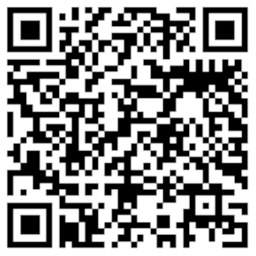
Join the Signal group by clicking this link or scanning this QR code: