We hope you’re hoppy to meet the small five-toed jerboa! This desert-dweller obtains most of its water from the food it eats—including insects, seeds, & parts of plants. The smallest member of its genus, it grows ~5.9 in (15 cm) long & can cover ~9.8 ft (3 m) in a single bound!
American Museum of Natural History
The American Museum of Natural History (AMNH) is a natural history museum on the Upper West Side of Manhattan in New York City. Located in Theodore Roosevelt Park, across the street from Central Park, the museum complex comprises 21 interconnected buildings housing 45 permanent exhibition halls, in addition to a planetarium and a library. The museum collections contain about 32 million specimens of plants, animals, fungi, fossils, minerals, rocks, meteorites, human remains, and human cultural artifacts, as well as specialized collections for frozen tissue and genomic and astrophysical data, of which only a small fraction can be displayed at any given time. The museum occupies more than 2,500,000 ft2 (232,258 m2). AMNH has a full-time scientific staff of 225, sponsors over 120 special field expeditions each year, and averages about five million visits annually. More on Wikipedia
-
American Museum of Natural History
@AMNH

-
American Museum of Natural History
@AMNH
Meet the granulated sea star. Growing ~10 in (25 cm) in size, it's also known as the “doughboy starfish” for its portly look. This species inhabits reefs in shallow Indo-Pacific waters. On its menu are coral and other small invertebrates—it sometimes even scavenges dead animals.
-
American Museum of Natural History
@AMNH
Meet the giant wētā. Members of the genus Deinacrida, these critters are among the largest insects on Earth! In fact, individuals can reach weights of 1.2 oz (35 g)—making them heavier than some mice!
-
American Museum of Natural History
@AMNH
What’s a red-necked pademelon? A relative to kangaroos & wallabies, it’s a marsupial that’s native to parts of eastern Australia. It inhabits forests, where it forages for grass & roots during the night to help conceal it from predators like dingos & raptors.
-
American Museum of Natural History
@AMNH
Like fall foliage, the Orange Fruit Dove decorates the treetops with flame-like colors. Except you won’t find this bird hanging out in the autumnal trees of North America. This species lives in forests on the islands of Fiji, where it munches on fruits and berries.🍂
-
American Museum of Natural History
@AMNH
Cat lovers, meet the flat-headed cat. Unlike many felines, this rare species is at home in water & can often be spotted on muddy river banks. It feeds on crustaceans, frogs, & fish. Sharp molars help it grip slippery prey & partially webbed feet help it navigate its environment.
-
American Museum of Natural History
@AMNH
Behold the cecropia moth! One of North America’s largest moths, its wingspan can reach 7 in (17.8 cm). When mature, this species doesn't eat: Instead, it spends its life searching for mates. Females emit pheromones which males can detect from more than 1 mi (1.6 km) away.
-
American Museum of Natural History
@AMNH
Here’s a hog-nosed shrew rat to brighten your day! Found on Sulawesi Island, this critter feeds on small invertebrates like earthworms and arthropods. In addition to its distinctive flat nose, it also has remarkably long incisors! This species was unknown to science until 2015.
-
American Museum of Natural History
@AMNH
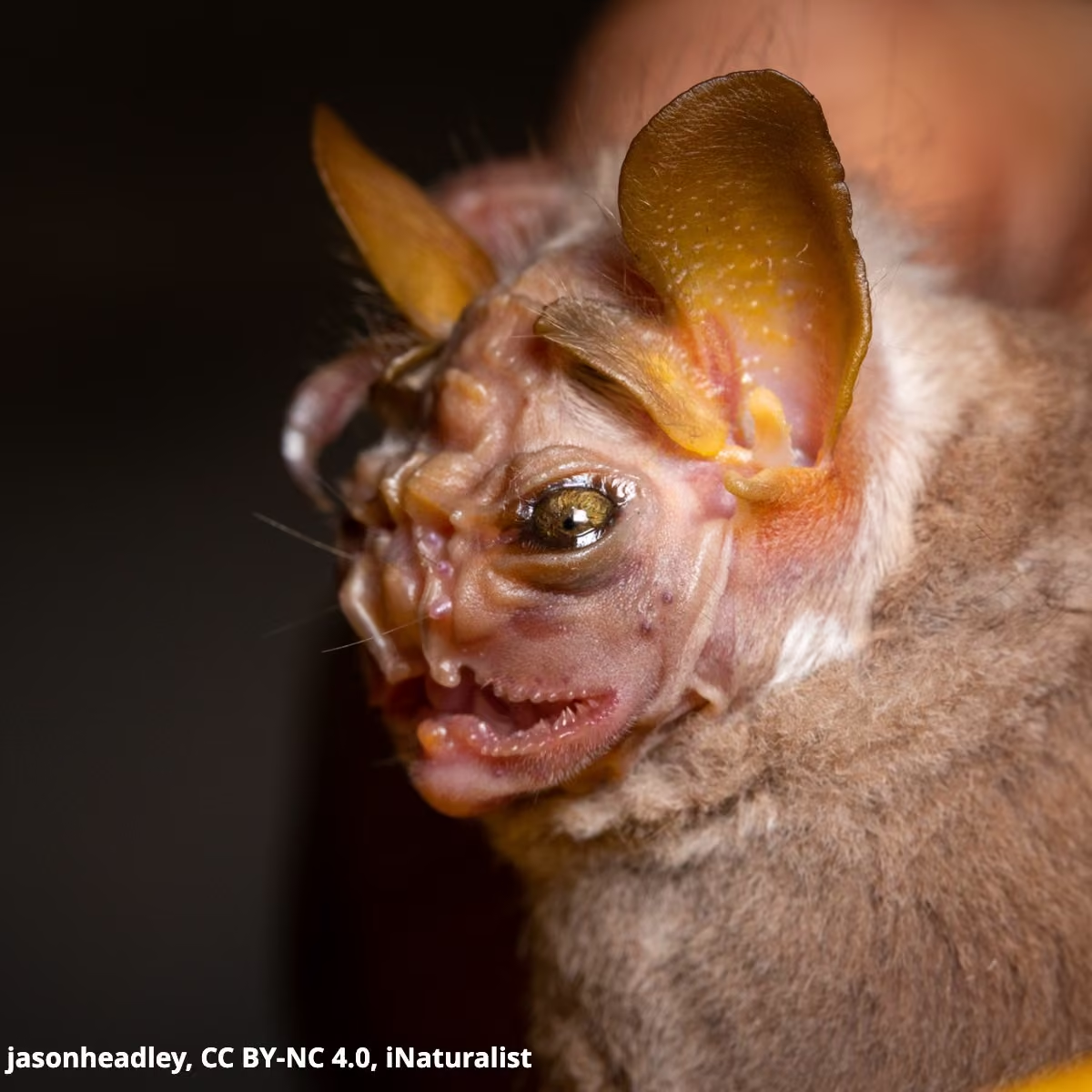
Block out the haters like the visored bat. This frugivore inhabits parts of South America. Males have larger fleshy “visors” than females, & they also sport skin folds around their necks. These folds can be pulled over their faces—serving as “sleep masks” while they roost!
-
American Museum of Natural History
@AMNH
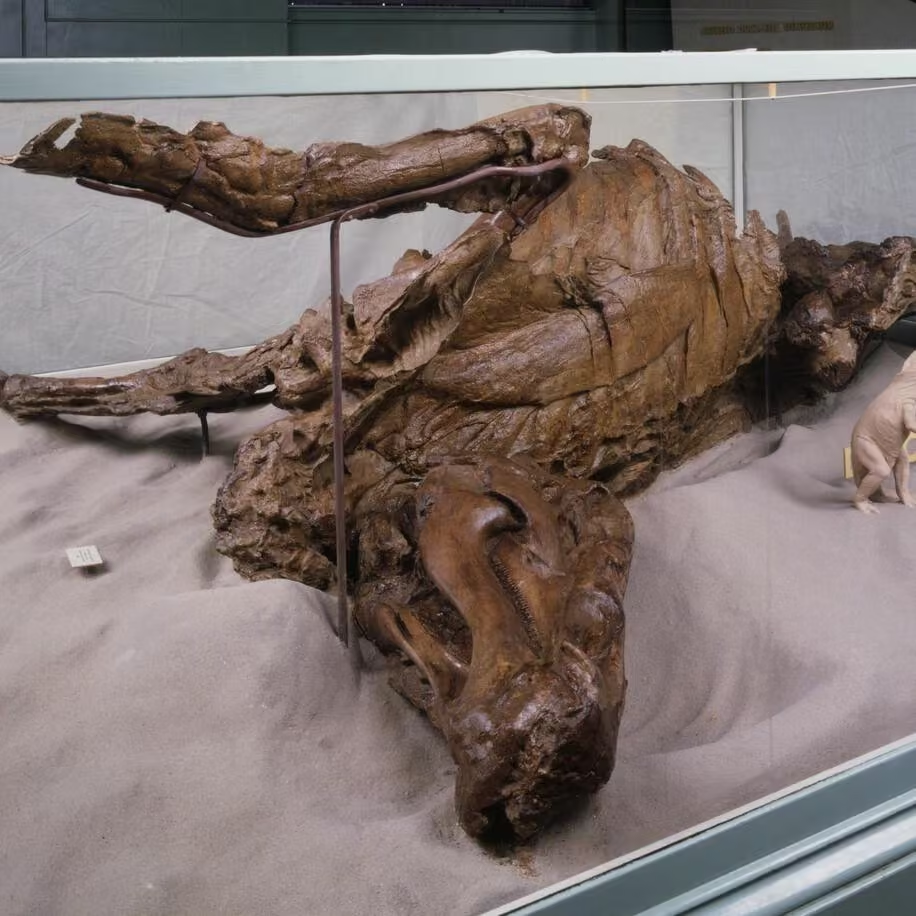
This Fossil Friday, meet the Museum’s mummified hadrosaur—one of the most complete pieces of Mesozoic dinosaur remains ever found! This fossil provides a rare glimpse at dino skin. Like the skin of modern birds, this duck-bill's skin was marked by bumps called tubercles.
-
American Museum of Natural History
@AMNH
The common vampire bat often crawls undetected onto the bodies of sleeping animals (typically birds or livestock) to bite them & consume their blood. But unlike their horror film namesakes, this vampire rarely kills & its prey seldom realize they’ve been bitten.
-
American Museum of Natural History
@AMNH
👻 Boo! Meet the ghost mantis. Its leaf-like appearance helps it disappear among foliage, concealing it from predators and prey. When grasshoppers, moths, & other prey wander too close, it uses its powerful forelimbs to snatch them up. This insect has a wide range across Africa.
-
American Museum of Natural History
@AMNH
The satanic leaf-tailed gecko is a master of disguise that specializes in mimicking dry leaves. Its tail even looks like it’s rotting or has been chewed. If spotted by a foe, this Madagascar resident will drop the camouflage act & open its bright red mouth for a shocking display.
-
American Museum of Natural History
@AMNH
Awoo! Meet the wolf spider. With 2,300+ known species, their scientific name (Lycosidae) comes from the Greek word for wolf & references the way some of these spiders chase down their prey. The largest wolf spiders have been known to hunt critters many times their own size.
-
American Museum of Natural History
@AMNH
If Tim Burton had a favorite cephalopod, it might be this one. Meet the striped pyjama squid! One of the few known poisonous cephalopods, this critter can change color & secrete slime to intimidate foes. It spends its days nestled beneath the sand, hunting for prey by night.
-
American Museum of Natural History
@AMNH
Ever seen a white Raven? No, this isn’t a new species or a ghost: This Raven’s striking pale plumage is the result of the genetic mutations leucism or albinism. White Ravens are rare. An estimated 1 in 30,000 individuals is born without this species’ signature black plumage.
-
American Museum of Natural History
@AMNH
Behold the striking colors of the blue-spotted stingray! Its bright spots are a warning to onlookers that it's venomous—& if its colors aren’t enough to ward off foes, it’s equipped w/ a tail that can inject a lethal dose of toxins.
-
American Museum of Natural History
@AMNH
What’s one of the world’s spookiest fungi? The dead man’s fingers. Its “fingers” are its fruiting body, and they can grow up to 4 in (10 cm) tall! You might spot it in forests growing on decaying or dead wood in parts of North America and Europe.🧟
-
American Museum of Natural History reposted
Major League Soccer
@MLS
Our trophy season is getting closer. 🏆
@AMNH has @newyorkcityfc's hardware on display among other sports titles: www.amnh.org/exhibitions/for-the-win -
American Museum of Natural History
@AMNH
Meet the long-tailed semi-slug. Unlike the shells of snails, semi-slugs’ shells are too small for the animals to retract their bodies into. This critter can often be spotted wrapping its tail—which measures three times the length of its body—around itself like a cat.
-
American Museum of Natural History
@AMNH
🦕🦖👣 Step into this archival image from 1961, featuring the Glen Rose Trackway in the Museum’s Hall of Early Dinosaurs. The smaller prints of these 107-million-year-old fossilized dino tracks were made by a theropod. The larger ones were probably left by a sauropod.
-
American Museum of Natural History
@AMNH
Crikey! Meet Irwin’s snapping turtle. The late Steve Irwin, and his father Bob, spotted this rare reptile in the early 1990s & contacted herpetologist John Cann. He was the first to describe this species—and he named it after the Irwins! It can be found in Queensland, Australia.
-
American Museum of Natural History
@AMNH
Trilobite lovers, meet the blue green chiton! Though it resembles some trilobites, this critter is actually a mollusk that inhabits waters around Australia & New Zealand. Growing about 1.4 in (3.5 cm) long, this nocturnal critter can roll into a ball when threatened or disturbed.
-
American Museum of Natural History
@AMNH
The Philippine tarsier is one of the world’s smallest primates, measuring ~5 in (13 cm) long & weighing ~5 oz (142 g)—roughly as large as a baseball. It uses its large eyes (each of which is about the size of its brain) to hunt insects at twilight.
-
American Museum of Natural History
@AMNH
It’s Fossil Friday! Unlike its three-horned cousin Triceratops, Styracosaurus had a singular nasal horn & huge spikes on its frill. It may have used its headgear to defend against predators, attract mates, or compete with rivals.
-
American Museum of Natural History
@AMNH
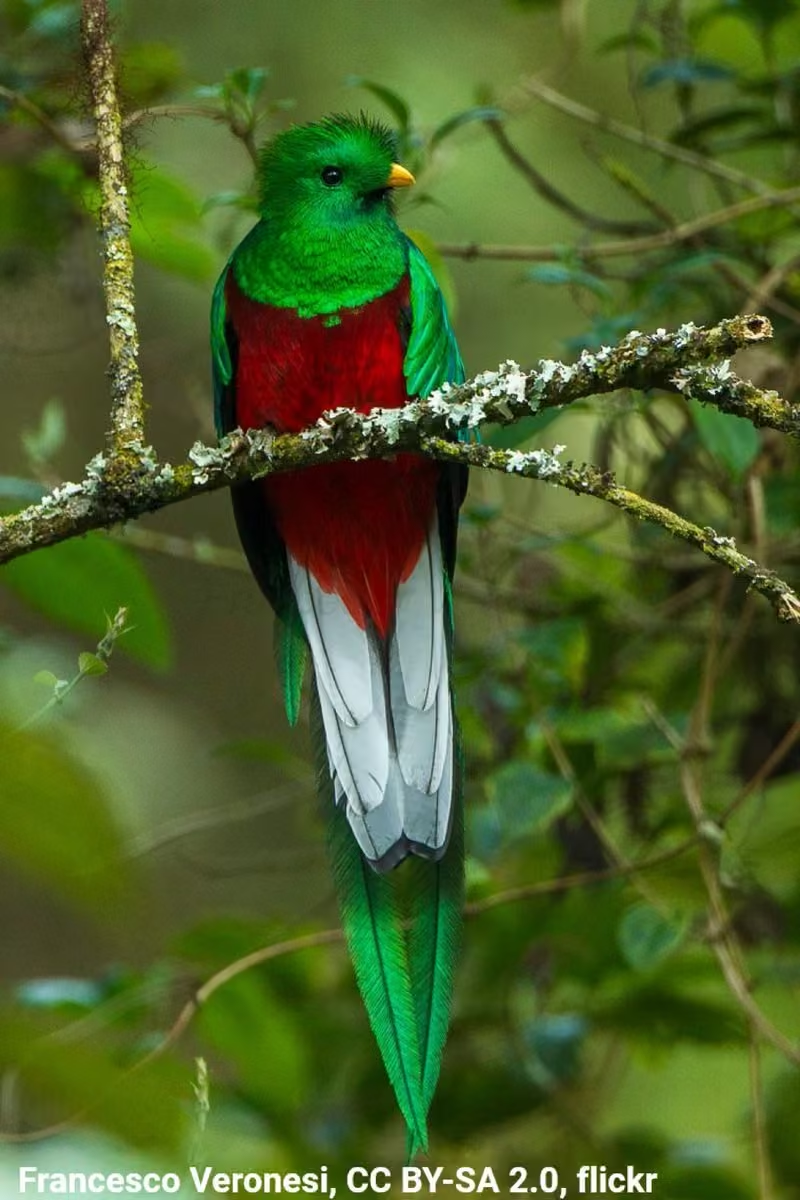
The Resplendent Quetzal inhabits the cloud forests of Central America at elevations of up to 10,00 ft (3,048 m). Males showcase brilliant iridescent green plumage that contrasts with a vibrant shock of red on their bellies, and their tail feathers can grow ~3 ft (0.9 m) long!
-
American Museum of Natural History
@AMNH
The Grandidier's baobab, also known as the renala, may live to be more than 300 years old! Scientists are unable to confirm these trees' exact age because baobabs don't produce annual growth rings. This species of baobab is found only in Madagascar's dry deciduous forests.
-
American Museum of Natural History
@AMNH
The world’s largest terrestrial invertebrate? That would be the coconut crab. It can span ~3 ft (1 m) long from leg tip to leg tip & weigh ~8 lbs (4 kg)! It inhabits coasts off of the Indo-Pacific Ocean. Scientists have compared its pinching power to a lion’s bite force!🥥🦀
-
American Museum of Natural History
@AMNH
What’s a spiny lumpsucker? No, it’s not a nickname for your ex. This fish's body shape and small fins mean that it isn’t the best swimmer, but a powerful pelvic fin helps it stick to solid surfaces, acting like a suction cup to hold it in place as it hides from predators.
-
American Museum of Natural History
@AMNH
Few things make it feel more like fall than the foliage of the red maple tree. #dyk? It sports something red all year round: in winter, it has red buds; in spring, red flowers begin to bloom; in summer, the leaf stalks turn red; & in autumn, the foliage is a vivid orange-red.🍁
-
American Museum of Natural History
@AMNH
#dyk? The short beaked echidna is a monotreme, meaning it’s one of the few mammals that lays eggs instead of bearing live young. And? This species is unusually long-lived, with individuals living up to 50 years in captivity. This spiky critter can weigh ~15.4 lbs (7 kg).
-
American Museum of Natural History
@AMNH
This cricket isn’t named Jiminy. Growing ~1.9 in (5 cm) long, the armored bush cricket uses powerful jaws to feed on a diet that includes leaves, other crickets, & even nestling birds. When threatened, it's able to squirt a distasteful liquid called hemolymph at foes.
-
American Museum of Natural History
@AMNH
What’s up? Not the ground pangolin. It spends most of its time on the ground, creating underground burrows to snooze in during daylight. At night, it uses its long tongue to slurp up insects. When threatened, it can roll up into a ball, protecting its soft body from predators.
-
American Museum of Natural History
@AMNH
Who’s this fuzzy noodle? That would be the long-tailed weasel. North America’s largest weasel, this nocturnal critter feeds on small mammals, insects, and birds. It inhabits the burrows of other species, but it’s also a skilled climber that can often be found in the trees.
-
American Museum of Natural History
@AMNH
Meet the gold-mouth sea squirt! This filter-feeder draws in water through an opening known as a siphon to devour phytoplankton and bacteria. It can be found in waters off of Southeast Asia and Australia.
-
American Museum of Natural History
@AMNH
Why does the binturong smell like buttered popcorn The answer is... pee! A chemical compound-2-acetyl-1-pyrroline-in this critter's urine is the same one found in popcorn. It uses its signature scent to mark its territory and attract mates.
-
American Museum of Natural History
@AMNH
The little pygmy possum is the smallest possum in the world. This marsupial typically weighs only 0.4 oz (10 g)—about the weight of 10 almonds. This omnivore has a taste for the nectar & pollen of flowering plants, and it can consume up to 7% of its body weight in a single day!
-
American Museum of Natural History
@AMNH
#otd in 1914, Martha (the last-known living Passenger Pigeon) died at the Cincinnati Zoo. Her death—at 29 after a lifetime in captivity—marked the disappearance of her once-abundant species from the world & made her name synonymous with species extinction at human hands.
-
American Museum of Natural History
@AMNH
What color is the Australian King Parrot? 👀 If you answered red and green, you’re only partially right! Under UV light, some of its plumage has a distinctly golden hue, which is invisible to the human eye. How can you tell males and females apart? Males have red heads.
-
American Museum of Natural History
@AMNH
Ever heard of the aardwolf? It’s an insectivorous mammal that’s in the same family as the hyena. Unlike its carnivorous relatives, it’s one of a few mammals that feed exclusively on termites. In summertime, it can gobble up ~200,000 termites for its midnight meal!
-
American Museum of Natural History
@AMNH
Meet the giant rain frog! To survive the summer heat, this amphibian burrows underground. At about 1.8 in (4.5cm) long, it’s the largest of all rain frogs. When threatened, it can blow up like a balloon, intimidating foes with sudden roundness.
-
American Museum of Natural History
@AMNH
Have you ever seen a “bleeding” fungus? When the devil’s tooth is moist, it oozes striking droplets of red liquid. But this only happens when the fungus is young—as it grows, it turns brownish & stops secreting fluid. Believe it or not, this “bleeding” mushroom is not toxic!
-
American Museum of Natural History
@AMNH
This critter can spend up to 23 hours a day looking for food! Meet the Eastern mole. This dirt puppy weighs 4.9 oz (140 g)—about the weight of about two C batteries. With poor eyesight, it spends most of its life underground hunting for worms and other insects.
-
American Museum of Natural History
@AMNH
This archival image, snapped sometime before 1960, depicts duck-billed dinosaurs on display at the Museum. Also known as hadrosaurs, these massive herbivores were the dominant plant-eaters during the Late Cretaceous ~85 million years ago.
-
American Museum of Natural History
@AMNH
What’s that critter? It’s the lowland streaked tenrec. Its yellow & black quills provide protection from predators, but also serve as a means of communication! This animal can rattle its quill tips together, producing a high-pitched sound that’s thought to signal others.
-
American Museum of Natural History
@AMNH
Have you ever seen a glass squid? Their bodies are mostly see-through, helping them hide from predators, except for their opaque eyes. However, a light-producing organ below their eyes emits flashes, mimicking sunlight from above to camouflage them from threats lurking below.
-
American Museum of Natural History
@AMNH
The Warren mastodon was discovered in 1845 by a crew digging for peat fuel. Every bone in its skeleton is real—it was the first complete American mastodon skeleton found in the USA and is still one of the most complete mastodon skeletons known.
-
American Museum of Natural History
@AMNH
Meet one of the world’s smallest reptiles: the Nosy Hara leaf chameleon! An adult grows to be just over 1 inch (2.5 cm) long, & a juvenile can fit on the head of a match. Scientists think that its miniature size may be an extreme form of island dwarfism.
-
American Museum of Natural History
@AMNH
This Trilobite Tuesday, meet one of Utah's rarest Middle Cambrian trilobites: Kootenia randolphi. Known for decades, often from scattered parts, this species was officially named following a major scientific study conducted in 2011.
-
American Museum of Natural History
@AMNH
This #fossilfriday, scoot into the weekend with Scutosaurus karpinskii: the “shield lizard.” This large herbivore lived during the Late Permian ~253 million years ago. It’s part of a group known as pareiasaurs, which had thickened knobs around their skulls & peg-like teeth.
-
American Museum of Natural History
@AMNH
Need a plump bird to brighten your day? Meet the Orange-bellied Parrot! This endangered species can be spotted throughout parts of Australia. Males & females have green plumage with blue markings, but males tend to be brighter in color, with more distinct patches of color.
-
American Museum of Natural History
@AMNH
Meet the northern walking stick—a master of camouflage. Its color and shape fool predators into thinking it’s an inedible twig. In fact, its camouflage is so thorough that its eggs resemble tiny seeds!
-
American Museum of Natural History
@AMNH
Does this summer heat make you feel like a greater naked bat? Glands on this mostly hairless mammal's neck produce unpleasant-smelling secretions—the scent of which has been compared to “stale socks drenched in engine oil.” It can be found in colonies of ~20,000 individuals.
-
American Museum of Natural History
@AMNH
Today’s Exhibit of the Day? The Museum’s giant sequoia. How do you fit a 16-ft- (4.9-m-) tree slice through a 12-ft- (3.7-m-) doorway? In 1912, this sequoia slice was cut to fit through the Museum. Visitors today can still spot the seams where it was put back together!
-
American Museum of Natural History
@AMNH
Meet Eryops megacephalus. Evidence including strong limbs and trackways that may have been made by this critter suggest it was one of the most terrestrial early tetrapods. It lived ~280 mya during the Early Permian.
-
American Museum of Natural History
@AMNH
Meet the blunt-headed burrowing frog! Also known as the balloon frog, it spends much of its time underground. During the breeding season, it comes to the surface and takes advantage of seasonal rain pools to release up to 300 eggs.
-
American Museum of Natural History
@AMNH
This #internationaltigerday, we’re remembering the Caspian tiger. This large tiger subspecies weighed ~530 lbs (240 kg). It was driven to extinction by the same factors threatening surviving tigers—human activity, including deforestation and overhunting.
-
American Museum of Natural History
@AMNH
Have you ever seen the rosy maple moth? Its vibrant color provides camouflage among the fruits of red maple trees. With a wingspan of up to 2 in (5 cm), this silk moth is nocturnal & solitary. It can be found throughout North America.
-
American Museum of Natural History
@AMNH
Behold the jackal food. Rather than using photosynthesis to make food, this parasite siphons nutrients from host plants. The corpse-like stench of its fruit attracts jackals & other carnivores... but how does it taste? Its texture & flavor have been compared to that of a potato!
-
American Museum of Natural History
@AMNH
Check out these jaws. They belong to Otodus megalodon: a gigantic shark. 🦈 Dwarfing all living sharks, megalodon measured roughly 50 feet (15 m) long. It also had a bite force of 41,000 pounds—ten times that of the great white (Carcharodon carcharias).
-
American Museum of Natural History
@AMNH
Where does the Common Hoopoe get its name? It’s a reference to the sound it makes: If ever near one of these birds, you may hear its low “hoop” call. Its eye-catching crest isn’t always raised: It only opens it up when the Hoopoe is excited or alarmed.
-
American Museum of Natural History
@AMNH
Have you ever seen a tropical gasflame? 👀 This colorful critter is a nudibranch. Notice the tentacle-like structures on its body? They’re called cerata: Nudibranchs use them to store stinging cells from prey like jellyfish, converting their meals into a form of self defense.
-
American Museum of Natural History
@AMNH
Did you know? The toad fly lays its eggs in an unusual place: a toad’s nostrils. When its eggs hatch, the larvae feed on the toad’s face and body. Unfortunately, this leads to the toad’s demise.
-
American Museum of Natural History
@AMNH
On this day in 1969, Apollo 11's Neil Armstrong became the first person to walk on the Moon. The journey was an astounding achievement, & scientific results & specimens gathered by Armstrong & Buzz Aldrin on the surface fueled research long after the mission was over.
-
American Museum of Natural History
@AMNH
The Vietnamese mossy frog may not be invisible, but it comes pretty close. 🐸 This critter’s camouflage provides perfect cover among Vietnam's mossy caves and stream banks. It can project its voice up to 13 ft (4 m) into the distance, making it even more difficult to locate.
-
American Museum of Natural History
@AMNH
Did you know? The Museum's Apatosaurus was originally displayed with the wrong skull. Because this dino's remains were incomplete, a speculative skull (based on a different sauropod—Camarasaurus) was sculpted. As new research emerged, it was updated.
-
American Museum of Natural History
@AMNH
👂 The magnificent ears of a black-tailed jackrabbit can measure 20 percent of the animal’s entire body length. If this ratio applied to humans, an average person's ears would be 13 in (33 cm) tall! Large ears release heat, helping this hare cool down in its arid habitat.
-
American Museum of Natural History
@AMNH
Today’s mood? The longnose batfish. Growing ~9 in (23 cm) long, this critter isn’t a very good swimmer. Instead, it uses its wide set pectoral fins like arms to scuttle across the sea floor. It uses its "nose" as a lure to attract prey including small fish & crustaceans.
-
American Museum of Natural History
@AMNH
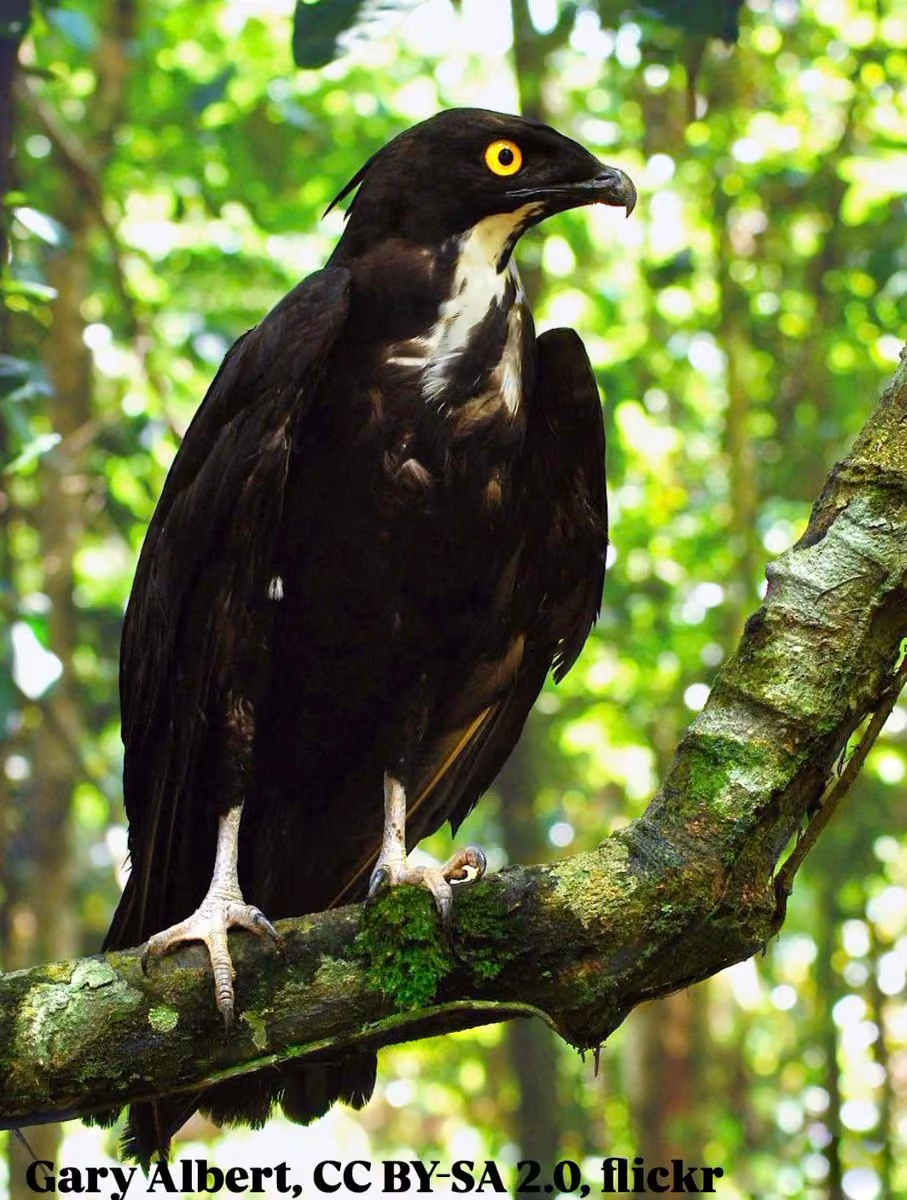
It’s the Bat Hawk! Named after its favorite snack, this raptor spends most of its day roosting on a perch. But when the Sun starts to set & bats come out, it's quick to strike. Within a 20-minute timespan, it'll catch up to 11 bats!
-
American Museum of Natural History
@AMNH
Who’s a good boy? Meet the dhole. This Asian canid typically lives in groups of ~12 individuals—sometimes socializing with other groups to form “super packs” of 30+ members. Teamwork enables them to hunt prey 10x their size. Dholes also allow their pups to feed first on kills.
-
American Museum of Natural History
@AMNH
You don’t see one of these every day… or ever. 🦕 Meet The Titanosaur. At 122 ft (37.2 m) long & ~70 tons, this sauropod was heavier than 10 African elephants—it was one of the largest animals to ever walk the Earth! This gigantic herbivore lived ~95 million years ago.
-
American Museum of Natural History
@AMNH
Squirrel or rabbit? Neither! It’s the southern viscacha. This rodent lives in South America & is a skilled climber that inhabits mountainous areas. A gregarious critter, the viscacha lives in colonies, which consist of multiple family units that can be as large as 75 individuals.
-
American Museum of Natural History
@AMNH
Have you ever seen one of these at the beach? Also known as “sand crabs” or “sand fleas,” Pacific mole crabs migrate with the tides, feeding on plankton brought in by the waves. These critters use their back legs to get around, and they burrow backwards, too.
-
American Museum of Natural History
@AMNH
Did you know? This colorful bird might be one of the Dodo’s closest living relatives! Meet the Nicobar Pigeon, which inhabits forests & mangroves on islands like the Andaman & Nicobar Islands. A gizzard stone in its stomach helps it break down tough foods like seeds & nuts!
-
American Museum of Natural History
@AMNH
Act like a jumping spider & jump for joy! There are 6000+ known species of these tiny arachnids. True to their name, jumping spiders don’t use webs to snare food, instead they pounce on their prey. They're easily recognizable thanks to large forward-facing eyes.
-
American Museum of Natural History
@AMNH
If you’re looking for Bennett's tree-kangaroo (Dendrolagus bennettianus)... look up! It's one of Australia’s largest arboreal mammals. It can only be found in the rainforests of northeastern Queensland, where it spends most of its life in the trees.
Photo: davidgwhite, CC BY-NC 4.0, iNaturalist -
American Museum of Natural History
@AMNH
Today's Exhibit of the Day? A colossal amethyst geode! At ~13 ft (4 m) tall & 9,000 lbs (4,082 kg), it's as heavy as 3 compact cars. Formed 135 million years ago, it started as colorless quartz—becoming purple after millennia of natural radiation, heat, & trace contaminants.
-
American Museum of Natural History
@AMNH
How does the pebble toad escape danger? When threatened by a predator, like a tarantula, it tucks in its limbs and rolls downhill like a pebble. At just 1.2 in (30 mm) long, this lightweight toad isn't hurt by its speedy descent.
-
American Museum of Natural History
@AMNH
This #fossilfriday, soar into the weekend with Archaeopteryx! Described in 1861 shortly after Darwin proposed his theory of evolution, this feathered dino caused a sensation— exemplifying the transition between reptiles and birds.
-
American Museum of Natural History
@AMNH
Have you ever seen the Pacific geoduck? Also called the elephant clam, this gigantic mollusk can reach up to 6 ft (1.8 m) and live for more than a century! Its long “neck," called a siphon, has two openings—one for breathing / feeding & one for filtering out water.
-
American Museum of Natural History
@AMNH
Today's Exhibit of the Day? A blast from the past! This archival image, snapped in 1938, depicts Museum preparators sculpting a model Triceratops. This model is no longer on display, but Triceratops fans can spot a fossil skeleton in the Hall of Ornithischian Dinosaurs.
-
American Museum of Natural History
@AMNH
Happy Father’s Day from the Gold-specs jawfish! Dads-to-be of many jawfish species carry eggs in their mouths. To attract mates, males “dance” with sweeping movements & fin-flashing—opening their mouths as wide as possible to boast their mouthbrooding potential!
-
American Museum of Natural History
@AMNH
Have you ever seen the red-shanked douc? The markings on this fashionable primate’s legs resemble bright red trousers! This monkey is a picky eater that closely inspects food, such as fruit & leaves, before consumption. It prefers unripe fruit and young leaves.
-
American Museum of Natural History
@AMNH
Meet Prevost’s squirrel! Growing ~22 in (55.8 cm) long from nose to tail, this colorful mammal inhabits forests in parts of Asia. It’s crepuscular, meaning it’s most active at dawn and dusk. Its diet includes seeds, fruit, flowers, insects, and bird eggs.
-
American Museum of Natural History
@AMNH
🌈 This #fossilfriday, behold the dazzling colors of an iridescent ammonite. Over millions of years, high temperatures & pressures turned its shell to a gemstone called ammolite. Along with amber & pearl, this gem is one of only a few made by living organisms.
-
American Museum of Natural History
@AMNH
The blunthead slug snake isn't like other snakes. This nocturnal reptile, which primarily feeds on slugs and snails, eats using a technique called mandibular sawing. To slice off the indigestible parts of prey, this species slides its jaws back and forth like a saw!
-
American Museum of Natural History
@AMNH
While the crab-eating fox’s name implies that crabs make up most of its diet, this canid is omnivorous and has a wide-ranging menu that changes with the seasons! During the dry season, it may snack more on insects; during the wet season, it favors crustaceans.🦀🦊
-
American Museum of Natural History
@AMNH
Meet Cuvier’s dwarf caiman! It's the smallest living crocodilian, growing ~4.9 ft (1.5 m) long & weighing ~15.4 lbs (7 kg). It’s native to parts of South America, where it might be spotted basking in the Sun along the shores of the Amazon or Orinoco rivers.
-
American Museum of Natural History
@AMNH
Smile like Megalochelys atlas because it’s #fossilfriday! This species was one of the largest known land turtles & lived during the Late Pliocene ~2 million years ago. This specimen’s shell measures ~7.4 ft (2.3 m) long & in life, it may have weighed over 2,000 lbs (907 kg)!
-
American Museum of Natural History
@AMNH
Looking for the emperor shrimp? Check the backs of nudibranches & sea cucumbers! Hitching a ride helps this tiny crustacean move from location to location with ease & avoid predators. Scientists think the emperor shrimp might also “clean” its hosts by removing harmful parasites.
-
American Museum of Natural History
@AMNH
You won’t spot the Pink-necked Green Pigeon on the streets of NYC! This colorful bird can be found throughout forests in Southeast Asia, where it forages mainly for fruit. Females of this species lack pink necks and are mostly olive-green in color.
-
American Museum of Natural History
@AMNH
When this spider eats, “glitter” comes out. Meet the black-spotted Thwaitesia! During digestion, it sequesters a chemical compound called guanine which shimmers like water droplets in the Sun. Scientists think this striking display is actually a form of camouflage!
-
American Museum of Natural History
@AMNH
Have you ever seen the beautiful rainbow eucalyptus? When strips of its bark peel off, they change in color: Bark starts out in shades of green, then transitions into purple, red, & orange as time goes on. Continuous peeling helps the tree keep its trunk clear of other plants.🌈
-
American Museum of Natural History
@AMNH
Here’s a giant African land snail to brighten your day! 🐌 Found in parts of eastern Africa, this jumbo gastropod can grow ~5.9 in (15 cm) in size—making it one of the world’s largest snails! It’s a member of the Achatinidae family, which includes other similarly sized species.
-
American Museum of Natural History
@AMNH
It's Fossil Friday! In this archival image, Museum preparators work on 3 Tyrannosaur skulls. With 4-ft- (1.2-m-) long jaws & massive teeth, T. rex was one of the largest carnivores of all time. It could bite with ~7,800 lbs of force (34,500 N)—equivalent to the weight of 3 cars!
-
American Museum of Natural History
@AMNH
The Common Potoo is a master of disguise. You might think its huge yellow eyes would draw the attention of predators, but the bird has a workaround: It can close its peepers while staying aware of its surroundings, thanks to slits in its eyelids.
-
American Museum of Natural History
@AMNH
Why the blue tongue? For this reptile, it’s a form of self defense! Though it's covered in armored scales, the blue-tongued skink can also defend itself by opening its mouth, hissing, and revealing its bold blue tongue—startling foes with a flash of vibrant color.
-
American Museum of Natural History
@AMNH
DYK? Fireflies use a system of flashes in some of the ways we use words: to attract, to say, “Here I am,” even to deceive. They emit light from a tiny organ, called a lantern, on the underside of their abdomen, where a biochemical reaction releases energy in the form of light.
-
American Museum of Natural History
@AMNH
👂Psst. Ever heard of the long-eared hedgehog? Inhabiting parts of Central Asia, this omnivore feeds on fruit, insects, & vertebrates like lizards. It has been observed rubbing its spines against toads, suggesting it might be using their toxins for its own self-defense.
-
American Museum of Natural History
@AMNH
It's Fossil Friday! What's the tallest freestanding dinosaur mount in the world? The Museum's Barosaurus & Allosaurus in the rotunda, which stands 50 ft (15 m) tall. How does it defy gravity? The Barosaurus is constructed using casts from real fossil bones in our collection.
-
American Museum of Natural History
@AMNH
Happy birthday to the “Mother of Paleontology,” Mary Anning! Born #otd in 1799, she hailed from Lyme Regis on the coast of Dorset, England, & grew up collecting fossils. A few of her many accomplishments include unearthing one of the first ichthyosaurs & discovering Dimorphodon!
-
American Museum of Natural History
@AMNH
Meet the Andean Cock-of-the-Rock. This bird lives in the cloud forests along South America's Andes Mountains. Its appearance isn’t its only unusual trait: This species' courtship rituals include squeaking, grunting calls that have been compared to the sound of a rubber chicken.
-
American Museum of Natural History
@AMNH
This deer says… woof? Meet the Muntjac deer. This ungulate makes bark-like calls to alert others of approaching predators like tigers. If attacked, the muntjac may bite its foe with its canine teeth.
-
American Museum of Natural History
@AMNH
The coconut octopus isn't picky about where it lives. This cephalopod, which inhabits muddy shallows in parts of the Indo-Pacific, avoids predators by hiding inside closed spaces of all sorts. It makes its home in coconut shells, clam shells, and even discarded bottles!
-
American Museum of Natural History
@AMNH
Happy Caturday! Meet the rusty-spotted cat. Known as the “hummingbird of cats,” it's one of the world’s smallest felines, weighing in at ~3.5 lbs (1.6 kg). Primarily nocturnal, this cat uses its large eyes to hunt under the cover of darkness.
-
American Museum of Natural History
@AMNH
Happy Fossil Friday! Meet the short-necked plesiosaur, Cryptocleidus oxoniensis. This marine reptile’s short tail could only function as a rudder, leaving the limbs as its main organ of propulsion.
-
American Museum of Natural History
@AMNH
Get to know the perentie! This lizard is one of the largest in the world. It can reach lengths of 6.6 ft (2 m) or more & hails from western Australia. It prefers dry habitats & eats a range of animals, from birds to mammals to other lizards.
-
American Museum of Natural History
@AMNH
Meet the velvet mite! This arachnid lives in topsoil and breaks down dead plant and animal matter. Human agriculture, and the survival of virtually all plant species, depends on continuous renewal of topsoil by tiny organisms like this mite.
-
American Museum of Natural History
@AMNH
Meow, it’s Caturday! Meet the European wildcat. About the size of an average housecat, this powerful feline preys on rabbits, rodents, birds, and even mustelids like weasels and martens. Its thick fur, bushy tail, and chonky appearance set it apart from other wild cat species.
-
American Museum of Natural History
@AMNH
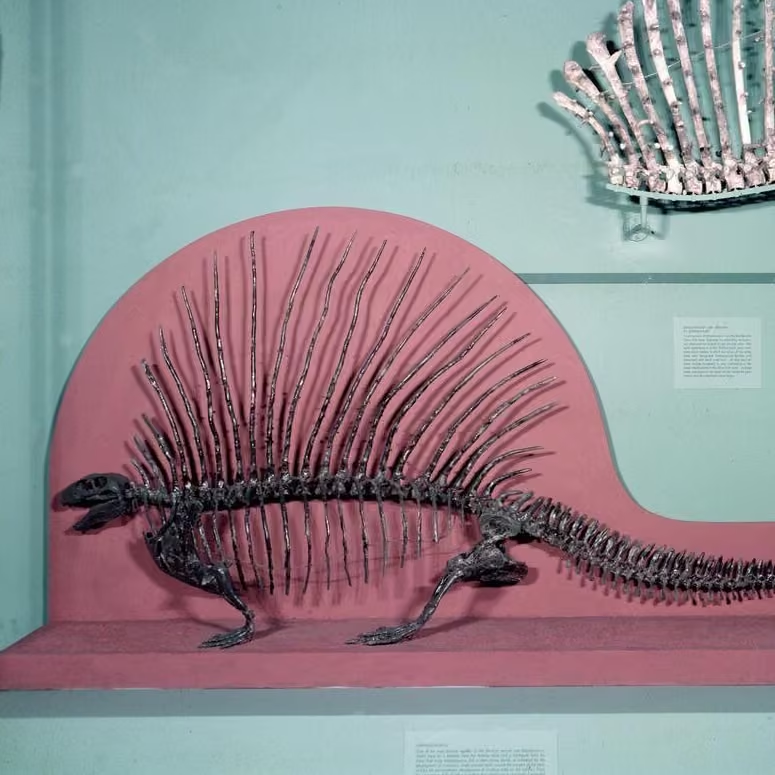
It's Fossil Friday! Sail into the weekend with Edaphosaurus, a sail-backed herbivore that lived ~280 mya. It may resemble a lizard, but is actually more closely related to mammals! A clue? The synapsid openings behind each eye socket—a trait found in mammals & absent in reptiles.
-
American Museum of Natural History
@AMNH
Meet the Crested Coua! It's endemic to Madagascar, where it lives in a variety of habitats, such as forests, mangroves, & savannas. Although it’s related to cuckoo birds, it is not a parasitic nester and actually cares for its hatchlings.
-
American Museum of Natural History
@AMNH
Ever seen a giant horse conch? 👀 Growing ~2 ft (0.6 m) in length, this massive gastropod is the largest marine snail in the Atlantic Ocean. It uses its fleshy foot to envelop unsuspecting prey, including invertebrates like clams and other snails.
-
American Museum of Natural History
@AMNH
Have you ever seen the corsac fox? It inhabits the steppes & semi- deserts of central Asia. To avoid predators & harsh weather, it makes its dens in marmot burrows, sometimes living with other foxes in what are known as “corsac cities.” It's also been seen hunting in small packs.
-
American Museum of Natural History
@AMNH
Happy Caturday! Meet the fishing cat. Found in parts of Southeast Asia, this critter prefers to inhabit areas near bodies of water, like mangroves, marshes, & swamps. It's a specialized fish-hunter, sometimes dunking its head below the surface to catch food in its mouth.
-
American Museum of Natural History
@AMNH
Which bird has the longest bill in the world? At 1.2 ft (36 cm) long, it’s the Australian Pelican. This species is also one of the largest flying birds, with a wingspan of ~8.2 ft (2.5 m) & a weight of ~15 lbs (6.8 kg).
-
American Museum of Natural History
@AMNH
Get to know the largest member of the dog family in South America: the maned wolf. Standing about 3 ft (0.9 m) tall at the shoulder, this critter dines on small mammals, fish, reptiles, & birds. It communicates with deep, gruff roar-like barks.
-
American Museum of Natural History
@AMNH
Why so shaggy? The sloth bear’s scruffy appearance isn’t just for looks. It’s for protection! When this animal goes after termites, a key food source, longer hair helps prevent bites.
-
American Museum of Natural History
@AMNH
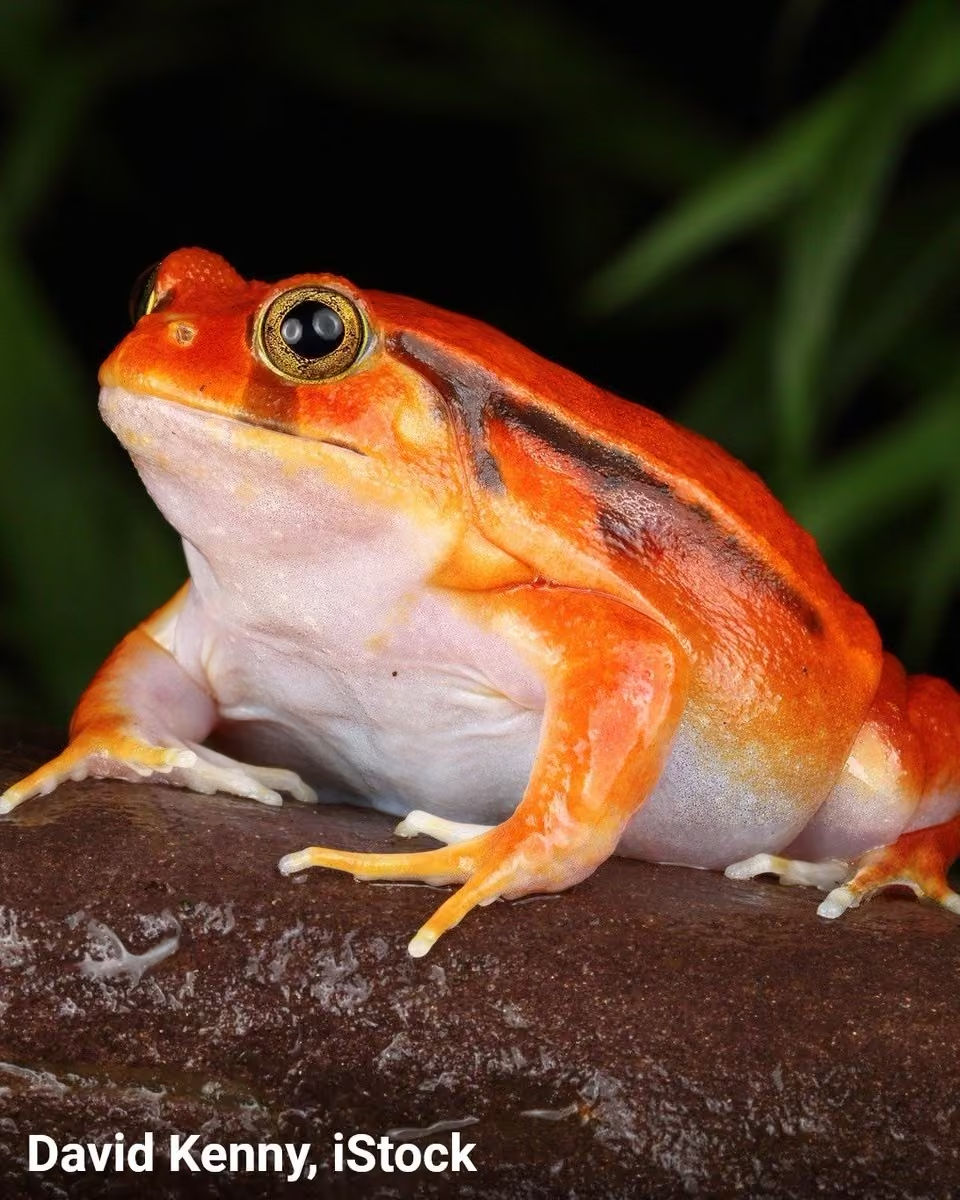
Craving a ripe tomato? This frog can’t help. 🍅 Despite resembling a juicy fruit, the tomato frog wouldn’t taste very good. Its bright red hue is an example of aposematic coloring—a signal that means “don’t touch!” If bothered, it can secrete sticky, mildly toxic goo.
-
American Museum of Natural History
@AMNH
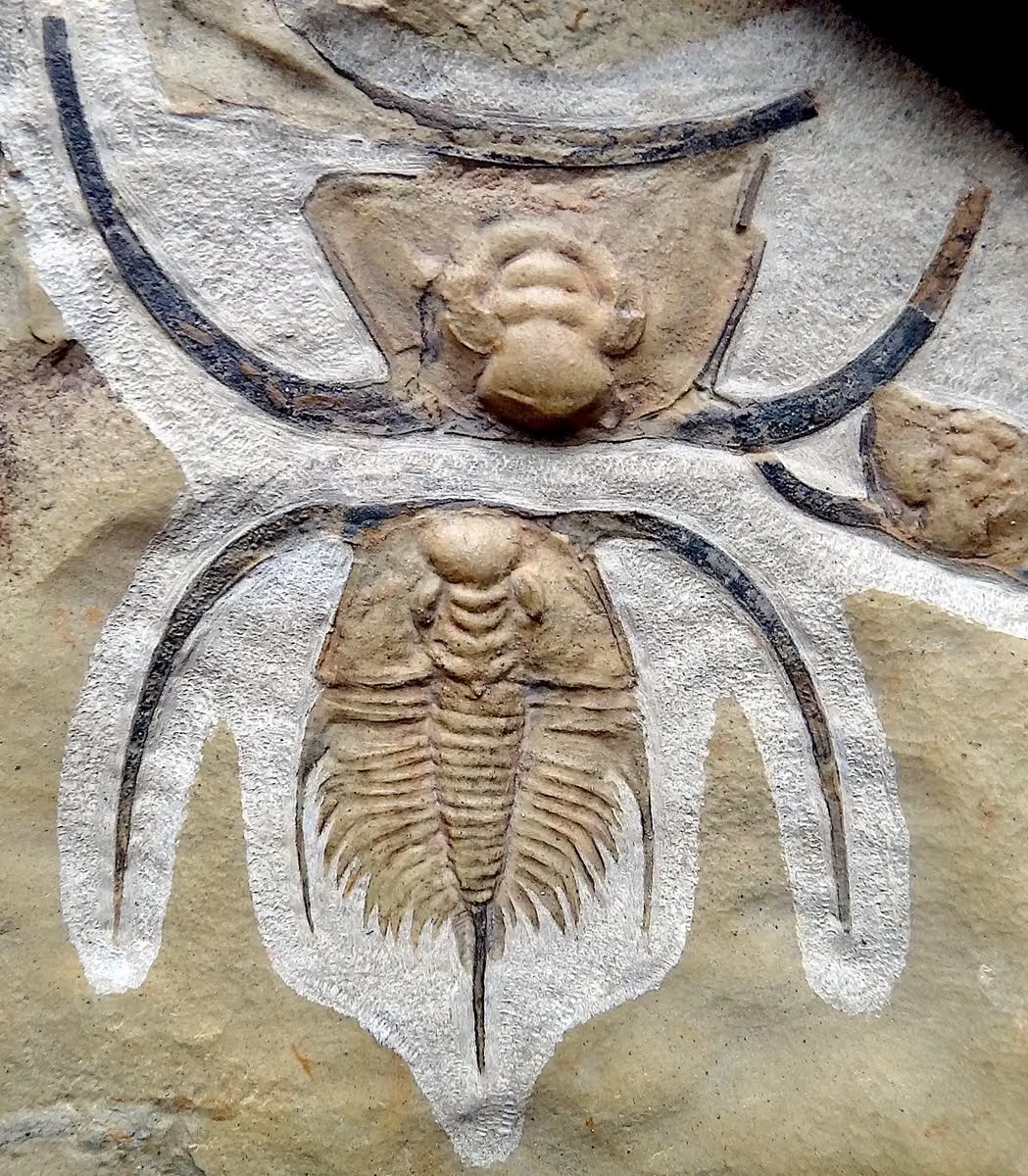
It's Trilobite Tuesday! This fossil, from the Rochester Shale Quarry, is a snapshot of life during the Silurian. A 5-in- (12.7-cm-) long Arctinurus trilobite rests next to a Dimerocrinites crinoid. Crinoids are marine animals that use their arms to catch drifting food particles.
-
American Museum of Natural History
@AMNH
Here’s a mushroom you won’t find at the grocery spore: the rosy veincap! This species, which is considered inedible, is the only fungus in its taxon. It has a wide range & can be spotted worldwide, including in parts of N. America, Africa, Europe, & Asia. Have you ever seen one?
-
American Museum of Natural History
@AMNH
Whistle, click, chirp, or sing your way through the weekend with the beluga whale! Known as the “canary of the sea,” this social animal uses sound to communicate & navigate the open ocean. Since it's so reliant on sound, noise pollution is one of its greatest threats.
-
American Museum of Natural History
@AMNH
Mood? The Fennec fox. It’s the smallest canid of all, typically reaching weights of only 3 lbs (1.4 kg)! It also has the largest ears (relative to body size) of any canine. They disperse heat & help this mammal hear prey moving under the sand.
-
American Museum of Natural History
@AMNH
It's Trilobite Tuesday! Trimerus is among the most widely dispersed trilobite genera. This specimen is from England’s Wren’s Nest locale. Though complete specimens of Trimerus are a rare find, fully-articulated examples measuring ~7.1 in (18 cm) in length have been uncovered.
-
American Museum of Natural History
@AMNH
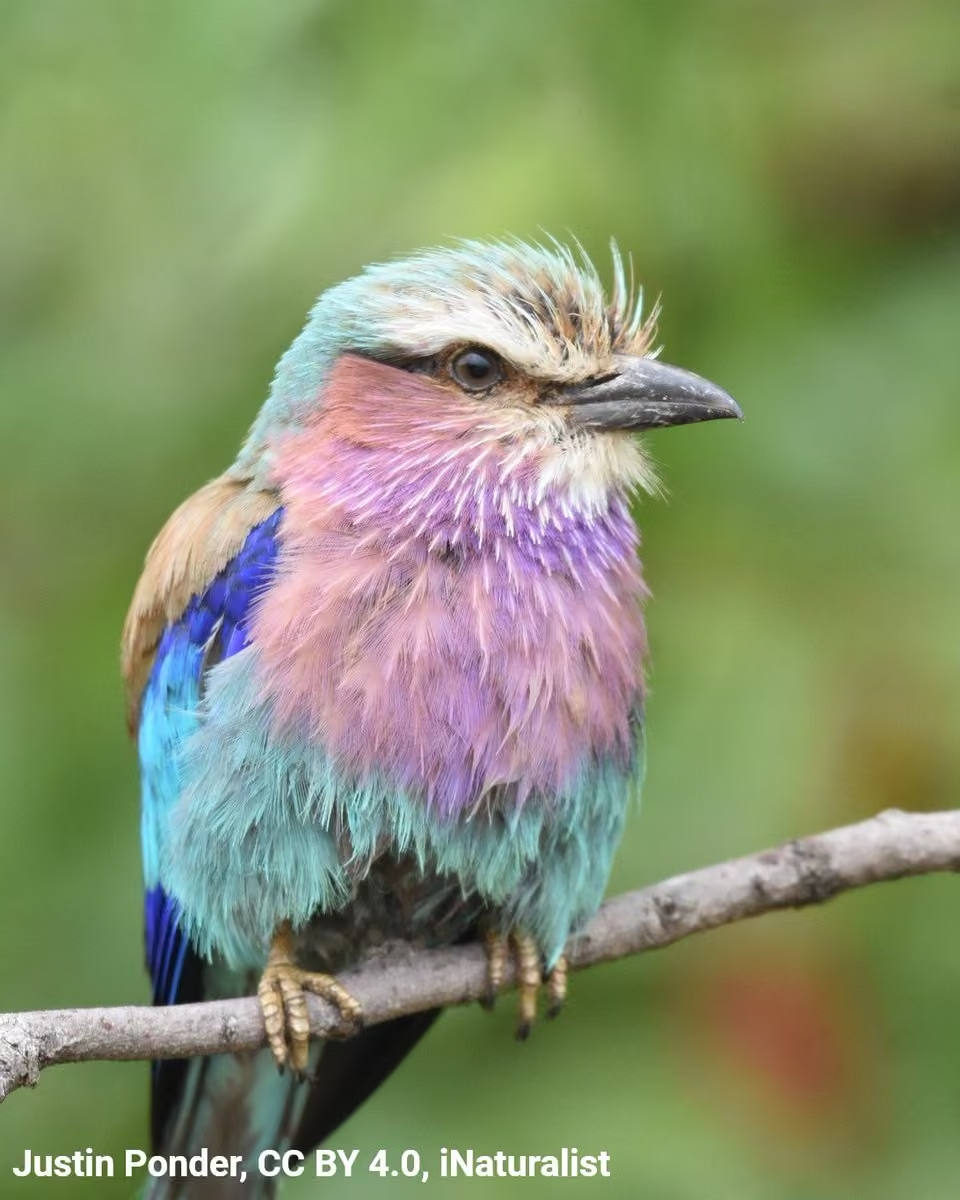
The Lilac-breasted Roller is always dressed for spring. This monogamous bird mates for life, with courtship rituals that include swooping, diving, and rolling through the air. Lilac-breasted Rollers are so at home in the sky that they also breed in flight!
-
American Museum of Natural History
@AMNH
Meet Prestosuchus chiniquensis. It lived in what’s now Brazil some 210 million years ago. Although it was a large animal with big claws & a huge head with sharp-toothed jaws, it wasn't a dinosaur—it's actually a close relative of crocodylomorphs.
-
American Museum of Natural History
@AMNH
Scared of the dentist? Things could be worse: You could be a babirusa. This wild pig’s canine teeth (tusks) never stop growing— reaching lengths of 11+ in (27.9 cm). If they aren’t worn down by regular activity, they can curve backward into the babirusa’s skull!
-
American Museum of Natural History
@AMNH
Meet blue-ringed octopuses, members of the genus Hapalochlaena. They inhabit coral reefs in the Indian and Pacific oceans. Though they usually measure less than 8 in (20.3 cm), they're among the world's deadliest cephalopods. Their venomous bite can paralyze or kill a human.
-
American Museum of Natural History
@AMNH
The plains spadefoot is toadally cute. This stout amphibian, which inhabits arid regions of western North America, is an “explosive” breeder: Individuals gather en masse after warm, heavy rains to breed. The resulting tadpoles can mature after just 13 days.
-
American Museum of Natural History
@AMNH
Have you seen the "otter cat?" The jaguarundi is a highly adaptable feline with a diet that includes birds, reptiles, mammals, & fish. Unlike many cats, it's highly vocal. The jaguarundi has up to 13 unique calls including purring, whistling, and chattering!
-
American Museum of Natural History
@AMNH
This #fossilfriday, meet Tupuxuara leonardii. This flying reptile had a wingspan of ~15 ft (4.5 m) & a huge fan-shaped crest. Scientists think that pterosaurs could have used their headgear to steer during flight, to recognize members of the same species, or to attract mates.
-
American Museum of Natural History
@AMNH
Just how giant is the giant armadillo? Unlike other armadillos—which can roll up to defend themselves from foes—this species’ is too big to hide inside its carapace. It can reach lengths of 3.9 ft (1.2 m) and weights of ~110 lbs (50 kg)!
-
American Museum of Natural History
@AMNH
Meet the world’s smallest bear. Weighing in around 103 lbs (47 kg), the sun bear is about half the size of an American black bear! It's an excellent climber, sometimes building nests in the treetops as much as 128 ft (40 m) from the ground, where it can snooze in peace.
-
American Museum of Natural History
@AMNH
Common shrew? More like "uncommonly cute shrew!" Though this tiny mammal weighs only 0.5 oz (14 g), it has a big appetite. In fact, it needs to consume about 80% of its body weight in food each day! What’s on the menu? Insects, slugs, and earthworms.
-
American Museum of Natural History
@AMNH
Behold the western pygmy possum! This dainty marsupial typically weighs ~0.5 oz (14 g)—that's about as much as a AA battery! It inhabits treetops in forests throughout parts of Australia. As a nectarivore, it mainly feeds on plant nectar.
-
American Museum of Natural History
@AMNH
This Caturday, meet the jungle cat. Also known as the swamp cat or reed cat, this feline prefers wetland habitats in parts of North Africa & Asia. Though not strictly nocturnal, it’s most commonly spotted at night and can travel up to 3.7 mi (6 km) in a single evening.
-
American Museum of Natural History
@AMNH
It's Fossil Friday! Meet Edmontonia rugosidens. This tank-like ankylosaur lived during the late Cretaceous ~75 mya. Snapped circa 1922, this image depicts a Museum preparator readying the specimen for display. Today it can be seen in the Museum’s Hall of Ornithischian Dinosaurs.
-
American Museum of Natural History
@AMNH
Unlike most skinks— which have smooth, overlapping scales & a glassy appearance—the shingleback skink's scales are rigid. It’s also unable to shed its tail when threatened. But, it can expose its bright blue tongue to intimidate foes!
-
American Museum of Natural History
@AMNH
The Sunda flying lemur can't fly & isn't a lemur. This tree-dweller, which glides through the air using a skin membrane between its neck and limbs, was once thought to be related to primates or bats. Scientists now place it on its own branch of the evolutionary tree.
-
American Museum of Natural History
@AMNH
Having a ball this weekend? Here’s another ball to occupy your time: the giant puffball! This fungus sits on lawns & meadows, absorbing nutrients from the soil. Its trillions of tiny spores emerge as a puff of "smoke" when the mushroom is disturbed.
-
American Museum of Natural History
@AMNH
Behold the Irish Elk. Once ranging from western Europe to China, it vanished during the Pleistocene ~10,000 yrs ago. It was one of the largest known species of deer, weighing up to 1,500 lbs (680 kg). Its antlers could reach an incredible spread of 13-ft- (4-m-).
-
American Museum of Natural History
@AMNH
Need a little fluff to brighten your day? Meet the striped hyena! When disturbed, this critter can double its size by raising the hairs on its back to intimidate foes. Though it's a scavenger that feeds primarily on carrion, it supplements its diet with fruits, seeds, and leaves.
-
American Museum of Natural History
@AMNH
You don’t want to dip your cookies in the Amazon milk frog’s “milk.” This amphibian’s common name refers to the poisonous, milky substance it secretes when under threat! This nocturnal frog inhabits the rainforests of South America.
-
American Museum of Natural History
@AMNH
Happy Trilobite Tuesday! Pictured is a 3-in- (7.6-cm-) long Nevadia weeksi from the Lower Cambrian of the Western US. With the help of UV lighting, two prominent antennae can be seen on this specimen. Such soft-part preservation is rare in trilobites from this locality.
-
American Museum of Natural History
@AMNH
For your daily dose of cuteness, meet the masked palm civet. Weighing ~11 lbs (5 kg), this house cat-sized critter is an omnivore with a taste for fruit. It also feeds on small vertebrates, insects, & birds. When threatened, it can discharge a potent scent from its anal glands.
-
American Museum of Natural History
@AMNH
What a croc! This #fossilfriday, meet Deinosuchus—a giant predator that was as long as a school bus & as heavy as an elephant. Partially healed bite marks found on the bones of a tyrannosaur match this croc's teeth, suggesting it could rival even the most formidable dinosaurs.
-
American Museum of Natural History
@AMNH
You are what you eat: just ask the hooded grasshopper. It feeds primarily on leaves—and it’s perfectly camouflaged to look like one, too. This species inhabits parts of India and Sri Lanka. Females can grow up to 2 in (5.2 cm) long, while males are only about half their size.
-
American Museum of Natural History
@AMNH
Have you ever seen a Monk Parakeet? This Argentine bird can be found as far afield as NYC, Boston, & Chicago. How can it survive in colder climates? It lives in colonies & builds well-insulated nests to keep members warm during harsh winters.
-
American Museum of Natural History
@AMNH
Gone but not forgotten.🦤 Less than 80 years after Dutch soldiers 1st spotted the Dodo on Mauritius, it went extinct. Deforestation, hunting, & the introduction of invasive species drove this species to extinction. See a Dodo skeleton in the Museum's Hall of Biodiversity.
-
American Museum of Natural History
@AMNH
This Fossil Friday, meet Pachycephalosaurus! It was once theorized that, like modern bighorn sheep, it used its skull as a battering ram. More recent studies have challenged this idea, suggesting Pachycephalosaurus may have knocked its opponents’ sides like modern day bison.
-
American Museum of Natural History
@AMNH
Believe it or not, this critter is a legless amphibian! Meet Beddome’s caecilian (Ichthyophis beddomei).This species, which grows up to 10.8 in (27.5 cm) long, can secrete smelly fluids from its skin before burrowing into the soil to make its escape.
-
American Museum of Natural History
@AMNH
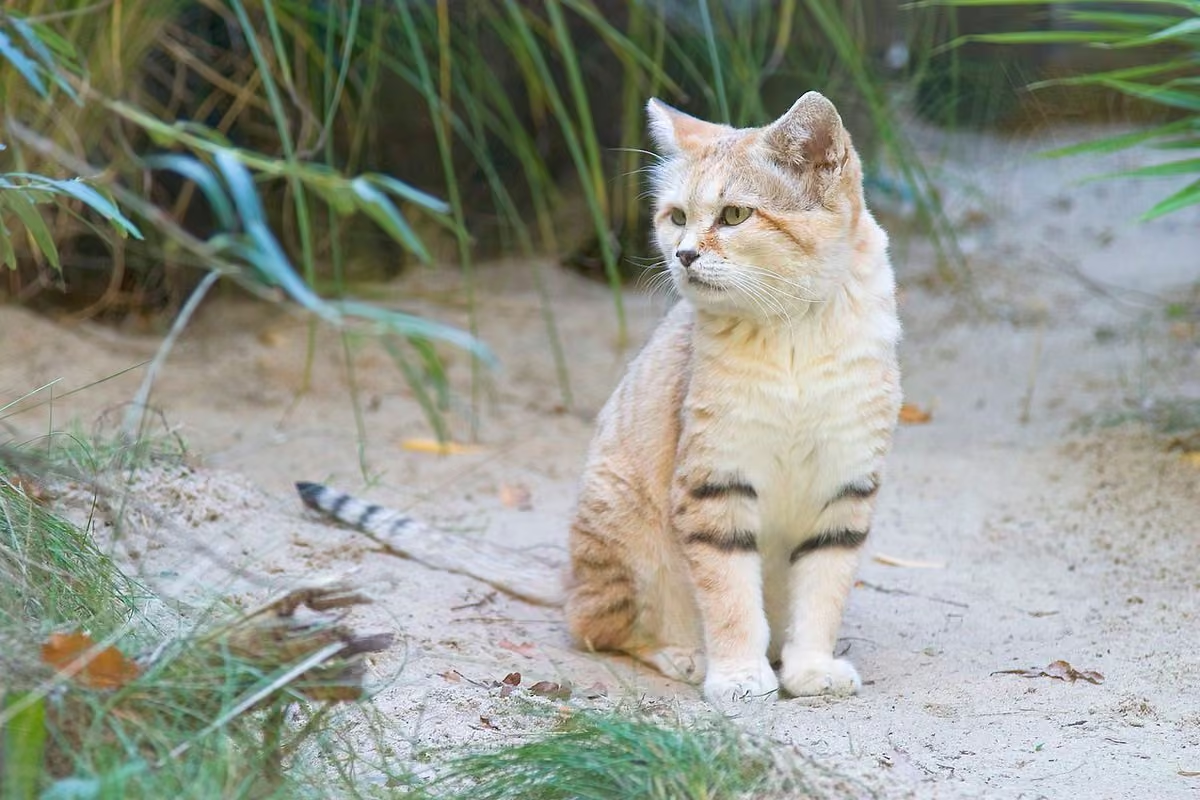
Meet the sand cat. This feline is built for desert life. Thick soles on its paws allow it to withstand the temperature extremes of desert sand. In parts of its range, days can reach 124° Fahrenheit (51° C) and then plummet to 31° Fahrenheit (-0.5° C) by night!
-
American Museum of Natural History
@AMNH
It’s a bird! It’s a plane! It’s… a dinosaur? Nope to all of the above. This Fossil Friday, let’s celebrate pterosaurs, flying reptiles that ruled the skies for 150+ million years. Some were as small as paper airplanes while others had wingspans bigger than an F-16 fighter jet!
-
American Museum of Natural History
@AMNH
The Florida softshell turtle doesn’t fit the slow-&-steady stereotype. It's relatively quick on land & is a rapid swimmer thanks to its hydrodynamic, flattened shell, & webbed feet. It has a long neck & snout that it pokes above the surface, like a snorkel, to breathe.🤿🐢
-
American Museum of Natural History
@AMNH
Despite its resemblance to the raccoon & the giant panda, the red panda is in its own distinct family: Ailuridae. Spending most of its life in the treetops, it uses its long tail as a counterbalance & can rotate its feet 180 degrees to aid it in gripping tree bark & branches.
-
American Museum of Natural History
@AMNH
Boo! Behold the ghost glass frog. This arboreal amphibian is able to “vanish” like a ghost, altering the hue of its green skin to match surrounding vegetation. It can be found in parts of Central & South America.
-
American Museum of Natural History
@AMNH
☃️Due to the winter storm, the Museum will be closed tomorrow, Monday, February 23.
🐻Take a cue from the bears—it’s a hibernation day. Stay safe, stay warm, and we’ll see you soon.
Photo: Alvaro Keding/©AMNH -
American Museum of Natural History
@AMNH
Whatever you do, don’t greet the Senegal bush baby with a handshake. To mark its territory and improve its grip, this mammal urinates on its own hands! This nocturnal omnivore uses its large eyes and ears to find food, including seeds, eggs, and insects.
-
American Museum of Natural History
@AMNH
Welcome to Trilobite Tuesday! Pictured is Asaphus kowalewski. This 450-million-year-old species stands apart from other trilobites with its eyes perched atop 2-in- (5-cm-) long stalks. To some, Asaphus kowalewski may look like an animal from a distant galaxy!
-
American Museum of Natural History
@AMNH
Meet the Guianan Cock-of-the-rock—named for its proclivity to build mud-and-stick nests on rocky outcrops. Males have brilliant orange plumage and half-moon crests, which distinguish them from the less distinctive, gray females.
-
American Museum of Natural History
@AMNH
Think Valentine's Day stinks? Then the stinking corpse lily is perfect for you! It may look beautiful, but its rotten-flesh scent will make you think twice before gifting it to your sweetheart. Its pungent smell is a come-hither to carrion flies, which spread pollen.
-
American Museum of Natural History
@AMNH
It’s the season of love. For flamingos, though, “love” is not long-lasting. Pair bonds typically last for only a single breeding season. Males perform elaborate "dance" moves each year to attract mates, though their efforts don't always guarantee success.
-
American Museum of Natural History
@AMNH
It's Trilobite Tuesday! This 430-million-year-old Arctinurus is from the Rochester Shale of New York. Its 5-in- (12.7-cm-) long body is covered in small brachiopod shells that have hitched a ride upon the trilobite's carapace.
-
American Museum of Natural History
@AMNH
On #nationalpoopday, we share ancient poop! Can you guess which animal made this well-preserved mess? A giant ground sloth! This specimen was found in Mylodon Cave in Chile. You can see it in person on the Museum's second floor.💩
-
American Museum of Natural History
@AMNH
No matter which team you’re rooting for this Superb Owl Sunday, The Forest Owlet had the greatest comeback of all time.🦉Once thought to be extinct, this bird was rediscovered in 1997—113 years after the last recorded sighting! Still, it’s considered endangered today.
-
American Museum of Natural History
@AMNH
What’s over 100 ft (30 m) long, armed with more than 800 stinging tentacles, and lives in the Arctic Ocean? That’s right: the lion’s mane jellyfish. This jelly's tentacles are covered in cells with venom that stun prey like zooplankton, crustaceans, and other jellyfish.
-
American Museum of Natural History
@AMNH
It’s Fossil Friday. Behold the skull of a Velociraptor. With sickle-shaped claws on its hands & feet and a mouth full of razor-sharp teeth, this fierce predator skimmed across the dunes chasing prey on two legs. See it up close in the Hall of Saurischian Dinosaurs.
-
American Museum of Natural History
@AMNH
Have you seen the lesser blind mole rat? Growing ~10.6 in (27 cm) long, this rodent spends the majority of its life underground. Though you might think that it's blind, this species' tiny eyes are hidden beneath its fur. They serve as light sensors to help the mole rat navigate!
-
American Museum of Natural History
@AMNH
The spotted-tail quoll is an Australian marsupial predator. It uses a powerful bite to dispatch prey including birds and small mammals. Its hisses and screams have been likened to the sounds of a circular saw!
-
American Museum of Natural History
@AMNH
The purple frog, also known as the pig-nosed frog, might be spotted along India’s Western Ghats mountains. This amphibian uses its sensitive snout to sniff out snacks, like termites, and then scoops them out with its fluted tongue!
-
American Museum of Natural History
@AMNH
It's Trilobite Tuesday! Pictured is the Lower Cambrian Bristolia insolens—distinguished by the genal spines that emerge from its head. While specimens with disarticulated head shields are relatively common finds throughout the Western United States, complete examples are rare.
-
American Museum of Natural History
@AMNH
Have you ever seen the long-finned pilot whale? This highly social species has been observed participating in mass gatherings of 1,000+ individuals. This nomadic cetacean wanders in search of food, preying on squid, mollusks, and more.
-
American Museum of Natural History
@AMNH
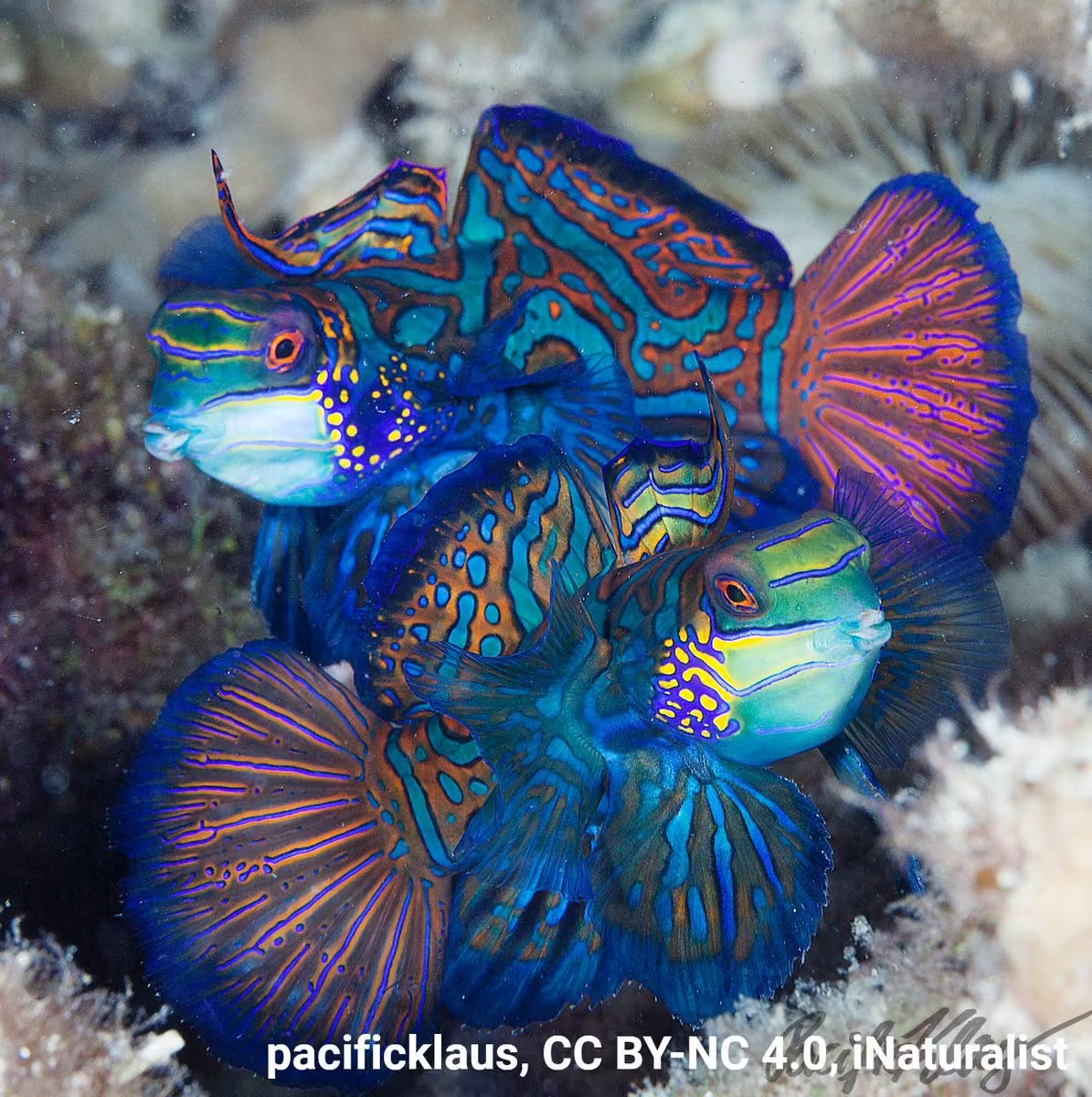
The mandarinfish is one of the only species that can produce its own true blue coloring. But, this striking hue is actually a warning! Predators unable to "read the room” discover that this fish produces a smelly, foul-tasting toxic mucus that makes it taste unappetizing.
-
American Museum of Natural History
@AMNH
Snow day plans = Museum day ❄️
We’re open today, Sunday, January 25. See updated entrance information: www.amnh.org/january-2026-winter-storm-updates-for-visito… -
American Museum of Natural History
@AMNH
Triceratops is one of the Museum’s most recognizable dinosaurs. The skull of this 65-million-year-old ceratopsian measures ~8 ft (2.4 m) long. In its beak-shaped mouth, it had between 144 & 160 teeth, which it replaced completely between two and four times over its lifetime.
-
American Museum of Natural History
@AMNH
Appearances can be deceiving... just ask the bush hyrax. Though it may look like a close relative of rabbits or mice, this critter is actually more closely related to manatees and elephants! And just as in elephants, the hyrax’s front incisors grow continuously to form tusks.
-
American Museum of Natural History
@AMNH
Have you ever seen a pink grasshopper? A genetic mutation called erythrism (the overproduction of red pigment) leaves some individuals looking pretty in pink! Though these rare insects are beautiful, their vivid coloring makes hiding from predators much more difficult.
-
American Museum of Natural History
@AMNH
It's Trilobite Tuesday! Trilobites of the Harpetida order—like this Harpes hamarlaghdadensis—are characterized by the broad, sweeping swath of their cephalic brim. The colorful, glass-like appearance of this 2-in- (5.1-cm-) long Moroccan specimen’s carapace is one of the defining characteristics of the Jorf Lagerstatte deposit.
-
American Museum of Natural History
@AMNH
Have you ever seen the majestic markhor? The world's largest wild goat, its signature spiraling horns are sported by both males & females, but are larger and more elaborate in males. Why? Males use their headgear as they battle for female attention during mating season.
-
American Museum of Natural History
@AMNH
It’s #fossilfriday! Apatosaurus excelsus may look intimidating, but this dinosaur maintained its mind-boggling bulk on a diet of plants! A soup of microbes in this 27-ton animal's belly broke down otherwise hard-to-digest plants by fermentation.🦕🌳
-
American Museum of Natural History
@AMNH
It’s Wednesday, so hang in there like the bank vole! Mostly herbivorous, it’s a proficient climber that uses acrobatic skill to reach seeds & fruits. Its diet also includes fungi & nuts. Weighing ~1.27 oz (36 g), it can be found across most of Europe as well as parts of Asia.
-
American Museum of Natural History
@AMNH
Happy Trilobite Tuesday! Pictured is a 430 million-year-old Silurian Dalmanites caudatus from England. This 2.5-in- (6.4-cm-) long specimen was preserved in rock that, when carefully opened, revealed positive and negative splits!🌗
American Museum of Natural History
@AMNH
👀Notice that this trilobite is slightly disarticulated? A small brachiopod shell became wedged between the trilobite's head and body, causing them to separate.
-
American Museum of Natural History
@AMNH
Join us for Grains of Change: A Festival of Rice Across East Asia on Thursday, 1/22! This evening event is a celebration of the cultures of East Asia—in China, Korea, Taiwan, Mongolia, & Japan—through one of the region’s most fundamental staples: rice.
www.amnh.org/calendar/east-asian-culture-festival?sourcen… -
American Museum of Natural History
@AMNH
Meet the caracal. Wondering why it has tassels on its ears? It may be that this cat twitches them to communicate with others (in addition to meowing, purring, hissing, and more). It can jump up to 3 m (10 ft) & can even swat birds out of the air for a meal!
-
American Museum of Natural History
@AMNH
Ever seen an Asian giant softshell turtle? Its unusual “shell” consists of fused, wide-spanning ribs covered in rubbery skin. This endangered turtle, which can grow as long as ~2 m (6 ft), is threatened by destruction of its habitat & by hunting for its meat and eggs.
-
American Museum of Natural History
@AMNH
Every rose has its thorn... bug? 🤯Named for its resemblance to a sharp thorn, this critter is a sucking insect that feeds by piercing plants to drain the sap inside. The thorn bug is also an attentive mom: If her young are threatened, she can defend them with powerful kicks!
-
American Museum of Natural History
@AMNH
Have you ever seen the Madagascan sunset moth? It gets its stunning iridescence not from pigment but from the way light reflects off the scales of its wings. Its bright coloring also warns predators of its toxicity, which it obtains from the Omphalea plant as a caterpillar.
-
American Museum of Natural History
@AMNH
Which insect can grow larger than a mouse & has mandibles strong enough to snap a pencil in half? That would be the titan beetle. At up to 6.5 in (16.5 cm) long, scientists think this enormous insect is about as big as a beetle can get. It can be found in parts of South America.
-
American Museum of Natural History
@AMNH
Have you seen a view like this? Aurora, aka the Northern or Southern Lights, are most often seen in high-latitude regions around the Arctic and Antarctic. These displays are produced when solar particles ionize in our atmosphere, emitting dazzling light of every color.
-
American Museum of Natural History
@AMNH
It's Trilobite Tuesday! Even after decades of exploration, no more than a dozen complete specimens of the genus Breviscutellum have been discovered within Oklahoma's Bois d’Arc Formation. This Devonian trilobite is comparable in both age and appearance to a species found in Morocco.
-
American Museum of Natural History
@AMNH
Dive into today’s Exhibit of the Day: the Museum’s Sperm Whale & Giant Squid Diorama! Scientists have discovered parts of squid inside sperm whales’ stomachs & scar marks on whales that match the suckers of a giant squid.
-
American Museum of Natural History
@AMNH
It’s #fossilfriday! Meet Ursus spelaeus, the cave bear. Although it’s related to the largest living bears of the Arctic, Ursus spelaeus lived only in Europe & disappeared ~14,000 years ago. Depictions in cave art show that this species was important to Ice Age humans.
-
American Museum of Natural History
@AMNH
Rockin’ around… the uh… what? Meet the Christmas tree worm. Found on tropical coral reefs around the world, this species uses its colorful "branches" for breathing and for snatching plankton to eat. In ideal conditions, Christmas tree worms can live for up to 40 years!
-
American Museum of Natural History
@AMNH
Up on the housetop, click, click, click! While caribou can’t fly, they do go on some pretty incredible journeys: Round-trip, these animals walk ~1,800 mi (3,000 km) a year as they migrate to find food. You can spot a herd of them in the Museum's Hall of North American Mammals.
-
American Museum of Natural History
@AMNH
Do you recall the most famous reindeer of all? Hint: it’s not the saiga antelope! While the saiga won’t be taking Rudolph’s job anytime soon, it does have a special nose, which filters out dust during dry summers and warms the air it breathes during cold winters. 👃
-
American Museum of Natural History
@AMNH
Ever caught a glimpse of an American pika? This small North American mammal is a relative of rabbits & inhabits rocky slopes at high elevations. In preparation of winter, it spends the warmer months foraging for plants that have more protein and are higher in water content.
-
American Museum of Natural History
@AMNH
The grinch? Not exactly: This fuzzy green bird is Schalow's Turaco! It inhabits parts of south-central Africa, finding its home in evergreen forests or woodlands, where it feeds on fruit. Males & females are similar in appearance, with bright green-yellow plumage and tall crests.
-
American Museum of Natural History
@AMNH
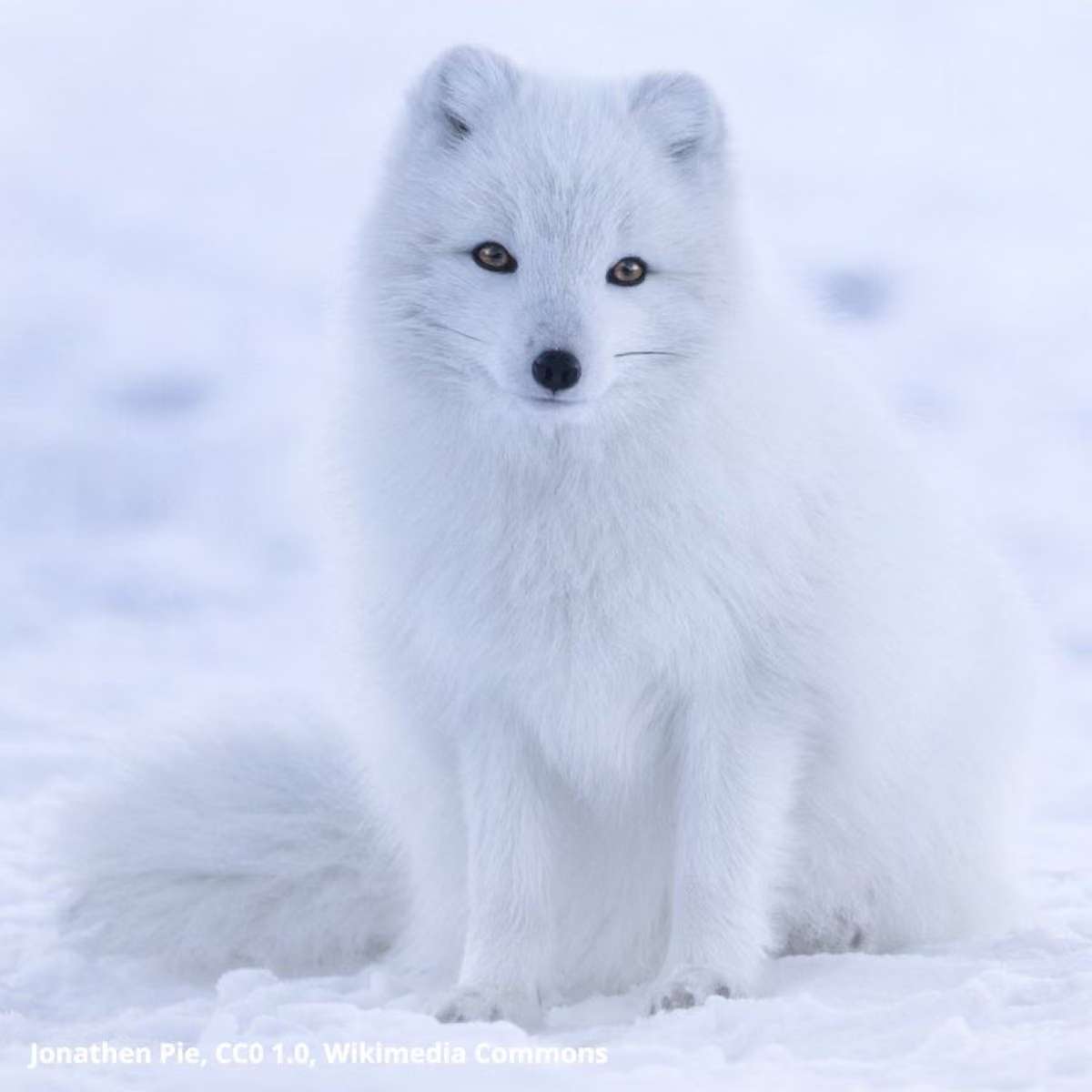
Did you know? The Arctic fox is a seasonal fashionista. During winter, it sports a dense coat of white fur that helps insulate it from the cold, and it can withstand temperatures of up to −90°F (-67.8°C)!
-
American Museum of Natural History
@AMNH
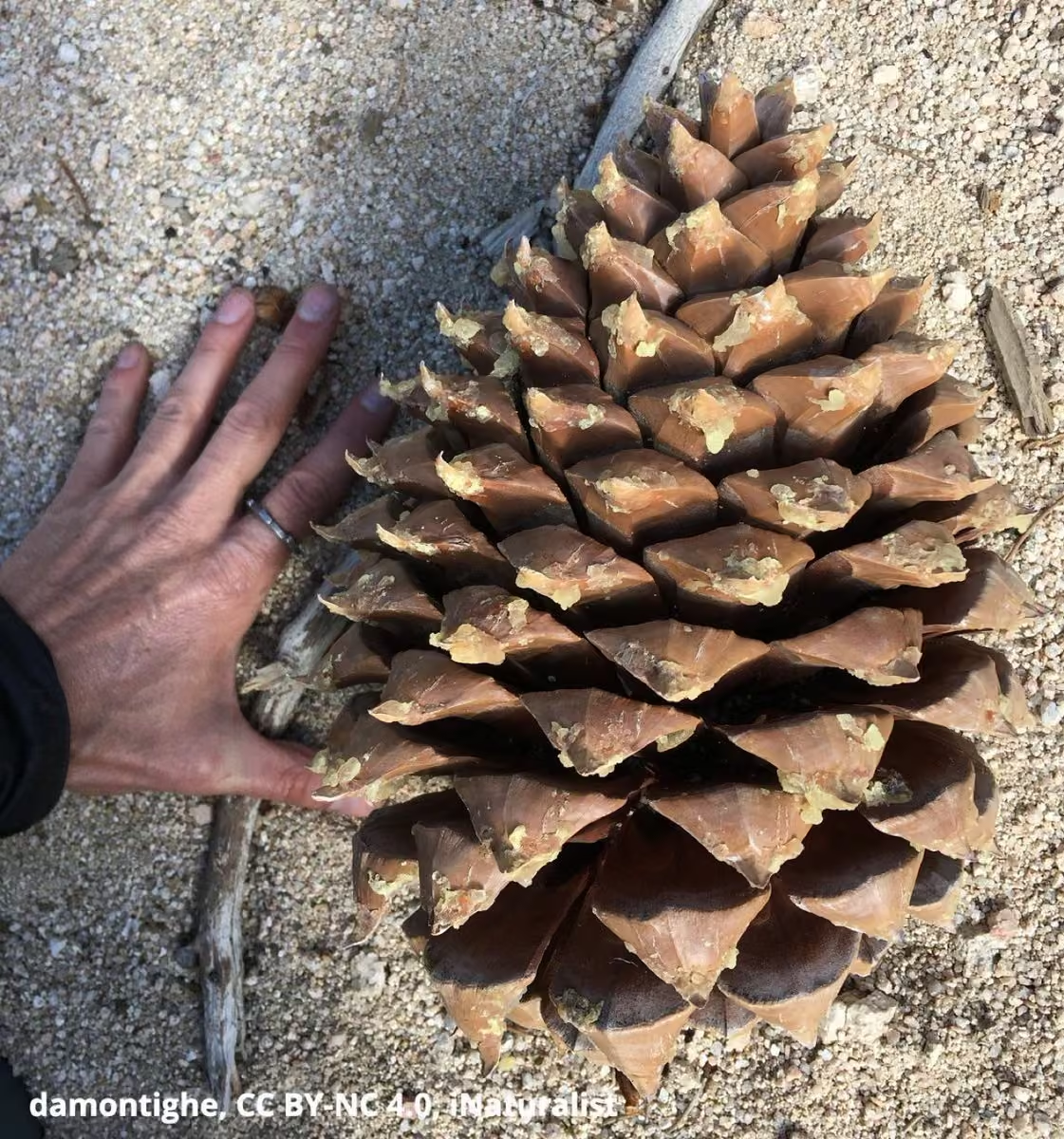
Imagine a pinecone as heavy as a bowling ball. This giant belongs to the coulter pine! It can be found in California & Mexico. Nicknamed “the widowmaker,” it produces the world's largest pinecones—which can weigh ~11 lbs (5kg) & plummet to the ground with deadly force!
-
American Museum of Natural History
@AMNH
Say “hi” to the Scarlet Macaw... it might just say “hi” back to you! The colorful bird inhabits tropical forests throughout Mexico, Central America, and South America. It's often seen in flocks, spending its time foraging for fruits & seeds or hanging out in the treetops.
-
American Museum of Natural History
@AMNH
Have you ever seen the red river hog? This social animal can be found in groups of 20+ individuals. Using its sharp sense of smell, it tracks down snacks like fruits, seeds, grasses, & nuts. It may also eat carrion... or elephant dung if there are undigested seeds in it!
-
American Museum of Natural History
@AMNH
Trilobites ruled the Earth longer than the dinosaurs. It took 3 major mass extinctions to end their more than 250-mil yr evolutionary lifespan. Join Museum Curator Melanie Hopkins to explore these arthropods through the Museum’s collection!👇 youtu.be/Fsvdd5ks6c0
-
American Museum of Natural History
@AMNH
Hanging around in your pajamas? Takes notes from the tiger leg tree frog. Unlike many frogs, this nocturnal amphibian doesn’t hop: Instead, it crawls through the trees like a monkey! It can be spotted in parts of South America.
-
American Museum of Natural History
@AMNH
Meet the Sulawesi bear cuscus! Despite its name, it isn’t actually a bear. It’s an arboreal marsupial that lives in tropical forests throughout parts of Indonesia. It moves slowly & spends a much of its time resting & digesting all of the fruits, flowers, & leaves that it eats.
-
American Museum of Natural History
@AMNH
Guess hoo? It’s the Snowy Owl! This majestic bird is easily identified by its white plumage and piercing yellow eyes. Unlike many owls, it hunts by daylight, feeding on small mammals and birds. Its favorite snack? Lemmings. A single owl can eat more than 1,600 lemmings a year.
-
American Museum of Natural History
@AMNH
Meet the guereza colobus. This black-and-white primate spends most of its time in the treetops foraging for leaves and fruit. A multi-chambered stomach helps it to digest a plant-heavy diet. At night, at least one group member watches for predators while the others rest.
-
American Museum of Natural History
@AMNH
This dramatic scene is the first moment of awe for many of our visitors as they enter the Museum. Standing 50 ft (15 m) above the ground, the enormous Barosaurus is the world’s tallest freestanding dinosaur mount. It’s composed of casts of real bone since fossils are too heavy to support in this way!
American Museum of Natural History
@AMNH
Today is Giving Tuesday—can you help us reach our goal? Your contribution enables us to continue to serve our community and offer transformative experiences to generations of visitors. None of our work is possible without supporters like you: tickets.amnh.org/donations/donate?sourcenumber=68042
-
American Museum of Natural History
@AMNH
A Night at the Museum: The Overnight Experience is back! Tickets for the January, February, & March sleepovers will be available starting Wed., 12/3, at 10:30 am for Members at the Adventurer level & above. Tickets for the general public go on sale on Wed., 12/10, at 10:30 am.
📸: A. Keding/© AMNH
American Museum of Natural History
@AMNH
Discover the Museum after dark before drifting off to sleep underneath the Blue Whale or surrounded by other beloved Museum exhibits. From flashlight tours of our iconic halls to hands-on activities and more, this unforgettable program is designed to spark wonder. Learn more.👇
-
American Museum of Natural History
@AMNH
Suspended from the ceiling in the Museum’s Hall of Vertebrate Origins is Thalassomedon haringtoni, a plesiosaur that lived during the Late Cretaceous ~85 mil yrs ago. Its long, flexible neck probably helped in grasping rapidly moving prey. #fossilfriday
-
American Museum of Natural History
@AMNH
Here’s a #tbt photo from 1969! On this Thanksgiving, the parade passed the Museum’s turret with a special float: a sauropod dinosaur. This inflatable Apatosaurus measured ~60 ft (18.3 m) long! The giant green dinosaur also featured big eyes, a wide grin, & a 20-ft (6-m) tail.
-
American Museum of Natural History
@AMNH
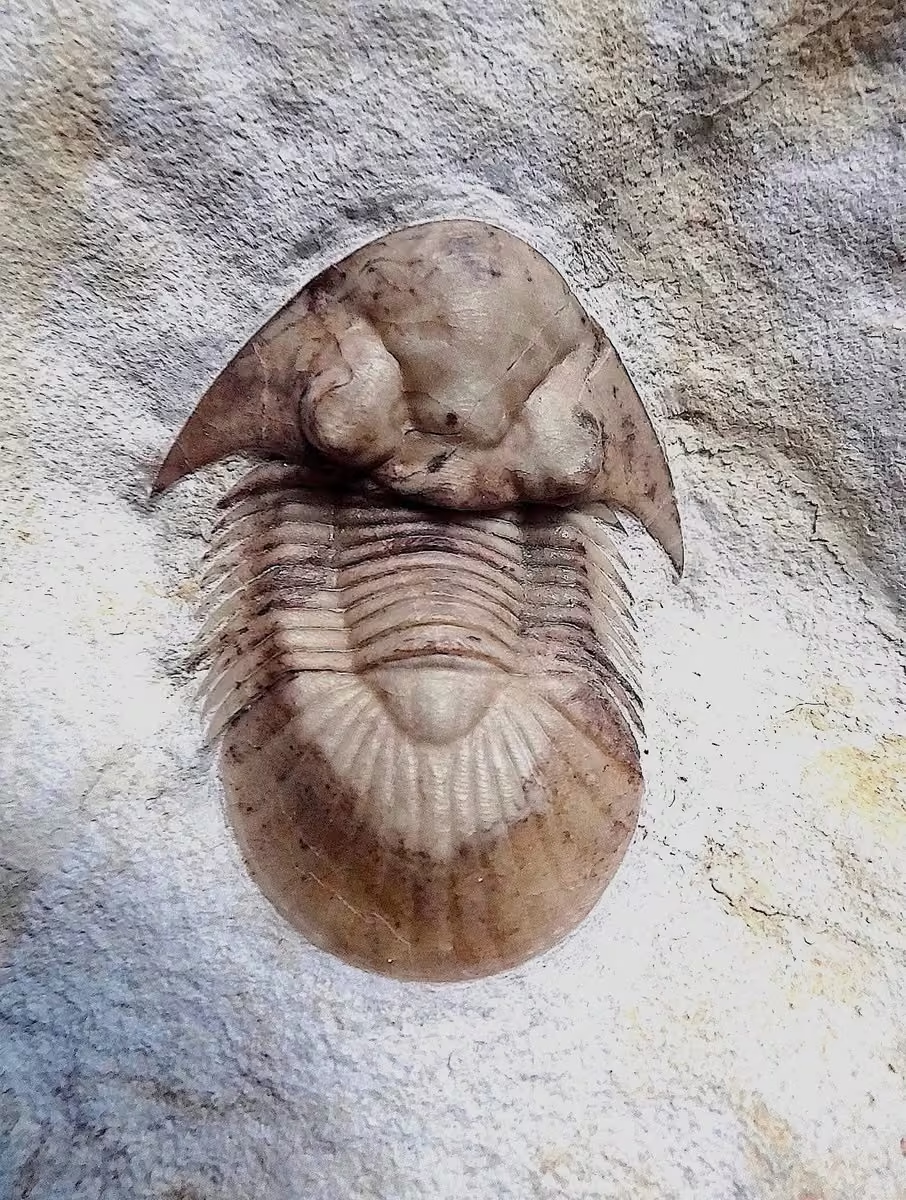
It’s Trilobite Tuesday! Growing ~6 in (15.2 cm) long, the sword-nosed Psychopyge is perhaps the most recognizable trilobite to emerge from Morocco’s Devonian outcrops over the last four decades. Few species can rival its renown or bizarre Paleozoic appearance.
-
American Museum of Natural History
@AMNH
Dating is hard. Just ask the flying peacock spider (Maratus volans)! To enchant a mate, a male displays a flap-like body part (called a fan) and shakes his legs. It’s a lot of work, but the stakes are high. If a female spider doesn’t like his dance moves… she might just eat him.
-
American Museum of Natural History
@AMNH
This #fossilfriday, meet Dunkleosteus, which lived ~360 million years ago. Scientists think it was one of the first large jawed vertebrates in the ocean & was an aggressive predator. The bones in its jaws served as cutters, rubbing against each other like self-sharpening shears.
-
American Museum of Natural History
@AMNH
Behold the panther chameleon! Growing ~21 in (53 cm) long, this jumbo reptile is known for its vivid colors, which become even more intense during courtship rituals & defensive displays. Found in Madagascar, it snatches unsuspecting insects with a rapid, projectile tongue.
-
American Museum of Natural History
@AMNH
It's Trilobite Tuesday! The Devonian trilobites that emerge from outcrops aligning Bolivia's sky-high Altiplano plateau, like this Belenopyge, rank among the most difficult-to-obtain trilobites in the world—mostly because they're located more than 11,500 ft (3,505 m) up in the Andes Mountains.
-
American Museum of Natural History
@AMNH
The Museum’s newest exhibition Impact: The End of the Age of Dinosaurs is now open! Come explore the before-and-after story of the asteroid impact that led to the extinction of non-bird dinosaurs and the majority of animal and plant species 66 mil yrs ago.
Photo: A. Keding/©AMNH
American Museum of Natural History
@AMNH
Step back in time to experience the planet as it was during the Cretaceous Period, before impact, when massive marine reptiles—like these life-size models of a 27-ft mosasaur and a 30-ft, long-necked plesiosaur—ruled the oceans.
American Museum of Natural History
@AMNH
Find out how the mass extinction that followed the asteroid impact paved the way for new species—including an explosion of mammal evolution, eventually setting the stage for the emergence of our human ancestors. Get tickets.👇 www.amnh.org/exhibitions/impact?sourcenumber=68042
-
American Museum of Natural History
@AMNH
Have you ever seen a cuter critter? Meet the red-eyed crocodile skink. Growing ~10 in (25 cm) long, it can be found in the rainforests of Papua New Guinea. Like a crocodile, this reptile has armored skin to protect it from foes. Its diet includes insects like flies & mealworms.
-
American Museum of Natural History
@AMNH
Meet the granulated sea star. Growing ~10 in (25 cm) in size, it's also known as the “doughboy starfish” for its portly look. This species inhabits reefs in shallow Indo-Pacific waters. On its menu are coral and other small invertebrates—it sometimes even scavenges dead animals.
-
American Museum of Natural History
@AMNH
Meet the brown basilisk! Growing ~2 ft (0.6 m) long, this lizard can often be found darting through the trees. And it’s just as quick when running or swimming: In fact, by moving rapidly & creating air pockets with its long rear toes, it can dash across water without sinking.
-
American Museum of Natural History
@AMNH
Behold the Great Blue Turaco! Growing ~30 in (76.2 cm) long, this forest-dwelling bird feeds on a diet that includes fruits, leaves, & insects. While it isn’t a long-distance flier, this bird uses its wings to flutter through the trees— rarely descending to the ground.
-
American Museum of Natural History
@AMNH
Crocodile or alligator? Neither! It’s the Yacaré caiman, a close relative of the alligator. This South American species can be found in wetland habitats in parts of Argentina, Brazil, and Paraguay, where it feeds on fishes, including the fearsome piranha.
-
American Museum of Natural History
@AMNH
What’s a red-necked pademelon? A relative to kangaroos & wallabies, it’s a marsupial that’s native to parts of eastern Australia. It inhabits forests, where it forages for grass & roots during the night to help conceal it from predators like dingos & raptors.
-
American Museum of Natural History
@AMNH
This #fossilfriday, get to know Glossotherium robustum, or the “tongue beast.” It roamed the pampas of Argentina, a grassland region, ~30,000 years ago during the Pleistocene. As a mylodont sloth, it had more complex teeth than those of other groups of ground sloths.
-
American Museum of Natural History
@AMNH
Meet the Rosy-faced Lovebird! It lives in southwestern Africa, where it might be spotted in parts of Namibia or Angola. It’s very social, often hanging out in groups that consist of anywhere from five to 20 birds, and sometimes up to 100!
-
American Museum of Natural History
@AMNH
Meet the greater one horned rhino. This mighty mammal can weigh as much as 6,000 lbs (2,721 kg)! It’s distinguished by its single horn, which can reach lengths of 25 in (63 cm). Despite its size, this herbivore can move quickly, charging at speeds of up to 25 mph (40 km/h).
-
American Museum of Natural History
@AMNH
November babies: topaz is one of your birthstones. Weighing ~600 lbs (272 kg), this tremendous topaz is one of the largest single crystals of topaz in any museum in the world! It's just one example of how large crystals in pegmatites can grow.
-
American Museum of Natural History
@AMNH
🎃Candy-hungry explorers, step right up! Join us today for a #halloween Celebration of prehistoric proportions. All ages are invited to enjoy games, interactive crafts, live performances, treat stops throughout the halls, & more! Details.👇 www.amnh.org/calendar/halloween-celebration?sourcenumber=…
-
American Museum of Natural History
@AMNH
It’s #nationalcatday! DYK? Black servals, like the one pictured, are affected by a genetic mutation called melanism which causes their dark coloring. They're rare in the wild, but scientists think their fur conceals them at night, warms them in the Sun, & might repel parasites.
-
American Museum of Natural History
@AMNH
Here’s a hog-nosed shrew rat to brighten your day! Found on Sulawesi Island, this critter feeds on small invertebrates like earthworms and arthropods. In addition to its distinctive flat nose, it also has remarkably long incisors! This species was unknown to science until 2015.
-
American Museum of Natural History
@AMNH
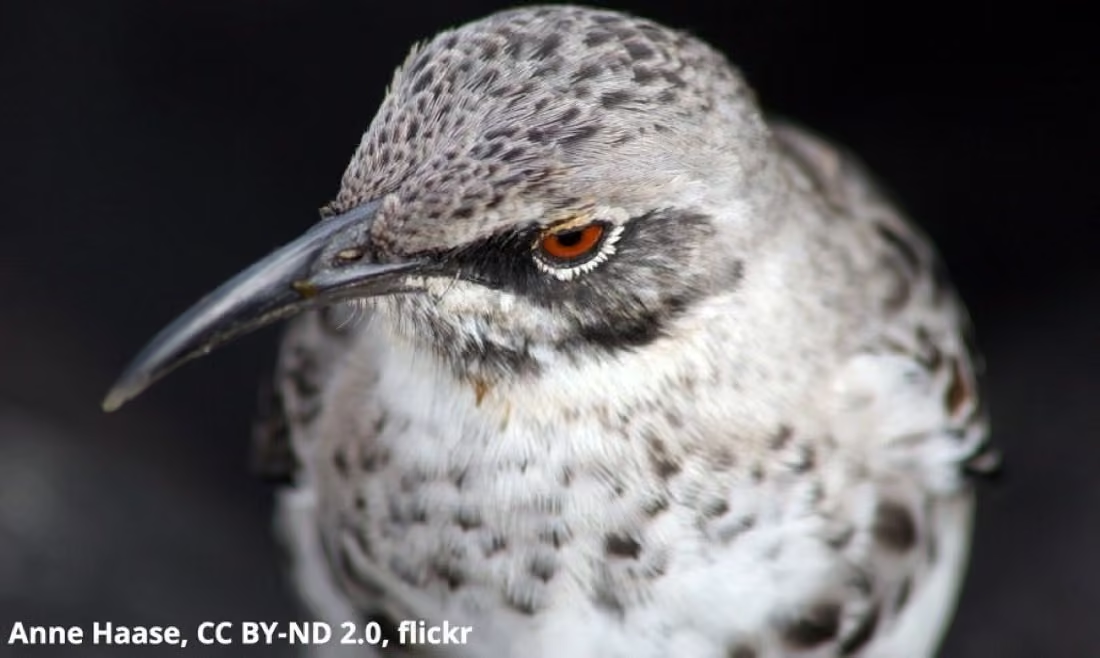
This spooky season, meet a bird that feasts on blood. 🩸 During dry seasons, the Hood Mockingbird uses its long hooked beak to probe the flesh of animals like iguanas, sea lions, and albatrosses—sucking up their blood to drink.
-
American Museum of Natural History
@AMNH
Awoo! Meet the wolf spider. With 2,300+ known species, their scientific name (Lycosidae) comes from the Greek word for wolf & references the way some of these spiders chase down their prey. The largest wolf spiders have been known to hunt critters many times their own size.
-
American Museum of Natural History
@AMNH
Ever seen witches’ butter? It’s found in forests around the world growing on dead branches, where it feeds on other fungi. Researchers are studying it for the potential medicinal value of its bioactive compounds, including possible anti-inflammatory & antiallergic properties.
-
American Museum of Natural History
@AMNH
If Tim Burton had a favorite cephalopod, it might be this one. Meet the striped pyjama squid! One of the few known poisonous cephalopods, this critter can change color & secrete slime to intimidate foes. It spends its days nestled beneath the sand, hunting for prey by night.
-
American Museum of Natural History
@AMNH
Is that a leaf? Nope, it’s the Sumaco horned frog. Growing ~2.6 in (6.6 cm) long, it inhabits parts of the Amazon basin. Fang-like growths in its jaws allow this frog to ensnare prey like lizards & other frogs. It can intimidate foes by exposing its bright yellow tongue.
-
American Museum of Natural History
@AMNH
Ever seen a white Raven? No, this isn’t a new species or a ghost: This Raven’s striking pale plumage is the result of the genetic mutations leucism or albinism. White Ravens are rare. An estimated 1 in 30,000 individuals is born without this species’ signature black plumage.
-
American Museum of Natural History
@AMNH
This pillar of labradorite formed ~660mya as magma intruding into the Earth’s crust cooled. It comes from a large body of anorthosite, a type of igneous rock. Notice its blueish-green shine? Its glisten is a result of its iridescence! The block’s iridescence is due to light scattering from submicroscopic layers with different chemical compositions, which separated from one another as the minerals cooled.
-
American Museum of Natural History
@AMNH
This Fossil Friday, meet the Museum’s mummified hadrosaur—one of the most complete pieces of Mesozoic dinosaur remains ever found! This fossil provides a rare glimpse at dino skin. Like the skin of modern birds, this duck-bill's skin was marked by bumps called tubercles.
-
American Museum of Natural History
@AMNH
#tbt! This image depicts paleoartist Charles Knight working on a model of the dinosaur Stegosaurus. When this massive herbivore was discovered, some scientists thought its brain was too small to support such a large animal & that it had a 2nd brain to control its back half.
-
American Museum of Natural History
@AMNH
Meet the long-tailed semi-slug. Unlike the shells of snails, semi-slugs’ shells are too small for the animals to retract their bodies into. This critter can often be spotted wrapping its tail—which measures three times the length of its body—around itself like a cat.
-
American Museum of Natural History
@AMNH
It's Trilobite Tuesday! Pictured is a well-preserved example of the trilobite Dipleura, which could grow ~7 in (17.8 cm) long. Found in Pennsylvania & New York, scores of specimens—including outstretched and enrolled individuals—have been uncovered over the last century.
-
American Museum of Natural History
@AMNH
Meet the harbor seal. Growing ~374.8 lbs (170 kg), this species feeds on fish, cephalopods, & crustaceans. On land this critter moves with an awkward, bouncing crawl, but it’s a graceful swimmer. It can hold its breath for ~30 minutes and can even snooze underwater!
-
American Museum of Natural History
@AMNH
#dyk? The Black Swan has the longest neck relative to body size out of any swan species! This bird can plunge its neck as much as 3.2 ft (1 m) deep underwater in order to search for food, such as algae and seagrass. You might spot it in wetlands habitats in Australia.
-
American Museum of Natural History
@AMNH
Where were you 33 years ago today? If you were in Peekskill, NY, you might have seen a meteorite fall & crash into a Chevy Malibu! At ~7:50 pm EDT, a rock the size of a bowling ball dropped from the sky, piercing the trunk & denting the driveway beneath it.☄️
-
American Museum of Natural History
@AMNH
Trilobite lovers, meet the blue green chiton! Though it resembles some trilobites, this critter is actually a mollusk that inhabits waters around Australia & New Zealand. Growing about 1.4 in (3.5 cm) long, this nocturnal critter can roll into a ball when threatened or disturbed.
-
American Museum of Natural History
@AMNH
Ever feel like a fish out of water? Meet the giant mudskipper Believe it or not, this fish needs to breathe air & spends a decent amount of time on land! Found on the muddy shores of mangroves in parts of Southeast Asia, it uses its pectoral fins to “walk” across mudflats
-
American Museum of Natural History
@AMNH
Have you ever seen a pink dolphin? The Amazon river dolphin inhabits the Amazon and Orinoco rivers. How pink it is depends on the water it lives in: the Sun can have a fading effect on its signature color, so living in murkier water can help it retain its pink hue!
-
American Museum of Natural History
@AMNH
Meet the marbled polecat! Growing ~25.8 in (65.5 cm) long, this mustelid’s short legs & low-slung body allow it to pursue prey like rodents, lizards, & insects—even underground. When threatened, it might arch its back, raise its tail, & release a strong odor from its anal glands.
-
American Museum of Natural History
@AMNH
Have you ever seen a flapjack devilfish? Growing up to 1.5 in (3.8 cm) long, this tiny cephalopod isn’t a strong swimmer. Instead, it spends most of its time in pancakey flatness on the seafloor, where it probes the sediment to find worms and small invertebrates to eat.
-
American Museum of Natural History
@AMNH
🚨Research alert! A recent study led by Museum Macaulay Curator Roger Benson details a new species of Jurassic reptile that has links to the origins of lizards & snakes 👉 www.amnh.org/explore/news-blogs/fossil-lizard?sourcenumbe…
-
American Museum of Natural History
@AMNH
The Grandidier's baobab, also known as the renala, may live to be more than 300 years old! Scientists are unable to confirm these trees' exact age because baobabs don't produce annual growth rings. This species of baobab is found only in Madagascar's dry deciduous forests.
-
American Museum of Natural History
@AMNH
Did you know that amethyst, citrine, agate, chalcedony, jasper, & more are all varieties of quartz? The second-most common mineral on Earth, quartz makes up most of the sand on many beaches. The colors of crystal quartz derive from natural radiation, heat, & trace contaminants.
-
American Museum of Natural History
@AMNH
Meet Mastodonsaurus giganteus! It lived during the Late Triassic ~215 mil yrs ago & is an extinct relative of frogs & salamanders—but was probably more like crocodiles in its life habits. Its large, flat skull with tusk-like teeth seems to be adapted for seizing large prey.
-
American Museum of Natural History
@AMNH
How does the gharial's snout help make it a powerful underwater predator? It’s lined with sensory cells that detect vibrations underwater. And when a fish swims into range, it can quickly whip its head sideways, meeting minimum resistance in water!
-
American Museum of Natural History
@AMNH
The world’s largest terrestrial invertebrate? That would be the coconut crab. It can span ~3 ft (1 m) long from leg tip to leg tip & weigh ~8 lbs (4 kg)! It inhabits coasts off of the Indo-Pacific Ocean. Scientists have compared its pinching power to a lion’s bite force!🥥🦀
-
American Museum of Natural History
@AMNH
Few things make it feel more like fall than the foliage of the red maple tree. #dyk? It sports something red all year round: in winter, it has red buds; in spring, red flowers begin to bloom; in summer, the leaf stalks turn red; & in autumn, the foliage is a vivid orange-red.🍁
-
American Museum of Natural History
@AMNH
This Climate Week, join Museum scientists Nathalie Goodkin and Nikita Kaushal as they journey deep into a cave to sample stalagmites & discover what their layers can tell us about past climate in this region. Learn more ⬇️
www.youtube.com/watch?v=SxA75t1AlKs -
American Museum of Natural History
@AMNH
Despite their cat-like appearance, fossa are actually close relatives of the mongoose. They’re the largest carnivore on Madagascar and feed on birds, reptiles, and even lemurs. They use their long tail for balance when chasing prey through the trees.
-
American Museum of Natural History
@AMNH
It's Fossil Friday! Corythosaurus' name is a nod to the helmets worn by Corinthians in ancient Greece. This species’ skull is capped by a crescent-shaped helmet that contains extended tubes, which form elaborate nasal passages.
-
American Museum of Natural History
@AMNH
#dyk? The short beaked echidna is a monotreme, meaning it’s one of the few mammals that lays eggs instead of bearing live young. And? This species is unusually long-lived, with individuals living up to 50 years in captivity. This spiky critter can weigh ~15.4 lbs (7 kg).
-
American Museum of Natural History
@AMNH
🚨News! Observations of a brown dwarf nicknamed The Accident have found a cloud-forming molecule that hasn’t been seen on any solar system object—helping scientists understand Jupiter, Saturn, & possibly other gas giant worlds. Learn more: amnh.link/4pFVQgW
-
American Museum of Natural History
@AMNH
What can survive for more than 250 years and may not reach sexual maturity until age 150? The Greenland shark. An antifreeze compound found in this Arctic species' skin keeps it from freezing in the frigid waters of the Arctic.
-
American Museum of Natural History
@AMNH
Grizzly bear moms are very protective while tending to or feeding their cubs. If another bear threatens her young, a female bear will shoo her cubs up a tree to escape. See this diorama in the Museum’s Hall of N. American Mammals.
-
American Museum of Natural History
@AMNH
This cricket isn’t named Jiminy. Growing ~1.9 in (5 cm) long, the armored bush cricket uses powerful jaws to feed on a diet that includes leaves, other crickets, & even nestling birds. When threatened, it's able to squirt a distasteful liquid called hemolymph at foes.
-
American Museum of Natural History
@AMNH
Sleepovers at the Museum are back! Discover the Museum after dark before drifting off to sleep underneath the Blue Whale or surrounded by other beloved exhibits. This unforgettable program will feature flashlight tours, games, & more. For more, visit: amnh.link/462RcSn
-
American Museum of Natural History
@AMNH
Meet Bock’s pygmy octopus! Growing ~0.98 in (2.5 cm) long, excluding tentacles, this species can be found near coral reefs in parts of the Central Pacific. It uses camouflage to avoid predators & can release a cloud of ink to distract foes.
-
American Museum of Natural History
@AMNH
It's Trilobite Tuesday! Fragmentary remains of the Ordovician cheirurid Parapilekia have long been found throughout Morocco's Fezouata Formation. Fewer than a dozen complete examples are known to science, but the specimen pictured ranks among the most complete ever found.
-
American Museum of Natural History
@AMNH
What’s up? Not the ground pangolin. It spends most of its time on the ground, creating underground burrows to snooze in during daylight. At night, it uses its long tongue to slurp up insects. When threatened, it can roll up into a ball, protecting its soft body from predators.
-
American Museum of Natural History
@AMNH
On this day in 1936, the last known thylacine—a wolf-like marsupial known as the Tasmanian tiger— died at the Hobart Zoo in Tasmania. The animal's passing marked the extinction of its species, and underscores the current need to protect our planet's wildlife before it's too late.
-
American Museum of Natural History
@AMNH
What are orbicules? They're the unusual ball-shaped, radial clusters of crystals that you can see on this piece of granite. The diversity in the orbicules' mineral composition and structure indicate that the conditions in the magma changed as they grew.
-
American Museum of Natural History
@AMNH
Behold the striking plumage of the Cuban Tody! This quick-flying bird is an enthusiastic eater, spending most of the day searching for food like insects, fruits, & small lizards. It nests in elaborate burrows, complete with twists & turns, to discourage potential foes.
-
American Museum of Natural History
@AMNH
Happy Trilobite Tuesday! Found in Utah, this quartet of Cambrian trilobites features an unusual species of Kootenia that was first scientifically described in 2011. The presence of multiple trilobites indicates that this fossil may represent a mating or molting assemblage.
-
American Museum of Natural History
@AMNH
Watch out, this plant eats meat! While it normally feeds on insects, the pitcher plant also snares lizards & mammals. Its sizable pitcher can contain 34 oz (1 L) of fluid: enough to drown critters that might fall in. Then the plant releases digestive acids to absorb its prey.
-
American Museum of Natural History
@AMNH
Party like a ground sloth this #fossilfriday! During the Pleistocene, a wide array of ground sloths lumbered across North & South America. Some, like the mighty Megatherium, could have weighed ~4,000 kg—the size of an elephant!
-
American Museum of Natural History
@AMNH
Throwback Thursday! Do you remember the 1970s? 💃🕺Saturday Night Fever was playing at the theaters and disco was pumping at Studio 54. What was happening at the Museum? We were opening a Gems and Minerals Hall, complete with carpet, a sunken pit, and cave-like lighting.
-
American Museum of Natural History
@AMNH
Meet the giant rain frog! To survive the summer heat, this amphibian burrows underground. At about 1.8 in (4.5cm) long, it’s the largest of all rain frogs. When threatened, it can blow up like a balloon, intimidating foes with sudden roundness.
-
American Museum of Natural History
@AMNH
Meet the Hercules beetle! Growing ~7 in (17 cm) long, it’s the world’s largest beetle & was named after the Greek hero for its ability to carry many times its own body mass. Males use their horns to grapple with and topple over opponents.
-
American Museum of Natural History
@AMNH
Exhibit of the Day! This archival image, snapped before 1921, depicts a Museum preparator sculpting a model of an extinct Brontothere. These animals may have used their headgear to batter rivals, defend themselves from predators, or attract mates. They went extinct ~30 mya.
-
American Museum of Natural History
@AMNH
Looking for a forbidden fashion statement? Try the flower hat jelly on for size! Biofluorescent tips at the end of this critter’s tentacles help it find food: Their glow lures prey closer before the jelly subdues it with a sting. This species inhabits the west Pacific ocean.
-
American Museum of Natural History
@AMNH
It's Trilobite Tuesday! Look closely at this Lower Cambrian Elliptocephala. This specimen—with a chunk missing from its thorax—reveals evidence of a predatory attack. Signs of healing along edges of the bite indicate that this trilobite might have survived its brush with death.
-
American Museum of Natural History
@AMNH
Meet the red worm lizard! This burrowing reptile, which spends most of its time underground, isn't a snake. It hunts by sensing vibrations & through chemical receptors in its forked tongue. It feeds on leaf-cutter ants, beetles, and even small vertebrates, such as mice.
-
American Museum of Natural History
@AMNH
You might describe the slow loris as adorable—but did you know these primates also have a venomous bite? A gland under the loris’s arm produces a chemical that turns deadly when mixed with loris saliva. Bites can induce anaphylactic shock, extreme pain, infection, & more.
-
American Museum of Natural History
@AMNH
☄️ New exhibition, opening at the Museum on November 17! Impact: The End of the Age of Dinosaurs will explore how an asteroid impact 66 million years ago changed life on Earth forever, leading to the extinction of non-bird dinosaurs and the majority of animal and plant species.
American Museum of Natural History
@AMNH
Members see it first! For more information, visit: amnh.link/3HCJ2GN
-
American Museum of Natural History
@AMNH
Happy Trilobite Tuesday! Pictured is an enrolled cheirurid from the Ordovician of Wisconsin which could exceed 6 in (15 cm) if outstretched! The distance between its genal (or cheek) spines spans over 3.1 in (8 cm) across.
-
American Museum of Natural History
@AMNH
Meet the raccoon dog. This chonky canid can weigh up to 22 lbs (10 kg). Its omnivorous diet includes insects, fruit, & crustaceans. In some areas, this species hibernates through the Winter, and individuals gorge themselves to prepare—gaining up to half their body weight!
-
American Museum of Natural History
@AMNH
Feeling hungry? Resist the urge to chomp down on this fish. Though it looks like candy, it’s actually made from gem-quality rubellite tourmaline! Tourmaline comes in a variety of fabulous crystals & beautiful colors. Spot this one & more in the Mignone Halls of Gems & Minerals.
-
American Museum of Natural History
@AMNH
You know T. rex, but what about B. rex? 🦖 That would be the Shoebill Stork (Balaeniceps rex). Standing as much as 5 ft (1.5 m) tall, this bird uses its massive beak to ambush lungfish, baby crocs, & other small animals—often decapitating prey before they’re swallowed whole.
-
American Museum of Natural History
@AMNH
I choose you, kinkajou! Known as the “honey bear,” this arboreal critter hangs upside-down while feeding, using its prehensile tail and hind legs to reach fruit and honey. It inhabits parts of Mexico, Central America, & South America.
-
American Museum of Natural History
@AMNH
It’s pretty, it’s pink… and it’s deadly. Meet the orchid mantis. This insect's back legs look like petals & can change color, making it a master of camouflage. Spiny front legs allow it to grab unsuspecting prey—which often mistake the mantis for a flower.
-
American Museum of Natural History
@AMNH
This #fossilfriday, scoot into the weekend with Scutosaurus karpinskii: the “shield lizard.” This large herbivore lived during the Late Permian ~253 million years ago. It’s part of a group known as pareiasaurs, which had thickened knobs around their skulls & peg-like teeth.
American Museum of Natural History
@AMNH
To spot Scutosaurus and more, plan your visit: amnh.link/46ENsqK
-
American Museum of Natural History
@AMNH
Meet the blunt-headed burrowing frog! Also known as the balloon frog, it spends much of its time underground. During the breeding season, it comes to the surface and takes advantage of seasonal rain pools to release up to 300 eggs.
-
American Museum of Natural History
@AMNH
Have you ever seen the rosy maple moth? Its vibrant color provides camouflage among the fruits of red maple trees. With a wingspan of up to 2 in (5 cm), this silk moth is nocturnal & solitary. It can be found throughout North America.
-
American Museum of Natural History
@AMNH
This #internationaltigerday, we’re remembering the Caspian tiger. This large tiger subspecies weighed ~530 lbs (240 kg). It was driven to extinction by the same factors threatening surviving tigers—human activity, including deforestation and overhunting.
-
American Museum of Natural History
@AMNH
Does this summer heat make you feel like a greater naked bat? Glands on this mostly hairless mammal's neck produce unpleasant-smelling secretions—the scent of which has been compared to “stale socks drenched in engine oil.” It can be found in colonies of ~20,000 individuals.
-
American Museum of Natural History
@AMNH
Behold the cockscomb nudibranch, aka the “Santa Barbara nudibranch.” Growing ~1.97 in (5 cm) long, this tiny burst of color can be found off the coast of California. Like other nudibranchs, this shell-less mollusc breathes through the branch-like gills on its back.
-
American Museum of Natural History
@AMNH
🌈Feast your eyes on the dazzling colors of the rainbow leaf beetle (Chrysolina cerealis)! While this insect is widely distributed across Europe, it’s seldom seen. Growing up to 0.5 in (1.3 cm) in size, it feeds on plants including ivy, roses, & thyme.
-
American Museum of Natural History
@AMNH
Look closely and you might be able to see the outline of the tasseled wobbegong. This shark hunts by night. Its flattened body shape allows it to fit into tight spaces. When prey, like crabs or squid, come near, it strikes!
American Museum of Natural History
@AMNH
In honor of Shark Week, learn more about these iconic predators on OLogy, the Museum’s science website for kids, featuring videos, quizzes, games, and more. amnh.link/44XjfRf
-
American Museum of Natural History
@AMNH
It's Trilobite Tuesday! Pictured is a 2-in- (5-cm-) long Bumastoides from Wisconsin’s Platteville Formation. Partial specimens of the Ordovician trilobite are relatively common finds at this locale, while fully articulated examples, like this one, are exceedingly rare.
-
American Museum of Natural History
@AMNH
🤔All cheetahs have spots… or do they?
When scientists first observed the "king cheetah," it was thought to be a new species. Today, we know that its striped patterning is actually the result of a genetic mutation. Only a handful of these cats have ever been seen in the wild. -
American Museum of Natural History
@AMNH
🦈 It's #sharkweek, so smile like the Port Jackson shark! Unlike many sharks, which have slicing blade-like teeth, this critter has small pointed teeth in the front and broad flat ones in the back—perfect for grasping, grinding, and crushing prey like mollusks and crustaceans.
-
American Museum of Natural History
@AMNH
Today’s Exhibit of the Day? 🐛🐞🐜 The Museum’s Life on the Forest Floor Diorama. To create this up-close look—full of decomposing debris and hungry critters—Museum artists studied specimens under a microscope and then created models 24x larger than life!
-
American Museum of Natural History
@AMNH
🚀 Ever since the Big Bang, everything in the universe has been in constant motion—including constellations in the night sky. Join Curator Jackie Faherty as she discusses how the motion of the stars around us, and even our position in the Milky Way galaxy, will change! ⬇️
-
American Museum of Natural History
@AMNH
👂 The magnificent ears of a black-tailed jackrabbit can measure 20 percent of the animal’s entire body length. If this ratio applied to humans, an average person's ears would be 13 in (33 cm) tall! Large ears release heat, helping this hare cool down in its arid habitat.
-
American Museum of Natural History
@AMNH
Meet the northern walking stick—a master of camouflage. Its color and shape fool predators into thinking it’s an inedible twig. In fact, its camouflage is so thorough that its eggs resemble tiny seeds!
-
American Museum of Natural History
@AMNH
What does the gundi do for self defense? When frightened, it plays dead! Entering a trance-like state, this northern African rodent freezes, lays on its side, & stops breathing—sometimes holding its breath for a full minute. Scientists think "playing possum" confuses predators.
-
American Museum of Natural History
@AMNH
You don’t see one of these every day… or ever. 🦕 Meet The Titanosaur. At 122 ft (37.2 m) long & ~70 tons, this sauropod was heavier than 10 African elephants—it was one of the largest animals to ever walk the Earth! This gigantic herbivore lived ~95 million years ago.
American Museum of Natural History
@AMNH
You can spot Patagotitan mayorum on the Museum’s Fourth Floor! Plan your visit: amnh.link/46ENsqK
-
American Museum of Natural History
@AMNH
Bald is beautiful, just ask the Northern Bald Ibis! Scientists think its featherless face, neck, & throat help regulate this bird’s body temperature. The bare skin may assist in releasing some of the heat that its dark plumage is prone to absorbing.
-
American Museum of Natural History
@AMNH
Have you ever seen a tropical gasflame? 👀 This colorful critter is a nudibranch. Notice the tentacle-like structures on its body? They’re called cerata: Nudibranchs use them to store stinging cells from prey like jellyfish, converting their meals into a form of self defense.
-
American Museum of Natural History
@AMNH
It's Trilobite Tuesday! New 3D scans of Ceraurus pleurexanthemus show that trilobite heads were made of semi-independent modules—and the eyes played a key developmental role. Read more from RGGS Comparative Biology Ph.D. grad Ernesto Vargas-Parra + Curator Melanie Hopkins:
-
American Museum of Natural History
@AMNH
Meet the dhole. This Asian canid typically lives in groups of ~12 individuals—sometimes socializing with other groups to form “super packs” of 30+ members. Teamwork enables them to hunt prey 10x their size. Dholes also allow their pups to feed first on kills.
-
American Museum of Natural History
@AMNH
Have you ever seen one of these at the beach? Also known as “sand crabs” or “sand fleas,” Pacific mole crabs migrate with the tides, feeding on plankton brought in by the waves. These critters use their back legs to get around, and they burrow backwards, too.
-
American Museum of Natural History
@AMNH
My my… what big teeth you have! Meet the Pacific stargazer, an ambush hunter spends most of its life buried beneath the sand. Its upturned face allows it to see even when most of its body is concealed. And? It's capable of stunning prey with electrical shocks of up to 50 volts!
-
American Museum of Natural History
@AMNH
Happy Trilobite “Twosday!” A close look at this Isotelus gigas reveals a surprise: There’s another trilobite partially buried beneath it—a 2.4-in- (6-cm-) long Amphilichas! Such captured-in-time interactions provide scientists with insight into life in the Ordovician seas.
-
American Museum of Natural History
@AMNH
True to its name, the European Bee-eater is an insect-eater with a taste for bees. But how does it deal with its prey’s pesky stingers? This crafty bird is able to catch bees, stun them, and tear their stingers out before flinging them into the air to gulp them down!
-
American Museum of Natural History
@AMNH
Today's Exhibit of the Day? A colossal amethyst geode! At ~13 ft (4 m) tall & 9,000 lbs (4,082 kg), it's as heavy as 3 compact cars. Formed 135 million years ago, it started as colorless quartz—becoming purple after millennia of natural radiation, heat, & trace contaminants.
-
American Museum of Natural History
@AMNH
How does the Venezuelan pebble toad escape danger? When threatened by a predator, like a tarantula, it tucks in its limbs and rolls downhill like a pebble. At just 1.2 in (30 mm) long, this lightweight toad isn't hurt by its speedy descent.
-
American Museum of Natural History
@AMNH
Behold the dazzling red-bellied mud snake! Growing up to 6.8 ft (2.1 m) long, this reptile can be found in swampy areas of the southeastern US. When threatened, this non-venomous snake flashes its vibrant underbelly—mimicking the colors of venomous coral snakes.
-
American Museum of Natural History
@AMNH
What eldritch horror is this? If you thought it was a bird with legs growing from its chest, look again: Male Bronze-winged Jacanas can scoop up their offspring & carry them under their wings! This species uses its large feet to wade in the shallows in parts of Southeast Asia.
-
American Museum of Natural History
@AMNH
It’s Trilobite Tuesday! The Lower Cambrian Gigantopygus, pictured, was once known only from partial specimens. Today, a few dozen complete examples have been recovered from Morocco’s Issafen Formation—a locale that's revealed an amazing array of 500-million-year-old trilobites.
-
American Museum of Natural History
@AMNH
Say “hi” to the Marañón poison frog! This polka-dotted critter lives in a small region in northwestern Peru, where it inhabits montane forests. It’s often found in or near bromeliad flowers, which provide it with shelter, a place to lay its eggs, & water.
-
American Museum of Natural History
@AMNH
Today's Exhibit of the Day? A blast from the past! This archival image, snapped in 1938, depicts Museum preparators sculpting a model Triceratops. This model is no longer on display, but Triceratops fans can spot a fossil skeleton in the Hall of Ornithischian Dinosaurs.
-
American Museum of Natural History
@AMNH
Happy Fossil Friday! Meet Gomphotherium productum, or the “club beast.” This early relative of elephants lived in what is now Texas about 10 million years ago. Unlike many other proboscideans, which had only two tusks, it had interlocking upper and lower tusks.
American Museum of Natural History
@AMNH
Spot Gomphotherium in the Museum’s Hall of Advanced Mammals and learn all about the elephant family tree in the exhibition The Secret World of Elephants! Plan your visit: www.amnh.org/exhibitions/secret-world-elephants?sourcenum…
-
American Museum of Natural History
@AMNH
Beelieve it or not, this blue bee is the real deal! 🐝 Meet the blue carpenter bee. Unlike honeybees, this critter doesn’t live in large hives, but instead spends most of its time alone. Like other bee species, it’s an important pollinator.
-
American Museum of Natural History
@AMNH
Now open! Shaping the Future Through Tradition, an exhibition of 12 works by Indigenous artists celebrating Northwest Coast Indigenous cultures in contemporary art forms, is on view in the Museum's Northwest Coast Hall. Learn more ⬇️ amnh.link/3SXx5gX
-
American Museum of Natural History
@AMNH
🚨Research alert! Two new studies, led by Museum scientists, suggest that biofluorescence in fish dates back ~112 million years & has evolved independently 100+ times, with the majority of that activity happening among species that live on coral reefs ⬇️ amnh.link/4nlyBrk
-
American Museum of Natural History
@AMNH
🚀Join us on June 25 for a look at the making of the Museum’s new Space Show: Encounters in the Milky Way! Learn how scientists transformed data into a breathtaking journey through our galactic neighborhood ⬇️
amnh.link/4l1wneG -
American Museum of Natural History
@AMNH
Happy Father’s Day from the Gold-specs jawfish! Dads-to-be of many jawfish species carry eggs in their mouths. To attract mates, males “dance” with sweeping movements & fin-flashing—opening their mouths as wide as possible to boast their mouthbrooding potential!
-
American Museum of Natural History
@AMNH
Behold the dazzling colors of an iridescent ammonite! A relative of today’s squids, it lived ~80 million years ago near what is now Alberta, CA. Millions of years of high temperatures & pressures transformed the nacre in its shell into the gemstone ammolite.
-
American Museum of Natural History
@AMNH
Meet the cape golden mole! This critter is not a true mole: Scientists consider it to be part of the superorder Afrotheria, which includes elephants, hyraxes, & manatees! It spends most of its time underground, sensing for vibrations made by its prey.
-
American Museum of Natural History
@AMNH
Meet Prevost’s squirrel! Growing ~22 in (55.8 cm) long from nose to tail, this colorful mammal inhabits forests in parts of Asia. It’s crepuscular, meaning it’s most active at dawn and dusk. Its diet includes seeds, fruit, flowers, insects, and bird eggs.
-
American Museum of Natural History
@AMNH
🚨 Encounters in the Milky Way, the Museum’s new Hayden Planetarium Space Show, is now open! Narrated by Pedro Pascal, this immersive experience takes visitors on a thrilling voyage: Follow the Sun’s migration, journey through a simulated Oort Cloud, fly by a spacecraft, & more.
American Museum of Natural History
@AMNH
🚀 Encounters in the Milky Way is based on authentic data from the European Space Agency’s Gaia mission, which mapped ~2 billion stars in our galaxy. Book your tickets to explore the cosmos today: amnh.link/3FiIMM0
-
American Museum of Natural History
@AMNH
Meet Cuvier’s dwarf caiman! It's the smallest living crocodilian, growing ~4.9 ft (1.5 m) long & weighing ~15.4 lbs (7 kg). It’s native to parts of South America, where it might be spotted basking in the Sun along the shores of the Amazon or Orinoco rivers.
-
American Museum of Natural History
@AMNH
Meow! Meet the leopard cat. This critter is about the size of a large house cat, weighing in around 11 lbs (5 kg). It has a wide range across Asia, where it prefers to inhabit forests near water. It uses its large eyes to find prey such as rodents and lizards.
-
American Museum of Natural History
@AMNH
This #fossilfriday, soar into the weekend with Archaeopteryx! Described in 1861 shortly after Darwin proposed his theory of evolution, this feathered dino caused a sensation— exemplifying the transition between reptiles and birds.
-
American Museum of Natural History
@AMNH
Meet the yellow-throated marten! Unlike other mustelids, this critter often travels with two to three other individuals. Hunting as a group helps it take down large prey, like musk deer, on occasion. Its typical meals include small mammals, reptiles, fruit, insects, & birds.
-
American Museum of Natural History
@AMNH
No, you can’t pet that dog. Meet the bush dog! With partially webbed feet, this rare canid is a skilled swimmer and spends much of its time around water. It hunts for a variety of rodents including agoutis, pacas, and capybaras.
-
American Museum of Natural History
@AMNH
You won’t spot the Pink-necked Green Pigeon on the streets of NYC! This colorful bird can be found throughout forests in Southeast Asia, where it forages mainly for fruit. Females of this species lack pink necks and are mostly olive-green in color.
-
American Museum of Natural History
@AMNH
Have you ever seen the beautiful rainbow eucalyptus? When strips of its bark peel off, they change in color: Bark starts out in shades of green, then transitions into purple, red, & orange as time goes on. Continuous peeling helps the tree keep its trunk clear of other plants.🌈
-
American Museum of Natural History
@AMNH
What makes the swift fox so swift? It’s able to reach speeds of more than 30 mph, which comes in handy when hunting—or being hunted. The fox’s agility helps it snatch up prairie dogs and evade the jaws of hungry coyotes. It inhabits North America’s Great Plains.🦊
-
American Museum of Natural History
@AMNH
While it’s commonly called a “civet cat,” the Malay civet is actually more closely related to mongooses! This nocturnal critter hunts for small mammals, birds, and snakes—it also occasionally snacks on fruits and eggs.
-
American Museum of Natural History
@AMNH
Smile like Megalochelys atlas because it’s #fossilfriday! This species was one of the largest known land turtles & lived during the Late Pliocene ~2 million years ago.
American Museum of Natural History
@AMNH
Spot this prehistoric critter ,and more, in the Museum's Hall of Vertebrate Origins. Plan your visit: www.amnh.org/plan-your-visit?sourcenumber=59565.
-
American Museum of Natural History
@AMNH
Ever seen a giant worm? 👀🪱 Members of the genus Martiodrilus can grow up to 4.9 ft (1.5 m) in length & weigh up to 1.1 lbs (0.5 kg)! Inhabiting parts of South America, these worms are rarely seen above ground—but can sometimes be heard as they move through the soil.
-
American Museum of Natural History
@AMNH
The Common Potoo is a master of disguise. You might think its huge yellow eyes would draw the attention of predators, but the bird has a workaround: It can close its peepers while staying aware of its surroundings, thanks to slits in its eyelids.
-
American Museum of Natural History
@AMNH
Few compare to the Virginia opossum when it comes to “playing dead.” When threatened, it'll fall on its side, curl its body, & may supplement the act with open-mouth drooling & an excretion of feces in hopes of deterring hungry predators.
-
American Museum of Natural History
@AMNH
“Lucy,” the 3.2-million-year-old fossil of a human ancestor, became a household name after her discovery in 1974. Join Museum paleoanthropologist Ashley Hammond to learn about five other landmark discoveries that have shed light on human evolution: amnh.link/4kajNtB
-
American Museum of Natural History
@AMNH
👂Psst. Ever heard of the long-eared hedgehog? Inhabiting parts of Central Asia, this omnivore feeds on fruit, insects, & vertebrates like lizards. It has been observed rubbing its spines against toads, suggesting it might be using their toxins for its own self-defense.
-
American Museum of Natural History
@AMNH
Meet the Pinocchio anole. Thought extinct until a sighting in 2005, it inhabits parts of Ecuador. Growing ~3.3 in (8.4 cm) long, only males of this species sport long proboscises. Scientists think these fleshy appendages help them to attract mates.
-
American Museum of Natural History
@AMNH
🚀A new Hayden Planetarium Space Show, narrated by Pedro Pascal, is opening June 9! In Encounters in the Milky Way, you’ll get a front-row seat to spectacular moments in our solar system's past and future, including the paths of stars, comets, interstellar debris, and more.
American Museum of Natural History
@AMNH
🌌 Developed by a team that includes astronomers, science visualization experts, & artists, Encounters in the Milky Way is made possible by data from the European Space Agency's Gaia mission. For more, visit: amnh.link/3FiIMM0
-
American Museum of Natural History
@AMNH
It's time for Trilobite Tuesday! The Middle Cambrian trilobite Asaphiscus is among the most common of all North American species. Fossilized specimens, like this well-preserved 3-in- (7.6-cm) long example, can be found in tones ranging from red, to black, to brown, to purple.
-
American Museum of Natural History
@AMNH
🚨Life at the Limits: Nature’s Superheroes is now open! Explore the diverse—and sometimes jaw-dropping—strategies that animals and plants employ to find food, fend off predators, reproduce, and thrive in habitats many would find inhospitable.
American Museum of Natural History
@AMNH
Living things have evolved from simple cells into an awe-inspiring array of life forms. Some species are so amazing that they test the limits of our imaginations. For more information on Life at the Limits, and to plan your visit: amnh.link/43D6ZWw
-
American Museum of Natural History
@AMNH
The world’s most dangerous bird? It just might be the Cassowary. 😬 With dagger-like claws, it can leap 7ft (2m) to deliver a fatal kick. Weighing 130+ lbs (59 kg) and standing 6ft (1.8m) tall, this powerful bird is shy & can be found in Australia & New Guinea's rainforests.
-
American Museum of Natural History
@AMNH
Happy Caturday! Meet the rusty-spotted cat. Known as the “hummingbird of cats,” it's one of the world’s smallest felines, weighing in at ~3.5 lbs (1.6 kg). Primarily nocturnal, this cat uses its large eyes to hunt under the cover of darkness.
-
American Museum of Natural History
@AMNH
It's Fossil Friday! What's the tallest freestanding dinosaur mount in the world? The Museum's Barosaurus & Allosaurus in the rotunda, which stands 50 ft (15 m) tall. How does it defy gravity? The Barosaurus is constructed using casts from real fossil bones in our collection.
-
American Museum of Natural History
@AMNH
Get to know the perentie! This lizard is one of the largest in the world. It can reach lengths of 6.6 ft (2 m) or more & hails from western Australia. It prefers dry habitats & eats a range of animals, from birds to mammals to other lizards.
-
American Museum of Natural History
@AMNH
This deer says… woof? Meet the Muntjac deer. This ungulate makes bark-like calls to alert others of approaching predators like tigers. If attacked, the muntjac may bite its foe with its canine teeth.
-
American Museum of Natural History
@AMNH
It's Trilobite Tuesday! Hailing from the Asery Horizon quarries is this 2.1-in- (5.1-cm-) long trilobite of the genus Achatella. These Ordovician trilobites are also known from Paleozoic deposits in the US.
-
American Museum of Natural History
@AMNH
You’ve heard of the porcupine, but what about the thin-spined porcupine? This nocturnal rodent, also known as the bristle-spined rat, is found only in parts of northern and central Brazil. Unlike many other porcupines, this one's quills are more like bristles than spines!
-
American Museum of Natural History
@AMNH
It's Fossil Friday! In this archival image, Museum preparators work on a trio of Tyrannosaur skulls. With 4-ft- (1.2-m-) long jaws & massive teeth, T. rex was one of the largest carnivores of all time. It could bite with ~7,800 lbs of force (34,500 N)—the weight of 3 cars!
-
American Museum of Natural History
@AMNH
With bone-crushing jaws, haunting cries, and a feisty temper, the Tasmanian devil needs no introduction. This marsupial is a scavenger, chomping down on almost anything it can find—even if it’s rotten. Baby devils, which are about the size of a raisin at birth, are called imps.
-
American Museum of Natural History
@AMNH
It's Trilobite Tuesday! Zacanthoides typicalis has been found in Middle Cambrian exposures throughout Utah & Nevada. With huge eyes and extended genal spines, this species was likely a predator that spent much of its existence patrolling the depths of the primeval seas.
-
American Museum of Natural History
@AMNH
Ever seen a giant horse conch? 👀 Growing ~2 ft (0.6 m) in length, this massive gastropod is the largest marine snail in the Atlantic Ocean. It uses its fleshy foot to envelop unsuspecting prey, including invertebrates like clams and other snails.
-
American Museum of Natural History
@AMNH
Happy Caturday! Meet the fishing cat. Found in parts of Southeast Asia, this critter prefers to inhabit areas near bodies of water, like mangroves, marshes, & swamps. It's a specialized fish-hunter, sometimes dunking its head below the surface to catch food in its mouth.
-
American Museum of Natural History
@AMNH
Is that a giant rabbit? 👀 Nope, it’s the Patagonian mara! Weighing ~35 lbs (15.9 kg), this long-legged rodent can outrun an Olympic sprinter—reaching speeds of ~45 mi (72 km) per hour! It inhabits open grasslands where it spends time basking in the Sun and foraging for food.
-
American Museum of Natural History
@AMNH
Visitor from outer space? 🛸 Nope… it’s the casque-headed tree frog. How does it put its "helmet” to use? When it nestles into tree holes, this frog plugs the opening with its hard head as a barrier against the outside world, helping it retain moisture in its skin!
-
American Museum of Natural History
@AMNH
Meet a master of disguise, the mimic octopus! To protect itself from foes, this cephalopod masquerades as more dangerous animals. By contorting its body & using color-changing cells in its skin, it can take on the appearance of sea snakes, lionfish, & other toxic ocean-dwellers.
American Museum of Natural History
@AMNH
Fascinated by the mimic octopus? Learn more about this species, and other animals with adaptations so amazing that they test the limits of our imagination, in the Museum’s upcoming exhibition Life at the Limits—opening May 19. amnh.link/4ivYmBn
-
American Museum of Natural History
@AMNH
Happy Fossil Friday! Meet the short-necked plesiosaur, Cryptocleidus oxoniensis. This marine reptile’s short tail could only function as a rudder, leaving the limbs as its main organ of propulsion.
-
American Museum of Natural History
@AMNH
The radiated tortoise, which lives in the deserts of southern Madagascar, gets its name from the bright- yellow "radiating" (star) pattern on its domed shell. The once-abundant species is now endangered due to habitat destruction and illegal pet trade.
-
American Museum of Natural History
@AMNH
It’s Trilobite Tuesday! Pictured is a large 4.6-in- (11.8-cm-) long Nevadia weeksi. It’s one of the earliest species of trilobites to have emerged in the primordial oceans. This specimen is distinguished by the vein-like vascular system seen radiating across its head.
-
American Museum of Natural History
@AMNH
Have you ever seen the silky anteater? With long claws & a prehensile tail, it's perfectly adapted to life in the trees. Its silky fur is a form of camouflage: The fluffy seed pods of Ceiba trees (its preferred home) resemble this critter’s silky coat.
-
American Museum of Natural History
@AMNH
Whistle, click, chirp, or sing your way through the weekend with the beluga whale! Known as the “canary of the sea,” this social animal uses sound to communicate & navigate the open ocean. Since it's so reliant on sound, noise pollution is one of its greatest threats.
-
American Museum of Natural History
@AMNH
It's Fossil Friday! Take a bite out of the weekend with Dilophosaurus wetherilli, a carnivore that lived ~194 mya during the Early Jurassic. Its name, which means “double-crested reptile,” comes from the paired crests on its skull—which were possibly used for display.
-
American Museum of Natural History
@AMNH
It's Bat Appreciation Day! Bats are the 2nd most diverse group of mammals after rodents. 22% of all mammal species are bats, with 1,450+ species—and they live on every continent except Antarctica. They are also the only mammals that can truly fly!
-
American Museum of Natural History
@AMNH
Can you spot the grumpy face of the reef stonefish? One of the most venomous fish in the ocean, this master of disguise tends to lay low on the seafloor, blending in with rocky substrate or coral to wait for prey. The 13 spines in its dorsal fin can deliver a highly toxic venom.
-
American Museum of Natural History
@AMNH
Behold the vibrant Himalayan Monal! 🌈 Males flaunt iridescent feathers to attract mates. Found in the Himalayas, this bird lives at altitudes up to 16,000 ft (4,877 m) in summer! It uses its hooked beak to forage for insects, seeds, and berries.
-
American Museum of Natural History
@AMNH
It’s National Dolphin Day! Meet the spinner dolphin. Why does this species spin? Scientists think it makes acrobatic leaps for a range of reasons: to rid itself of clinging parasites, to signal something, to enhance a courtship display…or just for fun!
-
American Museum of Natural History
@AMNH
You've heard of the wombat, but what about the numbat? This Australian marsupial loves termites & can eat up to 20,000 in one day! This critter doesn't chew its meals: Its mouth is filled with blunt peg-like teeth and it uses its long tongue to slurp up food instead.
-
American Museum of Natural History
@AMNH
You’ve heard of the capybara, but what about the agouti? This rodent may be smaller than its distant cousin, but can still reach a hefty 13 lbs (5.9 kg). Like a squirrel, it buries surplus food, spreading seeds throughout its habitat by forgetting its stashes.
-
American Museum of Natural History
@AMNH
Craving a ripe tomato? This frog can’t help. 🍅 Despite its resemble to a juicy fruit, the tomato frog wouldn’t taste very good. Its bright red hue is an example of aposematic coloring—a signal that means “don’t touch!” If bothered, it can secrete sticky, mildly toxic goo.
-
American Museum of Natural History
@AMNH
🧠 Are humans still evolving, or will we simply stay the way we are? Join Museum Curators Rob DeSalle & Ian Tattersall to explore what makes our chance of evolving today different from the ancient past, the uniqueness of human cognition, & more ⬇️
www.youtube.com/watch?v=zXifoGc8K0k -
American Museum of Natural History
@AMNH
Meet Prestosuchus chiniquensis. It lived in what’s now Brazil some 210 million years ago. Although it was a large animal with big claws & a huge head with sharp-toothed jaws, it wasn't a dinosaur—it's actually a close relative of crocodylomorphs.
-
American Museum of Natural History
@AMNH
Happy birthday, Jane Goodall! Dr. Goodall’s field studies of chimpanzee social behavior forever changed the way we view our closest evolutionary relatives. Dr. Goodall inspired her readers, providing a compelling argument for allowing chimps to flourish in their natural habitats
-
American Museum of Natural History
@AMNH
Compared to other colors found in nature, true blues are pretty rare—but the indigo milk cap has just that! This vibrant mushroom gets its color from a pigment that is a derivative of guaiazulene, a dark blue crystalline hydrocarbon.🔵🍄
-
American Museum of Natural History
@AMNH
As its name implies, the sarcastic fringehead has no time for nonsense. This territorial species will snap its jaws and charge anything that invades its personal space: including humans! It can bite with a mouth that expands four times in size when opened.
-
American Museum of Natural History
@AMNH
Mood? The Fennec fox. It’s the smallest canid of all, typically reaching weights of only 3 lbs (1.4 kg)! It also has the largest ears (relative to body size) of any canine. They disperse heat & help this mammal hear prey moving under the sand.
-
American Museum of Natural History
@AMNH
Meow! This Caturday, meet the jungle cat. Also known as the swamp cat or reed cat, this feline prefers wetland habitats in parts of North Africa & Asia. Though not strictly nocturnal, it’s most commonly spotted at night and can travel up to 3.7 mi (6 km) in a single evening.
-
American Museum of Natural History
@AMNH
This #fossilfriday, meet Tupuxuara leonardii. This flying reptile had a wingspan of ~15 ft (4.5 m) & a huge fan-shaped crest. Scientists think that pterosaurs could have used their headgear to steer during flight, to recognize members of the same species, or to attract mates.
-
American Museum of Natural History
@AMNH
Meet the world’s smallest bear. Weighing in around 103 lbs (47 kg), the sun bear is about half the size of an American black bear! It's an excellent climber, sometimes building nests in the treetops as much as 128 ft (40 m) from the ground, where it can snooze in peace.
-
American Museum of Natural History
@AMNH
#dyk? If you’ve ever seen a mesmerizing synchronized flight of Starlings, this phenomenon is known as a murmuration. Flying in a group of hundreds—sometimes even thousands—makes it hard for predators, like a falcon, to snatch a single target from the quick-moving crowd.
-
American Museum of Natural History
@AMNH
In the 23rd Isaac Asimov Memorial Debate, @neiltyson, Frederick P. Rose Director of the Hayden Planetarium, convenes leading experts to examine the latest advancements in geoengineering.
⬇️Watch the full debate on our YouTube channel.⬇️
youtu.be/e0AYDatZ5jU
American Museum of Natural History
@AMNH
The climate emergency demands bold & unconventional solutions, & geoengineering has emerged as a controversial yet potentially transformative approach. They'll discuss the scientific, ethical, & policy considerations surrounding relevant technologies—& their role in shaping the future of our planet.
-
American Museum of Natural History
@AMNH
The plains spadefoot is toadally cute. This stout amphibian, which inhabits arid regions of western North America, is an “explosive” breeder: Individuals gather en masse after warm, heavy rains to breed. The resulting tadpoles can mature after just 13 days.
-
American Museum of Natural History
@AMNH
What's the world's largest octopus? Growing more than 16 ft (4.9 m) long and weighing over 100 lbs (45 kg), it's the giant Pacific octopus. 2,000+ suction cups cover its eight arms, providing it with a powerful grip that makes it hard for prey—including sharks—to escape.
-
American Museum of Natural History
@AMNH
Meet Palaeoparadoxia tabatai, known as the “ancient puzzle” for the paradoxical traits of its skeleton, which make it hard to interpret how it lived. It may have been primarily aquatic, but it may have also used its “pigeon-toed” feet to move on land, like sea lions #fossilfriday
-
American Museum of Natural History
@AMNH
Spring has sprung! 🌷Today is the first day of #spring and that means you’ll probably spot this popular flower soon… the tulip! First cultivated in Persia, there are now 100+ species of tulip growing around the world, along with thousands of hybridized varieties.
-
American Museum of Natural History
@AMNH
Meet the reticulated python. Growing more than 25 ft (7.6 m) long, this serpent is an ambush predator that feeds on birds & mammals, constricting prey before swallowing meals whole. Its diamond shaped markings help it stay camouflaged.
-
American Museum of Natural History
@AMNH
It’s Trilobite Tuesday! This crisply-preserved, 1-in- (2.5-cm-) long specimen is one the best examples of the trilobite Acanthopyge ever uncovered in the British Isles. It took 25+ hrs of preparation (often using only hand tools) to free it from its limestone matrix.
-
American Museum of Natural History
@AMNH
Have you ever seen the Common Bronzewing? The iridescence of this Australian bird’s plumage is the result of structural coloration—microscopic structures alter the light that bounces off of its feathers, creating an iridescent effect.
-
American Museum of Natural History
@AMNH
This danger noodle isn’t very dangerous—unless you’re a lizard or rodent! Meet the Arabian sand boa, a non-venomous snek found in parts of the Arabian Peninsula. Its unusually placed eyes allow it to remain almost perfectly concealed in sand while watching for prey.
-
American Museum of Natural History
@AMNH
Having a ball this weekend? Here’s another ball to occupy your time: the giant puffball! This fungus sits on lawns & meadows, absorbing nutrients from the soil. Its trillions of tiny spores emerge as a puff of "smoke" when the mushroom is disturbed.
-
American Museum of Natural History
@AMNH
Behold the western pygmy possum! This dainty marsupial typically weighs ~0.5 oz (14 g)—that's about as much as a AA battery! It inhabits treetops in forests throughout parts of Australia. As a nectarivore, it mainly feeds on plant nectar.
-
American Museum of Natural History
@AMNH
Today’s Exhibit of the Day? The Museum’s ecosphere! Containing bacteria, algae, & tiny shrimp, this self-sustaining habitat was sealed in 1999. Planets that harbor life, like Earth, must maintain a similar balance. How does it work? Find out in the Museum's Hall of the Universe.
-
American Museum of Natural History
@AMNH
The shingleback skink is built different. 💪Unlike most skinks— which have smooth, overlapping scales & a glassy appearance—this critter's scales are rigid. It’s also unable to shed its tail, but it can flash a bright blue tongue to intimidate foes!
-
American Museum of Natural History
@AMNH
☘️ Meet the Irish Elk (Megaloceros giganteus). Once ranging from western Europe to China, it vanished during the Pleistocene ~10,000 yrs ago. Its antlers could reach an incredible spread of 13-ft- (4-m-)!
-
American Museum of Natural History
@AMNH
Happy birthday, Albert Einstein! 🎂 From his Special Theory of Relativity to the basics of time travel, his insights fundamentally changed the way we look at the universe—and made him one of the most famous scientists of the 20th century.
-
American Museum of Natural History
@AMNH
Have you ever seen the Spectacled Eider? Males sport green heads and striking spectacle-like markings during breeding season, but afterwards revert to mottled-brown plumage. This duck lives in the frigid high Arctic, sustaining itself on a diet of mostly mollusks & crustaceans.
-
American Museum of Natural History
@AMNH
🔭 Did you know Uranus was (accidentally) discovered on this day in 1781, the first planet to be discovered with a telescope? At first, astronomer William Herschel thought he saw a star or comet—but within 2 years, observations showed it was a new planet in orbit around the Sun.
-
American Museum of Natural History
@AMNH
Meet the golden-capped fruit bat! It’s also known as the giant golden-crowned flying-fox bat because of its foxy face. It’s one of the heftiest bats, weighing ~2.6 lbs (1.2 kg)! This Philippine species mostly munches on fruit, preferably figs. It roosts in Mangroves.
-
American Museum of Natural History
@AMNH
🚨Research alert! With recent observations on NASA’s James Webb Space Telescope (JWST), Museum astronomers & collaborators have uncovered a complex atmosphere on a free-floating “super-Jupiter” that’s about 20 light years from Earth. Learn more ⬇️ amnh.link/422YOSA
-
American Museum of Natural History
@AMNH
For your daily dose of cuteness, meet the masked palm civet. Weighing ~11 lbs (5 kg), this house cat-sized critter is an omnivore with a taste for fruit. It also feeds on small vertebrates, insects, & birds. When threatened, it can discharge a potent scent from its anal glands.
-
American Museum of Natural History
@AMNH
Despite its name & appearance, the lesser Madagascar hedgehog tenrec is more closely related to elephants than true hedgehogs! Weighing ~0.25 lb (0.2 kg), this small mammal inhabits western Madagascar. Like a hedgehog, it can roll up into a spiky ball to defend itself from foes.
-
American Museum of Natural History
@AMNH
It's Trilobite Tuesday. This 5-in-(12.7-cm-) Lochmanolenelluss represents one of the earliest trilobites. Examples of this genus have been found dating back more than half-a-billion years. Double sets of spines are one of this species’ distinguishing characteristics.
-
American Museum of Natural History
@AMNH
Monday mood? The aye-aye. Rarely seen, this solitary primate prefers a nocturnal lifestyle. It spends ~80% of its evenings foraging for fruits, seeds, & insect larvae—using elongated middle fingers to find and skewer food!
-
American Museum of Natural History
@AMNH
Have you ever seen a Monk Parakeet? This Argentine bird can be found as far afield as NYC, Boston, & Chicago. How can it survive in colder climates? It lives in colonies & builds well-insulated nests to keep members warm during harsh winters.
-
American Museum of Natural History
@AMNH
X
Have you ever heard of the Sri Lankan giant squirrel? Growing ~17.8 in (45 cm) from nose to rump—and with a tail nearly the same size—this omnivorous rodent spends most of its life in the trees. It can jump more than 19.7 ft (6 m) from branch to branch! -
American Museum of Natural History
@AMNH
Make way for the sally lightfoot crab! This agile crustacean can move quickly in any direction, making it hard to catch. On land, this species holds water in its shell, which it uses to moisten its gills. It can also spray that water at foes, shocking them with a sudden squirt.
-
American Museum of Natural History
@AMNH
This Caturday, we bring you the black-footed cat. It’s the smallest wild cat in Africa, only growing ~8 in (20 cm) tall & weighing around ~4.4 lbs (2 kg). Nevertheless, its hunting success rate is 60%—and has a recorded kill rate of 10-14 prey per night.
-
American Museum of Natural History
@AMNH
In the mood for a snack? Avoid the temptation to crunch on a cluster of grape agate! Despite its tasty appearance, grape agate is a form of quartz (variety: chalcedony). Small spheres of purple quartz are what gives this rock its signature look.
-
American Museum of Natural History
@AMNH
What a croc! This #fossilfriday, meet Deinosuchus—a giant predator that was as long as a school bus & as heavy as an elephant. Partially healed bite marks found on the bones of a tyrannosaur match this croc's teeth, suggesting it could rival even the most formidable dinosaurs.
-
American Museum of Natural History
@AMNH
Mouse or deer? One of the world's smallest ungulates, the lesser mouse deer typically reaches weights of only 4.4 lbs (2 kg)—about the size of a chihuahua. Unlike many other deer, it has no horns. Instead, males rely on fang-like canine teeth to defend themselves from foes.
-
American Museum of Natural History
@AMNH
Did you know? Nautiloids have been around, and mostly unchanged, for hundreds of millions of years. A nautilus moves by forcing powerful jets of water out through an organ called the siphon, propelling itself in the opposite direction of the jet flow.
-
American Museum of Natural History
@AMNH
If your favorite color is violet, meet your new favorite animal: the Violet-backed Starling! It lives in open woodland and riverine habitats in parts of Africa & the Arabian Peninsula. It mainly snacks on fruits and seeds, but will also munch on the occasional insect.
-
American Museum of Natural History
@AMNH
Meet the spectacled bear! Also known as the Andean bear, it’s distinguished by the glasses-shaped marking on its face. An inhabitant of the tropical Andes, it’s currently the only extant bear species in South America.
-
American Museum of Natural History
@AMNH
It's Trilobite Tuesday! Modocia typicalis, a Middle Cambrian trilobite, can be found in an astonishing variety of calcified colors—like this red example. Beautifully preserved specimens have been found throughout Utah in vivid tones of black, red, brown, and tan.
-
American Museum of Natural History
@AMNH
No, that’s not an eel, or a snake… or a worm. his critter is a legless amphibian! Meet Beddome’s caecilian. Growing ~10.8 in (27.5 cm) long, it inhabits parts of India’s Western Ghats mountains. When threatened, it can secrete smelly fluids from its skin & burrow into the soil.
-
American Museum of Natural History
@AMNH
Have you ever seen the Bornean bearded pig? This bewhiskered swine inhabits rainforests & mangroves in parts of Southeast Asia. It sometimes gathers in groups of 100+ individuals to migrate in search of fruit. It has the leanest torso & longest head of all living pigs.
-
American Museum of Natural History
@AMNH
One animal’s trash is another animal’s treasure—just ask the Greater Adjutant. Growing up to 5 ft (1.5 m) tall, it's known for eating carrion & can often be seen scavenging around landfills. When it’s not rummaging through garbage, it feeds on prey like fish & crustaceans.
-
American Museum of Natural History
@AMNH
What’s that fungus? It’s the chicken of the woods! Known for its meaty flavor, the taste of this mushroom has been likened to chicken, crab, & lobster meat, if prepared correctly. The parasitic fungus grows in clumps at the base of hardwood trees.
-
American Museum of Natural History
@AMNH
Gone but not forgotten.🦤 Less than 80 years after Dutch soldiers 1st spotted the Dodo on Mauritius, it went extinct. Deforestation, hunting, & the introduction of invasive species drove this species to extinction. See a Dodo skeleton in the Museum's Hall of Biodiversity.
-
American Museum of Natural History
@AMNH
Meet the Malayan tapir. It's an agile runner, great diver, & hasn't changed much in ~20 million years. Its unique nose (proboscis) helps it breathe while in water. Though it may be friend-shaped, give it space: It weighs ~1,000 lbs (450 kg) & runs faster than an Olympic sprinter!
-
American Museum of Natural History
@AMNH
The Florida softshell turtle doesn’t fit the slow-&-steady stereotype. It's relatively quick on land & is a rapid swimmer thanks to its hydrodynamic, flattened shell, & webbed feet. It has a long neck & snout that it pokes above the surface, like a snorkel, to breathe.🤿🐢
-
American Museum of Natural History
@AMNH
It’s a bird! It’s a plane! It’s… a dinosaur? Nope to all of the above. This #fossilfriday, let’s celebrate pterosaurs, flying reptiles that ruled the skies for 150+ million years. Some were as small as paper airplanes while others had wingspans bigger than an F-16 fighter jet!
American Museum of Natural History
@AMNH
See Pteranodon and other prehistoric critters at the Museum! Plan your visit: www.amnh.org/plan-your-visit?sourcenumber=59565
-
American Museum of Natural History
@AMNH
🚀 Take a trip to Mars—now in immersive 360 video! See high-resolution imagery gathered by orbiters, stitched together & visualized in OpenSpace, the open source data visualization software that powers presentations in the Museum's Hayden Planetarium ⬇️ amnh.link/41huAd3
-
American Museum of Natural History
@AMNH
With a duck-like bill, beaver-like tail, and the ability to lay eggs, the platypus has a lot going on. This bizarre mammal can be found in (you guessed it) Australia, where it inhabits fresh water. It also happens to be venomous, inducing excruciating pain with its sting!
-
American Museum of Natural History
@AMNH
A Keel-Billed Toucan's impressive bill is made up of the same material as human hair and fingernails—keratin! The bill is hollow on the inside and reinforced by bone, making it quite light. It can account for about one third of the toucan’s total length!
-
American Museum of Natural History
@AMNH
Named for their resemblance to old-fashioned quills, sea pens are colonies of polyps that inhabit the ocean floor! All of the polyps work together & each has a role to play. There are feeding polyps to catch plankton and polyps that circulate water to keep the colony ventilated.
-
American Museum of Natural History
@AMNH
🍪Feeling hungry? Well, despite its name, the chocolate chip sea star probably wouldn’t taste very good. Those “chips” aren't chocolate at all… they’re tubercles, or knobs, and they’re unique to each sea star!
Photo: Holly Greening, CC BY-NC 4.0, iNaturalist -
American Museum of Natural History
@AMNH
Utah’s Weeks Formation is known for its variety of well-preserved Middle Cambrian trilobites. This 1-in- (2.5-cm-) long Meniscopsia is a seldom-seen genus. After more than a century of digging at this location, less than 20 complete examples have been found. #trilobitetuesday
-
American Museum of Natural History
@AMNH
Just how giant is the giant armadillo? Unlike other armadillos—which can roll up to defend themselves from foes—this animal is too big to hide inside its carapace. It can reach lengths of 3.9 ft (1.2 m) and weights of ~110 lbs (50 kg)!
-
American Museum of Natural History
@AMNH
It’s easy to see why the addax (Addax nasomaculatus) is also known as the screwhorn antelope. Each of its spiraling horns—which can reach an impressive length of 47 in (120 cm)! This species inhabits deserts in Northern Africa.
Photo: Josh More, CC BY-NC-ND 2.0, flickr -
American Museum of Natural History
@AMNH
Boo! Behold the ghost glass frog. This arboreal amphibian is able to “vanish” like a ghost, altering the hue of its green skin to match surrounding vegetation. It can be found in parts of Central & South America.
-
American Museum of Natural History
@AMNH
Despite its resemblance to the raccoon & the giant panda, the red panda is in its own distinct family: Ailuridae. Spending most of its life in the treetops, it uses its long tail as a counterbalance & can rotate its feet 180 degrees to aid it in gripping tree bark & branches.
-
American Museum of Natural History
@AMNH
Today’s Exhibit of the Day is the Museum’s Komodo dragon exhibit in the Hall of Reptiles & Amphibians! This retro photo, shot on 35 mm film, demonstrates this reptile's enormous size! At 10 feet (3 m) and 200 lbs (90.7kg), the Komodo dragon is the world's biggest lizard.
-
American Museum of Natural History
@AMNH
This #caturday, meet the sand cat. This feline is built for desert life. Thick soles on its paws allow it to withstand the temperature extremes of desert sand. In parts of its range, days can reach up to 124°F (51°C) and then plummet to 31°F (-0.5°C) by night.
-
American Museum of Natural History
@AMNH
What screams, cries, laughs, & looks like a muppet? That’s right, it’s the Tawny Frogmouth. Found in Australia, this nocturnal bird spends hours at a time motionless, waiting for prey. Its vocalizations range from deep grunts to loud hisses and have been likened to a crying baby.
-
American Museum of Natural History
@AMNH
Meet Deinonychus antirrhopus. It belonged to a group of dinosaurs called maniraptors, or “hand-robbers.” Its hands & feet were equipped with sharp claws for catching & grasping prey. With its sickle claws & sharp teeth, it was likely a fierce predator. #fossilfriday
American Museum of Natural History
@AMNH
See Deinonychus and other dinosaurs at the Museum! Plan your visit: www.amnh.org/plan-your-visit?sourcenumber=59565
-
American Museum of Natural History
@AMNH
Cephalopod lovers, meet a squid that’s as cute as its name: the dumpling squid! It uses mucus glands in its skin to coat itself in sand, where it waits for prey like shrimp & small fish. Newborn dumplings can snag prey twice their own size.
-
American Museum of Natural History
@AMNH
Meet the flying duck orchid! Found in Australian woodlands, it’s named for its resemblance to a duck in flight. Each flower has a long red labellum that attracts, and then traps, pollinating insects. These insects are coated in pollen before being released.
-
American Museum of Natural History
@AMNH
The Saddle-billed Stork gets its name from the yellow patch at the base of its beak, which resembles a tiny saddle. Found in parts of Africa, including Uganda, Kenya, and Botswana, this bird can grow up to 4.9 feet (1.5 meters) tall, making it one of the world’s tallest storks!
-
American Museum of Natural History
@AMNH
Have you ever heard of Commerson’s dolphin? Found in southwestern parts of the Atlantic, it’s one of the world’s smallest cetaceans. It typically weighs only ~190 lbs (86 kg), a fraction of the size of another black-and-white cetacean: the orca—one of this species’ predators!
-
American Museum of Natural History
@AMNH
Here’s one lobster that you might not want with a side of butter: the lobster moth! Named for its lobster-like larval form, this wide-ranging insect inhabits parts of Europe & Asia. While it resembles a crustacean, it can also mimic ants as a way to deter potential predators.
-
American Museum of Natural History
@AMNH
Have you ever seen the eyelash viper? This colorful snake's common name refers to the fringe of scales above its eyes. Heat-sensing pits between its nostrils help this serpent track down prey like frogs, lizards, bats, and rodents.
-
American Museum of Natural History
@AMNH
Whatever you do, don’t greet the Senegal bush baby with a handshake. To mark its territory and improve its grip, this mammal urinates on its own hands! This nocturnal omnivore uses its large eyes and ears to find food, including seeds, eggs, and insects.
-
American Museum of Natural History
@AMNH
Happy World Whale Day! 🐋 To celebrate, we’re highlighting the Blue Whale exhibit in the Museum’s Hall of Ocean Life. The blue whale is the largest animal known to have ever lived on Earth. It's even bigger than the enormous dinosaurs that lived over 65 million years ago!
-
American Museum of Natural History
@AMNH
Meet the armadillo lizard! When threatened, this species curls up into a protective ball, biting its tail and presenting would-be predators with a mouthful of spiny scales. This defensive posture shields the lizard’s soft underbelly. It can also drop its tail as a last resort!
-
American Museum of Natural History
@AMNH
Hip hip hooray, it’s National Hippo Day! #dyk? Hippos are one of the largest living land animals. Full-grown adults can reach weights of up to 7,055 lbs (3,200 kg)! These large herbivores live in Africa & have one of the strongest bites in the animal kingdom!
-
American Museum of Natural History
@AMNH
Happy Valentine’s Day from these love birds! For flamingos, though, “love” is not long-lasting. Pair bonds typically last for only a single breeding season. Males perform elaborate "dance" moves each year to attract mates, though their efforts don't always guarantee success.
-
American Museum of Natural History
@AMNH
Think Valentine's Day stinks? Then the stinking corpse lily is perfect for you! It may look beautiful, but its rotten-flesh scent will make you think twice before gifting it to your sweetheart. Its pungent smell is a come-hither to carrion flies, which spread pollen.
-
American Museum of Natural History
@AMNH
🚨News! In the past decade, Museum researchers have illuminated biofluorescence in 500+ species across the tree of life. Now, a new study reveals that birds-of-paradise—known for their dramatic plumage & courtship displays—can be added to the list ⬇️ amnh.link/41dEpdb
-
American Museum of Natural History
@AMNH
With Valentine’s Day on its way, have you ever felt like a Luzon Bleeding-heart? The vivid red spot on its breast is merely the pattern of its plumage, not a wound. Inhabiting the Philippine archipelago, it spends much of its time foraging for fruits, seeds, & invertebrates.
-
American Museum of Natural History
@AMNH
🎶 This… snail… is on fire! 🔥Meet the fire snail. Found only in the cloud forests of Peninsular Malaysia, this species is easily recognizable thanks to its bright coloration and large size. It is threatened by habitat destruction and collection for the pet trade.
-
American Museum of Natural History
@AMNH
Happy birthday, Barnum Brown! Known as one of the greatest dinosaur collectors of all time—& the discoverer of T. rex—he helped the Museum establish its world-class fossil collection. His wondrous fossil-hunting career led him from a frontier farm to the world’s top fossil sites.
-
American Museum of Natural History
@AMNH
Who needs a nest in the trees when you can nest underground? Take it from the Burrowing Owl. Found in deserts or prairies, it often makes home in prairie dog & ground squirrel burrows. If threatened, it’ll run away by foot or compress itself against the ground instead of flying.
-
American Museum of Natural History
@AMNH
It's Trilobite Tuesday! Gotland is a large island situated nearly 55.9 mi (90 km) off of Sweden’s southeastern coast. Since 1851, trilobites—like this 1.2-in- (3-cm-) long Encrinurus—have been excavated from the island’s Silurian deposits.
-
American Museum of Natural History
@AMNH
Believe it or not, you’re looking at an apex predator. The Haitian solenodon may weigh just 2.2 lbs (0.9 kg), but it packs a venomous bite! It snacks on prey like spiders, insects, and other invertebrates. Unfortunately, the solenodon is threatened by human activity.
-
American Museum of Natural History
@AMNH
On #nationalpoopday, we share ancient poop! Can you guess which animal made this well-preserved mess? A giant ground sloth! This specimen was found in Mylodon Cave in Chile. You can see it in person on the Museum's second floor.💩
-
American Museum of Natural History
@AMNH
No, it’s not a muppet. This unforgettable primate is the proboscis monkey! Males sport a long drooping nose, which acts like a resonating chamber to amplify their calls. Scientists think it’s a sexually selected trait—meaning females prefer louder (and bigger-nosed) mates.
-
American Museum of Natural History
@AMNH
Monday mood? Pallas' cat. Found in parts of central Asia, it lives a primarily solitary life & only seeks out company during mating season. A female Pallas’ cat produces a litter of one to six kittens, and by just 5 months old, they disperse to set out on their own!
-
American Museum of Natural History
@AMNH
🏝️ Escape to Mammal Island for the Exhibit of the Day! Mammals have evolved to live on land, in the sea, and in the air—in fact, they're one of the most diverse groups of vertebrates.See this exhibit up close in the Museum's Hall of Primitive Mammals!
-
American Museum of Natural History
@AMNH
Smile like the web-footed gecko! This critter has a few advantageous traits that allow it to thrive in its desert habitat in Namibia. Its webbed feet help it dig burrows & efficiently run on the fine desert sand, & its translucent skin is great for camouflage!
-
American Museum of Natural History
@AMNH
You can look, but do NOT touch the blue glaucus! This tiny sea slug repurposes toxic chemicals from its prey (including the Portuguese man o' war) as a defense for itself. Its sting can induce nausea, vomiting, and agonizing pain.
-
American Museum of Natural History
@AMNH
Meet the Curl-crested Araçari. Since it has relatively small wings, it travels through lowland tropical forests in short flights. This mainly frugivorous, or fruit-eating, bird is highly social—it travels, sleeps, and forages in small flocks.
-
American Museum of Natural History
@AMNH
Get comfy, little guy! Did you know that a giant anteater can spend the first year of its life on its mother’s back? Fortunately for mom, piggyback rides end before babies are fully grown. An adult giant anteater can weigh up to 85 pounds (39 kg)!
-
American Museum of Natural History
@AMNH
Say “hi” to the Western Capercaillie! Males of this European species are known for their charismatic courtship display called lekking. In a forest clearing, a group will strut, make gregarious popping & wheezing sounds, and fan their tail feathers in the hopes of finding a mate.
-
American Museum of Natural History
@AMNH
Have you seen the lesser blind mole rat? Growing ~10.6 in (27 cm) long, this rodent spends the majority of its life underground. Though you might think that it's blind, this species' tiny eyes are hidden beneath its fur. They serve as light sensors to help the mole rat navigate!
-
American Museum of Natural History
@AMNH
Weighing in at 15 lbs (7 kg), Demarest's hutia is the largest living endemic mammal in Cuba. It moves with a waddling gait, & when threatened, can hop to quickly escape foes. This omnivore's diet includes fruit, leaves, tree bark, & small animals.
-
American Museum of Natural History
@AMNH
Welcome back to Trilobite Tuesday. Holmia, a rare Lower Cambrian trilobite, is named after the Latin word for Stockholm, Sweden—the city near which these 520 million year old trilobites are found. This specimen is 2 in (5.1 cm) in length.
-
American Museum of Natural History
@AMNH
The purple frog, also known as the pig-nosed frog, might be spotted along India’s Western Ghats mountains. This amphibian uses its sensitive snout to sniff out snacks, like termites, and then scoops them out with its fluted tongue!
-
American Museum of Natural History
@AMNH
Is that a dinosaur? Nope, it’s just the black spiny-tailed iguana! Growing ~4 ft (1.2 m) long, this jumbo reptile typically avoids contact with humans. When threatened, it can run or climb rapidly to make an escape. Iguanas of this species can survive for ~60 years in the wild.
-
American Museum of Natural History
@AMNH
“Can I pet that dog?” In this case, we don’t recommend it. The spotted-tail quoll is actually an Australian marsupial predator. It uses a powerful bite to dispatch prey including birds and small mammals. Its hisses and screams have been likened to the sounds of a circular saw!
-
American Museum of Natural History
@AMNH
Happy #groundhogday! In the Groundhog diorama in Hall of the North American Mammals, this stout member of the squirrel family is shown emerging from its burrow. The diorama is set in July, so this groundhog isn't looking for a shadow—it's venturing out to snack on red clover.
-
American Museum of Natural History
@AMNH
Today’s Exhibit of the Day? The skull of a Velociraptor. With sickle-shaped claws on its hands & feet and a mouth full of razor-sharp teeth, this fierce predator skimmed across the dunes chasing prey on two legs. See it up close in the Hall of Saurischian Dinosaurs.
-
American Museum of Natural History
@AMNH
Found in Central and South America, the wrinkle-faced bat (Centurio senex) is a frugivore that dines on overripe fruits like mangos and soft bananas. Scientists think that the "wrinkles” on this bat’s face help channel extra juice to its mouth while it feeds!
-
American Museum of Natural History
@AMNH
🚨Research alert! Two new studies out this week find that rock and dust samples retrieved by NASA from the asteroid Bennu in 2023 contain some of the building blocks for life on our planet. Read more in our latest blog post ⬇️ amnh.link/42BnpPp
-
American Museum of Natural History
@AMNH
Think all zebras are striped? This International Zebra Day, meet a spotted zebra. This individual's unusual coat is caused by a rare genetic mutation affecting its melanin production. Scientists think that such mutations can make hiding from predators much more difficult.
-
American Museum of Natural History
@AMNH
Ever spotted a fairy lantern? Members of the genus Thismia, these plants don’t use chlorophyll to photosynthesize. Instead, they feed on fungi in the soil. Their tiny, unusual-looking flowers bloom briefly to attract pollinating insects. There are 100+ known species.
-
American Museum of Natural History
@AMNH
Let's talk about the takin! Special adaptations help it stay warm in extremely cold Himalayan conditions: A secondary coat grows in the winter, specialized sinus cavities warm the air it inhales before it enters the lungs, & oily skin helps it to repel chilly precipitation.
-
American Museum of Natural History
@AMNH
What bird is found in the Amazon and is nicknamed the “stinkbird”? The Hoatzin! It mainly feeds on leaves and is the only bird known to digest via foregut fermentation, which leads to belches that have a manure-smelling odor. 💩
-
American Museum of Natural History
@AMNH
It’s weevil time! Nut weevils are beetles of the genus Curculio. Their extra long snoot is called a rostrum & females can have one that exceeds the length of their bodies. It's the perfect tool for boring into nuts, which is where weevils lay their eggs.
-
American Museum of Natural History
@AMNH
What plant is from the Amazon and has plate-like leaves that can grow more than 6 ft (1.8 m) in diameter? The giant water lily! A single plant can produce as many as 40 leaves a season, monopolizing the surrounding water surface for sunlight.
-
American Museum of Natural History
@AMNH
It's Trilobite Tuesday! Trilobites—such as these Cambrian-age Paranephrolenellus from Nevada—often congregated in tightly packed groups, perhaps even traveling the seafloor in long “conga lines." This likely provided safety in numbers & opportunities to find mates.
-
American Museum of Natural History
@AMNH
Have you ever seen the long-finned pilot whale? This highly social species has been observed participating in mass gatherings of 1,000+ individuals. This nomadic cetacean wanders in search of food, preying on squid, mollusks, and more.
-
American Museum of Natural History
@AMNH
Coated in dazzling colors, male Lady Amherst Pheasants attract mates with elaborate courtship dances. Found in parts of China, the tail feathers of this bird can reach 31.5 inches (80 cm) long! This female, however, seems unimpressed.
-
American Museum of Natural History
@AMNH
The mandarinfish is one of the only species that can produce its own true blue coloring. But, this striking hue is actually a warning! Predators unable to "read the room” discover that this fish produces a smelly, foul-tasting toxic mucus that makes it taste unappetizing.
-
American Museum of Natural History
@AMNH
Appearances can be deceiving... just ask the bush hyrax. Though it may look like a close relative of rabbits or mice, this critter is actually more closely related to manatees and elephants! And just as in elephants, the hyrax’s front incisors grow continuously to form tusks.
-
American Museum of Natural History
@AMNH
Today’s exhibit of the day? This spectacular stibnite. Weighing almost half a ton, it's one of the largest stibnites on public display in the world. See its bladelike crystals, which formed in a large underground cavity, up close in the Mignone Halls of Gems & Minerals.
-
American Museum of Natural History
@AMNH
DYK? Humans are closer to T. rex in the geological timeline than T. rex was to Stegosaurus. Learn more as Museum paleontologist Roger Benson explains what we’ve learned from fossils like the recently discovered Apex—the most complete Stegosaurus ever found ➡️
-
American Museum of Natural History
@AMNH
This Fossil Friday, meet Pachycephalosaurus! It was once theorized that, like modern bighorn sheep, it used its skull as a battering ram. More recent studies have challenged this idea, suggesting Pachycephalosaurus may have knocked its opponents’ sides like modern day bison.
American Museum of Natural History
@AMNH
Spot this model, and the fossilized remains of Pachycephalosaurus, in the Museum’s Hall of Ornithischian Dinosaurs! Plan your visit: www.amnh.org/plan-your-visit?sourcenumber=59565
-
American Museum of Natural History
@AMNH
The dugong lives in warm waters in the Indian & Pacific Oceans. An adult can eat ~88 lbs (40 kg) of seagrass a day! But as extreme weather events become more intense as a result of climate change, seagrass meadows can be damaged & destroyed—reducing a crucial food source.
-
American Museum of Natural History
@AMNH
The Galápagos Penguin is not only one of the smallest penguins on Earth—and the only one found near the equator—but it is also likely the only penguin that has to hold its wings outstretched over its webbed feet to prevent sunburn.
-
American Museum of Natural History
@AMNH
If you think those bangs need a trim, think again! Meet the highland cow, known for its long horns and shaggy coat. This bovine also holds the title for being the oldest registered breed of cattle and can munch on ~150 pounds (68 kg) of grass each day.
-
American Museum of Natural History
@AMNH
Have you ever seen a pink grasshopper? A genetic mutation called erythrism (the overproduction of red pigment) leaves some individuals looking pretty in pink! Though these rare insects are beautiful, their vivid coloring makes hiding from predators much more difficult.
-
American Museum of Natural History
@AMNH
Growing ~40 ft (12 m) long and weighing 40,000+ lbs (18,144 kg), the whale shark is the world’s largest fish. This filter feeder gulps down marine animals like shrimp & plankton. It can be spotted in warm waters around the world, traveling thousands of miles to find food.
American Museum of Natural History
@AMNH
For more fun facts, check out All About Sharks on OLogy, the Museum’s science website for kids—and everyone else! amnh.link/3CkNlE6
-
American Museum of Natural History
@AMNH
It's Trilobite Tuesday! Tricrepicephalus is one of the most recognizable trilobites from the western USA. Growing ~3 in (7.6 cm) long, this species hails from the 500 million-year-old Weeks Formation of Utah. More than two dozen trilobite species are known from this site.
-
American Museum of Natural History
@AMNH
Triceratops is one of the Museum’s most recognizable dinosaurs. The skull of this 65-million-year-old ceratopsian measures ~8 ft (2.4 m) long. In its beak-shaped mouth, it had between 144 & 160 teeth, which it replaced completely between two and four times over its lifetime.
-
American Museum of Natural History
@AMNH
Behold the dazzling Long-tailed Broadbill!! This Southeast Asian bird is the only member of its genus. It's a gregarious species and enjoys spending its time hanging out in the treetop in groups.
-
American Museum of Natural History
@AMNH
What’s the world’s smallest cephalopod? That would be the southern pygmy Idiosepius. Growing only ~0.9 in (2.5 cm) long, it can be found in the waters of the Southwestern Pacific. It inhabits sea grass, emerging by night to feed on prey including small crustaceans.
-
American Museum of Natural History
@AMNH
What’s over 100 ft (30 m) long, armed with more than 800 stinging tentacles, and lives in the Arctic Ocean? That’s right: the lion’s mane jellyfish. This jelly's tentacles are covered in cells with venom that stun prey like zooplankton, crustaceans, and other jellyfish.
-
American Museum of Natural History
@AMNH
Have you ever seen the majestic markhor? The world's largest wild goat, its signature spiraling horns are sported by both males & females, but are larger and more elaborate in males. Why? Males use their headgear as they battle for female attention during mating season.
-
American Museum of Natural History
@AMNH
.It’s #fossilfriday! Apatosaurus excelsus may look intimidating, but this dinosaur maintained its mind-boggling bulk on a diet of plants! A soup of microbes in this 27-ton animal's belly broke down otherwise hard-to-digest plants by fermentation.🦕🌳
American Museum of Natural History
@AMNH
🦕See Apatosaurus up close in the Hall of Saurischian Dinosaurs! Plan your visit: www.amnh.org/plan-your-visit?sourcenumber=59565
-
American Museum of Natural History
@AMNH
Research alert! A new study, led by scientists from the Museum & @CUNY on the eruption of the Cumbre Vieja volcano suggests that on-the-ground volcanic ash studies could be used as a near-real-time monitoring and forecasting tool. Read ⬇️ amnh.link/4hcis45
-
American Museum of Natural History
@AMNH
Meet the hoary bat! This winged-mammal has a wide range that spans northern Canada to parts of South America, and even Hawaii. In fact, it’s the most widespread bat in the Americas, and a subspecies is thought to be Hawaii’s only living native land mammal!
-
American Museum of Natural History
@AMNH
Need a night light? Try a mushroom! 🍄Of the nearly 100,000 documented species of fungi, only a fraction of them glow in the dark. Bioluminescence, a chemical reaction that produces light, is the reason these unique organisms shine.
-
American Museum of Natural History
@AMNH
It’s Wednesday, so hang in there like the bank vole! Mostly herbivorous, it’s a proficient climber that uses acrobatic skill to reach seeds & fruits. Its diet also includes fungi & nuts. Weighing ~1.27 oz (36 g), it can be found across most of Europe as well as parts of Asia.
-
American Museum of Natural History
@AMNH
It's Trilobite Tuesday! This rare Bumastus graftonensis, preserved as a dolomite-infused internal mold, was found in a Niagaran Limestone outcrop near Grafton, IL among many three-dimensionally preserved trilobites.
-
American Museum of Natural History
@AMNH
Smile like the quokka! This Australian marsupial has been called “the world’s happiest animal” thanks to its famous grin and teddy-bear eyes. This adorable critter is one of the smallest wallabies and is about the size of an average house cat.
-
American Museum of Natural History
@AMNH
Who’s this fuzzy potato? It’s the hairy-tailed mole. Though it typically weighs only 2.2 oz (62.8 g), this critter’s powerful forelimbs can generate force more than 30x its body mass, allowing it to slide through the soil with ease. Its diet includes worms, insects, & snails.
-
American Museum of Natural History reposted
Mary E. Blair
@marye_blair
I was thrilled to be a part of a new study in the Jan issue of @NatureEcoEvo to better understand lemur genomic diversity and how to conserve these iconic species 👇@AMNH @CBC_AMNH @RGGSatAMNH
NatureEcoEvo
@NatureEcoEvo
Our January issue is now live! www.nature.com/natecolevol/volumes/9/issues/1
Feat. two studies on lemur evolution and diversity, plus our annual Year in Review highlights
Cover image from van Elst et al. www.nature.com/articles/s41... -
American Museum of Natural History
@AMNH
Did someone say filet of fish? Well, we didn't, because this critter is actually the red triangle slug! When threatened, this Australian inhabitant can “superglue” predators to surfaces by emitting a sticky mucus. So please, if you're still hungry... just order takeout.
-
American Museum of Natural History
@AMNH
Meet the Subway Garnet. This piece of almandine was discovered in 1885 under 35th Street between 7th Avenue and Broadway, near Herald Square. The name is misleading because it was actually found during excavation for sewer pipes—but who wants to get close to the Sewer Garnet?
-
American Museum of Natural History
@AMNH
Well... at least it's sparkly? The sand striker is an ambush predator that burrows underground with its five antennae exposed to sense for, and lure in, prey. When dinner approaches, it strikes at lightning speed. This marine worm can grow up to 10 ft (3 m) long!
-
American Museum of Natural History
@AMNH
For today’s Exhibit of the Day, let’s head to the Museum's Hall of Birds of the World. With a wingspan of about 10 ft (3 m) and a weight of ~33 lbs (15 kg), Andean Condors are some of the largest flying birds on the planet. This scene is set near Mt. Aconcagua, Argentina.
-
American Museum of Natural History
@AMNH
Meet the long-tailed mouse. Growing ~13.8 in (35 cm) long, it's the only rodent native to Tasmania. This omnivore feeds on plants, fungi, & invertebrates. Scientists think its extra long tail is used for balance. When threatened, large hind feet help it to leap away from foes.
-
American Museum of Natural History
@AMNH
It’s #fossilfriday! Let’s swim back in time some 85 million years ago to the Late Cretaceous to meet Xiphactinus, a gigantic predatory fish. This species, which could reach lengths of 17 ft (5.2 m), was capable of swallowing a 6-ft- (2-m-) fish whole!
American Museum of Natural History
@AMNH
See Xiphactinus up close in the Hall of Vertebrate Origins! The Museum is open from 10 am–5:30 pm. Plan your weekend trip: www.amnh.org/plan-your-visit?sourcenumber=59565
-
American Museum of Natural History
@AMNH
The strawberry poison frog isn’t berry sweet. This amphibian’s vivid coloring is aposematic—a warning to potential predators to stay back! Found in Central American rainforests, this frog lays its eggs on the forest floor, then carries tadpoles to water-filled plants to develop.
-
American Museum of Natural History
@AMNH
Meet the caracal. Wondering why it has tassels on its ears? It may be that this cat twitches them to communicate with others (in addition to meowing, purring, hissing, and more). It can jump up to 3 m (10 ft) & can even swat birds out of the air for a meal!
-
American Museum of Natural History
@AMNH
Found in parts of Africa & southeast Asia, the gloriosa lily is highly toxic. Ingesting it can lead to hair loss, bleeding gums, bone marrow toxicity, and a variety of serious symptoms similar to dengue—also known as break-bone fever.
-
American Museum of Natural History
@AMNH
🚨News: Museum scientists led a multi-institution effort to make more than 6,000 3D scans of non-human primate skeletons available for research—providing a valuable resource to scientists in the fields of biology, biological anthropology, evolutionary science, & conservation. Read more: amnh.link/40ABlYB
-
American Museum of Natural History
@AMNH
Ever seen an Asian giant softshell turtle? Its unusual “shell” consists of fused, wide-spanning ribs covered in rubbery skin. This endangered turtle, which can grow as long as ~2 m (6 ft), is threatened by destruction of its habitat & by hunting for its meat and eggs.
-
American Museum of Natural History
@AMNH
Every rose has its thorn... bug? 🤯Named for its resemblance to a sharp thorn, this critter is a sucking insect that feeds by piercing plants to drain the sap inside. The thorn bug is also an attentive mom: If her young are threatened, she can defend them with powerful kicks!
-
American Museum of Natural History
@AMNH
It's Trilobite Tuesday. Albertella longwelli, a rare Middle Cambrian species, is one of the most notable of all Nevada trilobites. Recent advances in preparation techniques have made complete specimens—like this large 3.5 in (8.9 cm) example—more common on the world stage.
-
American Museum of Natural History
@AMNH
The Golden Pheasant is here to bring some color to your day. Males have a dazzling array of plumage! This species inhabits mountainous forests in western China, spending most of its time on the shaded forest floor which protects its vibrant colors from fading in sunlight.
-
American Museum of Natural History
@AMNH
If not friend, then why friend shaped? 🤔 The bat-eared fox specializes in hunting the tiniest prey: insects. And where are insects often found? Poop! In fact, dung beetles & termites make up ~80 percent of this species’ diet, and it can eat up to 1.15 million termites per year!
-
American Museum of Natural History
@AMNH
Meet the southern elephant seal. Males can reach 19 ft (5.8 m) long and weigh ~8,000 lbs (3,700 kg)—more than ten times the size of an average female! Males also sport an inflatable proboscis which resembles an elephant’s trunk and is used to produce loud noises.
-
American Museum of Natural History
@AMNH
Can you spot the pygmy seahorse in this photo? At a mere 0.8 in (2 cm) long, this tiny critter is easy to miss! A master of camouflage, it can often be found clinging to gorgonian coral with its prehensile tail. This species also adopts the color of the coral where it lives!
-
American Museum of Natural History
@AMNH
For today’s Exhibit of the Day, let’s visit the Tarugo, a dazzling elbaite tourmaline. This gem is one of the finest large crystals ever found. It is notable for its exceptional quality and unique cranberry color.
-
American Museum of Natural History
@AMNH
Happy birthday Sir Isaac Newton, born #otd in 1642 (according to the Gregorian calendar)! He explained how gravity affects objects in Earth & in space with his three laws of motion—& showed that these laws apply to everything in the universe, from galaxies to grains of sand.
-
American Museum of Natural History
@AMNH
#dyk? The Virgin Islands dwarf sphaero is one of the smallest living squamates in the world! Squamates are a diverse group of nearly 8,000 legged and legless reptile species, including snakes. The Virgin Islands dwarf sphaero only grows about 1 in (2.5 cm) long.
-
American Museum of Natural History
@AMNH
🚨News! @RussellBicknel1, a postdoctoral researcher in the Museum’s Division of Paleontology & colleagues from @UniNewEngland & @Macquarie_Uni have discovered the oldest known example of an evolutionary “arms race,” dating back 517 million years. More ⬇️ amnh.link/3DDCqpj
-
American Museum of Natural History
@AMNH
Happy #fossilfriday! Centrosaurus apertus lived in the Late Cretaceous ~75 mil yrs ago. This fossil was uncovered by famed fossil hunter Barnum Brown in 1914. He considered it to be the most complete specimen he had ever found! See it in the Hall of Ornithischian Dinosaurs.🦴
American Museum of Natural History
@AMNH
Spot this dinosaur and more at the Museum! Plan your visit: www.amnh.org/plan-your-visit?sourcenumber=59565
-
American Museum of Natural History
@AMNH
Meet the Caribbean reef octopus! It’s distinguished by its eye-catching blue coloring, but this master of disguise can change its looks in an instant. Like other octopuses, it uses pigmented cells in its skin, called chromatophores, to alter its appearance.🐙
-
American Museum of Natural History
@AMNH
Which insect can grow larger than a mouse & has mandibles strong enough to snap a pencil in half? That would be the titan beetle. At up to 6.5 in (16.5 cm) long, scientists think this enormous insect is about as big as a beetle can get. It can be found in parts of South America.
American Museum of Natural History
@AMNH
Want to learn more about insects? Visit the Museum’s Solomon Insectarium, located in the Gilder Center! Plan your visit: www.amnh.org/exhibitions/permanent/gilder-center/insectar…
-
American Museum of Natural History
@AMNH
Here’s something to think about as you kick off 2025: we are all stardust. Every atom of oxygen in our lungs, of carbon in our muscles, of calcium in our bones, of iron in our blood—was created inside a star before Earth was born. Wishing everyone a happy & healthy New Year!🎇
-
American Museum of Natural History
@AMNH
Have you seen a view like this? Aurora, aka the Northern or Southern Lights, are most often seen in high-latitude regions around the Arctic and Antarctic. These displays are produced when solar particles ionize in our atmosphere, emitting dazzling light of every color.
-
American Museum of Natural History
@AMNH
It's Trilobite Tuesday! Amuera major represents trilobites during the final stages of their crawl through the seas of Deep Time. Growing ~1.2–2 in (3–5 cm) long, it became extinct at the end of the Permian Period, a moment that also marked the end of the entire Paleozoic Era.
-
American Museum of Natural History
@AMNH
DYK? The klipspringer’s hooves are about the diameter of a dime! Though this mammal grows only about 2 ft (0.6 m) tall & weighs ~30 lbs (13.6 kg), it can jump an impressive 12 ft (3.7 m) high! It inhabits rocky terrain in parts of eastern & southern Africa.
-
American Museum of Natural History
@AMNH
“Take me to your leader.” The Imbabura tree frog might look like a visitor from outer space, but it actually inhabits forested parts of South America near rivers or streams. Unfortunately it is threatened by human activity, including deforestation and the use of pesticides.
-
American Museum of Natural History
@AMNH
Imagine a pregnancy so short that within just 12 days, there’s a bouncing baby in your arms… or in this case, your pouch! If that sounds unbelievable, meet the eastern bandicoot (Perameles gunnii). This marsupial has one of the shortest gestation periods of any mammal!
-
American Museum of Natural History
@AMNH
Meet Microcaecilia dermatophaga! It’s a caecilian, belonging to a group of limbless amphibians. As a juvenile it feeds on its mother’s skin—but don’t worry, mother eventually regains the mass she lost to her hungry offspring as her children begin to feed on live prey.
-
American Museum of Natural History
@AMNH
Dive into today’s Exhibit of the Day: the Museum’s Sperm Whale & Giant Squid Diorama! This battle has never been witnessed by human eyes. But scientists have discovered parts of squid inside sperm whales’ stomachs & scar marks on whales that match the suckers of a giant squid.
-
American Museum of Natural History
@AMNH
Behold the Australian Rufous Fantail! Found in parts of southern & eastern Australia, this insectivore darts rapidly through the air to catch prey. It is easily recognizable thanks to its signature tail fan, which is found on males and females.
-
American Museum of Natural History
@AMNH
Diamonds are a scientist's best friend—if they're studying Earth's inner layers! In this video, mineralogist Kate Kiseeva explains how tiny crystals within diamonds give scientists a window into our planet's inner structure 👇 youtu.be/LN1LyfN4J_Y
-
American Museum of Natural History
@AMNH
It’s #fossilfriday! Meet Ursus spelaeus, the cave bear. Although it’s related to the largest living bears of the Arctic, Ursus spelaeus lived only in Europe & disappeared ~14,000 years ago. Discoveries in the Alps suggest its habitat extended to altitudes of 6,300 ft (1,920 m)!🐻
American Museum of Natural History
@AMNH
Spot the cave bear and other prehistoric critters at the Museum! Plan your visit: www.amnh.org/plan-your-visit?sourcenumber=59565
-
American Museum of Natural History
@AMNH
Have you ever heard of the Gelada aka the“bleeding heart baboon?” Despite its nickname and fearsome appearance, this primate isn’t a true baboon—it’s the last member of a group of grass-grazing primates that once roamed much of Africa & India. Grass makes up ~90% of its diet.
-
American Museum of Natural History
@AMNH
When the weather gets foul, musk oxen (Ovibos moschatus) stay and cope. Unlike Arctic caribou, they do not migrate seasonally. Instead, their squat, wooly bodies limit heat loss, even when temperatures plunge below -40°F (- 40°C).
Photo: colocritters, CC BY-NC 4.0, iNaturalist -
American Museum of Natural History
@AMNH
Up on the housetop, click, click, click! While caribou can’t fly, they do go on some pretty incredible journeys: Round-trip, these animals walk ~1,800 mi (3,000 km) a year as they migrate to find food. You can spot a herd of them in the Museum's Hall of North American Mammals.
-
American Museum of Natural History
@AMNH
Rockin’ around… the uh… what? Meet the Christmas tree worm. Found on tropical coral reefs around the world, this species uses its colorful "branches" for breathing and for snatching plankton to eat. In ideal conditions, Christmas tree worms can live for up to 40 years!
-
American Museum of Natural History
@AMNH
If you're participating in a Christmas Bird Count this year, thank ornithologist Frank Chapman. In 1900, he established the tradition in hopes it would counteract the then-common practice of trying to hunt as many birds as possible on Christmas Day.🌲🐦🌲
-
American Museum of Natural History
@AMNH
It's Trilobite Tuesday! Pictured is a cluster of phacopid trilobites from the Devonian of Morocco. Fossils have been found around the globe showing trilobites gathered in what many believe are mating or molting assemblages—suggesting that they were highly communal animals.
-
American Museum of Natural History
@AMNH
Next time you’re kissing under the mistletoe, keep an eye for the Mistletoebird! It's adapted to digesting & dispersing mistletoe. Because it lacks the muscular gizzard that’s found in most other birds, mistletoe seeds can pass through its digestive system in just 4–12 minutes.
-
American Museum of Natural History
@AMNH
If all that holiday stress has you craving a spa day, you’ll probably relate to the Japanese macaque. It inhabits Japan’s Honshu, Shikoku, & Kyushu islands. Populations that live in the cold northern regions have a leisurely way of staying warm: soaking in natural hot springs!
-
American Museum of Natural History
@AMNH
Have you decked your halls with boughs of holly? While this plant makes for a festive holiday decoration, you don’t want to consume it! Its enticing red berries are mildly toxic & can cause discomfort if eaten. Its spiny, waxy leaves also protect it from predators.
-
American Museum of Natural History
@AMNH
Do you recall the most famous reindeer of all? Hint: it’s not the saiga antelope! While the saiga won’t be taking Rudolph’s job anytime soon, it does have a special nose, which filters out dust during dry summers and warms the air it breathes during cold winters. 👃
-
American Museum of Natural History
@AMNH
Today is the winter solstice, the shortest day of the year in the Northern Hemisphere & the first day of winter! What causes our planet’s shift in seasons? Its tilt. Today, Earth’s Northern Hemisphere is at its most-tilted away from the Sun.
-
American Museum of Natural History
@AMNH
Exhibit of the Day: the Museum’s King Penguin Diorama! The second largest penguin in the world, this species congregates on South Georgia, an island in the south Atlantic near Antarctica. To protect their eggs & small chicks from the cold, parents carry them on their feet.
-
American Museum of Natural History
@AMNH
Meet the Amur tiger. Males can weigh as much as 660 lbs (299 kg) and can be as long as 10 ft (3 m) from head to tail: making this cat one of the largest in the world. Thicker fur helps keep this subspecies warm in the harsh conditions of its cold habitat. 🐯
-
American Museum of Natural History
@AMNH
🚨Science news! Suzanne Macey, a Museum scientist at the @CBC_AMNH, recently published the results of a 4-yr study on the nesting ecology of bog turtles—providing valuable data on one of the most endangered freshwater turtles in the U.S. More: doi.org/10.1656/045.031.s1232
American Museum of Natural History
@AMNH
🐢Former students Arden Feil & Karina Polanco were integral to this work while part of the Museum’s Science Research Mentoring Program (SRMP), where NYC high school students conduct a year of research with Museum scientists. Read more about their work: doi.org/10.1656/045.031.s1232
-
American Museum of Natural History
@AMNH
Do you recognize the star of today’s #fossilfriday feature? This dinosaur lived in North America ~75 million years ago during the Late Cretaceous. This species’ distinctive crest is its most easily recognizable feature. Hint: It was a hadrosaur, or “duck-billed” dinosaur...
-
American Museum of Natural History
@AMNH
Fun fact: A snow leopard’s tail can be ~3.3 ft (1 m) long! Having a longer tail works in its favor by balancing out its movements on rocky terrain & acting like a built-in scarf! When cold, the big cat curls up & wraps its tail around its body for extra warmth.
-
American Museum of Natural History
@AMNH
🚨Research alert! A study led by Javier Blasco (@jblascoarosteg), a Ph.D. student from @ULisboa_, & Museum curator Lorenzo Prendini reveals new insights about the cave-dwelling scorpion Euscorpius studentium—previously known only from juvenile specimens.
American Museum of Natural History
@AMNH
🦂 This study also emphasizes the need to protect caves and the animals living in them. Read the article, here: amnh.link/4gGT99g
-
American Museum of Natural History
@AMNH
Did you know female polar bears produce the fattiest milk of any bear species? At about 31 percent fat, this rich milk boosts their cubs’ growth, energy, and fat insulation, helping baby bears survive Arctic temperatures!
-
American Museum of Natural History
@AMNH
The thistle mantis is a fierce predator. Like other mantids, it uses its forelegs to quickly snatch unsuspecting prey before crunching on them with its mandibles. Found in parts of the Mediterranean, North Africa, West Asia, and southern Asia, this mantis prefers dry habitats.
-
American Museum of Natural History
@AMNH
💎Last chance! Ice Cold: An Exhibition of Hip-Hop Jewelry, closes January 5, 2025. Visit the Museum to see stunning jewelry pieces that trace the history of hip-hop from the 1980s to today.
American Museum of Natural History
@AMNH
Ice Cold is on view in the Meister Gallery in the Mignone Halls of Gems and Minerals, which features 5,000+ specimens & tells the story of how minerals arose on our planet and how we use them for personal adornment, tools, & technology. Plan your visit: amnh.link/41WSgFR
-
American Museum of Natural History
@AMNH
Ever seen the ornate bella moth? Also known as the calico moth, this insect inhabits much of the Western Hemisphere. Its bright patterning is a warning to foes: As a caterpillar, it feeds on the toxic rattlebox plant, repurposing the plant’s toxins as a form of self-defense.
-
American Museum of Natural History
@AMNH
It's Trilobite Tuesday! Pictured is the Lower Cambrian trilobite Bristolia insolens. It’s easily distinguished by the uniquely angled spines that emerge from the sides of its head. Complete specimens, like this one, are exceedingly rare.
-
American Museum of Natural History
@AMNH
Ever caught a glimpse of an American pika? This small North American mammal is a relative of rabbits & inhabits rocky slopes at high elevations. In preparation of winter, it spends the warmer months foraging for plants that have more protein and are higher in water content.
-
American Museum of Natural History
@AMNH
The grinch? Not exactly: This fuzzy green bird is Schalow's Turaco! It inhabits parts of south-central Africa, finding its home in evergreen forests or woodlands, where it feeds on fruit. Males & females are similar in appearance, with bright green-yellow plumage and tall crests.
-
American Museum of Natural History
@AMNH
Did you know? The Arctic fox is a seasonal fashionista. During winter, it sports a dense coat of white fur that helps insulate it from the cold, and it can withstand temperatures of up to −90°F (-67.8°C)!
-
American Museum of Natural History
@AMNH
Behold the dazzling colors of the black-and-gold sapsucking slug. This sea slug secretes an unappetizing mucus to dissuade predators & can drop its colorful cerata, or leaf-like outgrowths, to create a distraction. This species is found in the western Indian and Pacific Oceans.
-
American Museum of Natural History
@AMNH
Ever seen a White-headed Duck? During winter, ~10,000 individuals can congregate in a single location. Unfortunately, this species is threatened by hunting, habitat loss, & the introduction of invasive species—though conservation efforts have helped stabilize its numbers.
-
American Museum of Natural History
@AMNH
Mood? The Diadem leaf-nosed bat. Weighing up to 1.7 oz (48 g), this critter typically feeds on insects like beetles & moths, but occasionally preys on vertebrates including birds. When threatened, it can use its large teeth to deliver a painful bite.
-
American Museum of Natural History
@AMNH
Have you ever seen a bigger pinecone? This giant belongs to the coulter pine! It can be found in California & Mexico. Nicknamed “the widowmaker,” it produces some of the world's largest pinecones—which can weigh ~11 lbs (5 kg) & plummet to the ground with deadly force!
-
American Museum of Natural History
@AMNH
It’s Fossil Friday! 🦕 Snapped in 1916, this image depicts Museum curators assembling a Diplodocus forelimb. This Jurassic sauropod used its pencil-shaped teeth to strip leaves. Fun fact: the Museum’s first dinosaur fossil, a Diplodocus, was found in 1897 at Como Bluff, Wyoming!
American Museum of Natural History
@AMNH
For an up-close look at dinosaur fossils and more, plan your visit 👇www.amnh.org/plan-your-visit?sourcenumber=59565
-
American Museum of Natural History
@AMNH
Animal lovers, have you ever heard of the zebra duiker (Cephalophus zebra)? This small ungulate can be found in parts of West Africa, including Liberia. Adults typically weigh up to 44 lbs (20 kg)—no larger than a medium-sized dog!
Photo: Kispál Attila, CC BY-SA 4.0, Wikimedia Commons -
American Museum of Natural History
@AMNH
What’s your favorite model on the Museum’s Origami Tree? 🎄This year’s theme, Jumping for Joy, is a nod to turning the calendar page on the 2024 leap year. It celebrates the many animals with a particular prowess that sets them apart—hopping, pouncing, leaping!
American Museum of Natural History
@AMNH
Among the 1,000+ origami pieces decorating the tree are intricately designed models of rabbits, kangaroos, grasshoppers, frogs, squirrels, porpoises, whales, the newly discovered leaping leech, and cicadas. Spot them on your next visit ⬇️ amnh.link/3OkGQDI
-
American Museum of Natural History
@AMNH
It's Trilobite Tuesday! Rarely exceeding 1 in (2.5 cm) in length—including its long, graceful tail spine—the small Middle Cambrian ptychopariid trilobite Norwoodia bellaspina hails from Utah’s Weeks Formation. It takes a sharp eye to spot one in the field.
-
American Museum of Natural History reposted
CBC at AMNH
@CBC_AMNH
In this special issue of @ConBiology, assistant professor at @UBC & CBC visiting scientist @Dr_AlexM's paper centers queer Black conservationists whose stories have been excluded from history. Learn how embracing intersectionality aids conservation efforts doi.org/10.1111/cobi.14385
-
American Museum of Natural History reposted
Smithsonian Magazine
@SmithsonianMag
Visitors to @AMNH in New York can now feast their eyes on a rare new display: the fossil of a 150-million-year-old, fully grown Stegosaurus named Apex. www.smithsonianmag.com/smart-news/you-can-now-see-apex-th…
-
American Museum of Natural History
@AMNH
Have you ever seen a piebald deer? This rare genetic mutation causes an estimated 1 in 1K white-tailed deer to have unique white & brown coats. The condition varies from individual to individual.
Photo: Amy Comerford, CC BY-NC 4.0, iNaturalist -
American Museum of Natural History reposted
Neil deGrasse Tyson
@neiltyson
Looking for an affordable holiday gift?
If interested, my most recent books are available from the @AMNH - American Museum of Natural History’s on-line shop.
And some of them have been pre-signed by me.
shop.amnh.org/books/author-neil-degrasse-tyson -
American Museum of Natural History
@AMNH
Hanging around in your pajamas? Takes notes from the tiger leg tree frog. Unlike many frogs, this nocturnal amphibian doesn’t hop: Instead, it crawls through the trees like a monkey! It can be spotted in parts of South America.
-
American Museum of Natural History
@AMNH
Apex is now on view! Thought to be the largest & one of the most complete Stegosaurus specimens ever found, Apex will be studied by Museum scientists. All resulting 3D digital models, including new CT scans taken at the Museum, will be made available for researchers.
-
American Museum of Natural History
@AMNH
Do blondes have more fun? Ask the Tufted Puffin! This unique species is instantly recognizable thanks to the plumes of yellow that grow from its head during mating season. Fun fact: A puffin can carry more than 20 fish at a time in its beak!
-
American Museum of Natural History
@AMNH
DYK? Dik-dik pairs bond in rituals called “dunging ceremonies.” A female will excrete first while the male samples her urine to gauge fertility. Then he'll add his own urine & dung to the mix. A couple will repeat this behavior up to a dozen times around their territory!
-
American Museum of Natural History
@AMNH
December babies, what's your birthstone? One option is zircon! 💎 Blue zircons were created by Thai gem traders who found that heating brown zircons in an oxygen-free environment turned them a vivid blue. See one of the largest known blue zircons in the Halls of Gems & Minerals.
-
American Museum of Natural History
@AMNH
Meet the Sulawesi bear cuscus! Despite its name, it isn’t actually a bear. It’s an arboreal marsupial that lives in tropical forests throughout parts of Indonesia. It moves slowly & spends much of its time resting & digesting all of the fruits, flowers, & leaves that it eats.
-
American Museum of Natural History
@AMNH
Guess hoo? It’s the Snowy Owl! This majestic bird is easily identified by its white plumage and piercing yellow eyes. Unlike many owls, it hunts by daylight, feeding on small mammals and birds. Its favorite snack? Lemmings. A single owl can eat more than 1,600 lemmings a year.
-
American Museum of Natural History
@AMNH
There's a NEW dinosaur at the Museum! Meet Apex. Discovered in 2022 near Dinosaur, Colorado, this Stegosaurus is one of the largest ever found, measuring 11 ft (3.4 m) tall & 27 feet (8.2 m) long. You can see it at the Museum starting on Sunday, December 8!
American Museum of Natural History
@AMNH
Museum researchers will be studying this specimen to investigate Stegosaurus growth, life history, and variation.
Come see this dinosaur up close starting Sunday, December 8, in the Museum’s Kenneth C. Griffin Exploration Atrium ⬇️ amnh.link/3Zu6nj4 -
American Museum of Natural History
@AMNH
Meet the Spangled Cotinga! Males sport bright turquoise plumage, purple-colored throats, and black patterning along their bodies. This South American bird forages on fruits and berries throughout the forest & is an important seed disperser in its habitat.
-
American Museum of Natural History
@AMNH
🕷️Research alert! Museum scientists have discovered a new species of whip spider in Arizona & California that they’ve named Paraphrynus tokdod after the Tohono O’odham word for spider. Learn more ⬇️ amnh.link/3VjFInJ
-
American Museum of Natural History
@AMNH
Have you ever stood in front of the Giant Sequoia Tree exhibit at the Museum? When this tree sprouted around CE 550, the English language didn’t even exist! This slice came from a 300 ft (91.4 m) tall tree felled by loggers in 1891. Today, it's illegal to cut down giant sequoias.
American Museum of Natural History
@AMNH
This Giving Tuesday, your gift to the Museum will be DOUBLED by a group of generous donors! That means $1 becomes $3! Thank you for supporting the exhibitions and programs you know and love. amnh.link/3VaTZ5Q
-
American Museum of Natural History
@AMNH
There’s nothing like encountering the Museum’s iconic, 21,000-lb Blue Whale for the first time. This model of a blue whale first went on display in 1969. It was made more anatomically accurate in 2001 when the whale was given a belly button! Try to spot it on your next visit.
American Museum of Natural History
@AMNH
This Giving Tuesday, your gift to the Museum will be DOUBLED by a group of generous donors! That means $1 becomes $3! Thank you for supporting the exhibitions and programs you know and love. amnh.link/3VaTZ5Q
-
American Museum of Natural History
@AMNH
Bird poop or moth?
Spoiler: it’s the moth known as Macrocilix maia! Some might also see two flies eating bird droppings. Why the fecal pattern? It may help to deter predators from coming near. This species can be found widely across Asia from India, to China, to Malaysia. -
American Museum of Natural History
@AMNH
Meet the guereza colobus. This black-and-white primate spends most of its time in the treetops foraging for leaves and fruit. A multi-chambered stomach helps it to digest a plant-heavy diet. At night, at least one group member watches for predators while the others rest.
-
American Museum of Natural History
@AMNH
Meet the African wild dog, aka the “painted wolf." This canid is recognizable thanks to its colorful, patchy coat. No two dogs have the same markings, & their patterns are as unique as human fingerprints. These highly social animals live in packs & hunt cooperatively.
-
American Museum of Natural History
@AMNH
Say “hi” to the Scarlet Macaw... it might just say “hi” back to you! The colorful bird inhabits tropical forests throughout Mexico, Central America, and South America. It's often seen in flocks, spending its time foraging for fruits & seeds or hanging out in the treetops.
-
American Museum of Natural History
@AMNH
Have you ever seen the Eurasian badger? This social omnivore can form groups of 20+ individuals, inhabiting elaborate communal burrows called “setts.” It communicates with a wide range of vocalizations, including gurgling, growling, & high-pitched chatter called "whickering."
-
American Museum of Natural History
@AMNH
How can astrophysicists make predictions about parts of the universe they’ve never observed? Join Museum Curator Mordecai-Mark Mac Low to learn how weather-modeling techniques can predict star formation & how computer gamers have helped along the way: amnh.link/49g5qPx
-
American Museum of Natural History
@AMNH
Have you ever heard of the nilgai? These ungulates can reach weights of ~528 lbs (240 kg). Despite their size, they are quick runners, and can sprint at 29 mph (46.7 kmh). They use keen eyesight & hearing to avoid predators, and can emit a roaring call when threatened.
-
American Museum of Natural History
@AMNH
Still feeling stuffed from your Thanksgiving feast? Meet the Guineafowl puffer! It feeds mainly on the tips of branching corals. It gets so round not by eating but to avoid being eaten, swallowing water to dissuade predators from trying such a big bite.
-
American Museum of Natural History
@AMNH
Gobble, gobble! The Museum’s Wild Turkey Diorama depicts a scene from the mountains of West Virginia. Fun fact: A male’s “gobble” can be heard from nearly one mile away! Gobbles are typically belted out by males who are trying to attract a mate or compete with a fellow male.🦃
-
American Museum of Natural History
@AMNH
Here’s a #tbt photo from 1969! On this Thanksgiving, the parade passed the Museum’s turret with a special float: a sauropod dinosaur. This inflatable Apatosaurus measured ~60 ft (18.3 m) long! The giant green dinosaur also featured big eyes, a wide grin, & a 20-ft (6-m) tail.
-
American Museum of Natural History
@AMNH
Think you're ready to feast? Well, chipmunks can store ~32 nuts in their cheek pouches at one time! There are 25 species of chipmunk in the genus Tamias, most of which inhabit North America, with the exception of one species that can be spotted in Asia & parts of Europe.
-
American Museum of Natural History
@AMNH
This turkey is serving looks! 🦃 Meet the Ocellated Turkey (Meleagris ocellata). This flashy bird sports a lustrous coat of colorful feathers and a bright blue head. Its gobble begins with a series of low frequency thumps—similar to the sound of a starting engine!
-
American Museum of Natural History
@AMNH
Them: Grow up.
Mole salamanders: Nah.
This North American amphibian is paedomorphic, meaning it retains juvenile features into adulthood. When mature, some individuals head onto dry land, but others remain aquatic, never leaving the pond where they were born! -
American Museum of Natural History
@AMNH
🚨Science news! While looking through boxes of Flexicalymene senaria trilobites, Museum Curator Melanie Hopkins realized that some specimens looked different. Her research identified a new trilobite species: Flexicalymene trentonensis. Learn more: amnh.link/3Zp1EjE
-
American Museum of Natural History
@AMNH
🦘🎄The Museum’s Origami Tree opens to visitors today—come leap into the holiday spirit! The theme of this year’s 13-ft (4-m) tree is “ Jumping for Joy" in honor of our 2024 Leap Year.
American Museum of Natural History
@AMNH
Produced in partnership with OrigamiUSA, the Origami Holiday Tree is delightfully decorated with hand-folded paper models created by local, national, & international origami artists. Plan your visit: amnh.link/3OkGQDI
-
American Museum of Natural History
@AMNH
Sailfish are some of the fastest fish in the sea, with some having recorded top speeds of 68 mph (109.4 km/h)! Spanning nearly the entire length of their bodies—their sails can be retracted for bursts of speed or erected to provide stability or to intimidate foes.
-
American Museum of Natural History reposted
Female Rap Room
@FemaleRapRoom
Eve’s son recognizing her picture and the iconic Ruff Ryders chain in the American Museum of Natural History. 🥺
-
American Museum of Natural History
@AMNH
Watch out! This frog can bite. Meet the giant African bullfrog. Weighing more than 2 lbs (0.9 kg), this hefty amphibian munches on other frogs, small birds, and even small mammals. It uses its strong jaw and large tooth-like odontodes to bite prey, preventing it from escaping.
-
American Museum of Natural History
@AMNH
Today’s Exhibit of the Day? This fantastic fluorite. It grew from hot water that initially dissolved layers of limestone, replacing them with yellow cubic crystals of fluorite. It was discovered at the Moscona Mine in Spain & was preserved for its natural beauty.
-
American Museum of Natural History
@AMNH
This Caturday, meet the majestic Eurasian lynx! Growing ~24 in (60 cm) tall & weighing up to 62 lbs (28 kg), it feeds on ungulates like roe deer, smaller mammals, & birds. The color of its coat varies across this species’ wide range and changes with the seasons.
-
American Museum of Natural History
@AMNH
Dating is hard. Just ask the flying peacock spider (Maratus volans)! To enchant a mate, a male displays a flap-like body part (called a fan) and shakes his legs. It’s a lot of work, but the stakes are high. If a female spider doesn’t like his dance moves… she might just eat him.
-
American Museum of Natural History
@AMNH
Suspended from the ceiling in the Museum’s Hall of Vertebrate Origins is Thalassomedon haringtoni, a plesiosaur that lived during the Late Cretaceous ~85 mil yrs ago. Its long, flexible neck probably helped in grasping rapidly moving prey. #fossilfriday
American Museum of Natural History
@AMNH
Spot Thalassomedon and other prehistoric critters at the Museum! Plan your visit: www.amnh.org/plan-your-visit?sourcenumber=59565
-
American Museum of Natural History
@AMNH
Have you ever seen the granulate shellback crab? Unlike hermit crabs—which hide inside their chosen shells—this unusual-looking crustacean uses its posterior legs to hold a shell onto its back, protecting it from foes.
-
American Museum of Natural History
@AMNH
🦃 Let’s talk turkey: turkey tail mushroom that is! This fungus is a frequent sight in woods across the USA & around the world. Its bands of colors vary depending on an individual’s environment & genetics. Unlike many fungi, it has no stalk and has pores instead of gills.
-
American Museum of Natural History
@AMNH
#dyk? Horseshoe crab blood is blue. In these critters, the oxygen-carrying molecule contains metal copper, which has a bluish tint. Another amazing fact about these arthropods? They're older than dinosaurs: Horseshoe crabs have survived on Earth for some 450 million years.
-
American Museum of Natural History
@AMNH
Gobble, gobble? Here’s a turkey you might not be familiar with: the Australian Brush-turkey. Fun fact: This species' chicks become independent almost immediately after birth! Parents leave their offspring to fend for themselves, & hatchlings are able to fly within hours.
-
American Museum of Natural History
@AMNH
Behold the panther chameleon! Growing ~21 in (53 cm) long, this jumbo reptile is known for its vivid colors, which become even more intense during courtship rituals & defensive displays. Found in Madagascar, it snatches unsuspecting insects with a rapid, projectile tongue.
-
American Museum of Natural History
@AMNH
It's Trilobite Tuesday! Pictured is a 4-in- (10.2-cm-) long Olenellus from a Lower Cambrian formation in Nevada. Both the rock and the trilobite are preserved entirely in heavy, hard-to-prepare iron—resulting in this specimen’s hematite-generated color and textured appearance.
-
American Museum of Natural History
@AMNH
It’s National Princess Day, so meet the Princess Parrot. The ornithologist who formally described this bird named it in honor of Princess Alexandra of Denmark. The elusive bird has a wide but sparse range across parts of Australia.
-
American Museum of Natural History
@AMNH
#dyk? A flock of flamingos is called a flamboyance! With their bright pink feathers, long legs, and graceful necks, these colorful birds command attention wherever they go. The world's largest flamingo colony can be found in Tanzania, where 2 million+ birds have been observed.
-
American Museum of Natural History
@AMNH
What’s shy, solitary, and can weigh more than 600 lbs (272 kg)? That would be the Amazonian tapir. This critter communicates with a wide range of vocalizations including shrieks, snorts, & clicks. When threatened, this adept swimmer will often dash into water to make an escape.
-
American Museum of Natural History
@AMNH
The Common Pheasant can be found in parts of North America, where it inhabits open fields, marshes, & brush. Though it’s most comfortable on the ground, it can fly up to 4 mi (6.4 km) when necessary. This species is omnivorous with a diet that includes seeds, berries, & insects.
-
American Museum of Natural History
@AMNH
It’s been 50 years since the discovery of “Lucy,” a 3.2-million-year-old hominid whose skeleton opened a new window into human evolution. Why was Lucy big news in 1974—and how has technology unlocked new possibilities for analyzing fossils today? www.youtube.com/watch?v=U85biq24V8g?utm_source=x&sourcenu…
-
American Museum of Natural History
@AMNH
Have you ever seen a cuter critter? Meet the red-eyed crocodile skink. Growing ~10 in (25 cm) long, it can be found in the rainforests of Papua New Guinea. Like a crocodile, this reptile has armored skin to protect it from foes. Its diet includes insects like flies & mealworms.
-
American Museum of Natural History
@AMNH
Meet the granulated sea star. Growing ~10 in (25 cm) in size, it's also known as the “doughboy starfish” for its portly look. This species inhabits reefs in shallow Indo-Pacific waters. On its menu are coral and other small invertebrates—it sometimes even scavenges dead animals.
-
American Museum of Natural History
@AMNH
This #fossilfriday, meet Dunkleosteus, which lived ~360 million years ago. Scientists think it was one of the first large jawed vertebrates in the ocean & was an aggressive predator. The bones in its jaws served as cutters, rubbing against each other like self-sharpening shears.
-
American Museum of Natural History
@AMNH
Is that Pikachu? Nope, it’s the bicolor-spined porcupine! Reaching weights of about 10.3 lbs (4.7 kg), this large arboreal rodent can be found in parts of South America. It's primarily nocturnal, and pairs can be spotted nesting together in the holes of trees.
-
American Museum of Natural History
@AMNH
🧑🎨 This bug is a work of art! Meet the Picasso bug. Growing just 0.6 in (1.5 cm) long, this African insect uses its sharp mouthparts to suck fluids from plants. Its brilliant colors are a warning to predators: When threatened, it can spray a foul-smelling liquid at foes.
-
American Museum of Natural History
@AMNH
We hope you’re hoppy to meet the small five-toed jerboa! This desert-dweller obtains most of its water from the food it eats—including insects, seeds, & parts of plants. The smallest member of its genus, it grows ~5.9 in (15 cm) long & can cover ~9.8 ft (3 m) in a single bound!
-
American Museum of Natural History
@AMNH
Ever seen a Spruce Grouse? Known for their tameness around humans, these birds inhabit a wide range across North America. Vibrantly-colored males use their plumage in courtship displays, snapping their tail feathers open & "dancing" to attract mates.
-
American Museum of Natural History
@AMNH
Meet the brown basilisk! Growing ~2 ft (0.6 m) long, this lizard can often be found darting through the trees. And it’s just as quick when running or swimming: In fact, by moving rapidly & creating air pockets with its long rear toes, it can dash across water without sinking.
-
American Museum of Natural History
@AMNH
It's Trilobite Tuesday. Upstate NY's Walcott-Rust Quarry is renowned for producing some of the best-preserved Ordovician trilobites in the world. Abundant examples of ~18 species have been discovered at the site, including this 1.5-in- (3.8-cm-) long Ceraurus pleurexanthemus.
-
American Museum of Natural History
@AMNH
Meet the giant wētā. Members of the genus Deinacrida, these critters are among the largest insects on Earth! In fact, individuals can reach weights of 1.2 oz (35 g)—making them heavier than some mice!
-
American Museum of Natural History
@AMNH
Crocodile or alligator? Neither! It’s the Yacaré caiman, a close relative of the alligator. This South American species can be found in wetland habitats in parts of Argentina, Brazil, and Paraguay, where it feeds on fishes, including the fearsome piranha.
-
American Museum of Natural History
@AMNH
Behold the Great Blue Turaco! Growing ~30 in (76.2 cm) long, this forest-dwelling bird feeds on a diet that includes fruits, leaves, & insects. While it isn’t a long-distance flier, this bird uses its wings to flutter through the trees— rarely descending to the ground.
-
American Museum of Natural History
@AMNH
What’s a red-necked pademelon? A relative to kangaroos & wallabies, it’s a marsupial that’s native to parts of eastern Australia. It inhabits forests, where it forages for grass & roots during the night to help conceal it from predators like dingos & raptors.
-
American Museum of Natural History
@AMNH
Happy birthday to Carl Sagan, born #otd in 1934 in Brooklyn, NY. The American astronomer, astrophysicist, & author helped explain space to the general public. In 1980 he wrote, "Imagination will often carry us to worlds that never were. But without it we go nowhere.”🪐🚀☄️
-
American Museum of Natural History
@AMNH
Have you ever seen a turtle frog? Named for its uniquely shaped body—which resembles a turtle’s without a shell—this amphibian uses its muscular forelimbs to tunnel through the sand headfirst, digging up to 3.9 ft (1.2 m) underground.
-
American Museum of Natural History
@AMNH
What’s a tamandua? The southern tamandua is a species of anteater native to the forests of South America. When it feels threatened, the critter may emit a stinky secretion—said to be more potent than a skunk’s—from its anal glands.😮
-
American Museum of Natural History
@AMNH
This #fossilfriday, meet the Warren mastodon! This fossilized proboscidean was discovered in a bog in Newburgh, NY in 1845. It was preserved in the position in which it had died ~11,000 years ago—standing upright with its legs thrust forward & its head tilted upward.
American Museum of Natural History
@AMNH
Spot this specimen in the Museum’s Hall of Advanced Mammals! And learn more about elephants at the Museum’s exhibition The Secret World of Elephants: www.amnh.org/exhibitions/secret-world-elephants?sourcenum…
-
American Museum of Natural History
@AMNH
Behold the cecropia moth! One of North America’s largest moths, its wingspan can reach 7 in (17.8 cm). When mature, this species doesn't eat: Instead, it spends its life searching for mates. Females emit pheromones which males can detect from more than 1 mi (1.6 km) away.
-
American Museum of Natural History
@AMNH
Happy birthday to Marie Sklodowska-Curie, born #otd in 1867! One of her many achievements include becoming the first woman to win a Nobel Prize, which she received in 1903 for the discovery of radium & polonium—she won another one in 1911 for producing radium as a pure metal.
-
American Museum of Natural History
@AMNH
This little ball of plumage is a New Zealand bird known as the Tomtit. It likes to munch on small invertebrates such as spiders, beetles, & moths. This bird is known for its curious personality and often perches on a branch to observe others or to scan the area for a meal.
-
American Museum of Natural History reposted
Kenta Sugiura
@sugiOA_uradora
A tardigrade on the tree at American Museum of Natural History!!
-
American Museum of Natural History
@AMNH
It's Trilobite Tuesday! This 4 in- (10.2 cm-) long Wanneria found was found in Pennsylvania’s Kinzers Formation. This site is renowned for its distinctive trilobite material, much of which hails from closely-aligned quarries that have been explored since the 19th century.
-
American Museum of Natural History
@AMNH
Don’t let your roars go unheard this Election Day. Gather your pride and go out and vote! Considered the most social of cats, lions live in prides that consist of one or more males, several females, and cubs. See this diorama up close in the Museum’s Hall of African Mammals.
-
American Museum of Natural History
@AMNH
Have you ever seen the Roti Island snake-necked turtle? Unlike many turtles, this reptile can’t tuck its long neck into its shell when threatened. Instead, it wraps its neck around its body like a scarf! This species is critically endangered due to hunting and habitat loss.
-
American Museum of Natural History reposted
audrey lin 👻
@undeaddandy
Dear all, I am giving a FREE 21+public event at @AMNH next Weds, Nov 6 at 7PM with the brilliant @EliotWhiteHill all about Coast Salish woolly dogs. Community-centered research that involves science!!!! Art!!! And doggies!!!!!!! RSVP here: www.amnh.org/calendar/indigenous-knowledge-storytelling
-
American Museum of Natural History
@AMNH
Meet the greater one horned rhino. This mighty mammal can weigh as much as 6,000 lbs (2,721 kg)! It’s distinguished by its single horn, which can reach lengths of 25 in (63 cm). Despite its size, this herbivore can move quickly, charging at speeds of up to 25 mph (40 km/h).
-
American Museum of Natural History
@AMNH
Cat lovers, meet the flat-headed cat. Unlike many felines, this rare species is at home in water & can often be spotted on muddy river banks. It feeds on crustaceans, frogs, & fish. Sharp molars help it grip slippery prey & partially webbed feet help it navigate its environment.
-
American Museum of Natural History
@AMNH
Meet the Malabar giant squirrel. This multi-colored rodent can reach lengths of 18 in (45.7 cm)! Its long tail—which is about the same length as its body—is used as a counterbalance as it navigates the treetops. It's omnivorous, with a diet that includes fruit, insects, & eggs.
-
American Museum of Natural History
@AMNH
November babies: topaz is one of your birthstones. Weighing ~600 lbs (272 kg), this tremendous topaz is one of the largest single crystals of topaz in any museum in the world! It's just one example of how large crystals in pegmatites can grow.
-
American Museum of Natural History
@AMNH
News! Researchers led by the Museum & @Columbia have developed a tool that can aid in the early detection of COVID-19 variants. The new surveillance tool, which tracks information diversity across genomes, could also be applied for other emerging viruses ⬇️www.amnh.org/explore/news-blogs/research-posts/covid-surv…
-
American Museum of Natural History
@AMNH
Happy Fossil Friday! Meet Glossotherium robustum, also known as “the tongue beast!” It roamed the pampas of Argentina some 30,000 years ago during the Pleistocene, just before the group’s extinction. Spot it in the Museum’s Hall of Primitive Mammals!
-
American Museum of Natural History
@AMNH
🩸This Halloween, strut your stuff like the Blood Pheasant. Its scientific name—which means “blood stained”—is a nod to the crimson streaks in its plumage. This bird inhabits parts of Asia, including Nepal, India, & China, where it dines on moss, berries, insects, and seeds.
-
American Museum of Natural History
@AMNH
🎃 Happy Halloween from your friends at the Museum! Are you ready to roar into the holiday like a T. rex? With 4-ft- (1.2-m-) long jaws and powerful bone-crushing teeth, T. rex could bite with about 7,800 lbs of force (34,500 N)—the equivalent to the weight of three cars!
American Museum of Natural History
@AMNH
For an up-close look at Tyrannosaurus rex, and other dinosaurs, plan your visit: www.amnh.org/plan-your-visit?sourcenumber=59565
-
American Museum of Natural History
@AMNH
Meet the Black Vulture. With a wingspan of ~4.98 ft(1.52 m), it feeds mostly on carrion. It doesn’t have a voice box, so its calls are limited to hisses & grunts. When threatened, it might vomit up its last meal & take to the skies.
-
American Museum of Natural History reposted
The Graduate Center
@GC_CUNY
Prof. Zachary Calamari shares findings on horns and antlers at the prestigious National Academy of Sciences symposium in Kyoto, Japan www.gc.cuny.edu/news/biologist-presents-research-kavli-fr… @BaruchCollege @BeckmanFnd @AMNH
-
American Museum of Natural History
@AMNH
Block out the haters like the visored bat. This frugivore inhabits parts of South America. Males have larger fleshy “visors” than females, & they also sport skin folds around their necks. These folds can be pulled over their faces—serving as “sleep masks” while they roost!
-
American Museum of Natural History
@AMNH
It’s Trilobite Tuesday! Environmental factors, including the presence of specific minerals, can change the color of a fossilized trilobite over the course of hundreds of millions of years. One example? This dazzling gold Wenndorfia from the Devonian of Morocco.
-
American Museum of Natural History reposted
CBC at AMNH
@CBC_AMNH
Join us November 12 for a virtual brownbag with the authors of our latest open-access teaching resources on managing marine seascapes through community-based #conservation! We'll showcase new exercises & discuss how to implement them in your college classroom. Register below!
-
American Museum of Natural History
@AMNH
It’s #nationalcatday! DYK? Black servals, like the one pictured, are affected by a genetic mutation called melanism which causes their dark coloring. They're rare in the wild, but scientists think their fur conceals them at night, warms them in the Sun, & might repel parasites.
-
American Museum of Natural History
@AMNH
Cephalopod lovers, meet the stubby bobtail. With a mantle length of ~2 in (5 cm), this critter typically spends its days beneath the sand, emerging at night to feed. Shrimp comprise nearly 80% of this species’ diet, but it also preys on small fishes and even other cephalopods.
-
American Museum of Natural History
@AMNH
Have you ever seen the Malagasy giant rat? Also known as the jumping rat, this rare Madagascan rodent can grow ~24 in (60 cm) from head to tail. It feeds mostly on fallen fruit, seeds, & tree bark. This critter mates for life. Bonded pairs inhabit complex, underground burrows.
-
American Museum of Natural History
@AMNH
Here’s a hog-nosed shrew rat to brighten your day! Found on Sulawesi Island, this critter feeds on small invertebrates like earthworms and arthropods. In addition to its distinctive flat nose, it also has remarkably long incisors! This species was unknown to science until 2015.
-
American Museum of Natural History
@AMNH
Have you ever heard of a vampire moth? Members of the genus Calyptra, these insects leverage their needle-sharp proboscises to pierce fruit and suck the juices from within. But some have also been observed drinking the blood of vertebrate mammals… including humans!
-
American Museum of Natural History
@AMNH
Awoo! Meet the wolf spider. With 2,300+ known species, their scientific name (Lycosidae) comes from the Greek word for wolf & references the way some of these spiders chase down their prey. The largest wolf spiders have been known to hunt critters many times their own size.
-
American Museum of Natural History
@AMNH
Behold the Museum’s giant 9-ft- (2.7 m) tall amethyst geode. This specimen formed ~135 million years ago as the continental plates carrying South America & Africa began to separate. Over millennia, its quartz crystals turned into rich purple amethyst.
-
American Museum of Natural History
@AMNH
The satanic leaf-tailed gecko is a master of disguise that specializes in mimicking dry leaves. Its tail even looks like it’s rotting or has been chewed. If spotted by a foe, this Madagascar resident will drop the camouflage act & open its bright red mouth for a shocking display.
-
American Museum of Natural History
@AMNH
From October 26 to November 3, the Museum is an early voting site for certain electoral districts in Manhattan. Find your early voting site on the NYC Board of Elections website: findmypollsite.vote.nyc
American Museum of Natural History
@AMNH
Early voters should enter the Museum through the Richard Gilder Center for Science, Education, and Innovation at 415 Columbus Avenue.
-
American Museum of Natural History
@AMNH
With Halloween right around the corner, we’ve got a “spooky” Fossil Friday for you! This mummified arctic ground squirrel was frozen into the permafrost ~20,000 years ago. The conditions within the permafrost “freeze-dried” this critter, preventing its skin from decaying.
American Museum of Natural History
@AMNH
🐿️🧊Spot this mummified squirrel in the Hall of Advanced Mammals. Plan your visit: www.amnh.org/plan-your-visit?sourcenumber=59565
-
American Museum of Natural History
@AMNH
Ever seen witches’ butter? It’s found in forests around the world growing on dead branches, where it feeds on other fungi. Researchers are studying it for the potential medicinal value of its bioactive compounds, including possible anti-inflammatory & antiallergic properties.
-
American Museum of Natural History
@AMNH
Meet the blunt-headed tree snake. This nocturnal species uses its keen eyesight to hunt for prey like lizards & frogs. In fact, its bulbous eyes can measure ~25% of the length of its head! It inhabits treetops in parts of Central & South America.
-
American Museum of Natural History
@AMNH
Blah! 🧛 Though it has “fangs,” the tufted deer is no vampire. This herbivore inhabits high-altitude forests where it feeds on vegetation. Only males sport their signature tusks, which are used in combat over territory and mates. This species is most active at dusk and dawn.
-
American Museum of Natural History
@AMNH
Meet Vampire squid (Vampyroteuthis infernalis)! Inhabiting depths of up to 4,000 ft (1,200 m) where the Sun never shines, this squid uses its large eyes to find prey. When threatened, it can eject bioluminescent mucus from the tips of its tentacles before making an escape.
-
American Museum of Natural History
@AMNH
If Tim Burton had a favorite cephalopod, it might be this one. Meet the striped pyjama squid! One of the few known poisonous cephalopods, this critter can change color & secrete slime to intimidate foes. It spends its days nestled beneath the sand, hunting for prey by night.
-
American Museum of Natural History reposted
Mary E. Blair
@marye_blair
Check out our new paper! 👇 I'm honored to have led this effort with so many amazing colleagues in Colombia and in the U.S. (and beyond) with phenomenal support from @NASAEarth
CBC at AMNH
@CBC_AMNH
How does software change when users are involved from day one? This figure shows how collaborative design can help create tools for biodiversity conservation planning #wallaceecomod
Check out new BioScience paper by CBC scientist @marye_blair & colleagues academic.oup.com/bioscience/advance-article/doi/10.1093/b… -
American Museum of Natural History
@AMNH
It's time for Trilobite Tuesday! Trilobites were among the first animals to develop the ability to enroll for protection. With their thick calcite shells, an enrolled trilobite could present quite the daunting challenge for any predator seeking an easy meal. Scientists think trilobites first started using this defensive position some 520 million years ago, during the Lower Cambrian. By the time Dipleura (pictured) inhabited the primal seas during the Devonian, trilobites had long-since mastered this art of rolling up into spherical “balls.” This specimen, found in Pennsylvania, is nearly 3 in (7.6 cm) in diameter.
-
American Museum of Natural History reposted
CBC at AMNH
@CBC_AMNH
How does software change when users are involved from day one? This figure shows how collaborative design can help create tools for biodiversity conservation planning #wallaceecomod
Check out new BioScience paper by CBC scientist @marye_blair & colleagues academic.oup.com/bioscience/advance-article/doi/10.1093/b… -
American Museum of Natural History
@AMNH
Is that a leaf? Nope, it’s the Sumaco horned frog. Growing ~2.6 in (6.6 cm) long, it inhabits parts of the Amazon basin. Fang-like growths on its jaws allow this frog to ensnare prey like lizards & other frogs. It can intimidate foes by exposing its bright yellow tongue.
-
American Museum of Natural History
@AMNH
It's Reptile Awareness Day! Meet Acanthosaura nataliae. This lizard, and others in the genus Acanthosaura, are known as mountain horned dragons or pricklenape agamas. They're named after the prickly-looking dorsal spines which run down the back of their necks.
-
American Museum of Natural History
@AMNH
🧛 Blah! Meet the Dracula Parrot aka the Vulturine Parrot! Unlike vultures—or vampires—this species’ diet consists mostly of figs. As in vultures, scientists think its bald head might prevent bits from sticking to the bird's face when diving into a meal.
-
American Museum of Natural History
@AMNH
It’s International Sloth Day! These charismatic critters spend much of their time asleep, snoozing for ~20 hours a day & can take up to a month to travel a distance of just 1 mile (1.6 km)! To help protect sloths, conservationists are working to safeguard their habitats.
-
American Museum of Natural History
@AMNH
👻 Boo! Meet the ghost mantis. Its leaf-like appearance helps it disappear among foliage, concealing it from predators and prey. When grasshoppers, moths, & other prey wander too close, it uses its powerful forelimbs to snatch them up. This insect has a wide range across Africa.
-
American Museum of Natural History
@AMNH
Ever seen a white Common Raven? This isn’t a new species or a ghost: This Raven’s striking pale plumage is the result of the genetic mutations leucism or albinism. White Ravens are rare. An estimated 1 in 30,000 individuals is born without this species’ signature black plumage.
-
American Museum of Natural History
@AMNH
This Fossil Friday, meet the Museum’s mummified hadrosaur—one of the most complete pieces of Mesozoic dinosaur remains ever found! This fossil provides a rare glimpse at dino skin. Like the skin of modern birds, this duck-bill's skin was marked by bumps called tubercles.
American Museum of Natural History
@AMNH
To see this fascinating dinosaur, and more, plan your visit: www.amnh.org/plan-your-visit?sourcenumber=50592
-
American Museum of Natural History
@AMNH
The banded rubber frog is always ready for Halloween. When threatened, it exposes its vibrant stripes—warning predators that it’s toxic. Then, it can ooze foul-smelling secretions from its skin, exposure to which can induce swelling, nausea, & even respiratory distress.
-
American Museum of Natural History
@AMNH
Why is the dark shyshark so shy? When threatened, this critter might curl up into a ring and cover its eyes with its tail! Scientists think this defensive posture makes it harder for predators to gulp the dark shyshark down for an easy meal.
-
American Museum of Natural History reposted
WitmerLab
@WitmerLab
For this #nationalfossilday, here's a photo that is itself almost a fossil—from waaay back in March 1980 when I made my very first trip to the @AMNH in NYC. It was an awe-inspiring visit, to be sure! And yes, I had a lot of hair...I was a 20-year-old college student in 1980! 🎸🦕
-
American Museum of Natural History
@AMNH
New research! Curator Rebecca Oppenheimer co-discovered the 1st brown dwarf in 1995. Since then, there’s been a mystery: Why does it shine so faintly despite its significant mass? Learn the answer in her latest study with @caltech, out today in @Nature: www.amnh.org/explore/news-blogs/research-posts/brown-dwar…
-
American Museum of Natural History
@AMNH
What’s one of the world’s spookiest fungi? The dead man’s fingers. Its “fingers” are its fruiting body, and they can grow up to 4 in (10 cm) tall! You might spot it in forests growing on decaying or dead wood in parts of North America and Europe.🧟
-
American Museum of Natural History
@AMNH
New video: “This is a profile of the Haudenosaunee, by the Haudenosaunee, speaking from the present,” says filmmaker @calebgabrams (Seneca, Wolf Clan) about this film, which he produced in collaboration with the Museum: youtu.be/dOG70BmUKNw
@HAU_Nationals -
American Museum of Natural History reposted
REVOLT
@revolttv
From Slick Rick to Eve, Nas and more, the American Museum of Natural History’s “Ice Cold” exhibition honors rap’s bling movement.
🖊: @LegendaryLade
www.revolt.tv/article/ice-cold-an-exhibition-of-hip-hop-j… -
American Museum of Natural History
@AMNH
Meet the long-tailed semi-slug. Unlike the shells of snails, semi-slugs’ shells are too small for the animals to retract their bodies into. This critter can often be spotted wrapping its tail—which measures three times the length of its body—around itself like a cat.
-
American Museum of Natural History
@AMNH
Sundays are for snoozing… just ask the koala. This critter can sleep as much as 20 hours per day! Koalas inhabit Australian forests and woodlands that are abundant in eucalyptus trees—eucalyptus leaves make up the majority of this marsupial’s diet.
-
American Museum of Natural History
@AMNH
Fall fashionistas, meet the Dusky Lory! To reach pollen & nectar (some of its favorite foods) from within a plant, this parrot uses a specialized tongue—which is equipped with papillae, or bristle-like structures at the tip—to scoop up its meals.
-
American Museum of Natural History
@AMNH
🦕🦖👣 Step into this archival image from 1961, featuring the Glen Rose Trackway in the Museum’s Hall of Early Dinosaurs. The smaller prints of these 107-million-year-old fossilized dino tracks were made by a theropod. The larger ones were probably left by a sauropod.
-
American Museum of Natural History
@AMNH
DYK? Female lemmings can produce 100+ offspring in six months! Much like marsupials, lemmings are particularly immature at birth; they have eyes and ears that haven’t opened, & no fur. But they grow up fast—females sometimes become pregnant 14 days after birth.
-
American Museum of Natural History reposted
CBC at AMNH
@CBC_AMNH
Day 3 of #sccsny2024! Get excited for our Mentor Cafes and the chance to learn from the expertise of conservation leaders! Then join us for a careers panel exploring diverse paths in conservation for those just starting their journeys #academictwitter
-
American Museum of Natural History reposted
CBC at AMNH
@CBC_AMNH
Wow! Day 2 of #sccsny2024 is blowing us away! Give a huge round of applause to a day full of amazing talks and speed talks👏
It’s not over yet!: The poster session and pizza party start at 5PM in the Hall of Ocean Life at @AMNH 🍕 -
American Museum of Natural History
@AMNH
This #fossilfriday is a blast from the past! Snapped circa 1959, it depicts T. rex & Triceratops in the Museum’s Hall of Late Dinosaurs They’re both still on display, but T. rex is in the Hall of Saurischian Dinosaurs & Triceratops is in the Hall of Ornithischian Dinosaurs. 🦖
American Museum of Natural History
@AMNH
Do you know the difference between these two groups of dinosaurs? Learn more about T. rex, Triceratops, and other prehistoric animals at the Museum! Plan your visit: www.amnh.org/plan-your-visit?sourcenumber=59565
-
American Museum of Natural History
@AMNH
👨🔬🧬🔬Last night was the first SciCafe of the season! Attendees gathered after-hours in the Museum’s Hall of the Universe for a discussion about “rewilding” strategies—from green infrastructure to habitat gardens. Nina-Marie Lister (@nmlister), an expert in landscape architecture, explored applications of ecological design that draw on biodiversity science to reconnect people in cities to nature.
American Museum of Natural History
@AMNH
SciCafe is 21+ and free with RSVP. It takes place on the first Wednesday of every month at 7 pm EST, bringing together inquisitive minds for an informal evening of drinks and conversation about cutting-edge science topics with experts from the field. www.amnh.org/learn-teach/adults/scicafe?sourcenumber=59565
-
American Museum of Natural History
@AMNH
Crikey! Meet Irwin’s snapping turtle. The late Steve Irwin, and his father Bob, spotted this rare reptile in the early 1990s & contacted herpetologist John Cann. He was the first to describe this species—and he named it after the Irwins! It can be found in Queensland, Australia.
-
American Museum of Natural History
@AMNH
💎Join us on 10/24, for Drip: The Cultural Currency of Jewelry in Hip-Hop! This program delves into the world of hip-hop jewelry, not just as fashion, but as part of an ecosystem of culture & status. For tickets: www.amnh.org/calendar/drip?sourcenumber=59565
-
American Museum of Natural History
@AMNH
Where were you 32 years ago at this date & time? If you were in Peekskill, NY, you might have seen a meteorite fall & crash into a Chevy Malibu. At ~7:50 pm EDT, a rock the size of a bowling ball dropped from the sky, piercing the trunk & denting the driveway beneath it! ☄️
-
American Museum of Natural History
@AMNH
Ever feel like a fish out of water? Meet the giant mudskipper Believe it or not, this fish needs to breathe air & spends a decent amount of time on land! Found on the muddy shores of mangroves in parts of Southeast Asia, it uses its pectoral fins to “walk” across mudflats.
-
American Museum of Natural History reposted
CBC at AMNH
@CBC_AMNH
🌍 Tomorrow’s the big day at #sccsny2024! We’re kicking off the conference with workshops and behind the scenes tours @AMNH. Then end your day with a SciCafe featuring keynote speaker @nmlister on how ecological design can bridge the gap between urban life and nature.
-
American Museum of Natural History reposted
RGGS at AMNH
@RGGSatAMNH
Fall 2025 Comparative Biology PhD Program and Graduate Fellowships Program at American Museum of Natural History Application Now Available! - mailchi.mp/57b3e43f728f/fall-2021-comparative-biology-phd…
-
American Museum of Natural History
@AMNH
It's Trilobite Tuesday! Some of the most fascinating Lower Cambrian trilobites have been found in Nevada’s Montezuma Mountain Range. Specimens like this half-billion-year-old, 2.4-in- (6-cm-) long Nevadella illustrate how advanced even the most ancient of these arthropods were.
-
American Museum of Natural History
@AMNH
October babies, your birthstone is tourmaline!
Some of the first gemstones mined in the USA, their hue is determined by metals present in each gemstone's crystal structure: Pink tourmalines contain more manganese. Green ones have higher levels of iron, chromium, & vanadium. -
American Museum of Natural History
@AMNH
Trilobite lovers, meet the blue green chiton! Though it resembles some trilobites, this critter is actually a mollusk that inhabits waters around Australia & New Zealand. Growing about 1.4 in (3.5 cm) long, this nocturnal critter can roll into a ball when threatened or disturbed.
-
American Museum of Natural History
@AMNH
Feeling devilish? Meet the long-nosed horned frog. The “horns” or growths on this species’ head help it disappear among leaf litter on the forest floor. Growing ~4.7 in (12 cm) long, its call has been described as a loud, metallic “honk.”
-
American Museum of Natural History
@AMNH
Meet the marbled polecat! Growing ~25.8 in (65.5 cm) long, this mustelid’s short legs & low-slung body allow it to pursue prey like rodents, lizards, & insects—even underground. When threatened, it might arch its back, raise its tail, & release a strong odor from its anal glands.
-
American Museum of Natural History
@AMNH
To help get you into the fall spirit, soak in the amber colors of today’s Exhibit of the Day. The setting of this diorama? An October afternoon near Stissing Mountain, located 90 miles north of NYC in Dutchess County.🍂🍁🍂
-
American Museum of Natural History
@AMNH
Have you ever seen a flapjack octopus? Growing up to 1.5 in (3.8 cm) long, this tiny cephalopod isn’t a strong swimmer. Instead, it spends most of its time in pancakey flatness on the seafloor, where it probes the sediment to find worms and small invertebrates to eat.
-
American Museum of Natural History
@AMNH
What are the different types of dinosaurs found in the dinosaur family tree? What makes these ancient reptiles different from the lizards & snakes we see today? And what features do they share with the living dinosaurs—birds? Find out in our latest video: youtu.be/VjyZGtWxcnA
-
American Museum of Natural History
@AMNH
It’s Fossil Friday! Standing about 6 ft (1.8 m), Diprotodon australis is one of the largest marsupials to have ever lived. Distantly related to living wombats, this massive herbivore was common throughout Australia until the end of the last Ice Age some 25,000 years ago.
American Museum of Natural History
@AMNH
This archival image was snapped circa 1900. But you can still see this giant marsupial, and other prehistoric critters, at the Museum! Plan your visit: www.amnh.org/plan-your-visit?sourcenumber=59557
-
American Museum of Natural History
@AMNH
Meet the black mastiff bat! With a wingspan of ~22 in (56 cm), this jumbo bat inhabits parts of Central & South America. It doesn’t migrate or hibernate, but can travel 250 mi (403 km) in one night searching for food or water.
-
American Museum of Natural History
@AMNH
#tbt! This image depicts paleoartist Charles Knight working on a model of the dinosaur Stegosaurus. When this massive herbivore was discovered, some scientists thought its brain was too small to support such a large animal & that it had a 2nd brain to control its back half.
American Museum of Natural History
@AMNH
Turns out, Stegosaurus did manage with just one relatively small brain. You can see this incredible dino in the Museum’s Hall of Ornithischian Dinosaurs! Plan your visit: www.amnh.org/plan-your-visit?sourcenumber=59565
-
American Museum of Natural History
@AMNH
Have you ever seen a pink dolphin? The Amazon river dolphin inhabits the Amazon and Orinoco rivers. How pink it is depends on the water it lives in: the Sun can have a fading effect on its signature color, so living in murkier water can help it retain its pink hue!
-
American Museum of Natural History
@AMNH
Behold the olm! This pinkish-white aquatic amphibian thrives in lightless, watery caves throughout eastern Europe. It eats, mates, & sleeps underwater, breathing through external gills. It’s also nearly blind, as sight isn't very important in its dark habitat.
-
American Museum of Natural History
@AMNH
🚨Research alert! A new study shows how climate change affected the diversity of Congo River fish during glacial periods—crucial to understanding modern threats to fish in this species-rich region. Learn more about how climate change impacts river fish: www.amnh.org/explore/news-blogs/research-posts/congo-fish…
-
American Museum of Natural History reposted
Rob
@VaultOfDaedalus
The dioramas at the American Museum of Natural History are just amazing 🏞️
-
American Museum of Natural History reposted
UNMS Rocks
@UNMSRocks
Our students are having an unforgettable day exploring the wonders of science at the American Museum of Natural History! From ancient fossils to outer space, they are inspired by the discoveries of the past and future. #stem #unmstrips #handsonlearning #unmsrocks @District1NYC
-
American Museum of Natural History
@AMNH
It's Trilobite Tuesday! We mustache you a question: have you ever seen a mustache trilobite? During the early 2000s, when specimens of the Ordovician Asaphellus stubbsi emerged, hobbyists nicknamed them "mustache trilobites" due to the sweeping shape of their genal spines.
-
American Museum of Natural History
@AMNH
🎃 DYK? Pumpkins are fruits in the same family as watermelon, cucumbers, & zucchini. They come in all sizes: In 2023, a 2,749-lb (1,247 kg) pumpkin won the 50th World Championship Pumpkin Weigh-Off at Half Moon Bay in California—becoming the world’s heaviest pumpkin.
-
American Museum of Natural History reposted
CIOB Citywide
@CIOBCitywide
8th graders from @LyonsBklyn had a fantastic time exploring butterflies and insects at the American Museum of Natural History! 🦋 Such a great hands-on experience at the Gilder Center’s vivarium. #lyonscommunity #amnh #gildercenter #butterflies #stemlearning @NYCSchools
-
American Museum of Natural History
@AMNH
Here’s a tree that’s all bark & all bite: the sandbox tree. Its distinguishing traits include spikes on its bark, toxic sap, & explosive fruit. Also called the “monkey no-climb” for the spines that might deter primates from ascending its trunk, it can grow >100 ft (30.5 m) tall!
-
American Museum of Natural History
@AMNH
The Resplendent Quetzal inhabits the cloud forests of Central America at elevations of up to 10,00 ft (3,048 m). Males showcase brilliant iridescent green plumage that contrasts with a vibrant shock of red on their bellies, and their tail feathers can grow ~3 ft (0.9 m) long!
-
American Museum of Natural History
@AMNH
Ever spotted a rock squirrel? Found throughout much of the southwestern USA & Mexico, this hefty rodent can weigh ~1.8 lbs (0.8 kg). Like other squirrels, it can use its cheek pouches to store food: One individual was observed stashing more than 60 acorns in its cheeks!
-
American Museum of Natural History
@AMNH
How big is the Dalmatian Pelican? Pretty darn big. 😳 This mighty bird has a wingspan of 11 ft (3.4 m) and weighs up to 28 lbs (12.7 kg). It prefers to inhabit wetlands, where it can find fish such as carp and eel to eat.
-
American Museum of Natural History
@AMNH
How is today’s Exhibit of the Day a snapshot of climate change? The Mountain Goat diorama's background was painted in 1946. If it were painted today, the glacier’s edge would be much more distant. Climate change is causing severe melting at Alaska’s southern coast & worldwide.
-
American Museum of Natural History
@AMNH
What distinguishes a pygmy hippo from its larger counterpart? This species doesn’t spend as much time submerged in water & isn't as suited for aquatic life. Its feet are not as webbed, & unlike its larger relative, its eyes are set to the side of its head, not the top.
-
American Museum of Natural History
@AMNH
It’s Fossil Friday! This archival image, snapped in 1966, depicts Museum visitors gazing up at the mounted remains of Gorgosaurus. This slender tyrannosaur was smaller than its gigantic cousin T. rex, reaching lengths of up to 30 ft (9 m) and weights of 2,200 lbs (1,000 kg).
American Museum of Natural History
@AMNH
To see Gorgosaurus and other dinos, plan your visit: www.amnh.org/plan-your-visit?sourcenumber=59565
-
American Museum of Natural History
@AMNH
Have you ever seen Grandidier’s baobab? Also known as the renala, it may live to be 300 years old or older! Scientists are unable to confirm these trees’ exact age because baobabs don’t produce annual growth rings. This species is found only in Madagascar’s dry deciduous forests.
-
American Museum of Natural History
@AMNH
Science news! Research by astronomers using observations from NASA’s Hubble Space Telescope finds that stellar explosions double in the vicinity of a supermassive black hole jet. Learn more ⬇️
www.amnh.org/explore/news-blogs/research-posts/black-hole…
American Museum of Natural History
@AMNH
“We’re not the first people who’ve said that it looks like there’s more activity going on around the M87 jet, but Hubble has shown this enhanced activity with far more examples and statistical significance than we ever had before,” said Museum Curator Michael Shara, who was part of the team behind the findings, which will be published in Astrophysical Journal. ✨🔭
-
American Museum of Natural History
@AMNH
Meet the margay. With flexible toes and wide paws, this cat is well-adapted for life above the ground. Joints in its ankle can rotate 180 degrees, making it capable of climbing head first down trees... which comes in handy when hunting for birds, small mammals, & reptiles.
-
American Museum of Natural History
@AMNH
The giant cuttlefish spends more than 90% of its time resting. It’s the world’s largest cuttlefish, reaching 23 lbs (10.5 kg) in weight. Chromatophores in its skin allow it to change color, and during mating season, males court females with vibrant displays!
-
American Museum of Natural History
@AMNH
Congratulations to this year’s graduates of the Richard Gilder Graduate School! This evening, the Museum held its eleventh commencement under the iconic Blue Whale in the Milstein Hall of Ocean Life, celebrating three doctoral graduates and 18 Master of Arts in Teaching Earth Science Residency Program (MAT ESRP) graduates. Since the first cohort entered in 2012, the MAT ESRP has prepared 185 Earth science teachers, benefiting approximately 93,000 students in New York and beyond.
Photo: A. Keding / © AMNH -
American Museum of Natural History
@AMNH
It's Trilobite Tuesday! Selenopeltis trilobites have been found in England, Morocco, & across the Iberian Peninsula. Some species from this spinose genus can reach lengths of ~8 in (20.3 cm). Others—like this well-preserved Portuguese specimen—barely measure 2 in (5.1 cm) long.
-
American Museum of Natural History
@AMNH
How does the gharial's snout help make it a powerful underwater predator? It’s lined with sensory cells that detect vibrations underwater. And when a fish swims into range, it can quickly whip its head sideways, meeting minimum resistance in water!
-
American Museum of Natural History reposted
SubjectToClimate
@subjecttoclimat
⚡ Just 2 days left until the #newyork #climateeducation event! Time is ticking—RSVP now and prepare to be inspired.
🌍 Don’t miss out on the chance to be part of the change on September 25th!
🔗 www.eventbrite.com/e/building-a-resilient-future-new-york…
🤝 Hosted by the @AMNH, SubjectToClimate, and CRETF -
American Museum of Natural History
@AMNH
The world’s largest terrestrial invertebrate? That would be the coconut crab. It can span ~3 ft (1 m) long from leg tip to leg tip & weigh ~8 lbs (4 kg)! It inhabits coasts off of the Indo-Pacific Ocean. Scientists have compared its pinching power to a lion’s bite force!🥥🦀
-
American Museum of Natural History reposted
Tonny Silas
@TonnySilas_
American Museum of Natural History 😍
Tonny Silas
@TonnySilas_
Exploring NYC
Such a beautiful experience 📸 -
American Museum of Natural History
@AMNH
Know somebody with a big mouth? 👀The Amazon horned frog might have them beat. This critter’s gaping maw is about 1.5 times wider than its body length—and it may try to eat anything that fits inside, including mice, fish, and smaller frogs.
-
American Museum of Natural History
@AMNH
Few things make it feel more like fall than the foliage of the red maple tree. #dyk? It sports something red all year round: in winter, it has red buds; in spring, red flowers begin to bloom; in summer, the leaf stalks turn red; & in autumn, the foliage is a vivid orange-red.🍁
-
American Museum of Natural History
@AMNH
Do you ever feel like a wattle-necked softshell turtle? Found in parts of Southeastern China and Vietnam, this rare reptile’s carapace, or shell, can grow ~17 in (43.2 cm) long. It inhabits freshwater pools and feeds on fish, insects, and small invertebrates.
-
American Museum of Natural History
@AMNH
Did you know that amethyst, citrine, agate, chalcedony, jasper, & more are all varieties of quartz? The second-most common mineral on Earth, quartz makes up most of the sand on many beaches. The colors of crystal quartz derive from natural radiation, heat, & trace contaminants.
-
American Museum of Natural History
@AMNH
Are you pleased to meet the pleasing fungus beetles? Members of the family Erotylidae, there are ~2,000 species on Earth. These insects feed on the fruiting bodies of fungi; scientists think that each species prefers a specific type of fungus.
American Museum of Natural History
@AMNH
Learn more about the amazing world of insects in the Museum’s Solomon Family Insectarium! Plan your visit: www.amnh.org/exhibitions/permanent/gilder-center/insectar…
-
American Museum of Natural History reposted
SubjectToClimate
@subjecttoclimat
🚀 The countdown is on! 5...4...3...2...1... We’re just 5 days away from the #newyork #climateeducation event!
🌍RSVP now to secure your virtual spot and be part of the change on September 25th!
www.eventbrite.com/e/building-a-resilient-future-new-york…
🤝 Hosted by the @AMNH, SubjectToClimate and CRETF -
American Museum of Natural History
@AMNH
Meet Mastodonsaurus giganteus! It lived during the Late Triassic ~215 mil yrs ago & is an extinct relative of frogs & salamanders—but was probably more like crocodiles in its life habits. Its large, flat skull with tusk-like teeth seems to be adapted for seizing large prey.
American Museum of Natural History
@AMNH
To say “hi” to Mastodonsaurus and other prehistoric critters, plan your visit: www.amnh.org/plan-your-visit?sourcenumber=59565
-
American Museum of Natural History
@AMNH
🌱On Wednesday, 9/25, Museum President Sean Decatur will moderate a discussion for #climateweeknyc exploring how science, policy, & society can transform climate challenges into opportunities for a healthier world.
🎟️Tickets are free with RSVP: www.amnh.org/calendar/climate-change-health-discussion?so… -
American Museum of Natural History
@AMNH
Despite their cat-like appearance, fossa are actually close relatives of the mongoose. They’re the largest carnivore on Madagascar and feed on birds, reptiles, and even lemurs. They use their long tail for balance when chasing prey through the trees.
-
American Museum of Natural History
@AMNH
What’s a spiny lumpsucker? No, it’s not a nickname for your ex. This fish's body shape and small fins mean that it isn’t the best swimmer, but a powerful pelvic fin helps it stick to solid surfaces, acting like a suction cup to hold it in place as it hides from predators.
-
American Museum of Natural History reposted
-
American Museum of Natural History reposted
Artnet
@artnet
The American Museum of Natural History enlisted French artist JR's photo booth truck for the "Inside Out Project" for Climate Week NYC. news.artnet.com/art-world/jr-climate-week-nyc-project-ame…
-
American Museum of Natural History
@AMNH
📸 Last week, the Inside Out Project Photobooth truck visited the Museum. Over 650 people had their portraits taken & reflected on the question, “As climate change reshapes our lives, what stories of transformation and dreams of a healthier future do you carry with you?” in anticipation of #climateweeknyc.
American Museum of Natural History
@AMNH
More than 150 of the portraits captured by the Inside Out Photobooth truck will be on display in the Portraits on Climate and Health: Dreams We Carry installation in the Museum’s Ellen V. Futter Gallery beginning September 23. You can also see a rotating mosaic of projections from the Photobooth in the Richard Gilder Center for Science, Education, and Innovation.
These installations are part of Canopy, Wellcome Trust's citizen art and science festival, bringing health to the heart of Climate Week NYC. -
American Museum of Natural History
@AMNH
Ever heard of the five-toed worm lizard (Bipes biporus)? This critter spends most of its time underground: Each of its forelimbs is equipped with five clawed digits that are used for digging. It can grow up to 8.3 in (21.1 cm) long.
-
American Museum of Natural History
@AMNH
AI gone wrong? Nope, this bird is the real deal. Meet the Guianan Cock-of-the-rock—named for its proclivity to build mud-and-stick nests on rocky outcrops. Males have brilliant orange plumage and half-moon crests, which distinguish them from the less distinctive, gray females.
-
American Museum of Natural History
@AMNH
It's Trilobite Tuesday! Many fossilized trilobites have well-preserved calcite shells. Others, like this 380-million-year-old Dechenella, lack a calcite shell & are distinguished by their internal molds, providing an exact replication of a trilobite’s dorsal side.
-
American Museum of Natural History
@AMNH
#dyk? The short beaked echidna is a monotreme, meaning it’s one of the few mammals that lays eggs instead of bearing live young. And? This species is unusually long-lived, with individuals living up to 50 years in captivity. This spiky critter can weigh ~15.4 lbs (7 kg).
-
American Museum of Natural History reposted
Wellcome
@wellcometrust
Canopy is Wellcome’s citizen art and science festival launching at #climateweeknyc
Together with @climategroup, we are bringing health to the heart of climate action.
Join us this September 22-29 at @amnh @gov_island @nyclimex [1/2] -
American Museum of Natural History
@AMNH
What does the rough-skinned newt have in common with a pufferfish? Tetrodotoxin, a neurotoxin which can cause paralysis & may even lead to death. When handled, it can cause skin irritation, so you can spot this amphibian along North America’s west coast... but don't touch!
-
American Museum of Natural History
@AMNH
Today's Exhibit of the Day is a behemoth beryl. This 5-ft- (1.5-m-) tall crystal section of beryl is from the Bumpus Quarry in Maine—and it’s one of the largest beryl crystals in any museum in the world. See it up close in the Mignone Halls of Gems and Minerals!
-
American Museum of Natural History
@AMNH
Happy birthday to Alexander von Humboldt, born #otd in 1769. The famed explorer & naturalist saw nature as an interdependent system & recognized the destructive effects of human activity. His work influenced many scientists & naturalists who followed, including Darwin & Thoreau.
-
American Museum of Natural History
@AMNH
This cricket isn’t named Jiminy. Growing ~1.9 in (5 cm) long, the armored bush cricket uses powerful jaws to feed on a diet that includes leaves, other crickets, & even nestling birds. When threatened, it's able to squirt a distasteful liquid called hemolymph at foes.
-
American Museum of Natural History
@AMNH
It's Fossil Friday. Corythosaurus' name is a nod to the helmets worn by Corinthians in ancient Greece. This species’ skull is capped by a crescent-shaped helmet that contains extended tubes, which form elaborate nasal passages.
American Museum of Natural History
@AMNH
To spot Corythosaurus and other dinosaurs, plan your visit: www.amnh.org/plan-your-visit?sourcenumber=59565
-
American Museum of Natural History
@AMNH
Have you ever seen Pallas’s long-tongued bat? Weighing ~0.3 oz (9 g), this critter uses its extra long tongue to snack on pollen, nectar, fruit, & the occasional insect. It might be spotted in groups of up to 1,000 individuals!
-
American Museum of Natural History reposted
SubjectToClimate
@subjecttoclimat
📅 Ready for the NY Climate Ed Hub event? Our agenda is packed with meaningful sessions! 🌍 Only a few days left—RSVP today to join us online! www.eventbrite.com/e/building-a-resilient-future-new-york…
🤝 Hosted by @AMNH, @SubjectToClimate, and CRETF.
#climateeducation #teachclimateny #climateweeknyc -
American Museum of Natural History
@AMNH
Research alert! A new study finds that an extremely well-preserved fossil of Triarthrus eatoni from upstate New York has an additional set of legs underneath its head.
Read more about the research: www.amnh.org/explore/news-blogs/research-posts/trilobite-… -
American Museum of Natural History
@AMNH
🎥Join us Monday, 9/23, for the NYC premiere of The Wayfinders film series! These short documentaries bring audiences closer to Indigenous communities worldwide, showcasing their leadership in sustaining our planet during a time of global climate change. www.amnh.org/calendar/climate-week-films?sourcenumber=59565
American Museum of Natural History
@AMNH
This program, an extension of the Margaret Mead Film Festival, is hosted in collaboration with the Wayfinders Circle for #climateweeknyc. Explore the programs & events taking place at the Museum through September in conjunction with Climate Week NYC: www.amnh.org/explore/climate-week-nyc?sourcenumber=59565
-
American Museum of Natural History reposted
SubjectToClimate
@subjecttoclimat
🌱 Discover the #newyork #climateeducation Hub!
In just 3 weeks, you’ll witness the live demonstration of the hub.
🌍Secure your virtual seat by RSVPing today!
www.eventbrite.com/e/building-a-resilient-future-new-york…
Get ready to learn and make an impact!
🤝 Hosted by the @AMNH, SubjectToClimate and CRETF -
American Museum of Natural History
@AMNH
Today’s mood? The burrowing toad, which seldom emerges from its underground home, surfacing only a few times a year during heavy rains to breed. This rotund amphibian uses its snout to access the underground tunnels and nests of its prey, including termites and ants.
-
American Museum of Natural History
@AMNH
It's Trilobite Tuesday! Dicranopeltis is primarily recognized from the Silurian rocks of upstate NY. But examples can also be found in England & the Czech Republic. The dark-shelled specimen pictured here is a NY species, and the lighter example beside it is a Czech species.
-
American Museum of Natural History
@AMNH
Meet the world’s largest spider: the goliath bird eater. Weighing up to 6 oz (0.17 kg) & growing nearly 1 ft (30 cm) across, this arachnid's diet includes invertebrates, rodents, & lizards. The spider uses 1-in- (2.5-cm-) long fangs to subdue prey with a venomous bite.
-
American Museum of Natural History
@AMNH
What’s up? Not the ground pangolin. It spends most of its time on the ground, creating underground burrows to snooze in during daylight. At night, it uses its long tongue to slurp up insects. When threatened, it can roll up into a ball, protecting its soft body from predators.
-
American Museum of Natural History
@AMNH
What can survive for more than 250 years and may not reach sexual maturity until age 150? The Greenland shark. An antifreeze compound found in this Arctic species' skin keeps it from freezing in the frigid waters of the Arctic.
-
American Museum of Natural History
@AMNH
Grizzly bear moms are very protective while tending to or feeding their cubs. If another bear threatens her young, a female bear will shoo her cubs up a tree to escape. See this diorama in the Museum’s Hall of N. American Mammals.
-
American Museum of Natural History
@AMNH
On this day in 1936, the last known thylacine—a wolf-like marsupial known as the Tasmanian tiger—died at the Hobart Zoo in Tasmania. The animal’s passing marked the extinction of its species, and underscores the current need to protect our planet’s wildlife before it’s too late.
-
American Museum of Natural History
@AMNH
Meet the big-eared opossum! This nocturnal marsupial prowls the forest floor by night, feeding on invertebrates like crickets and millipedes, a variety of fruit, and small vertebrates like snakes and birds. It can be found in humid forests across South America.
-
American Museum of Natural History
@AMNH
This Fossil Friday, meet Stupendemys geographicus, the “stupendous turtle.” One of the largest turtles to have ever existed, it lived during the Late Miocene ~5 mya. Scientists think its carapace could grow ~7.9 ft (2.4 m) long & that it could weigh up to 2524 lbs (1,145 kg).
American Museum of Natural History
@AMNH
To spot this jumbo turtle and more, plan your visit: www.amnh.org/plan-your-visit?sourcenumber=59565
-
American Museum of Natural History
@AMNH
Meet the Ornate Hawk-eagle! This raptor’s patterned plumage helps it blend in with the dappled sunlight of the tree canopy. Its wingspan can reach ~4 ft (1.2 m) wide. It feeds on mammals, lizards, snakes, and birds and can even take on prey twice its own size.
-
American Museum of Natural History
@AMNH
#otd in 1977, Voyager 1 launched from the NASA Kennedy Space Center. Over the past 47 yrs—together with its twin Voyager 2—the spacecraft outperformed all expectations. Both are still exploring as part of our farthest & longest-lasting space mission & carrying the Golden Record.
-
American Museum of Natural History reposted
SubjectToClimate
@subjecttoclimat
🚨 Exciting news! Celebrate the launch of the NY Climate Education Hub on Sep 25 during #climateweeknyc ! Join an inspiring panel with climate education leaders. Hosted by the @AMNH , SubjectToClimate and CRETF.
RSVP today👉www.eventbrite.com/e/building-a-resilient-future-new-york… -
American Museum of Natural History
@AMNH
What’s a long-nosed potoroo? It’s a “rat-kangaroo” and a member of the order Diprotodontia, which includes other marsupials like kangaroos and koalas. It puts its long nose to work on the forest floor to track down snacks like seeds, fruit, invertebrates, and fungi.
-
American Museum of Natural History
@AMNH
It's Trilobite Tuesday! Trilobites were highly social animals—gathering together to mate, molt, or feed. This Devonian specimen from New York, features dozens of overlapping Eldredgeops trilobites. These small marine arthropods measure 0.8 to 1.2 in (2 to 3 cm) in length.
-
American Museum of Natural History
@AMNH
The blunthead slug snake isn't like other snakes. This nocturnal reptile, which primarily feeds on slugs and snails, eats using a technique called mandibular sawing. To slice off the indigestible parts of prey, this species slides its jaws back and forth like a saw!
-
American Museum of Natural History
@AMNH
This #fossilfriday, meet Tupuxuara leonardii. This flying reptile had a wingspan of ~15 ft (4.5 m) & a huge fan-shaped crest. Scientists think that pterosaurs could have used their headgear to steer during flight, to recognize members of the same species, or to attract mates.
-
American Museum of Natural History
@AMNH
Why are monarch butterflies disappearing? In the latest episode of Insectarium, join host & Museum Curator @JessicaLWareLab for a close look at this iconic insect, its multigenerational migration, & what’s behind its population plunge.
🔽Watch here🔽 www.youtube.com/watch?v=mOvZ2ELfN3E -
American Museum of Natural History
@AMNH
Found in Central and South America, the wrinkle-faced bat (Centurio senex) is a frugivore that dines on overripe fruits like mangos and soft bananas. Scientists think that the "wrinkles” on this bat’s face help channel extra juice to its mouth while it feeds!
-
American Museum of Natural History
@AMNH
Don't let the cute looks fool you, the panda ant is neither panda nor ant: It's actually a parasitic wasp! Part of the Mutillidae family, these velvet ants can be found in Chile & pack a mean sting. Their black & white coloring is a warning for foes to stay away.
-
American Museum of Natural History
@AMNH
Ophiocordyceps albacongiuae is a killer fungus. It takes the reins of an ant, making it wander off its trail, bite into the underside of a leaf, & die. A fruiting body then sprouts from the ant’s head, dispersing fungal spores in hopes of affecting other individuals.
-
American Museum of Natural History
@AMNH
Crikey! Meet Irwin’s snapping turtle. The late Steve Irwin, and his father Bob, spotted this rare reptile in the early 1990s & contacted herpetologist John Cann. He was the first to describe this species—and he named it after the Irwins! It can be found in Queensland, Australia.
-
American Museum of Natural History
@AMNH
The bontebok is a conversation success story. By 1837, only 17 individuals remained—the result of drastic overhunting. But these antelope, which aren’t good jumpers, were fenced in on a South African farm, where they remained safe. Today, there are 2,500+ individuals!
-
American Museum of Natural History
@AMNH
🚀Join us for a JUICE-y journey to Jupiter on Tues., 10/10! Learn about the @esa's Jupiter Icy Moons Explorer (JUICE), which launched in April 2023. @drbuncen will discuss the mission's challenges & dive into the possibilities for discovery.
🎟️RSVP: www.amnh.org/calendar/juice-jupiter-mission?sourcenumber=… -
American Museum of Natural History
@AMNH
"I'm not like a regular mom. I'm a cool mom."
After a Suriname toad mates, the eggs sink gradually into their mother's back. The froglets emerge over several days, thrusting their heads & forelegs out first! #meangirlsday -
American Museum of Natural History
@AMNH
Need a little sunshine? ☀️ Meet the Horned Sungem. This South American hummingbird can be spotted foraging for nectar in forests, woodlands, & even human-modified habitats, like gardens. Only males sport lavish plumage, including a dark blue forehead patch and colorful ‘horns.’
-
American Museum of Natural History
@AMNH
Do you know why the Anhinga is also called the “snake bird?” This species often holds its long, snake-like neck above the surface as it swims, striking at prey with a dagger-like beak. This large waterbird can sport a wingspan of up to 42.9 in (1.1 m).
-
American Museum of Natural History
@AMNH
Ever heard of the aardwolf? It’s an insectivorous mammal that’s in the same family as the hyena. Unlike its carnivorous relatives, it’s one of 18 mammal species that feed exclusively on termites. In summertime, it can gobble up more than 200,000 termites for its midnight meal!
-
American Museum of Natural History
@AMNH
This #internationaltigerday, we’re remembering the Caspian tiger. This large tiger subspecies weighed ~530 lbs (240 kg). It was driven to extinction by the same forces threatening surviving tigers—human activity, including deforestation and overhunting.
-
American Museum of Natural History
@AMNH
This #fossilfriday, soar into the weekend with Archaeopteryx! Described in 1861 shortly after Darwin proposed his theory of evolution, this feathered dino caused a sensation— exemplifying the transition between non-avian dinosaurs and birds.
-
American Museum of Natural History
@AMNH
The @DavidYurman Family Crystalline Pass is a dazzling 19-foot recreation of a quartz crystal mineral vein found in the Ouachita Mountains of Arkansas. The formation of this crystal began in the early Paleozoic Era, about 485 million years ago. (1/3)
-
American Museum of Natural History
@AMNH
Batty for fossils? This #fossilfriday, meet Icaronycteris gunnelli. This ancient critter’s remains represent one of the oldest bat skeletons ever found! This species lived about 52 million years ago during the Eocene epoch and was discovered in Wyoming’s Green River Formation.
-
American Museum of Natural History
@AMNH
The Museum’s Richard Gilder Center for Science, Education, and Innovation opens to the public on May 4. Designed by @StudioGang, it includes an insectarium, a butterfly vivarium, floor-to-ceiling exhibits, a 360-degree immersive experience, and more: www.amnh.org/about/gilder-center?sourcenumber=48471
-
American Museum of Natural History
@AMNH
Who needs a blue check when you have a BLUE WHALE?
-
American Museum of Natural History
@AMNH
Have you ever seen a unicorn? 🦄 Well, how about a unicornfish? Also known as unicorn tangs, there are ~20 species of unicornfish that make up the genus Naso. Scientists aren't sure what their signature horns are for, but theorize that they're used during courtship displays!
-
American Museum of Natural History
@AMNH
Can a leopard change its spots? Well, one thing’s for sure... a puma can! Unlike tan-colored adults, pumas are born covered in spots. They help the vulnerable youngsters to stay camouflaged and begin to fade when cubs are about three months old.
-
American Museum of Natural History
@AMNH
🐦It’s your last chance to take an epic journey with three amazing bird families—the Sandhill Crane, Yellow Warbler, and Mallard Duck—on a 40-foot-high, 60-foot-wide screen! See Wings Over Water by September 5. This film is free for Members.
➡️Details: www.amnh.org/exhibitions/giant-screen-film?sourcenumber=4… -
American Museum of Natural History
@AMNH
This summer at the Museum, there's more than just amazing science research going on—there's also comedy! 🎭 Over the summer, @nsf REU students wrote + performed sketch and stand-up comedy segments to complement their research.
Learn about our REU program: www.amnh.org/research/richard-gilder-graduate-school/acad… -
Post not available here, view on XPost not available here, view on X
American Museum of Natural History
@AMNH
Next up: Visit special photography exhibition Extinct and Endangered: Insects in Peril. This show highlights 40 incredible but imperiled species from the Museum's world-class research collection in large-format photographs.🐞 www.amnh.org/exhibitions/extinct-endangered-insects?sourc…
-
American Museum of Natural History
@AMNH
🌟The revitalized Northwest Coast Hall at the Museum opens to the public today! Showcasing the creativity, scholarship, & history of the living cultures of the Pacific Northwest, the Hall reopens in the Museum’s oldest gallery.
For more details, visit: amnh.org/northwestcoast -
American Museum of Natural History
@AMNH
Hear from Judith Ramos, one of the Consulting Curators of the Northwest Coast Hall, about the significance of this Tlingit ceremonial fish trap hat. Learn more about the living cultures of the Pacific Northwest in the revitalized Northwest Coast Hall, opening this Friday!
-
American Museum of Natural History
@AMNH
Get ready to glow when the @DavidYurman Crystalline Pass opens next winter connecting the Museum's new Gilder Center for Science, Education, and Innovation.💎
But are crystals & minerals the same? Are they both just rocks? Mine for answers in this video: youtu.be/MBbZnuV5RdI -
American Museum of Natural History
@AMNH
Here are a few more “Easter eggs” for you to consider today. Banded jawfish dads-to-be carry eggs in their mouth. This behavior—which helps protect offspring from predators—is known as mouthbrooding, and it’s common across the jawfish species.🥚🥚🥚
-
American Museum of Natural History
@AMNH
Here’s a giant marine worm you’ll never forget: Eunice aphroditois. It lurks beneath the ocean floor, growing as much as 10-20 ft (3-6 m) long. It has 5 antennae that it sticks out above the sand to sense for & lure fish. It ambushes at lightning speed & pulls prey down below.
-
American Museum of Natural History
@AMNH
🔬 What tools do scientists use to understand viruses, like SARS-CoV-2? Here's a quick explainer on everything from genomic sequencing to x-ray crystallography to mathematical modeling, narrated by @ravenscimaven!
Watch here 👉 www.youtube.com/watch?v=By2sjhczWi8 #covid -
American Museum of Natural History
@AMNH
Spending your Sunday lounging like a koala? This Australian species sleeps as much as 18 hours per day! Often mistaken for a bear, this critter is actually a marsupial.🐨
-
American Museum of Natural History
@AMNH
📣Applications are open for the Museum’s Master of Arts in Teaching Earth Science residency program! Learn to teach Earth & space science for grades 7-12 in NY in this paid, fully funded program—based out of
@RGGSatAMNH
➡️2 months left to apply! Details: amnh.org/mat -
American Museum of Natural History
@AMNH
Welcome to #trilobitetuesday! Pictured is a 2.4-in- (6-cm-) long Amphilichas from the 455-million-year-old sedimentary layers of New York's Walcott/Rust quarry. At last count, 18 species of trilobites—including this rare one—have been found at this Ordovician-age site.
-
American Museum of Natural History
@AMNH
🔭NEWS: A citizen scientist in Germany volunteering w/ the @NASA-led @BackyardWorlds: Planet 9 project has discovered a new world orbiting a distant star. How'd previous searches miss it? Lead author of the study, Museum astrophysicist @jfaherty, explains: www.amnh.org/explore/news-blogs/research-posts/citizen-sc…
-
American Museum of Natural History
@AMNH
To attract a mate, males of the genus Micrixalus—also known as dancing frogs—get their groove on. They wave their feet at females during courtship rituals, a behavior known as foot-flagging. There are more than 20 species within this genus & all inhabit India’s Western Ghats.🐸🕺
-
American Museum of Natural History
@AMNH
Scientists first discovered the Yeti crab in 2005 in the south Pacific Ocean in the scalding, sulfurous waters near the base of active hydrothermal vents. It has no eyes & bristle-covered claws. It’s so unlike other species that it was placed in its own family, Kiwaidae.
-
American Museum of Natural History
@AMNH
What animal is covered in spots, is about the size of a small cat, & lives in Tasmania? The eastern quoll! This nocturnal critter spends its day sleeping in its nest, which is usually tucked away in a burrow, or within a hollow log. At night, it hunts for prey such as rabbits!
-
American Museum of Natural History
@AMNH
✨The Hayden Planetarium is open! #dyk? We have one of the most advanced planetarium projection systems in the world.
☄️Learn what 50 years of space exploration has taught us about the planets & moons closest to us in our Space Show, Worlds Beyond Earth: www.amnh.org/exhibitions/permanent/hayden-planetarium/wor…This media couldn't be displayed. See it on the original post. -
American Museum of Natural History
@AMNH
Happy birthday, @JaneGoodallInst! Dr. Goodall’s path-breaking African field studies of chimpanzee social behavior forever changed the way we view our closest evolutionary relatives. Her extensive conservation work has helped chimpanzees to flourish in their natural habitats.
-
American Museum of Natural History
@AMNH
Today is #manateeappreciationday! Featured is the Manatee diorama in the Museum’s Hall of Ocean Life. #dyk? Manatees help maintain healthy marine ecosystems by keeping aquatic vegetation in check, which is why they’re sometimes dubbed the natural lawn mowers of the sea.
-
American Museum of Natural History
@AMNH
🗣️The Museum will be open every day from March 24–April 4, including all of the New York City public school spring break.💐
➡️For more details, visit ticketing.amnh.org. -
American Museum of Natural History
@AMNH
We’re celebrating #stpatricksday in a big way, with one of the largest known deer: the Irish Elk! This extinct megafauna weighed in at around 1,500 lbs (680 kg). Its enormous antlers, which could reach a 13 ft (4 m) spread, were used in ritualized combat between males.🍀
-
American Museum of Natural History
@AMNH
Celebrate #internationalwomensday with our Women in Science YouTube playlist. Explore the latest research, including by Museum curators, being carried out today, from studying human ancestors to surveying the stars to diving the ocean depths, & beyond! >> www.youtube.com/playlist?list=PLrfcruGtplwFAhk6yqP82CX02k…
-
American Museum of Natural History
@AMNH
☄️‼️ TODAY @ 7 PM ET: What are interstellar interlopers, & what can they tell us about how planets form? Find out with @SpaceTelescope astronomer Amaya Moro-Martin, Museum astrophysicist @jfaherty, & high school teacher @DesirDeion!
🎟️RSVP here: www.amnh.org/calendar/interstellar-interlopers -
American Museum of Natural History
@AMNH
Bird poop or moth?
Spoiler: it’s the moth known as Macrocilix maia! Some might also see two flies eating bird droppings. Why the fecal pattern? It may help to deter predators from coming near. This species can be found widely across Asia from India, to China, to Malaysia. -
American Museum of Natural History
@AMNH
Are you bracing for the dropping temperatures like the wood frog? This amphibian has an amazing adaptation to survive bitterly cold winters. When the weather dips below freezing, the frog freezes too! During hibernation, most of the water in its body turns to solid ice.🧊🐸🧊
-
American Museum of Natural History
@AMNH
🎄‘Tis the season for the Museum’s Origami Tree—now open to visitors! The theme of this year’s 13-ft tree is Cranes and Colors, featuring 1,000 brilliantly colored origami cranes, presented as symbols of peace and good wishes.
✨For more details: www.amnh.org/exhibitions/origami-holiday-tree -
American Museum of Natural History
@AMNH
Say “hi” to the Monk Parakeet! Populations of this Argentine bird are found in places as far north as NY, Boston, & Chicago. How does it survive in colder climates? It lives in a colony that builds a well-insulated nest structure that keeps members warm during harsh winters.
-
American Museum of Natural History
@AMNH
Let’s talk about the takin! Special adaptations help it stay warm in extremely cold Himalayan conditions: a secondary coat grows in the winter, specialized sinus cavities warm the air it inhales before entering the lungs, & oily skin helps repel chilly precipitation.
-
American Museum of Natural History
@AMNH
Don’t let your roars go unheard this #electionday. Gather your pride & go out & vote! Find your NYC polling site: findmypollsite.vote.nyc
#dyk? Considered the most social of cats, lions live in prides that consist of a mix of males, females, & cubs. Cubs are spotted at birth!🦁 -
American Museum of Natural History
@AMNH
Happy birthday to @maejemison, born #otd in 1956! In 1992, Dr. Jemison became the first woman of color to fly in space, as the science mission specialist on an eight-day joint U.S.-Japan mission aboard the space shuttle Endeavor.🚀
[📸: NASA] -
American Museum of Natural History
@AMNH
To boop or not to boop? The hog-nosed shrew rat lives on Sulawesi Island in Indonesia. The carnivorous rodent snacks on small invertebrates, like earthworms and arthropods. Beyond its flat, pink nose, another distinguishing trait is its remarkably long incisors!
-
American Museum of Natural History
@AMNH
Pictured is a 3-in (7-cm)-long Liexiaspis from the Ordovician rocks of Hunan Province, China. The left image depicts 30 min of work during which ~50% of the overlaying rock was removed. On the right is the same fossil after about another hour’s work! #trilobitetuesday
-
American Museum of Natural History
@AMNH
Happy #fossilfriday! Centrosaurus apertus lived in the Late Cretaceous ~75 mil yrs ago. This fossil was uncovered by famed fossil hunter Barnum Brown in 1914. He considered it to be the most complete specimen he had ever found! See it in the Hall of Ornithischian Dinosaurs.🦴
-
American Museum of Natural History
@AMNH
Meet the Orange-bellied Parrot! It’s an endangered bird that can be spotted in Tasmania & Australia. It prefers salt marsh habitats, where it forages for plants & seeds. Males tend to be brighter in color, with more distinct patches of orange & yellow.
📸: JJ Harrison -
American Museum of Natural History
@AMNH
Oh, hello! Southern elephant seals spend only 2 months a year on land in Antarctica—the rest of their time is spent underwater, hunting fish & squid in the cold Southern Ocean. These mammals can dive nearly a mile deep & sometimes don’t resurface for up to 2 hrs!
📸: Jake Osborne -
American Museum of Natural History
@AMNH
It’s Tomtit time! Native to New Zealand, this birb can be found in 5 subspecies specific to an island or island group: North Island, South Island, the Chatham Islands, the Auckland Islands, or the Snares Islands. The one pictured is from the South Island!
📸:Jake Osborne, flickr -
American Museum of Natural History
@AMNH
🐊Today at 2 pm EDT: Join Herpetology Curator Chris Raxworthy for a fascinating exploration of recently discovered caves in Madagascar, where bones from extinct giant tortoises & crocodiles—likely to be less than 2,000 years old—were found.
➡️Watch here: www.facebook.com/naturalhistory/videos/300731434352606/ -
American Museum of Natural History
@AMNH
Meet the tiny Tufted Coquette! This hummingbird only grows about 2.5 in (6.6 cm) long & is sometimes mistaken for a large bee! It inhabits forests & savannas in northeastern South America, where it can be spotted foraging for nectar & small insects.
[📸: Steve Garvie, flickr] -
American Museum of Natural History
@AMNH
Looking for a virtual summer camp? 👀
The Museum's online camps start this month! Our camps will include connected time for online learning, hands-on investigations, and virtual tours of Museum exhibits. Register today! 🐋 www.amnh.org/learn-teach/children-and-families/camps -
American Museum of Natural History
@AMNH
The Equestrian Statue in front of the Museum has long been controversial for the racial hierarchy it depicts. The Museum has asked that it be moved. More: www.amnh.org/exhibitions/addressing-the-theodore-roosevel…
-
American Museum of Natural History
@AMNH
This skull—the only specimen ever found of the species—belongs to Andrewsarchus mongoliensis. It was discovered by Museum researchers in Mongolia in 1923. Andrewsarchus lived ~45 mil yrs ago & may have been one of the largest known meat-eating land mammals to exist. #fossilfriday
-
American Museum of Natural History
@AMNH
Happy birthday to John Audubon, the matchless painter of American birds! His goal? To paint all the birds of N. America, life size. By 1838, when the last of his 435 illustrations of "The Birds of America" was published, the name Audubon was famous on both sides of the Atlantic.
-
American Museum of Natural History
@AMNH
The carnivorous pitcher plant traps insects & even occasionally snares small mammals & lizards! Its sizable pitcher often holds enough liquid to drown small critters that fall in. Powerful digestive acids are then released to help it break down & absorb prey.
[📸: Dick Culbert] -
American Museum of Natural History
@AMNH
Ever seen the Grand Prismatic Spring at @YellowstoneNPS? Each ring of color represents different microbial communities. Entire food chains depend on bacteria that live in the near-boiling water from local geysers & hot springs, enduring temps up to 175˚F (79˚C)!
[📸: C. Bardot] -
American Museum of Natural History
@AMNH
#amnhdailylesson: With the help of an adult, let’s grow some rock candy from home—and learn about the unique crystal patterns of minerals! Here are the step-by-step instructions: www.amnh.org/explore/ology/earth/grow-rock-candy2 (Ideal for grades K-2.) 🍭
#museumfromhome #homeschooling2020 -
American Museum of Natural History
@AMNH
Meet the Resplendent Quetzal, native to the forests of Central America. Males showcase brilliant iridescent green plumage that contrasts with a vibrant shock of red on the belly—and their extravagant tail feathers can grow up to 3 ft (91 cm) long!
[📸: tombenson76] -
American Museum of Natural History
@AMNH
Happy #internationalbeaverday! #dyk the North American beaver is the largest rodent on the continent & is the only one that can cut down mature trees? By altering streams, it expands & enriches wetland habitats. Beaver ponds can also control runoff & reduce erosion.
[📸:M.Layne] -
American Museum of Natural History
@AMNH
Meet the mimic octopus! It can camouflage itself against coral or rock, or mimic the appearance of other marine animals. It’s the first known animal to shift between multiple imitations, changing its color & also adjusting its posture & motions.
[📸: Elias Levy] -
American Museum of Natural History
@AMNH
The Turquoise-browed Motmot is here to bring some color to your day! Both males & females have long tail feathers. When under threat, they leverage their tails to perform a wag display to simultaneously intimidate foes & alert others of imminent danger.
[📸: Juan Zamora] -
American Museum of Natural History
@AMNH
What’s black & yellow, covered in quills, & native to Madagascar? Meet the lowland streaked tenrec. Its quills act as a line of defense against foes & can also be used for communication! By rubbing quill tips together, it creates a sound thought to signal others.[📸:Frank Vassen]
-
American Museum of Natural History
@AMNH
Meet the pug-nosed croc! It lived during the Late Cretaceous & likely had a vegetarian diet. Crocs & their relatives are some of the most enduring animals on the planet. Ancient crocs dominated the landscape before dinosaurs, & their successors have survived into the modern day.
-
American Museum of Natural History
@AMNH
In this Museum diorama, a male wapiti is seen bugling—a call during the fall mating season that sounds like a screeching trumpet. A bull’s bugle can carry a half-mile or more to attract females to his harem. See this scene up close in the Hall of North American Mammals.
-
American Museum of Natural History
@AMNH
Understanding why ammonites became extinct may provide clues about how marine life today might cope—or fail to cope—with the increasingly altered conditions of today’s oceans. Read about how Museum researchers study ancient ammonites + their findings. >> www.amnh.org/explore/news-blogs/on-exhibit-posts/ancient-…
-
American Museum of Natural History
@AMNH
Nyctosaurus lived about 85 million years ago, during the Late Cretaceous. With a wingspan of 6 to 10 feet (1.8 to 3.0 meters), this pterosaur also had two long, thin bones sticking out of its head, probably connected by soft tissue, forming a large crest.
-
American Museum of Natural History
@AMNH
NEW SPECIES! A team of researchers, including Museum curator emeritus John Maisey, have identified a new species of pocket shark. Meet the American pocket shark, named for the 2 small pocket-like openings above its pectoral fins, which have been found to produce luminous fluid.
-
American Museum of Natural History
@AMNH
Happy birthday to American astronomer Maria Mitchell! Born 201 years ago today, she was the 1st woman inducted into the National Academy of Arts and Sciences, 1st female astronomy professor in the U.S. & a founding member of the American Association for the Advancement of Women🔭
-
American Museum of Natural History
@AMNH
This #tbt takes us back to 1912, when the Museum was trying to figure out how to fit a 16-ft tree slice through a 12-ft doorway. The solution? In pieces. Look carefully at the giant sequoia slice on view in the Hall of North American Forests, and you can see the seams! #amnh150
-
American Museum of Natural History
@AMNH
The sand cat can be seen in parts of the Sahara, Middle East, & central Asia. It’s well-adapted to desert habitats: thick soles insulate its feet, allowing it to walk on the hot sand during the day & the cold sand at night. It hunts snakes–often going after venomous vipers! 🐍
-
American Museum of Natural History
@AMNH
When Archaeopteryx was first described in 1861, it was considered the first bird. Today, scientists think it wasn’t able to fly very well—but it still represents a turning point in understanding the relationship b/w ancient dinos & modern birds in the design of both body & brain.
-
American Museum of Natural History
@AMNH
You might be surprised to find out that this violet coral isn’t a coral at all…it’s a mushroom! Instead of a cap-topped fruiting body, this species has branch-like clusters. Like many fungi, it plays an important role in its ecosystem by recycling organic matter.
-
American Museum of Natural History
@AMNH
Don't miss the next #amnhscicafe on Jan. 2! MIT roboticist @julie_a_shah describes her research into how to make robots truly collaborative partners in the workplace, able to anticipate & adapt to the needs of their human teammates. Details: www.amnh.org/calendar/scicafe-teaming-up-with-robots?sour…
-
American Museum of Natural History
@AMNH
We're LIVE in the Museum's Hall of the Universe to watch @NASAInSight's #marslanding! First: Director of Astrovisualization Carter Emmart shows a real-time simulation of Mars using OpenSpace (open-source interactive data viz software designed by a team that includes @AMNH)!
-
American Museum of Natural History
@AMNH
Get in the Halloween spirit & join astrophysicist @jfaherty & presenter @MarkPopinchalk in the Hayden Planetarium on October 30 for a virtual tour highlighting the universe's most frightening phenomena—from monster asteroids to deadly radiation! Details: www.amnh.org/calendar/astronomy-live-spooky-space?sourcen…👻
-
American Museum of Natural History
@AMNH
Meet the Spanish shawl sea slug. The orange cerata on its back absorb oxygen from the water and store stinging cells, which this sea slug gets from the anemones it eats. Not only is it immune to the anemones’ stinging cells, but it steals the defense mechanism for itself!
-
American Museum of Natural History
@AMNH
Happy #worldorangutanday! Orangutans' historic range has shrunk to just two islands—Borneo and Sumatra—and these great apes are critically endangered. The arboreal animals are especially vulnerable to deforestation—an ongoing threat as agriculture encroaches on their habitat.
-
American Museum of Natural History
@AMNH
Happy birthday to American astronomer Maria Mitchell! Born 200 years ago today, she was the 1st woman inducted into the National Academy of Arts and Sciences, 1st female astronomy professor in the US & a founding member of the American Association for the Advancement of Women☄️
-
American Museum of Natural History
@AMNH
#cincodemayo wouldn't be the same without lesser long-nosed bats. They pollinate agave, the main ingredient of tequila. Cross-border conservation efforts helped the species make a comeback: earlier this year, it was the first bat species to come off the endangered list!
-
American Museum of Natural History
@AMNH
Named for its “terrible claw,” Deinonychus sported a sickle-shaped talon on each of its hind feet that it likely used to attack prey.
-
American Museum of Natural History
@AMNH
T. rex's jaws contained 60 teeth, some of which extended up to 6". The dinosaur didn’t chop or grind its food; it swallowed chunks whole.
-
American Museum of Natural History
@AMNH
Many paleontologists informally refer to these dinosaur tail spikes as a “thagomizer,” a term coined by a Far Side cartoon!
-
American Museum of Natural History
@AMNH
Pachycephalosaurus means “thick-headed lizard.” #dinosaurs of this genus had solid-bone skullcaps up to 9 inches thick!
-
American Museum of Natural History
@AMNH
Global crises require global solutions. Ozone depleting emissions dropped 98% after nations collectively banned CFC’s. #parisclimateaccord
-
American Museum of Natural History
@AMNH
The first #earthday was in 1970. What’s changed since? Watch the full video: www.youtube.com/watch?v=xClCgciaSYM
-
American Museum of Natural History
@AMNH
The #healthymicrobiome Project promises to drive our understanding of the subject forward: www.amnh.org/explore/news-blogs/news-posts/exploring-the-…
-
American Museum of Natural History
@AMNH
Scans of a dodo skull show it was likely intelligent, similar to its relative, the pigeon: www.amnh.org/explore/news-blogs/research-posts/research-s…
-
American Museum of Natural History
@AMNH
Get tix for an out-of-this-world Planetarium party! @NeonIndian at #onestepbeyond Friday: www.amnh.org/plan-your-visit/one-step-beyond/one-step-bey…
-
American Museum of Natural History
@AMNH
You inherited your human DNA from your parents—but your microbiome is more complicated: www.amnh.org/exhibitions/current-exhibitions/the-secret-w…
-
American Museum of Natural History
@AMNH
The soils in @CentralParkNYC are home to more than 160,000 species of microbes! www.amnh.org/explore/news-blogs/news-posts/microbiome-mon…
-
American Museum of Natural History
@AMNH
#homonaledi is a new member of our own genus, w. combination of primitive & advanced features: www.nytimes.com/2015/09/11/science/south-africa-fossils-n…
-
American Museum of Natural History
@AMNH
What will we find in the blank areas of space? "The only way we're ever going to know is to look!" @dalcantonJD #hdst
-
American Museum of Natural History
@AMNH
An archival image of the painting of the Alaska Brown Bear diorama #tbt Learn more: www.amnh.org/exhibitions/permanent-exhibitions/mammal-hal…
-
American Museum of Natural History
@AMNH
See Museum preparators in action with the tiger family diorama #familymw #museumweek tumblr.amnh.org/post/114760814564/were-celebrating-museum…
-
American Museum of Natural History
@AMNH
Before studying human sexuality, Kinsey collected over 6 million wasps, now part of our collection: www.youtube.com/watch?v=4KDBfnzv3uY #secretsmw
-
American Museum of Natural History
@AMNH
Tomorrow! @TheSavionGlover performs at the Museum's Kwanzaa celebration! Free with admission: www.amnh.org/learn-teach/families/celebrate-culture/kwanz…
-
American Museum of Natural History
@AMNH
The Origami Holiday Tree is lit and the holiday season has begun! Can you guess the theme? www.amnh.org/explore/origami-at-the-museum/origami-holida…
-
American Museum of Natural History
@AMNH
Did you know? An antelope jackrabbit can reach speeds of 44 miles (72 kilometers) per hour! amnhnyc.tumblr.com/post/89552226965/black-tailed-and-ante…
-
American Museum of Natural History
@AMNH
With a primitive tail and an advanced, long neck, Wukongopterus was a transitional pterosaur: www.amnh.org/exhibitions/current-exhibitions/pterosaurs-f… x.com/AMNH/status/494850077236948992/photo/1
-
American Museum of Natural History
@AMNH
In the exhibition Spiders Alive! glimpse tarantulas as colorful as tropical birds: www.amnh.org/exhibitions/current-exhibitions/spiders-aliv…
-
American Museum of Natural History
@AMNH
Pterosaur fossils were unknown outside Germany until Mary Anning found one in England in 1828. www.amnh.org/explore/news-blogs/on-exhibit-posts/happy-bi…
-
American Museum of Natural History
@AMNH
At 10 feet + 200 lbs, the Komodo dragon is the world's biggest and most powerful lizard alive. www.amnh.org/exhibitions/permanent-exhibitions/birds-and-…
-
American Museum of Natural History
@AMNH
The Museum Library's Rare Book Collection includes Hooke's Micrographia. Pictured, a flea: www.amnh.org/exhibitions/current-exhibitions/natural-hist…
-
American Museum of Natural History
@AMNH
Tomorrow, party at the planetarium and dance to DJ sets by @MetroAreaNYC @blondes3G and @djkevingraves #onestepbeyond www.amnh.org/plan-your-visit/one-step-beyond/one-step-bey…
-
American Museum of Natural History
@AMNH
In this fossil, Dark Wing, tissue is so well preserved that scientists can study structural details. #pterosaurs
-
American Museum of Natural History
@AMNH
An expandable spacecraft could serve as a base camp for a lengthy stay in space #asimovdebate @BigelowSpace
-
American Museum of Natural History
@AMNH
Behold Dark Wing, an exquisitely preserved pterosaur fossil www.amnh.org/explore/news-blogs/news-posts/remarkable-fos…
-
American Museum of Natural History
@AMNH
Get ready for February's One Step Beyond! Feat. @DJRASHAD @DJ_Spinn and @catchdini www.amnh.org/plan-your-visit/one-step-beyond
-
American Museum of Natural History
@AMNH
. @neiltyson's hand-drawn map of Manhattan (via @brainpicker) amnhnyc.tumblr.com/post/47024323085/neil-degrasse-tysons-…
-
American Museum of Natural History
@AMNH
The worst dinosaur movies of all time (via @buzzfeed) www.buzzfeed.com/mathieus/the-worst-dinosaurs-of-all-time… Which one gets your vote?
-
American Museum of Natural History
@AMNH
Stephen Colbert (out-of-character) and @NeilTyson talk science, society, and the universe: on.io9.com/sCtGHi
-
American Museum of Natural History
@AMNH
Did you know? If you were to travel to the Moon by car, it would take 135 days at 70 mph #amnhbeyond