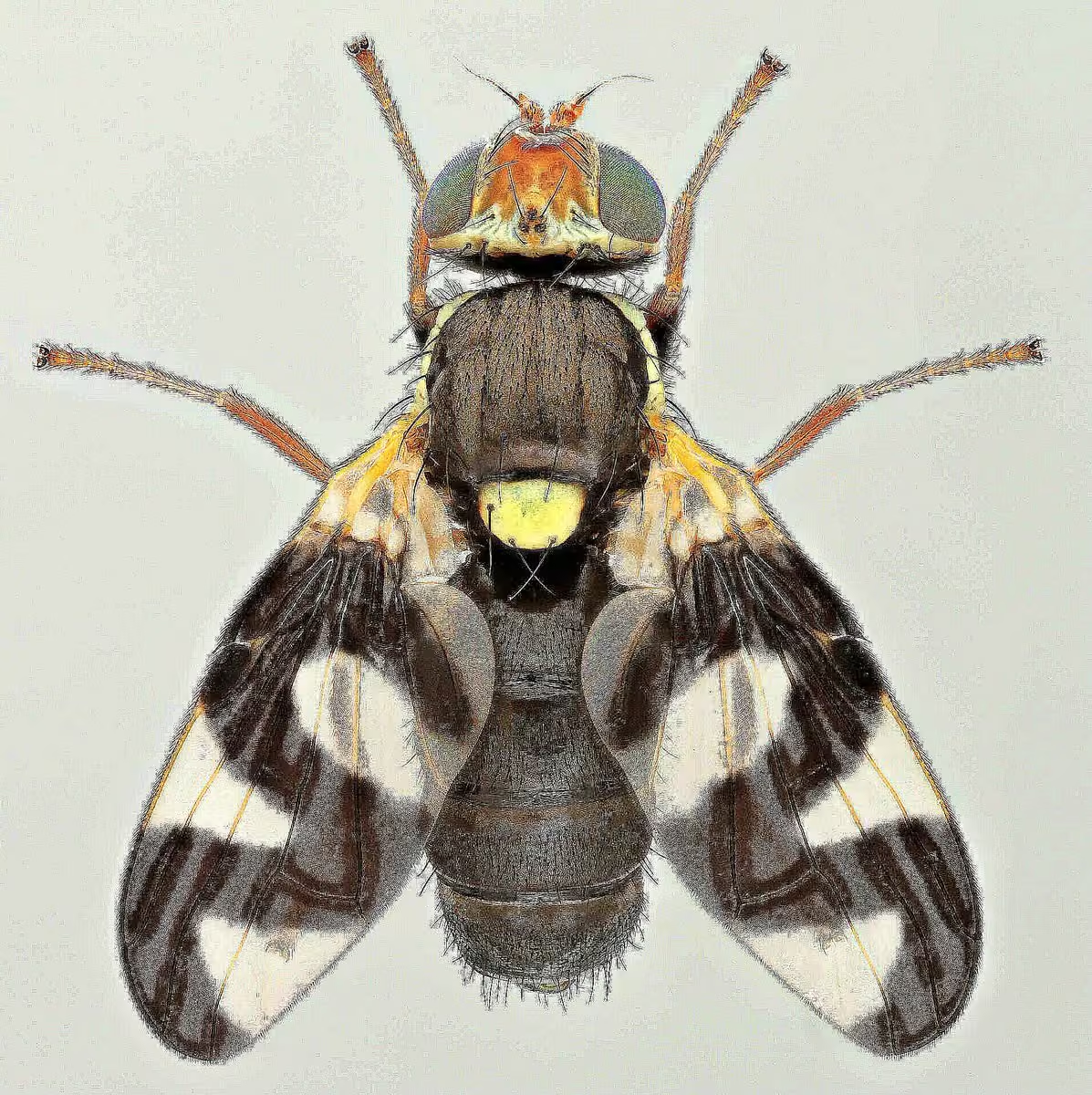
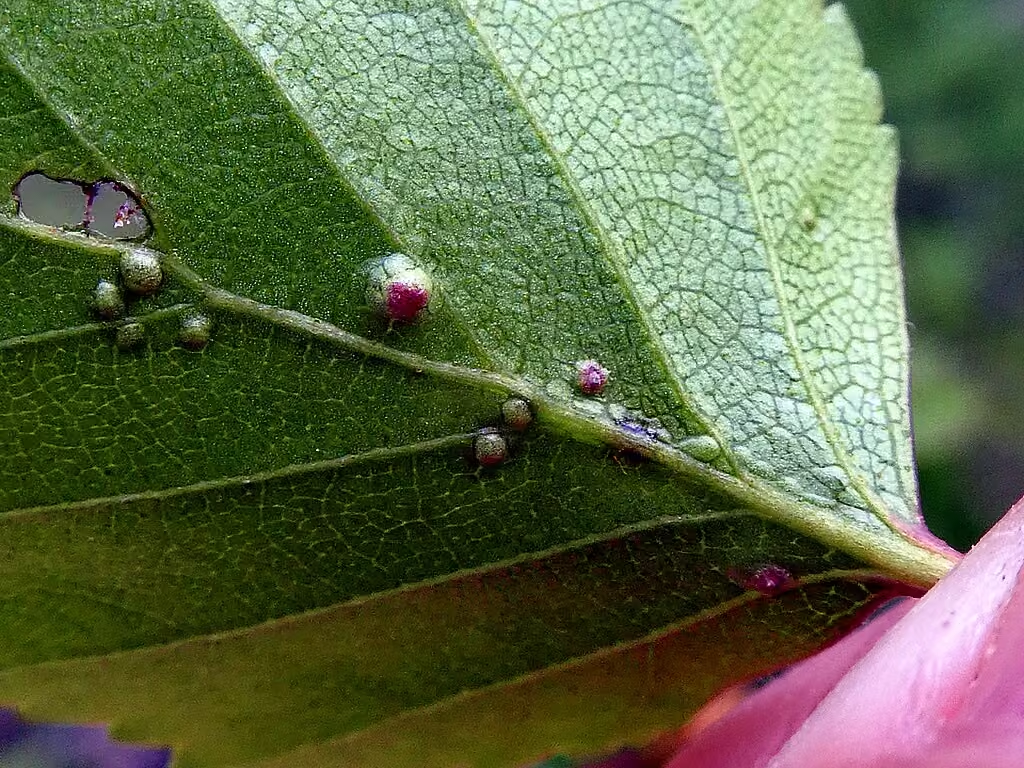
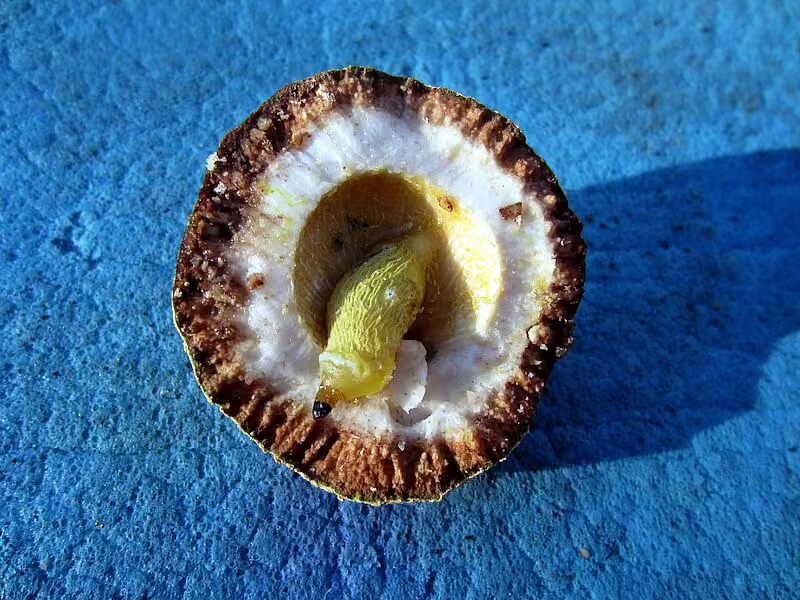
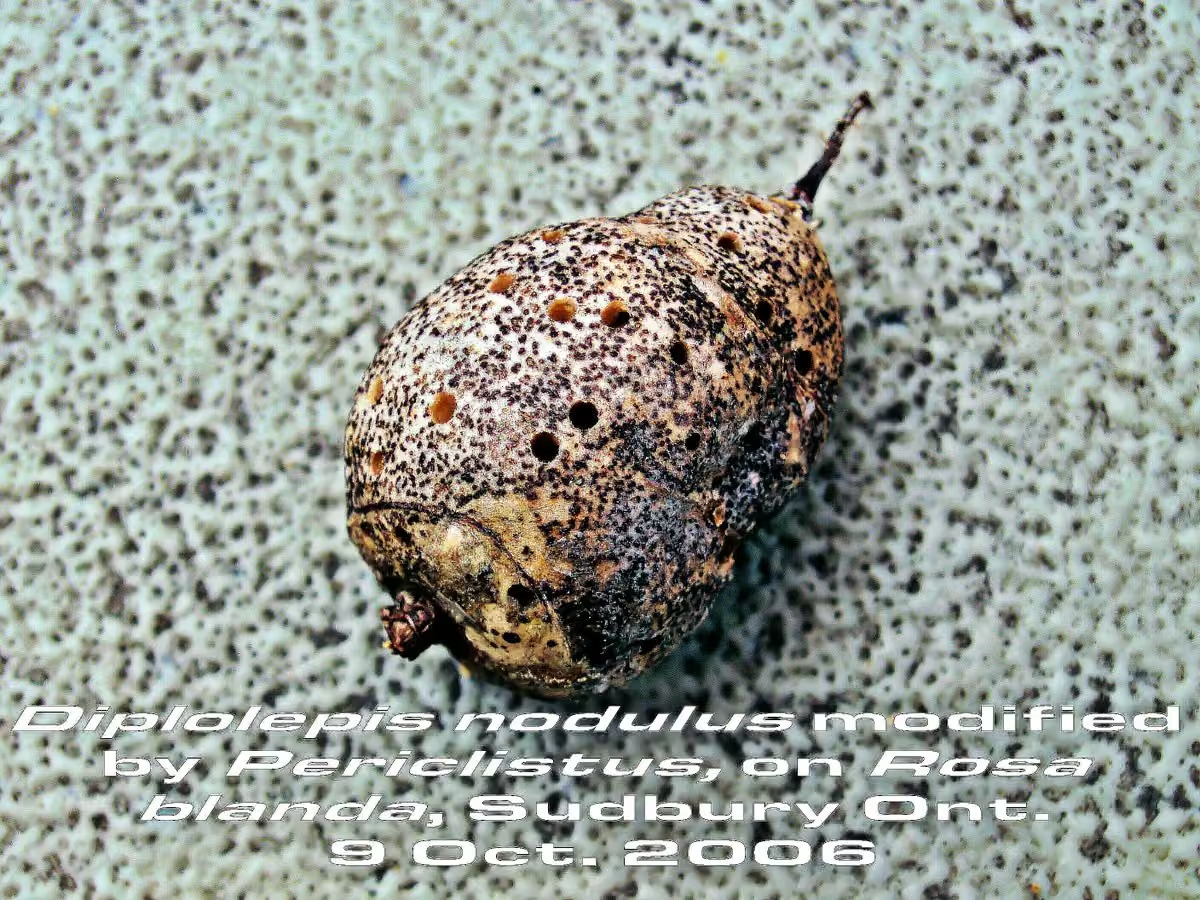
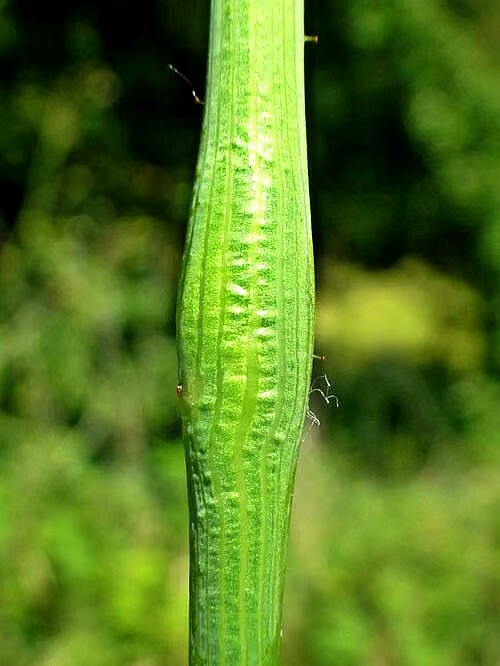
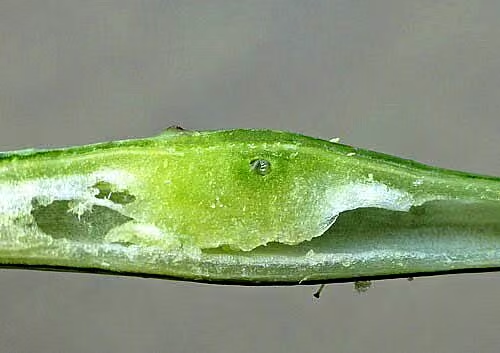
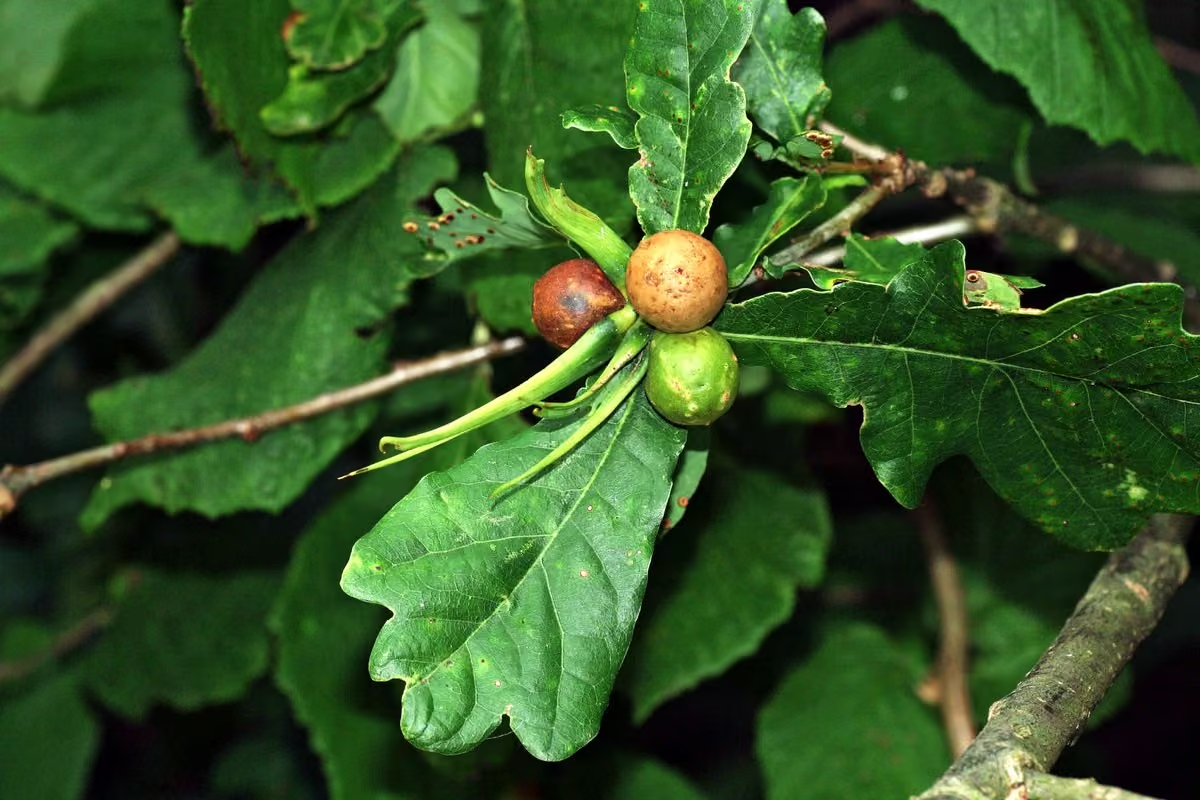
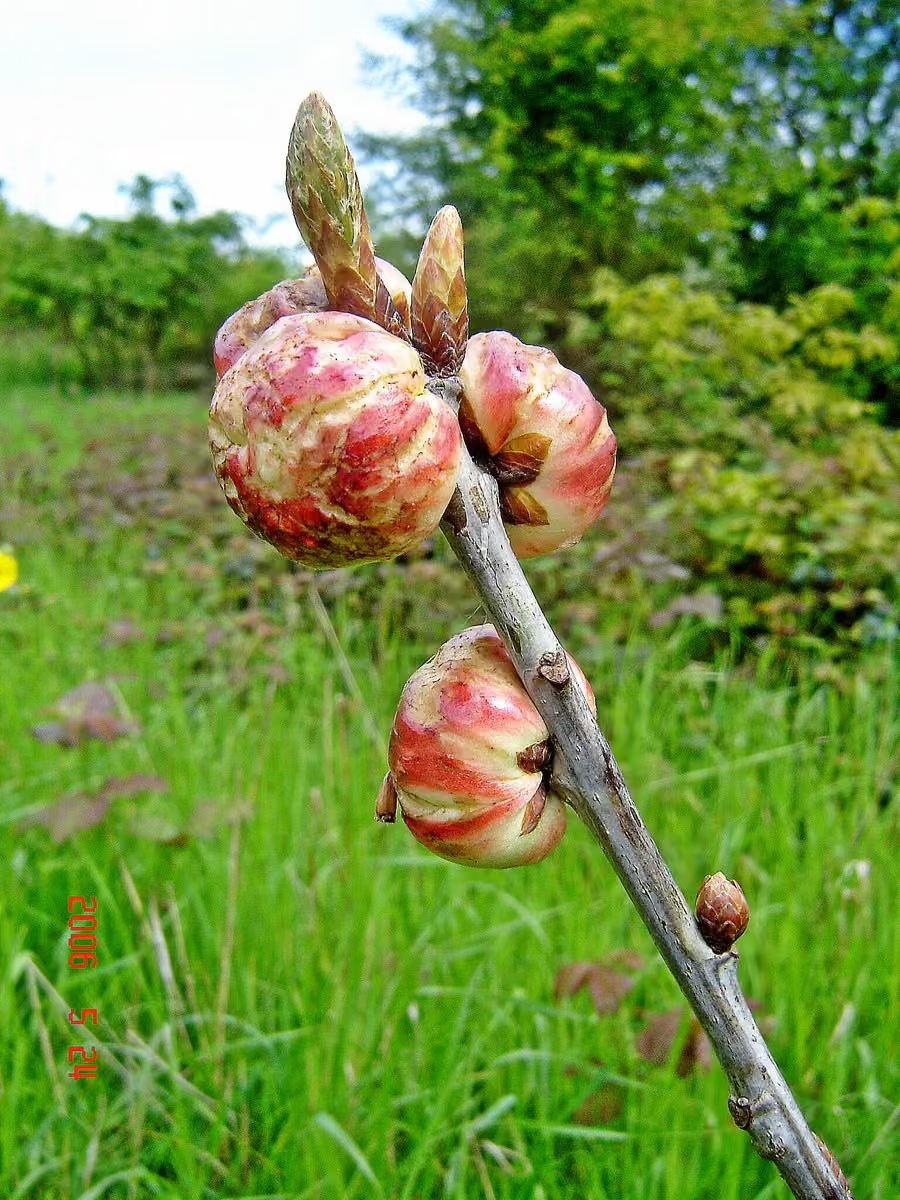
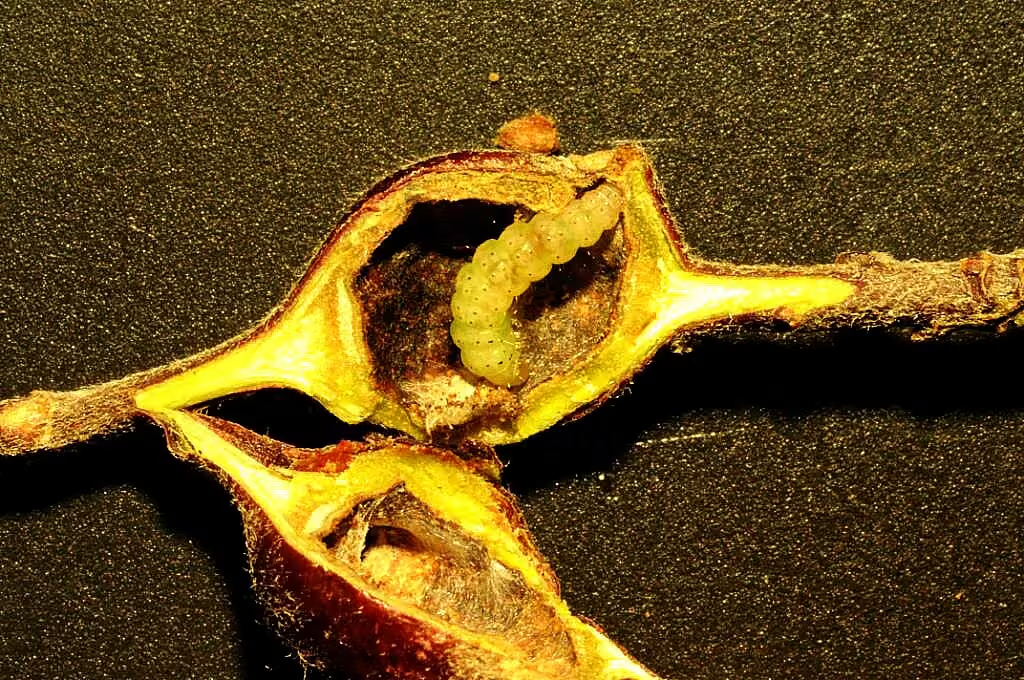
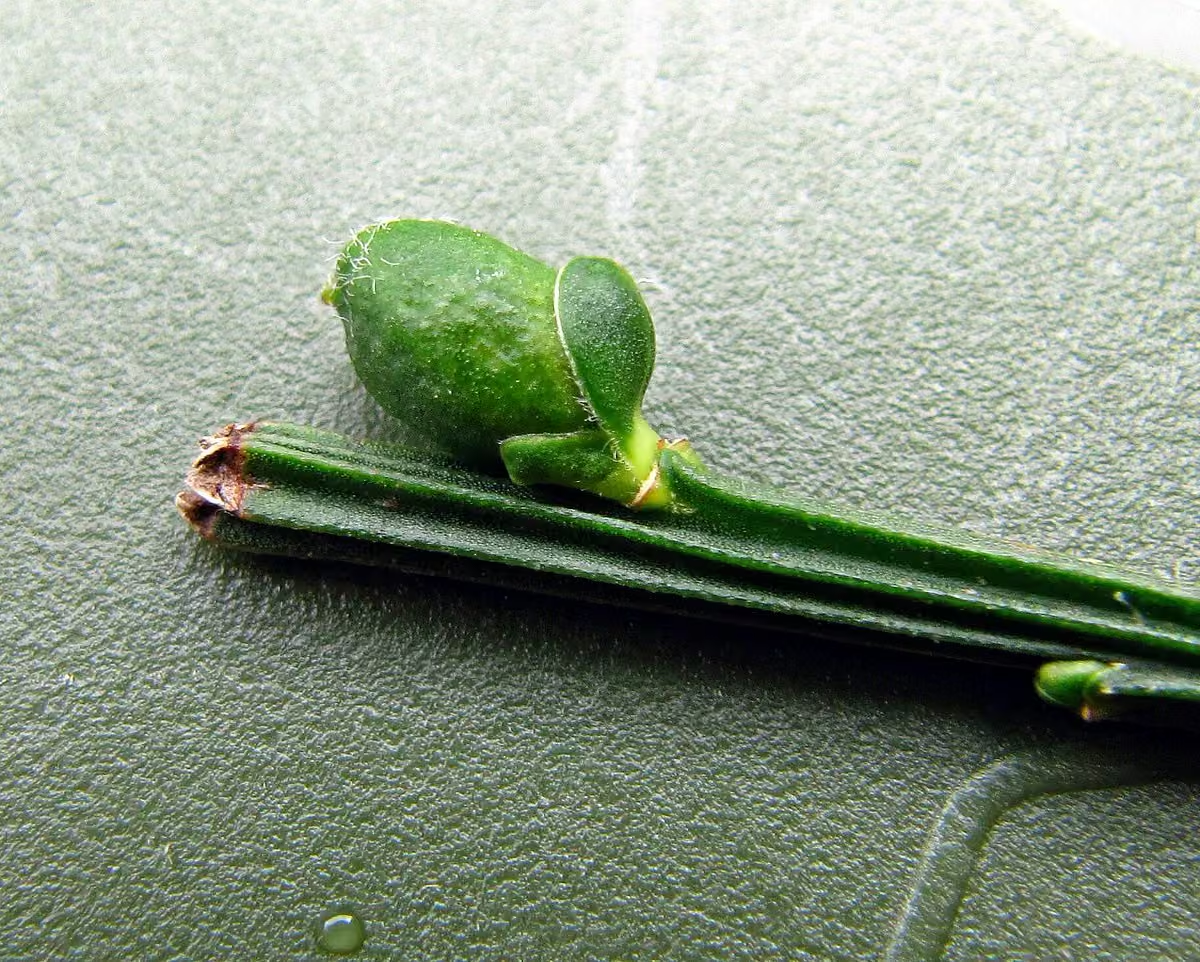
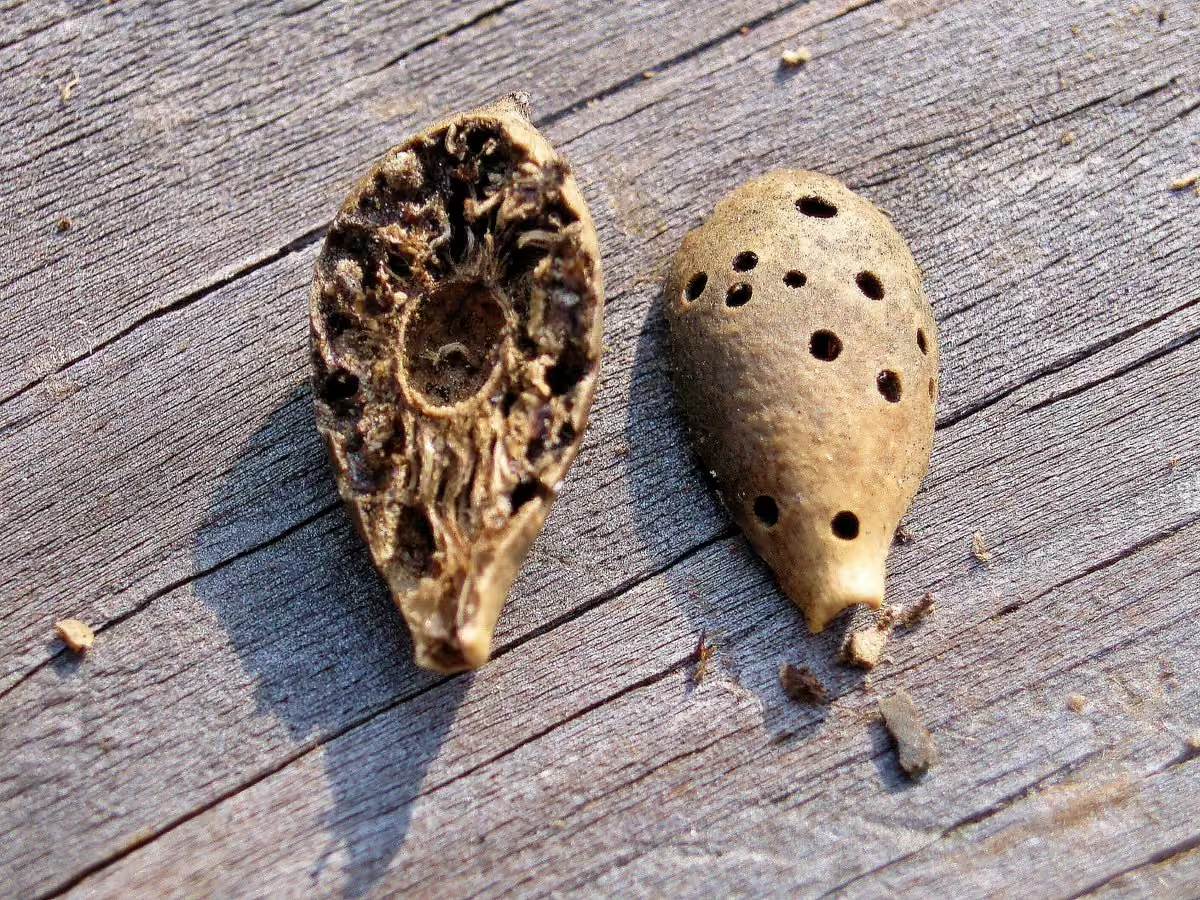
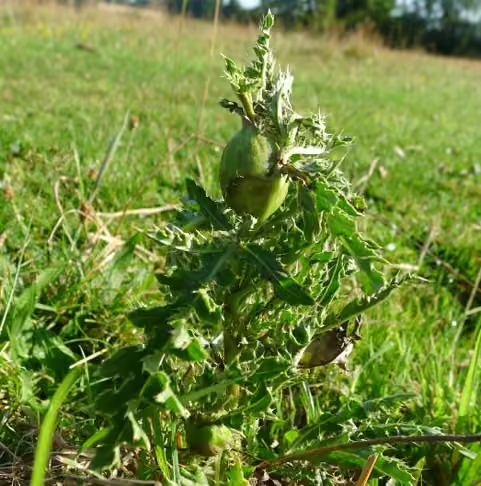
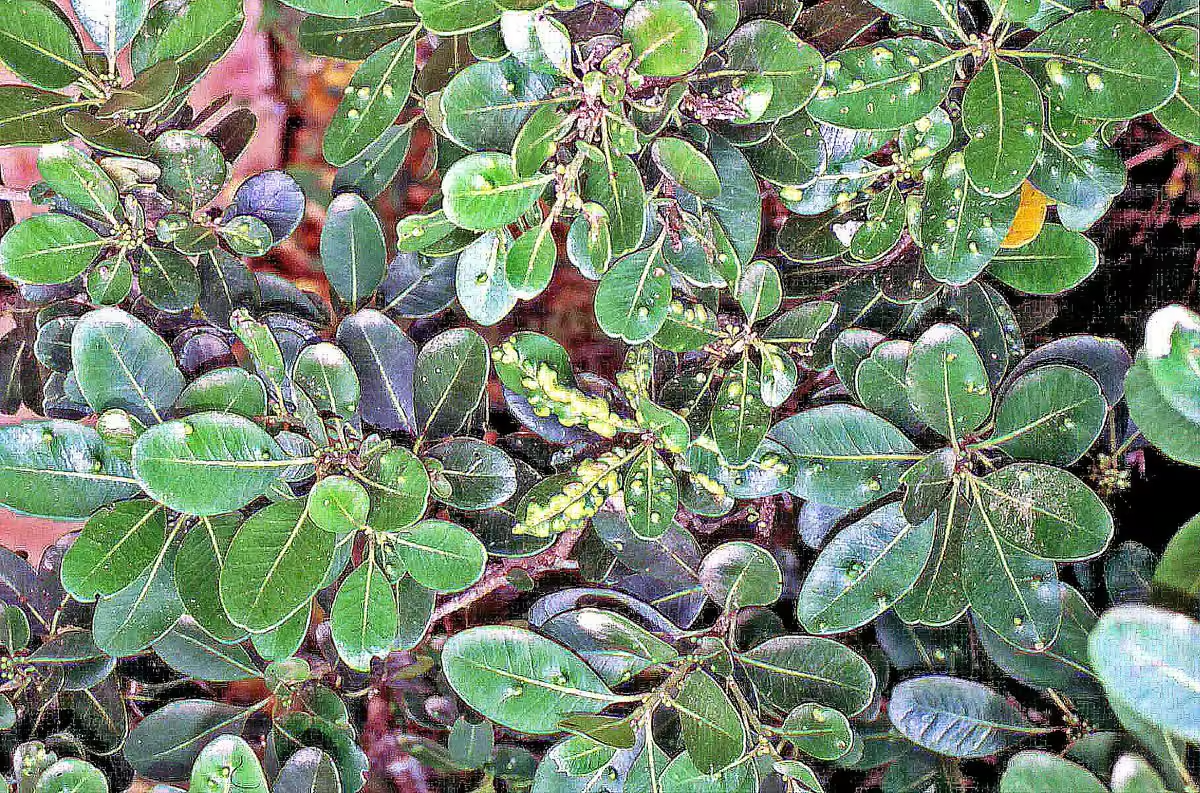
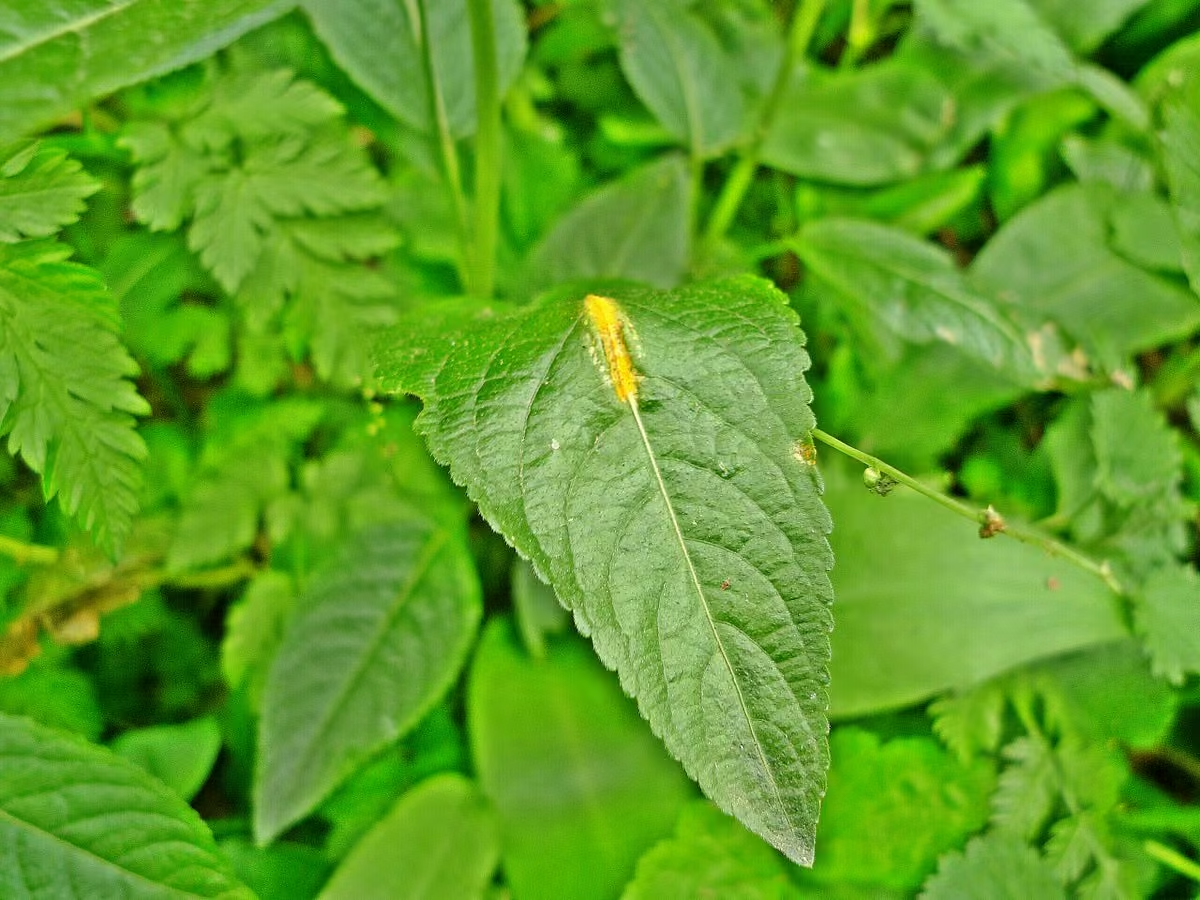
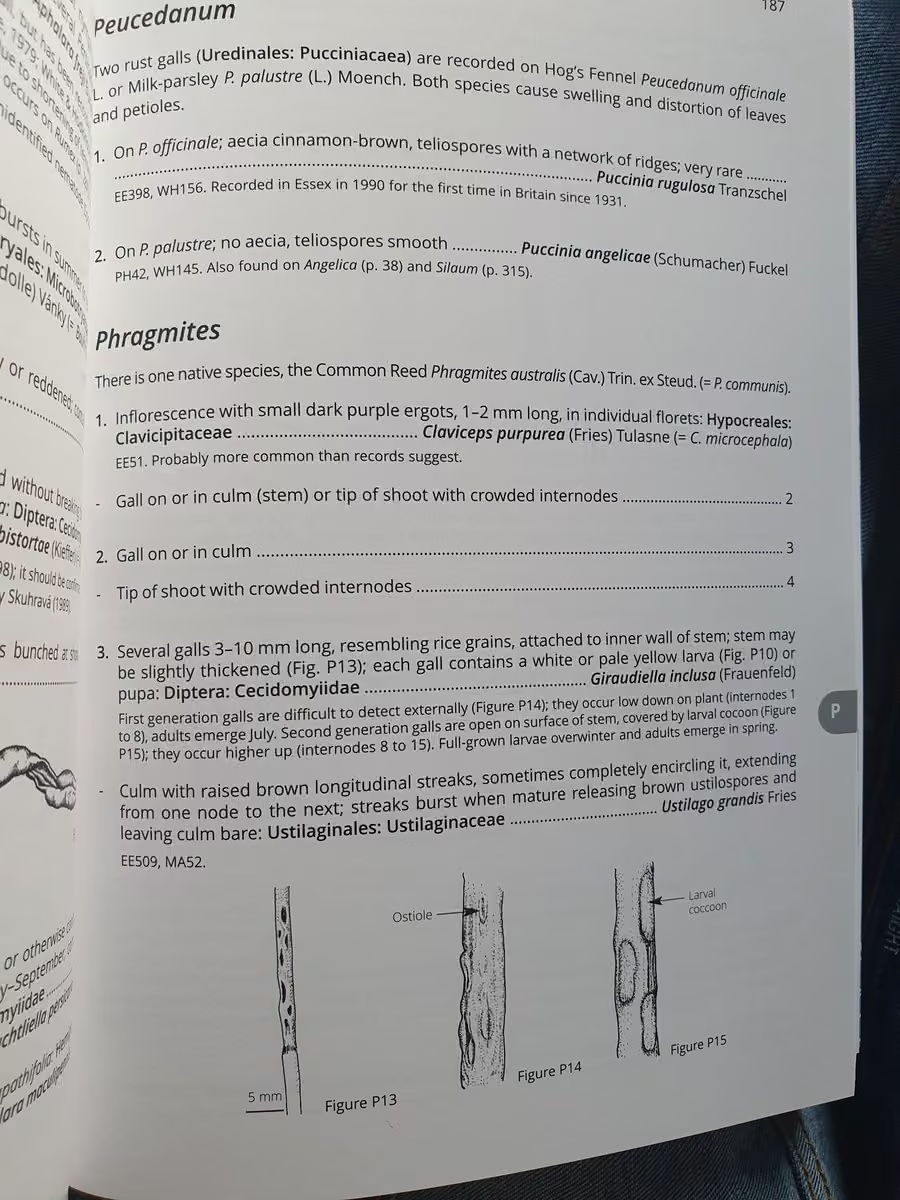
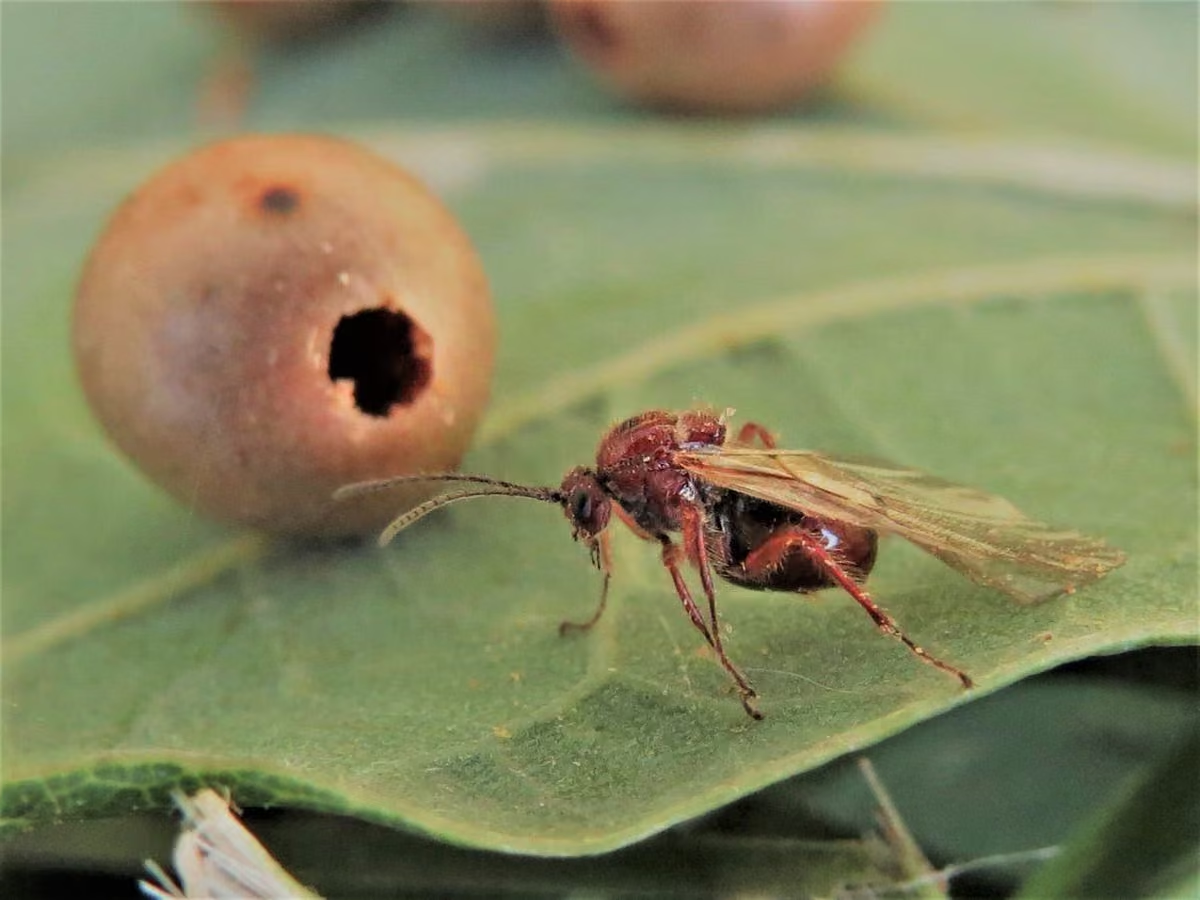
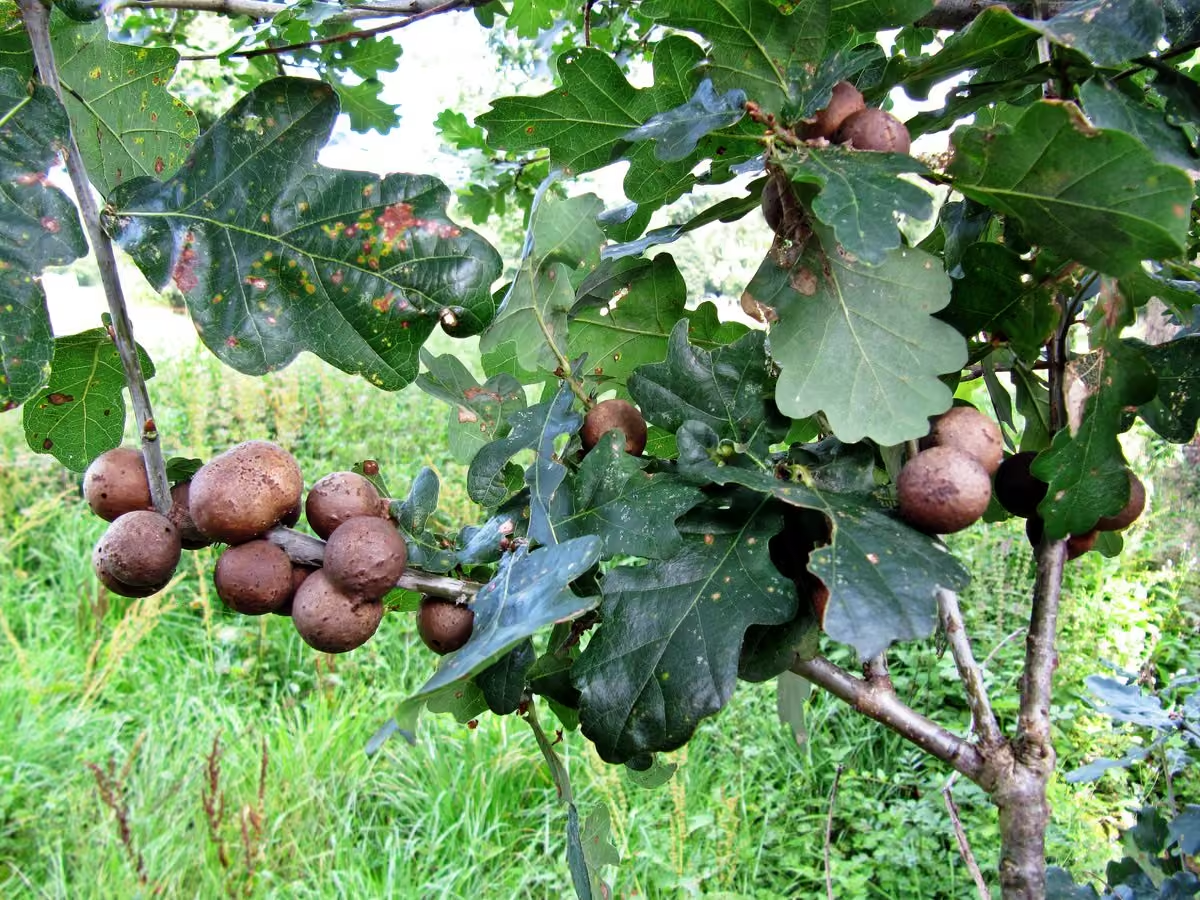
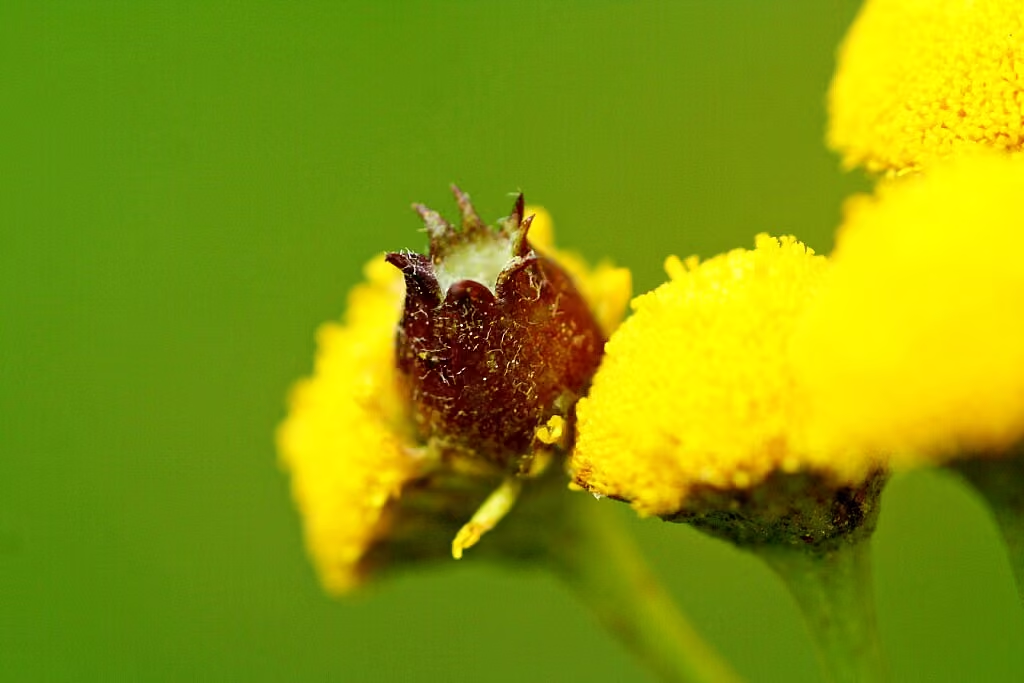
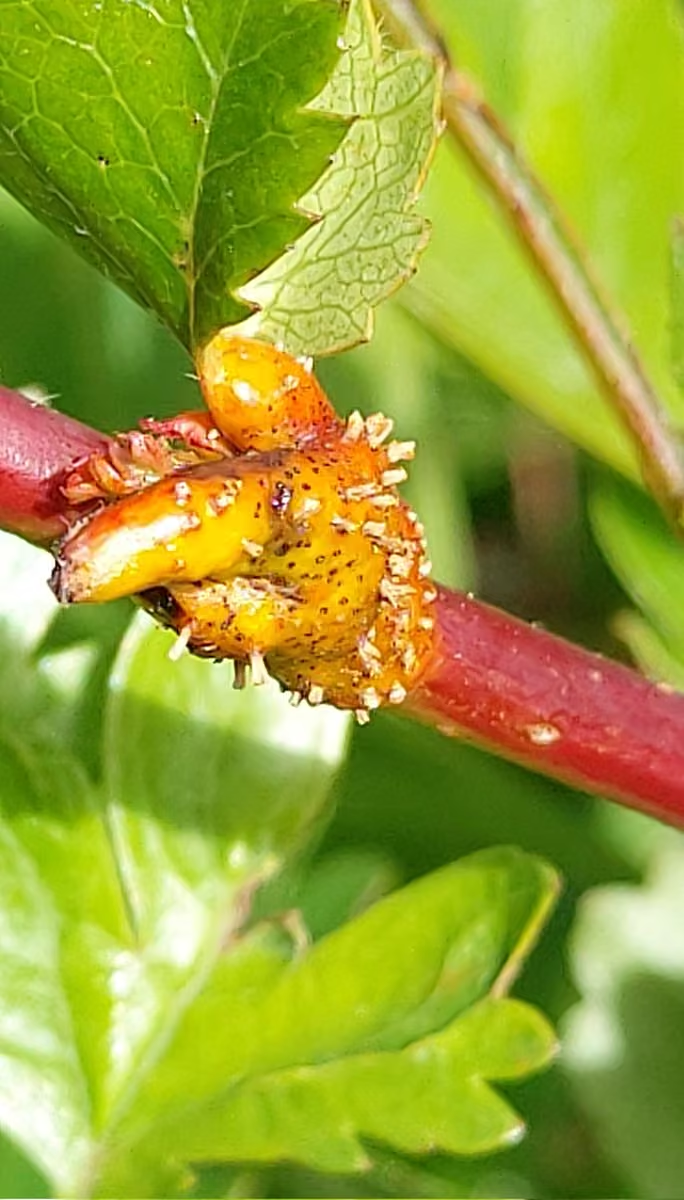
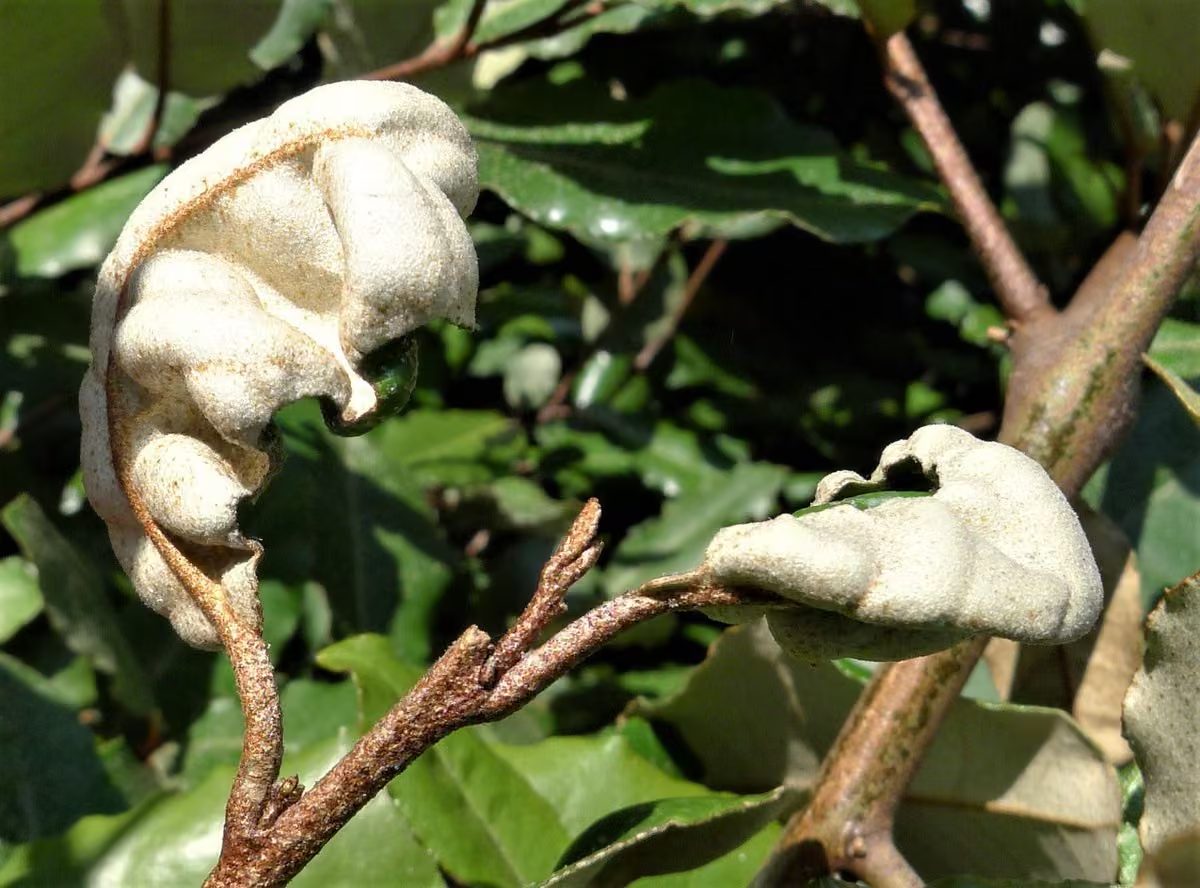
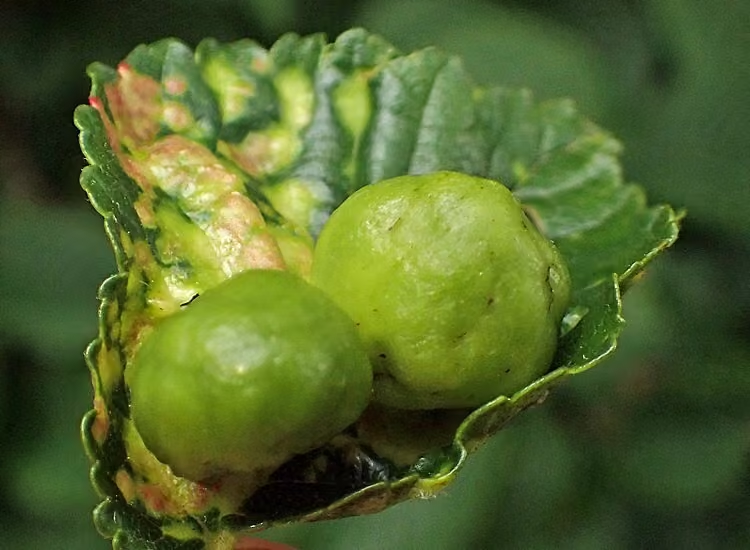
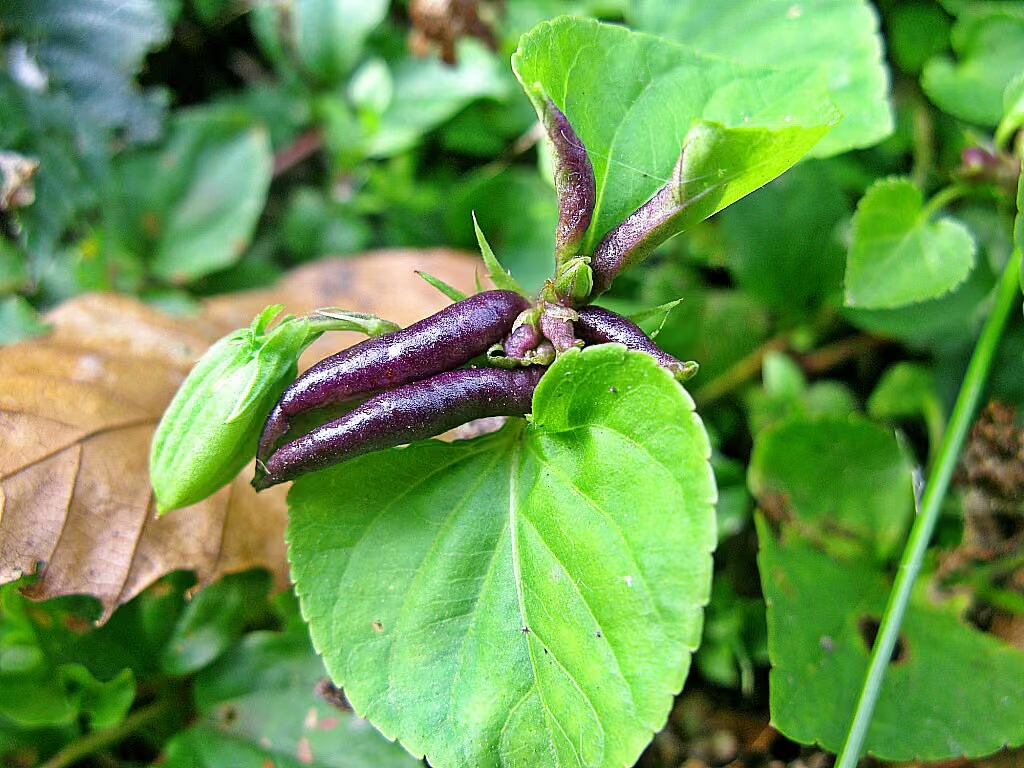
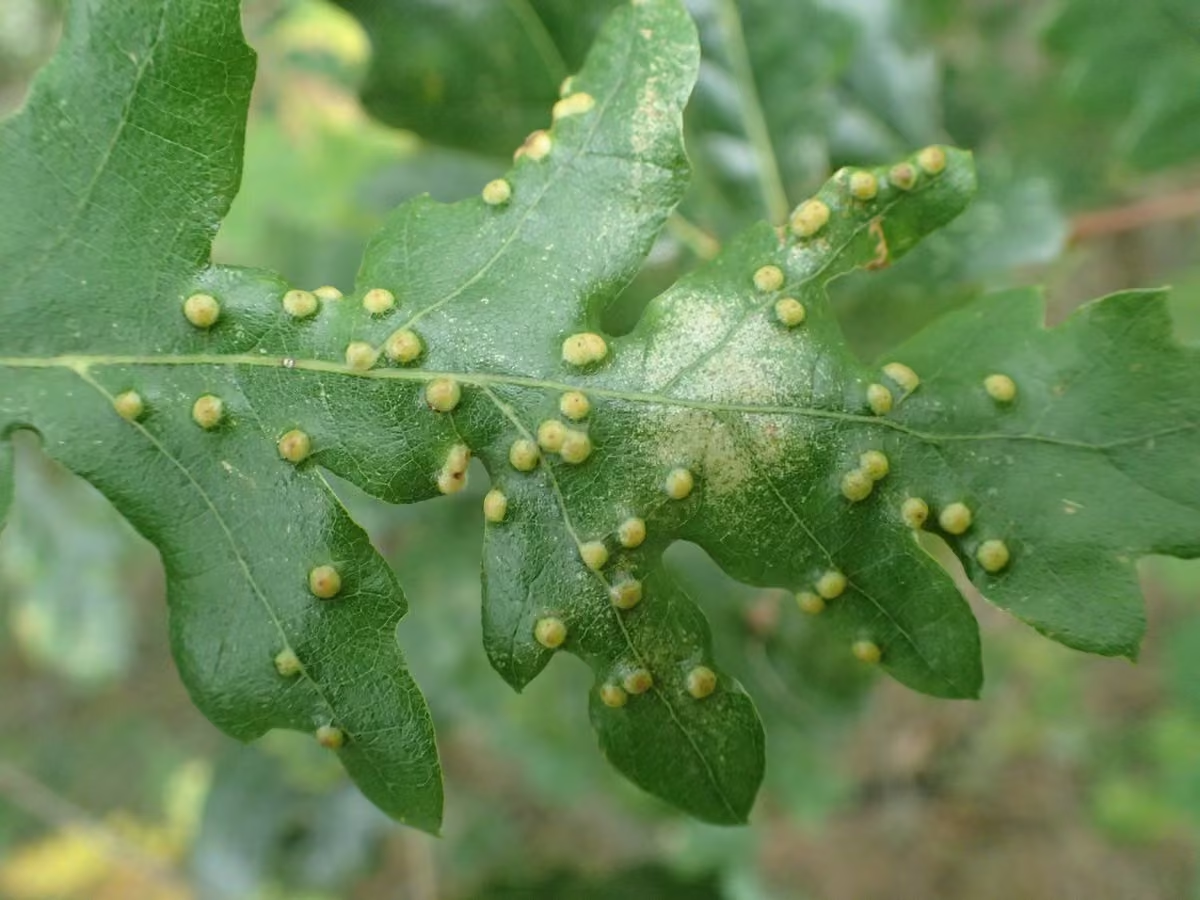
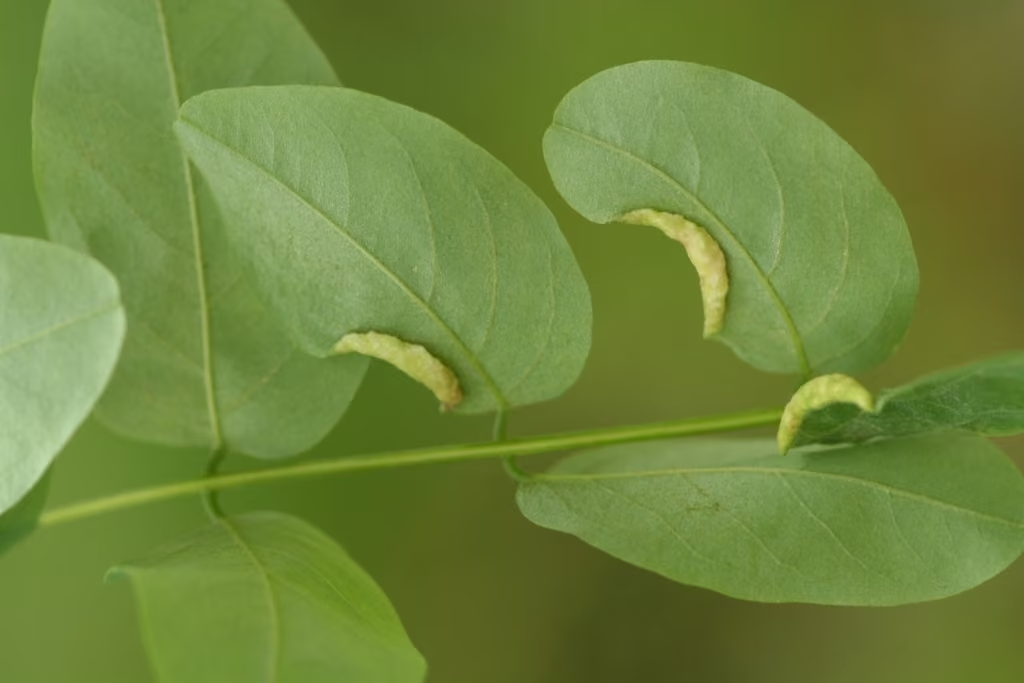
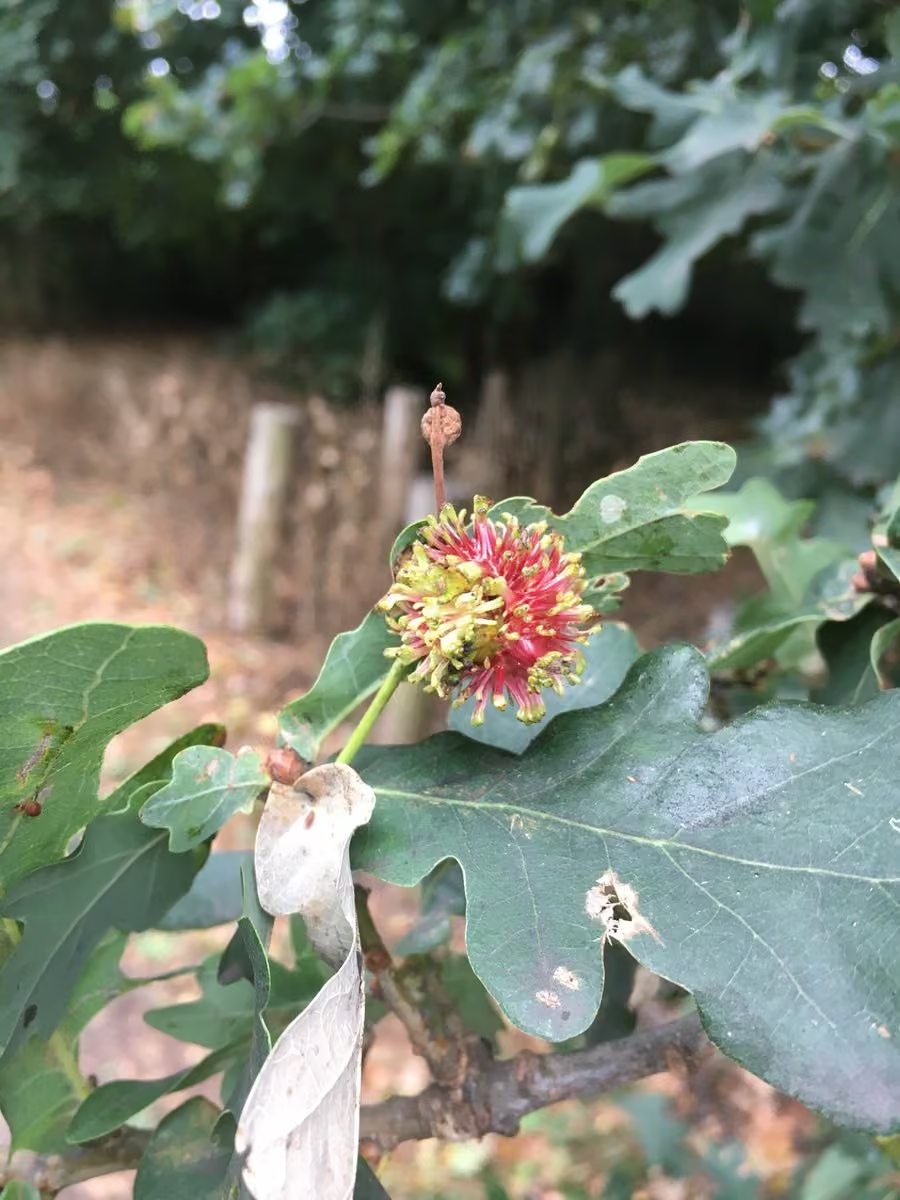
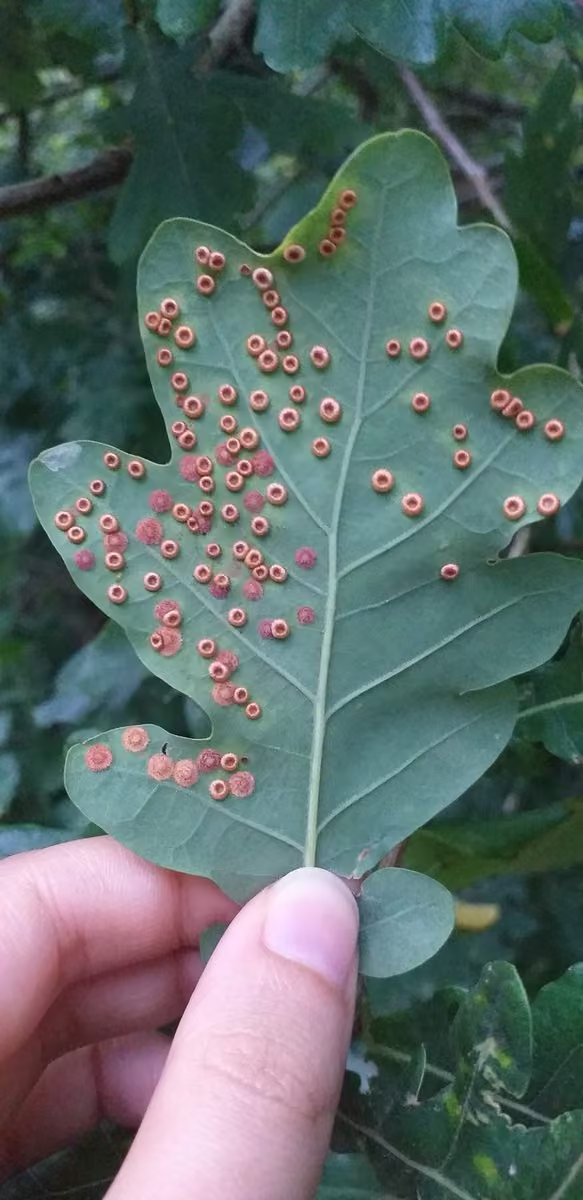
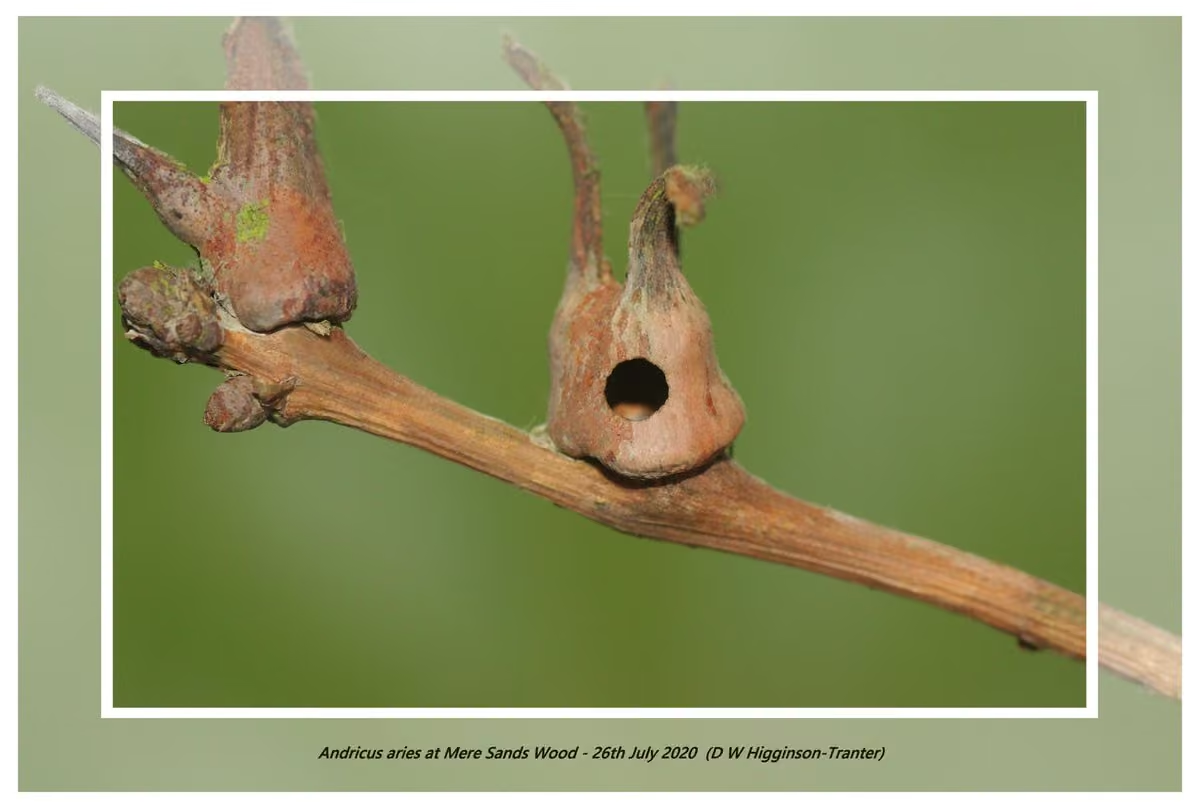
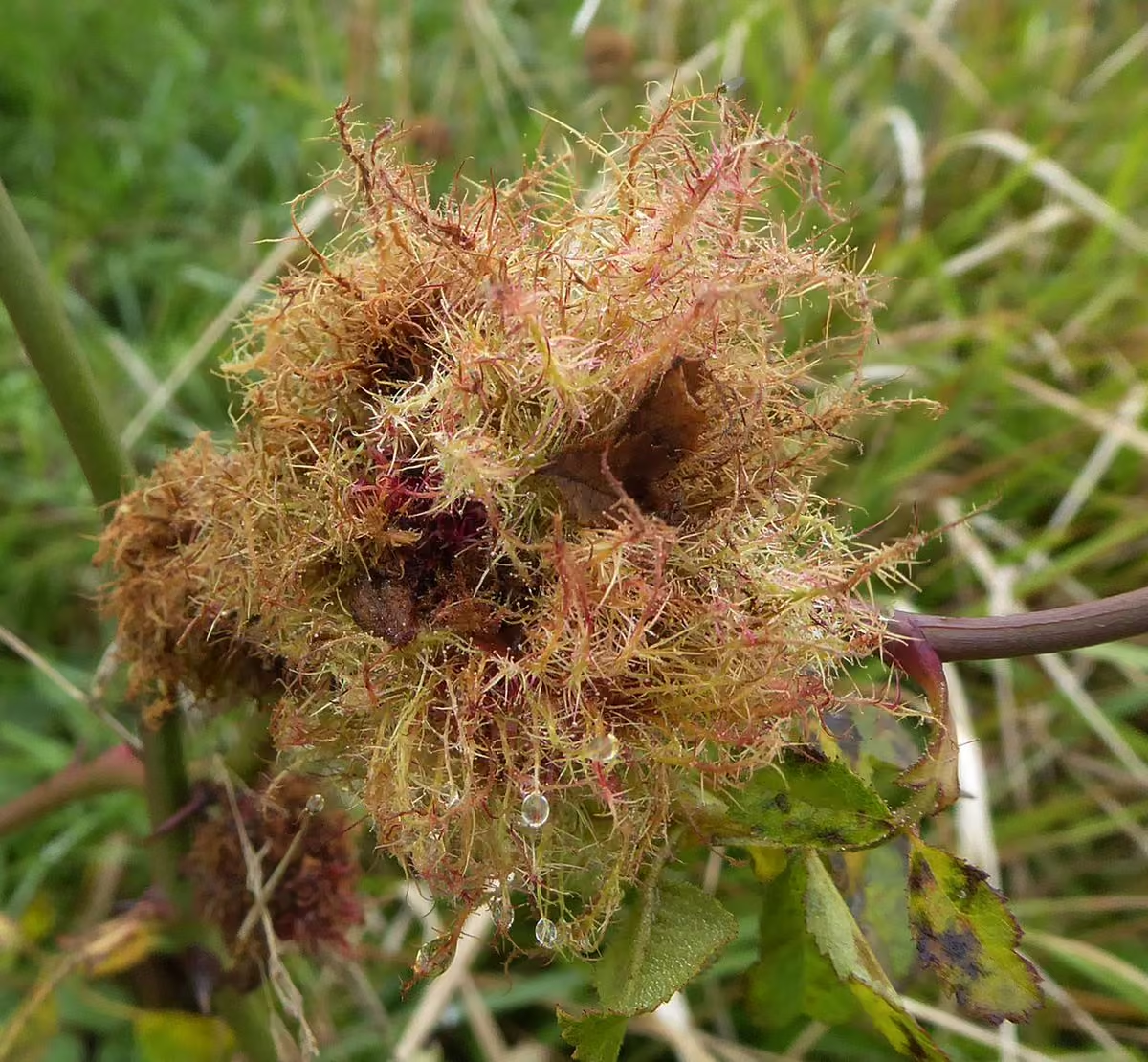
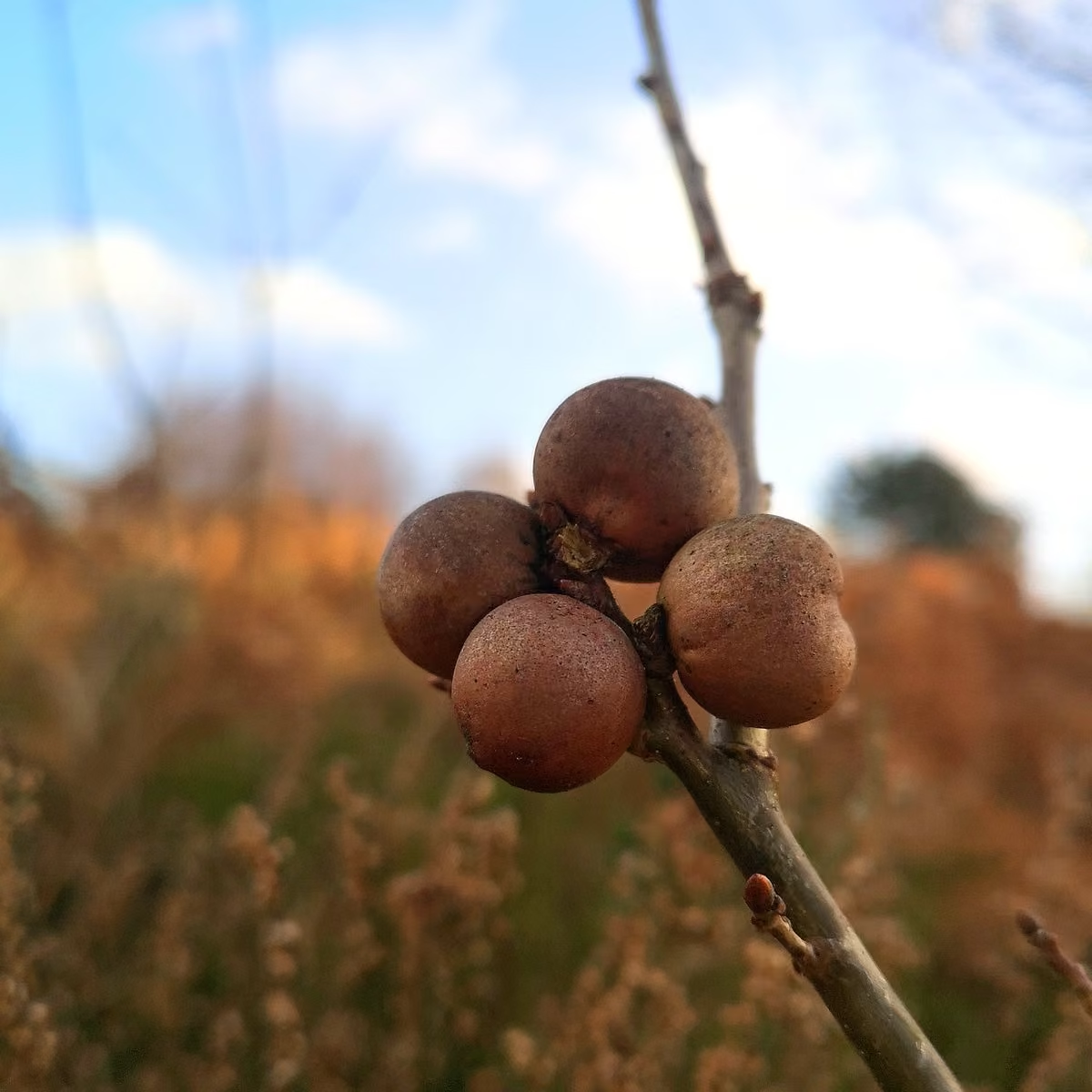
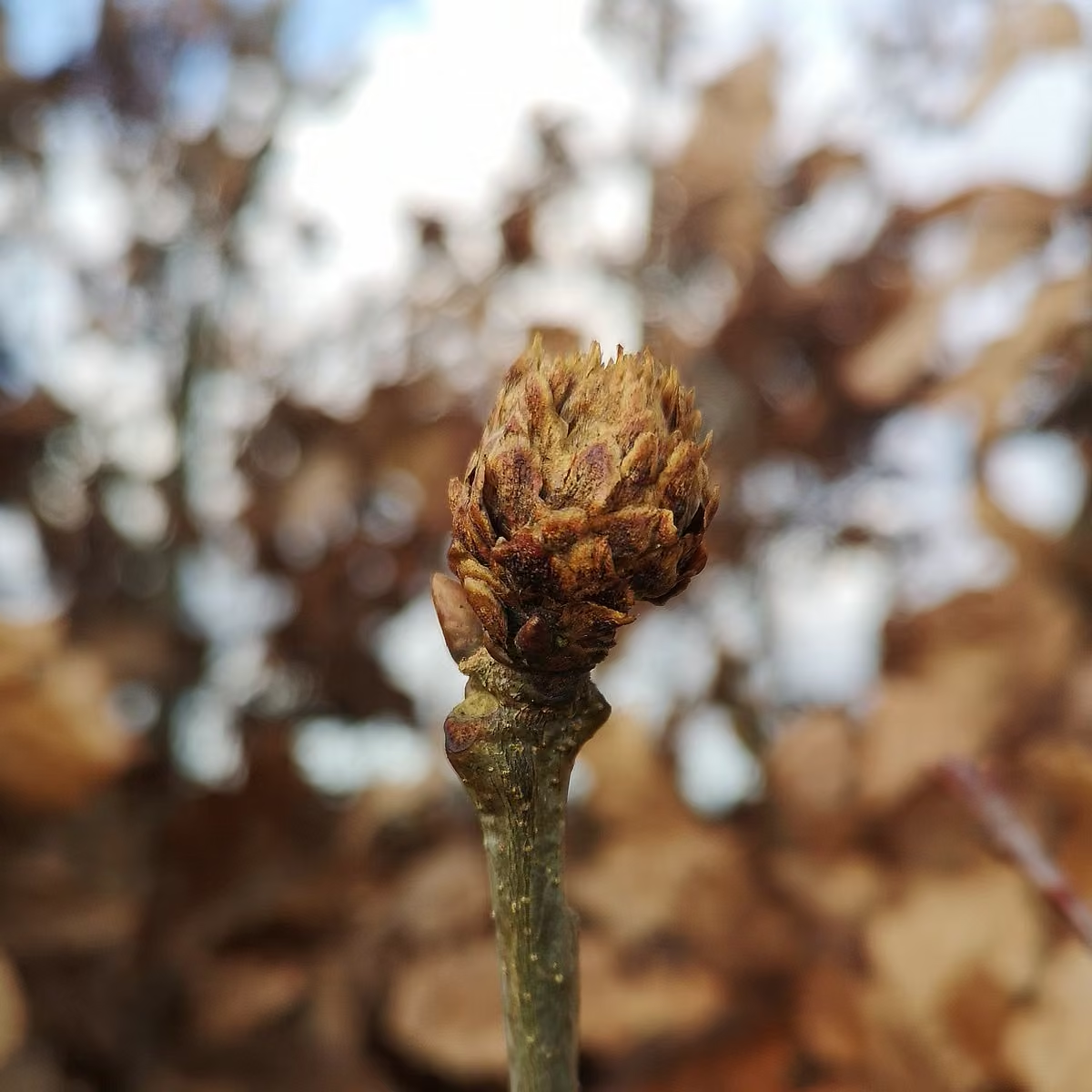
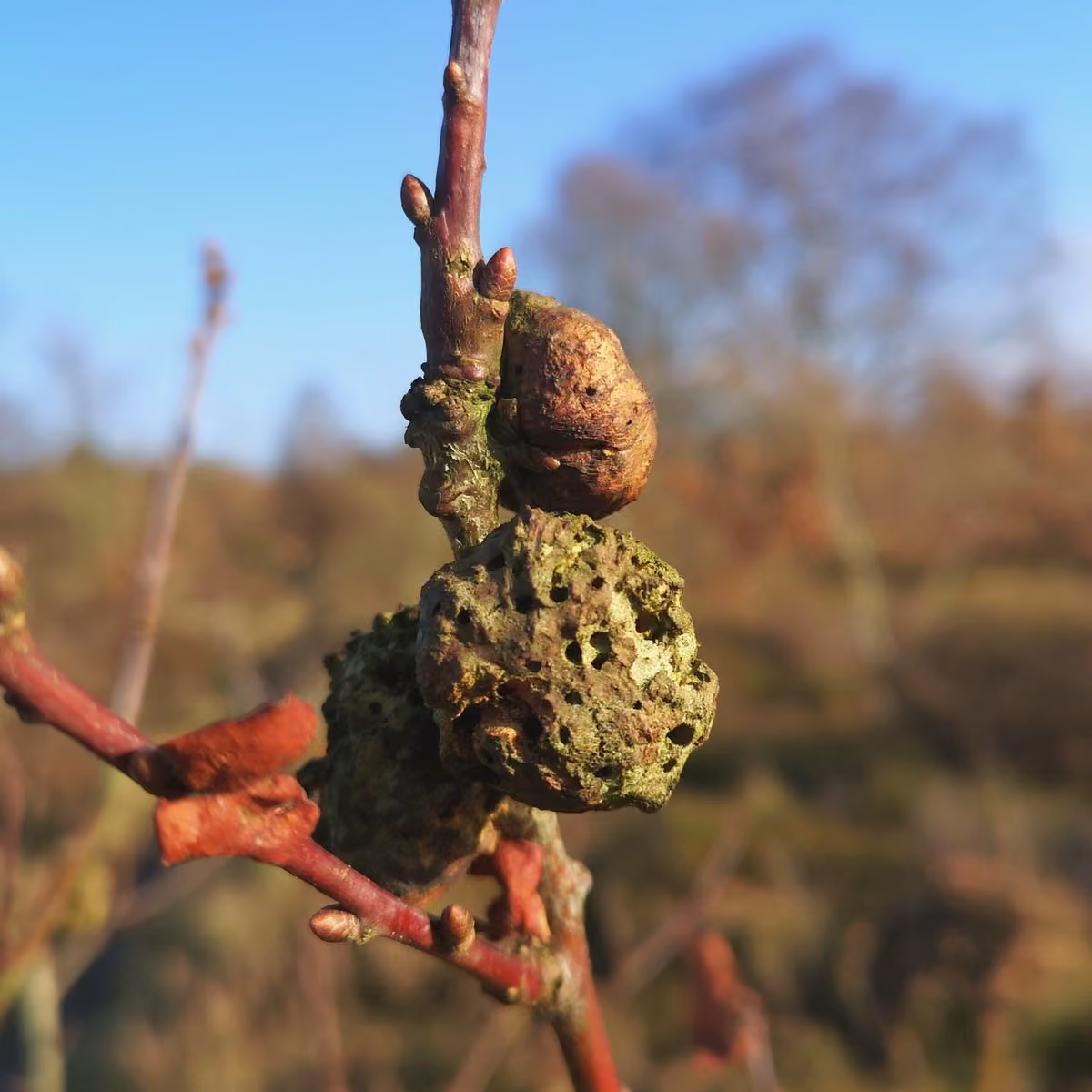
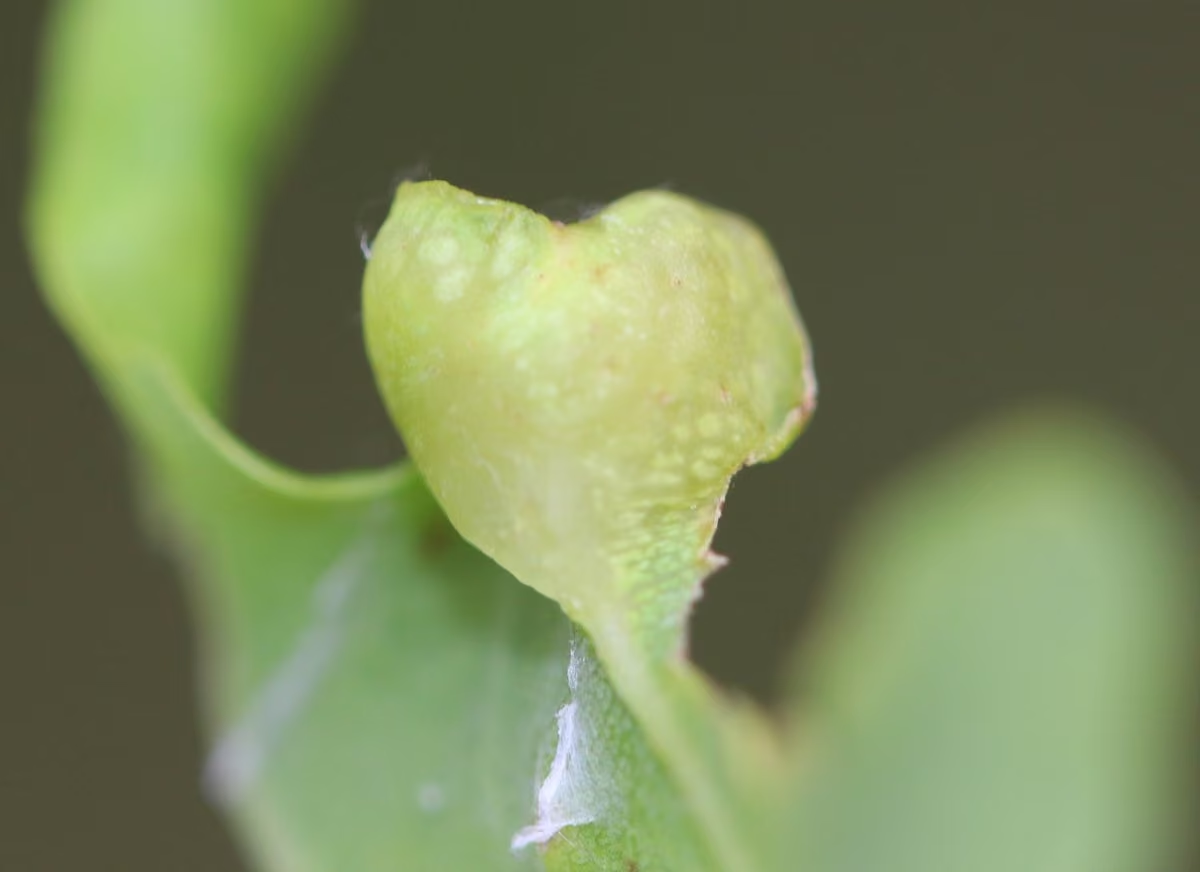
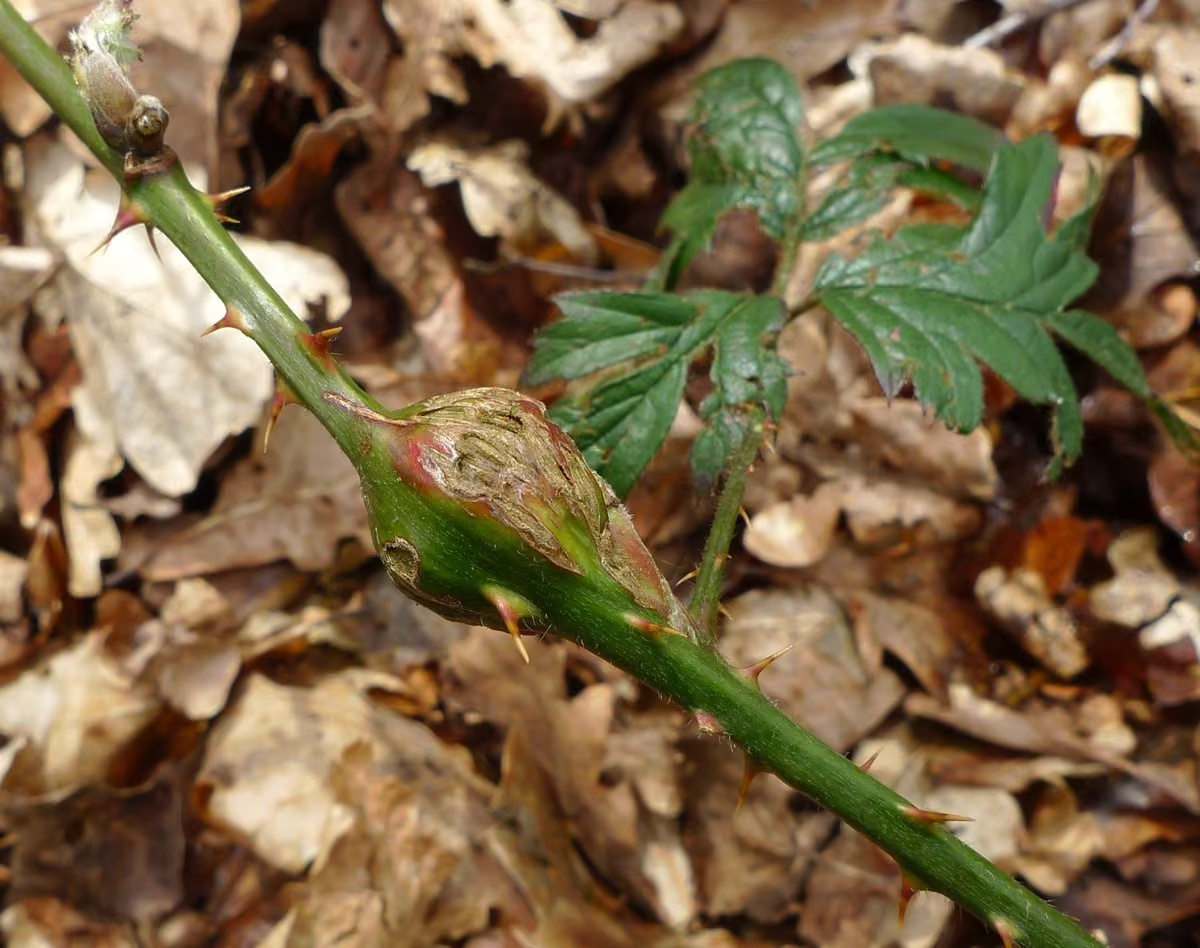
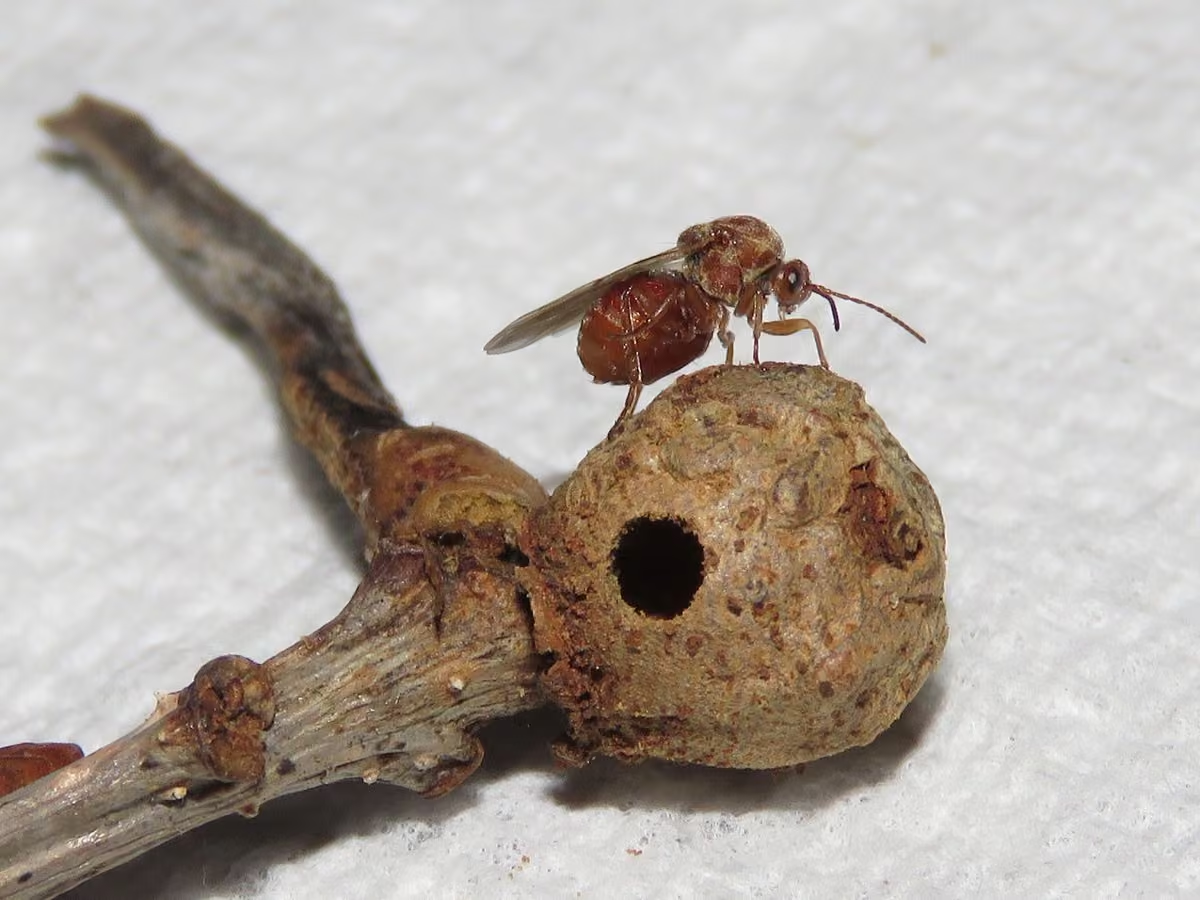
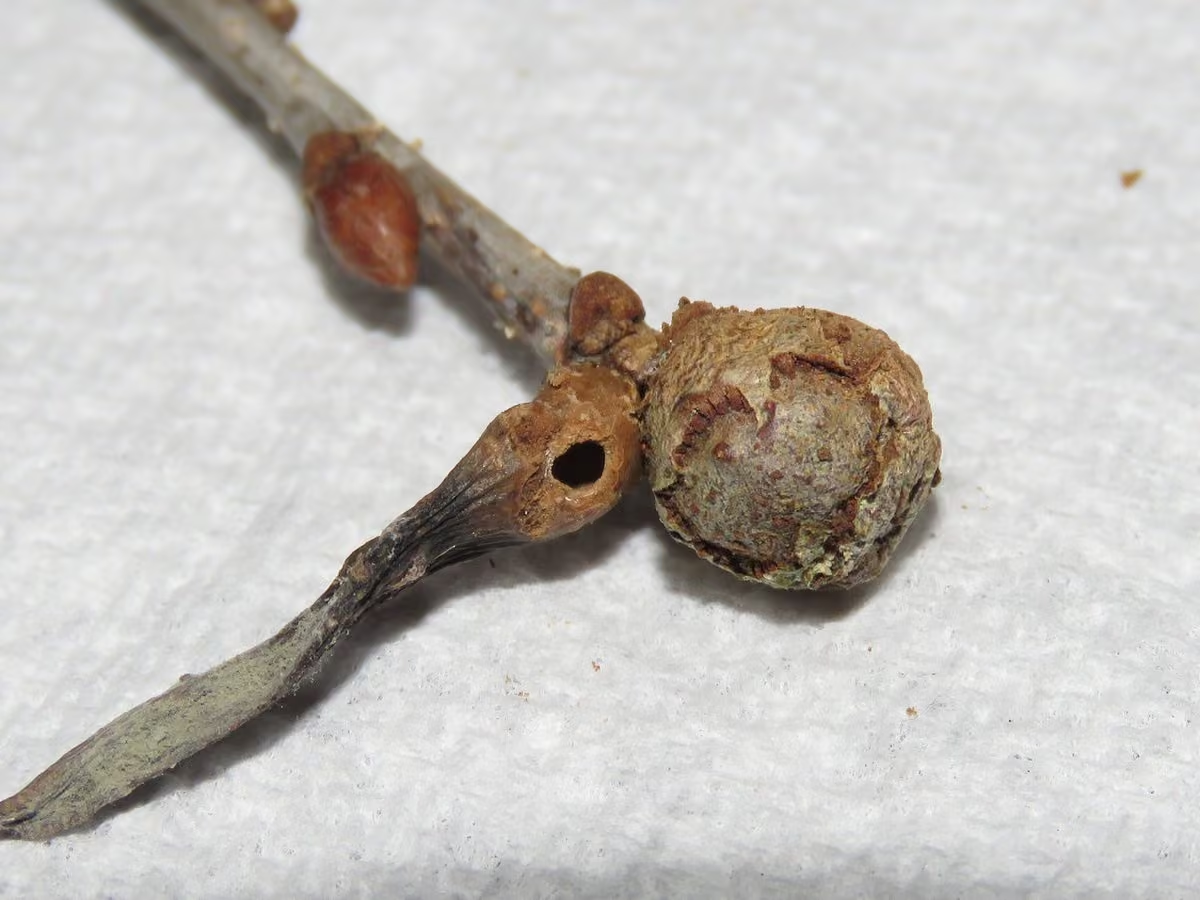
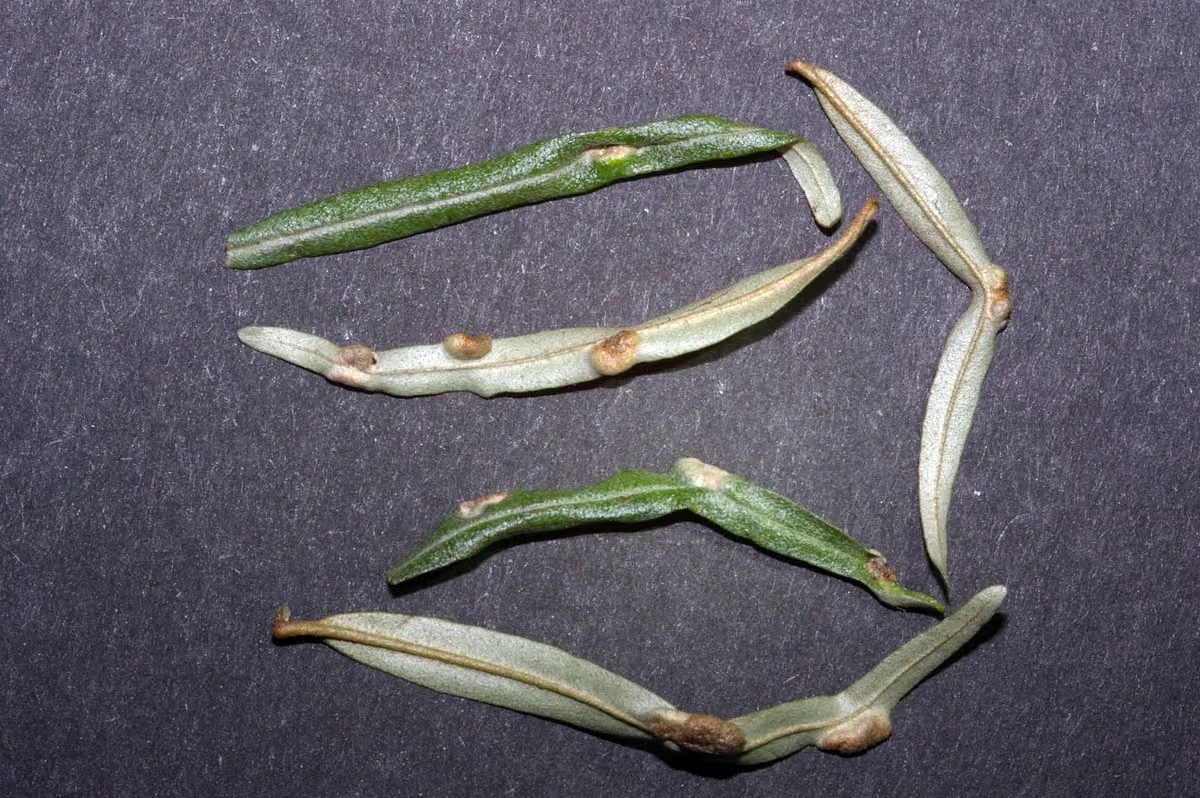
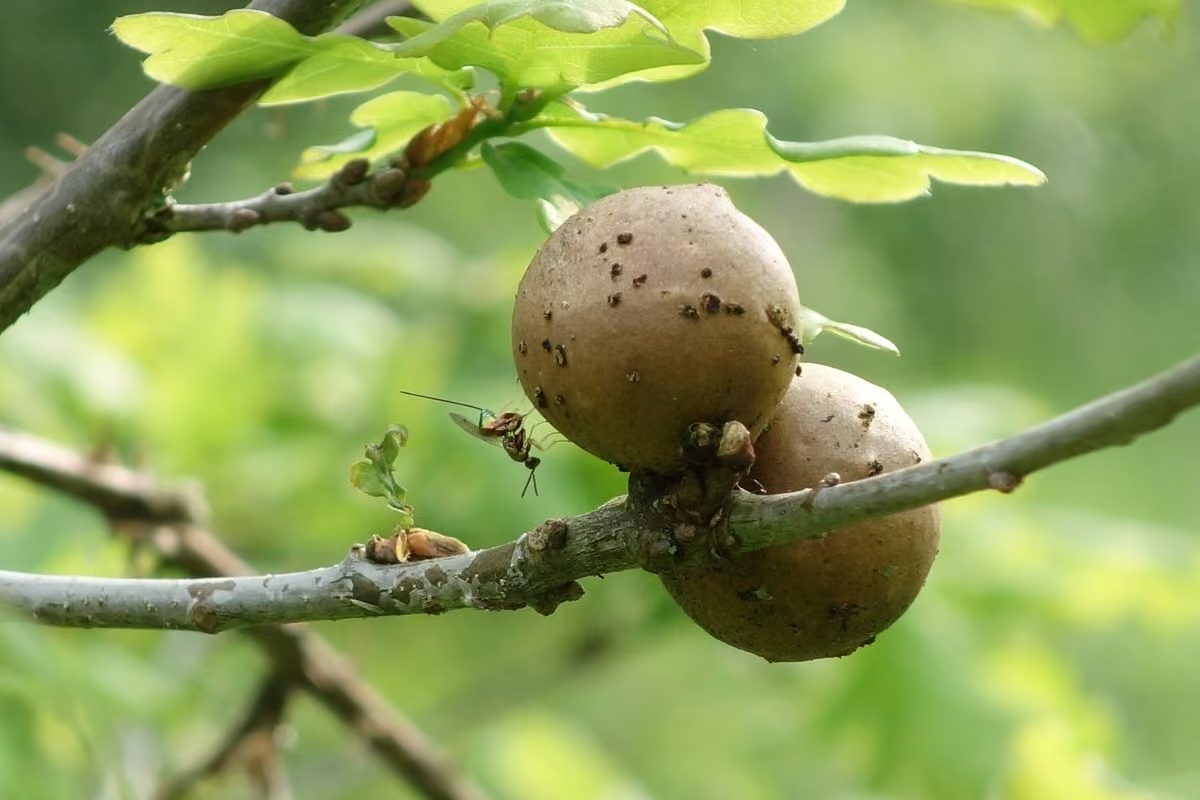
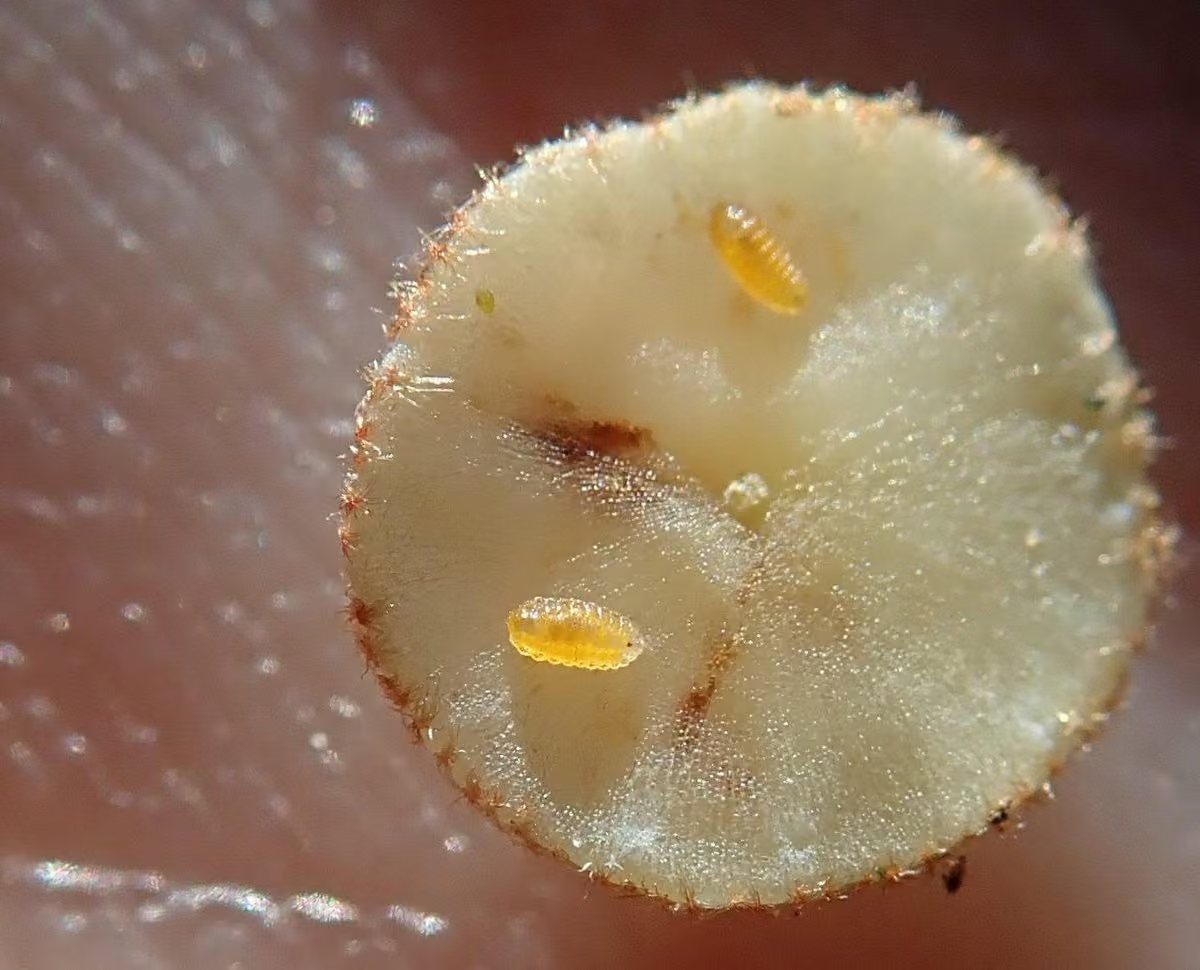
Gall of the week is caused by a cynipid wasp, but not on oaks. It is the sputnik gall of Diplolepis nervosa on roses, Rosa spp.
photo from the excellent website britishplantgallsociety.org.
British Plant Gall Society
The British Plant Gall Society is a voluntary organisation which encourages cecidology, the study of plant galls, in the British Isles. It was formed in 1985. Its biannual journal, Cecidology, is currently edited by Paul Smith. Previous editors include Michael Chinery. More on Wikipedia
-
British Plant Galls
@britgalls

-
British Plant Galls
@britgalls
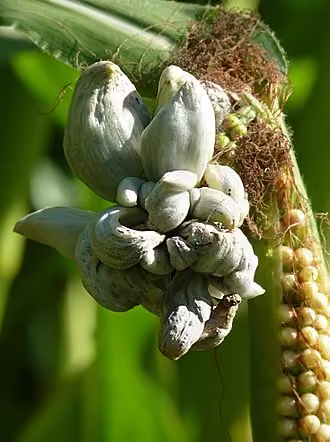
Gall of the week is ergot, Claviceps purpurea, found on various cereals, other grasses, and reeds. Causes the disease St. Anthony's fire, or ergotism, if contaminated flour is eaten.
Photo by Jerry Bowdrey. -
British Plant Galls
@britgalls
Gall of the week is that of of the cynipid wasp Cynips disticha f. agamic on oaks, Quercus spp.
Photo by Malcolm Storey. -
British Plant Galls
@britgalls
Gall of the week is caused by the cynipid wasp Plagiotrochus quercusilicis f. sexual on holm, or evergreen, oak, Quercus ilex.
Photo by Brian Spooner. -
British Plant Galls reposted
Graham Linehan
@Glinner
It was a tragedy but it was idiots like you who raised him up high enough that the fall killed him.
UCU
@ucu
Bell is getting extreme levels of abuse this morning, simply for raising concern about this event, and flagging that no lessons have been learned about the treatment of Professor Jason Arday.
Solidarity to Bell, solidarity to Jason’s family, and solidarity to every Black academic and student forced to endure this culture of racism - both online and in our institutions.
Bell Ribeiro-Addy MP
@BellRibeiroAddy
Barely two months ago, we lost Professor Jason Arday. Thousands grieved. Institutions across higher education spoke about inclusion and belonging.
Now Nathan Cofnas is being given a room at Oriel College, Oxford, to ask whether DEI is undermining higher education.
🧵 -
British Plant Galls
@britgalls
Gall of the week is from Ontario. Unusually it is caused by a chalcid wasp, Hemadis nubillipennis, on blueberries, Vaccinium spp.
Photo by Peter Shirley. -
British Plant Galls
@britgalls
Gall of the week is caused by the sawfly Euura viminalis on purple willow, Salix purpurea.
Photo from the BPGS website, photographer unknown. -
British Plant Galls
@britgalls
Gall of the week is caused by the mite Acalitus stenaspis on beech, Fagus sylvatica.
Photo by Graham Calow. -
British Plant Galls
@britgalls
Gall of the week is caused by the cynipid Neuroterus anthracinus f. agamic on oaks, Quercus spp. Plenty about now. The insect is of the sexual generation.
Gall photo photographer unknown, insect photo from Bladmineeders nl Plant Parasites of Europe. -
British Plant Galls
@britgalls
Gall of the week is caused by an anthomyiid fly related to house flies, Chirosia betuleti, on ferns. First photo on lady-fern, Athyrium filix-femina, second photo on male fern, Dryopteris filix-mas.
Both photos by Mike Poulton. -
British Plant Galls
@britgalls
Gall of the week is caused by the sawfly Euura herbaceae on dwarf willow, Salix herbacea.
From the British Plant Gall Society website, Photographer unknown. -
British Plant Galls
@britgalls
Gall of the week is caused by the cynipid wasp Cynips longiventris f. agamic on Oaks, Quercus spp. Very distinctive, and should be fairly easy to find now.
Photo by P. Shirley. -
British Plant Galls
@britgalls
Gall of the week, caused by the aphid Cryptosiphum artimisiae on Artemisia spp. mugwort, wormwood, and field wormwood.
Photographer not known. -
British Plant Galls
@britgalls
Gall of the week is caused by the gall midge Mikiola fagi on beech, Fagus sylvatica.
Photo of gall by Steve McWilliam, of the insect from Rubsaamen & Hedicke 1926 via bladmineeders.nl -
British Plant Galls
@britgalls
Last week's 'Gall of the week' which did not appear when posted.
Caused by what might be the commonest gall midge in Europe, Jaapiella veronicae, on speedwells, Veronica spp. Photographer(s) unknown, images from British Plant Gall Society website. Plenty more there. -
British Plant Galls
@britgalls
Gall of the week is caused by the fungus Gymnosporangium clavariiforme on junipers, Juniperus spp. known as 'tongues of fire'.
Photo by Graham Calow. -
British Plant Galls
@britgalls
Gall of the week: the oriental chestnut gall wasp Dryocosmus kuriphilus on sweet chestnut, Castanea sativa, first UK record in 2015. Photo from British Plant Galls Facebook page by Jerry Bowdrey. The three chambers have smaller parasitoids, the causer, and a Torymus parasitoid.
-
British Plant Galls
@britgalls
Gall of the week is caused by the gall midge Kiefferia pericarpiicola on several dozen umbellifers, in this case wild carrot, Daucus carota.
Photo by Graham Calow. -
British Plant Galls
@britgalls
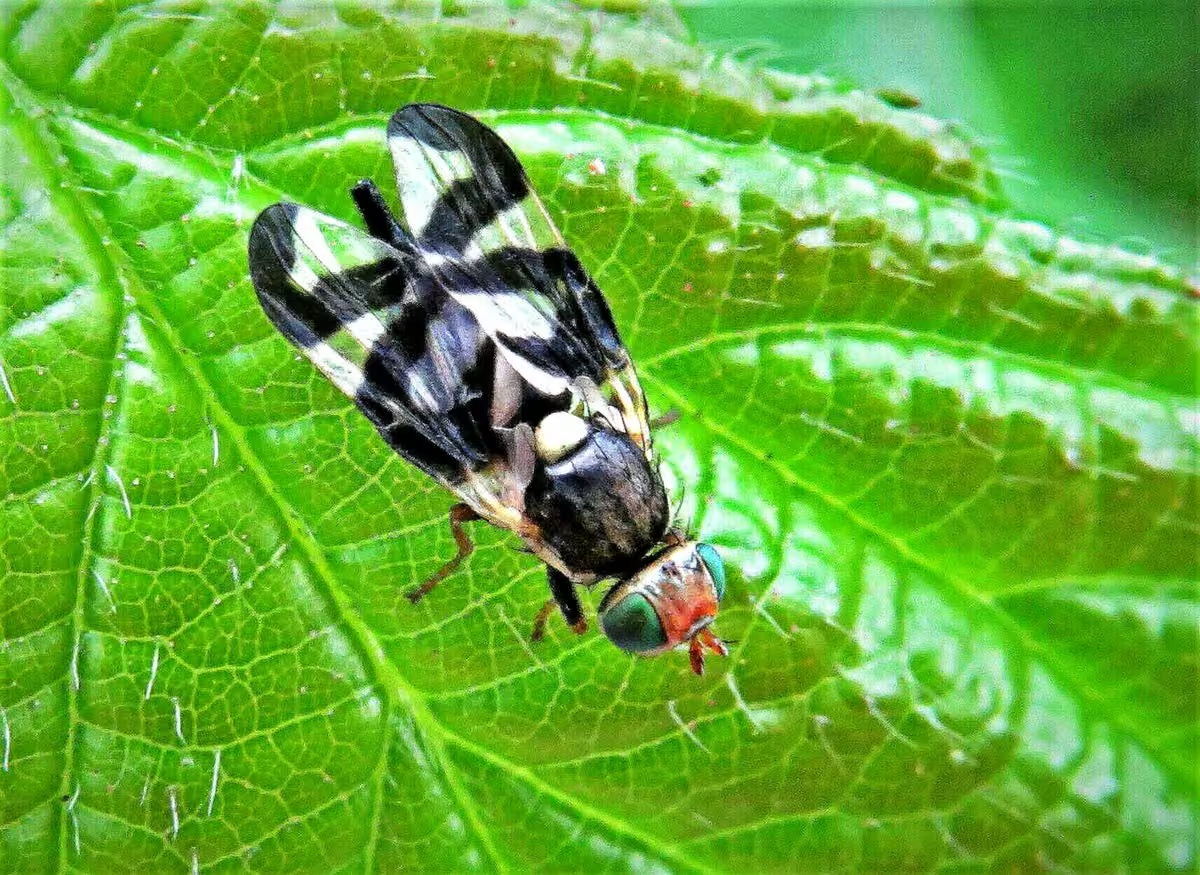
Gall of the week is cause by the tephritid 'picture-wing fly' Urophora cardui on thistles, Cirsium spp.
Male and female fly photos by Malcolm Storey, gall photo unknown. -
British Plant Galls
@britgalls
Gall of the week is caused by a gall midge, Rabdophaga rosaria, on Willows, Salix spp. It may be that each willow host species has its own species of this, but that is not certain.
Photo by Peter Shirley. -
British Plant Galls
@britgalls
Gall of the week is caused by a weevil, Rhinusa antirrhini on the seed pods of common toadflax, Linaria vulgaris.
Photographer unknown, image taken from the British Plant Gallery Society's website: britishplantgsllsociety.org. -
British Plant Galls
@britgalls
Gall of the week is temporarily suspended, for some reason I cannot access this site to make posts on my laptop, where all the images are stored, unless I switch to premium.
In the meantime it will continue to be posted on Bluesky (@galling.bsky.social. ) -
British Plant Galls
@britgalls
Gall of the week, maybe as prominent as last week's robin's pin cushion, is the tassel gall caused by a psyllid Livia junci on rushes, Juncus spp.
Photo by Tom Higginbottom. -
British Plant Galls
@britgalls
Gall of the week, a distinctive old favourite, is a robin's pin cushion, also called mossy rose gall and bedeguar gall, caused by the cynipid wasp Diplolepis rosae on roses.
Photographer unknown. -
British Plant Galls
@britgalls
Gall of the week, an unusual example of what seems to be the mite gall of Aceria pseudoplatanea on sycamore, Acer pseudoplatanus, in Scotland.
Photos by Steve Lewis. -
British Plant Galls
@britgalls
Gall of the week, is the oak apple, caused by the cynipid wasp Biorhiza pallida sexual generation.
A week late as May 29th was oak apple day, or shick-shack day. It marks the restoration of the Stuart monarchy in 1660, and was a public holiday until 1859.
Photographer unknown. -
British Plant Galls
@britgalls
Gall of the week is that of the gall mite Cecidophyopsis betulae on birches, Betulae spp.
Photos by Emma Woolley. -
British Plant Galls
@britgalls
Gall of the week is the distinctive one of the sexual generation of the cynipid wasp Andricus grossulariae on Turkey oak, Quercus cerris. Plenty of them about just now.
Photographer unknown. -
British Plant Galls
@britgalls
Gall of the week is caused by the fungus Protomyces macrosporus, an ascomycete, on many species of umbellifers, Apiaceae.
Photo from BPGS website, photographer unknown. -
British Plant Galls reposted
Prof Duncan Westbury
@DuncanWestbury
Here is the link: www.gardenorganic.org.uk/get-involved/campaigns/glyphosat…
Dave Goulson
@DaveGoulson
In December, the Govt will decide if it will renew the glyphosate licence until 2041…
•That’s 15 more years of impacts on worms, bees, soils and run-off into ponds and rivers, and glyphosate in your food. Sign Garden Organic’s petition NOW to ban this dangerous herbicide. -
British Plant Galls
@britgalls
Gall of the week, something a bit different. This is Chief Gall, right-hand man to Sitting Bull at the Battle of the Little Bighorn, and later a leading spokesman and judge for his people.
-
British Plant Galls
@britgalls
Gall of the week, currantly (ahem) hundreds being recorded on iNaturalist and iRecord, is the currant gall caused by the sexual generation of the cynipid wasp Neuroterus quercusbaccarum on oak, Quercus robur, in both of its typical positions.
Photos by Tom Higginbottom. -
British Plant Galls
@britgalls
Gall of the week, a bit of a challenge to find, is caused by the sawfly Euura mucronata on sallows, Salix spp. It may be a complex of species according to the host species, so maybe should be E. mucronata agg.
Photographer not known, image from the excellent BPGS website. -
British Plant Galls
@britgalls
Gall of the week is the bloodwood apple, found in Australia, caused by scale insects in the genus Cystococcus on bush coconut, Corymbia opaca. Both the gall and the larva inside are 'bush tucker' food apparently.
Photographer not known. -
British Plant Galls
@britgalls
Gall of the week, a cynipid wasp gall on roses in Canada. Details in the caption.
Photo by Peter Shirley. -
British Plant Galls
@britgalls
Gall of the week, this is a good time to find the rust fungus, Puccinia smyrnii, gall on Alexanders, Smyrnium olusatrum.
Photographer unknown. -
British Plant Galls
@britgalls
Gall of the week, one to find on a coastal visit, is caused by the mite Aceria hippophaena on sea buckthorn, Hippophae rhamnoides.
Photo by Steve McWilliam. -
British Plant Galls
@britgalls
Gall of the week is caused by a cynipid wasp, either Diplolepis nervosa (spiked pea gall) or D. eglanteriae (smooth pea gall). Without spikes they cannot be separated as D. nervosa can occur without them. They are now recorded on iRecord and iNaturalist as D. eglanteriae agg.
-
British Plant Galls
@britgalls
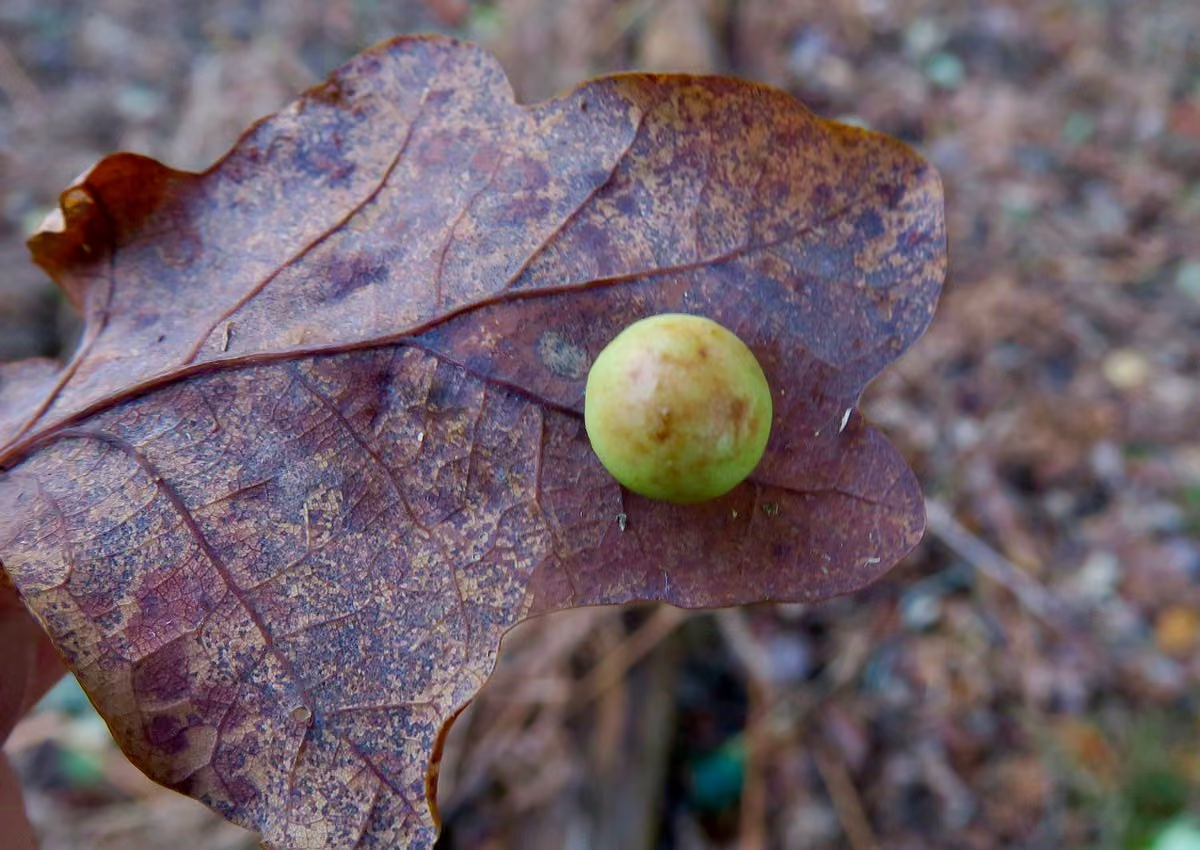
Galls of the week are marble galls of one or more species of cynipid wasp causing marble galls on oaks, Quercus spp. How many can you count with exit holes?
Origin of this photo unknown, if you do please let us know. -
British Plant Galls
@britgalls
Gall of the week, well galler, or to be precise cecidologist, of the week is Alfred Kinsey. Before becoming famous for his work on human sexuality in the 1940s, Kinsey was a leading authority on cynipid wasps, with many publications and a collection of over five million of them.
-
British Plant Galls
@britgalls
Gall of the week, an unusual one, is caused by a fungus on a fungus. It is Agamothyia wankowiczii on the bracket fungus Ganoderma applanatum.
Photo by Graham Calow. -
British Plant Galls
@britgalls
Gall of the week is caused by the cynipid wasp Pediaspis aceris on sycamores, Acer spp. A recent arrival in the UK.
Photo by Stephane Claerebout from bladmineerders.nl -
British Plant Galls
@britgalls
Gall of the week is that caused by the gall midge Rabdophaga salicis on willows, Salix spp.
Photo by Peter Shirley. -
British Plant Galls
@britgalls
Gall of the week is a recently discovered species new to Britain, the gall wasp Andricus coriarius f. agamic on oak, Quercus robur.
Discovered and photographed by Maria Fremlin. -
British Plant Galls
@britgalls
Gall of the week is caused by the cynipid wasp Andricus quercuscorticis f. agamic on oaks, Quercus spp.
Photos by Graham Callow. -
British Plant Galls
@britgalls
Gall of the week, with its causer, is that of the tephritid (picture wing) fly Urophora cardui on thistles Cirsium spp.
Brilliant photo of the insect by Malcolm Storey, gall photo unknown source. -
British Plant Galls
@britgalls
Gall of the week, with a bonus small copper butterfly, is caused by the midge Dasineura kiefferiana on rosebay willowherb, Chamerion angustifolium.
Photo by Mike Poulton. -
British Plant Galls
@britgalls
Gall of the week, can be found all year round, is caused by the gall midge Taxomyia taxi on yew, Taxus baccata. This is the second year gall, more often found than its smaller counterpart, the one year gall.
Photographer unknown. -
British Plant Galls
@britgalls
Gall of the week is that of the midge Contarinia nicolayi on hogweed, Heracleum sphondylium. With a name like that perhaps we should call it Santa's gall.
Photo by Peter Shirley
Thanks for following, best wishes and good galling in 2026. -
British Plant Galls
@britgalls
Gall of the week is one you may be bringing into your home this week. It is the gall of the aphid Sacciphantes viridis on Norway spruce, Picea abies.
Photographer unknown. -
British Plant Galls
@britgalls
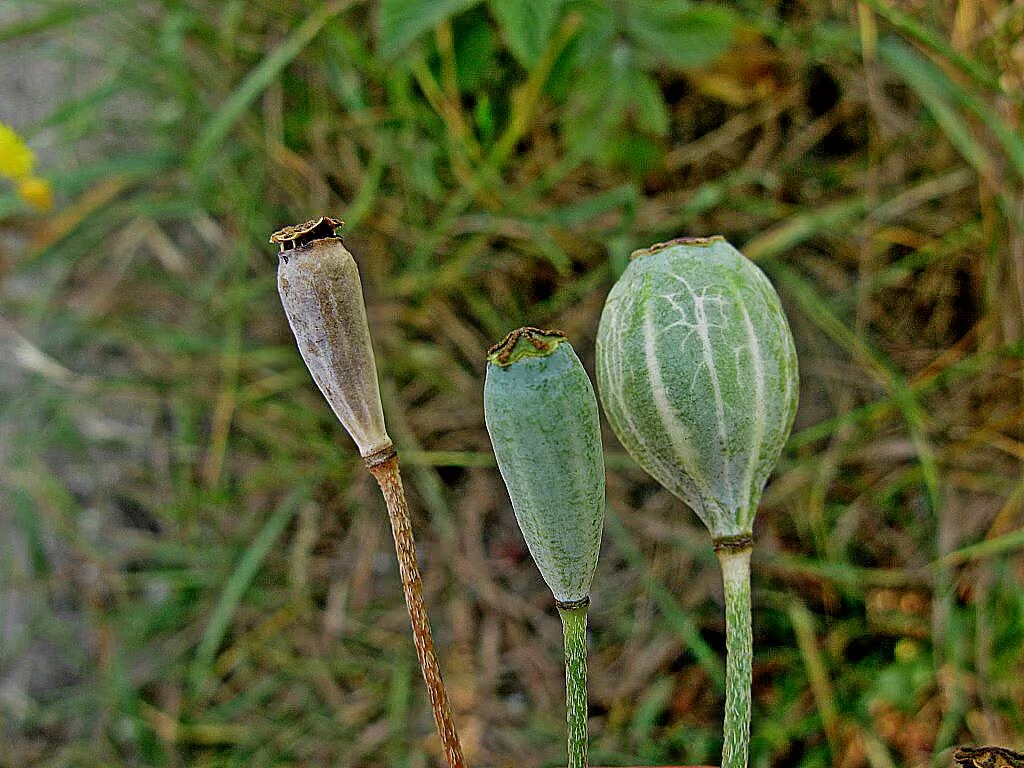
Gall of the week is that of the cynipid wasp Aylax papaver on poppies, Papaver spp. An ungalled seedhead is included.
Photo by Peter Shirley -
British Plant Galls
@britgalls
Gall of the week is caused by the cynipid wasp Cynips longiventris f. agamic on oaks, Quercus spp.
Photo by Peter Shirley -
British Plant Galls
@britgalls
Gall of the week is caused by the gall midge Iteomyia capreae on willows, Salix spp.
Photographer Peter Shirley. -
British Plant Galls
@britgalls
Gall of the week is that of the sawfly Blennocampa phyllocolpa on roses Rosa spp.
Photo by Tom Higginbottom on bladmineerders.nl -
British Plant Galls
@britgalls
Gall of the week is the nail gall of the mite Eriophyes tiliae on lime trees Tilia spp.
Photo by Mike Poulton. -
British Plant Galls
@britgalls
Gall of the week, usually found in leaf axil buds, is caused by the cynipid Andricus glandulae f. agamic. On oaks, Quercus spp.
Photo by Peter Shirley -
British Plant Galls
@britgalls
Gall of the week is that of the curiously two-chambered one of the cynipid wasp Cynips disticha f. agamic on oaks, Quercus spp.
Photos by Malcolm Storey. -
British Plant Galls
@britgalls
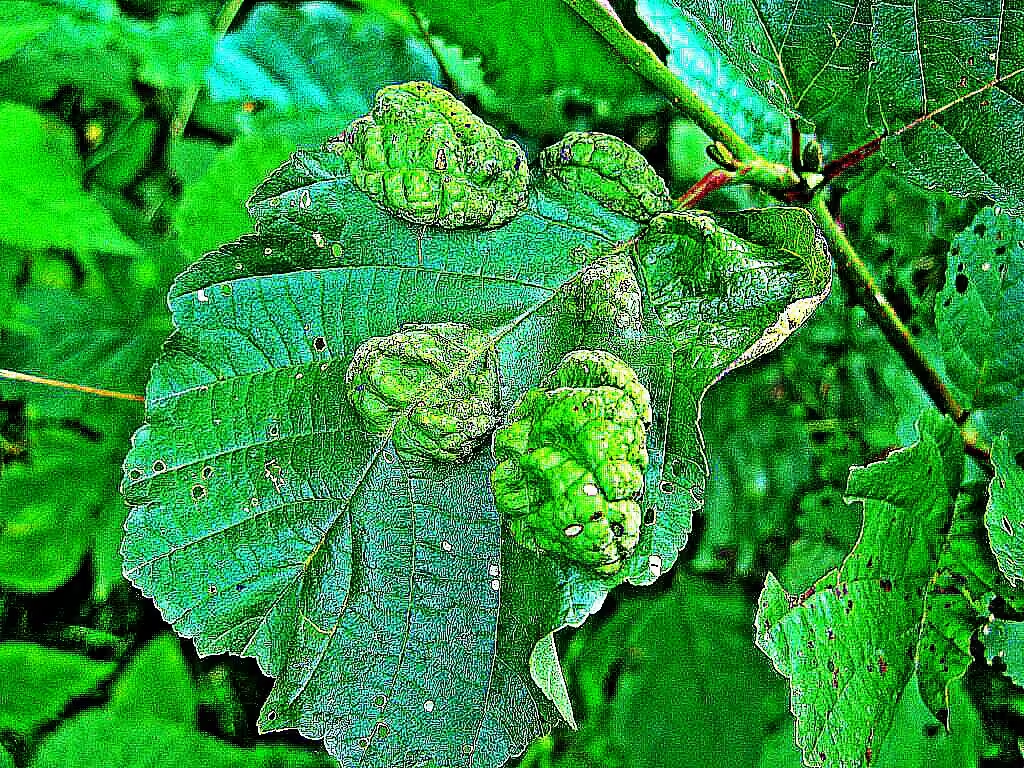
Gall of the week is caused by the fungus Taphrina tosquinetii on alder, Alnus glutinosa.
Photographer unknown. -
British Plant Galls
@britgalls
Still in Ohio, gall of the week is a leaf gall on white swamp oak, Quercus bicolor. Seems to be Neuroterus quercusverrucarum, the oak flake gall. Is this correct @gallformers?
Photo by Peter Shirley. -
British Plant Galls
@britgalls
Gall of the week: @britgalls is in Ohio USA, and came across this. Seems to be a rough oak bulletgall caused by the cynipid wasp Disholcaspis quercusmamma on swamp white oak, Quercus bicolor. Happy to be corrected.
Photo by Peter Shirley. -
British Plant Galls
@britgalls
Gall of the week is that of the cynipid wasp Aulacidea follioti on prickly sow thistle. Sonchus asper.
Photos by Jean-Yves Baugnee from Plant Parasites of Europe bladmineeders.nl -
British Plant Galls
@britgalls
Gall of the week is caused by a moth, Mompha sturnipennella on rosebay willowherb, Chamerion angustifolia.
Gall photo by Tom Higginbottom, causer photo unknown, taken from the British Plant Gall Society website: www.britishplantgallsociety.org -
British Plant Galls
@britgalls
Just discovered a rare newspaper article on a gall - that of Diplolepis rosae, robin's pin-cushion. It’s the Guardian's Country Diary today, by Kate Blincoe. Find it at theguardian.com
-
British Plant Galls
@britgalls
Gall of the week is caused by a gall midge, Dasineura hyperici on Hypericum spp. St. John's- Wort.
Photographer not known. -
British Plant Galls
@britgalls
Gall of the week is the little gem caused by the cynipid Neuroterus anthracinus f. agamic on oaks Quercus spp. For some strange reason known as the oyster gall.
Photographer unknown. -
British Plant Galls
@britgalls
Don't forget folks iNaturalist's Gall Week is coming up - it's from the 6th to 14th of this month.
-
British Plant Galls
@britgalls
Gall of the week, maybe gall of the year it seems to be super-abundant just now, is that of the cynipid wasp Neuroterus numismalis f. agamic on oaks Quercus spp.
Photo by Peter Shirley. -
British Plant Galls
@britgalls
Gall of the week is caused by the cynipid wasp Trigonaspis megaptera f. agamic on oaks Quercus spp.
Photo by Peter Shirley. -
British Plant Galls
@britgalls
Gall of the week, one that maybe needs a bit of searching for, is a caused by avgall midge, Asphondylia ononidis, on restharrow, Ononis repans.
Photos by Sue Timms. -
British Plant Galls
@britgalls
Gall of the week is that caused by the psyllid Hayhurstia atriplicis on oraches, Atriplex spp.
Photo by Roelef Jan Koops. -
British Plant Galls
@britgalls
Gall of the week is back after a technical issue. It is the fungal gall of Claviceps purpurea otherwise known as ergot, on many grasses and cereals. It is the cause of St. Anthony's fire mania if consumed in contaminated flour.
Photographer unknown. -
British Plant Galls
@britgalls
And the agamic generation galls of Neuroterus quercusbaccarum.
D M Wright
@Mayfieldbirder
Some more galls on one of our Oaks: silk button spangle gall (induced by the asexual generation of the Neuroterus numismalis gall wasp) together with the artichoke or hop gall (induced by the asexual generation of the gall wasp Andricus foecundatrix).
@britgalls -
British Plant Galls
@britgalls
Gall of the week, well two actually. A chimera with the cynipid galls of Andricus kollari/infectorius f. agamic agg and A. aries f. agamic growing in close proximity on oak Quercus spp.
Photographer unknown. -
British Plant Galls
@britgalls
Gall of the week is a fungal gall which at first sight might be taken for an invertebrate gall, although the there is a larger protuberance on the underside of the leaf. It is caused by Exobasidium vaccinii on cowberry, Vaccinium vitis-idaea.
Photo by Mike Poulton. -
British Plant Galls
@britgalls
Gall of the week is caused by the midge Jaapiella veronicae on speedwells, Veronica spp.
According to Skuhrava and Skuravy in 'The Gall Midges of Europe' this is the commonest gall midge in Europe.
Photographer unknown. -
British Plant Galls
@britgalls
Gall causer rather than gall of the week this time. A sexual generation female of the cynipid wasp Trigonaspis megaptera which causes galls on oak trees, Quercus spp.
Photo by Michael Chinery. -
British Plant Galls
@britgalls
Gall of the week is caused by the psyllid Trichochermes walkeri on buckthorn, Rhamnus carthatica. Once vacated by the causer the gall is often home to aphids.
Photo by Graham Calow. -
British Plant Galls
@britgalls
Gall of the week is I think that of the scale insect Pachypsylla celtisdismamma on hackberry, Celtis occidentalis, in North America.
Photo by Peter Shirley.
British Plant Galls
@britgalls
Correction this is a psyllid not a scale insect.
-
British Plant Galls
@britgalls
Gall of the week, one for our North American friends, is caused by the cynipid wasp Diplolepis triforma on the rose Rosa acicularis.
Photo from Sudbury Ontario by Peter Shirley. -
British Plant Galls
@britgalls
Gall of the week is caused by the weevil Rhinusa antirrhini on common toadflax, Linaria vulgaris.
Photographer unknown. -
British Plant Galls
@britgalls
Gall of the week, found in @britgalls garden this week, is the sexual generation currant gall of the cynipid wasp Neuroterus quercusbaccarum on oak Quercus sp.
Photo by Peter Shirley. -
British Plant Galls
@britgalls
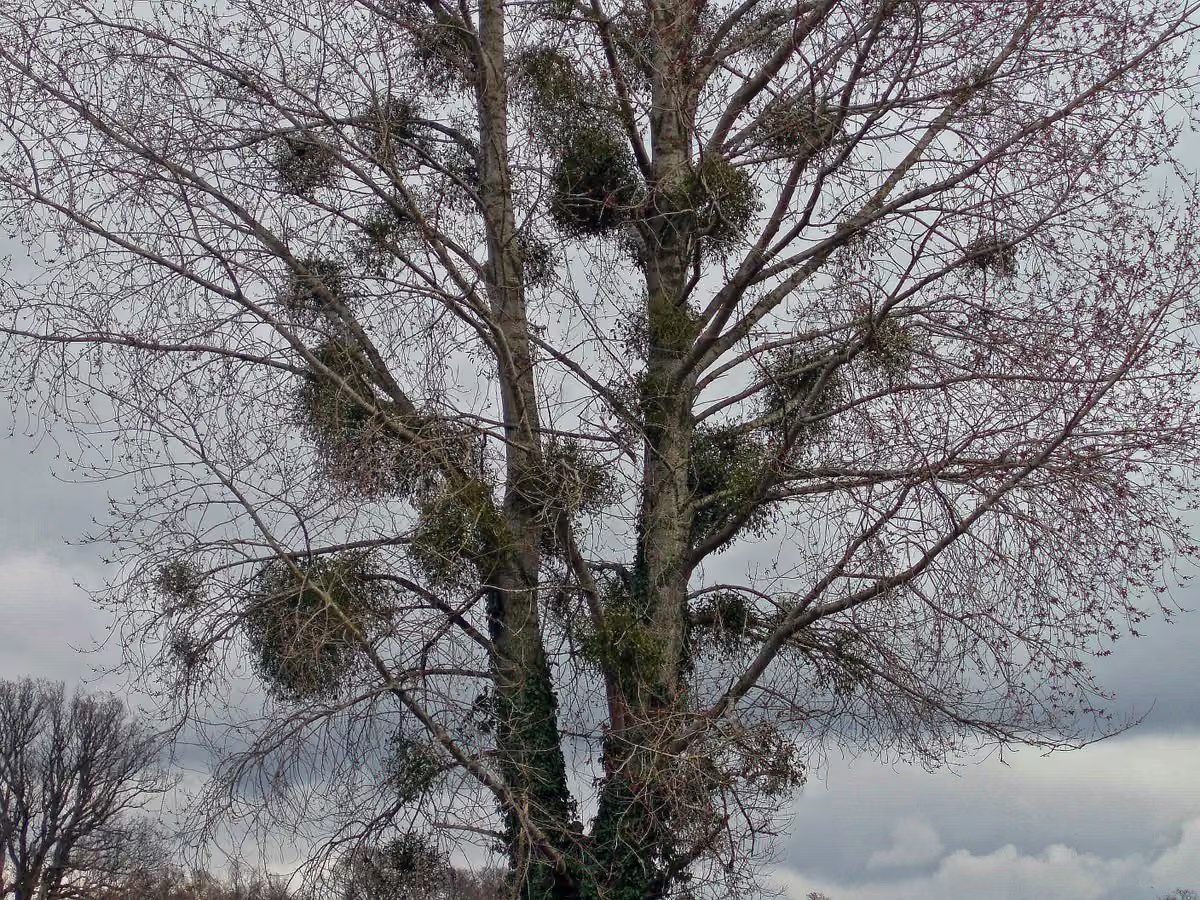
Gall of the week is unusual looking mistletoe, Viscum album. It's host tree has died so it has changed to autumn colours!
-
British Plant Galls
@britgalls
Gall of the week, easy to find now, is caused by the mite Phyllocoptes goniothorax on hawthorn, Crataegus monogyna.
Photo by Tom Higginbottom. -
British Plant Galls
@britgalls
Gall of the week is caused by the gall midge Putoniella pruni on Prunus spp. especially blackthorn P. spinosa.
Photographer unknown, please say if it is you. -
British Plant Galls
@britgalls
Gall of the week is caused by the psyllid Trioza flavipennis on ground elder, Aegopodium podagraria.
Photo by Roelef Jan Koops. -
British Plant Galls
@britgalls
Gall(s) of the week. These were collected duting a walk in South Africa many years ago, but britgalls has no idea what species the causers are, beyond likely mites and midges. Feel free to suggest candidates.
-
British Plant Galls
@britgalls
Gall(s) of the week. A photo taken many years ago of galls collected in South Africa. No idea what the species are that caused them, beyond probably mites and midges. Feel free to offer suggestions.
-
British Plant Galls
@britgalls
Gall of the week, coming to an oak tree near you soon, oak apples, caused by the cynipid wasp Biorhiza pallida. And a reminder that Oak Apple Day is May 29th.
Photograph by Mike Poulton. -
British Plant Galls
@britgalls
Gall of the week still, easy to spot before the leaves appear, is the cynipid caused gall of Andricus curvator agamic generation on oaks, Quercus spp.
Photo by Jenny Seawright. -
British Plant Galls
@britgalls
Gall of the week is caused by the Agromyzid fly Hexomyza simplicoides on various willows, Salix spp.
Photos by Volker Fasner and Jean-Yves Baugnee from Bladmineerders website. -
British Plant Galls
@britgalls
Gall of the week, appearing now, is caused by the fungus Uromyces ficariae on lesser celandine Ficaria vernus.
Photographer unknown. -
British Plant Galls
@britgalls
Gall of the week, the bloodwood apple, or bush coconut, is caused by scale insects in the genus Cystococcus on bloodwood eucalypts, Corymbia spp. in Australia. The galls, and their inhabitants, are edible and are on the bush tucker menu.
Photographer unknown. -
British Plant Galls
@britgalls
Gall of the week is caused by the gall midge Jaapiella veronicae on speedwells, Veronica spp. Photographer unknown.
Skuhrava and Skuhravy say that this is the most common gall midge in Europe. -
British Plant Galls
@britgalls
Gall of the week, spot it if you can, is caused by the sawfly Euura mucronata on willows. Salix spp. Photo by Roelef Jan Koops.
-
British Plant Galls
@britgalls
Gall of the week, soon be time to look out for the fungal gall of Urocystis violae on violets Viola spp.
Photo from the excellent bladmineerders.nl website, photographer Cor Zonneveld. -
British Plant Galls
@britgalls
Gall of the week is caused by the tortrid moth Cydia servillana on willows Salix spp.
Photos by Stewart Taylor. -
British Plant Galls
@britgalls
Gall of the week, one to spot in the winter, is that of the agamic generation of the cynipid Andricus inflator on oaks Quercus spp.
Photo by Paul Kitchener. -
British Plant Galls
@britgalls
Gall of the week is caused by the gall midge Dasineura irregularis on sycamore and maples Acer spp.
Photo by Roelef Jan Koops. -
British Plant Galls
@britgalls
Gall of the week is caused by the agamic generation of the cynipid wasp Aphelonyx cerricola, found mainly on Turkey oak, Quercus cerris, but on other closely related species as well. Sexual generation unknown.
Photo by Steve McWilliam. -
British Plant Galls
@britgalls
Gall of the week, something to warm you up: the fungus Gymnosporangium clavariiforme, tongues of fire, on Juniper, Juniperus spp.
Photo by Graham Calow -
British Plant Galls
@britgalls
Gall of the week is the leaf roll gall of the gall midge Dasineura kiefferiana on Chamerion angustifolium, rosebay willowherb. With a bonus butterfly (small copper).
Photo by Mike Poulton. -
British Plant Galls
@britgalls
The New Year gall of the week is caused by a scale insect on rushes, Juncus spp. It is the tassel gall of Livia junci.
Photo by Tom Higginbottom. -
British Plant Galls
@britgalls
Well, he did say it only weakened the host, which is a reasonable attitude I think. A few clumps on a large tree will not have a significant impact, but heavy infestation on smaller trees, such as heavily pruned fruit trees, might. Overall though not really a problem.
RareChat
@Sibe4me
I didn't think Mistletoe damaged its host plant in any way... contra what the 'Royal' garden manager told the Countryfile presenter last Sunday....It just sounded a bit of the widely held incorrect beliefs that belong in the past... So what is your take on it? 😁
-
British Plant Galls
@britgalls
Gall of the Christmas week, well, gall causer actually, what else but mistletoe.
Photos by Peter Shirley.
Merry Christmas and all that you wish for in 2025, as well as good galling of course.
Thanks for following. -
British Plant Galls
@britgalls
Gall of the week, in many people's homes at the moment, is the aphid caused gall of Sacciphanties abietis on Norway spruce, Picea abies. Once named Adelges abietis perhaps just for a couple of weeks we can call it Adelges fideles!
Photographer unknown. -
British Plant Galls
@britgalls
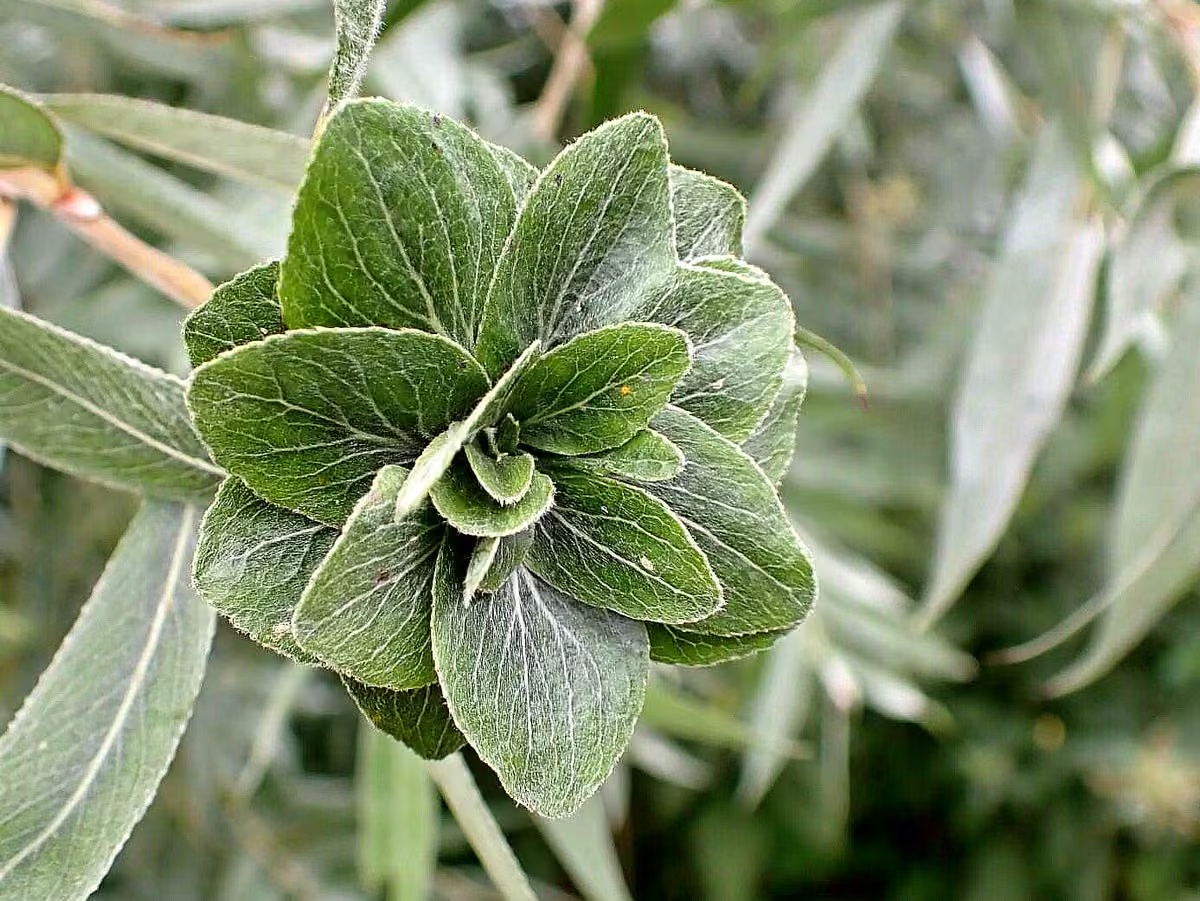
Gall of the week is the rosette gall caused by the gall midge Rabdophaga rosaria on willows Salix spp.
Photo by Peter Shirley -
British Plant Galls
@britgalls
Gall of the week is caused by the cynipid gall wasp Liposthenes glechomae on ground-ivy, Glechoma hederacea.
Photo by Roelef Jan Koops. -
British Plant Galls
@britgalls
Gall of the week, a fine group of the agamic generation gall of the cynipid wasp Andricus quercustozae on oak Quercus sp. Not yet found in Britain this is in France.
Photo by Howard Statham. -
British Plant Galls
@britgalls
Gall of the week is caused by the fungus Exobasidium vaccinii on cowberry, Vaccinium vitis-idaea. Known as cowberry redleaf.
Photos by Mike Poulton. -
British Plant Galls
@britgalls
Gall of the week, one of the biggest aggregations of marble galls I have ever seen. The rabbit guard is doing its job, and so was the female Andricus kollari gall wasp when she laid her eggs.
-
British Plant Galls
@britgalls
Gall of the week, well quite a lot of them actually, a ceremonial suit of Andricus spp. galls being worn at a carnival in Spain.
Featured in the Coventry Telegraph in February 2018. -
British Plant Galls
@britgalls
Gall of the week is caused by the cynipid wasp Diplolepis nodulosa on roses, Rosa spp. in North America.
Photo by Joe Shorthouse. -
British Plant Galls
@britgalls
The autumn edition of the twice yearly BPGS journal Cecidology has just been published. The UK's only publication dedicated to the subject, it is free to members of the Society, so can be yours if you join for just £10 per year. Details on the website britishplantgallsociety.org
-
British Plant Galls
@britgalls
Gall of the week, in what seems to be a good year for it, is that of the agamic generation of the cynipid wasp Neuroterus numismalis on oak, Quercus sp. An example of how many can be squeezed on to one leaf.
Photo Peter Shirley. -
British Plant Galls reposted
Scott P. Egan
@scottpegan
#a_day_in_the_life of a live oak (day 400): Larva of the oak gall borer, Synanthedon decipiens, feeding inside a gall induced by the cynipid wasp Callirhytis quercusbatatoides on the southern live oak, Quercus virginiana. #biodiversity #nature
-
British Plant Galls
@britgalls
Gall of the week, maybe in a garden near you, is that of the psyllid Trioza alacris on bay, Laurus nobilis. Photos by Laszlo Ersek from Willem Ellis's website Plant Parasites of Europe (bladmineerders.nl).
-
British Plant Galls reposted
Michelle Parsons
@Mich_Parsons
Let’s go! 🪰
-
British Plant Galls
@britgalls
Gall of the week is caused by the gall midge Dasineura ulmaria on meadowsweet, Filipendula ulmaria.
Photo by Roelef jan Koops. -
British Plant Galls
@britgalls
Continuing the cynipid theme, gall of the week is that of Cynips quercufolii agamic generation on oak, Quercus, in all its autumn glory.
Photographer not known, but, whoever you are, well done. -
British Plant Galls
@britgalls
Gall of the week is that of the sexual generation of the cynipid wasp Pediaspis aceris on sycamore, Acer pseudoplatanus. Agamic generation root galls have recently recorded in the UK, but not these. They are more usually yellowish-green suffused with red.
Photographer not known. -
British Plant Galls
@britgalls
Gall of the week is caused by the gall midge Asphondylia sarothamni on broom, Cytisus scoparius.
Photo by Peter Shirley. -
British Plant Galls
@britgalls
Gall of the week is caused by the moth Lampronia fuscatella on Birches, Betula spp.
Photographer unknown. -
British Plant Galls
@britgalls
Gall of the week is caused by the gall midge Rhopalomyia tanaceticola on Tansy, Tanacetum vulgare.
Pictures by Mike Poulton. -
British Plant Galls
@britgalls
Gall of the week is caused by the agamic generation of the cynipid wasp Plagiotrochus coriaceus, on holm oak, cork oak, and Turkey oak, Quercus ilex, Q. suber and Q. cerris. Males unknown in this species.
Photo by David Biggs. -
British Plant Galls
@britgalls
A gall causer makes an appearance on this week’s'Gardeners' World', it is the fuchsia gall mite Aculops fuchsiae. Well, it doesn’t exactly appear, but Monty Don goes into a lot of detail about it, and how to deal with it using commercially available predatory mites.
-
British Plant Galls
@britgalls
Gall f the week is that caused by an Anthomyid fly, Chirosia betuleti on lady fern, Athyrium filix-femina. Also found on other ferns in the genus Dryopteris.
Photo by Mike Poulton. -
British Plant Galls
@britgalls
Gall of the week, the sexual generation gall of the cynipid Pediaspis aceris on sycamore Acer pseudoplatanus. The agamic generation root gall has been seen in Britain, so this is one to look out for.
Photo by Jean-Yves Baugnee on bladmineerders.nl
Plant Parasites of Europe -
British Plant Galls
@britgalls
Gall of the week is a tephritid (Diptera) gall in an Asteraceae host in Ohio USA. Feel free to offer an identification if you can.
Photo Peter Shirley. -
British Plant Galls
@britgalls
Gall of the week is caused by the Chloropid fly Lipara rufitarsus on common reed Phragmites australis. Smaller and less common than its cousin L. lucens.
Photographer unknown. -
British Plant Galls
@britgalls
Gall of the week, a sectioned multi-chambered Rabdophaga salicis (gall midge) gall on willow, Salix sp.
Photo by Peter Shirley. -
British Plant Galls
@britgalls
Gall of the week is caused by the aphid Cryptomyzus ribis on red currant, Ribes rubrum.
Photo by Michael Chinery. -
British Plant Galls
@britgalls
Gall of the week is probably that of an eriophyid mite on milkwood, Sideroxylon spp. in Cape Province South Africa. If you know what it is please let us know.
Photo by Peter Shirley. -
British Plant Galls
@britgalls
Gall of the week is caused by the tephretid fly Eurosta solidaginis on goldenrod Canadensis spp. in the USA and Canada (this one in Ohio).
Photo by Peter Shirley. -
British Plant Galls
@britgalls
Or even lend…..
-
British Plant Galls
@britgalls
Gall of the week is that of the cynipid wasp Andricus callidoma, sexual generation, on the catkins of oaks Quercus spp.
Photo by Graham Calow. -
British Plant Galls
@britgalls
Gall of the week is caused by the gall midge Dasineura hygrophila on cleavers, or goose-grasses, Galium ssp.
Or is it? There is some doubt about separating this species from Dasineura gallicola without further study of their morphology, DNA and host species. -
British Plant Galls
@britgalls
Sorry folks, the host is Juncus not Juglans.
British Plant Galls
@britgalls
Gall of the week is the spectacular tassel gall of the true bug Livia junci on rushes, Juglans spp.
Photographer not known. -
British Plant Galls
@britgalls
Of course it is, thanks to you and apologies to everyone.
Louis P
@Sibthorpia
Think you mean Juncus ssp. as Juglans is Walnut.
-
British Plant Galls reposted
Louis P
@Sibthorpia
Think you mean Juncus ssp. as Juglans is Walnut.
-
British Plant Galls
@britgalls
Gall of the week is the spectacular tassel gall of the true bug Livia junci on rushes, Juglans spp.
Photographer not known. -
British Plant Galls
@britgalls
Gall of the week is caused by the gall midge Dasineura hyperici on St John's-worts Hypericum spp.
Photographer not known. -
British Plant Galls
@britgalls
Why do people keep posting stuff like this with no context. I have no clue who this is, where it was or what it is about.
KoH
@pinguforest
How to lose the room and influence people.
This media couldn't be displayed. See it on the original post. -
British Plant Galls
@britgalls
Gall of the week, a superb photograph by Roelef Jan Koops of the gall caused by the gall midge Macrolabis brunellae on self-heal, Prunella vulgaris.
-
British Plant Galls
@britgalls
So why do they not mow or cut 'invasive aliens'? What is the logic?
PembrokeshireCC
@Pembrokeshire
Good Morning
Please see the link below which should help to answer your questions:
www.pembrokeshire.gov.uk/road-maintenance/highway-verge-m… -
British Plant Galls
@britgalls
Gall of the week is a fine crop of galls caused by the gall midge Mikiola fagi on beech, Fagus sylvatica.
Photo taken near Heidelburg by Peter Shirley, -
British Plant Galls
@britgalls
Gall of the week is the apparently rare fungus gall Microbotryum saponariae on the anthers of Soapwort Saponaria officinalis.
Photo by Roelef Jan Koops. -
British Plant Galls
@britgalls
Nature has no intentions, it is entirely random.
Ayesha Awan
@AyshahAwan
Animals are indeed more ancient, more complex, and in many ways more sophisticated than man. In terms of Nature they are truly more perfect because they remain within the ordered scheme of Nature and live as Nature intended.
8/9 -
British Plant Galls
@britgalls
Doubt if it would be allowed now, making fun of somebody's physical and mental infirmity.
-
British Plant Galls
@britgalls
That's interesting Adrian, the bluebells are more or less over in the West Midlands and we are much further north.
Dr Adrian Colston
@Dartmoor_AC
Glorious afternoon on Dartmoor today - bluebells are coming at Challacombe - next weekend should be peak blue!
-
British Plant Galls
@britgalls
Ah, an advert post intervened, and Calgary misled me, is this the Saudi Arabian project?
Calgary Urban Species Response Team (CUSRT)
@CalgaryResponse
Just imagine the number of birds that will strike this. What of any other wildlife? @BBCWorld @BBCScienceNews
youtu.be/0kz5vEqdaSc -
British Plant Galls
@britgalls
Can't really work out what is going on, can we have some context please?
Calgary Urban Species Response Team (CUSRT)
@CalgaryResponse
Just imagine the number of birds that will strike this. What of any other wildlife? @BBCWorld @BBCScienceNews
youtu.be/0kz5vEqdaSc -
British Plant Galls
@britgalls
Gall of the week is that of the mite Aceria tenella on hornbeam Carpinus betulus. Can be looked for now.
Photo by Graham Calow.
A reminder that not all galls are spectacular and colourful! -
British Plant Galls
@britgalls
Gall of the week, discovered in the British Plant Gall Society's excellent journal Cecidology, is St. Gall, an Irish monk 550 - 645.
Photo from Wikipedia by Andreas Praefcke -
British Plant Galls
@britgalls
Gall of the week, a first record for the UK, is the agamic generation gall of Pediaspis aceris on sycamore, Acer psdeudoplatanus, in Cornwall. The sexual generation causes berry-like galls on leaves.
Found and photographed by Peter Floyd-Spong. -
British Plant Galls reposted
Gallformers.org
@gallformers
Today is the first day of April Gall Week 2024! For the rest of the week and the following weekend, we are encouraging everyone to get out there and find as many galls as you can and report them on iNat as part of the project: www.inaturalist.org/projects/gall-week-april-2024-event
-
British Plant Galls
@britgalls
Gall of the week is a sectioned Diplolepis rosae showing a larva in one of the cells. Properly known as the bedeguar gall, not the mossy rose gall, found on roses, Rosa spp.
Photo by Joe Shorthouse. -
British Plant Galls
@britgalls
Now named Rabdophaga rigidae, thanks for the correction @gallformers
British Plant Galls
@britgalls
Gall of the week, found in North America, is that of Mayetiola rigidae (willow beaked-gall midge) on willow , Salix spp.
Photo by Peter Shirley -
British Plant Galls
@britgalls
Gall of the week, found in North America, is that of Mayetiola rigidae (willow beaked-gall midge) on willow , Salix spp.
Photo by Peter Shirley -
British Plant Galls
@britgalls
Gall of the week, complete with spectacular causer, is that of the tephretid fly Urophora cardui on various thistles, Cirsium spp.
Gall photo not known, fly photo by Malcolm Storey. -
British Plant Galls
@britgalls
Gall of the week, the cottonwool gall of cynipid wasp Andricus quercusramuli, sexual generation, on oak, Quercus petraea.
Photographer not known. -
British Plant Galls
@britgalls
Gall of the week, together with its cynipid causer, is Andricus sieboldi agamic generation. Found, usually low down, on oaks Quercus spp.
Photos by Ann Smith. -
British Plant Galls
@britgalls
Looking for something on Youtube I was diverted to search for plant galls and discovered a potential treasure trove of dozens of items. I stopped counting at 50, mostly just a few minutes long, but one was three hours. Worth a look.
-
British Plant Galls
@britgalls
It's an acrostic verse.
-
British Plant Galls
@britgalls
Tryng? Think they already have.
Iolo Williams
@IoloWilliams2
Voters, remember this!!!! 🤬🤬
-
British Plant Galls
@britgalls
Gall of the week, a return visit, is caused by the gall midge Ametrodiplosis thalictricola on meadow-rues, Thalictrum spp.
Photo by David Gould. -
British Plant Galls
@britgalls
Gall of the week. What's in some galls? An inner gall, and here's one in the open. It's that of the cynipid wasp Andricus foecundatrix f. agamic on oak Quercus spp.
Photo by Julia Saunders. -
British Plant Galls
@britgalls
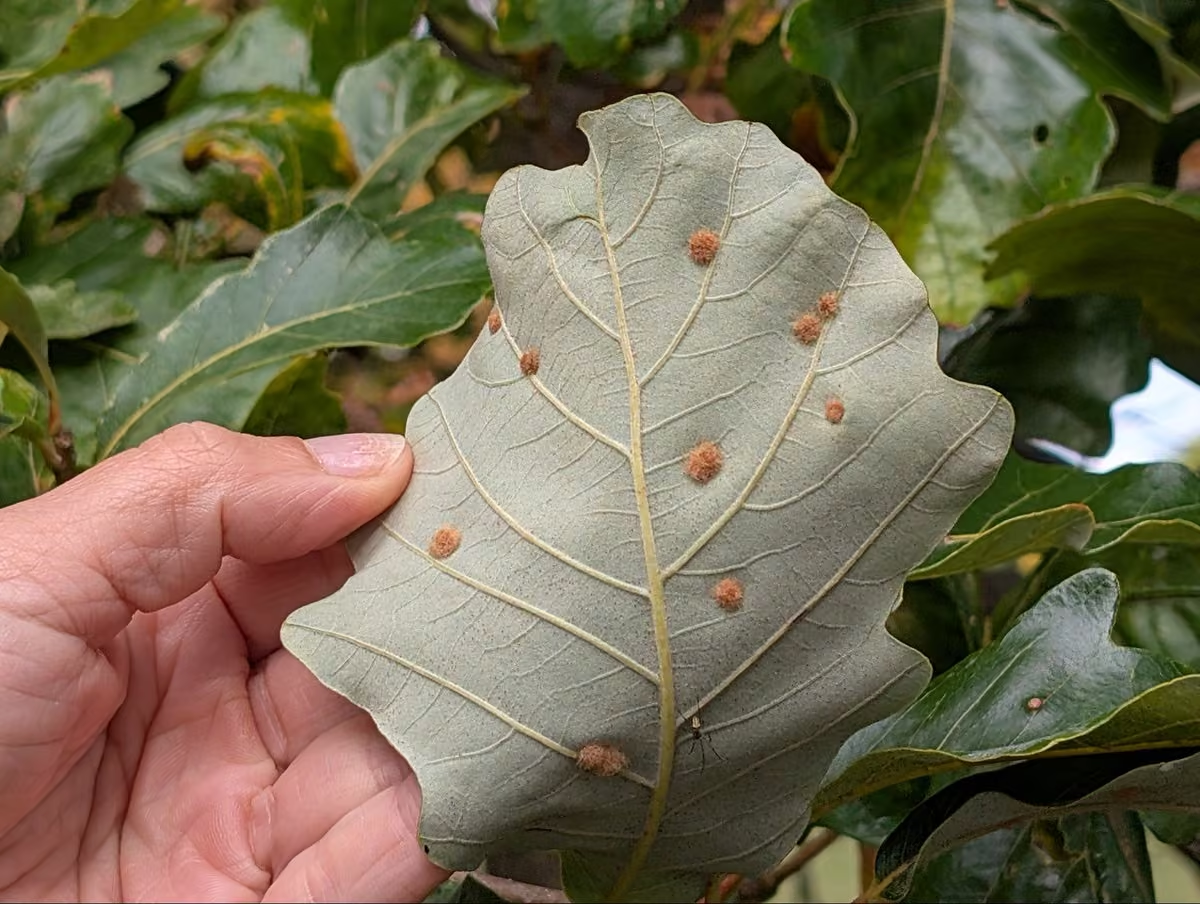
Gall of the week, a chalcid wasp gall caused by Hemadis nubillipennis (pteromalid) gall on blueberry., Vaccinium sp. Sudbury Ontario, photo by Peter Shirley.
-
British Plant Galls
@britgalls
Gall of the week, appearing soon in a wood near you, is the fungal gall of Puccinia poarum on colts-foot, Tussilago farfara.
Photo by Roelef Jan Koops. -
British Plant Galls
@britgalls
Gall of the week, do you know the causer? On oak, Quercus sp. in Sarasota Florida, so probably a cynipid. It had a busy time, with several different sized parasitoids or inquilines successfully emerging, and the causer developing in the central chamber.
Photo by Peter Shirley -
British Plant Galls
@britgalls
Gall of the week is caused by the gall midge Oligotrophus juniperinus on Junipers, Juniperus spp. Photo by Roelef Jan Koops.
-
British Plant Galls
@britgalls
Gall of the week is caused by the cynipid wasp Aphelonyx cerricola agamic generation on Turkey oak, Quercus cerris. Photo by Steve McWilliam.
-
British Plant Galls
@britgalls
Gall of the week is that of the cynipid Andricus grossulariae, agamic generation, on oaks Quercus spp. Photo by Maria Fremlin.
-
British Plant Galls
@britgalls
Gall of the week from a freezing Britain is this frost encrusted marble gall caused by the cynipid wasp Andricus kollari agamic generation.
Photo by Peter Shirley. -
British Plant Galls
@britgalls
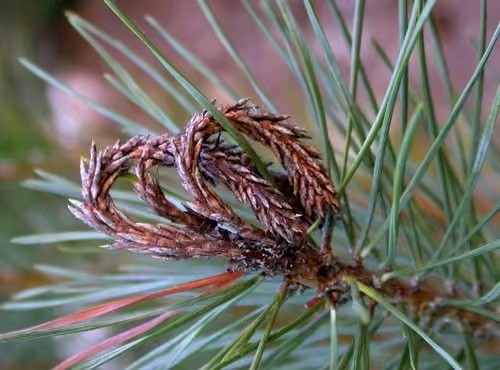
Gall of the week (maybe) is caused by the tortrid moth Rhyacionia buoliana on pines, Pinus spp. Some doubt as to whether or not it is a true gall, but its compatriot R. resinella does cause a gall.
Photo by Jean-Yves Baugnee from the excellent Bladmineerders website. -
British Plant Galls reposted
Iolo Williams
@IoloWilliams2
If Carlsberg did flowers…..
Little Green Space 🦋
@LGSpace
Can we have a big shout-out for dandelions? These wildflowers will be back in just a few weeks - offering a vital early food source for pollinators including bees & butterflies, and supporting over 50 insect species. RT if you’re going to let them grow 🐝
-
British Plant Galls
@britgalls
It's a common phenomenon caused by various micro-organisms such as viruses and fungi on a wide variety of deciduous trees.
Matthew Rogers
@mattrogers70
Fascinating - not seen this before! What do you make of it @britgalls ? 🤔
-
British Plant Galls
@britgalls
So, would all you clever clogs like to reveal what it is please?
Mark Andrews
@BeidaiheBirder
Quite possibly garden bird of the year…already.
Per Fb -
British Plant Galls
@britgalls
Gall of the week is caused by the gall midge Rabdophaga salicis on willows Salix spp.
Photo by Peter Shirley
Happy new year everyone. -
British Plant Galls
@britgalls
Gall of the week - a collection of old galls of the cynipid Andricus aries, agamic generation on oak, Quercus spp. Some have lost their inhabitants, all have lost, or never had, their horns.
Photographer unknown, if it's you please let us know.
Have a good galling new year. -
British Plant Galls
@britgalls
Gall of the week, what else could it be this week other than mistletoe? This in Brittany.
Photo by Peter Shirley.
Merry Christmas, fun festivities, and good galling in 2024. -
British Plant Galls
@britgalls
Gall of the week, this looks festive. Galls of the cynipid wasp Diplolepis mayri on rose, Rosa spp.
Photo by Tom Higginbottom. -
British Plant Galls reposted
Richard Lewington
@rlewington2
Out today. Hopefully it will be well received, masses of new information - up by 112 pages to 528
-
British Plant Galls
@britgalls
Gall of the week - will one of these be on your Christmas tree? It is caused by the aphid Sacciphantes abietis on spruce trees, Picea spp.
Photo by Roelef Jan Koops -
British Plant Galls reposted
British Plant Galls
@britgalls
Gall of the week is caused by the cynipid wasp Diplolepis triforma on roses, Rosa spp. in Canada.
Photo by Peter Shirley. -
British Plant Galls
@britgalls
Gall of the week is caused by the cynipid wasp Diplolepis triforma on roses, Rosa spp. in Canada.
Photo by Peter Shirley. -
British Plant Galls
@britgalls
Gall of the week is caused by Dasineura hygrophila (or perhaps D. gallicola, there is some confusion) on Galium spp.).
Photo by Roelef Jan Koops. -
British Plant Galls
@britgalls
The galls are actually in buds.
-
British Plant Galls
@britgalls
Gall of the week, what else could I choose?
Scott P. Egan
@scottpegan
Dear World - We present to you the gall shoes. Created by @RiceUniversity undergrad @omnivorous_egg ! That’s right - shoes covered by plant tumors induced by insects! #sciart #art #artoftheday #gallshoes
-
British Plant Galls
@britgalls
Gall of the week is an unusual view of an old oak apple caused by the cynipid wasp Biorhiza pallida on oak, Quercus sp.
Photographer unknown. -
British Plant Galls
@britgalls
Gall of the week, an old favourite, caused by the fly Urophora cardui on thistles Cirsium spp.
Gall photo by Peter Shirley, fly photo by Ian Andrew. -
British Plant Galls
@britgalls
Autumnwatch being canned by the BBC Chris Packham and Megan McCubbin are doing there own version on Youtube called 8 out of 10 Bats. Episode five has a few minutes chat about galls. It's about 35 minutes in (and not very well informed).
-
British Plant Galls
@britgalls
Gall of the week is caused by the gall midge Ametrodiplosis thalictricola on meadow-rues, Thalictrum spp.
Photo by David Gould -
British Plant Galls
@britgalls
Just catching up with the October edition of British Wildlife magazine. It includes the always worth reading annual review of plant galls by Margaret Redfern.
-
British Plant Galls
@britgalls
Help please, I'm looking for the Andy Musgrave who asked about sawfly records about a week ago. If you see this Andy please reply, I have some information.
-
British Plant Galls
@britgalls
Gall of the week is caused by the gall midge Wachtliella persicariae on amphibious bistort Polygonum amphibium (= Persicaria amphibia).
Photo by Roelef Jan Koops. -
British Plant Galls
@britgalls
Gall of the week is caused by the gall midge Rhopalomyia tanaceticola on Tansy, Tanacetum vulgare.
Photos by Mike Poulton. -
British Plant Galls
@britgalls
Gall of the week is caused by the cynipid wasp Trigonaspis megaptera, agamic generation, on oaks, Quercus spp.
Photos by Thomas Curculio. -
British Plant Galls
@britgalls
Gall of the week is caused by the pteromalid wasp Trichilogaster acacialongifoliae on long-leaved wattle, Acacia longifolia. Photographed in Portugal by Helia Marchante.
-
British Plant Galls
@britgalls
Gall of the week is caused by the cynipid wasp Cynips quercusfolii agamic generation on oaks, Quercus spp. Known as the cherry gall it often remains on the leaf when it falls. Seems to be a very good year for it.
Photo by Peter Shirley. -
British Plant Galls
@britgalls
Gall of the week, an interesting collection of rose pea galls on Rosa spp. Causer a cynipid wasp, either Diplolepis nervosa or D. eglanteriae.
Photo by Peter Shirley. -
British Plant Galls
@britgalls
Gall of the week is that caused by the agamic generation of the cynipid wasp Andricus quercustozae on oaks, Quercus spp.
Photo by Howard Statham -
British Plant Galls
@britgalls
Well, for a start 'everybody' is not on strike. You did ask.
Reece Dinsdale
@reece_dinsdale
Show me the bit where she’s wrong.
I’ll wait. -
British Plant Galls
@britgalls
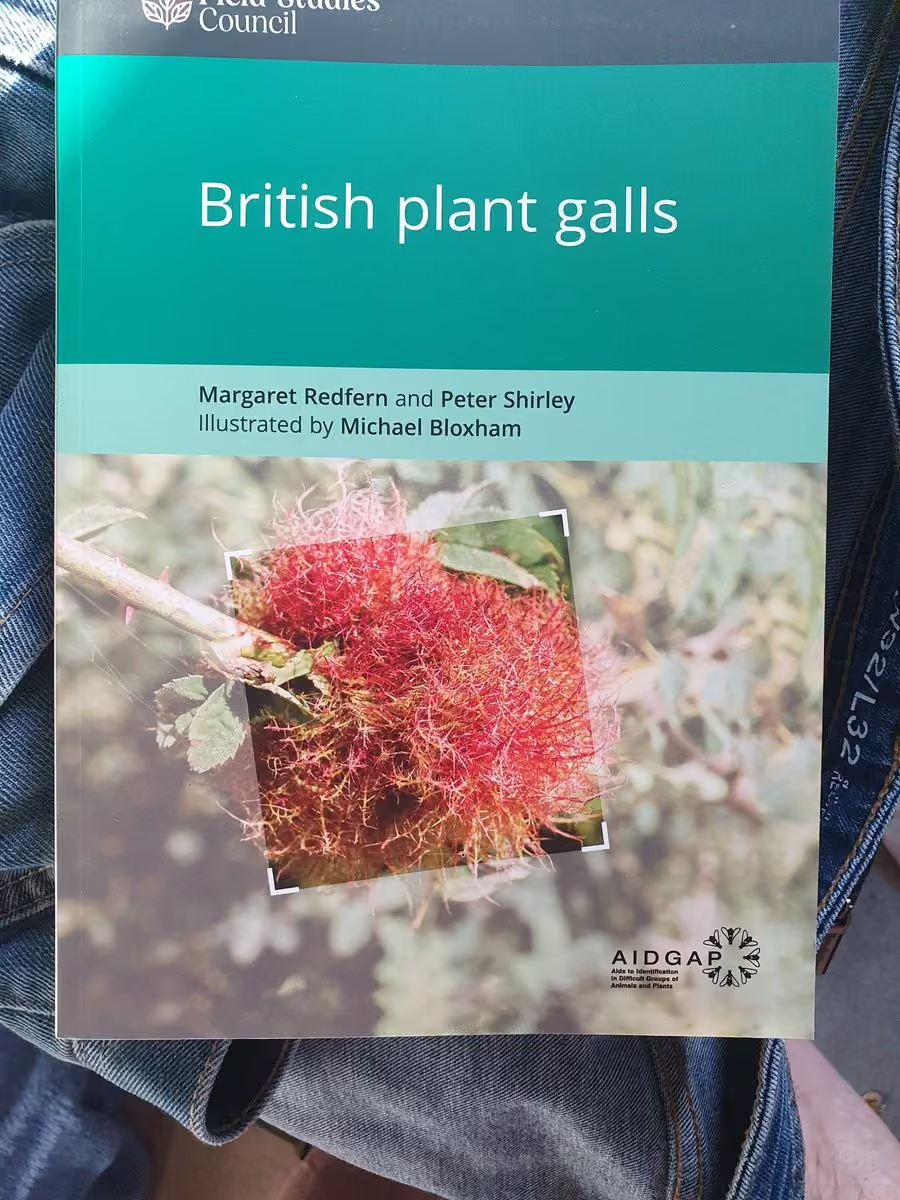
The new gall keys were published earlier this year by Field Studies Council. On Saturday 2 Sep. the three authors will be signing copies at about noon at Staffordshire Wildlife Trust's HQ, Wolsey Centre near Rugeley.
-
British Plant Galls
@britgalls
Gall of the week is caused by the gall midge Jaapiella veronicae on Veronica chamaedrys, germander speedwell. According to Skuhrave and Skuhravy this is the most common gall midge in Europe.
Photo by Roelef Jan Koops. -
British Plant Galls
@britgalls
Gall of the week is caused by the fungus Taphrina tosquinetii on alder, Alnus glutinosa.
Photo by Roelef Jan Koops. -
British Plant Galls
@britgalls
Gall of the week, complete with the causers' empty pupal cases, is that of the gall midge Asphodylia melanopus on Lotus corniculatus.
Photographed this week by Jerry Bowdrey. -
British Plant Galls
@britgalls
The ambrosia of the Aztecs?
Lina López C
@LinaLpzc
For breakfast tomorrow 🧀🍄
-
British Plant Galls
@britgalls
NB?
David Hunter
@dvrh9
Usual pandemonium outside the NB this evening, blocking the buses...will @PoliceScotland ever show any interest??
-
British Plant Galls
@britgalls
And vegans are immortal?
-
British Plant Galls
@britgalls
Gall of the week is caused by the gall midge Mikiola fagi on beech, Fagus sylvatica.
Photo by Peter Shirley -
British Plant Galls reposted
Bog-trotter
@4peatssake2
I still use my 2002 edition but there is a more up to date version, see:
www.field-studies-council.org/shop/publications/plant-gal… -
British Plant Galls
@britgalls
Gall of the week is caused by another cynipid, Callirhytis erythrocephala in a stunted Turkey oak, Quercus cerris, acorn. Photo by Jerry Bowdrey.
-
British Plant Galls
@britgalls
Gall of the week is caused by the cynipid wasp Liposthenes glechomae on ground ivy Glechoma hederacea.
Photo by Graham Calow. -
British Plant Galls
@britgalls
Gall of the week is caused by the gall midge Contarinia acerplicans on field maple Acer campestre and sycamore A. pseudoplatanus.
Photo by Sara Patton. -
British Plant Galls
@britgalls
Gall of the week is a Mayetiola sp. on barren brome, Anisantha sterilis. There are many different Mayetiola gall causers on various grasses.
Photo by Robert Maidstone. -
British Plant Galls
@britgalls
Gall of the week - it's the first week of the Tour de France, and the current wearer of the king of the mountains polka dot jersey is Felix Gall.
Photo by Nicola from Wikimedia commons. -
British Plant Galls
@britgalls
Gall of the week is caused by the sawfly Blennocampa phyllocolpa on roses, Rosa spp.
Photo by Tom Higginbottom. -
British Plant Galls
@britgalls
Gall of the week is caused by the fungus Taphrina alni on the cones of alder Alnus glutinosa.
Photo by Roelef Jan Koops. -
British Plant Galls
@britgalls
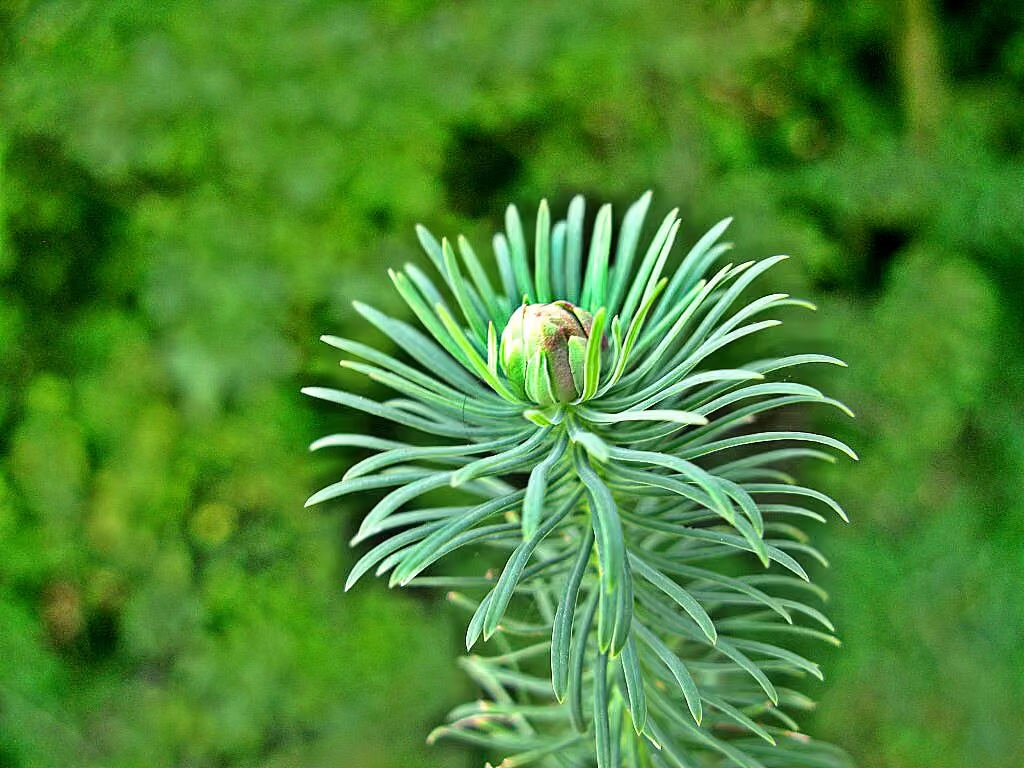
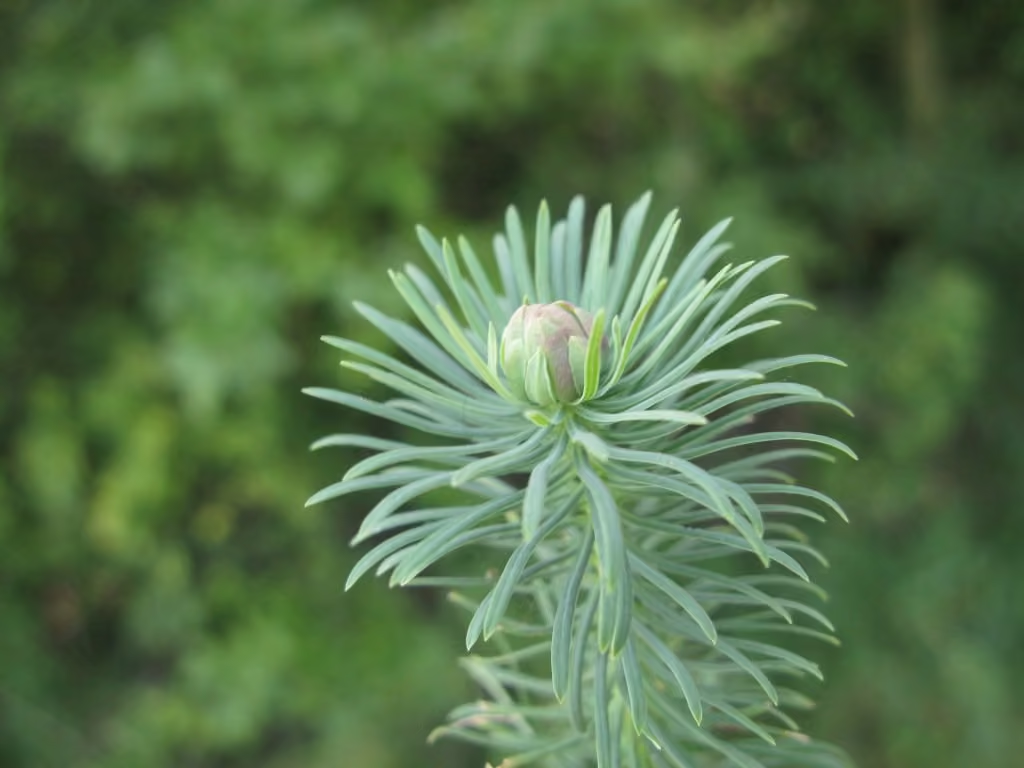
Gall of the week is an artichoke gall caused by the gall midge Spurgia euphorbiae on cypress spurge, Euphorbia cyparissias.
Photographer unknown, if it is you please let us know. -
British Plant Galls
@britgalls
So, who came up with the name of willow redgall sawfly, and with what authority? Have they named all the other Euuras? Euura proxima is shorter and easier to remember.
-
British Plant Galls
@britgalls
Gall of the week is caused by the gall midge
Iteomyia major on willow, Salix sp. Photographer unknown. -
British Plant Galls
@britgalls
Gall of the week, for a change a gall causer of the week, the tephretid fly Urophora cardui, photo by Ian Newman.
And a photo of the gall on thistle Cirsium spp. photo by Dave Cadman. -
British Plant Galls
@britgalls
Gall of the week, suggestions please as to identification. It's on milkwood, Sideroxylon sp., at Scotia South Africa.
Photo by Peter Shirley. -
British Plant Galls
@britgalls
Gall of the week is caused by the cynipid wasp Pseudoneuroterus saliens, sexual generation, on Turkey oak, Quercus cerris. It forms on incipient acorns, so can be found now.
Photo by Maria Fremlin. -
British Plant Galls
@britgalls
Yes indeed
-
British Plant Galls
@britgalls
Gall of the week, appearing anytime soon, is that of the gall midge Putoniella pruni on Prunus spp. usually blackthorn, P. spinosa. Photo by Graham Calow.
-
British Plant Galls
@britgalls
Want to be up-to-date with the latest cecidological news? Join the British Plant Galls Society to receive Cecidology twice a year. The only journal in Britain dedicated to plant galls. Back numbers three years old and older on the website.
-
British Plant Galls
@britgalls
Gall of the week is a fungal gall on Moschatel caused by Puccinia albescens. Photo by Kathryn Killner.
Moschatel is sometimes called 'the town hall clock', so I guess these galls are the corporations' watches! -
British Plant Galls reposted
Ken White
@KageyWhite
@ScotWildlife
@swseic
@Britnatureguide
@Bertolicus
@britgalls
@RSPB_Wokingham
If you go down to the woods today......
Cynipidae galls growing on the same oak tree near Newton Stewart
No dots on the NBN Atlas for miles & miles -
British Plant Galls
@britgalls
Gall of the week - I thought I posted this on Wednesday but apparently not, maybe Elon Musk doesn't like galls, so here it is again.
The gall is caused by the aphid Dysaphis crataegi group on hawthorn Crataegus monogyna. Photo taken this week by Nigel Lee. -
British Plant Galls
@britgalls
Gall of the week is caused on currants, Ribes spp. by the aphid Cryptomyzus ribis. Photo by Michael Chinery
-
British Plant Galls
@britgalls
Gall of the week is caused by the fungus Melampsora populnea on dog's mercury, Merculiaris perennis. About now but can be challenging to spot.
-
British Plant Galls reposted
Stephen Middleton
@stephenmid
A new key to our fascinating @britgalls by @FieldStudiesC has arrived. A welcome addition to my library.
-
British Plant Galls
@britgalls
Gall of the week, this was recently posted by Stephen Middleton on the British Plant Galls Facebook site. Galls of the agamic generation of Andricus corruptrix, with an A. aries on the side (literally so in this case.) Host Quercus sp.
-
British Plant Galls
@britgalls
Thanks to Gallformers for this update.
Gallformers.org
@gallformers
Now in genus Rabdophaga with the other willow gall midges: gallformers.org/gall/1636
-
British Plant Galls
@britgalls
Gall of the week is the willow beak gall of the gall midge Mayetiola rigidae on willow, Salix sp. in Ontario Canada.
Photo by Peter Shirley. -
British Plant Galls
@britgalls
Thank you.
BENHS
@BritEntSoc
Then we had a presentation about @britgalls The British Plant Gall Society, also a BENHS affiliated society
-
British Plant Galls
@britgalls
It is an Andricus, but cannot say which species.
-
British Plant Galls
@britgalls
Looks like it, it is a cynipid wasp.
Richard Davies
@RichardRunhills
Gall on bramble stem caused by Diastrophus rubi?
Second picture shows exit holes. #gall @britgalls -
British Plant Galls
@britgalls
Nearly here folks, you can now order the long awaited Third Edition of the gall keys in advance of its imminent publication.
www.field-studies-council.org/shop/publications/plant-gal… -
British Plant Galls
@britgalls
An amusing account of fig wasps by Dr. Claire Asher on the Nature Table episode at 9am this morning on BBC Radio 4 Extra. Catch it on BBC Sounds, about 20 minutes in.
-
British Plant Galls
@britgalls
Gall of the week is caused by the gall midge Diodaulus linariae on common toadflax Linaria vulgaris. May also be found on purple toadflax L. purpurea.
Photo by Roelef Jan Koops. -
British Plant Galls
@britgalls
Not B. pallida, not sure but I think Andricus fecundatrix is the causer here. Those roots that are being protected (a bit odd, not usually needed) are where B. pallida's alternate generation galls are formed.
-
British Plant Galls
@britgalls
Gall of the week continues last week's theme. It is a cynipid gall caused by Diplolepis modulus, modified by the presence of a Periclistus cynipid inquiline on rose, Rosa blanda in Ontario Canada. Photo by Peter Shirley.
-
British Plant Galls
@britgalls
Gall of the week is a sectioned cynipid gall of Diplolepis spinosa gall on rose, Rosa blanda, in Canada. Photo by Peter Shirley.
-
British Plant Galls
@britgalls
Andricus grossulariae sexual generation on Turkey oak.
David Widdick
@DavidWiddick
Vacated galls on an oak tree @britgalls
-
British Plant Galls
@britgalls
Gall of the week is caused by the mite Cecidophyopsis psilaspis on yew, Taxus baccata. Excellent photos by Jane Thomas.
-
British Plant Galls
@britgalls
Gall of the week is that caused by the gall midge Rabdophaga rosaria on Sailix spp. (wiillows). The second photo shows the larvae of the gall causer and its closely related inquiline R. strobilina. Really sorry I have no note of the photographers, if it's you please say so.
-
British Plant Galls
@britgalls
Gall of the week is caused by the tortrid moth Cydia servillana on willows, Salix spp. (in this case aurita). Photos by Stewart Taylor.
-
British Plant Galls
@britgalls
Quite right, but why Autumn Watch and not Spring or Winter?
Derek Gow
@gow_derek
This is a mindset that needs to die.
-
British Plant Galls
@britgalls
It's only 'secret' because there was no press release or invitation to the media, it's a typical journalese cliche.
Jessica Simor KC
@JMPSimor
I suppose this should be heartening - but it’s all so damned pathetic. Secret cross-party summit held to confront failings of Brexit www.theguardian.com/politics/2023/feb/11/revealed-secret-…
-
British Plant Galls
@britgalls
Erm…. I think it is, or am I missing irony here?
Ben Eardley
@BenEardley2
Can't watch that. Nature red in tooth and claw. That's not natural.
-
British Plant Galls
@britgalls
Gall of the week, not easy to find, is caused by the sexual generation of the cynipid Cynips quercusfolii on oaks, Quercus spp.
Photo by Roelef Jan Koops. -
British Plant Galls
@britgalls
Gall of the week, just for a change a gall-causer of the week, the rarely seen adult of what is now Euura proxima, in the Birmingham Museum and Art Gallery insect collection. Photo by Lukas Large.
-
British Plant Galls
@britgalls
Thanks for the correction.
-
British Plant Galls
@britgalls
Gall of the week is caused for a change not by a cynipid wasp but a chalcid wasp, the pteromalid Hemadis nubillipennis, on Blueberry, Vaccinium caesariense in Ontario Canada. Photo by Peter Shirley.
-
British Plant Galls
@britgalls
Gall of the week is that of the spring generation of the midge Asphondylia sarothamni on broome, Cytisus scoparius. Photos by Graham Calow.
-
British Plant Galls
@britgalls
Gall of the week, one of the most colourful galls to be found in winter, caused by the agamic generation of the cynipid wasp Plagiotrochus quercusilicis on holm oak, Quercus ilex. Photographer unknown.
-
British Plant Galls
@britgalls
Gall of the week, one to be found in the winter, is caused by the cynipid wasp Aylax papaveris on poppies, Papaver spp. Photo by Roelef Jan Koops.
-
British Plant Galls
@britgalls
Brexit working well for these travellers.
ALASTAIR CAMPBELL
@campbellclaret
They need us more than we need them … we hold all the cards …
-
British Plant Galls
@britgalls
Someone trying to sanitize the world insted of sharing understanding about it. Madness indeed.
Lesley King
@Lesley__King
Because people don't teach their kids about trees we remove them from play parks. Madness
-
British Plant Galls
@britgalls
Something different to finish the year - Gaul of the week, who else but Asterix! only a single specimen has ever been found.
Happy New Year and good galling to you all. -
British Plant Galls
@britgalls
This was one of @britgalls Christmas presents. My son, who obtained it for me, said it was the most boring Christmas present he had ever given!
-
British Plant Galls
@britgalls
Gall of the week, what else could it be but mistletoe? Photographer unknown.
Compliments of the season and thanks to all 1640 of you who follow us. -
British Plant Galls
@britgalls
Gall of the week, a reminder of spring in deepest winter here in Britain: oak apple galls of the sexual generation of the cynipid wasp Biorhiza pallida. Photographer unknown, apologies, if it is you please let us know.
-
British Plant Galls
@britgalls
Gall of the week, you need to get down on your knees to find this one, caused by the cynipid wasp Xestophanes potentillae on creeping cinquefoil, Potentilla reptans.
Photo by Rosemary Winnall. -
British Plant Galls
@britgalls
Gall of the week is caused by the cynipid Aulacidea hieracii on hawkweeds, Hieracium spp. Photo by Roelef Jan Koops.
-
British Plant Galls
@britgalls
Who is?
Mike Tindall
@miketindall13
❤️ Reunited ❤️
-
British Plant Galls
@britgalls
Gall of the week, together with the freshly emerged culprit, snapped yesterday by Jerry Bowdrey, is the agamic generation of the cynipid wasp Cynips longiventris.
-
British Plant Galls
@britgalls
Gall of the week, one that becomes more obvious as the leaves fall, is that caused by the cynipid wasp Andricus inflator, agamic generation, on oaks, Quercus spp. Photo by Paul Kitchener.
-
British Plant Galls
@britgalls
Gall of the week is the cigar-shaped gall on common reed, Phragmites australis, caused by the chloropid fly Lipara lucens. It can be found all year round. Photo by Roelef Jan Koops
-
British Plant Galls
@britgalls
Gall of the week is caused by a psyllid on hackberry in North America, details on the caption.
-
British Plant Galls reposted
Lucy 🐾
@WildlifeLucy
This is NOT what I was expecting to find this afternoon by my backdoor! Did you know that SPIDERS can catch NEWTS...in their webs 😱🕷️🦎?! Incredible to see. Definitely worthy of halloween horror #autumnwatch2022 #gardenwildlife #amphibian
-
British Plant Galls
@britgalls
Unbelievable
-
British Plant Galls
@britgalls
Gall of the week is caused by a small beetle with a big name, Stenopterapion scutellare, on gorses Ulex spp. Photographer unknown.
-
British Plant Galls
@britgalls
Not fully convinced this is C. longiventris, it could be. Might be a paraitised C. quercusfolii.
-
British Plant Galls
@britgalls
Well spotted Dom.
Dom Greves
@domgreves
Check your own tweets... 😉
British Plant Galls
@britgalls
Gall of the week, with what seems to be the the culprit, is Cynips divisa agamic generation on oak. Brilliant picture by Andrew Billington.
-
British Plant Galls
@britgalls
Gall of the week is an unusual but excellent shot of a gall with its causer. I think it's the cynipid wasp, Cynips divisa, agamic generation, on oak, Quercus sp. Photographer not known, if it's you please let us know.
-
British Plant Galls
@britgalls
Gall of the week is caused by the cynipid wasp Diplolepis mayri on roses. Photo by Tom Higginbottom.
-
British Plant Galls
@britgalls
Gall of the week is caused by a gall midge, Semudobia betulae on the fruits of birches, Betula spp. Photographer unknown.
-
British Plant Galls
@britgalls
Gall of the week is on holm oak, Quercus ilex, and is caused by the gall midge Dryomyia litchtensieni. Photos by Ian Farmer at last weekend's BPGS annual gall gathering in East Sussex.
-
British Plant Galls
@britgalls
If you fancy some sunshine galling, the Eighth International Gall Symposium is taking place in California next July. Poster here:
rce.csuchico.edu/plant-gall-symposium-2023 -
British Plant Galls
@britgalls
Gall of the week is caused by a mite, Cecidophyes nudus on species and cultivars of Geum, including wood avens or herb bennett.
-
British Plant Galls
@britgalls
Gall of the week is a very old, vacated oak apple caused by the sexual generation of the cynipid wasp Biorhiza pallida. Photographer not known, if it's you please let us know.
-
British Plant Galls
@britgalls
Gall of the week is that caused on buds of oaks Quercus spp. by the agamic generation of Andricus glandulae. Photo by Joe Fogey.
-
British Plant Galls
@britgalls
Interesting approach to the law: if some people don't like a law (in this case developers) just ditch it.
British Plant Galls
@britgalls
Surely the whole point of the regulations is to slow down the house building process whilst safeguards and mitigation measures are agreed and implemented. Maybe we should repeal all laws that inconvenience those who are constrained by them.
Simon Leadbeater🍃💚🍃 HerbiⓋore & sheep keeper
@OurSacredGrove
@trussliz may think she can rebuild the country; @telegraph suggests she will destroy it. Building on our countryside is to literally destroy the country. A real shame @Conservatives members don’t appreciate that…
-
British Plant Galls
@britgalls
Gall of the week is a fine collection of galls of the agamic generation of the cynipid wasp Andricus kollari on oak Quercus sp. Photo by Peter Shirley.
-
British Plant Galls
@britgalls
Gall of the week, should be around now, is that of the midge Rhopalomyia tanaceticola on tansy, Tanacetum vulgare.
Photo by Roelef Jan Koops. -
British Plant Galls
@britgalls
Surely the whole point of the regulations is to slow down the house building process whilst safeguards and mitigation measures are agreed and implemented. Maybe we should repeal all laws that inconvenience those who are constrained by them.
Simon Leadbeater🍃💚🍃 HerbiⓋore & sheep keeper
@OurSacredGrove
@trussliz may think she can rebuild the country; @telegraph suggests she will destroy it. Building on our countryside is to literally destroy the country. A real shame @Conservatives members don’t appreciate that…
-
British Plant Galls
@britgalls
An early gall of the week as last week there wasn't one because of internet problems. A beautiful shot of a set of Cynips quercusfolii agamic generation cherry galls. Photographer unknown, if it's you please let us know.
-
British Plant Galls
@britgalls
Here are details of an event being organised by the Liverpool Museums.
www.eventbrite.co.uk/e/plant-galls-webinar-tickets-387508… -
British Plant Galls
@britgalls
Gall of the week is one of Mike Bloxham's excellent drawings for the upcoming third edition of British Plant Galls. (Proofs being dealt with now, but publication still a few months away.) It is the cynipid wasp gall of Isocolus fitchi on Centaurea (knapweed|) spp.
-
British Plant Galls
@britgalls
Found it, yes Aceria echii.
-
British Plant Galls
@britgalls
Gall of the week is that (probably) caused by Eriophyes laevis on alders, Alnus spp. Photographer not know.
-
British Plant Galls
@britgalls
Gall of the week is caused by the midge Macrolabis brunellae on selfheal Prunella vulgaris. Photo by Roelef Jan Koops.
-
British Plant Galls
@britgalls
Gall of the week is caused by the aphid Cryptosiphum artemisiae on Artemisia spp. Photographer not known.
-
British Plant Galls
@britgalls
Gall of the week is caused by the anthomyiid fly Chirosia betuleti on lady fern, Athyrium filix-femina and Dryopteris spp. ferns. Photographer unknown.
-
British Plant Galls
@britgalls
We all cut our teeth on this book, and Arnold was an early member of the British Plant Gall Society. But a good, and more up to date, modern equivalent is Michael Chinery's (also a member) Britain's Plant Galls - a photographic guide, published by WILDguides.
Fungalpunk OMD
@FungalpunkOMD
Essential bookshelf tomes No 1 - Plant Galls by A. Darlington - a tidy gem I regularly pick up and use - a great back-up book @britgalls @WildFlowerSoc @NHM_London @SummerfieldBook @PemberleyBooks @NaturalEngland @ChrisGPackham @mushieman @MushroomWeekly @dolly_and_dj
-
British Plant Galls
@britgalls
Don't think we need a UK strategy, that's control freakery. Deal with each location according to its circumstances. And with so many species struggling, why not celebrate one that's doing well?
Simon Thorp
@VallumVoice
Should a UK-wide strategy for bracken control be developed? The aim would be to provide a framework to encourage longer-term investment in products, equipment, training and techniques. In the current situation, the only winner is bracken. More thoughts:
vallumvoice.blogspot.com/2022/06/asulam-for-bracken-contr… -
British Plant Galls
@britgalls
Gall of the week is caused by the psyllid Trichochermes walkeri on buckthorn, Rhamnus cathartica. Photo by Graham Calow.
-
British Plant Galls
@britgalls
Gall of the week is the agamic generation gall of Pseudoneuroterus saliens on Turkey oak Quercus cerris. Sometimes called the cowry shell gall, when separated from the leaf it is one of the 'jumping bean' galls.
Photographer not known. -
British Plant Galls
@britgalls
We are in exalted company.
-
British Plant Galls
@britgalls
Gall of the week is caused by the gall midge Ametrodiplosis thalictricola on meadow rues, Thalictrum spp. Photo by Roelef Jan Koops.
-
British Plant Galls
@britgalls
Gall of the week is caused by the gall midge Putoniella pruni on Prunus spp. usually P. spinosa, blackthorn. Photographer not know.
-
British Plant Galls
@britgalls
They are Euura sawfly galls. Do you know what species of willow they are on?
-
British Plant Galls
@britgalls
We have to accept that there are some naturally occuring phenomena that we cannot pigeonhole or categorise. Doing so is a human imperative but not a natural one. The very concept of 'species' is a human construct not recognised by nature.
-
British Plant Galls
@britgalls
Catching up on episode three of Silent Witness. One character is a forensic entomologist and she is investigating a gall found in some clothing. Whatever next?
-
British Plant Galls
@britgalls
Think this might be G. confusum, but happy to be corrected. Tongues of fire stage of G. clav. is on Juniper I think.
MandyForde
@mandy_forde
Might this intriguing projection be Tongues of Fire, Gymnosporangium clavariiforme @britgalls ? Found on Hawthorn this week.
#wildwebswednesday -
British Plant Galls
@britgalls
Gall of the week is on oak (Quercus) catkins, it is the agamic generation gall of the cynipid wasp Andricus seminationis. Photo by Jerry Bowdrey.
-
British Plant Galls
@britgalls
Assuming there are red larvae it looks as if it is.
Celtic Wildflowers
@CelticWildflow1
Can anyone confirm this as Dasineura cardaminis please? @britgalls
-
British Plant Galls reposted
Alastair Wildgoose
@wildgo1
Perfectly expressed! When will he be sacked
-
British Plant Galls
@britgalls
Gall of the week is caused by the midge Rondaniola bursaria on ground ivy, Glechoma hederacea. Photo by Graham Calow.
-
British Plant Galls
@britgalls
Gall of the week is caused by the cynipid Drycosmus kuriphila on sweet chestnut Castanea sativa. One to look out for now following its appearance in the UK a few years ago. Photos by Wendy Knight.
-
British Plant Galls
@britgalls
They are the sexual generation (currant) gall of the cynipid wasp Neuroterus quercusbaccarum, the asexual galls are spangle galls which appear in late summer.
Brigit Strawbridge
@B_Strawbridge
Some very beautiful #galls have appeared on the Oak sapling on our allotment. I believe they were caused by Oak apple gall wasps (Biorhiza pallida) but would love to know for sure if you wouldn't mind having a look @britgalls? Thank you so much.
-
British Plant Galls
@britgalls
Interesting that it’s an odd one, doesn’t usually occur singly.
Adam Parker 🤟🤖 is in need of biscuits.
@adamarchaeology
Taphrina pruni- the fungi causing pocket plum galls on this plum tree in Barton.
@britgalls @BSBIbotany -
British Plant Galls
@britgalls
Gall of the week, a colourful gall that may be found now caused by the mite Acalitus longisetosus on birches Betula spp.. Photo by Tim Sexton.
-
British Plant Galls
@britgalls
A gall is an abnormal growth produced by a plant under the influence of another organism. It involves enlargement and/or proliferation of the host's cells or vascular tissue and provides both protection and nutrition for the causer.
Scotney Castle
@scotneycastleNT
Excuse the ignorance but can you explain what exactly galls are and why it might it be significant or unusual that this type have been spotted at Scotney? Many thanks.
-
British Plant Galls
@britgalls
Welcome to our 1500th follower, More Trees for B&NES. What does B&NES stand for?
-
British Plant Galls
@britgalls
Gall of the week, something from further away than usual. Galls on roses, Rosa spp. of the cynipid Diplolepis polita, the spiny leaf gall wasp, in north west USA. Photos by Kurt Steinbach.
-
British Plant Galls reposted
ECOS: A review of conservation
@UKconservation
Our latest ECOS #interview is now up! Here, Clive Hambler from @HertfordCollege discusses his contribution to conserving species through research and teaching. Read it now at: www.ecos.org.uk/ecos-interviews-clive-hambler/ #conservation #conservationmanagement #research
-
British Plant Galls
@britgalls
Gall of the week is a bud gall caused by the agamic generation of the cynipd wasp Andricus corruptrix on oaks, Quercus spp. Photo by Bart Uitterhaegen from bladmineeders.nl
-
British Plant Galls reposted
Grace O'Sullivan
@GraceOSllvn
🚨 Unprecedented heatwaves at the Poles, with Antarctica over 40°C above normal.
The latest IPCC report warned of a "brief and rapidly closing window to secure a liveable future" for humanity🌍We are against the clock to end our dependence on fossil fuels.
#climateactionnow -
British Plant Galls
@britgalls
Yes it is.
Jane V Adams
@WildlifeStuff
@britgalls Hoping you can answer this. Is Claviceps purpurea (Ergot) classed as a gall? I'm writing a small piece about galls, and I'm not sure whether to include it. Thank you!
-
British Plant Galls
@britgalls
Gall of the week is caused by the cynipid Phanacis hypochoeridis on common cat's-ear Hypochaeris radicata.
Photo by Mike Poulton. -
British Plant Galls
@britgalls
Gall of the week is caused by the cerambycid beetle Saperda populnea on poplar, Populus, and willows, Salix spp.
Photos by Jean-Yves Baugnee, from the website Plant Parasites of Europe, bladmineerders.nl -
British Plant Galls reposted
Check A Sweet Chestnut
@CheckChestnut
Beautiful chestnut pailings from local woodlands...join our citizen science project recording sweet chestnut trees and check for leaves (now still on the ground) for signs of oriental chestnut gall wasp's distorted leaf galls. Take a tape measure and see: www.rhs.org.uk/science/help-our-research/check-a-sweet-ch…
-
British Plant Galls
@britgalls
Gall (and causer) of the week is the tephritid fly Urophora cardui found on thistles, Cirsium spp. An easy gall to spot all year round. Gall photo by Peter Shirley, fly by Ian Andrews.
-
British Plant Galls
@britgalls
Various mechanisms are at work with different causers. Some are genetic engineers, 'capturing' host DNA so it produces the gall, and stuff the host does not normally make, like oak galls associated with nectar-like fluid. Oaks are wind pollinated, don't need to attract insects.
Dom Greves
@domgreves
Isn't the gall partly a defensive reaction by the plant? In which case oaks are unusually effective rather than susceptible perhaps?
-
British Plant Galls
@britgalls
Apologies this is the sexual generation gall.
British Plant Galls
@britgalls
Gall of the week is caused by a cynipid, Trigonaspis megaptera, agamic generation, on oaks Quercus spp. Galls vary from white, through pink to reddish. Photos by Peter Shirley.
-
British Plant Galls
@britgalls
Gall of the week is caused by a cynipid, Trigonaspis megaptera, agamic generation, on oaks Quercus spp. Galls vary from white, through pink to reddish. Photos by Peter Shirley.
-
British Plant Galls reposted
Dr Erica McAlister
@flygirlNHM
The oldest entomological society and arguably the newest are represented here to celebrate the birthday of @BritEntSoc
@bwars2000 @ColSocBI @amentsoc @RoyEntSoc @Buzz_dont_tweet @LNHSoc @QuekettMicro @earthwormsoc @britgalls @britishmigroup AND @DipteristsForum #benhs150 -
British Plant Galls
@britgalls
Gall of the week is caused by a fungus: Protomyces macrosporus on cow parsley, or as I prefer to call it Queen Anne's lace, Anthriscus sylvestris. Will be about any time now.
Photos by Graham Callow. -
British Plant Galls reposted
Lanius
@General_JWJ
You can also consult the excellent Dutch website (available in English) bladmineerders.nl and see many beautiful gall pictures on the twitter account of @britgalls. Thank you!
-
British Plant Galls
@britgalls
Gall of the week, the fungal gall of Melampsora populnea on dog's mercury Mercurialis perennis. Photos by Mike Poulton.
-
British Plant Galls
@britgalls
Gall of the week is that of the cynipid Diplolepis spinosa on rose, Rosa blanda, in Ontario Canada. Photo by Peter Shirley.
-
British Plant Galls
@britgalls
Gall of the week, as mentioned a few days ago, is that of the rust fungus Puccinia smyrnii on alexanders, Smyrnium olusatrum. Now is the peak time of the year to find it. Pictures by Mike Poulton.
-
British Plant Galls
@britgalls
Gall of the week, caused on poplar, Populus tremula, by the gall midge Harmandiola globuli. Photo by Roelef Jan Koops.
-
British Plant Galls
@britgalls
And look out for the fungal gall-causer Puccinia smyrnii.
-
British Plant Galls
@britgalls
Quite right, just checking everyone is awake and paying attention 😊
Keith Edkins 🔶 🇺🇦🇬🇱🇨🇦🇵🇦
@keithedkins
I believe that should be "Stenopterapion"
-
British Plant Galls
@britgalls
Gall of the week is on the appropriately named Ulex gallii, western gorse. It is caused by a weevil, Stenopteraption scutellare. Photo by Joe Fogey.
-
British Plant Galls
@britgalls
Just realised I didn't say which is which: Diastrophus left, Lasioptera right.
British Plant Galls
@britgalls
Gall of the week, two in fact which are often confused. The gall of the cynipid Diastrophus rubi, and that of the gall midge Lasioptera rubi, on Rubus spp. Photos by Paul Kitchener and Mike Poulton respectively.
-
British Plant Galls
@britgalls
Gall of the week, two in fact which are often confused. The gall of the cynipid Diastrophus rubi, and that of the gall midge Lasioptera rubi, on Rubus spp. Photos by Paul Kitchener and Mike Poulton respectively.
-
British Plant Galls
@britgalls
Think we have known this for years.
Green Guilt Gone
@greenguiltgone
Dog waste may harm plant biodiversity in suburban nature reserves, by bringing excess nitrogen and phosphorus into the ecosystem. www.newscientist.com/article/2307320-dog-waste-may-harm-n…
-
British Plant Galls
@britgalls
Why? Fine for lists, spreadsheets et al, but it can make prose reports look very cluttered. So English Oak looks like this, but what about oaks, beeches etc. do you want capitals in those cases too?
Graeme Lyons
@graemelyons
Sign this post to support a campaign to make the capitalising of English names of species mandatory and standardised, effectively treated as proper nouns. Silver-spotted Skipper NOT silver-spotted skipper! Please retweet and lets get a big list going! analternativenaturalhistoryofsussex.blogspot.com/2022/02/…
-
British Plant Galls
@britgalls
Having been involved in such activities for 40 years I suspect no more than here in Britian. It's not a new idea and plenty of people are in favour.
Sophie Leguil
@SLeguil
Brilliant news: Germany has just launched a new project, NATUR, to implement species conservation actions and promote ecological management in urban green spaces. I wonder how many people in the UK would find this "untidy" and "unsightly"!
-
British Plant Galls
@britgalls
Nice to know free speech is alive and well……..
Simon Leadbeater🍃💚🍃 HerbiⓋore & sheep keeper
@OurSacredGrove
This has never happened to me before - I have been banned from my local village FB page as I suggested comments in favour of airport expansion were anthropocentric, solipsistic, hedonistic and ignored the plight of those living in regions made uninhabitable by climate change…
-
British Plant Galls
@britgalls
Gall of the week, prominent at this time of the year, is the sexual stage gall of the cynipid wasp Andricus inflator on oaks, Quercus spp. photos by Arnold Grosscurt, the second showing the small inner gall. Photos from Bladmineerders website.
-
British Plant Galls
@britgalls
Looks like it, and they can stay in the gall for up to four years. The further north in Europe the smaller the proportion that do so.
-
British Plant Galls
@britgalls
Gall of the week, easy to find in the winter, is that of the mite Aceria fraxinivora, sometimes called the cauliflower gall, on ash Fraxinus excelsior. Photo by Graham Calow.
-
British Plant Galls
@britgalls
Gall of the week is caused by Asphondylia sarothamni, a gall midge, on Broom, Cytisus scoparius. First generation in buds, second generation in pods. Photos by Roelef Jan Koops.
-
British Plant Galls reposted
Melinda Bell
@Melinda96832677
@britgalls could you tell me what this is? Found this week on sallow by a lake in Saltersford Leics
-
British Plant Galls
@britgalls
Gall of the week is caused by one of three species of scale insect, Asterodiaspis sp. on young shoots of oak, Quercus sp. Photographer unknown.
-
British Plant Galls
@britgalls
@britgalls is watching episode one of Attenborough's new series in plants. Any bets on when he will first mention galls? Anyone here been involved with the programme?
-
British Plant Galls
@britgalls
This is fine, unlike BBC News today reporting that the National Trust and community volunteers were planting, near Ullswater, a 'natural' hedgerow! Reminds me of the opposite, when the then NCC would not protect ancient hedgerows near to where I live as they were NOT natural.
Simon Leadbeater🍃💚🍃 HerbiⓋore & sheep keeper
@OurSacredGrove
With some trepidation another post on hedges…
This media couldn't be displayed. See it on the original post. -
British Plant Galls
@britgalls
Gall of the week is on Juniper, Juniperus communis, caused by the midge Oligotrophus juniperinus. Images from bladmineeders.nl photographer unknown.
-
British Plant Galls reposted
Jack C. Schultz
@jackcschultz
"What a plant knows" is a reliable, readable book about plants' ability to perceive and respond to their environment. amazon.com/What-Plant-Knows-Updated-Expanded/dp/037453712…… This one's probably more technical amazon.com/Plant-Sensing-Communication-Interspecific-Inte……
-
British Plant Galls
@britgalls
Here's something from the current edition of BBC Wildlife Magazine:
An oak tree can ‘identify’ an insect feeding on it, ‘message’ its other branches, which in turn slowly ‘spoil’ the flavour of its leaves to deter related unwanted diners.
Doesn't seem to apply to gall causers -
British Plant Galls
@britgalls
Gall of the week is a mystery. Discovered in the herbarium at Kew with associated correspondence from 1877 indicating it is from Borneo. Anyone know what the causer is?
-
British Plant Galls
@britgalls
Gall of the week, what else but mistletoe-ho-ho, Viscus album, found on many host trees and shrubs in various parts of the world? Merry Christmas, season's greetings, fabulous festivities, or whatever your greeting is at this time, to all our followers. Photos by Peter Shirley.
-
British Plant Galls reposted
Jack C. Schultz
@jackcschultz
-
British Plant Galls
@britgalls
It's the gall of the agamic generation of Pseudoneuroterus saliens on Quercus cerris.
Dominique von S
@dvonsfran
What is this please? A type of gall? Thank you. @arnoldtortoise @leafminerman
-
British Plant Galls
@britgalls
Gall of the week, one to look for if you have a Norway spruce Christmas tree, is caused by the aphid Adelges abietis, photographer unknown. Add some glitter for an extra bauble!
-
British Plant Galls
@britgalls
Gall of the week is that of the psyllid Livia juncorum on rushes, Juncus spp. Photo by Tom Higginbottom. This image and many more can be found on the BPGS website: www.britishplantgallsociety.org
-
British Plant Galls
@britgalls
Gall of the week, one you can find in the winter, is that of the cerambycid beetle Saperda populnea, and here's the causer as well. Both photos from the Bladmineerders website, taken by Jean-Yves Baugnee.
-
British Plant Galls
@britgalls
Reminder to BPGS members - online AGM at 2.30pm tomorrow.
To non- members details of how to join the Society on the website. -
British Plant Galls reposted
BES careers
@BES_careers
** Deadline extended ** Are you wanting to continue engaging public groups with vital ecological issues raised in the COP15 and COP26 summits? SciComm and engagement funding is available on a first-come first-served basis. Apply online before 29 November
www.britishecologicalsociety.org/learning-and-resources/e… -
British Plant Galls
@britgalls
#gall of the week, something a bit different. It's Chief Gall, leader of a first nation group in the 19th century. I have no idea why he was so named.
-
British Plant Galls
@britgalls
Gall of the week is that of the tephretid (picture-wing) fly on thistle Cirsium spp. Causer photo by Dave Cadman, gall picture by Ian Andrews.
-
British Plant Galls
@britgalls
Thanks to Dom here is the credit for gall of the week image.
Dom Greves
@domgreves
There's a credit for that image on Wikipedia... en.wikipedia.org/wiki/Corn_smut
-
British Plant Galls
@britgalls
Gall of the week is the maize (Zea mays) corn smut Ustilago maydis, known as the 'ambrosia of the aztecs'. This is a cultivated gall eaten as a delicacy especially in Mexico. Don't try this at home, it is not safe in all stages.
Photographer unknown. -
British Plant Galls reposted
NFBR
@_NFBR
What can you record right now? Now is a great time to record plant galls, present all through the autumn. The British Plant Gall Society has a recording scheme you can contribute to: www.britishplantgallsociety.org & can help verify your records. Find out more at @britgalls 🌳
-
British Plant Galls reposted
TWIC
@wildlife_info
A reminder that the booking deadline for TWIC's Autumn Conference 'The Circle of Life' is next Friday (19th). The conference will take place over 20-21 November, 10am - 1pm each day. Great programme of talks. FREE/by donation, booking essential via: www.eventbrite.co.uk/e/194567886787.
-
British Plant Galls
@britgalls
#gall of the week is a sawfly gall on willow, Salix sp. caused by Euura pedunculi. Photo by P. Shirley
-
British Plant Galls
@britgalls
Isn't Boris wonderful? Aparently he's said that COP26 is the beginning of the end for climate change. As it's been going on for millions of years that seems a tad over ambitious.
-
British Plant Galls reposted
British Ecological Society
@BritishEcolSoc
Obituary: Professor Simon Leather @entoprof was a leading ecologist and entomologist and passionate educator, and most importantly a generous and inspiring man. He was admired by all for his dedication to the teaching and communication of entomology.
Words by @ad_watt & @CTJeffs -
British Plant Galls
@britgalls
Gall of the week is on milkwood, Sideroxylon sp. in Schotia South Africa. Causer not identified, feel free to suggest the culprit. Photo by Peter Shirley.
-
British Plant Galls reposted
TWIC Manager
@TWICManager
Bookings are now open for TWIC Autumn Conference ‘The Circle of Life’ on 20-21 Nov. Free/donation. Details in post👇@EdinburghNats @innerforth @ForthNatureScot @StirlingSWT @RSPBEdinburghLG @EdinWildlife @BFTWildlife @BCeastscotland @ELCrangers @BuglifeScotland @britgalls
TWIC
@wildlife_info
Bookings are now open for our online Autumn Conference 'The Circle of Life' on 20-21 November 😃 See👉www.eventbrite.co.uk/e/twic-autumn-conference-the-circle-…. Exciting line up of speakers, Bob Saville award presentation, open mike & of course TWIC's AGM. Book for 1 or both days. FREE/donation. Deadline: 19 Nov.
-
British Plant Galls
@britgalls
Gall of the week is the remarkable cynipid gall of Andricus stefanii on oak, Quercus. This is from Croatia, photo by Marko Lengar.
-
British Plant Galls
@britgalls
Gall of the week is caused by the midge Rhopalomyia millefolii on yarrow Achillea spp. Photo by Roelef Jan Koops.
-
British Plant Galls
@britgalls
Gall of the week is this very fine specimen caused by the midge Rabdophaga rosaria on white willow, Salix alba. Photo by Jerry Bowdrey.
-
British Plant Galls
@britgalls
And a lone Neuroterus quercusbaccarum too.
tim mcgrath
@tuinz07
Autumn’s tiny golden donuts. Seems to be a good year for silk button galls (Neuroterus numismalis) at Belvide Reservoir on pretty much every oak leaf on the woodland floor @britgalls @StaffsEcology @StaffsWildlife @WestMidBirdClub @CRTWestMidlands @CanalRiverTrust
-
British Plant Galls
@britgalls
Here's a link to more information about International Gall Week, the iNaturalist initiative, which starts in Sunday.
podcast.naturesarchive.com/category/podcast/ -
British Plant Galls
@britgalls
Gall of the week is caused by the cynipid wasp Andricus glandulae agamic generation on buds of oaks Quercus spp. Photo by Joe Fogey.
-
British Plant Galls
@britgalls
Good question, anyone have the answer?
Allan Burrows
@allan_burrows
Found this fallen oak leaf today with a patch of 'live' leaf within it...presumably the larvae in the Smooth Spangle Galls caused this? @britgalls @ChrisGPackham
-
British Plant Galls
@britgalls
Yes, N. anthrcinus, one probably parastised, one vacated hence exit hole.
Richard Davies
@RichardRunhills
@britgalls these galls seen on oak today in Lancashire. Are they Neuroterus anthracinus? I’m confused by the colour and the hole in the second picture.
-
British Plant Galls
@britgalls
Gall of the week is caused by the fungus Taphrina tosquinetii on alder , Alnus glutinosa. Photo by Roelef Jan Koops.
-
British Plant Galls
@britgalls
Excellent news, well done.
NHM Diptera
@NHM_Diptera
Montague Niblett’s reference collection of galls has been cleaned and rehoused, and is now being databased and cross referenced thanks to our volunteers Malcolm and Sally Jennings. Excellent and valuable job @britgalls @NHM_Digitise @NHM_London @ZoeAdam25928701
-
British Plant Galls
@britgalls
Guessing it is a cynipid inquiline but happy to be corrected.
David
@AmblingMan
When I was in the field I assumed this wasp was the occupant (Andricus lignicola) who had just emerged from this Cola-nut Gall. On closer inspection she has her ovipositor inserted! Leics, VC55, 18.ix.2021. #wildwebswednesday @britgalls @WebsWild
-
British Plant Galls
@britgalls
Here's the link to gall week:
Here's the link to it.
www.inaturalist.org/projects/gall-week-2021-9e58d299-60ec… -
British Plant Galls
@britgalls
Think it's USA centric, so as it's a sub-continent I guess almost any month will do.
Sam Mugford @samtmugford.bsky.social
@samtmugford
October's a bit of a weird month to choose isn't it?
-
British Plant Galls
@britgalls
That's a chalcid parasitoid, looks like it may be a torymid.
-
British Plant Galls
@britgalls
iNaturalist emailed this today. Don't know who is behind it.
Plant Galls of Britain & Ireland wrote a new post
Gall Week 2021
A worldwide project for recording galls will take place in early October (2nd to 10th): 2021 Gall Week but It may be interesting & fun to participate. -
British Plant Galls
@britgalls
Gall of the week, an old favourite, Saun Karley's photo of the gall caused by a psyllid, Pachypsylla celtidismamma on hackberry, Celtis occidentalis.
-
British Plant Galls
@britgalls
Gall of the week is caused by the midge Craneiobia corni on dogwood, Cornus sanguinea. Photos by Laszlo Ersek from Plant Parasites of Europe, bladmineerders.nl upperside first, then lower side.
-
British Plant Galls
@britgalls
Gall of the week is caused by the beetle Rhinusa antirrhini on common toadflax Linaria vulgaris. Photographer unknown, but the image is from the BPGS website, where there are many more. (britishplantgallsociety.org)
-
British Plant Galls
@britgalls
The galls of the mite Aceria angustifoliae on Eleagnus x submacrophylla (Oleaster) have been found in Somerset. This seems to be the first British record, but has anyone else come across it?
-
British Plant Galls
@britgalls
Gall of the week is caused by an aphid on elm trees (Ulmus sp). It is Tetraneura ulmi, the fig gall. Photo by Jenny Seawright.
-
British Plant Galls
@britgalls
Very nice, the 'pea' gall is an oyster gall Neuroterus anthracinus.
British Plant Galls
@britgalls
Re your profile @britgalls is a fan of malt whisky.
-
British Plant Galls
@britgalls
Gall of the week is caused by the gall midge Amerodiplosis thalictricola on meadow rue, Thalictrum flavum. Photos by Sebastien Carbonelle, from the excellent Bladmineerders website.
-
British Plant Galls
@britgalls
Only the small inner gall drops to the ground, the body of the gall persists on the tree.
D M Wright
@Mayfieldbirder
Stopped under an Oak tree when crossing a field yesterday afternoon and spotted this Hop or Artichoke #galls. This is caused by the asexual generation of Andricus foecundatrix. These are formed now and will drop to the ground shortly where pupation will take place. @britgalls
-
British Plant Galls
@britgalls
NBN tends to reflect the distribution of specialist recorders rather than the distribution of at least the more obscure species.
Barry Stewart
@Gowermoss
Reference to Redfern & Shirley suggests the Molina gall is caused by the Aceria tenuis, though only 7 records shown on NBN? @britgalls
-
British Plant Galls
@britgalls
Gall of the week, have to get down on your knees to find it, is caused by the gall midge Dasineura affinis on Viola sp. Photo by Roelef Jan Koops.
-
British Plant Galls reposted
Derek Gow
@gow_derek
A great, farsighted and chilling book. Buy it.
-
British Plant Galls
@britgalls
Gall of the week is that of a tephretid fly on an unidentified host in Akron Ohio. Photo by Peter Shirley.
-
British Plant Galls
@britgalls
Gall of the week, indeed found this week, is caused by the tephritid fly Sphenella marginata on ragwort, which was Senecio but is now Jacobaea. Discovery and photos by Mike Poulton.
-
British Plant Galls
@britgalls
Could be, wonder if it is caused by Sclerospora graminicola. Anybody know?
Boylingo
@saeedanwa
@britgalls is this a Gall? Found on what I think is cocksfoot or maybe couch. All the best
-
British Plant Galls
@britgalls
Gall of the week is caused by the aphid Eriosoma lanuginosum on elm, Ulmus sp. Photo by Graham Calow.
-
British Plant Galls
@britgalls
Gall of the week, quite a spectacular Exobasidium vaccinii gall on bilberry, Vaccinium vitis-idea. Photo by Mike Poulton.
-
British Plant Galls
@britgalls
Gall of the week, well two mite galls for the price of one: the red Acalitus longisetosus, and the bulges of Eriophyes leionotus on birch, Betula sp. Photo by George Tordoff.
-
British Plant Galls
@britgalls
Eupontania proxima
Wilma Harper
@WilmaCGH
-
British Plant Galls
@britgalls
Quite a few new followers from around the world this week, welcome to you all. Looking forward to your tweets.
-
British Plant Galls
@britgalls
Gall of the week, need to be on your hands and knees to find it, is caused by the cynipid wasp Liposthenes glechomae on ground ivy, Glechoma hederacea. Photo by Roelef jan Koops.
-
British Plant Galls
@britgalls
Gall of the week is that of the gall midge Contarinia melanocera on dyer's greenweed, Genista tinctoria. Photos by George Tordoff.
-
British Plant Galls reposted
Lukas Large
@lukaslarge
An impressive gall on elm leaves caused by the elm sack gall aphid Tetraneura ulmi @britgalls
-
British Plant Galls
@britgalls
Gall of the week is found in the USA; the wool sower gall on oak (Quercus) caused by a cynipid, Callyrhitis seminator. Photo by Sarah Gosa. Originally posted on the Facebook group Plant Gall Enthusiasts and Identification.
-
British Plant Galls
@britgalls
Gall of the week is caused by the gall midge Contarinia nicoly on hogweed, Heracleum sphondylium. Photo by Peter Shirley.
-
British Plant Galls reposted
Jane Thomas
@JaneVThomas
Thread: Word of the day: Inquiline:-Lodger, tenant. I thought I'd look for the gall mites in these Plum leaf galls. I found them, but I also found other mites living in the galls too and taking advantage of the nice home and all-you-can-eat-buffet the gall causing mites had made.
-
British Plant Galls
@britgalls
Gall of the week is caused by the gall midge Spurgia euphorbiae on cypress spurge Euphorbia cyparissias. Photographer unknown.
-
British Plant Galls reposted
Jack C. Schultz
@jackcschultz
-
British Plant Galls
@britgalls
Gall of the week is that of the gall midge Dasineura affinis on Violets, Viola spp. Photo by Roelef Jan Koops.
-
British Plant Galls
@britgalls
Difficult to tell, but it might be the ichneumon Orthopelma mediator. Very common in these galls, and I think the only ichneumon parasitising a gall causer in Britain.
Dom Greves
@domgreves
Snap! But is it the gall former or one of their parasitoids/inquilines? Doesn't look right for Diplolepis rosae (Robin's Pincushion). Pretty sure there was more than one species lurking on this gall. @britgalls @BroadGavin
-
British Plant Galls reposted
Finley Hutchinson
@FinleyHutchins2
This beautiful female Torymus bedeguaris parasitoid wasp emerged this morning from a Robin's Pincushion / Rose Bedeguar Gall that I've been rearing out over the last couple months 😍 It is the 51st wasp, and 4th species, to emerge from the single golf ball-sized gall!
-
British Plant Galls
@britgalls
Gall of the week, be interested if anyone comes across this. It's the cottonwool gall of the sexual generation of Andricus quercusramuli on oak (Quercus) catkins. Photo by Alan Watson Featherstone.
-
British Plant Galls
@britgalls
First try and find the causer - mites or larvae? (Although D a affects buds and stems and C r affects leaves, and these look like leaves.) If mites, to be sure they are not C. galii they should be verified by an expert.
Mike Robinson
@MikeFRobinson
Assumed Cecidophyes rouhollahi Galls on Cleavers (Galium aparine): apparently, the larvae of the Midge, Dasineura aparines, cause Galls on Cleavers too (we understand they are very difficult to identify: can @britgalls confirm this please? Thank you) ~ 14 May 2021...
-
British Plant Galls
@britgalls
Looks most likely.
Roger Horton
@Roger_TL45Y
Galls on (mostly) leaf margins of Blackthorn today. Perhaps Eriophyes similis 🤔
@britgalls -
British Plant Galls
@britgalls
Not familiar with this, but it fits the descriptions.
Matthew jones
@Matt_J_ecology
Does anyone know if this is the mite gall Aceria plicator? Inflorescence forming a bunch of leaflets, hairier than actual leaflets and margins rolled upwards is the description. Host is bird's-foot (Ornithopus perpusillis). @britgalls @BSBIbotany @RoyEntSoc @joshual951
-
British Plant Galls
@britgalls
Gall of the week is caused by the psyllid Trichochermes walkeri on buckthorn, Rhamnus cathartica. Photo by Graham Calow.
-
British Plant Galls
@britgalls
They are so-called currant galls containing the sexual generation of the cynipid wasp Neuroterus quercusbaccarum. The asexual generation causes autumn's spangle galls.
-
British Plant Galls
@britgalls
Gall of the week: interesting juxtaposition of a cynipid gall caused by the agamic generation of Andricus gemmeus flanked by scale insect galls of Asterodiaspis sp. On oak Quercus robur. Photo by P. Shirley.
-
British Plant Galls reposted
FSCLondon
@FSClondon
Last chance to make your records count towards the #citynaturechallenge Hedges can be home to many different species like spiders and true bugs.
Lets have a big final push @LNHSoc @BritEntSoc @amentsoc @britgalls -
British Plant Galls
@britgalls
Gall of the week is that of the sexual generation bud gall of Cynips quercusfolii, photos by Jerry Bowdrey. He sleeved an agamic female, which emerged from a cherry gall collected last August, on on oak sapling at the end of January.
-
British Plant Galls
@britgalls
The BPGS has just published the spring edition of Cecidology, its twice yearly journal. The website has the contents page, you can receive and read the articles if you join the Society. Details for doing that, and much more about galls also on the website britishplantgallsociety.org
-
British Plant Galls
@britgalls
And now for something completely different: gall of the week is a person: Chief Gall. He was a key figure in the Battle of the Little Bighorn, and several members of his family lost their lives in the battle.
-
British Plant Galls
@britgalls
Will everyone please respect the fact that this is a specialist site and is not for political comment.
Thomas Cavanagh
@fuzzybloke
The cartoon is spot on.
-
British Plant Galls
@britgalls
Gall of the week is caused by the tortrid moth Rhyacionia buoliana on pines, Pinus spp. Affected trees can continue to grow past the bud concerned, as in one of these photos. From Bladmineerders website, photos by Jean-Yves Baugnée.
-
British Plant Galls
@britgalls
Gall of the week, still time to find this before the foliage obscures it, caused by the gall midge Lasioptera rubi. The larvae inside feed on fungal mycelium. Photo by Mike Poulton.
-
British Plant Galls
@britgalls
I call them blizzards of blackthorn.
Simon Leather 🔶🇪🇺
@EntoProf
Many people see daffodils as signs of Spring but tome the early flowering Prunus species are to me what Spring is all about, and I think the emerging nectar feeding insects would agree with me
-
British Plant Galls
@britgalls
Gall of the week is caused by a chalcid wasp, the pteromalid Hemadis nubillipennis on blueberry Vaccinium sp. in Sudbury Ontario. Photo by Peter Shirley.
-
British Plant Galls
@britgalls
Gall of the week is a collection of the agamic generation galls of the cynipid wasp Andricus quercustozae on oak, Quercus sp. Taken in France by Howard Statham.
-
British Plant Galls
@britgalls
Gall of the week is that caused by the gall midge Oligotrophus juniperinus on Juniper, Juniperus. Photo of gall, with berry for scale, by Jean-Yves Baugnée, opened gall photographer unknown. Both from the excellent Bladmineerders Plant Parasites of Europe website.
-
British Plant Galls
@britgalls
Unbelievable
Cameron Goodhead
@CamGoodhead
This is so frustrating. Having a wild untidy garden can be brilliant for Wildlife and should be something that is celebrated, not banned!
Why do people have such an obsession with ‘neatness’ over biodiversity??
@SIBirdClub @ChrisGPackham -
British Plant Galls reposted
Science in the Pub (PubSci) - now on Bluesky
@PubSci
On 26 March, PubSci is delighted to welcome back our favourite entomologist, @flygirlNHM Dr Erica McAlister of @NHM_London to delight and astound with more wonders from the world of Diptera. Free/Donation tickets for the online event are available now. www.eventbrite.co.uk/e/virtual-pubsci-dr-erica-mcalister-…
-
British Plant Galls
@britgalls
gall of the week is caused by the gall midge Contarinia petioli on Aspen, white poplar and grey poplar, Populus spp. Photographer unknown.
-
British Plant Galls
@britgalls
A few distribution maps are now on the BPGS website (britishplantgallsociety.org) as examples of our 90,000+ records. We want to encourage more recording and linking to the NBN. Do any of you already submit gall records to local records centres or put them on iRecord or iNaturalist?
-
British Plant Galls
@britgalls
Gall of the week is caused by the fungus Exobasidium camelliae on Camellia japonica. Known as 'gall apples'. Photo by Kevin DuRose.
-
British Plant Galls
@britgalls
Second symposium? @britgalls is not there, but has been to three others in London, Matrafured Hungary and Stellenbosch South Africa.
Jack C. Schultz
@jackcschultz
Amazing #gall researcher Rosy Isaias from Brazil presenting her view of progress in gall research RIGHT NOW at www.youtube.com/watch?v=Dh3a-jHE_Zg
-
British Plant Galls
@britgalls
Gall of the week, old ones like this easily found at this time of the year, is caused by the agamic generation of the cynipid wasp Andricus quercuscorticis. Here on pedunculate oak, Quercus robur. Photo by Graham Callow.
-
British Plant Galls
@britgalls
Don't miss Metamorphosis - how insects transformed our world, with Dr Erica McAlister, every day next week at 1.45pm on BBC Radio 4.
-
British Plant Galls
@britgalls
No room for the full review (it's is on the British Plant Galls Facebook site) but I can recommend this book. It focuses on how to find and record galls, rather than identifying them, but references identification guides. More details on the BNA website bna-naturalists.org
-
British Plant Galls
@britgalls
Gall of the week is caused by the gall midge Contarinia coryli on hazel Corylus avellana catkins, photo by Roelef Jan Koops. Need to check for white larvae to be sure you have not found the gall of the mite Phyllocoptruta coryli.
-
British Plant Galls
@britgalls
Gall of the week, in snowy Britain a reminder of summer. The gall of the sawfly Blennocampa phylocolpa on wild rose Rosa spp. Picture by Tom Higginbottom from the BPGS website, britishplantgallsociety. org
-
British Plant Galls reposted
Stephen Middleton
@stephenmid
@britgalls .... in case you have not seen this.
-
British Plant Galls
@britgalls
Gall of the week is that caused by a nematode, Ditylenchus dipsaci on a wide range of hosts. Here on ribwort plantain Plantago lanceolata. Photo by George Tordoff.
-
British Plant Galls
@britgalls
Gall of the week, sorry it's late, is that of the sawfly Euura venusta on willow (Salix spp.).
-
British Plant Galls reposted
dominic dyer
@domdyer70
Wolf snow march as captured at Saint Andre (Savoy) on the Italian border by camera trap
-
British Plant Galls
@britgalls
Just caught up with episode two of Attenborough's Perfect Planet. It opens with a sequence about chalcid fig wasps (Hymenoptera Agaonidae). Although the words 'gall causers' are never spoken the wasps do cause galls; the film of their life cycle is brilliant.
-
British Plant Galls reposted
Stephen Middleton
@stephenmid
@britgalls FYI Introduction to Plant Gall talk tomorrow, 21st January (free). www.eventbrite.co.uk/e/an-introduction-to-plant-galls-by-…
-
British Plant Galls
@britgalls
Gall(s) of the week are caused by Semudobia gall midges in the seeds of birches Betula spp. Here are S. tarda (left) and S. betulae. (right). Pictures by George Tordoff, taken this week, so can be found now.
-
British Plant Galls
@britgalls
@britgalls follows cricket so is delighted to see England playing a test match at Galle in Sri Lanka.
-
British Plant Galls
@britgalls
Gall of the week, caused by the cerambycid beetle Saperda populnea on poplar trees, Populus spp. Great pictures by Jean-Yves Baugnée from bladmineerders.nl website.
-
British Plant Galls
@britgalls
There is a great presentation about galls by Chris Leach on Youtube. Search 'The Challenging World of Plant Galls'. Well worth watching.
-
British Plant Galls
@britgalls
Gall of the week, a trumpet heralding the new year, is Andricus stefanii, picture by Marko Lengar, taken in Croatia.
-
British Plant Galls reposted
Rob Stephens
@tillingtonchum
I tiny ice forest that formed in the birdbath over night.
-
British Plant Galls
@britgalls
Last gall of the week of 2020. It's a sectioned unidentified cynipid gall on an oak, Quercus sp., in Sudbury Ontario. Shows an unusual symmetrical arrangement of larval cells. Does anyone know what species it is? Photo by P. Shirley.
-
British Plant Galls
@britgalls
Galls of the week, some which you may have brought into your home for Christmas.
Aphid galls Adelges abietes and A. viridis on Norway spruce Picea abies, pics by Graham Calow and Roelef Jan Koops, and mistletoe Viscum album, pic by Peter Shirley.
Merry Christmas everyone. -
British Plant Galls
@britgalls
That's not a toad!
Froglife
@froglifers
Here’s a wonderful example of the developer, Council and local people working together to save toads by putting in a wildlife tunnel: www.froglife.org/2020/12/07/yorkshire-wildlife-tunnel/ . And do sign our campaign for more tunnels here: www.change.org/p/give-wildlife-the-green-light-build-wild…
-
British Plant Galls reposted
Wild Orchids UK & Ireland
@ukorchids
Please take time to object to this planning application to build 221 houses on Britain's only site for Greater Tongue Orchid, as well as 600 Green-winged and several other species.
Please retweet and share, instead of just liking 😃😃😃
www.colchester.gov.uk/wampd/?id=202604 -
British Plant Galls
@britgalls
Gall of the week is caused by the second generation of the gall midge Asphondylia sarothamni on the seed pods of broom Cytisus scopariuis. The cavity is lined with fungal mycelium. The first generation galls buds. Photographer unknown.
-
British Plant Galls
@britgalls
Gall of the week is this on tree fuschia, Halleria lucida, in South Africa. Does anyone know what the causer is? Photo by Peter Shirley.
-
British Plant Galls
@britgalls
If any of you cecidologists like American football you should follow the New York Giants: they have a player named Gallman.
-
British Plant Galls
@britgalls
Ahem..... this a plant galls site.......
-
British Plant Galls
@britgalls
Gall of the week, something to brighten a dull December day. Tongues of fire (Gymnosporangium clavariiforme) on Juniper, Juniperus communis. Photo by Graham Calow.
-
British Plant Galls
@britgalls
According to my information the 3 Pemphigus species in Britain do occur on some hybrids, see also Bladmineerders.
Roger Horton
@Roger_TL45Y
Conundrum: Hybrid Black Poplars "shouldn't" get spiral petiole galls but here in Trial Wood at @RSPBLakenheath this tree always has them (I'm a bit late this year). Tree looks same as many hundreds of such trees on reserve🤔@TheStreetTree @treetalkuk @McKenzie6593 @britgalls
-
British Plant Galls
@britgalls
Gall of the week is caused by the moth Retinia resinella on Scots pine, Pinus sylvestris. Photo by Roelef Jan Koops.
-
British Plant Galls
@britgalls
British Plant Galls, a great gift for the cecidologist in your life, or even to release your inner gall hunter.
Sue Dancey
@SueTownsend3
@NBNTrust @WildlifeTrusts @FernBPS @britgalls @morss_alex @flygirlNHM PLEASE RETWEET!! Christmas bargains to support the FSC.
-
British Plant Galls
@britgalls
Gall of the week, more easily found in winter, remains persist for years, is the agamic generation of the cynipid Andricus sieboldi, the barnacle gall. Purple and fleshy at first, photo by Ben Mullen, brown and hard later, photographer unknown. On Quercus robur and Q. petraea.
-
British Plant Galls
@britgalls
Thank you Roger, I was suspicious about the host. So this is Eriophyes tiliae, a mite gall. Used to be recorded as E. lateannulatus on Tilia cordata but that is now synonymised with E. tilia.
Roger Horton
@Roger_TL45Y
Cordate leaf base so probably Lime with nail galls.
-
British Plant Galls
@britgalls
Bit of a mystery this, do you know the host species?
-
British Plant Galls
@britgalls
Caused by the cynipid wasp Diastrophus rubi.
-
British Plant Galls
@britgalls
Gall of the week is an uncommon, or perhaps overlooked, one to look for in winter. It is caused on birch, Betula spp. by the tiny longhorn moth Lampronia fuscatella. Photographer not known.
-
British Plant Galls
@britgalls
Gall of the week is caused by the psyllid Pachypsylla celtidismamma on hackberry, Celtis occidentalis in North America. Known as the hackberry nipple gall.
Photo by Saun Karley. -
British Plant Galls
@britgalls
Cynips quercusfolii agamic generation
lyn lambert💙💛🇺🇦
@lynda_lambert
#autumnwatch
Very soft gall found on this fallen leaf . Looks like Oak apple? -
British Plant Galls
@britgalls
If you just missed BBC's Autumn Watch's piece on galls it's worth catching on the iplayer. It comes just over half way through the programme. One curiosity was a gall introduced as 'spotted spangle gall', that's new to me.
-
British Plant Galls
@britgalls
Apologies, should have said these images are from the excellent Bladmineerders website.
British Plant Galls
@britgalls
Gall of the week is caused on grasses (here in Elytrigia repens) by the chalcid wasp Tetramesa hyalipennis. First photo by Arnold Grosscurt.
-
British Plant Galls
@britgalls
Gall of the week is caused on grasses (here in Elytrigia repens) by the chalcid wasp Tetramesa hyalipennis. First photo by Arnold Grosscurt.
-
British Plant Galls
@britgalls
And they start off in various shades of green.
-
British Plant Galls
@britgalls
Yes it is.
Mark Nowers
@stuttonsparrows
Came across this striking gall on oak the other day. Looks like Andricus aries. Would that be right @britgalls please?
-
British Plant Galls
@britgalls
Found the attribution for the last gall of the week, it is Nick @np_photographic.
-
British Plant Galls
@britgalls
Gall of the week is an old oak apple, caused by Biorhiza pallida (Cynipidae) on oak, Quercus sp. An unusual view of the empty and exposed larval cells. Photographer's name not available.
-
British Plant Galls reposted
British Wildlife Mag
@britwildlife
We have a new addition to our wildlife reports! Read all about strange and wonderful plant galls in the recent October issue by Margaret Redfern and Tom Higginbottom. Plus with a new illustration of the Silk Button Spangle gall by John Davis
@britgalls -
British Plant Galls
@britgalls
Gall of the week is the attractive tassel gall caused by the psyllid Livia juncorum on rushes Juncus spp. Photo by Roelef Jan Koops from Wildguides' excellent 'Britain's Plant Galls, a photographic guide' by Michael Chinery. Available from Amazon for £12.99, Kindle £11.77.
-
British Plant Galls
@britgalls
Phew! Can't quite work out who is saying what with so many likes and retweets, but it looks like you have settled on a mite gall (Aculops macrotrichus) on hornbeam, is that correct?
Lilly Fritillary
@FritillaryLilly
Is this natural or a larval job? @AgromyzidaeRS @britgalls
-
British Plant Galls
@britgalls
@britgalls copy not yet arrived, but looking forward to the first gall report in Wildlife Reports.
British Wildlife Mag
@britwildlife
The first issue of volume 32! Read all about European Eels, Speckled Bush-crickets, the challenges the conservation sector is facing, and much more. You can see what other articles featured in the October issue here: www.britishwildlife.com
-
British Plant Galls
@britgalls
Gall of the week, one more easily found over the winter, is the stem gall caused by the agromyzid fly Hexomya simplicoides on various willows (Salix sp.) Photos from blamineerders.nl by Volker Fäßler and Jean-Yves Baugnée.
-
British Plant Galls reposted
Nicholas Milton
@NicholasMilton
What's red, hairy and occurs as an abnormal growth on otherwise healthy tissue? Yes it's the wonderfully named Robin's pincushion - look out for it on Dog Roses. Photographed this one last week in Malverns. @WildlifeTrusts @Natures_Voice @Love_plants @britgalls @ChrisGPackham
-
British Plant Galls
@britgalls
Looks most likely.
The Selborne Society
@SelborneSoc
Hi @britgalls! Wondering if this might be Tetraneura ulmi, from #perivalewoodlnr ?
#galls #leaf #london -
British Plant Galls
@britgalls
Gall of the week, discovered this week for what is believed to be the first time in the UK in north London, is that of the gall midge Janetia cerris on Turkey oak, Quercus cerris. Any other observations of this would be would be of great interest. Photos by Tommy Root.
-
British Plant Galls reposted
Andy Mabbett
@pigsonthewing
@britgalls FYI
The Hunterian
@hunterian
Today’s #curriculartour: the Living World. These Insect galls (collections.gla.ac.uk) were caused by tiny wasps laying eggs in plant tissue. The gall nourishes the young until they eat their way out. Can you find one & share a pic?
@weebeastie75 @GlowScot @UofGPE @BritEntSoc -
British Plant Galls
@britgalls
Nice developing agamic generation gall of Andricus aries in Sot's Hole LNR in West Bromwich. Been on the reserve for a few years and has turned up in @britgalls garden a few hundred yards away.
-
British Plant Galls
@britgalls
Thanks, the Skuhravys' word is good enough.
-
British Plant Galls
@britgalls
Probably been present at a low level, and no need for anxiety, not aware they are considered a pest. Do you have a reference!
-
British Plant Galls
@britgalls
Think there is plenty of knoppers, just not as many as some years. Natural variation I guess.
Graham Birkett
@vanessid1
Loads of acorns around this year, but virtually no Knopper Galls. Usually the other way round. Can someone tell me why please? @Nottswildlife @britgalls
-
British Plant Galls
@britgalls
Would be good to include the galls card, plenty of autumn interest.
Field Studies Council
@FieldStudiesC
#autumn means cooler days and longer nights but there's still plenty of wildlife to see! Our @FSCPublications sale bundles include 4 fold-out guides of autumn wildlife to spot in gardens, parks and the countryside for just £10 www.field-studies-council.org/product-category/publications/
-
British Plant Galls
@britgalls
Most likely caused by the mite Aceria megacera, but not safe to separate from A. mentharia by the galls alone, should be done by the mites themselves. (No, they are not self-aware, you know what I mean.)
MandyForde
@mandy_forde
This flower really confused me, until identified by Anglesey Flora Group's wonderful Nigel Brown as a galled Water Mint. Not sure on the gall causer, but there's also an immature Garden Tiger caterpillar on board
#wildwebswednesday
@britgalls -
British Plant Galls
@britgalls
Gall of the week is a sawfly gall, Euura pedunculi, found on sallows and goat willows Salix aurita, S. caprea, S. cinerea, and their hybrids. Photo by Michael Chinery.
-
British Plant Galls reposted
The Tree Health Centre
@YorTHC
@FeraScience using the @YorksArboretum collection to investigate parasitoid preferences to host oak galls. #iyph2020 #fpph2020 #planthealthweek @britgalls @plantchief #healthytreeshealthyfuture #treehealth
-
British Plant Galls reposted
Biodiversity Information Service (BIS)
@BISBrecon1
Our Plants Galls training zoom is now on the BIS youtube channel. Watch this online Gall Gathering with trainer @PeteWestbrom @britgalls @cofnod @SEWBReC @wwbic1
youtu.be/_AnpWGn3Gjg -
British Plant Galls
@britgalls
That seems a safe ID, if there are any larvae left they should be yellow. First I've ever seen, so not sure about their status but I would guess under-recorded.
Carline💙
@carlinethis
A surprise in Thalictrum flavum seeds collected Fri. Can anyone confirm that these are galls of the midge Ametrodiplosis thalictricola please, & are they uncommon or under-recorded? @whiterosegreen @britgalls @judyweb32049878 @ynuorg @BSBIscience @friendlyevalley @MikeSlater5
-
British Plant Galls
@britgalls
Nearer to gulls than galls, but I can't resist sharing this wonderful photo taken by a friend of mine, David King.
-
British Plant Galls
@britgalls
Gall of the week is caused by the cynipid Andricus quercustozae on oak (Quercus). Not found in Britain. This picture taken in France by Howard Statham.
-
British Plant Galls
@britgalls
Most likely the gall caused by the gall wasp Cynips divisa, but you need to check if it has thick or thin walls to be sure.
Jamie McMillan
@orchid_b
My small garden oak has galls for the first year! Common Spangle and...some sort of pea- or cherry-gall? @britgalls
-
British Plant Galls
@britgalls
It's European pear rust Gymnosporangium sabinae.
-
British Plant Galls
@britgalls
Looks like it's the gall caused by the aphid Pemphigus spirothecae.
-
British Plant Galls reposted
Judy Webb
@judyweb32049878
If you care about our declining wild bees, this is a very important thing to remember...
Steven Falk
@StevenFalk1
Rewilders and conservation people, please take note: Honey Bees ARE agricultural animals. They are well looked after, unthreatened and compete with genuine wild pollinators (often outcompeting them when over-abundant). Should not be encouraged at sensitive pollinator locations!
-
British Plant Galls
@britgalls
Take a look at 'gall of the week'!
-
British Plant Galls
@britgalls
Gall of the week, an old favourite, masses of Neuroterus numismalis agamic generation galls (silk button galls) on Quercus x rosaceae. Interestingly just on these few leaves, none anywhere else. Photos by Peter Shirley.
-
British Plant Galls reposted
British Plant Galls
@britgalls
The gall is that of the agamic generation of Andricus quercuscalicis, a cynipid wasp, known as the knopper gall.
Georgie W-S
@GeorgieWightman
@britgalls Please could you ID the gall? Thanks. Is there a species of oak that this is or is it just oak? @CalumUrquhart1 Please could you ID the slug and the centipede? Thanks.
-
British Plant Galls reposted
Biodiversity Information Service (BIS)
@BISBrecon1
We have places available for our Plant Gall zoom training course on Saturday 12th September 10am to 12noon with @britgalls . More details and to book www.bis.org.uk/diaryevent/296
@cofnod @wwbic1 @SEWBReC -
British Plant Galls
@britgalls
Apologies, it's on Robinia pseudacacia, false acacia or black locust.
Dom Greves
@domgreves
What plant?
-
British Plant Galls
@britgalls
The gall is that of the agamic generation of Andricus quercuscalicis, a cynipid wasp, known as the knopper gall.
Georgie W-S
@GeorgieWightman
@britgalls Please could you ID the gall? Thanks. Is there a species of oak that this is or is it just oak? @CalumUrquhart1 Please could you ID the slug and the centipede? Thanks.
-
British Plant Galls
@britgalls
Gall of the week is caused by the midge Obolodiplosis robiniae. Photo by Roelef Jan Koops.
-
British Plant Galls
@britgalls
They are not as it happens, they are known as cherry galls. Oak apples are those of the sexual generation of Biorhiza pallida.
TiCL (NO to a blue tick)
@TiCLme
You can see why they’re called oak apples @britgalls
-
British Plant Galls
@britgalls
Quite likely, but the sputnik gall can be spineless, so you can never be sure about smooth pea galls' causers without breeding them out. Smooth are Diplolepis eglanteriae and sputnik are D. nervosa. Nervosa are more common.
FarmBeam
@farmbeam
Here are some galls spotted today on dog-rose in the hedgerow...I think they are made by the Smooth Pea Gall Wasp...am I right, @britgalls ?
-
British Plant Galls
@britgalls
There are some comments about this on the British Plant Galls Facebook site.
Stephen Middleton
@stephenmid
@britgalls Any thoughts? Thanks
-
British Plant Galls
@britgalls
L. lucens gall is considered to be more than twice the thickness of the stem, L. rufitarsus less than twice, although this is not foolproof.
Matt Harrow
@m_harrow1
It's worth pointing out that this gall can be one of two Lipara species and can't be reliably identified without rearing out adults
-
British Plant Galls
@britgalls
Gall of the week, apparent all year round, is the 'cigar gall' of the Chropid fly Lipara lucens on common reed Phragmites australis. Also a shot of the causer. Both images by Michael Chinery and, with many others to be seen at britishplantgallsociety.org
-
British Plant Galls
@britgalls
No, we only have Q. robur and petraea. All others non- native, but some widespread such as Q. ilex and Q. cerris.
Adam Kranz
@adam_kranz
Are there any red-group oaks native to the UK? I see a fair amount of Q rubra reported there on iNat but not as many as I'd expect if it were native
-
British Plant Galls
@britgalls
No Amphibolips in the UK, they are American. This is the cherry gall (usually turns red) of Cynips quercusfolii agamic generation. Which oak is it on?
Dr Erica McAlister
@flygirlNHM
More Oak galls! @britgalls it’s all go this year! Is this an Oak Apple gall Amphibolips spp.? #thursleynnr
-
British Plant Galls
@britgalls
They are either Diplolepis nervosa or D. eglanteriae, have to breed them out to find out which, unless there are spines which only occur on nervosa. They are cynipid wasps. See SL's answer to your other question.
Dr Joe Roberts
@Dr_Joe_Roberts
@britgalls Hello - please could you help identify these galls?
Can you recommend an ID guide for British plant galls please? -
British Plant Galls
@britgalls
Michael Chinery has indeed - Wild Guides' Britain's Plant Galls.,
Simon Leather 🔶🇪🇺
@EntoProf
Margaret Redfern's AIIDGAP guide, but you can probably get a second hand copy of Gyorgy Csoka's Plant Galls book which is a fun book and Chinery may have done one too
-
British Plant Galls
@britgalls
The something else is the agamic generation gall of Andricus lucidus, the hedgehog gall.
Dr Erica McAlister
@flygirlNHM
This poor Oak is being hit hard by spangle, silk button and knopper galls as well as something else...is this a rust? #parasites #wasps #oaks.
-
British Plant Galls
@britgalls
The leaf has Neuroterus numismalis and a few N. quercusbaccarum, agamic generation galls. The bud gall is the agamic generation of Andricus aries. All three are cynipid gall wasps.
Jennifer Jones
@jendiberjones
@britgalls - both on oak leaves, any ideas? Titchfield NNR in Hampshire at the start of August.
-
British Plant Galls
@britgalls
Can we have plain english, not code please?
Alan Curry
@Yellowbrow
What a beezer the PGP up at East Chev is, will it do the decent thing and continue south into N Tyneside terratorial waters, that is the question!
-
British Plant Galls
@britgalls
They should have done better than got and get.
Henry Anderson
@HMAnderson39
McKinsey gets £500k for coming up with a “vision, purpose and narrative” for England's new test and trace body.
Nice work if you can get it.
www.civilserviceworld.com/news/article/mckinsey-banks-560… -
British Plant Galls
@britgalls
Gall of the week is that of the aphid Myzus ligustri on wild privet, Ligustrum vulgare. Photos from bladmineerders.nl/parasites/
-
British Plant Galls
@britgalls
It's Makiola fagi which is now turning up in various places after seemingly being absent for some time. Other records would be of interest, and you have a lot of woodland!
-
British Plant Galls
@britgalls
Which Diplolepis did you try? It could be either D. nervosa or D. eglanteriae.
dmsk
@dmsk1313
Possibly a Gall on a Wild Rose leaf.
-
British Plant Galls
@britgalls
Don't think it is a gall.
-
British Plant Galls
@britgalls
? What is this about?
Simon Leather 🔶🇪🇺
@EntoProf
barge sesquiotic.com/2020/08/15/barge/ via @sesquiotic
-
British Plant Galls
@britgalls
Thank you Sheena.
-
British Plant Galls reposted
Biodiversity Information Service (BIS)
@BISBrecon1
We are hosting a Plant Galls ID via Zoom training course thanks to @PeteWestbrom @britgalls on Sat 12 Sept 10am-12noon. More details & to book www.bis.org.uk/diaryevent/296 @cofnod @wwbic1 @SEWBReC
-
British Plant Galls
@britgalls
Gall of the week, two for one time. Here are the mite galls Eriophyes leionotus (on the mid-vein) and Acalitus longisetosus on birch. Photo by Sam Buckton.
-
British Plant Galls
@britgalls
We are not really a bird site, but what is PGP, something plover? And just as we have been asked to include scientific names for gall causers can we at least have vernacular names for other things spelt out please. And I guess sum plum is summer plumage?
Daniel Langston
@DLangstonBirder
Well that's a bit nice...
Cracking sum plum PGP found by @Stewchat on the beach at Boulmer. Pacey jog back from Seaton Point was worth it. @NTBirdClub -
British Plant Galls reposted
Jack C. Schultz
@jackcschultz
Wonderful!
Christiana Binkley
@ChristiBink
Just outside of Madison is Treinen Farms where they do a huge annual corn maze (soooo midwestern i know) and this year they made A TARDIGRADE MAZE 🤩 b/c they are resilient creatures and so are we during this pandemic 🥺🥺
#tardigrade #waterbear -
British Plant Galls
@britgalls
Very likely
-
British Plant Galls reposted
Sophie Cooper (she/her) 🌍💚💙
@sophiecooper193
A good example of the importance of ivy for #wildlife in the garden! A beautiful holly blue is laying her eggs amongst the ivy #flower buds in my #somerset #garden! 🤗🦋💚
#bigbutterflycount #butterflies @BCSomerset @savebutterflies @SomersetWT @GWandShows #actionforinsects -
British Plant Galls
@britgalls
gall of the week is very apparent just now. It's caused by the mite Aceria erinea on walnut trees. The challenge in my neighbourhood is to find a tree without it! Photo Peter Shirley.
-
British Plant Galls
@britgalls
Autumn?
Matt Eade
@_MattEade
Seaford Head: First visit of the autumn produced a Cuckoo, Whinchat, 20 Willow Warblers and small numbers of other migrants. Silver-spotted Skippers also present. @SussexBirding
-
British Plant Galls reposted
Bog-trotter
@4peatssake2
Just a single Rhopalomyia taneceticola or Tansy flask #gall on this Tansy flower head today #humberheadlevels Study of these growths #cecidology is a fascinating discipline @britgalls is the account to follow & they have a useful website too www.britishplantgallsociety.org
-
British Plant Galls
@britgalls
Gall of the week is caused by the gall midge Dasineura hygrophila on common marsh and fen bedstraw. Photo by Roelef Jan Koops.
-
British Plant Galls reposted
Fungalpunk OMD
@FungalpunkOMD
I found some long fresh specimens of Andricus aries yesterday but was rather taken by the old one. A little house all abandoned! @britgalls @cecidology_s @cecidologists @GreenAngelsLT @wildvolunteer @Countrylifemag @WoodlandTrust @CoedCadw @WebsWild @WildwoodTrust @BritishWild
-
British Plant Galls
@britgalls
Those holes are where chacid parasitoids have emerged.
Camilla Lauren-Maatta
@LaurenMaatta
These oak galls have been the home of gall wasp larvae (possibly Andricus kollari?). The exit holes where the wasps have emerged can also be seen here #gallwasp @WoodlandTrust @britgalls
-
British Plant Galls
@britgalls
Gall of the week is a fungus, Trachyspora intrusa on lady's-mantle, Alchemilla vulgaris. Photographer unknown, but this and many other images will be found on the BPGS website at: www.britishplantgallsociety.org
-
British Plant Galls
@britgalls
Gall of the week is caused by the gall midge Bayeriola thymicola on thyme. Image by Ben van As from the Blamineerders website.
-
British Plant Galls
@britgalls
We have one over here, Pseudoneuroterus saliens. What species is yours?
-
British Plant Galls
@britgalls
Gall of the week is caused on oak by the cynipid Andricus gallaeurnaeformis agamic generation. Taken in the Dordogne by Michael Chinery.
Lots more e cellent cynipid gall images on the BPGS website. -
British Plant Galls
@britgalls
I'll just pop over to see it then.
British Plant Galls
@britgalls
Anybody know where these'recommendations' come from? Good as some are there is no relevance to galls.
Nick Upton
@thaibirding
I always get excited by Black-headed Woodpecker. It is really easy to see at Mae Ping national park in Thailand - www.thaibirding.com/locations/north/mae-ping-national-par… #birding #birdphotography #birdwatching @Avibase @orientbirdclub
-
British Plant Galls
@britgalls
They certainly look like them.
Donna Rainey
@donnarainey4
@britgalls Seeing a few of these in nice #meadows Are they Rhopalomyia ptarmicae on Achillea ptarmica aka Sneezewort.
-
British Plant Galls
@britgalls
Looks like some N. Quercusbaccarum in there as well.
Dom Greves
@domgreves
Millions of Silk Button Galls formed by the wasp Neuroterus numismalis festooning the local Oaks yesterday. 🐝🌱
@SussexWildlife @britgalls -
British Plant Galls
@britgalls
Gall of the week is one of the more spectacular mite galls, that of Acalitus longisetosus on birches, Betula spp. Photo by Tim Sexton.
-
British Plant Galls
@britgalls
Anybody know where these'recommendations' come from? Good as some are there is no relevance to galls.
Nick Upton
@thaibirding
I always get excited by Black-headed Woodpecker. It is really easy to see at Mae Ping national park in Thailand - www.thaibirding.com/locations/north/mae-ping-national-par… #birding #birdphotography #birdwatching @Avibase @orientbirdclub
-
British Plant Galls
@britgalls
Gall of the week is caused by a moth, Mompha sturnipennella, on Chamerion angustifolium, rosebay willowherb or fireweed. More of Tom's photos on the BPGS website: www.britishplantgallsociety.org
-
British Plant Galls
@britgalls
How bizarre is this?
Jason Bittel
@bittelmethis
Organs are overrated.
-
British Plant Galls
@britgalls
Yes it is Jack.
Jack C. Schultz
@jackcschultz
Is that Sorbus torminalis?
-
British Plant Galls
@britgalls
Noted, will do.
-
British Plant Galls
@britgalls
Gall of the week is caused by one of those pesky mites, currently recorded as Eriophyes torminalis on wild service tree. Photo by George Tordoff, taken almost exactly a year ago today, so look out for it now.
-
British Plant Galls
@britgalls
If this is what it purports to be maybe there is hope for the world.
Dr Adrian Colston
@Dartmoor_AC
-
British Plant Galls
@britgalls
Gall of the week, look out for this on your hollyhocks, it is the rust Puccinia malvacearum. Also on other mallows. Pictures by Arnold Grosscurt from Bladmineerders website.
-
British Plant Galls
@britgalls
Interesting but not something known to be a gall. There is an unknown gall causer in the fruits of A. campestre but it does not cause this effect.
-
British Plant Galls
@britgalls
Never heard them called bugle galls before. They look like Phytoptus stenoporus galls.
mathew frith
@frithinwood
lambent bugle galls aflame on honeydewed lime leaves, amazing what mites can do #30dayswild @WildLondon @britgalls @TheTreeCouncil @BritishSpiders #wildlifefrommywindow
-
British Plant Galls
@britgalls
Gall of the week is that caused by tarsonemid mites on grasses. Probably Steneotarsonemus spirifex. Photographer unknown.
-
British Plant Galls
@britgalls
Thank you for the reminder David.
-
British Plant Galls
@britgalls
Gall of the week, an unusual one in that it is a chalcid gall on blueberry in Ontario Canada. Caused by Hemadis nubillipennis, a pteromalid. Photo by Peter Shirley.
-
British Plant Galls
@britgalls
Gall of the week is the erineum caused on wood avens, Geum urbanum, by the mite Cecidophyes nudus. A lot of talk about this being more common in gardens than in the wild. Photo by Jerry Bowdrey.
-
British Plant Galls
@britgalls
Look too big, although no scale is given, qcalicis is only 1.5mm.
Dom Greves
@domgreves
Oh. What does the gall of Andricus quercuscalicis on Turkey Oak look like? Thought it was that red one.
-
British Plant Galls
@britgalls
Yes.
Julia Koricheva
@KorichevaLab
Found some cool galls on Turkey oak in Chobham Common. Are these sexual generations of Pseudoneuroterus saliens and Andricus grossulariae @oaks_galls @britgalls?
-
British Plant Galls
@britgalls
Probably Eriophyes laevis, but as is often the case with mites cannot be confirmed without examining the beasts themselves.
Andrew Ross
@arossoutdoors
@britgalls Can someone identify this, please? Found on an Alder. Thank you.
-
British Plant Galls
@britgalls
Gall of the week is caused by the mite Acalitus brevitarsus on alders. Photos by Roelef Jan Koops.
-
British Plant Galls
@britgalls
We have a consensus that it is an old oak apple.
British Plant Galls
@britgalls
Never seen this before, but I guess it's a very old oak apple, Biorhiza pallida sexual generation. I'll ask around.
Nick
@np_photographic
Onbekende gal op Eik. Iemand een idee?
Unknown gall found on Oak (quercus sp.). Any ideas?
@plantengallen @britgalls -
British Plant Galls
@britgalls
Never seen this before, but I guess it's a very old oak apple, Biorhiza pallida sexual generation. I'll ask around.
Nick
@np_photographic
Onbekende gal op Eik. Iemand een idee?
Unknown gall found on Oak (quercus sp.). Any ideas?
@plantengallen @britgalls -
British Plant Galls
@britgalls
GOTW plus, discovered this shot of the larva, also be George Tordoff.
British Plant Galls
@britgalls
Gall of the week is that caused by the gall midge Jaapiella genisticola on Dyer's greenweed. Photo by George Tordoff.
-
British Plant Galls
@britgalls
Gall of the week is that caused by the gall midge Jaapiella genisticola on Dyer's greenweed. Photo by George Tordoff.
-
British Plant Galls
@britgalls
This species always reminds me of the angleshades.
Dr Adrian Colston
@Dartmoor_AC
Despite the heavy rain overnight found this beauty in the trap this morning - my first hawk-moth of the year - the Lime Hawk-moth. Another success story, its range has increased considerably in England and Wales since the 1970s.
-
British Plant Galls
@britgalls
Phytomyza ilicis is not a gall causer, but is often recorded by cecidologists. Now it appears there may be two species, details in the paper shown here.
-
British Plant Galls
@britgalls
Today is International Dawn Chorus Day. Devised in Birmingham, prime movers were Joy Fifer and Chris Baines in the early days of what is now the Wildlife Trust for Birmingham and the Black Country. Founding event at Moseley Bog.
-
British Plant Galls
@britgalls
Don't forget to check out the British Plant Galls (in association with BPGS) Facebook group. Great images, lots of information.
-
British Plant Galls
@britgalls
Gall of the week, hot off the press, it's very strangely shaped Taphrina pruni fungal galls (pocket plums) on Prunus. Found and photographed by Tommy Root on 27 April.
-
British Plant Galls
@britgalls
That's probably a Torymus chacid wasp.
-
British Plant Galls
@britgalls
My candidate for dragonness is always vapourer moth caterpillars. Also heard them described as animated toothbrushes! Sorry, no picture to hand.
Butterfly Conservation 🦋
@savebutterflies
Happy #stgeorgesday!
Who said dragons don't exist? The caterpillar of the Blue Nawab butterfly (Polyura schreiber) from Asia is like something out of folklore. 🐉 #folklorethursday
www.butterfly-conservation.org -
British Plant Galls reposted
WREN Group
@wrenwildlife
Please do join us for our free virtual meeting on Zoom this Sunday for an introduction to Plant Galls. Please sign up using this link: www.ticketsource.co.uk/wren-wildlife-and-conservation-group
-
British Plant Galls
@britgalls
Gall of the week is the springtime sexual generation gall caused by the cynipid Neuroterus quercusbaccarum on oaks, the so-called currant gall. Photographer unknown.
-
British Plant Galls
@britgalls
Those exit exit holes are of chalcid parasitoids rather than the Andricus wasps.
Camilla Lauren-Maatta
@LaurenMaatta
These oak galls have been the home of gall wasp larvae (possibly Andricus kollari?). The exit holes where the wasps have emerged can also be seen here #gallwasp @WoodlandTrust @britgalls
-
British Plant Galls
@britgalls
Gall of the week is caused by a fungus, Melampsora populnea, on Dog's Mercury. Pictures by Mike Poulton.
-
British Plant Galls
@britgalls
Is this for real? Will it be a thousand beavers next?
Jules Howard
@juleslhoward
Just released 900,000 orange tip butterflies from a chartered plane above Britain. Let me know if you see any of them.
-
British Plant Galls
@britgalls
Gall of the week is that of the agamic generation of the cynipid Andricus sieboldi, the barnacle gall. And a bonus - the beast itself. Photos by Ann Smith.
-
British Plant Galls
@britgalls
Gall of the week, should be about now, is the fungal gall of Urocystis violae on common dog-violet and other violets, including cultivars. Picture by Cor Zonneveld from Bladmineerders Plant Parasites of Europe.
-
British Plant Galls
@britgalls
Not the usual gall of the week, but Gaul of the week. A tribute to Albert Uderzo, creator of Asterix the Gaul, who died earlier this week.
-
British Plant Galls
@britgalls
Gall of the week is that of the cynipid wasp Xestophanes potentillae on Potentilla. Photo by Steven Murray. A hands and knees job to find this one.
-
British Plant Galls
@britgalls
Don't know about that, I hope the RHS has more integrity, but there really is very little difference between native and non-native in this context.
Dom Greves
@domgreves
I seem to recall the answer was "yes" but, concerned about plant sales perhaps, the RHS press department spun it somewhat.
-
British Plant Galls reposted
Simon Leather 🔶🇪🇺
@EntoProf
Plants for Bugs - Do insects prefer native plants? A study into the garden plant origin preferences of invertebrates www.rhs.org.uk/science/conservation-biodiversity/plants-f…
-
British Plant Galls
@britgalls
I would be suspicious about Room 101..........
-
British Plant Galls
@britgalls
It's on britgalls pear tree but doesn't seem to affect fruiting, never considered it to be a pest.
Lanius
@General_JWJ
My grandad had G sabinae on his pear trees
-
British Plant Galls
@britgalls
Gall causers figure uin the RHS's top ten garden pests and top ten garden plant diseases, compiled from enquiries from the public.
The pest, coming in at no. 4 is the mite Aculops fuschiae.
The disease, also at no. 4, is European pear rust Gymnosporangium sabinae. -
British Plant Galls
@britgalls
Gall of the week is a really scary Robin's pincushion, caused by the cynipid Diplolepis rosae on wild roses, which may turn up again at Hallowe'en. It's by Andrea on flickr. In England it could be Robin Goodfellow or the Green Man, in Germany maybe a Krampus mask?
-
British Plant Galls
@britgalls
Can someone tell me what is going on here? And why it is on @britgalls? Mystified.
-
British Plant Galls
@britgalls
Maybe not a cherry plum, they flower before they leaf, and some are doing so now. If it's solid it could be a fruit attacked by pocket plum,Taphrina pruni, a gall. If not could be peach leaf curl, T. deformans, another gall, but usually seen in summer.
WildWebsWednesday
@WebsWild
Interesting! It looks like a gall let’s ask our friends at @britgalls if they know which one it is : )
-
British Plant Galls
@britgalls
Gall of the week is caused by an Agromyzid fly, Hexomyza simplcoides on willows. Exterior photo by Volker Fäßler, section by Jean-Yves Baugnée, both on Bladmineers Plant Parasites of Europe.
-
British Plant Galls
@britgalls
Welcome to Karin Hawkes, our one thousandth follower. And thank you to the other 999.
-
British Plant Galls reposted
Cindayniah Godfrey
@NiahGodfrey
Do you have rootstock-feeding woolly apple aphids?
Samples needed summer 2020 for genetic analysis, more information below 🍎 🤞 www.emr.ac.uk/projects/resistance-and-susceptibility-in-i… -
British Plant Galls
@britgalls
Gall of the week, caused by the midge Rabdophaga salicis on sallows, easy to spot in the winter. Photo by Peter Shirley.
-
British Plant Galls reposted
ECOS: A review of conservation
@UKconservation
The three C's of #rewilding - Cores, Carnivores and Corridors - are well known, yet do they ignore a vital piece of the #rewilding puzzle?
A fourth C - Compassion - would ensure the #welfare of any reintroduced #animals in rewilding projects.
www.ecos.org.uk/ecos-406-the-golden-rules-of-rewilding-ex… -
British Plant Galls reposted
Megan McCubbin
@MeganMcCubbin
Crows, foxes and now a badger.
You may have different opinions and perspectives. And that’s okay - it’s how we all learn and evolve. But handling it like this... what a disgraceful example of humankind.
Chris Packham
@ChrisGPackham
Always nice to get home after a long day at work to a warm welcome at the gate . I’d be grateful if you have an issue with me and my views if you could express it without killing innocent animals . What do you think @DailyMailUK @BASCnews ?
-
British Plant Galls
@britgalls
Gall of the week is of the agamic generation of Andricus infectorius. Photo by David Fenwick.
-
British Plant Galls
@britgalls
It's a Rabdophaga, which one depends on the species of willow.
Bog-trotter
@4peatssake2
Help appreciated on ID for an intriguing find from earlier today🤔A #gall on #willow stem with dainty #fungi growing out of emergence holes🤔 & now tiny #beetles in the packet the material collected in🤔 #humberheadlevels 3-in-1 #coleoptera #fungus #cecidology
-
British Plant Galls
@britgalls
Gall of the week is rare in Britain, caused by the woolly aphid Patchiella reaumuri on limes. Photo by Roy Vickery.
-
British Plant Galls
@britgalls
A classic.
bob catchpole
@shotbert
William Keble Martin a Church of England priest, botanist and botanical illustrator, this book was published in May 1965 when the author was 88.Bargain £2 in Antique shop today beautiful illustrations @BSBIbotany
-
British Plant Galls
@britgalls
Gall of the week is what looks like a mite gall on Acacia sp. Cango, South Africa. Photo Peter Shirley.
-
British Plant Galls
@britgalls
The pupae will likely be the causer, Urophora sp. or it's parasitoids, the larva is a sawfly larva I think, too many prolegs for a moth, which just happened to be with the gall. Lots of inverts find their way into galls.
-
British Plant Galls
@britgalls
Will have a look, in the meantime it would be useful to repeat this on the BPG Facebook group where Robert Maidstone will see it. He has similar thoughts I think.
-
British Plant Galls
@britgalls
Gall of the week is that of the gall midge Asphondylia pilosa on broome. Picture by Sebastien Carbonelle from Bladmineerders website. One that persists so may be found in the winter.
-
British Plant Galls
@britgalls
Wallcreepers? Never heard of one of those.
Kerrie Ann Gardner
@KerrieDoodles
Okay, I know they're not Wallcreepers - but both these birds are a bit special.
-
British Plant Galls
@britgalls
Gall of the week is caused by the midge Jaapiella genisticola on Dyer's greenweed. Photos by George Tordoff.
-
British Plant Galls
@britgalls
Hardly a holly in the country without this.
Rachel Scopes
@r_scopes
Last week @MothduJour posted a Holly leaf which had been mined by the larvae of the holly leaf miner fly, Phytomyza ilicis.
Since then, I've seen these mines in several places local to me in #lincolnshire (incl my garden).
#wildwebswednesday #leafmines @britgalls -
British Plant Galls
@britgalls
Gall of the week is that of Dasineura hygrophila, or D. Gallicola (cannot be separated by their galls) on Galium sp. Picture by Roelef Jan Koops.
-
British Plant Galls
@britgalls
Looks very likely to be that. Never heard the host called goutweed before, is that from old herbals?
-
British Plant Galls
@britgalls
Gall of the week, one to look out for in winter, is caused by the beetle Stenopterapion scutellare on dwarf gorse, Ulex minor. Picture by Jenny Seawright.
-
British Plant Galls
@britgalls
More, from Roskam 2019. Has P. tarda on C. vesicaria only, and P. gallarum as a similar gall on C. elata and a number of other Carex hosts.
-
British Plant Galls
@britgalls
Interesting, we have R. strobolina as an inquiline in R. rosaria, and rosaria itself as probably a group of species dependant on the host Salix. The reference is Harris 2006.
-
British Plant Galls
@britgalls
This one not in the Keys. Not familiar with this group so cannot comment.
-
British Plant Galls
@britgalls
Looks like it. It's common so should be on irecord. Wonder how many more are missing.
-
British Plant Galls reposted
Sarah
@sez_sketch
Just took this photo outside my house in Auckland. No filter. The sky really is this colour. This is the extent of the Australian Bush fires - visible in New Zealand over 2000 kilometres away. #australiaburns
-
British Plant Galls reposted
How To See Nature
@NatureHow
Country diary: glimpses of a drowned world www.theguardian.com/environment/2019/dec/26/country-diary… #shropshire #floods #nature #placewriting
-
British Plant Galls
@britgalls
Gall of the week, one for you @flygirlNHM marking the end of #yearofthefly is the cigar gall caused by Lipara lucens on Phragmites, and there is the wee beastie itself.
Happy galling in 2020 everyone.
Photos by Peter Shirley. -
British Plant Galls reposted
Colin Perkins
@PershoreColin
Have you seen this @britgalls?
Debbie Maizels
@diatomdeb
Artwork by yours truly 🌿🌍🦠
-
British Plant Galls
@britgalls
Gall of the week is this festive looking Plagiotrochus quercusilicis group on holm oak. Pic by Cor Zonneveld from Willam Ellis's Blamineerders website. Merry Christmas to all our followers and good galling in 2020.
British Plant Galls
@britgalls
Nice Christmas present, we hit 950 followers today. Another 50 would be nice, please spread the word.
-
British Plant Galls reposted
Lucy Lapwing
@Lucy_Lapwing
Jingle galls, jingle galls, jingle all the way 🎶🦌
Oh what fun it is to observe chemically induced forms on oak leaves caused by the egg laying of cynipid wasp species...
HEY!🎅
#nature #winterwatch @BBCSpringwatch
@Buzz_dont_tweet
#entomology -
British Plant Galls reposted
Chris Packham
@ChrisGPackham
108 ancient woodlands are set to be destroyed by HS2 . Don’t let this be their last Christmas . Make a pledge to stand for the trees at standforthetrees.org #rethinkhs2 Sound on .
This media couldn't be displayed. See it on the original post. -
British Plant Galls
@britgalls
Being the time of the year for evergreens, gall of the week is that of the cynipid wasp Plagiotrochus quercusilicis on holm oak, Quercus ilex. Pic. by Jenny Seawright.
-
British Plant Galls
@britgalls
Gall of the week failed to post first time, so here it is again. One you can find in the winter, it's caused by a midge, Rabdophaga, on willows. Picture by Roelef Jan Koops.
-
British Plant Galls
@britgalls
If only......
-
British Plant Galls
@britgalls
Gall of the week could be an extra decoration on your Christmas tree, it's caused by the aphid Adelges abietis on spruce. Picture by Graham Calow.
-
British Plant Galls
@britgalls
These do not pass the test for being galls, there has to be another organism involved.
-
British Plant Galls reposted
FSC Publications
@FSCPublications
Sale price... 20% off until 8 Dec... AIDGAP British plant galls @britgalls @PeteWestbrom @SorbyNatHisSoc @SxBRC www.field-studies-council.org/shop/publications/british-p…
-
British Plant Galls
@britgalls
Gall of the week is caused by the cynipid Aulacidea follioti on prickly sow-thistle, Sonchus asper. It is from the excellent Bladmineerders website Plant Parasites of Europe, who have kindly given permission to use their images. The first picture is by Jean-Yves Baugnee.
-
British Plant Galls
@britgalls
Gall(s) of the week are spangle and silk button galls of the cynipids Neuroterus quercusbaccarum and N. numismalis sharing a leaf.
-
British Plant Galls reposted
ECOS: A review of conservation
@UKconservation
In our second article for ECOS 40(5) @PeteWestbrom examines the State of Nature Report 2019.
Is British wildlife facing a swift extinction, or is there room for optimism hidden within the report?
www.ecos.org.uk/ecos-405-gloom-doom-but-room-for-optimism/
#stateofnature2019 #wildlife #nature #ecos #environment -
British Plant Galls
@britgalls
Not good nees.
RoyalForestrySociety
@royal_forestry
Tick-borne encephalitis virus (TBEV) has been detected for 1st time in ticks in UK says Public Health England (PHE). The virus has been detected in a small number of ticks in Thetford Forest and an area on the border between Hampshire and Dorset. www.gov.uk/government/news/tick-borne-encephalitis-virus-… @PHE_uk
-
British Plant Galls reposted
Prof. Jeff Ollerton - @JeffOllerton@ecoevo.social
@JeffOllerton
Two bee species new to science named in honour of pollination ecologists
jeffollerton.wordpress.com/2019/11/17/two-bee-species-new… -
British Plant Galls
@britgalls
Gall of the week is the midge gall of Lipara rufitarsis on Phragmites, with the larva still at home.
-
British Plant Galls
@britgalls
Basically gall causers 'capture' their hosts' DNA so that it produces structures (galls) that benefit them not the host. The mechanisms are not fully understood.
-
British Plant Galls
@britgalls
Gall(s) of the week are two of the three gall midge galls occuring in the fruit of birch trees. They are Semudobia betulae (left) and S. tarda (right). Photos by Roelef Jan Koops.
-
British Plant Galls reposted
Peter Shirley
@PeteWestbrom
The lad from West Bromwich did well, that's Larry not his friend Tony, although he did OK too.
-
British Plant Galls
@britgalls
Gall of the week, with what seems to be the the culprit, is Cynips divisa agamic generation on oak. Brilliant picture by Andrew Billington.
-
British Plant Galls
@britgalls
More helpfully, in 1986 there were 1.5 millions tonnes of surplus butter spread (sorry) throughout the EU, as a result of guaranteed payment for however much was produced.
Peter Shirley
@PeteWestbrom
This is a slippery slope ....
-
British Plant Galls
@britgalls
Gall of the week, a cynipid not on oak. It's Xestophanes potentillae on creeping cinquefoil. Lovely picture by Steven Murray.
-
British Plant Galls
@britgalls
Someone asked for id's: Neuroterus albipes (it's folded form), Andricus lignicolus, A. lucidus and Neuroterus numismalis. All cynipid wasps, all agamic generation.
British Plant Galls
@britgalls
A really first class set of images.
Chris Gibson 🇺🇦 🇪🇺 #rejoinTheCivilisedWorld
@chrismothman1
NEW BLOG: Return to Gunnersbury Triangle: wasp galls on an oak tree
www.chrisgibsonwildlife.co.uk/return-to-gunnersbury-trian…
@britgalls @WildLondon @LondonNPC -
British Plant Galls
@britgalls
Gall of the week is the agamic generation gall of the cynipid wasp Andricus sieboldi on Quercus, complete with the beast itself. Pics by Ann Smith.
-
British Plant Galls
@britgalls
A really first class set of images.
Chris Gibson 🇺🇦 🇪🇺 #rejoinTheCivilisedWorld
@chrismothman1
NEW BLOG: Return to Gunnersbury Triangle: wasp galls on an oak tree
www.chrisgibsonwildlife.co.uk/return-to-gunnersbury-trian…
@britgalls @WildLondon @LondonNPC -
British Plant Galls
@britgalls
That would be stretching things......
GaryFoster
@Prof_GD_Foster
This genuinely true, and too good an opportunity to not use this line 😂
We have just submitted a paper to Journal on Rubber Research.
I hope it doesn't get bounced by the editors 😂 -
British Plant Galls
@britgalls
Gall of the week is that of the gall wasp Andricus quercustozae. Picture taken in France by Howard Statham. One of the species for which only an asexual generation is known.
-
British Plant Galls
@britgalls
Used to be a site for the goldilocks aster.
Dr Richard Bate
@thenewgalaxy
5/10/19 Cumbria - Humphrey Head is a great example of limestone grassland and wonderful not just for its flora but also many #fungi. I didn't come across any waxcaps today but this fine Slender Parasol Mushroom (Macrolepiota mastoidea) delighted the kids
-
British Plant Galls reposted
Debra Arbec
@DebraArbecCBC
Hundreds of thousands in the streets of Montreal.
#climatestrikecanada
#climateaction
#climatechange
#climatechangemarch -
British Plant Galls
@britgalls
Well, thank you David, it's a specimen grab shot, this is not an artistic site.
-
British Plant Galls
@britgalls
Gall of the week, a North American cynipid gall on rose.
-
British Plant Galls
@britgalls
Robin's pincushion, caused by the wasp Diplolepis rosae.
Penbanc Pasture
@PenbancPasture
What is this called? I’ve never seen this before on a wild rose.
-
British Plant Galls
@britgalls
Gall of the week is the elusive gallof the midge Mikiola fagi on beech. Hard to find in Britain, this in Cheshire a year ago. Considered a pest elsewhere in Europe. Picture by Steve McWilliam.
-
British Plant Galls
@britgalls
It's the British Plant Gall Society's AGM. Here's the arrival at Elan Valley for the first field meetng, and the AGM itself. Worth joining, have a look at the website.
-
British Plant Galls
@britgalls
Getting ready for the British Plant Gall Society's AGM weekend in Wales. A gathering of gall gurus.
-
British Plant Galls
@britgalls
Gall of the week is caused by the midge Dasineura ulmaria on meadowsweet.
-
British Plant Galls
@britgalls
A question for the twitterati out there. I keep seeing tweets referring to responses to previous tweets, some by me, but not showing those previous tweets. It's very irritating. How can the connection be made? (Clicking on the message doesn't do it.)
-
British Plant Galls
@britgalls
A frequent chimera, Andricus aries and A.lucidus ( I think), nice pic.
-
British Plant Galls
@britgalls
Gall of the week is the agamic generation gall of Neuroterus albipes (f. reflexus), an unusual occurrence. This taken at Spa Francorchamps in the Ardennes in Belgium.
-
British Plant Galls
@britgalls
Not so rare any more.
Mick Crawley
@crawley_mick
Pavement gazing. You’re probably used to seeing the ground beneath Quercus robur littered by Knopper Galls (Andricus quercuscalicis, left), but you might be lucky enough to find a much rarer, more recent introduction called Andricus grossulariae (right).
-
British Plant Galls reposted
Angela Hennessy - Raspberry Thief
@anghenn
It's #pockethitchhikers time of year again. This mornings run treasures, acorns and oak galls. These little things fascinate me, all totally unique. I'd love to find out more about them. #naturejournal #oakgall #acorn #autumnwatch
-
British Plant Galls
@britgalls
Gall of the week is caused by the aphid Cryptosiphon artemisiae on mugwort (Artemisia). Pic. by Roelef Jan Koops.
-
British Plant Galls
@britgalls
Gall(s) of the week, a motley collection of unidentified galls, including some on Acacia, from the South African bush. Any IDs welcome.
-
British Plant Galls
@britgalls
@britgalls is looking forward to participating in Bedfordshire Natural History Society's gall workshop next Saturday.
-
British Plant Galls
@britgalls
But have you thought that we can break the Brexit impasse by sellling the UK to him? Seems an obvious solution to me.
David Lammy
@DavidLammy
Trashing a NATO ally because you can’t buy 2 million sq km of territory for personal gain is obscene. It’s the behaviour of a petulant dictator not the leader of the free world.
-
British Plant Galls reposted
Rene Sørensen
@Bazzlers
Well as a dane, I think we shold offer Trump a trade, he can get Greenland if we get California.
That way he can get rid of some of those pesky democrats he doesnt like 😉 -
British Plant Galls
@britgalls
Gall of the week is the silk button gall of the cynipid Neuroterus numismalis, agamic generation. Beautiful picture by Rachel Scopes.
-
British Plant Galls
@britgalls
Surely bad news? Or is that only in the USA?
-
British Plant Galls
@britgalls
Not known to us, but looks a good candidate.
-
British Plant Galls
@britgalls
A question for the twitterati out there. I thought that using the 'reply' icon beneath a tweet means only the sender sees the message. I have just had a 'like' from a third party, so that's not so. The question: what is the difference between 'reply' and 'retweet with comment'?
-
British Plant Galls reposted
NHM Diptera
@NHM_Diptera
Ken Merrifield - #volunteer extraordinaire - is #digitising UK Bombyliidae that were donated to the @NHM_London - he has made his own #imaging box to ensure the labels and specimens are at the same height #collections #yearofthefly
-
British Plant Galls
@britgalls
Better still, pretend to give him some money.......
Dr Erica McAlister
@flygirlNHM
I’m annoyed as there is a busker pretending to play the violin outside Brixton tube. This offends me. I want to go over an turn his ‘speaker’ off
-
British Plant Galls
@britgalls
Gall of the week, a reminder about the cynipid Dryocosmos kuriphilus, the oriental chestnut gall wasp on sweet chestnut. Let us know if you have seen it. It is a notifiable pest, so if you have a good photo report it here: www.forestresearch.gov.uk/tools-and-resources/tree-alert/
Apologies, photographer unknown. -
British Plant Galls
@britgalls
Been looking for this tweet in order to reply: according to the FSC Aidgap Keys (Redfern, Shirley and Bloxham) the spiral petiole galls are on nigra and its hybrids.
Roger Horton
@Roger_TL45Y
@BSBIbotany @britgalls I often hear it suggested only native Black Poplar is susceptible to spiral galls on petioles, not hybrids (or vice versa!) So here is such from ~1 month ago on hybrid (L) @RSPBFens #rspblakenheathfen & today on ancient native female in Bury St Edmunds (R)
-
British Plant Galls
@britgalls
Surely the vegetable is 'Swede' which gives the answer to your question.
Dr Erica McAlister
@flygirlNHM
How do you Twitter folks pronounce the vegetable suede - either as the leather product or a person from Sweden??? Serious argument happening in my house
-
British Plant Galls
@britgalls
Did anyone tweet about Pemphigus galls on poplars in the last few days? Want to reply but cannot retrieve tweet.
-
British Plant Galls reposted
RecordWildlife
@RecordWildlife
@B31Voices I’ve setup a new Facebook group to share wildlife sightings from #coftonpark www.facebook.com/groups/221894588690344/
-
British Plant Galls
@britgalls
Quite right, if we restrict new planting to native species only in Britain we will have very restricted variety. And I don't think beech is native north of about Coventry.
-
British Plant Galls
@britgalls
Gall of the week is the agamic generation gall of the cynipud wasp Andricus glandulae on oak. Picture by Joe Fogey.
-
British Plant Galls
@britgalls
It happens, birds eat the inhabitants of galls as well.
Paula 🦋🌻🕊🦉🦊🌸🦢🌱🦔🦅🦆🦌🐝🦇
@bikebunny1
@britgalls any ideas?
-
British Plant Galls
@britgalls
Gall of the week, a pair of the aphid Tetraneura ulmi's galls on elm. Pic by Jenny Seawright.
-
British Plant Galls reposted
Peter Shirley
@PeteWestbrom
Are non-native species as bad as they are made out to be? It's not as straightforward as you might think. Here are some reasons why:
www.ecos.org.uk/ecos-403-natures-place-what-should-live-w… -
British Plant Galls reposted
-
British Plant Galls
@britgalls
Gall of the week is caused by the aphid Hayhurstia atriplicis on Chenopodiums, oraches and sea purslane. Known as the 'boat gall aphid' in the USA. Photo by Jojanneke Bijkerk.
-
British Plant Galls
@britgalls
There are two galls on E. acer, not recorded on other Erigons. This looks a bit like the rare mite gall, Aceria puculosa, and a bit like the gall of the midge Dasineura socialis. Need to look inside for mites or larvae, might be a new host for either.
Kevin Widdowson
@kwid79
Any ideas? Found amongst lots of Erigeron (either canadensis or floribundus) Could it be fasciation, a gall or something else? @BSBIbotany
-
British Plant Galls
@britgalls
Gall of the week, in its green stage, the gall of cynipid wasp Diplolepis rosae, robin's pin cushion, and its food web.
-
British Plant Galls
@britgalls
Gall of the week,fresh from the British Plant Galls Facebook site, is caused by the gall midge Harmandiola tremulae on aspen. Pic by Ian Thirlwell.
-
British Plant Galls
@britgalls
A hall wasp, that's new!😀
-
British Plant Galls reposted
Cofnod
@cofnod
Plant Gall Identification Course was amazing this weekend. Margaret, Tom & Ian from @britgalls taught us how to find & identify a range of interesting galls on a wide variety of plants. @TreborthBG @PlantlifeCymru @WBP_wildlife @North_Wales_WT @duckinwales
-
British Plant Galls
@britgalls
Gall of the week, complete with causer, is a tephritid gall from Ohio USA in March 2016, host plant not identified, but a lot like burdock.
-
British Plant Galls reposted
FrancesD
@Plot7a
Not a #wildflower per se but stopped to gasp in wonder at the glorious abundance of robin’s pincushions on dog rose on my walk to Botany Bay #thanet yesterday #wildflowerhour #native #larvalfoodplant @BSBIbotany @britgalls
-
British Plant Galls reposted
Bog-trotter
@4peatssake2
Help appreciated on ID for an intriguing find from earlier today🤔A #gall on #willow stem with dainty #fungi growing out of emergence holes🤔 & now tiny #beetles in the packet the material collected in🤔 #humberheadlevels 3-in-1 #coleoptera #fungus #cecidology
-
British Plant Galls reposted
Cofnod
@cofnod
Cofnod Events
30 June: #halkyn Mountain #bioblitz (10:00-16:00).
3 July: Traeth Lligwy/Tyddyn Isaf Recorders’ Day (10:00-16:00; SH492873).
6 July: Plant Gall Identification Course (Treborth, Bangor). 4 places left!
www.cofnod.org.uk/Home
@britgalls @AngleseyFlora @BSBICymru -
British Plant Galls
@britgalls
Gall of the week is the cynipid gall caused by Xestophanes potemtillae on creeping cinquefoil. Picture by Rosemary Winnall.
-
British Plant Galls
@britgalls
Could be Contarinia nicolyi, are there jumping larvae inside?
Jamie McMillan
@orchid_b
-
British Plant Galls
@britgalls
Looks very much like Wachtiella ericina. I have never seen this, but the one in your picture isa dead ringer for the illustration on page 105 of the FSC Keys. Don't forget everything has natural variation.
Kelvin Irwin
@Evolveandsolve
Eriococcus devoniensis and Wachtliella ericina are the Scale Insect and Gall Midge I considered, but my galls don’t look right for these. Can’t find any other resource that offers other Erica tetralix parasite species.
-
British Plant Galls
@britgalls
Gall of the week: the top and bottom, so to speak, of the mite gall on rowan, Phyllocoptes sorbeus.
-
British Plant Galls
@britgalls
Can't immediately place this, but don't think it's witches' broom. Maybe a Rabdophaga species?
Laurie Harper
@LozzaDozzer
Day 18 #30dayswild & found a fascinating Gall on my Willow. Think it’s a mite gall possibly #witchesbroom. These can grow from the catkins or the buds resulting in a witches broom kind of gall. @wildlifebcn @britgalls #natureisamazing #ourplanetmatters #ourworldisworthsaving
-
British Plant Galls
@britgalls
Possibly the fungus Protomyces macrosporus.
Bill
@kerswellbill
A distinctive gall on (what I take to be) Hemlock Water Dropwort and id should be easy! Somehow looks familiar but ........ & can't find much info about galls of HWD. Think it is a gall @britgalls or just another growth deformity? (Seen recently by Grand Western Canal, Devon)
-
British Plant Galls
@britgalls
Yes it is.
-
British Plant Galls
@britgalls
Thanks, I never knew that.
Dr Erica McAlister
@flygirlNHM
Some grasses are actually fly pollinated...
-
British Plant Galls
@britgalls
Looks as if that's what it is.
-
British Plant Galls
@britgalls
Erm.... aren't cereals wind pollinated?
Dr Erica McAlister
@flygirlNHM
Gosh - we have our work cut out - thankfully the flies don’t pay much attention to the public’s opinion
-
British Plant Galls
@britgalls
Gall(s) of the week are the two stem galls on Rubus, the midge gall of Lasioptera rubi on the left, and the cynipid gall of Diastrophus rubi on the right. Both pics by Roelef Jan Koops.
-
British Plant Galls
@britgalls
Can take a guess, but as a matter of time and practicality we do rather expect those enquiring to have at least an initial stab. They have the whole plant and its habitat in front of them.
Roger Horton
@Roger_TL45Y
It would help to know what plant the leaf was from. @britgalls might be able to ID!
-
British Plant Galls
@britgalls
New to me, and don't immediately recognise the gall. What species of oak is it?
-
British Plant Galls
@britgalls
Gall of the week is that caused by the midge Spurgia euphorbiae.
-
British Plant Galls
@britgalls
This is the oak apple, people erroneously refer to other galls as such, maybe because they are aware of the term and assume what they have is one.
Shape down to the genetic interaction between host and causer. It's not really a common shape, with it's size it's very distinctive.
Jack C. Schultz
@jackcschultz
One of several spp called ‘oak apple’. This seems to be one of the more common gall shapes. Why?
British Plant Galls
@britgalls
Gall of the week, what else could it be with oak apple day being yesterday, the 28 May, but Biorhiza pallida's gall. Pictures by Peter Shirley and Tom Higginbottom.
-
British Plant Galls
@britgalls
Gall of the week, what else could it be with oak apple day being yesterday, the 28 May, but Biorhiza pallida's gall. Pictures by Peter Shirley and Tom Higginbottom.
-
British Plant Galls
@britgalls
The East India Company was permitted to import galls in its first charter in the early 17th century. Even before that self-sufficient country estates made their own inks from available galls. And ink did not make writing possible, it merely provided a new medium.
🐝 NHM Bees 🐝
@NHM_Bees
Marble galls were only introduced into Britain in the 18th century, so wondering what was used in the book of Kells - imported Aleppo galls or even oak bark are other possibilities? @britgalls
-
British Plant Galls
@britgalls
Andricus curvator, a cynipid wasp.
-
British Plant Galls
@britgalls
Gall of the week is cause by the midge Massalongia rubra (was ruber) on birch. Photo by Roelof Jan Koops.
-
British Plant Galls reposted
🐝 NHM Bees 🐝
@NHM_Bees
New to Britain, the inquiline gall wasp Saphonecrus gallaepomiformis, associated with the mediterranean gall wasp Plagiotrochus quercusilicis on Holm Oak. Article by Bowdrey & @NHM_Bees free download here: www.researchgate.net/publication/333237947_Saphonecrus_ga… @DefraNature @CEHScienceNews
-
British Plant Galls
@britgalls
Nice one Lukas!
Lukas Large
@lukaslarge
This strange growth at the base of an oak tree looks like a truffle but is actually a gall caused by the agamous generation of the wasp Andricus quercusradicis. Found at @NTKinver
-
British Plant Galls
@britgalls
Brilliant set of images.
-
British Plant Galls
@britgalls
Andricus curvator?
Nick
@np_photographic
Een gal op eikenblad. Nooit eerder gezien en kan geen resultaat vinden. Iemand een idee?
Found on Quercus sp. Never seen before and can't find a name for this. Any ideas?
@plantengallen @britgalls -
British Plant Galls
@britgalls
Maybe not quite the villains they seem, at least away from small islands. There is another side to this story, as in books by Chris Thomas, Ken Thompson and Fred Pearce. I don't think one plant species has become extinct in Britain as a result of a newcomer.
Buglife
@Buzz_dont_tweet
Getting a grip on urban invaders - the impact of Buddleia and other invasive plant species on native wildlife. Our @WCL_News blog for #invasivesweek www.wcl.org.uk/getting-a-grip-on-urban-invaders.asp @InvasiveSp
-
British Plant Galls
@britgalls
Gall of the week is a group of the cynipid wasp Andricus quercustozae agamic generation galls in south France. Picture by Howard Statham.
-
British Plant Galls
@britgalls
Also known as 'town hall clock'.
Gus Routledge
@PinkfootedGus
Moschatel, Adoxa moschatellina, seems to be one of those things that, once you have your eye in, is pretty easy to find. Spent ages looking for it last year & saw none; seen lots this year. #wildflowerhour
-
British Plant Galls
@britgalls
Time to start saving your money folks: shortly to be published the three volume 'Plant Galls of Europe' by J. C. Roskam. Hard copy and electronic copy both 399 euros.
-
British Plant Galls reposted
Landscape Solihull
@SoliLandscape
Brueton Park Local Nature Reserve #solihull, great burnet (Sanguisorba officinalis) infected with an attractive orange rust - Xenodochus carbonarius a fungus that causes galls on the leaves of the plant. This @britgalls @WKWT @Team4Nature @wildlife_uk @LoveSolihull @Love_plants
-
British Plant Galls reposted
Fungalpunk OMD
@FungalpunkOMD
The next batch of Nettle Books are now in - £7 plus 80p P&P - let me know if ya want one folks - @norfolkmoths @BritishMoths @MothNight @MothIDUK @britbutterflies @Cornwall_BC @AboutInsects @InsectNews @bugboybaker @Buzz_dont_tweet @britgalls @RSPBAireValley @NHM_London
Fungalpunk OMD
@FungalpunkOMD
Last proof read of the Nettle book is done, I need to amend this week then send off for a first draft - it will be approx 75 pages, cost £10 - anyone want to buy one please let me know?
-
British Plant Galls
@britgalls
How indeed, it's not consistent, sometimes the galls are smooth and indistinguishable from D. eglanteriae.
Jack C. Schultz
@jackcschultz
How exactly do they get that shape? @EndlessForms
British Plant Galls
@britgalls
Gall of the week is the 'sputnik' gall of the wasp Diplolepis nervosa on Rosa.
-
British Plant Galls
@britgalls
Gall of the week is the 'sputnik' gall of the wasp Diplolepis nervosa on Rosa.
-
British Plant Galls
@britgalls
Gall of the week is caused by the aphid Hayhurstia atriplicis on common orache. Picture by Jojanneke Bijkerk.
-
British Plant Galls reposted
Peter Shirley
@PeteWestbrom
Yet another problem for beleagured wildlife: www.business-live.co.uk/lifestyle/lifestyle-opinion/more-…
-
British Plant Galls
@britgalls
Gall of the week is that of the midge Lasioptera rubi on Rubus. May be seen now, this picture was taken in mid-April a few years ago by Mike Poulton.
-
British Plant Galls
@britgalls
Nothing gallish here I think.
-
British Plant Galls
@britgalls
Gall of the week, from Sudbury Ontario, is willow beak gall caused by the gall midge Mayetiola rigidae.
-
British Plant Galls reposted
Dr Erica McAlister
@flygirlNHM
And the @GrantArmsHotel #wildlifebookfestival begins, hosted by @StephenMoss_TV - its time for Stephen to woo us with the #dynasties series - images and facts #documentaries #nature #wildlife #dynasties
-
British Plant Galls reposted
Forest Stewardship Council (FSC) UK
@FSCUK
#fsc has been making a difference for #forests – and the creatures, communities and companies that benefit from their responsible management – for 25 years, from 1994 to 2019!
But who are we – and what do we do? Watch this short video and find out 📺: www.youtube.com/watch?v=hWSvqxRaNWE -
British Plant Galls
@britgalls
Gall of the week, soon be time to look out for this mite gall on hawthorn, Phyllocoptes goniothorax. Picture by Tom Higginbottom.
-
British Plant Galls
@britgalls
Looks very likely.
-
British Plant Galls
@britgalls
Gall of the week is caused by the gall midge Oligotrophus juniperinus on Juniper. Picture by Roelef Jan Koops.
-
British Plant Galls
@britgalls
Gall of the week, another one poached from the British Plant Galls Facebook site - look it up it's very good. Here's an example of the strange ways Andricus kollari agamic generation galls grow when they are close together. Picture by Paul Kitchener.
-
British Plant Galls
@britgalls
Gall(s) of the week are these two: an agamic generation Andricus lignicola complete with freshly emerged wasp, and its near neighbour an agamic gen. A. aries from which the inhabitant has flown. Super pics by Andrew Billington.
-
British Plant Galls reposted
Patrick Barkham
@patrick_barkham
Wow. Tesco netting off swallow nesting sites in trolley shelters at Norwich supermarket. Likelihood is returning swallows will get caught and die. Terrible publicity for @Tesco. Would be wise and kind to take the nets down. @ChrisGPackham
Kate Blincoe 🍃💚🍃
@Kateblincoe
Stop Tesco swallow netting! Not acceptable at all. Adds to the trend of netting trees and smashing hedgerows @ChrisGPackham @HighAshFarm @M_Z_Harrison @nicolawriting @patrick_barkham www.youtube.com/watch?v=AAS1K6cRat4
-
British Plant Galls
@britgalls
Gall of the week is an interesting example of an old Andricus curvator sexual generation gall on oak. Pic by Jenny Seawright. Looks to me like a dragon's head!
-
British Plant Galls
@britgalls
Gall(s) of the week, showing the remarkable similarity between the cecidomiid Taxomyia taxi on yew (photo Ben Mullen) and the cynipid Andricus foecundatrix on oak (photo Simeon von C).
-
British Plant Galls
@britgalls
It's not just, maybe not even mainly, farmers. For example food processing and serving premises are involved.
-
British Plant Galls
@britgalls
Hope that they have all included the gall ID card.
FSC Biodiversity
@FSCBiodiversity
So many stands at Staffs Invert Science Fair are using @FSCPublications resources, great to share the FSC love! @FieldStudiesC
-
British Plant Galls
@britgalls
Here's my alter ego's take on this from a couple of weeks ago.
www.business-live.co.uk/retail-consumer/birds-being-legal… -
British Plant Galls
@britgalls
And today small t and a peacock.
Nick
@NicholasPackham
Wow, yes a Small tortoise shell was out in Worcester too!
-
British Plant Galls
@britgalls
Gall of the week is big bud on hazel, caused by the mite Phytoptus avellanae. Look for it now.
-
British Plant Galls reposted
Paul Evans
@DrPaulEvans1
BBC #news - Beavers to become protected species in Scotland www.bbc.co.uk/news/uk-scotland-47337724 #wildlife #animals #nature
-
British Plant Galls
@britgalls
Well, a really bright brimstone not quite in my garden in West Bromwich today.
Nick
@NicholasPackham
Interesting to see the Red Mason bee (Osmia bicornis) today in the sunshine at @WorcsWT #lsf this is the earliest I’ve ever seen bee ! Plenty of Buff tail bumblebees too.
I wonder where else it’s turning up? -
British Plant Galls reposted
RecordWildlife
@RecordWildlife
Pink-barred Sallow moth from the autumn. I love these colours. #recordwildlife #teammoth #gorgeous
-
British Plant Galls
@britgalls
The guru continues with his guruing.
-
British Plant Galls
@britgalls
Looks like a Rabdophaga species gall. Any idea what sort of willow it's on?
Bog-trotter
@4peatssake2
Help appreciated on ID for an intriguing find from earlier today🤔A #gall on #willow stem with dainty #fungi growing out of emergence holes🤔 & now tiny #beetles in the packet the material collected in🤔 #humberheadlevels 3-in-1 #coleoptera #fungus #cecidology
-
British Plant Galls
@britgalls
Gall of the week is the latest cynipid to be recorded in Britain: Andricus infectorius, asexual generation. Found last year in Cornwall, Devon and Leicestershire. Pics by Chris Leach, including one to give an idea of scale.
-
British Plant Galls
@britgalls
Looks like it's about to give us a song!
-
British Plant Galls reposted
Sarah Whipple, PhD
@sarahwhipple15
Happy International Day of Women and Girls in Science to all those that inspire, support, and believe in our capabilities as female leaders and creators #powertotheshe #womaninstem
-
British Plant Galls
@britgalls
Gall of the week, actually galls of the week. A plate from Buhr 1965, how many can you identify? Clue - all the hosts begin with P, top left is on Picea.
-
British Plant Galls
@britgalls
Gall of the week is caused by the cynipid Diastrophus rubi on blackberry. More easily found this time of the year than any other. Picture by Paul Kitchener.
-
British Plant Galls
@britgalls
Gall of the week is the important fungal gall of grasses - Claviceps purpurea, commonly known as Ergot.
-
British Plant Galls
@britgalls
And there's me never knew aconites told each other blue jokes.
-
British Plant Galls
@britgalls
Gall of the week is what seems to be a mite gall on Acacia , Cango, South Africa. If you know what it is please say.
-
British Plant Galls
@britgalls
Not to mention urban astronomers.
Dr Callum Macgregor
@Macgregor_Cal
Pollinators: switch street lights off at midnight to help moths and nocturnal wildlife theconversation.com/pollinators-switch-street-lights-off-… via @ConversationUK
-
British Plant Galls reposted
Peter Shirley
@PeteWestbrom
The Government wants us all to take part in their year of green action - are you up for it, or do you think it is just another government sleight if hand to disguise their general neglect of nature?
www.business-live.co.uk/retail-consumer/2019-year-green-a… -
British Plant Galls
@britgalls
Gall of the week is caused by the mite Aceria hippophaena on sea buckthorn. Pic. by Steve McWilliuam. And doesn't hippophaena sound like a great name for a mythological queen.
-
British Plant Galls reposted
Dr Steven White
@drstevenmwhite
Only one week left (18th Jan) to apply for this postdoc position at @CEHScienceNews. Would suit someone with a good modelling/coding background with an interest in disease spread. #phdchat #vacancy #xylella #modelling #postdoc #brigitxylella #brigit
Dr Steven White
@drstevenmwhite
POSTDOC VACANCY - Modeller wanted to work on spread and control of #xylella in the UK. Please RT. remotejobs.org/remote-jobs @CEHScienceNews @YoMosEco @BES_QE_SIG @IDDjobs @SMBDigest @ESA_Theory #bes2018 @parnells @JohnInnesCentre @xf_actors @cure_xf @ponteprojecteu
-
British Plant Galls reposted
ECOS: A review of conservation
@UKconservation
In our latest edition of #ecos @PeteWestbrom looks at the people's manifesto for wildlife - solid ideas or flaky ideals? www.banc.org.uk/ecos-396-the-peoples-manifesto-for-wildli…
-
British Plant Galls
@britgalls
Alfred Kinsey studied gall wasps for many years before famously turning his attention to human sexuality. He would love this story.
nypost.com/2017/06/01/doctors-warns-women-against-putting… -
British Plant Galls
@britgalls
Gall of the week is one of the few oak leaf galls to be found in the winter: it is caused by the cynipid Plagiotrochus quercusilicis on holm oak. Picture by David Briggs.
-
British Plant Galls
@britgalls
Gall of the week is caused by the psyllid Livia juncorum on rushes. Picture is (I think) by Rosemary Winnall.
-
British Plant Galls
@britgalls
Looks like it.
Roger Horton
@Roger_TL45Y
@britgalls Found on Quercus ilex yesterday Barton VC29: Could this be Aceria ilicis?
-
British Plant Galls
@britgalls
In a word, no - what is the plant? And are there not two growths? I suspect the first at least is not a gall at all, have you opened it?
Having said that there is a vague resemblance to tephritid galls on Solidago, but I am not aware of these occuring in Europe.
Geert Koning
@Geert_Koning
@britgalls , Do you have any idea what gall this might be? #netherlands #swamp-area
-
British Plant Galls
@britgalls
A bit belated so we will call this gall of the weekend: on violets, caused by the gall midge Dasineura affinis. Picture by Roelef Jan Koops. Happy new galling year.
-
British Plant Galls
@britgalls
And West Bromwich Albion are known as 'the throstles'.
-
British Plant Galls
@britgalls
Never mind wildlife, LED lights a disaster for home astronomers, no filters available as there are for old-fashioned orange sulphur.
Joe
@joe_beale
Anyone know the environmental impact (eg bats, moths) of new streetlights going up? LED white unlike old orange sodium lights. Seem v bright, mimic daylight. Some have just gone up by Greenwich Park. @LGSpace @iGiGL @Ecoentogeek @kitenet @WildLondon @BrianE_Cambs @BatGirlSteph78
-
British Plant Galls
@britgalls
And can you include galls each day?
Lucy Mottram
@lucymottram
I'll be doing this with my family over Christmas - a great idea... #7daysofwildchristmas
-
British Plant Galls reposted
Derbyshire Wildlife Trust
@DerbysWildlife
Major improvements are needed to the draft #environmentact if it is going to reverse the decline in wildlife we so desperately need. www.derbyshirewildlifetrust.org.uk/news/draft-environment… @michaelgove #wilderfuture #wilderderbyshire C) Amy Lewis
-
British Plant Galls
@britgalls
Very good, Brittany as it happens.
Roger Horton
@Roger_TL45Y
So is the last one near Place Charles de Gall? 😀
-
British Plant Galls
@britgalls
Gall of the week, what else could it be this week? The third and fourth shots are of a lone clump in the Champs Elysee in Paris.
-
British Plant Galls
@britgalls
Winter twigs of what? If it's hazel they might be female flowers, they go fuzzy when enlarged.
-
British Plant Galls
@britgalls
Gall of the week is a brilliant shot of marble galls attended by a torymid parasitoid. By Jenni Wildling a member of Sandwell Valley Naturalists in West Bromwich.
-
British Plant Galls
@britgalls
Gall of the week, sort of. Why not treat yourself or a friend to a whole host of galls of the week with a Christmas gift of Michael Chinery's excellent guide. About £12 from natural history booksellers.
-
British Plant Galls
@britgalls
Well, here's one not on your map, in my garden in West Bromwich, VC 39 Staffs.
-
British Plant Galls reposted
mistletoe matters
@Viscumalbum
It's National Mistletoe Day!! Established by the old Tenbury English Mistletoe Enterprise (of which I was part) back in 2004/5, this is the day to celebrate the start of the mistletoe season! Lots going on at Tenbury today www.tenburymistletoe.org/festival.html
-
British Plant Galls
@britgalls
It's the wrong angle, a bit in the shades!
Rachel Scopes
@r_scopes
Spot the moth!
#garden #moth #lincolnshire #teammoth #angleshades -
British Plant Galls reposted
Derbyshire Wildlife Trust
@DerbysWildlife
We want to speak with every MP before Christmas - can you help?
Please sign up to meet yours & tell them why wildlife & the environment matter to you. Let's build a #wilderfuture & a #wilderderbyshire together www.derbyshirewildlifetrust.org.uk/wilder-future
Maggie Campbell -
British Plant Galls reposted
Lukas Large
@lukaslarge
One for @britgalls
Plant Humanities UK
@PlantHums_UK
These beautiful compositions illustrating the effects of insects on #oak trees were made in the late C19th by the #entomologist Eleanor Anne Ormerod, celebrated for her pioneering work in #arboriculture and agriculture. #nationaltreeweek #naturelovers #botany
-
British Plant Galls
@britgalls
Gall of the week is the mite gall Aceria genistae on broom. Picture by Roelef Jan Koops.
-
British Plant Galls
@britgalls
Just seen that the New York Jets american football team have a player named Gallman Jnr!
-
British Plant Galls
@britgalls
Some galls are eaten, complete with their inhabitants.
Peter Shirley
@PeteWestbrom
Time to change our diets and eat insects?
www.business-live.co.uk/retail-consumer/pass-the-pickled-… -
British Plant Galls
@britgalls
Gall of the week- the underside of a Neuroterus quercusbaccarum spangle gall with a cecidomyiid inquiline, Parallelodiplosis galliperda or Xenodiplosis laeviusculi. Pic by Graham Watkeys.
-
British Plant Galls
@britgalls
Gall of the week is an Andricus aries gall with unusually long 'horns'. Photo by Graham Grimmett.
-
British Plant Galls
@britgalls
Gall of the week, likely to be found on fallen leaves, is the gall of the aphid Pemphigus bursarius on poplar.
-
British Plant Galls
@britgalls
Well, here's a thing, England are playing Sri Lanka at a place called Galle!
-
British Plant Galls
@britgalls
Gall of the week is caused by the cynipid wasp on common cat's-ear, Phanacis hypochoeridis. Picture by Mike Poulton.
-
British Plant Galls
@britgalls
Congratulations (and subsequent commiserations) to Dr. Charlotte Rowley for making the final three in the RES's Wallace Award to post-grads for her work on the gall midge Haplodiplosis marginata, a pest of wheat and barley. Pipped by a moth pollination project.
-
British Plant Galls reposted
CityPark4Brum
@CityPark4Brum
We are now at 8000 signatures. The new goal is 10,000. Let’s keep pushing for a #greenerbrum #parksmatter Sign here: www.change.org/p/birmingham-city-council-petition-to-crea…
-
British Plant Galls
@britgalls
Gall of the week is the agamic generation gall of the cynipid Neuroterus tricolor. Not often seen. Also in the frame is the larva of the dipteran inquiline Parallelodiplosis galliperda. Photos by Chris Leach.
-
British Plant Galls
@britgalls
It is rarely recorded, but this is at least the third sighting this year.
-
British Plant Galls
@britgalls
There are, or used to be, equally impoverished areas of Italy because of the popularity of shooting wild birds. I once was driving an italian business colleague round this country and he could not believe how many birds he saw!
David @ The HALL of EINAR
@theHALLofEINAR
We’re driving through rural Italy surrounded by Turtle Doves, Cirl Buntings and Stone Curlews. What have landowners and farmers done to leave us all so impoverished in the UK?
-
British Plant Galls reposted
Dave Goulson
@DaveGoulson
Why are @WWF asking people to sponsor a honeybee? Honeybees are domestic animals. They are in no way endangered. Perhaps it'll be "sponsor a chicken" next?
gifts.worldwildlife.org/gift-center/gifts/Species-Adoptio…
Pls RT
@jgeldmann -
British Plant Galls
@britgalls
Belated gall of the week is possibly that of the phorid fly Megaselia lutescens on a Panaeolus fungus. Great photo by Phil Barnett.
-
British Plant Galls
@britgalls
Looks like I. capreae.
Alexandra Park
@FriendsAllyPark
Gall on willow (prob. goat/grey hybrid) caused by a midge Iteomyia capreae in the Western Arboretum or? @britgalls www.flickr.com/photos/47046427@N03/44563157994/in/album-7…
-
British Plant Galls
@britgalls
How about flea beetles - are there any that favour oak?
Wilma Harper
@WilmaCGH
Thanks not sure what the cause of the holes would have been then. Fallen branch so would have been high in the canopy.
-
British Plant Galls
@britgalls
Gall of the week is caused on spruce by the aphid Adelges abietis. Great picture by Graham Calow.
-
British Plant Galls
@britgalls
A Canadian gall of the week: the ball gall of the tephretid fly Eurosta solidaginis on golden rod. A favourite winter food of woodpeckers and chickadees, and related to Urophora species which gall thistles in Britain.
-
British Plant Galls reposted
Richard Lewington
@rlewington2
Very pleased with the advance copy of Ladybirds. Glad that the printers altered the 1st proofs and got the balance right!
-
British Plant Galls
@britgalls
Gall of the week is that caused by the mite Aceria tetanothrix on Salix fragilis. Picture by Roelof Jan Koops.
-
British Plant Galls
@britgalls
First night of the annual BPGS Gall Gathering, this year based in Exmouth. Post prandial drinks and chat.
-
British Plant Galls
@britgalls
Ah, bless.......
The Independent
@Independent
Donald Trump calls Hurricane Florence: 'one of the wettest we've ever seen from the standpoint of water'
-
British Plant Galls
@britgalls
Gall of the week is that caused by the midge Massalongia ruber on birch. Catch them before the leaves fall! Picture by Roelof Jan Koops.
-
British Plant Galls
@britgalls
We do our best to help with IDs but it is much easier if the host plant is named please.
-
British Plant Galls
@britgalls
If it is in the petioles then maybe an Euura (sawfly).
Bog-trotter
@4peatssake2
Images pretty much same as that posted. This was the only growth I observed. Not sure of Salix spp. Will try to relocate. Tried to work through p431-433 Field Studies 10 (2002)🤔
-
British Plant Galls
@britgalls
@britgalls is looking forward to the British Plant Gall Society's annual gall gathering and AGM this weekend in Exmouth. Maybe the symbol of the meeting should be Andricus kollari, once known as the 'Devonshire gall'.