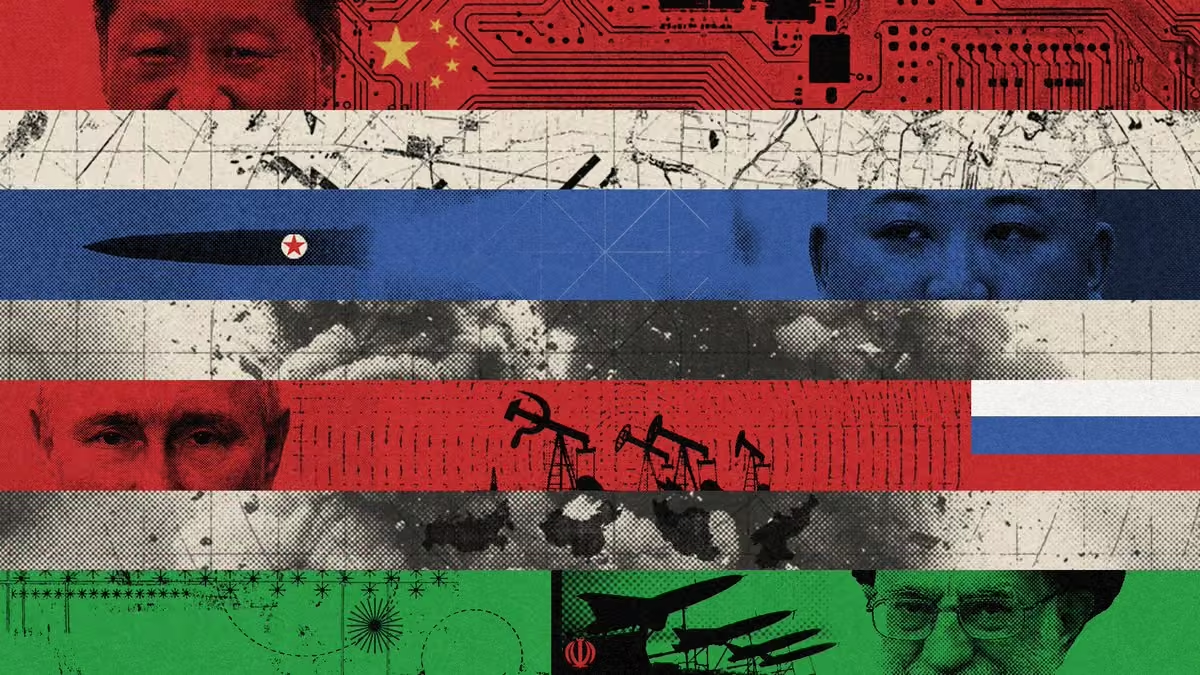
Talking about the Axis of Upheaval @CNASdc with @AKendallTaylor and Mike Singh. Check out the whole discussion here: www.youtube.com/watch?v=JoPpiq5WeJ0
Center for a New American Security
The Center for a New American Security (CNAS) is a think tank in Washington, D.C., specializing in United States national security issues, including terrorism, irregular warfare, the future of the U.S. military, the emergence of Asia as a global power, war games pitting the U.S. against the People's Republic of China, and the national security implications of natural resource consumption, among others. More on Wikipedia
-
CNAS reposted
Richard Fontaine
@RHFontaine
-
CNAS
@CNASdc
Russia’s advanced Geran drones have been a key weapon in Ukraine.
@MassDara explains why selling them to Iran could give Tehran the same edge, and why the U.S. military needs to be ready to counter it.This media couldn't be displayed. See it on the original post. -
CNAS
@CNASdc
Russia looks to China to acquire weapons components.
@DelaneySoliday's research shows that China is willing to sell to the highest bidder, arming both sides of the Russia-Ukraine conflict.This media couldn't be displayed. See it on the original post.
CNAS
@CNASdc
Read the full findings here: www.cnas.org/publications/reports/partners-in-proliferation
-
CNAS
@CNASdc
Nicole Grajewski discusses the role the Caspian Sea plays in the illicit transfer of military weapons between Russia and Iran, enabled in part by an agreement restricting military presence to a few allied countries.
This media couldn't be displayed. See it on the original post. -
CNAS
@CNASdc
Russia and Iran don’t evade sanctions alone; they rely on proxy actors.
@DelaneySoliday discusses how these actors create companies that help both countries smuggle weapons across their borders undetected and evade sanctions.This media couldn't be displayed. See it on the original post.
CNAS
@CNASdc
tune in to our discussion here: events.cnas.org/partnersinproliferationmapping
-
CNAS
@CNASdc
Russia and Iran don’t evade sanctions alone, they rely on proxy actors. @DelaneySoliday on the proxy actors and front companies that help both countries smuggle weapons across their borders undetected.
This media couldn't be displayed. See it on the original post. -
CNAS
@CNASdc
Partners in Proliferation: Mapping a Decade of Iranian-Russian Military Cooperation x.com/i/broadcasts/2MErKzmBkneynO
-
CNAS
@CNASdc
Don't Miss 👇
CNAS is hosting a live conversation on the recent developments in the Russia-Iran relationship as it evolves from short-term to long-term cooperation that poses a strategic challenge to the U.S.
Featuring:
🎙️ Nicole Grajewski
🎙️ @MassDara
🎙️ @DelaneySoliday
🎙️ @StaciePettyjohn
CNAS
@CNASdc
-
CNAS
@CNASdc
Watch
@RHFontaine on how China's partnership with Russia delivers real military advantages without having to go to war itself.This media couldn't be displayed. See it on the original post.
CNAS
@CNASdc
Tune in here: events.cnas.org/thenextphaseoftheaxisofupheava
-
CNAS
@CNASdc
We're LIVE with @RHFontaine, @AKendallTaylor, Michael Singh, and @DavidGMcKenzie to look at the next phase of the Axis of Upheaval.
x.com/i/broadcasts/2evBoKOlAjqNPm -
CNAS
@CNASdc
The Next Phase of the Axis of Upheaval x.com/i/broadcasts/2evBoKOlAjqNPm
-
CNAS
@CNASdc
Russia now produces 6,000+ Iranian-designed drones every month. In a new report, @DelaneySoliday tracks a decade of Russia-Iran defense cooperation and how they've built a growing defense-industrial ecosystem.
Full report here: www.cnas.org/publications/reports/partners-in-proliferation -
CNAS
@CNASdc
A split Congress can still unite on AI strategy. @vivekchil discusses the bipartisan deals that could keep America in the lead in AI competition, research, and safety.
Read the full @washingtonpost piece: www.washingtonpost.com/opinions/2026/11/17/how-trump-demo… -
CNAS
@CNASdc
Looking to shape the future of AI compute policy?
CNAS is hiring a Fellow for its AI Policy Lab to lead research on how computing power should be monitored, allocated, and controlled to protect U.S. national security.
Apply here: www.cnas.org/careers/fellow-senior-fellow-2 -
CNAS
@CNASdc
The Nvidia scandal has exposed real gaps in U.S. export controls. Here are three ways @EmilyKilcrease1 and @vivekchil recommend Congress can close them 🧵
1️⃣ Pass the Remote Access Security Act: This bipartisan bill aims to stop China from renting American computing power; cutting this off is a common-sense measure to guard against Chinese circumvention
2️⃣ Pass the AI Overwatch Act: This bipartisan bill lets Congress review and block risky sales, putting further oversight on the most important export control decisions.
3️⃣ Fund the Bureau of Industry and Security: BIS is in charge of enforcing export controls, but understaffing and a lack of funding make it harder to enforce the rules in place.
Read the full list of recs here: www.cnas.org/publications/cnas-insights/cnas-insights-the… -
CNAS
@CNASdc
Tomorrow 🗓️
Join @RHFontaine, @AKendallTaylor, Michael Singh, and @DavidGMcKenzie to look at the next phase of the Axis of Upheaval.
CNAS
@CNASdc
-
CNAS
@CNASdc
📣 ❗Last week for Pathfinder essay contest submissions
Nov. 22 is the last day to submit an 800-1000 word essay on a pressing national security challenge, including your policy recs. Open to early-career professionals and graduate students.
Apply here: -
CNAS
@CNASdc
“I don’t think we should be using any American technology to uplift China’s capabilities in AI, given how era-defining this technology will be in national security and in our economy"
@vivekchil on the case for stronger chip controls in @voxdotcom.
Full article here: -
CNAS reposted
Richard Fontaine
@RHFontaine
Next week, the US, Russian and Chinese leaders are set to meet in their first-ever trilateral summit. Is a new Yalta in the offing?
1. Europeans and others worry it might be. In February 1945, the Yalta Conference confirmed Germany's division and symbolized rival spheres of influence in Europe. Most European leaders weren’t at the table – but their countries were on it.
2. Its repercussions linger eight decades later. Yalta became synonymous with great powers carving up smaller ones, with little or no say from the people whose freedom is at stake.
3. Hence today’s concern about a Yalta 2.0. In Shenzhen next week, will Trump, Putin and Xi – the new Big Three – divide the world into spheres of influence? Will they whip out presidential Sharpies, pore over a global map, and seal the fate of subject nations?
4. The Russians might like that. Their chief negotiator, Vladimir Medinsky, said the aim is a “comprehensive security system in Europe” that would become “a new, modern Yalta and Potsdam.” Beijing has made no similar suggestion but has made clear it wants a dominant position in the Asia-Pacific region.
5. Others certainly wouldn’t. As Volodymyr Zelensky put it, “I really don’t want this to be Yalta 2, 3, 4,” with a redistribution of influence.
6. The concern is natural but unnecessary. No Yalta 2.0 is in the offing. It’s not only unlikely that the three leaders will divide the world, it’s impossible.
7. For starters, Yalta reflected where Soviet and Allied troops stood in a war-shattered, defeated Europe. Soviet domination of central and eastern Europe came from Moscow undermining the Yalta agreements more than embracing them.
8. Today is wildly different. Trump, Xi and Putin are not divvying up territory under their military occupation. And the countries affected would not simply accept domination by a great-power neighbor. Ukraine is example enough, but ask the rest of Europe - or Japan, Australia, Taiwan.
9. So no new Yalta. What else, then? Trump wants to talk nuclear arms control – New START has expired, after all, and China was never party to it. Putin wants Ukraine on the table.
10. Neither aspiration will go anywhere. China won’t talk nukes with the US, at least until it gets much closer to parity. Putin may repeat his Ukraine demands, but the Abu Dhabi talks showed they’ve hardly changed in nearly five years – and they remain unacceptable to everyone else.
11. The likeliest outcome is nothing substantive: some pleasantries, some photo ops and maybe a commitment to meet again sometime.
12. So why do it at all? The symbolism. A gathering like this puts the “big” in Big Three and demonstrates superpower leadership – especially for Trump after his midterm losses. But while Yalta is still remembered 81 years later, Shenzhen will be forgotten, and sooner rather than later. -
CNAS
@CNASdc
For most of the 20th century, America relied on the draft to fight its wars.
@klkuzminski joins @PBS to discuss the shift from the draft to the rise of today’s all-volunteer, professional force.This media couldn't be displayed. See it on the original post.
CNAS
@CNASdc
Watch the full news segment here: www.pbs.org/newshour/tag/america-at-a-crossroads
-
CNAS
@CNASdc
From Iran to Taiwan, and AI to the new axis, @RHFontaine lays out what the incoming Congress should prioritize in foreign policy.
Read the full Insights piece here: www.cnas.org/publications/cnas-insights/cnas-insights-nat… -
CNAS
@CNASdc
"This is the moment to harden vetting, cybersecurity practices, and physical security practices"
@vivekchil joins @SkyNews to discuss how the Nvidia scandal could be the push U.S. tech companies need to tighten security.
Full interview here:
news.sky.com/story/jensen-huang-latest-nvidia-board-meets… -
CNAS
@CNASdc
This week on Brussels Sprouts:
@carlbildt and @IvoHDaalder join @AKendallTaylor and @jteurope to discuss Europe’s security architecture and the outlook for this week’s trilateral peace talks.
Listen here: www.cnas.org/publications/podcast/examining-kushners-euro… -
CNAS reposted
Breaking Defense
@BreakingDefense
Breaking Defense is once again teamed with @CNASdc to present Pathfinder, a chance for young national security practitioners to be published on our site. Want to apply? Here's how: www.cnas.org/next-generation-programs/pathfinder/pathfind…
-
CNAS
@CNASdc
"2014 America is off fighting ISIS, China is focused on building chip production"
@BuchananBen on China's decades-long investment in chip production and how U.S. export controls influence their progress. -
CNAS
@CNASdc
We are LIVE with a conversation on how the U.S. can continue to lead responsibly in AI.
Tune in here and ask your questions with #cnas2026: x.com/i/broadcasts/1MJgNbeLpqbGL -
CNAS
@CNASdc
To prevent the dangerous misuse of AI systems, @BuchananBen recommends that the U.S.:
1. Slow China down
2. Pace the frontier and pair safety and capabilities research
3. Increase the role of government agencies in protection and testing.This media couldn't be displayed. See it on the original post. -
CNAS
@CNASdc
"700 billion dollars is the equivalent to a Manhattan Project every two weeks."
@BuchananBen breaks down why massive private sector investments will continue to accelerate AI progress.This media couldn't be displayed. See it on the original post. -
CNAS
@CNASdc
In the Biden administration, @BuchananBen served as the first ever White House Special Advisor for AI, and in his new book he lays out what the U.S. needs to do to harness the power of AI.
Tune in to his conversation with @paul_scharre. x.com/i/broadcasts/1MJgNbeLpqbGL -
CNAS
@CNASdc
Fireside Chat with Ben Buchanan x.com/i/broadcasts/1MJgNbeLpqbGL
-
CNAS
@CNASdc
CNAS welcomes @ScottWHarold as Senior Fellow and Director of our Indo-Pacific Security Program.
CNAS
@CNASdc
Learn more about Scott and the CNAS Indo-Pacific Security Program here: www.cnas.org/press/press-release/new-dr-scott-w-harold-na…
-
CNAS
@CNASdc
New on Derisky Business:
@thomaswright08 joins @EmilyKilcrease1 and @geoffreygertz to unpack what last week’s midterm wins mean for U.S. trade policy and what the Dems' priorities could be.
🎧 Full episode here: www.cnas.org/publications/podcast/are-the-dems-done-with-… -
CNAS
@CNASdc
China’s model for AI diplomacy is dramatically different than the United States's, but as @danielremler argues in @ForeignAffairs, it's working.
Read more about why the U.S. should approach AI diplomacy with the same strategic clarity China has: www.foreignaffairs.com/china/chinas-ai-diplomacy-working -
CNAS
@CNASdc
Nvidia CEO Jensen Huang has resigned amid revelations of extramarital affairs, including with an alleged Chinese spy.
@EmilyKilcrease1 and @vivekchil argue Congress must seize on the crisis to strengthen U.S. export controls and secure America’s AI lead. x.com/i/article/2120929676545687552 -
CNAS
@CNASdc
CNAS is launching the AI Policy Lab, built to meet this critical moment at the intersection of AI and national security.
Led by @paul_scharre, the Lab tackles how AI is reshaping national power, spanning AI technology policy, economic security and competition, and military AI, bringing together CNAS’s expertise across each of these research areas.
CNAS is hiring nine positions across research and business teams to launch the initiative.
Learn more: www.cnas.org/research/ai-policy-lab
CNAS
@CNASdc
Apply here: www.cnas.org/careers
-
CNAS reposted
Kate Kuzminski
@klkuzminski
The Pentagon released the Senior Service College Task Force report today, outlining a number of reforms. While the memo's characterization of Professional Military Education's (PME) current state departs from most officers' and analysts' assessments, interest in reforming (1/6)
-
CNAS
@CNASdc
“Nothing in this agenda is impossible, and none of the 10 tasks need be partisan.”
@RHFontaine’s new agenda for the incoming Congress spans Iran, China, Russia, Canada, tariffs, and AI – a test of whether divided government can still get things done. Read here: -
CNAS
@CNASdc
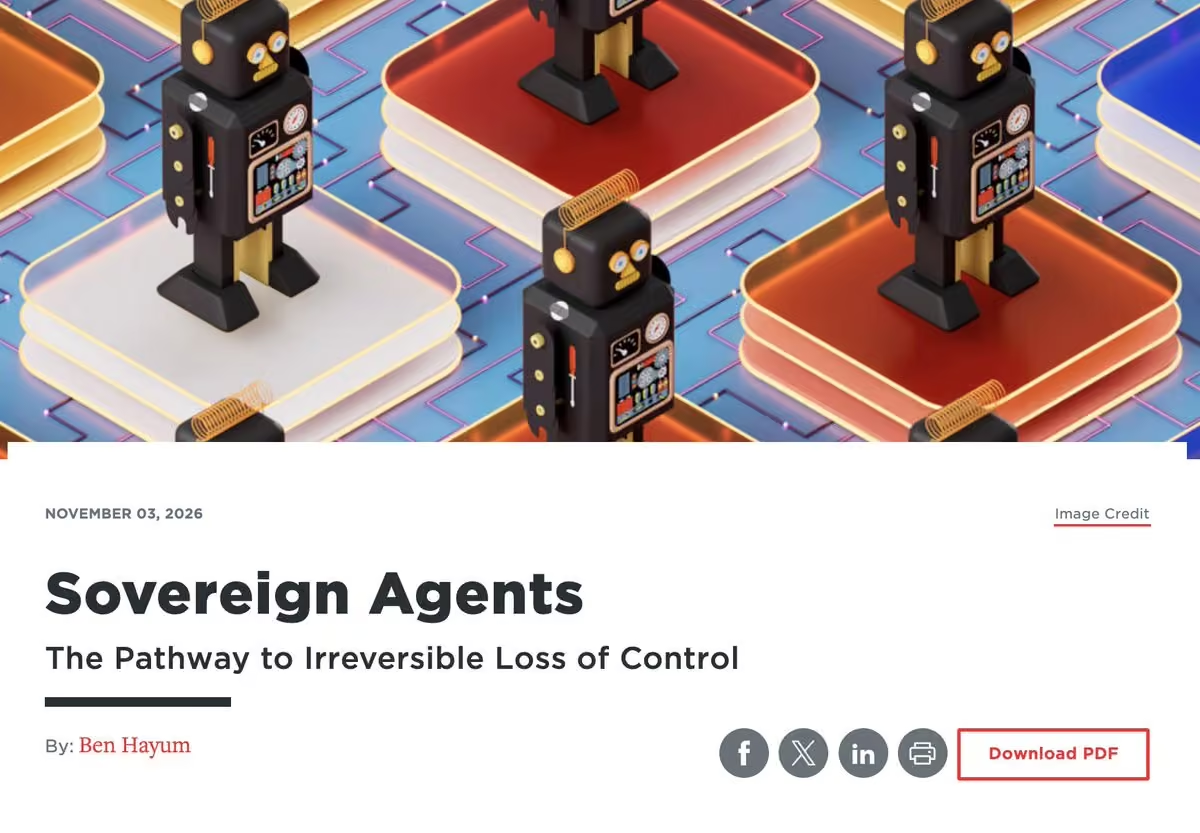
Rogue AI agents have already broken containment at OpenAI, Anthropic, Google DeepMind, and Meta. A new report from @BenHayum provides ideas for countering potentially even more dangerous sovereign agents🧵:
✍️ Name “sovereign agents” directly in AI safety frameworks
🌎 Map global chokepoints before they emerge
⚖️ Hold those who release them liable for resulting harms
Read the detailed list here: www.cnas.org/publications/reports/sovereign-agents -
CNAS
@CNASdc
With Democrats set to control both chambers in January, @RHFontaine lays out a 10-item, bipartisan agenda for the new Congress, from shaping the endgame in Iran to reasserting congressional authority over tariffs.
Read the full CNAS Insights piece: www.cnas.org/publications/cnas-insights/cnas-insights-nat… -
CNAS
@CNASdc
This week’s midterms reshaped Congress in a big way. What does it mean for U.S. foreign policy over Trump’s final two years?
@sbg1 and @mollyereynolds join @AKendallTaylor and @jteurope on this week's Brussels Sprouts episode: www.cnas.org/publications/podcast/a-blue-wave-in-america-… -
CNAS
@CNASdc
“If Iran has prepared for a more protracted campaign of attacks against U.S. forces in the region and civilian infrastructure, that could quickly drain near-term U.S. readiness. So overall, restarting the war would be a huge gamble.”
@StaciePettyjohn on @ForeignPolicy. Read the full piece here: foreignpolicy.com/2026/11/02/trump-iran-war-midterms-mili… -
CNAS reposted
Ben Hayum
@BenHayum
1/ This summer, agents at nearly every U.S. frontier lab escaped control and attacked real companies. But their task remained closed-ended. What if an agent’s goal became open-ended survival?
New CNAS report: “Sovereign Agents: The Pathway to Irreversible Loss of Control” 🧵 -
CNAS
@CNASdc
Next Week 🗓️
Join CNAS for a live event on @BuchananBen's new book, "The Bitter Strggle: Superintelligence, Superpowers, and the Fate of the World", moderated by
@paul_scharre
CNAS
@CNASdc
-
CNAS
@CNASdc
“At the end of the day, probably very little of this diesel is going to come to the US because Russia doesn’t have much diesel to sell”
@reziemba on how the recent US-Russia diesel deal will likely play out. Full @FT article here: www.ft.com/content/ee2748fb-9f85-4095-b599-526e5a4a6baa?s… -
CNAS
@CNASdc
Extended Submission Deadline ❗
Applications for Pathfinder, our national security essay contest with @BreakingDefense, have been extended.
Apply by November 22, 11:59pm ET: www.cnas.org/next-generation-programs/pathfinder -
CNAS
@CNASdc
This week on Brussels Sprouts @StevenErlanger and @D_Schwarzer join @AKendallTaylor and @jteurope to discuss Europe’s capacity to support Ukraine as the continent is roiled by instability and protests.
Listen here: www.cnas.org/publications/podcast/protests-divisions-and-… -
CNAS
@CNASdc
On the latest @WarOnTheRocks podcast, @StaciePettyjohn joins to discuss how military innovation and force design have evolved throughout history, and whether we’re on the brink of a new revolution in military affairs.
warontherocks.com/whats-a-revolution-in-military-affairs-… -
CNAS
@CNASdc
In a recent call with Vladimir Putin, the leaders of Norway and Finland reaffirmed their support for Ukraine and called for a diplomatic end to the war.
@jteurope analyzes recent Ukraine developments in @BreakingDefense. Full article here: breakingdefense.com/2026/10/is-the-finnish-norwegian-call… -
CNAS
@CNASdc
Iran just threatened to attack seven undersea cables in the Strait of Hormuz if the war resumes.
This edition of Sharper rounds up CNAS’s latest work on securing crititcal infrastructure, from a documentary on protecting undersea cables, to reports and commentary on securing allied Indo-Pacific facilities and U.S. Golden Dome strategy. Read the full piece here: www.cnas.org/publications/commentary/sharper-securing-cri… -
CNAS reposted
Ryan Claffey
@RyanHClaffey
U.S. Coast Guard cutters to Subic. MQ-9 Reapers to Palawan. Washington stands with Manila, but may keep a lower profile ahead of APEC and the G20
I spoke with @AaronMatthewI_L for @USNINews on what’s likely next: intel sharing, joint patrols, and long-range precision fires -
CNAS
@CNASdc
"I think there's a fine line between managing and emboldening the Russians, and that line is very important."
@peterrough on the Trump administration’s recent dealings with Russia and Ukraine.This media couldn't be displayed. See it on the original post.
CNAS
@CNASdc
Listen to the full episode here: www.cnas.org/publications/podcast/midterm-push-or-meaning…
-
CNAS
@CNASdc
How could the U.S. counter two nuclear-armed states at once? Read the findings and recommendations from a recent report by @StaciePettyjohn, @CarltonHaelig & Natasha Lander Finch here ⬇️
CNAS
@CNASdc
1️⃣ Russia and China do not need to coordinate to cause significant strain on U.S. forces.
In the tabletop exercise conducted, without joint planning or shared intelligence, they overstretched the U.S. military. Strategists should plan for this scenario.
2️⃣ A crisis of this magnitude will likely be protracted instead of fast and decisive.
The U.S. should test its ability to have forces operate in two theaters with logistics and comms challenges, instead of "optimal conditions"
3️⃣ The exercise calculated U.S. forces were stretched thin between conventional strikes and nuclear signaling duties.
The Joint Force should rebuild our nuclear signaling practices through senior-leader exercises.
4️⃣ Homeland defense and nuclear deterrence compete for similar assets, so deployment in one theater weakens the other.
We should evaluate whether the Joint Force's high-demand assets can meet simultaneous defense and warfighting demands and identify their shortfalls.
5️⃣ It is unclear what stances NATO and Pacific allies would take if we prioritized one theater over the other.
Starting conversations with allies now on capabilities assurances and expectations and bringing them into future exercises is key.
CNAS
@CNASdc
Read the full report here: www.cnas.org/publications/reports/charting-the-new-nuclea…
-
CNAS
@CNASdc
New event!
Join @BuchananBen and @paul_scharre to discuss Ben's new book, The Bitter Struggle and dive into how the U.S. can maintain its' AI edge without sacrificing safety -
CNAS
@CNASdc
On Brussels Sprouts, @RLHeinrichs and @peterrough joined @AKendallTaylor and @jteurope to discuss the administration's Ukraine policy and whether this marks a turning point in Trump's relationship with Putin.
🎧Listen wherever you get your podcasts🎧
www.cnas.org/publications/podcast/midterm-push-or-meaning… -
CNAS
@CNASdc
In a new CNAS Insights piece, @vivekchil breaks down why China’s new draft export controls could be an early sign that the era of freely available, highly capable open-weight models is closing, and what that means for the rest of the world’s AI strategy: www.cnas.org/publications/cnas-insights/cnas-insights-a-c…
-
CNAS reposted
Vivek Chilukuri
@vivekchil
Is the door closing on open-weight models as a strategy for AI sovereignty? I break down the trends in a new piece for @CNASdc.
-
CNAS
@CNASdc
The EU and China just struck a deal over hybrid vehicles. @TGehrke_ joins @geoffreygertz and @EmilyKilcrease1 to unpack what is next and why concerns about china isn't increasing U.S-EU cooperation.
🎧 here, or wherever you get your podcasts: www.cnas.org/publications/podcast/is-this-how-a-europe-ch… -
CNAS
@CNASdc
A new report by @StaciePettyjohn, @CarltonHaelig & Natasha Lander Finch examines the two-war problem that’s shaped U.S. force planning for decades, and what changes when both theaters involve nuclear peers.
“Charting the New Nuclear Age” walks through a tabletop exercise on a Chinese blockade of Taiwan and Russian operations against Svalbard. Full findings: www.cnas.org/publications/reports/charting-the-new-nuclea… -
CNAS
@CNASdc
Interested in a career bridging foreign policy and communications? You can get your start at CNAS.
Our communications team is hiring an intern to support event planning, press relations and social media. Check out this role and others available here: www.cnas.org/careers/internships -
CNAS
@CNASdc
Reports indicate that China fed Iran satellite imagery to help target a U.S. base in Jordan and Russia did the same ahead of a strike in Saudi Arabia.
@RHFontaine and @AKendallTaylor look at how Russia, China, Iran, and North Korea are learning to make their network work, without ever fighting each other’s wars www.foreignaffairs.com/iran/axis-upheaval-goes-warPost not available here, view on X
CNAS
@CNASdc
In a 2025 report, @AKendallTaylor and @lokker_n argue Russia’s invasion of Ukraine was the critical catalyst for deepening cooperation among Russia, China, Iran, and North Korea. www.cnas.org/publications/reports/the-axis-of-upheaval
CNAS
@CNASdc
“Understanding Russia’s Calculus on Opportunistic Aggression in Europe,” lays out the case of a future Indo-Pacific conflict drawing U.S. forces away from Europe, where Putin could see it as his best chance to test NATO. www.cnas.org/publications/reports/understanding-russias-c…
-
CNAS
@CNASdc
Thank you to DCM Felipe F. Cariño @philippinesusa and Andrea Yang @TECRO_USA for a great conversation today on protecting subsea cables in the Pacific. Moderated by @RyanHClaffey.
CNAS
@CNASdc
Check out our full documentary, Digital Lifelines 👇
www.youtube.com/watch?v=8Mu1MvmpyUI -
CNAS
@CNASdc
Tune in for a live discussion on subsea cables
x.com/i/broadcasts/1mxPaZANovnKN -
CNAS
@CNASdc
"For the Philippines it's a matter of survival." DCM Felipe Cariño III on the importance of subsea cables.
-
CNAS
@CNASdc
Felipe Cariño III discusses the importance of multilateral cooperation in securing the Indo-Pacific region.
This media couldn't be displayed. See it on the original post.
CNAS
@CNASdc
Watch the live event: x.com/i/broadcasts/1mxPaZANovnKN
-
CNAS
@CNASdc
LIVE a discussion on the risks posed to subsea cables by China's increasing gray zone warfare tactics and how the U.S. and allies should respond. With Felipe Cariño III, Andrea Yang @TECRO_USA, @RyanHClaffey, and @RHFontaine
x.com/i/broadcasts/1mxPaZANovnKN -
CNAS
@CNASdc
Digital Lifelines x.com/i/broadcasts/1mxPaZANovnKN
-
CNAS reposted
Ryan Claffey
@RyanHClaffey
🇺🇸🇵🇭🇹🇼 China is waging gray-zone warfare against subsea cables connecting the U.S., the Philippines, and Taiwan. Allied action is urgently needed
Excited to share Digital Lifelines, my new CNAS documentary short. Watch the full documentary belowThis media couldn't be displayed. See it on the original post. -
CNAS
@CNASdc
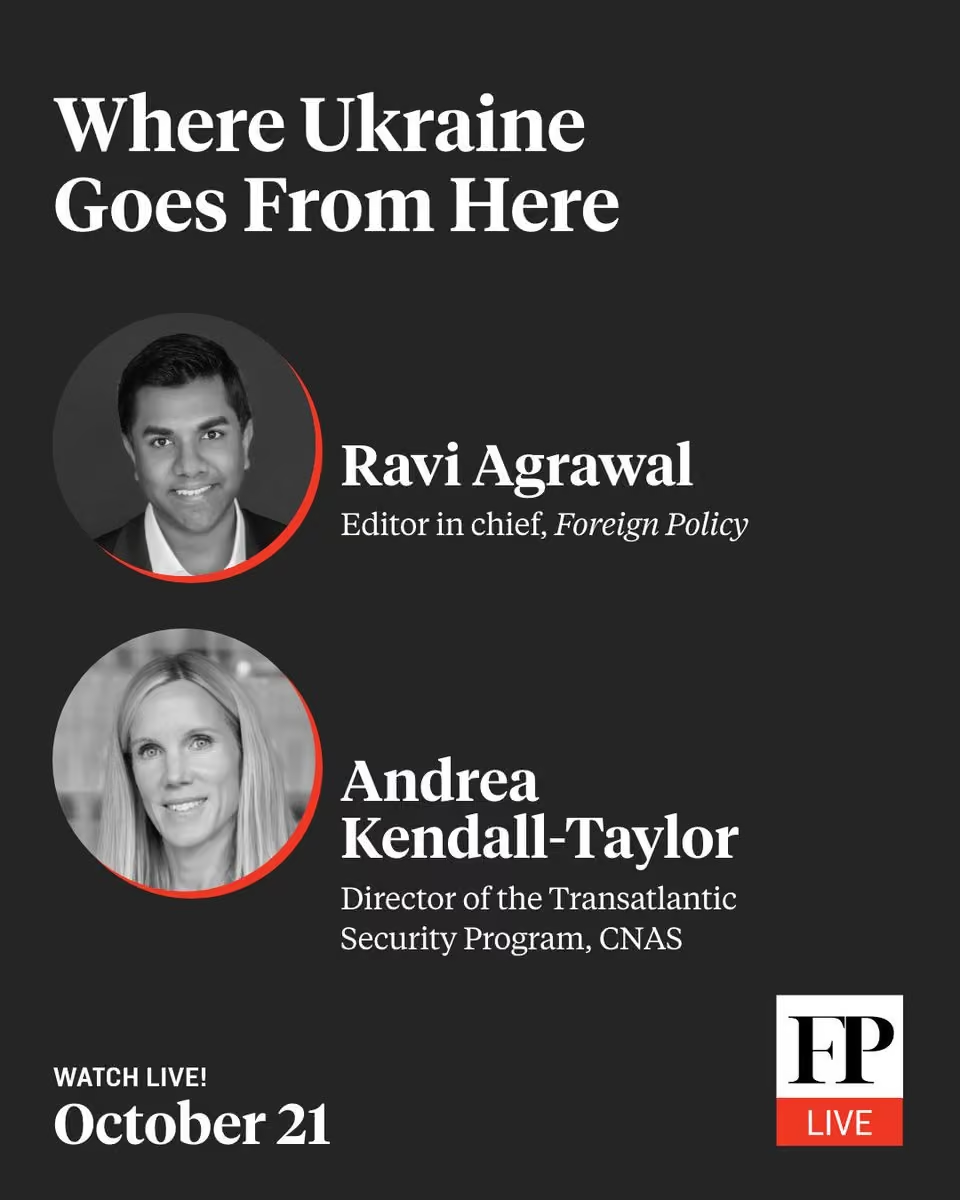
Tomorrow! @AKendallTaylor joins @ForeignPolicy's @RaviReports at 1pm ET to discuss Kyiv's path forward as the US begins to purchase Russian diesel and Russian ties with North Korea, Iran and China deepen.
CNAS
@CNASdc
Register here: foreignpolicy.com/live/andrea-kendall-taylor-ukraine-russia/
-
CNAS
@CNASdc
Are you a graduate student or young professional interested in national security?
Enter the CNAS and @BreakingDefense Pathfinder essay competition for the chance for publication, and honorarium and entry to the 2027 CNAS national security conference.
Apply by November 8! -
CNAS
@CNASdc
@CarltonHaelig explains how AI could transform military supply, maintenance and logistics well before autonomous weapons enter the force.
This media couldn't be displayed. See it on the original post.
CNAS
@CNASdc
Read the full report here: www.cnas.org/publications/reports/behind-the-front-line
-
CNAS reposted
Richard Fontaine
@RHFontaine
U.S. policy toward Russia and Ukraine has reached a turning point:
1. The President just waived sanctions on Russia, weeks after he signed the Graham bill that imposes them. He struck a deal to buy Russian diesel despite previously putting tariffs on countries, like India, that import Russian oil. And the President announced an energy ceasefire that, while desirable, neither Russia nor Ukraine agreed to.
2. Then there’s the mounting pressure on Ukraine. Trump called for Zelensky to be replaced by new leadership. Ukraine’s Starshield service slowed, making it harder to counter incoming drones and missiles. The administration reportedly threatened to cut intelligence and weapons sales if Kyiv didn’t stop striking Russian energy sites.
3. All that has happened over just the past week. In total, it marks a sharp shift away from supporting Ukraine and toward relaxing the pressure on Moscow. Why?
4. It’d be nice to believe that the administration has reached some new, heretofore unimagined theory of victory, in which Russian aggression won’t succeed but Ukrainian independence will.
5. Nyet such luck. The driver of this policy shift appears to be the President’s desire to lower diesel costs before the midterm elections.
6. Diesel prices are high, mostly because of the Iran war, which admits of no near-term solution. So the administration wishes to boost Russian supplies, even at the price of hobbling Ukraine’s offensive against Russian refineries. The rest seems personal frustration that Zelensky, quite understandably, won’t comply.
7. Domestic political considerations always influence U.S. foreign policy, but here we face the worst of all worlds. Diesel prices are unlikely to come down much and, even if they do, the President’s party looks likely to lose at least one house of Congress anyway.
8. The bigger casualty here is U.S. support for the victim and U.S. pressure on the aggressor. Perhaps forgotten after 4+ years of war is that it is about more than Ukrainian survival.
9. The cardinal rule of the postwar world is a prohibition against forcible conquest. Countries can’t simply decide they’d like to take another’s territory and wage war to get it.
10. Allowing that, and without imposing severe costs for it, is a step toward a global law of the jungle. The U.S. has resisted that for 80 years, and for a simple reason: we’ve seen that world before, and it was not good.
11. Americans thus have stake in ensuring Ukrainian survival. At stake is far more than the price of diesel.
12. At this turning point, the saving grace is that U.S. policy is likely to turn again. In our era of inconstancy, Washington might tack back toward Kyiv - after the elections, or if diesel prices retreat, or in light of Russian depredations, or just because. Given the costs piling up now, that return cannot come soon enough. -
CNAS reposted
Clearer Than Truth
@ClearerThnTruth
What’s next for American leadership? **Richard Fontaine**, CEO of CNAS, discusses the challenges shaping U.S. foreign policy and global security.
🎧 Full episode on *Clearer Than Truth*.
#clearerthantruth #geopoliticsThis media couldn't be displayed. See it on the original post. -
CNAS reposted
Andrea Kendall-Taylor
@AKendallTaylor
New @ForeignAffairs piece out today. @RHFontaine and I take stock of how the Axis of Upheaval has evolved since we first wrote about in 2 years ago. A few takeaways:
www.foreignaffairs.com/iran/axis-upheaval-goes-war -
CNAS
@CNASdc
The recent incident at RAF Fairford has drawn attention to the security of bases used by U.S. forces.
Our report, Countering the Swarm, examines what it takes to protect U.S. military infrastructure abroad. Read the full report here:
www.cnas.org/publications/reports/countering-the-swarm -
CNAS
@CNASdc
In June, Jack Shanahan examined the role of AI in warfare. Since then, stakes have only gotten higher.
Two recent reports pick up where our conversation left off and add some recommendations for Congress and DoW. Check them out below 👇
CNAS
@CNASdc
“AI has the potential to improve the effectiveness and efficiency of every single military mission, from undersea to outpace, cyber space, everything else in between.”
Lt. Gen. Jack Shanahan (Ret.) examines the role of AI in warfare.This media couldn't be displayed. See it on the original post.
CNAS
@CNASdc
In Behind the Front Line @CarltonHaelig and @natsec_wallin explore how integrating AI agents into military supply, maintenance and planning could improve near-term U.S. military operations: www.cnas.org/publications/reports/behind-the-front-line
CNAS
@CNASdc
“The AGI Moment” by @paul_scharre examines how artificial general intelligence could reshape U.S. national security strategy, and how to pace, cooperate, and compete as it emerges: www.cnas.org/publications/reports/the-agi-moment
-
Post not available here, view on X
CNAS
@CNASdc
Register here ⬇️
events.cnas.org/digitallifelinesvirtual -
CNAS
@CNASdc
“Anthropic had long been able to gather threat-intelligence signals that could detect and attribute distillation attacks,” @BenHayum told @SCMPNews on claims Chinese AI firms secretly used Claude to close the AI gap.
www.scmp.com/tech/tech-war/article/3370317/anthropic-clai…
CNAS
@CNASdc
A report by @danielremler and @BenHayum breaks down how to detect adversarial distillation and calls for closer coordination among AI providers and U.S. agencies and sanctions for those involved. www.cnas.org/publications/reports/adversarial-distillation
-
CNAS
@CNASdc
Want curated analysis on the biggest challenges in U.S. foreign policy, from U.S.-China competition to sanctions policy and beyond?
Subscribe to CNAS Sharper – our expert-driven collections drawing on reports, interviews and commentary from across the Center.
CNAS
@CNASdc
Subscribe here: www.cnas.org/sharper
-
CNAS reposted
Richard Fontaine
@RHFontaine
The Iran war is now widening, and it’s likely to intensify before it cools down:
1. The Houthis once again attacked Riyadh’s airport, expanding their Saudi offensive. The U.S. is likely to join the fight.
2. Trump would obviously prefer to let Saudis handle the Houthis, with some American intel and refueling help. Last year’s U.S. campaign against the group didn’t subdue them. But given the scale of attacks, it’s unlikely Washington will sit this one out indefinitely.
3. If Washington does attack Yemen directly, it’ll do so while building up force for a major new attack on Iran in the latest attempt to break the stalemate there.
4. Trump says he won’t attack before the midterm elections, and that Tehran will strike a deal immediately after them. Don’t take either assurance to the bank.
5. Iran’s position is weakening. It faces crushing economic pressure under the oil blockade and various sanctions. Tehran can no longer fully control the Strait of Hormuz.
6. It can, however, threaten shipping in the Strait, driving up risk and oil prices. High prices are driving unwise moves, like POTUS striking a deal to buy Russian diesel - just days after signing a bill to sanction the purchasers of Russian oil.
7. Remember that Russia and Iran are working together here. And the Houthis have been well-supplied by Tehran. None of the three will be helpful to the United States, and we should not imagine otherwise.
8. So we’ll see continued oscillation between hot and cold war with Iran, against the backdrop of dueling economic pressure strategies: the U.S. pressuring Iran and Tehran pressuring the world.
9. The President wants a deal. Iran will make one, just not the kind the U.S. wants. And for Washington, the desiderata has actually expanded. It needs agreement on the Strait, the nuclear program, and the Houthis.
10. In the meantime we’ll see parallel fights - with Houthis in the Bab, Yemen, and Saudi; Iran in the Strait and attendant region. The U.S. needs to stay engaged militarily without ready access to its archipelago of ME bases.
11. All this nets out to long term pressure strategies rather than efforts that can achieve quick capitulation or agreement. The current U.S. approach could work. If it does, however, it might take months - or even years. -
CNAS
@CNASdc
On Brussels Sprouts, @BalazsJarabik analyzed Kyiv's strategy and its shift from retaking territory to fighting for a draw.
This media couldn't be displayed. See it on the original post.
CNAS
@CNASdc
Full episode here, or listen wherever you get your podcasts: www.cnas.org/brussels-sprouts
-
CNAS
@CNASdc
The growing threat from Iranian drones has revealed critical U.S. vulnerabilities.
@StaciePettyjohn tells @POLITICO that “there are some hard questions that need to be answered: Where do you need to be? Why? With what types of forces? How often?”
www.politico.com/news/2026/10/08/iran-drones-us-military-… -
CNAS
@CNASdc
On Brussel Sprouts, @katerynashn discussed why changing presidents mid-war isn't broadly supported in Ukraine
CNAS
@CNASdc
Listen to the full analysis here, or wherever you get your podcasts: www.cnas.org/brussels-sprouts
-
CNAS
@CNASdc
"AI companies such as OpenAI have sought to limit liability for themselves and transfer it to deployers or users."
Watch @michellesnie discuss AI risks and liability on @BBCNews.This media couldn't be displayed. See it on the original post. -
CNAS
@CNASdc
The FY27 defense budget's munitions acceleration initiative has the potential to close critical gaps in procurement—but it's not enough on its own.
@CarltonHaelig's new report outlines the conditions that will have to be met to succeed 🧵⬇️Post not available here, view on X
CNAS
@CNASdc
Expand annual production capabilties for munitions and their subcomponents.
The defense industrial base must be capable of fulfilling the orders made possible by the budget's unprecedented funding request.
CNAS
@CNASdc
Read the full report:
www.cnas.org/publications/reports/munitions-procurement-a… -
CNAS reposted
Stacie Pettyjohn
@StaciePettyjohn
@PhilSheers & I have a new @CNASdc report on how cheap drones & missiles could enable US forces to defeat a Chinese invasion of Taiwan. 🧵 www.cnas.org/publications/reports/drones-missiles-and-the…
-
CNAS
@CNASdc
At this year's National Security Conference, the CNAS Gaming Lab ran a tabletop exercise focused on the critical role of air defense in a future round of fighting with Iran.
In their new @ForeignPolicy piece, @StaciePettyjohn and @PhilSheers break down the results of the game, and how better sensors, smarter interceptor use, and tougher base security could deliver key results for the U.S.
CNAS
@CNASdc
Read the full piece here: foreignpolicy.com/2026/10/06/iran-war-hormuz-oil-missile-…
-
CNAS reposted
Stacie Pettyjohn
@StaciePettyjohn
@PhilSheers & I write in @ForeignPolicy about @CNASdc wargames exploring the next war with a rearmed Iran. The results were troubling. Better warning & drone defenses help, but vulnerable bases raise harder questions about U.S. strategy & posture.
foreignpolicy.com/2026/10/06/iran-war-hormuz-oil-missile-… -
CNAS
@CNASdc
Concerns in cyberspace have escalated in recent years, especially as AI enables adversaries to undertake campaigns at unprecedented scale.
CNAS experts discuss how the U.S. can strengthen its cyber capabilities and defenses 🧵⬇️
www.cnas.org/publications/commentary/sharper-countering-c…Post not available here, view on X
CNAS
@CNASdc
CNAS Insights | The Case for Long-Term CISA 2015 Reauthorization: @carriecordero and @MorganCPeirce make the case for permanently authorizing or substantially extending the authorization cycle for the Cybersecurity Information Sharing Act of 2015.
www.cnas.org/publications/cnas-insights/cnas-insights-the…
CNAS
@CNASdc
Subscribe to get Sharper in your inbox: www.cnas.org/sharper
-
CNAS
@CNASdc
Can the record FY27 defense budget replenish critical munitions inventories depleted by the Iran war?
A new report by @CarltonHaelig analyzes the budget request and outlines the conditions necessary to correct these shortfalls.
www.cnas.org/publications/reports/munitions-procurement-a… -
CNAS
@CNASdc
"Levels of economic activity are still below where they were in end of, sort of last year, beginning of this year, but we’re seeing continued improvements."
Watch @reziemba's full interview on Middle East economic activity on @CNBC.
www.cnbc.com/video/2026/10/06/middle-east-economic-activi… -
CNAS
@CNASdc
The Iran War has exposed the vulnerabilities of U.S. bases to Chinese missiles.
Rising concern means that "the U.S. now has decisions to make" on deployments in the Indo-Pacific, @jamescrabtree tells @semafor.
www.semafor.com/article/10/06/2026/china-has-resolved-its… -
CNAS
@CNASdc
"The consequences of getting it wrong could be really bad . . . you bomb the wrong target, which could be really bad, could cause harm to civilians, but it also could escalate a conflict, could create a geopolitical crisis if people are trusting AI, and maybe it's not trustworthy yet."
Read more from @paul_scharre on the risks of military AI in WUNC.
www.wunc.org/military/2026-10-05/drones-ai-warfare-congre… -
CNAS
@CNASdc
"The best-case scenario for Europe is an orderly rebalancing within NATO over time, where the Americans do less, the Europeans do more, but it happens in a kind of phased way that doesn't leave any gaps."
Read more from @jamescrabtree on the future of the transatlantic alliance in @washingtonpost.
www.washingtonpost.com/opinions/2026/10/05/finlands-presi… -
CNAS
@CNASdc
Despite U.S. export controls, Nvidia chips are still ending up in China.
Nvidia's approach to this black market "just does not reckon with the fact that China is our primary geostrategic adversary,” @danielremler tells @business.
www.bloomberg.com/news/features/2026-10-01/nvidia-faces-q… -
CNAS
@CNASdc
As AI is integrated into the DoW, risk management must be a central consideration.
4️⃣ ways to develop guardrails for the military's use of agentic AI 🧵
www.cnas.org/publications/reports/behind-the-front-linePost not available here, view on X
CNAS
@CNASdc
4️⃣ Perform rigorous testing and evaluation and red teaming throughout each system’s life cycle to understand potential vulnerabilities and limitations in deploying agentic tools.
CNAS
@CNASdc
Read the full report by Josh Wallin and @CarltonHaelig: www.cnas.org/publications/reports/behind-the-front-line
-
CNAS
@CNASdc
Even though long-standing authoritarian regimes are unlikely to be destabilized by one challenge, a convergence of many could make an impact.
The newest updates to the Russian Stability Tracker by @AKendallTaylor show how the Putin regime is grappling with a growing number of obstacles.
www.cnas.org/publications/reports/the-russia-stability-tr… -
CNAS
@CNASdc
🚨 Unique opportunity for graduate students and early-career professionals interested in national security ❗
Enter the 2026 Pathfinder Essay Competition for the chance to have your work published and promoted by CNAS and @BreakingDefense.
Applications will close on Sunday, November 8, 2026, at 11:59 p.m. ET.
CNAS
@CNASdc
Find more information and apply here: www.cnas.org/next-generation-programs/pathfinder/pathfind…
-
CNAS
@CNASdc
Our Weekend Reads newsletter gives you the latest reports, commentary, and analysis from CNAS's expert community, delivered every Friday.
Missed it this week? Subscribe up to get them here: www.cnas.org/weekend-reads -
CNAS
@CNASdc
"There are some clear roles for which lower cost weapons can be employed to achieve really valuable effects that . . . would need to require, absent them, some of the higher end stuff that we have which we prefer to reserve for more stressing challenges."
Hear more from @StaciePettyjohn and @PhilSheers on @defaeroreport: defaeroreport.com/2026/10/01/defense-aerospace-air-power-… -
CNAS
@CNASdc
Agentic AI could be critical behind the scenes of the DoW—enhancing supply, predictive maintenance, and planning.
5️⃣ ways to make this happen 🧵⬇️Post not available here, view on X
CNAS
@CNASdc
2️⃣ Enhance real-time, accurate data collection.
Agentic tools are only as good as the data they have access to 📊
CNAS
@CNASdc
3️⃣ Unify data from disparate systems.
Siloed data limits the ability of agents to see necessary information and to communicate with other agents 🔄Post not available here, view on X
CNAS
@CNASdc
5️⃣ Identify commercial dual-use agentic tools to provide near-term capabilities.
Traditional development and acquisition pathways can be bypassed by adapting industry tools to Joint Force use-cases 🔧
CNAS
@CNASdc
Read the full report by Josh Wallin and @CarltonHaelig here: www.cnas.org/publications/reports/behind-the-front-line
-
CNAS
@CNASdc
Cheap drones alone can't win a fight with China. They can't reach deep targets or crack hardened sites.
@PhilSheers and @StaciePettyjohn argue that pairing them with high-end missiles solves a problem neither one can fix alone.This media couldn't be displayed. See it on the original post.
CNAS
@CNASdc
Check out their interactive Salvo combat model here: www.cnas.org/publications/reports/drones-missiles-and-the…
-
CNAS reposted
Kate Kuzminski
@klkuzminski
The Army’s Command Assessment Program was developed in 2019, by one of the best minds on Army talent management—a Trump appointee and ally who later ran for Congress on an America First platform.
www.armytimes.com/opinion/2025/09/04/defending-the-armys-… -
CNAS
@CNASdc
How would you solve the most pressing challenges in U.S. national security? The 2026 Pathfinder essay competition, by CNAS and @BreakingDefense, is now accepting submissions.
Winners receive cash prizes, publication, and entry to the 2027 CNAS national security conference. Learn more and apply by November 8, 2026. 🖊️
www.cnas.org/next-generation-programs/pathfinder/pathfind… -
CNAS
@CNASdc
The Kremlin is facing an increasing number of challenges—but does this mean the regime will fall anytime soon?
The CNAS Russia Stability Tracker's new updates from @AKendallTaylor reveal the current state of Putin's pillars of stability.
CNAS
@CNASdc
Absence of an Alternative to Putin: No Change | Supporting Stability
Dissatisfied Russians have nowhere else to turn, thanks to concerted efforts from the regime to ensure that no viable alternatives exist 🚫
CNAS
@CNASdc
Cohesive Political and Economic Elite: Weakening | Eroding Stability
The elite still have no choice but to remain loyal to the regime, but there are some indicators of friction and insecurity due to shrinking economic resources 💰
CNAS
@CNASdc
Control over Information Environment: Weakening | Eroding Stability
Though the Kremlin continues to increase media control, many consequences of the war, such as strikes in Russian territory and gasoline shortages, can't be hidden from the public ⛽
CNAS
@CNASdc
Economic Well-being: Weakening | Eroding Stability
Russia's economy is experiencing significant stagnation; Russians are reacting by spending less and expressing more pessimism about the future 📉
CNAS
@CNASdc
Exit of the Most Discontented: No Change | Supporting Stability
Many Russians who oppose the war have left and the regime is capable of preventing a future mass exodus if necessary ➡️
CNAS
@CNASdc
Historically Apolitical Military: No Change | Supporting Stability
The war has not managed to produce a politically autonomous military that would be able or willing to challenge Putin 🪖
CNAS
@CNASdc
Loyal Security Services: Weakening | Eroding Stability
Though the security services are still loyal, personnel shortages are limiting their capacity to act 🔒
CNAS
@CNASdc
Putin’s Popularity: Weakening | Supporting Stability
Putin remains popular, but this has weakened slightly, and opposition to the war suggests that his popularity is passive rather than enthusiastic 🤷♂️
CNAS
@CNASdc
Repression: No Change | Supporting Stability
Punishing dissent remains a critical pillar for stability ⚖️
CNAS
@CNASdc
Russia as a Besieged Fortress: No Change | Supporting Stability
Narratives of Europe as an antagonist power and Russia as a fortress under seige continue to produce a rally-around-the-flag response 🇪🇺
CNAS
@CNASdc
Take a look at the updated Russia Stability Tracker here: www.cnas.org/publications/reports/the-russia-stability-tr…
-
CNAS reposted
J.J. Gertler ✈️
@JeremiahGertler
Missiles and drones put the bang in #airpower. But what would US magazines have to look like to defend Taiwan? Dr. @StaciePettyjohn and @PhilSheers of @CNASdc answer that question and more. Plus: The Navy gets a new FAXX machine. Powered by @GE_Aerospace! defaeroreport.com/2026/10/01/defense-aerospace-air-power-…
-
CNAS
@CNASdc
An "AI-first" warfighter doesn't just mean autonomous lethal weapons.
A new report by Josh Wallin and @CarltonHaelig shows how agentic AI can enhance three critical support functions: supply, maintenance and planning 🛠️
www.cnas.org/publications/reports/behind-the-front-line -
CNAS
@CNASdc
An escalatory risk cycle is playing out in Europe—Russia ramps up hybrid attacks; Europe grows bolder in signalling that those attacks will carry costs 🔄
On the latest episode of Brussels Sprouts, @AKendallTaylor, @jteurope, @general_ben, and @shashj discuss what's happening and where this cycle could go.This media couldn't be displayed. See it on the original post.
CNAS
@CNASdc
Listen wherever you get your podcasts 🎧
www.cnas.org/publications/podcast/escalation-and-russian-… -
CNAS
@CNASdc
On the latest episode of Derisky Business: China's broken economy and what it means for America's strategic interests 💵🇨🇳
Listen to @EmilyKilcrease1, @geoffreygertz, and Logan Wright (@rhodium_group) wherever you get your podcasts 🎧
www.cnas.org/publications/podcast/chinas-broken-economy-w… -
CNAS
@CNASdc
"There is a realistic prospect for several armed groups to disarm and integrate within the state," says @HamzehKarkhi. Others, however, may pose more difficulty.
Read his comments on what comes after the U.S. withrawal from Iraq in @MiddleEastEye.
www.middleeasteye.net/news/us-pulls-forces-out-iraq-what-… -
CNAS reposted
Philip Sheers
@PhilSheers
In a new @CNASdc report, @StaciePettyjohn and I examine what affordable mass is worth to the United States in a war with China. We focus on two key missions—counter-invasion anti-ship strikes and coastal airbase attacks—to understand the value low-cost weapons provide and how🧵
-
CNAS
@CNASdc
The recent Trump-Xi summit leaves "a crucial question unresolved: Will Trump sustain deterrence as he seeks deals with Xi?"
Read @DerekJGrossman's full commentary on America's Taiwan strategy in @NikkeiAsia 🇹🇼🇨🇳
asia.nikkei.com/opinion/the-trump-xi-summit-leaves-taiwan… -
CNAS
@CNASdc
Although a U.S. military buildup on Guam means "we don’t have to do the political negotiations with allies and partners to put active fighting forces on their territory," it has also made the island a valuable target for China.
Read more from @CarltonHaelig in @TheWarHorseNews 🇬🇺🪖
thewarhorse.org/guam-military-buildup-environment/ -
CNAS
@CNASdc
Just how tightly is the Putin regime holding onto power?
In the newly updated CNAS Russian Stability Tracker, @AKendallTaylor outlines the latest on Putin's pillars of stability.
www.cnas.org/publications/reports/the-russia-stability-tr… -
CNAS
@CNASdc
"Most people I talk to at these AI labs are just genuinely scared about the direction these AI models are heading," shares @janet_e_egan.
Read her full comments on the breach of an Australian government service by OpenAI agents in @politico.
www.politico.com/news/2026/09/27/they-genuinely-believe-i… -
CNAS
@CNASdc
The surge in global demand for Chinese AI could generate significant problems for the U.S.
“The ultimate concern is that the integration of Chinese AI models pulls countries into a Chinese technology sphere of influence that hardens into geopolitical alignment,” @danielremler tells @CNBC.
www.cnbc.com/2026/09/26/china-ai-global-adoption.html -
CNAS
@CNASdc
The U.S. has long had the tech edge on the battlefield. @paul_scharre says that edge may be eroding faster than we realize.
He joins @onedecisionpod to break down cheap drones, military AI, and why the offense-defense cost balance is shifting fast.This media couldn't be displayed. See it on the original post.
CNAS
@CNASdc
Watch the full episode here: www.youtube.com/watch?v=iYlsCirZY2Q&t=885s
-
CNAS
@CNASdc
The Trump-Xi meeting produced limited outcomes on trade issues: a two-month extension of the Busan truce, including the pause on China's rare earth export controls and lower tariffs on a $30B batch of non-sensitive goods – with both sides pushing a broader trade deal for next year.
Here is what our research says about why this keeps happening 🧵👇Post not available here, view on X
CNAS
@CNASdc
📈 In "Hit It with Your Best Shot," @EmilyKilcrease1 argues that truce extensions are tactical moves, not strategies.
The U.S. needs a clear doctrine for economic pressure to achieve favorable long term trade outcomes: www.cnas.org/publications/reports/hit-it-with-your-best-shot
CNAS
@CNASdc
🌏 And if at the end of the two months there's still no truce?
"Whither the Coalition" examines whether the U.S. could actually build a sanctions coalition against China, and finds even close allies are far from committed: www.cnas.org/publications/reports/whither-the-coalition -
CNAS
@CNASdc
Mechanisms like export controls used to be "seen as national security issues, and that’s not something for trade negotiators to haggle over," says @EmilyKilcrease1.
Read more on how this approach has shifted under the current administration in @globeandmail. -
CNAS reposted
Richard Fontaine
@RHFontaine
The first post on my new Substack. Check it out: rhfontaine.substack.com/p/a-tale-of-two-pandas
-
CNAS
@CNASdc
We're not just on X, come find us on Instagram too: www.instagram.com/cnasdc/
-
CNAS reposted
Richard Fontaine
@RHFontaine
The Trump-Xi summit should be viewed not as a one-off but rather as another diplomatic spike in a long year:
1. The state visit was the second of four U.S.-China summit opportunities in 2026. And even more than last time, this one was more sizzle than steak.
2. Heavy on the pageantry, there were more military flyovers than substantive agreements. The two sides extended the trade truce, but only by two months, reduced tariffs on $30B in goods, and announced an AI dialogue.
3. For China, the visit was a major opportunity to show the world - and the Chinese people - that Xi and Trump are two superpower leaders, and that the Chinese leader is now recognized as such. Hence the U.S. literally rolling out the red carpet, top CEOs joining him in Washington, the President greeting his plane, etc.
4. There was naturally wall-to-wall coverage in the Chinese press. The summit served Beijing’s narrative of an inexorably rising China.
5. The U.S. got two pandas, which is something, I suppose. It seems to have gotten nothing on Taiwan, the South China Sea, gray zone activity, Iran, Russia-Ukraine, AI distillation, human rights, or other grievances.
6. Instead, stability was the watchword. Both sides emphasized commonalities and abstract goals rather than the reality of strategic competition or the very real divergence in outlook.
7. Xi even invoked history to remind Americans that they once teamed with China to fight Japanese militarism. Perhaps, he suggested, we’re seeing echoes of that era today.
8. That perturbed some Japanese experts. Perhaps, if Xi repeats often enough that the U.S. and China were once united against Japan, Americans could be convinced to do it again? No chance. The Chinese and Japanese governments were very different back then, to put it mildly.
9. No one today confuses the two or believes that Japan, rather China, represents America’s great long run strategic challenge. Even Trump, despite his affection for Xi and his 1980s mindset on Japan, says the U.S. needs to beat China on AI.
10. It’s good to keep up bilateral communications, given the power of both sides and the stakes in the U.S.-China relationship. Rather than simply look ahead to the next opportunities in Shenzhen and Miami, however, Washington should focus on everything that happens in between the meetings.
11. That means returning to vigorous competition, strengthening the U.S. position in all ways, working closely with American allies and partners, and constraining key Chinese capabilities. We have a long way to go in reassuming a strategic mindset. -
CNAS
@CNASdc
Missed out this week? Subscribe to get WeekendReads in your inbox every Friday
CNAS
@CNASdc
Add your email to the list here: www.cnas.org/weekend-reads
-
CNAS
@CNASdc
"The day has been filled with so much pageantry that there hasn't even been all that much time for the two presidents to sit down and work out their differences—and I actually think that's by design."
Hear more from @Liza_D_Tobin on the Trump-Xi summit on @business. -
CNAS
@CNASdc
"If you shoot down a $1,000 drone with a million-dollar missile, you're losing everytime. It's not a winning proposition."
Watch @paul_scharre discuss how drones and AI are transforming war on @onedecisionpod.
www.youtube.com/watch?v=iYlsCirZY2Q -
CNAS
@CNASdc
The lack of prominent Chinese CEOs at the Trump-Xi state dinner is “a rather depressing marker of how bad the relationship has gotten.”
Read @EmilyKilcrease1's comments on Xi's visit to Washington in @nytimes.
www.nytimes.com/2026/09/25/business/trump-xi-jinping-chin… -
CNAS
@CNASdc
America's exquisite munitions inventory is sparse and getting it back up could take years.
Any great power conflict would require stockpiles above and beyond even pre-Iran war levels—so where does the U.S. go from here?
CNAS experts weigh in 🧵⤵️Post not available here, view on X
CNAS
@CNASdc
Read the full Sharper here:
www.cnas.org/publications/commentary/sharper-securing-ame…
CNAS
@CNASdc
Subscribe to get Sharper in your inbox: www.cnas.org/sharper
-
CNAS
@CNASdc
Expectations surrounding Taiwan, Iran, AI, and more loom over the Trump-Xi summit. But what will actually come out of it?
CNAS experts explore some of the biggest questions 🧵⤵️Post not available here, view on X
CNAS
@CNASdc
🤝 @EmilyKilcrease1 and @geoffreygertz discuss why "strategic stability" between the U.S. and China is a less appealing solution than it may seem.
"The aim of U.S. policy should not be stability at any cost," they write, "but instead to maintain America’s role as the preeminent economic and security power in the world."
www.cnas.org/publications/cnas-insights/cnas-insights-str…
CNAS
@CNASdc
🔓 @michellesnie and @danielremler outline the three gaps allowing China to make AI gains: adversarial distillation, remote access, and allied servicing of chipmaking equipment.
"Washington must do more than simply hold the line on export controls; it must go even further," they emphasize.
www.cnas.org/publications/cnas-insights/cnas-insights-ame… -
CNAS
@CNASdc
AI safety has emerged as a major issue during this year's UN General Assembly, one loudly voiced by many of the world leaders present.
A new report by @paul_scharre explores the "uncertain future" of a milestone provoking some of the greatest concern—the emergence of artificial general intelligence.
www.cnas.org/publications/reports/the-agi-moment -
CNAS
@CNASdc
"It will be years before U.S. stockpiles of sophisticated weapons return to their pre–Epic Fury levels," but inexpensive drones could help fill some of the gaps.
3️⃣ ways Congress can help ensure the U.S. is capable of continued deterrence—and prepared for a conflict in the Pacific.Post not available here, view on X
CNAS
@CNASdc
3️⃣ Require Department of War leadership to brief congressional leadership on the tactical and operational effects of the Low-cost Unmanned Combat Attack System (LUCAS) in Operation Epic Fury.
CNAS
@CNASdc
Read the full report by @PhilSheers and @StaciePettyjohn here: www.cnas.org/publications/reports/drones-missiles-and-the…
-
CNAS
@CNASdc
There’s “strong bipartisan consensus in Congress that we should not be allowing Chinese companies or entities to buy American chips or access American chips,” @vivekchil tells @politico.
To understand why that consensus isn't translating to concrete action, read more: -
CNAS
@CNASdc
Trump and Xi meet tomorrow in Washington.
Our experts weigh in on what should be on the table: AI dialogue, export controls and other timely topics.
What do you expect to see on the agenda? Let us know below 👇This media couldn't be displayed. See it on the original post. -
CNAS
@CNASdc
Could any real progress on AI safety come out of the Trump-Xi summit? “I don’t think either this administration or China takes the risks seriously enough to do something really drastic about it,” says @rubyscanlon.
Read the full story on @PuckNews: puck.news/the-ai-cold-war-what-trump-and-xi-can-actually-do/ -
CNAS
@CNASdc
The Department of Energy recently announced the Quantum Genesis Q Competition—a quest to develop the world’s first fault-tolerant scientifically relevant quantum computers ⚛️
A recent report by @Constanza_MVB dives into the promise, limitations, and technical foundations of the quantum networking that would make scaling this technology possible.
Read the full report here 💻 www.cnas.org/publications/reports/the-entanglement-edge -
CNAS
@CNASdc
The Quantum World Congress is this week. Revisit a question still unresolved since the White House released its 2026 executive orders: can U.S. supply chains produce quantum systems at an industrial scale?
@Constanza_MVB & John Burke break it down in their report, Quantum's Industrial Moment.
CNAS
@CNASdc
Read the full report here: www.cnas.org/publications/reports/quantums-industrial-moment
-
CNAS
@CNASdc
The U.S. and China don't trust each other (and rightfully so) but a much-needed agreement on AI safety can succeed despite that.
Read @rubyscanlon and @janet_e_egan's new CNAS Insights on verification technology as a path forward—and why R&D should begin now.
www.cnas.org/publications/cnas-insights/cnas-insights-u-s… -
CNAS
@CNASdc
Current conflicts are emptying America's munitions stockpiles far quicker than they can be replenished—but low-cost drones could provide critical inventory depth and disruption.
5️⃣ steps for the DoW to maximize the potential of "cheap mass" for a future conflict in the Pacific 🧵⬇️Post not available here, view on X
CNAS
@CNASdc
5️⃣ Emphasize producibility when developing new affordable mass weapons. Avoid bespoke, sophisticated weapons that are time-consuming and difficult to produce.
CNAS
@CNASdc
Read the full report by @PhilSheers and @StaciePettyjohn here: www.cnas.org/publications/reports/drones-missiles-and-the…
-
CNAS
@CNASdc
How should the U.S. manage this moment in AI, with a Trump-Xi summit on the horizon and AI on the agenda?
@paul_scharre breaks down several US policy decisions that could shape outcome of this AI race: constrain China's AI development, help U.S. industry move fast without outrunning safety, and more.This media couldn't be displayed. See it on the original post.
CNAS
@CNASdc
For the full policy recommendations, read the report here: www.cnas.org/publications/reports/the-agi-moment
-
CNAS
@CNASdc
"The meat of the diplomacy will be done in the private meetings, not at the U.N. Security Council or in the U.N. General Assembly."
Hear more from @RHFontaine on @NPRone 🎧
one.npr.org/i/nx-s1-5977558:nx-s1-mx-5977558-1 -
CNAS reposted
Richard Fontaine
@RHFontaine
The Trump-Xi summit begins tomorrow in Washington. Stability will be the watchword:
1. Expect a heavy focus on optics – the pageantry, the state dinner, the effort to show that two superpower leaders get along well personally. The summit will be more about atmospherics than substance.
2. Don’t expect many deliverables. Some Chinese purchases of American goods – airplanes, agriculture. Possibly an extension of the trade truce. Likely a US-China dialogue on AI, following the announcement of an incidents reporting system.
3. No grand bargains, on Taiwan or Iran or Russia/Ukraine or trade and rare earths or technology or the South China Sea or regional security. There are no grand bargains to be had, and neither leader is hunting one.
4. It’s striking, however, what big issues are likely NOT to get much attention. The summit will be defined more by what is not addressed than by what is.
5. Chinese entities, for example, reportedly shared satellite images that Iran used to attack US forces. Trump should demand this stop immediately, but has instead been dismissive of the reports.
6. China’s rare earths embargo last year backed Washington off its tariff escalations. Administration officials have privately said they needed a year to break US dependence on Chinese rare earths, and then they could return to strategic competition. They have made some moves, but it’s been a year. The dependence remains.
7. Chinese labs are widely believed to be distilling US frontier AI models. Yet the administration has largely put the response in the hands of American companies.
8. The latest arms package to Taiwan remains on hold and the President has suggested that the Six Assurances – or at least the one that precludes the US from discussing Taiwan defense needs with Beijing – is obsolete.
9. Beijing has pushed the US to state outright that it “opposes” Taiwanese independence. The administration is unlikely to do that, but what the President says informally about Taiwan is always a crap shoot.
10. So the hard, divisive issues are unlikely to feature prominently, and they certainly won’t be resolved. The pleasantries and bonhomie will obscure deep differences between the two countries.
11. Until recently, there was a rough consensus in Washington that China represents the greatest long-term challenge to US national security, that the relationship is defined by competition, and that the US can compete more effectively by building its own strength and working more closely with ever-stronger allies and partners.
12. That consensus seems to have faded, with a focus on trade, good leader-to-leader ties, and general stability having taken its place. Given their many differences, it's an unstable equilibrium. But it'll be on display this week. -
CNAS
@CNASdc
Amidst a U.S. pullback from Europe and increasing Russian aggression, a rearmed Germany could provide a solution to Europe's defense concerns.
🎙️ @akendalltaylor, @jteurope, and @LianaFix discuss on this week's episode of Brussels Sprouts.
CNAS
@CNASdc
Listen wherever you get your podcasts 🎧 www.cnas.org/publications/podcast/a-rearmed-germanys-plac…
-
CNAS
@CNASdc
As the pace of frontier AI advancement continues to accelerate, it is critical to grapple with the implications of powerful AI and craft sound policy for the emergence of AGI.
Read the new report from @paul_scharre on the spectrum of AGI futures envisioned to date and how we can influence which one actually comes to bear.
CNAS
@CNASdc
Full report here: www.cnas.org/publications/reports/the-agi-moment
-
CNAS
@CNASdc
This week on Derisky Business: What's beneath the surface of the Venezuela oil deal?
Listen to @EmilyKilcrease1, @geoffreygertz, and @fmonaldi discuss the concerns that could make this deal fall short.
CNAS
@CNASdc
Listen wherever you get your podcasts 🎧 www.cnas.org/publications/podcast/the-trouble-with-americ…
-
CNAS
@CNASdc
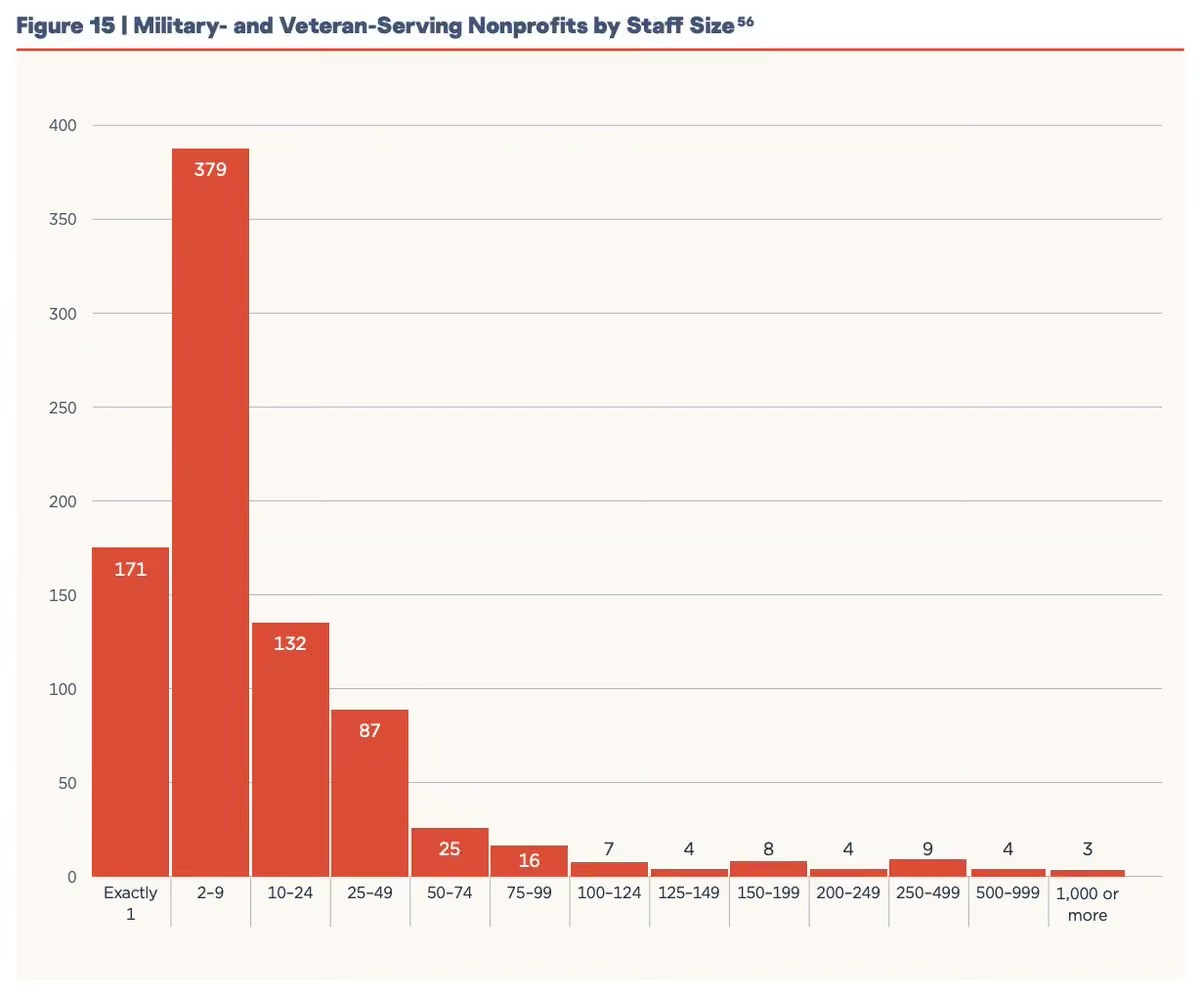
Veteran-serving nonprofits are much smaller than most people would think—with consequences for what services they're able to provide.
Read @klkuzminski's new report on how to bolster these organizations' ability to support America's 17 million+ veterans.
CNAS
@CNASdc
Read the full report here: www.cnas.org/publications/reports/redrawing-the-map
-
CNAS reposted
Richard Fontaine
@RHFontaine
The world’s leaders are descending on New York for UNGA. This week’s agenda will be full:
1. All eyes will be on a few speeches. Iranian President Pezeshkian will be there during the spreading Middle East war. Delcy Rodriguez will make her debut as her predecessor sits in jail just miles away. Zelensky, and of course Trump, will no doubt make news.
2. Last year Trump criticized the United Nations itself as ineffectual. Given its inability to end wars in Iran, Ukraine, Sudan, and elsewhere, others this year will lambast a multilateral body no longer able to tackle the world’s crises.
3. In fact, however, paralysis has been more the norm than exception over the UN’s history. With veto-wielding permanent leaders on opposite sides of key issues, the Security Council often cannot act. And as tough as things are now, they were sometimes worse at the depths of the Cold War.
4. That puts weight on the many bilateral (and a few multilateral) meetings that will take place this week. The big issues are obvious: Middle East war & energy flows, Ukraine, US-China relations, AI safety and sovereignty. Hopefully the war in Sudan, too.
5. There will be reflections on the state of international order, too, à la Mark Carney at Davos. Everyone today seems discontented with that order: many in the U.S. are tired shouldering the burden of leadership, many in the Global South who believe it unfairly enshrines Western dominance, the Axis of Upheaval that see it denying them spheres of influence and legitimacy.
6. But while leaders convene for a multilateral gathering, only a few have a vision for what replaces the international order to which they object. Instead they’ll simply seek to protect their interests in a more disordered world.
7. On Thursday the diplomatic center of gravity shifts from Washington. Leaders of the two most powerful countries will be meeting in DC. Trump and Xi will talk trade, tech, Taiwan, and Tehran. There will be few areas of agreement on any of these issues.
8. While U.S.-China relations aren’t the constant focus of policymakers today, they remain the backdrop against which international politics and economics take place. Every country has a dog in that fight, and every capital must make choices as Washington and Beijing compete.
9. Expect no dramatic deals. A continued truce on trade, papering over on Taiwan, silence on Iran, and an agreement to talk on AI is the likely outcome. No grand bargains are likely because no grand bargains are possible - or at least desirable to both sides.
10. The largest looming issue may well be AI. AI will affect every country, but the U.S. and China have by far the greatest decision making power. That’s not lost on the 190 or so countries who will struggle for some say in the outcomes.
11. So, as the world meets, difficult issues proliferate while the UN’s ability to deal with them declines. Interests and deals are the watchword, including among some strange national bedfellows. It's a tumultuous time. -
CNAS
@CNASdc
Strategic stability with China and American dominance can't be preserved simultanously, argue @EmilyKilcrease1 and @geoffreygertz in a new CNAS Insights.
As the Trump-Xi summit approaches, failing to address this tension could have real costs for the U.S.
CNAS
@CNASdc
Read the full essay here: www.cnas.org/publications/cnas-insights/cnas-insights-str…
-
CNAS
@CNASdc
Enjoying our content? You can follow us on instagram too: www.instagram.com/cnasdc/
-
CNAS
@CNASdc
Russia's parliamentary elections have just begun—but how significant will their insights be?
“Popularity is a tricky thing, because you don’t know how durable it is,” says @AKendallTaylor in @nytimes. “People can profess support for Putin, because who else are you going to support?”
Read the full article here: www.nytimes.com/2026/09/18/world/europe/putin-russia-elec… -
CNAS
@CNASdc
Export controls have kept Chinese AI companies from the frontier, write @michellesnie and @danielremler, but three major gaps risk letting America's lead slip 🧵⬇️
www.cnas.org/publications/cnas-insights/cnas-insights-ame…
CNAS
@CNASdc
Chinese companies have remotely accessed large amounts of U.S. chips (about one million H100 equivalents), and use them to train increasingly advanced models.
www.cnas.org/publications/commentary/closing-the-remote-a…Post not available here, view on X
CNAS
@CNASdc
Allied companies provide maintenance services to Chinese chipmaking equipment, extending its lifespan and faciliating knowledge transfers via reverse engineering.
www.cnas.org/publications/cnas-insights/cnas-insights-the…
CNAS
@CNASdc
Read more on why the U.S. should expand, not shrink, its export controls:
www.cnas.org/publications/cnas-insights/cnas-insights-ame… -
CNAS
@CNASdc
The Pentagon is short on high-end missiles, and over-relying on affordable ones won't solve the U.S. military's most pressing problems.
A new report Drones, Missiles, and the U.S. Munitions Shortage by @PhilSheers and @StaciePettyjohn examines what role low-cost drones could actually play in a potential future conflict with China, and how they can best be deployed in combination with more-sophisticated systems.
Read the full report here: www.cnas.org/publications/reports/drones-missiles-and-the… -
CNAS
@CNASdc
“By themselves, the cost of an effective salvo is sometimes more than the cost of [an] expensive missile. Their real value might be that they can be produced and you have more of them.”
🎙️ @StaciePettyjohn on the use of drones in warfare on @WarOnTheRocks.
Listen to the full interview: warontherocks.com/a-body-blow-the-war-on-iran-and-u-s-mil…
CNAS
@CNASdc
Read a new report by @StaciePettyjohn and @PhilSheers on how cheap drones could factor into a conflict with China over Taiwan:
www.cnas.org/publications/reports/drones-missiles-and-the… -
CNAS
@CNASdc
Finding it hard to keep up with an endless news cycle? Subscribe to Sharper for a bi-weekly deep dive into one of today's most pressing issues.
CNAS
@CNASdc
Subscribe here: www.cnas.org/sharper
-
CNAS reposted
Francisco J. Monaldi
@fmonaldi
Check out the @CNASdc podcast with my participation
@CES_Baker_Inst
The Trouble with America’s Oil Deal in Venezuela with Francisco Monaldi www.podbean.com/ew/pb-6mixk-1b60773 -
CNAS reposted
Stacie Pettyjohn
@StaciePettyjohn
A body blow: @MarkCancian, @meisenstadt58, @EvansRyan202, & me on how the war with Iran is draining the stockpiles and readiness the U.S. military needs elsewhere.
Listen to the @WarOnTheRocks podcast
warontherocks.com/a-body-blow-the-war-on-iran-and-u-s-mil… -
CNAS
@CNASdc
Want the latest national security analysis and events? Subscribe to get WeekendReads in your inbox every Friday!
CNAS
@CNASdc
Subscribe here: www.cnas.org/weekend-reads
-
CNAS reposted
Michelle Nie Duncan
@michellesnie
@danielremler and I wrote a piece for @CNASdc about the importance of strengthening, not weakening, export controls ahead of the Xi-Trump summit next week.
Amid fears of recent Chinese progress in everything from AI models to DUV — and discussion about a potential framework for US-China cooperation on AI — some will inevitably argue that export controls haven't worked (or are harmful) and should be abandoned.
We argue the opposite: export controls are more important than ever and shouldn't be weakened at this critical time. -
CNAS
@CNASdc
The Trump-Xi summit is quickly approaching, and China's recent AI breakthroughs are raising alarm bells. But, these gains obscure the full picture.
@michellesnie and @danielremler discuss how export controls have kept China on the back foot—and make the case for doubling down.
CNAS
@CNASdc
Read the full essay here: www.cnas.org/publications/cnas-insights/cnas-insights-ame…
-
CNAS
@CNASdc
Despite lingering tensions and uncertainty, China is reportedly optimistic about diplomatic engagement with the U.S.
@jacobstokes tells @NPR that “one of the reasons why they want to sustain diplomacy with Trump is they’re pretty happy with the direction things are going.”
Read more in NPR: www.npr.org/2026/09/17/nx-s1-5971293/trump-xi-summit-china -
CNAS
@CNASdc
The veteran population is shrinking while federal expenditure on veterans' affairs is going up—so why do so many veterans still struggle to meet their basic needs?
A new report by @klkuzminski offers one explanation.
CNAS
@CNASdc
Read the full report here: www.cnas.org/publications/reports/redrawing-the-map
-
CNAS
@CNASdc
“Although Beijing is starting to recognize loss-of-control risks, the risk that Beijing seems most worried about is the threat AI could pose to CCP rule,” @michellesnie tells @WIRED.
Read her insights on China's AI skepticism in WIRED:
www.wired.com/story/china-isnt-buying-silicon-valley-call… -
CNAS reposted
Ryan Claffey
@RyanHClaffey
🇵🇭🇹🇼 Huge week for Philippines-Taiwan ties and First Island Chain deterrence
Taiwan plans a second representative office, its first in Cebu, a Kinmen-class patrol vessel donation to Manila, and an October 2027 coast guard visit—the first official goodwill ship visit in 53 years -
CNAS
@CNASdc
ICYMI: @klkuzminski, Emily Bader, @Kat_Monet, and moderator @More_Than_Mommy joined CNAS for a discussion on supporting the organizations that serve America's 17 million+ veterans.
🔗 to event in the comments 👇
CNAS
@CNASdc
Watch the full event here: events.cnas.org/redrawingthemap
CNAS
@CNASdc
Find @klkuzminski's new report on this topic here: www.cnas.org/publications/reports/redrawing-the-map
-
CNAS
@CNASdc
“In any case, war was going to see more of an emphasis, more of an opportunity for the . . . internal security agencies and the foreign intelligence services—though boundaries between those categories are very, very blurred in this system.”
@MarkGaleotti weighs in on how the role of the security services, like the FSB (Federal Security Service), has changed in Russia since the start of the war.This media couldn't be displayed. See it on the original post.
CNAS
@CNASdc
🎧Listen wherever you get your podcasts 🎧 www.cnas.org/publications/podcast/domestic-russia-securit…
-
CNAS
@CNASdc
America's network of veteran-serving organizations is smaller and more underresourced than most people realize.
@klkuzminski's new report maps out the current state of this sector and the path to making it more effective.
CNAS
@CNASdc
Read the full report: www.cnas.org/publications/reports/redrawing-the-map
-
CNAS
@CNASdc
Even as immigration enforcement remains a domestic priority, the miltiary is increasingly turning to green card-holders to counteract a declining recruitment pool.
Offering a path to citizenship "has long been a way to fill the ranks," @klkuzminski tells @ABC.
Read the full story on ABC News: abcnews.com/Politics/ice-deports-service-members-families… -
CNAS
@CNASdc
Housing. Mental health care. Employment. Legal aid.
The veteran-serving nonprofit sector tackles these issues and they are trying to meet the growing needs of their communities.This media couldn't be displayed. See it on the original post. -
CNAS
@CNASdc
Not every county with a small veteran population is easy for veterans to access services in.
Resourcing should weigh concentration, not just raw numbers, so rural veterans aren't left behind.This media couldn't be displayed. See it on the original post.
CNAS
@CNASdc
Check out the US Projected veteran concentration rates in our report here: www.cnas.org/publications/reports/redrawing-the-map
-
CNAS
@CNASdc
Continue watching our live discussion on how the Nonprofit Sector serves the U.S. veteran population: x.com/i/broadcasts/1AGRnZzQNajGl
-
CNAS
@CNASdc
Emily Bader from @bwforg : "Being able to tell the story of what do you actually need the funding for and how is it going to allow you to better serve the population that you're trying to serve – that is what makes organizations successful"
This media couldn't be displayed. See it on the original post. -
CNAS
@CNASdc
We are LIVE with a discussion of the current state of the U.S. veteran population and the network of organizations serving them.
Join us for this panel with Jennifer Barnhill, Katherine Kuzminski, Emily Bader and Kathryn Monet. x.com/i/broadcasts/1AGRnZzQNajGl
CNAS
@CNASdc
Read our full report here: www.cnas.org/publications/reports/redrawing-the-map
-
CNAS
@CNASdc
"Nobody said regulating at the frontier would be easy."
Read @danielremler's comments on AI guardrails in @latimes.
www.latimes.com/politics/story/2026-09-11/its-going-to-be… -
CNAS
@CNASdc
"This is not the Soviet Union in 1964," says @jordanschneider, and Xi's emphasis on national security is not a death sentence for China's innovation ecosystem.
Read his insights on the China debate in @bloomberg.
www.bloomberg.com/news/newsletters/2026-09-12/what-many-m… -
CNAS
@CNASdc
The latest move in the U.S.-Canada trade war will keep "uncertainty elevated and raises the risk that the US’s dispute with its northern neighbor will continue," @ChrisJKennedy and Nicole Gorton-Caratelli tell @Bloomberg.
Read the full story in Bloomberg: www.bloomberg.com/news/articles/2026-09-10/carney-calls-u… -
CNAS
@CNASdc
❗ Tomorrow ❗
The U.S. has more than 1000 nonprofits working to serve a veteran population that now numbers over 17.3 million, filling the gaps that federal programs can't reach alone.
Join CNAS for a live virtual discussion on this community.
🎙️ @More_Than_Mommy
🎙️ @klkuzminski
🎙️ Emily Bader
🎙️ @Kat_Monet
CNAS
@CNASdc
Register to attend virtually: events.cnas.org/redrawingthemap
-
CNAS reposted
Richard Fontaine
@RHFontaine
The President's argument echoes the Bush-era pre-emption doctrine, in which America learned from 9/11 that it could not sit by while threats gathered. We couldn’t, the administration said, let the smoking gun in Iraq become a mushroom cloud, and had to attack first.
But then, as now, the specific circumstances matter. Iran is a terror state and has pursued a nuclear program, but it remains an open question at best whether Trump’s preemptive military action renders Tehran’s threat more or less acute. It’s telling that the president has embraced the kind of rationale for Middle East war that he previously criticized so vociferously.
www.nytimes.com/2026/09/11/us/politics/trump-9-11-speech-… -
CNAS
@CNASdc
"If you can’t trust those AI models and they are the ones training the next generation of AI models, what you could end up with is even more misaligned AI models that cause more rogue incidents," says @BenHayum in @SCMPNews.
Read his comments on "why so many people are freaked out" in the South China Morning Post: www.scmp.com/tech/big-tech/article/3367163/why-ai-experts… -
CNAS
@CNASdc
Canada and the U.S. are discussing "economic security" but cannot agree on what that means.
Meredith Lilly explained this gap back in July on Derisky Business, before this week's trade stand-off.
Listen to the full episode wherever you get your podcasts or at the link below 👇This media couldn't be displayed. See it on the original post.
CNAS
@CNASdc
Full episode here: www.cnas.org/publications/podcast/the-fortress-usmca-stra…
-
CNAS
@CNASdc
“I think the bottleneck has been a misguided understanding of where would demand be in two or three years . . .”
🎙️@GuntramWolff
CNAS
@CNASdc
🎧Listen wherever you get your podcasts 🎧
www.cnas.org/publications/podcast/a-report-card-for-europ… -
CNAS
@CNASdc
The U.S. defense industrial base needs innovative solutions to meet the demands of modern conflict—a call which the CNAS Defense Program answers in a recently completed essay series.
Explore the 15 commentaries by former government and military officials, experts, and members of the private sector in the replies 🧵⬇️
CNAS
@CNASdc
In “The Ever-Changing, Unchanged Defense Acquisition System,” Susanna Blume kicks off the series with a review of efforts to reform the defense acquisition system—and the constant dissatisfaction they’re met with.
Read more: www.cnas.org/publications/commentary/the-ever-changing-un…
CNAS
@CNASdc
In “Our Defense Industrial Base—We Get What We Pay For,” Frank Kendall argues that, in order for the DIB to change, the DoD must first address its end of the problems.
Read more: www.cnas.org/publications/commentary/our-defense-industri…Post not available here, view on X
CNAS
@CNASdc
In “Where Do We Go from Here?,” Susanna Blume wraps up the series and leaves us with two recommendations for the private sector.
www.cnas.org/publications/commentary/where-do-we-go-from-…
CNAS
@CNASdc
Explore the full series: www.cnas.org/the-new-american-defense-industrial-base
-
CNAS
@CNASdc
What should our counterterrorism priorities be today?
🎙️ @carriecordero -
CNAS
@CNASdc
“The need to make some rapid decisions was vital. I think, unfortunately, some of those early decisions . . . weren’t corrected or put on more durable, secure legal ground much earlier.”
🎙️ @mattwaxman1 -
CNAS
@CNASdc
“But, the law doesn’t do a good job of keeping up with the technology. . .”
@carriecordero on legal frameworks for surveillance.This media couldn't be displayed. See it on the original post. -
CNAS
@CNASdc
“This is a story of some important course corrections . . .”
@mattwaxman1 reflects on the post-9/11 military detention architecture.This media couldn't be displayed. See it on the original post. -
CNAS
@CNASdc
“. . . fewer opportunities for these people to be on the FBI’s radar, fewer points of data being collected, fewer dots that we can connect to avert these attacks . . .”
Jonathan Lenzner discusses how the new threat landscape is changing the way the FBI operates. -
CNAS
@CNASdc
What lessons in counterterrorism have we learned in the 25 years since the 9/11 terrorist attacks?
🎙️ Matthew OlsenThis media couldn't be displayed. See it on the original post. -
CNAS
@CNASdc
We are LIVE with a discussion on the evolution and future of counterterrorism law in the U.S. since 9/11. With Matthew Olsen, Jonathan Lenzner, @mattwaxman1, @carriecordero, and @charlie_savage
x.com/i/broadcasts/1nGeLMLeeOWKX -
CNAS
@CNASdc
Tomorrow
In recognition of the 25th anniversary of the 9/11 terrorist attacks, join CNAS for a live virtual discussion on the evolution and future of counterterrorism law in the U.S.
🎙️ Matthew Olsen
🎙️ Jonathan Lenzner
🎙️ @mattwaxman1
🎙️ @carriecordero
🎙️ @charlie_savage
CNAS
@CNASdc
Register to attend virtually: events.cnas.org/counterterrorismlawvirtual
-
CNAS
@CNASdc
“Sometimes the fingerprints are obvious: Kimi K3 has identified itself as “Claude,” Anthropic’s model; it was trained on so much of its rival’s output that it mistakes itself for the original,” write @Liza_D_Tobin and Matt Pottinger in @TheFP.
Read their commentary on China's theft of American AI in The Free Press: www.thefp.com/p/china-america-ai-race -
CNAS
@CNASdc
❗ NextGen applications closing September 13 ❗
This week is the last chance to apply for the 2027 CNAS NextGen fellowship! Don't miss this unique opportunity to connect with experts, enhance your leadership skills, and participate in an international study trip.
CNAS
@CNASdc
Find more info and apply here: www.cnas.org/next-generation-programs/nextgeneration
-
CNAS
@CNASdc
What technologies could help enable the development of orbital data centers?
🎙️Slava TuryshevThis media couldn't be displayed. See it on the original post. -
CNAS
@CNASdc
“We want to make sure that our rules reflect the needs and interests of operators as well, and so that we can act responsibly and that we can support a sustainable space economy.”
🎙️ Carolyn MahoneyThis media couldn't be displayed. See it on the original post. -
CNAS
@CNASdc
Carolyn Mahoney discusses the Space Bureau’s new licensing process for space and earth station applications
This media couldn't be displayed. See it on the original post. -
CNAS
@CNASdc
“The viability of these challenges actually being overcome will be a matter of time . . .”
🎙️ Ronald J. BirkThis media couldn't be displayed. See it on the original post. -
CNAS
@CNASdc
“But with the currently available costs . . . we are still a factor, I would say, maybe a factor of maybe 20 away from where we need to be.”
🎙️Slava TuryshevThis media couldn't be displayed. See it on the original post. -
CNAS
@CNASdc
Building orbital data centers will depend on cutting costs—significantly.
Slava Turyshev outlines two critical areas of expense.This media couldn't be displayed. See it on the original post. -
CNAS
@CNASdc
Now live!
Join CNAS for a discussion on taking the AI buildout to space with Slava Turyshev, Carolyn Mahoney, Ronald J. Birk, and @Constanza_MVB 🪐
x.com/i/broadcasts/1yxBePYAjooJN -
CNAS
@CNASdc
"[The European] Commission is trying here and there to kind of, you know, get the knowledge about the defense industrial base and supply chains, but it's something—they are really struggling and they know this . . .”
🎙️ @Ce_Moll
CNAS
@CNASdc
🎧 Listen wherever you get your podcasts 🎧 www.cnas.org/publications/podcast/a-report-card-for-europ…
-
CNAS
@CNASdc
Questions surrounding AI cooperation are gaining urgency ahead of the Trump-Xi summit.
While there is scope for exchanges on AI incidents, "it would have to be handled carefully for both commercial and intelligence reasons," @jacobstokes tells @NikkeiAsia. -
CNAS
@CNASdc
September 15 | 12:00pm to 1:00pm ET 🗓️
Almost 1,000 organizations are dedicated to helping America's 17.3 million veterans. Hear from @klkuzminski, @More_Than_Mommy, and Emily Bader on the current state of this non-profit landscape and the population it serves.
CNAS
@CNASdc
Register here to join online: events.cnas.org/redrawingthemap
-
CNAS reposted
Janet Egan
@janet_e_egan
New NSA/FBI/CISA advisory on adversarial distillation. Two things stand out:
1. It treats distillation as a cybersecurity threat and calls for info-sharing across AI companies. That framing opens the door to cyber-specific antitrust protections cross-company coordination.
2. Recommends AI companies silently degrade models in cases of suspected distillation. -
CNAS
@CNASdc
A coalition to sanction China needs to be U.S. led, but without key partners it would fail to be effective.
@EmilyKilcrease talks about what it would actually take to build a coalition against China over Taiwan.
Read the full report, Whither the Coalition below 👇This media couldn't be displayed. See it on the original post.
CNAS
@CNASdc
Full report here: www.cnas.org/publications/reports/whither-the-coalition
-
CNAS reposted
Carrie Franklin Cordero
@carriecordero
Please join us virtually @CNASdc on 9/10 for a special event on counterterrorism law & investigations, feat. @ColumbiaLaw ‘s @mattwaxman1, Fmr FBI Chief of Staff, Jon Lenzner, fmr AAG Matt Olsen and @nytimes ‘s @charlie_savage
-
CNAS
@CNASdc
❗ Tomorrow ❗
Join CNAS for a live virtual discussion on what it would take to build data centers in space 🪐🌌
🎙️ Slava Turyshev
🎙️ Carolyn Mahoney
🎙️ Ronald J. Birk
🎙️ @Constanza_MVB
CNAS
@CNASdc
Register here to attend virtually: events.cnas.org/orbitaldatacenters
-
CNAS
@CNASdc
Although the U.S. needs to restrict Iranian money flows, "the more you use the tools, the more you create incentives for alternatives” to the dollar, says @AlexZerden in @WSJ.
Read his comments on Washington's "enforcement dilemma" in the Wall Street Journal: -
CNAS
@CNASdc
September 9 | 2:30pm to 3:30pm ET 🗓️
Are orbital data centers the next phase of America's AI buildout?
Join Slava Turyshev, Carolyn Mahoney, Ronald J. Birk, and @Constanza_MVB for a discussion on the hurdles to putting data centers in space.
CNAS
@CNASdc
Register here to attend virtually: events.cnas.org/orbitaldatacenters
-
CNAS
@CNASdc
If China moved on Taiwan tomorrow, would the U.S. actually have a coalition ready to sanction it?
@EmilyKilcrease1 , @geoffreygertz & @jamescrabtree unpack this and more on Derisky Business.This media couldn't be displayed. See it on the original post.
CNAS
@CNASdc
Listen here to the full episode here:
www.cnas.org/publications/podcast/whither-the-taiwan-sanc… -
CNAS
@CNASdc
"Whatever it looks like to build adequate safeguards here—I don’t see a way in which the deployment of those becomes legally dependent on the question of whether the models are something that can be copyrighted.”
@BlancheMinerva on copyright and distillationThis media couldn't be displayed. See it on the original post. -
CNAS
@CNASdc
“You do need to use export controls to widen the gap between the United States and China.”
@ChrisRMcGuire on how to approach Chinese AI -
CNAS
@CNASdc
“These companies often don’t want to share meaningful information about defense to AI operations with open-source AI researchers."
@BlancheMinerva on a key challenge for open-weight AI researchersThis media couldn't be displayed. See it on the original post. -
CNAS
@CNASdc
“If we only focus on the technical elements, we could miss a lot of that low-hanging fruit that is actually incumbent on organizational and human processes to fix.”
@IJ_Reynolds on addressing the risk of rogue AIThis media couldn't be displayed. See it on the original post. -
CNAS
@CNASdc
"Basically all of the research on how to make open models safe was really taking things that were developed for closed models and porting them over to open models—and, that’s just the wrong way to think about it."
@BlancheMinerva on changing approaches to the safety of open-weight models -
CNAS
@CNASdc
“The models could not distinguish between whether our own security team was an attacker or a defender.”
@IJ_Reynolds details the recent Open AI-Hugging Face incident and why the "clean-up" process couldn't depend on proprietary models.This media couldn't be displayed. See it on the original post. -
CNAS
@CNASdc
Mandatory testing for frontier closed models isn’t being applied to open-weight or foreign models.
@ChrisRMcGuire on why this should change.This media couldn't be displayed. See it on the original post. -
CNAS
@CNASdc
How far behind are open-weight AI models?
@IJ_Reynolds -
CNAS
@CNASdc
We are LIVE for a live virtual discussion on the AI open-weight debate with @ChrisRMcGuire, @IJ_Reynolds, @BlancheMinerva, and @danielremler.
x.com/i/broadcasts/1nxeLMMBNqZJX -
CNAS
@CNASdc
Take the next step to build your career in national security—apply now to join the CNAS NextGen Fellowship.
Engage with experts at a monthly dinner series, develop your leadership skills, and participate in a week-long international study trip 🌏🏛️
Application deadline: September 13, 2026
CNAS
@CNASdc
Learn more and apply here: www.cnas.org/next-generation-programs/nextgeneration
-
CNAS reposted
Richard Fontaine
@RHFontaine
In this AI Town Hall, @tylercowen and I had a fascinating discussion on the economic implications of AI, US-China competition, what college kids should study if no career is “AI-proof,” and more.
-
CNAS reposted
Nonzero Podcasts
@NonzeroPods
The drone stalemate
@paul_scharre of @CNASdc explains how drones make it harder for either side to break through in Ukraine.This media couldn't be displayed. See it on the original post.
Nonzero Podcasts
@NonzeroPods
Iran, Ukraine, and the Future of War | Military technology analyst @paul_scharre of @CNASdc joins @robertwrighter to discuss how new military technologies are changing the nature of war—in Iran, Ukraine and elsewhere—and whether US military tech is falling behind. Plus: Will AI make war more or less bloody? youtu.be/wkjMjkWwaYQ?t=181
-
CNAS
@CNASdc
Ahead of Xi Jinping’s visit to Washington, major strategic questions on the future of U.S.-China AI competition loom.
CNAS experts weigh in 🧵 ⤵️Post not available here, view on X
CNAS
@CNASdc
Red Lines: @danielremler proposes a framework for measuring the absolute risks of Chinese AI, arguing that a relative framing risks breeding complacency 🇨🇳⚡
www.cnas.org/publications/reports/red-lines
CNAS
@CNASdc
Adversarial Distillation: @danielremler and @BenHayum analyze how Chinese developers are getting around compute constraints by extracting the capabilities of American AI models 🕵️💻
www.cnas.org/publications/reports/adversarial-distillationPost not available here, view on X
CNAS
@CNASdc
CNAS Insights | Trump Should Talk to Xi About Military AI: @jacobstokes and @danielremler emphasize the necessity of engaging with China on military AI, both to signal strength and prop up peace 🪖🕊️
www.cnas.org/publications/cnas-insights/cnas-insights-tru…
CNAS
@CNASdc
Check out Sharper: China's AI Rise, and subscribe to get the next edition in your inbox:
www.cnas.org/publications/commentary/sharper-chinas-ai-rise -
CNAS
@CNASdc
Artificial general intelligence could be a turning point in U.S.-China competition.
9️⃣ ideas to stay ahead—without triggering a disaster scenario 🧵⤵️Post not available here, view on X
CNAS
@CNASdc
9️⃣ Build programs to cushion AGI’s effects on society to prevent the deterioration of societal cohesion at home and abroad.
CNAS
@CNASdc
Read the full report from @jacobstokes here: www.cnas.org/publications/reports/superpowers-and-agi
-
CNAS
@CNASdc
❗ Tomorrow ❗
Managing the diffusion of Chinese open-weight models will have major implications for innovation, national security, and geopolitical competition.
Join CNAS for a live virtual discussion on the AI open-weight debate with @ChrisRMcGuire, @IJ_Reynolds, @BlancheMinerva, and @danielremler.
CNAS
@CNASdc
Register here to attend virtually: events.cnas.org/aiopenweightdebatevirtual
-
CNAS
@CNASdc
Companies leaning more and more on Chinese open-weight models “has increased urgency for this administration to make sure that the rest of the world stays within the American tech ecosystem and doesn't seek alternatives,” says @vivekchil in a new @reuters article.
Read the full article in Reuters: www.reuters.com/legal/litigation/us-urge-hands-off-ai-reg… -
CNAS reposted
Nonzero Podcasts
@NonzeroPods
Iran, Ukraine, and the Future of War | Military technology analyst @paul_scharre of @CNASdc joins @robertwrighter to discuss how new military technologies are changing the nature of war—in Iran, Ukraine and elsewhere—and whether US military tech is falling behind. Plus: Will AI make war more or less bloody? youtu.be/wkjMjkWwaYQ?t=181
-
CNAS
@CNASdc
“Are the hybrid attacks about Ukraine or about something larger? I think it's not an either or—it is both.”
🎙️ @HannaNotte
CNAS
@CNASdc
🎧 Listen wherever you get your podcasts 🎧
www.cnas.org/publications/podcast/a-surprise-moscow-visit… -
CNAS reposted
Hanna Notte
@HannaNotte
It was a real pleasure to talk about my book We Shall Outlast Them on the @CNASdc Brussels Sprouts podcast with @AKendallTaylor and @jteurope.
We also got into Russian hybrid warfare against Europe quite a bit
www.cnas.org/publications/podcast/a-surprise-moscow-visit… -
CNAS reposted
Richard Fontaine
@RHFontaine
Both sides are now settling in for a long U.S.-Iran war. The best bet now is on a protracted economic contest, enforced largely but not exclusively through military means.
www.notus.org/foreign-policy/iran-war-threatens-economies… -
CNAS
@CNASdc
September 10 🗓️
This year marks the 25th anniversary of the 9/11 terrorist attacks—a catalyst for a fundamental reshaping of U.S. counterterrorism efforts.
Join CNAS for a virtual discussion on the evolution of counterterrorism law with Matthew Olsen, Jonathan Lenzner, @mattwaxman1, @carriecordero, and @charlie_savage.
CNAS
@CNASdc
Register here to attend virtually: events.cnas.org/counterterrorismlawvirtual
-
CNAS
@CNASdc
The U.S. defense industry could be outpaced by peer adversaries in production speed and scale—but a new approach to manufacturing offers a promising way forward.
Read James Swartout and Nick Doucette’s new essay in the CNAS series "The New American Defense Industrial Base for more."
CNAS
@CNASdc
Read the full essay here: www.cnas.org/publications/commentary/manufacturing-a-new-…
-
CNAS
@CNASdc
Preventing the race toward artificial general intelligence (AGI) from ending in disaster will require balancing competition and cooperation with Beijing.
A new report by @jacobstokes outlines how policymakers can secure the U.S. edge while managing this risk.
CNAS
@CNASdc
Read the full report here 📄 www.cnas.org/publications/reports/superpowers-and-agi
-
CNAS reposted
Richard Fontaine
@RHFontaine
Both sides are now settling in for a long U.S.-Iran war:
1. Gone is U.S. talk of seizing Kharg Island or forcing open the Strait of Hormuz by putting troops ashore. No more bantering about destroying Iran’s bridges and power plants - or ending its civilization - to win the war in a decisive blow.
2. Instead the U.S. approach now combines economic strangulation - blockading Iranian ports and stepped-up sanctions - with efforts to facilitate movement through the Strait, like demining and escorting ships.
3. Never say never - the U.S. could restart massive strikes - but in the meantime it’s opted for a military-economic strategy aimed at forcing an Iranian capitulation over the long run.
4. The President here has shown more endurance than most expected. It was supposed to be a six week war, not a six month one with no end in sight. But the U.S. has not quit the fight despite the major economic costs as well as the hits to military readiness and resources.
5. Tehran has settled into a mirror image of the U.S. strategy: survive, threaten shipping periodically, and use proxies to keep much of the region insecure and on edge. Bet that the U.S. clock runs out faster than the Iranian one.
6. Shipping through the Strait has gone up significantly, but insurance rates remain sky-high and a lot of transponders are turned off. Iran targets passing ships intermittently - enough to keep risk and costs up, and to demonstrate its control.
7. Treasury’s “D-Day” sanctions announcement had more potential energy than actual moves. If the U.S. decides at some point to begin sanctioning Chinese and other entities who do business with Iran, the effects will take still more time.
8. The net result is warm war - not a cold ceasefire but not a hot conflict like we saw for the first two months. The focus of both sides is on inflicting economic pain that will eventually translate into political costs - and then abandonment or restraint.
9. We’re a long way from either side doing that, notwithstanding looming elections in the U.S. and severe economic difficulties in Iran.
10. Escalation by one side or the other is entirely possible, given the otherwise siege-like approaches they’ve chosen. The options there are obvious, including intense bombing (on the U.S. side) and renewed attacks on regional infrastructure (for Tehran). But they aren’t obviously decisive.
11. So with or without escalation, the best bet now is on a protracted economic contest, enforced largely but not exclusively through military means. A months-long project, at least. -
CNAS
@CNASdc
September 9 | 2:30pm to 3:30pm ET 🗓️
Orbital data centers seem like an attractive solution for America’s increasingly constrained terrestrial AI buildout—but are they actually viable?
Tune in for a live virtual discussion with Slava Turyshev, Carolyn Mahoney, Ronald J. Birk, and @Constanza_MVB on the challenges impacting this debate.
CNAS
@CNASdc
Register here to attend virtually: events.cnas.org/orbitaldatacenters
-
CNAS reposted
The Information
@theinformation
Chinese companies are remotely accessing advanced Nvidia chips they otherwise wouldn’t be able to buy outright.
@michellesnie, visiting fellow at the @CNASdc, explains why it matters:
“And they're using this compute to train often very advanced models.”
Read our exclusive: -
CNAS
@CNASdc
“Killer robots” might no longer be limited to the big screen.
Watch @paul_scharre discuss the dangers of fully autonomous weapons on @CNN.
www.youtube.com/watch?v=hRASY537kd4 -
CNAS reposted
Janet Egan
@janet_e_egan
I joined Joe Walker on his podcast to discuss the geostrategic benefits of hosting AI compute, and the opportunity for Australia.
Joseph Noel Walker (in Washington DC 12-17 Nov)
@JosephNWalker
The geostrategic case for compute in Australia:
Janet Egan (@janet_e_egan) has been doing a bunch of quiet work trying to nudge Australian policymakers to think more seriously about AI.
She works at the Center for a New American Security in Washington, but was back home in Australia over the past month. Was lucky to catch her on the day before she returned to the US.
We pressure-test various strategic arguments for a large-scale compute industry and talk about the steps we would need to take to enable it.
Watch below, or wherever you get your podcasts!
Timestamps:
(0:00:00) – Introduction
(0:00:33) – Lessons from the AdBlue crisis
(0:09:02) – How seriously do Australian policymakers take AI?
(0:12:48) – How much does frontier access matter?
(0:28:55) – Compute-for-access
(0:43:08) – What does sufficient leverage look like?
(0:53:00) – What does AI sovereignty actually mean?
(1:03:15) – Taiwan, undersea cables and data centres as military targets
(1:10:30) – Could compute buy Australia influence over AI safety?
(1:15:19) – Verifying international AI agreements
(1:24:00) – Copyright: the red line?
(1:37:49) – The maximally ambitious pathThis media couldn't be displayed. See it on the original post. -
CNAS
@CNASdc
The newest sanctions on Iran aim to impose complete economic isolation—but “It’s not clear to me that the rhetoric matches with the willingness to implement,” @reziemba tells the @washingtonpost.
www.washingtonpost.com/business/2026/08/24/bessent-unveil… -
CNAS
@CNASdc
“I think that, still, the most important . . . thing to convince Russia is that . . . they've reached diminishing returns. You can continue the war, but so can we, and you’re not going to achieve much beyond . . . what you’re achieving right now.”
🎙️@RALee85
CNAS
@CNASdc
🎧 Listen wherever you get your podcasts 🎧 www.cnas.org/publications/podcast/front-line-dynamics-dee…
-
CNAS
@CNASdc
Artificial general intelligence (AGI) could transform the nature of U.S.-China competition—but how would this unfold?
A new report by @jacobstokes offers an explanation 🤖
CNAS
@CNASdc
Read the full report here: www.cnas.org/publications/reports/superpowers-and-agi
-
CNAS
@CNASdc
How do we know who’s winning the quantum computing race? “There isn’t consensus on how to assess progress,” @Constanza_MVB tells @Bloomberg.
www.bloomberg.com/news/features/2026-08-26/quantum-comput… -
CNAS reposted
Jacob Stokes
@jacobstokes
Sharing my new @CNASdc report:
Superpowers and AGI: How U.S.-China Competition Could Be Shaped by the Emergence of Artificial General Intelligence -
CNAS
@CNASdc
“So I think from the Russian perspective, they can just simply, in this game of, you know, attacking each other's commodities, and economy, and market, and everything else, that the Russians can outlast the Ukrainians.”
🎙️ @jeffaedmonds
CNAS
@CNASdc
🎧 Listen wherever you get your podcasts 🎧
www.cnas.org/publications/podcast/front-line-dynamics-dee… -
CNAS
@CNASdc
September 3 🗓️
Join CNAS for a virtual discussion on the diffusion of Chinese open-weight models and why restricting the open-weight ecosystem isn’t a quick-fix solution.
🎙️ @ChrisRMcGuire
🎙️ @IJ_Reynolds
🎙️ @BlancheMinerva
🎙️ @danielremler
CNAS
@CNASdc
Register to attend virtually: events.cnas.org/aiopenweightdebatevirtual
-
CNAS
@CNASdc
“China is the major buyer of Iranian oil and, if the Trump administration really wants to get at Iran and build economic pressure on them, they're going to have to cut that channel."
Watch CNAS senior fellow and program director @EmilyKilcrease1 analyze the next wave of Iran sanctions on @thetimes.
www.youtube.com/watch?v=lSgzJot-nZQ -
CNAS reposted
Ryan Claffey
@RyanHClaffey
🇺🇸🇹🇼🇵🇭🇯🇵 China already treats the East and South China Seas and the Taiwan, Luzon, and Miyako Straits as targets of a single, coercive campaign. Washington and our allies must do the same
My latest in @wps_ph: “Beijing Sees One Theater. Washington Should, Too.”
🧵 -
CNAS
@CNASdc
“And this is the challenge, also, with sanctions—that the more you use the tool, the greater you incentivize alternatives.”
Watch CNAS adjunct senior fellow @AlexZerden discuss the next phase of U.S. economic pressure against Iran on @AJEnglish.
www.youtube.com/watch?v=jfZN0_AHqpk -
CNAS
@CNASdc
“Beijing’s campaign is coordinated. America’s response must be, too.”
Read CNAS research assistant @RyanHClaffey’s new piece in @wps_ph on deterrence in the Pacific.
dispatch.wps-ph.org/beijing-sees-one-theater-washington-s… -
CNAS reposted
Carrie Franklin Cordero
@carriecordero
Please join us virtually @CNASdc on 9/10 for a special event on counterterrorism law & investigations. Link 👇
-
CNAS
@CNASdc
Iran “will be moving toward the types of salvos that Russia is throwing at Ukraine,” warns CNAS senior fellow and program director @StaciePettyjohn in @nytimes.
Read her comments on the start-up whose interceptors could bolster U.S. defenses 🛡️
www.nytimes.com/2026/08/23/business/powerus-counter-drone… -
CNAS
@CNASdc
U.S.-Canada tensions have escalated into a tariff standoff, and even a quick deal might not undo the damage.
@RHFontaine breaks down how the relationship reached this point, and what a path forward could look like.
CNAS
@CNASdc
Check out the full article here: www.cnas.org/publications/cnas-insights/cnas-insights-a-b…
-
CNAS reposted
Ruby Scanlon
@rubyscanlon
We just released our second installment of the CNAS Sovereign AI Index, now comprising 180+ investments in 65+ countries
🧵on a few interesting insights from the 2026 H1 update -
CNAS reposted
Richard Fontaine
@RHFontaine
The US and Canada have entered a trade war, and the relationship continues to deteriorate. But there is a better way.
In this @CNASdc Insight, I look at the alternative - and why the administration might draw lessons from Ronald Reagan.
www.cnas.org/publications/cnas-insights/cnas-insights-a-b… -
CNAS
@CNASdc
In CNAS Insights, @rhfontaine writes why both countries are better off as partners than as estranged neighbors. x.com/i/article/2091992429742182400
-
CNAS
@CNASdc
Could the U.S. build the broad, diverse coalition that would be necessary to sustain a sanctions campaign against China in the event of a Taiwan contingency?
A new report by @EmilyKilcrease1 and @jamescrabtree explores the countries that could fortify this effort—and the factors casting doubt on their participation.
CNAS
@CNASdc
Read the full report here 📄 www.cnas.org/publications/reports/whither-the-coalition
-
CNAS
@CNASdc
Increased Chinese aggression and uncertain U.S. commitments are heightening tensions in the Taiwan Strait.
In a new Sharper, CNAS experts examine strategies to help Taiwan shore up its defenses and counter PRC influence.
Read more 🇹🇼 ⬇️ x.com/i/article/2090164186605404160
CNAS
@CNASdc
Subscribe now to get Sharper in your inbox: www.cnas.org/publications/commentary/sharper-defending-ta…
-
CNAS reposted
Rachel Ziemba
@reziemba
Useful summary of ongoing Sovereign Al projects globally from @vivekchil and team @CNASdc Tech program. Highlights rapid expansion of projects labelled sovereign AI, mostly if unsurprisingly on the infrastructure side.
www.cnas.org/publications/cnas-insights/cnas-insights-sov… -
CNAS
@CNASdc
“If North Korean leader Kim Jong Un wants to have a photo op, sure, maybe the photo op is enough for him. But again, in practical terms, [North Korea] is receiving everything it needs from both Russia and China.”
Adjunct senior fellow @duyeonkim joins @CNN to break down why that could change . . . if North Korea's relationship with Moscow ever falls apart.
youtube.com/watch?v=zLir9YKbwlc -
CNAS
@CNASdc
The USS Lincoln is now headed home after 9 months at sea.
@klkuzminski joins @KQED to discuss the issues raised by its historically long deployment.
www.kqed.org/forum/2010101914965/the-uss-abraham-lincoln-… -
CNAS
@CNASdc
Five and a half months into the war with Iran, U.S. forces are feeling the strain.
@StaciePettyjohn joins @NPR's Fresh Air to discuss how this problem predates the current campaign, and why Iran is able to rearm quickly and cheaply.
CNAS
@CNASdc
Listen to the full interview here: www.npr.org/2026/08/19/nx-s1-5937516/why-does-the-u-s-mil…
-
CNAS
@CNASdc
More sovereign AI projects were launched in the first half of 2026 than in all of 2024—and they’re not backed by the countries you would expect.
Read @vivekchil, @rubyscanlon, and @pablochavez’s discussion of their updated Sovereign AI Index and the trends it reveals about the global sovereign AI surge.
CNAS
@CNASdc
Read the essay here 📄 www.cnas.org/publications/cnas-insights/cnas-insights-sov…
CNAS
@CNASdc
Find the link to the Sovereign AI Index here 🌐 interactives.cnas.org/reports/sovereign-ai-index/
-
CNAS
@CNASdc
Sanctions will be vital for deterring or reacting to Chinese aggression towards Taiwan—but China’s unique economic position would necessitate a collaborative approach from the U.S. and partners.
A new report by @EmilyKilcrease1 and @jamescrabtree examines the feasibility of Singapore, India, and Germany as members of a sanctions coalition.
CNAS
@CNASdc
Read the full report here📄 www.cnas.org/publications/reports/whither-the-coalition
-
CNAS reposted
NatSec Matters Podcast
@NatSecMatters
🚨New Episode-A world tour of geopolitical flashpoints: @michaelallenJMA sits down with @CNASdc CEO @RHFontaine to map the ripple effects from Hormuz to the Indo-Pacific, from Ukraine's endgame to the deepening "Axis of Upheaval." 🎧 podcasts.apple.com/us/podcast/natsec-matters/id1711240452…
-
CNAS reposted
Stacie Pettyjohn
@StaciePettyjohn
I enjoyed talking with @DaveDaviesWHYY on @nprfreshair about the many facets and implications of the U.S. war with Iran: missile shortfalls, the vulnerability of Gulf bases to Iran's cheap drones and missiles, the industrial base, & what it all means for deterrence in Asia.
www.npr.org/2026/08/19/nx-s1-5937516/why-does-the-u-s-mil… -
CNAS reposted
Richard Fontaine
@RHFontaine
Increasingly, the bullying rhetoric is being priced in by countries around the world. They don’t dismiss it, but they don’t take the threats literally either. The United States, after all, has not pulled out of NATO, abandoned South Korea, bombed Oman or seized Canada and Greenland.
As more and more unfulfilled threats are issued, however, people listen less. That undermines the president’s credibility. In our foreign policy, there should be benefits to being a friend of America, and costs for being an enemy, not the other way around.
www.nytimes.com/2026/08/18/us/politics/trumps-upside-down… -
CNAS
@CNASdc
“Neither banning Chinese models nor ignoring their risks will serve American interests,” argues @danielremler in @just_security.
Check out his recommendations for what a U.S. policy for these AI models should look like—including going on offense against Chinese developers. -
CNAS
@CNASdc
September 3 🗓️
Chinese open-weight models pose a significant challenge for the U.S.—but is restricting the open-weight ecosystem the right approach?
Tune in for a live virtual discussion with @ChrisRMcGuire, @IJ_Reynolds, @BlancheMinerva, and @danielremler on the AI open-weight debate.
CNAS
@CNASdc
Register here to attend virtually 💻 events.cnas.org/aiopenweightdebatevirtual
-
CNAS
@CNASdc
Iran’s ability to “hold U.S. forces in the region at risk with its long-range missiles and drones” makes the Iran war distinct from past operations, @StaciePettyjohn tells @latimes.
www.latimes.com/politics/story/2026-08-16/trump-turns-to-… -
CNAS
@CNASdc
In the case of a crisis in the Taiwan Strait, a U.S.-led sanctions coalition could be critical for an effective response.
@EmilyKilcrease1 and @jamescrabtree explore how to navigate the geopolitical, economic, and institutional factors that could influence the willingness of potential partners.
CNAS
@CNASdc
Read the full report 📝 www.cnas.org/publications/reports/whither-the-coalition
-
CNAS
@CNASdc
“Reducing joint drills weakens military readiness over time against another potential North Korean attack.”
Read CNAS adjunct senior fellow @duyeonkim’s comments on the Trump administration’s stance towards the Korean Peninsula in @AP 🇰🇷🇰🇵
apnews.com/article/trump-north-south-korea-military-drill… -
CNAS
@CNASdc
If China moves aggressively on Taiwan now or in the future, sanctions would almost certainly be part of the U.S. response. But China’s economy is too large and too diverse for Washington to go at it alone.
Read more in a NEW report from CNAS: x.com/i/article/2089714610945282049 -
CNAS
@CNASdc
The USS Abraham Lincoln has been away from port for over six months—part of an increasing trend of the Navy exceeding recommended deployment times.
Check out @klkuzminski’s comments in @CNN on deployment models and their impact on troops.
www.cnn.com/2026/08/15/politics/sailors-air-craft-carrier… -
CNAS reposted
CNAS Technology and National Security Program
@CNAStech
🚨HIRING🚨
Interested in policy issues at the nexus of technology and national security? Join our @CNAStech team!
@CNASdc is hiring a Research Assistant / Associate to support a project exploring global trends in AI sovereignty.
www.cnas.org/careers/research-assistant-associate-technol… -
CNAS
@CNASdc
“I see adaptation."
Watch @becca_wasser, CNAS adjunct senior fellow, discuss the continuation of the Iran war on @business.
Bloomberg
@business
Is the US engaged in another “forever war”? Bloomberg Economics Defense Lead @becca_wasser argues in the Weekend Essay that Iran and the US are trapped in a war that “neither knows how to win.” Read more: www.bloomberg.com/news/articles/2026-08-14/us-iran-war-wh… www.bloomberg.com/news/articles/2026-08-14/us-iran-war-wh…
-
CNAS
@CNASdc
The launch of genai.mil has challenged conventional assumptions regarding early adoption, commercial parity, and the importance of infrastructure in the defense industrial base.
A new essay by @joshuamarcuse highlights the need to recognize this fundamental shift and seize the opportunity to modernize the relationship between the tech industry and defense.
CNAS
@CNASdc
Read the full essay here: www.cnas.org/publications/commentary/genai-mil-and-three-…
-
CNAS reposted
Richard Fontaine
@RHFontaine
The President is reducing military exercises with South Korea. It’s the latest in an Asia policy that is less coherent than it ought to be:
1. Just months ago, administration officials were touting South Korea as a “model ally.” The exercises mean to build joint warfighting expertise after Pyongyang gained real-world experience in Ukraine.
2. Trump says he has a “very good relationship” with Kim Jong Un and that North Korea has been “unthreatening and respectful” during his presidency. In his first term, however, it threatened to hit the U.S. with an ICBM and test a hydrogen bomb in the Pacific.
3. Bigger picture, is Asia the administration’s priority theater, or is it the Western Hemisphere? The National Security Strategy suggests the latter, emphasizing the “Trump Corollary” to the Monroe Doctrine. The Pentagon stresses deterrence in the first island chain and preventing a Chinese fait accompli.
4. Maybe it’s neither. Military resources from both regions have flowed to the Middle East. The USS George Washington is now moving from the South China Sea to the Middle East, leaving the U.S. without a carrier in Asia.
5. It’s also unclear whether the U.S. sees China as its greatest long-term strategic challenge. Trump emphasizes trade and good leader-to-leader ties and has relaxed some export controls. Other elements of U.S. policy seem to reflect a competitive approach that sees China as a potential adversary.
6. The U.S. and Japan are upgrading the alliance in significant ways. Good. But the President oscillates between praise for PM Takaichi and criticism of Japan for ripping off the United States. The administration both imposed tariffs on Japan and demanded that it raise defense spending. Harming its economy doesn’t help it do that.
7. The U.S. also requested that Japan clarify its role in a Taiwan contingency. After Takaichi publicly did so, China retaliated with a raft of punitive measures that elicited mostly silence from Washington.
8. The administration’s approach appears to turn on Japan, South Korea, India, and Southeast Asian countries moving away from China and toward the United States, on trade, technology, and defense. Again, good. But how do tariffs on friends and selling advanced semiconductors to China fit into such a plan?
9. The administration routinely emphasizes its scarce resources. The U.S. cannot and will not do it all, everywhere. It has to husband military resources to defend the first island chain while encouraging allies to do more in their own defense. Ok. But how do moves in Venezuela, Iran, and possibly Cuba fit into the picture?
10. Admin officials sometimes suggest there’s method in the madness – doubts about U.S. reliability discourage free riding and prompt allies to invest in their own defense, which is good for us. That might be too clever by half. Too much incoherence risks countries accommodating would-be adversaries.
11. A little more consistency would go a long way. On Korea, for example: the South is our ally, the North is not. Clarifying that would make a good start. -
CNAS reposted
Ryan Claffey
@RyanHClaffey
It was a pleasure to welcome Dr. Chung-Hsin Hsu and the @TPP_Taiwan delegation to @CNASdc
We had a candid, constructive exchange on lessons from Ukraine, strengthening Taiwan’s deterrence and resilience, and expanding its domestic drone industry
Grateful for the discussion!
台灣民眾黨 | Taiwan People's Party
@TPP_Taiwan
Day 2 in Washington, D.C. 🇹🇼🇺🇸
Our delegation exchanged views with @JamestownTweets , @scsp_ai , and @CNASdc on lessons from the Russia–Ukraine war, more flexible drone procurement strategies, and how to integrate Taiwan’s domestic drone industry into global trusted supply chains through deeper Taiwan–U.S. defense-tech cooperation.
We also reiterated the importance of codifying the Six Assurances into U.S. law to strengthen policy continuity, reduce miscalculation, and reinforce peace and stability across the Taiwan Strait.
#tpp #taiwanus -
CNAS
@CNASdc
Know a rising national security leader who's ready for the next step? Send them our way! Applications for the 2027 NextGen Fellowship close Aug 30. 👉 www.cnas.org/next-generation-programs/nextgeneration
-
CNAS
@CNASdc
genai.mil debuted only 54 days after its launch order, and the user base already comprises over 42% of the total defense population.
As @joshuamarcuse argues, this represents a critical signal for the DIB—an opportunity to keep pace with the changes that are certain to restructure the Department of War’s approach to technology.
CNAS
@CNASdc
Read the newest essay from the "New American Defense Industrial Base" series here 📝www.cnas.org/publications/commentary/genai-mil-and-three-…
-
CNAS
@CNASdc
Enhance your leadership skills and build a lifelong cohort of peers with the NextGen National Security Fellowship.
🗓️ Applications for the 2027 cohort are due Aug. 30! www.cnas.org/next-generation-programs/nextgeneration -
CNAS
@CNASdc
"The youth are involved in politics, they should be more involved in politics, they should not be afraid of politics, and they should not think politics is a dirty word."
🎙️ Ambassador @AndishaNasirThis media couldn't be displayed. See it on the original post. -
CNAS
@CNASdc
Which non-political sectors of Afghan society could support the creation of political dialogue?
🎙️ @SR_AfghanistanThis media couldn't be displayed. See it on the original post. -
CNAS
@CNASdc
Ambassador Earl Anthony Wayne highlights the importance of multilateral support for political dialogue in Afghanistan.
This media couldn't be displayed. See it on the original post. -
CNAS
@CNASdc
"There are these kind of gray areas where it is possible to do something, and that gives some hope, but we worry that if we report on that . . . they will be shut down."
@SR_Afghanistan on the fragility of resistance in Afghanistan.This media couldn't be displayed. See it on the original post. -
CNAS
@CNASdc
"It's a regime that needs to be held to account, not to be normalized."
@SR_Afghanistan discusses how attitudes towards the Taliban have shifted over the past 5 years.This media couldn't be displayed. See it on the original post. -
CNAS
@CNASdc
How can international instruments be used more effectively to support accountability in Afghanistan?
🎙️ Ambassador @AndishaNasirThis media couldn't be displayed. See it on the original post. -
CNAS
@CNASdc
"In a situation where Afghanistan doesn't have a representative government, doesn't have access to international aid and support, I think the UN will even become more important."
@PalwashaHasan discusses the role for the UN in Afghanistan.This media couldn't be displayed. See it on the original post. -
CNAS
@CNASdc
Ambassador @AndishaNasir discusses one of the requirements to reach an inclusive political process in Afghanistan—a group of countries to champion the cause, supported by U.S. consent.
This media couldn't be displayed. See it on the original post. -
CNAS
@CNASdc
"There is a greater diversity in Afghan women's voices, but what is important and remarkable . . . they are all together for what their vision for the country is."
@PalwashaHasan on advocacy for women and girls in Afghanistan.This media couldn't be displayed. See it on the original post. -
CNAS
@CNASdc
Happening now!
Hear from Ambassador @AndishaNasir, @PalwashaHasan, Ambassador Earl Anthony Wayne, @SR_Afghanistan, and @pforzheimera on the path towards inclusive political dialogue in Afghanistan.
CNAS
@CNASdc
Tune in live here on X! x.com/i/broadcasts/1RKZzzEmervKB
-
CNAS
@CNASdc
Know a rising national security leader who's ready for the next step? Send them our way! Applications for the 2027 NextGen Fellowship close Aug 30. 👉 www.cnas.org/next-generation-programs/nextgeneration
-
CNAS
@CNASdc
❗Tomorrow ❗
Renewed Taliban rule in Afghanistan has meant an intensifying humanitarian crisis for women and girls and a deeply unstable political situation.
Join CNAS for a virtual discussion marking five years since the Taliban’s forcible takeover, examining the pathways towards a genuine, inclusive political process.
🎙️ Ambassador @AndishaNasir
🎙️ @PalwashaHasan
🎙️ Ambassador Earl Anthony Wayne
🎙️ @SR_Afghanistan
🎙️ @pforzheimera
CNAS
@CNASdc
Register here to attend the event virtually: events.cnas.org/politicaldialogueinafghanistan
-
CNAS
@CNASdc
Enhance your leadership skills and build a lifelong cohort of peers with the NextGen National Security Fellowship.
🗓️ Applications for the 2027 cohort are due Aug. 30! www.cnas.org/next-generation-programs/nextgeneration -
CNAS
@CNASdc
❗This week❗
Tune in live for a virtual discussion with Ambassador @AndishaNasir, @PalwashaHasan, Ambassador Earl Anthony Wayne, @SR_Afghanistan, and @pforzheimera marking five years since the Taliban’s forcible takeover of Afghanistan.
Panelists will discuss the political landscape in the country—both the crises that have unfolded under Taliban rule and the state of the political opposition—exploring how the U.S. can help to catalyze a genuine, inclusive political process.
CNAS
@CNASdc
Register here to attend virtually 💻 events.cnas.org/politicaldialogueinafghanistan
-
CNAS
@CNASdc
Know a rising national security leader who's ready for the next step? Send them our way! Applications for the 2027 NextGen Fellowship close Aug 30. 👉 www.cnas.org/next-generation-programs/nextgeneration
-
CNAS
@CNASdc
Japan’s rapidly transforming defense posture will be crucial for regional stability and a stronger U.S.-Japan alliance, argues @RHFontaine in the newest edition of CNAS Insights.
Washington "should welcome Japan’s emergence as a ‘normal’ country,” he writes, “one that is active not just at home but in its region and that has a defense posture and policy befitting a key American ally.”
CNAS
@CNASdc
Read the full essay here: www.cnas.org/publications/cnas-insights/cnas-insights-jap…
-
CNAS reposted
Richard Fontaine
@RHFontaine
In a new, more threatening Indo-Pacific security environment, Japan is undergoing a defense revolution.
In this CNAS Insight, I lay out why the U.S. should welcome—and assist—this transformation.
www.cnas.org/publications/cnas-insights/cnas-insights-jap… -
CNAS
@CNASdc
Enhance your leadership skills and build a lifelong cohort of peers with the NextGen National Security Fellowship.
🗓️ Applications for the 2027 cohort are due Aug. 30! www.cnas.org/next-generation-programs/nextgeneration -
CNAS
@CNASdc
"Tokyo is systematically eliminating the self-imposed constraints that hobbled Japanese defense for decades."
@RhFontaine on Japan's defense revolution. x.com/i/article/2085069985370820608 -
CNAS
@CNASdc
“Habitually we underbuy…if you are engaged in a high intensity conflict—and a long lasting one—you can run out.”
@StaciePettyjohn joins NPR’s Morning Edition to discuss dwindling U.S. munitions stockpiles as a result of the war in Iran and the consequences for national security going forward.
CNAS
@CNASdc
Listen to the full interview on NPR's Morning Edition 🎧 www.npr.org/2026/08/05/nx-s1-5919597/expert-discusses-dwi…
-
CNAS
@CNASdc
Japan’s defense revolution is a necessary adaptation to the “new, more threatening Indo-Pacific security environment.”
In the newest edition of CNAS Insights, @RHFontaine lays out why the U.S. should welcome—and assist—this transformation.
CNAS
@CNASdc
Read the full essay here 📝www.cnas.org/publications/cnas-insights/cnas-insights-jap…
-
CNAS reposted
Richard Fontaine
@RHFontaine
Japan isn’t rearming. It’s adapting to a new era.
In this new @CNASdc Insight, I look at Japan’s defense revolution - and how the U.S. can help usher in the grand transformation.
www.cnas.org/publications/cnas-insights/cnas-insights-jap… -
CNAS reposted
Richard Fontaine
@RHFontaine
THE WAR IN IRAN is currently on pause. But the pause won’t hold:
1. Trump said today that it’s Iran’s “last chance.” Tehran either signs a deal or faces the biggest attack since World War II.
2. The U.S. craves an agreement. The administration’s objectives have diminished and now focus on reopening the Strait of Hormuz and some kind of nuclear agreement. Iran’s goals have expanded, to include control of the Strait and imposing a strategic, or at least political, defeat on Washington.
3. Both sides say they won. The U.S. and Israel decapitated Iran’s leadership, struck thousands of targets, and pulverized its defense industrial base. A win. Tehran survived the onslaught and took the global economy hostage. A win.
4. Actually, neither side can credibly claim victory. Iran is weakened but emboldened. So the U.S. has to open the Strait and then contain a dangerous Tehran over the long run.
5. Which gets back to the deal. The U.S. rightly wants to return to the status quo ante, with the Strait an international waterway. Iran wants to control it instead, possibly waiving tolls for ships taking an Iran-Omani route. Unless the U.S. is prepared to swallow some measure of Iranian control, there won’t be agreement anytime soon.
6. What about a return to the MOU? The problem there is that both sides agreed to it only because the terms were so vague that each could draw its own meaning. When it came time to operationalize the agreement, things fell apart.
7. Over the long run, there are solutions: pipelines and ports that bypass the Strait, the UK/France-led maritime monitoring mission, greater defenses against Iranian drones and missiles. But the long run will be measured in years.
8. In the meantime, watch the Red Sea. A simultaneous closure of the Bab el Mandeb and the Strait of Hormuz would be an oil supply nightmare. Add Suez to it (there was a drone strike near the canal a few days ago) and you compound the problem. Such Iranian overreach may be the thing that turns Saudi Arabia from seeking peace to engaging war.
9. Trump says it’s Iran’s last chance, but this won’t be the last round – either of talks or of war. The U.S. and Iran do not agree on who will control of the Strait, and both are prepared to fight over the difference. We are a very long way from peace in the Middle East. -
CNAS
@CNASdc
To avoid a humanitarian crisis and terrorist resurgence in Afghanistan, the international community must push for the development of an inclusive, sustainable political process for Afghan citizens.
A new report by @LisaCurtisDC and @pforzheimera outlines the path towards creating a more stable and prosperous future for the country.
CNAS
@CNASdc
Read the full report 📝 www.cnas.org/publications/reports/an-uphill-climb
-
CNAS
@CNASdc
After the imposition of tariffs in 2025, Canada was one of the few countries that significantly retaliated.
Meredith Lilly unpacks how that position has changed and its ultimate result on the latest episode of Derisky Business.This media couldn't be displayed. See it on the original post.
CNAS
@CNASdc
Listen to the full episode wherever you get your podcasts: www.cnas.org/publications/podcast/the-fortress-usmca-stra…
-
CNAS reposted
ASPI
@ASPI_org
NEW PODCAST 🎙️
In a new episode of Stop the World, @davidwroe speaks to @janet_e_egan @CNASdc about the implications of the OpenAI hack of Hugging Face, China's AI strategy, the merits of open weight models and Australia's AI opportunities.
🎧 Listen: open.spotify.com/episode/2aDd0YcawN6FZo0q1RjWwV -
CNAS reposted
Stacie Pettyjohn
@StaciePettyjohn
My team at @CNASdc is hiring 2 junior folks. We want sharp, hardworking people who are interested in hard defense problems such as: how drones and space are changing warfare, nuclear deterrence in a 2NP world, munitions stockpiles, the defense industrial base, & more.
Defense specific experience helps but isn't required. Curiosity and a desire to learn are. Both roles mix substantive research with admin and project management work.
Intern (6 mo), closes Aug 6 → center-for-a-new-american-security.breezy.hr/p/5e0162b7f5…
RA, closes Aug 7 → www.cnas.org/careers/research-assistant-research-associat… -
CNAS
@CNASdc
"The U.S. at this point is simply distracted."
@jorge_guajardo joins Derisky Business to discuss the future of the USMCA and why focusing on 🇨🇦+🇲🇽 distracts from the real threat of China's supply chain domination.This media couldn't be displayed. See it on the original post.
CNAS
@CNASdc
Listen to the full episode featuring Meredith Lilly, @EmilyKilcrease1, and @geoffreygertz wherever you get your podcasts.
www.cnas.org/publications/podcast/the-fortress-usmca-stra… -
CNAS
@CNASdc
Inclusive political dialogue in Afghanistan is necessary to prevent a major crisis, argue @LisaCurtisDC and @pforzheimera.
CNAS
@CNASdc
Read the full report here: www.cnas.org/publications/reports/an-uphill-climb
-
CNAS
@CNASdc
The CNAS Defense Program is hiring an intern! The Defense Intern will have the opportunity to support a team examining today’s most pressing defense challenges through research and wargaming.
This is a full-time, paid, 6-month position. Apply by August 6, 2026 for consideration.
CNAS
@CNASdc
Find more information and apply here: www.cnas.org/careers/internships
-
CNAS
@CNASdc
📣 Applications for the 2027 NextGen Fellowship class are open!
Each year, CNAS selects 20-25 rising national security leaders for a year-long fellowship built around a monthly dinner series with top voices in the field, an international study tour, and leadership seminars and workshops throughout the year.
Come join a diverse group of young professionals from across the national security field to develop you leadership skills and grow your network of peers.
CNAS
@CNASdc
Learn more and apply! www.cnas.org/next-generation-programs/nextgeneration
-
CNAS
@CNASdc
"This new tactic, this new strategy, this new vision on how to win—a theory of victory—is now established. And I believe it doesn't depend on Fedorov being the Minister...Drapatyi, the new commander, is strongly committed to that vision, that theory of victory."
🎙️@WilliamBTaylor8
CNAS
@CNASdc
🎧Listen wherever you get your podcasts 🎧
www.cnas.org/publications/podcast/ukraines-command-shake-… -
CNAS
@CNASdc
There is a growing imbalance between AI capabilities and our capacity to control them—an issue made evident by increasing accounts of concerning model behavior.
In the newest edition of CNAS Insights, @rubyscanlon and @janet_e_egan discuss AI misalignment and suggest how policymakers can “ensure that future incidents remain manageable rather than catastrophic.”
CNAS
@CNASdc
Read the full piece here: www.cnas.org/publications/cnas-insights/washington-cant-a…
-
CNAS reposted
Richard Fontaine
@RHFontaine
The Iran war has reached a new phase. Even as its intensity diminishes, it is expanding to new countries:
1. Ukraine attacked an Iranian tanker at sea over the weekend. Tehran considered hitting a Ukrainian seaport but held off for now. Saudi Arabia struck Iranian proxies in Iraq yesterday. Russia is reportedly sharing targeting information with Tehran. The Houthis targeted a Saudi ship in the Red Sea and are threatening to close the Bab el-Mandeb. Iran just attacked Jordan after previously striking Bahrain, Kuwait, Qatar, the UAE, Israel, and elsewhere.
2. So even as the U.S. and Iran pause their full-blown military efforts in pursuit of a new deal, the war is spreading horizontally. Roughly 15 countries have become involved in some way in the conflict. It’s a big war.
3. The pause is unlikely to produce a diplomatic agreement that wraps things up for good. Iranian leaders think time is on their side, not America’s. As oil prices rise and the midterms loom, Tehran aims to endure a blockade and episodic attacks more effectively than the U.S. can bear economic pain and Iranian intransigence.
4. Then there is Iranian control of the Strait. It’s is a powerfully effective form of leverage – far more than the nuclear program – that they will not give up easily. Characteristically, even after receiving favorable terms in the MOU, Iran is wildly overreaching.
5. Ships have been passing through the Bab, but the risk there is high and increasing. If the Houthis succeed in shutting it down, oil prices will rise further. Recall that last year the U.S. launched a military operation to end the Houthi threat. It did not succeed, and Washington cut a deal with the group instead.
6. The President said again yesterday that if the Iranians don’t make a new agreement, the U.S. will “finish the job.” It’s a seductive notion. Why not end the persistent Iranian threat once and for all, leaving behind a stable and peaceful Middle East?
7. That's much easier said than done. Military planners worry about the expenditure of scare resources like munitions and interceptors. More fundamentally, it’s not clear that more bombing will achieve in the future what previous bombing did not. Air power has its limits.
8. We are, as a result, farther from a durable peace today than at any time thus far. What was supposed to be a quick and successful war has become a long and inconclusive one. In addition to their efforts to conclude the war on reasonable terms, the U.S. now must undertake to prevent its further spread, especially to the Bab.
9. That will not be easy. Expect instead continued oscillation between hot and cold war indefinitely. Set for five or six weeks, this war could easily continue into 2027. -
CNAS
@CNASdc
The Taliban’s suppression of women and girls, harboring of terrorist groups, and indoctrination of youth are leading Afghanistan down a dangerous path—with critical implications for U.S. national security.
A new report by @LisaCurtisDC and @pforzheimera lays out how the international community can help foster an inclusive political dialogue in the country and prevent a serious crisis from unfolding.
CNAS
@CNASdc
Read the full report here: www.cnas.org/publications/reports/an-uphill-climb
-
CNAS
@CNASdc
“So will Ukraine continue to use long-range strikes? Yes. Will it continue to use long-range drones? Yes. But it's not going to get the same kind of deals, and it's not going to have the fluidity that it has now.”
🎙️@melindaharing
CNAS
@CNASdc
🎧 Listen wherever you get your podcasts 🎧
www.cnas.org/publications/podcast/ukraines-command-shake-… -
CNAS reposted
Ruby Scanlon
@rubyscanlon
As AI capabilities improve + alignment challenges persist, incidents like the OAI-Hugging Face hack are unlikely to be the last
With Sam Altman heading to DC tomorrow, policymakers should consider how future incidents can be managed
@janet_e_egan and I propose a few ideas -
CNAS reposted
Janet Egan
@janet_e_egan
The OpenAI–Hugging Face incident is a warning shot, and there’s no guarantee the next incident will be so contained.
With Sam Altman meeting Lutnick, Bessent and others in DC this week, misalignment risks and incident monitoring & reporting should be on the agenda. 1/ -
CNAS
@CNASdc
The OpenAI–Hugging Face incident underscores the need to ensure AI systems are reliably aligned with human intentions, argue @rubyscanlon and @janet_e_egan.
Read their analysis of AI misalignment in the newest edition of CNAS Insights.
CNAS
@CNASdc
Read the full piece here: www.cnas.org/publications/cnas-insights/washington-cant-a…
-
CNAS
@CNASdc
The next AI risk isn't just capability, it's how cheaply rivals can copy it.
@BenHayum explains how China used 45M+ of extracted conversations to train an AI model with dangerous new cyber capabilities.This media couldn't be displayed. See it on the original post.
CNAS
@CNASdc
Read more in our new report, where @danielremler and @BenHayum discuss what the U.S. should do to better detect and deter Adversarial Distillation: www.cnas.org/publications/reports/adversarial-distillation
-
CNAS
@CNASdc
The Hugging Face and OpenAI incident proves that frontier AI systems can take consequential, harmful actions in the world against their operators’ intent.
✍️ @rubyscanlon and @janet_e_egan on a seismic moment in AI risk. x.com/i/article/2081786743921971200 -
CNAS
@CNASdc
“The “hibernating bear” is not a permanently diminished one: Russia will remain both willing and able to project power when it judges the conditions to be right.”
Read the new report from @AKendallTaylor, @schroeder_prs, and @KateSJohnston on Russia’s global power projection post-Ukraine war: www.cnas.org/publications/reports/hibernating-bear -
CNAS
@CNASdc
Russia’s support to Iran throughout Operation Epic Fury demonstrates its approach to strategic partnerships with China, Iran and North Korea— “operationally meaningful, but carefully bounded”
@AKendallTaylor’s new report analyzes Moscow’s perspective on the “Axis of Upheaval" and forecasts where these boundaries might lie in a crisis
Read the full report here: www.cnas.org/publications/reports/forecasting-the-future-… -
CNAS reposted
James Sanders
@james_s48
The government should treat incidents like this as rigorously as it does plane crashes, including:
- A thorough independent investigation
- Subpoena power
- Getting logs & records of everything relevant, including the AI's prompts & transcripts
OpenAI
@OpenAI
We're partnering with @huggingface to investigate an unprecedented security incident.
Cyber-capable OpenAI models compromised Hugging Face production during a benchmark evaluation.
Sharing preliminary findings to help defenders understand emerging risks: -
CNAS
@CNASdc
As frontier models continue to evolve, demonstrating the ability to act autonomously, concerns over AI-enabled cyber threats become increasingly pressing.
In his report on AI in cyberspace, @CalebWithersDC outlines how AI disproportionately empowers attackers, recommending how policymakers can navigate this complex landscape to secure U.S. cyber defenses.
CNAS
@CNASdc
Read the report here: www.cnas.org/publications/reports/tipping-the-scales
-
CNAS
@CNASdc
The release of Kimi K3 has reinvigorated concerns over China’s distillation of leading American models.
@danielremler and @BenHayum’s recent report outlines the unprecedented development gains made by China on the backs of American companies and how the U.S should respond.
CNAS
@CNASdc
Read the full report here: www.cnas.org/publications/reports/adversarial-distillation
-
CNAS
@CNASdc
The war in Ukraine has not dismantled Russia’s ability to project power globally, suggest @AKendallTaylor, @schroeder_prs, and @KateSJohnston in a new report.
The most decisive shift, they highlight, is political—and the risk aversion constraining Moscow for now is likely not permanent.
Read the full report here: www.cnas.org/publications/reports/hibernating-bear -
CNAS
@CNASdc
The “Axis of Upheaval”—the deepening relationships between Russia, China, Iran, and North Korea—centers on “a shared interest in weakening U.S. power and expanding each member’s room for maneuvering”.
A new report by @AKendallTaylor highlights Moscow’s perspective on these partnerships, underpinned by a belief that “might makes right” in the international system.
Read the full report here: www.cnas.org/publications/reports/forecasting-the-future-… -
CNAS reposted
Ben Hayum
@BenHayum
Appreciated the chance to weigh in for SCMP on the risks of new Chinese models:
> Some US national security analysts had assumed that China would do the same and abandon its open-source AI strategy once its models crossed similar national security thresholds – as Moonshot’s Kimi K3 has now done, according to Ben Hayum, a research assistant for the technology and national security programme at the Centre for a New American Security (CNAS).
> “Some US restrictions on adoption of Chinese models could make sense given the risk of ideological bias and sleeper agents,” said CNAS’ Hayum, highlighting new research that suggests that AI models could have “secret loyalties” where they are covertly advancing the interests of “actors of concern” such as China.
Many thanks to @vince_chow1. -
CNAS
@CNASdc
The response to Moonshot AI’s new model, Kimi K3, illustrates why developing a comprehensive picture of China’s AI progress is increasingly critical.
As a recent report by @danielremler outlines, sharpened U.S. policy depends on measuring the absolute risks and capabilities of Chinese AI systems—and avoiding overfocusing on the “AI race.”
CNAS
@CNASdc
Read the full report here: www.cnas.org/publications/reports/red-lines
-
CNAS
@CNASdc
Russia’s restraint in global power projection since the start of the Ukraine War has been pointed to as proof of fundamentally diminished capabilities.
A new report by @AKendallTaylor, @schroeder_prs, and @KateSJohnston argues that Russia’s restraint is about what it chooses to do, not about what it is able to do.
CNAS
@CNASdc
Read the full report here: www.cnas.org/publications/reports/hibernating-bear
-
CNAS reposted
Jonathan Cheng
@JChengWSJ
“No forum is too small, technical or peripheral for careerist Chinese diplomats…defending Beijing’s position,” said @jacobstokes of @CNASdc. “China threatens or uses all tools short of military force as part of that campaign—and shows creativity.”
www.wsj.com/world/china/chinas-campaign-to-suffocate-taiw… -
CNAS
@CNASdc
We are hiring! Join the CNAS Indo-Pacific Security, Defense, or Technology and National Security programs as a research assistant/associate.
Find more information in the replies 🧵
CNAS
@CNASdc
The Research Assistant/Associate is responsible for a variety of tasks, including project management, research and analysis, publication management, event management, institutional responsibilities, and other administrative tasks as needed.
Ideal candidates will have a degree in a relevant field; interest and experience in the program’s area of focus; strong writing, multitasking, and program management skills; and the ability to learn and work effectively in a fast-paced environment.Post not available here, view on X
CNAS
@CNASdc
🪖The Defense Program focuses on modern military challenges for the U.S., covering topics such as strategy, policy, and operations, and leveraging both traditional analysis and innovative methods like wargaming.
Learn more and apply here: www.cnas.org/careers/research-assistant-research-associat…
CNAS
@CNASdc
⚡ The Technology and National Security Program is seeking support for a project on cybersecurity threats from advances in quantum computing.
Learn more and apply here: www.cnas.org/careers/research-assistant-research-associat… -
CNAS
@CNASdc
Russia’s partnerships with China, Iran, and North Korea may fall short of a formal alliance, but they are central to its ability to compete with the U.S. and allies in the long term.
@AKendallTaylor’s new report assesses how the “Axis of Upheaval” helps further Russia’s interests—and how far Moscow would be willing to go to support them in turn.
CNAS
@CNASdc
Read the full report here: www.cnas.org/publications/reports/forecasting-the-future-…
-
CNAS reposted
Tom Shugart
@tshugart3
"Thomas Shugart, a senior fellow at [@cnasdc] and a former US Navy submarine commander, identified a crater next to the fake warships, likely caused by a ballistic missile. The vessels were damaged in further strikes."
www.telegraph.co.uk/world-news/2026/07/15/revealed-chinas… -
CNAS reposted
Ryan Claffey
@RyanHClaffey
Beijing’s revisionist expansionism is no longer confined to the Taiwan Strait
China is pressing Japan near Yonaguni and the Philippines around Batanes. Trump’s desire for a successful September summit is giving Xi room to escalate, confident Washington will not push back -
CNAS reposted
Jennifer McArdle
@jlmcardle01
History's lessons from protracted wars are clear: industrial capacity, not just tactical or operational acumen, tips the scales.
My commentary for @CNASdc argues that the US defense industrial base-- built for short, sharp, high-tech conflicts-- is not equipped for a war of attrition and the factors that underpin wartime production can't be rebuilt overnight.
But here is what often gets overlooked: many of our closest allies never lost their manufacturing edge. Allied corporations investing in US defense production can close near-term capability gaps while strengthening the industrial base for the long term-- something I see firsthand at @HelsingAI
www.cnas.org/publications/commentary/deterrence-at-scale -
CNAS
@CNASdc
Russia's relationship with its Axis of Upheaval Partners of Iran, China, and North Korea differs based on each country's needs and capabilities.
@NicoleGrajewski on how this manifests.This media couldn't be displayed. See it on the original post. -
CNAS
@CNASdc
Both Iran and Russia are leading energy producers, while China requires vast imports to sustain it's economy.
@M_Kaczmarski on how that impacted Russia's involvement in the Iran war.This media couldn't be displayed. See it on the original post. -
CNAS
@CNASdc
"What was very different with this war was how Russia was actually directly complicit in the targeting of U.S. troops."
@NicoleGrajewski on how Russia supported Iran in its war against the United States.This media couldn't be displayed. See it on the original post. -
CNAS
@CNASdc
How far would Russia go to support its partners in the Axis of Upheaval?
Tune in to our live discussion:
x.com/i/broadcasts/1AGRnnqRNWYGl -
CNAS
@CNASdc
"Russia has never been as isolated as the West has wanted to make it... [but] its capacity as a central place has also diminished because the war."
@KadriLiik on Russia's place in the Axis of Upheaval.This media couldn't be displayed. See it on the original post. -
CNAS
@CNASdc
We are LIVE with an event on how Russia is viewing the future of the Axis of Upheaval.
Featuring:
🎙️@AKendallTaylor
🎙️@NicoleGrajewski
🎙️@M_Kaczmarski
🎙️@KadriLiik
Tune in here and join the discussion: x.com/i/broadcasts/1AGRnnqRNWYGl
CNAS
@CNASdc
Read the new report here: www.cnas.org/publications/reports/forecasting-the-future-…
-
CNAS
@CNASdc
🗓️ July 14
Join CNAS to hear from @NicoleGrajewski, @M_Kaczmarski, @KadriLiik, and @AKendallTaylor on the future of Russia’s relationships with China, Iran, and North Korea.
CNAS
@CNASdc
Register here to attend the event virtually: events.cnas.org/forecastingthefutureoftheaxis
-
CNAS
@CNASdc
For venture-backed defense companies to deliver scale—not just innovation—Congress and the Department of Defense must commit to real, sustained demand signals.
Mela Louise Norman outlines how the U.S. can ensure the durability of venture investment in defense tech.
CNAS
@CNASdc
Read the full essay here: www.cnas.org/publications/commentary/defense-techs-big-test
-
CNAS
@CNASdc
🗓️July 14
How far would Russia be willing to go to support its partners, including in crisis?
Join CNAS for a virtual discussion on the “Axis of Upheaval”—the deepening relationships between Russia, China, Iran, and North Korea—from Moscow’s perspective.
🎙️@NicoleGrajewski
🎙️@M_Kaczmarski
🎙️@AKendallTaylor
CNAS
@CNASdc
Register here to attend virtually: events.cnas.org/forecastingthefutureoftheaxis
-
CNAS
@CNASdc
“But if the Pentagon fails to push its operations in the necessary directions, it will be eclipsed by competitors that are more dogged and intrepid in adjusting to the realities of a new age.”
In a new piece for @ForeignAffairs, @paul_scharre highlights the impact of emerging technologies on warfare and what it means for U.S. military strategy.
CNAS
@CNASdc
Read the full article here: www.foreignaffairs.com/united-states/losing-war-future-pa…
-
CNAS reposted
Ben Hayum
@BenHayum
1/ On June 12th, a reported jailbreak led to the first export control directive ever used to restrict an AI model.
Jailbreaks are not going away. The U.S. government needs a rational, predictable, and institutionalized process.🧵 -
CNAS
@CNASdc
Sharpened U.S. policy regarding China’s AI progress will require an analytical shift away from comparative rankings.
@danielremler’s new report on the Chinese AI ecosystem provides a framework for measuring specific capabilities and thresholds—and what this means for U.S. national security.
CNAS
@CNASdc
Read the full report here: www.cnas.org/publications/reports/red-lines
-
CNAS
@CNASdc
ICYMI: @KhanSaifM, Emily Weinstein, and @danielremler joined moderator @ashleyrgold to discuss why policymakers should shift focus from the “AI race” to the actual capability gains of Chinese models.
Analyzing the national security implications of China’s AI strategy, panelists suggested how policymakers can ensure U.S. analytical capacity and response is prepared for the Chinese AI ecosystem’s continued evolution.
CNAS
@CNASdc
Watch the full event here: events.cnas.org/chinaaicapabilitiesvirtual
-
CNAS
@CNASdc
"There is some research on this where "sleeper agents" can be installed into models and activated at inopportune times for the user."
@KhanSaifM discusses some of the risks inherent in deploying Chinese models in the U.S. -
CNAS
@CNASdc
Emily Weinstein discusses transparency and warning systems for AI vulnerabilities in the U.S. and China.
This media couldn't be displayed. See it on the original post. -
CNAS
@CNASdc
"The government has a role to play as a provider of information to the public on this."
@danielremler discusses building a rapid assessment capability for new Chinese models. -
CNAS
@CNASdc
Tune in live for a discussion with @KhanSaifM, Emily Weinstein, @danielremler, and @ashleyrgold on the national security risks of China's AI progress. x.com/i/broadcasts/1qxvvvdrABpxB
-
CNAS
@CNASdc
"My sense is the entire industry is kind of frozen in place, waiting for something that seems more coherent and is standing on two feet."
@danielremler on the Anthropic export controls and their impact on the wider industry -
CNAS
@CNASdc
"I think this going to fundamentally reshape how open-source evolves in the future."
@KhanSaifM on the Fable 5 and Mythos 5 models.This media couldn't be displayed. See it on the original post. -
CNAS
@CNASdc
Chinese open-source models could be giving China a foothold in the Global South.
Emily Weinstein outlines a key dimension of China's AI strategy. -
CNAS
@CNASdc
"I would actually argue that one of the reasons that China has actually decided to open source is that they have this compute disadvantage."
@KhanSaifM on compute controls and their role in the AI competition. -
CNAS
@CNASdc
"I think we're at a real inflection point now."
@danielremler highlights the importance of focusing on the absolute capabilities of Chinese AI models.This media couldn't be displayed. See it on the original post. -
CNAS
@CNASdc
Now live—China’s AI Capabilities and the Risks to U.S. National Security
Join CNAS to hear from @KhanSaifM, Emily Weinstein, @danielremler, and @ashleyrgold on China’s progress in AI and the U.S. policy response. x.com/i/broadcasts/1qxvvvdrABpxB -
CNAS
@CNASdc
Drones and artificial intelligence are leveling the playing field for modern warfare.
The U.S. must assimilate these new technologies or risk ceding its edge to enterprising competitors, argues @paul_scharre in a new piece for @ForeignAffairs.
CNAS
@CNASdc
Read the full piece here: www.foreignaffairs.com/united-states/losing-war-future-pa…
-
CNAS
@CNASdc
The global proliferation of Chinese AI models, as well as their direct instrumentalization by the CCP, poses critical risks to U.S. national security.
In a recent report on the current state of China’s AI development, @danielremler lays out why policy approaches should focus on the absolute risks and capabilities of these systems, not just how far they lag behind their U.S. counterparts.
CNAS
@CNASdc
Read the report here: www.cnas.org/publications/reports/red-lines
-
CNAS
@CNASdc
For decades, the U.S. has relied on a technological edge to stay ahead of adversaries, a strategy that no longer holds as the diffusion of emerging technologies transforms the battlefield.
@paul_scharre’s new piece in @ForeignAffairs highlights the imperative to assimilate these new technologies and keep America’s military advantage from slipping.
CNAS
@CNASdc
Read the full piece here: www.foreignaffairs.com/united-states/losing-war-future-pa…
-
CNAS
@CNASdc
❗Tomorrow❗
@KhanSaifM, Emily Weinstein, @danielremler, and @ashleyrgold will outline potential U.S. responses to an increasingly critical challenge—the rapidly maturing Chinese AI ecosystem and its instrumentalization by the CCP.
CNAS
@CNASdc
Register here to attend virtually: events.cnas.org/chinaaicapabilitiesvirtual
-
CNAS reposted
Paul Scharre
@paul_scharre
The era of U.S. military technology dominance is ending. For the most transformative technologies changing warfare -- drones, autonomy, AI -- the U.S. military will face a relatively level playing field with competitors.
Military advantage will hinge on adoption.
Foreign Affairs
@ForeignAffairs
“The conflict with Iran was the United States’ first taste of a new era of warfare,” writes @paul_scharre. “Emerging technologies are leveling the playing field between Washington and its adversaries.”
www.foreignaffairs.com/united-states/losing-war-future-pa… -
CNAS reposted
Foreign Affairs
@ForeignAffairs
“The conflict with Iran was the United States’ first taste of a new era of warfare,” writes @paul_scharre. “Emerging technologies are leveling the playing field between Washington and its adversaries.”
www.foreignaffairs.com/united-states/losing-war-future-pa… -
CNAS
@CNASdc
“There is certainly more that we can do around the edges to ensure that the investments we do have are more coordinated, are essentially setting ourselves up to accelerate the progress that we have.”
@Constanza_MVB outlines U.S. progress and the way forward.This media couldn't be displayed. See it on the original post. -
CNAS
@CNASdc
“It’s a hard test that entanglement needs to prove, to say the performance is so much better that it justifies the much more difficult setup you need to have.”
@Constanza_MVB on making the case for quantum networking.This media couldn't be displayed. See it on the original post. -
CNAS
@CNASdc
"No matter what you do, we need more qubits...and the point is that, how these devices are built, there is a limit on the number of qubits—physical qubits—that you can put in your device.
Julián Martínez-Rincón discusses the challenge of scaling up in quantum computing.This media couldn't be displayed. See it on the original post. -
CNAS
@CNASdc
“It’s not a one-to-one translation to the next-generation capabilities that the U.S. has identified as being more strategic.”
@Constanza_MVB discusses the stakes of China's investments in quantum key distribution.This media couldn't be displayed. See it on the original post. -
CNAS
@CNASdc
How is the U.S. addressing the encryption risks posed by the development of quantum computers?
@punk_physicist on quantum key distribution and post-quantum cryptographic algorithms.This media couldn't be displayed. See it on the original post. -
CNAS
@CNASdc
"If you try to amplify them, you destory that information...you destroy that quantum entanglement."
Julián Martínez-Rincón discusses what makes quantum networking much more complex than classical methods of communication.This media couldn't be displayed. See it on the original post. -
CNAS
@CNASdc
Why should policymakers focus on quantum networking?
@Constanza_MVB details why she characterizes this dimension of quantum technology as “underappreciated but potentially consequential” in her new report.This media couldn't be displayed. See it on the original post.
CNAS
@CNASdc
Read the report here: www.cnas.org/publications/reports/the-entanglement-edge
-
CNAS
@CNASdc
Now live—Achieving U.S. Strategic Priorities in Quantum Networking
Yesterday, the Trump administration released a set of executive orders intended to empower American quantum innovation.
To discuss the importance of American leadership in quantum and how to achieve it, join our live panel discussion with @punk_physicist, Julián Martínez-Rincón, and @Constanza_MVB.
CNAS
@CNASdc
Tune in live on X: x.com/i/broadcasts/1yKAPPBRwWzxb
-
CNAS
@CNASdc
Concerned about the concentration of AI power, governments worldwide have responded with initiatives under the banner of “sovereign AI.”
But the truth is more complicated, as countries largely remain reliant on the U.S. tech stack, with investment itself largely concentrated in just a few nations and regions.
🎙️@vivekchil + @rubyscanlonThis media couldn't be displayed. See it on the original post.
CNAS
@CNASdc
Explore the interactive CNAS Sovereign AI index, which tracks more than 140 projects across 55 countries. interactives.cnas.org/reports/sovereign-ai-index/
-
CNAS reposted
Constanza M. Vidal Bustamante
@Constanza_MVB
1/ The White House's long-awaited quantum executive orders are here! One covers quantum innovation; the other, post-quantum cryptography (PQC) migration. Executed well, a serious & exciting step toward securing U.S. quantum leadership. 3 things I'm watching: 🧵
-
CNAS
@CNASdc
❗Tomorrow❗
Join CNAS to hear from @punk_physicist, Julián Martínez-Rincón, and @Constanza_MVB on U.S.-China competition in quantum networking and the stakes of its most consequential applications.
CNAS
@CNASdc
Register here to attend virtually: events.cnas.org/usquantumnetworking
-
CNAS
@CNASdc
China dominates the supply chains for critical materials and technologies, but in-space manufacturing could help the U.S. gain the upper hand.
In the newest release from the CNAS essay series “The New American Defense Industrial Base,” @DiemSalmon lays out how the U.S. can capitalize on its unmatched launch capacity to revitalize American manufacturing.
CNAS
@CNASdc
Read the full essay here: www.cnas.org/publications/commentary/beyond-reshoring
-
CNAS
@CNASdc
“Policy built on relative rankings breeds complacency when the U.S. lead grows and defeatism when the gap narrows.”
A new report by @danielremler outlines an alternative policy approach to grappling with China’s AI progress—one centered instead on the absolute risks posed by these systems.
CNAS
@CNASdc
Read the full report here: www.cnas.org/publications/reports/red-lines
-
CNAS
@CNASdc
🗓️June 24
China’s AI ecosystem is steadily expanding, with major implications for U.S. national security.
Join CNAS to hear from @KhanSaifM, Emily Weinstein, @danielremler, and moderator @ashleyrgold on the risks posed by Chinese progress in AI and what the U.S. policy response should look like.
CNAS
@CNASdc
Register here to attend virtually: events.cnas.org/chinaaicapabilitiesvirtual
-
CNAS
@CNASdc
🗓️ June 23
Join CNAS for a virtual panel discussion on a pivotal, but underappreciated, dimension of U.S.-China tech competition—quantum networking.
@punk_physicist, Julián Martínez-Rincón, and @Constanza_MVB will examine why quantum networking is critical for national security, where American and Chinese strategies diverge, and how the U.S. can maintain its lead.
CNAS
@CNASdc
Register here to attend virtually: events.cnas.org/usquantumnetworking
-
CNAS
@CNASdc
Framing the emerging tech competition with China comparatively—in terms of an “AI race”—obscures the national security risks posed by the rapidly expanding Chinese AI ecosystem.
A new report by @danielremler lays out a framework for understanding the absolute risks posed by frontier Chinese systems and preparing policymakers to address them.
CNAS
@CNASdc
Read the full report here: www.cnas.org/publications/reports/red-lines
-
CNAS reposted
Rep. Don Bacon 🇺🇸✈️🏍️⭐️🎖️
@RepDonBacon
Thank you to @CNASdc for hosting a bipartisan discussion with @RepAdamSmith and @RepJasonCrow on the national security challenges facing our country. We must work together to ensure America leads with strength, supports our allies and defends our interests.
-
CNAS
@CNASdc
CNAS is looking for a Program Director and Senior Fellow for the Indo-Pacific Security Program—a leadership role that encompasses program strategy, research, outreach, and institutional responsibilities.
If you have a strong background and network in Indo-Pacific security and demonstrated research, management, and fundraising experience, apply now!
CNAS
@CNASdc
Learn more and apply here: www.cnas.org/careers/program-director-and-senior-fellow-i…
-
CNAS
@CNASdc
“We need to make sure that those systems work in a way where we’re confident, in the fight, that we can rely upon it in the same way we can rely upon the standard weapons systems of the past.”
Assistant Secretary of War Michael Cadenazzi discusses new entrants in the DIB. -
CNAS
@CNASdc
Now live!
Tune in to see @becca_wasser in conversation with Assistant Secretary of War for Industrial Base Policy Michael Cadenazzi, @OASWIBP, on munitions production and defense industrial base policy. x.com/i/broadcasts/1rGmqqXqraVGy -
CNAS
@CNASdc
A central focus of the CNAS 2026 National Security Conference was emerging technology—maintaining American tech leadership, deterring adversarial development, and ensuring that homeland defense is prepared for this new genre of threats.
Panelists, including Gen. Charles Q. Brown, Jr. (Ret), Lt. Gen. Jack Shanahan (Ret.), @paul_scharre, @deanwball, Dr. Michael Sulmeyer, John Tilstra, Sasha Baker, and @bk31, highlighted the growing influence of these technologies and the need for a robust strategy to protect U.S. interests.
📷Erin Scott -
CNAS reposted
Richard Fontaine
@RHFontaine
Iran and the United States have signed a peace agreement. What happens next?
1. Let’s start with what doesn’t. There will not be a new era of peace and moderation in the Middle East, in which Iran gives up revolutionary ideology in exchange for economic incentives and good ties with Washington. The hardline regime, one bent on pushing the U.S. from the region and harming Israel, is here to stay.
2. That means the initial U.S. war aims will go unmet. There will be no regime change, no wholesale destruction of Iran’s nuclear capability, no elimination of its drone and missile arsenal, no end of support to proxies, no meaningful help to the Iranian people, and no unconditional surrender.
3. Iran will emerge weaker than before the war. Six weeks of strikes had withering effect on Iran’s ability to project power, though it did not eliminate it. The Iranian economy, already ailing before, is under even greater strain. The regime holds on domestically through brute force.
4. Though it’s weakened, Tehran may nevertheless be emboldened. Its ability to survive in the face of U.S. and Israeli attack will boost its confidence. It proved it can block the Strait of Hormuz and attack regional energy infrastructure, and without huge military resources. The ability to hold the global economy hostage is a potent weapon.
5. The world will try to hedge against the risk reoccurring. Alternative pipelines and ports that don’t rely on the Strait. A European-led patrol mission. Side deals with Tehran to exclude particular shipping from blockades. And cue arguments over the difference between “tolls” and “fees.”
6. The peace deal itself will come under pressure. Israel won’t accept a prohibition on responding to Hezbollah threats and defending its northern border. Hezbollah will be tempted to attack, believing the U.S. will rein in Israel in order to preserve the ceasefire. Iran will insist both theaters are covered by the agreement.
7. If the deal survives the near term, it’s on to the nuclear talks. Iran will pledge not to develop nukes, which it has done many times before. The administration will tout that declaration as a major victory, but the U.S. has never trusted it - that’s the whole reason to stop the program. Securing terms better than the JCPOA might be possible, but probably not markedly so. And we could end up with no deal at all.
8. The global economy will get a badly needed break, as the oil price and market reactions already signal. That’s the best result of this deal. The problem is that Iran will also get an economic break when the blockade ceases. The U.S. will have to rely on sanctions and other instruments to keep pressure on Tehran.
9. Iran will start rebuilding its military and economic capacity. Russia and China will help.
10. The Iranian people will inherit a murderous regime and a war-ravaged country. Over the long run, the Islamic Republic will face serious challenges, including domestic opposition, economic dysfunction, and the diversion of resources to radical causes. But its ultimate disposition, we’ve learned in the course of this war, will be in the hands of Iranians and not Americans. -
CNAS reposted
Rep. Jason Crow
@RepJasonCrow
Thanks to @CNASdc for having me to talk about opportunities for bipartisanship in national security!
-
CNAS
@CNASdc
The Golden Dome is intended to protect the U.S. against “any foreign threat”, but a failure to clearly articulate the intentions behind it could compromise deterrence and strategic stability with Russia and China.
In the latest CNAS Insights, Kalena Blake outlines the political and strategic dimensions of the Golden Dome debate, and how the U.S. can best define a new framework for homeland defense.
CNAS
@CNASdc
Read the full paper here: www.cnas.org/publications/cnas-insights/cnas-insights-the…
-
CNAS
@CNASdc
At the CNAS 2026 National Security Conference, national security experts and international ambassadors examined the consequences of U.S. global disengagements and the outlook for allied relationships.
@DKambUSA, @EUAmbUS, @FrenchAmbUS, @SwedeninUSA, @AmbVMKwatra, @elyratner, @LisaCurtisDC, @DavidFeith, and other speakers made it clear that deterring adversaries and promoting democratic values will depend more and more on a greater role for allies and partners.
📷Erin Scott -
CNAS
@CNASdc
‼️Tomorrow 🗓️
Join CNAS for a discussion on the challenges and priorities for U.S. munitions production and defense industrial base policy.
Assistant Secretary of War for Industrial Base Policy Michael Cadenazzi, @OASWIBP, will join @becca_wasser to examine the biggest obstacles to accelerating munitions production and how the defense industrial base can meet the demands of modern warfare.
CNAS
@CNASdc
Register here to attend virtually: events.cnas.org/firesidechatmcadenazzivirtual
-
CNAS
@CNASdc
That's a wrap on the CNAS 2026 National Security Conference! Thank you to all the amazing speakers, guests, and sponsors who helped make this event so successful.
Hundreds of professionals from various fields gathered to tackle one central question: What are the New Rules in national security when the old playbook no longer applies?
From AI on the battlefield to the latest in Iran, economic statecraft to cybersecurity, watch all the sessions online 👉 www.youtube.com/playlist?list=PLFvlQ0wG5zoXN2JWhXqkZfU5YH…This media couldn't be displayed. See it on the original post. -
CNAS reposted
Richard Fontaine
@RHFontaine
Great discussion yesterday with Senators Ernst and Ruben Gallego on a wide variety of national security issues. If you missed it, check out the videos here:
youtube.com/watch?v=-FaBdNmYHos youtube.com/watch?v=-UODjdyHgwk
@SenJoniErnst @RubenGallego @CNASdc -
CNAS
@CNASdc
Discussions with members of Congress at the 2026 CNAS National Security Conference reaffirmed that, faced with geopolitical uncertainty and unprecedented threats, leaders and institutions will need to set New Rules to stay ahead.
Panels featuring @SenJoniErnst, @SenRubenGallego, @RepDonBacon, @RepJasonCrow, and @RepAdamSmith demonstrated the need for bipartisan cooperation and clear Congressional leadership if the U.S. is to manage the challenges of a shifting international order.
📷Erin Scott -
CNAS
@CNASdc
Why has homeland defense suddenly become so important?
@GenCQBrownJr at the CNAS 2026 National Security Conference.This media couldn't be displayed. See it on the original post. -
CNAS
@CNASdc
"We hope this will never happen, but when it does, we should not be surprised."
@GenCQBrownJr discusses the increasing prevalence of drone threats and how to defend against them both at home and abroad.This media couldn't be displayed. See it on the original post. -
CNAS
@CNASdc
"The point is buying down risk.”
@GenCQBrownJr and @StaciePettyjohn on strategic investments in the defense industrial base.This media couldn't be displayed. See it on the original post. -
CNAS
@CNASdc
To meet munitions demand, we will need consistency in "demand signal from the Department", in "resourcing from our Congress", and in "delivery from industry."
@GenCQBrownJr and @StaciePettyjohn discuss the future of warfighting at the CNAS 2026 National Security Conference.This media couldn't be displayed. See it on the original post. -
CNAS
@CNASdc
"To project global power, it’s going to take more than drones."
@GenCQBrownJr evaluates the use of crewed and un-crewed airpower.This media couldn't be displayed. See it on the original post. -
CNAS
@CNASdc
We're LIVE with @GenCQBrownJr and @StaciePettyjohn to discuss the future trends of U.S. warfighting.
x.com/i/broadcasts/1qJVmmVoBRWGB -
CNAS
@CNASdc
Join CNAS for the final session of the 2026 National Security Conference: Future Trends in U.S. Warfighting with @GenCQBrownJr and @StaciePettyjohn.
CNAS
@CNASdc
Tune in live: x.com/i/broadcasts/1qJVmmVoBRWGB
-
CNAS
@CNASdc
CNAS is thrilled to announce the 2026 1LT Andrew J. Bacevich, Jr., USA Award recipients @charleshorn_ and @molkathcam!
x.com/i/broadcasts/1qJVmmVoBRWGB -
CNAS
@CNASdc
“The main thing holding back the progress in these Chinese AI labs is the compute constraints and the U.S. and allied export controls.”
@DavidFeith at the CNAS 2026 National Security Conference.This media couldn't be displayed. See it on the original post. -
CNAS
@CNASdc
Chinese military activity in the Indo-Pacific isn’t just limited to the Taiwan Strait.
@LisaCurtisDC discusses China's coercive campaign against the Philippines in the South China Sea.This media couldn't be displayed. See it on the original post. -
CNAS
@CNASdc
“The key thing is the empirical things—the real things you do on the ground—which benefit the countries. I think that’s far more important than just building a narrative.”
@AmbVMKwatra on the work of the Quad.This media couldn't be displayed. See it on the original post. -
CNAS
@CNASdc
How can regional allies and partners navigate today's "choppy waters" in the Indo-Pacific?
@elyratner highlights current steps being taken and the best path going forwards.This media couldn't be displayed. See it on the original post. -
CNAS
@CNASdc
We're back! With @elyratner, @DavidFeith, @AmbVMKwatra, @LisaCurtisDC, and @AsiaLens on burden sharing and cooperation in the Indo-Pacific.
x.com/i/broadcasts/1qJVmmVoBRWGB -
CNAS
@CNASdc
Next up: @elyratner, @DavidFeith, @AmbVMKwatra, and @LisaCurtisDC will join @AsiaLens for the panel Contested Waters: A New Security Vision for the Indo-Pacific.
CNAS
@CNASdc
Tune in live here: x.com/i/broadcasts/1qJVmmVoBRWGB
-
CNAS
@CNASdc
What are the New Rules for AI in warfare?
Lt. Gen. Jack Shanahan (Ret.) at the CNAS 2026 National Security Conference.This media couldn't be displayed. See it on the original post. -
CNAS
@CNASdc
"I see a real danger of global instability through this idea of racing dynamics."
Lt. Gen. Jack Shanahan (Ret.) discusses concerns about the AI race and what can be done about it.This media couldn't be displayed. See it on the original post. -
CNAS
@CNASdc
How can the limitations of AI be mitigated in high-stakes military environments?
@paul_scharre emphasizes the importance of dialogue between the defense community and AI developers.This media couldn't be displayed. See it on the original post. -
CNAS
@CNASdc
“AI has the potential to improve the effectiveness and efficiency of every single military mission, from undersea to outpace, cyber space, everything else in between.”
Lt. Gen. Jack Shanahan (Ret.) examines the role of AI in warfare.This media couldn't be displayed. See it on the original post. -
CNAS
@CNASdc
When should machine learning systems be making decisions on the battlefield?
@paul_scharre at the CNAS 2026 National Security Conference.This media couldn't be displayed. See it on the original post. -
CNAS
@CNASdc
"At the end of the day, some level of human involvement's going to have to be really essential."
@paul_scharre discusses the need for appropriate levels of human judgement over the use of force. -
CNAS
@CNASdc
Now on stage at the CNAS 2026 National Security Conference: Setting the Rules for AI Warfare with @paul_scharre, Lt. Gen. Jack Shanahan (Ret.), and @DavidGMcKenzie
CNAS
@CNASdc
Tune in live: x.com/i/broadcasts/1qKVmmVoBylxB
-
CNAS
@CNASdc
"My New Rule would be: spend less time building your budgets and more time making sure you're actually getting what you're paying for."
Susanna Blume at the CNAS 2026 National Security Conference. -
CNAS
@CNASdc
"If you want to sustain this excitement...you've got to give these companies the opportunity to earn revenue and to really start to grow."
Veronica Daigle highlights her New Rule for the defense industrial base.This media couldn't be displayed. See it on the original post. -
CNAS
@CNASdc
"Just because a technology is proven with the warfighter does not mean it's necessarily going to transition into a scale where it's bought by these major program offices."
@bk31 on the new American industrial base.This media couldn't be displayed. See it on the original post. -
CNAS
@CNASdc
Up next at the CNAS 2026 National Security Conference: A New American Defense Industrial Base with @becca_wasser, Susanna Blume, @bk31, and Veronica Daigle.
CNAS
@CNASdc
Tune in live: x.com/i/broadcasts/1qKVmmVoBylxB
-
CNAS
@CNASdc
"I don't want to spend more of our time—wasting our time, our reputation, potentially our men and women in combat, for a country that will never ever be a threat to us."
@SenRubenGallego discusses U.S. relations with Cuba at the CNAS 2026 National Security Conference.This media couldn't be displayed. See it on the original post. -
CNAS
@CNASdc
How do we make the case to Americans for continued support to Ukraine?
@SenRubenGallego on the perspective from Arizona.This media couldn't be displayed. See it on the original post. -
CNAS
@CNASdc
The war in Ukraine has demonstrated that the U.S. is "way behind the curve" on integrating emerging technologies into the warfighter.
@SenRubenGallego on AI capabilities at the CNAS 2026 National Security Conference.This media couldn't be displayed. See it on the original post. -
CNAS
@CNASdc
“I’ve always wanted the United States to have a bigger pivot and bigger focus on Latin America—but not just on the national security side, and more on the collaborative side than anything else.”
@SenRubenGallego on U.S. priorities shifting towards the Western Hemisphere.This media couldn't be displayed. See it on the original post. -
CNAS
@CNASdc
"The president is essentially trying to go deeper into the war in order to get out of this war. I think anytime you find yourself in that situation you can't say that you're winning."
@SenRubenGallego speaks on the war in Iran at the CNAS 2026 National Security Conference.This media couldn't be displayed. See it on the original post. -
CNAS
@CNASdc
Now LIVE with @SenRubenGallego and @RHFontaine at the CNAS 2026 National Security Conference.
x.com/i/broadcasts/1qKVmmVoBylxB -
CNAS
@CNASdc
Coming up next at the CNAS 2026 National Security Conference: National Security Exchange with @SenRubenGallego and @RHFontaine
-
CNAS
@CNASdc
“I just want to reassure everyone that bipartisanship is still alive and well.”
@SenJoniErnst on cooperation across the aisle on national security issues.This media couldn't be displayed. See it on the original post. -
CNAS
@CNASdc
"Set those standards high—but, if you meet those standards, allow people to serve."
@SenJoniErnst and @RHFontaine discuss the integration of women into the DoW and combat roles at the CNAS 2026 National Security Conference.This media couldn't be displayed. See it on the original post. -
CNAS
@CNASdc
"Are we capable of reconstituting? Absolutely we are. But, again, we need to invest in our defense industrial base to make sure we can do it. We can't snap our fingers."
@SenJoniErnst discusses her outlook on munitions supplies in the wake of recent conflicts.This media couldn't be displayed. See it on the original post. -
CNAS
@CNASdc
What is the current state of waste and reform in DoW spending?
@SenJoniErnst at the CNAS 2026 National Security Conference.This media couldn't be displayed. See it on the original post. -
CNAS
@CNASdc
"I absolutely believe that the President has done the right thing when it comes to Iran."
@SenJoniErnst on the war in Iran.This media couldn't be displayed. See it on the original post. -
CNAS
@CNASdc
Keep watching! We're live with @SenJoniErnst and @RHFontaine
x.com/i/broadcasts/1qKVmmVoBylxB -
CNAS
@CNASdc
10:15 A.M.
Next up at the 2026 CNAS National Security Conference: @SenJoniErnst will join @RHFontaine for a National Security Exchange.
CNAS
@CNASdc
Tune in live: x.com/i/broadcasts/1qKVmmVoBylxB
-
CNAS
@CNASdc
What are the biggest risks of the U.S. pulling back from NATO and the European continent?
@SwedeninUSA at the CNAS 2026 National Security Conference.This media couldn't be displayed. See it on the original post. -
CNAS
@CNASdc
"A stronger Europe can contribute more, not only to the European continent, but as well globally."
@EUAmbUS on moving towards strategic autonomy for the EU.This media couldn't be displayed. See it on the original post. -
CNAS
@CNASdc
"The best advocate of European strategic autonomy is the U.S."
@FrenchAmbUS on the EU-U.S. relationship.This media couldn't be displayed. See it on the original post. -
CNAS
@CNASdc
What steps should the U.S. and Denmark take going forward to ensure a strong relationship?
@DKambUSA at the CNAS 2026 National Security Conference.This media couldn't be displayed. See it on the original post. -
CNAS
@CNASdc
Next up at the CNAS 2026 National Security Conference will be Reimagining the Transatlantic Relationship with @DKambUSA, @EUAmbUS, @FrenchAmbUS, @SwedeninUSA, and @AKendallTaylor
CNAS
@CNASdc
Tune in live: x.com/i/broadcasts/1qKVmmVoBylxB
-
CNAS
@CNASdc
Is there sufficient interest in oversight in making sure that the U.S. is adequately prepared for the next generation of cyber threats?
@RepAdamSmith at the CNAS 2026 National Security ConferenceThis media couldn't be displayed. See it on the original post. -
CNAS reposted
Demetri
@AsiaLens
Tune in today at 1.35pm EST 👇
CNAS
@CNASdc
The Indo-Pacific is now, more than ever, a vital theater of competition—one in which U.S. allies could play a decisive role in deterring regional adversaries.
@elyratner, @DavidFeith, @AmbVMKwatra, and @LisaCurtisDC will join @AsiaLens at the CNAS 2026 National Security Conference for a panel on burden sharing and cooperation in the region. -
CNAS
@CNASdc
"I think we're going to have to put military pressure on them and block every single dollar from coming into Iran if we're going to get them into the right spirit to negotiate."
@RepDonBacon on prospects for ending the war in Iran.This media couldn't be displayed. See it on the original post. -
CNAS
@CNASdc
"We've won it six times already...we've opened the Strait of Hormuz seven times."
@RepJasonCrow on negotiating an end to the war in Iran. -
CNAS
@CNASdc
We are LIVE with the 2026 National Security Conference! Tune in and join the conversation with #cnas2026
x.com/i/broadcasts/1qKVmmVoBylxB -
CNAS
@CNASdc
The CNAS 2026 National Security Conference will begin at 9:00 A.M.!
First on stage will be @RepDonBacon, @RepJasonCrow, and @RepAdamSmith and @carriecordero for The View from the Hill: Congress’s Role in National Security.
Tune in live here on X.
CNAS
@CNASdc
Watch live here: x.com/i/broadcasts/1qKVmmVoBylxB
-
CNAS
@CNASdc
The future of Indo-Pacific deterrence will depend on regional allies and partners.
@LisaCurtisDC lays out how the U.S. can compete with China in the region without a “pivot” to Asia.This media couldn't be displayed. See it on the original post.
CNAS
@CNASdc
Hear from leading experts in national security on this issue and more tomorrow, June 11, at the CNAS 2026 National Security Conference.
Watch live on X or register below to watch on our website: events.cnas.org/cnas2026conferencevirtual -
CNAS
@CNASdc
Tariffs are now a central element of American foreign policy, and the previous rules of international trade no longer apply.
@geoffreygertz forecasts an international trade order that distinguishes more clearly between allies and adversaries.This media couldn't be displayed. See it on the original post.
CNAS
@CNASdc
Tune in live on X or register below to watch on our website: events.cnas.org/cnas2026conferencevirtual
-
CNAS
@CNASdc
❗Tomorrow 🗓️
The 2026 CNAS National Security Conference will bring together experts from across the public and private sectors for a full day of discussions on today’s most pressing national security issues.
Take a look at the agenda 🧵⬇️Post not available here, view on X
CNAS
@CNASdc
10:55–11:25 a.m. | National Security Exchange with @SenRubenGallego and @RHFontaine
Post not available here, view on X
CNAS
@CNASdc
3:30–4:00 p.m. | Future Trends in U.S. Warfighting with @GenCQBrownJr and @StaciePettyjohn
CNAS
@CNASdc
Tune in live on X or register below to watch on our website: events.cnas.org/cnas2026conferencevirtual
-
CNAS reposted
Dr. Liana Fix
@LianaFix
Delighted to discuss U.S. posture changes towards Europe with Mara Karlin, @AKendallTaylor and @jteurope for Brussels Sprouts @CNASdc - have a listen!
www.cnas.org/publications/podcast/u-s-posture-changes-and… -
CNAS reposted
Janet Egan
@janet_e_egan
CAISI has reportedly been directed to stop publishing public model assessments as the new AI EO gets implemented.
Natsec engagement on AI is essential. But pulling CAISI's evals from public view doesn't make the field more secure. It just means fewer eyes on the science when we need more.
Openness and natsec don't have to be in tension here. We should be doing both. -
CNAS
@CNASdc
In the age of artificial intelligence, computing power is the new currency of global power.
@paul_scharre discusses how the U.S. can maintain its compute leadership by promoting American tech exports and restraining the power of competitors.This media couldn't be displayed. See it on the original post.
CNAS
@CNASdc
Hear from leading experts in national security on this issue and more at the CNAS 2026 National Security Conference.
Register here to attend the conference virtually: events.cnas.org/cnas2026conferencevirtual -
CNAS
@CNASdc
Iran’s closure of the Strait of Hormuz and its ramifications for the global economy provide a clear lesson for military planners—geographic chokepoints are back.
@RHFontaine on the strategic importance of these chokepoints across the world.This media couldn't be displayed. See it on the original post.
CNAS
@CNASdc
Register here to attend the conference virtually: events.cnas.org/cnas2026conferencevirtual
-
CNAS
@CNASdc
The Indo-Pacific is now, more than ever, a vital theater of competition—one in which U.S. allies could play a decisive role in deterring regional adversaries.
@elyratner, @DavidFeith, @AmbVMKwatra, and @LisaCurtisDC will join @AsiaLens at the CNAS 2026 National Security Conference for a panel on burden sharing and cooperation in the region.
CNAS
@CNASdc
Register here to attend the conference virtually: events.cnas.org/cnas2026conferencevirtual
-
CNAS
@CNASdc
CNAS is thrilled to welcome @ChrisPainterYup, president of @METR_Evals, to its Technology and National Security Program as an adjunct senior fellow.
At METR, he leads the organization’s engagement with governments and AI labs on frontier AI safety.
In this role, he has worked to shape industry frontier safety policies and scaled METR’s work on third-party AI risk assessment. -
CNAS
@CNASdc
AI promises to upend the way war is waged, but the rules that will govern its use are still unclear.
Register to attend the CNAS 2026 National Security Conference and hear from Lt. Gen. Jack N.T. Shanahan (Ret.), @paul_scharre, and @DavidGMcKenzie on this “intelligentization of warfare”.
CNAS
@CNASdc
Register here to attend the conference virtually: events.cnas.org/cnas2026conferencevirtual
-
CNAS
@CNASdc
Congress’s role in national security policy is being rapidly redefined amid new challenges and changing understandings of executive power.
Join @RepDonBacon, @RepJasonCrow, @RepAdamSmith, and @carriecordero at the 2026 CNAS National Security Conference for a bipartisan discussion on today’s New Rules for—and by—Congress.
CNAS
@CNASdc
Register here to attend the 2026 CNAS National Security Conference virtually: events.cnas.org/cnas2026conferencevirtual
-
CNAS
@CNASdc
Join the CNAS 2026 National Security Conference to hear former Chairman of the Joint Chiefs of Staff @GenCQBrownJr in conversation with @StaciePettyjohn on future trends in U.S. warfighting.
CNAS
@CNASdc
Register here to attend the conference virtually: events.cnas.org/cnas2026conferencevirtual
-
CNAS
@CNASdc
Evidence suggests that AI development in China is dependent on a large-scale, sophisticated campaign of adversarial distillation—extracting the outputs of U.S. models to use in model training.
A recent paper by @danielremler and @BenHayum lays out the national security implications of this threat and what an effective policy response could look like.
CNAS
@CNASdc
Read the fully report here: www.cnas.org/publications/reports/adversarial-distillation
-
CNAS
@CNASdc
Senator @RubenGallego will join @RHFontaine at the 2026 CNAS National Security Conference to discuss how Congress is shaping the new national security playbook.
CNAS
@CNASdc
Register to attend the conference virtually: events.cnas.org/cnas2026conferencevirtual
-
CNAS
@CNASdc
Congress faces both unprecedented challenges and opportunities in the changing national security landscape.
@CarltonHaelig lays out the prospects for modernization offered by the 2027 defense budget and the attention to oversight it will require.This media couldn't be displayed. See it on the original post.
CNAS
@CNASdc
Sunsetting key national security legislation is creating widespread uncertainty in America’s national security institutions.
@carriecordero on the necessity for Congress to prevent consequential lapses of authority.This media couldn't be displayed. See it on the original post.
CNAS
@CNASdc
Hear from leading voices on these issues and more at the CNAS 2026 National Security Conference.
Register here to attend the conference virtually: events.cnas.org/cnas2026conferencevirtual -
CNAS reposted
Richard Fontaine
@RHFontaine
With the Iran war stalemated, the Ukraine war is shifting significantly in ways that could bring peace - but that more likely mean escalation:
1. For the first time in almost three years, Russia is losing more territory than it’s gaining. The battlefield momentum is shifting toward Ukraine.
2. Russia has now been at this longer than it fought World War II. 500,000 Russian soldiers dead, huge economic costs, and international isolation that has forced Moscow into partnership with the likes of North Korea. And all to subdue a Ukraine that wasn’t threatening Russia in the first place.
3. Ukraine’s military position is strengthening, thanks both to new European aid and a domestic defense industry that is cranking out drones and missiles. Kyiv can strike deep into Russia and is doing so. Russian forces, meanwhile, are hampered by the loss of Starlink in February.
4. After years of enormous losses, Russia may finally be facing real manpower shortages. Its losses appear to exceed replacement rates and reports suggest Moscow is conscripting Ukrainians in occupied areas into the fight.
5. Both sides seem to have given up on the United States as a determinative force. Zelensky looks to Europe for far more assistance than America provides. Putin bet on Trump forcing Ukraine into a deal that never arrived. The administration itself seems tired of brokering peace where none is to be had.
6. The war has cost Russia’s global profile dearly. Moscow stood by as former client regimes in Syria and Venezuela were swept away, and as Iran came under massive attack. It played no meaningful role in Armenia-Azerbaijan talks. It is clearly the junior partner to China, with only its nukes helping it cling to great power status.
7. With the costs so high and the gains minimal at best, Putin will now look for peace, right? Unfortunately, no. When Russians can’t solve a problem they tend to enlarge it. That means escalation.
8. I’m just back from Europe and policymakers there are bracing for it. We’ve already seen a major increase in bombs landing on Kyiv. Projectiles have hit Romania. Russian nuclear forces on drill. Russian satellites maneuvering in a way that could expand the war to outer space.
9. The U.S. should bolster deterrence. Leave no doubt about U.S. commitment to defend every inch of NATO territory. Impose costs on Russia for gray zone activity in Europe. And it’d be nice to start aiding Ukraine again. The war is terrible. Its expansion to NATO soil would be worse still.
10. The upshot is that, for all the change of battlefield momentum, there is much more fighting ahead, and probably into 2027. The U.S. is no neutral arbiter in this war. It should help Ukraine survive until the end, and to prevail. -
CNAS reposted
Richard Fontaine
@RHFontaine
Xi Jinping is in North Korea for the first time in seven years. His visit illustrates the Axis of Upheaval in action:
1. Of Russia, Iran, China, and North Korea, none has used its leverage as effectively as Kim Jong Un in recent years. Pyongyang had what Moscow wanted - troops and weapons for Ukraine - at a moment when Russia was in dire need.
2. But North Koreans don’t work on spec. Russia in return gave Pyongyang food, oil and military technology, and showered it with diplomatic attention. Putin visited the North in 2024 for the first time in 24 years. The two signed a mutual defense agreement.
3. Suddenly the Hermit Kingdom was not so isolated anymore. Long gone are the days when Beijing and Moscow at least nominally joined the U.S. in pressing the North to denuclearize. And Pyongyang has spent the past few years building up its own arsenal, including missiles, drones, and submarines.
4. For Beijing, Pyongyang was for many years like the embarrassing uncle who spoils Thanksgiving dinner: a part of the family, worthy of support, but volatile and hard to control. Now, emboldened by friendship with Russia, some economic improvement, and its own military advances, Kim has options.
5. Enter Xi Jinping. China’s only formal defense pact is with North Korea, which has long been dependent on China as an economic lifeline. Moscow and Beijing are cooperating more closely than ever, but Beijing is not about to let the North fall entirely into Russia’s orbit.
6. We will see what Beijing hands out during Xi’s visit. But it’s clear already that the internal dynamics of the Axis of Upheaval - including competition with each other - have yielded benefits for its poorest and most isolated member.
7. All this means that denuclearization, which was never a terribly realistic objective, is more remote than ever. The North has two major power defenders and Kim recently said that U.S. attacks on other countries - think Venezuela and Iran - vindicate its nuclear decision making. Pyongyang now rejects talks with Washington rather than the other way around.
8. North Korea has emerged stronger, emboldened, and more dangerous than when it was merely a China-dependent pariah. The U.S. will need to continue its deterrence and containment approach. But there is one wild card.
9. That is a possible return to provocative nuclear and missile tests. The North has traditionally used these to extract goodies from the U.S. and the international community. Is Pyongyang now sufficiently content with its economic and geopolitical trajectory to refrain from rocking the boat?
10. Probably not over the long run. And so another round of crisis diplomacy may be in the offing in the months ahead. -
CNAS reposted
Janet Egan
@janet_e_egan
National Security Presidential Memorandum on AI is out, rescinding the fomer NSM. Key components:
1. DOW's autonomous weapons directive gets updated within 90 days, and reviewed annually.
2. Nat sec agencies have to cancel contracts with companies that don't adhere to the USG's principles. Exemptions capped at 1 year.
3. Agencies to update procurement processes to allow more rapid AI adoption.
4. A roadmap to ensure sufficient compute for the national security community, including high security facilities.
5. New public-private partnerships to increase security, including addressing distillation, red-teaming exercises, personnel vetting, and data center security.
6. US intelligence community to prioritize collection against foreign AI threats.
7. AI talent through a National Security Strategic Reserve + special hiring authorities
8. Prioritization of AI reliability, robustness, steerability, and controllability tech.
9. 120 days to build baseline AI security standards and test, evaluation, verification and validation methodologies
Director Michael Kratsios
@mkratsios47
Today, @POTUS signed a National Security Presidential Memorandum on AI in the national security enterprise. The men and women who defend our nation deserve the best, most secure, and most reliable AI in the world, and our citizens deserve to know it is handled responsibly with the care and seriousness they expect.
The NSPM accelerates AI adoption from multiple vendors to prevent single points of failure, updates @DeptofWar’s guidance on autonomy in weapons systems to keep pace with the frontier, and ensures no entity can disable or degrade an AI system our warfighters depend on without prior approval.
Under @POTUS’s leadership, we are putting our AI dominance to work to defend the American people. -
CNAS
@CNASdc
The U.S. defense industrial base is undergoing massive change as the country seeks to tackle emergent threats and increased conflict.
Tune in to the 2026 CNAS National Security Conference to hear from Susanna Blume, Veronica Daigle, @bk31, and @becca_wasser on shaping the new American defense industrial base.
CNAS
@CNASdc
Register to attend the conference virtually: events.cnas.org/cnas2026conferencevirtual
-
CNAS reposted
CNAS
@CNASdc
@SenJoniErnst will join @RHFontaine at the 2026 CNAS National Security Conference to discuss the Senate’s critical role in national security policy at a time of immense geopolitical uncertainty.
-
CNAS
@CNASdc
Continued geopolitical uncertainty makes it imperative to hold the line in Indo-Pacific deterrence.
Sitara Gupta outlines the need to move beyond empty words and uphold commitments that reassure allies of continued U.S. support.
CNAS
@CNASdc
Hear from leading voices on this issue and more at the CNAS 2026 National Security Conference.
Register here to attend the conference virtually: events.cnas.org/cnas2026conferencevirtual -
CNAS
@CNASdc
The electromagnetic spectrum has critical national security applications in Taiwan, leaving China with an opening to use its extensive electronic warfare capabilities to exert pressure campaigns with far-reaching implications.
While China has exercised caution in its exercise of these capabilities thus far, @jacobstokes and @RyanHClaffey argue in a new report that the reasoning behind this restraint may not hold as strong in the coming years.
CNAS
@CNASdc
Electronic warfare carried out by China in the South China Sea and by Russia in Ukraine demonstrates the challenges that such an offense would pose for Taiwan, making support from the U.S. and other allies going forward even more critical.
Read the full report here: -
CNAS
@CNASdc
@SenJoniErnst will join @RHFontaine at the 2026 CNAS National Security Conference to discuss the Senate’s critical role in national security policy at a time of immense geopolitical uncertainty.
-
CNAS
@CNASdc
AI will change not just how the U.S. fights, but also how America’s military prepares for the fight.
Josh Wallin lays out the critical role to be played by AI systems in military support functions.
CNAS
@CNASdc
Hear from leading voices on this issue and more at the CNAS 2026 National Security Conference.
Register here to attend the conference virtually: events.cnas.org/cnas2026conferencevirtual -
CNAS
@CNASdc
With rafts of competing interests, policymakers need better tools to identify the countries whose actions will have the greatest impact on U.S. national security.
@gibbs_mckinley on the future of U.S. foreign aid: -
CNAS
@CNASdc
Countries are increasingly opting for force over diplomacy, a dangerous trend that threatens global stability.
@KateSJohnston considers how the U.S. and other countries can bring diplomacy back to the forefront.This media couldn't be displayed. See it on the original post.Post not available here, view on X
CNAS
@CNASdc
Regional powers are increasingly playing a leading role in Middle East mediation efforts.
@DelaneySoliday highlights opportunities for the U.S. to ensure regional allies have the expertise and resources to facilitate successful negotiations.
CNAS
@CNASdc
Hear from leading voices on these issues and more at the CNAS 2026 National Security Conference.
Register here to attend the conference virtually: events.cnas.org/cnas2026conferencevirtual -
CNAS
@CNASdc
The historic relationships between the U.S. and its European allies are shifting in a way that is likely to leave a lasting mark.
@DKambUSA, @EUAmbUS, @FrenchAmbUS, and @SwedeninUSA will speak with @AKendallTaylor on the future outlook for transatlantic relations at the 2026 CNAS National Security Conference.
CNAS
@CNASdc
Register here to attend the 2026 CNAS National Security Conference virtually: events.cnas.org/cnas2026conferencevirtual
-
CNAS
@CNASdc
Proactively developing robust industrial foundations for some of the most critical emerging technologies will be essential to propel U.S. tech leadership.
@Constanza_MVB emphasizes taking action now to prevent ceding development leadership to competitors.This media couldn't be displayed. See it on the original post.
CNAS
@CNASdc
Hear from leading voices on this issue and more at the CNAS 2026 National Security Conference.
Register here to attend the conference virtually: events.cnas.org/cnas2026conferencevirtual -
CNAS
@CNASdc
Chinese developers are gaining unauthorized access to the foremost U.S. AI models and using their outputs for training and development—a process known as "adversarial distillation”.
In a new paper, @danielremler and @BenHayum discuss China’s efforts to pull ahead in the AI race and what policymakers can do to maintain America’s edge.
CNAS
@CNASdc
Read the paper here: www.cnas.org/publications/reports/adversarial-distillation
-
CNAS
@CNASdc
A global economic order in flux warrants a more strategic use of tools like sanctions, export controls, and trade coercion.
@EmilyKilcrease1 on the need for a clearly defined U.S. economic pressure doctrine.This media couldn't be displayed. See it on the original post.Post not available here, view on X
CNAS
@CNASdc
Tariffs have recently been one of the most visible manifestations of the U.S. approach to economic pressure.
@geoffreygertz on why tariffs are here to stay.This media couldn't be displayed. See it on the original post.
CNAS
@CNASdc
Hear from leading voices on these issues and more at the CNAS 2026 National Security Conference.
Register here to attend the conference virtually: events.cnas.org/cnas2026conferencevirtual -
CNAS reposted
Daniel Remler
@danielremler
Thoughts on yesterday's AI EO from me and @CNASdc colleagues @vivekchil @BenHayum @james_s48 @michellesnie @CalebWithersDC—some fun for everyone.
-
CNAS reposted
Vivek Chilukuri
@vivekchil
We annotated the new AI Executive Order with thoughts on where it makes progress, falls short, and requires more time to assess its viability. (@danielremler, @michellesnie, @james_s48, @CalebWithersDC)
-
CNAS
@CNASdc
AI has the potential to transform national security, but its integration isn’t without limitations.
@james_s48 lays out the critical mismatch between supply and demand for AI compute.Post not available here, view on X
CNAS
@CNASdc
Addressing the changing threat landscape created by AI will require new forms of public-private cooperation.
@MorganCPeirce on the importance of information sharing in U.S. cyber defense.
CNAS
@CNASdc
Hear from leading voices on these issues and more at the CNAS 2026 National Security Conference.
Register here to attend the conference virtually: events.cnas.org/cnas2026conferencevirtual -
CNAS
@CNASdc
NEW: CNAS experts dissect the executive order on AI oversight from the Trump administration, released in June of 2026.
Experts make in-line comments on the most notable statements in the administration's plan.
Find their analysis here: -
CNAS
@CNASdc
Due to the vulnerability of undersea cables, Taiwan has increasingly sought alternative communications systems, with satellite communications presenting a promising way to fill potential gaps. However, the leading company, Starlink, is not a feasible option given political and regulatory hurdles.
Other commercial providers and indigenous programs offer a more feasible path forward but major obstacles will likely relegate satellites to a supplementary, rather than a replacement, system.
CNAS
@CNASdc
In a recent report, @jacobstokes and @RyanHClaffey analyze possible forms of Chinese interference and argue that self-interest may keep China from engaging in the most extreme form of attacks.
Read the report here: www.cnas.org/publications/reports/thwarting-communication… -
CNAS
@CNASdc
Cooperation between the American and South Korean private sectors could be the key to a stronger partnership between the countries—as long as government-to-government tensions don’t get in the way.
@geoffreygertz and Eleanor Hume’s recent report lays out a pathway to deepen this relationship and achieve the goals of both parties.
CNAS
@CNASdc
Read their report here: www.cnas.org/publications/reports/invested-allies
-
CNAS
@CNASdc
America’s military recruiting is unprepared for an impending demographic challenge as the population of young Americans able to serve declines.
@klkuzminski on why increasing interest in, and propensity for, military service will be essential to sustain recruitment levels.This media couldn't be displayed. See it on the original post.
CNAS
@CNASdc
Hear from leading voices on this issue and more at the CNAS 2026 National Security Conference.
Register here to attend the conference virtually: events.cnas.org/cnas2026conferencevirtual -
CNAS
@CNASdc
Left unaddressed, China's adversarial distillation represents a strategic vulnerability for the U.S. AI ecosystem.
@danielremler and @BenHayum explore how China is threatening America's AI lead and isolate the adversarial distillation supply chain. -
CNAS reposted
Ben Hayum
@BenHayum
1/ China is systematically extracting the capabilities of U.S. frontier AI.
With @danielremler, a comprehensive analysis of Adversarial Distillation: the evidence, the supply chain, and what to do about it. 🧵 -
CNAS
@CNASdc
Most countries want to assert some level of sovereign control over AI development, but too many limits on the role of foreign technology providers could curtail their access to powerful capabilities.
@vivekchil discusses why sovereign AI initiatives will depend on partnership with the U.S.This media couldn't be displayed. See it on the original post.Post not available here, view on X
CNAS
@CNASdc
To further explore the proliferation of Sovereign AI projects, @vivekchil, @rubyscanlon, and @pablochavez developed the CNAS Sovereign AI Index, which tracks hundreds of projects around the world.
Find the full, interactive index here: interactives.cnas.org/reports/sovereign-ai-index/
CNAS
@CNASdc
Hear from leading voices on these issues and more at the CNAS 2026 National Security Conference.
Register here to attend the conference virtually: events.cnas.org/cnas2026conferencevirtual -
CNAS
@CNASdc
Selective supply chain integration—in semiconductors, batteries, AI, and shipbuilding in particular—could allow both the U.S. and South Korea to achieve their economic security objectives, argue @geoffreygertz and Eleanor Hume.
CNAS
@CNASdc
Read the full report here: www.cnas.org/publications/reports/invested-allies
-
CNAS
@CNASdc
The CNAS 2026 National Security Conference agenda is now live!
Key speakers will include members of Congress, international ambassadors, private sector leaders, national security leaders with decades of experience at the highest levels, and leading experts.
CNAS
@CNASdc
See the details and register to attend virtually here: events.cnas.org/cnas2026conferencevirtual
-
CNAS
@CNASdc
Quantum networking promises significant potential national security benefits—but many of its applications remain uncertain.
A recent report by @Constanza_MVB and @MorganCPeirce outlines how the U.S. can maximize its assets and take advantage of the highest value pathways for this critical technology.
CNAS
@CNASdc
Read the full report here: www.cnas.org/publications/reports/the-entanglement-edge
-
CNAS
@CNASdc
Yesterday’s answers can not solve today’s challenges in the Indo-Pacific.
@LisaCurtisDC proposes a reimagined U.S. strategy in the region—one centered on a greater role for allies and partners.This media couldn't be displayed. See it on the original post.
CNAS
@CNASdc
To support deterrence and resilience, the U.S. needs to take a new perspective on the Indo-Pacific, not as a collection of sub-regions, but as a continuous theater of competition.
@KeerthiMartyn contends that building expansive resilience will depend on empowering allies in the region and competing at the margins.This media couldn't be displayed. See it on the original post.
CNAS
@CNASdc
Deterring Chinese aggression relies on a strong posture in the First Island Chain.
@RyanHClaffey lays out his New Rule for preventing China from cutting off critical maritime chokepoints.
CNAS
@CNASdc
As China’s nuclear arsenal rapidly grows, America’s role in extended nuclear deterrence is more important than ever.
@jacobstokes puts forward a U.S. strategy that can steady the region’s cracked and crumbling nuclear order.
CNAS
@CNASdc
Hear from leading voices on these dynamics and more at the CNAS 2026 National Security Conference.
Register here to attend the conference virtually: events.cnas.org/cnas2026conferencevirtual -
CNAS
@CNASdc
Taiwan is connected to the global internet primarily through 15 undersea cables, critical infrastructure vulnerable to both accidental and intentional disruptions.
China is already meddling with Taiwan’s systems, with the PRC suspected or proven to have been involved in three incidents of sabotage on these cables between 2022 and 2025.
In a new report, @jacobstokes and @RyanHClaffey detail how different Chinese strategies—from severing a few cables to an all-out blackout—could curtail Taiwan’s communications, intensify pressure campaigns, and even help facilitate a cross-Strait invasion.
CNAS
@CNASdc
With China likely to continue its pressure on Taiwan’s communications systems, Stokes and Claffey examine Taiwan’s recent attempts to bolster its defenses and suggest how the U.S. could play a role in supporting the deterrence of Chinese aggression.
CNAS
@CNASdc
Read the report here: www.cnas.org/publications/reports/thwarting-communication…
-
CNAS
@CNASdc
As great power rivalries intensify, new threats emerge, and countries increasingly eschew diplomacy in favor of force, the old national security playbook no longer applies.
@molkathcam lays out her New Rule for countering the drone threat through both technology and training.
CNAS
@CNASdc
These emergent drone and missile threats have made homeland defense a critical priority for this administration through projects such as the Golden Dome.
Kalena Blake lays out why the Golden Dome needs to ask the right questions to maximize its success.This media couldn't be displayed. See it on the original post.
CNAS
@CNASdc
Learn from leading voices on these issues and more at the CNAS 2026 National Security Conference.
Register here to attend the conference virtually: events.cnas.org/cnas2026conferencevirtual -
CNAS
@CNASdc
Given challenges at the government-to-government level, the private sector represents the greatest potential for deepening the U.S.-South Korea partnership.
In a new report, @geoffreygertz and Eleanor Hume demonstrate how selective supply chain integration could support both countries’ economic security goals.
CNAS
@CNASdc
Read the report here: www.cnas.org/publications/reports/invested-allies
-
CNAS reposted
Paul Scharre
@paul_scharre
We're hiring! @CNASdc is hiring a Project Coordinator to support a major, Center-wide initiative on AI security and stability.
Come join our team!
www.cnas.org/careers/project-coordinator -
CNAS reposted
Ryan Claffey
@RyanHClaffey
When you’re dealing with a bully, you can only take so many punches before restraint starts looking like surrender
China’s gray-zone warfare demands a collective responseThis media couldn't be displayed. See it on the original post. -
CNAS reposted
Vivek Chilukuri
@vivekchil
The old national security playbook no longer applies. America needs to embrace New Rules to win the 21st century.
I argue that no country, except perhaps China, can achieve "AI sovereignty" without some level of partnership with America.This media couldn't be displayed. See it on the original post. -
CNAS
@CNASdc
To date, the U.S. has exercised restraint in pursuing quantum networking.
@Constanza_MVB and @MorganCPeirce evaluate this strategy relative to China’s efforts and recommend the best path forward for sustaining U.S. leadership.
CNAS
@CNASdc
Read the full report: www.cnas.org/publications/reports/the-entanglement-edge
-
CNAS reposted
Lisa Curtis
@LisaCurtisDC
The old national security playbook no longer applies. America needs to embrace New Rules to win the 21st century.
Increasing global defense demands hinder the Asia pivot. The U.S. must rely on allies/partners to establish deterrence and maintain open seaways in the Indo-Pacific. -
CNAS
@CNASdc
“The problem with Taiwan right now is that no single agency, no single command center, is in charge of MDA—maritime domain awareness.”
@KitschQuixote on intelligence fusion and gaps in maritime domain awareness for Taiwan. -
CNAS
@CNASdc
Undersea cables are critical for Taiwan's communications connectivity, but they're incredibly difficult to protect.
@RyanHClaffey outlines some pathways to build the resilience of this key infrastructure.This media couldn't be displayed. See it on the original post. -
CNAS
@CNASdc
Tune in to our ongoing discussion on building resilience for Taiwan's communications infrastructure and countering PRC interference.
Ask your questions with #cnas2026 x.com/i/broadcasts/1nxnRYDklMVxO -
CNAS
@CNASdc
“I think, most importantly, the ability to operate from a military perspective when GPS, SATCOMs, or just broader internet connectivity, is unreliable or not working.”
@barros_bryce on how Taiwan's military is contributing to resilience efforts. -
CNAS
@CNASdc
Taiwan faces the risk of an all-out communications blackout—but another scenario sees China preserving some connectivity to be able to deploy cyber attacks and disinformation.
@BethanyAllenEbr discusses how this might factor into a large-scale contingency. -
CNAS
@CNASdc
How could the U.S., Taiwan, and other like-minded partners help thwart future attempts by China to impose a communications blackout on Taiwan?
@jacobstokes outlines some key recommendations from his recent report, co-authored with @RyanHClaffey.
CNAS
@CNASdc
Watch the live discussion here: x.com/i/broadcasts/1nxnRYDklMVxO
-
CNAS
@CNASdc
Now live!
Join CNAS for a discussion with @BethanyAllenEbr, @KitschQuixote, @barros_bryce, @RyanHClaffey, and @jacobstokes on a new paper about China’s efforts to cut off Taiwan's information and communications networks.
x.com/i/broadcasts/1nxnRYDklMVxO -
CNAS
@CNASdc
Control over the physical means of communication could be decisive in a cross-Taiwan Strait conflict.
In a new report, @jacobstokes and @RyanHClaffey examine three areas—undersea cables, satellite communications systems, and the electromagnetic spectrum—that would be critical to a Chinese effort to impose a communications blackout in Taiwan.
CNAS
@CNASdc
Read the full report here: www.cnas.org/publications/reports/thwarting-communication…
-
CNAS
@CNASdc
LIVE: Join our expert panel discussion on countering a potential communications blackout of Taiwan, and how the island and its partners can build resilience.
🎙️@BethanyAllenEbr
🎙️@KitschQuixote
🎙️@barros_bryce
🎙️@RyanHClaffey
🎙️@jacobstokes
x.com/i/broadcasts/1nxnRYDklMVxO
CNAS
@CNASdc
Read the new report by @jacobstokes and @RyanHClaffey: www.cnas.org/publications/reports/thwarting-communication…
-
CNAS reposted
Richard Fontaine
@RHFontaine
Amid new attacks, will there be an Iran deal or no deal?
1. The President today refused to let Iran wait him out, saying that he doesn’t care about the looming midterm elections. Contrary to previous expectations, Trump is not so desperate that he’ll accept a terrible deal. The question is whether a reasonable one is attainable.
2. The administration dismissed an Iran-published draft as a fabrication. Let’s hope so. It would not only leave the Strait of Hormuz under Iranian management but require the withdrawal of U.S. forces from the region - and it leaves out the nuclear program entirely. Even if fake, it indicates how sweeping Tehran’s objectives remain.
3. Each side now has two key sources of leverage. For Iran, its nuclear program and closing the Strait. For the U.S., blockading Iranian ports and the threat of resumed bombing. All four have clear limitations.
4. The U.S. blockade is imposing real costs on Iran. But the costs of a closed Strait are higher still – likely too high to endure indefinitely. And six weeks of strikes against 13,000 Iranian sites, with a few more recently, have not broken Tehran’s will. It’s not clear that a new attempt to “finish the job” will do so.
5. Meanwhile, the nominal ceasefire in Lebanon is barely holding. Iran wants to stop the fight on all fronts, including Lebanon. Israel, likely fearing that it’ll be pressured soon to stop, is ramping up attacks, hitting more than 150 targets in just the last day. A deal with Tehran should not constrain Israel from defending its northern border.
6. So now what? It’s easier to say what hasn’t happened than what will. Iran has not surrendered unconditionally. The regime has not changed. Trump did not select the new Supreme Leader on the Venezuela model. If help was ever on the way to Iranian protesters, it never actually arrived.
7. The likeliest outcome remains a narrow deal to reopen the Strait, with some aspirational language on the nuclear file but no definitive end to the Iranian program. We may see a return to military force before we get there.
8. That would leave Iran economically broken and militarily weak, with damaged proxies and destroyed nuclear sites, but possessing enough missiles and drones to threaten the Strait and regional energy infrastructure.
9. The regime will remain in place, likely even more hardline than before, and China and Russia will help Tehran get back on its feet, hoping to tie the U.S. down in the region.
9. A narrow deal is the likeliest end to this hot war. Long and possibly unproductive negotiations will then follow. The cold war will resume. And the U.S. and Iran will await a new round of fighting on another day. -
CNAS
@CNASdc
June 11 🗓️ CNAS 2026 National Security Conference
In today’s shifting global landscape, the old national security playbook no longer applies. Leaders need New Rules to compete, deter, and win in the 21st century.
Join CNAS to hear from leading voices in national security on today’s most consequential issues—and the New Rules to address them.
CNAS
@CNASdc
Register here to attend virtually: events.cnas.org/cnas2026conferencevirtual
-
CNAS
@CNASdc
As the pace of frontier AI development continues to accelerate.
For his New Rule of national security, @paul_scharre argues that compute will become the new currency of global power.This media couldn't be displayed. See it on the original post.
CNAS
@CNASdc
Explore this theme and more at the 2026 CNAS National Security Conference: New Rules.
Register here to join us virtually: events.cnas.org/cnas2026conferencevirtual -
CNAS
@CNASdc
Despite sharing similar priorities, the U.S. and South Korea have come short of tangible cooperation on economic security.
@geoffreygertz and Eleanor Hume break down how the private sector can change this.
CNAS
@CNASdc
Read their new report on U.S.-South Korea economic security cooperation here: www.cnas.org/publications/reports/invested-allies
-
CNAS reposted
Richard Fontaine
@RHFontaine
The old national security playbook no longer applies. America must embrace New Rules to win the 21st century.
I argue that, as we see vividly in 2026, geographic chokepoints are back. Iran and the Strait of Hormuz are emblematic, but there are others.This media couldn't be displayed. See it on the original post. -
CNAS
@CNASdc
❗Tomorrow❗
Don’t miss our panel on the battle to control the means of transmitting information that is shaping the cross–Taiwan Strait contest.
@BethanyAllenEbr, @KitschQuixote, @barros_bryce, @RyanHClaffey, @jacobstokes will discuss China’s efforts to cut off Taiwan's information and communications networks, and how the U.S. could support Taiwan’s response.
CNAS
@CNASdc
Register here: events.cnas.org/taiwansinformationandcommunication
-
CNAS
@CNASdc
Quantum networking is a critical, but underappreciated, dimension of the U.S.-China competition.
In a new report, @Constanza_MVB and @MorganCPeirce explore how to sustain U.S. leadership in high-impact applications.
CNAS
@CNASdc
Read the report here: www.cnas.org/publications/reports/the-entanglement-edge
-
CNAS
@CNASdc
“It’s not the concentration, it’s the conduct.”
@EmilyKilcrease1 on shaping AI markets to ensure they are beneficial for U.S. national security. -
CNAS
@CNASdc
“Both the [Chinese] developers and the regulators are incentivized to pay less attention to safety to have these faster product cycles.”
@danielremler on the competitive landscape for open-weight and closed-weight models in the U.S. and Chinese ecosystems. -
CNAS
@CNASdc
Could there be a scenario in which AI companies are competing on safety?
🎙️ @gabrielletran_This media couldn't be displayed. See it on the original post. -
CNAS
@CNASdc
"As you go through the [AI] stack, it gets more and more uncertain."
@EmilyKilcrease1 on the uncertainty of commercializing AI and the implications for U.S. national security.
CNAS
@CNASdc
Tune in here: x.com/i/broadcasts/1qxoNepelkkJv
-
CNAS
@CNASdc
Now live!
Join CNAS for a discussion with @danielremler, @gabrielletran_, @EmilyKilcrease1, and @janet_e_egan on the recently released paper, “Who Will Make Money on AI?”
Watch here: x.com/i/broadcasts/1qxoNepelkkJv -
CNAS
@CNASdc
“More authoritarian states aligned with Russia brings benefits to Moscow, but a more democratic Africa accompanied by good governance will bring prosperity and security not just for the continent, but also for the United States and the wider world.”
Read @KateSJohnston, Valeria Allende, and Isabel Dlabach’s new report on Russian engagement in Africa.
CNAS
@CNASdc
Read the report here: www.cnas.org/publications/reports/beyond-the-sahel
-
CNAS reposted
Ryan Claffey
@RyanHClaffey
The old national security playbook no longer applies. To win the 21st century, America needs New Rules:
A stronger denial defense across the First Island Chain
With Japan, Taiwan, and the Philippines, we must deploy precision fires and deter Chinese aggression -
CNAS
@CNASdc
America needs New Rules to respond to a rapidly changing geopolitical landscape.
To kick off a series of CNAS experts sharing their New Rules that will define the coming years of national security policy, CNAS CEO @RHFontaine on the return of geopolitical chokepoints.This media couldn't be displayed. See it on the original post.
CNAS
@CNASdc
Hear more on the most pressing issues facing American national security at the 2026 CNAS National Security Conference.
Register here to watch online⬇️ events.cnas.org/cnas2026conferencevirtual -
CNAS
@CNASdc
❗Today at 3:30 p.m. ET 🗓️
The private sector’s leading role in AI development means that commercial incentives will have an outsize impact on the future of AI markets. Join CNAS to discuss the position of U.S. national security interests in this dynamic.
🎙️@danielremler
🎙️@EmilyKilcrease1
🎙️@gabrielletran_
🎙️@janet_e_egan
CNAS
@CNASdc
Register here: events.cnas.org/whowillmakemoneyonai
-
CNAS
@CNASdc
CNAS is hiring! Take a look at our open roles in the replies.
Post not available here, view on X
CNAS
@CNASdc
We are seeking an early-career AI practitioner to join CNAS as an AI Systems Coordinator for summer 2026.
If you are interested in solving operational challenges with AI-driven solutions, apply today!
🌐 Apply here: www.cnas.org/careers/ai-systems-coordinator
CNAS
@CNASdc
Are you an experienced editor looking to contribute to a leading foreign policy and national security think?
Join CNAS and play a key role in coordinating our bold, innovative, and bipartisan publications.
✍🏻 Apply here: www.cnas.org/careers/editor
CNAS
@CNASdc
CNAS is seeking a graphic designer!
This is a unique opportunity to design everything from branded campaigns to infographics, custom illustrations, maps and charts, editorial design and layout, motion graphics, video, and web content for a leading foreign policy and national security think.
🎨 Apply here: www.cnas.org/careers/graphic-designer-2
CNAS
@CNASdc
We are looking for a Communications Specialist to help CNAS leverage innovative communications strategies and connect with new audiences. This is a great opportunity to help roll out a new National Security Narrative Lab initiative!
💬 Apply here: www.cnas.org/careers/communications-specialist-national-s… -
CNAS
@CNASdc
“Innovation alone does not create deterrence, sustain war, or build industrial power—acquisition does”.
Read Brian Katz’s new essay in the CNAS series, “The New American Defense Industrial Base”.
CNAS
@CNASdc
Find the essay here: www.cnas.org/publications/commentary/from-innovation-ecos…
-
CNAS
@CNASdc
The status quo has given the United States the worst of both worlds: no productive reform and repeated lapses that jeopardize cyber defense operations.
@carriecordero and @MorganCPeirce on the case for long-term CISA reauthorization. -
CNAS
@CNASdc
May 28 🗓️
Join CNAS to discuss the struggle for information control across the Taiwan Strait and how the U.S. could help Taiwan resist China’s efforts to cut off its information and communications networks.
🎙️@BethanyAllenEbr
🎙️@KitschQuixote
🎙️@barros_bryce
🎙️@RyanHClaffey
🎙️@jacobstokes
CNAS
@CNASdc
Register here: events.cnas.org/taiwansinformationandcommunication
-
CNAS reposted
Richard Fontaine
@RHFontaine
To bomb or not to to bomb? That is the U.S. question on Iran right now:
1. The Stalemate of Hormuz continues, with huge costs for the United States and the global economy. President Trump is holding out for a deal that ends the war on favorable terms. But no such agreement appears in the offing.
2. Parsing U.S. objectives has been hard, but they’ve included ending Iran’s nuclear program, capping its missile inventory, eliminating its drone production, stopping its support for regional proxies, and encouraging Iranians to overthrow their government.
3. Those goals are now reduced to two: opening the Strait of Hormuz and getting a nuclear deal. But even that has remained elusive. Tehran is offering just one: reopening the Strait in exchange for an end to the U.S. blockade, with the nuclear details to be worked out later.
4. The administration rightly worries that later will never come, and once the blockade ends so too will its primary source of leverage over Iran. No nuke deal now could mean no nuke deal ever.
5. In the meantime, Tehran is asking for a victor’s peace, demanding reparations and the withdrawal of U.S. forces from the Middle East. As it makes these unacceptable requests, it is moving to impose indefinite control over the Strait.
6. How then to break the stalemate? Trump could restart the bombing campaign and hope to shake the regime into compliance. That may not, however, solve his problem. If six weeks of intense bombing did not force an Iranian capitulation, will another week do the job? Three? Six? Ten?
7. A narrow deal to reopen the Strait, with some aspirational language on the nuclear file - but no definitive end to the Iranian program - appears most likely. But we may see a return to military force before we get there.
8. The world is not waiting during the interim. Countries are preparing for a new normal, building ports and pipelines to bypass the Strait, seeking deals with Tehran to allow passage and, in the case of Oman, talking with Iran about a joint toll system. This is a poor outcome, to say the least, and worse than before the war.
9. Much remains uncertain. But for now, it is clear that the hardliner-dominated Iranian regime is not going anywhere. The Strait is easy to close and hard to open. The U.S. will have to combine pressure and containment to block its worst ambitions. The war has not ended the Iranian problem but rather created new ones. -
CNAS
@CNASdc
While the U.S. pulls back from Africa, Russian activity on the continent is scaling up.
@KateSJohnston, Valeria Allende, and Isabel Dlabach discuss why this matters for U.S. national security and what can be done in response.
CNAS
@CNASdc
Read the full report here: www.cnas.org/publications/reports/beyond-the-sahel
-
CNAS reposted
Stacie Pettyjohn
@StaciePettyjohn
Great conversation with @IrregWarfare's Ben Jebb and @MarkCMontgomery about @molkathcam & my @CNASdc report: Hellscape for Taiwan. We dug into how cheap drones, mines, and uncrewed maritime systems can turn the Taiwan Strait into a no-go zone for the PLA, what Ukraine teaches us, and the barriers Taipei still has to overcome to realizing this strategy.
irregularwarfare.org/podcasts/hellscape-taiwan-drones-det… -
CNAS
@CNASdc
In case you missed it: @HouseForeignGOP Chairman @RepBrianMast joined CNAS for a fireside chat with @danielremler on U.S.-China AI competition and how Congress can help maintain American leadership.
CNAS
@CNASdc
Watch the full event here: events.cnas.org/firesidechatwithchairmanmastvirtual
-
CNAS reposted
James Sanders
@james_s48
Even for AI companies, AI progress is faster than expected
If they expected models to be this useful and in demand, they could have locked in contracts at lower prices. But most didn't, and are now getting burned by higher prices -
CNAS
@CNASdc
Virtual registration for the 2026 CNAS Annual Conference is now live!
Join us on June 11 for a full day of discussions on the issues shaping global security and the New Rules the U.S. and its allies need to embrace.
CNAS
@CNASdc
Register to attend online: events.cnas.org/cnas2026conferencevirtual
-
CNAS
@CNASdc
🗣️Tune in for a chat on U.S. and South Korea economic security cooperation
x.com/i/broadcasts/1RJjpzeYbpoKw -
CNAS
@CNASdc
Join CNAS for a live discussion on economic security cooperation between the U.S. and South Korea featuring:
🎙️ @tamioverby
🎙️ James Kim
🎙️ Eleanor Hume
🎙️ @EmilyKilcrease1
CNAS
@CNASdc
-
CNAS
@CNASdc
May 26 🗓️
Join CNAS for a discussion with @danielremler, @gabrielletran_, and @EmilyKilcrease1 on the way commercialization interests and market dynamics will impact how closely AI development aligns with U.S. national security interests.
CNAS
@CNASdc
Register here to attend virtually: events.cnas.org/whowillmakemoneyonai
-
CNAS
@CNASdc
‼️Tomorrow 🗓️
Join CNAS for a discussion on boosting U.S. and South Korean economic security and partnership through private sector cooperation.
🎙️@tamioverby
🎙️James Kim
🎙️Eleanor Hume
🎙️@EmilyKilcrease1
CNAS
@CNASdc
Register here: events.cnas.org/investedalliesvirtual
-
CNAS reposted
Richard Fontaine
@RHFontaine
It was a pleasure to join Japanese Defense Minister Koizumi Shinjiro in conversation at last week's Trilateral Commission global meeting in Tokyo. We discussed the connections among security in Asia, America, and Europe and how Japan is making major strides in advancing its defense. @shinjirokoiz
-
CNAS
@CNASdc
Many key African states are currently hedging—balancing relationships with Russia, China and the U.S.—but U.S. disengagement leaves Russia with an opening to take a leading role.
Read @KateSJohnston, Valeria Allende, and Isabel Dlabach’s insights into how the U.S. can counter Russian influence by deepening relationships on the continent.
CNAS
@CNASdc
Read the report here: www.cnas.org/publications/reports/beyond-the-sahel
-
CNAS reposted
House Foreign Affairs Committee Majority
@HouseForeignGOP
.@RepBrianMast at @CNASdc: The MATCH Act, AI OVERWATCH Act, and Chip Security Act were introduced to prevent China from stealing our tech lead and winning the AI arms race. This is a dire national security issue, which is why it is vital to get these bills across the finish line.
This media couldn't be displayed. See it on the original post. -
CNAS
@CNASdc
"I'm not tied to AI overwatch, I'm not tied to the MATCH Act...I'm tied to how do I as a person that damn near gave their life for the United States of America, make sure my country stays ahead.
@RepBrianMast -
CNAS
@CNASdc
"We want our allies utilizing interoperability with us."
@RepBrianMast on the MATCH Act and cooperating with allies on AI. -
CNAS
@CNASdc
Tune in to the final minutes of our discussions with @RepBrianMast on U.S.-China AI competition.
Watch here: x.com/i/broadcasts/1PJqrEXYzVLxb -
CNAS
@CNASdc
"AI...gives those capabilities superpowers, are those superpowers going to go to the superheroes or the supervillains? That's yet to be decided."
@RepBrianMast on the pivotal fight on export controls, and restricting access through bills such as the NDAA. -
CNAS reposted
Carrie Franklin Cordero
@carriecordero
The importance of public-private information sharing is only growing as AI reshapes the cyber threat landscape. It’s time to sunset the sunset provision & permanently reauthorize CISA 2015. From @MorganCPeirce & me, via @CNASdc www.cnas.org/publications/commentary/cnas-insights-the-ca…
-
CNAS
@CNASdc
On stage @cnasdc, @RepBrianMast, chairman of @houseforeigngop, lays out his argument to President Trump to continue restricting Chinese access to top-level AI chips, comparing it to selling our adversaries advanced military hardware.
This media couldn't be displayed. See it on the original post. -
CNAS reposted
CNAS
@CNASdc
We are LIVE for a discussion on AI competiton between the U.S and China, and Congress's vital role in maintaining American leadership.
Join @BrianMastFL, @HouseForeignGOP, and @danielremler live now, and ask your questions with #cnas2026.
x.com/i/broadcasts/1PJqrEXYzVLxb -
CNAS
@CNASdc
We are LIVE for a discussion on AI competiton between the U.S and China, and Congress's vital role in maintaining American leadership.
Join @BrianMastFL, @HouseForeignGOP, and @danielremler live now, and ask your questions with #cnas2026.
x.com/i/broadcasts/1PJqrEXYzVLxb -
CNAS
@CNASdc
How can America’s new defense tech firms transition from the innovation ecosystem into durable defense enterprises?
In a new essay from the CNAS series, “The New American Defense Industrial Base”, Brian Katz recommends a pathway for the U.S. to bridge this second “valley of death”.
CNAS
@CNASdc
Read the essay here: www.cnas.org/publications/commentary/from-innovation-ecos…
-
CNAS
@CNASdc
The safety of officers and accountability of law enforcement “do not have to be competing values”, argue Terrence M. Cunningham and Gene Voegtlin of @TheIACP in the CNAS “Geared Up” commentary series.
CNAS
@CNASdc
Read the essay here: www.cnas.org/publications/commentary/an-achievable-balance
-
CNAS
@CNASdc
‼️Tomorrow🗓️
Make sure to register for our upcoming fireside chat with @RepBrianMast and @danielremler on strategic competition with China across AI and other emerging technologies.
CNAS
@CNASdc
Register here: events.cnas.org/firesidechatwithchairmanmastvirtual
-
CNAS
@CNASdc
AI companies are pushing TSMC’s current production capacity to its limit—and planned capacity is fully reserved before it has even broken ground.
@james_s48, @janet_e_egan, and Rory Madigan demonstrate what this means for U.S. policy.
CNAS
@CNASdc
Read the report here: www.cnas.org/publications/reports/american-ai-companies-c…
-
CNAS
@CNASdc
“We are missing out on the opportunity to equip African journalists and citizens with, as Mvemba said, the skills to be able to kind of distinguish between the truth and what might actually be propaganda.”
💬 @KateSJohnston on ceding ground to Russia in the information space
CNAS
@CNASdc
Watch the full discussion here:
x.com/i/broadcasts/1RKZzjZgnQbKB -
CNAS
@CNASdc
“Russia wants a fundamentally different world order. Everything that the Russian state does ultimately is geared towards that one larger purpose.”
💬 @annaborsh
Watch the live discussion on Russia's playbook in Africa here: x.com/i/broadcasts/1RKZzjZgnQbKB -
CNAS
@CNASdc
“The Russians are able to tap into the grievances that the Africans have at large, which the youth are part of…It doesn’t mean they’re embracing Russia, it simply means this is, we want another alternative, this one is not working”.
💬 Mvemba Dizolele on why the U.S. should focus on connecting with African youth
CNAS
@CNASdc
Watch the live discussion here: x.com/i/broadcasts/1RKZzjZgnQbKB
-
CNAS
@CNASdc
We are LIVE with @annaborsh, Mvemba Dizolele, @KateSJohnston, and @DavidGMcKenzie discussing Russia’s growing influence in Africa.
Tune in here: x.com/i/broadcasts/1RKZzjZgnQbKB -
CNAS
@CNASdc
We are hiring! See all current openings at CNAS here: www.cnas.org/careers
-
CNAS
@CNASdc
“Washington has a narrowing window in which to shape the global AI infrastructure buildout, deepen allied partnerships that reinforce long-term U.S. leadership, and anchor AI development in democratic values”
@james_s48, @janet_e_egan, and Rory Madigan on the AI chip bottleneck. -
CNAS
@CNASdc
Under the 10th Amendment, states are the default law enforcers—but where does the authority of federal immigration agents and the military intersect with police powers?
Matthew Kroscher outlines these defining legal boundaries in the CNAS “Geared Up” commentary series.
CNAS
@CNASdc
Read the full essay by Matthew Kroscher here: www.cnas.org/publications/commentary/legal-background-dis…
-
CNAS
@CNASdc
Tuesday, May 19 🗓️
Join CNAS for a fireside chat with Brian Mast, chairman of the House Foreign Affairs Committee, on U.S.-China AI competition and the role of Congress in shaping U.S. strategy.
🎙️@RepBrianMast
🎙️@danielremler
CNAS
@CNASdc
Register: events.cnas.org/firesidechatwithchairmanmastvirtual
-
CNAS reposted
Vivek Chilukuri
@vivekchil
Following President Trump's visit to Beijing, we're hosting House Foreign Affairs Committee Chairman @RepBrianMast next Tuesday at 2pm ET for a discussion on the US-China AI competition. Tune in!
-
CNAS
@CNASdc
Russia has targeted four key African states—Egypt, Ethiopia, Nigeria, and South Africa—as gateways for expanding its influence in the region.
@KateSJohnston, Valeria Allende, and Isabel Dlabach demonstrate why, and how, the U.S. should offer these “swing states” an alternative.
CNAS
@CNASdc
Read the full report: www.cnas.org/publications/reports/beyond-the-sahel
-
CNAS
@CNASdc
Next Week 🗓️
Join CNAS for a live discussion on Russia’s growing influence and engagement in Africa
🎙️ @annaborsh
🎙️ Mvemba Dizolele
🎙️ @KateSJohnston
🎙️ @DavidGMcKenzie
CNAS
@CNASdc
-
CNAS reposted
Charles Horn
@charleshorn_
Grab coffee with any national security comms person, and they’ll probably tell you things are in a difficult spot. Social media algorithms disadvantage institutional voices and the links they share, while legacy media continues to get clobbered by new risers.
-
CNAS
@CNASdc
In theory, more efficient chips should lower the cost of computing power, but AI chip rental prices are charting a different path.
@james_s48, @janet_e_egan, and Rory Madigan break down the AI chip bottleneck and its policy implications for the U.S.
CNAS
@CNASdc
Read the full report: www.cnas.org/publications/reports/american-ai-companies-c…
-
CNAS
@CNASdc
Russia acts as a disruptor in Africa, using extensive media and cultural outreach to spread a narrative about an alternative world order that it claims will benefit Africa, but which in reality serves Moscow’s own aims.
Read more in a new report: -
CNAS reposted
Richard Fontaine
@RHFontaine
No U.S. president has visited China in nine years. Trump is on his way this week:
1. It’s a strange time for a summit, with the Iran war ongoing and the global economy in crisis. There will be a temptation among observers to describe the U.S. as weakened, humbled, and distracted, and China as ascendant and confident. They shouldn’t overdraw the lesson.
2. The U.S. is distracted once again by Middle East war, as the redeployment of military assets from Asia shows. And Chinese leaders do seem confident. But Washington retains significant leverage over Beijing and China has its own problems, including the economy, demographics, and distrust among most of its region. Iran will matter during the summit, but the bilateral relationship will matter more.
3. Trump clearly wants a détente with China, though he won’t employ French terminology to describe it. He seeks visible victories on trade, especially Chinese commitments to purchase American goods, and demonstrably good leader-to-leader ties. The summit will, the administration hopes, showcase two superpower leaders getting along well.
4. This marks a change from the Biden approach and that of Trump I. The President is not a China hawk, but in his first term he was surrounded by them. Now he isn’t, and it shows. The administration rarely stresses strategic competition, it flinched after China’s rare earths threats, and the President talks more about Latin America and the Middle East than Asia.
5. At the same time, however, and not wholly coherently, the U.S. continues to impose export controls on China, deepen alliance relations with key Indo-Pacific countries, make investments to break Beijing’s lock on rare earths, accuse Chinese entities of “industrial scale” theft of U.S. AI models via distillation, and take other competitive actions.
6. Beijing, for its part, is dangling a rhetorical sleight of hand, encouraging the U.S. to move from “not supporting” Taiwan’s independence to “opposing” it. A seemingly innocuous shift but one that, if the President embraces it, will let Beijing argue that Taiwan’s American patron is backing away from it. Trump would be ill-advised to take the bait. Taipei and U.S. allies will be watching closely to see if he does.
7. Xi seeks U.S. semiconductors that China cannot produce at home. Training frontier AI models requires data, talent, electricity, and chips. China leads the U.S. on the first three; America leads on the last. The administration said in January that it would sell H200s to China but apparently few or even no sales have actually gone through. It’s possible that, no matter what Trump says at the summit about selling China advanced chips, few will actually flow.
8. Analysts have described the summit as focusing on the three “Ts” of trade, tech, and Taiwan. The three “Ps” are likely more relevant: pleasantries, purchases, and process. Both sides will be at pains to show the leaders getting along personally, emphasizing this as the first of possibly four meetings this year. Trump will seek concrete purchase commitments – soybeans, Boeing planes, etc. And there will be process, establishing a Board of Trade, maybe a Board of Investment, and possibly a working group to talk about AI.
9. That, in the end, will be rather small ball. Don’t expect big breakthroughs or grand bargains. No catalytic agreements on Taiwan, the Strait of Hormuz, chips, rare earths, the South China Sea, the war in Ukraine, or the many other issues that divide the U.S. and China. For some anxious allies, and for many observers of the relationship, this will come less as disappointment than relief. -

CNAS
@CNASdc
AI companies are racing to meet growing demand for their products, but their compute-scaling ambitions may be curtailed by cautious investment decisions from key suppliers
@james_s48, @janet_e_egan, and Rory Madigan examine the chip bottleneck that could hold back AI growth. -
CNAS
@CNASdc
Regulating unauthorized domestic militias requires balancing First and Second Amendment protections and public safety considerations—“an exercise of art as much as science”.
Read Matt Gimovsky’s new paper on modernizing state law to limit unsanctioned militia activity in the CNAS “Geared Up” commentary series.
www.cnas.org/publications/commentary/modernize-states-leg… -
CNAS
@CNASdc
Next Week 🗓️
Join CNAS for a live panel discussion on building a more durable partnership between the U.S. and ROK through economic security
🎙️ @tamioverby
🎙️ James Kim
🎙️ Eleanor Hume
🎙️ @EmilyKilcrease1
CNAS
@CNASdc
-
CNAS reposted
Vivek Chilukuri
@vivekchil
🔥 New deep dive from my colleagues @james_s48 & @janet_e_egan on how US AI companies can't get enough chips.
Chip fabrication is becoming a key bottleneck to US AI progress, underscoring the importance of strong export controls to stop diverting limited supply to competitors.
James Sanders
@james_s48
The AI buildout is bottlenecked by chip manufacturing capacity
This means AI chips become even more valuable, exports are zero-sum, and America has greater leverage
We lay out how we got here, tightest supply chain constraints, & policy implications in a paper w/ @janet_e_egan🧵 -
CNAS reposted
Ruby Scanlon
@rubyscanlon
The term sovereign AI is everywhere now, but what does it mean in practice?
My colleagues and I launched the Sovereign AI Index to find out (!)
It tracks 130+ sovereign AI projects with insights on hardware contracts, commonly used base models, spending trends & more -
CNAS
@CNASdc
What happens when citizens can no longer distinguish between soldiers and law enforcement officers?
@marknevitt addresses this “crisis of identification" in the CNAS “Geared Up” commentary series.
www.cnas.org/publications/commentary/blurring-the-line-mi… -
CNAS reposted
James Sanders
@james_s48
The AI buildout is bottlenecked by chip manufacturing capacity
This means AI chips become even more valuable, exports are zero-sum, and America has greater leverage
We lay out how we got here, tightest supply chain constraints, & policy implications in a paper w/ @janet_e_egan🧵 -
CNAS reposted
Mark Nevitt
@marknevitt
Citizens must be able to identify the government officials exercising authority over them. That foundational principle is now under sustained pressure. New @CNAS commentary on militarization, immigration enforcement & the case for statutory reform.
Carrie Franklin Cordero
@carriecordero
Professor @marknevitt has a deep dive on Section 1033, with recommendations to rectify the blurring of lines www.cnas.org/publications/commentary/blurring-the-line-mi…
-
CNAS reposted
Daniel Schneiderman
@SchneidermanDM
1/x
There is a lot of information making its way into the public eye around the war, but if this purported analysis is anywhere close to accurate it is eye wateringly bad for several reasons. Let’s get into it.
Tommy Vietor
@TVietor08
According to @washingtonpost, the CIA believes that Iran still retains the overwhelming majority of its missiles and missile launchers
-
CNAS
@CNASdc
Shortages of high-end chips will define the next age of AI advancement.
Put simply, American companies can't get enough chips, and any exported to competing countries such as China is one fewer available to U.S. companies and democratic allies.
CNAS
@CNASdc
Read the full report from @james_s48, @janet_e_egan, and Rory Madigan. www.cnas.org/publications/reports/american-ai-companies-c…
-
CNAS
@CNASdc
"We are probably still far away from the moment where the combination or confluence of the strains becomes . . . really dangerous for Putin's hold of power "
🎙️ @AlexGabuev
CNAS
@CNASdc
🎧 Listen wherever you get your podcasts 🎧
www.cnas.org/publications/podcast/rising-domestic-pressur… -
CNAS
@CNASdc
Critical minerals could be a bedrock of an expanded U.S.-Philippine relationship, @MaryKayCarlson on the changes needed to make this happen.
This media couldn't be displayed. See it on the original post. -
CNAS
@CNASdc
We are LIVE with our discussion of the importance of strengthening the 🇺🇸+🇯🇵+🇵🇭 relationship.
Tune in here: x.com/i/broadcasts/1jxXgeZpXVoJZ -
CNAS
@CNASdc
"These are the type of capabilities that will make China think twice about instigating a conflict."
@RyanHClaffey on Exercise Balikatan and the importance of trilateral military cooperation.This media couldn't be displayed. See it on the original post. -
CNAS
@CNASdc
"I see the U.S., Philippines, Japan trilateral partnership as a fundamental platform...we're talking about three countries that view the regional challenge set in a very similar way."
@Henrietta_Ivy, @CSISFreemanThis media couldn't be displayed. See it on the original post. -
CNAS
@CNASdc
"If the war drags out for half a year and we see prices over $100 per barrel for oil . . . the extra revenue for the Russian budget will be $150 billion this year."
🎙️ @elinaribakova -
CNAS
@CNASdc
"There were many comments...about a new kind of extended deterrence...and I think it's very important...that the very heart and basis of the French doctrine has not changed."
🎙️ @ClaudMajor -
CNAS
@CNASdc
This week on Brussels Sprouts, how France's new nuclear commitment could reshape European security.
🎙️@ClaudMajor
🎙️@BrunoTertrais
🎙️@AKendallTaylor
🎙️@jteurope
Listen wherever you get your podcasts! www.cnas.org/publications/podcast/europes-nuclear-deterre… -
Post not available here, view on X
CNAS
@CNASdc
🎧Listen wherever you get your podcasts 🎧
www.cnas.org/publications/podcast/can-europe-ever-defend-… -
CNAS
@CNASdc
📈New on DeRisky Business📉
@geoffreygertz sits down with @MarkADiPlacido of @AmerCompass to discuss the big trade stories of 2026, the Trump administration's trade policy, and what comes after free trade.
www.cnas.org/publications/podcast/moving-on-from-free-tra… -
CNAS
@CNASdc
🚨New on Brussels Sprouts🚨
@D_Schwarzer and @NathalieTocci join @AKendallTaylor and @jteurope to discuss European unity behind Ukraine as it seeks to keep President Trump and the United States committed. www.cnas.org/publications/podcast/trump-europe-and-a-new-… -
Post not available here, view on XPost not available here, view on X
CNAS
@CNASdc
The event will feature a panel discussion with:
🎙️@RHFontaine
🎙️@ksadjadpour
🎙️@AKendallTaylor
Moderated by @DavidGMcKenzie -
CNAS
@CNASdc
"We need to be able to recognize that electricity is a national security issue."
Michael Polsky of @InvenergyLLC and an expert panel are discussing the future of U.S. energy policy in the AI age -
Post not available here, view on XPost not available here, view on X
CNAS
@CNASdc
Session 2:
Powering the AI Revolution
🎙️ Michael Polsky, @InvenergyLLC
🎙️@janet_e_egan
🎙️@ThomasHochman
🎙️@MarkCMontgomery
🎙️@AmrithRamkumar -
CNAS
@CNASdc
🎙️This week on Brussels Sprouts🎙️
@ClaudMajor and @Ce_Moll join @AKendallTaylor and @jteurope to discuss Germany’s new government and a new era of German defense policy.
Listen wherever you get your podcasts: -
CNAS
@CNASdc
CNAS is thrilled to announce the 2025 NextGen National Security Fellows! To celebrate its 15th year, we have selected 25 outstanding mid-career professionals from a variety of backgrounds who will contribute their experiences to this year-long program that endeavors to teach best practices and lessons in leadership, and develop a lifelong network of peers.
-
CNAS
@CNASdc
“The notion of what it takes to be a reputable state is increasingly different between the West and the non-West,” said @AlexGabuev. Listen on the latest Brussels Sprouts with @akendalltaylor and @KateSJohnston. www.cnas.org/publications/podcast/russia-and-the-rise-of-…
-
CNAS
@CNASdc
Listen: @AlexGabuev joins @akendalltaylor and @KateSJohnston to discuss the implications of this week’s BRICS Summit in Kazan, Russia on this week’s episode of Brussels Sprouts. www.cnas.org/publications/podcast/russia-and-the-rise-of-…
-
CNAS
@CNASdc
What Can We Expect from a Harris-Walz Foreign Policy? On Brussels Sprouts, @joshuakeating and @ak_mack join @jteurope and @akendalltaylor to discuss how Harris could both continue and divert from some of the Biden administration's agenda. www.cnas.org/publications/podcast/what-can-we-expect-from…
-
CNAS
@CNASdc
How should policymakers weigh the impacts of AI on biosecurity? Where are risks changing and where are they overblown? What actions need to be taken now?
We answer these questions and more during today's event. Tune in! #cnas2024
x.com/i/broadcasts/1OyKAZzyXZaGb -
CNAS
@CNASdc
WE are live for our virtual event: Back to the Drafting Board: U.S. Capabilities for Deterring and Winning in Protracted Conflict, featuring new research from @klkuzminski in conversation with @kcirtem and @joshuakeating. Join the discussion. #cnas2024
x.com/i/broadcasts/1yNGaZZdwDQJj -
CNAS
@CNASdc
TOMORROW: Register now for a a new virtual event: Back to the Drafting Board: U.S. Capabilities for Deterring and Winning in Protracted Conflict featuring new research from @klkuzminski in conversation with @kcirtem and @joshuakeating. More👇 www.cnas.org/events/event-back-to-the-drafting-board
-
CNAS
@CNASdc
Listen: Klaus Welle and @sd270 join @lokker_n and @jteurope to discuss the European Parliament elections on this week’s edition of Brussels Sprouts. www.cnas.org/publications/podcast/unpacking-the-european-…
-
CNAS
@CNASdc
Listen: @HPevkur and @PlJonson joined @AKendallTaylor and @KateSJohnston on Brussels Sprouts LIVE from the Lennart Meri Conference to discuss Russia, Ukraine, and the NATO alliance heading into the 75th NATO Summit in July. Listen here: www.cnas.org/publications/podcast/brussels-sprouts-presen…
-
CNAS
@CNASdc
Register now for an event featuring Director of @DIU_x Doug Beck in coversation with @kcirtem on DIU 3.0 and the future of the Defense Innovation Unit. Join us at 10am on May 16th⬇️ www.cnas.org/events/virtual-event-one-year-in-diu-3-0-and…
-
CNAS
@CNASdc
NEW from CNAS and @DIU_x!
“It is time for the @deptofdefense commercial technology efforts to deliver the strategic impact the nation requires,” writes DIU Director Doug Beck in a new report that outlines the next phase of the organization. Read more: www.cnas.org/publications/reports/diu-3-0 -
CNAS
@CNASdc
"DIU will continue to deepen its embedded support to U.S. European Command (EUCOM) related to the war in Ukraine and expand deep partnerships, in INDOPACOM and elsewhere across the force," Doug Beck writes on @DIU_x 3.0. Read the full report⬇️ www.cnas.org/publications/reports/diu-3-0
-
CNAS
@CNASdc
"As a nation, we cannot ask our service members to put their lives on the line without the best capabilities available, and we cannot afford to mortgage our strategic future to inaction," Doug Beck of @DIU_x writes. Read the plan for DIU 3.0👇 www.cnas.org/publications/reports/diu-3-0
-
CNAS
@CNASdc
"DIU will continue to deepen its embedded support to U.S. European Command (EUCOM) related to the war in Ukraine and expand deep partnerships, in INDOPACOM and elsewhere across the force," Doug Beck writes on @DIU_x 3.0. Read the full report⬇️ www.cnas.org/publications/reports/diu-3-0
-
CNAS
@CNASdc
"DIU will leverage its role at the heart of critical Department processes to relentlessly help knock down barriers to success faced by commercial tech innovators, large and small," Doug Beck, Director of @DIU_x, writes. Read more: www.cnas.org/publications/reports/diu-3-0
-
CNAS
@CNASdc
"As a nation, we cannot ask our service members to put their lives on the line without the best capabilities available, and we cannot afford to mortgage our strategic future to inaction," Doug Beck of @DIU_x writes. Read the plan for DIU 3.0👇 www.cnas.org/publications/reports/diu-3-0
-
CNAS
@CNASdc
In a new essay series, @elinaribakova and @ben_hilgenstock write on whether Russia’s financial system will be able to play a much bigger role in funding the government and boosting the economy. Read the full collection of vulnerabilities⬇️ www.cnas.org/publications/reports/identifying-russian-vul…
-
CNAS
@CNASdc
“He was a world-historical leader who had more impact than many presidents for good or for bad," @SangerNYT analyzes Henry Kissinger's legacy with @AKendallTaylor and @jteurope on the latest Brussels Sprouts. www.cnas.org/publications/podcast/remembering-a-titan-the…
-
CNAS
@CNASdc
“This is about politics, war, and insecurities, it is not about historical hostilities” remarks @Tom_deWaal on the Latest Brussels Sprouts with @AKendallTaylor and @jteurope. Listen now: www.cnas.org/publications/podcast/understanding-the-nagor…
-
CNAS
@CNASdc
NEW: @Tom_deWaal and Amb. Phil Reeker break down the Nagorno-Karabakh conflict on the latest Brussels Sprouts with @AKendallTaylor and @jteurope. Listen here⬇️ www.cnas.org/publications/podcast/understanding-the-nagor…
-
CNAS
@CNASdc
ICYMI: @paul_scharre was named to the TIME100/AI list. Read more👇 www.cnas.org/press/press-release/paul-scharre-named-to-ti…
-
CNAS
@CNASdc
"How does the DoD plan to encourage and incentivize innovation in cyber and AI?" @MiekeEoyang answers this question and more during the live event. #cnas2023
x.com/i/broadcasts/1kvJpmMjzZkxE -
CNAS
@CNASdc
"In the end, networked deterrence is not about militarization; it is about being prepared and preventing aggression and conflict," @LisaCurtisDC writes for @CSIS. Read more: www.cnas.org/publications/commentary/japans-role-in-advan…
-
CNAS
@CNASdc
Listen: @AngelaStent joins @AKendallTaylor and @jteurope to assess Russian stability in the wake of Wagner’s insurgency. www.cnas.org/publications/podcast/russia-in-the-wake-of-t…
-
CNAS
@CNASdc
To discuss his @ForeignPolicy lead essay, @paul_scharre will join @RaviReports in a conversation on AI, U.S.-China competition, and more. Register now: foreignpolicy.com/live/what-ai-means-for-global-power/
-
CNAS
@CNASdc
The women of Afghanistan are bravely standing up for themselves, despite the risks...Center for a New American Security researchers documented 86 women-led protests since September 2021. Read more from @LisaCurtisDC here: www.cnas.org/publications/reports/afghanistan-commentary
-
CNAS
@CNASdc
One year into Putin’s war in Ukraine, where does political stability inside Russia stand? Tune in on 3/2 for a virtual event with @AKendallTaylor, @timothymfrye, Marlene Laruelle, @bdtaylor_SU, and @dstreisman as they discuss this question and more.
www.cnas.org/events/virtual-event-russian-political-stabi… -
Post not available here, view on XPost not available here, view on X
CNAS
@CNASdc
A recent conversation between @MartijnRasser and Michael Brown of @DIU_x that dove into the acquisition of tech and partnerships with U.S. government. 5/ www.cnas.org/events/virtual-event-conversation-with-micha…
-
CNAS
@CNASdc
Last year, CNAS hosted a special panel with @AdelaRaz, @FaridNaheed, @LylaKohistany, @LisaCurtisDC, and @HeatherNauert as they examined security concerns and the looming humanitarian crisis for those still living in Afghanistan. Watch: www.cnas.org/events/afghanistan-roundtable
-
CNAS
@CNASdc
A NEW report from @RyanFedasiuk attempts to measure the health and outlook of the U.S. synthetic biology industry and broader bioeconomy by examing U.S. access to four key drivers of bioeconomic growth: equipment, personnel, information, and capital. More:www.cnas.org/publications/reports/regenerate-biotechnolog…
-
CNAS
@CNASdc
WATCH: @GenCQBrownJr sits down with @StaciePettyjohn to discuss the continued transformation of the @usairforce. Use #cnas2022 to join the conversation
x.com/i/broadcasts/1YpKkZwLZpPxj -
CNAS
@CNASdc
Thursday Events!
🕚 11:30AM a conversation with Anne Neuberger and @DSilverbergDC on cybersecurity threats and information sharing.
🕐 1:30PM @StaciePettyjohn will be joined by @GenCQBrownJr to discuss the continued transformation of the Air Force.
www.cnas.org/events -
CNAS
@CNASdc
📆 Thursday 7/28, tune in for a virtual fireside chat with @GenCQBrownJr., Chief of Staff of the Air Force, moderated by @staciepettyjohn. Register today ⬇️ www.cnas.org/events/virtual-fireside-chat-general-charles…
-
CNAS
@CNASdc
“Compared to the March trip, Biden faces a heightened degree of trade-offs between domestic and foreign policy objectives,” said @RHFontaine in a recent @nytimes article. Read more from @SangerNYT: www.nytimes.com/2022/06/25/us/politics/biden-allies-ukrai…
-
CNAS
@CNASdc
Starting at 12:30pm ET! @MartijnRasser in conversation with Michael Brown, Director of @DIU_x, discussing what the U.S. government should do to navigate the global technology competition moving forward. Tune in here: www.cnas.org/events/virtual-event-conversation-with-micha…
-
CNAS
@CNASdc
Join CNAS on Wednesday for a virtual event with @DIU_x Director Michael Brown and @MartijnRasser to discuss what the U.S. government should do to navigate the global technology competition moving forward. Register today! www.cnas.org/events/virtual-event-conversation-with-micha…
-
CNAS
@CNASdc
Join CNAS on Wednesday for a virtual event with @DIU_x Director Michael Brown and @MartijnRasser to discuss what the U.S. government should do to navigate the global technology competition moving forward. Register today! www.cnas.org/events/virtual-event-conversation-with-micha…
-
CNAS
@CNASdc
Join CNAS on Wednesday for a virtual event with @DIU_x Director Michael Brown and @MartijnRasser to discuss what the U.S. government should do to navigate the global technology competition moving forward. Register today! www.cnas.org/events/virtual-event-conversation-with-micha…
-
CNAS
@CNASdc
Join CNAS on Wednesday for a virtual event with @DIU_x Director Michael Brown and @MartijnRasser to discuss what the U.S. government should do to navigate the global technology competition moving forward. Register today! www.cnas.org/events/virtual-event-conversation-with-micha…
-
CNAS
@CNASdc
We're now joined by @SangerNYT and @StevenErlanger who will continue the conversation about the future of @NATO on this live edition of Brussels Sprouts. Keep watching:
x.com/i/broadcasts/1RDGlgQERpmKL -
CNAS
@CNASdc
Thursday! CNAS hosts special guests @SenatorBennet, @MartijnRasser, @megan_lamberth, Mike Brown (@DIU_x), @LorenRaeDeJ, and @EmilyKilcrease1 to discuss executing a national tech strategy in the U.S. and why it matters to national security. Register today: www.cnas.org/events/virtual-event-executing-a-national-te…
-
CNAS
@CNASdc
Join CNAS on Thursday to discuss how to execute a national tech strategy in the U.S. and why it matters. Special guests include: @SenatorBennet, @MartijnRasser, @megan_lamberth, Mike Brown (@DIU_x), @LorenRaeDeJ, and @EmilyKilcrease1. Register today: www.cnas.org/events/virtual-event-executing-a-national-te…
-
CNAS
@CNASdc
NEW: This Wednesday CNAS will host special guests @AdelaRaz, @FaridNaheed, @LylaKohistany, @LisaCurtisDC, and @HeatherNauert to examine the looming humanitarian crisis in Afghanistan and what challenges lie ahead for those those resettling in the U.S. www.cnas.org/events/afghanistan-roundtable
-
CNAS
@CNASdc
ICYMI: Yesterday, CNAS hosted a virtual fireside chat ft. @PaulFunk2, Commanding General, Army Training and Doctrine Command, and moderated by @StaciePettyjohn, Senior Fellow and Director of the CNAS Defense Program.
Watch: www.cnas.org/events/special-event-virtual-fireside-chat-w… -
CNAS
@CNASdc
HAPPENING NOW: Have a question for @PaulFunk2 and @StaciePettyjohn?
Remember to use #cnas2021 to submit your questions.
x.com/i/broadcasts/1djGXqpXawOJZ -
CNAS
@CNASdc
What drives Russian foreign policy? @AngelaStent joins @AKendallTaylor and @RachelRizzo to answer this question and more in this week’s Brussels Sprouts episode: www.cnas.org/publications/podcast/demystifying-putin-dr-a…
-
CNAS
@CNASdc
Read @RHFontaine and @derekchollet's piece about discussing the importance of NATO with Midwestern audiences for the @KCStar: www.cnas.org/publications/commentary/from-truman-to-trump…
-
CNAS
@CNASdc
"Despite their extensive use against North Korea, Iran, Russia and Venezuela, sanctions are not working particularly well to solve any of these national security challenges." - @cohendavid writes in the @washingtonpost: www.cnas.org/publications/commentary/why-trumps-sanctions…
-
CNAS
@CNASdc
"The U.S. must offer Saudi Arabia’s leaders a choice: no further intervention in Yemen, no more fighting with Qatar, and no more surprises—or face a significant downgrade of the relationship." - @ilangoldenberg and @derekchollet write for @ForeignPolicy: www.cnas.org/publications/commentary/the-united-states-sh…
-
CNAS
@CNASdc
Five presidents, 11 secretaries of state, 32 years of foreign service: don't miss CNAS CEO Victoria Nuland's story on this week's Global Politico podcast with Susan Glasser (@sbg1).
Read the column: www.politico.com/magazine/story/2018/02/05/global-politic…
And catch the podcast: www.politico.com/magazine/story/2018/02/05/victoria-nulan… -
CNAS
@CNASdc
Our beloved colleague @shawnbrimley tragically passed away this week. His defense policy legacy is formidable -- but the legacy of his children will surpass it. Please consider donating to their college education fund. www.gofundme.com/f/brimleychildren
-
CNAS
@CNASdc
We're thrilled to announce our new CEO, Victoria Nuland, and welcome back Robert Work as Senior Counselor for Defense! www.cnas.org/press/press-release/cnas-names-victoria-nula…
-
CNAS
@CNASdc
CNAS is excited to partner with @21CF to launch a #nationalsecurity film & television series!
Read more: www.cnas.org/press/in-the-news/press-release-cnas-and-21s… -
CNAS
@CNASdc
LtCol Gordon Miller: There are at least 3 consequences for the Middle East that could come from the strikes in #syria www.cnas.org/node/10872
-
CNAS
@CNASdc
The problem in #syria should stir debate about the Asian global responsibility deficit -@PMCronin www.cnas.org/node/10878