Politicians, athletes, journalists, NGOs, companies... They all use
corporation-owned social networks to communicate with us. Citizens
shouldn't have to hand over their data to companies to read content
published by public entities. Public Feeds changes that by making posts
of popular accounts freely available.
Read more.
Centre for Policy Research
The Centre for Policy Research (CPR) is an Indian think tank focusing on public policy. Established in 1973 and located in New Delhi, it is one of the national social science research institutes recognized by the Indian Council of Social Science Research (ICSSR). More on Wikipedia
Centre for Policy Research is a non-partisan, independent think tank with no institutional stance. Retweets-not endorsements. We only share our faculty's work.
Many sanitation workers spend years, sometimes decades, working for municipalities but remain on daily wages or are hired through private contractors. Can municipalities use these arrangements to deny workers fair wages, job security and employment rights? What does the law say?
On November 20, CPR, along with the School of Law, BML Munjal University (@BMLUniv), is hosting the third lecture in the Delhi Public Law Forum series.
Join Advocates Rajiv Agarwal and Jawahar Raja in conversation with Arkaja Singh (Fellow, CPR).
The promise of a ‘slum-free city’ raises difficult questions about the place of the urban poor in India’s megacities. Do slum redevelopment policies provide decent housing, or do they risk deepening the precarity of those they seek to rehabilitate?
Join us on Tuesday, 24 November, at 3:45 PM IST, for the 201st CPR-CSH Urban Workshop on "Towards a Slum-free City? Delhi and the Unfinished Story of Kathputli Colony", with Véronique Dupont (Emeritus Senior Research Fellow, IRD, France) and M. M. Shankare Gowda (Independent Social Science Researcher, CSH, New Delhi).
Drawing on the case of Kathputli Colony, the speakers will examine the consequences of slum redevelopment, the displacement of residents and their ongoing struggle to secure housing and negotiate their rights.
Municipal solid waste is an often overlooked part of Delhi’s air pollution problem. Open waste burning and landfill fires release particulate matter and other harmful pollutants, while poor waste management can have consequences for air quality well beyond the point of disposal.
But how do our cities manage the waste they generate, and what does this mean for the air we breathe?
In 2018, as part of CPR’s Clearing the Air seminar series, moderated by Arkaja Singh (Fellow, CPR), experts came together to examine the links between solid waste management and air pollution.
The discussion explored gaps in waste management regulation, the health risks associated with waste combustion, and the environmental consequences of poorly managed dumpsites. It also examined the challenges of waste processing and landfill remediation, alongside the role of informal waste workers in municipal waste management.
As Delhi continues to grapple with severe air pollution, the questions raised in this discussion remain relevant. How cities collect, process and dispose of their waste is also part of the conversation on cleaner air.
Many sanitation workers spend years, sometimes decades, working for municipalities but remain on daily wages or are hired through private contractors. Can municipalities use these arrangements to deny workers fair wages, job security and employment rights? What does the law say?
On November 20, CPR, along with the School of Law, BML Munjal University (@BMLUniv), is hosting the third lecture in the Delhi Public Law Forum series.
Join Advocates Rajiv Agarwal and Jawahar Raja in conversation with Arkaja Singh (Fellow, CPR).
What does formalisation secure, and who actually makes a formal system work?
To explore these questions, we were joined by Nidhi Subramaniam (Assistant Professor in the Department of Geography and Planning at the University of Toronto).
The session was moderated by Arkaja Singh (Fellow, CPR).
Assessing different waste management models across the case study cities, the research revealed that the benefits of formalisation remain uneven and often uncertain.
We are inviting applications for a five-day "Capacity-Building Workshop on Social Science Research" for scholars and lecturers belonging to Scheduled Castes, Scheduled Tribes, and other marginalised groups.
The programme is sponsored by the Indian Council of Social Science Research (ICSSR).
Has TWAIL overlooked a different history of colonial rule?
Just as International law textbooks should take history more seriously, so should Third World Approaches to International Law (TWAIL).
On October 30, CPR along with School of Law, BML Munjal University is hosting their second series of lectures under ‘Delhi Public Law Forum.’
The session featured Dr Prabhakar Singh (Professor at the School of Law and Director of the Centre for International Law, BML Munjal University) as the speaker, Dr Arvind Elangovan (Professor of History, School of Humanities and Cultural Studies, Wright State University) as the discussant, and Dr Mathew John (Dean and Professor, School of Law, BML Munjal University) as moderator.
Together, they will be exploring nineteenth-century legal history to unpack how South Asia’s geography and legal order shaped the East India Company’s peacetime cessions of territory, thereby raising debates on “Oriental despotism” and influencing the development of international law on territorial cession.
Read these field notes by Bel hadj Moussa Garba and Claireshelmith Mwende Macharia, two international students studying in India, as they explore Dhampur’s economic growth, civic infrastructure gaps and gendered public spaces through observations and encounters that reveal the changing realities of a small Indian town.
The CPR–CSH Urban Workshop series marked a significant milestone this month with its 200th workshop!
The workshop turned attention to one such challenge that often goes overlooked — ‘Determinants of Household Resilience to Fire in Informal Settlements: Evidence from the Bastis of Delhi, India’, led by Satorupa Karmakar (PhD candidate at the University of Queensland–IIT Delhi Research Academy).
While fires can affect any part of a city, residents of informal settlements are particularly vulnerable, where crowded homes, narrow lanes, flammable building materials, lack of fire safety measures and limited access to water can make fires difficult to contain and emergency response challenging. The discussion underscored that reducing fire risks in informal settlements requires more than emergency response and calls for safer living conditions, better access to basic services and greater community participation in urban planning.
What could a Democratic victory in the US midterm elections mean for President Trump’s legislative agenda and foreign policy?
Join us on Wednesday, 28 October, at 3:30 PM IST for a talk by Amit Gupta (Senior Visiting Fellow, CPR) as he discusses election data, the balance of power in Congress, and the limits of congressional influence over US policy on Iran, Ukraine, India, China and Europe.
This talk will be held in a hybrid mode at the CPR Conference Room and online via Zoom.
Across Indian cities, municipalities are increasingly seeking to integrate informal waste workers into formal waste management systems. Yet these efforts do not always result in secure or lasting inclusion.
Why is this the case?
To explore this question, Nidhi Subramanyam (Assistant Professor, Department of Geography and Planning at the University of Toronto) will share findings from her comparative research in Bengaluru, Bhubaneswar, and South Goa. The talk will examine what it takes to make these arrangements work in practice.
The discussion will be moderated by Arkaja Singh (Fellow, CPR).
Join us on Wednesday, 4 November, from 4 PM IST onwards.
What could a Democratic victory in the US midterm elections mean for President Trump’s legislative agenda and foreign policy?
Join us on Wednesday, 28 October, at 3:30 PM IST for a talk by Amit Gupta (Senior Visiting Fellow, CPR) as he discusses election data, the balance of power in Congress, and the limits of congressional influence over US policy on Iran, Ukraine, India, China and Europe.
This talk will be held in a hybrid mode at the CPR Conference Room and online via Zoom.
How do you prevent fires in informal urban settlements? What shapes how people react to a fire? Listen to Satorupa Karmakar of IIT Delhi in today's @CPR_India CSH Delhi Urban workshop at 3.45PM IST
Urban fires remain among the most significant yet underreported disasters in the Global South, with informal settlements facing disproportionate risk. In India, the factors that shape household resilience to fire remain underexamined.
Join us on Tuesday, 27th October at 3:45 PM IST for a Special Milestone 200th Urban workshop on "Determinants of Household Resilience to Fire in Informal Settlements: Evidence from the Bastis of Delhi, India" by Satorupa Karmakar, PhD Candidate, UQIITD Research Academy (University of Queensland–Indian Institute of Technology Delhi), co-organised with the Centre de Sciences Humaines (CSH Delhi).
Based on 253 households surveys across 30 bastis in Delhi, this workshop will look at different factors that shape household resilience to fire, including prior experience, economic conditions, social support and sense of place.
Please note: These are full-time, in-office roles based in New Delhi.
Applications are reviewed on a rolling basis until the positions are filled. To apply, email your cover letter, CV with references and one or two writing samples to treads@cprindia.org.
Has TWAIL overlooked a different history of colonial rule?
Just as International law textbooks should take history more seriously, so should Third World Approaches to International Law (TWAIL).
On October 30, CPR along with School of Law, BML Munjal University is hosting their second series of lectures under ‘Delhi Public Law Forum.’
The session featured Dr Prabhakar Singh (Professor at the School of Law and Director of the Centre for International Law, BML Munjal University) as the speaker, Dr Arvind Elangovan (Professor of History, School of Humanities and Cultural Studies, Wright State University) as the discussant, and Dr Mathew John (Dean and Professor, School of Law, BML Munjal University) as moderator.
Together, they will be exploring nineteenth-century legal history to unpack how South Asia’s geography and legal order shaped the East India Company’s peacetime cessions of territory, thereby raising debates on “Oriental despotism” and influencing the development of international law on territorial cession.
What could a Democratic victory in the US midterm elections mean for President Trump’s legislative agenda and foreign policy?
Join us on Wednesday, 28 October, at 3:30 PM IST for a talk by Amit Gupta (Senior Visiting Fellow, CPR) as he discusses election data, the balance of power in Congress, and the limits of congressional influence over US policy on Iran, Ukraine, India, China and Europe.
This talk will be held in a hybrid mode at the CPR Conference Room and online via Zoom.
Urban fires remain among the most significant yet underreported disasters in the Global South, with informal settlements facing disproportionate risk. In India, the factors that shape household resilience to fire remain underexamined.
Join us on Tuesday, 27th October at 3:45 PM IST for a Special Milestone 200th Urban workshop on "Determinants of Household Resilience to Fire in Informal Settlements: Evidence from the Bastis of Delhi, India" by Satorupa Karmakar, PhD Candidate, UQIITD Research Academy (University of Queensland–Indian Institute of Technology Delhi), co-organised with the Centre de Sciences Humaines (CSH Delhi).
Based on 253 households surveys across 30 bastis in Delhi, this workshop will look at different factors that shape household resilience to fire, including prior experience, economic conditions, social support and sense of place.
The symposium “Revisiting the Partition of 1947: History, Memory, and Remembrance”, scheduled for 13 October 2026, has been postponed due to unavoidable circumstances.
The symposium has been postponed, not cancelled. A revised date will be announced soon. Existing registrations will remain valid, and registered participants will receive updated details by email.
We regret any inconvenience and thank you for your understanding. We look forward to welcoming you to the symposium on the rescheduled date.
How do people and communities move beyond histories of rupture to rebuild lives, relationships, and possibilities of living together?
The Partition of 1947 was more than a political and territorial division. It ruptured communities, identities, cultures, relationships, and ideas of home and belonging.
Nearly eight decades later, its violence, displacement and memories continue to shape the social and political imagination of the subcontinent. How is Partition remembered across generations, and how do these memories shape the ways we understand history, identity and belonging?
The Centre for Policy Research invites you to ‘Revisiting the Partition of 1947: History, Memory, and Remembrance’, a symposium that brings together perspectives from journalism, political science, historical research and the study of memory to reflect on the legacies of Partition and the possibilities of living together beyond histories of rupture.
The symposium will feature Shri Ram Bahadur Rai, Chairman of Indira Gandhi National Center for the Arts (@ignca_delhi), Ministry of Culture, Government of India (@MinOfCultureGoI); recipient of Padma Bhushan and Padma Shri, as Chief Guest.
The speakers include Lady Kishwar Desai, Chairperson of Arts & Cultural Heritage Trust, Partition Museum (@PartitionMuseum) (Amritsar and Delhi); Vivek Shukla, Senior Journalist; Professor Rekha Saxena (@ProfRekhaSaxena), Senior Professor and Head of the Department of Political Science, Delhi University; and Souradeep Banerjee (@banerjeeakash33), Doctoral Candidate in Political Science, Temple University, USA.
The event is being curated by Ashwani Kumar (@Ashwanitiss), Senior Visiting Fellow, CPR.
Tuesday, 13 October 2026 | 4 PM IST onwards
The event will be held at the CPR office (Dharma Marg, Chanakyapuri, New Delhi) and online over Zoom.
Can the Delhi Master Plan-2047’s provision for the consultative preparation of Parking Area Management Plans (PAMPs) pave the way for the speedy implementation of paid residential parking in Delhi?
The Melbourne Global Centre- Delhi, University of Melbourne, and the Centre for Policy Research's TREADS initiative, will host an invite-only Roundtable Dialogue on 6 October 2026 at the Melbourne Global Centre, Delhi (1st Floor, DLF Capital Point, Baba Kharagh Singh Margh, New Delhi), from 10:30 AM IST onwards.
This roundtable will bring together experts from India and Australia to exchange experiences on interstate river water cooperation in federal settings.
The discussion will compare Australia's Commonwealth-led Murray-Darling approach with India's river boards, authorities, tribunals and bilateral agreements between states, and ask what each approach offers as climate variability intensifies.
Framing the discussion:
1) Dr Srinivas Chokkakula, President and Chief Executive, Centre for Policy Research, Delhi
2) Prof. Dr Erin O'Donnell, Associate Professor, University of Melbourne Law School
3) Emma Carmody PhD, Co-founder and Director, Restore Blue
4) Dr KE Seetha Ram, Asian Development Bank Institute Fellow
The roundtable will be moderated by Prof. Piyush Tiwari, Professor of Property, University of Melbourne.
Key questions will include: the role of courts and tribunals, the strength of institutions built through negotiation, and how arrangements can adapt as scarcity deepens.
How do people and communities move beyond histories of rupture to rebuild lives, relationships, and possibilities of living together?
The Partition of 1947 was more than a political and territorial division. It ruptured communities, identities, cultures, relationships, and ideas of home and belonging.
Nearly eight decades later, its violence, displacement and memories continue to shape the social and political imagination of the subcontinent. How is Partition remembered across generations, and how do these memories shape the ways we understand history, identity and belonging?
The Centre for Policy Research invites you to ‘Revisiting the Partition of 1947: History, Memory, and Remembrance’, a symposium that brings together perspectives from journalism, political science, historical research and the study of memory to reflect on the legacies of Partition and the possibilities of living together beyond histories of rupture.
The symposium will feature Shri Ram Bahadur Rai, Chairman of Indira Gandhi National Center for the Arts (@ignca_delhi), Ministry of Culture, Government of India (@MinOfCultureGoI); recipient of Padma Bhushan and Padma Shri, as Chief Guest.
The speakers include Lady Kishwar Desai, Chairperson of Arts & Cultural Heritage Trust, Partition Museum (@PartitionMuseum) (Amritsar and Delhi); Vivek Shukla, Senior Journalist; Professor Rekha Saxena (@ProfRekhaSaxena), Senior Professor and Head of the Department of Political Science, Delhi University; and Souradeep Banerjee (@banerjeeakash33), Doctoral Candidate in Political Science, Temple University, USA.
The event is being curated by Ashwani Kumar (@Ashwanitiss), Senior Visiting Fellow, CPR.
Tuesday, 13 October 2026 | 4 PM IST onwards
The event will be held at the CPR office (Dharma Marg, Chanakyapuri, New Delhi) and online over Zoom.
Is PM Modi at his weakest? And, what does the future protends?
Enjoyed this long conversations with @NilanjanUdwin that covered 25 years of Modi, Hindutva versus welfare, SIR & INDIA alliance strategy, UP 2027 elections
What happens when organising inside the factory becomes difficult in a sector shaped by footloose capital? Where, then, do garment women workers come together to build collective relationships in contemporary Bengaluru?
On 29 September, the Centre for Policy Research (CPR), along with the Centre de Sciences Humaines (CSH Delhi), hosted a discussion on "City and Labour Action: Organising in Bengaluru's Garment Factories" with Dr Swathi Shivanand, PhD (Assistant Professor of Social Sciences, Manipal Institute of Liberal Arts, Humanities and Social Sciences (MILHS), MAHE, Bengaluru, Manipal Academy of Higher Education, Bengaluru) as the speaker.
The discussion looked at how garment work has changed across Bengaluru and what this has meant for women workers. It also explored how assembly-line production, migration and first-time industrial work have shaped their everyday lives, the possibilities for organising.
The Melbourne Global Centre- Delhi, University of Melbourne, and the Centre for Policy Research's TREADS initiative, will host an invite-only Roundtable Dialogue on 6 October 2026 at the Melbourne Global Centre, Delhi (1st Floor, DLF Capital Point, Baba Kharagh Singh Margh, New Delhi), from 10:30 AM IST onwards.
This roundtable will bring together experts from India and Australia to exchange experiences on interstate river water cooperation in federal settings.
The discussion will compare Australia's Commonwealth-led Murray-Darling approach with India's river boards, authorities, tribunals and bilateral agreements between states, and ask what each approach offers as climate variability intensifies.
Framing the discussion:
1) Dr Srinivas Chokkakula, President and Chief Executive, Centre for Policy Research, Delhi
2) Prof. Dr Erin O'Donnell, Associate Professor, University of Melbourne Law School
3) Emma Carmody PhD, Co-founder and Director, Restore Blue
4) Dr KE Seetha Ram, Asian Development Bank Institute Fellow
The roundtable will be moderated by Prof. Piyush Tiwari, Professor of Property, University of Melbourne.
Key questions will include: the role of courts and tribunals, the strength of institutions built through negotiation, and how arrangements can adapt as scarcity deepens.
The Melbourne Global Centre- Delhi, University of Melbourne, and the Centre for Policy Research's TREADS intiative, will host an invite-only Roundtable Dialogue on 6 October 2026 at the Melbourne Global Centre, Delhi (1st Floor, DLF Capital Point, Baba Kharagh Singh Margh, New Delhi), from 10:30 AM IST onwards.
This roundtable will bring together experts from India and Australia to exchange experiences on interstate river water cooperation in federal settings.
The discussion will compare Australia's Commonwealth-led Murray-Darling approach with India's river boards, authorities, tribunals and bilateral agreements between states, and ask what each approach offers as climate variability intensifies.
Framing the discussion:
1) Dr Srinivas Chokkakula, President and Chief Executive, Centre for Policy Research, Delhi
2) Prof. Dr Erin O'Donnell, Associate Professor, University of Melbourne Law School
3) Emma Carmody PhD, Co-founder and Director, Restore Blue
4) Dr KE Seetha Ram, Asian Development Bank Institute Fellow
The roundtable will be moderated by Prof. Piyush Tiwari, Professor of Property, University of Melbourne.
Key questions will include: the role of courts and tribunals, the strength of institutions built through negotiation, and how arrangements can adapt as scarcity deepens.
Where does labour organising happen? Inside the factory, among workers, or across the city?
Join us on Tuesday, 29th September at 3:45 PM IST for a workshop on "City and labour action: Organising in Bengaluru’s Garment Factories" by Dr Swathi Shivanand, Assistant Professor of Social Sciences, Manipal Institute of Liberal Arts, Humanities and Social Sciences, MAHE Bengaluru, co-organised with the Centre de Sciences Humaines (CSH).
Drawing on the history of organising among garment workers in Bengaluru, the workshop will examine how neighbourhoods, workers’ residences and the wider city shape labour action, with particular attention to the organising strategies of the Garment and Textile Workers’ Union (GATWU).
Infinite scrolling, autoplays, personalised feeds, and notifications have become ordinary parts of life. Yet these features profoundly shape the conditions under which users make choices.
On 25 September, the Centre for Policy Research and @BMLUniv hosted the inaugural lecture for the ‘Delhi Public Law Forum’ (a series of conversations on law, society, and public discourse) on “The Addictive Design of Social Media Platforms: Law and Policy Challenges”. The lecture explored what happens when a platform's architecture becomes as important as the content it carries.
The discussion featured @apar1984 (Founder Director of the Internet Freedom Foundation & Lead Counsel at the Law Offices of Apar Gupta) as the speaker, Vikas Kathuria (Professor at the School of Law, BML Munjal University and Head of the Centre on Law, Regulation and Technology (CLRT)) and Lawrence Liang (Professor at the School of Law, BML Munjal University) as discussants, and Shardool Kulkarni (Assistant Professor at the School of Law, BML Munjal University) as the moderator. The session began with the keynote address by Srinivas Chokkakula, President & Chief Executive, Centre for Policy Research.
Where does labour organising happen? Inside the factory, among workers, or across the city?
Join us on Tuesday, 29th September at 3:45 PM IST for a workshop on "City and labour action: Organising in Bengaluru’s Garment Factories" by Dr Swathi Shivanand, Assistant Professor of Social Sciences, Manipal Institute of Liberal Arts, Humanities and Social Sciences, MAHE Bengaluru, co-organised with the Centre de Sciences Humaines (CSH).
Drawing on the history of organising among garment workers in Bengaluru, the workshop will examine how neighbourhoods, workers’ residences and the wider city shape labour action, with particular attention to the organising strategies of the Garment and Textile Workers’ Union (GATWU).
A recent petition before the Delhi HC has put the addictive design of social media platforms under scrutiny, calling for a policy to address “engagement-maximising” and “addiction-causing” design features.
The Centre for Policy Research and @BMLUniv, invite you to the inaugural lecture of the Delhi Public Law Forum (a series of conversations on law, society, and public discourse), happening on 25 September, Friday at 4 PM IST onwards on 'The Addictive Design of Social Media Platforms: Law and Policy Challenges.'
The discussion will feature @apar1984 (Founder Director of the @internetfreedom), Lead Counsel at the Law Offices of Apar Gupta), as the speaker.
Vikas Kathuria , Professor at the School of Law, BML Munjal University and Head of the Centre on Law, Regulation and Technology (CLRT) and Lawrence Liang, Professor at the School of Law, BML Munjal University as discussants.
Shardool Kulkarni shall be moderating this session.
The talk will be held in a hybrid format, at the CPR Conference Room and online via Zoom.
How can India make interstate river water dispute resolution more effective?
The Transboundary Rivers, Ecologies & Development Studies (TREADS) Initiative at the Centre for Policy Research is organising ‘Practitioners’ Forum 6: Water Disputes and Resolution’ at the 9th @IIWW_Official 2026 (@DoWRRDGR_MoJS)
The session examines the limitations of tribunal-based adjudication and explores the role of alternative dispute resolution mechanisms in resolving differences between states before they escalate into prolonged legal disputes.
The panel will be chaired by Dr Srinivas Chokkakula (President & Chief Executive, CPR) with Mr P.Dorje Gyamba (General Manager, Godavari River Management Board) as Co-Chair and Dr Chandra Bhushan Kumar, IAS (Secretary, Ministry of Labour and Employment, GOI) as Keynote Speaker.
Other panelists include: Mr Kishore K Lahiri (Advocate, Supreme Court of India); Mr Ranvir Singh (Senior Advocate, Supreme Court of India); Mr Ashis Banerjee (Chief Engineer, Central Water Commission); Mr K S Chaitanya (Director, Central Water Commission); and Mr Vivek Kapadia (Chief Engineer (Retd.), Government of Gujarat).
Date: 24 September 2026 Venue: MR 7, Bharat Mandapam, New Delhi Time: 11:45 AM - 1:15 PM
India’s urbanisation is not only driven by migration to large cities. Smaller settlements are undergoing a parallel, bottom-up transformation through non-farm work, local markets, trade and other dispersed economic activities.
Partha Mukhopadhyay (Senior Fellow, CPR) and Marie-Hélène Zérah (Senior Visiting Fellow, CPR & Senior Research Fellow at the Institute of Research for Development, Paris) write in @frontline_india
A recent petition before the Delhi HC has put the addictive design of social media platforms under scrutiny, calling for a policy to address “engagement-maximising” and “addiction-causing” design features.
The Centre for Policy Research and @BMLUniv, invite you to the inaugural lecture of the Delhi Public Law Forum (a series of conversations on law, society, and public discourse), happening on 25 September, Friday at 4 PM IST onwards on 'The Addictive Design of Social Media Platforms: Law and Policy Challenges.'
The discussion will feature @apar1984 (Founder Director of the @internetfreedom), Lead Counsel at the Law Offices of Apar Gupta), as the speaker.
Vikas Kathuria , Professor at the School of Law, BML Munjal University and Head of the Centre on Law, Regulation and Technology (CLRT) and Lawrence Liang, Professor at the School of Law, BML Munjal University as discussants.
Shardool Kulkarni shall be moderating this session.
The talk will be held in a hybrid format, at the CPR Conference Room and online via Zoom.
Where does labour organising happen? Inside the factory, among workers, or across the city?
Join us on Tuesday, 29th September at 3:45 PM IST for a workshop on "City and labour action: Organising in Bengaluru’s Garment Factories" by Dr Swathi Shivanand, Assistant Professor of Social Sciences, Manipal Institute of Liberal Arts, Humanities and Social Sciences, MAHE Bengaluru, co-organised with the Centre de Sciences Humaines (CSH).
Drawing on the history of organising among garment workers in Bengaluru, the workshop will examine how neighbourhoods, workers’ residences and the wider city shape labour action, with particular attention to the organising strategies of the Garment and Textile Workers’ Union (GATWU).
A recent petition before the Delhi HC has put the addictive design of social media platforms under scrutiny, calling for a policy to address “engagement-maximising” and “addiction-causing” design features.
The Centre for Policy Research and @BMLUniv, invite you to the inaugural lecture of the Delhi Public Law Forum (a series of conversations on law, society, and public discourse), happening on 25 September, Friday at 4 PM IST onwards on 'The Addictive Design of Social Media Platforms: Law and Policy Challenges.'
The discussion will feature @apar1984 (Founder Director of the @internetfreedom), Lead Counsel at the Law Offices of Apar Gupta), as the speaker.
Vikas Kathuria , Professor at the School of Law, BML Munjal University and Head of the Centre on Law, Regulation and Technology (CLRT) and Lawrence Liang, Professor at the School of Law, BML Munjal University as discussants.
Shardool Kulkarni shall be moderating this session.
The talk will be held in a hybrid format, at the CPR Conference Room and online via Zoom.
Why do some societies excel, while others don’t? How does the ladder of opportunity work?
On 14 September, CPR hosted a book discussion on 'Why Kenyans Win Marathons and Estonians Build Unicorns' by Prof. Anirudh Krishna, Edgar T. Thompson Distinguished Professor of Public Policy at the Sanford School of Public Policy, Duke University.
We were joined by @mileeashwarya (Publisher & Group Senior Vice President, Penguin Random House India) and Siddharth Yadav (Research Manager, IMAGO Global Grassroots) as discussants, with Dr @Ashwanitiss (Senior Visiting Fellow, CPR) as moderator.
CPR and @BMLUniv are coming together to convene scholars, practitioners and researchers for a series of talks, roundtables and lectures exploring a wide range of issues relating to public law.
The inaugural session will take place on 25 September 2026 at CPR.
India’s BRICS’s chairship demonstrate the nation’s resurgent civilisational strength in managing diversity and fostering peace amid a turbulent world order.
How can public policy create more opportunities for talent to emerge, develop, and translate into excellence?
Join us on Monday, 14 September, at 11 AM IST for a book discussion on 'Why Kenyans Win Marathons and Estonians Build Unicorns' by Anirudh Krishna, Edgar T. Thompson Distinguished Professor of Public Policy at the Sanford School of Public Policy, Duke University.
The discussion will feature Milee Ashwarya, Publisher & Group Senior Vice President, @penguinrandom, and Siddharth Yadav, Research Manager, IMAGO Global Grassroots as discussants, and will be moderated by Ashwani Kumar, Senior Visiting Fellow, CPR. The talk will be held in a hybrid format, at the CPR Conference Room and online via Zoom.
Nepal’s floods are a reminder that rivers, glaciers and climate risks do not stop at political borders. Srinivas Chokkakula (President and Chief Executive, CPR) wrote for the @IndianExpress on why South Asia needs to rethink how it manages these shared risks, from early-warning systems to transboundary disaster response.
How can public policy create more opportunities for talent to emerge, develop, and translate into excellence?
Join us on Monday, 14 September, at 11 AM IST for a book discussion on 'Why Kenyans Win Marathons and Estonians Build Unicorns' by Anirudh Krishna, Edgar T. Thompson Distinguished Professor of Public Policy at the Sanford School of Public Policy, Duke University.
The discussion will feature Milee Ashwarya, Publisher & Group Senior Vice President, @penguinrandom, and Siddharth Yadav, Research Manager, IMAGO Global Grassroots as discussants, and will be moderated by Ashwani Kumar, Senior Visiting Fellow, CPR. The talk will be held in a hybrid format, at the CPR Conference Room and online via Zoom.
How can public policy create more opportunities for talent to emerge, develop, and translate into excellence?
Join us on Monday, 14 September, at 11 AM IST for a book discussion on 'Why Kenyans Win Marathons and Estonians Build Unicorns' by Anirudh Krishna, Edgar T. Thompson Distinguished Professor of Public Policy at the Sanford School of Public Policy, Duke University.
The discussion will feature Milee Ashwarya, Publisher & Group Senior Vice President, @penguinrandom, and @Roshanjnu, Data & Political Economy Editor, @htTweets, as discussants, and will be moderated by Ashwani Kumar, Senior Visiting Fellow, CPR.
The talk will be held in a hybrid format, at the CPR Conference Room and online via Zoom.
Champaka Rajagopal (Fellow, CPR) examines public accountability in Public-Private Partnerships for transport projects in India, using litigation cases in airports and national highways to show how incomplete contracts produce contingent and often contentious outcomes for all parties.
What happened in Nepal? And what caused the flash floods? What is the science behind it?
Watch this to find out as Dr Ashim Sattar examines the growing cryospheric hazards in the Himalayan regions and their severe transboundary implications
How can contemporary land rent theory help us understand spiralling land prices along India’s urbanising frontiers?
CPR, along with Centre de Sciences Humaines (CSH Delhi), is organising a talk that will explore such questions through the lens of land rent, and urbanisation.
As Karnataka pushes a nearly 10,000-acre Live-Work-Play city in Bidadi amid farmers’ opposition, Champaka Rajgopal (Fellow, CPR) spoke with Aditya Bharadwaj on whether satellite towns are the way forward for Bengaluru and beyond.
How can contemporary land rent theory help us understand spiralling land prices along India’s urbanising frontiers?
CPR, along with Centre de Sciences Humaines (CSH Delhi), is organising a talk that will explore such questions through the lens of land rent, and urbanisation.
How has globalisation enabled non-Western countries to reshape international sports & what does this mean for global power?
CPR hosted a discussion on “The Nonwestern Takeover of Global Sports: Sportswashing or Global Power Shift?" with Amit Gupta, Senior Visiting Fellow, CPR.
How did globalisation make it possible for Nonwestern nations to redirect international sporting institutions?
On 17th August, at 3 PM, CPR is organising a talk titled, 'The Nonwestern Takeover of Global Sports: Sportswashing or Global Power Shift?' The talk will be delivered by Dr Amit Gupta (Senior Visiting Fellow, CPR)
As the Cauvery dispute enters another distress year, political posturing and litigation risk turning water-sharing into another confrontation.
Srinivas Chokkakula (President and Chief Executive, CPR) wrote an op-ed for the @NewIndianXpress, as he explains why courts and institutions alone cannot manage growing hydrological uncertainty and why the states need sustained dialogue, transparency and political trust.
Politics can sometimes change in a week much more than it does over many months.
From a setback in Bankipur, one of the BJP’s safest urban constituencies in Bihar, to the passage of the Vande Mataram Bill in Parliament, to the resignation of Dharmendra Pradhan, that week brought a significant mix of political reversals and symbolic victories. At the heart of this shift was something more significant: young people taking centre stage in political mobilisation. The student-led protests marked a rare moment of political reversal during Narendra Modi’s third term.
What does this sudden shift tell us about the changing nature of Indian politics and the growing political agency of a generation that was too young to vote in 2014?
Comparing Delhi and Niamey, Bel hadj Moussa Garba (Research Intern, CPR and a student from Nalanda University, Bihar) wrote a blog, exploring how metros, electric buses, EV incentives, and better urban design can make cleaner mobility the easier choice.
Can a system where 99.5% fail really be called meritocratic?
D. Shyam Babu wrote an op-ed titled, "99% Unlucky Young Indians" for @timesofindia examining why India's examination debate needs to move beyond paper leaks to the structural shortage of opportunities.
What started as anger over leaked exam papers became a much wider debate about jobs, opportunity and the future facing India’s young people.
In the latest DM-Mi Podcast, @sukhhayre speaks with @rahul_tverma about India’s student protests, graduate unemployment, political resilience and the country’s wider economic outlook.
As glaciers retreat, water flows become increasingly unpredictable, and climate risks intensify, the greatest challenge to the Indus Basin may no longer be geopolitical, but environmental. Yet climate remains largely absent from how the Treaty is governed.
Butool Naqvi (Research Intern, CPR), wrote a blog titled, "The Indus Waters Treaty and the Climate Crisis It was Never Built for" examining why the future of the Indus depends not just on preserving the Treaty, but on adapting it.
How did the same planning ideas produce reform in London but segregation in Delhi?
Vandini Mehta (Phd, Architect and Urban Researcher; Co-founder of Studio VanRO and SVR Foundation, New Delhi; Visiting faculty and Professor, School of Planning and Architecture, New Delhi) explains.
How do domestic politics shape transboundary water diplomacy?
Gargi Yadav (Research Intern, CPR) wrote a blog titled, “Not Dilli, Not Pindi, No Other Country, Bangladesh Comes First”: Is the BNP Now a Prisoner of Its Own Rhetoric?” for the CPR website, examining how the Bangladesh Nationalist Party's (BNP) nationalist slogan,"Not Dilli, Not Pindi, No Other Country, Bangladesh Comes First" has influenced Bangladesh's approach to the upcoming Ganga Water Treaty negotiations.
Can the next Ganga Treaty go beyond water sharing?
As the 1996 agreement approaches its conclusion, negotiations are expected to expand beyond Farakka to include climate change, shared rivers, domestic politics and regional cooperation.
Here's what to know.
Srinivas Chokkakula (President, CPR) wrote an op-ed for @IndianExpress
How did the colonial ideology of improvement shape the urban geography and economy of modern Delhi?
CPR, along with Centre de Sciences Humaines (CSH Delhi), is organising a talk by Vandini Mehta, PhD. (Architect and Urban Researcher; Co-founder of Studio VanRO and SVR Foundation, New Delhi; Visiting faculty and Professor, School of Planning and Architecture, New Delhi)
This talk will unpack the urban history of Karol bagh through the lens of the Delhi Improvement Trust (DIT).
Is the Cockroach Janata Party (CJP) protest just another social media phenomenon, or has it crossed a political tipping point?
@rahul_tverma (Fellow, CPR) explains why it differs from both the Anna Hazare movement and earlier protests under the BJP, arguing that its focus on examination leaks and administrative failure has broadened its appeal and turned it into a challenge to the government's political legitimacy.
Safe footpaths are more than an urban design feature — they are essential to ensuring dignity, accessibility, and the constitutional right to move freely.
In @the_hindu , CPR Fellow Champaka Rajagopal, PhD, argues that the Supreme Court's judgment offers an opportunity to re-evaluate standards that only partially align with the cities they were meant to serve.
The BJP govt has faced major protest every 2-3 year, but this is the first where clear counter-narrative is not available. And, the CJP protest has arrived amidst multiple headwinds this govt. is facing.
On July 15, the Indian International Centre (IIC) in collaboration with the Centre for Policy Research, featured a discussion on why nearly a quarter of India’s electorate shifts its vote from one election to the next, and what this reveals about the country’s democratic politics.
@ShreyaBasak5 elaborates on the event discussion, which featured: Professor Pradeep K. Chhibber (University of California), @BDUTT (Senior Journalist and Founder, MoJo Story), @Roshanjnu (Political Economy and Data Editor, Hindustan Times), and @rahul_tverma (Fellow, CPR).
How did the colonial ideology of improvement shape the urban geography and economy of modern Delhi?
CPR, along with Centre de Sciences Humaines (CSH Delhi), is organising a talk by Vandini Mehta, PhD. (Architect and Urban Researcher; Co-founder of Studio VanRO and SVR Foundation, New Delhi; Visiting faculty and Professor, School of Planning and Architecture, New Delhi)
This talk will unpack the urban history of Karol bagh through the lens of the Delhi Improvement Trust (DIT).
How can zoning policies unlock mixed-use development and enable high-density urban growth?
To unpack this and more, Partha Mukhopadhyay (Senior Fellow, CPR) and Dr. Debolina Kundu (Director, @NIUA_India) will explore these questions in depth as @amda_india conducts a webinar on 'Zoning Reforms for Mixed-Use and High-Density Development.'
The session will be moderated by Sh. K.S. Meena, IAS (Retd.), Director cum Secretary, AMDA
India's biggest parking problem is that it's free.
There are multiple violent parking disputes reported that often makes us wonder: How is the challenge to be handled? What if cities legalised parking on public land for a price? Would it resolve conflicts?
Pushpa Pathak (Senior Fellow, CPR) wrote an op-ed for @IndianExpress.
On 15 July 2026, we, along with @IIC_Delhi conducted a talk on: Why are Indian Elections so unpredictable?
Prof Pradeep K Chhibber (Professor of Political Science and Indo-American Community Chair in India Studies at the University of California, Berkeley, US) was joined by @BDUTT (from @themojostory) and @Roshanjnu (from @htTweets).
The session was moderated by @rahul_tverma (Fellow, CPR).
The Indus Waters Treaty survived wars, terrorist attacks, and decades of political hostility between India and Pakistan. But something changed after 2016 Uri Attack.
Butool Naqvi (Researcher, CPR) examines this change after the 2016 Uri attack, when “blood and water cannot flow together” began linking water cooperation with national security, transforming a technical water-sharing arrangement into a contested diplomatic and domestic political issue on both sides.
How can zoning policies unlock mixed-use development and enable high-density urban growth?
To unpack this and more, Partha Mukhopadhyay (Senior Fellow, CPR) and Dr. Debolina Kundu (Director, @NIUA_India) will explore these questions in depth as @amda_india conducts a webinar on 'Zoning Reforms for Mixed-Use and High-Density Development.'
The session will be moderated by Sh. K.S. Meena, IAS (Retd.), Director cum Secretary, AMDA
The Supreme Court's June 2026 judgment on the 'Fundamental Right to Walk' has sharpened the debate over the elite capture of footpaths, where so many of us leave our cars.
Why do we do it? Is it the lack of designated infrastructure? The cost of parking? And what's the way out?
Pushpa Pathak (Senior Fellow, CPR) wrote for the Indian Express examining why footpath parking happens in the first place and what a workable solution to this elite capture might look like.
What are we really preparing graduate students for?
A compelling talk on why graduate education in the social sciences needs to break free from rigid disciplines and prepare students for real-world, cross-cutting challenges like AI, climate change, and governance.
Can stronger political representation help conserve forests?
Evidence from nearly 20,000 villages in Chhattisgarh suggests the answer depends not just on who is represented, but where that political power is exercised.
@shamichirps (Visiting Fellow, CPR), co-authored an op-ed along with, Bina Agarwal, Shiva Chakravarti Sharma titled, "How Forest Conservation is Shaped by the Scale and Form of Political Power under Reservation, for @ThePolicyEdge_
As AI, climate change, urban repair, and governance challenges increasingly transcend disciplinary boundaries, inherited models of graduate education are struggling to keep pace.
In this talk, by Prof. Anant Maringanti, Director, Interdisciplinary Center for the Study of Global Change (ICGC), University of Minnesota, explores why graduate education in the social sciences must be reimagined.
The session shall be moderator by Prof. Prem Kumar Kalra, Former Director, Dayalbagh Educational Institute, (Deemed to be University), Dayalbagh, Agra & Former Director, IIT Jodhpur.
Each year, the anniversary of the Emergency prompts renewed reflection about India's democratic history.
Yet some of the Emergency's most enduring legacies lie beyond the familiar narratives.
Srinivas Chokkakula (President, CPR) wrote an op-ed for The Indian Express examining how the Telugu Ganga project, one of India's most celebrated interstate water-sharing agreements was shaped by the politics of the Emergency and later transformed by the rise of regional parties.
As AI, climate change, urban repair, and governance challenges increasingly transcend disciplinary boundaries, inherited models of graduate education are struggling to keep pace.
In this talk, by Prof. Anant Maringanti, Director, Interdisciplinary Center for the Study of Global Change (ICGC), University of Minnesota, explores why graduate education in the social sciences must be reimagined.
The session shall be moderator by Prof. Prem Kumar Kalra, Former Director, Dayalbagh Educational Institute, (Deemed to be University), Dayalbagh, Agra & Former Director, IIT Jodhpur.
How does a populated agrarian landscape become a hyper-modern greenfield city?
CPR, in collaboration with the Centre de Sciences Humaines (CSH Delhi), organised the 196th workshop titled “Amaravati and India’s Urban Future”, conducted by Carol Upadhya, a social anthropologist and an Honorary Visiting Professor at the National Institute of Advanced Studies (NIAS), Bengaluru.
How did a hyper-modern "greenfield city," planned in a populated agrarian landscape, survive abandonment to be resurrected years later?
Based on over ten years of field research on the Amaravati capital city project in Andhra Pradesh (2014–2025), this talk presents an overview of Carol Upadhya's (Social Anthropologist, Honorary Visiting Professor at the @NIAS_India) new book, Urbanizing the Future: A New City Project in Agrarian South India (Berghahn Books, 2026).
The event will be co-organised with the Centre de Sciences Humaines (CSH Delhi)
What do Indian voters actually make of political defections?
@rahul_tverma (Fellow, CPR) spoke to @nistula, political editor at @the_hindu for a podcast “Talking politics”, wherein he examines why Indian voters remain loyal to the party, and not to the candidates.
"The issue of road safety is a topic of elite capture, in which the use of public infrastructure by privileged people is privileged over the needs of others."
But what does a "right to walk" actually mean in India?
@CPR_India colleague @arkajasingh reflects on the Supreme Court's observation that the right to walk must go beyond finding engineering solutions to creating inclusive spaces.
Is the rebellion inside TMC a familiar pattern or a unique event?
While recent splits in Shiv Sena, NCP and AAP suggest a broader pattern of succession struggles and political realignment, the developments in West Bengal appear unusually unique.
As Velpur mandal marks 25 years of remaining child labour free, join us for a film screening that revisits the district-led campaign under then District Collector and District Magistrate @asokji (IAS Retd.), Senior Fellow, CPR, which culminated in Velpur being declared child labour free in 2001.
As AI, climate change, urban repair, and governance challenges increasingly transcend disciplinary boundaries, inherited models of graduate education are struggling to keep pace.
In this talk, by Prof. Anant Maringanti, Director, Interdisciplinary Center for the Study of Global Change (ICGC), University of Minnesota, explores why graduate education in the social sciences must be reimagined.
The session shall be moderator by Prof. Prem Kumar Kalra, Former Director, Dayalbagh Educational Institute, (Deemed to be University), Dayalbagh, Agra & Former Director, IIT Jodhpur.
As Velpur mandal marks 25 years of remaining child labour free, join us for a film screening that revisits the district-led campaign under then District Collector and District Magistrate @asokji (IAS Retd.), Senior Fellow, CPR, which culminated in Velpur being declared child labour free in 2001.
Can India's cities take advantage of the new Urban Challenge Fund?
In an article published in @DeccanHerald, Dr. Pushpa Pathak (Senior Fellow, CPR) unpacks why cities need stronger and more diverse sources of income to make these funds work.
How did a hyper-modern "greenfield city," planned in a populated agrarian landscape, survive abandonment to be resurrected years later?
Based on over ten years of field research on the Amaravati capital city project in Andhra Pradesh (2014–2025), this talk presents an overview of Carol Upadhya's (Social Anthropologist, Honorary Visiting Professor at the @NIAS_India) new book, Urbanizing the Future: A New City Project in Agrarian South India (Berghahn Books, 2026).
The event will be co-organised with the Centre de Sciences Humaines (CSH Delhi)
As Velpur mandal marks 25 years of remaining child labour free, join us for a film screening that revisits the district-led campaign under then District Collector and District Magistrate @asokji (IAS Retd.), Senior Fellow, CPR, which culminated in Velpur being declared child labour free in 2001.
Before this, in Indore, contaminated tap water had killed 10 people. Part of the problem is the wide gap in engineering best practices and ground realities, explains an expert.
In an article published in @IndianExpress, Ms @arkajasingh (Fellow, CPR), examines the recent sewage contamination of drinking water in Delhi’s Gulmohar Park to explore the broader challenges of urban water governance in India.
On 22 May 2026, Dr Pushpa Pathak spoke at a networking event titled, “Rural-Urban Linkages of Small Towns Transformation and Sustainability,” organised by the CPR, in partnership with the Permanent Mission of the Republic of Kenya to the United Nations, UN ESCAP, and Asian Development Bank (ADB).
This event brought together experiences from India and beyond on rural-urban linkages that support rural transformation in multiple ways and to explore how this ‘synergy’ can be strengthened to promote sustainable rural and urban development.
Dr Champaka Rajagopal (Fellow, CPR) also contributed to several discussions at the WUF13. On 20 May 2026, Dr Rajagopal organised and facilitated a session titled, “Blended Finance Mechanism Design: Aligning Institutional Accountabilities and Risks for Affordable Housing,” organised by the Urban School, Sciences Po, The Entrepreneurship and Partnerships Lab, and CPR, Delhi. Bringing together experts on housing finance from India, Kenya, Colombia, Brazil, and France, this panel examined how blended finance mechanisms and public-private partnerships in affordable housing can be more equitably structured, ensuring risks are better mitigated, and that low-income communities remain at the centre of housing policy design and implementation.
CPR organised a talk titled "Hinterland Ecologies in the Anthropocene" on 4 June 2026. @PArabindoo (Associate Professor in Geography & Urban Design, University College London) was the speaker, with Dr Partha Mukhopadhyay (Senior Fellow, CPR) as the moderator.
Chennai's 2015 floods were called 'unprecedented', but were they truly unforeseeable, or the result of decades of ignoring what lies beyond the city's boundaries? Based on her research on Chennai's evolving flood mitigation efforts, Dr Arabindoo argued that the city's flash flood risk, concentrated heavily in the north, traces back to the systematic ecological neglect of its hinterland. With the watershed region sitting largely outside metropolitan boundaries yet driving urban water behaviour, she called for 'humid thinking' to be embedded in Chennai's Third Master Plan: planning that treats land, water, and ecology as a single, interconnected system, not separate problems to be managed in silos.
We condole the passing of Dr Subhash C. Kashyap, who served as the Honorary Research Professor at the Centre for Policy Research from 1990 to 2023.
One of India’s foremost constitutional scholars, Dr Kashyap played a pivotal role in shaping public understanding of the Constitution, parliamentary institutions, and democratic governance. Through his leadership, he helped establish and direct several institutions in this field, such as the Academy of Grassroots Studies and Research of India (AGRASRI).
A distinguished administrator, Dr Kashyap served the Parliament of India from 1953 to 1990, retiring as Secretary-General of the Lok Sabha. Among his many contributions, he also served on the National Commission to Review the Working of the Constitution and as Chairman of its Drafting and Editorial Committee, led the Inter-Parliamentary Union's International Centre for Parliamentary Documentation in Geneva till 1983, and advised the Government of India on Panchayati Raj laws and institutions.
A prolific author and respected public intellectual, he was awarded the Padma Bhushan, India’s third-highest civilian honour, in 2015.
As a member of the CPR community, Dr Kashyap enriched public discourse through his intellectual rigour and unwavering commitment to constitutional values. Many fondly remember his contributions to the faculty meetings, where his wisdom and deep engagement with questions of governance and institutional reform inspired colleagues, researchers, and policymakers alike.
The CPR community, its Governing Board, President, faculty, and staff pay tribute to the memory of a remarkable scholar and public intellectual whose work leaves an enduring legacy. We extend our sincere condolences to his family, friends, and loved ones and join them in this time of grief cprindia.org/in-memoriam-dr-subhash-c-kashyap-1929-2026/
Join us for a discussion to reconsider the rapidly urbanising hinterland of #chennai not merely as a zone of expansion and speculation, but as a critical ecological landscape within a larger watershed system.
For more than a thousand years, Delhi has lived many lives. Kingdoms and settlements have flourished here, glittering with power and promise, only to fall to dust, and to rise again.
What can Delhi's environmental past tell us at a time marked by floods, scarcity, and recurring droughts?
Join us on Tuesday, 26 May 2026 at 3:45 PM IST for a workshop on "Hill, Forest, and a River: The Story of a City" by Shubham Mishra (Doctoral Candidate, Faculty ITC, University of Twente, the Netherlands), co-organised with the Centre de Sciences Humaines (CSH Delhi)
This event will be held in a hybrid mode at the CPR Conference Room and online via Zoom.
Large hydropower projects are not simply technical or economic interventions. They reorganise landscapes, livelihoods, and political relationships.
Join us on Thursday, 7th May, at 4:00 PM IST for a TREADTalk by Udisha Saklani, Lecturer in Human Geography & Climate, @KingsCollegeLon (@SaklaniGeog), as she examines how consent around large dams is assembled through a mix of financial incentives, development narratives, geopolitical anxieties, and expectations of future benefits, drawing on fieldwork in Nepal's Himalayan region.
This talk will be held in a hybrid mode at the CPR Conference Room and online via Zoom.
What do these Assembly Elections, especially the sweeping verdicts in West Bengal and Tamil Nadu, reveal about India's party system and the trajectory of its democracy?
Large hydropower projects are not simply technical or economic interventions. They reorganise landscapes, livelihoods, and political relationships.
Join us on Thursday, 7th May, at 4:00 PM IST for a TREADTalk by Udisha Saklani, Lecturer in Human Geography & Climate, @KingsCollegeLon (@SaklaniGeog), as she examines how consent around large dams is assembled through a mix of financial incentives, development narratives, geopolitical anxieties, and expectations of future benefits, drawing on fieldwork in Nepal's Himalayan region.
This talk will be held in a hybrid mode at the CPR Conference Room and online via Zoom.
Urban residents across India's coasts inhabit an uncertain geography, complicated by climate disasters and the precarity of livelihoods.
Join us on Tuesday, 28th April at 3:45 PM IST for a workshop on "Architectural Compositions in Uncertain Grounds" by Prasad Khanolkar (Faculty, School of Environment and Architecture, Mumbai), co-organised with the Centre de Sciences Humaines (CSH).
Does relaxing zoning regulations increase affordable housing or simply trigger the construction of new, larger units?
Join us on Tuesday, 21st April, at 3:00 PM IST for a talk by @gandhisahil (Assistant Professor, @OfficialUoM) as he discusses how a relaxation of the regulatory cap on building height and floorspace affects housing supply, drawing on a case study of Mumbai. @arkajasingh (Fellow, CPR) will join the session as a discussant.
This talk will be held in a hybrid mode at the CPR Conference Room and online via Zoom.
Infrastructure takes centre stage in the Union Budget 2026-27, but can the roadmap support sustained growth?
Partha Mukhopadhyay (Senior Fellow, CPR) assesses whether higher investment, increased market financing and a complementary manufacturing ecosystem can lead to enduring outcomes.
Does relaxing zoning regulations increase affordable housing or simply trigger the construction of new, larger units?
Join us on Tuesday, 21st April, at 3:00 PM IST for a talk by @gandhisahil (Assistant Professor, @OfficialUoM) as he discusses how a relaxation of the regulatory cap on building height and floorspace affects housing supply, drawing on a case study of Mumbai. @arkajasingh (Fellow, CPR) will join the session as a discussant.
This talk will be held in a hybrid mode at the CPR Conference Room and online via Zoom.
Will the upcoming assembly polls in Kerala reveal the schisms in its electoral geography?
@rahul_tverma (Fellow, CPR) discusses the bi-nodal contest between the Left Democratic Front (LDF) and the United Democratic Front (UDF) coalitions, BJP's inroads and more this election cycle.
Shunned for their immoral and criminogenic influences by their neighbours, red light areas remain contested spaces.
Join us on Tuesday, 24th March, 3:45 PM IST, for a CPR-CSH workshop by Tridib Mukherjee (Doctoral Candidate, @IITGuwahati & Writing Tutor, @CWC_AshokaUniv) as he traces the relationship between a brothel and its neighbourhood in Silchar.
This talk will be held at the CPR Conference Room and online via Zoom.
Water is not just a resource; it is also the confluence of political and ecological realities. At CPR, this has been central to our interdisciplinary work on river basin management, interstate cooperation, the politics of infrastructure, federalism, and long-term water security.
This World Water Day, we revisited our faculty's work on India's water ecologies, governance and security.
Shunned for their immoral and criminogenic influences by their neighbours, red light areas remain contested spaces.
Join us on Tuesday, 24th March, 3:45 PM IST, for a CPR-CSH workshop by Tridib Mukherjee (Doctoral Candidate, @IITGuwahati & Writing Tutor, @CWC_AshokaUniv) as he traces the relationship between a brothel and its neighbourhood in Silchar.
This talk will be held at the CPR Conference Room and online via Zoom.
Global savings have dropped sharply over the years, with China’s reduced contribution being a major factor. As a current account deficit country, India is now caught in this trap. youtu.be/oxOG-i4xqHY?t=946
Saugata Bhattacharya, Senior Fellow, @CPR_India and a member of the RBI's Monetary Policy Committee, explains why in conversation with @govindethiraj on The Core Report podcast.
Despite its growing partnership with the United States, why does India continue to resist alliance commitments?
Join us on Wednesday, 11th March, 4:00 PM IST, for a talk by @RaniDMullen (Weingartner Term Distinguished Associate Professor of Government, @williamandmary & Senior Visiting Fellow, CPR), as she discusses how structural uncertainty, domestic capacity constraints, and leadership preferences combined produce a pattern of selective alignment in Indo-US relations.
This talk, moderated by Nimmi Kurian (Professor, CPR), will be held at the CPR Conference Room and online via Zoom.
International Women's Day was born out of labour and resistance movements of the 20th century. But life in the 21st century continues to be riddled with structural violence and inequalities of income, entitlements, and care at homes and in workplaces.
This Women's Day, we revisit our faculty's work on women's labour and lifeworlds.
Despite its growing partnership with the United States, why does India continue to resist alliance commitments?
Join us on Wednesday, 11th March, 4:00 PM IST, for a talk by @RaniDMullen (Weingartner Term Distinguished Associate Professor of Government, @williamandmary & Senior Visiting Fellow, CPR), as she discusses how structural uncertainty, domestic capacity constraints, and leadership preferences combined produce a pattern of selective alignment in Indo-US relations.
This talk, moderated by Nimmi Kurian (Professor, CPR), will be held at the CPR Conference Room and online via Zoom.
Geospatial technologies not only represent land but actively reshape its value.
Join us on Tuesday, 24th February, at 3:45 PM for the CPR–Centre de Sciences Humaines (CSH Delhi) workshop by Sanjana Krishnan (PhD, @universityofky) as she examines how geospatial technologies are transforming the governance of urban land and slums in Mumbai.
Myanmar turns a political page under Min Aung Hlaing’s leadership; however, the old fractures coupled with unresolved tensions continue to shape its future.
Nimmi Kurian (Professor, CPR) explores how this fragile political moment affects the lives of people on the ground in Myanmar and what strategic decisions India must reconsider in today's @IndianExpress.
Calling urban researchers and practitioners to discuss and reflect on India’s most pressing development challenges.
CPR is delighted to host the Urban Collective Action Network (U-CAN)'s city mixer in Delhi on Friday, 20th February, 5:00 PM, at the Centre for Policy Research, Dharma Marg, Chanakyapuri.
We will be joined by Jagan Shah, CEO, @TheInfravision Foundation. From co-creating the Smart Cities Mission to shaping the Draft Master Plan for Delhi 2041 during his time at the National Institute of Urban Affairs (@NIUA_India), Shah's work sits at the convergence of reform, infrastructure, and institutional change. Expect big-picture thinking grounded in how cities really function.
How can India's water governance framework adequately address climate change-induced risks on its transboundary rivers?
Join us on Friday, 13th February, at 3:30 PM for a virtual TREADTalk by Ashim Sattar as he discusses hazard mitigation and governance in the politically volatile and topographically challenging Himalayan region.
Trade centres have historically been cradles of urbanisation. In the small market town of Dhampur, catering to the entire eponymous district, the bustling Badi Mandi lies at the heart of this exchange.
Pushpa Pathak (Senior Visiting Fellow, CPR) and Shubham Kashyap (Research Assistant, CPR) discuss Dhampur's economic journey from the congested central street of 1979-80 to the multi-layered trade network of 2023-24 to show how small towns redefine life in subaltern urban India.
Future plans for historic cities are caught between two imaginative poles — one, an echo of modern life and the other, an image of the past.
Join us on Tuesday, 27th January, at 3:45 PM IST for a workshop by Jigna Desai (Professor, @CEPTUniversity1), in collaboration with the Centre de Sciences Humaines (CSH Delhi), as she discusses how historic cities operate within the conundrum of development versus preservation.
Urban planning in Bengaluru needs to be institutionalised to meet the challenges of urbanisation facing the city.
Champaka Rajagopal (Fellow, CPR) speaks to @the_hindu about the Bangalore Development Authority's (BDA) Master Plans and their implementation as the BDA turns 50.
Cinema-going as a shared, participatory experience loosened social boundaries and reshaped collective attitudes towards leisure, gender, morality, and public space in Dhampur.
As cinema increasingly recedes from the big screen to the household, Pushpa Pathak (Senior Visiting Fellow, CPR) and Shubham Kashyap (Research Assistant, CPR) write on the role of theatres in transforming the social life in a small town in their latest blog.
Can India leverage its green transition to reshape regional economies, create new forms of work, and support workforce transitions in carbon-intensive and legacy sectors?
Join us on Monday, 5th January at 4:00 PM IST for a talk on "Leveraging the Green Transition: A Manifesto on Catalysing India’s Employment" by Ejaz Ghani (Senior Visiting Fellow, CPR). The session will be chaired by Montek Singh Ahluwalia (Distinguished Fellow, @CSEP_Org).
After averaging at 8 per cent in the first half of 2025-26, India's real GDP is likely to grow at a slower pace of around 7 per cent in the last two quarters.
The @IndianExpress interviews Saugata Bhattacharya (Senior Fellow, CPR).
Slums are not temporary or marginal spaces but sites of slow and fragile city-making.
Join us for the 190th CPR–CSH workshop on Tuesday, 23rd December, 3:45 PM IST by Rashmi Bala, Doctoral Researcher, Dr. B. R. Ambedkar University Delhi, as she discusses how citizenship is experienced and negotiated variously within a city, with a specific focus on a slum in East Delhi.
This talk will be held at the CPR Conference Room and online via Zoom.
Do justiciable social rights really empower the marginalised — whether impoverished or oppressed for their race, gender and other markers of identity — in their fight for social justice?
Join us on Thursday, 11th December, at 3:30 PM IST for a talk by @SahgalRishika (Assistant Professor, University of Birmingham) as she explores whether entitlements to be heard, consulted, and meaningfully engaged in decision-making around social rights form a meaningful pathway to social justice. Arkaja Singh (Legal and Policy Expert & Former Fellow, CPR) will join the session as a discussant.
This talk is organised in association with the Delhi Public Law Forum, which brings together public law faculty in the National Capital Region working at the intersection of public law and related social science disciplines.
From being a social service supported by the philanthropic elite, education has emerged as a sunrise service sector in Dhampur.
Pushpa Pathak (Senior Visiting Fellow, CPR) and Shubham Kashyap (Research Assistant, CPR) have authored a blog on Dhampur's emergence as a regional education hub serving nearby towns, the role of elite philanthropy in developing scholastic institutes, the rising enrolment rates, and the demographic distribution of school- and college-going students.
The administrative borders of districts in India have been continually redrawn from the colonial to the postcolonial times. What does this long arc of district formation, consolidation, bifurcation, and renaming reveal about the nature of subnational governance and spatial political economy in India?
Join us on Monday, 8 December 2025, at 11:00 AM IST for a talk by @shivakjolad (Associate Professor, @FLAMEUniversity) based on his findings from the @indiastatestory project, which reconstructs 153 years of district evolution in the country. This session will be moderated by Shamindra Nath Roy (Visiting Fellow, CPR).
Do justiciable social rights really empower the marginalised — whether impoverished or oppressed for their race, gender and other markers of identity — in their fight for social justice?
Join us on Thursday, 11th December, at 3:30 PM IST for a talk by @SahgalRishika (Assistant Professor, University of Birmingham) as she explores whether entitlements to be heard, consulted, and meaningfully engaged in decision-making around social rights form a meaningful pathway to social justice. Arkaja Singh (Legal and Policy Expert & Former Fellow, CPR) will join the session as a discussant.
This talk is organised in association with the Delhi Public Law Forum, which brings together public law faculty in the National Capital Region working at the intersection of public law and related social science disciplines.
The administrative borders of districts in India have been continually redrawn from the colonial to the postcolonial times. What does this long arc of district formation, consolidation, bifurcation, and renaming reveal about the nature of subnational governance and spatial political economy in India?
Join us on Monday, 8 December 2025, at 11:00 AM IST for a talk by @shivakjolad (Associate Professor, @FLAMEUniversity) based on his findings from the @indiastatestory project, which reconstructs 153 years of district evolution in the country. This session will be moderated by Shamindra Nath Roy (Visiting Fellow, CPR).
The TREADS Initiative at CPR recently hosted its second Annual Lecture at @IIC_Delhi. @UKSinha_idsa (Senior Fellow, MP-IDSA) delivered the lecture on "The Shifting Logic of the Indus Waters Treaty", and Ashok K. Kantha (Former Ambassador of India to China & Distinguished Fellow, @vifindia) joined the dais as a discussant. The session was moderated by Srinivas Chokkakula (President and Chief Executive, CPR).
The session revolved around an increasingly crucial question: Can the Indus Waters Treaty withstand the tension between India and Pakistan while also rising to the challenge of climate change? The lecture revisited the historical foundations of the Treaty, the political pragmatism involved in its negotiation, and how the present circumstances inform the discourse on its future.
The rising turnout of female voters in recent elections signals that women are not just passive participants but a decisive force in the Indian democracy. But what do voting patterns reveal about their aspirations, allegiances, and the role of identity at the ballot box?
Join us on Wednesday, 3rd December, at 5 PM IST via Zoom for a discussion on @RuhiTewari's latest book, "What Women Want: Understanding the Female Voter in Modern India" (@juggernautbooks). She will be joined by @BShrayana (Senior Economist, World Bank), @YRDeshmukh (Director and Founding Editor, @CvoterIndia) and @rahul_tverma (Fellow, CPR).
Can the Indus Waters Treaty, celebrated as a time-tested document, survive the churn of increasingly volatile India-Pakistan relations?
Join us this Friday, 28th November, 6 PM IST at @IIC_Delhi for the second TREADS Annual Lecture by @UKSinha_idsa (Senior Fellow, MP-IDSA), followed by reflections by Ashok K. Kantha (Former Ambassador of India to China, Sri Lanka and Malaysia, & Distinguished Fellow, @vifindia). The session will be moderated by Srinivas Chokkakula (President and Chief Executive, CPR).
The @LRI_India at the Centre for Policy Research is inviting applications for an internship.
Students with a background in law and/or the social sciences are encouraged to apply. The internship will be for one month, with the possibility of extension subject to performance. Interns will support ongoing work through research, data collection, and writing.
The TREADS Initiative at CPR has launched an exciting new series of closed-door conversations, TREADS Dialogues, under the aegis of the CPR-CWC Dialogue Forum, to bring water security to the centre of policy conversations shaping India’s development agenda, Viksit Bharat 2047.
The first edition of TREADS Dialogues focused on a crucial theme — “Institutional Question for Water Security.” Srinivas Chokkakula (President and Chief Executive, CPR) opened the dialogue, highlighting the growing extraterritorial and trans-jurisdictional water security challenges and the need to strengthen institutions across scales to deliver development goals and cope with risks.
Ashwin B. Pandya (former Chairman, @CWCOfficial_GoI, and former Secretary General, @icidorg), delivered the keynote, tracing the evolution of India’s water institutions — from the Central Waterways, Irrigation and Navigation Commission (CWINC) to the present apex body, CWC. Adding a global lens, @asitkbiswas (Visiting Research Professor, CPR) shared valuable lessons from China’s experiences in tackling the complex water governance challenges. Thought leaders from across the spectrum of stakeholders discussed the necessary structural reforms, institutional convergence, and consolidation challenges to pursue the Viksit Bharat vision.
Bodhgaya, a key pilgrimage site, has faced challenges in addressing its infrastructure and connectivity to accommodate tourists and pilgrims. However, in recent years, it has witnessed a transformation driven by global religious networks.
Join us for the next CPR-Centre de Sciences Humaines (CSH) workshop titled 'Pilgrimage, Wellness, and Development: The Role of Global Buddhist Networks in Bodhgaya’s Transformation', by Siddharth Kumar (Research Scholar, Centre for Jawaharlal Nehru Studies, @jmiu_official). @CPRUrban
This talk will be held in hybrid mode at the CPR Conference Room and online via Zoom.
Months before polls began, political analysts speculated if Bihar was approaching its ‘post-Nitish’ moment. As Nitish Kumar is set to take oath as the state’s Chief Minister for a record tenth time today, @rahul_tverma (Fellow, CPR) answers two big questions in the @timesofindia and @htTweets.
The Indus Waters Treaty (IWT) is considered a remarkable achievement in the history of international water diplomacy. However, the question today is not merely if the Treaty can adapt to environmental changes, but whether it can withstand the weight of Indo–Pak relations.
We are pleased to announce the second edition of the TREADS Annual Lecture titled 'The Shifting Logic of the Indus Waters Treaty', in association with @IIC_Delhi on 28th November, 6 PM IST.
This lecture will be delivered by @UKSinha_idsa (Senior Fellow, MP-IDSA), followed by a discussion with Amb. Ashok K. Kantha (Former Ambassador of India to China, Sri Lanka and Malaysia, & Distinguished Fellow, @vifindia), moderated by Dr. Srinivas Chokkakula (President and Chief Executive, CPR)
The upcoming #biharelection2025 has gripped the political discourse in the last two months. But, what does on-ground research say about caste loyalties, party strategies, and shifting alliances in the state over the past six decades?
Join us tomorrow for a special talk titled 'Social Profile of MLAs in Bihar Since 1962' featuring Nishant Ranjan (Data Journalist, @htTweets) & Sarthak Bagchi (Assistant Professor, @ahmedabad), to know more about voter configurations and behaviour in Bihar. This session will be moderated by @rahul_tverma (Fellow, CPR).
Severe monsoons, rapid urbanisation, and climate change, coupled with poor land-use planning, have resulted in Indian cities facing recurring and increasingly intense flood events. Can a systems-based, multidisciplinary approach to flood resilience help?
Join us on Friday, October 31st, for a talk by Ashvani Gosain (Professor Emeritus, @iitdelhi, and Founder & Director, INRM Consultants) as he explores the various aspects of flood mitigation in India.
"While the lower headline inflation (both CPI and WPI) certainly provides room for further policy cuts at some point of time, growth by most accounts remains resilient. Media reports suggest a strong lift in consumer spending during the recent festive season. Credit growth is ticking up, even segments of corporate credit. Most of this is the cumulative result of the tax cuts as well as the repo rate cuts and strong liquidity infusion by RBI."
Saugata Bhattacharya (Senior Fellow, CPR) was recently interviewed by The Indian Express (@IndianExpress), where he discussed the impact of uncertain tariffs and trade, GST cuts, inflation, and more.
Despite consolidating its power on a national scale, the BJP in Bihar has been unable to clinch an electoral victory without its regional allies.
In the 2025 assembly election, the Party must put up a balancing act of shielding its allies, even as it outgrows them, without risking cracks in the NDA coalition that could drive its primary voter base into the Opposition's fold.
@rahul_tverma (Fellow, CPR) writes for the Hindustan Times.
Severe monsoons, rapid urbanisation, and climate change, coupled with poor land-use planning, have resulted in Indian cities facing recurring and increasingly intense flood events. Can a systems-based, multidisciplinary approach to flood resilience help?
Join us on Friday, October 31st, for a talk by Ashvani Gosain (Professor Emeritus, @iitdelhi, and Founder & Director, INRM Consultants) as he explores the various aspects of flood mitigation in India.
Can Prashant Kishor’s audacious gambit in the 2025 Bihar election potentially disrupt how politics is done in a state where electoral victory relies on caste loyalties?
Join us on tomorrow, October 28th, at 4 PM IST for a session on "Slums are Solvable (Part 04): Slum Upgrading and Delisting Operations at Scale" in the "Slums are Solvable – Odisha Shows the Way" six-part webinar series.
The session will feature Kirtee Shah, Shishir Ranjan Dash, Mamatarani Adhikari, Shubhagato Dasgupta, Anindita Mukherjee, Ashok Kumar Patnaik, and Annam Jitendra Sri Vishnukanth.
In India, the law naturally assumes a pivotal role in the lives of the ‘urban poor', dictating their legal status and rights, and mediating their interactions with the state while also indexing land use and ownership claims.
Join us on Tuesday, for the next @CPR_India-Centre de Sciences Humaines (CSH Delhi) workshop titled 'Law, Legitimacy, and Dispossession: Navigating Legal Mobilisation in New Delhi' by Ms. Shatakshi Singh, to explore the relationship between 'urban poor', the law and the state. @CPRUrban
"If India were to halt Russian purchases, global oil prices could rise, wiping out those savings and adding even more to import costs — not just for India, but worldwide."
Partha Mukhopadhyay, Senior Fellow, CPR, was quoted in an article by @soutikBBC for @BBCWorld on India's import of Russian crude oil.
Join us tomorrow, Tuesday, October 14th, at 4 PM for a session on "Slums are Solvable (Part 03): Slum Upgrading at Scale" in the "Slums are Solvable – Odisha Shows the Way" six-part webinar series.
The third webinar will focus on how Odisha's cities implemented slum upgrading across nine basic services, leading to the eventual delisting of upgraded settlements and their integration into the urban fabric.
The session will feature Kirtee Shah, Suchisnata Sahoo, Nikita Mishra, Adreeja Deka, Srinibas Mallik, Mamata Gouda, Pankajini Swain and Budhadeba Bhoi.
Amidst looming concerns about climate change, where India has been experiencing intense and frequent rainfall, the need for water storage has become even more crucial.
While India targets a multi-fold increase in GDP by 2047, how will it compete with China's dam-building and hydroelectric capacity to ensure water security for its population?
Join us tomorrow, Tuesday, October 7th, for a session on "Slums are Solvable (Part 02): Overview of the Odisha Model" in the "Slums are Solvable – Odisha Shows the Way" six-part webinar series.
The session will feature Kirtee Shah, G Mathi Vathanan, Anindita Mukherjee, Shishir Ranjan Dash, Sourav Roy, Anand Iyer, @Shubhagato Dasgupta, Pikki Tatilu, and Khushi.
While access to water and the conservation of fresh water resources for equitable consumption go hand-in-hand, regulation of water has been largely fragmented over the years.
Even though in 2019, multiple departments were consolidated under the Ministry of Jal Shakti, there is much more to be done for India to achieve its 25 trillion dollar dream.
@asokji (Senior Fellow, CPR) writes about water regulation in India and more in his latest column for @Outlookindia.
CPR is pleased to announce the appointment of Mr Amitabh Kant, Mr Harsh Vardhan Shringla, Prof Ashok Gulati, and Mr Anand Shah to its Governing Board.
Amitabh Kant (@amitabhk87) is a governance reformer and a public policy change agent for India. He is the Chancellor (Chairperson) of NIIT University. He has previously served as India’s G20 (@g20org) Sherpa and the CEO of @NITIAayog, among other public offices. He is a prolific writer for major national dailies and has several publicly acclaimed books to his credit.
Harsh Vardhan Shringla (@harshvshringla) is a Member of Parliament (Rajya Sabha). He has formerly served as the Foreign Secretary of India, Chief Coordinator of India’s G20 Presidency, and India’s Ambassador to the United States, Bangladesh and Thailand.
Ashok Gulati (@agulati115) is a Distinguished Professor at the Indian Council for Research on International Economic Relations (@ICRIER). He has served in several eminent public offices and was recognised by the President of India for his contributions to the field of Economics and awarded the Padma Shri in 2015.
Is it possible to synergise and transform existing urban governing institutions and processes in India, for the desired outcomes of environmental sustainability and justice?
Join us on Tuesday, 30th September 2025 at 3:45 PM, for the next Centre for Policy Research - Centre de Sciences Humaines (CSH Delhi) workshop by @AbhayrajNaik, titled 'Urban Environmental Governance in India', to know more. @CPRUrban
Does framing floods as 'natural' tragedies obscure the political and economic dynamics that transform hazards into disasters?
Join us on Monday, September 29th, for a TREADTalk "From Hazard to Calamity: Uncovering Politics in Kosi Flood Management Policies" by @RahulYaduka (Postdoctoral Researcher, SOAS University of London) as he examines the annual Kosi floods in northern Bihar, dissecting the interplay of natural river properties and human interventions.
This event will be held at the CPR Conference Room and online via Zoom.
Join us this Tuesday, September 30th, for the first session on "Slums are Solvable: Revisiting its Criticality – Theory and Practice" in the "Slums are Solvable – Odisha Shows the Way" six-part webinar series.
The webinar will set the stage for the series by linking local discussions to global frameworks, including the “Global Action Plan”, and related resolutions supported by India, Brazil, and South Africa.
Since January of this year, the US has withdrawn from the WHO, the Paris Agreement, the UNHRC, the UNESCO, and the UNRWA. The Trump administration has further announced sweeping foreign aid cuts, a sentiment also echoed by the European Union.
What does this mean for the post-war liberal international order? What will be the possible spillovers in South Asia?
Is it possible to synergise and transform existing urban governing institutions and processes in India, for the desired outcomes of environmental sustainability and justice?
Join us on Tuesday, 30th September 2025 at 3:45 PM, for the next Centre for Policy Research - Centre de Sciences Humaines (CSH Delhi) workshop by @AbhayrajNaik, titled 'Urban Environmental Governance in India', to know more. @CPRUrban
Does framing floods as 'natural' tragedies obscure the political and economic dynamics that transform hazards into disasters?
Join us on Monday, September 29th, for a TREADTalk "From Hazard to Calamity: Uncovering Politics in Kosi Flood Management Policies" by @RahulYaduka (Postdoctoral Researcher, SOAS University of London) as he examines the annual Kosi floods in northern Bihar, dissecting the interplay of natural river properties and human interventions.
This event will be held at the CPR Conference Room and online via Zoom.
Can slums be transformed into inclusive, resilient urban communities?
CPR, in collaboration with @HabitatForumIN, @CitiesAlliance, @UNHABITAT, Tata Steel Foundation, and @Janaagraha1, is organising a six-part webinar series on "Slums are Solvable" exploring practical pathways to emancipating informal settlements.
This series of webinars is based on Odisha's Jaga Mission, which surveyed, updated and delisted 1600 slums, now transformed into hyper-self-governed "Biju Adarsh Colonies", by integrating them into urban planning.
@Shubhagato (Senior Fellow, CPR) played a crucial role in this collaborative mission by supporting the creation of an empowering institutional environment.
The first of these webinars is set to happen on September 30th.
Did India's increased import volume of Russian crude keep the oil market stable and global prices in check?
Partha Mukhopadhyay, Senior Fellow, CPR, has authored a new CPR Insights blog analysing trends in India's import of petroleum crude from various suppliers over the past few years.
Namita Wahi, Senior Fellow, CPR (@NamitaWahi) will be delivering a talk on "Land, Property, and Democratic Rights" at the Annual Dr. Ramanadham Memorial Meeting organised by the People's Union for Democratic Rights tomorrow, 4 PM at V. K. Krishna Menon Bhawan and online via Zoom.
The Union Government's Urban Challenge Fund (UCF) incentivises sustainable urban development in India's Tier 2 and 3 cities with a vision to transform them into 'growth-hubs'. What policy orientations are needed to operationalise this change?
Pushpa Pathak, Senior Visiting Fellow, CPR, and Champaka Rajagopal, Fellow, CPR, recommend a combination of forces as key to growth in Indian cities and discuss how a wider integrated approach is necessary for exploring interdependencies and overcoming challenges.
The challenge of urban climate governance is not just technical; it is also to animate India's multi-level institutions and align them with the common energy transition goals.
Partha Mukhopadhyay has authored a chapter in the India Infrastructure Report 2024.
The chapter explores the linkages between energy consumption and urbanisation through three major themes: the urban form, household behaviour, and grid management.
Marking #worldwaterweek 2025, the TREADS Initiative at CPR contributed to the current policy discourse on water governance in line with this year's theme, Water for Climate Action, for @orfonline's series on the occasion.
Srinivas Chokkakula, President and Chief Executive, CPR, and Debarshee Dasgupta (@dasguptadeb7), Senior Research Associate, CPR, write on scaling up the Namami Gange project to create a policy and institutional ecosystem for rejuvenating India’s rivers. Read here: www.orfonline.org/expert-speak/scaling-up-namami-gange-fo…
Debarshee Dasgupta co-authored another essay in the series with Subia Ahmad (@soob_ahmad), Senior Research Associate, CPR, discussing how the 2026 UN Water Conference could provide impetus to transboundary water cooperation in South Asia. Read here: www.orfonline.org/expert-speak/the-un-water-conference-20…
Join us tomorrow, Tuesday, 26th August 2025, via Zoom for the next CPR–CSH workshop on "Caste Mobility and Marginalisation in the Space-Politics of Ahmedabad" by Dyotana Banerjee (Assistant Professor of Politics, @kreauniversity).
Join us on Tuesday, 26th August 2025, via Zoom for the next CPR–CSH workshop on "Caste Mobility and Marginalisation in the Space-Politics of Ahmedabad" by Dyotana Banerjee (Assistant Professor of Politics, Krea University)
Rahul Verma, Fellow, CPR (@rahul_tverma) and Neelanjan Sircar (@NeelanjanSircar) have curated the latest issue of the Indian Politics and Policy journal.
This issue shifts the focus from “how does one explain the 2024 national election results?” to “what can the 2024 national election tell us about institutional, electoral, and political behaviour in India and the future?”
The authors explore three key areas of inquiry: The extent to which caste, class, and religious identity continue to determine electoral and party behaviour. How diverse media diets affect voter preferences. And finally, what the 2024 general election tells us about the health of India's democracy.
We are excited to launch "Treading Transboundary Waters: India and its Neighbours," a series exploring conflict and cooperation through the governance of shared river basins in South Asia.
Join us on Tuesday, July 29th, via Zoom for the next CPR - CSH workshop on 'Odisha Model for Urban Development: Decentralisation and Empowerment' by G. Mathi Vathanan and @Shubhagato. @CPRUrban
Join us this Friday for a talk titled 'Small Town Industries as Agents of Rural Transformation: Evidence from Dhampur' by Dr. Pushpa Pathak, moderated by Dr. Rajeev Ranjan.
Join us on Thursday, July 24th, for a talk by @shareenjoshi titled "Courts as Environmental Watchdogs: Big Data and AI Analysis of Four Decades of Indian Litigation," moderated by @NamitaWahi.
Join us on Friday, 18th July, for the next TREADTalk titled 'Regenerating Riverfronts: A Framework for Indian Cities' by Nishant Lall (Founding Director, NilaA Architecture and Urban Design).
Join us on Friday, 18th July, for the next TREADTalk titled 'Regenerating Riverfronts: A Framework for Indian Cities' by Nishant Lall (Founding Director, NilaA Architecture and Urban Design).
The Namami Gange project can leverage Delhi's cleaning of the Yamuna as a model and scale it to create a policy and institutional ecosystem for rejuvenating India’s rivers.
CPR congratulates Prof. Cecilia Tortajada (@CtortajadaQ), Visiting Research Professor at the Centre, on receiving the prestigious IWRA Ven Te Chow Memorial Award.
At Exim Bank’s Trade Conclave 2025, a thought-provoking panel discussion on Indian Economy & Global Landscape was held, moderated by Ms. Lata Venkatesh, Consulting Editor, CNBC-TV18.
With insights from Shri Saugata Bhattacharya (MPC Member, RBI) and Shri Dharmakirti Joshi (Chief Economist, CRISIL), the discussion explored India’s economic resilience amidst global disruptions, and its trajectory toward becoming a USD 2 trillion export economy by 2030.
From digital transformation and supply chain shifts to policy reforms and sustainability, the panel unpacked key drivers shaping India’s position as a global growth engine.
From the Archives traces CPR's institutional journey since 1973. CPR's story has been intertwined with that of India's progression, especially in the public policy space.
The second edition of this series follows the Centre's work from 1984-88.
Join us on Tuesday via Zoom for the next CPR - @CSHDelhi workshop on 'Planned Cities, Unplanned Work: Rethinking Inclusion Through Informal Labour' by Dr. Padmini Ram (Founding Director, @UEthnographers) @CPRUrban
Join us this Thursday, June 19th, for a TREADTalk on 'Spatial Planning in Transition: Tackling Institutional Fragmentation and Climate Risks in India' by Anuradha Parmar (Executive Director, UDRI, Mumbai).
India is withholding data under the Indus Waters Treaty, demanding Pakistan act on terrorism. This may cause uncertainty in water availability downstream.
Join us this Thursday, June 19th, for a TREADTalk on 'Spatial Planning in Transition: Tackling Institutional Fragmentation and Climate Risks in India' by Anuradha Parmar (Executive Director, UDRI, Mumbai).
As the Indo-German strategic partnership completes 25 years, a timely paper by CPR researcher @dasguptadeb7 for @Asia_HSF's YSAN programme, offers a comparative analysis of India & Germany's federal water governance models.
"While the decision to include caste enumeration in the forthcoming Census must be welcomed, it must be used to serve inclusive governance, not fuel political fragmentation."
In the aftermath of the horrific Pahalgam attack, our scholars wrote extensively on the relevance of the Indus Water Treaty (IWT), across various Indian newspapers.
Here are some key arguments from these articles. 1/5
Asit K. Biswas and Cecilia Tortajada (Visiting Research Professors, CPR) wrote on the impact of climate change in the Indus river system, and whether the IWT can address these challenges in the @IndianExpress. 5/5
Join us today via Zoom at 3:45 PM for the next CPR - @CSHDelhi workshop on 'Planning Climate Futures: Why One Size Doesn’t Fit All in Indian Cities' by Jaya Dhindaw (Executive Director, Sustainable Cities, @WRIIndia). @CPRUrban
Join us tomorrow via Zoom at 3:45 PM for the next CPR - @CSHDelhi workshop on 'Planning Climate Futures: Why One Size Doesn’t Fit All in Indian Cities' by Jaya Dhindaw (Executive Director, Sustainable Cities, @WRIIndia). @CPRUrban
Join us on 23rd May at IIC Delhi for a very special talk by Mr. Asok Kumar G (@asokji), IAS (Retd) & Senior Fellow, CPR on 'Can We Rejuvenate Yamuna?'.
The talk will be followed by an expert panel discussion and Q&A.
Join us today at 3:30 PM in the CPR Conference Room or online via Zoom, for a TREADTalk by Ishleen Kaur (@NIUA_India) on 'Mainstreaming River-thinking in Master Plans/Development Plans of Indian Cities'.
Join us today on Zoom at 3:45 PM for the next CPR - @CSHDelhi workshop on 'Safe Travels: Transport Development and Women’s Safety in India' by @anishagarg5. @CPRUrban
Join us on Tuesday at 3:45 PM for the next CPR -@CSHDelhi workshop on 'Safe Travels: Transport Development and Women’s Safety in India' by @anishagarg5. @CPRUrban
Join us today for an @LRI_India talk on 'Simplification or Repackaging? A Critical Look at the Income-Tax Bill, 2025' by Amit Singhania (Founder, Areete Law Offices).
This will be moderated by @NamitaWahi (Founding Director, LRI).
Join us for an @LRI_India talk on 'Simplification or Repackaging? A Critical Look at the Income-Tax Bill, 2025' by Amit Singhania (Founder, Areete Law Offices).
This talk will be moderated by @NamitaWahi (Founding Director, LRI).
Join us today for an @LRI_India talk on 'Artificial Intelligence, Technology & Authorship: A Perspective from Copyright Jurisprudence in India' by @whatzisnehm.
The talk will be moderated by @NamitaWahi (Founding Director, LRI)
Join us tomorrow for an @LRI_India talk on 'Artificial Intelligence, Technology & Authorship: A Perspective from Copyright Jurisprudence in India' by @whatzisnehm. The talk will be moderated by @NamitaWahi (Founding Director, LRI)
Join us today at 3:45 PM for the next CPR-@CSHDelhi workshop on 'Mofussil No More: Four Decades of Transformation of Dhampur: Preliminary Findings from the Field' by Dr. Pushpa Pathak (Senior Visiting Fellow, CPR) @CPRUrban
Join us tomorrow at 3:45 PM for the next CPR-@CSHDelhi workshop on 'Mofussil No More: Four Decades of Transformation of Dhampur: Preliminary Findings from the Field' by Dr. Pushpa Pathak (Senior Visiting Fellow, CPR) @CPRUrban
On this #worldwaterday, we replug two TREADTalks delivered by Nitya Nand Rai at @CWCOfficial_GoI in 2021 and Dr Eric Bardou in 2024 where they spoke on managing glacial lake outburst floods using lessons from Chamoli and the Alps respectively.
Join us on Tuesday for the next CPR-@CSHDelhi workshop on 'Mofussil No More: Four Decades of Transformation of Dhampur: Preliminary Findings from the Field' by Dr. Pushpa Pathak (Senior Visiting Fellow, CPR) @CPRUrban
Join us today for an @LRI_India talk on 'Bailing Businesses, Boosting Banks: Understanding the Evolution of Insolvency & Bankruptcy Law in India' by Ms. Misha (@AMS_Shardul).
Join us tom. for an @LRI_India talk on 'Bailing Businesses, Boosting Banks: Understanding the Evolution of Insolvency & Bankruptcy Law in India' by Ms. Misha (@AMS_Shardul).
This talk will be moderated by @NamitaWahi (Founding Director, LRI).
With the support of @cleanganganmcg, the TREADS Initiative at CPR has embarked on a pilot project 'Reading the Rituals of Maha Kumbh for River Rejuvenation.'
Here are some glimpses from the ongoing field research by our team at #mahakumbh.
Join us today at 3:45 PM for the latest CPR-@CSHDelhi workshop on 'Navigating Uncertainties: Assessment of Resilient Wards in Mumbai' by @Piyushkum92 @CPRUrban
Please note that the recording of this workshop will not be available afterwards.
Join us on Tuesday at 3:45 PM for the latest CPR-@CSHDelhi workshop on 'Navigating Uncertainties: Assessment of Resilient Wards in Mumbai' by @Piyushkum92. @CPRUrban
"There is an important lesson for all parties in the Delhi verdict: Welfare schemes work only in conjunction with other factors." #delhielectionresults
Join us today at 3:45 PM for the latest CPR-@CSHDelhi workshop on 'Channeling Compassion towards Change: Elite Volunteerism, Corporate Philanthropy and Education Reform in Urban India' by @subrvidya (@JSGP_JGU, @JindalGlobalUNI).
Join us tomorrow for the latest CPR-@CSHDelhi workshop on 'Channeling Compassion towards Change: Elite Volunteerism, Corporate Philanthropy and Education Reform in Urban India' by @subrvidya (@JSGP_JGU, @JindalGlobalUNI).
Join us on Monday, 27th Jan, at 3 PM, for a talk titled 'Indo-US Relations in the Trump 2.0 Era', by @RaniDMullen. This event will be moderated by D. Shyam Babu.
Join us for the latest CPR-@CSHDelhi workshop on 'Channeling Compassion towards Change: Elite Volunteerism, Corporate Philanthropy and Education Reform in Urban India' by Vidya Subramanian, Associate Professor, @JindalGlobalUNI.
We were privileged to host Amb. Talmiz Ahmad to present a talk on "West Asia after Bashar al-Assad: Regional and Global Ramifications". This event was organised in association with IIC Delhi.
Join us today at 6 PM, for a special talk at IIC Annexe, by Amb. Talmiz Ahmad on 'West Asia after Bashar al-Assad: Regional and Global Ramifications'. This talk will be chaired by Amb. @gmukhopadhaya.
Join us on Monday, 20th Jan at IIC Annexe for a special talk by Amb. Talmiz Ahmad on 'West Asia after Bashar al-Assad: Regional and Global Ramifications'. This talk will be chaired by Amb. @gmukhopadhaya.
Join us on Monday at IIC Annexe for a special talk by Amb. Talmiz Ahmad on 'West Asia after Bashar al-Assad: Regional and Global Ramifications'. This talk will be chaired by Amb. @gmukhopadhaya.
Nimmi Kurian (Professor, CPR) writes in @htTweets about Beijing's plan to construct a new dam on the Brahmaputra in Tibet, and its ramifications on Indo-China relations.
'Odisha Model of Urban Development', documents approaches to the highly successful urban development initiatives implemented in Odisha & gives an insider’s perspective on thought processes behind public programs for the wellbeing of citizens.
Join us today at 11:30 AM for a special talk on 'Strategic Opportunities for India in Myanmar: Countering China’s Influence and Supporting Democracy' by Dr. Miemie Winn Byrd. This talk will be moderated by @gmukhopadhaya.
Join us tomorrow at 11:30 AM for a special talk on 'Strategic Opportunities for India in Myanmar: Countering China’s Influence and Supporting Democracy' by Dr. Miemie Winn Byrd. This talk will be moderated by @gmukhopadhaya.
Join us on Monday at 11:30 AM for a special talk on 'Strategic Opportunities for India in Myanmar: Countering China’s Influence and Supporting Democracy' by Dr. Miemie Winn Byrd. This talk will be moderated by @gmukhopadhaya.
On Dec 17th CPR and @IIC_Delhi organised a lecture by Prof. Stephen Kotkin on The Future of Russia & the World Order, followed by a conversation with @pbmehta.
Join us on 17th (via Zoom) for the next @CPR_India - @CSHDelhi workshop on A People’s Plan: The Chittur Thathamangalam Master Plan 2042. We are excited to have Malini Krishnankutty & @EvamTvayi as our speakers. @CPRUrban
Join us tomorrow for an @LRI_India talk on 'Monopolies, Markets, & the Digital Economy: Tracing the Evolution of Competition Law in India' by @parthsarathijha & moderated by @NamitaWahi (Founding Director, LRI) #10yearsoflri
What is the future of Russia & how might its fate affect the world order?
Join us on 17th Dec at IIC Annexe for a lecture by Prof. Stephen Kotkin. The lecture will be followed by a conversation between @pbmehta and Prof. Kotkin
Join us tomorrow for an @LRI_India talk on 'Monopolies, Markets, & the Digital Economy: Tracing the Evolution of Competition Law in India' by @parthsarathijha & moderated by @NamitaWahi (Founding Director, LRI) #10yearsoflri
Join us on Friday for an @LRI_India talk on 'Monopolies, Markets, & the Digital Economy: Tracing the Evolution of Competition Law in India' by @parthsarathijha & moderated by @NamitaWahi (Founding Director, LRI) #10yearsoflri
We are delighted to share that @rahul_tverma (Fellow, @CPR_India) has been featured in @ThePrintIndia's Intellectual List of 'India’s Political Thought Leaders of the Next Decade'.
Join us tomorrow for a special talk at 11 AM on 'The GST Story: Whither Next?' by Dr. Rajeev Ranjan (Former Spl Secy, GST Council, & Chief Secy, TN). This talk will be chaired by @arvindsubraman (Former CEA).
What do the architects of GST think of its future?
Join us for a special talk on Friday at 11 AM on 'The GST Story: Whither Next?' by Dr. Rajeev Ranjan (Former Spl Secy, GST Council, & Chief Secy, TN). Former CEA @arvindsubraman will chair.
Join us tomorrow on Zoom at 3:45 PM for the latest @CPR_India-@CSHDelhi workshop on ‘Periurban Cartographies: Kolkata’s Urban Ecologies and Settled Ruralities' by Dr. Victoria Jane Marshall (@NUSingapore).
Join us today for an @LRI_India talk on 'Property Rights & Economic Development: How Property Saved Democracy in India' by @NamitaWahi (Founding Director, LRI) & moderated by Adv. Shahrukh Alam (Supreme Court)
Join us tom. for a special @LRI_India talk on 'Property Rights & Economic Development: How Property Saved Democracy in India' by @NamitaWahi (Founding Director, LRI) & moderated by Adv. Shahrukh Alam (Supreme Court)
The YouGov-Mint-CPR Millennial Survey aims to assess the beliefs, choices & anxieties of India’s young urban population. Its 12th round was conducted in July 2024.
Today our former colleague @bibekdebroy, Professor at CPR between 2007-2014, became part of history. An Economist, a Sanskritist & much more, he would wryly smile at this bypassing of character limit. We condole & grieve, but also remember & celebrate a life well lived.
Join us tomorrow on Zoom at 3:45 PM for the latest @CPR_India-@CSHDelhi workshop on ‘Questioning the Periurban: Everyday Existences & Possible Cohabitations in Translocalising South Asia' by Elisa T. Bertuzzo.
Join us tomorrow at 3 PM for a talk by Dr. Amit Gupta titled 'Is A ‘Model Minority’ An ‘Acceptable Minority?’ Indian-Americans and the US Presidential Polls'.
This is a hybrid talk & will be moderated by Dr. Shyam Babu.
Join us on Tuesday at 3:45 PM for the latest @CPR_India - @CSHDelhi workshop on ‘Questioning the Periurban: Everyday Existences & Possible Cohabitations in Translocalising South Asia' by Elisa T. Bertuzzo.
Join us on Tuesday at 3 PM for a special talk by Dr. Amit Gupta on 'Is A ‘Model Minority’ An ‘Acceptable Minority?’ Indian-Americans and the US Presidential Polls'.
This is a hybrid talk & will be moderated by Dr. Shyam Babu.
Join us today for a TREADTalk (with the support of @cleanganganmcg) on 'Rivers, Riverfronts and ‘Urban Rivers’: Rethinking River Continuum' by @Venkatesh_D.
This talk will be moderated by Dr. Srinivas Chokkakula.
Join us tomorrow for a TREADTalk (with the support of @cleanganganmcg) on 'Rivers, Riverfronts and ‘Urban Rivers’: Rethinking River Continuum' by @Venkatesh_D.
This talk will be moderated by Dr. Srinivas Chokkakula.
Join us on Friday for a TREAD Talk (with the support of @cleanganganmcg) on 'Rivers, Riverfronts and ‘Urban Rivers’: Rethinking River Continuum' by @Venkatesh_D.
This talk will be moderated by Dr. Srinivas Chokkakula.
Join us today for an @LRI_India talk on 'One Nation One Election: Evaluating the History of Electoral Reforms in India' by Chakshu Roy (@PRSLegislative), moderated by @NamitaWahi (Senior Fellow, CPR).
Join us tomorrow for an @LRI_India talk on 'One Nation One Election: Evaluating the History of Electoral Reforms in India' by Chakshu Roy (@PRSLegislative), moderated by @NamitaWahi (Senior Fellow, CPR) #10yearsoflri
Join us today at 3 PM for a special talk by Prof. @SDMUNI on 'India’s Neighbourhood Policy: Lessons Learned and Unlearned'. The talk will be moderated by Dr. Shyam Babu (Senior Fellow, @CPR_India). This is a hybrid event.
Join us on Monday for a special talk with Prof. @SDMUNI on 'India’s Neighbourhood Policy: Lessons Learned and Unlearned'. The talk will be moderated by Dr. Shyam Babu (Senior Fellow, @CPR_India).
Join us tomorrow on Zoom for a panel discussion on 'Decoding J&K and Haryana Assembly Election Results' with @rekchowdhary, @aijazpol, Kushal Pal and @rahul_tverma.
Please note that due to unavoidable circumstances tomorrow's talk on 'A Genocide by any other name: Gaza, and the hypocrisy of “never again”' has been rescheduled to a later date.
Join us on Monday for an @LRI_India talk on 'A Genocide by any other name: Gaza, and the hypocrisy of “never again”' by Sameer Saran (Human Rights Lawyer), moderated by @NamitaWahi (Senior Fellow, CPR) #10yearsoflri
#thread We are pleased to announce that the TREADS Initiative at @CPR_India in collaboration with @icidorg hosted the second conclave on 'Vision@2047: Paradigms and Pathways for India’s Water Security' as part of the 8th India Water Week 2024 (organised by @JalShaktiMin).
The discussion was centred around emerging risks of GLOFs, river water quality, agriculture water scarcity and food security, dam safety, and urban water security in the wake of #climatechange.
The experts also suggested future paradigms and pathways to cope with these challenges. The discussion highlighted the necessity to strengthen India's federal water governance structures & institutional processes & sought to reevaluate India’s policies on storage structures.
The inaugural TREADS Annual Lecture featured Prof. @asitkbiswas speaking on 'India's Water Vision 2047: A Pipedream or Achievable?'. We were also joined by Ashwin Pandya (@icidorg), @CtortajadaQ & @asokji. We are deeply grateful to all the speakers
Join us today for a @LRI_India talk on 'India’s Communal Constitution: Colonial Imprints & Constitutional Spillovers in the Making of a People' by @mathaithanickal, moderated by @NamitaWahi (Senior Fellow, CPR) #10yearsoflri
Join us for an @LRI_India talk on 'India’s Communal Constitution: Colonial Imprints and Constitutional Spillovers in the Making of a People' by @mathaithanickal, moderated by @NamitaWahi (Senior Fellow, CPR). #10yearsoflri
Join us today at 6 PM, IIC Delhi, for the inaugural TREADS Annual Lecture. Prof. Asit K. Biswas (@asitkbiswas) will deliver a lecture on 'India's Water Vision 2047: A Pipedream or Achievable?'
📢The Programme Schedule for the TREADS Annual Lecture is here.
Join us at IIC Delhi on Monday, 16th September 2024. Prof. Asit K. Biswas (@asitkbiswas) will deliver a lecture on 'India's Water Vision 2047: A Pipedream or Achievable?'
Join us for the TREADS Annual Lecture at IIC Delhi on Monday, 16th September 2024. Prof. Asit Biswas (@asitkbiswas) will deliver a lecture on 'India's Water Vision 2047: A Pipedream or Achievable?'.
Join us for the TREADS Annual Lecture on Monday, 16th September, on 'India's Water Vision 2047: A Pipedream or Achievable?' by Prof. @asitkbiswas (@TheWaterCentre, @WRDwatermatters) 1/3
Water security is not just about ensuring access to water, but also our capacity to cope with emerging risks, including those linked to #climatechange. 3/3
Join us for the TREADS Annual Lecture at IIC Delhi on Monday, 16th September 2024. Prof. Asit Biswas (@asitkbiswas) will deliver a lecture on 'India's Water Vision 2047: A Pipedream or Achievable?'.
Join us today for a TREAD Talk (with the support of @cleanganganmcg) on 'Urban Planning, Water Governance, and the Law' by Mathew Idiculla, (Legal and Policy Consultant).
Join us tomorrow for a TREAD Talk (with the support of @cleanganganmcg) on 'Urban Planning, Water Governance, and the Law' by Mathew Idiculla, (Legal and Policy Consultant).
.@NamitaWahi (Senior Fellow, & Dir. @LRI_India) was invited to the annual #bergenexchanges organised by @LawTransform. She delivered the opening keynote on 'State of Democracy in South Asia' & was part of a panel on 'Contestations Over Land in Plural Legal Regimes'.
Join us today for the latest @CPR_India -@CSHDelhi workshop on 'A Method to ‘Measure’ Perceived Tenure Security in Low-income Settlements in India' featuring Rohit Lahoti (@rohitlahoti43) @CPRUrban
Join us on Tuesday for the latest @CPR_India@CSHDelhi workshop on 'A Method to ‘Measure’ Perceived Tenure Security in Low-income Settlements in India' featuring Rohit Lahoti (@rohitlahoti43) @CPRUrban
Join us today for a TREADTalk on 'Is an intermittent water tap connection “functional”? The Jal Jeevan Mission’s Conundrum' by Dr. David Meyer (Assistant Professor, Department of Civil & Global Engineering, @UofTistep)
Join us tomorrow for a TREADTalk on 'Is an intermittent water tap connection “functional”? The Jal Jeevan Mission’s Conundrum' by Dr. David Meyer (Assistant Professor, Department of Civil & Global Engineering, @UofTistep)
Join us on 21st for a TREADTalk on 'Is an intermittent water tap connection “functional”? The Jal Jeevan Mission’s Conundrum' by Dr. David Meyer (Assistant Professor, Department of Civil & Global Engineering, @UofTistep)
Join us today for an @LRI_India talk on 'The Evolution of Free Speech in Colonial and Post-Colonial India' by @gautambhatia88 (Advocate, New Delhi), moderated by @NamitaWahi (Senior Fellow, CPR). #10yearsoflri
Join us tomorrow for an @LRI_India talk on 'The Evolution of Free Speech in Colonial and Post-Colonial India' by @gautambhatia88 (Advocate, New Delhi), moderated by @NamitaWahi (Senior Fellow, CPR). #10yearsoflri
We are delighted to welcome G Asok Kumar (Retired Special Secretary and Director General, @cleanganganmcg) and Saugata Bhattacharya (Former Senior Vice President and Chief Economist, Axis Bank) as Senior Fellows at @CPR_India.
Join us this Thursday for an @LRI_India talk on 'The Evolution of Free Speech in Colonial and Post-Colonial India' by @gautambhatia88 (Advocate, New Delhi), moderated by @NamitaWahi (Senior Fellow, CPR). #10yearsoflri
Join us today for the latest @CPR_India-@CSHDelhi workshop on 'Socioeconomic Effects of Land Industrialisation: Lessons from Sri City' featuring economist Aradhna Aggarwal & Ankita Garg (Research Associate, CSEP) @CPRUrban
Join us tomorrow for the latest @CPR_India - @CSHDelhi workshop on 'Socioeconomic Effects of Land Industrialisation: Lessons from Sri City' featuring Economist Aradhna Aggarwal & Ankita Garg (Research Associate, CSEP) @CPRUrban
Join us for an @LRI_India talk on 'Bharatiya Nyaya Sanhita, Bharatiya Nagarik Suraksha Sanhita & Bharatiya Sakshya Adhiniyam: Old Whines in New Bottles?' by Adv Shri Singh, moderated by @NamitaWahi (Senior Fellow, CPR)
Join us for an @LRI_India talk on 'Bharatiya Nyaya Sanhita, Bharatiya Nagarik Suraksha Sanhita & Bharatiya Sakshya Adhiniyam: Old Whines in New Bottles?' by Adv Shri Singh, moderated by @NamitaWahi (Senior Fellow, CPR).
Join us for an @LRI_India talk on 'Bharatiya Nyaya Sanhita, Bharatiya Nagarik Suraksha Sanhita & Bharatiya Sakshya Adhiniyam: Old Whines in New Bottles?' by Adv Shri Singh, moderated by @NamitaWahi (Senior Fellow, CPR).
Last month, @NamitaWahi (Senior Fellow, CPR) was invited to the India Climate Summit 2024 organised by @TimesNow, and moderated a discussion on 'The Fight for Land: India's Struggles & Counter Strategies Against Deforestation'.
Join us today for a TREAD Talk (with the support of @cleanganganmcg) on 'Integrating Environmental and Water Sensitivity' by @Saswatb123, Professor, CEPT University, Gujarat.
Join us on Monday for a TREAD Talk (with the support of @cleanganganmcg) on 'Integrating Environmental and Water Sensitivity' by @Saswatb123, Professor, CEPT University, Gujarat.
Since 1991, market forces have had a greater say in the spatial distribution of economic activity. So, which states have gained from this change & which have lost?
Join us today at 3:30 PM for an @LRI_India talk on 'Christian Conversion, Anglo Indian Law and Loss of Inheritance in Nineteenth Century Bengal' by @moubanerjee28. This talk will be moderated by @NamitaWahi (Senior Fellow, CPR).
Join us tomorrow at 3:30 PM IST for a very special talk on 'Christian Conversion, Anglo Indian Law and Loss of Inheritance in Nineteenth Century Bengal' by @moubanerjee28. This talk will be moderated by @NamitaWahi.
Join us tomorrow for the latest @CPR_India-@CSHDelhi workshop on 'Unreal Estate in a Global City: Slums in Hyderabad as Auto-constructed Property Markets' featuring @IndivarJ.
'CPR Insights' is our new series of policy bytes. Read Partha Mukhopadhyay's (Senior Fellow, CPR) piece on the ballooning USO Fund here: cprindia.org/cpr-insights/
As the newly elected Centre pushes forward the PMAY, catch Partha Mukhopadhyay (Senior Fellow, CPR) discussing India’s housing priorities, challenges & policy directions on @ndtv today at 7:30 PM as part of the 'Urban Agenda Show': www.ndtv.com/video/shows/the-urban-agenda
Pushpa Pathak (Senior Visiting Fellow, CPR) is currently heading a project titled 'Forty Years’ Development Saga of Dhampur: Growth Dynamics and Regional Transformation of an Indian Small Town'.
'Knowledge Lab' is a new series of closed door talks at @CPR_India aimed at providing a platform to early career researchers to present their work to policy practitioners at CPR.
Join us for a special talk on 'MAGA vs The Liberals: US Presidential Election 2024 and Implications on India' featuring Dr Amit Gupta (@Glgupta09) and Dr Shyam Babu
Join us today for a TREAD Talk (with the support of @cleanganganmcg) on 'Environmental Perspectives for Master Plans' by Shirley Ballaney, Architect and Urban Planner.
Join us on Monday for a TREAD Talk (with the support of @cleanganganmcg) on 'Environmental Perspectives for Master Plans' by Shirley Ballaney, Architect and Urban Planner.
Join us on Monday for a TREAD Talk (with the support of @cleanganganmcg) on 'Environmental Perspectives for Master Plans' by Shirley Ballaney, Architect and Urban Planner.
Join us tomorrow for the latest @CPR_India-@CSHDelhi workshop with @MarianneHillion on 'Between the Epic and the Ordinary: The Politics of Contemporary Indian Urban Writing in English.' @CPRUrban
Join us this Friday at 3:30 PM for a TREAD Talk with the support of @cleanganganmcg on 'Opportunities and Challenges of Water-Centric Master Planning in India', by R. Srinivas.
Join us on 30th April for the latest @CPR_India-@CSHDelhi workshop with @hazyprecision on 'Incomplete Contracts, Residual Control Rights and Accountability in PPP Transport Projects.'
Join us today at 6 PM, for a book discussion on 'The Art and Science of Government'. @rahulsagar, author of 'The Progressive Maharaja', will be in conversation with @suyashrai, Deputy Director and Fellow, @CarnegieIndia
Join us today at 3:45 PM for a special talk on 'Historicising Indian Smart Cities' featuring @persistara. This talk will be moderated by Dr Marie-Helene Zerah.
Join us this Friday at 6 PM, for a book discussion on 'The Art and Science of Government'. @rahulsagar, author of 'The Progressive Maharaja', will be in conversation with @suyashrai, Deputy Director and Fellow, @CarnegieIndia
Join us this Friday for a special talk on 'Historicising Indian Smart Cities' featuring @persistara. This talk will be moderated by Dr Marie-Helene Zerah.
#thread #perspectives: In the latest episode of our interview series @rahul_tverma speaks to @RohanV about his training as a Political Scientist, his work with the Politics and State Capacity Initiatives at CPR, advise to young scholars & more 1/3
Verma is a Political Scientist and has worked on the role of political parties, ideology and dynastic families in Indian politics. His book, 'Ideology and Identity: The Changing Party Systems of India', questions the role of ideology in the choices of the Indian voter. 2/3
At CPR, Verma’s work with the Politics Initiative focused on building up a core body of political research, collaborating with scholars, and studying voter behaviour through efforts like the YouGov-CPR-Mint Millennial Survey & the conversation series 'How India Votes' 3/3
In the latest edition of Perspectives, @rahul_tverma speaks to @RohanV about working as a Political Scientist in the policy world, his work on India's political parties and elections, setting up the Politics Initiative at @CPR_India & more.
#cprperspectives: In the latest episode of our interview series, Mekhala Krishnamurthy talks about her experience as an Anthropologist, research on agriculture, the State Capacity Initiative (SCI) at @CPR_India & much more 1/3
Mekhala Krishnamurthy is a Senior Fellow with the State Capacity Initiative at CPR. She has spent the last 15 years engaging with questions of how the state interacts with markets and what the experiences of those on the frontlines can tell policymakers. 2/3
At CPR, Krishnamurthy set up SCI, an interdisciplinary research and practice programme that has carried out pioneering research studies on the Indian administrative state, and worked directly with a number of state governments on questions of institutional design & capacity. 3/3
#thread .@rahul_tverma joins @puliyabaazi to discuss the electoral trends before the 2024 Lok Sabha elections, his new paper on economic ideology, increasing polarisation in Indian politics, the challenges of studying Indian voter & more 1/4
.@rahul_tverma talked about his research and many trends that he has observed, including increasing partisan polarisation, and how it shaping not only political choices, but also everything around us - view of history, popular culture, personal relations, and so on" 3/4
#thread Over the years @CPR_India has created public engagement platforms. Policy research and public engagement go hand in hand, to address policy challenges
Here are some excerpts on CPR-CSH Workshops from our latest #policyinaction on Platforms
It has also provided a robust platform for visiting scholars from around the world and from various Indian institutions to share their ongoing work. In September 2019, we celebrated CPR-CSH’s centenary with a panel discussion reflecting on the field of urban studies in India.
The onset of COVID meant a pivot to digital events, & led to the participation of global scholars through online webinars. Today, nearly 14 years later, the CPR-CSH workshop continues to be a watering hole for everyone curious about urban issues & an enduring space for dialogue.
#thread #cprperspectives: In the latest episode of our interview series, Mekhala Krishnamurthy talks about her experience as an Anthropologist, research on agriculture, the State Capacity Initiative (SCI) at @CPR_India & much more 1/3
Mekhala Krishnamurthy is a Senior Fellow with the State Capacity Initiative at CPR. She has spent the last 15 years engaging with questions of how the state interacts with markets and what the experiences of those on the frontlines can tell policymakers. 2/3
At CPR, Krishnamurthy set up SCI, an interdisciplinary research and practice programme that has carried out pioneering research studies on the Indian administrative state, and worked directly with a number of state governments on questions of institutional design & capacity. 3/3
#thread .@rahul_tverma joins @puliyabaazi to discuss the electoral trends before the 2024 Lok Sabha elections, his new paper on economic ideology, increasing polarisation in Indian politics & the challenges of studying Indian voter & more 1/4
.@rahul_tverma talked about his research and many trends that he has observed, including increasing partisan polarisation, and how it shaping not only political choices, but also everything around us - view of history, popular culture, personal relations, and so on" 3/4
The latest YouGov-Mint-CPR Millennial Survey finds that despite support for the ruling party, Indians may not agree with its stand on everything. Read @rahul_tverma and Melvin Kunjumon's assessment on issues that drive voting choices here: www.livemint.com/news/india/the-political-hot-potatoes-on…
Join us today for the latest @CPR_India - @CSHDelhi Workshop on 'Charging Towards Equality: Exploring the Intersection of Electric Mobility and Gender', featuring Aditi Khodke (DPhil candidate, Oxford)
In the latest edition of Faculty Speak, @avani_kapur speaks about the Interim Budget 2024 and her experience of studying budgets and welfare schemes, over the years.
In the latest edition of CPR Perspectives, Mekhala Krishnamurthy speaks to @RohanV about studying Anthropology, its role in public policy, setting up the State Capacity Initiative at @CPR_India, and more.
Bidding farewell to Dr K.P Krishnan, whose tenure at CPR comes to an end, over a scrumptious Bengali lunch, with lovely anecdotes and gossip! Thank you KP for your mentorship and support, you’ve made us better scholars and pub policy professionals.
To learn more about this work at @CPR_India on how platforms change the ecosystem of engagement between work and workers, especially for women, please read report on Digital Platforms and Women’s Work In Sri Lanka and India cprindia.org/briefsreports/ecosystems-of-engagement-digit…
On Day 1 of President & CEO @Julie_Delahanty's visit to India, she met with researchers leading cutting-edge research on gender and women's economic empowerment supported by @IDRC_CRDI.
On Day 1 of President & CEO @Julie_Delahanty's visit to India, she met with researchers leading cutting-edge research on gender and women's economic empowerment supported by @IDRC_CRDI.
Join us today for the latest in our conversation series #howindiavotes, on ‘Does Economy Matter in India's Voting Calculus?’ with @Roshanjnu, Harish Damodaran and @rahul_tverma.
On 1st Feb 2024, GOI presented the #budget2024. CPR's @AccInitiative has released a Budget data fact sheet titled 'Budget FY 2024-25 (Interim): Snapshot of Welfare Schemes'.
On 1st Feb 2024, GOI presented the Interim #budget2024. CPR's @AccInitiative has released a Budget data fact sheet analysing 'The Last Decade of Social Spending'.
#thread CPR’s State partnerships range from evaluation of select policies to supporting designing implementation frameworks to capacity building & grassroots engagement
Here are some highlights of our partnerships on urban governance 1/5
After carrying out a pilot study on urban-rural convergence in partnership with the Odisha government in the Dhenkanal district, this approach has been expanded to 20 districts in the state. The model is a product of research conducted by the @CPR_SCIFI at CPR. 2/5
The approach has received significant traction in national policy, owing to the uniqueness and replicability of the model. @CPR_SCIFI also supported the preparation of the Odisha Rural Sanitation Policy 2020, one of India’s first state-level rural policies. 3/5
.@CPR_India assisted the @PunjabGovtIndia to draft the Chief Ministers’ Slum Development Program also known as the Basera Mission along with various rules for the implementation of proprietary rights to the urban poor in the state. 4/5
The @CPR_SCIFI, the vanguard of this project, also assisted with training, and compiled FAQs on the operationalisation of this mission by city officers. 5/5
In the latest edition of CPR Perspectives, @arkajasingh talks about her wide range of work at @CPR_India with different initiatives, her advise to young researchers, recommendations and much more.
The Landlord State: Land Allocation as a Tool of Industrial Policy in China, Saul Wilson of @AshokaUniv on how local governments intervene in pricing and allocation of land to serve industrial policy & how they turn to real estate. Join at zoom.us/webinar/register/WN_Zl4o45z3TPezjxQOEeThGw
.@CPR_India has been working on significant aspects of health and health policy for decades.
Here's a quick snapshot of our work in the area, with a special emphasis on our extensive and policy-relevant research during the COVID-19 pandemic: cprindia.org/policy-in-action-health/
CPR has worked with state governments in various capacities - from evaluating policies to actively supporting states in designing implementation frameworks
#thread In a new paper titled 'Economic Ideology in Indian Politics: Why Do Elite and Mass Politics Differ?' @rahul_tverma & Prateek Chhibber argue that elite differences in economic policy do not translate into mass politics 1/5
The paper also reports that increasing welfare populism, in which most Indian parties are targeting voters through cash handouts, is perhaps a more efficient and scaled-up version of previous policies, seeking to alleviate poverty. 4/5
The paper analyses National Election Studies data between 1996 and 2019 by @LoknitiCSDS, the manifestos of political parties since 1952, and an expert survey conducted in 2022. 5/5
.@CPR_India's faculty participated in the International Conclave on Urban Transformation organised by the @HUDDeptOdisha. The conclave brought together urban practitioners from 11 countries, who participated in panel discussions on aspects of sanitation & urban development.
Join us tomorrow for an event in partnership with @WorldBank on 'Data Dialogues: Demystifying Health Budgets for Policy Insight', featuring @sujakrao, Indrani Gupta, @Rukmini & @avani_kapur
In the latest edition of CPR Perspectives, @arkajasingh talks about her wide range of work at @CPR_India with different initiatives, her advise to young researchers, recommendations and much more.
Join us for a special event in partnership with @WorldBank on 'Data Dialogues: Demystifying Health Budgets for Policy Insight', featuring @sujakrao, Prof Indrani Gupta, @Rukmini & @avani_kapur
Join us tomorrow for the latest event in our conversation series #howindiavotes, on ‘Religion, Culture & Political Behaviour’ with @poetbadri, Abhay Dubey & @rahul_tverma.
CPR has worked with state governments in various capacities - from evaluating policies to actively supporting states in designing implementation frameworks Here’s a snapshot of our work with state governments over the years: cprindia.org/policy-in-action-our-work-with-state-governm…
"We also organised a series of dialogues with stakeholders, many of whom one knew just from having already been in this space for a few years. CPR was an institution with a great reputation, so people were willing to come together on the CPR platform to have dialogues" 4/5
"So we brought practitioners together to talk about the different kinds of experiments that are going on & also what are the kinds of research questions that practitioners themselves have for them to be able to better understand what they're doing. That was the first phase" 5/5
*EVENT POSTPONED* Due to unforeseen circumstances, we are postponing this event. We will announce the new date and time for the conversation soon. Watch this space.
The next edition of our 50th anniversary special lecture series #inthecentre, features a special conversation between @pbmehta and @AiyarYamini. Join us next Thursday, January 11 at 5pm
#thread In a special edition of Perspectives, @AiyarYamini talks to @RohanV about @CPR_India through its 50 years & its contribution to the public policy ecosystem in India.
"But it isn’t research in the ivory tower & that's what I think bridges us close to the think tank framework. The objective of the research that CPR is engaged in is to produce field defining knowledge that sits in close conversation with the active art of policymaking" 3/4
"There is a need for an intermediate space and a set of interlocutors that engage in the process of knowledge production, in conversation with policy to pursue active policy-making goals and agendas. That's the role that CPR fulfilled" 4/4
The next edition of our 50th anniversary special lecture series #inthecentre, features a special conversation between @pbmehta and @AiyarYamini. Join us next Thursday, January 11 at 5pm
Join us tomorrow for the latest @CPR_India -@CSHDelhi workshop on Institutional reforms for scaling up bus-based public transport in India, featuring @ravigadepalli, Consultant at the @WorldBank.
Join us today for the next in our 50th anniversary lecture series, 'In the Centre' with @suhasinih (Diplomatic Editor, @the_hindu) titled ‘India in South Asia: The Future is Regional’
In this special edition of CPR Perspectives - our flagship 50th Anniversary interview series, @AiyarYamini talks to @RohanV about her journey at @CPR_India, the significance of think tanks like CPR in India & leading the institution.
Join us tomorrow for the next in our 50th anniversary lecture series, 'In the Centre' with @suhasinih (Diplomatic Editor, @the_hindu) titled ‘India in South Asia: The Future is Regional’
Join us tomorrow for the next in our 50th anniversary lecture series, 'In the Centre' with @suhasinih (Diplomatic Editor, @the_hindu). She will be delivering a lecture titled ‘India in South Asia: The Future is Regional’
Addressing adaptation finance is crucial at #cop28, esp during what's projected to be the hottest year on record. @CPR_India has compiled a guide on leveraging India’s powerful Centrally Sponsored Schemes (CSS) to fund robust heat resilience solutions 1/5 cprindia.org/workingpapers/finding-the-finance-a-guide-to…
A handful of schemes comprise the bulk of the convergence with heat resilience objectives: 7 of 18 heat-relevant schemes constitute nearly 2/3rd of all links between the schemes & heat solutions. Creative deployment of a few programs could yield significant climate mainstreaming
Here’s how officials tasked with implementing HAPs can use @CPR_India ‘Finding the Finance: A guide to identifying Centrally Sponsored Schemes to fund heat resilience solutions’. 5/5
Join us this Thursday for the next in our 50th anniversary lecture series, In the Centre with @suhasinih (Diplomatic Editor, @the_hindu). She will be delivering a lecture titled ‘India in South Asia: The Future is Regional’
Join us this Thursday for the next in our 50th anniversary lecture series, In the Centre with @suhasinih (Diplomatic Editor, @the_hindu). She will be delivering a lecture titled ‘India in South Asia: The Future is Regional’
Join us today for the latest @CPR_India-@CSHDelhi workshop on Barriers to Employment, featuring Arup Mitra, Professor, South Asian University, Delhi. @CPRUrban
Join us tomorrow for the latest talk in our conversation series #howindiavotes, on ‘What is Election Hawa? Interpreting Idioms of Indian Politics’ with @VanditaMishraIE, Vivek Yadav & @rahul_tverma
please join us with @VanditaMishraIE & Vivek Yadav to discuss how voters love to predict - किसकी हवा चल रही है? इस बार कोई लहर नहीं है. जनता बदलाव चाहती है.
With over 60% of India's consumption requirements being met through imports, which could rise further, there are concerns of vegetable oils going the petroleum products way. Harish Damodaran writes in @IndianExpress
Join us tomorrow for the latest talk in our conversation series #howindiavotes, on ‘How Foreign Policy & National Security Issues impact Domestic Politics in India?’ with @MilanV, @pstanpolitics & @rahul_tverma
My colleagues at the Centre for Policy Research have long argued for an airshed approach, because pollution isn’t the making of one state… Any solution requires coordination between political jurisdictions
Join us this Friday for the latest talk in our conversation series #howindiavotes, on ‘The Semi-Final States: Do Assembly Election Results Matter for Lok Sabha?’ with @ayesha_minhaz, Sanjay Lodha, Yatindra Sisodia & @rahul_tverma
.@rahul_tverma joins @samzsays for a conversation on 'Assembly elections preview: Who has the edge in which state?' on @the_hindu's In the Focus Podcast.
Remembering Prof. Saleemul Huq, Director of the @ICCCAD in Bangladesh, who passed away on 29 October, 2023. In his memory, reposting his podcast with @NavrozDubash from last year
CPR Initiative on Climate, Energy and Environment@CPR_Climate
If you do the hard work on national policies, it can move the global consensus faster rather than expecting a global consensus to lead to national policies on, for e.g., phasing out fossil fuels or tripling RE - arguments by @NavrozDubash in Bloomberg. www.bloomberg.com/news/articles/2023-10-17/cop28-risks-fo…
Join us tomorrow on zoom at 3.45 pm tomorrow for a discussion on ‘The Urban Greenfield: Spatial-Temporal Trajectories, Governance, and Methodological Directions’ as a part of our ongoing @CPR_India - @CSHDelhi series.
Farewell old friend. What a massive presence you have been and what a huge impact you have had starting from the early days of CAN in 1991. And what a deep personal impact you have had on all of us privileged to share some of the journey with you over the years.
Join us today at 4PM IST for a special talk by Sophie Oldfield on 'High stakes, High hopes: Collaborative urbanism in South Africa'. This conversation will be moderated by @MuktaNaik
Join us tomorrow for a special talk by Sophie Oldfield on 'High stakes, High hopes: Collaborative urbanism in South Africa'. This conversation will be moderated by @MuktaNaik
Join us on Wednesday, 18th October, for a special talk by Sophie Oldfield on 'High stakes, High hopes: Collaborative urbanism in South Africa'. This conversation will be moderated by @MuktaNaik
Join us today for a special lecture by Harish Damodaran on 'From Green to Evergreen Revolution: Remembering Dr. M S Swaminathan' as a part of @CPR_India's 50th Anniversary Special Lecture Series, 'In the Centre'
Join us tomorrow for a special lecture by Harish Damodaran on 'From Green to Evergreen Revolution: Remembering Dr. M S Swaminathan' as a part of @CPR_India's 50th Anniversary Special Lecture Series, In the Centre.
Join us for a special lecture by Harish Damodaran on 'From Green to Evergreen Revolution: Remembering Dr. M S Swaminathan' as a part of @CPR_India's 50th Anniversary Special Lecture Series, In the Centre.
बिहार की जातीय गणना के आंकड़ों को लेकर भी कई तरह के सवाल उठाए जा रहे हैं। हालांकि यह भी एक तथ्य हैं कि ये आंकड़े हतप्रभ करने वाले नहीं। @rahul_tverma लिखते हैं @JagranNews में
With food inflation now largely limited to cereals and pulses, the government may need to start addressing concerns of producers as much as consumers. Harish Damodaran writes in @IndianExpress
Join us for a special event with @NavrozDubash, Radhika Khosla, Lavanya Rajamani, Shibani Ghosh & @aruna_sekhar, on "The Crucial Decade: Charting a Path for India's Climate, Energy & Environment Policy"
.@CPR_India has been working on significant aspects of health and health policy for decades.
Here's a quick snapshot of our work in the area, with a special emphasis on our extensive and policy-relevant research during the COVID-19 pandemic: cprindia.org/policy-in-action-health
Join us for a special event with @NavrozDubash, Radhika Khosla, Lavanya Rajamani, Shibani Ghosh & @aruna_sekhar, on "The Crucial Decade: Charting a Path for India's Climate, Energy & Environment Policy"
A 50th anniversary special conversation with @NavrozDubash, Radhika Khosla, Lavanya Rajamani, Shibani Ghosh & @aruna_sekhar: "The Crucial Decade: Charting a Path for India's Climate, Energy & Environment Policy" Details below
Caste census or surveys will not solve India’s complex socio-economic problems. Nor will our tendency to shy away from social realities take us forward. D Shyam Babu writes in @TOIIndiaNews
We bring to you the latest edition of CPR Perspectives- our 50th Anniversary interview series, where Senior Fellow @NeelanjanSircar speaks to @RohanV about his entry into the world of policy, the Politics Initiative at @CPR_India & more
We are delighted to welcome Professor C. Raj Kumar to the @CPR_India Governing Board. Professor Raj Kumar is an accomplished legal scholar and the Founding Vice Chancellor of @JindalGlobalUNI
CPR Initiative on Climate, Energy and Environment@CPR_Climate
NEW: India’s current air quality standards (NAAQS) don't reflect the latest science on the impacts of #airpollution on people's health. Our paper suggests a structured approach to revising current & future NAAQS - with health at the centre of the process. cprindia.org/workingpapers/a-health-centred-framework-for…
Join us today for a book discussion on 'Dalits in the New Millennium' edited by D Shyam Babu, @rahul_tverma & Sudha Pai. The panel includes Chandra Bhan Prasad,@AditiNarayani & Manoj Mitta with Amita Baviskar as the chair.
The Global South is still an amorphous entity that will begin to crystallize slowly. India, not China, will have the first-mover advantage in emerging as its leading voice. Shyam Saran writes in @htTweets
Join us for a conversation on 'Commemorating 100 organisational members: Advancing India's Welfare Challenges through Collaborative Practice' @AccInitiative
The pink bollworm has taken a toll on cotton even as new “mating disruption” technologies to control the pest are showing promise. Harish Damodaran writes in @IndianExpress
CPR has been engaged in significant work in the area of Public Finance since 2008 through its various projects in the @AccInitiative such as their Annual Budget Briefs, the PAISA studies and more.
#thread #cprperspectives: @MuktaNaik is a Fellow with the Initiative on Cities, Economy & Society @CPR_India. She has worked extensively on housing & urban poverty, internal migration and urban transformations in small cities. 1/3
In this episode of our flagship series of conversations, @MuktaNaik talks to @RohanV about her journey into the world of #research, various projects at CPR, her work on urbanisation in the Global South and more. 2/3
Since 2014, Mukta has worked on key projects like the Small City Dreaming Project and has written widely in print and digital media. She is also deeply involved with community-based initiatives and NGOs in India and abroad. 3/3 #50yearsofcpr
#thread This past Monday, August 28, we welcomed Dr. @alka_raman (Hallsworth Fellow, History, School of Arts, Languages and Cultures, University of Manchester) to @CPR_India for a special talk 1/2
Despite these unprecedented harvests, the last year and more have witnessed “supply-side” actions in the form of export curbs and trade controls. Harish Damodaran makes the case for uniform minimum export price for rice in @IndianExpress indianexpress.com/article/explained/case-for-uniform-mini…
India’s political space continues to be marked by polarized viewpoints on various matters of national debate, with little consensus in sight. Read the latest piece from the YouGov-Mint-CPR Millennial Surveys here: www.livemint.com/politics/political-fissures-in-india-ali…
This outstanding achievement may be difficult to ignore by the likes of China, who have long avoided treating India as an equal. Shyam Saran writes in the @IndianExpress about how #chandrayaan3 may be seen in the world
CPR Initiative on Climate, Energy and Environment@CPR_Climate
.@parthbhatia92's recent article in Energy Research & Social Science assesses literature on India’s electricity sector transition from Jan 2011 to Oct 2022 and synthesizes it around techno-economic, political, socio-technical & justice perspectives. Read: cprindia.org/journalarticles/indias-state-led-electricity…
India must develop its own strengths on its own terms—both as a vibrant, liberal democracy and as a military and economic power. @SushantSin writes on India-China relations in @ForeignPolicy
CPR’s work in the area of Sanitation over the years has focused on developing alternative governance and technical approaches to public health and #sanitation in India.
Greater focus and investment are required to understand the evolution of India’s diverse and inclusive cultural heritage. Shyam Saran writes in @bsindia
#50yearsofcpr CPR's engagement in the area of Urbanisation has been one of continuously grappling with the most important questions impacting Indian policymaking.
Join @ProfVarshney, Partha Mukhopadhyay and @rahul_tverma in a conversation on ‘The Urban-Rural divide in Indian Politics’ as a part of ongoing series #howindiavotes
CPR Initiative on Climate, Energy and Environment@CPR_Climate
In a new paper, Shibani Ghosh, @bhargavkrishna & @abinaya_sekar94 propose a hybrid nested monitoring network (combining regulatory monitors with calibrated sensors across spatial scales) to support airshed level #airquality regulation in India. See table.
.@CPR_India and PRIA (Participatory Research in Asia) have collaborated on a study and published a book titled ‘Social Innovations in Urban Sanitation in India: Meeting Unmet Needs’. We invite you to a book discussion tomorrow.
From the farm laws that tried to free agricultural trade, the Modi govt has reverted to controls and curbs. This is on the lines of an earlier short-lived experiment at decontrol back in 1947-48 under Nehru. Harish Damodaran writes in @IndianExpress
CPR-CWC Dialogue Forum in collaboration with ICID invite you to a talk on: ‘China and the Emergence of a Global Small Hydropower Network, ca 1980s’ by @guo_xuguang, Associate Professor, History Department, Harvard University
We have, as a nation-state, moved away from a politics of ideas to a politics of activity. It is time to bring back 'big ideas' into our political discourse. @psingh_2016 writes in @thewire_in
CPR-CWC Dialogue Forum in collaboration with ICID invite you to a talk on: ‘China and the Emergence of a Global Small Hydropower Network, ca 1980s’ by @guo_xuguang , Associate Professor, History Department, Harvard University
This month on Perspectives: our 50th Anniversary Flagship interview series, CPR Fellow @MuktaNaik speaks to @RohanV about her journey into policy research, working at @CPR_India, her varied research interests and more
CPR Initiative on Climate, Energy and Environment@CPR_Climate
Listen to @carboncopyinfo's Urja Badlav podcast (in Hindi) featuring @CPR_India's @NayakSuravee discussing the invisible women in India's energy debate and the importance of making them integral stakeholders in the #justtransition discussion.
Last month, the Politics Initiative at @CPR_India started a new conversation series 'How India Votes: 24 conversations in the run-up to 2024 elections'.
The turnaround in rainfall in July has enabled a smart pick-up in Kharif plantings, including that of rice. But the threat from a strengthening #elnino, whose impact could extend to the Rabi crop, remains. Harish Damodaran writes in @IndianExpress
The visit by the Sri Lankan President marked a sea change in its relations with India--both countries have moved purposefully forward in giving a strong economic push to their bilateral relationship. G. Parthasarathy writes in @thetribunechd www.tribuneindia.com/news/comment/india-lanka-focus-on-ec…
CPR-CWC Dialogue Forum in collaboration with ICID invite you to a talk on: ‘China and the Emergence of a Global Small Hydropower Network, ca 1980s’ by @guo_xuguang , Associate Professor, History Department, Harvard University Details below Register here: cprindia.org/events/china-and-the-emergence-of-a-global-s…
CPR Initiative on Climate, Energy and Environment@CPR_Climate
.@parthbhatia92's new article in Energy Research & Social Science is a review of India's electricity sector transition from Jan 2011 to Oct 2022 organized around techno-economic, political, socio-technical & justice perspectives. Link (50-day free access): www.sciencedirect.com/science/article/pii/S22146296230024…
India's unique context demands a fresh analytical framework to comprehend the dynamics of democratic challenges under BJP rule. @rahul_tverma’s take on democratic backsliding in India in his essay for @JoDemocracy
With stocks of rice and wheat finely balanced amid monsoon-linked production uncertainties, the scope for distributing surplus grain has considerably reduced, in contrast to three years ago. Harish Damodaran elaborates in @IndianExpress.
Floods in Delhi highlight infrastructure failures in Indian cities. Urban planning needs a new approach, for nature-based solutions and resource allocation. @MuktaNaik writes in @htTweets
#thread 'According to Srinivas Chokkakula, MoJS research chair and lead, TREADS at the New Delhi-based independent think-tank Centre for Policy Research, the kind of issues Pakistan has projected around Kishenganga are similar to the Baglihar dispute... thediplomat.com/2023/07/india-rejects-hague-court-order-o…
...in which the World Bank-appointed neutral expert’s 2007 decision was “reasonably well-argued” and favored India’s proceedings with the project. Chokkakula feels that India has “a solid, legitimate demand” that when the technology has advanced and there are emerging risks...2/3
#happeningnow: Beginning our 2nd lecture in the 50th Anniversary series on ‘Violence, Order, and the Indian State’ by Devesh Kapur — with a full house.
Join us for our 2nd lecture in our 50th Anniversary Lecture Series ‘In the Centre’ ‘Violence, Order and the Indian State’ by Devesh Kapur On 12 July, 2023. 5pm Know more about the lecture here: cprindia.org/events/a-50th-anniversary-lecture-series-fea…
Centre for Policy Research reposted
CPR Initiative on Climate, Energy and Environment@CPR_Climate
Presenting the 2nd lecture in our 50th Anniversary Lecture Series ‘In the Centre’ ‘Violence, Order and the Indian State’ by Devesh Kapur On 12 July, 2023. 5pm Know more about the lecture here: cprindia.org/events/a-50th-anniversary-lecture-series-fea…
CPR Initiative on Climate, Energy and Environment@CPR_Climate
As attention turns to advancing the roadmap through future global events, the Paris #climatefinance Summit can be seen, at the very least, as a necessary political stock-take of how much remains to be done - @AmanJSrivastava & @GauravBind8554 in our blog.
We begin our new conversation series ‘How India Votes’ with a full house for the first event, ‘How to study Indian Elections’ with Pradeep Chhibber, @sardesairajdeep and @rahul_tverma
#happeningtoday The first event of our new conversation series ‘How India Votes’
Today’s conversation is about ‘How to Study Indian Elections’, where the panelists will discuss how we can study & analyse Indian elections Details below Register to attend: cprindia.org/events/44396/
Centre for Policy Research reposted
CPR Initiative on Climate, Energy and Environment@CPR_Climate
NEW: In @Nature World View, @NavrozDubash emphasizes the significance of the #g20 summit in India for promoting equitable & ambitious climate action. He urges leaders to frame a declaration on climate change & development around 3 components (read thread). www.nature.com/articles/d41586-023-02208-1
Join us for the first event of our new conversation series ‘How India Votes’
The first conversation is about ‘How to Study Indian Elections’, where the panelists will discuss how we can study & analyse Indian elections Details below. Register to attend: docs.google.com/forms/d/e/1FAIpQLSeAga-mZTY6TKlJkhMprH32g…
India must reimagine spatial planning to address the growing and emerging governance challenges of urbanisation. Srinivas Chokkakula explores the limitations of master plans as an instrument of urban planning in @the_hindu
Join us for the first event of our new conversation series ‘How India Votes’
The first conversation is about ‘How to Study Indian Elections’, where the panelists will discuss how we can study & analyse Indian elections Details below. Register to attend: cprindia.us9.list-manage.com/track/click?u=53d134a97bfdf2…
Centre for Policy Research reposted
CPR Initiative on Climate, Energy and Environment@CPR_Climate
This July, The Politics Initiative at @CPR_India presents a conversation series called "How India votes: 24 conversations in the run-up to the 2024 elections". Featuring leading voices and experts and moderated by @rahul_tverma
The Politics Initiative at @CPR_India presents a special conversation series on a range of diverse topics related to #indianelections & featuring leading voices & experts. The series will be moderated by @rahul_tverma
Join us for ‘How India Votes: 24 conversations in the run-up to 2024’ elections
Starting July 6, 2023, the series will bring two or three conversations every month
Watch this space to know more!
Centre for Policy Research reposted
CPR Initiative on Climate, Energy and Environment@CPR_Climate
Article by @NayakSuravee that traces intergenerational labour dependency on coal in Talcher's (Odisha) coalfields republished in @idr_online. "This dependency makes coal communities in India extremely vulnerable in the energy transition," she writes.
CPR Initiative on Climate, Energy and Environment@CPR_Climate
In a recent policy brief, @NayakSuravee and @AshwiniKSwain explain the structural barriers women face in India's coal labour market - entry, distribution, wage and representation. Covered in @down2earthindia.
CPR Initiative on Climate, Energy and Environment@CPR_Climate
.@aditya_vpillai spoke to Policy Entrepreneurs Inc (@Tweet2PEI) in Nepal on the science behind rising #heatwaves around the world, including in Nepal and India, impacts on the economy and society, and mitigation strategies needed.
Direct seeding of rice, instead of transplanting and flooding of fields, cuts down the massive water consumption of paddy crop. Harish Damodaran looks at why, despite its benefits, this method is still not popular with farmers. For the @IndianExpress: indianexpress.com/article/explained/explained-economics/s…
Centre for Policy Research reposted
CPR Initiative on Climate, Energy and Environment@CPR_Climate
NEW: 'Media, Politics and Environment: Analyzing Experiences from Europe and Asia', co-edited by @SaradaPD, studies emergence of env policies from a media studies perspective.
India's capacity to emerge as an independent pole in international affairs will depend on which route it takes to greatness. But it goes without saying that a divided society will face handicaps in dealing with challenges: writes @Mukho56 In @thewire_in: thewire.in/diplomacy/divided-india-cannot-emerge-multipol…
Reflecting on changing equations in West Asia: diminishing credibility of US security assurances to its allies, China's role in the region, and the recent Iran-Saudi accord, Shyam Saran discusses the stakes for India In @thetribunechd: www.tribuneindia.com/news/comment/stakes-high-for-india-i…
Reflecting on #50yearsofcpr, here are highlights of the critical work @CPR_Climate has been doing since 2009: analysing domestic politics of climate change, supporting environment policy planning, mapping the political economies of energy, and more
Srinivas Chokkakula & @transcultura's edited volume on water federalism goes beyond the lens of interstate water disputes to showcase the criticality of centre-state & interstate coordination in assuring water security You can read the entire volume here: cprindia.org/books/indias-water-federalism-new-perspectiv…
Shyam Saran sees the recent visit by the #nepal PM's to India as a hopeful sign that old political and psychological barriers that have come in the way of cooperation between #newdelhi and #kathmandu have been diminished.
#bangladesh is threatened with sanctions if free elections are undermined, while #usa remains silent about the undeclared marital law in #pakistan. @Chellaney discusses the selective nature of the US’s promotion of democratic rights.
In coal mining districts, the nature of labour dependence on working coal may change, but generations will continue to rely on the industry for their livelihoods, leaving coal communities vulnerable to an energy transition: A report by @NayakSuravee www.theindiaforum.in/caste/intergenerational-labour-just-…
Reflecting on changing equations in West Asia: diminishing credibility of US security assurances to its allies, China's role in the region, and the recent Iran-Saudi accord, Shyam Saran discusses the stakes for India In @thetribunechd: www.tribuneindia.com/news/comment/stakes-high-for-india-i…
What explains the increased production of chickpea and green gram, when arhar/tur (pigeon-pea) and urad (black gram) have not gone up as much? Harish Damodaran analyses #agriculturalpolicies to explain these differences in the @IndianExpress
Reflecting on #50yearsofcpr, here are highlights of the critical work @CPR_Climate has been doing since 2009: analysing domestic politics of climate change, supporting environment policy planning, mapping the political economies of energy, and more
Srinivas Chokkakula & @transcultura's edited volume on water federalism goes beyond the lens of interstate water disputes to showcase the criticality of centre-state & interstate coordination in assuring water security
Shyam Saran sees the recent visit by the #nepal PM's to India as a hopeful sign that old political and psychological barriers that have come in the way of cooperation between #newdelhi and #kathmandu have been diminished.
CPR President & Chief Executive, @AiyarYamini, spoke on a panel moderated by Andrew Goodland, with Amarjeet Sinha, & Manish Sabharwal, to set the context.
CPR Senior Fellow, Partha Mukhopadhyay discussed rural-urban transitions, with @ShahParmesh, with @rnadh, SM Vijayanand, & @madanpadaki. He warned against the values we attach to these spaces that can distort our understanding of how to govern them
#bangladesh is threatened with sanctions if free elections are undermined, while #usa remains silent about the undeclared marital law in #pakistan. @Chellaney discusses the selective nature of the US’s promotion of democratic rights.
Shyam Saran writes in @httweets about how New Delhi can navigate global contradictions and push for a reformed international order in context of the #g20
.@AshwiniKSwain, Ann Josey, Shantanu Dixit & @bharathjairaj write about India’s global climate pledges: 50% non-fossil electricity generation capacity by 2030 and net-zero emissions by 2070. How do these targets drive State-level action? @the_hindu#g20
Harish Damodaran writes about how the US paved the way for India’s Green Revolution while the Soviet Union drove its industrialisation in the 1950s and 1960s in the @IndianExpress
पीरामल फाउंडेशन द्वारा संचालित समन्वयन परियोजना अंतर्गत पाटी क्लस्टर की 11 ग्राम पंचायतों के पंचायत प्रतिनिधियों का प्रशिक्षण ग्राम बुदी ओर पलवट में आयोजित कर ग्राम पंचायतों के कार्यो और पेसा एक्ट पर जानकारी प्रदान की गई. #jansamparkmp
Centre for Policy Research reposted
CPR Initiative on Climate, Energy and Environment@CPR_Climate
.@CPR_India's @aditya_vpillai was on The Big Story, @TheQuint's podcast, to talk about heatwaves, their detrimental effects, what Heat Action Plans are and why they need to be hyper local.
In coal mining districts, the nature of labour dependence on working coal may change, but generations will continue to rely on the industry for their livelihoods, leaving coal communities vulnerable to an energy transition: A report by @NayakSuravee
CPR Initiative on Climate, Energy and Environment@CPR_Climate
Can India adapt to warming weather? - @CPR_India's @aditya_vpillai was on The India Energy Hour podcast (@tieh_podcast) to discuss this and his co-authored report on heat action plans.
CPR Initiative on Climate, Energy and Environment@CPR_Climate
As a complement to the techno-economic discourse, there is a need for a State-level framework to understand plans, actions, and governance processes towards an #energytransition.
CPR Initiative on Climate, Energy and Environment@CPR_Climate
On #50yearsofcpr, we, @CPR_Climate, are thrilled to present highlights of our work that began in 2009 - framing India's politics on climate change, advising int. negotiations, air quality policy inputs, benchmarks for extreme heat & more.
Official reports cite 98 lives have been lost in #manipur. Nearly 40,000 people are in 272 relief camps, and many have fled to other states and even to strife-torn Myanmar. @SushantSin writes about the situation in Manipur in @thecaravanindia
#thread On June 2nd, the TREADS initiative @ CPR, in association with @cleanganganmcg & @NIUA_India convened Expert Panel I for the Planners Circle to reimagine the structure & rationalities of the statutory Master Plan instrument for better governance of urban water bodies
Viswanath Sista, Saswat Bandhyopadhyay, Benjamin John, Manu Bhatnagar, Ashwani Kumar, Lokendra Balasaria, Victor Shinde & Lovlesh Sharma came together to discuss the origins, scale & scope of master planning in India, & its relevance in managing urban water bodies & river systems
Harish Damodaran discusses how direct benefit transfers, originally pushed by the Modi government, are more enthusiastically adopted by the states — the newly-elected Congress government in #karnataka being the latest in the @IndianExpress
Sh @asokji, DG-NMCG chaired a meeting of Planners' Circle - a forum conceived to draw on expert planners’ experiential wisdom about reimagining the structure & the
rationalities of the statutory Master Plan instrument for better planning
& governance of urban water bodies.
.@AiyarYamini in conversation with @SushilModi, @raghavchandra, K N Srivastava and @VarmaNilaya on the importance of coordination between government and bureaucracy for @livemint's India Public Policy Summit
भारत के सामने यह चुनौती होगी कि जी-20 शिखर सम्मेलन की सफलता पर न तो चीन के साथ अपने सीमा संबंधी विवादों की छाया पड़ने दे, और न ही उस गुटबंटी की, जिसमें एक ओर चीन-रूस हैं तो दूसरी ओर अमेरिका और उसके यूरोपियन मुल्क, लिखते हैं जी. पार्थसारथी
हाल में बिजली मंत्रालय द्वारा केंद्रीय विद्युत नियामक आयोग को जारी सकता। कुल को नुकसान निर्देश नियामकीय स्वायत्तता या इस क्षेत्र के दीर्घकालिक विकास दोनों राजनीतिक व्यक्ति के नि के लिए ठीक नहीं है: लिखते हैं के पी कृष्णन
Analysing Indian elections, @rahul_tverma says states that used to favour multiple parties now seem to be coalescing around two principal parties — with the third and fourth players getting reduced to margins
India has to ensure that differences with China do not hamper the success of the G20 Summit to be held later this year: writes G Parthasarathy for the @thetribunechd
Harish Damodaran discusses the precarious #foodsupply situation in the @IndianExpress: while there are no shortages for now, a great deal hinges on the monsoon, especially its spatial and temporal distribution.
The State is, and will, remain for the conceivable future, given the trajectory of our economy, the primary vehicle of empowerment, of dignity and status: @AiyarYamini writes in @DeccanHerald
In an article in @bsindia, K P Krishnan writes about the implications of a recent direction by the Ministry of Power to the Central Electricity Regulatory Commission on regulatory autonomy
In a recent article in @IndianExpress, @arunjei and Harish Damodaran write about expansion of Amul's operations in #tamilnadu and CM Stalin's response on the same
#cprperspectives: In the second episode of our special interview series, Partha Mukhopadhyay talks about his role in realising the DBT model of government services
Dual control of the #ias is at the heart of the federal structure. The Delhi ordinance challenges it. It can create fissures between Centre, states: writes @AiyarYamini in @htTweets
एक राजनीतिक दल को मुफ्त उपहारों से जुड़ी अपनी योजना तो कल्याणकारी लगती है, लेकिन दूसरे दल की योजना रेवड़ी नजर आती है। यह दृष्टिकोण बदलना होगा: लिखते हैं @rahul_tverma
The explosion of political unrest in #pakistan, along with Afghan Taliban regime's support for terrorists, has grave implications for global security: writes @Chellaney
The principle of dual control is core to #india’s federal balance. And when this principle is challenged even in one state, no matter how unique, it risks creating a deep federal crisis: @AiyarYamini in @htTweets
#cprperspectives: In the second episode of our special interview series, Partha Mukhopadhyay talks about the purpose-driven work of Indian bureaucracy and how it keeps him going
संयुक्त राष्ट्र महासभा के प्रस्ताव के संदर्भ में भारत को जलवायु-परिवर्तन के मुद्दों पर आईसीजे में अपनी बात रखने में संकोच नहीं करना चाहिए: लिखते हैं श्याम सरन
"When you say you need bureaucratic and political will, that's absolutely right but...:" @aiyaryamini, President & Chief Executive, @CPR_India at #mintpolicysummit
#cprperspectives: In the second episode of our special interview series, Partha Mukhopadhyay talks about his role in realising the DBT model of government services
Dual control of the #ias is at the heart of the federal structure. The Delhi ordinance challenges it. It can create fissures between Centre, states: writes @AiyarYamini in @htTweets
The explosion of political unrest in #pakistan, along with Afghan Taliban regime's support for terrorists, has grave implications for global security: writes @Chellaney
एक राजनीतिक दल को मुफ्त उपहारों से जुड़ी अपनी योजना तो कल्याणकारी लगती है, लेकिन दूसरे दल की योजना रेवड़ी नजर आती है। यह दृष्टिकोण बदलना होगा: लिखते हैं @rahul_tverma
WATCH | “We are a society that is getting increasingly comfortable with extensive surveillance as the answer to the failure of bureaucratic and political structure to implement things well” - @AiyarYamini, President & Chief Executive, @CPR_India at the #mintpolicysummit
Join us LIVE for a panel discussion on 'Marrying Political Will and Bureaucratic Responsibilities'
👉 @aiyaryamini, President & Chief Executive, @CPR_India 👉 @sushilmodi, MP and Former Deputy CM, Bihar 👉 @raghavchandra, IAS, Secretary, Govt of India (Retd) & Author 👉 K N Srivastava, IAS (Retd), Former Aviation Secretary
#cprperspectives: In the second episode of our special interview series, Partha Mukhopadhyay talks about the purpose-driven work of Indian bureaucracy and how it keeps him going
संयुक्त राष्ट्र महासभा के प्रस्ताव के संदर्भ में भारत को जलवायु-परिवर्तन के मुद्दों पर आईसीजे में अपनी बात रखने में संकोच नहीं करना चाहिए: लिखते हैं श्याम सरन
In the context of the General Assembly resolution, India should not hesitate to make its submission to the ICJ, reflecting its views on #climatechange issues: Shyam Saran writes in @bsindia
In an article with Muhammad Waffaa Kharisma in @Diplomat_APAC, @angshuman_ch writes about the implications of ASEAN Five-Point Consensus approach, the Track 1.5 process, and Indonesia’s diplomacy on the crisis in #myanmar
The victory has offered pathways for the party to think about its revival plans; it has, in no way, reversed the course of its declining fortunes: @rahul_tverma writes on #karnatakaelectionresults in @ht_tweets
#cprperspectives: In the second part of our discussion with Partha Mukhopadhyay, he talks about how #india could be an exemplar when it comes to #urban policy.
It is important to put long-term heat measures in place, like increasing the amount of shade in our cities or access to water and other forms of cooling: @aditya_vpillai of @CPR_Climate speaks to @mid_day
CPR Initiative on Climate, Energy and Environment@CPR_Climate
.@CPR_India's @aditya_vpillai was on @bbcworldservice to talk about the impacts a changing climate could have on India and whether the country is prepared to deal with them.
In the context of the General Assembly resolution, India should not hesitate to make its submission to the ICJ, reflecting its views on #climatechange issues: Shyam Saran writes in @bsindia
CPR Initiative on Climate, Energy and Environment@CPR_Climate
On @ndtv's 'Left, Right & Centre', @NavrozDubash and @aditya_vpillai discuss the implications of the new report by @WMO that says that the world will more likely than not temporarily breach 1.5C degrees warming by 2027.
In an article with Muhammad Waffaa Kharisma in @Diplomat_APAC, @angshuman_ch writes about the implications of ASEAN Five-Point Consensus approach, the Track 1.5 process, and Indonesia’s diplomacy on the crisis in #myanmar
CPR Initiative on Climate, Energy and Environment@CPR_Climate
.@aditya_vpillai was on Al Jazeera's @AJStream to discuss how cities are responding to extreme #heat. "There are massive inequities when it comes to shade in cities in India," he said.
#cprperspectives: In the second part of our discussion with Partha Mukhopadhyay, he talks about how #india could be an exemplar when it comes to #urban policy.
The victory has offered pathways for the party to think about its revival plans; it has, in no way, reversed the course of its declining fortunes: @rahul_tverma writes on #karnatakaelectionresults in @ht_tweets
It is important to put long-term heat measures in place, like increasing the amount of shade in our cities or access to water and other forms of cooling: @aditya_vpillai of @CPR_Climate speaks to @mid_day
CPR Initiative on Climate, Energy and Environment@CPR_Climate
Have localised heat action plans and implement responses quickly, efficiently and repeatedly over the course of a summer - @aditya_vpillai quoted in @timesofindia story on the #heatwave alert in Konkan and north Maharashtra.
Diplomacy is about engagement, starting and carrying on a conversation even at the most complicated times, and navigating through the swathe of conflicting interests and entrenched positions to find some space to manoeuvre: writes @SushantSin
For a country facing a several worsening economic crises, the arrest of its currently most popular political leader could throw the country into a familiar cycle of violence and repression: writes Shyam Saran
While Manipur-specific issues of identity politics and the “wounds of history” are undoubtedly behind the surge of violence in the state, controversies over demands for Scheduled Tribe (ST) status are no longer rare in India: writes Sanjib Baruah
#cprperspectives: In the second episode of our new interview series, Partha Mukhopadhyay talks about his journey into #publicpolicy space, research and what brought him to CPR.
Partha is one of the foremost experts on urbanisation. He has been at CPR since 2006, after having been on the founding team at the Infrastructure Development Finance Company, and following stints at the Export Import Bank of India and the World Bank in Washington. 2/3
Partha has contributed extensively to the policy discourse in #india including - Chair of Working Group on Migration, Gov of India - Member of Technical Advisory Committee, Ministry of Housing and Urban Poverty Alleviation - Co-author of Subaltern Urbanisation framework 3/3
The absence of #census and household consumer expenditure survey data has reduced #policymaking in #india to shooting in the dark: writes Harish Damodaran in @IndianExpress
#india playing host to the SCO & G-20 summits this year has boosted its regional & international profile, expanded its diplomatic space, & created opportunities to advance its interests in a congested & contested geopolitical space: writes Shyam Saran
#karnataka's assembly polls are always localised contests and results don't carry much weight nationally or in the South. They also combine stable caste representation with high seat-level volatility: writes @GillesVerniers
Diplomacy is about engagement, starting and carrying on a conversation even at the most complicated times, and navigating through the swathe of conflicting interests and entrenched positions to find some space to manoeuvre: writes @SushantSin
Ahead of the #karnataka poll results, @NeelanjanSircar takes a close look at past electoral results to shed light on the key narratives emerging from this election
For a country facing a several worsening economic crises, the arrest of its currently most popular political leader could throw the country into a familiar cycle of violence and repression: writes Shyam Saran
While Manipur-specific issues of identity politics and the “wounds of history” are undoubtedly behind the surge of violence in the state, controversies over demands for Scheduled Tribe (ST) status are no longer rare in India: writes Sanjib Baruah
#cprperspectives: In the second episode of our new interview series, Partha Mukhopadhyay talks about his journey into #publicpolicy space, research and what brought him to CPR.
Partha is one of the foremost experts on urbanisation. He has been at CPR since 2006, after having been on the founding team at the Infrastructure Development Finance Company, and following stints at the Export Import Bank of India and the World Bank in Washington. 2/3
Partha has contributed extensively to the policy discourse in #india including - Chair of Working Group on Migration, Gov of India - Member of Technical Advisory Committee, Ministry of Housing and Urban Poverty Alleviation - Co-author of Subaltern Urbanisation framework 3/3
CPR Initiative on Climate, Energy and Environment@CPR_Climate
To be effective, India's #heat action plans need granular data and adequate funding: @aditya_vpillai, co-author of a recent @CPR_India study on India’s response to heat waves, interviewed by @scroll_in.
The absence of #census and household consumer expenditure survey data has reduced #policymaking in India to shooting in the dark: writes Harish Damodaran in @IndianExpress
#karnataka's assembly polls are always localised contests and results don't carry much weight nationally or in the South. They also combine stable caste representation with high seat-level volatility: writes @GillesVerniers
#india’s farm trade surplus was lower in 2022-23 than in the previous year. Its agri #exports are powered by marine products, sugar, and rice; global prices and domestic food #inflation could be key factors this fiscal: writes Harish Damodaran
#india playing host to the SCO & G-20 summits this year has boosted its regional & international profile, expanded its diplomatic space, & created opportunities to advance its interests in a congested & contested geopolitical space: writes Shyam Saran
Parties and analysts should focus on how different demographic segments #vote, and the new social fault lines that could emerge defining the 2024 campaign: writes @rahul_tverma in @htTweets
#cprperspectives: In the second episode of our interview series, @RohanV speaks to Partha Mukhopadhyay on why it is important to think about government policies as a combination of safety nets and spring boards
India has become a pillar of the global economy through incredible economic growth, and its rise could help rein in Chinese expansionism: writes @Chellaney
Despite a plethora of political announcements, #india has not witnessed a significant expansion in its #welfare spending: @aiyaryamini writes in @DeccanHerald
Parties and analysts should focus on how different demographic segments #vote, and the new social fault lines that could emerge defining the 2024 campaign: writes @rahul_tverma in @htTweets
In a recent essay in @thecaravanindia, @SushantSin draws upon the lessons from life and writings of ex-diplomat Satinder Lambah on #india-Pakistan relations
#cprperspectives: In the second episode of our interview series, @RohanV speaks to Partha Mukhopadhyay on why it is important to think about government policies as a combination of safety nets and spring boards
India has become a pillar of the global economy through incredible economic growth, and its rise could help rein in Chinese expansionism: writes @Chellaney
Despite this plethora of political announcements, #india has not witnessed a significant expansion in its #welfare spending: @aiyaryamini writes in @DeccanHerald
From the UK to #india, inflation targeting is simply not working … #inflation stubbornly refuses to be amenable to the blandishments of the inflation targeting framework: writes @EmergingRoy
Shylashri Shankar's essay 'Bring Back the Curbs on Political Incorrectness' has been published in @routledgebooks' new compendium of writings inspired by the late feminist psychoanalyst Muriel Dimen.
वैश्विक मुद्रा बाजार में #चीन ने अग्रणी भूमिका निभाने के लिए अपने प्रयास तेज कर दिए हैं, वहीं #भारत के समक्ष पश्चिमी देशों के प्रभाव वाली या चीन के दबदबे वाली वित्तीय प्रणाली में किसी एक विकल्प का चयन करने की चुनौती है: लिखते हैं श्याम सरन
Sales of urea have scaled new highs despite measures to check its use. What is the reason for this, what consequences can it have for crop yield & what are some possible solutions? Harish Damodaran writes about why the #fertiliser rules in #india's farms
#cprperspectives: In the first interview of our new series, @NavrozDubash talks about @CPR_climate's direct engagement with the Indian government in crafting its strategy for long-term low emissions development.
#china has a record of issuing denials while expanding its strategic footprint through stealthy but incremental moves: @Chellaney writes in @NikkeiAsia
CPR Initiative on Climate, Energy and Environment@CPR_Climate
Our new paper in the series on #pollution control boards finds that most Boards turn a surplus, receive little to no money from govts, and spend little on infrastructure and research. Findings are covered in today's @timesofindia.
Shylashri Shankar's essay 'Bring Back the Curbs on Political Incorrectness' has been published in @routledgebooks' new compendium of writings inspired by the late feminist psychoanalyst Muriel Dimen.
📢The impacts of #climatechange are not evenly distributed. Marginalised communities such as Dalits and Tribals are often the ones who are most vulnerable to it.
Join our Coffee Chat to understand the role these communities are playing in climate change adaptation.
वैश्विक मुद्रा बाजार में #चीन ने अग्रणी भूमिका निभाने के लिए अपने प्रयास तेज कर दिए हैं, वहीं #भारत के समक्ष पश्चिमी देशों के प्रभाव वाली या चीन के दबदबे वाली वित्तीय प्रणाली में किसी एक विकल्प का चयन करने की चुनौती है: लिखते हैं श्याम सरन
From the UK to #india, inflation targeting is simply not working ... #inflation stubbornly refuses to be amenable to the blandishments of the inflation targeting framework: writes @EmergingRoy
#cprperspectives: In the first interview of our new series, @NavrozDubash talks about @CPR_climate's direct engagement with the Indian government in crafting its strategy for long-term low emissions development.
Sales of urea have scaled new highs despite measures to check its use. What is the reason for this, what consequences can it have for crop yield & what are some possible solutions? Harish Damodaran writes about why the #fertiliser rules in #india's farms
#india's experiment with grassroots #democracy, 30 years after mandating the creation of elected local government institutions, highlights the dangers of overcentralisation: @AiyarYamini writes in @htTweets
#china has a record of issuing denials while expanding its strategic footprint through stealthy but incremental moves: @Chellaney writes in @NikkeiAsia
In a new book by @WeAreTandF, Shubhagato Dasgupta, @AnjuDwivedi24, Bharti, K K Bandyopadhyay & Sumona D Gupta analyse effective social innovation strategies facilitated by CSOs to tackle #india’s significant urban #sanitation challenge
.@CPRUrban in collaboration with Writing Urban India Collective is launching the 2nd round of 'Writing Urban India Fellowship' for early stage researchers to advance publishable writing on urbanisation in India.
Webinar: Closing the enforcement gap: A Practice Guide for Environment Justice Paralegals, by CPR-@GlobalNamati's @kanchikohli, Manju Menon, & Meenakshi Kapoor, 7 Feb 2018. More info and registration: cprindia.org/events/6621
Webinar: Closing the enforcement gap: A Practice Guide for Environment Justice Paralegals, by CPR-@GlobalNamati's @kanchikohli, Manju Menon, & Meenakshi Kapoor, 7 Feb 2018. More info and registration: cprindia.org/events/6621


 Centre for Policy Research
@CPR_India


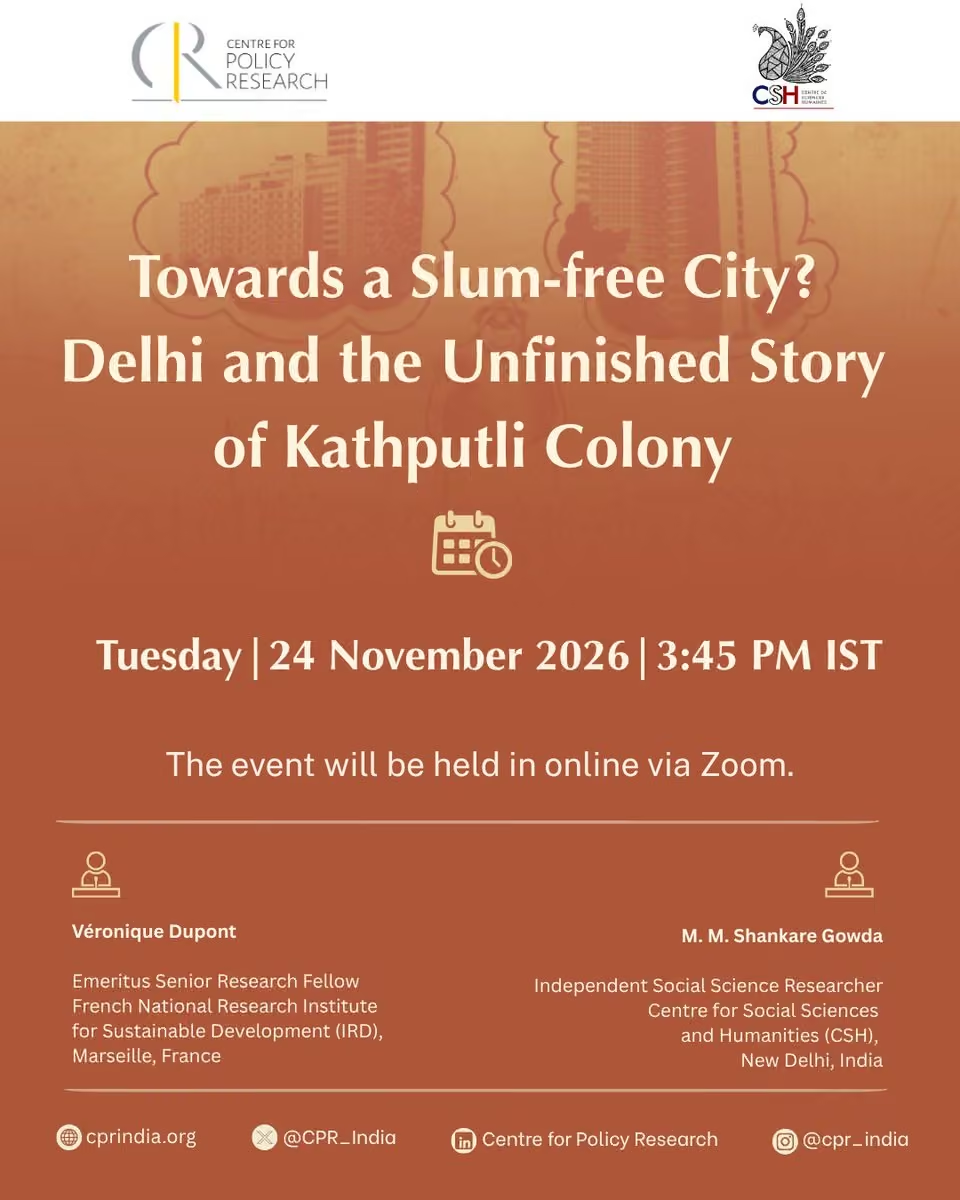
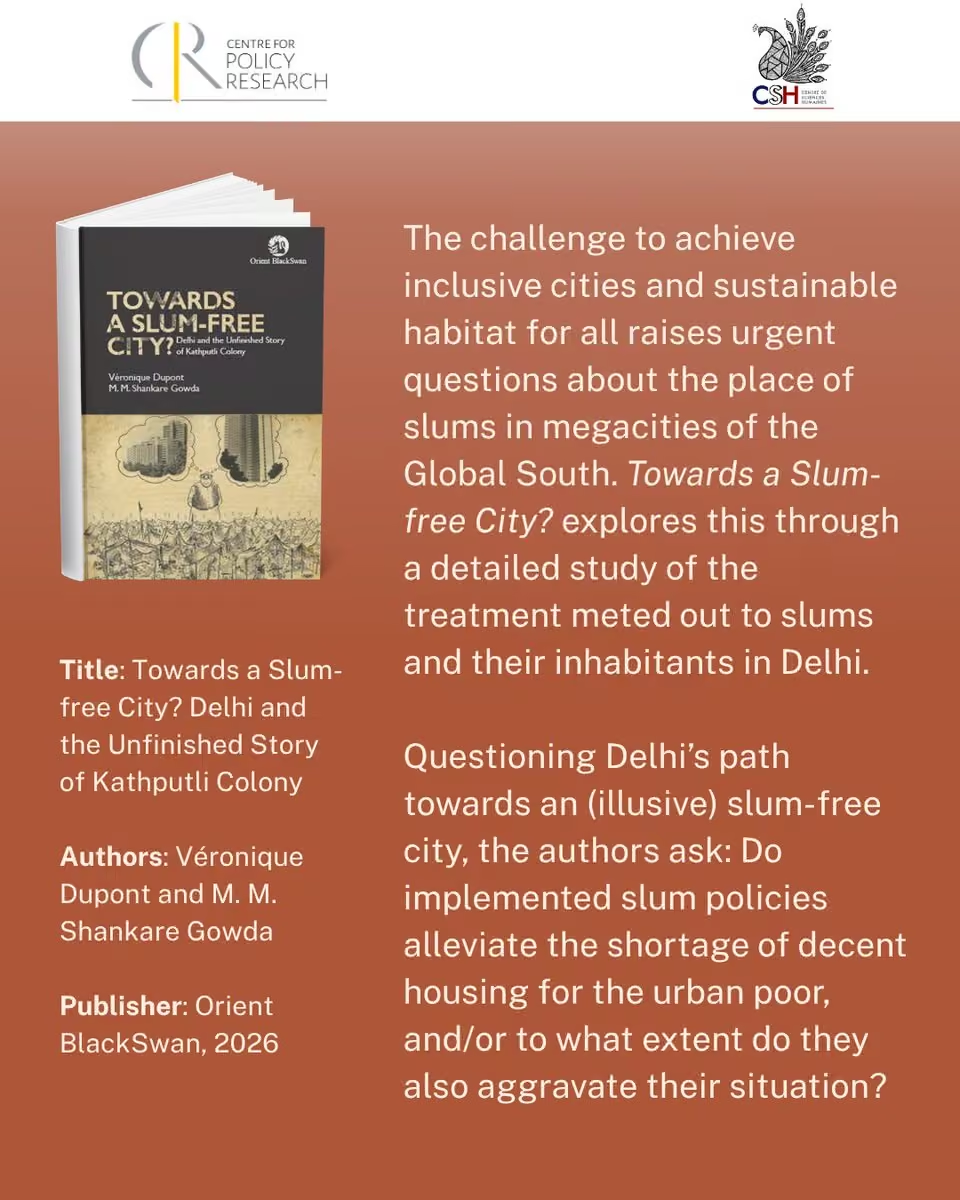

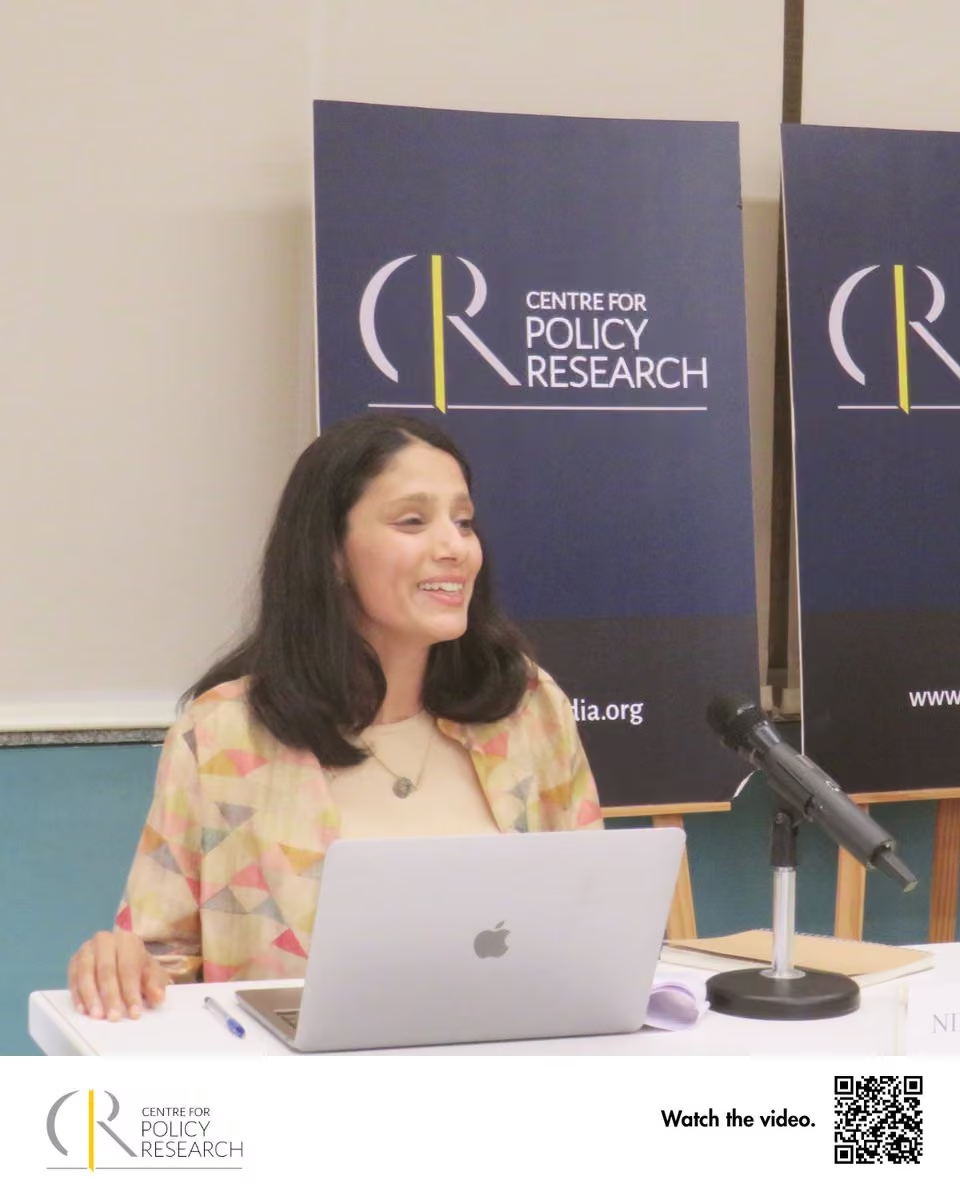

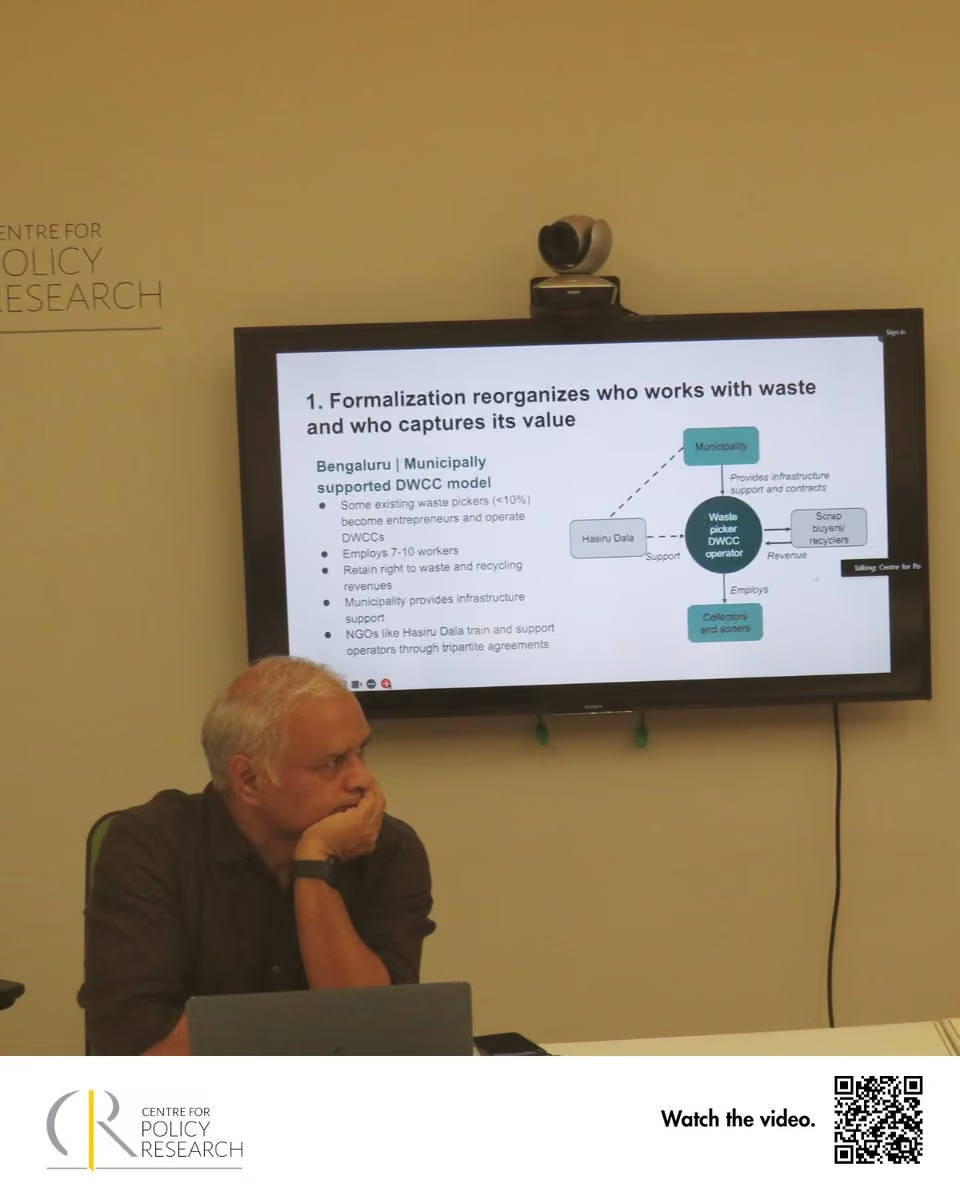
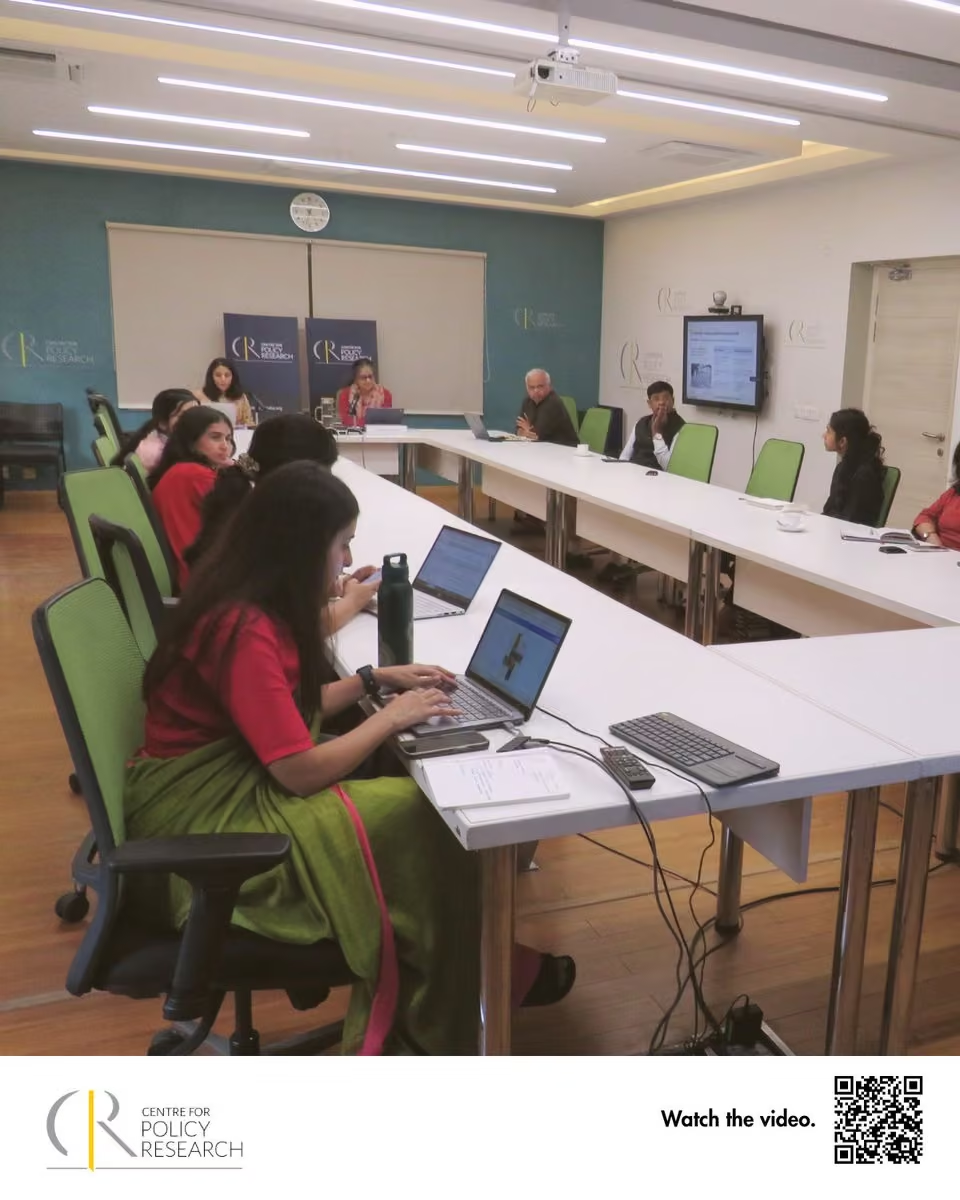
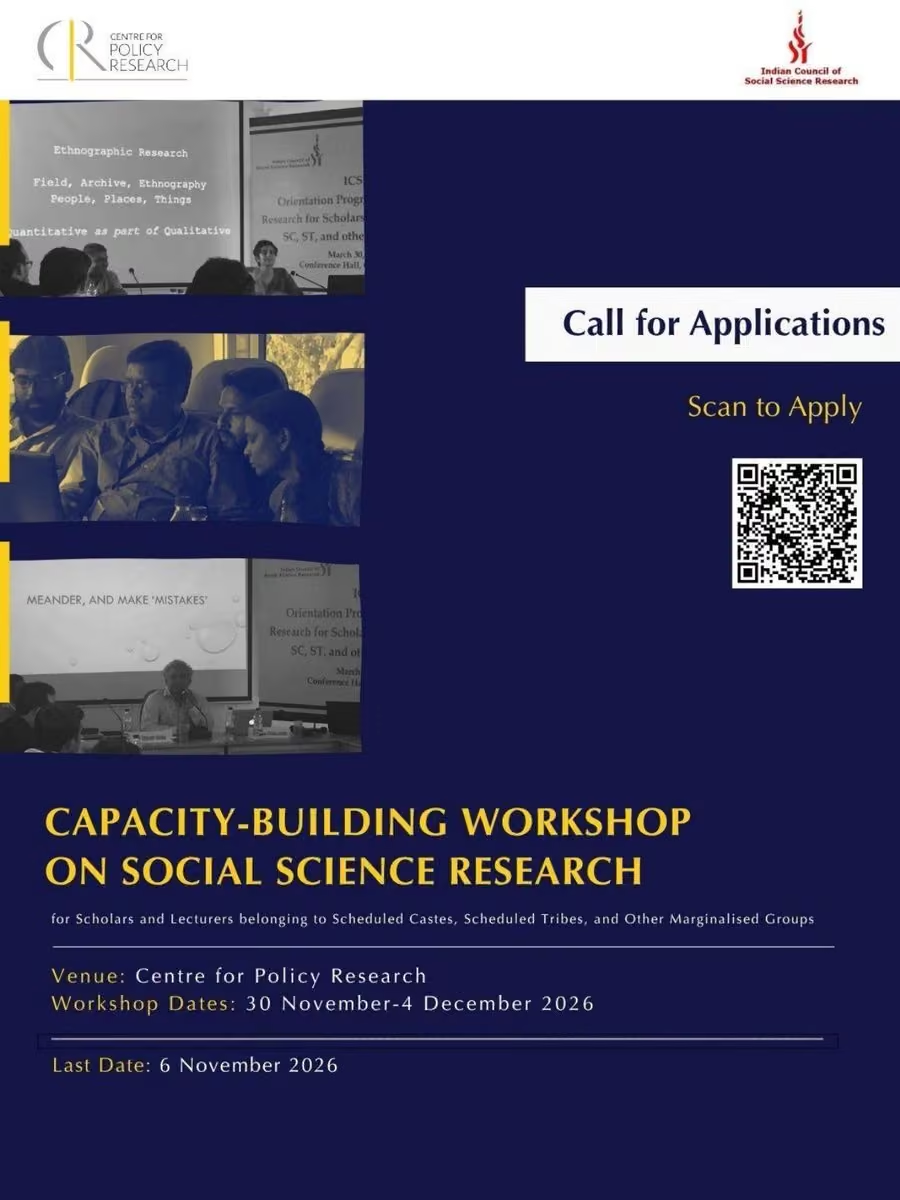
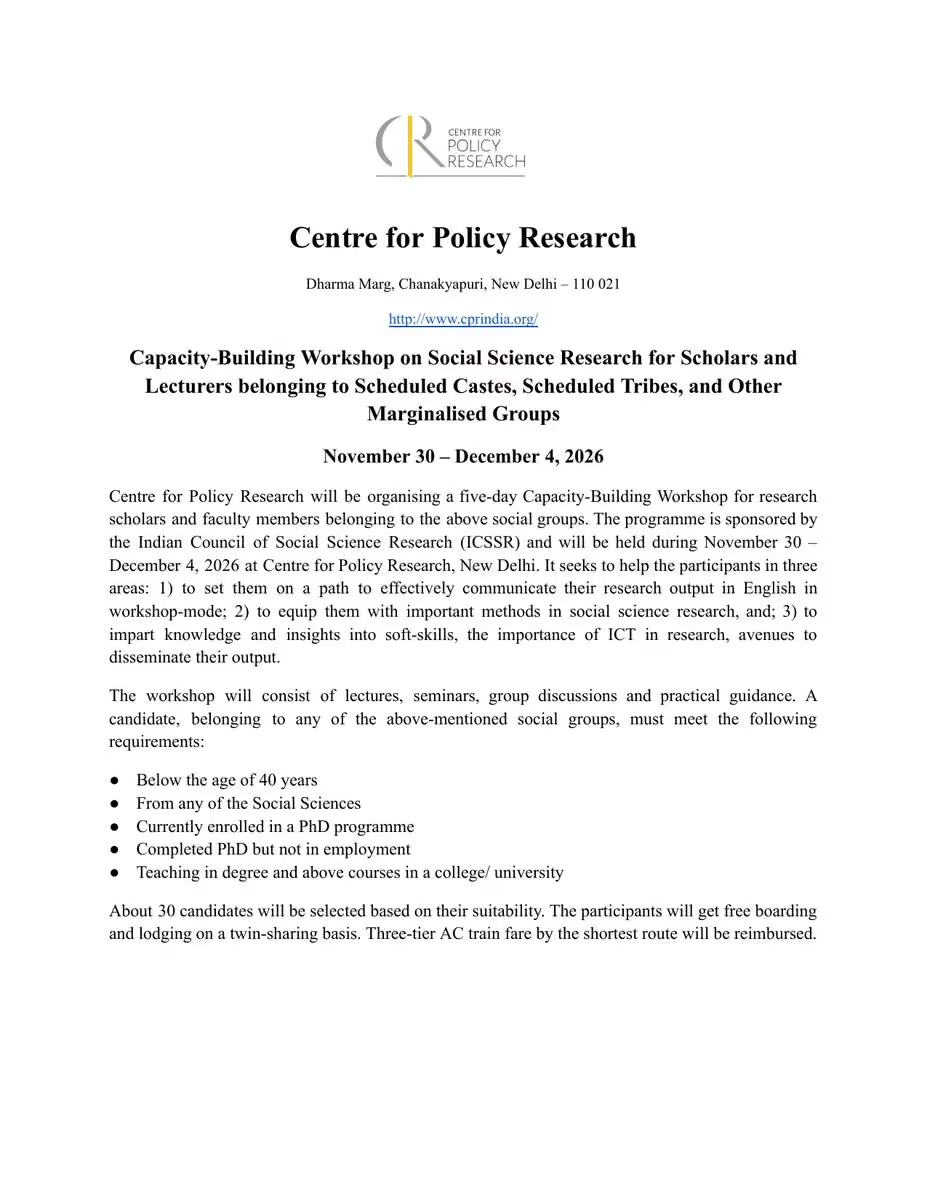

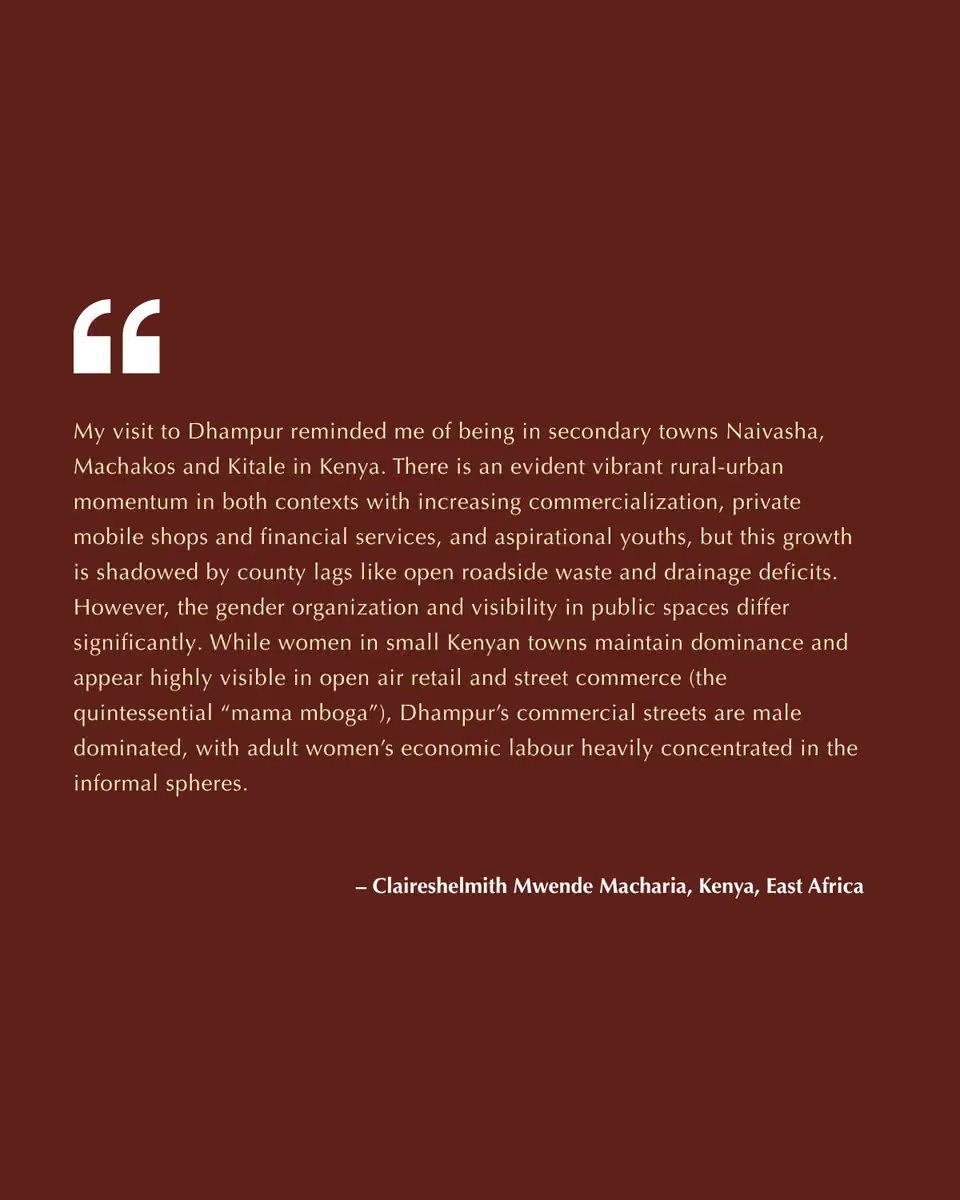


 CPR India Urban


 Rahul Verma


 Bhanu Joshi


 DM-Mi


 StratNewsGlobal.Tech
 The Indian Express


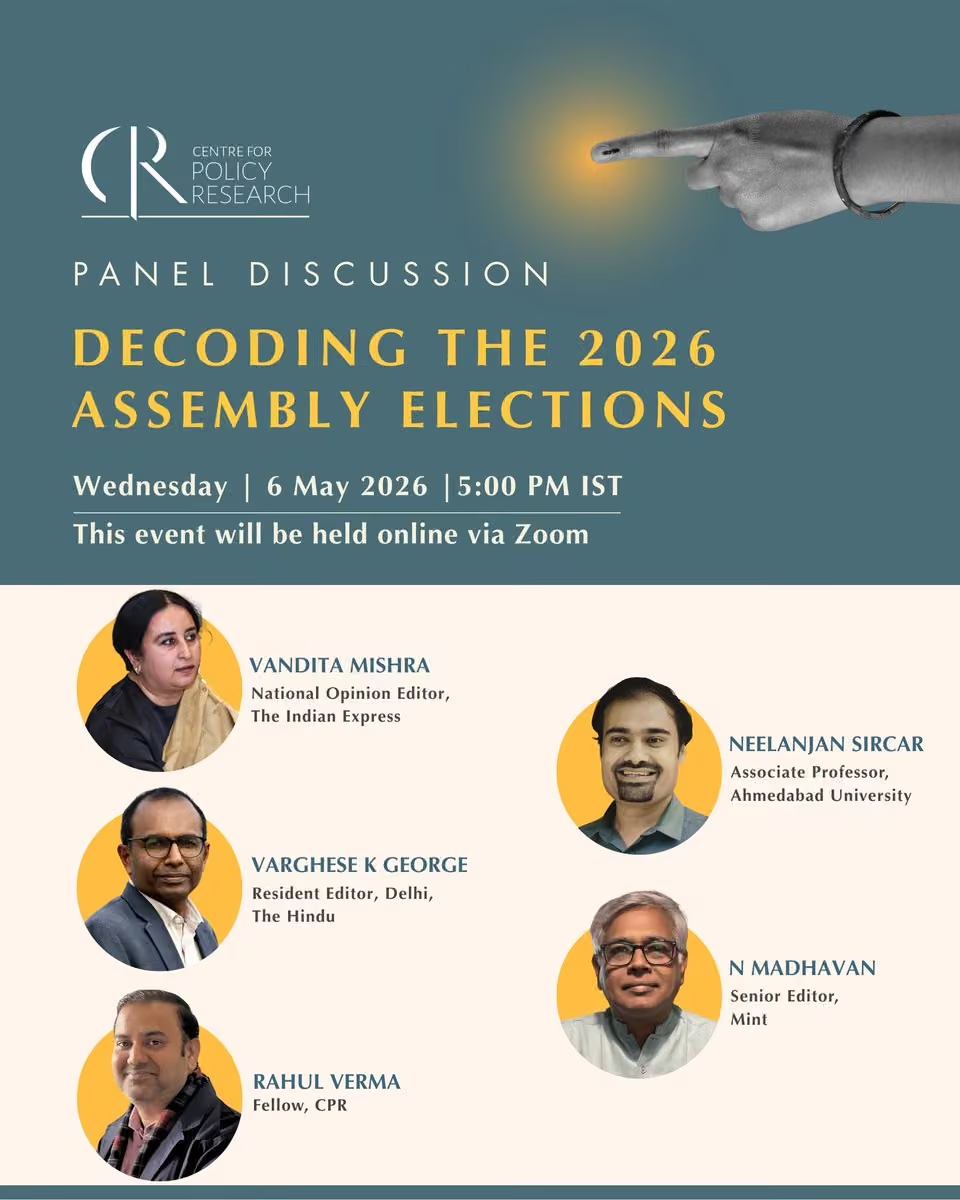


 The Core


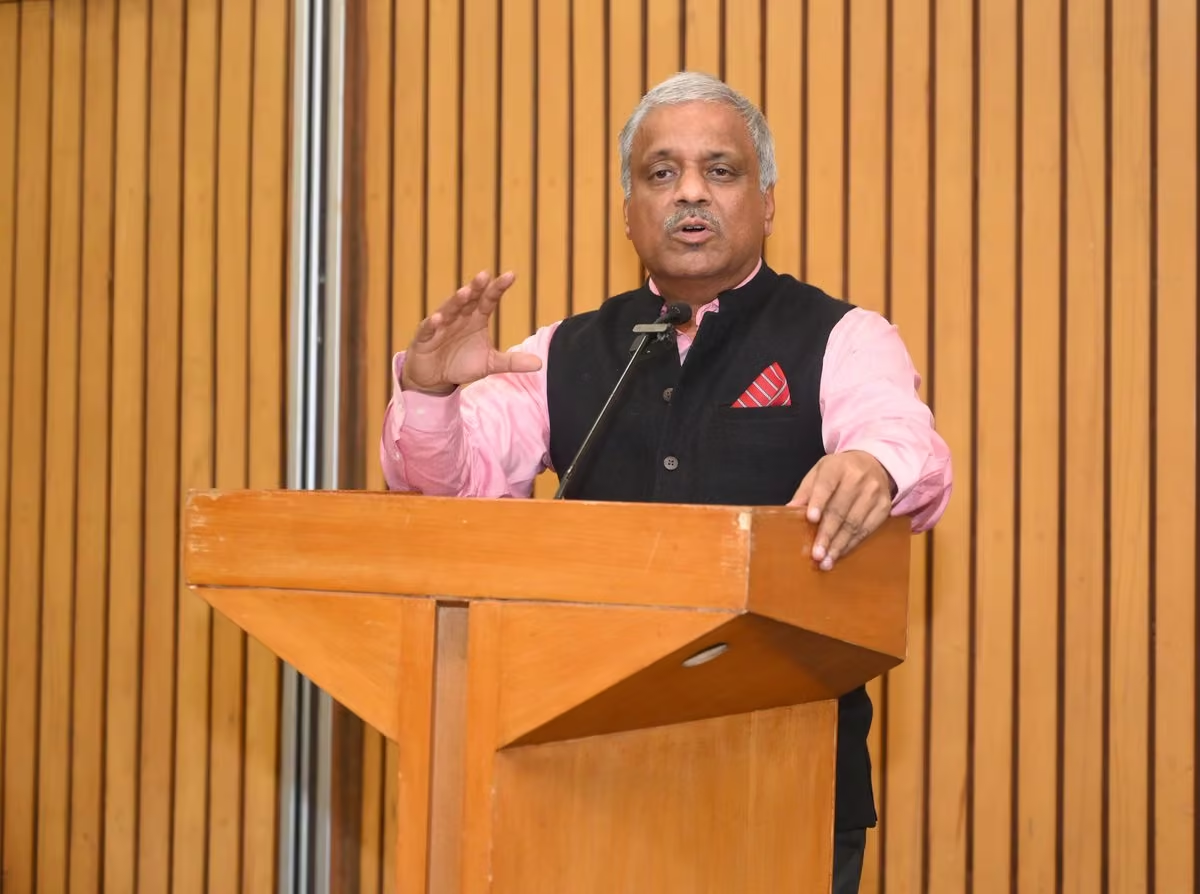


 CPR Land Rights





 India Exim Bank


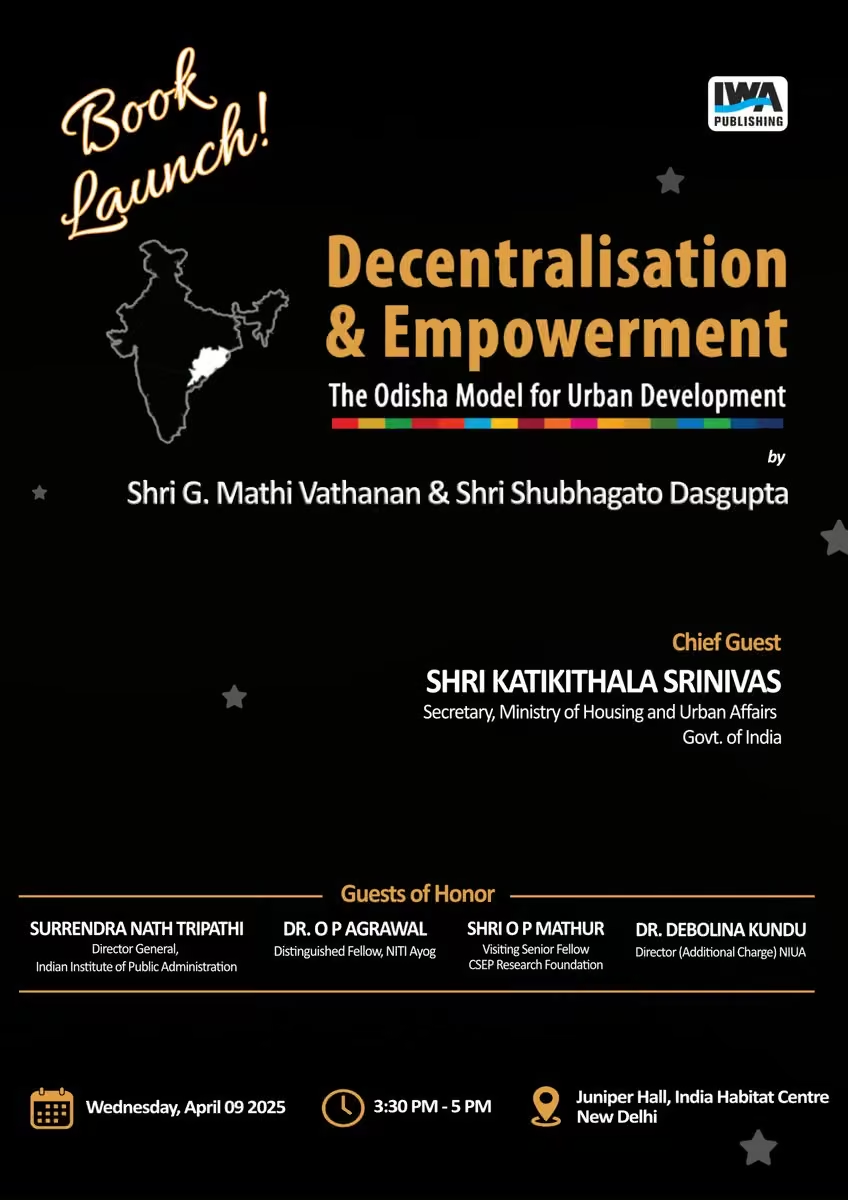


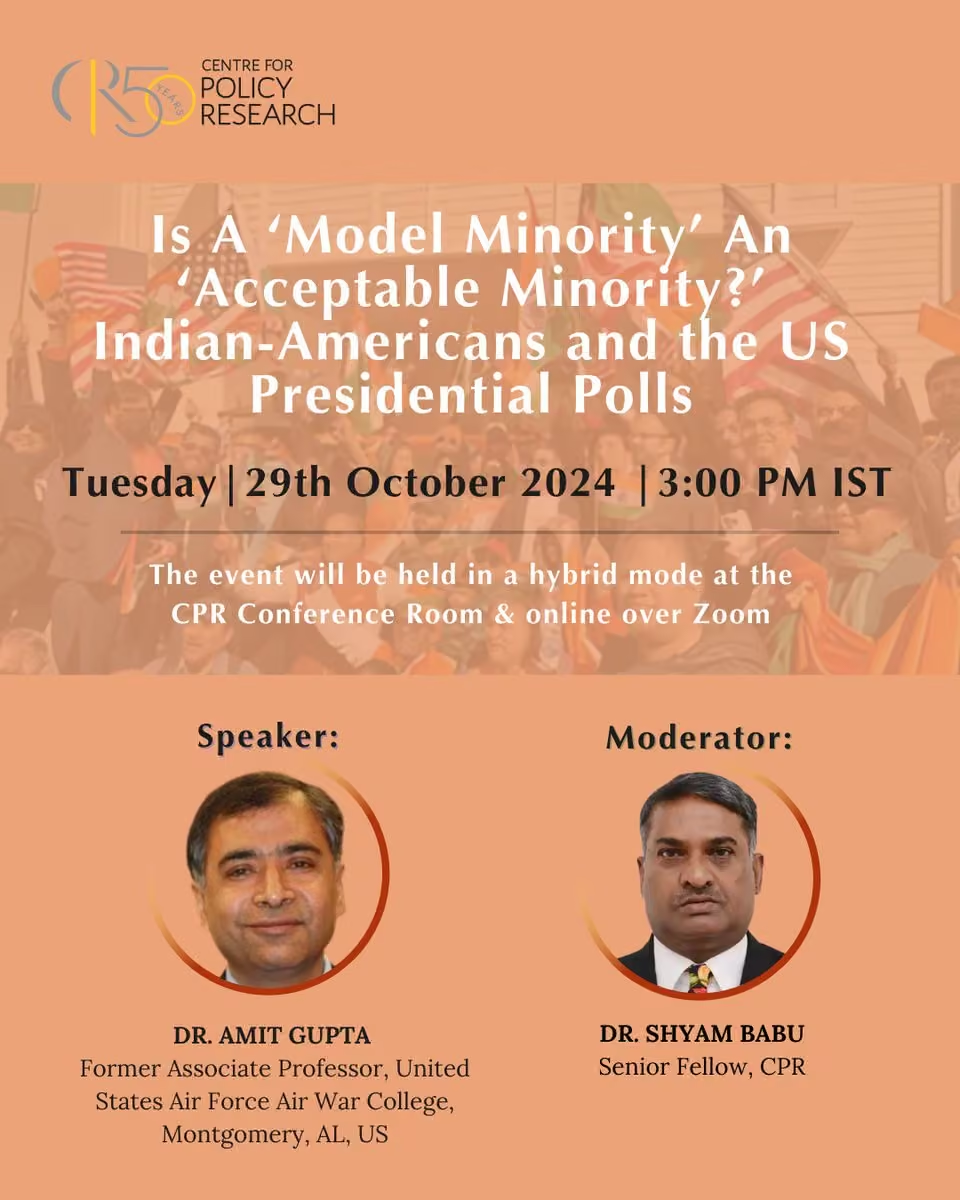


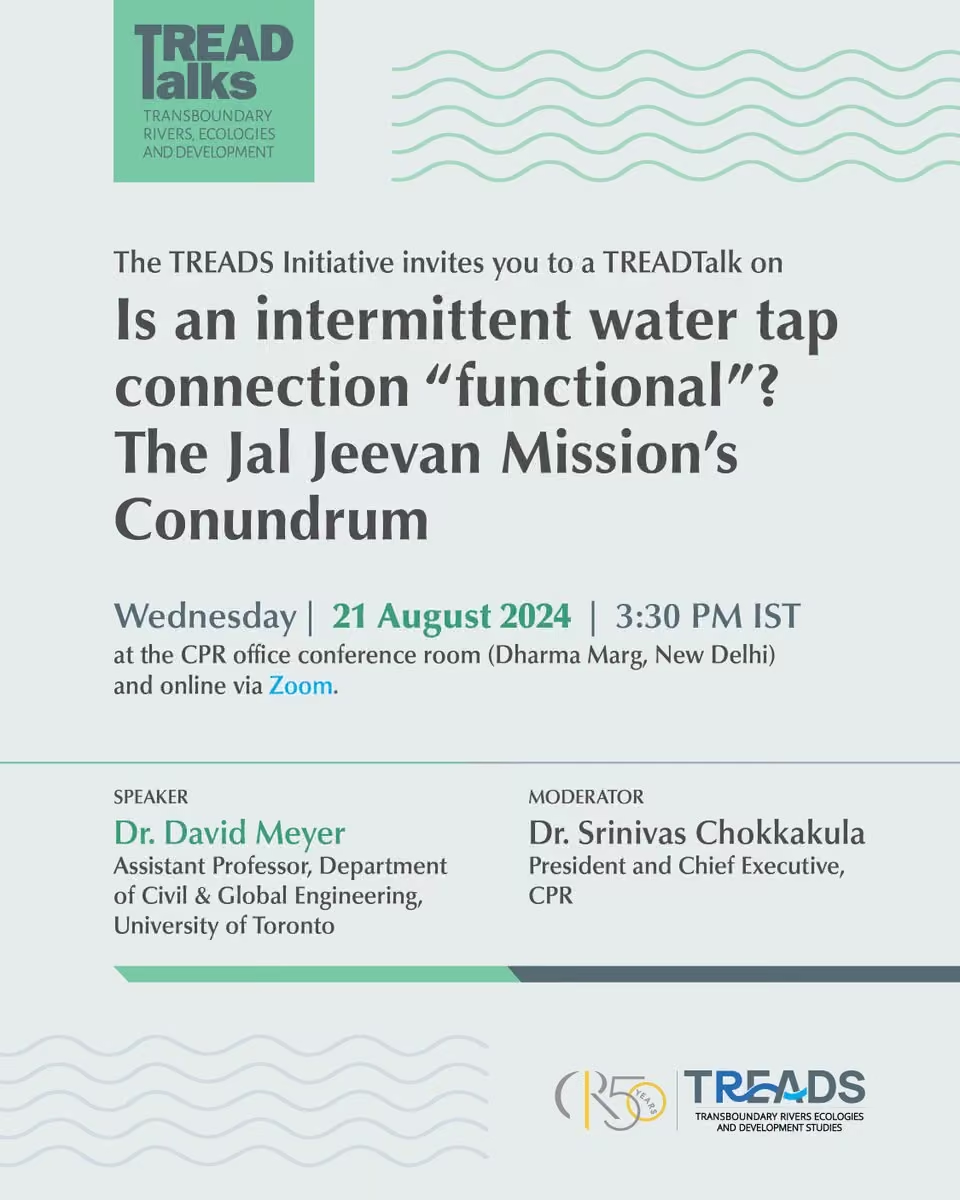


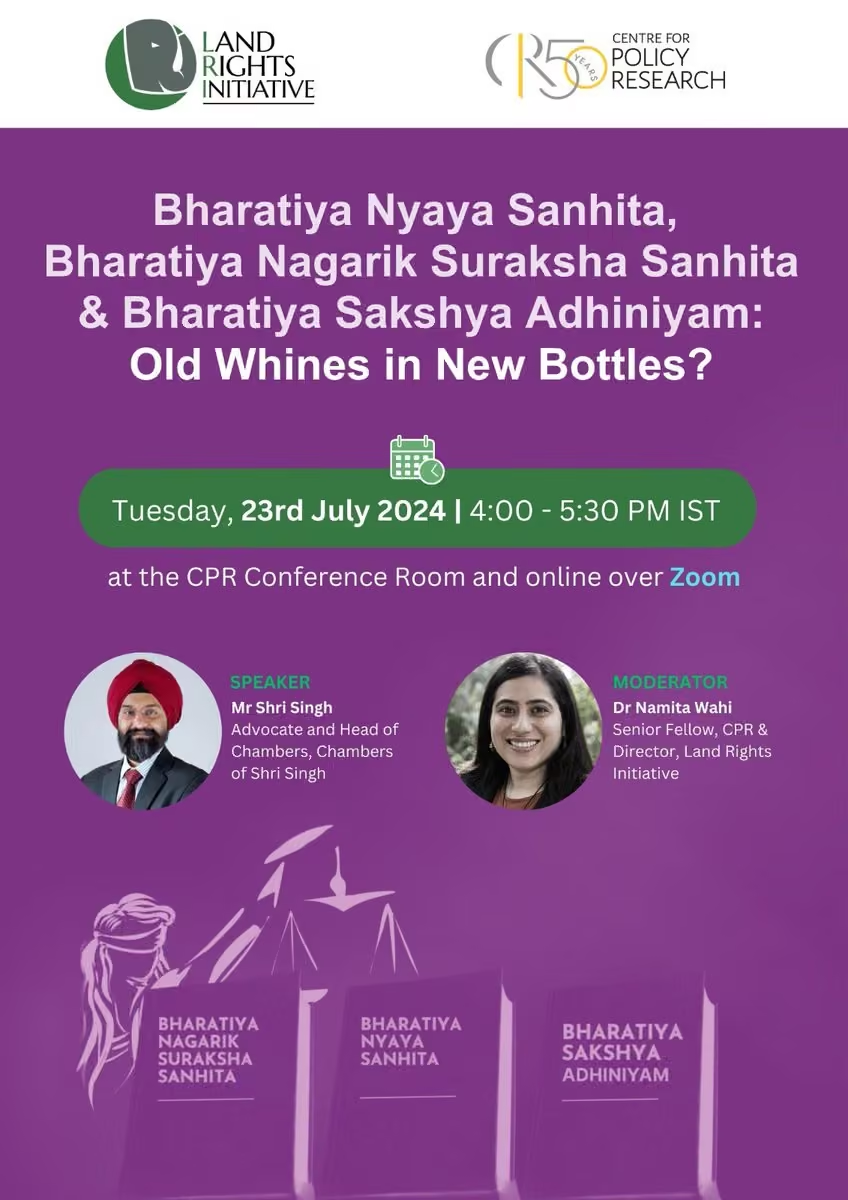


 Westland Books

 Yamini Aiyar


 IDRC in Asia



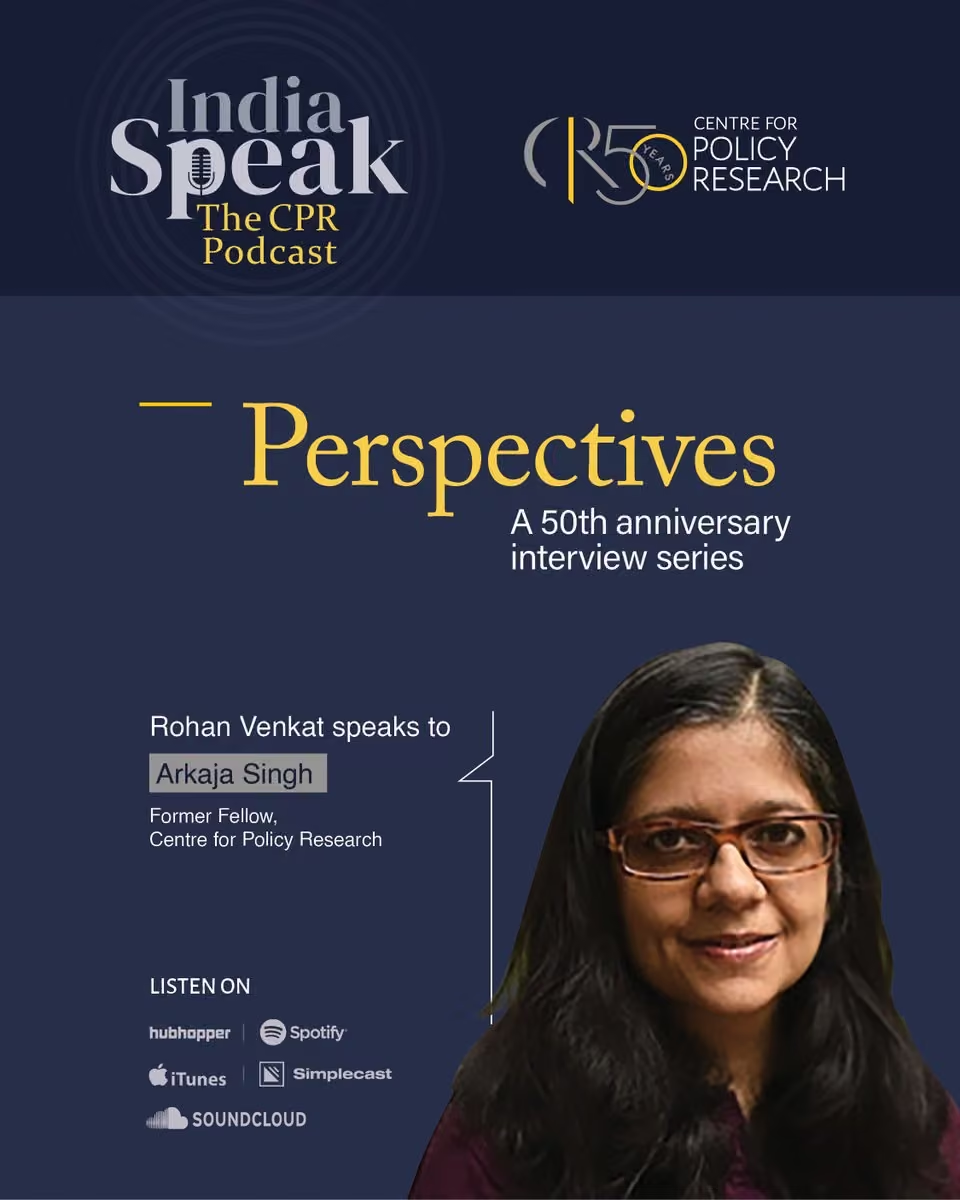


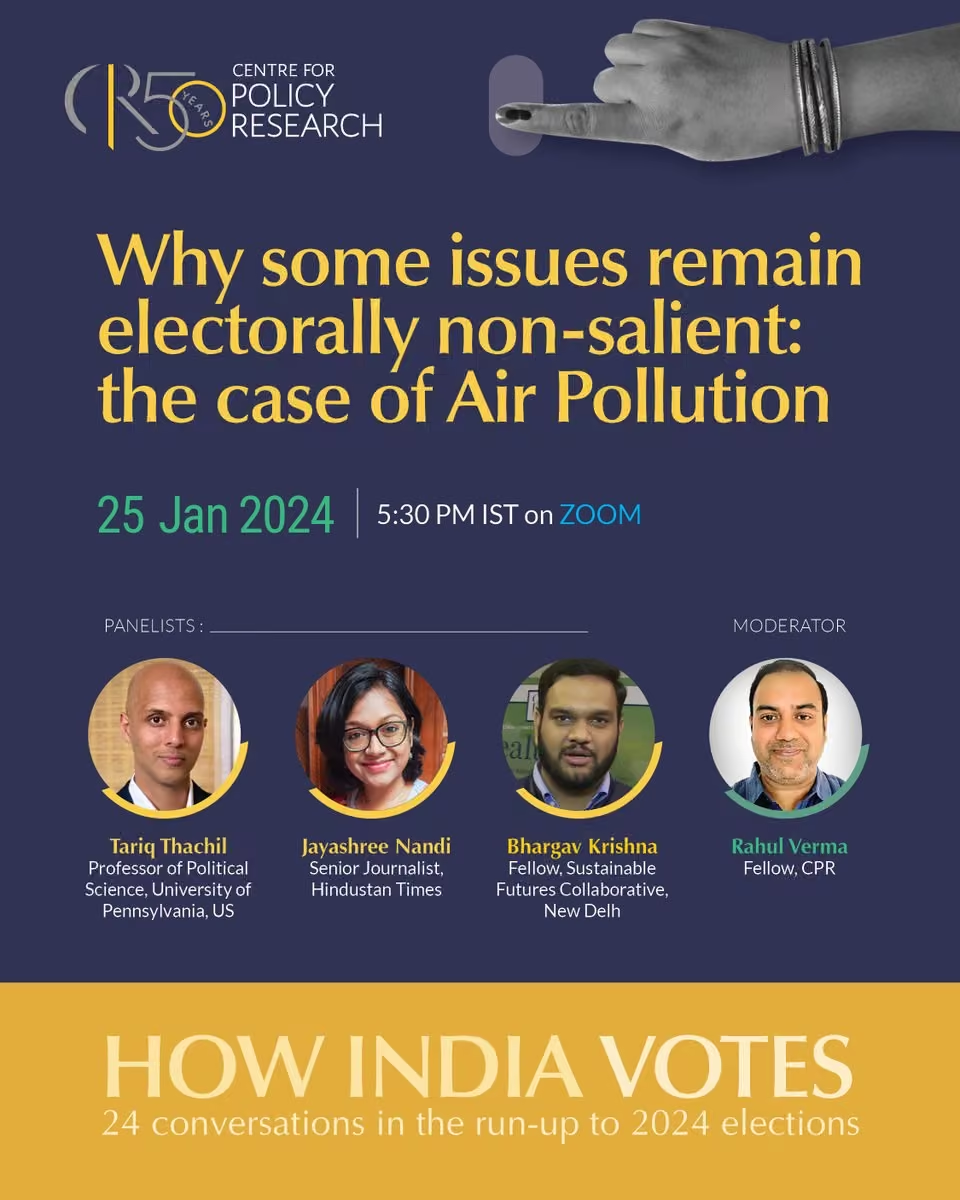


 Mukta Naik


 CPR Initiative on Climate, Energy and Environment
 Navroz K Dubash
 ICCCAD


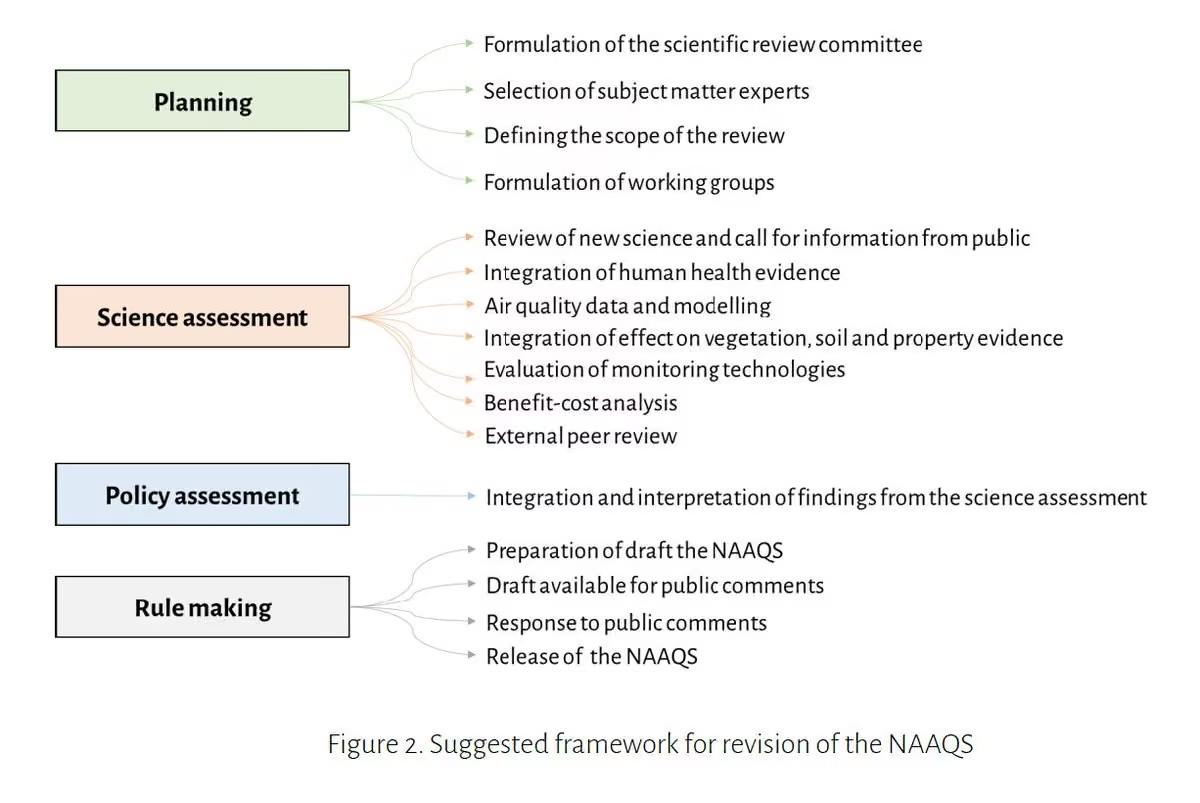


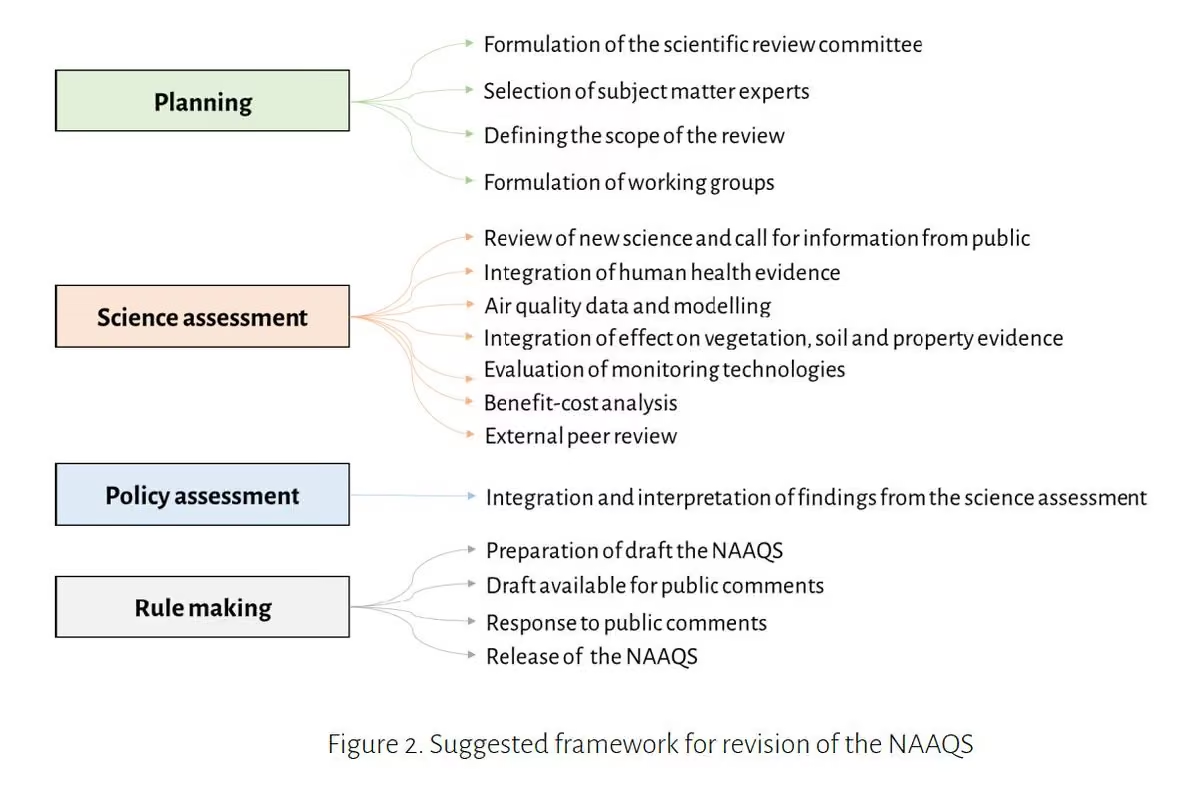


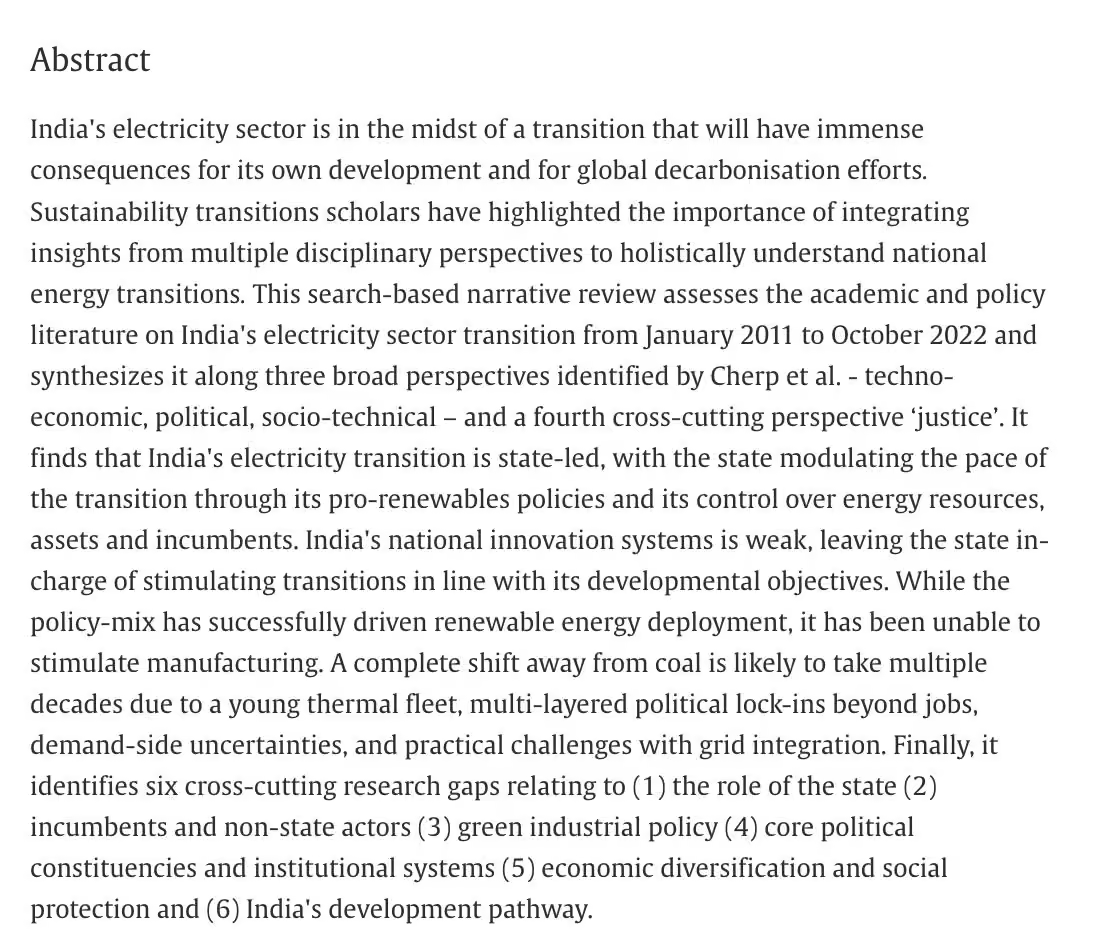

 Indian School of Democracy


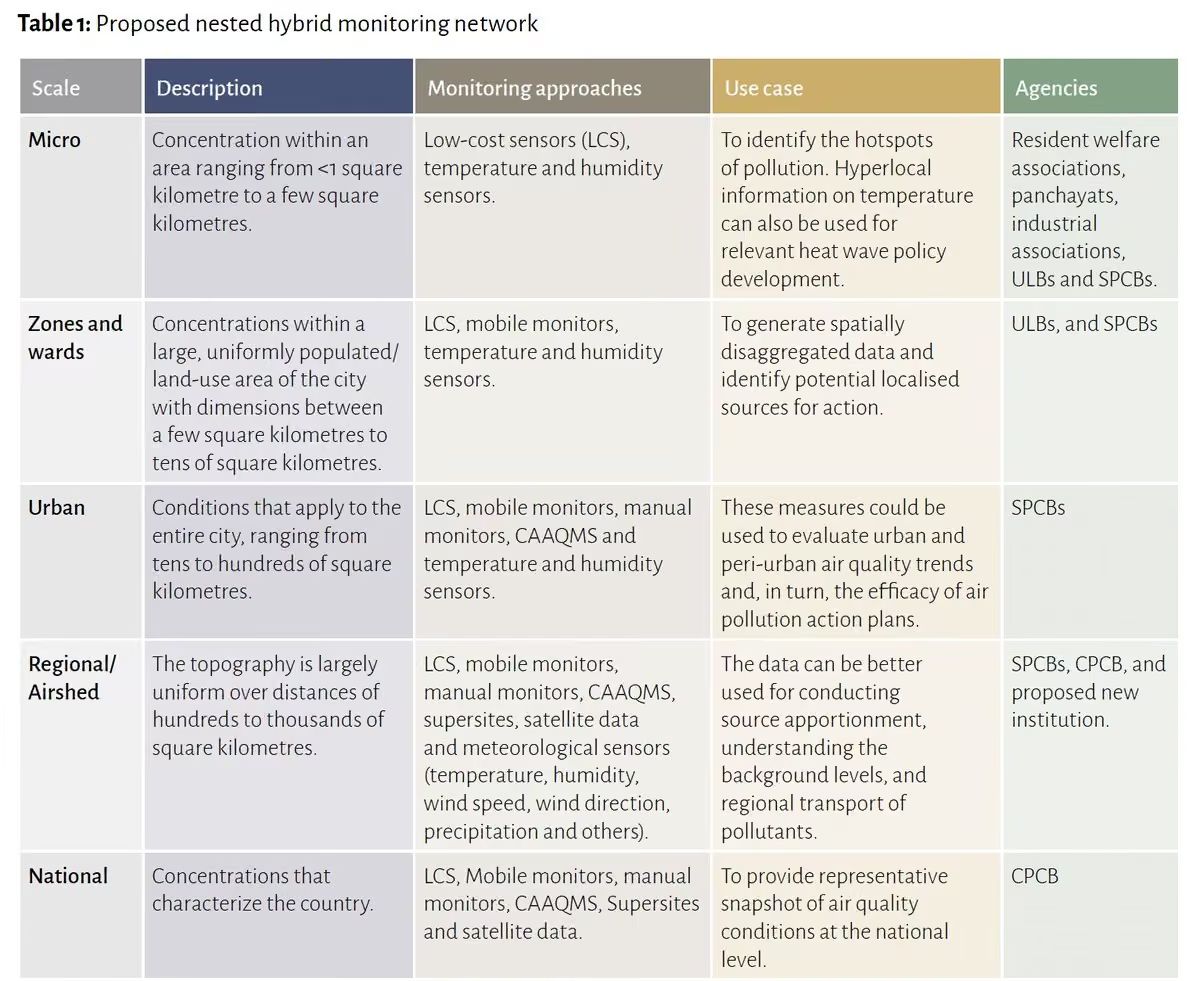


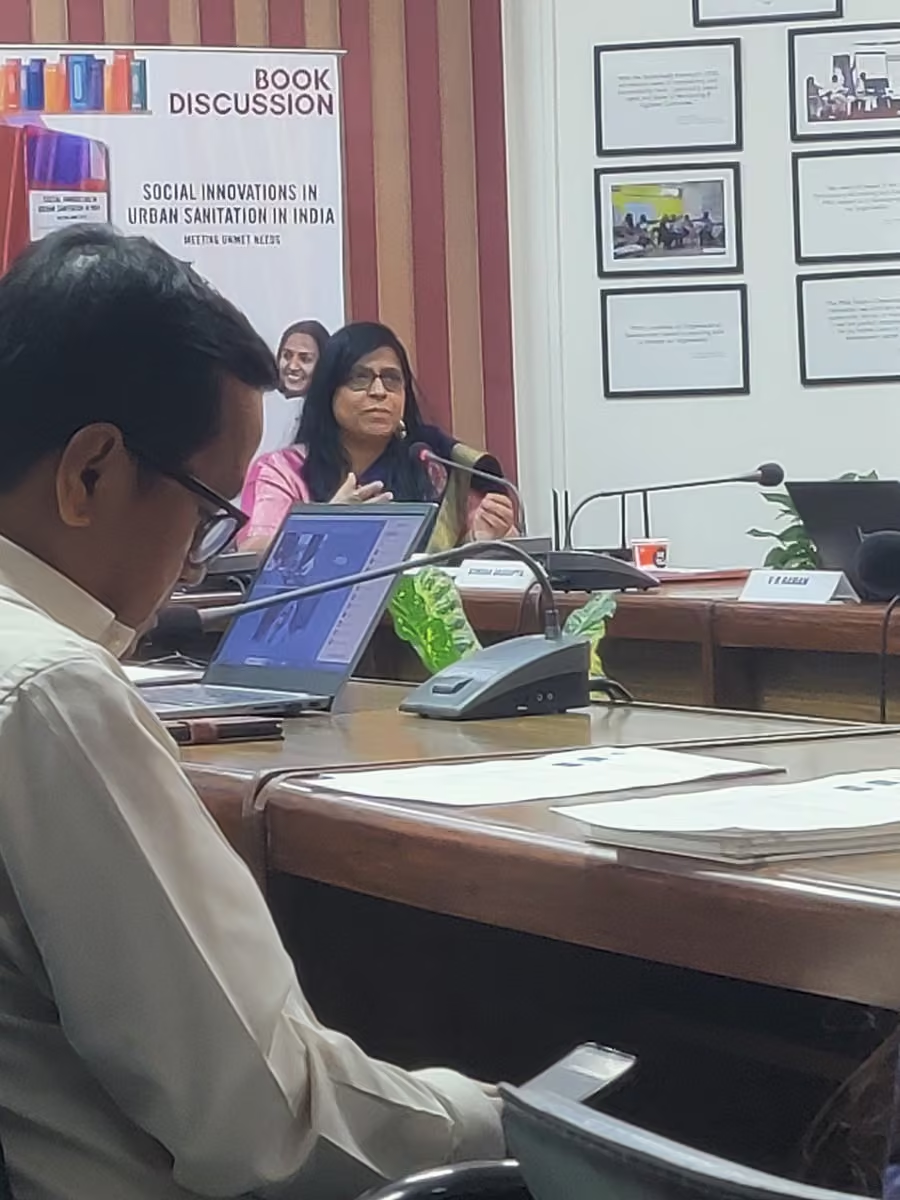


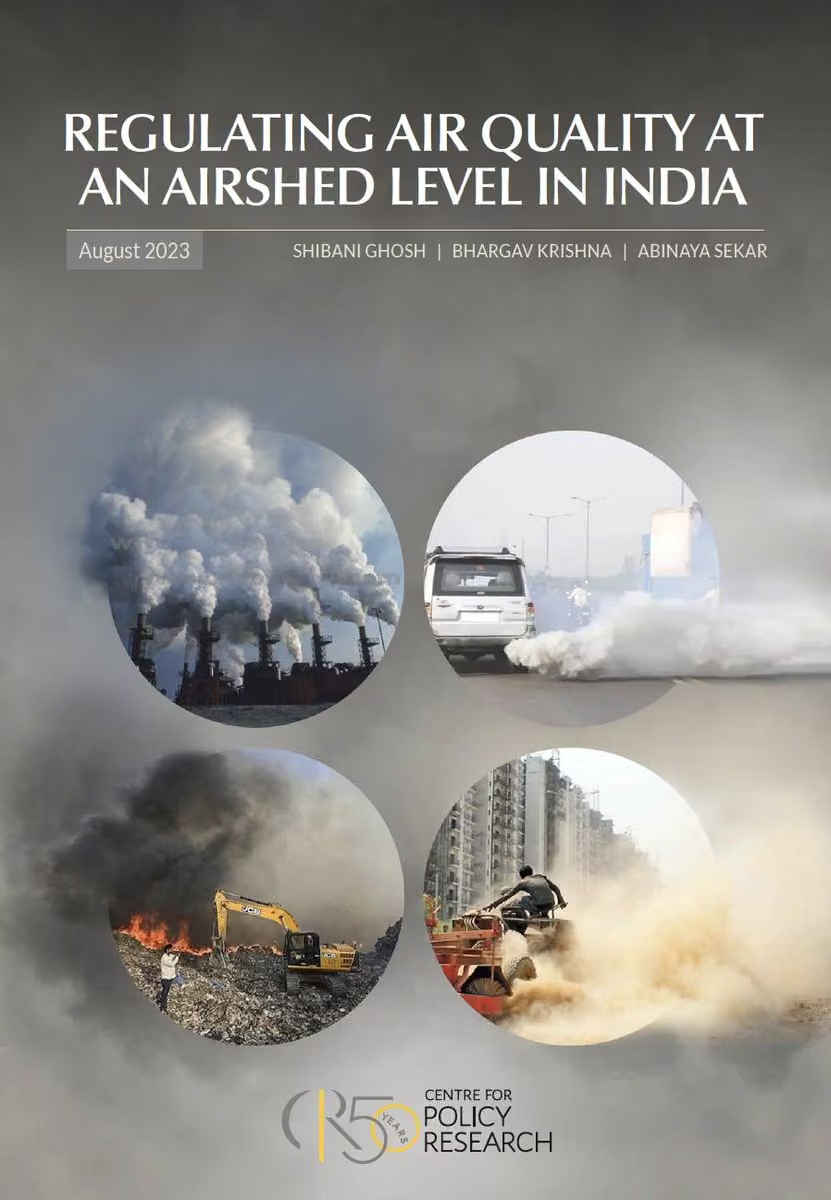


 The Mittal Institute at Harvard




 PRO JS Barwani


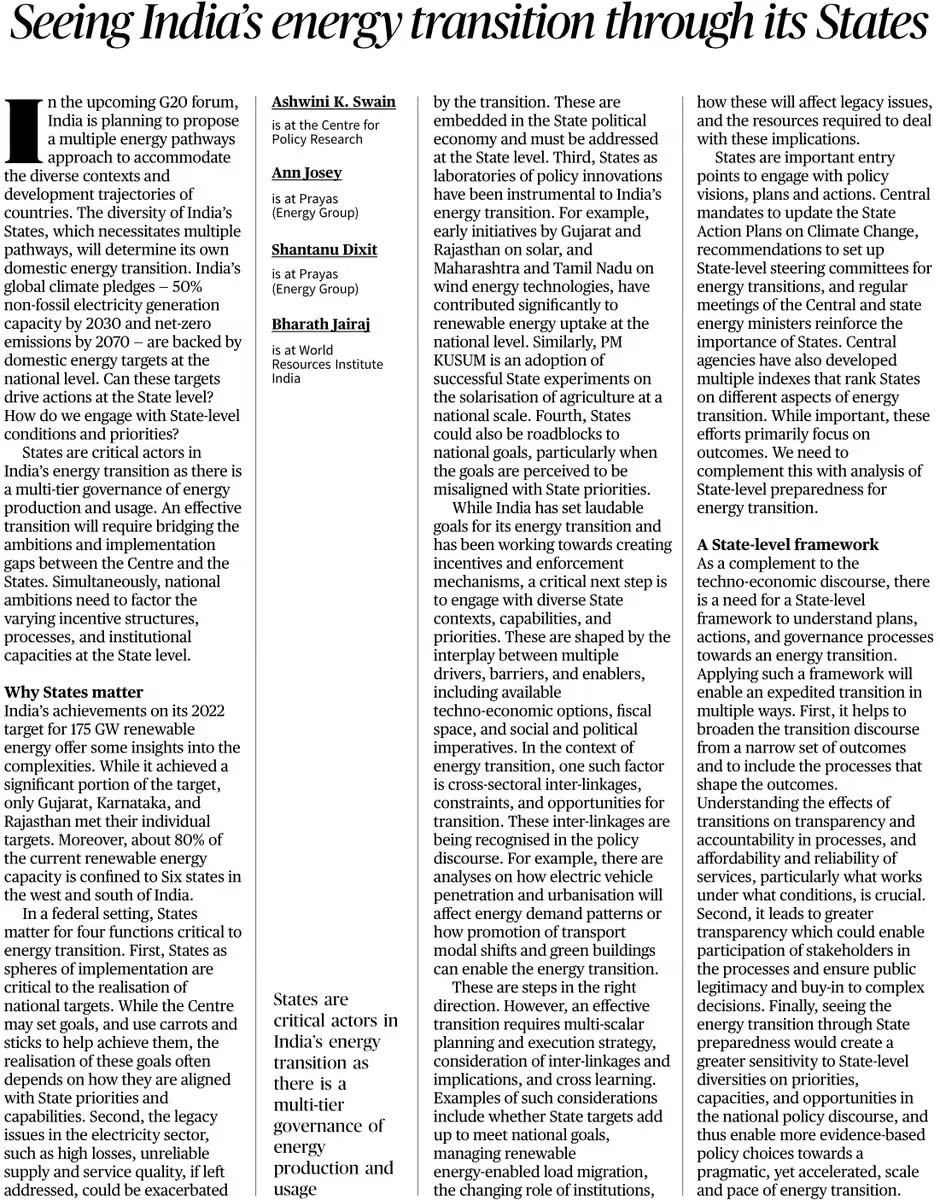
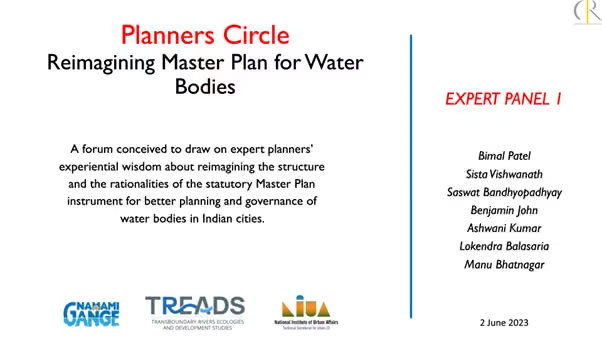

 Namami Gange


 Accountability Initiative


 Mint