Keep history in your hands.
Become a Densho History Keeper by December 31st, and we’ll send you an exclusive 30th anniversary lanyard as a thank-you.
Join using this link: densho.org/historykeepers
Densho: The Japanese American Legacy Project
Densho is a nonprofit organization based in Seattle, Washington whose mission is “to preserve and share history of the WWII incarceration of Japanese Americans to promote equity and justice today.” Densho collects video oral histories, photos, documents, and other primary source materials regarding Japanese American history, with a focus on the World War II period and the incarceration of Japanese Americans. Densho offers a free digital archive of these primary sources. It also maintains an online encyclopedia of notable Japanese Americans and related topics and an educational curricula. More on Wikipedia
-
Densho
@DenshoProject

-
Densho
@DenshoProject
Continuing our spotlight on Japanese American veterans’ experiences, this powerful segment features a 100th/442nd RCT veteran and founding member of the Seattle Nisei Veterans Committee (NVC), Masao Watanabe.
This media couldn't be displayed. See it on the original post.Post not available here, view on X
Densho
@DenshoProject
As he reflects on the decision he made, he believed that he and his fellow volunteers ultimately did the right thing, though he added, “I don’t know which was worse. Being locked up in camp or going off to war.”
Densho
@DenshoProject
-
Densho
@DenshoProject
Thank you, Rachel Maddow, for your powerful testimony on the impact and necessity of Densho’s work. It was deeply meaningful to include your words during our 30th anniversary virtual celebration last month.
This media couldn't be displayed. See it on the original post. -
Densho
@DenshoProject
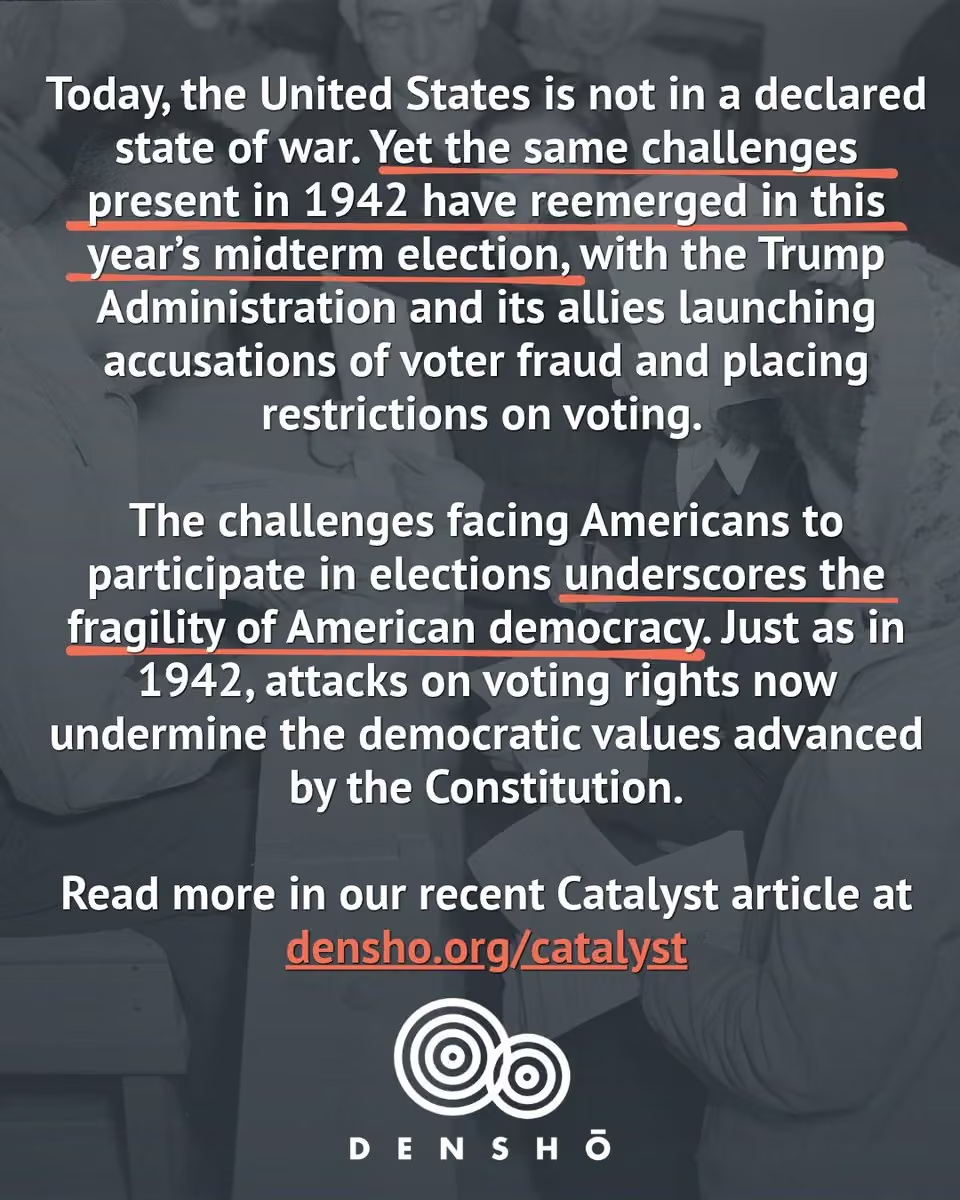
What was voting like behind barbed wire?
With voting underway for the 2026 midterm elections, Densho Editorial Manager and Staff Historian Jonathan van Harmelen reflects on the attempts to suppress the voting rights of incarcerated Japanese Americans in 1942.Post not available here, view on X
Densho
@DenshoProject
The challenges facing Americans to participate in elections underscores the fragility of American democracy. Just as in 1942, attacks on voting rights now undermine the democratic values advanced by the Constitution.
Densho
@DenshoProject
Read more in a recent Catalyst article at densho.org/catalyst
-
Densho
@DenshoProject
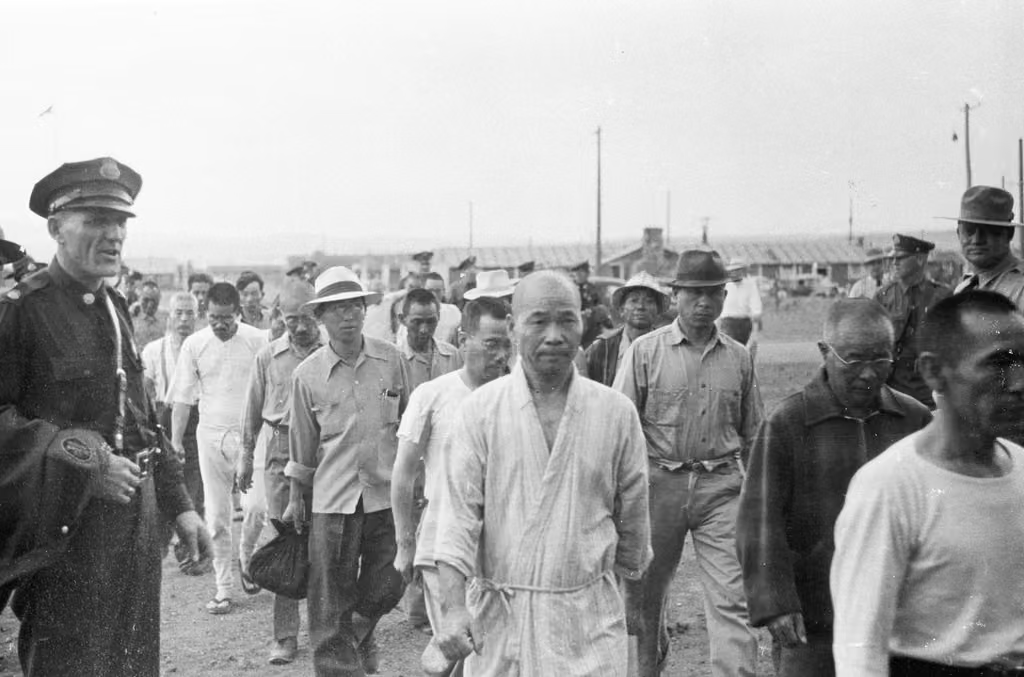
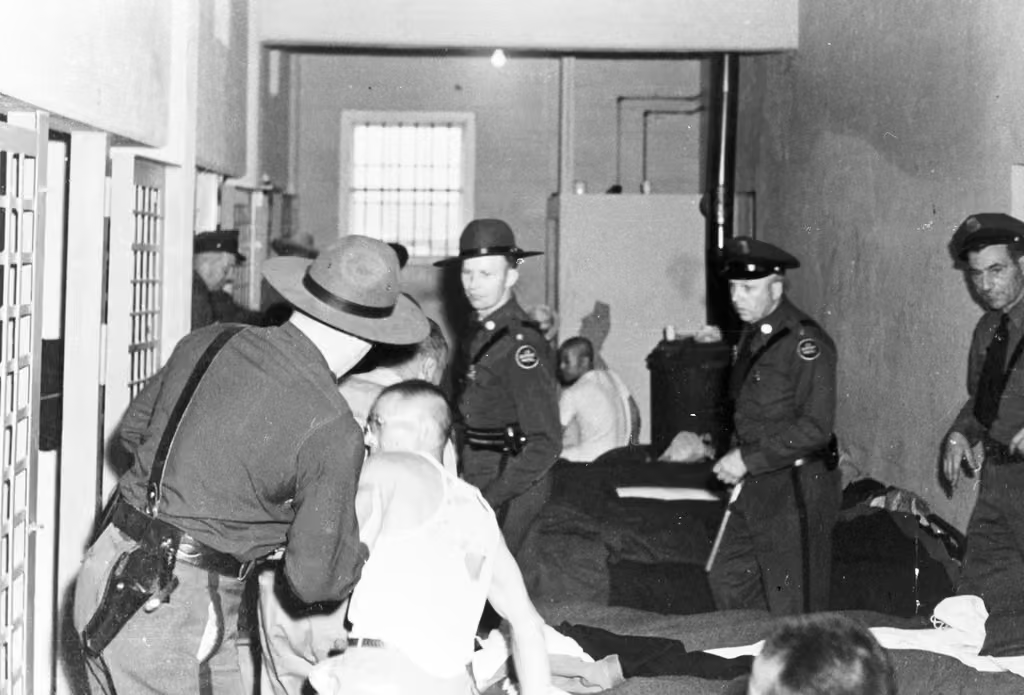
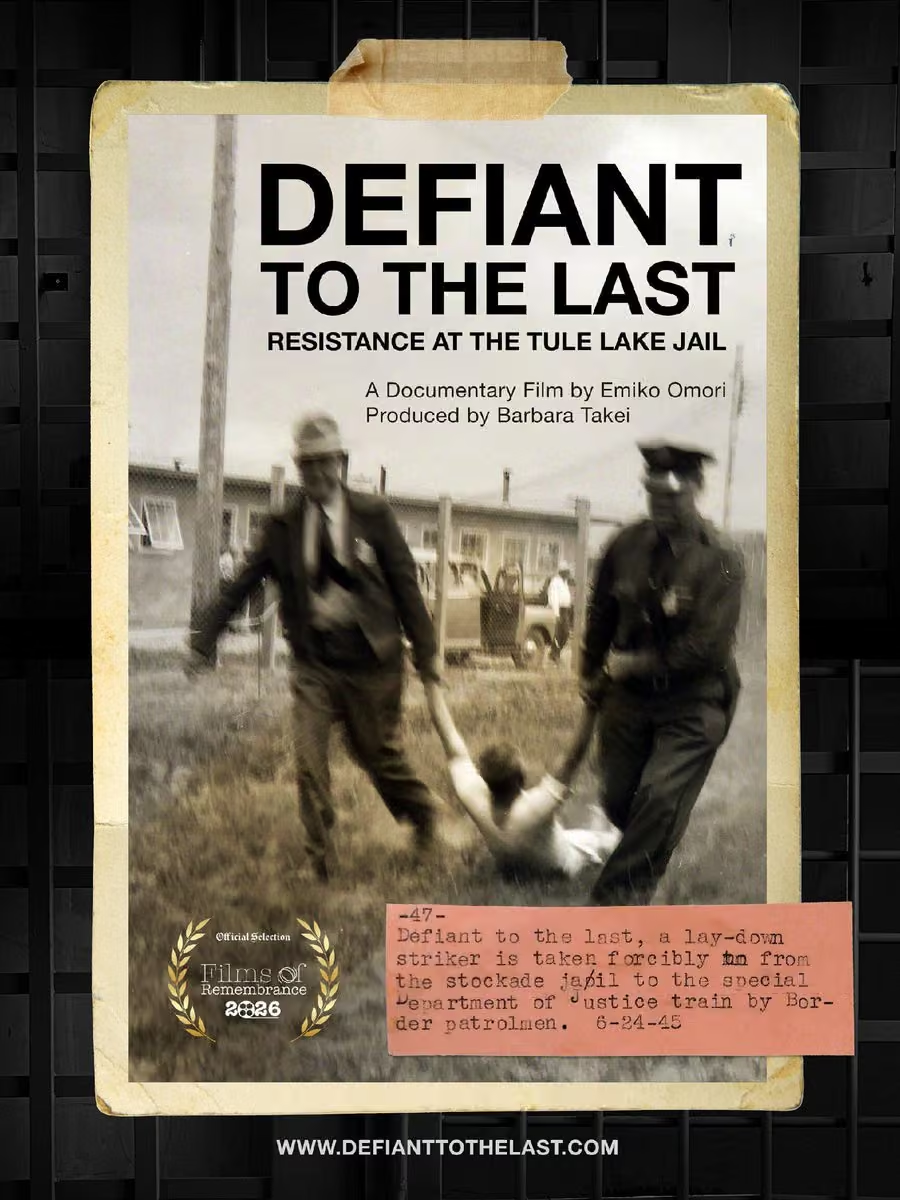
Next Friday, join us for a Lunch & Learn screening of a film that answers a question unresolved for over 80 years: Why did the U.S. government build a jail inside Tule Lake?
-
Densho
@DenshoProject
Celebrating what would’ve been Jim Hirabayashi’s 100th birthday!
Jim is recognized in the Catalyst blog’s 2026 Nisei Notables feature for his work and contributions to the Japanese American community.Post not available here, view on X
Densho
@DenshoProject
Both photos are courtesy of Rafu Shimpo.
1st photo is of Jim Hirabayashi (third from right) and former Secretary of Transportation Norman Mineta (middle) cutting the ribbon at a memorial plaza at the assembly center site in Fresno on Feb. 16, 2009. Photo by John Hix, Rafu Shimpo
Densho
@DenshoProject
2nd photo is of Jim Hirabayashi in the middle of an interview with Densho, featured in Rafu Shimpo’s article, “James Hirabayashi Remembered,” June 22, 2012.
-
Densho
@DenshoProject
October is Archives Month, and we’re celebrating with one of our most popular collections from the Densho Digital Repository (DDR): Gidra! It’s also this month’s feature in Densho Staff’s 30 Favorite Objects.
Densho
@DenshoProject
Explore a selection of covers from Gidra’s run from 1969 to 1974. Gidra began when a group of UCLA students approached the university administration about starting an Asian American community newspaper. Rebuffed, the five students each contributed $100 to produce their own paper.
Densho
@DenshoProject
The monthly newsletter went on to chronicle the dramatic changes in the Asian American community and helped drive many of them.
Densho
@DenshoProject
For Gidra’s readers, it was the voice of the Asian American Movement, raising awareness of the growing ethnic studies movement on college campuses and quickly expanding to topics including anti-imperialist movements and the publication of art and poetry.
Densho
@DenshoProject
Have you explored Gidra in the DDR? Tell us what you found in the comments!
#archivesmonth -
Densho
@DenshoProject
If you missed tuning in for our virtual gala, now watch anytime! Hear impactful words and reflections from our speakers and see a short documentary on Densho’s history. Stay through the end — you won’t want to miss out on a special tribute from @maddow: youtu.be/BRg0H8phOBg
-
Densho
@DenshoProject
In this installment of 30 Stories for 30 Years, Kenji Ima recalls having recurring nightmares about his experience of being deported to Puyallup for much of his childhood and not being able to confide in anyone about these terrifying moments.
This media couldn't be displayed. See it on the original post.
Densho
@DenshoProject
“The setting is dark and I'm on this street with this large building. And an ominous sound in the background, some sort of drumming or humming, but it was the sound of fear.”
Densho
@DenshoProject
Kenji Ima’s testimony provides an example of how children were impacted emotionally and psychologically for years after enduring the trauma of incarceration. Commit to preserving personal testimonies of people like Kenji and make a lasting impact today: densho.org?form=FUNPBBTPRKD
-
Densho
@DenshoProject
Tomorrow at 6:00 pm (PT)! Join us for Stories that Endure, a celebration of 30 years of Densho and the community that brought us this far. Guest speakers include @DRyukenWilliams, Brynn Saito and a special message from @maddow! Register here: densho.org/stories-that-endure-virtual-gala-and-fundraiser/
-
Densho
@DenshoProject
There is a deep, interwoven history connecting the experiences of Indigenous peoples and Japanese Americans. The lands from which Indigenous tribes were violently removed are the same lands on which the U.S. military later forcibly relocated Japanese Americans.
Post not available here, view on X
Densho
@DenshoProject
Since the Trading Post was close by, many Navajo families continued to travel near the Isolation Center to buy food and supplies. They witnessed the Japanese American men behind the fence playing baseball, basketball and fixing trucks.
Densho
@DenshoProject
My grandmother said she felt sorry for the men, ignoring government rules when she brought food to share with them over the fenceline.” Learn more about the history of Leupp in the Densho Digital Repository. We thank Davina for her contribution and perspective.
-
Densho
@DenshoProject
Densho will be in Minnesota next weekend for our next Community Scanning Day!
Densho
@DenshoProject
In partnership with Twin Cities JACL and the Minnesota Historical Society, this event will take place at Historic Fort Snelling, where thousands of Nisei were trained with the Military Intelligence Service in Japanese language and interpretation.
Densho
@DenshoProject
This Community Scanning Day aims to provide families with an opportunity to digitize cherished photos and artifacts from the pre-WWII, exclusion, and relocation periods, preserving these invaluable pieces of history for future generations.
Densho
@DenshoProject
Each family can bring up to 20 items for digitization. We welcome photographs, documents, and small artifacts. Unfortunately, bound items such as albums, scrapbooks, or yearbooks cannot be digitized on-site.
Densho
@DenshoProject
If you are interested in scanning materials, please complete the sign-up form: docs.google.com/forms/d/e/1FAIpQLSdwnAmXN1S88HTL2-qcIMLfy…
Please periodically check your email as we will contact you to schedule a date and time! -
Densho
@DenshoProject
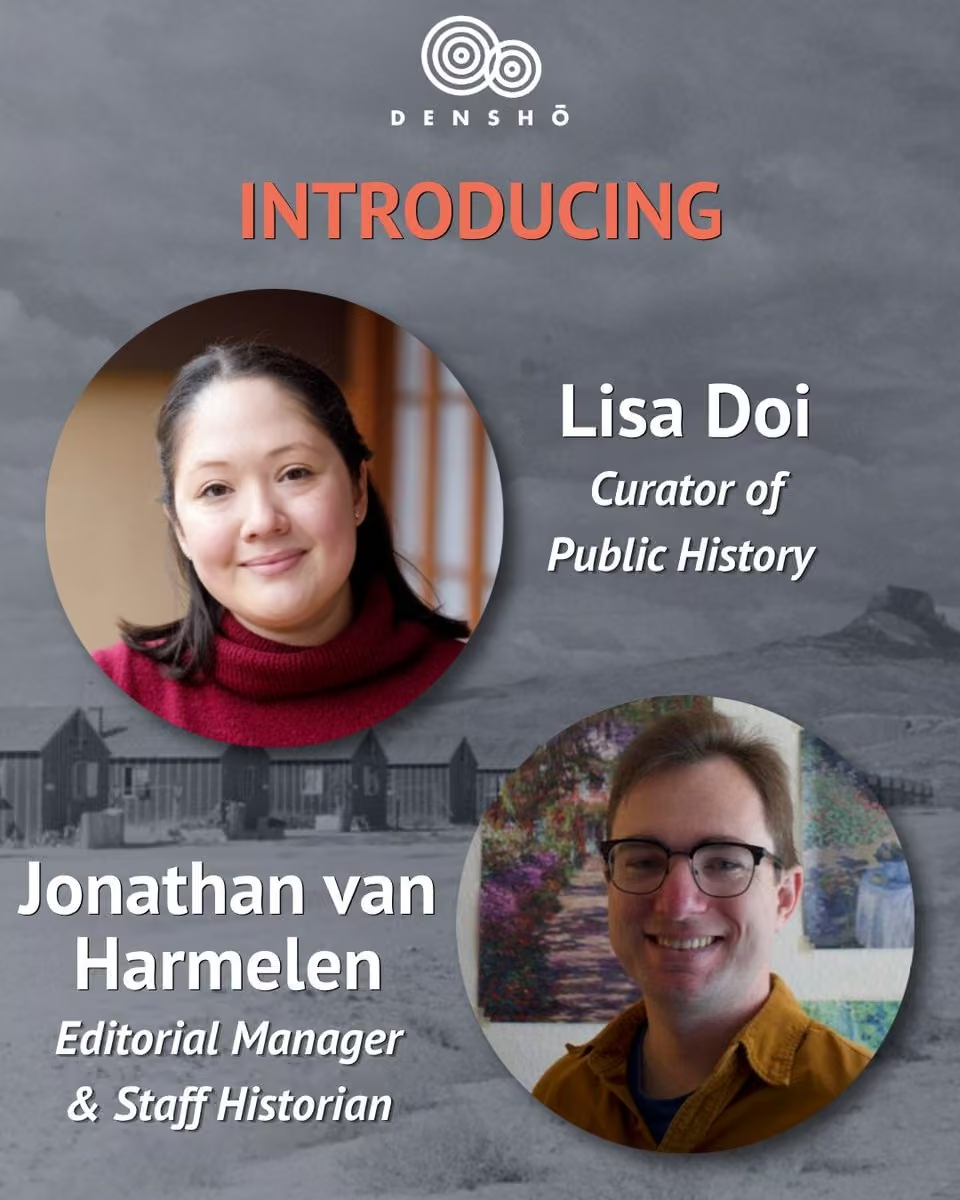
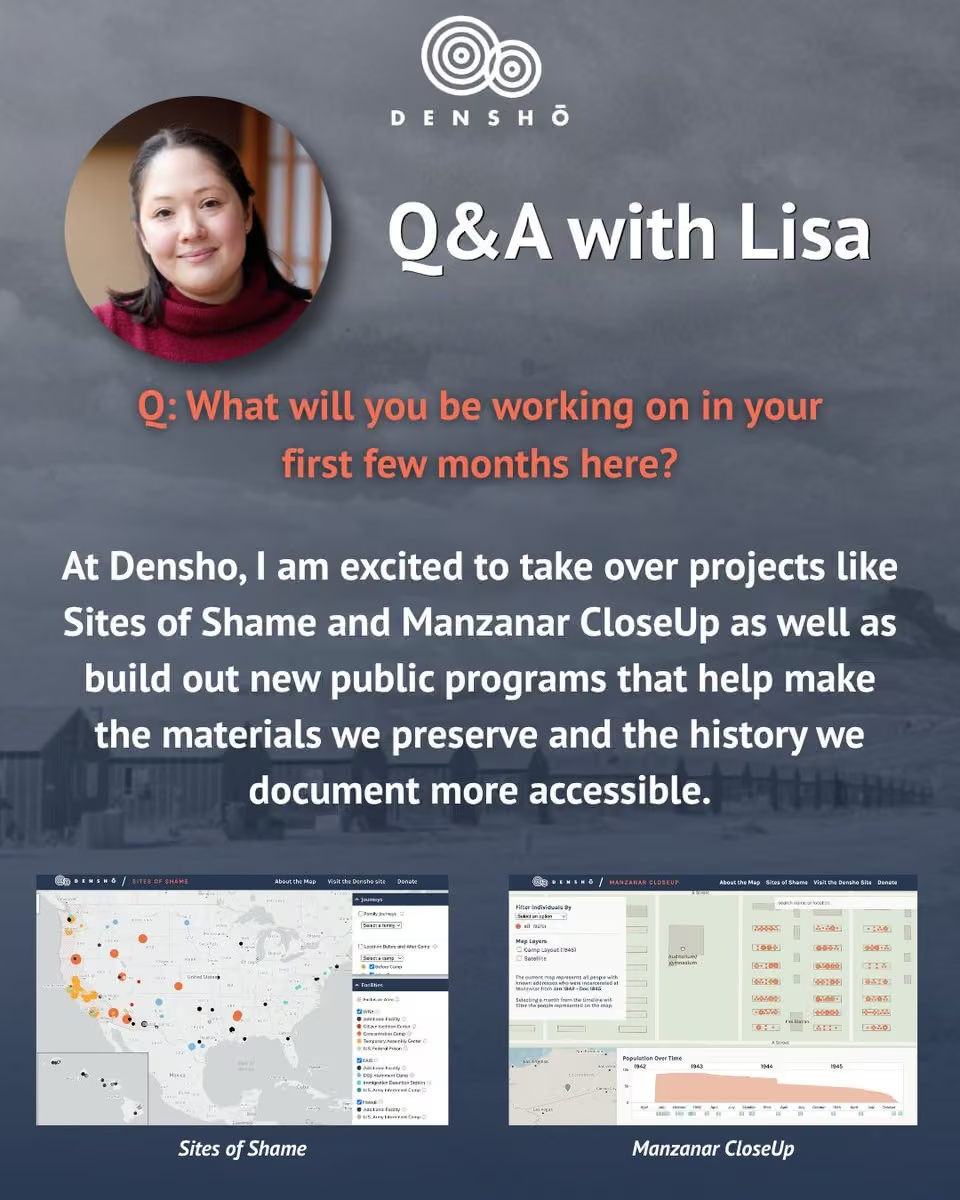
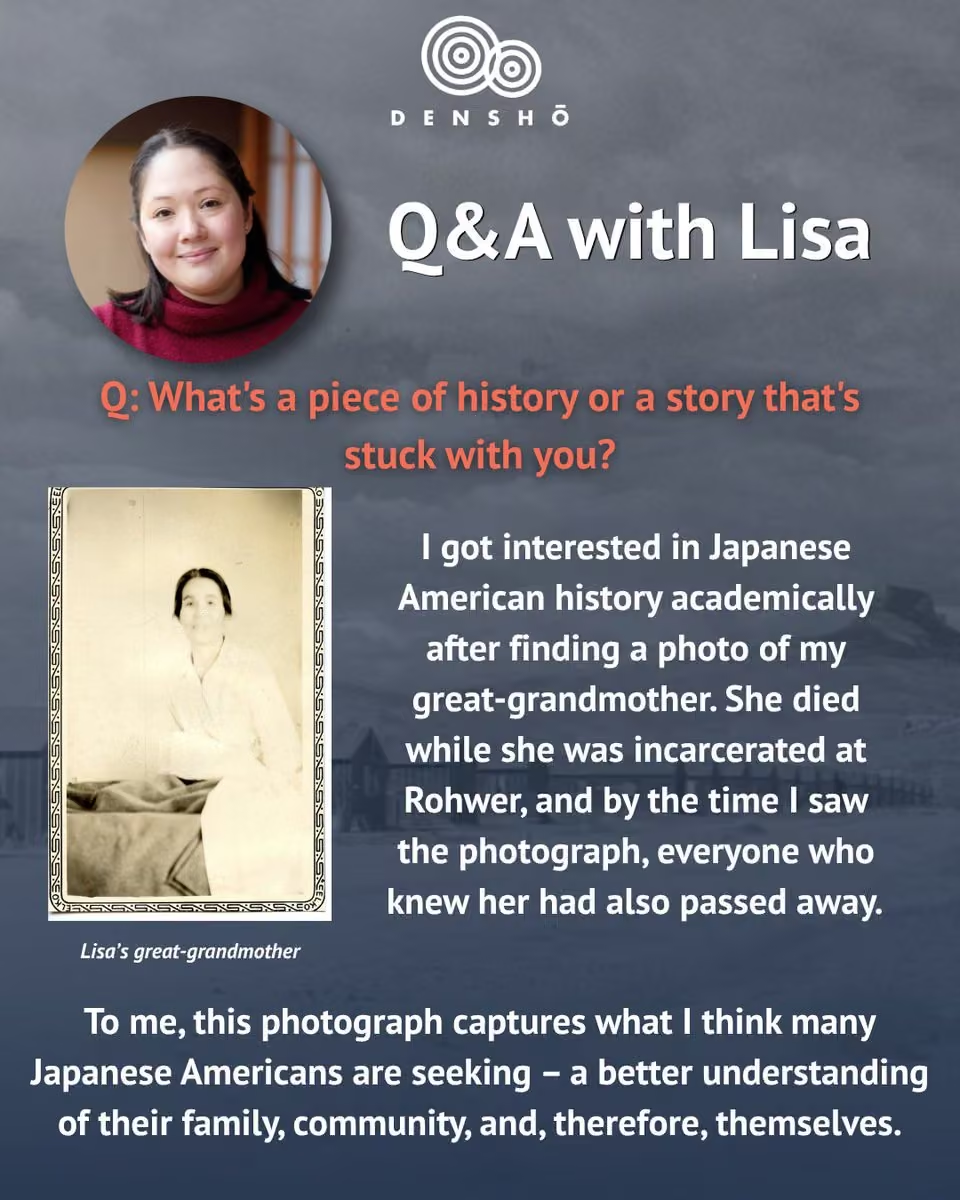
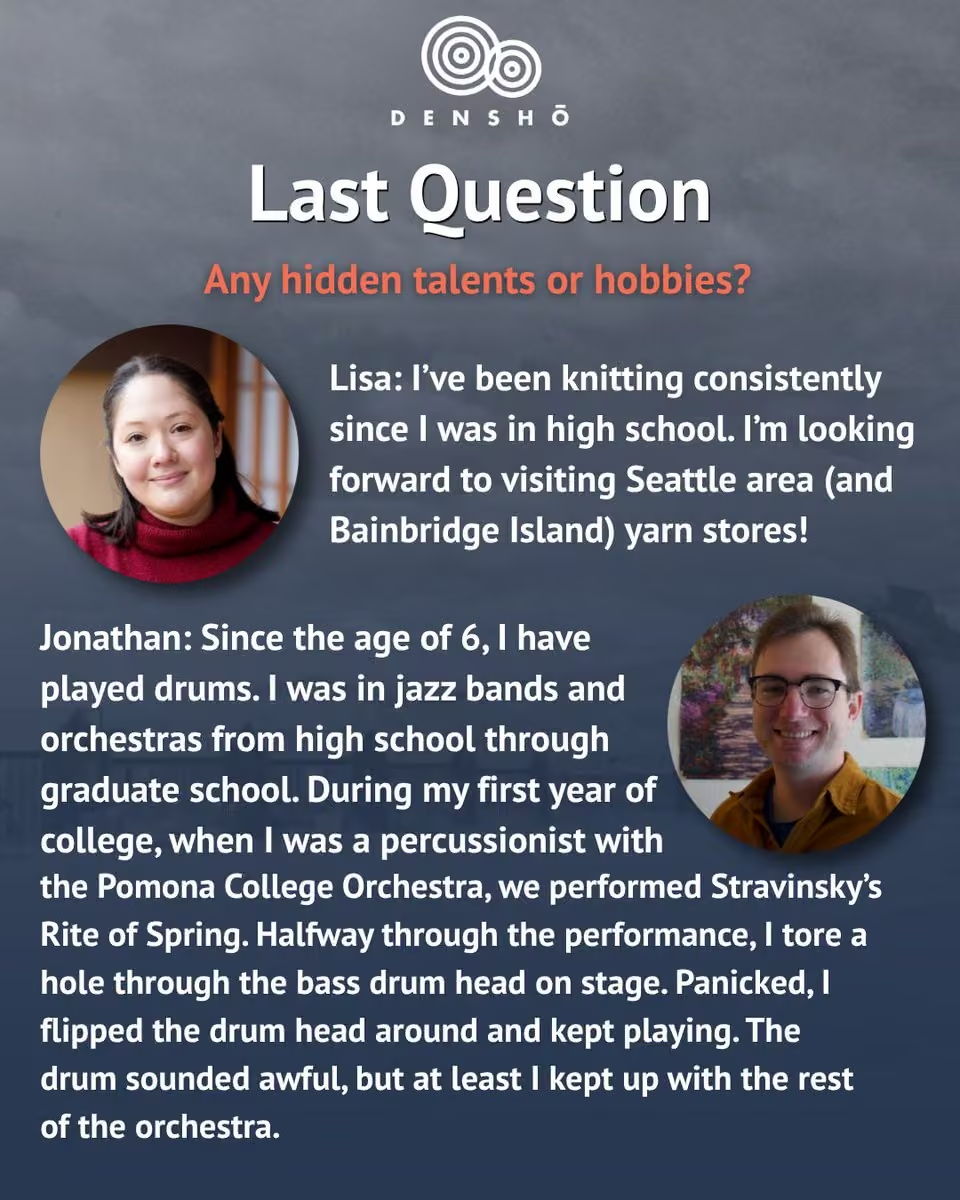
Densho's historical content team is growing! Meet the newest hires, Lisa Doi, Curator of Public History, and Jonathan van Harmelen, Editorial Manager and Staff Historian, in this Q&A!
Densho
@DenshoProject
Learn about what they will be working on during their first few months at Densho, admired historical figures, and their lifelong hobbies!
Densho
@DenshoProject
Please join us in welcoming them to Densho!
If you want to learn more about the transition on the historical content team, watch our recent YouTube video: youtu.be/eJ3L_hb2TZw
Densho
@DenshoProject
[CORRECTION on slide 5: the question should be, "If you could have dinner with anyone from history, who would it be?"]
-
Densho
@DenshoProject
On the eve of our 30th Anniversary Gala, we are featuring an oral history interview clip from Densho’s Founder, Tom Ikeda. As a chemist and former engineer, he reflects on how hearing personal stories encouraged him to see the world in a more nuanced light.
This media couldn't be displayed. See it on the original post.Post not available here, view on X
Densho
@DenshoProject
In his own words, “I've come to learn the importance of the individual, and that's why I am speaking out more and doing more, because you realize that, historically, one person can really make a difference.”
Densho
@DenshoProject
There is power in sharing your story. At Densho, our mission and purpose is to record and safeguard the stories of the past for generations to come. Join us and support our work. Make a gift today: densho.donorsupport.co/-/XBJXRNPC
-
Densho
@DenshoProject
“He said he’s not going to be here, so we have no father. So I have to take the role of father of the family.”
Masamizu Kitajima, who was only eight years old at the time of Pearl Harbor, recalls his reaction to the FBI arresting his father from their home.
Densho
@DenshoProject
After his father, a prominent Buddhist minister and community leader, was arrested from their home on Kauai, young Kitajima was tasked to step up to help lead and care for the family, without knowing if he would see his father again.
Densho
@DenshoProject
Kitajima recalls the moment when this grim reality sunk in: “When I heard Mom crying at night, I kind of... I think that changed my life. I kind of felt my carefree life, living as a child, no longer existed... I feel like I lost something.”
Densho
@DenshoProject
The family would eventually be sent to the incarceration camp in Jerome, Arkansas, reuniting with his father in late 1943 after two years of separation.
Densho
@DenshoProject
Kitajima’s father was one of many Issei community leaders that were detained without any warning or due process in the weeks following the attack on Pearl Harbor.
Densho
@DenshoProject
The impacts of these raids and arrests remained with many Japanese Americans who were just children at the time, impacting them for years beyond the war.
Densho
@DenshoProject
Hearing stories directly from the people who lived it, like Kitajima, is integral to the work that Densho has been committed to for the past 30 years. Help us safeguard stories of the past for future generations today at densho.donorsupport.co/-/XBJXRNPC
-
Densho
@DenshoProject
Today, we remember the national tragedy of September 11, 2001, and honor the memory of all those who lost their lives.
Post not available here, view on X
Densho
@DenshoProject
She remembers thinking at the time, “Japanese Americans need to speak up about it. Because we could identify with what was happening.”
Densho
@DenshoProject
Offering an important reminder, she continues: “Looking like an enemy doesn’t make you an enemy. We need to remember that, because it could easily happen again, no matter what group.”
-
Densho
@DenshoProject
If you are an educator or curriculum developer, we invite you to be one of the first to see Densho’s new Education Framework: Ten Guidelines for Teaching about Japanese American Wartime Incarceration on Wednesday September 8th from 4:00 – 5:00 pm PT.
Densho
@DenshoProject
Hear how our Education team developed the ten essential guidelines for teaching Japanese American wartime incarceration in classrooms, and why the framework serves to fill a gap in historical context that is often not addressed. Register here: us06web.zoom.us/webinar/register/WN_WGpisJT0RMKvhYmKX9NoMw
-
Densho
@DenshoProject
Densho unequivocally condemns recent statements made on the podcast, Timcast IRL, suggesting that Chinese Americans should be incarcerated in the event of a war between China and the U.S. Read our response on Catalyst here: densho.org/catalyst/densho-responds-to-racist-logic-of-in…
-
Densho
@DenshoProject
For this month’s installment of Densho Staff’s 30 Favorite Objects, Archivist Micah Merryman chose this archival photograph of marionettes set against a backdrop for a puppet show.
Post not available here, view on X
Densho
@DenshoProject
"This particular photo stuck out to me because it was part of a group of photos that showcased some of the fun theatrics put on to entertain folks in Amache. I've always been curious about what story was being told with these marionnettes…”.
Densho
@DenshoProject
Image description: A photograph of a marionette show courtesy of Yuriko Domoto Tsukada Collection.
-
Densho
@DenshoProject
Calling all educators! Join the National Constitution Center, UCLA Asian American Studies, and Densho for “Federalism in Action: Teaching Japanese American Incarceration During World War II.”
Post not available here, view on X
Densho
@DenshoProject
Participating teachers will receive a $100 stipend and workshop materials, as well as light breakfast and a boxed lunch (dietary needs will be accommodated).
Densho
@DenshoProject
🗓️Thursday, September 10, 2026, 9 a.m. – 4 p.m.
📍National Constitution Center, Philadelphia, PA
🔗Learn more and register by August 31, 2026 with this link constitutioncenter.org/calendar/federalism-in-action-teac…
Space is limited. Register now to reserve your spot! -
Densho
@DenshoProject
“And looking at that document, I still remember vividly thinking, ‘Oh, my God. This is amazing. This is like a smoking gun.’”
Densho
@DenshoProject
In this installment of 30 Stories for 30 Years, Attorney and legal scholar Peter Irons recalls the moment he found the “smoking gun.”
Densho
@DenshoProject
It proved that government officials had intentionally suppressed and altered evidence in lawsuits challenging the imposed curfews during WWII and forced exclusion orders imposed on Japanese Americans.
Densho
@DenshoProject
This discovery led to the reopening of three landmark cases of Fred Korematsu, Gordon Hirabayashi, and Min Yasui, who had been convicted for violating the military's wartime orders. All of which were overturned in a coram nobis process.
Densho
@DenshoProject
Irons found this document while working with activist Aiko Yoshinaga-Herzig in 1981, who was researching for the Commission on Wartime Relocation and Internment of Civilians (CWRIC).
Densho
@DenshoProject
Irons recalls discovering a memo from the Justice Dept archives in which Edward Ennis, director of the Alien Enemy Control Unit during the incarceration, told Solicitor General Charles Fahy that the gov't had info refuting a War Department report claiming that JAs were disloyal.
Densho
@DenshoProject
Ennis argued that withholding the information from the U.S. Supreme Court might approximate suppression of evidence.
Densho
@DenshoProject
Irons was stunned as he realized that this document revealed and essentially admitted government wrongdoing. Later, he unearthed additional documents showing that government attorneys engaged in legal misconduct.
Densho
@DenshoProject
Meticulous organization and preservation of documents, such as this “smoking gun” that would change the course of history, further emphasize the importance of keeping NARA facilities open and readily accessible by the public.
Densho
@DenshoProject
If you want to hear more first-person accounts, make a gift to Densho today at densho.donorsupport.co/-/XBJXRNPC
-
Densho
@DenshoProject
In a conversation with Densho’s Education and Public Programs Manager Courtney Wai, Teaching Fellow James Lemuel describes how and why he contributed to the development of the Densho Education Framework—a set of ten guidelines for teaching about the WWII JA incarceration.
Densho
@DenshoProject
James draws on his own experiences as a history and math teacher in Leander, Texas, while offering practical insights into how K–12 teachers can use the framework to deepen and expand how they teach this history.
Densho
@DenshoProject
Learn more about the Densho Education Framework and how James contributes his interdisciplinary teaching approach to Densho to develop ethnic studies curriculum for K-12 teachers and youth at densho.org/catalyst/educator-spotlight-james-lemuel/
-
Densho
@DenshoProject
In what ways has Densho impacted you? Has a member of your family contributed their story to Densho? Is there a staff or board member who left a lasting impression? Consider sharing your reflections in a Densho Anniversary Card at densho.org/30th-anniversary-cards/!
Post not available here, view on X
Densho
@DenshoProject
Your message will not only be a treasured gift to the organization, but it will also be featured in 30th year programming, social media and other public content, with your permission. When submitting a message, you will have the option to make your card private or anonymous.
Densho
@DenshoProject
Thank you for sharing your message with our community and helping to celebrate 30 years!
-
Densho
@DenshoProject
We are excited to invite you to Densho’s 30th Anniversary Gala. Join us in Seattle on September 26, 2026, 5:00–9:00 PM at the historic Sunset Club.
Post not available here, view on X
Densho
@DenshoProject
To commemorate this milestone, we will share memories, toast to those who came before us, and reflect on the impact of our work. Please join us in celebrating all we have accomplished together, as we step into our next era of preservation, education, and stewardship.
Densho
@DenshoProject
We encourage you to reserve your ticket as early as possible since seating is limited! Tickets are available online at event.auctria.com/3293713d-d6c8-42d2-af1f-972fd7e39f12/a8…
With gratitude,
All of Us at Densho -
Densho
@DenshoProject
For this installment of 30 Stories for 30 Years, we are sharing a segment from Yoshimi Matsuura’s oral history interview where he recalls facing racism and housing discrimination when resettling in Minneapolis, Minnesota after being released from Gila River.
Post not available here, view on X
Densho
@DenshoProject
“I didn't tell anybody what happened, nobody. I didn't even tell my family. I didn't tell my family about that until years and years and years later. I didn't walk to talk about the humiliation, it just... it was terrible.”
Densho
@DenshoProject
Densho is grateful to be trusted with memories like this sensitive one from Yoshimi Matsuura. Please support us in documenting more stories and safeguarding them for future generations. Make a donation today at densho.org/give
-
Densho
@DenshoProject
Thank you to the @KPBS and Midday Edition team for inviting our Executive Director Naomi Ostwald Kawamura to this vital discussion on the links between the WWII incarceration and current immigration policies and detention we are seeing today. Listen here: www.kpbs.org/podcasts/kpbs-midday-edition/what-wwii-japan…
-
Densho
@DenshoProject
If you’re local in San Diego, tune in to @KPBS Midday Edition today at 12PM to hear Densho’s Executive Director Naomi Ostwald Kawamura speak on the links between the incarceration and today’s immigration and detention policies. Full episode will be shared after the segment airs.
-
Densho
@DenshoProject
Tonight from 5-6:30pm PT! Join us for an urgent Protect the Archives Webinar, in collaboration with @TsuruSolidarity and Save Our National Archives. The threats to the San Bruno and Chicago NARA facilities are urgent community matters.
Densho
@DenshoProject
We need your help to take action and make our collective voices heard! Register here: actionnetwork.org/events/protect-the-archives-webinar
-
Densho
@DenshoProject
For this month’s installment of Densho Staff’s 30 Favorite Objects, Communications Manager Diana Tsuchida shared one object that isn’t her “favorite” but one that she always revisits and is particularly impactful for her.
Post not available here, view on X
Densho
@DenshoProject
"I’ve always wondered what the military police (MP) is thinking as he watches this forced separation. I wonder what happened to Mr. and Mrs. Moji, and King.”
Densho
@DenshoProject
Image description: A photo of the Moji family saying goodbye to their dog, King, during mass removal, photo captured on March 30, 1942, on Bainbridge Island, courtesy of the Bainbridge Island Japanese American Community.
-
Densho
@DenshoProject
Densho opposes the recently announced plans to close National Archives facilities in Chicago and San Bruno. Densho Archives Director Caitlin Oiye Coon, who visited the San Bruno facility in California to scan and archive material, explains why.
This media couldn't be displayed. See it on the original post.Post not available here, view on X
Densho
@DenshoProject
3️⃣ Write your own letters to Congressional representatives, including representatives that serve on NARA’s Appropriations and Oversight Committees.
Densho
@DenshoProject
4️⃣ Learn more and spread the news. Share this post and read our full Densho statement at densho.org/catalyst.
-
Densho
@DenshoProject
Herded like animals by military police with their guns and billy clubs, Dennis Bambauer remembers getting on a bus in Los Angeles that took him and other orphans to Manzanar Children’s Village – the only orphanage in all of the ten camps.
Densho
@DenshoProject
For this installment of 30 Stories for 30 Years, we shed light on the unique experience of orphaned Japanese American children like Baumbauer, who were incarcerated in the camps.
Densho
@DenshoProject
Uncomfortable and scared, nobody explained to Bambauer and the other orphans on his bus what was happening to them or where they were being taken.
Post not available here, view on X
Densho
@DenshoProject
Remembering and recording lesser-known stories, like this one, is a focal point of Densho’s work and essential to telling an accurate narrative of Japanese American incarceration history.
Densho
@DenshoProject
Help us to continue this effort for the next 30 years. Make a gift today: densho.donorsupport.co/-/XBJXRNPC
-
Densho
@DenshoProject
At the end of June, community activist, educator, and Densho oral history narrator, Ikuko “Iku” Kiriyama, passed away. We are feeling her loss, as she was instrumental in many community organizations, namely the Japanese American Historical Society of Southern California (JAHSSC)
Post not available here, view on X
Densho
@DenshoProject
With Iku’s passing, let us remember her passion for education and activism for this community, inspiring the next generation of Japanese American history stewards.
Rest in power, Iku.
Densho
@DenshoProject
Iku Kiriyama’s service will be held on Sunday, August 16th, at 12pm, at Senshin Buddhist Temple, 1311 W. 37th St., Los Angeles, CA 90007.
-
Densho
@DenshoProject
Today, we’re celebrating what would have been Arnold Maeda’s 100th birthday and his contributions to the Japanese American community.
Densho
@DenshoProject
Born and raised in West Los Angeles, Arnold Maeda was a leader in the Japanese American community from a young age. While he and his family were incarcerated at Manzanar, Maeda served as the president of his graduating class at Manzanar High School, Class of 1944.
Post not available here, view on X
Densho
@DenshoProject
On Maeda’s 100th birthday, we honor his life and the impact he had on the Japanese American community. We continue to be deeply grateful to him for sharing his testimony with Densho. Learn more about his life and watch his complete interview in Densho’s Visual History Collection.
Densho
@DenshoProject
Learn more about Arnold Maeda in our 2026 Nisei Notables article at densho.org/catalyst
Photo courtesy of Rafu Shimpo. -
Densho
@DenshoProject
Today, in honor of this significant Fourth of July, we are exploring some pivotal moments and decisions made behind barbed wire that highlight resistance and challenges to the U.S. government.
Post not available here, view on X
Densho
@DenshoProject
In a poignant moment, Sasaki reflects on a seemingly innocuous habit that her father had that revealed his deeper worry around his citizenship status for years beyond the camps.
Densho
@DenshoProject
While these examples depict only some of the many ways that people enacted resistance, they still shed light on how Japanese Americans claimed their identity, rights, and belonging as Americans in this country.
-
Densho
@DenshoProject
Obon season is currently underway at Buddhist temples across the country, where taiko performances are a common feature of the festivities.
Densho
@DenshoProject
This clip from our 30 Stories for 30 Years series features Sansei taiko artist, writer, and activist Stanley Shikuma discussing the importance and symbolism of taiko.
Densho
@DenshoProject
Taiko (“drum”) covers a wide range of instruments and musical genres. In the United States, taiko is most often used in group drumming and to accompany dances (Bon odori) at summer Obon festivals, a Buddhist tradition honoring deceased family members and ancestors.
Densho
@DenshoProject
When it comes to their presence during the incarceration, Shikuma explains that they were a part of camp life: “We know that there were drums in the camps.”
Densho
@DenshoProject
There was one small taiko drum on display at the Japanese American National Museum in which Buddhist sutras were inscribed, noting its use for services and ceremonies by the Buddhist reverends in camp.
Densho
@DenshoProject
Shikuma recalls how taiko, which commands attention, helped shake the model minority myth and shatter the enduring stereotypes that people had of Japanese Americans in particular. He describes “Taiko [as] loud and really out there.”
Densho
@DenshoProject
Shikuma continues that taiko “was a way for Sansei to reclaim some of the cultural heritage that had been lost or severely damaged by the war... it was kind of a revolutionary undertaking.”
Densho
@DenshoProject
Shikuma has led several prominent Seattle-area taiko ensembles, and he remains involved in numerous Japanese American community and activist groups such as the Japanese American Citizens League, Tule Lake Committee, and Tsuru for Solidarity.
Densho
@DenshoProject
Support Densho in preserving the testimony of other community members, like Stanley Shikuma. Your support today allows for our history to be recorded for future generations. Make a gift at densho.donorsupport.co/-/XBJXRNPC
-
Densho
@DenshoProject
For June’s installment of Densho Staff’s 30 Favorite Objects series, we are highlighting a letter that, on the surface, reminds us of summer.
Post not available here, view on X
Densho
@DenshoProject
To learn more about Leavenworth, visit the Densho Encyclopedia page at encyclopedia.densho.org/Leavenworth_(detention_facility)/
Densho
@DenshoProject
Image description: A censored letter and watercolor drawing of a child playing on a beach, sent by Guntaro Kubota to his family at Heart Mountain incarceration camp from Leavenworth Federal Penitentiary, from the Frank Abe Collection.
-
Densho
@DenshoProject
Happy Juneteenth! As a historical organization dedicated to preserving the Japanese American experience, we recognize that our history – of both oppression and resistance – cannot be disconnected from the historic and ongoing struggles of African American and other communities.
Post not available here, view on X
Densho
@DenshoProject
The Japanese American community was deeply influenced by the Black civil rights movement, serving as a model to organize, advocate, and demand reparations for their unjust incarceration. All these connections remind us of our deep interconnectedness.
Densho
@DenshoProject
Photos:
1) Ina Sugihara and Charles Crawford hold protest signs reading “Help End Discrimination” in 1953. Photo courtesy of New York CORE
3) Fred Korematsu's ''Coram Nobis'' Press Conference at The Press Club of San Francisco in 1983. Photo courtesy of Fred Korematsu family
Densho
@DenshoProject
4) Task Force members, from left: Jovan Scott Lewis, Sen. Steven Bradford, Lisa Holder, Councilmember Monica Montgomery Steppe, Cheryl Grills, Donald K. Tamaki, Amos C. Brown, Assemblymember Reginald Byron Jones-Sawyer Sr. and Kamilah V. Moore. Photo: State of California
-
Densho
@DenshoProject
In the fourteenth installment of 30 Stories for 30 Years, Yukiko Miyake recalls a memory of when she was sick in Minidoka, and an Issei woman brought her otsukemono (pickled vegetables).
Post not available here, view on X
Densho
@DenshoProject
Yukiko’s story sheds light on aspects of camp life that are often overlooked, including everyday acts of generosity, unexpected resourcefulness, and intergenerational relations.
Densho
@DenshoProject
Make a gift today to help preserve stories like Yukiko Miyake’s, ensuring that these histories remain accessible. Your support makes this work possible. Donate today: densho.donorsupport.co/-/XNXLLTQD
-
Densho
@DenshoProject
We are excited to welcome Diana Tsuchida as Densho’s new Communications Manager!
Post not available here, view on X
Densho
@DenshoProject
Her grandparents were Kibei, and her grandfather was a vocal resister during the war. His resistance led to additional incarceration at the Citizen Isolation Center in Leupp and later at the Department of Justice camp in Crystal City.
Densho
@DenshoProject
Diana is honored to be part of Densho's mission to preserve and share the critical testimonies of the Japanese American community.
-
Densho
@DenshoProject
Known for expanding the boundaries of art in the decades after World War II, Satoru Abe is someone we want to celebrate today on what would’ve been his 100th birthday.
Densho
@DenshoProject
Though he began as a painter, Abe is best known for his metal and wood sculptures, which are often characterized by distinctive tree-like forms that seem to grow organically.
Densho
@DenshoProject
Widely exhibited in both Hawai‘i and on the U.S. continent, he continued to produce art well into his 80s and 90s.
Densho
@DenshoProject
Abe was born and raised in Honolulu and received his first art training there before venturing to California in 1948 and eventually moving to New York City.
Densho
@DenshoProject
After marrying Ruth Tanji, a textile and fashion designer from Hawai‘i whom he met in New York, the couple returned to Honolulu, where Abe became part of a group of young artists that met at the Metcalf Chateau.
Densho
@DenshoProject
He and his wife returned to New York in 1956 where they spent the next sixteen years, before returning to the Islands in 1972.
Learn more about Satoru Abe and other Nisei Notables who would have turned 100 in 2026 at densho.org/catalyst/nisei-notables-2026/
Densho
@DenshoProject
Photo of Satoru Abe courtesy of Hawaii Business Magazine. Photo of “Two Figures in the Forest” courtesy of Honolulu Museum of Art.
Densho
@DenshoProject
“Two Figures in the Forest” citation: Satoru Abe (American, born Hawai‘i, 1926). Two Figures in the Forest, 2002. Copper cutout, wood base. Gift of Timothy Y.C. Choy in honor of Warren and Carolyn Luke, 2014 (2014-5-04)
-
Densho
@DenshoProject
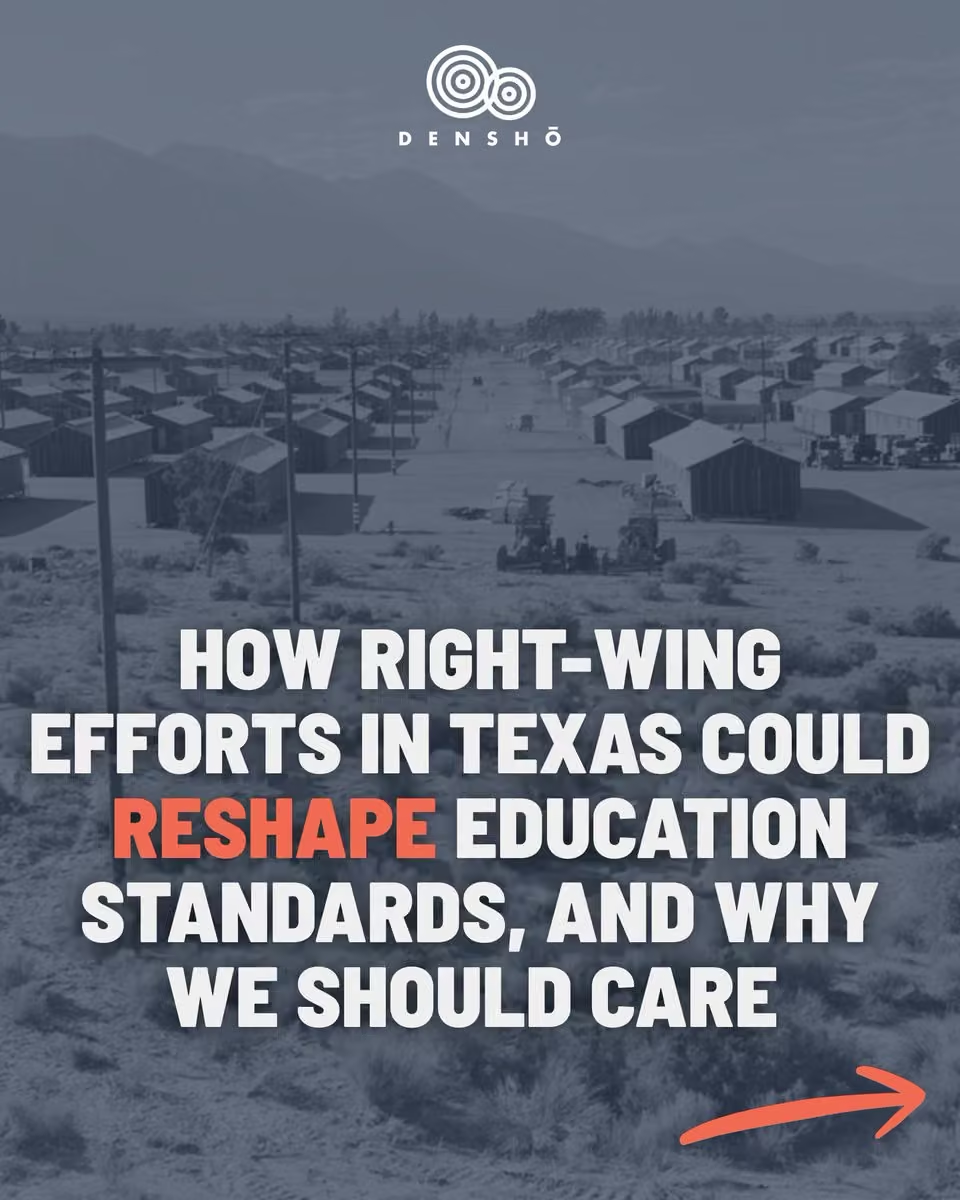
A politically-charged fight is currently underway in Texas, affecting revisions and updates to the state’s social studies standards, which could affect history education across the whole country.
Post not available here, view on X
Densho
@DenshoProject
Densho recommends adding a new standard: “analyze the domestic impact of World War II on civil liberties, including the forced removal and incarceration of Japanese Americans under Executive Order 9066 and the subsequent legal challenge in Korematsu v. United States.”
Densho
@DenshoProject
Provide public comment (especially if you’re in Texas) by June 15 at 5:00 pm CT. See our recent blog post for specific incarceration-related standards that you can comment on: densho.org/catalyst
-
Densho
@DenshoProject
As the World Cup starts today across North America, we wanted to take note of the power of sports to unify people across the world, even during times of global uncertainty.
Post not available here, view on X
Densho
@DenshoProject
In many instances, they also functioned as a release valve for the social, economic, psychological, and political pressures created by incarceration based solely on ancestry.
Densho
@DenshoProject
Some Nikkei played for the love of the game, while others aimed to prove their value in society as well as in sports. Still others used sports as a way to resist government policies.
Post not available here, view on X
Densho
@DenshoProject
8) Young Japanese American boys huddled for a baseball game at Manzanar from the National Archives and Records Administration.
Densho
@DenshoProject
9) Gila River spectators at camp watch two sumo wrestlers hold onto each other as they both lose balance from the National Archives and Records Administration.
-
Densho
@DenshoProject
“And we talked about the long-term effects of the internment, but the pilgrimage really offers a place of healing, a place of solitude.”
Post not available here, view on X
Densho
@DenshoProject
In the community, David is well known for his involvement in numerous Japanese American community organizations on the East Coast, particularly the Japanese American Citizens League.
Densho
@DenshoProject
Help Densho safeguard stories, like David Sakura’s, for future generations by making a gift today at densho.org/give
-
Densho
@DenshoProject
“Historic sites must be accessible. And it is important to acknowledge that they weren’t at the time, and in many cases took a long time to become accessible, or continue to be inaccessible.”
Post not available here, view on X
Densho
@DenshoProject
Image 4) Densho-branded graphic with a pull quote from Selena Moon over a faded image of the wooden accessibility ramp at a historic site with mountains visible...
Densho
@DenshoProject
Image 4 continued) Quote reads: "Historically, the world was inaccessible to disabled people in many ways, from lacking ramps or seating, sign language interpreters or subtitles, braille or large print, or having over-stimulating environments...
Post not available here, view on X
Densho
@DenshoProject
Image 6 continued) a PhD student in American Studies at the University of Minnesota Twin Cities. Her research interests include multi-racial, disability, and women's history. Her current research focuses on disabled Japanese Americans and their families during the World War II...
Densho
@DenshoProject
Image 6 continued) incarceration. Read more and access Selena's 'Accessibility Toolkit' at densho.org/catalyst."
-
Densho
@DenshoProject
Dr. Satsuki Ina is a licensed psychotherapist specializing in community trauma, author of “The Poet and the Silk Girl” (2024), and cofounder of Tsuru for Solidarity.
Post not available here, view on X
Densho
@DenshoProject
This memory is of her dad reaching for her and Satsuki reacting by crying, because he was to her still a stranger after being separated from the family during the war. He had been taken before she was one and did not return until she was two and a half years old.
Densho
@DenshoProject
Later, Satsuki reflects on her Nisei parents’ understanding of what strength looks like in relation to her later understanding of what it means to her:
Densho
@DenshoProject
Satsuki: “How to be strong, how to endure… He never said, ‘And fight back.’... The next part of my own growth was to learn to fight back… that was what I could carry forward, was to take it, learn it, study it, understand it, really feel in control of it, and then speak out.”
Densho
@DenshoProject
Read more of Dr. Satsuki Ina’s reflections in the Densho Catalyst at densho.org/catalyst, and watch the rest of her oral history interview online in the Densho Digital Repository.
-
Densho
@DenshoProject
For this installment of Densho Staff’s 30 Favorite Objects series, we are highlighting two objects that hold special meaning for two of our staff members.
Post not available here, view on X
Densho
@DenshoProject
Each was chosen for its particular resonance: some for their historical significance, offering vivid snapshots of Japanese American life before, during, and after World War II; others for their personal connections and the stories they continue to carry forward.
Densho
@DenshoProject
Together, these 30 objects hold memory and meaning: the lived experiences of those who endured incarceration and the ongoing commitment to preserving and sharing their stories.
-
Densho
@DenshoProject
On this Memorial Day, we want to share an oral history interview of decorated World War II veteran and member of the 442nd Regimental Combat Team, Fred Shiosaki, describing the rescue of the "Lost Battalion” in World War II.
Post not available here, view on X
Densho
@DenshoProject
The 442nd suffered hundreds of casualties in rescuing 211 men. The rescue raised the question of whether the Nisei soldiers were being used as "cannon fodder" or whether they were given the most difficult assignments because of their outstanding performance.
Densho
@DenshoProject
Today, we remember all who die in service of this country, especially the 100th and 442nd RCT.
-
Densho
@DenshoProject
We are heartbroken by the passing of Kyoko Nancy Oda, a giant in the Nikkei community and one of our oral history narrators.
Post not available here, view on X
Densho
@DenshoProject
Virginia Yamada continues: "The lessons I learned from what she shared about her family’s experience, and from the way she actively engaged in our time together, continue to inform how I approach each oral history. Thank you, Kyoko."
Densho
@DenshoProject
Kyoko’s memory lives on in this oral history interview, everything that she built, and through everyone she touched over the years.
-
Densho
@DenshoProject
“[Author Karen Tei] Yamashita provides a lot of answers, but she also leaves a lot unknown, because it is impossible to know everything.” – Amber Hisatomi
Post not available here, view on X
Densho
@DenshoProject
Tying in the literary and the personal, Amber explores the novel as an archive through a brief overview of its three parts, focusing on how communities are empowered by shared histories, especially when they are able to contribute to it.
Densho
@DenshoProject
Read Amber’s review at densho.org/catalyst
-
Densho
@DenshoProject
This past February, Densho completed a major milestone with the completion of the Loni Ding Oral History and Film Research Collection grant project.
Densho
@DenshoProject
With the support of the National Historical Publications and Records Commission (NHPRC), we digitized 5,730 minutes of audio/visual recordings and 5,000 photographs and documents all related to Loni Ding’s documentaries: “Nisei Soldier” and “The Color of Honor.”
Densho
@DenshoProject
These digitized materials are all available in the Densho Digital Repository.
🔗 Learn more about Loni Ding and the collection through our photo essay, “Loni Ding, Godmother of Asian American Documentary Filmmaking.”
densho.org/catalyst/loni-ding-godmother-of-asian-american… -
Densho
@DenshoProject
Save the date and join Densho for a zine-making workshop at the Seattle Public Library, part of their programming for One Book, One Coast.
Post not available here, view on X
Densho
@DenshoProject
They will engage with the concepts shared in Gidra by creating their own artwork.
This workshop will run from 2 – 4:30 pm and will be located in the Level 4 - Room 1 of Seattle Public Library’s central library. This is a free event, but registration is required.
Densho
@DenshoProject
📍 Level 4 - Room 1 of Seattle Public Library’s central library
🗓️ June 6th, 2026 from 2 – 4:30 pm PT
🔗 Learn more at densho.org/events/gidra-zine-workshop-at-spl/ -
Densho
@DenshoProject
As Densho celebrates its 30th anniversary, we wanted to speak with the person who helped start it all: founding executive director Tom Ikeda.
Post not available here, view on X
Densho
@DenshoProject
This conversation is part of our new "We Are Densho" series, which highlights the people—our staff, board members, supporters, partners, and community members—who have made Densho what it is today.
Densho
@DenshoProject
Read Tom Ikeda's reflections on Densho's origins and his advice for the next generation of Japanese American history stewards — full article at densho.org/catalyst/we-are-densho-tom-ikeda/
-
Densho
@DenshoProject
In honor of Densho’s 30th anniversary, we wanted to share a special message from our staff. These are 30 words reflecting our mission and symbolically representing our 30 years of existence. This statement captures our commitment to the past, present, and future.
Densho
@DenshoProject
“For 30 years, Densho has honored memory, history, and community through stories of Japanese American resilience. The next 30 years, we’ll deepen learning, expand accessibility, and inspire generations to remember.”
Sincerely,
Densho Staff -
Densho
@DenshoProject
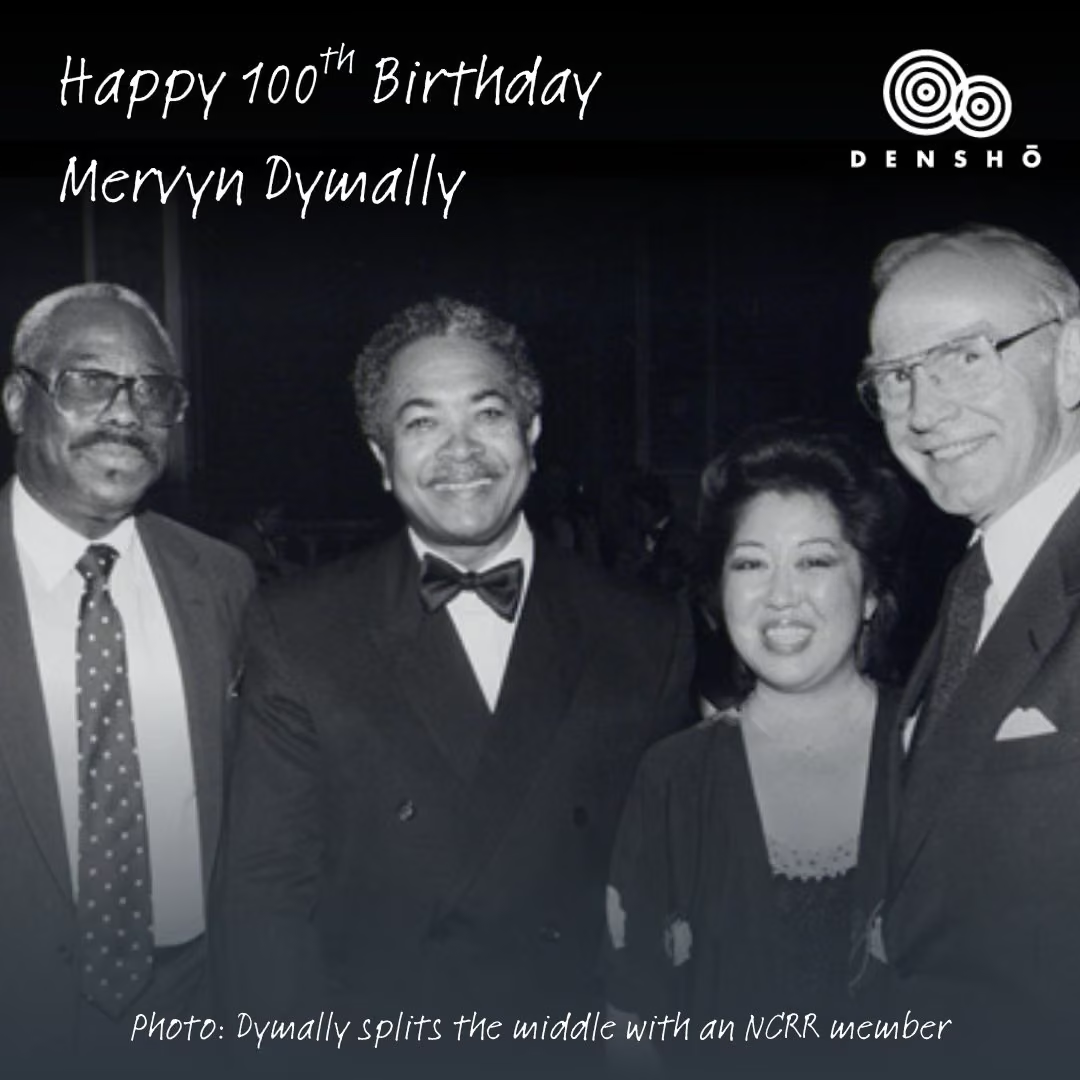
Today, we’re celebrating what would’ve been Mervyn Dymally’s 100th birthday and his contributions to the Japanese American community.
Post not available here, view on X
Densho
@DenshoProject
In 1980, he was elected to Congress in 1980, representing a South Los Angeles County district that included Gardena and Torrance, areas heavily populated with Japanese Americans.
Densho
@DenshoProject
Long cognizant of the Japanese American incarceration story, he was an early supporter of Redress, introducing early redress bills in 1982 at the behest of the National Coalition for Redress & Reparations.
Densho
@DenshoProject
He remained in Congress until 1992, and then, after a ten year absence, returned in 2002 to serve three more terms. Dymally demonstrates the importance of allyship and solidarity in movements for justice.
-
Densho
@DenshoProject
Today, we’re celebrating what would have been Bruce Kaji’s 100th birthday. We remember him for his contributions to the Japanese American community, particularly co-founding the Japanese American National Museum and serving as its initial board president.
Post not available here, view on X
Densho
@DenshoProject
On Kaji’s 100th birthday, we honor his life and the impact he had on the Japanese American community, and thank him for sharing his testimony with Densho. If you’d like to learn more about his life, watch his complete interview in Densho’s Visual History Collection.
Densho
@DenshoProject
Learn more about Bruce Kaji in our 2026 Nisei Notables article at densho.org/catalyst
Photo courtesy of Kaji & Associates. -
Densho
@DenshoProject
“I remember breaking down and crying. I couldn't explain to her why I had given up that name and how because I had recently regained my feeling of pride and everything, I didn't want to use it because it was special now.”
Densho
@DenshoProject
In the eleventh installment of 30 Stories for 30 Years, May K. Sasaki recounts a difficult moment where she was publicly confronted by her peer on a cultural diversity team on why May chose to go by “May” instead of her Japanese name.
Densho
@DenshoProject
For AANHPI Month, we wanted to highlight May’s story to shed light on the differences in how individuals within the Japanese American community engage with their identity.
Post not available here, view on X
Densho
@DenshoProject
Densho preserves and shares oral histories like May K. Sasaki’s as part of our ongoing commitment to documenting lived experiences, expanding public understanding, and ensuring that these histories remain accessible and remembered. Your support makes this work possible.
Densho
@DenshoProject
Make a gift today: densho.donorsupport.co/-/XBJXRNPC
-
Densho
@DenshoProject
We are excited to announce our new Artist-in-Residence, Seraphim Hong!
Post not available here, view on X
Densho
@DenshoProject
This program will connect the artist with community members and Densho staff, who will support Hong in utilizing the Densho Digital Repository and accessing historical expertise.
Densho
@DenshoProject
Welcome, Seraphim Hong! We look forward to seeing how you engage with Bellevue’s Japanese American incarceration history!
-
Densho
@DenshoProject
Densho Oral History Program Manager Virginia Yamada describes the importance of documenting present-day voices and experiences as we live through historically significant and unprecedented events that demand critical attention and documentation.
Densho
@DenshoProject
Building on 30 years of historical preservation and documentation, Densho is meeting this need by launching the Living History Project, a new oral history initiative to capture our community’s thoughts and experiences in the present.
Densho
@DenshoProject
Help Densho capture the voices of everyday people living through this critical moment, ensuring that history is not told by those in power.
You can support Densho in this effort today by making a gift for #givebig at www.wagives.org/organization/Densho -
Densho
@DenshoProject
Dear Teachers, thank you for all your hard work, dedication, and perseverance. In honor of Teacher Appreciation Week, Densho staff wanted to write personal messages conveying our deep respect and appreciation of your work.
Densho
@DenshoProject
Many of us, in our messages, reflect that we would not have the same appreciation of history, and would not even be the same people, without the impact our teachers had on us.
Thank you for shaping the next generation with care and for making the world a better place.
Densho
@DenshoProject
Sincerely,
Densho Staff -
Densho
@DenshoProject
“Where did I, a young Asian girl, fit into our American history?”
Densho
@DenshoProject
Densho Public Engagement Intern Emma Lee reflects on how her time at Densho deepened her understanding of Asian American history, belonging, and the power of archival preservation to affirm that Asian American stories are essential to the American narrative.
Densho
@DenshoProject
As AANHPI Heritage Month begins, we invite you to join us, and Emma, in exploring and sharing stories of AANHPI communities, including moments of joy, agency, and resilience.
Densho
@DenshoProject
Learn more about Emma’s reflections on the importance of inclusive history education, archival work, and her personal growth at Densho at densho.org/catalyst.
-
Densho
@DenshoProject
“One of the hardest parts of grief is the seeming isolation that many folks experience. Writing and publishing this book has taught me that community can carry us through.” – Tamiko Nimura
Densho
@DenshoProject
Tamiko Nimura’s new book “A Place For What We Lose: A Daughter’s Return to Tule Lake” braids her family history at Tule Lake with her own journey as a descendant.
Densho
@DenshoProject
In an interview with Densho Sr. Development and Communications Manager Jennifer Noji, Tamiko offers insight into the book’s content, creation, and relevance today.
Learn more about the new memoir at densho.org/catalyst -
Densho
@DenshoProject
From mountain trails to coastal shorelines to desolate Tule Lake, this installment of our 30 Objects for 30 Years series reflects moments of connection with nature.
Post not available here, view on X
Densho
@DenshoProject
Each was chosen for its particular resonance: some for their historical significance, offering vivid snapshots of Japanese American life before, during, and after World War II; others for their personal connections and the stories they continue to carry forward.
Densho
@DenshoProject
Together, these 30 objects hold memory and meaning: the lived experiences of those who endured incarceration and the ongoing commitment to preserving and sharing their stories.
-
Densho
@DenshoProject
Right now, we are living through a historically significant and unprecedented moment — one that demands critical attention and documentation.
Post not available here, view on X
Densho
@DenshoProject
Through this initiative, we will record these perspectives as these crises unfold in real time.
Densho
@DenshoProject
Your support will make this possible by funding essential equipment, outreach, and travel to pilgrimages and community events where these stories can be recorded.
🔗GiveBIG today at www.wagives.org/organization/Densho to help preserve today’s voices for future generations. -
Densho
@DenshoProject
Preserve your history. Share your story with Densho and KCLS’s Memory Lab 📸
Join Densho and King County Library’s Memory Lab on Saturday, May 9th, for a Community Preservation Day at the Bellevue Library Makers Space from 1:30–5:00pm. -
Densho
@DenshoProject
“If I couldn’t accept curfew, how could I accept this? … I couldn’t, I can’t accept it. It’s worse.”
This media couldn't be displayed. See it on the original post.Post not available here, view on X
Densho
@DenshoProject
As we commemorate his life today, we also honor the enduring importance of rejecting injustice and the responsibility to carry these stories forward.
Densho
@DenshoProject
Join Densho to help preserve and remember these histories for future generations. Make a gift today: densho.donorsupport.co/-/XBJXRNPC
-
Densho
@DenshoProject
Meet our Archives Interns 👋
✨ Serene Wolfden — FOCAS Community Archives Fellow
✨ Brendan Hill — 4Culture Cultural Support Services Intern
✨ Sandy King — Digital Archives InternPost not available here, view on X
Densho
@DenshoProject
From digitizing collections to creating metadata and supporting oral histories, their work helps preserve and expand access to these vital stories.
Densho
@DenshoProject
→ Swipe to meet each intern
→ Learn more: ddr.densho.org
We also want to acknowledge the support, in part, from 4Culture, the Seattle Office of Arts & Culture, and the Mellon Foundation. -
Densho
@DenshoProject
Earlier this month, our team spent three days in the Bay Area recording eight new oral history interviews. Our JA narrators, in their 80s and 90s, shared childhood memories of Tule Lake, Topaz, Jerome, Gila River, and Poston, and of growing up in the aftermath of WWII.
Post not available here, view on X
Densho
@DenshoProject
Densho’s oral history work has been central to our organization since its founding in 1996, and we are excited to still be doing this work 30 years later. Your support allows us to preserve more firsthand accounts and keep these stories alive.
Densho
@DenshoProject
You can also nominate someone to do an oral history interview with Densho by completing this form here: docs.google.com/forms/d/e/1FAIpQLSecG2ahNccUVRwj_bSK07RvX…
-
Densho
@DenshoProject
Densho put together a collection of resources to accompany MS NOW's recently trending podcast “Rachel Maddow Presents: Burn Order” — a six-episode podcast exploring the WWII decisions and policies that led to the forced removal and incarceration of Japanese Americans.
Densho
@DenshoProject
Our resources include: 📖 Blog posts from scholars and community members 🎧 A listening guide with historical insights and additional resources 🗂️ Archival materials related to the podcast
Densho
@DenshoProject
These materials are designed to deepen understanding of the histories discussed in the podcast and to provide pathways for further learning.
Densho
@DenshoProject
Together, they offer listeners an opportunity to engage more critically with the podcast, dive deeper into the history, and hear community members’ perspectives connecting past injustices with current events.
🔗 Explore the full resource page: densho.org/burn-order/ -
Densho
@DenshoProject
In the tenth installment of our 30 Stories for 30 Years series, George Yamada describes how he chose to pursue a chick sexer career.
This media couldn't be displayed. See it on the original post.Post not available here, view on X
Densho
@DenshoProject
By 1942, Japanese Americans dominated the chick sexing industry, and, despite the consequences of the incarceration, continued to market the success of Japanese American chick sexers towards farmers across the United States.
Densho
@DenshoProject
Learn more about chick sexing within the context of Japanese American history through the Densho Encyclopedia. To preserve stories like George Yamada’s, give today: densho.donorsupport.co/-/XBJXRNPC
-
Densho
@DenshoProject
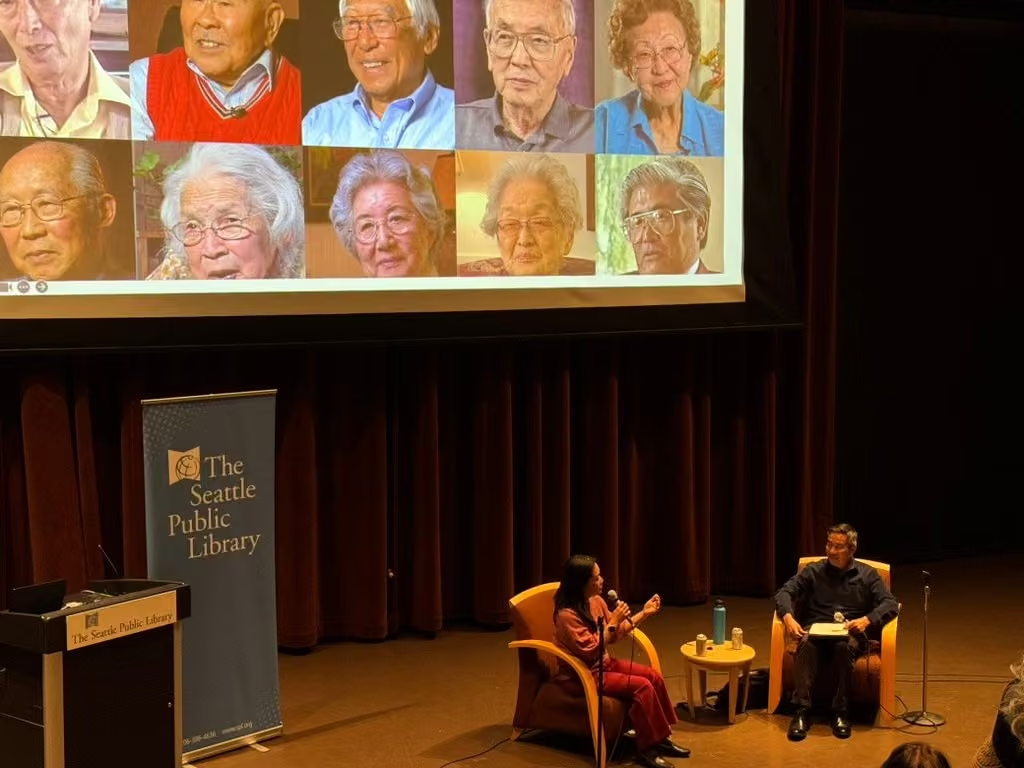
Early in April, the Seattle Public Library hosted a special conversation between Densho founder Tom Ikeda and current Executive Director Naomi Ostwald Kawamura celebrating Densho’s 30th anniversary.
Post not available here, view on X
Densho
@DenshoProject
These selections from Densho’s Visual History Collection reflect on how the organization’s work has evolved over the past three decades.
Densho
@DenshoProject
Continuing to preserve these stories remains as urgent as ever. Please make a donation in honor of Densho’s 30 years today: densho.donorsupport.co/-/XBJXRNPC
-
Densho
@DenshoProject
Today, we’re celebrating what would have been Bob Sakata’s 100th birthday.
Post not available here, view on X
Densho
@DenshoProject
Born on April 15, 1926, in San Jose, California, Sakata is well known for his story—from humble beginnings of growing up on a rented ten-acre family farm in Alameda County to becoming one of the biggest farmers in Colorado.
Densho
@DenshoProject
Sakata grew up working on the farm alongside his family and many other neighboring Italian and Portuguese families within a multiethnic farming community.
Post not available here, view on X
Densho
@DenshoProject
On Sakata’s 100th birthday, we honor his life and the impact he had on the Japanese American community, and thank him for sharing his testimony with Densho. If you’d like to learn more about his life, watch his complete interview in Densho’s Visual History Collection.
Densho
@DenshoProject
Photo courtesy of The Produce News.
-
Densho
@DenshoProject
We’re hiring! Join our education team and advance Densho’s mission to share the history of Japanese American WWII incarceration in order to promote justice and equity today!
We’re hiring two Teacher Fellows and one Education & Public Programs intern.Post not available here, view on X
Densho
@DenshoProject
There is a requirement for the intern to work at Densho’s office in Seattle, and to support in-person events in and around the Seattle area, which includes occasional evening and weekend work.
Densho
@DenshoProject
Applications for both positions are due by May 1st. Learn more about these positions on our website.
-
Densho
@DenshoProject
“I think what I felt as a child is they hate us so much, they don’t even want to see us as we go through towns.”
Post not available here, view on X
Densho
@DenshoProject
Densho preserves and shares oral histories like Amy Iwasaki Mass’s as part of our ongoing commitment to documenting lived experiences, expanding public understanding, and ensuring that these histories remain accessible and remembered.
Densho
@DenshoProject
Your support makes this work possible. Make a gift today: densho.donorsupport.co/-/XBJXRNPC
-
Densho
@DenshoProject
We’re hiring! Join our team and advance Densho’s mission to preserve and share the history of Japanese American WWII incarceration in order to promote justice and equity today!
Managing Editor & Senior Historian (full-time)Post not available here, view on X
Densho
@DenshoProject
They will serve as an important public-facing voice for Densho’s historical work, ensuring that historical knowledge and scholarship is not confined to academic institutions but available to all.
Densho
@DenshoProject
📍 The position can be hybrid (Seattle) or fully remote 🗓️ Applications due April 20, 2026
Learn more and apply: densho.org/get-involved/volunteer-jobs/ -
Densho
@DenshoProject
Join us for a Lunch & Learn event with author Evelyn Iritani and Densho Content Director Brian Niiya as they discuss Iritani’s book, Safe Passage: The Untold Story of Diplomatic Intrigue, Betrayal, and the Exchange of American and Japanese Civilians by Sea During World War II.
Post not available here, view on X
Densho
@DenshoProject
As debates around immigration, incarceration, and civil liberties continue in the present, this conversation invites us to reflect on the past and consider what we can learn from this lesser-known history.
Densho
@DenshoProject
📅 Thursday, April 23
🕛 12–1 PM PT
🔗 Register for Lunch & Learn: us06web.zoom.us/webinar/register/WN_lK3geffgSY2Jg436mQXDRA -
Densho
@DenshoProject
Densho was honored to be in community at the Pacific Northwest Ballet’s Momotaro Community Day, a celebration of Japanese and Japanese American art, performance, and culture in the Puget Sound.
Densho
@DenshoProject
Archives Director Caitlin Oiye Coon joined a panel conversation with Mari Horita, A.C. Peterson, and James Yoichi Moore, reflecting on Japanese American experiences in the arts and on the role of community archives in inspiring creative work.
Densho
@DenshoProject
Meanwhile, Archives Intern Kathryn Bolin connected with attendees at our table, sharing Densho’s work and resources throughout the event.
Post not available here, view on X
Densho
@DenshoProject
2) Quote graphic over a photo of a crowded atrium event, featuring a statement from Caitlin Oiye Coon about speaking on a panel at PNB’s Momotaro Community Day and discussing Japanese American experiences in the arts.
Densho
@DenshoProject
3) Photo of a large community event in a glass atrium with a performance stage and crowd, overlaid with text noting Caitlin Oiye Coon as a panelist and Kathryn Bolin tabling at a Densho booth in the foreground.
-
Densho
@DenshoProject
“I got a knot in my throat to try to keep from crying.”
Post not available here, view on X
Densho
@DenshoProject
Densho preserves and shares oral histories like Marutani’s as part of our ongoing commitment to documenting lived experiences, expanding public understanding, and ensuring that these histories remain accessible for generations to come.
Densho
@DenshoProject
Your support makes this work possible. Make a gift today: densho.donorsupport.co/-/XBJXRNPC
-
Densho
@DenshoProject
What was Densho like in the ’90s?
Things looked a little different then, but the heart of our work has remained the same.
You had to be there. Or…were you? Tell us what you remember, or what surprises you, in the comments.
#densho #90snostalgia #densholegacyarchive -
Densho
@DenshoProject
For the seventh installment of our 30 Stories for 30 Years series, Mary Hirata reflects on her mother’s journey to the United States as a picture bride in the early 1900s.
Densho
@DenshoProject
The term “picture bride” refers to an early twentieth century practice in which immigrant men and women entered arranged marriages often with little to no direct contact before meeting in person, except for the exchanges of their photos.
Post not available here, view on X
Densho
@DenshoProject
Their labor, resilience, and adaptability helped lay the foundations for future generations.
Densho
@DenshoProject
As we reflect on the many dimensions of women’s history, stories like these offer a deeper understanding of the lives, decisions, and contributions of women whose experiences are too often overlooked.
Post not available here, view on X
Densho
@DenshoProject
Densho preserves and shares oral histories like Mary Hirata’s as part of our ongoing commitment to documenting lived experiences, expanding public understanding, and ensuring that these histories remain accessible and not forgotten.
Densho
@DenshoProject
Your support makes this work possible. Please consider making a gift today: densho.donorsupport.co/-/XBJXRNPC
-
Densho
@DenshoProject
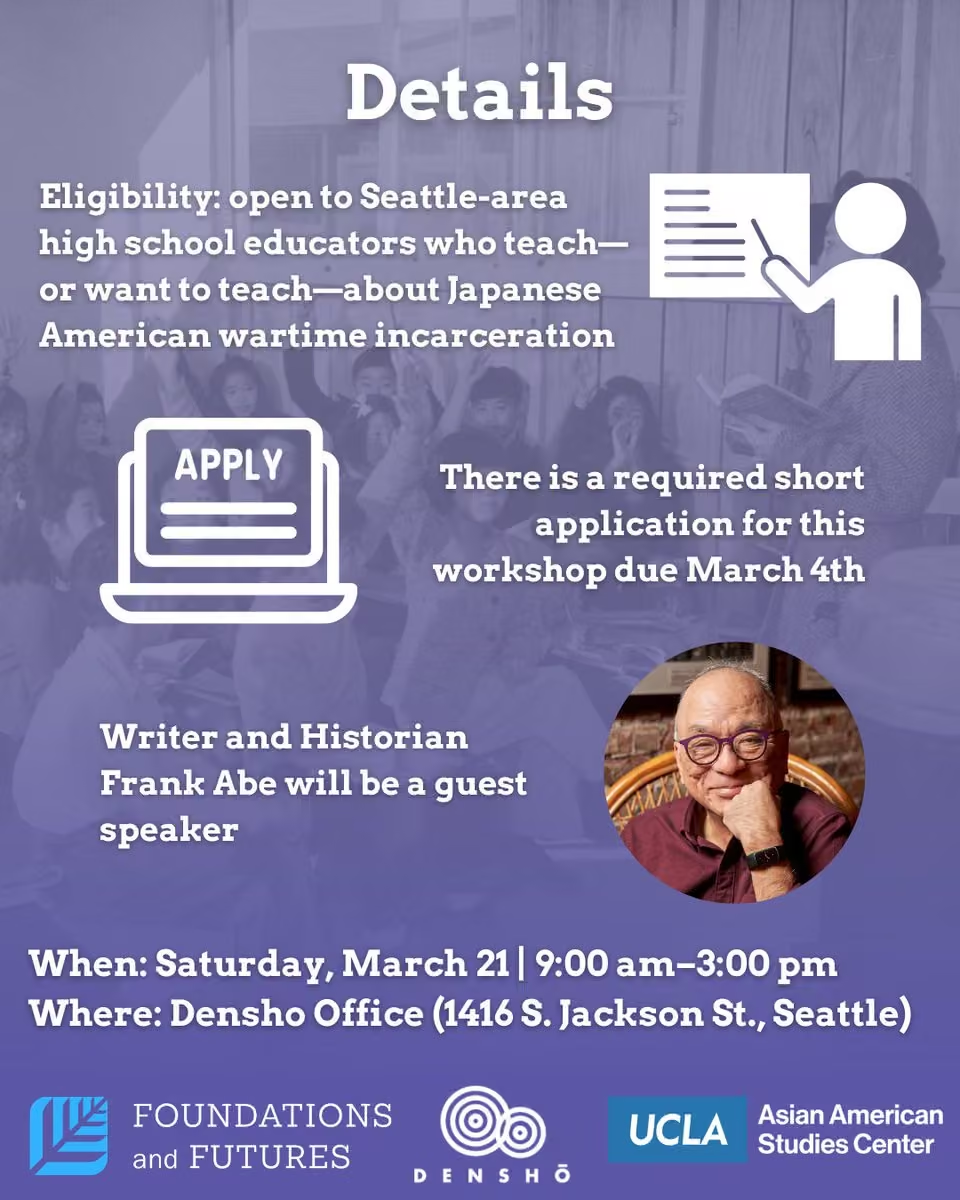
We’re still reflecting on our Teaching “Difficult” Histories workshop that took place this past Saturday, co-hosted by the UCLA Asian American Studies Center.
Post not available here, view on X
Densho
@DenshoProject
Utilizing the Foundations and Futures: Asian American and Pacific Islander Multimedia Textbook, participants explored ways to center JA experiences, apply ethnic studies pedagogy, and design lessons, engaging students in conversations about race, citizenship, and civil liberties.
Densho
@DenshoProject
As one participant shared:
“Definitely the best professional development I have attended in my short career in terms of time use, effectiveness, and resources available.”
Thank you again to everyone who made this day so impactful. -
Densho
@DenshoProject
In honor of Densho’s 30th anniversary, Densho staff selected 30 of their favorite objects from the Densho Digital Repository (DDR).
Densho
@DenshoProject
Each was chosen for its particular resonance: some for their historical significance, offering vivid snapshots of Japanese American life before, during, and after World War II; others for their personal connections and the stories they continue to carry forward.
Post not available here, view on X
Densho
@DenshoProject
These moments of tenderness, self-expression, and presence are not separate from resistance, but part of it.
Densho
@DenshoProject
Together, these images remind us that despite the challenges they faced, these women continued to assert identity, nurture life, create, and claim space on their own terms.
-
Densho
@DenshoProject
Decades before the modern graphic novel took shape, Miné Okubo was already using art to document what words alone could not.
Post not available here, view on X
Densho
@DenshoProject
Haeley Christensen argues that by contrasting her detailed portraits with the era’s dehumanizing propaganda, Okubo’s work performs a vital subversion of the "faceless" enemy.
Densho
@DenshoProject
Nearly 80 years later, Okubo’s sketches remain a testament to how art can bridge the gap between hidden suffering and public memory.
🔗Read more at densho.org/catalyst -
Densho
@DenshoProject
Last month, Densho staff attended and spoke at several 2026 Day of Remembrance events across California, Washington, and Texas. They joined communities across the U.S. to honor and commemorate the survivors, descendants, and stories of WWII Japanese American incarceration.
Densho
@DenshoProject
In the most recent Catalyst article, we highlight moments from those events, featuring images from gatherings where staff spoke, tabled, and engaged with community members.
Densho
@DenshoProject
Together, these snapshots capture acts of remembrance, reflection, and connection, highlighting the continued relevance of this history.
Learn more about the discussions that took place at those 2026 Day of Remembrance events at densho.org/catalyst -
Densho
@DenshoProject
“We didn’t have separate rooms. It was like a regular barrack, we all slept next to each other.”
Post not available here, view on X
Densho
@DenshoProject
Aiko also served as a consultant to the Smithsonian Institution and the Justice Department’s Office of Redress Administration.
Densho
@DenshoProject
By preserving her testimony, Densho ensures that stories of resilience, injustice, and resistance, like Aiko’s, remain accessible for present and future generations. Your support makes this work possible.
Please consider making a gift today: densho.donorsupport.co/-/XBJXRNPC -
Densho
@DenshoProject
For 30 years, Densho has preserved and shared the stories of Japanese Americans unjustly incarcerated during WWII, ensuring that their voices are never erased.
Post not available here, view on X
Densho
@DenshoProject
History Keepers also gain access to membership benefits, more opportunities to engage with our community, and exclusive behind-the-scenes looks at the work that is made possible through your support.
Densho
@DenshoProject
Become a monthly donor at densho.org/historykeepers
Together, we can honor the past, adapt to the present, and build a lasting legacy for the future, where these stories—and the lessons they carry—remain visible, powerful, and protected. -
Densho
@DenshoProject
What did the first Densho digital archive look like in 1998? Think: dial-up internet, computer kiosks at the Wing Luke Museum, and even a “tip sheet for computer novices” explaining how to use a mouse (which is the previous iteration of a trackpad, for those who may not know).
Densho
@DenshoProject
In a new blog post, Archives Director Caitlin Oiye Coon traces the evolution of Densho’s digital archives—from those early experiments to today’s Digital Repository, which includes more than 1,000 oral histories and 150,000 historical photographs and documents.
Densho
@DenshoProject
Explore how technology, community vision, and three decades of work have influenced the way Densho preserves and shares Japanese American history.
Technology has changed dramatically since 1998, but Densho’s mission hasn’t.
🔗 Read more at densho.org/catalyst -
Densho
@DenshoProject
We are thrilled to launch the Densho Public Index of Japanese American Collections.
Densho
@DenshoProject
Densho, in partnership with the Henri & Tomoye Takahashi Charitable Foundation, will identify, map, and connect archival materials related to Japanese American history across institutions and communities.
Post not available here, view on X
Densho
@DenshoProject
We are interested in all types of collections and materials, including letters, photos, government records, and other historical items.
Densho
@DenshoProject
If you would like to nominate a collection or materials for inclusion in this Public Index, please complete the submission form online at docs.google.com/forms/d/e/1FAIpQLSff1Lo0L5K61CG2FUvR0lP2r…
-
Densho
@DenshoProject
Each year, February 19th brings us back to a crucial date in 1942. On that day, President Franklin D. Roosevelt signed Executive Order 9066, a decision that authorized the forced removal and incarceration of over 125,000 people of Japanese ancestry, most of them U.S. citizens.
Post not available here, view on X
Densho
@DenshoProject
On this Day of Remembrance, Densho is launching a new initiative, the Densho Public Index of Japanese American Collections. We are grateful to the Henri & Tomoye Takahashi Charitable Foundation for partnering with us to launch this first-of-its kind project.
Densho
@DenshoProject
Stay tuned for more information about how to nominate collections across the world to be included in Densho's Public Index of Japanese American Collections!
Post not available here, view on X
Densho
@DenshoProject
Through this work, Densho ensures that history remains accessible not only for this generation, but for all the ones that follow.
Densho
@DenshoProject
Remembering requires care and long-term commitment. This initiative reflects ours.
-
Densho
@DenshoProject
We’re hiring! Join our team and advance Densho’s mission to preserve and share the history of Japanese American WWII incarceration in order to promote justice and equity today!
Communications Manager (full-time)
Apply by April 6th!Post not available here, view on X
Densho
@DenshoProject
This position will also manage public-facing communications campaigns, maintain and regularly update Densho’s website (WordPress), and provide support for design and multimedia work.
Densho
@DenshoProject
They will oversee Densho’s social media, eNews, and marketing, ensuring successful execution and reporting. This position will also write and review organizational materials, including project proposals, reports, educational resources, and other content.
Densho
@DenshoProject
📍 The position can be hybrid (Seattle) or fully remote
🔗 Learn more and apply at densho.org/get-involved/volunteer-jobs/ -
Densho
@DenshoProject
What responsibility do educators have in this current moment?
Post not available here, view on X
Densho
@DenshoProject
Courtney reminds us that while “educators are not responsible for fixing immigration policy,” they are responsible for how it is “understood, enforced, and challenged within our schools.”
Densho
@DenshoProject
Read the full articles and learn more at densho.org/catalyst
-
Densho
@DenshoProject
We’re proud to see our Executive Director Naomi Ostwald Kawamura recognized by AsAm News as part of the next generation of Japanese American leaders.
Post not available here, view on X
Densho
@DenshoProject
She describes, “At Densho, we do things not because it is transactional but for the greater good and advancement toward our mission. . . Our oral histories [and] digital archives exist because the community shared their stories. Densho is fundamentally a ‘we’ organization.”
Densho
@DenshoProject
Read the full profile to learn more about Naomi’s path and her vision for the future of preserving and sharing the history of Japanese American incarceration. Find the link online at AsAm News: asamnews.com/2026/03/02/naomi-kawamura-densho-executive-d…
-
Densho
@DenshoProject
Thousands of American and Japanese civilians were exchanged by sea during World War II—but few people know this story.
Post not available here, view on X
Densho
@DenshoProject
Through the stories of diplomats, community leaders, and families—including Densho Content Director Brian Niiya’s family—Iritani traces how international treaties and diplomatic norms were tested as the U.S.
Densho
@DenshoProject
Simultaneously, the U.S. government was incarcerating Japanese Americans at home.
Post not available here, view on X
Densho
@DenshoProject
Read the full conversation online at densho.org/catalyst
Densho
@DenshoProject
Image credits: The included photos are U.S. Navy Official Photos located at the National Archives at College Park, Maryland. The photos depict the processing and loading of the M.S. Gripsholm at the Port of New Jersey/New York on September 2, 1943.
-
Densho
@DenshoProject
Announcing Densho’s Artist-in-Residence Program!
Post not available here, view on X
Densho
@DenshoProject
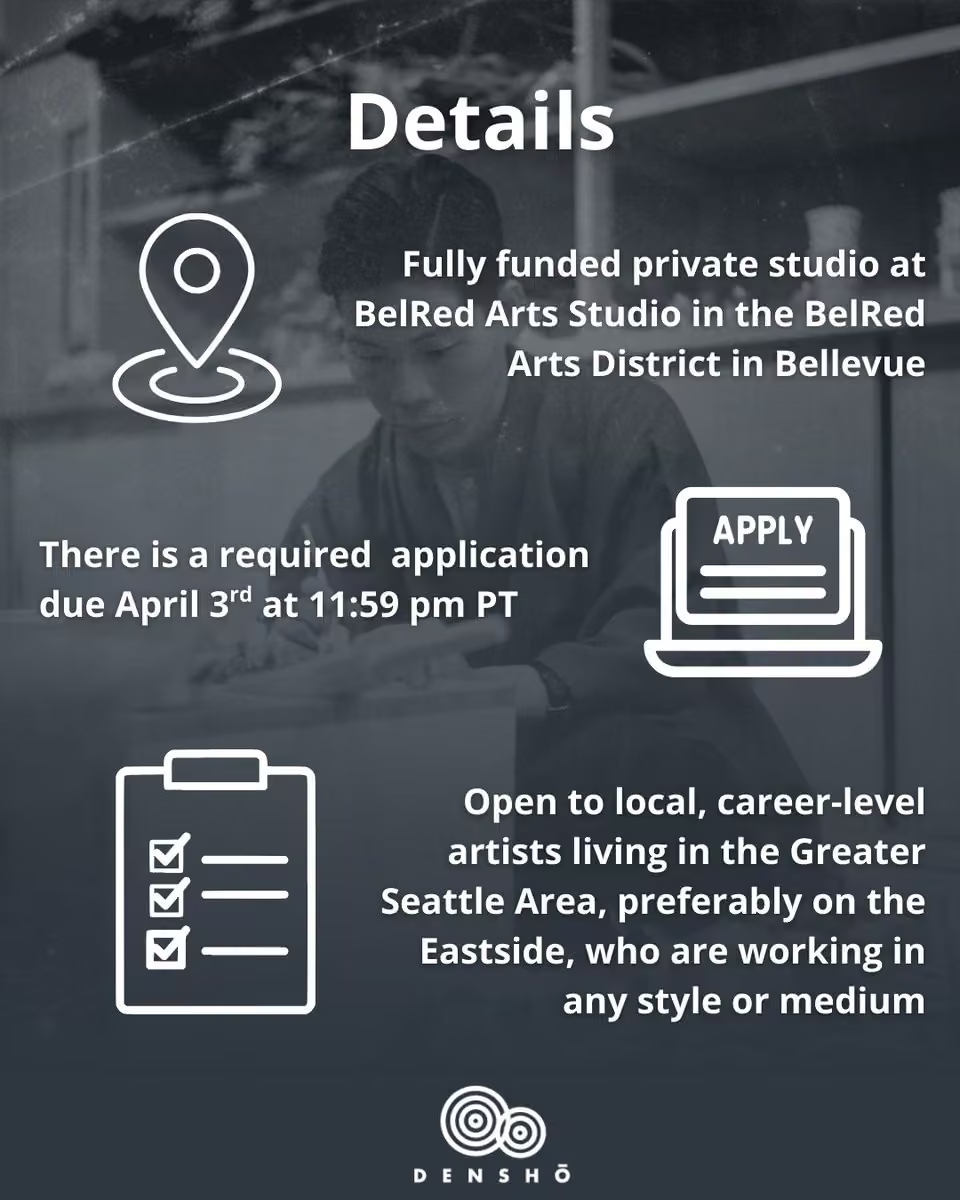
🗓 Residency dates: May 1–July 31, 2026
📍 Location: Fully funded private studio at BelRed Arts Studio in Bellevue
🎨 Eligibility: Career-level artists in the Greater Seattle Area (preferably Eastside), working in any medium
⏰ Deadline: April 3, 2026 at 11:59 PM PT
Densho
@DenshoProject
We look forward to seeing how new creative works can deepen public understanding, foster healing, and spark meaningful dialogue in this moment.
Apply now: belredartsdistrict.org/stories/denshoandbelredarts -
Densho
@DenshoProject
For the fifth installment of our “30 Stories for 30 Years” series, Mutsu Homma reflects on her time at Amache (Granada) and an encounter she never forgot: a soldier’s question, “Are you a human being?”
Post not available here, view on X
Densho
@DenshoProject
The dehumanizing ideas taught to a young soldier were part of the same system that allowed families to be imprisoned behind barbed wire because of their ancestry.
Densho
@DenshoProject
By preserving and sharing stories like hers, Densho ensures that the racial logic underlying this grave injustice is not erased or forgotten.
Your support helps keep these stories accessible for future generations. Please consider making a gift today: densho.donorsupport.co/-/XBJXRNPC -
Densho
@DenshoProject
In honor of Densho’s 30th anniversary, Densho staff selected 30 of their favorite objects from the Densho Digital Repository (DDR).
Post not available here, view on X
Densho
@DenshoProject
They capture moments of family, belonging, and everyday life before everything changed. Densho is deeply grateful to be entrusted with family archives that preserve these histories. Together, these images remind us of what was disrupted, and what endures.
Densho
@DenshoProject
Image descriptions:
1) Black-and-white photograph of a Japanese American father on hands and knees on a lawn, with two young children sitting on his back. The children wear light-colored dresses and smile toward the camera. A straw boater hat rests on the grass beside them.Post not available here, view on X
Densho
@DenshoProject
3) Black-and-white photograph of two boys practicing boxing with an instructor observing behind them. They are practicing outside, and the boys are wearing boxing gloves. At the time of the photo, one boy lands a punch on the other’s jaw.
Densho
@DenshoProject
4) Black-and-white photograph of several Japanese American men outdoors on a dirt field. One man in the foreground runs forward while others behind him duck and shield themselves, possibly reacting to a thrown object. Trees and a vehicle are visible in the background.
-
Densho
@DenshoProject
Disability and the experiences of disabled people during the WWII Incarceration comprise a topic that is still largely overlooked and under-researched.
Post not available here, view on X
Densho
@DenshoProject
4) Graphic titled “About the Historian” with a headshot of Selena Moon; photo courtesy of Selena Moon. Text provides an introduction: she is a disabled public historian and writer based in Minnesota and a PhD student in American Studies at the University of Minnesota Twin Cities.
Densho
@DenshoProject
. . . Selena Moon is currently researching disabled and mixed-race Japanese Americans during WWII incarceration. Includes the link densho.org/catalyst.
-
Densho
@DenshoProject
Learning Black history matters and has always mattered. This is clear now more than ever, as we see ongoing attempts to erase, distort, and sanitize the histories of Black communities and other marginalized groups.
Post not available here, view on X
Densho
@DenshoProject
Black history, like Japanese American history, is a crucial part of U.S. history. Engaging with these histories helps us understand a fuller, more complex, and more honest account of the past and its relevance to the present.
Densho
@DenshoProject
While we encourage learning directly from the organizations and people who lead the preservation and interpretation of Black history, we are also sharing resources and stories that highlight connections between Black and Japanese American experiences.
Post not available here, view on X
Densho
@DenshoProject
Understanding these histories is not just about the past. It is about recognizing how policies, narratives, and institutions continue to affect communities today, and about why historical truth matters in shaping a more just future.
Densho
@DenshoProject
Continue learning about Black history—and the histories of Japanese Americans, immigrants, and other marginalized communities—throughout the whole year, not just in February. Together, we can ensure that our collective stories are not erased or forgotten.
-
Densho
@DenshoProject
Calling all Seattle-based high school history teachers!
Post not available here, view on X
Densho
@DenshoProject
Details: Participants will receive a $100 stipend upon completion of the course and evaluation form; breakfast, lunch, and snacks are provided. Space is limited to 25 participants. A short application is due (accessible via QR code and docs.google.com/forms/d/e/1FAIpQLSdo2N-Gj3K0ae8ECGHWX6QMS…) by March 4.
Densho
@DenshoProject
This project is made possible with support from The Asian American Foundation (TAAF).
-
Densho
@DenshoProject
Today, we’re celebrating what would have been Harry H.L. Kitano’s 100th birthday and his contributions to the Japanese American community.
Post not available here, view on X
Densho
@DenshoProject
2) Black-and-white photo of Topaz camp overlaid with text describing Kitano’s incarceration at Santa Anita and Topaz and his early career as a musician under the stage name “Harry Lee,” with the Densho logo. Photo courtesy of the National Archives and Records Administration.
Densho
@DenshoProject
3) Black-and-white photo of Topaz camp with text highlighting Kitano’s role in founding Asian American Studies at UCLA and listing three of his major publications, along with a link to Densho's Catalyst and logo. Photo courtesy of the National Archives and Records Administration.
-
Densho
@DenshoProject
“When you walk through that gate, you know you lost something.”
Post not available here, view on X
Densho
@DenshoProject
Throughout his life, he made efforts to speak with students and community groups, ensuring that what was once “hard to explain” is not forgotten. By preserving his testimony, Densho keeps his voice and story alive for all to access and learn from.
Densho
@DenshoProject
Your support ensures that his story, along with our other narrators’, remain accessible to future generations. Please consider making a gift today: densho.donorsupport.co/-/XBJXRNPC
-
Densho
@DenshoProject
In a conversation with Densho Education and Public Programs Manager Courtney Wai, Tamara Bunnell shares insights from more than three decades in the classroom.
Post not available here, view on X
Densho
@DenshoProject
Tamara Bunnell is a high school History Teacher and Dean of Students in Seattle, WA. She is experienced in teaching, developing curriculum for museums and organizations, and leading educational projects in Seattle. She serves on the board of the Capitol Hill Historical Society.
Densho
@DenshoProject
Read more at densho.org/catalyst/educator-spotlight-tamara-bunnell/.
Photo credit: Tom Reese -
Densho
@DenshoProject
As part of Densho’s “30 Stories for 30” Years series, this segment from Mike Murase’s oral history centers on the sentiment that inspired him to help found Gidra, the groundbreaking Asian American publication, which is now viewed as an introduction to Asian American activism.
Post not available here, view on X
Densho
@DenshoProject
As Densho marks its 30th anniversary, stories like Mike Murase’s underscore why preserving oral histories matters. By safeguarding these voices, Densho affirms that history is a tool for action—helping us address false narratives and defend democratic rights.
Densho
@DenshoProject
Your support ensures these lessons remain accessible to future generations. Please consider making a gift today: densho.donorsupport.co/-/XBJXRNPC
-
Densho
@DenshoProject
Happy 100th birthday to Albert Fairchild Saijo (1926–2011), a lifelong writer, artist, and nonconformist whose work captured everyday life as a way of understanding the present moment.
Post not available here, view on X
Densho
@DenshoProject
Across poetry, design, woodworking, and philosophy, Saijo documented culture as it was lived, resisting rigid, top-down ways of seeing the world.
Densho
@DenshoProject
Incarceration shaped but did not define Saijo’s creative path. As part of the Beat generation and a close collaborator of writers like Jack Kerouac, Gary Snyder, and Lew Welch, he challenged large systems of authority through art, spirituality, and intentional ways of living.
Post not available here, view on X
Densho
@DenshoProject
Written decades ago, its words echo with urgency today amid ongoing struggles around immigration, surveillance, and belonging in the United States.
Densho
@DenshoProject
At Densho, we honor Saijo’s dedication to documenting lived experience as a powerful historical record, one that counters systemic injustice and reminds us how the past continues to shape the present.
-
Densho
@DenshoProject
Today, on Fred Korematsu Day, we honor the man whose refusal to comply with the mass removal and confinement of Japanese Americans during World War II became one of the most significant challenges to government authority in U.S. history.
Post not available here, view on X
Densho
@DenshoProject
Densho preserves stories like Korematsu’s so that the lessons of our past remain visible and accessible for thoughtful examination, education, and public understanding.
Densho
@DenshoProject
By documenting firsthand experiences and preserving evidence of injustice, we help ensure that history cannot be erased or rewritten to obscure harm. Korematsu’s life reminds us that history is not just something to remember, it is something to learn from.
-
Densho
@DenshoProject
In honor of Densho’s 30th anniversary, Densho staff chose 30 of their favorite objects from the Densho Digital Repository (DDR). These objects are ones that are particuarly meaningful to staff for a variety of reasons.
Densho
@DenshoProject
Some are historically significant, offering snapshots of the past, including Japanese American experiences before, during, and after WW II. Other objects include items that have special significance to Densho, including some of the first objects in our earliest collections.
Densho
@DenshoProject
All 30 objects capture memories and stories, either those of the people who lived through the history we preserve or those of the people who actively work to preserve it.
-
Densho
@DenshoProject
Unchecked state power endangers lives and erodes democracy.
Densho
@DenshoProject
As an organization dedicated to safeguarding and learning from history in pursuit of a more just future, Densho condemns the use of force against civilians exercising their lawful rights, as well as the use of false official narratives to justify that violence.
Densho
@DenshoProject
Across contexts, past and present, we can draw clear lessons from history about how unchecked state power leads to repression, harm, and the erosion of democratic rights.
Post not available here, view on X
Densho
@DenshoProject
Through collective action and accountability, we can work toward a more just and equitable society, in which truth and accountability are not up for debate, and one in which the historical record cannot be erased or rewritten by those in power.
Densho
@DenshoProject
If you have community resources, mutual aid information, or tools for documenting and protecting one another, we encourage you to share them in the comments.
-
Densho
@DenshoProject
As part of Densho’s “30 Oral Histories for 30 Years” series, this interview with Peggie Nishimura Bain offers a vivid reflection on creativity, ingenuity, and survival under incarceration, revealing how everyday acts of creation carried meaning far beyond their materials.
Densho
@DenshoProject
Bain recalls the shell-craft that emerged at Tule Lake. What began with a few scattered shells soon became a collective pursuit, with incarcerees digging deep into the sand, improvising screens from window frames, and carefully sorting, bleaching, and shaping each piece by hand.
-
Densho
@DenshoProject
In our latest Catalyst article, Densho Archives Team intern Kathryn Perry Bolin explores the Yasui Family Collection—a rich repository illuminating both a landmark legal case and the intimate contours of everyday life.
Post not available here, view on X
Densho
@DenshoProject
Through exchanges, affectionate cards, and whimsical cartoons, the Yasui Family Collection offers researchers and the public an opportunity to engage with historical materials on a personal level, enhancing our understanding of Japanese American life beyond the scope of WWII.
Densho
@DenshoProject
Read more about the Yasui Family Collection and Kathryn’s work with Densho’s archives.
-
Densho
@DenshoProject
On Martin Luther King Jr. Day in 2016, a moment of protest became a moment of invitation.
Post not available here, view on X
Densho
@DenshoProject
For Mirikitani, that moment echoed how the Civil Rights Movement and Dr. King helped awaken “the kind of smoldering that was happening within us as Japanese Americans who were interned during World War II,” shaping a reparations movement grounded in solidarity.
Densho
@DenshoProject
This MLK Day, we reflect on protest rooted in love—and on the power of history to guide how movements for justice show up for one another, then and now.
-
Densho
@DenshoProject
Today, January 17, marks 25 years since Minidoka National Historic Site joined the National Park Service.
Post not available here, view on X
Densho
@DenshoProject
that transformed a former WWII incarceration camp into a national site of education and healing. In this special guest essay, Hanako traces how Minidoka’s preservation unfolded, and why its history continues to matter as we confront ongoing threats to constitutional rights today.
Densho
@DenshoProject
Read the full Catalyst article to explore Minidoka’s past, present, and what the next 25 years demand of us.
densho.org/catalyst/25-years-of-minidoka/ -
Densho
@DenshoProject
We are excited to welcome Maya Hayashi as Densho’s new Event Manager! Maya will be leading the planning and production of a large in-person gala honoring Densho’s 30th anniversary.
Post not available here, view on X
Densho
@DenshoProject
description: "Ikebana arrangement with magnolia flowers. Courtesy of Laura Sueoka and David Perley."
2) A graphic with Densho's logo in purple in the top left-hand corner with an image of a flower arrangement with a small image description: "Ikebana arrangement with magnolia ...
Densho
@DenshoProject
flowers. Courtesy of Laura Sueoka and David Perley." On the right-hand side of the graphic is the following text: "A note from Maya: 'I've inherited the stories of my family and our Japanese American community ...
Densho
@DenshoProject
This perspective, legacy, and responsibility to steward their history are central to my work, and I am energized to join Densho. As the Event Manager, I'm excited to bring the community together, foster belonging, and forge connections.'"
-
Densho
@DenshoProject
Captured in this photograph, #otd in 1943, Japanese Americans purchased their weekly copy of The Sentinel, the newspaper published in the Heart Mountain concentration camp.
Post not available here, view on X
Densho
@DenshoProject
Learn more about the Heart Mountain Sentinel with Densho’s Encyclopedia: encyclopedia.densho.org/Heart_Mountain_Sentinel_(newspaper)/
Densho
@DenshoProject
Image description: Black-and-white photograph of Japanese Americans standing at a counter inside a building, purchasing copies of The Sentinel. A woman behind the counter hands out papers while large stacks of newspapers are piled.
-
Densho
@DenshoProject
Our year-end giving campaign has officially come to a close, and we want to offer our heartfelt thanks to everyone who supported Densho. Your generosity and belief in this work carried us through the close of the year and into 2026 with renewed purpose.
Densho
@DenshoProject
As we now enter our 30th year, we’re energized by what lies ahead and by the community that makes this work possible.
Post not available here, view on X
Densho
@DenshoProject
Image description:
A collage of photos showing Densho staff at work and together as a team. Smaller images depict staff assisting a donor at a table, working on a laptop, discussing projects in meetings, presenting to small groups, and organizing materials in an office space...
Densho
@DenshoProject
[Image description continued] The largest image at the bottom shows a group portrait of Densho staff standing outdoors in front of a brick wall, smiling at the camera.
-
Densho
@DenshoProject
This year, Densho turns 30.
Executive Director Naomi Ostwald Kawamura reflects on the organization’s past, present, and future, honoring the community that built Densho and addressing the urgent work of protecting public history in an increasingly divided moment.Post not available here, view on X
Densho
@DenshoProject
4) An archival photo of Densho staff standing in a line on a stage facing a seated audience in the theater. Vertical banners with “DENSHO” flank the stage, and a long display panel with photographs and text runs along the front. Courtesy of Densho.
Densho
@DenshoProject
5) An archival photo of a large crowd inside an exhibition space, with people standing closely together and viewing display panels arranged along the left side of the room. Artwork hangs on the walls, and attendees fill the floor and a balcony above. Courtesy of Densho.
-
Densho
@DenshoProject
Oshogatsu, New Years, has always held an important place in the Japanese American community, even during WWII. These photos show the New Years celebration at Amache in 1945, highlighting the creation of joy & community even in confinement. Happy New Year from all of us at Densho!
-
Densho
@DenshoProject
Eiichi Edward Sakauye filmed life at the Heart Mountain concentration camp in Wyoming between 1943 and 1945 on 8mm film. Decades later, he revisited that footage, offering voice-over reflections that bring these images into fuller view.
Densho
@DenshoProject
In this clip, Eiichi describes mochitsuki, the New Year tradition of pounding rice to make mochi—a custom kept alive by camp incarcerees to sustain their identity & community.
Make a year-end gift or become a monthly donor to support our work year-round: densho.org/give -
Densho
@DenshoProject
After her two decades of dedicated service to Densho, we’re celebrating the retirement of Naoko Tanabe, Densho’s Japanese Researcher, Translator, and a beloved member of our team since 2006. Naoko’s care, humor, and dedication have left a lasting mark on our work and community.
Densho
@DenshoProject
Over the years, Naoko has worn many hats: coordinating Sushi & Sake Fest, supporting Densho’s operations, translating and revitalizing our Japanese-language website, and helping countless families reconnect with their histories through the Koseki Retrieval & Translation Project.
Densho
@DenshoProject
In a recent blog post, Naoko reflects on her time at Densho, and other staff share memories of her positivity, perseverance, and steady presence.
Thank you, Naoko, for 20 years of generosity, thoughtfulness, and adaptability!
Read more: densho.org/catalyst/celebrating-naoko-tanabes-contributio…. -
Densho
@DenshoProject
During his first Christmas at the Minidoka concentration camp in Idaho in 1942, Tsuguo “Ike” Ikeda remembers that the holiday spirit still found a way to shine.
Post not available here, view on X
Densho
@DenshoProject
Words originally used to describe the feelings of a cowboy exploring the American West were reimagined. This creative reinterpretation was a reminder of resilience and the enduring human spirit, even behind barbed wire.
Densho
@DenshoProject
You can help keep these Japanese American stories alive. Join our History Keepers Society and support Densho with a monthly gift, preserving the voices and experiences that shape our history. Join before Jan. 1, 2026, and you’ll receive a thank-you gift: densho.org/history-keepers-society
-
Densho
@DenshoProject
Diana Morita Cole was born in the Minidoka concentration camp, Idaho. Although the closure of the camps began in December 1944, Diana’s family still lived in Minidoka until October 1945. When she was just a year and a half old, her family left for Chicago, Illinois.
Post not available here, view on X
Densho
@DenshoProject
Preserving family stories like Diana’s matters, and your support is vital to continue this work. If you are able, please consider becoming a monthly donor or making a year-end gift. Your support is an investment in a more stable and sustainable future for Densho.
Densho
@DenshoProject
Choose to join Densho’s monthly giving History Keepers Society or make a year-end gift here: densho.org/give
Thank you for your support throughout 2025!
Note: Diana Morita Cole is a Nisei author and is known for her award-winning book Sideways: Memoir of a Misfit. -
Densho
@DenshoProject
Today marks the anniversary of Ex Parte Endo, the Supreme Court decision that helped end the mass incarceration of JAs during WWII. Decided on Dec. 18, 1944, it ruled the government couldn't detain loyal citizens without justification, prompting the closure of the camps.
Post not available here, view on X
Densho
@DenshoProject
“During her life, [Mitsuye Endo] was an unsung hero in the story of the Japanese American incarceration, not receiving recognition for her courage in challenging her World War II incarceration.” – Lorraine Bannai
Densho
@DenshoProject
Endo's courage and conviction deserve recognition not just on this anniversary, but across generations committed to justice, accountability, and the rule of law.
Read more at densho.org/catalyst. -
Densho
@DenshoProject
As 2025 draws to a close, we reflect on the ways that we grew, mobilized, and stepped up to meet the unprecedented challenges of 2025. We welcomed new team members, expanded our programs, and deepened our commitment to stewarding Japanese American incarceration history.
Post not available here, view on X
Densho
@DenshoProject
Together, we can ensure that the stories of our past continue to inspire and live on in the minds of our future leaders and changemakers.
Thank you for being a part of this community, and for believing in the power of collective memory, storytelling, and action.
Densho
@DenshoProject
Make a gift today at densho.org/donate
-
Densho
@DenshoProject
For the first seven years of her life growing up in Peru, Elsa Kudo recalls it being “complete bliss,” knowing “nothing of suffering or hardship.” In this clip, she reflects on her parents’ (at-the-time) unusually progressive partnership—both in business and at home.
Post not available here, view on X
Densho
@DenshoProject
Preserving lesser-known stories, like Elsa’s, matters—and your support is essential. By becoming a monthly donor and joining our History Keepers Society, you’re not just giving. You’re investing in a more stable and sustainable future for Densho. densho.org/give/
Densho
@DenshoProject
Join now, and we’ll send you a gift: a custom sticker set designed by artist Kiku Hughes, featuring all ten War Relocation Authority camps where Japanese Americans were incarcerated. December is your last chance to receive this year’s History Keepers Society thank-you gift!
-
Densho
@DenshoProject
On December 7, 1941, Rae Takekawa was a teenager spending a quiet Sunday at home when regular radio programming suddenly cut out. It took her a moment to understand the broadcast: Pearl Harbor had been attacked.
Post not available here, view on X
Densho
@DenshoProject
Rae’s memory captures the beginning of a shift experienced by many Japanese Americans in the immediate aftermath of Pearl Harbor—an atmosphere of fear and suspicion that would soon have profound consequences for families across the country.
Densho
@DenshoProject
Today, on the 84th anniversary of the Pearl Harbor attack, we are sharing Rae’s testimony to reflect on how this moment reshaped the lives of Japanese American communities.
-
Densho
@DenshoProject
We are excited to welcome Rebecca as Densho’s new Development Associate!
Post not available here, view on X
Densho
@DenshoProject
Aligned with Densho’s ethos, she is deeply honored to support such a meaningful organization and essential resource. Outside of work, she enjoys drawing commissions as a visual artist and connecting to her roots with the local taiko drumming community.
Densho
@DenshoProject
Image descriptions:
1) Photo of Rebecca (courtesy of Rebecca Haynes) within a graphic that is alongside text that reads, "Introducing Rebecca Haynes, Development Associate." With Densho's logo in the top left-hand corner, with an image of a flower arrangement below, [continued]Post not available here, view on X
Densho
@DenshoProject
2) A graphic with Densho's logo in the top left-hand corner, a flower arrangement below it with text: "Ikebana arrangement with magnolia flowers. Courtesy of Laura Sueoka and David Perley." On the right-hand side is text: "A note from Rebecca: 'I am incredibly humbled [continued]
Densho
@DenshoProject
and thrilled to be part of Densho and its immense legacy of storytelling and research rooted in the Japanese American community. Supporting this work feels especially meaningful at this time, as remembering and learning serve as vital tools for spurring change and connection.'"
-
Densho
@DenshoProject
Thank you for an incredible #givingtuesday and for helping us kick off Densho’s year-end giving season strongly! Because of your support, we met our $10,000 goal! To celebrate, we wanted to share some photos from our digital archive that capture our joy and gratitude.
Post not available here, view on X
Densho
@DenshoProject
2) A black-and-white photo of the Yoshida family gathered around a long dinner table in Wahiawa, Hawaiʻi, around 1948–49. Adults and children sit closely together with food, drinks, and decorations. Courtesy of the Francis and Nancy (Nagai) and Yoshida Family Collection.
Densho
@DenshoProject
3) A black-and-white photo of three Japanese American silk screen shop workers at a social gathering in the Granada (Amache) concentration camp. Two women and a man sit together eating and smiling. Courtesy of the George Ochikubo Collection.
-
Densho
@DenshoProject
Today is #givingtuesday — a global day of generosity that empowers people and organizations to strengthen their communities, and the official start of Densho’s year-end giving season.
Densho
@DenshoProject
We’re working to raise $10,000 to build on a previous project that offers educational materials to NPS staff and other public educators. These resources will help ensure that the history of Japanese American incarceration is taught accurately, responsibly, and in depth.
Densho
@DenshoProject
Thanks to generous supporters, we’re almost there. Help us close the gap today! Together, we can keep public history free, accurate, and accessible for all.
Make your gift today: densho.org/givingtuesday/?form=FUNDDQWGBAM -
Densho
@DenshoProject
For many Japanese American incarcerees, Thanksgiving day was not just a time for eating but also a chance to gather the community for festive activities. From wrestling tournaments to dances, incarcerees created joy and community even within detention camps.
Densho
@DenshoProject
Coming up on 30 years, Densho is grateful for your ongoing support allowing us to safeguard our shared history. Preserving historical materials, like these photos, would not be possible without you.
Happy Thanksgiving from the Densho Staff! -
Densho
@DenshoProject
Gene Akutsu remembers family life pre-World War II shaped by his family’s closeness. Many of those moments were centered around the dinner table accompanied by meals and long conversations.
Post not available here, view on X
Densho
@DenshoProject
If you sign up to make a monthly donation before the end of the year, we’ll send you a special thank-you gift: a custom sticker set designed by artist Kiku Hughes, featuring all ten War Relocation Authority camps where Japanese Americans were incarcerated.
Densho
@DenshoProject
Together, we can ensure that family stories are preserved for future generations.
Join now: densho.org/historykeepers -
Densho
@DenshoProject
We’re officially one week out from #givingtuesday, and we’re already halfway to our $10,000 goal!
Post not available here, view on X
Densho
@DenshoProject
This past year, we launched a new training program with Minidoka National Historic Site to support NPS park rangers and interns using Densho’s archival materials and educational resources. We’re eager to continue this program with other National Historic Sites.
Densho
@DenshoProject
Your gift now helps us keep historical education free, accessible, and rooted in truth.
Help us meet our goal before GivingTuesday — give today at densho.org/givingtuesday. -
Densho
@DenshoProject
Read the newest Catalyst article: “Neighbors Not Enemies.”
Last month, Densho’s Courtney Wai, Caitlin Oiye Coon, and Executive Director Naomi Ostwald Kawamura joined survivors, descendants, and community members at the 2025 Crystal City Pilgrimage in San Antonio, Texas.
Densho
@DenshoProject
The gathering honored those imprisoned at Crystal City, a Department of Justice (DOJ) and Immigration and Naturalization Service (INS) facility, including Japanese Latin Americans who were forcibly taken from their homes and who, to this day, have not received redress.
Densho
@DenshoProject
Explore some key moments of the 2025 Crystal City Pilgrimage in this photo essay written by Densho Education & Public Programs Manager Courtney Wai and Executive Director Naomi Ostwald Kawamura.
Read the full article at densho.org/catalyst -
Densho
@DenshoProject
Aiko Tengan Tokunaga discusses her family’s experiences during and after the Jūjū Kūshū, the first major bombing of Okinawa on October 10, 1944. She explains that during this period, her hometown of Naha was largely destroyed, forcing civilians to flee on foot toward Shuri.
Post not available here, view on X
Densho
@DenshoProject
Together, we can ensure that #untoldstories like Aiko’s are part of the historical record.
Join now: densho.org/historykeepers
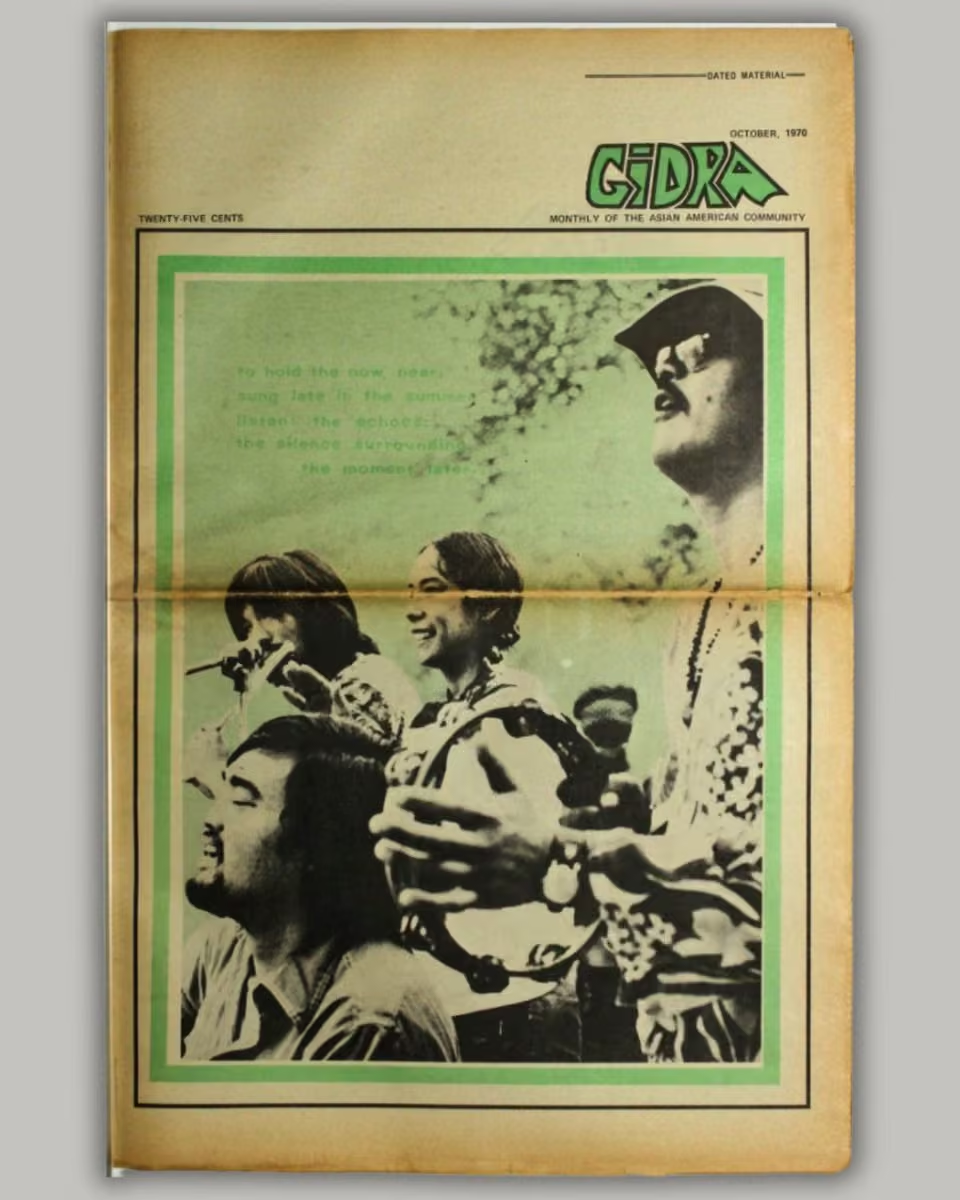
Densho
@DenshoProject
The story is based on an oral history with Aiko Tengan Tokunaga, who offers one interpretation of a complex period of historical violence in which US and Japanese militarism, and centuries of Japanese colonialism, intersect to oppress, and destroy Okinawan & Ryukyuan communities
-
Densho
@DenshoProject
We’re Hiring!
Position: Assistant Editor/Editorial Projects Manager (Remote or hybrid)
Help coordinate and manage editorial projects that advances Densho’s mission to preserve and share the history of WWII incarceration.
Densho
@DenshoProject
This role will provide direct support to the Editor of the Densho Encyclopedia, oversee workflows, manage author communications, and ensure high-quality editorial output across Densho’s publishing efforts.
See all openings at densho.org/get-involved/volunteer-jobs -
Densho
@DenshoProject
As the National Park Service (NPS) continues to face staffing and funding cuts, as well as pressure to censor and take down historical signs, Densho remains committed to supporting NPS staff in telling an inclusive and accurate story of the WWII incarceration.
Post not available here, view on X
Densho
@DenshoProject
We are determined to continue this training program, making it accessible to more NPS staff members, thereby safeguarding our shared history.
Densho
@DenshoProject
Now until GivingTuesday (12/2), we’re aiming to raise $10,000 for Densho to continue supporting National Park Service staff and other public educators.
Densho
@DenshoProject
By giving to Densho today, you keep historical education free, accurate, and accessible for all. Thank you for your support as we jumpstart our end-of-year giving campaign and lay a strong foundation for Densho’s 30th anniversary next year.
Give now at densho.org/givingtuesday -
Densho
@DenshoProject
Our three-part series on teaching with the Densho Digital Repository concludes with Densho’s pedagogical approach to teaching Japanese American incarceration.
Post not available here, view on X
Densho
@DenshoProject
Grounded in community collaboration, these approaches ensure that when taught with care, context, and community at the center, this history becomes more than a lesson about the past—remembrance is an act of repair and a call to responsibility in the present.
Densho
@DenshoProject
Read all three articles of the Teaching with Primary Sources series at densho.org/catalyst
-
Densho
@DenshoProject
When the FBI took her father away in 1942, 14-year-old Marion Tsutakawa Kanemoto didn’t know how to make sense of it—and neither did her classmates. “It’s interesting how when it’s an awkward position, there are people who just stay away...They don’t know how to comfort you.”
Post not available here, view on X
Densho
@DenshoProject
If you sign up now before the end of the year, we’ll send you a special thank-you gift: a custom sticker set designed by artist Kiku Hughes, featuring all ten War Relocation Authority camps where Japanese Americans were incarcerated.
Join here: densho.org/historykeepers
Densho
@DenshoProject
To learn more about the M.S. Gripsholm WWII Exchanges, visit our encyclopedia page on this topic at encyclopedia.densho.org/The_Gripsholm_WWII_Exchanges/
-
Densho
@DenshoProject
We are deeply saddened by the recent passing of professor and historian Art Hansen.
Densho
@DenshoProject
Art Hansen was a devoted scholar and beloved community historian whose commitment to documenting Japanese American experiences and voices reshaped the WWII incarceration narrative and inspired generations of researchers and storytellers.
Post not available here, view on X
Densho
@DenshoProject
“A beloved colleague and mentor to many… Though I am saddened by his passing, I can’t help but smile when I think of his friendliness, generosity, and inspired commitment to Japanese American history and community. He was truly one of a kind.” — Brian Niiya
Densho
@DenshoProject
Read this community tribute at densho.org/catalyst/in-memoriam-a-community-tribute-to-ar…
-
Densho
@DenshoProject
This Veterans Day, we honor all who have served, especially the Japanese Americans who served in World War II.
Post not available here, view on X
Densho
@DenshoProject
Their service revealed the deep contradictions of American democracy during World War II—fighting for freedom abroad while their own rights were denied at home—and reshaped the postwar Japanese American community for generations to come.
Densho
@DenshoProject
As the number of Nisei veterans dwindles, we are deeply grateful to the many veterans and families who have entrusted their personal collections, photographs, and oral histories to Densho’s digital archives—ensuring their stories of courage, sacrifice, and resilience endure.
-
Densho
@DenshoProject
Christian-Joseph Macahilig is an Outreach Coordinator with the UCLA Asian American Studies Center’s Foundations and Futures AAPI digital textbook project.
Post not available here, view on X
Densho
@DenshoProject
With Densho Education & Public Programs Manager Courtney Wai, Christian shares how his journey from the classroom to outreach shapes his commitment to advancing AAPI representation in education and creating spaces where those histories can be seen, heard, and taught with care.
Densho
@DenshoProject
Read the full interview at densho.org/catalyst
-
Densho
@DenshoProject
Thank you to everyone who joined us for Remembering Resistance—our 2025 virtual fundraiser honoring the legacy of the Japanese American Redress Movement. Thanks to your presence and generosity, the program was a tremendous success! 💛
Post not available here, view on X
Densho
@DenshoProject
Together, we’re keeping the stories, voices, and values of our community alive.
Densho
@DenshoProject
By safeguarding the history of Japanese American incarceration, which includes the decades-long fight for Redress, we ensure that these lessons of resistance, resilience, and justice are passed on for generations to come.
-
Densho
@DenshoProject
🚨 Don’t miss out!
Registration closes soon for our virtual program on the Japanese American Redress Movement — happening Wednesday, November 5th at 5pm PT / 8pm ET.
Learn this history and its relevance to today.
Register at densho.org/events/ to save your spot! -
Densho
@DenshoProject
Happy Halloween! Step back in time with these archival photos that show how Halloween and costume wearing brought joy and connection to Japanese American communities across generations. See more snapshots of the past in Densho’s Digital Repository (at ddr.densho.org)!
Densho
@DenshoProject
-
Densho
@DenshoProject
In 1981, over 750 Japanese American former incarcerees and descendants testified in public hearings about their experiences of forced removal and incarceration during World War II—many speaking out for the very first time.
Post not available here, view on X
Densho
@DenshoProject
Join us on November 5 for our virtual fundraiser “Remembering Resistance” to learn more about the importance of these public hearings for advancing the Redress Movement and for shaping the WWII incarceration narrative.
Densho
@DenshoProject
We will show more footage from the hearings, followed by reflections from our guest speakers. Thank you @vcmediaorg and NCRR for sharing this footage.
Register for this program using the link in our bio or at densho.org/events. -
Densho
@DenshoProject
In 1981, over 750 Japanese American former incarcerees and descendants testified in public hearings about their experiences of forced removal and incarceration during World War II—many speaking out for the very first time.
Post not available here, view on X
Densho
@DenshoProject
We will show more footage from the hearings, followed by reflections from our speakers.
Register for this program using the link in our bio or at densho.org/events.
Densho
@DenshoProject
Thank you @vcmediaorg and NCRR, for sharing this footage.
-
Densho
@DenshoProject
Join @KCLS and Densho this Saturday for a conversation with Kiku Hughes, author of Displacement!
📅 Saturday, May 17, 2:00-3:30pm PT
📍 In-Person: Bellevue Library
💻 Virtual
📋 More info: densho.org/events/kcls-author-voices-kiku-hughes/ -
Densho
@DenshoProject
Cherry Kinoshita was incarcerated at Puyallup and Minidoka during WWII, and went on to become a JACL leader. In this clip, she describes the very first #dayofremembrance in 1978 when 2,200 people caravanned from Seattle to the site of the Puyallup Assembly Center.
-
Densho
@DenshoProject
U.S. Archivist Colleen Shogan leads the National Archives, which oversees billions of government documents, photos, & records. But instead of educating the public about WWII incarceration & other dark chapters of American history, Shogan has spent the last year erasing history.
-
Densho
@DenshoProject
Join our friends at @MOHAI on 10/23 for Forgotten Dolls, Remembered Stories! 2024 MOHAI Curator’s Fellow, Polly Yorioka, researched a collection of Japanese Boys’ and Girls’ dolls left behind after families were sent to incarceration camps.
Register: mohai.org/event/curators-fellowship-forgotten-dolls-remem… -
Densho
@DenshoProject
Join Densho & @UWAPress on 4/25 for a talk by Greg Robinson & @jonrvh47 about their new book "The Unknown Great" with Densho's Nina Wallace.
Support for this in-person event was provided by 4Culture.
densho.org/events/the-unknown-great-stories-of-japanese-a… -
Densho
@DenshoProject
In “Seattle from the Margins: Exclusion, Erasure, and the Making of a Pacific Coast City,” historian Megan Asaka examines the erased histories of the communities who built Seattle - including the sex workers of the Tenderloin district. densho.org/catalyst/seattles-japantown-was-once-part-of-a…
-
Densho
@DenshoProject
Together with the Irei Project, Densho is honored to announce the formal launch of Ireizō, an interactive and searchable website & online archive of every person of Japanese ancestry incarcerated in America’s internment and concentration camps during WWII. ireizo.com
-
Densho
@DenshoProject
Esther Takei Nishio was born #otd in 1925. She was the first Japanese American not in a special category allowed to return to the West Coast from the concentration camps. In this clip, Esther describes some of the racism she faced when returning to the West Coast.
-
Densho
@DenshoProject
Densho is hiring a Project Archivist! Assist in developing the Densho Legacy Archives that documents the organization's founding, history, and development over the last 25+ years.
Apply by April 28 for this contract position!
densho.org/get-involved/volunteer-jobs/densho-legacy-arch… -
Densho
@DenshoProject
Join the Densho team! We’re looking for 2-3 remote Archives Interns to support our archives & digital repository projects through digitizing materials, editing images, transcribing documents, cataloging and indexing, data management, & rights management. densho.org/get-involved/volunteer-jobs/archives-internshi…
-
Densho
@DenshoProject
We asked our community to join us in the #whoweremember collective memory project by sharing about the ancestors they held in their hearts on #dayofremembrance. We were so moved by the powerful stories & photos we received, & want to highlight even more:
densho.org/catalyst/who-we-remember-day-of-remembrance-2023/ -
Densho
@DenshoProject
Between 1908 and 1920, thousands of Japanese women immigrated to the United States as “picture brides.” Yoshiko Uchida’s classic novel “Picture Bride” — recently re-released by @UWAPress — chronicles their dreams, struggles, hopes, and heartbreaks. densho.org/catalyst/classic-novel-by-yoshiko-uchida-chron…
-
Densho
@DenshoProject
Join us at UW’s @henryartgallery Auditorium on January 27 at 4:00pm for an in-person screening of @MDiverted and discussion with director Ann Kaneko in conversation with Dana Arviso, Sage Romero, and Alex Miranda
henryart.org/programs/manzanar-diverted-screening -
Densho
@DenshoProject
As many of us gather around holiday tables this week, we take a look back at an Issei woman’s first Thanksgiving (spoiler: she thought it was “disgusting”). Wishing you all more palatable holidays and may you channel Yasashi’s unabashed honesty and wry delivery.
This media couldn't be displayed. See it on the original post. -
Densho
@DenshoProject
When the Inaba family returned to Wapato, WA after their incarceration at Heart Mountain, a Yakama tribal member set aside a parcel of land for them to rebuild their farm. “If it wasn’t for the Indian nation, we would never have been able to be here.” www.nytimes.com/2022/11/10/us/yakama-nation-japanese-farm…
-
Densho
@DenshoProject
This year’s Densho Virtual Gala will mark the official transfer of leadership from founding executive director Tom Ikeda to our new ED, Naomi Ostwald Kawamura! Join us on 11/2 for an evening of art, conversation, and community.
Register today! www.densho.org/gala -
Densho
@DenshoProject
“Until recently, Japanese American incarceration and American Indian dispossession have often been treated as unrelated discussions. In reality, different oppressions reinforce and bolster one another." @hcmaruyama in @KCET:
www.kcet.org/news-community/how-japanese-american-incarce… -
Densho
@DenshoProject
Today is the birthday of iconic civil rights leaders Yuri Kochiyama and Malcom X. We honor this day and the legacy of these two civil rights heroes by supporting the movement for Black reparations and working towards dismantling systemic oppression. us02web.zoom.us/meeting/register/tZModu-orDwjG9b-oF0WmtYF…
-
Densho
@DenshoProject
As we build up knowledge of #apihistory this month, let's take time to tear down a long standing & harmful stereotype. Together with @TED_ED we created a lesson that traces the history of the #modelminoritymyth & the damaging effects of racial stereotypes.
densho.org/catalyst/inventing-the-model-minority-a-critic… -
Densho
@DenshoProject
As we celebrate #apahm this May, here’s a brief history lesson on the anti-racist, anti-imperialist origins of “Asian America.” 🧵
-
Densho
@DenshoProject
Born "doing time" in Poston, Mia Yamamoto's own experiences inspired her to spend her life fighting for others. She became the first openly transgender attorney in California history in 2003. #transdayofvisibility
densho.org/catalyst/mia-yamamoto/ -
Densho
@DenshoProject
.@Karen_Ishizuka is a writer and chief curator of the
@jamuseum. In response to our #womenshistorymonth writing challenge, she takes a closer look beneath the sunny surface of a government photo of her aunt, that “conceals more than it shows.” densho.org/catalyst/karen-ishizuka-why-oh-archive/ -
Densho
@DenshoProject
This #womenshistorymonth, we asked writers to submit short responses to photographs of women in the Densho archives or in their own family collections. Today’s submission comes from Nikiko Masumoto (she/her), an organic farmer, memory keeper, and artist.
-
Densho
@DenshoProject
February 24 is the #jladayofaction! During WWII, over 2,200 men, women, and children of Japanese ancestry from Latin America were kidnapped, transported over international borders, and subjected to indefinite detention in US detention facilities. #jlareparationsnow
-
Densho
@DenshoProject
February 19, 2022 marks the 80th anniversary of Executive Order 9066. As our community comes together for the #dayofremembrance, we’re thinking about how we honor the past while looking to the future. #eo9066 #dor2022
-
Post not available here, view on XPost not available here, view on X
Densho
@DenshoProject
On 2/19, 1-7pm PST, join @seattlesymphony for Pictures of Executive Order 9066, a collaboration between JJ Gerber and @Kishi_bashi that explores the stories of those impacted by Executive Order 9066 in an interactive exhibit. www.seattlesymphony.org/en/concerttickets/calendar/2021-2…
-
Densho
@DenshoProject
Today marks the 80th anniversary of #pearlharbor, an event that had immediate & long-lasting consequences for Japanese Americans. In this oral history clip, Betty Fumiye Ito recalls the evening of December 7, 1941 when her husband, Kenji, was called in for questioning by the FBI.
-
Densho
@DenshoProject
Los Angeles based singer/songwriter @MiyaFolick will be joining us at the Densho Anniversary Gala on October 23 to perform an original composition!
Register for our free virtual gala today >> densho.org/25gala/ -
Densho
@DenshoProject
Satsuki Ina, a co-founder and co-chair of @TsuruSolidarity, was born in 1944 in Tule Lake. “When we work across communities, this is where we grow our power to be able to change policy and practices designed to oppress people,” Ina says. www.huffpost.com/entry/japanese-american-activists-suppor…
-
Densho
@DenshoProject
Calling all #educators! Join Densho & @tacomaartmuseum on 3/11 for a K-12 #teacher workshop. We’ll explore the works of Kenjiro Nomura, an artist who was incarcerated at Minidoka during WWII, and consider how art sheds light on our history and present. 2513a.blackbaudhosting.com/2513a/TAM-Teach-Missives-from-…
-
Densho
@DenshoProject
USPS recently unveiled a new set of stamps celebrating visionary Japanese American artist Ruth Asawa. While we all hold our breath waiting for the stamps to drop, now’s a good time to revisit @nsvarner's evergreen post on her incredible life and legacy. densho.org/ruthasawa/
-
Densho
@DenshoProject
Today we remember the 120,000 men, women, and children whose lives were uprooted #otd in 1942 by #executiveorder9066. But this is no passive remembrance—we must activate our community’s history in support of those being targeted today.
-
Densho
@DenshoProject
In 2014, @reginahboone's father made a last request from his deathbed: "Find out what happened to my father," an Issei businessman arrested by the FBI shortly after Pearl Harbor. He never came home, but Regina was able to uncover his story 76 years later. pilotonline.com/news/local/history/article_fc1382d2-a41f-…
-
Densho
@DenshoProject
"When it comes to the suffering endured by these migrant children separated from their families, in what can only be described as new forms of American concentration camps, we cannot remain silent." @DRyukenWilliams tricycle.org/trikedaily/internment-fort-sill/
-
Densho
@DenshoProject
Satsuki Ina was born in Tule Lake and spent her early life inside a U.S. concentration camp: “I know what’s happening to these children will have a lasting impact on their mental health. Indefinite detention is a form of torture." #neveragainisnow news.vice.com/en_us/article/vb9qzj/survivors-of-japanese-…
-
Post not available here, view on XPost not available here, view on X
Densho
@DenshoProject
And even when forced into concentration camps during WWII, some incarcerees created swimming holes as a diversion from the depressing conditions of camp life, like this irrigation canal-turned-swimming pool at Minidoka: ddr.densho.org/ddr-densho-37-326/
-
Densho
@DenshoProject
People of all races stepped up to help Japanese Americans during WWII, but the contributions of POC—Filipino farm workers, Black peace activists, and Native tribes to name a few—are too often erased in favor of feel-good anecdotes starring white saviors. www.huffpost.com/entry/bainbridge-island-japanese-america…
-
Densho
@DenshoProject
Words matter—not just for the sake of accuracy, but for a future free from the kind of violations and violence that demand euphemisms in the first place. To avoid repeating the mistakes of our past, we must be able to see them clearly. densho.org/time-to-retire-euphemisms-for-japanese-america…
-
Densho
@DenshoProject
Headed to the #manzanarpilgrimage this weekend? So are we! Keep an eye out and say hi to Densho Executive Director @tomikeda and Content Director (aka the genius behind the Densho Encyclopedia) Brian Niiya!
-
Densho
@DenshoProject
Ahead of this weekend's #jeromerohwerpilgrimage, we've compiled ten little-known stories about Rohwer—one of two WWII incarceration camps located in Arkansas, where Japanese Americans were exposed to the unique climate and racial politics of the South. densho.org/10-little-known-stories-about-rohwer/
-
Densho
@DenshoProject
Please, reach out and support @CAIR_WA or your local @CAIRNational chapter or mosque and let them know you are there for them, that you love and welcome them, and that you will do all you can to stand against the bigotry and hatred that inspired this horrific massacre.
-
Densho
@DenshoProject
It's #internationalwomensday so we feel the need to bless you with these obasans radiating some serious Resistance Auntie energy from Tule Lake in 1942. You're welcome. #archivesherstory
-
Densho
@DenshoProject
.@OmoiyariS is a genre breaking film that fuses music, identity, and history of WWII Japanese American incarceration. We've been honored to work with @Kishi_bashi and his team on this and can't wait to see the finished film. For now, a teaser: www.youtube.com/watch?v=7mneaPfF2RU
-
Densho
@DenshoProject
"American Sutra" examines the role of religious prejudice in marking Japanese Americans as the "enemy." That Buddhism thrived in camp anyway "constitutes one of the most inspiring assertions of religious freedom and civil liberties in American history."
tricycle.org/magazine/japanese-american-buddhists/
Densho
@DenshoProject
Catch the book's author, Duncan Ryuken Williams, on Feb. 14 at @ElliottBayBooks; with Densho's Brian Niiya at @jamuseum on Feb. 23; and at numerous other events across the country: www.duncanryukenwilliams.com/events/
-
Densho
@DenshoProject
Fred Korematsu was born #otd 100 years ago. Best known for his landmark Supreme Court case against the WWII incarceration of Japanese Americans, he dedicated his life to defending civil liberties and was eventually awarded a Presidential Medal of Freedom.
-
Densho
@DenshoProject
Our past 2 Days of Remembrance have focused on learning about how our history is connected to the persecution of Muslim Americans today.This year, we honor our history by moving from conversation to action. Tickets are free but going fast so sign up today: dordensho.brownpapertickets.com
-
Densho
@DenshoProject
Tomorrow marks 30 years since the government apologized for Japanese American incarceration—but the fight for redress & reparations isn't over. That's why we're using this anniversary to say #neveragainisnow. Join us and follow along: www.facebook.com/events/845723685624576/
-
Densho
@DenshoProject
Seattle! Take a long lunch tomorrow and learn a little local history through the life and words of John Okada and his classic novel, "No-No Boy." We'll be there with author Frank Abe and the @winglukemuseum. Don't miss out! www.facebook.com/events/203315077031588/
-
Densho
@DenshoProject
Our resident artist @geniusbeee drew up these brilliant homages to some bad ass Japanese Americans who have been inspiring us lately. We made them into magnets so they can be part of your daily rituals of resistance too. Make a donation and get your own: www.densho.org/give
-
Densho
@DenshoProject
The family detentions stipulated by Trump's executive order will mark the first time since WWII that the military will be used to detain families on US soil. This and other alarming parallels with Japanese American incarceration from Densho's @nsvarner: crosscut.com/2018/06/incarcerating-families-american-way
-
Densho
@DenshoProject
Children's incarceration, then and now. On the left: The "Children's Village" for Japanese American orphans at Manzanar concentration camp; on the right: a detention facility for migrant children (via @jacobsoboroff). "Never again" is now.
Densho
@DenshoProject
For additional context, approx. one third of the Japanese Americans incarcerated during WWII were children: densho.org/common-myths-wwii-incarceration-half-children/
-
Densho
@DenshoProject
"The cross-cultural connection Ralph Lazo represents is a testament to the effect that a single individual can have when he or she refuses to ignore an issue and actively fights for what’s right."
remezcla.com/features/film/john-esaki-stand-up-for-justic… -
Densho
@DenshoProject
Two of Hana Matsuo's children pose with the fire station dog at the Minidoka concentration camp, 1944. ddr.densho.org/ddr-densho-15-49/
#archiveshashtagparty #archivesanimals -
Densho
@DenshoProject
Join @SantaMonicaLibr for their city-wide reading of "Farewell to Manzanar." All library locations have free copies of the book and they've scheduled a series of events, beginning with an author talk on May 12. Learn more: smpl.org/uploadedFiles/Library/Programs_and_Events/Citywi…
-
Densho
@DenshoProject
76 years ago today, the US military began rounding up Japanese Americans and forcibly relocating them to concentration camps. Newspapers called it an "orderly evacuation" and "a credit to the efficiency of the army." densho.org/photo-essay-bainbridge-island/
-
Densho
@DenshoProject
The forced removal and incarceration of Japanese Americans during WWII began #otd in 1942. With just six days' notice, 227 Japanese Americans from Bainbridge Island, Washington were exiled from their homes and sent directly to Manzanar. densho.org/photo-essay-bainbridge-island/
-
Densho
@DenshoProject
Mary Mon Toy: singer, showgirl, Broadway performer, anti-yellowface crusader, and... a secret Nisei who hid her Japanese American identity behind a Chinese stage name. densho.org/mary-mon-toy-nisei-entertainers-became-chinese…
-
Densho
@DenshoProject
Yess! Well-deserved @winglukemuseum shout-out!
PRI's Global Nation
@globalnation
In the #globalnation Exchange: Visit this museum! s.pri.org/onCDsNF
-
Densho
@DenshoProject
Check out the trailer for @Kishi_bashi's new film about WWII incarceration, empathy, equity, identity (and kick in if you can). And see him present a portion of the film/perform at our Seattle Day of Remembrance event on February 19th! www.facebook.com/events/153023258789236/
ıɥsɐq ıɥsıʞ
@Kishi_bashi
FINALLY! crowdfunding has started for my movie!!! "Omoiyari: a Songfilm by Kishi Bashi" and help us meet our goal. @indiegogo igg.me/at/KishiBashiSongFilm
-
Densho
@DenshoProject
Great turnout for today’s “Fred Korematsu Speaks Up” book event! Thank you, Seattle fam. 🙌
-
Densho
@DenshoProject
Seattle! See "Who Killed Vincent Chin" and meet the director at @winglukemuseum this Saturday www.wingluke.org/vincent-chin