Politicians, athletes, journalists, NGOs, companies... They all use
corporation-owned social networks to communicate with us. Citizens
shouldn't have to hand over their data to companies to read content
published by public entities. Public Feeds changes that by making posts
of popular accounts freely available.
Read more.
Federalist Society
The Federalist Society for Law and Public Policy Studies (FedSoc) is an American conservative and libertarian legal organization that advocates for a textualist and originalist interpretation of the United States Constitution. Headquartered in Washington, D.C., it has chapters at every U.S. law school and features student, lawyer, and faculty divisions; the lawyers division comprises more than 70,000 practicing attorneys in ninety cities. Through speaking events, lectures, and other activities, it provides a forum for members of the legal profession, the judiciary, and the legal academy. It is one of the most influential legal organizations in the United States. More on Wikipedia
The Federalist Society for Law and Public Policy Studies is a group of conservatives and libertarians interested in the current state of the legal order.
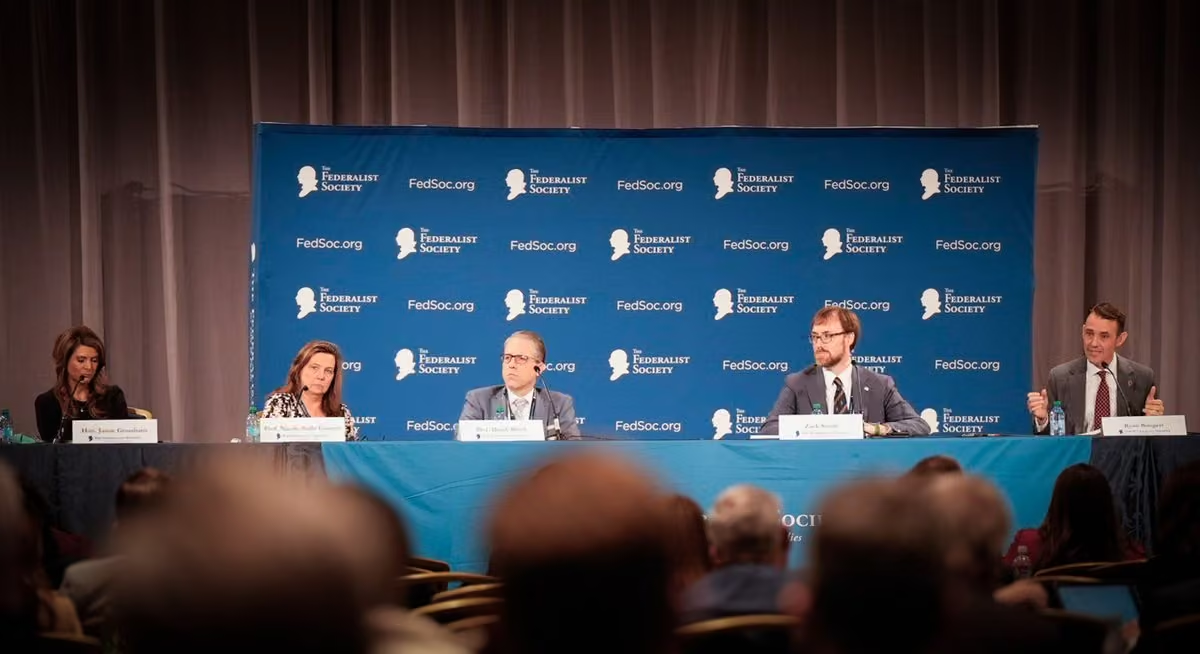
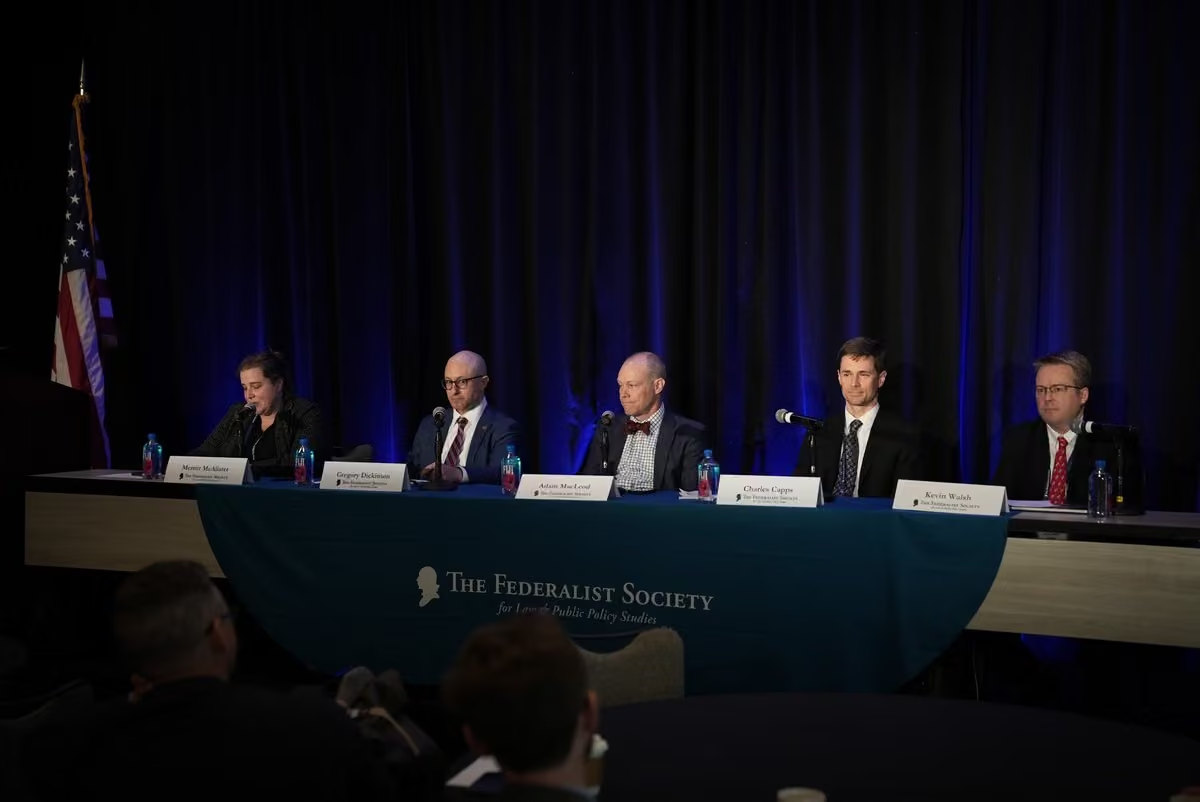
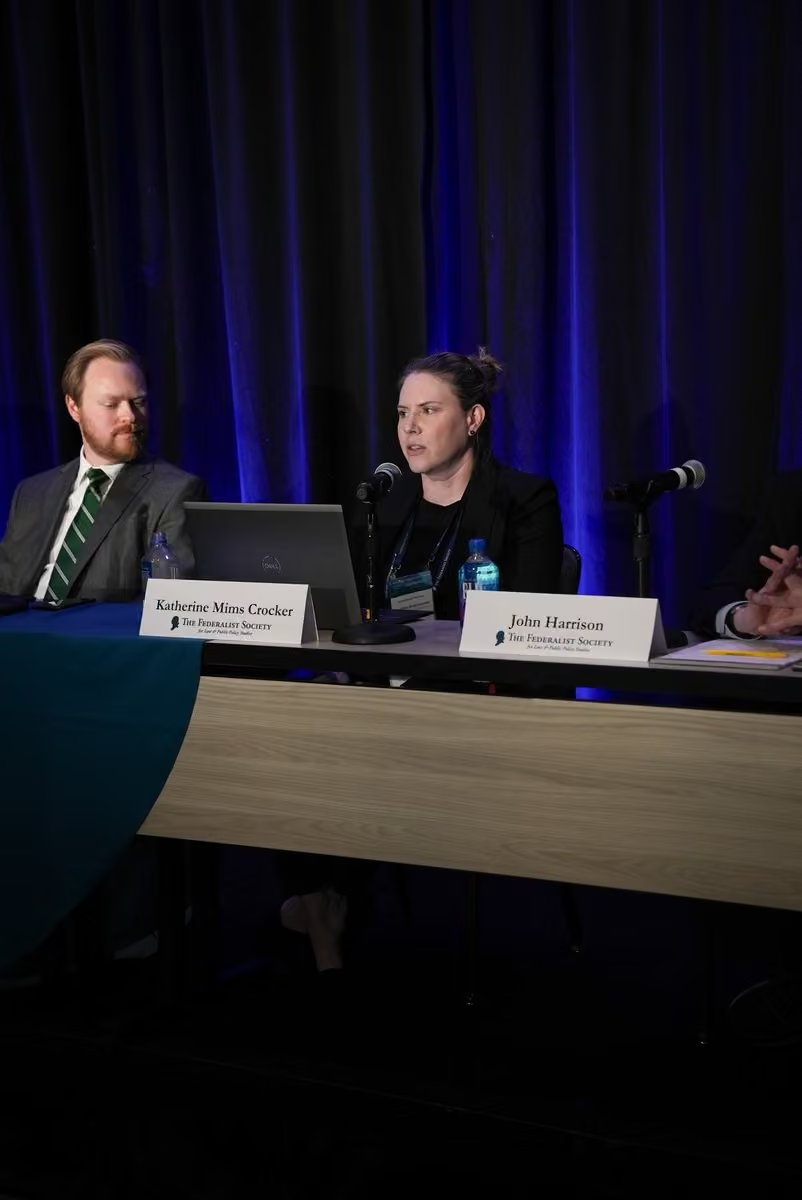
As we reflect on three incredible days at the 2026 National Lawyers Convention, we want to thank everyone who joined us in Washington, D.C.!
From thought-provoking conversations and informative debates to meaningful connections with friends and colleagues, this year’s Convention was made possible by our attendees, speakers, panelists, and moderators.
Thank you for being part of the 2026 National Lawyers Convention. We look forward to seeing you again next year!
“Victory requires something beyond good arguments; victory is secured through institutions, networks, and systems fixated on a shared goal, capable of shaping and exercising influence.”
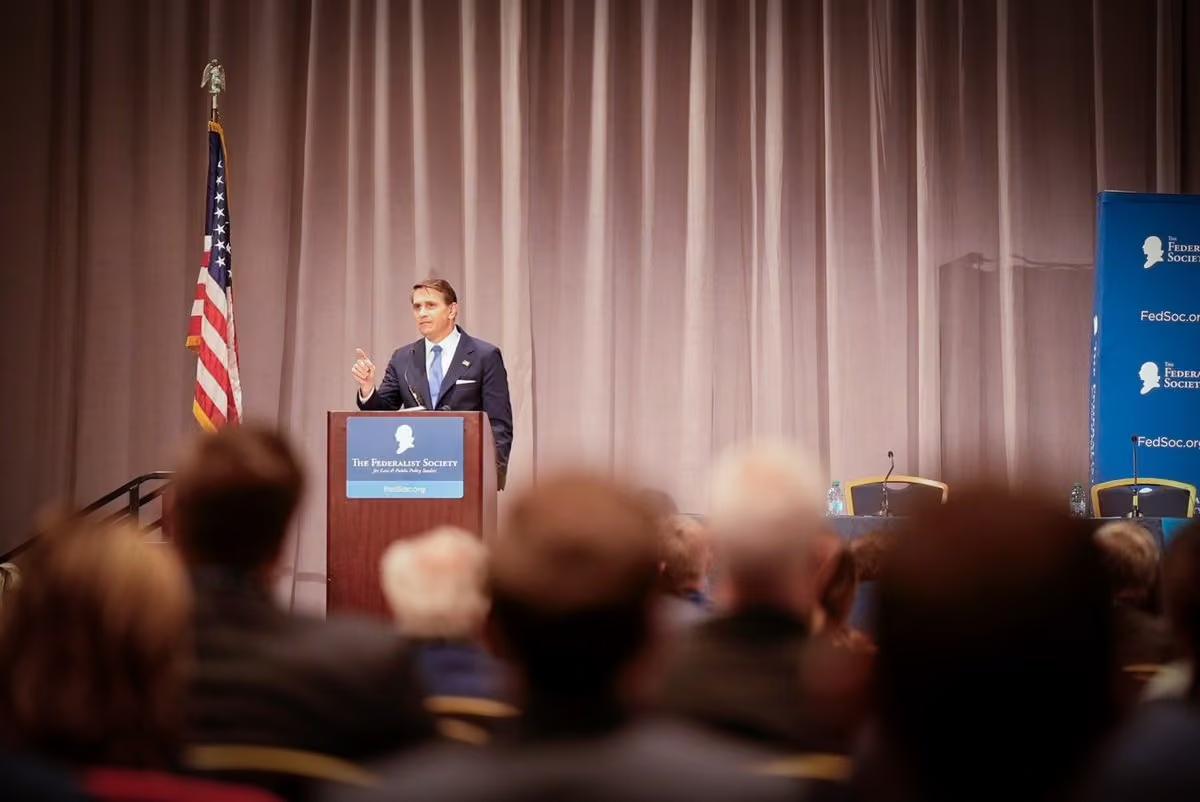
Secretary of State Marco Rubio (@SecRubio) delivered powerful remarks at the Barbara K. Olson Memorial Lecture at the 2026 National Lawyers Convention.
In his final address before retiring as Executive Vice President of the Federalist Society for Law and Public Policy Studies, Dean Reuter reminds us that we are the "good people" described in the Declaration:
“By your authority and only by your authority. You are the good people. So be good, remain good, be good to one another, do good, make more good people. Thank you, God bless you.”
Justice Samuel Alito lays out three principles he says Americans must preserve "no matter what the atmosphere is in the country or the world at the time": freedom of speech, religious liberty and racial equality.
During a fireside chat with the Federalist's Mollie Hemingway at the Antonin Scalia Memorial Dinner during the 2026 National Lawyer's Convention in Washington D.C., Alito warned that democratic self-fulfillment is impossible without robust free speech, including "speech that is hurtful to some of the people who hear what is being said." He called religious liberty "central to human dignity" and invoked Dr. Martin Luther King's vision of judging people by the content of their character.
"If we don't hold to that principle, then I think the society is going to start to come apart," Alito said.
The Federalist Society was honored to host Secretary of State Marco Rubio @SecRubio to speak at the Society’s National Lawyers Convention celebrating 250 years of American exceptionalism.
SECRETARY RUBIO: We are the descendants of people that refused the limits and said that we're going to continue to strive and build for ourselves a better life. That blood literally runs through our veins; that's who we are as a people and as a nation.
GianCarlo Canaparo, Principal Deputy Assistant Attorney General, @TheJusticeDept, warns that AI could undermine the federal rulemaking process:
“If you believe that notice-and-comment lends democratic legitimacy to rulemaking, that belief is sorely challenged when anyone can, at almost no cost, spam the docket with comments designed to delay and derail... The quiet AI revolution to rulemaking is not going to be stopped, but only shaped by judicial and congressional involvement.”
.@JCNSeverino, President of JCN, compares the dangers of court-packing to Venezuela, warning of a Supreme Court with 50+ justices:
“Can you imagine how much more time it's going to take to build a 50-justice Supreme Court building?... It sounds silly, but this is not unprecedented worldwide. This is the same thing that happened, for example, in Venezuela... This is not a precedent that America should strive to follow.”
Prof. @TaraLeighGrove1, University of Texas at Austin School of Law, on the history of Article III and its standing today:
“History and tradition doesn't look too good when we look at Article III, but what changed? Over time, and it took a long time, in some cases into the 20th century, political actors of both political parties decided, no, you can't remove judges outside the impeachment process. You can't impeach judges for their decisions. We must obey federal court orders. We don't change the size of the United States Supreme Court for purely political reasons. And mercifully, for most of our history, unlike in many other countries, we don't threaten violence against federal judges because of their decisions.”
.@MZHemingway, Editor-in-Chief of @FDRLST, on the history of judicial restraint coinciding with the rise of originalism and the Bork era:
“We get Robert Bork being nominated, and that is one of the fathers of originalism, and that is really where we start to see this organized campaigning to affect who's on the Court. I mean there were hundreds of groups that were lined up as activists to fight that nomination, and then also a much smaller number, but some groups who were in favor of it, but that was a vicious, horrible confirmation process... and it's kind of off to the races at that point.”
Hon. @epa_fotouhi, Deputy Administrator, @EPA, on the significant cost savings from EPA’s historic regulatory reforms:
“We have taken more regulatory reform actions in the first two years of this administration than most administrations take in eight years. Just EPA actions alone finalized to date have an estimated regulatory cost savings of $1.6 trillion.”
Hon. Catherine L. Hanaway, Attorney General of Missouri, shares her conclusions on redistricting efforts and the importance of an independent judiciary:
“We had redistricting cases that went on and on and on this year in Missouri, and it was a collision between our state courts and the federal courts... The bottom line on what I am advocating is, we need to do everything we can to ensure that it is indeed independent of outside influences as much as it can be.”
Hon. @epa_fotouhi, Deputy Administrator, @EPA, on the limits of the EPA’s regulatory authority:
“Congress has not given EPA authority to reorient and reorder vast swaths of the American economy... Part of what we have been trying to do over the last twenty or so months is to reinforce and reapply those limits onto a regulatory landscape that has built up over decades and has expanded its authority.”
Day 3 of the 2026 National Lawyers Convention has begun!
Take a look at today's schedule and join us for a full day of engaging panels and thoughtful discussions under this year's theme, 250 Years of American Exceptionalism.
Watch today's programming live on our YouTube channel:
.@SecRubio: “We Americans, we are not passive and inward-looking people. To submit to the sterile vision of radical judges or soulless global bureaucrats would be to betray who we are, to betray ourselves. The real America, the nation that actually exists in the text of our founding documents, that actually exists in the history of our people, in the conduct of the men who built backwater colonies into the greatest superpower on earth, has always been destined to go beyond, to be greater and stronger, more than what had come before.”
.@SecRubio recalled how the Federalist Society began in 1982 citing four law students who organized a symposium on federalism in New Haven and a 46-year-old law professor named Antonin Scalia took the podium.
“The Federalist Society helped change and advance America.”
.@SecRubio on building a stronger America for future generations:
“We have much more to do over the next two, the next six, the next 20 years. Great things that last are built in decades, not election cycles. There will be more victories and there will be more defeats, there will be more triumphs and there will be more disappointments... But we are persuaded of the justice of our cause. And we, too, will triumph in the end... Of this, I believe with all my heart, that we in this generation will leave for our children and our grandchildren what Americans always leave for their children and their grandchildren: The single greatest nation in the history of the world.”
.@SecRubio on how the Federalist Society shaped society beyond the courts:
“The Federalist Society victories were built on this insight. It's not just about placing good judges in positions to interpret law, it's about shaping the world in which they do so, about shaping the norms and values, the ideas and beliefs, the expectations, and the assumptions that underpin how they think and reason and act.”
.@SecRubio on the origins of the Federalist Society amid political turmoil within the conservative movement in 1982:
“It was against that backdrop, amid the plummeting morale, the anxiety, that despair, that something new began to stir... But soon, what was stirring would remake the whole landscape of American politics and law forever, changing the course of the nation.”
NOW: Full house currently for the forthcoming @FedSoc lecture featuring Secretary of State Marco Rubio.
The annual Barbara K. Olson Memorial Lecture will be opened by none other than Rubio’s daughter, Daniella Rubio, who is a law student at the Virginia School of Law.
FOX NEWS: Rubio is expected to address the Federalist Society at the National Lawyers Convention on Friday, where he will go after the International Criminal Court and other global bodies he says are using the law as a political weapon, not to deliver justice.
Prof. Brittney Lane Kubisch, Pepperdine Law, on the role of territory in defining state sovereignty:
“The law of nations rules could get pretty complicated, but if I'm going to simplify it down to one thing, it was territory. Territory is where you had jurisdiction to enforce, prescribe rules, and to adjudicate. Why was this the rule for the law of nations? There were two main reasons: One was, in order to put force behind the law, you had to have officials who could act with force. Where did you have power to have your officials exercise force? Within your borders, within your territory. A really good example that makes this very concrete: Where did international waters start? Where did your legislative jurisdiction end and the rule of admiralty begin? Three miles out. Why? That's how far you could shoot a cannon in the eighteenth century.”
O.H. Skinner III, Executive Director of @for_consumers, warns of growing efforts to control Americans’ lives through state and local governments:
“Those pushes to control your life, wherever you live in America, and push it in a certain direction, didn't go away. They are now going to flow through local government actions and one state trying to control another state. Because those are mechanisms that activists think they will never lose. They have lost control of much of the federal government, they are losing ground in the administrative law battle, but they don't think they're going to lose the town council in Santa Barbara or the city council in Baltimore or the state of California, and so they intend to use those levers to push... I think that is going to define the fight for the next ten years.”
Prof. @shbarclay, Georgetown University Law Center, on how the natural law tradition supports the Founders’ vision of a modest judiciary toward legislatures:
“The founding generation certainly thought the judiciary should have a role, and I think a more important role when it comes to applications of statutes, especially by unelected government officials, but that there should be more modesty with the relationship with the judiciary vis-a-vis legislatures. And I think that the natural law tradition certainly supports that role as well.”
Prof. @kurtlash1, University of Richmond School of Law, on why the Declaration’s principle of consent of the governed cuts against rights of judicial invention:
“Judicially constructed unenumerated rights seems inconsistent with the Declaration, a document the Republicans of 1868 looked to as the definitional statement of who we were as a people. A people committed to the self-evident truth of government by the consent of the governed and a people who remained, even after the Civil War, organized in the form of free and independent states.”
Our celebration of 250 years of American exceptionalism continues today and tomorrow!
You can watch yesterday’s programming on our YouTube page, and keep up with today and tomorrow’s programming by joining our livestreams on our website, YouTube, and X.
Hon. James P. Danly, Deputy Secretary of Energy, US Department of @ENERGY, on how courts have allowed the federal government to assume powers beyond its authority:
“[W]e have a federal government which has been out of control for years and has been assuming authority in these gaps which the courts have allowed them to fill in a way that could never have been envisioned.”
.@JTLonsdale, 8VC Founder and Managing Partner, on the future of artificial intelligence in the legal community:
“This is a very positive thing; having more super intelligence is naturally going to help us fight the stupid parts of the regulatory state, expose fraud, expose bad arguments and ridiculous arguments.”
Hon. James P. Danly, Deputy Secretary of Energy, US Department of @ENERGY, on how many American laws today resemble the abuses that sparked the Revolution back in 1776:
“The thing that is probably most remarkable about the train of abuses [listed in the Declaration of Independence]... is that we basically turned around and imposed all of those abuses on ourselves as quickly as we could.”
.@CJMKansas, @Meta Chief Legal Officer, warns of the slippery slope that usurpation by litigation poses to America:
“These are not just attacks on companies; they’re really attacks on territorial sovereignty on the other 49 states. Unless you think I am attacking state Attorneys General, many of whom, Republicans and Democrat, I think are fine public servants: Every argument I am making that usurpation by litigation is an infringement on state sovereignty was made by an excellent appellate brief in the Suncor case by the state of Tennessee.”
.@CaseyMattox_, Vice President for Legal Strategy, Stand Together, highlights the importance of local self-government to the American colonists:
“We always think in terms of taxation without representation as the driving motivation; taxation aside, they were really into local representation and making their own laws. You see this repeatedly throughout the Declaration.”
Grant Starrett, Multifamily Real Estate Investor, breaks down how the endless printing of money spiked inflation in American Revolutionary times:
“It printed, and printed, and printed and printed. So prices doubled in 1776, they doubled again in 1777, they doubled again in 1778. The truth is, we saw 8,000% inflation over the course of the Revolutionary War.”
Day 2 of the 2026 National Lawyers Convention is underway!
Take a look at today's schedule and join us for a full day of engaging panels and thoughtful discussions under this year's theme, 250 Years of American Exceptionalism.
White House Counsel @willscharf on the lessons from the founding era that still apply today:
“We do lionize our founders. We should. They were truly great men. We live in their shadow, but they were still men... It really brings home that the political fights that we have today, the nature of government today, can seem very hostile, very difficult, but we lived through times like that in American history before, and that was certainly the case in the founding era.”
Prof. @ilan_wurman, University of Minnesota Law School, on the written constitution as the foundation of judicial review:
“Writing down our constitutions, taking some of those rights and writing them down, is what creates this rule of decision. It is now what allows judges, who have judicial power and who always had judicial power, to answer this conflict-of-laws question between a constitution that we wrote down and inconsistent legislation. Writing down our constitutions is what says the answer to that conflict-of-laws problem is you go with the Constitution.”
Mark W. Smith, Ave Maria School of Law and host of @fourboxesdiner, on the ultimate impetus for the American Revolution:
“The British decided to take the Americans’ guns. The British made the disarmament of the Americans their policy, and then they decided to act on it. And on Lexington Green, they decided to act on it and do it with force.”
Texas Supreme Court Justice @E_A_Young on defending America's founding ideals:
“The spirit of Texas has been the spirit of the Declaration of getting to work, rolling up our sleeves, fighting for liberty, defending self-government... America is worth fighting for, and although I've obviously focused on Texas, all of your states are worth fighting for.”
Texas Supreme Court Justice @E_A_Young on the beginning of America's next 250 years:
“November 2026 is the month in which we say this is when America's second 250 begins... We're on our way to 500, and is it not an amazing thought that we are closer to America 500 than we are to the signing of the Declaration of Independence?”
We’re officially kicking off this year's National Lawyers Convention!
Take a look at today's schedule and join us for a full day of engaging panels and thoughtful discussions under this year's theme, 250 Years of American Exceptionalism.
With apologies to Clement Clarke Moore and Justice Scalia:
’Twas the night before FedSoc, and all through the town, Every lawyer was hunting a judge to pin down; The business cards nestled in pockets with care, In hopes that a future appointment lay there.
Associates lay wide awake in their beds, While visions of clerkships danced round in their heads; Their judges had told them, “Go mingle. Have fun.” They’d billed the advice as point-two to someone.
And I, with my bourbon, had loosened my tie, Prepared to explain why your test went awry, When out in the lobby arose such a clatter, I sprang from my chair to see who’d grant the matter.
Away to the gathering I flew like a flash, Past partners discussing their books and their cash; The glow of the smartphones lit faces below, As everyone checked whom they needed to know.
When what to my wondering eyes should appear But a justice whose voice I could still plainly hear; With a shrug and a scowl and a wicked guffaw, I knew in a moment: the ghost of Nino.
He carried no sack, wore no festive disguise, But a stack of dissents of considerable size; And he called to the lawyers who’d crowded the floor: “You’ve had forty-odd years. Must we do this once more?
“Now, TEXT! Now, STRUCTURE! Now, HISTORY and MEANING! Stop telling me what you suppose they were feeling! To the top of the brief! To the words of the law! If the policy’s lousy, go knock on Congress’s door!”
He spoke, and a hush settled over the bar; Someone whispered, “I think he’s gone slightly too far.” A professor proposed a more nuanced approach; Nino raised one thick eyebrow. The man called his coach.
One lawyer said, “Justice, before you proceed, There’s a framework of factors I think that we need.” The shade took a breath, and the room braced for thunder: “How many?” “Just twelve.” “And which clause are they under?”
A partner stepped forward, his manner most winning: “Our firm has supported your work from the beginning.” The ghost eyed his nametag, then gave him a grin: “And which side were you on when the fees first came in?”
The young lawyers gathered, their questions sincere: “Should I clerk? Should I teach? Should I stay one more year?” He said, “Learn your craft. Have a life. Read a book. And a text without footnotes is still worth a look.”
Then somebody asked who would next get a seat; The whole room leaned forward and shuffled its feet. He smiled as they waited, all breathless and tense: “I’m dead. I can finally decline to dispense.”
He turned toward the exit, his work nearly done, Leaving twelve tests in tatters and ruining one; But I heard him exclaim as he passed out of sight: “Happy FedSoc to all—and for God’s sake, cite right!”
We are looking forward to celebrating 250 years of American exceptionalism at this year's National Lawyers Convention, kicking off tomorrow, November 12 in Washington, D.C.
“The reason why our Constitution and Declaration have survived is because people choose it anew in every generation. You need to know its history, you need to know what you are preserving.”— Justice Neil Gorsuch
As we continue our celebration of America 250, Justice Gorsuch shares his advice for the next generation on why knowing our history matters to preserving the principles of our founding.
We are looking forward to celebrating 250 years of American exceptionalism at this year's National Lawyers Convention, kicking off this Thursday, November 12 in Washington, D.C.
FIRST ON FOX: As America celebrates 250 years of independence, three conservative Supreme Court justices reflect on what makes the nation exceptional and the importance of preserving its founding freedoms for future generations.
Justices Brett Kavanaugh, Neil Gorsuch and Amy Coney Barrett share their perspectives on love of country and the principles that have shaped the nation for generations.
⚖️🇺🇸 How do we protect America’s freedoms for generations to come? Supreme Court justices say it starts with teaching our history, the Constitution and the importance of civic engagement. Are we doing enough to prepare the next generation?
Really awesome video series put together by @FedSoc of the Trump nominated SCOTUS Justices for America 250 - about what it takes to “keep America’s founding freedoms alive.” 🇺🇸
“We are not passive observers in the American project; we are participants in it. It is our project.…. I might suggest that people look at the last line of the Declaration of Independence, it ends with a mutual pledges in which the signatories to the document mutually pledge, their lives, their fortunes, and their sacred honor to the success of the American project.”— Justice Amy Coney Barrett
During our America 250 conversation with Justice Barrett, she points to the Declaration of Independence’s closing pledge as a reminder that our government rests on our consent and depends on our participation.
Best thing I've seen in a long time. Encourage you to watch our Justices speak about the ideals that make our country great as we honor those who have served to keep it that way. www.foxnews.com/politics/supreme-court-justices-confront-…
“The enduring Constitution, the enduring Declaration, the connection between those two again are critically important for people to understand our liberty and equality and so that all of us together can live up to Lincoln’s goal of preserving government of the people, by the people, for the people, for the next 250 years as well.”— Justice Brett Kavanaugh
In our America 250 conversation, Justice Kavanaugh reflects on what it will take to carry Lincoln’s vision of self-government into America’s next 250 years.
Today, we honor the brave men and women who have served in defense of our nation and the principles on which it was founded. We are grateful for their courage, sacrifice, and dedication to protecting our nation and the freedoms we cherish.
In celebration of America 250, attendees at this year’s National Lawyer’s Convention will have the opportunity to collect a limited edition set of six caricature coasters featuring some familiar faces from America’s founding! 🇺🇸
Keep an eye out around the Mayflower during NLC and see if you can collect them all!
We’re just two days away from the 2026 National Lawyers Convention!
As we celebrate 250 years of American exceptionalism, we look forward to bringing together members, attorneys, scholars, and friends for engaging conversations on the legal principles and ideas that have shaped our nation.
Tune in for all the discussions starting Thursday at 9:30 AM ET.
As we celebrate our nation’s 250th anniversary at this week’s National Lawyers Convention, it is important to remember the many events in our nation’s history that got us to where we are today. Watch part 1 of “The Making of America: A Conversation with Gordon Wood” to hear renowned historians and professors Gordon S. Wood & Kurt Lash discuss the ideas that inspired the American Revolution, the Declaration of Independence, and the founding of a new republic.
🇺🇸 NLC is just around the corner, and we’re bringing plenty of FedSoc gear along for the occasion!
Stop by the merch table at this year’s National Lawyers Convention to browse our selection of FedSoc favorites, pick up some new gear, and check out special items celebrating America’s 250th anniversary.
ONE WEEK FROM TODAY, Secretary Marco Rubio (@SecRubio) will draw on the Declaration’s words “Enemies in War, in Peace Friends” as he delivers the Barbara K. Olson Memorial Lecture at our National Lawyers Convention.
“The preservation of the sacred fire of liberty, and the destiny of the republican model of government, are justly considered as deeply, perhaps as finally staked, on the experiment entrusted to the hands of the people.” - President George Washington
How did “The Laws of Nature and of Nature’s God” shape America’s founding and what do they mean for constitutional law today?
Alliance Defending Freedom’s Ryan Bangert (@ryanlbangert@adflegal) previews his upcoming NLC panel examining the relationship between natural law and constitutional law through this enduring phrase from the Declaration of Independence.
What is the relationship between natural law and constitutional law?
Prof. Stephanie Barclay (@shbarclay@GUConstitution) offers a sneak peek at her upcoming NLC panel exploring the meaning and enduring significance of the Declaration’s phrase “The Laws of Nature and of Nature’s God.”
You can now stream part 1 of our new short film, “The Making of America: A Conversation with Gordon Wood” with @kurtlash1, on our website and on YouTube.
We were privileged to collaborate with Professor Wood, one of the great historians of the American founding, on several projects in celebration of America’s 250th anniversary.
Part 1 of “The Making of America: A Conversation with Gordon Wood” is coming this Thursday, October 29th. Stay tuned!
Pretty amazing that @FedSoc sat down with Professor Gordon Wood, one of the all time great American historians, to get his thoughts on America 250 on video before his untimely passing. Incredible, and so much to learn!
In celebration of the 250th anniversary of our nation, we proudly present part 1 of “The Making of America: A Conversation with Gordon Wood”. www.youtube.com/watch?v=fgYbBlwwdhg
In celebration of the 250th anniversary of our nation, we proudly present part 1 of “The Making of America: A Conversation with Gordon Wood”. www.youtube.com/watch?v=fgYbBlwwdhg
We are pleased to announce that Dr. Nicholas Cole and Elle Rogers Bernstein (@ellebernstein) will be joining us as first time NLC speakers! You can watch them speak on Thursday, November 12.
We are pleased to announce that Prof. Brittney Lane Kubisch, Katherine Robertson (@KGRob27), and Eric Wessan (@EWess92) will be joining us as first time NLC speakers! You can watch them speak on the panel titled "Free and Independent States" on Friday, November 13.
We are pleased to announce that James P. Danly and Grant Starrett (@GrantforTN) will be joining us as first time NLC speakers! You can watch them speak on the panel titled "A Long Train of Abuses and Usurpations" on Friday, November 13.
We are pleased to announce that Catherine L. Hanaway (@AGCHanaway), and Mollie Hemingway (@MZHemingway) will be joining us as first time NLC speakers! You can watch them speak on the panel titled "He Has Made Judges Dependent on His Will Alone" on Saturday, November 14.
We are pleased to announce that Prof. Brittney Lane Kubisch, Katherine Robertson (@KGRob27), and Eric Wessan (@EWess92) will be joining us as first time NLC speakers! You can watch them speak on the panel titled "Free and Independent States" on Friday, November 13.
We are pleased to announce that Joe Lonsdale (@JTLonsdale), Founder and Managing Partner of 8VC, with Hon. Amul R. Thapar of the U.S. Court of Appeals for the Sixth Circuit will deliver this year’s Robert H. Bork Memorial Lecture at the National Lawyers Convention!
We were privileged to collaborate with Professor Wood, one of the great historians of the American founding, on several projects in celebration of America’s 250th anniversary.
Part 1 of “The Making of America: A Conversation with Gordon Wood” is coming this Thursday, October 29th. Stay tuned!
On October 27, 1787, 239 years ago today, Alexander Hamilton, using the pen name “Publius,” published the first Federalist paper.
Alongside James Madison and John Jay, the trio wrote 85 Federalist papers urging their fellow Americans to ratify the newly proposed Constitution.
Hamilton wrote “that it seems to have been reserved to the people of this country, by their conduct and example, to decide the important question, whether societies of men are really capable or not of establishing good government from reflection and choice, or whether they are forever destined to depend for their political constitutions on accident and force.”
More than two centuries later, we the people of the United States continue to decide that men truly are capable of self-government through the defense of our enduring Constitution and our republic of ordered liberty.
6 years ago today, Justice Amy Coney Barrett was sworn in as the 115th Justice of the Supreme Court. We thank her for her continued service on the Court!
White House Counsel Will Scharf (@willscharf) is joining us at the 2026 National Lawyers Convention! Don’t miss this fireside chat as we mark America’s 250th anniversary.
For more than a quarter century, Dean Reuter has helped shape the Federalist Society as a leader, mentor, and friend. As he prepares to retire at year’s end, join us in celebrating his service and thanking him for his leadership, generosity, and good humor.
35 years ago today, Justice Clarence Thomas was sworn in as the 106th Justice of the Supreme Court. Now the second-longest-serving Justice in the Court’s history, we thank him for his decades of service to our nation!
35 years ago today, Justice Clarence Thomas was sworn in as the 106th Justice of the Supreme Court. Now the second-longest-serving Justice in the Court’s history, we thank him for his decades of service to our nation!
We’re officially 20 days away from the 2026 National Lawyers Convention! Join us November 12–14 at the Mayflower hotel as we celebrate America’s 250th anniversary with three days of thoughtful conversations, engaging discussions, and opportunities to connect with fellow members of the legal community.
During today's webinar, Amanda Salz, counsel at @becketfund, discusses why the Landor v. Louisiana Department of Corrections and Public Safety decision is less about religious liberty and more about the Spending Clause:
“On a closer read, this isn’t really a religious liberty opinion as much as it’s a Spending Clause opinion.”
What are the main questions in St. Mary Catholic Parish v. Roy? During today’s event, Prof. John A. Meiser, Director of Notre Dame Law School’s Religious Liberty Clinic, breaks down three key questions in the case before the Supreme Court this term.
As we celebrate 250 years of American exceptionalism, we are pleased to announce that Secretary Marco Rubio will deliver the 25th Annual Barbara K. Olson Memorial Lecture at this year's Federalist Society’s National Lawyers Convention!
We were privileged to collaborate with Professor Wood, one of the great historians of the American founding, on several projects in celebration of America’s 250th anniversary.
Part 1 of “The Making of America: A Conversation with Gordon Wood” is coming Thursday, October 29th. Stay tuned!
Tune in to the 17th episode of SOC! SIDEBAR on Tuesday, October 20th at 8:00 PM ET. This episode, “Coaching Basketball,” features The Hon. Sarah Hawkins Warren.
Each month, our Student Division and a rotating Student Chapter host a Zoom series called SOC! SIDEBAR, featuring a judge being interviewed by a Student Chapter President about the judge’s passion, hobby, or interest and how it interrelates with the law.
On this day in 2018, Justice Brett M. Kavanaugh was sworn in as the 114th United States Supreme Court Justice. We thank him for his dedication and service to the United States!
"They want the Constitution to mean whatever they want it to mean."
Supreme Court Justice Samuel Alito discusses originalism on "Life, Liberty & Levin," explaining his view that the Constitution should be interpreted according to the meaning of its words when they were adopted.
Alito contrasts that approach with interpretations that allow the Constitution's meaning to change over time.
Checkout this "Weekend Must-Watch" video - an interview by @ShannonBream of Justice Samuel Alito. The interview includes an important discussion about the rising threats against the Justices and calls for "court-packing" and whether these are attempted "intimidation" of the Justices to change how they vote.
How do calls to pack/reform/term limit the Supreme Court land with the Justices themselves? Some see attempts at "intimidation" - Check out my full interview with Justice Alito tomorrow on @FoxNewsSunday
Highly Recommended Weekend Reading: Check out this new article by @JanCBS about her interview (airing tomorrow) with Supreme Court Justice Samuel Alito. This 🧵includes some highlights from the remarkable interview ... www.cbsnews.com/news/samuel-alito-supreme-court-justice-i… 1/12
On the Court's accomplishments during his tenure: "We have stood up for freedom of speech, which is endangered. We have done a lot to protect religious liberty"; @JanCBS says that Alito writes in his new book that "religious liberty is part of human dignity" 2/12
On the Dobbs leak: Justice Alito was "stunned" by the Dobbs leak, and said "It's something that I don't think we can get out of our minds." Per @JanCBS, Alito said that "because of death threats and protests, justices now travel with security and have officers guarding their homes." @jancbs 3/12
On death threats against the Justices: Have these threats caused Alito to regret writing Dobbs? Alito's "response was immediate." "No, not at all. It was a privilege to be able to write it. And I don't regret it, despite what it led to." @JanCBS 4/12
On reaching a majority: With 9 Justices, you need 5 Justices to reach a majority, Alito explains to @JanCBS. "But you should not try to get a majority opinion if that means sacrificing something that is important ... I will never adopt a legal rule that I think is wrong, or say something that I think is wrong." @JanCBS 5/12
On oral argument: Justice Alito, who is famous for his piercing questions during oral argument, is described by his law clerks as a "heat-seeking missile" @JanCBS 6/12
On Justice Alito's parents: His father was reserved and "believed very strongly that you should never show emotions in public," and recalled that his dad "would sit down at the kitchen table" to "go over every sentence and every word" of his school writing assignments. It taught him "'if you have written something that is hard to understand, the problem probably is that you hadn't thought it through. If you had a clear idea about what you wanted to say, then the language would be clearer'" @JanCBS 7/12
On Justice Clarence Thomas: he will "go down as one of the most important Justices in the history of the Court .... We each contribute something different to the court ... in many respects, [Thomas] is writing for the ages" @JanCBS 8/12
On political attacks on Justice Alito, his wife: The attacks are part of an effort to force his recusal. "We are not part of any political movement. And we are not attempting to further any political agenda ... We are trying to interpret the Constitution as best we can and apply it in the cases that come before us" @JanCBS 9/12
On attempted social pressure to change Alito's decisions: Someone approached him at a social setting and urged him to "decide a few of these cases differently" to "burnish [his] public image" to which Alito responded "that's absolutely wrong. That's not what we're supposed to do." @JanCBS 10/12
On the metaphor of Justices-as-umpires (popularized by Chief Justice Roberts): Alito said judges are like umps in that they both have to make judgment calls and that's why Alito is a "practical originalist," saying "In the end, if that's what it says, then that's what the decision has to be. But we shouldn't happily accept results that seem to make no sense." @JanCBS 11/12
The whole article by @jancbs includes much more, a remarkably candid conversation with Justice Alito that makes this article a must-read. One of the most important contributions of the article is the discussion about how threats to the Justices have escalated as an intimidation tactic - but that those threats will not deter Justice Alito from changing how he interprets the Constitution. 12/12
The 2026 North Carolina Chapters Conference brought a great day of programming to Raleigh!
From the Supreme Court and election law to the future of education policy under the North Carolina Constitution, attendees explored a range of important legal questions. The conference also featured a keynote panel with recently seated district judges and closing remarks from Chief Justice Paul Newby (@paulmnewby).
Thank you to everyone for making this year’s conference a success!
TUNE IN LIVE TODAY AT 1 PM ET: Previewing Suncor Energy v. Boulder County featuring West Virginia Solicitor General Michael Williams, O.H. Skinner of @for_consumers, and Chris Mills of Spero Law.
Coming October 29: The Making of America: A Conversation with Gordon Wood, Part I.
Professor Wood, one of the great historians of the American founding, is dearly missed. We were incredibly fortunate to work with him on several projects celebrating America’s 250th anniversary before his passing earlier this year, including what would become one of his final filmed conversations.
In this short film, Professor Wood sits down with Prof. Kurt Lash to reflect on America’s founding and the earliest days of our nation.
Ahead of the upcoming Supreme Court term, we hosted a media briefing featuring Prof. @shbarclay of Georgetown Law, Solicitor General Michael Williams of West Virginia, and Mark Rienzi of @becketfund. Moderated by WSJ's @kyleopeterson, this discussion previewed the major cases and legal questions before the Court.
In case you missed it, watch the full conversation HERE:
Adam White, Laurence H. Silberman Chair in Constitutional Governance and Senior Fellow at @AEI, examines the Fourth Amendment and Commerce Clause questions raised in National Small Business United v. Bessent:
“It’s an enormous regulatory burden, just through compliance, when you think of how many LLCs there are in this country. But as the petitioners in this case argue, this looks a lot like a warrantless and suspicionless search in violation of the Fourth Amendment and also raises huge questions about the Commerce Clause…”
How far can one state’s law reach beyond its borders and govern another?
Tune in tomorrow at 1 PM ET as West Virginia Solicitor General Michael Williams, O.H. Skinner of @for_consumers, and Chris Mills of Spero Law preview Suncor v. Boulder County and consider the broader question of horizontal federalism
Adam White, Lawrence H. Silberman Chair in Constitutional Governance and Senior Fellow at @AEI, examines the Fourth Amendment and Commerce Clause questions raised in National Small Business United v. Bessent:
“It’s an enormous regulatory burden, just through compliance, when you think of how many LLCs there are in this country. But as the petitioners in this case argue, this looks a lot like a warrantless and suspicionless search in violation of the Fourth Amendment and also raises huge questions about the Commerce Clause…”
Erin E. Murphy, Partner at Clement & Murphy, PLLC, discusses that central question in Viramontes v. Cook County and Grant v. Higgins during today's Supreme Court Preview—and why the stakes extend beyond AR-15-style rifles:
“I would say it's really all about semiautomatic rifles writ large, because the way these laws are written, they basically apply to all modern semiautomatic rifles.”
Governor @tatereeves on why state and local governments should work "in concert" on AI regulation and investment:
“It should be a combination of the two, and they should be working in concert. And the reason for that is my people, and I hope myself, have a better understanding of the deals that are going on in other parts of our state, in other parts of the country. So we kind of understand what's a reasonable ask and what's not a reasonable ask. But when the local governments are the primary ones that are benefiting from the taxes, then they need to have a seat at the table as well.”
Tune in LIVE tomorrow at 12:45 PM ET for the 2026 Supreme Court Preview as leading experts discuss key cases on the upcoming Supreme Court Term, including issues involving the Second Amendment, religious liberty, parental rights, election law, and more.
As communities consider the growth of AI data centers, Governor @tatereeves discusses how Mississippi is approaching the conversation with residents—including questions of data center impact, national security, and competition with China:
“We’ve spent a good bit [of time] educating our constituents about what the lack of data centers in the U.S. means to them personally, and also what the lack of competing with China means to our national security.”
WATCH: Gov. @tatereeves speaks about data center development in the state of Mississippi:
“There are people who will tell you that AI data centers don't create jobs, and number one, that's not true. But number two, the jobs that surround building the infrastructure that allow the industry to grow are tremendous... and they pay really good salaries.”
Today, during a discussion on how Mississippi is leading in the age of AI, Governor Tate Reeves (@tatereeves) speaks on how Mississippi’s reforms are driving educational and economic gains in the state:
“The thought that comes to your mind regarding Mississippi may not be the actual truth of what's really happening in the state of Mississippi right now… When we took over leadership in both our state legislature and the executive branch of government at the same time, we started implementing and enacting conservative reforms that really have shown that Mississippi is, in fact, open for business, and what that has led to is just tremendous gains in educational outcomes, tremendous gains in economic outcomes.”
Happening TODAY at 12:00 PM ET: What role should states play in shaping America’s AI future? Mississippi Governor Tate Reeves (@tatereeves) joins the Federalist Society for a fireside chat on the state’s growing “Digital Delta,” the national data center race, and the evolving role of state and federal power in governing AI.
TOMORROW: Mississippi Governor Tate Reeves (@tatereeves) joins us for a lunch conversation on the rapid growth of data centers, the energy and infrastructure needed to power AI, and how state and federal policy will shape what comes next.
As data centers are being considered across the country, so are questions about who should shape their development: states, the federal government, or both?
Join Mississippi Governor Tate Reeves @tatereeves tomorrow at 12PM ET for a lunch discussion on data centers, energy, federalism, and Mississippi’s growing “Digital Delta.”
John Kerkhoff, Chief Deputy Solicitor General and Director of the Tenth Amendment Center at the Ohio Attorney General’s Office, breaks down Beaird v. United States and the key questions he’ll be watching at oral argument during today's Seat at the Sitting:
As AI drives new demand for data centers and energy, states are increasingly shaping the infrastructure behind America’s technological future.
Join us September 30 at 12 PM ET in Washington, D.C., for a conversation with Mississippi Governor Tate Reeves (@tatereeves) on the growth of Mississippi’s “Digital Delta,” AI infrastructure, and the state and federal policies shaping what comes next.
Even when two researchers examine the same historical texts, they can classify the evidence differently.
Professor @RandyEBarnett describes his experience using different researchers to study constitutional language and asks how disagreements in corpus analysis should be resolved.
During today’s Seat at the Sitting, O.H. Skinner of @for_consumers discusses why the upcoming Suncor case matters beyond climate litigation: Can one state use its courts to advance policies beyond its borders?
“It’s basically putting those series of questions to the Court for the first time.”
Join us October 1 at the Mayflower Hotel in Washington, DC, as our panel of experts discuss some of the most consequential cases on the Supreme Court’s upcoming docket and the broader legal questions they may raise.
During today's webinar, John Yoo, Prof. Linda Denno, Eric Wessan (@EWess92 ) and Will Randolph discuss potential next steps following the Supreme Court's decision in Trump v. Barbara.
.@EWess92, Solicitor General for the Iowa Attorney General, on the avenues Congress can pursue to restrict birthright citizenship post-Barbara v. Trump:
“If I were a legislator that was interested in this, I would definitely look at what Barbara allows and work at trying to find ways to poke holes into the judgment. I might focus on birth tourism and the foreign terrorist, alien enemy aspects of it, because I think that it is less clear to me that you’ll be able to keep five justices together to say that Congress, for example, cannot remove children of terrorists who are on American soil citizenship. If they want to rule that way, they can, but I think that that would be much more difficult.”
John Yoo, Professor of Law at UC Berkeley and Senior Research Fellow at the University of Texas at Austin, on how President Trump could challenge SCOTUS’s decision in Trump v. Barbara:
“I mean that I actually think that a broader scope for a challenge to Barbara, although I don’t expect the Trump administration to do so, would be from the executive branch. If President Trump really wanted to be aggressive, he could adopt President Lincoln’s approach to Dred Scott and say, I’m allowed to have my own interpretation of the Constitution. I’m allowed to implement it through the execution of my constitutional duties, which is executing the law, and I could try to deny birthright citizenship to everybody in my executive order and then, if the Supreme Court wants to hold my executive order unconstitutional, they are going to have to do it in every single case of every single citizenship denial that I’m going to issue for every child born to birthright tourism schemes… And I think it would be consistent with the way I think Lincoln and Jackson and Jefferson, even Washington, maybe, interpreted their authority under the Constitution to interpret the law.”
.@EWess92, Solicitor General, Iowa Office of the Attorney General, explains what he thinks Trump v. Barbara settled:
“I think Barbara settled one question in the near term, and that’s the president cannot, by executive order, revoke citizenship from parents who are unlawfully or temporarily present. Five justices got there through the Constitution, Justice Kavanaugh got there through statute… Presidential unilateral action is out, but I think there’s room for innovative legislation to, again, kind of poke around the edges.”
John Yoo, Professor of Law at UC Berkeley and Senior Research Fellow at the University of Texas at Austin, on Trump v. Barbara:
“It’s settled that Wong Kim Ark was still governing precedent, that there were no serious changes that were going to occur to immigration law... I think that Trump v. Barbara was fairly straightforward in resolving a conflict that we often see in constitutional law. You often see in classes, which is, you have a settled precedent, long-time doctrine. Do you have enough historical evidence from the original understanding that would justify overruling it? And I think that in Trump v. Barbara, the Court said there’s not enough.”
Thank you to everyone who joined us in Lexington yesterday for the 2026 Kentucky Chapters Conference!
Throughout the day, attendees explored timely questions, from the enduring principles of ordered liberty and the rule of law to election law and the Second Amendment. The conference also featured a keynote discussion with Hon. Chad Meredith and Michael Fragoso (@mike_frags).
Thank you to our speakers, moderators, and attendees who helped make this year’s conference a success!
At FedSoc’s inaugural AI and the Law Initiative summit earlier this year, Deputy Secretary of Energy James Danly argued that growing demand from AI data centers could help lower utility rates when matched by increased energy supply.
Now, as states consider data centers, Mississippi Gov. @tatereeves joins us on September 30th at 12PM ET in Washington, D.C. to discuss the state’s growing “Digital Delta” and the policies shaping data center development.
During yesterday's webinar, Michael A. Carvin, former partner at Jones Day, discusses the impact of the Louisiana v. Callais decision:
“I think it is very hopeful in American society. I mean, in 2026, it’s 72 years since Brown, 60 years since the Civil Rights Act. At some point, we really have to stop making important decisions about who represents us, who gets into college, etc., based on skin color. And I think we have grown well past that. I think continuing to inject race into these questions is really injecting racism into where there is none to begin with.”
TODAY at 12:00 PM ET: Join us for part two of our webinar series examining the Supreme Court’s decision in Trump v. Barbara—its impact, the legal questions it raises, and what comes next.
Ft. Prof. Linda Denno. Eric Wessan (@EWess92), John Yoo, and Will Randolph
Today marks the anniversary of the Judiciary Act of 1789. Derek Muller highlights the significance of the day, and the origins of the federal courts, in the post below. 👇
Today we celebrate Article III, the "least dangerous branch."
On this date, September 24, 1789, the Judiciary Act was enacted, which created the structure & jurisdiction of the federal courts & much of which remains with us today.
The system established in 1789 proved remarkably durable.
According to the National Archives, the federal judicial system remained essentially as established by the Judiciary Act for nearly a century, with major changes coming only after the nation expanded and the Civil War.
At FedSoc’s inaugural AI and the Law Initiative summit earlier this year, Deputy Secretary of Energy James Danly argued that growing demand from AI data centers could help lower utility rates when matched by increased energy supply.
Now, as states compete to attract that investment, Mississippi Gov. @tatereeves joins us on September 30th at 12PM ET to discuss the state’s growing “Digital Delta” and the policies shaping data center development.
Recent changes to White House press access have prompted legal questions about the relationship between the presidency and the press.
Join us for a discussion TOMORROW at 2:00PM ET on the principles governing press access, including the First Amendment and due process featuring Michael Francisco, Robert Shibley, and @CaseyMattox_ .
We were honored to have @SenTedCruz join us at our Texas Chapters Conference this past weekend as we celebrated both the 250th anniversary of our great nation and the 150th anniversary of the Texas Constitution.
A long time member of The Federalist Society and champion of the rule of law, Senator Cruz spoke about the importance of the Texas Constitution, the need to have intellectual arguments to reach the truth, and celebrating Justice Clarence Thomas.
As states consider the future of AI data centers, who should make the rules?
Join us September 30 at 12 PM ET as Mississippi Gov. @tatereeves discusses the state’s growing “Digital Delta,” the data center race, and the roles of local, state, and federal government in shaping AI policy.
Registration is still open for the 2026 Supreme Court Preview!
Join us October 1 at the Mayflower Hotel in Washington, DC, as leading experts preview the upcoming Supreme Court term and discuss cases involving the Second Amendment, religious liberty, parental rights, election law, and more!
Tune into our sixteenth episode of SOC! SIDEBAR on Tuesday, September 29th at 8:00pm ET featuring Judge David R. Stras discussing “Fantasy Sports.”
Each month, our Student Division and a rotating Student Chapter host a Zoom series called SOC! SIDEBAR, featuring a judge being interviewed by a Student Chapter President about the judge’s passion, hobby, or interest and how it interrelates with the law.
This weekend at the Texas Chapters Conference, the inaugural John Adams Award for Advancing State Constitutions was presented to Texas Supreme Court Justice Evan Young.
The award honors the legacy of John Adams, principal author of the Massachusetts Constitution of 1780, the world’s oldest written constitution still in continuous effect. Adams’s draft established enduring principles of separation of powers, judicial independence, and a government “of laws and not of men.”
The John Adams Award recognizes individuals whose work carries forward that same commitment to state constitutionalism.
What a wonderful few days in Arlington, Texas for the 2026 Texas Chapters Conference!
This year’s conference was especially meaningful as we celebrated both America 250 and Texas 150. From Friday evening’s Welcome Reception and Banquet Dinner featuring remarks from Senator Ted Cruz, to Saturday’s full day of programming, attendees gathered for thoughtful conversations on the principles of the Declaration, constitutional litigation, the Texas Supreme Court, and more.
We are grateful to our speakers and attendees for making this year’s conference a memorable celebration of Texas and our nation’s history and founding principles!
On September 17, 1787, the United States Constitution was signed in Philadelphia. For 239 years, it has endured as the foundation of our system of government and a safeguard for liberty, self-government, and the rule of law.
.@chad_mizelle, Senior Fellow for Law and Justice at @A1Policy, comments on return of American manufacturing and the need to close China’s advantage:
“It gives me hope and encouragement that we seem to be in a new age of hardware manufacturing.… It does worry me that China has superior technology in a lot of these areas. And it’s not just that it is subsidized by the state… It’s literally that theirs is better than ours, and that is a real problem. And so, I’m really encouraged that there are a number of really bright minds. I see it every single day getting into this area, and it’s my hope that, again, in the next three to five years, America will again be dominant in this area.”
.@Michael7ucci, Founder and CEO of @StateArmor, explains the asymmetry in ELI’s climate lawfare—and argues that it pushes America toward greater dependence on Chinese energy technology:
“The asymmetry in lawfare does not exist in China. ELI doesn’t pretend it can get people to bring these private suits against energy producers in China….These lawsuits, this lawfare, drive us onto their technologies, which dominate batteries, solar, etc. We’re driving ourselves onto their, essentially, booby traps through this litigation and these nuisance claims…. It can’t be pursued over there. Here, it has the effect of driving us onto this kill-switch technology that China’s very happy to sell us.”
.@mctoth addresses concern that ELI’s approach creates a strategic advantage for Beijing by restricting American energy production while leaving China largely unchecked:
“What ELI has done is create an asymmetry, which is a win-win for Beijing. ELI is hamstringing the United States to create domestic, reliable sources of energy.. [while] doing nothing comparable to that in China, a rising emitter.”
During today’s FedSoc webinar, Senator @MarshaBlackburn addresses the Environmental Law Institute’s (ELI) ties to the CCP and its efforts to push climate activism through the federal judiciary:
“The federal judiciary should be in no way linked to a far-left, CCP-affiliated group that pushes climate activism. And so, I have called for the Federal Judicial Center to erase any programming that involves ELI’s Climate Judiciary Project.”
STARTING IN 1 HOUR: Protecting America’s Courts from Foreign Influence
Join us for a timely discussion on foreign influence, the Environmental Law Institute, and concerns these connections are undermining American national security and jurisprudence.
Featuring a special introduction from Sen. @MarshaBlackburn and a conversation with Chad Mizelle (@chad_mizelle), Michael Lucci (@Michael7ucci) and Michael Toth, moderated by the Hon. Andrew Gould.
As we reflect on the 25th anniversary of September 11th, we honor all of the victims, the bravery of first responders, the sacrifice of service members, and the resilience of a nation bound together by liberty. 🇺🇸
🚨Registration closes soon for the 2026 Texas Chapters Conference!
This year’s conference will be especially meaningful as we celebrate America 250 and Texas 150. Join us September 18–19 for engaging discussions, thoughtful programming, and opportunities to connect with members from across the state!
The September 11, 2001 terrorist attacks transformed American law and policy, reshaping the nation’s approach to counterterrorism, national security, and international security. Twenty-five years later, questions remain about the lasting effects of the post-9/11 era and how new technologies have changed both the threats facing the United States and the tools used to combat them.
Join us TOMORROW at 12:00PM for a discussion with Darrell Blocker, Prof. Mary Habeck, and Adam Pearlman on how 9/11 changed national security policy and what those changes mean for the challenges facing the United States today.
Who do you want to be? What virtues do you want to cultivate?
The Virtue Reading Group will not only deepen your understanding of the ideas that shaped our political and constitutional tradition—it will challenge you to consider how those ideas apply to your own life.
Understanding the Constitution means asking the deeper question: What did the Framers believe about human nature, character, and our capacity for self-government?
The importance of virtue is woven into our constitutional system. Its design reflects assumptions about who we are as a people, and the character and virtues necessary to sustain a free society.
⏰ Registration closes soon for the 2026 Alabama Chapters Conference!
Join us September 10–11 in Huntsville, AL, for discussions on AI governance, space law, and the Founders' enduring influence, along with opportunities to network and connect with fellow members from across the state.
Join the Texas Lawyer Chapters for the 2026 Texas Chapters Conference!
This year’s conference will be especially meaningful as we celebrate America 250 and Texas 150. Join us September 18–19 for engaging discussions, thoughtful programming, and opportunities to connect with members from across the state!
Prof. @JoshMBlackman, Professor of Law at South Texas College of Law Houston, discusses DEI programming in CLE training during yesterday's webinar:
“I think one of the most pernicious aspects of DEI programming is that it is not just sitting here and listening… the idea that we live in a structurally racist society and the government is saying this is the truth, it is basically thought control, and if you disagree with or refuse to participate in it, you are then denied credit by the state… I do think this is a form of compelled speech, it’s a form of compelled indoctrination.”
During today's webinar, @DanLennington, Deputy Counsel at the Wisconsin Institute for Law and Liberty, comments on his research that DEI training in the CLE context is neither effective nor evidence-based and can actually increase bias:
“There is a growing body of evidence showing that none of this actually works. DEI training has not been proven an effective means in fields where it has been longstanding practice. Mandatory DEI training has been shown to actually increase bias in many situations, and studies show that there is no evidence that CLEs in particular actually improve the legal profession.”
Debates over constitutional law often reflect disagreements about interpretation and the nature of law itself.
The Virtue Reading Group goes beyond the legal arguments to explore the fundamental questions and competing philosophies that shape how we understand the Constitution.
Mandatory CLE requirements on bias, diversity, and inclusion are increasingly common but when does this bias training cross constitutional or statutory boundaries?
Join us TODAY at 12:00PM for a CLE program examining the legal limits of mandatory bias-related training and how these requirements can be structured while respecting constitutional protections.
Ft. Prof. Josh Blackman (@JoshMBlackman), Prof. William Jacobson (@wajacobson), Daniel Lennington, and Prof. Michael S. McGinniss
Due to overwhelming interest, registration for the Federalist Society’s 2026 National Lawyers Convention is now at capacity. If you are interested in attending please register for our waitlist and we will contact you directly if additional tickets become available.
We sincerely appreciate your interest and the tremendous response to this year’s Convention! 🇺🇸
Members of the armed forces retain First Amendment rights, but the unique demands of military service have long permitted restrictions on speech and conduct that would not apply in civilian life. Recent litigation has renewed questions about where those constitutional protections begin and end.
Join us TODAY at 12:00PM for a discussion examining the history of First Amendment protections in the military and what that history means for current legal disputes and policy debates.
Ft. Prof. Antony Kolenc (@TonyKolenc), Christopher J. Motz, Iain Pedden, and Thomas Wheatley
During a special live recording of The Arena hosted by @America1stLegal and DC Student Chapters, U.S. Solicitor General John Sauer offers advice to his 26-year old self.
"Don't be afraid. Because a lot of the stuff that I have had to do and others have had to do it does take a lot of courage. A lot of times there are a lot of forces against you...don't be afraid to do the right thing."
TUNE IN for this special live audience edition of The Arena with U.S. Solicitor General John Sauer and Principal Deputy Solicitors General Sarah Harris and Hashim Mooppan and @GeneHamilton.
U.S. Solicitor General John Sauer and Principal Deputy Solicitors General Sarah Harris and Hashim Mooppan join us on The Arena this week for a special live audience episode hosted by @America1stLegal and @FedSoc.
Don’t miss this 2026 SCOTUS Roundup with the Solicitor General!
00:00 - Intro 00:57 - Meet the Office of the Solicitor General Leadership Team 04:01 - How Each of You Got Here 04:28 - “The Least Experienced SG in History” 05:41 - Sarah’s Appellate Nerd Path 06:28 - Hashim’s Path Back to the SG’s Office 07:16 - What a Day in the Office Looks Like 08:50 - Is This a Today Problem? 10:06 - The Office’s Hidden Centralizing Power 10:50 - How Much Caffeine Gets Consumed? 11:37 - Who Decides Whether to Appeal? 14:10 - Balancing an Agency’s Interests 16:42 - What Is a CVSG? 18:15 - John On Getting Slaughtered in His First CVSG 21:48 - How Do You Prep for the Supreme Court? 25:09 - Two Pages of Handwritten Notes 28:30 - Slaughter and the Removal Power 31:38 - You’re Fired: Teeing Up the Case 33:16 - Nationwide Injunctions and CASA 35:41 - 40 Injunctions, 5 Districts 38:57 - TPS and Stripping the Courts’ Jurisdiction 41:57 - The So-Called “Scary Shadow Docket” 44:46 - Who Decides the Status Quo? 46:49 - Favorite Memory of this Past Court Term 48:47 - Callais and the Voting Rights Act 49:56 - When Can Race Be Considered? 50:54 - The President in the Courtroom 52:46 - Why Start Your Career in the Solicitor General’s Office? 53:49 - Advice to Your 26-Year-Old Self 55:05 - Be Not Afraid 58:15 - What People Don’t Understand About the Office 59:01 - Outro
From his First Inaugural Address to his Farewell Address, George Washington emphasized the essential role of virtue in our republic, linking it with happiness and calling it “a necessary spring of popular government.”
Explore what Washington and the Founders understood virtue to mean by joining our Virtue Reading Group this fall.
Solicitor General John Sauer joins @America1stLegal and @FedSoc for a special live audience episode of @TheArenaAFL hosted by @GeneHamilton on the Trump Administration’s biggest victories at the Supreme Court.
U.S. Solicitor General John Sauer and Principal Deputy Solicitors General Sarah Harris and Hashim Mooppan join us on The Arena this week for a special live audience episode hosted by @America1stLegal and @FedSoc.
Don’t miss this 2026 SCOTUS Roundup with the Solicitor General!
00:00 - Intro 00:57 - Meet the Office of the Solicitor General Leadership Team 04:01 - How Each of You Got Here 04:28 - “The Least Experienced SG in History” 05:41 - Sarah’s Appellate Nerd Path 06:28 - Hashim’s Path Back to the SG’s Office 07:16 - What a Day in the Office Looks Like 08:50 - Is This a Today Problem? 10:06 - The Office’s Hidden Centralizing Power 10:50 - How Much Caffeine Gets Consumed? 11:37 - Who Decides Whether to Appeal? 14:10 - Balancing an Agency’s Interests 16:42 - What Is a CVSG? 18:15 - John On Getting Slaughtered in His First CVSG 21:48 - How Do You Prep for the Supreme Court? 25:09 - Two Pages of Handwritten Notes 28:30 - Slaughter and the Removal Power 31:38 - You’re Fired: Teeing Up the Case 33:16 - Nationwide Injunctions and CASA 35:41 - 40 Injunctions, 5 Districts 38:57 - TPS and Stripping the Courts’ Jurisdiction 41:57 - The So-Called “Scary Shadow Docket” 44:46 - Who Decides the Status Quo? 46:49 - Favorite Memory of this Past Court Term 48:47 - Callais and the Voting Rights Act 49:56 - When Can Race Be Considered? 50:54 - The President in the Courtroom 52:46 - Why Start Your Career in the Solicitor General’s Office? 53:49 - Advice to Your 26-Year-Old Self 55:05 - Be Not Afraid 58:15 - What People Don’t Understand About the Office 59:01 - Outro
For our final episode, meet the Forgotten Founder who did a little bit of everything—Francis Hopkinson.
A signer of the Declaration of Independence, Hopkinson was also a lawyer, author, artist, composer, and judge. He is credited with helping design both the American flag and the Great Seal of the United States.
A fitting finale for a Founder who helped shape not only America’s independence, but its identity. 🇺🇲
To understand the Founders, we have to understand the ideas that shaped them.
The Virtue Reading Group pairs philosophical works with historical sources, examining the continuities, tensions, and divergences within the rich intellectual tradition.
Thats a wrap on the 2026 Tennessee Chapters Conference!
Today, attendees explored questions of judicial power, the development of American law, federal enforcement priorities, and more, with a keynote address from Hon. Sarah Keeton Campbell, Justice of the Tennessee Supreme Court.
Thank you to our speakers, moderators, and attendees for a great day!
We’re getting started at the 2026 Tennessee Chapters Conference!
Today’s program brings together leading voices for a day of discussion on issues shaping the law today. We’re excited to welcome our attendees and get the conversations underway!
Register for the 2026 Alabama Chapters Conference!
Join us September 10–11 in Huntsville, AL, for discussions on AI governance, space law, and the Founders' enduring influence, along with opportunities to network and connect with fellow members.
This year marks the 100th anniversary of Village of Euclid v. Ambler Realty Co., the landmark Supreme Court decision that helped establish modern zoning and land-use regulation in the United States. A century later, Euclid remains at the center of debates over housing, local government power, and the protection of private property rights.
Join us TODAY at 12:00PM for a discussion and reflection on Euclid’s legacy, its impact on land use and housing, and whether modern zoning regulations warrant greater judicial scrutiny.
Ft. Robert Thomas (@invcondemnation), Prof. Michael Allan Wolf, and Isaiah McKinney
What did the Founders mean by virtue—and why did they believe it was essential to a free society?
This fall, join us as we kick off the Virtue Reading Group. In this Federalist Society Reading Course, we will read through works of moral philosophy that informed the views and decisions of the Founders.
Florida's Stop WOKE Act has prompted questions over the limits of state authority in public university classrooms. While the law's K-12 provisions remain in effect, the Eleventh Circuit recently held that its higher education provisions crossed a First Amendment boundary, raising broader questions about academic freedom, free speech, and who should control the curriculum at public universities.
Join us TODAY at 12:00PM for a discussion with Joe Cohn (@JoeCohnYLS), Tyson Langhofer (@LanghoferTyson), May Mailman (@MayMailman), and Casey Mattox (@CaseyMattox_) on the intersection of academic freedom, free speech, and the First Amendment.
President Trump's executive orders have reshaped the federal government's approach to civil rights enforcement, directing agencies to eliminate unlawful DEI programs and reevaluate the use of disparate-impact liability. As agencies implement these directives, longstanding debates over equal treatment, merit, and antidiscrimination law have taken on renewed significance.
Join us TODAY at 12:30 PM for a discussion with Hon. Brittany Bull Panuccio, Hon. Craig Trainor, Hon. Devon Westhill (@DevonWesthill), and Hon. Ken Marcus on how the administration's civil rights agenda is being implemented across the federal government.
The 250th anniversary of the Declaration of Independence is an invitation for every American to consider the moral foundations of the Republic. One of these moral foundations that many of the Founders spoke often and earnestly about was "virtue."
This fall, join us as we kick off the Virtue Reading Group. In this Federalist Society Reading Course, we will read through works of moral philosophy that informed the views and decisions of the Founders.
Over 11 weeks, we will: 🟦 Read philosophical sources that shaped the Founders' understanding of the traditional values of virtue. 🟦 Explore the relationship between virtue and individual liberty. 🟦 Explore the extent to which the rule of law rests on a foundation of liberty and virtue and, at the same time, also reinforces those values. 🟦 Discuss the roles of virtue in both personal and professional life.
From John Adams's defense of the British soldiers after the Boston Massacre to today's debates over representing controversial clients, the duty of lawyers to provide principled representation has long been a cornerstone of the American legal tradition. As attorneys increasingly face criticism for the clients they represent, fundamental questions about the role of counsel and the adversarial system have taken on new urgency.
Join us TODAY at 1:00 PM for a discussion with William Creeley, Erin Murphy, Prof. Richard Samuelson, and Hon. Jennifer Perkins (@jenperkinsaz) on the Founders' understanding of the right to counsel and what it means for lawyers today.
Don’t forget to register for the 2026 Alabama Chapters Conference!
Join us September 10–11 in Huntsville, Alabama, for two days of engaging panels, meaningful discussions, and opportunities to connect with members from across the state.
Loudoun County, Virginia has become one of the nation's most prominent battlegrounds over parental rights, curriculum, student privacy, and gender identity policies in public schools. As debates over the role of parents in education continue nationwide, Loudoun offers a window into the broader legal and policy questions at stake.
Join us TODAY at 12:30 PM for a discussion focusing on Loudoun County as a case study exploring the tension between parents and educators in public schools.
Must Watch: Justice Clarence Thomas shares with the @HooverInst how being educated by Catholic nuns in segregated Georgia—and the lessons they instilled in him—shaped his childhood:
“On the other hand, you had the nuns that would constantly say that ‘God gave you these talents, and you have these God-given talents, and it’s sinful for you not to use them.’”
As more states legalize physician-assisted suicide, questions continue to arise about how those laws intersect with federal Medicare rules and end-of-life care. A recent CMS request for information on "medical aid in dying" and hospice services has renewed debate over the legal, regulatory, and ethical boundaries between palliative care and practices intended to hasten death.
Join us TODAY at 1:00 PM for a discussion with Alexander Raikin (@AlexanderRaikin), Dr. Jeffrey Singer (@dr4liberty), and Dan Troy on the evolving legal landscape surrounding assisted suicide in the United States.
The Faster Labor Contracts Act would dramatically reshape first-contract negotiations by imposing strict bargaining deadlines and, if no agreement is reached, requiring mediation followed by binding arbitration. Supporters see it as a way to prevent stalled negotiations, while critics argue it would upend the nation's longstanding system of voluntary collective bargaining.
Join us TODAY at 12:00 PM for a discussion with Thomas Beck, Prof. Sharon Block, G. Roger King, Daniel Kishi (@DanielMKishi), and Alex MacDonald on what the bill could mean for employers, unions, and the future of labor law.
O.H. Skinner, Executive Director of @for_consumers, on how state polarization is raising concerns about the extraterritorial reach of state laws:
"You're seeing polarization at the state level more and more in our country, and you're seeing a response to unexpected losses of federal authority by the left is to push ever greater on trying to accomplish ideological goals through extraterritorial laws."
During today's FedSoc webinar, Michael Williams, Solicitor General of West Virginia, discusses extraterritorial laws that threaten state sovereignty:
" So fundamentally, what we are concerned about in these cases — be it Suncor in the tort space, or the New York Superfund context, or the more traditional statutory regulatory space — is that all of them ignore the fundamental right to equal state sovereignty. And so we really are worried about a situation in which states are allowed to lash out against one another through these sorts of retaliatory mechanisms, or just create an economic balkanization that we don't think was ever contemplated by our constitutional structure."
HAPPENING IN AN HOUR: Prof. Michael Greve, Prof. Daniel Rodriguez, O.H. Skinner, Michael Williams, and Hon. Jennifer Perkins (@jenperkinsaz) will be discussing the constitutional issues at the heart of Suncor Energy v. Boulder County.
On August 7, 1782, General George Washington created the Badge of Military Merit—the nation's first military decoration to recognize service based on merit rather than rank.
More than 150 years later, the award was revived as the Purple Heart Medal. Today, it honors members of the U.S. Armed Forces who are wounded or killed in service to their country, carrying forward Washington's vision of recognizing courage and sacrifice.
Ahead of July 4th, the Federalist Society welcomed Supreme Court Justice Neil Gorsuch to the Inaugural Family Fest at Mount Vernon. He and co-author Janie Nitze read from their new picture book, Heroes of 1776: The Story of the Declaration of Independence, and participated in the evening’s festivities.
How far can states go in regulating conduct beyond their borders? In Suncor Energy v. Boulder County, the Supreme Court will consider whether state-law climate lawsuits raise broader constitutional questions about federalism, state sovereignty, and the proper allocation of authority among Congress, the courts, and the states.
Join us tomorrow at 12:00 PM for a discussion with Prof. Michael Greve, Prof. Daniel Rodriguez, O.H. Skinner, Michael Williams, and Hon. Jennifer Perkins (@jenperkinsaz) on the constitutional issues at the heart of the case.
The National Labor Relations Board has long shaped labor policy through case-by-case adjudication rather than formal rulemaking. But recent Board vacancies, growing calls for rulemaking, and the Sixth Circuit's decision in Brown Forman v. NLRB have raised new questions about whether that approach can continue—and whether the Board should take a different path.
Join us TODAY at 12:00 PM for a discussion with Prof. Samuel Estreicher, Brian Hayes, Marvin Kaplan, and Alex MacDonald on the future of NLRB policymaking and what a shift toward rulemaking could mean for employers, unions, and workers.
More than four years after the Bruen decision, states continue testing the boundaries of the Supreme Court’s Second Amendment jurisprudence.
"When will the states stop passing Bruen response bills, trying to unfairly limit Second Amendment activity?" Earlier today, Michael Williams, General Counsel of @AmSuppressor, explained why he expects these legal battles to continue to persist. "I don't see it stopping for a while, and I don't see courts stopping it until the actual bad conduct stops.”
Join the Texas Lawyer Chapters for the 2026 Texas Chapters Conference!
This year’s conference will be especially meaningful as we celebrate America 250 and Texas 150. Join us September 18–19 for engaging discussions, thoughtful programming, and opportunities to connect with members from across the state!
Michael Williams, General Counsel of @AmSuppressor, discusses how lower courts have addressed challenges to bans on AR-15s and other commonly owned firearms following Bruen and why the Supreme Court’s intervention could reshape Second Amendment jurisprudence:
"Since Bruen, obviously, we've seen these cases across the country... These laws banning AR-15s were upheld at the 7th Circuit, the 1st Circuit, the 4th Circuit, and only recently have we started to see some shifting... A couple weeks ago, we saw the 3rd Circuit strike down New Jersey's ban on AR-15s... I think it's exciting that the Supreme Court has finally taken us up."
Prof. Haley Proctor, Associate Professor of Law, Notre Dame Law School, on the future of firearm-related litigation following Wolford v. Lopez and U.S. v. Hemani:
"So what this tells us, I think, is that we're entering an era of normalized Second Amendment litigation… So what I think we get out of Hemani and Wolford is the message that the Bruen test is here to stay."
TUNE IN AT NOON for a discussion on the past, present, and future of the Supreme Court’s Second Amendment jurisprudence and how the Court may continue to shape Second Amendment doctrine in the upcoming term.
Ft. Prof. Haley Proctor (Notre Dame Law), Michael Williams (American Suppressor Association) and @AmySwearer (Advancing American Freedom)
During yesterday’s FedSoc briefing on the CLARITY Act and future of digital assets, Corey Then, Deputy General Counsel of Regulatory Strategy and Global Policy at Circle, highlights that " for the innovation to truly flourish in financial services, you have to have rules and regulations around it."
Paige Paridon, Executive Vice President and Co-Head of Regulatory Affairs, Bank Policy Institute highlights that:
"From the prudential bank perspective, we do support the establishment of a regulatory framework for digital assets. The framework, we believe, should still protect Main Street and consumers' access to credit and continue to stop criminals and bad actors from financing illicit operations with anonymity and impunity. And the CLARITY Act also needs to ensure that America's national security interests continue to be protected."
HAPPENING IN AN HOUR, Jason Johnston, Beatrice Strnad, and Corinne Snow (@Corinne_V_Snow) will be discussing District of Columbia v. ExxonMobil's implications for federalism, consumer protection law, and the role of courts in resolving climate policy disputes.
Can states and local governments use consumer protection laws to shape national climate policy? District of Columbia v. ExxonMobil is one of a growing number of lawsuits seeking to hold energy companies liable for alleged misrepresentations about the effects of fossil fuels.
Join us tomorrow at 1:30 PM for a discussion with Jason Johnston, Beatrice Strnad, and Corinne Snow (@Corinne_V_Snow) on the implications for federalism, consumer protection law, and the role of courts in resolving climate policy disputes.
.@SenLummis "I'm grateful that the Federalist Society continues to thrive... We deeply appreciate your work and protection of our Constitution... The Federalist Society remains a bulwark of strength to defend the U.S. Constitution and Declaration of Independence on its 250th anniversary."
During today's program, @SenLummis provided an update on the CLARITY Act and its effort to provide a regulatory framework for cryptocurrencies and other digital assets.
The Senator highlights that without this regulatory framework in place, "it really will hurt us. It hurts us from consumer protections, from illicit finance protections, and certainly runs a very important industry overseas."
Registration is now open for the 2026 Alabama Chapters Conference!
Join us September 10–11 in Huntsville, AL, for discussions on AI governance, space law, and the Founders' enduring influence, along with opportunities to network and connect with fellow members.
During yesterday's tribute event for Senator Lindsey Graham, Former Staff Director and Chief Counsel for the Senate Judiciary Committee, Katherine Nikas, honored the late Senator’s loyalty, courage, and commitment to the country and to the Constitution:
“Senator Lindsey Graham’s judicial legacy is best understood through his consistent national security worldview. Public life was a contest between those who defended the country, the Constitution, and the most vulnerable — and those who threatened them.”
Judge Julius N. Richardson of the U.S. Court of Appeals for the Fourth Circuit reflects on the late Senator Lindsey Graham’s character and enduring influence:
“His defense of Justice Kavanaugh and the confirmation process itself, provided moral clarity, conviction, and courage...The qualities that led to that influence were formed far from Washington. He came from central South Carolina… He came from parents who worked hard and expected the same. And he came from tragedy that required him — while still young — to care for his younger sister… He learned there that institutions matter because ordinary people depend on them... And that when a line must be held, courage matters.”
During today's FedSoc event, @AFergusonFTC emphasizes Senator Graham’s commitment to the “good guys”, citing his renowned defense of Supreme Court Justice Brett Kavanaugh during his confirmation hearing:
“Senator Graham understood, better than most senators, that most of politics is about good guys against bad guys, and Senator Graham always wanted to be on the side of good guys…”
Former Chief Counsel to the U.S. Senate Committee on Judiciary, @mike_frags, reflects on the late Senator Lindsey Graham’s legacy as Judiciary Chairman:
“Lindsey was a patriot who took his job very seriously… In his two years as chairman, he confirmed almost 20% of the federal judiciary… He had one Supreme Court Justice, Justice Barrett, 24 circuit judges, 121 district judges, 3 Court of International Trade judges… which comes to a total of 149 total Article III judges that the Senate confirmed while he was Chairman of the Senate Judiciary Committee.”
For more than two decades, Senator Lindsey Graham played a central role in the Senate's judicial confirmation process, helping shape the federal judiciary through some of the nation's most consequential nomination battles.
Join the us TODAY at 12:00 PM for a discussion with Andrew Ferguson (@AFergusonFTC), Michael Fragoso, Ryan Giles, Lee Holmes, Katherine Nikas, and Hon. Julius Richardson as they reflect on Senator Graham's legacy and his impact on the Senate's advice-and-consent role.
Although she never signed the Declaration of Independence, held elected office, or fought in the Revolution, Abigail Adams helped shape the early Republic through her intellect, correspondence, and counsel to her husband, President John Adams, and her son, America’s sixth president, John Quincy Adams. 🇺🇲
Parental rights have long been recognized as fundamental in American law, but the constitutional basis for those rights remains deeply contested. While modern Supreme Court doctrine largely relies on substantive due process, many scholars argue the Founders' understanding of the parent-child relationship and natural law traditions point to different constitutional foundations.
Join the us TODAY at 12:00 PM for a discussion with Michael Farris, Prof. Martin Guggenheim, Prof. Melissa Moschella (@melissamoschell), Anthony Sanders (@IJSanders), and Gene Schaerr (@GSchaerr) on the origins of parental rights, their development in constitutional law, and the strongest basis for protecting them today.
On June 30, the Supreme Court upheld state laws requiring school athletic participation be based on biological sex, preserving women's and girls' sports.
Watch FedSoc's updated SCOTUS Short on West Virginia v. B.P.J. and Little v. Hecox for a breakdown of the Court's decision and its implications.
The Eighth Circuit recently vacated the FCC’s 2023 Digital Discrimination Order, holding that the agency exceeded its statutory authority by adopting a disparate-impact framework under the Infrastructure Investment and Jobs Act.
Join us TODAY at 1:00 PM for a litigation update with Dr. Christopher Ali, Jennifer Dickey, Daniel Kahn, and moderator Matthew Furlow as they discuss the decision and its implications for broadband deployment, digital equity, and FCC authority.
Justice Kagan: "The entire Court wants to send its condolences to Senator Graham's family and all his colleagues and friends in the Senate and elsewhere...There is a great deal of affection throughout the entire Court for Senator Graham. A great deal of affection and respect."
During her congressional testimony, Justice Barrett details the growing threats of violence that she, her family, and other jurists have endured, noting:
“Federal judges across the country throughout the judiciary, including the Supreme Court, continue to do their jobs without fear or favor, but the threat level is really high.”
The Justices' testimony before Congress today underscored a troubling reality: threats against members of the judiciary are on the rise.
Last month, The Federalist Society brought together Hon. R. Matthew Price, @JCNSeverino, Rachael Tucker Wyrick, and @MZHemingway to discuss political violence and judicial independence.
Must Watch: Justice Amy Coney Barrett reveals how escalating threats against the Supreme Court have affected her family, including a recent swatting incident targeting her home.
“Maybe I lack imagination, but I didn’t expect that performing this service was going to put me in the position of explaining to my children what a bulletproof vest was and why I had to wear one.”
The Federalist Society joins with those mourning the untimely passing of Senator Lindsey Graham. We warmly remember the many times that Senator Graham spoke at The Federalist Society, particularly on the rule of law and the proper role of judges. Senator Graham will be remembered for his intellect, his humor, and his unflinching defense of the Judicial Branch, its judges, and Justices.
We join the nation in commemorating his civic service, and we add our prayers in support of his loved ones. May his memory be a blessing.
What a great day at the 2026 Florida Young Lawyers Summit!
From opening remarks by Hon. John D. Couriel, Associate Justice of the Florida Supreme Court, to panels and debates on some of today's most pressing legal issues, we are grateful to our speakers and attendees for a day of thoughtful discussion and engaging programming.
The 2026 Florida Young Lawyers Summit is underway! We’re looking forward to a day of substantive programming, meaningful conversations, and connecting with young lawyers from across the state.
In National Republican Senatorial Committee v. Federal Election Commission, the Supreme Court held that federal limits on coordinated expenditures between political parties and their candidates violate the First Amendment.
Join us TODAY at 12:00 PM for a discussion with Brett Nolan (@brettnolan) and Mathura Sridharan as they examine the Court’s decision, the dissenting opinions, and what the ruling could mean for campaign finance law and the future of political parties.
Yesterday, @AEI's Adam White reflects on Chief Justice Roberts' Trump v. Slaughter opinion and why the Federal Trade Commission's three core powers are clear examples of executive power:
Can a group of states effectively change how the President is elected— without amending the Constitution?
This spring, Virginia became the latest state to join the National Popular Vote Interstate Compact, bringing the Compact to 222 electoral votes, just 48 short of taking effect. Is the compact a valid exercise of state authority, or does it require congressional approval or even a constitutional amendment.
Join us TODAY at 1:00 PM for a discussion with Chad Ennis, Michael Williams, and Allen Dickerson on the constitutional questions at stake.
Today @ADFLegal’s Erin Hawley joined a discussion on Trump v. Slaughter and the overarching themes from the term:
“There is something … inherently democracy-reinforcing to have administrative agencies being governed by someone…To echo Justice Scalia ‘who decides, matters immensely’. I think that’s the genius that our Framers gave us. I think the Chief Justice did a great job laying out that history as well of the practical realities of what happens when you have independent agencies that are not accountable to the president… So for me, I think it’s a tremendous win for the separation of powers in a way that is democracy-reinforcing.”
In case you missed it: Last week, we hosted a media briefing immediately following the conclusion of the Supreme Court term, featuring leading legal experts reflecting on the Court's biggest decisions and the broader themes that emerged this term.
Last week, I participated in a briefing for the news media at the National Press Club to mark the end of the Supreme Court term. It ended up being a fabulous discussion, and @FedSoc has now posted the video here.
How much privacy do you have in your location data?
In Chatrie v. United States, the Supreme Court ruled that the government's acquisition of Google's geofence location data is a search under the Fourth Amendment.
Watch this SCOTUS Short for a quick breakdown of the case and its implications for digital privacy.
On July 4, 1776, Congress formally adopted the Declaration of Independence, giving voice to the colonies' decision to become a new nation.
Though independence was approved two days earlier, July 4 became the date America remembers. As we commemorate the 250th anniversary of our founding, we honor the courage and conviction of those who pledged their lives, fortunes, and sacred honor to the cause of liberty.
On July 4th, 1776, the Continental Congress approved the final text of the Declaration of Independence and ordered its publication. The document announces to the world that the colonies no longer recognize British authority and sets forth the principles offered in defense of that decision. What began as resistance to imperial policy has become a formal claim to nationhood.
On July 4, 1776, our Founders boldly proclaimed that all are created equal and endowed by their Creator with certain unalienable rights. Their vision gave birth to a nation dedicated to liberty, limited government, the rule of law, and the enduring promise of self-government.
For 250 years, the United States has been guided by these enduring principles, which continue to inspire thoughtful debate, constitutional fidelity, and the pursuit of a more perfect Union.
Happy Independence Day and God Bless America from The Federalist Society.
Please join the Young Lawyer Chapters from across the state of Florida on July 10–11 for two days of networking, engaging panel discussions, and thoughtful conversations with fellow attorneys, law students, and legal professionals!
This week, families gathered at Mount Vernon for our inaugural Federalist Society Family Fest. They explored George Washington’s home, played colonial games, and capped the night off with a fireworks show to celebrate America250.
Reflecting on the Supreme Court's recent election law decisions, Professor @derektmuller identifies a consistent pattern: "The Court is increasingly stepping out of the political process. Either you need some clear, explicit guidelines from Congress, or you're just going to let the states figure this out for themselves, and the federal courts are willing to step back."
On July 2, 1776, the Continental Congress approved the resolution declaring that the United Colonies “are, and of right ought to be, free and independent States.” After months of war and debate, the vote formally severs political ties with Great Britain and establishes the colonies as sovereign governments. Members now turn to finalizing a declaration explaining the principles and grievances underlying the decision.
As the Supreme Court term concludes, @EWess92 offers his perspective on one of the term's defining themes: the protection of civil rights and what the Court's decisions may signal moving forward.
“It’s clear they are very protective of civil rights… Just across the board, there is a real solicitude toward rights protected by the Constitution, without fear or favor of who it affects.”
In the consolidated cases Little v. Hecox and West Virginia v. B.P.J., the Supreme Court held that neither Title IX nor the Fourteenth Amendment’s Equal Protection Clause prohibits states or schools from determining sports eligibility based on biological sex.
Join us TODAY at 2:00 PM for a Courthouse Steps webinar breaking down the decision, the separate opinions, and what the ruling could mean for Title IX, equal protection doctrine, school athletics, and future litigation. Featuring Rachel Morrison and @SarahPPerry.
In Trump v. Barbara, the Supreme Court held that the Fourteenth Amendment’s Citizenship Clause guarantees birthright citizenship to children born in the United States, regardless of whether their parents are unlawfully or temporarily present.
Join us TODAY at 12:00 PM for a discussion breaking down the decision, the separate opinions, and what the ruling means for the scope of citizenship under the Constitution, featuring @kurtlash1, @EWess92, and @ilan_wurman
For nearly a century, Humphrey’s Executor has shaped and complicated the constitutional landscape of the administrative state. Today, in Trump v. Slaughter, the Supreme Court brought that era to a close. In a 6-3 opinion by Chief Justice Roberts, the Court held that the FTC’s for-cause removal protections violate the separation of powers and overruled Humphrey’s Executor v. United States (1935).
This restores presidential removal authority over executive officers and reaffirms the unitary Executive under Article II.
For more background on Humphrey’s Executor, watch four constitutional experts discuss the president’s removal power, its limits, and Humphrey’s Executor.
One vote stood between America and independence. The man who had to cast it was 80 miles away, battling cancer, as a violent thunderstorm raged. His name was Caesar Rodney.
A lesser-known founder of the American Revolution, Rodney rode overnight on horseback from Delaware to Philadelphia, arriving just in time to cast the deciding vote for independence and sign the Declaration of Independence. 🇺🇲
Three years ago today, the Supreme Court decided Students for Fair Admissions v. Harvard (and the companion UNC case) in a 6-3 ruling, holding that race-based affirmative action in college admissions violates the Equal Protection Clause of the Fourteenth Amendment.
You can watch Cam Norris (@CT_Norris), the Consovoy McCarthy LLP attorney who argued and won SFFA v. Harvard, talk about the case in this video from FedSoc’s most recent National Lawyers Convention www.youtube.com/watch?v=iE6AM_kL08Q&t=18s
In United States v. Hemani, the Supreme Court unanimously held that the government's prosecution of Ali Hemani under a federal law barring unlawful drug users from possessing firearms violated the Second Amendment.
Watch this SCOTUS Short for a breakdown of the case and the decision.
In Mullin v. Doe, the Supreme Court ruled 6–3 reversing lower-court orders that had halted the termination of Temporary Protected Status (TPS) for Syrian and Haitian nationals. The Court held that the TPS statute bars judicial review of non-constitutional challenges to DHS’s TPS termination decisions. The Court also concluded that the Haitian plaintiffs’ equal-protection claim was unlikely to succeed.
Join us TODAY at 1 PM for a webinar breaking down the decision, the separate opinions, and the case’s potential impact.
In Wolford v. Lopez, the Supreme Court held that Hawaii’s default rule prohibiting licensed concealed-carry permit holders from carrying handguns on private property open to the public without express authorization violates the Second and Fourteenth Amendments.
Join us TODAY at 11:30 AM for a webinar breaking down the decision, the separate opinions, and what Wolford may mean for future Second Amendment litigation.
Four years ago today, the Supreme Court decided Dobbs v. Jackson Women’s Health Organization, overruling Roe v. Wade and Planned Parenthood v. Casey in a 6-3 ruling, effectively returning the authority to regulate abortion to the states and the people.
At FedSoc’s most recent National Lawyers Convention, Scott Stewart — the Mississippi Solicitor General who argued Dobbs — gave a behind the scenes look at the landmark opinion, and talked about what comes next. Check out this clip to see SG Stewart, and check out the rest of this thread to learn more about the opinion and what's happened in the 4 years since 🧵
Even Supreme Court Justice Ruth Bader Ginsburg, before she joined SCOTUS, publicly questioned the Court’s reasoning in Roe, and said Roe “ventured too far in the change that it ordered,” see scholarship.law.unc.edu/cgi/viewcontent.cgi?article=2961&…
Four years after the historic Dobbs ruling, new questions are being addressed by courts and legislatures across the country. Recent and ongoing developments include:
⚖️ Federal-state conflicts over emergency care mandates, including litigation testing whether EMTALA preempts state abortion laws. See, for example, this commentary on EMTALA: fedsoc.org/commentary/fedsoc-blog/supreme-court-to-decide…
⚖️ State supreme court rulings interpreting and applying post-Dobbs abortion regulations, such as a South Carolina ruling upholding a state ban on abortions after detecting a heartbeat. fedsoc.org/scdw/south-carolina-supreme-court-upholds-hear…
⚖️ First Amendment challenges by pro-life organizations, including the Supreme Court’s unanimous ruling in First Choice Women’s Resource Centers, Inc. v. Davenport that a pro-life pregnancy center has Article III standing to challenge state subpoena demanding donor records. fedsoc.org/events/courthouse-steps-decision-first-choice-…
In Pung v. Isabella County, the Supreme Court rejected arguments that the Constitution requires compensation based on a property’s fair-market value after a tax sale, holding instead that surplus auction proceeds are the proper measure when the sale is fairly conducted.
Join us TODAY at 1 PM for a discussion with @IlyaSomin and Deborah J. La Fetra on the decision and what it means for property rights and future tax foreclosure challenges.
In two major decisions this term, the Supreme Court narrowed the use of U.S. courts in international disputes, limiting new causes of action under the Alien Tort Statute and clarifying sovereign immunity under the Helms-Burton Act.
Join us TODAY at 10:45 AM for a discussion with @julianku and Molly Nixon on what these rulings mean for statutory interpretation, separation of powers, and transnational litigation.
Happy Birthday, United States Supreme Court Justice Clarence Thomas! For more than 34 years, your continuing service on the Court has been anchored in your unwavering commitment to the Constitution and the rule of law. As a champion of originalist legal interpretation, you have profoundly shaped modern constitutional jurisprudence. 🎂
Don’t miss the 2026 Florida Young Lawyers Summit on July 10–11!
Join Young Lawyer Chapters from across the state for two days of networking, panel discussions, and conversations with fellow attorneys, law students, and legal professionals.
One year ago today, the Supreme Court decided United States v. Skrmetti, upholding Tennessee's restrictions on certain gender-transition treatments for minors.
A year later, the legal questions it touched continue to permeate throughout the courts. In just the past few months:
⚖️ Yesterday, June 17, the FTC sued the World Professional Association for Transgender Health (WPATH) claiming they made deceptive claims about gender affirming care for minors ⚖️ SCOTUS is considering whether states can bar biological males from women's sports in Little v. Hecox ⚖️ Varian v. Einhorn & Chin, a lawsuit out of New York, brought a large monetary verdict in a malpractice suit brought by a detransitioner ⚖️ And in Iowa Safe Schools v. Reynolds, the 8th Circuit upheld a law requiring parental-notification for accommodations involving a student’s gender identity.
Here's a look back at Skrmetti and the legal issues that have followed. 🧵
A year after Skrmetti, its central questions — the line between sex and transgender classifications, the appropriate level of judicial scrutiny, and who decides those questions — continues to be addressed across federal and state courts in real time.
“Judicial independence doesn't mean judges are above criticism. It means they should be free from intimidation.”
Rachael Tucker Wyrick discusses the rise in threats against judges, the importance of protecting judicial independence, and whether current deterrents are enough.
Just two days after Washington's appointment, #onthisday in 1775, colonial forces faced British forces at the Battle of Bunker Hill. Although the British ultimately captured the position, they suffered more than 1,000 casualties in the process. The battle demonstrated that American militia could stand and fight against one of the world's most powerful armies and shattered expectations of an easy British victory. The costly engagement made clear that the conflict would not be a brief rebellion, but a prolonged struggle with far-reaching consequences.
The FedSoc Gazette series recounts the defining events that reshaped the British Empire and led the colonies to declare independence. Stay tuned for more updates as we recount the moments that led up to independence on America’s 250th anniversary. #america250
During a recent discussion, Mollie Hemingway asked Hon. R. Matthew Price to explain how swatting works, why it poses such a serious threat, and what Americans should understand about its use against public officials and judges.
Can a state delay notifying parents and reunifying them with their runaway child when that child is seeking gender-transition treatment?
In International Partners for Ethical Care v. Ferguson, the Court has been asked to review a Washington law governing parental notification and reunification when runaway minors seek gender-related medical treatment.
Join us TODAY at 12:00 PM for a litigation update examining the case and its broader implications for parental rights and access to the courts.
Ft. R. Shawn Gunnarson, Prof. Derek Muller, and Prof. Teresa Collett
#onthisday in 1775, the Second Continental Congress unanimously appointed George Washington as Commander-in-Chief of the Continental Army. A veteran of the French and Indian War and a Virginian with broad colonial support, Washington helped unite the colonies behind a common cause. By placing the war effort under a single commander, Congress signaled that colonial resistance would be coordinated rather than local. The appointment marked an important step toward national unity and organized self-government.
Follow the FedSoc Gazette as we recount the moments that led up to independence on America’s 250th anniversary. The FedSoc Gazette series recounts the defining events that led the colonies to declare independence. #america250
The Constitution's Property Clause has shaped debates over federal land ownership since the Founding. Join us TODAY at 1:00PM ET as leading scholars and litigators examine the Constitution's Property Clause, the history of federal land ownership, and ongoing debates about the scope of federal authority over public lands.
Ft. Ethan Blevins, Tony Francois, Prof. Richard Samuelson, and Hon. Ryan T. Holte
#onthisday in 1776, the Second Continental Congress appointed a committee including Thomas Jefferson, John Adams, Benjamin Franklin, Roger Sherman, and Robert Livingston, to draft a declaration justifying independence from Great Britain.
The result would become one of the most consequential documents in human history. While debate over independence continued, Congress recognized the need to articulate the legal and philosophical justification for such a momentous step.
Follow the FedSoc Gazette as we recount the moments that led up to independence on America’s 250th anniversary. The FedSoc Gazette series recounts the defining events that led the colonies to declare independence. #america250
What made America's patent system a radical departure from the British model?
Join us TODAY at 12:00PM ET for a discussion exploring the Founders' vision for patents and intellectual property, the constitutional principles behind that vision, and the continuing debate over the health and scope of intellectual property rights in the United States.
Ft. Prof. Adam Mossoff, Prof. David S. Olson, Prof. Zvi Rosen, and Hon. John D. Love
At our recent Energy and the AI Age summit, Hon. Bernard L. McNamee, former Commissioner of the U.S. Federal Energy Regulatory Commission, comments on why energy matters in discussions about AI:
“Energy is the foundation of our entire economy. Energy makes up about 7% of the U.S. economy, and about half of that currently is based on electricity. It is foundational to our national security, our economic security, and our quality of life.”
TUNE IN TODAY AT 11AM ET to hear more from Hon. Bernard L. McNamee and other experts about the importance of ensuring energy is reliable and affordable.
Demand for electricity is projected to increase dramatically in the coming decades, raising important questions about infrastructure, regulation, and energy policy. Can America meet its growing electricity needs while keeping power reliable and affordable?
Join us TODAY at 11:00AM ET for a discussion on the factors driving electricity prices and the challenges facing the nation's electric power system.
Ft. Mark Curtis Christie, Bernard L. McNamee, and J. Kennerly Davis
The Federalist Society mourns the loss of Gordon S. Wood, one of the great historians of the American founding, and a scholar whose work has shaped how generations of Americans understand who they are and where they came from.
Professor Wood illuminated America's founding with his landmark works, The Creation of the American Republic and The Radicalism of the American Revolution. His words helped us understand the extraordinary struggle and sacrifice that gave birth to our nation. Lawyers, judges, scholars, and students turn to Professor Wood's pages to learn and understand not just what the Founders did, but what they believed, and why it still matters.
The Federalist Society was privileged to work alongside Professor Wood, collaborating on several projects celebrating America's 250th anniversary. He brought to that work the same precision, dedication, and undiminished sense of wonder that he poured into his scholarship.
The Federalist Society is deeply grateful for his work and his towering presence in capturing and telling America's story. We extend our deepest condolences to his family and to all who had the good fortune to learn from him and know him.
In the wake of the targeting of Justice Barrett, we hosted a discussion last week with leading legal experts on confronting these threats to the judiciary. www.youtube.com/watch?v=LR_iL14WuOg&t=684s
From attempted assassinations and swatting attacks, to intimidation campaigns targeting the justices and their families, threats against the judiciary are becoming alarmingly common.
As Justice Clarence Thomas marks more than 34 years on the Supreme Court, his originalist influence is seen not only in the opinions but in the long-term development of constitutional arguments that continue to shape legal debates today.
Read more about his lasting influence on American jurisprudence in a recent op-ed by @MarkPaoletta.
Check out my latest piece in @ChroniclesMag on What Makes Justice Clarence Thomas Great.
Answer: Justice Thomas has demonstrated unwavering courage to remain faithful to the Constitution in the face of the Left’s unprecedented 46-year non-stop assault on him. This courage has paved the way for his originalist jurisprudence to be the primary jurisprudence of the Supreme Court.
Beginning in 1991, Justice Thomas has tilled the soil to provide the foundation for originalist rulings on so many monumental issues, from abortion, race-based affirmative action, the lawless overreach of Voting Rights Act enforcement matters, Second Amendment rights, taking down the unaccountable Administrative State, and banning nationwide injunctions.
In this year of celebrating the 250th anniversary of our nation’s magisterial founding document, the Declaration of Independence, it’s inspiring to witness Justice Thomas show the same devotion as our Founders did to our nation’s revolutionary cause. chroniclesmagazine.org/view/what-makes-clarence-thomas-gr…
That's a wrap on the 2026 Texas Young Lawyers Summit!
Throughout the day, attendees explored some of today's most debated legal questions, including the original meaning of the Fourteenth Amendment's Citizenship Clause and the role of natural law in American jurisprudence as the nation approaches the 250th anniversary of the Declaration of Independence.
Thank you to our speakers, moderators, and attendees for a day of thoughtful discussion and great conversation!
Today we kick off the 2026 Texas Young Lawyers Summit! We're excited to gather students and young lawyers from across the state for a day of substantive discussions, professional growth, and new connections.
🌴 Register for the 2026 Florida Young Lawyers Summit!
Please join the Young Lawyer Chapters from across the state of Florida on July 10–11 for two days of networking, engaging panel discussions, and thoughtful conversations with fellow attorneys, law students, and legal professionals!
Education today looks radically different than it did at the Founding, but that may be changing.
As America celebrates its 250th anniversary, join us for a webinar discussion exploring the government’s role in education during the Founding era, the subsequent 19th- and early 20th-century developments that upended the Founding-era tradition, and the body of Supreme Court precedent that continues to emerge from that upheaval.
Tune in TODAY at 1:00PM ET for a special #america250 webinar featuring Michael Bindas (@IJ), Prof. Nicole Stelle Garnett (@NDLaw), Prof. Mark Storslee (@unc_law), and Shaka Mitchell (@shakamitchell)
During this week's discussion on threats facing the judiciary, @MZHemingway underscored the importance of judicial independence: “The popularity should not have anything to do with attacks on them or their family members or efforts to undermine the integrity of the institution through court packing and it is also true that the Judicial Branch is the one branch that is supposed to be protected from popularity ruling how things go…. Precisely so that they can rule on the law rather than on mob campaigns or threats like we are seeing happen now.”
Earlier this week, @JCNSeverino discussed the importance of combating misconceptions about the Supreme Court and why attacks on the judiciary and efforts to undermine the Court can have lasting consequences for public trust in our institutions.
Hon. Kyle Duncan’s message for students navigating today’s campus climate during the Federalist Society’s recent webinar “Shouted Down: When Protest Becomes Censorship:”
“Stick up for yourself, if you’re at a school that disrespects you because you're a quote on quote conservative or you believe in something about something… demand in a respectful way to be treated the same as everybody else. You belong there, you deserve to be there, you don’t deserve to be shunned or shouted down, or ostracized certainly not by the professors and the administration.”
STARTING IN 1 HOUR: Following the reported swatting attempt targeting Justice Amy Coney Barrett last week, join us for a timely discussion on political violence, judicial independence, and the rule of law: fedsoc.org/events/political-violence-and-judicial-indepen…
TUNE IN TODAY AT 4PM ET: As threats against judges and public officials continue to rise, our panel will examine the growing climate of political intimidation, recent attacks targeting the Court, and what these developments mean for the rule of law. fedsoc.org/events/political-violence-and-judicial-indepen…
Registration is closing soon for our third annual Texas Young Lawyers Summit!
Join us June 5–6 in Fort Worth, TX, for two days of thoughtful panels, substantive discussions, and opportunities to connect with fellow young lawyers from across the state.
Can the Endangered Species Act hold states responsible for the harms of regulated private parties without running afoul of the Constitution's anti-commandeering doctrine?
This is the question the Eleventh Circuit will seek to address in Bear Warriors United v. Secretary, Florida Department of Environmental Protection. Every court to have considered the question so far has held that enforcing the ESA against states for harms created by private permittees does not run afoul of the doctrine. Will the Eleventh Circuit be the first to go the other way?
Tune in for our webinar discussion TODAY at 12:00PM ET featuring Prof. William Snape, III, Jonathan Wood, and Prof. Jonathan Adler (@jadler1969).
Questions about AI and the ethical challenges it poses continue to dominate our modern legal and policy discussions.
Our recently launched AI and Law Initiative seeks to create a forum for engaging with the legal aspects of this technological revolution, and convening leading experts to debate the best path forward. At the inaugural summit held this month, @ryanlbangert (@ADFLegal) highlighted the questions at the center of these discussions:
"What does it make possible? What risks does it pose? How can it be used in ways that would detract from human flourishing?”
The Congressional Review Act is taking on a larger role in battles over federal regulation.
Recent efforts to overturn California Clean Air Act waivers have raised major questions about congressional procedure, administrative law, and the balance of power between Congress and federal agencies.
How far can the CRA reach, and what does its growing use mean for the future of regulation?
Join us TODAY at 12:00PM for a discussion on the evolving role of the Congressional Review Act.
Ft. Prof. Jonathan Adler (@jadler1969), Michael Buschbacher, Dean Alan B. Morrison, and Laura Stanley
As America approaches its 250th anniversary, we’re excited to launch the newly revamped America250 webpage from The Federalist Society. 🇺🇸
Featuring content such as our “Forgotten Founders” and “250 in 60” video series, recent films, virtual discussions, upcoming events, and pages highlighting the full text of both the Constitution and the Declaration of Independence, this webpage is a reflection of 250 years of American exceptionalism.
Explore the new site and follow along as we commemorate American liberty, constitutional government, and the rule of law.
.@GovRonDeSantis on the dangers of institutions being "captured" by left-wing ideology:
"This goes to the larger issue in our society — what conservatives have had to deal with, and I think we've dealt with it better in Florida than anyone — the capturing of institutions by leftist ideology. The ABA is captured, the medical societies are captured… so many of the universities."
.@GovRonDeSantis: “Whatever Washington or Hamilton or Jefferson thought about tax policy is not necessarily going to be the same as what it is now. The policy issues change, but the underlying principles endure — and the more we're faithful to those principles, the better we do."
"We are celebrating a very important milestone — not just in our history, but in the history of the West and really the history of the human race. Because when the Founding Fathers met in Philadelphia to sign the Declaration of Independence in 1776, they had a lot to lose. They were very successful people, many of them were very wealthy. They had asserted this right to independence, and part of it was they just felt they were being disrespected. They didn't want anything special. They just wanted the rights of Englishmen.”
Mr. David Dewhirst, Solicitor General, Florida Attorney General's Office, on how Florida is working to loosen the grip of the American Bar Association (ABA):
“The ABA is incredibly powerful across the country. Over the last year, we encouraged our state Supreme Court to revisit the requirement that you graduate from an ABA-accredited school in order to be qualified to take the Florida bar exam — and so they did. They just removed that back in February. … We're doing our best to defang them as a relevant actor when it comes to representing the legal community nationwide and particularly playing such a pivotal role in legal education.”
Mr. @EWess92, Solicitor General, Iowa Attorney General's Office, raises the concern over how states like New York are attempting to impose their laws nationwide, including in Iowa:
“New York has decided that it wants to impose a policy of mandating certain disclosures relating to greenhouse gas emissions — and as I've always said, that'd be fine if they wanted to do that for folks in New York. But they also want that to apply to anyone who does any business in New York. And it turns out that no matter how self-important New York City thinks it is, there's more stuff going on outside of New York than there is in New York, even New York state. And so we think there are a lot of reasons why New York or California or any one of a number of states should not be able to mandate what the rest of the states do in their own state.”
Mr. Tyler Green, Partner, Consovoy McCarthy PLLC, on the foundational violations states are committing when they attempt to impose their policies nationwide and on other states:
“This notion of territorial sovereignty or territorial jurisdiction — the idea, going all the way back to the law of nations, with which the Framers were intimately familiar — is the idea that a state or political entity has no power to exercise its regulatory authority outside its own political boundaries. So if you're talking about, either through legislation or here through court action, direct regulation of activities that happen within your borders that might have some ripple effect down the line, that's different.
‘We don't produce pork in California, but we are going to tell everyone else how to produce pork’ — that's not a ripple effect. That's primary regulation. You're instructing someone how to do something even though they're not within your territorial jurisdiction. That's something we were talking about 250 years ago — equally well established. And so this is the accident that's happening right now.”
Mr. O.H. Skinner, Executive Director, @for_consumers, on how blue states are moving to use extraterritorial reach rather than legislation to pursue policy changes:
“You see political movements, ideological movements, retreating into their bastions. And you see a lot more of a belief system amongst the progressive lifestyle set that their only way out is through California and Vermont — through places that can extraterritorialize. They've stopped thinking, ‘I'm going to run an election and win the legislature of more states in the country.’ It's a lot easier to just try to find an extraterritorial reach. … So I think you're just seeing more and more of an effort to use home bases to export policy preferences than we've had in a long time.”
Hon. Stuart Kyle Duncan, Hon. Paul Newby, and Prof. Renée Lettow Lerner joined us for a lunchtime discussion exploring the judiciary’s role in maintaining the balance between the branches of government.
Hon. Paul Newby, Chief Justice, North Carolina Supreme Court, on the greatest danger to judicial independence:
“Let me tell you the greatest danger — and I haven't figured out a good answer to it — and that's when judges take up positions on policy questions that are coming before the court: ‘vote for me, and I will rule this way.’ When I ran in 2004, I ran on the fact that I will not be a legislator in a black robe. I do not believe somebody died and made me king. I believe in judicial modesty, judicial self-restraint. Frankly, if there's not judicial self-restraint, there is no restraint. And it scares me to death… where folks try to find a policy issue that they think people are supportive of, and they say, ‘vote for me, and I will give you whatever you're looking for from a policy perspective.’”
Hon. Paul Newby, Chief Justice, North Carolina Supreme Court, on the difference between a state constitution and the federal Constitution:
“This [federal] Constitution is a grant of limited power… the state constitution is a limitation on power. All political power resides in we the people, and we the people exercise that power through our state constitution.”
Hon. Stuart Kyle Duncan, Stuart Kyle Duncan, on why the structural Constitution matters:
“The one feature I would say is underappreciated is the fact that there is a structure. That point is vastly underappreciated by lawyers and commentators writing about the work of the federal courts and about the Constitution in general.
…
The fact that we have a constitution that constitutes a structure of government is the whole purpose of having a constitution to begin with. I suppose the alternative to a structural constitution would be the constitution that Woodrow Wilson wanted — no structure at all, where experts would simply govern us because we, the people, don't really know what's good for us.”
Mr. Samuel Adkisson, Associate Counsel to the President, White House Counsel's Office, on presidential accountability over the executive branch:
“To the extent federal agencies exercise significant executive power, that agency must be accountable to the president. Article II of the Constitution vests the executive power in a president of the United States of America, period. The Constitution also provides that the president shall take care that the laws be faithfully executed. But if the president can't effectively supervise his subordinates in the executive branch — if, in other words, he is not in charge — it becomes practically impossible for the president to fulfill his duties under Article II of the Constitution. It also begs the question: who would be in charge? It's not the courts. It's not Congress. It's certainly not the people.”
Hon. Jonathan Berry, Solicitor, U.S. Department of Labor, on what is different between President Trump's first and second terms:
“I would point out two things that are different this time around. One is the level of responsiveness of the civil service. A big piece of that is the civil service reform that was commenced toward the end of the first term — those reforms framed the beginning of the second term. You have a series of reforms in place being driven that have resulted in positioning the civil service to actually be responsive to the politically accountable leadership of the agencies. That is a major difference…
The other one that comes to my mind is an intensification of focus and understanding of what it is that we are here for. I can point to nothing better than the incredible amount of executive activity flowing from President Trump's pen…
I am not tired of winning. I'm a little bit dizzy, but in the best possible way. There's a new layer of thoughtfulness and coherence that kicked things off, and I think it's helping all of us focus more intentionally on the mission.”
Hon. Andrea R. Lucas, Chair, U.S. Equal Employment Opportunity Commission, on what a conservative view of civil rights law looks like:
“Executing only within that inch, not an inch beyond the scope Congress gave us. So we will not be interpreting Title VII. We will not be expanding and twisting things into something that reshapes what Congress gave us. But we will absolutely enforce what Congress wrote. What Congress wrote was that all individuals are created equal under God, that every person should be judged solely on merit and what they can bring to the workplace, and not on their skin color or sex. That is a beautiful vision of our world, and it is one the agency can absolutely enforce on.”
Today's Inaugural @FedSoc Executive Branch Summit opens up with @ASGWoodward remarks on the structural constitution. He opens with a question: "Who actually governs the executive branch?" And he notes that through most of history, the question would seem absurd 👀
The Federalist Society’s new Structural Constitution Initiative is pleased to kick off its inaugural Executive Branch Summit! Today’s program brings together leading voices for a series of discussions on the role of the executive branch within our constitutional system and the challenges it faces in practice.
Hon. Stanley E. Woodward Jr., Associate Attorney General, U.S. Department of Justice, on the importance of humility among prosecutors:
“With that power must come humility. It requires discipline. And, above all, it requires accountability. Because when prosecutorial power becomes untethered from constitutional structure, public trust evaporates… Restoring that trust requires more than slogans. It requires a return to constitutional first principles, which is why this administration has focused on restoring clarity, discipline, and democratic accountability across the executive branch.”
Hon. Stanley E. Woodward Jr., Associate Attorney General, U.S. Department of Justice, on the exceptionalism of our structured form of government:
“The real key to American exceptionalism is the structure of our government. Without a secure structure of separated powers, our Bill of Rights would be worthless, as are the bills of rights of many nations across the globe. Our Constitution is an architecture of power. It assigns responsibility. It creates accountability. It channels democratic authority through institutions specifically designed to preserve liberty.”
Our inaugural Legislative Branch Summit concluded with a dinner discussion, offering a thoughtful exchange on the separation of powers and the role of the judiciary within our constitutional system.
Ft. Hon. John Bush, Hon. John Nielsen, Hon. Neomi Rao, and Prof. J. Joel Alicea
Ms. Molly DiRago, Partner, Troutman Pepper Locke, provides a reality check on the future of the Voting Rights Act:
"The VRA was and is a very important piece of legislation, and it worked — and that's something people sort of brush under the rug. But it worked. It's been great, and it hasn't been gutted — it's been right-sized. It is what it should be now. It's still there, it hasn't been gutted, and it worked."
Ms. Kate McKnight, Partner, BakerHostetler LLP, on why state VRAs are the next focus in the redistricting battle:
"The state VRAs are the next frontier. I think there are maybe a dozen states that have these state Voting Rights Acts that sort of started to pick up right when the federal Voting Rights Act started to recognize that it was a blunt tool dealing with changed circumstances. All of a sudden, you had state VRAs stepping in and covering even more ground based on race. And so I think you're going to see lawsuits there, and you may see more state legislation either trying to pick up a VRA or trying to address those existing VRAs."
Mr. Conor Woodfin, Associate, Consovoy McCarthy PLLC, on the key takeaways from the Virginia redistricting case:
"The immediate takeaway is that Virginia's going to keep these four seats for Republicans for this upcoming election — they are going to conduct the elections under the 2021 maps, not the new maps that the General Assembly had drawn up. That's the immediate consequence. The secondary consequence is: what's going to be the state of the 2028 race in Virginia? Conceivably, they could try to pass it a second time, submitted to the voters properly — that's conceivably on the table. But it's hard to tell if they even have the stomach to do that after this loss. Time will tell."
Hon. Derek Brown, @UtahAG, calls out the "bait and switch" being pursued by blue states when they sue energy companies for legal energy production:
"That's what makes a lot of these climate lawsuits frustrating for me — the companies that are being sued are being sued for doing not only what they are legally allowed to do, but also for following a very extensive and long list of regulations and permitting requirements to get to that point. And so what we basically said is regulations and laws ought to mean something, and that's what I said… 'Do we want to have legislation through legislators or through lawsuits? What's it going to be?' I said, 'Look, you're the lawmakers. We should legislate through laws and not through lawsuits, because laws are predictable — with lawsuits, it's anyone's guess.'"
Mr. O.H. Skinner, Executive Director, @for_consumers, praises Utah for stopping attempts to "weaponize" public nuisance to impose preferred policy goals:
"I think what was very hard for people to understand is that the left finds causes of action that can be used as weapons… What Utah did was basically preserve public nuisance. If you have a purely local problem within your jurisdiction, you can bring it with the AG's blessing — but you can't bring it over licensed, regulated, lawful products. So if it's about guns, no — that has a licensed, regulated, lawful structure built around it. Is it oil and gas? Nope — we've got a regulatory structure around that, you get licenses, it's lawful. If you want to bring it over anything else — plastic straws, sorry — that is a licensed, regulated, lawful product that has all kinds of different permits and things. You are not allowed to bring it over lawful stuff to control the economy."
.@SenEricSchmitt, U.S. Senator, State of Missouri, on American exceptionalism:
"This is the greatest country in the history of the world. America is exceptional. I think perhaps the most offensive thing Barack Obama said — in the pantheon of offensive things Barack Obama said — is when he was asked about American exceptionalism. He said, 'Yeah, I believe in it, just the same the Irish believe in Irish exceptionalism.' That misses the whole point about how important this country is in the history of the world and individual freedom. The Founders knew that and set up a system to protect individual liberty — and that's what guides me to this day."
.@SenEricSchmitt, U.S. Senator, State of Missouri, on the left's attacks against Supreme Court justices, including leaking the Dobbs decision:
"Look at what they were willing to do. People tried to murder Supreme Court justices. Merrick Garland looked the other way when they were being harassed. When the leak happened after Dobbs, they leaked the decision with the hope that it would change the outcome. That somebody would go soft. And we've got to be unafraid to talk about this stuff, because this is what they're willing to do."
.@SenEricSchmitt, U.S. Senator, State of Missouri, praises the courage of Justice Clarence Thomas for refusing to back down during his confirmation hearing:
"One of the more formative things I remember watching on TV was the Clarence Thomas hearings — and Joe Biden was the chairman of that committee — and the courage of Clarence Thomas. Democrats had been playing this game for a while. With Robert Bork they thought they found a way, if you had a conservative, to run them out of town. And Clarence Thomas said, 'No. I'm going to sit here and I'm going to fight back' — and he won."
.@SenEricSchmitt, U.S. Senator, State of Missouri:
"The states really are and should be these laboratories for democracy. If a state has a good idea — if they want to get rid of the income tax or be the most pro-school choice state — it matters, and you can do that. I think it's important to keep that in mind."
United States Senator Eric Schmitt (@SenEricSchmitt) of Missouri and Justin Smith joined us for a fireside chat, continuing a full day of discussion on the role of the legislative branch within our constitutional framework.
.@SenEricSchmitt, U.S. Senator, State of Missouri, on the importance of states in the legislative process:
"The states retain all those other authorities that weren't expressly granted to the federal government, and so from a philosophical perspective, the states are kind of the center of it. The federal government has gotten way too big and assumed way too many responsibilities… The legislature has to play a role, be more prescriptive and do some other things, but the states have a lot of authority."
Ms. Ashley Callen, Partner, Jenner & Block LLP, reflects on working in Congress:
"There's less bureaucracy, so you do feel a sense of achievement in Congress that you don't feel in the executive branch… When you're at the committee, you're doing really meaningful work. You're preparing members, you're interacting with members, and you're interacting with your staffer colleagues. Once I moved to leadership, you're very much living the schedule of a member of Congress — and I will be candid: it's hard."
Dr. Nicholas P. Cole, Senior Research Fellow, University of Oxford, on his study of state constitutional history, including through @quill1787:
"I want to start by bemoaning the lack of attention to state constitutional history and arrangements — and that's why a lot of my time is now spent working on state constitutional history. There are very, very few books — by my count, maybe as few as four or five — written about the process of writing state constitutions, and yet these documents are really, really important. In some ways, the emphasis on the federal government has eclipsed a really, really important story at the state level about republican government. I think the idea of properly republican government lives better, in many ways, at the state level… But I think there is a really important story about state government that needs to be told."
Dr. Nicholas P. Cole, Senior Research Fellow at University of Oxford and Director of @quill1787, on Congress returning to deliberation:
"I think there is some serious technical reform that all legislative bodies need to do from time to time… I think also members have a lot of power, if they choose to use it, even within the rules. … I know that Washington's farewell address is performed from time to time. I think people should read it more carefully. It is not a plea for everybody to agree with each other. It is actually a plea for a serious and sober process of deliberation within Congress and between the branches of government. And I think if people read Washington's farewell address more than they performed it and actually really understood it — he wasn't decrying the fact that people disagree, he was encouraging them to disagree within the structures of the republican system of government rather than deferring to party structures."
Today, we welcome attendees to our Inaugural Legislative Branch Summit, hosted by our new Structural Constitution Initiative.
Bringing together leaders from law, policy, and government, today’s discussions will focus on the role of legislatures within our constitutional structure and the principles that have safeguarded American liberty for nearly 250 years.
Dr. Nicholas P. Cole, Senior Research Fellow, University of Oxford, on the Founders’ view of the legislature:
"[The Founders] expected legislative bodies to be deliberative bodies. One of the things that is so easy for us to forget now — especially when it is so easy, throughout the world, to reach for referenda and popular votes to decide issues — is how alien that concept really was to America's founding generation. They wanted a vehicle for debate and discussion, and they wanted it to be very structured, because they felt they needed to create spaces within which people could disagree. And I don't just mean disagree about detail, but to actually disagree about fundamental principles."
Mr. Yuval Levin, Senior Fellow @AEI, reflects on the role of Congress:
"If we're going to have a politics in which deliberation plays a central role, we have to have a politics in which Congress plays a central role. That part can only be played by a plural institution that is both representative and deliberative, and that is what Congress is designed to be." … "We are living in a political moment where the deepest differences do not get worked out, and we've persuaded ourselves that this is because we're polarized, or it's because we're divided, or it's social media. We're not more polarized than the America of the late eighteenth century. We're not more divided than the America of the mid-nineteenth century. These technologies have not changed human nature or the character of politics. The core institution of our system now does not want the role it is assigned, and that is what has to change."
Mr. Yuval Levin, Senior Fellow, @AEI, on re-empowering the legislative branch:
"We should think about the dog that isn't barking and see that a lot of the problem — and I would say the deepest problems — are functions of Congress's absence in spaces where Congress is necessary, and I approach that problem…. They should be stronger, more assertive, more significant, and more important in our system. And so a lot of my work now is about ways of trying to help them become so and to bring the system back into some balance by allowing the legislature to play the absolutely essential role that it was expected to play and is, in a sense, required to play."
The 2026 Texas Young Lawyers Summit is right around the corner!
Join us June 5-6 in Fort Worth, TX, for two days of thoughtful panels, substantive discussions, and opportunities to connect with fellow young lawyers from across the state.
As tensions between speech and protest intensify, universities are facing tough questions about how to protect open debate while responding to disruption and at what point does protest become censorship?
Join us TODAY at 1:00PM for a discussion on the legal foundations of campus speech and the future of expressive freedom in higher education.
Ft. Hon. Kyle Duncan, Hon. James H. Percival, Ilya Shapiro (@ishapiro), & Tiffany H. Bates (@TiffanyHBates)
What if the greatest threat during the American Revolution wasn’t the battlefield…but bankruptcy? It almost was, but one man, almost forgotten today, stopped it. His name was Robert Morris.
As we celebrate America’s 250th anniversary this year, we honor those, like Morris, who contributed to America’s fight for independence. Stay tuned later this summer for a special announcement in honor of this revolutionary figure. 🇺🇲
As tensions between speech and protest intensify, universities are facing tough questions about how to protect open debate while responding to disruption and at what point does protest become censorship?
Join us TODAY at 1:00PM for a discussion on the legal foundations of campus speech and the future of expressive freedom in higher education.
Ft. Hon. Kyle Duncan, Hon. James H. Percival, Ilya Shapiro (@ishapiro), & Tiffany H. Bates (@TiffanyHBates)
.@isaiah_p_taylor, CEO, @valaratomics, on why today's nuclear renaissance is so different from the past:
"Individual companies like we have now thinking about the product holistically and thinking about how we actually make it cheaper — that ends up forming the regulations in a really interesting way." … When the parties are too fractured, you actually don't even know what to ask for on the regulatory front. So that's one of the things that makes me fundamentally optimistic right now: we have companies which are motivated to actually fix this problem."
William Goodwin, Chief Legal and Strategy Officer, @oklo, on the role of AI in spurring the nuclear renaissance of the last five years:
"I do think from a market perspective, it fundamentally changes the opportunity for a business when you can say you have unconstrained demand. It changes everything about your business and people don't quite perceive how quickly that alters a host of different risks… It presents the opportunity to fast forward to a vision of cheap, abundant, ubiquitous, and ultimately not grid-constrained energy, which can have profound goods for America."
Mark Miller, Director, Environments and Natural Resources Litigation, Pacific Legal Foundation, on the importance of returning to the American ideal of building things:
"We need to recover confidence in the American idea that building things is good and that we should be free to do so… We live in what has become a permission society, and really this entire event, when we talk about our ability to use energy, we all assume it's about permission. It's right there built into the word: what do we have to do? We have to get permits. Absolutely not. That is un-American. Property rights, our ability to use our land and use our resources, should be, as the Bill of Rights says, a right, not a matter of permission."
Diana Furchtgott-Roth, Distinguished Fellow, Energy Policy Research Foundation, (@DFR_Economics and @EPRINC_DC) on America's AI race with China:
"We are right now in an AI race with China to get to AI advanced manufacturing — we want to win, and in order to do that, we have to have energy. In order to have that, NEPA reform would be really useful. And we can be leapfrogging the current state of manufacturing, both by the way in the United States and in countries in the global south, to get to the new type of manufacturing that will create jobs. But we're in this race with China.”
Jacob Martin, CEO, American Renaissance Trades & Technologies, on why the notion that you can slow down AI development is practically impossible without top-down socialist measures:
"I think the concept of policing it, if that means simply slowing it down, I think we already lost that. There's no slowing down the models… But I do think if you were going to slow down, it's not going to be their access to capital, it's not going to be their access to talent. The only thing you could possibly slow down on that front is you could attempt to levy really serious UBI-like taxes for local jurisdictions… So unless you start enforcing borderline socialist measures, I don't think we're going to slow down the technological advancement."
.@ryanlbangert, Senior Vice President of Strategic Initiatives & Special Counsel to the President, Alliance Defending Freedom, on how AI forces humans to go back to first principles about humanity:
"It forces us to go back to basic questions. AI forces us to have a better anthropology… So as you're wrapping the law around AI you're asking, 'How does the law, which is an instantiation of Western civilization's conscience, interact with the technology that itself has moral valence?' Why? Because it's going to ultimately form humans."
.@timhwang, General Counsel, Foundation for American Innovation, on what exactly AI is:
"It's all based on ultimately a pattern matching technology which basically says: if you give the computer enough examples and you give it feedback, it can sort of learn to solve the problem on its own, without us explicitly programming it with rules."
Hon. David Fotouhi, Deputy Administrator, U.S. Environmental Protection Agency, on the regulations the Biden Administration imposed to restrict coal, oil, and gas generation — and what the Trump EPA is doing to reverse course:
"The last administration took a multi-statute approach to making it more difficult to generate base load power with coal, oil, and gas under various different statutes." …
"So we have either proposed or finalized to revise or rescind each of those regulations that I've just mentioned, and a host of other smaller regulatory requirements that made it more difficult to produce base load power.”
From Louisiana to Michigan, Michael Williams, Solicitor General in the West Virginia Attorney General's Office, lists just some of the examples of lawfare via lawsuit and regulation currently being used to undermine traditional energy:
O.H. Skinner, Executive Director, @for_consumers, on the two aspects of lawfare currently being used by blue states to impose progressive policy: exporting blue state standards nationwide and through litigation meant to impose progressive policy:
"But when the federal government takes certain steps, that doesn't mean we don't have to be conscious of the campaign that is going on in states all across the country to gain control of national policy through courtrooms. And if we don't get a hold of that, then all of the high fiving in Washington and all of the high fiving in a super majority legislature, whether it's in Missouri or Utah, or a place like Florida, will not matter — because they will obtain what they want, which is control of energy policy, control of AI, control of any of these spaces through lawsuit and courtroom. And they will be high fiving while never having bothered winning at the ballot box."
“I am not an AI expert. I have not published a law review article on AI, nor have I done a TED Talk on AI. In fact, recent events suggest that lawyers doing TED Talks on AI is, shall we say, fraught.”
"Sometimes growth, increased demand can lead to lower prices, but you have to have the right policies in place, and you have to have the right incentives for companies like ours and throughout generation for everything to come online and be a part of the solution. I think it's like one of those things that people talk about — every electron that we can get, let's find ways to get it online without unnecessary hurdles."
We are excited to welcome everyone to the Federalist Society's inaugural AI and Law Initiative summit! Today’s discussions will explore the intersection of artificial intelligence, energy, policy, and innovation with leading voices from across the field.
Hon. Daniel Burrows, Assistant Attorney General, on why humans remain central even in the age of AI:
“The future is mankind’s to conquer. It exists for human benefit and should be shaped to our purpose... So, my word to the wise is: never pretend to eliminate the human element. You haven’t. You’ve just moved it upstream to whoever wrote the prompt, set the parameters, curated the training data, and decided which outputs to suppress. That’s still a human being exercising judgment — just in a more diffuse way.”
Hon. Daniel Burrows, Assistant Attorney General, pushes back on the idea that the U.S. can regulate its way to AI dominance and innovation:
“America must not be a museum. America is not a culture that preserves things just because they are old. We are a culture that builds things… I won't say regulation doesn't have its place, but when I consider what is happening in Europe two hundred years after the Luddites, I find myself grateful that we are not them. Europe is becoming a museum. They are so worried about what artificial intelligence might do that they're regulating it in a way that prevents them from finding out what it could do.”
Hon. Daniel Burrows, Assistant Attorney General, on how energy infrastructure is central to US AI development:
"We cannot discuss artificial intelligence without talking about the infrastructure that makes it possible and the power that runs it. And the fundamental question of whether the United States is going to build the things that it needs or watch our adversaries outpace us."
Tune in LIVE tomorrow for our inaugural AI and Law Initiative summit, “Energy in the AI Age,” where experts will explore the growing connection between artificial intelligence, energy infrastructure, national security, and American innovation.
As Artemis II pushes the boundaries of human exploration, the United States is setting its sights on a sustained lunar presence and eventually Mars. At the same time, the Chinese Communist Party is advancing its own ambitions in cislunar space, raising urgent questions about regulation, national security, and control over resources beyond Earth.
What role will agreements like the Artemis Accords play, and what comes next?
Join us TODAY at 1:00PM for a discussion on the legal and strategic stakes in the race to the Moon and beyond.
Ft. Dean Cheng, Richard Fisher, James Dunstan, & Margaret Harker
Mr. Michael Buschbacher, Mr. William Goodwin, Mr. Chris Koopman, and Mr. Isaiah Taylor (@isaiah_p_taylor) will join us at our Energy in the AI Age Summit for a discussion on “Going Nuclear: European Decline and American Revival?”
Join us on May 14th in Orlando, Florida as experts answer questions surrounding American and European nuclear policy.
The Federalist Society is pleased to announce “The Meese Prize for Excellence in Originalist Scholarship,” a new $15,000 annual award recognizing the best new scholarship that makes a distinct and significant contribution to the field of originalism.
Attorney General Meese promoted an originalist jurisprudence based on principles, not “ideological predilection," and would reflect "a deeply rooted commitment to the idea of democracy." This prize honors the best new scholarship that embodies these principles and reflects Meese’s vision of originalist thought in action.
Today, the U.S. Supreme Court issued a 6-3 opinion holding that there's no compelling interest that justifies Louisiana using race to create a new congressional map, and finding the map is unconstitutional under the Equal Protection Clause of the 14th Amendment. Check out these expert reactions to the opinion in this thread, starting with scholar @ishapiro saying the opinion is "a big deal, ending the untenable Goldilocks standard where states were supposed to engage in some racial gerrymandering but not too much." 🧵👇 1/10 www.supremecourt.gov/opinions/25pdf/24-109_21o3.pdf
State constitutions might also affect redistricting, as former Virginia Attorney General Jason Miyares, @JasonMiyaresVA, now at the Torridon firm, recently explained in an X thread about recent Virginia redistricting: "There's an old saying that says you can't cut corners on the Constitution." In this thread, Miyares discusses the Virginia Constitution and warned that Virginia redistricting may not survive a challenge at the Virginia Supreme Court under the state constitution. x.com/JasonMiyaresVA/status/2048755143491928092 6/10
There's an old saying that says you can't cut corners on the Constitution. Our Virginia Supreme Court is about to find out just how many corners were cut on the recent gerrymandering amendment.
When the Democratic-controlled General Assembly in October 2025 decided to hijack a special session, rewrite its own procedural rules on the fly, and ram through a constitutional amendment mid-election, this was not governance but a naked power grab.
When Virginians were asked to vote on a deliberately manipulated ballot question in April 2026, the power grab was made worse. The Virginia Supreme Court has the authority and a solemn obligation to say as such. The judiciary serves as a check to that power and as the last line of defense when the other branches forget their limits.
Virginians have arrived at that moment.
What the Virginia Constitution requires is explicit. Proposed constitutional amendments must pass through two separate sessions of the General Assembly, with a general election of the House of Delegates occurring between those two votes.
This is no mere bureaucratic formality, but an intentional, deliberate and structural safeguard designed so that major changes to our governing document are considered by legislators answerable to voters who know precisely what is at stake.
As a circuit court judge already found, because the next qualifying House of Delegates election cannot occur until 2027, the process is void from the start. This is no technicality, but a bedrock requirement where amendments to our constitution should be fair, deliberate, transparent and accountable to the people.
Yet the manipulation doesn't end there. Once a proposed constitutional amendment passes the General Assembly the first time, the Virginia Constitution requires the Clerk of the House to transmit the text to every circuit court clerk across the commonwealth to post the amendment publicly for at least 90 days before the next election.
Instead, Virginia Democrats ignored this requirement and admitted as such during the 2026 General Assembly by clumsily attempting a retroactive correction, something that has never occurred before in the 400-year history of the Assembly.
Then there is the ballot language. Virginians were asked whether they wanted to "restore fairness" to elections. That is campaign rhetoric disguised as a ballot question, which tells a voter that opposing the amendment means opposing fairness. Does that strike anyone as neutral or fair?
The contention from Virginia Democrats that the voters have spoken is as manipulative as the ballot language itself. Certain facts remain facts. The Virginia Constitution requires voters to be given an honest and accurate description of what they are being asked to decide. That never happened. The process was unconstitutional, the language was unconstitutional, and from start to finish, Democrats manipulated both the public and the process because they knew they could never win on the merits.
Respect for the voting will of Virginians means more than manipulating the Constitution to produce a desired result. The justices of the Supreme Court of Virginia must rise to the moment and be the check of sanity and balance in the face of political manipulations.
Striking down this manipulated amendment will reinforce to every Virginian that our rules mean something, that the Constitution is not an obstacle, but a commonly shared playbook that binds all of us, regardless of party, to one set of rules. That good government is respected by law and through good process. That in Virginia, our laws are not suggestions to be sidestepped when inconvenient, but the fundamental criterion upon which all we claim to hold dear stands.
Today the Virginia Supreme Court ruled that a recent Virginia redistricting effort violates the state's Constitution. You can read former Virginia Attorney General Jason Miyares' analysis here: x.com/JasonMiyaresVA/status/2048755143491928092
And to learn more about the important role of state constitutions in early American history, you can watch this recent program: www.youtube.com/live/0l6SY2rooQc?
There's an old saying that says you can't cut corners on the Constitution. Our Virginia Supreme Court is about to find out just how many corners were cut on the recent gerrymandering amendment.
When the Democratic-controlled General Assembly in October 2025 decided to hijack a special session, rewrite its own procedural rules on the fly, and ram through a constitutional amendment mid-election, this was not governance but a naked power grab.
When Virginians were asked to vote on a deliberately manipulated ballot question in April 2026, the power grab was made worse. The Virginia Supreme Court has the authority and a solemn obligation to say as such. The judiciary serves as a check to that power and as the last line of defense when the other branches forget their limits.
Virginians have arrived at that moment.
What the Virginia Constitution requires is explicit. Proposed constitutional amendments must pass through two separate sessions of the General Assembly, with a general election of the House of Delegates occurring between those two votes.
This is no mere bureaucratic formality, but an intentional, deliberate and structural safeguard designed so that major changes to our governing document are considered by legislators answerable to voters who know precisely what is at stake.
As a circuit court judge already found, because the next qualifying House of Delegates election cannot occur until 2027, the process is void from the start. This is no technicality, but a bedrock requirement where amendments to our constitution should be fair, deliberate, transparent and accountable to the people.
Yet the manipulation doesn't end there. Once a proposed constitutional amendment passes the General Assembly the first time, the Virginia Constitution requires the Clerk of the House to transmit the text to every circuit court clerk across the commonwealth to post the amendment publicly for at least 90 days before the next election.
Instead, Virginia Democrats ignored this requirement and admitted as such during the 2026 General Assembly by clumsily attempting a retroactive correction, something that has never occurred before in the 400-year history of the Assembly.
Then there is the ballot language. Virginians were asked whether they wanted to "restore fairness" to elections. That is campaign rhetoric disguised as a ballot question, which tells a voter that opposing the amendment means opposing fairness. Does that strike anyone as neutral or fair?
The contention from Virginia Democrats that the voters have spoken is as manipulative as the ballot language itself. Certain facts remain facts. The Virginia Constitution requires voters to be given an honest and accurate description of what they are being asked to decide. That never happened. The process was unconstitutional, the language was unconstitutional, and from start to finish, Democrats manipulated both the public and the process because they knew they could never win on the merits.
Respect for the voting will of Virginians means more than manipulating the Constitution to produce a desired result. The justices of the Supreme Court of Virginia must rise to the moment and be the check of sanity and balance in the face of political manipulations.
Striking down this manipulated amendment will reinforce to every Virginian that our rules mean something, that the Constitution is not an obstacle, but a commonly shared playbook that binds all of us, regardless of party, to one set of rules. That good government is respected by law and through good process. That in Virginia, our laws are not suggestions to be sidestepped when inconvenient, but the fundamental criterion upon which all we claim to hold dear stands.
And when Georgetown constitutional scholar Randy Barnett @RandyEBarnett testified before the Presidential Commission on the Supreme Court about court-packing," he argued that "expanding the number of judges to change the rulings of the Court is not just a bad idea; it is also unconstitutional." reason.com/volokh/2021/07/20/court-packing-is-unconstitut… 9/10
Over at @AEI, scholar Adam White, who served on the Presidential Commission on the Supreme Court, said that he "studied these issues for two decades" and described "court-packing" as "an infamy since 1937, when Congress rejected" FDR's attempt to pack the Court. White argues that when America's founders "wrote and ratified the Constitution in the first place," they took "judicial independence out of politicians' and political activists' creative hands." www.aei.org/op-eds/dont-repackage-court-packing/ 10/10
Don’t forget to register and join us May 20th for our Inaugural Legislative Branch Summit!
Panels will explore Article I primacy and deliberative decision making, as well as state redistricting ahead of the 2026 midterms, the legal challenges surrounding those efforts, and more.
This program is part of the Federalist Society’s new Structural Constitution Initiative, a forum for serious, intelligent dialogue about how our constitutional structure has secured American liberty for nearly 250 years – and how it can be strengthened and renewed to secure our liberty for the next 250 years.
We are pleased to announce that Governor Ron DeSantis ( @GovRonDeSantis) will be our keynote address at our Inaugural Executive Branch Summit!
Join us May 21st at the Mayflower Hotel as leading voices from law, policy, and government explore the role of state and federal executive officials and the pressing issues they are navigating.
In Case You Missed It: Assistant Attorney General for Civil Rights Harmeet Dhillon (@HarmeetKDhillon) delivered remarks at a FedSoc event responding to the recent incident at UCLA Law, addressing the state of free speech, civil discourse, and viewpoint discrimination on American campuses.
From patents and copyrights to trade secrets and data, the U.S. has long led in protecting intangible property rights. But today’s debates, over AI training, privacy, and the scope of patentable subject matter, are putting those principles to the test.
Join us TODAY at 12:00PM for a discussion exploring the history, theory, and future of intellectual property.
Ft. Alden F. Abbott (@AldenAbbott1), Prof. Jane Bambauer (@JaneYakowitz), Jeffrey E. Depp, & Satya Marar
“This is not just one incident. It's just the latest in a string of incidents on campuses across the country.”
At yesterday’s FedSoc event, Judge Ho argued episodes like what happened at UCLA Law reveal a deeper crisis in legal education:
“Too many law schools have stopped teaching students how to be good citizens, let alone good lawyers. Too many institutions of legal education have become incubators of intolerance.”
At last night’s event, Judge Ho highlighted that the breakdown of civil discourse on campus carries consequences far beyond universities:
“Because what happens on campus doesn’t stay on campus. Students are learning all the wrong lessons — and they are bringing those lessons to workplaces and communities all across America.”
Don’t forget to register and join us on May 21st for our Inaugural Executive Branch Summit!
Discussions will include how presidential priorities turn into action across the executive branch, deregulation efforts and what the future holds for independent agencies, interstate regulatory disputes, and more.
This program is part of the Federalist Society’s new Structural Constitution Initiative, a forum for serious, intelligent dialogue about how our constitutional structure has secured American liberty for nearly 250 years – and how it can be strengthened and renewed to secure our liberty for the next 250 years.
So many reasons to celebrate Justice Thomas's tenure at the Supreme Court. Certainly, his long-standing commitment to deep dive originalism. It's changed how briefs are written and influenced the rise of history based constitutional interpretation. But, there is also the incredible and inspiring story of the man himself. If you haven't read the book yet, do. Amazing.
As of today, Clarence Thomas is the second-longest-serving justice in Supreme Court history. That milestone would be notable for any jurist. For Thomas, it marks something more: the vindication of a constitutional vision that, for decades, was caricatured as eccentric, angry, or unserious—until the Court, and the country, began catching up.
The occasion comes just as Thomas has again demonstrated why his tenure matters. Last week in Louisiana v. Callais, the Court held that Louisiana’s race-driven congressional map could not be justified by a misconstrued Voting Rights Act. As my colleague Dan Morenoff explained, Justice Samuel Alito’s majority opinion was correct in tightening Section 2 doctrine so that it no longer forces states into racial sorting. But Thomas, joined by Justice Neil Gorsuch, concurred to say what he’s said for over 30 years: Section 2 doesn’t regulate districting at all.
Congratulations to United States Supreme Court Justice Clarence Thomas, who today becomes the second longest-serving Supreme Court Justice in American history. 🧵
As Justice Thomas continues his service, his legacy will endure not only in the opinions he has written, but in the constitutional conversations he helped transform.
Tonight, Hon. James C. Ho, Prof. Eugene Volokh, Prof. Jon Michaels, Yitzy Frankel, and Assistant Attorney General for Civil Rights Harmeet Dhillon (@HarmeetKDhillon) joined us at UCLA to discuss campus free speech, First Amendment protections, and the responsibility of universities in safeguarding speech, particularly minority and dissenting viewpoints.
As marketplaces of ideas, colleges and universities have a responsibility to foster open debate and protect expressive freedom. Recent tensions between speech and protest have raised questions about how institutions should respond when expression is disrupted.
Join us LIVE today at 6:30 PM PST (9:30 PM ET) as panelists discuss campus speech, First Amendment protections, and the role of universities in safeguarding not only speech generally, but particularly minority and dissenting viewpoints, against tactics that may chill or silence open discourse.
Ft. Hon. James C. Ho, Prof. Eugene Volokh, Prof. Jon Michaels, and Yitzy Frankel with introductory remarks by Assistant Attorney General for Civil Rights Harmeet Dhillon (@HarmeetKDhillon)
Join us on May 20th at the Mayflower Hotel for our Inaugural Legislative Branch Summit!
Bringing together leading voices from law, policy, and government, this Summit will explore the role of state and federal legislatures today and the challenges they are navigating. Panels will include “From Sea to Shining Sea—Lawfare and Hot Topics in State Legislatures, “Midterm Madness—States Redrawing Congressional Maps,” and more!
This program is part of the Federalist Society’s new Structural Constitution Initiative, a forum for serious, thoughtful dialogue on how our constitutional structure has protected American liberty for nearly 250 years, and how it can be strengthened for the next 250.
State constitutions were not afterthoughts to the Founding—they were the proving grounds that shaped and informed the United States Constitution.
Join us TODAY at 1:00PM to discover why state constitutions remain essential pillars of federalism—protecting freedom not just in theory, but in practice.
Ft. Hon. Nels S.D. Peterson, Timothy Sandefur (@TimothySandefur), Hon. Jeffrey S. Sutton, & Hon. Jennifer Perkins (@jenperkinsaz)
Great night in DC talking with Judge Roy Altman about his important new book Israel on Trial. Highly recommended for anyone who wants to separate the truth about Israel from the pervasive disinformation. Thanks @fedsoc for hosting and Judge Rao for connecting me w/ Judge Altman!
👀 UCLA tried to drop the hammer and engage in viewpoint discrimination to threaten conservative law students. So @FedSoc convened a crew including: @HarmeetKDhillon, Judge Jim Ho, former UCLA Professor Volokh and more! Tour de force.
Colleges and universities have long been understood as marketplaces of ideas, but in recent years, tensions between speech and protest have raised difficult questions about how institutions should respond when expression is met with disruption.
Tune in to the FedSoc Los Angeles Lawyer Chapter LIVE Tomorrow at 6:30 PST (9:30 PM ET) as experts examine the legal foundations of campus speech, including First Amendment protections at public universities like UCLA and the rights of student organizations.
Ft. Hon. James C. Ho, Prof. Eugene Volokh, Prof. Jon Michaels, and Yitzy Frankel with introductory remarks by Assistant Attorney General for Civil Rights Harmeet Dhillon (@HarmeetKDhillon)
The 2026 Texas Young Lawyers Summit is fast approaching!
Join us June 5–6 in Fort Worth, TX, for two days of substantive discussions on today’s most pressing legal questions and the opportunity to connect with young lawyers from across the state.
Join us May 21st at the Mayflower Hotel for our Inaugural Executive Branch Summit!
Bringing together leading voices from law, policy, and government, this Summit will explore the role of state and federal executive officials and the pressing issues they are navigating. Panels will include “Unitary Executive & Administrative Agencies– Who’s in Charge,” “Horizontal Federalism– When Another State is Regulating Yours,” and more!
This program is part of the Federalist Society’s new Structural Constitution Initiative, a forum for serious, thoughtful dialogue on how our constitutional structure has protected American liberty for nearly 250 years, and how it can be strengthened for the next 250.
What is the role of a modern State Solicitor General?
The second panel of the day considered how the expansion of State Attorneys General offices has led to the rise of SG roles with varying responsibilities, and how those offices are increasingly shaping litigation strategy at both the state and national level.
Ft. Louis J. Capozzi, III (@CitizenCapozzi), Jeremy Feigenbaum, Autumn Hamit Patterson, Stephen Raiola, and Hon. Stephanos Bibas
Registration is now open for the Inaugural Executive Branch Summit!
Join us on May 21st at the Mayflower Hotel for a robust discussion on the role, challenges, and pressing issues facing executive officials at both the state and federal levels..
This program is part of the Federalist Society’s new Structural Constitution Initiative, a forum for serious, intelligent dialogue about how our constitutional structure has secured American liberty for nearly 250 years – and how it can be strengthened and renewed to secure our liberty for the next 250 years.
Registration is now open for our Inaugural Legislative Branch Summit!
Join us on May 20th at the Mayflower Hotel for a timely examination of the challenges facing legislatures at both the state and federal levels.
This program is part of the Federalist Society’s new Structural Constitution Initiative, a forum for serious, intelligent dialogue about how our constitutional structure has secured American liberty for nearly 250 years – and how it can be strengthened and renewed to secure our liberty for the next 250 years.
Hon. Jennifer Mascott (@jennmascott) of the U.S. Court of Appeals for the Third Circuit, and Michael H. McGinley of Dechert LLP, take the stage for a keynote fireside chat in Philadelphia.
What does the Declaration tell us about the unique nature of sovereignty in America?
During the first panel of the Third Circuit Chapters Conference, speakers reflected on the Declaration of Independence, considering the Founders’ decision to pursue independence, the principles of sovereignty it set forth, and its place in shaping our understanding of the Constitution.
Ft. Anastasia P. Boden, Prof. Kurt T. Lash (@kurtlash1), Prof. Kevin C. Walsh (@kevincwalsh), and Hon. Eleni M. Roumel
In Louisiana v. Callais, the Supreme Court struck down Louisiana's congressional map, holding that the state had unconstitutionally relied on race in drawing district lines.
Join us TODAY at 2:00PM for a discussion of the decision and its implications going forward.
Ft. Bradley A. Benbrook and Prof. Michael R. Dimino
The American Revolution nearly ran out of money—until Haym Salomon stepped in to support the patriot cause.
A lesser known figure of the American Revolution, Haym, twice arrested by the British, escaped and became a key financier of the movement, eventually raising the funds that made victory at Yorktown possible.
Chatrie sits at the intersection of those precedents, raising the question whether sweeping geofence warrants fit within existing doctrine, or represent something fundamentally different in scope and scale.
Lower courts have offered different approaches to these questions, reflecting the difficulty of applying traditional Fourth Amendment doctrine to the digital age.
The Court’s decision could shape how law enforcement uses digital location data going forward, clarifying the boundaries of privacy, technology, and the Fourth Amendment in the modern era.
Originalism has reshaped constitutional interpretation at the federal level, but how does it apply in the states?
With unique provisions like Alaska’s grand jury clause, state constitutions raise new questions about how text, history, and tradition should be understood.
Does originalism look different across state and federal systems?
Join us TODAY at 1:00PM for a discussion on how originalism is evolving at the state level.
Ft. Dr. Nicholas Cole (@quilldir), Hon. Stephen Cox, Prof. Richard Garnett, Hon. John D. Couriel, and Sean-Michael Pigeon (@pigeon_sean)
The Food and Drug Administration is increasing scrutiny of prescription drug ads, targeting companies like Novo Nordisk, Argenx, and Sobi, raising new First Amendment questions.
Are these efforts a necessary safeguard, or an attempt to regulate what can’t be banned?
Join us TODAY at 1:00PM for a discussion on the legal and policy stakes surrounding prescription drug advertising.
Ft. Paul Avelar, Jeff Stier (@JeffaStier), and Dan Troy
Thank you to everyone who joined the Minnesota Lawyer Chapter last night for the 2026 Justice G. Barry Anderson Dinner and Award Presentation.
The evening included remarks from Hon. Thomas M. Hardiman and recognition of Hon. Matthew Johnson as this year’s Justice Barry Anderson Award recipient.
We appreciate everyone who helped make last night a success!
What happens when confidential Supreme Court deliberations make their way into the press?
Join us TODAY at 3:00 PM for a timely briefing examining the recent New York Times reporting on leaked internal Court memos and what these leaks mean for judicial independence, institutional norms, and public trust in the Court.
Ft. Carrie Campbell Severino (@JCNSeverino), Prof. Stephanie Barclay (@shbarclay), and Annie Donaldson Talley
Don’t forget to register for our third annual Texas Young Lawyers Summit!
Join us June 5–6 in Fort Worth, TX, for two days of substantive discussions on today’s most pressing legal questions and the opportunity to connect with young lawyers from across the state.
The Food and Drug Administration is ramping up scrutiny of direct-to-consumer drug ads, raising new questions about regulation and the First Amendment.
After warning companies like Novo Nordisk, argenx, and Sobi, the agency is now seeking expanded authority to police ads it views as misleading. Supporters say tighter rules could curb costs and overprescription; critics argue they may run into constitutional limits on commercial speech.
Is this a necessary reform, or an attempt to regulate what can’t be banned outright?
Join us on April 27th for a discussion on the legal and policy stakes surrounding prescription drug advertising.
Ft. Paul Avelar, Jeff Stier (@JeffaStier), and Dan Troy
Today, the Court heard FCC v. AT&T, asking whether federal agencies can impose major penalties through in-house proceedings bypassing the federal court. After SEC v. Jarkesy (2024), the Court may again limit how agencies enforce major penalties
The outcome could reshape how far federal agencies can go in imposing financial penalties and when you get your day in court.
What did the Founders intend when they gave the president the power to pardon?
From its origins at the Constitutional Convention to George Washington’s use of the pardon power during the Whiskey Rebellion, this executive authority has played a central role in American constitutional history. Over time, its use by presidents has sparked ongoing debate.
Join us TODAY at 1:00PM as experts explore the Founders’ vision of the pardon power and place its modern use in context with the founding generation.
What began as a quiet morning on April 19, 1775, would become a day that would change the course of history with “the shot heard ‘round the world.”
Today, we mark the anniversary of the Battle of Lexington and Concord, a rebellious stand that turned into a movement for freedom, and sparked the beginning of the American Revolution. 🇺🇸
Watch our full film, “Let It Begin Here,” to learn more about the legacy of these foundational battles: youtu.be/dAdyVdk-QcA
On this day in 1775: British troops marched from Boston to seize colonial arms and arrest Patriot leaders.
But the alarm spreads. Local militias mobilize.
At Lexington, a standoff turns to gunfire, sparking the first shots of the Revolution.
The British press on to Concord, but resistance grows. They face Patriot attacks all the way back to Boston.
What began as a limited enforcement mission became a turning point. In a single day, political dispute gave way to armed conflict and the path to independence was sparked. 🇺🇸
Stay tuned for more updates as we recount the moments that led up to independence on America’s 250th anniversary. #america250
Thank you to everyone who joined us for our 2026 Ohio Chapters Conference! It was a rewarding day full of discussion, connection, and engagement among members from across the state. We are grateful to our speakers and attendees for making this conference such a success!
The 2026 Ohio Chapters Conference concluded with keynote remarks from Hon. Justin Reed Walker of the U.S. Court of Appeals for the District of Columbia, closing out a day of engaging panels and meaningful discussion.
In this panel discussion at the Ohio Chapters Conference, panelists considered how Ohio and its citizens have shaped the American constitutional tradition, from the drafting of the Fourteenth Amendment to leadership at the highest levels of government, and what that legacy means as the nation approaches its 250th anniversary. #america250
Ft. Prof. Barry Cushman, Prof. Gerard N. Magliocca, Frank Scaturro, Hon. Jeffrey S. Sutton, and Hon. Eric Murphy
Panel 2 at the 2026 Ohio Chapters Conference explored recent developments in state and federal protections, the movement toward state RFRAs, and Ohio’s tradition of religious liberty.
Ft. Prof. Nathaniel Fouch, Prof. Mark David Hall (@MDH_GFU), Lance Kinzer, Hon. Adam Mathews (@MathewsforOhio), and Hon. Melena Siebert (@MelenaSSiebert)
Do states have the power to influence immigration enforcement?
The first panel at the Ohio Chapters Conference explored this question, including a state’s ability to support immigration enforcement through the exercise of its police power as well as a state’s ability to create private rights of action or to take direct action against local or Federal officials for their conduct in enforcing, or failing to enforce, immigration law.
Ft. Sarah Adkins, Gene Hamilton (@GeneHamilton), Mathura Sridharan, and Hon. J. Philip Calabrese (@JPhilCalabrese)
The Ohio Chapters Conference opened with remarks from Hon. Sharon L. Kennedy (@KennedyForOhio), Chief Justice of the Ohio Supreme Court, setting the stage for an exciting day of discussions.
Today, we kick off the 2026 Ohio Chapters Conference! We are pleased to welcome members from across the state for a full day of engaging panels and meaningful conversation.
Registration closes soon for the 2026 Wisconsin Chapters Conference!
Join us in Delafield, WI on April 24 for a day of timely discussions, featuring panels on presidential power, legislative oversight in Wisconsin, and more!
Don’t miss out on the 2026 Minnesota Anderson Dinner and Award! Join us for an evening of engaging conversation with fellow members and keynote remarks from Hon. Thomas M. Hardiman.
Tune in TODAY for our April “Seat at the Sitting” episode covering the April docket at 12:00pm ET.
Cases being covered include: 💼Federal Communications Commission v. AT&T, Inc. 💼Chatrie v. United States 💼Cisco Systems, Inc. v. Doe I 💼Mullin v. Doe and Trump v. Miot And more!
Ft. Thomas Berry (@Thomas_A_Berry), James Conde, Maria Monaghan, James Rogers, and Ryan Schermerhorn
The Federalist Society is pleased to announce “The Meese Prize for Excellence in Originalist Scholarship,” a new $15,000 annual award recognizing the best new scholarship that makes a distinct and significant contribution to the field of originalism.
Attorney General Meese promoted an originalist jurisprudence based on principles, not “ideological predilection," and would reflect "a deeply rooted commitment to the idea of democracy." This prize honors the best new scholarship that embodies these principles and reflects Meese’s vision of originalist thought in action.
TODAY is the last day to sign up for our Special Graduation Offer!
All graduating student members who sign up by April 15 will receive: 🎓 1 year of free membership in the Lawyers Division 🎓 A Federalist Society graduation cord 🎓and an exclusive challenge coin!
Happy Birthday Thomas Jefferson! 🇺🇸 As author of the Declaration of Independence, third President of the United States, first U.S. Secretary of State, architect of the Virginia Statute for Religious Freedom, and founder of the University of Virginia, Jefferson is a towering figure of the American founding.
As we commemorate America’s 250th anniversary this year, we celebrate the document that started it all--the Declaration of Independence--and the impact of founders like Jefferson, who reimagined a land of liberty, unalienable rights, and a government that would operate by the consent of the governed.
Don’t forget to sign up for our Special Graduation Offer!
All graduating student members who sign up by April 15 will receive: 🎓 1 year of free membership in the Lawyers Division 🎓 A Federalist Society graduation cord 🎓and an exclusive challenge coin!
How should courts evaluate modern gun laws under the Second Amendment?
In New York State Rifle & Pistol Association v. Bruen, the Court announced a new standard rooted in text, history, and tradition. In United States v. Rahimi, it returned to clarify how that framework applies in practice.
Join legal expert Joseph Greenlee as he unpacks these landmark decisions and what they signal for the future of Second Amendment jurisprudence.
Register now for the 2026 Wisconsin Chapters Conference!
Join the Wisconsin Lawyer Chapters for their annual statewide conference, featuring leading voices in law, with opportunities to network and connect with members from across the state.
What did the Founders actually understand an “establishment of religion” to mean?
In our new #america250 series, join leading scholars and litigators as they explore the original meaning of the Establishment Clause and how that history should guide modern church-state debates, from constitutional theory to contemporary controversies.
Join us TODAY at 1:00PM for this timely conversation connecting Founding-era principles to today’s most pressing First Amendment questions.
Ft. Joe Davis, Douglas Laycock, Michael McConnell, and Hon. Ryan D. Nelson
Tune in LIVE this Friday and join the Federalist Society's Student Division and the University of Virginia School of Law Chapter for a signature Rupe Debate on the Supreme Court’s emergency docket.
Featuring Prof. Jonathan Adler (@jadler1969), Prof. Jed Shugerman (@jedshug), and Hon. Chad Readler
The 2026 Minnesota Anderson Dinner and Award is coming up!
Don’t forget to register for an evening in Edina, MN with the Minnesota Lawyer Chapter on April 23, featuring keynote remarks by Hon. Thomas M. Hardiman and the opportunity to engage with fellow members from across the state.
ICYMI: Our experts discussed the stakes for U.S. law and policy, including new questions about user privacy, foreign government demands of U.S. companies, and whether end-to-end encryption prevents threat actors from accessing data.
Tune in LIVE April 10th for our second Rupe Debate of the year, examining the Supreme Court’s emergency docket.
Prof. Jonathan Adler (@jadler1969), Prof. Jed Shugerman (@jedshug), and Hon. Chad Readler will join the debate hosted by the University of Virginia School of Law Chapter.
Don’t forget to sign up for our Special Graduation Offer!
All graduating student members who sign up by April 15 will receive: 🎓 1 year of free membership in the Lawyers Division 🎓 A Federalist Society graduation cord 🎓and an exclusive challenge coin!
The Third Circuit Chapters Conference is coming up!
Join Lawyers Chapters across the Third Circuit on May 1st for their annual conference, featuring a full day of timely discussions, networking opportunities, and more!
ICYMI: From San Bernardino to the SolarWinds to the Salt Typhoon attack, policymakers continue to debate whether tech companies should be compelled to provide government access to encrypted data.
On Thursday, FedSoc hosted an event examining whether the American Bar Association has a monopoly on legal accreditation and what level of control over accreditation crosses the antitrust line.
From an actual soapbox in downtown D.C., the FTC Chair @AFergusonFTC, Florida SG @david_dewhirst, First Assistant AG of Texas Brent Webster, and America First Legal President @GeneHamilton weighed in.
Registration opens today for our third annual Texas Young Lawyers Summit!
Join us June 5-6 in Fort Worth, TX for two days of thoughtful panels, substantive discussions, and opportunities to connect with fellow young lawyers from across the state.
Don’t forget to register for the 2026 Ohio Chapters Conference!
Join us on April 17 in Columbus, OH for a full day of meaningful conversation, featuring panels on “America 250: Ohio’s Legacy in the American Story,” “Religious Liberty in the States: Evaluating an Ohio RFRA,” and more.
Happy birthday, United States Supreme Court Justice, Samuel Alito! Your service on the court continues to shape conversation on constitutional interpretation and reflects your abiding commitment to upholding the Constitution and the rule of law. 🎂
Does the Fourteenth Amendment guarantee birthright citizenship?
Today the Supreme Court will hear oral arguments on Trump v. Barbara, a case that could reshape the meaning of the Fourteenth Amendment’s Citizenship Clause. 🧵
At stake is the constitutional question: who qualifies as a citizen and how the Fourteenth Amendment should be interpreted in modern immigration debates.
Want a deeper dive before the decision? The Federalist Society hosted a Courthouse Steps Preview on Trump v. Barbara, examining the arguments, stakes, and constitutional questions at play.
On this day in 1774: Parliament imposed the Boston Port Act, shutting down the Boston Harbor to all commercial traffic until the East India Company was repaid for the destroyed tea.
What was meant to isolate Massachusetts had the opposite effect. Aid poured in from across the colonies, from Virginia to Pennsylvania, turning a local dispute into a continental case. The first of the Coercive Acts, this action highlighted that Parliament was willing to use economic pressure against any colony. However, what was intended to be a targeted punishment quickly becomes a unifying moment– accelerating coordination and support on the road to independence.
Follow along with our FedSoc Gazette series as part of #america250 breaking down what led to independence in 1776.
What did the Founders believe about citizenship? Who qualified, and what rights and responsibilities did it carry? And how do those original understandings compare to modern doctrine?
Join us TODAY at 3:00PM as we kick off a new webinar series as part of our America 250 celebrations analyzing modern legal and policy debates through the lens of the Founding generation. Experts will take a look back at these questions and explore how the community that framed the Declaration of Independence and U.S. Constitution understood the rights and duties of citizenship in the American republic, and the implications of that understanding for current debates over immigration.
Ft. Richard Brookhiser, Prof. Jud Campbell, Prof. Thomas Lee, and Elle Rogers Bernstein (@ellebernstein)
The Federalist Society is pleased to announce “The Meese Prize for Excellence in Originalist Scholarship,” a $15,000 annual award recognizing new scholarship that makes a distinct and significant contribution to the field of originalism.
The inaugural prize will be awarded to the best originalist article or book published or accepted for publication in 2025. FedSoc will announce the winner at the National Lawyers Convention in November.
Just as Attorney General Meese did in 1985, we hope this prize will inspire and promote new groundbreaking originalist scholarship.
ICYMI: Sean Cooksey (@SeanJCooksey), Jamil Jaffer (@jamil_n_jaffer), and Susan Landau examined the legal, policy, and security implications of end-to-end encryption. This webinar explored this debate and its implications for U.S. privacy law, cybersecurity policy, and international comity.
The final panel of Western Chapters Conference examined the evolving legal ladscape surrounding DEI innitiatives in corporations and public agencies.
Panelists focused on recent Supreme Court decisions, compliance with federal law, and how companies are adapting their programs amid changing legal and political dynamics.
Interesting discussion on birthright citizenship at @FedSoc Western States conference where I’m speaking also in a bit. My friend John Yoo, moderator 9th Circuit judge Eric Tung, Professor Ilan Wurman.
The day continued with a lunch and keynote address from Viet Dinh, Former Chief Legal and Policy Officer at the Fox Corporation, who spoke on law and democratic capitalism, focusing on America first principles and the role lawyers play in defending them.
What does the 14th Amendment actually say about birthright citizenship?
This morning's debate focused on the Citizenship Clause of the 14th Amendment, examining its original meaning and how it applies to questions of birthright citizenship today.
Ft. Prof. John Yoo, Prof. Ilan Wurman (@ilan_wurman), and Hon. Eric Tung
Is civil disagreement really harder today than before? If so, why? And what does that mean for the present and future of our constitutional system?
The first panel at the Western Chapters Conference discussed whether civil disagreement has become more difficult in modern public life, and explored the evolution of constitutional norms and their role in shaping the American system from the founding to today.
Ft. Hon. Clint Bolick, Hon. Kenneth Kiyul Lee, Prof. Eugene Volokh (@VolokhC), Prof. Derek Webb, and Hon. Carlos Bea
We are underway with Day Two of the 2026 Western Chapters Conference!
Hon. John W. Holcomb of the U.S. District Court for the Central District of California delivered opening remarks, setting the stage for a full day of panels and discussion.
From San Bernardino to SolarWinds to the recent Salt Typhoon attack, policymakers continue to wrestle with a central question: should tech companies provide government access to encrypted data?
A recent letter from the House Judiciary and Foreign Affairs Committees to the UK's Home Secretary sounded the alarm about a reported secret order from the UK government allegedly compelling Apple to break its end-to-end encryption for some users of its cloud storage services. This has raised new questions about user privacy, foreign government demands of U.S. companies, and whether end-to-end encryption prevents threat actors from accessing data.
Join us TODAY at 1:30PM for a discussion on what’s at stake for U.S. law, global tech policy, and the future of encryption.
“Free markets, free speech and federalism remain foundational to our constitutional system, but they are also at the center of many of today’s most pressing legal and policy debates.” - Morgan Larson, President of ASU Federalist Society Student Chapter
The Arizona State University Federalist Society Student Chapter successfully hosted the 45th Annual National Student Symposium, bringing together students from law schools around the country for two days of thoughtful policy discussions, networking, and community social events.
Packed room this afternoon for @FedSoc talk led by @GeneHamilton on the feature question for the event: Does the America Bar Association Have a Monopoly on Law School Accreditation?
Registration is open for the 2026 Wisconsin Chapters Conference!
Join us in Delafield, WI on April 24 for a day of timely discussions, featuring panels on presidential power, legislative oversight in Wisconsin, and more!
Registration is open for the 2026 Minnesota Anderson Dinner and Award!
Join the Minnesota Lawyer Chapter on April 23 for an evening of engaging conversation, featuring keynote remarks by Hon. Thomas M. Hardiman, and the opportunity to connect with fellow members.
What property rights, if any, does an FCC spectrum license confer?
A new takings case between Ligado and the Department of War has revived this question, with billions at stake and major implications for U.S. spectrum policy. At issue: what rights, if any, attach to spectrum licenses, and whether they’re enforceable against the government.
Join us TODAY at 12:00PM for a discussion on what this case could mean for property law, takings doctrine, and the future of the broadband economy.
Ft. Hon. John Kneuer, Ari Meltzer, and Andrew Lock
Join us on April 17 in Columbus, OH for a full day of insightful panels, including “America 250: Ohio’s Legacy in the American Story,” “Religious Liberty in the States: Evaluating an Ohio RFRA,” and more!
In federal elections, should ballots cast by Election Day be counted if they arrive afterward?
Today the Supreme Court heard oral arguments on RNC v. Watson. This case examines federal election law and when ballots must be received to be counted. 🧵
The outcome of this case could have significant implications on how states administer elections, and could reshape the mail-in ballot system which has steadily grown in popularity over the years.
As the Court considers RNC v. Watson, it will confront questions surrounding federal authority, state election practice, and the overall meaning of “Election Day” in federal law.
#onthisday in 1765, Parliament imposed the Stamp Act, the first direct internal tax on the American colonies, mandating government stamps on newspapers, legal documents, and commercial papers. British officials defended the measure as a fair way to pay for imperial defense. Colonists saw a constitutional line crossed. Critics warn that taxation without representation violates the rights of English subjects and sidelines colonial assemblies. Protests, boycotts, and petitions erupt across the colonies, turning scattered complaints into a unified constitutional movement.
The Stamp Act has made one thing known: imperial authority and colonial consent are no longer in sync.
Stay tuned for more updates as we recount the moments that led up to independence on America’s 250th anniversary. #america250
At the Penn Law Federalist Society student chapter symposium on Justice Alito's jurisprudence, Judge Amul Thapar (Sixth Circuit) and Judge Andrew Oldham (Fifth Circuit) discuss Justice Alito's dissent in Mathis v. United States, and what they call Justice Alito’s brand of "common-sense originalism."
How has Justice Samuel Alito influenced religious liberty and free speech jurisprudence?
The final panel of the day examined his role in shaping the Court’s approach to the Free Exercise and Establishment Clauses, as well as the First Amendment more broadly. This discussion covered cases involving religious accommodations, expressive freedom, and the interaction between government authority and individual conscience.
Ft. Prof. Stephanie Barclay (@shbarclay), Prof. Nicole Garnett (@nsgarnett), Matthew A. Schwartz, and Hon. Steven J. Menashi
The third panel in Philadelphia explored Justice Alito’s role in shaping contemporary criminal law, including doctrines governing searches, arrests, sentencing, and the rights of criminal defendants. Speakers analyzed his emphasis on textual and historical analysis, as well as his approach to balancing individual rights, public safety, and institutional competence.
Ft. Hon. Sarah K. Campbell, Hon. Benjamin Cassady, Hon. Amul Thapar, and Hon. Andrew Oldham
The second panel examined Justice Samuel Alito’s jurisprudence in its entirety, focusing on the principles and methodologies that guide his decisions. This conversation addressed his approach to constitutional interpretation, the role of precedent, judicial restraint, and the proper function of courts within the constitutional framework.
Ft. Prof. J. Joel Alicea, Prof. Sherif Girgis, Prof. E. Garrett West (@e_garrett_west), Hon. Michael H. Park, and Hon. Stephanos Bibas
Justice Alito’s jurisprudence offers a distinctive approach to interpreting federal law. Our first panel assessed his approach to interpreting federal statutes, including his treatment of statutory text, legislative history, and administrative deference. Through an examination of significant cases, panelists explored how Justice Alito’s methodology has shaped outcomes across a range of substantive areas and contributed to broader debates over the judiciary’s role in construing and applying enacted law.
Ft. Hon. Charles J. Cooper, Hon. Gregory Katsas, Eric M. Palmer, and Prof. Robert George (@McCormickProf)
We are pleased to kick off today’s program at the University of Pennsylvania Carey Law School, featuring a full day of discussions on the jurisprudence of Justice Samuel Alito.
Only a few days left to register for the 2026 Western Chapters Conference!
Join us in Simi Valley, California at the Ronald Reagan Presidential Library for a variety of panels, including “America 250: What Is the American Tradition of Civility in Legal Discourse,” “The Discipline of Civil Disagreement,” “DEI in Corporations,” and more.
The Federalist Society joins the family, friends, and colleagues of John J. “Jack” Park, Jr., in mourning his passing on March 16, 2026.
Jack was a respected leader in conservative legal circles, a longtime friend of the Society, and a generous mentor to countless students and young lawyers. His impact will endure through the many lives and careers he helped shape.
The Monroe Doctrine is back in the spotlight. Following recent U.S. actions in Venezuela and Ecuador, debates are resurfacing over whether these moves signal a return to a more assertive approach to American power in the Western Hemisphere. From its origins under James Monroe, to its evolving role in U.S. foreign policy, the Doctrine has long shaped how the United States engages with Latin America. But what does it mean today?
Join us TODAY at 1:00PM for a discussion on the Monroe Doctrine’s past, present, and future in U.S. foreign policy..
Ft. Prof. John C. Harrison, Prof. John C. Yoo, and Prof. Jeremy Rabkin
Registration is open for the 2026 Ohio Chapters Conference!
Join the Ohio Lawyer Chapter on April 17 in Columbus for a day of meaningful conversation and connection with lawyers, students, and scholars from across the state.
The 2026 Western Chapters Conference is right around the corner!
Join us in Simi Valley, California at the Ronald Reagan Presidential Library for a variety of panels, including “America 250: What Is the American Tradition of Civility in Legal Discourse,” “The Discipline of Civil Disagreement,” “DEI in Corporations,” and more.
Congratulations to Professor Joel Alicea, the recipient of this year’s Joseph Story award. He gave a thought-provoking statement on the modern indifference to truth. Bravo.
At the 2026 National Student Symposium, we presented the Joseph Story Award to Prof. J. Joel Alicea of The Catholic University of America Columbus School of Law.
Given annually, the award recognizes a young academic who has demonstrated excellence in legal scholarship, a commitment to teaching, a concern for students, and who has made a significant public impact in a manner that advances the rule of law in a free society.
That's a wrap on the 2026 National Student Symposium!
A huge thank you to all the students, speakers, staff, sponsors, and the Arizona State University College of Law FedSoc Student Chapter for a weekend full of debates, discussions, and connections. Special congratulations to all our Feddie Award winners!
Today we celebrate the birthday of James Madison: Founding Father, fourth president, and the soft-spoken Virginian who helped design the blueprint for American government. 🇺🇸
Fun fact: Madison stood about 5’4” and weighed around 100 pounds—proof that you don’t have to be the biggest person in the room to leave the biggest mark on history.
More than two centuries later, Madison’s ideas about constitutional structure, separation of powers, and republican government continue to direct how we understand and approach law and governance today.
Happy Birthday, James Madison—and thanks for the blueprint!!
As the 2026 National Student Symposium comes to a close, Hon. Lawrence VanDyke of the U.S. Court of Appeals for the Ninth Circuit, delivered the keynote address on "The Proper Judicial Role, 250 Years Later."
It is our pleasure to announce the winner of the 2026 Joseph Story Award – Prof. J. Joel Alicea!
The annual award recognizes a junior academic who has demonstrated excellence in legal scholarship, a commitment to teaching, a concern for students, and who has made a significant public impact in a manner that advances the rule of law in a free society.
The Symposium continues with "Formalism and the Fate of the Republic–Defending the Judiciary from Itself," featuring Prof. Jonathan A. Green (@JG_law), Prof. Ilan Wurman (@ilan_wurman), and Hon. Mark V. Holmes.
Professor Tessa L. Dysart and Mr. Timothy Sandefur (@TimothySandefur, @GoldwaterInst) led a mini session on "The Federalist's Quill: A Mighty Tool–But Only If You Know How to Use It!" offering students practical advice on sharpening their legal writing skills.
The day continues with another engaging discussion examining the intersection of free speech, market competition, and regulation in today's legal landscape.
Ft. Prof. Adam Candeub, Prof. Gregg P. Leslie (@gregg_leslie), Mr. Bilal Sayyed (@TechFreedom), Mr. Jonathan Scruggs (@ADFLegal), and Hon. Patrick J. Bumatay
Day 2 of the 2026 Student Symposium kicks off with a panel discussion on "Federalism and Subsidiarity: Decentralizing Decisions and Balancing Power from Nation to Neighborhood."
Ft. Hon. Clint Bolick, Hon. Anthony Johnstone, Hon. Justin R. Walker, Hon. Evan Young (@JusticeYoungTX), and Prof. Jonathan A. Green (@JG_law)
"My hope is that these conversations will challenge you and inspire you and prepare you to carefully and thoughtfully go about your work and the work that's coming in the future years as you enter the legal profession." - ASU College of Law Dean Stacy Leeds opening the 2026 National Student Symposium
We are kicking off this year's National Student Symposium with opening remarks from the President of the Arizona State Student Chapter, Morgan Larson, and Dean Stacy Leeds of the Sandra Day O’Connor College of Law at ASU.
We are thrilled to welcome everyone for two days full of engaging discussions, insightful panels, and opportunities for students to connect!
The 2026 National Student Symposium begins today, hosted by the @ASUCollegeOfLaw FedSoc Student Chapter! This year's Symposium centers on the theme "Liberty Rising: The Rebirth of Free Markets, Free Speech, and Federalism."
Watch panels and remarks from throughout the conference live on our YouTube channel.
Great discussion ahead of the 2026 National Student Symposium during a live taping of "Rationally BASED," hosted by Prof. Ilan Wurman (@ilan_wurman) and Kathryn Johnson (@KathrynCJ6), with student guests David Haungs, Matthew Holmes, and Morgan Larson. #libertyrising
The FACE Act returned to national spotlight following charges against former CNN Anchor Don Lemon for interfering with the religious exercise of worshippers at a Minnesota church last month.
Originally enacted to protect access to reproductive health facilities and houses of worship, critics now question whether the law has been applied evenhandedly, particularly as pro-life activists face prosecutions while attacks on pregnancy resource centers and churches have drawn less federal response.
Join us TODAY at 1:00PM for a discussion on the FACE Act’s enforcement, constitutional limits, and what the future may hold for the statute.
Ft. Matthew Cavedon, Jeremy Dys, Erin Hawley, and Casey Mattox (@CaseyMattox_)
Must Watch: Justice Amy Coney Barrett shares her experience clerking for Justice Scalia. The sharp-witted lion of originalism left a lasting legacy on the Supreme Court that can never be replaced.
“He had a larger-than-life personality...walking into the Court every day felt like such a privilege.”
Join us on March 20th as we mark the twentieth anniversary of Justice Samuel Alito’s service on the Supreme Court of the United States.
This timely discussion will examine his enduring influence on American law, from his early public service to two decades on the nation’s highest court, with panels exploring his impact on constitutional law, criminal justice, religious liberty, and more.
Today, we remember Justice Antonin Scalia on what would have been his 90th birthday. 🎂
Justice Scalia’s commitment to constitutional text, history, and the separation of powers reshaped modern legal debate. His powerful writing and fearless defense of originalism continue to influence courts, scholars, and students of the Constitution. #scalia90th
The Federal Trade Commission’s overhaul of the Hart‑Scott‑Rodino Act—one of the biggest merger-filing changes in decades—has been struck down by a court in the U.S. District Court for the Eastern District of Texas as exceeding the agency’s authority. Now the FTC is appealing to the U.S. Court of Appeals for the Fifth Circuit. Join us TODAY at 1:00PM for a discussion of the legal fight ahead, and what it could mean for merger review, transaction costs, and antitrust enforcement.
Ft. Logan Billman (@LBillmensch), Maxwell Gottschall, Jana Seidl, Shaoul Sussman (@ShaoulSussman), and Ashley Baker
Cybercrime and artificial intelligence are reshaping the threat landscape for businesses—yet their intersection often goes overlooked. From ransomware and data theft to fraudulent wire transfers and AI-enabled fraud, corporations face rapidly evolving risks.
How are leading companies, and their counsel responding? Join us TODAY at 12PM for a practical discussion featuring real-world examples and actionable guidance on defending against modern cyber threats.
Don’t forget to register for the 2026 Western Chapters Conference!
Join us in Simi Valley, California, at the Ronald Reagan Presidential Library for a variety of panels, including “America 250: What is the American Tradition of Civility in Legal Discourse,” “The Discipline of Civil Disagreement,” “DEI in Corporations,” and more.
We are gearing up for the National Student Symposium!🔥
The Federalist Society and the ASU Law Student Chapter will host the 45th National Student Symposium on March 13–14, 2026. Under the theme “Liberty Rising: The Rebirth of Free Markets, Free Speech, and Federalism,” this year’s Symposium draws inspiration from the Spirit of ’76 and the renewal embodied by Phoenix, Arizona."
Join leading voices for debate and discussion on the historical foundations, modern challenges, and future of our constitutional principles. 🇺🇲
Part of the Federalist Society’s America250 celebration 🇺🇸
Published the same year as the Declaration of Independence, Adam Smith’s Wealth of Nations articulated a powerful vision of a “system of natural liberty.” Two and a half centuries later, his ideas continue to shape debates over markets, morality, and the design of political and economic institutions.
Join us as we examine Smith’s influence from the Founding to TODAY at 12:00pm.
Ft. Prof. Robin Paul Malloy, Dr. Maria Pia Paganelli, Dr. Vernon L. Smith, and Dean Reuter
Register for the 2026 Western Chapters Conference!
Join us in Simi Valley, California, at the Ronald Reagan Presidential Library for a variety of panels, a tavern debate on whether immigration enforcement permits ICE agents to request proof of citizenship without probable cause, and much more!
Join us on March 20th as we mark the twentieth anniversary of Justice Samuel Alito’s service on the Supreme Court of the United States.
This timely discussion will examine his enduring influence on American law, from his early public service to two decades on the nation’s highest court, with panels exploring his impact on constitutional law, criminal justice, religious liberty, and more.
Is tort law being used to set national climate policy? Are these suits a legitimate exercise of state authority or an attempt to achieve national policy by circumventing Congress through litigation?
In Suncor Energy v. Commissioners of Boulder County, the Supreme Court will consider whether state-law lawsuits against energy companies can effectively impose what amounts to a nationwide climate policy—despite Congress’s primary role in regulating interstate and international emissions.
Join us TODAY at 12 PM for a discussion on the constitutional stakes and what this case could mean for the future of climate litigation.
Ft. Jonathan Adler (@jadler1969), O.H. Skinner, Michael Williams, and Annie Donaldson Talley
We are gearing up for the National Student Symposium!🔥
The Federalist Society and the ASU Law Student Chapter will host the 45th National Student Symposium on March 13–14, 2026. Under the theme “Liberty Rising: The Rebirth of Free Markets, Free Speech, and Federalism,” this year’s Symposium draws inspiration from the Spirit of ’76 and the renewal embodied by Phoenix, Arizona."
Join leading voices for debate and discussion on the historical foundations, modern challenges, and future of our constitutional principles. 🇺🇲
What does the future hold for the FTC’s new HSR merger reporting rule?
After a federal court vacated the FTC’s sweeping overhaul of the Hart-Scott-Rodino (HSR) premerger notification rule, the agency has appealed to the Fifth Circuit setting up a major legal battle over the scope of the agency’s statutory authority.
Join us TODAY at 1PM for a discussion of the appeal, the limits of the HSR Act, and what this case means for merger timing, costs, and the future of U.S. antitrust enforcement.
On this day in 1789, Congress met for the first time. Today we celebrate the first branch of American government and the constitutional role of the legislative power vested in Congress. The separation of powers begins with Article I — where the people’s representatives make the law.
What does the future hold for the FTC’s new HSR merger reporting rule?
After a federal court vacated the FTC’s sweeping overhaul of the Hart-Scott-Rodino (HSR) premerger notification rule, the agency has appealed to the Fifth Circuit setting up a major legal battle over the scope of the agency’s statutory authority.
Join us TODAY at 1PM for a discussion of the appeal, the limits of the HSR Act, and what this case means for merger timing, costs, and the future of U.S. antitrust enforcement.
Registration is now open for the 2026 Western Chapters Conference!
Join us in Simi Valley, California at the Ronald Reagan Presidential Library for a variety of panels including, “America 250: What is the American Tradition of Civility in Legal Discourse,” “DEI in Corporations,” and more!
Join us on March 20th as we mark the twentieth anniversary of Justice Samuel Alito’s service on the Supreme Court of the United States.
This timely discussion will examine his enduring influence on American law, from his early public service to two decades on the nation’s highest court, with panels exploring his impact on constitutional law, criminal justice, religious liberty, and more.
In United States v. Hemani, the Supreme Court will consider whether the unlawful use of controlled substances disqualifies someone from exercising the right to keep and bear arms.
The case challenges a federal law that prohibits “unlawful users” of controlled substances — including marijuana — from possessing firearms. After lower courts struck down the statute as inconsistent with the Supreme Court’s 2022 decision in New York State Rifle & Pistol Association v. Bruen, the justices agreed to step in.
The ruling could significantly shape the future of Second Amendment law and clarify how history and tradition apply to modern gun regulations.
Yesterday, the investment fund manager The Vanguard Group committed to ending its ESG-driven investment initiatives, ceasing any efforts to influence portfolio companies’ business strategies toward carbon-emissions reductions, enhancing disclosure of its proxy voting activities, and producing records related to its participation in climate-related organizations.
What are the implications of this settlement for future federal and state action against coordinated ESG-driven market manipulation?
Watch LIVE TODAY at 1PM ET for a timely discussion as experts unpack the details of the Vanguard settlement with @WillHild, Paul Watkins, and Brent Webster
As fraud, harassment, and harmful content online proliferate, children and seniors are often the most vulnerable. In an effort to protect these groups, states are stepping in through age-verification laws, litigation, and other regulatory efforts.
Are these approaches effective? What role should legislation play, and what comes next for online safety?
Join us TODAY at 2PM for a discussion about public safety, free expression, and the future of internet regulation.
Immigration policy shapes the way businesses hire, grow, and compete. As debates over enforcement and reform continue, employers face mounting uncertainty—from the future of H-1B visas to evolving I-9 compliance requirements.
What challenges lie ahead, and how should businesses prepare?
Join us TODAY at 12PM for a discussion on the most pressing immigration policy issues affecting employers today.
Ft. @WatchfulWaiter1, James Rogers, Patrick Shen, Chris L. Thomas, and Randel K. Johnson
As fraud, harassment, and harmful content online proliferate, children and seniors are often the most vulnerable. In an effort to protect these groups, states are stepping in through age-verification laws, litigation, and other regulatory efforts.
Are these approaches effective? What role should legislation play, and what comes next for online safety?
Join us this Thursday at 2PM for a discussion about public safety, free expression, and the future of internet regulation.
We are gearing up for the National Student Symposium!🔥
The Federalist Society and the ASU Law Student Chapter will host the 45th National Student Symposium on March 13–14, 2026. Under the theme “Liberty Rising: The Rebirth of Free Markets, Free Speech, and Federalism,” this year’s Symposium draws inspiration from the Spirit of ’76 and the renewal embodied by Phoenix, Arizona.
Join leading voices for debate and discussion on the historical foundations, modern challenges, and future of our constitutional principles. 🇺🇲
Happy Birthday, George Washington! Today we celebrate the indispensable man of the American founding. Soldier, statesman, and President, Washington set the enduring standard for constitutional leadership and republican virtue.
In his Farewell Address, Washington warned against factionalism and urged Americans to cherish the Constitution as the safeguard of their freedom. His Farewell Address remains a timeless reflection on civic responsibility and national unity.
On his birthday, we celebrate George Washington, the leader who launched the American experiment and helped secure an enduring framework of freedom for generations to come.
Thank you to everyone who joined us today in Jefferson City for our 2026 Missouri Chapters Conference! We appreciated the thoughtful discussions and the opportunity to bring together members from across the state.
We are grateful to our speakers, moderators, and attendees for another great state conference!
Join us on March 20th as we mark the twentieth anniversary of Justice Samuel Alito’s service on the Supreme Court of the United States.
This timely discussion will examine his enduring influence on American law, from his early public service to two decades on the nation’s highest court, with panels exploring his impact on constitutional law, criminal justice, religious liberty, and more.
We’re honored to welcome Judge Lawrence VanDyke of the U.S. Court of Appeals for the Ninth Circuit as the keynote speaker at the 45th National Student Symposium.
Join us in Phoenix, Arizona, as we explore the historical foundations, modern challenges, and future of free markets, free speech, and federalism. Don’t miss this opportunity to hear from one of the nation’s leading judicial voices!
In case you missed it, yesterday @mark_trammell, @SarahPPerry, Erin Hawley (@ADFLegal), & @MaryMargOlohan discussed the future of detransition lawsuits following the watershed verdict in the Fox Varian case.
Join us next Tuesday, Feb. 24, for a timely discussion on Buckley v. Valeo, the landmark Supreme Court decision that reshaped campaign finance law and remains a pillar for First Amendment jurisprudence.
This panel will reflect on Buckley’s enduring impact and what lies ahead for campaign law and political speech.
Join a panel of constitutional experts TODAY at 12PM ET to preview the Supreme Court’s upcoming docket, break down the key cases, and discuss what’s at stake.
Some key cases include:
⚖️ Pung v. Isabella County, Michigan – The Court will consider whether the government violates the Fifth and Eighth Amendments by seizing and selling a home for unpaid taxes and keeping the surplus value beyond the debt owed.
⚖️ United States v. Hemani – The Justices will decide whether the federal ban on firearm possession by unlawful drug users violates the Second Amendment.
⚖️ Exxon Mobil Corp. v. Corporación Cimex, S.A. – The Court will determine whether the Helms-Burton Act overrides foreign sovereign immunity for Cuban state-owned entities or if plaintiffs must still satisfy an exception under federal immunity law.
The newest issue of the Harvard Journal of Law & Public Policy (@HarvardJLPP) explores the text, history, and original meaning behind the Citizenship Clause — and the debate shaping today’s legal landscape. 🧵👇
In the article “By Birth Alone: The Original Meaning of Birthright Citizenship and Subject to the Jurisdiction of the United States,” Prof. Keith E. Whittington argues:
“The Fourteenth Amendment was understood by its proponents to be declaratory of a preexisting common-law rule of birthright citizenship, one derived from England and continued in America. The revisionist theory ignores or distorts that common-law rule.”
TODAY at 10AM ET, Prof. Keith Whittington, Prof. Ilan Wurman, and Hon. Steven Menashi will join us for a panel discussion on “Birthright Citizenship in Context: Law, History, and Contemporary Debate.”
What does the Constitution really say about birthright citizenship?
Join us this Thursday (02/19) at 10AM ET for a discussion drawing on new scholarship from the Harvard Journal of Law & Public Policy (@HarvardJLPP) which examines the history, original meaning, and modern debate surrounding the Fourteenth Amendment’s Citizenship Clause.
We are gearing up for the National Student Symposium!🔥
The Federalist Society and the ASU Law Student Chapter will host the 45th National Student Symposium on March 13–14, 2026. Under the theme “Liberty Rising: The Rebirth of Free Markets, Free Speech, and Federalism,” this year’s Symposium draws inspiration from the Spirit of ’76 and the renewal embodied by Phoenix, Arizona.
Join leading voices for debate and discussion on the historical foundations, modern challenges, and future of our constitutional principles. 🇺🇲
Join us next Tuesday, Feb. 24 in Washington D.C. for a discussion on Buckley v. Valeo, the landmark Supreme Court decision that reshaped campaign finance law and remains a pillar for First Amendment jurisprudence.
This panel will reflect on Buckley’s legacy and explore the future of campaign finance and political speech.
As we celebrate America’s 250th anniversary this year, we reflect on the history and legacy of our nation’s highest office, and the incredible responsibility that comes with it.
Stay tuned throughout the day as we highlight some of the stories of the presidents of the United States of America. 🇺🇸
Everyone knows George Washington and Abraham Lincoln, but what do you know about some of America’s lesser-known presidents?
On this President’s Day, here are some of the more “Forgotten Presidents” that have helped shape our Constitution, executive office, and American government. 🧵
Taft is the only president to also hold the office of Chief Justice of the United States. He believed heavily in separation of powers and judicial restraint, once saying he preferred interpreting the law rather than making it. Contrary to popular belief, he did not get stuck in a White House bathtub.
A lawyer-president who expanded the federal courts and helped professionalize the judiciary, Harrison cared less about political showmanship and more about institutional durability. He believed courts, not executive ambition, should do the heavy lifting of constitutional governance.
On this Presidents’ Day, we remember the presidents whose service may be often overlooked, but whose lives and leadership helped shape the nation in lasting ways. Their stories are a reminder that our shared American history is built not only by the most famous figures, but also by those who quietly carry the responsibilities of the office. 🇺🇸
Only a few days left to register for the 2026 Missouri Chapters Conference!
Join us on February 20th in Jefferson City, Missouri, for a full day of engaging panels, networking, and discussions on pressing topics impacting our nation.
⏰Registration closes February 16! Register:
Federalist Society reposted
Harvard Journal of Law & Public Policy 🇺🇸@HarvardJLPP
NEW from JLPP: Vol. 49, Issue 2 has been published, featuring articles on birthright citizenship from @ilan_wurman, @kewhittington, Gerard Magliocca, and more!
What defined the Supreme Court’s October 2024 term? In this SCOTUSbrief episode, Gina Richards of Latham & Watkins LLP explores some of the landmark decisions shaping executive power, religious liberty, and the separation of powers.
Key cases included:
⚖️United States v. Skrmetti — the Court held that a Tennessee law banning puberty blockers or transgender treatment for minors does not violate the equal protection clause.
⚖️Mahmoud v. Taylor — the Court granted a preliminary injunction against a school district policy that denied parents the ability to opt their child out of lessons involving LGBTQ themed story books in public schools.
⚖️Trump v. Casa — the Court held that federal district courts lack the authority to issue nationwide injunctions.
Today at 11:15 a.m. ET, I'm looking forward to joining Mark Rienzi @becketfund and @VPhillipMunoz for a panel on Justice Antonin Scalia’s jurisprudential legacy regarding the Religion Clauses, hosted by @AEI and @EPPCdc. You can tune in for the discussion here. 👇
Justice Antonin Scalia left an indelible mark on the Supreme Court and championed originalism on the bench. Justice Samuel Alito reflects on Justice Scalia’s legacy, the road to Dobbs, and his lasting impact on the Court.
The 2026 Missouri Chapters Conference is fast approaching!
Join us on February 20th in Jefferson City, Missouri, for a full day of engaging panels, networking, and discussions on pressing topics impacting our nation.
What role should the ABA play in shaping legal education? Recent debates over DEI policies and accreditation authority have raised concern not only about the value of specific ABA directives, but about the organization’s overall role as the gatekeeper of law school accreditation.
Join us TODAY at 2:00 PM for a timely discussion on the role of the ABA.
Ft. Prof. Derek T. Muller, Prof. Daniel B. Rodriguez, Daniel R. Thies, and Prof. Michael S. McGinniss
Tune in LIVE this Friday for our first Rupe Debate of the year, exploring how algorithms and modern platforms are reshaping discussions around online speech and liability.
Adam Candeub, Eugene Volokh, and Hon. John B. Nalbandian will join the debate hosted by the Michigan Law Federalist Society Chapter.
Thank you to everyone who joined us for Rogue Justice: The Rise of Judicial Supremacy in Israel, a book launch and insightful conversation with Judge Neomi Rao and Yonatan Green on judicial supremacy in Israel and its broader implications for comparative constitutional law.
We are grateful to Judge Rao and to all who helped to make the event such a success.
Copyright law faces a critical question as private technical standards are increasingly incorporated into binding law. When those standards become law, do they remain protected by copyright, or must they be freely accessible to the public?
In ASTM v. UpCodes, the Third Circuit is reviewing a ruling that publishing licensed technical standards is fair use once they are incorporated into the law. The case sits at the intersection of intellectual property, regulation, and public access.
Join us for a discussion TODAY at 4pm ET of what’s at stake as the Third Circuit prepares to decide.
Military and national security law offers a unique law practice, one that blends high stakes policy, institutional leadership, and public service. But how does it really look like to practice law at the highest level of the armed services agencies?
Join us TODAY at 1pm ET for a webinar bringing together current and former General Counsels from the Department of Veterans Affairs, the Department of War (Defense), and the Department of the Navy, to discuss the realities of government service, the skills needed to succeed, and how service as a Judge Advocate Generals (JAGs), can shape a legal career after service in the military.
Ft. Hon. James Baehr, Hon. Paul C. Ney, Hon. Robert J. Sander, and Toby Curto.
Is the Federal Judicial Center putting its thumb on the scale for a climate agenda?The Federal Judicial Center is supposed to provide neutral research and education for the federal judiciary. Yet its newly released Reference Manual includes a “climate science” section that critics say promotes an ideological narrative rather than objective guidance.
States are responding to these concerns, raising serious questions about who is shaping how judges analyze climate cases.
Join us for a timely discussion on the proper role of the Federal Judicial Center TODAY at 1:00 PM ET.
Ft. Michael Fragoso, @JCNSeverino, and Michael R. Williams.
Military and national security law offers a unique law practice, one that blends high stakes policy, institutional leadership, and public service. But how does it really look like to practice law at the highest level of the armed services agencies?
Join us on February 5th, at 1pm ET for a webinar bringing together current and former General Counsels from the Department of Veterans Affairs, the Department of War (Defense), and the Department of the Navy, to discuss the realities of government service, the skills needed to succeed, and how service as a Judge Advocate Generals (JAGs), can shape a legal career after service in the military.
Ft. Hon. James Baehr, Hon. Paul C. Ney, Hon. Robert J. Sander, and Toby Curto.
Join @GUConstitution this Wednesday at 11:45 AM ET for a timely conversation with Judge Neomi Rao and Yonatan Green on her new book, Rogue Justice: The Rise of Judicial Supremacy in Israel, examining constitutional structure and parallels between the Israeli and U.S. judicial systems and much more!
Join the Georgetown Center for the Constitution and The Federalist Society for a timely conversation featuring Judge Neomi Rao (U.S. Court of Appeals for the D.C. Circuit) and author Yonatan Green, celebrating the launch of Green’s new book, Rogue Justice: The Rise of Judicial Supremacy in Israel. The discussion will examine judicial power, the parallels between Israeli and American judicial systems, and other important issues.
Does today’s regulatory framework empower individuals to choose how their data is shared, or does it concentrate control in the hands of financial institutions, limiting innovation and consumer choice? Section 1033 of the Dodd-Frank Act is now under review at the CFPB, raising new questions about how consumers access their own financial information, and whether current rules truly put consumers in control.
Join our LIVE webinar today at 2:30PM ET as Paul Watkins, @ToddZywicki, and @WillHild examine open banking through a consumer-centered legal lens, exploring privacy, consent, innovation, and the future of financial data access.
For 20 years, Justice Samuel Alito has advanced a jurisprudence grounded in originalism and a commitment to the Constitution. Thank you for your service to the Court and the Constitution.
Watch Justice Alito’s address to the 2020 Federalist Society National Lawyers Convention
The 2026 Florida Chapters Conference concluded with closing remarks from Hon. Adam S. Tanenbaum of the Florida Supreme Court, followed by a conversation with Florida Attorney General Hon. James Uthmeier (@AGJamesUthmeier), moderated by David Dewhirst (@david_dewhirst), Chief Deputy Attorney General of Florida.
Thank you to all our attendees and speakers for joining us in Florida!
Recent public health crises have sparked difficult legal and constitutional questions. Panel Four explored COVID-19, vaccines, and transgender medicine, discussing how courts and institutions respond when scientific debate is suppressed.
Ft. Benjamin Flowers (@BenFlowersOH), Mohammad O. Jazil, Dr. Joseph Ladapo (@FLSurgeonGen), Emily Mimnaugh, and Hon. Norma Lindsey
New federal policies and enforcement practices are shaping immigration, including in Florida. How are border security, detentions, and removal proceedings being handled, and what constitutional questions do they raise?
Panel Three of the 2026 Florida Chapters Conference featured a discussion on these issues, using Florida's "Alligator Alcatraz" detention site as a case study.
Ft. Gene Hamilton, Hon. James Percival, Prof. Ilan Wurman (@ilan_wurman), and Hon. Raymond Treadwell
Last night concluded with virtual remarks from Hon. Ashley Moody (@SenAshleyMoody), U.S. Senator of Florida, followed by a Banquet Dinner and conversation with Hon. Ron DeSantis (@GovRonDeSantis), Governor of Florida, and Hon. Jeanette Nuñez (@JeanetteNunezFL), President of Florida International University and former Lieutenant Governor of Florida.
The 2026 Florida Chapters Conference continues today with more panels and discussions!
Great to be with @FIUPresident Jeanette Nuñez speaking to @FedSoc members from across our state at the Federalist Society’s Florida Chapters Conference. I commend the Federalist Society’s unwavering support for individual liberty, constitutional government, and the rule of law—the same principles we strive to uphold every day in the Free State of Florida.
How are states navigating the changing landscape of education policy? This panel examined Florida's reforms over the past seven years, including school choice, civics education, and curriculum transparency, as a model for state level governance.
The day continued with remarks from Hon. Todd Blanche (@DAGToddBlanche), Deputy Attorney General of the U.S. Department of Justice, at the 2026 Florida Chapters Conference.
In Florida, and across the country, lawmakers and citizens are challenging radical progressive policies. The first panel at the 2026 Florida Chapters Conference explored lawsuits targeting DEI programs, redistricting, woke prosecutors, and more, diving into the legal strategies shaping the courts today.
Ft. Gene Hamilton, Dean Merritt McAlister (@UFLawDean), Ryan Newman, Katherine Robertson (@KGRob27), Bryan Weir, and Hon. Gregory Katsas
Who controls your financial data, and who decides how it can be used? As Americans increasingly rely on digital banking, apps, and fintech tools, that question is moving to the center of a major policy debate.
Join us LIVE for a webinar this Monday at 2:30PM ET with Paul Watkins, @ToddZywicki, and @WillHild, examining open banking through a consumer-centered legal lens and exploring privacy, consent, innovation, and the future of financial data access.
In 1991, the Federalist Society’s Yale Law School chapter hosted the National Student Symposium in New Haven, Connecticut, marking the bicentennial of the Bill of Rights. The conference theme, “The Bill of Rights After 200 Years,” examined how constitutional guarantees have shaped American law and liberty.
The second day opened with a panel asking, “How Effective Are Bills of Rights in Protecting Freedom and Civil Liberties?” which featured Prof. Thomas Merrill, Prof. John Baker, Hon. Frank Easterbrook, Prof. Herman Schwartz, and moderated by Theodore Olson.
In Griswold v. Connecticut, the Supreme Court considered whether the Constitution protects married couples’ use of contraception from state interference. Evan Bernick, legal expert and Associate Professor of Law at Northern Illinois University, joins us to discuss this case.
We were honored to gather in Pasadena on January 14 for A Tribute to Judge Sandra Ikuta (1954–2025), a night dedicated to celebrating her distinguished service and lasting impact on the law.
Thank you to Judge Ryan D. Nelson, Judge Eric C. Tung, and Benjamin M. Flowers for their reflections, and to all who joined us in honoring her legacy and the many lives she shaped throughout her career.
Recent Supreme Court decisions in FCC v. Consumers’ Research and Loper Bright v. Raimondo has reopened fundamental questions about statutory interpretation and the nondelegation doctrine.
Join us TODAY at 2pm ET for a discussion exploring what these cases signal for administrative law, statutory construction, and the future role of nondelegation.
This year marks the 250th anniversary of the Declaration of Independence. As the United States approaches its semiquincentennial, it is an opportunity to reflect on the ideas that launched the nation and how those ideas continue to shape American law, government, and civic life. 🧵
The 2026 National Lawyers Convention will also focus on the anniversary highlighting the theme “250 Years of American Exceptionalism.” Panels and discussions will reflect on the Declaration, the importance of our founding principles, and how America’s original documents have shaped our legal system.
As the semiquincentennial unfolds, our America 250 celebration invites lawyers, students, scholars, and citizens alike to reflect on the enduring meaning of independence, liberty, and constitutional government.
Stay tuned for more content and events as part of our year-long 250th celebration. 🇺🇸
Next week marks the 50th anniversary of Buckley v. Valeo, the landmark decision that has become a pillar of First Amendment jurisprudence, but remains controversial across the political spectrum.
Join us for a discussion of the decision and for a reflection on Buckley’s legacy and a discussion on the future of campaign finance regulation and political speech.
In Bost v. Illinois State Board of Elections, the Supreme Court held that a federal candidate has standing to challenge state rules allowing mail-in ballots to be counted after Election Day.
Reversing the Seventh Circuit, the Court ruled that Rep. Mike Bost could contest Illinois’s post–Election Day ballot-counting practices under federal election law.
Join us TODAY at 2:30pm ET for a Courthouse Steps discussion analyzing the decision and its implications for standing, election administration, and future election challenges.
On August 25, 2025, President Trump removed Federal Reserve Governor Lisa Cook from office, citing allegations of mortgage fraud. Governor Cook denied the allegations and challenged the removal as unconstitutional, filing suit against the President’s order. U.S. District Court Judge Jia Cobb issued a stay of the removal, allowing Cook to remain in office while the litigation proceeds.
The D.C. Circuit declined to disturb Judge Cobb’s ruling, and the Supreme Court likewise denied the President’s request for a stay. However, the Court granted certiorari to consider the scope of its own authority to issue a stay of a district court order in these circumstances.
Join us TODAY at 3pm ET for a Courthouse Steps webinar where @GeneHamilto (@America1stLegal) and Thomas G. Saunders will analyze the oral arguments and the legal issues presented in Trump v. Cook.
In Barrett v. United States, the Supreme Court was asked to consider the relationship between two provisions of the Armed Career Criminal Act and whether a single act that violated both provisions could yield two convictions.
After the Court held the answer was "no" without clear congressional authorization, Barrett raises interesting questions about the Double Jeopardy clause, statutory interpretation, and sentencing.
Join us for a Courthouse Steps discussion with William S. McClintock breaking down the decision and its potential impact, TODAY at 1:30pm ET.
California and Massachusetts have enacted sweeping new laws that could reshape labor relations nationwide allowing rideshare drivers to organize at the sectoral level, with a single union representing all drivers in a state. The approach departs from more than a century of U.S. labor law and could trigger the largest expansion of unionization in decades.
But will drivers organize under these systems, and if they do, can the laws survive federal labor law constraints? Join our panel TODAY at 12PM ET for a discussion on the history, legality, and policy stakes of these bold new laws.
Ft. David Madland, William L. Messenger, and Alexander T. MacDonald
How far can states go in regulating firearms before they cross the line set by the Second Amendment?
Today the Supreme Court heard oral arguments in Wolford v. Lopez, a case which challenges Hawaii’s gun law that makes it a misdemeanor for licensed concealed-carry holders to bring firearms onto private property that is open to the public unless the property owner gives permission. 🧵
As the Justices heard arguments this morning, Wolford v. Lopez could shape how states nationwide regulate public carry and clarify the boundaries of Second Amendment protections going forward.
The Federalist Society will be hosting a SCOTUSbrief on January 27 at 3:00 p.m. featuring George A. Mocsary where he will be discussing the implications of the case's arguments.
In a rare move, the SEC dismissed with prejudice an active enforcement action after defendants invoked Loper Bright to challenge the agency’s authority to issue its mutual fund liquidity rule under the Investment Company Act. The dismissal has raised questions about agency power, judicial deference, and the future of rulemaking.
Join us today at 12:00 pm. for a discussion unpacking what this means for post Loper Bright enforcement.
In a panel discussion at the 2025 National Lawyers Convention, Vice President & Senior Counsel Eric Rassbach (@ericrassbach) for the Becket Fund for Religious Liberty, offered the following remarks:
"Church autonomy is one of the single biggest developments in the law of religious liberty in the last couple of decades."
Little v. Hecox and West Virginia v. B.P.J. ask whether states can protect women’s sports by basing participation on biological sex, consistent with Title IX and the Equal Protection Clause.
The cases address challenges to Idaho and West Virginia laws keeping males from competing on women’s teams.
With oral argument held today, the Supreme Court’s review places the future of sex-based sports classifications squarely before the Court.
Join the Federalist Society TODAY for a Courthouse Steps discussion analyzing the arguments, the justices’ questions, and what these cases may mean for Title IX and equal protection going forward.
Michael Carlson, Senior Corporate Counsel, Amazon, quoting Justice Scalia at the 2025 National Lawyers Convention:
“An entirely government-run industry would lead to an absence of real competition, rife with inefficiency, little innovation, and anemic deployment… Scalia instead argued for a new policy, known as Open Skies, that would allow private companies to own and operate satellites.”
Recent federal prosecutions have placed renewed attention on the federal death penalty. As approaches to charging, clemency, and authorization continue to shift, federal capital litigation faces growing legal and institutional uncertainty.
Join us TODAY at 12pm ET for a discussion on the current state and future of the federal death penalty, including litigation strategy, prosecutorial discretion, and the interaction between federal and state capital regimes.
Ft. Prof. David I. Bruck, Steve Mellin, Johnny Sutton and @TrustyLawyer
Who gets to decide the future of girls’ and women’s sports—states, schools, or the courts? Today the Supreme Court hears arguments in two cases, Little v. Hecox and West Virginia v. B.P.J. addressing questions about sex-based athletics policies, state authority, and constitutional limits. 🧵
The question presented is whether a state law aiming to preserve women’s sports by keeping participation to biological females is consistent with the Fourteenth Amendment and Title IX. The Court’s ruling is set to clarify how much authority states have to regulate school sports and how courts should evaluate sex-based classifications in this context.
Following the arguments The Federalist Society will be hosting a SCOTUSbrief today at 2:00 p.m. EST featuring Sarah Parshall Perry and William E. Trachman who will discuss the arguments.
At the 2025 National Lawyers Convention Bork Roundtable, Hon. Lee Rudofsky, U.S. District Judge for the Eastern District of Arkansas, honored Robert Bork’s legacy, noting his principled stand against antisemitism and religious persecution.
"Every once in a while, antisemitism or religious persecution of other minorities rears its ugly head, but we have been very lucky in this country that so far, every time that has happened, a large number, an incredibly large number, of Christians have stood up to stand with us and with other religious minorities to turn back the tide of persecution."
Day 2 of the 27th Annual Faculty Conference continued with Young Legal Scholars presentations.
Ft. Prof. Charles Capps, Prof. Katherine Mims, Prof. Gregory Dickinson, Prof. Adam MacLeod, Prof, Kevin Walsh, Prof. Jonathan Green, Prof. Ryan Snyder, Prof. Kevin Whittington, and Dean Merritt McAlister
The Federalist Society kicks off 2026 with our Annual Faculty Conference in New Orleans!
Prof. Aditya Bamzai, Prof. Andrea Katz, and Prof. Kristin Hickman start off this two day conference, featuring several timely discussions and legal professors from across the country.
How did early state constitutions, like New Hampshire’s, shape the ideas that followed? Explore how colonial and early state constitutional experiments influenced the Declaration of Independence and the broader American constitutional tradition in this short film:
Nearly 250 years later, the legacy of New Hampshire’s first constitution still resonates. It reminds us that the rule of law, civil deliberation, and self-government are not just ideals, but necessities for a free people.
General Counsel for the Office of Texas Governor Greg Abbott, Trevor Ezell (@EzellTrevor ) shared his insights on enumerated naturalization power during “Showcase Panel 2: Immigration and Originalism” at the 2025 National Lawyers Convention:
“And so you might think that's an area where it's clear states have less role to play, because we're not dealing with implied, inherent powers of sovereign governments like in immigration. But Congress has been given an express, enumerated power over that. We can imagine ways in which states having different rules of naturalization would wreak havoc.”
At the 2025 National Lawyers Convention, Yale Law School Prof. Akhil Reed Amar (@Akhil_Reed_Amar), discussed how originalists assess history in constitutional interpretation:
“History, for Bobbitt and for originalists, is history connected to the adoption of the original Constitution or its textual amendments. So it's not everything that ever happened. It's not Greece and Rome. And that would be Roe versus Wade, for example, and that's not originalist. It’s history connected, to repeat, to the adoption and amendment to the Constitution.”
As we ring in the New Year, The Federalist Society looks forward to another year of thoughtful conversation and lively debate. Here’s to a great year ahead. Happy New Year!
At the 2025 National Lawyers Convention, Edward Greim, Partner at Graves Garrett Greim, remarked:
"If you have to show racially polarized voting under Section 2, it needs to be true racially polarized voting. In other words, the voters themselves, at minimum, have to be voting for or against candidates based on those candidates' race."
Can Congress create a national bank? Can a state tax it?
In McCulloch v. Maryland, the Supreme Court answered both and in doing so defined the scope of the Necessary and Proper Clause. Professor Gary Lawson of the University of Florida Levin College of Law breaks down this landmark case and the role of the Necessary and Proper Clause.
University of Notre Dame Professor of Law Derek Muller (@derektmuller ) joined us at the 2025 National Lawyers Convention, where he explained how interpretations of Section 2 of the Voting Rights Act have changed over the years:
"In 1980, the Supreme Court, Mobile v. Bolden, sort of looks at Section 2 with this claim and says, well, sort of have assumed that you can bring a private right of action under the act."
Dr. David Prentice, President and Founding Board Member, Science Alliance for Life and Technology, discussed the need for "guardrails" in biotechnology during “The Gene of the Law: Legal Frontiers in Biotechnology” at the 2025 National Lawyers Convention:
“We need these types of guardrails, scientifically accurate definitions and regulations and, from my perspective, a way to get ahead of this so we can protect the human future.”
Columbia Law School Prof. Michael Gerrard offered the following insights at the 2025 National Lawyers Convention:
“The way to get ahead in science in many areas, is to be contrary to what the accepted wisdom is. Now, you have to back it up. You will be met with skepticism, appropriately, but if you are able to back it up with data and theory and everything else, then that is really very positive. That is the way to get ahead. That is a good way to get tenure.”
In the 1935 decision of Humphrey’s Executor v. United States, the Supreme Court limited the President’s power to remove officials of independent agencies. Nearly a century later, that precedent is again under scrutiny. At the 2025 Executive Branch Review Conference, panelists examined the constitutional foundations of agency independence and what renewed assertions of presidential supervision mean for accountability and the future structure of the administrative state.
Featuring, Prof. Jed Shugerman, Prof. Ilan Wurman and moderated: Prof. Aram Gavoor
Texas Fifteenth Court of Appeals, Hon. April Farris, on Texas business courts at the 2025 National Lawyers Convention:
“Typically, courts don't like being called innovators. In fact, you know, some of us see it as almost an insult…We see ourselves as following precedent and sticking to well-trodden paths…But at the end of the day, it's up to the Texas business court to earn the public's trust.”
Hon. Amul Thapar, United States Court of Appeals, Sixth Circuit, at the 2025 National Lawyers Convention:
"Israel restraint on the battlefield proves that any suggestion of genocidal intent is absolutely crazy. Would the Nazis or Hutus have taken any measures whatsoever to save the lives of those they sought to exterminate? To ask the question answers it."
Prof. Jonathan Adler (@jadler1969) discusses Chief Justice Roberts’ approach to rulings, and how he carefully shapes outcomes without big judicial leaps.
Subscribe and watch the full discussion and more Federalist Society content from 2025 on our YouTube channel:
In December 1773, colonists dumped 90,000 pounds of British tea into Boston Harbor in defiance of unjust rule. Parliament responded with the “Intolerable Acts,” hoping to tighten control but instead united the colonies further.
The Boston Tea Party marked a turning point from protest to revolution.
Stay tuned for more content as part of our year-long celebration of America’s 250th anniversary.
252 years ago today, a small group of colonists gathered in the Boston Harbor and carried out one of the most iconic acts of resistance in American history, the Boston Tea Party.
The British response to the Boston Tea Party was the Coercive Acts which only hardened colonial resolve. What began as a dispute over taxation and trade soon evolved into a broader fight over liberty, representation, and the limits of government power.
Looking back, the Boston Tea Party helps explain why the Founders later insisted on explicit protections for individual rights. The Bill of Rights was, in many ways, shaped by the lessons learned from arbitrary power and unaccountable rule.
For nearly a century, Humphrey’s Executor has constrained presidential removal power. That precedent is now squarely in focus in Trump v. Slaughter. In March 2025, President Trump moved to remove FTC Commissioner Rebecca Kelly Slaughter. After a district court ordered her reinstatement and the D.C. Circuit denied a stay, the Supreme Court stepped in—granting certiorari and pausing the ruling—raising fresh questions about the future of Humphrey’s Executor.
@EliNachmany and Bilal Sayyed joined us for a #fedsocforums discussion on the oral arguments and what this moment means for separation of powers, for-cause removal, and the future of Humphrey’s Executor.
Former Virginia AG Mark Herring (@MarkHerringVA) discussed cooperation between state AGs at the 2025 National Lawyers Convention:
“I do think that the state AGs recognize that different states have different concerns or different interests at stake and work hard to try to make sure that those differences don't spill over into areas where there is common interest and common ground. AGs, more than any other office holders, have been able to try to make sure that those differences, when they come up, don't interfere with the ability to work together on other issues where there are commonalities.”
On this day in 1791, the Bill of Rights was ratified securing core freedoms like free speech, religious liberty, due process, and the right to self-government. Today is a reminder of the core principles that protect individual rights, limit government power, and continue to shape American life.
Erin Hawley joined the discussion to break down the government’s argument that the FTC now exercises unmistakably executive power, narrowing Humphrey’s Executor even further.
“If you’re talking about a rule that affects real people, more often than not, that has been enacted by an agency.”
Erin Hawley warns that when agencies operate without presidential accountability, the people lose their voice in the policies that affect everyday life.
Earlier this week, Trump v. Slaughter was argued before SCOTUS, raising core questions about the future of Humphrey’s Executor– the 1935 decision that entrenched the concept of “independent” agencies and limited the President’s removal authority.
Prof. J. Joel Alicea, Prof. Stephanie Barclay, Erin M. Hawley, and Elizabeth Slattery joined us to discuss the history and structure of Humphrey’s Executor, its impact on today’s regulatory landscape, and what a post-Humphrey’s future could look like for federal agencies.
“It is confidence in the men and women who administer the judicial system that is the true backbone of the rule of law.” - Justice Stevens’ Dissent, Bush v. Gore
On the 25th anniversary of Bush v. Gore, we revisit a defining moment in election law and the constitutional questions it raised. This case underscored the importance of the rule of law, thoughtful debate, and the ability to engage respectfully in moments of national importance.
A year after the passing of Ted Olson, the film also reminds us of the standard he set for legal advocacy–that disagreement doesn’t have to mean disrespect.
David Boies reflects on Ted Olson’s legacy: “He is somebody who embodies the character, the commitment, the courage that we need in our society and in our justice system. He realizes as I do, that the person on the other side is not your enemy. The person on the other side is fulfilling the same role that you are fulfilling in our democracy, in our justice system, and that is the role of reasoned, zealous, and honest advocacy.”
As AI becomes increasingly integrated into everyday life, the conversation around how to regulate it grows more complex. To what extent should AI be regulated, and who should be responsible for making those decisions—government, industry, or consumers? Can legal frameworks keep pace with this rapidly evolving technology?
In the final episode of our “Shaped” series, experts discuss these challenges and examine the potential impact of regulatory changes on innovation, public safety, and consumer choice.
So much of today’s AI debate relies on how we understand the early days of the internet. Did policymakers give innovators room to build, or did legal battles and platform consolidation shape the online world we have now?
AI is just one area where the hidden boundaries of regulation are shaping things Americans use daily. As policymakers consider the future, important questions around how we balance innovation and control, safety and freedom are under debate.
Registration is now open for our 2026 Florida Chapters Conference! 🏖️
Join us in Lake Buena Vista, Florida on January 30-31st for the 12th Annual Florida Chapters Conference. Events will include timely discussions with law and policy experts, networking opportunities, and more!
Professor Kelsi Corkran, Supreme Court Director at the Institute for Constitutional Advocacy & Protection, Georgetown Law, at the 2025 National Lawyers Convention:
"Seeking judicial review of executive decisions — that people think are problematic, constitutionally, or for other reasons — is also not a partisan issue…the states in Biden v. Nebraska didn't wait for the political process to play out before challenging the student loan forgiveness program. Neither did the plaintiffs who challenged the eviction moratorium or vaccine mandates…in that sense, judicial review is playing out exactly as it should."
We were honored to host Supreme Court Justices Amy Coney Barrett and Brett M. Kavanaugh at our Annual Antonin Scalia Memorial Dinner for a wonderful discussion as part of the 2025 National Lawyers Convention.
Kannon Shanmugam (@KannonShanmugam) discusses the role of the Chief Justice of the Supreme Court and how Chief Justice Roberts’ approach during his tenure at “The Roberts Court at 20” event earlier this year.
Today the Supreme Court will hear NRSC v. FEC — a case that could reshape how political parties support their own candidates. The implications of this case for elections, party power, and political speech are huge.
So now the question lands squarely before the Justices: Are party-candidate coordination limits an outdated holdover? Or still a critical safeguard in an era of super PACs and unlimited independent spending?
No matter how the Court rules, NRSC v. FEC will have important implications for election law dictating how candidates, parties, and outside groups organize their campaign financing in future elections.
Watch a FedSoc Courthouse steps episode TODAY at 2:00 p.m. featuring Brett Nolan (@InstFreeSpeech) where he will break down the Court's oral argument.
Gabriel Olivier, an evangelical Christian, was fined under a Brandon, Mississippi ordinance that restricts “protests” to a remote, designated zone. After pleading nolo contendere, he sought to challenge the ordinance as a violation of his First Amendment rights—arguing it continues to chill his speech. But both the district court and the Fifth Circuit held that Heck v. Humphrey bars his claim, deepening a circuit split over whether noncustodial plaintiffs can seek federal relief when habeas isn’t available. The Supreme Court has now taken the case.
What limits should exist on free speech in public spaces—and should a minor plea prevent a citizen from challenging a law that still affects him?
Join us for an expert breakdown of the oral arguments, featuring Nathan Kellum (@1stLiberty) and Steven Burnett.
Today, the Supreme Court hears arguments in Trump v. Slaughter, a case which will determine whether the President may remove the FTC Commissioner at will or whether the statutory “for cause” protections may constitutionally limit such removal authority. This major Article II case invites the Court to revisit Humphrey’s Executor, the 1935 decision which carved out “independent” agencies insulated from presidential at-will removal. At issue is whether those limits are consistent with the Constitution’s original design of a unitary executive.
One key issue the Court will examine is how clearly Congress must speak when limiting presidential removal authority. The government argues that only explicit and narrowly drawn constraints are constitutional; Slaughter contends that Congress intentionally created a buffer to preserve FTC’s independence.
Whatever the Court decides, Trump v. Slaughter will have significant implications for the balance of power between the President and independent agencies. Indeed, this case may redefine basic features of executive authority, including how accountability and independence in modern governance can operate within the text and structure of the Constitution.
Watch a FedSoc Courthouse Steps webinar featuring Eli Nachmany and Bilal Sayyed where the speakers will break down the oral arguments.
🚨 What is the proper role of the lower federal courts in reviewing state redistricting decisions? Yesterday the Supreme Court ruled that Texas may use its new 2025 congressional map in the 2026 elections — overturning a federal district court decision that flagged constitutional issues. The map, drawn this summer, is expected to give Republicans roughly five additional House seats, reshaping Texas’ delegation ahead of the 2026 midterms.
The map in question was drawn by the state legislature this summer, and was expected to give Republicans roughly five extra House seats — shifting its congressional delegation significantly ahead of the 2026 midterms.
The Court explained that a mid-election-cycle change to district lines can cause serious disruption confusing voters, candidates, and election administrators, and upsetting the balance between federal courts’ oversight and state election authority.
Critics argue the ruling could entrench partisan gerrymandering and make it more difficult to challenge maps alleged to dilute minority voting strength. Supporters counter that it reinforces state authority in redistricting and reflects the practical realities of running elections.
The Court’s approval of Texas’s maps underscores a core constitutional principle: redistricting is first and foremost a state responsibility, constrained by statute and the Constitution. As debates over election law intensify, this decision reaffirms the judiciary’s limited role and the enduring importance of federalism in safeguarding the rule of law.
Ohio Attorney General, Hon. Dave Yost (@DaveYostOH), joined us at the 2025 National Lawyers Convention:
“We now have companies that have a level of scale that was only achievable by a government very recently in history…We need to return to the Founders' wisdom and separating powers and causing them to jealously guard their own spheres as a bulwark for our own freedom.”
When the FDA denied Todd Wages’ products, it set off a legal fight that reached the Supreme Court and reshaped the vaping industry.
Our new short documentary, "Vape Debate at the Supreme Court", examines FDA v. Wages & White Lion—exploring how far a free society should go in regulating flavored vapes amid competing interests: adult choice, youth appeal, and harm-reduction claims.
Featuring: Todd Wages (@toddwages), Co-Founder, Triton Distribution Anthony Alberg, Chair, Dept. of Epidemiology & Biostatistics, University of South Carolina @JeffaStier, Senior Fellow, Consumer Choice Center Eric Heyer, Partner, Thompson Hine LLP Richard Seamon, Distinguished Professor of Law, University of Idaho
This documentary was produced by the Regulatory Transparency Project.
For nearly a century, Humphrey’s Executor has shaped and complicated the constitutional landscape of the administrative state but what is this controversy really about? And why should Americans care about this 1935 case?
Justice Clarence Thomas wrote in his partial dissent in Seila Law, “Humphrey’s Executor poses a direct threat to our constitutional structure and, as a result, the liberty of the American people . . . Our tolerance of independent agencies in Humphrey’s Executor is an unfortunate example of the Court’s failure to apply the Constitution as written. That decision has paved the way for an ever-expanding encroachment on the power of the Executive, contrary to our constitutional design.”
Next week, in Trump v. Slaughter, the Supreme Court confronts these issues head-on. The case presents a rare opportunity for the Court to reassess whether Humphrey’s Executor can be squared with the Constitution’s guarantee of separation of powers.
The debate surrounding this important question reaches back to the Founding, through the Removal Debates of 1789, the New Deal, and the modern administrative state—raising fundamental questions about executive power, accountability, and constitutional fidelity.
Why do car companies care so much about “footprints”? Because Corporate Average Fuel Economy (CAFE) standards tie fuel-economy requirements to the size of your car—shaping what ends up on the road.
In Episode 1 of our new “Shaped” series, legal and policy experts trace the origins of the CAFE standards and examine how federal regulation has steered innovation, altered safety incentives, and constrained consumer choice. This episode looks at how CAFE’s regulatory framework has influenced everything from vehicle size to engineering priorities—and what that means for the future of automotive freedom and design.
Steven Bradbury (@SGBradbury) unpacks how rising regulations have increased the costs of producing cars, leading more Americans to drive older cars that are less safe on the road.
Steven Bradbury (@SGBradbury) and Michael Buschbacher dive into the creation of the CAFE program and how a decision to make the U.S. less dependent on foreign oil shaped the average fuel economy standards for new vehicles.
In the final installment of “The Future of Aviation Policy” podcast series, host @bskorup (@CatoInstitute) brings together former FAA leaders for a deep dive into America’s air traffic control systems.
Featuring: ✈️ David Grizzle (@davidgrizzle), CEO, Republic Airways ✈️ Marc Nichols, Partner, Co-chair, Transportation Practice, DLA Piper ✈️ Marc Warren, Aviation & Aerospace Team Co-Leader, Adams & Reese
Tune in as this expert panel unpacks aviation safety, modernization, and the reforms needed to meet today’s challenges.
This series was produced by the Regulatory Transparency Project.
Should the government be allowed to surveil your financial transactions? Where is the line drawn between protecting privacy and conducting legal investigations?
On April 1, 2025, the Texas Association of Money Services Businesses filed suit to block a new Financial Crimes Enforcement Network (FinCEN) order lowering the cash-transaction reporting threshold from $10,000 to $200 in select Texas border regions—raising questions about financial privacy, agency authority, and constitutional limits.
Join us for a #fedsocforums episode TODAY at 3:00pm to unpack Texas Association of Money Services Businesses v. Bondi and its broader implications.
Featuring Nicholas Anthony (@CatoInstitute) and Robert Johnson.
Today, the Supreme Court will hear First Choice Women’s Resource Centers v. Platkin, a case raising major questions about donor privacy, First Amendment protections, and when federal courts can review state investigatory demands .
The outcome will determine when and how groups can defend their First Amendment rights when facing state investigatory demands.
It could shape how quickly nonprofits, advocacy groups, and religious organizations may seek federal review when they believe their speech or associations are threatened.
For a deeper dive into how the Court tackled the issues in First Choice Women’s Resource Centers v. Platkin, FedSoc has a full post-argument Courthouse Steps discussion breaking down the key questions and implications.
Featuring Christopher E. Mills and Christopher Bates.
The Supreme Court is gearing up to hear First Choice Women’s Resource Centers v. Platkin, a case that tests the limits of state investigatory power and its intersection with First Amendment protections and litigants' access to a federal forum.
With the Third Circuit dismissing the case for lack of federal jurisdiction on ripeness grounds, the Justices will now decide whether the alleged First Amendment injury is presently justiciable in federal court. Curious how the Court will navigate the balance between state investigative power and constitutional safeguards?
Join us TODAY at 12:00 pm for a deep dive with Christopher E. Mills and Christopher Bates.
The Supreme Court is set to weigh in on a major question at the intersection of copyright law and the internet: Can an ISP be held liable—and even “willful”— for knowing about user infringement and failing to terminate those users’ access? With Cox v. Sony Music now before the Court and oral argument set for December 1, the Justices will review a 4th Circuit decision that opened the door to massive copyright damages for ISPs that don’t aggressively police user activity. Join us TODAY at 11:00 am for a Courthouse Steps breakdown of what happened in the courtroom and what this case could mean for the future of digital copyright enforcement. Featuring @devlinhartline and @zvisrosen Tune in: fedsoc.org/events/courthouse-steps-oral-argument-cox-comm…
During the panel “The Future of Climate Litigation” at the 2025 National Lawyers Convention, West Virginia Attorney General Hon. John B. McCuskey shared why he thinks climate change has driven a truly “irrational” energy policy:
“Energy is the driving force behind the cost of every single thing that we do and for the last thirty years, with notable exceptions for four years and the last year, our country has been working under truly irrational energy policy, with the idea that climate change was ubiquitously, a giant problem that needed to be solved.”
Prof. Xiao Wang (@xwang1987) reflects on the Ames case and how the Justices, although they have very different perspectives, can still agree on certain legal principles and find unity at “The Roberts Court at 20” event earlier this year.
At the 2025 National Lawyers Convention, Hon. David R. Stras of the U.S. Court of Appeals for the Eighth Circuit addressed the audience during the Hon. Robert H. Bork Memorial Roundtable, “A Person Without Prejudice Against Any Group: The American Tradition of Religious Respect”:
"We, the survivors, have to let the world know that we will never again allow another Holocaust. All of you here in this room, may I call you my friends. We must speak up and let the world know that we are proud of our heritage."
Happy Thanksgiving from The Federalist Society! We’re grateful for our members, for the ideas that have shaped our constitutional order, and for all who continue to preserve and advance thoughtful dialogue and civil debate on law and public policy.
Professor Kevin Frazier (@KevinTFrazier) on the future of AI in the legal world at the 2025 National Lawyers Convention:
“You are wrong to index your views of AI on today’s AI tools. If you remember one thing from my remarks today, remember this: today’s AI is the worst AI you will ever use. The second thing you need to remember is that today’s rate of AI adoption is the lowest it will ever be. So, for every day in the future, more people will be using more sophisticated AI for the rest of time, and more people will expect better work for less cost. Firms that operate like it's 2005 in 2025 will flounder. Lawyers that work like it's 2005 in 2025 will find themselves looking for work, and law schools that carry on like it's 2005 in 2025 will be subject to incredible pressure to change their ways.”
Professor Stephanie Barclay (@shbarclay) offers insight into how Justice Barrett remains consistent with her originalist methodology, grounded in the Constitution’s text and history at “The Roberts Court at 20” event earlier this year.
As innovation accelerates in the aviation industry and new technologies take flight, the FAA faces the challenge of adapting to a rapidly evolving landscape. ✈️
Lisa Ellman, Chair of the Uncrewed Aircraft Systems, and Charlie Trippe join host Brent Skorup (@bskorup) for a discussion on how the FAA is responding to advancements like electric air taxis, airspace integration, and the future of uncrewed aviation.
This series was produced by the Regulatory Transparency Project.
“The problem with judicial activism and departing from textualism and originalism is that once you depart, that begets additional departures to make up for the fact that you departed in the first instance.” - Hon. Paul D. Clement, 2025 National Lawyers Convention
Kentucky Secretary of State Hon. Michael G. Adams (@olmikester) on foreign influence in U.S. elections at the 2025 National Lawyers Convention:
“Of greater concern to me, both given the relatively lower attention paid to it and the much larger potential impact it could have is not non-citizen voting in our elections, but non-citizen influence of citizens voting in our elections. It is thoroughly documented by reliable sources, including Republican controlled congressional committees such as the Senate Committees on Homeland Security and Intelligence and the House Administration Committee, that our foreign adversaries quite cheaply, easily, and secretly attempt to influence our opinions and our decisions about political issues and candidates through propaganda.”
In Corner Post Inc. v. Board of Governors, the Supreme Court considered whether claims under the Administrative Procedure Act “first accrue” when an agency issues a rule or when a rule first harms a plaintiff. Thomas Berry @Thomas_A_Berry ( @CatoInstitute ) breaks down this case in this episode of SCOTUSbrief.
A great evening celebrating the 2025 Michigan Grano Dinner, featuring keynote remarks from Deputy Attorney General Todd Blanche (@DAGToddBlanche) and honoring Grano Award recipient Patrick J. Wright (@PatrckJWright). Thank you to all who joined us! #fedsocevents
Today Justice Clarence Thomas becomes the fifth longest-serving Justice in Supreme Court history. Over the course of three decades, he has shaped debates on originalism, federalism, and the role of the judiciary, cementing a legacy that will continue to resonate throughout our nation's history.
We appreciate his service on the Court and his dedication to the Constitution. Learn more about Justice Thomas and his historic career on the bench:
This week marked a historic milestone– Justice Clarence Thomas became the sixth longest serving Justice in Supreme Court history, sharing this distinction with Justice John Marshall Harlan.
Learn more about Justice Thomas’ journey to the bench:
What does it really mean for Americans to be “created equal”?
In his newest book, "Born Equal: Remaking America’s Constitution, 1840–1920," Prof. Akhil Reed Amar traces how generations of Americans—from the antebellum era through the Progressive Era—wrestled with the nation’s core promise of equality.
Join us TODAY at 2pm ET for a compelling conversation as Prof. Akhil Reed Amar sits down with Adam White to explore the book’s major themes, the evolution of constitutional debate, and how these historical struggles continue to shape American law and identity today.
Drone innovation is advancing rapidly, raising important questions about regulation and the role of federalism.
Former FAA Chief Counsel Reggie Govan and Charlie Trippe join host @bskorup (@CatoInstitute ) to discuss how federal and state governments should navigate the evolving landscape of drone regulation in this first episode of our three-part series on "The Future of Aviation Policy."
This series was produced by the Regulatory Transparency Project.
How could the USPTO’s proposed overhaul of PTAB procedures reshape the future of inter partes review—and who stands to benefit or lose the most?
Join us tomorrow for a #fedsocforums webinar breaking down the USPTO’s new Notice of Proposed Rulemaking, exploring efforts to curb serial challenges and increase certainty for patent holders, as well as concerns about limiting access to review and potential impacts on innovators and operating companies. With the official public comment deadline extended to December 2, 2025, this webinar aims to provide informative insight before the comment window closes.
In 1987, Howard G. Crane — then-Managing Partner of Kirkland & Ellis and a self-described "liberal Democrat" — testified in support of Judge Robert Bork's nomination to the U.S. Supreme Court, describing Judge Bork as "a person without prejudice against any group."
Crane, who was Jewish, explained that Judge Bork, as a young law firm associate, persuaded his firm to eliminate its ban on Jewish attorneys, resulting in Bork's firm hiring Crane. This short video was produced to tell this story and introduce the 2025 Robert H. Bork Memorial Lecture, which featured a discussion from ten different judges from different faith traditions about the crucial importance of the American tradition of religious respect and tolerance in the U.S. constitutional order, including their personal experiences with interfaith dialogue.
The rapid rise of technological innovation and recent government reforms are posing important questions to the future of aviation policy. ✈️
Join industry professionals, aviation specialists, and FAA employees as they explore drone policy, FAA innovation, and air traffic control in our upcoming three-part podcast series, "The Future of Aviation Policy," featuring host @bskorup of @CatoInstitute.
This series was produced by the Regulatory Transparency Project.
Few men have made such tremendous contributions to the American political system as James Wilson. No one shares the distinction of fighting in the Revolutionary War, and signing both the Declaration of Independence and the Constitution.
Wilson fought with the Pennsylvania Militia intermittently from 1775 until the war's end in 1783. During that time, he served in the 2nd Continental Congress, where he was one of the 56 signers of the Declaration.
James Wilson's genius and his contributions to the nation cannot be ignored. He labored for the Revolutionary cause both physically and intellectually, he helped design the office of the President, and he was a brilliant jurist on the first Supreme Court.
Stay tuned for more #forgottenfounders as we celebrate America 250, a year-long celebration of the 250th anniversary of the Declaration of Independence and America's semiquincentennial.
As we look to the new legal frontiers ahead, we are grateful for the courage and leadership of our student members.
As Hon. Patrick J. Bumatay opened the 2025 National Lawyers Convention with, "Return to your schools and keep advocating for your principles. Organize events, debate your peers, and don’t be afraid to stand up for your values." #fedsoc2025
From in-depth discussions to engaging debates, we are thankful to all our speakers, attendees, and students for a very memorable National Lawyers Convention. #fedsoc2025
.@BenFlowersOH on the role of science in law and public policy:
“It is a way to test hypotheses about the world to gain knowledge of the way the world operates, and we can certainly use that to inform the public policies that we decide to adopt. But it is not the only input. It’s an important input, but it’s one of many. There are others you have to consider.” #fedsoc2025
J.J. Snidow, Partner at Keller Postman LLC, on challenges with scientific evidence in the courts:
“At its best, science deals in experiments, and I think that the real problem for judges and litigators in dealing with these kinds of issues is that outside of certain fields like astrophysics, it’s very hard to say what the science, or the good science, or the best science means.” #fedsoc2025
Showcase Panel 4 at the National Lawyers Convention brought panelists together to discuss the challenges of "deferring to the authority of the expert class,” as Justice Thomas wrote in his Skrmetti concurrence, and to consider the proper role of judges and juries as they evaluate scientific claims made by the parties.
Featuring Mr. Benjamin M. Flowers, Prof. Michael Gerrard (@MichaelGerrard), Mr. Rob Johnson (@FreeRangeLawyer , @IJ) , Mr. J.J. Snidow, and moderated by Hon. Jennifer Mascot. #fedsoc2025
This year marks the 17th Annual Rosenkranz Debate and Luncheon. Today we were excited to have Prof. Mary Anne Case (@Mary_Anne_Case), Ms. Kristen Waggoner (@KristenWaggoner, @ADFLegal), and moderator Hon. Thomas Griffith join us for a respectful debate on "RESOLVED: Parents have a constitutional right to know and consent to public school facilitation of their children's gender-identity transition". #fedsoc2025
“In Justice Barrett’s book, she reports that Justice Scalia taught her that in America we attack another’s ideas but never another person, and I think we've seen that modeled beautifully between the two of you.” #fedsoc2025
Alessandra Coote, President of FedSoc’s Utah Student Chapter, and Brynn Hiatt, President of FedSoc’s Brigham Young Student Chapter, introduced the Rosenkranz Debate by honoring Charlie Kirk and highlighting the importance of open debate and fearless dialogue:
“The strength of our republic and the pursuit of truth depends on our willingness to speak, listen, and let our ideas meet in open combat.” #fedsoc2025
@ADFLegal’s @KristenWaggoner on her opposition to public schools’ facilitation of children’s gender-identity transitions:
"We have a moral obligation to end this madness, and the state has no constitutional mandate to shape a child's moral or psychological identity against parental direction. As the Court has recognized, the child is not the mere creature of the state. Each child, every child is a creature of a loving God made in his image and entrusted to parents, charged with the high duty and invested with the fundamental right to love, care for, and form that precious child. Parents form conscience and character; the state's role is to assist and not replace. Secret transitions invert that core truth, and they violate parents' fundamental constitutional rights."
Prof. @Mary_Anne_Case on parental rights when it comes to gender transitions of children:
“Just because something may be the best policy or even the morally correct thing to do does not necessarily mean that the American Constitution, as currently framed, provides that to us. We can put it in there, but for that, there's an amendment process.”
“The school is in no case saying use a particular bathroom… the most the school is doing is asking the child… I have not seen cases in which the dynamic isn't the school saying, ‘What would you, the child, like? What would you, the child, like as a name? What would you, the child, like as a pronoun? What would you, the child, like as a bathroom?’ That's very different from being marched into a bathroom or addressed by a name.”
This morning continued with a round of breakout sessions discussing several topics including: The Future of Family Autonomy After Mahmoud, The Gene of the Law: Legal Frontiers in Biotechnology, Agency Policymaking: Navigating a New Era in Labor Law, and Socialism or Sensible Protections? Zoning, Rent Control, and the Roots of the Housing Crisis. #fedsoc2025
William Haun, Senior Counsel for the @becketfund for Religious Liberty, on the impact of the Supreme Court’s ruling for parents in Mahmoud v. Taylor:
“For the first time in half a century, Mahmoud vindicates the principle that parents do not surrender their authority to direct their children’s religious upbringing just because they send their kids to public schools.”
Hon. Kevin C. Newsom, U.S. Circuit Judge of the U.S. Court of Appeals for the Eleventh Circuit, on AI in legal writing:
“Are we sure that it, on balance, would be worse if lawyers were permitted to use AI to help draft their pleadings?… I just want to sort of pump the brakes a little bit on this instinctive notion that it is sort of inherently a horrible thing for lawyers to be using artificial intelligence to help them draft their pleadings.”
President of Vallecito Capital, @BurnhamDC on the AI race:
“You really want the humans that build the one that wins to be humans who care about things like truth, and honesty, and Western civilization, humanity…It's also a reason why it is so important to not get in the way of the U.S. companies when we're fighting against the Chinese companies, which I guarantee do not care about any of those things.”
The advent and rise of AI over the past several years poses radical questions for lawyers and the law. This expert panel discussed how AI will change the practice of law and how courts respond to the myriad legal issues implicating AI, copyright, and beyond.
The 2025 National Security and AI symposium is now underway!
Richard Fontaine (@RHFontaine), Mike Mazza (@mike_mazza), Dr. Ely Ratner (@elyratner), Adam Savit (@Adam_Savit), and Matthew Heiman discuss how the United States can strengthen its alliances and partnerships to sustain its strategic advantage in the competition with China. #fedsocevents
This week marked a historic milestone– Justice Clarence Thomas became the sixth longest serving Justice in Supreme Court history, sharing this distinction with Justice John Marshall Harlan.
Learn more about Justice Thomas’ journey to the bench:
Is economic regulation a necessary restraint on power, or a threat to individual opportunity?
The 2025 Freedom of Thought Conference continues with a panel discussion on "Economic Liberty and Human Flourishing: Lessons from the Common Law" featuring @JosephVConiglio, Prof. Keith N. Hylton (@BU_Law), Austin Rogers, and Hon. Brantley Starr.
"It's very unusual for any scholar, much less a junior scholar, to fundamentally change the terms of the debate over the meaning of the Constitution, and Jud's scholarship has done that." - Prof. Randy Barnett (@RandyEBarnett)
This weekend at the 2025 Student Symposium, we presented the Joseph Story Award to Prof. Jud Campbell of Stanford Law School (@StanfordLaw).
Given annually, the award recognizes a young academic who has demonstrated excellence in legal scholarship, a commitment to teaching, a concern for students, and who has made a significant public impact in a manner that advances the rule of law in a free society.
Michael Allen and William Trachman joined us for a Litigation Update on De Piero v. Pennsylvania State University, a case dealing with DEI, hostile work environments, and Title VII.
The third panel at the Florida Chapters Conference discusses "Race in Admissions: How SFFA v. Harvard and SFFA v. UNC are Changing Higher Education and the Legal Profession." #fedsocevents
Ft. Prof. Tracey Maclin, Cameron Norris, @DevonWesthill, Hon. Meredith Sasso
In this Litigation Update, General Counsel of Mountain States Legal Foundation William E. Trachman joins us to discuss Young v. Colorado Department of Corrections.
The National Lawyers Convention takes place this week on Nov. 9-11, 2023. The Convention will feature discussions and debates covering the Convention Theme of "Originalism on the Ground." Watch all the action and join the conversation here: www.youtube.com/playlist?list=PLWwcngsYgoUWFLURE-cJ3pMrXj…
The DOJ has just released new Draft Merger Guidelines. What are the implications - not just for how the Draft Guidelines might affect economic questions, but also for freedom of thought and the rule of law?
Tune in tomorrow at 4pm ET for a panel discussion on these issues and what comes next.
In this episode of the #fedsocfilmspod, we spoke with Colleen A. Sheehan, about the effervescent mind of James Madison, the father of the Constitution.
The 2020 National Lawyers Convention will be held virtually November 9-13. The theme for this year’s convention is "The Rule of Law and the Current Crisis." Registration is free (except for those wishing to receive CLE credit). To learn more, visit fedsoc.org/nlc.
One hundred years ago today, women gained the right to vote via the #19thamendment. Why didn’t the Constitution grant women suffrage? And how did the suffragists obtain the right to vote? @TheHRH, Chairman of @IWF and CEO of @IWV, explores the history of the Nineteenth Amendment.



 Federalist Society
@FedSoc



 Kaelan Deese


 Zach Schonfeld


 Casey Mattox


 Ilya Shapiro


 Matt Whitlock

 Kerri Urbahn





 Eric W.


 Georgetown Law Federalist Society


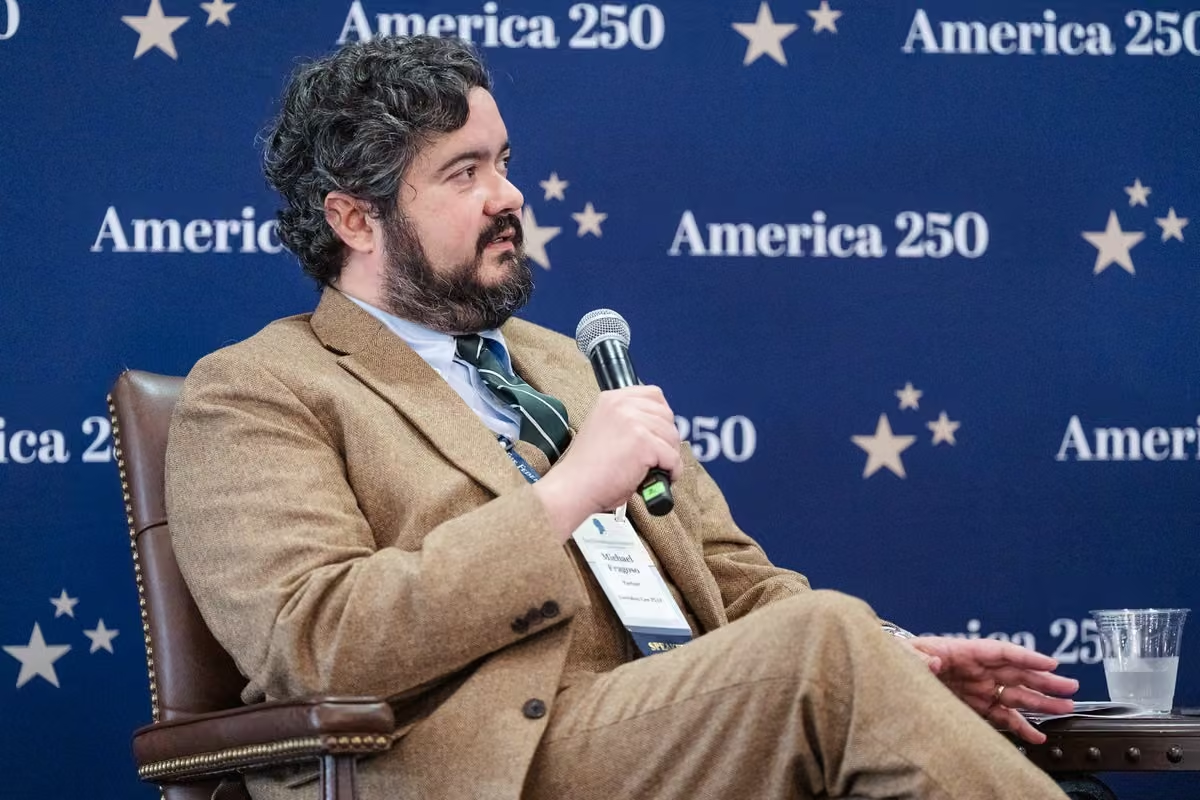
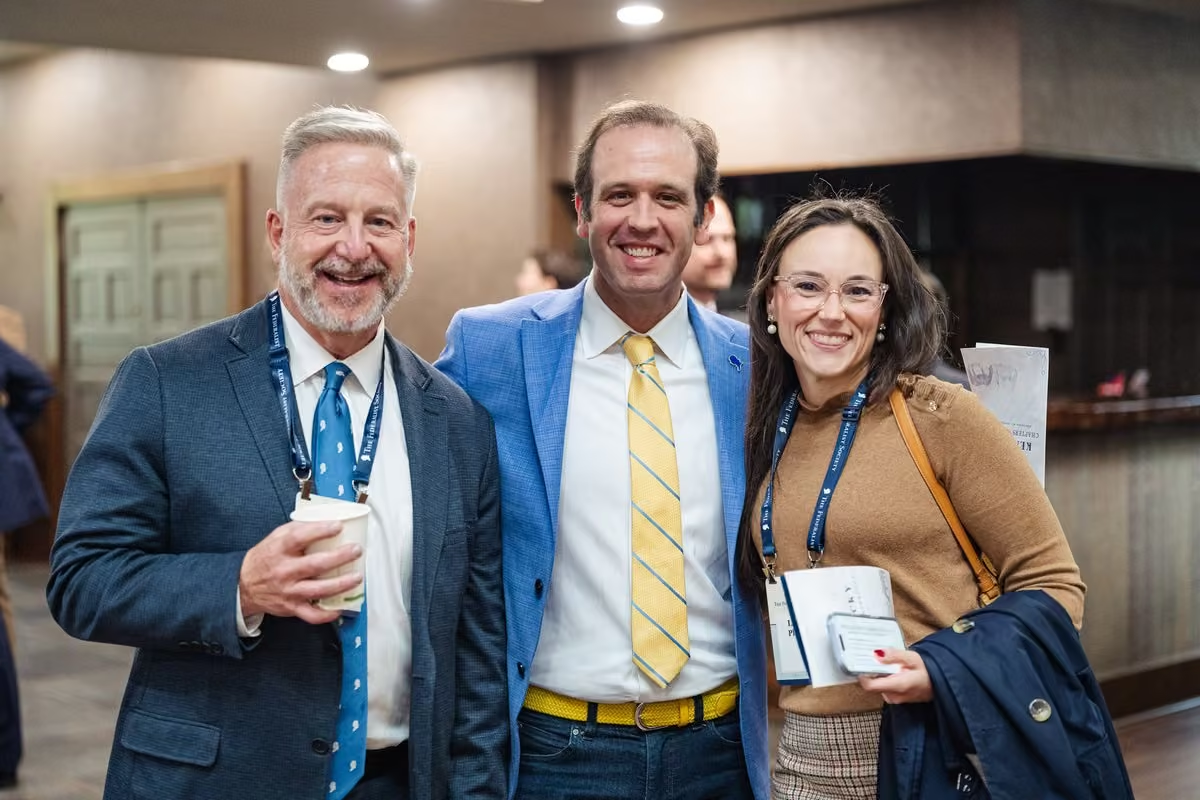
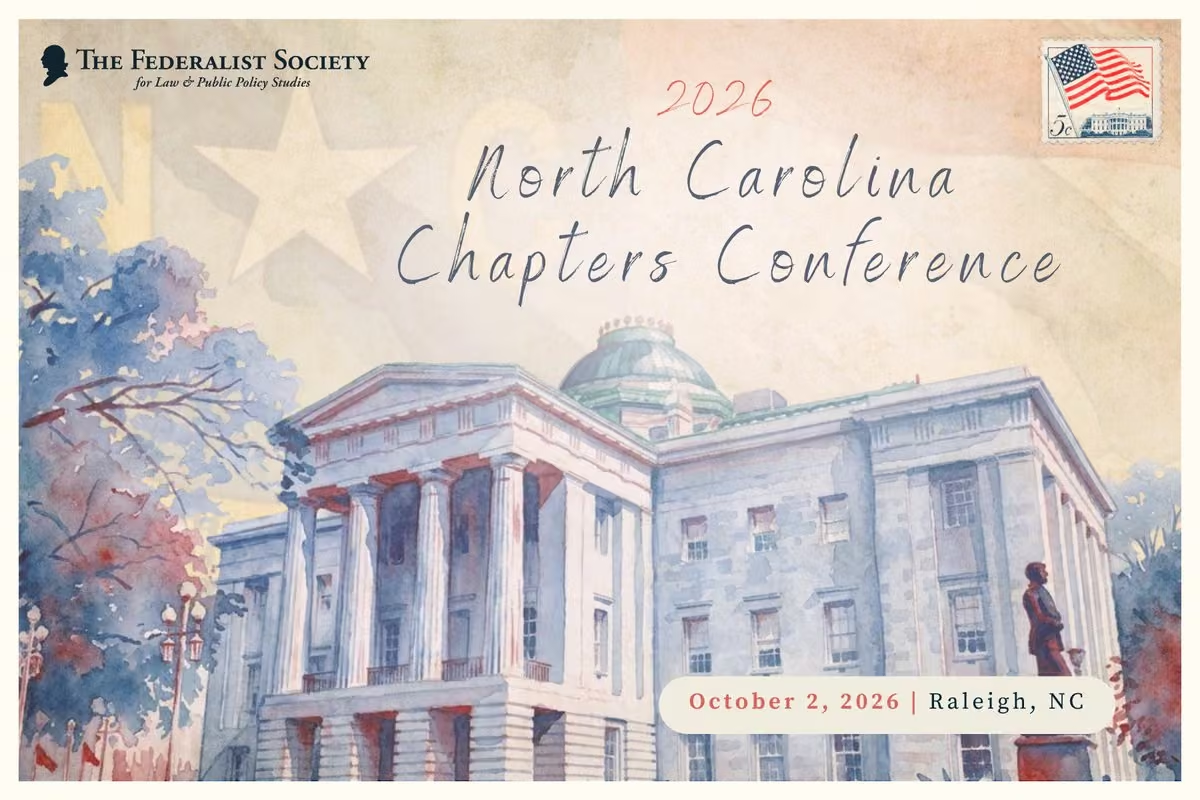
 Derek T. Muller


 The Arena America First Legal

 America First Legal
 Stephanie Hall Barclay


 Gene Hamilton


 Christopher J. Scalia


 Kannon Shanmugam
 Sheldon Gilbert


 Barstool Sports


 Mark Paoletta
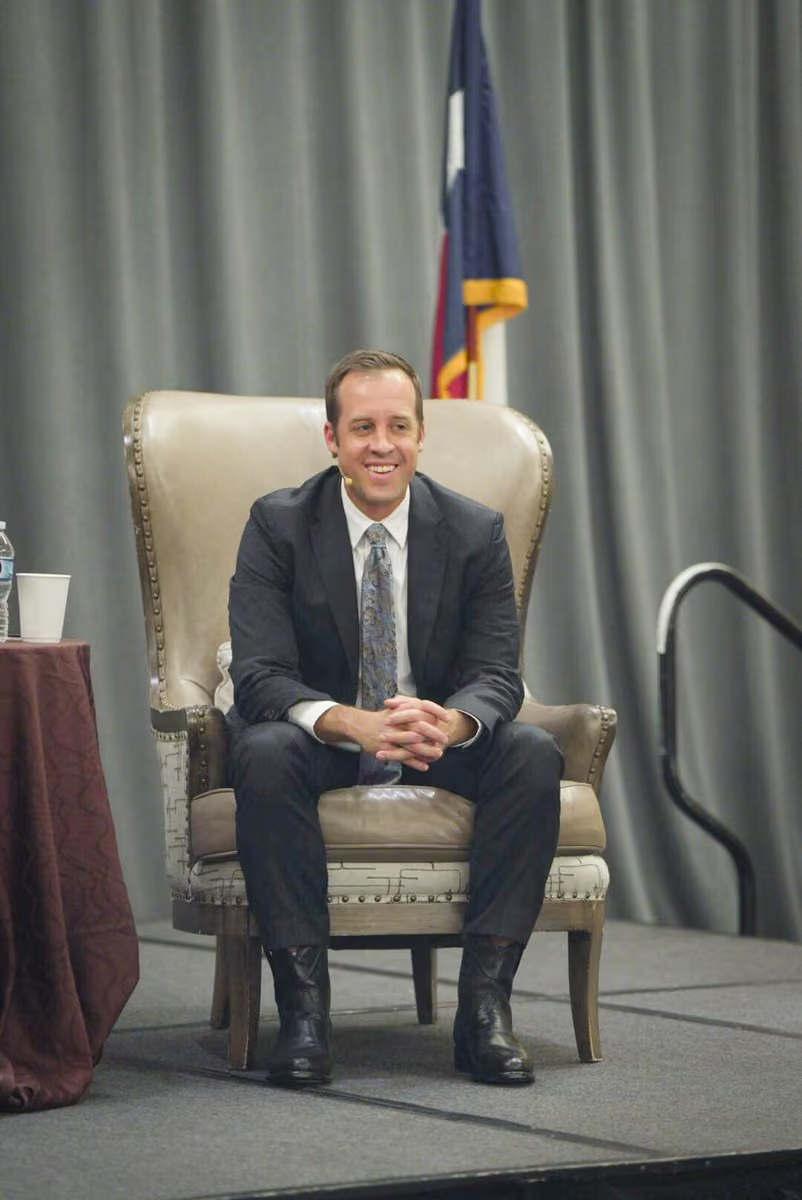

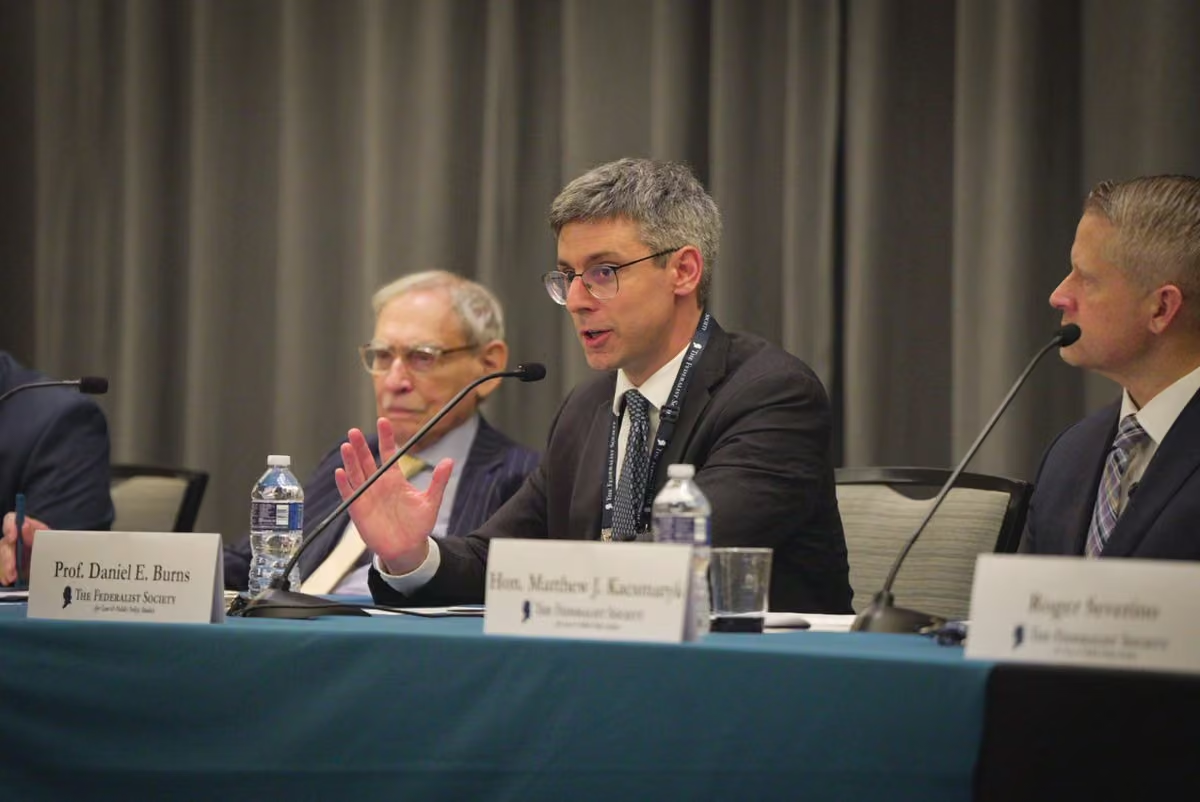


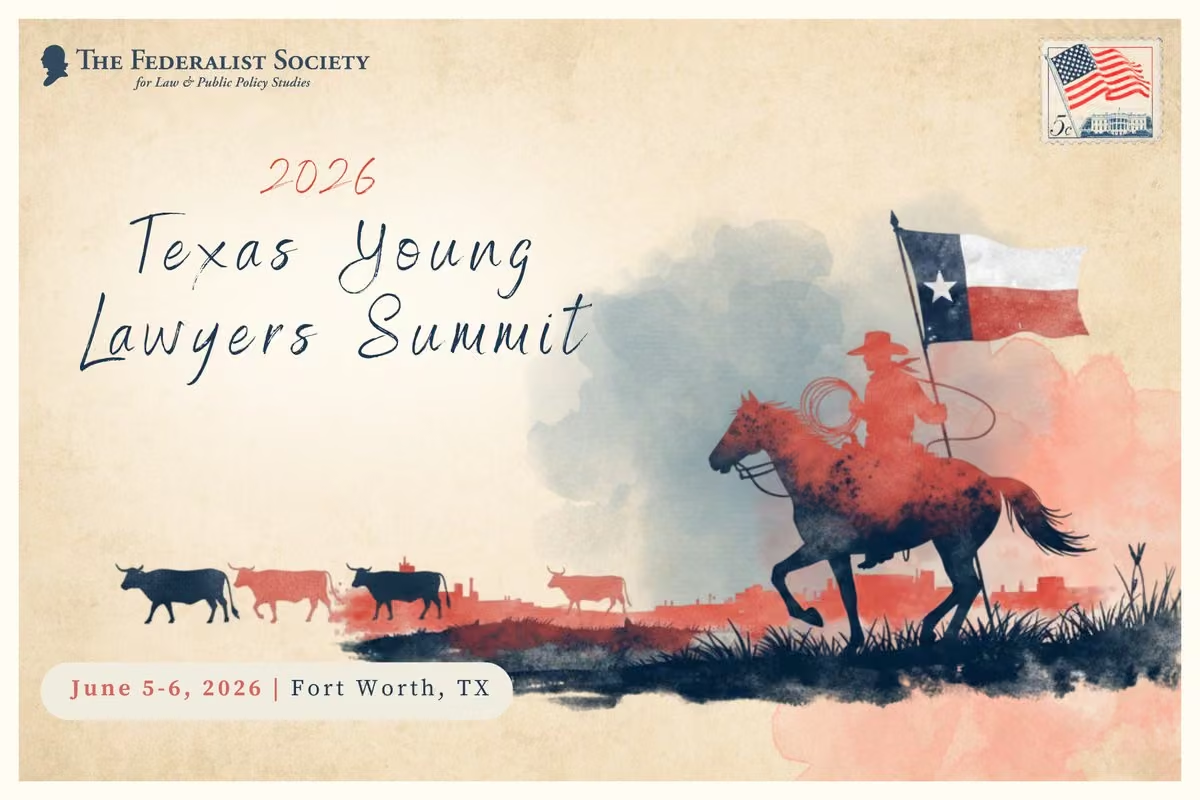


 kurt lash
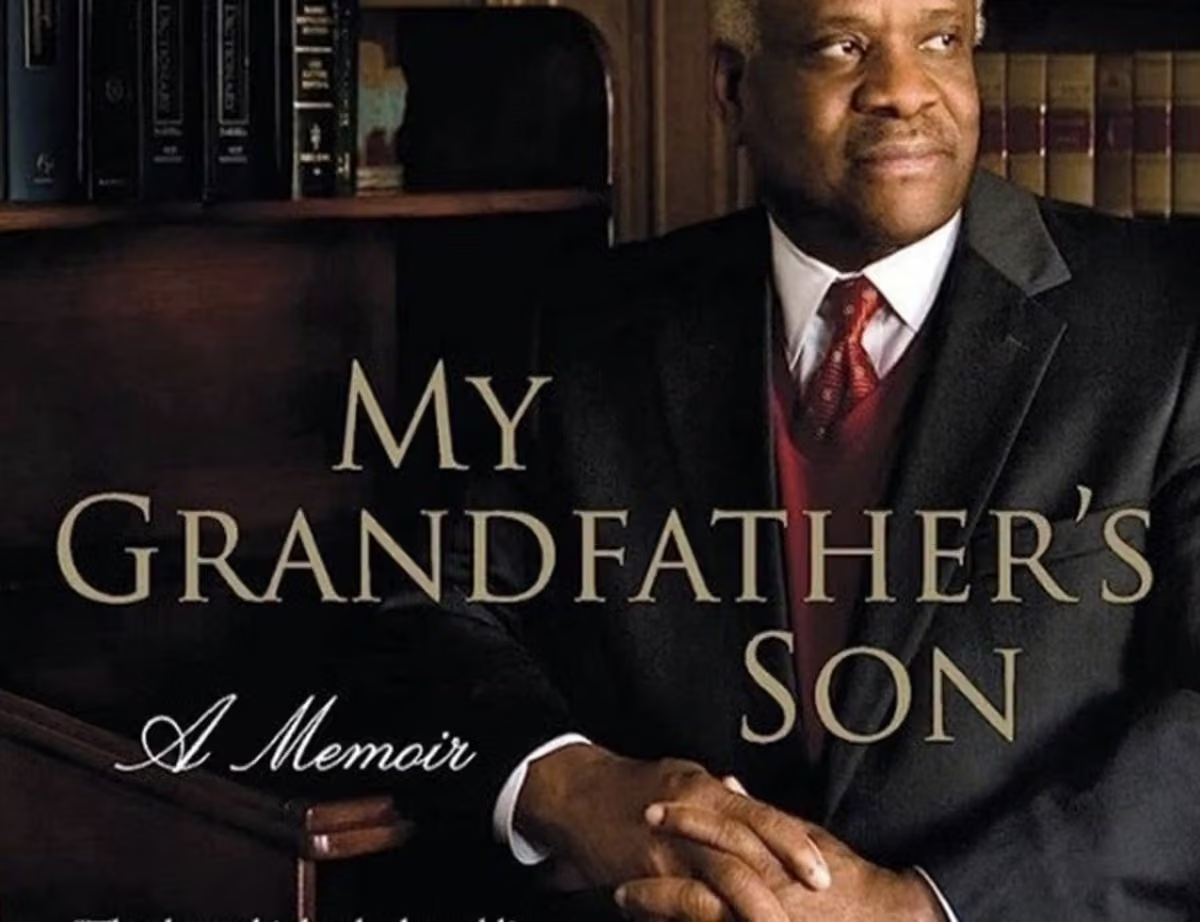
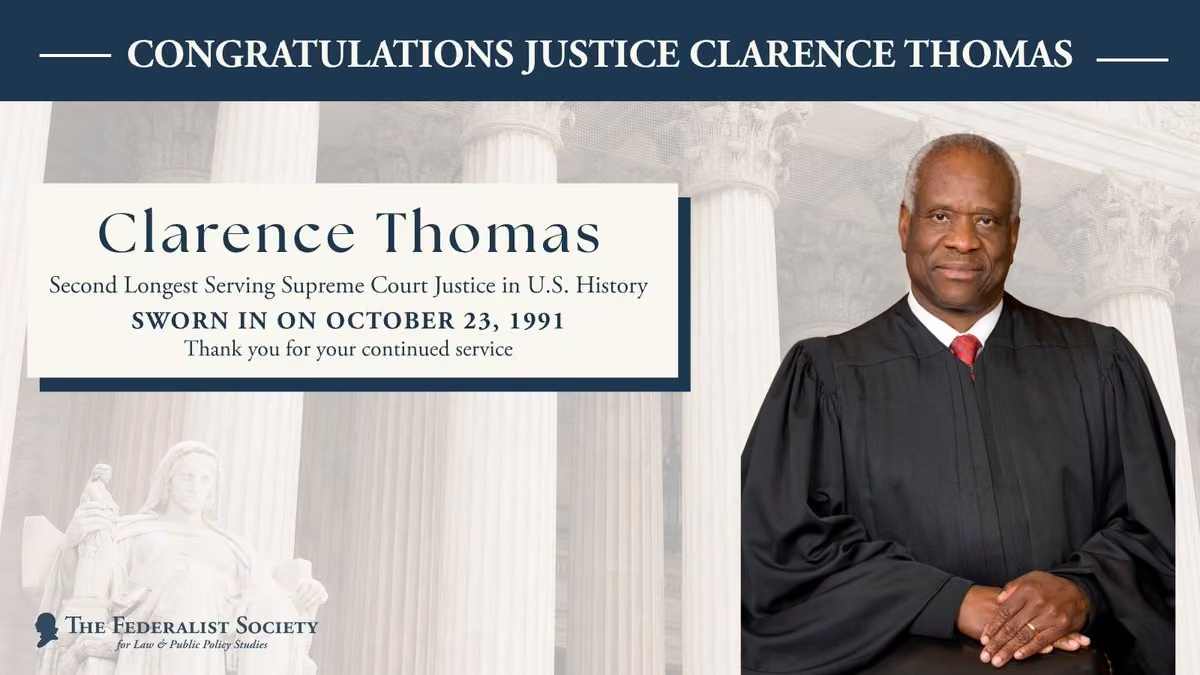


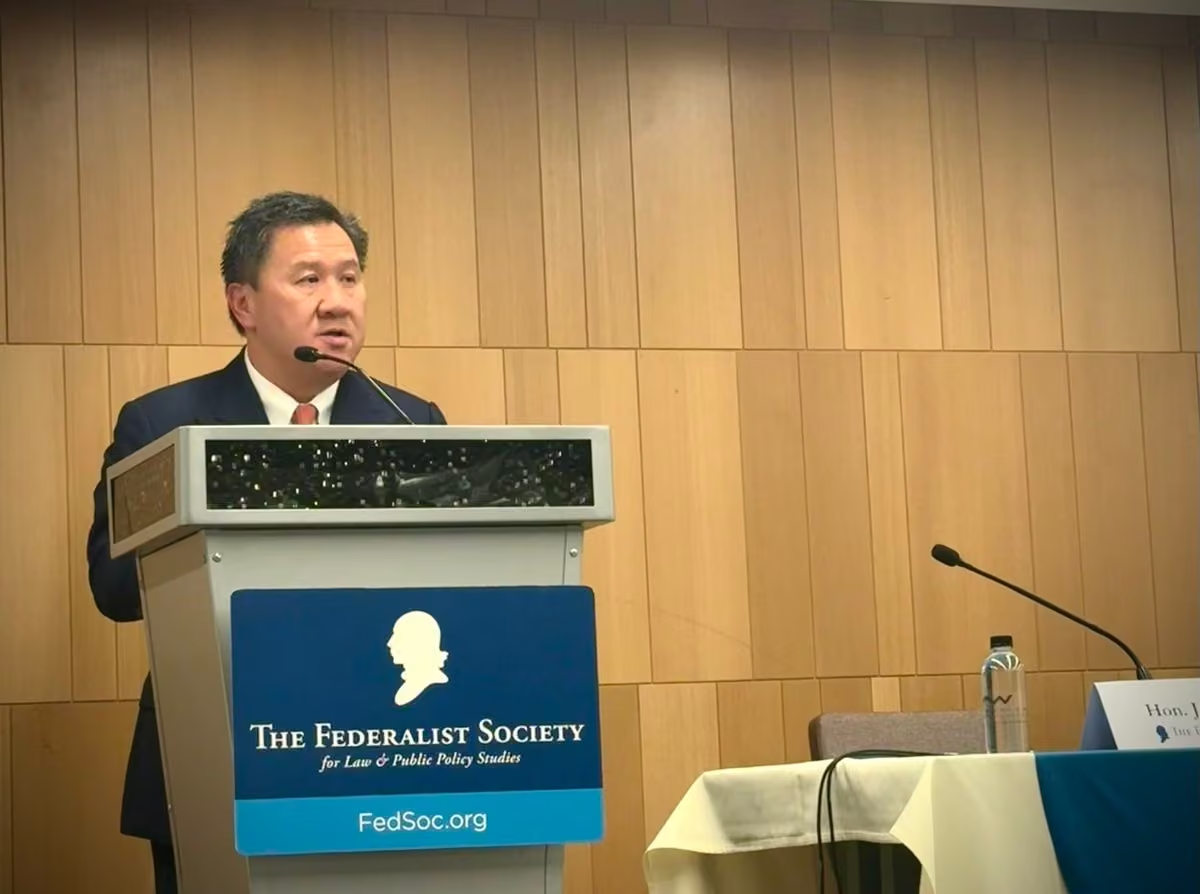
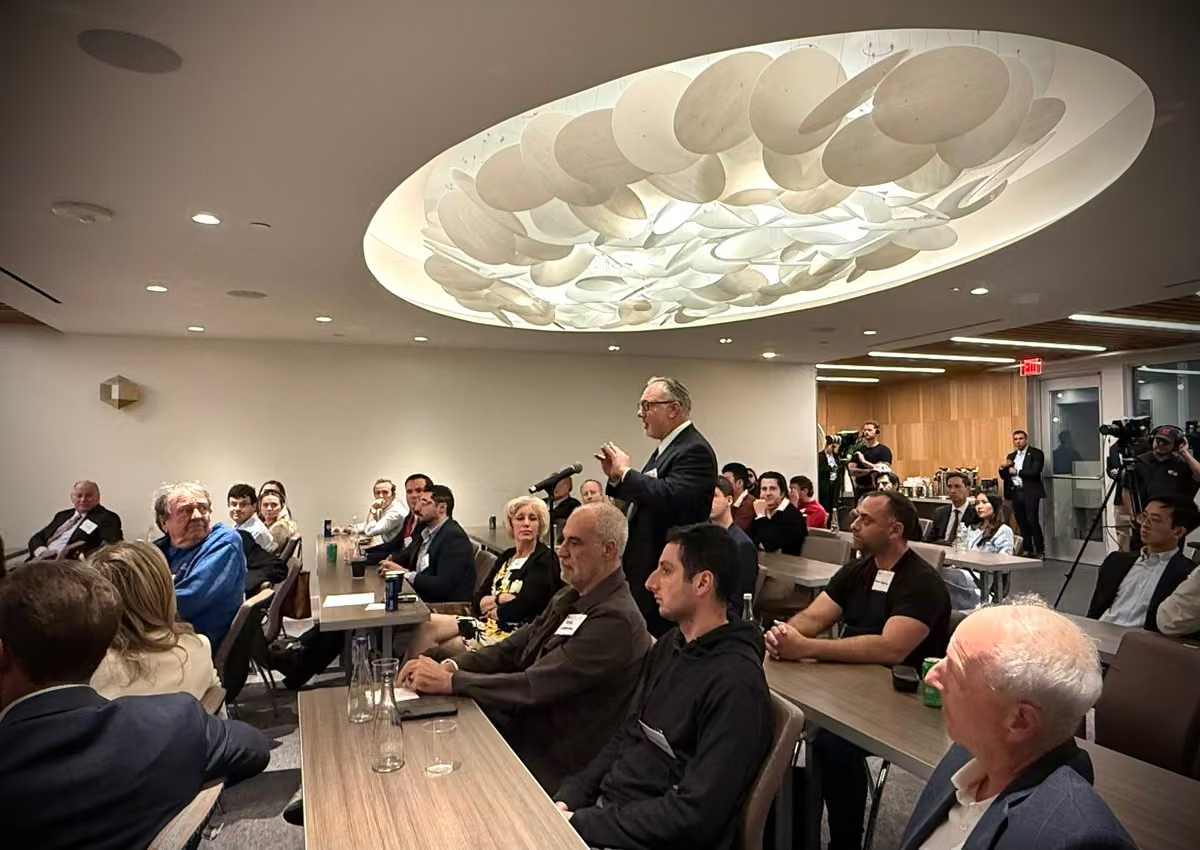


 Jan Crawford


 Sarah Isgur


 Harmeet K. Dhillon


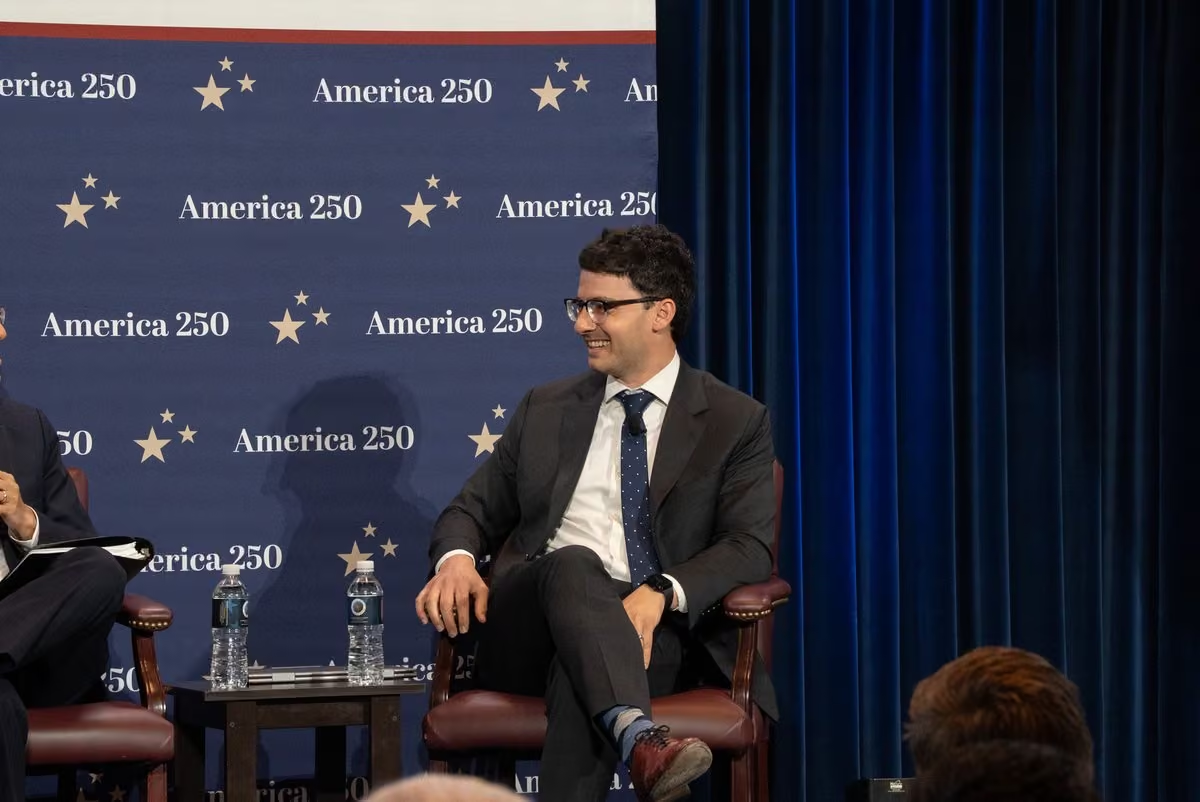


 Ilan Wurman

 Catholic Law


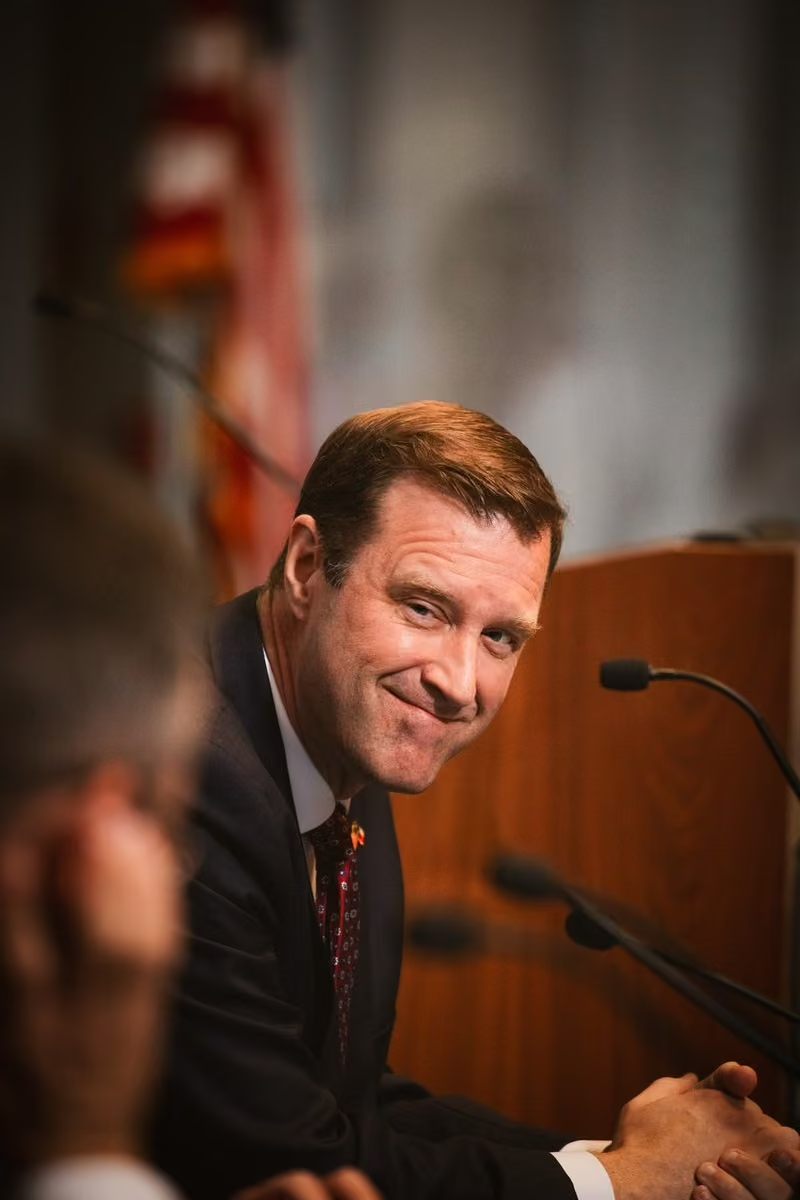


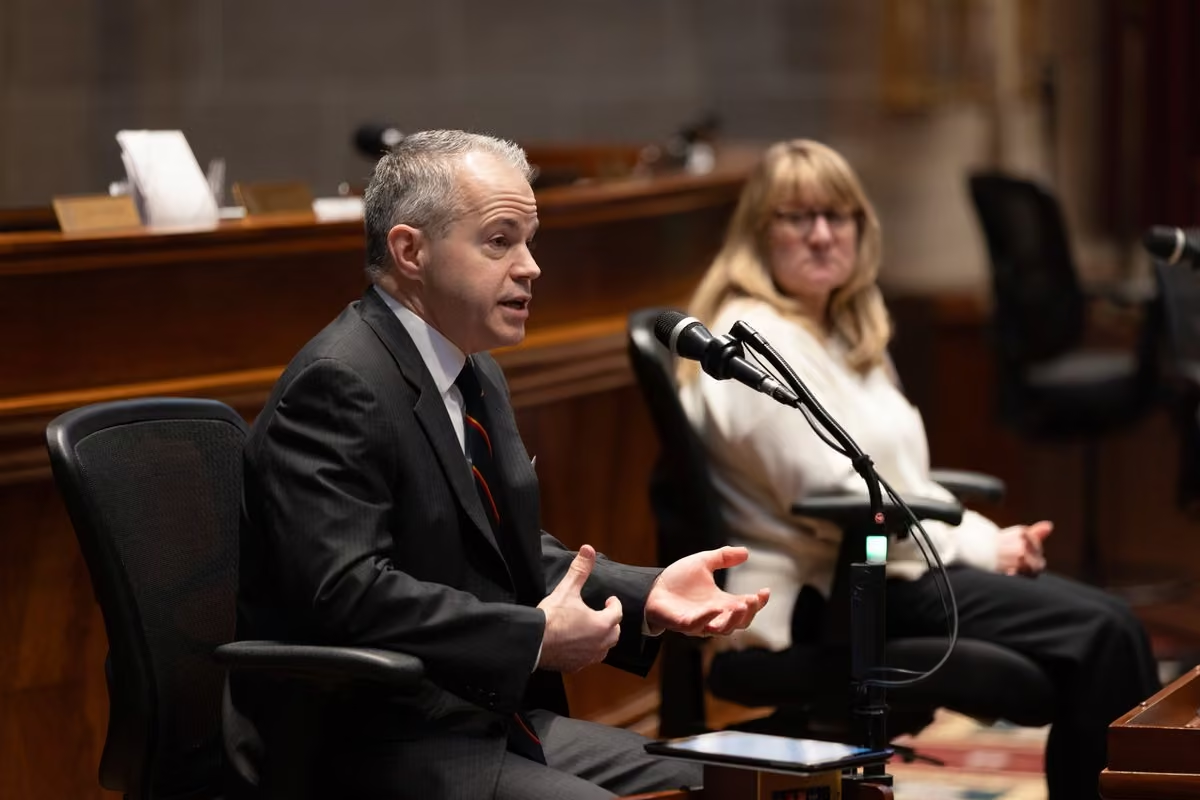
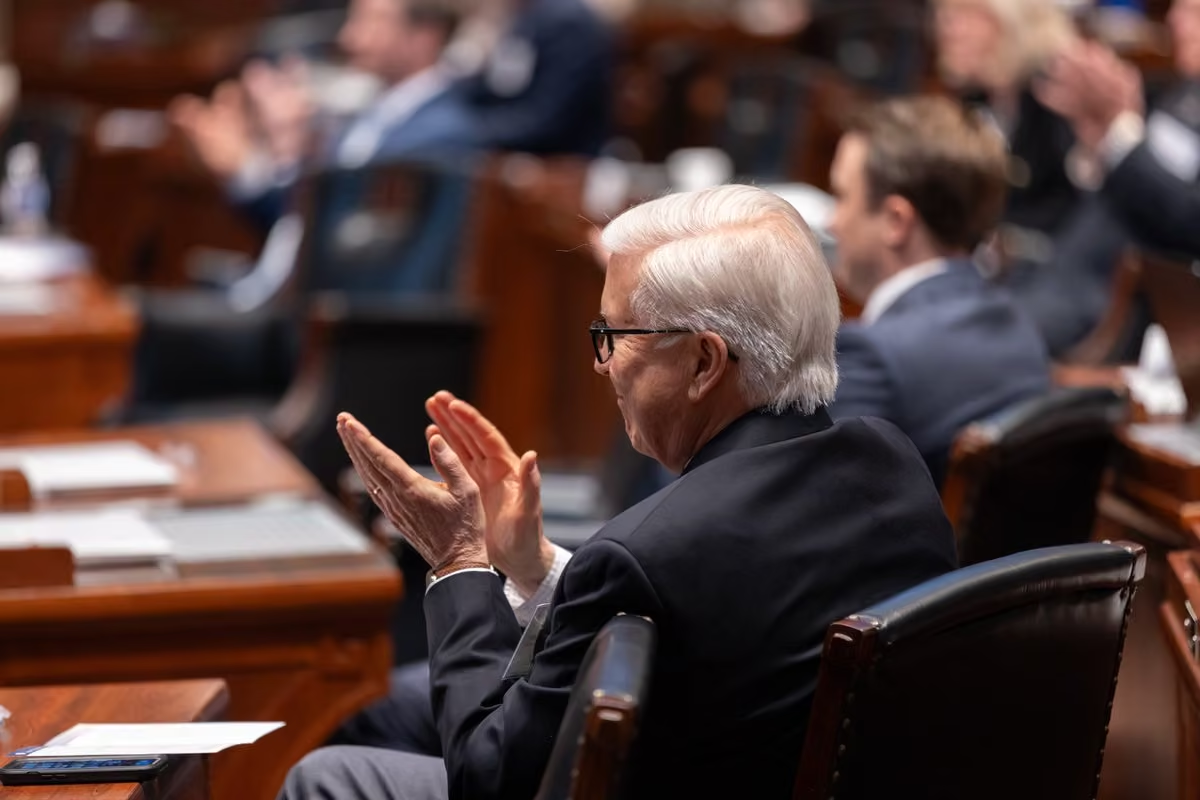
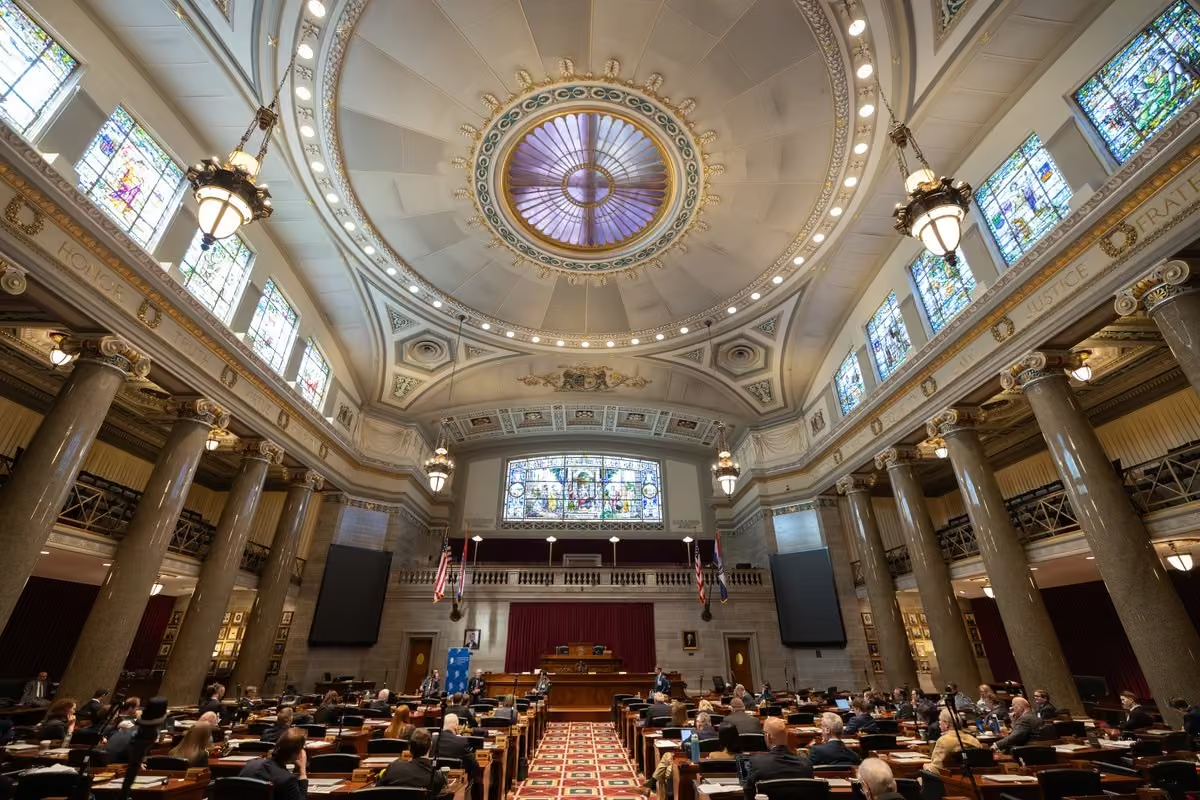
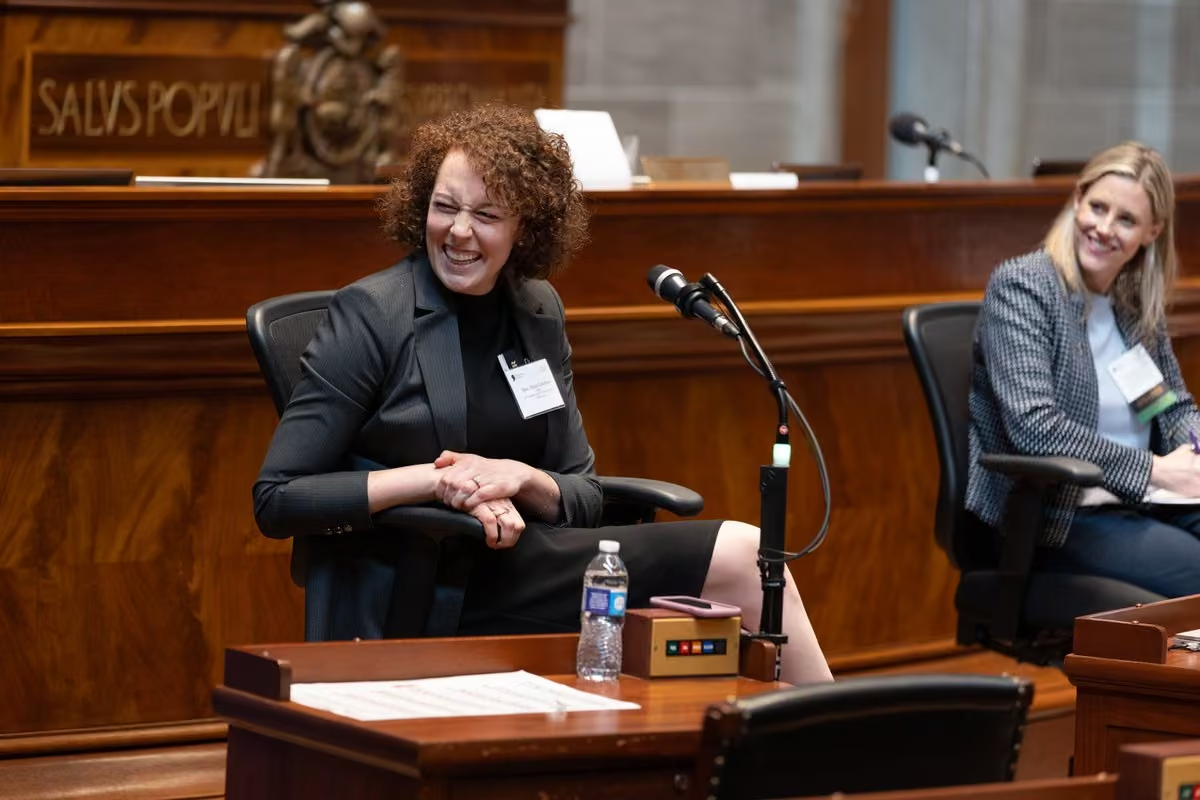




 Harvard Journal of Law & Public Policy 🇺🇸


 Constitution Center


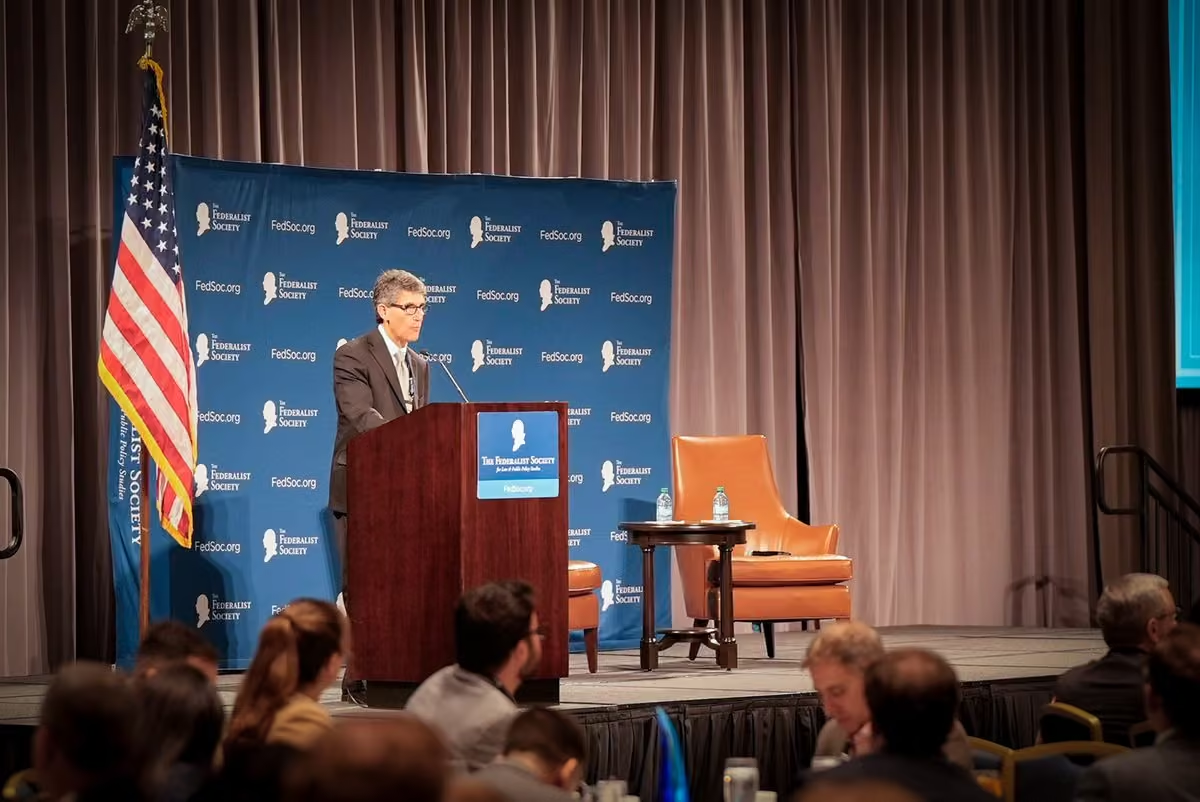

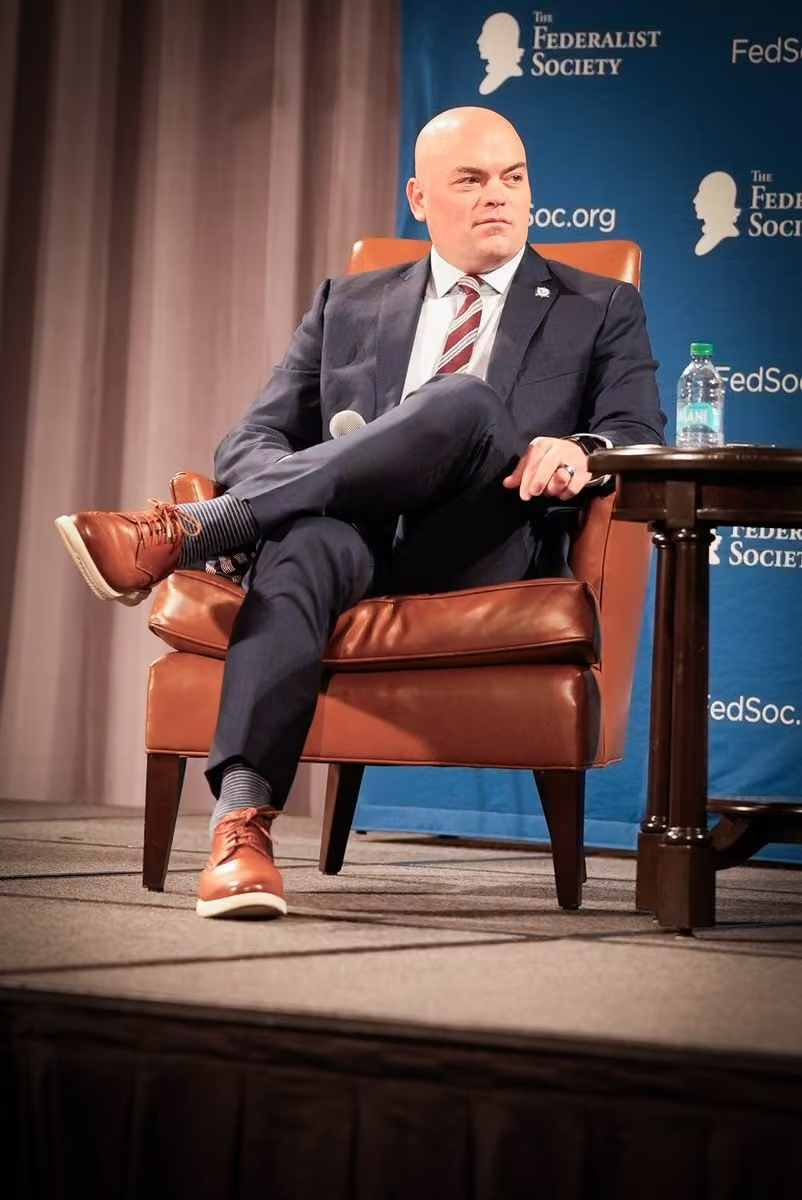
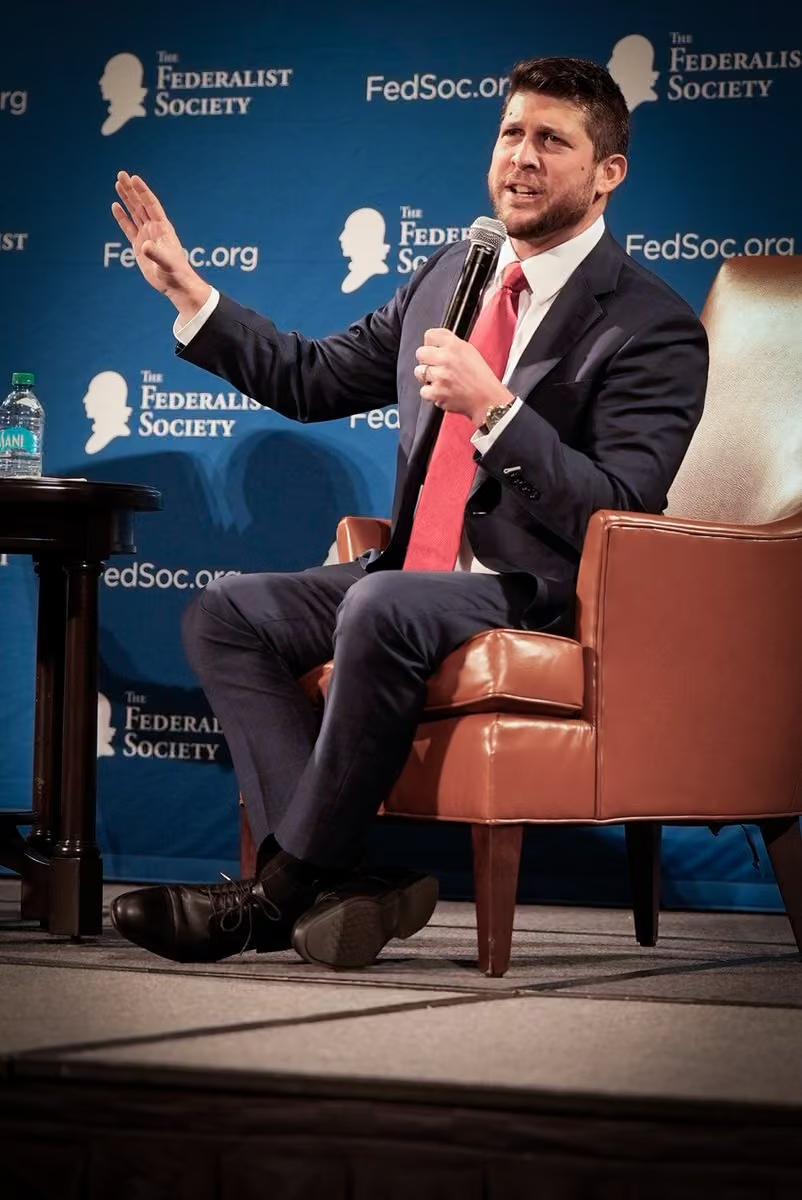


 Ron DeSantis