 GIA
@GIAnews

Experience diamonds like never before. The New GIA App means business: onelink.to/p9cacu

Politicians, athletes, journalists, NGOs, companies... They all use corporation-owned social networks to communicate with us. Citizens shouldn't have to hand over their data to companies to read content published by public entities. Public Feeds changes that by making posts of popular accounts freely available. Read more.

The Gemological Institute of America (GIA) is a nonprofit institute based in Carlsbad, California. It is dedicated to research and education in the field of gemology and the jewelry arts. Founded in 1931, GIA's mission is to protect buyers and sellers of gemstones by setting and maintaining the standards used to evaluate gemstone quality. The institute does so through research, gem identification, diamond grading services, and a variety of educational programs. Through its library and subject experts, GIA acts as a resource of gem and jewelry information for the trade, public, and media. More on Wikipedia
Creator of the 4Cs of #diamond grading and the leading research and education center for #gems and #jewelry. Nonprofit GIA does not sponsor or endorse.
GIA
@GIAnews
Experience diamonds like never before. The New GIA App means business: onelink.to/p9cacu
GIA
@GIAnews
In an ongoing commitment to collaborative efforts and advancement toward sustainability in its operations and activities, GIA has joined the Watch & Jewellery Initiative 2030. Learn more: www.gia.edu/gia-news-press/gia-joins-watch-and-jewellery-…
 GIA
@GIAnews
We are proud to announce the advancement of our long-standing relationship with @AmerGemSociety in the pursuit of our shared consumer protection missions. Learn more: www.gia.edu/gia-news-press/ags-and-gia-advance-their-comm…
 GIA
@GIAnews
GIA is taking the GIA Diamond Dossier fully digital on January 2, 2023. Register for our Knowledge Session to learn how going digital will support your business, and discover the resources GIA has created to make this switch seamless: support.gia.edu/s/digital-diamond-dossier?language=en_US
GIA
@GIAnews
GIA’s laboratory recently received three white South Sea bead cultured pearl necklaces, with the largest size up to about 16 mm. A few of the pearls containing RFID devices were found in these strands. Learn more: www.gia.edu/gems-gemology/summer-2022-lab-notes-rfid-sout…


 GIA
@GIAnews
What would you do if you found a pearl in your clam dinner? Send it to GIA, of course! That’s what this family did: www.wrde.com/news/purple-pearl-gets-a-price-tag/video_043…
GIA
@GIAnews
GIA proudly welcomes members of the @AGSLabs to discuss their career journeys in the gem and jewelry industry and how the American Gem Society has been an integral part of their success. Watch live: www.facebook.com/GIAEducation/videos/509685557647253
GIA
@GIAnews
Whether you’re looking for a rewarding career or seeking to hire a qualified gem and jewelry professional, Career Fair is where opportunity starts. Join our next Career Fair at the GIA Headquarters in Carlsbad, CA on September 30th. Learn more: gia.edu/career-fair
GIA
@GIAnews
GIA COO Pritesh Patel offers his insights in ‘How to be Ready for a Digital-First Future,’ and brings his expertise to the table to dispel some myths about AI and diamond grading. Read more in the @Rapaport magazine special supplement 'Future Proof': rapaport.com
GIA
@GIAnews
London calling! Join us on September 23 at our London campus on Open Day for an opportunity to learn how a GIA education can help build your gem and jewelry career. Drop in between 1:30 and 6pm, pre-registration is recommended. Learn more: gia.edu/open-day
 GIA
@GIAnews
Britain's longest ruling monarch, Queen Elizabeth II, passed away peacefully today. Worn here, The Diamond Diadem represents England, Scotland and Wales. Queen Elizabeth II wore this diadem for her official coronation portrait and on the day of her actual coronation in 1953.

 GIA
@GIAnews
GIA is currently accepting scholarship applications through September 30, 2022! Both U.S. residents and international students may apply. Dive into a world of brilliance with us: gia.edu/scholarships
 GIA
@GIAnews
It's time to connect, inspire, learn and shine! Career Fair, powered by GIA, is the gem and jewelry industry’s largest recruiting event with over hundreds of attendees, dozens of recruiters and career coaches, and a panel of industry leaders. Learn more: gia.edu/career-fair
 GIA
@GIAnews
GIA is expanding its North American business development team to address the complexities and challenges of today’s market: www.gia.edu/gia-news-press/gia-expands-global-business-de…
 GIA
@GIAnews
“I was...eating the clams and towards the end of the dish, I just chomp down on something that felt kind of hard,” Scott Overland told @TODAYshow Food...
An unexpected turn of events: www.msn.com/en-us/news/us/man-discovers-rare-purple-pearl…
GIA
@GIAnews
For a limited time only, receive a free personalized loupe featuring your store name and the GIA Logo Lockup when you place a Retailer Support materials order of $50 or more! This unique loupe is valued at $60, so loupe in your free gift now! Order now: store.gia.edu/collections/point-of-sale-tools
GIA
@GIAnews
GIA will soon be accepting applications for scholarships to on-campus and online programs and courses. Don't wait, learn about what you need for a complete application. Dive into a world of brilliance and color with us! Learn more: gia.edu/scholarship-preparation
GIA
@GIAnews
GIA SVP and COO, Pritesh Patel, spoke with @Rapaport in a wide-ranging discussion - GIA’s move to #alldigital reports, #artificialintelligence, and GIA’s history of #innovation. Listen to the entire podcast: rapaport.com
GIA
@GIAnews
We're live! Watch our newest grads graduate on Facebook Live! Send virtual congratulations and cheer them on as they take center stage! Watch now: www.facebook.com/GIAEducation/videos/360886446240341
GIA
@GIAnews
"Technology platforms connect with GIA through API services to receive authenticated diamond origin data—in turn allowing GIA to fulfill its mission to provide sustainability data to the consumers."
Learn more about the sustainable technology agenda: deloitte.wsj.com/articles/the-sustainable-technology-agen…
GIA
@GIAnews
Tom Moses, GIA Executive Vice President & Chief Laboratory and Research Officer, provided insight to @NYDailyNews about what makes this particular stone “extremely rare.” Read more: www.nydailynews.com/2022/07/27/pink-170-carat-diamond-dis…
GIA
@GIAnews
The GIA® Source Verification Service, announced in April, is now accepting submissions from diamond manufacturers who can provide documented origin information. Learn more: discover.gia.edu/GIA-source-verification
GIA
@GIAnews
A new GIA laboratory in the @DMCCAuthority coming mid 2023.
 Khaleej Times
@khaleejtimes
#dmcc has announced that the Gemological Institute of America (#gia), will establish a new laboratory to serve the global gem trade in DMCC's new Uptown Tower, occupying two floors in a nine-year deal.
@DMCCAuthority
Read: www.khaleejtimes.com/uae/dubai-500-new-jobs-as-gemologica…
 GIA
@GIAnews
The GIA Alumni Collective and the India Chapters invite you to celebrate the launch of the new GIA Alumni Collective! Join us on August 6 in Mumbai to connect with fellow Alumni and industry friends. Register Now: cvent.me/qP3q3V
 GIA
@GIAnews
GIA’s Judy Colbert and Elizabeth Gaines Zoutendyk provide insight to @nytimes about the mystery of macle diamonds. Read more: www.nytimes.com/2022/07/04/style/unraveling-the-mystery-o…
GIA
@GIAnews
GIA is excited to collaborate with @eBay on their Authenticity Guarantee for fine jewelry, bringing a more trusted experience to both buyers and sellers.
Learn More about the Authenticity Guarantee: ebay.com/authenticjewelry
 GIA
@GIAnews
Gain hands-on experience identifying dozens of colored gemstones and fulfill your requirements to earn your GIA Graduate Gemologist or GIA Graduate Colored Stones diploma through Distance Education at the @UA_ANGMM.
Learn more: www.gia.edu/gem-education/course-gem-ident-carlsbad
 GIA
@GIAnews
We are honored to welcome Johanna Levy, GIA’s first VP of Environmental, Social and Governance Programs. Johanna will spearhead GIA’s sustainability policy and practices to advance our consumer-protection mission – moving GIA further on the path to a more sustainable future.
GIA
@GIAnews
The name tourmaline comes from the Sinhalese word “toramalli,” which means mixed gems. Small wonder, since tourmaline boasts a dazzling array of colors. Most gem tourmalines, such as the Madagascan tourmalines seen here, are elbaites: www.gia.edu/tourmaline-description
 GIA
@GIAnews
On the left is heliodor, which ranges in color from greenish yellow to orangy yellow, and on the right is aquamarine, which ranges from blue to green-blue. Both gems are varieties of beryl colored by iron impurities. Courtesy: @rocksforthespirit
GIA
@GIAnews
What most people think of as "white" diamonds aren't actually white - they're colorless! This 30.87 carat diamond was graded Fancy white by GIA. Its color is caused by milky bands of submicroscopic inclusions. It also contains numerous partially graphitized stress fractures.
 GIA
@GIAnews
This colorless gem is a 234 carat cat’s-eye topaz from Mozambique. It's cat's eye effect is caused by the fibrous structure of the material. This effect always occurs perpendicular to a gem's fibrous structure or needle-like inclusions. Discover more: www.gia.edu/gems-gemology/spring-2022-gemnews-tucson-2022…
 GIA
@GIAnews
Two beautiful masterpieces of nature have represented love and passion for centuries – the red rose and the ruby. This rose pavé set with over 5,000 rubies weighing almost 300 carats is simply irresistible.
Photo: FABRICE COFFRINI/AFP via Getty Images
 GIA
@GIAnews
When rubies contain needle-like rutile inclusions, called silk, and are cut as cabochons, they can sometimes display six-rayed stars. The most desirable star rubies are transparent to translucent with rich, saturated red to slightly purplish red color and a sharp, centered star.


 GIA
@GIAnews
Peridot is gem-quality olivine that varies from yellowish green to greenish yellow; a pure, saturated green is the most desirable hue. Image 1 shows peridot from Zabargad, Egypt. Image 2 shows tumbled peridot rough from San Carlos, Arizona, U.S. Image 3 shows peridot from China.


 GIA
@GIAnews
Happy 4th of July! Here are red beryl from Utah, natural pearls from Tennessee and benitoite from California. Red beryl is one of the rarest gems. Tennessee River pearls are freshwater pearls produced by mussels. Benitoite is a rare blue gem first discovered in California.


 GIA
@GIAnews
This 271.76 carat topaz with an eight-rayed star is truly a star of the topaz world. It was mined in the northern and Central Highlands provinces of Vietnam where ruby, sapphire, spinel, tourmaline, garnet, and aquamarine are also found. Learn more: www.gia.edu/gems-gemology/spring-2022-gemnews-star-topaz-…
GIA
@GIAnews
Vivid blue to green copper-bearing tourmaline, known as Paraíba, can be found in Brazil, Nigeria, and Mozambique. Because geographic origin affects value, it is important to determine for Paraíba tourmaline. Learn more: www.gia.edu/gems-gemology/winter-2019-paraiba-tourmaline-…
 GIA
@GIAnews
Ruby, July's birthstone, is the gem of warriors and lovers alike. It has been treasured throughout history for its fiery red hue, which many associate with passion, fire and blood. Learn more: www.gia.edu/birthstones/july-birthstones
 GIA
@GIAnews
Yellow and orange diamonds owe their color to atomic-level lattice defects associated with nitrogen impurities in the diamond structure. However, orange diamonds are some of the rarest in the world, while yellow diamonds are most common. Find out why: www.gia.edu/gems-gemology/summer-2020-naturally-colored-y…
 GIA
@GIAnews
This life-sized skull, named Gaia, was carved from two pieces of Gibeon meteorite found in Namibia. This meteorite fell to Earth in prehistoric times after disintegrating into pieces while passing through Earth's atmosphere. Learn more: www.gia.edu/gems-gemology/spring-2022-gemnews-skull-carve…
 GIA
@GIAnews
At GIA, we are trusted to grade the most incredible diamonds in the world. Including yours.
When you want nothing but the best, get a diamond graded with passion and precision by the experts: gia.edu/diamondexperts
 GIA
@GIAnews
This 5.02 carat center diamond was graded Fancy Intense green color, SI1 clarity by GIA. It is surrounded by pink and colorless diamonds. Green diamonds are most often colored by natural radiation within the earth. Courtesy: @ChristiesInc

 GIA
@GIAnews
We hope this "rainbow" scapolite brightens your day! "Rainbow" scapolite contains iridescent magnetite inclusions that appear as needle-like fibers. Their iridescent sheen is caused by light reflecting off of thin layers of magnetite crystals. Learn more: www.gia.edu/gems-gemology/spring-2015-gemnews-iridescent-…
GIA
@GIAnews
Seen here is the Aurora Butterfly of Peace, which consists of 240 natural, fancy-color diamonds weighing a total of 166.94 carats. Nearly the full spectrum of color and cutting styles of natural colored diamonds is represented.


 GIA
@GIAnews
Freshwater cultured pearls occur in the widest range of natural colors of any pearl type. From white to silver to pink, yellow, apricot, lavender and more, the palette of pastels in this freshwater cultured pearl necklace is perfect for spring. Courtesy: Yoko London
 GIA
@GIAnews
This scintillating ring features a 3.06 carat diamond graded Fancy Vivid blue color, Internally Flawless clarity by GIA. We grade some of the most precious diamonds in the world, including yours: discover.gia.edu/diamonds-graded-by-GIA. Courtesy: Christie’s

 GIA
@GIAnews
Rhodonite is a soft gemstone famed for its bright cherry red color. It can range from light pink or orange-pink to brownish or purplish red, however. Learn about rhodonite from the Tanatz Alp in Switzerland: www.gia.edu/gems-gemology/spring-2020-rhodonite-pyroxmang…


 GIA
@GIAnews
This D color, Flawless 102.34 ct diamond, about the size of a half dollar in diameter, sold for a pretty penny at auction in 2018. Mined in Botswana, it was said to be the largest round brilliant cut diamond of this quality sold at auction. Photo: TOLGA AKMEN/AFP via Getty Images
 GIA
@GIAnews
There's no better way of showing dad he's a star than with this 7.50 carat starburst trapiche sapphire ring! These AGTA award winners are some of the trending, dapper, modern pieces at the forefront of men's jewelry. #happyfathersday


 GIA
@GIAnews
The pattern of an opal's play-of-color can affect the opal's value. Harlequin, seen in the rings here, is one of the most desirable patterns. It shows large, distinct, angular patches of color closely set together. Learn more: www.gia.edu/opal-quality-factor


 GIA
@GIAnews
Enstatite is a pyroxene mineral with a Mohs hardness of 5-6. While common as a mineral, it is unusual to see in gem quality and it is considered a collector's gemstone. It can sometimes exhibit four-rayed asterism due to fine needle-like rutile inclusions: www.gia.edu/gems-gemology/spring-2022-gemnews-inclusions-…
 GIA
@GIAnews
We're live! GIA Education welcomes Dr. Jim Shigley, Distinguished Research Fellow, as he guides us through Gemology as an Evolving Technical Science in the next 2022 GIA Guest Speaker Series.
Watch live: www.facebook.com/events/713542116429757/
GIA
@GIAnews
Treasures from the earth paired with treasures from the sea. The multi-colored nature of this 7.27 carat Nigerian tourmaline is beautifully brought out by the iridescent akoya cultured pearls surrounding it. Image 2 shows Nigerian tourmaline paired with Tahitian cultured pearls.

 GIA
@GIAnews
The 2.08 carat center diamond in this ring was graded Fancy Vivid bluish green color, VS1 clarity by GIA. Among fancy-color diamonds, natural-color green stones with saturated hues are some of the rarest and most sought after. Learn more: www.gia.edu/gems-gemology/spring-2018-natural-color-green…
 GIA
@GIAnews
This unique necklace depicts a cluster of fire opal grapes, its leaves set with fancy sapphires. If you look closely, you'll also see two beetles set with tsavorite garnets. Is this jewelry your cup of tea (glass of wine)?
Courtesy: @LydiaCourteille
 GIA
@GIAnews
A GIA pearl team visited Broome, Australia, in 2013 and collected 774 natural South Sea pearls to examine. Learn what they observed from real-time microradiography and X-ray computed microtomography analyses: www.gia.edu/gems-gemology/spring-2021-internal-structures…
 GIA
@GIAnews
Black opal has dark bodycolor caused by carbon or manganese oxides. This specimen shows what is sometimes described as a pinfire pattern, where the opal's play-of-color manifests as dots or small, closely set patches of color. Learn more: www.gia.edu/opal-quality-factor
 GIA
@GIAnews
Called "emerald by day, ruby by night," alexandrite changes from a cool greenish color under fluorescent light to a warm reddish color under incandescent light. Out of all the color-change stones it is the most valuable. Learn more: gia.edu/alexandrite
 GIA
@GIAnews
Differentiating between natural and cultured pearls can be a challenge. This antique Edwardian necklace contains 31 natural pearls. Read about how X-ray computed microtomography is used to distinguish between these two types of pearls. Learn more: www.gia.edu/gems-gemology/summer-2010-pearls-microtomogra…

 GIA
@GIAnews
Calling all #jcklasvegas attendees! Join us for four JCK Talks sessions with GIA researchers and experts. Learn more: lasvegas.jckonline.com/en-us/events---education.html
 GIA
@GIAnews
Fold up your paper and unfold the future. We have protected consumers with our research, standards and reports for almost a century. Now, we want to protect the very earth that gives us the treasures we evaluate - by taking all GIA reports digital by 2025: gia.edu/unfold-the-future
GIA
@GIAnews
The 205.07 carat Red Cross diamond, graded Fancy Intense yellow color, VS2 clarity by GIA, has just sold at auction for US$14 million, with part of the proceeds benefitting the International Committee of the Red Cross. Photos 1 and 3: FABRICE COFFRINI/AFP via Getty Images


 GIA
@GIAnews
The 5.03 carat “Aurora Green” diamond was graded Fancy Vivid green color, VS2 clarity by GIA. A diamond like this one with saturated green color is a rare gem indeed. Discover more: discover.gia.edu/diamonds-graded-by-GIA Courtesy: Christie’s

 GIA
@GIAnews
This gem carpet contains 26,649 gems, including emerald, ruby, sapphire and diamond, set in 100,000 18K gold prongs. It took Parisian jeweler Cristofol ASF five years to assemble the gems and over 16,000 hours to craft the carpet itself. See more: www.gia.edu/gems-gemology/spring-2022-gemnews-tucson-2022…
GIA
@GIAnews
Career Fair, powered by GIA, is the gem and jewelry industry’s largest recruiting event. Whether you’re looking for a rewarding career or seeking to hire a qualified gem and jewelry professional, Career Fair is where opportunity happens. Learn more: careerfair.gia.edu
 GIA
@GIAnews
There's nothing quite like seeing two of June's birthstones together! This ethereal cuff features Tahitian cultured pearls, moonstones, lavender spinels and diamonds. All three of June's birthstones – pearl, moonstone and alexandrite – can be phenomenal. Courtesy: Assael
 GIA
@GIAnews
This month, we celebrate diversity of all kinds, not just in gemstones and nature but also in people and our rich community. We believe there is unity and light in such diversity and value the LGBTQIA+ community, celebrating each individual's role in this colorful society.
GIA
@GIAnews
The 203.04 carat De Beers Millennium Star, graded D-Flawless by GIA, is one of the largest flawless pear-shaped diamonds in the world. Seen here, it is suspended from a platinum necklace set with 2,000 round brilliant cut diamonds worn by model Iman. Photo: J. Vespa/WireImage
 GIA
@GIAnews
Grossular garnet's most important gem varieties are tsavorite (seen here) and hessonite, which is orange to cinnamon colored. Tsavorite’s vibrant green can rival emerald in color, although it tends to occur in small sizes. This tsavorite crystal is from Merelani, Tanzania.
 GIA
@GIAnews
Natural green diamonds are colored by exposure to radiation in the earth. This radiation does not always penetrate evenly, as seen in this 2.02 carat green diamond crystal. This crystal must be cut strategically to maximize its size and color. Learn more: 4cs.gia.edu/en-us/blog/green-diamond/
 GIA
@GIAnews
This opal, named the Molly Stone, weighs a whopping 1,040 carat (ct)! Before it was cut, the rough weighed 3,019 ct and contained layers of both precious and common opal. It took careful cutting to produce this large and colorful gemstone. Learn more: www.gia.edu/gems-gemology/summer-2016-challenges-cutting-…


 GIA
@GIAnews
In full bloom. The 8.82 carat Fuchsia Rose diamond was named after two popular flowers, a reference to its enchanting color, which received a color grade of Fancy Intense purple-pink from GIA. We grade the world's most treasured diamonds, including yours: gia.edu/diamondexperts
GIA
@GIAnews
A client submitted a crystal to GIA for a Colored Diamond Identification and Origin Report. This crystal was covered with trigons, which are often seen on diamonds. Its conchoidal fracture indicated it was not diamond, however. Discover what gem it was: www.gia.edu/gia-news-research-spinel-submitted-diamond


 GIA
@GIAnews
This opal found in Indonesia contains an insect estimated to be 4-7 million years old. Insects are frequently seen in amber, but seeing one preserved in opal is virtually unheard of. Find out what GIA scientists discovered about this opal: www.gia.edu/gems-gemology/spring-2019-microworld-fossil-i…

 GIA
@GIAnews
A team of GIA gemologists went to Tasmania to gather gem samples for GIA’s reference collection. Using traditional hand tools, they worked in a stream near Weldborough and collected more than 200 samples of Tasmanian sapphire. Learn more: www.gia.edu/gia-news-research/searching-sapphire-tasmania…


 GIA
@GIAnews
The mother of all emeralds. The Fura emerald crystal is among the largest in the world. Weighing over 11,000 carats (almost five pounds), it was mined in Muzo, Colombia, a locale legendary for high-quality emeralds.
Courtesy: GUILLERMO LEGARIA/AFP via Getty Images
 GIA
@GIAnews
The 14.54 carat blue diamond was graded Fancy Vivid blue color, Internally Flawless clarity, while the 16.00 carat pink diamond was graded Fancy Intense pink color, VVS2 clarity. We grade some of the most treasured diamonds in the world, including yours: gia.edu/diamondexperts
 GIA
@GIAnews
This antique diamond, emerald and enamel necklace is believed to have once belonged to the nizams who ruled the princely state of Hyderabad from 1724 until India annexed it in 1948. Its eight largest diamonds each weigh roughly 10-15 carats. Learn more: www.gia.edu/jewels-of-india
 GIA
@GIAnews
The 15.10 carat De Beers Cullinan Blue diamond recently sold for US$57.5 million at auction! Submitted for a GIA monograph, it was recorded as Vivid blue color, Internally Flawless clarity, and type IIb. Learn about this diamond's unique characteristics: www.gia.edu/gia-news-research/de-beers-cullinan-blue-diamond
GIA
@GIAnews
Colombia’s Coscuez mine is known for producing some of the world's most beautiful emeralds, including the crystals seen here. It is estimated that roughly 60 million carats of emeralds are still unrecovered. Learn more about emerald operations: www.gia.edu/gems-gemology/spring-2019-gemnews-colombian-e…
 GIA
@GIAnews
Jewelry design often starts with a sketch that is then worked out in detail in CAD. A model is then 3D-printed and cast into metal. The metal is polished and the gems set. Interested in learning Jewelry Design or CAD? Learn more: www.gia.edu/gem-education/education-catalog Courtesy: Maggi Simpkins


 GIA
@GIAnews
Did you know that diamonds come in an array of rainbow colors? Each of the fancy-color diamonds in this extraordinary ring was graded by GIA. We grade some of the most precious diamonds in the world, including yours: gia.edu/diamondexperts
Courtesy: Sotheby's
 GIA
@GIAnews
Sold! "The Rock," a South African 228.31 carat diamond graded G, VS1 by GIA, is the largest colorless diamond to ever appear at auction and the largest existing D-to-Z color pear-shaped diamond ever graded by GIA.

 GIA
@GIAnews
May's birthstone for ocean lovers. Last year, the GIA Hong Kong laboratory received 11 fossilized shells all composed primarily of emerald. Upon further examination, GIA scientists found the emerald to be Colombian in origin. Learn more: www.gia.edu/gems-gemology/fall-2021-fossilized-shell-emerald


 GIA
@GIAnews
When buying a heart-shaped diamond, make sure the diamond is symmetrical and has a defined cleft. A defined cleft ensures that your heart looks distinct from a pear shape. Learn how to buy a quality diamond: 4cs.gia.edu/en-us/blog/how-to-buy-a-quality-diamond/
 GIA
@GIAnews
Every mom is unique and precious, just like a diamond. Diamonds are hardy gems that have endured heat and pressure in Earth's mantle to form. During this process they often acquire their color, from colorless to yellow, orange, pink, red, violet, blue and green! #happymothersday
 GIA
@GIAnews
Australia is one of the world's largest producers of sapphire in terms of volume. Most of its gem material comes from alluvial deposits in Anakie (central Queensland) and New England (northern New South Wales).

 GIA
@GIAnews
Discovered in Myanmar in the early 2000s, they were dubbed “jedi spinel” because they were untainted by the dark side (or tone) that dulls the color of many spinel. #maythe4thbewithyou Learn more about "Jedi spinel": www.gia.edu/gems-gemology/spring-2014-pardieu-jedi-spinel…

 GIA
@GIAnews
The Fuchsia Rose – an 8.82 carat Fancy Intense purple pink diamond graded by GIA – just sold for US$6.78 million! In addition to a GIA Colored Diamond Report, it was submitted for Diamond Type Analysis and determined to be type IIa.
Courtesy: Christie's


 GIA
@GIAnews
Emerald, May's birthstone, is the green to bluish green variety of beryl colored by chromium and vanadium. Since the 1520s, South America has been the world's most legendary supplier of fine emeralds. Learn more: gia.edu/emerald

 GIA
@GIAnews
Fire opal has yellow, orange or red body color. It doesn't always display play-of-color, but when it does, the gem is doubly fiery! These rings with turtle, scorpion and tarantula motifs are set with fire opals. Which is your favorite? Courtesy: Lydia Courteille


 GIA
@GIAnews
Seen here are over 200 carats of garnets, including hessonite, malaya, grossular, almandine, spessartine and tsavorite from the Dr. Edward J. Gübelin Gem Collection. Learn more: www.gia.edu/about-gia-gem-project-gubelin-collection.
Photo: Emily Lane/GIA, Dr. Edward Gübelin Collection.
 GIA
@GIAnews
The 6.16 carat Farnese Blue - a historic diamond that has witnessed more than 300 years of royal history - was graded Fancy Dark gray-blue by GIA. At GIA, we grade the most precious diamonds in the world, including yours. Learn more: gia.edu/diamondexperts Courtesy: Sotheby’s


 GIA
@GIAnews
Check out the trigons on these natural diamond crystals! Trigons are triangular etch marks that can form when a natural diamond is partially dissolved when it is in the mantle or during transport to Earth’s surface in kimberlite magma. Learn more: www.gia.edu/gems-gemology/spring-2020-diamond-dissolution


 GIA
@GIAnews
The Sleeping Lion, weighing in at 4.2 ounces, is said to be the world’s largest freshwater natural pearl. It was reportedly found around 1765 in Chinese waters. It sold for US$374,000 at auction in 2018! Courtesy: REMKO DE WAAL/AFP via Getty Images
 GIA
@GIAnews
GIA identified this scintillating red gem as a 6.03 carat unheated Burmese ruby. Its vivid red color is described in the trade as “Pigeon’s Blood.” It is set into a ring surrounded by 9.01 carats of diamonds.
Courtesy: Faidee
 GIA
@GIAnews
GIA graded this trio of diamonds Fancy Vivid blue, Fancy Vivid orange and Fancy Vivid purplish pink. They range in size from 2.13 to 2.34 carat. At GIA, we grade the most precious diamonds in the world, including yours: gia.edu/diamondexperts
Courtesy: Christie's Images Limited
 GIA
@GIAnews
Happy Earth Day! Did you know that moonstone diffuses light in the same way that the sky does? These images of opal and inclusions in quartz are beautiful examples of how gemstones are microworlds that give us insight into the world at large. Courtesy: Danny Sanchez


 GIA
@GIAnews
Once owned by Henry Philip Hope (owner of the Hope diamond), the Hope Spinel is a 50.13 carat spinel thought to be from the Kuh-i-Lal mines in Tajikistan where other famous red spinels, like the Black Prince's "Ruby", are said to have been mined. Photo: Max Cisotti/Getty Images
 GIA
@GIAnews
Showcase your brilliance and bundle up the savings with our loose gemstone display cases kit! This kit offers three varieties of our popular gem cases, natural, laboratory-grown & colored stone, to showcase your treasures. Order yours today: store.gia.edu
GIA
@GIAnews
The most important opal deposits in Mexico are in the state of Queretaro, the center of opal mining and cutting. This particular specimen is a fire opal in rhyolite matrix from the Iris mine in Queretaro. Courtesy: Mineralogical and Geological Museum, Harvard University.
 GIA
@GIAnews
Learn all about alexandrites and other color-change gemstones at the 2022 Sinkankas Symposium! The virtual event featuring an incredible line-up of experts runs April 25-June 6, 2022. Register here: sinkankassymposium.net
Photo: Robert Weldon. Courtesy: Evan Caplan
 GIA
@GIAnews
This clutch of eggs features rutilated quartz, turquoise, Peruvian opal, sardonyx, ruby in zoisite, agate, thulite and more. It is a part of the Jerusalem gem and mineral egg collection. Courtesy: Jay Walker, Curator of the Library of the History of Human Imagination
 GIA
@GIAnews
Fabergé’s Mosaic Egg was commissioned by Emperor Nicholas II for his wife in 1914. Crafted to imitate petit point embroidery, it is set with diamonds, rubies, emeralds, sapphires, demantoid garnets, half-pearls, topaz and moonstone.
Courtesy: Dominic Lipinski via Getty Images

 GIA
@GIAnews
These colored diamonds from the Argyle mine in Australia were graded by GIA. L to R: Fancy Deep pink, 0.70 carat (ct); Fancy Dark gray-violet, 1.11 ct; and Fancy Intense purplish pink, 0.84 ct. Choose a diamond graded by GIA: gia.edu/diamondexperts Courtesy: Argyle Pink Diamonds
 GIA
@GIAnews
GIA alum Patricia Carruth is the founder of Your Personal Jeweler. In 2021, she won the Together by Design contest sponsored by the @BlackinJewelry and created an engagement ring featuring a 1.31-carat GIA-graded diamond for the winning couple. Courtesy: Your Personal Jeweler


 GIA
@GIAnews
It's round two for @jlo and @BenAffleck and we are totally green with envy! They got engaged with a green diamond graded by GIA. Did you know that green diamonds are one of the rarest diamond colors, along with blue and red? Learn more: gia.edu/diamondexperts
 GIA
@GIAnews
In 2019, a deposit of medium to deep blue aquamarine was discovered in the Nasarawa State in Nigeria. GIA examined these gemstones and found that they display unusually strong pleochroism and contain a high amount of alkali metal and iron inclusions.
 GIA
@GIAnews
Pegmatites are crystalline igneous rocks that can host a variety of gems, including beryl, tourmaline, kunzite, garnet and topaz. As magma cools, minerals such as quartz, feldspar and mica form first. Rarer elements become concentrated and can crystallize into gem minerals.
 GIA
@GIAnews
Did you know that Canada is a significant source of nephrite jade? The 18-ton Polar Pride boulder (seen here) was discovered at the Polar mine and called “the find of the millennium." Learn more: www.gia.edu/gia-news-research/nephrite-jade-road-evolutio… Courtesy: Jade West Group


 GIA
@GIAnews
The pearls seen here are from Paspaley’s natural pearl collection collected in Australia. How does GIA separate natural from cultured pearls? We use X-ray techniques to analyze a pearl's internal structure. Learn more: www.gia.edu/gems-gemology/spring-2021-internal-structures…
Courtesy: Paspaley Pearls Pty Ltd

 GIA
@GIAnews
Seen here are pink and red and a violet diamond from the Argyle mine in Australia. Before it closed in 2020, Argyle was one of the world's largest producers of diamonds by volume. Photo: Robert Weldon/GIA. Courtesy: Rio Tinto
 GIA
@GIAnews
The 10.10 carat De Beers Millennium Jewel 4 diamond was graded Fancy Vivid blue, Internally Flawless by GIA. Most blue diamonds can be classified as type IIb and are colored by boron. Courtesy: LEON NEAL/AFP via Getty Images
 GIA
@GIAnews
Spinel crystals often form in the shape of an octahedron, which looks like two pyramids joined together at their bases.Spinel can also form as twinned crystals. Seen here are red spinel crystals from Mogok, Myanmar (formerly known as Burma).
Courtesy: Bill Larson


 GIA
@GIAnews
This starfish carved by Patrick Dreher shows different colors of quartz that occurred in the same crystal. The starfish itself is carved from "strawberry" quartz and rests on coral carved from amethyst. Courtesy: William F. Larson family.
 GIA
@GIAnews
Type Ia diamonds typically vary from near-colorless to light yellow, while type Ib diamonds can be bright yellow. The ring seen here features a 31.17 carat diamond graded Fancy Vivid yellow by GIA. Learn more about diamond types: www.gia.edu/gems-gemology/summer-2009-type-classification….
Courtesy: @ChristiesInc


 GIA
@GIAnews
This 75.36 carat briolette diamond, graded D color, Internally Flawless clarity by GIA, was determined to be type IIa, the most chemically pure type of diamond. It is the largest briolette diamond of this quality graded by GIA to date. Courtesy: Christie’s

 GIA
@GIAnews
Simply dubbed "The Rock." This 228.31 carat diamond graded G, VS1 by GIA, is the largest colorless diamond to appear at auction and the largest existing D-to-Z color pear-shaped diamond ever graded by GIA. Learn more: gia.edu/diamondexperts Courtesy: Christie's


 GIA
@GIAnews
At the close of Women's History Month, we are celebrating women who make a difference throughout the gemstone supply chain. From miners to merchants to gemologists - from Vietnam, Tanzania and Myanmar to Thailand - these women are powerful and indispensable!


 GIA
@GIAnews
Image 1 shows quartz with star-like actinolite inclusions. Image 2 shows quartz with a bent rutile inclusion. Image 3 shows a 7,000 carat quartz egg housed in the Smithsonian Institution. Which is your favorite? 1) Courtesy: Bill Heher. 3) Courtesy: Smithsonian Institute


 GIA
@GIAnews
Mined in Kimberley, South Africa in 1877, the 287.42 carat Tiffany diamond was cut into a 128.54 carat yellow cushion-shaped diamond with 82 facets. (1) Photo: Carlton Davis. Courtesy: Tiffany & Co; (2) Photo: Toni Anne Barson via Getty Images

 GIA
@GIAnews
Ametrine is a combination of amethyst and citrine in the same crystal, and the Anahí mine in Bolivia is the only commercial source. The ametrines seen here display vivid colors made more dramatic by stunning fantasy cuts. Courtesy: Minerales y Metales del Oriente, Bolivia, SA


 GIA
@GIAnews
A colored diamond's color grade consists of the combined effects of hue, tone and saturation. Hue is the basic impression of color. Tone refers to how light or dark the diamond is. Saturation refers to the strength of its hue. Learn more: www.gia.edu/doc/ColDiaChartBklt.pdf


 GIA
@GIAnews
Monica Bern (GG, JDT, CAD/ CAM) and Michelle Ma (GD) first met at a jewelry store where Monica worked doing jewelry appraisals. Together, they launched Modern Mood Body Jewelry. Their business specializes in wholesaling fine piercing jewelry to piercing studios around the world.


 GIA
@GIAnews
One week away from the scholarship application deadline! Don't miss this chance to apply for a full or partial scholarship to attend one of GIA's prestigious programs! Both U.S. residents and international students may apply. Apply now: gia.edu/scholarships
 GIA
@GIAnews
Spinel comes in a wide range of colors. Red tends to be the most sought after color of spinel, although gray has risen in trendiness in recent years. We love the steely beauty of violet to blue spinel seen in these rings, however. Photo: Blanca Espinoza. Courtesy: Omi Privé


 GIA
@GIAnews
Most demantoid garnet from the Green Dragon Mine in Namibia is small, but once in a while gems are found in larger sizes. The round brilliant cut demantoid seen here weighs 11.63 carat. Learn more: www.gia.edu/gems-gemology/summer-2015-gemnews-large-namib…
Courtesy: Green Dragon Mine Company, Namibia.
GIA
@GIAnews
Seen here are early 19th-century sapphire and diamond earrings that once belonged to Stephanie de Beauharnais. These earrings, set with cushion and pear-shape sapphires and old-cut diamonds, were sold at auction in 2021. Photo: Fabrice Coffrini/AFP via Getty Images
 GIA
@GIAnews
Happy 1st Day of Spring! These gemstones, including ametrine, spinel, peridot and emerald, are arranged to look like flowers. Spring brings hope and renewal. Which gemstones remind you of spring?
 GIA
@GIAnews
The 110.03 carat Sun-Drop diamond, graded Fancy Vivid yellow by GIA, is the largest pear-shape diamond of this color grade known to date. Only a small percentage of yellow diamonds examined by GIA receive a grade of Fancy Vivid. Photo: LAURENT FIEVET/AFP/GettyImages
 GIA
@GIAnews
Happy Holi, festival of colors! This holiday celebrates the beginning of spring and symbolizes the triumph of good over evil. It is known for being a joyous holiday where participants throw colored powder and water balloons. We hope you enjoy this splash of color!
GIA
@GIAnews
In honor of St. Patrick's Day, we want you to share with us your favorite green gem. From emeralds to peridot, green diamond, tsavorite garnet and more, we want to hear about your lucky gems. Share in the comments or get pinched!
 GIA
@GIAnews
GIA scientists analyzed these emerald and diamond spectacles and found that the emerald lenses contain three-phrase inclusions typical of emeralds from Colombia. The diamond lenses were likely cut from the same diamond crystal. Learn more: www.gia.edu/gems-gemology/winter-2021-lab-notes-two-antiq…
GIA
@GIAnews
Think pink! Receive a FREE Pink Diamond Software Upgrade with the purchase of a GIA iD100® during the month of March. Check it out: store.gia.edu/products/gia-id100?variant=34021580537987
 GIA
@GIAnews
GIA’s field gemologists collected hundreds of samples of blue sapphire while visiting Mogok, Myanmar (formerly known as Burma). Burmese sapphires are second only to Kashmir sapphires in fame and desirability. Learn more: www.gia.edu/gems-gemology/winter-2021-blue-sapphires-from…
 GIA
@GIAnews
The Excelsior I diamond is a 69.68 carat pear shape diamond graded by GIA. It is the largest of 11 diamonds cut from a 995.20 carat diamond crystal found in South Africa. At GIA, we grade some of the most precious diamonds in the world, including yours: gia.edu/diamondexperts
 GIA
@GIAnews
Seen here is an assortment of fancy sapphires from pink to padparadscha colors. To be called padparadscha, sapphire must contain a delicate balance between orange and pink. Learn more: www.gia.edu/sapphire-quality-factor
 GIA
@GIAnews
When GIA scientists examined the core of this natural pearl using X-ray imaging techniques; they realized that this pearl was grown from something that they had never encountered before. Click the link to find out what it is: www.gia.edu/gems-gemology/winter-2015-labnotes-natural-pe…
 GIA
@GIAnews
Seen here are trapiche emeralds from the Peñas Blancas mine in Colombia. In the background are two carbonaceous shale rocks containing quartz, pyrite and the beginnings of emerald formation. Learn more: www.gia.edu/gia-news-research/emerald-superstar-trapiche-…
Courtesy: Jose Guillermo Ortiz
GIA
@GIAnews
Are you a recent or soon-to-be Ph.D.? If you specialized in a field related to gemology, we would like to invite you to apply for the Richard T. Liddicoat Postdoctoral Research Fellowship. Applications are due July 31, 2022! Learn more: gia.edu/research-careers
GIA
@GIAnews
Today we celebrate the unrelenting women in gemology. We specifically recognize Leela Hutchison, GIA GG, the first woman to explore the giant crystal caves of Naica, Chihuahua, Mexico. #internationalwomensday Learn more about her adventures: www.gia.edu/gia-news-research/gemologist-aims-pique-world…


 GIA
@GIAnews
Seen here is a ruby and diamond necklace, shown in incandescent light and fluorescing under UV light. Not only does chromium color ruby red, it also creates an enchanting red fluorescence.
Courtesy: a Private Collector and Mona Lee Nesseth, Custom Estate Jewels

 GIA
@GIAnews
This 6.97 carat bicolored white and pink Spondylus pearl demonstrates flame-like structure plus iridescence, an effect that is rare in porcelaneous pearls. Image 3 shows different species of Spondylus mollusks. Learn more: www.gia.edu/gems-gemology/summer-2016-microworld-iridesce…


 GIA
@GIAnews
When a gemologist sees the round, rainbow-colored "bull's eye" effect under the polariscope, they know they're looking at quartz! This ametrine block is cut with concave optic dishes to emphasize special effects seen in cross-polarized light. Learn more: www.gia.edu/gems-gemology/spring-2017-microworld-ametrine…


 GIA
@GIAnews
What do blue diamonds and long-buried ancient sea beds have to do with each other? GIA research scientist Dr. Evan Smith answers that question and delves into the geological secrets that diamonds can reveal. Learn more: thediamondcollective.world/science-of-diamonds/blue-diamo…
GIA
@GIAnews
The Letšeng Mine is legendary for high-quality diamonds discovered there, including the Graff Golden Empress. Diamond mining companies in Lesotho offer remote communities greater access to health care, education and employment. Learn more: gia.edu/diamond-origin Courtesy: Graff

 GIA
@GIAnews
GIA is accepting scholarship applications through March 31, 2022! Both U.S. residents and international students may apply, and applicants will be considered for all available scholarships. Dive into a world of brilliance and color with us! Apply today: gia.edu/scholarships
 GIA
@GIAnews
Happy birthday to Richard T. Liddicoat (1918–2002), the second president of GIA! Known as the "Father of Modern Gemology," he was the architect of GIA’s D-to-Z diamond grading system, which set the stage for the first GIA Diamond Grading Reports, issued two years later.


 GIA
@GIAnews
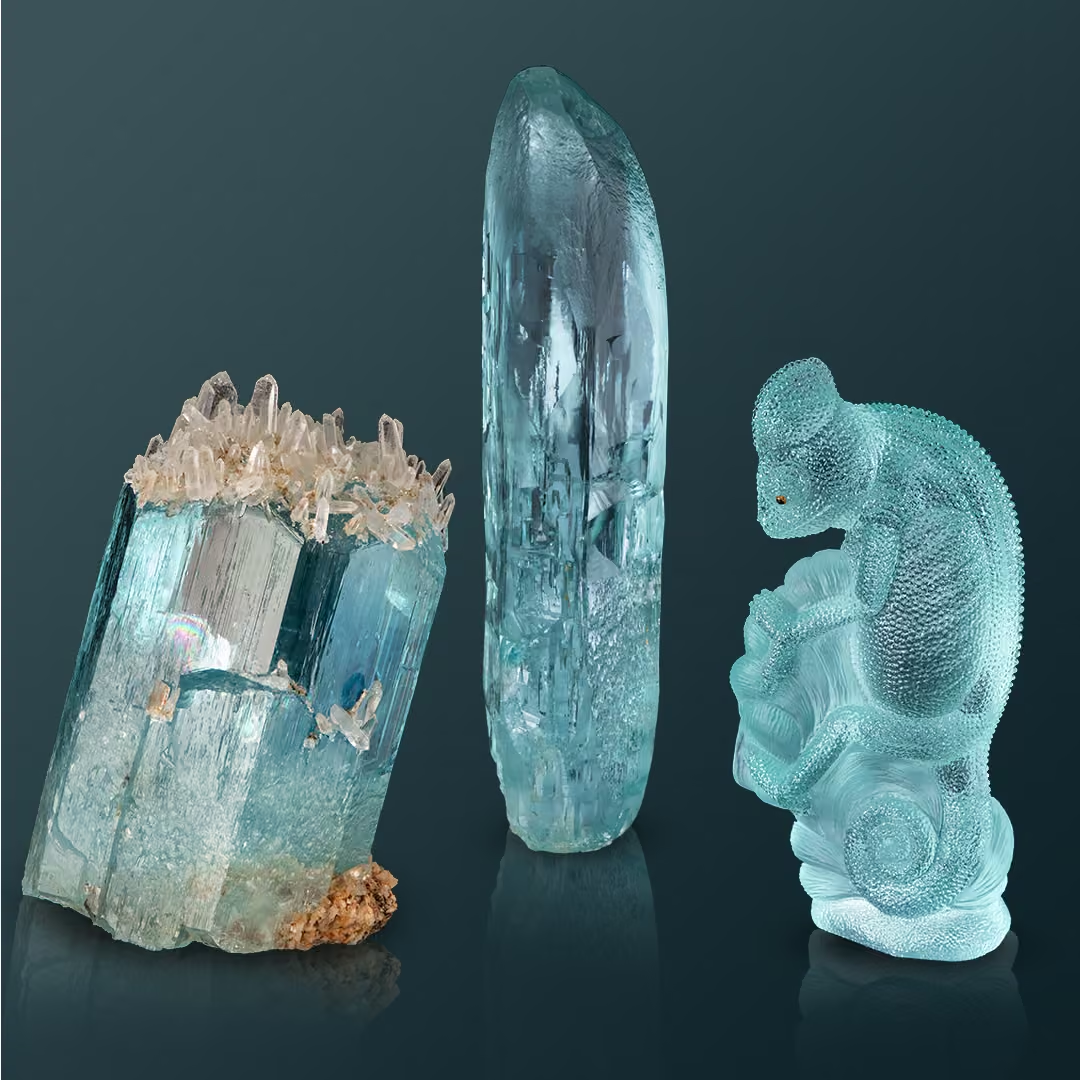
Known for its limpid greenish blue-to-blue color, March's birthstone, aquamarine, often comes in large sizes and is relatively free of inclusions. Fine-quality aquamarine is found in Brazil and Pakistan. Learn more: www.gia.edu/birthstones/march-birthstones
 GIA
@GIAnews
GIA is honored to support @MercuryFreeMC in their effort to support artisanal and small-scale gold miners around the world.
 Mercury Free Mining
@MercuryFreeMC
In 2021 GIA (Gemological Institute of America) granted MFM and ARM (Alliance for Responsible Mining) $50,000 to work with gold miners from the Ananea District of Peru to eliminate mercury from their ore processing.
 GIA
@GIAnews
Who wants a bite of this diamond? This 1.13 carat Fancy yellow diamond resembling the Apple logo was submitted to GIA for analysis. It shows strong blue fluorescence when exposed to long-wave UV radiation. Learn more: www.gia.edu/gems-gemology/winter-2021-lab-notes-novelty-c…
Photo: Diego Sanchez/GIA
GIA
@GIAnews
Lorraine West's avant-garde jewelry has graced numerous celebrities, including Beyoncé, Ariana Grande, Mary J. Blige, and Zendaya. A self-taught craftswoman, West pays homage to her Caribbean roots by mixing bold and minimalist design sensibilities.


 GIA
@GIAnews
The ultimate diamond detecting triple-threat.
Discover more: www.gia.edu/iD100
GIA
@GIAnews
Black and white are unusual in the fancy-color diamond world in that their colors aren't caused by atomic-scale defects, but primarily by inclusions that scatter or absorb light. These white and black diamonds are similar in color saturation but have different transparencies.

 GIA
@GIAnews
Sunstone, Oregon's official state gemstone, can vary from red to orange to yellow and green in color. Many gems contain copper or hematite inclusions, which cause a gorgeous spangled effect called aventurescence. Learn more: www.gia.edu/gems-gemology/fa13-oregon-sunstone-pay
 GIA
@GIAnews
The 3.05 carat green diamond in this ring was graded Fancy Intense green color, SI2 clarity by GIA. We grade some of the most important diamonds in the world, including yours. Learn about the legacy of GIA and how our reports make a differencediscover.gia.edu/diamonds-graded-by-GIA
Courtesy: @Sothebys
 GIA
@GIAnews
Arizona is known for producing the finest wulfenite in the world. Like this 5.61 carat gem. Wulfenite is a soft mineral (2.5-3 on the Mohs scale) and is considered a collector's gem, not suited for jewelry. Learn more: www.gia.edu/gia-news-research/arizona-road-trips-wild-wes…
Courtesy: Garth Bricker
 GIA
@GIAnews
Mogok, Myanmar (Burma) is one of the world’s most important suppliers of high-quality peridot. While most are yellowish green, the best specimens possess a rich olive green color and come in large sizes (10 carats or more). Learn more: www.gia.edu/gems-gemology/winter-2021-gemological-charact…

 GIA
@GIAnews
A variety of beryl, along with aquamarine and emerald, morganite has high hardness, clarity and durability. It derives its pink, rose, peach or salmon color from traces of manganese. Learn more: gia.edu/morganite
Courtesy: @LydiaCourteille


 GIA
@GIAnews
This necklace, created by Cartier in 1947, was commissioned by the Duke of Windsor for his wife, Wallis Simpson. It contains amethyst, turquoise and diamonds.
Courtesy: N. Welsh, Cartier Collection © Cartier
 GIA
@GIAnews
Toi et moi, French for "you and me," refers to a ring with two gems that symbolize two souls becoming one. Seen here is the diamond and sapphire toi et moi engagement ring that Napoleon Bonaparte gave to Josephine de Beauharnais in 1796. Photo: Patrick Kovarik via Getty Images
 GIA
@GIAnews
GAMEDAY! The @RamsNFL are facing off against the @Bengals at @SoFiStadium, who's taking home the ring?! #superbowllvi
(1) Albert Dickson/Sporting News via Getty Images; (2) Jason O. Watson/Getty Images; (3) Jonathan Newton/The Washington Post via Getty Images


 GIA
@GIAnews
Announcing 2021's Gianmaria Buccellati Foundation Award for Excellence in Jewelry Design winner, Meghan Simmons. Only GIA Jewelry Design students get to compete in this competition, intrigued? The next GIA Jewelry Design course starts soon: gia.edu/jd

 GIA
@GIAnews
This 5.69 carat (9.80 x 8.21 mm) pearl with flame-like pattern was identified as a non-nacreous natural Tridacna pearl by GIA. At GIA, we identify and classify some of the most unusual and unique gems in the world. Learn about our services and legacy: gia.edu/gem-lab

 GIA
@GIAnews
SOLD! But not without a GIA Colored Diamond & Identification Report...
www.nationalgeographic.com/science/article/the-science-of…
GIA
@GIAnews
This yellow diamond displays strong rainbow graining when rocked and tilted. Graining is a structural discontinuity that occurs from stress during a diamond crystal’s growth. It can be colorless, whitish, reflective, colored or rainbow! Learn more: www.gia.edu/gems-gemology/winter-2021-microworld-rainbow-…
GIA
@GIAnews
Black in Jewelry Coalition offered an exclusive opportunity to two of its members to receive a GIA Graduate Gemologist Diploma via Distance Education. Congratulations to Tiffany Haynes and Kyle Abram, recipients of the BIJC x GIA Distance Education Scholarship!
GIA
@GIAnews
Rose quartz owes its color to microscopic inclusions of aligned silicate mineral fibers. Sometimes, light reflecting off the inclusions produces a six-rayed star if the gem is cabochon cut and correctly oriented. Learn more: www.gia.edu/rose-quartz
 GIA
@GIAnews
Realize the career of your dreams in gems and jewelry with a full or partial scholarship. Apply by March 31st. Learn more: gia.edu/scholarships
GIA
@GIAnews
This termite trapped in fossilized tree resin, called copal, has a methane bubble that exploded from its midriff as it decomposed. Tree sap must be at least one million years old to be considered amber.
Photo: Nathan Renfro/GIA. Courtesy: John Koivula Inclusion Collection
 GIA
@GIAnews
This ring features a 3.43 carat diamond graded Fancy Vivid purplish pink by GIA. We are trusted the world over to grade nature’s finest treasures. Get clarity on the 4Cs: gia.edu/diamondexperts
Courtesy: Christie's

 GIA
@GIAnews
Seen here are pink to purplish red diamonds from Argyle in Australia. Natural diamonds have unique formation stories and tell us much about Earth's geologic history. Know your diamond's journey, below and above ground: gia.edu/diamond-origin
Photo: Robert Weldon/GIA
 GIA
@GIAnews
Watch as lapidarist Victor Tuzlukov transforms this 14,750 carat crystal into the 3,051 carat "Fragility of the Eternal," the largest faceted kunzite that has passed through GIA’s laboratory to date. Learn more: www.gia.edu/gems-gemology/summer-2020-gemnews-fragility-o… (1-2) Arjuna Irsutti; (3,4) Victor Tuzlukov


 GIA
@GIAnews
Join us at #agtagemfair2022! Connect with friends old and new at the University of Arizona Alfie Norville Gem & Mineral Museum. We will also announce the recipient of the Gianmaria Buccellati Award. We look forward to seeing you there! Register now: web.cvent.com/event/05a5c322-c902-41f4-b94d-488c6273c0f4/…
 GIA
@GIAnews
GIA recently examined a 16.41 ct G VVS2 CVD laboratory-grown diamond that is the largest of its kind examined by GIA to date. That’s 1.81 carats more than the record set last year! Learn more: www.gia.edu/gia-news-research/january-2022-largest-cvd
 GIA
@GIAnews
Amethyst, February's birthstone, is the purple variety of quartz. Commercial quantities are primarily found in Brazil, Zambia, Mexico and Uruguay. Seen here is a specimen from Mexico. Learn more: www.gia.edu/amethyst Courtesy: Natural History Museum of Los Angeles County.
 GIA
@GIAnews
Peering ahead into a new year. Happy #lunarnewyear! Did you know that jadeite is a microcrystalline gem with excellent toughness, which means it can resist impact really well? Learn more: www.gia.edu/jade Photo: K. Y. Cheng/South China Morning Post via Getty Images
 GIA
@GIAnews
Couldn't have said it better ourselves... "Assessing a diamond’s quality is a complicated process that’s full of nuances, so it’s hard for shoppers to determine a gem’s value by sight. " Read the @PopSci buyer's guide to diamond quality and origin: www.popsci.com/diy/diamond-buying-guide/
GIA
@GIAnews
At GIA, we have been privileged to analyze some of the most phenomenal gems in the world, including the Starry Night Sapphire! Named after Van Gogh's painting, this unheated Burmese star sapphire weighs a whopping 111.96 carats. Read its GIA monograph www.gia.edu/doc/LAB_monograph_TheStarryNight_book_FINAL_N…


 GIA
@GIAnews
Horsetail inclusions in demantoid garnets are usually composed of two minerals: a tiny opaque crystal that is the focal point and mineral fibers that flare out from it, resembling the tail of a horse. Courtesy: (2) John Koivula Inclusion Collection

 GIA
@GIAnews
Apatite is a group of phosphate minerals found in a variety of colors. Blue apatite is particularly rare and popular. Seen here is a very rare 12.50 carat intense blue cat’s-eye apatite. Learn more: www.gia.edu/gems-gemology/spring-2013-gemnews-blue-cats-e… Courtesy: Duarte & Bastos Ltd, Teofilo Oto
 GIA
@GIAnews
The 5.63 carat Fancy Vivid purplish pink Graff Lesotho Pink was discovered in the kingdom of Lesotho. Diamond mining companies there have built roads to connect remote communities. Know your diamond's origin and impact. Explore more: gia.edu/diamond-origin
Courtesy: Graff

 GIA
@GIAnews
GIA graded this 7.16 carat, blue, pear-shaped diamond Fancy Intense blue, VVS1. It was also determined to be Type IIb, meaning it can conduct electricity. Discover your diamond's quality with a GIA Grading Report. Learn more: gia.edu/diamondexperts Courtesy: Christie's
 GIA
@GIAnews
GIA is headed to #agtagemfair2022! Visit GIA’s booth on the Galleria Level to see what’s new in 2022 for Education, Alumni, Laboratory Services, Instruments, and the Retailer Support Program. Learn more: www.gia.edu/gem-event-agta-gemfair-tucson-2022
We can't wait to see you there!
 GIA
@GIAnews
This unique blue-veined "ice" from Brazil melts our hearts (but will never actually melt)! They are rock crystal quartz that contain phantom planes or clusters of acicular needles of blue dumortierite. Learn more: www.gia.edu/gems-gemology/spring-2015-gemnews-dumortierit…
Photo: Kevin Schumacher/ GIA
 GIA
@GIAnews
The 118.78 carat Graff Venus, which was graded D Flawless by GIA, is assumed to be the largest heart-shape D Flawless diamond in the world. Get clarity with the 4Cs: gia.edu/diamondexperts
Courtesy: Graff

 GIA
@GIAnews
The most desirable tanzanite is a deeply saturated pure blue or violetish blue in color. Seen here is a high-quality tanzanite and diamond necklace containing roughly 600 cts of tanzanite and 100 cts of diamonds. Learn more: gia.edu/tanzanite Courtesy: Rosenkrantz Africa

 GIA
@GIAnews
We grade every diamond with passion and precision, from the Portuguese diamond (center) to YOUR diamond. The 127.01 ct Portuguese diamond has M color, VS1 clarity and Very Strong blue fluorescence. Learn more: gia.edu/diamondexperts Courtesy: Chip Clark, Smithsonian Institution

 GIA
@GIAnews
The 14.62 carat Oppenheimer Blue diamond was graded Fancy Vivid blue by GIA. Did you know that all blue diamonds are classified as Type IIb and they are colored by minute quantities of boron? Learn more: www.gia.edu/gia-news-press/researchers-discover-origin-of…
Courtesy: Anadolu Agency via Getty Images
 GIA
@GIAnews
Don’t miss GIA on @CBSUnstoppable with @MirandaCosgrove tomorrow to learn all about #stem careers!
Check your local @CBS station listings for air times near you to watch the entire episode.
GIA
@GIAnews
Formed in extreme heat and pressure, diamonds are durable and brilliant. Diamonds also provide jobs and much-needed revenue for the communities that need them the most. Learn more about GIA Diamond Origin: gia.edu/diamond-origin Courtesy: (1) Sotheby's; (2) Peter Johnston/GIA

 GIA
@GIAnews
Faceted cultured pearls were introduced in 1998. Combined with a pearl's orient, facets can create interesting visual effects, often making flat facets appear convex. Learn more: 4cs.gia.edu/en-us/blog/fascinating-faceted-cultured-pearl/ Courtesy: (1) Victor Tuzlukov; (2) Mark Schneider

 GIA
@GIAnews
"The Enigma" is a 555.55 carat diamond graded Fancy Black by GIA. Believed to have come from outer space, this stone is going up for auction at @Sothebys. At GIA, we are trusted by top auction houses to grade nature’s finest treasures. Learn more: gia.edu/diamondexperts
 GIA
@GIAnews
This 2.68 carat opal from Ethiopia’s Wollo province displays chatoyancy in addition to play-of-color. Chatoyancy is rarely seen in precious opal (opal that displays play-of-color). Learn more: www.gia.edu/gems-gemology/spring-2017-microworld-ethiopia… Courtesy: Nathan Renfro.

 GIA
@GIAnews
Trapiche emeralds (tra-PEE-chee) emeralds develop an unusual six-spoked pattern during crystal formation due to variations in fluid pressure during their growth. Learn more: www.gia.edu/gia-news-research/emerald-superstar-trapiche-…. Courtesy: (1) Lydia Courteille; (2) Jose Guillermo Ortiz

 GIA
@GIAnews
These citrine bear carvings were created by Alfred Zimmerman of Idar-Oberstein, Germany. The first bear is a grizzly, the second a brown bear. Both have sapphire eyes that add sparkle to their playful postures. Courtesy: Silverhorn, Santa Barbara, California

 GIA
@GIAnews
With the help of the diamond industry in Botswana, literacy rates have reached above 80% and healthcare and compulsory primary education are free. Over 90% of the population now has access to clean drinking water. Learn more: gia.edu/diamond-origin Courtesy: Lucara Diamonds
 GIA
@GIAnews
“Rainbow” andradite garnet exhibits iridescence when light interacts with microscopic layers of garnet with slightly varying compositions. This 16.79 carat specimen from Japan has a reddish orange "hot spot." Learn more: www.gia.edu/gems-gemology/fall-2016-microworld-andradite-… Courtesy: John Koivula
 GIA
@GIAnews
This polka-dotted quartz was named “Medusa quartz,” not after the Gorgon in Greek mythology but after the bell-shaped form of jellyfish. Its fun spots are gilalite inclusions that formed as color-zoned radiating fibers. Courtesy: (1-2) Vista Gems; (3) Nathan Renfro


 GIA
@GIAnews
Not tanzanite! This unique stone is a 427 carat unheated Paraíba-type tourmaline rough from Mozambique. Paraíba tourmalines of this size and color are rare indeed. Learn more: www.gia.edu/gems-gemology/summer-2020-gemnews-paraiba-rou… Courtesy: Simon Bruce-Lockhart; Chanthaburi, Thailand
GIA
@GIAnews
This necklace features a 54.29 carat Fancy Intense yellow cushion-cut diamond surrounded by 67.10 carats of colorless diamonds. We apply the same passion and precision to grading every diamond – including yours. Get clarity with the 4Cs: gia.edu/diamondexperts Courtesy: Chatila
 GIA
@GIAnews
Seen here are a pink garnet and what is known in the trade as a Malaya garnet. Malaya garnets typically vary from pinkish orange to reddish orange. Image 2 shows other Malaya garnets. Learn more: www.gia.edu/gems-gemology/winter-2001-pink-orange-malaya-… (1-2) Photo: Robert Weldon/GIA. (2) Courtesy: Mayer & Watt

 GIA
@GIAnews
The stunning diamonds seen here contain diopside inclusions. Diamonds not only help reveal Earth's geologic processes, they can help transform lives and economies. Know your diamond's story: discover.gia.edu/diamond-origin Courtesy: John Koivula and Dr. Eduard J. Gübelin Collection.

 GIA
@GIAnews
Ring in the New Year with a FREE 2022 GIA gemstone photomicrograph desk calendar, available with all paid retailer support orders now through February 11th! Click the link to shop: store.gia.edu/collections/retailer-support?sort_by=price-…
GIA
@GIAnews
This 102.39 carat D-Flawless oval diamond found in the Victor Mine in Ontario, Canada, was auctioned off at Sotheby’s Hong Kong in October 2020 for US$15.7 million. The buyer named the diamond “Maiko Star” after his second daughter. Photo: ANGELA WEISS/AFP via Getty Images
 GIA
@GIAnews
Elbaite, one of the many mineral species in the tourmaline group, accounts for nearly all gem-quality tourmaline. Seen here is a selection of elbaite tourmalines from GIA's collection. Learn more: www.gia.edu/gia-gem-project-tourmaline Courtesy: Dr. Eduard J. Gübelin Collection


 GIA
@GIAnews
This demantoid garnet from Baluchistan, Pakistan shows anomalous interference colors under cross-polarized light. It contains magnetite and fibrous chrysotile inclusions that make the gem appear as if it is exploding outward in a burst of color. Learn more:www.gia.edu/gems-gemology/winter-2014-gemnews-demantoid-b…
GIA
@GIAnews
Garnet, January's birthstone, is a group of over 20 closely-related minerals. It includes five garnet species that are commercially-important as gems, including pyrope, almandine, spessartine, grossular and andradite. Learn more: www.gia.edu/garnet Photo: Robert Weldon/GIA
 GIA
@GIAnews
Happy New Year! We wish you brilliance and success in 2022. Seen here is an up-close look at hematite inclusions in sunstone. We hope their confetti-like sparkle helps you to celebrate! Photo: (1) Nathan Renfro/GIA; (2) Robert Weldon. Courtesy: Michael Randall, Gem Reflections

 GIA
@GIAnews
Happy New Year's Eve! This 5.24 carat Fancy Dark yellowish brown diamond, called the Rare Sun, has an eye-visible cloud inclusion that scatters light to resemble a shining star and its rays. Learn more: www.gia.edu/gems-gemology/fall-2019-gemnews-rare-sun-diamond
Photo: Jian Xian (Jae) Liao/GIA
GIA
@GIAnews
This 102.34 carat diamond is one of the largest round, D-Flawless diamonds GIA has graded. What else is brilliant about it? It was mined in Botswana, a producer of ethically-sourced diamonds.Explore the GIA Diamond Origin Program: discover.gia.edu/diamond-origin Courtesy: Sotheby's
 GIA
@GIAnews
Princess Margaret wore the Poltimore tiara on her wedding day and famously posed with it in a bathtub in Kensington Palace in a picture taken by her husband. Where would you wear a tiara if you had one? Photo: SHAUN CURRY/AFP via Getty Images
 GIA
@GIAnews
The 179 carat Romanov diamond crystal yielded five diamonds, all graded D, VVS1 by GIA. We have graded some of the most renowned diamonds in the world and apply the same passion and precision to grading every diamond – including yours: discover.gia.edu/diamonds-graded-by-GIA Courtesy: Alrosa

 GIA
@GIAnews
For more than 120 years, Yogo Gulch, Montana has been one of the world’s most illustrious sources of sapphire. Seen here are Yogo sapphires next to the host rock in which they are found. Learn more: www.gia.edu/gems-gemology/summer-2018-gemological-charact… Courtesy: Don Baide (The Gem Gallery, Bozeman, Montana).
 GIA
@GIAnews
This video shows a purple fluorite crystal moving freely inside an octahedral void in quartz along with liquid and a gas bubble. Quartz with fluorite inclusions are often found in Madagascar. Learn more: www.gia.edu/gems-gemology/fall-2016-microworld-mobile-flu…
Video: Nathan Renfro/GIA.
GIA
@GIAnews
A merry gem. Seen here are a tourmaline frog carving by Gerd Dreher, a cluster of tourmaline crystals, and a faceted bicolor tourmaline gemstone. Learn more: www.gia.edu/tourmaline Courtesy: William F. Larson Family
 GIA
@GIAnews
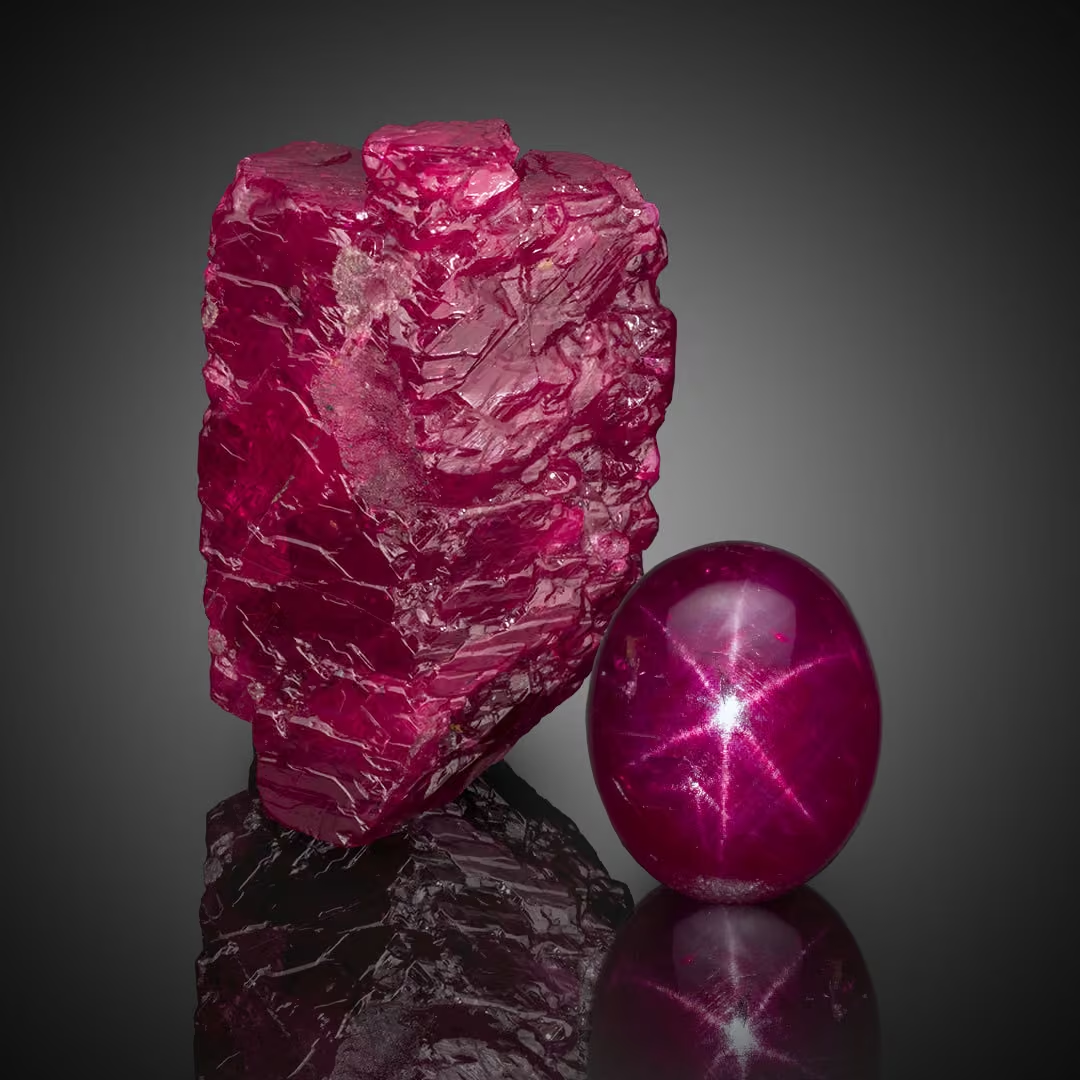
This 18.29 ct star ruby and 196.10 ct ruby crystal are two of @NHMLA's most striking items. The crystal, known as the Hixon ruby, is one of the largest and most valuable ruby crystals in the world. Learn more: www.gia.edu/ruby/gem-overview Photo: Robert Weldon/GIA. Courtesy: @NHMLA
 GIA
@GIAnews
Diamonds formed 90 million-3 billion years ago 90-400 miles beneath Earth’s surface. Seen here is a diamond crystal in kimberlite matrix found in South Africa. Want to know your diamond's journey and origin? Explore the GIA Diamond Origin Program: discover.gia.edu/diamond-origin
 GIA
@GIAnews
Happy Winter Solstice! Blue diamonds derive their color from three main causes: boron, hydrogen-related defects and GR1 (general radiation 1) defects. Each cause of color creates a different range of color. Learn more: www.gia.edu/gems-gemology/summer-2018-natural-color-blue-…
Illustration: Russel Samson/GIA
 GIA
@GIAnews
Did you know that diamonds occur in all the colors of the rainbow? Seen here is a lineup of blue, yellow, green and pink diamond crystals from left to right. Which fancy color suits your fancy?
Photo: Tino Hammid/GIA
 GIA
@GIAnews
This 50.05 carat briolette diamond was graded D-Flawless with Excellent polish and symmetry by GIA. GIA scientists also classified it as type IIa, which means it is the most chemically pure type of diamond. Courtesy: Christie's
 GIA
@GIAnews
Seen here is a tabular negative crystal with a graphite inclusion and CO2 fluid inclusion inside a Sri Lankan sapphire. As the stone is cooled, the liquid and gas phases of the CO2 distinguish themselves, as seen in the bubbles forming here. Learn more: www.gia.edu/gems-gemology/spring-2016-microworld-fantasti…
GIA
@GIAnews
We're live! Watch our newest grads graduate on Facebook! Although we can’t celebrate them in person, we’ve planned a brilliant program to send off our newest gem and jewelry rock stars. Send virtual congratulations as they take center stage! Watch now: www.facebook.com/GIAEducation/videos/414285217099016
GIA
@GIAnews
This stunning ring is set with red spinels. Red spinel has been called “the gem that made ruby famous," because before people could tell gems apart using science, people thought ruby and spinel were the same gemstone. Learn more: www.gia.edu/spinel
Courtesy: Omi Privé
 GIA
@GIAnews
Natural diamonds formed billions of years ago in Earth's mantle and some contain inclusions that offer invaluable insight into Earth's formation. Want to know the story and journey of the diamonds you purchase? Discover diamond origin: discover.gia.edu/diamond-origin

 GIA
@GIAnews
Join us tomorrow at 10 a.m. as GIA Director of Metrology and Quality Control, Dr. Yun Luo, uncovers the GIA team’s latest discoveries between the intensity of a diamond’s blue fluorescence and its effect on color, brightness and transparency. Register now: www.gia.edu
 GIA
@GIAnews
Listen in on the discussion with GIA's Executive Director of Alumni Development, Cathryn Ramirez, as she shares her insights and experience on @thrycon Building Community Podcast. Listen now: www.thrycon.com/podcast/episode-008
GIA
@GIAnews
Emerald seashells? Recently, the GIA Hong Kong laboratory received 11 fossilized shells all composed primarily of emerald. Upon further examination, GIA scientists found the emerald to be Colombian in origin. Learn more: www.gia.edu/gems-gemology/fall-2021-fossilized-shell-emerald
Photo: Johnny Leung/GIA


 GIA
@GIAnews
Spinel can occur in many colors. Intense reds and pinks are caused by traces of chromium, while purples are caused by a mixture of iron and chromium and vibrant blues by cobalt. Learn more: www.gia.edu/spinel Photo: Robert Weldon/GIA. Courtesy: Bill Vance, Vance Gems
 GIA
@GIAnews
Tune in on December 15th to the @RJCJewellery Winter Conference, Reporting for Good: How ESG Builds Business Value, featuring GIA president and CEO, Susan Jacques as a panelist. Register Now: www.responsiblejewellery.com/event/reporting-for-good-how…
 GIA
@GIAnews
The finest examples of cat's-eye chrysoberyl tend to be golden yellow to greenish yellow or a brownish yellow “honey” color. The ring here is set with a 6.83 carat cat's-eye chrysoberyl from Brazil. Photo: Robert Weldon/GIA. Courtesy: Robert E. Kane and Fine Gems International
 GIA
@GIAnews
Tanzanite is the blue-to-violet or purple variety of zoisite first discovered in 1967 by Masai tribesman Ali Juuyawatu. Seen here are three green and blue bicolor tanzanites. Learn more: www.gia.edu/tanzanite Photo: Robert Weldon/GIA. Courtesy: Advanced Quality, Bentzi Krespi
 GIA
@GIAnews
This jaw-dropping necklace is set with 16 Colombian emeralds, several of which have some degree of clarity enhancement. Naturally eye-clean emeralds are very rare; most emeralds are oiled or fracture-filled. Learn more: www.gia.edu/emerald-quality-factor Courtesy: Christie's
 GIA
@GIAnews
The Argyle mine in Australia was famed for its pink diamonds. Part of the revenue from its production was paid as royalties towards indigenous communities. Know your diamond's origin and social impact: discover.gia.edu/diamond-origin Copyright © 2016 Rio Tinto.


 GIA
@GIAnews
Whatever the case, we've got you covered: store.gia.edu/collections/case-display-signage
GIA
@GIAnews
This 92.15 carat heart-shaped diamond named La Légende is graded D-Flawless with Excellent polish and symmetry by GIA. It is also type IIa, the diamond type that is the most chemically pure. Learn more about GIA's legacy and reports: discover.gia.edu/diamonds-graded-by-GIA Courtesy: Christie's

 GIA
@GIAnews
GIA established a field gemology program in 2008 to research the geographic origin determination of colored gemstones. We have completed more than 95 field expeditions on six continents and collected more than 22,000 samples. Learn more: www.gia.edu/gems-gemology/winter-2019-building-research-c… (1-2)


 GIA
@GIAnews
We apply the same passion, precision, and expertise that we use to grade diamonds like the world-famous Hope Diamond & Taylor-Burton to every diamond – including yours.
Get clarity on the 4Cs: gia.edu/diamondexperts
GIA
@GIAnews
This 299 carat diamond crystal discovered in Lesotho was cut into nine stones, including the 132.55 carat Graff Golden Empress. Know where your diamond comes from and how it impacts communities in the country where it was mined. Learn how: discover.gia.edu/diamond-origin Courtesy: Graff

 GIA
@GIAnews
Laboratory-grown diamonds have become an increasingly attractive option to customers, and they too, deserve our protection.
GIA
@GIAnews
Exhibiting both adularescence and chatoyancy, these cat's-eye moonstones are doubly phenomenal! (1) Photo: Eric Welch/GIA. Courtesy: Star Shine Ltd. (2) Photo: ICA. Courtesy: Temple Trading.

 GIA
@GIAnews
Now through 12/17/2021 (for items shipped) and 12/21/2021 (for walk-ins), we will service and return D-to-Z diamonds submitted to our Carlsbad or New York laboratories within 24 hours of receipt at no additional charge. Learn more: www.gia.edu/gem-lab/laboratory-service-promotions-united-…
GIA
@GIAnews
Valued at $70,000, this 18K gold and diamond dreidel was listed by Guinness World Records as the world's most valuable dreidel. It features a 4.20 carat diamond at its tip in addition to 222 melee diamonds set into its sides. Courtesy: Estate Diamond Jewelry

 GIA
@GIAnews
Seen here is a vivid purplish-pink crystal contained in matrix from Mardar, Pakistan. Purplish-pink is one of the rarer topaz colors of topaz. Learn more about topaz: www.gia.edu/UK-EN/topaz-quality-factor Photo: Robert Weldon. Courtesy: William F. Larson
 GIA
@GIAnews
The Lomonsov deposit in Russia is known for producing a high percentage of colored diamonds. Want to learn more about a diamond's journey to Earth's surface? Explore the GIA Diamond Origin Program: discover.gia.edu/diamond-origin Photo: Kevin Schumacher/GIA. Courtesy: Diarough

 GIA
@GIAnews
We hope you enjoy this feast of fall gems, which includes iris agate, feldspar, sunstone and sphene. This year, we are filled with gratitude for this community of gem-lovers. #happythanksgiving Courtesy: Carl Chilstrom and Dr. Eduard J. Gübelin Collection
 GIA
@GIAnews
Distinguishing natural diamonds from laboratory-grown stones – now more available than ever – has been difficult for jewelers. Until now. Learn more: discover.gia.edu/id100
GIA
@GIAnews
Niki Grandics obtained her Graduate Jeweler diploma from GIA and founded her own award-winning jewelry line, Enji Studio Jewelry, which focuses on minimalistic pieces handcrafted using responsibly-sourced materials. Learn more:www.gia.edu/gem-education/program-graduate-jeweler Courtesy: Enji Studio Jewelry


 GIA
@GIAnews
Take your passion for diamonds and colored stones to the next level with the BIJC x GIA Scholarship for Distance Education. This scholarship opportunity is exclusive to BIJC members, where the first year membership is free! Apply now: blackinjewelry.org/scholarships/
 GIA
@GIAnews
Did you know that mussels in the Mississippi River system can produce natural freshwater pearls? Many show an elongated "wing" or "feather" form and some have orient and high luster. Learn more: www.gia.edu/gems-gemology/summer-2019-gemnews-characteris… Photo: Diego Sanchez/GIA.


 GIA
@GIAnews
Whether you're interested in gemology or jewelry design, including hands-on experience with diamonds, colored stones, and pearls, our courses can help you develop the necessary skills to achieve your career aspirations. View class schedule: discover.gia.edu/class-schedule.html
 GIA
@GIAnews
The 51.03 carat, D-Flawless Mouawad Dynasty was recovered from the Nyurbinskaya kimberlite pipe in the Republic of Sakha (Yakutia) in Siberia, Russia. Explore the GIA Diamond Origin Report: discover.gia.edu/diamond-origin (1) Courtesy: Alrosa; (2) Photo: Lina Shatalova via Getty Images

 GIA
@GIAnews
Welcome to our newest Governors, Dave Bindra and Marcus ter Haar! We are excited to see what the future holds under their leadership! Find out more about them: www.gia.edu/gia-news-press/bog-sets-priorities-2021
 GIA
@GIAnews
Follow along tomorrow at 10 a.m. PST as Senior Manager of Diamond Identification Dr. Sally Magaña delves through both the history and recent scientific discoveries surrounding the Hope diamond. Register now: www.gia.edu
 GIA
@GIAnews
Sphene is a gem that is typically yellow, green, orange or brown in color. It has incredible fire, higher than that of diamond. It is also trichroic, showing three different colors in different crystal orientations. Courtesy: (1) Kat Florence Atelier. (2) Gravier & Gemmes

 GIA
@GIAnews
GIA received a strand of pinkish purple cultured pearls for grading. Upon testing, GIA scientists confirmed that these pearls are natural in color, which shows that culturing techniques can achieve vibrant hues. Learn more: www.gia.edu/gems-gemology/summer-2015-labnotes-pinkish-pu… Photo: Jian Xin (Jae) Liao/GIA
 GIA
@GIAnews
Fantasy-cut gemstones feature grooves, optic dishes and concave facets. Seen here are a peridot and topaz designed and cut by Richard P. Homer, GIA GG. Learn more: www.gia.edu/munsteiner-gem-cut Photo: (1) Richard P. Homer, (2) Robert Weldon. Courtesy: Gems by Design, Inc., Kent, OH

 GIA
@GIAnews
The Blue Moon, a 29.62 carat (ct) blue diamond crystal, was discovered in South Africa. It was faceted into a 12.03 ct gem graded Fancy Vivid blue, Internally Flawless by GIA. Find out why your diamond's origin is important: discover.gia.edu/diamond-origin (1) Petra Diamonds (2) GIA


GIA reposted
 IBM Hybrid Cloud & Infrastructure
@IBMcloud
Diamond clarity is the most difficult quality to grade. High-resolution imaging and #ai can change that.
We've teamed up to revolutionize the diamond industry with GIA's cloud-based AI approach: ibm.co/3F1rCg4
GIA
@GIAnews
GIA and IBM Research have joined forces to revolutionize diamond clarity grading through artificial intelligence (AI). The GIA AI clarity system focuses on grading smaller diamonds and will improve turnaround time for diamond grading. Learn more: ibm.co/3H5QiG9
GIA
@GIAnews
Citrine often comes in large sizes with high clarity. Seen here are citrine carvings of a hippo and a mouse by Patrick Dreher and a pair of snow monkeys by Gerd Dreher. Courtesy: (1-2) William F. Larson Family; (3) Silverhorn, Santa Barbara, California


 GIA
@GIAnews
This rare beryl species was discovered in 2019 in Myanmar and named johnkoivulaite after renowned GIA researcher John Koivula. It has strong pleochroism, going from near-colorless to violet in polarized light. Learn more: www.gia.edu/gems-gemology/fall-2019-gemnews-johnkoivulait…
Photo: Nathan Renfro/GIA
GIA
@GIAnews
Many types of mollusks produce white pearls, but freshwater mollusks such as the Hyriopsis cumingii can produce pink a wide range of fancy bodycolors such as an attractive pink hue. Learn more about pearls: www.gia.edu/pearl Courtesy: Yoko London

 GIA
@GIAnews
Pink diamonds can vary considerably in hue, tone and saturation. Charts 2 and 3 show the color grades of pink and red diamonds. Chart 4 shows the color grades of purplish pink diamonds. Learn more: www.gia.edu/gems-gemology/summer-2002-grading-natural-pin…


 GIA
@GIAnews
How do we confirm diamond origin for our GIA Diamond Origin Report? We use a scientific method to match polished diamonds to their original rough. We do this primarily through measuring spectroscopy, or how a diamond reacts to different light. Learn more: discover.gia.edu/diamond-origin
GIA
@GIAnews
This 75.36 carat type IIa briolette diamond was graded D, Internally Flawless by GIA. It is suspended from a marquise shaped purplish pink diamond and a chain composed of small briolette diamonds. (1) Dickson Lee/South China Morning Post via Getty Images;
(2) Courtesy: Christie's

 GIA
@GIAnews
Color zoning in tourmaline occurs when trace elements change in concentration or composition during a crystal’s growth. These tricolor tourmalines transition from a saturated green to yellow to orangy red. Photo by Schmitt Jewelers provided courtesy of the Smithsonian Institution
 GIA
@GIAnews
Citrine, the transparent yellow to brownish orange variety of quartz, is one of November's birthstones with top sources in Bolivia, Spain, Madagascar, Mexico and Uruguay. Learn more: www.gia.edu/citrine Photo: (1)Robert Weldon/GIA. (2)Priscilla Dyer. Courtesy: John Dyer & Co.

 GIA
@GIAnews
Topaz, one of November's birthstones, comes in an array of colors. Its most valuable variety is imperial topaz, which showcases the colors of autumn, ranging from medium reddish orange to orange-red in color. Courtesy: (1, 3, 4) Omi Privé. (2) Constantin Wild, Idar-Oberstein


 GIA
@GIAnews
Rutile, a titanium oxide mineral, sometimes forms as needle-like crystals in quartz. (Sphere) Bart Curren/ICA. Courtesy: Marc Jobin. (Cabochon) Orasa Weldon. (Cat) Robert Weldon/ GIA. Courtesy of Leslie Hindman Auctioneers. 2 Jonathan Muyal/GIA #happyhalloween

 GIA
@GIAnews
Nicknamed by GIA students, "Hootie" is GIA's resident owl. He is carved from labradorite with silver feet perched on a petrified wood base. This labradorite, with its blue to green sheen, is perfect for capturing the mystery of this nocturnal creature.
GIA
@GIAnews
A dazzling revelation. A woman in her 70s recently discovered that the "costume jewelry gemstone" she bought years ago is a natural 34-carat diamond worth roughly two million pounds! Does your Halloween ensemble hide any brilliant surprises?
www.bbc.com/news/uk-england-tyne-59076773
GIA
@GIAnews
These diamonds were cut from a crystal called the Lesotho Promise, named after the African kingdom where it was found. In Lesotho, diamond mining is the largest private sector employer. Learn more: discover.gia.edu/diamond-origin (1) Courtesy: Laurence Graff
 GIA
@GIAnews
Seen here is a handful of opals from GIA's collection, ranging from white to black to crystal and contra luz opal. Most are from Australia, but some are from other locales such as the U.S. and Mexico. Learn more: www.gia.edu/opal
GIA
@GIAnews
Named after the Musgrave Ranges of Southern Australia where it was first found, musgravite is harder than most rare gems with a Mohs hardness of 8.0 – 8.5. Learn more about this unique gem: www.gia.edu/gems-gemology/summer-2015-microworld-iridesce… Photo: (1) Kevin Schumacher/GIA; (2) Nathan Renfro/ GIA.

 GIA
@GIAnews
If you specialized in gemstone geology, defect physics, diamond synthesis or other fields related to gemology, we at GIA would like to invite you to apply for the Richard T. Liddicoat Postdoctoral Research Fellowship. Learn more: www.gia.edu/research-careers
GIA
@GIAnews
Learn more about 90 years of Discovery and Innovation with the GIA Research team: www.youtube.com/watch?v=YY8OxQXYRAk&t=11s
GIA
@GIAnews
The Hamlin necklace contains 228.12 carats of gems, primarily tourmaline from Mt. Mica, Maine, set in gold. Learn more: www.gia.edu/doc/Summer-2005-Gems-Gemology-Renaissance-Mai…
Photo: Robert Weldon/GIA. Courtesy: Harvard Mineralogical Museum.
 GIA
@GIAnews
This hydrogen cloud inclusion is unusual in shape, resembling a Venetian party mask. It was seen in a brownish green type Ia diamond submitted to GIA for analysis. The photomicrograph shows the inclusion illuminated from the side. Field of view ~2.9 mm. Photo: John I. Koivula/GIA
 GIA
@GIAnews
Watch our newest grads graduate on Facebook Live! We’ve planned a brilliant program to send off our newest gem and jewelry rock stars. Send virtual congratulations and cheer them on as they take center stage! Watch now: www.facebook.com/GIAEducation/videos/644483139878929
 GIA
@GIAnews
Diamonds represent rare time capsules containing Earth’s history. Their journey also makes them enduring symbols of strength and resilience. Learn more about the GIA Diamond Origin Program: discover.gia.edu/diamond-origin (1) Courtesy: Rio Tinto; (2) Photo: Robert Weldon/ GIA.

 GIA
@GIAnews
Whether you're interested in gemology or jewelry design, including hands-on experience with diamonds, colored stones, and pearls, our courses can help you develop the necessary skills to achieve your career aspirations. See what course shines for you: discover.gia.edu/class-schedule.html
 GIA
@GIAnews
Join GIA Research Scientist Dr. Evan Smith and GIA Global Business Development Director Matt Tratner tomorrow at 10 a.m. PDT as they explain why diamond origin is important in today's marketplace. Register now: www.gia.edu
 GIA
@GIAnews
The most desirable star rubies are translucent with a sharp, centered star, such as the fiery 19.53 carat unheated Burmese star ruby in this ring!
(Ring) ©2021 Christie’s Images Limited. (Cabochon) Photo: Robert Weldon/GIA. Courtesy: Hussain Rezayee, Rare Gems & Minerals

 GIA
@GIAnews
Philippines-based artist Ivan Co crafts moving sculptures and pendulums from natural gems and metals. He earned a scholarship to GIA by winning a design award and pursued Jewelry Design at the Hong Kong campus. He uses his gem knowledge to push boundaries. Courtesy: Ivan Co


 GIA
@GIAnews
Emerald inclusions are sometimes called "jardin," or garden in French, by gem dealers due to their lush appearance. Emeralds are almost never eye-clean, and inclusions are accepted as one of this gem’s traits. Courtesy: Photo-world via Getty Images.
GIA
@GIAnews
Check out these Mexican fire opals! Fire opals in Mexico are believed to have formed over time as water seeped into silica-rich volcanic rock. Gradually, silica was deposited into cracks and voids in the rock and became opal. (1-2) martymagic.com (3) Opal Auctions


 GIA
@GIAnews
Part of the revenue from Canadian diamond production goes toward indigenous peoples, such as the Tlicho Tribe, as royalties. Explore the GIA Diamond Origin Report: discover.gia.edu/diamond-origin (1) Rio Tinto Diamonds; (2) © 2016 Rio Tinto; (3-4) James E. Shigley/GIA


 GIA
@GIAnews
Few tiaras are as iconic as the Cambridge Lover's Knot Tiara. Its design was so popular that several copies were made and circulated among royal families. Wearers include Queen Mary, Queen Elizabeth II, Princess Diana, and the present-day Duchess of Cambridge. Courtesy:Christie's
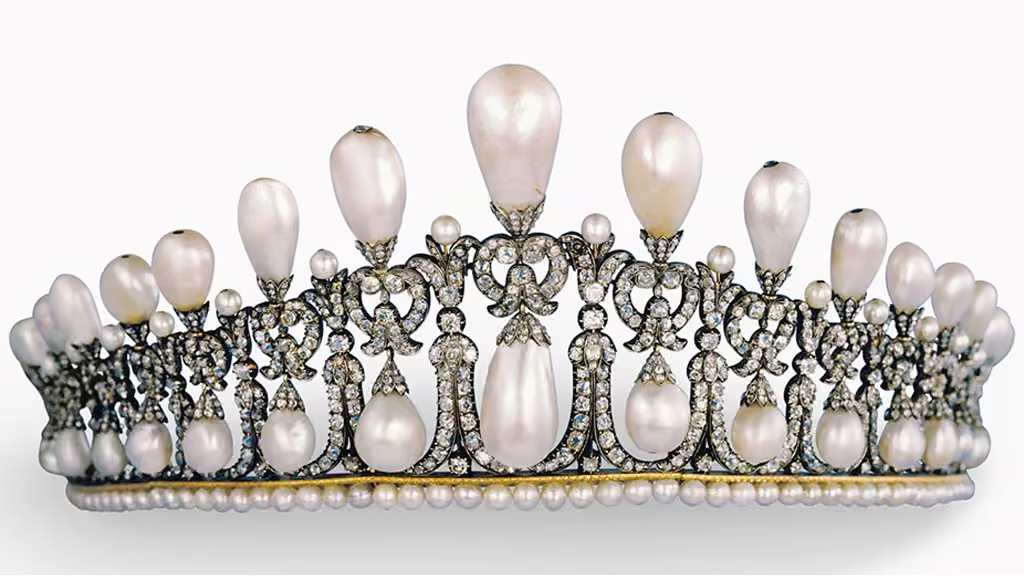 GIA
@GIAnews
From pearl corn to jade and demantoid peas to diamond cauliflower to spinel eggplant—which of these delectable vegetables is your favorite? Courtesy: Hemmerle


 GIA
@GIAnews
This faceted hololith ring is composed entirely of diamond. It weighs 13.15 carats and graded by GIA as Fancy Dark gray. It was polished from a 196 carat rough diamond crystal from Canada. (1) Photo: Simon Westlake/Reid Mackie. (2-4) Courtesy: Beaufort Diamonds


 GIA
@GIAnews
Happy Indigenous Peoples' Day! Seen here are Navajo jewelry made of turquoise and/or coral (1-2), Zuni inlay jewelry (3) and a Zuni fetish necklace (4).
(1) Photo: Danny Lehman via Getty Images; (2-4) Photo: Kevin Schumacher/ GIA. Courtesy: Jaime Steelman


 GIA
@GIAnews
The most common fancy diamonds, brown diamonds are colored due to distortion of the crystal lattice. Brown diamonds can occur on the D-Z scale or range from Fancy Light brown to Fancy Dark brown. Learn more: 4cs.gia.edu/en-us/blog/bravo-brown-diamonds/ (1) Photo: Shane F. McClure/ GIA. (3) Christie's


 GIA
@GIAnews
Image 1 shows baroque freshwater cultured pearls, 2-3 show freshwater, South Sea and Tahitian cultured pearls. All of the pearls seen here have natural color. Learn more: www.gia.edu/gia-news-research-Pearls-Forever-Fashionable (1-2) Yoko London. (3) Robert Weldon/ GIA. Courtesy: King's Ransom, Sausalito, CA.


 GIA
@GIAnews
We use spectroscopy to match polished diamonds to their original crystal of known origin. A diamond's spectroscopy is unique to each diamond. Seen here are diamond growth rings observed under deep UV light. Learn about GIA Diamond Origin: discover.gia.edu/diamond-origin
GIA
@GIAnews
Seen here are the Cullinan III, a 94.40 ct pear shape; Cullinan IV, a 63.60 ct cushion cut; and Cullinan VII, an 8.80 ct marquise cut. Cullinan III and IV are worn together in a brooch and Cullinan VII is set as a pendant in a necklace. Photo: Peter Macdiarmid via Getty Images
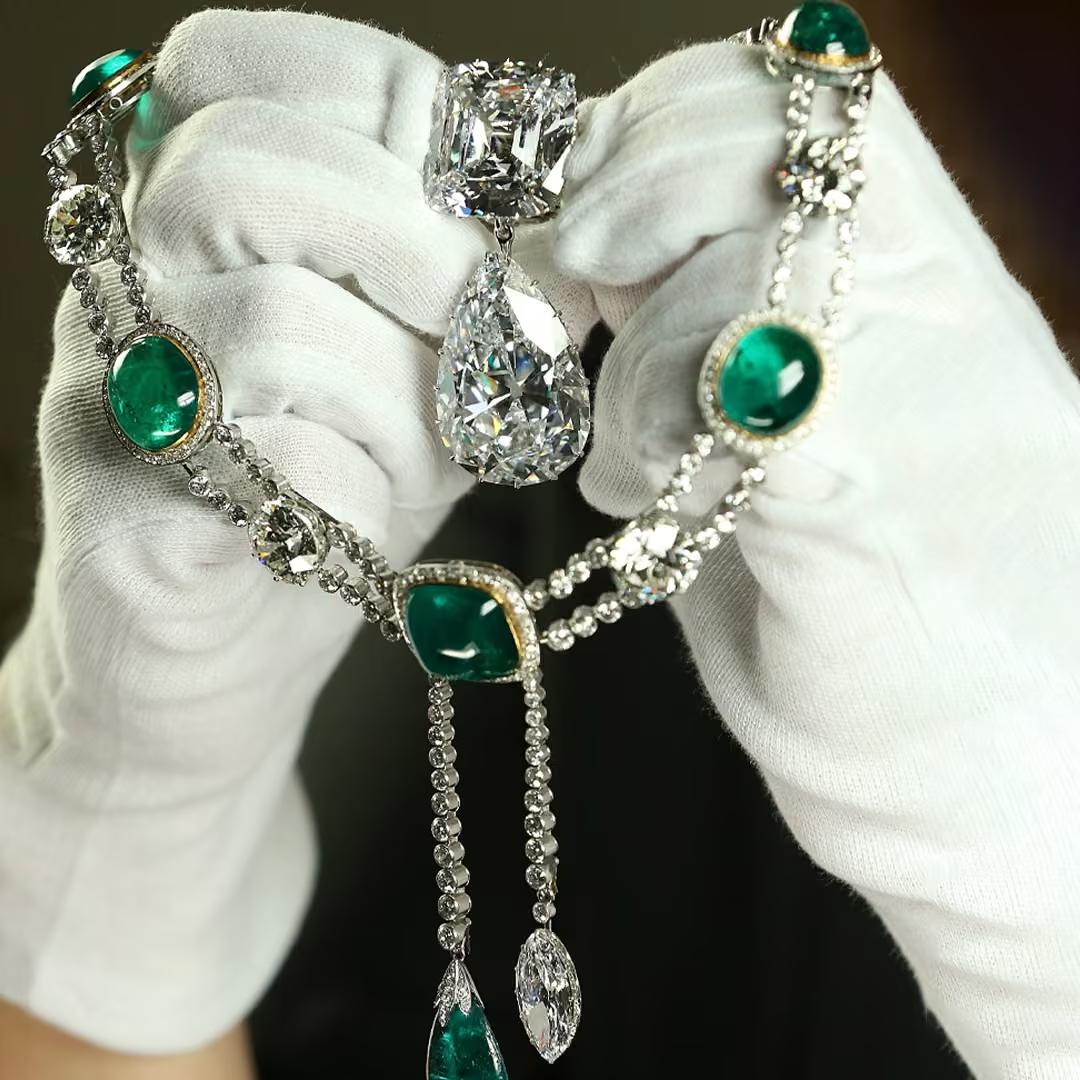 GIA
@GIAnews
This orchid brooch features blue and purple sapphires, blue zircons, black diamonds, coral and an abalone pearl. Abalone pearls are known for their high luster and colorful appearance. Learn more: www.gia.edu/gems-gemology/fall-2015-labnotes-large-natura… Photo: Orasa Weldon/GIA
 GIA
@GIAnews
Opals with large, distinct patches of intense red play-of-color against a dark background are highly sought-after. Learn about opal quality: www.gia.edu/opal-quality-factor Photos: Robert Weldon/GIA. Courtesy: (1) Gerry Manning (2) Richard Krementz Gemstones (3) Cody Opal


 GIA
@GIAnews
These natural colored diamonds from the Argyle mine include a Fancy purplish red oval, a Fancy Dark gray-violet shield cut, a Fancy Vivid purplish pink emerald cut and a Fancy purplish red emerald cut. GIA recognizes 27 hues for colored diamonds. Courtesy: Argyle Diamond
 GIA
@GIAnews
A deposit of high-quality peridot is being mined in Jilin, China, and some of its gems are being incorporated into modern designs. The jewelry in Image 1 depicts a stalk of wheat, image 2 represents a chrysanthemum flower. Image 3 portrays bamboo. Courtesy: Fuli Gemstones


 GIA
@GIAnews
This stunning freshwater cultured pearl shows gorgeous orient, a shimmer of iridescent rainbow colors on a pearl’s surface. Orient falls under the category of color, one of the value factors for pearl. Learn more about pearls: www.gia.edu/pearl-quality-factor Courtesy: Ahmadjan Abduriyim
 GIA
@GIAnews
Crystal opal is a transparent to semitransparent opal, often with exceptional play-of-color. This 6.58 carat crystal opal shows vivid play-of-color that includes highly-desirable red flashes. Photo: Robert Weldon/GIA, Dr. Eduard J. Gübelin Collection
 GIA
@GIAnews
The world’s finest blue sapphires come from Kashmir, Myanmar, Sri Lanka and Madagascar. Learn about the geology of corundum and emerald deposits: www.gia.edu/gems-gemology/winter-2019-geology-of-corundum… Photos: Vincent Pardieu/ GIA.

 GIA
@GIAnews
Journey along with GIA researchers Aaron Palke and Ziyin Sun tomorrow at 10 a.m. PDT as they dive into the science and mystery of phenomenal gems, nature’s rock stars. Register now: www.gia.edu
 GIA
@GIAnews
The Dancing Sun is a 204.36 carat diamond cut from a record-breaking rough diamond crystal found in Canada. Canadian diamonds help provide royalties, jobs and scholarships to indigenous communities. Explore GIA Diamond Origin: discover.gia.edu/diamond-origin-canada Courtesy: Christie's
GIA
@GIAnews
Most corundum is colored by more than one chromophore or cause of color. The gems seen here demonstrate what corundum would look like if it was only colored by a single chromophore. Learn about causes of color in corundum: www.gia.edu/gems-gemology/spring-2020-corundum-chromophores Courtesy: Lotus Gemology.
 GIA
@GIAnews
Sapphire often contains needle-like inclusions of rutile. When cabochon cut and oriented correctly, some gems containing rutile needles can exhibit a star effect, called asterism. Learn about sapphire inclusions: www.gia.edu/gems-gemology/summer-2017-inclusions-sapphire (1) Courtesy: Oscar Heyman; (2 & 3) GIA.


 GIA
@GIAnews
The "Ocean Chameleon" sculpture on left is carved from gem silica, known as chrysocolla chalcedony. The chrysocolla sculpture on the right portrays a life-like chameleon. (Left) Orasa Weldon. Courtesy: Lehrer Designs, Inc. (Right) Courtesy: Leslie Hindman Auctioneers.
 GIA
@GIAnews
The area where the Argyle mine is located is home to numerous indigenous peoples. They negotiated an agreement with Argyle, ensuring that millions of dollars flowed to local indigenous communities. Learn more : discover.gia.edu/diamond-origin Courtesy: Argyle Pink Diamonds.
 GIA
@GIAnews
This 1.44 carat bicolor pink and colorless diamond crystal was sent to the GIA laboratory in Antwerp for analysis. GIA scientists believe that the colorless portion of the crystal formed at a later time than the pink. Learn more: www.gia.edu/gems-gemology/spring-2021-labnotes-bicolor-ro… Photos: Nathan Renfro/ GIA

 GIA
@GIAnews
Realize the career of your dreams in gems and jewelry with a full or partial scholarship. Apply by September 30th. Learn more: www.gia.edu/gem-education-scholarship-instruction-informa…
GIA
@GIAnews
These baroque freshwater cultured pearls are known as 'fireballs' in the trade due to their intriguing shape. They are also stunning due to their strong orient. Learn about pearl quality: www.gia.edu/pearl-quality-factor Photo: Robert Weldon/GIA. Courtesy: Sea Hunt Pearls, Jack Lynch.
 GIA
@GIAnews
Happy Mid-Autumn Moon Festival! The rich color of the 132.55 carat Golden Empress diamond reminds us of the impressiveness of the full moon lighting up the night sky. Courtesy: Graff
 GIA
@GIAnews
Obsidian is a volcanic silica glass that forms when lava cools so fast that crystals do not have time to grow. Rainbow obsidian is unusual because light reflecting off layers of inclusions in the stone, creates iridescent bands and swirls of color. Courtesy: Rocks for the Spirit
GIA
@GIAnews
Rose-cut gems have a flat base with facets that meet at a point at the top of the gem. The late 17th-century monstrance seen here contains rose-cut colored stones. Learn more : www.gia.edu/gems-gemology/winter-2020-baroque-era-rose-cuts (1-2) © Hohe Domkirche Köln, Dombauhütte (2) Photo: Matz and Schenk

 GIA
@GIAnews
The 127.01 ct Portuguese Diamond is famous for its very strong fluorescence under ultraviolet (UV) light (2). In lighting conditions where there is no UV component (1), it appears brownish yellow. Learn more: www.gia.edu/famous-diamonds Courtesy: Chip Clark, Smithsonian Institution

 GIA
@GIAnews
Josefina Baillères used the knowledge she gained from her GIA Graduate Gemologist diploma and CAD/CAM certificate to found her own bespoke jewelry company, Josefina Jewelry. Seen here are her designs. Courtesy: Josefina Baillères


 GIA
@GIAnews
This magnificent ring features a 2.43 carat Fancy pink diamond surrounded by pink sapphires and rubies. Most pink diamonds are colored by deformation of their crystal structure, while pink sapphires and rubies are colored by chromium. Photo: @karlaticas. Courtesy: @maggisimpkins

 GIA
@GIAnews
The 88.22 carat Manami Star diamond was discovered in Botswana. In 2019, diamonds made up 60-85% of Botswana’s export earnings. Choose a diamond that makes a difference. Explore Diamond Origin Reports discover.gia.edu/diamond-origin Courtesy: Sotheby’s
 GIA
@GIAnews
Join our Knowledge Session tomorrow at 10 a.m. PDT as Wim Vertriest, Manager of Field Gemology at GIA Bangkok, explores the history, science and technique of treating blue sapphires and how to detect these treatments. Register now: www.gia.edu
 GIA
@GIAnews
Congratulations to Dr. James Shigley, GIA’s first and only distinguished research fellow and the latest recipient of the Robert M. Shipley Award – the most prestigious honor given by the American Gem Society (AGS)! Read more: www.americangemsociety.org/dr-james-shigley-receives-the-…
GIA
@GIAnews
Congratulations to Rachel Burazer, recipient of the second annual Beatrice Shipley Scholarship! Rachel works at Argo & Lehne, where she works as a custom designer and mentor to fellow colleagues. Read more about her story here: www.americangemsociety.org/gia-and-ags-award-2nd-annual-b…
GIA
@GIAnews
GIA is currently accepting scholarship applications through September 30, 2021! Both U.S. residents and international students may apply. Dive into a world of brilliance and color with us now! Apply today: www.gia.edu/gem-education-scholarship-instruction-informa…
GIA
@GIAnews
In the early 2000s, deposits of highly-fluorescent hot pinkish red "Jedi" spinels were discovered in Myanmar. Compare the difference in tone and saturation between "Jedi" spinel (L) and classic red Mogok spinel (R)! Learn more: www.gia.edu/gems-gemology/spring-2014-pardieu-jedi-spinel… Photo: Vincent Pardieu/GIA
 GIA
@GIAnews
On the 20th anniversary of September 11th, we honor the memory of those who perished in the attacks. These family heirlooms were recovered from a woman's safety deposit box in the World Trade Center. Courtesy: Robin Silvers. #neverforget
 GIA
@GIAnews
Do you know someone that wants to polish up their diamond and gemstone knowledge? Our Intro to Diamonds and Intro to Colored Stones Continuing Education seminars are are perfect for just that! Registration now open: www.gia.edu/gia-alumni/continuing-education Courtesy: Indojewels Inc.
 GIA
@GIAnews
Lesotho is known for its high-quality diamonds. The taxes and royalties generated by the growing diamond industry enables a brighter future for Lesotho's people. Learn more: discover.gia.edu/diamond-origin Photo: Robert Weldon/GIA. Courtesy: Fusion Alternatives, Antwerp
 GIA
@GIAnews
Beryl that isn't saturated enough to be called emerald is called green beryl. While its color is not as intense as emerald, it is lovely in its own right. Learn more: www.gia.edu/gia-gem-project-beryl Photo: Robert & Orasa Weldon/GIA. (Chameleon) Courtesy: Silverhorn, Santa Barbara, CA.
 GIA
@GIAnews
Two flat triangular crystals (called macles) grew together at just the right angle to form the shape of a star. The twinned diamond crystal on the left weighs 0.92 ct and the one on the right weighs 0.97 ct. Photo: Robert Weldon/GIA. Courtesy: Marvin Finker, Trillion Diamonds.
 GIA
@GIAnews
GIA scientists recently examined a D color, 0.53 carat round brilliant cut diamond with a cloud inclusion that looks like the profile of a faceted round brilliant diamond! Learn more: www.gia.edu/gems-gemology/spring-2021-microworld-diamond-… (1) Photo: Nathan Renfro/ GIA. (2) Photo: Marco Martinez/GIA.

 GIA
@GIAnews
A blue-tiful gem. The Blue Belle of Asia is an unheated sapphire that weighs an astounding 392.52 carats. It was found in 1926 in Ratnapura, Sri Lanka (Ceylon). Learn more about the September birthstone: www.gia.edu/sapphire. Courtesy: Christie’s
 GIA
@GIAnews
Morganite is the pink to orange-pink variety of beryl colored by manganese. Strong color in morganite is rare, and gems usually have to be large to achieve the finest color. Learn more: www.gia.edu/morganite-quality-factors
Photo: Robert Weldon/GIA. (Crystal) Gift of Dave Wilber.
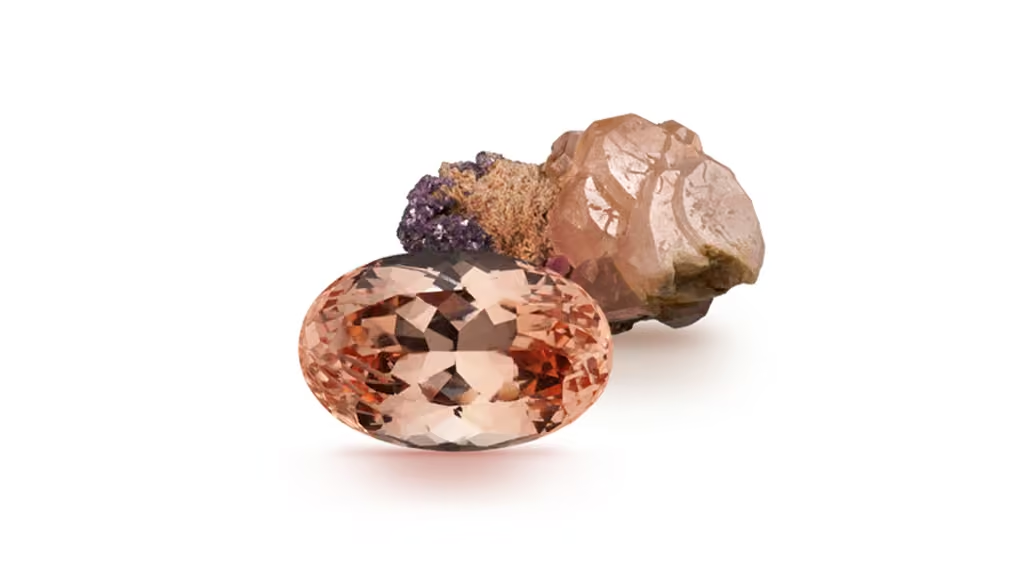 GIA
@GIAnews
We're live! Cheer on our most recent group of Graduate Gemologist grads!🎓💎
fb.watch/7OlJ7fBFHU/
GIA
@GIAnews
Tahitian cultured pearls come in an array of colors such as gray, black or brown and can have blue, green, purple or pink overtones. Curious about the quality of your pearl? Explore the new GIA Cultured Pearl Classification Report. Learn more: www.gia.edu/cultured-pearl-classification-report-service
 GIA
@GIAnews
Lithium niobate is a synthetic material remarkable for its extreme fire (three times greater than diamond). It was briefly used as a diamond simulant in the 1970s, but it is not durable enough for most jewelry (4.5 to 5.5 on the Mohs scale). Photo: Michael D. Cowing
 GIA
@GIAnews
Join us tomorrow at 10 a.m. PDT as Dr. Sally Magaña, Senior Manager of Diamond Identification, and Nicole Ahline, Senior Staff Gemologist, offer a look at some of the rarest, most unusual specimens submitted to the GIA laboratory. Register now: www.gia.edu
 GIA
@GIAnews
Realize the career of your dreams in gems and jewelry with a full or partial scholarship. Apply by September 30th. Learn more: www.gia.edu/gem-education-scholarship-instruction-informa…
GIA
@GIAnews
The 404 carat “4 de Fevereiro” diamond was discovered in Angola on its national independence day. Know your diamond's origin to know its impact on the communities that mined it: discover.gia.edu/diamond-origin Courtesy: Nemesis International DMCC ™

 GIA
@GIAnews
The Post emerald necklace was donated to the Smithsonian Institution by Mrs. Marjorie Merriweather Post, heir to the Post cereal fortune. Made in the 1920s, it features 24 baroque emerald drops from Colombia. Photo: Duncan Pay/GIA. Courtesy: The Smithsonian Institute
 GIA
@GIAnews
A deposit of large, high-quality peridot is being mined in Jilin Province in northeastern China. This peridot deposit is said to potentially be the largest in the world. Many of the gems found there are “grass” green in color and they are not treated. Courtesy: Fuli Gemstones


 GIA
@GIAnews
Learn how to determine country of origin for alexandrite, ruby, sapphire, emerald and spinel in GIA’s upcoming Advanced Colored Stones Country of Origin Seminar. Find out more: www.gia.edu/colored-stone-origin-seminar

 GIA
@GIAnews
Tsavorite garnets are generally small, which makes this 283.74 carat tsavorite crystal extraordinary. It was faceted by Victor Tuzlukov GG into a 116.76 carat gem. Learn more: www.gia.edu/gems-gemology/spring-2019-gemnews-largest-squ… Photos: Robert Weldon/ GIA. Courtesy: Bruce Bridges & the Bridges Family.


 GIA
@GIAnews
Weighing 15.81 carats, the Sakura is the largest Fancy Vivid purple pink diamond to ever appear at auction. Fewer than 10% of pink diamonds weigh more than 0.20 carat and only 4% of pink diamonds have color deep enough to be classified as Fancy Vivid. Courtesy: Christie's
GIA
@GIAnews
One of the rarest books on jade is now at GIA, check out the full story here: www.gia.edu/gia-news-press/bishop-jade-collection

 GIA
@GIAnews
There are three main emerald mining areas in Colombia—Muzo, Coscuez and Chivor. Seen here is an emerald crystal from Coscuez, Colombia. Learn about emerald country of origin determination: www.gia.edu/gems-gemology/winter-2019-emerald-geographic-… Photo: Robert Weldon/GIA. Courtesy: Roz and Gene Meieran Collection
 GIA
@GIAnews
Some of the extraordinary diamonds on display at the Smithsonian include the Portuguese Diamond, the DeYoung Pink Diamond, the Blue Heart Diamond, the Victoria-Transvaal Diamond and the Pearson Diamond. All were graded by GIA. Courtesy: Chip Clark/Smithsonian Institute
 GIA
@GIAnews
These color-change gems include garnet, tourmaline, fluorite and glass. Can you guess which is which? They change color under different lighting. Photo: Robert & Orasa Weldon/GIA. Courtesy: (Garnet) Robert Weldon, (Tourmaline) Bruce A. Fry, (Pyrope) Meg Berry.
GIA
@GIAnews
The modern carat system started with the carob seed. Early gem traders used them to weigh diamonds and other gems. Today, carat has been standardized and equals 0.20 grams, meaning 5 carats weighs 1 gram. Learn more: www.gia.edu/gia-about/4cs-carat Photo: Doni Persada via Getty Images.
 GIA
@GIAnews
Each year, GIA Jewelry Design students get the opportunity to compete for the prestigious Gianmaria Buccellati Foundation Award and win the opportunity to travel to Italy. Get to know Belle Sin Ting Wong from Hong Kong who is the recent winner. Watch now: www.youtube.com/watch?v=X8azIxbGMK8&t=9s
GIA
@GIAnews
The diamond industry creates jobs for tens of thousands of people in South Africa, and taxes on diamond companies help build schools and hospitals. Explore the GIA Diamond Origin Report: discover.gia.edu/diamond-origin because greater transparency leads to greater accountability.
 GIA
@GIAnews
Join us tomorrow at 10 a.m. PDT as GIA Senior Manager of Research Dr. Aaron Palke and GIA Research Scientist Dr. Evan Smith discuss how new minerals are discovered and named. Register now: www.gia.edu
 GIA
@GIAnews
Many red spinels form in marble and contain carbonate inclusions. Image 2 shows a negative crystal filled with carbonate crystals, yellow liquid, sulfide crystals and diaspore fibers. Image: (1) Robert Weldon/ GIA. Courtesy: Bill Vance, Vance Gems. (2) Photo: Victoria Raynaud

 GIA
@GIAnews
Pink diamonds are some of the most highly-desired gemstones in the world. This 10.64 carat Fancy Vivid purplish pink Internally Flawless diamond was sold at auction for roughly US$20 million in 2019. Courtesy: Sotheby's
 GIA
@GIAnews
Tanzanite is often zoisite that has been heated. Seen here is a 41.98 carat zoisite crystal. A 16.57 carat gem cut from the crystal is shown before and after heat treatment. Photo: Orasa Weldon/GIA. Courtesy: Meg Berry.
 GIA
@GIAnews
Mirabai Nagle, GIA GG, helps run Hands of Spirit, her family's store which specializes in crystals, minerals, carvings and more from all over the world. She “paints with crystals” by displaying unique gem specimens against Colorado’s stunning scenery. Courtesy: Hands of Spirit


 GIA
@GIAnews
Weighing 14.82 carats, the Orange is the largest Fancy Vivid orange diamond to appear at auction and one of the rarest diamonds in the world. Learn more: www.gia.edu/fancy-color-diamond/gem-overview Photo: Studio Diode SA - Denis Hayoun. Courtesy: Christie's
 GIA
@GIAnews
In Russia, diamond mining employs tens of thousands of people in rural communities, and diamond cutting has created thousands of jobs. Know your diamond's social impact. Explore the GIA Diamond Origin Report: discover.gia.edu/diamond-origin Courtesy: Alrosa
 GIA
@GIAnews
GIA awarded a $50,000 grant to Mercury Free Mining (MFM) and the Alliance for Responsible Mining (ARM) to focus on mitigating mercury use in artisanal gold mining in Ananea, Peru. Learn more about this project at: mercuryfreemining.org/news/gia-grant-provides-opportunity…
 GIA
@GIAnews
Seen here are four of the most common defects that can produce green hues in diamond. The most common cause is radiation exposure which causes GR1 (or vacancy) defects. The other diamonds contain yellow because nitrogen impurities are always present in these stones.
 GIA
@GIAnews
Melo pearls are produced by the melo melo sea snail, a carnivorous gastropod that lives in the oceans of Southeast Asia. Melo pearls are typically orangish in color and are most sought-after when they exhibit a gleaming, flame-like pattern. Courtesy: (1) Pham Van Long
 GIA
@GIAnews
Pallasite is a type of meteorite that contains crystalline olivine/peridot in a nickel-iron matrix. Learn more about peridot: www.gia.edu/peridot (1) (Rough) Gift of Gerald Stockton; (Cut) Courtesy: Bradley Payne. (2) Photo: Wolfgang Sauber. CC BY-SA 3.0.

 GIA
@GIAnews
An important deposit of copper-bearing tourmaline was discovered near Mavuco, Mozambique, about 20 years ago. Image 2 shows miners en route to the deposit. Learn more: www.gia.edu/gems-gemology/fall-2010-diamond-pearl-colored… (1) Photo: Robert Weldon/ GIA. Courtesy: Mozambique Gems. (2) Photo: Brendan Laurs/ GIA

 GIA
@GIAnews
Lapis lazuli is an aggregate of several minerals. Lazurite is responsible for its cobalt blue color, while calcite occurs as white veins, and pyrite is often seen as metallic flakes. Learn more: www.gia.edu/lapis-lazuli Box Courtesy: Paula Crevoshay & Nicolai Medvedev
 GIA
@GIAnews
Did you know Canadian diamonds are 3.5 billion years old? Know your diamond and its impact on the communities that mined it. Learn more: discover.gia.edu/diamond-origin. (1) Photo: Jian Xin (Jae) Liao/GIA. (3)Courtesy: Rio Tinto Diamonds


 GIA
@GIAnews
Join us tomorrow at 10 a.m. PDT as we dive into the latest and greatest content of GIA’s prestigious research publication, Gems & Gemology. Register now: www.gia.edu
 GIA
@GIAnews
Sapphires were first discovered during the mid-1800s in Montana by prospectors working the rivers for gold. Seen here is a selection of green to blue rough crystals and faceted sapphires from the Rock Creek deposit. Photo: Jeffrey A. Scovil. Courtesy: Potentate Mining LLC
 GIA
@GIAnews
Type Ia diamonds typically vary from near-colorless to light yellow and contain nitrogen atoms in clusters, while type Ib diamonds are often bright yellow and contain nitrogen as isolated atoms. Learn more: 4cs.gia.edu/en-us/blog/digging-diamond-types/. Courtesy: Christie's
 GIA
@GIAnews
Tsavorite and demantoid are two varieties of garnet known for their green color. This image shows both gems. Can you tell which is which? (Ring) Photo: Jeff Mason. Courtesy: Philip Zahm Designs. (Gem) Photo: Robert Weldon/GIA. Courtesy: William F. Larson, Pala International.
 GIA
@GIAnews
Peridot – one of August's birthstones – was valued throughout history for its distinctive “grass” green color. The stunning specimens seen here are from Jilin Province in northeastern China. Learn more: www.gia.edu/peridot-history-lore Courtesy: Fuli Gemstones

 GIA
@GIAnews
This rare, 6.21 carat Fancy Intense pink-purple diamond was unearthed in Siberia, where the diamond industry employs tens of thousands. Know your diamond's story and social impact. Explore GIA Diamond Origin: discover.gia.edu/diamond-origin Courtesy: Alrosa
 GIA
@GIAnews
We're live! Support our latest GIA Graduate Gemologist grads by tuning into their graduation ceremony on Facebook Live now! We hope you enjoy our brilliant program! #giagrad Watch now: www.facebook.com/GIAEducation/videos/210559574315433
 GIA
@GIAnews
The Cookie Monster geode, reportedly from Brazil, fluoresces brilliant blue under long-wave UV light, just like the color of @MeCookieMonster's fur! Read more: www.gia.edu/gems-gemology/spring-21-gemnews-c-is-for-cook… Photos: Robert Weldon/ GIA. Courtesy: Mike Bowers
GIA
@GIAnews
What's not to love about freshwater cultured pearls? They come in an extraordinary diversity of sizes, shapes and colors, including white, cream, yellow, orange, pink and purple. These pearls come from Earth's streams, rivers and lakes. Photo: Robert Weldon/GIA.
 GIA
@GIAnews
Seen here is an antique 41.30 carat engraved Imperial topaz. Topaz is pleochroic, which means it shows different colors in different crystal directions, and it can sometimes display two colors in the same gem. Photo: Robert Weldon/ GIA. Courtesy: Fei, New York
 GIA
@GIAnews
Greenland rubies are dug out from hard rocks beneath the ice in some of the toughest conditions on Earth. Faceted gems are rare, but Greenland rubies have a high level of traceability. Learn more: www.gia.edu/gems-gemology/spring-2019-gemnews-greenland-r… Photos: Robert Weldon/ GIA. Courtesy: True North Gems.


 GIA
@GIAnews
This ring features a 10.05 carat unheated Burmese ruby, called "pigeon's blood" in the trade. Its inclusions indicate that it originated from the Mogok Valley. Rubies have been mined in the Mogok Stone Tract in upper Myanmar since at least 600 CE. ©2021 Christie’s Images Limited
 GIA
@GIAnews
This 404.20 carat diamond crystal was found in Angola's Lulo mine. Diamonds currently make up roughly 5% of Angola's economy. Know the origin and social impact of your diamond with the GIA Diamond Origin Report: discover.gia.edu/diamond-origin Photo by Jian Xin (Jae) Liao.

 GIA
@GIAnews
Cut into a briolette, this 50.05 carat, D-Flawless, type IIa is as clear and limpid as a drop of pure water. Type IIa diamonds are the most chemically pure, containing no measurable impurities and are colorless. Learn more: 4cs.gia.edu/en-us/blog/digging-diamond-types/ ©2021 Christie’s Images Limited
GIA
@GIAnews
Marina Pilibosian, GG, AJP and her husband Ishkhan Bozabalian, JDT, AJP met against all odds. Soon after marriage, they studied at GIA together. This power couple uses their knowledge to sell and create stunning jewelry at Birmingham Jewelry in Michigan.


 GIA
@GIAnews
The Lomonsov diamond deposit near Arkhangelsk in Russia is known for producing a high percentage of colored diamonds. Roughly one in every 350 carats of Lomonosov’s 2 million carat per year output is fancy colored. Learn more: www.gia.edu/gia-news-research/russia-lomonosov-diamond-pr… Courtesy: Diarough
 GIA
@GIAnews
The 486.52 carat Blue Giant of the Orient sapphire is perhaps the largest known gem-quality sapphire in the world. It reportedly was found in Ratnapura, which means "city of gems" in the Sinhalese language. Courtesy: REUTERS / Alamy Stock Photo
 GIA
@GIAnews
The 5.05 carat, D, VVS1 Orlov diamond is one of five diamonds cut from a spectacular 179 carat rough crystal, called The Romanovs, found in Russia in 2015. Did you know that Russia is the world’s largest diamond producer by volume? Courtesy: Alrosa

 GIA
@GIAnews
Montepuez in Mozambique has become an important source of ruby in recent years. Many are smaller and flatter crystals with fine color. Image 3 shows the bottom of a jig after gem gravel has been cleaned. Learn more: www.gia.edu/gems-gemology/summer-2019-decade-of-ruby-from… Photos: Vincent Pardieu/ GIA


 GIA
@GIAnews
Pezzottaite is a cesium-rich member of the beryl group that has trigonal symmetry. (Rough and dragon carving) Photo: Robert Weldon/GIA. Courtesy: Granada Gallery (Cat's eye gem) Orasa Weldon/GIA, Dr. Edward J. Gübelin Collection
 GIA
@GIAnews
Diamond mining in Lesotho helps build schools and provide scholarships for students. Knowing your diamond's origin lets you know the impact your purchase has on the communities that mined it. Explore the GIA Diamond Origin Report: discover.gia.edu/diamond-origin. Courtesy: Graff
 GIA
@GIAnews
GIA examined the Hope diamond in 1997 and determined that it has Fancy Deep grayish blue color and strong red phosphorescence. Image 2 shows an earlier version of GIA's Diamond Grading Report. Learn more: www.gia.edu/famous-diamonds (1) Courtesy: Chip Clark, Smithsonian Institution

 GIA
@GIAnews
Ethiopian emeralds can look similar to other schist-hosted emeralds. However, GIA scientists can identify them in part by their multiphase inclusions (3) and irregular biotite crystals (4). Learn more: www.gia.edu/gia-alumni/emerald-country-origin-seminar (1-2) Courtesy: Michael Nemeth Inc.


 GIA
@GIAnews
Tune in to hear Robert Weldon, director of Richard T. Liddicoat Library; Al Gilbertson, project manager of cut research; and Cathryn Ramirez, executive director of alumni development, speak on diamond sourcing, origin and more. Starts today at 10 a.m. EDT: wirestream.tv/customer/iac/2021/07-13/index.asp
 GIA
@GIAnews
Get glowing with pearl knowledge by tuning in to @Jewelers_JA's National Convention seminar presented by GIA Director of Business Development Ivette Nersesyan-Stephanopoulos on Monday, July 19th 2:45 pm EDT. Learn how to register: www.convention.jewelers.org
 GIA
@GIAnews
This 88.22 carat D-Flawless oval brilliant cut diamond is almost as large as a pigeon's egg! Of all the one carat or larger diamonds submitted to GIA annually, less than half of 1% are D, Internally Flawless or D, Flawless. Learn more: 4cs.gia.edu/en-us/diamond-clarity/ Courtesy: Sotheby's
 GIA
@GIAnews
Nitrogen clusters are present in roughly 95% of gem diamonds, often giving these diamonds a pale yellow color. If nitrogen occurs as isolated atoms instead of clusters it can turn gems into rare, fancy yellow diamonds such as the stunning Graff Golden Empress. Courtesy: Graff


 GIA
@GIAnews
The inside of a gemstone can be as breathtaking as its outside. This photomicrograph shows a negative crystal next to rutile inside a ruby from Myanmar. Image two shows unheated ruby from Mogok (1) Courtesy: @innermineralien. (2) Photo: Robert Weldon/ GIA

 GIA
@GIAnews
The Anahí Mine produces amethyst and citrine and is famous for being the only commercial producer of natural ametrine. Seen here is a miner making his way through an amethyst-rich tunnel. Photos: Robert Weldon/ GIA. Courtesy: Minerales y Metales del Oriente, Bolivia, SA.


 GIA
@GIAnews
GIA’s Al Gilbertson, an expert on diamond cut, gave his perspective on the change in diamond cuts over the centuries as technology advanced and tastes changed. Read this article from the New York Times to learn about the importance of this ‘C’: www.nytimes.com/2021/07/05/fashion/jewelry-diamond-cuttin…
GIA
@GIAnews
Join us tomorrow at 10 a.m. PDT as we dive deep into the source and science of gemstones from the sea with GIA Senior Manager of Pearl Identification Dr. Chunhui Zhou . Register now: www.gia.edu
 GIA
@GIAnews
How does GIA determine a diamond's country of origin? We use a diamond's spectroscopic properties, which are like its “fingerprint,” to match the polished diamond to its original crystal. No two diamonds are exactly alike. Learn more: discover.gia.edu/diamond-origin Courtesy: Graff

 GIA
@GIAnews
The largest known geode in the world, the Pulpí Geode, is an egg-shaped cavity measuring roughly 25 x 7 x 5 feet that contains enormous gypsum crystals that formed between 60,000 and two million years ago. Courtesy: Javier Trueba/MSF/Science Photo Library
 GIA
@GIAnews
In 2007, a corundum deposit was discovered in Winza, Tanzania, which is the only place where red and blue parti-colored sapphires are routinely found. Learn more: www.gia.edu/doc/Winter-2008-Gems-Gemology-Rubies-Sapphire… Photo: Robert Weldon/ GIA. Courtesy: (crystal) Werner Radl; (stone) Mark Kaufman.
 GIA
@GIAnews
Check out this red and white (against blue) beauty! The star of the show is a 19.53 ct unheated Burmese star ruby. The star effect, aka asterism, occurs as a result of light reflecting off rutile inclusions, called silk. #happy4thofjuly ©2021 Christie’s Images Limited
 GIA
@GIAnews
GIA recently examined a 1.16 carat diamond found in the Crater of Diamonds State Park in Arkansas, the only fee-dig diamond mine in the world. Do you have the spirit of a miner? Check out our Gem Tour America map to see where you can mine your own gems: www.gia.edu/gem-map

 GIA
@GIAnews
How do GIA scientists know if a ruby is from Mozambique? Identifying features include amphibole inclusions and reflective, platelet-like particles. Learn more: www.gia.edu/gia-alumni/ruby-country-origin-seminar. (1) Photo: Robert Weldon/ GIA. Courtesy: Tommy Wu, Shire Trading Ltd., Hong Kong. (2-3) GIA.


 GIA
@GIAnews
Rubies are colored red by chromium, an element that also causes rubies to produce a red fluorescent glow under UV light. Learn more: www.gia.edu/ruby Photo: Robert Weldon/GIA. (Crystal) Courtesy: Bill and Jeanne Larson
 GIA
@GIAnews
A record-setting 1,174-carat diamond (image 1) was recently recovered from the Karowe mine in Botswana. It was recovered during the same production run as several other large, high-clarity pieces (image 2). Courtesy: Lucara

 GIA
@GIAnews
Iris agate breaks up transmitted light into spectral colors. The word "iris" means "rainbow" or "to make iridescent" and is derived from the name of the Greek goddess of the rainbow. Courtesy: Rocks for the Spirit
GIA
@GIAnews
Blue diamonds and green diamonds are both incredibly rare. What might be even rarer? Blue-green diamonds! This 7.58-carat Fancy Bluish Green beauty was colored by a combination of boron and natural exposure to radiation. Courtesy: Christie's
 GIA
@GIAnews
Sphalerite is sought after by gem collectors for its incredible fire, which is greater than that of diamond. However, care must be taken when wearing it as it is a soft stone (Mohs 3.5-4). Photo: Robert Weldon/ GIA. Courtesy: Paula Crevoshay.
 GIA
@GIAnews
Rock crystal quartz is a colorless variety of quartz that has been valued as a carving material throughout history. Courtesy: (Crystal) Gift of Serena Lam. (Bowl) Paul Dreher (Figure) Gift of the Dreher family
 GIA
@GIAnews
Diamonds form deeper in the Earth than any other gemstone hundreds of km below Earth's surface. Superdeep diamonds, like the 302.37 ct Graff Lesedi La Rona, form even deeper in Earth's mantle, where conditions are molten. Learn more: www.gia.edu/gems-gemology/winter-2018-how-do-diamonds-for… Courtesy: Graff.


 GIA
@GIAnews
Join us tomorrow at 10 a.m. PDT as Dr. George Harlow from American Museum of Natural History and Xiaodan (Holly) Jia from GIA Hong Kong cover the formation, sources, identification and treatments of jadeite jade. Register now: www.gia.edu
 GIA
@GIAnews
The allure of Tahitian cultured pearls is their dark bodycolor often coupled with stunning overtone. Want to know the quality of your Tahitian cultured pearl? Find out with the new GIA Cultured Pearl Classification Report. Learn more:www.gia.edu/gem-lab/laboratory-service-promotions Courtesy: Yoko London

 GIA
@GIAnews
The "Candelabra" is an elbaite tourmaline specimen found in Pala, California. Its banded color was caused by a change in growth solution from manganese-rich to iron-rich, creating a blue cap on top of each pink tourmaline "candle." Courtesy: The Smithsonian Institute
 GIA
@GIAnews
Happy Father's Day! The Dreher family has worked with gem materials in Idar-Oberstein, Germany for 13 generations. Image 2 shows two gorillas, one carved by Gerd, the other carved by his son Patrick. Courtesy: Patrick Dreher


 GIA
@GIAnews
Happy Juneteenth! As people throughout the US continue to advocate for justice and equality, we at GIA hold in memory those affected by violence, prejudice and injustice everywhere and mark this day as a celebration of freedom and of our common hope for peace and unity.
 GIA
@GIAnews
A massive diamond crystal has been discovered in Botswana. Possibly the 3rd largest gem-quality diamond crystal in the world, it weighs 1,098.3 carats. Seen here is President Mokgweetsi Masisi unveiling it to the public. Photo: Monirul Bhuiyan/AFP via Getty Images
 GIA
@GIAnews
Diamonds come in an assortment of colors, including blue, orange and pink. The diamonds here were graded Fancy Vivid blue, Fancy Vivid orange and Fancy Vivid purplish pink by GIA. They range in size from 2.13 ct to 2.34 ct. Learn more: www.gia.edu/fancy-color-diamond/gem-overview Courtesy: Christie's
 GIA
@GIAnews
It's June, so it's all about pearls! Whether you're a June baby and have it as one of your birthstones or you just love pearls, share your most jaw-dropping pearls using #shineandtell. Extra points if you show us your pearl with a GIA pearl report! Photo: MirageC via Getty Images
 GIA
@GIAnews
The 118.78 ct Graff Venus heart-shape diamond was cut from a 357 ct rough diamond crystal found in Lesotho. Know your diamond's origin: discover.gia.edu/diamond-origin Courtesy: (1) Maria Doulton/The Jewellery editor.com (2-3) Graff. (4) Edwin Remsberg via Getty Images.


 GIA
@GIAnews
Happy Dragon Boat Festival! Seen here are a feathered serpent brooch with fire opals, diamonds, fancy sapphires and green garnets and a dragon carved out of black opal. (1) Courtesy: Lydia Courteille. (2) Photo: Robert Weldon/GIA. Courtesy: Intogems Pty Ltd/Terry Coldham.

 GIA
@GIAnews
The 18th century gold horn pendant features a 125 ct Colombian emerald. The 17th century Hand of Vishnu (2) and 18th century necklace and earrings (3) are set with Golconda diamonds and Colombian emeralds. Learn more: www.gia.edu/gia-museum-exhibit-centuries-opulence-jewels-… Photo: Robert Weldon/ GIA.


 GIA
@GIAnews
These colorful corundum were beryllium diffused, or heated in the presence of beryllium, to achieve their rich color. To know whether your gemstone has been treated, submit it for a GIA Colored Stone Identification Report: www.gia.edu/gem-lab-service/colored-stone Photo: Robert Weldon/ GIA.
 GIA
@GIAnews
The lepidolite-covered red tourmaline crystal seen here is from the Jonas mine in Minas Gerais, Brazil and so most likely is the 13.26 carat cushion-cut pink tourmaline. Both are part of the GIA collection. Photo: Robert Weldon/ GIA
 GIA
@GIAnews
Curious how GIA scientists determine country of origin for some of Earth's greatest treasures, including ruby, sapphire, emerald and alexandrite? Find out by registering for our latest seminar! Register now: www.gia.edu/colored-stone-origin-seminar
 GIA
@GIAnews
Join us tomorrow at 10 a.m. PDT as Manager of Field Gemology, Wim Vertriest, takes us on a tour of sapphire deposits, from the illustrious digs in Yogo, Montana to the operations in Australia to the recently discovered fields of Madagascar. Register now: www.gia.edu
 GIA
@GIAnews
The 423 ct cushion cut Logan Sapphire is one of the largest faceted blue sapphires in the world. GIA examined this Sri Lankan beauty in 1997 and determined it to be natural and unheated. (1)Photo: Chip Clark/Smithsonian Institution. (2)Photo: Jakob Seybold-Epting via Getty Images

 GIA
@GIAnews
The Tahitian cultured pearls seen here were grown in French Polynesia. Curious about the quality of your cultured pearls? www.gia.edu/gem-lab-service/pearl Courtesy: Matteo Colombo via Getty Images
 GIA
@GIAnews
Moonstone is made up of stacked, alternating layers of orthoclase and albite. When light falls between these thin, flat layers, it scatters in many directions, producing adularescence. Learn more: www.gia.edu/moonstone-description Photo: Orasa Weldon/ GIA.
 GIA
@GIAnews
Weighing 426 pounds (nearly one million carats), this rutilated quartz sculpture was carved from a single 800-pound crystal found in Bahia, Brazil. It currently hangs in the lobby of GIA in Carlsbad. (Image 1) Photo: Judy Colbert/ GIA. (Image 2) Photo: Harold and Ericka Van Pelt

 GIA
@GIAnews
Larimar is a trade name for blue pectolite found only in a remote region in the Dominican Republic. Some say this stone resembles the color of the Caribbean Sea. (1): Photo: Dallas Stribley via Getty Images. (2): Photo: Orasa Weldon/ GIA. Courtesy: Daniel J. McAuley.

 GIA
@GIAnews
Are you interested in how diversity strengthens design? Check out the World Jewellery Confederation CIBJO's Diversity & Design webinar featuring GIA CEO Susan Jacques and diverse leaders and designers in the industry. Watch the recording: www.youtube.com/watch?v=K4lOm4yJIOE
 GIA
@GIAnews
The Cruzeiro mine in Minas Gerais, Brazil produces roughly eight tons of tourmaline a year, allowing this family-owned mine to support roughly 150 employees. This mine will likely be a vital tourmaline producer for years to come. Photo: Andrew Lucas/GIA. Courtesy: Cruziero Mine
 GIA
@GIAnews
The Argyle Mine, which produced 90% of the world’s pink diamonds, provided jobs and millions in royalties to local indigenous communities as part of the Indigenous Land Use Agreement. Learn more: discover.gia.edu/diamond-origin (1)Photo: Robert Weldon/GIA. (2)Copyright: ©2016 Rio Tinto

 GIA
@GIAnews
Discover the quality of your South Sea, Akoya or Tahitian cultured pearls with the new GIA Cultured Pearl Classification Report. Find out more: www.gia.edu/gem-lab/laboratory-service-promotions (1-2)Courtesy: Yoko London. (3) Photo: Valerie Powers/ GIA. (Pearls) Gift: Jewelmer; (Shells) Gift: China Pearl.


 GIA
@GIAnews
Are you a business and sales rockstar with experience purchasing and selling colored stones from vendors? If so, you might be a good fit for GIA’s job opening – Director of Global Business Development (Colored Stones). Apply now: gia.wd1.myworkdayjobs.com/en-US/GIA/job/New-York-New-York… Photo:Robert Weldon/GIA
 GIA
@GIAnews
Did you know that alexandrites from each locale have distinctive appearances and traits that set them apart? Learn country of origin determination in the upcoming live Advanced Colored Stones Country of Origin Seminar led by GIA experts. Learn more: www.gia.edu/colored-stone-origin-seminar
GIA
@GIAnews
Although Brazil currently produces less than 1% of the world's diamonds, a number of famous diamonds originated there. The 5.11 carat Moussaieff Red was graded Fancy red by GIA and is the largest known red diamond in the world. Photo: Shane McClure/ GIA.
 GIA
@GIAnews
This 18.68 carat opal cabochon from a deposit near Wegel Tena in Ethiopia displays strong zoning. The bands represent many of the types of opal found there, which vary from transparent to opaque, brownish orange to white, with and without play-of-color. Photo: Robert Weldon/GIA
 GIA
@GIAnews
Emeralds from Chivor, Colombia tend to have a slightly bluish green color and fewer inclusions than emeralds from Muzo. This necklace contains 23 emeralds from Chivor. Learn more: www.gia.edu/gems-gemology/summer-2016-rainier-footsteps-j…. Photos: Robert Weldon/GIA; (1) Courtesy: Ronny Levy, Period Jewels, Inc.

 GIA
@GIAnews
Zircon is a natural gemstone that is the oldest mineral on Earth (up to 4.4 billion years old!). Zircon is known for its fire and brilliance and for occurring in a wide range of colors. Photo: Robert Weldon/ GIA. Courtesy: Colorfirst, Raja Shah. Tampa. FL.
 GIA
@GIAnews
Don't miss GIA CEO Susan Jacques' interview with PCH Driven Podcast, a podcast that showcases Southern California entrepreneurs, innovators and leaders and their roads to success. Learn about GIA initiatives and life lessons that inspired Jacques' career: www.pchdriven.com/episodes-1/gemological-institute-of-ame…
 GIA
@GIAnews
The Aurora Butterfly of Peace consists of 240 fancy colored diamonds, many of which fluoresce under UV light. These diamonds were assembled over a 12-year period. Learn more: www.gia.edu/gems-gemology/spring-2016-photoluminescence-s… Photo: Robert Weldon/ GIA. Courtesy: Alan Bronstein and Aurora Gems
GIA
@GIAnews
What secrets does your diamond hold? Join GIA Research Scientist Dr. Evan Smith tomorrow at 10 a.m. PDT as he dives into diamond inclusions and explores the methods used to identify them. Register now: www.gia.edu
 GIA
@GIAnews
Rose quartz owes its color to microscopic inclusions of aligned silicate mineral fibers. Light reflecting off the inclusions produces a six-rayed star if the gem is correctly oriented and cut. Learn more: www.gia.edu/rose-quartz Photo: Orasa Weldon. Courtesy: Pala International.
 GIA
@GIAnews
The color of fancy colored diamonds is graded according to hue, tone (darkness or lightness) and saturation (intensity). All of the diamonds here fall in the yellow hue range; differences in their tone and saturation result in different color grades. Photo: C. D. Mengason/ GIA
 GIA
@GIAnews
Tourmaline is loved for its range of color, sometimes with two or more hues in the same crystal, and because it is found in large sizes. Learn more: www.gia.edu/tourmaline-description Photos: Robert Weldon/ GIA. Courtesy: (L) Silverhorn, Santa Barbara, CA; (R) William F. Larson family
 GIA
@GIAnews
Minas Gerais, Brazil produces many gems, such as emerald, tourmaline, aquamarine and topaz. These two beauties weighing 13.36 and 11.18 carats are from Ouro Preto, Brazil. Learn more: www.gia.edu/topaz (1) Courtesy: Jeff Scovil; (2) Photo: John W Banagan/ Getty Images.

 GIA
@GIAnews
Paraíba tourmaline is valued for its neon blue to green color caused by copper and manganese. First discovered in Paraíba, Brazil, also found in Nigeria and Mozambique. (1-2) Robert Weldon/GIA. Courtesy: Hussain and Sherry Rezayee (3) Robert Weldon/GIA. Courtesy: Gerhard Becker


 GIA
@GIAnews
This emerald brooch/pendant combination, made by Cartier in 1927, contains Colombian emeralds accented with diamonds and onyx. Polished and carved gems (notice the emerald flower at the top) and drops that are drilled through are typical of Mughal-era jewelry. Courtesy: Sotheby's
 GIA
@GIAnews
This is a spectrum of fancy colored diamonds from the Aurora Pyramid of Hope, a collection of 296 natural, fancy colored diamonds that is one of the most comprehensive in the world. It was assembled by Alan Bronstein and Harry Rodman. Photo: Robert Weldon. Courtesy:Alan Bronstein
 GIA
@GIAnews
Blue is one of the rarest colors of spinel and is caused by the presence of cobalt. We love this 4.20 carat grayish blue spinel. Learn more: www.gia.edu/spinel-quality-factor. (1) Photo: White Pig Studio. Courtesy: Omi Privé (2) Photo: Robert Weldon/ GIA. Courtesy of William F. Larson.

 GIA
@GIAnews
This month's #shineandtell is a free-for-all! Post your favorite gems for a chance to be featured in our Instagram stories! These are from GIA's Gübelin Collection of 2800 gems (225 different minerals)! Explore more: www.gia.edu/gia-gubelin-gem-project-research Photo: Robert Weldon/ GIA.
 GIA
@GIAnews
Amber from the Dominican Republic, Mexico and Myanmar often has such strong fluorescence that it shows a blue or greenish blue glow when viewed against a black background in sunlight. Learn more: www.gia.edu/gems-gemology/summer-2014-liu-color-phenomena… Photo: Robert Weldon/ GIA. Courtesy: Ambar Azul.
 GIA
@GIAnews
Wollo, Ethiopia produces many beautiful and affordable opals, with many being hydrophane. This means they are porous enough to absorb water. This gorgeous specimen is hydrophane. Learn more: www.gia.edu/gems-gemology/FA13-LN-technique-hydrophane-opal Courtesy: Rocks for the Spirit
GIA
@GIAnews
Hailing from Sri Lanka, Chamal Jayaratna is a jewelry designer skilled at CAD/CAM. He earned his Applied Jewelry Professional (AJP) diploma after winning a scholarship to GIA through a jewelry design competition!


 GIA
@GIAnews
Advanced software is often used to map out the inclusions within a rough diamond crystal before cutting it with state-of-the-art lasers. The legendary 302.37 carat Graff Lesedi la Rona and sixty-six smaller diamonds were cut from this 1,109 carat diamond crystal. Courtesy: Graff


 GIA
@GIAnews
These Madagascan pink sapphires were low-temperature heat-treated to remove a blue tint, revealing a purer pink color. Learn more by registering for our Continuing Education Seminar : www.gia.edu/low-temperature-heat-treatment-corundum-seminar Photo: Robert Weldon/ GIA. Courtesy: Jeff Hapeman, Earth’s Treasury
 GIA
@GIAnews
Join us tomorrow at 10 a.m. PDT as we dive into the latest issue of Gems & Gemology, GIA’s prestigious scientific journal, with contributors Dr. Sally Magaña and Nicole Ahline. Register now: www.gia.edu
 GIA
@GIAnews
Tourmaline’s name comes from the Sinhalese word toramalli, which means “mixed gems.” Tourmaline comes in a dazzling range of colors and combinations of colors. This 13.49 ct green tourmaline shows flashes of blue. Learn more: www.gia.edu/tourmaline-history-lore Courtesy: Kat Florence Atelier
 GIA
@GIAnews
Know the quality of your pearls with the new GIA Cultured Pearl Classification Report. Submit your pearls now through June 21, 2021 to receive a 20% discount. Find out more: www.gia.edu/gem-lab/laboratory-service-promotions (1) Photo: Wim Vertiest/GIA. (2) Courtesy: @YokoLondon

 GIA
@GIAnews
Did you know that conch shells can give birth to incredible works of art? Carved from a conch shell, this ring captures its graceful spiral. The Queen conch can also produce rare conch pearls! (1)Photo: Robert Weldon/GIA. Gift of Bradley D. Weber (2) Copyright: GIA & Tino Hammid

 GIA
@GIAnews
An emerald deposit has been discovered in the Julian, California. This is the first time emeralds have been found here, and about 5–10% of the emeralds collected so far contain citrine! Learn more: www.gia.edu/gems-gemology/winter-2020-gemnews-new-emerald… (1) Photo: Myke Clarkson; (2) Photo: Aaron Celestian.

 GIA
@GIAnews
These faceted green gems are pallasitic peridot from the Jepara meteorite in Indonesia. The slab is from a meteorite in Argentina. Learn more: www.gia.edu/gems-gemology/spring-2020-microworld-pallasit… (Slab) Orasa Weldon/ GIA. Gift of Gerald Stockton (Cut gems) Robison McMurtry/ GIA. Courtesy: Bradley Payne
 GIA
@GIAnews
Check out our Continuing Education seminar, The 7 Value Factors of Pearls, on May 19; 10 am-12 pm PT! Learn how to evaluate the quality of akoya, South Sea, Tahitian and freshwater cultured pearls. Register now: www.gia.edu/7-value-factors-pearls-seminar Photo: Matteo Colombo/ Getty Images.
 GIA
@GIAnews
This (multi) million-dollar baby was bought by John D. Rockefeller, Jr. in 1934 from an Indian Maharajah. One of the most valuable sapphires in the world, it is remarkable for its size (62.02 carats), clarity and Burmese origin. Courtesy: Christie's
 GIA
@GIAnews
These diamond earrings feature a 0.73 carat Fancy blue heart-shaped diamond and a 0.63 carat Fancy Intense purplish pink heart-shaped diamond. Know the quality of your colored diamonds with our suite of GIA Grading Reports: www.gia.edu/gem-lab-service/colored-diamond Courtesy: Christie's


 GIA
@GIAnews
GIA CEO Susan Jacques will be participating in @RJCJewellery's leadership panel discussions on #humanrights #duediligence in the #jewelry and watch supply chain, exploring practical solutions on how to deepen consumer confidence and build trust. Join us May 5th 2-4:50 pm BST.
 GIA
@GIAnews
Madagascar is known for producing exquisite gems, including sapphire. In Ilakaka local authorities don’t allow mechanical mining so more people can be employed in mining sapphire. (1) Photo: Wimon Manorotkul. Courtesy: Neil Doohan. (2) Photo: Rosey Perkins

 GIA
@GIAnews
In 1955, Diamond Corporation, Ltd donated 1,500+ carats of diamonds to GIA. Named the Sir Oppenheimer Student Collection, the gift allowed GIA to increase its diamond evaluation and grading training. Photo: Robert Weldon/GIA. Sir Oppenheimer Student Collection.
 GIA
@GIAnews
According to Pliny the Elder, "nothing greens greener" than emerald. The specimens seen here are a 3.92 carat cut gem with 20 and 23 mm emerald crystals. Learn more: www.gia.edu/birthstones/may-birthstones Photo: Robert Weldon/ GIA. Courtesy: William F. Larson, Pala International
 GIA
@GIAnews
We're live! Support our latest GIA Graduate Gemologist grads by tuning into their graduation ceremony on Facebook Live now! We hope you enjoy our brilliant program! Watch here: www.facebook.com/GIAEducation/videos/489075652133951 #graduationday
 GIA
@GIAnews
Nature's masterpieces. Check out these magical rutilated quartz spheres! Rutile, a titanium oxide mineral, often forms as needle-like crystals in quartz and is valued for its artistic effect. Learn more: www.gia.edu/gems-gemology/spring-2014-gemnews-tucson-ruti… Courtesy: Rocks for the Spirit
GIA
@GIAnews
The Welcome Stranger gold nugget - reportedly the largest gold nugget ever found - weighed over 2,280 ounces. It was unearthed in 1869 in the gold fields near Moliagul, Victoria, Australia. Seen here is a replica of the famous nugget. Courtesy: Dunolly Museum

 GIA
@GIAnews
Join us tomorrow at 10 a.m. PDT for a brilliant journey with Dr. Sally Magaña, Senior Manager of Diamond Identification, as she dives into the science of one of the world’s most popular gems – colorless diamonds. Register now: www.gia.edu
 GIA
@GIAnews
A celestial rock star! This 4.67-carat Sri Lankan star gray spinel has asterism due to its short, needle-like inclusions. Learn more: www.gia.edu/gems-gemology/summer-2018-microworld-star-spi… Photo: Robert Weldon/GIA. Courtesy: Gordon Bleck
 GIA
@GIAnews
Diamond is April's birthstone and one of the most popular gemstones in the world. Share your dazzling treasures with us, whether colored or colorless, using #shineandtell for a chance to be featured in our Instagram stories. Copyright: GIA and Harold & Erica Van Pelt.
 GIA
@GIAnews
Handpicked by Beyoncé, the recipients of the Beyoncé Knowles-Carter x Lorraine Schwartz GIA scholarship are former Marine Field Radio Operator Shelton Bradford, law school graduate Audriana Osborne and jewelry designer and entrepreneur Kulla Jatani.


 GIA
@GIAnews
Check out this pyrope-spessartine garnet that contains a blue apatite crystal! This photomicrograph (Image 2) shows the apatite crystal surrounded by intersecting rutile needles. Learn more: www.gia.edu/gems-gemology/winter-2020-microworld-apatite-… (1) Diego Sanchez/ GIA; (2) Jessa Rizzo/ GIA

 GIA
@GIAnews
The 45.52-carat Hope diamond, graded VS1 Fancy Deep grayish blue, is known for its striking red phosphorescence. Scientists think it is probably caused by the interaction of boron with other defects present in the stone. Photo: Chip Clark. Courtesy: Smithsonian Institution


 GIA
@GIAnews
At the time of its 2015 sale, the 16.08-carat Sweet Josephine diamond was the largest cushion-shaped Fancy Vivid pink diamond sold at auction and one of three fancy pinks more than 10 carats to be sold in the past 250 years. Photo: Antfarm Photography. Courtesy: Christie's
 GIA
@GIAnews
Happy Earth Day! Did you know that Earth’s mantle sometimes contains unexpected pockets of molten iron-nickel metal that help facilitate the growth of the largest-known gem diamonds? (1) Courtesy: Carnegie Institution for Science/ Katy Cain; (2) Photo: Evan Smith/ GIA.

 GIA
@GIAnews
The 221.81 carat Delaire Sunrise, reportedly the largest square emerald cut Fancy Vivid yellow diamond in the world, came from South Africa and was named after the Delaire Graff Estate. (1) Courtesy: Graff; (2) Photo: Mario Aurich. Courtesy: Getty Images/EyeEm

 GIA
@GIAnews
Audriana Osborne, Shelton Bradford and Jatani Kulla are the recipients of the Beyoncé Knowles-Carter X Lorraine Schwartz GIA Scholarship Award. They will be studying GIA's GG program through distance learning. Congratulations! Full video here: www.youtube.com/watch?v=xVYk4j03evc
 GIA
@GIAnews
The quality of jadeite is determined by three factors — color, transparency and texture. The finest jadeite is vivid green, semi-transparent and has fine texture. The jadeite in this necklace displays all of these qualities. Learn more: www.gia.edu/jade-quality-factor Courtesy:Christie's
 GIA
@GIAnews
Grandidierite is an extremely rare gem first discovered in Madagascar in 1902. This ring is set with a 2.21 carat grandidierite center stone surrounded by diamonds and alexandrites. (1)Photo: Blanca Espinoza. Courtesy: Omi Privé (2)Photo: Delphine Bruyère. (3)Photo: Julien Raoul


 GIA
@GIAnews
Did you know that pearls are graded based on the GIA 7 Pearl Value Factors™ – size, shape, color, luster, surface, nacre and matching? Learn more: www.gia.edu/cultured-pearl-classification-report-service Courtesy: (Image 1) Luis Davilla/ Getty Images. (Image 2) Yoko London.


 GIA
@GIAnews
These gems aren't just brilliant — they're trilliant. Can you guess what gems they are? Some are tourmaline, but others are unusual gems like apophyllite and sphalerite. Check out Image 2 to know their identities! Photo: Robert Weldon/GIA. Courtesy: Roz & Gene Meieran Collection.

 GIA
@GIAnews
Olivia Landau & Kyle Simon met at GIA where Olivia was pursuing her GG and Kyle his Graduate Diamonds diploma. Together they transformed The Clear Cut into a multi-million dollar company that specializes in bespoke diamond engagement rings. Courtesy: Olivia Landau & Kyle Simon


 GIA
@GIAnews
Did you know that X-rays not only reveal bones but have applications in gemology as well? Find out more about X-rays tomorrow at 10 a.m. PDT with Nick Sturman, Consultant to GIA, in this latest GIA Knowledge Session. Register now: www.gia.edu
 GIA
@GIAnews
Discovered in September 2020 at the Cullinan mine, the Letlapa Tala Collection consists of five Type IIb blue diamonds weighing 25.75 carat (ct), 21.25 ct, 17.57 ct, 11.42 ct and 9.61 ct. In Northern Sotho, a local language, letlapa tala means blue rock. Courtesy: Petra Diamonds

 GIA
@GIAnews
This spectacular 75.61 carat Colombian emerald was part of Catherine the Great's collection of jewels. It was said that the Russian empress liked to put on emeralds before tough meetings with generals. Photo: Russell Shor/GIA. Courtesy: Christie's
 GIA
@GIAnews
Around 26 million years ago, magma pushed upward through the earth creating a limestone mountain near Naica, Mexico. This forced hot, mineral-rich fluids into caverns, and from these waters the giant crystals grew. Learn more: www.gia.edu/gia-news-research/gemologist-aims-pique-world… Courtesy: Leela Hutchison

 GIA
@GIAnews
The 118.78 ct Graff Venus diamond was crafted from a 357 ct rough found in the Letšeng mine in the Kingdom of Lesotho. At over 10,000 feet altitude, the Letšeng is one of the highest diamond mines in the world. (1) Courtesy: Graff. (2)Photo: Edwin Remsberg/Getty Images.

 GIA
@GIAnews
Twenty-five-year-old Kettisak Kitphiar from Rayong Province in Thailand found a 55.10 ct melo pearl after cooking a sea snail in September, 2020. The rare melo pearl ranges in color from orange to tan to brown and is known for its flame-like patterns. Courtesy: Kettisak Kitphiar

 GIA
@GIAnews
This sapphire and diamond demi-parure dates back to 1870 and once belonged to Marie Bonaparte, great-grandniece of Emperor Napoleon I. The source of these sapphires is not known, but many sapphires used in royal jewelry during this time came from Sri Lanka. Courtesy: Sotheby's
 GIA
@GIAnews
GIA scientist Dr. Evan Smith, known for unearthing knowledge about the geological formation of large, high-quality, super-deep diamonds, discovered that many of these were made from materials carried into the mantle through subduction. www.gia.edu/gia-news-press/rare-diamonds-unlocks-earths-s… Courtesy: Graff
 GIA
@GIAnews
Labradorite is known for its labradorescence, which occurs when light strikes microscopic layers within the stone, creating parallel bands of color. Learn more: www.gia.edu/gia-news-research/optical-effects-phenomenal-… Photo: Robert Weldon/ GIA. Courtesy: Black Star Trading Company, Flagstaff, AZ.
 GIA
@GIAnews
These egg-straordinary eggs were created by master cutter Dieter Jerusalem. It took him 40 years to collect, cut and polish 850 gem and mineral eggs! (1) Robert Weldon/GIA; (2-4) Orasa Weldon/GIA. Courtesy: Jay Walker, Curator of The Library of the History of Human Imagination.


 GIA
@GIAnews
Old-mine cut diamonds are commonly seen in Georgian (1714-1837) and Victorian (1837-1901) jewelry. They have a squarish shape and typically have a smaller table, larger culet and higher crown than a modern brilliant cut. Learn more: 4cs.gia.edu/en-us/blog/old-mine-cut-diamond/. Courtesy: Christie’s
 GIA
@GIAnews
Happy April Fool's Day! Today we're exploring a common misnomer. This is "Balas ruby" shown on the left next to actual ruby! Can you tell us the gemological name? Photo:(left) Orasa Weldon/GIA; (right) Robert Weldon/GIA. Courtesy: palagems.com and William Larson.
 GIA
@GIAnews
Answer: "Balas ruby" is red spinel.
GIA
@GIAnews
Only 13 Fancy red diamonds have been included in Argyle’s annual tender over the past 30 years. The 1.21 carat radiant cut diamond is the Argyle Cardinal. Its color and size make it one of the rarest diamonds in the world. Learn more: 4cs.gia.edu/en-us/blog/red-diamonds-rarest/ Courtesy: Rio Tinto
 GIA
@GIAnews
Join us tomorrow at 10 a.m. PDT as Wim Vertriest, supervisor of field gemology, explores how alexandrite and spinel form in the earth’s crust and why pegmatites are known as ‘natures treasure chest.’ Register now: www.gia.edu
 GIA
@GIAnews
The Dreher family in Idar-Oberstein, Germany, has worked with gem materials for 13 generations. Seen here are a tourmaline frog, an aquamarine chameleon and a rose quartz piglet carved by Gerd Dreher (1939-2018), with an amethyst rabbit carved by his son Patrick.
 GIA
@GIAnews
Happy 168th birthday to Vincent Van Gogh! The 111.96 ct Starry Night sapphire was named after his painting. It owes its asterism to rutile inclusions and its color to iron-titanium pairs in its crystal lattice. (1)Robert Weldon/GIA. Courtesy:Benjamin Zucker. (2-3)John Koivula/GIA


 GIA
@GIAnews
Some tanzanite is naturally blue to violet or purple, but most is vanadium-containing brown zoisite that has been heated to turn it into tanzanite. This image shows zoisite on the left and tanzanite on the right (before and after heat treatment). Photo: Robert Weldon/ GIA
 GIA
@GIAnews
This eggshell-thin nephrite vase is a paragon of Chinese art. The uniformity of its thickness (thin enough to let light through) and the fineness of its carved lotus branches, demonstrate incredible skill and craftsmanship. Courtesy: GAC
 GIA
@GIAnews
GIA's legacy is built on the passion of numerous female pioneers, one of whom is Jill Fisher. She taught and edited GIA’s first pearl course and helped to revise the Federal Trade Commission’s pearl guidelines for the industry. Courtesy: Dick Whittington Photography


 GIA
@GIAnews
The Constellation rough diamond weighs a whopping 812 carats. It belongs to a special group of diamonds called CLIPPIR diamonds, which formed deep within the earth at a depth between 360 and 750 km. Learn more: www.gia.edu/diamonds-reveal-inner-workings-of-earths-mantle. Photo: Jian Xin (Jae) Liao/GIA.
 GIA
@GIAnews
The "Tarugo" is a purplish red tourmaline crystal measuring 33.5 inches (85 cm) and weighing 180 pounds (82 kg). Found in the Jonas mine in Minas Gerais, Brazil in 1978, its name means short, fat, ugly man! Photo: Robert Weldon/GIA. Courtesy: E. F. Watermelon & Co.
 GIA
@GIAnews
One week away from the scholarship application deadline! Don't miss this chance to apply for a full or partial scholarship to attend one of GIA's prestigious programs! Both U.S. residents and international students may apply. Apply today: www.gia.edu/gem-education-scholarship-instruction-informa…
GIA
@GIAnews
Tune in tomorrow at 10 a.m. PDT as GIA Research Scientist Dr. Evan Smith digs into kimberlite volcanoes and uncovers the role they play, not just in transporting gem diamonds, but in revealing the geological workings of the Earth. Register now: www.gia.edu
 GIA
@GIAnews
It‘s difficult to quantify the AAPI community’s importance and contribution to our culture. Without these diverse voices, our organization would lose much of its brilliance. We cannot let these lives and voices be silenced. Or tolerate racism against any community in any form.
 GIA
@GIAnews
In 2018, Sotheby's Geneva held a significant auction of the Bourbon-Parma French royal family's jewels. Around 100 lots were sold, 10 of which were items that once belonged to the French queen, Marie Antoinette (1755-1793). Learn more: www.gia.edu/gems-gemology/fall-2020-european-royal-jewel-… Courtesy: Sotheby's


 GIA
@GIAnews
Rose quartz often has a soft, cloudy translucence that can resemble moonstone. Add a star caused by light reflecting off aligned silicate mineral fibers and this gem becomes truly phenomenal. Learn all about rose quartz: www.gia.edu/rose-quartz Courtesy: Rocks for the Spirit
GIA
@GIAnews
Our favorite eye candy...is the Bubble Gum Pink diamond! Graded Fancy Vivid Purplish Pink by GIA, it weighs 3.43 cts and is Internally Flawless. Not only does this diamond have fun color, it has another stunning characteristic--strong blue fluorescence! Courtesy: Christie's

 GIA
@GIAnews
Sphene’s typical colors are yellow, green, orange and brown, but it can be red. This gem has very high dispersion—0.051—giving it incredible fire. Photos: (L) Courtesy: Gravier & Gemmes; (M) GIA & Tino Hammid, Courtesy: Tom Cushman; (R) Courtesy: Gail & Jim Spann.
 GIA
@GIAnews
This 1.05-carat Fancy gray-greenish yellow diamond crystal contains inclusions that form a 3D outline of an octahedron. This geometric cloud gives us a snapshot of what the growing crystal once looked like. Photo: Jian Xin (Jae) Liao/GIA.
 GIA
@GIAnews
Lovers of antique treasures, Laura Mae and Amanda Jean—both GIA GGs—are cofounders of Maejean Vintage. Together, they save historical pieces of jewelry from being melted and sell their salvaged heirlooms all over the world. Courtesy: Maejean Vintage


 GIA
@GIAnews
In celebration of spring and St. Patrick’s Day, spring into the lore, history and science of green gemstones tomorrow at 10 a.m. PST with Research Librarian Judy Colbert and Senior Manager of Research Dr. Aaron Palke. Register now: Register now: www.gia.edu
 GIA
@GIAnews
Connemara marble hails from Ireland, where it is the national stone! It formed about 400 million years ago and has been used in architecture and jewelry for centuries. #happystpattysday Courtesy: Connemara Marble/ J.C. Walsh+ Sons


 GIA
@GIAnews
For March, we want to see your most remarkable green stones! Post with #shineandtell and tag us. Gems seen here include garnet, emerald, sphene and tourmaline! (2,4)Photo: Orasa Weldon. Courtesy: Pala International; (6) Gift of Ramsey Gem Imports; (8) Courtesy: Dona Dirlam.
 GIA
@GIAnews
Over the past ten years, GIA scientists have examined over 50,000 natural-color diamonds that have green as a color component and over 9,000 diamonds that are pure green and systematically documented their gemological and spectroscopic properties. Photos © Optimum Diamonds.
 GIA
@GIAnews
Black opal was first discovered in Lightning Ridge, Australia in the late 1880s. Its flashing rainbow colors stand out against its dark body color, caused by carbon or manganese oxides, more than in lighter colored opal. Photo: Robert Weldon. Courtesy: Lightning Ridge Company
 GIA
@GIAnews
Last chance to apply! The application period for The Beyonce Knowles-Carter x Lorraine Schwartz GIA Scholarship closes March 16th. This scholarship will go towards two members of the Black community to earn the GIA Graduate Gemologist® diploma. Apply now: discover.gia.edu/beyonce-x-lorraine-GIA-scholarship
 GIA
@GIAnews
Hubei province is known for producing high-quality turquoise with distinctive patterns, including raindrop, spiderweb, Tang tricolor, Ulan flower, and water grass vein turquoise. Learn more: www.gia.edu/gems-gemology/fall-2020-unique-raindrop-patte… Courtesy: (1-2) Ling Liu; (3) Mingxing Yang


 GIA
@GIAnews
Photomicrography is crucial to documenting micro-features and is especially important to identification and appraisals. Learn from Manager of Identification Nathan Renfro on March 17th 10 a.m.-12 p.m. PST. Register now: www.gia.edu/photomicrography-seminar Photo: @innermineralien
 GIA
@GIAnews
Aventurine iolite contains metallic inclusions that cause a spangled effect. When these inclusions are reddish, it is called "bloodshot" iolite. Learn more: www.gia.edu/iolite-quality-factors (1) Photo: Maha Tannous/ GIA; (2) Photo: Orasa Weldon. Courtesy: Meg Berry

 GIA
@GIAnews
Join us tomorrow at 10 a.m. PST as Manager of Gem Identification Nathan Renfro and Senior Manager of Research Dr. Aaron Palke offer an up-close look at gem inclusions and what they reveal about Earth’s geologic processes. Register now: www.gia.edu
 GIA
@GIAnews
At GIA's Jewelry Design program, you can learn how to design jewelry that is beautiful, durable and comfortable to wear, as well as learn to illustrate gems and metals. Course starts in Carlsbad April 8th. Register now: www.gia.edu/gem-education/program-jewelry-design Courtesy: Graff.
 GIA
@GIAnews
Cat's-eye opal most often has a yellow to brown or honey bodycolor, but it can also occur in other colors. It tends to have a strong, sharp cat’s-eye effect caused by light reflecting off tiny parallel needle-like inclusions or hollow growth tubes within the gem. Courtesy: ICA
 GIA
@GIAnews
GIA is currently accepting scholarship applications through March 31, 2021! Both U.S. residents and international students may apply. Don't wait. Dive into a world of brilliance and colour with us now! Apply today: www.gia.edu/gem-education-scholarship-instruction-informa…
GIA
@GIAnews
Zimbaqua is the world’s first sustainable, all-women gemstone mine. Located in Zimbabwe, its name is inspired by the country and by the gemstone these women are mining for—aquamarine. #internationalwomensday Courtesy: (Images 1-3) Zimbaqua; (Image 4) Rosencrantz Africa


 GIA
@GIAnews
These five spectacular D color diamonds were cut from a single 179-carat rough crystal called The Romanovs. The Romanovs rough diamond was found in the Republic of Sakha in 2015. The largest faceted diamond, weighing 51.03 carats, is named The Mouawad Dynasty. Courtesy: Alrosa


 GIA
@GIAnews
Known as the "Grande Dame of Gemology," Eunice Miles studied and worked for GIA where she was the first female gemologist and where she pioneered research on diamond-coating techniques and identification. #womenshistorymonth


 GIA
@GIAnews
How do you know the quality of a piece of jewelry? Learn how to use GIA's Quality Assurance Benchmarks to help you evaluate jewelry quality in GIA's expert-led Jewelry Forensics seminar. Register now: www.gia.edu/jewelry-forensics-seminar
 GIA
@GIAnews
From left to right are three remarkable green diamonds: the 5.03 ct Aurora Green, the 41 ct Dresden Green and the 5.51 ct Ocean Dream. Learn more: www.gia.edu/gems-gemology/spring-2018-natural-color-green… (Left) Courtesy: Christie’s. (Middle) Photo: Shane F. McClure/ GIA. (Right) Photo: Jian Xin (Jae) Liao/GIA.
 GIA
@GIAnews
Our Continuing Education seminars offer practical knowledge on pressing gemological topics. Engage with GIA instructors as they show you, through live demonstrations and more, how they determine the identity and quality of gemstones and jewelry. Learn more:www.gia.edu/gia-alumni/continuing-education
 GIA
@GIAnews
In 2019, a deposit of medium to deep blue aquamarine was discovered in the Nasarawa State in Nigeria. It was mined by small-scale artisanal miners who worked at the surface of a weathered pegmatite formation. Courtesy: (Image 1): Kevin Schumacher/ GIA; (Image 2): Rhodium Limited

 GIA
@GIAnews
Learn about color-change diamonds tomorrow at 10 a.m. PST from GIA senior manager of diamond research Dr. Ulrika D'Haenens-Johansson and senior research scientist Dr. Mike Breeding. Register now: www.gia.edu
 GIA
@GIAnews
Frederick Francis IV, Grand Duke of Mecklenburg-Schwerin, gifted his bride an aquamarine and diamond tiara by Fabergé in 1904. This tiara contains nine graduated pear-shaped aquamarines and cushion and rose-cut diamonds. Learn more: www.gia.edu/aquamarine Courtesy: Christie's
 GIA
@GIAnews
Happy birthday to Richard T. Liddicoat, former GIA president and the architect of the GIA International Diamond Grading System™. A rare species of tourmaline – Liddicoatite – was named after him! Learn more about his life: www.gia.edu/gia-research-news-liddicoat-giving-humble-spirit Courtesy: Charles Carmona
 GIA
@GIAnews
Applications for The @Beyonce Knowles-Carter x Lorraine Schwartz GIA Scholarship are being accepted today through March 16th, so get yours in now! Apply today: discover.gia.edu/beyonce-x-lorraine-GIA-scholarship
 GIA
@GIAnews
The Argyle mine in Australia closed last year after almost four decades of operation, during which it supplied the majority of the world's pink diamonds. These jaw-dropping beauties, totaling 57.23 carats, are from one of Argyle’s last tenders. Courtesy: Rio Tinto
 GIA
@GIAnews
Purplish pink diaspore said to be from the Nangarhar Province in Afghanistan appeared on the market in 2020. Its pink to purplish pink color can be attributed mainly to chromium and vanadium. Photo: Diego Sanchez/GIA. Courtesy: Salman Khan
 GIA
@GIAnews
"Night glowing pearls," jewels revered in ancient China, were actually spheres of naturally phosphorescent minerals (not pearls). This particular specimen submitted to the GIA laboratory is fluorite that has been treated to make it phosphorescent. Photo: C. D. Mengason/ GIA

 GIA
@GIAnews
At GIA, we love to celebrate other pioneers in the industry. Modernist jeweler Arthur Smith was one such pioneer, rising to fame in the 1940s for his surrealist and primitivism-inspired jewelry. Courtesy: Art Smith Estate, Mark McDonald, Hudson NY.


 GIA
@GIAnews
The "Path of Enlightenment" necklace, which includes detachable earrings, features 87 of the finest crystal opals from Lightning Ridge, Australia, weighing 148 carats in total. Crystal opal is transparent to semitransparent and shows exceptional play-of-color. Courtesy: Cody Opal

 GIA
@GIAnews
Diamonds are the most popular colorless stones, beloved for their fire and sparkle. But did you know diamonds come in every color of the rainbow? Red, green, purple and orange are among the rarest, while yellow, pink and blue are perhaps the most sought-after. Courtesy: Graff
 GIA
@GIAnews
Tanzanite is pleochroic, showing different colors in different crystal directions. Its pleochroic colors are typically red-violet, blue and yellow-green. This untreated 11.82 carat tanzanite demonstrates stunning pleochroism. Photo: Dmitri Stolyarevich. Courtesy: Victor Tuzlukov.

 GIA
@GIAnews
This ametrine shows color zoning beautifully dramatized by its fantasy cut. It is from the Anahi mine in Bolivia, which is the only commercial source of ametrine. Learn more: www.gia.edu/ametrine Courtesy: Minerales y Metales del Oriente, Bolivia, SA.
 GIA
@GIAnews
A gem miner holds a brass plate containing corundum (ruby and sapphire), spinel and peridot rough from Mogok, Myanmar. The golden hue of the tray will reduce the purplish color of rubies, making them appear redder, and will enhance the color of yellow stones. Photo: Edward Boehm.
 GIA
@GIAnews
Since it’s a step-cut with concentric rows of facets, an emerald cut tends to reveal a stone's color and clarity more than a brilliant cut. That means you should consider going up in quality when purchasing an emerald cut, especially one that is large in size. Courtesy: Alrosa
 GIA
@GIAnews
Tune in tomorrow at 10 a.m. PST as GIA Senior Staff Gemologist Dr. Yusuke Katsurada dives into the unique properties of Paraíba tourmaline as well as how GIA scientists determine the geographical origins of these scintillating stones. Register now: www.gia.edu
 GIA
@GIAnews
Jewelry designer Maggi Simpkins created/ donated a diamond ring in collaboration with Misfit Diamonds and raised $76,825 for Black Lives Matter. She also sparked the #jewelryforchange movement. Image 2 shows the ring she created for the BLM fundraiser. Courtesy: Maggi Simpkins

 GIA
@GIAnews
Kunzite is the pink to violetish purple variety of spodumene. It was named after gemologist George Frederick Kunz, who was the first to identify it as a unique variety of spodumene. This is a 640 carat Lotus Blossom cut kunzite. Photo: Robert Weldon/GIA. Courtesy: Victor Tuzlukov
 GIA
@GIAnews
Ninety years ago today, Robert M. Shipley first founded GIA. Since then, we’ve established gemology as a recognized science, created the 4Cs, expanded to 10 countries and educated over 365,000 students – all in pursuit of our mission to protect the public.
GIA
@GIAnews
Lindsay Jane and Greg Chatham met and fell in love at GIA while pursuing their GG diploma. Lindsay Jane has won 8 Spectrum Awards! Now, they run a successful jewelry store, K.Jons, in California. Courtesy: (1&3) Lindsay Jane and Greg Chatham. (2) Sara Rey Photography. (4) AGTA


 GIA
@GIAnews
What is the most unusual pink or red stone that you own? It can be loose or set in a piece of jewelry. We want to know the gem’s size, variety, cut, country of origin, unique features and/or backstory. Post a picture and tag us! Courtesy of Argyle Pink Diamonds
 GIA
@GIAnews
Realize the career of your dreams in gems and jewelry with a full or partial scholarship. Apply by March 31st. Learn more: www.gia.edu/gem-education-scholarship-instruction-informa…
GIA
@GIAnews
Happy Lunar New Year! This brooch, part of the Dunhuang Pipa necklace, is set with a 100.02 carat Fancy Intense yellow diamond. It was named after the oasis town of Dunhuang and the four-stringed Chinese lute, the pipa. Courtesy: (Image 1) Sotheby's; (Image 2) Public Domain

 GIA
@GIAnews
If you specialized in gemstone geology, defect physics, diamond synthesis or other fields related to gemology, we at GIA would like to invite you to apply for the Richard T. Liddicoat Postdoctoral Research Fellowship. Learn more: www.gia.edu/postdoctoral-research-fellowship-program-apply
GIA
@GIAnews
How do I love thee? Let me count the ways. We love the color, cut and clarity of this red tourmaline as well as its size, 26.28 carats! Red tourmaline is often known in the trade as rubellite. Learn about Brazilian rubellite: www.gia.edu/gia-news-research-miranda-journey-of-rubellit… Courtesy: Kat Florence Atelier
 GIA
@GIAnews
Tune in tomorrow at 10 a.m. PST as GIA Senior Manager of Research Dr. Aaron Palke and jewelry designer and author Joanna Joy Seetoo dive into why certain red gemstones have become the ultimate symbols of romance. Register now: www.gia.edu
 GIA
@GIAnews
Sheryl Jones, a GIA alum, is one of the first and the few woman of color operating a jewelry store in New York City's famed Diamond District. Thanks, Sheryl, for blazing the trail! Courtesy: (Portrait) Hardy Klahold Photo; (Jewelry) Sheryl Jones Designs


 GIA
@GIAnews
Miners discovered this heart-warming, heart-shaped geode containing amethyst and rock crystal quartz in Uruguay, near the border of Brazil. The company behind the mining expedition has received an offer of US$120,000 for this unique specimen. Courtesy: Uruguay Minerals
 GIA
@GIAnews
Through careful cutting and polishing, this 13.33 carat pink rough was transformed into a 5.63 carat Fancy Vivid purplish pink pear-shape diamond. The diamond was named the Graff Lesotho Pink after the company that purchased it and the country where it was found. Courtesy: Graff

 GIA
@GIAnews
At 15.38 carats, the "Unique Pink" is among the largest Fancy Vivid pink diamonds sold at auction. It is a Type IIa diamond, meaning it is very chemically pure. Learn about different diamond types: 4cs.gia.edu/en-us/blog/digging-diamond-types/ Courtesy: Sotheby's
 GIA
@GIAnews
Join Tom Moses, GIA EVP and chief laboratory and research officer, and the leaders of @everledgerio, @hkdiamonds, and @LucaraDiamond as they participate in a live panel discussion. Last day to register is Monday, February 8th!
 Everledger
@everledgerio
Join Everledger, @GIAnews, @hkdiamonds, @LucaraDiamond as we unveil a magnificent 30-carat #diamond with its provenance record on the #blockchain.
Register today to ensure first access to this diamond on the Everledger Platform:
www.everledger.io/newsletter-registration/the-brilliant-l…
#jewelry #jewellery
 GIA
@GIAnews
The 18.96 carat Winston Pink Legacy was graded Fancy Vivid pink by GIA. According to Christie's, the auction house that sold this diamond in 2018, only four Fancy Vivid pink diamonds larger than 10 carats have ever appeared for sale in the company's history. Courtesy: Christie's
 GIA
@GIAnews
Join GIA research scientists in GIA's Advanced Laboratory-Grown Diamond Seminar, Feb. 9-10, as they explore natural and laboratory-grown diamond formation, diamond defects, and the gemological properties of laboratory-grown diamonds. Register now: www.gia.edu/advanced-laboratory-grown-diamond-seminar
 GIA
@GIAnews
In 2005, a rare type of quartz, sold as "pink fire" quartz, appeared on the market. It contains thin, hexagonal platelets of covellite (a copper mineral) that have a metallic luster and bright pink-to-purple iridescence. Courtesy: Rocks for the Spirit
GIA
@GIAnews
Don't miss our Knowledge Session webinar, part of Knowledge Rocks week, tomorrow at 10 a.m. PST as GIA scientist Aaron Palke and Southwest gem trader Emerald Tanner take us on a gemological journey into the rugged American Southwest. Register now: discover.gia.edu/krw
 GIA
@GIAnews
The Empress of Uruguay, an amethyst geode that’s almost 11 feet tall, was discovered in northern Uruguay. It formed roughly 130 million years ago and is one of the largest amethyst geodes in the world. Learn more: www.gia.edu/amethyst Courtesy: Crystal Caves Museum in Atherton
 GIA
@GIAnews
GIA has exciting plans for the GIA Alumni Association in 2021. Hear what these are and see the big reveal of the winner of the Gianmaria Buccellati Jewelry Design Award by attending our Virtual Alumni Event (Feb. 4th, 4 -5 p.m. PST) Register now: discover.gia.edu/KRW
 GIA
@GIAnews
This morganite crystal weighing over 22 kilos was on display at the Tucson GJX show in 2011. Morganite varies in color from pink to orange-pink. Pure pink, like this morganite crystal, is the most sought-after color. Photo: Eric Welch/GIA. Courtesy: BC Gems do Brasil
 GIA
@GIAnews
This beauty here (image 1) is the 14.83 carat Spirit of the Rose diamond - graded Internally Flawless, Fancy Vivid purple-pink by GIA. It was cut from the largest pink diamond crystal ever mined in Russia - the 27.85 carat Nijinsky rough (image 2). Courtesy: Sotheby's

 GIA
@GIAnews
Here are three of our most loved posts from 2020. What would you like to see more of in 2021? (1) Photo: Robert Weldon/ GIA. Courtesy: Diacore. (2) Photo: Robert Weldon/ GIA. Courtesy: Rafco International (3) Photo: Leela Hutchison


 GIA
@GIAnews
Knowledge Rocks Week: Spring into Color is right around the corner! Register now for one of our expert-led seminars, our free Knowledge Session, and see what GIA has in store for 2021 at our GIA Alumni Event. Non-alumni welcome! Learn more: discover.gia.edu/KRW
 GIA
@GIAnews
Ammolite is iridescent fossilized ammonite, a shelled, squid-like creature that went extinct 66 million years ago. Learn more: www.gia.edu/doc/Iridescent-Fossilized-Ammonite-from-South… Courtesy: Rocks for the Spirit.
GIA
@GIAnews
The top two rows of alexandrites are from Sri Lanka, the third row from Brazil, the bottom row from Russia. Alexandrites from different countries have different color-change behaviors and chemistry. Learn more at our February 2-3 online seminar: discover.gia.edu/KRW Photo: GIA
 GIA
@GIAnews
The 14.62 carat Oppenheimer Blue, is one of the largest Fancy Vivid blue diamonds ever sold at auction. It was named after its previous owner, Sir Philip Oppenheimer, whose family controlled the De Beers Group. Learn more: www.gia.edu/gia-news-research/spring-2016-auction-update-… Courtesy: Christie's Images
 GIA
@GIAnews
Country of origin greatly affects the provenance and therefore the value of gemstones. Continue your education with a live seminar by GIA researchers on February 2-3. Register now: discover.gia.edu/KRW Photo: Robert Weldon/ GIA. Courtesy of B&B Fine Gems and Evan Caplan.
 GIA
@GIAnews
Join our GIA Knowledge Sessions webinar tomorrow at 10 a.m. PST as Kate Waterman, GIA Instructor of Gemology, takes us on a journey through the history of one of the most meaningful and popular types of jewelry in the world. Register now: www.gia.edu
 GIA
@GIAnews
This volcanic agate geode, now dubbed the "Cookie Monster" geode after the Sesame Street character, was found by a miner in a riverbed in Soledade, Brazil in November 2020. California-based geologist, Mike Bowers, purchased this extraordinary find! Photo: Mike Bowers.

 GIA
@GIAnews
Microscopy is one of the most valuable tools for documenting micro-features in gems and can aid greatly in gem identification and appraisal. Don't miss this two-hour seminar on 2/5/21, 10 a.m. -12 p.m. (PST) Register now: discover.gia.edu/KRW Photo: Nathan Renfro/ GIA.
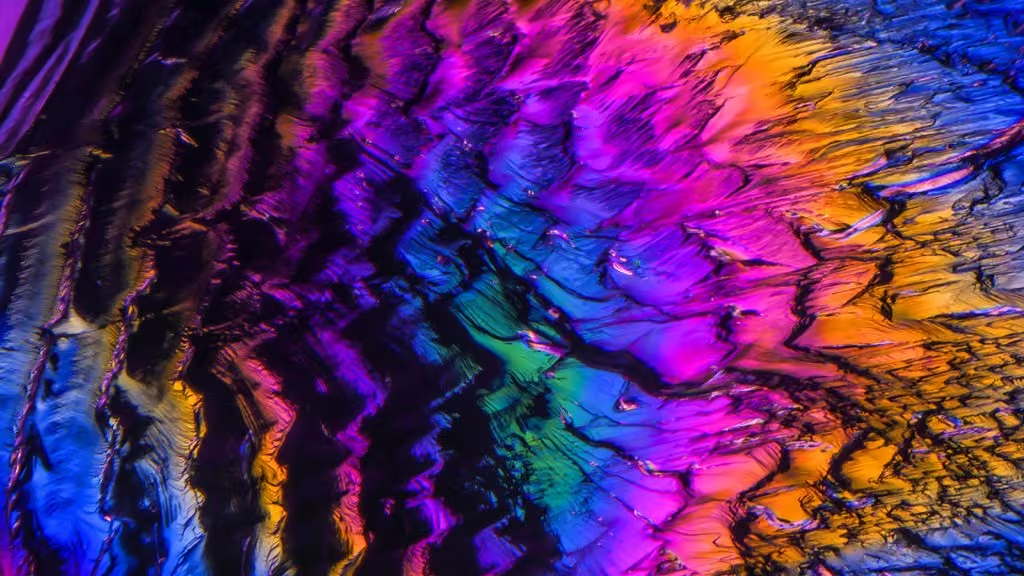 GIA
@GIAnews
One of the hardest treatments to detect in corundum is low temperature heat treatment. What are the clues showing that a stone has been treated in this way? Tune in 2/4/21, 1-3 p.m. (PST) Register now: discover.gia.edu/KRW Photo: Jean Baptiste Senoble
 GIA
@GIAnews
The 127.01 carat Portuguese diamond (the large, fluorescent diamond in the center) and two diamond necklaces are seen here under UV light. Learn about diamond fluorescence: 4cs.gia.edu/en-us/blog/fact-checking-diamond-fluorescence… Courtesy: Chip Clark, Smithsonian Institution
 GIA
@GIAnews
Sapphire from Yogo Gulch, Montana is known for having an even, attractive color out of the ground and for not needing heat treatment. The drawback is most crystals are flat and tabular. Learn more : www.gia.edu/gia-news-research/montana-yogo-sapphires-uniq… Photo: Kevin Schumacher/ GIA. Courtesy: Vance Gems.
 GIA
@GIAnews
The Bvlgari Blue diamond ring features two triangular diamonds - a 10.95 carat diamond graded Fancy Vivid blue by GIA and a 9.87 carat colorless diamond graded G color by GIA. Learn more about fancy color diamonds: www.gia.edu/fancy-color-diamond-quality-factor Photo: Jae Liao/GIA. Courtesy: Christie's
 GIA
@GIAnews
This demantoid garnet from Baluchistan, Pakistan contains magnetite and fibrous chrysotile inclusions and shows anomalous interference colors under cross-polarized light. Learn more about demantoid garnet from this region: www.gia.edu/gems-gemology/winter-2014-gemnews-demantoid-b… Photo: Aaron Palke/ GIA
 GIA
@GIAnews
Gain in-depth knowledge of how to distinguish natural from laboratory-grown diamonds by attending GIA’s live online Advanced Laboratory-Grown Diamond Seminar. This seminar, led by a GIA researcher, lasts from February 9-10. Register now! www.gia.edu/advanced-laboratory-grown-diamond-seminar
 GIA
@GIAnews
From left to right, a 4.17 ct Fancy Vivid yellowish green diamond, a 1.53 ct Fancy Intense green diamond set in platinum, a 1.92 ct Fancy Vivid green-yellow diamond. Learn about radiation defects that give them their color: www.gia.edu/gems-gemology/spring-2018-natural-color-green…. Photos © Optimum Diamonds.
 GIA
@GIAnews
Once cut and polished, diamonds of similar size, shape and quality may look similar to the unaided eye. Tune in as GIA Research Scientist Dr. Evan Smith unravels the story behind rough diamonds’ unique morphologies. Register now: www.gia.edu
 GIA
@GIAnews
Fire agate is a type of microcrystalline quartz that formed when volcanic activity caused hot water containing silica and iron oxide to fill cracks and voids in the surrounding rock. It is known for its botryoidal (grape-like) structure and colorful iridescence.©Thomas P. Shearer
 GIA
@GIAnews
We can’t meet in person at our favorite gem and mineral trade shows this year, but GIA is still serving up color, sparkle and gem knowledge with our first Knowledge Rocks Week: Spring Into Color on February 2-5, 2021. Learn more: discover.gia.edu/KRW
 GIA
@GIAnews
Not sapphire! Cobalt spinel is a vibrant blue spinel that has been colored by cobalt. (1) Copyright: Senoble & Bryl (2) Copyright: Lee Groat (3) Photo: Robert Weldon/GIA. Courtesy: www.palagems.com, Fallbrook, California


 GIA
@GIAnews
A staff member at Gosman’s Fish Market in Long Island, NY was shucking clams for chowder when he found a pearl the size of a gumball! It was sent to GIA where scientists confirmed it formed in a Mercenaria mercenaria (northern quahog) “clam.” Learn more: www.gia.edu/gia-news-research/clam-chowder-with-side-of-p…
 GIA
@GIAnews
Are you an appraiser, bench jeweler or do you just love jewelry? Learn how to evaluate jewelry quality using GIA’s step-by-step process! Register now for the January 20-21 LIVE online seminar: www.gia.edu/jewelry-forensics-seminar Photo: Emily Lane/ GIA. Courtesy of Excalibur Estate Jewelry.
 GIA
@GIAnews
Called the Diavik Helios, this 74.48 carat yellow rough diamond crystal is named after the mine where it was found and the Greek god of the sun. Learn about the Diavik mine: www.gia.edu/gems-gemology/summer-2016-diamonds-canadian-a… Courtesy: Rio Tinto Diavik Diamond Mine
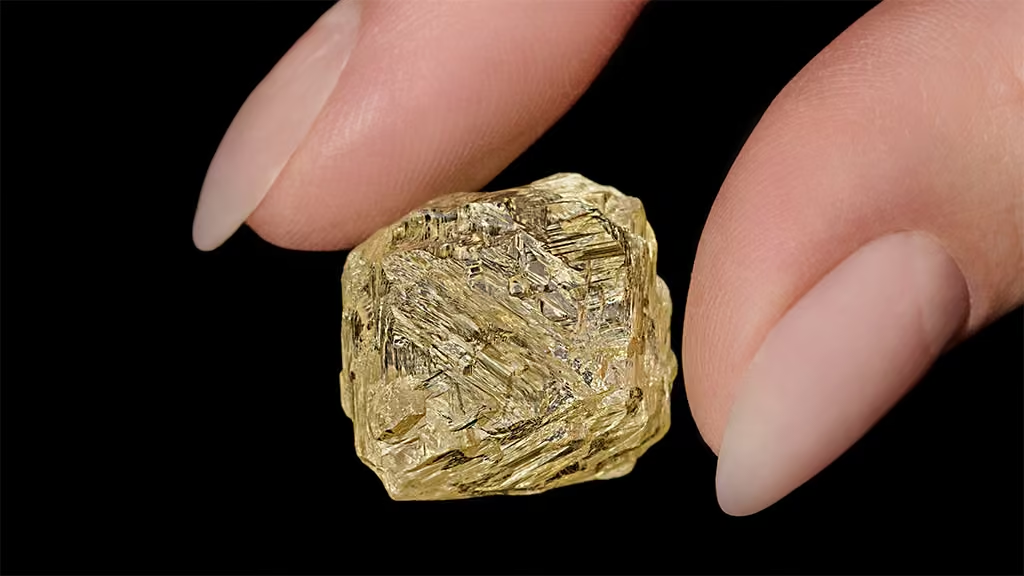
 GIA
@GIAnews
Know the classification and quality of your cultured pearl with the new GIA Cultured Pearl Classification Report, which provides detailed information about your cultured pearl based on the GIA 7 Pearl Value Factors™. Learn more: www.gia.edu/cultured-pearl-classification-report-service
 GIA
@GIAnews
Born in India, Neha Dani, GIA GG, JD, fell in love with jewelry. She loved the idea of craftsmanship—both of nature forming crystals within the earth and of humans carefully crafting those crystals into jewelry.


 GIA
@GIAnews
This scintillating pile of pink diamonds — the Argyle Pink Everlastings™ Collection — contains some of the last diamonds mined from the Argyle mine in Australia. The diamonds in this collection weigh 0.14 carats and below and total 211.21 carats. Courtesy: Rio Tinto
 GIA
@GIAnews
These rough and faceted Montana sapphires from Rock Creek show the range of colors they can achieve after heat treatment. Learn more:www.gia.edu/gems-gemology/winter-2015-alluvial-sapphires-… Photo: Jeffrey A. Scovil. Copyright: Robert E. Kane. Courtesy: Fine Gems International
 GIA
@GIAnews
These almandine garnet crystals glow in their graphite schist matrix. Used as a gem for centuries, almandine is possibly the most widespread garnet and it is found in many countries. Learn more about January's birthstone: www.gia.edu/birthstones/january-birthstones Photo: GIA
 GIA
@GIAnews
Rainbow andradite garnet is found only in a few places in the world, including Nara, Japan; Sonora, Mexico; and New Mexico, USA. Its iridescence is created when light interacts with layers of garnet with slightly varying compositions. Courtesy: Falk Burger, Hard Works, Tucson.
 GIA
@GIAnews
Commissioned in the late 1800s by the 6th Duke of Portland for his wife, the Portland tiara is an impressive piece of jewelry that contains Ceylon and Burmese sapphires, natural saltwater pearls and diamonds set in silver and gold. Courtesy: Christie's
 GIA
@GIAnews
The 14.83-carat Spirit of the Rose diamond, graded Fancy Vivid Purple-Pink by GIA, is the largest Purple-Pink diamond to ever appear at auction in November 2020. Its name derives from Vaslav Nijinsky’s legendary ballet, Le Spectre de la rose. Courtesy: Sotheby's

 GIA
@GIAnews
The colors of yellow and orange diamonds are generally caused by atomic-level defects from nitrogen impurities. Learn more: www.gia.edu/gems-gemology/summer-2020-naturally-colored-y… (Orange Diamonds) Photo: Robert Weldon/ GIA. Courtesy: Christian Tse (Yellow Diamond) Courtesy: Novel Collection
 GIA
@GIAnews
These pyrope garnets change color from purplish pink under incandescent light (1) to purple under fluorescent light (2). This phenomenon is believed to be caused by vanadium, manganese and chromium. Learn more www.gia.edu/gia-news-research/vanadium-chromium-bearing-c… Photos: Robert Weldon/GIA. Courtesy: Meg Berry

 GIA
@GIAnews
The "Steamboat Tourmaline" gets its name from two parallel crystals that resemble smokestacks and it’s remarkable for the vivid transition from bluish green at the top to reddish pink at the bottom. www.gia.edu/tourmaline-history-lore Photo: Duncan Pay/GIA Courtesy: The Smithsonian Institute
 GIA
@GIAnews
In 2012, GIA field gemologists traveled to Australia. Examining an open-pit mine provided them with information about the local stratigraphy. Opal is a delicate gemstone, but here, it has been protected by a thick layer of hard, reddish siliceous rocks. Courtesy: Terry Coldham
 GIA
@GIAnews
Rainbow lattice feldspar is doubly phenomenal, containing hematite crystals that give it aventurescence and magnetite crystals that give it a rainbow lattice effect. Learn more: www.gia.edu/gems-gemology/spring-2019-gemnews-rainbow-lat… Photo: Robert Weldon/ GIA. Courtesy: Rainbow Lattice, Australia.
 GIA
@GIAnews
Garnet is a diverse supergroup of closely-related minerals, ranging in color, chemistry and hardness. The five most important gem garnet species are pyrope, almandine, spessartine, grossular and andradite. Learn more: www.gia.edu/birthstones/january-birthstones Photo: Robert Weldon/ GIA.
 GIA
@GIAnews
'Cause baby, you're a firework! Happy New Year's Eve! We think the inclusion in this demantoid garnet not only looks like a horsetail but also like a firework! Photo: Billie Hughes and Lotus Gemology. Stone courtesy of Tsarina.
 GIA
@GIAnews
Kunzite gets its color from trace amounts of manganese. Known as a nocturnal gem or an evening gem, its beauty is best admired after the sun sets because it can fade when exposed to heat or bright light. Learn more: www.gia.edu/kunzite Photo: Robert Weldon/ GIA
 GIA
@GIAnews
Check out the latest in gemological education in our Fall 2020 Education Quarterly! Content includes countless career paths, how to succeed through online learning and more. Download the Fall 2020 EQ now: www.gia.edu/gem-education/programs
 GIA
@GIAnews
The blue stone that Sarah Jessica Parker is rocking is the Namunyak (nuh-MOON-yak)tanzanite, which weighs 423.56 carats. This tanzanite is royal blue when viewed from the top, purple when viewed from one side and pink red when viewed from the other. Courtesy: Kat Florence Atelier

 GIA
@GIAnews
Ammolite is fossilized ammonite (a shelled, squid-like creature that went extinct 66 million years ago) that has an iridescent sheen. Learn more: www.gia.edu/ammolite-gem-jewelry
(1) Photo: Kevin Schumacher/GIA. Gift of Korite International. (2) Copyright: estt/Getty Images/iStockphoto

 GIA
@GIAnews
Most stars have six rays, but this black star sapphire has a rare 12-rayed star. The gem has two types of inclusions — rutile and iron. Learn more: www.gia.edu/gems-gemology/summer-2018-gemnews-twelve-raye… (Image 1) Courtesy: Simon Bruce-Lockhart. (Image 2) Photo: Robert Weldon

 GIA
@GIAnews
Ruby-in-zoisite is the natural combination of ruby and zoisite in a single specimen. (Image 1) Photo: coldmoon_photo. Courtesy: Getty Images/iStockphoto. (Image 2) Photo: Robert Weldon/ GIA. Courtesy: Silverhorn, Santa Barbara, California

 GIA
@GIAnews
Discover the stories of our dazzling alumni — Catherine Cason, founder of Gem Breakfast, and Latoya Boyd, jewelry designer and army veteran — and learn how these GIA graduates used their passion for gems to blaze unique career paths. Download Fall 2020 EQ: www.gia.edu/gem-education/programs
 GIA
@GIAnews
Gems with star power. Asterism can occur in the mineral corundum (sapphire and ruby) if it contains numerous rutile needles and the cutter carefully orients and polishes the gem into a cabochon. Photo: Robert Weldon. Courtesy: RAFCO International
 GIA
@GIAnews
Happy Winter Solstice! Did you know that, starting today, the days are getting longer? GIA wishes you a bright holiday season wherever you are.
 GIA
@GIAnews
Trapiche emeralds are found in only a few Colombian mines in the Eastern Cordillera Basin. Learn more: www.gia.edu/gia-news-research/emerald-superstar-trapiche-…. (Image 1) Photo: Robert Weldon/GIA. Courtesy: Jose Guillermo Ortiz. (Image 2) Eric Welch/ GIA. Courtesy: Pioneer Gems

 GIA
@GIAnews
Up above the world so high, like a diamond in the sky — except this diamond contains a star! It has a stellate cloud inclusion composed of numerous tiny crystals that scatter light when illuminated. Find out more: 4cs.gia.edu/en-us/blog/diamond-inclusions-defined/ Photo: John I. Koivula/ GIA
 GIA
@GIAnews
Ringing in a brilliant new year. Some of our campuses temporarily closed in 2020, but all seven of our global GIA campuses are taking on-campus and eLearning enrollments for 2021! Check out our new class schedules: www.gia.edu.
 GIA
@GIAnews
The 187.63-carat Foxfire diamond uncovered from the Diavik mine glows blue when exposed to UV light and glows orange for a while after the UV light is turned off! Courtesy: Jeffrey Post/ Smithsonian Institution


 GIA
@GIAnews
Join our GIA Knowledge Sessions webinar tomorrow at 10 a.m. PST as GIA research scientists Dr. Sally Magaña and Nathan Renfro and managing editor of Gems & Gemology, Stuart Overlin, explore recent publications on diamonds and colored stones. Register now: www.gia.edu
 GIA
@GIAnews
GIA GG - Danny J. Sanchez - became interested in photomicrography after studying at GIA and assembling stone sets for GIA’s Distance Education courses. From fantastical, alien gemscapes to evocative gem scenes, his art contains worlds. @innermineralien


 GIA
@GIAnews
Fabergé didn't just make Imperial Easter eggs beloved by the Russian royal court. The firm also created stunning tiaras, including this one. Known as the Empress Josephine Tiara, it is currently on display at the Houston Museum of Natural Science. © E D Truitt. (CC BY SA 2.0)
 GIA
@GIAnews
Now through 12/21/2020, we will service and return D-to-Z diamonds (both natural and laboratory-grown) submitted to our Carlsbad or New York laboratories within 24 hours of receipt at no additional charge. Visit our website for more info: www.gia.edu/gem-lab/laboratory-service-promotions-united-…
 GIA
@GIAnews
The Marie-Louise Diadem contains 1,006 old mine cut diamonds and 79 turquoise cabochons. The most desirable color in turquoise - an even, medium, intense blue - is sometimes called "Persian blue" in the trade. Learn more: www.gia.edu/birthstones/december-birthstones

 GIA
@GIAnews
Malachite is an opaque green gem colored by copper. Image 1 shows a malachite necklace. Image 2 shows malachite columns in St. Isaac's Cathedral in St. Petersburg. (1) Photo: Orasa Weldon/ GIA. Courtesy of a Private Collector and Mona Lee Nesseth. (2): Jorge Láscar (CC BY 2.0).

 GIA
@GIAnews
Learn how to evaluate jewelry quality using GIA’s 12-step process! Our LIVE online Jewelry Forensics seminar features demonstrations from our experts and offers digital guidebooks for attendees to follow along.
Register now for the December 14-15 seminar: www.gia.edu/jewelry-forensics-seminar
 GIA
@GIAnews
Join our GIA Knowledge Sessions webinar tomorrow at 10 a.m. PST as GIA Research Scientist Dr. Karen V. Smit explores the atomic makeup and geologic journey of yellow type Ib diamonds.
Register now: www.gia.edu
 GIA
@GIAnews
Mined since 1983, the Argyle mine in Western Australia closed November of this year. It was the world's largest producer of Fancy Pink diamonds. (1) Photo: Anthony B. Bannister. Courtesy: Rio Tinto. (2) Robert Weldon/ GIA. Courtesy: Argyle Pink Diamonds. (3) © 2016 Rio Tinto


 GIA
@GIAnews
An inside look at rubies. The firestorm of color in Image 1 is iridescent rutile needles seen in Burmese ruby. Image 2 shows amphibole (roundish) and mica (hexagonal) inclusions in a Mozambican ruby. Courtesy: Nathan Renfro/ GIA.

 GIA
@GIAnews
It is uncertain whether the topaz in Image 1 got its color from natural or artificial irradiation. Image 2 shows a naturally blue topaz. (1) Photo: rep0rter. Courtesy: Getty Images/iStockphoto (2) Photo: Robert Weldon/ GIA. Crystal courtesy of Bill Larson, palagems.com

 GIA
@GIAnews
Misael Angel Rodriguez cut a 370-carat emerald rough into cat's eyes totaling 75 carats. www.gia.edu/gia-news-research-unveiling-cats-eye-effect-i… (1-4) Photo: Robert Weldon/ GIA. (1-3) Courtesy: Misael Angel Rodriguez, Accessorios Colombian Esmerald. (4) Courtesy: Jose Guillermo Ortiz, Colombian Emerald Co.


 GIA
@GIAnews
Zircon and cubic zirconia are not the same. Zircon is a natural stone that has birefringence, meaning light travels through the stone at two difference speeds. This causes facets on the back of the stone to have a double-image. Photo: Robert Weldon/GIA, Courtesy: Artinian Gems.
 GIA
@GIAnews
Now through 12/21/2020, we will service and return D-to-Z diamonds (both natural and laboratory-grown) submitted to our Carlsbad or New York laboratories within 24 hours of receipt at no additional charge. Visit our website for more info: www.gia.edu/gem-lab/laboratory-service-promotions-united-…
 GIA
@GIAnews
Join our GIA Knowledge Sessions webinar tomorrow at 10 a.m. PST as GIA Senior Research Scientist Dr. Mike Breeding explores the world of melee diamond analysis and the unique challenges of these small stones. Register Now: www.gia.edu
 GIA
@GIAnews
This green octahedral diamond crystal is peeping out from a negative crystal cavity within a larger, 0.87 carat colorless diamond! The green diamond can move around freely, without falling out of the small opening. Photomicrograph by Nathan Renfro/ GIA; field of view 4.23 mm.
GIA
@GIAnews
Tanzanite is one of December's birthstones. Its main drawback is that it has perfect cleavage, meaning it can break or split if hit in the right (or wrong) direction. Learn more: www.gia.edu/tanzanite Photo: Robert Weldon/ GIA. Courtesy: Kobi Sevdermish, Advanced Quality, Ltd.
 GIA
@GIAnews
Trapiche gems have spoke-like patterns caused by variations in fluid pressure during the growth process. This trapiche aquamarine specimen comes from the Erongo Mountains in Namibia and is partially coated with a thin layer of clay. Photo: Robert Weldon. Gift of Dudley Blauwet
 GIA
@GIAnews
This mouse & hippo are carved from citrine. Citrine often occurs in large sizes & high clarity, making it ideal for gem sculptures. 1-2 (mouse & hippo) Robert Weldon/ GIA; William F. Larson Family. 1: (gems) Photo: Robert Weldon/ GIA. 2: (rough) hepelena; Getty Images/iStockphoto

 GIA
@GIAnews
Separately, amethyst and citrine are gems with complementary colors. Combined in ametrine, they make gem masterpieces! These vivid ametrines have been fantasy cut to make them even more fantastic. Photo: Robert Weldon/GIA. Courtesy: Minerales y Metales del Oriente, Bolivia, SA.
 GIA
@GIAnews
A group of scientists grew CVD (chemical vapor deposition) diamonds using tequila as the carbon source! The CVD diamonds were not gem quality, but the experiment was definitely intoxicatingly fun! (1) Courtesy: (drink) eddieberman/ Getty Images. (diamond) Robison McMurtry/ GIA.

 GIA
@GIAnews
Full of rainbow colors, black opal is mostly found in Lightning Ridge, Australia. (1) Photo: Robert Weldon/GIA Courtesy: Richard Krementz Gemstones (2) Photo: Robert Weldon/GIA Courtesy: Gerry Manning, Manning International (3): Photo: zetter. Courtesy: Getty Images/iStockphoto


 GIA
@GIAnews
Fire agate is a very finely layered golden brown to reddish brown agate with a botryoidal (grape-like cluster) structure. What makes fire agate special is its colorful iridescence caused by the gem's ultra-thin coatings of goethite. Learn more: www.gia.edu/gems-gemology/winter-2015-microworld-dragons-…
 GIA
@GIAnews
From 11/16/2020 through 12/21/2020, we will service and return D-to-Z diamonds (both natural and laboratory-grown) submitted to our Carlsbad or New York laboratories within 24 hours of receipt at no additional charge. Visit our website for more info: www.gia.edu/gem-lab/laboratory-service-promotions-united-…
 GIA
@GIAnews
This 1.67 carat iris agate contains a seam of dark pyrolusite dendrites above a thin layer of crystalline quartz. This and its iridescence make it look like the northern lights over a forest! Photo: Kevin Schumacher/GIA. Courtesy: Falk Burger, Hard Works, Tucson, Arizona.
 GIA
@GIAnews
Let your imagination take flight. Learn tangible techniques for transforming your inspiration into dazzling jewelry designs with GIA's Jewelry Design course in London. Next course runs from January 21st — March 26th. Apply Now: www.gia.edu
GIA
@GIAnews
This 50.15 carat alexandrite shows a color change from brownish green in daylight to brownish red under incandescent light. The change may be hard to see, though, because the stone is dark. Photo: Robert Weldon/ GIA. Courtesy: Heritage Auctions
 GIA
@GIAnews
This quartz crystal has a fascinating petroleum inclusion that resembles a polar bear! Besides petroleum (yellowish brown liquid), the inclusion also contains water (clear section along edges of the inclusion), gas bubbles and an organic tar-like substance. Photo:@innermineralien
 GIA
@GIAnews
Join our GIA Knowledge Sessions webinar tomorrow at 10 a.m. PST as Dr. Aaron Palke, Wim Vertriest, and Robert Weldon take us on another thrilling field gemology journey, narrating stories through highlights from their unpublished photograph collection. www.gia.edu
 GIA
@GIAnews
Gerard Alexander, GIA GG, founded LA-based bespoke jewelry brand Saint Jewels. He has crafted pieces for Lewis Hamilton, Saweetie and Kenya Barris, and most recently, he crafted gem-encrusted McDonald's Happy Meal jewelry for Colombian reggaeton superstar J Balvin.


 GIA
@GIAnews
This specimen from Namibia is a colorless quartz crystal encrusted with transparent, trigonal, bright blue-green dioptase crystals. Dioptase is a green to bluish green mineral colored by copper and it is a 5 on the Mohs scale. Photo: Diego Sanchez/ GIA
 GIA
@GIAnews
Happy Diwali! This 19th century Indian necklace is set with polki diamonds, pearls and emerald beads. Diamonds symbolize strength while emeralds symbolize new beginnings, making this necklace perfect for the Diwali festival and the new year. Courtesy: Christie's
 GIA
@GIAnews
Riddle me this. My gem group includes alexandrite and cat's eye and has a Mohs hardness of 8.5. My crystals can form as a triplet of twins, looking like a hexagonal flower. Some of the rarest and most valuable gems belong to me. What gem group am I? Courtesy: Robert Weldon/ GIA
 GIA
@GIAnews
Botswana is currently the world's 2nd largest diamond producer. Botswana was a poor country on the dawn of its independence from the British Empire in 1966. A year later, however, a massive diamond kimberlite pipe was found! Learn more: 4cs.gia.edu/en-us/blog/botswana-diamonds/. Courtesy: Graff
 GIA
@GIAnews
Graded Fancy Vivid Green by GIA, the Aurora Green diamond is one of the most famous green diamonds in the world and is currently owned by Chow Tai Fook. It likely got its color from radioactive minerals and fluids in the earth's crust. Courtesy of Chow Tai Fook Jewellery Group
 GIA
@GIAnews
What is ethical jewelry and how does it affect jewelers and consumers? Find out in GIA Knowledge Session: "The Sustainability Minefield: What Does Sustainability Mean in Jewelry and Why Should We Care?" @ Thursday, November 12th at 10:00 a.m. PST
Register: www.gia.edu
 GIA
@GIAnews
Sarah Jessica Parker is wearing a magnificent 91 carat Paraíba tourmaline necklace by Kat Florence Atelier. Named for the state in Brazil where it was found, Paraíba tourmaline is known for its electric color. Learn more: www.gia.edu/gems-gemology/winter-2019-paraiba-tourmaline-…. Courtesy: Kat Florence Atelier

 GIA
@GIAnews
This pink and blue diamond ring features a 3.24 carat internally Flawless, Fancy Vivid blue square emerald-cut diamond surrounded by seven oval pink diamonds ranging from Fancy Vivid to Fancy Deep! Learn more: 4cs.gia.edu/en-us/colored-diamond-report/. Courtesy: Christie's
 GIA
@GIAnews
What is ethical jewelry and how is it defined or made? Tune in for a special edition of GIA Knowledge Sessions, "The Sustainability Minefield: What Does Sustainability Mean in Jewelry and Why Should We Care?" @ Thurs., Nov. 12th at 10 a.m. PST. Register: www.gia.edu
 GIA
@GIAnews
This rare twinned star spinel is doubly stellar. As a result of contact twinning, two complete and distinct stars can be seen, one on each side of the twin plane. Image 2 shows a twinned red spinel crystal. (Image 1) Courtesy: Tino Hammid/ GIA. (Image 2) Photo: Joel Beeson/ GIA

 GIA
@GIAnews
This Edwardian corsage features a rare 39.80-carat pink topaz with diamonds set in platinum. The corsage was a gift to GIA. Learn more about topaz, a November birthstone: www.gia.edu/birthstones/november-birthstones. Photo: Robert Weldon/GIA. Gift of Stephen and Eileen Silver (S. H. Silver Co.)
 GIA
@GIAnews
Angelina Jolie and jewelry designer Robert Procop donated this citrine necklace to the Smithsonian’s National Gem Collection in 2015. It features 64 cushion cut citrines and a stunning 177.11 carat pear-shaped citrine pendant set in 18K gold. Courtesy: RP Studio

 GIA
@GIAnews
Happy Halloween! 💀 Meet Greggory, a life-sized carving of a human skull, with a cranium and a separate mandible, crafted out of 25,190 carats of smoky quartz from Brazil! Photo: Robert Weldon/GIA Collection
 GIA
@GIAnews
Fantasy cutting often incorporates non-traditional design elements on the backs of gemstones, which reflect and refract light in stunning displays, as in this 64 ct amethyst from Bahia, Brazil. Photo: Kevin Schumacher/GIA. Courtesy: Nick Alexander, Alexanders Jewelers.
 GIA
@GIAnews
The 67.50-carat Black Orlov diamond is famous partly because it is rumored to be cursed. But in general, natural-color black diamonds are extraordinary because they are colored by graphite, pyrite or hematite inclusions that make them notoriously difficult to cut and facet.
 GIA
@GIAnews
During the 19th century, mines in Russia’s Ural Mountains were a leading source of topaz. The finest material was named imperial to honor the Russian czars and only the royal family could own it. Photo: Robert Weldon. Courtesy: Gems By Design, Inc. Kent, OH
 GIA
@GIAnews
Join our GIA Knowledge Sessions webinar tomorrow at 10 a.m. PDT as Senior Research Librarian Rose Tozer explores the beliefs and superstitions people have held about gems and jewelry throughout history. Register now: www.gia.edu
 GIA
@GIAnews
Join Nellie Barnett, GIA public relations and media manager, along with others tomorrow, 10/28, at 10 a.m. PDT for Women's Jewelry Association's webinar, "Part Two: Barriers to Entry in the Jewelry Industry". Register now: www.womensjewelryassociation.com/ev_calendar_day.asp?date…
GIA
@GIAnews
When these purple opals were sent to the GIA laboratory in Carlsbad, our scientists immediately suspected they had been dyed. Purple opal exists but it’s opaque and not known to display play-of-color like these do. Learn more: www.gia.edu/doc/Dyed-Purple-Hydrophane-Opal.pdf Photo: Robert Weldon/ GIA
 GIA
@GIAnews
The 5.54 ct, Fancy Vivid orange Pumpkin Diamond was auctioned off on Halloween Eve in 1997 to Harry Winston. Discovered in the Central African Republic, it was initially a brown-looking rough. In the hands of the right cutter, its orange color was revealed! 📸: Shane McClure/ GIA
 GIA
@GIAnews
The Hope (R) and the Wittelsbach-Graff (L) are blue diamonds that glow red under UV light. Rumor has it the Hope became cursed when it was stolen from a temple in India. Learn more: www.gia.edu/famous-diamonds. Courtesy: Smithsonian Institution (R) & Graff (L)
 GIA
@GIAnews
This stunning 27.15-carat "Birth of the Star" lab-grown moissanite was faceted by Victor Tuzlukov. Gem-quality lab-grown moissanite is always manufactured in labs, although mineral moissanite can on rare occasion be found in nature. Photo: Robert Weldon. Courtesy: Victor Tuzlukov
 GIA
@GIAnews
The Natural Diamond Council (NDC) is made up of 7 of the world's leading diamond companies. NDC members employ 77,000 people and put $292 million towards social programs such as education and healthcare. Photo: Lucian Coman. Courtesy: Lucora Diamonds
 GIA
@GIAnews
GIA India employees join Surat Municipal Corporation (SMC) in the fight against COVID-19 and take a pledge to reinforce our commitment towards a common goal. #gujaratfightscorona @InfoGujarat @CMOGuj
GIA
@GIAnews
This 3.02 carat beauty is a contra luz opal from Ethiopia. The play-of-color of this shy gem only manifests itself under transmitted light. In fact, contra luz means "against the light" in Spanish. Courtesy: Uniquegems from opalauctions.com
 GIA
@GIAnews
Join our GIA Knowledge Sessions webinar tomorrow at 10 a.m. PDT as Dr. Sally Magaña — Sr. Manager of Diamond Identification — explores the science of blue diamonds and their close cousins, violet and gray diamonds. Register now: www.gia.edu
 GIA
@GIAnews
Telling laboratory-grown diamonds apart from natural diamonds requires sophisticated instruments in a gemological laboratory. Interested in learning more about laboratory-grown diamonds and how GIA identifies them? Learn more: www.gia.edu/introducing-lgdr-by-gia
 GIA
@GIAnews
This adorable seahorse was hand-carved in Bali out of Australian opal. Bali, Indonesia, has a tradition of hand-carving pendants and artwork out of wood and cow bone. Now, its gem carvings are starting to reach the international market. Photo: Jennifer Stone-Sundberg/GIA.
 GIA
@GIAnews
A star-crossed diamond. This 3.70 carat Fancy brownish greenish yellow diamond contains clouds of micro-inclusions that are typically composed of graphite and other elements like hydrogen and nickel. This cloud inclusion is the “star” of this diamond. Photo: Diego Sanchez/GIA

 GIA
@GIAnews
M.C. Escher's favorite mineral? The spiraling stair shape seen in this lab-grown bismuth is caused by the outside portions of the crystal growing at a faster rate than the inside edges of the crystal. Photo: Walter Geiersperger Courtesy: Getty Images.
 GIA
@GIAnews
This jellyfish pendant contains a 49.37 carat moonstone with a hyalite opal inside! Hyalite opals are known for glowing under shortwave UV light since they contain trace amounts of uranium. (1) Photo: Robert Weldon/GIA (2) Photo: NataliaCatalina Courtesy: Getty Images/iStockphoto

 GIA
@GIAnews
A 229.35 carat rough was uncovered at Lesotho’s Letšeng Mine in 2014. It was carved into these 9 stones, the largest being the 132.55-carat Fancy Intense Yellow cushion cut diamond called the Golden Empress. Courtesy: Graff
 GIA
@GIAnews
Join our GIA Knowledge Sessions webinar tomorrow at 10 a.m. PDT as GIA Supervisor of Field Gemology Wim Vertriest explores common ruby treatments, their results and how to identify them. Register now: www.gia.edu
 GIA
@GIAnews
Introducing the new LGDR by GIA. Watch to learn more about the changes in the latest redesign of our laboratory-grown diamond reports.
GIA
@GIAnews
It’s Earth Science Week! Check out the @MinSocAm for fun mineral facts and resources. GIA Senior Manager of Research Dr. Aaron Palke will be presenting a webinar on “Gemology: Time Capsules Connecting Us Through History” today at 12 p.m. PDT. Learn more: mineralsday.org
GIA
@GIAnews
Happy Indigenous Peoples' Day! Seen here are Navajo jewelry made of turquoise and/or coral (1-2), Zuni inlay jewelry (3) and a Zuni fetish necklace (5). Courtesy: (1) Jerry Sodorff/ Getty Images/ iStockPhoto. (2) grandriver/ Getty Images. (3-4) Kevin Schumacher/ Jaime Steelman


 GIA
@GIAnews
Some of the world's most extraordinary diamonds were on display at the National Museum of Natural History the summer of 2003. Counter-clockwise from center: De Beers Millennium Star, Steinmetz Pink, Heart of Eternity, Pumpkin diamond, Moussaieff Red, Ocean Dream, Allnatt diamond.
 GIA
@GIAnews
The Dresden Green, which weighs roughly 40 carats, is the largest known gem-quality green diamond in the world. It is remarkable for its rich, even green color and for being a Type IIa diamond. Courtesy: Grünes Gewölbe, Staatliche Kunstsammlungen Dresden. Photo: Shane F. McClure
 GIA
@GIAnews
"They say you can see the whole universe In opals," Adam Sandler says in the film "Uncut Gems." What world do you see in this one? This photomicrograph was taken by GIA GG, Danny J. Sanchez (@innermineralien ). Take a look at photo 2 to see how he captured this gorgeous image.

 GIA
@GIAnews
Join our GIA Knowledge Sessions webinar tomorrow at 10 a.m. PDT as GIA researchers Nathan Renfro and Aaron Palke unearth the history and gemology of Montana sapphires. Register now: www.gia.edu
 GIA
@GIAnews
Cool off - with a slice of watermelon liddicoatite tourmaline. The colors of this gem changed over time, because the solution that fed the crystal's growth contained different elements as the crystal grew. Learn more: www.gia.edu/gia-news-research-liddicoatite-tourmaline-fat… Coutesy: Eva Kröcher (CC BY-NC-ND 3.0)
 GIA
@GIAnews
This stunning specimen called Atlantis consists of dreamy stalactite spires made of green malachite coated with blue chrysocolla. A copper-rich solution dripped down from the top, lengthening and thickening the spires. Learn more: www.gia.edu/gia-museum-exhibit-atlantis Photo: Robert Weldon/GIA

 GIA
@GIAnews
Fire opals are known for their brown, yellow, orange, or red body color. Only some display play-of-color. That makes this Mexican reddish orange fire opal with play-of-color doubly fiery! Learn more: www.gia.edu/opal Courtesy: martymagic.com
 GIA
@GIAnews
Amber is like a time capsule. Around 1,000 extinct animal species and types of plant matter have been found in amber. This piece of amber contains pseudoscorpions, tiny arachnids that have survived over 350 million years. www.gia.edu/amber Photo: Nathan Renfro
 GIA
@GIAnews
This close-up taken by GIA GG Danny J. Sanchez (@innermineralien) features a piece of quartz that contains golden spires of rutile growing on hematite. All three minerals are fairly common. But when combined, as in this instance, they can create a masterpiece.
 GIA
@GIAnews
A gem of many colors. According to Egyptian lore, tourmaline burst through a rainbow as its crystals pushed up through the earth. Image 2 shows a rough tourmaline and muscovite specimen surrounded by polished tourmaline. Photos: Robert Weldon/ GIA

 GIA
@GIAnews
This chic orange diamond is one of the rarest in the world. Known simply as the Orange, it weighs 14.82 carats and is the largest Fancy Vivid Orange diamond ever to appear at auction. www.gia.edu/gia-news-research-worlds-fascination-fancy-co…. Photo: Studio Diode SA - Denis Hayoun. Courtesy: Christie's
 GIA
@GIAnews
Join our GIA Knowledge Sessions webinar tomorrow at 10 a.m. PDT as GIA Senior Research Scientist Mike Breeding covers the evolution of man-made gems and learn about GIA’s new reports for laboratory-grown diamonds. Register now: www.gia.edu
 GIA
@GIAnews
According to Festus Mogae, the third president of Botswana (1998-2008), “every diamond purchase represents food on the table, better living conditions, better healthcare." Learn more: 4cs.gia.edu/en-us/blog/botswana-diamonds/. Courtesy: Graff
 GIA
@GIAnews
This 283.74 ct rough tsavorite was mined in Merelani, Tanzania near Mount Kilimanjaro and yielded a 116.76 ct square cushion cut. www.gia.edu/gia-news-research/angel-in-stone-cutting-larg…. (Image 1) Photo: Robert Weldon/GIA. Courtesy: Bruce Bridges. (Image 2) Photo: Ayzenstayn. Courtesy: Getty Images

 GIA
@GIAnews
Which do you like more - the 5.04 carat, Fancy Vivid Blue heart diamond or the 4.49 carat, Fancy Vivid Pink diamond? Since then, it has become a universal symbol of love. Learn more about wedding ring history 4cs.gia.edu/en-us/blog/origin-of-wedding-rings/ Courtesy: Sotheby's
 GIA
@GIAnews
The "peacock blue" Blue Belle of Asia weighs an astounding 392.52 carats and is unheated. This means that its original rough was enormous and of naturally-high quality. Learn more about the September birthstone www.gia.edu/birthstones Courtesy: Denis Hayoun – Diode SA
 GIA
@GIAnews
The Farnese Blue, a 6.16 ct Fancy Dark Grayish Blue diamond, was mined in the Golconda region of India. Image 3 shows the Golconda Fort where some of India's most famous diamonds used to be stored. (Images 1&2) Courtesy: Sotheby's. (Image 3) Franx’/CC BY-NC 2.0


 GIA
@GIAnews
Join our GIA Knowledge Sessions webinar tomorrow at 10 a.m. PDT as GIA Research Scientist Dr. Evan Smith covers the history of diamond polishing and shares his own experience cutting diamonds for scientific research. Register now: www.gia.edu
 GIA
@GIAnews
The Chivor mine has produced some of the most legendary emeralds in the world. Seen here is an emerald crystal with pyrite crystals from the Chivor mine. Read more about the mine's history in the latest issue of Gems & Gemology www.gia.edu/gems-gemology/spring-2020-history-of-the-chiv…. Photo: G. Martayan, Paris.
 GIA
@GIAnews
Rakwana in Sri Lanka has been a premier producer of royal blue sapphire for decades. In August 2019, a small pocket of unusually large and lustrous sapphire crystals was discovered in the Sinharaja Forest nearby. Learn more: www.gia.edu/gems-gemology/spring-2020-gemnews-new-blue-sa… Photo: Robert Weldon/GIA.
 GIA
@GIAnews
Turkish color-change diaspore, often known by the brand names Zultanite® or Csarite®, changes from pinkish purple under incandescent light to yellowish green under fluorescent light. (1) Courtesy: Kat Florence. (2) Photo: Cinar Yilancioglu. Courtesy: Getty Images/iStockphoto

 GIA
@GIAnews
Seen here are GIA field gemologists Wim Vertriest (seated center) and Aaron Palke (seated right) on either side of a mine owner, examining the finds, including ruby, sapphire and spinel, from a local mine in Mogok, Myanmar. Photo: Robert Weldon/ GIA
 GIA
@GIAnews
Colored by copper, Paraíba tourmaline ranges from blue to green to all the colors in between! They are named after the Brazilian state where they were first found. 1: Mozambican Paraíba tourmaline. 2: Brazilian Paraíba tourmaline rough. Photo: Robert Weldon. Courtesy: Brian Cook

 GIA
@GIAnews
Join our GIA Knowledge Sessions webinar tomorrow at 10 a.m. PDT as Dr. Sally Magaña — Sr. Manager of Diamond Identification — dives into the science of pink and red diamonds and unravels the mysteries of these enchanting stones. Register now: www.gia.edu
 GIA
@GIAnews
This stunning rutilated quartz sculpture hangs in the lobby of GIA Carlsbad. Weighing 426 pounds (nearly one million carats), it took gem carvers Glenn Lehrer, GIA GG, and Lawrence Stoller (seen here) more than seven years to design and create. Photo: Harold & Erica Van Pelt
 GIA
@GIAnews
Featuring 8 natural fancy color diamonds, this ring shows the rainbow colors that diamonds can come in. Each diamond color is caused by a different factor, such as element impurities, radiation and crystal lattice distortion. Courtesy: Sotheby's
 GIA
@GIAnews
This emerald cross rosary and gold coin in the necklace are treasures that sunk with the Spanish ship Atocha in 1622. (1) Photo: Robert Weldon/GIA. Courtesy: Ellen Weatherbee, Roz and Gene Meieran, Ron Ringsrud. (2) Photo: Sylvia Bissonette. Courtesy: J. Grahl Design

 GIA
@GIAnews
This 44.53 carat bi-color sapphire is from Madagascar. Image 2 shows a Madagascan artisanal miner sifting through river gravel for sapphires. Image 3 shows a Madagascan rainforest. (1) Robert Weldon/ GIA, (2) Vincent Pardieu/ GIA, (3) Luca Nichetti; Couresty: Getty Images/ EyeEm.


 GIA
@GIAnews
How do you buy a quality diamond? It begins with 3Cs - not 4. Surprising? Cut, clarity and color all determine diamond quality, but carat doesn’t. After all, size doesn’t affect quality (although it's still important and determines value!) 4cs.gia.edu/en-us/blog/how-to-buy-a-quality-diamond/ Courtesy: Graff
 GIA
@GIAnews
Realize the career of your dreams in gems and jewelry with a full or partial scholarship, available for on-campus programs, distance education programs and lab classes. Last day to apply is October 15, 2020. Learn more here: www.gia.edu/scholarships
GIA
@GIAnews
According to Dr. Jeffrey Post, curator-in-charge of gems and minerals at the Smithsonian Institution, the 23.10 carat Carmen Lucia ruby “is the largest and finest faceted ruby on display anywhere in the world." Photo: Chip Clark. Courtesy: Smithsonian Institution
 GIA
@GIAnews
Join our GIA Knowledge Sessions webinar tomorrow at 10 a.m. PDT as GIA Research Scientist Dr. Karen Smit and GIA Senior Manager of Research Dr. Aaron Palke reveal why these gems have more in common than you may have imagined. Register now: www.gia.edu
 GIA
@GIAnews
The 127.01 ct Portuguese Diamond has fluorescence so strong that it looks hazy or oily under sunlight. When it's exposed to UV light, it lights it up even more! 4cs.gia.edu/en-us/blog/famous-diamonds-portuguese/ NMNH Photo Services; Photo by Chip Clark; provided courtesy of the Smithsonian Institution.


 GIA
@GIAnews
Three of the gems in this colorful lineup are bi-color tourmaline; two are bi-color sapphire. Which is which? Courtesy: Columbia Gem House-Eric Brawnwert, Mayer & Watt, Dr. Edward J Gubelin Collection
 GIA
@GIAnews
This aquamarine rough is contained in pegmatite host rock. Pegmatite is a type of igneous host rock that can form when magma is forced to the earth’s surface. Learn more about aquamarine: www.gia.edu/aquamarine Photo: Coldmoon_photo. Courtesy: Getty Images/iStockphoto
 GIA
@GIAnews
Montana sapphires were first discovered in the 1860s by gold prospectors. The Rock Creek deposit, in addition to producing greenish-blue stones, also produces stones that are yellow, orange, violet or pink in color. Courtesy: Potentate Mining LLC.
 GIA
@GIAnews
In 2000, miners discovered a cavern containing the largest known selenite crystals in the world. The director of astrobiology at NASA determined that the microbes inside the crystals are over 60k years old. Courtesy: (1) Alexander Van Driessche (CC BY 3.0); (2): Leela Hutchison

 GIA
@GIAnews
From left to right to bottom, this image shows a laboratory-grown CVD rough diamond edged with graphite, a natural octahedral diamond covered with trigons and a laboratory-grown HPHT rough diamond. www.gia.edu/id100 Photo: GIA
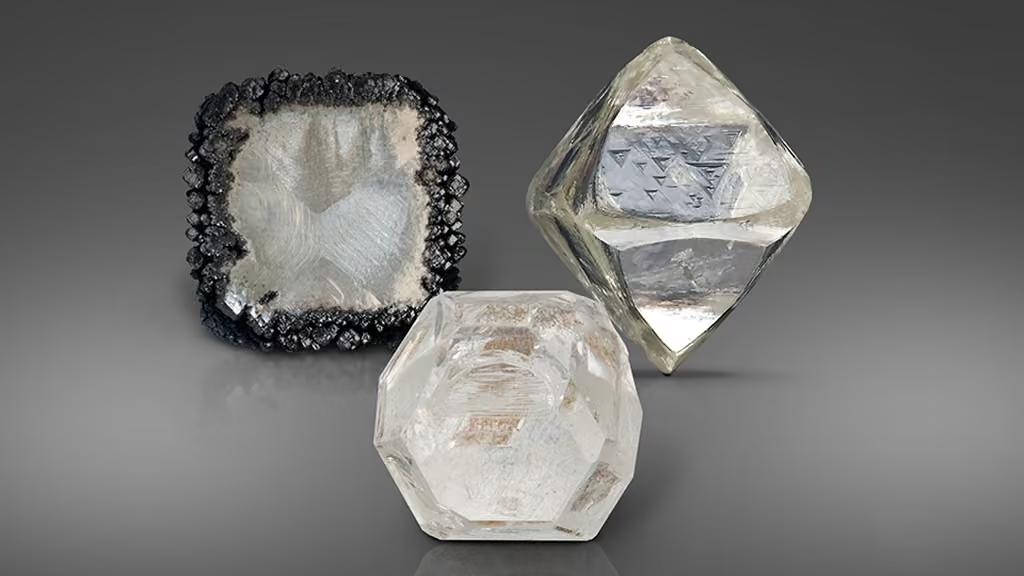 GIA
@GIAnews
Join our GIA Knowledge Sessions webinar tomorrow at 10 a.m. PDT as Senior Research Scientist Dr. Mike Breeding unravels the mysteries of natural green diamonds. Register now: www.gia.edu
 GIA
@GIAnews
This line-up shows cut sapphires next to rough of similar color. Sapphires belong to the corundum group, which forms in a trigonal crystal structure. Learn more: www.gia.edu/birthstones Courtesy: GIA (Dr. Edward Gubelin collection), William F. Larson, Pala International.
 GIA
@GIAnews
This slideshow features 2 of the most valuable natural pearls in the world: the pear-shaped La Peregrina (Images 1&2) once worn by Queen Mary I of England and Elizabeth Taylor—and Queen Marie Antoinette's pearl (Image 3). (1) Courtesy: Christie's (2) Fred Ward/ GIA (3) Sotheby's


 GIA
@GIAnews
Morganite is a pale peach, blush or pink variety of beryl. Having high clarity and durability, it has been popular since its discovery in 1910, especially as an affordable engagement ring stone. Photo: Lydia Dyer. Courtesy: John Dyer & Co.
 GIA
@GIAnews
Diamond transparency? What a brilliant idea. GIA has joined forces with Everledger and jd.com, one of China’s largest retailers, to increase trust and traceability in diamond provenance and further confidence in online diamond purchases. www.everledger.io/wp-content/uploads/2020/08/Press-releas…
 GIA
@GIAnews
Sir Gabriel S. Tolkowsky helped develop diamond "flower cuts" to promote diamonds with less popular colors. The names of these cuts include fire-rose, marigold, sunflower and zinnia. Photo: Robert Weldon. Courtesy: DeBeers
 GIA
@GIAnews
Join our GIA Knowledge Sessions webinar tomorrow at 10 a.m. PDT as Senior Staff Gemologist (Pearls) Akira Hyatt explores the GIA 7 Pearl Value Factors™ and its recent updates, as well as introduces the new Cultured Pearl Classification Report. Register: www.gia.edu
 GIA
@GIAnews
This diamond's name means "I've found it!" And what a find! The 21.25 ct Eureka diamond was discovered in 1866 by a teenage boy. It helped spark the South African diamond rush that birthed the modern diamond industry. Learn more 4cs.gia.edu/en-us/blog/south-african-diamonds/ Courtesy: De Beers Group
 GIA
@GIAnews
Jadeite is one of the most popular stones in China and one of the most expensive gemstones in the world. This block of jadeite exhibits three of jadeite's potential colors and has been carved into a traditional mountain scene. www.gia.edu/jade-quality-factor Courtesy: George Shen
 GIA
@GIAnews
A glimpse into paradise. Aztec Indians called fire opals “quetzalitzlipyollitili” (stone of the bird of paradise) due to their warm, vibrant colors. What does this jewel bring to mind for you? Courtesy: Lydia Courteille
 GIA
@GIAnews
Papakolea Beach, located on the island of Hawaii, has green sand! The green of the sand comes from olivine weathered from the volcano nearby. The gem quality version of olivine is called peridot. Courtesy: Getty Images

 GIA
@GIAnews
Red diamonds are among the rarest of all fancy colored diamonds and red diamonds without color modifiers (such as brown) are even rarer. That makes the 2.11 ct Fancy Red Argyle Everglow one of the rarest diamonds in the world! Courtesy: Rio Tinto/Argyle
 GIA
@GIAnews
Gold sheen sapphire is a new stone (introduced in 2009) known for its beautiful golden sheen and sometimes prominent hexagonal growth structure. Its sheen is caused by dense needles and platelets of hematite/ilmenite inclusions. www.gia.edu/gems-gemology/winter-2016-labnotes-update-spe… Photo: Lhapsin Nillapat/GIA
 GIA
@GIAnews
Join our GIA Knowledge Sessions webinar tomorrow at 10 a.m. PDT as Sr. Manager of Diamond Research, Dr. Ulrika D’Haenens-Johansson, shines a spotlight on the importance of fluorescence and cathodoluminescence in diamond identification and research. www.gia.edu
 GIA
@GIAnews
This 88.22-carat, D-Flawless oval brilliant diamond is Type IIa. Only 2% of diamonds are Type lla. They have no measurable nitrogen or boron impurities and are exceptionally transparent. Learn more about diamond types 4cs.gia.edu/en-us/blog/digging-diamond-types/ Courtesy: Sotheby's

 GIA
@GIAnews
Named for their orangish to red hue, many Oregon sunstones contain copper inclusions that give them a metallic glitter, a phenomenon called aventurescence. The left is aventurescent, while the right isn't. Photo: Robert Weldon. Courtesy: John Woodmark, Desert Sun Mining.
 GIA
@GIAnews
The Victorian Orchid Diamond is extremely rare due to its Fancy Vivid Purple color and size (1.64 cts). L.J. West Diamonds named it after the Victorian orchid craze to show that stones like this are "strongly desired and irresistible." Courtesy: L.J. West Diamonds
 GIA
@GIAnews
This green diamond found in Siberia has a smaller diamond nested inside. The smaller diamond can rattle around freely! Natural radiation also turned the diamond green. This is the first discovery of its kind. Learn more: www.gia.edu/gia-news-research/gia-researchers-reveal-secr… Video by Towfiq Ahmed/GIA
GIA
@GIAnews
“Two wills, two hearts, two passions are bonded in one marriage by a diamond” (poem written on the wedding of two Italian socialites in 1475). Why have rings been symbols of romance throughout history? 4cs.gia.edu/en-us/blog/origin-of-wedding-rings/ Copyright: GIA & Tino Hammid Courtesy: Benjamin Zucker
 GIA
@GIAnews
Join our GIA Knowledge Sessions webinar tomorrow at 10 a.m. PDT as GIA Senior Research Librarian Rose Tozer opens the door to GIA’s archive and unlocks a trove of historical gem and jewelry knowledge. Register now: www.gia.edu
 GIA
@GIAnews
Did you catch our webinar at JCK Virtual? Today, we announced that GIA will report specific 4Cs color and clarity grades on our reports for laboratory-grown diamonds. These new digital-only reports will launch in Q4 of 2020. Learn more: www.gia.edu/gia-news-press/color-and-clarity-lab-grown-di…
GIA
@GIAnews
"What light through yonder window breaks?" It's the light of the Juliet Pink diamond! L.J. West, who acquired this 30.03 carat pink diamond, named it Juliet because it captures "passion and ultimate beauty.” Courtesy: L.J. West
 GIA
@GIAnews
Colorful, durable and bright, spinel comes in a wide variety of colors. These 123 spinels from Myanmar (Burma) demonstrate just a portion of the variety of colors they can come in! Learn more www.gia.edu/spinel-quality-factor Courtesy: Roland Schluessel
 GIA
@GIAnews
Spinel & diamond crystals both form as octahedrons. Spinel crystals are often well-formed but can also form twinned (when 2 separate crystals share some of the same crystal lattice points & become intergrown) www.gia.edu/spinel-description Photo: Robert Weldon/GIA Courtesy: Bill Larson
 GIA
@GIAnews
Natural diamonds formed 90-400 miles below ground in temperatures of more than 2000°F, under pressures equivalent to 80+ elephants stepping on your toe. Then they got shot up to Earth’s surface by volcanoes! Courtesy (diamonds): Blue Nile. Diagram: GIA

 GIA
@GIAnews
Join our GIA Knowledge Sessions webinar tomorrow at 10 a.m. PDT as GIA Manager of Identification (Colored Stones) Nathan Renfro, guides us through both standard and advanced microscopic techniques as well as the principals of lighting and photomicrography. www.gia.edu
 GIA
@GIAnews
Peridot often forms in the earth's mantle and is shot out by volcanoes as “xenolith bombs.” These "bombs" (image 2) are found near some volcanoes, one of which is the Kilbourne Hole in New Mexico (image 3) www.gia.edu/peridot Courtesy: Kat Florence Atelier, Rob Lavinsky, NASA


 GIA
@GIAnews
This 552.7 ct yellow diamond from the Diavik mine in Canada is by far the largest diamond found in North America to date. Photo: Jianxin (Jae) Liao/ GIA. Courtesy: Rio Tinto. (Image 2) Photo: Dave Brosha. Courtesy: Diavik Diamond Mine.

 GIA
@GIAnews
Lady Gaga wore this 128-carat stunner to the Oscars where she won Best Original Song for "Shallow." The previous person to wear this diamond was Audrey Hepburn in a publicity photo for "Breakfast at Tiffany’s." 4cs.gia.edu/en-us/blog/yearning-yellow-diamonds/ Courtesy: Carlton Davis
 GIA
@GIAnews
This scintillating ring set with a 28.86 ct, D-color, VVS1, emerald cut diamond sold for $2,115,000 at Christie's on June 30, 2020 - setting a world record for the most expensive jewel sold at an online auction. Courtesy: Christie's

 GIA
@GIAnews
August babies have triple the luck, with peridot, spinel and sardonyx as their birthstones. Courtesy: Dr. Eduard J. Gubelin Collection (left spinel), Wild & Petsch Lapidaries (peridots), Gift of Susan Goldstein (sardonyx), Roland Schluessel (right spinel)
 GIA
@GIAnews
Fire opal is usually transparent to translucent with yellow, orange or red body color. It doesn't typically display play-of-color, but when it does, like with the fire opal in this turtle ring, it is definitely a win! Learn more www.gia.edu/opal-quality-factor Courtesy: Lydia Courteille
 GIA
@GIAnews
These purplish pink beauties are from the Lomonosov mine in Russia. The Lomonosov mine is special in that roughly .3% carats of gem-quality diamonds it produces is a fancy colored diamond. That's roughly 30 times more than elsewhere! Photo: Kevin Schumacher/ GIA
 GIA
@GIAnews
Join our GIA Knowledge Sessions webinar tomorrow at 10 a.m. PDT as Dr. Karen Smit of GIA and Dr. Steven Shirey of the Carnegie Institution for Science’s Earth and Planets Lab explore diamond dating and what diamonds teach us about the Earth. www.gia.edu
 GIA
@GIAnews
The 92.15 carat heart-shaped La Légende was graded D Flawless by GIA. Not only its size, color and clarity make it extremely rare, but GIA designated this diamond as Type IIa, which means it is very chemically pure. Courtesy: Christie's

 GIA
@GIAnews
What happens when GIA combines our ninety years of diamond-grading experience with IBM’s revolutionary AI technology? Brilliance. Learn how we are teaming up with IBM to make clarity grading more efficient than ever. And this is just the beginning. discover.gia.edu/gia-ibm-diamond-clarity-ai.html
GIA
@GIAnews
This group of asteriated gems include star sapphire, star ruby, star white sapphire and star purplish pink sapphire from Sri Lanka. Star corundum with crisp centered stars and high transparency like these are incredibly rare! Courtesy: Rafco International
 GIA
@GIAnews
GIA field gemologists visit a pearl stand at the Myanma Gems Emporium where a buyer is examining a ‘lot’ of golden South Sea pearls. The more homogenous the lot, the more easily the pearls can be turned into strands. Learn more www.gia.edu/pearl-description Photo: Wim Vertriest/ GIA
 GIA
@GIAnews
GIA field gemologists visited a mining office in the village of Coscuez, Colombia where they saw this large emerald crystal. The Coscuez mine has produced some of the best emeralds for more than 300 years. Learn more www.gia.edu/gems-gemology/fall-2017-colombian-emerald-ind… Photo: Eric Welch/ GIA
 GIA
@GIAnews
Join our GIA Knowledge Sessions webinar tomorrow at 10 a.m. PDT as Robert Weldon, director of GIA’s library, talks tools, lighting, props and everything gemology. Register now: www.gia.edu
 GIA
@GIAnews
A spectrum of pearl colors. This stunning necklace features 3 types of cultured pearls—freshwater (pink), South Sea (“gold”) and Tahitian (black). Which pearl type is your favorite? Learn more about this June birthstone www.gia.edu/birthstones Courtesy: Yoko London @YokoLondon
 GIA
@GIAnews
Zircon (not cubic zirconia!) is a natural stone popular due to its incredible fire, brilliance and luster. Zircons found in Australia are the oldest gems on the planet—4.4 billion years old! This ring is set with a 27.02 ct blue zircon. Courtesy: Kat Florence Atelier
 GIA
@GIAnews
"Salt-and-pepper" diamonds have a flecked appearance due to their numerous visible inclusions and imperfections. Previously considered undesirable, these stones have risen in popularity for both everyday jewelry and engagement rings. Courtesy: Jewelluxe
 GIA
@GIAnews
The Crimson Garland necklace contains 87.78 carats of Burmese unheated, "pigeon's blood" rubies. Their color and size make them rare and valuable on their own, but when assembled in a necklace, they're even more extraordinary! www.gia.edu/ruby Courtesy: Christie's
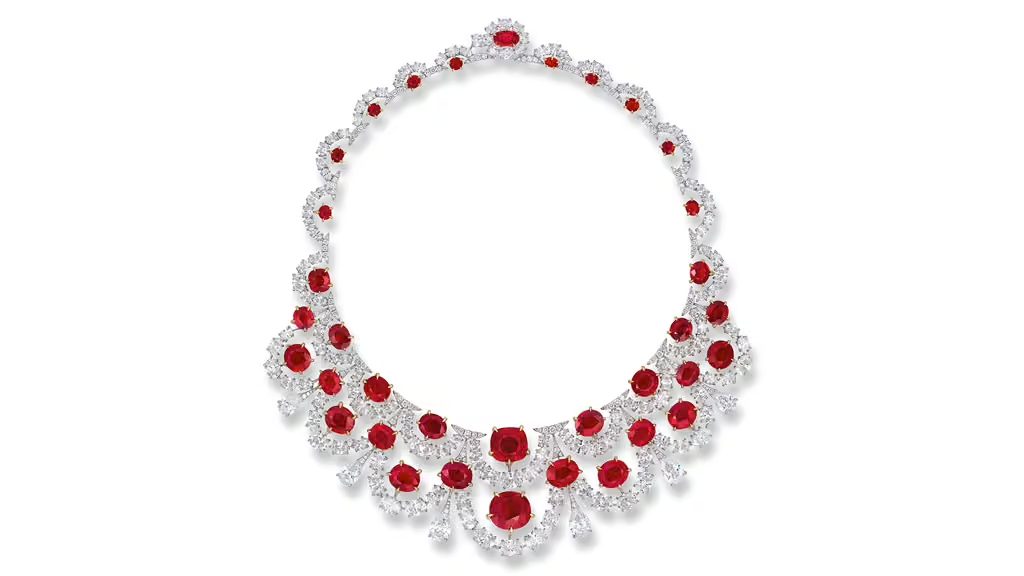 GIA
@GIAnews
Triple X is a trade term for diamonds that have three Excellents (Excellent cut, polish and symmetry) on their GIA grading reports. Do all diamonds need to be Triple X in order to sparkle? Find out on the GIA 4Cs blog 4cs.gia.edu/en-us/blog/triple-x-diamonds/ Courtesy: JK & Co. Jewelers
 GIA
@GIAnews
Neon pinkish red spinel was discovered in Myanmar in the early 2000s. Traders and gemologists dubbed these gems “jedi spinel” because they were untainted by the dark side (or tone) that dulls the color of many spinel. www.gia.edu/gems-gemology/spring-2014-pardieu-jedi-spinel… Courtesy: Vincent Pardieu/ GIA

 GIA
@GIAnews
Gemologist and future president of GIA, Richard T. Liddicoat, popped the question to Gene Liddicoat with this ring set with a 25+ carat oval Ceylon sapphire. This sapphire ring is now part of GIA's collection. Photo: Orasa Weldon. Gift of Richard. T. Liddicoat.
 GIA
@GIAnews
Join our GIA Knowledge Sessions webinar tomorrow at 10 a.m. PDT as Dr. Sally Eaton-Magaña — Sr. Manager of Diamond Identification — explores the science of diamond color and how fancy color diamonds are created within the earth. Register now: www.gia.edu
 GIA
@GIAnews
This iridescent specimen from the Nara Prefecture in Japan is a rare type of garnet called rainbow andradite garnet. This gem looks to us like it has a nebula captured inside! Photo: Kevin Schumacher. Courtesy: John I. Koivula.
 GIA
@GIAnews
The 302.37 ct, Graff Lesedi La Rona (“Our Light” in Tswana)—graded D, VVS1 by GIA—is currently the largest square emerald cut diamond in the world. It was found in Botswana in 2015. Can you see why this diamond is Botswana’s light? Courtesy: Graff.
 GIA
@GIAnews
The 25.59 carat Sunrise Ruby sold for $30.3 million in 2015. That makes it the most expensive ruby and colored stone in the world to date! Learn more about the June birthstone www.gia.edu/birthstones Courtesy: Sotheby's
 GIA
@GIAnews
This diamond stack consists of pink, brownish yellow and colorless octahedral diamond roughs from the Argyle Mine in Australia. The colorless diamond rough has trigons - triangular etch features that form during a diamond's formation. Courtesy: Rio Tinto
 GIA
@GIAnews
These earrings are made from tagua nut, not ivory! They've gained popularity as an elephant ivory substitute among sustainability-minded artists, because they achieve the visual effect of ivory without harming those majestic animals. Photo: Russell Starr, Courtesy: Alexandra Mor
 GIA
@GIAnews
This gem is a natural, untreated, 21.20 carat oval padparadscha sapphire from Ceylon! Padparadscha sapphires are rare, orangy pink sapphires named after the Sinhalese word for "lotus blossom." Learn more www.gia.edu/doc/Padparadscha-What-s-in-a-Name.pdf Courtesy: @phillipsjewels
 GIA
@GIAnews
The Cullinan and the Hope diamond may both be “super-deep” diamonds. GIA’s Dr. Smith and Dr. Wang concluded that most diamonds form roughly 125 miles into the Earth, but some mega-diamonds form roughly 400 miles deep in the earth’s mantle. Photo: CZ replicas of Cullinan diamonds.
 GIA
@GIAnews
The 18.96 carat Pink Legacy, graded Fancy Vivid pink by GIA, is among the rarest of all gemstones due to its size and pure, vivid pink color. Learn more about pink diamonds www.gia.edu/gia-news-research/why-pink-diamonds-pink-gia-… Courtesy: Christie's
 GIA
@GIAnews
Designed by Derek Katzenbach, GIA GG & GJ, this ring features a 9.05 ct. bi-color tourmaline from the Himalaya Mine in California as well as yellow diamonds, tsavorites & rubellite. Gift of Derek Katzenbach. In Memory of Nicholas Scott Golden, University of Maine geology student.
 GIA
@GIAnews
Join our GIA Knowledge Sessions webinar tomorrow at 10 a.m. PDT as Dr. Tao Hsu, director of global professional development, gives a behind-the-scenes look at how we design our world-respected curriculum. Register now: www.gia.edu
 GIA
@GIAnews
Rubies are colored by chromium. The more chromium and the less iron they have, the more saturated and glowing their color will be. The 5.19 carat center ruby in this ring is from Mogok, a locale legendary for its rubies. www.gia.edu/birthstones/july-birthstones Courtesy: Phillips Jewels
 GIA
@GIAnews
Fire, brilliance and scintillation—the lightshow that makes a diamond beautiful—come to life through cut, symmetry and polish. That’s why what the trade calls Triple X diamonds are so popular. Learn more (insert link). Copyright: GIA & Harold and Erica Van Pelt
 GIA
@GIAnews
Traditionally, the most valuable sapphires have been pure to purplish blue, but teal and bi-colored sapphires are becoming the new fan favorites, especially for engagement rings! Photo: Jeff Mason. Courtesy: Philip Zahm Designs
 GIA
@GIAnews
The Red Emperor necklace contains 30 heart-shaped and 30 pear-shaped unheated, "pigeon's blood" Burmese rubies totaling 104.51 carats. It takes a long time to assemble the gemstones for such a necklace! Learn more about July's birthstone www.gia.edu/birthstones Courtesy: Faidee
 GIA
@GIAnews
These women are part of the Tanzania Women Miners Association (TAWOMA). To help them mine gems and bargain with traders more profitably, GIA offered free education and educational materials to TAWOMA members in 2017. Learn more www.gia.edu/gia-news-press/gem-guide-artisanal-miners Photo: Robert Weldon/ GIA
 GIA
@GIAnews
Passion, fire, blood - ruby, July's birthstone, has symbolized powerful life forces and been coveted through history. Its name comes from the Latin word ruber, meaning “red.” Photos: Robert Weldon/ GIA. Rough courtesy: Bill Larson. Gem courtesy: Bear Essentials
 GIA
@GIAnews
Join our GIA Knowledge Sessions webinar tomorrow at 10 a.m. PDT as Wim Vertriest, supervisor of field gemology, covers the chemistry of Earth’s crust and the geologic criteria for forming rubies, sapphires and some of the world’s most valuable gems. www.gia.edu
 GIA
@GIAnews
Researchers at the GIA laboratory in New York recently examined a diamond featuring a small diamond crystal that moves freely inside. The crystal, dubbed “matryoshka” after the iconic Russian nesting dolls, was discovered by @ALROSA_official in Siberia in 2019. Courtesy: Alrosa
 GIA
@GIAnews
When you see flashes of color in a beautifully polished #diamond, you're looking at its 'fire!' Fire is caused by the dispersion of white light. When light enters a diamond, it is broken up into its component colors. www.youtube.com/watch?v=QyvYqOcmodQ
GIA
@GIAnews
Size of the #gemstone is an important consideration to lapidaries: the larger the gem, the bigger the “canvas.” Some gem cutters prefer gemstones like #aquamarine that provide a larger surface. Learn more about fantasy cuts: www.gia.edu/munsteiner-gem-cut
 GIA
@GIAnews
#didyouknow? The #princesscut was created in 1979? The modified brilliant facet arrangement offers a strong sparkle. 4cs.gia.edu/en-us/blog/diamond-princess-cut-engagement-ring/
 GIA
@GIAnews
#trueorfalse? Of all the diamond 4Cs, cut is the most complex and technically difficult to analyze. Get the answer here: 4cs.gia.edu/en-us/diamond-cut/
 GIA
@GIAnews
#amethyst, the February #birthstone has enchanted kings and queens for many centuries. Take a look at our Amethyst Buying Guide before you shop. 4cs.gia.edu/wp-content/uploads/2014/01/Amethyst-Buying-Gu…
 GIA
@GIAnews
This #summer, don't forget chlorine is especially damaging to #pearls, so don't wear them in the pool. 4cs.gia.edu/en-us/blog/traveling-style-guide-traveling-je…
 GIA
@GIAnews
#didyouknow? In 2005, #peridot was found in comet dust brought back from the Stardust robotic space probe. www.gia.edu/peridot
 GIA
@GIAnews
#alexandrite can show two phenomena in one gem: color change and chatoyancy, also called cat’s-eye.
 GIA
@GIAnews
Oval #diamonds are typically cut in the brilliant faceting style, which means the diamond has 57 or 58 facets. 4cs.gia.edu/en-us/blog/allure-of-an-oval-diamond/
 GIA
@GIAnews
The most renowned #rubies typically form in marble. www.gia.edu/ruby-description
 GIA
@GIAnews
GIA will offer $2 million in educational #scholarships in 2017. Apply now through March 31. www.gia.edu/scholarships
 GIA
@GIAnews
A symmetrical heart-shaped #diamond should have a length-to-width ratio of 1:1 to 1:1.2. 4cs.gia.edu/en-us/blog/diamond-heart-shaped-engagement-ring/
 GIA
@GIAnews
#happybirthday to Richard T. Liddicoat, architect of the GIA International #diamond
Grading System™. www.gia.edu/gia-news-research-GIA-innovators-liddicoat
 GIA
@GIAnews
“I adore wearing gems, but not because they are mine. You can’t possess radiance, you can only admire it.” – Happy birthday #elizabethtaylor
 GIA
@GIAnews
A beautifully finished #diamond is dazzling, with every facet displaying the craftsman’s skill & care. www.gia.edu/diamond-quality-factor
 GIA
@GIAnews
Unlike colorless #diamonds, fancy-color diamonds are evaluated more for color intensity than for brilliance or fire. www.gia.edu/fancycoloreddiamond-quality-factor
 GIA
@GIAnews
GIA’s D-to-Z scale measures the colorlessness of a #diamond, comparing it to masterstones under controlled conditions www.gia.edu/diamond


