Got ideas for making GSA better for students? Put them to work! Nominations for the Student Advisory Council are open.
Nominations close 31 December 2026. Nominate yourself or someone else today: geosociety.co/student-leadership
Geological Society of America
The Geological Society of America (GSA) is a nonprofit organization dedicated to the advancement of the geosciences. More on Wikipedia
-
geosociety
@geosociety
-
geosociety
@geosociety
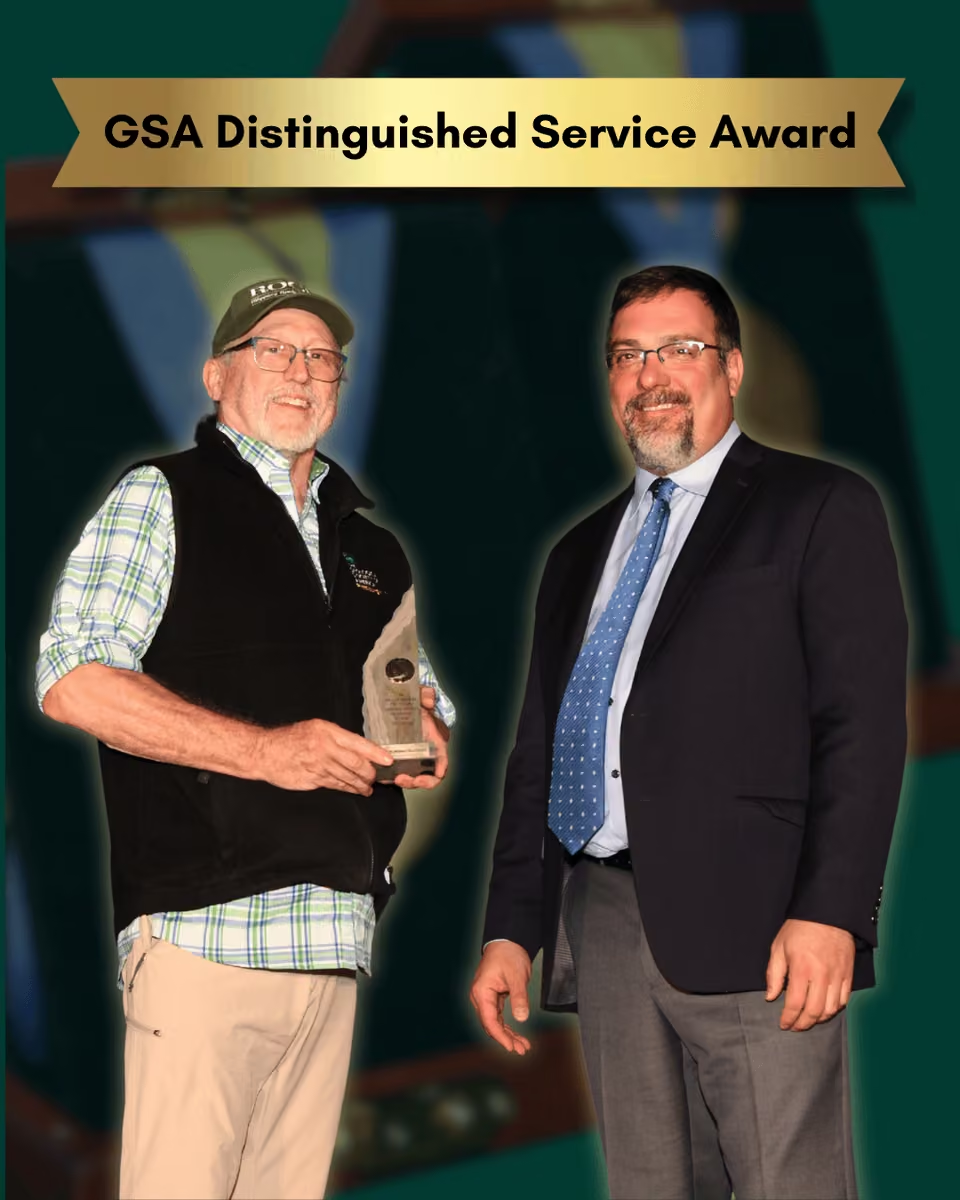
Congratulations to Sherilyn Williams-Stroud, MaryAnn Love Malinconico, Thomas J. Casadevall, Julia Cisneros, Katie M. Maloney, Gerardo Benito, Shuzhong Shen, and Paul K. Doss—honored at #gsaconnects2026 in Denver.
Nominations for 2027 GSA Awards are open: geosociety.co/Nominate -
geosociety
@geosociety
Applications are open for the 2027 GSA Thompson Field Forum.
8 days across the Canadian Shield exploring controversies in Precambrian deep crustal geology. 32 spots. US$500, meals + lodging included. Partial support available.
Deadline: 21 January 2027
🔗geosociety.co/apply-thompson -
geosociety
@geosociety
Have you led a GSA field trip that deserves a broader audience? The 38th International Geological Congress (IGC 2028) in Calgary, Canada, is an opportunity to share North America's incredible geology with geoscientists from around the world!
Learn more: geosociety.co/IGC-Field-Trips -
geosociety
@geosociety
Your next grant, scholarship, or fellowship could be one search away. GSA’s Student Advisory Council built a list of 190 opportunities for students and early-career geoscientists. Built by students, for students. Sign in and explore: geosociety.co/grants-scholarships-list
-
geosociety
@geosociety
How do glaciers and chemical weathering transform solid bedrock into a patterned limestone pavement? Discover how glacial erosion and dissolution form clints and grykes. Explore this Earthcache at GSA Connects 2027 in Montréal!
🧭 geosociety.co/GC7WDJ2 -
geosociety
@geosociety
We’re so proud of Rachel Phillips, a longtime GSA community member, first as a Science Communication Fellow and now on our Marketing team! Rachel represented South Carolina in 50×50, exploring its ancient ocean and coastal change.
Watch: 5050science.com/state/sc -
geosociety
@geosociety
Applications are open for the 2027–2028 GSA-USGS Congressional Science Fellowship!
Spend a year working in a congressional office. $85,000 stipend + benefits.
Eligibility: GSA member, Ph.D. or equivalent, U.S. citizen or permanent resident.
Apply: geosociety.co/policy-fellowship -
geosociety
@geosociety
Not every geoscientist takes the same route into the field. For Jacqueline Giblin, fine arts and photography came before an interest in #geochronology and #thermochronology.
Explore her research: github.com/jlgiblin.
Share your geoscience journey: geosociety.co/submit-spotlight -
geosociety
@geosociety
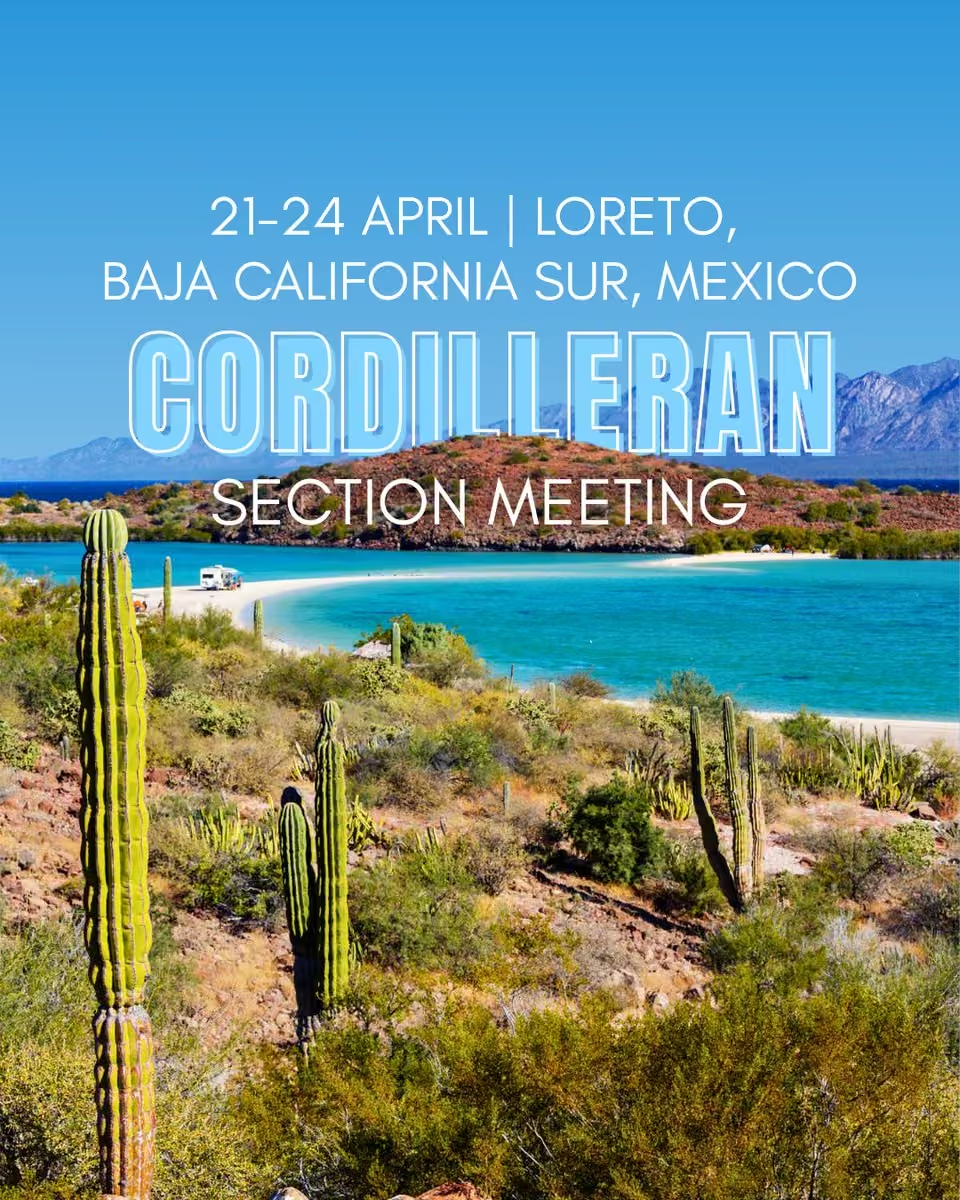
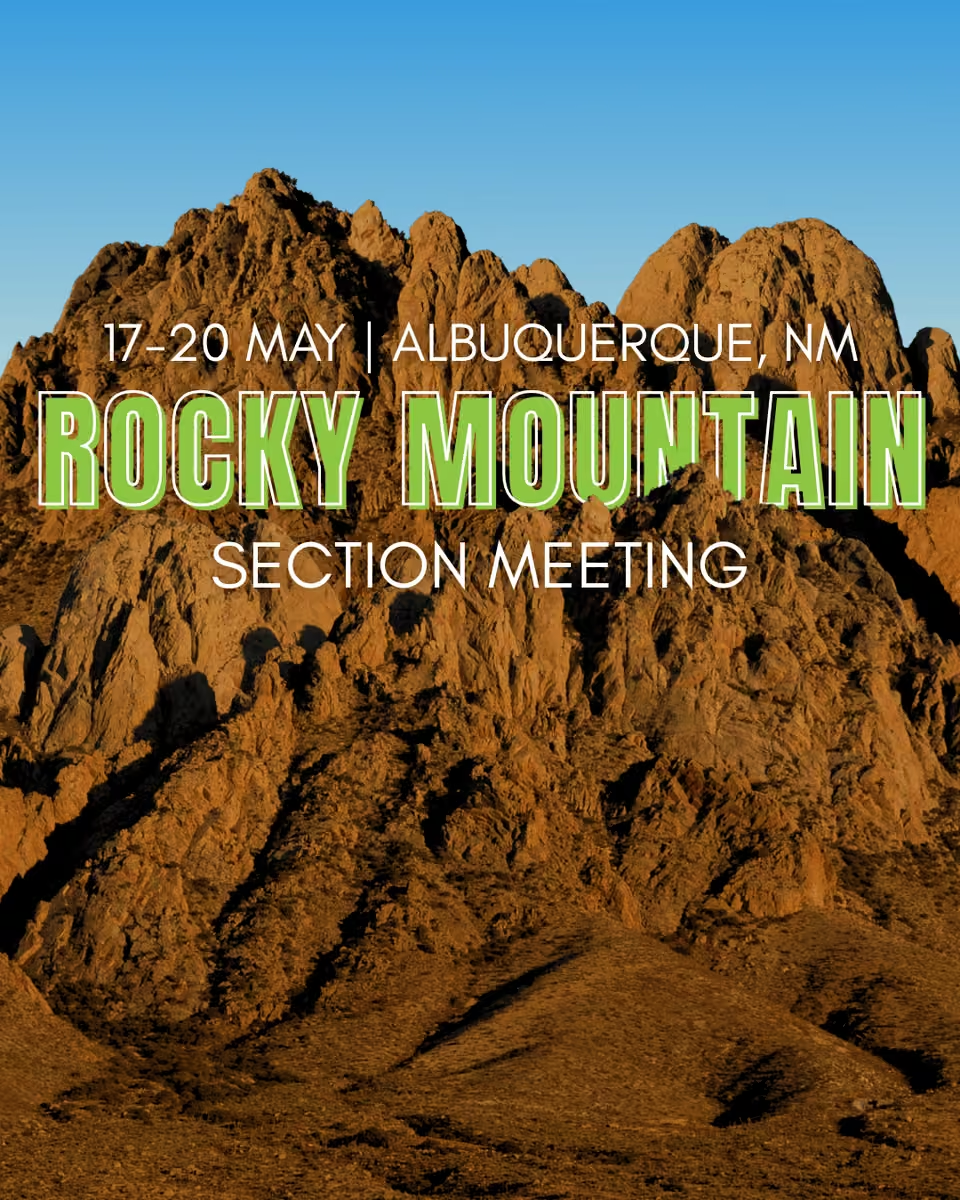
Great research is happening in your backyard! 🌎 Share your science with the regional geoscience community at a 2027 GSA Section Meeting.
🔗 Submit your abstract now at geosociety.org/events/section-meetings -
geosociety
@geosociety
What advice would you give to students pursuing geoscience?
We asked geoscientists at #gsaconnects2026 to share their best advice for the next generation of Earth scientists!
Now it's your turn! Comment below!
Learn more about Section Meetings: geosociety.co/SectionMeetingsThis media couldn't be displayed. See it on the original post. -
geosociety
@geosociety
In this episode of #gsaconnectscast, we sit down with GSA President Glenn Thackray to discuss the changing landscape of geoscience and why the field continues to offer exciting opportunities.
Full interview: geosociety.co/Future-of-Geo
#futureofgeoscience #gsaconnects -
geosociety
@geosociety
Submit your proposal for GSA Connects 2027! Share your ideas for technical sessions, short courses, and field trips, and help shape the program in Montréal, Québec, Canada, 17–20 October 2027.
⏰ Deadline: 11 February 2027
🔗 Submit: geosociety.co/connects27-submit -
geosociety
@geosociety
Continue the #gsaconnects conversation with two special Geoheritage Pardee Symposium webinars, where international experts will explore Geoheritage Values in a World of Resource Extraction.
Part I – 12 Nov: geosociety.co/Geoheritage-Webinar-I
Part II – 17 Nov: geosociety.co/Geoheritage-Webinar-II -
geosociety
@geosociety
What can a vast expanse of salt reveal about Earth’s changing landscape? Discover how evaporation, mineral deposits, and wind created this remarkable landscape, preserving evidence of ancient Lake Bonneville.
🧭 Explore this EarthCache: geosociety.co/GC1799H -
geosociety
@geosociety
Your next opportunity could be one click away! 🌎 Explore GSA’s Geoscience Job Board for opportunities in research, academia, public service, and more.
🔗Browse these positions: geosociety.co/JobBoard -
geosociety
@geosociety
We asked geoscientists at #gsaconnects2026: Why did you become a geologist?
💬 Now it's your turn! What first got YOU interested in geology? Tell us in the comments!
▶️ Watch the full #gsaconnectscast video: geosociety.co/WhyGeology
#geology #geoscience #earthscienceThis media couldn't be displayed. See it on the original post. -
geosociety
@geosociety
Calling all current and past GSA Field Trip Leaders! 🥾
GSA invites field trip leaders to submit proposals for the IGC 2028, taking place 12–20 August 2028 in Calgary, Canada, and request endorsement as an official GSA Field Trip.
Learn more: geosociety.co/IGC-Field-Trips -
geosociety
@geosociety
At #gsaconnects2026, we caught up with Alex Apgar, the creator of "Clawing for Conservation"— a project combining a claw machine with education about conservation!
💡 What creative science communication ideas will we see at the next GSA meeting?This media couldn't be displayed. See it on the original post. -
geosociety
@geosociety
Montana geoscientists—this one’s for you.
Author Robert C. Thomas will be at the Montana Natural History Center (MNHC) in Missoula on 4 November to discuss Montana Rocks! and sign copies. Books available on site. Light refreshments included.
Register: geosociety.co/montana-event -
geosociety
@geosociety
Congratulations to the 2026 class of GSA Awardees, recognized last month at the Presidential Address and Awards Ceremony at #gsaconnects2026 in Denver, Colorado, USA.
Know someone who deserves this recognition? Nominations for 2027 GSA awards are open: geosociety.org/what-we-do/honors-awards/nominate -
geosociety
@geosociety
In this episode of #gsaconnectscast, we sit down with David Bottjer to explore what the fossil record reveals about Earth's greatest extinctions, how life responds to environmental changes, and the road to ecological recovery.
▶️ Watch the full interview: geosociety.co/Past-Present -
geosociety
@geosociety
Meet five more voices of the 2026–2027 GSA Ambassador cohort! 🌎
From fieldwork to new discoveries, they’re bringing their geoscience journeys to the community. We’re excited to welcome Trinity, Vanesa, Zachary, Malena, and Cameron!
👉 Get to know them: geosociety.co/gsa-ambassador -
geosociety
@geosociety
How strong are tectonic plates? 🌎
In this #geologybites episode, Tony Watts, Emeritus Professor at the University of Oxford, explains how scientists measure the strength of tectonic plates by studying how they bend under pressure: geosociety.co/Geology-Bites -
geosociety
@geosociety
We took to the halls of #gsaconnects2026 to ask geoscientists from across the disciplines to share their best advice for the next generation of geoscientists!
💬 Now it's your turn! What's your advice?
Full video: geosociety.co/Advice
#geosciencecareers #stemcareers -
geosociety
@geosociety
How do microplastics move through groundwater? 🌎 GSA member Rakesh Kumar studies how these contaminants travel through soil and water, with implications for agriculture and water quality. Connect with geoscientists and grow your career with GSA: geosociety.org/membership
-
geosociety
@geosociety
Know a geoscientist whose natural resource research deserves an international stage? Nominate them for the Michel T. Halbouty Distinguished Lecturer Award! Nominations are due 15 February.
🔗geosociety.co/Nominate-Halbouty
Questions? Contact awards@geosociety.org or +1-303-357-1060. -
geosociety
@geosociety
Sharp cliffs, isolated rock formations, and a striking coastline—Jodogahama shows how volcanic rock and coastal processes shape the landscape. 🌊🪨
Explore the andesite cliffs, Blue Cave, and dramatic shoreline of this Sanriku Geopark site.
🧭 geosociety.co/GC7JMKD -
geosociety
@geosociety
From remote field sites to some of the most spectacular landscapes on Earth, geoscience can take you to some incredible places! 🏔️
We asked #gsaconnects2026 attendees: What's the coolest place you've ever done research?
💬 Tell us YOURS in the comments!This media couldn't be displayed. See it on the original post. -
geosociety
@geosociety
💧 @NorthwesternU is hiring a tenure-track Associate or Full Professor of Environmental Science focused on water in the environment. Research areas may span the atmosphere, hydrosphere, cryosphere, biosphere, and lithosphere.
🔗geosociety.co/job-IL -
geosociety
@geosociety
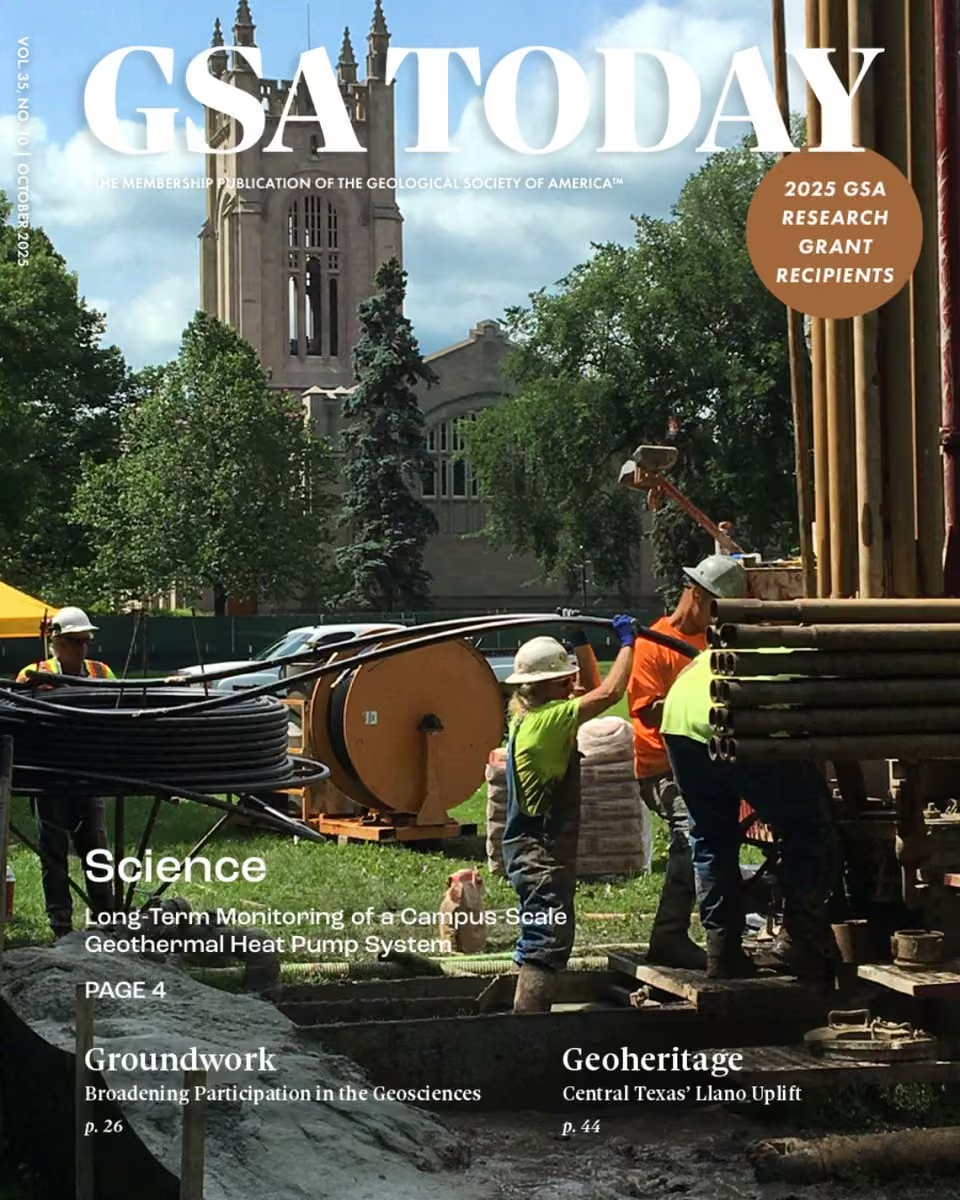
From strengthening geoscience across Latin America and the Caribbean to celebrating Colorado's geological heritage, the October issue of #gsatoday is here!
Explore the full October issue: geosociety.co/GSAT-Oct26
#geoscience #geoheritage #earthscienceweek -
geosociety
@geosociety
In this episode of #gsaconnectscast, we sit down with the chair of GSA's Soils Division to explore the connections between soils and other geoscience disciplines and why understanding this essential resource matters for our future.
Full video: geosociety.co/Soil -
geosociety
@geosociety
Never presented at a GSA meeting before? There's no better place to start. 🌱
2027 Section Meeting Abstract deadlines run from 8 December 2026 to 4 February 2027, depending on your section.
🔗 Submit now: geosociety.org/events/section-meetings -
geosociety
@geosociety
GSA Connects 2026 does not happen without the people who show up before the sessions start and stay until the last attendee leaves.
To our staff, volunteers, and GSA Foundation team—thank you! We are proud to work alongside a team this dedicated. -
geosociety
@geosociety
Continue the #gsaconnects conversation with Geoheritage Pardee Symposium Webinars featuring international perspectives on how geoheritage values can inform a more sustainable future.
Pt I – 12 Nov: geosociety.co/Geoheritage-Webinar-I
Pt II – 17 Nov: geosociety.co/Geoheritage-Webinar-II -
geosociety
@geosociety
In this #gsaconnectscast interview, we sit down with Frank S. Spear, recipient of the 2026 GSA Penrose Medal, and his nominator to celebrate his achievements and hear the story behind this recognition from two perspectives.
Full video: geosociety.co/Penrose-2026This media couldn't be displayed. See it on the original post. -
geosociety
@geosociety
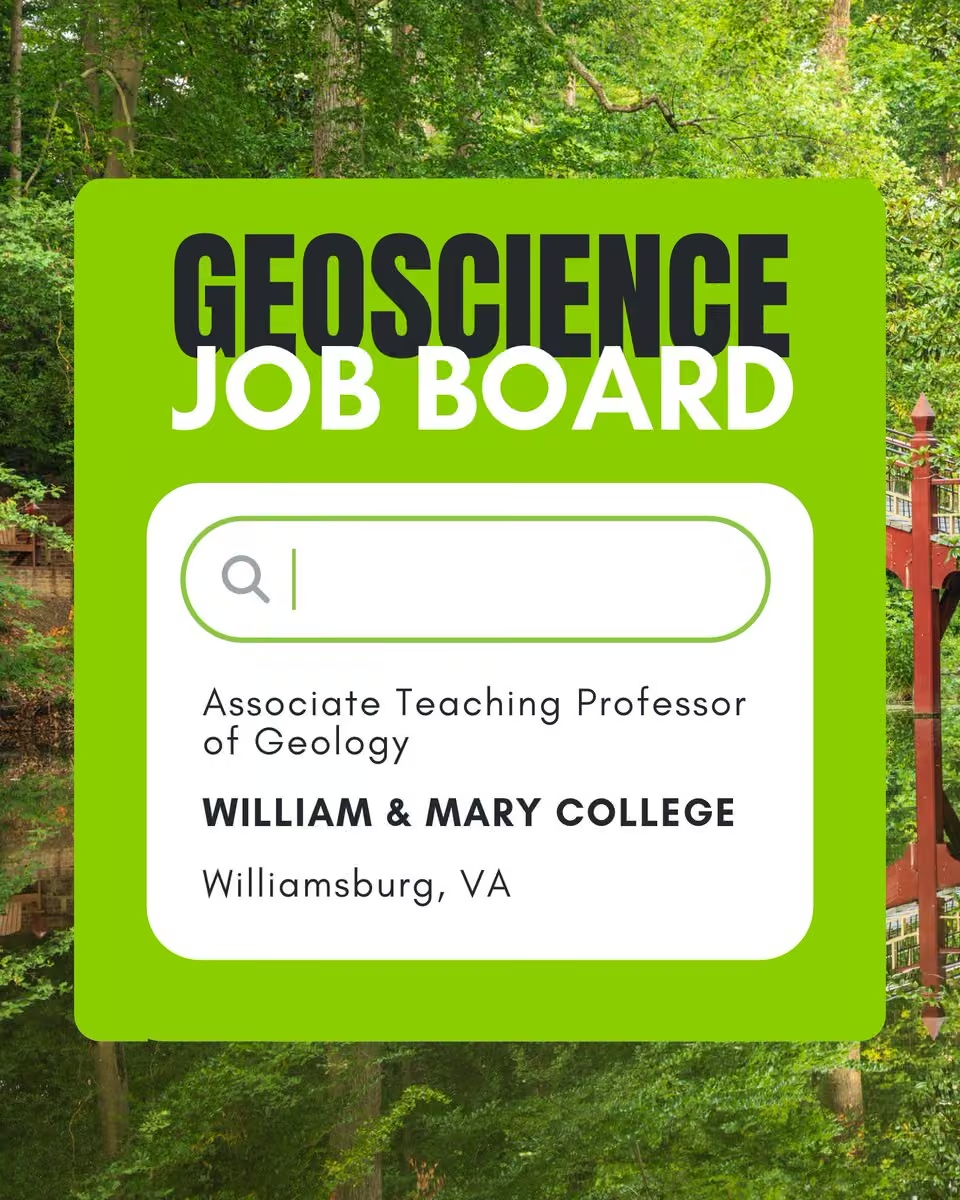
Ready for a geology teaching role? @williamandmary is hiring an Associate Teaching Professor of Geology in Williamsburg, Virginia. This full-time, non-tenure-track position focuses on teaching, with a start date of August 10, 2027.
🔗 geosociety.co/William-Mary -
geosociety
@geosociety
What can an underground stream reveal about an island’s geology? Harrison’s Cave in Barbados stretches at least 2.3 km through crystallized limestone. Groundwater dissolved the rock over time, creating passages, streams, waterfalls, and pools.
🧭 geosociety.co/GC6TTMD -
geosociety
@geosociety
GSA Connects 2026 is a wrap. Thank you to everyone in Denver last week — the presenters, session chairs, field trip leaders, volunteers, and sponsors who made it possible.
See you in Montréal for GSA Connects 2027.
🔗 geosociety.org/events
#gsaconnects2026 #earthscienceweek -
geosociety
@geosociety
What happens when geoscience meets real-world impact? 🌍For Aminat Abdulsalam, a graduate student at @penn_state it means connecting water-resources science with environmental decision-making and community needs.
Explore where geoscience can take you: geosociety.org/membership -
geosociety
@geosociety
Days three and four of GSA Connects 2026 were packed—Pardee Symposia on geoheritage and mineral resources, the Halbouty Distinguished Lecture, the GeoLotería Game, division receptions, and more.
#gsaconnects2026 #earthscienceweek -
geosociety
@geosociety
What brings geoscientists from across the world together in one place?
We took to the halls of #gsaconnects2026 to ask attendees one simple question: Why did you come to GSA Connects this year?
Full video: geosociety.co/Why-Attend
#geoscience #earthscience #sciencecommunityThis media couldn't be displayed. See it on the original post. -
geosociety
@geosociety
Every color tells a story. 🗺️
In celebration of #geologicmapday and #gsaconnects2026 in Denver, GSA has created a new Geo-Sites in the Denver Area and Beyond map, highlighting its incredible geological diversity.
Explore GSA Maps & Charts: geosociety.co/maps-charts -
geosociety
@geosociety
In this episode of #gsaconnectscast, we sit down with the chair of GSA's Environmental & Engineering Geology Division, Paul Burgess, to explore how geoscience is applied to real-world challenges, and how students can get involved.
Watch the full video: geosociety.co/Env-Eng-GeoThis media couldn't be displayed. See it on the original post. -
geosociety
@geosociety
In this episode of #gsaconnectscast, we sit down with the first vice chair of GSA's Geology and Health Division, Abhishek RoyChowdhury, to explore the fascinating connections between Earth science and public health.
Watch full video on YouTube: geosociety.co/GeoHealth -
geosociety
@geosociety
In this episode of #gsaconnectscast, we sit down with Dr. Corinne Meyers to explore how more than 500 million years of climate and biodiversity records can help scientists understand what makes life vulnerable to extinction.
Full video: geosociety.co/Extinctions-Climate -
geosociety
@geosociety
Day three of GSA Connects 2026 was out of this world! 🌕 From the Artemis II Noontime Lecture to the Innovation Stage, Poster Hall, and Exhibit Hall, the day was full of discovery. The Iron Pour brought geology to life, and the Women in Geology Reception celebrated community.
-
geosociety
@geosociety
We took to the halls of #gsaconnects2026 to ask geoscientists to bust the biggest myth in their fields. Now it's your turn! What's one misconception about your field that you wish to clear up? Let us know in the comments below!
#geoscience #misconceptions #sciencecommunication -
geosociety
@geosociety
Day two of #gsaconnects2026 covered a lot of ground.
GeoCareers Day, the Geoscience Career Exploration Fair, the Presidential Address & Awards Ceremony, Poster Hall presentations, the Iron Pour: Scratch Block Workshop, and the Exhibit Hall Opening Reception—all in one day. -
geosociety
@geosociety
In this episode of #gsaconnectscast, explore how the U.S. Geological Survey’s Earth Mapping Resources Initiative is bringing together new geologic mapping techniques to better understand the nation’s mineral resources.
Watch the full video on YouTube: geosociety.co/USGSThis media couldn't be displayed. See it on the original post. -
geosociety
@geosociety
Day one of #gsaconnects2026 is in the books, and it's also the first day of #earthscienceweek.
The Icebreaker, Sweet Connections! Trivia Night, Paleo X Mixer, and more kept thousands of geoscientists talking well into the evening. -
geosociety
@geosociety
In this episode of #gsaconnectscast, visit the University of Georgia Department of Geology to see research spanning all scales of geoscience, from microbes to magma.
Full video on YouTube: geosociety.co/UGAThis media couldn't be displayed. See it on the original post. -
geosociety
@geosociety
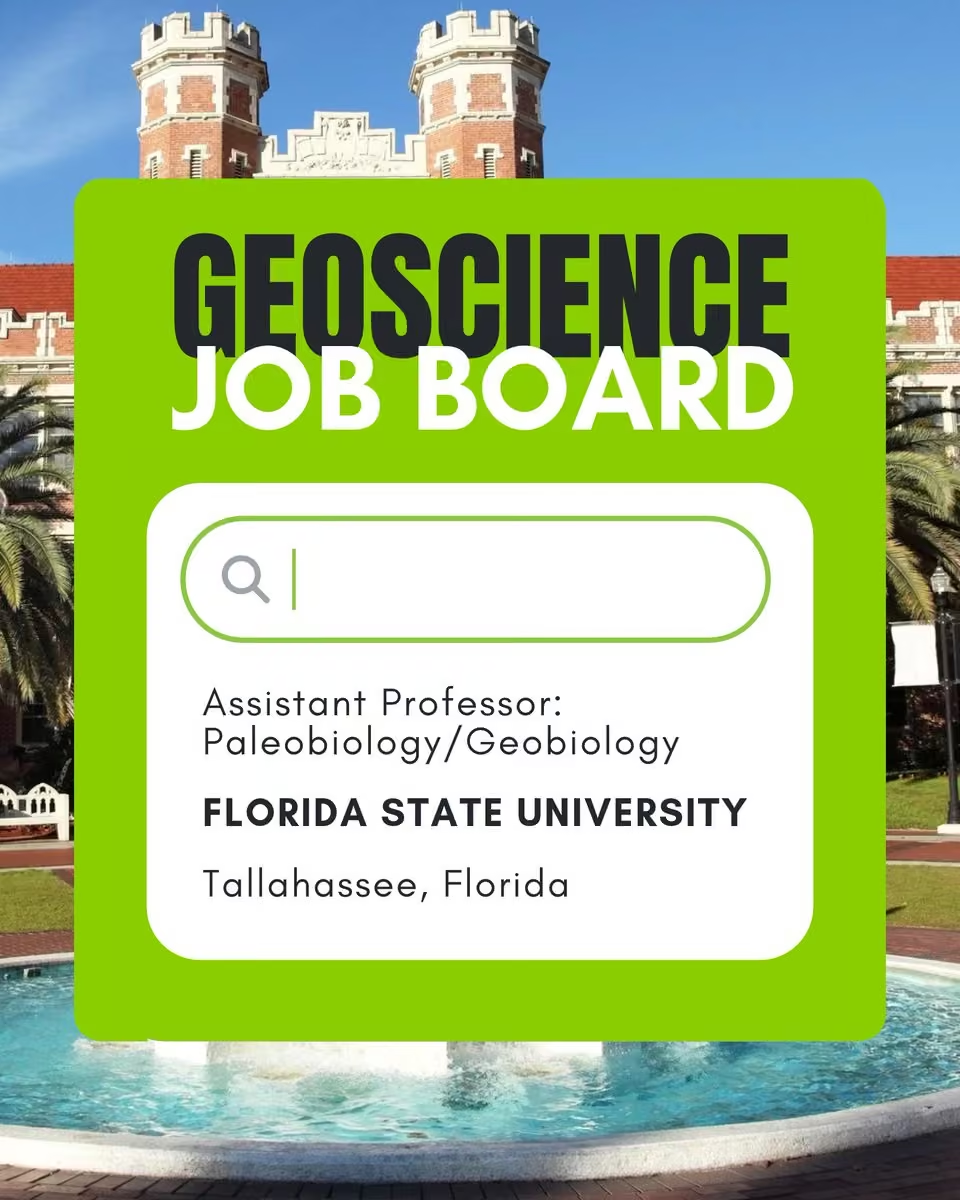
Life, Earth, and the universe—all in a day’s work. 🦕🌍 Florida State University is hiring a tenure-track Assistant Professor in Paleobiology/Geobiology, with research and teaching spanning paleobiology, geobiology, paleoecology, and more.
🔗 geosociety.co/jobs-FSU -
geosociety
@geosociety
Exploring Denver during GSA Connects 2026? 🌍 Oct 9–11 is International EarthCache Day! Take your geology outside the meeting rooms with self-guided EarthCache™ adventures, from downtown streets to parks and hikes.
🧭Explore here: geosociety.co/earthcache -
geosociety
@geosociety
In this episode of #gsaconnectscast, travel from the University of South Carolina’s laboratories to the Carolina coast, where researchers study water quality, conservation, and the connections between groundwater, surface water, and the ocean.
Full video: geosociety.co/SEOEThis media couldn't be displayed. See it on the original post. -
geosociety
@geosociety
In this episode of #gsaconnectscast, step inside Boise State University’s Isotope Geology Laboratory, where scientists use tiny zircon crystals and high-precision uranium-lead dating to put numbers on deep time.
Watch the full video on YouTube: geosociety.co/BSU-LabThis media couldn't be displayed. See it on the original post. -
geosociety
@geosociety
New #geology research suggests that the breakup of Rodinia ~800–750 million years ago may have created a continent-scale escarpment that helped form the Great Unconformity by creating the high-relief landscape that later amplified glacial erosion: geosociety.co/Gernon_et_al
-
geosociety
@geosociety
Today, we're celebrating International Geodiversity Day: geodiversityday.org
And next week, we gather in Denver, Colorado, for #gsaconnects2026 to experience some of the most geodiverse landscapes in the world first hand. Join us in Denver: connects.geosociety.org -
geosociety
@geosociety
In this #gsaconnectscast episode, see how geoscientists at Pacific Gas & Electric read evidence of ancient earthquakes in fault trenches and use that knowledge to help prepare critical infrastructure for future events.
Watch the full video on YouTube: geosociety.co/PG-EThis media couldn't be displayed. See it on the original post. -
geosociety
@geosociety
New #geology reveals that factors including slope steepness, hillslope-to-channel connectivity, and sediment transport capacity can strongly influence the depth and style of post-earthquake erosion in mountain systems: geosociety.co/Wang_et_al_26
-
geosociety
@geosociety
Want to turn climate change research into impact in the classroom? 🌍 Furman University is hiring a tenure-track Professor of Environmental Science at the Assistant, Associate, or Full Professor level, with expertise in climate change or related fields.
🔗 geosociety.co/JobBoard -
geosociety
@geosociety
🔬 In this episode of #gsaconnectscast, step inside the Indiana University Metal Isotopes Lab, where researchers use the unique metal signatures to uncover what they can reveal about the world around us.
Watch the full video on YouTube: geosociety.co/IULab
#geochemistryThis media couldn't be displayed. See it on the original post. -
geosociety
@geosociety
Think you know your rocks? Prove it. 🪨 Which sedimentary rock forms from the accumulation of shells and calcium carbonate-rich material? Drop your answer below, then put your knowledge to the test at GSA Connects Sweet Connections Trivia Night! Register: connects.geosociety.org.
-
geosociety
@geosociety
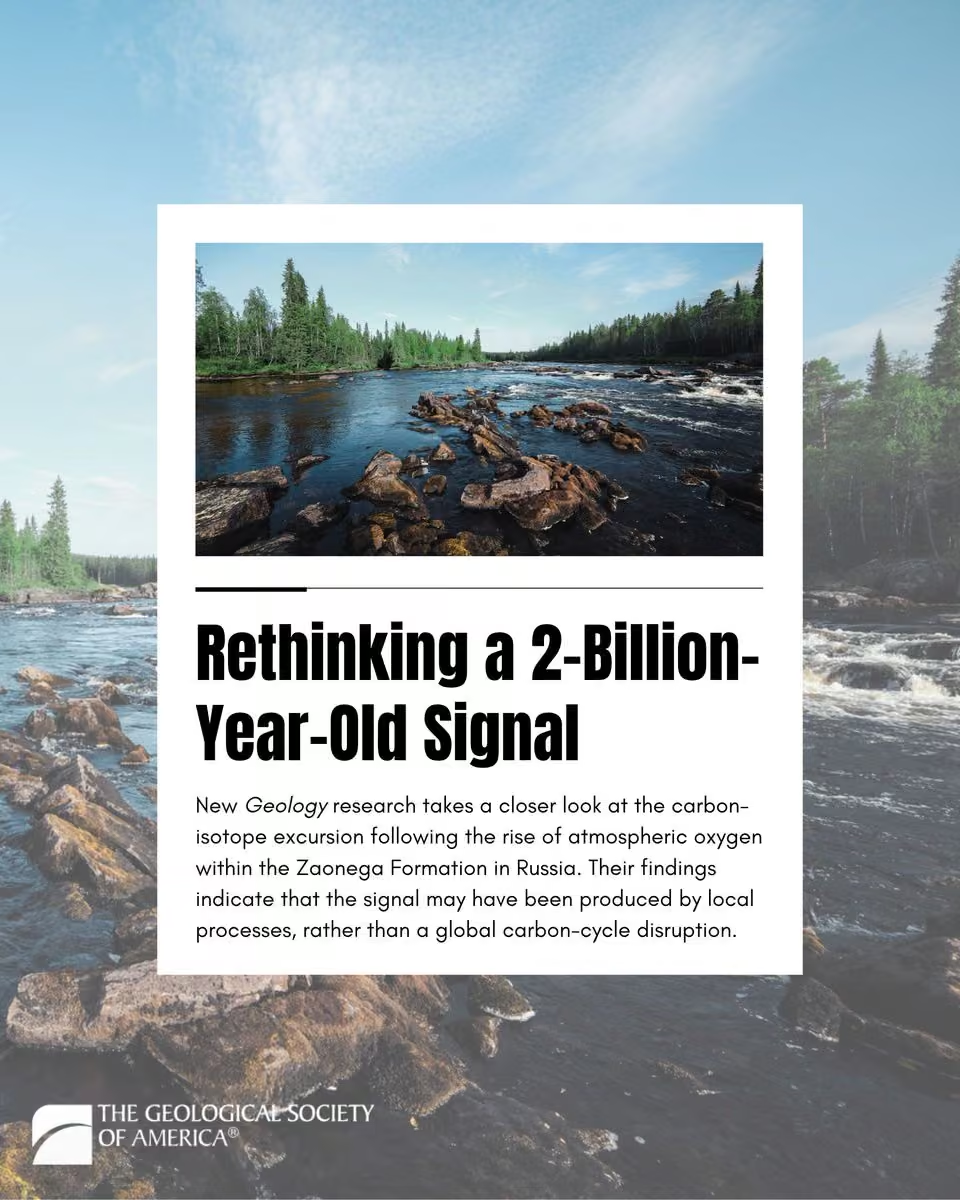
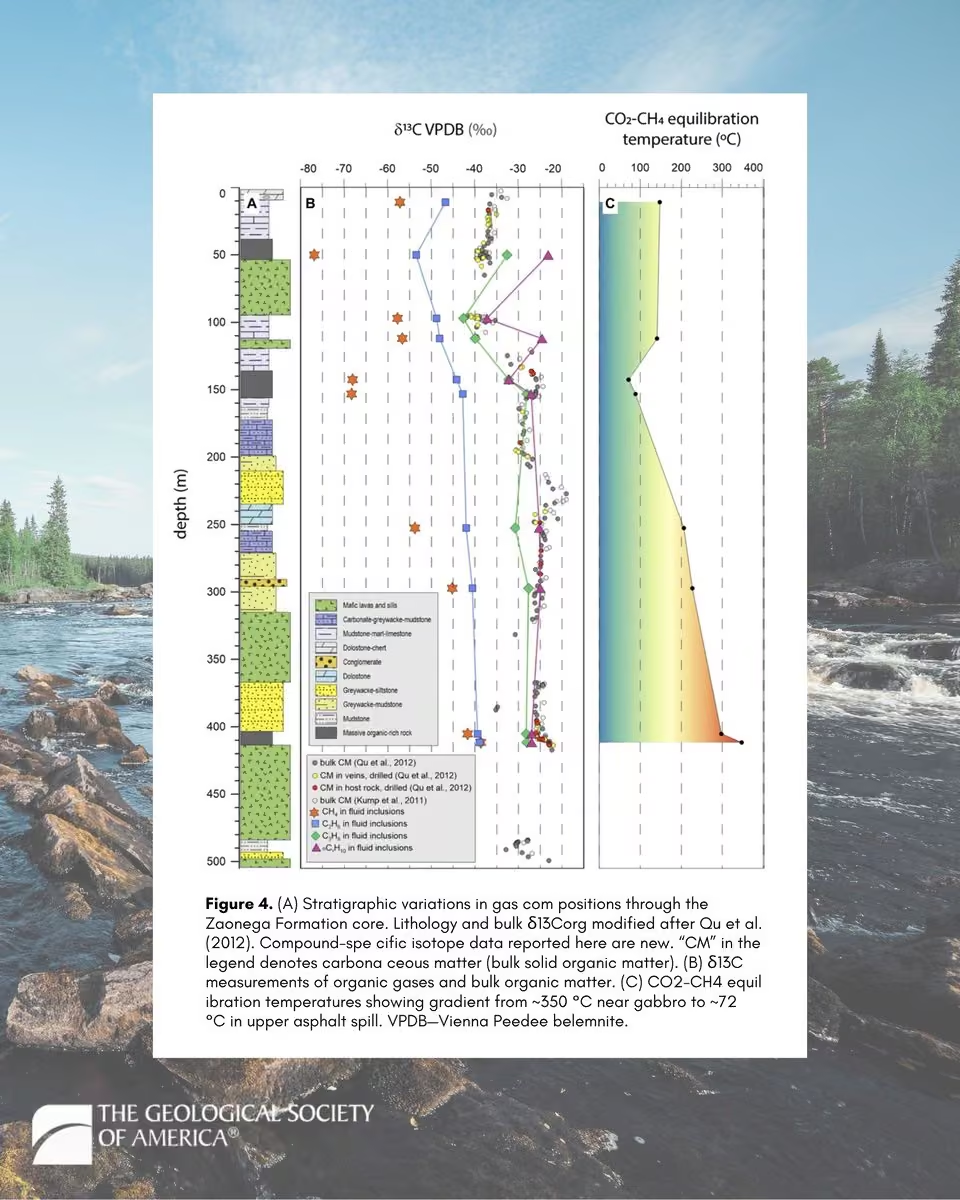
What if a signal thought to record a global change actually has a local explanation? New #geology research reveals that Shunga–Francevillian carbon-isotope excursion preserved in the the Zaonega Formation in Russia may be explained by local processes: geosociety.co/Thiagarajan_et_al
-
geosociety
@geosociety
Over 45 recently published #geology authors are bringing their work to life at GSA Connects 2026. From paleoclimate and extinctions to natural hazards and resources, explore the full program and plan your schedule on the GSA Connects app: geosociety.co/ConnectsApp
-
geosociety
@geosociety
Lehigh University is hiring a tenure-track Assistant Professor in Earth & Environmental Sciences specializing in solid Earth geosciences. Field-based research on lithospheric processes, critical resources, natural hazards & energy encouraged. 🔗 geosociety.co/JobBoard
-
geosociety
@geosociety
The best part of regional geoscience? The people who show up for it. 🤝 GSA Section Meetings are built around the researchers, educators, and students who are doing incredible work close to home. Abstract submissions for 2027 are now open!
🔗geosociety.org/events/section-meetings -
geosociety
@geosociety
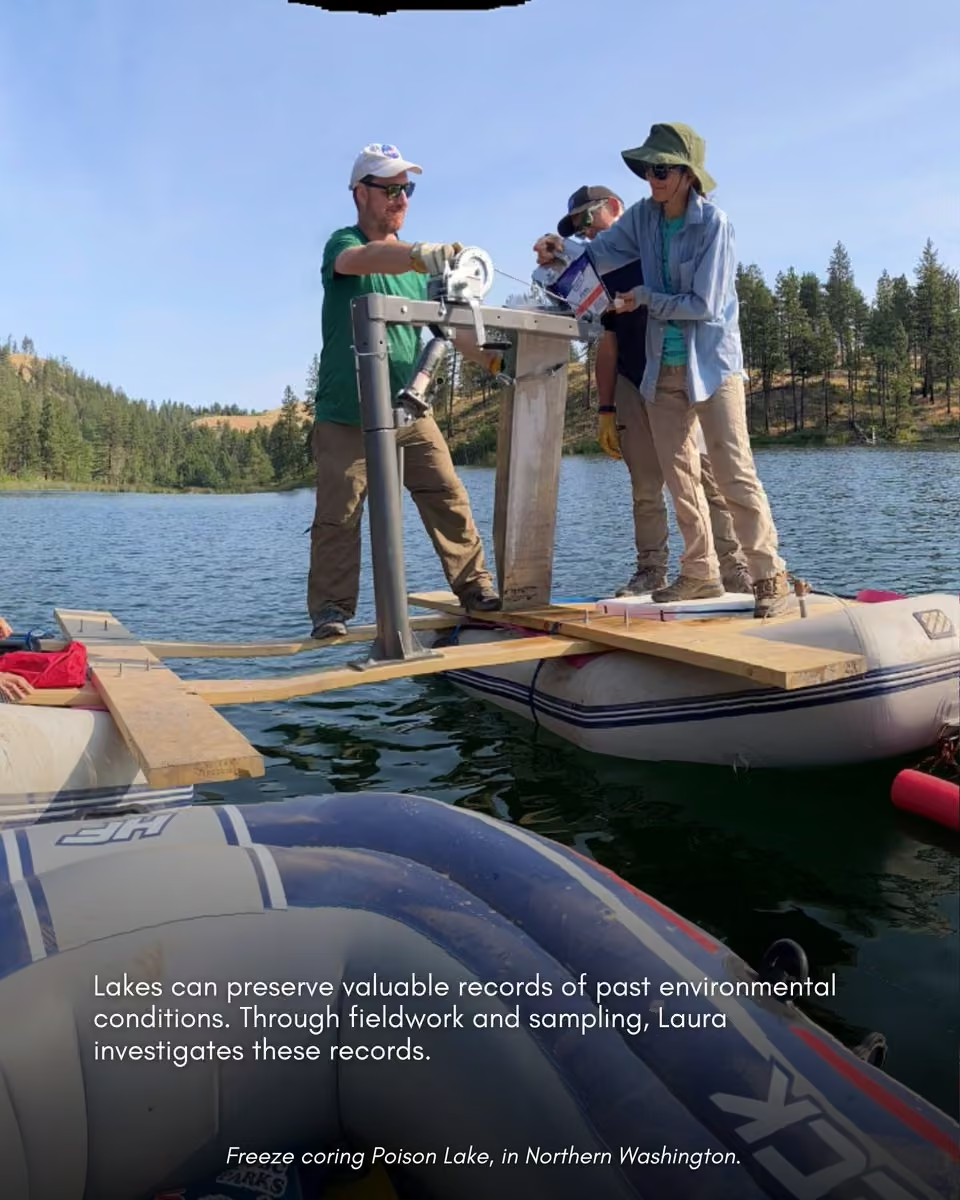
How can we uncover Earth’s climate history? Laura Lopera Congote follows the evidence from Colombia to Peru and beyond. As a GSA member, she’s found a community that supports her research and growth as an early-career geoscientist.
Join GSA: geosociety.org/membership -
geosociety
@geosociety
The University of Texas at El Paso (UTEP) is hiring a Tenure-Track Assistant Professor in Subsurface Geology. Join a collaborative environment focused on subsurface resources, energy transition and more. Start Aug. 2027.
🔗 geosociety.co/JobBoard -
geosociety
@geosociety
Getting your GSA Connects 2026 schedule together? Don't forget to carve out some time for Meow Wolf Denver. All Connects attendees get 20% OFF general admission with code 'GSA20'—valid 11–14 October.
🔗 geosociety.co/meowwolf
Questions? Contact: mrippe@geosociety.org -
geosociety
@geosociety
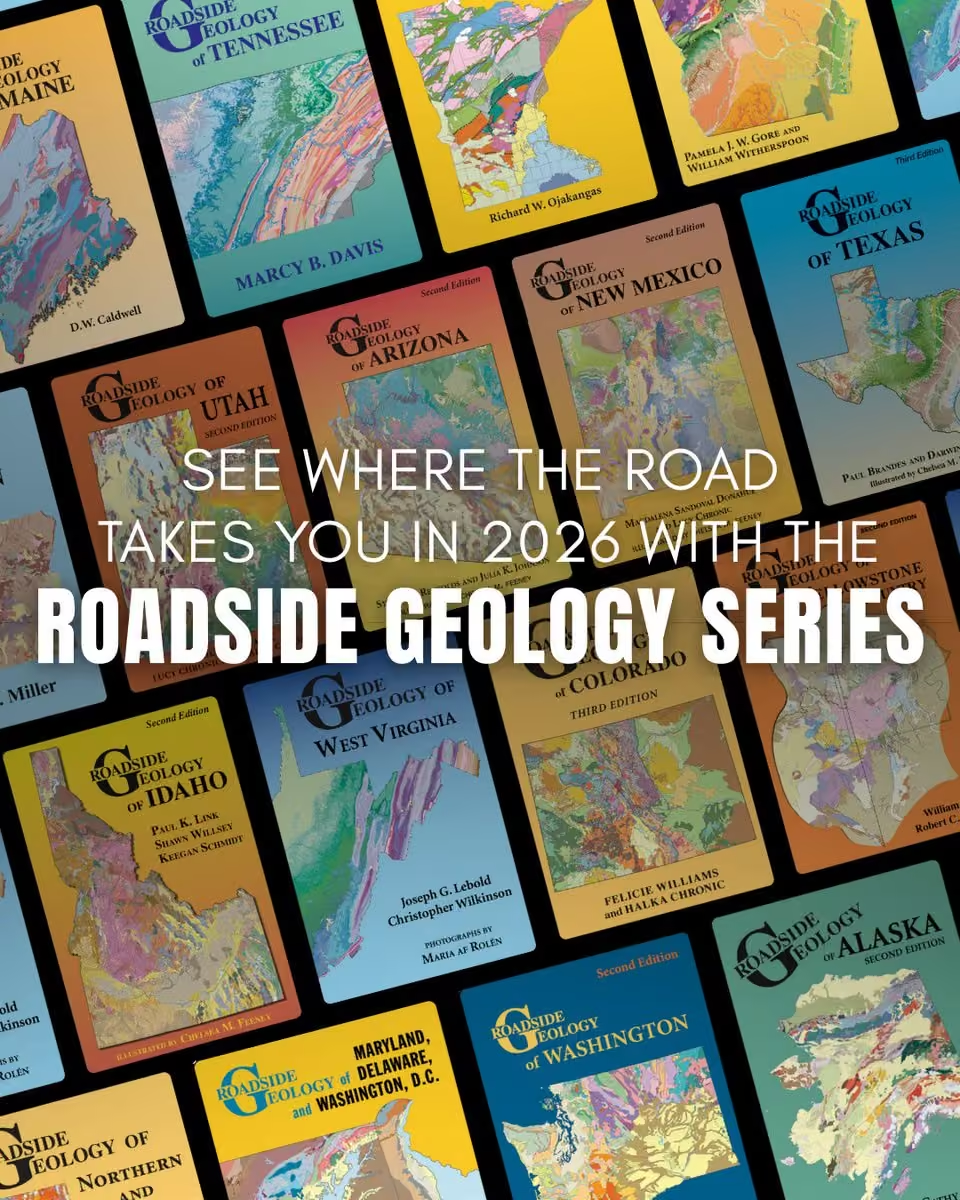
Tomorrow in Prescott, Arizona! Join GSA authors Stephen Reynolds & Julia Johnson for a talk and signing of Roadside Geology of Arizona, Second Edition. 📖
📅Wednesday, 30 September | 12:30 p.m.
📍 highlandscenter.org
📖geosociety.co/RSG-Arizona-Second -
geosociety
@geosociety
What can basalt reveal about an island’s volcanic history? 🌋 On Taveuni Island, Fiji, basalt records past lava flows and volcanic activity. Explore the rock’s texture, vesicles, and weathering to uncover clues to its geologic history.
🧭 Explore: geosociety.co/GCB3YZZ -
geosociety
@geosociety
Don't miss the Geoscience Career Exploration Fair at #gsaconnects2026 to connect with professionals from diverse sectors of the geoscience workforce.
Browse the full list of venders: geosociety.co/career-fair
Thank you to Chevron for sponsoring this event. -
geosociety
@geosociety
39 geoscientists. 24 states. 81 meetings on Capitol Hill.
Last week, GSA members showed up for science at Geo-CVD—advocating for sustained funding and science-informed public policy. This is what the geoscience community looks like in action.
🔗 geosociety.co/GEO-CVD -
geosociety
@geosociety
Know someone who lives and breathes rivers, watersheds, and the landscapes water shapes? @MissouriState University is hiring a tenure-track Assistant Professor in Water Science. Applications open on 2 November. Faculty will also be at GSA Connects 2026.
🔎geosociety.co/JobBoard -
geosociety
@geosociety
Meet the 2026/27 GSA Ambassadors! Luisa Hendry (@scotgeologist) and Jess Scanlan @MinelifeMt) are ready to bring you behind the scenes at GSA Connects 2026. Follow along!
🔗 geosociety.org/what-we-do/gsa-ambassador
#gsaambassador -
geosociety
@geosociety
Map Blast is making its Connects debut this year! 🗺️
⏱️ Sunday, 11 October | 7-9 p.m.
📍 Colorado Convention Center | Hall F
🎟️ $10 for members | $5 for student members
🍽️ Light fare & cash bar available
Register via GSA Connects registration: connects.geosociety.org -
geosociety
@geosociety
Some of the most important conversations in geoscience this year will happen in one room. The Pardee Keynote Symposia are back at #gsaconnects2026 and will feature some of the most pressing and exciting topics in earth science today.
🔗 Explore sessions: geosociety.co/Pardee_26 -
geosociety
@geosociety
Heading to GSA Connects 2026 in Denver? Save on lodging and transportation with the GSA Roommates & Rides Community. Find a roommate, coordinate airport rides, carpool, or plan meetups with fellow attendees. 🔗 geosociety.co/connects-roommate-rideshare
-
geosociety
@geosociety
Denver-area K–12 educators, the GSA Connects K–12 Educator Exchange is coming up, and we'd love to see you there.
📅 Sunday, 11 October 2026, 3:30–7 p.m.
📍 Colorado Convention Center, Denver, Colorado
🎟️ FREE! Contact Morgan at gsastudents@geosociety.org by 29 September. -
geosociety
@geosociety
Mark your calendars! GSA authors Stephen Reynolds and Julia Johnson will be in Prescott, Arizona, for a talk and signing of Roadside Geology of Arizona, Second Edition.
📅 30 September | 12:30 p.m.
📍 highlandscenter.org
📖Pre-order: geosociety.co/RSG-Arizona-Second -
geosociety
@geosociety
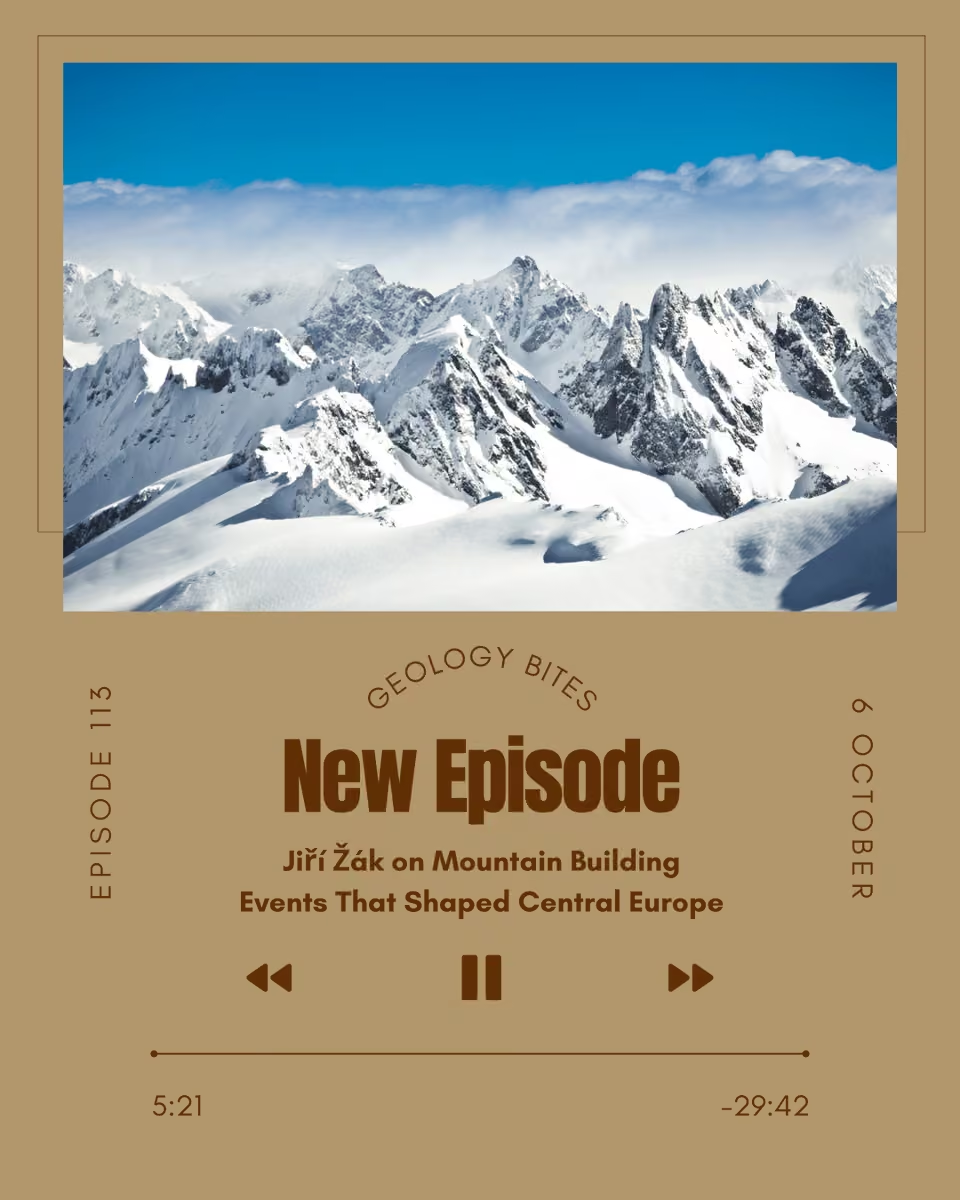
In this Geology Bites episode, Brian Wernicke explains how crustal extension created the Basin and Range Province and why this region is such an exceptional place to see a tectonic process that is often buried beneath sediment.
🎧Listen now: geosociety.co/Geology-Bites -
geosociety
@geosociety
The September issue of #gsatoday is here. Explore how industrial waste could become a critical mineral resource, read stories from the next generation of geoscientists, and learn about upcoming opportunities across GSA.
🔗 Read the full issue: geosociety.co/GSAT_Sept26 -
geosociety
@geosociety
How can an exposed rock outcrop record magmatism, sedimentation, metamorphism, and deformation? Nearly 125 million years ago, magma formed a pluton 2 km below the surface. Erosion eventually exposed it as Mont-Royal today.
🧭 Explore this EarthCache: geosociety.co/GCB0MC6 -
geosociety
@geosociety
How is data science shaping geoscience? Meet Jarrod M. Burges, a Rutgers University Ph.D. student and GSA member researching the intersection of geochemistry, data science, and machine learning.
🔗 Membership: geosociety.org/membership
📄 Read GeoCORK: geosociety.co/jarrod-burges -
geosociety
@geosociety
Know a geoscience educator who makes every rock fascinating? Montgomery College is hiring a Full-Time Instructional Geology Faculty Member in Rockville, Maryland, starting January 2027. Learn more about the position at: geosociety.co/JobBoard
-
geosociety
@geosociety
Colorado's geology doesn't stop at the convention center doors. 🌎 Explore river systems, fossil sites, ancient rocks, tectonic processes, mineral resources, and more on GSA Connects 2026 field trips. Only 7 spots remain for FT26CN421. 🔗 geosociety.co/field-trips
-
geosociety
@geosociety
The future of geoscience looks bright. 🌎 Meet the 2026 50 Under 50 Award recipients—50 outstanding geoscientists across North America recognized for contributions to research, education, leadership, service, and mentorship.
🔗 geosociety.co/awards-50-under-50
@SoGeolMexAC @GAC_AGC -
geosociety
@geosociety
Denver isn't just a backdrop—it's part of the experience. 🏔️ From glowing minerals at the Mines Museum to mind-bending art at Meow Wolf, discover our can't-miss Denver picks for GSA Connects 2026 this October.
🔗 Full guide + attendee deals: geosociety.co/explore-denver -
geosociety
@geosociety
Congress and the president have temporarily blocked OMB’s proposed overhaul of the Uniform Guidance through 11 December. GSA joined 105+ organizations urging action. This is a meaningful step forward—but the work isn’t done. Read the coalition letter: geosociety.co/stop-OMB
-
geosociety
@geosociety
Your next pair of field boots just got an upgrade. 🥾 Welcome @ObozFootwear as a new GSA Partner! GSA members can access exclusive benefits and discounts from Oboz.
Learn more and claim your member benefit: geosociety.co/partners -
geosociety
@geosociety
What could a GSA grant help you achieve? For Elysia, the J. David Lowell Field Camp Scholarship helped launch a journey from field experience to graduate research and a career at @NASA. 🌎
Explore GSA grants & scholarships: www.geosociety.org/membership -
geosociety
@geosociety
What can sandstone and conglomerate reveal about Colorado’s ancient mountains? 🏔️ Explore Ship Rock at Red Rocks and uncover clues preserved in the Fountain Formation during GSA Connects 2026, 11–14 October. 🧭 geosociety.co/GCA2BQN
-
geosociety
@geosociety
Join the Geoheritage Pardee Symposium Webinar Series as experts from around the world explore how to balance our growing need for resources with geoheritage conservation.
Part I – 12 November: geosociety.co/Geoheritage-Webinar-I
Part II – 17 November: geosociety.co/Geoheritage-Webinar-II -
geosociety
@geosociety
Do you know a geoscientist deserving national recognition? Nominate an outstanding colleague, researcher, or leader for the NAS Award in the Evolution of Earth and Life—Mary Clark Thompson Medal, including a $20,000 prize.
📅 Deadline: 5 October 2026
🔗 geosociety.co/nas-award -
geosociety
@geosociety
A centuries-old forest buried beneath volcanic debris has helped scientists pinpoint the timing of Mount Rainier’s largest lahar of the past millennium—to late summer 1507.
New research published in #geology used radiocarbon dating and dendrochronology to date the Electron Mudflow, a massive lahar that began as a landslide on Mount Rainier’s western flank and traveled more than 60 kilometers down the Puyallup River drainage into areas that are now densely populated.
Researchers crossdated tree rings from Douglas-firs killed and buried by the flow, building a 475-year chronology and matching it against precisely dated tree-ring records from across the Pacific Northwest. The result placed the trees’ deaths in 1507 CE, while the partially formed latewood in their final growth rings narrowed the event to mid- to late summer.
That precision matters. The exact timing provides new clues about what may have triggered the Electron Mudflow and helps researchers better understand the hazards posed by large lahars at Mount Rainier. The study notes that a similar high-mobility lahar today could reach the community of Orting within an hour, highlighting the importance of understanding events that may occur with little or no precursory warning.
The new findings are gaining attention beyond the geoscience community, with the research recently featured by Smithsonian Magazine and The New York Times.
Read the original research in Geology: geosociety.co/Black_et_al
#mountrainier #lahars #volcanology #dendrochronology #naturalhazards -
geosociety
@geosociety
Last call, Lawrence, Kansas. ⏰
Proposals for the 2027 Joint South-Central / North-Central Section Meeting close TONIGHT at 11:59 p.m. PT. Submit your research session, field trip, or short course idea before the deadline—the program needs your expertise.
🔎 -
geosociety
@geosociety
Federal funding policies don't just affect budgets—they shape what research gets done, how it's conducted, and who can be part of it. The National Science Foundation’s (NSF) proposed Guidance on Financial Assistance (GFA) could bring significant changes to how geoscience research is reviewed, supported, and shared. GSA has submitted formal comments to NSF raising concerns across four key areas:
• Merit review—proposed changes could undermine the expert, merit-based peer review process that ensures the best science gets funded.
• Active awards—retroactive application of new requirements to existing grants could disrupt ongoing research projects mid-stream.
• International collaboration—restrictions on international partnerships could limit access to globally significant field sites, datasets, and expertise essential to geoscience.
• Publication costs—changes to open-access cost structures could create new financial barriers to sharing research findings.
For geoscientists, the stakes are concrete: fieldwork access, long-term monitoring programs, cross-border research partnerships, and the ability to publish findings that advance our understanding of Earth systems and natural resources.
GSA is urging NSF to finalize guidance that protects these pillars of strong, open science.
Read GSA's full comment and see exactly what we're asking NSF to preserve: geosociety.co/GSA-Letter-NSF-GFA
#geoscience #sciencepolicy #nsf #geosciencepolicy #openscience -
geosociety
@geosociety
Denver is calling—and GSA Connects 2026 is bringing the global geoscience community together for four days of groundbreaking science, career-building opportunities, and unforgettable experiences.
Early registration savings are available until TODAY only—don't wait to lock in your spot.
🔎 Register today: connects.geosociety.org
#gsaconnects2026 #geoscience #denver #earlycareer #fieldwork -
geosociety
@geosociety
Tomorrow, early registration rates for GSA Connects 2026 close. This is your last chance to lock in savings before prices increase.
Four days of groundbreaking science, career-building opportunities, and unforgettable experiences await in Denver this October. Field trips into some of the most spectacular geology in the country. NASA Artemis scientists at the podium. GeoCareers programming designed to help you grow. And a global community of geoscientists ready to connect.
Don't wait—register by 27 August to take advantage of early registration rates.
🔎 Register now: connects.geosociety.org/register
#gsaconnects2026 #geoscience #geology #denver #earthscience -
geosociety
@geosociety
Louisiana’s coast isn’t just facing rising seas—the land itself is sinking.
A #gsatoday Groundwork article mapped land-surface subsidence across coastal Louisiana using measurements from 274 monitoring sites, revealing an average subsidence rate of 9 ± 1 millimeters per year across the region.
The map shows that although rates vary from place to place, subsidence is widespread across Louisiana’s coastal wetlands, with particularly high rates in areas including the Atchafalaya and Wax Lake Deltas and along the Mississippi River downstream of New Orleans.
Why does that matter? Subsidence effectively compounds the impacts of rising seas: as sea level rises, much of the coastal landscape is simultaneously moving downward. Historically, sediment delivered by the Mississippi River helped compensate for natural subsidence and build the delta, but flood-control levees now direct much of that sediment into deep Gulf waters instead of allowing it to replenish the delta plain.
Nearly a decade later, this research is receiving renewed attention as questions about subsidence, sea-level rise, wetland loss, and the long-term future of coastal Louisiana feature prominently in recent coverage from The Guardian.
Explore the original subsidence map and research in #gsatoday: geosociety.co/Nienhuis_et_al
#louisiana #subsidence #sealevelrise #coastalgeology #climatechange -
geosociety
@geosociety
Calling all Denver-area K–12 educators! You're invited to the GSA Connects K–12 Educator Exchange—a FREE evening event designed to connect you with geoscientists, universities, museums, and educational organizations, while giving you practical resources and ideas to bring back to your classroom.
Explore career and workforce pathways to share with your students, learn about outreach initiatives and classroom opportunities, and connect with fellow educators over light refreshments. Attendees will also have the opportunity to join a featured GeoCareers session—and earn 0.4 CEUs for the evening.
📅 Sunday, 11 October 2026
🕞 3:30–7 p.m.
📍 Colorado Convention Center
🎟️ Free for local Denver-area K–12 educators
Questions or ready to RSVP? Contact Morgan at: gsastudents@geosociety.org.
#denvereducation #denverteachers #scienceteachers #k12education #gsaconnects2026 -
geosociety
@geosociety
What can a limestone outcrop reveal about an ancient coastline? At the Ruasse outcrop, one of the most complete exposures of the Asteriated Limestone in the Entre-Deux-Mers region, nearly the entire Lower Oligocene formation is 200 meters long.
This bio-detrital limestone formed in a warm, protected bay where shell fragments, fossil debris, and remains of Asteria—an extinct echinoderm related to modern sea stars—accumulated on the seafloor. The outcrop preserves abundant fossils and sedimentary structures, including cross-bedding, ripple laminations, and wavy bedding, revealing changing currents and depositional environments.
The lower layers record an Oligocene marine transgression, when rising seas deposited fossil-rich limestone. Higher layers capture the transition to regression, as rivers filled the Aquitaine Bay with sediments, creating barrier islands, shoals, and protected coastal habitats. Together, these rocks provide a detailed record of how coastlines change through time.
🧭 EarthCache: Le Calcaire à Astéries de l'Entre-Deux-Mers
📍 Langoiran, Nouvelle-Aquitaine, France
📊 Difficulty: 2.5/5 | Terrain: 2/5
🔗 Explore: geosociety.co/GC5E0JQ
#earthcache #geology #oligocene #sedimentary #limestone -
geosociety
@geosociety
Getting ready for GSA Connects 2026? Whether you're presenting for the first time or looking to level up your skills, there's a lot more to Denver than just the technical program.
From career fairs and trivia nights to mentor roundtables and the Icebreaker Reception—a little preparation and the right events can make all the difference.
Register and explore the full program: connects.geosociety.org
#gsaconnects2026 #geoscience #sciencecommunication #denver #denverthingstodo -
geosociety
@geosociety
What turns molten lava into strands of volcanic glass so fine they resemble human hair? 🌋
New research published in #geology takes a fresh look at the formation of lauoho o Pele, or Pele’s hair—long, delicate threads of volcanic glass commonly associated with Hawaiian basaltic eruptions.
The traditional explanation holds that strong jets of volcanic gas stretch droplets of molten basalt into thin threads. But that mechanism has struggled to explain why Pele’s hair also forms on lava flows and lava lakes, where strong gas currents may be absent, or why the strands can occur in large bundles containing hundreds to thousands of nearly identical hairs.
To investigate, researchers recreated bubbly magma in the lab using techniques adapted from artistic hot-glass working, then mechanically stretched the molten material. When highly bubbly glass was pulled apart, the junctions between bubbles stretched into remarkably thin filaments, producing experimental hairs closely resembling natural lauoho o Pele.
The experiments suggest that extreme stretching of highly vesicular, or bubble-rich, magma may itself produce Pele’s hair, offering a mechanism that can operate not only in lava fountains but also on flowing lava and lava lakes.
The research is now reaching an even wider audience through the New York Times' recent coverage Word of the Day feature for the word "obsidian:" geosociety.co/Word_of_Day
Read the original paper to explore the experiments and a new explanation for how one of volcanology’s most striking products forms: geosociety.co/Gillies_et_al
#volcanology #volcanoes #lava #geoscience -
geosociety
@geosociety
Experience the landscapes behind the science. ⛰️
From world-famous fossil sites and active mining districts to mountain-building landscapes and ancient Snowball Earth deposits, GSA Connects 2026 field trips take you beyond the classroom and into the outcrops that continue to shape geoscience research today.
Whether you're hoping to deepen your understanding, ask questions in the field, or simply experience incredible geology firsthand, there's a trip waiting for you.
Explore this year's pre- and post-meeting field trips and reserve your spot before they're full: geosociety.co/field-trips
You can add field trips when you register for the meeting or book separately through the GSA Store.
#gsaconnects2026 #fieldtrips #coloradogeology -
geosociety
@geosociety
Last chance to apply! ⏰
Applications for the inaugural GSA Ambassador Program close soon, and we're looking for passionate geoscientists who want to help share the excitement of earth science with the world.
You don't need a massive following—you just need a genuine enthusiasm for geoscience, a passion for science communication, and a desire to help grow our community.
As a GSA Ambassador, you'll collaborate with GSA, create meaningful content, connect with geoscientists around the world, and receive exclusive ambassador perks along the way.
🗓️ Apply by 21 August: geosociety.co/ambassador
#gsaambassador #geoscience #scicomm -
geosociety
@geosociety
Every geoscientist has a story, and for Abdulfatah, it began with a passion for petroleum geology that has grown into a broader interest in understanding Earth's subsurface and using geophysics to solve real-world challenges.
As a GSA student member, he's building skills through fieldwork, lab experiences, and collaboration—exploring the many paths a career in geoscience can take. His journey is a reminder that every field experience, every course, and every connection helps shape the scientist you become.
Your journey starts somewhere too. GSA membership connects you to a global geoscience community, professional resources, and opportunities to learn, grow, and find your path.
🔗 Join today: geosociety.co/membership
#gsa #geoscience #geologystudent #fieldwork #petroleumgeology -
geosociety
@geosociety
Thinking about attending GSA Connects 2026, but not sure what to expect?
Whether it's your first GSA meeting or your fifteenth, GSA Connects is more than a week of presentations—it's an opportunity to immerse yourself in the geoscience community.
Explore cutting-edge research, hear from leading voices in the field, connect with mentors and collaborators, discover new career opportunities, sharpen your skills through short courses, experience the Rocky Mountains on expert-led field trips, and make connections that can last throughout your career.
📍 Join us in Denver, Colorado
📅 11–14 October 2026
Register by 27 August to secure the lowest rates: geosociety.co/register_connects26
#gsaconnects2026 #geoscience #networking #geocareersThis media couldn't be displayed. See it on the original post. -
geosociety
@geosociety
The Connecticut Geological Survey is looking for a bedrock geologist to help modernize the state's geologic mapping program, and this role's a standout.
As a 'Geologist – Bedrock Mapping' with the Connecticut Department of Energy and Environmental Protection, you'd be leading and conducting field investigations, mapping Connecticut's complex metamorphic terranes, and playing a key role in rebuilding a small but impactful state geological survey. It's a full-time, permanent, hybrid position for a geologist who knows their way around bedrock structure.
If state geological survey work is your thing, this one is worth a look.
💰 $80,478
📍 Connecticut, USA
🔎 Learn more: geosociety.co/JobBoard -
geosociety
@geosociety
We're on the floor at @IMAGEMeeting in Houston—and we want to meet you.
Stop by GSA at Booth #1815 to connect with our team, learn about membership and publishing opportunities, and find out how GSA can support your geoscience career. Four days. Thousands of geoscientists. One booth you don't want to miss.
📍 Booth #1815 | George R. Brown Convention Center | 17–20 August
#image26 #geoscience #houston #gsa #appliedgeoscience -
geosociety
@geosociety
Build skills that last long after GSA Connects ends. ⛏️🔬
Short courses are designed to help you build practical skills you can immediately apply in your research, teaching, or professional practice. From technical training to emerging topics, these expert-led courses are one of the best ways to maximize your meeting experience.
Browse the full selection and register today: geosociety.co/short-courses
#gsaconnects2026 #shortcourses #appliedgeoscience -
geosociety
@geosociety
You know this region. You know the stories worth telling, the sites worth visiting, and the conversations worth starting. Now's your chance to bring them to the geoscience community.
Submit a proposal for the 2027 Joint South-Central / North-Central Section Meeting in Lawrence, Kansas, 14–16 March—and help shape what happens in the room.
📅 Deadline: 28 August 2026, 11:59 p.m. PT
🔎 geosociety.co/South-Central-North-Central-Section
#geology #earthscience #gsa #sectionmeeting -
geosociety
@geosociety
Students: There’s still time to make #gsaconnects2026 more affordable!
Whether you need help getting to Denver or want to save on registration, GSA has opportunities to help:
• Travel Grants: geosociety.co/Travel_Grants
• Student Volunteers: geosociety.co/volunteer
GSA Sections offer travel grants to help offset the cost of attending GSA Connects. Eligibility requirements and award amounts vary by Section, so check the details and get your application in soon.
⏰ Travel grant deadline: 27 August
Volunteer for a minimum of 8 hours during the meeting and receive complimentary GSA Connects registration in return! Volunteers help support technical sessions, registration, and other meeting activities—and get a chance to be part of what makes Connects happen.
🙋 Student volunteer opportunities are available to current GSA student members on a first-come, first-served basis, so sign up early!
#gsaconnects2026 #geoscience #studentfunding -
geosociety
@geosociety
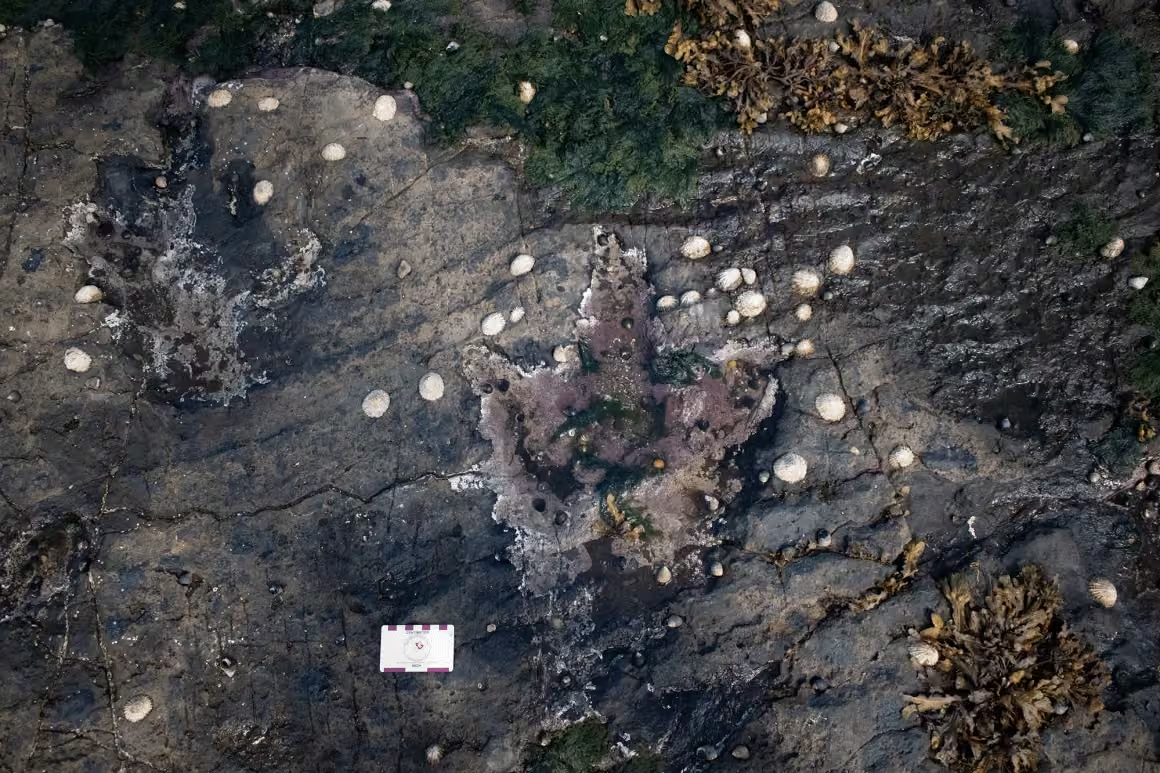
EARTHCACHE: The Jawbone in Williamstown, Victoria, Australia.
What can volcanic rock reveal about a coastline’s history? At the Jawbone, ancient basalt formations provide a window into the geologic processes that shaped the shores of Port Phillip Bay.
This EarthCache explores how lava flows, weathering, erosion, and changing sea levels created this unique coastal landscape. The basalt outcrops are more than just remnants of past volcanic activity—they provide the foundation for a thriving marine environment.
Located within the Jawbone Marine Sanctuary, this area is an important scientific reference site for marine plants and animals. The rocky shores and basalt platforms support diverse coastal life, including shells, limpets, snails, sea stars, crabs, and colorful coralline algae that grow within the rock pools and crevices.
🧭 Explore this EarthCache: geosociety.co/GC3FG9M
📍 Location: Williamstown, Victoria, Australia
📊 Difficulty: 2/5 | Terrain: 1.5/5 -
geosociety
@geosociety
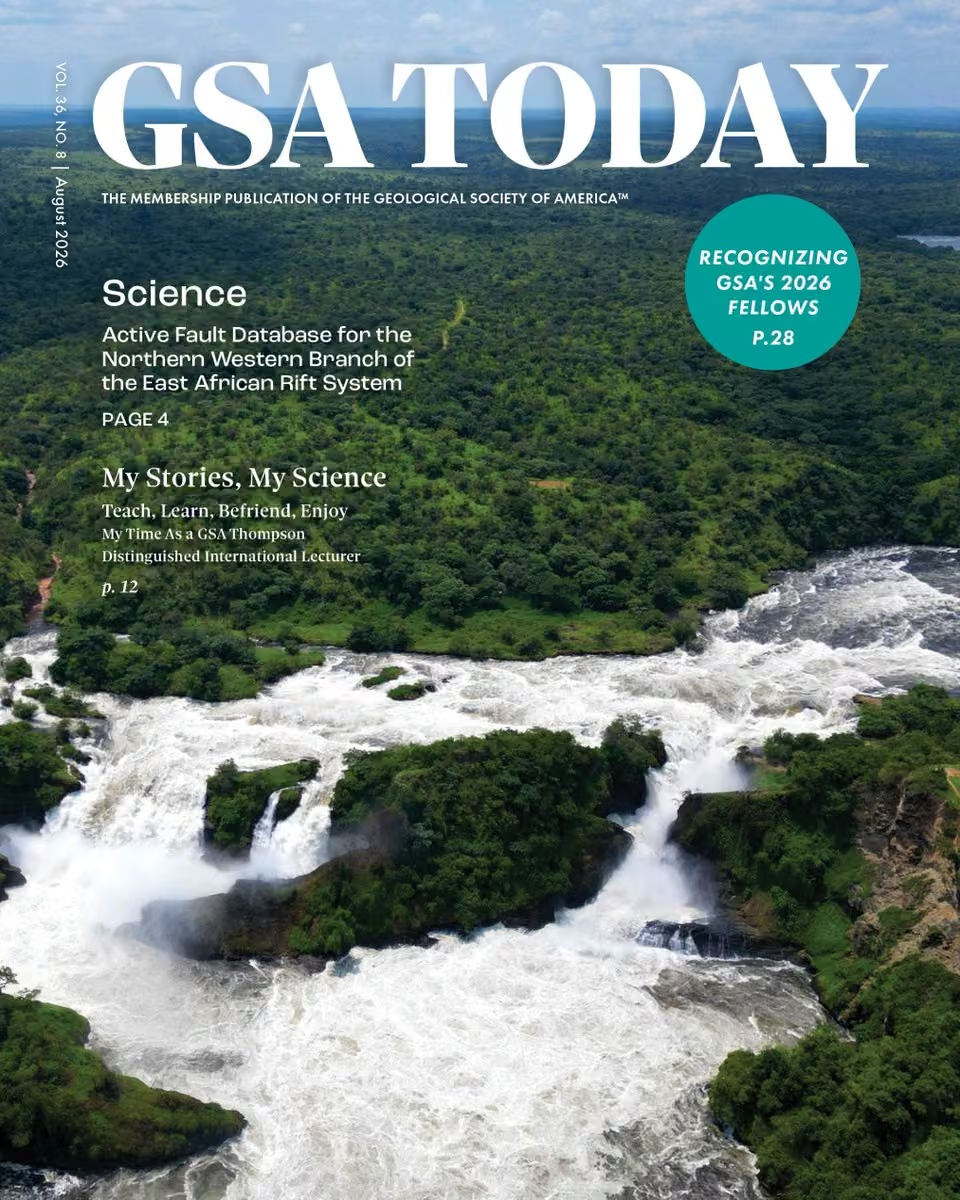
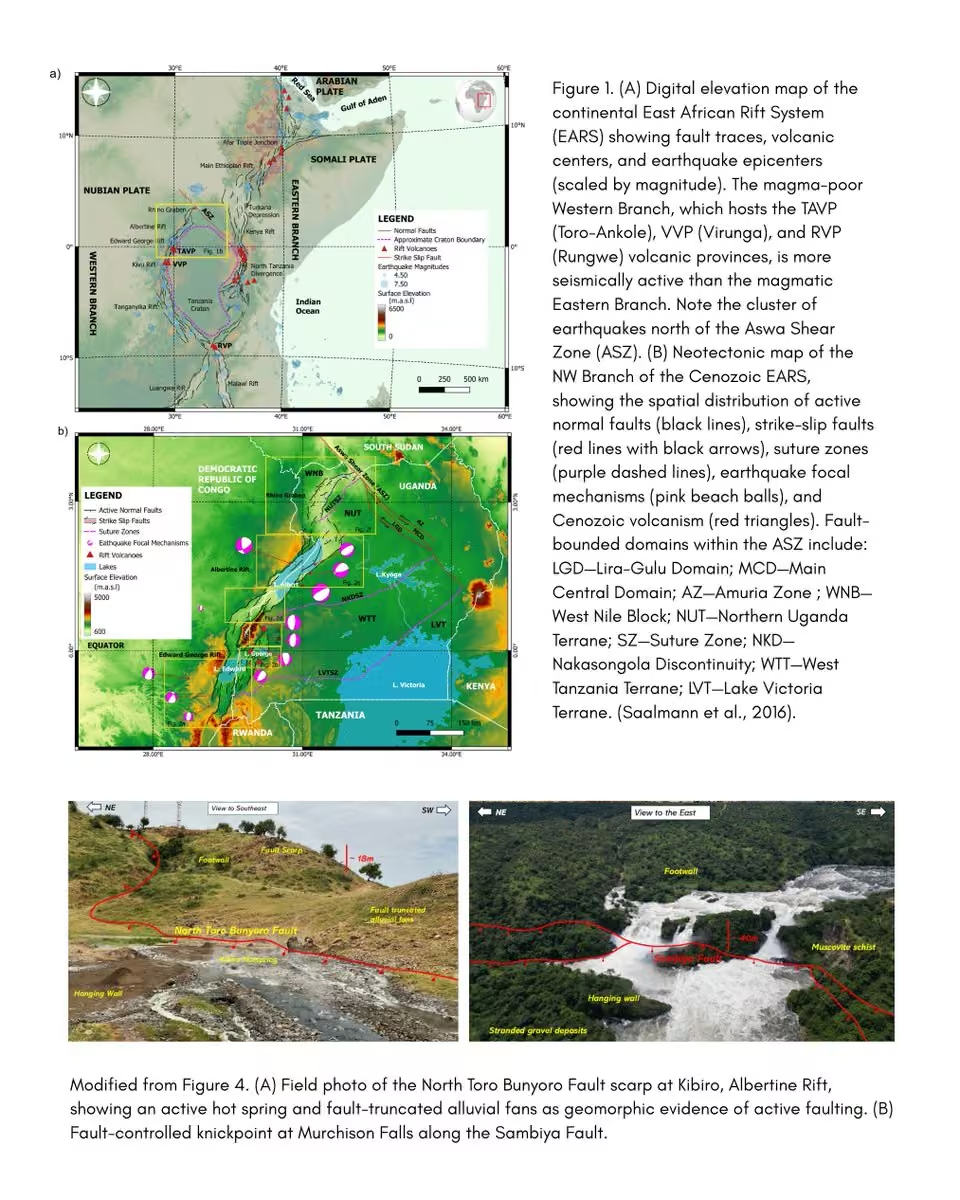
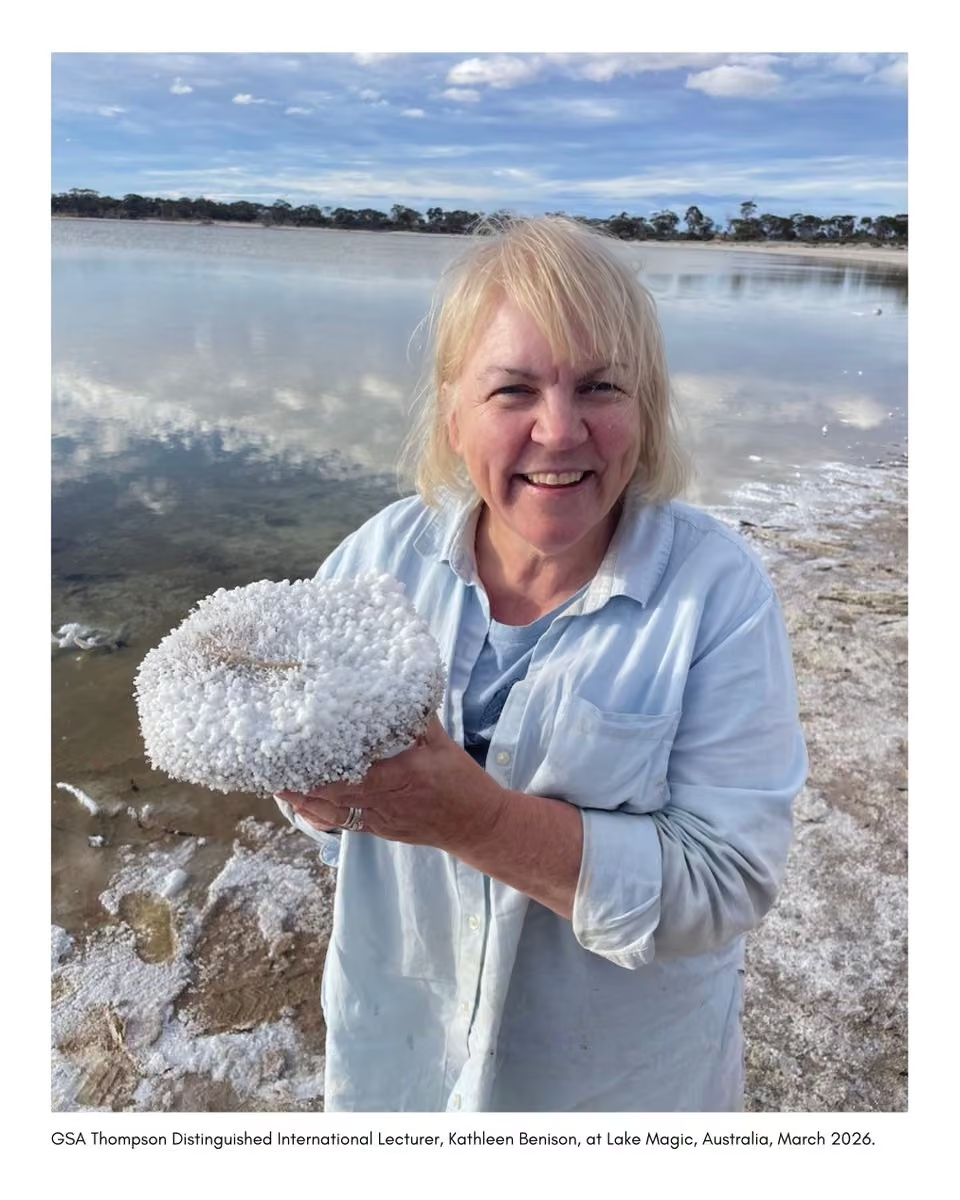
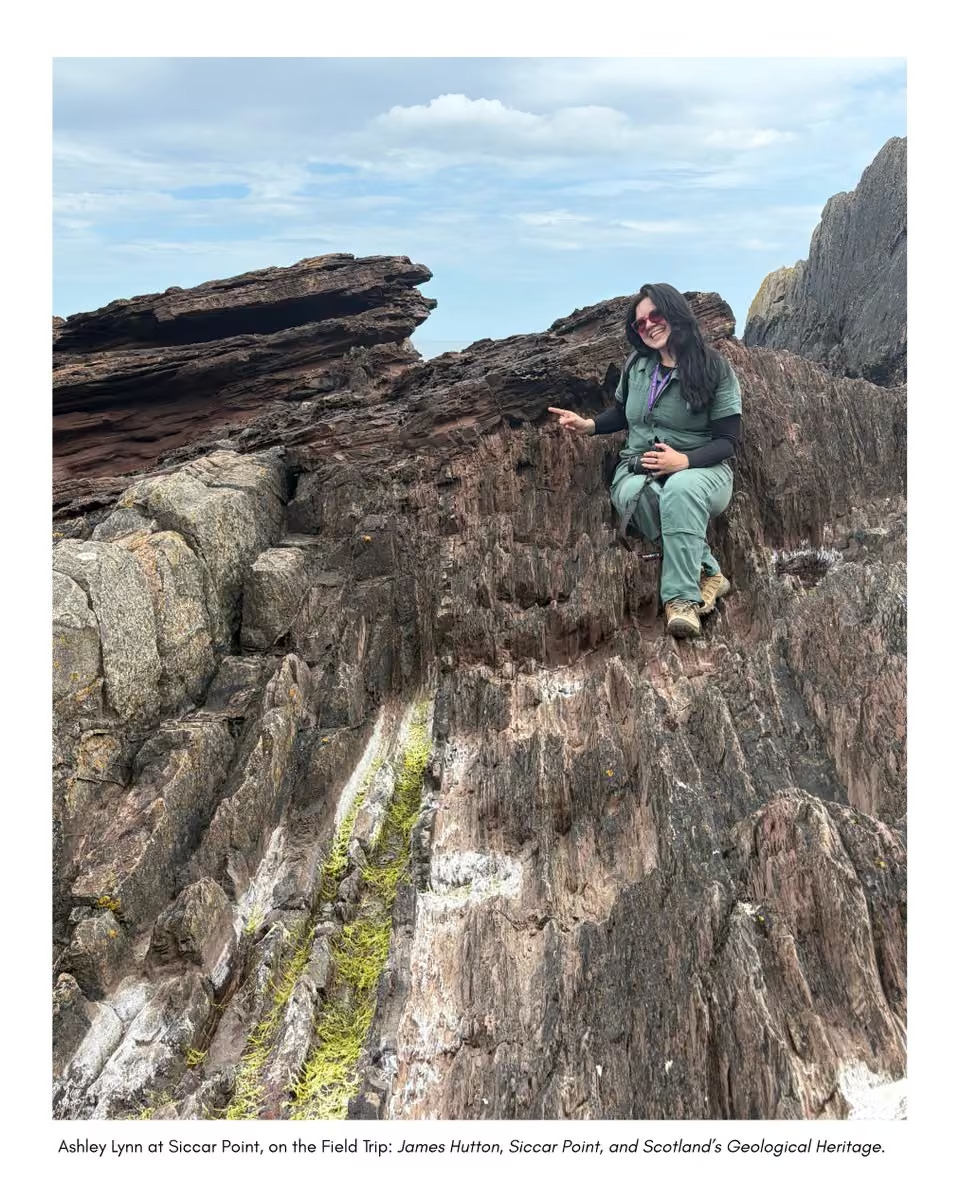
The August issue of GSA Today features new research on active tectonics, reflections on international scientific collaboration, and a look back at one of geology's most iconic field sites.
• Explore new research introducing an active fault database for the northern Western Branch of the East African Rift System, providing new insights into continental rifting, earthquake hazards, and the processes driving the breakup of continents.
• Follow Kathleen Benison's journey as a GSA Thompson Distinguished International Lecturer, and discover how teaching, learning, and building friendships through geoscience can create lasting international connections.
• Celebrate the legacy of James Hutton and Siccar Point, where observations made three centuries ago helped lay the foundation for modern geology and our understanding of deep time.
Start reading the newest issue: geosociety.co/GSAToday_Aug26 -
geosociety
@geosociety
The USGS Earth Mapping Resources Initiative (Earth MRI) is one of the nation's most important geological investments—providing foundational geoscience data that helps identify critical mineral potential, assess geothermal resources, support groundwater studies, and advance natural hazard research. Through partnerships with State Geological Surveys, Tribal partners, academia, and industry, the program produces modern geologic maps and datasets that reduce uncertainty and inform responsible resource development.
Following the introduction of the bipartisan Earth MRI Reauthorization Act, GSA submitted a letter to the Senate Committee on Energy and Natural Resources expressing strong support for the legislation and urging continued investment in this critical program.
Read GSA's full letter: geosociety.co/earth-MRI-letter
#geoscience #sciencepolicy #criticalminerals #earthmri #usgs -
geosociety
@geosociety
Help tell the stories that inspire the next generation of geoscientists. 🌎
We're looking for creators, educators, students, researchers, and professionals who are excited to share authentic stories that celebrate geoscience, showcase research, and highlight opportunities in our field.
Whether you love creating educational videos, documenting fieldwork, sharing career advice, or bringing others along on your geoscience journey, your perspective can help inspire future scientists and strengthen our community.
If you're ready to help amplify the stories of geoscience, apply to be an official GSA Ambassador today: geosociety.co/ambassador
#gsaambassador #geoscience #scicomm -
geosociety
@geosociety
Some of the best conversations in geoscience happen with your boots on the ground. 🥾
GSA Connects 2026 field trips take you beyond the meeting to explore iconic landscapes, world-class outcrops, and active research sites alongside the scientists who know them best. Ask questions, make connections, and experience the geology firsthand.
Swipe through to discover a few featured trips, then explore the full lineup online and reserve your spot before they're full.
You can add field trips when you register for the meeting or book separately through the GSA Store: geosociety.co/field-trips
#gsaconnects2026 #fieldtrips #fieldgeology -
geosociety
@geosociety
Behind every grant awarded, every researcher recognized, and every program that moves geoscience forward—there are people who answer the call to serve.
We're seeking members to join three committees where your work will directly support the next generation of geoscientists and celebrate excellence across the field:
• Graduate Research Grants Committee
• Bromery Award Committee
• Research Award Committee
Members from all sectors and career stages are encouraged to self-nominate.
📅 Self-nomination Deadline: 17 August
📅 Terms Begin: 1 December
Learn more: geosociety.co/serve -
geosociety
@geosociety
A powerful magnitude 7.4 earthquake struck western Colombia early Monday, causing widespread shaking across the region. The earthquake occurred in Chocó, about 150 miles west of Bogotá, at a depth of approximately 66 miles (~106 km), according to the U.S. Geological Survey.
This earthquake is a reminder of the remarkably complex tectonics beneath northwestern South America. Recent research published in #gsabulletin examines the geologic evolution of the northern Pacific margin of Colombia—including the Chocó region—and reconstructs how millions of years of arc collision, accretion, and subduction helped create the tectonic configuration we see today.
The Nazca plate is divided into the Coiba and Malpelo microplates, which descend beneath northwestern South America at markedly different angles. North of ~5°N, the Coiba microplate undergoes shallow subduction at only ~10–15°, whereas the Malpelo microplate to the south descends much more steeply at ~20–30°. Researchers have linked this abrupt change in geometry to a possible tear in the subducting lithosphere and an offset in deep seismicity.
The study traces this complex setting back millions of years, showing how collision of the Central American arc with South America was followed by subduction of young, buoyant oceanic lithosphere and ultimately the shallow subduction system operating beneath northern Colombia today.
Events like this earthquake highlight why understanding the long-term tectonic evolution beneath Colombia is essential for understanding its modern seismic landscape.
Learn more about the tectonic history of the region in GSA Bulletin: geosociety.co/Leon_et_al
#earthquake #colombia #tectonics #seismology -
geosociety
@geosociety
Take more home than conference notes.
GSA Connects 2026 short courses offer opportunities to build practical skills, discover new tools, and learn directly from experts in an interactive setting. Sign up for a short course to make your meeting experience even more valuable and bring new ideas back to your lab, classroom, or workplace.
Swipe through to explore featured courses, and browse the full lineup online: geosociety.co/short-courses
#gsaconnects2026 #shortcourses #professionaldevelopment -
geosociety
@geosociety
Make your GSA Connects 2026 experience more affordable.
Apply for a Student Travel Grant to help offset travel expenses to Denver. Eligibility and award amounts vary by GSA Section, so be sure to review the requirements before applying.
Become a Student Volunteer and receive complimentary meeting registration in exchange for at least 8 hours of volunteer service. It's a great way to get involved, meet geoscientists from across the community, and gain behind-the-scenes experience at GSA Connects.
Travel Grant applications are due 27 August, and student volunteer spots are available on a first-come, first-served basis—so don't wait!
Student volunteers must be current GSA student members. Not a member yet? Student memberships are just $25/year.
Learn more and apply:
• Travel Grants: geosociety.co/Travel_Grants
• Student Volunteers: geosociety.co/volunteer
#gsaconnects2026 #funding #travelgrants #studentvolunteers -
geosociety
@geosociety
EARTHCACHE: Cedar Park Limestone in Houston, Texas, USA.
A city building can hold clues to an ancient world. This EarthCache takes you to Houston's City Hall, where the limestone surrounding the building preserves evidence of a time when warm, shallow seas covered parts of Texas nearly 100 million years ago during the Lower Cretaceous Period.
Cedar Park Limestone, also known as Cordova Shell, is a fossil-rich rock made up of marine sediments, fossil fragments, and ooids. Look closely, and you may find fossil voids—cavities left behind by ancient organisms that reveal the shapes and textures of life that once inhabited these prehistoric seas.
From Trigonia clams to Turritella sea snails, these fossils provide a glimpse into the marine ecosystems that existed long before Houston became a city. Explore the stone around City Hall and uncover the geologic history hidden in plain sight.
🧭 Explore this EarthCache: geosociety.co/GC1MWBC
📍Location: Houston, Texas, USA
📊 Difficulty: 1/5 | Terrain: 1/5
#earthcache #geology #houston #texas #fossil -
geosociety
@geosociety
The geoscience community needs more voices—and yours could be one of them. We're looking for passionate geoscientists to become the first GSA Ambassadors.
As a GSA Ambassador, you'll have the opportunity to enhance your science communication skills, collaborate with GSA's marketing team, gain visibility through GSA's social channels, receive exclusive early access to programs and announcements, connect with the broader geoscience community, and earn perks like free GSA membership, meeting registration, and GSA swag.
Whether you're a student, researcher, educator, or professional, if you love telling the stories behind Earth's science, we'd love to hear from you.
Applications are now open—learn more and apply: geosociety.co/ambassador
#gsaambassador #geoscience #scicomm -
geosociety
@geosociety
What can a passion for geoscience lead to? By combining her background in geology with her passion for reading and writing—and a lifelong fascination with rocks—Clare found a meaningful way to apply earth science through a career in environmental law. Today, she focuses on hydrology and CERCLA cleanup efforts that help protect communities and natural resources.
Whether your interests lead to research, policy, education, industry, or something entirely different, GSA supports geoscientists at every stage of their careers. Become a member and join our global community today: geosociety.org/membership.
Want to share your geoscience story? Submit an application to be featured in our newsletters & social media: geosociety.co/submit-spotlight.
#gsa #geoscience #geology #environmentallaw #professionaldevelopment -
geosociety
@geosociety
Do you have research to share? Time is running out—the final abstract submission deadline for GSA Connects 2026 is tomorrow, 6 August, and we don't want you to miss it.
Whether you're presenting new field findings, lab results, or research still taking shape, GSA Connects is the place to share it—in front of a global geoscience community that's genuinely excited to hear what you've been working on. There's no better room to get feedback, spark collaboration, and put your science in front of the people who care about it most.
Submit your abstract by tomorrow and register by 27 August to lock in early registration rates.
🔎 connects.geosociety.org -
geosociety
@geosociety
The conversation doesn't stop at #gsaconnects.
Two special Geoheritage Pardee Symposium Webinars are coming this November, bringing some of the world's leading voices in geoheritage directly to you. Explore how geoheritage, critical mineral resources, sustainability, and Indigenous knowledge intersect through a global lens—featuring experts from North America, South America, Europe, and the Caribbean whose perspectives are too important to miss.
📅 Part I - 12 November: geosociety.co/Geoheritage-Webinar-I
📅 Part II - 17 November: geosociety.co/Geoheritage-Webinar-II
#geoheritage #criticalminerals #geoconservation -
geosociety
@geosociety
Please join us in welcoming Alyssa Pietraszek as GSA's 2026–2027 Science Communication Fellow!
Over the next 11 months, Alyssa will work alongside GSA's Marketing and Communications team to translate cutting-edge geoscience into engaging stories for broad audiences. From interviewing researchers and highlighting new discoveries to covering the latest science presented at GSA Connects, she'll help bridge the gap between the geoscience community and the public through clear, compelling storytelling.
Alyssa brings a passion for making science accessible and a fresh perspective that we know will strengthen how we share geoscience with the world. We're thrilled to have her on the team. The GSA Science Communication Fellowship, supported by the GSA Foundation's Bruce and Karen Clark Fund, provides early-career science communicators with hands-on experience while advancing GSA's mission to connect geoscience with the people and communities it serves.
Congratulations, Alyssa—we can't wait to see the stories you'll tell! 👏 -
geosociety
@geosociety
GSA Committees are powered by members who bring their knowledge, experience, and passion. By serving on a committee, you can help guide programs, support initiatives, and contribute to the future of the geoscience community.
Self-nominations are now open for the new Graduate Research Grants Committee, Bromery Award Committee, and Research Award Committee. We encourage members from all sectors and career stages to consider getting involved. Terms begin 1 December 2026.
Submit your self-nomination by 17 August 2026.
Learn more: geosociety.co/serve -
geosociety
@geosociety
Have you been thinking about submitting an abstract to GSA Connects 2026, but feeling nervous about presenting your research?
You're not alone. Many students and early-career professionals worry that their research isn't "finished enough," that they won't know the answers to every question, or that they aren't ready to present at a major scientific meeting.
But GSA Connects isn't about having all the answers—it's about joining the conversation.
Many researchers present preliminary results, ongoing investigations, or even just new ideas for projects they haven’t started yet.
Presenting your work is an opportunity to receive valuable feedback, connect with potential collaborators and mentors, develop your communication skills, and share your science with a community that genuinely wants to see you succeed.
If you've been waiting for a sign to submit your abstract, this is it.
Submit your abstract by 6 August: geosociety.co/ConnectsAbstracts
📍 Denver, Colorado
📅 11–14 October 2026
#gsaconnects2026 #geoscience #presentresearchThis media couldn't be displayed. See it on the original post. -
geosociety
@geosociety
Unlike typical earthquakes that rupture in seconds, slow earthquakes unfold over days, weeks, or even months—and scientists have long debated what causes them.
New research published in #geology suggests that the answer may lie in the way water is released from hydrous minerals deep within subduction zones. Rather than escaping continuously, the study proposes that dehydration occurs in episodic pulses, generating bursts of fluid pressure that can repeatedly trigger slow-slip events. By combining field evidence from ancient rocks in New Caledonia with thermodynamic modeling, the researchers provide a new mechanism linking metamorphic reactions to the timing and recurrence of slow earthquakes.
The research has been featured by phys.org, highlighting its implications for understanding earthquake processes and improving hazard assessments in subduction zones.
Read the full paper: geosociety.co/Chapman_et_al
#earthquakes #subductionzones -
geosociety
@geosociety
GSA Connects 2026 doesn't have to start and end at the convention center... Extend your experience with an expert-led field trip and explore some of the most remarkable geology in and around Colorado and beyond. 🌎
From mountain-building and mineral deposits to volcanic landscapes and badlands, these immersive excursions offer a chance to see geoscience in action guided by leading experts.
Swipe through to preview some of this year's adventures, and browse the full list of pre- and post-meeting field trips on our website. Trips are already starting to fill up, so reserve your spot today!
You can add field trips when you register for the meeting or book separately through the GSA Store: geosociety.co/field-trips
#gsaconnects2026 #fieldtrip #geoscience -
geosociety
@geosociety
Could two of the West Coast's largest fault systems be more connected than we once thought?
Research published in #geosphere investigates whether the Cascadia Subduction Zone and the northern San Andreas Fault may sometimes influence one another through stress transfer, potentially leading to clusters of large earthquakes over time.
Using ~3,000 years of offshore sediment records, turbidite stratigraphy, radiocarbon dating, and seismic evidence, the study identifies periods when major earthquakes on these neighboring fault systems may have occurred in closely linked sequences—offering new insight into earthquake interactions near the Mendocino Triple Junction, one of the most tectonically complex regions on Earth.
The research is once again receiving widespread attention, with recent coverage in the San Francisco Gate, adding to previous features in KQED.
Read the full paper: geosociety.co/Goldfinger_et_al
#earthquakes #seismology #cascadia #sanandreasfault -
geosociety
@geosociety
Have you seen the latest feature in Montana Magazine? "Montana Rocks!" is being recognized as "the geology book Montana has always needed."
Written by renowned educator and geologist Rob Thomas, "Montana Rocks!" takes readers on a journey through nearly 4 billion years of Earth's history, showcasing 60 remarkable geologic sites across the state. With engaging storytelling, accessible science, stunning photography, and helpful maps, it's the perfect companion for road trips, outdoor adventures, or anyone curious about the landscapes beneath their feet.
Pick up your copy: geosociety.co/MontanaRocks
Read the feature: geosociety.co/montana-review
#montana #publications #montanageology #books #geologybooks -
geosociety
@geosociety
Today is the last day to submit proposals for several 2027 GSA Section Meetings—don't let the deadline pass you by!
Have an idea for a technical session, field trip, or short course? Now is the time to share it. Help shape the meeting experience, connect with colleagues, and contribute to conversations that move geoscience forward.
Submissions for the Northeastern, Southeastern, Rocky Mountain, and Cordilleran Sections close TONIGHT at 11:59 p.m. PT. Submit now:
geosociety.co/NortheasternSection
geosociety.co/SoutheasternSection
geosociety.co/RockyMountainSection
geosociety.co/CordilleranSection
Still have time? The Joint South-Central/North-Central Section deadline isn't until 28 August:
geosociety.co/South-Central-North-Central-Section -
geosociety
@geosociety
Did scientists just identify Earth's oldest known meteorite impact crater? ☄️
A new study published in #geology presents evidence that the North Pole Dome impact structure in Western Australia formed ~3.02 billion years ago, making it the oldest known impact crater preserved on Earth. By combining multiple geochronology techniques—including zircon, apatite, calcite, and muscovite dating—the researchers argue that the impact predates the previously recognized record-holder by nearly 800 million years.
Because Earth's earliest impact record has largely been erased by plate tectonics, erosion, and metamorphism, discoveries like this provide a rare window into the intense bombardment that shaped our planet during the Archean—when Earth's first continents and earliest life were emerging.
The study has been featured by The Guardian, Smithsonian Magazine, and space.com, highlighting its significance for understanding Earth's earliest history.
Read the original Geology paper: geosociety.co/Kirkland_et_al
#meteoriteimpact #archean #earlyearth -
geosociety
@geosociety
Want to get even more out of #gsaconnects2026? 🌍 The GeoCareers Sessions are where it happens.
Held in the GeoCareers Corner throughout the meeting, these interactive sessions go beyond the technical program, covering professional development, skill-building, career exploration, and networking. Led by experienced facilitators and open to all attendees, they're a great way to figure out what's next for your geoscience journey.
📍 Denver, Colorado, USA
🗓️ 11–13 October
🔎 Explore more: geosociety.co/geocareers -
geosociety
@geosociety
🌋 EARTHCACHE: Rauðhólar, or “red mounds,” is a striking field of rootless cones formed about 5,200 years ago when hot lava flowed across a shallow lake near present-day Reykjavík, Iceland. Unlike true volcanic craters, these “pseudo craters” have no magma vent beneath them—instead, they formed through powerful steam explosions.
As molten pahoehoe lava spread over wet ground, trapped water rapidly heated and expanded into steam, triggering hydromagmatic explosions that blasted lava into the air. These eruptions created cone-shaped mounds of scoria, spatter, and volcanic fragments, leaving behind the dramatic red landscape visible today.
Rauðhólar preserves evidence of explosive lava-water interactions, with layered deposits of tephra, ash, and quenched lava fragments that reveal how volcanic processes shaped the terrain.
🧭 Explore this EarthCache: geosociety.co/GC95K4V
📍Location: Reykjavík, Iceland
📊 Difficulty: 2/5 | Terrain: 2/5
#iceland #hiking #lava #geology -
geosociety
@geosociety
Congratulations to GSA's own Ester Sztein on receiving the American Geosciences Institute's Award for Outstanding Contribution to Public Understanding of the Geosciences!
GSA is thrilled to celebrate Ester Sztein, Director of International Programs, on this well-deserved recognition. With more than 16 years at the National Academies of Sciences, Engineering, and Medicine and a deep commitment to expanding access to geoscience education and fostering international collaboration, Ester has spent her career connecting people around the world with the value and relevance of the earth sciences.
If you've attended a GSA meeting, engaged with our international community, or worked to advance collaboration across borders, chances are you've experienced Ester's incredible energy, passion, and commitment firsthand. Her leadership has helped strengthen our global geoscience community and inspire greater understanding of the role geoscience plays in addressing society's most pressing challenges.
The award will be presented at the Friends of AGI reception on 11 October during GSA Connects 2026 in Denver—a fitting celebration for someone whose impact spans the entire geoscience community. We are so proud to have Ester on the GSA team. Join us in congratulating her on this outstanding achievement!
Learn more: geosociety.co/ester-sztein-award
#geoscience #gsa #agi #womeninscience #earthscience -
geosociety
@geosociety
New opportunities are waiting on the GSA Geoscience Job Board! Whether you're looking to advance your academic career, explore a new research path, or find your next geoscience role, there are openings for every stage of your journey.
This week's featured positions include faculty and geoscientist opportunities spanning earth sciences, structural geology, geomechanics, and sustainability research.
🔎 Explore all open positions: geosociety.co/JobBoard -
geosociety
@geosociety
Did asteroid bombardment of the inner Solar System last longer than we thought?
A new study published in #geology presents evidence from a lunar meteorite suggesting a previously unknown 3.486-billion-year-old impact on the Moon. Tiny baddeleyite crystals within the meteorite preserve signatures of extreme temperatures (>2,370 °C), allowing researchers to date a major crater-forming event that occurred long after the traditionally recognized Late Heavy Bombardment.
Even more intriguing, this lunar impact coincides with evidence for large impacts on Earth and asteroid Vesta, strengthening the case that the inner Solar System continued to experience significant bombardment between ~3.7 and 3.2 billion years ago. That period overlaps with some of the earliest evidence for life on Earth, raising new questions about how these catastrophic events may have influenced our planet's earliest environments.
The research has also been featured by ScienceAlert, highlighting its implications for our understanding of the Moon, early Earth, and the evolution of the inner Solar System.
Read the full paper: geosociety.co/Crow_et_al
#moon #planetarygeology #meteorites #earlysolarsystem -
geosociety
@geosociety
Go beyond the lecture hall and learn by doing. 🗺️ Sign up for hands-on short courses at GSA Connects 2026.
These courses offer immersive training and expert instruction on the latest tools, techniques, and topics across the geosciences. Whether you're looking to expand your technical expertise, sharpen your professional skills, or explore a new area of research, there's a course for every stage of your career.
Swipe through to explore several featured short courses, and browse the full lineup on our website. You can add short courses when you register for the meeting or book separately through the GSA Store: geosociety.co/short-courses
#gsaconnects2026 #shortcourses #geoscience -
geosociety
@geosociety
The clock is ticking—proposal submissions for the 2027 GSA Section Meetings are closing soon for several Sections, and we don't want you to miss your window.
Whether you're organizing a technical session around your research, leading a field trip to a site you love, or proposing a short course that fills a gap in the field—GSA Section Meetings are built by people like you. Your proposal could spark conversations, create community, and give attendees an experience they'll carry into their careers.
Check the proposal deadline for your Section and submit today:
📅 30 July 2026, 11:59 p.m. PT
geosociety.co/NortheasternSection
geosociety.co/SoutheasternSection
geosociety.co/RockyMountainSection
geosociety.co/CordilleranSection
📅 28 August 2026, 11:59 p.m. PT
geosociety.co/South-Central-North-Central-Section -
geosociety
@geosociety
What begins as curiosity can grow into a lifelong journey in geoscience.
Meet R. Valli Divya, a PhD student at the Indian Institute of Technology Gandhinagar and a GSA student member for six years. Inspired by earth science from a young age, Valli has turned that passion into a career in mineralogy, exploring planetary interiors and advancing geoscience research.
Read Valli’s recent publication, “Simulating Planetary Interiors with a Diamond Anvil Cell,” in Nature Reviews Earth & Environment, and explore how GSA membership can support your own geoscience journey.
🔗 Explore GSA Memberships: geosociety.org/membership
📖 Read the Publication: geosociety.co/R-Valli-Divya
#gsa #geoscience #studentresearch #minerology #planets -
geosociety
@geosociety
Still figuring out your path in #geology? GeoCareer Day might be exactly what you need. 👀
Career panels, mentor roundtables, résumé reviews, and a USA Jobs workshop—all in one morning, all in one place.
📅 Sunday, 11 October
🕘 9 a.m.–1 p.m.
📍 #gsaconnects2026 in Denver, Colorado, USA
🎟️ $20 (lunch included!)
Spots are limited—add GeoCareer Day when you register for GSA Connects 2026: geosociety.co/register_connects26 -
geosociety
@geosociety
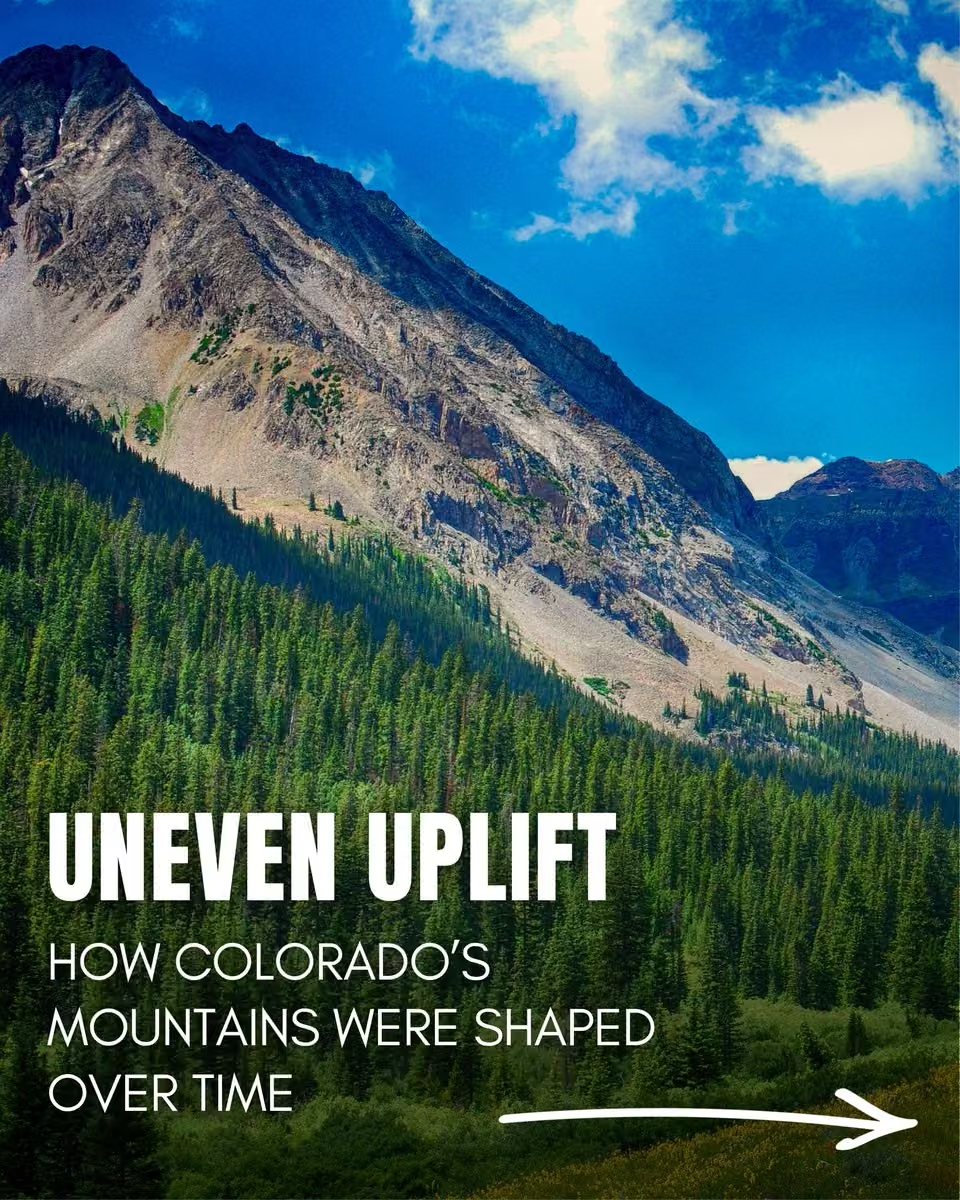
EARTHCACHE: Scree vs. Talus in Breckenridge, Colorado, USA.
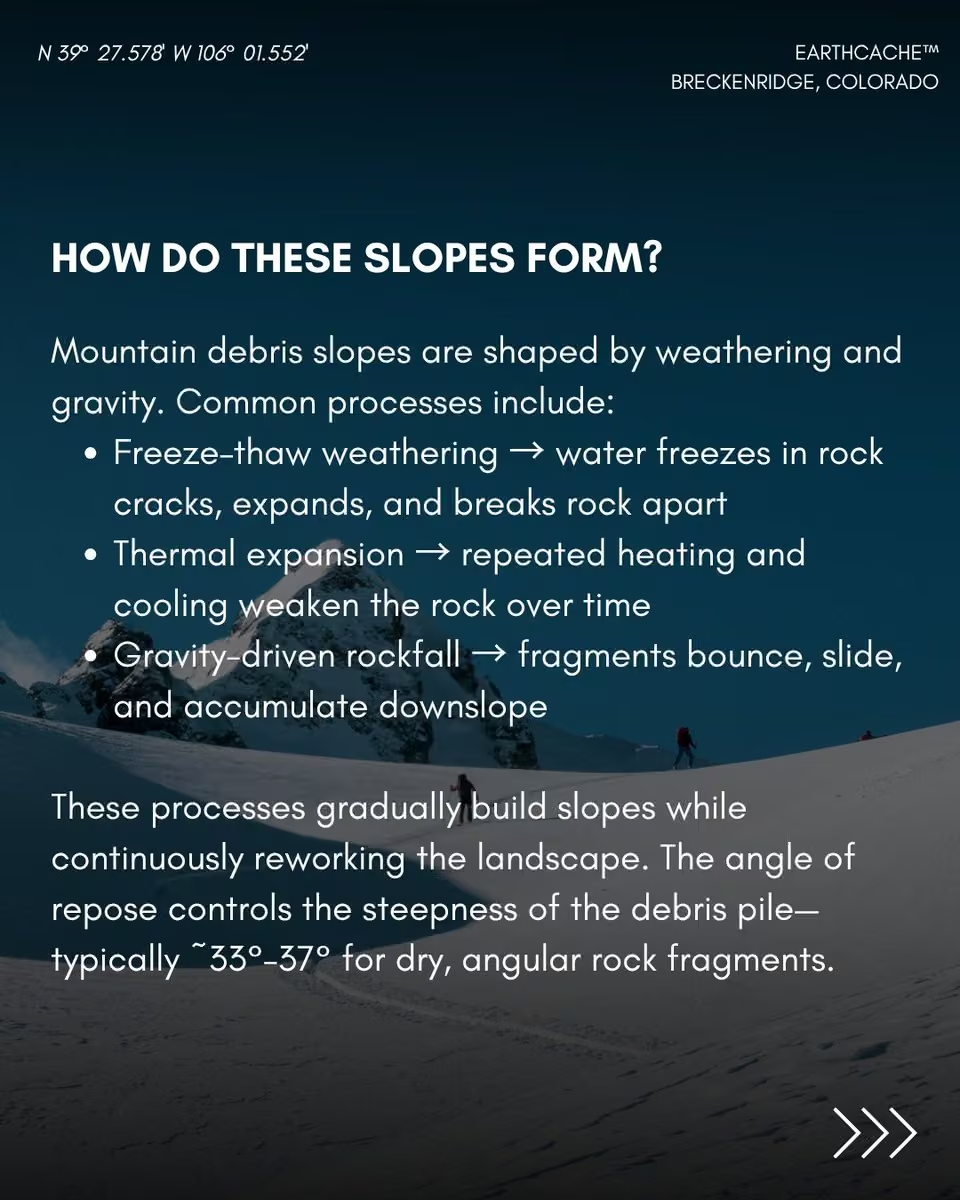
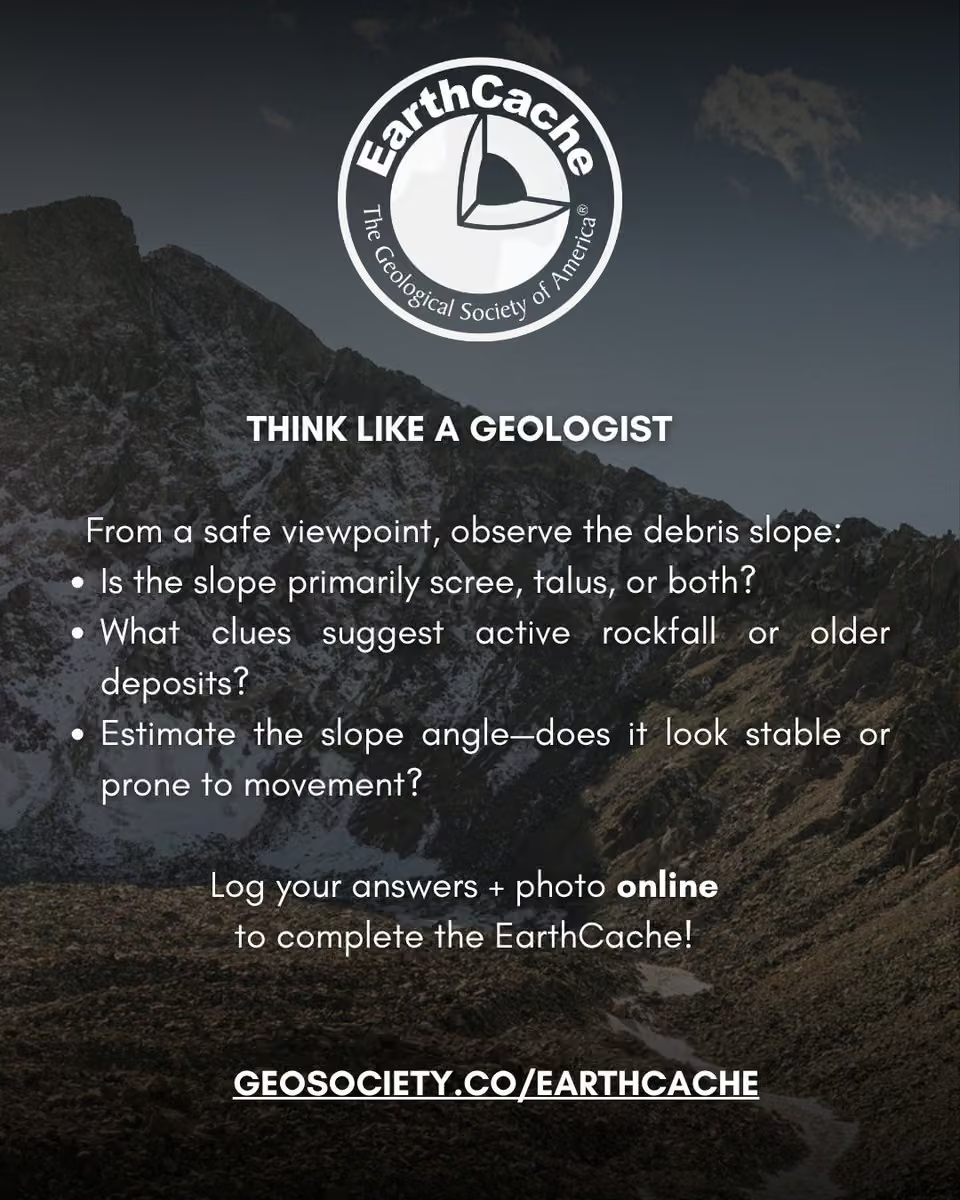
What looks like a simple pile of rock can reveal a much bigger geologic story. Near Breckenridge, Colorado, this EarthCache explores how weathering, gravity, and slope stability shape mountain landscapes through rockfall and debris accumulation. By observing rock size, shape, arrangement, and slope angle, you can interpret the processes shaping the terrain in real time.
Freeze–thaw weathering, thermal expansion, and gravity all contribute to breaking rock apart and moving it downslope. These deposits help geologists understand erosion, slope stability, and natural hazards in mountainous environments.
🧭 Explore this EarthCache: geosociety.co/GC90BAW
📍Location: Breckenridge, Colorado, USA
📊 Difficulty: 3.5/5 | Terrain: 3/5
#earthcache #geology #breckenridgecolorado #geomorphology -
geosociety
@geosociety
Traveling to GSA Connects 2026 this October? Get discounted airfare by booking through Southwest or United Airlines! ✈️
These discounts are valid for eligible travel between 8–17 October 2026, making it easy to save whether you're attending the meeting, a short course, a field trip, or all of the above!
Learn more about how to take advantage of this exlcusive offer here: geosociety.co/travel -
geosociety
@geosociety
Are volcanic hotspots like Hawaii really fixed in place? 🌋
For decades, scientists treated hotspots as stationary reference points for tracking the movement of Earth's tectonic plates. But new research suggests the story is more complicated.
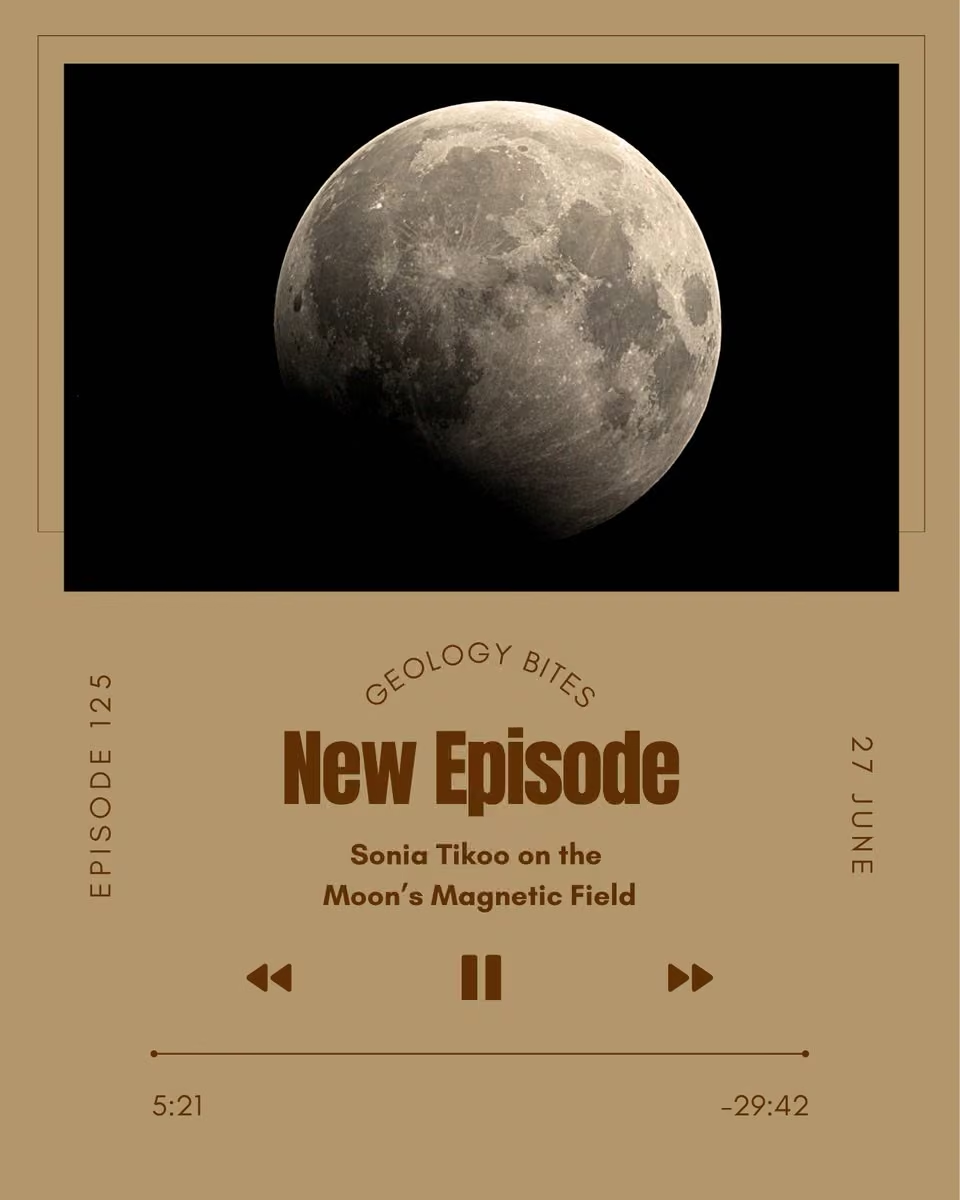
In this new Geology Bites episode, geophysicist Bernhard Steinberger explains how scientists combine paleomagnetism, hotspot tracks, and plate motion data to investigate the movement of mantle plumes—and why these plumes may actually be carried along by the mantle currents they rise through.
🎧 Listen now to learn how Earth's deep interior is reshaping our understanding of plate tectonics: geosociety.co/Geology-Bites -
geosociety
@geosociety
Dive into the July issue of GSA Today to explore one of the world's most iconic geologic landmarks, examine how geoscience education differs across universities, and celebrate the people shaping the future of GSA.
• Journey to Giant's Causeway, Northern Ireland, and discover the volcanic origins, rich history, and enduring legends behind one of the first 100 IUGS Geological Heritage Sites.
• Explore new research revealing that there is no universal geoscience curriculum, with geology degree requirements varying widely in both coursework and major credit requirements across universities.
• Meet GSA's FY27 officers and councilors and celebrate this year's GSA award recipients, recognizing outstanding contributions to the geosciences.
Start reading the newest issue: geosociety.co/GSAToday_Jul26 -
geosociety
@geosociety
EARTHCACHE: Located within Glacier Bay National Park, Alaska, Reid Glacier is a powerful example of active glacial landscapes shaped by both ancient climate shifts and ongoing ice dynamics. The bay itself reflects the legacy of the Little Ice Age, when glaciers reached their maximum extent around 1750 before beginning their modern retreat and reorganization.
Reid Glacier flows from the Brady Icefield between Mt. Bertha and July Fourth Mountain, extending toward Glacier Bay’s fjord system. Named for geologist Harry Fielding Reid—one of the first scientists to study glacier mechanics—this glacier helps illustrate how ice behaves as a slow-moving, deforming material.
At this location, evidence of glacial retreat and ongoing erosion can be observed in the steep valley walls, sediment transport, and tidewater interaction at the glacier terminus.
🧭 Explore this EarthCache (GC7A9A3): geosociety.co/GC9HPZ6
📍Location: Reid Glacier at Glacier Bay National Park, Alaska, USA
📊 Difficulty: 3/5 | Terrain: 5/5 -
geosociety
@geosociety
The iconic hexagonal basalt columns of Northern Ireland's Giant's Causeway may have formed faster than we thought. 🌋
The Giant's Causeway is part of the vast North Atlantic Igneous Province—a massive volcanic event that helped reshape the North Atlantic around 60 million years ago.
New research published in #geology refines the volcanic timeline, showing that magmatism in Northern Ireland occurred over just ~5.5 million years, rather than the previously proposed ~13.5 million years. By combining high-precision U-Pb dating with regional geophysical data, the study reveals that volcanic activity across Northern Ireland was closely synchronized with the broader North Atlantic Igneous Province, providing new insight into how this globally significant volcanic province evolved.
This research has been featured in The Guardian and Smithsonian Magazine, highlighting its significance for understanding the origins of one of Earth's most famous geological landmarks.
Read the full paper: geosociety.co/Cooper_et_al
#giantscauseway #northernireland #volcanology -
geosociety
@geosociety
Ready to take the next step in your geoscience career? GSA Connects 2026 is packed with GeoCareers programming designed to help you get there—résumé reviews, career mentoring, networking events, professional development sessions, and GeoCareers Day.
Whether you're a student exploring your options, a recent grad navigating your first steps, or an early career professional building your network, there's something here for you.
Register today and start planning your GeoCareers experience: geosociety.co/geocareers -
geosociety
@geosociety
GSA Connects 2026 isn't just about the research... it's about the people.
This is where the geoscience community comes together and conversations spark new ideas. It's more than a meeting—it's where discoveries are shared, collaborations begin, and the future of geoscience takes shape.
This year, join us in Denver, Colorado, as we explore some of the biggest questions facing geoscience: from critical minerals and climate hazards to riverscapes, geoheritage, planetary exploration, and a century of continental drift.
Whether you're a student, researcher, educator, industry professional, or simply passionate about Earth science, there's something for you at GSA Connects.
Submit your abstract by 6 August to present your research, and regiser by 27 August to get the lowest rates!
Explore the Technical Sessions: geosociety.co/ConnectsSessions
📍 Denver, Colorado
📅 11–14 October 2026
#gsaconnects2026 #geoscience #geocommunityThis media couldn't be displayed. See it on the original post. -
geosociety
@geosociety
Great science depends on thoughtful peer review. By becoming a GSA Reviewer, you can help strengthen geoscience research, provide constructive feedback to authors, and support the integrity of the scientific record.
Why review? Peer review is an opportunity to support high-quality science, help authors improve their work, and stay current with emerging research. Scientists at any career stage with expertise in their field can become reviewers and contribute their knowledge to advancing geoscience.
Ready to take the next step? Learn how to become a GSA Reviewer: geosociety.co/become-a-reviewer
#peerreview #geoscience #academicpublishing #earthscience #research -
geosociety
@geosociety
Denver just got even better.
GSA Connects 2026 attendees get an exclusive 20% discount to Meow Wolf Denver—the wildly imaginative, multi-sensory art experience that's become one of the city's most talked-about destinations. Whether you're looking for something fun to do between sessions or want to make the most of your time in the city, this one is worth adding to your plans.
🎫 Use code 'GSA20' at checkout for general admission/timed entry—active 11–14 October.
🔗 Book your visit: geosociety.co/meowwolf
Questions? Contact mrippe@geosociety.org
#gsaconnects2026 #denver #meowwolf #gsa -
geosociety
@geosociety
Whether you're launching your geoscience career or seeking a senior leadership role, the GSA Geoscience Job Board features opportunities across academia, industry, and more.
This week's listings include entry-level, mid-career, and senior positions in geology, environmental science, mineralogy, and more. Your next opportunity could be waiting.
🔎 Explore all open positions: geosociety.co/JobBoard -
geosociety
@geosociety
This is your last chance to weigh in. The public comment period on the OMB's proposed federal grant rule changes closes tomorrow, 13 July.
The proposed changes could affect merit-based review, active research, and administrative processes for researchers at all career stages—and GSA encourages the geoscience community to make their voice heard before the deadline.
Visit geosociety.co/OMB-action to learn more, understand what’s at stake, and submit your comment today. -
geosociety
@geosociety
What is it like to participate in Geoscience Congressional Visits Day (Geo-CVD)? Hear directly from a past participant about how Geo-CVD provided the opportunity to advocate for sustained geoscience funding, build relationships with congressional offices, and gain firsthand experience with science policy in Washington, D.C.
If you're passionate about advancing the geosciences beyond the classroom, lab, or field, this is your last opportunity to attend and make your voice heard. Apply now: geosociety.co/GEO-CVD
#geoscience #sciencepolicy #earthscience #washingtondc -
geosociety
@geosociety
From the shores of Lake Michigan to the Pacific Coast, Route 66 has connected travelers with some of America's most iconic landscapes for nearly a century.
Established in 1926, the historic "Mother Road" stretches approximately 2,448 miles from Chicago, Illinois, to Santa Monica, California, crossing eight states and showcasing an incredible diversity of geology. Along the way, you'll encounter volcanic fields, colorful desert landscapes, sedimentary rock formations, mountain ranges, canyons, and other geologic features that tell the story of North America's dynamic past.
As Route 66 celebrates its 100th anniversary, there's no better time to explore the geologic history that lies beyond the roadside attractions.
Save 15% with code ROUTE66 and start exploring today: geosociety.co/route-66 -
geosociety
@geosociety
Save the date! The International Meeting for Applied Geoscience and Energy (IMAGE) '26 is coming to Houston, Texas, 17–20 August 2026.
Hosted by the Society of Exploration Geophysicists (SEG), the American Association of Petroleum Geologists (AAPG), and the Society for Sedimentary Geology (SEPM), IMAGE brings together geoscience professionals from around the world to exchange ideas, share research, and explore the latest advances in applied geoscience and energy.
From exploration geophysics and geology to carbon management, digital innovation, and sustainable resource development, IMAGE '26 offers opportunities to learn from experts, build connections across disciplines, and discover technologies shaping the future of the geosciences.
Registration is now open. Learn more at: geosociety.co/IMAGE26
#image26 #geoscience #earthscience #appliedgeoscience #energy -
geosociety
@geosociety
Your research belongs at the center of the geoscience conversation. 🌍 This October, geoscientists from around the world will gather at GSA Connects 2026 in Denver, Colorado, USA, for four days of groundbreaking science, bold ideas, and career-defining connections.
From celebrating a century of continental drift to exploring riverscapes, natural hazards, deep Earth processes, and deep space exploration—this is where discoveries are shared, collaborations begin, and the future of geoscience takes shape. Don’t miss your chance to be part of it:
• Abstract Submission Deadline: 6 August
• Early Registration Deadline: 27 August
Submit your abstract or register today: connects.geosociety.org
#geoscience #geology #denverevents #geologyresearch -
geosociety
@geosociety
We’re pleased to share the bipartisan legislation introduced by U.S. Senators John Hickenlooper and Lisa Murkowski to reauthorize the Earth Mapping Resources Initiative (Earth MRI), a key program of the U.S. Geological Survey. GSA Executive Director and CEO (Interim), Bridgette Moore, was featured in the Senators’ press release, underscoring Earth MRI’s role in strengthening geoscience data, advancing critical mineral research, and supporting national resource security.
The Earth MRI Reauthorization Act would extend funding for five years and expand the use of modern mapping technologies, strengthening the nation’s ability to identify and characterize domestic geologic resources.
GSA supports continued investment in Earth MRI as a critical tool for advancing geoscience research, strengthening domestic supply chains, and building long-term resilience in Earth science infrastructure.
Read more: geosociety.co/bipartisan-bill
#colorado #criticalminerals #geoscience #sciencepolicy #geology -
geosociety
@geosociety
In case you missed it—applications for Geoscience Congressional Visits Day (GEO-CVD) are still open, and the deadline is coming up fast.
Taking place 15–16 September 2026 in Washington, D.C., GEO-CVD is a two-day event co-sponsored by GSA and partner earth science societies that prepares participants to advocate directly with members of Congress on the value and impact of the geosciences—through policy workshops, peer networking, and hands-on preparation for congressional visits.
If you've been thinking about applying, now is the time. The deadline is 12 July and spots are limited.
Apply Now: geosociety.co/GEO-CVD
#geoscience #sciencepolicy #gsa #congress -
geosociety
@geosociety
What does a GSA outreach grant look like in action? It starts with a vision. In 1992, Dr. E-an Zen challenged GSA members in his Presidential Address to "cast our nets widely" and share geoscience knowledge with the broader public. More than two decades later, that challenge became a fund—and that fund became real impact.
In 2014, the GSA Foundation worked with Dr. Zen to launch a campaign in which 199 donors contributed nearly $40,000 to establish the E-an Zen Geoscience Outreach Fund. It has since grown to over $140,000, supporting exactly the kind of creative, community-centered outreach he envisioned.
The latest example? Dr. Lina Pérez-Angel, Senior Researcher at Brown University's Department of Earth, Environmental and Planetary Sciences, partnered with Cumbre Kids Media to create a family-focused podcast episode about the rock cycle for children ages 3–11—available in both English and Spanish—through the Geology and Society Division's E-an Zen Geoscience Outreach Grant.
The episode is part of the Orbit/Cráneo podcast network, which reaches approximately 20,000 families and introduces young audiences to science through conversations with real researchers. That's a lot of nets cast.
🎧 Listen now:
• English → podcasts.apple.com/mx/podcast/magma-volcanoes-and-fossils… | open.spotify.com/episode/5A1291jze0famOqxeTko8k | linktr.ee/orbitkids
• En español → linktr.ee/craneociencia
#geoscience #sciencecommunication #gsa #gsaf #outreachgrant #gsafoundation -
geosociety
@geosociety
Friendly reminder—the public comment period on the Office of Management and Budget's (OMB) proposed federal grant rule changes closes on 13 July.
The proposed changes could affect merit-based review, active research, and administrative processes for researchers at all career stages. GSA opposes these changes and encourages the geoscience community to weigh in before the deadline.
Visit geosociety.co/OMBActionAlert to read the full breakdown and submit a comment. -
geosociety
@geosociety
We're proud to share this powerful piece by our own Emily Orzechowski, GSA's Director for Geoscience Policy & External Relations.
In her op-ed for Architectural Record, Emily makes a compelling case for why the fate of I.M. Pei's Mesa Laboratory—headquarters of the National Center for Atmospheric Research in Boulder, Colorado—matters far beyond the scientific community.
Built in 1966 and set against the iconic Flatirons, Mesa Lab is one of America's most extraordinary examples of architecture and science working as one. But the proposed restructuring of NCAR threatens to sever that bond, preserving the building's shell while stripping away the research mission that gives it meaning.
Emily's piece is a call to architects, preservationists, and scientists alike to recognize what's at stake—and to speak up together.
Read the full article: geosociety.co/mesa-laboratory
#mesalab #ncar #sciencepolicy #geoscience #impei #gsa #historicpreservation
Photos © Kevin J. Beaty/Denverite -
geosociety
@geosociety
Did you know the Moon once had a magnetic field as strong as Earth's? 🧲
That might sound surprising today, but evidence shows the Moon generated a powerful magnetic field billions of years ago. Even more intriguing, that field didn't simply disappear—it weakened dramatically but lingered for nearly 2 billion more years before fading away entirely.
In this new Geology Bites podcast episode, Stanford geophysicist Sonia Tikoo discusses how scientists use the magnetic signatures preserved in lunar rocks to reconstruct the Moon's magnetic history—and why it remains one of planetary science's biggest mysteries.
What powered such a strong magnetic field on a small body like the Moon? And how did it persist for so long? Those are questions researchers are still working to answer.
🎧 Listen now: geosociety.co/Sonia_Tikoo -
geosociety
@geosociety
Geoscience shapes how we understand our planet—and GEO-CVD is how we make sure Congress understands that too.
Applications are open for Geoscience Congressional Visits Day (GEO-CVD), taking place 15–16 September 2026 in Washington, D.C. Co-sponsored by GSA and partner earth science societies, GEO-CVD equips participants with a foundational grounding in science policy, peer networking, and the preparation needed to advocate directly with members of Congress on the value and impact of the geosciences.
It's two days that can change how you engage with science policy—and how policymakers engage with geoscience.
Application Deadline: 12 July
Apply Now: geosociety.co/GEO-CVD
#geoscience #sciencepolicy #gsa #congress -
geosociety
@geosociety
Could Buffalo's famous lake-effect snow have fallen on Chicago instead?
A new study in #geology mapped more than 3,300 ancient iceberg scour marks across the Great Lakes region and found evidence that persistent easterly winds dominated during the last deglaciation, between ~17,000 and 12,000 years ago. Those winds likely reversed the Great Lakes snowbelt, sending lake-effect snow toward the western shores of the lakes rather than the eastern shores we know today.
This research provides one of the most extensive reconstructions yet of the atmospheric circulation surrounding the retreating Laurentide Ice Sheet. The findings offer new insights into Ice Age climate systems and how massive ice sheets influenced weather patterns across North America.
The study has recently attracted attention beyond the geoscience community, with coverage in MSN and the Buffalo News highlighting the importance of such climate reconstructions.
Read the paper: geosociety.co/Grasing_and_Briner
#paleoclimate #greatlakes #iceage -
geosociety
@geosociety
Discover the latest geoscience breakthroughs, connect and collaborate with colleagues, explore career opportunities, and join hands-on field trips and short courses led by experts, all in one place: GSA Connects 2026.
This October, join us in Denver, Colorado, as thousands of geoscientists will come together to share ideas, discoveries, and innovations that will shape the future of our field.
Whether you're presenting your first poster, sharing new research, expanding your professional network, or simply looking to reconnect with the geoscience community, GSA Connects is where it all happens.
📍 Denver, Colorado
📅 11–14 October 2026
Submit your abstract by 6 August: geosociety.co/ConnectsAbstracts
Register by 27 August to get the lowest rates.
#gsaconnects2026 #geoscience #geocommunityThis media couldn't be displayed. See it on the original post. -
geosociety
@geosociety
Your members belong at GSA Connects 2026—where geoscientists gather to share discoveries, spark collaborations, and explore what’s next for the field. As a GSA Associated Society, your members receive an exclusive 15% OFF registration for the annual meeting in Denver, Colorado, USA. Each society will receive a unique discount code to share directly with members for registration.
Questions? Contact gsa_international@geosociety.org -
geosociety
@geosociety
Big ideas take time, and so does preparing for a great meeting experience. Proposal submissions for the 2027 GSA Section Meetings are OPEN. Submitting now means more time to refine your presentation, coordinate with collaborators, plan travel, and get ready for meaningful connections at your Section Meeting.
Submit by 30 July 2026, 11:59 p.m. PT:
• geosociety.co/NortheasternSection
• geosociety.co/SoutheasternSection
• geosociety.co/RockyMountainSection
• geosociety.co/CordilleranSection
• geosociety.co/South-Central-North-Central-Section -
geosociety
@geosociety
Featured Opportunity on the GSA Geoscience Job Board: Southern Methodist University is making a major investment in the future of energy—and they're looking for the right person to lead it.
The inaugural O'Donnell Eminent Endowed Chair in Energy is a tenured, full professor position at the heart of a new $50M energy initiative at SMU. The Chair will drive world-class research on energy challenges, shape interdisciplinary degree programs, and build partnerships across industry, government, and national laboratories—all while connecting three of SMU's top schools.
If you're a leader in energy geoscience with a focus on petroleum systems and a vision for what's next, this one is worth exploring.
🔎 Explore this and other open positions: geosociety.co/JobBoard -
geosociety
@geosociety
EARTHCACHE: Cueva Saturno, located in northern Cuba, is a karst cenote formed through the slow dissolution of limestone bedrock and the collapse of underground cave systems. These processes create natural surface openings that connect directly to subterranean water-filled voids.
Over time, slightly acidic groundwater (from rainfall and soil CO₂) dissolves calcium carbonate (CaCO₃), enlarging fractures into caves and caverns. As structural support weakens, portions of the cave roof collapse, forming sinkholes that expose the water table at the surface.
Cueva Saturno is part of an active karst aquifer system where freshwater from rainfall interacts with saline groundwater near the coast, creating anchialine conditions and distinct water layering.
🧭 Explore this EarthCache: geosociety.co/GC5NDGX
📍Location: Matanzas Province, Cuba
📊 Difficulty: 2/5 | Terrain: 3/5 -
geosociety
@geosociety
Two powerful earthquakes (M7.2 and M7.5) struck northern Venezuela yesterday, causing widespread damage and triggering extensive rescue efforts. Our thoughts are with everyone affected.
Northern Venezuela lies within one of Earth's most tectonically complex regions, where the Caribbean and South American plates interact along a broad zone of active deformation. Rather than occurring along a single fault, tectonic stresses are distributed across a network of faults that accommodate ongoing plate motion, making the region susceptible to significant earthquakes.
Unfortunately, while geologists understand why earthquakes occur, we still cannot predict exactly when or where a fault will rupture. Instead, geologists study tectonic processes and earthquake histories to better understand where the greatest hazards exist.
To learn more about the broader tectonic framework behind seismic activity in northern South America, explore this landmark #geology study, which examines the regional stress field and interactions among the Caribbean, South American, and Nazca plates: geosociety.co/Colmenares-and-Zoback -
geosociety
@geosociety
The GSA Scotland field trip brought together geoscientists for an unforgettable journey through some of the most iconic landscapes in the history of Earth science.
From Siccar Point, where the concept of deep time was first recognised, to stops across Scotland’s rugged coastline and historic geologic sites, participants explored classic field localities while engaging in hands-on discussion, observation, and collaboration in the field. The group experienced firsthand the landscapes that helped shape modern geology, with time for shared learning at outcrops, group discussions, and moments of reflection in the field.
Beyond the science, the trip highlighted the value of community and connection across the geoscience community, with participants learning from one another in some of the most storied field settings in the world. Thank you to everyone who joined and helped make this GSA field trip experience such a meaningful exploration of Earth history and deep time.
Ready for your next geologic adventure? Explore GSA Connects 2026 field trips: geosociety.co/field-trips -
geosociety
@geosociety
What causes a mountain range to rise thousands of meters in the middle of a continent—far from any plate boundary?
New #geology research tackles this long-standing puzzle in central Mongolia’s Hangay Mountains. The authors present evidence that Early Cretaceous volcanism and geochemical signatures point to melting at depths over 80 km, consistent with the foundering (sinking) of a thickened lithospheric root following earlier bending of the Mongolian crust.
In this model, an ancient episode of crustal folding thickened the lithosphere beneath the region. That unstable “root” later detached and sank into the mantle, triggering melting, volcanic activity, and ultimately the uplift of the broad, dome-shaped Hangay Mountains we see today.
The study provides a coherent framework linking deep mantle processes, intracontinental volcanism, and surface uplift to explain how major topography can form far from plate boundaries.
The work is now gaining broader attention and has been featured in EOS; read the original paper: geosociety.co/Ling_et_al
#tectonics #mountainbuilding #foundering -
geosociety
@geosociety
GSA's geoarchaeology field day in Scotland, facilitated by Laura Murphy of Washburn University, explored how geology and human history are deeply intertwined across iconic landscapes. The day began at Cairnpapple Hill, where Neolithic and Bronze Age ceremonial sites sit within a broader geologic and geomorphic context, offering insight into how early communities selected and used upland landscapes for ritual and gathering. Participants discussed the history of archaeological excavation alongside the physical processes that shaped visibility, access, and meaning in the landscape.
The group then moved to Castlelaw Hill Fort, where Iron Age occupation and defensive positioning were examined through the lens of topography and strategic land use. Conversations focused on how elevation, slope, and surrounding terrain influenced settlement decisions and long-term human interaction with the environment.
The final stop brought the day into Edinburgh’s modern landscape, highlighting the preservation and persistence of prehistoric monuments within urban settings. The visit underscored how ancient human stories remain embedded in today’s cultural and geologic terrain, connecting past landscapes to the present-day city.
Want to explore geoscience like this? Join a GSA Connects 2026 field trip: geosociety.co/field-trips -
geosociety
@geosociety
The global geoscience community is heading to Denver this October—don’t miss your chance to be part of it at GSA Connects 2026.
⏰ Deadlines:
• Abstract Submission: 6 August — geosociety.co/ConnectsAbstracts
• Early Registration: 27 August — connects.geosociety.org/register
Join leading geoscientists for four days of discovery, collaboration, and groundbreaking research shaping the future of Earth science.
#gsaconnects #denverevents #geology #geologyresearch -
geosociety
@geosociety
How do wildfire landscapes recover? And how does that change debris-flow risk over time?
A new study in #geosphere introduces an improved, satellite-based method for tracking how postfire debris-flow hazards evolve as vegetation regrows. By integrating multi-year burn recovery into the USGS “M1” hazard model, the authors show that debris-flow risk is not static—it decreases (and sometimes changes substantially) as burned landscapes recover.
This recovery-aware approach improves rainfall threshold predictions and reduces false alarms, helping emergency managers better distinguish when a burned watershed is still dangerous versus when it has begun to stabilize. The method is already being incorporated into operational USGS hazard mapping workflows, improving guidance for postfire decision-making.
This work is now also gaining broader attention, including coverage in EOS; read the paper: geosociety.co/Graber_et_al
#wildfirerecovery #geologicalhazards #hazardrisk -
geosociety
@geosociety
The 2026 GSA Penrose Conference, Defining the Future of Timescale Calibration, brought together geoscientists in Iowa City, Iowa, for a week of collaboration, discussion, and discovery. Hosted by the International Subcommission on Timescale Calibration (ISTC), the meeting launched discussions to support the development of the Geologic Time Scale 2030 (GTS2030).
Throughout the week, attendees explored topics including stratigraphy, GSSPs, geochronology, computational stratigraphy, big data, and numerical calibration through presentations, posters, panels, and discussions. Participants also visited spectacular Devonian–Carboniferous boundary strata in southeastern Iowa during a conference field trip.
Interested in joining conversations like these? Explore upcoming GSA meetings and events and join us next year: geosociety.org/events -
geosociety
@geosociety
Planning to attend GSA Connects 2026? International registration discounts for participants from upper-middle, lower-middle, and low-income countries (LMICs) are returning this year to help expand global participation in Denver.
As part of GSA’s commitment to reducing financial barriers and supporting a more globally connected geoscience community, eligible members may receive:
• 50% off registration for upper-middle-income countries
• 75% off registration for lower-middle-income and low-income countries
How to receive your discount code:
• Complete the Google Form before registering: geosociety.co/LMIC-Discount
• Receive your personalized discount code by email within 1–2 business days
• Apply your code during registration at checkout
Questions? Contact gsa_international@geosociety.org. -
geosociety
@geosociety
Could asteroid impacts have helped spark the origin of life on Earth? ☄️
A landmark article published in #gsatoday explores a provocative idea: while large impacts are often associated with destruction and mass extinctions, they may also have created vast hydrothermal systems beneath Earth's surface—stable, energy-rich environments that could have provided ideal settings for prebiotic chemistry and the earliest stages of life.
The article, authored by David Kring, examines how impact events have shaped the evolution of life throughout Earth's history, from the Chicxulub impact linked to the end-Cretaceous extinction to the intense bombardment of the early Earth, when life was first emerging.
The research has recently gained renewed attention through a PBS NOVA documentary and coverage in Newsroom, highlighting the continued importance of this research in answering the question of how life originated on Earth.
Read the GSA Today article: geosociety.co/Kring
#originsoflife #planetarygeology #impactcraters -
geosociety
@geosociety
The June issue of GSA Today explores how we share scientific knowledge across languages, celebrates geoscience careers, and highlights the stories behind impactful research.
• Discover how AI-powered translation could help bring non-English geoscience literature into modern scientific conversations and preserve valuable discoveries that might otherwise remain overlooked.
• Read Groundwater, Arsenic, and the Value of Staying with a Challenge, a personal journey from 2025 GSA International Distinguished Career Awardee Prosun Bhattacharya, whose work has advanced our understanding of groundwater quality across continents.
• Explore the experiences, challenges, and collaborations that shaped a career dedicated to solving global water issues.
• Get inspired by the diverse pathways that lead to impactful careers in the geosciences.
Start reading the newest issue: geosociety.co/GSAT_June26 -
geosociety
@geosociety
EARTHCACHE: Devonian Fossil Gorge, Iowa City, Iowa.
What if a flood uncovered a ~375-million-year-old seafloor? Near Iowa City, Iowa, record flooding in 1993 and 2008 stripped away layers of sediment, exposing fossil-rich Devonian limestone that formed when this region sat beneath a warm, shallow tropical sea.
Corals, crinoids, brachiopods, trilobites, and ancient fish once lived here, leaving behind a remarkable fossil record preserved in stone. Today, the gorge offers a rare opportunity to walk across an ancient ocean floor and observe evidence of Iowa’s geologic past firsthand.
🧭 Explore the EarthCache during the Penrose Conference in Iowa or anytime: geosociety.co/GC1E69F
📍Location: Iowa City, Iowa, USA
📊 Difficulty: 1/5 | Terrain: 1/5
#earthcache #geology #fossils #iowa #geoscience -
geosociety
@geosociety
What stories are hidden in Montana’s landscapes? In the first media feature for Montana Rocks!, geologist Robert C. Thomas shares the inspiration behind his new book, Montana Rocks! A Guide to Geological Sites Under the Big Sky—a journey through 4 billion years of Montana’s geologic history told through 60 remarkable locations.
Read the full interview and discover how Montana’s landscapes tell an incredible deep-time story here: geosociety.co/readmore
Buy the book: geosociety.co/MontanaRocks
#montanarocks #geology #earthscience #montana #geoheritage -
geosociety
@geosociety
What set the surviving dinosaurs apart from those that went extinct 66 million years ago? 🦖
In the new Geology Bites episode, Steve Brusatte, Professor at the University of Edinburgh and author of The Story of Birds, walks through what the fossil record reveals about these survivors, and how certain features may have helped them endure the aftermath of the impact — a world plunged into darkness, cold, and ecological collapse.
While it’s well known that birds are living dinosaurs, many people don't realize that most bird lineages alive at the time of the asteroid impact were wiped out. The few survivors shared a surprising set of traits: beaks instead of teeth, rapid growth, small body size, and specialized digestive systems with crops and gizzards.
🎧 Listen now to hear how a handful of traits shaped the fate of dinosaurs: geosociety.co/GeologyBites_Dinos -
geosociety
@geosociety
Journeying through deep time at Siccar Point, Scotland ⛰️
GSA's recent field trip, Where Deep Time Began: James Hutton, Siccar Point, and Scotland’s Geological Heritage, explored one of geology’s most iconic sites—where James Hutton’s groundbreaking observations helped shape our understanding of Earth’s immense history. From coastal walks and Old Red Sandstone exposures to standing at Hutton’s famous unconformity, participants spent the day connecting landscapes, rock records, and the story of deep time.
Field notes, sea views, and a place that changed geology forever.
Ready for your next geologic adventure? Explore GSA Connects 2026 field trips and travel deeper into Earth’s story with us: geosociety.co/field-trips -
geosociety
@geosociety
New federal grant rules are under consideration—and the geoscience community needs to speak up. GSA strongly opposes the Office of Management and Budget's (OMB) proposed changes, which could weaken merit-based review, disrupt active research, and increase administrative burden for researchers at all career stages. Comments are due 13 July.
Visit geosociety.co/OMBActionAlert to read the full breakdown and submit your comment today. -
geosociety
@geosociety
The boots came off, and the science kept going. The last two days of the 2026 GSA Thompson Field Forum (TFF) brought the group to the Geological Survey of Namibia (GSN) in Windhoek.
An afternoon visit to GSN's paleontology collections and museum put some of Namibia's most spectacular Ediacaran fossils right in front of the group. There was also a workshop on the GRIND-ECT cores, led by TFF Convener and GRIND-ECT Scientist Catherine Rose, bringing together researchers, University of Namibia students, and GSN staff to discuss what the cores have revealed, what's still being worked out, and how the next phase of drilling—targeting Cryogenian successions—is taking shape.
Field. Collections. Core. This is what a full geoscience investigation looks like, and it was a pretty exciting experience to be part of.
#thompsonfieldforum #ediacaran #namibia #gsainthefield -
geosociety
@geosociety
Want to get hands-on experience at one of the premier geoscience meetings in the world? Student volunteers are essential to the success of GSA Connects. Supporting technical sessions, registration, and meeting operations while building connections with geoscientists worldwide.
In exchange, student volunteers receive complimentary meeting registration and valuable behind-the-scenes experience. A minimum of 8 service hours is required during the meeting. Spots are limited and filled on a first-come, first-served basis—early sign-up is strongly encouraged.
To participate, you must be a current GSA student member. Not a member yet? Join for just $25/year and unlock this opportunity plus additional student benefits.
Questions? gsastudents@geosociety.org
Sign up: geosociety.co/volunteer -
geosociety
@geosociety
A sneak peek inside our new book, "Montana Rocks!" ⛰️ Every vista in Montana tells a geologic story, and author Robert C. Thomas highlights 60 of the state’s most compelling geologic sites, revealing how the Big Sky landscape was formed, reshaped, and transformed through deep time. From the oldest rocks of the Beartooth Plateau to recent rockfalls in Billings, each site is a geologic time capsule.
Organized chronologically, the book guides readers through billions of years of change—from ancient mountain-building events and Yellowstone volcanism to dinosaur nesting grounds and earthquake-triggered landslides. Perfect for rockhounds, educators, travelers, students, and geology enthusiasts alike.
📚 Order now: geosociety.co/MontanaRocks
#montana #geology #earthscience #geologybooks #fieldgeology -
geosociety
@geosociety
Deeply incised valleys. Stromatolitic reefs. Olistoliths. Turbidites. Trace fossil debates. Day 6 of the 2026 GSA Thompson Field Forum at Farm Swartkloofberg delivered on all of it.
These exposures serve as the type area for the newly defined Swartkloofberg Formation—a unit that's reshaping how geologists correlate terminal Ediacaran strata across the Nama Basin. The day took the group up through the full succession, from Huns reefs to turbidites bearing treptichnid trace fossils that researchers are still debating how to interpret.
Is the Cambrian boundary here? Are these T. pedum or just treptichnids? The rocks aren't making it simple, and that's exactly the kind of problem that brings geoscientists halfway around the world to work on. Not a bad way to spend a Sunday in southern Namibia.
#thompsonfieldforum #ediacaran #namibia #gsainthefield -
geosociety
@geosociety
Big ideas don’t wait. Neither should you. Proposal submissions for the 2027 GSA Section Meetings are officially OPEN, and this is your chance to lead the conversations shaping the future of geoscience.
Don’t miss your chance to present, connect, and make an impact.
Submit by 30 July 2026, 11:59 p.m. PT:
• geosociety.co/NortheasternSection
• geosociety.co/SoutheasternSection
• geosociety.co/RockyMountainSection
• geosociety.co/CordilleranSection
Details for the 2027 Joint South-Central / North-Central Section Meeting in Lawrence, KS, USA, are still being finalized—stay tuned for updates. -
geosociety
@geosociety
Day 5. Farm Swartpunt. One of the most significant late Ediacaran fossil localities on the planet.
The exposures here capture the final stages of Ediacaran life: Pteridinium, Swartpuntia, Cloudina, Namacalathus, and early trace fossils. The 2026 GSA Thompson Field Forum spent the day climbing through the Ediacaran section, examining fossil horizons, and wrestling with some of the most contested geochronological data in Precambrian geology.
How old is the Ediacaran–Cambrian boundary here? Is the base of the Cambrian older or younger than we thought? The rocks have a lot to say and the debates are very much alive.
Standing at an outcrop that helped define an entire chapter of life on Earth. That's a pretty remarkable place to spend a day in the field.
#thompsonfieldforum #ediacaran #namibia #gsainthefield -
geosociety
@geosociety
Calling all GSA Associated Societies! Your members are eligible for an exclusive 15% registration discount for GSA Connects 2026 in Denver, Colorado, USA.
Each Associated Society will receive a unique discount code to share directly with your members. Members can apply this code during registration to receive the discount.
This is a great opportunity to strengthen your network and support participation in an engaging geoscience meeting. Questions? Contact gsa@geosociety.org. -
geosociety
@geosociety
From Keetmanshoop to Aus and straight into one of the most remarkable fossil sites in the world. Day 4 of the 2026 GSA Thompson Field Forum did not disappoint.
Farm Aar exposes the Aar Member of the Dabis Formation, packed with iconic Ediacaran fossils, including Pteridinium, Rangea, Ernietta, and possibly Dickinsonia—some of Earth's earliest complex organisms —preserved as vivid three-dimensional casts in ancient storm- and tide-influenced sandstones.
The big question driving field discussions: were these fossils preserved where the animals actually lived, or transported and redeposited before burial? The answer reshapes how we reconstruct entire ecosystems from half a billion years ago.
#thompsonfieldforum #ediacaran #namibia #gsainthefield -
geosociety
@geosociety
EARTHCACHE: Waterberg Plateau, Namibia.
Rising up to 200 meters above the surrounding landscape, the Waterberg Plateau in Namibia tells a story that began nearly 130 million years ago during the breakup of Gondwana. As Africa and South America separated, powerful tectonic forces reshaped the region, uplifting rock layers and leaving behind the dramatic plateau seen today.
The plateau’s striking red cliffs are composed of porous sandstone from the Etjo Formation—ancient petrified desert dunes deposited ~190 million years ago. Beneath it lies the older Omingonde Formation, made up of conglomerate, sandstone, and mudstone from an even older lake-filled environment.
But the geology here does more than shape the landscape; it controls water. Rainfall is absorbed into the sandstone like a giant sponge, then redirected along the underlying impermeable rock layer to emerge as springs at the plateau’s edge, giving Waterberg (“water mountain”) its name.
Namibia is also a fitting backdrop to GSA’s 2026 Thompson Field Forum, where participants are currently exploring the southern region’s extraordinary geologic history, landscapes, and field relationships firsthand.
🧭 Explore this EarthCache at: geosociety.co/GCAZ4DK
📍Location: Waterberg Plateau, Namibia
📊 Difficulty: 2/5 | Terrain: 3/5
#earthcache #geology #namibia #platetectonics #geoscience -
geosociety
@geosociety
You've built experience. Now help shape what comes next. 🌍 GSA depends on experienced members to guide programs, recognize excellence, and strengthen the future of geoscience. Join the 2026 Virtual Volunteer Fair to explore leadership and service opportunities with GSA Council, Committees, and Scientific Divisions.
At this session, you can:
• Learn how your expertise can influence Society programs and initiatives
• Discover leadership roles that support the next generation of geoscientists
• Connect with peers who are making an impact through service
• Find opportunities that align with your interests and career stage
📅 Event: 4 June at 11 a.m. MT
🔗 Register now: geosociety.co/2026-Virtual-Volunteer
#volunteerleadership #geoscience #webinar #earthscience -
geosociety
@geosociety
Boots on the ground at Farm Sonntagsbrunn—day 3 of the 2026 GSA Thompson Field Forum is officially in the field.
The team spent the day exploring dramatic incised valley exposures in southern Namibia, tracing the first appearances of Treptichnus pedum, the trace fossil that marks the dawn of the Cambrian Period. New stratigraphic work is actively rewriting how these outcrops are interpreted, raising big questions about the timing of one of the most important boundaries in the history of life on Earth.
The kind of science that happens when you're standing right where the evidence is. That's the whole point.
#thompsonfieldforum #ediacaran #namibia #gsainthefield -
geosociety
@geosociety
Get ready to bring your research to life at GSA Connects 2026 in Denver, Colorado, USA.
Join leading geoscientists from around the world for four days of discovery, collaboration, and innovation—celebrating a century of continental drift and exploring Earth in motion, from riverscapes and hazards to deep Earth and deep space exploration.
Don’t miss key deadlines:
Early Registration Deadline: 27 August, connects.geosociety.org/register
Abstract Submission Deadline: 6 August, geosociety.co/ConnectsAbstracts
Be part of the conversation shaping the future of geoscience. Register to attend or submit your abstract, and get ready to connect with the global geoscience community in Denver this October! -
geosociety
@geosociety
Applications are now open for GSA’s 2026-2027 Science Communication Fellowship.
We welcome applications from science writers, journalists, or scientists passionate about sharing their knowledge. Fellows will work closely with GSA’s marketing and communications team to hone their skills and expand their professional network.
Learn more and apply by 30 June 2026: geosociety.co/SciComm -
geosociety
@geosociety
Two incredible days of science in Namibia—and the 2026 GSA Thompson Field Forum is already delivering. 🌍
Day one opened with a deep dive into the Ediacaran–Cambrian transition, with researchers from around the world sharing new findings on stratigraphy, geochemistry, and the ancient environments that shaped the earliest animal communities. From sea-level fluctuations recorded in South Australia to paleoredox reconstructions of the Nama Basin, the sessions painted a vivid picture of a planet in transformation—over half a billion years ago.
Day two turned to paleontology and paleoecology, with presentations on everything from the community dynamics of the Shibantan Biota in South China to new material of Treptichnus pedum from Namibia that may reshape how we define the base of the Cambrian Period.
The poster sessions that followed each day sparked the kind of conversations that keep going well after the session ends. Groundbreaking research. Exceptional fieldwork. And a reminder that some of the most fascinating questions in Earth science are still very much open.
#thompsonfieldforum #namibia #gsainthefield -
geosociety
@geosociety
From peat cores in the field to radiocarbon dating in the lab, undergraduate research is driving real scientific discovery and shaping the next generation of geoscientists.
With support from a 2025 GSA Northeastern Section Undergraduate Research Grant, Maria Fernanda Araoz Pozo is reconstructing thousands of years of environmental change using high-elevation peatlands in central Pennsylvania. Her work bridges field and lab experience, collecting peat cores, analyzing charcoal and geochemical signals, and using radiocarbon dating to build a timeline of Holocene fire activity and landscape change.
Featured by the Council on Undergraduate Research (CUR) during Undergraduate Research Week, Maria’s story highlights how early-career research opportunities help students turn curiosity into rigorous, hands-on science.
Explore the full feature: geosociety.co/undergrad-research
#gsa #geoscience #undergraduateresearch #fieldwork #paleoecology -
geosociety
@geosociety
What an incredible two days exploring the hydrogeology of the Himalayas. ⛰️
The Penrose Conference field trip took participants through the Melamchi River valley, where researchers examined damage from the devastating 2021 floods, discussed landslide processes and sediment transport, explored the hydrology of both the Himalayan Middle Hills and High Himalaya, and visited the Melamchi Water Supply Project—an ambitious effort to deliver water to Kathmandu.
One of the most striking parts of the trip was seeing how dramatically the landscape changes over short distances: from densely populated, terraced hillslopes to steep alpine terrain shaped by glacial activity and extreme relief.
For many attendees, the field experience reinforced the central theme of the conference: mountain groundwater systems are deeply tied to water resources, hazards, ecosystems, and the lives of millions of people downstream. 🌏
Looking to join GSA on a field trip? Register for upcoming trips: geosociety.co/field-trips -
geosociety
@geosociety
Looking to attend GSA Connects 2026? Registration discounts for international participants from upper-middle-, lower-middle-, and low-income countries (LMICs) are back this year—making it easier to join us in Denver!
Registration opens June 2: geosociety.co/LMIC-Discount
GSA is committed to reducing financial barriers and supporting more equitable global participation in GSA Connects. Questions? Reach out to gsa_international@geosociety.org -
geosociety
@geosociety
We’re proud to announce that Joshua Martin, GSA’s current Science Policy Fellow, will serve as a GSA-sponsored Congressional Science Fellow for the 2026–2027 fellowship cycle.
Josh earned his undergraduate degree in Geological Sciences from Ohio University and completed his Ph.D. at The Ohio State University, where his research focused on high-precision models of material properties for Earth and rocky exoplanets. He also previously served as a graduate research assistant at Los Alamos National Laboratory.
Now, as GSA marks the 40th anniversary of the GSA-USGS Congressional Science Fellowship, Josh will bring his scientific expertise and policy experience directly to Capitol Hill. We’re honored to support Josh as he takes this exciting next step in public service. Join us in congratulating him! 👏 -
geosociety
@geosociety
Geoscience shapes policies that impact communities, resources, and the environment. Self-nominations are now open for the Geology and Public Policy Committee, Member-at-Large roles.
📅 Deadline: 15 June 2026
🔗 Submit: geosociety.co/serve -
geosociety
@geosociety
The 2026 GSA Rocky Mountain Section Meeting brought geoscientists together in Albuquerque, New Mexico, for several days of discovery, collaboration, and exploration at the heart of the high desert.
Technical sessions highlighted the dynamic geology of the Southwestern United States, from ancient rift systems and volcanic landscapes to sedimentary basins and emerging geoscience research. Field trips offered attendees the chance to experience iconic regional geology firsthand, connecting classroom concepts and cutting-edge science to the landscapes themselves.
Beyond the science, the meeting created space for meaningful connections across career stages and disciplines. Students, researchers, and professionals gathered to exchange ideas, spark new collaborations, and strengthen the Rocky Mountain geoscience community.
One standout moment was Night at the Museum, where attendees explored the New Mexico Museum of Natural History & Science after hours, shared delicious food, and connected in a uniquely Southwestern setting.
The event reminded us that Section Meetings are more than presentations—they’re where ideas grow, collaborations begin, and regional geoscience communities come together.
#gsa #geoscience #rockymountainsection #geologyresearch -
geosociety
@geosociety
New research published in #gsatoday reveals that Devils Tower, Wyoming—the iconic 265-m-high rock monolith and America’s first national monument—subtly sways, twists, and vibrates in response to wind, seismic energy, and other ambient Earth forces.
To investigate the tower’s motion, researchers carried broadband seismometers to the summit and measured its natural resonance over a 21-hour period. The results revealed:
• Two primary resonance modes at ~1.1 and 1.2 Hz
• Full-height swaying of the tower in different directions
• A third torsional mode in which the entire tower subtly twists about its vertical axis
Using 3-D numerical modeling and field data, the team showed that Devils Tower behaves much like a giant natural cantilever, constantly vibrating at tiny scales that humans normally cannot perceive. The study also found that joints within the rock mass make the tower effectively much more flexible than intact laboratory rock samples would suggest.
This research is gaining attention and has been featured in E&E News by Politico—read the study: geosociety.co/Moore_et_al
#geology #devilstower #seismology -
geosociety
@geosociety
New #geosphere research explores a provocative idea: that the Cascadia Subduction Zone and northern San Andreas Fault may not act entirely independently—but could partially influence each other through time.
Using offshore sediment records spanning the past ~3,000 years, researchers identified evidence that some major earthquakes on these two fault systems may have occurred in closely linked sequences, raising new questions about stress transfer and earthquake synchronization along the U.S. West Coast.
The study combines marine paleoseismology, turbidite stratigraphy, radiocarbon dating, and seismic records to investigate how these fault systems may interact near the Mendocino Triple Junction—one of the most tectonically complex regions on Earth.
This work is gaining broader attention through coverage in outlets including KQED and the San Francisco Chronicle—read the paper: geosociety.co/Goldfinger_et_al
#earthquakes #seismology #cascadia #sanandreasfault -
geosociety
@geosociety
EARTHCACHE: Ever seen a creek flow both ways? At Windigo, Isle Royale National Park, Michigan, the Washington Creek does exactly that. Along the shoreline of Lake Superior, water doesn’t just move steadily downstream—it periodically reverses direction in a rhythmic back-and-forth motion driven by a phenomenon called a seiche.
A seiche is a basin-scale oscillation of water, triggered by strong winds or atmospheric pressure changes over large lakes. As water piles up on one side of Lake Superior, gravity pulls it back, setting up a repeating wave that can push water in and out of connected streams like Washington Creek.
The result? A creek that appears to “breathe,” switching between upstream and downstream flow as the lake oscillates.
🧭 Log your EarthCache (GC5ECEY): geosociety.co/seiche
📍Location: Windigo, Isle Royale National Park, Michigan, USA
📊 Difficulty: 2.5/5 | Terrain: 5/5
#michigan #isleroyale #earthcache #seiche #hydrogeology -
geosociety
@geosociety
How and when did the Grand Canyon form? Geologists are still debating one of Earth’s most iconic landscapes.
Research published in #geosphere explores evidence that an ancient proto–Colorado River may have filled a vast basin in northern Arizona before spilling westward—potentially helping establish the modern course of the Colorado River through the Grand Canyon.
This study argues against the spillover hypothesis based on evidence suggesting that the preserved lake deposits represent a shallow, playa-like lake rather than a deep, overflowing lake. Thus, this work supports a more gradual integration of the Colorado River system.
However, new research published in Science and featured in Scientific American presents new evidence that supports both the spillover hypothesis as well as an older more gradual integration of the Colorado River system.
This new study suggests that by around ~6.6 million years ago, an ancestral Colorado River was flowing into the northern Arizona basin, where a large lake (or lake system) likely formed and eventually spilled westward to establish the modern Colorado River pathway through the Grand Canyon.
So, the debate is no longer “Did spillover happen at all?” but rather “How important was spillover relative to older canyon segments and gradual river integration?”
Although further research is needed to answer this question, these studies add important insight into the long-running puzzle of when and how the Grand Canyon was carved.
Read the Geosphere paper: geosociety.co/Dickinson
#geology #grandcanyon -
geosociety
@geosociety
When did plate tectonics begin on Earth? 🌍
In this new Geology Bites episode, Alec Brenner, Postdoctoral Associate at Yale University, reveals new paleomagnetic evidence for relative motion between two ancient cratons 3.5 billion years ago—a billion years earlier than any previous detection.
His results suggest that some form of subduction may already have been operating on the early Earth, helping narrow down long-standing debates about how and when plate tectonics began.
What makes this research especially exciting is that it doesn’t just tell us about ancient tectonics — it also provides clues about the state of Earth’s core, magnetic field, and atmosphere more than 3.5 billion years ago.
🎧 Listen now: geosociety.co/Plate_Tectonics_Timing -
geosociety
@geosociety
The final meeting days of the Penrose Conference have focused on one of the most important dimensions of mountain hydrogeology: people.
Sessions explored social vulnerability to changing mountain water systems—how shifts in groundwater, snowmelt, flooding, and water availability directly impact communities living in and downstream of high mountain regions.
Breakout discussions fostered collaborative synthesis, in which participants worked across disciplines to identify the biggest unanswered questions and priorities for future research.
One of the defining features of a Penrose Conference is that it’s not just about presenting research—it’s about building new collaborations and shaping the direction of an entire field. Over the past several days, scientists from around the world have come together here in Nepal to do exactly that.
Next, participants head into the field to see these systems firsthand in the Himalayas.
#highmountains #hydrogeology #geologichazards -
geosociety
@geosociety
Big ideas start here. Shape the future of geoscience in your backyard at the 2027 GSA Section Meetings. Proposal submissions are now open for Topical Sessions, Short Courses, Field Trips, and Symposia.
Lead scientific conversations, highlight emerging research, and create impactful experiences for the geoscience community.
Deadline: 30 July 2026, 11:59 p.m. PT.
Visit your section to submit your proposal:
• geosociety.co/NortheasternSection
• geosociety.co/SoutheasternSection
• geosociety.co/RockyMountainSection
• geosociety.co/CordilleranSection
#geology #geologyfieldtrip #proposals #geologyresearch -
geosociety
@geosociety
The Deadline has been extended! Nominations for the 50 Under 50 Award are open until 26 May. Celebrate outstanding mid-career geoscientists across North America making an impact through research, service, and mentorship. Don’t miss your chance to recognize excellence.
Nominate now: geosociety.co/50-Under-50 -
geosociety
@geosociety
Day two at the Penrose Conference brought a deep dive into the future of mountain water resources. 🌏
Through oral presentations, posters, and breakout sessions, meeting participants brought together their diverse perspectives to tackle the biggest unknowns in high mountain hydrogeology.
Discussion topics ranged from mountain glacial systems to ecohydrological dynamics and the ways mountain ecosystems depend on subsurface water, but one common theme across all the sessions was the emphasis on how these systems affect communities.
Having these conversations while surrounded by the Himalayas is a constant reminder of the social vulnerability to changing mountain hydrogeology—and why understanding these systems matters so much.
#himlayas #hydrogeology #highmountains -
geosociety
@geosociety
GSA's Penrose Conference in Nepal is underway. ⛰️
Set against the backdrop of the Himalayas in Dhulikhel, experts from around the world have gathered to discuss one of the fastest-growing frontiers in geoscience: hydrogeology in high mountain environments.
So far, conversations have highlighted just how important mountain groundwater systems are—not only for local communities, but also for downstream water resources, ecosystems, landslide hazards, and even global climate processes through chemical weathering.
One of the best parts of a Penrose Conference is the format itself: long discussions, collaborative problem-solving, and scientists from different disciplines coming together to tackle big questions that no single field can answer alone. 🌍
#gsapenrose #himlayas #hydrogeology -
geosociety
@geosociety
The Early Action Deadline for GSA Connects 2026 Abstract submissions is TODAY!
Submit your abstract now to share your research with the global geoscience community—whether it’s fieldwork, new models, or emerging findings. This year’s themes span continental drift, riverscapes in transition, and innovations from deep Earth to deep space.
Take advantage of the Early Action Deadline and give yourself extra time for travel planning, visa arrangements, and overall preparation.
🔗 Submit Now: geosociety.co/ConnectsAbstracts -
geosociety
@geosociety
Two new studies published in GSA’s journals #geology and #gsabulletin are reshaping scientists’ understanding of earthquake hazards along the Seattle fault zone beneath Puget Sound.
The Geology study mapped submerged marine terraces beneath Puget Sound and found evidence that the massive ~M7.5 Seattle fault earthquake of 923 CE was likely the only earthquake of that size in at least the past 11,000 years.
The GSA Bulletin study identified evidence for multiple earthquakes on smaller secondary faults within the Seattle fault zone—including events as recent as the early 1800s. These smaller faults may rupture independently and recur roughly every ~350 years over the past ~2,500 years.
Together, the studies suggest that
• Catastrophic “megaquakes” on the main Seattle fault may be less frequent than previously estimated
• Smaller—but still dangerous—earthquakes may occur more often on secondary faults
• These secondary faults could play a larger role in seismic hazard than current models account for
These studies are gaining national attention and have been featured in eos.org—read the Geology study: geosociety.co/Davis_et_al and the GSA Bulletin study: geosociety.co/Angster_et_al
#earthquakes #seattlefault #seismichazards -
geosociety
@geosociety
Today marks the 46th anniversary of the 18 May 1980 Mount St. Helens eruption, a defining case study in volcanic geomorphology and post-eruptive hillslope evolution.
Following widespread tephra deposition, Collins & Dunne (1986, GSA Bulletin) quantified erosion processes from 1980–1983 using stake-array measurements of rill erosion and sheetwash. They documented a rapid decline in erosion rates, driven by rill network stabilization and increasing substrate permeability occurring even before vegetation recovery.
Basin-scale erosion decreased from ~26 mm/yr (1980–81) to ~1.8 mm/yr (1982–83), with only ~1/6 of tephra ultimately removed by fluvial processes before mass wasting again dominated hillslope evolution. Coinciding with the Rocky Mountain Section Meeting, this work highlights how long-term process studies remain central to geomorphology research and discussion.
🌋 Read more here: geosociety.co/MountStHelens -
geosociety
@geosociety
These ripple marks suggest that Mars had a much thicker atmosphere with Earth-like winds over 3 billion years ago.🌪️
New research published in #geology reveals the first direct evidence of supercritical climbing wind ripples on Mars—sedimentary structures that record an intense ancient sandstorm in Gale Crater.
Using imagery from NASA’s Curiosity rover, researchers identified ripple structures formed by:
• Exceptionally strong, gusting winds
• Rapid sediment transport and deposition
• Sustained storm activity that may have lasted for hours or longer
These findings add to a large body of evidence suggesting that Mars had a thicker atmosphere billions of years ago. The ripple structures in this study are important because they may provide a more direct physical constraint on atmospheric density.
This study is already gaining attention and has been featured in science.org—read the full paper: geosociety.co/Banham_et_al
#mars #planetarygeology #curiosityrover -
geosociety
@geosociety
The May issue of GSA Today features new science, inspiring stories, and everything you need to prepare for GSA Connects 2026 in Denver.
• Explore new seismic research revealing that central Ohio sits atop an unexpectedly thick (~60 km) crustal “mafic root” forged during billion-year-old rifting and mountain building.
• Get an inside look at how geoscience shapes bipartisan policy in “Hazard Mitigation Policy Lessons from My Two-Year Congressional Science Fellowship” by former GSA–USGS Congressional Science Fellow Robby Goldman.
• Read the inspiring story of 2025 Arthur L. Day Medal Awardee Hailiang Dong, whose journey from rural China to international scientific leadership highlights the power of persistence and global collaboration.
• Start planning for GSA Connects 2026 with details on abstract submissions, technical sessions, registration, field trips, and more.
Start reading the newest issue of GSA Today: geosociety.co/GSAT_May26 -
geosociety
@geosociety
Don't miss this opportunity to honor outstanding mid-career geoscientists.
The 50 Under 50 Award is a joint initiative of the Geological Society of America (GSA), the Geological Association of Canada (GAC), and the Sociedad Geológica Mexicana (SGM) celebrating outstanding geoscientists across North America who are making significant contributions through research, service, and mentorship.
Mid-career scientists play a critical role in advancing our field. They are leading research programs, mentoring the next generation, and shaping the direction of geoscience—but often have limited opportunities for formal recognition at this career stage. This award aims to change that by highlighting and elevating their impact.
Self-nominate or nominate a colleague by 18 May: geosociety.co/50-Under-50 -
geosociety
@geosociety
New research published in #geology reveals that sublimation—the process where snow turns directly into water vapor—has played a major and increasing role in Rocky Mountain snowpack loss over the past several thousand years.
By analyzing stable isotopes preserved in layered cave ice from Utah’s Bear Ice Cave, researchers reconstructed a long-term record of snowpack sublimation and found that:
• Sublimation may have increased from ~30% to ~45% of annual snowpack loss over the late Holocene
• Cave ice preserves a geochemical “fingerprint” of snow-atmosphere interactions through time
• Large amounts of winter snow may return directly to the atmosphere instead of feeding rivers, reservoirs, and groundwater
In snow-dependent regions of the western U.S., understanding how sublimation affects snowmelt is critical for forecasting future water availability.
This research is gaining attention and has been featured in phys.org—read the full study: geosociety.co/Munroe_and_Spotl
#climatechange #snowpack #waterresources -
geosociety
@geosociety
We are excited to announce Stephanie Plaza-Torres as the 2026-2027 GSA-USGS Congressional Science Fellow.
Stephanie is a geoscientist whose work connects paleontology, geochemistry, and science policy. Her research has explored fossil plants and coprolite microbial activity using stable isotope geochemistry, and she brings a strong commitment to mentorship and expanding access to research experiences for undergraduate students.
She has also built extensive science policy experience through work with the American Geosciences Institute, the Paleontological Society, and the National Science Foundation, contributing to discussions on fossil collection practices, museum policy, and Tribal Nation engagement.
Through the GSA-USGS Congressional Science Fellowship, Stephanie will bring her interdisciplinary background and policy experience to support evidence-based decision-making in Congress. Congratulations, Stephanie! -
geosociety
@geosociety
EARTHCACHE: Nestled in the remote Manaslu Conservation Area, Nepal, Tsum Valley stretches between ~1,900–4,000 meters in elevation. Once a sacred, hidden valley (“Beyul”), it remained isolated until trekking access opened in 2008. Today, it offers a rare, up-close look at powerful geologic forces shaping the Himalaya.
From glacially carved valleys to river-driven erosion, this EarthCache highlights how landscapes evolve.
🧭Explore this EarthCache (GCBEM7X): geosociety.co/tsum-valley
📍Location: Gorkha, Nepal
📊 Difficulty: 2/5 | Terrain: 4/5
#earthcache #travel #nepal #geology -
geosociety
@geosociety
At every career stage, The Geological Society of America helps members grow through grants, mentorship, and community—like this lab-and-field experience that bridges research and real-world impact.
With support from a GSA North-Central Section Grant, Kendall Wiggins turned curiosity into hands-on discovery. From preparing samples in the lab to excavating soil profiles in the field, Kendall gained the confidence to pursue graduate studies as a first-generation scientist.
Ready to take your next step? Become a GSA member and unlock opportunities to learn, connect, and explore. 🔗 Join today: geosociety.org/membership
#gsa #geoscience #studentresearch #fieldwork #geology -
geosociety
@geosociety
Two great opportunities are available for students and early career geoscientists ready to get more involved with GSA. Self-nominations are open for a Graduate Student Representative on the Education Committee, and a Member-at-Large Industry on the Academic & Applied Geoscience Relations Committee.
Real roles. Real impact. And a chance to connect with some of the best people in the field.
📅 Deadline: 15 June 2026
🔗 Submit your nomination: geosociety.co/serve
🌐 Learn more: geosociety.co/nominations-portal -
geosociety
@geosociety
New research published in #geology reveals that the Wasatch Fault—one of the most significant seismic hazards in the western U.S.—may be intrinsically weaker than previously thought, helping explain how it can generate large earthquakes.
Through friction experiments and microstructural analysis of fault-zone rocks, researchers found that:
• Fault rocks are significantly weaker (μ ≈ 0.34) than surrounding crust (μ ≈ 0.53)
• This weakness is tied to inherited ductile fabrics overprinted by brittle deformation
• The fault can slip at low angles, enabling rupture in ways that challenge traditional fault mechanics
The study also shows that these rocks can both weaken during slip and “heal” between earthquakes, helping explain recurrence intervals of ~1,000–2,000 years.
This research is gaining traction and has been featured in MSN—read the full study: geosociety.co/Shreedharan_et_al
#earthquakes #seismology #naturalhazards -
geosociety
@geosociety
The GSA Geoscience Job Board is stacked right now—and whether you're just starting out or ready for your next big move, there's something worth exploring.
From a fully funded undergraduate research internship in Bermuda to a postdoc focused on the links between magmatism and mineral deposit genesis in Nevada, the range of opportunities is genuinely exciting.
Also on the board: a Department Chair role at the University of Waterloo, a Visiting Professor position at Oregon State University, lab technician openings, and the Director of the Turkana Basin Institute at Stony Brook University.
Wherever your geoscience path is headed, take a look at what's out there.
🔎 Explore all open positions: geosociety.co/JobBoard -
geosociety
@geosociety
This landmark study published in #geology is reshaping our understanding of how meteorites fall to Earth—and what that means for impact risk worldwide.
Using thousands of meteorites preserved in Antarctic ice, researchers developed the most robust modern estimate of meteorite fall rates, revealing that:
• ~17,600 meteorites (>50 g) fall to Earth each year
• Meteorite falls are not evenly distributed—they vary with latitude
• Impact risk is ~12% higher near the equator and ~27% lower near the poles than previously assumed
This research is gaining attention in mainstream media, including coverage in The Guardian following recent meteor events—read the full study: geosociety.co/Evatt_et_al
#meteorites #planetaryscience -
geosociety
@geosociety
The votes are in, and we have a champion! 🏆 Winner: Tarleton State University.
After an exciting National Finals round, one GeoClub design rose to the top and earned the title of 2026 GSA GeoClub Tee-Off Champion. Thank you to everyone who voted, supported, and celebrated the creativity and geoscience spirit behind each entry.
Want to see the winning design in person? Join us at GSA Connects 2026 in Denver, Colorado, and check it out for yourself! 👉 connects.geosociety.org -
geosociety
@geosociety
EarthCache Spotlight: Dolores Canyon, Colorado, United States
More than 1,000 ft deep, Dolores Canyon reveals ancient limestone and sandstone layers shaped by uplift and erosion over millions of years. 🔗 Discover more: geosociety.co/EarthCache -
geosociety
@geosociety
The field has been narrowed. The Section champions have competed. And now we're down to the final two. 🏆
The 3rd Annual GSA GeoClub Tee-Off National Finals is in its final round—and the geoscience community gets to decide who takes the crown. Study the finalists. Pick your champion. Make your vote count.
🗳️ Cast your ballot now: geosociety.co/NationalFinals
And don’t forget to see the winning design in person at GSA Connects 2026 this October. -
geosociety
@geosociety
Last week, members of GSA’s Geology and Public Policy Committee traveled to Washington, D.C., to meet with congressional offices and highlight the importance of sustained support for U.S. Geological Survey programs. As Congress considers the FY2027 budget, including the president's budget request proposing a 37% reduction in USGS funding, these conversations underscore the agency's critical role in providing the data and science that communities rely on to stay safe, resilient, and informed.
Committee members met with staff from the Senate Energy and Natural Resources Committee and offices—including Senators John Hickenlooper, Dave McCormick, Adam Schiff, and Congressmen Joe Neguse and Tom Cole—to share perspectives from the geoscience community.
While in D.C., the group also visited USGS headquarters in Reston, Virginia, where they met with staff from the Geology, Energy and Minerals and Natural Hazards Mission Areas to learn how USGS programs such as the National Cooperative Geologic Mapping Program and the Earth Mapping Resources Initiative deliver critical data on the nation’s resources and risks. The visit also highlighted the Survey’s Hazard Ready Nation approach, which supports actionable science and information that communities rely on to stay safe, resilient, and informed.
#geology #sciencepolicy #geoscience #publicpolicy -
geosociety
@geosociety
Abstract submissions for GSA Connects 2026 are officially OPEN—and this is your moment to put your research in front of the global geoscience community. Whether you're presenting fieldwork, new models, or findings that are still taking shape, there's a session for your science. Plus, take advantage of the Early Action Deadline, especially if you need extra time for travel or visa planning.
Key deadlines:
• Early Action Deadline: 19 May
• Submission Deadline: 6 August
This year's themes set the stage for some really compelling conversations:
• Celebrating a Century of Continental Drift: Understanding Earth in Motion
• Riverscapes in Transition: Dynamics, Hazards, and Human Futures
• Innovations in Exploration from Deep Earth to Deep Space
🔗 Submit your abstract and be part of the conversation: geosociety.co/ConnectsAbstracts -
geosociety
@geosociety
GSA has landed at the European Geosciences Union (EGU) General Assembly 2026 in Vienna, Austria—and if you're here, we'd love to meet you.
📍 Stop by Booth X206 to chat with our team, explore membership and publishing opportunities, and find out how GSA can support wherever you are in your geoscience career. Whether you're just starting out or well into your journey, there's something here for you.
We're here through 8 May—come say hello!
#egu26 #geoscience #gsa #vienna -
geosociety
@geosociety
The 3rd Annual GeoClub Tee-Off has come down to this.
Six Section champions have earned their spot in the National Finals—and now it's up to the geoscience community to decide who takes the title. These are the best of the best. Study them. Pick your champion.
Voting opens 5 May and closes 7 May. One vote per person per day.
🗳️ Cast your vote: geosociety.co/NationalFinals -
geosociety
@geosociety
New research published in #geology reveals that the Tibetan Plateau grew through two major cycles of rapid uplift followed by subsidence, rather than a single, continuous rise. 🏔️
By analyzing sediment records from basins in southern Tibet, researchers found that:
• Drainage systems repeatedly shifted from open → closed → open, tracking topographic change
• Two major uplift phases occurred at ~54–51 Ma and ~15–8 Ma
• Each uplift was driven by deep lithospheric processes—including slab break-off and continental lithosphere delamination
Thus, the Tibetan Plateau didn’t simply “grow taller” over time, it rose and fell in response to dynamic processes deep in the lithosphere.
This study is gaining international attention and has been featured in Tech-I Technology Information Research Institute and China Daily HK—read the full study: geosociety.co/Xue_et_al
#platetectonics #tibetanplateau #mountainbuilding -
geosociety
@geosociety
New research published in #geology reveals the hidden eruptive history of the Kolumbo submarine volcano and its surprising connection to its famous neighbor, Santorini. 🌋
By analyzing deep-sea sediment cores, the researchers reconstructed ~265,000 years of volcanic activity, identifying:
• 19 explosive eruptions from the Kolumbo volcanic system
• An average recurrence interval of ~6,000 years
• Evidence that the activity of Kolumbo and Santorini may be linked
Understanding how nearby volcanoes interact is key to improving hazard forecasts—especially in regions like the Aegean, where volcanic activity and dense populations intersect.
This study is gaining attention and has been featured in Eos—read the full study: geosociety.co/Metcalfe_et_al
#volcanology #naturalhazards -
geosociety
@geosociety
No matter where you are in your geoscience journey, there's a place for you at GSA.
Whether you're a student just finding your footing, an early career professional building your path, an established geoscientist making an impact, or a K–12 teacher bringing Earth science to life in the classroom, GSA has a membership built for you.
Think free journal access, reduced meeting rates, hands-on field trips, short courses, mentorship, career resources, leadership opportunities, and a global community of geoscientists who get it. Your membership benefits you and helps move geoscience forward for everyone.
🌍 Find your membership: geosociety.org/membership -
geosociety
@geosociety
New research published in #geology offers a rare look into how marine life responded to past climate change—and where critical thresholds may lie.
By analyzing microfossil communities preserved in ~53–52 million-year-old sediments from the tropical Atlantic, scientists found that:
• Tropical phytoplankton communities remained remarkably stable during multiple warming events of up to ~1.5°C
• No major changes in species composition, diversity, or abundance were detected
• But larger warming events (like the PETM) led to ecosystem collapse and species loss
The study identifies a potential tipping threshold between ~1.5°C and 3°C, beyond which marine ecosystems begin to break down.
This research is gaining attention and has been featured in phys.org—read the full study: geosociety.co/Fokkema_et_al
#climatechange #paleoclimate -
geosociety
@geosociety
NEW in the Geology Rocks! series: “Montana Rocks!” coming soon! Explore 60 top geologic sites across Big Sky Country with Robert C. Thomas. From iconic landscapes to hidden gems—perfect for rockhounds, travelers, educators, and geology fans.
📚 Pre-order: geosociety.co/MontanaRocks -
geosociety
@geosociety
EarthCache Spotlight: Lake Quinault, Washington, United States
Lake Quinault formed when retreating Ice Age glaciers left moraines that dammed the Quinault River. Today, the lake’s broad basin and surrounding rainforest reflect its glacial origins. 🔗 Discover more: -
geosociety
@geosociety
Stay connected with everything happening across GSA and the broader geoscience community. From career development and student opportunities to global collaboration, policy updates, and the latest research—our newsletters keep you informed on the topics that matter most to you.
Swipe to explore GSA Newsletters, choose the updates that fit your interests, and stay engaged with the geoscience community year-round. Subscribe here: geosociety.co/eNews -
geosociety
@geosociety
Join the Geological Society of America (GSA), the Geological Association of Canada (GAC), and the Sociedad Geológica Mexicana (SGM) in recognizing outstanding mid-career geoscientists.
The new 50 Under 50 Award will honor up to 50 impactful North American geoscientists under the age of 50 each year for their scientific excellence, meaningful service to the geoscience community, and strong mentorship of students and peers.
Awardees will be highlighted by the societies and invited to participate in special sessions and activities at upcoming meetings, helping elevate their work and expand their professional visibility.
Self-nominate or nominate a colleague: geosociety.co/50-Under-50
Deadline: 18 May 2026
#midcareeraward #gsa #gac #sgm -
geosociety
@geosociety
What an unforgettable day exploring Isla del Carmen 🌊⛰️
Just 15 km off the coast of Loreto, this incredible Cordilleran Section Meeting field trip took participants through millions of years of Earth’s history and a living showcase of biodiversity. From ancient volcanic rocks (~30–12 million years old) to younger marine limestones (~8 million to ~100,000 years old), every stop revealed a new layer of the island’s past.
We saw evidence of tectonic forces shaping the land, including uplifted wave-cut terraces and fault systems tied to the Gulf’s dynamic oblique rift zone. Beyond the geology, the island’s unique mix of semi-arid landscapes and rich marine environments highlighted how life adapts and thrives in such diverse conditions (and depths!).
Isla del Carmen tells an incredible story that geologists and are still unraveling—where volcanism, tectonics, sedimentation, and erosion come together to shape both the land and the ecosystems that call it home. 🌵🐚
Looking to join GSA on a field trip? Register for upcoming trips: geosociety.co/field-trips
#fieldtrip #geoscience #isladelcarmen -
geosociety
@geosociety
EarthCache Spotlight: Mount Robert, New Zealand
On Lake Rotoiti, glacial carving shaped sharp ridges and deep valleys. A 1887 fire removed vegetation, accelerating frost wedging, rockslides, and erosion—reshaping the post-glacial landscape over time.
🔗 geosociety.co/EarthCache -
geosociety
@geosociety
A successful and collaborative gathering in Loreto is wrapping up as the Cordilleran Section Meeting comes to an end after a week of geoscience discovery, mentorship, connection, and inspiration.
We are grateful to all the attendees who shared research, participated in discussions, and contributed to this vibrant meeting. From mentor luncheons and career panels to multilingual poster sessions and poolside meetings, this meeting brought students and professionals together to form meaningful connections.
We extend our deepest thanks to the Local Organizing Committee for their leadership in bringing this event to life. -
geosociety
@geosociety
NEW opportunity taking shape in the Tar Heel State!
Western Carolina University is hiring an Instructor in Geology and Environmental Science for the Fall 2026 and Spring 2027 semesters. Hydrology or geosciences background? This one's built for you.
Think experiential learning, meaningful undergraduate mentorship, and courses that connect students directly to the science. Plus, the Appalachian Mountains are a pretty gorgeous backdrop for a geoscientist.
Ready to dig in? 🔎 Learn more: geosociety.co/3QVJOCX -
geosociety
@geosociety
Three days in, and Loreto still isn't slowing down. 🌵
Posters, talks, and research conversations kept the science flowing on Thursday, while GeoCareers programming hit its stride with the Cover Letters, Résumés & CVs Workshop, the John Mann Mentor Luncheon in Applied Hydrogeology, and a Geology Club Meetup worth sticking around for.
The Cordilleran Section Business Meeting wrapped things up—celebrating what's been an incredible few days and setting sights on what comes next.
Congrats to Loret Hernández Rodríguez on winning an engraved orange Axis Brunton compass, and a big thank you to Lauren Heerschap at @Brunton for making it happen! 🧭 -
geosociety
@geosociety
Congratulations to this year’s Cordilleran Section champions. 🎉 This club's design secured a spot to advance to Nationals this May.
🏆 Winner: Portland State University Student Chapter of the Association of Environmental and Engineering Geologists
Want to see the winning design in person? Join us at GSA Connects 2026. -
geosociety
@geosociety
Some days at a meeting just hit differently—and day two in Loreto was one of them. 🌊
From research presentations to GeoCareers workshops and a Town Hall with GSA Leadership, the day was packed with the kind of programming that reminds you why this community is so special. The Roy Shlemon Mentor Lunch stood out—eight geoscience professionals sharing their career paths with students in a setting that felt less like networking and more like a real conversation.
The evening rounded things out beautifully—an Earth-Life Symposia Keynote, a vibrant LGBTQ+ Social Hour, and Map Blast, where geologic maps old and new got their moment in the spotlight. 🗺️
Days like this are what the 2026 Cordilleran Section Meeting is all about. -
geosociety
@geosociety
Explore our new Professional Learning Pathways at the 2026 Rocky Mountain Section Meeting to:
✔️ Earn CEUs
✔️ Receive documented recognition of your structured learning
✔️ Build progress toward future GSA Certificate opportunities
Learn more: geosociety.co/RM-Pathways -
geosociety
@geosociety
Loreto delivered on day one. 🌵
Between poolside conversations during the Opening Reception, field trips out into the rugged Baja terrain, and engaging short courses, the 2026 Cordilleran Section Meeting hit a solid outcrop—great science and even better company. We're just scratching the surface of what's shaping up to be a fantastic week. -
geosociety
@geosociety
The 2026 Cordilleran Section Meeting GSA Geology Club Tee-Off is here! Daily voting is open from 21–24 April. One club per Section will advance to the National Finals later this month.
🎯 Make your vote count: geosociety.co/Vote-Cord -
geosociety
@geosociety
Self-nominations for GSA Council & Committee service are still open.
Join the Research Grants Committee to help evaluate proposals and award funding, or the Publications Committee to support editors and guide GSA’s journals.
📅 Deadline: 15 June 2026
🔗 geosociety.co/serve -
geosociety
@geosociety
Your geoscience journey doesn’t have to be a solo. The On To the Future® (OTF) program connects you with mentors, peers, and opportunities at GSA Connects 2026, while removing financial barriers to get you there.
Learn more & apply: geosociety.co/OTF
Deadline: 7 May -
geosociety
@geosociety
Geoscience funding supports research that protects communities. GSA and the USGS Coalition urge Congress to support continued funding for USGS programs in FY2027.
🔗 Read more: geosociety.co/USGS-Coalition-Statement
#gsa #usgs #policy #congress #geoscience #sciencepolicy -
geosociety
@geosociety
Your voice matters in shaping science policy. 🏛️ Start advocating for geoscience with tools to connect with policymakers.
Access resources below:
• GSA Member Policy Toolkit: geosociety.co/policytoolkit
• earthday.org Toolkit: geosociety.co/resources -
geosociety
@geosociety
Ready to lead at the next level and help shape the future of geoscience? 🌍
Join GSA’s 2026 Virtual Volunteer Fair on 4 June at 11 a.m. MT to discover meaningful ways to give back, grow your network, and advance your career.
Register now: geosociety.co/2026-Virtual-Volunteer -
geosociety
@geosociety
How does Earth recover from extreme global warming? New research in #geology traces how landscapes across North America responded to the Paleocene–Eocene Thermal Maximum (PETM)—a rapid ~5–9°C warming event 56 million years ago.
Read paper: geosociety.co/Jaimes-Gutierrez-et-al
#paleoclimate -
geosociety
@geosociety
⏰ Final chance for Early Registration and Travel Grant applications for the Rocky Mountain Section Meeting.
Plan ahead and join peers this May for regionally focused science, in-person conversations, and field-area insights you won’t get anywhere else. Present your work, grow your network, and be part of your local geoscience community.
🗓️ Deadline: 16 April
🔗 Learn more: geosociety.co/RM2026 -
geosociety
@geosociety
Voting is still live in the GSA International Cordilleran Section (Mexico) Student Photo Contest! We’re sharing it with our followers so you have a chance to help support a talented student photographer and help choose the winner.
🗳️ Vote: geosociety.co/photocontest -
geosociety reposted
CUR
@CURinAction
📅 Undergraduate Research Week is April 20-24. Celebrate with us by:
1️⃣ Adding what's happening on your campus
2️⃣ Sharing UR stories for CUR to highlight
3️⃣ Participating in the daily social media prompts
🔗 Details at www.cur.org/events-services/undergraduate-research-week/ -
geosociety
@geosociety
A new study published in #geology reports the first-ever tektite strewn field discovered in Brazil—revealing evidence of a previously unknown meteorite impact ~6.3 million years ago.
Read the study: geosociety.co/Crosta_et_al
#meteoriteimpact #tektites -
geosociety
@geosociety
Congratulations to the Rocky Mountain Section champions! 🎉 This outstanding team is heading to Nationals this May with their winning design.
🏆 Winner: BYU–Idaho
Don’t miss your chance to see the final design up close—make plans for GSA Connects 2026: connects.geosociety.org -
geosociety
@geosociety
Caves, granite domes, dinosaur tracks & deep time—what a weekend. 🪨
Our Roadside Geology Central Texas & Hill Country Field Trip explored Longhorn Cavern, Enchanted Rock, Dinosaur Valley, Pedernales Falls & more—bringing Texas geology to life in the field. -
geosociety
@geosociety
🌍 Get ready to celebrate Earth Day 2026 with us! In honor of this year’s theme, Our Power, Our Planet, we’ve curated a YouTube playlist spotlighting how geoscientists tackle today’s environmental challenges. 🎥 Discover more: geosociety.co/earth
-
geosociety
@geosociety
EarthCache Spotlight: Pedernales Falls, Texas, United States
Here in the Texas Hill Country, the Pedernales River flows over tilted beds of Pennsylvanian-age limestone, their dark surfaces streaked with white calcite veins and fossils from an ancient sea. These layers, part of the Llano Uplift, were tilted and exposed long before younger Cretaceous sediments blanketed the region.
The angled rock creates a series of natural drops and pools—more rapids than true waterfalls—while constant flow carves potholes, or tinajas, into the bedrock. It’s a landscape shaped by geologic forces and sculpted by water, both gentle and sudden, as flash floods can transform it within minutes.
📍 Location: Texas, United States
📊 Difficulty: 2/5 | Terrain: 2/5
🔗 Discover more EarthCaches and start your adventure: geosociety.co/EarthCache
#earthcache #geology #texashillcountry -
geosociety
@geosociety
Self-nominations are open for GSA Council and Committees!
Featured Positions:
• Member-at-Large Student—Annual Program Committee
• Member-at-Large Early Career Professional—Penrose Conferences & Thompson Field Forums Committee
📅 Deadline: 15 June
🌐 geosociety.co/nominations-portal -
geosociety
@geosociety
What if we could “see” where the next major earthquake might begin—deep beneath the surface?
A new study published in #geology provides the first 3D electromagnetic image of the North Anatolian Fault beneath the Marmara Sea—revealing hidden zones of weakness and locked stress that control how earthquakes start.
Using magnetotelluric data, researchers mapped variations in subsurface electrical resistivity to identify:
• Fluid-rich, weak zones where rocks deform more easily
• Strong, locked sections where stress builds over time
• Critical boundaries between these zones—potential starting points for future large earthquakes
This region sits just south of Istanbul, where strain has been accumulating for over 250 years. Understanding where and how a rupture might initiate is key to improving hazard assessment and preparedness.
This research is gaining attention and has been featured in SciTech Daily—read the full paper: geosociety.co/Kaya-Eken_et_al
#earthquakes #naturalhazards #mapping -
geosociety
@geosociety
Featured Opportunity:
The University of Wisconsin Stevens Point - College of Natural Resources is hiring an Assistant Professor - Fisheries and Extension Specialist—combining teaching, applied research, and community-focused water science.
🔎 Learn more: geosociety.co/4cfQYcu -
geosociety
@geosociety
Could the formation of gold deposits start within "Fool's Gold?" 🪙
A new study published in #gsabulletin reveals that the formation of one of the largest gold deposits in the South Tianshan region begins long before the gold is even “visible.”
By analyzing multiple generations of pyrite and arsenopyrite, researchers uncovered a multi-stage process:
• Early “pre-gold” enrichment occurs in microscopic pyrite during sediment formation
• Regional metamorphism remobilizes that gold into fluids
• Fluid phase separation (boiling) concentrates gold into economically significant deposits
The study also shows that these deposits are tightly linked to fault-controlled zones and deformation, highlighting how tectonics, fluids, and chemistry all work together to form gold.
Thus, gold deposits aren’t formed in a single moment—they’re the result of a long, multi-stage evolution of fluids, rocks, and deformation deep within Earth’s crust.
This research is gaining traction and has been featured in phys.org—read the paper: geosociety.co/Ma_et_al
#mineralexploration #economicgeology #gold -
geosociety
@geosociety
Attend GSA Connects 2026—with funding, mentoring and a built-in community!
The On To the Future® (OTF) program offers:
• Funding for travel, meeting registration, and GSA membership
• One-on-one mentorship with geoscience professionals
• Exclusive workshops, field trips, and networking events
• A supportive cohort of fellow OTF scholars
⏰ Deadline: 7 May
🔗 Learn more and apply: geosociety.co/OTF -
geosociety
@geosociety
A new #geology study explores a process called vertical extrusion, in which large volumes of continental crust can be subducted to mantle depths and then rise vertically through the overlying plate, even under intense compressive forces.
Using advanced thermomechanical modeling, the researchers show how vertical extrusion can:
• Bring deeply buried crust (from >70 km depth) back to the surface
• Create wide, high-standing metamorphic complexes
• Drive extension and magmatism within a collisional mountain belt
Their results help explain the formation of the Rhodope Metamorphic Complex in the Balkans—offering evidence that parts of subducted continental crust (linked to the African/Adriatic plate) were exhumed and reshaped the region far more recently than previously thought.
This study, which is gaining traction and has been featured in phys.org, has significant implications for our understanding of plate tectonics—specifically, how the rise of subducted material can reshape continents from within.
Read the full study: geosociety.co/Muldashev_Nagel
#platetectonics #mountainbuilding -
geosociety
@geosociety
🚨 Last chance to secure funding for your research!
GSA Section Undergraduate Research Grants support undergraduates at any stage of their project—from brainstorming ideas to final data analysis. Funding can cover fieldwork, lab work, data analysis, and more, with awards ranging from $500–$2,000.
📅 Applications close 10 April
🔗 Find your Section and apply today: geosociety.co/Undergrad_Grants -
geosociety
@geosociety
🏔️ Get ready for the 2026 Rocky Mountain Section Meeting GSA Geology Club Tee-Off! Voting for this section kicks off early on 7 April*. Every vote counts—your club could be the one to advance to the National Finals, 5–7 May.
👉 Cast your vote: geosociety.co/vote-rockymountain
*Note: Voting is moved earlier due to the Rocky Mountain Section Meeting taking place 17–20 May. -
geosociety
@geosociety
Mars’ youngest volcanoes aren’t as simple as they look…
By combining high-resolution orbital imagery with mineral data, this new #geology study reconstructed the complex history of volcanic activity near Pavonis Mons—showing that:
• Magma evolved chemically over time
• Eruptions occurred in multiple phases
• Separate surface features are connected to the same subsurface system
Thus, although Mars is often considered “geologically quiet,” it preserves evidence of dynamic, evolving magma plumbing systems—giving us new insight into how rocky planets work beneath the surface. Studies like this are crucial for understanding Martian volcanism—and for comparing it to Earth and other planetary bodies.
This research is gaining traction and has been featured in SciTech Daily—read the original paper here: geosociety.co/Pieterek_et_al
#mars #planetarygeology #volcanoes -
geosociety
@geosociety
Looking ahead to IGC 2028 in Calgary, Canada 🇨🇦
From 12–20 August 2028, the global geoscience community will come together under the theme Geosciences for Humanity—and planning is already underway.
Now’s the time to start thinking about your contribution. The session submission portal is open, and you can also explore opportunities to propose workshops and field excursions through the First Circular.
Key Dates:
🗓️ Session Proposals: March 2026–March 2027
🗓️ Abstract Submissions: June 2027–March 2028
🗓️ Online Registration: June 2027–June 2028
For more information, please visit the IGC 2028 website: igc2028canada.org
#igc2028 #icg2028canada #geosciencesforhumanity -
geosociety
@geosociety
A new study in #geology uncovers evidence that massive undersea volcanic eruptions—marine large igneous provinces (LIPs)—may have been a major, underrecognized driver of extinction throughout Earth’s history.
By analyzing fragments of ancient ocean crust now preserved in the Himalayas, researchers identified multiple Triassic-aged supereruptions (∼250–248 Ma, 233–231 Ma, and 210–208 Ma) and linked them to repeated marine extinction events driven by widespread ocean anoxia and climate disruption.
Because oceanic crust is constantly recycled, much of this evidence has been hidden until now. This work suggests that many of the extinction events in the geologic record may be tied to these “missing” seafloor catastrophes.
This research is gaining traction in main stream media, including a feature in Science—read the original paper here: geosociety.co/Fan_et_al
#massextinctions #volcanism #paleoclimate -
geosociety
@geosociety
Did you know? Pixar’s newest film, Hoppers, didn’t just rely on imagination; real scientists were brought in to help ensure the film reflected real-world ecology. 🦫
One of those scientists, Dr. Emily Fairfax, is also an author in GSA Special Paper 562. Her research explores how beavers shape riverscapes and help reduce wildfire impacts—an important real-world connection to the ecosystems featured in the film.
Dive into Dr. Fairfax’s open-access chapter, “Impacts of beaver dams on riverscape burn severity during megafires in the Rocky Mountain region, western United States,” and discover how beaver-built ecosystems can increase wildfire resilience while supporting biodiversity, including benefits for people.
🔗 Learn more: geosociety.co/beavers
#gsapubs #hoppers #pixar #geoscience #beavers #firemitigation -
geosociety
@geosociety
Dreaming of your ultimate geology adventure? The GSA J. David Lowell Field Camp Scholarship can make it happen!
Apply now for a chance to get up to $3,000 toward the field camp of your choice, plus, thanks to Brunton, receive a brand-new engraved Orange Standard Transit.
📅 Deadline: 10 April 2026
🌍 Open to undergraduate students worldwide
Build your skills, confidence, and community in the field. Don’t miss this chance to launch your geoscience career!
🔗 Learn more: geosociety.co/Lowell-Scholarship
#undergradscholarship #undergraduate #fieldwork #geology #scholarships -
geosociety
@geosociety
How do rivers actually shape our planet—at a global scale?
A new study published in GSA Today is changing the way scientists answer that question—using data from NASA’s SWOT satellite to track how rivers erode, transport sediment, and reshape landscapes across Earth.
Traditionally, studying rivers meant detailed (but localized) fieldwork. Now, this research shows how we can monitor river dynamics worldwide—from shifting channels and sediment transport to knickpoints, floods, and even dam failures—all in near real time.
In this new era of fluvial geomorphology where we can connect local river processes to global patterns, we can also better understand risks to infrastructure, ecosystems, and communities.
This work is already gaining broader attention and has been featured in MSN and Yahoo News—but the full story and the science behind it starts with the original paper: geosociety.co/Stroud_et_al
#nasa #remotesensing #geomorphology -
geosociety
@geosociety
New award opportunity for outstanding mid-career geoscientists!
The 50 Under 50 Award is a joint initiative by the Geological Society of America (GSA), the Geological Association of Canada (GAC), and the Sociedad Geológica Mexicana (SGM), that will recognize impactful geoscientists across North America whose work is shaping the future of Earth science.
Up to 50 geoscientists under the age of 50 will be recognized each year for their scientific excellence, meaningful service to the geoscience community, and strong mentorship of students and peers.
Awardees will be highlighted by the societies and invited to participate in special sessions and activities at upcoming meetings, helping elevate their work and expand their professional visibility.
Self-nominate or nominate a colleague: geosociety.co/50-Under-50
Deadline: 18 May 2026
#geoscienceaward #gsa #gac #sgm -
geosociety
@geosociety
Don't miss early registration rates and travel grant opportunities for the 2026 Rocky Mountain Section Meeting.
Plan ahead and join peers this May for regionally focused science, in-person conversations, and field-area insights you won’t get anywhere else. Present your work, grow your network, and be part of your local geoscience community.
🗓️ Deadline: 16 April
🔗 Start planning: geosociety.co/RM2026 -
geosociety
@geosociety
EarthCache Spotlight: Golden Gate Bridge, California, United States
The Golden Gate’s towering span rests on the complex geology of the Mesozoic Franciscan Formation—faulted chert to the north and debated serpentinite bedrock to the south. Here, strong currents scour away soft Bay Mud, exposing firmer foundations for the bridge’s piers. Building the south tower meant enclosing a football-field-sized section of seabed, pouring an underwater concrete fender, and dewatering it to reach bedrock more than 100 feet down—an engineering first in this tidal strait.
📍 Location: California, United States
📊 Difficulty: 1/5 | Terrain: 2/5
🔗 Discover more EarthCaches and start your adventure: geosociety.co/EarthCache
#earthcache #geology #goldengate -
geosociety
@geosociety
The opportunities keep coming.
New roles on the GSA Geoscience Job Board include positions in groundwater systems to postdoctoral research.
Take a look—your next role could be waiting.
🔎 geosociety.co/JobBoard -
geosociety
@geosociety
Do you have a research idea but need support to make it happen? A GSA 2026 Section Undergraduate Research Grant can fund your project, give you hands-on field or lab experience, and help you bring your research to life.
🔗 Apply now: geosociety.co/Undergrad_Grants
🎯 Deadline: 10 April
#undergradgrants #researchgrants #geology -
geosociety
@geosociety
Free travel. Mentorship. Community.
The On To the Future® (OTF) program helps make GSA Connects 2026 possible—with funding, exclusive events, and a built-in network of peers and mentors ready to support your journey. If you’re ready to grow your career and show up with curiosity, this is your moment.
⏰ Deadline: 7 May
🔗 Learn More: geosociety.co/OTF -
geosociety
@geosociety
A successful and collaborative gathering in Hartford is wrapping up as the Northeastern Section Meeting comes to an end after a week of geoscience discovery, mentorship, connection, and inspiration.
We are grateful to all the attendees who shared research, participated in discussions, and contributed to this vibrant meeting. From Mentor Luncheons and Career Panels to Movie Night and Map Blast, this meeting brought students and professionals together to form meaningful connections.
We extend our deepest thanks to the Local Organizing Committee for their leadership in bringing this event to life. -
geosociety
@geosociety
Attendees at the Northeastern Section Meeting came together for Map Blast on Monday evening, an informal and engaging event exploring the world of geologic maps, digital imaging, and geo-art. 🗺️
Participants shared insights, compared techniques, and sparked conversations at the intersection of science and creativity—making it a standout moment of connection and discovery. -
geosociety
@geosociety
A full day of discovery and professional growth kept the momentum going at the Northeastern Section Meeting in Hartford, Connecticut.
Monday featured engaging poster presentations alongside oral technical sessions that helped attendees further helped attendees further their research and exchange new ideas. Career-building workshops and networking events supported professional growth, while geoscience educators connected during the NAGT-E/NE Luncheon.
GeoCareers programming continued with the Cover Letters, Résumés & CVs Workshop, the John Mann Mentor Luncheon in Applied Hydrogeology, and the Geology Club Meetup. Throughout the day, attendees networked, explored resources, and browsed books at the GSA Store, continuing conversations that move geoscience forward.
Looking to attend a meeting? Learn more: geosociety.org -
geosociety
@geosociety
Congrats to the Northeastern Section winner! This club is advancing to Nationals this April.
🏆 Winner: Colgate University
Want to see the winning design in person? Register for GSA Connects 2026 to check out the final tee IRL. Join us: connects.geosociety.org -
geosociety
@geosociety
Another successful day of research, collaboration, and connection at the Northeastern Section Meeting in Hartford!
Students and professionals shared their latest research findings in poster and oral presentations, gathered for GeoCareers programs, including workshops and panel discussions, and connected with GSA leadership during the Town Hall. The Roy Shlemon Mentor Lunch gave students the opportunity to connect with eight diverse geoscience professionals about navigating careers in geoscience.
The evening wrapped up with the ES-SEPM Reception and Keynote Address, a lively LGBTQ+ Social Hour, and Faulty Science Movie Night (Sponsored by Yale University), where attendees enjoyed a film with famously questionable geology.
We look forward to continued discussions and discovery throughout the rest of the meeting! -
geosociety
@geosociety
Stepping back in time at Connecticut’s most iconic geological sites! Participants of the 2026 Northeastern Section Meeting field trips explored over 750 Early Jurassic dinosaur footprints at Dinosaur State Park, got a close-up look at the track surface, and discovered the geology of the 200-million-year-old lakes that produced these tracks as well as fossilized fish, crustaceans, and potentially some of the earliest mammal tracks!
From photogrammetry demonstrations to interpretations of ancient ecosystems, these trips covered a wide range of research and applied skills.
Looking to join us on a field trip? Register for upcoming trips: geosociety.co/field-trips -
geosociety
@geosociety
What an incredible start to the Northeastern Section Meeting. Day one featured a welcoming opening reception, engaging short courses, and field trips that set the stage for a week of geoscience discovery, collaboration, and community.
We look forward to continued discussions, new connections, and advancing geoscience throughout the rest of the week. -
geosociety
@geosociety
Don’t miss your chance to rock the competition at the 2026 Northeastern Section Meeting GSA GeoClub Tee-Off.
Voting is live daily and every vote can change the bracket. Cast yours between 12:00 a.m. and 11:30 p.m. MT to keep your favorite club in the running. Each Section will crown one winning club to advance to the National Finals in April.
Northeastern Voting Dates:
• March 21–24
The winning club earns $500 and a shot at having their T-shirt featured at GSA Connects 2026.
👉 Get ready to cast your vote: geosociety.co/vote-northeastern -
geosociety
@geosociety
EarthCache Spotlight: Malta Islands
Part of the Malta archipelago, St. Paul’s Island is shaped by layers of Miocene limestone and clay, with hard Upper Coralline caps over softer Blue Clay that erodes into fertile slopes and unstable cliffs. Faulting and erosion continue to reshape the coastline, a process that has exposed its rich geology and threatened ancient remains.
Now a Natura 2000 reserve, the island is home to an endemic Maltese wall lizard, salt-tolerant plants, and vibrant marine life—while also holding deep cultural significance as the traditional site of St. Paul’s shipwreck in 60 AD.
📍 Location: Malta
📊 Difficulty: 2/5 | Terrain: 2/5
🔗 Discover more EarthCaches and start your adventure: geosociety.co/EarthCache
#earthcache #geology #malta -
geosociety
@geosociety
⏰ Final chance for Early Registration and Travel Grant applications for the Cordilleran Section Meeting.
Plan ahead and join peers this April for regionally focused science, in-person conversations, and field-area insights you won’t get anywhere else. Present your work, grow your network, and be part of your local geoscience community.
🗓️ Deadline: 19 March
🔗 geosociety.co/3JrYzKe -
geosociety
@geosociety
Wish there was a way to gain applied skills and credentials at GSA meetings? Now there is!
Explore our new Professional Learning Pathways at the 2026 Cordilleran Section Meeting.
✔️ Earn verified CEUs
✔️ Receive a digital badge
✔️ Obtain documented recognition of your structured learning
✔️ Build progress toward future GSA Certificate opportunities
Pathways organize meeting sessions, field trips, and short courses into focused professional development experiences packaged as workforce-relevant tracks.
Stackable tracks that you can continue to build upon at future meetings:
• Geologic Mapping
• Critical Minerals
• Geoheritage
Tracks at this meeting only:
• Tectonics, Structure, & Deep Earth Processes
• Volcanic & Magmatic Systems
• Surface Processes & Environmental Practice
Learn more here: geosociety.co/Pathways_Cordilleran
#geoscience #professionaldevelopment #gsa -
geosociety
@geosociety
Featured Opportunity on the GSA Geoscience Job Board
Step into a leadership role as Executive Director of the Nuclear Waste Technical Review Board. In this position, you’ll oversee the Board’s technical and administrative activities, guide strategic planning and budgeting, coordinate meetings and fact-finding efforts, and work closely with Congress, federal agencies, and scientific experts.
🔎 This opportunity is worth a look—learn more: geosociety.co/4sgNFsc -
geosociety
@geosociety
The March–April Issue of GSA Today showcases new and meaningful geoscience:
• Explore new research revealing how Devils Tower subtly sways in resonance with Earth’s forces.
• Learn about the Geoheritage and groundbreaking tectonics of Loreto, Mexico at GSA’s Cordilleran Section Meeting.
• Read a personal reflection on the impact of attending GSA Connects 2024 in My Stories, My Science: "More Than Data: How a Travel Grant Reignited My Science and Community" by Matias Barrionuevo.
• Hear about the importance of undergraduate research grants from previous recipients.
Start reading the newest issue: geosociety.co/GSAT_March-April -
geosociety
@geosociety
As we wrap up the Triple Joint Southeastern, North-Central, and South-Central Section Meeting in Memphis, we want to give a huge THANK YOU to our incredible GSA Staff, Volunteers, and Leadership.
From months of planning to long days on-site, so much work happens behind the scenes to bring meetings like this to life. Their dedication, organization, and care help create the space for geoscience, collaboration, and community to thrive.
We’re grateful for everything they do to make these gatherings possible. 👏 -
geosociety
@geosociety
Explore our new Professional Learning Pathways at the 2026 Northeastern Section Meeting.
✔️ Earn verified CEUs
✔️ Receive a digital badge
✔️ Obtain documented recognition of your structured learning
✔️ Build progress toward future GSA Certificate opportunities
Pathways organize meeting sessions, field trips, and short courses into focused professional development experiences packaged as workforce-relevant tracks.
Stackable tracks that you can continue to build upon at future meetings:
• Geologic Mapping
• Critical Minerals
• Geoheritage
Tracks at this meeting only:
• Coastal & Marine Processes
• Hydrogeology
Learn more here: geosociety.co/Pathways_NE
#geoscience #professionaldevelopment #gsa -
geosociety
@geosociety
What an incredible gathering in Memphis. The Triple Joint Section Meeting united the Southeastern, North-Central, and South-Central Sections for a week of geoscience discovery, collaboration, mentorship, and community.
We’re grateful to all the attendees who shared their research, participated in discussions, and helped create such a vibrant meeting—and we extend our deepest thanks to the Local Organizing Committee for their hard work and leadership in bringing this event to life. -
geosociety
@geosociety
Congrats to these Section winners! The champions from the Triple Joint South-Central / North-Central / Southeastern Section Meeting are advancing to Nationals this April.
🏆 Winners:
• Southeastern: Mississippi State University
• South-Central: Tarleton State University
• North-Central: University of Wisconsin-Madison
Which design is your favorite so far? Stay tuned—voting for Nationals opens soon. Get ready to rock the next round! -
geosociety
@geosociety
Day 3 at the Triple Joint Southeastern, North-Central, and South-Central Section Meeting in Memphis kept the geoscience momentum going! Attendees continued sharing their latest discoveries through poster and oral sessions, while the North-Central Section Business Lunch brought members together to stay connected and engaged with section initiatives.
Career development and community were also front and center, with sessions on résumés and CVs, the John Mann Mentor Luncheon in Applied Hydrogeology, and a Geology Club Meetup bringing students and professionals together.
Another great day of science, mentorship, and connection. -
geosociety
@geosociety
Did you know asteroids may be key to understanding how planets formed in our Solar System? 🪐
In this new Geology Bites episode, Hal Levison, principal investigator of NASA’s Lucy mission to explore Jupiter’s Trojan asteroids, explains how giant planets, like Jupiter, may have formed much closer to the Sun before migrating outward to their current orbits and that Trojan asteroids can help test this hypothesis because they are ancient leftovers from the earliest days of our Solar System.
Lucy will visit six different asteroid systems (more targets than any previous space mission), flying past them at 6–9 km/s. Each encounter will allow only a few hours of data collection—adding up to just 24 hours of observations over a 12-year mission.
🎧 Listen to the new episode to learn more: geosociety.co/Asteroids -
geosociety
@geosociety
Another full day of science and connection at the Triple Joint Southeastern, North-Central, and South-Central Section Meeting in Memphis!
Geoscientists shared their latest research through poster presentations and oral sessions, gathered for Section business meetings, and connected with GSA leadership during the Town Hall. The day also featured a strong focus on careers—from professional learning meetups and networking sessions to the Roy J. Shlemon Mentor Lunch and a Geoscience Career Exploration Panel.
The evening wrapped up with community gatherings, including the ES-SEPM & GSA Sedimentology Division Joint Reception & Keynote Address, followed by Faulty Science Movie Night (Sponsored by the University of Memphis), where attendees enjoyed a film famous for its questionable geology. -
geosociety
@geosociety
Calling all undergraduate geoscience students 📣 Need funding for your research project? GSA Section Undergraduate Research Grants can help support fieldwork, lab work, and more.
⏰ Applications due 10 April
How to apply:
1️⃣ Find your GSA Section
2️⃣ Submit your application
3️⃣ Await notification
🔗 Find your Section and apply: geosociety.co/Undergrad_Grants -
geosociety
@geosociety
A great start to the Triple Joint Section Meeting in Memphis, Tennessee! 🎉
Geoscientists from the Southeastern, North-Central, and South-Central Sections kicked things off by reconnecting with colleagues at the Opening Reception, exploring a range of vendor booths as the Exhibit Hall opened, and sharing newly published and in-progress geologic maps during Map Blast.
We also took a moment to recognize and thank our Local Organizing Committee for their hard work in bringing this Triple Joint meeting together. -
geosociety
@geosociety
EarthCache Spotlight: Pine Lake Wetlands, Georgia, United States
Built in 2005, Pine Lake Wetlands was one of Georgia’s first state-made wetlands, designed to naturally filter and clean the waters of Snapfinger Creek before they flow toward the Atlantic Ocean. Native plants slow the current, trapping sediment and pollutants, while beneficial bacteria break down organic waste. This living filter protects aquatic life downstream and shows how engineered wetlands can restore the balance of natural waterways.
📍 Location: Georgia, United States
📊 Difficulty: 1.5/5 | Terrain: 1.5/5
🔗 Discover more EarthCaches and start your adventure: geosociety.co/EarthCache
#earthcache #wetlands #waterquality -
geosociety
@geosociety
Your research deserves a global stage. International students and early career professionals are invited to apply for a 2026 GSA International travel grant to present at GSA Connects in Denver this October.
Two funding opportunities are available:
• GSA International Travel Grant — open to students and early career professionals outside North America
• Christopher I. & Irene N. Chalokwu Travel Grant — for students in Africa researching African geology
Eligible applicants may apply for both opportunities, but only one award may be received.
⏰ Deadline: 15 March
🔗 Apply now: geosociety.co/TravelGrants
#gsaconnects2026 #travelgrants #geoscience -
geosociety
@geosociety
Join us in Scotland for a rare field experience exploring remarkable landscapes. Stand at Siccar Point, visit Glen Tilt and Jedburgh, and reflect on the legacy of James Hutton—whose observations reshaped our understanding of deep time.
📍 Edinburgh & the Scottish Borders
🗓️ 28 May–5 June 2026
👤 Led by Rebecca Taormina
Spots are limited. Learn more & register today: geosociety.co/ScotlandFieldTrip -
geosociety
@geosociety
🪨 Rock the competition at the first stop of the 2026 GSA Geology Club Tee-Off!
Clubs from the Southeastern, North-Central, and South-Central Sections are going head-to-head at the Triple Joint Section Meeting—and your vote decides who advances.
Voting happens daily as clubs move through each round. Cast your vote between 12:00 a.m. and 11:30 p.m. MT each day to help determine who moves forward in the bracket. Each Section has its own competition and will crown one winner to advance to the National Finals in April.
Voting Dates:
• Southeastern: 8–10 March
• North-Central: 7–10 March
• South-Central: 7–10 March
The winning club earns $500 and a chance to compete for a featured T-shirt sold at GSA Connects 2026.
👉 Mark your calendar and get ready to cast your vote:
• Southeastern: geosociety.co/vote-southeastern
• North-Central: geosociety.co/vote-north-central
• South-Central: geosociety.co/vote-south-central -
geosociety
@geosociety
When talking about seismic hazards in the Pacific Northwest, the Cascadia subduction zone usually steals the spotlight. But new #gsabulletin research shows that smaller, shallow faults running directly beneath the Seattle metro area may rupture more often than previously recognized.
In their new study, Angster et al. use lidar mapping, trenching, radiocarbon dating, and even tree-ring analysis to uncover the occurance of earthquakes on secondary faults within the Seattle Fault Zone with recurrence intervals of ~350 years over the past ~2,500 years.
This work is gaining traction in mainstream media, including coverage on MSN, highlighting the importance of such research for assessing earthquake risk in urban areas.
📖 Read the original paper: geosociety.co/Angster_et_al
#gsa #earthquakescience #seismichazards -
geosociety
@geosociety
Attending the 2026 Triple-Joint Southeastern / North-Central / South-Central Section Meeting?
Go beyond individual sessions — explore our new Professional Learning Pathways.
✔️ Earn verified CEUs
✔️ Receive a digital badge
✔️ Obtain documented recognition of your structured learning
✔️ Build progress toward future GSA Certificate opportunities
Pathways organize meeting sessions, field trips, and short courses into focused professional development experiences packaged as workforce-relevant tracks.
Stackable tracks that you can continue to build upon at future meetings:
• Geologic Mapping
• Critical Minerals
• Geoheritage
Tracks at this meeting only:
• Hydrogeology
• Seismic Geohazards
Learn more here: geosociety.co/Pathways_Triple
#geoscience #professionaldevelopment #gsa -
geosociety
@geosociety
Roadtrip through one billion years of Earth's history in one weekend on GSA's upcoming Roadside Geology of Central Texas and Hill Country Field Trip!
Learn how magma, rivers, faults, caves, and ancient life (including dinosaurs!) shaped the landscape on this two-day field trip—no extensive hiking required. Perfect for students, educators, and geology enthusiasts.
✔ Road transportation included
✔ Hotel + meals included
✔ Roadside Geology of Texas, 3rd Edition included
📍 Waco → Hill Country → Waco
🗓️ 11–12 April 2026
🔗 Learn more and register at geosociety.co/RGTXFT -
geosociety
@geosociety
From salt flats to wildflower carpets 🌻
A rare superbloom is underway in Death Valley National Park — transforming one of the hottest, driest places on Earth into a vibrant landscape of wildflowers.
Superblooms happen when just the right combination of rainfall, timing, and temperature triggers dormant desert seeds to spring to life. It’s a powerful reminder of how climate, geology, and life are deeply connected.
🔗 Learn more about the remarkable geologic forces that make moments like this possible with Death Valley Rocks! geosociety.co/DVRocks -
geosociety
@geosociety
Did you know Yellowstone National Park was established in 1872, making it the first national park in the U.S? We’re celebrating its birthday with 20% off Yellowstone-themed books now!
Whether you're fascinated by geothermal systems, wildlife ecology, or park history, there’s something here for every explorer.
Use code YELLOWSTONE20 at checkout*: geosociety.co/YellowstoneBooks
*Discount valid 2/18–3/6. Not combinable with other offers. -
geosociety
@geosociety
Did you know the first reef builders were... sponges?
In this new Geology Bites episode, Sara Pruss from Smith College discusses archaeocyaths — Early Cambrian sponges that built some of Earth’s very first reefs and helped fuel the Cambrian Explosion. 🌎
But here’s the twist: archaeocyaths disappeared by the Middle Cambrian — and yet reef ecosystems keep reinventing themselves. So why are reefs such a persistent feature of the geologic record, even under intense environmental stress?
🎧 Dive into that question — and what it reveals about life’s resilience — in this episode: geosociety.co/GeoBites_Feb26 -
geosociety
@geosociety
Don't miss early registration rates and travel grant opportunities for the 2026 Cordilleran and Rocky Mountain Section Meetings.
Plan ahead and join peers this April and May for regionally focused science, in-person conversations, and field-area insights you won’t get anywhere else. Present your work, grow your network, and be part of your local geoscience community.
🗓️ Cordilleran Deadline: 19 March
🗓️ Rocky Mountain Deadline: 16 April
🔗 Choose your Section Meeting & start planning: geosociety.co/SectionMeetings -
geosociety
@geosociety
New roles just dropped on the GSA Geoscience Job Board.
Whether you’re advancing your research, stepping into administration, or shaping the next generation of geoscientists—your next role could already be live.
🔎 Explore these and more: geosociety.co/JobBoard -
geosociety
@geosociety
EarthCache Spotlight: Marble Mountains, Vietnam
South of Da Nang, the Marble Mountains are five marble and limestone hills named for the elements of Buddhist cosmology. Once part of a larger limestone body, they were transformed into marble when heat and pressure recrystallized calcite into dense, colorful stone. Over time, softer surrounding rock eroded away, leaving these striking hills with caves, temples, and shrines carved into the marble.
📍 Location: Vietnam
📊 Difficulty: 1.5/5 | Terrain: 2.5/5
🔗 Discover more EarthCaches and start your adventure: geocaching.com/play/search
#earthcache #geology #marble -
geosociety
@geosociety
🪨 Rock the Competition. Rep Your Club. Don’t Miss the Deadline.
The clock is ticking for the 2026 Geology Club Tee-Off—design submissions close 2 March. If your club hasn’t submitted your tee design yet, now's the time. This is your chance to showcase your creativity, rally your supporters, and compete for prizes, GSA-wide recognition, and ultimate bragging rights.
The bracket is forming. Make sure your club is in it.
⏰ Submit by 2 March
👉 geosociety.co/GeoClubTee-Off -
geosociety
@geosociety
How long did it take for life to bounce back after the KPg asteroid impact and mass extinction event 66 million years ago? ☄️ A new #geology study found that life recovered much faster than we previously thought.
Using high-precision helium-3 isotope dating to recalibrate the earliest phase of post-impact recovery, Lowery et al. found that new species began evolving just a few thousand years after the Chicxulub impact, drastically shorter than the previously proposed timeline of around 30,000 years.
The study documents up to 10–20 new planktic foraminifera species within a few thousand years of the boundary, marking one of the most rapid evolutionary bursts ever recorded. These tiny marine organisms helped rebuild ocean food webs and initiated the first phase of Earth’s long biological recovery.
These exciting new findings are gaining national media attention, including coverage in MSN.
🔗 Read the full study: geosociety.co/Lowery_et_al
#massextinction #chicxulub #gsapubs -
geosociety
@geosociety
Are you exploring a career in the geosciences? Curious how geology translates into real-world jobs? Join the Sedimentary Geology Division for two career advice webinars designed for students and early-career geoscientists. Learn from a panel of professionals across government, academia, and industry!
Webinar Dates:
• Tuesday, 24 Feb | 12–2 p.m. PT
• Wednesday, 25 Feb | 9–11 a.m. PT
Each session features six panelists and a Q&A session! Don’t miss this chance to get real-world career advice from experts.
🔗 Register for the webinars below:
• geosociety.co/SEDTuesWebinar
• geosociety.co/SEDWedWebinar
#geosciencecareers #earlycareergeoscientists #careeradvice #geologyjobs #professionaldevelopment -
geosociety
@geosociety
The February Issue of GSA Today provides practical information for both researchers and applied geoscientists.
• Learn about international professional geology licensure, specifically which states and countries require liscensure and how the requirements differ by region.
• Read the "From Black Shales to Drinking Water: What Groundwater Chemistry Tells Us" article, written by Grad Grant Recipient, Fidelis Onwuagba, about what's in groundwater and why it matters.
Start reading the newest issue: geosociety.co/GSAT_Feb26 -
geosociety
@geosociety
Participants of the "Discovering a Cretaceous Lagerstätte" GSA Field Trip will get to collect and take home some of the incredibly well preserved fossils of the Coon Creek Formation in Tennessee!
But this fossil hunting field trip is just one of the many field trips GSA is offering this spring!
Browse upcoming GSA field trips: geosociety.co/Spring26FieldTrips
#fossilhunting #fieldtrips #fieldgeologyThis media couldn't be displayed. See it on the original post. -
geosociety
@geosociety
EarthCache Spotlight: Mount Cameroon, Cameroon
Towering above the Gulf of Guinea at more than 4,000 meters, Mount Cameroon is the tallest mountain in West and Central Africa and part of the Cameroon Volcanic Line. Born from a hotspot deep within Earth’s mantle, this active giant has built itself through repeated lava flows, most recently in 2012. Basalt dominates its slopes, displaying textures from smooth, fast-cooled surfaces to coarser crystalline interiors, telling the story of magma’s journey from depth to summit.
📍 Location: Cameroon
📊 Difficulty: 1.5/5 | Terrain: 4/5
🔗 Discover more EarthCaches and start your adventure: geosociety.co/EarthCache
#earthcache #geology #volcano -
geosociety
@geosociety
The application deadline for the GSA Farouk El-Baz Student Research Grant is almost here! Don't miss this opportunity to receive up to $3000 for your desert research. 🌵
Unlike many other GSA grants, the El-Baz grant has no geographic restrictions, undergraduate seniors and grad students from around the globe are encouraged to apply!
Recipients of this award are invited to a special recognition reception at GSA Connects, celebrating student research in desert systems around the globe.
Apply by 18 February 2026: geosociety.co/El-Baz -
geosociety
@geosociety
EarthCache Spotlight: Smithsonian Institution “Castle,” Washington, D.C., United States
Built in 1855, the Smithsonian Castle was constructed from Seneca sandstone of the Upper Triassic Manassas Formation, quarried in Seneca, Maryland. Originally lilac-gray, the stone weathers to a warm reddish-brown, with durability tied to how its bedding planes were positioned during construction. In recent decades, blue-black manganese-rich patches—similar to desert varnish—have formed on its surface, offering a visible record of ongoing geologic and weathering processes in an urban landmark.
📍 Location: Washington, D.C., United States
📊 Difficulty: 2/5 | Terrain: 2/5
🔗 Discover more EarthCaches and start your adventure: geosociety.co/EarthCache
#earthcache #geology #sandstone -
geosociety
@geosociety
Congratulations to another 2025 International Honorary Fellow Awardees, Alberto Guadagnini.
Alberto has shaped the field through his transformative contributions to hydrogeology, particularly his leadership in developing rigorous, uncertainty-aware models of flow and transport in geologic formations. His innovative work in stochastic modeling, geostatistics, and sensitivity analysis has reshaped how groundwater systems are studied across scales, while his commitment to mentorship and international collaboration has connected the geosciences globally.
Learn more and submit a nomination for the 2026 International Honorary Fellow Award here: geosociety.co/HonoraryFellow -
geosociety
@geosociety
Fieldwork. Lab work. Data collection. Conference travel.
The 2026 GSA Graduate Student Research Grant supports the real costs behind graduate geoscience research—with awards of up to $3,000. This is your final reminder to apply before the deadline.
⏳ Applications close 18 February
🔗 geosociety.co/gradgrants -
geosociety
@geosociety
Global platform. Funded lecture tour. Lasting impact. 🌍
Nominations are still open for the GSA James B. Thompson, Jr. Distinguished International Lectureship, supporting international tours that share breakthrough geoscience with worldwide audiences.
Know someone who should be on that stage—or should it be you? Submit a nomination before the approaching deadline.
🗓️ Deadline: 15 February
🔗 geosociety.co/Lectureship -
geosociety
@geosociety
⏰ Final chance for Early Registration and Travel Grant applications for the Triple Joint Southeastern / North-Central / South-Central and Northeastern Section Meetings.
Plan ahead and join peers this March for regionally focused science, in-person conversations, and field-area insights you won’t get anywhere else. Present your work, grow your network, and be part of your local geoscience community.
🗓️ Deadline: 12 February
🔗 Choose your Section Meeting & start planning: geosociety.co/SectionMeetings -
geosociety
@geosociety
The 2026 GSA International Travel Grants support travel for international students and early career professionals to share their research at GSA Connects 2026.
🗺️ Open to students & early career professionals outside North America
🌍 There's also a separate, dedicated grant for students in Africa (you can apply to both if eligible)
📆 Deadline for both grants: 15 March 2026
Apply now to represent your country and be part of the global conversation: geosociety.co/TravelGrants
#gsaconnects2026 #travelgrants #geoscience -
geosociety
@geosociety
Join us in celebrating Fabian B. Wadsworth, one of the 2025 International Honorary Fellow Awardees.
GSA's Honorary Fellow Award is presented to an international geoscientist for distinguished research, environmental leadership, or service connecting science and society.
Fabian B. Wadsworth is recognized for his innovative, creative, and provocative contributions to the understanding of magmatic and volcanic processes, as well as his strong commitment to mentorship and education. His world-leading research on volcanic eruption dynamics, paired with an innovative approach to teaching, learning, and discovery, has made a lasting impact on the geosciences.
Learn more and submit a nomination for the 2026 International Honorary Fellow Award here: geosociety.co/HonoraryFellow -
geosociety
@geosociety
🌋 New research featured in The New York Times reveals the precise timing of Mount Rainier's largest mudflow of the last millennium—and why it matters today.
In a new #geology study, scientists used tree-ring dating (dendrochronology) to pinpoint the infamous Electron Mudflow to the summer of 1507 CE, narrowing what was once centuries of uncertainty down to a single season. By analyzing trees buried by the mudflow, or lahar, the team found evidence of not only the timing of this event but also how and why such devastating mudflows can occur—even without an eruption.
This study highlights the importance of high-precision geologic dating for improving volcanic hazard assessments and understanding risks to communities living downstream of Mount Rainier today.
The citation of this work in The New York Times highlights how fundamental geoscience research directly informs public safety and hazard planning.
🔗 Read the original paper: geosociety.co/Black_et_al
#volcanichazards #mountrainier #lahars -
geosociety
@geosociety
Shape the science at GSA Connects 2026—submit your proposal for a session, field trip, or short course to create an experience that advances learning, sparks collaboration, and showcases the science unfolding across the Front Range and beyond.
Whether you love leading in the field, teaching hands-on skills, or facilitating discussions that move research forward, now’s your chance to steer the conversation.
You can propose a:
• Technical session
• Field trip
• Short course
• GeoCareers session
No idea too small. No topic too niche. If it matters to the geoscience community—it belongs in Denver this October.
📅 Proposal Deadline: 19 February 2026
🔗 Submit your proposal: geosociety.co/ConnectsProposals
#gsaconnects #geology #earthscience #callforproposals -
geosociety
@geosociety
Big opportunities are out there, and we’re highlighting them.
Our Geoscience Job Board features current openings across academia, government, and industry—spanning research, teaching, energy, sustainability, and applied geoscience.
Your next role could already be posted.
🔎 Explore open positions: geosociety.co/JobBoard -
geosociety
@geosociety
Join us in recogizing the 2025 Doris M. Curtis Outstanding Woman in Science Awardee, Penny Weiser, University of California, Berkeley.
The Doris M. Curtis Outstanding Woman in Science Award honors a woman that has impacted the field of the geosciences in a major way based on her Ph.D. research.
Penny Weiser is celebrated for her exceptional contributions to petrology and geochemistry, advancing understanding of volcanic and magmatic systems from Hawaiʻi to the Cascade Range. Her research bridges microscale observations and large-scale volcanic behavior, while her advocacy for disabled scientists and leadership in open-source software have helped make the geosciences more inclusive and accessible.
Learn more about the Doris M. Curtis Outstanding Woman in Science Award here: geosociety.co/CurtisAward -
geosociety
@geosociety
New research in #geology was recently cited in Nature, MSN, Daily Mail, and others, bringing public attention to the importance of subglacial geology for predicting ice loss and sea-level rise.
The researchers used three decades of seismic data from across Greenland to reveal that much of the ice sheet rests not on hard bedrock, but on deformable sediments—sometimes hundreds of meters thick. These layers can reduce friction at the base of the ice, making glaciers more mobile and potentially accelerating ice loss as meltwater increases.
The findings show that Greenland may be more sensitive to warming than many models currently assume and highlight the importance of incorporating basal sediments into ice-sheet and climate projections.
📄Read the full paper: geosociety.co/Yang_et_al
#greenland #climatechange #sealevelrise -
geosociety
@geosociety
Do you have experience and insights to share that can help others navigate careers in the geosciences? New for GSA Connects 2026 in Denver, Colorado, you can submit a GeoCareers Session proposal and support students and early-career professionals.
These sessions focus on professional development, career pathways, and applied skills, offering interactive, career-focused guidance that helps participants build confidence and prepare for the next step in their careers. Help shape the future of the geoscience workforce by submitting a proposal today!
🗓️ Submission Deadline: 19 February
🔗 geosociety.co/ConnectsProposals -
geosociety
@geosociety
Congratulations to the 2025 Donath Medalist, Julia Kelson, Assistant Professor for the Department of Earth and Atmospheric Sciences at Indiana University.
The Donath Medal recognizes exceptional geoscientists aged 35 or younger for groundbreaking research that advances the earth sciences.
Julia Kelson has demonstrated exceptional dedication to advancing isotope geochemistry in paleoclimatology through the development and application of clumped and triple oxygen isotope techniques. Her work has expanded how scientists reconstruct past climate conditions and interpret carbonate archives, while also strengthening standards for rigor, transparency, and collaboration.
Learn more and submit your nomination for the 2026 Donath Medal here: geosociety.co/DonathMedal -
geosociety
@geosociety
Long day of talks? We’ve got the perfect after-hours plan. 🎬
Faulty Science Movie Night is premiering at the 2026 GSA Section Meetings—a chance to unwind, laugh at famously questionable geology, and connect with fellow attendees in a fun, low-key setting. Think science, snacks, and a shared love of spotting what Hollywood gets very wrong.
Registered attendees get to help choose the movie by voting in advance on GSA’s Instagram stories—so follow us on Instagram to make your voice heard before the credits roll.
Event Dates by Section Meeting:
• Triple Joint Southeastern / North-Central / South-Central: 9 March
• Northeastern: 22 March
• Rocky Mountain: 19 May
🎥 Movie starts at 8:30 p.m.
🍿 Snacks included | Pajamas encouraged
🎟️ $5 members | $10 non-members
Add this event when you register for your Section Meeting: geosociety.co/SectionMeetings -
geosociety
@geosociety
How does the presence of water affect voclanic eruptions? 🌋
In this new episode of the Geology Bites podcast, Dr. Michael Manga talks about the role water plays in volcanic eruptions on Earth and across the Solar System.
From the record-breaking 2022 Hunga Tonga eruption, to the Eyjafjallajökull ash cloud that shut down European air travel, to icy plumes that make Enceladus, an ice-covered moon of Saturn, the brightest object in the Solar System… turns out water is a volcanic game-changer.
🎧 Listen now: geosociety.co/WetEruptions -
geosociety
@geosociety
A round of applause for the 2025 recipient of the Geologic Mapping Award in Honor of Florence Bascom, Scott Southworth, U.S. Geological Survey.
The Geologic Mapping Award in Honor of Florence Bascom honors exceptional contributions in geologic mapping that lead to significant scientific or resource discoveries and advance understanding of geologic processes.
Scott Southworth has shaped the field through his decades-long career at the U.S. Geological Survey and his unparalleled contributions to geologic mapping in the Appalachian Mountain belt. Through tireless fieldwork, integrated geological studies, and a deep commitment to publishing high-quality maps for public use, Scott has profoundly shaped understanding of the Blue Ridge and mentored generations of geoscientists.
Learn more and submit a nomination for the 2026 Geologic Mapping Award in Honor of Florence Bascom here: geosociety.co/BascomAward -
geosociety
@geosociety
EarthCache Spotlight: Nebraska Sandhills, United States
Spanning nearly 20,000 square miles, the Nebraska Sandhills form the largest sand dune complex in the Western Hemisphere. Shaped by winds at the end of the last Ice Age, dunes up to 400 feet high were later stabilized by grasslands. Beneath lies the Ogallala Aquifer, where sandy soils recharge one of the world’s largest groundwater reservoirs, creating thousands of lakes and wetlands between the dunes.
📍 Location: Nebraska, United States
📊 Difficulty: 2/5 | Terrain: 1/5
🔗 Discover more EarthCaches and start your adventure: geosociety.co/EarthCache
#earthcache #geology #sanddunes -
geosociety
@geosociety
Your 2026 calendar is calling. Early registration and travel grant applications are still open for GSA Section Meetings—your chance to explore regional geology, share your work, and connect with colleagues who know the terrain as well as you do.
📅 Early Registration & Travel Grant Deadlines:
• Triple Joint Southeastern / North-Central / South-Central: 12 February
• Northeastern: 12 February
• Cordilleran: 19 March
• Rocky Mountain: 16 April
🔗 Start planning now—select your Section Meeting here: geosociety.co/SectionMeetings -
geosociety
@geosociety
Big congratulations to the 2025 GSA Public Service Awardee, Andrea Dutton, the Helen Jupnik Endowed Research Professor in the Department of Geoscience at the University of Wisconsin–Madison.
GSA's Public Service Award honors contributions that have enhanced the public's understanding of the earth sciences, or significantly served decision makers in the application of scientific information in public affairs.
Andrea Dutton is celebrated for her exceptional leadership in climate science communication and her commitment to public engagement that extends far beyond the classroom and laboratory.
Learn more and submit a nomination for the 2026 GSA Public Service Award here: geosociety.co/GSAPublicServiceAward -
geosociety
@geosociety
Don't miss this opportunity to conduct hands-on science in breathtaking locations at GSA’s 2026 Thompson Field Forum and Penrose Conferences.
Each program offers a unique and immersive experience: high-mountain hydrogeology in Nepal, refining Earth’s geologic timeline in Iowa, and understanding complex life formation in Namibia.
Space is limited to keep the experience collaborative and meaningful, and applications are open to researchers across career stages.
The application deadline is 30 January 2026 for the Thompson Field Forum and Iowa Penrose Conference and 9 February 2026 for the Nepal Penrose Conference.
🔗 Explore Penrose Conference Opportunities: geosociety.co/PenroseConference
🔗 Learn more about the Thompson Field Forum: geosociety.co/ThompsonFieldForum -
geosociety
@geosociety
New book deals are live at the GSA Store! 📚
Whether you’re gearing up for a summer field season, planning a geology-filled road trip, or finally ready to pick up that field guide you’ve had bookmarked, now’s a great time to explore what’s new. From technical references to Roadside Geology favorites, there’s something for every kind of geoscientist.
🔗 Browse the sale: geosociety.co/Store -
geosociety
@geosociety
The GSA James B. Thompson, Jr. Distinguished International Lectureship seeks nominations for:
1. An international geoscientist to tour North America
2. A North American geoscientist to tour internationally
Nominees should be dynamic speakers of established scientific stature who can present cutting-edge geoscience research for one or two tours each.
📆 Deadline: 15 February
📣 Self-nominations are encouraged
Nominate Today: geosociety.co/Lectureship
#globalgeoscience #geosciencewithoutborders #internationalgeoscience -
geosociety
@geosociety
MSN highlights new Geosphere research that reveals a previously undocumented history of large earthquakes along a ~250-km-long fault system in western Nepal. Through paleoseismic trenching, the researchers uncovered evidence for multiple Holocene surface-rupturing earthquakes, showing that the Western Nepal Fault System is an active and significant source of seismic hazard—not just a secondary structure in the Himalayan orogen.
By reconstructing earthquake timing and rupture scenarios over the past ~10,000 years, this study improves our understanding of how strain is distributed across the Himalayas and highlights the importance of upper-plate faults for seismic risk assessments worldwide.
The recent MSN article featuring this work underscores the growth of public interest in this research. Read the full Geosphere paper here: geosociety.co/Curtiss_et_al -
geosociety
@geosociety
Heading to a 2026 GSA Section Meeting? Eligible attendees can save on airfare through GSA’s preferred airline partners, Southwest and United Airlines.
Visit geosociety.co/SectionMeetings to select your Section Meeting and learn how to access:
✔️ Discounted eligible airfare for select meetings
✔️ Rewards points on qualifying flights
✔️ Easy booking through preferred carrier platforms
Whether you’re presenting, networking, or exploring regional geology, we’re here to help make your trip smoother from takeoff to touchdown. -
geosociety
@geosociety
LAST CALL—applications close today.
For 40 years, the GSA–USGS Congressional Science Fellowship has placed geoscientists where scientific expertise helps inform national decisions. The next cohort is about to be set. Don’t miss the chance to be part of this legacy.
🗓️ Application Deadline: TODAY, 26 January
🔗 Learn more + apply: geosociety.co/CongressionalScienceFellowship -
geosociety
@geosociety
GSA is proud to honor the 2025 Randolph W. “Bill” and Cecile T. Bromery Awardee, Rocío Paola Caballero-Gill, Principal Investigator and Lead Director of The CycloCohort Program at George Mason University.
The Bromery Award recognizes minorities who have made significant contributions to research in the geological sciences, or those who have been instrumental in opening the geoscience field to other minorities.
Rocío Paola Caballero-Gill is celebrated as a leader for her outstanding leadership and advocacy in the geosciences, as well as her innovative contributions to paleoclimate research and community-engaged initiatives that broaden participation in STEM. A pioneering voice for Latinx scholars, disabled scientists, and other historically marginalized groups, she has co-founded globally recognized organizations such as GeoLatinas and Climatematch Academy, helping to create more inclusive and accessible pathways into Earth and planetary sciences.
Learn more and submit a nomination for the 2026 Randolph W. “Bill” and Cecile T. Bromery Award here: geosociety.co/BromeryAward -
geosociety
@geosociety
Live Science reports on the discovery of a "giant structure" beneath Bermuda, citing a new study in Geology that used seismic waves from distant earthquakes to image a hidden structure more than 20 km thick beneath the island, offering new insight into why Bermuda sits high above the surrounding Atlantic seafloor despite long-inactive volcanism.
These findings highlight how deep Earth processes below the ocean floor can shape surface features we see today and underscore the power of geophysical imaging to reveal parts of Earth we can’t access directly.
The citation of this Geology paper in mainstream science coverage, including Live Science, is bringing cutting-edge geoscience discoveries to a broader audience.
Read the full #geology paper here: geosociety.co/Mazza_et_al -
geosociety
@geosociety
The January Issue of GSA Today highlights new and meaningful scientific insights and advances.
• Stay informed about landslides in the southern appalachians since Hurrican Helene.
• Learn about a new geological paradigm, called discorditarianism, for systems that "do not obey" uniformitarianism.
• Explore the Geoheritage of Tasmania’s Cradle Mountain–Lake St. Clair National Park.
• And read the 2025 Presidential Address on the future of field education in the geosciences.
Start reading the newest issue here: geosociety.co/GSAT_Jan26 -
geosociety
@geosociety
Congratulations to another 2025 GSA Distinguished Service Awardee, “Dr. B” Patrick Albert Burkhart, professor at Slippery Rock University.
GSA's Distinguished Service Award recognizes individuals for exceptional service to the Geological Society of America.
“Dr. B” Patrick Albert Burkhart is distinguished for his extraordinary dedication to The Geological Society of America and his lasting contributions to its meetings and programs. Over the course of his career, he has led multiple joint section meetings, served repeatedly on annual meeting technical program committees, and played a pivotal role in shaping meeting experiences that are not only well organized, but memorable, engaging, and inspiring.
Learn more and submit your nomination for the 2026 GSA Distinguished Service Award here: geosociety.co/DistinguishedService -
geosociety
@geosociety
Fund your desert research with the GSA Farouk El-Baz Student Research Grant.
• Undergraduate seniors and graduate students are eligible
• Request up to $3000 for desert-related research 💰
• Applicants to GSA Graduate Student Research Grants can opt-in—no extra application needed—and be considered for both
• Past GSA Graduate Student Research Grant recipients may apply
• Receiving this award does not count toward your GSA grant limit
• Best of all: no geographic restrictions, all international students are eligible 🌍
Learn more and apply by 18 February 2026: geosociety.co/El-Baz -
geosociety
@geosociety
🪨 Rock the Competition. Rep Your Club. Win Big.
The 2026 Geology Club Tee-Off is officially underway! Student geology and environmental science clubs across GSA’s six Geographic Sections are invited to showcase their creativity, compete head-to-head, and earn serious bragging rights.
Design your club’s best geology-inspired tee, compete at your Section Meeting, and rally your supporters as voting opens by Section. Prizes, GSA-wide recognition, and the title of GeoClub Tee-Off Champion are on the line.
👉 Submit your design, cast your vote, and rock the competition: geosociety.co/GeoClubTee-Off -
geosociety
@geosociety
Join us in celebrating one of the 2025 GSA Distinguished Service Awardees, Stephen K. Boss, Professor of Environmental Dynamics & Sustainability at the University of Arkansas.
GSA's Distinguished Service Award recognizes individuals for exceptional service to the Geological Society of America.
Stephen K. Boss receives this honor for his dedication to service, mentorship, and advocacy within the geosciences. Throughout his career, he has worked tirelessly to support scholars from all backgrounds, exemplifying the spirit of “leading from behind.” Through his mentorship of hundreds of On To the Future scholars, leadership in workshops and sessions, and sustained service across GSA committees and sections, Steve has helped foster a more welcoming and supportive geoscience community.
Learn more and submit your nomination for the 2026 GSA Distinguished Service Award here: geosociety.co/DistinguishedService -
geosociety
@geosociety
For four decades, this fellowship has helped geoscientists influence policy at the national level—and the next cohort is almost set.
One week left to apply for the GSA–USGS Congressional Science Fellowship. Step into a role where scientific insight helps inform decisions that shape our future. Don’t miss the chance to be part of this legacy.
🗓️ Application Deadline: 26 January
🔗 Learn more + apply: geosociety.co/CongressionalScienceFellowship -
geosociety
@geosociety
New reporting from the Herald-Star highlights increased earthquake activity in Southeast Ohio, citing a landmark study published in Geology that demonstrates how wastewater injection associated with oil and gas operations can alter subsurface pressures and, under certain conditions, trigger earthquakes.
The research shows that induced seismicity can occur years to decades after injection begins, reshaping how scientists evaluate seismic risk in regions far from plate boundaries.
This research helped lay the scientific foundation for understanding induced earthquakes now being discussed in the news—and continues to inform regulators, researchers, and communities nationwide.
🔗 Read the original GSA research in #geology: geosociety.co/Keranen_et_al -
geosociety
@geosociety
We are proud to honor the 2025 GSA President’s Medalist, OpenTopography Facility, composed of J Ramón Arrowsmith, Christopher Crosby, Viswanath Nandigam, Chelsea Phipps Scott.
GSA's President's Medal is awarded to individuals, groups, or entities whose impact has profoundly enhanced the geoscience profession through (a) supporting and contributing to the Society; (b) advancing geosciences, enhancing professional growth, and/or promoting geosciences in service of humankind; or (c) significantly enlarging the range of scientific achievement for the growth of our profession.
Launched in 2008, OpenTopography has transformed the geosciences by providing open, user-friendly access to high-resolution topographic data for researchers, educators, practitioners, and the public. Its cyberinfrastructure has advanced research across geomorphology, tectonics, hydrology, environmental science, and beyond, while serving as a leading model for open and collaborative science.
Through the leadership of Ramon Arrowsmith, Chelsea Scott, Christopher Crosby, and Viswanath Nandigam, OpenTopography has democratized access to critical Earth surface data and reshaped how topographic information is used across disciplines.
Learn more and submit your nomination for the 2026 GSA President’s Medal: geosociety.co/PresidentsMedal -
geosociety
@geosociety
Don't miss the opportunity to fund your research with a GSA Graduate Student Research Grant.
• Receive up to $3,000 for graduate (MS or PhD) research
• Over 50% of applicants were awarded grants in 2025
• Over 40 topic categories accepted (see image #3)
• Deadline to Apply: 18 February 2026
🔗 Get started and apply now: geosociety.co/gradgrants -
geosociety
@geosociety
Please join us in recognizing the 2025 Arthur L. Day Medalist, Hailiang Dong, Professor of Geomicrobiology, Geochemistry, and Mineralogy at China University of Geosciences-Beijing.
The Arthur L. Day Medal honors outstanding contributions in applying physics and chemistry to solve geologic problems.
Hailiang Dong is celebrated for his innovative and far-reaching contributions to mineralogy and geomicrobiology. His interdisciplinary approach has helped shape geomicrobiology as a field while inspiring and mentoring generations of scientists.
Learn more and submit a nomination for the 2026 Arthur L. Day Medal here: geosociety.co/DayMedal -
geosociety
@geosociety
The 2027–2028 GSA James B. Thompson, Jr. Distinguished International Lectureship supports two global lecture tours—one bringing an international scientist to North America, and one sending a North American scientist abroad.
This program highlights cutting-edge geoscience research, strengthens international collaboration, and elevates GSA’s presence worldwide.
🗓️ Nominations close 15 February 2026
📣 Self-nominations encouraged
Help shape the global geoscience conversation. Find more details and submit your nomination here: geosociety.co/Lectureship -
geosociety
@geosociety
For 40 years, the GSA–USGS Congressional Science Fellowship has helped bring geoscience expertise directly into Congress—and applications for the next cohort are still open.
This immersive, yearlong experience supports science-informed decision-making on Capitol Hill and continues to shape careers across the geoscience community.
🗓️ Application Deadline: 26 January
🔗 Learn more + apply: geosociety.co/CongressionalScienceFellowship -
geosociety
@geosociety
International Travel Grants for GSA Connects 2026 are here! ✈️
These grants support international students and early career professionals traveling to present their research at GSA Connects 2026 in Denver, Colorado, USA.
Two opportunities are available:
• GSA International 2026 Travel Grant – for students and early career professionals based outside North America
• Christopher I. & Irene N. Chalokwu 2026 Travel Grant – for students in Africa researching African geology
Apply by 15 March for a chance to present your research to a global audience and expand your professional network: geosociety.co/TravelGrants
#gsaconnects2026 #travelgrants #geoscience -
geosociety
@geosociety
Congratulations to the 2025 Penrose Medalist, Thure E. Cerling, Professor at the University of Utah.
The Penrose Medal honors eminent research and outstanding original contributions that advance the science of geology.
Thure E. Cerling is awarded for his extraordinary creativity and scientific leadership, having pioneered new approaches that transformed paleoclimate reconstruction, paleoecology, and our understanding of hominin evolution. Across a career defined by curiosity and interdisciplinary exploration, Thure’s work has bridged geology, chemistry, biology, physics, and anthropology, inspiring generations of scientists with his great sense of humor.
Learn more and submit a nomination for the 2026 Penrose Medal here: geosociety.co/PenroseMedal -
geosociety
@geosociety
Studying deserts or arid systems? Apply for GSA’s Farouk El-Baz Student Research Grant—designed to support undergraduate seniors and graduate students conducting desert-focused research anywhere in the world.
✔️ Up to $3,000 in funding
✔️ Open to GSA student members
✔️ No geographic restrictions
✔️ Can be considered alongside a GSA Graduate Student Research Grant
From desert geomorphology to climate and related Earth processes, this grant can help move your research forward.
🗓️ Apply by 18 February: geosociety.co/El-Baz
🏆 Recipients recognized at GSA Connects 2026
#desertresearch #geoscience #researchfunding -
geosociety
@geosociety
Publishing your research doesn’t have to feel overwhelming. Join our live event, Publishing with Confidence: Strategies for Writing, Submitting, and Succeeding in International Scientific Journals, for practical guidance on scientific writing, manuscript prep, and what editors and reviewers are really looking for.
📅 Tuesday, 13 January 2026
⏰ 9 a.m. EST
💻 Live Event: geosociety.co/4sDzrCr
This insider session will include the following panelists:
• Abhijit Mukherjee, Professor and Associate Dean (R&D), Department of Geology and Geophysics, School of Environmental Science and Engineering, Indian Institute of Technology Kharagpur, India
• Christian Koeberl, Professor Emeritus of Geosciences, University of Vienna, Austria, and Science Editor, GSA Today
• Cary Cosper, Associate Director of Publications, Geological Society of America
Together, they’ll share practical insights into the publishing process, offer guidance on strengthening your manuscript, and answer your questions about navigating peer review and journal expectations. -
geosociety
@geosociety
Geoscience plays a critical role in shaping policy—and staying informed matters.
GSA’s Geoscience Policy Newsletter brings you timely updates on advocacy efforts, legislation we’re tracking, and key issues affecting the geoscience community, including GSA's newest Position Statement on the Benefits of Professional Geologist Licensure. You’ll also learn about ways to engage directly at the science–policy interface, such as the GSA–USGS Congressional Science Fellowship, a yearlong, immersive Capitol Hill experience frequently described by alumni as career-defining.
📬 Subscribe to stay informed, engaged, and connected: geosociety.co/PolicyNewsletter -
geosociety
@geosociety
EarthCache Spotlight: Montezuma Well, Arizona, United States
Formed within the Verde Formation, Montezuma Well is a collapsed limestone sinkhole created when acidic groundwater dissolved a cavern that eventually gave way. Springs feed the well with calcium carbonate–rich water, which releases carbon dioxide and deposits new limestone at the surface.
A natural “swallet” drains water through cracks to Beaver Creek in about seven minutes—a feature once used by Indigenous peoples to irrigate crops.
📍 Location: Arizona, United States
📊 Difficulty: 1/5 | Terrain: 2/5
🔗 Discover more EarthCaches and start your adventure: geosociety.co/EarthCache
#earthcache #geology -
geosociety
@geosociety
New research sheds light on the geology and formation of the Araguainha impact structure in central Brazil!
Based on new exposures revealed by recent roadworks, this study updates the geological map of the 40-km structure and provides fresh interpretations of its morphology and internal architecture.
Explore the full article: geosociety.co/48Eyhxc
#impactcratering #geology #tectonics #brazil #gsabulletin #gsapubs
Image: Figure 14 from the paper. -
geosociety
@geosociety
New in #gsabulletin: Transform fault system: A microplate-based perspective on transform faults
Transform faults are a key type of plate boundary that shapes the Earth’s surface. This paper revisits their original definition and introduces new concepts, including the transform fault system, which consists of linked geological structures along a fault.
By studying 20 major transform fault systems, the paper explores how they form and evolve. Most transform faults are influenced by forces at their ends, such as mid-ocean ridges and subduction zones. They help distinguish between plate tectonics and mobile lid regimes. Subduction zones and mid-ocean ridges can exist without transform faults, while a true plate tectonics system requires all three.
This study also redefines transform faults, regarding them as vertical boundaries where movement suddenly stops or changes at one or both ends. They regulate how plates slide, sometimes leading to horizontal movement, crustal accretion, or subduction. This updated definition improves our understanding of Earth’s tectonic processes.
Read the full paper by Sanzhong Li et al.: geosociety.co/4a4kTVr
#tectonics #globaltectonics #structuralgeology #geology #gsapubs
Image: Figure 1 from the paper. -
geosociety
@geosociety
A new #openaccess #geology article by GFZ German Research Centre for Geosciences researcher Victoria Milanez Fernandes and colleagues, shows that the incision of the Santa Cruz river, in Southern Patagonia, Argentina, is responding to both mantle convection and periodic climate change over the last one million years.
This work highlights how the interplay of Earth-shaping processes operating on different time scales shapes our planet.
Read the full article: geosociety.co/3MtBGHF
#gsapubs #geomorphology #geodynamics #glacialhistory
Photo by one of the researchers, Fergus McNab. -
geosociety
@geosociety
What did coastal environments look like during the late Paleozoic ice age? A new study explores more than 75 km of Pennsylvanian outcrops in the Sacramento Mountains of New Mexico to reveal how carbonate and siliciclastic sediments mixed across a dynamic ancient shelf.
The research team mapped changing facies, reconstructed platform orientation, and showed how uplift and basin subsidence shaped this evolving landscape. It’s a detailed look at how climate, tectonics, and sea-level change interacted in the deep past.
Read the full article in #gsabulletin: geosociety.co/4aBj6HA
#geology #sedimentology #stratigraphy #paleozoic #gsapubs
Image: Figure 26 from the paper. -
geosociety
@geosociety
Last call to lead! Self-nominate to serve on GSA's Student Advisory Council (SAC) for a chance to:
• Drive student initiatives
• Grow your network
• Gain invaluable leadership experience -
• Hone your communication skills
• Meet other leaders
Submit your nomination by 31 December here: geosociety.co/SAC -
geosociety
@geosociety
Wrinkle structures in the rock record are usually formed by ancient photosynthetic microbial mats. This new #geology article by Rowan Martindale and colleagues reports wrinkle structures in Lower Jurassic turbidites from Morocco and given their paleodepth (~200 m), they are interpreted to have been formed by chemosynthetic mat communities.
The chemosynthetic mat-induced wrinkle paradigm has significant implications for what communities make wrinkles, where they might be preserved, and highlights new possibilities for studying ancient chemosynthetic ecosystems.
Figure 1 from the paper (first image) includes a photo of the rippled beds that the wrinkle structures are found on. The wrinkles are smaller scale structures on top of the rippled sands. Figure 2 (second image) shows close ups of the wrinkle structures themselves.
Read the full article: geosociety.co/4a4AtR2
#wrinkles #turbidites #morocco #nsffunded #jurassic #toarcian
Images: Figs. 1 and 2 from the paper. -
geosociety
@geosociety
Know someone whose work has made significant contributions to the geosciences? Nominate them for a GSA Award!🏅
GSA Awards rely on nominations from members like you. Nominating a peer, mentor, or colleague is a powerful way to recognize lasting impact, leadership, and service—especially for those who may not seek recognition themselves.
Submit your nomination by 15 February 2026 at: geosociety.co/AW
#geoscienceadvancement #distinguishedgeoscientists #gsaawards -
geosociety
@geosociety
EarthCache Spotlight: Shasta Caverns, California, United States
Formed in the limestone beds of the Klamath Mountains, Shasta Caverns developed as acidic water dissolved the rock, creating chambers and passageways. Over centuries, mineral-rich water deposited calcite to form stalactites, stalagmites, and other cave formations, each growing millimeter by millimeter. These features showcase classic karst processes at work beneath the surface.
📍 Location: Shasta, California, United States
📊 Difficulty: 1.5/5 | Terrain: 3/5
🔗 Discover more EarthCaches and start your adventure: geosociety.co/EarthCache
#earthcache #geology #karst -
geosociety
@geosociety
❄️ We’re taking a short holiday break!
GSA offices will be closed 25 December–1 January, so our staff can spend time with family and loved ones. We’ll be back and ready to roll on 2 January 2026.
Need assistance while we’re away? Our 24/7 Customer Service team is always available at gsaservice@geosociety.org.
We're wishing you a safe and happy holiday season. -
geosociety
@geosociety
GSA’s birthday is just around the corner!
As we near 137 years of advancing geoscience—since 27 December 1888—we’re celebrating the curiosity, collaboration, and community that continue to shape our work today. What began as a small gathering of geologists is now a global community advancing discovery, education, and understanding of Earth.
Celebrate early with 20% OFF at the GSA Store using code: GSA1888
🎉 Shop the Birthday Sale: geosociety.co/store -
geosociety
@geosociety
A new study in #gsabulletin examines magnetite-apatite (MtAp) deposits in the New Jersey Highlands and uncovers how they formed over an extended period during the Grenvillian Orogeny, nearly a billion years ago.
Using zircon dating and isotope analyses, the authors show that these deposits crystallized from ca. 1074 Ma to 905 Ma and are part of a much larger, orogen-wide pattern of Fe-P-(Ti) and rare earth element mineralization extending into New York and Québec.
If you’re interested in mineral resources, ancient tectonics, or geochemistry, this is a fascinating read: geosociety.co/49Yzu4O
#geology #mineraldeposits #gsapubs
Image: Figure 18 from the paper. -
geosociety
@geosociety
Did you know that magma can ascend like rain through the upper mantle?
New #geology research by Changyeol Lee and colleagues provides a novel explanation for scattered non-age-progressive intraplate volcanism (SIV). According to their model, magma generated in the mantle transition zone initially forms a large, horizontally elongated magmatic solitary wave, which subsequently disintegrates into multiple smaller waves that ascend randomly to trigger intraplate volcanism.
Read the full article: geosociety.co/4iHVNhk
#gsapubs #intraplatevolcanism #geodynamics #magmatic -
geosociety
@geosociety
A new #geology paper by Jason Muhlbauer and Christopher Fedo calls attention to braid deltas (deltas formed by braided rivers), investigating their global distribution and proposing a new classification system. As modern analogues, Holocene braid deltas carry implications for deltaic facies models and the study of non-vegetated paleoenvironments on Earth and Mars.
Read the full article: geosociety.co/3MqHUrV
#braiddelta #holocene #braidedrivers #gsapubs -
geosociety
@geosociety
There's still time to secure a GSA 2026 Graduate Student Research Grant! 🔬🏔️🌎
If you’re a grad student conducting geoscience research in 2026, apply by 18 February 2026 to get up to $3000 for research expenses like fieldwork, sample analyses, specialized equipment, and more! 💰
🔗 Get started and apply now: geosociety.co/gradgrants -
geosociety
@geosociety
An interdisciplinary team of researchers from the University of Kansas, the University of Washington, and Eskisehir Osmangazi University find evidence for drip tectonics in Türkiye’s Cankiri basin.
Insights from this work highlight the relative contribution of subduction zone megathrusts and lithospheric foundering to the formation of the Central Anatolian Plateau.
Read the full article here: geosociety.co/44Qvhwz
#geology #geoscience #earthscience #tectonics #gsabulletin #gsapubs
Image: Figure 11 from the paper. -
geosociety
@geosociety
How did rivers respond to the mass extinction that wiped out non-avian dinosaurs? A new study of elongated sandstone concretions in the Hell Creek area of Montana, USA, uses nearly 3,000 paleocurrent measurements to track river evolution across the Cretaceous–Paleogene boundary.
The research, published in #gsabulletin, finds no major disruption to river systems at the extinction event, suggesting that some drainage networks remained surprisingly stable—even as ecosystems collapsed. The study also introduces a new method for recognizing meandering rivers from paleocurrent patterns.
Learn more about how remote sensing and field data reveal ancient river dynamics: geosociety.co/48FUmv9
#geology #earthscience #kpgboundary #hellcreek #sedimentology #paleontology #gsapubs
Image: Figure 1 from the paper. -
geosociety
@geosociety
EarthCache Spotlight: Lal Lal Falls, Victoria, Australia
Dropping 35 meters into a gorge of olivine-rich basalt, Lal Lal Falls reveals two distinct volcanic flows from the Pliocene–Pleistocene. The earliest, from a volcano near Clarkes Hill, overlays ancient granite visible downstream, while a later flow from the Mt Buninyong and Mt Warrenheip volcanic fields caps the sequence.
Columnar jointing is prominent, with narrower columns in the upper flow and wider ones below. Over 2.5 million years, the falls have retreated 1.5 kilometers upstream, carving the gorge seen today.
📍 Location: Victoria, Australia
📊 Difficulty: 1.5/5 | Terrain: 1.5/5
🔗 Discover more EarthCaches and start your adventure: geosociety.co/EarthCache
#earthcache #geology #basalt -
geosociety
@geosociety
Can “immobile” elements like niobium (Nb) really be transported during weathering? For years, high-field strength elements (HFSE) such as Nb were considered geochemical invariant, locked in ultra-resistant minerals like pyrochlore.
In their new #geology article, Quentin Bollaert (Sorbonne Université) and co-authors conducted nanoscale work of the world’s largest Nb-rich laterite deposit. Their work evidenced:
• Nanometer-scale alteration rims on pyrochlore
• Interface-coupled dissolution–reprecipitation mechanisms
• Direct evidence of Nb mobility, including Nb hosted in secondary nano-cerianite within meter-scale manganiferous veins
Take-home message: Under intense tropical weathering, even the most “stable” minerals evolve at the nanoscale, and so do the critical elements they host. This finding calls for a fresh look at HFSE cycling and critical metal resources in supergene environments.
Read more at: geosociety.co/48IiLR5
#geochemistry #laterite #criticalminerals -
geosociety
@geosociety
Tomorrow’s the day—#agu25 kicks off!
Find GSA at Booth #329 to explore membership, preview 2026 programs, browse award-winning geology books, and connect with GSA leaders helping guide the future of geoscience. Bring your questions, we’re ready to talk. -
geosociety
@geosociety
Shape the future of GSA's student programming by nominating yourself for GSA's Student Advisory Council (SAC) today!
The SAC provides an important platform for students to voice their ideas, concerns, and questions, ensuring that GSA’s initiatives and resources reflect the needs of its student members.
Whether you’re passionate about education, research, or advocacy, this is your chance to inspire the next generation of geoscientists, build your professional network, and gain valuable leadership skills.
Nominate yourself today: geosociety.co/SAC -
geosociety
@geosociety
EarthCache Spotlight: Stansbury Island, Utah, United States
The second largest island in the Great Salt Lake, Stansbury Island showcases a geologic record from Precambrian strata to Mississippian limestone, dolomite, shale, and Devonian quartzite. Its southern half is folded into a southward-plunging anticline, while the north is broken into fault blocks marked by ancient Lake Bonneville shorelines. Near the causeway, vivid pink waters appear, colored by salt-loving microorganisms thriving in the lake’s hypersaline environment.
📍 Location: Utah, United States
📊 Difficulty: 2.5/5 | Terrain: 2/5
🔗 Discover more EarthCaches and start your adventure: geosociety.co/EarthCache
#earthcache #geology #greatsaltlake #utah -
geosociety
@geosociety
How common is water on other worlds? 🌍🪐
We usually think a planet needs to sit in the “Goldilocks zone” to host liquid water — not too hot, not too cold. But in the new episode of the Geology Bites podcast, Anat Shahar from the Carnegie Institution for Science suggests that water might actually form naturally during planet formation itself! When a young planet’s hydrogen-rich atmosphere reacts with its molten, iron-heavy interior, water could be created as a by-product.
If that’s true, then water — and potentially habitable worlds — might be far more common than we imagined. 💧
🎧 Listen now: geosociety.co/WaterWorlds
#waterworlds #planetformation #planetarygeology #astrobiology -
geosociety
@geosociety
🌧️ Record flooding in Washington—a powerful reminder of the geologic factors that shape landslide hazards.
A prolonged atmospheric river is drenching the Pacific Northwest, triggering floods, landslides, and avalanches across western Washington. These extreme rainfall events don’t just swell rivers, they also saturate steep, glacially carved landscapes where hidden geologic layers can determine whether slopes hold…or fail.
A study in GSA’s Journal, Geology, reveals how the glacial stratigraphy of northwest Washington plays a crucial role in controlling where landslides occur and how large they can become. Using lidar analysis paired with 3D slope-stability and groundwater-flow modeling, researchers show that:
- The thickness and position of outwash, till, and clay-rich layers determine landslide volume.
- Perched water tables—like those forming during heavy rainfall—can dramatically increase failure potential.
- Valleys with stratigraphy similar to the site of the tragic 2014 Oso landslide show the largest modeled slide volumes.
Together, this research and Washington’s current flooding underscore a critical message:
Understanding the interplay between lithology, water, and landscape architecture is essential for assessing landslide risk in glaciated terrains—especially as extreme weather events become more frequent.
🔗 Read the full study here: geosociety.co/HazardsWA
#geohazards #flooding #landslides #washingtonstate #geology
2nd and 3rd Images and Figures 1 and 2 from the paper. -
geosociety
@geosociety
Our popular Geology of Plate Tectonics chart has been updated to reflect recent advances in geological thought over the past 40 years, as well as changes in society’s use of applied geoscience. This 54" x 36" chart is also available in Spanish for the first time!
Buy the 3rd edition in English (folded): geosociety.co/3KO5SNe
Buy La Geología de la Tectónica de Placas (folded): geosociety.co/3ML4Guy
#platetectonics #tectonics #volcanism #metamorphism #seismicity #geothermal -
geosociety
@geosociety
Ready to take your science out of the conference room and into the field? 🌍 ⚒️
Applications are now open for GSA’s 2026 Thompson Field Forum & Penrose Conferences—immersive, discussion-driven gatherings designed for hands-on learning in some of the most scientifically important places on Earth.
• Explore bedrock groundwater systems in Nepal
• Reconstruct early complex life in Namibia
• Help refine the Geologic Time Scale in Iowa, USA
These programs are small by design—built for deep discussion, collaboration, and scientific breakthroughs. Researchers at all career stages are encouraged to apply.
📅 Application Deadline: 30 January 2026
🔗 Explore all Penrose Conference Opportunities: geosociety.co/PenroseConference
🔗 Learn more about the Thompson Field Forum: geosociety.co/ThompsonFieldForum
#gsainthefield #gsapenroseconference #gsathompsonfieldforum #fieldgeology -
geosociety
@geosociety
The December issue of #geology is now online!
Cover photo by Eliel Anttila: Volcaniclastic strata of the Blanca Formation form cliffs along the southern coast of Santa Cruz Island, California (USA). See “Geodynamic controls on slab window volcanism: Insights from the spatiotemporal evolution of the Coast Range Volcanics, California” by Anttila et al.
Read the full issue: geosociety.co/3MquUm3
#gsapubs #coastranges #santacruz -
geosociety
@geosociety
Denver’s calling—and we want your best ideas with us in the Rockies.
Whether you love leading in the field, teaching hands-on skills, or building conversations that move science forward, now’s your chance to help shape GSA Connects 2026.
You can propose a:
• Field trip
• Short course
• Technical session
• GeoCareers session
No idea too small. No topic too niche. If it matters to the geoscience community—it belongs in Denver.
📅 Proposal Deadline: 19 February 2026
🔗 Submit your proposal: geosociety.co/4pUdUmu
#gsaconnects #geology #earthscience #callforproposals -
geosociety
@geosociety
#agu25 is almost here—and we can’t wait!
Stop by Booth #329 to chat about membership, discover new books, learn about 2026 programs, and meet the community behind GSA.
Thinking about joining a Scientific Division or writing a book someday? Come say hi—we’d love to connect. -
geosociety
@geosociety
Applications Now Open: GSA 2026 Graduate Student Research Grants
If you’re conducting graduate-level geoscience research in 2026, now’s the time to apply! This grant supports expenses for GSA members like fieldwork, sample analysis, specialized equipment, and more.
• Receive up to $3,000 in funding 💰
• Over 50% of applicants were awarded grants in 2025
• Deadline to Apply: 18 February 2026
Need inspiration? These photos spotlight recent recipients and the impactful science made possible through GSA Graduate Student Research Grants 🏔️
🔗 Get started and apply now: geosociety.co/gradgrants -
geosociety
@geosociety
New in #gsabulletin: The 23 January 2024 Mw 7.0 Wushi earthquake in the SW Tian Shan (China) produced no surface rupture.
Instead, a Mw 5.7 aftershock one week later generated an ~4-km-long surface rupture with >1 m vertical offset. UAV, field, and seismic analyses reveal activation of multiple Maidan fault segments and back-thrusts—critical for refining regional seismic hazard assessments in active fold-and-thrust belts.
Read the full article: geosociety.co/4oxBdSj
#geology #seismology #earthquakes #tectonics #gsapubs
Image: Figure 10 from the paper. -
geosociety
@geosociety
There’s still time to step into a leadership role in geoscience publishing! GSA is looking for dedicated science editors, associate editors, and editorial board members to guide the next generation of research.
Why serve?
✔ Expand your professional network
✔ Build editorial experience
✔ Shape the direction of your field
Explore current openings: geosociety.co/GSAEditors
#geoscience #peerreview #sciencepublishing #gsapubs -
geosociety
@geosociety
The December issue of GSA Today is full of innovative ideas in the geosciences!
• Learn about how NASA's SWOT satellite is revolutionizing fluvial geomorphology.
• Tag along on a college hydrogeology field course, where students learn about the social dimensions and ethics of fieldwork.
• And read the latest Position Statement from GSA, which advocates for the benefits of geology licensure in industry.
📖 Start reading the newest issue here: geosociety.co/GSATDec25
#gsatoday #geoscience #gsapubs -
geosociety
@geosociety
EarthCache Spotlight: Lake Sammamish Sunken Forest, Washington, United States
Beneath the waters off Greenwood Point lies a preserved forest over 1,000 years old, the result of a massive prehistoric landslide. Retreating glaciers left unstable sediments along the shoreline, and a powerful earthquake along the Seattle Fault around 1000–1100 years ago triggered the slope’s collapse.
Mature trees slid into the lake, where oxygen-poor waters preserved their submerged trunks—some up to six feet in diameter. Today, about 70 snags still protrude above the surface, hinting at the ancient forest below.
📍 Location: Washington, United States
📊 Difficulty: 1.5/5 | Terrain: 5/5
🔗 Discover more EarthCaches and start your adventure: geosociety.co/EarthCache
#earthcache #geology #washington -
geosociety
@geosociety
Interested in the Driftless Area? Check out “The Physical Geography and Geology of the Driftless Area: The Career and Contributions of James C. Knox” (edited by E.C. Carson et al.).
Explore the physical geography and geology of this unglaciated region in the otherwise-glaciated Midwest with contributions written by Knox prior to his passing in 2012 and by his former colleagues and graduate students. The volume covers topics including late Pleistocene vegetation, Holocene paleohydrology and paleofloods, prehistory, historic changes to floodplain systems, and lead and zinc mining in the Driftless Area.
Buy a PDF of the book today: geosociety.co/3LVxEHS
#driftlessarea #paleoflood #floodplain #gsapubs -
geosociety
@geosociety
What if the mountains you see today slid 16 km from where they formed?
New #geosphere research uncovers that Utah’s east Traverse Mountains aren’t uplifted by faulting—they’re a massive late-Miocene mega-landslide (~75–150 km³!) that broke free from the Little Cottonwood stock.
This discovery changes how we see mountain building and landslide hazards in extensional terrains.
🔗 Read more: geosociety.co/4oK1QUW
#gsapubs #utahgeology #wasatchfront #structuralgeology #geoscience -
geosociety
@geosociety
📆 Got plans for 2026? You do now.
Early Registration for the 2026 Section Meetings is OPEN—and it’s the perfect time to pencil in a year of regional science, fresh discoveries, and community connections. Don't forget to add short courses during checkout to round out your schedule and level up your skills.
🚨 Students, we’ve got you: travel assistance is also available!
Apply before your Section Meeting's early registration closes.
Mark your calendar + register early to snag the lowest rates.
Choose your Section Meeting here: geosociety.co/SectionMeetings -
geosociety
@geosociety
How does the stress in coal seams affect the efficiency of hydraulic fracturing in coalbed methane (CBM) wells?
New research in the Qinshui Basin, China, shows the following:
● Fracture pressure depends on the balance of vertical and horizontal stresses.
● Fractures form more easily in seams with lower horizontal stress or tensile strength.
● Optimizing stress understanding can improve CBM production significantly.
Read the full article: geosociety.co/47ZdTqn
#energy #geoscience #research #gsabulletin #gsapubs
Image: Figure 2 from the paper. -
geosociety
@geosociety
How did fluorine mediate gold-tellurium remobilization in a volcanogenic massive sulfide (VMS) system?
A new study in #gsabulletin unravels the Late Triassic overprinting of Silurian VMS deposits in SW China, offering clues for mineral exploration.
Read the full article: geosociety.co/44d8URA
#economicgeology #mineralresources #geochemistry #oredeposits #geochronology
Image: Figure 5 from the paper. -
geosociety
@geosociety
How long does it take to concentrate critical minerals in very large igneous systems?
This new #geosphere publication uses high-precision ID-TIMS ages to track the magmatic evolution of one of the largest A-type batholiths in the world: the Pikes Peak batholith (CO, USA). The authors couple geochronology and geochemistry to show that multimillion year timescales are associated with the generation of Nb-rich deposits in such systems.
Read the full article: geosociety.co/43r60IQ
#id-TIMS #geochronology #criticalminerals #gsapubs
Photo by Sean Foster on Unsplash -
geosociety
@geosociety
New in #gsabulletin! Early to middle Eocene (50–43 Ma) Xianqian Basin in central Tibet: Archives of arid paleoenvironments and a southward plateau uplift trend.
Read the article here: geosociety.co/47YPH7y
#geology #paleogeography #tectonics #gsapubs
Image: Base photograph for Figure 4C from the paper. -
geosociety
@geosociety
Ooids—tiny, concentric carbonate grains—are found throughout Earth’s history. But how do they really form?
A new study in #gsabulletin by Dominic Papineau and colleagues proposes an unexpected mechanism: abiotic chemically oscillating reactions fueled by microbial biomass. Their findings could reshape our understanding of ooid formation and the line between biological and abiotic processes, on Earth and beyond.
Read the article: geosociety.co/446Q6DB
#geology #astrobiology #earthhistory #research
Image: Figure 13C from the paper. -
geosociety
@geosociety
Dinosaurian extinction—asteroid impact or volcanic activity?
The root of the impact versus volcanism debate on the primary cause of the Terminal Cretaceous Mass Extinction, which eradicated approximately three-quarters of Earth’s species, including dinosaurs, lies in the timeline of Deccan volcanism. Validating available data with field studies led a group of geoscientists to demonstrate that unlike all previous estimates, much larger volumes of lava erupted in India in the 300,000 years preceding the Chicxulub impact at a significantly faster eruptive rate.
The estimates of resulting toxic gases and dust released correlate perfectly with the models of the timing of major global warming events and other proxies of environmental toxicity recorded from other parts of the world. This research in #gsabulletin concludes that volcanism and resulting environmental degradation was the primary cause of the extinction, while the impact may have caused instantaneous mass mortality in the end.
Read the full article: geosociety.co/4r1VG41
#volcanology #chicxulub #impactcrater #massextinction
Image: Figure 4 from the paper. -
geosociety
@geosociety
The GSA Holiday Gift Guide is here! From field guides and maps to kids’ books, geo-swag, and stocking-stuffer science—you’ll find something for every rock lover on your list (including yourself 👀).
✨ 20% OFF one-time purchase with code: HOLIDAY20
⏰ Now through 1 December
📦 Order by 12 December for delivery before the 24th
Shop gifts that give back—every purchase supports GSA’s mission and helps power geoscience education, research & outreach.
Browse the Gift Guide: geosociety.co/Holiday20 -
geosociety
@geosociety
🌋 A rare eruption—and a timely reminder of East Africa’s dynamic geology.
This week, the Hayli Gubbi volcano in Ethiopia erupted for the first time in nearly 12,000 years, sending ash into the sky above the Afar region. While eruptions like this capture global attention, they’re also part of a much bigger geologic story unfolding across the East African Rift System (EARS).
A recent Geosphere study helps place events like this into context by tracing the long-term evolution of volcanism in the Comoros Archipelago, Madagascar, and the offshore branches of the rift. Researchers show that volcanic activity across this region follows a clear east-to-west progression linked to tectonic forces shaping the EARS—revealing how plate motions and magmatism have been connected for more than 30 million years.
Together, the eruption in Ethiopia and new research from Geosphere highlight the active processes driving one of Earth’s most geodynamically exciting regions.
🔗 Read the full study: geosociety.co/4p5evSD
#geoscience #volcano #eastafricanrift #geosphere #tectonics #earthscience
2nd Image: Figure 1 from the paper. -
geosociety
@geosociety
Looking for the right fit for your research? #geosphere is a great place to publish papers with layered figures. Also, consider submitting to one of Geosphere’s open themed issues: Slow Earthquakes and The Tectonic Evolution of the Basin and Range Province.
Call for papers: geosociety.co/4mv9wZH
Submit manuscript: geosociety.co/4oF6SCH
Read the latest issue of Geosphere: geosociety.co/4p61CHq
#geoscience #geology #scientificmanuscript
Image Credit: NASA Earth Observatory image captured 29 May 2021 by Joshua Stevens with the Operational Land Imager on Landsat 8, using data from the U.S. Geological Survey. -
geosociety
@geosociety
Can the Energy, Economic, & Environmental sectors work together to build a sustainable future? 🌎
The Bureau of Economic Geology at The University of Texas at Austin is at the forefront of this work. The Bureau works to advance energy, environmental, and economic resilience through world-class applied geoscience. From carbon storage and geothermal research to subsurface mapping and energy transition leadership, The Bureau's work drives innovation across Texas and beyond.
Watch the full story as part of GSA Connectscast on YouTube: geosociety.co/EconomicGeo
#gsaconnects #gsaconnectscast #beg #geoscience #texasgeology -
geosociety
@geosociety
How can a few zircon grains change our understanding of a mountain-building event? A new study by Todd A. LaMaskin and colleagues tests the reliability of maximum depositional ages (MDAs) from detrital zircon analyses using both LA-ICP-MS and the ultra-precise CA-ID-TIMS method.
Their findings refine the timeline of the Late Jurassic “Nevadan orogeny” in California’s Sierra Nevada foothills—showing that regional deformation continued later than previously thought.
This paired analytical approach shows how careful geochronology can illuminate the complex interactions between sedimentation, deformation, and magmatism in ancient tectonic settings.
Read the full article: geosociety.co/3X0qXGO
#geology #geochronology #earthscience #gsabulletin #gsapubs
Image: Figure 13 from the paper. -
geosociety
@geosociety
Read about some of the most recent volcanic activity on the Arabian Peninsula in “Refined chronology of late Quaternary eruptions at Harrat Khaybar, Saudi Arabia, with implications for magma dynamics and regional volcanic history” by Abdullah Alohali and colleagues.
Full article available here: geosociety.co/4hWW7bA
#geochronology #volcanology #gsabulletin #gsapubs
Image: Figure 3 from the paper.
@_KSU @curtinuni -
geosociety
@geosociety
Rethinking point-bar architecture: Insights from the meandering Powder River
Classical sedimentological models depict fluvial point bars as dominated by large-scale inclined beds, built through steady lateral channel migration. But what happens when rivers experience sustained variability in discharge?
This new study in #gsabulletin investigates point-bar deposits along the Powder River (Montana, USA), one of North America’s most hydrologically variable rivers. By integrating detailed sedimentological analyses with 27 years of hydrological and geomorphological records, this work uncovers a different story:
➢ Powder River point bars lack the continuous macroform bedding expected in classical models.
➢ Instead, they consist of amalgamated beds, with depositional patterns strongly tied to flood dynamics.
➢ Major floods drive bar construction and reshaping, while minor floods leave little imprint.
➢ Crucially, intra-flood processes—especially subsidiary peaks during flood waning—disrupt bedding and control long-term preservation.
These findings challenge traditional sedimentological models and emphasize the role of discharge variability in shaping fluvial architecture, with important implications for interpreting both modern rivers and the ancient rock record.
Read the full article: geosociety.co/4nUzJBa
#fluvialgeomorphology #sedimentology #rivers #powderriver
Photo by USFWS -
geosociety
@geosociety
NEW books available now! 📚
Get your copy of the new edition of "Geysers: What They Are and How They Work" by T. Scott Bryan to explore how these powerful natural wonders function, why they erupt, and what makes each one unique. ⛰️
And if you weren't able to finish exploring the incredible geology of Texas during GSA Connects 2025, we got you! The new edition of "Roadside Geology of Texas" by Paul Brandes and Darwin Spearing is now available to guide you through the amazing billion-year geologic history of the Lone Star State! ⭐
Shop these new books and tons of other products now at: geosociety.co/store
Everyone needs a new geology book for the holidays! 🎁
#geology #earthscience #geysers #texasgeology -
geosociety
@geosociety
EarthCache Spotlight: New Castle of Manzanares el Real, Madrid, Spain
Set against the granite landscapes of La Pedriza, the New Castle of Manzanares el Real showcases both medieval architecture and the region’s deep geologic history. The surrounding rocks—Paleozoic gneisses and coarse-grained granites rich in quartz, feldspar, and mica—formed during the Variscan orogeny over 300 million years ago.
Erosion and weathering exposed these granites, their fractures and faults shaping the rugged terrain of the Guadarrama. Locally quarried stone built the fortress itself: durable grey monzogranite for defensive structures, and more workable sedimentary stone for intricate carvings and galleries. Together, the geology and craftsmanship give the castle its enduring strength and striking appearance.
📍 Location: Madrid, Spain
📊 Difficulty: 1.5/5 | Terrain: 1.5/5
🔗 Discover more EarthCaches and start your adventure: geosociety.co/earthcache
#earthcache #geology #spain -
geosociety
@geosociety
The 2026 GSA Calendar, Timeless Terrain, showcases striking images of hoodoos at Goblin Valley State Park, Utah (USA), Percé Rock, Québec (Canada), sand dunes of the Erg Chebbi (Morocco), and many others.
This go-to guide for key GSA dates and deadlines will help you stay engaged with the events and programs that shape our science and our future.
Buy the 2026 calendar here: geosociety.co/43uOa7E
#calendar #geologyrocks #geoscience #2026calendar -
geosociety
@geosociety
We know that critical minerals are becoming more and more important for our sustainable future, but how can one build a career in critical minerals? 🪨
Gracelin Baskaran, Director of the Critical Minerals Security Program at the Center for Strategic and International Studies (CSIS), shares her journey into the rapidly growing field of critical minerals. In this GSA Connectscast interview, she offers practical advice for students and early-career scientists eager to enter a sector that’s reshaping global sustainability, technology, and resource security.
🎥 Watch rhe full video now and discover how the next generation can lead in this vital area of geoscience: geosociety.co/critical
#gsaconnects #gsaconnectscast #criticalminerals #geosciencecareers #sustainabilityThis media couldn't be displayed. See it on the original post. -
geosociety
@geosociety
Now available online: the November/December issue of #gsabulletin!
Read the full journal here: geosociety.co/4ewtd0c
#gsapubs #geology #geoscience #earthscience
Cover: Large microbial buildup occurring within the Mill Springs Submember, Upper Point Peak Member of the Wilberns Formation, Upper Cambrian, on Mills Creek in Mason County, Texas, USA. Photo by Brandon Harper. -
geosociety
@geosociety
New research in #geosphere presents the first systematic investigation of paleoearthquake timing along the Western Nepal fault system, a major fault zone that cuts obliquely across the high Himalaya in Nepal.
Our study shows that all trenched faults ruptured during the Holocene, suggesting the potential for complex multifault ruptures and highlighting additional seismic hazards within the upper plate of the Himalayan megathrust, with possible linkages to megathrust earthquakes.
Read the full article: geosociety.co/47EIZ7G
#paleoseismology #earthquakes #tectonics #himalaya #seismichazards #activefaults
Photo by Gagan Raj Rai on Wikimedia Commons. -
geosociety
@geosociety
How do we reconstruct Earth's ancient climate, millions of years ago? 🌎
Join Andrew Leier, Chair of GSA’s Sedimentary Geology Division, as he reflects on how sedimentary rocks record the dynamic history of our planet. From ancient river systems to evolving depositional environments, sedimentary geology offers clues to past climates, tectonic shifts, and life itself.
Check out the full GSA Connectscast video on YouTube: geosociety.co/SedGeo
#gsaconnects #gsaconnectscast #sedimentarygeology #geoscience #climate -
geosociety
@geosociety
The November issue of #geology is now online. Topics include "Evolution of skeletal mineralogy in cheilostome bryozoans from calcite to aragonite seas" and "Unique leaf mimicry in Jurassic insects."
Read more at geosociety.co/3M2YZaY
#jurassic #mineralogy #gsapubs -
geosociety
@geosociety
Inland aquatic ecosystems are the largest natural source of greenhouse gas methane released to the atmosphere. In their new #geology article, Funing Sun et al. used the carbon isotopic composition of lipid biomarkers to reconstruct methane cycling in a saline lake (central China) during the Paleocene–Eocene Thermal Maximum (PETM; ~56 Ma), a geological analog for future warming.
The results suggested that salinity limited methane cycling with a muted response to rapid greenhouse warming, potentially buffering greenhouse gas feedbacks, even if some freshwater methane emissions may have increased. These findings have broad implications for past and future climate–carbon cycle feedbacks, particularly in the context of ongoing salinization of inland waters worldwide.
Read the full article: geosociety.co/4o2qMWx
#gsapubs #geoscience -
geosociety
@geosociety
Ever wondered how giant blobs of magma (plutons) get stuck in Earth’s crust?
In the new episode of Geology Bites, Geologist Keith Klepeis from the University of Vermont discusses his exciting research on an epic rock system in Fiordland, New Zealand.
Thanks to 20 km of exposed crust along the Alpine Fault, Keith can actually see the ancient magma pathways—big conduits, tiny dikes, even wild mushroom-shaped sheets—that once carried molten rock upward. It’s like solving a 3D puzzle in steep mountains and dense rainforest.
🪨🔥 Such a cool peek into how Earth builds its crust!
🎧 Listen now: geosociety.co/magma
#geoscience #magma #tectonics #geology -
geosociety
@geosociety
How has Earth’s surface has changed over the last few million years? How is it changing today? And how do these changes impact society?
Jen Pierce, Chair of GSA’s Quaternary Geology & Geomorphology Division, discusses how studying Earth’s most recent geologic past helps us navigate the future. From climate change and landscape evolution to natural hazards and sustainability, this division’s work reveals how Earth’s surface systems respond to change.
Check out the full GSA Connectscast interview on YouTube: geosociety.co/EarthSurface
#gsaconnects #gsaconnectscast #geomorphology #climatechange #geoscience #earthscience -
geosociety
@geosociety
EarthCache Spotlight: Newnan’s Lake, Florida, United States
Part of one of Florida’s 54 watersheds, Newnan’s Lake is a shallow, clay-bottom basin shaped by hydrology, geology, and time. Covering about 119 square miles, its round watershed channels water from surrounding creeks into the lake before flowing south via Prairie Creek.
Over 85% of the basin is forest and wetland, with hydric soils that slow drainage and sustain seasonal or permanent saturation. Water levels can swing dramatically—from drought conditions in 2000 that revealed more than 100 ancient Native American canoes, some over 5,000 years old, to flood seasons that reclaim the shore. Today, its wetlands, soils, and surrounding landscape continue to influence the flow and health of this unique aquatic system.
📍 Location: Florida, United States
📊 Difficulty: 1.5/5 | Terrain: 1.5/5
🔗 Discover more EarthCaches and start your adventure: geosociety.co/earthcache
#earthcache #geology #florida -
geosociety
@geosociety
Discover how planetary scientists and astronauts learn from Earth itself in “Analogs for Planetary Exploration” (edited by W. Brent Garry and Jacob E. Bleacher).
This compilation includes planetary geology research on Mars, historical accounts of astronaut geology training, educational field trips to analog sites, plus concepts for future human missions to the Moon. Students, educators, researchers, and geology enthusiasts should read this great overview of the science, training, and planning related to planetary exploration.
Buy a PDF of the book today: geosociety.co/4i11R4l
#planetaryscience #astronaut #fieldtrips #moon #mars -
geosociety
@geosociety
New research from Abati et al. regarding the Spanish Central System batholith reveals “the presence of discrete Andean-type plutons within the dominant post-collisional batholith.”
The authors “propose that back-arc basin closure and the subduction of hyperextended segments of Gondwana’s margin facilitated the transient involvement of oceanic components, generating conditions favorable for Andean-type magmatism within a nominally post-collisional context,” a scenario that challenges “the conventional spatial and temporal dichotomy between Andean-type and post-collisional granite types and highlights the petrogenetic diversity inherent to late-orogenic magmatism.”
Read the full paper in #gsabulletin: geosociety.co/47S52GQ
Image: Figure 13 from the paper. -
geosociety
@geosociety
New research suggests that huge asteroid impacts on early Earth might've actually benefited primitive life instead of hurt it! ☄️
Dr. Nadja Drabon of Harvard University brings early Earth to life with her research on giant impacts and the clues they leave behind in ancient rocks. In this GSA Connectscast feature, she explores how these cataclysmic events shaped our planet’s crust, atmosphere, and potential for life.
🎥 Watch the full YouTube video to discover how one of Earth’s most violent eras paved the way for everything that followed: geosociety.co/impacts
#gsaconnects #gsaconnectscast #meteorimpacts #earlyearth #geoscience #harvard #earthhistory -
geosociety
@geosociety
Ever wonder how we know what's going on below Earth's crust? 🌎
Brett Carpenter, representing GSA’s Continental Scientific Drilling Division, discusses how drilling deep into the Earth reveals the processes that shape continents, faults, and the subsurface environment.
This GSA Connectscast interview highlights the value of drilling science as a bridge between laboratory and fieldwork — yielding direct data that drives breakthroughs in tectonics, geothermal energy, and natural hazards. Brett shares how the division fosters global collaboration and next-generation innovation to unlock Earth’s inner secrets.
Watch full video on YouTube here: geosociety.co/InsideEarth
#scientificdrilling #geoscience #tectonics #geothermal #earthscience -
geosociety
@geosociety
What controls rifted margin symmetry?
New geodynamic models reveal that mechanical anisotropy alone can drive the transition from symmetric to asymmetric rifting—without needing changes in rheology.
By simulating inherited fabric using a transversely isotropic visco-plastic rheology, we show that even moderate anisotropy can lead to strikingly different rift styles within the same rift system.
A fresh mechanism for understanding conjugate margin formation and along-strike rift variability.
Read the full #geology study: geosociety.co/3JFKdGy
#geodynamics #lithosphere #geoscience #gsapubs -
geosociety
@geosociety
Ever wonder how we study Earth's ancient history?
Mark Schmitz, leader within GSA’s Geochronology Division, explains how time itself is measured in the geological record. Using cutting-edge isotopic and analytical techniques, geochronologists are rewriting the timelines of Earth’s evolution; from the age of rocks to the timing of mass extinctions and mountain building.
In this GSA Connectscast conversation, Mark shares how the division promotes precision, collaboration, and education in one of geoscience’s most fundamental disciplines.
Watch the full video on YouTube: geosociety.co/DeepTime
#gsaconnects #geochronology #isotopes #deeptime #earthhistory -
geosociety
@geosociety
Ever wonder how GPS can pinpoint your location so accurately?
In the latest episode of Geology Bites, MIT’s Tom Herring explains how high-precision geodesy—once costing tens of thousands of dollars—is becoming so affordable that your phone might soon know your position down to the millimeter! 🤯
In this episode, Tom discusses the tech behind geodesy (satellites, lasers, radar) and how it’s used in everything from tracking earthquakes to monitoring skyscrapers and crops. It's intriguing to speculate what futuristic apps might emerge when this level of precision hits our pockets.
Listen now: geosociety.co/43GicoX
#geosciencepodcast #geodesy #gps #geologybites -
geosociety
@geosociety
We were proud to support the 7th Annual Féria de las Ciencias de la Tierra y el Espacio (Earth and Space Science Fair 2025) in Puerto Vallarta, hosted by the @UGeofisicaMex (UGM).
GSA President Nathan Niemi joined the opening ceremony and morning session as students from local schools arrived by the busload to dive into hands-on Earth science discovery—learning about earthquakes, volcanoes, tides, hurricanes, solar storms, and more. Guided by passionate members of the scientific community, they explored how our planet works and why understanding it matters.
GSA helped sponsor ~25% of the event, covering volunteer t-shirts, tents, lunches, and plenty of cold water on a warm day! A big thank you to UGM's partners, including the American Geophysical Union's (AGU) bilingual outreach coordinator, Marina Nuria Cox, for helping make this event such a success.
Learn more about the outreach event here: raugm.org.mx/feria
#puertovallarta2025 #cienciaparatodos #scienceforeveryone #geoscienceeducation -
geosociety
@geosociety
EarthCache Spotlight: Tensleep Canyon, Wyoming, United States
Carved into the western slope of the Bighorn Mountains, Tensleep Canyon reveals towering cliffs of ancient dolomite deposited in a shallow sea hundreds of millions of years ago.
Uplifted during the Laramide Orogeny and later shaped by Ice Age glaciers, the canyon’s steep walls showcase striking bands of blue, tan, and black rock. Highway 16 winds through this glacier-sculpted corridor, where a 3,000-foot elevation change offers a breathtaking cross-section of Wyoming’s geologic past.
📍 Location: Wyoming, United States
📊 Difficulty: 2/5 | Terrain: 1/5
🔗 Discover more EarthCaches and start your adventure: geosociety.co/earthcache
#earthcache #geology #wyoming -
geosociety
@geosociety
Meet Gladys Pantoja, a Ph.D. candidate in Civil & Environmental Engineering at Clarkson University. She earned her bachelor’s degree in geological engineering in Venezuela and later completed a master’s in environmental modeling in Brazil. Her research focuses on applied geophysics, environmental modeling, and remote sensing, and she has presented at several international conferences.
A two-time recipient of GSA’s On To the Future (OTF) award, Gladys has received multiple honors from GSA and AAPG, and she currently holds leadership roles with GSA and the Clarkson Graduate Student Association. She is fluent in Spanish, English, and Portuguese, and is passionate about promoting diversity, inclusion, and mentorship in the geosciences.
Gladys describes her experience as an OTF scholar as transformative—providing access to invaluable networking, professional development, and a deeper connection to the geoscience community. Programs like OTF empower students and early-career geoscientists from diverse backgrounds to attend GSA Connects, gain hands-on experience, and find the mentors and support networks that shape their careers.
Her story is a powerful reminder of why investing in programs like On To the Future helps strengthen the entire geoscience community—one connection at a time.
🔗 Learn more about OTF and how it supports future leaders in Earth science: geosociety.co/OTF
#ontothefuture #gsaconnects #geoscience -
geosociety
@geosociety
Big ideas start close to home.
GSA’s 2026 Section Meetings bring together geoscientists who know their regions best—sharing discoveries, ideas, and connections that shape the future of Earth science.
Abstract submissions are officially OPEN!
Showcase the science happening in your own backyard. 🌎
🗓️ Deadline: 13 January 2026
🔗 Choose your Section Meeting and submit your abstract: geosociety.co/SectionMeetings
#gsasectionmeetings #geoscience #earthscience #callforabstracts -
geosociety
@geosociety
What if geothermal energy could power the entire nation? 🔥
In this GSA Connectscast feature, the U.S. Geological Survey’s Energy and Mineral Resources Mission Area showcases how scientists are advancing geothermal research and data collection to power a more sustainable energy future.
🎥 Check out the full video to discover how geoscience continues to drive innovation and resilience in America’s energy transition: geosociety.co/geothermal
#usgs #geothermalenergy #energytransition #sustainabilityThis media couldn't be displayed. See it on the original post. -
geosociety
@geosociety
New insights from the Flinders Ranges! During the Precambrian, stromatolite reefs shaped Earth’s climate and ecosystems.
A new study published in #gsabulletin reveals that Neoproterozoic salt diapirism at the Enorama Diapir (Adelaide Rift Complex, South Australia) created the topographic relief needed for carbonate platforms and stromatolite reefs to flourish.
This outcrop evidence shows how salt tectonics built habitable marine environments in an otherwise uninhabitable system—rewriting how we understand early reef development.
Read the full article here: geosociety.co/3Ljd18f
#geology #precambrian #salttectonics #stromatolites
Image: Figure 7 from paper
@uniofadelaide -
geosociety
@geosociety
The November issue of GSA Today is packed with discovery!
• Travel to southern Alaska to trace the bending of mountains as continents collided.
• Learn how a color code could help the public better understand lithium resources.
• And meet Hertha Ayrton, a pioneering scientist from the Victorian era whose curiosity reshaped sedimentology.
Start reading the newest issue here: geosociety.co/4qI5Gz5
#gsatoday #geoscience #gsapubs -
geosociety
@geosociety
Passionate about geoscience? Want to contribute to the field beyond your research?
GSA is looking for science editors, associate editors, and editorial board members. This is a great opportunity to lead and give back to the geoscience community.
Learn more and apply here: geosociety.co/GSAEditors
#sciencepublishing #gsapubs #geosphere #geology #gsabulletin -
geosociety
@geosociety
Critical minerals are incredibly important for the development of renewable energy technologies, national security, economic growth, and our sustainable future. So, who is preparing tomorrow’s experts to meet the growing demand for materials essential to modern life?
Watch this GSA Connectscast video to discover how the O’Keefe Center for Critical Minerals at Missouri S&T is advancing sustainable mineral extraction, development, and cutting-edge research in mining and engineering.
Check out the full video to learn about the leaders shaping the future of critical minerals: geosociety.co/CriticalMinerals -
geosociety
@geosociety
EarthCache Spotlight: Las Estalactitas y Estalagmitas de Quiocta, Amazonas, Peru
Hidden within a limestone plateau more than 150 million years old, Las Estalactitas y Estalagmitas de Quiocta reveals a world shaped by ancient seas, tectonic forces, and the slow artistry of water. Once part of the Pacific Ocean floor, the cave holds marine fossils such as ammonites, evidence of its submerged origins.
Over millions of years, carbon dioxide–rich water dissolved the limestone, creating vast chambers, winding galleries, and vertical shafts. Mineral-laden drips from the ceiling formed intricate stalactites and stalagmites, growing millimeter by millimeter over tens of thousands of years to create the spectacular formations seen today.
📍 Location: Provincia de Luya , Peru
📊 Difficulty: 2/5 | Terrain: 3/5
🔗 Discover more EarthCaches and start your adventure: geocaching.com/play/search
#earthcache #geology #karst -
geosociety
@geosociety
New insights into late-stage Midcontinent Rift magmatism and mineralization!
Recently published research in #gsabulletin refines the story of the 1093 Ma Crystal Lake Intrusion, a nickel-copper-platinum group elements (PGE)–bearing body formed during the final rifting phase of the Midcontinent Rift.
High-precision U-Pb dating ties this magmatic pulse to a continent-wide plume event that reshaped Laurentia.
🔗 Read the full study: geosociety.co/49xSE0Z
#geology #midcontinentrift #geochronology #gsapubs
Image: Figure 11 from the paper. -
geosociety
@geosociety
Thank you to Publishers Weekly for highlighting GSA's commitment to honoring the legacy of Mountain Press geology books. 📚 Our partnership with Mountain Press is part of our ongoing effort to expand beyond traditional scholarly publishing into the field of public science and education. We aim to shepherd these books into the future, while holding on to all of the things that has made them so popular.
Check out the Publishers Weekly article here: geosociety.co/article -
geosociety
@geosociety
Did you know that sand grains record their transport history as they move across Earth's surface?
In a new Geology article, M. Colin Marvin and colleagues show that zircon grains, a small and durable mineral commonly found in beach, river, and windblown dune sand, can be differentiated based on a statistical analysis of microscopic abrasion features ("microtextures"), which can also be applied to billion-year-old sedimentary rocks.
Read the full article here: geosociety.co/4oHG2J6
#geology #gsapubs #sand -
geosociety
@geosociety
New #geology paper alert! @EaES_UIC researcher David Hernandez-Uribe (@davidh_uribe) and @ici_uoh researcher Santiago Tassara model key geochemical factors controlling the formation of porphyry copper deposits.
Learn more about this here: geosociety.co/48OVVJa
#gsapubs #economicgeology #petrology -
geosociety
@geosociety
✨ A Night to Remember at GSA Connects 2025!
Attendees stepped into history during Night at the Museum, where science met art inside the stunning @BriscoeMuseum. From lively conversations and live music by the Igneous is Bliss Band, to an exclusive viewing of The Lost Drawings—rare 18th-century sketches that helped shape James Hutton's “Theory of the Earth” and early geological thought—this unforgettable evening blended discovery, creativity, and connection.
It was the perfect way to celebrate the intersection of science, culture, and community during #gsaconnects. Thank you to all who attended and contributed to such an amazing night!
#nightatthemuseum #thelostdrawings #geoscience #artmeetsscience -
geosociety
@geosociety
We might’ve packed up the posters, but we’re still buzzing from Day 4 at GSA Connects 2025! From On To the Future celebrations to GSA Division awards and recognition events, every handshake, conversation, and shared story reminded us why community is the heart of geoscience.
Here’s to the mentors, the mentees, and the moments that make GSA Connects more than a meeting—it’s a network that keeps growing stronger. 💜 💚
#gsaconnects #geocommunity #supportscience -
geosociety
@geosociety
A new #openaccess #geology article by Jonathan Obrist-Farner & colleagues uncovers paleoseismic evidence revealing earthquake directivity during the 1976 Motagua Earthquake—a major event in Central America’s seismic history. This discovery offers fresh insights into how the paleoseismic record reflects the direction of earthquake ruptures and could reshape our understanding of regional hazard assessments.
Read the full article here: geosociety.co/4npZGZ8
#guatemala #earthquakes #gsapubs
Work by @guateologist in collaboration with the @CSDFacility -
geosociety
@geosociety
What were the mountain building events that built the beautiful landscapes of Europe?
In the latest episode of Geology Bites, Jiří Žák, Professor at Charles University in Prague, dives into the orogenies (mountain building events) that shaped central Europe. Between approximately 600 and 250 million years ago, massive plate tectonic collisions, including the assembly of the ancient supercontinent Pangea, significantly influenced the formation of Europe. But there's still a lot we don't know...
🌎 🎧 Learn about the knowns and unknowns of this story by listening now: geosociety.co/JiriZak
#geologybites #geosciencepodcast #pangea #supercontinent #mountains -
geosociety
@geosociety
Now that GSA Connects 2025 has wrapped, we’re walking away inspired. Every field trip, poster, and hallway conversation in San Antonio reminded us why geoscience matters and how much stronger we are together.
From thought-provoking sessions and award-winning research to unforgettable field trips and student spotlights, this week showcased what makes geoscience—and the people behind it—so extraordinary. Each conversation, presentation, and collaboration moved our community forward, reminding us that the future of Earth science is brighter when we work together.
Here’s to another year of discovery, innovation, and connection. Thank you to everyone who made this meeting one to remember—and to all who continue to push the boundaries of our science every day. Stay tuned for more recaps on GSA Connectscast and relive the moments that made this week unforgettable. We can’t wait to see you in Denver for GSA Connects 2026!This media couldn't be displayed. See it on the original post. -
geosociety
@geosociety
What did rivers look like before land plants covered Earth’s continents?
A new study in #gsabulletin examines the Cambrian Tapeats Formation in Arizona and finds surprising evidence of meandering rivers in a world without vascular plants. These rivers were unstable, often cutting across sandy floodplains without the stabilizing effect of vegetation.
Explore the full article here: geosociety.co/47Sf7oP
Image: Figure 11 from the paper. -
geosociety
@geosociety
Even though GSA Connects 2025 has wrapped, we’re still reliving the energy and connections from San Antonio! From inspiring poster sessions and special events to the engaging Geology on the Road book signing and discussion with Nathalie and Paul Brandes, Day 3 captured what makes this meeting so special—shared discoveries, meaningful conversations, and a community that keeps growing stronger.
We can’t wait to carry this momentum forward and see how your ideas shape the next chapter of geoscience. 💚
#gsaconnects #geosciencecommunity #gsaintexas #fieldofideas -
geosociety
@geosociety
🌎 Every location tells a new geologic story. In this GSA Connectscast feature, GSA President Nathan Niemi shares how hosting #gsaconnects in different cities allows the meeting to spotlight the science most relevant to each region—connecting geoscientists with the landscapes, research, and communities that inspire discovery.
From local field experiences to global collaborations, Niemi highlights how these gatherings keep geoscience vibrant, inclusive, and rooted in place.
🎥 Watch the full interview: geosociety.co/4hnt4h4
#geology #geosciencecommunity #fieldgeology #earthscience -
geosociety
@geosociety
We asked: “What’s the best part about GSA Connects?”
Spoiler: It’s not just the science—it’s the people, the energy, and the aha! moments that shape future geoscientists.
Meetings like GSA Connects remind us that science grows stronger through collaboration, and being a GSA member means you’re part of that global network driving discovery forward.
#gsaconnects #geology #sciencecommunity #studentvoices -
geosociety
@geosociety
Day 2 at GSA Connects 2025 was one for the books! From packed poster sessions and inspiring oral presentations to Division meetings and networking events, the energy was electric.
Geoscientists filled the halls sharing new ideas, making connections, and celebrating the discoveries shaping our field. The Exhibit Hall buzzed with innovation, and the Presidential Address reminded us what makes this community so powerful.
And to top it all off? A spectacular Night at the Museum at the Briscoe Western Art Museum, where a rare look at The Lost Drawings from James Hutton’s geologic explorations was on display for attendees.
We’re just getting started—stay tuned for even more memories of the sessions, posters, and unforgettable moments in San Antonio!
#gsaconnects #geology #sciencecommunity -
geosociety
@geosociety
Field boots? ✅
Name badges? ✅
Dance moves? Absolutely. 💃🕺
Day 1 of GSA Connects 2025 had it all—short course learning, laughter, and a legendary Icebreaker Reception that brought the energy (and the salsa rhythm) to San Antonio!
#gsaconnects #geology #sciencecommunity -
geosociety
@geosociety
Support the next generation of geoscientists! The On To the Future (OTF) Silent Auction will be open at GSA Connects 2025, Sunday, 19 Oct. through Tuesday, 21 Oct.—this is your chance to take home stunning photography and make an impact.
Stop by the Stars at Night Ballroom Prefunction area at the Henry B. González Convention Center between 8 a.m.–5 p.m. to browse and bid on breathtaking photos taken by OTF scholars and alumni.Each piece captures the beauty and wonder of the geosciences, from striking field sites to once-in-a-lifetime research moments.
All proceeds go directly to the OTF program, helping students attend GSA Connects and take the next step in their geoscience careers. Swipe through to see some past winners’ incredible work, and don’t forget to place your bid before the auction closes on Tuesday, 21 Oct.! ⛰️ -
geosociety
@geosociety
The dual role of salt in thin-skinned tectonics offshore Israel. New research from the Levant margin uses seismic mapping and structural restoration to reveal how salt tectonics involves salt acting as both active driver and passive lubricant, controlled by pre-salt topography.
Read the paper in #gsabulletin: geosociety.co/46Apj4r
#salttectonics #structuralgeology #seismics #gsapubs
Image: Figure 12 from the paper -
geosociety
@geosociety
From Earth to the Cosmos, the search for energy—and understanding—extends far beyond our planet.
This @EarthSciWeek, as we explore “Energy Resources for Our Future,” we also look upward. By uncovering how minerals form, transform, and interact on other worlds, we not only expand planetary science but also gain insights that may inform sustainable energy and resource innovations here on Earth.
At GSA Connects 2025, sessions like "Advancing Mineral Science and Exploring Planetary Surfaces: In Honor of MSA Dana Medalist Elizabeth B. Rampe Part I & II" celebrate breakthroughs in martian mineralogy and planetary exploration. Because every discovery beyond our planet helps power progress back home.
🔗 Learn more about GSA Connects: connects.geosociety.org/explore
#gsaconnects #earthscienceweek #energyresourcesforourfuture #esw2025 -
geosociety
@geosociety
Join us Saturday, 18 Oct., from 5–7 p.m. for our free annual GSA Connects Icebreaker—open to everyone! We’ve added some fun new twists this year to help you meet new people, move your feet, and kick off Connects in style. Here’s what’s new for 2025:
🧭 GSA Ambassadors
Look for members in brightly colored vests—they’re our friendly ambassadors! Their mission? To help new members and first-time attendees feel welcome and connected.
💃 Dance Classes
We’re turning up the energy with Salsa at 5:20 p.m. and Bachata at 6:10 p.m. Spots may fill fast, so come early and bring your best moves!
🎨 Mural Boards
Add your mark! Share your thoughts on our interactive geology-themed mural boards—they’re all ab out connection, creativity, and community.
🎁 Participation Prizes
Join in the fun and enter to win a Ray Troll bag! Every activity you participate in earns you a chance to win.
Let’s make this Icebreaker one to remember—see you there!
Brought to you by GVERSE GeoGraphix. -
geosociety
@geosociety
🦕 Happy National Fossil Day!
Fossils connect us to Earth’s deep past—and to the stories still waiting to be uncovered. This year at GSA Connects 2025, celebrate by joining paleontology sessions like "Recent Advances in Fossil Imaging," where an array of scientists will tackle the application of imaging fossils with modern techniques.
Let’s honor the fossils that shaped our science and the geoscientists who keep bringing ancient worlds to light.
🔗 Learn more about GSA Connects: connects.geosociety.org/explore
#gsaconnects #nationalfossilday #nfd #paleontology -
geosociety
@geosociety
EarthCache Spotlight: San Antonio River Basin, Texas, United States
In celebration of #earthscienceweek, we’re highlighting a site that flows right into the heart of GSA Connects 2025’s host city—San Antonio!
Flowing 240 miles from springs in downtown San Antonio to its confluence with the Guadalupe River near the Gulf of Mexico, the San Antonio River Basin is a living record of Texas’ geological and hydrological history. Six major watersheds—from the high elevations of the Medina River at 1,745 feet to the low-lying Atascosa River at 232 feet—drain this diverse landscape.
As the river winds from the limestone-rich Edwards Plateau into the sediment-laden Gulf Coastal Plain, it carves valleys, shapes floodplains, and transports sediments that nourish ecosystems along its course.
📍 Location: Texas, United States
📊 Difficulty: 2.5/5 | Terrain: 1/5
🔗 Discover more EarthCaches and start your adventure: geosociety.co/earthcache
#earthcache #esw2025 #gsaconnects -
geosociety
@geosociety
Your next career move starts here. Sign up for a 1:1 Résumé/CV Review or a 1:1 Mentoring Session at GSA Connects and get tailored advice from experienced geoscientists.
● Résumé/CV Reviews: Receive one-on-one feedback. Bring 2 copies of your résumé/CV or a laptop.
● 1:1 Mentoring: Get guidance on career paths, goals, and next steps. No prep necessary.
Any remaining slots open at 9:30 a.m. Sunday, 19 Oct. in the GeoCareers Corner. Space is limited—secure yours today!
Register here: geosociety.co/42EIKXp
Questions? Email gsamentors@geosociety.org -
geosociety
@geosociety
Geology without Borders isn’t just an idea; it’s one of our meeting themes for GSA Connects 2025. And this theme means more than maps and minerals—it means collaboration that spans continents, communities, and causes.
This @EarthSciWeek, we’re embracing the theme “Energy Resources for Our Future” by spotlighting research that unites disciplines, countries, and communities.
Don’t miss the GSA International-endorsed session, “Emerging Contaminants: Geochemical Insights and Impacts on Human and Environmental Health.” From advanced detection to ecological impact and innovative cleanup, this session highlights how geoscience safeguards geohealth and supports a sustainable future for people and ecosystems alike.
Because shaping the future of energy means more than innovation—it means responsibility without borders.
🔗 Learn more about GSA Connects: connects.geosociety.org/explore
#gsaconnects #earthscienceweek #energyresourcesforourfuture #esw2025 -
geosociety
@geosociety
👏 A final congratulations to this year’s OTF Scholar, Sanjeev Parajuli!
From presenting research to building networks and finding mentors, OTF continues to launch careers in geoscience. We’re grateful to the SGT Division for their support—and we can’t wait to see where these scholars go next.
🔗 Read more about this year’s SGT Division OTF Scholars here: geosociety.co/4gmqwQ1
#geoscience #otfscholar #structuralgeology #tectonics -
geosociety
@geosociety
It’s Earth Science Week! This year’s @earthsciweek theme, “Energy Resources for Our Future,” challenges us all to become informed energy consumers—balancing environmental, economic, and social needs to shape a sustainable tomorrow.
At GSA Connects 2025, we’re expanding that conversation through our meeting themes:
🔋 Energy and Resource Innovations in the 21st Century
🌍 Geology without Borders
🌌 From Earth to the Cosmos: Geoscience Beyond Our Planet
One session that hits all the right layers?
“Faults, Fractures, and Geomechanics for the Energy Transition” — where structural geology meets sustainable energy solutions. Explore how multidisciplinary research on fault systems and subsurface processes fuels a more resilient energy future.
Celebrate Earth science’s power to innovate, connect, and elevate our understanding—from the core to the cosmos.
🔗 Learn more about GSA Connects: connects.geosociety.org/explore
#gsaconnects #earthscienceweek #energyresourcesforourfuture #esw2025 -
geosociety
@geosociety
Check out the schedule for Affinity Group Events at the upcoming GSA Connects 2025 meeting!
Affinity Group Events are a great way to connect with other geoscientists and make lifelong friends! There are 3 days of Affinity Group Events at this year's Connects meeting: swipe to see the schedule.
#gsaconnects2025 #community #affinitygroupevents #connections #networking -
geosociety
@geosociety
How do earthquakes reshape the seafloor? A new #geology paper by Gnesko et al. (2025) explores the impact of submarine landslides, triggered by the 2016 Kaikōura earthquake, on offshore canyon morphology using high-resolution multitemporal bathymetry.
Their analysis reveals, for the first time, how even small, shallow landslides can drive large-scale sediment transport offering new insights into submarine geohazards, sediment gravity flows, and canyon dynamics.
Read the full study here: geosociety.co/4halIO3
#gsapubs #marinegeology #geohazards #geomorphology -
geosociety
@geosociety
How do regionally distributed mafic volcanoes relate to centrally focused andesite stratovolcanoes? And what can these volcanoes reveal about underlying crust and mantle? K. Wall and colleagues explore these questions for the Goat Rocks Wilderness area, north of Mount Adams on the Cascade volcanic arc.
Using argon dating, paleomagnetic analysis, and geochemistry, they characterize several episodes of mafic volcanism between ca. 3.6 Ma and ca. 60 ka. They find a strong temporal association between mafic volcanism and constructive phases of the central andesitic volcanic cluster. The mafic rock compositions are relatively restricted (all calc-alkaline), in contrast to nearby volcanic fields, and despite the wide variety of compositions erupted at the central volcanic cluster.
This example shows that diverse andesites and dacites in the Cascades do not require diverse basalt input, and in the case of the Goat Rocks volcanic cluster, other magmatic processes must have been responsible. Yet within the Goat Rocks mafic units, subtle but consistent compositional subgroups indicate a subarc mantle that was both heterogeneously depleted and heterogeneously overprinted by subduction (not necessarily correlated).
This work complements a suite of previous and ongoing studies on the diverse basalts of the Cascades, with a contribution that digs deeper in time than most studies of the modern arc.
Read the #gsabulletin research article here: geosociety.co/4prlHc9
#geochronology #geochemistry #gsapubs
Image: Figure 16 from the paper. -
geosociety
@geosociety
We’re thrilled to host GSA Connects Night at the Museum at the stunning Briscoe Western Art Museum—featuring a special presentation of The Lost Drawings, a rare exhibition honoring the 300th anniversary of geologist James Hutton.
These 18th-century sketches by John Clerk of Eldin helped Hutton illustrate his groundbreaking Theory of the Earth and mark a pivotal moment in the history of geology. This exclusive viewing, set within the Briscoe Western Art Museum’s inspiring galleries, bridges art, science, and history—celebrating the creativity that shaped our understanding of Earth.
Learn more about The Lost Drawings: geosociety.co/3VLFOUQ
Learn more about Night at the Museum: geosociety.co/4n3mPBk
🎥 Reposted from the Briscoe Western Art Museum -
geosociety
@geosociety
Did you know Scotland’s ancient crust once reached ~70 km thick and supported mountains ~6 km high?
A new #gsabulletin article documents Late Ordovician high-pressure metamorphism across the Northern Highland Terrane and Shetland. The study reveals that the Caledonian orogenic climax predated the closure of the Iapetus Ocean, reshaping our understanding of regional tectonics.
Read more here: geosociety.co/47hb0lk
#geology #metamorphism #scotland
Image: Figure 9 from the paper. -
geosociety
@geosociety
New at GSA Connects 2025: Visit the Publications Department at the Headquarters Pavilion!
• Talk with a science editor about your work in progress
• Learn about authorship & editorship with GSA’s journals & books
• Ask about micro-credentialing
• Grab some giveaways & sign up to be a reviewer
• Take a selfie to promote your research on GSA’s social channels
Don’t miss this new opportunity to connect, learn, and share at #gsaconnects 2025!
#geoscience #publishing #gsapubs -
geosociety
@geosociety
Over 70% of the world’s diamonds come from kimberlites—carrot-shaped volcanic pipes that erupt from deep in Earth’s mantle. But how do these magmas rise so fast, carrying diamonds to the surface before they can turn back into graphite?
A new study in Geology modeled how volatile compounds like CO₂ and H₂O shape kimberlite melts during their rapid ascent. The findings show that these volatiles not only keep the magma mobile, but also provide the extra buoyancy needed for eruptions powerful enough to transport diamonds all the way from the mantle to Earth’s surface. “They’re very interesting and still very enigmatic rocks,” says Ana Anzulović, a doctoral research fellow at the University of Oslo and the lead author of the study.
Read the full article here: geosociety.co/4mVNY8c -
geosociety
@geosociety
👏 Celebrating another OTF Scholar, Leena Abdulqader!
OTF is about more than funding—it’s about mentorship that lasts well beyond GSA Connects. Scholars are paired with geoscience mentors who guide, encourage, and open doors to new opportunities. With SGT Division’s support, this scholar’s journey is just beginning.
🔗 Read more about this year’s SGT Division OTF Scholars here: geosociety.co/4gmqwQ1
#geoscience #otfscholar #structuralgeology #tectonics -
geosociety
@geosociety
What can fossilized fish teeth tell us about deep-sea minerals?
A new #gsabulletin article uncovers a late Miocene episode of rare earth element enrichment in the Clarion-Clipperton Zone, one of the world’s most resource-rich areas of the Pacific seafloor. The study links ocean circulation changes to the buildup of REY-rich sediments.
Explore the findings: geosociety.co/3VPsGhJ
#oceans #geology #geoscience
Image: Figure 3 from the paper -
geosociety
@geosociety
📝 Ready to publish? At #gsaconnects 2025, you can meet 1:1 with a GSA journal editor!
Sign up for a 15-minute session to get feedback on your abstract, discuss choosing the right journal, or learn how to navigate peer review.
⏳ Deadline to register: 12 October
🔗 Reserve your spot: geosociety.co/3VOo2k2 -
geosociety
@geosociety
🌍 The October 2025 issue of Geosphere is here—and it’s 100% #openaccess!
This month’s research journeys from California, Utah, Wyoming, and Texas all the way to Peru, uncovering insights on landslides, tributary incision, the Yellowstone hotspot, and rift faulting.
✨ The cover image? A stunning view of the Bazaruto Archipelago off East Africa, captured by NASA's Earth Observatory (image by Wanmei Liang, using Landsat data from the U.S. Geological Survey).
🔗 Explore the issue: geosociety.co/4mKqEdy
#gsapubs #geoscience #earthscience -
geosociety
@geosociety
A paper in #geology by James G. Saulsbury and colleagues shows that cheilostome bryozoans evolved aragonite skeletons dozens of times during the Cenozoic transition from calcite to aragonite seas, in contrast to most other marine calcifiers.
The research is #openaccess at geosociety.co/4m3cbcf
#gsapubs #geoscience -
geosociety
@geosociety
New for #geology: Animals have evolved diverse defensive strategies under selective pressures, with mimicry being a crucial survival strategy for insects. Leaf mimicry is widespread in modern ecosystems, yet its fossil record remains sparse, often lacking direct evidence of target plant or clear morphological adaptations.
Yanzhe Fu and colleagues report three novel cases of leaf mimicry in Jurassic orthopterans (grasshoppers and crickets, including katydids) from the ~163.5-million-year-old Daohugou biota, northeastern China, in which the forewings exhibit highly specialized contrasting color patterns that closely resemble the abundantly co-occurring extinct seed-bearing, cycad-like group leaves.
These cases provide the first unambiguous evidence in which both the mimicking insects and their plant models are preserved in the same bedding plane.
Read more: geosociety.co/3JSqL9g
#gsapubs #nature // Image by Jie Sun (fig. 3 in paper). -
geosociety
@geosociety
🌑 Lunar secrets in glass!
A #gsabulletin study of Chang’e-5 lunar samples shows how glass beads formed by impacts record the history of micrometeorite strikes and even carry exotic materials from far across the Moon. These findings shed light on the complex processes that shape lunar regolith.
🔗 Read the article: geosociety.co/42n59bj
#lunarscience #moonresearch #change5 #gsapubs -
geosociety
@geosociety
🗺️ Maps tell stories—and GSA cartographer Chelsea McRaven Feeney is one of the storytellers. In a recent YouTube interview with Nick Zentner, Chelsea shared how and why she makes geologic maps, and why they’re essential to understanding where we are in the world.
Catch the full conversation on Nick's YouTube Channel here: geosociety.co/46ONURT
See Chelsea's work up close in the new edition of Roadside Geology of Texas, available now in the GSA Store: geosociety.co/RGTX3 -
geosociety
@geosociety
🛠️ Wrapping up our Connects 2025 field trip lineup!
Our final selection of highlighted field trips will take you to some of Texas’ most fascinating geologic sites—from underground caverns to impact craters, aquifers, and beyond. Each trip is a chance to see the science firsthand, connect with fellow geoscientists, and bring new perspective back to your work.
Don’t just attend Connects—experience it in the field. Spots are limited, so secure your place today!
Explore all field trips here: geosociety.co/FieldTrips
#gsaconnects #gsainthefield #geoscience #fieldgeologyThis media couldn't be displayed. See it on the original post. -
geosociety
@geosociety
The October issue of GSA Today is here!
This month’s highlights include:
🔹 Science — Explore how long-term monitoring of campus-scale geothermal heat pumps can inform the path toward decarbonization.
🔹 Groundwork — A call to broaden participation in the geosciences, with insights on building a more inclusive future for the field.
🔹 Geoheritage — Discover Central Texas’ Llano Uplift, featuring the iconic Enchanted Rock near San Antonio—just in time to get inspired for GSA Connects 2025.
Dive into the full issue: 🔗 geosociety.org/GSAToday
#gsatoday #geoscience #gsaconnects -
geosociety
@geosociety
📢 New research uncovers hidden geologic structures in the Central Andes of southern Peru!
Mapping reveals a previously unrecognized hybrid fold-thrust belt, recording deformation from the Late Cretaceous to Miocene. These findings reshape our understanding of crustal processes and selective reactivation of faults during Andean orogenesis.
🔍 Learn how field mapping, thermochronology, and structural analysis connect to the spatiotemporal history of the Andes. Read now: geosociety.co/4ngcfHg
@tamuartsci
#tectonics #andes #mapping
Photo by Thomas Fuhrmann on Wikimedia Commons. -
geosociety
@geosociety
👏 Big congratulations to our next OTF Scholar, Arjun Bhandari!
Thanks to OTF, students present their research on a global stage, gaining visibility that strengthens their academic and professional journey. The SGT Division’s commitment ensures these scholars are heard, seen, and celebrated.
🔗 Read more about this year’s SGT Division OTF Scholars here: geosociety.co/4gmqwQ1
#geoscience #otfscholar #structuralgeology #tectonics -
geosociety
@geosociety
“Texas’ most dramatic landscapes are rocks, dunes, and canyons carved millions of years ago…” 🌍 AAA Explorer (Texas) spotlights Nathalie Brandes’ Texas ROCKS! for capturing these geologic stories in vivid detail.
📚 Get your copy today in the GSA Store: geosociety.co/4jCgSsg
#geoscience #texasgeology #texasrocks #geologybook -
geosociety
@geosociety
Big news, two nomination portals open today! Celebrate Excellence. Shape the Future.
📢 Student Advisory Council (SAC)
Students—this is your chance to lead. Nominate yourself for GSA’s SAC and help shape student programs, represent your peers, and connect with geoscience leaders. Terms begin July 2026. All you need is a student status at the time of nomination!
🔗 Learn more & submit SAC nomination: geosociety.co/472RgBY
🏆 GSA Awards
Do you know a trailblazer in geoscience? Someone whose research, leadership, or service deserves the spotlight? Nominate them for one of GSA’s prestigious awards and help us celebrate the achievements that move our science forward.
🔗 Learn more & submit awards nominations: geosociety.co/AW
Your voice matters—whether stepping up yourself or lifting up others. Join us in recognizing and inspiring the next generation of geoscience leadership.
#gsaleadership #gsastudents #gsaawards #geoscienceexcellence -
geosociety
@geosociety
Hit the road and discover the incredible geologic story of Texas! With the brand new edition of Roadside Geology of Texas as your travel companion, you’ll learn how the state’s stunning landscapes were created, from the rugged peaks of the Guadalupe Mountains to the limestone ledges of the Edwards Plateau and the shifting sands of the Gulf Coast. Pick up your copy today at the GSA Store: geosociety.co/RGTX3
#roadsidegeology #texasgeology #exploretexas -
geosociety
@geosociety
Interested in Mount Diablo and the Coast Ranges? Check out Ray Sullivan et al.’s “Regional Geology of Mount Diablo, California: Its Tectonic Evolution on the North America Plate Boundary.”
Explore the complex Mesozoic to Cenozoic tectonic evolution of the plate boundary. Read papers on structure, stratigraphy, tephrochronology, zircon provenance studies, apatite fission track analyses, and foraminifera and calcareous plankton assemblages tied to Cenozoic climate events. And learn about the history of geologic work in the area and resource development.
This book was written to celebrate the Northern California Geological Society's 75th anniversary.
Grab this in the GSA Bookstore here: geosociety.co/4pHXFKl
#mountdiablo #paleogeography #coastranges #volcanology -
geosociety
@geosociety
🌍 Weekly Series Finale: Where Am I?
We’ve explored some of the Lone Star State’s most iconic geologic landmarks—let’s wrap up the series with a fan favorite.
This Week’s Clues:
⦿ Rising 3,000 feet above the plains, this massive limestone cliff has guided people for centuries—from Native Americans and early pioneers to today’s geologists, who know it as the world’s best-preserved Paleozoic reef.
⦿ Most rocks here formed in the Permian Period, when this spot was the deep water of the Delaware Basin. Picture sandy turbidites from underwater landslides, arid coastlines where gypsum and halite collected, and an ancient sabkha shoreline.
⦿ Around 260 million years ago, the basin’s connection to the open ocean narrowed, salinity spiked, and the reef ecosystem collapsed. Millions of years later, uplift and erosion peeled away the overlying sediments to reveal this fossil reef in stunning detail.
Think you know where this is? Drop your guess in the comments! We'll share the answer this time tomorrow in the comments.
📖 Want the full story? Explore it in Texas ROCKS! A Guide to Geologic Sites in the Lone Star State: geosociety.co/4jCgSsg
#whereami #texasrocks #gsapubs
geosociety
@geosociety
The answer is El Capitan in Guadalupe Mountains National Park in the Chihuahuan Desert of western Texas! To learn more about this area, check out Texas Rocks! A Guide to Geologic Sites in the Lone Star State here: geosociety.co/4jCgSsg
-
geosociety
@geosociety
EarthCache Spotlight: Cape Lookout, Oregon, USA
Jutting more than 2 miles into the Pacific Ocean, Cape Lookout is a volcanic headland built from massive Columbia River Basalt flows that erupted in Eastern Oregon about 15.5 million years ago. Fueled by the Yellowstone hot spot, these lavas traveled hundreds of miles down the ancestral Columbia River, spilling onto the northern Oregon coast and filling ancient river valleys when the Coast Range was far lower in elevation.
Today, these hardened flows form sheer cliffs rising up to 800 feet above the ocean, offering dramatic views of the rugged coastline and seasonal gray whale sightings from December through June.
📍 Location: Oregon, USA
📊 Difficulty: 1.5/5 | Terrain: 3/5
🔗 Discover more EarthCaches and start your adventure: geosociety.co/earthcache
#earthcache #geology #oregoncoast -
geosociety
@geosociety
🌋🪨 The adventure continues…
From unraveling the volcanic stratigraphy of the Paradise Mountain–Pine Peak Caldera Complex to exploring the Davis Mountains Volcanic Field, or tracing Quaternary landscape evolution, soils, and geoarchaeology in the Medina River Valley, GSA Connects 2025 field trips immerse you in the dynamic stories written in Texas geology.
These trips aren’t just about the rocks—they’re about discovery, connection, and seeing the science come alive in the field.
Spots are limited, make sure you’re part of it!
Explore all field trips here: geosociety.co/FieldTrips
#gsaconnects #gsainthefield #geoscience #fieldgeology -
geosociety
@geosociety
New window into ancient backarc basins!
A newly published study in #gsabulletin deciphers a rare ca. 354–351 Ma bimodal (diabase-granite) suite in Inner Mongolia’s Wulagai area, revealing crust-mantle dynamics in the early Central Asian Orogenic Belt. Geochemistry (Sr-Nd-Hf-O isotopes) shows:
• Diabases formed from metasomatized lithospheric mantle melts
• Granites melted from dehydrated underplated mafic crust
This coeval suite captures the birth of a Carboniferous backarc basin, triggered by slab rollback of the subducting Paleo-Asian Ocean. It chronicles initiation timing and crustal growth mechanisms during backarc extension—key to understanding orogenic tempos in deep convergent margins.
Read more in GSA Bulletin: geosociety.co/3KcIjNx
#geology #tectonics #petrology #gsapubs
Image: Figure 11 from the paper. -
geosociety
@geosociety
Join the Detroit Science Book Club on Monday, 6 October 2025, for a casual meetup to discuss Michigan Rocks! A Guide to Geologic Sites in the Great Lakes State by Paul Brandes. The Club is meeting at PappaRoti, 35572 Grand River Avenue in Farmington Hills, starting at 6:45 p.m. RSVP requested here: geosociety.co/ScienceBookClubEvent
Need to grab a copy of Michigan Rocks!? It's available in the GSA Bookstore: geosociety.co/4o3ckPh -
geosociety
@geosociety
What goes on within a subduction zone, where one tectonic plate is shoved beneath another?
In the latest episode of @GeologyBites, Claudio Faccenna dives into the dynamics of subduction zones. Turns out, there's some weird stuff going on at these plate boundaries! For example, did you know that the direction of subduction can flip over time or as you move to a different location along that plate boundary? Learn about this and so much more by listening now: geosociety.co/GeologyBites
#geologybites #geosciencepodcast #platetectonics #subductionzones -
geosociety
@geosociety
A parade of drought-busting atmospheric river storms pummeled the West Coast (USA) during the 2022–2023 winter rainy season. Although these storms replenished dwindling reservoir levels, they also produced flooding and landslide activity across the State of California.
We link enhanced landslide activity to wildfire history and vegetation regrowth five years after the deadly and destructive 9 January 2018 Montecito (Santa Barbara County, California) debris flows, highlighting that conventional hazard assessment perspectives for the “fire-flood” sequence may be more aptly expanded, for steep shrubland environments, to a consideration of the “fire-flood-landslide” sequence.
@USGS @CAGeoSurvey
Read more in Geosphere: geosociety.co/4gy8iLw
Photo by the authors. -
geosociety
@geosociety
👏 Another round of applause for OTF Scholar, Alexa Couroux!
At GSA Connects, OTF scholars don’t just attend a meeting—they join a community. From one-on-one mentoring to networking across disciplines, OTF scholars find the guidance and belonging that fuels their careers. We’re proud to highlight another scholar supported by the SGT Division’s generous donation.
🔗 Read more about this year’s SGT Division OTF Scholars here: geosociety.co/4gmqwQ1
#geoscience #otfscholar #structuralgeology #tectonics -
geosociety
@geosociety
Past GSA Grant Recipient, Dr. Mahmud Muhammad, recently concluded his doctoral research, which brought him to the intersection of geoscience and Indigenous culture. 🌎
Dr. Muhammad received the 2022 Graduate Student Research Grant—Richard B. Waitt Research Award for Field-based Research. With this funding, he conducted field work in British Columbia that corroborated historical Indigenous knowledge. After learning about this connection, Dr. Muhammad reflected, "it made every sleepless night, every long day bushwhacking across talus and ice, and every weekend in the lab feel worthwhile."
Dr. Muhammad’s structural geology field studies suggest that Qwélqwélústen (Mount Meager) once stood about a kilometer taller than it does today (the second image shows the fault responsible for this offset). Indigenous observers reported being able to see the ocean from its summit—this is impossible today because other ranges block the view. Such a sightline would only have been possible if the mountain were roughly a kilometer taller, which aligns closely with the height difference identified in Dr. Muhammad’s research.
This story highlights the incredible connections between geoscience, culture, and society, as well as the role GSA grants play in helping student researchers conduct their research and build these bridges. -
geosociety
@geosociety
Over two decades of topographic data reveal how regulation by the Xiaolangdi Reservoir has drastically changed erosion and sedimentation patterns in China’s Lower Yellow River.
This new study helps us understand how large-scale reservoir operations affect braided and meandering river reaches across seasons—crucial insights for sustainable river management.
👉 Read more: geosociety.co/3VGJ2Ja
#gsabulletin #gsapubs
Photo by Xuczhisheng, CC BY-SA 3.0, via Wikimedia Commons. -
geosociety
@geosociety
We’re continuing our National Preparedness Month series with a closer look at volcanoes. When eruptions strike, the impact can ripple across entire regions.
That’s why Congress is moving to renew the nation’s commitment to volcano science. The Reauthorization of the National Volcano Early Warning and Monitoring System would strengthen U.S. volcano monitoring by replacing outdated sensors, expanding networks to unmonitored volcanoes, and improving data integration for faster, more reliable hazard detection.
GSA strongly supports geoscience investments to ensure communities have the timely warnings they need. We thank bipartisan champions in Congress for recognizing the importance of volcano hazard science.
Learn more about GSA’s policy efforts and subscribe to our Geoscience Policy Newsletter: geosociety.co/47BIUSD
#geohazards #nationalpreparednessmonth -
geosociety
@geosociety
🌎 GSA on the Tour of the Americas! Join GSA President Nathan Niemi for a virtual talk hosted by the Sociedade Brasileira De Geologia (SBG):
Geological Evolution of the Grand Canyon, Arizona, USA, and Controversies Surrounding the Timing of Its Formation
🗓️ 29 September 2025
⏰ 7 p.m. Brasília Time / 6 p.m. Eastern Time
📍 Live on SBG’s YouTube Channel
This event is part of GSA’s growing collaboration with SBG through our signed MOU—expanding opportunities to share geoscience across the Americas.
🔗 Tune in here: geosociety.co/4plj1Nk
geosociety
@geosociety
UPDATE: Please note this event will now take place at 5 p.m. ET (6 p.m. Brasília Time).
-
geosociety
@geosociety
Ever wondered what modern geology looked like at its very beginnings?
At Connects 2025 Night at the Museum, see The Lost Drawings—John Clerk of Eldin’s rare 18th-century sketches that helped James Hutton illustrate his Theory of the Earth. Displayed in honor of Hutton’s 300th birthday, these works are a once-in-a-lifetime chance to connect with the foundations of geoscience. Learn more about The Lost Drawings here: geosociety.co/3VLFOUQ
Add this unforgettable evening at the Briscoe Western Art Museum to your Connects 2025 registration today.
📆 Sunday, 19 October 2025
🍸 Doors open at 7 p.m. | Cocktails, light fare & live music 7:30–10 p.m.
🎟️ All attendees entered into a special giveaway!
🔗 Learn more: geosociety.co/4n3mPBk -
geosociety
@geosociety
🌍 Weekly Series: Where Am I?
Our journey through Texas geology continues! Some locations are famous for fossils, others for formations—but this one is known for its scale and story.
This Week’s Clues:
⦿ These rock layers tell the story of rising and falling seas when the Western Interior Seaway covered Texas in the Cretaceous Period.
⦿ You’ll spot limestone, marl (a type of clay-rich limestone), chert nodules—and even fossils of a unique bivalve called rudists.
⦿ This canyon is one of the deepest in the U.S. (1,500 feet!) but sometimes just 30 feet wide. You can hike parts of it, or kayak/raft the epic 8-mile stretch (permit required).
Think you know this Texas treasure? Drop your guess in the comments! We'll share the answer this time tomorrow in the comments.
📖 Want the full scoop? Check it out in Texas ROCKS! A Guide to Geologic Sites in the Lone Star State: geosociety.co/4jCgSsg
#whereami #texasrocks #gsapubs
geosociety
@geosociety
The answer is Santa Elena Canyon in Big Bend National Park! To learn more about this area, check out Texas Rocks! A Guide to Geologic Sites in the Lone Star State here: geosociety.co/4jCgSsg
-
geosociety
@geosociety
A new study in #gsabulletin on ophicarbonates from Kanasaki (Japan) suggests that the life cycle of oceanic plateaus plays a significant role in the global carbon cycle by regulating both carbon influx & outflux. These processes may have contributed to global climate change, oceanic anoxia, and even mass extinction events throughout Earth history.
Read more: geosociety.co/4gfwMJj
#geology #gsapubs
Image: Figure 11 from the paper. -
geosociety
@geosociety
Forest Week throwback—way back. 🌿
In-place fossil forests of Neocalamites (horsetail-like plants) from the Middle Triassic in North China point to a long trend toward wetter climates across the Triassic—before the Carnian Pluvial Episode. Deep-time forests, big climate signals.
🔗 Read more in #gsabulletin here: geosociety.co/4mtfwS5
[Fig. 8 from the article.]
#forestweek #fossils -
geosociety
@geosociety
Exciting new research published in #gsabulletin! Sifang Huang and colleagues present a comprehensive geochronology, geochemistry, and isotopic geochemistry study of the Neoproterozoic backarc S-type granitoids from the Jiangnan Fold Belt, South China.
This work offers novel insights into the petrogenesis of S-type granitoids, the tectonic evolution of the southeastern margin of the Yangtze Block, and the establishment of modern-style plate tectonics.
Read more: geosociety.co/4npy0UB
#platetectonics #precambrian #geochemistry #geochronology #gsapubs
Image: Figure 11 from the paper. -
geosociety
@geosociety
Celebrating Forest Week: Were early South American ecosystems grasslands or forests?
A new study in #gsabulletin answers this question with evidence from phytoliths in Argentine Patagonia. The results show that forests dominated during the Paleocene–Eocene, with grasses staying scarce until much later in the Miocene.
Discover how these findings reshape our understanding of ancient climates and ecosystems: geosociety.co/46vVNeT
#forestweek #southamerica #geoscience
Image: Figure 6 from the paper. -
geosociety
@geosociety
👏 Meet another OTF Scholar, Adeleye Adedokun!
Every year, On To the Future helps students step into the spotlight at GSA Connects. With mentoring, financial support, and professional exposure, these scholars gain opportunities that might otherwise feel out of reach. Thanks to the SGT Division’s support, another future leader is taking the stage this year.
🔗 Read more about this year’s SGT Division OTF Scholars here: geosociety.co/4gmqwQ1
#geoscience #otfscholar #structuralgeology #tectonics -
geosociety
@geosociety
🎉 Let’s hear it for the 2025 Outstanding Associate Editors! These amazing volunteers help ensure high-quality science reaches our community.
Thank you for your time, talent, and dedication! 👏
See the list here: geosociety.co/OAE
#geosciencecommunity #gsapubs #geosphere #gsabulletin -
geosociety
@geosociety
⛏️ Ready to dig deeper?
From unraveling the Wilcox Group’s sedimentology, biostratigraphy, and chemostratigraphy—with implications for paleoclimate and even CO₂ storage—to exploring the West Texas nexus of orogeny, magmatism, vertebrate biostratigraphy, and desert geohydrology, GSA Connects 2025 field trips take you straight into the science shaping our understanding of Earth.
These aren’t just field trips, they’re opportunities to stand at the crossroads of research, discovery, and adventure. Spots are limited, so secure your place today.
Explore all field trips here: geosociety.co/FieldTrips
#gsaconnects #gsainthefield #geoscience #fieldgeology -
geosociety
@geosociety
🌋 The ~3.9 ka Nisida eruption at Campi Flegrei, Italy, is helping scientists better understand fissure phreatomagmatic eruptions—rare events where vents open along long cracks in the ground.
Using fieldwork, drone mapping, and seismic data, the team reconstructed how the eruption grew, collapsed, and faulted over time, and revised its size to a VEI 4 event. This work is key to improving hazard planning for the world’s highest-risk volcanic area.
Read the study in #gsabulletin: geosociety.co/47vBS1L
#geology #volcanoresearch #campiflegrei #gsapubs
Photo by Martisab18 on Wikimedia Commons. -
geosociety
@geosociety
EarthCache Spotlight: Maligne Canyon, Alberta, Canada
Cut deep into the limestone of Jasper National Park, Maligne Canyon is a geological wonder shaped by over 750 million years of Earth’s history. From ancient seas that laid down layers of rock, to mountain-building forces, to glaciers that carved intricate caves and drainage systems, this canyon showcases the power of water and ice over time.
Today, its narrow walls—just two meters across in places—drop more than 50 meters, revealing waterfalls, fossils, potholes, and a remarkable karst landscape.
📍 Location: Alberta, Canada
📊 Difficulty: 3/5 | Terrain: 3/5
🔗 Discover more EarthCaches and start your adventure: geosociety.co/earthcache
#earthcache #geology #canadianrockies -
geosociety
@geosociety
The new SedST (Sediment Spatial and Temporal Database) is transforming how geoscientists access and work with marine sediment chronology data.
Developed to address longstanding challenges in accessing marine sediment chronology, SedST consolidates data from decades of scientific ocean drilling. With 37,329 records from 181 expeditions, SedST supports precise, standardized queries through an intuitive interface.
🔗 Read the full article in #gsabulletin: geosociety.co/484qH03
#geology #oceandrilling #marinesediments #geologictime #gsapubs
Image: Figure 1 from the paper. -
geosociety
@geosociety
How do water-gas-rock interactions shape coalbed methane reservoirs? 🌊⛏️
A #gsabulletin article explores formation waters from the North China Craton Basin, uncovering how basin evolution, groundwater flow, and mineral interactions control coalbed methane resource potential.
These insights are vital for advancing sustainable energy strategies and supporting China’s carbon-neutral goals.
Read the full article: geosociety.co/4gpfAB5
#geoscience #geochemistry #sustainableenergy #gsapubs
Image: Figure 11 from the paper. -
geosociety
@geosociety
This week, our National Preparedness Month spotlight is on earthquakes. When every second counts, science makes the difference.
The National Earthquake Hazards Reduction Program Reauthorization Act of 2025 is moving through Congress now, aiming to strengthen seismic monitoring, expand early warning tools like ShakeAlert, and guide safer building practices.
GSA is at the table advocating for robust geoscience investment to keep earthquake hazard policy grounded in the best science. Thank you to bipartisan leaders for advancing this critical earthquake legislation.
Learn more about GSA’s policy efforts and subscribe to our Geoscience Policy Newsletter: geosociety.co/47BIUSD
#geohazards #nationalpreparednessmonth -
geosociety
@geosociety
🌍 Weekly Series: Where Am I?
Week two, and we’re back with another geologic riddle! From canyons to coastlines, Texas is packed with rock stories—can you place this one?
This Week’s Clues:
⦿ About 20,000 years ago, as the last ice age ended, glaciers melted, sea levels rose, and a long, sandy barrier island began to take shape.
⦿ Up north, you’ll find wide beaches and tall dunes held in place by vegetation. Down south? It’s drier, with less plant cover—so erosion takes the lead.
⦿ Stretching more than 100 miles, this is the longest barrier island in the world—once a chain of smaller islands separated by tidal inlets.
Got it? Drop your guess below! We'll share the answer this time tomorrow in the comments.
#whereami #texasrocks #geology #gsapubs
geosociety
@geosociety
The answer is Padre Island on the southern Texas coast! To learn more about this area, check out Texas Rocks!: A Guide to Geologic Sites in the Lone Star State here: geosociety.co/4jCgSsg
-
geosociety
@geosociety
🌊 Did you know that the elevation profiles of river deltas vary in fascinating ways?
A #gsabulletin paper explores this diversity through an analysis of 29 large deltas. The authors discovered that deltas confined by protective coastlines tend to develop significantly larger platforms. These deltaic platforms, separated from the fluvial fan by a distinct slope break, appear to accumulate more effectively when confinement prevents marine processes from eroding their fine-grained sediments. This finding has important implications for how we understand delta formation, land use, and hazards.
📖 Read more: geosociety.co/47zzx5P
#riverscience #geology #coastalmanagement #gsapubs
Image: Figure 5 from the paper. -
geosociety
@geosociety
Join us for the second webinar in our three-part series: The U.S. Role in Global Geoheritage: History, Partnerships, and Engagement
📅 Wednesday, 17 Sept. 2025
⏰ 9–10:30 a.m. MT
💻 Virtual Webinar
Hear from international + U.S.-based experts on how partnerships and collaboration are shaping the future of geoheritage—and how you can be part of it.
✨ Bonus: Attend all three webinars and earn the Geoheritage Advocate Badge, a digital microcredential recognizing your commitment to advancing geoheritage worldwide.
Register Now: geosociety.co/47IZVKO
#geoheritage #gsawebinar #digitalcredentials -
geosociety
@geosociety
👏Congratulations to On To the Future (OTF) Scholar, Oluwasegan Abbey!
OTF opens doors for students to experience GSA Connects—providing funding, mentoring, and a welcoming community to help launch their careers. Thanks to the Structural Geology and Tectonics (SGT) Division’s generous $3,000 donation, scholars like Oluwasegan can present their research, build lasting networks, and find their place in the geoscience community.
🔗Read more about this year’s SGT Division OTF Scholars here: geosociety.co/4gmqwQ1
#geoscience #otfscholar #structuralgeology #tectonics -
geosociety
@geosociety
🌎✨ Ready to get your boots dusty?
From the nightly spectacle of millions of bats at Bracken Cave to uncovering Cambrian secrets in the Grand Canyon, tracing San Antonio’s historic missions, and walking in the footprints of dinosaurs, GSA Connects 2025 field trips put you right in the action.
Spots are limited—don’t miss your chance to join these unforgettable adventures!
Explore all field trips here: geosociety.co/FieldTrips
#gsaconnects #gsainthefield #geoscience #fieldgeology -
geosociety
@geosociety
Did you know that slab break-off and subduction polarity reversal after collision can be very fast? And by fast, we mean less than six million years…
A study in #geology from University of Toronto Scarborough and University of Toronto colleagues compares geological examples of slab break-off (e.g., Western Alps) and polarity reversal (e.g., Ontong Java) with previous numerical modeling studies to uncover a discrepancy between the timing of most simulations and geological evidence.
Gün et al. provide a synthesis of the available data for 17 ancient and contemporary subduction zones (alongside new numerical models) to propose that slab break-off and polarity reversal can occur on geologically short time scales (<6 million years), which is faster than most previous numerical models. The new work highlights the importance of a global perspective to local tectonic events.
Read more: geosociety.co/4mTM6Of
#tectonics #subduction #gsapubs -
geosociety
@geosociety
Take a journey through France, Estonia, and the Galápagos in the September issue of GSA Today. This month’s features take you around the globe:
🌋 Explore how the volcanic landscapes of France’s Auvergne district shaped geological thought.
🌍 Learn how the UFERN model strengthens undergraduate research networks with an international reach.
🌊 Discover why the Galápagos Islands are a natural laboratory, from Earth’s deep interior to the atmosphere above.
Together, these stories highlight the power of place, collaboration, and discovery across geoscience.
🔗 Read the full issue: geosociety.co/4gruFlI
#gsatoday #geoscience #research #geoheritage -
geosociety
@geosociety
This week, GSA proudly joined fellow scientific societies for Geosciences Congressional Visits Day (Geo-CVD) 2025, ensuring geoscience has a strong voice on Capitol Hill.
Participants learned about the legislative process, practiced delivering their messages through mock meetings, and heard from a panel of science policy professionals about communicating research to lawmakers.
On Wednesday, our delegation of 38 geoscientists from 23 states held 77 meetings with congressional offices to:
⦿ Advocate for robust, sustained funding for federal science agencies, including the USGS, NSF, and NOAA
⦿ Champion critical natural hazards programs
⦿ Build support for the RESEARCHER Act, to address financial pressures on graduate students and postdocs
Geo-CVD demonstrates the critical role geoscientists play in shaping policies that safeguard communities, advance research, and strengthen the workforce.
📩 Learn more about GSA’s policy efforts and subscribe to our Geoscience Policy Newsletter here: geosociety.co/47BIUSD -
geosociety
@geosociety
✨ Step into the origins of modern geological thought. ✨
At this year’s Connects 2025 Night at the Museum, explore The Lost Drawings—a once-forgotten collection of John Clerk of Eldin’s 18th-century illustrations for James Hutton’s Theory of the Earth.
Rarely displayed, these works offer a stunning glimpse into the foundations of modern geology, presented in honor of Hutton’s 300th birthday. Learn more about The Lost Drawings here: geosociety.co/3VLFOUQ
Add this unforgettable evening at the Briscoe Western Art Museum to your Connects 2025 registration today.
📆 Sunday, 19 October 2025
🍸 Doors open at 7 p.m. | Cocktails, light fare & live music 7:30–10 p.m.
🎟️ All attendees entered into a special raffle!
🔗 Learn more: geosociety.co/4n3mPBk -
geosociety
@geosociety
How does water travel deep into the Earth at subduction zones?
A new study led by researchers from GEOMAR and the University of Southampton, published in #geology, reveals that subducting seamounts—large volcanic structures on the ocean floor—can strongly enhance the hydration of the oceanic plate before it subducts into the mantle.
Using seismic data from the Cocos Plate offshore Costa Rica (JC228 cruise), the team shows that these seamounts increase crustal permeability, allowing seawater to penetrate deep into the upper mantle. This water-rock interaction (serpentinization) can alter mantle properties, promote water recycling, and influence volcanic activity and earthquake generation.
Seamounts may globally deliver ~2.2×10³ Tg of water per million years into Earth's interior—an important driver of deep water circulation beneath subduction zones.
Read the full study here: geosociety.co/4p7jgeJ
#subduction #watercycle #seamounts #hydration #earthquakes #volcanoes -
geosociety
@geosociety
Explore dynamic Southern California with GSA Field Guide 70: “From Coastal Geomorphology to Magmatism: Guides to GSA Connects 2024 Field Trips in Southern California and Beyond” (edited by Nicholas J. Van Buer and Joshua J. Schwartz).
Eight field guides take you to basaltic volcanoes in Hawai‘i, California’s Mojave Desert, Disneyland, the La Brea Tar Pits, San Bernardino Mountains, magmatic fracture systems in Yosemite National Park, the Santa Monica Mountains, and Santa Cruz Island. These field guides from the GSA Connects 2024 meeting in Anaheim, California, are an indispensable resource for geology enthusiasts!
Buy your copy now: geosociety.co/41B8a7
#labreatarpits #yosemite #santacruz #gsapubs -
geosociety
@geosociety
🌍 Weekly Series: Where Am I?
We’re kicking off a new series exploring fascinating Texas geology. Each week, we’ll drop clues about a geologic hotspot featured. Can you guess the location?
This Week’s Clues:
⦿ These rocks date back to the Permian Period, with layers of gypsum sandstone, shale, and mudstone from the Triassic and Miocene-Pliocene Periods—but you won’t find Jurassic or Cretaceous here.
⦿ This canyon was carved by the Prairie Dog Town fork of the Red River.
⦿ Established as a park in 1933 and is known as the Jewel of Texas State Parks.
Think you know where this is? Post your guess below! We'll share the answer this time tomorrow in the comments.
#whereami #texasrocks #geology #gsapubs
geosociety
@geosociety
The answer is Palo Duro Canyon State Park in the Texas Panhandle near Amarillo! To learn more about this area, check out Texas Rocks!: A Guide to Geologic Sites in the Lone Star State here: geosociety.co/4jCgSsg
-
geosociety
@geosociety
One of the first diagrams Earth Science students are shown is the source-to-sink diagram of Earth's surface. And yet this framework has never been tested across the modern Earth surface—until now. In their new #geology article, Caltech researchers Martin and Lamb harmonized global data products to make a global database of Earth's sediment sources, bypass zones, and sinks.
Read the full study here: geosociety.co/3UZcCte
#gsapubs #earthscience -
geosociety
@geosociety
NEW at GSA Connects 2025! Now you can earn a Certification by immersing yourself in sessions, field trips, and short courses tied to this year’s core themes:
🟣 Energy and Resource Innovations in the 21st Century
🟣 Geology without Borders
🟣 From Earth to the Cosmos: Geoscience Beyond Our Planet
Walk away with a digital badge + certificate you can share on LinkedIn, your CV, or with employers—proof of your commitment to advancing geoscience.
Learn how it works: geosociety.co/ConnectsCertification
#gsaconnects #geoscience #certification -
geosociety
@geosociety
NEW at GSA Connects 2025! Now you can earn a Meeting Theme Certification by immersing yourself in sessions, field trips, and short courses tied to this year’s core themes:
🟣 Energy and Resource Innovations in the 21st Century
🟣 Geology without Borders
🟣 From Earth to the Cosmos: Geoscience Beyond Our Planet
Walk away with a digital badge + certificate you can share on LinkedIn, your CV, or with employers—proof of your commitment to advancing geoscience.
Learn how it works: geosociety.co/ConnectsMeetingThemeCertification -
geosociety
@geosociety
🌎✨ Adventure is calling—will you answer?
From K/Pg boundary deposits across the Gulf of Mexico to iconic dinosaur footprints, the field trips at GSA Connects 2025 are your ticket to exploring the geology of South Texas like never before. Join expert guides, discover world-class sites, and experience geoscience where it happens—out in the field.
Spots are limited and selling fast, don’t get left behind!
Explore all field trips here: geosociety.co/FieldTrips
#gsaconnects #gsainthefield #geoscience #fieldgeology -
geosociety
@geosociety
Water flows through every part of life, from research to daily living, reminding us that geoscience is at its best when knowledge flows too. That’s why we’re happy to support sharing the USGS Water Resources National Water Availability Assessment Cyberseminar Series, running this fall with three focused webinars:
🔹 National Water Availability Assessment: Understanding the Science | 24 September | 12–1 p.m. ET
🔹 National Water Availability Assessment: Leveraging the Science with the Data Companion | 22 October | 12–1 p.m. ET
🔹 National Water Availability Assessment: Communicating the Science with Data Science and Visualizations | 19 November | 12–1 p.m. ET
Learn more and register: geosociety.co/41DvFNv
#waterscience #hydrology #geosciencecommunity -
geosociety
@geosociety
The September issue of #geology is now online. Topics include the mechanical genesis of “fairy circle” depressions, microbial indicators and detection of copper-sulfide ore mineralization, and Fuping Fauna: A deep-water fauna in the prime of the Great Ordovician Biodiversification Event.
Read the latest issue here: geosociety.co/4gfDPSf
#gsapubs #mineralization
Fairy circles cover image by Alain Prinzhofer. -
geosociety
@geosociety
How did the Appalachian Mountains come to be—and what do they share with mountain belts across the Atlantic?
In the latest episode of @geology_bites, Cees van Staal unpacks the tectonic story of the Appalachians. From ancient collisions with Europe and Greenland to their connection with the Caledonian orogeny, van Staal traces how these once-soaring peaks formed and evolved over hundreds of millions of years.
Listen Now: geosociety.co/4gamRo4
#geologybites #geoscience #appalachiangeology -
geosociety
@geosociety
The September/October issue of #gsabulletin is here!
Read some of the latest groundbreaking research across the geosciences: geosociety.co/4ewtd0c
Photo by Weimin Li -
geosociety
@geosociety
We’re proud to be at the 44th Annual Technical Conference of the @nabgsocial in the Green Center at the Colorado School of Mines campus.
Come connect with the GSA team, learn how we support geoscientists across disciplines, and explore the opportunities waiting for you in our community.
#nabg44 #geoscience #gsainthefield -
geosociety
@geosociety
EarthCache Spotlight: Emerald Lake, Colorado
Nestled in the glacial valleys of Rocky Mountain National Park, Emerald Lake is part of a stunning chain of “paternoster” lakes—named for their resemblance to the beads of a rosary.
These lakes, including nearby Dream Lake, were carved by retreating glaciers that left behind rock basins formed by moraines, rock dams, or kettle depressions. Rising in elevation like a staircase, they showcase the park’s icy past and its breathtaking alpine scenery. Other examples, such as Frozen, Black, Jewel, and Mills Lakes, add to the park’s rich legacy of glacially sculpted wonders.
📍 Location: Colorado, United States
📊 Difficulty: 2.5/5 | Terrain: 3.5/5
🔗 Discover this EarthCache and start your adventure: geosociety.co/earthcache
#earthcache #geology #rockymountainnationalpark -
geosociety
@geosociety
🌋 Kīlauea is erupting again! Scientists studying the 2018 eruption discovered that Kīlauea’s lava—full of bubbles and crystals—remains low in viscosity. That means lava can flow faster and farther than expected, making monitoring essential.
Learn more about the #geology study here: geosociety.co/4mWL3wM
#kilauea #volcano #hawaii #gsapubs -
geosociety
@geosociety
⛰️ Tracing sediment to its source:
Perrot et al. use U-Pb-Hf analysis to distinguish Laurentian vs. Gondwanan origins in Ordovician sediments from Québec’s Gaspé Peninsula.
Read now: geosociety.co/3Jgi0Fz
#geochronology #geochemistry #tectonics #sedimentarygeology #gsapubs -
geosociety
@geosociety
September is National Preparedness Month—a reminder of how vital it is to plan ahead for natural hazards.
Right now, Congress is considering legislation to support several geohazard science programs: the National Earthquake Hazards Reduction Program, the National Volcano Early Warning and Monitoring System, the National Landslide Preparedness Program, and a new Sinkhole Mapping Program.
These bills will shape the future of hazard monitoring, geoscience research, and community resilience. The Geological Society of America is advocating for strong geohazards science in each of these proposals to ensure policymakers and the public have the tools they need to prepare.
📖 Read GSA’s Position Statement on Improving Natural Hazards Policies and Response through Geoscience: geosociety.co/46gVohb
#geohazards #nationalpreparednessmonth -
geosociety
@geosociety
New #geology research suggests the Meteor Crater impact (~56 ka) triggered Grand Canyon landslides that dammed the Colorado River, forming Nankoweap paleolake. Highlights hazards from impacts in steep terrain.
#openaccess: geosociety.co/40YIPo2 -
geosociety
@geosociety
Publishing your research doesn’t have to be overwhelming. Join experienced GSA editors for the Success in Publishing Workshop—designed for early-career scientists! You’ll get practical advice on preparing your manuscript, choosing the right journal, and navigating peer review with confidence.
📅 Sunday, 19 October
📍 GeoCareers Corner, San Antonio Convention Center
⏰ 10–11:30 a.m.
✅ Free with meeting registration
🍩 Snacks while they last!
🔗 geosociety.co/SuccessinPublishing
#gsaconnects #geocareers #geosciencepublishing -
geosociety
@geosociety
TONIGHT’S the deadline! 🚨 Want to host an Alumni Night, affinity group social, or informal meet-up at GSA Connects 2025 in San Antonio? Space requests close at midnight.
Don’t let this opportunity slip by—the best connections happen outside the session rooms.
🔗 Submit your request: geosociety.co/3TMVJ4s
#gsaconnects #geology #geoscience #alumninight -
geosociety
@geosociety
🌍 Earlier this year, geoscientists from around the world came together for the 2025 GSA Thompson Field Forum: The Geology of Cuba—Key for the Tectonic Evolution of the Caribbean–North American Plates.
From the striking landscapes of Pinar del Río to the vibrant city of Trinidad, participants explored world-class outcrops, studied the tectonic interactions that shaped the Caribbean, and experienced the culture, history, and warmth of Cuba firsthand.
These field forums embody what makes geoscience unique—discovering Earth’s processes not only through data, but through the land itself, enriched by cultural exchange and collaboration across borders.
👏 THANK YOU to our leaders and participants for making this journey unforgettable.
🔗 Watch the full 2025 GSA Thompson Field Forum video here: youtube.com/watch?v=gIw0A3EEN6A
#gsathompsonfieldforum2025 #gsaincuba #fieldgeology #gsainthefield -
geosociety
@geosociety
510-Ma fossils from North China reveal that some of Earth’s earliest animals built skeletons with cell-controlled organic templates — pushing back the origin of this strategy to the Cambrian explosion.
Read more: geosociety.co/4fD7wwm
#gsapubs #paleontology -
geosociety
@geosociety
You clicked. You cited. You kept coming back.
Over the past few years, these Geosphere papers have topped the charts for citations. Think you can guess what topics geoscientists are most obsessed with?
Prove it. Add your answer for the quiz in the comments below ⬇️
Since 2018, the launch year of our current platform, our most-cited papers are:
A. Whitmeyer and Karlstrom’s Tectonic model for the Proterozoic growth of North America
B. G.C. Begg et al.’s The lithospheric architecture of Africa: Seismic tomography, mantle petrology, and tectonic evolution
C. M. Taylor and A. Yin’s Active structures of the Himalayan-Tibetan orogen and their relationships to earthquake distribution, contemporary strain field, and Cenozoic volcanism
D. All of the above
#20yearsofgeosphere #gsa #openaccess #geotrivia
geosociety
@geosociety
The answer is D. All of the above!
-
geosociety
@geosociety
Abstracts are in, sessions are stacked, and San Antonio is ready.
All that’s missing? YOU.
By 11:59 p.m. PT tonight, early registration for GSA Connects 2025 will close. After that, rates rise, hotel options shrink, and the most sought-after short courses and field trips may be gone for good.
Connects 2025 is shaping up to be one of our most exciting meetings yet! Join us for an unforgettable week of science, culture, and community.
🔗 Register Now: geosociety.co/RegisterConnects2025This media couldn't be displayed. See it on the original post. -
geosociety
@geosociety
New #gsabulletin research links volcanism, environment, and marine influence in forming giant karstic bauxite deposits—using Hg and isotope data from China’s largest bauxite belts.
📖 Read more: geosociety.co/41s4S6s
#geology #geochemistry #gsapubs -
geosociety
@geosociety
Did you know Alabama hosts a 5–7 km-wide marine impact crater?
A new #gsabulletin study models the Wetumpka crater’s Late Cretaceous formation—revealing what shaped its unusual rim.
🔗 geosociety.co/45laxfX
#geology #gsapubs -
geosociety
@geosociety
Houston, we’ve landed. 🚀
We're at IMAGE ’25 from today until 28 August! Come visit us at Booth #701 to connect with our team, explore opportunities, and see how GSA can support your geoscience journey.
#image25 #geoscience #gsainthefield -
geosociety
@geosociety
At GSA Connects 2025, our field trips take you beyond the session rooms and into the landscapes that shaped Earth’s history.
From walking the K/Pg boundary to studying cave monitoring and paleoclimate records, tracing dinosaur tracks, or exploring impact craters, these experiences combine discovery, collaboration, and hands-on science.
Whether you’re early in your career or an established researcher, the field is where connections deepen, ideas spark, and geoscience comes alive.
Choose your adventure here: geosociety.co/FieldTrips
#gsaconnects #fieldgeology #gsainthefield #geoscience -
geosociety
@geosociety
A new #geology study suggests the Northern Appalachian Anomaly is a migrating Rayleigh-Taylor instability, sparked by Labrador Sea rifting ~80 Ma—challenging links to the Central Atlantic margin.
Read more: geosociety.co/4lXmbVn
#geodynamics #gsapubs -
geosociety
@geosociety
A new #gsabulletin study analyzes 544 biostratigraphic events across 108 sites in the Mississippi Embayment, revealing patterns of Upper Cretaceous sea-level change and faunal turnover.
🔗 geosociety.co/4fqiogL
#stratigraphy #cretaceousperiod #gsapubs -
geosociety
@geosociety
What drives sedimentation—climate or tectonics?
A new #gsabulletin study from Utah’s Fisher Valley shows a shift from climate-driven to tectonic control, tied to the Onion Creek salt diapir.
📖 geosociety.co/3HoDHme
#geology #paleoclimate #gsapubs -
geosociety
@geosociety
What can manganese reveal about ancient oceans?
A new #gsabulletin study links Permian Mn carbonates in South China to deep-water oxygenation driven by tectonics and sea-level change.
🔗 geosociety.co/4lf7jRa
#geology #paleoceanography #gsapubs -
geosociety
@geosociety
The newest edition of the GSA International Newsletter is here! Stay connected with geoscience news, opportunities, and global perspectives from across the international community.
🔗 Read the latest issue now and be sure to subscribe so you never miss an update: geosociety.co/3Jqcxw7
#gsainternational #geoscience #globalcommunity -
geosociety
@geosociety
Big ideas deserve a big platform—and at GSA, that platform is Geosphere.
Themed issues are kind of our thing. But just how many do you think we’ve published over the years? (Warning: It’s more than you think.)
Ready to play geoscience guesswork? Take the quiz ⬇️ We’ll add the answer in the comments this time tomorrow.
How many themed issues has Geosphere published?
A. 7 – A lucky number… but is it enough for two decades?
B. 20 – One per year? Seems tidy. Too tidy?
C. 37 – An oddly specific number… or the perfect one?
D. Infinite – Geologists never stop theming, right?
#20yearsofgeosphere #gsa #openaccess #geotrivia
geosociety
@geosociety
With Geosphere as the official home for themed issues at GSA, it’s no wonder that during its 20 years as a journal, 37 themed issues have been published!
The largest themed issue we’ve published? Subduction Top to Bottom 2 (ST2B-2). It contains 74 papers!
The next largest? CRevolution 2: Origin and Evolution of the Colorado River System II, with 43 papers, and Origin and Evolution of the Sierra Nevada and Walker Lane with 42 papers. -
geosociety
@geosociety
What shaped massive microbial buildups 500+ million years ago in Texas?
A new #gsabulletin study links sea level shifts, sedimentation, and microbial activity in the Upper Cambrian.
Read more: geosociety.co/4lcHMaY
#geology #texasgeology #gsapubs -
geosociety
@geosociety
How do ancient ocean rocks reveal tectonic history?
A new #gsabulletin study of the Bridge River–Hozomeen terrane uncovers ~190 million years of ribbon chert, mapping the polarity and path of subduction in western North America.
Read: geosociety.co/3HmhBRC
#geology #gsapubs -
geosociety
@geosociety
How do you link 450-million-year-old rocks across continents?
A new #gsabulletin study uses conodont biostratigraphy & carbon isotopes to trace Ordovician limestone from Sweden to China & North America—revealing key time gaps.
Read more: geosociety.co/455r7Sb
#gsapubs -
geosociety
@geosociety
Call for Papers!
Is the Sierra Nevada a geologic relic—or reborn? Submit to Geosphere's themed issue on its uplift history and join the debate.
Submit now: geosociety.co/4oF6SCH
Learn more: geosociety.co/4mv9wZH
#geosphere #geology #callforpapers -
geosociety
@geosociety
Just published in #gsabulletin!
Pizzati and colleagues introduce a new, easy-to-use method for calculating 3-D particle sizes from 2-D images—more accurate and compatible with standard tools.
Read more: geosociety.co/45dWF7a
#geology #gsapubs -
geosociety
@geosociety
The science draws us in—but it’s the people who keep us coming back. Non-Technical Events at GSA Connects 2025 are where new friendships are sparked, old connections are rekindled, and ideas flow beyond the session rooms.
Whether you’re gathering alumni, bringing together an affinity group, or hosting an informal meet-up, these moments create the networks that fuel collaboration long after the conference ends.
Thinking of hosting one? Space requests are still open until 29 August 2025.
🔗 Submit your request: geosociety.co/3TMVJ4s
#gsaconnects #geology #geoscience #alumninight -
geosociety
@geosociety
The momentum is real—abstract submissions for #gsaconnects are at their strongest since before the pandemic! Your energy, your science, your curiosity… it’s all building toward an amazing program in San Antonio this October.
We can’t wait to share what’s ahead. Learn more about GSA Connects 2025 here: connects.geosociety.org -
geosociety
@geosociety
Here’s one for the scholarly publishing crowd.
Which GSA journal first embraced open access?
Hint: it didn’t go it alone.
A. Geosphere
B. Lithosphere
C. Both switched to the open access publishing model at the same time
Tap into your journal history knowledge and take your best guess. We’ll add the answer in the comments this time tomorrow.
#20yearsofgeosphere #gsa #openaccess #geotrivia
geosociety
@geosociety
The answer is C. Did you also know Lithosphere is now published as a community journal by GeoScienceWorld?
-
geosociety
@geosociety
New from GSA Special Papers! The Virtue of Fieldwork celebrates Cathy Busby’s career with studies spanning volcanology, tectonics, sedimentology & more—from California to Taiwan.
Explore the legacy: geosociety.co/454xIfH
#gsapubs #geology -
geosociety
@geosociety
Over 450 explosive eruptions in 400,000 years—central Mexico’s volcanic past is more intense than we thought. 🌋
A new #gsabulletin study uses Lake Chalco sediment to reveal a long-term record near Mexico City.
Read: geosociety.co/3UHuaKa
#geology #gsapubs -
geosociety
@geosociety
New from #geology: The August issue is live!
Explore fossilized horseshoe crab ovaries, a 1 Ga meteorite impact in Scotland, plant-driven arc magmatism, and early Holocene wetness in the U.S. Southwest.
Cover by Amy Gartman.
Read: geosociety.co/4flt6oR
#gsapubs #geoscience -
geosociety
@geosociety
Meet GSA’s 2025–26 Science Communication Fellows!
🌎Rachel Phillips, creator of GEO GIRL on YouTube
🌎Rudy Molinek, host of the podcast Under Our Feet
Learn how they’re sharing geoscience with the world: geosociety.co/4lNTOc6
#gsa #scicomm #geology -
geosociety
@geosociety
Geosphere is turning 20—and it’s always done things a little differently. Think you know what sets Geosphere apart? Let’s find out!
⬇️ Take the quiz and see if you’re in the know by sharing your answer in the comments. We’ll add the answer in the comments this time tomorrow.
Geosphere is GSA’s only journal that...
A. Is 100% open access
B. Utilizes a landscape orientation for its PDF
C. Is typeset with a sans serif typeface
D. All of the above
Geosphere’s 20th anniversary issue, featuring a special science editor introduction, is out now! Read it here: pubs.geoscienceworld.org/geosphere
#20yearsofgeosphere #gsa #openaccess #geotrivia
geosociety
@geosociety
The answer is D! Did you know Geosphere was also the first GSA journal to forego print publishing from the beginning and be published exclusively online?
-
geosociety
@geosociety
Now available: The August issue of GSA Today!
The lead science article by Rengers, Kean, and colleagues highlights a multi-agency effort to forecast, monitor, and adapt to dangerous postfire debris flows in Glenwood Canyon, Colorado, following a 2020 wildfire.
Using hazard assessments, real-time monitoring, and evolving rainfall thresholds, the team recorded 26 debris flows in 2021 and 3 more in 2023—yet no major injuries or fatalities occurred. Their integrated approach offers a powerful model for future hazard response and mitigation.
Plus:
📌GSA Connects 2025 updates, including early career programming and international discount opportunities.
📌The latest news and updates from GSA.
📌Explore the Wonders of Geology — discover GSA’s latest print publications featuring cutting-edge research and stunning visuals.
📰 Read the issue today: geosociety.co/4oqnjlV
#gsatoday #disasterpreparedness #gsapubs -
geosociety
@geosociety
A new #gsabulletin study uncovers subtle disconformities in the Ohio Shale, revealing gaps shaped by shifting currents and tectonics.
Explore the findings: geosociety.co/4muwobT
#geology #gsapubs -
geosociety
@geosociety
How do seismic waves “X-ray” Earth’s interior?
In this #geologybites episode, Andreas Fichtner reveals how quakes uncover mantle plumes & deep tectonic processes shaping our planet.
Listen now: geosociety.co/4fkid6I
#geoscience #seismology -
geosociety
@geosociety
Deadline’s Here—Abstracts Due TODAY!
You’ve put in the fieldwork, run the models, and uncovered the stories—now’s the time to share them. GSA Connects 2025 is the place to be this October, and we don’t want you watching from the sidelines.
San Antonio is calling. Don’t let your science sit this one out.
📍 Abstract Deadline: TODAY, 5 August at 11:59 p.m. PT.
🔗 Submit Now: geosociety.co/CallforAbstracts
#gsaconnects #callforabstracts #geology #earthscience -
geosociety
@geosociety
The August 2025 #geosphere issue celebrates 20 years—now live and 100% #openaccess!
Explore research from 3 continents + a special intro from the editors on Geosphere’s past & future.
Stay tuned for trivia next week: geosociety.co/4lR49UE
#gsapubs #20yearsofgeosphere -
geosociety
@geosociety
Heading to #gsaconnects 2025? Don’t miss Night at the Museum—an evening of art, connection & culture at the Briscoe Western Art Museum.
📅 Sun, 19 Oct | 7:30–9:30 p.m.
Reserve your spot under “Ticketed Events”: geosociety.co/3UAdkwJ
#geology -
geosociety
@geosociety
Abstract deadline is coming up FAST: 5 August!
Got research to share or an idea worth reviving? GSA Connects 2025 is your stage. Take it from @groovygeologist, whether you’re a student or seasoned scientist, presenting builds skills, connections, and your CV.
🔗 Submit:This media couldn't be displayed. See it on the original post. -
geosociety
@geosociety
Michigan rockhounds, don’t miss this!
GSA member & author Paul Brandes is on tour today & tomorrow in MI:
🗓 29 July | East Lansing, 6:30 p.m. ET
🗓 30 July | Traverse City, 6:30 p.m. ET
Dig into Michigan’s geology & grab Michigan Rocks! on-site or online: geosociety.co/46zKaVW
#michiganrocks #geology #gsaconnects
geosociety
@geosociety
Hey, Michigan rockhounds! GSA member and author Paul Brandes is hitting the road next week to talk all things geology—and you’re invited.
🗓️ 29 July | East Lansing Public Library, 6:30 p.m. ET
This event is hosted by the Michigan Basin Geological Society.
🗓️ 30 July | Traverse Area District Library, 6:30 p.m. ET
He’ll be sharing stories from his book Michigan Rocks!: A Guide to Geologic Sites in the Great Lakes State, and copies will be available on-site.
Don’t miss this chance to explore Michigan’s geological wonders with a pro. Can’t make it? No problem! Grab your copy online here: geosociety.co/4o3ckPh -
geosociety
@geosociety
How long did magma flow through a major feeder dike in the Columbia River flood basalts?
New research in Geosphere shows it may have been just 1.4–2.9 years—much shorter than expected! A key insight into the impact of LIPs.
Read more: geosociety.co/4fmvGLv
#geology #gsapubs -
geosociety
@geosociety
New study challenges the timing of the Late Ordovician extinction.
Zimmt et al. find peak tropical cooling during the Early Paleozoic Icehouse occurred after the event, based on isotope data from Anticosti Island.
Read: geosociety.co/4f2jdw9
#geology #gsapubs -
geosociety
@geosociety
EarthCache Spotlight: New York Harbor
From ancient schist to Ice Age moraines, this iconic glacially carved harbor is packed with geologic history.
No containers—just science in the land.
📍 New York, USA
🔗 geocaching.com
#earthcache #gsa #geology -
geosociety
@geosociety
New insights into the Canadian Rockies! 🏔️
Welch & Shaw used 10,000+ new measurements to create a detailed 3D structural model of the Bow Valley–Kananaskis region, refining fold-and-thrust belt models.
Read in Geosphere: geosociety.co/45o8DLJ
#geosphere #geology #gsapubs -
geosociety
@geosociety
Hey, Michigan rockhounds! GSA member and author Paul Brandes is hitting the road next week to talk all things geology—and you’re invited.
🗓️ 29 July | East Lansing Public Library, 6:30 p.m. ET
This event is hosted by the Michigan Basin Geological Society.
🗓️ 30 July | Traverse Area District Library, 6:30 p.m. ET
He’ll be sharing stories from his book Michigan Rocks!: A Guide to Geologic Sites in the Great Lakes State, and copies will be available on-site.
Don’t miss this chance to explore Michigan’s geological wonders with a pro. Can’t make it? No problem! Grab your copy online here: geosociety.co/4o3ckPh -
geosociety
@geosociety
Planning a real or virtual field trip to Iceland? 🌋
GSA Field Guide 54 explores its volcanic, tectonic & glacial landscapes—plus geothermal energy, geomorphology & more.
Get your copy: geosociety.co/40yPPYt
#iceland #gsapubs #geology #geothermal #glaciation -
geosociety
@geosociety
Fieldwork in the Southwest? Paleo data from the Gulf Coast? Big tectonic models or local strat stories?
No matter where your science takes you—bring it to San Antonio!
🗓️ Abstracts Deadline: 5 August 2025
📍Connects 2025 | San Antonio, Texas, USA | 19–22 October
Don’t miss your chance to be part of the conversation.
🔗 Submit now: gsameetings.secure-platform.com/connects25
#gsaconnects #callforabstracts #geology #earthscience -
geosociety
@geosociety
🦖 Farewell, fossil friend!
After years of keeping watch over GSA HQ, our iconic T. rex skull cast is heading off to its next great chapter—on public display at @DinosaurRidgeCO! This toothy legend is ready to inspire curious kids, seasoned geoscientists, and dino-lovers of all ages along the Front Range.
From conference calls to conference halls, you’ve been a true Cretaceous companion. Go shine in the spotlight where you belong, big guy. 💚
#dinosaurridge #gsafossils #fossilfarewell #paleontology -
geosociety
@geosociety
New in #geosphere: Dr. Fred M. Phillips unravels the uplift history of the Sierra Nevada!
Using Central Valley subsurface data, the study shows:
▪️ Rapid northern uplift 5–1.7 Ma
▪️ Gradual southern tilting since 12 Ma
Read more: geosociety.co/46clqTm
#geology #gsapubs -
geosociety
@geosociety
This is it—your chance to lead from the Hill.
Earth needs advocates who understand the science. From extreme weather to resource use, the future demands geoscientific insight—and your voice.
Join GSA in D.C. this September for Geosciences Congressional Visits Day (GEO-CVD).
✅ Learn the ropes.
🏛️ Meet with Congress.
🌎 Represent your science.
Deadline to Apply: 20 July 2025
Learn more: www.geosociety.org/GSA/GSA/Policy/engage/geo-cvd.aspx
#geocvd #sciencepolicy #geoscienceadvocacy #geology -
geosociety
@geosociety
EarthCache Spotlight: Alberca de Los Espinos, Michoacán 🇲🇽
This stunning maar crater lake, formed by magma–groundwater explosions, lies in the Trans-Mexican Volcanic Belt. A scenic spot to explore geology in action!
🧭 D: 1.5 | T: 2.5
geocaching.com #earthcache #geology -
geosociety
@geosociety
Science brings us together—but it’s the people who keep us connected.
At GSA Connects 2025, Non-Technical Events offer space to strengthen community beyond the session room. From Alumni Nights to affinity group socials, these gatherings spark conversations, build networks, and celebrate what makes our field strong: each other.
Thinking of hosting one? Space requests are now open—but don’t wait.
🗓️ Deadline: 29 August 2025
🔗 Submit your request: geosociety.co/3TMVJ4s
#gsaconnects #geology #geoscience #alumninight -
geosociety
@geosociety
What can microbes tell us about copper-sulfide deposits?
A new #openaccess study in #geology explores how microbial DNA can help detect ore mineralization—key for meeting rising resource demands.
Read more: geosociety.co/4kLBUWd
#gsapubs #mineralization -
geosociety
@geosociety
Explore your future at GeoCareers Corner at GSA Connects 2025!
Mentoring, resume help, networking & more.
📅 19–21 Oct | 9 a.m.–5 p.m. | San Antonio
🔗 Details: geosociety.co/4m25bwZ
#geocareers #gsaconnects2025 -
geosociety
@geosociety
LIVE Q&A ANNOUNCEMENT
Headed to GSA Connects 2025 or thinking about it? Don’t miss this chance to get your questions answered by two of your favorite geoscience communicators!
@geogirl and @groovygeologist are going LIVE to break down everything you need to know about attending a geology conference—from abstracts to field trips, funding to first-timer tips.
📅 Thursday, 24 July 2025
⏰ 9:30 a.m. MT / 11:30 a.m. ET
📍 LIVE on YouTube
Whether you’re a student, early-career scientist, or seasoned geo-pro—you’ll walk away informed, inspired, and ready to rock GSA Connects 2025.
Tune in here: geosociety.co/4lw2l3d
#gsaconnects #liveqanda #geology #askageologist -
geosociety
@geosociety
Two new studies in #gsabulletin trace lithium’s deep-time journey in Western Canada—revealing sediment-sourced brines and wind-blown evaporites rich in Li. A game-changer for finding future resources!
🔗 Source to sink: geosociety.co/4lWBLQP
🔗 Wind: geosociety.co/4lSPbNu
#geology #gsapubs -
geosociety
@geosociety
LAST CALL: Proposals Due Today!
This is your final chance to submit a session, short course, or field trip idea for the 2026 Section Meetings. Don’t just attend—lead the conversations shaping the future of geoscience.
🔗 Choose a Section Meeting and submit here: -
geosociety
@geosociety
Join us at GSA Connects 2025 for GeoCareers Day — a morning of mentoring, networking, and career prep for just $20 (includes lunch!).
Sun, 19 Oct | 9 am–1 pm | San Antonio
🔗 Learn more:geosociety.co/3GvBoO3
#geocareers #gsaconnects2025 -
geosociety
@geosociety
How did Earth’s continents form—and what did the earliest ones look like?
In this #geologybites episode, Renée Tamblyn explores early continental lithosphere, water’s role in geologic processes, and hydrogen’s link to early life.
geosociety.co/4eHQsVt
#geoscience #gsa -
geosociety
@geosociety
Explore San Bruno Mountain—an EarthCache just south of SF with views and geologic history to match. Learn from the land, no container required!
geocaching.com
#earthcache #sanbrunomountain -
geosociety
@geosociety
How do scientists decode Earth’s deep past?
New research traces the End-Triassic Mass Extinction in the Moenave Formation (U.S.) using precise dating and carbon isotopes—revealing key evidence of ancient climate shifts.
📘 Read more: geosociety.co/445zwVf
#geology #gsapubs -
geosociety
@geosociety
New #geosphere research on the Famatinian arc (NW Argentina) reveals two distinct magmatic stages—shaped by mantle-crust interactions and pre-existing lithosphere.
Read more: geosociety.co/4nYWeGz
#gsapubs -
geosociety
@geosociety
Final days to submit your 2026 Section Meeting proposal!
Got a bold idea for a session, short course, or field trip? You’ve got until 15 July to bring it to life.
From field boots to conference rooms—help shape the future of geoscience.
🔗 Submit here: geosociety.co/3Sok6og -
geosociety
@geosociety
How do massive salt layers deform over millions of years?
A new #gsabulletin study uses 3D seismic data to unravel the multiphase evolution of the Mediterranean salt giant in the Levant Basin.
🔗 geosociety.co/4ljBeIP
#geology #gsapubs #gsa -
geosociety
@geosociety
Is it time to recognize a fourth class of rocks?
Fault rocks like mylonites and cataclasites may not fit the classic trio. The July #gsatoday issue makes the case—and features field insights from Sage Hen Flat to Cuba.
Read now: geosociety.org/GSAToday
#geology #gsa -
geosociety
@geosociety
Tiny zircon grains = big tectonic clues.
A new #gsabulletin study traces ancient links between Arctic Alaska, Baltica & Laurentia using detrital zircon geochronology—offering a two-part model for the Amerasia Basin’s opening.
🔗 geosociety.co/4eClz4O
#arcticgeology #gsapubs -
geosociety
@geosociety
📢 The July/August issue of #gsabulletin is now available!
Read online: geosociety.co/4ewtd0c
#gsapubs #geoscience #earthscience -
geosociety
@geosociety
What can tiny salt crystals reveal about Earth—and Mars?
A new #gsabulletin study utilizes Permian halite from Kansas and North Dakota to decode ancient lake chemistry and refine our understanding of Martian water.
Read more: geosociety.co/4lbfte4
#geology #gsapubs -
geosociety
@geosociety
The July issue of #geology is here! Explore a rapid anthropoclastic rock cycle, lunar soil & crust from Apollo basin, and lithium pathways in an early Yellowstone hotspot caldera.
Read now: geosociety.co/4lCxkdO
#gsapubs -
geosociety
@geosociety
🧪 From Grant to Breakthrough
GSA-funded research just made its mark in the Mojave! Fabian Cerón Hardy, a recent GSA Grad Grant recipient, published his first paper on Miocene herbivores + ancient ecosystems. Now he’s faculty at SRU!
🔗 geosociety.co/4kqJcyp
#gsafunded #geology -
geosociety
@geosociety
REMINDER: Abstract submissions for GSA Connects 2025 are open!
Got research to share? Field or lab—put your work on the map in San Antonio.
🗓️ Deadline: 5 Aug 2025
📍 San Antonio, Texas | 19–22 October
🔗 Submit: gsameetings.secure-platform.com/connects25
#gsaconnects #callforabstracts #geology -
geosociety
@geosociety
🚨 Field trip funding is OPEN!
Students & early career geoscientists headed to #gsaconnects2025—grants are available to help cover the cost of epic trips like cave monitoring, dino tracks, & more.
Apply early!
🔗 geosociety.co/40zgTGP
🗓️ Deadline: 1 Sept (rolling basis) -
geosociety
@geosociety
How do gold deposits form deep underground?
New research in central China’s West Qinling Mountains reveals a conductive zone and vertical pathways that transported gold-bearing fluids—linking tectonics to mineral riches.
Read more: geosociety.co/4l2pBpt
#geology #gsapubs -
geosociety
@geosociety
Headed to GSA Connects 2025 in San Antonio? 🦕 Join Dr. Thomas Adams for a dino-sized field trip exploring 100-million-year-old dinosaur tracks preserved in limestone near the city.
Walk where giants once roamed.
📽️ Watch now: www.youtube.com/watch?v=YT7KkubWeQs
#texasgeology -
geosociety
@geosociety
From museums to meetings—Ava Healy shares their journey in geoscience and advocacy through GSA’s On To the Future (OTF) program. Read how OTF helped them build community and grow as a scholar: geosociety.co/44hyvIh
#otf #ontothefuture #gsa -
geosociety
@geosociety
Back in stock! 📚 The Roadside Geology of Colorado (3rd ed.) is a must-have for rock lovers. With stunning photos, maps & diagrams, it unpacks Colorado’s complex bedrock geology.
Grab your copy: geosociety.co/44cVW5t
#coloradogeology #roadsidegeology #geology #coloradorocks -
geosociety
@geosociety
Your science matters—so does your voice.
Apply for Geosciences Congressional Visits Day, 9–10 Sept in D.C., and engage directly with policymakers and advocate for the future of Earth science.
🗓️ Deadline: 20 July
🔗 www.geosociety.org/GSA/GSA/Policy/engage/geo-cvd.aspx
#geocvd #sciencepolicy -
geosociety
@geosociety
The 2025 GSA Penrose Conference wraps up tomorrow—but the science is just heating up.
From deep-time tectonics to world-class Franciscan eclogites, researchers are uncovering new insights & building global connections.
🔬 Recaps coming soon. -
geosociety
@geosociety
Don’t miss your chance to shape the 2026 Section Meetings!
Got an idea for a session, short course, or field trip? Submit it by 15 July 2025 and help lead the next big convo in geoscience.
🔗 Choose a 2026 Section Meeting to Submit a Session Proposal: geosociety.co/3Sok6og -
geosociety
@geosociety
New in Geosphere: A 3D seismic survey of California’s Hosgri Fault Zone near Point Sal reveals a refined slip rate of 1.45–2.56 mm/yr.
This research deepens our understanding of regional seismic hazards.
🌍 Read More: geosociety.co/3SZYhM7
#geosphere #hosgrifault #seismology -
geosociety
@geosociety
How do climate & elevation shape ancient rock heritage?
A new study in NW China’s Danghe watershed—home to sites like the Mogao Grottoes—reveals how mineral loss & salt weathering threaten cultural landmarks.
Read More: geosociety.co/3T0PgT0
#geoheritage #gsabulletin #geology -
geosociety
@geosociety
🚨 The June issue of GeoScene is here!
Highlights include:
🔹 SciComm Fellowship (apply by 30 June)
🔹 GSA Connects 2025 travel + volunteer info
🔹 2026 Section Meeting proposals
🔹 Student awards + Geo-CVD
Read now: geosociety.co/4nfNCLh
#geoscene #gsaconnects2025 -
geosociety
@geosociety
Since 1969, GSA Penrose Conferences have sparked major advances in geoscience.
⛰️ The 2025 Penrose—Eclogites in Space and Time—kicks off tomorrow in CA, uniting researchers to explore Earth from micro to planetary scales.
#gsapenroseconference #fieldgeology #gsainthefield -
geosociety
@geosociety
Calling all geoscience communicators! 📣
GSA’s Science Communication Fellowship deadline is approaching—apply by June 30! Craft impactful content, share geoscience stories, and grow your SciComm skills.
🔗 Learn more: geosociety.co/43OU9F4
#scicommfellow #gsa -
geosociety
@geosociety
New from #geology: Could fairy circles signal underground hydrogen? Martin Schöpfer’s team models how these shallow depressions form when hydrogen flow stops—hinting at a clean, natural energy source below.
Read: geosociety.co/3FMVC5q
#gsapubs #hydrogen -
geosociety
@geosociety
🌍 The 2024–2025 James B. Thompson, Jr. Lecture Tour kicks off in India! Prof. Alan Fryar (Univ. of Kentucky) gave talks on hydrogeology, karst, and water sustainability at eight institutions across diverse regions.
🔗 Learn more: geosociety.co/3FZBb5h
#gsainternational -
geosociety
@geosociety
From curiosity to career—Sinjini Sinha shares how GSA’s #ontothefuture program shaped her path in paleontology, from mentorship to GSA Connects.
Read her story: geosociety.co/45MCv5V
#otf #gsa #geoscience -
geosociety
@geosociety
New in Geology: Bubbly lava can be up to 99% less viscous—meaning it flows way more easily. This could also happen deep in Earth, where molten metal may be moving gold from the core to the surface.
Read more: geosociety.org/Geology
#geology #volcano #earthcore #gold -
geosociety
@geosociety
A 450-million-year-old horseshoe crab fossil from Michigan preserves the oldest known ovaries! Despite its shovel-shaped head, its reproductive anatomy mirrors modern crabs—showing evolutionary mosaicism in action.
Read: geosociety.co/4jH0h6P
#geology #paleontology #gsapubs -
geosociety
@geosociety
The June 2025 issue of #geology is here! Highlights include:
🔹 An invasion model for the start of Paleo-Pacific subduction
🔹 Plow versus Ice Age
🔹 Fossil feathers from the Colli Albani volcanic complex
Read now: geosociety.co/4jD6W1N
#geology #gsapubs #iceage #volcano -
geosociety
@geosociety
LAST CALL to lead in geoscience! GSA is seeking nominees for high-impact committees and Council.
🗓️ Deadline: 15 June 2025
🔗 Nominate yourself: rock.geosociety.org/forms/viewopenpositions.asp
#leadwithgsa #gsaleadership #geosciencematters #callfornominations -
geosociety
@geosociety
Africa's crust is shifting—and geologist Folarin Kolawole breaks down why. From ancient rifts to modern quakes, explore what’s reshaping the continent in this Geology Bites episode.
🎧 Listen: geologybites.com/folarin-kolawole
#geologypodcast #platetectonics #speakingofgeoscience -
geosociety
@geosociety
🌍 The June 2025 issue of #geosphere is here—and it’s 100% #openaccess! Explore tectonics across North America, from the Sierra Nevada to the Basin and Range, plus stunning fossil reef imagery from west Texas.
Read now: geosociety.co/4jHuPWcto
#gsapubs #geoscience -
geosociety
@geosociety
The June issue of GSA Today is here! Explore AI’s impact on geoscience, a fresh look at the Burgess Shale, and the first seismic detection of space debris. Big questions, big science.
📖 Read more: geosociety.co/3HHt4ux
#gsatoday #geoscience #ai #paleontology #spacedebris -
geosociety
@geosociety
📢 Become a sponsor or exhibitor at GSA Connects 2025! 🌍 Gain exposure to geoscience pros, students & leaders worldwide. Showcase your brand, connect with your audience, and support the future of earth science. 🌋 Explore the opportunities: connects.geosociety.org/explore/sponsors-info
-
geosociety
@geosociety
🌵 Unearth a billion years of Texas geology with Texas Rocks!—your guide to 80 epic sites across the Lone Star State, from fossil reefs to sand dunes.
📘 Grab your copy now: geosociety.co/4jCgSsg
#texasrocks #exploretexas #geologyrocks -
geosociety
@geosociety
🗞️ The May #sciencepolicy newsletter is here!
From federal budget battles to new EO’s on mining + GSA advocacy wins, catch up on what’s shaping geoscience in D.C. 🏛️⛏️🌍
🔗 Read it now —geosociety.co/4dIJQ8x
#geoscience #nsf75 #scicomm #gsa2025 -
geosociety
@geosociety
☀️ Fieldwork season’s here! Map, discover, & connect with your geo crew. Grab the DoohicKey®+ Key Tool, Rite in the Rain Notebook, & Sand Grain Sizing Folder. Limited-time free shipping $50+ w/ code JUNE25FREESHIP! Click here: geosociety.co/3ZbhOwG
#geotools #fieldseasonready -
geosociety
@geosociety
🌍 The newest GSA International Newsletter is here! New global partners, student-led geoscience events, and a tectonics chart update 🌋🌎
📖 Read now: geosociety.co/3YKhyV5
#geoscience #gsainternational #geology -
geosociety
@geosociety
🚨 The May issue of GSA Today is here!
📬 Hitting mailboxes now and ready for download—don’t miss the latest in geoscience research, news, and updates from GSA.
📖 Read it: www.geosociety.org/gsatoday
#gsatoday #geoscience #gsapublications -
geosociety
@geosociety
Ready to share your research at GSA Connects 2025? Abstract submissions are now open!
🔗 Submit today: geosociety.co/44jb0QR
📆 Deadline: 5 August 2025
🗺️Need to receive an early decision? Submit by 15 May 2025
#gsaconnects2025 #geology #scienceconference -
geosociety
@geosociety
🔎 Ready to sharpen your field skills?
📌 GSA Rocky Mountain Section Meeting 2025, Provo, Utah, USA
📆 Tuesday, 20 May 2025
🔗 geosociety.co/4iIRZei
#fieldskills #geologytools #bruntoncompass #geosciencetraining -
geosociety
@geosociety
🌎 Where did our Thompson Field Forum just go? Cuba! The largest island in the Greater Antilles is a geological goldmine, revealing stories of plate collisions, arc volcanics, and ancient ocean basins. Stay tuned for more highlights from this fascinating journey!
-
geosociety
@geosociety
⚡ Test your knowledge this Earth Week with a quick quiz on renewable energy, and see how your expertise stacks up! Great for classrooms, outreach, or just a fun challenge.
🔗 geosociety.co/ed25-5
#geoscienceandenergy #renewablesquiz #gsaearthenergy -
geosociety
@geosociety
GSA supports science-backed solutions for our planet. 🌎 Whether you’re mapping a watershed or cleaning up a trail, spend an hour this Earth Week giving back to the Earth we study and love.
🔗 geosociety.co/ed25-4
#giveanhour #gsafieldworkforearth #earthday2025 -
geosociety
@geosociety
Celebrate Earth Day with GSA! 🌍📚
Now through 30 April 2025, enjoy 20% off all GSA eBooks with code GSAEarthDay2025 at checkout.
Shop now and save: store.geosociety.org
Enter Code at checkout: GSAEarthDay2025 -
geosociety
@geosociety
👩🏫👨🏫 Inspire the next generation of geoscientists with these hands-on Earth Day activities for K–12 students. Great for classrooms, outreach events, or science clubs.
🔗 geosociety.co/ed25-3
#geoed #earthdayintheclassroom #gsaeducators -
geosociety
@geosociety
🏆 Final Championship Round – 2025 GeoClub Tee-Off ⛳
Who will take home the title, bragging rights, and the ultimate GeoClub glory?
📅 Championship Round: 22-24 April
📍 geosociety.co/geoclub-champs -
geosociety
@geosociety
🌱 Join GSA in committing to a healthier, more sustainable Earth by taking the Earth Day pledge. A small promise today leads to long-term impact tomorrow.
🔗 geosociety.co/ed25-2
#earthdaypledge #geoscientistsforchange #gsaearthscience -
geosociety
@geosociety
This Earth Week, take action rooted in science. 🌎 GSA encourages our members and geoscience community to get involved in local Earth Day 2025 events.
🔗 geosociety.co/ed25-1
#earthday2025 #geoscienceinaction #gsaconnects -
geosociety
@geosociety
🌍 Just Released: The largest economic assessment of geological mapping ever conducted is now available from our associated society, AGI.
📘 geosociety.co/4cVhDLH
Thanks to GSA Fellows Richard C. Berg and James E. Faulds.
#geoscienceeconomics #geologicalmapping -
geosociety
@geosociety
🚨
Today is the final day to secure early registration pricing and apply for travel grants for the 2025 GSA Rocky Mountain Section Meeting! 💼✈️
Don’t miss your opportunity to save and get support for your travel to Utah this spring. Act now!
geosociety.co/4cxLfO -
geosociety
@geosociety
Since the early nineteenth century, the Central European Basin (CEB) has been a historically important region for the study of terrestrial tetrapods from the Triassic Period, and continues to yield a wealth of new finds. A team of researchers recently reviewed the fossil evidence in this region to examine new patterns of diversity for various clades during the recovery period following the end-Permian mass extinction. Learn more here: geosociety.co/TCB
#paleontology #triassic #geoscience #earthscience -
geosociety
@geosociety
At subduction zones, lithospheric material descends through the upper mantle to the mantle transition zone (MTZ), where it may continue to sink into the lower mantle or stagnate. Several factors may be important in influencing this flow, including chemical heterogeneity. However, tight constraints on these mantle flows and the exact factors that affect them have proved challenging.
A team of researchers recently used P-to-S receiver functions to create an image of the subducting slab and the MTZ beneath the Lesser Antilles subduction zone. They discovered a singular, superdeep (>700 km) 660-km discontinuity over a 200-km-wide zone within the slab, accompanied by nearby double 660 discontinuity phases (normal and superdeep). Learn more here: geosociety.co/LAS
#subductionzone #geoscience #mantle #geology -
geosociety
@geosociety
Congratulations to the Rocky Mountain Section Tournament Champions for GSA’s 2025 Geology Club Tee-Off, the Utah Valley University Earth Science Student Association!
We would also like to recognize the University of Alberta ATLAS society for their second place finish, as well as the Fort Lewis College Geology Club and the University of Colorado Boulder Geology Club for finishing as runners-up.
Finally, we would like to thank all of the geology clubs that participated in this year’s Rocky Mountain Section Tournament, your creativity helps to support geology clubs everywhere!
#geologyclubteeoff #geologyclub #geoscience #earthscience -
geosociety reposted
Geological Society of America Publications
@GSAPublications
New #geosphere Publication: 'Tracking the spatial and temporal links between late Cenozoic extension and magmatism in the Death Valley region (California, USA).' Chan et al.'s research presents high-precision U-Pb zircon ages, revealing three distinct phases of intrusive magmatism and their correlation with regional extension. Key findings highlight the plutonic record as a critical link to understanding tectonic changes. Read the full paper here: geosociety.co/LCE
#gsapubs #magmatism #earthscience #geochronology -
geosociety
@geosociety
The Championship Round of the Rocky Mountain Section Tournament for GSA's 2025 Geology Club Tee-Off is happening today until 11:30 p.m. MDT! The final matchup is between the University of Alberta and Utah Valley University. With a few hours left to vote, don’t wait, cast your vote today!
How to Vote:
1. Visit the voting platform: geosociety.co/RM25
2. Click "Start Voting" at the top left of the window.
3. You’ll be prompted to enter your name and email address.
4. You’ll be shown paired geology club logo designs – choose your favorite!
#geologyclubteeoff #geologyclub #geoscience #earthscience -
geosociety reposted
Geological Society of America Publications
@GSAPublications
New online for #geology: "Fossil feathers from the Colli Albani volcanic complex (Late Pleistocene, Central Italy) preserved in zeolites," by Valentina Rossi and colleagues. These Pleistocene fossil feathers (from a griffon vulture) are mineralized in zeolites at the cellular level. This new mode of preservation of soft tissues shows that ash-rich low temperature volcaniclastic deposits should be targeted for future research focusing on soft tissue preservation. Read more here: geosociety.co/CAV
#fossils #gsapubs #pleistocene #paleobiology -
geosociety reposted
Geological Society of America Publications
@GSAPublications
Lithium (Li) is quickly becoming a vital resource for the future, often called the "new gold." With the shift toward green energy and electric vehicles, the demand for lithium, especially in batteries, has skyrocketed. The Pingqiao deposit in Southwest China, a major source of lithium-rich cookeite, holds significant potential in meeting global demand. Although primarily studied for its fluorite mineralization, recent research has highlighted cookeite as a key mineral for lithium extraction. This breakthrough in understanding lithium mineralization could play a major role in securing a sustainable future. Learn more in a newly published #gsabulletin article here: geosociety.co/HLM
#lithium #greenenergy #electricvehicles #gsapubs -
geosociety
@geosociety
The Geological Society of America invites all undergraduate geoscience students to apply for GSA’s Section Research Grants! These grants support students conducting original research by providing funding to fuel their curiosity and advance their studies. In 2024, we proudly awarded grants to 12 exceptional students and we look forward to awarding even more this year! This is your chance to bring your research to life and join a growing community of future geoscience leaders!
“The GSA Section Undergraduate Research Grant made studying seagrass beds in North Carolina possible for my student, Olivia Key. Her honor thesis would not have been publishable without the support of GSA.”
-Antonio Rodriguez, Professor & Associate Chair of Academic Affairs, University of North Carolina at Chapel Hill
Learn more and apply by 10 April here: geosociety.co/RG25
#geology #geoscience #earthscience #geologyrocks -
geosociety reposted
Geological Society of America Publications
@GSAPublications
GSA appreciates the people who make its peer-reviewed journals possible. Our journal science editors have selected 25 individuals for special recognition of the many prompt, insightful, meticulous, and tactful reviews they completed. See the 2024 Exceptional Reviewers here: geosociety.co/ER24
Want to join GSA's incredible group of reviewers? Learn more about becoming a reviewer here: geosociety.co/GRV
#peerreview #exceptionalreviewers #scholarlypublishing #gsapubs -
geosociety
@geosociety
GSA's 2025 Geology Club Tee-Off continues tonight at midnight with the Rocky Mountain Section Tournament! Each round will provide approximately 24 hours for voting, running from 12:00 a.m. MT – 11:30 p.m. MT, and you can vote for your favorite geology clubs by following these simple instructions.
How to Vote:
1. Visit the voting platform: geosociety.co/RM25
2. Click "Start Voting" at the top left of the window.
3. You’ll be prompted to enter your name and email address.
4. You’ll be shown paired geology club logo designs – choose your favorite in each matchup!
5. The winners move forward in this bracket-style, single-elimination competition.
6. Keep voting in each new round until the champion is crowned.
Voting Details:
-First Round: Tuesday, 8 April
-Semifinals: Wednesday, 9 April
-Finals: Thursday, 10 April
Have fun and support geology clubs everywhere by voting for your favorite logo designs! Best of luck to all of the participating geology clubs!
#geologyclubteeoff #geologyclub #geoscience #earthscience -
geosociety reposted
Sinjini Sinha, Ph.D. (She/her)
@SinjiniS
New blog post @geosociety Speaking of Geosciences forum! Thank you GSA for featuring my journey!
"From Curiosity to Career: How GSA and OTF Shaped My Paleontology Path" speakingofgeoscience.org/2025/04/04/from-curiosity-to-car… -
geosociety reposted
Geological Society of America Publications
@GSAPublications
🦴New #gsabulletin: High-precision dating of Wyoming’s Bridger Formation refines the Bridgerian/Uintan NALMA boundary, improving Eocene fossil correlations! 🏔️🔬📖 Read more here: geosociety.co/MUP
#geology #eocene #magnetostratigraphy #paleontology #gsapubs -
geosociety
@geosociety
Ice-sheet mass loss is one of the clearest manifestations of climate change, with Antarctica discharging mass into the ocean via melting or through calving. The latter produces icebergs that can modify ocean water properties, often at great distances from source. This affects upper-ocean physics and primary productivity, with implications for atmospheric carbon drawdown.
A detailed understanding of iceberg modification of ocean waters has been hindered by a lack of proximal measurements; however, unique measurements of a giant iceberg from an underwater glider recently enabled a team of researchers to quantify meltwater effects on the physical and biological processes in the upper layers of the Southern Ocean, a region disproportionately important for global heat and carbon sequestration. Learn more here: geosociety.co/UOS
#antarctica #iceberg #geoscience #earthscience -
geosociety
@geosociety
Despite being prehistoric predator and prey, massive meat-eating and plant-eating dinosaurs drank together from shallow freshwater lagoons on the Isle of Skye, Scotland, 167 million years ago, according to newly identified tracks. These Middle Jurassic dinosaur tracks help to indicate the paleoenvironmental preferences and behavior of major dinosaur clades.
A team of researchers recently reported on this extensive new tracksite encompassing 131 in-situ dinosaur tracks at Prince Charles’s Point on the Trotternish Peninsula. The tracks occur in multiple horizons of rippled sandstones of the Late Bathonian aged Kilmaluag Formation, part of the Great Estuarine Group, which formed in a locally, shallowly submerged lagoon margin. Learn more here: geosociety.co/MJL
#paleontology #dinosaurs #geoscience -
geosociety
@geosociety
Congratulations to the Cordilleran Section Tournament Champions for GSA’s 2025 Geology Club Tee-Off, the University of California, Davis Geology Club!
We would also like to recognize the University of British Columbia Dawson Club for their second place finish, as well as the Santiago Canyon College Geo Club and Pasadena City College Dana Club for finishing as runners-up.
Finally, we would like to thank all of the geology clubs that participated in this year’s Cordilleran Section Tournament, your creativity helps to support geology clubs everywhere! GSA’s 2025 Geology Club Tee-Off continues next Tuesday with the Rocky Mountain Section Tournament, so stay tuned for more exciting geology club matchups!
#geologyclubteeoff #geologyclub #geoscience #earthscience -
geosociety
@geosociety
Check out this fantastic video from Rachel Phillips, one of GSA’s Science Communication Fellows, which examines “What Drove The Spread of Grasslands ~5 Million Years Ago?” You can watch the full video here: geosociety.co/GGG
#geoscience #earthscience #grasslands -
geosociety reposted
Brian Olson ✊🏼🌹
@mrbrianolson
If you're at the GSA Cordilleran Section meeting in Sacramento, stop by the "Earthquake Hazards in Applied Geology" session tomorrow morning and catch me and Wendy Bohon in action as we represent the California Geological Survey! @CAGeoSurvey @geosociety
-
geosociety
@geosociety
The Championship Round of the Cordilleran Section Tournament for GSA's 2025 Geology Club Tee-Off is happening today until 11:30 p.m. MDT! The final matchup is between University of British Columbia and University of California, Davis. With a few hours left to vote, don’t wait, cast your vote today!
How to Vote:
1. Visit the voting platform: geosociety.co/CD25
2. Click "Start Voting" at the top left of the window.
3. You’ll be prompted to enter your name and email address.
4. You’ll be shown paired geology club logo designs – choose your favorite!
#geologyclubteeoff #geologyclub #geoscience #earthscience -
geosociety reposted
Geological Society of America Publications
@GSAPublications
The April 2025 #geosphere issue is now online and 100% #openaccess! Research spans the globe–from Oregon's Mount Hood to Southwest China–and features studies about such subjects as surface topographic changes from explosive experiments and the origin of big garnet amphibolites. Read the full issue here: geosociety.co/GO
#gsapubs #geoscience #earthscience -
geosociety
@geosociety
The Geological Society of America invites all undergraduate geoscience students to apply for GSA’s Section Research Grants! These grants support students conducting original research by providing funding to fuel their curiosity and advance their studies. In 2024, we proudly awarded grants to 12 exceptional students and we look forward to awarding even more this year! This is your chance to bring your research to life and join a growing community of future geoscience leaders!
“I am thankful for grants catered towards undergraduates, to give us a chance to shine at the beginning stages of our academic career, and better prepare us to take on larger projects in graduate school.”
-Cassie Aimetti, University of Connecticut
Learn more and apply by 10 April here: geosociety.co/RG25
#geology #geoscience #earthscience #geologyrocks -
geosociety reposted
Geological Society of America Publications
@GSAPublications
Read the April issue of #geology now! Topics include "Proliferation of oxygen oases in Mesoarchean oceans"; "Geological evidence for repeated slip-to-the-trench style megathrust earthquakes at the Japan Trench'; and "The two-sided continental subduction of the Adria microplate (Mediterranean)." Read the full issue here: geosociety.co/GA
#gsapubs #geoscience #earthscience -
geosociety
@geosociety
GSA’s 2025 Cordilleran Section Meeting kicks off today! If you’re joining us in Sacramento, California please make sure to attend our Opening Reception from 5-7 p.m. and explore the Meeting Program to discover all of the amazing geoscience happening here over the next several days: geosociety.co/CDP
#gsasectionmeetings #cdgsa2025 #geoscience #geology #earthscience -
geosociety reposted
Woodard & Curran
@woodardcurran
Our experts are on the road again discussing topics around clean water & a safe environment throughout April! Find us at @newaterworks #newwaspring, @geosociety Cordilleran #gsasectionmeetings, @CANVAWWA #wcw25, NBM Spring Session, @NYSAWWA #nywe25, #nyspfsma, & #mawea Training!
-
geosociety reposted
Targeted Film
@TargetedFilms
🌍🎥 This #earthmonth, we’re spotlighting a video we produced for The Geological Survey of Canada, featured in our GSA Connectscast series at #gsaconnects!
Watch it & explore our YouTube playlist celebrating #earthscience! 🔗youtu.be/UNOkBIcxOBk
#geology @geosociety -
geosociety reposted
Geological Society of America Publications
@GSAPublications
A GEOLOGY study may shed light on the forces behind the recent #myanmarearthquake. Researchers found shifting mantle flow and olivine fabric types deep beneath central Myanmar’s subduction zone. 🧠 Read more here: geosociety.co/MY
#earthquake #geology #seismology -
geosociety
@geosociety
Congratulations to the Northeastern Section Tournament Champions and North-Central Section Tournament Champions for GSA’s 2025 Geology Club Tee-Off, the Brooklyn College Geology Society and the Indiana University Indianapolis Earth and Environmental Science Club!
We would also like to recognize the Stockton University Geology Club and the Marietta College Geological Society for their second place finishes, as well as the Mount Holyoke College GEO Club, Cornell University Pangea Club, University of Minnesota Twin Cities GeoClub and the University of Akron Geosciences Club for finishing as runners-up.
Finally, we would like to thank all of the geology clubs that participated in this year’s Northeastern Section Tournament and North-Central Section Tournament, your creativity helps to support geology clubs everywhere!
#geologyclubteeoff #geologyclub #geoscience #earthscience -
geosociety reposted
S&TPolicyFellowships
@AAAS_STPF
As Director of Geoscience Policy & External Relations, @AAAS STPF alum Emily Orzechowski will be leading the @geosociety's advocacy efforts to ensure that geoscientists remain at the forefront of natural resource policy!
www.eurekalert.org/news-releases/1077359 #geoscience #scipol -
geosociety reposted
Geological Society of America Publications
@GSAPublications
Radar reveals secrets of ancient landscapes in Death Valley! 📡🏜️ New research published in GSA Bulletin shows a strong link between radar signals and the size of sediment grains in arid environments. This discovery has exciting implications for understanding Earth's geological history and even for exploring other planets! Learn more about this groundbreaking research here: geosociety.co/GSC
#geology #gsapubs #deathvalley #geoscience -
geosociety reposted
Geological Society of America Publications
@GSAPublications
We're excited to share a new publication in The Geological Society of America Bulletin by C.R. van Staal, R.A. Wilson, and N. Hayward. The article, titled "Salinic thrust panels, mélanges, and folds with superimposed Acadian oblique cleavage-fold relationships in accreted Ordovician oceanic rocks of the Fournier Supergroup and Silurian synorogenic cover rocks in northern New Brunswick, Canada," delves into the structural and stratigraphic evidence for the Salinic closure of the Tetagouche backarc basin.
This research provides valuable insights into the tectonic evolution of the northern Appalachians and is a must-read for geologists and earth science enthusiasts. Learn more here: geosociety.co/SAO
#geology #structuralgeology #gsapubs #earthscience -
geosociety
@geosociety
One of the main interpretations of deep-rooted geophysical structures in the mantle is that they stem from the top-down solidification of the primitive basal magma ocean of Earth above the core. However, it remains debated whether solids first formed at the bottom of the mantle, solidifying upward, or above the melts, solidifying downward. A team of researchers recently demonstrated that gravitational segregation of dense, iron-rich melts from lighter, iron-poor solids drives mantle evolution, regardless of where melting curves and geotherms intersect. Learn more here: geosociety.co/MMO
#mantle #magmaocean #geophysics #geoscience -
geosociety
@geosociety
GSA's 2025 Geology Club Tee-Off continues tonight at midnight with the Cordilleran Section Tournament! Each round will provide approximately 24 hours for voting, running from 12:00 a.m. MT – 11:30 p.m. MT, and you can vote for your favorite geology clubs by following these simple instructions.
How to Vote:
1. Visit the voting platform: geosociety.co/CD25
2. Click "Start Voting" at the top left of the window.
3. You’ll be prompted to enter your name and email address.
4. You’ll be shown paired geology club logo designs – choose your favorite in each matchup!
5. The winners move forward in this bracket-style, single-elimination competition.
6. Keep voting in each new round until the champion is crowned.
Voting Details:
-First Round: Sunday, 30 March
-Second Round: Monday, 31 March
-Quarterfinals: Tuesday, 1 April
-Semifinals: Wednesday, 2 April
-Finals: Thursday, 3 April
Have fun and support geology clubs everywhere by voting for your favorite logo designs! Best of luck to all of the participating geology clubs!
#geologyclubteeoff #geologyclub #geoscience #earthscience -
geosociety
@geosociety
The Championship Round of the Northeastern Section Tournament and North-Central Section Tournament for GSA's 2025 Geology Club Tee-Off is happening today until 11:30 p.m. MDT! The final matchup in the Northeastern Section Tournament is between Stockton University and Brooklyn College; and the final matchup in the North-Central Section Tournament is between Indiana University Indianapolis and Marietta College, with a few hours left to vote, don’t wait, cast your vote today!
How to Vote:
1. Visit the voting platform:
Northeastern: geosociety.co/NE25
North-Central: geosociety.co/NC25
2. Click "Start Voting" at the top left of the window.
3. You’ll be prompted to enter your name and email address.
4. You’ll be shown paired geology club logo designs – choose your favorite!
#geologyclubteeoff #geologyclub #geoscience #earthscience -
geosociety
@geosociety
Therizinosaurs were a group of herbivorous/omnivorous theropod dinosaurs that lived in Asia and North America during the Cretaceous Period. These theropods are notable for their three-fingered hands sporting large claw-like unguals. A team of researchers recently revealed a new and unusual species of therizinosaurid, Duonychus tsogtbaatari, recovered from the Upper Cretaceous Bayanshiree Formation of the Gobi Desert in Mongolia. Learn more here: geosociety.co/DTM
#paleontology #dinosaurs #cretaceous #geoscience -
geosociety
@geosociety
GSA’s 2025 Joint Northeastern and North-Central Section Meeting is off to a great start! Several attendees were lucky enough to explore some of the exceptional geologic features surrounding Erie, PA on GSA Field Trips yesterday, even turning up some fossils! Just a friendly reminder, to stay up to date on all of the amazing geoscience happening at this year’s meeting, take a look at our Meeting Program: geosociety.co/NENCP
#gsasectionmeetings #nencgsa2025 #geoscience #geology #earthscience
geosociety
@geosociety
-
geosociety
@geosociety
An M7.7 earthquake struck overnight near Mandalay, Myanmar, as the result of strike slip faulting between the India and Eurasia plates. Focal mechanism solutions indicate that slip occurred on either a north-striking, steeply-dipping, right-lateral fault, or a west striking, steeply-dipping, left-lateral fault. The finite fault solution indicates a north striking right-lateral fault. This focal mechanism and finite fault solution are consistent with the earthquake potentially occurring on the right-lateral Sagaing Fault that lies in the fault zone that defines the plate boundary between the Indian and Sunda plates.
While commonly plotted as points on maps, earthquakes of this size are more appropriately described as slip over a larger fault area. The finite fault solution indicates the size of this event is about 200 km by 20 km (length x width).
This region has experienced similar large strike slip earthquakes, with six other magnitude 7 and larger earthquakes occurring within about 150 miles (250 km) of this earthquake since 1900. The most recent of these was a magnitude 7.0 earthquake in January 1990, which caused 32 buildings to fall. A magnitude 7.9 earthquake occurred south of today’s earthquake in February 1912. Within this broad zone of tectonic deformation, other large earthquakes include a magnitude 7.7 earthquake in 1988.
#earthquake #mandalay #geoscience #seismology -
geosociety
@geosociety
The Geological Society of America invites all undergraduate geoscience students to apply for GSA’s Section Research Grants! These grants support students conducting original research by providing funding to fuel their curiosity and advance their studies. In 2024, we proudly awarded grants to 12 exceptional students and we look forward to awarding even more this year! This is your chance to bring your research to life and join a growing community of future geoscience leaders!
“It was such an incredible opportunity to experience science "in the field" rather than in a classroom. I got to see that there is so much that goes into field work both before and after the field season is over. Seeing a project from start to finish, working with data that I helped collect is truly a wonderful experience and made me feel like I was contributing to a project larger than myself.”
-Kathleen Grube, Gustavus Adolphus College
Learn more and apply by 10 April here: geosociety.co/RG25
#geology #geoscience #earthscience #geologyrocks -
geosociety reposted
Geological Society of America Publications
@GSAPublications
Wanting to revisit or vicariously experience some of the excitement from the South-Central and Southeastern Section Meetings? Pick up a copy of Field Guide 72: "From the Ozark Plateaus and Arkansas River Valley to the Shenandoah Valley," which contains a total of six trips related to those meetings: geosociety.co/SFG25
#gsapubs #shenandoah #ozarks #geology #geologyrocks -
geosociety
@geosociety
GSA’s 2025 Joint Northeastern and North-Central Section Meeting kicks off tomorrow! If you’re joining us in Erie, Pennsylvania please make sure to attend our Opening Reception on Thursday from 6-8 p.m. and explore the Meeting Program to discover all of the amazing geoscience happening over the next several days: geosociety.co/NENCP
#gsasectionmeetings #nencgsa2025 #geoscience #geology #earthscience -
geosociety reposted
Geological Society of America Publications
@GSAPublications
New research by Klemetti et al. (2025) uses zircon U-Th disequilibria ages to shed light on the formation of Mount Hood. Check out the paper for more information: geosociety.co/YZA
#gsapubs #geoscience #oregon #mounthood -
geosociety reposted
EDAX
@EDAX_LLC
Are you attending the @geosociety Joint Northeastern and North-Central Meeting in Erie, PA? Be sure to attend Shawn Wallace's presentation, "#ebsd: Recent advances in offline indexing methods and what it means for #geological #materials." www.geosociety.org/events/section-meetings/northeastern/l…
-
geosociety
@geosociety
GSA's 2025 Geology Club Tee-Off continues tonight at midnight! Next up is the Northeastern Section Tournament and the North-Central Section Tournament. Each round will provide approximately 24 hours for voting, running from 12:00 a.m. MT – 11:30 p.m. MT, and you can vote for your favorite geology clubs by following these simple instructions.
How to Vote:
1. Visit the voting platform:
Northeastern: geosociety.co/NE25
North-Central: geosociety.co/NC25
2. Click "Start Voting" at the top left of the window.
3. You’ll be prompted to enter your name and email address.
4. You’ll be shown paired geology club logo designs – choose your favorite in each matchup!
5. The winners move forward in this bracket-style, single-elimination competition.
6. Keep voting in each new round until the champion is crowned.
Voting Details:
-First Round: Wednesday, 26 March
-Quarterfinals: Thursday, 27 March
-Semifinals: Friday, 28 March
-Finals: Saturday, 29 March
Have fun and support geology clubs everywhere by voting for your favorite logo designs! Best of luck to all of the participating geology clubs!
#geologyclubteeoff #geologyclub #geoscience #earthscience -
geosociety reposted
Geological Society of America Publications
@GSAPublications
🌾New #gsabulletin: The Late Miocene expansion of C4 grasslands in NW Argentina was shaped by shifting climate & Andean uplift. 🔬🌍Using phytoliths & isotopes, scientists reveal how hydroclimate changes—not fire—drove this transition. 📖Read more here: geosociety.co/LME
#paleoclimate #grasslands #miocene #gsapubs -
geosociety
@geosociety
GSA’s On To the Future (OTF) program is open and accepting applications! OTF supports geoscience students interested in attending GSA Connects by offering partial travel funding, meeting registration, GSA Membership, mentorship, and special sessions with leadership during the meeting. OTF scholars benefit from a vibrant network, community, and opportunities to build social capital within the geosciences.
Thanks to a new collaborative research award from the U.S. National Science Foundation, GSA can now offer expanded opportunities for both scholars and mentors to participate in OTF for up to four years!
What OTF Offers:
-Financial support to attend GSA Connects in the form of travel funding, meeting registration, and GSA Membership.
-An opportunity to connect with Geoscience professionals and make meaningful mentor relationships.
-The chance to network and find community amongst other OTF scholars and build social capital.
-Participation in OTF field-trips, mentor meetings, and OTF Workshop events.
OTF Program Timeline:
-Scholar Application Deadline: 6 May
-Awardees Typically Notified by: 16 June
-Awardees Must Accept by: 30 June
Learn more about the OTF program and application process here: geosociety.co/OTF
Funded by NSF Award #2333261/62
#geoscience #ontothefuture #gsaotf #nsffunded @NSF -
geosociety reposted
Geological Society of America Publications
@GSAPublications
New research by Campbell et al. (2025) uses sediment cores from Mercer Subglacial Lake to reconstruct the history of Antarctica's subglacial hydrology. Check out the paper for more information: geosociety.co/ASL
#gsapubs #antarctica #geoscience -
geosociety
@geosociety
Rates of relative sea-level rise during the final stage of the last deglaciation, the early Holocene, are key to understanding future ice melt and sea-level change under a warming climate. Data about these rates are scarce, and this limits insight into the relative contributions of the North American and Antarctic ice sheets to global sea-level rise during the early Holocene.
A team of researchers recently constructed an early Holocene sea-level curve based on 88 sea-level data points (13.7–6.2 thousand years ago (ka)) from the North Sea (Doggerland). After removing the pattern of regional glacial isostatic adjustment caused by the melting of the Eurasian Ice Sheet, the residual sea-level signal highlights two phases of accelerated sea-level rise. Learn more here: geosociety.co/NSP
#climatescience #paleoclimate #geoscience #earthscience -
geosociety
@geosociety
The formation of cratons was a fundamental process on Earth during the Archean. Cratons are characterized by a stable lithosphere consisting of felsic continental crust overlying a lithospheric mantle. A team of researchers recently reconstructed the spatial and temporal relationship of two distinct reservoirs from mafic dyke swarms that are sourced from the cratonic mantle and intruded the Archean cratons over time. Learn more here: geosociety.co/CCM
#archean #craton #geoscience -
geosociety
@geosociety
GSA would like to thank all of the attendees at our 2025 Southeastern Section Meeting for making the last few days so wonderful! We also extend our sincere gratitude to the 2025 Southeastern Section Meeting Co-chairs Stephen Leslie and Steven Whitmeyer for their exceptional work and dedication. We have been fortunate to have geoscientists of all ages and backgrounds with us at this year’s meeting, which makes our scientific community truly vibrant, reminding us of the value of diverse perspectives from earth scientists everywhere!
#gsasectionmeetings #segsa2025 #geoscience #geology #earthscience -
geosociety
@geosociety
Congratulations to the Southeastern Section Tournament Champions for GSA’s 2025 Geology Club Tee-Off, the William & Mary Geology Club!
"We are so excited to share our department’s enthusiasm for geology across our campus and beyond. The tee-off brought our department even closer together and we believe the outcome is a testament to the power of our amazing community, especially our alumni. W&M Geology Club is extremely grateful for everyone who showed support through voting. We hope that everyone in the geosciences can feel represented in this design!"
We would also like to recognize the Florida Gulf Coast University Geology Club for their second place finish, as well as the College of Coastal Georgia Geology Club and the Clemson University Geology Club for finishing as runners-up.
Finally, we would like to thank all of the geology clubs that participated in this year’s Southeastern Section Tournament, your creativity and participation helps to support geology clubs everywhere! GSA’s 2025 Geology Club Tee-Off continues next Wednesday, 26 March with the Northeastern Section Tournament and North-Central Section Tournament, so stay tuned for more exciting geology club matchups!
#geologyclubteeoff #geologyclub #geoscience #earthscience -
geosociety
@geosociety
The J. David Lowell Field Camp Scholarship is GSA's annual award for undergraduate students to attend summer field camp. Students are awarded $2,000 each to attend the field camp of their choice based on diversity, financial need and merit.
GSA partner Brunton will provide each recipient with a new engraved Purple Standard Transit! Maker of the essential geologist's instrument, Brunton aims to inspire, educate, and support professional pursuits in the sciences. GSA is proud to work with a company so aligned with its own mission.
All interested undergraduate geoscience students should submit their application for the J. David Lowell Field Camp Scholarship by 9 April. Learn more and apply here: geosociety.co/JDL
You must be a GSA Member to apply for this award. Not a GSA Member? Student memberships are only $25! Join here: geosociety.co/M
#brunton #fieldcamp #geoscience #geology -
geosociety reposted
Geological Society of America Publications
@GSAPublications
GSA appreciates the people who make its peer-reviewed journals possible. GSA Bulletin and Geosphere science editors have selected 15 associate editors for special recognition of the quality of their recommendations and/or the level of their involvement in revision. New this year: See the 2024 Outstanding Associate Editors here: geosociety.co/OAE
Want to join the board of associate editors? Learn more about becoming an associate editor here: geosociety.co/GSAE
#peerreview #outstandingaes #scholarlypublishing #gsapubs -
geosociety reposted
Jen O'Keefe
@PalyJen
The @GeologyMorehead @moreheadstate OPaL Lab’s Maggie Alden’s passion for ecology and tahonomy shone during her presentation at SE @geosociety today!
-
geosociety reposted
Jen O'Keefe
@PalyJen
Huge shout out to @craftacademymsu’s Ethan Lung for his restudy of the terrestrial #palynology of the Coon Creek type section. This gifted young high school student gave an excellent oral presentation at SE @geosociety today!
-
geosociety
@geosociety
The Championship Round of the Southeastern Section Tournament for GSA's 2025 Geology Club Tee-Off is happening today until 11:30 p.m. MDT! The final matchup is between William & Mary and Florida Gulf Coast University, with a few hours left to vote, don’t wait, cast your vote today!
How to Vote:
1. Visit the voting platform: geosociety.co/SE25
2. Click "Start Voting" at the top left of the window.
3. You’ll be prompted to enter your name and email address.
4. You’ll be shown paired geology club logo designs – choose your favorite!
#geologyclubteeoff #geologyclub #geoscience #earthscience -
geosociety
@geosociety
GSA’s 2025 Southeastern Section Meeting in Harrisonburg, Virginia, is in full swing! Stop by the GSA booth in the exhibit hall to find books in the Roadside Geology series, to pick up a copy of this meeting's field guide, and for great giveaways! Questions about publishing with GSA? You can ask them at the booth too. See you soon!
#geologyrocks #geocommunity #geology #gsapubs -
geosociety reposted
Jen O'Keefe
@PalyJen
Gearing up for a busy day at SE @geosociety! First up from @GeologyMorehead @moreheadstate is a #climbs @KY_NSF_EPSCoR poster showcasing Project 2’s first completed paleoclimate reconstruction!
-
geosociety reposted
Utah State University College of Arts & Sciences
@UStateScience
Time Will Tell: USU Geoscientists Develop Tool to Chronicle Unexplained Gaps in the Rock Record: www.usu.edu/today/story/time-will-tell-usu-geoscientists-… @geosociety @research_usu #ironoxide #martite #hematite #unconformities #thermochronology
-
geosociety
@geosociety
GSA’s 2025 Southeastern Section Meeting kicks off tomorrow! If you’re joining us in Harrisonburg, Virginia please make sure to attend our Opening Reception on Wednesday from 5-7 p.m. and explore the Meeting Program to discover all of the amazing geoscience happening over the next several days: geosociety.co/SEP
#gsasectionmeetings #segsa2025 #geoscience #geology #earthscience -
geosociety reposted
Geological Society of America Publications
@GSAPublications
🚨 Iceberg Update! 🚨The world’s biggest and oldest iceberg, A23a, has hit the brakes again—this time near the remote South Georgia Island. This icy giant first broke off Antarctica’s Filchner Ice Shelf in 1986. It was stuck in the Weddell Sea for over 30 years before finally drifting free in 2020. Then, in 2024, it became caught in a current that had formed around a seamount before continuing its slow journey toward South Georgia Island.
On 4 March, 2025, NASA’s MODIS satellite snapped a shot of the massive iceberg aground about 90 km (56 miles) from land. Oceanographers are eager to see how the iceberg will affect the local ecosystem. So for now, A23a is just chilling—literally. Stay tuned to see what happens next! In the meantime, read this related #gsabulletin article “Miocene ice sheet dynamics and sediment deposition in the central Ross Sea, Antarctica” by R. McKay et al.: geosociety.co/MIS
#iceberga23a #southgeorgiaisland #openaccess #natureiswild @NASA -
geosociety
@geosociety
GSA's 2025 Geology Club Tee-Off continues tonight at midnight! Next up is the Southeastern Section Tournament with eleven geology clubs competing for the best logo design. Each round will provide approximately 24 hours for voting, running from 12:00 a.m. MT – 11:30 p.m. MT, and you can vote for your favorite geology clubs by following these simple instructions.
How to Vote:
1. Visit the voting platform: geosociety.co/SE25
2. Click "Start Voting" at the top left of the window.
3. You’ll be prompted to enter your name and email address.
4. You’ll be shown paired geology club logo designs – choose your favorite in each matchup!
5. The winners move forward in this bracket-style, single-elimination competition.
6. Keep voting in each new round until the champion is crowned.
Voting Details:
-First Round: Monday, 17 March
-Quarterfinals: Tuesday, 18 March
-Semifinals: Wednesday, 19 March
-Finals: Thursday, 20 March
Have fun and support geology clubs everywhere by voting for your favorite logo designs! Best of luck to all of the participating geology clubs!
#geologyclubteeoff #geologyclub #geoscience #earthscience -
geosociety
@geosociety
Strongly alkaline potassic magmas, such as lamproites and kimberlites, are prime examples of melts that require metasomatized mantle sources containing hydrous minerals, but the exact source assemblage and melt generation process is not well-understood. A team of researchers recently investigated the source of orogenic lamproites and cogenetic shoshonites from the Plio-Pleistocene Tuscan magmatic province in central Italy, using the major-, volatile-, trace-element and Sr-Nd isotope compositions of melt inclusions (MIs) in Fo84−95 olivine from Torre Alfina and Radicofani. Learn more here: geosociety.co/OL
#magma #geoscience #earthscience #geology -
geosociety
@geosociety
Applications for GSA’s On to the Future Program are Open! GSA’s On To the Future (OTF) program supports students from diverse communities to attend GSA Connects by offering partial travel funding, meeting registration, membership, mentorship, and special sessions with leadership during the meeting. For prospective applicants interested in a more thorough overview of the program and application, please join us for the OTF Application Walkthrough Webinar on Monday, 17 March from 1–2 p.m. MDT, you can register here: geosociety.co/OTFW
What OTF Offers:
-Financial support to attend GSA Connects in the form of travel funding, meeting registration, and GSA Membership.
-An opportunity to connect with Geoscience professionals and make meaningful mentor relationships.
-The chance to network and find community amongst other OTF scholars and build social capital.
-Participation in OTF field-trips, mentor meetings, and OTF Workshop events.
Don’t miss out on this amazing opportunity and please join us for the OTF Application Walkthrough Webinar on Monday, 17 March!
#geoscience #ontothefuture #gsaotf #earthscience -
geosociety
@geosociety
The Early Cretaceous opening of the South Atlantic Ocean was accompanied by extensive intrusive and extrusive magmatism collectively grouped in the South Atlantic Igneous Province (SAIP). The SAIP includes the onshore Paraná-Etendeka large igneous province (PELIP), offshore seaward-dipping reflectors sequences, the Rio Grande Rise and Walvis Ridge, and voluminous intrusive magmatism. Nonetheless, the nature of the processes that lead to continental breakup remain controversial, and the environmental impact of these events is not yet fully understood.
In order to investigate the tectonomagmatic evolution of the South Atlantic, a team of researchers recently presented a new compilation of the various geochemical compositions and radiometric ages associated with the SAIP as well as an estimation of magma volumes constrained by extensive seismic, gravity, and magnetic datasets. Learn more here: geosociety.co/MS
#magmatism #geochemistry #geoscience #geology -
geosociety
@geosociety
The J. David Lowell Field Camp Scholarship is GSA's annual award for undergraduate students to attend summer field camp. Students are awarded $2,000 each to attend the field camp of their choice based on diversity, financial need and merit.
GSA partner Brunton will provide each recipient with a new engraved Gold Standard Transit with the special 130th anniversary tag! Maker of the essential geologist's instrument, Brunton aims to inspire, educate and support professional pursuits in the sciences.
All interested undergraduate geoscience students should submit their application for the J. David Lowell Field Camp Scholarship by 9 April. Learn more and apply here: geosociety.co/JDL
You must be a GSA Member to apply for this award. Not a GSA Member? Join here: geosociety.co/M
#brunton #fieldcamp #geoscience #geology -
geosociety reposted
College of Science
@GMU_COS
#facultyfriday Congratulates Linda Hinnov, @MasonAOES, for being elected a Fellow of @geosociety! 🎉 Her pioneering work in astrochronology has shaped how we study Earth's ancient climate. 🌎
🔗: science.gmu.edu/news/aoes-professor-made-geological-socie… -
geosociety reposted
Geological Society of America Publications
@GSAPublications
#gsa Bulletin study reveals dynamic meltwater movement beneath Antarctica’s ice streams! Sediments from Mercer Subglacial Lake shed light on subglacial hydrology, ice sheet stability & sea-level rise. doi.org/10.1130/B37731.1 #antarctica #climatescience #icesheets Fig 1 from paper
-
geosociety
@geosociety
What is geoscience? With only two states requiring an earth or environmental science course to graduate high school, most people either don’t know or think it’s just about rocks. “How can we, as a field, communicate what we do better—or more effectively—to reach out to communities that are often overlooked?” asks Dr. Shelby Rader, an assistant professor in earth and atmospheric sciences at Indiana University (IU).
This question inspired her to start Earth on the Rocks, a podcast that features Rader and a new geoscience guest each episode. “Most folks in the field are genuinely passionate about what they do, and they do it because they love it,” she says. “Once you start to talk to them about what they’re doing, it’s just contagious!” Learn more on GSA’s Speaking of Geoscience™ guest blog: geosociety.co/EOR
#speakingofgeoscience #geoscience #earthscience #geology -
geosociety reposted
Geological Society of America Publications
@GSAPublications
The March issue of #geology is now online. Read it now at pubs.geoscienceworld.org/geology/issue/53/3 #geoscience #gsapubs #bif Cover: The open pit of the late Neoarchean Sijiaying banded iron formation in Eastern Hebei, China.
-
geosociety
@geosociety
Join us tomorrow, 13 March at 12 p.m MDT, for an informative webinar on “How to Write a Field Guide.” Learn how to create clear, engaging, and scientifically accurate field guides for geosciences. This webinar covers structuring content, integrating maps and illustrations, and making complex geological information accessible to a broad audience–Perfect for anyone looking to document landscapes, rock formations, or geologic history in the field! Register here: geosociety.co/HWF
#fieldguide #geoscience #geologicmapping #earthscience -
geosociety reposted
Geological Society of America Publications
@GSAPublications
Sinuous channels are observed across the Solar System in many distinct settings, including meandering rivers, meltwater channels on top of ice sheets, and volcanic channels formed by lava. While these channels appear qualitatively similar, this paper by Juan A. Vazquez, Timothy A. Goudge, and Mariel D. Nelson of the University of Texas at Austin compares sinuous channels on the Earth and Moon to show that the shapes of bends associated with these channels have unique distinctions. Specifically, meandering river bends are more commonly upstream skewed compared to meltwater and volcanic channel bends. This suggests universal sinuous channel bend development may be inhibited by distinctions in kinematic growth evolution or in the underlying formative mechanism. Read the abstract at doi.org/10.1130/G52706.1. #geoscience #geology #gsapubs #earth #moon #solarsystem
-
geosociety
@geosociety
Congratulations to the South-Central Section Tournament Champions for GSA’s 2025 Geology Club Tee-Off, the Geology Club at University of Arkansas - Fort Smith!
"We want to thank everybody who voted for us. As a geology club that only started 6 years ago, we are grateful for all of the support from the community. It was exciting to see everyone work together and all of the amazing designs in the competition."
- Anna Curry, Secretary
- Emily Guhman, Social Media Manager
UAFS Geology Club
We would also like to recognize the Tarleton Geological Society from Tarleton State University for their second place finish, as well as the Wichita State Geology Club from Wichita State University and the Association for Women Geoscientists at Oklahoma State University for finishing as runners-up.
Finally, we would like to thank all of the geology clubs that participated in this year’s South-Central Section Tournament, your creativity and participation helps to support geology clubs everywhere! GSA’s 2025 Geology Club Tee-Off continues next Monday, 17 March with the Southeast Section Tournament, so stay tuned for more exciting geology club matchups!
#geologyclubteeoff #geologyclub #geoscience #earthscience -
geosociety
@geosociety
Meet Mentors, Grow Your Skills, and Make a Real Impact–Register Now for GSA’s Virtual Volunteer Fair, 12 March (tomorrow) at 11 a.m. MDT! This is a dynamic, interactive event designed to help GSA Members explore leadership and service opportunities, connect with current volunteers, and envision themselves in key roles within the organization. What participants can expect:
-Live Panel & Breakout Discussions: The event begins with a brief introduction, followed by breakout rooms where each panelist leads a Q&A discussion about their specific leadership role. Attendees can choose the breakout room that aligns with their interests and engage directly with current volunteers.
-Hear from Current Leaders: Panelists represent a variety of officer roles, including Chairs, Vice Chairs, Student Representatives, and Secretary/Treasurers, providing a well-rounded perspective on what it means to serve on a Section management board.
-Learn How to Get Involved: Whether you’re new to GSA leadership or considering a future role, this event offers a chance to explore different positions, ask questions, and gain valuable insights from those currently serving.
Register now for GSA’s Virtual Volunteer Fair: geosociety.co/VVFS
#scienceforall #standupforscience #geoscience #volunteer -
geosociety reposted
Geological Society of America Publications
@GSAPublications
New #gsabulletin Zhang et al. explore pyrrhotite & Fe-P alloy in pseudotachylyte, revealing insights into seismic environments through rock-heating experiments. doi.org/10.1130/B37773.1 #structuralgeology #tectonics #paleoseismicity #tectonophysics #gsapubs Fig 8 from paper
-
geosociety reposted
Geological Society of America Publications
@GSAPublications
New research by Hollocher et al. (2025) uses whole-rock geochemical constraints to shed light on the origin of these remarkable rocks. Check out the paper for more information! Photo by Katy Littlefield on Unsplash. doi.org/10.1130/GES02812.1 #gsapubs #adirondacks #geoscience
-
geosociety reposted
GSA Continental Scientific Drilling Division
@gsa_csdd
We're seeking nominations and self-nominations for our CSD Distinguished Lectureship for the 2025-2026 academic year!
-
geosociety
@geosociety
The Championship Round of the South-Central Section Tournament for GSA's 2025 Geology Club Tee-Off is happening today until 11:30 p.m. MDT! The final matchup is between Tarleton State University and University of Arkansas at Fort Smith, with a few hours left to vote, don’t wait, cast your vote today!
How to Vote:
1. Visit the voting platform: geosociety.co/SC25
2. Click "Start Voting" at the top left of the window.
3. You’ll be prompted to enter your name and email address.
4. You’ll be shown paired geology club logo designs – choose your favorite!
#geologyclubteeoff #geologyclub #geoscience #earthscience -
geosociety
@geosociety
Guatemala's “Volcano of Fire” began erupting overnight with no immediate report of casualties, but authorities have evacuated nearly 300 families and warned that another 30,000 people in the area could be at risk. The 12,300-foot (3,763-meter) high volcano is one of the most active in Central America, last erupting in June 2023.
#volcanology #volcandefuego #guatemala #geoscience -
geosociety
@geosociety
GSA’s 2025 South-Central Section Meeting kicks off today! If you’re joining us in Conway, Arkansas make sure to attend our Welcoming Reception from 5-7 p.m. and explore the Meeting Program to discover all of the amazing geoscience happening here over the next several days: geosociety.co/SCP
#gsasectionmeetings #scgsa2025 #geoscience #geology #earthscience -
geosociety
@geosociety
Submarine canyons transfer substantial amounts of sediment and organic carbon (OC) into the deep ocean, nourishing deep-sea ecosystems and contributing to the global carbon cycle through OC burial and sequestration. Tracking lateral OC transport through submarine canyon systems is challenged by the deep-ocean setting, difficulties with constraining episodic depositional events, and the need to assess the composition and age of marine and terrestrial organic matter.
A team of researchers recently applied innovative parallel ramped pyrolysis oxidation-accelerator mass spectrometry and pyrolysis-gas chromatography-mass spectrometry with isotope analyses to track OC age and sources in the 2016 Kaikōura earthquake-triggered, canyon-flushing event that deposited along >1300 km of a submarine canyon-channel system, offshore Aotearoa New Zealand. Learn more here: geosociety.co/ESC
#marinegeology #earthquake #geoscience #newzealand -
geosociety
@geosociety
Fault scarps at Mid-Ocean Ridges (MOR) are recognizable on the seafloor, and often measured to estimate the tectonic component of plate divergence. This estimate, based on linear fault scarp parameters, is referred to as apparent tectonic strain (ATS). A team of researchers recently studied fault scarps in young volcanic MOR seafloor, using high-resolution (1–2 m) bathymetry data of eight sites with spreading rates of 14–110 km/Ma. Learn more here: geosociety.co/YVS
#geoscience #platetectonics #volcanology #earthscience -
geosociety
@geosociety
The March issue of #gsatoday is now available online! Learn about ‘USA’s Oldest Rock? A Simple Question with a Complex Answer’, then explore ‘Mauna Loa, Hawai‘i, and Human Perception’ – You can also read about ‘Reflections on 2024 GSA/Chevron Field Trips’ in My Stories, My Science and much more!
Explore the March issue of GSA Today here: geosociety.co/MR
#geology #geoscience #earthscience #geologyrocks -
geosociety reposted
Geological Society of America Publications
@GSAPublications
New #gsabulletin: 🌱 Following the end-Permian extinction, gymnosperms rebounded in the south polar region through a staggered, climate-driven recovery. Learn how ancient ecosystems adapted to extreme change! 🌍🔬🔗 Read: doi.org/10.1130/B38017.1 #geology Image: Fig. 2 from paper
-
geosociety
@geosociety
It’s almost time to kick off GSA's 2025 Geology Club Tee-Off! The action starts with the South-Central Section Tournament and voting for the first matchup will commence at midnight. Each round will provide approximately 24 hours for voting, running from 12:00 a.m. MT – 11:30 p.m. MT, and you can vote for your favorite geology clubs by following these simple instructions.
How to Vote:
1. Visit the voting platform: geosociety.co/SC25
2. Click "Start Voting" at the top left of the window.
3. You’ll be prompted to enter your name and email address.
4. You’ll be shown paired geology club logo designs – choose your favorite in each matchup!
5. The winners move forward in this bracket-style, single-elimination competition.
6. Keep voting in each new round until the champion is crowned.
Voting Details:
-First Round: Friday, 7 March
-Quarterfinals: Saturday, 8 March
-Semifinals: Sunday, 9 March
-Finals: Monday, 10 March
Have fun and support geology clubs everywhere by voting for your favorite logo designs! Best of luck to all of the participating geology clubs!
#geologyclubteeoff #geologyclub #geoscience #earthscience -
geosociety reposted
Geological Society of America Publications
@GSAPublications
One of the top 5 most-read articles for #gsabulletin this month is "Turbidite correlation for paleoseismology" by Nora M. Nieminski and colleagues. It is #openaccess at doi.org/10.1130/B37343.1. #paleoseismology #cascadia #gsapubs Image: Fig. 1 from paper.
-
geosociety
@geosociety
Get Ready – Applications for On to the Future Open Soon! GSA’s On To the Future (OTF) program supports students from diverse communities to attend GSA Connects by offering partial travel funding, meeting registration, membership, mentorship, and special sessions with leadership during the meeting. OTF scholars benefit from a vibrant network, community, and opportunities to build social capital within the geosciences.
Thanks to a new collaborative research award from the U.S. National Science Foundation, GSA can now offer expanded opportunities for both scholars and mentors to participate in OTF for up to four years!
What OTF Offers:
-Financial support to attend GSA Connects in the form of travel funding, meeting registration, and GSA Membership.
-An opportunity to connect with Geoscience professionals and make meaningful mentor relationships.
-The chance to network and find community amongst other OTF scholars and build social capital.
-Participation in OTF field-trips, mentor meetings, and OTF Workshop events.
OTF Program Timeline:
-Scholar Applications Open: 13 March
-Scholar Application Deadline: 6 May
-Awardees Typically Notified by: 16 June
-Awardees Must Accept by: 30 June
Learn more about the OTF program and application process here: geosociety.co/OTF
For a more thorough overview of the program and application, please join us for the OTF Application Walkthrough Webinar on 17 March, you can register here: geosociety.co/OTFW
Funded by NSF Award
#2333261/62
#geoscience #ontothefuture #gsaotf #nsffunded @NSF -
geosociety reposted
Geological Society of America Publications
@GSAPublications
The photo search for GSA’s 2026 calendar ends on 14 March 2025.
Submit: www.geosociety.org/GSA/Publications/GSA/Pubs/Photos.aspx
Photo of Badwater Basin salt pan, Death Valley, California; courtesy of Marli Miller, geologypics.com.
#geology #geoscience #geologyrocks -
geosociety
@geosociety
The Christopher I. and Irene N. Chalokwu Travel Grant for Students in Africa is awarded annually to support undergraduate or graduate student travel for students in Africa, working on any aspect of African geology, to attend and present their research at GSA Connects.
Applicants do not need to be members of GSA or GSA International to apply. Successful applicants must reside in Africa and they must present their research at GSA Connects 2025 to be eligible to receive the grant funds via a bank transfer after the event. Learn more and apply by 10 March here: geosociety.co/CG
#gsainternational #gsaconnects2025 #geoscience #earthscience #geology -
geosociety reposted
Geological Society of America Publications
@GSAPublications
New #gsabulletin: Giunti & Bojanowski use glendonites as proxies for gas hydrate in paleoseeps, with evidence from the Outer Carpathians, Poland. Read more: 🔗 doi.org/10.1130/B37922.1 #sedimentarygeology #geochemistry #mineralogy #paleoclimatology #gsapubs Image Fig 9 from paper
-
geosociety
@geosociety
Are you looking to make an impact on the geoscience community? Sign up for GSA’s Virtual Volunteer Fair, 12 March at 11 a.m. MST! This is a dynamic, interactive event designed to help GSA Members explore leadership and service opportunities, connect with current volunteers, and envision themselves in key roles within the organization. What participants can expect:
-Live Panel & Breakout Discussions: The event begins with a brief introduction, followed by breakout rooms where each panelist leads a Q&A discussion about their specific leadership role. Attendees can choose the breakout room that aligns with their interests and engage directly with current volunteers.
-Hear from Current Leaders: Panelists represent a variety of officer roles, including Chairs, Vice Chairs, Student Representatives, and Secretary/Treasurers, providing a well-rounded perspective on what it means to serve on a Section management board.
-Learn How to Get Involved: Whether you’re new to GSA leadership or considering a future role, this event offers a chance to explore different positions, ask questions, and gain valuable insights from those currently serving.
Meet mentors, grow your skills, and make a real impact—register now for GSA’s Virtual Volunteer Fair: geosociety.co/VVFS
#scienceforall #standupforscience #geoscience #volunteer -
geosociety reposted
Geological Society of America Publications
@GSAPublications
New #gsabulletin: Farrell et al. refine the late Cambrian time scale & SPICE event duration with a Bayesian age modeling approach. Read more: doi.org/10.1130/B37919.1 #geochronology #stratigraphy #paleontology #gsapubs image: Fig 13 in paper
-
geosociety
@geosociety
Glaciers are indicators of ongoing anthropogenic climate change. Their melting leads to increased local geohazards, and impacts marine and terrestrial ecosystems, regional freshwater resources, and both global water and energy cycles. Together with the Greenland and Antarctic ice sheets, glaciers are essential drivers of present and future sea-level rise. Previous assessments of global glacier mass changes have been hampered by spatial and temporal limitations and the heterogeneity of existing data series.
A team of researchers recently revealed in an intercomparison exercise that glaciers worldwide lost 273 ± 16 gigatonnes in mass annually from 2000 to 2023, with an increase of 36 ± 10% from the first (2000–2011) to the second (2012–2023) half of the period. Since 2000, glaciers have lost between 2% and 39% of their ice regionally and about 5% globally. Glacier mass loss is about 18% larger than the loss from the Greenland Ice Sheet and more than twice that from the Antarctic Ice Sheet. Learn more here: geosociety.co/GM
#glaciology #geoscience #earthscience -
geosociety
@geosociety
The lower mantle occupies over half of Earth’s volume, and accordingly, its mineralogy is crucial in determining the structure and dynamics of Earth. Davemaoite, the calcium silicate perovskite, was believed to coexist with bridgmanite in the lower mantle and is considered essential for understanding the chemical evolution and dynamics of Earth’s lower mantle. However, the presence of davemaoite is challenged due to the potential for high calcium silicate solubility in bridgmanite.
A team of researchers recently used an ultra high-pressure multi-anvil technique to show experimentally that the calcium solubility in bridgmanite is insufficient to eliminate davemaoite under mantle conditions, including typical mantle pressure, temperature and chemical compositions. Learn more here: geosociety.co/LM
#mantle #geoscience #earthscience #geology -
geosociety reposted
Geological Society of America Publications
@GSAPublications
In an early posting for #geology, Zuoling Chen & colleagues present "Wetland methane feedback during the early Eocene hyperthermals" (doi.org/10.1130/G52899.1) #methane #climate #globalwarming #gsapubs
-
geosociety
@geosociety
Ready to share your research with the world? Apply for a GSA International Travel Grant! GSA International Travel Grants are awarded annually to support international graduate student and early career scientists’ travel to present their research at GSA Connects. Applicants do not need to be members of GSA or GSA International to apply.
Successful applicants must reside outside of North America and they must present their research at GSA Connects to be eligible to receive the grant funds via wire transfer after the meeting. Learn more and apply by 10 March here: geosociety.co/TG
#gsainternational #gsaconnects2025 #geoscience #earthscience #geology -
geosociety
@geosociety
The Early Registration and Travel Grants application deadline for GSA’s 2025 Cordilleran Section Meeting is today! Take advantage of the best pricing with Early Registration and if you’re a student, consider submitting an application for a Travel Grant. For all those geoscientists who submitted an abstract, remember that you will need to register in order to present, so don’t wait, register today: geosociety.co/SM
#gsasectionmeetings #standupforscience #geoscience #geology -
geosociety reposted
Geological Society of America Publications
@GSAPublications
Get your photo #timescale today, or buy a 10-pack to share with your fellow geologists! store.geosociety.org/Bookstore/ItemDetail?iProductCode=PT… 10-pack: store.geosociety.org/Bookstore/ItemDetail?iProductCode=PT… #fieldwork #geology #research #geologyrocks
-
geosociety
@geosociety
If you’re planning on attending GSA’s 2025 Cordilleran Section Meeting (1–4 April in Sacramento, California), this is a friendly reminder that the Early Registration and Travel Grants application deadline is tomorrow (26 February)! If you’re a student, remember to apply for a Travel Grant, these will help offset the cost of your travel to the meeting. For all attendees, take advantage of the best pricing with Early Registration! If you’re planning on presenting at the meeting, remember that you will need to register in order to present, so don’t wait, register today: geosociety.co/SM
#gsasectionmeetings #standupforscience #geoscience #geology -
geosociety reposted
Geological Society of America Publications
@GSAPublications
The latest #openaccess articles for #geology include "Formation of talc in the subduction interface: Mg isotopes demonstrate Mg loss over Si gain" (doi.org/10.1130/G52538.1), "Geological evidence for repeated slip-to-the-trench style megathrust earthquakes at the Japan Trench" (doi.org/10.1130/G52797.1), and "Weak, frictionally unstable input sediments explain shallow seismogenesis at the north Sumatran subduction zone" (doi.org/10.1130/G52910.1). Read more early publication articles at pubs.geoscienceworld.org/geology/early-publication #gsapubs #talc #megathrust #earthquakes #japan #sumatra
-
geosociety reposted
Geological Society of America Publications
@GSAPublications
The Geological Society of America is seeking a temporary Managing Editor to join our team! for details and to apply go to www.paycomonline.net/v4/ats/web.php/jobs/ViewJobDetails?j…
-
geosociety
@geosociety
In response to the recent challenges presented to the scientific community, The Geological Society of America's leadership has provided a statement on Geoscience and Society, which affirms our commitment to those GSA programs that increase accessibility and build capacity in the geosciences: geosociety.co/GS
#scienceforall #standupforscience #earthscience #geoscience -
geosociety reposted
Geological Society of America Publications
@GSAPublications
In “Regional exhumation of the Laramide Province,” Jepson et al. “address the timing of regional exhumation of the Laramide uplifts.” doi.org/10.1130/B37625.1 #gsabulletin #gsapubs #structuralgeology #tectonics Image: Fig. 6 from the paper
-
geosociety
@geosociety
The town of Geretsried, Germany has been asking for geothermal energy for years and with the help of a company called Eavor (pronounced “Ever”), they’re one step closer to achieving that goal. Eavor is a next generation geothermal technology-based energy company and with their solution (Eavor-Loop™) heat is safely absorbed in a closed-loop system by means of a working fluid – without exchange with the deep water and without interaction with the bedrock. Learn more here: geosociety.co/GL
#geothermalenergy #energytransition #geoscience
Video Credit: Eavor Inc. -
geosociety
@geosociety
Understanding the near-surface environment where atmospheric and solid earth processes interact, often termed the “Critical Zone,” is important for assessing resources and building resilient societies. A team of geoscientists recently examined a volcanic landscape in the Oregon Cascade Range, an understudied Critical Zone setting that is host to major regional water resources, pervasive silicate weathering, and significant geohazards. By leveraging a bedrock age chronosequence they show that the volcanic Critical Zone undergoes a structural shift, from depth extents of >1 km to meters, over timescales of 1 My, and ultimately map an active groundwater volume comparable to major continental lakes, stored at the Cascade Range crest. Learn more here: geosociety.co/OC
#cascaderange #aquifer #hydrogeology #earthscience -
geosociety reposted
Geological Society of America Publications
@GSAPublications
Catch up on your news about Mars! Read the latest #geology article by Athanasios Klidaras and colleagues: "Topography and mineralogy of clay deposits signify an epoch of warm and humid climate on early Mars." doi.org/10.1130/G52988.1 #planetarygeoscience #mars #gsapubs
-
geosociety
@geosociety
The Permian-Triassic (P-Tr) mass extinction (ca. 251.9 m.y.), resulted in the greatest animal biodiversity loss in Earth’s history. The geological trigger—the flood basalt eruptions resulting in the Siberian Traps, which raised global temperatures, acidified the oceans, and depleted ozone—is well agreed upon. However, the exact kill mechanisms of the extinction—warming, hypercapnia, ocean acidification, habitat loss, deoxygenation/anoxia, sulfide—have been hotly debated. Learn more in the latest article by Kemi Ashing-Giwa, GSA Graduate Student Research Grant Recipient, on GSA’s Speaking of Geoscience™ guest blog: geosociety.co/PT
#speakingofgeoscience #geology #earthscience -
geosociety reposted
Geological Society of America Publications
@GSAPublications
#gsabulletin Can radar reveal hidden clues about Earth's surface? Research in the Mojave Desert links radar backscatter to grain size, showing how SAR can remotely analyze sediments—a game-changer for Earth & planetary studies! Maue et al. doi.org/10.1130/B37653.1 Image: Fig. 1
-
geosociety reposted
Geological Society of America Publications
@GSAPublications
Want a chance to have your geologic photo featured in GSA’s 2026 #calendar? Submit: www.geosociety.org/GSA/Publications/GSA/Pubs/Photos.aspx
Deadline: 14 March 2025
#gsapubs #geology #geoscience #submityourphoto -
geosociety
@geosociety
If you’re a geoscientist whose research focuses on desert landscapes, then you’re in luck, because GSA has extended the deadline to apply for the Farouk El-Baz Student Research Award to Encourage and Support Desert Studies until Thursday (tomorrow), 20 February.
This award is given annually in recognition of an outstanding body of work in the field of desert research. For the purposes of the award, the term "desert" is restricted to warm deserts rather than polar deserts. This grant is meant to encourage and support desert studies by students world-wide either in their senior year of their undergraduate studies, or at the Masters or Ph.D. level. Learn more and apply by 20 February: geosociety.co/FB
#desertresearch #geology #geoscience #earthscience #geologyrocks -
geosociety reposted
Geological Society of America Publications
@GSAPublications
The first 2025 #geosphere issue is now online and 100% #openaccess! Topics span from the Cretaceous magmatic arc of southwestern North America to gender, geoscience, and work-from-home initiatives. The issue includes a Queen Charlotte-Fairweather Fault System themed issue paper. February Geosphere cover image of the Lut Desert (southeastern Iran) is from NASA Earth Observatory.//Go to pubs.geoscienceworld.org/geosphere/issue/21/1 to have a better look at the cover and to view all articles. #gsapubs #geoscience #earthscience
-
geosociety
@geosociety
Due to overwhelming interest in GSA’s Graduate Student Research Grants, our system experienced a temporary technical issue today and we have decided to extend the Graduate Student Research Grant application deadline to Thursday, 20 February.
If you’ve been unable to complete your Graduate Student Research Grant application due to these technical issues, rest assured that you will be able to complete your application as soon as this issue is resolved. Thank you for your patience and we look forward to receiving your Graduate Student Research Grant applications soon!
Once the technical issue has been resolved, you can submit your application here: geosociety.co/RG
#gsafieldwork #geoscienceresearch #gsagrants #geologyrocks -
geosociety reposted
Geological Society of America Publications
@GSAPublications
Submit to your research to Environmental & Engineering Geoscience (E&EG), a quarterly joint publication by GSA and AEG: www.editorialmanager.com/eeg/. #gsapubs #engineering #geology #environment
-
geosociety reposted
Geological Society of America Publications
@GSAPublications
*New Book* Start planning your road trip to Arizona with “Roadside Geology of Arizona: Second Edition” (Stephen J. Reynolds and Julia K. Johnson). With this colorful book as your guide, you will gain greater appreciation for the rocky scenery of Arizona as you crisscross the state to cover all its fascinating geologic history.
Grab your copy today! mountain-press.com/products/roadside-of-arizona
#geoscience #geology #geologyrocks #grandcanyon #arizona #roadtrip #roadsidegeology #gsapubs #grandcanyonstate #sedona #petrifiedforestnationalpark #painteddesert #canyondechelly -
geosociety
@geosociety
The Mawrth Vallis region is a plateau situated on the highland side of Mars’ hemispheric dichotomy boundary. It has a >200-m-thick phyllosilicate-bearing stratigraphic succession that indicates extensive aqueous alteration between 4.1 Ga and 3.7 Ga, during the Noachian Period. Thousands of kilometre-scale isolated mounds in the lowlands north and west of Mawrth Vallis have been identified, so a team of researchers recently used geomorphological and spectroscopic analyses to show that the mounds are erosional remnants that formed through retreat of the highland plateau in the Noachian. Learn more here: geosociety.co/OR
#planetarygeology #mars #geomorphology #geoscience -
geosociety
@geosociety
Surface crevassing on the Greenland Ice Sheet is a large source of uncertainty in processes controlling mass loss due to a lack of comprehensive observations of their location and evolution through time. A team of researchers recently used high-resolution digital elevation models to map the three-dimensional volume of crevasse fields across the Greenland Ice Sheet. Learn more here: geosociety.co/GG
#greenland #glaciology #geoscience #earthscience -
geosociety
@geosociety
Are you interested in traveling around the world and sharing your geoscience expertise? You’re in luck because you still have time to self-nominate for GSA’s James B. Thompson, Jr. Distinguished International Lectureship. This initiative fosters knowledge exchange by facilitating two distinguished lecture tours from top geologists. Nominations for 2025–2026 are due by 15 February (tomorrow), both nominations and self-nominations are welcome and encouraged! We are seeking:
-Non-North American Lecturers: Nominees residing outside North America to deliver lectures at leading North American institutions.
-North American Lecturers: Nominees residing in North America to present lectures at global institutions.
The deadline to submit your nominations is 15 February (tomorrow), learn more here: geosociety.co/TLT
#gsainternational #geoscience #earthscience #geology -
geosociety
@geosociety
A Graduate Student Research Grant is more than just funding, it's a ticket to opportunity. Meet Ethan Oleson, one of GSA’s Graduate Student Research Grant recipients, who's been exploring unique geological features in remote caves. His project is revealing insights into erosional processes and lithologic controls on scallops—formations rarely studied this way in the field.
"This grant not only provided funding for my thesis, it also gave me valuable skills in grant writing, networking, and presentation." -Ethan Oleson
GSA’s Graduate Student Research Grants offer up to $3,000 to support innovative Master's and Doctoral thesis research in the geological sciences, and are open to students across the U.S., Canada, Mexico, and Central America. Get ready to take your research to new heights (or depths) and apply for a GSA Graduate Student Research Grant by 18 February: geosociety.co/RG
#gsafieldwork #geoscienceresearch #gsagrants #geologyrocks -
geosociety reposted
Geological Society of America Publications
@GSAPublications
Publish with GSA! Jordan Wright, whose #openaccess #geology paper, "Flood basalt origin for Earth’s largest Paleoarchean banded iron formation" (doi.org/10.1130/G52728.1) was published less than three weeks after acceptance, says, "Having published twice in GEOLOGY now, I can confidently say that my experience working with this journal through the submission, communication, and production process is by far the highest quality I've encountered." Learn more about how to submit your paper at www.geosociety.org/gsa/publications/journals/geology/gsa/…. #gsapubs //Image: Fig. 4 from the paper
-
geosociety reposted
Tim Fedak, PhD FRCGS
@tim_fedak
Charles Fletcher, a fourth generation African Nova Scotian became a key man in the Mining #geology Laboratory of #harvard University from 1930-1970. #blackhistorymonth @geosociety #gsatoday #novascotia Legacy in Action: Celebrating Black Brilliance at: rock.geosociety.org/net/gsatoday/archive/34/12/pdf/i1052-…
-
geosociety
@geosociety
Today is the Early Registration Deadline for GSA’s 2025 South-Central, Southeastern and Joint Northeastern/North-Central Section Meetings! A friendly reminder to everyone who submitted an abstract that you will need to register in order to present at your respective meetings. Take advantage of the reduced rates and register today: geosociety.co/SM
#gsasectionmeetings #geoscience #earthscience #geologyrocks -
geosociety reposted
Geological Society of America Publications
@GSAPublications
Which of these topics best match your interests and research? #basinandrange evolution won in our two polls. Good news: All three are #geosphere themed issues open to submissions: geosphere.msubmit.net Read about Basin and Range evolution: pubs.geoscienceworld.org/geosphere/pages/tectonicevolution #gsapubs
-
geosociety reposted
Targeted Film
@TargetedFilms
Black History Month is more important than ever as debates over history education grow.
NCSS TV showcased the work of @UBuffalo’s Center for K–12 Black History Ed, helping teachers bring honest, meaningful Black history into classrooms. Watch the video! 🎥 #teachblackhistory
Targeted Film
@TargetedFilms
Don’t miss the spotlight on The Center for K–12 Black History & Racial Literacy Education! Watch their impactful story at #ncss2024 in Boston & on NCSS TV.
Tune in & be inspired! 📺✨#socialstudies @centerfork12blackhistory @ubgse #ncsstv #ncss2024 @NCSSNetwork -
geosociety
@geosociety
Last call to enter GSA’s Geology Club Tee-Off! This fun competition places geology club logos in head-to-head matchups, which are voted on by the public, until we have a winner for each of GSA’s six Geographic Sections, as well as a National Champion! The winning club design at both the section and national levels will earn a cash prize, with the overall winner also receiving free shirts featuring their design!
Don’t miss out on this chance to earn 💰 and raise awareness of your geology club! Submit your designs for the Geology Club Tee-Off by 11:59 p.m. PST tonight (11 February) here: geosociety.co/GCTO
#geologyclub #geoscience #geology #earthscience #geologyrocks -
geosociety reposted
Geological Society of America Publications
@GSAPublications
New #gsabulletin: Donglin Lin et al. “New insights into controlling factors of organic matter enrichment in Carboniferous–Permian shales based on machine learning” doi.org/10.1130/B37737.1. #machinelearning #economicgeology #gsapubs // Image: Figs. 15B–15C from paper
-
geosociety
@geosociety
The Early Registration Deadline for GSA’s 2025 South-Central, Southeastern and Joint Northeastern/North-Central Section Meetings tomorrow (12 February)! If you’re presenting research at any of these Section Meetings, remember that you do need to register in order to present at the meeting. Take advantage of the best pricing and register today: geosociety.co/SM
#gsasectionmeetings #geoscience #earthscience #geologyrocks -
geosociety
@geosociety
If you’re a member of a geology club and you’d like to win money to support your club then it is time to enter GSA’s Geology Club Tee-Off! The deadline to submit your design is tomorrow (11 February), so follow these steps and earn 💰for your geology club:
1. Assemble your team of club members to design the coolest, quirkiest and most geologically inspired logo or image for a T-shirt.
2. Submit your design and face off against other geology clubs in your geographic section in a bracket-style tournament for a chance to compete nationally and win cash prizes.
In this single-elimination tournament, geology club logo designs will compete head-to-head in our bracket. Cast your vote online leading up to your section meeting for your top pick and the most popular image will advance to the next round. Daily match-ups will continue as winners move through subsequent rounds, until the ultimate showdown decides our champion.
The winning club design at both the section and national levels will earn a cash prize, with the overall winner also receiving free shirts featuring their design!
Submit your designs for the Geology Club Tee-Off by 11 February (tomorrow) here: geosociety.co/GCTO
#geologyclub #geoscience #geology #earthscience #geologyrocks -
geosociety reposted
Geological Society of America Publications
@GSAPublications
🌍 Earthquakes near Santorini may be linked to past tectonic forces at Naxos—where crustal thickening, not just extension, shaped the region. 🔎 Learn more in #gsabulletin: Lamont et al., 2023 👉 doi.org/10.1130/B36332.1 #tectonics #naxos #earthquakes #geology
-
geosociety reposted
Targeted Film
@TargetedFilms
As we recognize the importance of #blackhistorymonth Let's rewatch our interview at @NCSSNetwork with Brittany Jones and her work at The Center for K–12 Black History and Racial Literacy Education @UBGSE
Targeted Film
@TargetedFilms
@LoveJones_6 Amazing Interview with #ncsstv here at the @NCSSNetwork Boston Convention!
Be sure to check out this interview and other amazing NCSS Leadership on our social media!
youtu.be/LbSmpoHcpc0 -
geosociety
@geosociety
The Farouk El-Baz Student Research Award to Encourage and Support Desert Studies is given annually in recognition of an outstanding body of work in the field of desert research. For the purposes of the award, the term "desert" is restricted to warm deserts rather than polar deserts. This grant is meant to encourage and support desert studies by students world-wide either in their senior year of their undergraduate studies, or at the Masters or Ph.D. level. Learn more and apply by 18 February: geosociety.co/FB
#desertresearch #geology #geoscience #earthscience #geologyrocks -
geosociety
@geosociety
Geology students at Western Colorado University recently uncovered a 90-million-year-old dinosaur trackway in Utah measuring 13 meters wide, more than 38 meters long and containing at least 104 distinct tracks. The tracks were first discovered by a retired geologist who sent a photo to Dr. Ryan King, a geology lecturer at Western Colorado University, who decided to use this fantastic opportunity to take his students out into the field. Learn more here: geosociety.co/UD
#paleontology #dinosaurs #geologyrocks @WesternColoU -
geosociety
@geosociety
Do you want to win money for your geology club? Then we invite you to enter GSA’s Geology Club Tee-Off! Assemble your team of club members to design the coolest, quirkiest and most geologically inspired logo or image for a T-shirt. Submit your design and face off against other geology clubs in your geographic section in a bracket-style tournament for a chance to compete nationally. Not only could you win exciting prizes, but you’ll raise awareness of your club and bolster a cause that supports geology clubs everywhere. Unleash your imagination and let's celebrate the wonders of geology together!
In this single-elimination tournament, geology club logo designs will compete head-to-head in our bracket. Cast your vote online leading up to your section meeting for your top pick and the most popular image will advance to the next round. Daily match-ups will continue as winners move through subsequent rounds, until the ultimate showdown decides our champion.
The winning club design at both the section and national levels will earn a cash prize, with the overall winner also receiving free shirts featuring their design!
Submit your designs for the Geology Club Tee-Off by 11 February here: geosociety.co/GCTO
#geologyclub #geoscience #geology #earthscience #geologyrocks -
geosociety
@geosociety
Nominate one of your esteemed colleagues for GSA’s Penrose Medal! The Penrose Medal was established in 1927 by R.A.F. Penrose, Jr., to be awarded in recognition of eminent research in pure geology, for outstanding original contributions or achievements that mark a major advance in the science of geology. Learn more about how to nominate a colleague for the Penrose Medal here: geosociety.co/AW
All nominations are due by 15 February 2025.
#gsaawards #penrosemedal #geologyrocks -
geosociety
@geosociety
High energy streams of rock ejected from the Schrödinger impact basin on the Moon carved two canyons in the lunar crust that are comparable in size to the Grand Canyon of North America. A team of researchers recently used photogeologic mapping of those canyons and related impact ejecta deposits to show the trajectory of the impacting asteroid or comet, which produced an asymmetrical pattern of crater excavation and transport of ejected debris. Learn more here: geosociety.co/MGC
#planetarygeology #geoscience #geology -
geosociety
@geosociety
The February issue of #gsatoday is now available online! Learn about ‘Places That Reveal the Geologic Mind, Grand Canyon, USA: Lumping and Splitting to Make Sense of a (Somewhat) Predictable World’, then explore the ‘New Horizons for GSA’ by GSA President Nathan Niemi. You can also read about ‘The Cordilleran Orogenic Belt’ in My Stories, My Science and much more!
Explore the February issue of GSA Today here: geosociety.co/FR
#geology #geoscience #earthscience #geologyrocks -
geosociety reposted
Geological Society of America Publications
@GSAPublications
Read about the “influence of internal fluid driving mechanisms on red bed bleaching in the Paradox Basin (Colorado Plateau, Utah and Colorado, USA)” in a new #gsabulletin paper by Lucero et al. doi.org/10.1130/B37654.1 #hydrogeology #paleohydrology #gsapubs Image: Fig. 7
-
geosociety
@geosociety
The deadline to submit a proposal for a Pardee Session, Field Trip, Short Course, or Technical Session at GSA Connects 2025 is almost here! We invite you to submit a proposal focused on the latest science in your field and/or one of this year’s exciting meeting themes:
-From Earth to the Cosmos: Geoscience Beyond Our Planet
-Geoscience without Borders
-Energy and Resource Innovations in the 21st Century
We can’t wait to see your proposals! Learn more and submit your GSA Connects 2025 proposal by 7 February here: geosociety.co/PS
#gsaconnects2025 #geology #geoscience #earthscience #geologyrocks -
geosociety reposted
Geological Society of America Publications
@GSAPublications
New at #geosphere: Delano et al. explore a new model for predicting coseismic vertical displacement near Wellington, New Zealand. Photo by aless Con on Unsplash. doi.org/10.1130/GES02817.1 #newzealand #geoscience #geology
-
geosociety
@geosociety
Congratulations to the 2024 AGI Medal in Memory of Ian Campbel recipient David R. Wunsch, State Geologist and Director of the Delaware Geological Survey. Dr. David R. Wunsch has provided outstanding leadership, exemplary service, and inspired vision at the state and national levels as State Geologist of Delaware and New Hampshire, as a Congressional Science Fellow, as president of the American Geosciences Institute and the Association of American State Geologists, and in many other important geoscientific roles. Dr. Wunsch is a noted expert on our nation’s water resources. For his exemplary contributions to national water policy, David was awarded the 2024 Henry P. Caulfield, Jr. Medal from the American Water Resources Association.
David perfectly exemplifies the outstanding service to the geosciences for which Ian Campbell was known, with significant contributions as a scientist, educator, administrator, and public servant.
“I have known several previous Campbell Medal awardees, including several who were mentors to me early in my career, and it’s such an honor to be included in this esteemed list of geoscientists.” – David R. Wunsch
Learn more about how to nominate a colleague for the AGI Medal in Memory of Ian Campbell here: geosociety.co/AW
All nominations are due by 15 February 2025.
#gsaawards #agimedal #geologyrocks -
geosociety
@geosociety
Achieve your research goals with GSA's Graduate Student Research Grants! These grants offer up to $3,000 to support innovative Master's and Doctoral thesis research in the geological sciences, and are open to students across the U.S., Canada, Mexico, and Central America.
Through her Graduate Student Research Grant funded project, Erica Scarpitti’s research tracks historical climate events, including those affecting water conditions in Northern California. By analyzing calcium isotopes, she’s finding connections between the growth of stalagmites and past environmental changes.
Are you ready to explore? Take the first step in uncovering the history hidden in our landscapes and apply for a GSA Graduate Student Research Grant by 18 February: geosociety.co/RG
#gsafieldwork #geoscienceresearch #gsagrants #geologyrocks -
geosociety reposted
BlackInGeoscience
@BlkinGeoscience
Happy Black History Month, Community!
While we at BIG acknowledge our history of excellence, strength, and innovation is more significant than one month, we thought it fitting to solidify our presence and relaunch during OUR month of February!
Lock in BIG is back! -
geosociety reposted
Geological Society of America Publications
@GSAPublications
Which of these topics best match your interests and research?
-
geosociety reposted
Geological Society of America Publications
@GSAPublications
This week's most-read article for #geosphere is the #openaccess article "Subduction zone megathrust earthquakes," by Susan L. Bilek & Thorne Lay. doi.org/10.1130/GES01608.1. #geology #hazards #gsapubs // Image: Fig. 14 from the paper; see image alt text for a description.
-
geosociety
@geosociety
Congratulations to Gabriela Aylin Farfan, one of the 2024 Doris M. Curtis Outstanding Woman in Science Awardees. Gabriela received her PhD in the WHOI-MIT Joint Program. She is recognized for her novel research on the mineralogy, crystallography, and chemistry of corals. Her work has provided insights into the impact of climate change on coral structures and advanced our understanding of coral biomineralization.
A research geologist and group leader at the Smithsonian National Museum of Natural History, Gabriela continues to make important advances in environmental mineralogy and biomineralization spanning a wide diversity of organisms, processes, and environments. In addition to being a productive and accomplished researcher, Gabriela is a devoted mentor and educator, creative and engaging spokesperson for geological research and exploration, and role model for women and underrepresented groups in the sciences.
“It is an immense honor to be named a Doris M. Curtis Outstanding Woman in Science and to be joining the ranks of the amazing scientists that have received this award.” – Gabriela Aylin Farfan
Learn more about how to nominate a colleague for the Doris M. Curtis Outstanding Woman in Science Award here: geosociety.co/AW
All nominations are due by 15 February 2025.
#gsaawards #dorismcurtisaward #geologyrocks -
geosociety
@geosociety
If you’re a member of a geology club, it’s time to enter GSA’s Geology Club Tee-Off! Assemble your team of club members to design the coolest, quirkiest and most geologically inspired logo or image for a T-shirt. Submit your design and face off against other geology clubs in your geographic section in a bracket-style tournament for a chance to compete nationally. Not only could you win exciting prizes, but you’ll raise awareness of your club and bolster a cause that supports geology clubs everywhere. Unleash your imagination and let's celebrate the wonders of geology together!
In this single-elimination tournament, geology club logo designs will compete head-to-head in our bracket. Cast your vote online leading up to your section meeting for your top pick and the most popular image will advance to the next round. Daily match-ups will continue as winners move through subsequent rounds, until the ultimate showdown decides our champion.
The winning club design at both the section and national levels will earn a cash prize, with the overall winner also receiving free shirts featuring their design!
Submit your designs for the Geology Club Tee-Off by 11 February here: geosociety.co/GCTO
#geologyclub #geoscience #geology #earthscience #geologyrocks -
geosociety reposted
Geological Society of America Publications
@GSAPublications
New #gsabulletin: Zhu et al., “Natural evidence of organic nanostructure transformation of shale during bedding-parallel slip” doi.org/10.1130/B37712.1 Understanding these slips could improve shale gas resource estimates #structuralgeology #economicgeology #gsapubs Fig 18
-
geosociety reposted
Geological Society of America Publications
@GSAPublications
This week's most-read article for #geology is the #openaccess paper "Late Ordovician mass extinction caused by volcanism, warming, and anoxia, not cooling and glaciation," by David P.G. Bond & Stephen E. Grasby doi.org/10.1130/G47377.1 #geoscience #extinction #gsapubs
-
geosociety reposted
Geological Society of America Publications
@GSAPublications
Hawaii's Kilauea volcano has erupted for the 7th time since December. GSA Special Paper 538: “Field Volcanology: A Tribute to the Distinguished Career of Don Swanson” (edited by Michael P. Poland et al.) emphasizes the role of field volcanology as a window into better understanding volcanic processes past and present. // Recipient of the GSA Mineralogy, Geochemistry, Petrology, and Volcanology Division's Distinguished Geologic Career award in 2016, Don Swanson has adopted a detailed, field-oriented approach to studying problems of great volcanologic importance across a range of compositions and spatio-temporal scales, and this volume highlights those places and processes where Swanson's insights have been most impactful. // One chapter covers the communication strategy of the U.S. Geological Survey #hawaiianvolcanoobservatory during the lava-flow crisis of 2014–2015, Kīlauea Volcano. // Buy a PDF of the book today at store.geosociety.org/ItemDetail?iProductCode=SPE538P.
#kīlauea #volcano #gsapubs #usgeologicalsurvey #hawaiianvolcanoes -
geosociety
@geosociety
GSA’s Distinguished Career Award – Acknowledging Transformative Impact in Geosciences. This prestigious award celebrates a GSA member whose significant contributions have advanced international geological sciences through research and service. Learn more and nominate a distinguished colleague by 15 February here: geosociety.co/DA
#gsainternational #geoscience #earthscience #geology -
geosociety
@geosociety
The fate of the West Antarctic Ice Sheet (WAIS) is the largest cause of uncertainty in long-term sea-level projections. In the last interglacial (LIG) around 125,000 years ago, data suggest that sea level was several metres higher than today and required a significant contribution from Antarctic ice loss, with WAIS usually implicated.
Antarctica and the Southern Ocean were warmer than today by amounts comparable to those expected by 2100 under moderate to high future warming scenarios. However, direct evidence about the size of WAIS in the LIG is sparse. A team of researchers recently used sea salt data from an ice core from Skytrain Ice Rise, adjacent to WAIS, to show that, during most of the LIG, the Ronne Ice Shelf was still in place, and close to its current extent. Learn more here: geosociety.co/RA
#antarctica #lastinterglacial #geoscience #earthscience -
geosociety
@geosociety
GSA’s Honorary Fellow Award – Celebrating Excellence in Geoscience. The Honorary Fellow Award recognizes exceptional non-North American geoscientists whose distinguished scientific research has made a global impact.
-Eligibility: Open to non-North Americans residing and working outside North America.
-No Membership Required: Honorary Fellows are selected based on their extraordinary contributions to the geological sciences.
Nominate a colleague for GSA’s Honorary Fellowship by 15 February here: geosociety.co/HF
#gsainternational #geoscience #earthscience #geology -
geosociety
@geosociety
Calderas are depressions formed by some of the largest volcanic eruptions. Their long-lived inter-eruptive periods are occasionally interrupted by phases of unrest, during which escalating seismicity, ground deformation and gas emissions raise concerns of potential volcanic reawakening.
However, interpretation of these signals is complicated by a limited number of examples of monitored unrest that culminated in an eruption and by our fragmentary understanding of the drivers and timescales of caldera reactivation. A team of geoscientists recently revealed that multi-decadal gas observations at the Campi Flegrei caldera in Italy record an unprecedented increase in isotopically light sulfur release from fumaroles since 2018. Learn more here: geosociety.co/CF
#campiflegrei #volcanology #geology #geoscience -
geosociety
@geosociety
We’re thrilled by the incredible proposals we’ve received so far for GSA Connects 2025. Thank you to everyone who has already submitted! In light of the challenging week many of our colleagues across the scientific community have faced, The Geological Society of America has extended the GSA Connects 2025 proposal deadline to 7 February at 11:59 p.m. PST.
Now more than ever, it is important to support the exchange of scientific knowledge, and we invite you to submit a GSA Connects 2025 proposal focused on the latest science in your field and/or one of this year’s exciting meeting themes:
-From Earth to the Cosmos: Geoscience Beyond Our Planet
-Geoscience without Borders
-Energy and Resource Innovations in the 21st Century
We can’t wait to see your ideas for a Pardee Session, Field Trip, Short Course, or Technical Session! Learn more and submit your GSA Connects 2025 proposal by 7 February here: geosociety.co/PS
#gsaconnects2025 #geology #geoscience #earthscience #geologyrocks -
geosociety reposted
Geological Society of America Publications
@GSAPublications
Explore #geosphere themed issue Origin & Evolution of Sierra Nevada & Walker Lane: pubs.geoscienceworld.org/geosphere/pages/origin Fig. 14E in Busby et al.'s "Tale of two #walkerlane pull-apart basins, ancestral Cascades arc, central #sierranevada" doi.org/10.1130/GES01398.1
-
geosociety
@geosociety
GSA’s James B. Thompson, Jr. Distinguished International Lectureship – Promoting Global Exchange of Geologic Knowledge. This initiative fosters knowledge exchange by facilitating two distinguished lecture tours from top geologists. Now accepting nominations for 2025–2026, both nominations and self-nominations are welcome and encouraged! We are seeking:
-Non-North American Lecturers: Nominees residing outside North America will deliver lectures at leading North American institutions.
-North American Lecturers: Nominees residing in North America will present lectures at global institutions.
The deadline to submit your nominations is 15 February, learn more here: geosociety.co/TLT
#gsainternational #geoscience #earthscience #geology -
geosociety reposted
Geological Society of America Publications
@GSAPublications
The February 2025 GEOLOGY is now online at pubs.geoscienceworld.org/geology/issue/53/2. Topics include the first real-time, on-site mapping of active lava, giant polygonal anhydrite ridges, and the world's largest REE deposit. #geology #gsapubs Cover by G. Yogodzinski
-
geosociety
@geosociety
With just a few days left to submit proposals for Technical Sessions, Field Trips and Short Courses at GSA Connects 2025, we invite you to submit a proposal today! Consider submitting a proposal focused on the latest science in your field and/or one of this year’s exciting meeting themes:
-From Earth to the Cosmos: Geoscience Beyond Our Planet
-Geoscience without Borders
-Energy and Resource Innovations in the 21st Century
Perhaps you have an idea for a Pardee Keynote Symposia, consisting of invited presentations covering a broad range of topics. Or maybe you know just the place in the Texas Hill Country for a fantastic Field Trip? Whatever your idea is, we’d love to learn more about it! Submit your GSA Connects 2025 proposal by 31 January: geosociety.co/PS
#gsaconnects2025 #geology #geoscience #earthscience #geologyrocks -
geosociety
@geosociety
In an effort to provide greater support and flexibility for GSA’s 2025 Cordilleran Section Meeting attendees, the Early Registration and Student Travel Grant Deadline has been moved to Wednesday, 26 February.
We hope that the 2025 Cordilleran Section Meeting, and all of our 2025 Section Meetings, will serve as a forum where academia, government, the private sector and geoscience enthusiasts can come together to discuss the earth and society. We especially encourage students from community college through graduate school, along with their future employers, to attend. Learn more and register here: geosociety.co/SM
#gsasectionmeetings #geology #geoscience #earthscience #geologyrocks -
geosociety reposted
Geological Society of America Publications
@GSAPublications
New at #geosphere: Swanson et al. examine the relationship between underground chemical explosions in Nevada and nearby surface topographic change. Photo by Emmy Gaddy on Unsplash. doi.org/10.1130/GES02787.1 #nevada #geology #geoscience #topography
-
geosociety
@geosociety
Last call for geoscientists interested in presenting research at GSA’s 2025 Cordilleran and/or Rocky Mountain Section Meetings! Submit your abstract by 11:59 p.m. PST here: geosociety.co/SM
-Cordilleran | 1–4 April 2025 | Sacramento, California
-Rocky Mountain | 18–20 May 2025 | Provo, Utah
#gsasectionmeetings #geology #geoscience #earthscience #geologyrocks -
geosociety reposted
Geological Society of America Publications
@GSAPublications
Make an impact on science. GSA seeks science editors for 5 journal openings. Terms begin in 2026. Deadline: 1 April. Learn more & apply now www.geosociety.org/GSA/Publications/GSA/Pubs/editorsCall.… #gsapubs #scienceeditor #peerreview #scientificpublishing #geoscience
-
geosociety
@geosociety
Are you a geoscientist? Are you interested in presenting your research at GSA’s 2025 Cordilleran and/or Rocky Mountain Section Meetings? This is just a friendly reminder that the abstract submission deadline is tomorrow (28 January)! GSA’s Section Meetings provide a fantastic opportunity to share your latest work and connect with the geoscience community at a premier geoscience conference that’s closer to home, so don’t wait, submit your abstract by 28 January (tomorrow) at 11:59 p.m. PST here: geosociety.co/SM
-Cordilleran | 1–4 April 2025 | Sacramento, California
-Rocky Mountain | 18–20 May 2025 | Provo, Utah
#gsasectionmeetings #geology #geoscience #earthscience #geologyrocks -
geosociety reposted
Geological Society of America Publications
@GSAPublications
New #gsabulletin: Qiqi Li et al. “propose a new mechanism for the salinization of paleo-lakes in the Dongying Depression [Eocene Bohai Bay Basin, eastern China].” doi.org/10.1130/B37852.1 #economicgeology #petroleum #gsapubs Image: Fig. 14 from the paper
-
geosociety
@geosociety
The sedimentary-stratigraphic record is the principal repository of empirical historic evidence for evolution and deep time environments. However, the record has a temporal incompleteness and inconsistency to its extensive quantity, driven by the spatial heterogeneity of deposition and erosion. A team of researchers recently calculated observable vertical stratigraphic thickness throughout geologic history for southern Britain and showed that potential sample availability increases with age, in contrast to general models of rock survivorship. Learn more here: geosociety.co/GB
#stratigraphy #sedimentology #geologyrocks -
geosociety
@geosociety
Saturn’s rings have been estimated to be as young as ~100 to 400 million years old according to the hypothesis that non-icy micrometeoroid bombardment darkens the rings over time and Cassini observations indicating that the ring particles appear to be relatively clean. These young age estimates assume that the rings formed out of pure water ice particles with a high accretion efficiency of impacting non-icy micrometeoroid material (η ≳ 10%). A team of researchers recently employed numerical simulations of hypervelocity micrometeoroid impacts on a ring particle to show that non-icy material may not be as readily accreted as previously thought. Learn more here: geosociety.co/SR
#saturn #planetaryscience #geologyrocks -
geosociety
@geosociety
If you have research that you’re ready to share with the geoscience community, we invite you to submit an abstract to one of GSA’s 2025 Section Meetings! The abstract submission deadline for the Cordilleran and Rocky Mountain Section Meetings is 28 January, so don’t wait, submit your abstract today!
Learn more and submit your abstract here: geosociety.co/SM
-Cordilleran | 1–4 April 2025 | Sacramento, California
-Rocky Mountain | 18–20 May 2025 | Provo, Utah
#gsasectionmeetings #geology #geoscience #earthscience #geologyrocks -
geosociety reposted
Geological Society of America Publications
@GSAPublications
New #gsabulletin: Mosher & Gillis investigate the tectonic history of the Mesoproterozoic Coal Creek serpentinite in the Llano Uplift, central Texas, USA. doi.org/10.1130/B37801.1 #tectonics #petrology #serpentinite #structuralgeology #gsapubs #openaccess // Image: Fig. 8
-
geosociety
@geosociety
Congratulations to Oana-Alexandra Dumitru, one of the 2024 Doris M. Curtis Outstanding Woman in Science Awardees. Oana A. Dumitru’s innovative research, particularly her pioneering use of the U/Pb method to date cave deposits, has significantly advanced our understanding of sea-level changes. Her doctoral work provided the most precise estimate of Pliocene sea levels, crucial for predicting future ice sheet melting and climate change impacts. Her dedication to fostering a diverse scientific community, coupled with her exceptional research contributions, exemplifies the spirit of the Doris M. Curtis Award.
“This award is not only a portion of achievement, but also a testament to the support I have received from my mentors and collaborators.” – Oana-Alexandra Dumitru
Learn more about how to nominate a colleague for the Doris M. Curtis Outstanding Woman in Science Award here: geosociety.co/AW
All nominations are due by 15 February 2025.
#gsaawards #dorismcurtisaward #geologyrocks @LamontEarth -
geosociety reposted
Geological Society of America Publications
@GSAPublications
In their new open access paper for #geology, Harrison Gray of the USGS & colleagues analyze single-earthquake fault scarps to understand hillslope properties. doi.org/10.1130/G52987.1 #openaccess #engineeringgeology #environmentalgeology #gsapubs @USGS // Image: Fig. 1A
-
geosociety
@geosociety
Do you have an idea for a Technical Session, Field Trip or Short Course at GSA Connects 2025? We invite you to submit a proposal today! Make a lasting impact and further your career by submitting a proposal focused on the latest science in your field and/or one of this year’s exciting meeting themes:
-From Earth to the Cosmos: Geoscience Beyond Our Planet
-Geoscience without Borders
-Energy and Resource Innovations in the 21st Century
Whether you’re a student, early-career professional or a leader in your field, GSA Connects 2025 will provide an abundance of opportunities to share innovative research, connect with a vibrant professional community and shape the future of geoscience. Learn more and submit your GSA Connects 2025 proposal by 31 January: geosociety.co/PS
#gsaconnects2025 #geology #geoscience #earthscience #geologyrocks -
geosociety reposted
Geological Society of America Publications
@GSAPublications
New at #gsabulletin: O'Malley and colleagues: "Sequence and cyclostratigraphic analysis of Paleocene carbonate sediments in the Chicxulub impact crater: Implications for sea level change and climate dynamics." Photo credit: Harvepino / iStock / Getty Images Plus. doi.org/10.1130/B37962.1 #yucatanpenninsula #impactcrater #geoscience #gsapubs
-
geosociety reposted
Geological Society of America Publications
@GSAPublications
A new #geology article presents results of "the first rutile double-dating analysis, integrating U-Pb geochronology and (U-Th)/He thermochronology on individual grains to refine provenance understanding." The paper is #openaccess at doi.org/10.1130/G52753.1 #gsapubs
-
geosociety reposted
Geological Society of America Publications
@GSAPublications
New at #gsabulletin: Stern's "A reinterpretation of the past 2.5 billion years of Earth’s tectonic history: Two episodes each of plate and single-lid tectonics." Photo by New York Public Library on Unsplash. doi.org/10.1130/B37966.1 #geology #geoscience #tectonics
-
geosociety
@geosociety
Congratulations to the 2024 Donath Medalist, C. Brenhin Keller, Assistant Professor at Dartmouth College. C. Brenhin Keller is celebrated for his contributions to the understanding of continental lithosphere evolution. His innovative research has challenged traditional views of Earth history and provided new insights into early Earth’s crust, deep-ocean redox from the Archean to the Miocene, and the Great Unconformity. His signature research style has revealed previously unappreciated links between the growth of continental crust and its coevolution with the biosphere and surface environments.
“I’m deeply honored to receive the 2024 Donath Medal. Receiving such an award is both gratifying and humbling, and I am deeply grateful to all who have helped me along the path here — mentors, mentees, and peers.” – C. Brenhin Keller
Learn more about how to nominate a colleague for the Donath Medal here: geosociety.co/AW
All nominations are due by 15 February 2025.
#gsaawards #donathmedal #geologyrocks -
geosociety
@geosociety
The Farouk El-Baz Student Research Award to Encourage and Support Desert Studies is given annually in recognition of an outstanding body of work in the field of desert research. For the purposes of the award, the term "desert" is restricted to warm deserts rather than polar deserts. This grant is meant to encourage and support desert studies by students world-wide either in their senior year of their undergraduate studies, or at the Masters or Ph.D. level. Learn more and apply by 18 February: geosociety.co/FB
#desertresearch #geology #geoscience #earthscience #geologyrocks -
geosociety
@geosociety
Do you have research that you’re ready to share with the geoscience community? We invite you to submit an abstract to one of GSA’s 2025 Section Meetings! The abstract submission deadline for the Cordilleran and Rocky Mountain Section Meetings is 28 January, so don’t wait, submit your abstract today!
Learn more and submit your abstract here: geosociety.co/SM
-Cordilleran | 1–4 April 2025 | Sacramento, California
-Rocky Mountain | 18–20 May 2025 | Provo, Utah
#gsasectionmeetings #geology #geoscience #earthscience #geologyrocks -
geosociety
@geosociety
Chemo-mechanical fluid-rock interactions are critical in controlling the frictional-viscous transition in continental crust and the competition between seismic and aseismic deformation in fault zones. A team of geoscientists recently provided quantitative constraints on the timing and magnitude of weakening, and associated changes in slip rates, due to fluid-rock interactions at the base of seismogenic continental crust. Learn more here: geosociety.co/CC
#continentalcrust #faultzones #geologyrocks -
geosociety
@geosociety
The Christopher I. and Irene N. Chalokwu Travel Grant for Students in Africa is awarded annually to support undergraduate or graduate student travel for students in Africa, working on any aspect of African geology, to attend and present their research at GSA Connects.
Applicants do not need to be members of GSA or GSA International to apply. Successful applicants must reside in Africa and they must present their research at GSA Connects 2025 to be eligible to receive the grant funds via a bank transfer after the event. Learn more and apply by 10 March here: geosociety.co/CG
#gsainternational #gsaconnects2025 #geoscience #earthscience #geology -
geosociety
@geosociety
Large #earthquakes can trigger cascading flood hazards that can influence societal risk and loss; however, the mechanisms driving coseismic river response (CRR) in seismogenic regions have not been fully characterized. Learn more here: geosociety.co/CRR
#geologyrocks -
geosociety
@geosociety
Attention Geology Club enthusiasts – GSA’s Geology Club Tee-Off is back! Assemble your team of club members to design the coolest, quirkiest and most geologically inspired logo or image for a T-shirt. Submit your design and face off against other geology clubs in your geographic section in a bracket-style tournament for a chance to compete nationally. Not only could you win exciting prizes, but you’ll raise awareness of your club and bolster a cause that supports geology clubs everywhere. Unleash your imagination and let's celebrate the wonders of geology together!
In this single-elimination tournament, geology club logo designs will compete head-to-head in our bracket. Cast your vote online leading up to your section meeting for your top pick and the most popular image will advance to the next round. Daily match-ups will continue as winners move through subsequent rounds, until the ultimate showdown decides our champion.
The winning club design at both the section and national levels will earn a cash prize, with the overall winner also receiving free shirts featuring their design!
For interested participants located in GSA’s Southeastern, South-Central, Northeastern and North-Central Geographic Sections, please submit your designs for the Geology Club Tee-Off by 11 February.
For interested participants located in GSA’s Cordilleran and Rocky Mountain Geographic Sections, please submit your designs for the Geology Club Tee-Off by 6 March.
Sign up for GSA’s Geology Club Tee-Off here: geosociety.co/GCTO
#geologyclub #geoscience #geology #earthscience #geologyrocks -
geosociety reposted
Geological Society of America Publications
@GSAPublications
New #gsabulletin: Nandy & Fan, “A new procedure for volcanic glass hydrogen isotope studies of tuffaceous sediments and its application in the North American Cordillera,” doi.org/10.1130/B37783.1 #tectonics #paleoclimatology #gsapubs //Image: Fig. 8 from the paper
-
geosociety
@geosociety
Ready to share your research with the world? Apply for a GSA International Travel Grant! GSA International Travel Grants are awarded annually to support international graduate student and early career scientists’ travel to present their research at GSA Connects. Applicants do not need to be members of GSA or GSA International to apply.
Successful applicants must reside outside of North America and they must present their research at GSA Connects to be eligible to receive the grant funds via wire transfer after the meeting. Learn more and apply by 10 March here: geosociety.co/TG
#gsainternational #gsaconnects2025 #geoscience #earthscience #geology -
geosociety reposted
Geological Society of America Publications
@GSAPublications
New #gsabulletin: Discover the volcanological & temporal evolution of the Chaxas Complex at the western edge of the Altiplano-Puna Volcanic Complex, northern Chile. doi.org/10.1130/B37909.1 #volcanology #geochemistry #gsapubs //Image: Fig. 11 from the paper
-
geosociety
@geosociety
Achieve your research goals with GSA's Graduate Student Research Grants! These grants offer up to $2,500 to support innovative Master's and Doctoral thesis research in the geological sciences, and are open to students across the U.S., Canada, Mexico, and Central America.
Chloë Weeks’ fieldwork in Argentina’s Sierra Pie de Palo was no small feat! Thanks to GSA grant funding, she navigated rugged terrain with a 4x4, collected over 40 samples, and gained hands-on experience that will be vital for her PhD dissertation.
Interested in taking your research to remote, awe-inspiring landscapes? Apply for a GSA Graduate Student Research Grant, applications are open until 18 February: geosociety.co/RG
#gsafieldwork #geoscienceresearch #gsagrants #geologyrocks -
geosociety reposted
Geological Society of America Publications
@GSAPublications
Publishing with GSA = #peerreview + copyediting + friendly service. Jeff Tepper, Univ. Puget Sound, published a paper in #geology & wrote, "I am still amazed at how quickly the whole process went from initial manuscript submission to online posting of the final product!" #gsapubs
-
geosociety
@geosociety
Calling all geoscientists! Do you have an idea for a Technical Session, Field Trip or Short Course at GSA Connects 2025 in San Antonio, Texas? You can help shape the future of geoscience by submitting a proposal focused on the latest science in your field and/or one of this year’s exciting meeting themes:
-From Earth to the Cosmos: Geoscience Beyond Our Planet
-Geoscience without Borders
-Energy and Resource Innovations in the 21st Century
Whether you’re looking to advance your career, share your research, or connect with peers, GSA Connects 2025 will provide unparalleled opportunities to learn, grow and make a lasting impact. Be part of the movement driving geoscience forward and submit your GSA Connects 2025 proposal by 31 January: geosociety.co/PS
#gsaconnects2025 #geology #geoscience #earthscience #geologyrocks -
geosociety reposted
Geological Society of America Publications
@GSAPublications
New #gsabulletin: Boudreau et al. explore heavy mineral provenance & paleomagnetism in Mesozoic rocks of the Gold Beach terrane, SW Oregon, USA. doi.org/10.1130/B37293.1 #tectonics #geochemistry #paleomagnetism #gsapubs Image: Fig 2 from the paper
-
geosociety reposted
Geological Society of America Publications
@GSAPublications
New #geology science: "A new exceptionally preserved fauna from a lowest Silurian black shale: Insights into the recovery of deep-water ecosystems after the Late Ordovician mass extinction," by Ruiwen Zong and colleagues. Image: Fig. 2 from paper. doi.org/10.1130/G53042.1
-
geosociety
@geosociety
A team of researchers recently integrated thermal models of crustal-scale magmatism with thermo-mechanical simulations of ground deformation, offering valuable insights for magma dynamics. Learn more here: geosociety.co/VC
#volcanology #magmadynamics #geologyrocks -
geosociety
@geosociety
Using seismological data recorded by ocean-bottom seismometers, a team of geoscientists recently examined deep earthquakes at 10–20 km depth in the mantle along the Mid-Atlantic Ridge axis. Learn more here: geosociety.co/MM
#mantlemelting #midatlanticridge #geologyrocks -
geosociety
@geosociety
The Geological Society of America is deeply saddened by the devastating wildfires affecting communities in and around Los Angeles County. Our hearts are with the thousands of individuals impacted, and we extend our hopes for safe evacuations and swift recovery during this difficult time.
Understanding and mitigating the impacts of wildfires has never been more critical. Legislation such as the Regional Leadership in Wildland Fire Research Act (geosociety.co/WL), which GSA supports, seeks to improve wildfire management and advance research.
GSA’s Members are at the forefront of researching wildfire science in the face of a changing climate. We invite you to watch the Pardee Session from GSA Connects 2024, Redefining Wildfire in the Anthropocene (geosociety.co/RW). This session brings together leading scientists, fire managers and policy makers to discuss and debate the topic of wildfire risk and challenges in the face of climate change to consider the question of how our society adapts to wildfire risks, now and in the future.
Policy around wildfire risk is crucial to situations such as the one unfolding in Southern California. To provide some perspective on the challenges wildfires pose, you can also watch an interview conducted by GSA Science Communication Fellow, Dr. Rachel Phillips, and one of the world’s leading wildfire experts, Dr. Stephen J. Pyne, on wildfire mitigation (geosociety.co/WF).
Together, we can advance the understanding and solutions needed to address this growing crisis. Thank you for being part of the geoscience community that drives meaningful change.
#lafire #socalfires #lastrong #wildfire -
geosociety reposted
Geological Society of America Publications
@GSAPublications
New from #gsabulletin: Nesheim et al. examine the geochronology & geochemistry of deeply buried basement in the western Superior Craton & eastern Trans-Hudson Orogen doi.org/10.1130/B37440.1 #tectonics #geochemistry #geochronology #precambriangeology #petrology Image: Figs 1&2
-
geosociety reposted
Geological Society of America Publications
@GSAPublications
In their new paper for #geology Renguang Zuo & colleagues present a novel data-knowledge dual-driven model coupling artificial intelligence with a mineral systems approach for mineral prospectivity mapping doi.org/10.1130/G52970.1 #geoscience #ai #economicgeology #gsapubs
-
geosociety reposted
Geological Society of America Publications
@GSAPublications
New #geosphere: Read "K-Mg salt distribution in the Zechstein Group of the Northern Permian Basin (UK and Norway)" at doi.org/10.1130/GES02785.1.//Image is Figure 13 from paper.//#gsapubs #openaccess #northernpermiambasin #saltcaverns
-
geosociety
@geosociety
An M7.1 earthquake occurred today near Xizang, China, as the result of normal faulting at shallow depth north of the boundary between the Eurasian and Indian plates. Focal mechanism solutions of this earthquake indicate this event was associated with a normal fault oriented roughly perpendicular to the plate boundary north of the Himalayan Mountains within the Eurasian plate. While commonly plotted as points on maps, earthquakes of this size are more appropriately described as slip over a larger fault area. Normal faulting events the size of today’s earthquake are typically about 45 km by 20 km (length x width).
Continental collision between the Indian and Eurasian plates drives uplift of the Himalayan Mountains and the region near the Indian and Eurasian plate boundary has a history of large earthquakes. In the past century, there have been 10 earthquakes of magnitude 6 and greater within 250 km of today’s earthquake. This includes the 2015 M7.3 Nepal earthquake, located about 160 km to the southwest and the 1934 M8.0 earthquake, located about 160 km to the south-southwest.
#earthquake #seismology #geology #geoscience -
geosociety reposted
Geological Society of America Publications
@GSAPublications
New #gsabulletin: Yanshen Yang et al. explore the geology & genesis of the world’s largest wollastonite deposit, a key mineral in industrial manufacturing. doi.org/10.1130/B37741.1 #geochronology #economicgeology #gsapubs // Image: Fig. 11 from the paper
-
geosociety reposted
Geological Society of America Publications
@GSAPublications
The January issue of #geology is online. Cover: Autonomous underwater vehicle (AUV) high-resolution (1 m) bathymetry image from Kaikōura Canyon (1 km off the Kaikōura Peninsula, South Island, Aotearoa [New Zealand]). pubs.geoscienceworld.org/geology/issue/53/1 #geoscience #gsapubs
-
geosociety
@geosociety
Researchers from @UniofOxford & @unibirmingham recently announced the discovery of a “dinosaur highway” that includes nearly 200 tracks dating back 166 million years. Learn more here: geosociety.co/OD
#dinosaurs #megalosaurus #paleontology #geologyrocks -
geosociety
@geosociety
Are you interested in science policy or applying to the GSA-USGS Congressional Science Fellowship? Register for our upcoming webinar with former Congressional Science Fellows on Monday, 6 January from Noon-1 pm ET: geosociety.co/CSJ
#scipol #geoscience #geologyrocks -
geosociety
@geosociety
A basaltic submarine eruption offshore the island of Mayotte between July 2018 & January 2021 is one of the largest documented underwater eruptions. Geoscientists recently analyzed precise earthquake locations & focal mechanisms associated with this event: geosociety.co/MV
-
geosociety
@geosociety
The January issue of #gsatoday is now available online! Learn about ‘Life on an Active Margin: Swimming Pools and Movie Stars’ from the GSA Connects 2024 Presidential Address, then explore the ‘Channeled Scablands, Northwest U.S., and Runnable Mental Models’ in The Geological Mind. You can also read ‘The Colorado Rocky Mountains Awaken: Understanding Topographic Rejuvenation in Postorogenic Mountain Belts’ by Eyal Marder et al. and much more!
Explore the January issue of GSA Today here: geosociety.co/JN
#geology #geoscience #earthscience #geologyrocks -
geosociety reposted
Geological Society of America Publications
@GSAPublications
The January/February issue of GSA Bulletin is here! Browse and read online at pubs.geoscienceworld.org/gsabulletin. #gsabulletin #gsapubs #geology #geoscience #earthscience // Cover photo by Ian Cawood.
-
geosociety
@geosociety
The New Year is the perfect time to present your latest work! If you have research that you’re ready to share with the geoscience community, we invite you to submit an abstract to one of GSA’s 2025 Section Meetings! The abstract submission deadline for the Cordilleran and Rocky Mountain Section Meetings is 28 January, so don’t wait, submit your abstract today!
Learn more and submit your abstract here: geosociety.co/SM
-Cordilleran | 1–4 April 2025 | Sacramento, California
-Rocky Mountain | 18–20 May 2025 | Provo, Utah
#gsasectionmeetings #geology #geoscience #earthscience #geologyrocks -
geosociety reposted
Geological Society of America Publications
@GSAPublications
New #gsabulletin: Ho Sim et al., “Insights of fault activities through 3-D shape preferred orientation and illite age analysis,” doi.org/10.1130/B37334.1. #gsapubs #structuralgeology #tectonics #geochronology #paleoseismicity #koreanpeninsula
-
geosociety reposted
Geological Society of America Publications
@GSAPublications
New #gsabulletin: Paquette et al., “Timescales of pluton assembly and growth history of Colorado Plateau lithosphere,” doi.org/10.1130/B37249.1. #gsapubs #coloradoplateau #henrymountains #geochronology #petrology #geodynamics #tectonophysics // Image: Fig. 3
-
geosociety reposted
NMSU Geological Sciences
@NMSUGeology
Newly published in the latest (January 2025) issue of Geological Society of America Bulletin is this paper on a newly discovered Proterozoic assemblage on Seward Peninsula of Alaska. Dr. Amato is one of three coauthors. @geosociety
-
geosociety
@geosociety
Congratulations to the 2024 GSA Florence Bascom Geologic Mapping Awardee, Christopher D. Henry, Research Geologist Emeritus, Nevada Bureau of Mines and Geology. Christopher D. Henry is honored for his prolific 50-year career as a state survey geologist. His perceptive field observations, detailed geologic mapping, and precise geochronology have significantly contributed to tour understanding of ignimbrite calderas, volcanic stratigraphy, igneous-related mineral deposits, and the tectonic evolution of the western United States and northern Mexico.
“Even with all the major technological advancements in geology, including in mapping capability, simple geologic mapping – determining fundamental characteristics and relations between rocks – remains an essential and increasingly needed part of geology to address real human concerns.” – Christopher D. Henry
Learn more about how to nominate a colleague for the Florence Bascom Geologic Mapping Award here: geosociety.co/AW
All nominations are due by 15 February 2025.
#gsaawards #bascomaward #geologyrocks -
geosociety
@geosociety
Fault scaling relationships have rarely been quantified in natural incipient rifts. A team of geoscientists recently addressed this knowledge-gap in the incipient Okavango-Makgadikgadi Rift Zone, Northern Botswana: geosociety.co/RB
#geology #geoscience #geologyrocks -
geosociety
@geosociety
Researchers have proposed that the frequent occurrence of ~4.35-Ga ages among lunar rocks & a concurrent spike in zircon ages is indicative of a remelting event driven by the Moon’s orbital evolution rather than the original crystallization of the LMO: geosociety.co/MN
-
geosociety
@geosociety
Happy 136th Birthday to The Geological Society of America! On 27 December 1888, the first formal meeting of what was originally called the American Geological Society was held at Cornell University in Ithaca, NY. The name was changed to The Geological Society of America in 1889 and within its first decade GSA Members were already enjoying geological field excursions together like the one pictured here on a trip to Harpers Ferry, West Virginia in 1897.
Thank you to all GSA Members who have played an integral role in shaping the future of geoscience for the last 136 years. With your brilliance, dedication and support The Geological Society of America will continue to provide vital geoscience resources for many years to come!
If you’re not a GSA Member, we invite you to join today: geosociety.co/MB
#geoscience #geology #earthscience #geologyrocks -
geosociety reposted
Geological Society of America Publications
@GSAPublications
New #gsabulletin: Fisher et al., “Holocene history of bluffs, strandplains, terraces & dunes along Lake Superior's SE margin (MI, USA) amid fluctuating lake levels.” Read more: doi.org/10.1130/B37843.1. #coastalgeology #geomorphology #geophysics Image: Fig. 2 from paper
-
geosociety
@geosociety
On 26 December 2004 a devastating M 9.1 earthquake off the west coast of northern Sumatra occurred as the result of thrust faulting on the interface of the India plate and the Burma microplate. In a period of minutes, the faulting released elastic strains that had accumulated for centuries from ongoing subduction of the India plate beneath the overriding Burma microplate.
In a broad sense, the India and Australia plates move towards the north-northeast with respect to the interior of the Eurasian plate with velocities of about 60 mm/yr in the region of the earthquake. This results in oblique convergence at the Sunda Trench, about 200 km to the southwest of the 26 December earthquake. The oblique motion is partitioned into thrust faulting, which occurs on the interface between the India plate and the Burma microplate and involves slip directed at a large angle to the orientation of the trench, and strike-slip faulting, which occurs on the eastern boundary of the Burma microplate and involves slip directed approximately parallel to the trench.
The width of the earthquake rupture, measured perpendicular to the Sunda Trench, was about 150 km, and maximum displacement on the fault plane was upwards of 20 m. The sea floor overlying the thrust fault was uplifted by several meters as a result of the earthquake, causing the ensuing tsunami that devastated shores around the Indian Ocean.
Detailed modeling of this earthquake over the months and years following the event, using teleseismic data and data from regional global positioning system (GPS) stations, indicates that significant slip extended over a region up to about 1,500 km to the north of the epicenter, and that rupture lasted for more than 500 seconds.
This is the third largest earthquake in the world since 1900 and is the largest since the 1964 Prince William Sound, Alaska, earthquake. Since 1900, earthquakes similarly sized or larger than the 26 December earthquake have been the M 9.0 1952 Kamchatka earthquake, the M 9.5 1960 Chile earthquake, and the M 9.2 1964 Prince William Sound, Alaska, earthquake. All of these earthquakes, like the 26 December earthquake, were megathrust events, occurring where one tectonic plate subducts beneath another. All produced destructive tsunamis, although fatalities and damage from the 26 December tsunami far exceeded those caused by tsunamis associated with the earlier earthquakes.
#earthquake #tsunami #geoscience -

geosociety reposted
Geological Society of America Publications
@GSAPublications
New from #gsabulletin: Miruo Lin et al., “Recognition of muddy hyperpycnites in deep-lacustrine settings: Depositional model for muddy hyperpycnal flows in lacustrine basins,” doi.org/10.1130/B37788.1. #sedimentarygeology #gsapubs // Image: Fig. 16 from the paper
-
geosociety reposted
Geological Society of America Publications
@GSAPublications
Photo: Matheus Frade on Unsplash. #geology #geoscience #geologyrocks #geocommunity #fieldtrips #rocks #earthscience #discover #explore #earthscience #rockhound #geologist #wander @geosociety
-
geosociety
@geosociety
At GSA you’ll find the resources, confidence and connections you need to reach fulfilling new heights in your geoscience career. Realize your potential in the geosciences and become a GSA Member today: geosociety.co/MB
#geoscience #geology #geologyrocks -
geosociety
@geosociety
Congratulations to the 2024 GSA Public Service Awardee, Frederick David Day-Lewis, Chief Geophysicist at the Pacific Northwest National Laboratory. Learn more about how to nominate a colleague for the Public Service Award here: geosociety.co/AW
@PNNLab #geologyrocks -
geosociety
@geosociety
Crustal thickening & superposition of orogens is critical for understanding the growth of mtn ranges. Scientists recently studied a trans-orogen crustal cross-section to revisit the Andean tectonic evolution in the Northern Central #andes: geosociety.co/AM
#geologyrocks -
geosociety
@geosociety
A team of geoscientists recently synthesized structural, geochronological, thermochronological, sedimentological & petrological observations from MCCs distributed across the strike-length of the North American Cordillera: geosociety.co/MCC
#geology #geoscience #geologyrocks -
geosociety
@geosociety
Whether you’re a student, early career professional or a leader in your field, GSA supports your development with programs that benefit you. Access travel grants, professional training, leadership opportunities & more! Become a GSA Member today: geosociety.co/MB
#geology -
geosociety
@geosociety
The North Slope of Alaska is one of the harshest environments on Earth, with winter temperatures dropping to -50°F. The landscape features some of the most fulfilling and breathtaking views, ranging from mountain ranges and tundra with permafrost polygons to the Arctic coastal ocean, however, Northern Alaska did not always look this way. Approximately 200 million years ago, this region was an ocean.
Robin Carbaugh, a GSA Graduate Student Research Grant recipient, conducts research on rocks whose composition represents remnants of this ancient ocean. Learn more about Robin’s work on GSA’s Speaking of Geoscience™ guest blog: geosociety.co/AK
#speakingofgeoscience #alaska #geologyrocks -
geosociety reposted
Geological Society of America Publications
@GSAPublications
New at #gsabulletin: Diamanti et al.'s "Deformation mechanisms and geometries of superposed fault zones in dolostones." doi.org/10.1130/B37534.1 #geoscience #geologyrocks #geology #apennines
-
geosociety
@geosociety
Congratulations to the 2024 Randolph W. “Bill” and Cecile T. Bromery Awardee, Aditya Kar, Associate Professor at Fort Valley State University. Aditya Kar is recognized for his exceptional mentoring of minority students, particularly African Americans, in the geosciences. He has successfully recruited and mentored students, provided opportunities for research and study of geoscience, established a geology minor at an HBCU, and integrated environmental and social justice into the curriculum.
“This award is a recognition of the possibilities of impactful work that can be done to address education, social justice, equity and transformation of the lives of minority populations. Implementing best practices will diversify the geosciences and the future STEM workforce of the United States of America.” – Aditya Kar
Learn more about how to nominate a colleague for the Randolph W. “Bill” and Cecile T. Bromery Award here: geosociety.co/AW
All nominations are due by 15 February 2025.
#gsaawards #bromeryaward #geologyrocksThis media couldn't be displayed. See it on the original post. -
geosociety reposted
Geological Society of America Publications
@GSAPublications
B. Yang & colleagues discuss how to assess global mercury emissions in new #geology paper "Unique mercury isotopic signature of mercury-bearing hydrothermal systems in South China and its geological and environmental implications." doi.org/10.1130/G52619.1 #anthropocene
-
geosociety
@geosociety
The deadline to submit an abstract for GSA’s 2025 South-Central, Southeastern and Joint Northeastern/North-Central Section Meetings is today! If you have research that you want to share with the geoscience community, don’t wait, submit your abstract by 12:00 a.m. PST: geosociety.co/SM
-South-Central | 9–11 March 2025 | Conway, Arkansas
-Southeastern | 19–21 March 2025 | Harrisonburg, Virginia
-Joint Northeastern/North-Central | 27–30 March 2025 | Erie, Pennsylvania
#gsasectionmeetings #geology #geoscience #earthscience #geologyrocks -
geosociety reposted
Geological Society of America Publications
@GSAPublications
Tuesday Brain Teaser—Sudoku Puzzle: Enjoy this brain teaser for a change of pace. Puzzle courtesy krazydad; krazydad.com?ref=GSA. Image courtesy Aaron Burden on Unsplash. Also, can you tell what the background image is? #geology #geoscience #geologyrocks
-
geosociety
@geosociety
Calling all earth scientists! We invite you to submit an abstract to one of GSA’s 2025 Section Meetings! Showcase your latest research at one of our premier geoscience conferences located throughout the United States, while connecting with brilliant colleagues from across the geoscience community. The abstract submission deadline for the South-Central, Southeastern and Joint Northeastern/North-Central Section Meetings is tomorrow, 17 December, so don’t wait, submit your abstract today!
Learn more and submit your abstract here: geosociety.co/SM
-South-Central | 9–11 March 2025 | Conway, Arkansas
-Southeastern | 19–21 March 2025 | Harrisonburg, Virginia
-Joint Northeastern/North-Central | 27–30 March 2025 | Erie, Pennsylvania
-Cordilleran | 1–4 April 2025 | Sacramento, California
-Rocky Mountain | 18–20 May 2025 | Provo, Utah
Cordilleran and Rocky Mountain Section Meetings Abstract Submission Deadline 28 January 2025.
#gsasectionmeetings #geology #geoscience #earthscience #geologyrocks -
geosociety reposted
Geological Society of America Publications
@GSAPublications
Fieldwork, collaboration & research can turn science on its head. GSA has Divisions that members can join (see table). Where can you have the most impact? Divisions: www.geosociety.org/about Membership: www.geosociety.org/membership #geoscience #geology #geocommunity
-
geosociety
@geosociety
Subsea cables underpin global communications, carrying more than 99% of all digital data traffic worldwide. An int'l team of scientists recently explored the diversity of natural hazards that can damage cables, learn more here: geosociety.co/UC
#geoscience #geologyrocks -
geosociety
@geosociety
Researchers recently used hundreds of fossils with direct evidence of feeding to compare trophic dynamics across five vertebrate assemblages that record the Triassic–Jurassic succession of the Polish Basin: geosociety.co/DJ
#paleontology #dinosaurs #geologyrocks -
geosociety
@geosociety
Are you interested in science policy or applying to the GSA-USGS Congressional Science Fellowship? Register for our upcoming webinars with former Congressional Science Fellows and learn more about what life on Capitol Hill is like, what skills are needed for success and how to engage with science policy!
The webinars will be on Monday, 16 December 2024 from 2-3 pm ET and Monday, 6 January 2025 from Noon-1 pm ET.
Panelists will include:
16 December 2024
Dr. Caitlin Keating-Bitonti, Congressional Research Service
Dr. Mark Little, Past President of the Geological Society of America
Dr. Emma Locatelli, U.S. State Department
Dr. Mike O'Connor, U.S. Department of Energy
6 January 2025
Dr. David Applegate, Director of the United States Geological Survey
Dr. Charles Gertler, U.S. Department of Energy
Dr. Emily Orzechowski, University Cooperation for Atmospheric Research
Register for the webinars here:
16 December 2024: geosociety.co/CSD
6 January 2025: geosociety.co/CSJ
#scipol #geosciencepolicy #geologyrocks -
geosociety reposted
Geological Society of America Publications
@GSAPublications
Who can become a reviewer? Any scientist with enough knowledge of the field to evaluate a paper & provide constructive criticism should consider it. www.geosociety.org/publications/editorial-positions/becom… Photo: Mt Pico De Loro, Philippines; Fabian Irsara, Unsplash #peerreview #geology #gsapubs
-
geosociety
@geosociety
Congratulations to the 2024 GSA Distinguished Service Awardee, Carl A.P. Fricke. Carl A.P. Fricke is recognized for the professionalism, knowledge, trust and integrity he has brought to the GSA/GSAF Investment Committee as member and Chair over the past 15 years. His stewardship has ensured the successful growth of GSA’s investment portfolio, and his strategic recruitment of committee members has greatly benefited the geosciences profession.
Carl received two MS degrees, in Geology and in Water Resources Management, from the University of Wisconsin, where he was mentored by David Stephenson, a past president of GSA who emphasized the importance of belonging and contributing to professional societies. Though Carl’s professional interests evolved away from an emphasis on geology and water resources, he recognizes the importance of contributing to the geosciences profession.
“Serving GSA and the Foundation as Committee Chair and Trustee is a privilege. The most rewarding aspect has been connecting with the remarkable investment committee members and GSA/GSA Foundation representatives. Their dedication and talent have been truly inspiring.” – Carl A.P. Fricke
Learn more about how to nominate a colleague for the Distinguished Service Award here: geosociety.co/AW
All nominations are due by 15 February 2025.
#gsaawards #distinguishedserviceaward #geologyrocks -
geosociety reposted
Geological Society of America Publications
@GSAPublications
The Late Permian mass extinction (about 252 million years ago), which eliminated ∼90% of marine species, 70% of terrestrial vertebrate species, 30% of insect orders, and an undetermined percentage of terrestrial and marine plants, is the most devastating natural catastrophe in Earth’s history. In this new #geology paper, Peng Yang and colleagues discuss the causes for this mass extinction, noting that rapidly released methane into the atmosphere could have been a significant contributor to global warming that triggered the extinction." Read the #openaccess article at doi.org /10.1130/G52452.1 #geoscience #permian #massextinction #methane #globalwarming #gsapubs
-
geosociety reposted
Geological Society of America Publications
@GSAPublications
Give the gift of connection, growth, and opportunity with a GSA membership! 🌟 Perfect for students, colleagues, or friends in geoscience, it offers community, resources, & networking all year. 🎓 store.geosociety.org/Bookstore/ItemDetail?iProductCode=MB… Photo Bailey, Unsplash #giftofmembership #gsacommunity
-
geosociety
@geosociety
Become a GSA Member and unlock vital knowledge with access to premier geoscience resources, plus you’ll receive a limited-edition tote bag with art by Ray Troll!
By joining GSA, you’ll gain access to:
-Cutting-Edge Research: Free access to top-tier geoscience journals and publications.
-Career Advancement Opportunities: Earn CEUs/PDHs and participate in industry-leading field trips and short courses.
-Global Networking: Connect with other professionals, attend exclusive events, and contribute to policy advocacy efforts.
Through the collective and collaborative strength of worldwide members, we are advancing geoscience-related research and discovery, supporting the next generation of geoscientists, increasing education and public awareness of the importance of Earth sciences and so much more!
Become a GSA Member today: geosociety.co/MG
#geology #geoscience #gsamembership #geologyrocks -
geosociety
@geosociety
Do you have a research project that you want to share with the geoscience community? You should submit an abstract to one of GSA’s 2025 Section Meetings! With five different locations throughout the United States, you can showcase your work at a premier geoscience conference that’s close to home, while connecting with a vibrant professional community. So don’t wait, submit an abstract to one of GSA’s 2025 Section Meetings today!
-South-Central | 9–11 March 2025 | Conway, Arkansas
-Southeastern | 19–21 March 2025 | Harrisonburg, Virginia
-Joint Northeastern/North-Central | 27–30 March 2025 | Erie, Pennsylvania
-Cordilleran | 1–4 April 2025 | Sacramento, California
-Rocky Mountain | 18–20 May 2025 | Provo, Utah
Learn more and submit your abstract here: geosociety.co/SM
South-Central, Southeastern and Joint Northeastern and North-Central Section Meetings Abstract Submission Deadline 17 December 2024.
Cordilleran and Rocky Mountain Section Meetings Abstract Submission Deadline 28 January 2025.
#gsasectionmeetings #geology #geoscience #earthscience #geologyrocks -
geosociety reposted
Geological Society of America Publications
@GSAPublications
As 2024 ends, we asked #gsabulletin Associate Editor Christian Koeberl to share some advice based on his decades-long career in #geochemistry and #cosmochemistry: “Be sure to spend at least some time away from your usual environment, to network with lots of people, attend meetings, but also if you want an interesting career, don’t rely too much on other people, don’t count hours, don’t be opposed to (voluntarily!!) spend some of your own time and money, too, because if one works on something exciting and interesting, it’s not a job anymore, it’s a passion.” #stemcareers #geologyrocks // Tags: x.com/FulbrightPrgrm, x.com/LPItoday, x.com/NASA_Johnson, x.com/carnegiescience
-
geosociety reposted
Geological Society of America Publications
@GSAPublications
Reece et al. conduct novel experiments to investigate turbidity current interactions with minibasins. doi.org/10.1130/B37517.1 #sedimentarygeology #marinegeology #geomorphology #stratigraphy #gsabulletin #gsapubs // Image credit: Fig. 2 from the paper
-
geosociety
@geosociety
A research team recently compiled new & published proxy data on past changes in sea ice distribution, sea surface temperature & salinity, deep ocean convection & meltwater sources based on well-dated records from the Norwegian Sea: geosociety.co/LIG
#geoscience #geology -
geosociety
@geosociety
A team of int'l geoscientists recently used geochronology & thermobarometry to investigate deep crustal processes during the genesis of the Late Cretaceous–Palaeocene Laramide Porphyry Province in Arizona: geosociety.co/CU
#geochronology #geoscience #geologyrocks -
geosociety reposted
Geological Society of America Publications
@GSAPublications
The December 2024 issue of #geology is now online! Cover: Lynn Canal looking south from the northern Coast Mountains, SE Alaska, USA, courtesy S. Regan. pubs.geoscienceworld.org/geology/issue/52/12 #gsa Pubs #geoscience #earthscience
-
geosociety
@geosociety
Today’s M 7.0 earthquake offshore Cape Mendocino occurred approximately 100 km southwest of Ferndale, California, off the coast of northern California in the vicinity of the Mendocino Fracture Zone. This earthquake occurred in the vicinity of the Mendocino Triple Junction – the region where the Pacific, North America, and Juan de Fuca/Gorda plates meet. Focal mechanism solutions indicate that rupture occurred as a result of strike-slip faulting on a steeply dipping fault striking either east-southeast or north-northeast. The location, depth and faulting mechanism indicate that this event likely occurred on or near the Mendocino Fracture Zone, a fault zone that strikes east-southeast and forms the boundary between the Pacific Plate to the south and the subducting Gorda Plate to the north.
Earthquakes are common in the region around the Mendocino Triple Junction. Oblique motion between the southern Juan de Fuca/Gorda plate and Pacific plate causes north-south compression within the Gorda plate and right-lateral translation along the boundary between the plates. In the past century, there have been at least 40 other earthquakes of M6 or larger, including five earthquakes M7 or larger, within 250 km of today’s earthquake. These prior earthquakes primarily occurred along the Mendocino transform fault, in the Cascadia subduction zone, or within the Juan de Fuca/Gorda plate.
Learn more about the Mendocino Triple Junction here: geosociety.co/CE
#earthquake #seismology #geologyrocks -
geosociety reposted
Geological Society of America Publications
@GSAPublications
New #gsabulletin: Yasar et al. “Multi-stage tectonic record of the Central Sakarya Terrane Basement (NW Turkey)” doi.org/10.1130/B37857.1 #rheicocean #gondwana #geochemistry #geochronology #igneouspetrology #tectonics #structuralgeology #gsapubs /Image: Fig. 15 from paper
-
geosociety
@geosociety
Join us on 12 December for an exciting webinar on geothermal energy! This webinar, organized by the Geological Society of Africa (GSAf) and The Geological Society of America (GSA), promises to offer valuable insights into the role of geothermal energy in driving the global energy transition. Whether you're an academic, professional, or enthusiast in the field of sustainable energy, this is a session you won't want to miss! You can register for the webinar here: geosociety.co/GE
#energytransition #geothermalenergy #geologyrocks -
geosociety reposted
Geological Society of America Publications
@GSAPublications
In their new #geology paper M.A. Harris & colleagues present the first real-time viscosity map of active lava as measured in the field at Litli-Hrútur, Iceland. doi.org/10.1130/G52558.1 Image: Field photo, credit Karim Kelfoun. #geoscience #volcano #iceland #lava #gsapubs
-
geosociety
@geosociety
GSA’s 2025 Section Meetings provide the perfect opportunity for you to share your latest work, develop new skills and connect with the geoscience community. With meeting locations throughout the United States, you can showcase your research at a premier geoscience conference that’s close to home, while expanding your professional horizons. So don’t wait, submit an abstract to one of GSA’s 2025 Section Meetings today!
-South-Central | 9–11 March 2025 | Conway, Arkansas
-Southeastern | 19–21 March 2025 | Harrisonburg, Virginia
-Joint Northeastern/North-Central | 27–30 March 2025 | Erie, Pennsylvania
-Cordilleran | 1–4 April 2025 | Sacramento, California
-Rocky Mountain | 18–20 May 2025 | Provo, Utah
Learn more and submit your abstract here: geosociety.co/SM
South-Central, Southeastern and Joint Northeastern and North-Central Section Meetings Abstract Submission Deadline 17 December 2024.
Cordilleran and Rocky Mountain Section Meetings Abstract Submission Deadline 28 January 2025.
#gsasectionmeetings #geology #geoscience #earthscience #geologyrocks -
geosociety reposted
Geological Society of America Publications
@GSAPublications
Our December 2024 issue of Geosphere is available! Discover research on microfossils, geoinformatics, and more! #geosphere #gsapubs #openaccess #geosciencepublishing. Cover image from NASA Earth Observatory. pubs.geoscienceworld.org/geosphere/issue/20/6
-
geosociety reposted
Geological Society of America Publications
@GSAPublications
New in #geosphere: Hatherly et al. investigate "how both the perceived and measured productivity of Earth scientists was impacted by global COVID‑19 work-from-home initiatives."// Read more: doi.org/10.1130/GES02760.1. #gsapubs #openaccess #mentalhealth #covid19 #academia
-
geosociety reposted
Geological Society of America Publications
@GSAPublications
New at #gsabulletin online: Yang Wang and Zhong-Hai Li model the subductability of continental lithosphere. doi.org/10.1130/B37883.1 #geodynamics #tectonics #tectonophysics #geophysics #geodynamics #gsapubs // Image: Fig. 1 from the paper
-
geosociety reposted
Geological Society of America Publications
@GSAPublications
Glacier ice buried and preserved in permafrost, exposed in a thaw slump on Bylot Island, Canadian Arctic. Photo by S. Coulombe. See "Early Pleistocene glacier ice preserved in permafrost in the eastern Canadian Arctic" at doi.org/10.1130/G52446.1 #openaccess #geology #gsapubs
-
geosociety
@geosociety
📸 Show us your books - Play “I Spy” for Geoscientists!
🌍 To celebrate GSA’s exciting acquisition of the Geology Underfoot, Roadside Geology, and Geology Rocks! book series from Mountain Press, we’re launching a fun photo challenge!
Here’s the deal: Snap a pic of one (or more!) of these books in a unique, unusual, or exclusive location, and tag GSA. 🌟 The photo with the most likes by 9 December wins a FREE copy of the soon-to-be-released Roadside Geology of Arizona! 🏜️
Get creative, have fun, and show us where geology takes you! 🪨📖✨
#geologyunderfoot #roadsidegeology #geologyrocks -
geosociety
@geosociety
Join GSA on Cyber Monday for 20% off! GSA Membership gives you access to free online pubs, mentoring, career insights, discounts and much more! So don’t wait, join GSA today: geosociety.co/MB
Use code: Cyber24
#geology #geoscience #earthscience #geologyrocks -
geosociety
@geosociety
The December issue of #gsatoday is now available online! Read about the Mountain Press book series acquisition, Geoheritage, a "Rock Star" & much more! Explore the December issue of GSA Today here: geosociety.co/DC
#geology #geoscience #earthscience #geologyrocks -
geosociety reposted
Geological Society of America Publications
@GSAPublications
New geologic mapping of northern Chiricahua Mtns, SE Arizona, in Chapman et al., “Evidence for Late Cretaceous to Paleogene basement-involved retroarc wedge in southern U.S. Cordillera” doi.org/10.1130/B37877.1 #cordillera #tectonics #gsabulletin #gsapubs Image: Fig. 3 from paper
-
geosociety
@geosociety
#gsaconnectscast sat down with Luisa Hendry and Codi Lazar to discuss their work as professional geologists and geology communicators, how that work affects public interest in the geosciences, as well as some of their favorite moments from #gsaconnects2024 so far!
#gsa2024 #activemargin #waterresources #hydrogeology #tectonics #structuralgeology #earthquake #landslide #geology #geoscience #earthscience #geologyrocks #discover #learn #explore #careerdevelopment @TargetedFilms @scotgeologistThis media couldn't be displayed. See it on the original post. -
geosociety
@geosociety
Join geoscientist Amy East for the first Noontime Lecture of GSA Connects 2024 – Assessing landscape response to modern climate change: how much do we know? – on Monday, 23 September, 12:15–1:15 p.m., ACC Ballroom A&B. This presentation will discuss the challenges of identifying and measuring climate-driven physical landscape responses to modern warming and its associated hydrologic shifts. These challenges include short and incomplete data records, land use and seismicity masking climatic effects, biases in data availability and resolution and signal attenuation in sedimentary systems. We look forward to seeing you there!
#gsa2024 #gsaconnects2024 #climatescience #hydrology #sedimentology #geomorphology #geology #geoscience #earthscience #geologyrocks #discover #learn #explore #careerdevelopment @AmyEast_gmph @theAGU @USGS -
geosociety
@geosociety
Early registration for GSA Connects 2024 is now open! Join thousands of your geoscience colleagues 22–25 September in Anaheim, California to showcase your research, network with the international scientific community & discover the latest advances in geoscience.
At GSA Connects 2024 you’ll:
-Broaden your knowledge with topical sessions & a diverse array of discipline sessions in & beyond your specialty.
-Grow your network by attending fun social gatherings.
-Recognize colleagues by attending award ceremonies & receptions.
-Make connections by visiting with exhibitors, universities & colleges in the Resource & Innovation Center.
-Explore local geology by attending field trips throughout the geologically rich Southern California region. Plus earn Continuing Education Units (CEUs)!
-Develop new skills & earn CEUs through a variety of outstanding short courses.
The early registration deadline is 31 July, learn more & register here: community.geosociety.org/gsa2024/registration?_zs=2hiSm1&…
You can also book your reservation at one of the hotels in GSA’s block, steps away from the Anaheim Convention Center. Make your #gsa2024 hotel reservation here: community.geosociety.org/gsa2024/travel/travel-housing?_z…
#gsaconnects2024 #waterresources #hydrogeology #tectonics #structuralgeology #earthquake #landslide #geology #geoscience #earthscience #geologyrocks #discover #learn #explore #careerdevelopment @GSA_GnS @geoedgsa @GSAHydrogeology @gsa_karst @LimnoGeo @GSA_MCG @GSA_MGPV @PlanetaryGSA @GSAQGG @GSA_SGD @GSASoils @GSA_SGT @CaltechSeismo @UCLAEPSS @CAGeoSurvey @Scripps_Ocean @CalConservation @EERI_tweets @SCEC @SeismoSocietyAm @CA_DWR @USGSwaterCA @CaWaterBoards @ucanrwater @UCDavisWater @StanfordWoods @FSCWI @PacificInstitut @GRAofCalifornia @todoscicese @CA_Engineers @cwea @CWEASFBS @CANVAWWA @californiaaep @NHMLAC @WaterintheWest @casciencecenter @alfpaleo @SDNHM @sbnature @EarthSciUCSB @UCSCscience @ucdavisCAES @eesalbnl @uciess @envs_sjsu @csusbcns @USGS @UCDLandS -
geosociety
@geosociety
The May issue of #gsatoday is now available! Explore the intersection of seismology & pop culture in ‘Beast Quake (Taylor’s Version): Analysis of Seismic Signals Recorded during Two Taylor Swift Concerts in Seattle, July 2023’ by Jacqueline Caplan-Auerbach et al.
Learn about the innovative upcycling of mining waste in ‘Facilitating the Critical Mineral Future: Valorization of Kaolin Mining Waste through Partnerships’ by Paul A. Schroeder et al.
Discover helpful tips about maintaining mental health during finals & much more in the May issue of GSA Today! You can read the full issue here: www.geosociety.org/publications/gsa-today
#taylorswift #seismology #mentalhealth #criticalminerals #geoscience #geology #earthscience #geologyrocks -
geosociety
@geosociety
A statement from the Chair of the Geological Society of America's Geochronology Division regarding the Anthropocene decision:
"I am ecstatic that the procedural vote by the Subcommission on Quaternary Stratigraphy (SQS) has made the news. The fact that they have spent 15 years of discussion about predicating an entirely new geological epoch on humankind's fingerprints on our planet is testament to the profound nature of the changes we have caused. And I don't simply mean climate change-pollution, the built environment, and disruption of natural processes on the planet are all included in those fingerprints.
The purpose of the International Commission of Stratigraphy (ICS), which commissioned the SQS, is to look back through our geological record and assign status and times to major events evidenced in that record-events like the evolution of life, mass extinctions, impact from extraterrestrial bodies, and natural climate change. The fact that this vote failed to ratify an official proposal to the ICS is more a sign that the system is not equipped to deal with looking at the present, nor with the rate of change currently occurring on our planet.
And although it is unclear whether the Anthropocene will ever become a geological division, it is an important question for every one of us to ponder-what exactly are we doing to this planet that supports our civilization? Perhaps the question of the Anthropocene should be a more common discussion around kitchen tables, water coolers, or cafés. Back when I was a geology student, most of my professors who were educated in the 1960's and 1970's found the idea that one species could impact geology to be preposterous. Yet, the idea of the Anthropocene has put discussions of Geochronology in the major news outlets!"
-Brad Rosenheim, Professor at the College of Marine Science, University of South Florida
Image Credit - Ray Troll: www.trollart.com
Learn more about GSA's Geochronology Division: community.geosociety.org/geochron/home?_zs=Sc7Dn1&_zl=tG7U9
Purchase the current GSA Geologic Time Scale poster: store.geosociety.org/Bookstore/ItemDetail?iProductCode=GT…
#geologictimescale #geochronology #holocene #anthropocene #geoscience #geology #earthscience @GSAgeochron
*The insights and opinions offered by members and volunteer leaders of the Geological Society of America are individual perspectives meant to enrich our collective understanding of geological issues. We invite you to explore our formal stances on various topics by visiting GSA Position Statements: www.geosociety.org/science-policy/position-statements -
geosociety
@geosociety
As glaciers retreat, landslide‐driven tsunamis pose mounting threats across the high latitudes. A team of researchers at @uafairbanks have developed a system to remotely detect large landslides within minutes & to determine whether they are close to open water & present a tsunami hazard.
Their work was recently published in The Seismic Record - Toward the Rapid Seismic Assessment of Landslides in Coastal Alaska.
Learn more here: pubs.geoscienceworld.org/ssa/tsr/article/4/1/43/634286/To…
#landslides #tsunami #geophysics #seismology #geoscience #geology #earthscience #geologyrocks @AKearthquake @UAFGI @ezgikarasozen -
geosociety
@geosociety
A team of #geoscientists studied Sofular Cave in Türkiye to find evidence for D-O cycles 191-130 kya. Their findings were published @NatureComms
Dansgaard-Oeschger cycles of the penultimate and last glacial period recorded in stalagmites from Türkiye: idp.nature.com/transit?redirect_uri=https%3A%2F%2Fwww.nat… -
geosociety
@geosociety
Kristi Curry Rogers, Raymond Rogers & GSA Member Matthew Carrano have spent years studying special fossil assemblages called vertebrate microfossil bonebeds or VMBs. @sciam published a fantastic article exploring their research on VMBs. Read more: www.scientificamerican.com/article/tiny-fossils-reveal-di…
#fossils -
geosociety
@geosociety
Inspire the next generation of geoscientists by leading a short course at GSA Connects 2024, 22-25 September in Anaheim, California! This year’s themes are ‘Water in Our Changing World’ & ‘Life Along an Active Margin.’
What makes a good short course proposal?
• Broad interest, geoscience based & clear answers to the questions asked in the submission form.
• Learning objectives & assessment processes are stated.
• An outline of what attendees will learn from taking the course.
• Real, well-defined value as “professional development.”
Submit your proposal by 5 February 2024 at 11:59 p.m. PST, here: community.geosociety.org/gsa2024/program/proposals
#gsa2024 #waterresources #hydrogeology #tectonics #structuralgeology #earthquake #landslide #geology #geoscience #earthscience #geologyrocks #discover #learn #explore #careerdevelopment @gsa_csdd @GSA_EEGD @GeoarchGSA @GSA_Geobio @GSAgeochron @gsageoinfo @GSA_GnS @geoedgsa @GSAHydrogeology @gsa_karst @LimnoGeo @GSA_MCG @GSA_MGPV @PlanetaryGSA @GSAQGG @GSA_SGD @GSASoils @GSA_SGT @CaltechSeismo @UCLAEPSS @CAGeoSurvey @Scripps_Ocean @CalConservation @EERI_tweets @SCEC @SeismoSocietyAm @GRAofCalifornia @todoscicese @CA_Engineers @cwea @CWEASFBS @CANVAWWA @californiaaep @NHMLAC @alfpaleo @SDNHM @sbnature @EarthSciUCSB @UCSCscience @eesalbnl @uciess @envs_sjsu @csusbcns @USGS -
geosociety
@geosociety
Attention all graduate students in geosciences! The Geological Society of America Graduate Student Research Grant (GSRG) program is currently OPEN for 2024! 🎓Up to $2,500 available to support your master’s and doctoral thesis research in any area of the geosciences.💡Application deadline: 1 Feb 2024
“The process of grant writing has helped me synthesize ideas surrounding my overall research and has improved my ability to disseminate information to the scientific community. To receive the GSA research grant two years in a row is validating and has elevated my confidence in myself as a researcher and scientist. Independent development of smaller projects that support my Ph.D. project has had a positive impact on my personal growth and is preparing me for a career in geoscience education.”
-Payton McCain, 2022 GSRG Recipient
Learn more here: www.geosociety.org/grants-scholarships/graduate-research
#geoscience #geology #researchfunding #grantwriting #gsrg #geologyrocks -
geosociety
@geosociety
Congratulations to the 2023 GSA Public Service Awardee Nick Zentner professor of geology at @CentralWashU & Emmy Award winning presenter of Nick On The Rocks a PBS series that highlights Pacific Northwest geology. @GeologyNick @ontherocksnick @PBS @TheEmmys @UWMadison @IowaStateU
-
geosociety
@geosociety
Karin Chin, 2023 Randolph W. “Bill” & Cecile T. Bromery Awardee, & nominee Louis L. Jacobs were at the #gsaconnectscast studio to discuss the importance of the award. Watch from #gsa2023 now! #geoscience #earthscience #geology #geologyrocks #discover @TargetedFilms @CUBoulder
This media couldn't be displayed. See it on the original post. -
geosociety
@geosociety
The Earthworm Effect: Unraveling Soil Weathering Dynamics by Sarah Derouin: www.geosociety.org/GSA/News/pr/2023/23-42.aspx
Read the #gsa2023 meeting abstract here: studio.m-anage.com/gsa/2023AM/meetingapp.cgi/Paper/393829
#earthworms #soils #weathering #climate #research #geoscience #earthscience @stanforddoerr @Stanford -
geosociety
@geosociety
The Denver Museum of Nature & Science recently shared an article about ‘Using Maps to Travel Through Time’ in their official online magazine #catalyst, discussing a study from the Sept. #gsatoday. Read the Catalyst article: www.dmns.org/catalyst/how-to-use-maps-to-travel-through-t… @DenverMuseumNS @CUBoulder
-
geosociety
@geosociety
GSA's Science Communication Fellowship is an opportunity for a science writer, journalist or scientist with a passion for communicating #geoscience to gain experience and professional contacts, working in concert with GSA leaders. Apply by 31 May!
www.geosociety.org/scf #scicomm -
geosociety
@geosociety
NEW on our #speakingofgeoscience Blog:
EEAGER—The Search for Beavers
by #gsa2022 #scicomm Intern Sarah Dunn speakingofgeoscience.org/2023/03/15/eeager-the-search-for… -
geosociety
@geosociety
Geological Society of America Announces 2022–2023 Fellows for Science Policy and Communication www.geosociety.org/GSA/News/pr/2022/22-41.aspx
#scipol #scicomm -
Post not available here, view on XPost not available here, view on X
geosociety
@geosociety
Congratulations to Bromery Awardee, @HendrattaAli, @FortHaysState. Dr Ali co-created @BlkinGeoscience Week, led a petition for anti-racist action by the community, and co-created a plan for cultural transformation in geoscience organizations. #gsa2021
-
geosociety
@geosociety
J. David Lowell Field Camp Scholarship
This award is for undergraduate students to attend summer field camp. Students will be awarded $2,000 each to attend field camp based on diversity, economic/financial need & merit.
Deadline: TOMORROW (3/19) www.geosociety.org/GSA/Education_Careers/Field_Experience… -
geosociety
@geosociety
#gsa2020 Special Lecture
@HendrattaAli The way forward: Toward an anti-racist and equitable geoscience community, 12:15-1:15 p.m. w/ @emsaurios Sherilyn William-Stroud @BakingSodaVolc @seis_matters & Don Siegel -
geosociety
@geosociety
NEW on our #speakingofgeoscience blog: ‘Reading between the rocks: Studying the Late Ordovician mass extinction on Anticosti Island (Québec, Canada)’ by @josh_zimmt, graduate student @ucmpberkeley and 2019 GSA Research Grant awardee. speakingofgeoscience.org/2020/07/22/reading-between-the-r…
1/3 -
geosociety
@geosociety
NEW on our #speakingofgeoscience Blog
'To GRE or not to GRE: FAQ'
by @jkwillenbring
speakingofgeoscience.org/2020/07/10/to-gre-or-not-to-gre-… -
geosociety
@geosociety
GSA #earthday Update: We are staying strong. www.geosociety.org/GSA/News/GSA/News/message-board.aspx
-
geosociety
@geosociety
.@AGI_Updates and the American Institute of Professional Geologists are hosting a free webinar on Thursday, 14 March at 1:00 PM EST called “Telling your Geoscience Story with Story Maps.” @Esri
Registration Link: crm.americangeosciences.org/civicrm/event/info?id=175&res…
Information page: www.americangeosciences.org/workforce/webinars/telling-yo… -
geosociety
@geosociety
Upcoming GSA GeoCareers Webinar: Exploring a Career in the Environmental Industry
This Wednesday, 27 February 2019 at 11:00 AM MST
register.gotowebinar.com/register/5194196680330489601 -
geosociety
@geosociety
New GSA Membership Benefit
GSA members are now eligible for a free online subscription to @earthmagazine, published by @AGI_Updates! Renew your membership or join GSA and then subscribe. rock.geosociety.org/membership/2019/noCookies.asp www.geosociety.org/membership/benefits-and-dues
www.earthmagazine.org -
geosociety
@geosociety
REMINDER: 20 February is the deadline for submitting technical session and short course proposals for the 2019 GSA Annual Meeting in Phoenix: geosociety.org/AnnualMeeting
youtu.be/_Xr0m8vcbdI
#gsa2019 -
geosociety
@geosociety
NEW on our #speakingofgeoscience Blog:
'To GRE or not to GRE' by @jkwillenbring speakingofgeoscience.org/2019/01/11/to-gre-or-not-to-gre/ -
geosociety
@geosociety
ICYMI on #speakingofgeoscience: Don’t just stand there…do something! speakingofgeoscience.org/2018/09/11/dont-just-stand-there…
#gsa2018 Symposium - Women Rising: Removing Barriers and Achieving Parity in the Geosciences community.geosociety.org/gsa2018/science-careers/sessions…
Short Course 521: community.geosociety.org/gsa2018/science-careers/courses @ADVANCEGeo @AWG_org -
geosociety
@geosociety
NEW on our #speakingofgeoscience Blog: Don’t just stand there… do something! speakingofgeoscience.org/2018/09/11/dont-just-stand-there…
#gsa 2018 Symposium - Women Rising: Removing Barriers and Achieving Parity in the Geosciences community.geosociety.org/gsa2018/science-careers/sessions…
Short Course 521: community.geosociety.org/gsa2018/science-careers/courses @ADVANCEGeo -
geosociety
@geosociety
NEW on our #speakingofgeoscience Blog: 'The Elephant in the Women-in-Science Room' by @jkwillenbring speakingofgeoscience.org/2018/06/29/the-elephant-in-the-w…
-
geosociety
@geosociety
#gsa2018 Mentor/Mentee Opportunities
GSA offers a variety of ways to mentor at the Annual Meeting. Graduate students, early career professionals, professionals, and retirees are welcome to serve. Learn more and sign up: community.geosociety.org/mentor-pages-bucket/mentoring/me… -
geosociety
@geosociety
It's Geologic Map Day, @earthsciweek's most colorful day. Take an extra 15% off geologic maps in our store. rock.geosociety.org/Store/SearchResults.aspx?Category=MCH #esw16
-
geosociety
@geosociety
ICYMI a new issue of #geology is available online: geology.gsapubs.org/content/44/9.toc?etoc
Photo: USGS -
geosociety
@geosociety
How did plate tectonics begin?
NEW on the #speakingofgeoscience Blog: speakingofgeoscience.org/2016/05/18/how-did-plate-tectoni… -
geosociety
@geosociety
ICYMI: The Geology of Wine www.geosociety.org/news/pr/2016/16-25.htm
#gsatoday #science www.geosociety.org/gsa-today/may-2016/the-effects-of-soil…
Photo: Boyington -
geosociety
@geosociety
#speakingofgeoscience: New law paves the way for commercial asteroid mining speakingofgeoscience.org/2015/11/30/under-a-new-law-busin…
Photo: @esa -
geosociety
@geosociety
ICYMI NEW in the GSA Store: #geologic Map of the SE Face of El Capitan, @YosemiteNPS Valley
rock.geosociety.org/Store/detail.aspx?id=MCH106F -
geosociety
@geosociety
CALL FOR PAPERS
Now accepting abstracts for GSA's 2014 Annual Meeting in Vancouver! #gsa2014
community.geosociety.org/gsa2014/science/sessions -
geosociety
@geosociety
@NatureMagazine: Leonardo #fossil sketch may depict Early Cambrian microburrow nests - bit.ly/SRQRnj; #geo2012: bit.ly/WbXTV7
-
geosociety
@geosociety
Call for proposals: Help shape the 2013 @geosociety Annual Meeting and be part of our 125th Anniversary celebration! bit.ly/NgQRx3