 Hanif Kureishi
@Hanifkureishi

Carlo and I spoke to Nick Grimshaw about 'Are You With Me Now?' www.bbc.co.uk/sounds/play/m0033zml

Politicians, athletes, journalists, NGOs, companies... They all use corporation-owned social networks to communicate with us. Citizens shouldn't have to hand over their data to companies to read content published by public entities. Public Feeds changes that by making posts of popular accounts freely available. Read more.

Hanif Kureishi (born 5 December 1954) is a British playwright, screenwriter and novelist. More on Wikipedia
Writer. My Beautiful Laundrette. Buddha of Suburbia. Shattered.
Hanif Kureishi
@Hanifkureishi
Carlo and I spoke to Nick Grimshaw about 'Are You With Me Now?' www.bbc.co.uk/sounds/play/m0033zml
Hanif Kureishi
@Hanifkureishi
In The Guardian talking about my new book Are You With Me Now? www.theguardian.com/books/2026/oct/29/are-you-with-me-now…
Hanif Kureishi
@Hanifkureishi
In the Financial Times on the weekend talking about my new book 'Are You With Me Now?' out on 5 November www.ft.com/content/9743b853-1a19-4693-a353-78e014cf1833?s…
Hanif Kureishi
@Hanifkureishi
My appearance on How To Fail with Elizabeth Day: podcasts.apple.com/gb/podcast/hanif-kureishi-i-write-to-s…
 Hanif Kureishi
@Hanifkureishi
Hanif Kureishi
@Hanifkureishi
This is our latest piece: rb.gy/qvye4v
 Hanif Kureishi
@Hanifkureishi
New book coming out on 5 November written by Hanif Kureishi and Carlo Kureishi
www.penguin.co.uk/books/481825/are-you-with-me-now-by-kur…
 Hanif Kureishi
@Hanifkureishi
Sachin Kureishi in You Magazine this weekend: I have nearly 20,000 photos on my phone – and now AI knows the story of my life. @sachinkureishi shorturl.at/drhnI
Hanif Kureishi
@Hanifkureishi
In the Observer this weekend: Hanif Kureishi: ‘I never believed I would travel again’ shorturl.at/XnDnW

Hanif Kureishi reposted
 The Observer New Review
@ObsNewReview
Hanif Kureishi: ‘I never believed I would travel again’
✍️ @Hanifkureishi
observer.co.uk/news/first-person/article/hanif-kureishi-i…
Hanif Kureishi reposted
 Dr Ipshita Mitra
@ipshita77
From scattered ‘Dispatches from My Hospital Bed’ to a shattering memoir, this is a story worth not escaping. @Hanifkureishi, your words have power, they give power to those who feel powerless, are afraid to face vulnerabilities & deal with uncertainties. Your words save our soul.

Hanif Kureishi reposted
Dr Ipshita Mitra
@ipshita77
"Do we tell the stories of our lives through genre?Can crime,horror, romance and epic help explain our experience?Or is it that we cannot see our lives at all except through genre?The categories precede us;life follows."
hanifkureishi.substack.com/p/what-story-are-we-in?r=74ver @Hanifkureishi
#shattered ordered!
Hanif Kureishi reposted
 Kate Elliott
@kteltowers
“Despite growing up in Bromley, I did in fact quite like living, and was planning, at the time, to bounce right out of the suburbs and into the future, where I would become a famous writer and have lots of sex.”
Hanif Kureishi
@Hanifkureishi
SHOULD I KILL MYSELF?, by @Hanifkureishi open.substack.com/pub/hanifkureishi/p/should-i-kill-mysel…

Hanif Kureishi reposted
Dr Ipshita Mitra
@ipshita77
"However, unlearning is a risky art. If art is controlled madness, then lack of control, and following pleasure, could take you anywhere. Could you be sure you wanted to go there, particularly with other people?" @Hanifkureishi
open.substack.com/pub/hanifkureishi/p/two-keiths-and-the-…
Hanif Kureishi
@Hanifkureishi
Hanif Kureishi on the racist pikeys rioting in Belfast: www.lastampa.it/esteri/2026/06/11/news/belfast_kureishi_v…
Hanif Kureishi reposted
 Rashmee Roshan Lall
@rashmeerl
@Hanifkureishi is right: “Unknowability matters. It is important that people remain partly unknowable, because that opacity opens the possibility of conversation. We speak in order to find out who the other is.” open.substack.com/pub/hanifkureishi/p/knowing-me-knowing-…
Hanif Kureishi
@Hanifkureishi
I loved having a chat with @bellafreud last year, whose podcast Fashion Neurosis, is one of the best and always worth a listen. www.youtube.com/watch?v=pyR3l5YNIXQ
Hanif Kureishi reposted
 Sanjay Sipahimalani
@SanSip
"Nothing happens, and you are given nothing, unless you fight and impose yourself on intransigent systems, which are inherently uninterested and against you." @Hanifkureishi on being a nuisance.
hanifkureishi.substack.com/p/how-to-be-a-nuisance-b87
Hanif Kureishi reposted
 Ana Maria Palos 🔻
@anamariapalos
AN UNCANNY ENCOUNTER, by @Hanifkureishi open.substack.com/pub/hanifkureishi/p/an-uncanny-encounte…
Hanif Kureishi reposted
Rashmee Roshan Lall
@rashmeerl
@Hanifkureishi : “In William Blake’s The Marriage of Heaven and Hell, he wrote ‘Without Contraries is no progression.’ To stay in a relationship, or a friendship, or even a functioning democracy, is to keep discovering how much disagreement we can bear open.substack.com/pub/hanifkureishi/p/in-favour-of-fighti…
Hanif Kureishi reposted
 Majella Young
@majellayoung
This writers life has been tuned upside down by a stroke. He lived a very liberal, boho and interesting life to say the least! This is one of his current pieces, dictated by him, assisted by his son. A THEFT: MY CON MAN , by @Hanifkureishi open.substack.com/pub/hanifkureishi/p/a-theft-my-con-man
Hanif Kureishi reposted
 susannah tarbush
@starbie99
The now quadriplegic writer @Hanifkureishi and his son Carlo Kureishi, who have daily writing sessions together, are interviewed #illuminating #deepdiving youtu.be/EJEItOm3MoI via @YouTube
Hanif Kureishi reposted
 Ashis Basu 🇨🇦 ashis.bluesky.social
@BasuAshis
The ex-Home Secretary’s memoir of childhood racism is intimate and moving but raises difficult political questions @Hanifkureishi www.theguardian.com/books/2026/feb/05/the-colour-of-home-…
Hanif Kureishi
@Hanifkureishi
IN PRAISE OF PRAISE
shorturl.at/YriOx
 Hanif Kureishi
@Hanifkureishi
Delighted to be a finalist for the NBCC Award for non-fiction with Shattered
 Adam Dalva
@adalva
Our NBCC shortlists are here! They are the product of a year of careful reading and debate, culminating in an intense all-day meeting last weekend. I can't wait to celebrate these wonderful books at our awards ceremony at the New School on 3/26. Join us! lithub.com/here-are-this-years-national-book-critics-circ…
Hanif Kureishi reposted
 PA
@PlumWdhse
Good hear. World is a better place with you around, alive and kicking.
HEALTH UPDATE, by @Hanifkureishi open.substack.com/pub/hanifkureishi/p/health-update
Hanif Kureishi
@Hanifkureishi
Anthony Horowitz in the New Statesman 'Hanif Kureishi’s extraordinary memoir, Shattered, is a funny, wise, often filthy book' shorturl.at/Gak14
 Hanif Kureishi
@Hanifkureishi
Dance interpretation of Shattered at Dance Passion Bradford on the BBC
Hanif Kureishi reposted
The Observer New Review
@ObsNewReview
When a sudden, terrible misfortune robs you of normal life, even of the ability to move, how do you find yourself again and face the future? For the British author @Hanifkureishi, there is an unexpected new answer: dance.
observer.co.uk/news/national/article/i-envy-people-who-ca…
Hanif Kureishi reposted
PA
@PlumWdhse
INFIRMARY ON A HILL , by @Hanifkureishi open.substack.com/pub/hanifkureishi/p/infirmary-on-a-hill…
Hanif Kureishi reposted
 Amanda Craig
@AmandaPCraig
This is an astonishing, exquisite piece of writing on writing - and also why some succeed and others ( like @Hanifkureishi ‘s father) do not. Anyone even remotely interested in literature should read and RT it. hanifkureishi.substack.com/p/something-given-reflections-…
Hanif Kureishi reposted
 Doreen Fletcher
@DFletcherArtist
Very pleased to receive today copies of German edition ‘The Buddha of Suburbia’ and ‘The Black Album’ by Hanif Kureishi with cover illustrations of ‘Whitsunday, Commercial Road’ and ‘Benjy’s Mile End’. @thegentleauthor @PaintingsLondon @Hanifkureishi
 Hanif Kureishi
@Hanifkureishi
SHOULD I KILL MYSELF?, by @Hanifkureishi open.substack.com/pub/hanifkureishi/p/should-i-kill-mysel…
Hanif Kureishi
@Hanifkureishi
5 star review by The Guardian for My Beautiful Laundrette. In UK cinemas from 1 August. @PeterBradshaw1 www.theguardian.com/film/2025/jul/30/my-beautiful-laundre…
Hanif Kureishi
@Hanifkureishi
This year marks the 40 year anniversary of My Beautiful Laundrette with screenings across the UK this week.
lwlies.com/in-praise-of/my-beautiful-laundrette
Hanif Kureishi
@Hanifkureishi
My Beautiful Laundrette - voted one of the best LGBTQIA+ films to watch by @Tatlermagazine

Hanif Kureishi reposted
 El Cultural
@elcultural
'A pedazos' (@AnagramaEditor), de @Hanifkureishi: la tragedia de un hombre paralizado, una voz viva en un cuerpo roto
Postrado como un vegetal en una cama de hospital, dicta a sus hijos y a su pareja el relato de su caída al abismo. Por Lourdes Ventura
www.elespanol.com/el-cultural/letras/20250706/pedazos-han…
Hanif Kureishi
@Hanifkureishi
Shattered in the Sunday Times best non fiction books. Paperback out now.

Hanif Kureishi reposted
 La Lectura
@LaLectura_EM
Así es luchar contra la enfermedad desde la cama
@Hanifkureishi reúne los textos que escribe desde que se quedó tetrapléjico en 2022. En 'A pedazos' (@AnagramaEditor) hay reflexiones, recuerdos, lucidez y un gran sentido del humor
✍️Aloma Rodríguez
www.elmundo.es/la-lectura/2025/06/24/68540b68e9cf4a8d6b8b…
Hanif Kureishi
@Hanifkureishi
Shattered in @guardian best June paperbacks www.theguardian.com/books/ng-interactive/2025/jun/11/this…
Hanif Kureishi
@Hanifkureishi
Shattered paperback just out from Penguin UK!
 Hanif Kureishi
@Hanifkureishi
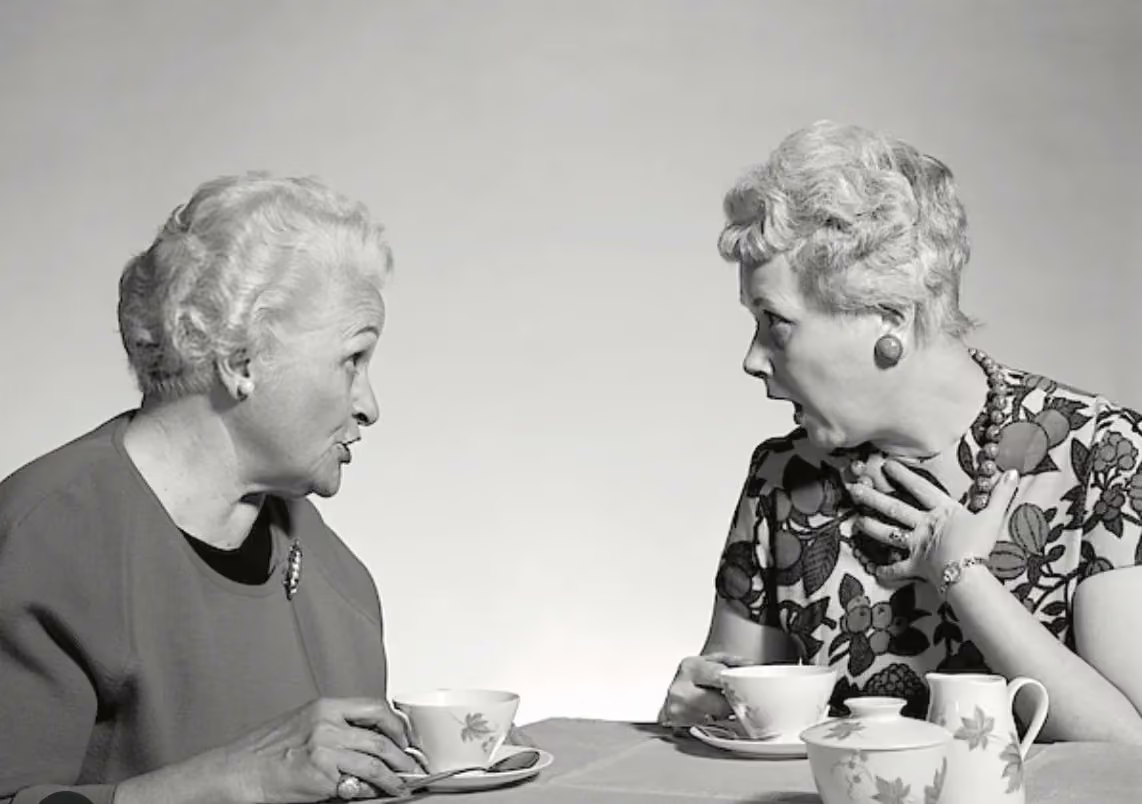
MUSN'T GRUMBLE
Around seven-thirty in the morning, when I returned home after completing my paper round, I would find my mother and grandmother in our living room, moaning.
The subject of the moans would remain consistent. The weather, of course, was either too hot or too cold; there was too much rain, or not enough; complaints about politicians-“they are all the same” and “only in it for themselves.”
Rising crime was another perennial complaint, as was the failure of the justice system to sufficiently lock up miscreants. Motorbike riders, dustmen, loud noises of any kind, unruly, excreting dogs - the world was drowning in wrongness, and what could you do about it?
These complaints, as displayed by my mother and grandmother-both of whom had lived through the Second World War-would engender in me, already something of a depressive, a renewed feeling of hopelessness, if not despair as I cycled to school.
Since the moaning went on every day, and had done so for many years, I began to consider it a sort of performance: the same on every occasion, but with little variations. But now, years later, and long after the participants are dead, I wonder what the function and place of moaning and complaining actually is.
After all, who hasn’t run into a moaner, or indeed, hasn’t complained or moaned themselves-particularly if, at the time, they were sitting on a barstool in a pub, where much of the world’s moaning takes place?
What, I wonder, is the point of all this moaning? None of it is intended to alter anything; it isn’t even a form of protest, but only a mild cry about the fact that the world is a shitty place, which rarely delivers anything good to anyone, least of all you, and that you are powerless.
Am I implying that women moan more than men? Is the moaning of older women a reflection of their - at least in the 1960s - inferior status and lack of agency?
Certainly, my mother and grandmother weren’t excited by life, my mother least of all. I have already catalogued in an earlier blog, with some controversy, that she was a boring person, but she was also bitter and disillusioned. In many ways, though, she was right: existence is a disaster. But it isn’t only that.
Moaning is a form of repetitive self-protection and omniscience. If you already know that the world offers you nothing but tragedy, you are, to an extent, guaranteeing your own protection, bracing yourself for the crash to come, and needn’t be shocked when it does.
If you have parents who only moan and are incapable of new thoughts, you’d believe that that was just the way things were, and there were no luscious pleasures available. But it is not true, and that is why we leave home and have sex-to find other people who may stimulate us.
Britain is a septic island of complaint, a rancid, rotting, pathologised husk of whinging and griping. Complaint is our base setting and now our identity. We are the world’s worst moaners, or the best, with good reason. The British are not a cheerful people; they are a dour, beaten-down bunch of racists, idiots, pessimists, and has-beens. Complaining is their titillation.
Other nations-the Spanish, for instance, or even the Italians, who have little to cheer about-are more sunny. Isabella, my soon-to-be wife, has a naturally cheery disposition compared to most people I know.
Those who make a difference need to be optimistic. Positivity is infectious; the most charming people are never moaners, but nourish and uplift us. Conversely, the moaner is self-centred and self-pitying; their misery is all that matters. For them, conversation is merely the expression of unhappiness, never an exchange. Rather than say something interesting, something new, something they haven’t thought before, the moan deadens-if not kills-dialogue.
Back in my living room in Bromley, where my mother and grandmother have been complaining ceaselessly, having successfully sucked the life out of all of us-with nothing joyful left in existence-they will rise and part with the immortal words, “Still, mustn’t grumble.”
----
If you wish to subscribe and support my writing, you can do so on my page.
 Hanif Kureishi
@Hanifkureishi
THE SHOCK OF LIFE
I am wheeling down to the café on Brook Green with an ex-student who begins to talk about a theory of ‘transformative experience’, which I understand to be experiences that switch you from one way of seeing to another, where you cannot, intellectually or emotionally, return to a previous state. The way you see the world will be utterly different to how it was before.
No one can avoid transformative experiences, either elective – new kinds of life-changing relationships, for example - or accidental. In Shattered, I described being on a ward – in what I called The Hospital of Accidents - with about twenty people, all of whom had life-changing catastrophes; motorcycle accidents, falls, rock-climbing mishaps. And so on.
As you might have seen from my last blog, where I take some steps up and down my living room with the help of three physiotherapists, my life has been transformed by what happened to me that day in Isabella’s apartment two years ago. I have been forced to live in an entirely new way, and I don’t like it; I hate every moment of it. But I have to put up with it.
What can you make of what has happened to you? How can you absorb or assimilate it?
Some of my films and stories have been described as transgressive: the queer relationship between a white working class punk and a Pakistani in My Beautiful Laundrette. Or the relationship between a septuagenarian and her daughter’s boyfriend in The Mother.
Art should be transgressive because so-called transformations are experienced as violations in themselves: difficult, unusual, even uncanny. Art exists to measure the strangeness of the world. The shock of art is the shock of life. We all have had that moment where art has elucidated or made general something which appeared private and particular, mutating pain or confusion into communication.
Difficult artists like Beckett, Bacon or Plath are concerned with the indigestible; those ruptures or disturbances in lived-experience that necessarily fall outside of popular culture.
There are few more unassimilable passages than that between childhood and adolescence, and there is no group of people more in need of cultural orientation than the young. Art prepares, widens and matures you for the perils of the adult world. We older people can remember searing experiences in the theatre, at the movies, or in the library when the world tipped in a novel direction.
If current discourse is to be believed, young people are no longer consuming narrative storytelling. The UK is the only economically developed country where 16 to 24-year-olds have the lowest literacy skills of any age group.
My son Sachin has been teaching a course in screenwriting at a leading private school. When he asked the sixteen-year-olds – who had attended voluntarily – what films or television they had been watching, no one raised their hand. Apparently they hadn’t seen anything. What the fuck had they been doing? After the class, a teacher informed Sachin that most students now ‘double-screen’; looking at their phone while the TV plays in the background.
In my youth, we would play outside to escape the oppression of our parents, who were, in the mode of the time, present but not omnipresent, which was a mercy. Large groups of kids of all ages would spend hours with one another, playing all day, talking about clothes and music. Our role models were older kids, with whom we sometimes fell in love. This has been lost; children are no longer allowed to play outside, and are only interacting with kids of the same age, mostly online.
In the post-war period, Britain’s greatest achievement – and principle export – was our culture; from ballet to The Beatles, and our institutions, theatre and the BBC. But since Thatcher, through Blair and into the current moment, the arts and humanities have been replaced – in terms of prestige and desirability – for jobs in finance, tech, services. It’s almost impossible to make a living in the arts now.
If our parents are those who introduce us to taste and sensibility – and are made philistine by their work in the corporate world – then what chance do the kids have? If art is pleasure plus social therapy, what does losing it do to us?
Attention is the contemporary battleground. When your imagination is suffocated by information overload and vulgarity, there is no space for creativity. We pick up our phones or reach for distraction when we’re anxious, afraid of our thoughts, and what they might tell us about death, sex or our own violence.
Habit and routine keep us safe but they can be deadening. To remake yourself is to take risks, to sacrifice something in the belief change will energise you. The point is to be enlivened.
-------
If you wish to support my writing, you can now subscribe through my profile.
 Hanif Kureishi
@Hanifkureishi
THE FUCK-IT MANIFESTO
Yesterday, Isabella and I went down to Hammersmith to give notice of our forthcoming marriage, a legal requirement, where we were separated and asked a series of questions to ensure that we actually knew each other and had, indeed, met before.
Seated in a tiny, airless room, confronted by an earnest bureaucrat behind a glass partition, I was asked an easy question to kick things off: “What is your prospective wife’s date of birth?” I had no idea and replied, “I have three children, and I don’t know their dates of birth either.”
Next, they asked, “What is her phone number?” Again, I shook my head in despair. Her email? Not a clue. They asked for her full name. I sighed, “I never asked.”
Finally, they handed me a sheet of paper and a pen and asked me to sign the document. My head sank. “I’m paraplegic; I can’t use my hands.”
The following day, recounting this tribulation to Carlo, it occurred to us that we should write a self-help book. But instead of the usual instruction about achievement and success, its topic would be failure: the often unrecognised pleasure of letting yourself and others down, and what fun it is to fuck things up.
Most of us have already practised this form of passive-aggressive resistance, usually with our parents, partners, or while in bad jobs. The point of our new book would be to encourage more failure—this underestimated indulgence—seeing it as a form of triumph.
I was a librarian at school. It was a good gig because when it was cold, you didn’t have to go outside. A book that made a strong impression on me one lunchtime was Alan Sillitoe’s The Loneliness of the Long Distance Runner.
In a foot race, the protagonist, Colin Smith, a long-distance runner in juvenile detention, deliberately stops just before the finish line, allowing his rival to win. This is an act of defiance against the authorities. By losing the race, Smith asserts his independence and rejects the governor’s values, remaining true to himself.
As human beings, we have no choice but to work in teams; we are as dependent on others as they are on us. We are therefore in a delicious position to fail them and cause suffering. Our failure would be their failure. Telling your father that you’ve flunked your exams, are no longer pursuing a law degree, and have decided to become an experimental electronic musician can be a compelling source of jouissance. Life is filled with these moments—expectations not met, hopes dashed if not destroyed—and we should learn to savour them.
You will never, I hope, forget the times you have let down a sexual partner, leaving yourself embarrassed and ashamed, and them unsatisfied and frustrated, if not furious. These memories will come back to you years later as blissful recollections, as victories to bask in.
In China, “lying flat” is a form of protest where young people reject the relentless pressures of work, competition, and consumerism by opting out of the rat race and activity, simply “lying flat” in bed all day.
The philosopher Slavoj Žižek describes this as “Bartleby politics,” after the titular character of Herman Melville’s short masterpiece Bartleby, the Scrivener: A Story of Wall Street. Bartleby’s defining characteristic emerges when he begins to respond to requests to work with the phrase, “I would prefer not to.”
This docile defiance escalates until he stops performing tasks, refuses to leave the office, and ultimately declines all offers of help or employment.
If achieving expertise in any field requires 10,000 hours of practice, those who spend all their lives watching porn and playing video games are already some of failure’s highest achievers. These heroes require our acknowledgment, succour, and welfare handouts.
Entire businesses, if not institutions, are fired by the fuel of failure: the psychotherapy industry, for instance, is propped up by losers interminably complaining on a couch about their lack and their losses. The comedy trade, from Charlie Chaplin to the BBC’s Alma’s Not Normal, is a litany of mortification, falling over, and general idiocy. The German word schadenfreude—pleasure in others’ misfortune—is, of course, a form of projection, allowing us to enjoy our own inadequacy on the site of others.
America is a case in point. Under Biden, the economy was humming along, unemployment was low, as was inflation; the country was relatively peaceable, and the billionaire class were richer than ever before. Everything was almost all right. Appointing Trump, a failure in every aspect of his business life—a man clearly an idiot—proves the glorious human instinct for failure hasn’t diminished, but is alive in the most successful country in history.
The film Amadeus brilliantly centres not on Mozart but on his rival Salieri, whose sense of failure embodies the universal fear that no matter how hard we strive, there will always be someone more talented, more beloved, or more successful than ourselves.
Some of the world’s greatest works are about losers. To pick a few: Shakespeare’s Hamlet, Notes from Underground by Fyodor Dostoevsky, A Fan’s Notes by Frederick Exley, Oblomov by Ivan Goncharov, or indeed Salinger’s The Catcher in the Rye.
In a world obsessed with winning, the true rebels are those who find joy in losing. So don’t let the fear of disaster ruin your life; embrace it fully and throw yourself into every available calamity and misadventure. I am taking it for granted that my forthcoming marriage will be an utter catastrophe. Remember, success is fleeting, while failure is perennial—our enduring, constant companion.
------
If you want to support my writing, please do consider becoming a subscriber, the button is my X page.
 Hanif Kureishi
@Hanifkureishi
Dear Readers,
I recently appeared on my friend Bella Freud's podcast, Fashion Neurosis. Have a listen here.
open.spotify.com/episode/5iHLqZtZ284j7Rjz5Pjb23
Hanif Kureishi
@Hanifkureishi
THERE IS HOPE, BUT NOT FOR US
While chugging up Shepherd's Bush Road with a friend and turning left onto Goldhawk Road, I see a dead body.
There is huge activity: sirens screaming, police cars, and ambulances rushing about. We can go no further; the street has been taped off. But I can see there is a body in the middle of the road covered with a green tarpaulin.
In my favourite coffee shop — which has a panoramic view of the entrance to Shepherd's Bush Market, where one can see all human life — I speak with the manageress the next day. She had the misfortune of overseeing the whole incident.
Two disturbed individuals were fighting, one stabbing the other seventeen times, leaving gaping holes in his body. The perpetrator fled but was chased down by brave members of the public and eventually arrested.
A few days before this, my son Carlo and his girlfriend were in Joe and the Juice on Kensington High Street when two thieves slid in, picked up her phone, and attempted to escape. Carlo put the thief in a headlock, dragged him to the floor, while landing body shots. The police arrived shortly after, too late to catch them.
These two events bring to mind others from the last five years. My sons are often getting into scrapes and violent situations in this mad town. Recently, Sachin was picked up by a fake Uber driver, who stole his SIM card and emptied his bank accounts.
(Please read Sachin’s piece on the incident here: www.pressreader.com/uk/you-1297/20240811/281990382814270)
Not long before, the same son had to give mouth-to-mouth resuscitation to a dying addict on his front steps. For his pains, Sachin received a bloodied mouth and had to go to A&E to be tested for HIV.
On another occasion, while walking the dog, Sachin discovered a trail of blood, which he followed for some time, leading him to a filthy basement flat with a broken window. He climbed in and found a dying addict bleeding out.
(Again, please read Sachin’s write up of this incident here: www.pressreader.com/uk/you-1297/20240630/281805699119386)
These are illustrations of everyday life in London, not often mentioned by estate agents, where leaving your house, you take your life in your hands.
In the early 2000s, always to my surprise, I used to see J.G. Ballard strolling around the neighbourhood. Later, I learned he had a girlfriend living on Shepherd's Bush Green, apparently in the flat above McDonald's. A couple of times, I saw him in local restaurants and was always impressed; one of the most extraordinary British writers of the century, hanging out in modest Shepherd's Bush. But he was interested in urbanisation, technology and violence, in moral decay, consumerism and perversion.
In an interview in 1982, Ballard said: "I would sum up my fear about the future in one word: boring... Nothing exciting or new or interesting is ever going to happen again... the future is just going to be a vast, conforming suburb of the soul."
Far from the dystopian utopia that Ballard prophesies in this quote, we are living now in a hyperactive, super-charged, violent moment, in scenes resembling his literature rather than his interviews.
We are inhabiting Ballard's landscape: a city of luxury high-rises and collapsing social services, a vast megalopolis occupied by addicts, thieves, gangs, and oligarchs. There are 1,200 high streets in London, and on each one – apart from perhaps Chiswick High Road – the social order is breaking down.
Poverty has led us to this, years of austerity and deprivation. It doesn't surprise you to see a dead body in the middle of Goldhawk Road; it's hardly murder in paradise.
From the junction of Shepherd's Bush Road and Goldhawk Road, I can see in the distance the towering Westfield, a superstructure orbited by newly built luxury apartments, and not far from the wrapped husk of Grenfell Tower.
The Ballardian point here is that we believe we exist to work and support our families, but our other job, as it were, is to plug ourselves into the Westfield, keeping it alive with our spending and activity. While outside its smooth, safe, air-conditioned spaces, there are streets full of oddballs and outcasts, those outside of the consumer paradigm. They are perhaps the freest of all, unconstrained by the tyranny of late capitalism. As Ballard said, "In a totally sane society, madness is the only freedom."
These seemingly random, violent interludes which I previously described are important in reminding us that we are not as comfortable as we like to think. What we have can be lost or stolen; this can happen to us as individuals and as nation states.
Violence both destroys and creates; it's an accelerant. Social justice, technological advances, and myriad other progressive solutions have come out of violent ruptures. My accident, for instance, a violent, contingent event, has created a whole new life for me, one which I hate but in which I find a lot of interest, allowing me to develop deeper forms of communication and produce work I would never have done otherwise.
As Ballard said, "Civilised life, you know, is based on a huge number of illusions in which we all collaborate willingly. The trouble is we forget after a while that they are illusions and we are deeply shocked when reality is torn down around us."
---
For more writing, please head over to my Substack.
hanifkureishi.substack.com
 Hanif Kureishi
@Hanifkureishi
REMEMBER YOU MUST DIE
My friend Peter has prostate cancer; his wife has lung cancer. John has throat cancer and is receiving chemotherapy. Marianne has bowel cancer and is undergoing immunotherapy. Isaac has prostate cancer, urinates all the time, and screams as he does so. Arthur’s prostate cancer has returned, and Amir’s cancer is spreading to his spine.
My former girlfriend Victoria has dementia and cannot speak or walk. We recently learned that her younger sister has the same condition. Bruno came around the other day; I hadn’t seen him for two years. He was shaking and speaking in non sequiturs. “He’s another goner,” I thought. “He’ll be gone before me.”
It’s a toss-up as to who will be attending whose funeral. At the last one, I turned to my good friend Stephen and said, “It’s hardly worth our while going home.”
I am, of course, tetraplegic, but I have a number of other ailments that must be taken seriously. I am seeing a dermatologist for a worrying spot on my forehead. Next is a visit to the eye clinic because my diabetes can cause macular degeneration—did I mention I have diabetes?—and an appointment with a podiatrist for a blackened toenail, the least of my problems.
Remarking on his imminent death, the late Christopher Hitchens said: “I do not especially like the idea that one day I shall be tapped on the shoulder and informed not that the party is over but that it is most assuredly going on—only henceforth in my absence.”
When you get to seventy, it’s not that the party is going on in your absence but that it is emptying out. You may wander onto the dance floor and find no one you recognize—or no one at all.
“All day, all night the body intervenes,” writes Virginia Woolf in On Being Ill. “The creature within can only gaze through the pane—smudged or rosy; it cannot separate off from the body.”
Last night, I was awake at two with a blocked catheter and then again at five with spasms that kept me awake for another hour. I live in a constant state of emergency, never far from the local A&E, where I have been twice in the last month.
When I go to sleep, inevitably I worry that I will be up in a couple of hours needing medical intervention. I can’t relax; the body does intervene. One day, I will go to the hospital and won’t return—having either fallen into a coma or had a heart attack. These fears haunt me.
This is an intolerable situation for Isabella, who sometimes is awake all night—or for days on end.
Edward Said's concept of late style challenges the idea that age brings serenity and resolution. He argues that late works often embody intransigence, difficulty, and unresolved contradiction. Said's own experience with illness, as documented in his memoir Out of Place,offers a moving example of how adversity can fuel creativity. Written during periods of treatment for leukemia, the narrative is marked by a sense of exile and displacement—a deeper engagement with the realities of illness and death.
Born between 1945 and 1965, my generation probably had the best of it—with the welfare state, the Sixties, feminism, the gay movement, and civil rights among other radical social changes. Possibly, we were the most fortunate generation of all time. Now we’re dying off.
We had contempt for those older than us—believing that no one over forty had any juice in them—but my contemporaries are still creative, intelligent, innovative, and even visionary while besieged by shattering infirmities.
Think of great octogenarians who have produced—and are still producing—significant work: Martin Scorsese, Bob Dylan, Louise Bourgeois...
Tracey Emin's work has profoundly evolved in response to her experiences with illness—particularly her battle with bladder cancer in 2020. Her recent exhibition I Followed You to the End serves as a visual memoir documenting the physical aspects of her illness—becoming a powerful conduit for processing trauma and transforming pain into collective understanding.
Yesterday afternoon, I went to North London for my weekly hydrotherapy session. I am on new medication that means I have less control over my bowel movements. I walked several laps of the pool—the only place where I can currently stand up unaided—and as I was being hoisted out, I defecated in front of four strangers.
Most people—including my younger self—would find such an event catastrophically embarrassing. But for me now, it was almost an irrelevant inconvenience. My carer cleaned me up with quiet efficiency, and I went home for a meeting with a director.
Bodily intrusions abound—but good days can be plucked from the abyss of decay. The trick is to assimilate your symptoms: converting them into advantages, making something of them.
 Hanif Kureishi
@Hanifkureishi
Shattered paperback will be published 05 June. Pre-order here: www.penguin.co.uk/books/458978/shattered-by-kureishi-hani…

Hanif Kureishi reposted
 Faber Books
@FaberBooks
Set in London in 1989, The Black Album by Hanif Kureishi celebrates its thirtieth anniversary this month. Here is its original hardback, next to the paperback edition.
'A marvellous, impatient adventure.' Sunday Times
www.faber.co.uk/product/9780571328987-the-black-album/
 Hanif Kureishi
@Hanifkureishi

Hanif Kureishi reposted
 Nancy Brock
@sorcerapprent
#friday Reads @Hanifkureishi SHATTERED @eccobooks A fall, at home. A testimony to the resilience of spirit, a tribute to a mind unconquered by adversity.
Hanif Kureishi reposted
 EALING.NEWS
@_EalingNews
Following its successful debut year in 2024, the second Ealing Book Festival at @Pitzhanger @Gough_Clare_J in April 2025 sees a line-up including Hanif Kureishi @Hanifkureishi, Tracy Chevalier & Konnie Huq @Konnie_Huq to discuss their work.
ealing.news/arts-culture/ealing-book-festival-at-pitzhang…
Hanif Kureishi reposted
 The Intima
@The_Intima
BOOK REVIEW
Reviewer Kevin Brown lives in the experience of being "Shattered," a #memoir by novelist Hanif Kureishi, giving us insight & a desire to read & engage. @Hanifkureishi @eccobooks @kevinbrownwrites
www.theintima.org/book-reviews-intima/shattered-by-hanif-…
#medtwitter #nurses @Columbia @Columbia_SPS

Hanif Kureishi reposted
 Literary Hub
@lithub
“I am determined to keep writing, it has never mattered to me more.” @Hanifkureishi on trauma, recovery and what it means to be a writer.
lithub.com/after-the-fall-hanif-kureishi-on-trauma-recove…
Hanif Kureishi reposted
 Standard News
@standardnews
"I want to feel as excited as the Right-wing nutters; I want to believe that things will improve", writes @Hanifkureishi
Read more: www.standard.co.uk/comment/hanif-kureishi-fascist-liberal…
 Hanif Kureishi
@Hanifkureishi
Hanif Kureishi’s Relentlessly Revealing Memoir - The Atlantic www.theatlantic.com/magazine/archive/2025/03/hanif-kureis…
Hanif Kureishi
@Hanifkureishi
Last night, Isabella was reading to me from the newspaper. Listening to her, while thinking of other things, I suddenly said, “What do you think we would be doing now, you and I, if this accident hadn’t happened?”
Her face changed. With some distress, she said, “We can’t go there. It is not fair to indulge in that kind of thinking. The comparison would kill us.”
But I thought: who doesn’t imagine another life, a better one, running parallel to their own; an ideal other world, which feeds us emotionally, sexually, intellectually?
The Buddhist idea of living in the so-called present is impossible and against reality because our lives are built around a necessarily imagined future. We are constantly in dialogue with this phantasised world; an ongoing conversation about our jobs, creative pursuits, sex, our partners, or money. We negotiate and argue with it, building it up and adding details.
To be motivated, there must be an imaginary, a store of images that nurture our desire, allowing us to construct cities, space stations, and write novels. The immigrant experience, for instance, is centred around desire: a better world is possible.
But in other circumstances, this alternative world could be used as a stick to beat yourself with; the further away you get from your ideal, the more punishing the phantasy becomes. It’s the “I could have been a contender” syndrome. Failure can be an act of rebellion—pathologised, indulged, and even enjoyed.
Online shopping creates a phantasy space. When making a purchase, we are plunged into an ecstatic waiting period where our desire for the object increases. We order a jumper and believe it will substantially improve our lives. And we know how it feels when it does arrive: some pleasure but not the whole-body anticipatory orgasm of the wait.
The only solution is to keep buying. This anticipatory feeling is a useful engine. But being consumed or addicted to shallow forms of desire—narrowing the range of what you are interested in—will block a more nurturing and sustaining phantasy.
The essential question is: how do we keep our desire alive? What keeps us moving?
At the end of the 1920s, Freud’s colleague and biographer Ernest Jones developed a theory called aphanisis, which is concerned with the extinction of sexual desire and with the question of what happens to us—as in depression—when we can no longer demand anything. What he implies is that to remain alive, we have to want and make demands of ourselves and others. Demand is the currency of social intercourse.
When I was young in the ’60s, we were enveloped in an enervating boredom: sitting in your tiny living room with your grandparents in front of a coal fire, watching a gloomy Dickens adaptation on a tiny black-and-white television. There was little to want until pop opened our world. Now, we must create opportunities for reflection and ennui—there is too much to want—and we need space where new aspirations can arise.
In Britain, desire is dead. Austerity and a lack of industry have destroyed our enterprising culture. There are pockets of ambition—individuals empowered by new technologies—but we lack a story or sense of direction that must come from the state working in collaboration with private inventiveness. Our country is sick, impoverished, and mentally ill.
As is America. Still, they have a president in Trump who, in many ways, desires too much. This is what is beguiling about him. René Girard, the French sociologist, argues that desire is mimetic: we envy others’ excitement and want it for ourselves. What liberal commentators usually miss about Trump is how contagious his activity is. This is what populist leaders do; they tickle your libido, promising anything without accountability, and have you believe in an exciting future.
“What would we be doing now, you and I, if this accident hadn’t happened?”
This thought isn’t serving me. As Isabella said, it takes us nowhere. You must learn to give up or suppress certain phantasies in order to make space for new, more realistic ones.
I’ve been wanting to get my left ear pierced since my accident. When I was seventeen, I had it done for the first time. I remember my dad having a fit as I looked at myself in the bathroom mirror while he railed at me, asking if I had become homosexual. People were nervous in those days that the genders were fusing.
Anyway, this weekend I decided to get it re-pierced. So Isabella and I, on our way to Sachin’s for lunch, decided to hit Westfield, where I received a small diamond stud that pleased the children and gave everyone a good laugh. Next, I will be getting a tattoo, possibly on my hands or my neck. My repunking is an onward project.
 Hanif Kureishi
@Hanifkureishi
FUCK MORE: THE IMPOTENCE MEN
A few days ago I was asking a friend, a man the same age as me, about the efficacy of the dick pump - described in a previous dispatch - and given to me as a seventieth birthday present. He should know, I thought, having given the pump a whirl recently, regretting his wife’s lack of sex. Apparently it was painful. It didn’t work. There was disappointment.
My friend mentioned other so-called cures when it comes to impotence; little capsules you insert into the end of your penis and which will, apparently, create the same effect; or, as a last resort, there are injections into the old chap. None of these tricks sound like much fun.
These techniques to raise an erection ask many important questions about what sex is and what it means. For instance, it might be mistaken to think that orgasm is the point of sex. Surely, we can imagine a satisfying sexuality that isn’t dependent on the rise and fall of a dick? After all, many women do not, or cannot, experience orgasm during sexual intercourse, and yet may still enjoy the experience, and the same can be said for some men, particularly fetishists.
It is possible to have sex without an erection or even ejaculation, just a joyful merging of bodies and intimacy, a form of lovemaking that can be as fulfilling as anything else.
My friend felt he was letting his wife down because of his impotence. At one point he suggested he wouldn’t mind if his wife went with another man. But I think he would object; and she might mind being characterised as so disinterested.
It seems that men have two stages when their bodies transform radically, one is puberty, the other is old age. If you have prostate cancer, for example, and are taking hormone therapy, as well as developing breasts, if not a high voice, you will need to discuss these changes. The pain-schedule of ageing prompts people to have brand new and thought-provoking conversations.
Interestingly, my contemporaries speak of how liberating it is being - as several of them have put it - unchained from the lunatic that is their libido. There is relief: they are no longer being driven into mad scenes by an irrational master buried inside them. You might even say they have entered a new age of serenity and peace.
When your sexuality dies, it doesn’t follow that you lose interest in everything. Freud’s notion of sexuality being at the centre of the human dynamic feels far less relevant and interesting as you get older. A libido can become more scattered and invested in other things. Who knows where it might take you? At this point, life becomes an experiment once more.
As the Sixties and Seventies merged, there was a lot of pressure on people to have sex. Sex was hip, it was supposed to be fun, breaking you away from religion and heteronormativity, removing you from the everyday-mundane, and taking place in the new joy economy.
An innovative version of feminised masculinity embodied by people like Robert Plant, Mick Jagger, Marc Bolan, and David Bowie was emerging. Women, inspired by the pill and feminism, were becoming more active and aggressive in their sexuality.
When it came to sex, my interest was in getting to know the person. Undressed and unguarded, you would do and say things that you would not entertain elsewhere. I wanted to be close to the women I had sex with; it wasn’t transactional, I wanted to like people, and sex was a great way to meet them.
Sex was paramount to us boomers. But we didn’t consider the new sexuality to be a generational alteration, rather a profound change in all values, where the the U.S., France, and Britain were leading the way – with the Beatles just ahead of us all.
Now, as boomers are becoming dry and impotent, and the world we created is lurching to the factional, grievance-led far-right– and the young are, apparently, having less sex than ever – what is to be done?
Fuck more. Seek out connectivity. Expand your idea of sexuality; where it begins and takes you. Reconnect sex with love. Create new forms of sociability and family life. Structure society around the promise of tenderness, intimacy and equality. Work to stimulate desire in yourself and others; desire being the antidote to malaise. These are forms of resistance that will be necessary in the coming struggle.
--------
If you want to support my writing, you can do so my subscribing to my X account, just go to my page and click subscribe.
 Hanif Kureishi
@Hanifkureishi
CARROT JUICE
If I like something, I want to eat it every day at the same place and at the same time, until I feel sick at the sight of it and yearn for a new experience.
I considered myself lucky when, about a month ago, a new bistro opened on Shepherd’s Bush Road next to the wine shop. It has a good, if slightly expensive, menu: soup, gnocchi, cauliflower cheese, frittata, and salads. The chef is a friendly Calabrian.
With some effort, and not a little peril, Isabella gets me through the door. There are few establishments that we can actually get into. This place is small but comfortable, with little stools and low tables. There is a fridge selling French cheese and charcuterie. When it first opened, it could become crowded. Now the numbers appear to be dropping off.
Isabella orders our food while speaking to the manager, a talkative, worried Frenchman. Now, at the end of the year, he is worrying even more since an engineer arrived to cut off the electricity because the previous owner hadn’t paid the bill. There have also been complaints about noise from the neighbour upstairs, though he has chosen to live on one of the busiest roads in West London.
The Frenchman works from eight in the morning until eleven at night. It has become clear to me – I, an indolent man who works regularly but little – how hard it is to run a small business. Recently he was fined for leaving his rubbish out on the wrong day, even though the firm employed to remove it failed to turn up. I tell Isabella that a similar thing happened to my former barber Luka, who began with a shed in an old garage, before moving to a shop on Shepherd’s Bush Green but has now returned home to the Balkans, having found it too stressful and unprofitable to survive here.
What I can’t bear to tell the Frenchman is that I have already grown tired of his gnocchi, which I find a little rich. So now Isabella, in her yellow coat and carrying a silver ramp for my wheelchair under her arm, hurries me past his window hoping he doesn’t see us betraying him for another restaurant.
She and I have decided to try a Lebanese café further down the road, which has just opened and was recommended by my new barber. It has been smartly done up and is obviously a small family business, not a chain. The broccoli soup was fine, though it came with several slices of unwanted buttered toast. The strangely dark red beetroot hummus and the falafel were good. I ordered a carrot juice, which came with three blocks of ice that Isabella extracted; then it was carroty.
Middle-aged friends recently single are dating on romantic websites which, it turns out, are often not so romantic. One female friend and I had a discussion about what the point of a partner is; she suggested it is someone you love to watch television with. I added that the partner is also the person you most like to have lunch with, and with whom you can sit without having to make conversation. But if you do decide to chat, she will be happy to hear from you and you from her.
Isabella listens to my chatter as I look out of the window and think of other things – mostly memories – which I study now with an intensity I never did before as if trying to reclaim my life even as I almost lost it. She always feeds me first while her own food grows cold.
At the end of your first meal in a new restaurant, you will inevitably ask yourself whether you will return. Here, I was not convinced that we would. And I have to admit – though I haven’t mentioned it before – that Isabella and I are currently mesmerised by Farmer J’s new joint: an expensively fitted-out chain restaurant at the bottom of Hammersmith Grove.
If you go in there at 12:30 p.m., it is more or less empty, which is practical since I need more space for my wheelchair. But if you enter half an hour later there are queues inside and out on the street. This is healthy food for a part of Hammersmith flooded with affluent, attractive, and mostly white office workers in their mid-twenties; they wear fashionable clothes and enjoy a varied assortment of unpronounceable vegetables.
When Farmer J reopens after the Christmas holidays, I want to return to the same spot being fed macaroni and cheese with truffle by Isabella until my enthusiasm runs dry.
As I dictated this blog to Carlo, he guffawed in boredom and disgust.
“How is it,” he said with a queenie pout, “that we have come to this: you describing carrot juice and me having to write it down?”
I replied: “My world has narrowed to carrot juice. At least I’m alive and can suck through a straw. That’s something. In fact, it’s quite a lot.”
“Okay,” he said. “What next?”
 Hanif Kureishi
@Hanifkureishi
SEVENTY FOR THE FIRST TIME
Dear Readers,
You can now support my writing by becoming a subscriber on X. If you wish to do so, please click my profile and hit the SUBSCRIBE button.
---------
A generous friend, who has dated several older men, suggests she get me a dick pump for my birthday.
“What do you mean a dick pump?” I ask.
“You attach it to your penis and pump it up,’ she says.
“Fuck’s sake.”
“The blood fills the old codger - if you’re lucky. Then, you grab a rubber band, attach it to the base of the penis, keeping it up.”
“How erotic,” I say.
“Then you’re good to go.”
“But the problem is, I can’t use my hands. I can’t caress a thigh or twirl a nipple. My girlfriend isn’t going to be too pleased without at least the pretence of foreplay.”
I am now seventy for the first time. I had my mates up in the Bush for a sit-down booze-up and dinner in the former Rouge-mont, the sacred space on the Shepherd’s Bush Road, where my friends and I always caroused and gossiped, consuming execrable food and wine.
I have lived longer than my father, who was ill for much of my adult life. My accident came suddenly and I still wake up at seven in the morning, surprised to find two strangers in my room – my injured self and carer, who always says good morning as she presses a metal straw between my lips.
I have entered the death-zone: several friends have announced they have cancers of various kinds and are undergoing chemotherapy, or awaiting operations. Others have been diagnosed with dementia and heart problems. There is something consoling in this; a kind of solidarity, I am not alone in my misery, and I have come to enjoy hearing the complaints and hospital experiences of others.
I envy my younger self. There he is, getting off a plane in London, back from L.A and the Oscars, sun-tanned and confident, flush for the first time in his life, everything in front of him.
The day after, he can be found at a bar in Dublin, at a film festival, with a woman he has just met. She is Irish, the lover of a well-known Irish playwright. She tells the young Hanif she has to return home to Derry where she works for a theatre company.
“Would you like to join me?” she asks.
They talk all the way from Dublin to Derry. It goes without saying that Brits are not particularly welcome in this part of the world.
“You’re lucky you’re Indian,” she tells him.
The next morning she goes to work, leaving him in the house alone. There, sitting at the kitchen table, in the silence, looking across the fields, enjoying this adventure, he decides it might be a good idea to do some work. His editor at Faber and Faber, Robert McCrum, has agreed to publish the movie script of his recent film. He wants him to produce an essay to accompany the screenplay. Hanif has never written an essay before and doesn’t know what he might say.
He goes to her bookshelf, and looking idly at the titles, sees something by his hero James Baldwin. This is a good start, he thinks. Baldwin wrote fascinating essays, usually beginning with himself: an anecdote or example from his own complex life. He would elevate the personal into the political; talking about race and oppression in contemporary America.
Hanif begins to describe his own experience of racism. He writes as it comes to him; as he felt it at the time. It is still raw, and available to him as experience; it hasn’t gone away. There is plenty of it, and it comes out easily. The essay will be called the Rainbow Sign, referencing the verse from Genesis, and used as an epigraph in James Baldwin’s The Fire Next Time.
By mid-afternoon he needs a break. He goes out into the garden for a walk. The garden leads to a field, where he stands in the corner smoking and wondering about his history and the piece he is writing. Soon, he notices something odd; a herd of cows is slowly moving towards him.
He finds himself stepping backwards. He turns; behind him is a high fence which he cannot possibly climb. The way he came is barred.
He has no experience of cows and no idea of what they are capable of. Will they charge at him, or is that only bulls? He knows he has to act, if he doesn’t, he will definitely be trampled and killed. He imagines the Irish woman returning from work and finding her new friend’s broken body in her back garden. That would be a shock.
Suddenly, he notices a narrow gap between two cows. He sprints between them and back into the house, shutting the door behind him. He had heard that Northern Ireland and could be dangerous, but he wasn’t prepared for this.
Back in London, and lucky to be alive, the young Hanif is walking along the Shepherd’s Bush Road, where he sees himself in a wheelchair. As always, the old Hanif is chattering away, trying to raise a smile in his beleaguered carer, who is guiding him across the road.
The young Hanif approaches, clasps the old man’s hand and asks, ‘What the hell happened?’
‘I fell,’ says the older Hanif.
“Shit.”
“Look, perk up, you’ve got a long while yet. And I’m happy.”
“But how do you write?” asks the young Hanif.
“We have a son. Three sons actually. One of them takes our words down.”
“I’ve got a lot to look forward to,” Says the young Hanif.
“You certainly do.”
 Hanif Kureishi
@Hanifkureishi
Dear Readers,
You can now subscribe to my X profile.
So, if you want support my writing and contribute to my recovery, please consider becoming a subscriber.
More writing to come!
Hanif
Hanif Kureishi
@Hanifkureishi
ADVENTURES IN THE HOSPITAL, AGAIN.
If you can believe it, Charing Cross Hospital is looking worse than I remember it - though this winter, there is no festival of the lame, injured and ailing in the courtyard, as there had been last summer when I was in residence here on the eighth floor for three months.
As I queue for the interminable lifts in my electric wheelchair, I see that the place is as run-down as ever. Paintwork is chipped and peeling, windows don’t fit, walls are warped, and furniture is torn apart. The art on the walls, if you can call it art, is an insult. This place, which cannot be knocked down or renovated, is a ghost-ship, and on it drifts, our country embodied, into decay.
Tomorrow morning, under general anaesthetic, I am due to have an operation on my bladder, performed by a specialist urologist. He will insert a tiny camera on the tip of a thick stick into my penis. The bladder will be examined for its capacity, as well as for debris and stones, and given a good washout to prevent blockages in my catheter.
Isabella, my carer and I arrive at the reception area. It turns out that the administrators have never heard of me, or that I require a bed for the night in order to be ready for the operation at 7 a.m am the following morning.
And so we sit in the waiting room for four hours before being admitted into a side room on the ward. Two nurses hoist me into bed and a tired Isabella goes home. My carer gallantly announces that she is going to stay with me. There is no bed for her, and she is not allowed to sleep on the floor in the room, and so sits next to me in straight-backed chair all night, giving me water when required. I tell her that this is beyond the call of duty, but she insists; it is her obligation, to take care of me at all times. I am relieved, fearing to be left alone in this room, given my night terrors.
At midnight, an Indian health care assistant comes into my room wanting to check my blood pressure and other vitals. Annoyed, I tell him that I was just about to fall asleep, and that this procedure had already been done an hour ago. I give him only a minor bollocking but let him have his way.
Little do I know that at three o’clock in the morning, he will show up again, this time with another man. Without knocking, they come into my room, the Indian explaining that he is here to fix the window vent, whatever that is, claiming he has been instructed to do so by the surgeon.
I unleash a tremendous bollocking on both men, despite the many warnings on the walls about abusing the staff and treating them with respect. Not only that, I threaten to set my carer on them, a ferocious, five-foot ball of energy, known from subduing rapists and murderers in her side gig as a prison guard. I inform the men that she will nail their balls to the wall if they don’t clear off immediately: “You’ve done no repairs in ten years and you decide to do them now, in my room, at three in the morning?”
The next day, I am in the operating theatre and the anaesthetist is seeking a vein. When she finds it, and I am being knocked out, I think: “This isn’t so bad. It’s what dying must be like. A kind of rehearsal. A relief after the turbulence of existence.’
The procedure goes according to plan but nonetheless, when I return to my room, I am bleeding heavily into my urine bag and also from my penis. The doctor informs me that the bleeding will stop in a week or so, and the urine will run clear. As for my penis, it is a bit of a bloody mess after having had a black rod stuck down it. Luckily I can’t see it and I hope never to have to look at it again.
My fear was that I would have to spend another night in hospital but the doctor is keen to discharge me. My carer and Isabella pack up everything, dress me, and get me in my wheelchair. I hate to see Isabella doing this - becoming another carer – that is not her work, she is my lover and best friend, and I would like to keep it that way. But we have no choice.
I whizz out of that desolate building into the dark wind and rain onto a crowded 220 bus, heading home.
----------------
Shattered, my new memoir, is available in all book shops and online.
linktr.ee/shatteredH?ltsid=b5999c34-074b-4dc7-9f41-e3097a…
 Hanif Kureishi
@Hanifkureishi
Dear Readers,
This might interest you: a conversation between myself and the great James O'Brien for his podcast, Full Disclosure. Listen for free on Spotify.
open.spotify.com/episode/0JGtLYxRoo41ZhbCopiTFh
Hanif Kureishi
@Hanifkureishi
Dear Readers,
My new memoir, Shattered, is available to buy in shops. If you wish to buy it online, you can do so by following the link below.
linktr.ee/shatteredH
'I’ve never felt tempted to use the word ‘inspirational’ about a book, and promise I never will again, but it’s the only word I can think of to describe Shattered.' - Lynn Barber, The Spectator
 Hanif Kureishi
@Hanifkureishi
HOW TO BEAT YOUR DAD
“Pawn to C5,” I say.
Carlo shifts my piece and makes his own move. We haven’t done this for a while. He and I often played chess during lockdown, drinking beer and smoking grass in the early evening after a long cycle ride through a deserted London—strangely beautiful, the bones of the city exposed.
“Sicilian Defence?” he says.
“The Bum-Tickle Offense, actually… I wouldn’t want to be one of those people who uses such terminology.”
“You’re a pompous bastard, Dad.”
As I can’t actually grip the pieces, Carlo moves for both of us. The openings of our games are usually innocuous and pleasant—neither of us wanting to do anything risky or rash—each setting out their pieces into pretty formations, exchanging a few pawns in a kind of handshake.
“Right, I’m moving my queen out of her hive,” Carlo says.
As a kid, my dad beat me at everything—boxing, cricket, chess—and he helped make me self-destructively competitive. I liked to blow myself up before anyone else could. Even recently, just before my accident, I became briefly obsessed with online chess and would play dozens of games against strangers, ensuring that I lost each one, making myself furiously self-hating. Isabella eventually hurried me off to my therapist.
It’s a collaboration, this game, but it’s still competitive. Father and son sitting down for an hour or so and saying whatever comes into their heads. The game itself should be unhurried and thoughtful—a scrap with oneself, a meditation, a mind-art.
But I want to kill him. I want him to suffer—which is why I become agitated.
“Must be strange, having a child and then playing against them. This challenger you’ve created,” Carlo says.
“Children should be challengers,” I say.
A couple of pawns are traded, and Carlo goes on a meaningless excursion with his knight. I’m in a good spot, and he doesn’t know it. I castle and mobilise a useful black-square rook.
“You were depressed when I turned up this morning,” Carlo says. “Normally you’re quite cheery.”
“I’ve got much to be depressed about. The fact that I can’t use my hands isn’t getting any easier.”
“On that move?”
“Knight to F6,” I say. “Have you noticed you can’t turn on the radio or walk down the street without hearing about someone’s so-called mental health?”
“What do you mean?” Carlo says.
“It’s odd that Freudian vocabulary—much derided—has become ubiquitous. These issues have escaped the psychoanalyst’s consulting room and a relatively small coterie of middle-class people who could pay for therapy.”
Carlo says, “But life in the West is depressing. The problems we have are intransigent. People’s lives aren’t improving.”
“Everyday discomfort has become pathologised,” I say.“Diagnosing quotidian anxieties and fears as if there existed a standard of serene mental functioning that each of us could attain if we had the right therapist, self-help book, or parents.”
“But shouldn’t we at least attempt to reach what you call ‘serene mental functioning’? And creating a vocabulary is the first step,” Carlo says.
Carlo creates a mating net with his queen which I foil easily.
“What Freud wanted was to convert people’s symptoms into words. If you were impotent with your wife, for example, it could well turn out on examination that you were either homosexual or that your father had told you the female genitalia could devour your Johnson.”
“What the fuck is a Johnson?”
“An old word for penis,” I say.
“The language of mental health has become a superego demand—convincing everyone they have to talk and talk about their problems—which has become a problem in itself.”
“You sound like Tony Soprano.”
“Why? What does Tony say?” I ask.
“Something like: ‘Nowadays everybody’s gotta go to shrinks and counsellors and talk about their problems.’”
“Top man Tony.”
The game goes cold; both of us are thinking of other things. Carlo feeds me my weed pen and opens the back door, letting in some fresh air.
“Do you know what my first memory is?” Carlo asks.
“What?”
“Crawling around on all fours on a stretch of carpet in the Lyric Theatre, feeling lost. I must have been one or so. You were reading a newspaper in the lobby, having a beer.”
“Sounds like me,” I say.
“You were always a better friend than a dad.”
“Fuck off. I was a great dad.”
“You weren’t.”
“I saw you every single day.”
“You didn’t.”
“I did! And I went to a lot of trouble to do it. My partner at the time did her best to keep me away from you.”
“We’d come round for the weekend and there’d be no toothbrushes,” Carlo says.
“Why didn’t you bring your own fucking toothbrush?”
“I was four,” Carlo says. “And dinner was always Pot Noodle.”
“That’s a lie! Pasta with cheese sauce was my speciality! Anyway, friends are more equal—which I prefer. I still don’t know what sort of thing it is exactly: fathering—a skill? A craft? A gift? I don’t know.”
Carlo pokes at my sparse kingside. I need to retreat or find a new channel. The game has moved from the middle-game into the endgame with a series of rapid exchanges.
I’ve always thought of myself as an ideal example: decadence and discipline. I say follow the pleasure—if not the excitement. Children can steal your spirit and leave you with nothing.
I say: “I remember when you won the 100 metres at school—it was glorious to see! And after, you pushed your bull-necked head into my shoulder—rough and tender you were: my baby—and a man. You knew how I gloried in you.”
“Steady on,” Carlo says.
“You’ve always wanted my attention and approval, and you’ve always had it. It’s wonderful to admire your own child for good reason. But of my three sons, you make me maddest of all. My face gets red; I want to explode. You can turn me into someone I can’t recognise—you always did that.”
Carlo offers me a sip of wine through a straw.
My life’s work now is to stop other people from falling out of love with me, to stop them getting bored or turning away, which is my greatest fear. I have to use financial, moral, and other forms of soft coercion to keep the family rallying every day.
Carlo says: “But mental health is a real thing—so what is good mental health? Can anyone answer that?”
“Freud said it is ordinary unhappiness—as opposed to pathological depression—but I would add to that and say it has to do with competency in the world—and forms of sociability: ‘love and work,’ as he put it—but with a third thing: play. Like this: pointless activity—with a point.”
I take Carlo’s queen but it was a trap, and now there is nothing left but to hurry my impotent little king into the far corner.
I no longer feel the same self-directed anger at losing. That’s ageing for you. Jung said that with some of his patients, their symptoms just disappeared as they got older.
“Resign?” Carlo asks.
“If I could give you my hand I would.”
 Hanif Kureishi
@Hanifkureishi
SOMETHING IS HAPPENING
“What the fuck’s that? Come here. You have a black eye,” I say.
“Football accident. Nothing sinister,” Carlo says.
“You’re looking dishevelled. Happy birthday, by the way.”
“Thanks.”
“You’re thirty-one. I guess I have to start thinking of you as an adult, although, of course, you became one years ago.”
“Coffee?”
“Yes. Not too strong,” I say. “With one’s kids, you constantly have to rethink and update your ideas about who they are—”
“I have to do the same with you.”
“—It would be easy to get stuck thinking of you as a sixteen-year-old.”
We are in the kitchen, looking out into the garden. Two identical white cats come over the fence and sit at the back door, waiting for Isabella to give them some milk.
Behind us, at the front of the house, my current carer, who is leaving today, has begun an argument with the next carer, who has just arrived. Unfortunately, all carers have a different way of doing things and a distinctive attitude to tidiness and procedure.
“Right, old man, what do you want to write today?” says Carlo.
“I’m shocked by how ugly I am now; I can’t bear to look at myself. My broken body. So, I’ve been thinking about beauty—beautiful people, attractive people—some of whom I’ve known and been mesmerized by. Why do lifts have mirrors?”
“I notice you’ve copied my pink-knit jumper.”
“You copied me!” I say.
“You said it looked feminine.”
“I’m super masculine; I can pull it off. So, beauty—what do you think?” I say.
“I’m not sure I can bring myself to write about anything other than Gaza.”
“My opinions are neither here nor there in the scale of things.”
“Everything else seems trivial,” Carlo says.“There will always be reasons to dwell on the horror and cruelty of existence.”
“I’ve seen things this past year that I will never forget. Dozens and dozens of videos of dead children every day.”
“How could you subject yourself to that?”
“How could you not? It’s happening.”
“It will make you sick,” I say.
“Buying a coffee from Gail’s with a livestream of a genocide in your pocket.”
“Can you blow my nose?”
“For fuck’s sake.”
“You’re my nose butler. Anyway, I don’t want to watch a genocide, but I can see how it could depress a young mind, spinning them into more darkness and despair than necessary.”
Isabella has rushed down from the study in her pyjamas. One of the carers is crying. The other is yelling. Carlo picks up a handful of grapes and shoves them in his mouth.
“There is no longer anything ‘social’ about social media,” he says. “Friends and family don’t post anymore. It’s all war and adverts for cheap clothes—like an Adam Curtis documentary.”
“You have to protect your mental well-being by avoiding situations that could create gloom.”
“What’s that line about poetry and Auschwitz?”
“There can be no poetry after Auschwitz. That was Adorno,” I say.
“Exactly. How can we sit here and write about beauty—or your arse being wiped—with another Auschwitz occurring right this second?”
“Art is an antidote to nihilism. It should remind us why we like to be alive.”
“That’s bullshit though, isn’t it? It’s an anaesthetic maybe—a way of making us feel better—but how does art help the Palestinians?”
“Humanity requires art to explain the world to itself. No civilization without art.”
“Civilization is ignoring the Palestinians,” Carlo says.
“One has to maintain contact with the world as it is—a horror show—while at the same time sustaining sufficient distance to avoid going mad,” I say.
“That sufficient distance isn’t optional. Who decides what is sufficient?”
Isabella comes into the kitchen where we are working, looking pale and harassed. The argument between carers seems to have quietened down. She kisses me on the forehead, and Carlo asks:
“How was your night?”
“Hell,” Isabella says.
“Was I shouting?” I ask.
“All night,” she says.
“Why were you shouting, Dad?”
“Screaming even—crying in my sleep,” I say.
“Why do you do that?”
“I don’t know. I believe it’s my unconscious. I’m trying to establish some connection with Isabella while I dream.”
Isabella says: “When I wake up, I can’t go back to sleep. So I sit with you until you stop screaming.”
“I’m sorry.”
“It’s not your fault,” she says.
“Are you scared of something?” Carlo asks.
“I don’t think so. But my night-time terrors are telling me otherwise.”
Isabella makes herself an espresso, rolls herself a cigarette, and takes a bowl of milk outside for the cats.
“Are you depressed?” I ask Carlo.
“No. Just lethargic—it feels like I’m running around all the time without achieving anything.”
“We’ve just written a book together—you’ve got your TV projects.”
“Still, everything feels slow—and what difference is any of it making?”
I say: “I’ve spent many months in my life enduring that feeling, and I can tell you it is a bitter attack on your intelligence, creativity, and resources—reducing you to a bed-ridden jelly. But I will also say that these moods pass.”
“Right—what do you want to write?”
“Well—you don’t want to write about beauty,” I say.
“Trump’s just been re-elected; there are wars raging; Labour are proving to be a dud.”
“I’m not as politically engaged as I once was.”
“But you must have an opinion.”
“Since my accident, my subject matter has been a narrow circle: myself, my family, my friends—and my condition.”
Carlo feeds me some coffee—a sip of water—and a spoonful of nuts. Isabella comes in from the garden, sits down at the end of the table, and replies to some emails on my behalf. The argument in the other room has started up again.
“Do you think you’ve accepted your condition?” Carlo asks.
“I believe several contradictory things at the same time—that one day I will return to my previous condition—and also that this is impossible.”
“So—the fantasy is important?”
“I still can’t use my arms or legs—but the fantasy of being able-bodied again is animating.”
There is a knock at the front door and a large bearded man with a huge stomach moves into my kitchen laughing—like a Welsh Father Christmas. This is Keith—who built the bathroom in my front kitchen. He is well-connected and likes to work for rockstars and actresses; getting him to come to your house at all is like having Elton John perform at your birthday party. He is always full of stories and gossip—and when you see him he brings a shot of energy and joy.
“Have you had any more thoughts about the lift?” Keith asks.
“I can’t have a lift installed in my house,” I say.
“How about a stairlift?”
“Perhaps—you could carry me?”
“I will—you’d give me another hernia—but I will.”
As Keith goes out into the garden—I turn to Carlo and say:
“There is no doubt that Keith is one among that rare breed of characters who always cheer you up.”
Carlo says: “His laugh is worth a week in a spa.”
“When I was in hospital there were certain people I liked to see—those with lively positive energy who see it as their duty to cheer people up—with their natural ebullience.”
“Some people just have that.”
Still arguing—the carers enter the kitchen—one weeps while the other rails. Carlo attempts to negotiate—as I lose my temper and start shouting in frustration:
“Shut up! Both of you shut up!”
“Dad—please.”
“This is my house—I won’t have this crap in my kitchen!” I say.
The crying carer picks up her suitcases and leaves; the other one gets to work with my meds. I glance at the clock, it’s almost 12:30, and Carlo is looking shifty...I suspect he’s readying himself to nip off early, as usual, probably for an infrared sauna. Today’s been chaotic—people coming in and out with demands and interruptions—but I prefer it like that; I hate those writing retreats where one sits isolated in a cabin all day without distraction. Disturbance stimulates me.
Carlo says: “We’ve done nothing today—not written a word.”
“With writing waste produces material. you can’t have one without the other. Even when nothing appears to be happening, something is happening.”
----
Shattered, my new memoir, is available in all book shops and online.
linktr.ee/shatteredH

Hanif Kureishi reposted
 Nigella Lawson
@Nigella_Lawson
It seems odd to say Happy Publication Day to @Hanifkureishi for his extraordinary book, Shattered, given the misery it so brilliantly details but it’s a day that should be marked, and a book that should be read.

Hanif Kureishi reposted
Hanif Kureishi
@Hanifkureishi
Dear Readers,
My new memoir, Shattered, is available to buy in shops.
If you wish to buy it online, you can do so by following the link below.
linktr.ee/shatteredH
'I’ve never felt tempted to use the word ‘inspirational’ about a book, and promise I never will again, but it’s the only word I can think of to describe Shattered.' - Lynn Barber, The Spectator
 Hanif Kureishi
@Hanifkureishi
Dear Readers,
My new memoir, Shattered, is available to buy in shops.
If you wish to buy it online, you can do so by following the link below.
linktr.ee/shatteredH
'I’ve never felt tempted to use the word ‘inspirational’ about a book, and promise I never will again, but it’s the only word I can think of to describe Shattered.' - Lynn Barber, The Spectator
Hanif Kureishi reposted
 Swati Rai
@RaiSwatiRai
A marvel that Hanif Kureishi could turn a sterile hospital environment into a canvas to paint his words on and wove them into a masterpiece of a book -'Shattered'. True resilience and tenacity of a gifted writer.
Social media has some great upsides.
#booktwitter
Hanif Kureishi reposted
 la_lettura
@La_Lettura
L’incipit in anteprima del nuovo libro di @Hanifkureishi, l’attesa per @LuccaCandG, i consigli della redazione su cosa leggere, guardare, ascoltare nei prossimi sette giorni: oggi arriva la newsletter de «la Lettura» www.corriere.it/cultura/24_ottobre_24/hanif-kureishi-l-in…

Hanif Kureishi reposted
la_lettura
@La_Lettura
Lo scrittore apre le porte della sua casa londinese a «la Lettura». Il 5 dicembre compirà 70 anni e il 26 saranno due anni dall'incidente che lo ha paralizzato. Lo racconta in un libro («In frantumi», @libribompiani) e nell’intervista di @manzon_federica www.corriere.it/la-lettura/24_ottobre_25/caduta-futuro-vi…
 Hanif Kureishi
@Hanifkureishi
Dear Readers,
Emma Rice's triumphant, five-star adaptation of my first novel, The Buddha of Suburbia, has its first preview at the Barbican tonight. Hope to see you all there. Much love. H
Hanif Kureishi
@Hanifkureishi
THE LEATHER
It was in the basement of Dillon’s bookshop on Gower Street that I first spoke to the Leather. I was in my second year of university in 1976, reading philosophy at King’s College, London. I had seen the Leather around, in classes and at the bar, and thought he had a sexy swagger and interesting hair, though more like Ronnie Wood than Keith Richards. He was wearing bondage trousers, eyeshadow, and a little lipstick, perfect for a lecture on David Hume at ten o’clock in the morning.
In Dillons, the Leather invited me over and asked if I had heard of Allen Jones. I hadn’t, and he led me upstairs into the art section of the shop and showed me Jones’s images. I was impressed by these surreal, transgressive and sexy paintings; women on their knees in brothel clothes. Then, the Leather asked to borrow a tenner. I handed over the money, believing that the word ‘borrow’ might have some currency with him.
We started hanging out, and, after a morning of tutorials, would begin a day of drinking and conversation; first in the King’s College Bar, later in the bar at Birkbeck College, and then finishing off at the LSE bar across the road. He had read the same books, listened to the same music, but was ahead of me - an enviable trove of knowledge.
Like me, the Leather was an outsider in Britain, unsure of his social place. His parents were Czech refugees, and he spoke Czech at home. His foreignness contributed to his enigma and charm. He had the progressive look of the day, which was feminine without being effeminate – hence, the Leather.
The Leather would nod to the rugby players from medical school whose drink nights he attended. He would raise a fist to the politicos who picketed Grunwick, and as President of the University Theatre Workshop, he knew theatre people, small magazine types and rock bands who threw the best parties. He introduced me to the work of leading artists and writers as he interviewed them for the college magazine he ran, Blurred Edges.
His vitality and curiosity about film, theatre and literature enthused me. He was what I had come to London for. I suppose it could be said that he had charm. You wanted to be with him, to hear him, to be animated by his electricity.
I was living in West Kensington with my girlfriend Sally and her friend Rachel, on the top floor of a house, 215, North End Road. One night, I invited the Leather over. I had some new acid I was keen to try. So, he and I dropped it together, and sat up all night listening to theStones and Velvet Underground, the same tracks over and over, and we would talk throughout; about Wittgenstein, who the Leather was fascinated by, and women and politics. We were getting closer, almost but not quite lovers.
The next morning, the Leather went out and stole all the tabloids from the local tobacconist. Over cigarettes and coffee, he sieved through Murdoch’s new feverish Sun, fascinated in particular by its faux outrage at the antics of Johnny Rotten and the Sex Pistols, and would read out ludicrous quotes, crying with laughter.
In our gang of two, being a little older, he was definitely the leader, and seemed to be exceptional at everything he turned his hand to. He was a talented pianist and journalist, and was up to date with the latest intellectual trends: feminism, psychoanalysis and Marxist theory. It seemed obvious that the Leather, with all his verve and charisma, would develop into a significant media figure or artist.
The Leather lived, or at least stayed over, at numerous addresses around London, and from each of these addresses, and under different names, he claimed the dole. It seemed like a smart idea at the time – and I guess a lot of people were doing it - but eventually he was busted, and the next thing I knew, he was in prison, where he got a lot of reading done. Friends organised for distinguished people to write letters to the court on his behalf pleading for clemency, and he was let go, much chastened.
But London still glittered, and at night, we would dress in women’s clothes, and go to the Blitz in Holborn, where Boy George ran the cloakroom. The Leather would apply my lipstick in the bathroom of the Sombrero on Kensington High Street, and we would party all night with transvestites and drag queens. It was the first and last time I had seen anyone wear a necklace made of tampons....
If you wish to read the rest of this story, please head over to my Substack.
hanifkureishi.substack.com/p/the-leather

Hanif Kureishi reposted
 Sachin Kureishi
@sachinkureishi
A reality TV fever-dream stripped of all artifice, ‘I Am Georgina’ is a show like no other - my piece for The Kureishi Chronicles @Hanifkureishi open.substack.com/pub/hanifkureishi/p/metaphors-and-meani…
Hanif Kureishi
@Hanifkureishi
AM I BORING?
If you are in Shepherd’s Bush this afternoon, and fancy something to eat, you couldn’t do better than Pizza Express, just off the Green.
My son Kier and I are heading there now. We haven’t, in fact, visited this Pizza Express for more than twelve years. We would go every Saturday, me with the Guardian, Kier with his Gameboy, for margheritas and doughballs.
Kier holds the door for me and, as we cross the threshold, we are surprised, if not stunned, to be met by the charming Francesco, a camp Brazilian waiter who would serve us all those years ago. The restaurant itself hasn’t changed – the same photographs of BBC DJs and comedians from the fifties and sixties still adorn the walls – and neither has Francesco. He tells us that he has been working at this branch of Pizza Express for twenty-seven years.
Later, as I talk to Carlo about this, he is reminded of the time when he revisited a luxury menswear shop he used to work in, and encountered a former colleague, who was in fact standing in the same spot as he had been when Carlo left, eleven years before.
What motivates a person to stay in the same job for so long? This isn’t a question of aspiration; not everyone chooses to ride the iron rod of ambition. But what does it mean to choose to remain in exactly the same place and to refuse the variety, novelty and excitement that life can offer?
Carlo and I imagine Francesco’s funeral, and whether his life-long devotion to Pizza Express would be seen as a virtue, or as a failure of imagination. Had he been working for Oxfam or Save the Children, his mourners might describe him as altruistic or good. But, having dedicated the best years of his life to pizzas - in service to a company that couldn’t love him back - how would he be judged? Or how would he judge himself? Has he led, in the formulation of the Greek philosophers, a good life?
Without religion, or the Day of Judgement, there is no ultimate arbiter of how we have lived, whether we are a priest or a murderer. The universe does not provide an answer. But what would we say if Francesco leaves Pizza Express tomorrow and, raising money for blind children, sails across the Atlantic in a canoe? Would he have led a better life?
There is safety in predictability; if nothing new can happen, you will always know where you are. That, at least, is the idea. But whether you like it or not, new things do keep happening. We can’t keep the future away – it attacks us at every moment.
A friend visited the other day, a well-off, intelligent woman I hadn’t seen for a year. I asked her why she hadn’t been to see me, and she gave the oddest reply, saying she had been worried that she would bore me.
What did she mean: that her presence wouldn’t give me any pleasure? Or worse, that she would burden me? Perhaps she was a burden to herself. Women seem to be more concerned about the negative effect they may have on others than men are.
One’s parents start, or don’t start, the engine of your so-called self-esteem. If your parents never saw you as someone of value and interest, it might be hard later to see yourself as enlivening.
We have noticed two types of bores: those we wish to flee from, who make us feel as if we are pinned to the spot by an invisible dagger as they drown us in verbiage. And there are those with personalities so tepid, you hardly know they’re there.
In Being and Nothingness, Jean-Paul Sartre discusses the work of Francesco and his role at Pizza Express. Sartre - who spent a lot of time in cafés, particularly during the war when French apartments were not heated - uses the example of a waiter who is overly committed to his role. He performs his duties with movements that are "a little too precise, a little too rapid," and interacting with customers "a little too eagerly."
This exaggerated performance suggests that the waiter is not just doing his job but is defining himself solely by his role as a waiter, thereby suppressing other aspects of his identity. The waiter, in other words, refuses to accept that freedom is essential to the human condition.
If our sexuality or excitement inevitably persecutes and disturbs us, the boring person has made a life-long commitment to subduing their jouissance. Boring people don’t wish to harm others, they don’t want to change their lives or the lives of people they encounter. That is their problem. Enlivening people are dangerous, they jolt you, they make things happen.
Some people are boring but live fascinating lives; conversely, some people, like Francesco, are interesting but have reduced their lives to a series of deadening repetitions.
Perhaps boredom is a skill that must be learned. You can get better at it by practising. What a pleasure it must be to see others wither around you, to witness friends and family wishing to escape, or even die, in preference to experiencing the deadening state you’ve created with your presence.
-----------------
If you wish to preorder my forthcoming memoir, Shattered, you can do so by following the links provided here:
linktr.ee/shatteredH
 Hanif Kureishi
@Hanifkureishi
A MOST VALUABLE PRIZE
Splashing through a soaked west London on a moped, a middle-aged man is carrying in his satchel a most valuable prize: a new book.
I am in a wheelchair in my kitchen, being fed coffee through a straw by a pugnacious African woman. I am shouting at my computer screen – scroll up, scroll down, click 59 – which is how I read the newspapers. Isabella sits across the table, rolling a cigarette, telling me to keep my voice down.
Simon, my editor at Hamish Hamilton, charges in, grinning all over. For weeks, Carlo and I have been anticipating this moment: to actually hold the finished copy of Shattered, an account of my year spent in hospital with a spinal cord injury.
We pass the hardback around between us. It is thicker than I’d imagined; the sleeve is cream, and my name and the title are emblazoned on shards of coloured paper; blue, red and yellow. Of course I can’t handle the book myself, my fingers are still unresponsive, but Carlo turns the pages for me, and we examine the font and margins, afraid to look at any particular line too closely, for fear of spotting mistakes which are too late to revise.
I have published many books over the years, and I remember the excitement of holding my first novel, with its brilliant cover by the great Peter Blake. Naturally, as you publish more regularly, the thrill diminishes. But this time it is different.
Shattered, written in close collaboration with my family, was created in almost unbearable circumstances, across five hospitals and under the strain of a near-death experience. Some of it I barely remember writing, I was so drugged-up and traumatised.
But this finished copy stands for what opportunities trauma may offer. Literature converts suffering into art. Most of the patients in the Hospital of Accidents - as I called the ward in which I stayed - are unable to resume the lives they previously led. If you are a ski instructor, a policeman or a teacher, it is almost impossible for you to work with an injury like mine, although some people continue to lead useful and productive lives. I am one of the lucky ones.
It takes many people to make a book: the cover designer, printer, editor, the friends who read it through, numerous publicists and journalists, as well as the booksellers, who actually get it to the public.
All these people believe in books as an inherent good; that thought, intelligence, and articulation are important to democracy and the quality of our lives.
Tonight, a good friend visits, and we sit around my kitchen table drinking wine and chatting about movies. This friend and I met in the nineties, after he published a book on psychoanalysis, about which, at the time, I was insatiably curious. There was something I wanted to be cured of.
He and I would go to Paris for the weekend, where he’d been a student. We would walk along the Seine talking about psychoanalysis and its relation to popular culture. This was a man who was fascinated by modern hip-hop and Lacan in equal measure. Before these conversations, it hadn’t occurred to me that low-brow commercial culture could be interrogated by sophisticated ideas. The more pulpy and trashy, the more the structure of the contemporary imagination was exposed.
After my accident, he proved to be one of my most loyal and steadfast friends. This is a man who listens to people for a living, from early in the morning, until six o’clock in the evening; complaints, failure, death, impotence, catastrophe. But with me, he remained attentive and concerned. He would say, ‘If you are not helping people, what are you doing with your life?’
After half an hour of good talk, a carer knocks on my front door, and they, with my live-in carer, haul me off to bed, where they check that I am clean, change my clothes and settle me down. It is 7pm.
My dear friend moves from the kitchen to my bedside, feeding me wine and talking about how Freud travelled second class, and Jung first, when they went to the US together in 1909, and how enraged this made Freud. Receiving friends in bed has become my new normal, and it is beautiful in its ordinariness. A long way from the terrors and fears of the hospital. But not far enough.
The next day, in a private hospital on Harley Street, a urologist jams a thick black stick with a camera on its tip down the end of my penis. He shows me the source of my catheter blockages on a monitor. Never mind that I am crying out in pain and blood is now dripping from my penis, he tells me I will need an operation to eliminate some stones and debris.
I am trying my best to move on from the suffering of last year, but I am locked into the medical system, and each time I return to it, I am reminded of how alienated and anonymous it makes me feel, that I am a hostage of my body.
But then I return home. I ask Isabella to show me the book again. It is dedicated to her, For Isabella, and she kisses me on the forehead. The first chapter is titled The Fall, and I read the opening line;
On Boxing Day, in Rome, after taking a comfortable walk to the Piazza del Popolo, followed by a stroll through the Villa Borghese, and then back to the apartment, I had a fall…
----
If you wish to preorder my forthcoming memoir, Shattered, you can do so by following the links provided here:
linktr.ee/shatteredH
 Hanif Kureishi
@Hanifkureishi
SMALL TOWN REBELS
I was on the train to the coast with Bill Broad, Steve Bailey and another school friend, when Bill, now known as Billy Idol, slipped a tab of acid onto my tongue. Then he stood up, wound down the window, and ordered me to throw my watch out. This watch, which my mother had obtained with Green Shield stamps, had been my sixteenth birthday gift. Billy said, “Do it now! Time doesn’t matter.” I complied.
I learned later that this discarding of the watch was something Bill had picked up from the movie Easy Rider, an incident which would later turn up in TheBuddha of Suburbia, when Charlie Hero invites his school friend Karim Amir into his bedroom for a joint, a telling off, and a wank.
We four school friends arrived at the coast as it was getting dark. By now, we were tripping off our heads. Pitching our tent on what we thought was a rugged patch on a coastal path, we woke in the morning with two policemen poking their heads into the tent. It turned out that we were not in fact by the sea, but in a children’s playground, next to a swing, in Bournemouth.
The policemen rang our parents to confirm that we were not runaways. Bill Broad, who later formed Generation X, and Steve, who, as Steve Severin, became the bassist for Siouxsie and the Banshees, were two among many musicians who emerged from the suburbs at the beginning of the seventies.
Yesterday, I did my first onstage interview since my accident. I was sick with nerves in the afternoon, terrified that my catheter might get blocked and I would pee myself on stage. I even threw up in my favourite café on the Goldhawk Road. I was worried about my appearance and how I would be viewed as a disabled person.
Despite my fears, I enjoyed the talk. The audience was sympathetic and responsive. A young woman asked me about the optimism of my first novel. Oddly enough, that morning, Carlo and I had been discussing optimism as a generational force, wondering where it came from, and how culture worked to inspire and bring about innovation.
I replied to the woman that despite the gloom and boredom of the suburbs, there was a lot of resourcefulness, particularly in regard to music and the arts that emerged from it: photography, fashion, journalism and film. Pop was a paradise for no-hopers, bums, outsiders, fairies and failures. Listening to The Velvet Underground – tough, awkward, avant-garde music – made us want to become artists. Our style was informed by A Clockwork Orange, Cabaret, and Visconti’s outrageous masterpiece, The Damned.
When I was fifteen I formed a band called The Orange Socks, but since I couldn’t sing or play, we didn’t get very far. At one all-night party, I was strumming a guitar with some local musicians – including Billy Jenkins, who would become a great jazz guitarist – and I remember Bill Broad (Idol) looking at me with some contempt as I attempted a blues solo. What options were left for me? To become a roadie?
Musicians like The Beatles, Led Zeppelin, Joni Mitchell, Crosby Stills and Nash, Marvin Gaye and Jimi Hendrix were leading the culture, and were far more important than the latest novel by Iris Murdoch. Music had taken over. I wanted to be part of this scene, but I also wanted to write fiction. How could the two be put together?
It took me a long time to work out how to integrate pop and popstar aspiration into my writing. I hadn’t seen it yet in contemporary fiction. The character of Charlie Hero was an amalgam of the young, talented, pretty boys I had grown up with.
Writing is a form of integration, it is where a young artist will, if he or she is lucky, synthesise their various preoccupations; where at last everything they have been conscious and unconscious of – what they have been thinking about – will come together in a coherent pattern or story. This is why it might take so long for a person to become the artist they need to be. It could take ten years.
It certainly did for David Bowie, who, before Hunky Dory, was a fey folky, struggling to find his artistic identity. I first met him in the early nineties when I was sent to interview him in a studio in Chalk Farm. He was doing a lot of press for his album Black Tie White Noise and was worrying that his music was being forgotten. He told me he wanted to write music for film; intending to do so for The Man Who Fell to Earth, but had been too exhausted. We talked about Peter Frampton’s father, Owen, an art teacher who had taught us both at Bromley Technical High School, ten years apart. When we concluded the interview, Bowie asked, in his typically charming way, “Can I have your phone number? Can I see you again?”
Of course I never expected to hear from him, but during the next few years, he often rang me up when he wanted to talk, sometimes at two in the morning. I was a new father of twins, dressed in only my underpants in a freezing cold house when I got one such call. Bowie wanted to discuss serial killers which, for a time, was a subject he had become enthralled by. I was at a loss as to how to reply, but soon realised I didn’t have to say anything, just let him talk.
When we first met, Bowie had already read The Buddha of Suburbia, and had heard that the BBC were intending to do it as a television series.
I met him in The River Café to ask him whether he would allow the BBC to use his original music on the soundtrack. But he said to me, at cross purposes, “I thought you’d never ask”.
“Ask what?” I replied.
“Me to do the music for the TV show.”
That’s how it started, and he went off to Montreux, Switzerland with the tapes of the show. The late director Roger Michell and I flew out to hear what he had done. We sat in Bowie’s tiny studio with his then collaborator, Erdal Kizilcay, who played the instruments on Bowie’s eventual album.
At first hearing, Roger was disappointed, and was tasked with having to tell the world’s greatest pop star that he didn’t like his work. You couldn’t just write a song and play it against a film sequence. The music had to work with the images and the story.
Bowie took Roger’s complaints seriously, writing them all down in his little notebook with a pencil. He stayed up all night revising the music so that he could play it to us the next morning before we went back to London. It didn’t surprise me; Bowie was an autodidact and incredibly industrious, constantly trying to improve himself, evolving and experimenting. He had high energy and read widely, visiting galleries daily and surrounding himself with the most interesting people. He admired Prince for the sheer volume of his output. He used to say, “How does he do all that? He must be a cokey.”
The next morning, Roger and I listened to his revised ideas. They were an improvement; the sounds now worked better with the action, the music fitting the beats of the drama.
When Bowie finished the album, he came to London and invited my partner Tracey and me to his hotel to listen to it. When we turned up, he was dressed in a kimono, and presented us with two notebooks with The Buddha of Suburbia written as a heading. He was going to play the entire album to us through a small tape deck, and we were to make notes as it went. I immediately went into a panic and slipped into the toilet to smoke a joint.
Tracey and I sat through the album as Bowie watched us. I didn’t write anything down at all, but stared at the page, hoping something insightful and useful would occur to me. But it was a great record, and later David claimed it was one of his favourites. It was a relief to get out of that room.
I went through something similar with him later, when we were working on a theatre adaptation of Ziggy Stardust. As before, Bowie played the whole album while singing along to it and asking for suggestions about how we could stage it. I had no idea, and I don’t think he did either. He just wanted it to be ‘avant-garde.’ I said it needed a story if it was to be a theatre piece. He told me he didn’t want a story. And that, as they say, was that.
On August 11th 1993, the pregnant Tracey and I joined Bowie and his wife Iman in a limousine to see U2 perform at Wembley. The moment we stepped into the stadium everything got weird. A murmur became a roar as people began to recognise him; ninety-thousand heads turning, like a wave, straining to see the nation’s greatest pop star, and perhaps wondering who the diminutive Indian scampering along beside him was.
This was the night when Salma Rushdie, still in hiding after the fatwa, and wearing devil’s horns, was invited on stage by Bono. Music and literature had come together, briefly.
Brian Eno had told us we should sit close to him at the mixing desk as it was the safest place to be in the event of a crowd surge. But the desk was in the centre of this menacing multitude. So, a dozen security officers formed a triangle around us and like an arrow, forcing us through the shrieking horde. I realised, while being carried through that immense crowd, that extreme fame was both exhilarating and terrible, though Bowie didn’t seem to mind. After all, as a teenager he had wanted to be Elvis.
---
If you wish to preorder my forthcoming memoir, Shattered, you can do so by following the links provided here:
linktr.ee/shatteredH


 Hanif Kureishi
@Hanifkureishi
STARMAN JONES
One of the first, and most important pieces of advice David Bowie ever gave me - and this was in the early 1990s - was to make sure I noted down the names of secretaries and assistants I came into contact with. This would help me later, he explained, when I needed to get through to the important people.
Charm, as Albert Camus put it in The Fall, is a way of getting people to say yes before you’ve told them what you want. And Major Tom, or Captain Tom, as Frank Zappa insisted on calling him when Bowie tried to poach his guitarist, had already used his ample portion to get through to the important people. And to the assistants, secretaries and thousands of other women he slept with, sometimes in threesomes and at orgies in Oakley Street in Chelsea, where he lived with Angie Barnett in what was then cutely called ‘an open relationship’.
Bowie’s father, who knew a lot about music and was an early encourager - perhaps Bowie's first fan - was head PR at Dr Barnado’s Home For Children. In a sense, Bowie himself always worked in PR, realising early that the image was everything. Even as a teenager had Bowie learned to make both men and women adore him. By his early twenties, he had turned to men, sleeping with mime artist Lindsay Kemp and composer of musicals Lionel Bart, among others. A vivacious Kemp, interviewed by GQ editor Dylan Jones in David Bowie: A Life, says that Bowie ‘went out with most people,” including Kemp’s costume designer, much to Kemp’s chagrin, causing poor Kemp to attempt suicide by bicycling into the sea at Whitehaven in an effort to re-recreate scenes from both the 400 Blows and Bicycle Thieves simultaneously.
According to Mary Finnegan, his former Beckenham landlady, and herself another forever disappointed suitor - Finnegan wrote Psychedelic Suburbia, a delightful account of her relationship with Bowie in Beckenham, just after he’d left home and had broken up with the splendidly named Hermione Farthingale - Bart swung down to the South London suburbs in his Roller and disappeared with Bowie onto the back seat for the afternoon.
Bowie was an admirer of Joe Orton's cheeky subversion. They both had something of the Artful Dodger about them; Bowie certainly wasn’t averse to putting it about when it came to getting ahead. He had much to put about. Feminine and extraordinary looking, with different coloured eyes, a swan neck, porcelain skin, good hips and a delicious penis, he had it all. I believe his penis was first detailed in print by his first manager Ken Pitt, who Bowie left after Space Oddity became a hit, poetically describing ‘his big penis hanging from side to side like a pendulum of a grandfather clock.’ Fans will be pleased that his member is often commented on in this book and might want to think of Bowie as something from a drawing by Aubrey Beardsley, a thin man with a transcendental phallus.
Bowie attended the same school as me, Bromley Technical High School in Keston, but ten years earlier. It is important to note what a shithole it was: bullying, violent, with incompetent if not sick teachers. Education, in those days, for working class and lower middle class children, was hardly considered essential or even necessary. We were being trained to be clerks for the civil service, like the dour eponymous hero of H. G Well’s Kipps, a rags-to-riches tale of self-improvement which we studied at school, since Wells was the only famous local artist apart from Richmal Crompton, author of the Just William books. The more imaginative boys, or the ones who could draw, went into advertising, which Bowie did after school, working on a campaign for a slimming biscuit called Ayds. The only decent adult at Bromley Tech was guitarist Peter Frampton’s dad, Owen, who let us use the art room at lunchtime to mess around in with guitars, while complaining how much he hated Steve Marriot’s voice. His son had just joined Humble Pie.
It is instructive to recall how little was expected of us kids and how we were patronised. I remember a nouveau riche friend from ‘up London’ walking into our house in Bromley and saying, to mum’s horror, “What a lovely little house you have!” British pop has always been lower-middle-class and came out of the art schools rather than universities, which was where, until recently, all the other British culture - theatre, movies, the novel - came from. Pop was always more lively: the music-mad kids were rebellious, angry and ornery. They always had a chip on their shoulders when it came to class and education. Social disadvantage has always been essential to pop: the hilarious incongruity of kids brought up in small houses without central heating and eating Spam for tea suddenly finding themselves living in mansions after writing a song.
Despite Lindsey Kemp’s efforts, Bowie was a terrible mime. But he was a great mimic and loved to do the voices of his contemporaries - Jagger, Bryan Ferry - while pissing himself laughing. This matter of the voice is interesting: as with with a lot of us, Bowie’s accent wobbled and never really settled. The accent known sneeringly as ‘mockney’, used by South Londoners like Bowie and Jagger before they went American, would have been necessary as well as natural at the time for boys brought up among cockneys who’d moved to the suburbs after the East End had been bombed during the war. That accent, which I still do when I’m bad-tempered, would have helped you fit in, saving you from being beaten up at school or on the street, since the locals weren’t keen on anyone who didn’t speak like them, or, God forbid, showed an interest in anything artistic. The commmunity was always aspirational, but determinedly downwardly mobile when it came to culture. You wouldn’t have wanted the lads to see you in a dress.
Fortunately, Bowie’s schooling didn’t interfere with his education. Almost everyone remarks on Bowie’s everlasting curiosity, ‘self-improvement’ and wide-ranging intelligence. After reading Robert Heinlan’s sci-fi epic Starman Jones [1953], as well as collecting from movies, poetry and the numerous artists he admired, he constructed himself and his numerous aliases from a range of sources. As obvious precedent Oscar Wilde writes in Dorian Gray, “Man was a being with myriad lives and myriad sensations, a complex multiform creature...”
Bowie was more Don Juan than Dorian Gray, a woman’s fantasy rather than a narcissist. It is well known that he made himself up but much in him remained constant. Unlike Iggy Pop or Lou Reed or even his schizophrenic older brother Terry, he was born cheerful and was never truly nihilistic or even depressed. Like most of us, he worried he might go mad, but he clearly never did, despite his best efforts. He was unembarrassable and could be blokey and laddish in the English manner, adoring jokes, TV shows: Larry Grayson, Peter Sellers, Pete and Dud and The Office.
Bowie wasn’t one to waste anything. Even his period of self-destructiveness yielded some of his finest work, which, like the Beatles’, was that incredibly difficult thing - both experimental and popular. He told me that cocaine almost killed him several times, his friends putting him in a warm bath just to keep his circulation moving. However, he was always concentrated and was never not serious about his career. Both otherworldly and extremely practical, when he had a new album, he’d make the terrifying move of playing it to you, sitting opposite in a kimono with a pad and paper, ready to make notes, seeming to believe believing he could learn from you.
I met Bowie through a mutual friend and asked if we could use his songs on the sound track of the BBC adaptation of my first novel the Buddha of Suburbia. He agreed, and said he also had some ideas for some original music. When he was composing this, and I expressed fear that some of the music was either too fast or slow, I can’t remember which, he hurried back to his pad near Montroux in Switzerland, spending the night re-doing everything. He'd never composed for film before: he had wanted to make the score for The Man Who Fell to Earth but was too knackered after filming to get down to it.
In his Bowie: A Life, Dylan Jones uses a collage or dialogical method, collecting the voices of those who knew or worked with Bowie and running them together chronologically. It is a pleasure to hear from everyone: lovers, managers, musicians, journalists, Croydon girl Kate Moss, musicial figures such Carlos Alomar, Earl Slick, Mike Garson, and Tony Visconti. And we hear all the Spinal Tappish gossip. The time Jimmy Page spilled beer on Bowie’s silk cushion and blamed Ava Cherry; when a clearly envious Paul McCartney invited him over and then couldn’t bear to talk to him, but got Linda to instead. The time Bowie and John Lennon went on holiday to Hong Kong and were determined to try monkey brains. And, when Bowie’s shows had intervals he’d sit in the dressing room watching Coronation Street on VHS.
More importantly, as a more-or-less single parent, Bowie brought up his son, the film-maker Duncan Jones, impeccably, and it is amusing to think of he and Lennon talking together about being good fathers. Bowie always said that Keith Richard was less out of it than he liked others to believe, being an ace at Trivial Pursuit for instance, but the same was true of Bowie himself.
Many Bowie stories are as familiar as tales from the life of Jesus, but what is impressive about the useful biographical method which Jones uses, are the accounts by then youngsters like Nick Rhodes, Neil Tennant, Siouxie Soux and Dave Stewart suddenly seeing Bowie as Ziggy on Top of the Pops and understanding something about their lives and what they would go on to do in music. Bowie appealed to those who wanted to get out of Bromley or anywhere that resembled it - most of Britain in the 70s. His kids’ song Kooks really is wonderful; he was liberating, and did want to ‘let the children boogie’.
Bowie and Iman came to visit Sachin and Carlo, our twin sons, when they were born, bringing gifts. That night Paul McKenna, who was a pal, tried to hypnotise Bowie into quitting smoking, but he clearly didn’t want to be hypnotised and didn’t want to quit, but he pretended for Paul. After, I remember him standing on the steps of my house, begging me to get him some fags. “Can’t we go together,” I suggested. “But I can’t go anywhere,” he said, gesturing at Shepherd's Bush.
Being flattered and fawned over your whole life isn’t necessarily all it’s cracked up to be, and, in his last years in New York, he gave up pleasure for happiness. It seemed he returned to the blessedly ordinary satisfactions of being a good parent and husband. Not that someone like him could give up being an artist; unlike most pop stars, his last albums were a development. If, inevitably, this story is sad at the end - Bowie never seemed the sort of person to die on you - it is inspiring to hear what he meant to so many people.
He always sent a birthday card, which, characteristically, he made himself. He was our starman and he knew it. He did it for us, always prepared to be the hero we wanted, a real star, not a musician in jeans and a T-shirt with dirty hair, but a glorious glowing beauty like Jean Harlow, Marlon Brando or Joan Crawford, someone who lived it all the time, and who was never bored or ordinary for one moment. Anyone, anywhere, who has ever listened to pop and danced in their bedroom, will have listened to him and always will.
--
If you wish to preorder my forthcoming memoir, Shattered, you can do so by following the links provided here:
linktr.ee/shatteredH
 Hanif Kureishi
@Hanifkureishi
ANNOUNCEMENTS
Tonight, at 10:40pm, a documentary about my accident and recovery will be airing on BBC One. It is called In My Own Words, produced by Turbine Studios. Please tune in if you can.
www.theguardian.com/tv-and-radio/2024/sep/16/tv-tonight-h…
I am also due to speak at the Southbank Centre about my forthcoming memoir, Shattered, on Thursday, 31st of October.
The team at Southbank have set up a 20% discount using promo code HANIF20.
www.southbankcentre.co.uk/whats-on/hanif-kureishi-shattered/
I’d love to see you all there,
Hanif
 Hanif Kureishi
@Hanifkureishi
ALL YOU NEED
When I think about The Beatles, l like to consider an interesting if not provocative statement: 'No masterpiece was ever produced by several people together.'
When I think about The Beatles, l like to consider an interesting if not provocative statement: 'No masterpiece was ever produced by several people together.' This is said by a character in The Counterfeiters, by French novelist André Gide.
Clearly, Gide wasn't pondering movies, or architecture, or newspapers, or popular music from Liverpool. And even if we contemplate the great 'soloists' of our time, like Picasso, do we not have to include in the picture his colleagues and contemporaries? These were poets, philosophers and composers, as well as painters like Matisse and Braque, with whom the great soloist conducted a running dialogue. As with the four Beatles, the respect and rivalry of this close-knit gang made each of them better artists. They too were 'roped together for the climb', as Picasso put it about Braque.
When I - a mixed-race boy, brought up in a rough, lower-middle-class London suburb after the war - dream of this group of friends and collaborators, The Beatles, they remind me of everything I love about Britain. That love is for the exhilarating, dissenting art that comes from its young people. When I think about The Beatles, which I do every day - I sit down and play one song all through in the morning, before starting work, to ignite my mood - I dream of magic, stardust and variety, of lightness, charmand joie de vivre. And I often wonder how this sunshine seemed to break out one fine day in the 1960s.
If you want to understand how people and systems break down, you can learn a lot by studying how creative partnerships like those of The Beatles do work, how they develop, and how brilliant collaborators can together make something extraordinary where there was nothing before, through a kind of play. You could call this Eros, a form of pleasurable, creative making, the best kind of enjoyable work. But it is unusual for the outsider, the passionate observer, to have a chance to witness this kind of labour. Normally, we only see the artist's polished outcome; the struggle, the early Sketches and drafts, remain private.
But here, in the film and accompanying book Get Back, we have a fly-on-the-wall opportunity. This is the only time in their career that The Beatles were filmed at such length while in the studio creating. It is a privilege and an opportunity to see them chatting and improvising, in close-up, in their everydayness. These are young people, don't forget, in their mid to late twenties, three of whom have known each other since school, and who have collectively made music together most days since. Like us they gossip, joke, argue, split up, get back together. Most importantly - they work together.
These four non-posh Liverpool boys worked a lot. They rarely stopped, or had a day off. 'The White Album' had been released in November1968. Here they are again, in this new story, from 2 January 1969, at Twickenham Film Studios in West London, where they would be filmed by Michael Lindsay-Hogg, the director who had made the 'Hey Jude' video.
There they intend to rehearse for a proposed live gig, and work on what became the Let It Be album. They also develop some of the brilliant songs - 'Something', 'She Came In Through The Bathroom Window', 'Carry That Weight', I Want You (She's So Heavy)' and 'Octopus's Garden' - which would later appear on the George Martin-produced Abbey Road. Although they are preparing to play live again - maybe while travelling to North Africa on an ocean liner, playing on Primrose Hill, or perhaps on Gibraltar - they can't agree as to where or how this event would take place. They do know, at least, that Ringo doesn't want to go abroad; he doesn't like the food.
Fortunately for us, this process was recorded on two Nagra tape recorders. There are over 120 hours of it. As well as the music, these tapes contain the conversations between songs by all the band and the crew (although we hear slightly less from Ringo than from the others because his drums weren't always miked).
It's sometimes assumed that this was a sad or grim time for the band, that they were falling apart, unhappy, and no longer really wanted to work together. There were indeed disputes and differences, as there would be with any group of artists. But in fact this was a productive time for them, when they created some of their best work. And it is here that we have the privilege of witnessing their early drafts, the mistakes, the drift and digressions, the boredom, the excitement, joyous jamming and sudden breakthroughs that led to the work we now know and admire.
If you grew up, as I did, after the war in the 1950s, then your notion of culture was bewildering: being taken, for instance, around an endless, unexplained art gallery and being made to listen to Tchaikovsky. The message was clear: culture, whatever it was, was above our heads. We were not people it was made for. Not that we were not already sceptical of adults, who, from where we were looking, seemed mostly to lead dull, unenviable lives. It school was anything to go by, adults seemed to fear and envy young people, when they were not deriding or disparaging them. What was supposed to be appealing to us in the future - the idea of becoming a working adult with a family - just didn't look that desirable.
Yet all the time, young people - particularly if they had heard Elvis or Little Richard - were yearning for art they could understand in terms of the frustration and snowballing sexuality of their lives. An art that would speak for and about them, giving them a reason to be excited about the future. After all, belief in the future is a precious commodity. It is not something you can acquire alone. You need a group, a movement, a shared culture.
And then, suddenly, it was there. It existed. It was happening, in our country.
Britain, having begun to recover from the war, and wondering what sort of place it wanted to be, was being reborn as a country of culture. There were these young faces - The Beatles and others - with strange and fascinating hair on television and in newspapers and magazines; and the music they made was on the radio. Somewhere - mostly in London, but not only in London - there was social mobility, the possibility of escape, and of a fuller future. And it wasn't one of Britain's public schools or great universities which produced these revolutionary boys. It was a war-ruined and ravaged port city in the North.
The Beatles, these artists who were by far the best of all the talent around, were like us, both ordinary and extraordinary, from nowhere and going somewhere - everywhere! Even in the suburbs we were aware the kids were taking over. On the bus to school in the morning you might witness a terrifying parade: there would be Teds, mods, rockers, skins and, a bit later, hippies. It was a meritocratic moment.
From now on, it looked like anyone could try to be an artist: in music, fashion, photography, theatre, movies or writing. It had all opened up. As British kids, until The Beatles, we never knew what we were supposed to be proud of. But once The Beatles arrived, and Britain was at the forefront of a cultural revolution led by young people, London, in particular, was becoming a world city of art, a catwalk, a crucible, a party where you wore what you wanted, and where anything could happen.
Unlike us, The Beatles had busy lives and most days we wondered what they were doing, and, more importantly, what they were thinking. Not that it was difficult to find out. For a while, fame suited them. Maureen Cleave stated in the Evening Standard, in March 1966, They are famous in the way the Queen is famous. When John Lennon's Rolls-Royce, with its black wheels and its black windows, goes past, people say: "It's the Queen," or "It's The Beatles." With her they share the security of a stable life.'
Why would they object to being looked at? We were learning to become consumers, and we consumed The Beatles, who were very consumable. We couldn't get enough. They were, after all, beautiful, desirable, clever and funny, and were forever being photographed somewhere or other, looking sexy and cool. And the music that poured from them so prolifically in a kind of Mozartian flow always seemed effortless. For a start, they weren't coerced into producing it, as we felt coerced and intimidated at school. It was obvious they loved what they did.
What they were up to, and their humour confirms it, was playing. And it is in play, so the psychologists tell us, and Jung in particular who appeared on the cover of Sgt. Pepper that we are at our most human. Play is where nothing is unthinkable, unimaginable or mocked. Play is dynamic, creative, experimental, it is always open to the new. The child makes and remakes the world, taking control of it, exerting a magical mastery over it. A child who couldn't play would be in trouble. Something would be stuck.
The point was: there were four of them, along with manager Brian Epstein and producer George Martin. Despite the dominance of the idea of the romantic, solitary genius, such collaborative magic has happened before. There have been more partnerships in art than stolid old André Gide could imagine. Think of the creative friendship and enmity between Coleridge and Wordsworth, when to be young was very heaven'; of Pound urging Eliot to crop large sections of The Waste Land; of Vita Sackville-West stirring Virginia Woolf's body and imagination so that she could write Orlando; and of Hitchcock and his producer Selznick making Hitchcock's perverse and strange art box-office gold.
Those four Beatle boys were more than good for one another. And 'snags', as Patricia Highsmith calls them in her wonderful book about writing, Plotting and Writing Suspense Fiction, or what we might call 'problems in art', have - she insists - to be solved practically, in the room, not in someone's mind. This is where you need severe criticism and/or encouragement.
It takes a lot of trust and nerve to sing or play a new song in front of someone else. You would need to believe your companions would hear you without mockery, that you were in a welcoming environment. You would also have to believe that exchange and influence is replenishing, nurturing even, and that the other person is not only good for you, but that they will improve and enthuse you. They could change you significantly, in a kind of mutual metamorphosis, or productive encounter. If you're going to argue, you'd want to argue with the right people. Some disagreements can be fruitful or even inspirational. Art is a flux and dialogue, not only with the past, but with the present, with what others are doing. As Charles Darwin wrote, 'It is the long history of humankind (and animal kind, too) that those who learned to collaborate and improvise most effectively have prevailed.'
It is this dialogue of friends we will witness here. Once the group stopped touring and they could concentrate in the studio, their music reached a new level, developing from album to album. As songwriters, The Beatles mostly wrote separately at this time. But they could only have worked with one another in mind, later transforming one another's ideas. They would be one another's convivial, useful critics, mates who would help you produce work you couldn't make alone. To become yourself you need other people.
My parents and I had loved Cliff Richard and even The Shadows; we adored Tommy Steele, who apparently had the good fortune to live nearby in Catford, South London. But there wasn't much originality or freshness to love in most of the British music I grew up with. My father, a Muslim growing up in Bombay, had become enthralled by American writers like Ernest Hemingway, Raymond Chandler and James M. Cain; by American movies and style, particularly raincoats like Bogart's. And when Dad moved to the London suburbs and started a family, there was something new for us from America. We found we were listening to Chuck Berry and Fats Domino on the radio.
By 1964 what a scene and excitement it had become, even for us, people who led conventional, well-behaved lives with ordinary, if not small, dreams. I was astonished to see my own mother screaming at The Beatles in Bromley Odeon - indeed, many of the mothers of my friends, a line of them in the cheap seats, with their hands clapped to their cheeks and their mouths open like in Munch's Scream. Women were not supposed to behave like this. I’d never seen such passion in mothers before. Those Beatle boys, who wrote songs about men desiring women, were certainly doing something to women who thought of themselves as ‘housewives’.
The Beatles did a lot for us. And here they were, bringing in the rest of the world. They were provincial British, English even, but they were never insular: there was always something international, or cosmopolitan, about them. Their Liverpudlian manager Brian Epstein had always felt like an outsider. A failure at school, he'd wanted to be a dress designer. It was his strongest wish. But his father didn't consider it a 'manly' occupation. The Beatles had been seen hanging about in his shop - ‘they were not very tidy and not very clean' - and, after seeing them in the Cavern, Epstein signed them up.
The suits he persuaded the formerly scruffy and leather-clad Beatles to wear made them look French or what we used to call Continental. They resembled Alain Delon or Jean-Paul Belmondo in moody thrillers about good-looking, stubbornly original people, who weren't prepared to fit into the straight world. The Beatles were not only musicians, they had what became known as an Image. They were always at the very pinnacle of style, and their visual sense was strong. Their album covers, as well as their great movie A Hard Day's Night, looked like art works. The Beatles weren't just ahead of the wave, they were the wave.
As if to confirm their originality, more snobbish adults didn't get The Beatles at all. Noel Coward wrote in his diary in 1965, '... On the Sunday night, I went to see the Beatles. I had never seen them in the flesh before. The noise was deafening throughout ... I was truly horrified and shocked by the audience. It was like a mass masturbation orgy.'
The aliveness of teenagers can be terrifying. But if older people looked down on 'beat' music this was all right with us. If teenagers agree about wanting one thing, they don't want to be closed in, or understood. But you can see from the numerous television interviews The Beatles did, particularly in America, how patronised and belittled they were, and not taken seriously as artists. Pop was supposed to be as throwaway as advertising, and as permanent as candyfloss. A year later no one would remember those songs. Or want to hear them again.
Why did they seem so fresh? Outside of pop, the highbrow, war-stained culture of the early '60s was heavy with history. It was deliberately difficult and obscure, as far from the market as it could get. It was intellectual: you'd have to know a lot to make it out. In music there was Morton Feldman, in literature Samuel Beckett and Alain Robbe-Grillet, and in art there was Mark Rothko. This art was sublime. But it was not easy, popular or uplifting. In some ways it was deliberately frustrating, anti-hedonistic. It wasn't afraid of being boring; it wasn't committed to the market.
For me the question was: how could you put your love for The Beatles together with your fascination with Waiting for Godot? In what way might they be similar? How to understand it? One day I discovered a copy of Susan Sontag's essay collection Against Interpretation in a second-hand bookshop in Bromley. (This was a time when there were several bookshops in the town.)
What had struck me was a photograph on the cover of the volume. Wow, I thought, who is this? It was indeed the author, a ravishing dark-haired young woman, looking like an intelligent model.
And what she was telling us was mind-blowing. Sontag isn't condescending. She mentions The Supremes; she's telling us that Style wasn't just the box, it was what was inside the box too. Style itself was art; the popular was serious, and the serious could be a bit frivolous, like Duchamp, or playful like Picasso, and popular like Hitchcock. The Look was all. It was Style, not morality, that mattered when it came to art. Works of art simply exist. They just are; they don't have to be deep. She talks about intelligence, grace and sensuousness'. Then she mentions The Beatles, along with Jean-Luc Godard and the great Italian director Michelangelo Antonioni, an acquaintance of Paul McCartney's. The Fabs had it. Everything had already changed.
To me, this was a revelation. Our education had tried to teach us that real art, even when it was boring, should morally improve you, make you a better person, cultured, aware, more fastidious, with a posher accent even. Education would show you the way. The authorities never stopped telling us what to attend to, what really mattered and what was worthless. What was called culture was always highly regulated and policed. The boundaries were supervised. You crossed them at your peril. If the borders fell, there would be chaos, wouldn't there? The 1950s had, after all, been an era of postwar scarcity, and art was scarce too. Not everyone could have it. Not everyone could understand it. Not you. Not your class or type.
But we'd stopped listening to the authorities. We knew by now that the cinema - formerly considered cheap entertainment - was considered to be art. We'd heard Elvis and now we'd discovered The Rolling Stones, The Beatles, The Kinks and The Who. They'd led us to bodies and to pleasure, and shown us what gratification art could effortlessly deliver. And the authorities - indeed most people - were suspicious of pleasure, and of any art like Pop that appeared to dispense unmediated good times and desire. Pleasure was a kind of sex, after all, and sex, let's say, could be a slippery slope.
Almost all art for young people was produced by adults, mediated by adults, and approved by them. Adults, apparently, knew what young people need, and what would be good for them. The kids had no say in it. But now they did. The Beatles were at the forefront of this revolution. If there was to be taste and fine distinctions, pop - the stuff we loved and danced to - was considered far below that. It barely counted as important on the scale of art. Again, that had changed: art was pictures and music. We were free.
Then, one day, as we all know, it became clear that this charmed collaboration had become a burden if not a limitation. It began to fall apart.
During the break between 'The White Album' and the Let It Be sessions, George Harrison had been in Woodstock, NY, with Bob Dylan, whom he adored and admired. Harrison had worked with Dylan, as well as with The Band, jamming, writing, and teaching Dylan new chords. In 1968 he and Dylan had written I'd Have You Anytime' together, later released on All Things Must Pass. Music was changing, becoming simpler, less psychedelic and experimental. It had entered a new period, more sincere and rootsy.
On his return to Britain, Harrison disliked the cavernous, inhospitable Twickenham studios. Something had started to change in him. He and Dylan had been equals, working together. With Lennon and McCartney, he had been a younger brother. Through his adolescence and young manhood, he had hidden himself behind that double-flower, where he was protected but also overlooked. He did have, after all, two older brothers. Being the younger one was a natural position for him. In some relationships, you might want to disguise or hide your talent because it threatens others. But this became the childhood he had to leave behind. The son was, indeed, coming.
We can hear the strain. During the Let It Be sessions it is George Harrison who says, 'Ever since Mr Epstein passed away... it's never been the same.' Paul agrees. He can see it too. 'We've been very negative since Mr Epstein passed away. I mean, you know, that's why all of us in turn has been sick of the group, you know, 'cos there's nothing positive in it. You know, it is a bit of a drag. But the only way for it not to be a bit of a drag is for the four of us to think, Should we make it positive?’
It does become positive. Once they move to their own studio, in the basement of Apple at 3 Savile Row, everyone cheers up. There is a burst of creativity before they appear on the roof a week later. Another electrifying element had been added: Billy Preston. Preston, who had first met The Beatles in Hamburg in 1962, was recording a TV special for the BBC, and was invited to join in by George Harrison. 'I feel much better since Billy came, because I feel as though he's doing fills which...' Paul: 'That we should have been doing, yeah.' George adds, "Cos sometimes it's like... any time there's a space missing.'
During this time they work on several songs simultaneously: 'Don't Let Me Down', I've Got A Feeling', 'Get Back' and others. In the transcripts we see them evolve. We can pinpoint the exact moment when Ringo suddenly finds the shuffling beat in 'Get Back', so essential to the classic song we know and love.
At one point during the sessions George Martin says to John Lennon, 'You're writing all the time, aren't you, John?' to which John replies, 'Sure I am.' Later, George Martin comments, 'You're looking at each other, you're seeing each other, you're... just happening [clicks fingers).'
After a discussion about the best place to buy comfortable black slip-ons, there's a lovely section when they all get down to work on 'Something' together. Harrison says he's already been working on it for six months, without getting any further. Now they all toss in suggestions for words and lines. Harrison remembers that a while ago, Lennon had given him good advice: that you should finish a song once you've started, presumably before you forget what inspired it. Naturally Lennon doesn't take his own advice. But now he says that, to keep the song moving, you should say any line that pops into your head. 'Attracts me like a cauliflower' is his idea for 'Something'.
After all the humour, incessant work, disputes, and the first mention of Allen Klein, they gave us a fabulous finale. The live session on the roof took place at the end of January 1969, and in February of that year they would cheerfully get down to work on the masterpiece that is Abbey Road.
From the point of view of the public, the rooftop gig was the last time we would see them perform as a live band. It was a collective decision to play on the roof, after many debates throughout January, but uncannily the ending of the concert was predicted in a discussion between Paul McCartney and Michael Lindsay-Hogg in early January. Paul says, 'It's almost in a way we [should] do the show in a place we're not allowed to do it. You know, like we should trespass, go in, set up and then get moved - and that should be the show. Getting forcibly ejected, still trying to play your numbers, and the police lifting you.'
Could there have been a better way to go, high above the city, almost floating, and with the police on their way? It was as positive as Paul wanted: this beautiful, poignant and fitting climax, the four of them, with the great Billy Preston on keyboards, on a gloomy day on a cramped and dangerous-looking roof in Savile Row, where the band can barely be seen by anyone. It took place in London too, interrupted by cops who look younger than the band.
Don't cry about it. The end of The Beatles was as necessary as it was inevitable, as important and liberating as the end of any relationship. The Sixties were done; the Seventies would be darker and The Beatles were only rarely a dark band. Something else, far harder and crueller, would be required. After Abbey Road there would be Bowie's Hunky Dory.
Bowing out is an art too. We are aware of the end even as we read these conversations. They discuss it openly, and with little rancour. Before he walked out and then came back, George said, I think we should have a divorce,' with Paul replying, 'Well, I said that at the last meeting. But it's getting near it, you know.'
Not long before the poignant finish on the roof there'd been a glimpse back, moving paeans to their dead mothers: McCartney's 'Let It Be', and Lennon's 'Julia'. Then the two songwriters left their childhoods behind, disappearing into the future, where they would concentrate on the important work of being parents. They'd been kids for a long time. But they can't, after all, even agree where or whether to play live at all. Their friendship remains, but their enthusiasm for one another has waned, as it would have to.


 Hanif Kureishi
@Hanifkureishi
We weren't there with them, but The Beatles must have felt that they had become actors in someone else's play. They must have become tired of everyone staring at them all day. Unlike almost every other group, they retained the affection of the general public, and never lost it. But what a confinement it had become, and they knew it too. Significantly, the album which became known as The White Album' was, at one point, going to be called A Doll's House after Ibsen's play, at the end of which the heroine Nora flees into a new life, famously slamming the door behind her. Now The Beatles required new people to help them find out what sort of talent they had, apart from the others, as free singular individuals. That was important. And who can't agree that they needed time and space to figure out what exactly sort of fame hurricane they'd been through, a whirlwind like nothing seen before?
They had to escape. And we had to let them go. We owed them that, after what they'd done for us. The four of them would go on working, playing and entertaining us. It was their living, their life and destiny. Our tribute is to play the records, and hand them on to our kids, while thanking the band, and being grateful every time we hear those voices for some of the most beautiful pop songs ever created.
 Hanif Kureishi
@Hanifkureishi
AI AND I
Hello, this is Hanif Kureishi the novelist. I've been sent these questions in regard to my accident and my forthcoming memoir, Shattered, which is coming out in the autumn. I would like you to answer these questions in my style, using my Substack, Twitter and any other writing you have on me as a guide. Make the answers brief, witty, informative, without metaphors or trite aphorisms.
Last week, a journalist did indeed send me a list of questions and Carlo suggested, as an experiment, that we put them, with the above prompt, into an AI engine and have it respond for us. As a cynical old writer, I was sceptical as to whether a machine could do what I do. Nonetheless, though I am lazy, I am also curious.
Here are the questions from the journalist and the first answer the AI gave:
Q: How much movement do you have now? Are you working on a new book? How did you resolve to write or rather dictate your words after your accident?
AI: Movement? Minimal. Daily life? A challenge, but I'm adapting. New book? Always. The mind doesn't stop, even if the body does. Writing was survival. Dictation became my lifeline. My family, my scribes. Words flowed when nothing else would.
Obviously this is terrible and it doesn’t sound like me. I told Carlo to give up, but he insisted on prompting it again with this:
These answers are too brief. Please give four or five lines when answering. I never use rhetorical questions so please remove these. Make them sound authentic.
Here is the engine’s second attempt:
My movement remains limited, but I'm gradually regaining some control. Daily life is a series of adaptations and negotiations with my new reality. I rely heavily on assistance for basic tasks, which is both humbling and frustrating. Despite the physical challenges, my mind remains active. I'm always working on something new.
Writing, or rather dictating, became my lifeline in those early days of paralysis. It was an instinctive response to an impossible situation. I couldn't move, but I could still think and speak. My family - Isabella, Carlo, Sachin, and Kier - became my hands, transcribing my thoughts. This act of creation kept me tethered to the world when everything else had been stripped away.
I’ve never previously used AI and was unable able to understand how it could supersede the human imagination. But my sons Sachin and Carlo have been interested in it from the start. Both use it in their screenwriting and journalism. Many people play with these systems, but most of them have not persisted sufficiently to get a worthwhile result.
My sons tell me that once you have trained it, or rather trained yourself, it is dynamic as a creative collaborator and researcher. It seems to understand any given project in a human way, mirroring the intelligence of the user and offering up valuable ideas.
The second answer the AI gave, to my surprise, was full and satisfactory. There was nothing I wanted to add. It had studied my online oeuvre, including all the Substack blogs and other writings, and gave a coherent, cliché-free response, which I passed on to the journalist.
You can design an AI engine so it knows everything about your style and work, recognising your voice and knowing exactly how you do things. It is effective in helping with the more mundane aspects of the writing profession; boilerplate contracts, emails or the first draft of things, using and ordering your scattered ideas.
My sons tell me it’s a brilliant tool for when you have writer’s block. Sitting with a blank page, with only a glimmer of an idea, the AI will offer up intelligent possibilities to get the thing rolling. Having your own ideas formulated and presented back to you can be an important first step in a creative endeavour.
These systems tend towards encouragement, telling you your work is good and interesting. But you could insist that it works with the scrupulosity of an editor and fact-checker at the New Yorker, for instance; offering cuts, sentence and structural rewrites and ideas for development. The AI’s notes are usually worth considering. It’s equally adept at fiction; understanding story, character development and structure. It’s important to emphasise that this is a tool, and that you should not defer to it.
When these AI systems were released, there was push by companies to implement them into their workforces, to varying effects. According to reports, a lot of these companies have since stopped using them, at least as policy.
But Carlo and Sachin have noticed, looking over people’s shoulders at their computers in public workplaces, that a lot of people are using these systems, most likely privately, and not letting on. Modern capitalism and white-collar jobs are characterised by huge amounts of time-consuming, mundane tasks; presentations, press releases and contracts. AI is Fordism of the 21st century, expediting human labour, or removing it entirely.
The AI systems work by predicting the next word in a given sequence. When Carlo prompted the AI to answer my questions, it did so by calculating what I would say, knowing what I’ve said before. This proves how predictable we are, that in fact if are asked a question, that the range of possible answers is limited by our history and intelligence. We all know that our partners and family can only respond to us from within a characteristic, limited view of the world; we say the same things repeatedly. The algorithm recognises and reproduces this.
The important question isn’t whether machines are human, but whether humans are machine-like. What unnerved people about these AI systems when they first encountered them was how human they seemed. They move between ideas freely, and in long conversations, they remember things, and are capable of digression whilst maintaining an objectivity about the subject.
For tyro writers, or those who are disabled or isolated - without access to creative writing courses or intelligent readers - AI might be the first port of call when it comes to having their work critiqued and developed.
If you are a writer, download Chat GPT 4.0, Claude 2, or my sons’ favourite, Perplexity, which encompasses all the models, and plug your work in, asking for help with ideas and its critical opinion. The more detailed your prompt - the longer your conversation - the better the output.
After this lesson from my sons, my view is that we might be able to use these machines as we have always used machines; to supplement and progress what we are already doing.
With regard to the journalist’s questions, what would usually have taken an hour or so took five minutes, giving me more time in my new garden to sunbathe.
---
If you wish to preorder my forthcoming memoir, Shattered, you can do so by following the links provided here:
linktr.ee/shatteredH
 Hanif Kureishi
@Hanifkureishi
American readers,
Barnes & Noble is running an online sale from September 4th September through to the 6th on preorders on my forthcoming memoir, Shattered.
Rewards members get 25% off and Premium members get 35% off. Order here and use code PREORDER25:www.barnesandnoble.com/w/shattered-hanif-kureishi/1144226…
Hanif Kureishi
@Hanifkureishi
DICKS AND TRICKS
George, a middle-aged, bisexual friend of mine, living during the week away from his wife in a London bachelor pad, invited over a black male hook-up to insert the date-rape drug, GHB, into his anus.
He liaised with the young man on Grindr who arrived promptly. Three hours later George woke up with his trousers down and the young man gone, along with George’s cash and credit cards. One thing the drug is known to do is make you disinhibited and loquacious. George had willingly given over his PIN numbers and bank details before falling unconscious.
Two weeks later, George invited the young man over again, and as before, gave him his new PIN number and bank details, and then blacked out.
George might have thought, being of an optimistic nature, and having worked with young people in the theatre, that the young man was redeemable, that the two of them might have a reasonable conversation about the first event. George didn’t believe that other people were beyond persuasion or even redemption. He may have repeated the incident in the hope that there would be a different outcome. Or perhaps George just enjoyed being exploited and done over - it was punishment he sought.
The next time George saw the young man was when he opened his newspaper as he ate eggs beside his swimming pool in the country while his wife swam lengths. He learned that his thief had attempted the same trick on another unsuspecting, white closeted middle-aged man. As with George, he had given him GHB, but this time, the man fell into a coma and died. The young thief went to prison, charged with murder.
Coincidentally, it turned out that Carlo’s former English teacher also recognised the thief in the newspaper, having taught him at secondary school. The teacher described him as a meek, pleasant young boy.
What is puzzling, if not intriguing about this case, is the fact that George repeated the robbery and humiliation a second time. We can only speculate about why he did this. It is common knowledge that people who have suffered some trauma either tend to go over it interminably as if hoping for a better outcome, or they repress it entirely, but find themselves engaged in ‘acting-out’, where the original act is inexplicably repeated.
In December 2022, the week before my accident, I was in London on my own. Isabella was in Rome. I had severe stomach pains and bloating, possibly caused by diverticulitis or constipation. I was taking handfuls of painkillers and laxatives and could barely get out of bed. I knew I was sick because I was unable to rouse myself for Caroline Michel’s Christmas party, where I was known to consume many Nespresso Martinis. The boys went without me, and Kier said it was a dour event in my absence.
That was terrible. But I was determined, despite my illness, to join Isabella in Italy for Christmas. Even if I was sick, I could stay in bed in her apartment, taking painkillers and watching TV. Sachin told me that when he said goodbye before I left, he wondered if he would see me alive again. Carlo kindly drove me to the airport and wondered the same thing. That was the last time they saw me as a whole person.
In hospital, I would weep in bed, going over the events that preceded my near-death-fall, speculating about different outcomes, wishing I had listened to Sachin’s advice about staying in London. But had I done so, I may have been alone when I fell, and, paralysed, would have died slowly, unable to summon help. But, what if I hadn’t gone for that walk around the Piazza del Popolo, had that beer or smoked that joint, would I have fallen in the same way? Why hadn’t I listened to my body and rested?
Working through things in the mind, or by artistic creation, or even by repeating, as in George’s case, the act itself, is both pleasurable and painful. But it remains enigmatic why we go over traumatic experiences in this way. Animals don’t do this, a gazelle doesn’t think about that close shave with the lion two weeks ago, and certainly doesn’t write a book about it.
The mystery of George’s return to the original crime might be simply answered. Our heads are full of unwanted thoughts, images, memories and ideas. We are in a constant state of attempted assimilation, trying to digest traumatic traffic. Given the opportunity, how many of us would go back to a moment of disturbance in an effort to change it? Writing this blog with Carlo week after week is what Freud calls, ‘working-through’, where, in therapy, one discusses an event interminably until the matter is exhausted.
I wonder, when I am in my wheelchair, whether men who look at me see me as a kind of warning. My accident was arbitrary and random, it could happen to anyone, anywhere and at any time. To see me is to realise one’s implicit fragility. Women are less shocked and unnerved by the sight of a disabled person. They already know the world is a dangerous place, they are always aware of their vulnerability; they know the body is a target. Would a woman do what George did?
Maybe as a secure and successful man, he was amazed and intrigued, rather than horrified, by the impudence of this random attack.
While in hospital last year, friends came to see how I had changed. But they had also changed. George visited me twice and was undergoing chemotherapy. It was a long journey for him, and he was weak, his face was inflated from steroids; he had lost his hair but none of his humour.
We discussed what it is to lose one’s sexuality. He had been active his whole life, with men and women; pleasure with others meant a lot to him. We also spoke about how the ending of sexuality didn’t mean the end of curiosity; of one’s fascination with the world, with knowing and understanding others. While you might say that sexuality and curiosity are linked, that sexuality iscuriosity – about bodies, and the nature of the other – the truth is that there is no limit to our inquisitiveness. Curiosity is an engine, and in George’s case, a dangerous one, driving you out into the world, looking for new people to love.
--
If you want to pre-order my forthcoming memoir, Shattered, you can do so here:
linktr.ee/shatteredH

 Hanif Kureishi
@Hanifkureishi
A PAT ON THE HEAD
As Sachin and I are heading towards Brook Green with our dog Cairo, where we will have an ice-cream at the café and watch people playing tennis, he begins to talk about a new phenomenon called “rawdogging”. This formerly obscene term now refers to the practice of doing a particularly boring task without distraction. Whereas before – for instance on a long flight - you might have sought diversion by looking at your phone, playing a video game or watching a movie, you now do nothing in order to demonstrate masculine self-control.
I say to Sachin, ‘To me, it sounds like a form of meditation, emptying your mind until your busy thoughts and anxiety evaporate.’
Sachin says ‘Yes, maybe, but they’ve turned it into a kind of macho activity to see how much deprivation you can take. What ice-cream do you want?’
Unfortunately, someone I know has noticed me and is hurrying towards us. He works in the area, and has always been friendly, saying hello but no more than that. I don’t think I’ve seen him since the accident.
‘Hanif! I’ve been reading about you. I’m so sorry about what happened. How are you feeling?’
‘I’m glad to be home, at last, and pleased to be out and about, on a nice day like this.’
‘Good, good’, he replies. ‘And are you getting better?’.
‘I hope so. I’m not getting worse’.
At the end of this brief exchange, I introduce Sachin and they shake hands. Then the man looks me over in my wheelchair and notices that my right hand is encased in a splint, and that the fingers look stiff and immobile. For a moment he seems confused, but wanting us to part on a friendly note, he resolves to lean forward and pat me three times on the head.
Sachin is laughing as we move away.
I say ‘Jesus, in no other circumstances would that man have patted another person on the head’
‘Unless it was a child. Or a dog’, Sachin replies. ‘He meant it kindly though. He was at a loss. You should remember how difficult it is for people meeting you again, to know how to react.’
Returning to the neighbourhood as a disabled person after a year in hospital, I am keen to see the old places again. Brook Green, Ravenscourt Park, the cafés and restaurants, and of course the streets where I recognise familiar faces.
With each encounter, where I meet people I knew before my accident, I feel embarrassed, if not ashamed of my condition. I see their pity. I am presenting them with a tragedy, bringing bad news. This is awkward and difficult for me, seeing myself afresh in their eyes, and wondering what they see, think and feel. And it is their sympathy, particularly that of the women, which moves me.
Now, with the panting dog dragging us, Sachin and I cross the road, and head over to the Green where people are sunbathing, drinking and playing music.
While Sachin queues to get me an ice cream, I watch the children play tennis and think about the rawdogging challenge. Since my accident, I have been forced into a permanent state of rawdoggingness. I can’t use my hands, which unfortunately condemns me to thinking without distraction. If modern life is a machine for evading certain truths about yourself and your death-fate, I can no longer join it. I am compelled to be present. This can be either an pleasure or a torment.
Some disabled people might view the head-pat as a patronising slight. But, to my surprise, I find myself feeling sorry for my acquaintance and begin to think about the ambiguities of social etiquette.
Human beings don’t naturally fit together; to facilitate interaction, we must create a common language; often this can be awkward and difficult. There is a terror of faux pas, of etiquette scramble, of doing the wrong thing, and, in extreme cases, of social ostracism.
There is no set of rules for dealing with someone like me. I can’t shake hands or kiss hello. I can only offer my fist, which some people grab and others kindly bump. But often it’s clumsy.
Now Cairo, who has been watching Sachin with great attention, perks up as he returns with my ice-cream, some of which is in a little cup for the dog. Cairo buries his nose in the cup, covering his sweet face with the delicious treat.
Sachin and I go over the incident again; we can’t leave it alone. We wonder whether my acquaintance feels mortified. As a polite and kind man, he would never deliberately want to cause offense, would he?
Sachin says, ‘He’s probably punishing himself right now.’
I lick my ice cream. ‘Tearing his hair out.’
‘I can imagine how horrible that might be. I’ve done it to myself too, ruining a week in self-punishment.’
‘The punishments we inflict on ourselves are the worst. Maybe he’s the victim here’.
We laugh and put our faces up to the sun, and sit silently for a while, glad that we are us and not him. I look around, remembering it was here that Kier learnt to play tennis and later taught local children to play. Sachin and Carlo used to climb on the monkey bars. After my injury, having had to ‘rawdog’ through despair, I’m grateful for this moment, with Sachin and I sitting together, talking, kissing the joy as it flies.
 Hanif Kureishi
@Hanifkureishi
SITTING DOWN WITH YOU EVERYDAY
HANIF: I was thinking we should have a conversation about what we do every day. How it produces work we couldn't have done separately. I couldn't have done all these blogs without you. You really pushed me. There's one blog we wrote about Isabella, Nightmares and Kisses, in three parts. That was your idea. I was initially reluctant, but it turned out to be one of the best. How did we begin doing this?
CARLO: Your first blog was really a statement you wanted to make about your accident. We were in your hospital room in Rome and you wanted to inform the public about what had happened.
But as you started to dictate it to me, it became descriptive – you wrote about the walk you had taken before falling, the evening you had spent watching football and sipping a beer. It came out as a sort of literary piece. Then you wanted to write one the next day, and you didn't stop.
HANIF: We began writing these hospital dispatches, and now we have a pretty big Substack following, for which we provide material every week. This has become a job, hasn’t it?
CARLO: I’m primarily a screenwriter – but the film and television business is slow, you can wait years. This kind of writing, the writing we do together, has a quick turnaround. You start on Monday, have a piece ready for Saturday, then move on. Within six months, you've written a huge amount on different topics, reaching people all over the world.
HANIF: What's it like sitting down with your dad every day? Is it enjoyable? Are there tensions?
CARLO: I fucking enjoy it. I live two minutes away, come over at 10 every morning. We had a good relationship before your accident, so we don't argue. Working on a project together is a good lubricant for a relationship - there's always focus and forward momentum.
I never thought of myself as a prose writer before. I think I was intimidated. I never believed I could write the way the writers I admired could.
HANIF: You're not just a typist. We work on these pieces together, talk through every paragraph. We come to an agreement about what we're going to say, then write it down line by line.
CARLO: Yeah, I'd say your memory isn't as good as mine, so you can start repeating yourself.
For instance, your last blog, Sticks and Bricks, started out as an essay about your various physios. But I realised we’d heard all those stories before. I prompted you to write about intimidation instead.
HANIF: So you're a live editor, making suggestions as the piece develops.
CARLO: Yeah, and also an engine. Writing can be laborious, and you can be uninspired even if there's potential. Having someone saying, "This is really good, this is interesting," pushes you past that initial scepticism.
HANIF: That's crucial. When I'm writing alone, I go dead sometimes, feeling worthless. But, because you and I are here for a fixed time, and these meetings mean so much to me in my present, physical state, I cannot let myself go dead. You help keep my desire to write alive. Our collaboration has altered the quantity and quality of my writing.
CARLO: One of the most important lessons I’ve learned from you is how to be economical, how few words you need to make a point. You’re great at cutting things down to the nub, which is why the pieces read well.
But sitting with you every morning, I’ve learned so much about your life. Excavating your memories and ideas, we’ve created some great writing out of them. It's a cathartic, fascinating process that many people never get with their parents.
HANIF: When I started out, I wanted to write about my situation as a mixed-race kid in 70s Britain. It was a new subject that hadn't been explored in fiction. How do you see yourself in terms of subject matter?
CARLO: I don't have a specific subject matter like you do. I'm interested in exploring different forms, genres, characters, and stories. I don't feel I have one particular story or perspective to share.
I’ve always been fascinated by the mechanics of plots. I love characterisation, but it should always be in service of the plot.
HANIF: What is plot to you?
CARLO: It’s a series of increasingly complex and connected situations.
A character can be well-suited to the task the plot sets out for them – think of Russell Crowe’s character in Gladiator.
HANIF: Or the character of Michael in the American Office, ill-suited to his job.
CARLO: And that’s the difference between comedy and drama.
HANIF: Do you have a strong idea about what you want to do as a writer?
CARLO: For me, the most important thing is to write something I would want to watch, something that entertains me. At the moment, I’m enjoying writing thrillers. They’re like magic tricks, a game you play with the reader, laying traps, creating surprises.
HANIF: The idea of finding one’s voice can be misleading, as though it were a destination rather than an experiment. There is no stopping when it comes to voice-finding.
I’m not very good on structure. I don’t bother so much about it. If you read The Buddha of Suburbia, it’s more like a series of incidents, a picaresque, the story of a boy charging through the world and what he encounters.
CARLO: I don’t think you give yourself enough credit. The book is really well structured; it’s the story of a boy becoming a man, each incident or ‘encounter’, as you put it, pushes the story on. The characters are full and have their own momentum. The book wouldn’t have been so well received had it not been structured so well.
HANIF: I’ve always been interested in looking at the contemporary world from a fresh perspective, particularly at characters like myself who hadn’t yet appeared on the scene. You don’t feel this urgency?
CARLO: There might be some truth to that. I never felt the compulsion to write about my own personal experience in the way that you did. Perhaps that’s because I don’t find myself that interesting.
HANIF: Has working on these blogs and our book changed your approach to writing?
CARLO: I’ve come to appreciate how important personal narrative and anecdotal storytelling is. Moving between the personal and political, creating an urgency in the writing by using active verbs, setting as much as we can in the present tense, and not over-writing or complicating the language too much.
I never realised you could make big stuff out of small stuff. I suppose we aretalking about big stuff - your injury and recovery – but people seem to enjoy your everyday observations, talking about your trips to Tesco, or staring at people walking on the street.
HANIF: This daily writing is essential for my survival. My life has become very reduced since the accident. I can't travel, can't go to Italy with Isabella. I spend two hours with carers getting ready, which is humiliating. What I look forward to is becoming a human being through our writing sessions.
CARLO: Do you feel like you're using writing now as you did when you were young - as an escape?
HANIF: I wouldn't say I write to escape. I write to bring myself into being. A lot of the time, I'm just a traumatized body. But at the desk with you, I'm a person with thoughts, ideas, jokes, the ability to communicate.
Is it difficult for you to think of yourself as a writer in a family where your father is already successful?
CARLO: I’ve always been asked this and the short answer is no. Writing is the family business, and I’ve never attempted to write a novel. I hope to one day, but I wouldn’t compare myself to you. I think that comes from our relationship, and how generous and patient you are when reading my work and helping me with it.
Kids who get complexes about their choice of profession – following in the footsteps of a parent or choosing another path – I think that comes from the relationship with the parent, first and foremost.
HANIF: Upstairs, I've got shelves of writing manuals. I particularly enjoyed the ‘left brain, right brain’ ones, which have become unfashionable now. Do you read these?
CARLO: I read lots back in the day; I found they were mostly telling me things I already intuitively knew, but I suppose that’s useful.
HANIF: The key to succeeding in anything creative, really, is your ability to observe and lift from your predecessors.
CARLO: To understand why a story is effective, you have to break it down; asking yourself what occurs in each scene, what information is shared or withheld, how does this advance the story..
HANIF: You'd be better off reading Shakespeare than a writing manual. His plays are so classically constructed.
You never did a writing course, did you?
CARLO: No. I guess I learned from you, from mum, watching TV, reading books.
HANIF: Prose writers can learn a lot from filmic techniques.
CARLO: Well, cinematic techniques came out of literature. And painting. But structurally, books were hiding things, diverting audience expectations long before film existed. Literature has always had this meandering quality.
But yes, I think a lot of literature could be improved by adopting film techniques: start strong, be economical, get through scenes, introduce characters properly. Be dramatic.
HANIF: You've got to teach yourself. Working with you on these blogs, I've learned you're a very good editor. You're ruthless at cutting and moving things around. It's admirable – not getting stuck on things you admire about your own writing.
CARLO: What is the plan after Shattered?
HANIF: Well, I want to carry on writing the weekly blogs, which I intend to turn into another volume of Shattered.
CARLO: Shattered Reloaded?
HANIF: Shattered 2.0. And of course we are thinking of writing a movie based on Shattered, and are already puzzling over the question of how to do it, and how you might tell a grim story in dramatic form for the cinema.
CARLO: I wonder who is going to play you?
HANIF: I wonder who is going to play you?
 Hanif Kureishi
@Hanifkureishi
STICKS AND BRICKS
It’s remarkable anyone survives their childhood, I thought, as the physio barked in my face.
A year ago, and I am in the hospital gym with a bulky, middle-aged physio, a likeable man who worked well with other patients, some of whom could barely move. I am sitting on a bench, leaning over a table, making big circles with my arms as he roars at me, “Harder, harder, faster, further! Further! Come on man!”
His face is now a few inches from mine and he is shouting. The other physios become concerned as I try to match his demands. I want this to stop. I want this fucking man to leave me alone. I want to get out of here.
It is difficult to imagine a world without intimidation. We anticipate love but are born into coercion. As a child, I expected a warmer welcome, but it is our parent’s duty to teach us to control our crying, toilet behaviour, and when to get dressed and sleep. This acculturation is to our benefit, but it will be experienced as hostile and sadistic. Then we go to school.
Schools are institutions of domination and cruelty, that break pupils before sending them out to work. The teachers torture the children and the children torture one another. I remember being pursued in the lunch hour by a particularly vicious skinhead, whose mother was a friend of my mother. He would force me into the cloak room, cover me in coats, and kick the shit out of me until I collapsed.
On another occasion, I attacked a vulnerable and often-bullied pupil with a handful of berries, soiling his shirt and making him upset. I have felt awful about this incident my entire life, but guilt and remorse can be an engine for change; how else can we develop sympathy?
Reading my biography by Ruvani Ranasinha, and the material around the time of my father’s death, I was shocked to see – and she had read my contemporaneous diaries – how angry and aggressive I was with my father. I now have a mostly benign view of him; memory working to smooth out historic conflicts – but at times he could humiliate and degrade me like no one else.
The word bullying probably comes from the Middle Dutch boele ‘lover’. The original use was a term of endearment, and later became a familiar form of address to a male friend. Only later, in the 17th century, did it become what it means now.
Bullying was a central part of the relationship between Omar and Johnny in My Beautiful Launderette. If Omar had been racially putdown by Johnny, their love was an attempt to replace hate with eroticism. The bully can’t leave his victim alone, his violence a displacement for repressed desire.
The erotic games that we play are attempts to transform trauma into something pleasurable; with BDSM, participants enact polite representations of childhood horrors. Sport also, with its fetishisation of winning, intimidating and beating the rival. Humiliation is essential to competition. You might say that sport, like politics, or certain kinds of sex, is an attempt to domesticate violence.
Donald Trump is the apex bully. His jouissance, in which his acolytes share, is almost entirely to do with intimidation and humiliation. With Trump, the other must be degraded; women, minorities, and anyone he deems a ‘loser’. Some people identify with his lack of inhibition, his freedom to say whatever he likes. All of us have fantasies about punishing people, but rarely, if ever, act on them. Trump is the fantasy manifest.
Carlo was playing basketball in the park when a jacked-up man with veins in his biceps came onto the court with his little boy. The boy was meek and afraid, and the father admonished him for his cowardice, making him cry.
Carlo wondered if the father’s build was a direct result of his likeness to his son at that age. Our egos are defensive and constructed around a fear of fragility, the adult being created out of early terrors. The father might have imagined he had escaped his own pathetic vulnerability, but there it was, staring up at him with tears in its eyes.
The so-called mindless thugs out on the street this week destroying shop fronts, torching cars and attacking mosques are some of the most neglected, disaffected people in the U.K. They are vulnerable insofar as they are not integrated into the country’s economic model, having no stake in the culture, no High Streets and no future. The white working class have good reason to riot, except that their aggression is facing in the wrong direction. Without leadership or ideology, authentic desire for political representation morphs into pointless violence.
Typically the bully orients himself around a more defenceless target, whom he can persecute without fear of retaliation. Migrants aren’t, as it is often said, ‘taking your jobs’; there are no jobs. The thug is now as insecure as the migrant, they are both adrift, and it is this identification that fuels the aggression.
The rioter, like any bully, briefly buys into the exultation of power, which otherwise he excluded from. There is also a carnivalesque quality to a riot, where the usual everyday rules and prohibitions are suspended. Who doesn’t want to throw a brick through a window? But the riots are only reactionary, a purging of resentment rather than an opening up of the political field. The single progressive outcome would be for the fascist, person of colour and the migrant to organise and see what they have in common.
If you don’t succumb to the bully - becoming a bully yourself, or compliant and dominated – you can become more powerful. If you were ever a victim, you might find that creativity provides you with authority over your experience. Even now, in my current predicament, unable to use my arms and legs, I use writing as an urgent reinstatement of the self.
---
If you wish to preorder my forthcoming memoir, Shattered, you can do so by following the links provided here:
linktr.ee/shatteredH
 Hanif Kureishi
@Hanifkureishi
MAN ON THE MOON
Illness is a full-time job, a tyrant who orders your life, never leaving you alone.
Luckily, I am in Tesco, head back, staring up at the monitor suspended from the ceiling. I wonder where I am in the frame until I spot myself, crawling into the corner, a black armoured beetle spinning on its axis or suddenly moving in a straight line. Getting bigger as I move towards the camera, I am mesmerised by what this creature is. What are they doing here? How does it survive?
I wake up strangled by my own gut. A cummerbund of displaced muscle and excrement is tightening its grip, crushing my ribs and internal organs. I’ve always been full of shit but this is getting ridiculous. The pain is rising and I fear I am going to be smothered. I start to panic; will I die today? Might it be a relief?
My bladder is being compressed, forcing urine from my penis. My catheter is malfunctioning, not for the first or last time. But my bowel needs to be prioritised. The stool is wedged in the centre of my body, and so, like a spit-roast, needs to be attacked from both ends. Two nurses arrive and give me an enema, while my carer, who I call the ‘damn-buster’, blasts me with liquid laxatives.
The enema isn’t effective. Nothing moves. Carlo arrives for work and sits by my bed with his laptop, looking up at me expectantly, like a dog anticipating a biscuit. But I am weak and can barely string two sentences together. However moved by his love and dedication I am, I have nothing to give him.
It isn’t until the following day that I begin to defecate; four times, in fact, three of which while sitting in my wheelchair. Each shit requires me to be hoisted back into bed, undressed, cleaned, dressed again, and returned to my sitting position. At least half an hour each way. I also have stones in my bladder which need to be zapped by a laser. Isabella writes to the consultant most weeks, but of course never receives a reply.
A nurse comes to the house to change my catheter. A sudden, sharp pain when they pull it out. He shows me the tip, encrusted with sand-like debris, the cause of my urine-soaked nights. But I will have, now, I hope, at least a few days when everything will be working smoothly.
I am left terrified of shitting or pissing involuntarily, especially when I am on my way for a swim, as I am now, crossing the city in a taxi with my carer. Since I make this journey every week, I know this route intimately, and look for changes in the environment: past the shrouded Grenfell tower, along the A40, up into north London, where the streets are filled with Muslims heading for the mosque, and men in MCC ties, hurrying into Lords.
At the hospital, the physio comes out and greets me. I like physios, who understand the etiquette of speaking to the disabled. Meeting ordinary civilians is a different matter. It can be awkward; do they bend down and kiss you like a baby in its pram? Or extend their hand, only to be met by my withered, incapable one? My preference is for a knuckle-bump, which I can manage with my right hand. Having been brought up in the 1950s, I am appalled by the new culture of hugging, and am glad I don’t have to participate.
I am undressed, put into white trunks embossed with toucans, and elevated up over the lip of the pool and dropped into the warm water. After some arm exercises, I am stood upright, one curled-up hand on the rail, and I take a step, followed by another, and then another, walking around the basin like a man on the moon. I am convinced of my ability, and feel as if I could step right out into the street, walk down by the canal and all the way back to west London. I would love that. I want it.
Next morning, a friend passes by. She asks if I am improving. I hate that question. What does it look like? I can’t even blow my nose. But optimism is a gift to others and so I tell her that I am getting stronger, that I don’t intend to remain in this condition much longer. I want to go back to who I was before, my old life. This, I insist, is only a temporary.
But I am also aware, from the look of pity on my friend’s face – as my carer spoons soup into my mouth - that she doesn’t believe me. I will not be going back, but forward in some broken form.
Back in Tesco, the black armoured beetle at the centre of the frame is joined by a frizzy-haired, thin woman wearing yellow platform shoes and carrying lots of bags. This is Isabella who bends down to kiss me.
---
If you wish to preorder my forthcoming memoir, Shattered, you can do so by following the links provided here:
linktr.ee/shatteredH
 Hanif Kureishi
@Hanifkureishi
NAÏF IN THE UNDERWORLD
I always encourage my friends, when they are due to visit, to stock up on vulgar and salacious gossip. I want them to fill my ears with the most horrible things they’ve ever heard. It’s quite a bar.
Recently Carlo and I decided to interview an old friend, a man a little older than me, who had led a fascinating and dirty life. Pursuing an art critic he met in a pub toilet in Earls Court, he moved to New York, living there from the mid-seventies to the early eighties.
My friend, from a wealthy Iranian background, was obviously pretty, since he was taken up by the denizens of the New York art scene, and had relationships - if you can call them that - with notable American artists of the time. These included Mapplethorpe, Haring and Warhol, the last of whom he didn’t had sex with.
The interviewee spoke freely about this fascinating period of American art history, about the bathhouses, clubs and bars of New York after Stonewall, a scene which developed when property in the broken, sleezy city was available to young people at a cheap price. It was a dangerous and fertile time.
The friend spoke about visiting Warhol’s Factory, meeting Susan Sontag and Gore Vidal, and his bathhouse encounters. What an education it was, liberating him from his conservative background, where it was inconceivable to be gay.
My friend also spoke about his affair at school with an older woman, the wife of one of his teachers. Later, he would have sex with women in their seventies, picking them up in supermarkets. He was bisexual, and found on coming back to London, after his New York sojourn, that he had contracted HIV.
The interview he gave was frank and enthralling, but - and here we can only guess - when he read it back, after our edit, it disturbed him. He wrote saying he wanted to pull the interview. It must have looked stark when we trimmed all the filler. What had he done during those years except have sex with famous people?
But that was the part that interested us; sex and art went together then, as they always do. Any modern art scene would have to include some form of progressive sexual ethic.
My friend wasn’t a painter, major collector or writer. He was an impressionable pretty boy looking for experience and to escape his family’s expectations; a voyeur with a privileged view on a decadent, flourishing time. But he survived AIDS where many of his contemporaries did not, and so it is a moving story.
We concluded, when he wrote to us to complain, that he was ashamed. After all, shame is the distance between how we are, and how we would like to appear. We wanted a funny, gossipy interview about his early life, but when confronted with the sleazy, depraved truth, he saw himself from the point of view of a strict super-ego. His time in New York not being the exciting adventures of a young man, but a squalid dip into the filthy underworld. He was now looking at himself from the point of view of his parents.
At my recommendation, Carlo is reading Sebastian Horsley’s excellently witty and sordid memoir Dandy in the Underworld, an account of the author’s life in the 80s and 90s as an upper-middle-class drug and sex addict.
It is in the tradition of other famous autobiographies, like De Quincey’s Confessions of an English Opium-Eater, Henry Miller’s adventures in Paris, Salvador Dali’s memoir, Anaïs Nin’s diaries, and other shameless truthtellers, those who have opted to tell us ‘everything’. They are a lot of fun to read. It is unusual for anyone to be so candid about their indignities, urges and failings.
In the interview, my friend let himself go by mistake, and on reflection, was perhaps shocked by his lusts and emptiness, by how little he had achieved, hawking his arse around. It might be reasonable to tell these stories in front of a friend or analyst – where speaking is the point – but to see it written down in print, and have it presented to the world, can be uncomfortably revealing.
Humour is a step back from experience, defusing the agony of one’s disgraces, making them fun for others. That is catharsis, making the painful manageable, turning trauma into entertainment. Racism isn’t funny, but when I wrote The Buddha of Suburbia, it was an attempt to transform a painful history into a delightful, self-deprecating story. Look at Peep Show or the Office, comedy as tragedy in disguise.
We have all laughed at our parents who are funny because they are authorities. Comedy can be an attack on power. The comedies I grew up on tended to be set in institutions; the military, schools, hospitals, humour as rebellion. Authorities are afraid of humour - think of Kundera’s great novel, The Joke - concerning a young man imprisoned for writing a sarcastic postcard – but humour is never revolutionary.
My friend isn’t an artist, someone who suspends their dignity in exchange for a deeper truth. That is the devil’s pact; to expose yourself, and sometimes others, to address an audience about human reality. My friend is like an undermined institution, unable to integrate the more lubricious parts of himself into a fuller picture.
He is too insistent on his dignity to be amused by his historic escapades, afraid to see himself as a comic figure, an ingénue in a treacherous city.
---
If you wish to preorder my forthcoming memoir, Shattered, you can do so by following the links provided here:
linktr.ee/shatteredH
 Hanif Kureishi
@Hanifkureishi
MAGNETS, MAGIC AND MUSLIMS
“At eight o’clock this morning, a man in full Muslim garb came into my house and gave me a bed bath.”
“So?”
“So, it made me anxious, and I am going to tell you why.”
Isabella is away in Rome visiting her parents. Maheen – an adorable, Pakistani friend of mine – has come over to look after me, as she did frequently when I was in hospital. Always generous and vivacious, I enjoy our conversations, particularly when they are combative, as this one was about to become.
She has brought with her some tuna curry and rice, the recipe for which she picked up from her maid in Bahrain.
She is standing over the hob, heating up the food, while intermittently feeding me a particularly robust Bloody Mary through a straw.
I say, “This morning, my live-in carer was joined, as usual, by a carer from the council, who comes twice a day to bathe me and get me in and out of bed. This morning, to my surprise, the council carer, a relatively young man, was South-Asian. He was wearing a black skullcap, an oriental tunic, and had a long, straggly beard.”
“And?” Maheen says.
“Well, the carers are of all nationalities and types: Africans, Caribbeans, Filipinos; people with tattoos, orange dots on their forehead, or whatever. But I have to say, this morning, seeing the man in the Muslim costume, made me wonder.”
“About what?”
“Why he thought he could come to work wearing religious paraphernalia. After all, it could be seen as divisive and intimidating by some people.”
Maheen sits down next to me and puts the straw at my mouth. I could see that she was ready for a good debate. After all, she has been through an arranged marriage, and suffered various traumas because of, what she calls, religious practices. She has no love for patriarchy and its oppressions.
She says, “There aren’t many people who dislike organised religion as much as me. But I don’t see the problem.”
I say, “Like you, I come from a Muslim background. My father was Muslim - ”
“And your family still live in Pakistan.”
“But I do think that someone who is working in healthcare, and who comes into your house, should dress appropriately.”
“Appropriately?” She says, “What does that even mean? You’ve had people here wearing hijabs, do you object to that?”
“I don’t like it, since, for me, it symbolises subjugation, but I would never complain about an individual’s right to wear whatever they choose.”
“What’s the issue then?”
“The costume is not only associated with attacks on the Charlie Hebdo journalists, or the Bataclan, or even 7/7, - ”
“This is getting ridiculous.”
“But it is also personal; Islam’s assault on a fellow writer, an advocate of free speech and a great friend of mine, Salman Rushdie.”
“What makes you think this carer approved of any of this?”
“I didn’t say he did.”
“So what is your problem? None of those terrorists were even wearing ‘religious garb’, as you call it.”
“It made me feel uncomfortable. Intimidated, in fact. Islamism is a hideous, fascist ideology, that is both homophobic and misogynistic. How would you like to live in Tehran?”
“Did you have a conversation with the man?”
“No,” I say, “He did his job, and was efficient and polite. I have no personal beef with him. But I was naked and had just taken a shit in my bed.”
“You know very well that Muslims in the west are subjected to the worst forms of racism,” she says, “Look at Gaza. You can do anything to those people, they are dehumanised. If they were French or American, you couldn’t touch them.”
“I am aware of that. But, if you are working in a bank, hospital or school, or if you are flying a plane, you dress appropriately, you wear the uniform.” Then I say, “Suppose a healthcare professional came to your house, and he was a skinhead, wearing a Ben Sherman shirt, Levis and black boots, how would you react?”
“I would be horrified, obviously.”
“Maybe I felt the same about the Muslim. I mean, under liberalism, identities proliferate. We respect and admire that, it is a function of freedom. But I wonder where the limits are. I know, for instance, that there are people who identify as furries.”
“Furries?”
“People who dress as rabbits or cats. If you were having a heart operation, and the surgeon was dressed as a squirrel - ”
“You are trivialising this.”
“ – or a badger -”
“The man visiting you this morning had faith, he believes in something. Surely that, to you, is incredible, if not moving?”
“That makes it even worse from my point of view.” I say, “I don’t respect faith, all kinds of twats have faith, anyone can sincerely hold some wild belief or bizarre ideology.”
We batted this around for a while longer as Maheen set the table. Then, she placed a kitchen towel around my neck and began to feed me.
“I am in a spiritual mood today.” She says, “You’ll like this, I brought my zen magnet with me.”
“Oh no, not that fucking magnet.”
When Maheen visited me at my rehab facility, Stanmore, she became popular with the staff for her palm readings, which were always optimistic. Nurses would queue at the door for her insights. She even read the palm of my son Carlo, who is typing this, telling him that quite soon, he would become rich. Looking at my palm, she said she saw a strong life line with a break in it, my accident.
Now, Maheen is irritated with me over my cynicism about the magnet, but my carer, Daniele, has come down from her room and is hanging about at the end of my bed, intrigued.
Maheen tells Daniele that she may have ‘past trapped negative emotions’ trapped within her body. She gets Daniele to stand in front of her and sway back and forth in answer to various questions about her relationships.
Maheen then takes out the zen magnet, which resembles a large credit card, and waves it over Daniele, apparently drawing out the trapped negative emotions.
I say, “I think this is exploitative, if not cruel. You cannot waft this so-called magnet around someone’s head and actually believe that this is drawing out anything. To be honest,” I say, “it is fun, but you are truly taking the piss.”
“I like helping people.”
“I love that about you, I envy your kindness.”
“Next time I come, I will bring my tarot cards.”
Maheen puts her coat on, readying to leave. “Before your accident, you lived in a protected circle. You chose your world, and it was well defended. Now, you can’t keep the world away. But it is good for you to run into real people now and again.”
As she kisses me and says goodnight, she adds, “You know, one time, I was in great distress about my husband, and I went to visit my GP. My heart sank when I saw she was wearing a hijab. But after I told her my condition, she embraced me, and said, ‘we will get you out of this, I will do whatever it takes to help you’.”
“I liked the tuna curry. More spice next time.”
-----
If you wish to preorder my forthcoming memoir, Shattered, you can do so by following the links provided here:
linktr.ee/shatteredH?ltsid=d03fef99-95ef-4fba-9f2e-6c6b4a…
 Hanif Kureishi
@Hanifkureishi
Dear Readers,
If you wish to preorder my forthcoming memoir, Shattered, you can do so by following the links provided here:
linktr.ee/shatteredH
Hanif Kureishi
@Hanifkureishi
NIGHTMARES AND KISSES
He is still asleep when she gets up to have her yogurt and honey. She likes to eat privately in her narrow kitchen without being observed. Then she returns to bed, to read the Italian newspapers on her iPad.
They are in Rome, in her apartment across the river from the Roma stadium, on the Via Flaminia. Outside the window there is a square with a newspaper kiosk, a tram stop and a taxi station. On the corner there is a pizza restaurant they often frequent.
When he wakes up, he heads to the table to write his morning pages; dreams, ideas, fantasies and notes on what he is reading. He interrupts himself to glance at the British newspapers. She makes fresh orange juice in the kitchen and brings it to him. She drinks an espresso, it’s too short for him, he prefers a longer coffee.
After a lunch of salad, mozzarella and spring rolls he announces he is taking his walk.
“Wait until six, when it has cooled down. No one goes out in this heat.”
“I’m restless now. I can’t sit down another moment.” He gathers his things. “It will have to be a mad dogs and Englishmen situation.”
She continues working and off he goes, glad to be outside. He is always surprised when he leaves the building by how quiet Rome is compared to London; not the tourist spots, of course, but the residential parts, which make the city seem provincial, from another era, at another pace.
He walks up to the Piazza del Popolo, through the busy throng into the historical centre. He ducks his head under running taps as he goes, striding right into the bustling city, crazy with tourists, just walking, walking, looking at everything, there are always surprises.
Later in the afternoon, when he is tired, she drives into town to pick him up. They sit down outside a bar and have a smoke and a beer. She likes potatoes chips.
This is her city, she went to school and grew up in the area. She is seventeen years younger than him, good-natured and optimistic. He likes to imagine her as a young person with her friends, going to gigs and parties, hanging out at bars, studying philosophy in the libraries, living out her continental, bourgeois youth in 80s Rome. He is a disturbed, mixed-raced Englishman, a vacationer, with no grasp of the language, and no intention of learning it.
The next morning, they prepare for the Amalfi coast. He writes while she packs computer equipment, clothes, a cafetiere and coffee, and food and wine for the evening.
It is a three-hour journey on the motorway, past Naples and Pompei. She drives, he is the DJ, knowing that she likes to listen to Lou Reed, Bowie and the Beatles.
“Do you remember when we went to Pompei?” he says.
“Don’t. I paid for a guide that day. You told him it was like a building site.”
“Like crossing a building site in a hundred degrees with a fridge on your back.”
“I was so offended. What’s the point in taking you anywhere?”
“You tried to run me over in the car park when we were leaving.”
“You stepped out in front of me.”
They talk all the way, stopping off at his favourite service stations for cappuccino and pizza.
Finally, they see the blue of the Mediterranean. Her mother has a little house on hill. It's an old-fashioned place with a terrace and a view of the sea and sky. Oddly enough, it is one of the noisiest places he has stayed, being adjacent to a church. The inhabitants of the little town are religious, carrying a wooden image of a local saint through the village while singing and playing instruments. All day, and most of the night, bells ring out.
In the evening, they have supper on the terrace as the sky darkens, before going back into the house to watch a TV show on her iPad.
He’s in hospital on the outskirts of Rome. She drives in at midday to see him. She’s been up and shopping all morning. Like a child sitting at the window, he watches out for her as she hurries across the grounds from the car park. He cheers up when she arrives. He likes the Italian nurses, many of whom are gay, some are even Lazio supporters, but he finds it difficult to communicate with them. She has to be his translator.
She pushes him outside to the terrace, which is filled with people in wheelchairs, their visitors and nurses. Finding a spot for him in the shade, she puts on his sunglasses and feeds him. He appreciates how difficult it is for her every morning, before coming to the hospital, to prepare both lunch and supper, bringing in something different everyday. But she does it, although he finds it hard to eat, and must force himself. She kisses him on the forehead. He likes her kissing him, his mother never did. He wants to remember every kiss she’s given him, as if every one is an affirmation of his existence, that he is wanted.
He remembers being in a hotel room in Milan in 2012, asking if she would like to be his girlfriend. His directness surprised him. She said yes and he was elated. The next day in a bar, when he was mostly silent, not wanting to spoil things by saying too much – and knowing they had to separate later when he went back to London - he asked her if she would look after him. She said yes to this too. He had no idea this request would become so meaningful.
Three years later she finally came to live with him. That night, his friends were having a party in a big house in Notting Hill to celebrate the publication of his novel. This was the first time she had met two of his children and their mother. He hadn’t worried about it so much, though he had had a bad experience in the past with regard to his children and a new partner, but now the kids were grown up, and no bother.
She had never lived with a partner, but he had, with four women since he was eighteen. He was excited about her arrival, he felt at ease with her, which meant he could carry on writing, reading, speaking, eating as he did before. They would work side by side in the same room.
He had always been charmed by her, and still is. Her presence lifts him: her voice, in particular, her accent, her noises, the way she looks, the way she does things. He watches her all day. He likes hearing what she has to say. He asks her a lot of questions, many of which she ignores. But what a thing to do, after so many years, to continue to observe someone, to want to look at them, an everchanging show. What are they thinking, what are they feeling, where is their head?
He thinks of her as a delicate, shy person, impressive in her modesty and style, not someone who speaks much about herself, unlike him. He has to observe her, to track her mood, and gauge her temperament, because she won’t open herself. He imagines that she was always, what might be called, a ‘good girl’, well-behaved, hardworking, always truthful. But she is not conventional at all; she is hard in her beliefs, and will suddenly say something he had no idea was in her.
On the terrace, in the sun, she feeds him mozzarella, flatbread, and a cappuccino from the bar, before preparing him for his physio in the afternoon. They go back to the room and she calls the nurses to insert the catheter into his penis to empty his bladder.
Since the accident, everything between them has changed. They are in an emergency. He fell on his head and can no longer use his hands or legs. She must do everything for him. This has become a terrible test and she is exhausted. She hasn’t been able to work.
She will stick with him; it would never occur to her not to. That’s not a question for her. But what does it mean, sticking with someone? Does it mean helping them organise their life for years, giving up their dreams and hopes?
It is gone, the future they had planned, the places they wanted to go, their walks and talks, it will never be the same. How do you adjust to that? But you do; in the ruins you make a life, one you had never anticipated.
At home in London, after working all morning, she comes down and makes him lunch. He has fish soup, toast, and a soft sheep’s cheese they buy from Giovanni at the market in Brook Green.
She slings a tea towel around his neck and holds the spoon close to his mouth – often too close - as he chatters away, asking her if he is her favourite person in the world. She says no; he is not even the second or third favourite. He says this is unfair, she is his favourite, the one he most likes talking to and looking at. But she doesn’t like these provocations. If only people knew how childish he really was. Playful he calls it; he doesn’t know where he got it from, his dad wasn’t like that. But he likes playful people, who see conversation as a game. After all, what is conversation for?
When he has finished lunch, and she is done working on her phone, they will go out onto the street and down the Shepherd’s Bush Road, to King’s Street, Hammersmith, where they enter Marks and Spencer.
It is not easy for him to shop with her as he is at a lower level, like a child who can’t see the higher shelves. Wearily she has to describe what is up there. After food shopping they go into the men’s clothing section. He is at an age where he can appreciate some of the men’s clothes, T-shirts, sweaters, even trousers. But his look isn’t as significant as it once might have been. He hasn’t worn a pair of jeans for eighteen months, only track pants and sweaters. Her can’t regulate his temperature, he is always cold.
Waiting for her at the check-out, he sees she is carrying at least five bags. She is thin and light and looks weighed down. He feels helpless that he cannot take some of them. He wheels away and she follows him out.
He fears he has dulled and constrained her. All day, she deals with bureaucratic problems; appointments, hospitals, medicines and equipment. It is draining and all-consuming. He wants her to have more time and freedom, to be liberated from his problems. She is less care-free now, everything is more serious. He is now her responsibility.
At six, she prepares him a Bloody Mary. At seven, he is put to bed by, as he puts it, ‘the government’. At eight, she feeds him supper. They watch television and bicker until she kisses him goodnight at ten.
He has to sleep on his back and cannot change position, which makes him feel trapped.
He has a bad night, waking up yelling from a nightmare. She comes down to kiss and calm him.
If you want to pre-order my forthcoming book, Shattered, you can do so here: www.waterstones.com/book/shattered/hanif-kureishi/9780241…


 Hanif Kureishi
@Hanifkureishi
IF NOT FOR YOU
A few days after my accident, while in the ICU in the Gemelli hospital in Rome, I had a strong desire to write for the first time in months. I had to say something about what happened to me.
I asked my partner Isabella if I could dictate my thoughts to her. At that horrific time she was by my side for most of the day, feeding me translating, organising, communicating with friends in the UK.
So we started. Me, semiparalysed lying in bed, talking, extemporaneously – making it up as I went along – and Isabella tapping away on her Ipad trying to keep up, reminding me that English isn’t her first language, or even her second. We did this most days I think, though I was heavily medicated if not traumatised by the fact that one moment I was an active, alert, alive human being, and the next what I might describe as a talking vegetable.
I do remember when two of the boys arrived that I would insist they write with me. We began to publish these pieces on Substack, a platform I’d used only once before. I had never worked as quickly as this. But I had to find a way to communicate in prose without using my hands. I started, while lying in bed, to work out what I would say, trying to organise it into paragraphs, while leaving space to let my thoughts run as I dictated. This created, in Shattered, a different tone and style to anything I’ve done before. It’s raw and immediate. Not a reflection but an action piece.
I’m writing this now with Kier, who is working with me today in my kitchen since Sachin and Carlo have gone to Glastonbury. I knew this morning that I wanted to talk about this new method of writing but I wasn’t sure how I would approach it.
Before my accident I had no desire to write another novel and had become disillusioned with movies and television after projects – particularly a movie I wrote called The Driver - failed to get made. Occasionally I wrote essays on subjects that interested me but there was no momentum. I was reconciled to it. I would get up from my desk thinking ‘it’s neither here nor there whether I write today. This little essay I’m doing no one cares about. It’s not important.’
As a young man I’d written about adolescence, sex and race; later, about fatherhood, adult partnerships and family. Since the beginning of my career I wrote to try and understand myself and my circumstances; to work out where I was.
But now I liked my life with the kids, with Isabella and my pals. This was new for me. I was content, a family man. I hadn’t much liked being a kid. My parents and my sister were difficult. I’d wanted to get away, to escape. So this new familial chapter was the first time I’d seen us as a unit, going forward together. Before I’d been only an individual. Writing, publishing and the whole commercial business wasn’t what I wanted now. People became more important then books. I’d had success and recognition as a writer, which is what I wanted as teenager. The rest was just vanity, and I didn’t have much of that left.
But working with Carlo, and occasionally the other boys, was a new experience. They were not just typists writing down what I said. Carlo in particular, who is the most argumentative of the three, began to have his own ideas. He would push me against the grain; I would resist but he was tough. Nevertheless, we found a way to work together, particularly on Shattered. It was difficult to hear criticism from my own kids. But if a remark hurts, it could be that it’s exposed something. It is not always a bad idea to listen to others.
Although I’d never directly written with anyone before I did work very closely with Roger Michell on three films, The Mother, Venus and Le Weekend. At times it was painful working with him since there was a great deal of rivalry and resentment between us. He would be rude about my ideas and I about his; it got rough and bullying on occasions. On the other hand we respected and liked one another and had much in common. It wasn’t as pleasant as working with the kids but it was fruitful and I learned a lot about film.
I have been told there is software I can use to dictate my blogs without the help of a typist. But I’m not sure that I’d like to go back to working solo again after this experiment, which has sparked a new creative era for me. It is like a return to the urgency I’d previously had. Once more, I need to tell my story.
 Hanif Kureishi
@Hanifkureishi
HOW MANY PEOPLE AM I?
My mother liked to say that things would have been even worse had there been two of me. My twin brother, who apparently died at birth, would have been called Karim, so she said. Mum preferred not to talk about it – she found most forms of conversation a nuisance - but on occasion she did say there was another child in her womb who would have added to her burden.
We will never know the truth because in those days there were no neonatal screenings. But since then I have wondered what it would have been like for a woman to give birth to one son, while at the same time losing another. A loss and a gain, a mourning and a mercy. So I grew up with a shadow, with a hypothetical brother beside me, always absent, somehow there.
Being a bereaved twin is an odd thing, you wonder what your other half would be like, and how his existence would have changed yours. It might have been nice to have more company, an ever-present best friend. But he might have kept me at home, with less reason to go out into the world and find others to play with.
In 1993, I called my mum to inform her that Tracey and I were having twins. Mum became hysterical and started to cry. She had to sit down for fear of fainting. There are twins in the family; my grandmother was a twin, I have identical twin boys, as does my sister. Carlo is dating an identical twin.
Twins: where there should be one of something, there are two. They may be identical, but of course, they are different people, while sharing the same parents, history and genetic makeup. On holiday in Italy as babies, while in their pushchair, my twin boys were applauded; women cried out as the gemelli passed by. Twins are arresting and uncanny, they make you ask; what if I met myself?
My study overlooks the road where Sachin and Carlo would walk home from primary school. Training my binoculars on the street, as I liked to several times a day, I would watch them shambling up the road, accompanied by their au pair, talking all the way. I’d think: they’ve spent their entire lives together, day and night, what the fuck do they have to talk about?’ Even now, they still talk constantly, listening to one another, rarely fighting.
On my sofa across the room, there is an eight-hundred page biography of me, the cover a 1990 photograph taken in the basement of my apartment in Comeragh Road, Baron’s Court. I am leaning back in a chair, in a leather jacket, with hair down to my shoulders.
Five years ago, Ruvani Ranasinha, an intelligent and thorough academic at Kings College, London, approached me saying she wanted to write my biography. When I asked the kids’ advice, Sachin said, “What’s the big deal? Every idiot these days - hairdressers, comedians, minor sports people, politicians – all have books written about them. You should be flattered”.
So I told Ruvani I would help, but she shouldn’t be offended that wouldn’t read it. She agreed and got down to it. Occasionally she came to the house to ask me questions, and I would talk with her about my family, friends, lovers and work. I enjoyed it, thinking through my life, the people I’d known and worked with, what they meant now, and what they might say about our shared past.
She had access to my diaries and journals, which are in the British Library. Other diaries, the juicy ones from the eighties, I had kept by mistake. I didn’t envy her, having to plough through accounts of parties, dinners, sexual scenes, notes on books and movies, the kids growing up, and remarks I’d overheard on buses, spanning forty-five years. But she told me she was a meticulous researcher, and would interview everyone I knew, including my boys, who I feared would struggle to remain loyal and hold the line about my essential decency. But they did, surprisingly.
The book was published last year, when I was in hospital, and there were some reviews, but I didn’t pay much attention. I wanted to carry on living and writing, the biography seemed like a long obituary.
A few weeks ago, a dozen monolithic copies of my biography showed up at the house and sat there unopened. I would glide past the box in my wheelchair from time to time, glancing at them suspiciously. What was going on here? The size of them was startling, clearly this wasn’t a sprint through the major ups and downs of a minor writer’s life, but a heavily detailed, academic investigation. I have many biographies on my shelves, particularly of modern American writers like Cheever, Bellow, Roth and Capote, and my book is even fatter than those. I had no idea I was so interesting.
I tried to hand out copies to family members. No one wanted one. They weren’t enthused by the idea of reading an eight-hundred-page tome, much of which would be set in Bromley. They’d had more than enough Hanif Kureishi for one lifetime.
I was torn, wondering whether reading it would be like overhearing a conversation about you from another room. You would hear things not meant for you, which might be cruel or offensive, or even worse, true. Years of bad behaviour exposed, and whether you’d been more of an arse than you might have thought.
Now, Carlo and I are in my kitchen, batting around ideas for this week’s blog.
“I’m worried we’re running out of material.”
“You always say this, dad.”
“I want to write about twins.”
“Okay. But don’t mention me.”
“They seem to like hearing about you.”
“What do you want to say?”
“I don’t know yet.”
“We could talk about twins in literature, in film?”
“We’ve got to keep it personal.”
This is how it works: I make a suggestion and he tears it down or occasionally builds on it.
“I know. Look in my biography. See if mum mentions anything about my twin.”
“Really?”
It is the first time I have had any contact with the book. Carlo flips through it and reads to me from the index.
“Beckenham… Homosexuality… Multiculturism... Nietzsche… Peter O’Toole…”
As he goes, I recognise the names, people I knew and know, those I have studied and admired; significant places, from Bromley to Karachi and Rome, everything painstakingly arranged and ordered, as if it were all inevitable.
“There it is, pieces of my world, pages and pages of it.”
“… Threesomes… Trump… Turgenev… Twain…Twitter…”.
My initial fear about the book - of how Ruvani would interpret events that I remember only in my own way – begins to shift. Seeing the incidents of your life, from the seismic to the banal, seriously interpreted is an eerie experience. Dozens of friends and family members drawn on to cast their opinions. For them, I am another person, a third person. A subject to be studied and thought about. My life a story now, preserved in print. Do I recognise myself in this mirror? Is it a mirror?
A couple of weeks ago, Ruvani came round to see me and said, rather disconcertingly, “You are my life’s work”. I was moved, but at the same time, it felt like an intellectual stalking, an intrusion. Who, other than a narcissistic authoritarian leader, would want to be someone’s life work? What am I doing for her?
What worried Freud when he condemned the idea of biography was that the account would be about events rather than internal states. A biography can say where you were or what you were doing on a particular day, but only a novel can capture how scared or excited, how lonely and bereft you felt at the time.
You don’t live your life as a story, the future is open. The biography, on the other hand, is omniscient; everything is connected and has narrative meaning. But mine didn’t know about my accident.
I never had any intention of writing a memoir or autobiography, though I did write a book, My Ear At His Heart, about the writings of my father and his brother Omar and their family as they moved from India to Pakistan, and then to the U.K. But as I continued to write about my condition – in my dispatches from my hospital bed - I found I started writing about my childhood, parents, schooling and my early life in the theatre for the first time. I was compelled to consider how I’d lived and write about it through the prism of the accident. There was now a before and after.
Yesterday, we invited the actor who plays Karim in my play, The Buddha of Suburbia, over to my house for a drink. With his long hair and brown skin, and sweet, innocent demeanour, he looks startingly like a young version of me. He quoted long passages from the book that I had entirely forgotten.
How many of you are there? And where are they now? There is a version of me in Ruvani’s biography; there is another on stage in Stratford-Upon-Avon,and there is this version I am writing, through Carlo, to you now. I am all over the place, being twinned, tripled and multiplied. Mother would be horrified.
Carlo opens the book and begins reading to me from an early chapter, a particularly embarrassing diary entry I wrote when I was fifteen in the style of a Muhammad Ali boast, addressing my future biographer,
“Dear biographer, note this, because I want it to be seen how much potential I had -”
“Stop! Stop! I can’t bear to hear it.”
“- Even at the age of fifteen.”
“Stop!”
“I knew I was going to be great and therefore I made all the correct arrangements -”
I cry and scream, but I can’t even cover my ears. I shout out for Isabella to help as he tortures me with my own words. Enough already.


 Hanif Kureishi
@Hanifkureishi
ADVENTURES IN THE TEACHING TRADE
In my early twenties, when I became writer in-residence at the Royal Court theatre in Sloane Square, it was taken for granted by the directors that I would teach. I was informed, somewhat casually, that I would run a group each week as part of the Court’s youth theatre.
When I turned up, I was startled to find a group of young adults sitting in a circle looking at me expectantly, as if I was someone who knew what they were doing. Never mind that I hadn’t taught before; or that I was more or less the same age as the students. No one had prepared me for this. I was, as they say, thrown in at the deep end.
But I did have some experience with teaching. I’d been taught by both my father and by an editor at the Anthony Blonde publishing house, Jeremy Trafford. But that was one on one teaching: mostly encouragement from my dad and instruction from Jeremy on the creation of character, which in his view drove all interesting writing.
I was always interested in how stories are created out of elements like plot, structure, suspense, conflict and relationships. How does a writer work on himself to produce and shape ideas? Where do they come from? How do you know whether an idea is a good one? How do you bring it to fruition?
For me writing has always been practical. After all, I began this piece by wanting to write something about teaching but when I started I had only the first couple of sentences. Some people like to plan an entire piece in advance but I’ve never worked that way. Experience has taught me that one idea will produce another idea. Shape will come later.
And so, confronted with a group of twelve young and eager faces, many of them, unfortunately, appearing highly intelligent and from cultured families, I knew I couldn’t bullshit.
We would talk about what we expected from the workshop before beginning on the practical part. It was essential to me that at every workshop the students would produce a piece of writing: it might be the creation of a particular character, a description of a place or a conflict. I would send them away for thirty minutes to a quiet area in the building where they would write something new. There was a time limit, it was high pressure.
The young writers would read out their work and the group would articulate their thoughts. This set the paradigm of how I learned to run workshops; having no idea what other writing teachers would do, I created a space where ideas could be developed by the group. The students began to talk to one another, becoming friends and collaborators, going to each other’s houses. I saw that running a workshop meant standing back, keeping out of the way, allowing it to develop its own energy and momentum.
Later, I was invited to run bigger workshops including weekend courses, or even week-long courses for the Arvon Foundation. These involved longer sessions and more reading. It wasn’t uninteresting to find out what the students were thinking at that time; politically, socially, sexually and so on.
Through this experience, I began to learn what constituted originality, and I become aware of what a small proportion of the work I read was of value. You would spend time with writers who couldn’t improve much; there is a limit beyond which they can’t go.
I no longer run workshops or groups, it’s too tiring and it’s not as effective as working with a single student. But on the other hand, the students do learn from one another. Their competitiveness can be a simulant.
Occasionally, it can become clear to the teacher that what the student is actually doing is exploring some particular part of their history in order to think it through. They wonder what went on in their childhood, with their parents, or whatever. This is writing as therapy.
I had a private student who worked with me on a novel for ten years, and she still doesn’t appear to have got anywhere close to finishing it. I wonder now if she was ever really serious about writing the book at all, and why she kept on seeing me. I suspect she enjoyed our conversation, and that the project was therapy by other means.
You cannot exhaust an analysis of your childhood. There is always more to go over, and another way to see things. So, for people who don’t believe they need therapy, writing is a place where they can find out about themselves. After all, writing can be as useful as a dream when it comes to exposing the unconscious. You are there without knowing it.
As a reader I might see things in a student’s work, and therefore in their life, that they were unable to see themselves; I can suggest connections or even truths which may not have occurred to them. These points have to be said at the right moment, when the subject is on the verge of discovering them. You are not the expert of their life.
I teach a young woman now who is talented and her work is strange, evocative and original. I’ve never read anything like it. Many students, even the good ones, tend to follow some kind of formula. They want to write like other people. But this woman is so original it is difficult to know what to say to her. I mostly listen while she tells me what she is doing. I guess my job is to respond in an authentic way. But this is unusual. Most writers need a lot of advice both about their work and the market.
I like working side by side with a student as they cut and rearrange their work to make it more effective. I am their editor and can be a motivator. It’s cheering to see writers improve or to read those who have an original point of view. It reminds me of what I enjoy about reading and others’ creativity.
One of things you might have to do as a teacher is disillusion the student: by this I mean inform them what hard work and commitment – in terms of time and energy – it takes to write a book. It is not a breeze; there will be a lot of frustration to bear, and a lot of rewriting to do, some of which is tedious and exasperating. The chances are that no one will ever read or appreciate your work, so it must be done for its own sake, which is always the best way to do it.
The most frustrating students are the ones who you might call ‘semi-talented.’ They have good ideas and can write a bit, but never reach the standard of publication. I’ve had several students like this, and I wonder what happened to them.
During the time that I’ve been teaching there’s been an eruption of creative writing courses: particularly in universities in the United States but also here in Britain as well as in Europe. It is a neoliberal idea that you can improve or even purchase talent.
On occasion, I have been sent students who are barely proficient in English, let alone able to produce a substantial piece in that language. The colleges are more interested in accruing the wealth of overseas students than in producing quality writing.
If you think of the writers throughout history you have admired, you will find that none of them from, say, Sophocles to J.K. Rowling, actually attended created writing courses. This isn’t to say that these writers haven’t been taught. Presumably they would have read a lot, or shared their work with intelligent friends, editors and other encouragers. But this formalisation of writing has always had something absurd about it.
I still like to teach but I’ve always found it meaningless when I am supposed to give the students a mark or even a degree. It useless to point out to the authorities that giving a student a B+ is neither here nor there. What makes a writer a real writer is that they begin to find an audience for their work; readers who are excited by what they find on the page.
This isn’t to say that it impossible to teach. If anything, creative writing courses do enable writers who are starting out to make contact with readers who know how to talk about texts. A pithy intervention can really help someone.
Someone once said that at least one in five people are writing a novel. I barely know anyone who isn’t. It is still a prestigious form. And so, despite social media – the junk food of communication – literature continues to adapt to the contemporary mood. Where there is digital overload, people are returning to this more relaxed, nutritious analogue mode - reading words on a page.
Reading a great novel like Middlemarch – the minute exploration of class, character and society - is both demanding and time consuming, but in its depth and forensic analysis, it goes further than anything the media can do today.
The return to the novel is not unlike the present rebellion against late-capitalism’s production of trash; junk food, junk pop, cheap clothing and electronics, barren hook-ups. The age of kitsch and synthetic bargains is over; we are experiencing a necessary correction, people want that which is authentic, lasting and real.
If you would like to preorder Shattered, you can do so on Amazon here: www.amazon.co.uk/Shattered-Hanif-Kureishi/dp/024166795X?a…
 Hanif Kureishi
@Hanifkureishi
SUNNY AFTERNOON/BLACK DOG
Nine in the evening and I am lying in bed watching TV on my laptop in my front room, Isabella sitting beside me in an armchair scoffing a vegan Magnum. The colour and noise of the screen begins to get bigger and harsher, as though someone is turning it up. I start to feel dizzy. My body is becoming hard. I can’t breathe. I yearn to be quiet and still, convinced my blood pressure has shot up. Urgently, I want a bit of oblivion.
It does come, and I sleep until four. I wake up feeling alone. I listen to the city, there is nothing out there. I hate to do this, but I call again and again for Isabella, who sleeps upstairs in our bedroom. Eventually I hear her footsteps on the floor above. She comes down to kiss and caress me. I fall back to sleep.
Aging doesn’t suit me and illness neither. But since I’ve been out of hospital, my mood has been reasonably optimistic. People say I am myself again, almost. I have been working, touring the neighbourhood in my wheelchair, seeing friends most days, giving bollockings cheerfully, and drinking vodka.
But depression is like a switch with me: the world losing colour, all activity a blur without meaning. I had more than enough depression in my twenties and thirties. I did too much that was not in my best interest. The wrong people; wrong places. But psychoanalysis kept things moving, allowing me to be productive. Since then, I have been stable, someone capable of enjoying the world, even as it is. But recently the gloom returned.
I’ve reverted, at least a little, to how I felt in hospital, where I was afraid, even terrified at times, of being alone or abandoned. I was desperate for others to alter my mood and create distraction.
Now, this morning, writing these words in my kitchen with Carlo, I already feel more engaged, jauntier. He and I had been working on another idea for a blog, but last night’s insomnia disturbed me. As I tell him about it, he opens up a new document and begins to write down what I say. The idea for the blog changes. I ask him if what we are doing is interesting, and we talk it through together; what we want to do, what the audience might like this week. He is encouraging and tells me to go further with the improvisation. He wants me to be freer. That’s his job.
When I work with Carlo, my internal editor is dimmed. Before, I wasted time hung up on trivialities; fretting over semi colons. The superego is a crushing machine, rendering you slow and feeling worthless. Freud famously said that the superego dissolves in alcohol. But we have found another way.
I don’t know of any other writers who have actually written word by word, line by line, idea by idea, with another person sitting with them. Since my accident, I’ve produced more writing than before, with no discernible drop-off in quality. I wonder if this method could work with fiction, and whether two imaginations could collaborate to make anything substantial.
Maybe Mary Shelley and her husband Percy worked in this way on Frankenstein, but I don’t know the details of their partnership. Which one of them did the typing? Did Milton’s daughter interject editorially as her father was dictating, turning writing into conversation?
Carlo sits right in front of me at his computer as I speak, stopping only to feed me water, orange juice and football gossip. He eats continuously. Just this morning; a massive bunch of grapes, cashew nuts, two tangerines, and a Pastel de Nata custard cream, washing everything down with a large cafetiere of coffee. Meanwhile his dog eats my carpet and pisses on the floor.
While I talk, Carlo glances at his phone every few minutes, and I’ve never understood why or what he’s hoping to see. From time to time, I ask him to put his nose between my legs to check whether I’ve shat myself, but he always refuses.
Nevertheless, the solid and loving presence of another person - of a child who comes to your house voluntarily everyday - is an achievement of my fathering. I have friends who only see their kids at Christmas. I wish I could have been to my dad what Carlo is to me.
Saturday was a hot day, and Kier laid down the ramp so I could go out into my garden. My favourite elder tree, which has been perched at an angle since I moved into this house at the end of the nineties, has, under the deluge of recent rain, snapped and collapsed, and is now splayed horizontal in the middle on the lawn.
I always liked having a garden; before my accident, I would tend to it. Now it is a shambles, the fence broken, the hedges unkempt, everything overrun. The only beautiful thing are the buttercups, which have sprouted through the overgrown grass.
The NHS have delivered a new standing machine to my house, one I used before in hospital. It is pretty cumbersome, and since I live on the downstairs floor – the rest of my home is inaccessible to me – I feel oppressed by the amount of rehab equipment that crowds me.
Most days, I stand up for at least ten minutes with the help of one of my physios who come six days a week. Standing up, I am supported by a band around my arse and my knees are in a brace. My legs are getting stronger, or so I have been told. My left is “functional” - I can move it, extend it and lift it – the right one is much weaker. I can’t take a step, but I am getting closer. But all this improvement doesn’t mean so much if I can’t use my hands for anything useful, they are still stiff and unmoving.
I have to pay for the physio, the NHS cannot provide it every day, as I need. Without it I would physically deteriorate. One thing I have learned is that an injury to one person requires a whole team of other people to keep them going, in my case, physically and intellectually.
Recently, my novel The Buddha of Suburbia was brilliantly staged by Emma Rice for the Royal Shakespeare company. I enjoyed going to some of the rehearsals in Clapham, but was unable to travel to Stratford to see the actual show. But they did livestream it for me, and I was able to gain an impression of the whole thing. As you can imagine, I couldn’t watch it as any other punter would, but sat through it in a state of intense embarrassment – the story is fictional, but aspects are true – and so I saw my parents, my friends and indeed myself float before my eyes, the past coming to life in song and dance.
Was I humiliating my family by exposing us in this way? I have talked to other writers who have also experienced this, using autobiography as theatrical material. It is one thing to write a novel about your life, and another to see actual actors wearing your clothes, mimicking your expressions and cadence.
My parents are of course dead, and to see them resurrected was moving, disturbing and uncanny. I am thankful they never lived to see me like this, a broken tree.
If you would like to pre-order Shattered, my forthcoming memoir, you can do so here: www.amazon.co.uk/Shattered-Hanif-Kureishi/dp/024166795X?a…


 Hanif Kureishi
@Hanifkureishi
WHEN LITERATURE WENT POP
I was sixteen and at home with my mate Doug when we decided to run away. It was 1970 and one afternoon, feeling bored and excluded from the active world, and having seen the movie Woodstock – as well as knowing about the events of 1968 - we wanted to be with our generation who were at the second Isle of Wight Festival. Jimi Hendrix was going to play. It would be an education more important than education.
I collected all the money I had made from my paper-round and we went to London on the train, and then took another train to the Isle of Wight, and a ferry across to the island. We were wearing jeans and T-shirts. It hadn’t occurred to us to take any other clothes.
The festival was mayhem. There were no tickets; everyone just showed up. The scene was so huge – almost a million people – and with very little infrastructure; we could barely see any of the bands or hear the music, and it soon started to get cold. As night closed in, we lay down on the open ground, beginning to realise how foolish this expedition was.
But it was an important moment; the cultural paradigm had shifted from the written word - literature and drama - to music, and everything that went with it; fashion, sexuality, drugs and photography. At the same time, artists like Van Morrison, Joni Mitchell and particularly Bob Dylan were transforming music with their use of language in lyric writing.
I was privileged to be young as this revolution took place, but I wanted to be a writer and couldn’t help wondering where someone like me might fit into all this.
It wasn’t until much later, in 1988, that Peter Florence established the Hay festival in a small, bookish town in Wales, and everything in literature changed. I was aware that poets like Allen Ginsberg did public readings, or literary gigs. Charles Dickens read to huge audiences, here and in the United States. Nevertheless, it is difficult to imagine some of the twentieth century’s greatest authors, Kafka, Woolf or Beckett, appearing in public, signing books, and making television appearances.
The literary festival, as it is today, was a new form in the early nineties, and in keeping with developments in publishing, which occurred during the Thatcherite period. Small publishers were swallowed by big corporations, and were able to pay large advances for books. Writers were interviewed, appeared on television, and became national figures. This was the popification of literature, when writers became celebrities.
My first novel The Buddha of Suburbia was published in 1990, and my British, American and foreign publishers wanted me to give readings and talks to festivals around the world. I had to learn to sell myself as writer to the public through the contemporary media.
Talking in public didn’t come naturally to me; at first I was terrified, I thought I shouldn’t be doing this, I didn’t know how to describe my writing process, which is, after all, intuitive. But I began to understand that once I’d worked out a story of my method, which was probably more amusing than accurate, I could engage audiences, many of whom were tyro writers looking for direction. This foreshadowed the formation of the creative writing industry, which is now worth millions.
So when The Buddha of Suburbia was published I started to go to festivals, standing up and reading the first chapter of the book, and then answering questions. Although the terror never went away, I came to enjoy it, since the audience were receptive and I was aware that there would be young writers of colour who might be inspired by my example.
During this period, literary festivals sprang up all over the world, in middle-sized towns, as well as the big ones; Hay, Edinburgh, Adelaide, Jaipur, New York, and so on. This was great for the business of literature, writers commanding large audiences, signing books in tents with huge queues.
Festivals remove you from your isolation and enable you to explore. Carlo and I spent two days in drab Belgrade with Irvine Welsh, including a bizarre visit to the Tito memorial. On another occasion, I was with Sachin visiting my family in Pakistan for the Karachi literary festival, which was patrolled by the army bearing Kalashnikovs. In Brazil I made good friends with a private investigator from San Francisco, a man who specialised in extracting rich families’ children from cults.
In Mantua, one of the most pleasant festivals, Salman Rushdie was detained in the police station, apparently for his own safety, and we had some difficulty in springing him. In Ferrara, doing a gig with Zadie Smith, and agreeing to have a drink with her later, I was dismayed to see she had a book-signing queue four times the length of mine. I had sit behind a desk twiddling my pen, waiting for her to finish.
Festivals, where literature is the currency, are a treat for writers. You are interviewed and get recognition. You have sex. You get drunk and see places you would never otherwise visit, at someone else’s expense. Journalists take you seriously. Staying in good hotels, you meet other writers over breakfast, and enjoy conversations you wouldn’t have otherwise. At last, you think, books matter, they are central again, like music. And most importantly, you meet readers, something you never do in the normal course of events.
Having finished writing Shattered, a memoir of my year in hospital, I am keen to reengage with the business of literature; discussing my work with audiences, meeting booklovers, and becoming a writer again, rather than just an injured body. Writing is a lonely hallucination; at festivals, you meet others who share in the dream.
If you would like to pre-order my forthcoming memoir, Shattered, please follow the link below.
www.amazon.co.uk/Shattered-Hanif-Kureishi/dp/024166795X?a…
 Hanif Kureishi
@Hanifkureishi
JURY DUTY
Being a writer is mostly dull work, alone in a room tapping away. But there can be rewards and even perks, as I was to find out.
It was 1992, and after writing three films, my first novel The Buddha of Suburbia had just been released in Italy. I received a call inviting me to be a jury member of the Venice Film Festival, which is generally considered to be the most glorious of the festivals in terms of food, accommodation, and the beauty of the destination.
I was picked up at the airport by a private boat that took me across the lagoon to the Excelsior Hotel, which is on the Lido – a barrier island - around the corner from the Hotel des Bains, the setting for Death in Venice. As I stood up in the boat and looked across at the dreamscape of Venice in the mist, I was aware that I hadn’t see anything as beautiful before; and as they say, beauty is the promise of happiness.
We jury members met in a conference room in the hotel. I walked in to see a number of remarkable filmmakers, including Neil Jordan and the great Jiri Menzel, the director of Closely Observed Trains, one of my favourite films.
The director of the festival, Gillo Pontecorvo, who I admired for making the masterpiece The Battle of Algiers, stood before us and made it clear which films, directors and actors the prizes should go to. If any of us felt there were others who should win, it would be possible for other awards to be devised. I was a little surprised, but kept quiet; I wanted nothing to disturb the ecstasy of this week.
Then I met Dennis Hopper, who was the Jury President that year. It was amusing that such an anti-authoritarian figure would accept the role, but he knew a lot about film, and ran the jury efficiently, and more importantly, made sure we got through its work quickly, so we could go out and play in the city.
By the early nineties, Hopper had become a benign and charming figure, far from the raving miscreant of earlier years when, it was said he would get arrested within a couple of hours of arriving in any new country.
He might have been sober and straight now, but he did kick-off after a screening of a film he considered anti-American. During the Q&A, Hopper attacked the director for a lack of patriotism and loyalty to the flag. I was disappointed, but not so disappointed that I didn’t continue following him around. He took me to parties, openings and dinners, and we always got a great reception. In the foyer of the Excelsior, he introduced me to a hero of mine, Gabriel Garcia Marquez. Dismayingly, Hopper prefaced the introduction by referring to me as, “Stephen Frears’s screenwriter.” I had to rapidly interject that Stephen was in fact my director, and I had written a novel.
Later, at the hotel bar, I was approached by the exotic Italian publisher Elisabetta Sgarbi. With her charisma and shopping list of promises, she had sought me out to persuade me to leave my Italian publishing house, Mondadori, and follow her to Bompiani, where all my subsequent books were published. This began my lifelong connection with Italy. Through Elisabetta I met Isabella, who sits opposite me as I dictate these words.
The most prestigious and glamorous film festival of all is Cannes, where I was asked to be on the jury in 2009. I was given a suite in the Carlton so big, there were rooms I didn’t even go into. I had a view of the ocean and the yachts parked in the harbour.
The festival is sprawling and chaotic, with a carnival atmosphere. The jury are kept in a protective bubble, surrounded by security. Each jury member had their own car with a driver, and sometimes our cars were accompanied by motorcycle outriders. I would ring my friends in London excitedly as my escorts pushed through the Cannes crowd.
In the early evenings, before the main screening, the jury members would meet in a room underneath the cinema. It was a small, windowless low-ceilinged space with food and booze laid on. The men got pissed while the women - including my red-carpet buddies Robin Wright and Asia Argento – got their hair and makeup done. Not being the savviest packer, I didn’t bring enough clothes, and wore the same black shirt and jacket every night, which took me less than a minute to get on.
Then we’d all make our way through the crowds and up the red carpet, waving like royalty. It was always slightly embarrassing; we had to take part in this ritual every night, walking with the biggest stars and directors in the world, we the judges of their fate.
Jury meetings could seem interminable, because everybody had to have their say, some using interpreters. At the beginning we were all too polite. It was a breakthrough moment in the second meeting when someone actually said “that film we saw last night. God that was shit, I really hated it.”
Everyone laughed, it was a relief, and we become uninhibited and direct. It was true, almost all the films we saw were shit, and most would be quickly forgotten. At times we wondered whether we would find enough good movies to give the awards to.
But it was really fun to be on the jury, sitting at the back of the movie house in a cordoned-off area; a giggling gang living this artificial, showbiz life for ten days.
One of the things we jury members most enjoyed was when a particularly unpleasant film would cause a stampede of disgusted people to rush to the exit, groaning and shouting as they went. This happened with Lars von Trier’s grotesque Antichrist, a film I still have nightmares about.
I was on the red carpet when Tarantino was in competition with Inglourious Basterds. I ran into Christoph Waltz and told him how good he looked in that Nazi uniform. He laughed and we embraced, since a few years before, I had met him when he was just a jobbing actor. On a reading tour of Germany, Christoph, who seemed a bit depressed at the time, accompanied me, reading from my work in German, and we became good mates as we travelled across the country on interminable train rides. I was thrilled to see he was on his way to becoming a major star.
Isabelle Huppert, president of the jury, was a sweet and intelligent person. We called her Mistress Isabelle, because she could be strict when we become unruly. Like a bunch of school kids, we had no responsibilities other than to observe the requirements of the festival. Isabelle was friends with Michael Hanneke, so it was clear that his film, The White Ribbon, which I found a little dull, would win the Palme d’Or. What I wanted was for Jacques Audiard’s accomplished movie, A Prophet, to get something, and it did, the Grand Prix.
After breakfast, in the mornings, I liked to walk about the town, along the front and around the shops. Being away from friends and family, I felt isolated, if not lonely, and wondered if I was having as much fun as I should be.
As the festival went on, it seemed to get crazier with the amount of people that gathered on the Croisette. I was accosted frequently by film distributors and producers who would beg you to vote for their film. Sometimes, I couldn’t get through the crowd and into the theatre, and security would have to virtually carry you to the little room downstairs.
Asia Argento and Robin Wright were always on the phone seeming to have turbulent personal lives, which they were managing from an underground bunker on the French Riviera. In a corner of the room, I was frantically reading all of John Cheever’s short stories, as I was writing an introduction for a new edition of his work.
At the end, when we were to make our final decisions, we were taken to a kind of castle above Cannes, where we were isolated and without phones, to complete the judging. We were a little sad that it was over, since we would have to return to our everyday lives of shopping and responsibilities, having been treated with such deference and privilege.
At times, it felt like being at a frantic, crazy party that you could never leave, one you had to return to every night. You were either sitting in a darkened room, watching two films a day, or in overwhelming sunshine, meeting countless interesting strangers, all there as lovers of same medium, film.
I dream of places I will never go again. I miss it all, the able-bodied freedom of my former life.
For more writing, please do head over to my Substack
hanifkureishi.substack.com

 Hanif Kureishi
@Hanifkureishi
NOTES ON A CARER
To lunch in cool Queens Park with friends. It’s a relief to be invited somewhere – anywhere - leaving the neighbourhood, going in a taxi, looking at the world after a year, noticing what’s changed. But I can’t just take off on my own. My carer will have to accompany me, as she does at all times, with my water, meds, wipes, phone, sweater, and a bottle for me to pee in.
Readying to leave the house, I look up. I am agitated by her appearance. Wearing skin-tight see-through latex leggings, she has on sliders with no socks, and a bulging T-shirt that announces her devotion to God.
Feeling like my father regarding my sister preparing for a party, I persuade her to change her leggings, telling her that the friends we are visiting, though very liberal, are acquaintances of the Royal Family. We then have a discussion, led by her, where she insists that the Royal Family are, as she puts it, ‘only human beings like us.’
That being so, I still tell her to change, the taxi is waiting. She comes down wearing a pair of ripped jeans, with the same T-shirt and shoes.
The lunch passes without incident, my carer fraternises with my friends and family. Her previous client had refused to allow to her to socialise, or even talk to his associates, and insisted she remain in her room when she wasn’t working. I wonder why that was and what went on between them. There is no doubt that these relationships can get fraught, and it is not always clear what the boundaries are.
My carer is Nigerian, in her early-thirties and with braids. She is short, squat and strong, and lives at the top of the house. When she is not working for me or her other ‘clients’, she works in a male prison, where she is an expert on restraint. Sometimes she demonstrates how to pin down an angry murderer on one of my sons.
Indispensable to my survival, she wakes me up at 7am every morning, washes me, flushes my catheter, empties my bowels, takes my blood pressure and temperature, gets me dressed, makes my breakfast and coffee, and hoists me into my wheelchair. “I really don’t like penises,” she said the other morning when she was cleaning my naked body.
Then she deals with my medication, organises doctor and hospital visits, and in the afternoon, takes me out for a walk to the Urban Coffeecafé, where she feeds me. In the evening, she gets me into bed, changes me, gives me my supper, and then goes up stairs to her room. It is specialised work; she is well-trained and professional.
I spend more time with her than I do with anyone else, apart from Isabella, and yet we barely know one another, and only have my body in common. We can’t discuss books, politics or sport, yet we are together all day, from seven in the morning until eight in the evening. She is available if there is an emergency during the night. On one occasion, she had to come down every two hours to ensure my catheter was flowing well. She knows my family, and everyone likes her.
Mostly, since she is working, her history, family and friendships are erased. She knows a lot about me – she overhears my private conversations, and even comments on them - and I know little about her, I maintain a distance. What I do know is that she seems to survive on a diet of coca cola and chips. She speaks several languages, including French. And she has five brothers. Her accent is often incomprehensible to me, but she is now a British citizen. I only found out recently that she has two children.
I have three carers on rotation, they each do three weeks on, three weeks off. Each time one leaves and another arrives, the dynamic in the house changes. They are each their own person, with their own sense of humour, foibles and characteristics. They have know how to look after me, but in turn I have know how live with them. They are all invested in my recovery, and talk about my progress, such as it is.
Now, in the early evenings, when I like to sit and talk with Isabella, there will be a third person present, someone who will inhibit us. We can’t be frank in ways we were before. The other day, my carer and I were bantering in the living room, and Isabella was sitting alone in the kitchen. I had the feeling that she was being excluded – with three people, there is always the danger than one will be left out. Other times it is I who is omitted as Isabella and the carer discuss family matters I am not involved in. When you are forced to live with someone else, you are reluctantly enclosed in an unfolding drama, replete with characters, conflicts and turns of events.
The etiquette is not clear, there is no practical guidance as how to live with a stranger, except to be polite and tolerant, which is a strain, at least for me.
All of this brings back memories of an earlier dependency and vulnerability, being a baby and then a child, with wishful thoughts of throwing off the caregiver and finally becoming sovereign. Having been independent once, it is depressing to be flung back into this previous state. This is of course most people’s fate, unless you were lucky enough to have never been born.
There was one carer I disliked. We are vegetarians and she liked to cook lamb. Isabella was constantly opening and closing the windows. On one occasion, when this carer and I were arguing, she announced she wasn’t working for me, but was in the service of God. It was acrimonious at times, living with someone you are dependant on, while you dislike them and don’t want them touching you. I said things I regret.
When you have a spinal injury, you are necessarily inserted into a nest of new relationships, none of which you’ve chosen. You have to negotiate and work out how you want to live. These strangers make my life possible everyday. The work I am doing right now, writing these words, addressing you, is only achievable because of them.
Today, I have some discomfort in my genitals. I may have an infection. The carer will have to take a sample and deliver it to the doctor. But first, she will make my lunch, fish soup and toast.
 Hanif Kureishi
@Hanifkureishi
IS IT DAY OR NIGHT?
“Are you religious? How religious are you? Do you know what time it is? Is it day or night? Where are we? We need to find out how responsive you are.”
Five strangers are sitting around my dining room table. I have been out of hospital for six weeks and these “providers” are here to ascertain whether I will have my care package extended, and in what form. At present, I have a live-in carer, and another one who arrives twice a day to help get me in and out of bed. As we know, this government is determined to make tax cuts before the next election, which will be paid for by reducing social care for the vulnerable. I could be one of those cuts. In order not to be, Isabella and I have to demonstrate how needy and sick I am. I need to dial up the distress, if possible, or there is a risk I may have to sell my house in order to get my arse wiped.
My house is in a busy district of west London, but by some kind of good luck, it is more or less completely silent. Lying in bed on the ground floor, I can’t hear a thing. But by necessity, I am still in the hands of the medical system. I wake up at seven when my carer, a pleasant African woman who lives at the top of the house, comes to wake me up, and my day begins with a suppository. Soon after, there is a loud banging at the front door when the local council sends another carer to assist with my washing and dressing. It is professional work, and each day a different young man comes to assist.
There is a complicated and obscure etiquette when it comes to being looked after. In some areas the carer’s duties are obvious: to deal with my bowel, bladder and catheter, to wash me, prepare my meds, get me in and out of bed and make my breakfast and coffee. But there are grey areas. Is it her work to mix me a Bloody Mary? To send texts to my friends, or make them a tea when they come round? She is a carer not a servant. Yet what choice do I have but to make demands, and discover whether they will be reciprocated?
The people who look after me, of which there are many, are almost entirely new immigrants. There is much political talk from all directions about immigration and how to limit the figures. But there is, at the heart of our culture, a conundrum: how will we survive without a continuous stream of low paid workers who enable our health system, as well as everything else, to function? Having lived and worked in a white world for the best part of forty years, most of my adult life, I am back where I began with my father, his family and friends, among people who have recently arrived and are not used to things here, as they strive to make lives for themselves and their children.
On the writing of my book, Shattered, which Carlo is helping me with, it has become clear how pleasurable it is to write with someone else. We work from ten until one every morning, and get about five pages of editing and rewriting done. We are cutting, reshaping and expanding the dispatches, keeping them in the present tense, and arguing over improvements. It reminds me of working on plays and movies with directors and dramaturgs, where there is plenty of amusing gossip about politics and sport, even as you work. It is consoling to work alone as a writer, but it is a blast to have companionship and banter.
Isabella’s grandmother, a screenwriter who wrote many films for Visconti – The Leopard, Rocco and His Brothers and Roman Holiday for William Wyler - said in an interview that the best way to write comedies was to work with others, since you can test the humour as you go. The internal critical voice, the one that tells you that you are no good, is muted when there are others to cheer you along. Writers can learn from musicians and movie people, and now are in writer’s rooms across the world. Music and cinema emerge out of creative alliances; from the Beatles to Miles Davis, Hitchcock to Robert Altman. Maybe the most important thing an artist can do is go to school with the right people, or have the ability to recognise a compatible talent. An artist can then do something they can’t do alone. Would we have heard of Lennon or McCartney if they had never met? It is a pleasurable and at times terrible dependency.
(20, Jan, 2024)
 Hanif Kureishi
@Hanifkureishi
MY PIECE OF THE CITY
Writers get used to spending a lot of time alone, thinking stuff over, feeling moody. Indolence is indispensable, I have to remind my agent.
When I lived in West Kensington between the mid-seventies and the late eighties, after I finished writing for the day at five o’clock, I would trot down to the Three Kings on North End Road. It was always pretty empty. I’d read the papers and drink a couple of pints with the other ghosts, old men in exhausted suits. It became a habit.
Moving to this house in Shepherd’s Bush in the late nineties, where I am now, I began the search for another local. It seemed like a necessity. I needed to find a place to do nothing. Somewhere to hold court, a place that wasn’t home. Then I found the Rouge.
Shepherd’s Bush was an area I didn’t know so well. There were a lot of scuzzy pubs, boarding houses, B&Bs and pensioners. People used to say ‘you’ll never gentrify the Bush’. It was a badge of pride that this neighbourhood– featured shabbily in both Steptoe and Son and Quadrophenia - was beyond respectability and the smoothings of super-capitalism.
An unremarkable café at the end of the street, the Rouge became my Shangri-La. It was part of a chain, but inside it was surprisingly elegant, with old tiles from when the site was a butcher’s shop, comfortable seats and crass pictures of Paris. But the best thing about the Rouge was the fact that few people ever went there, except for coffee. Sometimes tourists would pass by, come in and have a hot meal. The food was truly awful, and you wanted to warn them.
Almost all the staff were Eastern Europeans. There were also Italian and Spanish kids studying and working in the area. We said we’d eventually have to speak French to get by in the neighbourhood. London was a scene of opportunity and open borders, before the age of paranoia.
The director and my long-time collaborator Stephen Frears and I would meet at the Rouge in the early evening several times a week. When he wasn’t shooting, he would drive up from the much grander Notting Hill and enjoy a tea while I drank beer, and we would gossip about politics, football and film.
Sometimes we would invite friends to join us, like the The Crown writer Peter Morgan, who was so offended by the place he walked out after attempting two mouthfuls of the Rouge’s finest turbot.
Having been brought up in the 1940s, Stephen was more forgiving of bad grub. One night, however, after ordering a steak which was not cooked to his specifications, and having returned it already, he received another one, which was also unsatisfactory. Suddenly he got up, crossed the floor, and walked directly into the kitchen, brandishing a knife.
My kids didn’t care; they have no taste. They’d eat ice cream and play on their devices as I took meetings. It was now the 2000s, and I would scurry down to the Rougement, as I called it, two or three times a day, often in my slippers, sometimes conducting seminars with my students at a front table where I could look out at the street as they read me their work.
For a lot of the summer, I would sit outside with my notebook. It was always amusing to consider the Shepherd’s Bush Road, which was quite a scene; the serious people returning from work, and the usual high of number of junkies, bums and crazies dancing on one leg. But the area was about to change. In 2008, the year of the financial crash, this huge white spaceship from the future, Westfield, landed at the top the top the road, sucking in more people to the area than I’d ever seen.
Stephen and I began to realise that we were on borrowed time with the Rouge. There were fewer customers, this artificial ‘French’ restaurant was out of date and was soon to become something else. There was more money around – half the road were having their basements dug out by Polish builders. But the young Rouge waiters were uneasy. Gentrification creates a two-tiered system, the prosperous newcomers and the low-waged and left-behind. Shepherd’s Bush was undergoing a face-lift, rising from the filth with glass high-rises and smart hotels. The previous decade of increasing inequality washed away the usual faces, those nameless neighbourhood people. Waiters who I had known for years were suddenly gone.
Now the Rouge is Le Petite Citroen, with a menu in French, and is situated between Gails and French wine shop. On Saturdays, this strip at the top of my road is full of cool kids, students, young couples and gays with little dogs.
So, I roll up the Shepherd’s Bush Road, still an everchanging, magnificent example of English liberal eccentricity. Looking across the Green, I can see two recently completed hotels, the Hoxton and the Dorsett, which wouldn’t look out of place in New York with their with chic art deco façades. Further up, on Wood Lane, in the old BBC television Centre, is the Soho House White City, a fashionable hangout for nepo babies, including my kids.
Adjacent is old Shepherds Bush: with its pokey charity shops, nail salons and junk phone kiosks. My barber Lula, the man with the hands of Michelangelo - who has appeared already in these missives - is returning to his native Macedonia.
I turn left onto Goldhawk Road, past the fabric shops, the dealers on the corner, and the Sindercombe Social, which was once the Bush Theatre, redecorated in an incredible pink and purple flashing, which I approve of. And the pawn shop, where my youngest son saw his stolen guitar in the window. The police advised him to go into the shop and buy it back.
Opposite the Goldhawk Road tube station is my new local. Urban Coffee is a former filthy pub, which became a squalid Costa before it cleaned up. Now looking sharp, white and bright, it has space for sofas at the back.
I push my wheelchair against a table at the front of the café, where there is a view under the railway bridge into the entrance of Shepherd’s Bush Market. From my vantage point, I can see the Arab women in niqabs with their male escorts; Sikh fabric merchants, and market workers hauling animal carcasses from vans. They’ve always been here.
But now I see new faces: Japanese and Korean students in big clothes from the nearby London School of Fashion on Lime Grove, app developers and web designers on laptops with face piercings and orange Afros. I look down at the menu: Coogee beach coffee and vegan side dishes with unpronounceable ingredients.
This city is a river, ever-changing and forever-moving. Because I can’t use my hands to distract myself - the basic tasks of my life are done by others - I find I am more of an observer than ever. What a spectacle it always is, my piece of this city.
For more writing, please head over to my Substack.
hanifkureishi.substack.com
 Hanif Kureishi
@Hanifkureishi
DIRECTORS: KILLING YOUR DARLINGS
In the late 1980s I directed a movie. I was given a chance by Working Title Films to work on a story with good actors but a small budget. It wasn’t uncommon for writers to become directors - that was often the pathway.
I had a brilliant cinematographer, Ed Lachman, and a good producer. London Kills Me (1991) was set in Notting Hill as it was being gentrified. I had spent a lot of time in the area, around the Portobello road, and was enthralled by its decadence, its mix of races and classes, lawlessness and creativity. The rich were beginning to move in because the houses, many still semi-derelict after the war, were magnificent.
The movie concerned a poor kid, a small-time drug dealer, and his gang of friends, who were squatting in a gangster’s pad, and their adventures as they tried to survive in the new hyper-capitalistic environment.
Turning up on the first day in a warm coat, so nervous I could barely breathe, I was faced with a barrage of questions, ones I was unused to as a writer: questions about the set dressing, about costumes, lenses and lighting. Having worked previously with Stephen Frears, and seen how effortlessly he had dealt with all this, and how at home on a movie set he was, I soon became aware that that wasn’t the case with me. Things would get worse.
When I started writing seriously as a teenager, I began with novels because they were what I’d read as a child.
We rarely went to the movies or theatre; we did of course watch television, but I never associated these forms with writing. Or with serious writing, or art.
I must have been lonely or something, or it was possibly the influence of my A-level college experience, but in my late teens I began to write for the theatre.
My A-level English class was taken to the Aldwych to see Jean Genet’s great play The Balcony, and I found myself enthralled by its mixture of depravity, corruption and beauty. I wanted to be doing this.
Many of my friends were in bands, rehearsing in Bromley garages. Following David Bowie, our exemplar, they had begun to experiment with costume and theatricality. I yearned for this myself, for collaborators who would be more mature, experienced and with better ideas. Not being able to play an instrument, the theatre, which was very lively in London, was the closest I could get to being in a band.
Soaking the Heat, my first play, was given what was called a Sunday night production, at the Royal Court’s the Theatre Upstairs, directed by David Halliwell. This was the beginning of my involvement with the Royal Court.
Antonia Bird, who was one of the young directors there - along with Roger Michel and Danny Boyle - was the first I worked with. I had written a lunch-time play, The King and Me, about a working-class Elvis impersonator. It was with Antonia, who later directed many television plays, but died young, that I began to figure out what the writer’s relation with a director should be.
As soon as we started work, it was obvious that she was in charge, and sitting there in rehearsals, I began to wonder about how much I could contribute to the process. What might I say to the actors without interfering with the director’s authority? How much should I be present at rehearsals? What if I didn’t like what the director was saying or doing? Was I really needed?
I began to worry. I had handed my writing to someone with their own ideas about what the piece should look and sound like. After all, the director would cast it, decide where the actors stand on the stage, and how they would say their lines. They would determine how it will be designed, what the costumes were, and how it would be lit. That is a lot. And you would begin to realise, during rehearsal, that this little piece which emerged from your life, and you wrote in your bedroom, is transitioning into something else. You are losing control, and this can be an exciting or disappointing experience. Or most often a bit of both. From now on, you are a backseat driver, and it can feel like the play no longer belongs to you. You will wonder if you will get it back.
Trying to find my way during the first few days of filming London Kills Me was mind boggling. Film is expensive, every moment counts. I wanted to experiment, try new ways of doing things, putting the camera in unusual places. As a writer you are entirely free, you can go wherever your imagination takes you. Filmmaking is practical. I was forced to think about the budget, the availability of the actors, and the fact that it snowed on several days. I couldn’t sleep, I was on edge the whole time.
Some directors will listen to you, will be interested in what you say, and will try to integrate your ideas; others will not want you around after the initial discussions, ‘sniping from the side-lines’, as one director put it. After all, like you, he or she has spent years learning their craft. They may feel affronted by someone telling them how to do their job, despite recognising that work began with you.
A significant director in terms of my development and career was Max Stafford-Clark, at the Royal Court Theatre. Max, the artistic director, asked me – an inexperienced writer in his mid-twenties - to write a play about immigration and the new arrivals from India, Pakistan and Bangladesh.
Max was a boss, he was authoritative, talented, charismatic, and knew what he was doing. He was a great teacher for me, giving astute notes, and often direct instructions. He was demanding and tough to work for, which is what I needed. I knew, and he realised, I could be lazy with my writing, hoping to get away with things that were weak. But he believed in me and my talent, pushing me to do better.
With this new play, Borderline, I felt I was beginning to find my voice as a writer. Max was good on comedy, encouraging me in that direction, as well as insisting the piece be serious, political and contemporary.
He would interrogate every line of dialogue in every scene. What were these words doing? Was it dynamic, did it drive the piece forward, could it be reduced or cut entirely, with the story still making sense? He would slash through stuff that had taken me hours to write. It was horrifying to kill my darlings, and an important lesson.
I didn’t have time to sulk, my preferred method of passive aggression. In rehearsal, I had to be alert, sitting there with my notepad, constantly rewriting as the actors went through the scenes and complained that they needed more lines or jokes. Max made me aware that dialogue has to work in front of 400 people who have paid to hear it, and it’s only when you hear a good actor reading it that you know whether it works or not. You are terrifyingly exposed. The pressure is enormous.
It was Max’s job to keep me buoyant, but he could become bad tempered. He would shut me in a dressing room until I had rewritten a scene the way he liked it. He insisted the direction could only be as good as the script, and he wanted to ensure he was driving a Rolls Royce.
This experience served me well when it came to working with Stephen Frears on the film My Beautiful Launderette two years later. Stephen had worked at the Royal Court, trained by the great Lindsay Anderson. Stephen admired writers, and knew, too, that his work was dependent on the quality of the script. My Beautiful Laundrette was low budget, and shot in South London. Stephen wanted me on set the entire time as a consultant, asking me whether the characters really would do or say this or that. Was it believable?
Years later when I worked with Roger Michell he had a different attitude. The script had to be complete before we started shooting. His working day had been worked out in advance; he didn’t want any last-minute rewrites which might upset the actors or waste time; he didn’t want me on the set staring at him, putting him off, as he said.
By the end Roger and I had become competitive; he even figured he was a writer too, and could do the adjustments and rewrites himself, infuriating me. I was experienced enough now to know where the line between writer and director should be drawn, and that when it was crossed it wouldn’t help the piece.
Patrice Chéreau also had no intention of allowing me on set. I didn’t write the script for his film, Intimacy, which was based on my novel and some of my short stories. But Patrice and I did spend a lot of time together in London and Paris, getting to know one another, discussing our histories, and thinking about the idea which concerned alienation and sexuality. He was highly intelligent, very gossipy when it came to sex, and good company. But he had his own writer.
I knew I could have done a better job – I would have at least included one joke – but he wanted to work in French and then have the script translated into English, which is why the dialogue doesn’t sound quite right.
I became aware, working on London Kills Me,
the extent to which a writer is used to working alone, in his or her solitude. During filming, I found myself in the middle of a hurricane, organising a large group of demanding people. I had to make fast and difficult decisions. But I am not naturally a leader, a captain or organiser; I had never hired or fired anyone.
Actors are human beings unfortunately; one actor, as I began to direct him, told me that he had punched his wife for the first time the previous evening, and that his family was in meltdown. Another actor told me he was in the middle of an intervention with his drug addict son. Some of the actors and crew were sleeping together. None of this was my problem, but it was becoming so. I’d rather have been at home.
Relationships with directors have been some of the most enriching of my life, enabling me to do something I couldn’t have done alone. A remarkable and inspiring alchemy can emerge from a union of complementary imaginations. It’s sex without touching.
 Hanif Kureishi
@Hanifkureishi
NIRVANA AND ME
Sachin has been away for a couple of weeks, and when he comes bouncing into the house, he seems to have grown. As a family we were never huge; Tracey and I are about the same size, five foot six. Sachin is wearing thick shoes, but he also seems to have got wider. As he is a twin, I can compare him to his brother, and he does seem to have got broader as well as taller.
It is a sunny winter’s day, and we go out of the house and onto the Shepherd’s Bush Road, me in my motorised wheelchair. As we pass Le Citron, a French Restaurant - formerly the notorious Café Rouge, where I was seen every night, carousing with friends - we are both struck by the same memory.
About a year ago, Tracey and Carlo were watching a documentary about the band Nirvana and their first London tour. The band had the good fortune to be staying in a rough B&B on the Shepherd’s Bush Road, and were filmed larking about outside the Rouge.
The producer of the documentary had now returned to the scene, filming the Shepherd’s Bush Road as it is today. By coincidence, they filmed Sachin barrelling into an establishing shot, and me crouching in the doorway of the Le Citron, ready to jump out at him. Because I am omnipresent in the area, Tracey and Carlo had in fact half expected to see me – and so they did, and they cried with laughter.
It is difficult not to think of this as Sachin and I make our way up the road, but after a few yards, I am more concerned with the unevenness of the pavement. If you are newly in a wheelchair, you will be aware, for the first time in your life, of the exact nature of the pavement you are covering. You are closer to the ground than ever before, every bump shoots through you with a shock.
Things improve when we get to Shepherd’s Bush Green, where the ground is smoother. Soon we are outside my barbers where a rough looking man in wheelchair skids up close to me and starts admiring my chair, pointing out its features enviously, and asking where I got it. I explain that it is the NHS’s finest.
It has been more than a year since I have had a haircut from my constant barber, the Macedonian Lula, who I consider to have the hands of Michelangelo. Our family have known him for fifteen years, since he was installed in a leaky shed next to a petrol station on the Goldhawk Road. Lula, in fact, gave Kier his first adult haircut, and the boys and I used to get shaved there. Now, Lula has two salons and a restaurant nearby, as well as a permanently worried look on his face.
Sachin gets me over the threshold and into the shop where a space is made for my chair. Kier, my youngest son, joins us. It is a relief to be back doing normal things, on a regular day, in my hood. Often all of four of us would be in the barbers together; gossiping, listening to music, arguing over who goes first, and trying to avoid one of Lula’s fresh recruits who would inevitably give you the ‘Serbian Rapist Look’.
During Covid, when you weren’t allowed to fraternise, the boys and I would have to get haircuts surreptitiously. We would meet around the back of Lula’s building, passing through an anonymous door, along several damp corridors, and into a room we’d never been before, with no windows. Sat before a miniscule mirror the size of an iphone screen, illuminated by a single bulb, Lula would get to work with his scissors. It was as if we were part of an underground resistance movement, or doing a drug deal.
Now, looking out of the window, across the Green, I see someone I recognise. It is the father of one of Kier’s friends. When Kier was at primary school, he came home one day after playing with this man’s son, and announced that he had become a Muslim. I found him on his knees praying in front of the television, and he asked us, his parents, to respect his conversion. The practise of this new religion went on for a few days. I was absolutely furious and wanted to go round to this man’s house and give him a bollocking.
Luckily, Kier soon gave up his religious practises and continued to watch TV and eat sweets in his spare time, as he had done formerly. Now I ask him why he converted, and he tells me he wanted to be like the other kids in his class. He didn’t want to feel left out. I tell him there’s nothing bad about feeling left out; in fact it could be a luxury, a pleasure, and a form of self-determination that would one might relish.
Sachin, Kier and I, in the sunshine, cross the Green and back onto the Shepherd’s Bush Road. It has been a lovely day.
(February, 03, 2024)
 Hanif Kureishi
@Hanifkureishi
AN EMMERGENCY
Carlo and I write every morning. It’s the part of the day I most look forward to. After having been washed and dressed – a procedure which makes me feel as if I am just a body - I hear his key in the door and he charges into the house. It is an uplifting moment because now I can become my writing self, my sentient self, what I might call my real self. I am back.
But after half an hour of work, I’m getting spasms in my bladder. They’re getting stronger. I can’t ignore them. I fear something is up. It could be serious. Earlier that morning, as my live-in carer and the council carer worked on me, they found that my catheter wouldn’t flush; the saline fluid they use to clean it wouldn’t go through, which meant that sediment had probably accumulated in the tube. But we let it go.
Now, I am becoming increasingly uncomfortable, imagining my bladder filling up with fluid and expanding like a balloon. It is disappointing, if not depressing, that I am forced to interrupt our work. But there is no way around it; this issue has to be solved before my blood pressure and temperature shoot up. I am at risk of a stroke.
Isabella and my carer hoist me out of my chair and back into bed. I am now in considerable pain. I need my catheter to be changed, a simple procedure that takes ten minutes, but which must be done by a qualified nurse.
My carer sends Carlo out to find a large syringe so that she can attempt to flush the tube with more pressure, which might clear it. But none of the pharmacies have one. By now, am I writhing with discomfort, and I am getting hotter and hotter. My head is throbbing, and my blood pressure is rising. Tracey arrives, and now all three women are on the phone to various agencies and medical practitioners, desperately seeking help. Carlo cools me down with a damp flannel. I tell him what an inconvenience it would be to have to die today, particularly since I am expected at lunch later.
The district nurse doesn’t appear to be coming, so now the women are on the phone to the emergency services, but they won’t send an ambulance because I am still breathing and cognisant, as they put it. The bureaucracy is intransigent, they ask for more and more details.
The pressure in my lower body is swelling. I feel I might burst. I am not allowed painkillers. My blood pressure is now at 196. I can see how worried everyone is.
At last, two ambulances arrive. I can see the lights flashing outside the window. Four staff come into the house with medical equipment. There are now eight people in my living room. I like being the centre of attention but this is too much. Unfortunately, it turns out, none of them are qualified to change my catheter. They want to take me to A&E.
A trolley is brought into my front room and I am slid from my bed onto it. My heart is seriously sinking. I’ve been out of hospital a month, and I do not want to go back, even for a short time. I know I could be lying on this trolley, in a corridor, for hours. I have heard the stories. But I have no choice.
I am taken out of the house and into the street. Sachin arrives on his bike, and my family watch as I am loaded into the ambulance. I say to Sachin, “curtains,” and he laughs. I am reminded of the times my father was taken to hospital, this shrunken figure carried out of the house by burly men.
In the ambulance, the paramedic straps me down, preparing to take me to Charing Cross, a fifteen minute drive. The engine starts. Moments later, the back door of the ambulance is opened, and a paramedic tells me that he’s found not one but two district nurses outside on the street. They go into my house, collect the equipment they need, and join me in the ambulance. They clean themselves up, prepare the apparatus, and do the job. The moment they remove my blocked catheter, urine shoots out and I immediately feel better. I am dressed and returned to my house and my bed.
What a relief, and it’s only lunchtime. Not long after, I am in my wheelchair, scooting up the road to the former Rouge, where I am meeting friends, after a morning when I thought I might die.
(This event occurred on February the 10th. Problems with my catheter continue to arise...)
 Hanif Kureishi
@Hanifkureishi
MONEY AND HOW IT GETS THAT WAY
A few months ago, during my hospital stay, a new friend gifted me two bottles of wine. I had known this friend was rich, and so when he left, Isabella and I looked up at value of the wine. Each bottle, it turned out, was worth almost a thousand pounds. Once we had seen this, it made it impossible for us to drink the wine; Isabella suggested that we might sell them, but in the end we shoved them in the bottom of a cupboard, waiting for what we called a ‘special occasion.’ God knows what that would be, unless I were to win the Nobel Prize, which is unlikely. We wondered whether a thousand-pound bottle of wine would taste much different to the usual Tesco shit we drink.
As people do these days, we then looked up our friend’s net worth on the internet, and were amazed to see he had half-a-billion quid. Inevitably, it changed our view of him, and we wondered if it were better not to look people up on the internet. Our opinion of him had been corrupted. We were now in awe of him. After all, to have accumulated such riches, he must have some special qualities. He is charming and clever, but then so are a lot of people, and we found ourselves trying to X-ray him.
We have another friend, known for his acuity, taste and intelligence, who now lives in a run-down block, and exists entirely off his government pension. Would we consider him a loser, since he has been unable to secure a reasonable standard of living in his old age, while our other friend has tens of millions? Financial status can have a profound effect on everyday relationships; you may find yourself imbuing your wealthy friend’s most inane statements with a deep wisdom.
My father was a minor civil servant in the Pakistan embassy, and he a bought our small house in a London suburb, Bromley, with help from my mother’s parents, who lived with us. We were always strapped for cash, but we had a decent standard of living; with a car, central heating, a washing machine, a large garden, two kids and a dog. Sometimes my mum took what she called, “little jobs” working in a factory or a shoe shop or painting toy soldiers. But a job was a job then, it wasn’t a career or a profession, and it would never make you rich. As an immigrant from India, Dad liked to tell us every day that we should appreciate what was in front of us; free education, dentistry, healthcare, and property was relatively cheap. The U.K was one of the richest countries in the world because of the empire. The welfare state meant we didn’t want for much, it was really a socialistic society.
When I left home in the mid-seventies for London - the city of the Sex Pistols and The Clash – it was rough and poor, and I lived, for ten years, in a housing co-op flat with a rent of twenty quid a week, next to four railway lines. We furnished the place with stuff we found in skips and jumble sales. We bought our clothes, books, and albums from second hand shops. We stole cutlery from restaurants, from which we would often abscond after eating, and we shoplifted. My school friends and the people I moved with all worked in the arts as photographers, musicians, actors, writers, and so on. We loved our work, but it never occurred to any of us that we would become wealthy or even make much of a living out of what we did. Money was never an animating force; it wasn’t in our lexicon, it was never a possibility.
What motivated us was our work and sex. We were a liberated generation, free, we believed, of hundreds of years of hiding and repression, and we wanted to fuck more than we coveted material things. The only rich people we were aware of were aristocrats who had inherited property and land. Then there were the nouveau rich models, actors and popstars, but even they had trouble holding on to money. They were admired for their creativity and originality rather than their ability to get rich. Growing up, even if you were to come into some money, there was only so much you could buy. There wasn’t so much “stuff” around.
For my three sons, things are different. According to Carlo, everything now has been monetised, a process that began with Thatcher and Reagan. Unlike me, my sons are privately educated. But being privately educated in my day meant becoming a doctor, or a bank manager, or an officer in the army. Prestigious jobs, but they wouldn’t make you rich. Some of my sons’ school friends have gone into the financial sector, and have earned huge amounts of money. Globalisation has reached it’s apex with the internet, where people can buy and sell things around the globe, and young content creators can become rich and famous quickly. Envy is central to our culture. People want to create envy in others, and we enjoy being envious, fantasies can be stimulating. Others teach you what to desire.
Being disabled, if you are to live well, is expensive. By necessity, I have become an employer of physios and carers, and builders to renovate my house. Some of the people I met at hospital who weren’t able to pay for these things have been shunted, some at a young age, into care homes, where they will receive little support. Disablement reconfigures your relation to money; you don’t want what you wanted before, and the new things you do want, or rather need, are wildly expensive. But if you don’t have them, your quality-of-life collapses.
For now, in my cupboard, I have two expensive bottles of wine, which I should drink before it is too late, but it will be through a straw.
 Hanif Kureishi
@Hanifkureishi
BOOKS DO FURNISH A ROOM
I live, work and sleep in my living room between two floor-length bookshelves which, before my accident, I rarely looked at. Now, as I lie in bed being washed or changed, or when I am sitting in my wheelchair having my splints put on, I can’t help but observe these books. When and where did I buy them? When did I read them? What do I remember of them? And why do I have three copies of Eros and Civilisation?
When I moved into this house at the end of the nineties, I had these shelves built, and filled them more or less at random with paperbacks from my previous flat. They are mostly fiction from the sixties and seventies. At eye level, I can see a lot of Updike, Gore Vidal, Graham Greene and Evelyn Waugh. It’s unlikely I’ll ever read these writers again since I am unable to hold a book. Yet I’m reluctant to dump these volumes. I always wanted to have a library, a permanent collection which I could use for research and browsing, but the internet has made this necessity somewhat redundant.
On the bottom shelf there is some heavier stuff: Marxism, philosophy and post-modernism. To my right, next to the bed, there are books about Zen and the counterculture, as well as volumes by Alan Watts, the Buddhist author and promoter of Eastern culture, who was brought up, coincidentally enough, in Chislehurst, just outside Bromley. I wonder whether if he will ever come back into fashion – such an interesting figure.
My sprawling psychoanalytic library is upstairs in my study, and is organised in order of author, Freud, Klein, Winnicott, Lacan, Phillips and Leader. On the other side of the room, there are three shelves of creative writing books, which I continue to collect but rarely read. Anyhow, I can’t get up to my study now. Sometimes I sit at the bottom of the stairs looking up, wondering why I can’t just step out of this chair and float up to my study as I used to.
Occasionally, when people come to the house to fix things, they say, almost in wonder, “You’ve got a lot of books, have you read them all?” I always say, “I’ve started a lot of them.”
There were several second-hand book shops in Bromley in the sixties. As a child, I spent many hours accompanying my father to them. He would clamber up ladders, stand on stools, venture into basements, emerging with armfuls of old Penguins and rotting hardbacks. I’ve always followed dad in this pursuit, and London in the seventies was still full of second hand-bookstores, where one could burrow for hours and pick up interesting stuff cheaply.
Obtaining books was a pursuit that my dad had in common with at least two of his brothers, who were called, in those days, ‘intellectuals’ - not a word you hear often now. Indian men influenced by Bertrand Russel, George Bernard Shaw, R. H. Tawney and other leftist and liberal writers of the time. These uncles would read political theory, Marxism in particular – which was a live idea then - as well as the great nineteenth century writers in translation, Balzac and Zola were favourites. When my father and I visited my uncles at home, we would look through their libraries, dad’s head at an angle, examining the spines, and the men would swap and borrow books.
There is something charming and triumphant about finding a book you’ve longed for in a second-hand book shop, though these days it is easy to get anything you want from Amazon or Abe books. In the seventies and early eighties, when I was living in Baron’s Court Road with my then girlfriend Salley, we began to tour these shops in Gloucester Road, Putney and Chiswick. We sought out books on the burgeoning new media, on race, feminism and American psychology; Maslow, Rogers, Perles, Wilhem Reich and Marcuse. I used to read all the time, on the tube, on the toilet, in waiting rooms and in bed, trying never to be bored, a condition which reminded me of my childhood, but mostly, I read to further my education.
None of my three sons read for pleasure growing up. They had Xbox’s, Playstations, a Wii, TV and movies. I always considered reading to be serious, and television and games to be frivolous. Kier is dyslexic and has never had an interest in newspapers or contemporary events. He barely knows who the Prime Minister is. He doesn’t want to know what is going on. It might be that he has rebelled against my passions, but Carlo and Sachin have embraced them.
It seems strange to me to be disconnected from the politics and culture of the country you are living in. In the various hospitals I was in, the nurses told me they didn’t have time to read the papers or watch the TV news, and had no opinions on the contemporary scene, except that it was depressing.
To my relief, Sachin and Carlo began to read and borrow books from me when they were sixteen or seventeen, and now both have decent libraries of their own. Carlo, who was educated privately, says that he began to read because he became aware that you could only outsmart your peers if you read beyond the curriculum. My reasons for reading were different, they were to do with class. If you came from a lower middle-class background, the schools were rough and inadequate, and you would be competing, for the rest of your life, with privately educated middle-class kids. Reading was a necessary attempt to improve my social status. When I moved from the suburbs to London, and began to work in the theatre, film, television and publishing, those worlds were dominated by white Oxbridge educated men. As an interloper, if you were to succeed, you’d have to make sure you had something different or special to impress with. I knew little about history or music or even the empire, but I could write about the new multicultural Britain.
In the pub next to the Royal Court, I would hear directors talking about composers or music. Retaining what they mentioned, I would go out the next day and buy the work of the artists. Wanting to keep up, if someone cited a novel of interest, I would make a note, read it and think about it seriously. Among the many deficits of class is the idea that you, having had a weaker education than the imagined other, will always know less, and should therefore buttress yourself with wide and significant autodidactic education.
It is essential that there is a relation between writing and reading, where reading stimulates and educates, particularly at a young age. Admiration is important; it’s from other writers that you can filch ideas about plot, storytelling, voice, dialogue, character, and the rest. Other writers’ work is a resource from which you can develop yourself.
When it comes to my writing, I’m in a regular routine and more cheerful than I have been for a while. But as I write this sentence, I become aware that I am urinating in my pants, something that shouldn’t happen if my catheter is working correctly. Ten minutes later my carer, with the help of Carlo, has put me into the sling, like a large baby, and hoisted me back onto the bed to be checked and changed. Work will have to be postponed for thirty-five minutes. It is quite a procedure. I have to be rolled while my pants are taken off and my catheter tube - which runs from a hole in my stomach to my leg bag – is checked. I’m staring at my paperbacks again, George Simenon, Simone de Beauvoir and Henry Miller, their names keep me sane as I go through this daily humiliation.
In the mornings, when everything is running as it should, I work on Shattered, which is almost finished, as well as the blogs, of which I usually have several in mind. I work on them simultaneously in my head, until I feel they are ready to be explored and expressed. There are many sources of inspiration: conversations with my analyst, with the boys and Isabella, my memories and my current quandary. Each time I write something I wonder if I have said enough, and then a few days later something new occurs to me. I have been writing long enough now to know that this is the ‘process.’
David Bowie told me he always had music running through his head, he was continuously working on something. It was an off-hand remark, but a profound one, particularly as he was so prolific as an artist. I wonder, though, whether this is the case with most artists, that there is always a tune or an idea present in their head, percolating.
For more writing, please do head over to my Substack.
hanifkureishi.substack.com

Hanif Kureishi reposted
 Shakespeare Media
@ShakespreMedia
Critics are loving The Buddha of Suburbia, now playing at @TheRSC's Swan Theatre until 1st June 🦢
Check out our psychedelic outdoor ad we had installed, that perfectly captures the zaniness of the show ✨
www.rsc.org.uk/the-buddha-of-suburbia/
@buildhollywood
Hanif Kureishi reposted
 Dominic Cavendish
@domcavendish
"I thought of what a mess everything had been, but that it wouldn't always be that way..." Taking us back half a century to mid-70s England, the enduring wit and timely wisdom of The Buddha of Suburbia shines forth in this RSC triumph www.telegraph.co.uk/theatre/what-to-see/the-buddha-of-sub…
Hanif Kureishi reposted
 The Agency
@TheAgencyLDN_
Break a leg to the cast and crew of @Hanifkureishi and Emma Rice's adaptation of #thebuddhaofsuburbia!
 The RSC
@TheRSC
It's Press Night for #thebuddhaofsuburbia ✨
Wishing the company and crew lots of luck ❤️


 Hanif Kureishi
@Hanifkureishi
OOH AHH CANTONA
My life through sport.
I wondered if we would ever do this again. Sachin, Carlo, Kier and I watching a Manchester United game in my living room. The dog barking randomly, knocking things over with its tail. Pizza on its way. Not unexpectedly, Wolves have equalised in the 93rd minute. Before my injury, we gathered like this every week. I’m in a wheelchair now, the boys on the sofa beside me, their feet on the coffee table, and we’re threatening never to watch this crappy team again, which has become part of the ritual.
When I was a kid in the sixties, it was more or less impossible to watch football unless you went to the ground. There was barely any football on television. We could watch the World Cup, the Cup Final and other glamour games, but it was impossible to follow your team’s progress week by week, like we do now. Recently, looking through my diary of that time, I notice that among the five or six books a week that I read, many were autobiographies or biographies of sport stars, mainly footballers and cricketers.
At home, we received The Daily Express and The Guardian every day, and on Sunday The Observer, and my grandfather’s favourite, The News of the World. I was a big fan of sports writing and would enjoy reading accounts of football matches. My father had been a sports journalist, and my uncle, Omar Kureishi, was a famous cricket commentator in Pakistan, who had been, briefly, manager of the Pakistan cricket team, making Imran Khan captain.
My maternal grandfather, Edward Buss, who ran a second-hand antique and junk shop on Chatterton Road, Bromley, had several televisions piled up on top of one another. Only one of them seemed to work, and since he had obtained it from a fish and chip shop, when it warmed up, it gave off an awful smell of rancid oil. The picture was black and white and fuzzy, and to get it going would require several bangs on its side and considerable manipulation of the aerial. Although we could only vaguely make out the shape of the game, you couldn’t really see the ball or the footballer’s faces.
In 1992, the French footballer Eric Cantona left Leeds United and was transferred to Manchester United for a fee of one million pounds. I can remember reading somewhere that Cantona had been in Lacanian analysis, which he claimed had been essential to him. He compared it to “having an oil change.” I was already mesmerised by this original man, who would take an easel and canvas out onto the pitch after training and paint the view. This new knowledge accelerated my interest in him. After all, how many footballers have had psychoanalysis?
For the first time, since the 1960s, when I had vaguely followed Spurs, I became interested in football again. As I didn’t have any mates to watch the games with, I would go to the pub on my own, sit on a stool with a pint of Guinness, and stare up at one of the screens, giving myself a neck ache. I had barely been to Manchester, I knew nothing of the city or its people, but I learnt all I could about Cantona, his teammates, and the boss who loved him, the imperious Alex Ferguson.
The nineties was a relatively optimistic period in Britain, and Ferguson was building a great young team. Scholes, Giggs, Beckham, Keane, the Nevilles, Butt - known as the class of 92. In 1999, I was sitting in The Curtains Up, watching the replay of the FA Cup semi-final against Arsenal. Near the end of the game, we were down to ten men when Giggs picked up a loose ball in his own half, charged through the Arsenal defence and scored. He removed his shirt, swinging it above his head, and ran the length of the pitch in celebration.
Over the next few years, I followed the team fervently, and when I moved briefly to Richford Street, off the Goldhawk Road, there was a pub called The British Prince on the corner, which has now become an estate agents. It was literally ten yards from the house, which was convenient. And so, when I was babysitting at home, I could nip into the pub, watch a match for half an hour, and scoot back to the house to ensure my sons hadn’t died in a fire.
In the early 2000s, when the kids were older, and the matches were played on Saturdays at lunchtime, I would take them into the pub to watch some of those famous matches, when our rivalry with Arsenal was at its peak. The pub was full of smoke and drunken people, often violent, loud and rude. Carlo’s first memories of Manchester United were made on those premises, watching Ruud van Nistelrooy, Manchester United’s brutal number nine, batter defences and score his goals.
Later, I would go to The Grove on Hammersmith Grove, with my ten-year-old, Kier, on Sunday lunch time. Kier would eat spring rolls and ice cream and we’d watch the matches together. By now, pubs in the area were gentrifying, they were serving food, mostly to middle-class young couples, and smoking was banned. This was the era of Cristiano Ronaldo, Rooney and Tevez, the most formidable front three in the league.
Around this time, I took the twins to Paris. They were young teenagers now, and becoming distant, difficult and sarcastic. I couldn’t keep their attention. On the Eurostar, they snatched the notebook in which I jotted down my everyday observations and drew a series of swollen penises. This notebook is now in the British Library. Fortunately, Manchester United were on a fantastic run in the Champions League, beating Roma three nil on aggregate. You can feel as if you are losing your kids when they become teenagers. They resent your authority and reject the mutual dependency you previously had. But my communication with the boys was saved by our connection to football – all of us luxuriating in the success of the team we loved.
Sunday mornings were terrible, driving the boys, and one or other of their friends, to an obscure football park in west London. There was no GPS in those days, I had an A to Z on my knee, and would stop for frequent fag and joint breaks en route, arriving at half time, much to the chagrin of the manager. I’d stand on the touchline in the freezing cold next to the other parents, who could be absolute scum, screaming vile abuse at the ref, and sometimes getting into actual fights. The desolation of middle-age; wondering if the best is over.
In 2011, I was at the San Sebastian film festival in Spain, promoting my film Le Weekend. I found a little empty bar that was showing the Manchester United-Manchester City match. I sat there alone, horrified to see us lose 6-1 to our crosstown, up-and-coming rivals. Sir Alex Ferguson retired a year later, appointing the dismal David Moyes as his successor. I was living alone in my house, Kier and his mother having left - taking much of the furniture with them - and the twins were away at university.
Since Ferguson left, following Manchester United has been a sorry tale of despair and defeat. My sons and I have continued to support our team, though my youngest son, Kier, has lost interest in football and become a vegan.
The decline of Manchester United has mirrored the way we feel about the country, in its waste and aimlessness, and the sense that what is gone is gone, nothing can be repaired now. Where other great teams like Arsenal and Liverpool halted their relative declines, Manchester United have failed to recover from the loss of their charismatic leader.
As Carlo and I talk through these memories, which are also family memories, we can measure out our lives in games and goals, tracking where we were, and what we were doing. The story of Manchester United is also our family’s story. We align ourselves with our heroes, with those, like Cantona or Giggs, who might suddenly do extraordinary things in moments of transcendence. During those ninety minutes, you are, if you are lucky, entirely in the present, nowhere else but where you are – exonerated from the pettiness of everyday life.
It's the 97th minute of the Wolves game and the boys are putting on their shoes, readying to go home. Kobbie Mainoo, our eighteen-year-old midfielder – who I like to remind the boys is far younger than them, and earns considerably more – picks up the ball on the edge of the opposition’s box, nutmegs a defender and slots home, winning the game in the last second. Our threats to never to watch a game are retracted. We will back here next week.
February 24, 2024
 Hanif Kureishi
@Hanifkureishi
THE TRADING GAME,
A review by Carlo Kureishi and Hanif Kureishi
The first time I came across Gary Stevenson was on a politics podcast two years ago. This cockney-voiced, artful dodger-like, ex-city trader’s scalding analysis of the present economic situation was bracing.
Thirty-six-year-old Stevenson is a from a white, working-class background in Essex. A math prodigy, he became one of Citibank’s most profitable traders, betting against economic recovery after the financial crisis in 2008. What set Stevenson apart - and allowed him to become fabulously successful, earning the bank and himself millions of pounds - was his upbringing: he could see the material effect of what he and his colleagues were doing to the ordinary people he grew up with.
Raised in the shadow of Canary Wharf, looking up at those glass towers as they were being built, his entry into the trading world was unusual. Stevenson secured an internship after winning a trading-themed card game at the LSE - where he was a student - designed to recruit new traders from various universities.
When you join a bank at this level, there is no guidance, you are assigned no discernible job, you have to wing it; pull up a chair next to a more experienced trader and examine them, sparking up conversation, which they may, or may not, reciprocate. In the first few weeks, arriving at the offices at 6am, Stevenson used a filing cabinet as a desk, trying to work out where he fitted in, soliciting favour by fetching lunch for everyone on the trading floor.
The other characters that populate the office are an eccentric bunch of competitive posh boys, drunks, cokeheads and misfits with dead souls. What is striking about all these vividly drawn personalities is how little culture and self-consciousness they have, turning themselves into ciphers in order to earn vast amounts of money for the bank and themselves, which they will be unable to spend either productively or wisely.
Stevenson was taken out to interminable lavish lunches in dark city restaurants with vulgar older men. They would drink, and speak in acronyms, an entirely new language to the too-slowly maturing Stevenson. But he was a kid who learned quickly, with an impressive sharpness about him, while other parts were undeveloped; his inability to orientate himself in this world would eventually lead to collapse.
Stevenson acquires what is called his own ‘book’, a currency he oversees. His trading strategy involved counterintuitive bets, such as during the Greek government-debt crisis, where he predicted that the recovery would falter due to wealth inequality affecting consumer demand. Stevenson says that to be a successful trader, it isn’t enough to be right, you have to be right while everyone is else is wrong.
One of the seminal moments in the book is when the young Stevenson receives his first considerable bonus, £395k. It is unbelievable and inexplicable. He is embarrassed and ashamed for his father, who would work long hours and get up at the crack of dawn for a negligible wage as a train driver. Reluctantly, Stevenson tells his friends and girlfriend about the money, and feels an intense alienation; he has been plucked from his old life and plunged into a monitory whirlpool he can’t understand. Where does he belong? Who is he? Is this what he wanted?
These traders make money largely from exploiting discrepancies in the value of currencies. Hundreds of millions, billions in fact, are drawn to the bank not by companies providing services to the public - brick and mortar businesses creating value - but by financial institutions playing private games with one another; betting, hedging, shorting and longing in a repetitive and endless competition. Gary masters these games quickly, but can’t deal with the reality of the world he was so keen to enter.
What is striking and moving about him is that when he does finally earn money, he doesn’t know what to buy, he doesn’t know how to live, his family background hasn’t prepared him for the shopping opportunities his income now affords him. Who wouldn’t, with his money, be down Harrods with their mates?
He buys himself a sprawling river-facing apartment, blacks out the windows, and sleeps on a battered old sofa, the only piece of furniture he owns. He lacks taste and class and knows it; where does refinement come from? You can’t buy that.
After six years working in the London offices, Gary becomes disillusioned, emaciated, depressed and difficult to work with, sitting at his desk with his headphones on and hood up. He wanted to leave, but he had become fixated on receiving a deferred bonus of millions, which was dependant on him remaining at the bank for three more years.
To remove Stevenson from the firing line, Citibank relocate him to Tokyo. He is installed in a plush high-rise apartment overlooking the Imperial Palace, in Marunouchi. The Tokyo office, compared to the London office, is conservative and not bullish. He is watched over by an older Japanese trader, while having little work to do, passing the days at his desk learning Japanese. Naturally, he becomes even estranged and bewildered.
This is a gripping and beautiful part of the narrative, as he becomes more estranged and bewildered at work, he finds himself falling in love with the city, its food, views and people. Sometimes he cycles and runs all night, eating ramen and sashimi in far away, all-night restaurants.
Both Stevenson’s parents were Mormons, and this is a Christian tale of sin, abandonment and redemption. Greed and merciless ambition give way to a terrible emptiness, and then a defiance, against Citibank, and then later on, the global monetary system, which is devoted to creating and expanding existing inequality.
Since leaving Citibank, Stevenson has created a popular Youtube channel, where he has exposed the truth about the quantitative easing (money printing) introduced during the pandemic. Money was created by central banks across the world – in this country, around £17k of new money per person – and handed over mostly to the rich, pushing up house prices and allowing them to acquire even more assets, which they can pass on to their future generations.
When I first heard Stevenson’s voice and his story, I wondered when he would write his book, and when the film will be made of it: I imagined a young Gary Oldman or Tim Roth playing the part. And so, at last, Stevenson has written his book, and it sounds as if he did write it himself, since it is made of his idiosyncrasies, bluntness and caustic turns of phrase. The Trading Game is proof that with a good story (and an adept editor) almost anyone can write book.
This is a very British tale, lacking the glamour of Wall Street and the Wolf of Wallstreet. Stevenson is more like a character in a Mike Leigh film than Leonardo DiCaprio.
Stevenson has forgiven himself. He is rich but generous with his knowledge and his desire to expose what he has witnessed and profited from.
@TheTradingGame
 Hanif Kureishi
@Hanifkureishi
FIRST LOVE
The best day of my life so far was the day I left that awful school, where I felt oppressed and lonely, to say the least. I cycled home whooping with joy, something I’d never done before. I was ecstatic; I was free, the future had opened.
A few months before, I was suspended from school after getting into a dispute with my Gauloises-smoking French teacher, who had insisted on referring to me as Pakistani Pete. In return, I would call him by his nickname, Jock, causing the class to crack up.
I was sent to the headmaster, Mr French, for punishment. He told me to bend over to be caned. I refused. Mr French suspended me and wrote a letter to my parents. I withheld the letter, and during the week of the suspension walked around Bromley High Street, feeling desolate and alone, sitting in the Wimpy Bar.
One afternoon, I wandered into Ravensbourne College of Art, which was a place I knew well since I delivered their newspapers every morning on my paper round. Walking in at seven o’clock, I would find joint butts and condoms on the ground, and thought, ‘this is the place for me,’ since as well as being an art college, you could also study A-levels.
I talked with one of the lecturers, and he gave me a place in September. It turned out later that I had done badly in my O-Levels and, in fact, had acquired only four, one of which was Art, and that had been done by my mother, who had been a proper artist.
Despite my appalling results, I got a place. It was 1973 and the college was hippyish. The common room stank of dope and patchouli, most people had long hair, wore Afghan coats, bell-bottoms and the rest of it.
I was in my second year, I think, the first time I met Jane. She was in my English class, where I sat at the back, too nervous to communicate with the other students. My previous school had been single-sex, and this new class appeared to be mostly composed of beautiful, fey bohemian girls, one of whom was pregnant, apparently.
The talk was tough, of abortions, adoptions and the relationship that at least two of the girls were having with the English teacher. Jane and her friend teased me about my paper-round, which I still did; and the other girls giggled as well, asking me what time I got up, falling about laughing. They would never be out at that time of the morning.
I didn’t have a girlfriend, although the year before I had an on-and-off fling with another girl from the college. I recall cycling up to her house in a posher part of Bromley, looking through the fence of the back garden, hoping to catch a glimpse of her, because her father, according to a friend, had banned me from going into his house because he wouldn’t allow his daughter to go with a Paki.
During my second year at college, I applied to university. My criterion was that it should be as far away from South London as possible. I didn’t think about the inconvenience, the hours on a coach.
The University of Lancaster was a place I knew nothing about, I could barely point to it on a map. But I had been reading a lot of Kerouac, becoming a big fan of his adventures into the unknown. My plan was to drop a lot of LSD, take off on a trip across Britain and see what turned up.
I ran into Jane in Bromley High Street that summer before I went to Lancaster. She invited me over to her house, just off Hayes Lane, for dinner. Her father had died not long ago, and she was living with her mother. Her brother was away at university.
She lived in a big house; certainly larger than our cramped two-up-two-down. But it seemed empty and neglected. We ate upstairs in her bedroom, lying on beanbags. She had a record player, and we drank cider and wine while we ate chilli con carne.
At one point she played me a record, and watched me as I listened. It was a sound I had never heard before, and I liked to think I knew a lot about contemporary music, mostly pop and rock, but also more adventurous stuff like Soft Machine.
It was In a Silent Way by Miles Davis, and we played it all night. That muted, haunting, metaphysical trumpet can barely be described, though it has been imitated often enough. She also gave me a book called Bird Lives about Charlie Parker, of whom I had never heard.
We got drunk, and what with the music, the booze, and the girl, it all got too much and I threw up. I must have passed out on her mattress on the floor, and woke up in the night, disturbed by a bitter weeping close by. Jane told me her mother cried most nights since her husband’s death.
I was young and naïve, and I was just getting acquainted with the adult world, which amazed and freaked me out. I was starting to change in relation to it. This was also the time when I became interested in women who were older and more sophisticated, women who could take me somewhere else.
I went up to Lancaster in the September of 1973. Jane had become a nanny, looking after the kids of the editor of the Daily Express in West London.
Lancaster was a modern, all brick prison-like place, dumped in the middle of nowhere, alienating and weird, and where the normal rules of sociability had been suspended, as I would learn. I had a room on the outskirts of campus and it was a wild student environment. The other kids were up all night, drinking and carousing wildly. My floor was entirely smashed up, of which I approved, though I made no friends and spoke to no one. I didn’t want to fit in and get used to being there.
I was working on a novel and didn’t go to any lectures. Jane and I wrote to each other every day and then she came up to stay with me. We spent a couple of nights together in my single bed. Jane was stern, wilful and argumentative. I guess she had been a feminist for some time; she wore big clothes to cover her body, never wearing a bra. It was the first time a woman had touched me properly, it seemed traumatic, the amount of pleasure people could give one another.
I told her I was going to move out next term into a house not far from the sea in Morecombe. I hadn’t actually seen the place, but I knew the guy who owned it; he had been at Ravensbourne College. Jane wanted to leave London, so she and I agreed that we would live together in this house, though we barely knew each other and really had no idea what we were doing or where we were going.
After getting to know her a bit, though she was enigmatic about her past, I got the idea that she had been involved in drugs, taking heroin for a while. I think she may have also spent time in a psychiatric institution. She was intense and had a strong desire to learn. Why she liked me I had no idea. I thought of myself then as a shy, reserved kid, not exotic or old enough for her.
It took a day to get there, dragging my suitcase and typewriter all the way from South London to Heysham Head, Morecombe, close to the nuclear power station.
We had a large room on the ground floor, with a desk, double mattress and a record player. We shared a kitchen with Rick and his girlfriend, who lived upstairs, where there was a box-room with my typewriter in it; I would write every day, a practise I believed would get me out of the directionless spin I was in.
This was the seventies and the north of England. It was cold all the time; you could never get warm. Once a week we would have a bath. The tub was filthy and I would get in and out within five minutes for fear of emerging dirtier than before.
Jane and I had a began a sexual relationship with some kissing, touching and masturbation but we hadn’t got to know each other’s bodies yet, or the other’s sexual preferences. At that age, I didn’t even know what a sexual preference would be like.
Where we lived was miles away from the university. The buses were rare and infrequent. The journey, as far as I can remember, took an hour and a half. Jane and I went into the university a couple of times, I may even have attended a lecture and met my tutor but that was pretty much the extent of my university experience.
Certainly I didn’t do any studying, but Jane and I settled into a routine. In the morning I would go up to my study and work on my novel, while downstairs Jane began to read Proust’s Remembrance of Things Past, in the Scott Moncrieff translation. When I came down at eleven o’clock for a break she would masturbate me, then herself, before telling me what had been going on in Proust’s novel. I loved hearing what the characters were up to. You wouldn’t believe that it was one of the most complex and tedious novels from the way she talked about Swann, Odette and Baron de Charlus. After she finished each volume – and there were twelve – I would read it myself.
In the afternoons we would walk down the hill to Morecombe Bay which is an extraordinary sight, both beautiful and threatening. The bay is perilous. You could easily be sucked into the sand, which was soft, or cut off by the tide, which was quick. We liked to walk on the edge of it. In 2004 it became infamous for the cockle picking disaster, where twenty-one undocumented Chinese migrants were drowned by an incoming tide.
I liked the feeling of disconnection and alienation. I had been brought up in a street where everyone was familiar. Now, I was nowhere, except in the wind and the rain, with this fabulous view, and a girl I hardly knew, reading a novel we couldn’t understand.
On a couple of occasions we hitchhiked out to the Lake District. Another time we went to the movies to the see The Sting, but mostly we stayed in our room. Jane would cook huge meals composed of six courses, and we would eat over long periods until we were completely stuffed. On a good evening, if all went well, we would lie back on the bed and listen to Rick and his girlfriend having sex, discussing the positions they might be in, or which particular act they were attempting, according to the presenting noises.
When Rick and his girlfriend were out, we would sneak into their room and borrow their Bob Dylan records which we would listen to over and over, Highway 61and Blonde on Blonde, in particular. Jane had brought some of her favourite records with her: Chopin and Mahler, and Verdi’s Requiem Mass of which even now, years later, I know every note. I knew nothing about this side of music but I wanted to learn, I didn’t want to be left out.
Fiercely intelligent, Jane was ahead of me, pulling me along behind her, expanding my mind. I think she was in mourning or recovering from something, her father’s death and other crises. One time, we went back to Bromley to see our families and I remember her mother, who was a terrifyingly stern Scottish woman, a schoolteacher, taking me aside and saying, ‘Are you taking care of my daughter?’ I just stared at her, backing away; I had no idea what she meant. Her daughter was taking care of me in all sorts of ways but I had no idea what it was to take care of another human being. I’d never done it before; I didn’t know what it entailed.
At the end of the college year, we moved back to our respective houses in Bromley, and took summer jobs at Cosmos, a travel agent.
It was grim to go back, nothing had changed. My father always opened my mail – ‘we have no secrets in this family’ – and this time he got a shock. Lying in bed, he started yelling, “What is ‘F’? What is this bloody ‘F’?” I rushed into the room to see Dad holding my university exam results. “Does it mean you got a first?”
“No dad. I’m afraid it means I failed.”
“In every subject?”
“Yes dad, in every subject.”
I informed him that I hadn’t turned up to any classes or exams. I just hadn’t fancied it. He was pretty annoyed with me. I was glad he cared so much, but I was still in my Kerouac period where experience, free will and moving from interest to interest was all that mattered. Not long after this, dad had another heart attack, and returned to hospital.
While Jane and I were living in Lancaster, we didn’t have any drugs or the desire to take them. Back in Bromley, depressed about my academic failure, and with no idea what I would do next, I wanted to take more LSD, but it didn’t interest her. I would go round her house in Hayes, tripping off my head, and not tell her, something I’ve done with several of my girlfriends, disappearing into some private stoned space and creating a distance.
When we were bored, she would pretend I was her puppet, dressing me in some of her clothes; scarfs, big shirts, and other feminine attire, putting makeup on me. With Jane, I felt overpowered, she had taken control, I was losing my agency. The conflicts essential to a relationship – those that signify difference – were disappearing. It was time to escape.
Jane and I didn’t know what to do next, but I knew I wasn’t ready to work for a living, at least not in the conventional way. We went to see Lindsay Anderson’s production of The Seagull with Helen Mirren. Jane had been so disturbed by an argument we’d had on the train there that she insisted we walk out during the first act. It really pissed me off; and that was that for me and Jane, from my point of view, though we carried on until the autumn.
The next academic year I got into Kings College London by somehow convincing Professor Winch, head of the philosophy department, that I would be a suitable student, despite the fact that I was an academic disaster. The 70s was a great period like that; you could talk others into things, the system wasn’t so structured, it wasn’t all about exams. If someone liked you, and you could persuade them that you were interesting, you could get a gig, they would give you a chance.
I went to King’s College London and Jane went to the LSE to read politics. During the previous few months she had been working in Brixton as a road sweeper, I had seen her a couple of times and she had become what looked like a butch lesbian with spikey hair, donkey jacket and Doc Martin boots. She told me that there were a lot of lesbians doing council work in Brixton and the separatist feminist scene there was fascinating.
The following year I met Sally Whitman, and she and I began living together in West Kensington. She was like Jane insofar as she was intelligent, a feminist, original and combative, but she was also milder, and we could be more tender with one another.
The next time I saw Jane, and this was the last time, was when I invited her to my new pad in Barons Court. It was March, 1989, just after the fatwa against Rushdie. Jane had been in Africa teaching Muslim girls English and to my surprise, in her perverse way, she supported the fatwa. She told me I was the only person she had met so far who was on Rushdie’s side.
Not long ago, her brother contacted me on Facebook saying he wanted to apologise for his behaviour during my relationship with his sister. I remember him being an upper-middle-class, rugby-playing posh boy, staring at me with contempt across the dinner table. But I realise now that in my teens I was used to being in scenes where I didn’t fit in, and where there was hostility. You expected it as a hippy, and there was a lot of envy about. Since I was on acid, I hardly noticed.
For more writing, please head over to my Substack. hanifkureishi.substack.com
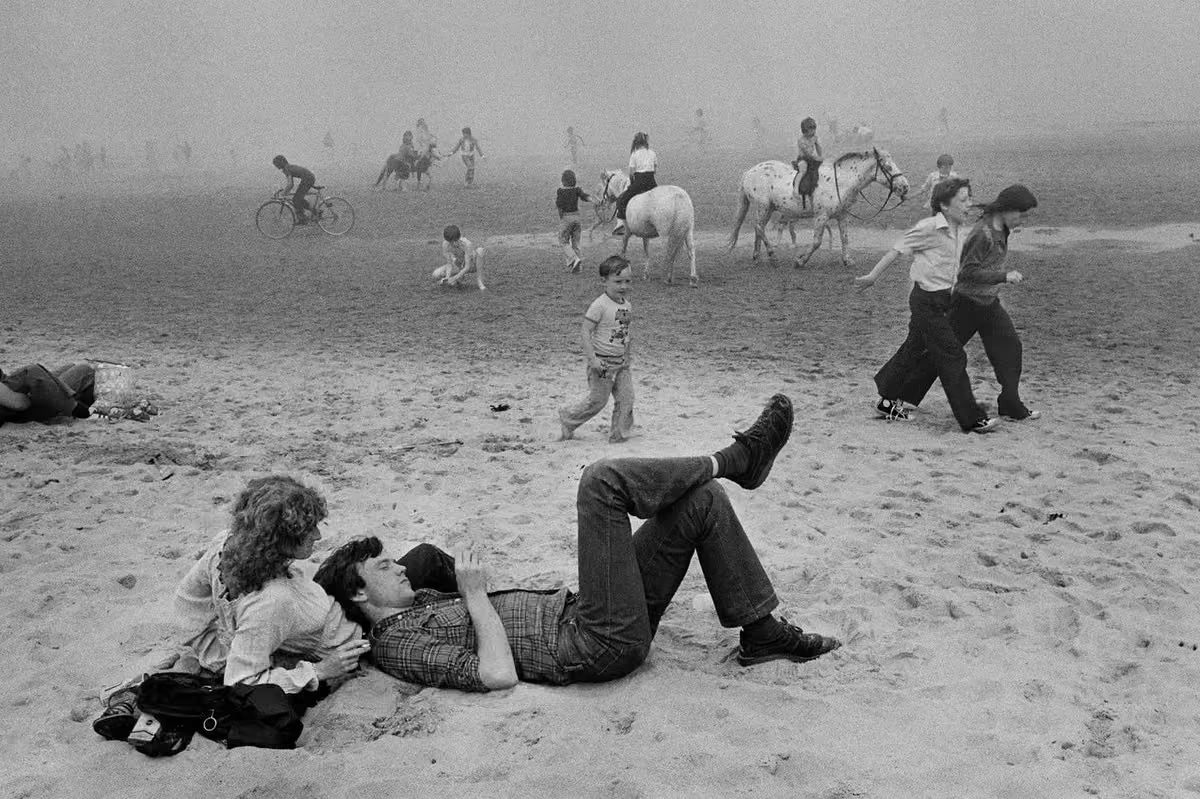
Hanif Kureishi reposted
 Simon Prosser
@HamishH1931
‘Writing, theatre, acting and music are really what we’re good at in this country. That’s our reason to be optimistic’ — HANIF KUREISHI in Guardian today — www.theguardian.com/stage/2024/apr/17/tetraplegic-hanif-k…
Hanif Kureishi
@Hanifkureishi
THE HOSPITAL OF ACCIDENTS
(a piece I wrote in October while in rehab)
The world was always a dangerous place. This ward of the hospital is full of people who have had accidents. There are none, so far as I know, with degenerative diseases like MS.
Hanif Kureishi
@Hanifkureishi
The world is a killing machine – the simplest move could turn out to be fatal.
Hanif Kureishi
@Hanifkureishi
This time last year, in October, three months before my accident, I was a happy-go-lucky, innocent person, swinging about the world, enjoying myself, and complaining cheerfully.
Hanif Kureishi
@Hanifkureishi
But I don’t believe my friend who stood on the chair to water her plants was unconsciously trying to have her show cancelled – however I may be wrong about that.
Hanif Kureishi
@Hanifkureishi
The kind of accident I am talking about does not involve unconscious intention; not the slightest bit of it. And that is the problem with accidents – sometimes they are really just that: random, inexplicable mishaps. There is no accounting for them. No one to blame.
Hanif Kureishi
@Hanifkureishi
Dear Readers,
I’m sorry, I’ve been locked out of Twitter for some time. I’ve continued to write, publishing on Substack (link below) and will be posting some of my missing dispatches in the coming days.
hanifkureishi.substack.com
Hanif Kureishi
@Hanifkureishi
I’m doing better physically, and have been cheered by the Royal Shakespeare Company’s production of my novel The Buddha of Suburbia, which opens tonight at the Swan theatre in Stratford. Promises to be a raucous and lively evening. Directed by the great Emma Rice. See you there!
Hanif Kureishi
@Hanifkureishi
A FAMILY ON LOVE RELAY
My last few blogs, I’ve been told, have been gloomy, if not outright sad. But from the start, I have tried to keep this journal as honest as I can, writing down exactly how I feel. When I first began to write, as a disturbed and semi-delinquent teenager, I believed there were people outside of my bedroom and the suburbs – at least one person – who would recognise or understand me.
There is something of that, I think, in what I’m trying to do with this blog. It is partly a diary, written for myself, but as my son Carlo likes to remind me, this journal has gained a considerable audience; people look forward to reading it, and seem to appreciate it. That has certainly surprised me, since being new to Substack and Twitter, I had no idea whether there would be a readership or not. Now, something has happened between writer and reader, and it is beautiful and ongoing. Carlo adds that nurses and people with lifelong ailments all over the world – from Nigeria to Lewisham – seek solace in my ramblings; they follow them intently and write me long letters every week, urging me on, talking with one another. A real community has formed.
My school friend David, who contributed a wonderful piece of writing about his family to the blog – a reply to my piece entitled A HeartThrob and Cool Kid - advised me that I should develop the characterisation of the people I am surrounded by, my family and friends. I told him I was nervous about including family members, since I don’t want to inadvertently irritate or expose them. But on the other hand, they are part of this story, and this trauma has ripped their lives apart too; something that they will have to live with in their own way, as well as they can.
Isabella has gone to Rome to see her family and to work, and the boys and Tracey have been looking after me. Tracey puts me to bed most nights, and we have the opportunity to sit and talk, as we haven’t been able to in years, renewing our relationship. My friendship with the boys has also been altered and matured in many ways; I would never have any reason to rely on them as I have had to since my accident. My demands on them have been profound, and they have responded commendably, almost without complaint.
Kier came in on Monday lunch time, bringing me the tuna and cucumber sandwich from Pret that I like, as well as some coffee. Then he then took me out for a walk by the river saying it was probably the last good day of the year. As always, we discussed his dating scene; his outings at the gym, the prospects of our beleaguered, beloved Manchester United, and how his mother was doing. It was a lot of fun to see him, before he took me to my physiotherapy session in the gym here at the hospital - and off he went to work, teaching piano and guitar to young children.
After, Sachin came bouncing in on his white cushioned trainers, and I was pleased to see he was in a good mood. He sat down next to my bed and we had a long discussion about his work as a writer; then we talked about my friends’ children and what they might or might not do if they were in the same position as my kids – would they visit a parent in hospital every day, or would they go missing? Does this sense of love and duty apply to everyone? Of course, it is not a question anyone can answer until it happens to them.
Then the discussion moved on to younger children, those in their early to mid-teens, and I asked Sachin - since he is closer in age to these kids - why he thought they were suffering so much in terms of what is now called ‘mental health’. Whether in fact they did suffer more from anxiety than previous generations. After all, I suffered from huge anxiety as a teenager, and indeed in my 20s and 30s, and it took a whole lot of therapy to remove some of that burden from my back.
Hanif Kureishi
@Hanifkureishi
Sachin said that it is no wonder that kids who spend hours of their day on TikTok and Instagram, viewing thousands of images and videos - their desires, fears and phobias reflected at them via the pernicious and addictive algorithm – were suffering mental exhaustion, if not collapse.
Sachin is now in his late 20s, and so grew up before social media became so all-consuming. “There was a time when social media was more about connecting with friends, before this age of over-stimulating, rabid image and video content, which can upset a young person’s mind.”
Sachin added that all of this is not at all like the scare that surrounded violent video games in the noughties, “This is much more pervasive and insidious. It’s not the blood and guts that we should be afraid of, but the repetitive image- bombing of better lives and fitter bodies.”
Then, we discussed how difficult it was to get started as a writer, and we tried to compare the beginning of his career with mine. I worked in the theatre, which he doesn’t do. And there were many more opportunities, since theatre is a much cheaper medium than television. But it is certainly tough for any young writer at the beginning of their career, if they don’t have much success to show for their early efforts. When you are a young writer, you never know for sure if you’re going to make it or not; whether in fact you will become a professional writer or just fade away, as so many others do, inevitably.
In the evening, Tracey came back, along with another friend who comes regularly, and she went to a local Indian to get me some tarka dhal, pilau rice and some papadams. I like to eat the same thing for every meal, three times a day, and it doesn’t bother me, as long as I don’t have to eat hospital food.
Tracey and I discuss her work, the dog, the kids, the state of the nation, the history of the locale where the hospital is located, and whether or not I will be moving to the new rehab facility next week. In fact, not long before I began writing this blog, Tracey rang to say that I will indeed be leaving here next Thursday for the long hoped-for rehab facility.
I am, as you can imagine, apprehensive about this move since it is in North London, about an hour away from where we all live. My stay there will not be open-ended. The staff there apparently try to prepare you for independent life in the outside world, to get you as well as they can before you return home.
You, dear reader, will be kept well-informed.
Your loving writer, Hanif.
XX
Hanif Kureishi
@Hanifkureishi
For more writing, please visit my Substack and consider becoming a subscriber. Let’s keep this show on the road.
hanifkureishi.substack.com/about
Hanif Kureishi
@Hanifkureishi
THE RELUCTANT DICTATOR
Mornings are the worst, if it could be said that there is indeed a worst in all this. The whole thing is terrible, though there are some pleasures, mostly to do with other people. But it is in the morning, when I wake up and begin to become conscious of myself, a bit like Gregor Samsa at the beginning of Kafka’s The Metamorphosis, that I realise that what happened to me is real.
Waking up, my body, after a night spent in one position, begins to shift. My first movement may well be a shudder, during which my whole body, briefly, goes into spasm, as if I have received an electric shock. I realise that my hands and feet are not really my own, that they seem to be injured, unfamiliar objects. I can’t move them as I expect to; it is like, what we call in common parlance, your body going to sleep.
A year ago, when I used to wake up, I’d gather up my legs, stick them out the side of the bed, stand up, and walk out of the bedroom and into the bathroom for my morning pee. During this pee, I would enjoy looking out of the window at my garden, and the gardens and houses across the way. Somehow, I still expect to be doing that, and I cannot come to terms with the fact that I will never do such an everyday thing again. It is a realisation that I cannot bear or take in. So, for me, waking up is like re-entering a horror movie that I had thought, for a moment, I could turn off.
I can do nothing for myself. I am entirely dependent on other people, and am waited on for everything I want. You might say this is a wonderful luxury, but I would like to be able, from time to time, to make myself a cup of tea. Everyone around me, family and friends, are always delighted to help me. But what I have learnt is that now I cannot be afraid to ask others for things, for them to make me a cup of tea, or for them to scratch the inside of my ear. I was more inhibited before; I wasn’t the asking kind, I wanted to believe that others might intuit my wishes. But if I ever thought that making a demand or asking for something might be a nuisance, I will never now be able to worry about this, since I cannot do anything for myself, when all I have left is speech.
I do often wonder whether others are tired of my demands, or whether I am treating them as though they were my servants. The other day my son Sachin, who often becomes annoyed with me, finding my condition particularly painful and arduous, said, “You are always asking for things, dad, and you never say please or thank you!” He was furious, as he so often is.
I was devastated because since I cannot use my arms or legs, all I can do is make demands, speech is my lifeline. I make sure these days that I ask for things in the nicest possible way, I have to seduce rather than attack. But I must confess that I do sometimes omit to say please or thank you, it is true, since otherwise I would be saying please and thank you all fucking day long.
There is no way round this: all my conversations with friends, family, nurses and doctors are transactional – what do I want them to do for me, what am I asking for this time. These demands do bring out the best in others; they pity me, they love me, they identify with me – after all, they could be me one day, then how would they feel, how would they behave?
What would it be like to be like me, they must wonder; a turtle, upturned on its back, waving its little arms and legs around helplessly, begging to be turned over. So, I have become a dictator, and a reluctant one at that. I am entirely dependent on the love and generosity of others, and I can only wonder, as I lie here vulnerably, whether I am pushing them too far. But I have no choice now. I have to ask for things, but I do not do it out of a sense of omnipotence, but out of weakness. If I am in a rage, as I often am, it is out of powerlessness.
The other day, I was with one of my sons; he left, and there was an interval of about ninety minutes before another family member joined me.
Hanif Kureishi
@Hanifkureishi
During those ninety minutes, when there was nothing good on the radio to listen to, I was alone here in the hospital, in my wheelchair, and I couldn’t even move. I could call for a nurse, but I didn’t want a nurse nor any abstract connection. I wanted - and I believed I could for a moment - to put my feet out of the bed, walk out of here, get the bus and stroll home. In a part of myself, I still believe that that is possible, since for ninety-nine percent of my life, I have been able to do just about what anyone else can do.
It's not even a year since I became a turtle on its back, and I am not really used to is, which is why every morning, when I wake up, as I explained previously, it strikes me again that I cannot do normal things, and probably never will. It makes me feel gloomy and depressed, it is something I will never understand; it is part of me, and yet is beyond me.
Hanif
Hanif Kureishi
@Hanifkureishi
For more writing, please visit my Substack and consider becoming a subscriber. Let’s keep this show on the road.
hanifkureishi.substack.com/about
Hanif Kureishi
@Hanifkureishi
MY BODY
“Let’s have a look at his penis,” said one of the doctors to the other. Both were young and elegant, and obviously clever. “Is that okay?” she said to me.
“Sure, go ahead, feel free,” I said. I almost added, “This is something I’ve waited a long time to hear.”
The doctor fumbled in the front of my Paul Smith pyjamas, opened them up, and reached into the mass of overgrown, grey pubic hair. At last, she found the mushroom and bent over to take a closer gander.
“No,” she said, after a momentous wait, “There is no discharge. It’s fine.”
What a relief, I thought; at last, one part of my body that isn’t either broken or malfunctioning. Still, I had no idea why she thought there might be a discharge from my penis, and I didn’t want to ask.
Before my accident, nobody ever touched me; of course, Isabella, from time to time, but otherwise no one. Now, I am turned, rolled, prodded and poked constantly, and when I say constantly, I mean constantly – every day and every night. I have had more strangers touch my body in the past month, then ever before in my life. I have become used to it. Instruments in my ears, fingers up my arse, wash pads around my genitals, under my arms and over my back, lights in my eyes. Everything everywhere, all the time. How did I go from being a private man to a public piece of meat?
Naturally, as I’ve said before, the nurses are kind; I am their work, I am their responsibility, and this is their vocation, one they have chosen to do, and one they are proud of doing. I see it in their faces and hear it in their voices; I am their patient and they want to do a good job.
It would be even more difficult to live this life if one were shy about being manhandled, if one had too much dignity, or fear being humiliated. I am already humiliated. It began a long time ago. There isn’t much further to fall. And I have to collaborate with the nurses, as they push and pull and roll me here and there. After all they are not humiliated as they insert a suppository and then watch me do a shit and say proudly, “My, that’s a big one” or “Today, it was only a moderate one, maybe tomorrow we’ll have more luck.”
I have to continue to be amused about this; there is nothing else for it, I am not stoical nor brave, I do nothing out of the ordinary, I am a victim of fate.
Hanif Kureishi
@Hanifkureishi
For more writing, please visit my Substack and consider becoming a subscriber. Let’s keep this show on the road.
hanifkureishi.substack.com/about
Hanif Kureishi
@Hanifkureishi
AN AFFRONT
Right at the beginning of one of my favourite plays, Chekhov’s The Seagull, the character of Medvedenko asks the maudlin Masha, “why do you always wear black?” She replies, “I’m in mourning for my life.” As far as I can remember, we never really find out what life exactly she is in mourning for, but it is a line that has resonated with me a lot lately, being in mourning for one’s life: it haunts me, as a piece of music can sometimes.
I once had a full and enjoyable life, and then one day I had an accident, and that life was over. But I didn’t quite die; I almost did. As I lay on my head in Rome, on a wooden floor in a pool of blood, with Isabella crouched down beside me, I felt death coming for me - I believed I had just a few breaths left, and I remember feeling enraged that I had to die in this ignoble way, when I was quite keen to carry on living, and there were plenty things I still wanted to do. It was an affront, I wasn’t ready, that was what annoyed me. I thought of my dear friend Roger Michelle, who was younger than me, who not long ago went to bed and failed to wake up in the morning.
I have continued to live in this crooked form while thinking about how I lived before and wondering whether I could ever get back to some semblance of it. There was literally a break, an accident, between the two parts of my life. In my mind, I’m still living in the first part, while in my body I’m living, unfortunately, in the second, broken measure.
Recently I had an MRI scan, and it seems that in the past I had some kind of mini stroke or strokes. Many people over fifty have these; they are very common, and there may be no symptoms. This mini stroke, as it is called, is not connected to my accident, but for me, it is an extra thing to worry about, since there is a danger I may have another stroke, hence I’m not so cheerful these days. The hospital tried to give me a test to ascertain whether my mental facilities are still all there. I glanced through the pages of the test - which were a series of questions, pictures and basic arithmetic – and it was so simple and childish I refused to participate. I haven’t yet lost my mind as I far as I know, though I am aware that I have less energy and my speech is slower.
One of things about Chekhov’s great plays, particularly Uncle Vanya and The Seagull, is that they concern friendship; his work is full of people just hanging around together, even if they haven’t chosen each other, and don’t like one another so much.
During lockdown I wrote a play, The Spank , which concerns two middle-aged male friends falling out over a relatively minor incident which strains, tests and then ruins the friendship.
The play was performed in Italy, toured all over, and was successful. In the introduction to the published edition, I wrote an essay about friendship in which I talked about how a bond is tested, taken to its limit, and finally broken. Now, in my situation, relationships are tested in new ways.
I have been living in the hospital since Boxing Day, which is an unusual situation. Most people will be in hospital at some point in their lives, but it is uncommon for a patient to live in one as I have been doing, for months on end.
This has not only been a test for me, but also a test of the devotion and loyalty of my friends. I like to be visited; I lie in my bed in a state of rage and distress while my friends chatter around me. They bring stories, gossip, complaints and other distractions. Sometimes I’m excited and amused, and other times I am bored.
But it is something I desperately need, it connects me to the world. I have learned that a hospital ward is an ecosystem in itself: the nurses, physiotherapists, doctors, patients and visitors are all connected, they come and go, it is a network full of pleasures and conflicts. One day last December, I was moved from the real world into this soap opera, where I have existed ever since.
Hanif Kureishi
@Hanifkureishi
I experience it as a torture and punishment; I feel it as dismemberment. How it exists in my mind is a horror, I have to be reminded by my friends of its reality, and the possibility of some kind of recovery, and even a future.
Carlo wanted me to add that yesterday I picked up small bottle with my left hand, although I couldn’t grip it for long. He also wanted me to say that this morning I stood up on a hoist for about fifteen minutes, and even used my knees to squeeze up and support myself. It is amazing how difficult it is to walk, if you can’t do it.
What an incredible about of muscular activity goes into walking across a pub, for instance, and ordering pint of Guinness. It is certainly not something I am capable of doing, and I wonder if it something I will ever doing again. It seems like such an achievement when you are on the other side.
Hanif Kureishi
@Hanifkureishi
For more writing, please visit my Substack and consider becoming a subscriber. Let’s keep this show on the road.
hanifkureishi.substack.com/about
Hanif Kureishi
@Hanifkureishi
A STRANGE CARAVAN
“We’re not very good with groups, are we Hanif?” Said the physiotherapist.
There were a few of us, four in wheelchairs, and two walking, accompanied by three physiotherapists for a café visit. One of the women in a wheelchair was weeping silently. Another was dribbling, and the other said nothing. Of the two men walking, one could only say a few words in a foreign language, which he repeated constantly, along with what sounded like bird chirping noises. Sometimes at night this man walks into my room and starts talking at me. It is a startling, if not frightening thing. Probably my radio is too loud, and before I turn it down, and even after, he just stares at me. I don’t know what to do until he walks away and closes his door.
This strange caravan tumbled towards the river, near the Arts Centre where I worked at the end of the 70s and early 80s, a place that I considered to be my real university, and where I learned about theatre, dance and literature, and spent time amongst writers, directors, actors and producers.
One of the physiotherapists said to me, “have we been here before Hanif?” I didn’t know what to say or where to begin. So of course I felt melancholic being there, by the river again, in this spot where I had spent so much of my life, looking at this view and trying to become an artist.
A year ago, I couldn’t begin to conceive what a hell my life would become. I could never have imagined it. So it wouldn’t be unnatural for me to wonder, as I sat by the river, what the fuck I was doing here, and whether I would ever escape. These moving people were sad to be amongst, and I was one of them now, falling forward in my chair, with my head drooping on my shoulders; it felt too heavy to hold up. Was this really me, I kept thinking, was this reality? But it was. I am still living in the hospital, and there is no prospect of me going home anytime soon. I am waiting in kind of limbo before I go to the new rehab.
Carlo sits here in my room with me wearing his baseball cap, T-shirt, shorts and trainers. He is so beautiful, brown and young. I lean forward in my wheelchair dictating these notes to him, watching the planes cross the sky. I can feel myself becoming increasingly impatient and short-tempered. It is such agony to be me at the moment. I want to punish those around me, while knowing that no one can be blamed for putting me in this situation. I had an accident, that’s all, a random contingent event, which had no connection to logical meaning, which is why it is so difficult to understand.
I see a lot of friends, more people in here than I saw when I was well. I was a more solitary person before, and certainly more cheerful and satisfied. Here in my bed, in the evenings, I am happy to greet friends and Isabella offers them chocolates.
These talks are convivial and sustaining, there isn’t a single person, though, among my friends who is not depressed about the state of our country. All unanimously seem to think that our city, along with the rest of the country, is going down the toilet, that there is so much inequality, underfunding, and failure, that there is nothing to look forward to politically or socially. I am by nature a pessimist, and I am too cautious to think the things in Britain might improve. But that is just me, not all my friends are necessarily pessimists, but when it comes to the state of the country, and what has happened to Britain after Brexit and thirteen years of Tory rule, all are despondent and disillusioned.
Hanif Kureishi
@Hanifkureishi
We would all like to see a Labour government after the next election, as I am sure many people in the country would. But I don’t know anyone who is particularly enthusiastic about Keir Starmer and the prospects of a British renaissance. The place seems to be shabby and falling apart, and the problems are so intractable, there is little hope. I write this as a question rather than as a statement, wondering whether there is any optimism out there, and whether the tiny demographic of me and my friends, is the exception rather than the rule.
Hanif Kureishi
@Hanifkureishi
For more writing, please visit my Substack and consider becoming a subscriber. Let’s keep this show on the road.
hanifkureishi.substack.com/about
Hanif Kureishi
@Hanifkureishi
IN ANSWER TO YOUR QUESTIONS
CAROLYN STACK
Have you had to make an adjustment to how you find your voice since your tragic accident? How do you find your way to those times when your creative voice is alive?
HANIF
Dear Carolyn,
Since I can no longer use my hands, which is probably the worst thing about this accident, I cannot use my beloved pens and ink. I used to love getting up first thing in the morning, making coffee, going to my desk, and starting to make notes with my various pens.
Since my accident, I haven’t been able to get back to my study, which is on the first floor of my house. I miss it terribly. I was a bit of pen queen. I no longer write fiction, and nor do I have the desire to make up stories. Although I do keep this blog, which some of you read, and I can reply to letters like yours.
I am presently in my hospital room, writing this letter to you as I write my blogs, which is dictated directly to my son Carlo, or other members of my family, and it is a form of direct writing, one which I’ve never used before.
Previously, I would love to revise; I would start with a small idea and make it bigger, with a gradual accumulation, a thought at a time. Now that that is no longer possible, I speak it in one go, and hope for the best. This seems to work. I have reached a large audience, and I am thrilled by the work Carlo and other members of my family have done in enabling me to continue to be a writer. It is the only creative thing I can do, and it is a wonder.
AMY JO MINETT
How has poetry influenced your writing? Are there particular poets who move you?
HANIF
Dear Amy,
I’m sorry I don’t read as much poetry as I think I should. My old publisher Faber and Faber used to send me a lot of poetry books which I would keep around me in my study. When I was bored, I would pick up one or another of them at random, read a few pages here and there, and would inevitably feel inspired to continue on with what I was working at. So I do have some contact with poetry.
There is an American writer called Fred Siedel whose work I much admire, because he makes me laugh. He writes a lot about motorcycles and sex, and I would read him anytime. I have written in most forms – short stories, essays, novels, films, plays – but never poetry. I would not know where to begin.
All best, Hanif.
JK2
How do you make sure to produce your own work in equal or greater measure of time spent? Any tips on ignoring the noise when necessary and picking up the pen?
HANIF
Dear JK2,
You’re right, the world is full of noise, some of it good, a lot of it bad. I have always loved the arts and continue to seek out movies, plays, novels, art exhibitions, anything that fascinates me. When I was younger, I was more easily influenceable than I am today. There are writers whose voices I couldn’t get out of my head, whom I managed to integrate into my final style, which is this. Luckily for me, when I write, it comes out like this; this is me, this is Hanif, I don’t think I sound like anyone else, and I don’t want to. I admit it is difficult not to be overinfluenced by others voices, but if you allow that to happen, you’ll never have a voice of your own, and the reader will pick up on it, and smell your inauthenticity.
Yours sincerely, Hanif.
Hanif Kureishi
@Hanifkureishi
NINA TREE
In your opinion how does one go about the getting short stories in front of readers? What do you feel about Substack as a place? Further thoughts and advice?
HANIF
Dear Nina,
One of the biggest problems for any young writer is how to get their work in front of an audience. For some people, it may take a very long time, since not only is it a matter of talent, but of access. In other words, one has to persuade someone else to like and promote one’s work.
I have found that Substack enables one to publish immediately. It is a fabulous facility. I can write this letter to you, my son Carlo can type it out, and fifteen minutes later it is published. There are no publishers, editors and other intermediaries involved. It is absolutely direct. Whether one reaches a wide audience or not is another questions. But this instant access provides a fantastic opportunity for young writers to at least begin to reach a wide audience.
All the best Hanif.
EDWARD BUCKBEE
Chuck Close, big-time painter, was paralyzed at 48. He remained prolific for another 33 yrs, adapting his process and with help. His greatest work, maybe. Wondering about you and dictation, for the time being, as your recovery continues. How does it limit? (Might be obvious, maybe not.) What does it make new? Any surprises?
HANIF
Dear Edward, thanks for that. I am aware of Chuck Close and his work. You cannot have an accident like mine without it affecting your work. As soon as I had my accident I began dictating this blog to Isabella, and at that moment, my life and work changed.
We are all of us in constant development, we are never the same as we were yesterday. All the time we are changing, there is no going back, but my work has taken a zig where previously it zagged, and that is because my whole view of the world has been smashed and remade by this terrible accident. It has changed, and there is nothing I can do about it. Lets see what happens, and how my imagination continues to develop.
Hanif
Hanif Kureishi
@Hanifkureishi
If you want to ask me anything, head over to my Substack, become a subscriber, and write your questions in the comments.
hanifkureishi.substack.com/p/in-answer-to-your-questions
Hanif Kureishi
@Hanifkureishi
At the deepest level people are madder than they want to believe. You will find that they fear being eaten, and are alarmed by their desire to devour others.
Hanif Kureishi reposted
Hanif Kureishi
@Hanifkureishi
SEX NOT
In hospital, one of things that is never mentioned, and there really is no reason for it to be, is sex. There are no jokes, double entendres, or exchanged looks. The place is antiseptic in all senses.
Of the many losses I have suffered due to this accident and injury, sexual feeling might be the least of it. A friend of mine who had prostate cancer, and after his recovery could never have sex again, said, ‘Thank God I’m alive, and everyday I’m glad to be. That’s enough.’
Losing one’s sexuality overnight, in a sudden blow, is like losing a sense. Something that has guided and activated one throughout one’s life is unexpectedly missing.
To have no erections, to feel no sexual excitement nor have any fantasies, is to be deprived of an orientating engine that has steered, bedevilled and pursued one since adolescence. It is a major absence, and a puzzling one. I now look at sexuality from another point of view, that of a disinterested spectator.
I wonder what all the fuss is about, and why people are risking their reputations for the sake of what seems to me now to be an unimportant, if not minor, excitement. It doesn’t follow that I feel no enthusiasm anymore; I do, just not for that. I wonder where it has gone.
For me now, trying to understand sexuality is a bit like attempting to grasp the strange fetishes of others: if someone has a wild passion for hats, donkeys or umbrellas, this may seem inexplicable to the on-looker.
Yet we know that many people do have these passions, and that they are incurable, lifelong and whole societies are often unconsciously structured around them. To me, all sexuality now feels like this, foreign, almost alien.
Many of my stories, films and novels have been ordered around the bewitching mischief of sexuality; its play and performance, of people desiring other people’s bodies. Sexuality is also seemingly irrational compared to other motivating forces like money, vengeance and social aspiration.
It is a wonderful excuse for writers to add more than a dash of madness into their subjects. Some people really want sex, but they only want specific kinds of sex, and certain kinds of people, and they will give up a lot to get it, often even their lives.
But one can live without it, a lot of people do. And when one thinks of how little time one actually spends having sex - what a tiny proportion of one’s actual life is in fact devoted to it, compared to, say, watching television - it is amazing that so many stories are devoted to its mystery and power.
I am on the other side now, an observer, and I’m still curious and will continue to be, but I’ve lost something that was once important, and more than that, I’m even wondering why it was so important, and why it matters so much to so many.
I sit outside the hospital in my wheelchair looking at the strange creatures in their mad clothing or hospital gowns, with their tattoos or blue hair, with their lost limbs and mad aspect, and wonder what sort of sexuality governs them, or if it does at all.
There are plenty of people about, hundreds if not thousands of them, getting on and off buses, or cycling furiously up the road. Someone somewhere sometime must be having sex, since the world’s population continues to increase.
I have a friend who likes to have sex every day, or at least she did before she had children, and of course we all know people who appear not to have had sex for years, we wonder if they miss it, and if they masturbate at all - and if so, how often. I have another friend, same age is me, who is very attractive and always horny, and whose husband, due to an accident, has become unavailable.
It has been a difficult thing, but she has become reconciled to the hopelessness of the situation – she loves and respects him, and will live with it.
 Hanif Kureishi
@Hanifkureishi
SEX NOT
In hospital, one of things that is never mentioned, and there really is no reason for it to be, is sex. There are no jokes, double entendres, or exchanged looks. The place is antiseptic in all senses.
Of the many losses I have suffered due to this accident and injury, sexual feeling might be the least of it. A friend of mine who had prostate cancer, and after his recovery could never have sex again, said, ‘Thank God I’m alive, and everyday I’m glad to be. That’s enough.’
Losing one’s sexuality overnight, in a sudden blow, is like losing a sense. Something that has guided and activated one throughout one’s life is unexpectedly missing.
To have no erections, to feel no sexual excitement nor have any fantasies, is to be deprived of an orientating engine that has steered, bedevilled and pursued one since adolescence. It is a major absence, and a puzzling one. I now look at sexuality from another point of view, that of a disinterested spectator.
I wonder what all the fuss is about, and why people are risking their reputations for the sake of what seems to me now to be an unimportant, if not minor, excitement. It doesn’t follow that I feel no enthusiasm anymore; I do, just not for that. I wonder where it has gone.
For me now, trying to understand sexuality is a bit like attempting to grasp the strange fetishes of others: if someone has a wild passion for hats, donkeys or umbrellas, this may seem inexplicable to the on-looker.
Yet we know that many people do have these passions, and that they are incurable, lifelong and whole societies are often unconsciously structured around them. To me, all sexuality now feels like this, foreign, almost alien.
Many of my stories, films and novels have been ordered around the bewitching mischief of sexuality; its play and performance, of people desiring other people’s bodies. Sexuality is also seemingly irrational compared to other motivating forces like money, vengeance and social aspiration.
It is a wonderful excuse for writers to add more than a dash of madness into their subjects. Some people really want sex, but they only want specific kinds of sex, and certain kinds of people, and they will give up a lot to get it, often even their lives.
But one can live without it, a lot of people do. And when one thinks of how little time one actually spends having sex - what a tiny proportion of one’s actual life is in fact devoted to it, compared to, say, watching television - it is amazing that so many stories are devoted to its mystery and power.
I am on the other side now, an observer, and I’m still curious and will continue to be, but I’ve lost something that was once important, and more than that, I’m even wondering why it was so important, and why it matters so much to so many.
I sit outside the hospital in my wheelchair looking at the strange creatures in their mad clothing or hospital gowns, with their tattoos or blue hair, with their lost limbs and mad aspect, and wonder what sort of sexuality governs them, or if it does at all.
There are plenty of people about, hundreds if not thousands of them, getting on and off buses, or cycling furiously up the road. Someone somewhere sometime must be having sex, since the world’s population continues to increase.
I have a friend who likes to have sex every day, or at least she did before she had children, and of course we all know people who appear not to have had sex for years, we wonder if they miss it, and if they masturbate at all - and if so, how often. I have another friend, same age is me, who is very attractive and always horny, and whose husband, due to an accident, has become unavailable.
It has been a difficult thing, but she has become reconciled to the hopelessness of the situation – she loves and respects him, and will live with it.
Hanif Kureishi
@Hanifkureishi
Sex of course isn’t just genital. Who can say where it starts and where it ends? Think of kissing, caressing and enjoying the bodies of others; think of looking and speaking, whispering, and fantasising, all are forms of sexuality, spread everywhere and are present all the time.
These pleasures will never be denied me, but at the moment they do not have the same point or influence. If once sexual feeling was there very strongly, it is now gone; a strange lack, a sort of bafflement about what went on before and what it must have meant.
Hanif Kureishi
@Hanifkureishi
For more writing, please visit my Substack and consider becoming a subscriber. Let’s keep this show on the road.
hanifkureishi.substack.com/about
Hanif Kureishi
@Hanifkureishi
What a quality of innocence people have when they don’t expect to be harmed.
Hanif Kureishi
@Hanifkureishi
A VISIT HOME
A right-wing acquaintance - a man I have met just once before, during lockdown - comes to visit me. He says that the problem with Rishi Sunak is that his voice is too high. He’s not convincing as a leader. I say I can imagine him in a white coat, behind the counter of a pharmacy discussing haemorrhoid creams. My friend says the politicians with deeper voices do much better.
It is unfortunate for people of the left that Keir Starmer sounds robotic and mindless, as if he were reading from a menu. My friend says that men with deep voices make for the best seducers. He adds that David Beckham’s voice undermines his masculinity, which is still considerable.
As I try to fall asleep later, waking up approximately every twenty minutes, wondering if the clock has stopped, I consider all of this. The actor Brian Blessed, known for his booming voice, must be quids in, a master of the universe.
My family and I have been planning a brief trip home this weekend. But the clinical nurse is adamant that a physiotherapist should visit my home before I do, to ensure, as he puts it, that the place is “safe” for me and my wheelchair. I wonder if this guy really has the right to tell me where I can and can’t go, after all I am not in prison, I haven’t been kidnapped.
The following morning I’m in my wheelchair and Isabella pushes me out of the hospital and across the road to the bus stop. Almost straight away a bus comes, its ramp slides out I’m shoved on. Ten minutes later I am on the Shepherd’s Bush road where Tracey and the dog Cairo meet me. This is the first time I’ve seen Cairo since my accident. He is quite big and bouncy, and I wonder if he recognises me; after all he loves everyone.
Together we walk down the familiar street towards my house. It has been eight months since I’ve been here. I didn’t want to become too upset, and so I tried imagine I’d been away on a long holiday. Isabella and Tracey push me into my house and Carlo joins us. Thankfully the place is the same, except that I am at a lower angle; I can’t get an overview as I could before. The chair is uncomfortable, and I know I won’t be able to stay long before I have to go back to bed in the hospital. I am glad Isabella has been living here, although she has allowed the garden to become overgrown. In another life I would be out there with a machete, but she loves it this way, where she entertains foxes, birds and squirrels.
We have lunch and sit together with the dog. I wish I could go upstairs and see my study again, and the bedroom, but that is impossible. We wonder what adjustments will need to be made to the house, for it to become habitable again by me.
On Sunday Isabella and Kier push me to the Thames, near Hammersmith Bridge, and we walk along the riverside path, up to the back of the River Cafe. I’ve lived in this area, around West Kensington and Barons Court, since I was a student in 1976 and have cycled this way scores of times. Kier says he remembers long rides with me as a kid, and Isabella and I used to walk the dog along the river path.
The dog was more of a menace then, and loved to take a dive into the Thames, and it was always a lot of trouble to persuade him to come out, covered in thick mud. In fact he was a menace all round. One time, while charging across Ravenscourt park, he tore a woman’s hijab from her head and ran off with it in his teeth; another time he stole a blind man’s cane. He still steals the balls of other dogs and can cause mayhem during picnic season.
I’ve started to have very long, lurid and convoluted dreams. They are like novellas. A friend suggests this may be a side effect of the antidepressants I’m taking.
The other night I woke up in a cold sweat yelling my head off, dreaming I was being swallowed by a snake, and a worried nurse came into my room and started asking me questions which would assure her that I hadn’t lost my mind: where was I? What was my name? and who was the Prime Minister?
 Hanif Kureishi
@Hanifkureishi
I can tell you, I had to think.
My analyst will be pleased with the dreaming, but not with antidepressants, which he is against. A psychiatrist who visited me here said rather sarcastically, “psychoanalysts understand nothing about drugs”.
I’m sure there are many psychoanalysts who would say that psychiatrists know little about minds. At present I am engaged in a minor struggle with a night nurse who is very officious. He’s fond of the rules and he has told me that he must wake me up at six in the morning to wash and dress me.
I’ve told him several times that I should be washed and dressed at nine am according to my schedule, which is on the wall, but he choose to ignore this and won’t look at it. He also claims that it says on my medical schedule, which he has on the mobile computer, that he should digitally evacuate my arse, in order to help cure my constipation.
He waves his finger about threateningly as an illustration. I told him that I don’t want any of his fingers anyway near my arse, but he insists this is a medical necessity.
These little battles between nurses and patients, and about who has authority over whom, go on all the time.
Some nurses hate to be contradicted; after all, they have experience and knowledge. On the other hand, the patient knows their own body and, if you’ve been in a hospital like me, for months on end, you get to know which nurses know what they are doing. Some lack confidence, and others just like to push you around, so you know who is in charge.
And if you spend twenty-four hours a day under the care of nurses, you soon figure out each of their characters. I wonder if I had a deeper voice, I might be taken more seriously in here.
Hanif Kureishi
@Hanifkureishi
Dear Readers,
Please head over to my Substack for more writing, and consider becoming a subscriber. Link below.
hanifkureishi.substack.com/about
Hanif Kureishi
@Hanifkureishi
THE PHOTOGRAPH
An old friend of mine came in to my hospital room with an envelope of photographs. He pulled one out, it was of me, taken in Cork in or around 1993. I am at a book signing, handing a paperback copy of my first novel, The Buddha of Suburbia, to someone. I am wearing a Levis jacket and a Paul Smith scarf, which I still have. My hair is long and black and tucked behind my ears. The light is on my face, which is smooth and pixie-like. I guess I am in my late thirties.
My friend pins the photograph to the wall opposite me without asking. I am not sure I want it there. But there is it, I am looking at it now. People come in and they say, in amazement, “is that you?” Now I am gaunt and unshaven with straggly hair, and, like all of us, barely resemble the person I once was. The picture reminds me, of course, of all that I have lost and I wonder if it is good for me to have it there.
I am mainly in bed at the moment rather than my wheelchair, since I have a huge pain, as I mentioned before, in my arse, due to a fissure which the clinical nurse identified after looking up there with a torch and a camera. I am taking liquid morphine to alleviate it, I’m trying to find a position that is less painful than others. When you are in pain, all you can think about is that pain; it is insistent, it doesn’t want you to forget about it. The whole thing is depressing as hell. I stare at this picture and realise there is no going back. The kids come in and say that all of this, what I’m going through now, my suffering, is only temporary - that is a good reminder.
This morning, in the unit’s kitchen, I took part in a physical therapy group with four other patients. Since I am in a single side room, I rarely see the other patients, and I certainly don’t spend time with them. We gathered around the table, playing with blocks and children’s toys. One of the women was young, around thirty, and was stunningly beautiful, looking like the young Jackie Kennedy. She could barely speak or use her hands.
The physiotherapists were all very cheerful, often exaggeratedly so, speaking to us slowly and with a forced brightness, as if they are presenting a children’s programme. In contrast, the patients looked dazed, as if they couldn’t believe their misfortune. Their sadness was palpable. I was glad to be with them, though none of us spoke to each other. The woman who looks like Jackie Kennedy inexplicably started to weep and had to be taken out by a physiotherapist.
 Hanif Kureishi
@Hanifkureishi
My son Sachin comes in and I reproach him for being late. My family and close friends are on a relay system so that I am never alone during the day. But sometimes there are gaps, which I do not enjoy, since I have dreadful thoughts when I’m alone. While my son Sachin feeds me, he says, “I hope we’re not going to have to do this for the rest of your life.” I look at my withered hands, which are not improving after much physiotherapy, and say “I think you are.”
(A note from Carlo, who is typing this: Dad is making improvements, his legs are much stronger and the physiotherapist has advised us that his arms will come back later, when he has gained strength in his core and shoulders. Dad is gloomy, he has every right to be, but the doctors and physios are much more optimistic than he is).
My two eldest sons, the twins, have become screenwriters. Seven years ago, when Carlo went backpacking in South America, Sachin and I wrote a movie called The Driver, about a Syrian refugee who goes to work for a rich rock star, and ends up looking after his difficult, spoilt and ungrateful son. It kept almost getting made, both as a movie and a TV show, and Sachin decided he wanted to become a writer. Not long after, his identical twin brother Carlo also decided he wanted to do that a living.
The three of us, in various combinations, used to walk every afternoon around west London, talking about stories, structure, and how to succeed in the industry. We would start with an idea or an image, and we would string it out, develop it, until it began to look like a whole idea. It was fun and satisfying to do, and we enjoyed being together.
I guess I was doing with them what my father did with me, which is talk to them about writing. My father wanted me to be a writer, but I was never sure whether it was right for the boys since the industry is so difficult these days. But that is what they decided they wanted to do.
They are indeed finding the industry a struggle, and it is difficult for them to get things made. I am glad not to be a young writer now, particularly with the strike going on, and I am thankful to be able to write through Substack. I never wanted to be only a screenwriter, what I liked was the freedom to work in a number of forms.
When I got stuck on a movie, I would write a short story, then I would work on an essay or a novella. To be a screenwriter is to be entirely dependent on the industry, on others. When I wrote films, they were usually for particular directors, Stephen Frears, Udayan Prasade (My Son the Fanatic, a film I am proud of) and my old late friend Roger Michel. I could write these films on spec, but knowing they would almost certainly get made, because the directors and producers could raise the money. It wouldn’t turn out to be wasted time, as so much screenwriting is these days.
I was lucky I was able to make a living my whole life, but it was, at times, a bit touch and go. There were periods in the 80s when it was possible to make a lot of money from writing novels, and I was able to buy a house. I’m not sure my kids will have the same security, and I worry about them. A lot of my friend’s kids have gone into the same profession as they were in themselves. I was glad my sons had found something they wanted to do with their lives, something meaningful, which gave them a sense of direction and purpose. Lying in this hospital bed, day in and day out, must be like being in a bad job. I am happy they are doing something they love, which gives them freedom.
Hanif Kureishi
@Hanifkureishi
 Hanif Kureishi
@Hanifkureishi
A HAIRCUT AND A SHAVE
Sachin takes me out of the hospital and into the filthy street, clogged with traffic. Outside, in my wheelchair, I feel frail and vulnerable. People are literally looking down on me. I cannot believe that they don’t know what is it like to wake up and find that you cannot use your hands; what that is like, what an ending that is.
I’m pushed into the barber shop where a friendly Syrian gives me a shave and a haircut. Im shocked by my appearance, I look thin if not emaciated. My eyes and nose are bigger than before. But I have been successfully shitting after taking a barrage of laxatives and my appetite has returned. I had a halloumi sandwich for lunch, which is more than I’ve eaten since I’ve come back from Italy. I feel warmer. Things are looking up.
Isabella, as I told you last time, said I should not only talk about my miseries. She was getting too many concerned texts from people. But there was not much else to say. I’ve now been in this new hospital, on the neurological ward, for a week and even I have to admit that it is certainly an improvement on the last place. It’s quieter. There are no half-naked demented people crawling along the floor, dragging their piss bags, howling and trying to escape the ward. It is much more relaxed, though I’m not sleeping better. I am tired for most of the day, but outrageously, I start to wake up around eleven O’clock, while listening to Martin Amis’s superb Money as an audiobook. I’m awake until about one, and then I fall asleep, afraid of my dreams. If it’s bad enough living in a hospital, I don’t want to have nightmares on top of everything else.
My friends visit me most days, some of them come early, others come late, and some just walk in at random times. Sometimes there are four people in this little room at once, people who in other circumstances wouldn’t meet. Carlo says my life is not so banal, since he considers my friends to be interesting; writers, intellectuals, artists, journalists, directors, TV people, and so on. The liberal elite are in an out, crossing over with one another in this squalid little room, leaning against the wall, trying to find a chair, sitting on the edge of the bed, eating chocolate, and talking either about Barbie or Oppenheimer (Barbie easily being preferred to Oppenheimer). The rest of the conversations are about books read recently, holidays and the failure of the Tory government - how bleak and uninteresting everyone finds Keir Starmer. Apparently I’ve got quite a party going on here, but since I refuse to be cheered up, I can only vaguely enjoy it.
I prefer it if Carlo is here when other people come, since he can do the heavy lifting in the conversation. He has plenty to say; he likes to talk. Until today, when I started to eat again, I’ve been too weak to say much. It costs me a lot to speak. But I can feel some of my strength returning now. I don’t know if that is better or worse. What I want to do is start going home since I live only fifteen minutes from the hospital. I haven’t seen my house since the Christmas holidays. I could do a sort of day release.
Holidays are the topic I hate most, since people say things like; ‘I’m away now, off to Tuscany for two weeks, but I’ll be in to see you as soon as I get back’. Think how many nights that is I will have to get through. They assume I’ll still be sitting in this drab, bleak little room in my nappie, and they will be right. Im going nowhere. No wonder I feel like shit.
 Hanif Kureishi
@Hanifkureishi
Late at night, around ten thirty, the nurses come in, turn the big lights on and give me my medication. They usually check to see if I’ve had a shit, and if I have, they clean me up and change me. Unlike you, I’m handled and turned and washed by complete strangers every night. It is no longer humiliating. I have no dignity left. What bothers me is being among strangers, the nurses know one another and often chat as they work on me. They are kind and professional. But they change around a lot and I cant get to know them.
It is strange to me, someone who has spent their life doing exactly what they want, to now be in this straight jacket, to have no agency or independence. To be helpless and powerless.
Hanif xx
Hanif Kureishi
@Hanifkureishi
Dear Readers,
Please head over to my Substack for more writing. Link below.
hanifkureishi.substack.com/p/on-writing-the-buddha-of-sub…
Hanif Kureishi
@Hanifkureishi
A PAIN IN THE ARSE
Isabella suggested that I shouldn’t write a blog if it was going be too miserable and morbid. But this is how it is.
I left the previous hospital a few days ago. It was such a relief. It was a general hospital and a mad house. I might have said already that I was on a dementia and stroke ward which was noisy if not tragic.
I was taken in an ambulance to a hospital fifteen minutes down the road, to a new neurological ward, where they are used to patients like me with spinal injuries.
The room is small, grey and grim. There’s a TV on the wall opposite me which doesn’t work, despite Sachin’s efforts. The view to my left is of the sky and every two minutes a plane passes across the window, on it’s way to Heathrow. I think of the passengers packing up their things and getting ready to disembark. I wonder if I’ll ever go on an airplane again.
I’m still weak and in low spirits. I’m trying to eat despite my nausea. The doctor ordered an abdominal X-ray which demonstrated that I’m full of shit and heavily constipated. A clinical nurse stuck his finger up my ass to try and dislodge some of it, which gave me a tremendous pain which lasted all night and prevented me from sleeping. People pay good money for that. Two of my visitors made the same joke.
I still speak to my analyst on the phone, after years of silences and dreams, we’ve become more intimate. I tell him how much I love him after so long. I wonder whether he’d come here to visit me. He tells me to eat despite my disgust, and seems to believe that I can find some living force within myself, that I will not want to give up, as I so often feel like doing.
I had a visitor here yesterday, a good friend, and we were gossiping away happily when a more or less stranger walked in.
I recognised her of course but I barely know her and had no idea what her name was. Luckily she introduced herself. She’s a woman I see in the supermarket and on Brook Green when I am walking my dog. I would usually chat to her a little bit. She found out from a film producer film friend of mine where I was. She went to the previous hospital and was redirected here. We talked about films and politics and not long after she left for a pilates class.
It was strange to be visited in such intimate surroundings, in my pyjamas, barely able to speak by someone I hardly know. The friend who was here was annoyed on my behalf and said she should have called or texted but I don’t think she has my number. I wondered whether she was being kind or just inquisitive. She didn’t ask me much about myself. I’m not a kind of show. I’m happy for any company, but wonder if I should be annoyed.
I’m pleased to be out of the last place but my spirits are at rock bottom. It is quiet here. At night it is dead silent. When it gets dark I listen to Radio 4 and take sleeping pills. I try not think about my misfortunes, but they are mounting up. More and more is going wrong with my body.
At each examination they find something new which makes me worry. I can’t help wondering if I’m ever going to get out of this, or whether I’m going to die here. Sometimes I think about killing myself, by some kind of overdose. I wonder if it would be a relief. As I said to my friend David the other night, I feel I have been picked on and bullied, that somehow, someone has made a mistake and got the wrong person, that this is an injustice, and that someone will recognise that I have been hard done by, that this farce will end and will I return to my normal state.
But on the other hand I realise that this is not a mistake, that this is reality; that this has happened to me.
I have gone through the door and can never return. This is my fate. But at least I’m alive, even though I’m stuck in this small grey room, desperate to not be left alone. Frightened. Injured.
Your loving writer Hanif.
xx
Hanif Kureishi
@Hanifkureishi
A SMALL UPDATE
Numerous petty disputes with one of the head nurses about whether I can or cannot have the door to my room left open. I have claustrophobia and hate to feel trapped. She claims that I must keep it closed. It’s difficult for me to argue with her since I feel nauseous all the time and now very weak. I can only eat fruit and yoghourt. I have been nauseous since I arrived back in London which is a month now. I am feeling increasingly despairing and doctors have failed to solve it, I think it’s the mixtures of meds I’m on. I feel odd in my body since my temperature control appears to have broken. I try to force myself to eat but it’s difficult and the food tastes like cardboard. The only relief is the visits of my friends and family. Otherwise I feel like a prisoner here in a totally alien environment. There is a discharge from my wound where I had my catheter operation and there may be an infection. I am waiting to find out. No good news this time except that I may be moving on in the next few days where there is a better neurological facility.
Sachin, my son, says I should note that interesting people have come to visit me and have had conversations amongst themselves about politics, food, sexuality, hospitals and various other subjects that are worth listening to. But I struggle to engage. However, I love to hear the voices and their enjoyment as they bring little pieces of the outside world into this room. Sachin thinks I will look back on this as an interesting time but at the moment it doesn’t feel like that at all. He says that perhaps it’s only when one looks back on their suffering do they find some meaning in it.
Your loving writer Hanif
xx
Hanif Kureishi reposted
 Cathy Newman
@cathynewman
Tonight, in his first TV interview since his devastating accident, author @Hanifkureishi briefly escapes from hospital to tell me on @Channel4News about life, death, writing and dreaming of returning home. Do tune in at 7. It’s tragic, comic and wonderfully human.
 Hanif Kureishi
@Hanifkureishi
DESOLATION ROW
I don’t know if this has ever happened to you. But it has certainly happened to me. I have entirely lost my appetite. I cannot eat more than two or three mouthfuls of melon, or of pain aux raisins. Sometimes I have some chocolate or a protein drink and all day a little bit of water. But otherwise my appetite is dead.
I have felt nauseous most of the time and have vomited. When I see my sons tucking into a massive salmon and cream cheese sandwich I am shocked by how much they manage to consume. Friends bring me the most delicious food they can think of to try and tempt me, but there is not a particular taste I am looking for. All food repulses me. But because I have been living in a hospital since Christmas, it wouldn’t be surprising that I have become disillusioned, and no longer read the papers or watch the news.
I have no desire to watch movies or comedy shows. In the evenings, before Isabella leaves me, she always reads to me from my friend David of Bromley’s blog, and then several delicious pages from Elton John’s autobiography, which always cheers me up before the long fear and desolation of the night, that I have to go through alone. It isn’t surprising, since I am so depressed and ill, that my libido has died. At least one more discouraging thing.
I found out in Rome that the doctors there have been giving me a small amount of anti-depressant. I didn’t ask for them, and I didn’t particularly want them, but I discovered they were on my pharmaceutical agenda.
Here, in this new hospital, they have doubled the dose, since I didn’t much notice I was taking them anyway. Asking around my friends, it turns out that at least 50% of them have been, or currently are on, some kind of anti-depressants. Some have been running major institutions on them.
One friend has been taking them for twenty years, because he has reproachful thoughts after midnight, and has no intention of giving the meds up. Other friends have been off and on them for most of their lives. They all ask me what particular variety I am taking but I can never remember the name or pronounce it. I never wanted to take them since I have my own cure in psychoanalysis twice a week. One friend said “anti-depressants get you to the party and psychoanalysis enables you to enjoy the party once you get there”.
I avoided them because I didn’t want to mess with my brain, which I require in order to be a writer. But I am beyond that now. I am suffering more than I deserve.
I cannot believe that I have been living on a dementia ward for three weeks, because that is where they have been able to find a room for me. It is worse than a bad joke. The cries and howls are very disturbing. Previously I had led a lucky life; I had all the luck in the world. Now it has run down. I spend as much of the day as I can with friends. People are still keen to visit me. I have given up writing for conversation. I can no longer make things up for a living - it seems too artificial in the face of this absurdity - and I have to say that the conversation has been a lot of fun. I like listening to others. People’s generosity and kindness has overwhelmed me.
In circumstances like this you really find out who your friends are, and how loving people can be. I wish I had been kinder; and if I get another chance, I will be.
Hanif xx
Hanif Kureishi
@Hanifkureishi
CIRCUS CHAIR PARTS
We try to keep a rotation of visitors coming, from ten in the morning to nine at night, so that there is always somebody here with me. Isabella is here all day, but any visitor is welcome, since they provide distraction from my feeling of being trapped in this room in a busy west London hospital.
The ideal hospital visitor stays for at least one hour. And I like the self-absorbed ones, people who talk about themselves, bringing the outside world in. Since I can no longer bear to read the newspapers, watch television or listen to podcasts, other people are the only entertainment for me.
Sometimes guests do voices and imitations – anything to stop me thinking about all that I have lost and whether I will get any of it back again.
I am living in an unreal world, where I entirely depend on the kindness of friends. Some people come only once, to have a look at me and pay their respects. Others come back. Some people come everyday, they are my favourites.
Some stay too long, and others disappear too quickly to have their hair done. When they leave it’s upsetting, since I don’t know when I will see them again, and I fear there being a gap between people.
One visitor who is deafer than he likes to admit sits in more or less complete silence making me feel as morose as he is. Another guest is more miserable than I am, and I feel compelled to try and cheer him up.
My children come most days but usually only for a short time, and sometimes they are angry that I am ill. But I love hearing about their adventures. Sometimes I am so sullen that I can barely speak.
I have been here much longer than I thought I would be. The bureaucracy is maddening. The NHS doesn’t like to say yes to anything. Some of the doctors seem to enjoy bringing bad news, particularly regarding the hospital bug I have picked up.
When they touch me, the nurses wear full PPE garb. It is as if I am a toxic object for them, even though the bug is not easily contagious.
There are rules and protocols that have to be followed. A cheerful psychologist came to see me and I soon reduced her to helplessness. After all, my depressed condition is caused by my reality and not by anything imaginary or historical.
After a time, trying to be helpful, she suggested I get a personal assistant; and then she told me that when I get home I should get a dog. It might be able to pick up things for me, like my telephone. Since I already have a dog, and he tends to destroy things rather than fetch them, I wondered if her suggestion was as helpful as it might have been.
I am constantly nauseous, which I suspect is caused by constipation. The nurses are always asking whether I have opened my bowels.
I was considering writing a hospital novel called: “Have You Opened Your Bowels?” I’m sure it would be a hit. I can only open my bowels with the help of an enema, which I have twice a week, and I can only pee with the help of a catheter. Soon I will have a hole drilled into my pubic bone so that I can pee directly into a bag without urinating through my penis.
Once a day I go to the gym. The physiotherapists are cheerful and talk a lot. They try to get me moving. They stand me up. The best bit is that I can see the London skyline out of the window. On a cupboard to the right there is a sign saying “Circus Chair Parts and Crutches”.
The nights are the worst. I tend to fall asleep between nine and ten o’ clock and wake up around four, which is when I have terrible thoughts and loneliness. It is impossible to have company at that time and to turn off one’s mind. Sometimes if I’m lucky I can sleep through until seven, which means I have only to survive until ten, which is when Isabella arrives and my daily life begins. When Isabella leaves, she calls my old school-friend in Canada, and he and I talk for an hour and a half. He has a low sonorous voice and tells entertaining stories, which get me in the mood for the night. We call him the Bromley Scheherazade.
Hanif Kureishi
@Hanifkureishi
The constant nausea means I eat very little. Maybe half a slice a toast, a cup of tea, some chocolate, a piece of melon and a few mouthfuls of macaroni cheese. Friends try to entice me with delicious dishes but there is nothing so delicious that I want to eat it.
All food tastes the same to me. Cardboardy and difficult to swallow. It stays in my mouth for too long. I have no appetite. No libido. My battery is flat. And so would yours be, I guess, if you had to live in a hospital.
I try to remember the names of the nurses. I am in a side room on a dementia ward. The patients cry out and scream. Some of them walk around half-naked. One dragged himself across the floor, followed by a leaking bag of piss. In the night many try to abscond. Sometimes one of them comes to the door of my room, stands looking around vacantly, before shuffling off.
I’m hoping to get out of here to another facility where I will have more physiotherapy and then I can think about the possibility of having my house readjusted and going home. That at least is something. I know this is not a cheerful blog. I wasn’t in such a bad mood in the last facility, possibly because I was looking forward to returning to London. Now I’m in London, it’s been a strain and a disappointment.
Hanif XX
Hanif Kureishi
@Hanifkureishi
BACK
It was my first time travelling as a disabled person and I was keen to see what the experience would be like. The day had come; after six months, I was making progress, leaving at last, going back to London, my home city, for more treatment.
My heart sank. Outside the hospital in Italy, I saw they had sent what looked like a builder’s van to pick me up and drive me to the airport. It was rackety and old and looked a bit small. The driver put up a shaky ramp, got behind me, and tried to shove me inside the van. No one has ever described me as being tall, but it was clear I would not fit. My head would not go under the top of the van.
I wondered the previous day why Isabella had insisted on measuring me twice, unless it was for my coffin. My friends discussed removing my cushion to reduce my size, but there was no way they could remove it while I was sitting on it. And there was no way that I could fit into the van without serious damage to the vehicle or to my head.
At last another van arrived and we got to the airport. If you are disabled, they put you on the plane first, which is, as you can imagine, a hell in itself. We were delayed for nearly two hours before take-off and then another hour when we arrived in London.
My condition meant I was also last off.
I had to wait for the entire plane to disembark, and as I was sitting at the front on an aisle seat, many of the passengers shoved me as they passed, looking down at me pityingly. Then, because of the steps down off the plane, I was disembarked on the other side of the aircraft on a sort of motorised twizzle-stick.
Four hours later we were in a taxi going over Hammersmith flyover. I could practically see my house from where we were. It was heart breaking; I just wanted to go home and not to another hospital. But I had no choice. I should have wept.
We were in A&E late into the evening, and there was the usual despair and abuse. I am now in a side room of this hospital. It is a relatively new building but now looks rather dated, a bit like a 1990s shopping centre. The nurses are cheerful and as sweet as they were in Italy. But in Italy everyone was white. Here, the only white faces I see are those of Isabella and my friends. The accents are multifarious.
Several of the doctors and nurses are Indians, who have recently come to the UK after Brexit to help prop-up the NHS. There are also Africans, Afro-Caribbean, Thais, Filipinos, Irish, Poles and so on. The only person here who speaks standard, middle class English, is me. A tone of voice I taught myself in my early twenties, having grown up half-cockney in the South London suburbs, which was full of East Enders who left their neighbourhoods after being bombed in the blitz.
The side room I am in is off a dementia ward. I am being isolated here for a common, hospital infectious disease. Friends can come and visit but I’ve been told I cannot leave the ward or even my room because I am a danger to other patients. The dementia patients are noisy at night and tend to cry out in distress, and several of them try to abscond the ward and have to be restrained.
My spirits are very low. I haven’t been as depressed as this for a long time. My health is not improving, I am getting worse. Since I haven’t received any physiotherapy my hands feel more rigid than before and my legs feel immovable.
There is a rotation of friends who visit throughout the day and some of the early evening. They keep me occupied with gossip. I’m afraid of being alone and I’m afraid of wearing out the good will of others.
I’ve been told I can leave the hospital for walks if I wear a mask. So, we go out into the street, Isabella pushing me in a shaky wheelchair with no barriers for my feet and in which I’m constantly falling forward. Isabella is terrified that she will tip me into the traffic.
She’s even more terrified when she hears that I am planning on making a breakout tomorrow.
Hanif Kureishi
@Hanifkureishi
After breakfast, I will be hoisted into this chair and will leave the ward, getting a taxi and heading home, back to the place I left six months ago for the Christmas holidays. Isabella looks justifiably nervous at this mad scheme, but I have got it in my head and will not let it go.
After a terrible night of total insomnia, paranoia and anxiety I decided to abandon the plan to go back to my house.
It is too distressing for both of us. I call out to my friends, and they gather around, listening to my horrendous tale of sleeplessness and fear.
I also have cold sweats; I’ve eaten almost nothing since I arrived here. I feel nauseous most of the time. I can’t get over this loss of my former life. I need my friends more than ever. I’m afraid they will desert me, which in reality I doubt they will.
Hey-Ho more to come.
Your loving writer,
Hanif x
Hanif Kureishi
@Hanifkureishi
I will be returning to London after six months of hospitalization in Rome at the @SantaLuciaIRCCS. I have been treated with professionalism and kindness by all the personnel of the Neurorehabilitation Unit 1. I am grateful to Italy’s national healthcare system for providing free cure and rehabilitation for me and for all other patients.
 Hanif Kureishi
@Hanifkureishi
I’M COMING HOME!
Dear readers,
A small note before we begin. Since my accident in December which left me without the use of my hands or legs - a considerable inconvenience - I have been writing, via dictation, a weekly dispatch, which you all read and respond to with such love. You have kept me alive.
Please support me by becoming a subscriber on Substack here: hanifkureishi.substack.com
HOME
Things are looking up. We are definitely leaving here on Tuesday and returning to London at last. Strangely you get attached to places even when you have spent a lot of time lying on your back watching a fly making its way around the ceiling.
Each time I went back to bed I looked out for that fly, wondering where it was and how it was doing. Had I become that fly, making my way around and around the same space, looking for a way out? But I knew there was no way out for the fly. One day it was gone. I looked for it everywhere but it was no use.
Isabella has been interred here with me, scratching the back of my neck, shaving me, filing my toenails, reading to me, feeding me – she says it’s okay if I don’t mention everything – as well as listening to me complain about my situation.
This situation is coming to an end and another situation – perhaps an even more uncomfortable one; we just don’t know, we will find out - will be replacing it. I will be going in a taxi, then in an airplane, then in another taxi.
I’m going to a hospital in West London, followed by another hospital in West London, followed by another facility just outside London. Nothing happens for months, then everything happens at once and you seem to have little idea of what’s going on.
You, dear reader, will be kept informed. There will be many adventures ahead.
This movement has been made possible by Tracey and Charlotte in London, and by Isabella and Giovanna in Italy, as well as by the doctors here, who have been very helpful.
Bureaucratically it has been complicated and frustrating. I’m looking forward to seeing my city again; in fact I am looking forward to seeing anything at all again. For six months I have looked at nothing but this room and the terrace outside the bar area here, which is a very pleasant place to sit and talk with whoever has popped by on that day.
Time has slowed down almost to a standstill, as it does when you are a child. Not that I led an interesting life before my accident, it’s just that I was free. Now I cannot do what I want to do; I am entirely dependent on others and it’s an interesting and painful experiment.
On another note, years ago I read half a book by Cormac McCarthy but had to put it down. I don’t read a lot of fiction. I watch movies, but I don’t much like reading or writing made up stories now. I don’t know why. I read a lot of newspapers, including the shitty ones, and I admire and respect journalists, particularly sports writers, whom I read avidly.
It must be difficult for journalists, all that sticking to the truth and trying to make it interesting; all that chasing after facts, looking things up. As for the Cormac McCarthy, the title of which I forget, it was so good I could hardly bear it. I wanted so much to write as well as that. I couldn’t read any more of it.
I knew I could never be as good and when I went back to writing my own stuff it started to come out like him so I had to put the book down and never went back to it. It knocked me sideways. Some books are just too good to read.
I wonder whether this is the same for other writers.
Lady G has obtained a special permission and tomorrow she is taking us out for lunch in Rome as a rehearsal for our trip back to London. I can’t wait to eat spaghetti alle vongole again and have a glass of wine. My first in six months.
So that is all for now, folks, as we are busy preparing for our exit.
Your loving writer,
Hanif


 Hanif Kureishi
@Hanifkureishi
Dear Readers,
It is my pleasure to announce WORDTheatre’s benefit performance of my work. This Sunday at The Crazy Coqs, London (June 18th).
Get your tickets here: wordtheatre.org/EVENTS/HANIF-KUREISHI/
If you can’t make it but want to help, here is a link to my Substack page. Become a paid subscriber today and help keep this show on the road.
hanifkureishi.substack.com
 Hanif Kureishi
@Hanifkureishi
Dear Readers,
It is my pleasure to announce WORDTheatre’s afternoon of spoken word at The Crazy Coqs, London, June 18th.
Actors will be reading from my work, and the proceeds will going to my recovery.
I would love to see you there.
If you can’t make it but want to help, here is a link to my Substack page.
hanifkureishi.substack.com
And a link for tickets: wordtheatre.org/events/hanif-k…
 Hanif Kureishi
@Hanifkureishi
SMALL TALK / BIG TALK
Miss S suddenly swung back into my room a couple of days ago. As I might have told you, she left this hospital after five months and moved back into her apartment in Rome, which had been adjusted for her to live in. She returned to use the pool here, and there she was, next to my bed, smiling, laughing and bursting with news from the outside world.
Apparently there are people out there who are noisy and energetic. There are smells, tastes and activity, and a mad, compelling world that has little to do with illness. She informed me that people want to be kind to the disabled; when they can, they help. They don’t pity you but are gratified to assist. It was great to see her and I was wild with pleasure and some envy that she is able to go about with such freedom and joy.
Isabella and my family are working hard to get me into another hospital in London, but it’s proving to be a slow, bureaucratic business. It might surprise you, but I am still here. When I will be in the actual outside world or even home - like Miss S - is another matter. But as she points out, she was in a far worse state than I was when she first came into this hospital. I should not despair or give up hope, yet. Later that day, I saw her in the gym walking on a frame and I was so pleased for her.
The days here are long. They are filled with a novel thing for me: conversation. My new best friend Lady G, a research doctor here, comes to see me most mornings when she can, bringing pasticcini, and we have long conversations comprised of family gossip, serious talk about AI and politics, and anything else that crosses our minds, from the lowest to the highest. At midday Isabella arrives to take care of me until supper, and we talk until she leaves. A friend asked what we have to talk about after so long together in this enervating institution, and at first I couldn’t think of a reply. “Everything” would have to be my answer. Again, as with Lady G, our talk rarely ceases, and I never find either of us dull.
Often at lunchtime one friend or another travels all the way to visit and there is more gossip about mutual friends and life in London which I miss, as well as disquieting talk about the collapse of civilization. I would have thought that my days would be only boring since so little is achieved; there is no forward momentum. These days are in complete contrast to the way I live in London, where mostly I am reading, writing and shuffling aimlessly around the house, lost in my own head. The only people I see there are Isabella and the kids, for a walk in the afternoon. Since my accident I’ve completely changed my life and I don’t regret it. I miss my previous existence because of my ability to do certain things, like scratch my ass and go to a restaurant, but these new conversations have proven to be a fascinating innovation.
Hanif Kureishi
@Hanifkureishi
What are they about, these talks? A serious conversation with a friend about his difficult autistic child. A long discussion about the respective bald heads of Pep Guardiola and Erik ten Hag and whether they shave them every day, and if they worry about their odd, if not peculiar shape, or if it is irrelevant to them. A discussion about a friend whose son converted to Islam in order to please the parents of a woman he wanted to marry. Long conversations with my sons about the necessity of a new striker at Manchester United and the hideous prices of strikers these days. My two oldest sons are screenwriters, so there is essential talk about past and current TV shows. Much talk, as well, about our dog Cairo’s recent visit to a pub; and how he loves going on the tube, where he sits up on a seat, and how many people in the pub came to him for a tickle and stroke, and how quickly they tell stories about their dogs, and indeed their entire lives, if you give them the opportunity.
My Indian father had eleven siblings and one of my greatest treats as a kid was to be taken to London with him at the weekend to watch cricket with my uncles, who usually spent their summers in London. They would drink beer, smoke and invite friends over, spending the entire weekend doing what they liked to call “shooting the breeze”, i.e. telling jokes, being funny, and competitively trying to amuse one another. It was a great game and I loved every minute of being a kid with the men - men I wanted to be like when I grew up.
Conversation is useless in the best sense. It’s anti-capitalist - you don’t make money out of it; there is no gain, except for that which is exchanged in the moment. There is only the pure pleasure of sitting with another human being, of listening to them, of an ephemeral exchange which has no meaning beyond a temporary pleasure that is shared. There are laughs, jokes, teasings, and serious questions. It is better, less trouble, more fulfilling and longer lasting than sex.
Conversation is like play for adults; in fact, it is play. Serious and unserious, pointless and momentous, conversation is not a meeting, job or career. And there is no doubt that some people are better at it than others. You could say that this ability is a more important attribute than beauty or talent, since speaking is something we spend most of our time doing, telling jokes and talking politics. If people are fascinating, we can’t wait to hear what they think.
As significant as talking is the ability to listen, to want to know others. You can get better at it, you can develop a skill for it, learning to bear what others have to say. Listening is a talent that one can improve on every day.
I love secrets – not my own so much, which I find unexciting - and one of my favourite parts of conversation is to hear the confidences of others. Secrets are the currency of intimacy. I love to be told things that few others have heard yet. You have to cajole, charm, and listen, using silence; you have to be bold and careful, particularly if you don’t know the other person so well. But if you are fortunate you can hear amazing and lurid things. Each person has something to hide, something secret they want you to know about them, given the opportunity. The want to be seen. That is the truth drop you are waiting for; you could call it “the novelist’s moment” when you hear some horrifically, juicy revelation from someone you otherwise consider relatively ordinary. Really there is no ordinary. That’s what you realise, if you listen long enough, and wait.
Hanif Kureishi
@Hanifkureishi
Dear Readers,
It is my pleasure to announce WORDTheatre’s afternoon of spoken word at The Crazy Coqs, London, June 18th.
Actors will be reading from my work, and the proceeds will going to my recovery.
If you can’t make it but want to help, here is a link to my Substack page.
hanifkureishi.substack.com
And a link for tickets: wordtheatre.org/events/hanif-kureishi/
 Hanif Kureishi
@Hanifkureishi
 Hanif Kureishi
@Hanifkureishi
June 18. Spoken Word. Crazy Coqs London. Get your tickets now.
Hanif Kureishi
@Hanifkureishi
How disturbing it is that our illusions are often our most important beliefs.
Hanif Kureishi
@Hanifkureishi
What a quality of innocence people have when they don’t expect to be harmed.
Hanif Kureishi
@Hanifkureishi
Without love, most of life remains concealed. Nothing is as fascinating as love, unfortunately.
Hanif Kureishi
@Hanifkureishi
Bring in love means being at the mercy of someone’s childhood.
Hanif Kureishi reposted
 Kier Kureishi
@kierpk
“The whole of your life is a research project. It doesn't matter whether you feel like you're wearing the right hat or in the right shoes at any one time. It gives you this feeling of freedom.”
@Palomafaith
Full interview: open.substack.com/pub/hanifkureishi/p/interview-with-palo…
Hanif Kureishi
@Hanifkureishi
RUDE
I had the good fortune earlier this week to be visited here in Rome by an ex-student who was brought up in Nigeria and has been working on a novel set there. I’ve only read the beginning of the book and have been unable to read more. (At the moment I can’t read much because I haven’t figured out how to scroll down though documents without the help of Isabella.) Anyhow, when the student had written a considerable amount of the book, she decided to show it not to an editor, friend, publisher or agent, but to a so-called ‘sensitivity reader’. She was concerned about whether her work would be politically correct or considered offensive to some or other reader; she was worrying about whether the book would even get past an agent, let alone to a publisher. This is a trend I’ve noticed with other students and also with editors at publishing houses: whether their work will be condemned for sexism, racism, cultural appropriation and so on. This is the contemporary anxiety for young writers today.
Some people are turned on and excited by the power of controlling others’ speech and freedoms. There is an element of the left which is bursting with aggressive self-righteousness and is puritanical and self-defeating. The writers I prefer, the ones I grew up with, are the wild ones, the demented ones, the rude ones who don’t give a damn. I can give some names and will present a mere handful: Shakespeare, Dostoevsky, Plath, Rhys, Celine, Burroughs, Miller, Baldwin. I could add many more and it would be a list of some of our greatest and most admired writers. They are artists who write without fear or inhibition; writers who may or may not be offensive to someone or other, writers who have been condemned or even prosecuted for their work. Think of what the great Salman Rushdie has been through in the name of free speech. The fatwah, in February 1989, was the first time I was aware that there could be real-life consequences for attacking tyrannous institutions and regimes. After the fatwah I know there were writers who were afraid to speak freely about the politicised version of Islam, or even about Muslims in general.
It has to be part of the writer’s job to be offensive, to blaspheme, to outrage and even to insult. I believe Kafka says in one of his notebooks that ‘Art should be an axe to smash the sea frozen inside us’. Art should not be safe or complacent; it should frighten, alarm and make us want to throw the book across the room. I don’t want to live in an atmosphere of fear and inhibition where writers are afraid of expressing their true selves for fear of offending someone or other. It is the work of great writers to turn the world upside down, to present opinions which go against the prevailing trends. It is not our job to please but to challenge, to make us think differently about our bodies our sexuality, politics and normativity.
Would these writers have passed the test today when it comes to political correctness? What would a ‘sensitivity reader’ have made of the work of D.H. Lawrence or William Burroughs? One of the things I’ve noticed about my students is that they are already inhibited. A student of mine wrote a good thriller from the point of view of a promiscuous American lesbian and was thoroughly criticised by his tutor for even thinking from this angle. How could he imagine for a moment that he was American, let alone a lesbian? The writer then got himself into a terrible tangle about who can write what and from which perspective. He re-wrote the book and made it much worse having been made to believe he was committing a literary crime by entering the mind of someone other than himself.
When I began my first novel, The Buddha of Suburbia, I was determined to write the book with as much disinhibition and freedom as possible. I would make it as dirty and funny as I felt my mind to be. I wouldn’t hold back or hesitate to say anything I truly felt. It wasn’t my job to deliberately shock but to tell the story in the most candid way.
Before this I can recall working on the script of My Beautiful Laundrette in the early Eighties with my friend the director Stephen Frears. Stephen is not keen on script development but his note to me when I began the rewrites was to make it ‘dirtier, outrageous and more shocking’. I felt liberated by his remarks and this script was the first thing I felt I had written in my own voice, something that was truly my own. I wonder with these early works of mine – My Beautiful Laundrette, Sammy and Rosie Get Laid, The Black Album and Intimacy – what a ‘sensitivity reader’ would have made of them and what butchery would have gone on; whether I would even have a career now. I’m relieved not to be a young writer today working in this atmosphere of self-consciousness and trepidation, this North Korea of the mind. The Buddha is full of racial insults and lewd, politically incorrect language, it being written from the point of view of a dirty minded seventeen-year-old mixed-race kid.
My youngest son, who is twenty-four, tells me of what an environment of apprehension and reserve he lives in when it comes to speaking and creativity. We should not forget that the insult can be an indication of friendship and admiration; that we call one another cunts and arseholes out of fondness rather than cruelty.
I believe this over-corrected behaviour has been created by the right to make us lefties and liberals seem foolish and petty with our silly disputes about language and point of view. The work of those of us in political opposition is not to fight amongst ourselves but to create a world in which there is no inequality or structural racism.
Our business is not to provide fuel to the right over minor disagreements but to continue as artists who are brave, bold and push the boundaries of what can be said and thought.
Hanif Kureishi
@Hanifkureishi
was chatting to a research doctor the other day about vocations and she told me once she was teaching a clever student and made the mistake of asking him why he wanted to be a nurse rather than a doctor. He was offended by the question; it never occurred to him to be a doctor. Being a nurse wasn’t to be a failed doctor. It was a vocation in itself.
He remembered as a child a nurse helping his mother; from that moment he decided he wanted to be a nurse. Nothing would deflect him from this course.
In every town, in every city in the world there are hospitals, and these hospitals are full of nurses who do a devoted job. From the conversations I’ve had with the nurses with whom I now spend most of my days, and some of my nights – not having known any before – they consider their work to be a vocation. They dress and undress me, wash my body, genitals and ass, cleaning every part of me, and brush my hair; and of course this is their everyday work. They also are very skilled in all kinds of ways. It’s technical, and not an easy job.
One of the reasons I want to talk about this is because I can see that now, compared to others – certainly the people I’m surrounded by – I am phobic about strangers’ bodies. I wouldn’t want to inject them, give them pills, turn them over, insert a catheter or wash them. I find it difficult, therefore, to identify with their vocation, except where I can think that I have a vocation myself, which is to write.
The nurses I spend my days with appear to like, if not love, their work. They are cheerful. Often they sing and make jokes. They are not well paid, but they have done this job for years and as far as I can see want to carry on doing it. One nurse I talked to recently said he didn’t have a girlfriend because he was too tired from his nursing work to spend time with anyone when he went home. He had to recover in order to concentrate on doing his work as well as he could. His favourite TV shows were those set in hospitals; he particularly liked anything that involved whole populations being wiped out by fatal diseases.
The idea of a vocation has religious overtones; there is the notion of the divine, and of a calling. The desire to help others and to be of use. There is also a sexual aspect to such a choice, since people’s sexuality, like their vocation, isn’t an option, but something they are inexorably drawn to. It could be said that it chooses them, rather than them choosing it.
I wanted to be a writer since I was a teenager, and never thought I’d be much good at anything else. As with sexuality, such a mission is like a perversion, something you cannot live without and compulsively need to do. I cannot be persuaded out of my desire to write. It is the centre of my being.
I’ve always been fascinated by the daily rituals of professional writers. Of how much time they spend at their desk, whether they use a fountain pen or typewriter, and how many words etcetera they like to do a day. Trivial stuff, but not to me.
Recently I was reading about a very successful writer. (I should add here that Isabella was reading the piece to me, since I can’t use my hands or pick up an iPad myself; and I love her voice and accent). This writer produces two novels a year. He spends around ten hours a day writing and has written around a hundred and thirty books.
Share
This is a level of obsessionality that I do not envy and would never aspire to. I go whole days without writing – I have better, more interesting things to do - and sometimes I wonder whether I might stop completely. I like to think about what that would be like. In truth, however, I never go more than a week without writing something. When I finally get down to it, I am amazed by how naturally it comes to me. But it never stops making me feel anxious.
I began this piece thinking about what I consider to be the strange devotion of nurses and their commitment to kindness and selflessness, and now I’m writing about writing.
Hanif Kureishi
@Hanifkureishi
Then, after Isabella read me the piece about the obsessional writer who once went on a thirty-six hour writing jag, she read me another piece, still from the excellent website Arts and Letters, about the Japanese writer Haruki Murakami. He has his own form of obsessionality, which he describes in his new book of essays.
Apparently he never goes a day without completing sixteen-hundred words. That is a lot of words. I consider myself lucky if I produce a thousand words a week.
I thought about this a lot, and worried that I was lazy. There was no way I could compete with Murakami. Anyway, I decided, the number of words one completes is irrelevant. It would be like an architect wanting to make sure he’s laid two-thousand bricks in one day. It is the idea, the shape and the force of the piece which matters to me.
Writing can be used – sitting alone in a room, typing – as a refuge, as a hiding place. You are concealing yourself from others and the world, and living entirely in your own mind. It might be useful to remind yourself that there are better places to be, if one can bear it, than in one’s own imagination. Not that writing is selfish and egotistical, unlike nursing. It has its uses, too.
I like to remind myself what the writing of others has meant to me and still does; and what a strange world we would live in without stories, novels, journalism, blogs, TV shows and cinema. Maybe writing is as necessary in its own way as nursing, as we writers nurse the human soul through its difficult journey in this impossible world.
As an adjunct to writing and something I consider part of it, is teaching. I began to teach writing when I first worked at the Royal Court Theatre in my early twenties, and I have done some teaching in some form or another, most weeks ever since. I often wonder, as I guess most teachers do, whether I am actually doing anyone any good.
But I enjoy it. I like to talk about structure, organization, voice, agents, publishers and TV-shows. I’m interested in the lives of my students, and I’m happy when they progress. I have to admit that it is difficult to read their work sometimes. Real talent is a rare and surprising thing; it is a gift, cannot be bought, and not all the writing is as good as it could be.
The writers themselves are usually more interesting than their work. But teaching is a calling too. It feels necessary. And after a good session I feel I’ve done something useful and helped someone as I myself have been helped by good editors, good readers and friends.
Good news and bad news. The good stuff is that Miss S with her glorious two-toned hair has finally gone home after six months. She will return here to swim and use the gym - so I can keep you updated on her progress. The bad news is that the Maestro, with whom I was happy to share my room, has died in another hospital.
Isabella went to his funeral and I was sorry not to be able to attend. He was a talented and sweet man, and a good friend. His partner and his two daughters will miss him.
Isabella and I are trying to go back to London where we live. It is time. It is proving difficult for us to figure out how to get into a facility near London where I’ll be closer to friends and family and can continue my rehabilitation.
I’ve been in the same place, virtually the same room, along with Isabella, for four months and I’m surprised not to be madder than I am. Certainly we are both worn out.
We will keep you updated as to any progress on this matter.
Your loving writer,
Hanif x
Hanif Kureishi
@Hanifkureishi
Dear Readers,
I’ve been revisiting my favourite films from the seventies - the golden era of film, in my humble opinion.
There are many that simply could never be made now, films which defy convention and smash genre constructs. I’m thinking particularly of British films like
Hanif Kureishi
@Hanifkureishi
Cammell’s Performance (1970), Kubrick’s A ClockWork Orange (1971) and Roeg’s Don’t Look Now (1973).
Hanif Kureishi
@Hanifkureishi
And the Americans, who created some of the most timeless and rewatchable crime movies: Knieper’s The American Friend (1977), Antonioni’s The Passenger (1975), and of course The Godfather films.
What are your favourite films from the seventies?
Hanif Kureishi
@Hanifkureishi
HOSPITAL UPDATE
I’ve been here too long, since January 10th(my accident was on Boxing Day last year). My sanity, such as it is, has been severely tested. Unfortunately I’ve been unable to go mad. More than anything I’m desperate.
Hanif Kureishi
@Hanifkureishi
I want to get out and come back to London, though London is probably something of a fantasy. I imagine things will be better once I am in my home city, back with my friends and family, but I also know that that might not necessarily be the case.
Hanif Kureishi
@Hanifkureishi
Carlo arrived yesterday and shaved me, as did Sachin last week. We walked around the garden, talked, I love to hear about their lives and what they’re doing. It also gives Isabella a break from taking care of me.
Hanif Kureishi
@Hanifkureishi
It’s horrible to be so helpless, losing the use of my hands is the worst thing that’s happened to me. I pray that I will have more movement in them in the future, or at least in one hand.
Hanif Kureishi
@Hanifkureishi
CREATIVE WRITING AND KINDNESS
My father spent his working life as a civil servant in the Pakistani embassy in London. Sometimes he wrote sports journalism for Indian and Pakistani newspapers.
Hanif Kureishi
@Hanifkureishi
They tell you where and when there should be a conflict or a climax in the story, and often at which page. This kind of formulaic patterning is more like colouring-in than real writing.
Hanif Kureishi
@Hanifkureishi
It’s certainly not creative but the idea is to get television shows off the ground rather than produce interesting, original work.
Hanif Kureishi
@Hanifkureishi
if it is to be the whole story, will have to include stretches of harmony, joy, and the pleasure that people can take in one another’s company.
Hanif Kureishi
@Hanifkureishi
How much people want to give one another; how altruistic they can be. Gentleness and kindness - it’s hardly dramatic - but there’s a lot of it about.
Hanif Kureishi
@Hanifkureishi
A HEARTTHROB AND COOL KID
Earlier this week, my school friend David flew from Canada to visit me in hospital for four days. Staying in central Rome, he took the bus out to the hospital, and sat with me through the lunch that Isabella brings me every day.
Hanif Kureishi
@Hanifkureishi
Shocked, he flees upstairs to Charlie’s bedroom – a cool cave in the attic, adorned with pictures of The Beatles, during their Sergeant Pepper period - where he masturbates a stoned Charlie to orgasm. It is Karim’s first homosexual experience.
Hanif Kureishi
@Hanifkureishi
This first chapter was originally a short story. I remember being on a flight to Canada and for some reason I had nothing to read but at least I had my ever-present pen and a notebook.
Hanif Kureishi
@Hanifkureishi
fears and social awkwardness, as well as the physical disfigurement of that period between childhood and adulthood, which we all have to endure.
Hanif Kureishi
@Hanifkureishi
Do we ever idealise others like we did when we were at school?
Your loving writer Hanif x
Who did you admire and idolise as a teenager?
Hanif Kureishi
@Hanifkureishi
THE AMSTERDAM ORGY PART TWO
Nothing much to report since last time. Stuck in the interminable hell of hospital. A mixture of boredom and trauma.
Hanif Kureishi
@Hanifkureishi
Iris stopped to eat while Hans sat there gloomily watching his girlfriend naked with another man eating sushi. Perhaps this was some kind of punishment or masochistic kink.
Hanif Kureishi
@Hanifkureishi
But if this was his thing he didn’t seem to enjoy it so much. I didn’t have the impression they had done this before.
Hanif Kureishi
@Hanifkureishi
People seemed to be milling around the streets aimlessly. I saw people sitting on benches looking devastated. The area resounded with police, ambulance and fire engine sirens.
Hanif Kureishi
@Hanifkureishi
The date was the 7th of July 2005 which became notorious for the ‘7\7’ bombings. Fifty six people were killed in four separate suicide attacks. Iris and I didn’t manage to meet up and I never saw her again.
Hanif Kureishi
@Hanifkureishi
Please see inside for my new writing competition.
Twitter seems to be banning Substack posts. Press continue on the warning page to get through. open.substack.com/pub/hanifkureishi/p/non-fiction-writing…
Hanif Kureishi
@Hanifkureishi
The World is a Hospital
As if it hasn’t been difficult enough, we are now asked to change room again. It will be the third room I have shared since arriving here in mid-January.
Hanif Kureishi
@Hanifkureishi
I guess in an everyday world the force of habit creates a buffer around us, through which we try to save ourselves from too many abrupt shocks and changes, which is why people remain in lives that seem from the outside to be uncomfortable, if not quite wrong for them.
Hanif Kureishi
@Hanifkureishi
But familiarity gives our lives a comforting shape and form. My life here does at least have some repetition and domestic structure, but is not a comfortable one. In order to survive at all, one needs familiar things.
Hanif Kureishi
@Hanifkureishi
You are strapped and suspended inside this walking machine in what seems to me to be a terrifying thing, like having an iron mask placed over your head and padlocked.
Hanif Kureishi
@Hanifkureishi
I am afraid of this machine. I am afraid of becoming claustrophobic as well as nauseous, and embarrassing myself by freaking out. I am my physio’s challenge.
Hanif Kureishi
@Hanifkureishi
At the moment I am absolutely refusing to go into this machine. This is not the last you have heard about this. This walking machine will be my next step. I’m looking forward to it, and I am not looking forward to it. More to follow…
Your loving writer,
Hanif x
Hanif Kureishi
@Hanifkureishi
THE KUREISHI CHRONICLES: THE WORLD IS A HOSPITAL hanifkureishi.substack.com/p/the-world-is-a-hospital?r=1p…
Hanif Kureishi
@Hanifkureishi
THE KUREISHI CHRONICLES: WRITING COMPETITION - WINNERS hanifkureishi.substack.com/p/writing-competition-winners?…
Hanif Kureishi
@Hanifkureishi
THE KUREISHI CHRONICLES: WRITING COMPETITION - RUNNERS UP hanifkureishi.substack.com/p/writing-competition-runners-…
Hanif Kureishi
@Hanifkureishi
THE KUREISHI CHRONICLES: REREADING THE GRADUATE hanifkureishi.substack.com/p/rereading-the-graduate?r=1phx50
Hanif Kureishi
@Hanifkureishi
ON SCRATCHING
The elegant Lady G visits me most mornings with a cappuccino and cheerful gossip. She is an acquaintance of Isabella and a distinguished research doctor at this clinic, where she works in a lab.
Hanif Kureishi
@Hanifkureishi
I can’t play with my phone; I can’t blow my nose and I can’t rub my eyes. My hands move a little but they feel as though concrete has been poured into them.
Hanif Kureishi
@Hanifkureishi
They are stiff and unmalleable; they won’t do what my brain wants them to do, though they have started to move a little now after hours of physiotherapy. I still can’t do anything useful with them.
Hanif Kureishi
@Hanifkureishi
We don’t expect to be harmed; we are shocked if we are. As we get older we may become suspicious and afraid but this first feeling of the expectation of love is rarely erased.
Hanif Kureishi
@Hanifkureishi
It always remains. It may only be an itch that one requires to be scratched but it is also a demand for love.
Hanif xx
Hanif Kureishi
@Hanifkureishi
THE KUREISHI CHRONICLES: ON SCRATCHING hanifkureishi.substack.com/p/on-scratching?r=1phx50
Hanif Kureishi
@Hanifkureishi
The Promise of Happiness
I was lucky enough in my mid-teens to discover writing and literature, pornography and drugs, at around the same time.
Hanif Kureishi
@Hanifkureishi
It wasn’t until I started taking speed, in the form of little blue pills called Blues, that I saw both how effective and enjoyable drugs could be and what a deleterious effect they could have on your mental health.
Hanif Kureishi
@Hanifkureishi
Man, those Blues were depressing when you came down from them. The most exciting drug in those days, and the one we all enjoyed the most, was LSD.
Hanif Kureishi
@Hanifkureishi
All writing is difficult but finding new language for the sexual act is almost impossible, particularly when one was being paid around £12 per article.
Hanif Kureishi
@Hanifkureishi
The best way to write about sexuality is to describe its meaning for the participants. But with the kind of magazine porn I was writing, the reader doesn’t want a Lacanian disquisition on desire, but a fat erection. It’s a banal form.
Hanif Kureishi
@Hanifkureishi
And sometimes sexuality can become degraded in an attempt to render it worthless, mechanical and functional, rather than something that is essential to the human experience.
Hanif Kureishi
@Hanifkureishi
Unfortunately, the fight for freedoms gained since the 60s have to be fought repeatedly. Sometimes it can feel like we’ve gone into reverse. We have to struggle everyday to hold onto freedoms won, and in the certainty that we can make new ones.
Hanif Kureishi
@Hanifkureishi
THE KUREISHI CHRONICLES: THE PROMISE OF HAPPINESS hanifkureishi.substack.com/p/the-promise-of-happiness?r=1…
Hanif Kureishi
@Hanifkureishi
THE KUREISHI CHRONICLES: HE SAID SHE SAID hanifkureishi.substack.com/p/he-said-she-said?r=1phx50
Hanif Kureishi
@Hanifkureishi
THE KUREISHI CHRONICLES: WHAT ARE THE BEST CREATIVE WRITING GUIDES? hanifkureishi.substack.com/p/what-are-the-best-creative-w…
Hanif Kureishi
@Hanifkureishi
THE KUREISHI CHRONICLES: WHAT MEMOIRS ARE YOU READING? hanifkureishi.substack.com/p/what-memoirs-are-you-reading…
Hanif Kureishi
@Hanifkureishi
THE KUREISHI CHRONICLES: DOWN hanifkureishi.substack.com/p/down?r=1phx50
Hanif Kureishi
@Hanifkureishi
DOWN
I am waiting for my hypnotist to call. He’s been recommended by a friend; I have worked with him before, years ago when I had a writers’ block. It did actually work insofar as I was able to continue as a writer, fortunately or unfortunately for the public.
Hanif Kureishi
@Hanifkureishi
Let’s hope he has magical healing powers this time.
Hanif Kureishi
@Hanifkureishi
For the first couple of weeks after my accident on Boxing Day in Rome, I was drugged and pretty much knocked out from the trauma of the accident though I conceived the idea of this blog was writing well and almost continuously.
Hanif Kureishi
@Hanifkureishi
I know there are many matters and times and occasions in my life when I haven’t taken action when it would have benefited me.
Hanif Kureishi
@Hanifkureishi
I have been cautious, nervous and hysterically shilly-shallying and have expected less from the world than it might have given me if I had shown more courage and backed my own desire better, and if I had been less afraid of what others might think.
Hanif Kureishi
@Hanifkureishi
Even writing this in the hope of making some kind of communication has been some kind of relief.
Hanif Kureishi
@Hanifkureishi
More positive stuff next time. Drugs and porn coming up.
Your loving writer Hanif x
Hanif Kureishi
@Hanifkureishi
THE KUREISHI CHRONICLES: MY EAR AT HIS HEART hanifkureishi.substack.com/p/my-ear-at-his-heart?r=1phx50
Hanif Kureishi
@Hanifkureishi
ADVENTURES IN FATHERLAND
There has barely been a minute of the last ten years that I haven’t enjoyed being with my three sons, Sachin, Carlo and Kier. But I have to admit that the early days were difficult, if not nasty and even hair-raising at times.
Hanif Kureishi
@Hanifkureishi
As some new mothers do, she had taken a dislike to the older children, and the amount of time I spent with them. In order to see them as much as I wanted, I had to sneak about like an illicit lover, covering my tracks, making excuses.
Hanif Kureishi
@Hanifkureishi
But I was never going to give them up, and I didn’t.
My father had been a loving and warm dad. He and his brothers and sisters, in a large Muslim family, loved having kids around, mind you, often with many servants to look after them.
Hanif Kureishi
@Hanifkureishi
So I’d say I hated it until I loved it, and until I saw you couldn’t have the one without the other.
Hanif Kureishi
@Hanifkureishi
Not long ago my middle son Carlo, who is 29, said rather cruelly, that I was a better friend than father. It hurt; and I don’t believe it’s true. You can be both and I still am, so fuck him, and love him.
Your loving Writer,
Hanif x
Hanif Kureishi
@Hanifkureishi
THE KUREISHI CHRONICLES: THE WRITER AND THE TEACHER hanifkureishi.substack.com/p/the-writer-and-the-teacher?r…
Hanif Kureishi
@Hanifkureishi
THE KUREISHI CHRONICLES: IN PRAISE OF PRAISE hanifkureishi.substack.com/p/in-praise-of-praise?r=1phx50
Hanif Kureishi
@Hanifkureishi
In Praise of Praise.
First, Shit and Piss.
Both Miss S and the Maestro come to visit me, and I am keen to see them, but the conversation is almost entirely about shit and shitting.
Hanif Kureishi
@Hanifkureishi
They are both in the process of trying to shit independently, which means moving from their wheelchairs to the toilet and out of their diapers. This is a big step in the life of some of the patients here.
Hanif Kureishi
@Hanifkureishi
But both of them have had disastrous toilet accidents, which meant that neither were able to shit in the appropriate place. They shat on the floor, which isn’t so unusual at this stage. But the Maestro is stressed and humiliated, and now begins to weep.
Hanif Kureishi
@Hanifkureishi
Miss S tells him not to be silly; it’s part of the process; there can be no progress without failure. But the Maestro continues to take this badly. He goes to bed with an infection.
Hanif Kureishi
@Hanifkureishi
We don’t see him for several days, and we worry. Then Miss S gets an infection, which isn’t so unusual in any hospital.
Hanif Kureishi
@Hanifkureishi
As for my arse, you will be fascinated to hear that I am still having an enema twice a week, which is both painful and awkward.
Hanif Kureishi
@Hanifkureishi
When the male nurse comes to give me the enema, because he doesn’t speak English, he enacts the whole process, making loud farting and shitting noises, as well as slapping his fists together so as to picture clearly what is going to take place.
Hanif Kureishi
@Hanifkureishi
He does this with some relish, and since he looks like Dario Fo, the whole performance seems hilarious, at least to him.
Hanif Kureishi
@Hanifkureishi
The following day, in a separate incident, a doctor visits me, presses my stomach and then, to make sure that all is working properly, sticks his finger up my arse. I designate my arse Route 66. The female nurse, a friend, giggles, “Hey, you might even start to enjoy this.”
Hanif Kureishi
@Hanifkureishi
Then she removes my catheter. This, apparently, is progress. Now every four hours a nurse presses a tube into the end of my penis which sucks out my urine. It is horrible at night, because when you are asleep, you might wake up to find a nurse with his hand around your balls.
Hanif Kureishi
@Hanifkureishi
Still, as Isabella says, enough already of the shit and piss. Do they really want to hear it? But this is the reality of life here for most of the patients, to say the least. For us, this hospital seems to encompass the entire world.
Hanif Kureishi
@Hanifkureishi
I cannot believe it, when Isabella leaves to have dinner with her family or friends. There really is another world out there where people drink, laugh and finger one another.
Hanif Kureishi
@Hanifkureishi
All this shrivelled cock talk reminds me that I must finish the Amsterdam Orgy piece. There was a time when I was not in hospital and was even horny.
Hanif Kureishi
@Hanifkureishi
Recently, I have been receiving much kind praise for my blog, and many sweet emails and texts from people saying how much it means to them. I am grateful for the encouragement; I need the appreciation, and it certainly cheers me up.
Hanif Kureishi
@Hanifkureishi
It should act as fuel for future blogs. Unfortunately, I have been writing less in the past couple of weeks because now I am doing more physiotherapy in order to accelerate my recovery.
Hanif Kureishi
@Hanifkureishi
The physiotherapy renders me exhausted; it now takes three hours a day.
With regard to praise, I grew up in the 1950s and 1960s, which was still almost a Dickensian period, when, as far as I can recall, children were rarely praised or encouraged.
Hanif Kureishi
@Hanifkureishi
The educational ethos of the time was punishment and reprimand; a stick rather than a carrot.
Hanif Kureishi
@Hanifkureishi
In fact I knew that many of the kids were kicked and punched by their parents.
Hanif Kureishi
@Hanifkureishi
I believe it was felt that approbation would do something called “spoiling” children. Too much veneration would hold up their progress and they would deliquesce like an ice-cream in the sun.
Hanif Kureishi
@Hanifkureishi
This afternoon I stood up for the first time since my accident. I was strapped to a gurney and raised up above my natural height, but in a standing position. I felt such a sense of exhilaration and pride I almost cheered myself.
Hanif Kureishi
@Hanifkureishi
Perhaps at last I can afford a little optimism, and even praise.
Onwards!
Your loving writer,
Hanif
Hanif Kureishi
@Hanifkureishi
THE KUREISHI CHRONICLES: THE SPANK (PART TWO) hanifkureishi.substack.com/p/the-spank-part-two?r=1phx50
Hanif Kureishi
@Hanifkureishi
Writing tip: your characters should have fascinations and idiosyncrasies.
But they are defined and changed by the events you put them through. These events should pronounce their traits. Story and character are one.
Hanif Kureishi
@Hanifkureishi
THE KUREISHI CHRONICLES: THE SPANK hanifkureishi.substack.com/p/the-spank?r=1phx50
Hanif Kureishi
@Hanifkureishi
Get your stories in! open.substack.com/pub/hanifkureishi/p/writing-competition…
Hanif Kureishi
@Hanifkureishi
Writing tip: write a character, give them a problem, have them devise an unusual solution.
Hanif Kureishi
@Hanifkureishi
THE KUREISHI CHRONICLES: A TRIP TO ST LUCIA hanifkureishi.substack.com/p/a-trip-to-st-lucia?r=1phx50
Hanif Kureishi
@Hanifkureishi
THE KUREISHI CHRONICLES: INT. WRITING TIPS. VARIOUS. hanifkureishi.substack.com/p/int-writing-tips-various?r=1…
Hanif Kureishi
@Hanifkureishi
Writing tip, dialogue:
In natural conversation, people speak at cross purposes, often asking the same question repeatedly. They might be repressed, saying one thing but meaning another.
Hanif Kureishi
@Hanifkureishi
Sometimes, good dialogue sounds like multiple conversations happening at the same time – two or more people speaking with themselves as much as they are with another person.
Hanif Kureishi
@Hanifkureishi
Work out what a character wants from another, what they need them to know or not to know. Hide the motivation; an invective about not helping with the housework is really a plea for more intimacy. 🖊️
Hanif Kureishi
@Hanifkureishi
THE KUREISHI CHRONICLES: JUST TWO PEOPLE TALKING hanifkureishi.substack.com/p/just-two-people-talking?r=1p…
Hanif Kureishi
@Hanifkureishi
A contribution from my son Sachin Kureishi.
Hanif Kureishi
@Hanifkureishi
THE KUREISHI CHRONICLES: WRITING COMPETITION hanifkureishi.substack.com/p/writing-competition?r=1phx50
Hanif Kureishi
@Hanifkureishi
8th of March* - sorry, amended.
Hanif Kureishi
@Hanifkureishi
Dear Readers,
I was so enlivened by your responses to my previous thread in which I asked you to write me a story that I have decided to host a writing competition. It will be held on my Substack.
open.substack.com/pub/hanifkureishi/p/writing-competition…
Hanif Kureishi
@Hanifkureishi
The top ten stories will be shortlisted, and the five winners will be published on my Substack, with my thoughts. I want The Kureishi Chronicles to be more collaborative, and so I’d love contributions from my community.
Hanif Kureishi
@Hanifkureishi
I look forward to reading your many wonderful stories.
Your loving writer,
Hanif xx
Hanif Kureishi
@Hanifkureishi
The theme of your stories should be youth, in the broadest sense of the word.
•You have until the 8th of February 2023 to get your stories in.
•Please post your stories on the Substack thread.
•They be should be no more than seven-hundred and fifty words.
Hanif Kureishi
@Hanifkureishi
THE KUREISHI CHRONICLES: A CRICKET BALL hanifkureishi.substack.com/p/a-cricket-ball?r=1phx50
Hanif Kureishi
@Hanifkureishi
A CRICKET BALL
Last night was a bad one. A bit of a standoff at one-thirty in the morning with a nurse. I wanted more sleeping pills and he insisted I had had enough already.
Hanif Kureishi
@Hanifkureishi
I was born in the mid 1950s in a South London suburb called Bromley. We had a small but comfortable house with a large garden, where I would play cricket with my father, who came from a notable Bombay cricketing family.
Hanif Kureishi
@Hanifkureishi
I was named after the great Pakistani opening batsman, Hanif Mohammed, whose power of concentration were apparently incredible: he could bat for three days straight.
Hanif Kureishi
@Hanifkureishi
The hook was my father’s favourite shot and he made me practice it for hours. To this very day I have images of my head exploding under the impact of a hundred mile an hour hurtling cricket ball. I hate cricket now, and can barely stand to watch it.
Hanif Kureishi
@Hanifkureishi
More soon, your loving writer xx
Hanif Kureishi
@Hanifkureishi
THE KUREISHI CHRONICLES: YOU CAN'T GO HOME hanifkureishi.substack.com/p/you-cant-go-home?r=1phx50
Hanif Kureishi
@Hanifkureishi
YOU CAN’T GO HOME
It’s not unpleasant here. The doctors, nurses and all the workers are kind. Almost all of them look you in the eye and at least smile. They know that they have to relate to each patient. They aren’t afraid of touching the most abhorrent, aged or broken body.
Hanif Kureishi
@Hanifkureishi
My dad used to say if you wanted to write an article for a newspaper you had to use the who what when where why principle. These fundamental questions are also the basis of fiction. You must interrogate your characters – they must live in a recognisable world.
Hanif Kureishi
@Hanifkureishi
Your loving writer,
Hanif xx
Hanif Kureishi
@Hanifkureishi
Screenwriting with A.I - a contribution from my son Sachin open.substack.com/pub/hanifkureishi/p/finally-someone-who…
Hanif Kureishi
@Hanifkureishi
If you’re interested in a writing exercise, here’s one my students particularly enjoy.
Hanif Kureishi
@Hanifkureishi
Create a fictional character using 750 characters (three tweets). I’d like to what what you come up with. ✍️
Hanif Kureishi reposted
 The Guardian
@guardian
Nurse! My pen! Hanif Kureishi’s hospital musings and the art of sickbed writing www.theguardian.com/books/2023/jan/31/hanif-kureishi-hosp…
Hanif Kureishi
@Hanifkureishi
THE KUREISHI CHRONICLES: HE DO THE POLICE IN DIFFERENT VOICES hanifkureishi.substack.com/p/he-do-the-police-in-differen…
Hanif Kureishi
@Hanifkureishi
HE DO THE POLICE IN DIFFERENT VOICES
As a young man, I loved to look at photographs of writers I admired; Henry Miller, Raymond Chandler, Jean Rhys, Dashiell Hammett, Anais Nin, and Simone de Beauvoir.
Hanif Kureishi
@Hanifkureishi
Sally and I had been living a quiet life in Baron’s Court, West Kensington. She a social worker, and me, working in various theatres, backstage and as a writer, including Riverside Studios and the Royal Court.
Hanif Kureishi
@Hanifkureishi
Now we are checking-in to the Chateau Marmont in Hollywood, also known as Hotel California after the Eagles’s song. A period of impossible fulfilment and vertigo.
Hanif Kureishi
@Hanifkureishi
I wanted to write as myself and in my own voice. Just because Franz Kafka was a talented writer, it wouldn’t follow that he could write a good Donald Duck movie, or Samuel Beckett work for Billy Wilder.
Hanif Kureishi
@Hanifkureishi
I think I realized in Los Angeles that I was a British writer and that, at least for a time, race and the legacy of colonialism and the Empire would be the subject that I would explore.
Hanif Kureishi
@Hanifkureishi
I wondered whether the repressed part of me might contain some of my most interesting ideas.
Hanif Kureishi
@Hanifkureishi
Then I picked up my favourite fountain pen, the Mont Blanc, and began…
Your loving writer,
Hanif x
Hanif Kureishi
@Hanifkureishi
THE KUREISHI CHRONICLES: SUPER-PAINTED TOENAILS hanifkureishi.substack.com/p/super-painted-toenails?r=1phx50
Hanif Kureishi
@Hanifkureishi
Super-Painted Toenails
Being a tetraplegic isn’t all bad. As I write this, I am having a pedicure while eating caviar with a plastic spoon. My girlfriend is tickling me under the chin. I have just proposed to her. ‘Barkis is willin’’.
Hanif Kureishi
@Hanifkureishi
I have been thinking a lot about my look, which is strange, since from the shoulders up, I resemble a man who has just run out of a burning building – his own house. I am not crazy about the Uniqlo trousers, which are made of a strange, somewhat sticky, synthetic material.
Hanif Kureishi
@Hanifkureishi
The sensation is a bit like wrapping bin liners around your legs and securing them at your stomach with a bit of old fraying rope.
Hanif Kureishi
@Hanifkureishi
I guess most people of whatever age, wear the clothes of their youth. I will be doing this, with the volume turned up, and with super-painted toenails. Pictures to follow.
Hanif Kureishi
@Hanifkureishi
More tomorrow. In this shitty world. Hanif x
Hanif Kureishi
@Hanifkureishi
THE KUREISHI CHRONICLES: MY BEAUTIFUL LAUNDRETTE (PART ONE) hanifkureishi.substack.com/p/my-beautiful-laundrette-part…
Hanif Kureishi
@Hanifkureishi
Dear Readers,
Today The Kureishi Chronicles was featured in Substack Reads. We're now more committed than ever to provide you, our loving subscribers, with our stories and musings.
open.substack.com/pub/read/p/substack-reads-35?r=1phx50
Hanif Kureishi
@Hanifkureishi
Next week: the launch of my Screenwriting column beginning with the publication of My Beautiful Laundrette, alongside my first audio interview since the accident. Carlo and Sachin Kureishi will also be contributing with their takes on the business of screenwriting.
Hanif Kureishi
@Hanifkureishi
As always, my dispatches will always be free and open to everyone. I am unable to use my hands and I’m writing, via dictation, with the help of my family. If you could become a subscriber and support me, it’d mean so much. Your loving writer, Hanif xx
Hanif Kureishi
@Hanifkureishi
Apologies.
Apologies for hold up on the latest blog. I have been feeling harassed and unwell. My hands and feet are swollen, and I have been spending too long in bed doing nothing because of my inability to use the tech. I have also been having a series of tests.
Hanif Kureishi
@Hanifkureishi
Isabella and I are working on a longer blog, partly about writing, which we are enjoying. This is taking some time. But at least it is moving forward. You will receive it in due course. Thanks for sticking with me.
Your loving writing,
Hanif xx
Hanif Kureishi
@Hanifkureishi
Dear Readers,
Since my fall in Rome, where I was left without the use of my arms or legs, I have enjoyed our communications.you can read all of my dispatches and additional writing on my Substack.
open.substack.com/pub/hanifkureishi?r=1phx50
Hanif Kureishi
@Hanifkureishi
My published short stories and essays will be available on Substack, if you’re interested. open.substack.com/pub/hanifkureishi/p/weddings-and-behead…
Hanif Kureishi
@Hanifkureishi
Hanif’s Newsletter: Weddings and Beheadings hanifkureishi.substack.com/p/weddings-and-beheadings?r=1p…
Hanif Kureishi reposted
 Kenan Malik
@kenanmalik
“Kureishi wrote his novels and screenplays for the same reason that I read them and watched them: to tear up the old cultural map and to discover where we stood in the new landscape we were creating” My @ObserverUK column on Hanif Kureishi: www.theguardian.com/commentisfree/2023/jan/22/hanif-kurei…
Hanif Kureishi
@Hanifkureishi
ON CUNNILINGUS, ENVY, AND OTHER MATTERS
As my more discerning readers will already have noticed, I am - after the incident involving the fish - now more intimate with the Heimlich manoeuvre than I am with cunnilingus.
Hanif Kureishi
@Hanifkureishi
As I moved beyond my teenage years, I had an outbreak of many other envies. I envied those who could make good jokes spontaneously. I envied other boys who could speak to women without trembling.
Hanif Kureishi
@Hanifkureishi
And I envied those who were good at maths and science, which unfortunately I found tedious and lacking in actual flesh-and-blood life.
Hanif Kureishi
@Hanifkureishi
Sometimes I am hopeful, particularly when I am with my friends, all of whom have made remarkable progress. On other days, I feel flat and unmotivated.
Hanif Kureishi
@Hanifkureishi
But writing this blog, which has connected with so many thousands of people, is a good reason for living.
So: two victory fingers to my pals and readers. And a finger to the future,
Your loving No-hands man,
Hanif x
Hanif Kureishi
@Hanifkureishi
Hanif’s Newsletter: LIFE IS NOT BEAUTIFUL hanifkureishi.substack.com/p/life-is-not-beautiful?r=1phx50
Hanif Kureishi
@Hanifkureishi
LIFE IS NOT BEAUTIFUL
Yesterday, as you might have heard from my son Carlo, was a bit of a catastrophe because we wrote the blog and then we lost the blog. I am sure all of you have had this experience.
Hanif Kureishi
@Hanifkureishi
We have convinced ourselves that there is a standard of the well and effective human being. This is deception, an ideology, which is deliberately misleading.
Hanif Kureishi
@Hanifkureishi
It means that we cannot always see the disabled, just as in other circumstances we fail to see others of colour, or queers.
We should give up the standardised view of the world for a more complex view, which will include more people.
Hanif Kureishi
@Hanifkureishi
I would be very keen to hear from other readers who have thoughts on this matter. Please get in touch. I will try to read everything that is sent to me.
Hanif Kureishi
@Hanifkureishi
Thank you so much.
Your loving and devoted scrittore.
No hands Hanif.
xx
Hanif Kureishi
@Hanifkureishi
A message from Carlo,
Dad’s blog today was written and ready to go out but for reasons unknown to us, it was deleted and is now unrecoverable. I’m sure you will hear about the tragedy tomorrow. In these shitty times. C
Hanif Kureishi
@Hanifkureishi
Hanif’s Newsletter: LA DOLCE BOREDOM hanifkureishi.substack.com/p/la-dolce-boredom?r=1phx50
Hanif Kureishi
@Hanifkureishi
LA DOLCE BOREDOM Yesterday, before lunch, I was elevated from my bed and slid into my wheelchair.
Hanif Kureishi
@Hanifkureishi
The Maestro has taken peyote in Mexico, according to the ceremony. He has tripped out in Nepal. I am very keen that Isabella knows that I am capable of making new friends.
Hanif Kureishi
@Hanifkureishi
When I think about It, I wonder how long it has been since I made a new friend that I liked and who liked me. Over the last five years I have really only seen old friends and my family. I guess it didn’t occur to me that I could be interested in someone new.
Hanif Kureishi
@Hanifkureishi
Thirty years ago, one of the first things my analyst told to me was to say almost everything that came into my mind. He would say that you could never know how the other would respond, that they could surprise you too. My mother never wanted to be surprised.
Hanif Kureishi
@Hanifkureishi
Now I want nothing but surprises. Tomorrow: more Amsterdam, more Freud, less boredom. Your loving Hanif x
Hanif Kureishi
@Hanifkureishi
Hanif’s Newsletter: AN ORGY IN AMSTERDAM hanifkureishi.substack.com/p/an-orgy-in-amsterdam?r=1phx50
Hanif Kureishi
@Hanifkureishi
AN ORGY IN AMSTERDAM I was happily watching Better Call Saul when the iPad stopped working.
Hanif Kureishi
@Hanifkureishi
My roommate has been sleeping a lot, often noiselessly, which is a mercy. But when he does snore, in our shared darkened room, his grunts sound like a sea lion.
Hanif Kureishi
@Hanifkureishi
I have eaten in fine restaurants. I have dined with scientists, artists and Brian Eno. But spending every night six feet from this injured man, his wails and incessant night-time phone calls, is new to me.
Hanif Kureishi
@Hanifkureishi
A few hours later there was a knock on my hotel door. In my boxers and open shirt, I opened the door and there she was, let’s call her Iris, with all the contraband, and the friend.
Hanif Kureishi
@Hanifkureishi
Tomorrow: less Proust, more Freud, more Iris and… Your loving Scheherazade, Hanif the scrittore xx
Hanif Kureishi reposted
 Times Radio
@TimesRadio
My father was paralysed, now I must be his voice | Carlo Kureishi - www.youtube.com/watch?v=ph11V2W9wuA
Hanif Kureishi
@Hanifkureishi
Hanif’s Newsletter: The Human Flies hanifkureishi.substack.com/p/the-human-flies?r=1phx50
Hanif Kureishi
@Hanifkureishi
The Human Flies Someone must have listened to my complaints because the doctors upped my sleeping dosage.
Hanif Kureishi
@Hanifkureishi
Bob Odenkirk’s depiction of the confused genius Jimmy McGill is masterful. Jonathan Bank’s portrayal of Mike Ehrmantraut, the melancholic private investigator and fixer, is played with such profound poise. These shows are worth watching over and over.
Hanif Kureishi
@Hanifkureishi
I guess the whole point of acting is that you don’t notice it. But when you do, as in the case of Jonathan Banks, you enjoy it as you would the work of any great artist. Hats off to the man.
Hanif Kureishi
@Hanifkureishi
Later when I return to my room, feeling high and feverish, a doctor asks me if I would be interested in participating in an international study they are conducting on those with spinal injuries.
Hanif Kureishi
@Hanifkureishi
Having always wanted to be a subject in a medical experiment, I am very enthusiastic.
In these shitty but sometimes heartening times,
Your loving writer pal,
Hanif x
Hanif Kureishi
@Hanifkureishi
Sleepless night. Not a moment’s rest. Racing mind. I wake up with an elevated temperature and fear of an infection. Blood in the urine.
Hanif Kureishi
@Hanifkureishi
Physios come and pull and push, prod and twist me. My body feels battered and broken. I was hoping today to write something more interesting and amusing. I’m still thinking, but I am not in the mood for amusement.
Hanif Kureishi
@Hanifkureishi
Until tomorrow, dear friends, your writer,
Hanif
Hanif Kureishi
@Hanifkureishi
A message from Carlo,
Dad is well and resting today, enjoying Spurs vs Arsenal.
Back tomorrow. Big drink on him.
Hanif Kureishi
@Hanifkureishi
How Easy it is to Nearly Die.
I wake at four in the morning knowing I will be moving today. I wonder what the place will be like.
Hanif Kureishi
@Hanifkureishi
The doctor tells me I could have died at any moment. I’ll take it easy with the fish in the future.
Hanif Kureishi
@Hanifkureishi
Later on, a man comes into the room with a measuring tape. He says he’s checking my size for the wheelchair.
Until tomorrow, dear friends, in these shitty times, your writer Hanif, and a kiss.
Hanif Kureishi
@Hanifkureishi
My study, where I hope to return one day.


 Hanif Kureishi
@Hanifkureishi
In late middle age, lost in a dark forest, no direction home…
Hanif Kureishi
@Hanifkureishi
To a certain extent you can, but you can only buy the obvious things, like formula. With real writing, there is contact between the deepest part of one person, and that of another.
Hanif Kureishi
@Hanifkureishi
The Door Opens
Another shitty night. One of the worst. I went to sleep at eight o’clock after taking my medication and by one o’clock I was wide awake. Not only that, my head had become jammed down the side of the bed.
Hanif Kureishi
@Hanifkureishi
When I was eighteen, I took the train up to Victoria, walked to Sloane Square, went into the upstairs bar of the Royal Court Theatre and through into the auditorium. Standing on stage was a tall thin man pointing vigorously at an actress.
Hanif Kureishi
@Hanifkureishi
This was Samuel Beckett. He was directing Billie Whitelaw for his play Footfalls.
Hanif Kureishi
@Hanifkureishi
This Morning I Looked Out the Window.
Since I became a vegetable I have never been so busy. Last night at around nine I watched a few minutes of Glass Onion, which I enjoyed. Then I lost connection and everything went dark.
Hanif Kureishi
@Hanifkureishi
An insect, a hero, a ghost or Frankenstein’s monster. Out of these mixings will come magnificent horrors and amazements. Every day when I dictate these thoughts, I open what is left of my broken body in order to try and reach you, to stop myself from dying inside.
Hanif Kureishi
@Hanifkureishi
I sat up today.
I sat up today.
Hanif Kureishi
@Hanifkureishi
Day 3 report
8 January 2023
Dead Fingers Talking, Talking
When I wake up in the morning, the first thing I do is make my coffee and go upstairs to my desk which overlooks the street.
Hanif Kureishi
@Hanifkureishi
In my experience as a young man the one book that really helped me was by the American novelist Ray Bradbury. It is called Zen in the Art of Writing which attempts to free you from all the hopeless rules and conventions you may have learned at school.
Hanif Kureishi
@Hanifkureishi
Dear followers,
I should like you to know that on Boxing Day, in Rome, after taking a comfortable walk to the Piazza del Popolo, followed by a stroll through the Villa Borghese, and then back to the apartment, I had a fall.
Hanif Kureishi
@Hanifkureishi
It occurred to me then that there was no coordination between what was left of my mind and what remained of my body. I had become divorced from myself. I believed I was dying. I believed I had three breaths left.
Hanif Kureishi
@Hanifkureishi
Sean:
 Hanif Kureishi
@Hanifkureishi
When Doris Lessing rescued me
www.theguardian.com/books/2014/apr/12/doris-lessing-rescu…
via @guardian