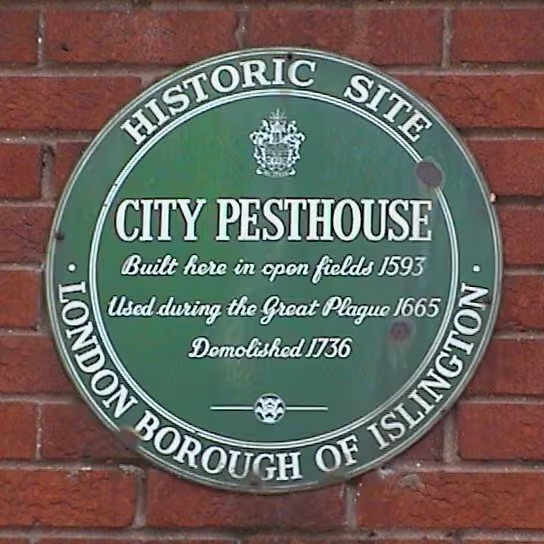
I went to a fascinating talk today at Kensal Green Cemetery by Alison Wall, author of Plague Houses and Pandemics, on London's forgotten Pest Houses and the surprisingly modern origins of public health. During the Great Plague of 1665, at least 100,000 Londoners died, devastating a city already struggling with overcrowding, poverty and appalling sanitation. Yet the authorities responded with measures that would seem remarkably familiar to anyone who lived through COVID-19: quarantine, travel restrictions, disease surveillance, emergency financial assistance and dedicated isolation facilities. Charles II, who fled London for Hampton Court, Salisbury and Oxford, helped establish what Wall argues was England's first coordinated public-health response. He ordered every parish to provide a Pest House, whether a permanent building, converted dwelling, shed or tent, where people suffering from plague could be isolated from the wider population. Five principal public Pest Houses operated in central London, including one near today's Old Street capable of accommodating between 200 and 300 people. Others stood in Westminster, Soho, Marylebone and Stepney. Their purpose was not to cure the sick, but to prevent infection spreading through households and communities. The system could be extraordinarily harsh. If somebody developed plague, officials could order an entire house to be sealed from the outside, with watchmen stationed to prevent anyone escaping. Families were effectively imprisoned alongside potentially infectious relatives. Those removed to Pest Houses had little choice in the matter. Samuel Pepys recorded the case of a servant who escaped through a window after contracting plague, only to be recaptured and transported to a Pest House in a special covered sedan chair known as a pest coach. Travelling between parishes required a certificate of health, while people associated with Pest Houses carried red 3 foot long rods to warn others to keep their distance. An elaborate system of local surveillance emerged. Examiners identified households where disease had appeared, elderly women (who were probably by that age immune) known as searchers investigated deaths, watchmen enforced isolation and parish officials arranged provisions for those confined indoors. Weekly Bills of Mortality recorded deaths across London, providing an early form of epidemiological monitoring, although the figures were far from reliable (no Quakers were recorded, for instance). Wall noted that some religious communities concealed plague deaths, complicating attempts to establish the true mortality. Medical understanding, meanwhile, remained deeply confused. Physicians believed disease could be transmitted through poisonous air, known as miasma, or caused by imbalances in the body's four humours: blood, phlegm, yellow bile and black bile. Some associated outbreaks with planetary movements, particularly Saturn and Jupiter. A comet appearing in 1665 was widely interpreted as a warning of impending catastrophe. Treatments ranged from bloodletting and leeches to mercury, opium-based preparations and elaborate medicinal concoctions known as treacles, sometimes containing ingredients such as viper's flesh. Fires were lit in London's streets in the belief that smoke could purify contaminated air. Perhaps most disastrously, Wall described how around 60,000 cats and dogs were reportedly slaughtered, despite the role that rats and their fleas played in spreading bubonic plague. Fear also encouraged xenophobia. With England at war with the Dutch, some blamed infected goods arriving from Amsterdam. Others accused Four Frenchmen or particular individuals of introducing the disease. The social inequalities were also very evident. Wealthier Londoners, including many physicians, fled the capital, while poorer residents remained trapped in overcrowded housing, often sharing clothing and living in conditions that encouraged the spread of infection. Servants, particularly women undertaking errands between households, faced additional exposure. Yet the Pest Houses have largely disappeared from London's physical landscape. Wall has spent years tracing their locations through historic maps, parish records and surviving buildings. The original City Pest House near Old Street is remembered by little more than a plaque. A former Pest House near Lancaster Gate left its name on local geography through names associated with the philanthropist William Craven. Elsewhere, former isolation buildings survive as attractive private homes, including examples in Berkhamsted, Northchurch, Potten End and Great Missenden. Some were subsequently used for smallpox patients, others became ordinary cottages. At Great Missenden, Wall described a former Fever House where a monk reportedly cared for plague sufferers and where later residents discovered old medicine bottles in the garden. The building's history survives partly through local stories and place names associated with burial grounds. Pest Houses eventually gave way to fever hospitals and specialised isolation wards, while vaccination, antibiotics and improvements in sanitation transformed the treatment and prevention of infectious disease. Specialist fever nurses continued working well into the 20th century, with their separate professional register eventually disappearing in the 1960s. Wall's most interesting point was that the foundations of organised public health should be traced further back than the Victorian sanitary reforms usually credited with its emergence. The measures introduced in 1665, however imperfect and frequently coercive, represented an early attempt to protect populations rather than simply treat individual patients. As such, her comparison with 2020 was striking: fear, isolation, restrictions on movement, economic assistance, unequal exposure to disease and arguments over the balance between personal freedom and collective safety. More than 350 years separate the Great Plague from COVID-19, yet many of the political, medical and moral dilemmas remain recognisably the same. A remarkable reminder that London's public-health history is not merely a story of scientific progress, but also of poverty, power, social control and the enduring struggle to protect communities from infectious disease.

 Dr Iain Overton
@iainoverton

 Byline Times
@BylineTimes
 Action on Armed Violence (AOAV)

 Peter Jukes
 Jay in Kyiv
 Neil Renic
 Fr. Paddy

 Neil O'Brien





 Reform UK Exposed 🇬🇧

 Lucy White




 Sangita Myska




 Lucy Easthope


 SlenderSherbet


 rob smith
 LilliputianX
 Shashank Joshi
 Larisa Brown
 Mark Nicol
 Iain King
 Anthony Loyd


 John Mulcahy
 LittleRhino
 dan barker


 Aysu Biçer


 Lucy Fisher


 Cathy 🌻@Narcaware








 Hardeep Matharu


 Joakim 🌹🇳🇴🇪🇺


 Zia Yusuf


 Wokerati Marty


 Politics UK


 UK Joint Delegation to NATO

 BBC Politics


 Airwars


 cinesthetic.
 Rob Chester
 Joe Reeve - 🇬🇧/acc


 Vincent Alexander


 Des Freedman
 Brendan May


 Hasan alrabay

 WarMonitor🇺🇦🇬🇧
 Rod Wong, MD


 Fesshole🧻
 Annabelle Sanderson 💜🤍💚


 Nick Lowles
 Kane Emerson

 Robert Colvile



 Guy Goma
 BBC Question Time
 Adam Smith
 𝕭𝖎𝖗𝖉𝖞

 Antonello Guerrera


 Elizabeth

 Carl Bovis


 Crewkerne Gazette


 Danny Deraney



 Sun Politics
 Alonso Gurmendi






 Mirror Politics


 Home Office

 TheBossRoss 🇪🇺 🧶 ❄ 📷 6x💉
 James Chapman

 Sheron Wilkie

 Royal International Air Tattoo

 Israel Genocide Tracker


 Ellen Milligan
 Maggie Smith
 Sky News
 Tom Jamieson
 Patrick Christys

 🏴InsideLucysHead🏴©

 Adam Brooks AKA EssexPR 🇬🇧

 British Bulldog🇬🇧
 Haaretz.com
 Seb Johnson

 Cai Parry-Jones MS

 eternal classic
 Fuck You I Quit

 David




 Nabeel S. Qureshi

 Peter Stefanovic



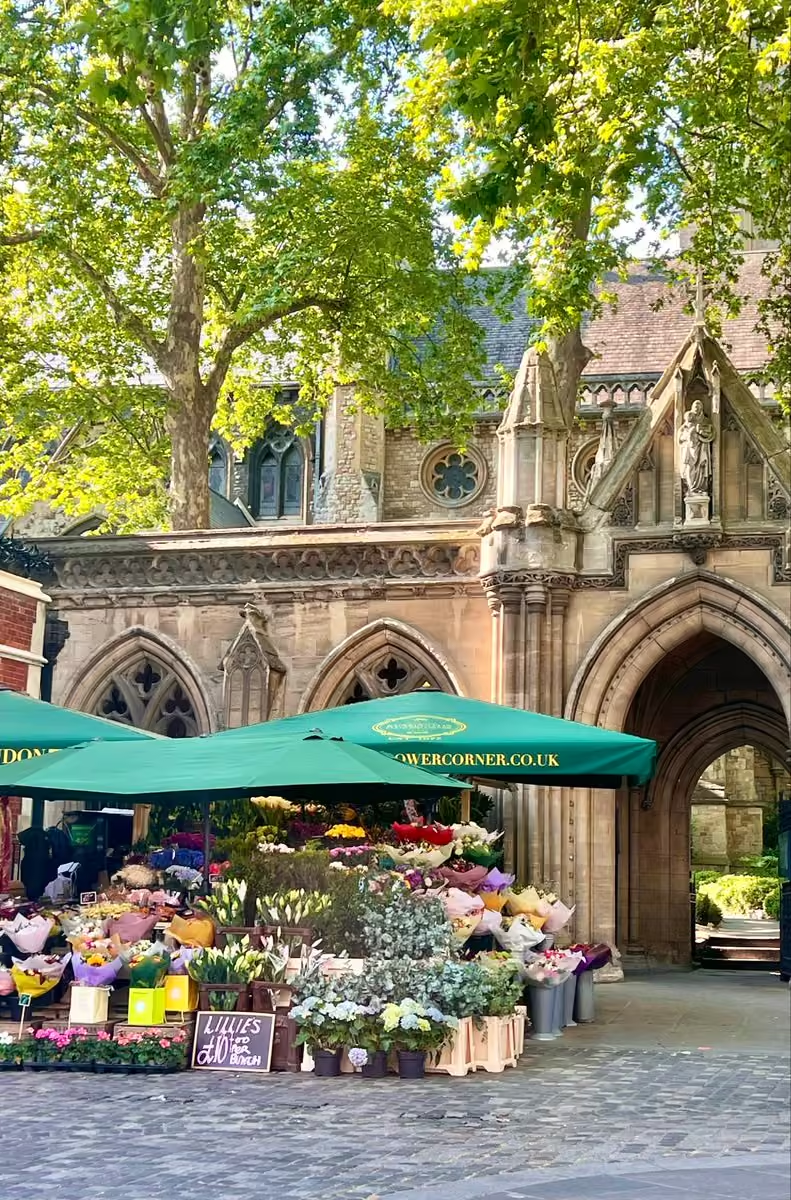
 Stephen Hopkins


 Larry the Cat


 tmuxvim


 NyanChuu🔮🇯🇵🍭


 Damian Low


 Niall Sargent 🕵️
 BBC London





 Melanie D'Arrigo


 DR REHIANA ALI BA MB BCHIR (Cantab) MA MRCP PhD


 Kate from Kharkiv

 JmRoyle #LFC #YNWA #BLM #RejoinEU
 Fraser Nelson


 Nora


 The Citizens
 Matthew Todd 🌏🔥

 dave lawrence 🐟🐟🐠


 Michael Spagat
 Justin Schlosberg

 Jared Taylor
 ؘ
 Marco Foster
 Steve Hall

 daz
 Helen S Fields







 Harriet Williamson


 Clash Report
 Anthony DiMieri

 Bigwave 2.0

 John Simpson


 Reza Amiri Moghadam

 Daniel Mack

 Speaker Mike Johnson

 AF Post

 Buitengebieden

 Cats That Make You Go Awww

 Tiberius
 No Lie with Brian Tyler Cohen



 Mike Nellis


 Martin Williams


 Labour Right Watch

 Narinder Kaur


 Charlie Hoyle
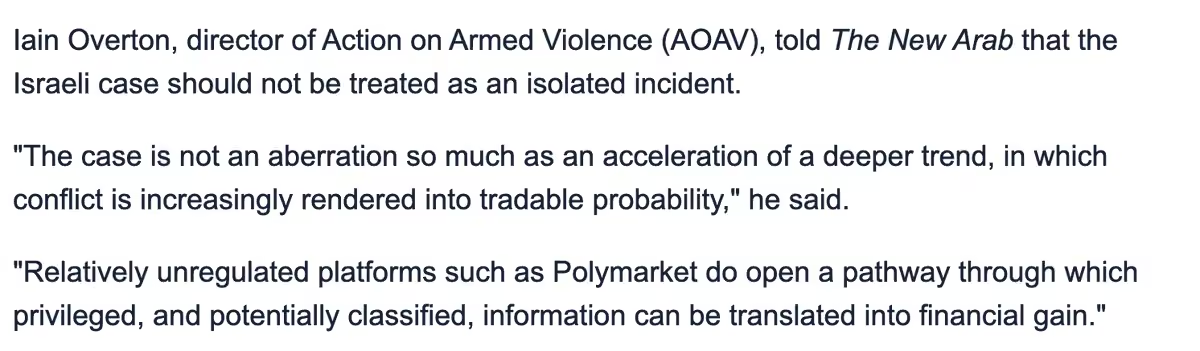

 Dan Neidle


 Jesus Chrysler

 Saul Staniforth
 Pepel Klaasa


 Daniel Lambert
 💛 Yorkshire lass💛


 Luke Robert Black

 Christopher Hale
 smile2jannah
 Amnesty UK

 Earth Hippy 🌎🕊️💚

 cats aura 🐾


 Deborah Haynes

 Israel Defense Forces


 Joyce Karam
 Tara Windwalker

 MD F June2022


 Benjamin Wolf 🇺🇦

 Farrukh


 JayneSeckerSky


 NYTimes Communications

 Cathy Newman
 Channel 4 Dispatches


 Robert Midgley


 George Mann


 Laura Webster


 OSINTtechnical


 Furkan Gözükara


 LPC


 Inevitable Stella


 Campaign Against Arms Trade


 Archbishop of Canterbury

 Ihab Hassan
 james hawkins


 𝓒𝓸𝓶𝓶𝓪𝓷𝓭𝓮𝓻 🏴☠️
 Cjay

 Press Gazette


 Louis Mosley


 Nick Robinson

 Jehad Abusalim

 Londonist


 Epstein File Search


 Nicola Perugini


 Chris Doyle
 Henry Bolton OBE 🇬🇧


 Jon Sopel

 Acyn
 Brian Roemmele


 Harry Eccles


 Tim Walker


 Frederik Pleitgen
 Rabbi Poupko


 Nad


 Or Heller אור הלר

 previously APB


 Reveal
 Samira Mohyeddin سمیرا


 Gus Carter


 Benjamin Strick


 mason
 kev joon


 Ryan Grim


 𝗕𝗥𝗜𝗦𝗞𝗘𝗧


 David MacMaster 🔻 💚 💙 дети 🍉 🕊️


 Charlie Herbert
 Matt Bracken






 baz smith