 Jerry Mitchell
@JMitchellNews


Politicians, athletes, journalists, NGOs, companies... They all use corporation-owned social networks to communicate with us. Citizens shouldn't have to hand over their data to companies to read content published by public entities. Public Feeds changes that by making posts of popular accounts freely available. Read more.
Jerry W. Mitchell (born February 23, 1959) is an American investigative reporter formerly with The Clarion-Ledger, a newspaper in Jackson, Mississippi. He convinced authorities to reopen many cold murder cases from the civil rights era, his investigations providing the basis for prosecutions, prompting one colleague to call him "the South's Simon Wiesenthal". In 2009, he received a "genius grant" from the MacArthur Foundation. More on Wikipedia
Leading investigative reporting team at Mississippi Today. Stories helped put 4 KKK members & serial killer behind bars. Author, Race Against Time.
Jerry Mitchell
@JMitchellNews
Jerry Mitchell
@JMitchellNews
Mississippi's incoming Senator Scott Colom ties his win to Medgar Evers' work and faith: mississippitoday.org/2026/11/18/scott-colom-medgar-evers-…
 Jerry Mitchell
@JMitchellNews
Jerry Mitchell
@JMitchellNews
Jerry Mitchell
@JMitchellNews
Jerry Mitchell
@JMitchellNews
Jerry Mitchell
@JMitchellNews
Jerry Mitchell
@JMitchellNews
Jerry Mitchell
@JMitchellNews
Jerry Mitchell reposted
 Stuart Wexler
@wexlerwriting
Please repost far and wide — and take 1 minute to generate a cut-and-paste email to your House member to help families impacted by decades-old, unsolved racial murders: civil-rights-cold-case-project.netlify.app
My former high school students drafted the bill that became law — with lawmakers who brought us to this point: @RepBobbyRush, @DougJones, @tedcruz, @ossoff, @RepDonBacon, @RepBonnie.
The law created a Review Board that releases long-withheld gov't files on those cases, but the board was formed quite late, and it is only 63 cases into its mission with only 2 months to go before it shuts down — but your emails and shares can reverse that.
You enter your ZIP and name and you generate a TO, CC, SUBJECT and BODY that asks your House member to help the House suspend the rules on the Senate's extension, S.1510, a bill that already passed that chamber by unanimous consent, and only awaits House rules suspension to bypass what could be a tenuous and extended (regular) legislative process. Nothing is recorded on the website, nothing is sent automatically, nothing is saved or stored — you send it from your own email app. And it only takes a minute, literally.
Please fill out, copy and send in your email app, then RT this post to your followers, and ask them to do the same.

Jerry Mitchell reposted
 Clare Amari
@Amari_Clare
First: @scott_colom filmed his final campaign ad outside Medgar Evers’ house. In “Race Against Time,” investigative reporter @JMitchellNews tells the story of how he helped bring Evers’ murderer, and other Klansmen, to justice. 🔍 bookshop.org/p/books/race-against-time-a-reporter-reopens…
Jerry Mitchell
@JMitchellNews
Jerry Mitchell
@JMitchellNews
Jerry Mitchell
@JMitchellNews
Jerry Mitchell
@JMitchellNews
Jerry Mitchell
@JMitchellNews
 Jerry Mitchell
@JMitchellNews
Jerry Mitchell
@JMitchellNews
Jerry Mitchell
@JMitchellNews
Jerry Mitchell
@JMitchellNews
Jerry Mitchell
@JMitchellNews
Jerry Mitchell
@JMitchellNews
Jerry Mitchell
@JMitchellNews
Jerry Mitchell
@JMitchellNews
Jerry Mitchell
@JMitchellNews
Jerry Mitchell
@JMitchellNews
Jerry Mitchell
@JMitchellNews
Jerry Mitchell
@JMitchellNews
Jerry Mitchell
@JMitchellNews
Jerry Mitchell
@JMitchellNews
Jerry Mitchell
@JMitchellNews
Jerry Mitchell
@JMitchellNews
Jerry Mitchell
@JMitchellNews
Jerry Mitchell
@JMitchellNews
Jerry Mitchell
@JMitchellNews
Jerry Mitchell
@JMitchellNews
Jerry Mitchell
@JMitchellNews
Jerry Mitchell
@JMitchellNews
Jerry Mitchell
@JMitchellNews
Jerry Mitchell
@JMitchellNews
Jerry Mitchell
@JMitchellNews
Jerry Mitchell
@JMitchellNews
Jerry Mitchell
@JMitchellNews
Jerry Mitchell
@JMitchellNews
Jerry Mitchell
@JMitchellNews
Jerry Mitchell
@JMitchellNews
Jerry Mitchell
@JMitchellNews
Jerry Mitchell
@JMitchellNews
Jerry Mitchell
@JMitchellNews
Jerry Mitchell
@JMitchellNews
Jerry Mitchell
@JMitchellNews
Jerry Mitchell
@JMitchellNews
Jerry Mitchell
@JMitchellNews
Jerry Mitchell
@JMitchellNews
Jerry Mitchell
@JMitchellNews
Jerry Mitchell
@JMitchellNews
Jerry Mitchell
@JMitchellNews
Jerry Mitchell
@JMitchellNews
Jerry Mitchell
@JMitchellNews
Jerry Mitchell
@JMitchellNews
Jerry Mitchell
@JMitchellNews
Jerry Mitchell
@JMitchellNews
Jerry Mitchell
@JMitchellNews
Jerry Mitchell
@JMitchellNews
Sad to hear of the death of one of my favorite writers, Annie Dillard. Just loved "Pilgrim at Tinker's Creek."
 Jerry Mitchell
@JMitchellNews
Jerry Mitchell
@JMitchellNews
Jerry Mitchell
@JMitchellNews
Jerry Mitchell
@JMitchellNews
Jerry Mitchell
@JMitchellNews
Jerry Mitchell
@JMitchellNews
Jerry Mitchell
@JMitchellNews
Jerry Mitchell
@JMitchellNews
Jerry Mitchell
@JMitchellNews
Jerry Mitchell
@JMitchellNews
Jerry Mitchell
@JMitchellNews
Jerry Mitchell
@JMitchellNews
Jerry Mitchell
@JMitchellNews
Jerry Mitchell
@JMitchellNews
Jerry Mitchell
@JMitchellNews
Jerry Mitchell
@JMitchellNews
Jerry Mitchell
@JMitchellNews
Jerry Mitchell
@JMitchellNews
Jerry Mitchell
@JMitchellNews
Happy to be part of this USM event, which will include the screening of a documentary on Vernon Dahmer, a voting rights leader who died defending his family from a KKK attack in 1966. Will be followed by panel discussion.
 Jerry Mitchell
@JMitchellNews
Jerry Mitchell
@JMitchellNews
Jerry Mitchell
@JMitchellNews
Just got these photos from Jerry Levine, who played me in the 1996 film, "Ghosts of Mississippi," and thought I'd share them. I was actually on the set this day watching them film.

 Jerry Mitchell
@JMitchellNews
This was also the same day I had lunch with Rob Reiner and his wife, Michelle. Saw them a few years ago at Myrlie Evers' 90th birthday and then the horrible news last year of their killings.
Jerry Mitchell
@JMitchellNews
Jerry Mitchell
@JMitchellNews
Jerry Mitchell
@JMitchellNews
Jerry Mitchell
@JMitchellNews
Mississippi Today has uncovered new evidence in the case of Willie Manning, who has been on death row for 32 years. Read the investigation at mississippitoday.org/2026/08/27/willie-manning-execution-…
Jerry Mitchell
@JMitchellNews
Jerry Mitchell
@JMitchellNews
Jerry Mitchell
@JMitchellNews
Jerry Mitchell
@JMitchellNews
Jerry Mitchell
@JMitchellNews
#onthisday in 1954, the small community of Charleston, Arkansas, admitted 11 Black students, becoming the first in the former Confederacy to end segregation in its schools. Dale Bumpers served as legal counsel and went on to become governor and U.S. senator. He wrote a memoir titled, “Best Lawyer in a One-Lawyer Town.”
mississippitoday.org/2024/08/23/1954-arkansas-desegregate…
 Jerry Mitchell
@JMitchellNews
Jerry Mitchell
@JMitchellNews
Jerry Mitchell
@JMitchellNews
Jerry Mitchell
@JMitchellNews
Jerry Mitchell
@JMitchellNews
Jerry Mitchell
@JMitchellNews
Jerry Mitchell
@JMitchellNews
Jerry Mitchell
@JMitchellNews
Jerry Mitchell
@JMitchellNews
Jerry Mitchell
@JMitchellNews
Jerry Mitchell
@JMitchellNews
Jerry Mitchell
@JMitchellNews
Jerry Mitchell
@JMitchellNews
Jerry Mitchell
@JMitchellNews
Jerry Mitchell
@JMitchellNews
Jerry Mitchell
@JMitchellNews
Jerry Mitchell
@JMitchellNews
Jerry Mitchell
@JMitchellNews
Jerry Mitchell
@JMitchellNews
Jerry Mitchell
@JMitchellNews
Jerry Mitchell
@JMitchellNews
In her new book, “If Emmett Till Lived,” best-selling author and historian Sarah Lewis uses a collection of essays and photos to imagine what the Black teen's life might have been if he'd returned to Chicago. mississippitoday.org?p=1185281
 Jerry Mitchell
@JMitchellNews
Jerry Mitchell
@JMitchellNews
Jerry Mitchell
@JMitchellNews
Jerry Mitchell
@JMitchellNews
Jerry Mitchell
@JMitchellNews
Jerry Mitchell
@JMitchellNews
Jerry Mitchell
@JMitchellNews
Jerry Mitchell
@JMitchellNews
Jerry Mitchell
@JMitchellNews
Jerry Mitchell
@JMitchellNews
Jerry Mitchell
@JMitchellNews
Jerry Mitchell
@JMitchellNews
Jerry Mitchell
@JMitchellNews
Jerry Mitchell
@JMitchellNews
Jerry Mitchell
@JMitchellNews
Jerry Mitchell
@JMitchellNews
Jerry Mitchell
@JMitchellNews
Jerry Mitchell
@JMitchellNews
Jerry Mitchell
@JMitchellNews
Jerry Mitchell
@JMitchellNews
Jerry Mitchell
@JMitchellNews
Jerry Mitchell
@JMitchellNews
Jerry Mitchell
@JMitchellNews
Jerry Mitchell
@JMitchellNews
Jerry Mitchell
@JMitchellNews
Jerry Mitchell
@JMitchellNews
Jerry Mitchell
@JMitchellNews
Jerry Mitchell
@JMitchellNews
Jerry Mitchell
@JMitchellNews
Jerry Mitchell
@JMitchellNews
Jerry Mitchell
@JMitchellNews
Jerry Mitchell
@JMitchellNews
Jerry Mitchell
@JMitchellNews
Jerry Mitchell
@JMitchellNews
Jerry Mitchell
@JMitchellNews
Jerry Mitchell
@JMitchellNews
Jerry Mitchell
@JMitchellNews
Jerry Mitchell
@JMitchellNews
Jerry Mitchell
@JMitchellNews
Jerry Mitchell
@JMitchellNews
Jerry Mitchell
@JMitchellNews
Jerry Mitchell
@JMitchellNews
Jerry Mitchell
@JMitchellNews
Jerry Mitchell
@JMitchellNews
Jerry Mitchell
@JMitchellNews
Jerry Mitchell
@JMitchellNews
Jerry Mitchell
@JMitchellNews
Jerry Mitchell
@JMitchellNews
Jerry Mitchell
@JMitchellNews
Jerry Mitchell
@JMitchellNews
Jerry Mitchell
@JMitchellNews
Jerry Mitchell
@JMitchellNews
Jerry Mitchell
@JMitchellNews
Jerry Mitchell
@JMitchellNews
Jerry Mitchell
@JMitchellNews
Jerry Mitchell
@JMitchellNews
Jerry Mitchell
@JMitchellNews
Jerry Mitchell
@JMitchellNews
Jerry Mitchell
@JMitchellNews
Jerry Mitchell
@JMitchellNews
Jerry Mitchell
@JMitchellNews
Jerry Mitchell
@JMitchellNews
Jerry Mitchell
@JMitchellNews
Jerry Mitchell
@JMitchellNews
Jerry Mitchell
@JMitchellNews
Jerry Mitchell
@JMitchellNews
Jerry Mitchell
@JMitchellNews
Jerry Mitchell
@JMitchellNews
Jerry Mitchell
@JMitchellNews
Jerry Mitchell
@JMitchellNews
Jerry Mitchell
@JMitchellNews
Jerry Mitchell
@JMitchellNews
Jerry Mitchell
@JMitchellNews
Jerry Mitchell
@JMitchellNews
Jerry Mitchell
@JMitchellNews
Jerry Mitchell
@JMitchellNews
Jerry Mitchell
@JMitchellNews
Jerry Mitchell
@JMitchellNews
Jerry Mitchell
@JMitchellNews
Jerry Mitchell
@JMitchellNews
Jerry Mitchell
@JMitchellNews
Jerry Mitchell
@JMitchellNews
Jerry Mitchell
@JMitchellNews
Jerry Mitchell
@JMitchellNews
Jerry Mitchell
@JMitchellNews
Jerry Mitchell
@JMitchellNews
Jerry Mitchell
@JMitchellNews
Jerry Mitchell
@JMitchellNews
Jerry Mitchell
@JMitchellNews
Jerry Mitchell
@JMitchellNews
Jerry Mitchell
@JMitchellNews
Congrats, @jkbjournalist! You absolutely deserve it and more!
Jerry Mitchell
@JMitchellNews
Jerry Mitchell
@JMitchellNews
Jerry Mitchell
@JMitchellNews
Jerry Mitchell
@JMitchellNews
Jerry Mitchell
@JMitchellNews
Jerry Mitchell
@JMitchellNews
Jerry Mitchell
@JMitchellNews
Jerry Mitchell
@JMitchellNews
Jerry Mitchell
@JMitchellNews
Jerry Mitchell
@JMitchellNews
Jerry Mitchell
@JMitchellNews
Jerry Mitchell
@JMitchellNews
Jerry Mitchell
@JMitchellNews
Jerry Mitchell reposted
 Warwick Sabin
@warwicksabin
Congrats to the @MSTODAYnews team of @mukta_jo, @JMitchellNews, Brian Howey & Nate Rosenfield whose reporting in partnership with @nytimes this month won 2nd prize in the Collier Awards & was a finalist for the Goldsmith Prize for Investigative Reporting.
ethicsandjournalism.org/2026/04/20/nyu-ethics-and-journal…
Jerry Mitchell
@JMitchellNews
Jerry Mitchell
@JMitchellNews
Jerry Mitchell
@JMitchellNews
Jerry Mitchell
@JMitchellNews
Jerry Mitchell
@JMitchellNews
Jerry Mitchell
@JMitchellNews
Jerry Mitchell
@JMitchellNews
Jerry Mitchell
@JMitchellNews
Jerry Mitchell
@JMitchellNews
Jerry Mitchell
@JMitchellNews
Jerry Mitchell
@JMitchellNews
Jerry Mitchell
@JMitchellNews
Jerry Mitchell
@JMitchellNews
Jerry Mitchell
@JMitchellNews
Jerry Mitchell
@JMitchellNews
Jerry Mitchell
@JMitchellNews
Jerry Mitchell
@JMitchellNews
Jerry Mitchell
@JMitchellNews
Jerry Mitchell
@JMitchellNews
Jerry Mitchell
@JMitchellNews
Jerry Mitchell
@JMitchellNews
Jerry Mitchell
@JMitchellNews
Jerry Mitchell
@JMitchellNews
Jerry Mitchell
@JMitchellNews
Jerry Mitchell
@JMitchellNews
Jerry Mitchell
@JMitchellNews
Jerry Mitchell
@JMitchellNews
Jerry Mitchell
@JMitchellNews
Jerry Mitchell
@JMitchellNews
Jerry Mitchell
@JMitchellNews
Jerry Mitchell
@JMitchellNews
Jerry Mitchell
@JMitchellNews
Jerry Mitchell
@JMitchellNews
Jerry Mitchell
@JMitchellNews
Jerry Mitchell
@JMitchellNews
Jerry Mitchell
@JMitchellNews
Jerry Mitchell
@JMitchellNews
Jerry Mitchell
@JMitchellNews
Jerry Mitchell
@JMitchellNews
Jerry Mitchell
@JMitchellNews
Jerry Mitchell
@JMitchellNews
Jerry Mitchell
@JMitchellNews
Jerry Mitchell
@JMitchellNews
Thanks, MediaBistro, for your praise of "Race Against Time," which tells the story of how courageous families finally found justice for their loved ones, killed in some of the nation's most notorious murders.
www.mediabistro.com/media-news/publishers-are-building-th…
 Jerry Mitchell
@JMitchellNews
#onthisday in 1903, Black leaders gathered at First Baptist Church in Little Rock and demanded that Arkansas lawmakers reverse its law to have segregated streetcars.
To drive their point home, they began to boycott streetcars in three Arkansas cities: Little Rock, Pine Bluff and Hot Springs. Their “We Walk” protests drew attention from newspapers and from streetcar companies, which saw the number of Black passengers plummet by as much as 90%. The manager of one streetcar line announced that “all the trouble we have had was from whites.”
White passengers became angry after sitting in parts of the streetcar where Black passengers had been forced to ride. An Arkansas Democrat editorial bashed the law as impractical. Although the Jim Crow laws remained in place, Black leaders learned the power of such boycotts and used them elsewhere.
mississippitoday.org/2025/03/10/1903-arkansas-streetcar-s…
 Jerry Mitchell
@JMitchellNews
Thanks, Kristen Hare of Poynter, for picking "Race Against Time" as one of your favorite journalism books!
www.poynter.org/reporting-editing/2026/what-are-your-favo…
 Jerry Mitchell
@JMitchellNews
Jerry Mitchell
@JMitchellNews
Jerry Mitchell
@JMitchellNews
Jerry Mitchell
@JMitchellNews
Jerry Mitchell
@JMitchellNews
Jerry Mitchell
@JMitchellNews
Jerry Mitchell
@JMitchellNews
Jerry Mitchell
@JMitchellNews
#onthisday in 1956, the University of Alabama expelled Autherine Lucy, the first Black student ever admitted. After her admission, thousands of students had rioted.
Lucy charged in court that university officials had been complicit in allowing the disorder, as a means of avoiding compliance with the court order. The trustees expelled her for making such “outrageous, false and baseless accusations.”
In 1980, the university overturned her expulsion, and a dozen years later, she earned a master’s degree in elementary education at the university, which endowed a scholarship in her name. The institution also hung a portrait with this inscription: “Her initiative and courage won the right for students of all races to attend the university.”
When the university honored her with a monument in 2019, she looked at the huge gathering and said, “The last time I saw a crowd like this, I didn’t know what they were waiting for.”
She told the students, “If you don’t know your history, you will forget your past.” She recalled the hate she was showered with when she enrolled and the scripture that gave her strength: “The Lord is with me; I will not fear: What can man do to me?”
mississippitoday.org/2025/03/01/1956-university-alabama-e…
 Jerry Mitchell
@JMitchellNews
Jerry Mitchell
@JMitchellNews
Jerry Mitchell
@JMitchellNews
Jerry Mitchell
@JMitchellNews
Jerry Mitchell
@JMitchellNews
Jerry Mitchell
@JMitchellNews
Jerry Mitchell
@JMitchellNews
#onthisday in 1929, baseball catcher Elston Howard was born in St. Louis. In 1955, he became the first Black player to sign with the New York Yankees, signing a $70,000 contract — the highest paid baseball player at the time.
By 1959, the Yankees were often playing Howard at first base so he could remain in the lineup. Despite lacking a regular position, he was selected to the All-Star team in 1957, the first of nine consecutive years through 1965 in which he made the squad.
In 1963, he became the American League’s Most Valuable Player, the first Black player to do so, after setting a record in putouts and total chances in a season. He is credited with inventing the doughnut for batting practice, which makes the bat feel heavier so that it will feel lighter when swinging at the plate.
Howard won four World Series as a player and two more as a coach for the Yankees, becoming the first Black coach in the American League. After coaching, he became an administrative assistant with the Yankees and died in 1980.
“The Yankees’ organization lost more class on the weekend,” New York Times columnist Red Smith wrote, “than George Steinbrenner could buy in 10 years.”
The Yankees wore a black armband in memory of him in the 1981 season. Three years later, the Yankees retired his number, 32, and dedicated a plaque that honored him as “a man of great gentleness and dignity” — “one of the truly great Yankees.”
mississippitoday.org/2025/02/23/1929-elston-howard-born/
 Jerry Mitchell
@JMitchellNews
#onthisday in 1898, Frazier Baker, the first Black postmaster of the small town of Lake City, South Carolina, and his baby daughter, Julia, were killed, and his wife and three other daughters were injured when a lynch mob attacked.
When President William McKinley appointed Baker the previous year, local whites began to attack Baker’s abilities. Postal inspectors determined the accusations were unfounded, but that didn’t halt those determined to destroy him.
Hundreds of whites set fire to the post office, where the Bakers lived, and reportedly fired up to 100 bullets into their home. Outraged citizens in town wrote a resolution describing the attack and 25 years of “lawlessness” and “bloody butchery” in the area.
Crusading journalist Ida B. Wells wrote the White House about the attack, noting that the family was now in the Black hospital in Charleston “and when they recover sufficiently to be discharged, they) have no dollar with which to buy food, shelter or raiment.
McKinley ordered an investigation that led to charges against 13 men, but no one was ever convicted. The family left South Carolina for Boston, and later that year, the first nationwide civil rights organization in the U.S., the National Afro-American Council, was formed.
In 2019, the Lake City post office was renamed to honor Frazier Baker. “We, as a family, are glad that the recognition of this painful event finally happened,” his great-niece, Dr. Fostenia Baker said. “It’s long overdue.”
mississippitoday.org/2025/02/22/on-this-day-in-1898-lynch…
 Jerry Mitchell
@JMitchellNews
#onthisday in 2017, actresses from the 2016 film “Hidden Figures” honored another hidden figure — trailblazing engineer Raye Montague.
When she was 7 and visited a captured Nazi mini-submarine in Little Rock, Arkansas, she saw the dials and was mesmerized. In 1956, she began working for the U.S. Navy as a clerk typist and quickly became more, learning engineering skills at work and computer programming at night school.
Montague became the first female programmer of ships there and a computer systems analyst at the Naval Ship Engineering Center, creating the first computer generated rough draft of a Navy ship, the Oliver Hazard Perry-class frigate. She also served as program director at Naval Seas System Command and was honored with the Meritorious Civilian Service Award in 1972.
During her career, she not only taught at the U.S. Naval Academy, she also briefed the Joint Chiefs of Staff each month. Many of her ship designs continue to be used.
In 2017, the Naval Surface Warfare Center honored her. “I didn’t realize that I was breaking glass ceilings back then,” she told those gathered. “I was just doing what had to be done.”
She died in 2018 at the age of 83.
mississippitoday.org/2025/02/20/2017-raye-montague-honored/
 Jerry Mitchell
@JMitchellNews
Jerry Mitchell
@JMitchellNews
Jerry Mitchell
@JMitchellNews
Ran into Jesse Jackson in 2013 in Jackson. He and I were attending the banquet honoring Medgar Evers, 50 years after his assassination. Hate to hear of Rev. Jackson's passing.
 Jerry Mitchell
@JMitchellNews
Jerry Mitchell
@JMitchellNews
#onthisday in 1944, the U.S. Navy began training for its first Black officers.
Sixteen officer candidates began their work at the Great Lakes Naval Training Center. All 16 passed the course, but the Navy only commissioned 13.
They overcame racism and became known as “the Golden 13” for their excellence, paving the way for President Harry Truman to desegregate the military four years later.
In Paul Stillwell’s book on the men, Gen. Colin Powell wrote that these men understood that “history had dealt them a stern obligation. They realized that in their hands rested the chance to help open the blind moral eye that America had turned on the question of race.”
mississippitoday.org/2025/02/16/1944-golden-13-naval-trai…
 Jerry Mitchell
@JMitchellNews
Jerry Mitchell
@JMitchellNews
#onthisday in 1879, Blanche Kelso Bruce became the first Black American to preside over the U.S. Senate. He was also the first Black American to serve a full term in the Senate and later the first Black American to win any votes at a major party’s nominating convention.
After escaping from slavery during the Civil War, he attempted to enlist in the Union Army. When he was turned down, he began teaching, eventually organizing Missouri’s first school for Black children in Hannibal.
After making his way down the Mississippi River, he decided to enter politics, rising through the ranks of Republican leaders, and was elected sheriff of Bolivar County, then the county superintendent of education. He turned the Bolivar County school system into one of the best in the state, becoming a well-known figure across the state.
In 1874, the Mississippi Legislature chose Bruce to fill a vacant seat in the U.S. Senate.
After Mississippi’s violent 1875 election, Bruce championed a bill to investigate the political conditions there. The bill passed the Senate, but the House, controlled by Democrats, did nothing. He pushed for the desegregation of the U.S. Army, citing what had already happened in the U.S. Navy. In 1880, he railed against the mistreatment of Native Americans.
“Our Indian policy and administration seem to me to have been inspired and controlled by stern selfishness,” he said.
He introduced legislation to assist destitute Black farmers in Kansas. Although the bill died in committee, it led to the distribution of duty–free British cotton clothing to impoverished Kansas communities.
When the Mississippi Legislature, now controlled by Democrats, gathered to select a new senator in January 1880, Bruce didn’t bother. Lawmakers selected one of Mississippi’s “Redeemers” of Reconstruction, white Democrat James Z. George, to replace him.
Bruce went on to serve as register of the U.S. Treasury and died of diabetes complications in 1898. In 2001, the Senate wing of the Capitol unveiled a portrait of Bruce, based on a Matthew Brady photograph.
The statue of George, however, continues to represent the state of Mississippi at the U.S. Capitol, along with Confederate President Jefferson Davis.
mississippitoday.org/2025/02/14/on-this-day-in-1879-us-se…
 Jerry Mitchell
@JMitchellNews
#onthisday in 1960, students, many of them students from Fisk University, began sit-ins in downtown Nashville, Tennessee. In the months that followed, more than 150 were arrested.
Rather than pay fines, the students served their time in jail. When a mayor’s committee suggested separate “Black” and “White” sections at the lunch counters, the students balked.
Two months later, a bomb exploded, nearly destroying the home of Z. Alexander Looby, the defense attorney representing many protesters. Later that day, more than 3,000 marched to city hall.
Diane Nash asked the mayor if it was wrong for a citizen of Nashville to discriminate on the basis of color. The mayor admitted it was wrong. Confronted about the lunch counters, the mayor acknowledged they should be desegregated. Weeks later, six downtown stores desegregated their lunch counters, serving Black customers for the first time.
James Lawson, who knew the principles of nonviolent resistance, led the students, many of whom became important leaders in the civil rights movement: Nash, John Lewis, James Bevel, C.T. Vivian, Marion Barry and Bernard Lafayette. David Halberstam captured their story in his book, “The Children.”
mississippitoday.org/2025/02/13/1960-fisk-university-sit-…
 Jerry Mitchell
@JMitchellNews
#onthisday in 1909, African Americans signed a proclamation known as “The Call,” leading to the formation of the National Association for the Advancement of Colored People (NAACP). The interracial group was created to safeguard civil, legal, economic, human and political rights of African Americans. The appeal took place in response to continued lynchings and a 1908 race riot in Springfield, Illinois. Sixty people, including W. E. B. Du Bois, Ida B. Wells and Mary Church Terrell, signed the proclamation.
 Jerry Mitchell
@JMitchellNews
Jerry Mitchell
@JMitchellNews
Jerry Mitchell
@JMitchellNews
Convicted sex trafficker Jeffrey Epstein wrote a $10,000 check to Mississippi’s oldest Baptist college in 2013. Epstein sent the money to Mississippi College less than a week before Thanksgiving that year to cover tuition for the daughter of his longtime pilot, Larry Visoski, who once flew the "Lolita Express." mississippitoday.org/2026/02/10/mississippi-colleges-turn…
Jerry Mitchell
@JMitchellNews
#onthisday in 1989, Ron Brown was elected chairman of the Democratic National Committee, becoming the first Black American to lead a major political party in U.S. history.
Brown was a descendant of Mississippi Reconstruction lawmaker Eugene B. Welborne, who had to flee the state to avoid being killed. Welborne and his brother disguised themselves as Confederate soldiers and “carried it off because of their fair coloring,” Brown recalled.
Brown grew up in the Theresa Hotel in Harlem, which his father managed. In the hotel, he bumped into the likes of boxer Joe Louis and actor Paul Robeson and enjoyed the world-class entertainment available at the nearby Apollo Theater.
The son of Howard University graduates, his parents sent him to prep schools, and he became the only Black student in the freshman class at Middlebury College in Vermont.
White classmates from the Sigma Phi Epsilon fraternity welcomed him, but the national organization objected because it barred Black members. Fellow fraternity members backed him, leading to the chapter’s expulsion by the national chapter. Brown then became a trustee at the mostly white school.
After a stint in the U.S. Army, he earned a law degree, became a social worker and joined the National Urban League before becoming the first Black attorney at a high-powered Washington law firm. At first glance, Brown seemed unlikely to become chairman of the Democratic National Committee. He had just managed Jesse Jackson’s 1988 campaign for president.
“I promise you,” he told the Washington Post after his selection, “my chairmanship will not be about race; it will be about the races we win.”
Under his leadership, Democrats saw the election of a Black governor in Virginia and a Black mayor in New York City. Democrats also picked up four congressional seats in special elections.
In 1992, Bill Clinton became the first Democratic presidential candidate to win in 16 years, and he appointed Brown as secretary of Commerce. Three years later, Brown was on an official trade mission when he died in a plane crash in Croatia. Clinton praised Brown, calling the secretary “one of the best advisers and ablest people I ever knew.”
mississippitoday.org/2025/02/10/1989-ron-brown-dnc-chair/
 Jerry Mitchell
@JMitchellNews
If you've visited the Medgar and Myrlie Evers Home National Monument in 2026, I would love to hear about your experience. My email is jmitchell@mississippitoday.org.
 Jerry Mitchell
@JMitchellNews
Happy Birthday Alice Walker! The novelist and poet was born to sharecroppers in Eatonton, Georgia.
During her youth, she was accidentally blinded in one eye, and her mother gave her a typewriter, which enabled her to write. She studied at Spelman College and Sarah Lawrence College, receiving a scholarship to study in Paris. She turned it down to go instead in 1965 to Mississippi, where she joined the civil rights movement.
Part of her work involved taking depositions of sharecroppers, who like her parents had been thrown off the land. She and her husband, civil rights attorney Mel Leventhal, married in New York in March 1967, and when they returned to Mississippi four months later, they became the first legally married interracial couple in the state, where interracial marriage was still illegal.
They persevered through death threats, working together on the movement. Leventhal served as lead counsel for the NAACP Legal Defense Fund, and Walker taught history to Head Start students and became pregnant.
Grief overcame her after Martin Luther King’s assassination, and she lost her unborn child. She continued to teach, showing students at Tougaloo College and Jackson State University how poetry could be used in activism.
After moving to New York, she finished her novel, “Meridian,” which describes the coming of age of civil rights workers during the movement. In 1983, she won the Pulitzer Prize for Fiction for her novel “The Color Purple,” which has since been adapted in both a movie and a Broadway and movie musical. She has continued to champion racial and gender equality in her writing and her life.
“Activism,” she explained, “is the rent I pay for living on the planet.”
mississippitoday.org/2025/02/09/1944-alice-walker-born-ge…
 Jerry Mitchell
@JMitchellNews
#onthisday in 1968, students Samuel Ephesians Hammond Jr., Henry Ezekial Smith and Delano Herman Middleton were shot and killed by state troopers who fired on demonstrators at the South Carolina State College campus in Orangeburg, South Carolina.
Fifty were also wounded in the confrontation with highway patrolmen at the rally supporting civil rights protesters.
The students had been protesting at the All-Star Bowling Lane, which refused to serve the Black students. When police arrested protesters, chaos ensued, and police began beating protesters with billy clubs, sending eight students to the hospital. Angry at what had taken place, students set a bonfire in front of the campus. When authorities showed up to put out the fire, one officer was injured by an object thrown from the crowd.
State troopers began firing their guns at the unarmed protesters, killing two students, Hammond and Smith, as well as Middleton, a high school student who was simply sitting on the steps of the freshman dormitory, waiting for his mother.
The governor tried to blame “outside agitators” for what happened, but the federal government brought excessive force charges against the nine troopers. The jury acquitted the troopers, who claimed they acted in self-defense.
In contrast, a jury did convict activist Cleveland Sellers of a riot charge in connection with the bowling alley protests, and he was forced to serve seven months in prison.
The violence became known as the Orangeburg Massacre, foreshadowing the shootings that followed at Kent State University and Jackson State University.
The on-campus arena has since been renamed in honor of the slain students. Jack Bass, the co-author of the “Orangeburg Massacre,” which details the slayings, has called for South Carolina to do something similar to what Florida did with regard to the Rosewood Massacre — award money to surviving children and college scholarships to grandchildren.
“Perhaps,” he wrote, “it is time now for South Carolina to clear its conscience.”
mississippitoday.org/2025/02/08/1968-orangeburg-massacre/
 Jerry Mitchell
@JMitchellNews
I'm interested in talking to people who have taken a tour of the Medgar & Myrlie Evers Home any time since last summer and what your experiences were like. What did the park rangers tell you about Medgar Evers and his life? What did the park rangers tell you about Myrlie Evers and her life? Just email me at jmitchell@mississippitoday.org.
 Jerry Mitchell
@JMitchellNews
#onthisday in 1866 — 10 months after Abraham Lincoln’s assassination — a delegation of Black men, led by Frederick Douglass, met with President Andrew Johnson at the White House.
Southern states had already begun to impose “Black Codes” on Black Americans now freed from slavery.
In their meeting with Johnson, Douglass and others shared why it was important that the right to vote be given to Black Americans and enforced. Johnson rejected their proposal and responded with what sounded like a prepared speech, arguing that “a war of races” would take place between newly freed Black Americans and their poor, white counterparts.
After the meeting, Douglass and the others penned a letter to the president, saying while it was true the hostility existed, the roots of such hatred were found in the system of slavery. The end of such slavery can help to bring the end to such hate, they wrote.
They questioned how Johnson could allow these Black Codes to continue “for a people whom you have repeatedly declared your purpose to maintain in freedom.”
They told the president that “peace between races can not be secured by degrading one race and exalting another, by giving power to one race and withholding it from another, but by maintaining a state of equal justice between all classes.”
In the years that followed, Douglass continued to rise as a leader, championing the rights of both African Americans and women.
Johnson became the first president impeached, dodging removal from office by one vote in the Senate. He eventually returned to Tennessee and the U.S. Senate, dying just a few months later.
mississippitoday.org/2025/02/07/on-this-day-in-1866-presi…
 Jerry Mitchell
@JMitchellNews
#onthisday in 1961, the civil rights “jail-in” movement began when eight Black students and a civil rights organizer who became known as the “Friendship Nine” in Rock Hill, South Carolina, were arrested for requesting service at a “whites-only” lunch counter.
They served jail time rather than pay fines, challenging the legitimacy of the laws.
Martin Luther King Jr. wrote to the nine and others who joined them in jail, including Charles Sherrod and Diane Nash: “You have inspired all of us by such demonstrative courage and faith. It is good to know that there still remains a creative minority who would rather lose in a cause that will ultimately win than to win in a cause that will ultimately lose.”
The “Jail, No Bail” strategy became the model for the Freedom Riders months later.
In 2015, Circuit Court Judge John C. Hayes III threw out the convictions of the Friendship Nine, who had been convicted of trespassing and protesting at the McCrory store in Rock Hill. Hayes, the nephew of the original judge who sentenced the Friendship Nine to jail, told them, “We cannot rewrite history, but we can right history.”
The nine were represented by Ernest A. Finney Jr., who defended their case 54 years earlier and went on to become the first Black chief justice of the South Carolina Supreme Court since Reconstruction.
mississippitoday.org/2025/02/06/1961-jail-in-movement/
 Jerry Mitchell
@JMitchellNews
The National Park Service has removed visitor brochures from the Medgar & Myrlie Evers Home National Monument. Among the anticipated changes? No longer calling his murderer a “racist.” @maddow @maddowblog
mississippitoday.org/2026/02/05/medgar-evers-killer-trump…
 Jerry Mitchell
@JMitchellNews
The National Park Service has removed visitor brochures from the Medgar & Myrlie Evers Home National Monument. Among the anticipated changes? No longer calling his murderer a “racist.”
Edits to the brochure have removed that reference to Byron De La Beckwith, according to Park Service officials, who asked not to be named for fear of retribution. Other edits include eliminating the reference to Medgar Evers lying in a pool of blood after being shot.
Reena Evers-Everette, executive director of the Medgar & Myrlie Evers Institute and daughter of the couple, said the family has been told the matter is under review, “but the final product has not been put out yet.”
In 1963, Beckwith shot the civil rights leader in the back on the driveway of the Evers family home in northwest Jackson. It would take 31 more years before a Mississippi jury would convict Beckwith.
Jeff Steinberg, founder of Sojourn to the Past, which regularly takes students and police officers on civil rights tours to the home, questioned the change to the Park Service material. “You can’t call Beckwith a racist?” he said. “If you opened a picture dictionary and turned to the definition for ‘racist,’ you’d probably find a picture of Byron De La Beckwith.”
The original brochures pulled from the home called Beckwith “a member of the racist and segregationist White Citizens’ Council.”
Stephanie Rolph, author of “Resisting Equality: The Citizens’ Council 1954-1989,” said the council “believed in the natural superiority of the Aryan race. They even went so far as to say that civilizations failed because of racial amalgamation.”
Beckwith also belonged to the nation’s most violent white supremacist group, the White Knights of the Ku Klux Klan, responsible for at least 10 killings in Mississippi.
A Park Service spokesperson did not respond to requests for comment.
The Park Service’s decision comes in the wake of President Donald Trump’s March 2025 executive order, “Restoring Truth and Sanity to American History,” which accused the previous administration of rewriting history. Under Trump’s order, the interior secretary must revise or replace signs that “perpetuate a false reconstruction of American history.”
Two months later, Interior Secretary Doug Burgum followed with his own order, calling for changes to monuments and memorials that “inappropriately minimize the value of certain historical events or figures; or include any other improper partisan ideology.”
The secretary’s order calls for the removal of “descriptions, depictions, or other content that inappropriately disparage Americans past or living (including persons living in colonial times), and instead focus on the greatness of the achievements and progress of the American people or, with respect to natural features, the beauty, abundance, and grandeur of the American landscape.”
The Washington Post has reported that the administration has ordered the removal of signs and exhibits related to slavery at multiple national parks, including an 1863 photo that Christian abolitionists used to prove the horrors of slavery. The picture depicts a Black man whose back was covered in scars from beatings while enslaved.
According to the Post, National Park Service officials are “broadly interpreting that directive to apply to information on racism, sexism, slavery, gay rights or persecution of Indigenous people.”
At the opening of the Mississippi Civil Rights Museum in 2017, Trump hailed Evers, a World War II veteran, as a “great American hero.” But in the wake of his 2025 executive order, the U.S. Army removed Evers and others from a section on the Arlington National Cemetery website that honored Black Americans who fought in the nation’s wars.
The Army public affairs office responded that people from prior categories such as “African American History, Hispanic American History, and Women’s History” could be found in other categories such as “Prominent Military Figures” or “Science, Technology & Engineering,” based on the person’s historical contribution to the nation.
Alan Spears, senior director for cultural resources at the National Parks Conservation Association, said the current administration wants to erase anything that deals with race, racism, civil rights, gay rights and slavery.
“You can talk about Martin Luther King Jr. overcoming,” Spears said. “You just can’t talk about what he overcame.”
As the nation’s 250th birthday approaches, it’s important for America to tell the truth about its history so that we don’t repeat past mistakes, he said. “It’s not to be avoided.”
The administration wants to sanitize these stories, Spears said. “It’s turning the assassination of Medgar Evers into something that is bloodless and had no impact. We can talk about him being a wonderful veteran, but not about what it cost him. He gave the last full measure of devotion, and now we want to ignore that.”
During Beckwith’s two 1964 trials, the Citizens’ Council provided him with three top criminal defense lawyers free of charge. Former Gov. Ross Barnett, who attended the trial and shook hands with Beckwith, was the law partner of one of the attorneys.
Those two trials ended when the all-male, all-white juries deadlocked, and many in Greenwood welcomed Beckwith as a hero.
Afterward, the assassin tried to ride his infamy into public office when he ran unsuccessfully for lieutenant governor in 1967, telling crowds that he believed in “absolute white supremacy under white Christian rule.”
His violent ways continued afterward. In 1973, New Orleans police caught him with a ticking time bomb that he planned to use to blow up a Jewish leader’s home, and he went to prison. He blamed his conviction on the “little Jewish prosecutor” and “n—- women” on the jury.
In the years that followed, Beckwith made no secret of his racism. In a 1990 interview, he called the white Citizens’ Council, created to preserve Jim Crow ways, “the first ray of light Dixie had seen since we fought through Reconstruction and captured the right to vote, the right of white people to run the South.”
He pointed to his Bible and said, “N—-s are beasts. It says so in here in the book of Adam.”
He bragged about Mississippi having more churches per capita than any other state.
“That’s a fact — till the n—-s started having all those holy roller meetings and NAACP meetings in those churches. Then they began to burn down.”
Then he said, “You know, n—-s are careless with matches,” before erupting in laughter.
As for the NAACP leader he killed, Beckwith called him a “mongrel” and said, “God hates mongrels.”
Beckwith bragged that God was on his side. He said he served as a minister in the Christian Identity Movement, a white supremacist religion that teaches Adam and Eve were white people and that those who aren’t white are “mud people” without souls.
He made no secret either of his hatred of Jews, calling them the offspring of Satan and claiming they had satanic powers. One day, white people, whom he called the “true Israelites,” would destroy these Jews, he said. “We Israelites have more firepower.”
Jackson Mayor John Horhn called Beckwith “a self-described racist. If the National Park Service is taking exception to that, just listen to the man’s own words.”
Mississippi authorities reopened the case against Beckwith in 1989 after it was revealed that the Sovereignty Commission, the state’s now-defunct segregationist spy agency, had secretly assisted his defense, trying to get him acquitted.
In 1994, a jury convicted Beckwith of Evers’ murder and he was sentenced to life in prison, where he died seven years later.
In 2023, Evers was posthumously awarded the Presidential Medal of Freedom, the nation’s highest civilian honor.
Rolph said she never thought she’d see the day when anyone would question whether Beckwith or the white Citizens’ Council had racist beliefs. Even those who supported segregation in Greenwood in 1963 believed Beckwith was “too extreme,” she said. “Give me a break. This is nuts.”
mississippitoday.org/2026/02/05/medgar-evers-killer-trump…
 Jerry Mitchell
@JMitchellNews
#onthisday in 1994, a Mississippi jury convicted Byron De La Beckwith for the 1963 murder of Medgar Evers after seeing evidence that included Beckwith’s fingerprint on the murder weapon and hearing six witnesses share how he had bragged about killing Evers. The judge sentenced Beckwith to life in prison.
Evers’ widow, Myrlie Evers, had prayed for this day, and now that it had come, she could hardly believe it. “All I want to say is, ‘Yay, Medgar, yay!’”
She wiped away tears. “My God, I don’t have to say accused assassin anymore. I can say convicted assassin, who laughed and said, ‘He’s dead, isn’t he? That’s one n—– who isn’t going to come back.’ But what he failed to realize was that Medgar was still alive in spirit and through each and every one of us who wanted to see justice done.”
mississippitoday.org/2025/02/05/1994-byron-de-la-beckwith…
 Jerry Mitchell
@JMitchellNews
Talking tomorrow (Feb. 5) about why we need the First Amendment now more than ever. Event is noon at the Mississippi College School of Law in Jackson.
 Jerry Mitchell
@JMitchellNews
#onthisday in 1913, Rosa Parks was born in Tuskegee, Alabama. Although she is best known for refusing to give up her bus seat, she was active in the civil rights struggle long before.
She and her husband, Raymond, became involved in the Scottsboro Boys case. In 1943, she became secretary of the Montgomery branch of the NAACP, working on voter registration and investigating a series of sexual assaults of Black women that went unpunished in Alabama. She, too, was the victim of an attempted rape by a white neighbor.
“I was ready to die, but give my consent?” she said. “Never. Never. Never.”
After refusing to give up her seat, she became a worldwide icon and driving force for the civil rights movement.
“I have learned over the years that when one’s mind is made up, this diminishes fear,” she said. “Knowing what must be done does away with fear.”
After her 2005 death, she became the first woman to lie in state at the Rotunda of the U.S. Capitol in Washington, D.C. On the 50th anniversary of her courageous act, transit authorities in New York City and some other cities left the seats behind the bus drivers empty to honor her.
In 2013, Congress added her statue to the U.S. Capitol, making her the first Black woman represented in Statuary Hall. Before her death, she noted that “racism is still with us. But it is up to us to prepare our children for what they have to meet, and, hopefully, we shall overcome.”
mississippitoday.org/2025/02/04/1913-rosa-parks-born-alab…
 Jerry Mitchell
@JMitchellNews
#onthisday in 1956, Autherine Lucy overcame racism and threats to become the first Black student to attend graduate school at the University of Alabama. She had previously been accepted to the university, only to be rejected when university officials discovered she wasn’t white.
The NAACP’s Thurgood Marshall represented her on the appeal, and she worked in the meantime as an English teacher in Carthage, Mississippi. The U.S. Supreme Court ruled in her favor, and she entered the university as a graduate student in library science.
Despite riots and violence, she continued to attend. Three days later, the university suspended her “for her own safety,” prompting the president there to resign in protest. Feeling dejected, she opened her mail soon after to read a letter from Marshall: “Whatever happens in the future, remember for all concerned, that your contribution has been made toward equal justice for all Americans and that you have done everything in your power to bring this about.”
Her case played a key role in desegregating schools in the South, including the University of Alabama, which admitted its first Black students in 1963.
A quarter century later, the university overturned her expulsion, and she entered the graduation program in education a year later. She graduated with a master’s in 1992.
The university named an endowed scholarship in her honor and unveiled a portrait of her in the student union, with an inscription that reads, “Her initiative and courage won the right for students of all races to attend the University.”
In 2010, the university unveiled the Autherine Lucy Clock Tower, which honored those who desegregated the university. When a special marker at the College of Education honored her, she returned to speak. In 2019, she attended the university’s graduation ceremony, where she received an honorary doctorate.
“My response to fear is: Do it anyway,” she said. “Let nothing stop you. You have to push forward.”
mississippitoday.org/2025/02/03/1956-autherine-lucy-alaba…
 Jerry Mitchell
@JMitchellNews
#onthisday in 1955, less than a year after the U.S. Supreme Court had desegregated public schools, U.S. Rep. Adam Clayton Powell Jr. rose on the House floor.
A Baptist preacher to a congregation of 10,000 in Harlem, he was one of only three Black Americans in Congress. Since getting elected to Congress a decade earlier, he had introduced many civil rights bills. None had passed. After introducing legislation to desegregate the armed forces, then-President Harry Truman wound up doing it through an executive order.
As Powell stepped to the microphone, he chastised Congress for failing to make a difference. He and others had introduced civil rights bills, “pleading, praying that you good ladies and gentlemen would give to this body the glory of dynamic leadership that it should have, but you have failed, and history has recorded it,” he said.
“This is an hour for boldness. This is an hour when a world waits breathlessly, expectantly, almost hungrily for this Congress, the 84th Congress, through legislation to give some semblance of democracy in action. … We are derelict in our duty if we continue to plow looking backward.”
He noted that when a House committee was considering legislation to end segregation in interstate travel, Lt. Thomas Williams was arrested and jailed, even though the Supreme Court had told bus carriers to end such segregation.
“About two weeks ago, while flying a jet plane, he was killed serving his country before he had a chance to see democracy come to pass,” Powell said.
Although his legislation failed, he kept pushing for change, telling crowds, “Keep the Faith, Baby!” The civil rights rider he introduced became part of the historic Civil Rights Act of 1964, which helped change America.
mississippitoday.org/2025/02/02/1955-adam-clayton-powell-…
 Jerry Mitchell
@JMitchellNews
#onthisday in 1960, four Black freshmen students from North Carolina A&T — Franklin McCain, Joseph A. McNeil, David L. Richmond and Ezell A. Blair Jr. — began to ask themselves what they were going to do about discrimination.
“At what point does a moral man act against injustice?” McCain asked.
McNeil spoke up. “We have a definite purpose and goal in mind,” he said, “and with God on our side, then we ask, ‘Who can be against us?’”
That afternoon, they entered Woolworth’s in downtown Greensboro. After buying toothpaste and other items inside the store, they walked to the lunch counter and sat down.
They ordered coffee, but those in charge refused to serve them. The students stood their ground by keeping their seats.
The next day, they returned with dozens of students. This time, white customers shouted racial epithets and insults at them. The students stayed put. By the next day, the number of protesting students had doubled, and by the day after, about 300 students packed not just Woolworth’s, but the S.H. Kress Store as well.
A number of the protesting students were female students from Bennett College, where students had already been gathering for NAACP Youth Council meetings and had discussed possible sit-ins.
By the end of the month, 31 sit-ins had been held in nine other Southern states, resulting in hundreds of arrests. The International Civil Rights Center & Museum has preserved this famous lunch counter and the stories of courage of those who took part in the sit-ins.
mississippitoday.org/2025/02/01/1960-woolworths-north-car…
 Jerry Mitchell
@JMitchellNews
#onthisday in 1863, the 1st South Carolina Volunteer Infantry Regiment — the Civil War’s first combat unit made up of Black soldiers that escaped slavery — officially began their service for the Union Army, even though they had already been fighting for months.
Their commander, Col. Thomas Wentworth Higginson, wrote that the officers did not come “to teach lessons, but to receive them. There were more than 100 men in the ranks who had voluntarily met more dangers in their escape from slavery than any of my young captains had incurred in all their lives.”
With the help of their scout, Harriet Tubman, the regiment conducted successful raids along the coasts of South Carolina, Florida and Georgia. Susie King Taylor, who had just run away from slavery at age 14, became their nurse. She later married one of the soldiers and was reportedly the only Black woman to publish a Civil War memoir.
The regiment helped to capture Jacksonville, Florida, twice, first in March 1863 and later in February 1864. They also helped capture Charleston, South Carolina, serving as part of the city’s Union garrison.
Higginson documented the courage of the soldiers: “Till the Blacks were armed, there was no guarantee of their freedom. It was their demeanor under arms that shamed the nation into recognizing them as men.”
mississippitoday.org/2025/01/31/1863-union-army-black-com…
 Jerry Mitchell
@JMitchellNews
Happy Birthday, Oprah Winfrey! Born to a single teen mother in Kosciusko, Mississippi, she became the first Black female billionaire in U.S. history. She was named after a biblical character in Ruth, Orpah, which was mispronounced, and she became Oprah.
Raised initially by her grandmother, she was so impoverished that she often wore dresses made of potato sacks. Other children teased her and made fun of her.
At age 6, she was sent to inner-city Milwaukee to live with her mother. While growing up, she was molested and became pregnant at 14. The son she gave birth to, born prematurely, died in infancy. She then went to live with the man she calls her father, Vernon Winfrey, in Nashville. She became an honors student, was voted Most Popular Girl and won the Miss Black Tennessee beauty pageant at the age of 17.
While still in high school, she landed a job at a local Black radio station. By age 19, she was co-anchoring the local news station. In 1976, she began hosting the TV chat show in Baltimore, “People are Talking,” which became a hit. In 1986, she became the first Black female TV talk show host with “The Oprah Winfrey Show.”
The biggest host at the time was Phil Donahue. Within months, Winfrey’s warm ways caused her to go from worst to first in the ratings, and she never looked back, hosting the most successful talk show in U.S. history.
She won 18 Daytime Emmy Awards, two Primetime Emmy Awards, a Tony Award, a Peabody Award and was twice nominated for an Academy Award, winning its humanitarian award. In 2003, she became the first Black woman to reach billionaire status, according to Forbes magazine. A year later, she became the first Black American to reach BusinessWeek’s Annual Ranking of “America’s Top Philanthropists.”
She stopped hosting the talk show in 2011, but she never stopped, continuing her Oprah Book Club and magazine and expanding her media empire by creating the OWN Network. In 2013, she received the Presidential Medal of Freedom.
mississippitoday.org/2025/01/29/1954-oprah-winfrey-born-k…
 Jerry Mitchell
@JMitchellNews
#onthisday in 1963, Harvey Gantt became the first Black student at Clemson University in South Carolina, the last state to hold out against court-ordered desegregation.
After graduating second in his class from Burke High School in Charleston in 1960, he studied architecture at Iowa State University and began to fight a legal battle to attend Clemson, which he won. Nine months later, Lucinda Brawley became the first Black woman to attend. A year later, they married.
Gantt graduated with honors in 1965, receiving a bachelor’s degree in architecture and later a master’s in city planning from the Massachusetts Institute of Technology. He moved to Charlotte and co-founded an architectural firm with Jeff Huberman. Their firm developed some of the city’s most iconic landmarks, including the Johnson C. Smith University Science Center. He also broke down barriers, becoming the city’s first Black mayor in 1983. Three years later, he became a fellow in the American Institute of Architects, the highest honor given to an architect.
Gantt continued to be active in civil rights, collaborating with activist Floyd B. McKissick to design Soul City, an experimental interracial community. In 1990, he ran against U.S. Sen. Jesse Helms and was leading in the polls against the politician who had backed racial segregation, filibustered against the Martin Luther King Jr. holiday and once called the University of North Carolina the “University of Negroes and Communists.”
“Every race I’ve been in,” Gantt said, “I calculated race into the equation. If you’re in America, you calculate it into the equation. It is a factor. I never make it an issue. I don’t run the campaign wearing it on my sleeve, but I don’t run away from it either.”
Before the vote, Helms aired a commercial with a pair of white hands with the voiceover declaring, “You wanted this job, but because of a law they had to give it to a minority.”
He won with 52.5 percent of the vote.
Today, the African-American Center for Arts+Culture in Charlotte bears the name of Gantt, who continues to urge young people to “never give up on their dreams and vision to become somebody. We all possess the potential to become successful in life, and I challenge every student to settle for nothing less.”
mississippitoday.org/2025/01/28/1963-harvey-gantt-clemson/
 Jerry Mitchell
@JMitchellNews
Jerry Mitchell
@JMitchellNews
#onthisday in 1870, Virginia was readmitted to the Union after the state passed a new constitution that allowed Black men to vote and ratified the 14th and 15th Amendments. The readmission came five years after Black men first pushed to vote.
A month after the Civil War ended, hundreds of Black men showed up at polling places in Norfolk to vote. Most were turned away, but federal poll workers in one precinct did allow them to cast ballots.
“Some historians think that was the first instance of blacks voting in the South,” The Washington Post wrote. “Even in the North, most places didn’t allow blacks to vote.”
Black men showed up in droves to serve on the constitutional convention. One of them, John Brown, who had been enslaved and had seen his wife and daughter sold, sent out a replica of the ballot with the reminder, “Thou shalt love thy neighbor as thyself.” He won, defeating two white candidates.
Brown joined the 104 delegates, nearly a fourth of them Black men, in drafting the new constitution. That cleared the way not only for Black voting, but for Virginia’s senators and representatives to take their seats in Congress.
But hope of continued progress began to fade by the end of the year when the Legislature began to create its first Jim Crow laws, starting with separate schools for Black and white students. Other Jim Crow laws followed in Virginia and other states to enforce racism on almost every aspect of life, including separate restrooms, separate drinking fountains, separate restaurants, separate seating at movie theaters, separate waiting rooms, separate places in the hospital and when death came, separate cemeteries.
Following Mississippi’s lead, Virginia adopted a new constitution in 1902 that helped to disenfranchise 90% of Black Virginians who voted. States continued to adopt Jim Crow statutes until 1964 when the Civil Rights Act became the law of the land.
mississippitoday.org/2025/01/26/1870-virginia-readmitted-…
 Jerry Mitchell
@JMitchellNews
#onthisday in 1965, Annie Lee Cooper — portrayed by Oprah Winfrey in the film “Selma” — had been standing in line for hours outside the Dallas County courthouse in Selma, Alabama, once again attempting to register to vote.
Sheriff Jim Clark and his deputies appeared. The 6-foot Clark had a reputation for racism and violence, carrying a billy club and cattle prod and telling others that the only problem with his job was “all this n—– fuss here of late. … You just have to know how to handle them.” He ordered the activists to leave, despite the fact they were legally entitled to register.
Cooper recalled, “I was just standing there when his deputies told a man with us to move, and when he didn’t, they tried to kick him. That’s when (Clark), and I got into it. I try to be nonviolent, but I just can’t say I wouldn’t do the same thing all over again if they treat me brutish like they did this time.”
Clark began poking her over and over in the neck with his billy club. She finally struck back, knocking him down. Deputies attacked her, beating her with a billy club. They threw her into jail, where she began to sing spirituals.
Cooper had returned to Selma to care for her sick mother three years earlier. She had registered to vote where she lived in Kentucky and Ohio, but when she tried to register, the clerk told her she failed the test. She kept trying and joined SNCC’s first Freedom Day, where she waited with 400 others to register to vote in fall 1963. She was fired from her job and struck with a cattle prod. And after she was jailed in 1965, she never gave up.
The Voting Rights Act passed Congress, and she was able to vote. She lived to be 100, and the city of Selma named a street after her. Winfrey said she decided to portray Cooper because of “what her courage meant to an entire movement. Having people look at you and not see you as a human being — she just got tired of it.”
mississippitoday.org/2025/01/25/annie-lee-cooper-selma/
 Jerry Mitchell
@JMitchellNews
Jerry Mitchell
@JMitchellNews
Jerry Mitchell
@JMitchellNews
A new lawsuit accuses Rankin County prosecutors of refusing to release public records that could play a role in reversing wrongful convictions resulting from criminal acts by a “Goon Squad” of deputies, many of whom are serving decades in federal prison.
For a generation, Rankin County Sheriff’s Department deputies, some of whom called themselves the “Goon Squad,” used “torture, violence, and other abusive practices to coerce confessions and extract or manufacture evidence for criminal cases prosecuted primarily by the Rankin County District Attorney’s Office,” the lawsuit alleges.
The ACLU of Mississippi and the Center for Constitutional Rights filed the lawsuit Thursday in Rankin County Chancery Court.
“Due to that misconduct, the Goon Squad was responsible for profound suffering by community members, including numerous wrongful convictions,” says the lawsuit, which represents one side of a legal argument.
mississippitoday.org/2026/01/22/groups-sue-rankin-da-over…
 Jerry Mitchell
@JMitchellNews
Jerry Mitchell
@JMitchellNews
Newly surfaced footage from the Rankin County jail captures a guard’s blow that broke an inmate’s jaw. That inmate, Dustin Rives, did not receive medical treatment until 25 days after the incident, by which time he had developed a deep infection that required surgery.
Jerry Mitchell
@JMitchellNews
#onthisday in 1906, pioneer aviator and civil rights activist Willa Beatrice Brown was born in Glasgow, Kentucky.
While working in Chicago, she learned how to fly and became the first Black female to earn a commercial pilot’s license. A journalist said that when she entered the newsroom, “she made such a stunning appearance that all the typewriters suddenly went silent. … She had a confident bearing and there was an undercurrent of determination in her husky voice as she announced, not asked, that she wanted to see me.”
In 1939, she married her former flight instructor, Cornelius Coffey, and they co-founded the Cornelius Coffey School of Aeronautics, the first Black-owned private flight training academy in the U.S.
She succeeded in convincing the U.S. Army Air Corps to let them train Black pilots. Hundreds of men and women trained under them, including nearly 200 future Tuskegee Airmen.
In 1942, she became the first Black officer in the U.S. Civil Air Patrol. After World War II ended, she became the first Black woman to run for Congress. Although she lost, she remained politically active and worked in Chicago, teaching business and aeronautics.
After she retired, she served on an advisory board to the Federal Aviation Administration. She died in 1992. A historical marker in her hometown now recognizes her as the first Black woman to earn a pilot’s license in the U.S., and Women in Aviation International named her one of the 100 most influential women in aviation and space.
mississippitoday.org/2025/01/22/1906-willa-beatrice-brown…
 Jerry Mitchell
@JMitchellNews
#onthisday in 1900, Black Congressman George H. White, a Republican from North Carolina, introduced a bill to make lynching of Americans a federal offense, only to see the bill die in committee.
More attempts followed. More than 4,700 lynchings of Americans took place between 1882 and 1951, two-thirds of them Black Americans.
In 1916, the NAACP began pushing for anti-lynching legislation. NAACP President Moorfield Storey urged those in Congress to not tell Black Americans “that their case is hopeless, that this great country cannot protect them from absolute wanton murder with the connivance and with the assistance of the officers appointed by law to defend them, and with absolute indifference on the part of the United States.”
Two years later, Congressman Leonidas Dyer, a white Republican from Missouri, who was upset at the violence in St. Louis and continued lynchings across the South, introduced such a bill. Unlike White’s proposal, Dyer’s passed the House and sailed to the Senate floor for a vote — only to be halted by a filibuster carried out by Southern Democrats, who hinted that such lynchings were necessary.
Between 1882 and 1968, nearly 200 anti-lynching bills were introduced, and seven U.S. presidents asked for such a law to be adopted, but no bill passed. After the racial violence in Charlottesville, Virginia, in 2017, Black senators pushed again for anti-lynching legislation, which was finally adopted in 2022, promising to punish those who would carry out such hate crimes with up to 30 years in prison. President Biden signed the Emmett Till Antilynching Act into law.
“Lynching was pure terror to enforce the lie that not everyone belongs in America, not everyone is created equal,” he said. “Racial hate isn’t an old problem — it’s a persistent problem. Hate never goes away. It only hides.”
mississippitoday.org/2025/01/20/1900-george-h-white-anti-…
 Jerry Mitchell
@JMitchellNews
#onthisday in 1856, Mississippi native Bridget “Biddy” Mason, who was enslaved with her family of 13, successfully sought their freedom in a landmark court case.
In 1847, she and her family were forced to travel West with Robert Smith, a slaveholder who joined the Mormon migration to Utah. She walked 1,700 miles behind a 300-wagon caravan that ended up in Salt Lake Valley and had the responsibility for setting up and breaking camp for her slaveholder.
She also cooked meals, herded cattle, served as a midwife and took care of her three daughters, 10, 4 and a newborn. Three years later, Smith ignored Mormon leader Brigham Young’s warning that slavery was illegal in California and headed for the Golden State anyway. Out of fear he would lose their services, Smith decided to send them to Texas, but a sheriff’s posse intercepted them before they could leave the state.
After spending five years still enslaved, Mason fought back and sued for her freedom in court. Although state law barred people of color from testifying, Los Angeles District Judge Benjamin Hayes listened to her story. Days later, Hayes ruled in her favor, citing the state’s constitutional prohibition of slavery.
Mason worked with a doctor and became a savvy businesswoman. She bought land and organized what is believed to be the first Black church in Los Angeles, the First A.M.E. Church. She became known as “Grandma” Mason, and by the time she died in 1891, she had used her wealth, estimated to be $10 million in modern dollars, to aid charities, shelter the impoverished, visit the prisoners and start an elementary school for Black children.
“If you hold your hand closed,” she said, “nothing good can come in. The open hand is blessed, for it gives in abundance even as it receives.”
The city of Los Angeles now features Biddy Mason Memorial Park, which celebrates her life.
mississippitoday.org/2025/01/19/1856-bridget-biddy-mason-…
 Jerry Mitchell
@JMitchellNews
#onthisday in 1931, James Earl Jones was born in Arkabutla, Mississippi. He moved to his grandparents’ farm in Michigan at age 5.
He had a stutter so severe, he hardly spoke. An English teacher realized his gift for writing poetry and had him recite poetry in front of the class, overcoming his stuttering.
At the University of Michigan, he was majoring in pre-med when he discovered drama. After training troops in the Korean War, he starred in “Othello” at the Ramsdell Theatre in Michigan. In 1967, he starred opposite actress Jane Alexander in “The Great White Hope,” loosely based on heavyweight champion Jack Johnson and society’s demand for a white boxer that would defeat Johnson. The play began at the Arena Stage in Washington, D.C., before moving to Broadway, where the play, Jones and Alexander all won Tonys. In the film adaptation, Jones won a Golden Globe and an Oscar nomination.
He went on to play Shakespeare on Broadway and win another Tony, three Emmys and an honorary Oscar prior to his 2024 death. The first celebrity guest on “Sesame Street,” he may be best known for providing the voice for Darth Vader in the Star Wars movies and for Mufasa in Disney’s “The Lion King.”
He saw the two biggest challenges to society as health and sanity. “I won’t say racism,” he said. “I say sanity because racism is a form of insanity.”
mississippitoday.org/2025/01/17/1931-james-earl-jones-born/
 Jerry Mitchell
@JMitchellNews
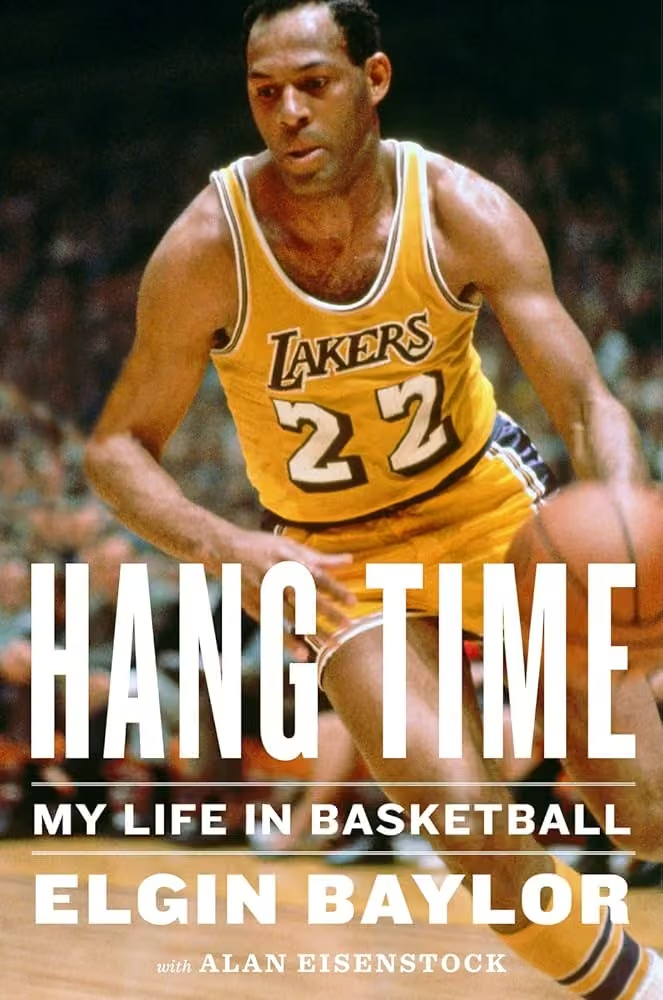
#onthisday in 1959, the Minneapolis Lakers met the Cincinnati Royals in an NBA game before a crowd in Charleston, West Virginia. Local fans were eager to see their hometown basketball hero, “Hot Rod” Hundley, play alongside rookie phenom Elgin Baylor, but Baylor sat out to protest racism he and other Black players had experienced the night before.
“The first thing I said was I was really hurt by that,” he recalled. “I thought about it and I said, ‘I’m not going out there. We’re not like animals in the circus or something and then go out there and put a show on for them.’”
After arriving in Charleston, a local hotel had denied rooms to him and the two other Black players, Boo Ellis and Ed Fleming. Hundley exploded, telling a hotel official, “You listen to me! You know who this is? Now find us some rooms! All of us!” The official refused, and the Lakers relocated elsewhere.
The indignities didn’t end there. When the team tried to eat at a local restaurant, they refused to serve the Black players, too. Upset by Baylor’s absence at the game, a local promoter urged Maurice Podoloff, the president of the NBA, to discipline Baylor, calling the player’s absence from the lineup “most embarrassing to us.”
The NBA president responded, “I would find it hard to punish a man for trying to protect his self-respect and dignity.’’
Baylor became one of the best basketball players of all time, a talented NBA executive and an ambassador for the sport. But it wouldn’t be his last encounter with racism. That came when he worked with Donald Sterling, then team owner of the LA Clippers.
After audio tapes revealed his racism, Sterling was banned from the league. Three years before Baylor’s death in 2021, the Lakers unveiled a statue of him outside the arena, and he published a book about his life in basketball called “Hang Time.”
mississippitoday.org/2025/01/16/1959-elgin-baylor-sits-ou…
 Jerry Mitchell
@JMitchellNews
#onthisday in 1917, civil rights pioneer C.C. Bryant was born in southwest Mississippi and cut hair on weekends in McComb.
In 1954, he became president of the local NAACP, working closely with Medgar Evers and seeking to add Black Mississippians to the voting rolls. Many feared his activism.
“Many a time I walked down the streets of McComb and the Black leadership — ministers, whatever — would move to the other side,” he said. “They were afraid to do anything.”
Seven years later, he welcomed Bob Moses to stay with him when Moses began the Student Nonviolent Coordinating Committee’s voter registration work in Mississippi.
When school children were arrested for their protests, he became furious, and so did the community, rallying around the civil rights movement.
During the summer of 1964, the Ku Klux Klan carried out violence in southwest Mississippi almost every night. Bryant’s barbershop, house and church were all bombed. When nightriders threw dynamite onto his brother’s porch, Bryant fired his gun back at the terrorists. He continued fighting for the movement until his death in 2007.
He was depicted in the HBO movie based on the McComb activism, “Freedom Song.” In 2014, he was honored with a marker on the Mississippi Freedom Trail.
mississippitoday.org/2025/01/15/1917-cc-bryant-born-missi…
 Jerry Mitchell
@JMitchellNews
#onthisday in 1963, on the same portico of the Alabama Capitol in Montgomery where Jefferson Davis was sworn in as president of the Confederacy, Alabama Gov. George Wallace delivered his inaugural address, telling the crowd, “In the name of the greatest people that have ever trod this earth, I draw the line in the dust and toss the gauntlet before the feet of tyranny, and I say segregation now, segregation tomorrow, segregation forever!”
Asa Carter, a member of the Ku Klux Klan, wrote his speech, which made national headlines and thrust Wallace into the national spotlight.
Seven months later, Martin Luther King Jr. responded to that speech, saying, “I have a dream that one day, down in Alabama, with its vicious racists, with its governor having his lips dripping with the words of ‘interposition’ and ‘nullification’ — one day right there in Alabama little black boys and black girls will be able to join hands with little white boys and white girls as sisters and brothers.”
Before his death, Wallace called his most famous phrase “his biggest mistake.”
mississippitoday.org/2025/01/14/1963-george-wallace-alabama/
 Jerry Mitchell
@JMitchellNews
#onthisday in 1990, Douglas Wilder, who became the first Black American elected governor since Reconstruction, took office in Richmond, Virginia.
Named after both abolitionist Frederick Douglass and poet Paul Laurence Dunbar, he worked his way through Virginia Union University before being drafted into the Korean War. During the Battle of Pork Chop, he and two fellow soldiers were cut off from their unit. When they ran into 19 Chinese soldiers, they bluffed them into surrendering. Wilder was awarded a Bronze Star Medal for his bravery.
Back in the U.S., he became a lawyer, and in 1969 won a seat in the Virginia State Senate, becoming the first African American elected to the body since Reconstruction. In 1985, he was elected lieutenant governor, and four years later won as governor. The winning margin? Less than one-half percent.
mississippitoday.org/2025/01/13/1990-douglas-wilder-gover…
 Jerry Mitchell
@JMitchellNews
#onthisday in 1865, as the Civil War neared an end, Union Gen. William Tecumseh Sherman and Secretary of War Edwin Stanton met with local Black leaders in Savannah, Georgia.
The Rev. Garrison Frazier, a 67-year-old imposing man, spoke for the group. Asked what slavery meant, he replied, “Slavery is, receiving by irresistible power the work of another man, and not by his consent.”
He told the Army leaders that they wanted to be free from the dominion of white men, wanted to be educated and wanted to own land they could work and earn a living.
Asked if they would rather live scattered among the whites or in colonies by yourselves, Frazier replied, “I would prefer to live by ourselves, for there is a prejudice against us in the South that will take years to get over.”
In response, Sherman issued Special Field Order 15, giving each freed family 40 acres of land along the Atlantic Coast. “The effect throughout the South was electric,” wrote historian Henry Louis Gates Jr., with freedmen settling on 400,000 acres of “Sherman Land.”
Some also received mules left over from the battles, leading to the phrase “40 acres and a mule.”
After President Abraham Lincoln was assassinated, President Andrew Johnson took over, reversing Field Order 15 and smashing the dreams of Black Americans who had finally been freed.
mississippitoday.org/2025/01/12/on-this-day-in-1865-a-spe…
 Jerry Mitchell
@JMitchellNews
#onthisday in 1870, the first legislature in Radical Reconstruction met in Mississippi. During this time, at least 226 Black Mississippians held public office. Lawmakers adopted a new state constitution that ushered in free public schools and had no property requirements to vote.
These acts infuriated the Southerners who embraced white supremacy, and they responded violently. They assassinated many of those who worked on the constitution.
In Monroe County, Klansmen killed Jack Dupree, a Black Mississippian who led a Republican Party group. In Vicksburg, white supremacists formed the White Man’s party, patrolled the streets with guns, and told Black voters to stay home on election day.
White supremacists continued to use violence and voter fraud to win. When the federal government refused to step in, Congressman John R. Lynch warned, “The war was fought in vain.”
It would take almost a century for Black Mississippians to begin to regain the rights they had lost.
mississippitoday.org/2025/01/11/1870-radical-reconstructi…
 Jerry Mitchell
@JMitchellNews
#onthisday in 1966, Vernon Dahmer Sr. died defending his family from a KKK attack at their home near Hattiesburg, Mississippi.
The farmer, businessman, entrepreneur and NAACP leader had dedicated his life to voting rights. Upset by his work on voting rights in the African-American community, Klansmen firebombed the family’s home while they were sleeping and began firing their guns into the home. Dahmer grabbed his shotgun and fired back at Klansmen, enabling his family to escape safely out a back window. Flames from the blaze seared his lungs, and he died a day later.
On his deathbed, a reporter pressed him on why he kept pushing for voting rights for Black Americans. Dahmer explained, “If you don’t vote, you don’t count.”
The case led to a few convictions, but the Klansmen didn’t stay behind bars long because governors pardoned them, commuted their sentences or released them early. Most of the killers walked free, including Imperial Wizard Sam Bowers, who ordered the attack.
Bowers was finally convicted in 1998 and sentenced to life in prison, where he died in 2006.
In 2020, county officials erected a statue in honor of Vernon Dahmer outside the same courthouse where Black residents once protested for the right to vote. Sculptor Ben Watts and artist Vixon Sullivan worked together on the statue. (Photograph below shows the four sons of Vernon Dahmer Sr., returning home from serving their country to find their father dead and their family's home burned to the ground. The picture was taken by Chris McNair.)
mississippitoday.org/2025/01/10/1966-vernon-dahmer-sr-kkk…
 Jerry Mitchell
@JMitchellNews
#onthisday in 1967, civil rights leader Julian Bond was finally seated in the Georgia House.
He had helped found the Student Nonviolent Coordinating Committee while a student at Morehouse College along with future Congressman John Lewis. The pair helped institute nonviolence as a deep principle throughout all of the SNCC protests and actions.
Following Bond’s election in 1965, the Georgia House refused to seat him after he had criticized U.S. involvement in Vietnam. In 1966, the U.S. Supreme Court ruled unanimously that the Georgia House was required to seat him. “The truth may hurt,” he said, “but it’s the truth.”
He went on to serve two decades in the Georgia Legislature and even hosted “Saturday Night Live.” In 1971, he became president of the just-formed Southern Poverty Law Center and later served a dozen years as chairman of the national NAACP.
“The civil rights movement didn’t begin in Montgomery, and it didn’t end in the 1960s,” he said. “It continues on to this very minute.”
Over two decades at the University of Virginia, he taught more than 5,000 students and led alumni on civil rights journeys to the South. In 2015, he died from complications of vascular disease.
mississippitoday.org/2025/01/09/1967-julian-bond-georgia-…
 Jerry Mitchell
@JMitchellNews
#onthisday in 1815, a U.S. Army unit that included Black and Choctaw soldiers helped defeat the British in the Battle of New Orleans.
While peace negotiations to end the War of 1812 were underway, the British carried out a raid in hopes of capturing New Orleans. After the British captured a gunboat flotilla, Maj. Gen. Andrew Jackson put the city under martial law.
Despite being outnumbered, the U.S. Army force of about 2,000 (including a battalion of free Black men, mostly refugees from Santo Domingo, and up to 60 Choctaw Indians) defeated the British.
After the victory, Andrew Jackson honored these soldiers of color with a proclamation: “I invited you to share in the perils and to divide the glory of your white countrymen. I expected much from you, for I was not uninformed of those qualities which must render you so formidable to an invading foe. I knew that you could endure hunger and thirst and all the hardships of war. I knew that you loved the land of your nativity, and that, like ourselves, you had to defend all that is most dear to man – But you surpass my hopes. I have found in you, united to these qualities, that noble enthusiasm which impels to great deeds.”
Prior to the battle, Jackson had promised Black soldiers pay, acres of property and freedom to those who were enslaved. That inspired James Roberts to fight as hard as he could in the Battle of New Orleans.
“In hope of freedom,” he said, “we would run through a troop and leap over a wall.”
Although Roberts would lose a finger and suffer a serious wound to the head, the pledge proved hollow for him, just as it was in the Revolutionary War when he had been promised freedom and instead was separated from his wife and children and sold for $1,500.
The memoir he self-published in 1858 is once again available for sale.
mississippitoday.org/2025/01/08/1815-battle-of-new-orleans/
 Jerry Mitchell
@JMitchellNews
Happy Birthday, Zora Neale Hurston, who was born in Alabama #onthisday in 1891. Her father later became mayor of Eatonville, Florida — one of the few incorporated all-black towns in the U.S.
Hurston wrote four novels and dozens of short stories and essays. She is best known for her 1937 novel, “Their Eyes Were Watching God,” now regarded as a seminal work in African-American literature and female literature.
Her mother told her children to “jump at de sun!” she wrote. “We might not land on the sun, but at least we would get off the ground!”
In the novel, the main character says, “If you kin see de light at daybreak, you don’t keer if you die at dusk. It’s so many people never seen de light at all.”
That same year, she received a Guggenheim Fellowship to conduct research on those who lived in Jamaica and Haiti.
“Sometimes, I feel discriminated against, but it does not make me angry,” she said. “It merely astonishes me. How can any deny themselves the pleasure of my company? It’s beyond me.”
mississippitoday.org/2025/01/07/1891-zola-neale-hurston-b…
 Jerry Mitchell
@JMitchellNews
#onthisday in 2021, Amanda Gorman was trying to finish her poem on national unity when scenes burst upon the television of the attack on the U.S. Capitol.
The 22-year-old stayed up late, writing new lines into the night. Two weeks later, she became the youngest inaugural poet in U.S. history, joining a prestigious group that included Maya Angelou and Robert Frost. But few faced as difficult a task, searching for unity amid violence, a deadly pandemic and polarizing partisanship.
She described herself as a “skinny Black girl, descended from slaves and raised by a single mother” who can dream of being president one day, “only to find herself reciting for one.”
She shared the words she wrote in the wake of the nation’s first attack on the Capitol in more than two centuries:
"We’ve seen a force that would shatter our nation rather than share it
Would destroy our country if it meant delaying democracy
And this effort very nearly succeeded
But while democracy can be periodically delayed
It can never be permanently defeated.”
In the wake of the attack that resulted in five deaths and injuries to 138 officers, she penned that the nation would endure:
Somehow we’ve weathered and witnessed
a nation that isn’t broken
but simply unfinished
She reminded those present that “history has its eyes on us” and that this nation will indeed rise again:
“We will rebuild, reconcile and recover
And every known nook of our nation and
Every corner called our country,
Our people diverse and beautiful will emerge,
Battered and beautiful…
For there is always light,
If only we’re brave enough to see it
If only we’re brave enough to be it."
mississippitoday.org/2025/01/06/2021-amanda-gorman-insurr…
 Jerry Mitchell
@JMitchellNews
#onthisday in 1939, news broke that Pauli Murray had applied to a Ph.D. program at the University of North Carolina, sparking white outrage across the state.
“Members of your race are not admitted to the university,” her rejection letter read.
“The days immediately following the first press stories were anxious ones for me,” she recalled. “I had touched the raw nerve of white supremacy in the South.”
A year later, she was jailed twice in Virginia for refusing to give her seat on a Greyhound bus. She graduated first in her class at Howard University School of Law, but Harvard University wouldn’t accept her because of her gender. (Harvard didn’t admit women until 1950.) Instead, she became the first Black student to receive Yale Law School’s most advanced degree.
In 1942, she helped George Houser, James Farmer and Bayard Rustin form the Congress of Racial Equality, known as CORE. Four years later, she became a deputy attorney general in California. Thurgood Marshall described her 1951 book, “States’ Laws on Race and Color,” as the “bible” for civil rights lawyers.
A year later, she lost her post at Cornell University because of McCarthyism. She left her law career to work on her writing at MacDowell Colony, a haven for artists and writers in New Hampshire, where she worked on her first memoir alongside James Baldwin.
“Writing is my catharsis,” she said in an interview. “It saved my sanity. But you cannot sustain anger for years and years. It will kill you.”
She researched her ancestry. “If you call me Black, it’s ridiculous physiologically, isn’t it? I’m probably 5/8 white, 2/8 Negro — repeat American Negro — and 1/8 American Indian,” she said. “I began years before Alex Haley did. I’m always ahead of my time.”
She also penned a book of poems, “Dark Testament,” writing the words, “Hope is a song in a weary throat.”
During her time as a professor in Ghana in the early 1960s, she began to accept that ancestry, she said.
“The difficulty is coming to terms with a mixed ancestry in a racist culture,” she said.
She said she didn’t consider her experience unique.
“I don’t believe that, ‘You came over in chains so how can you feel American?’ That’s poppycock. Thousands are just like me. In fact I probably feel more American than many whites. I just want this country to live up to its billing.”
After returning from Africa, President Kennedy appointed her to his Committee on Civil and Political Rights. She worked with Martin Luther King Jr. and other top civil rights leaders and took part in the 1963 March on Washington. But she remained critical of “the blatant disparity between the major role which (Black) women have played and are playing in the crucial grass-roots levels of our struggle and the minor role of leadership they have been assigned in the national policy-making decisions.”
She helped found the National Organization of Women. In 1977, she became the first Black woman to serve as an Episcopal priest.
“Being a priest is the hardest thing I’ve ever done,” she said. “The first 48 hours were the most difficult of my life. I found myself on the receiving end of tremendous human problems I didn’t know how to handle.”
She rejected the idea that she should slow down. “We shouldn’t stop growing ‘til our last breath,” she said. She died eight years later, and in 2012, the Episcopal church named her as a saint.
In 2021, a documentary on Murray was released, using her own voice and words as narration. The documentary also includes an interview with law professor Anita Hill.
Even though Murray knew that the odds were often against her success, she kept fighting for what she believed was right,” Hill said. “It takes a lot of courage to be hopeful.”
mississippitoday.org/2025/01/05/1939-pauli-murray-applied…
 Jerry Mitchell
@JMitchellNews
#onthisday in 1965, five busloads of Black Mississippians arrived at the U.S. Capitol to challenge the seating of Mississippi’s all-white congressional delegation.
Those in charge in Washington initially had little sympathy because the Mississippi Freedom Democratic Party had rejected the compromise at the 1964 Democratic National Convention, said SNCC leader Michael Thelwell.
“We were absolutely persona non grata and the pariahs of beltway politics,” he said.
But their cause soon found some support on the floor of Congress when 149 members sided with them. Suddenly, the Mississippi Freedom Democratic Party could question the state’s top leaders. Suddenly, these white politicians, the most powerful people in Mississippi, found themselves using courtesy titles toward Black Americans — something they had refused to do since slavery ended.
Although those in Congress eventually took their seats, “it shook them,” recalled SNCC leader Victoria Gray. “That vote just really turned things upside down.”
mississippitoday.org/2025/01/04/1965-mississippi-freedom-…
 Jerry Mitchell
@JMitchellNews
#onthisday in 1933, Dr. Aaron Shirley was born in Gluckstadt, Mississippi. Before he could pronounce the word “doctor,” his mother had declared that he would be one.
“She was a widow with eight children who worked as a nurse’s aide and a domestic,” he recalled in an interview with The Clarion-Ledger. “My father died when I was 16 or 17 months old. I don’t remember him. But he did leave my mother with property.”
She sold the property off, piece by piece, to pay for the education of all her children.
After completing medical school in Tennessee, Shirley returned to Mississippi. He joined the civil rights movement, and his family’s home was bombed in Vicksburg. In 1965, he began his pediatric residency at the University of Mississippi Medical Center. He was the first Black resident there and the first Black pediatrician in the state.
Shirley’s pioneering approach to helping the impoverished with their medical needs (turning a dilapidated mall into a medical mall, establishing community health advocates to check on patients at home).
“Aaron could have done a whole lot of things in life that would’ve benefited him more financially than trying to give health care to poor people,” recalled former Mississippi Supreme Court Justice Reuben Anderson, who worked with Shirley in the movement. “But as long as I’ve known him, his complete focus has been to make sure the underprivileged are served.”
In 1993, Shirley won the MacArthur “genius” grant for his innovative approach. His wife, Ollye Brown Shirley, was a civil rights activist in her own right, chairing the Mississippi NAACP Education Committee.
After his death at age 81 in 2014, his family received a U.S. flag that had flown over the White House in his honor.
mississippitoday.org/2025/01/03/on-this-day-in-1933-dr-aa…
 Jerry Mitchell
@JMitchellNews
#onthisday in 1903, President Theodore Roosevelt shut down the post office in Indianola, Mississippi, to take a stand against terror.
In 1891, then-President Benjamin Harrison had appointed educator Minnie Cox, a Mississippi property owner active in the Republican Party, as one of a handful of Black female postmasters. She served her community so well that she installed a telephone at her own expense so that customers could call to see if they had mail.
But then Reconstruction ended, accompanied by a continuing rise in white supremacy and violence.
In 1902, James K. Vardaman, who spewed racist rhetoric while successfully running for governor, insulted both Cox and white citizens for “tolerating” her. He used Cox’s position as proof Black Americans had too much power, demanding that Roosevelt remove her, but the President refused.
When she tried to quit, he refused her resignation and rerouted the mail to nearby Greenville. Days later, she and her family fled from the mob violence, which had already stolen the lives of two Black postmasters in South Carolina and Georgia.
Cox’s saga became a national story on race, and Roosevelt shut down the post office until local citizens would accept Cox as postmaster. That never happened, and when her term expired, Roosevelt appointed her friend, William Martin, in her place in 1904.
Cox and her husband, Wayne, the city’s first Black alderman, finally returned and founded the Delta Penny Savings Bank, the largest Black-owned bank in Mississippi. During those days, the bank sold hundreds of homes to Black citizens, and some of the same white citizens who called for Cox’s resignation now put money in her bank.
Her story echoed the difficulties of many Black Americans, wrestling “with racism and the erosion of democratic rights at every level of government” that led to boycotts and “Buy Black” movements.
She died in 1933, and the Indianola Post Office now bears her name. Mississippi author Steve Yarbrough fictionalized her life in his 2001 novel Visible Spirits.
mississippitoday.org/2025/01/02/1903-indianola-post-offic…
 Jerry Mitchell
@JMitchellNews
#onthisday in 1960, nearly 1,000 Black protesters marched 10 miles through the rain and sleet to the downtown airport in Greenville, South Carolina, to protest its segregation policies and its mistreatment of Jackie Robinson, the first Black player in Major League Baseball.
Months earlier, Robinson had come to speak at an NAACP banquet, where he encouraged Black Americans. As he left the airport that night, he sat with NAACP leader Gloster Current in the “Whites-only” waiting room at the airport, where Robinson signed autographs. The airport manager ordered them to move to the “Colored” waiting room. They said no.
When the manager brought a police officer, they responded that they had a legal right to stay where they were and refused to move. After the incident, Robinson complained to the NAACP’s Thurgood Marshall, whose office was already pursuing a case against the airport. In the future, Robinson said, “I hope that we can walk in the airport and sit down and enjoy ourselves.”
During their march, protesters sang “America the Beautiful” and other songs in what they called their “prayer pilgrimage.” As they arrived at the airport, they were met by a 300-man white mob that included Klansmen. The protesters continued, and 15 of them entered the airport.
“We will no longer make a pretense of being satisfied with the crumbs of citizenship while others enjoy the whole loaf only by the right of a white-skinned birth,” the Rev. C.D. McCullough of Orangeburg declared.
The walls of segregation soon fell at both airports.
mississippitoday.org/2024/01/01/on-this-day-in-1960-black…
 Jerry Mitchell
@JMitchellNews
Mafia hitman Gregory Scarpa Sr. pocketed millions from drug dealing, donned a seven-carat pinky ring and shot to death so many people that he stopped counting at 50.
Oh, and he helped the FBI solve who killed Mississippi NAACP leader Vernon Dahmer Sr.
Hollywood plans to release a movie next year on Scarpa’s role in the Dahmer case, “By Any Means,” starring Mark Wahlberg as the mobster.
The film’s producer, Alex Lebovici, who attended the 100th birthday of Dahmer’s widow, Ellie, in June, said the filmmakers are portraying Dahmer as the family man and brave NAACP leader he was.
Dahmer’s daughter, Bettie, cooperated with filmmakers and watched them shoot scenes in Georgia. “The way the movie is portrayed, it’s not about Vernon Dahmer, it’s about Gregory Scarpa,” she said. “I have no problem with it.”
Her brother, Dennis, worries that audiences will wrongly associate his right-thinking father with the rotten mobster. “His legacy deserves to be told truthfully about who he was,” he said, “and not intermeshed with fictional characters and a vigilante justice storyline that did not happen.”
mississippitoday.org/2025/12/30/new-film-portrays-fbis-da…
 Jerry Mitchell
@JMitchellNews
Between 1916 and 1970, more than 6 million Black Americans moved from the South to the North, the West and the Midwest, changing the landscape of the nation. Before “The Great Migration,” more than 90% of Black Americans lived in the South and only 20% lived in urban areas. By 1970, more than 80% of Black Americans lived in cities.
In her Pulitzer Prize winning book, “The Warmth of Other Suns,” Isabel Wilkerson detailed how Black Americans left “the terror of Jim Crow” for “an uncertain existence in the North and Midwest.”
In his book, “The Promised Land,” Nicholas Lehmann called this migration “one of the largest and most rapid mass internal movements in history.”
The migration contributed to an explosion in creative arts, including the Harlem Renaissance and blues music in Chicago. In his book, “Diversity Explosion,” William Frey wrote that a reversal has since taken place, which “began as a trickle in the 1970s, increased in the 1990s, and turned into a virtual evacuation from many northern areas in the first decade of the 2000s.”
mississippitoday.org/2024/12/31/1970-great-migration/
 Jerry Mitchell
@JMitchellNews
For months, Chancellor Berrong, a 26-year-old in prison for assault and kidnapping, has been trying to tell authorities that he killed a man in a Mississippi jail seven years ago.
He told a prison guard that he had information about the crime, attempted to confess to a detective and gave a written confession to a prison warden, he said, but agents with the Mississippi Bureau of Investigation, the state agency that typically investigates in-custody deaths, took no action.
In interviews, Berrong said that he attacked William Wade Aycock IV at the request of a guard in 2018. That allegation is disputed by a former inmate, who told reporters he overheard Berrong and others planning the assault to stop Aycock from implicating a member of their gang in an unrelated crime.
Previous reporting on the Rankin County Adult Detention Center, where Aycock died, revealed that for years, guards relied on some inmates as an attack squad to help keep order and to retaliate against trouble-makers.
A review of the initial investigation of the death reveals that authorities took steps that could have hindered a full accounting of what happened. Guards and inmates cleaned the cell where Aycock died with bleach before the state investigators arrived, according to four witnesses. In addition, the MBI’s investigation file contains no photos of the cell, no security camera footage and no notes from interviews with inmates
Days after the death, MBI agents and the state medical examiner determined that Aycock died by accident after falling off his bunk bed — without documenting the evidence that led them to this conclusion.
Mississippi Today and The New York Times have uncovered evidence that supports Berrong’s confession and suggests that the authorities ignored or destroyed evidence that could have helped solve the case. His account is the latest allegation of wrongdoing by law enforcement in Rankin County, a Jackson suburb where sheriff’s deputies have been accused of torturing suspected drug users.
mississippitoday.org/2025/12/30/death-at-a-jail-brutal-be…
 Jerry Mitchell
@JMitchellNews
#onthisday in 1875, Mississippi state senator Charles Caldwell was assassinated by a mob of white men in Clinton, just west of the state’s capital in Jackson.
The blacksmith had been one of the 16 black Republican delegates who participated in the 1868 Constitutional Convention, which wrote a constitution to integrate public schools, legalize interracial marriages, give the vote to all adult men and ensure property rights, regardless of race or gender.
Mississippi voters, however, rejected the constitution. An editorial in the Aug. 4, 1875, issue of the Hinds County Gazette called for the end of Republican rule, saying “the time has come when it should be stopped—peaceably if possible, forcibly if necessary.”
A month later, 2,000 Black Mississippians, along with 75 or so white allies, attended a Republican political rally and barbecue at an abandoned plantation outside Clinton, and when a former Union Army officer representing the governor began to speak, a group of 18 white men disrupted the rally. When Caldwell tried to intervene to keep the peace, gunfire erupted.
“The thing opened just like lightning, and the shot rained in there, just like rain from heaven,” one witness said.
Five Black Mississippians, including two children, were killed. So were three white Mississippians. Dozens were wounded. More than 500 Black men fled to Jackson for the protection of the U.S. Army, but the KKK-like “Modocs” killed up to 50 Black Americans, vandalized Caldwell’s home and killed several of his neighbors.
A man he thought was his friend lured him out for a Christmas week drink — only for him to be shot in the back. Caldwell told the mob, “Remember when you kill me, you kill a gentleman and a brave man. Never say you killed a coward.” Then the mob riddled him with bullets.
A historical sign now recognizes Caldwell.
mississippitoday.org/2024/12/30/on-this-day-in-1875-a-whi…
 Jerry Mitchell
@JMitchellNews
#onthisday in 1865, months after the end of the Civil War, abolitionist leader William Lloyd Garrison produced the last issue of “The Liberator,” which he began publishing in 1831.
In the first issue, he wrote, “I will be as harsh as truth, and as uncompromising as justice. On this subject [of slavery], I do not wish to think, or speak, or write, with moderation. No! No! Tell a man whose house is on fire to give a moderate alarm; tell him to moderately rescue his wife from the hands of the ravisher; tell the mother to gradually extricate her babe from the fire into which it has fallen; —but urge me not to use moderation in a cause like the present. I am in earnest – I will not equivocate – I will not excuse – I will not retreat a single inch – and I will be heard.”
His fight to end slavery emanated from his deep faith, and he envisioned a world beyond bondage: “My Bible assures me that the day is coming when even the ‘wolf shall dwell with the lamb, and the leopard shall lie down with the kid, and the wolf and the young lion and the fatling together’; if this be possible, I see no cause why those of the same species—God’s rational creatures—fellow countrymen, in truth, cannot dwell in harmony together.”
Garrison worked, too, with the Underground Railroad and Harriet Tubman, whom he nicknamed “Moses.”
When the day came to celebrate the nation’s independence in 1854, Garrison and other members of the Massachusetts Anti-Slavery Society gathered for a picnic. He stood before them and chastised the U.S. Constitution, which regarded those enslaved as property, rather than people. He set a copy on fire and called it “a covenant with death and an agreement with hell.” He called for “amens” from the crowd, which exploded, “Amen!”
A pro-slavery mob tried to lynch him and would have succeeded if some sympathizers hadn’t turned him over instead to authorities. A gallows was even erected outside his office, and he was burned in effigy.
In addition to his work to end slavery, he became a leading advocate for women’s rights. With the last issue published, Garrison declared that his “vocation as an Abolitionist, thank God, has ended.” He continued to fight for the rights of African Americans and women. His works influenced Russian author Leo Tolstoy, Mahatma Gandhi and Martin Luther King Jr. A memorial in Boston now honors Garrison.
mississippitoday.org/2024/12/29/1865-william-lloyd-garrison/
 Jerry Mitchell
@JMitchellNews
#onthisday in 1954, two-time Oscar winner Denzel Washington was born in Mount Vernon, New York.
The son of a beautician and Pentecostal preacher, Washington planned on pursuing a career in journalism, but while at Fordham University, he appeared in several student drama productions and became obsessed with acting. After his first paying gig in a summer stock theater production in Maryland, he began to pursue television and movie roles.
He made his first big screen appearance in the 1981 film, Carbon Copy, and a year later won the role of Dr. Philip Chandler in NBC’s hit medical series St. Elsewhere. He continued to make films, including the 1984 film, A Soldier’s Story, where he drew critical notice for his performance.
Five years later, he won an Academy Award for Best Supporting Actor for his work in the 1989 film Glory and later won for Best Actor in the 2001 film Training Day. In 2016, the Golden Globes honored him with the Cecil B. DeMille Lifetime Achievement Award, and three years later, the American Film Institute bestowed its Life Achievement Award. In 2022, he received the Presidential Medal of Freedom.
mississippitoday.org/2024/12/28/1954-denzel-washington-born/
 Jerry Mitchell
@JMitchellNews
#onthisday in 1919, Black World War I veteran Powell Green was lynched by a mob of white men near Franklinton, North Carolina.
Many returning Black soldiers, who wanted their full rights as citizens, became targets of violence. Green was arrested for allegedly killing a “prominent” white movie theater owner, but he was never able to defend himself in a court of law. A mob of masked white men abducted him as while officers were transporting the 23-year-old from the jail in Franklinton to the jail in Raleigh.
During that kidnapping, Green broke free from the mob, but they managed to overtake him and tied him to a car, and he was dragged for at least a half mile before they shot him and hung him.
In the days that followed, crowds flocked to the site of his lynching. According to press accounts, “souvenir hunters” cut buttons and pieces of clothing from the body and later cut down the tree for more keepsakes. One news account seemed to suggest Green was to blame for his death, saying that he “was disposed to think well of himself and was self-assertive.”
No one was ever prosecuted for his killing, one of at least 80 lynchings that took place in 1919.
mississippitoday.org/2024/12/27/1919-powell-green-lynching/
 Jerry Mitchell
@JMitchellNews
#onthisday in 1908, pro boxing pioneer Jack Johnson defeated Tommy Burns, becoming the first Black heavyweight boxing champion.
Johnson grew up in Galveston, Texas, where “white boys were my friends and pals. … No one ever taught me that white men were superior to me.”
After quitting school, he worked at the local docks and then at a race track in Dallas, where he first discovered boxing. He began saving money until he had enough to buy boxing gloves.
He made his professional debut in 1898, knocking out Charley Brooks. Because prizefighting was illegal in Texas, he was occasionally arrested there. He developed his own style, dodging opponents’ blows and then counterpunching. After Johnson defeated Burns, he took on a series of challengers, including Tony Ross, Al Kaufman and Stanley Ketchel.
In 1910, he successfully defended his title in what was called the “Battle of the Century,” dominating the “Great White Hope” James J. Jeffries and winning $65,000 — the equivalent of $1.7 million today.
Black Americans rejoiced, but the racial animosity by whites toward Johnson erupted that night in race riots. That animosity came to a head when he was arrested on racially motivated charges for violating the Mann Act — transporting a woman across state lines for “immoral purposes.”
In fact, the law wasn’t even in effect when Johnson had the relationship with the white woman. Sentenced to a year in prison, Johnson fled the country and fought boxing matches abroad for seven years until 1920 when he served his federal sentence.
He died in 1946, and six decades later, PBS aired Ken Burns’ documentary on the boxer, “Unforgivable Blackness: The Rise and Fall of Jack Johnson,” which fueled a campaign for a posthumous pardon for Johnson. That finally happened in 2018, when then-President Donald Trump granted the pardon.
To honor its native son, Galveston has built Jack Johnson Park, which includes an imposing statue of Johnson, throwing a left hook.
“With enemies all around him — white and even Black — who were terrified his boldness would cause them to become a target, Jack Johnson’s stand certainly created a wall of positive change,” the sculptor told The New York Times. “Not many people could dare to follow that act.”
mississippitoday.org/2023/12/26/1908-jack-johnson-boxing/
 Jerry Mitchell
@JMitchellNews
Thanks, Don!
 Don Winslow
@donwinslow
If you follow me and have supported me
And I am not following you back Let's fix that...
Post this today and I will follow as many as I can:
#followmebackdon
Jerry Mitchell
@JMitchellNews
 Jerry Mitchell
@JMitchellNews
#onthisday in 1957, Fred Shuttlesworth somehow survived the KKK bombing that took out his home next to the Bethel Baptist Church in Birmingham, Alabama.
An arriving policeman advised him to leave town fast. In the “Eyes on the Prize” documentary, Shuttlesworth quoted himself as replying, “Officer, you’re not me. You go back and tell your Klan brethren if God could keep me through this, then I’m here for the duration.’”
Shuttlesworth and Bethel saw what happened as proof that they would be protected as they pursued their fight against racial injustice. The next day, he boarded a bus with other civil rights activists to challenge segregation laws that persisted, despite a U.S. Supreme Court decision that ordered the city of Montgomery, Alabama, to desegregate its bus service.
Months after this, an angry mob of Klansmen met Shuttlesworth after he tried to enroll his daughters into the all-white school in Birmingham. They beat him with fists, chains and brass knuckles. His wife, Ruby, was stabbed in the hip, trying to get her daughters back in the car. His daughter, Ruby Fredericka, had her ankle broken. When the examining physician was amazed the pastor failed to suffer worse injuries, Shuttlesworth said, “Well, doctor, the Lord knew I lived in a hard town, so he gave me a hard head.”
Despite continued violence against him and Bethel, he persisted. He helped Martin Luther King Jr. found the Southern Christian Leadership Conference and was instrumental in the 1963 Birmingham Campaign that led to the desegregation of downtown Birmingham.
A statue of Shuttlesworth can be seen outside the Birmingham Civil Rights Institute, and Birmingham’s airport bears his name. The Bethel church, which was bombed three times, is now a historic landmark.
mississippitoday.org/2024/12/25/1956-fred-shuttlesworth-b…
 Jerry Mitchell
@JMitchellNews
In a series of exclusive interviews through phone calls and hundreds of emails with Mississippi Today over the past year, Christian Dedmon — one of the officers imprisoned in the so-called “Goon Squad” case — talked about the fraternity he found in law enforcement and his descent into cruelty. “I see Michael Jenkins bleeding in my sleep sometimes,” he said. “It is a nightmare I will spend the rest of my life paying for.”
mississippitoday.org/2025/12/23/goon-squad-the-devil-come…
 Jerry Mitchell
@JMitchellNews
#onthisday in 1946, University of Tennessee refused to play a basketball game with Duquesne University, because they had a Black player, Chuck Cooper.
Despite their refusal, the all-American player and U.S. Navy veteran went on to become the first Black player to participate in a college basketball game south of the Mason-Dixon line. Cooper became the first Black player ever drafted in the NBA — drafted by the Boston Celtics. He went on to be admitted to the Basketball Hall of Fame.
 Jerry Mitchell
@JMitchellNews
#onthisday in 1997, the Mississippi Supreme Court upheld the conviction of white supremacist Byron De La Beckwith for the 1963 murder of Medgar Evers.
In the court’s 4–2 decision, Justice Mike Mills praised efforts “to squeeze justice out of the harm caused by a furtive explosion which erupted from dark bushes on a June night in Jackson, Mississippi.”
He wrote that Beckwith’s constitutional right to a speedy trial had not been denied. His “complicity with the Sovereignty Commission’s involvement in the prior trials contributed to the delay.”
The decision did more than ensure that Beckwith would stay behind bars. The conviction helped clear the way for other prosecutions of unpunished killings from the Civil Rights Era.
mississippitoday.org/2024/12/22/1997-byron-de-la-beckwith/
 Jerry Mitchell
@JMitchellNews
#onthisday in 1911, Josh Gibson, the Negro League’s “Home Run King,” was born in Buena Vista, Georgia.
When the family’s farm suffered, they moved to Pittsburgh, and Gibson tried baseball at age 16. He eventually played for a semi-pro team in Pittsburgh and became known for his towering home runs.
He was watching the Homestead Grays play on July 25, 1930, when the catcher injured his hand. Team members called for Gibson, sitting in the stands, to join them. He was such a talented catcher that base runners were more reluctant to steal. He hit the baseball so hard and so far (580 feet once at Yankee Stadium) that he became the second-highest paid player in the Negro Leagues behind Satchel Paige, with both of them entering the National Baseball Hall of Fame.
The Hall estimated that Gibson hit nearly 800 homers in his 17-year career and had a lifetime batting average of .359. Gibson was portrayed in the 1996 TV movie, “Soul of the Game,” by Mykelti Williamson. Blair Underwood played Jackie Robinson, Delroy Lindo portrayed Satchel Paige, and Harvey Williams played “Cat” Mays, the father of the legendary Willie Mays.
Gibson has now been honored with a statue outside the Washington Nationals’ ballpark.
mississippitoday.org/2024/12/21/1911-josh-gibson-home-run…
 Jerry Mitchell
@JMitchellNews
#onthisday in 1918, fve days before Christmas, a white mob carried out a quadruple homicide at Mississippi’s “Hanging Bridge” — an incident so horrific it helped inspire a national conference on lynchings.
Authorities had charged sisters Maggie and Alma Howze and brothers Major and Andrew Clark with murder, allegedly over a pay dispute with the women’s boss, but before a trial could take place, a dozen vehicles surrounded the jail, manned by a single deputy.
The mob abducted the four and took them to a bridge over the Chickasawhay River, one mile north of Shubuta. The next morning, citizens awoke to see four bodies swaying from what locals called the “Hanging Bridge.”
Walter White, who had survived the 1906 Atlanta Race Massacre that killed dozens and wounded scores of others, was working for the national NAACP when he heard what happened in Mississippi. He came to investigate. His light skin enabled him to pass for white.
He uncovered allegations that this boss had sexually abused the sisters, who were both pregnant at the time of their deaths. Major Clark planned to marry Maggie Howze, and he reportedly told the boss to stay away from her. White also discovered that Clark’s purported confession in the case came after authorities put his testicles in a vise. He later published what he learned in the NAACP’s report, “Thirty Years of Lynching.”
Twenty-four years later, dawn brought the sight of two more swaying bodies. Two young Black teens, Ernest Green and Charlie Lang, as young as 14, were lynched at the same site after they were accused of attempting to attack a 13-year-old white girl. Some reports say they were whistling at her or chasing her. The white mob didn’t investigate. They abducted the teens and hanged them from the bridge.
Black newspapers published photographs of the teens’ corpses, and the Justice Department launched what is believed to be the first federal lynching investigation in Mississippi. The killers walked free, but the injustice helped fuel the “Double V” campaign led by Black newspapers. Black soldiers would help win World War II and return home for a second push for victory, this one over Jim Crow and mob violence aimed at African Americans.
mississippitoday.org/2025/12/20/1918-hanging-bridge-missi…
 Jerry Mitchell
@JMitchellNews
#onthisday in 1924, three-time Emmy winner Cicely Tyson was born in Harlem, New York. She became the first Black actor to appear as a series regular on a prime-time dramatic television series and in 1974 became the first Black actress to win an Emmy.
Raised by her Caribbean parents, she was discovered by a fashion editor at Ebony magazine. She became a top model and began acting. She was nominated for the Academy Award for Best Actress for her role in the 1972 film, “Sounder.” And two years later, she received an Emmy Award for her portrayal of a 110-year-old former slave in “The Autobiography of Miss Jane Pittman.” At age 88, she became the oldest person to win an acting Tony for her performance in “The Trip to Bountiful,” and the Kennedy Center honored her a year later.
Tyson performed on Broadway alongside James Earl Jones in “The Gin Game,” and in 2016, she received the Presidential Medal of Freedom, the nation’s highest civilian honor.
In 2018, three years before her death, she received an honorary Oscar at the age of 94. “I think when you begin to think of yourself as having achieved something, then there’s nothing left for you to work towards,” she said in accepting the award. “I want to believe that there is a mountain so high that I will spend my entire life striving to reach the top of it.”
mississippitoday.org/2024/12/19/1924-cicely-tyson-born/
 Jerry Mitchell
@JMitchellNews
#onthisday in 1917, actor, playwright and civil rights activist Ossie Davis was born in Cogdell, Georgia.
He saw racism from his youth with the KKK threatening his father because of the advanced job he held as a Black man. His father, Kince, eventually left the job, seeking greater independence.
Davis became a voracious reader and dreamed of being a writer. After graduating high school, he hitchhiked to Washington, D.C. and attended Howard University. Davis dropped out of Howard University to pursue acting in New York City.
Davis landed the lead role in the 1946 Broadway play “Jeb” about a disabled veteran battling racism in Louisiana. There he met his wife-to-be, Ruby Dee, whom he married two years later. The pair appeared in Lorraine Hansberry’s “A Raisin the Sun” and became active in the civil rights movement.
They became friends with Martin Luther King Jr., helping organize and emcee the 1963 March on Washington. They also became friends and supporters of Malcolm X. Davis gave the eulogy at Malcolm X’s funeral — a eulogy he reprised with his rich baritone in Spike Lee’s “Malcolm X.”
“Here—at this final hour, in this quiet place—Harlem has come to bid farewell to one of its brightest hopes—extinguished now, and gone from us forever,” he said. “He was our manhood, our living, Black manhood! This was his meaning to his people. And, in honoring him, we honor the best in ourselves. … Consigning these mortal remains to earth, the common mother of all, secure in the knowledge that what we place in the ground is no more now a man—but a seed—which, after the winter of our discontent, will come forth again to meet us. And we will know him then for what he was and is—a prince—our own Black shining prince!—who didn’t hesitate to die, because he loved us so.”
Davis and Dee appeared in other Lee movies, including “Do the Right Thing,” and often took on racial injustices and civil rights in their work. In 2004, they were honored at the Kennedy Center for taking “their art to colleges, community centers, cafeterias, hospitals, union halls and prisons. Wherever they stood was their stage.”
Ten months later, Davis died, and Broadway turned down the lights on marquees to honor him.
mississippitoday.org/2024/12/18/1917-ossie-davis-born/
 Jerry Mitchell
@JMitchellNews
Thanks, @SquareBooks! Very cool to be in the same section with Willie Morris.
 Jerry Mitchell
@JMitchellNews
#onthisday in 1938, L. C. Dorsey was born to a sharecropping family in Tribbett, Mississippi. She became friends with Fannie Lou Hamer, who inspired Dorsey to get involved in the civil rights movement and to join the Mississippi Freedom Democratic Party, for which Dorsey began organizing boycotts and demonstrations.
She began working for Head Start and then Operation Help. After getting her doctorate from Howard University, she returned to Mississippi and resumed her work with Head Start, this time as the director of social services in Greenville. She also began working on prison reform, serving as associate director of the Southern Coalition on Jails and Prisons from 1974 to 1983.
Dorsey wrote a book, “Cold Steel,” describing life in Mississippi’s Parchman prison, and served on President Jimmy Carter’s National Council for Economic Opportunity.
In 1988, she became executive director of the Delta Health Center in Mound Bayou and later worked as a clinical associate professor for the University of Mississippi Medical Center.
She died in 2013. An annual award honors her work, and so does the Mississippi Civil Rights Museum.
mississippitoday.org/2024/12/17/1938-activist-lc-dorsey-b…
 Jerry Mitchell
@JMitchellNews
#onthisday in 1976, President Jimmy Carter nominated Andrew Young to become U.S. ambassador to the United Nations — the first Black American to serve in the position.
Born in New Orleans, Young became a pastor in Thomasville, Georgia, where he became involved in civil rights, helping register Black voters. In 1961, he left the pulpit to work with the Southern Christian Leadership Conference, joining Septima Clark in the work of teaching literacy and leadership skills in Citizenship Schools.
He became such a trusted aide to Martin Luther King Jr. that he helped draft two of the most important civil rights bills — the Civil Rights Act of 1964 and the Voting Rights Act of 1965. He was present when King was assassinated in Memphis and later said, “It is a blessing to die for a cause, because you can so easily die for nothing.”
He served as executive vice president of SCLC before successfully running for Congress in Georgia. After his work as U.N. ambassador, he returned to Atlanta and became the city’s mayor in 1981. That same year, he received the Presidential Medal of Freedom. He is co-founder of GoodWorks International, which seeks to improve conditions in Africa and the Caribbean.
mississippitoday.org/2024/12/16/1976-andrew-young-un-amba…
 Jerry Mitchell
@JMitchellNews
The Mississippi Court of Appeals has ordered a new murder trial for Tameshia Shelton, a 47-year-old mother of four who has long insisted on her innocence in the death of her sister’s boyfriend.
Judges vacated her conviction and ordered the new trial. The state attorney general’s office has not said whether it plans to appeal the ruling to the Mississippi Supreme Court.
In 2024, Clay County Circuit Judge James Kitchens Jr. rejected Shelton’s request for a new trial, despite the state pathologist reversing his original ruling and saying the death was more likely a suicide.
The appeals court concluded Kitchens erred in denying Shelton’s request for a new trial. The court cited the pathologist’s reversal and the failure of defense lawyer Rod Ray to introduce the victim’s apparent suicide note into evidence at the murder trial.
mississippitoday.org/2025/12/15/appeals-court-orders-new-…
 Jerry Mitchell
@JMitchellNews
#onthisday in 1961, Martin Luther King Jr. spoke at a mass meeting at Shiloh Baptist Church in Albany, Georgia, where the Albany Movement began. The day after King spoke, he, Ralph Abernathy and hundreds of others involved in the protest were arrested, charged with obstructing the sidewalk and parading without a permit.
Soon after King’s arrest, city officials told Albany Movement leaders that if King left, the city would desegregate buses and release protesters from jail. King left. City officials, however, failed to keep their word, and protests continued.
Six months later, King and Abernathy were found guilty of parading without a permit and ordered to either pay a $178 fine or spend 45 days in jail. They chose jail, and King explained, “We chose to serve our time because we feel so deeply about the plight of more than 700 others who have yet to be tried. … We have experienced the racist tactics of attempting to bankrupt the movement in the South through excessive bail and extended court fights. The time has now come when we must practice civil disobedience in a true sense or delay our freedom thrust for long years.”
With King behind bars, protests continued, and so did arrests. Two days after being jailed, King and Abernathy were told their bail had been paid by an unidentified Black man, and they were released. After his release, Abernathy said, “I’ve been thrown out of lots of places in my day, but never before have I been thrown out of jail.”
Setbacks in Albany helped lead to success in Birmingham. “What we learned from our mistakes in Albany,” King explained later, “helped our later campaigns in other cities to be more effective.”
mississippitoday.org/2024/12/15/1961-mlk-shiloh-baptist-c…
 Jerry Mitchell
@JMitchellNews
Sad to hear about deaths of Rob Reiner & his wife. Met him at Mayflower Cafe, where we talked about Stand by Me. Later had lunch with him & his wife during filming Ghosts of Mississippi. Last saw them at Myrlie Evers' 90th birthday celebration, where he said she inspired him.
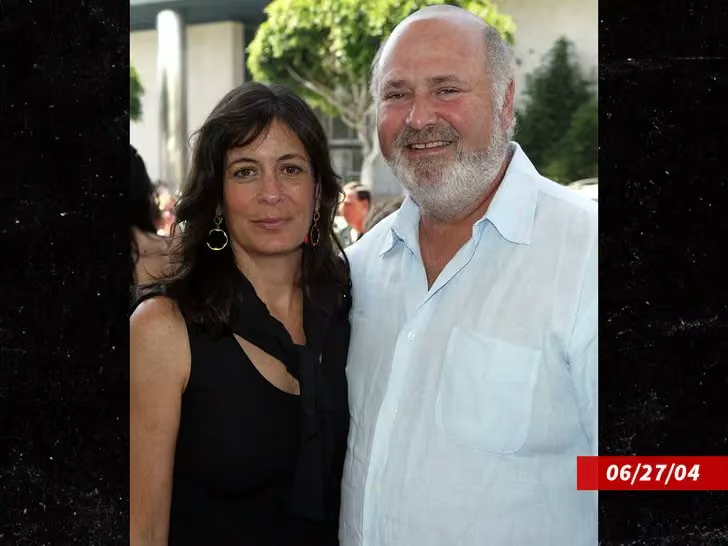 Jerry Mitchell
@JMitchellNews
#onthisday in 1879, Blanche Kelso Bruce became the first Black American to preside over the U.S. Senate. He was also the first Black American to serve a full term in the Senate and later the first Black American to win any votes at a major party’s nominating convention.
After escaping from slavery during the Civil War, he attempted to enlist in the Union Army. When he was turned down, he began teaching, eventually organizing Missouri’s first school for Black children in Hannibal.
After making his way down the Mississippi River, he decided to enter politics, rising through the ranks of Republican leaders, elected sheriff of Bolivar County, then the county superintendent of education. He turned the Bolivar County school system into one of the best in the state, becoming a well-known figure across the state.
In 1874, the Mississippi Legislature chose Bruce to fill a vacant seat in the U.S. Senate.
After Mississippi’s violent 1875 election, Bruce championed a bill to investigate the political conditions there. The bill passed the Senate, but the House, controlled by Democrats, did nothing. He pushed for the desegregation of the U.S. Army, citing what had already happened in the U.S. Navy. In 1880, he railed against the mistreatment of Native Americans.
“Our Indian policy and administration seem to me to have been inspired and controlled by stern selfishness,” he said.
He introduced legislation to assist destitute Black farmers in Kansas. Although the bill died in committee, it led to the distribution of duty–free British cotton clothing to impoverished Kansas communities.
When the Mississippi Legislature, now controlled by Democrats, gathered to select a new senator in January 1880, Bruce didn’t bother. Lawmakers selected one of Mississippi’s “Redeemers” of Reconstruction, white Democrat James Z. George, to replace him.
Bruce went on to serve as register of the U.S. Treasury and died of diabetes complications in 1898. In 2001, the Senate wing of the Capitol unveiled a portrait of Bruce, based on a Matthew Brady photograph.
The statue of George, however, continues to represent the state of Mississippi at the U.S. Capitol, along with Confederate President Jefferson Davis.
mississippitoday.org/2024/02/14/on-this-day-in-1879-blanc…
 Jerry Mitchell
@JMitchellNews
#onthisday in 1903, Ella Baker, who played an integral role in the civil rights movement, was born in Norfolk, Virginia.
Baker began her activism after graduating from Shaw University as class valedictorian in 1927. She dedicated herself to economic justice, saying, “People cannot be free until there is enough work in this land to give everybody a job.”
In 1940, she became a field secretary for the NAACP, and three years later served as director of branches. Inspired by the 1955 Montgomery Bus Boycott, she co-founded the organization, Friendship, to fight Jim Crow laws in the Deep South. Two years later, she moved to Atlanta to work with Martin Luther King Jr. and help him organize the Southern Christian Leadership Conference.
After the 1960 sit-in in Greensboro, North Carolina, she organized a youth leadership conference at Shaw University, where more than 300 gathered. She supported the students’ decision to leave SCLC and form the Student Nonviolent Coordinating Committee. She became “the godmother of SNCC,” teaching students that “strong people don’t need strong leaders” and that they should take control of the movement, rather than relying on a leader with “heavy feet of clay,” a not-so-subtle jab at King.
She continued her grassroots work in 1964 with the Mississippi Freedom Democratic Party, and when the three civil rights workers were killed, she declared, “Until the killing of a Black mother’s son becomes as important as the killing of a white mother’s son, we who believe in freedom cannot rest.”
She remained active in the movement until her death on her 83rd birthday in 1986. In 2009, the U.S. Post Office honored her with a postage stamp.
mississippitoday.org/2024/12/13/1903-ella-baker-born/
 Jerry Mitchell
@JMitchellNews
#onthisday in 1870, Joseph H. Rainey became the first Black lawmaker sworn into the U.S. House, where he served four terms.
Born on a rice plantation in South Carolina, his father purchased the family’s freedom through money made as a barber. But during the Civil War, Rainey was forced to work for the Confederate cause.
In 1862, he and his family escaped to Bermuda. When he returned to Charleston after the war, he became politically active and was elected to Congress. On April 1, 1871, he delivered his first major speech, arguing for the use of federal troops to protect southern Blacks from the recently organized Ku Klux Klan.
“When myself and my colleagues shall leave these Halls and turn our footsteps toward our southern homes,” he said, “we know not that the assassin may await our coming, as marked for his vengeance.”
Afterward, Rainey received a threatening letter, telling him and other defenders of civil rights to “prepare to meet your God.” President Ulysses S. Grant signed the Ku Klux Klan Act into law on April 20, 1871, but the bill failed to stop the violence.
On the floor of Congress, he argued in favor of the Civil Rights Act of 1875, questioning why Black members “cannot enjoy the same immunities that are accorded to white members? Why cannot we stop at hotels here without meeting objection? Why cannot we go into restaurants without being insulted?”
In 2015, his portrait became the first of a Black congressman displayed in the House, and a room inside the Capitol was renamed after him.
“It’s not really a Black story or a white story, it’s an American story,” his great-granddaughter, Lorna, told Newsday. “It’s the story of someone who rose from nothing to greatness. That’s an American story. It’s what we all think the best of America encompasses.”
mississippitoday.org/2024/12/12/1870-joseph-h-rainey/
 Jerry Mitchell
@JMitchellNews
#onthisday in 1961, the U.S. Supreme Court threw out the convictions of Black students arrested for taking part in a sit-in at the Kress Department Store in Baton Rouge. After the sit-ins in Greensboro, North Carolina, in 1960, the all-white Louisiana Board of Education warned that any student taking part in a sit-in would face “stern disciplinary action.”
Seven students at Southern University took that decision as an insult and headed to Kress’ lunch counter on March 28, 1960. Authorities jailed them, and nine other students took part in a sit-in, this one at Sitman’s lunch counter and the Greyhound bus station. They, too, were arrested, and 3,500 students marched through Baton Rouge to the State Capitol, where they protested and prayed.
Southern University’s president Felton Clark expelled 16 students that had taken part in the sit-ins, and the NAACP’s Thurgood Marshall began to represent them. The Kennedy administration filed a friend of the court brief backing the students. After the U.S. Supreme Court threw out the students’ convictions, more sit-ins and a mass demonstration took place, leading to the arrests of 23, including CORE Field Secretary Dave Dennis.
The next day, about 4,000 people, many of them students, marched from the university to the courthouse. The continued protests finally led to the desegregation of lunch counters in 1963. A half-century later, Southern University bestowed honorary degrees to the expelled students.
mississippitoday.org/2024/12/11/1961-kress-department-sto…
 Jerry Mitchell
@JMitchellNews
#onthisday in 1950, U.N. diplomat Ralph J. Bunche became the first Black American and the first person of color to win the Nobel Peace Prize.
Born in Detroit, his parents were poor, and both became ill, dying by the time he reached 13 years of age. After their deaths, he and his young sister went to live with his grandmother in Los Angeles. He sold newspapers, helped lay carpet and did other odd jobs to help the family meet ends.
At Jefferson High School in Los Angeles, he overcame prejudice to excel in both debate and sports, becoming valedictorian. He received an athletic scholarship to UCLA, where he played for the basketball team and was valedictorian of his 1927 class. He then won a scholarship to Harvard University, where he completed his master’s a year later, and would later become the first Black American to receive a PhD in political science in the U.S.
He began working at Howard University, where he became one of the leaders of a small cadre of black intellectuals whom W.E.B. Du Bois labeled the “Young Turks.” Unlike their predecessors, the Young Turks believed that issues affecting Black Americans could be attacked on the basis of class, rather than race — an integrationist approach that Martin Luther King Jr. embraced.
He became so well-known that President Franklin Roosevelt made him a member of the “Black Cabinet,” which consulted him on minority issues.
Bunche also worked with sociologist Gunnar Myrdal in the monumental study of U.S. race relations, published as “An American Dilemma” in 1944. In addition to matters of race, Bunche became an expert on colonialism, and in 1946, he began working for the United Nations. Two years later, when the UN’s chief negotiator in the Arab-Israeli conflict was assassinated, Bunche took his place. After eleven months of negotiating, Bunche obtained signatures on armistice agreements between Israel and the Arab States.
Upon his return to America, he received a ticker tape parade in New York City, and Los Angeles created a “Ralph Bunche Day.”
In accepting the Nobel Prize, Bunche declared, “The objective of any who sincerely believe in peace clearly must be to exhaust every honorable recourse in the effort to save the peace. The world has had ample evidence that war begets only conditions which beget further war.”
He became one of the nation’s most revered figures, and in 1963, President John F. Kennedy awarded him the Presidential Medal of Freedom, the nation’s highest civilian award. Two years later, Bunche joined King in the Selma march. After his death in 1971, UCLA and the City University of New York established centers named after him. A PBS documentary detailed his life.
mississippitoday.org/2024/12/10/1953-ralph-j-bunche-was-f…
 Jerry Mitchell
@JMitchellNews
#onthisday in 1872, P.B.S. Pinchback became governor in Louisiana — the first Black officeholder to do so in the U.S. He was appointed to the position during impeachment proceedings against the elected governor.
His father was a white Mississippi plantation owner, and his mother had been freed from slavery before her son was born. When his father died, he and his family moved to Ohio, and by age 12 he was supporting his family, eventually working on Mississippi River steamboats.
He was so light-skinned he could have “passed” for white, but when the Civil War came, he eventually served as a captain for the 74th U.S. Colored Infantry.
During Reconstruction, the Republican politician helped establish Louisiana’s new constitution and was elected state senator before serving as lieutenant governor and then governor.
In “Redemption: The Last Battle of the Civil War,” Nicholas Lemann described Pinchback as a larger than life figure — “newspaper publisher, gambler, orator, speculator, dandy, mountebank (who) served for a few months as the state’s governor and claimed seats in both houses of (Democratically controlled) Congress following disputed elections but could not persuade the members of either party to seat him.”
Pinchback helped establish Southern University for Black students and aided Homer Plessy’s challenge of segregation in public transportation.
mississippitoday.org/2024/12/09/1872-pbs-pinchback-louisi…
 Jerry Mitchell
@JMitchellNews
100 years ago today, Sammy Davis Jr., who succeeded as a dancer, singer and actor on stage and screen, was born in New York City.
Known as “Mr. Show Business,” he called himself “the only Black, Puerto Rican, one-eyed, Jewish entertainer in the world.” He learned dancing at a young age and played the title role in the movie, “Rufus Jones for President,” in which he was only 7.
When he turned 18 in 1943, he was drafted into World War II. “Overnight the world looked different,” he declared in his autobiography. “It wasn’t one color anymore.”
He encountered plenty of racism from some of the white soldiers. “I must have had a knockdown, drag-out fight every two days,” he recalled.
In the end, he wound up performing in front of the same soldiers that had once abused him. “My talent was the weapon, the power, the way for me to fight,” he recalled. “It was the one way I might hope to affect a man’s thinking.”
After his time in the military, he broke through as an entertainer after his nightclub performance following the 1951 Academy Awards. Unable to break the color barrier of television in the U.S., he starred in his own TV special on the Canadian Broadcast Co. That success and his continuing popularity helped break down the walls of the segregated entertainment industry.
He starred in seven Broadway shows, appeared in 23 films, including “Porgy and Bess,” had his own TV variety show and became a successful recording artist and member of the “Rat Pack” along with Frank Sinatra, Dean Martin and others. He performed in Las Vegas with them and appeared with them in movies, including “Ocean’s 11.” In 1972, he delivered his biggest hit, “The Candy Man,” which reached No. 1 on the charts.
That same year he also delivered one of television’s most famous kisses, smooching Archie Bunker on the cheek during an “All in the Family” episode. He received an Emmy for his television performances, a Grammy Lifetime Achievement Award and a Spingarn Medal from the NAACP. In 1987, Davis became a Kennedy Center Honors recipient, and he died of throat cancer three years later.
mississippitoday.org/2024/12/08/1925-sammy-davis-jr-born/
 Jerry Mitchell
@JMitchellNews
#onthisday in 1941, Doris “Dorie” Miller, a mess attendant aboard the battleship USS West Virginia, carried the injured captain and other shipmates to safety during the attack on Pearl Harbor.
When enemy planes swooped down, he stood behind an anti-aircraft gun and began firing, despite no prior training. He became the first Black seaman to receive the Navy Cross for valor, and a Navy recruiting poster featured him with the slogan, “above and beyond the call of duty.”
Before 1943 ended, a torpedo struck his ship, the Liscome Bay, killing Miller and more than 600 other crew members. Three decades later, the Navy named a ship after him.
Cuba Gooding Jr. portrayed Miller in the 2001 film, “Pearl Harbor,” and a statue has been built in his honor in his hometown of Waco, Texas. The Navy has since honored him by naming a new aircraft carrier after him.
“He died as he lived, an American sailor defending his nation, shoulder to shoulder with his shipmates, until the end,” Acting Navy Secretary Thomas Modly said. “Dorie Miller stood for everything that is good about our nation. His story deserves to be remembered and repeated wherever our people continue to stand the watch today. He’s not just the story of one sailor. It is the story of our Navy, of our nation and our ongoing struggle to form — in the words of our Constitution — a more perfect union.”
mississippitoday.org/2023/12/07/1941-doris-miller-pearl-h…
 Jerry Mitchell
@JMitchellNews
#onthisday in 1865, the state of Georgia provided the final vote needed for the 13th Amendment to become part of the U.S. Constitution, abolishing slavery: “Neither slavery nor involuntary servitude, except as a punishment for crime whereof the party shall have been duly convicted, shall exist within the United States, or any place subject to their jurisdiction.”
Two days before, Mississippi lawmakers had rejected ratification. In 1995, the Mississippi Legislature, trying to rectify the historic mistake, voted to ratify the anti-slavery amendment. Because of a paperwork snafu, the vote didn’t become official until 2013.
mississippitoday.org/2024/12/06/1865-georgia-slavery-vote/
 Jerry Mitchell
@JMitchellNews
#onthisday in 1955, the Montgomery Bus Boycott began. Most of the 50,000 Black workers living in Montgomery supported the boycott by walking, bicycling and car-pooling. The boycott was organized by the local chapter of the NAACP led by Pullman porter E. D. Edgar Nixon.
“We’re going to work with grim and bold determination to gain justice on the buses in this city. And we are not wrong,” new minister Martin Luther King Jr. declared. “If we are wrong, the Supreme Court is wrong. If we are wrong, the Constitution of the United States is wrong.”
Months later, the homes of King and Nixon were bombed, and when that didn’t stop the boycott, authorities arrested King and ordered him to pay $500 and serve more than a year in jail. Despite this, the boycott continued.
Nearly a year later, the U.S. Supreme Court ruled that bus segregation was unconstitutional, and the victory inspired the Civil Rights Movement.
“We came to see that, in the long run, it is more honorable to walk in dignity than ride in humiliation,” King said. “We decided to substitute tired feet for tired souls and walk the streets of Montgomery.’’
mississippitoday.org/2024/12/05/1955-montgomery-bus-boycott/
 Jerry Mitchell
@JMitchellNews
When I did a 1990 interview with Byron De La Beckwith, who killed Mississippi NAACP leader Medgar Evers in 1963, most Americans bristled at Beckwith’s beliefs. Now, 35 years later, the assassin is dead, but some of the views he promulgated are reemerging in new forms. @DougJones
 Jerry Mitchell
@JMitchellNews
#onthisday in 1841, Frederick Douglass founded and edited his first antislavery newspaper, “The North Star,” in Rochester, New York. The publication title referred to Polaris, the bright star that helped guide Black Americans escaping slavery: “To millions, now in our boasted land of liberty, it is the STAR OF HOPE.”
He explained in this first issue that he desired to see “in this slave-holding, slave-trading, and negro-hating land, a printing-press and paper, permanently established, under the complete control and direction of the immediate victims of slavery and oppression … that the man who has suffered the wrong is the man to demand redress,—that the man STRUCK is the man to CRY OUT—and that he who has endured the cruel pangs of Slavery is the man to advocate Liberty.”
The publication also sought to “promote the moral and intellectual improvement” of people of color. He championed not only for the freedom of those enslaved, but for women’s rights as well with the motto, “Right is of no sex. Truth is of no color. God is the father of us all, and all we are brethren.”
In 1851, the paper merged with the Liberty Party Paper from Syracuse and became known as Frederick Douglass’ Paper. The paper closed during the Civil War, and in 1870, he moved from Rochester to Washington, D.C., and became part owner of the New National Era, which attacked the rise of the Ku Klux Klan and the mistreatment of and violence against Black Americans throughout the nation. His sons ran the newspaper until it folded in 1874. Because of a fire, no known collection exists of all of Douglass’ newspapers.
mississippitoday.org/2024/12/03/1841-frederick-douglass-n…
 Jerry Mitchell
@JMitchellNews
When I did a 1990 interview with Byron De La Beckwith, who killed Mississippi NAACP leader Medgar Evers in 1963, most Americans bristled at Beckwith’s beliefs. Now, 35 years later, the assassin is dead, but some of the views he promulgated are reemerging in new forms.

Jerry Mitchell reposted
 Pulitzer Center
@pulitzercenter
Videos reveal officers inside the Rankin County, Mississippi, mocking and laughing at an intellectually disabled inmate.
@JMitchellNews, @mukta_jo, @nate_rosenfield, and @SteelandBallast report for @MSTODAYnews.
*Warning: disturbing images. pulitzercenter.org/stories/videos-show-guards-mississippi…
Jerry Mitchell
@JMitchellNews
#onthisday in 1986, Mike Espy became the first Black congressman elected from Mississippi since Reconstruction. Born in Yazoo City, his grandfather was Thomas J. Huddleston Sr., founder of the Afro-American Sons and Daughters, which operated the Afro-American Hospital, providing health care to Black Mississippians until the 1970s. He learned soon about the color line, becoming the only Black student in a newly integrated high school.
He recalled carrying a stick to fend off racist attacks: “Relative to the civil rights experiences of snarling dogs and whips and things it was pretty tame. But I’d always have a fight. The teacher would leave the room, and then you’re among 35 in the classroom and they’d make racial jeers.”
He became a lawyer, working as an attorney for Central Mississippi Legal Services from 1978 to 1980. Between 1980 and 1984, Espy worked as assistant secretary of the Public Lands Division for the State of Mississippi and then served as assistant state attorney general for Consumer Protection.
In 1984, he served on the rules committee for the 1984 Democratic National Convention, drawing the attention of the party. In his historic campaign in 1986, he campaigned door to door for votes with his slogan, “Stand by Me, Pray for Me, Vote for Me.”
While serving as congressman, he emphasized economic development in the Delta, winning reelection three times. In 1993, he became the first Black American to serve as secretary of agriculture, ushering in a wave of reform. Four years later, he was indicted on charges of receiving improper gifts, but a jury acquitted him of all charges.
He ran for the U.S. Senate in 2018, where he lost to Republican incumbent Cindy Hyde-Smith, who drew national attention after she remarked that she would “be in the front row” of a “public hanging” if invited by a political supporter. The remark created a firestorm because of Mississippi’s history of lynchings. She later responded, “For anyone that was offended by my comments, I certainly apologize,” claiming her remark had been twisted and “turned into a weapon” against her.
Espy lost again in a rematch in 2020.
mississippitoday.org/2024/12/02/1986-mike-espy-elected-co…
 Jerry Mitchell
@JMitchellNews
I'm friends with award-winning reporter Lena Jakobsson, who is working on a project w/ Americans for Lower Drug Prices. They are making videos that tell the stories of people struggling to afford crucial medications, to raise awareness and lobby state lawmakers. If this project interests you, please email her at Lena@LenaJakobsson.com.

 Vinny’s Corner
@VinnysCorner1
Who was the best player in the NBA when you were 10?
Jerry Mitchell
@JMitchellNews
The only NBA player to have more championship rings than fingers ...
 Jerry Mitchell
@JMitchellNews
#onthisday in 1955 — four days after hearing civil rights leader Dr. T.R.M. Howard describe what happened to Emmett Till — Rosa Parks refused to give up her seat to a white man on a city bus in Montgomery, Alabama.
“People always say that I didn’t give up my seat because I was tired, but that isn’t true. I was not tired physically, or no more tired than I usually was at the end of a working day,” she said. “No, the only tired I was, was tired of giving in.”
This was far from her first civil rights protest; it wasn’t even her first protest on a bus. In 1943, she boarded a bus to go to the clerk’s office so she could register to vote. When the white driver demanded she re-board the standing-room only bus by entering from the back, she got off, waited for the next bus and swore she would never ride again with that driver.
Her arrest in 1955 sparked the Montgomery Bus Boycott. Weeks after her first arrest, she was jailed again, this time for her role in the boycott, helping arrange carpool rides for Black workers. When she received death threats and lost her job as a seamstress, she and her family were forced to move to Detroit, where they struggled financially until Congressman John Conyers Jr. hired her.
She continued to work on issues such as poverty, health care, housing and police brutality until her death in 2005.
mississippitoday.org/2024/12/01/1955-rosa-parks-refuses-s…
 Jerry Mitchell
@JMitchellNews
#onthisday in 1961, a white mob attacked CORE’s Freedom Riders when they attempted to integrate the “all-white” waiting room at the Greyhound bus station in McComb in southwest Mississippi, yelling, “Kill ‘em! Kill ‘em!”
The five riders — Doratha “Dodie” Smith-Simmons, Jerome Smith, Alice Thompson, George Raymond and Tom Valentine — were from New Orleans and had already been active in the civil rights movement.
When Raymond asked for a cup of coffee, a white man poured the hot liquid over his head and smashed him with the mug. “All hell broke loose,” Smith-Simmons recalled. “I thought we would all die that day, because they were trying to kill us.”
A white mob jumped on Smith, beating him with brass knuckles. Others grabbed Valentine and began to bash his body against the floor, one man yelling out, “I’ll kill him! I’ll kill him!”
When Thompson and Smith-Simmons tried to flee, the mob turned on them, beating and kicking them. She somehow escaped.
“I just ran and ran until the truck overtook me, and I saw it was Jerome and the rest of the group and I just stood there ready to cry,” she told The Times-Picayune. “I don’t know how they all got together, but they did and went looking for me.”
They fled to safety to a Black-owned hotel. By the time night fell, it became obvious they had won. Local police, who had been conspicuously missing when the riders arrived, escorted the riders safely to the bus terminal while the FBI looked on. And the mayor and police chief told the press that segregation would no longer be enforced in the Greyhound waiting rooms.
mississippitoday.org/2024/11/29/1961-freedom-riders-mccomb/
 Jerry Mitchell
@JMitchellNews
#onthisday in 1961, Ernie Davis became the first Black player to win the collegiate Heisman Trophy while a running back at Syracuse University. His life story was portrayed in the 2008 movie, “The Express.”
By age 12, he excelled in sports, leading his high school basketball team in Elmira, New York, to a 52-game winning streak. He became a talented football player and was recruited to Syracuse University by alumnus Jim Brown, the legendary running back for the Cleveland Browns. Davis helped Syracuse win its only national title, defeating the University of Texas in the Cotton Bowl. Although he was named the game’s MVP, he wasn’t allowed to attend the awards banquet because of his color.
When he won the Heisman Trophy, President John K. Kennedy congratulated him. “Imagine,” Davis said, “a president wanting to shake hands with me.”
He was the first overall pick in the NFL draft, and the Cleveland Browns signed him to a record rookie contract to play in the same backfield with Brown, his childhood hero. But before he could compete on the field, doctors discovered he had leukemia. After his cancer went into remission, he practiced again with the Browns, but he was forced to reenter the hospital the following spring.
On May 18, 1963, he died in his sleep at the age of 23. Thousands attended the funeral in Elmira, including members of the Browns team that he never played for.
“Ernie Davis transcended racism. That was his essence. That was his greatness,” Jim Brown told Sports Illustrated.
“Some people say I am unlucky. I don’t believe it,” Davis wrote in The Saturday Evening Post. “When I look back, I can’t call myself unlucky. … In these years I have had more than most people get in a lifetime.”
mississippitoday.org/2024/11/28/1961-ernie-davis-heisman-…
 Jerry Mitchell
@JMitchellNews
Happy Thanksgiving!
 Jerry Mitchell
@JMitchellNews
#onthisday in 1942, legendary Jimi Hendrix, whom Rolling Stone ranks as the greatest guitarist of all time, was born in Seattle. He left his hometown because of racism and grew up in poverty.
Hemdrix began playing guitar at age 15, drenched in the blues before backing R&B artists Little Richard and The Isley Brothers on tour, becoming one of the most talented musicians on the Chitlin’ Circuit.
But he experienced firsthand the South’s segregation, unable to go to the bathroom at a gas station because of the color of his skin. Even after becoming a rock star, he experienced racism, cab drivers in New York City refusing to pick him up.
When Hendrix made his foray into rock music, he took “the blues out of the Mississippi Delta and sent it to Mars,” one music critic said. He coaxed sounds out of the electric guitar that no one else thought possible. When he played “The Star-Spangled Banner” at Woodstock, he turned the standard into a sonic masterpiece, complete with soaring rockets and bursting bombs.
His version came at the height of the Vietnam War, where Black soldiers were dying on the battlefield in record numbers. Some saw his interpretation as “unpatriotic,” but he disputed such talk on “The Dick Cavett Show,” saying, “I’m an American, too.”
The last words he wrote before he died accidentally after taking sleeping pills: “The story of life is quicker than the wink of an eye. The story of love is hello and goodbye, until we meet again.”
mississippitoday.org/2024/11/27/1942-jimi-hendrix-born
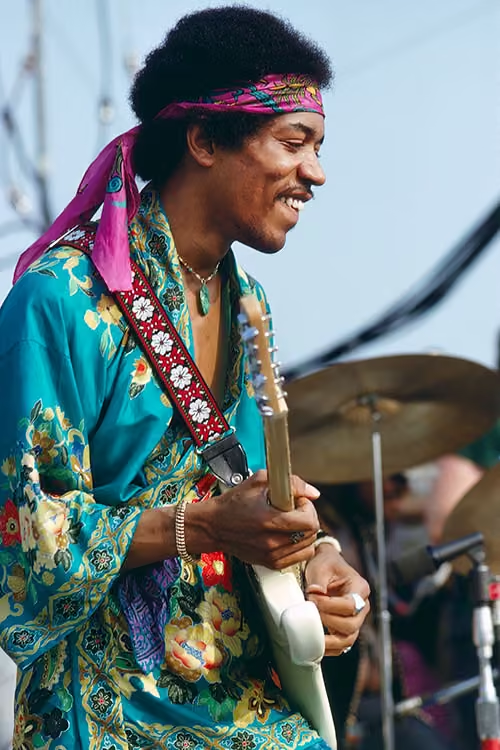 Jerry Mitchell
@JMitchellNews
#onthisday in 1883, abolitionist and women’s rights advocate Sojourner Truth (whose original name was Isabella Baumfree) died in Battle Creek, Michigan.
Freed from slavery, she wandered the country, calling for an end to the institution. “Ain’t I a woman?” she told a women’s rights convention in Akron, Ohio. “I have borne 13 children and seen most all sold off to slavery and when I cried out with my mother’s grief, none but Jesus heard me. And ain’t I a woman?”
A century after her death, she was elected to the Women’s Hall of Fame. A statue of her can be found in Battle Creek, less than a mile from the nation’s largest monument to the Underground Railroad.
mississippitoday.org/2023/11/26/on-this-day-in-1883-aboli…
 Jerry Mitchell
@JMitchellNews
#onthisday in 1915, a week before the silent film, “Birth of a Nation,” premiered at an Atlanta theater, William Simmons, along with 15 other men (including some who lynched Leo Frank) burned a cross on Stone Mountain, Georgia, signaling the rebirth of the Ku Klux Klan.
The movie’s racist portrayals of Black Americans prompted outrage by the NAACP and others, leading to huge protests in towns such as Boston and the film’s closing in Chicago.
Despite these protests, the movie became Hollywood’s first blockbuster, making as much as $100 million at the box office (the equivalent of $2.4 billion today). In the wake of the movie, the KKK became a national organization, swelling beyond 4 million members.
mississippitoday.org/2024/11/25/1915-cross-burning-georgia/
 Jerry Mitchell
@JMitchellNews
Here's the National Teach-in Honoring Emmett Till and Mamie Till-Mobley:
www.youtube.com/@TheInstituteCP
Jerry Mitchell
@JMitchellNews
The long-hidden monument to bigotry and brutality — the Mississippi Delta barn where Emmett Till was tortured and killed in 1955 — will soon become a “sacred site” for all to see.
On Monday, the Emmett Till Interpretive Center announced that it had purchased the barn, thanks to a $1.5 million gift from TV producer Shonda Rhimes, who was moved to donate after reading about the barn, saying, “My hope is that this story never gets lost.”
Dave Tell, author of “Remembering Emmett Till,” said the barn was “written out of history by the very men who committed the crime there — erased from public memory as part of a broader effort to bury the truth and protect white perpetrators. Preserving it now is an intentional act of restoration.”
mississippitoday.org/2025/11/24/barn-emmett-till-sacred-s…
 Jerry Mitchell
@JMitchellNews
#onthisday in 1968, Black Panther leader Eldridge Cleaver fled the U.S. to avoid imprisonment on a parole violation. He wrote in “Soul on Ice”: “If a man like Malcolm X could change and repudiate racism, if I myself and other former Muslims can change, if young whites can change, then there is hope for America.”
The Arkansas native began to be incarcerated when he was still in junior high and soon read about Malcolm X. He began writing his own essays, drawing the praise of Norman Mailer and others. That work helped him win parole in 1966. His “Soul on Ice” memoir, written from Folsom state prison, described his journey from selling marijuana to following Malcolm X. The book he wrote became a seminal work in Black literature, and he became a national figure.
Cleaver soon joined the Black Panther Party, serving as the minister of information. After a Panther shootout with police that left him injured, one Panther dead and two officers wounded, he jumped bail and fled the U.S. In 1977, after an unsuccessful suicide attempt, he returned to the U.S. pleaded guilty to a reduced charge of assault and served 1,200 hours of community service.
From that point forward, “Mr. Cleaver metamorphosed into variously a born-again Christian, a follower of the Rev. Sun Myung Moon, a Mormon, a crack cocaine addict, a designer of men’s trousers featuring a codpiece and even, finally, a Republican,” The New York Times wrote in his 1998 obituary. His wife said he was suffering from mental illness and never recovered.
mississippitoday.org/2024/11/24/1968-eldridge-cleaver-flees/
 Jerry Mitchell
@JMitchellNews
#onthisday in 1867, the Louisiana Constitutional Convention, composed of 49 White delegates and 49 Black delegates, met in New Orleans. The new constitution became the first in the state’s history to include a bill of rights.
The document gave property rights to married women, funded public education without segregated schools, provided full citizenship for Black Americans, and eliminated the Black Codes of 1865 and property qualifications for officeholders.
The voters ratified the constitution months later. Despite the document, prejudice and corruption continued to reign in Louisiana, and when Reconstruction ended, the constitution was replaced with one that helped restore the rule of white supremacy.
mississippitoday.org/2023/11/23/1867-louisiana-constitution/
 Jerry Mitchell
@JMitchellNews
#onthisday in 1961, five Black students, made up of NAACP Youth Council members and two SNCC volunteers from Albany State College, were arrested after entering the white waiting room of the Trailways station in Albany, Georgia.
The council members bonded out of jail, but the SNCC volunteers, Bertha Gober and Blanton Hall, declined bail and “chose to remain in jail over the holidays to dramatize their demand for justice,” according to SNCC Digital Gateway. The president of Albany State College expelled them.
Gober became one of SNCC’s Freedom Singers and wrote the song, “We’ll Never Turn Back,” after the 1961 killing of Herbert Lee in Mississippi. The tune became SNCC’s anthem.
After her release from jail, Gober joined other students, and police arrested her and other demonstrators. Back in the same jail, she sang to the police chief and mayor to open the cells, “I hear God’s children praying in jail, ‘Freedom, freedom, freedom.’”
Albany State suspended another student, Bernice Reagon, after she joined SNCC. She poured herself into the civil rights movement and later formed the Grammy-nominated a cappella group Sweet Honey in the Rock to educate and empower the audience and community.
“When I opened my mouth and began to sing, there was a force and power within myself I had never heard before,” a power she said she did not know she had.
Other members of the Freedom Singers included Cordell Reagon, Bernice Johnson, Dorothy Vallis, Rutha Harris, Bernard Lafayette and Charles Neblett. On the third anniversary of the sit-in movement in 1963, they performed at Carnegie Hall.
“This is a singing movement,” SNCC leader James Forman told a reporter. “The songs help. Without them, it would be ugly.”
Today, the Albany Civil Rights Institute houses exhibits on these protesters, Martin Luther King Jr. and others who joined the Albany Movement. (Photo by Danny Lyon)
mississippitoday.org/2024/11/22/1961-black-students-trail…
 Jerry Mitchell
@JMitchellNews
Inside a brutal Mississippi jail, inmates say they were enlisted as enforcers, known as the “Blue Wave,” to beat inmates. One video shows guards shocking an intellectually disabled man simply because he wanted a Coke.
www.tiktok.com/@mississippitoday/video/7574586551217212703
Jerry Mitchell
@JMitchellNews
#onthisday in 1934, Ella Fitzgerald, the “Queen of Jazz,” made her debut at the Apollo Theater in Harlem. She had planned to go on stage and dance for Amateur Night, but when the Edwards Sisters danced before her, she decided to sing instead.
That break led to others, and she became a sensation after a song she co-wrote, “A-Tisket, A-Tasket,” became a major hit in 1938. She battled racism, ordered by Pan-Am to leave their flight to Australia. Despite missing two concerts there, she went on to set a new box office record in Australia.
She helped to break racial barriers, refusing to perform before segregated audiences. The NAACP awarded her the Equal Justice Award and the American Black Achievement Award.
She became the first Black woman to win a Grammy. In her music, she innovated with scat singing, sang be-bop, jazz and even gospel hymns. She performed with her own orchestra, the Benny Goodman Orchestra, Duke Ellington and Count Basie, and her Song Book series became a huge critical and commercial success.
She performed in Hollywood films, and her most memorable take on television came when her voice shattered a glass. When the tape was played back, her voice broke another glass, and the ad asked, “Is it live, or is it Memorex?”
By the time she died in 1996, she had won 13 Grammy Awards, the Grammy Lifetime Achievement Award, the George and Ira Gershwin Award for Lifetime Musical Achievement, the National Medal of Arts and the Presidential Medal of Freedom.
Mattel designed a doll after her, part of the Barbie Inspiring Women Series, which “pays tribute to incredible heroines of their time — courageous women who took risks, changed rules and paved the way for generations to dream bigger than ever before.”
mississippitoday.org/2023/11/21/1934-ella-fitzgerald-apol…
 Jerry Mitchell
@JMitchellNews
This video was filmed and shared by officers of the Rankin County Sheriff's Department, the same department that housed the "Goon Squad," which carried out a reign of terror for two decades.
Our investigation into the Rankin County jail uncovered similar behavior. Former guards and inmates described a gang of inmates known as the "Blue Wave" that guards used to punish inmates who had broken rules.
In October 2018, an intellectually disabled man named Larry Buckhalter asked for a Coke. He's sitting quietly in a chair, strapped into a stun vest that is typically used to control violent inmates during court hearings.
Off camera, a man jokes that Buckhalter is going to bite off his tongue. A woman, who is also off camera, tells him to give his consent.
He takes a deep breath. “My name Larry and I volunteer to this,” he says.
The vest is activated. Buckhalter screams as his body convulses. (Link will play video.)
www.tiktok.com/@mississippitoday/video/7574586551217212703
 Jerry Mitchell
@JMitchellNews
#onthisday in 1866, 10 members of the First Congregational Society of Washington, D.C., met in the home of Deacon Henry Brewer. They decided to create a seminary to train Black clergymen. Within a year, the institution, which later became known as Howard University, embraced a broader mission and became an educational hub for the nearly 4 million freed from slavery.
In 1867, the institution welcomed its first students, educating Black doctors, teachers and pastors. Charles Hamilton Houston, a vice dean at the Howard University School of Law, brought cases to fight segregation in higher education. He mentored Howard alum, Thurgood Marshall, who successfully argued the Brown v. Board of Education decision that ended segregation in public schools.
mississippitoday.org/2024/11/20/1866-howard-university-me…
 Jerry Mitchell
@JMitchellNews
Two newly discovered videos taken inside the Rankin County jail show officers mocking and laughing at an intellectually disabled inmate, the same man guards had filmed days earlier being shocked in an electrified vest after he asked for a Coke.
Former department employees said the videos, recorded in 2018, were shared widely on an encrypted WhatsApp group chat. The footage provides a deeper look into the culture of the jail, where a recent investigation by Mississippi Today and The New York Times revealed that guards and jail administrators routinely beat inmates.
In one video, Larry Buckhalter, stands before the camera in his prison jumpsuit and a party hat and sings “Happy Birthday” to “Barry,” an apparent reference to Barry Vaughn, the former head of the jail who is now undersheriff.
In the second video, someone off camera instructs Buckhalter to “tell him you love him.”
“I love you, Barry!” he says, and gleefully announces it is his last day in jail.
As he speaks, a man in uniform standing behind him slams a plastic sign to the floor. Startled, Buckhalter jumps and screams as people off camera laugh.
The videos were created days after Buckhalter had asked jail guards for a Coke in October 2018. Shortly after his request, the guards strapped him into an electrified vest, intended to keep violent inmates under control. Then they filmed him screaming and convulsing while they shocked him.
mississippitoday.org/2025/11/19/rankin-county-guards-mock…
 Jerry Mitchell
@JMitchellNews
#onthisday in 1919, police officer and World War I hero James Wormley Jones was appointed as the first Black special agent for what was later named the FBI.
Jones served as a captain in the 368th Infantry Regiment, 92nd Division, in command of Company F. One history book described his company’s fight on the Metz front in France: “When the awful bombardment died away, just as the gray streaks of early dawn pierced the night’s blackness, which was made grayer by a thick heavy fog, the Captain ordered a charge ‘over the top’ with fixed bayonets; through the treacherous fog and into no-man-knew-what or seemed to care. The first wave, or detachment, went over with a cheer — a triumphant cheer — and the second wave followed their comrades with a dash. It may, perhaps, be best to let these boys and officers tell with their own lips of the terrific, murderous shell, shrapnel, gas, and machine-gun fire which baptized them, only to make them the more hardened and intrepid warriors; of how they contended every inch; fought with marvelous valor, never for an instant faltering.
“Trench after trench of the enemy was entered and conquered; dugout after dugout was successfully grenaded and made safe for the boys to follow; wires were cut and communicating trenches explored; machine-gun nests were raided and silenced, and still the boys fought their way on. Of course, as a natural sequence to such a daring raid, there were casualties, but the Black soldiers, heroes as they were, never flinched at death, and the wounded were too proud of their achievements even to murmur because of the pain they endured. Captain Jones and his men took over a mile of land and trenches which for four years had been held by the Germans.”
Newspapers noted the successful raid, and Jones earned a promotion. When he returned from the war, he resumed his work for the Metropolitan Police in Washington, D.C., before the FBI hired him, utilizing his undercover work and expertise in explosives to fight domestic terrorism.
mississippitoday.org/2024/11/19/1919-james-wormley-jones-…
 Jerry Mitchell
@JMitchellNews
#onthisday in 1946, future U.S. Supreme Court Justice Thurgood Marshall was nearly lynched in Columbia, Tennessee, just 30 miles from where the Ku Klux Klan was born.
He and his fellow NAACP lawyers had come here to defend Black men accused of racial violence. In a trial, Marshall and other NAACP lawyers won acquittals for nearly two dozen Black men.
After the verdicts were read, Marshall and his colleagues promptly left town. After crossing a river, they came upon a car in the middle of the road. Then they heard a siren. Three police cars emptied, and eight men surrounded the lawyers. An officer told Marshall he was being arrested for drunken driving, even though he hadn’t been drinking. Officers forced Marshall into the back seat of a car and told the other men to leave.
“Marshall knew that nothing good ever happened when police cars drove black men down unpaved roads,” author Gilbert King wrote in “Devil in the Grove.” “He knew that the bodies of blacks — the victims of lynchings and random murders — had been discovered along these riverbanks for decades. And it was at the bottom of Duck River that, during the trial, the NAACP lawyers had been told their bodies would end up.”
When the car stopped next to the river, Marshall could see a crowd of white men gathered under a tree. Then he spotted headlights behind them. It was a fellow NAACP lawyer, Zephaniah Alexander Looby, who had trailed them to make sure nothing happened. Reporter Harry Raymond concluded that a lynching had been planned, and “Thurgood Marshall was the intended victim.” Marshall never forgot the harrowing night and redoubled his efforts to bring justice in cases where Black defendants were falsely accused.
mississippitoday.org/2024/11/18/1946-thurgood-marshall-ly…
 Jerry Mitchell
@JMitchellNews
#onthisday in 1871, Edward Crosby stood before the congressional hearing and swore to tell the truth. By raising his right hand, Crosby put himself and his family at risk. He could be killed for daring to tell about the terrorism he and other Black Mississippians had faced.
Days earlier, he had attempted to vote in Aberdeen, Mississippi, asking for a Republican ballot. The clerk at the polling place said none was available. He waited. Dozens more Black men came to vote, and they were all told the same thing. Then he tried another polling place. Same result.
That day, white men, backed by a cannon, drove about 700 Black voters from the polls in Aberdeen. After nightfall, Crosby stepped out to retrieve water for his child when he saw 30 or so Klansmen galloping up on horses. He hid in a smokehouse, and when Klansmen confronted his wife, she replied that he was away. They left, and from that moment on, “I didn’t sleep more than an hour,” Crosby recalled. “If there had been a stick cracked very light, I would have sprung up in the bed.”
In response, Mississippi, which was under federal rule at the time, pursued an anti-Klan campaign. In less than a year, grand juries returned 678 indictments with less than a third of them leading to convictions.
That number, however, was misleading, because in almost all the cases, Klansmen pleaded no contest in exchange for small fines or suspended sentences. Whatever protection that federal troops offered had vanished by the time they left the state a few years later.
mississippitoday.org/2024/11/17/1871-edward-crosby-testif…
 Jerry Mitchell
@JMitchellNews
#onthisday in 2017, author Jesmyn Ward became the first Black American to win the National Book Award twice.
Growing up in DeLisle, Mississippi, “I read everything,” she wrote. “Still, I still felt as if a part of me was wandering. That there was a figure in me, walking the desert, waiting for a word. A word that would sound out of the wilderness to declare that it was speaking to me, for me, within me. The sonic sear of that voice: a new knowing of not only the world I walked, but of me.”
She became the first person in her family to go to college. She attended Stanford University, where she earned a bachelor’s in English and a master’s in media studies.
When a drunken driver killed her younger brother, she decided to become a writer in his memory.
After earning a master’s in fine arts in creative writing from the University of Michigan, she and her family were caught by the floodwaters of Hurricane Katrina, but managed to take shelter with a family.
She won her first National Book Award for “Salvage the Bones,” which was set during the days of Katrina.
“When I hear people talking about the fact that they think we live in a post-racial America,” she said, “it blows my mind, because I don’t know that place. I’ve never lived there.”
She won her second National Book Award for “Sing, Unburied, Sing,” becoming the first woman and first Black American to win two National Book Awards. She also won a MacArthur “genius” grant, one of a handful of Mississippians to receive the award. In 2022, she became the youngest person to ever receive the Library of Congress Prize for American Fiction.
mississippitoday.org/2024/11/15/2017-jesmyn-ward-national…
 Jerry Mitchell
@JMitchellNews
Our investigative team at @MSTODAYnews, working w/ @nytimes, interviewed 70+ people once jailed in Rankin County. Guards used "Blue Wave" inmates to brutalize others. Same sheriff's department saw 5 deputies, known as the "Goon Squad," go to prison for brutalizing 2 Black men, shooting one in the mouth. www.nytimes.com/2025/11/14/us/mississippi-jail-inmates-ra…
 Jerry Mitchell
@JMitchellNews
#onthisday in 1960, federal marshals escorted 6-year-old Ruby Bridges into William Frantz Elementary School in New Orleans. Day after day, whites jeered at the Mississippi native and three other Black children, Leona Tate, Gail Etienne and Tessie Prevost, who became the first to attend all-white elementary schools in the South.
Many white families left the school in protest, but Barbara Henry stayed and taught Bridges. Norman Rockwell depicted Bridges’ entry in his painting “The Problem We All Live With,” and she received the Presidential Citizens Medal in 2001. There is now a statue of her outside the elementary school, which bears her name.
“I was an innocent child that knew absolutely nothing about what was happening that day,” she recalled, “but I learned a very valuable lesson — we should never look at a person and judge them by the color of their skin. That’s the lesson I learned in first grade.”
mississippitoday.org/2024/11/14/1960-ruby-bridges-william…
 Jerry Mitchell
@JMitchellNews
Will be hosting this within the hour. Hope you can join me!
 Jerry Mitchell
@JMitchellNews
#onthisday in 1999, a jury in Belzoni, Mississippi, convicted three men of manslaughter in the April 12, 1970, killing of Rainey Pool, a 54-year-old sharecropper.
When the one-armed man, who had been drinking, happened to enter a “whites-only” bar in Midnight, Mississippi, a mob beat him unconscious and threw him into the Sunflower River, where he died.
The killers each received the maximum of 20 years behind bars.
mississippitoday.org/2024/11/13/1999-rainey-pool-killing/
 Jerry Mitchell
@JMitchellNews
#onthisday in 1914, civil rights leader William Monroe Trotter led a delegation that confronted President Woodrow Wilson.
Raised in Hyde Park, Massachusetts, Trotter had more education than the president. He had graduate and postgraduate degrees from Harvard University, where he became the first Black member of Phi Beta Kappa.
“New Englanders liked to talk as if ‘the Negro problem’ afflicted only the South,” The New Yorker wrote of him, “but Trotter looked around his beloved Boston and saw segregation in the city’s churches, gyms, and hospitals. This ‘fixed caste of color’ meant that ‘every colored American would be a civic outcast, forever alien in public life,’ he wrote.”
In 1901, he started The Guardian with the motto: “For every right, with all thy might.” The newspaper called itself “an organ which is to voice intelligently the needs and aspirations” of Black Americans.”
Both he and his wife, Deenie, published The Guardian each Saturday, only missing two issues: “The Trotters had no children and did not want any; The Guardian was their child.”
In their pages, Trotter leveled vicious attacks against Booker T. Washington and his accommodation policies, calling him “the Great Traitor.” When Trotter began to question Washington at a gathering of 2,000, a fight broke out, which became known as “the Boston riot,” and he was arrested, spending 30 days in jail. The wealth his family once enjoyed turned to poverty because of the money he sunk into his newspaper.
“It has cost me considerable money, but I could not keep out of it,” he wrote. “I can now feel that I am doing my duty and trying to show the light to those in darkness and keep them from at least being duped into helping in their own enslavement.”
He turned his attention to political candidates he felt would support African Americans and began backing Wilson, whom he met and shook hands with in 1912 “with great cordiality.”
A year later, he and Ida B. Wells and other civil rights leaders expressed dismay over the reinstitution of Jim Crow and even shared a chart that showed which federal offices had begun separating workers by race.
In 1914, Trotter and other Black leaders appeared at the White House with 20,000 signatures, demanding an end to Jim Crow in federal offices. The leaders told Wilson they felt betrayed because they had supported him in the election, and he had since reinstituted segregation in the federal government that included separate toilets and dismissed high-level Black appointees.
“Only two years ago you were heralded as perhaps the second Lincoln,” Trotter said, “and now the Afro-American leaders who supported you are hounded as false leaders and traitors to their race.”
He reminded the president — who had been busy championing his “New Freedom” program to restore fair-labor practices — that he had promised to aid Black Americans in “advancing the interest of their race in the United States. … Have you a ‘New Freedom’ for white Americans and a new slavery for your Afro-American fellow citizens? God forbid!”
Wilson responded that “segregation is not humiliating but a benefit” and that he had put the practice back in place because of friction between Black and white clerks. Trotter challenged this claim, calling Jim Crow humiliating to Black workers.
Wilson stuck to his guns, telling Trotter that if he and other Black Americans think “you are being humiliated, you will believe it.” The exchange lasted 45 minutes, and the president challenged Trotter’s “tone” as offensive: “You have spoiled the whole cause for which you came.”
The civil rights leader responded, “I am pleading for simple justice. If my tone has seemed so contentious, why has my tone been misunderstood?”
The argument landed on the front page of The New York Times. During World War I, the State Department refused to give Trotter a passport to Paris. To get around the restriction, he took a job as a cook on a freighter to France, and when he began reporting on the plight of Black soldiers, French newspapers shared his reporting, and he spoke there about discrimination against African Americans.
When Trotter returned home, he was welcomed by 2,000 supporters. He unsuccessfully championed a section added to Wilson’s 14 Points for peace that would say, “The elimination of civil, political, and judicial distinctions based on race or color in all nations for the new era of freedom everywhere.”
Trotter helped found the Niagara Movement, a forerunner of the NAACP. The civil rights organization adopted his proposal to address segregated transportation as a grievance, but the group rejected his proposal to make lynching a federal crime.
He championed cases the NAACP was slower to pursue, including Jane Bosfield, a Black woman was told she could only work for a Massachusetts hospital if she ate separately from her white fellow workers.
When the racist movie, ‘The Birth of a Nation’, appeared on a screen, the national NAACP tried to raise money for a rival film to counter those lies, but Trotter believed in direct action. His protests succeeded in shutting down a play that was the basis for the movie, which depicted Klansmen as heroes. After failing to halt the debut of the film in Boston, he teamed up with Roman Catholics to get a revival showing canceled.
His tactics were later used by the modern civil rights movement “to integrate lunch counters, buses, schools, and other essential spaces,” The New Yorker wrote. And his mindset “incubated the politics of Malcolm X and of the Reverend Martin Luther King Jr.”
A multicultural center at the University of Michigan bears Trotter’s name, and his first home in Dorchester is now a National Historic Landmark. He made the list of the 100 Greatest African Americans.
mississippitoday.org/2023/11/12/1914-william-monroe-trott…
 Jerry Mitchell
@JMitchellNews
#onthisday in 1991, Endesha Ida Mae Holland debuted her play, “From the Mississippi Delta,” at the Circle in the Square Downtown in Chicago.
The play, partly financed by Oprah Winfrey, detailed her journey from poverty and prostitution in the Jim Crow South to a life of activism in the civil rights movement. Born in 1944, she grew up in a shack in Greenwood that was overrun with roaches. When she was 11, a white man, who had hired her as a babysitter, raped her and afterward handed her a $5 bill.
“I decided then and there not to tell mama what had happened,” she wrote. “What was the point? So we could both feel bad?”
She turned to prostitution to help her family make ends meet. In 1962, she pursued a young man to the SNCC office in Jackson, where she discovered Mississippi’s burgeoning civil rights movement. In the movement, she found a purpose that had been lacking. She was jailed 13 times for her involvement, including one time where she was sent to one of the nation’s worst prisons, Parchman.
In 1965, a suspicious fire, which Holland suspected had been set by the Ku Klux Klan, killed her mother. Instead of quitting, she vowed to make something of herself, and fellow activists encouraged her to get the education she had never received.
In 1981, she won the National Lorraine Hansberry Award for writing one of the best plays in the nation. A decade later, “From the Mississippi Delta” debuted.
Holland worked as a professor at the University of Southern California until she retired. She died in 2006 of ataxia, a degenerative nerve condition, and a Mississippi Writers Trail marker now honors her.
mississippitoday.org/2024/11/11/1991-endesha-ida-mae-holl…
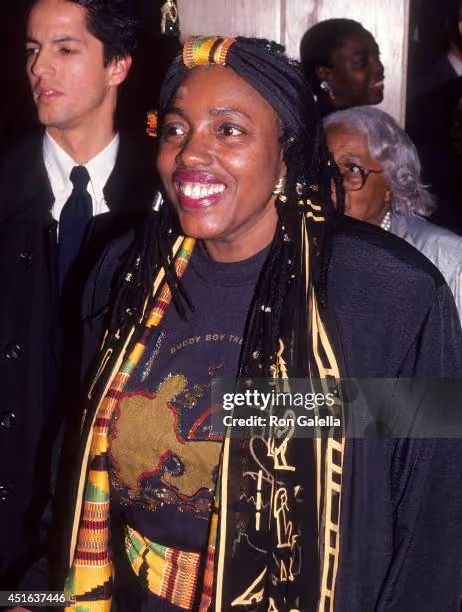 Jerry Mitchell
@JMitchellNews
#onthisday in 1898, editor Alexander Manly escaped a lynch mob in Wilmington, North Carolina, that ordered him killed on sight. Manly had already gained a reputation nationally for his commentary that challenged negative racial stereotypes.
Unable to kill Manly, the mob of 1,500 white supremacists burned down his newspaper, The Daily Record, the state’s only daily Black newspaper. The mob then embarked on a massacre, killing as many as hundreds of the town’s 2,100 Black residents, dumping their bodies into the Cape Fear River. The mob burned Black homes and businesses, forcing Black citizens to leave town. The white supremacists seized control of the local government and published a “White Declaration of Independence.”
Manly made his way to Philadelphia, where he became a member of the Black newspaper council and helped found The Armstrong Association, a precursor to the National Urban League.
“The aftermath of the coup helped usher in the ‘Jim Crow’ era of the South,” Newsweek wrote. “No Black citizen served in public office in Wilmington until 1972, and no Black citizen from North Carolina was elected to Congress until 1992.” David Zucchino’s Pulitzer Prize winning book, “Wilmington’s Lie: The Murderous Coup of 1898 and the Rise of White Supremacy” tells the story of what happened.
mississippitoday.org/2024/11/10/1898-alexander-manly-lync…
 Jerry Mitchell
@JMitchellNews
#onthisday in 1968, singer James Brown, the “Godfather of Soul,” gave movement to the civil rights movement with his song, “Say It Loud — I’m Black and I’m Proud (Part 1),” which hit number one on this day on the R&B charts for a record sixth straight week.
“Various musicians in the 1960s tapped into yearnings for black assertiveness, autonomy and solidarity,” Harvard law professor Randall Kennedy wrote. “Curtis Mayfield and the Impressions sang ‘We’re a Winner.’ Sly and the Family Stone offered ‘Stand.’ Sam Cooke (and Aretha Franklin and Otis Redding) performed ‘A Change is Gonna Come.’ But no entertainer equaled Brown’s vocalization of Black Americans’ newly triumphal sense of self-acceptance.”
Brown saw 17 singles go to number one. Rolling Stone ranked him as one of the greatest music artists of all time, and he became an inaugural member of the Rock and Rock Hall of Fame. The movie, “Get On Up,” tells his story, and a statue was built in his hometown of Augusta, Georgia, to honor Brown, who died in 2006.
mississippitoday.org/2024/11/09/1968-james-brown-song-num…
 Jerry Mitchell
@JMitchellNews
#onthisday in 1955, six months after nightriders gunned down his friend and fellow civil rights leader, the Rev. George Lee, for helping Black citizens register to vote, Gus Courts dared to lead 22 Black Mississippians to vote in a tiny Delta town, which bore the nickname, “Bloody Belzoni.” Courts knew this march could mean his death, but he made the trek anyway.
When he and Lee had started the first branch of the NAACP in Humphreys County in 1953, no Black Mississippian was registered to vote there. The pair decided to change that, bringing 400 Black Mississippians to pay their poll taxes, the first step toward voter registration.
Upset by this, the white Citizens’ Council began to put an economic squeeze on them, getting banks to refuse credit or to foreclose on their mortgages. Most removed their names, and when Lee was killed, even more followed suit. Courts heard that anyone who set foot on the courthouse lawn would be shot, but he and 22 others still marched to vote.
After they arrived, clerks demanded to know if they wanted their children to go to school with white children and if they belonged to the NAACP. It didn’t matter what their answers were; the clerks refused to let any of them vote.
But the reign of terror didn’t end there. Weeks later, not far from where Lee had been hit with shotgun blasts, nightriders opened fire on Courts, who bled profusely and had to be whisked to a Black hospital 80 miles away. He survived, and he and his wife fled Mississippi.
“I’m 65 years old, and I’ve never had the vote,” he told a reporter. “That’s all I wanted.”
He testified before a Senate Judiciary subcommittee, “We are the American refugees from the terror in the South, all because we wanted to vote.” He said leaders of the white Citizens’ Council told him, they would put him out of business, bar Black voters and kick out the NAACP.
He died in 1969, never returning to the Mississippi he loved.
mississippitoday.org/2024/11/08/1955-gus-courts-belzoni-v…
 Jerry Mitchell
@JMitchellNews
#onthisday in 1837, abolitionist, clergyman and editor Elijah P. Lovejoy was assassinated by a pro-slavery mob. He is considered the first martyr for freedom of the press in America.
After denouncing the lynching and burning of a Black man in St. Louis, a mob tore down his office and destroyed his printing press for the third time, he decided to move to Alton, Illinois, which was a free state.
He continued to champion the end of lynchings of Black Americans and the abolition of slavery, saying, “As long as I am an American citizen, and as long as American blood runs in these veins, I shall hold myself at liberty to speak, to write and to publisher whatever I please, being amenable to the laws of my country for the same.”
After mobs tossed another printing press in the river, donations came in from across the nation to buy him another one. When local leaders passed resolutions calling for Lovejoy to leave town, he rose to defend his rights. Yes, he had been threatened with being tarred and feathered and even assassinated, he said, with his wife driven from her sick bed to “save her life from the brickbats and violence of the mobs.”
Despite these threats, he stood firm, and when his fifth press arrived, he hid it in a nearby warehouse along with abolitionist materials. While he and others stood guard, a mob shot him dead.
John Quincy Adams called the news of the killing a “shock as of an earthquake through the country.” And when abolitionist John Brown learned of the killing, he swore, “Here, before God, in the presence of these witnesses, from this time, I consecrate my life to the destruction of slavery.”
No one was ever convicted of his murder. At the time, Lovejoy had to be buried in an unmarked grave, but in 1897, a 110-foot tall monument was built to honor him.
mississippitoday.org/2024/11/07/on-this-day-in-1837-aboli…
 Jerry Mitchell
@JMitchellNews
Interested in cracking open cold cases? Then join me on November 13. I'll share stories about how cold cases came to be reprosecuted and tips on how you can investigate a cold case.
www.sunlightresearch.net/event-details/cracking-open-cold…
 Jerry Mitchell
@JMitchellNews
#onthisday in 1926, Victoria Gray Adams, one of the founding members of the Mississippi Freedom Democratic Party, was born near Hattiesburg, Mississippi.
“(There are) those who are in the Movement and those who have the Movement in them,” she said. “The Movement is in me, and I know it always will be.”
In 1961, this door-to-door cosmetics saleswoman convinced her preacher to open their church to the Student Nonviolent Coordinating Committee, which began pushing for voter registration. A year later, she became a field secretary for SNCC and led a boycott of businesses in Hattiesburg, later helping found the umbrella group, the Council of Federated Organization, for all the civil rights groups working in Mississippi.
In 1964, she and other civil rights leaders fought the Jim Crow laws and practices that kept Black Mississippians from voting, marching to the courthouse in the chilly rain to protest. By the end of the day, nearly 150 had made their way to register to vote.
Adams became the first known woman in Mississippi to run for the U.S. Senate, unsuccessfully challenging longtime Sen. John Stennis. She also helped found the Mississippi Freedom Democratic Party. It was time, she said, to pay attention to Black Mississippians, “who had not even had the leavings from the American political table.”
In August 1964, she joined party members in challenging Mississippi’s all-white delegation to the Democratic National Convention.
“We really were the true Democratic Party,” she recalled in a 2004 interview. “We accomplished the removal of the wall, the curtain of fear in Mississippi for African-Americans demanding their rights.”
Four years later, the party that once barred her now welcomed her.
She continued her activism and later talked of that success: “We eliminated the isolation of the African-Americans from the political process. I believe that Mississippi now has the highest number of African-American elected officials in the nation. We laid the groundwork for that.”
In 2006, she died of cancer.
“When I met … that community of youthful civil rights activists, I realized that this was exactly what I’d been looking for all of my conscious existence,” she said. “It was like coming home.”
mississippitoday.org/2024/11/05/1926-victoria-gray-adams-…
 Jerry Mitchell
@JMitchellNews
#onthisday in 1750, Jean Baptiste Point DuSable, the “Father of Chicago,” was born.
A man of African descent, he became the first known settler in the area that became the city of Chicago. He married a Potawatomi woman, Kitiwaha (Catherine), and they had two children.
According to records, the property included a log cabin with two barns, a horse-drawn mill, a bakehouse, a poultry house, a dairy, a smokehouse, a fenced garden and an orchard. At his trading post, DuSable served Native Americans, British and French explorers and spoke a number of languages.
“He was actually arrested by the British for being thought of as an American Patriot sympathizer,” Julius Jones, curator at the Chicago History Museum told WLS, but DuSable beat those charges.
In Chicago today, a school, street, museum, harbor, park and bridge bear his name. The place where he settled near the mouth of the Chicago River is now a National Historic Landmark, part of the city’s Pioneer Court.
mississippitoday.org/2024/11/04/on-this-day-in-1750/
 Jerry Mitchell
@JMitchellNews
#onthisday in 1868, in the first presidential race in the wake of the Civil War, newly enfranchised Black men in the South cast their first ballots. Their 700,000 votes helped elect Republican Ulysses S. Grant, whose campaign theme was, “Let us have peace.”
In popular vote, he narrowly defeated his Democratic opponent, who demanded a restoration of states’ rights, which included the right to bar Black Americans from voting. Grant won by only 306,000 votes.
In his inaugural address, he talked of unity. “The country having just emerged from a great rebellion, many questions will come,” he said. “It is desirable that they should be approached calmly, without prejudice, hate, or sectional pride, remembering that the greatest good to the greatest number is the object to be attained.”
mississippitoday.org/2023/11/03/1868-black-men-vote/
 Jerry Mitchell
@JMitchellNews
#onthisday in 1875, the first Mississippi Plan, which included violence against Black Americans to keep them from voting, resulted in huge victories for white Democrats across the state.
A year earlier, the Republican Party had carried a majority of the votes, and many Black Mississippians had been elected to office. In the wake of those victories, white leagues arose to challenge Republican rule and began to use widespread violence and fraud to recapture control of the state.
Over several days in September 1875, about 50 Black Mississippians were killed along with white supporters, including a school teacher who worked with the Black community in Clinton. The governor asked President Ulysses Grant to intervene, but he decided against intervening, and the violence and fraud continued.
Other Southern states soon copied the Mississippi plan. John R. Lynch, the last Black congressman for Mississippi until the 1986 election of Mike Espy, wrote: “It was a well-known fact that in 1875 nearly every Democratic club in the State was converted into an armed military company.” A federal grand jury concluded: “Fraud, intimidation, and violence perpetrated at the last election is without a parallel in the annals of history.”
mississippitoday.org/2023/11/02/1875-mississippi-plan/
 Jerry Mitchell
@JMitchellNews
#onthisday in 1890, Mississippi adopted a new state constitution aimed at barring Black voters and restoring white supremacy. The disenfranchisement clause struck all voters from the rolls and then required them to register again to vote — but only approved them if they paid poll taxes, could read and pass a quiz on the constitution.
“Dressed up in the genteel garb of bringing integrity to the voting booth,” ‘One Person, No Vote’ opined, “this feigned legal innocence was legislative evil genius.”
There was no mystery to those involved.
“There is no use to equivocate or lie about the matter,” future Gov. and U.S. Sen. James K. Vardaman declared, “Mississippi’s constitutional convention of 1890 was held for no other purpose than to eliminate the n—– from politics.”
The changes worked. Within a decade, the number of Black registered voters fell from more than 130,000 to less than 1,300. Other Southern states followed Mississippi’s lead, barring Black voters in every way they could. There were “grandfather clauses,” which required voters to have a grandfather who voted. There were even “white primaries,” where white Southern Democrats barred Black voters from their primaries.
“Jim Crow was never policed just by laws written out on paper,” according to ‘Our Unfinished March’. “It was enforced with broken bones and crushed skulls, with rope wrapped around trees and knots tied around necks, with bodies displayed in town squares or made to disappear at the bottom of rivers.”
Unlike Mississippi’s prior constitution, voters did not approve or ratify the document.
The lone Black member of the constitutional constitution was Isaiah T. Montgomery, who was once enslaved by Jefferson Davis and had since helped found the all-Black town, Mount Bayou. Montgomery voted for the constitution, hoping this disenfranchisement might mean an end to violence against Black Mississippians.
It didn’t.
mississippitoday.org/2024/11/01/1890-mississippi-constitu…
 Jerry Mitchell
@JMitchellNews
#onthisday in 1950, Earl Lloyd became the first Black player to take the court in an NBA game, paving the way for other African Americans who would follow.
A native of Alexandria, Virginia, the 6-foot-6 phenom became a defensive star at Parker-Grey High School, nicknamed “Moon Fixer.” He received a scholarship from West Virginia State, whom he led to two tournament championships. He became an All-American, and in 1947-48, his Yellow Jackets were the only undefeated team in the nation.
Nicknamed “The Big Cat,” he played his first game on Halloween. “The game was totally, unequivocally uneventful except for the date — Oct. 31,” he recalled later. “Maybe they thought I was a goblin or something.”
The Korean War interrupted his career before he returned to the hardwood, first with the Harlem Globetrotters and then back with the NBA. In 1955, he helped the Syracuse Nationals (now the Philadelphia 76ers) defeat the Fort Wayne Pistons for the NBA Championship.
He and Jim Tucker were the first African Americans to play on an NBA championship team. As a player, he endured prejudice, both in the arena and out, one Indiana fan spitting on him. In 1968, he became the NBA’s first Black assistant coach with the Detroit Pistons and became head coach in the 1971-72 season. He later worked for the public schools in Detroit, running programs that taught job skills to underprivileged children.
In 2003, the Basketball Hall of Fame inducted him, recognizing his contributions to the sport. “It’s easy to be successful when you’re surrounded by the greatest,” he said.
Four years later, his hometown of Alexandria named its newly constructed basketball court in his honor. The year he died, 2015, he became one of eight Virginians that the Library of Virginia named as the “Strong Men & Women in Virginia History.”
The NBA honored Lloyd for his work as a pioneer, but he remained humble. “I don’t think my situation was anything like Jackie Robinson’s,” he said. “I remember in Fort Wayne, Indiana, we stayed at a hotel where they let me sleep, but they wouldn’t let me eat. … Did it make me bitter? No. If you let yourself become bitter, it will eat away at you inside. If adversity doesn’t kill you, it makes you a better person.”
 Jerry Mitchell
@JMitchellNews
#onthisday in 1870, three Black men challenged the racist system of segregation in Louisville, Kentucky. They paid their fares and sat up front on a trolley — only to be challenged by the driver and a white passenger.
Robert Fox, an elderly mortician, said he and his business partners had the same right to ride as whites. The driver alerted his central office, and soon a group of white drivers dragged them off the trolley, kicking them and shouting racial slurs. Police arrested the trio, whose lawyer argued that their disorderly conduct arrests had taken place because of their race.
“They are good citizens,” their lawyer said, “and they ask for simple justice and nothing more.”
The judge fined the trio $5, and Black passengers boycotted the trolley. Fox sued the Central Passenger Railroad Company, which ruled in his favor and awarded him $15. Inspired by the victory, Black passengers began staging “ride-ins” across the city. The protests led to clashes on the city streets, and Louisville’s mayor intervened. Streetcar companies agreed to desegregate the trolleys, and the Black citizens rejoiced. They had really won.
mississippitoday.org/2024/10/30/1870-black-men-segregatio…
 Jerry Mitchell
@JMitchellNews
#onthisday in 1869, Klansmen kidnapped and savagely beat Georgia legislator Abram Colby, leaving him for dead.
Freed 15 years before emancipation, he became an early organizer of Black Americans. A Radical Republican, he represented Greene County in 1865 at a convention for freed African Americans and was elected to the Georgia Legislature a year later.
In 1869, the Ku Klux Klan offered him a $7,500 bribe to not run for re-election, but he refused. “I told them that I would not do it if they would give me all the county was worth,” he recalled.
These Klansmen were hardly impoverished white men, he said. “Some are first-class men in our town. One is a lawyer, one a doctor, and some are farmers.”
During his whipping, they asked him, “Do you think you will ever vote another damned Radical ticket?” When he answered yes, the beating became even more severe.
“They set in and whipped me a thousand licks more, with sticks and straps that had buckles on the ends of them,” he recalled. Although he survived, he was unable to work or hold office. Three years later, he testified before a joint House and Senate committee investigating reports of Southern violence, detailing what had happened.
“The worst thing was my mother, wife and daughter were in the room when they came,” he recalled. “My little daughter begged them not to carry me away. They drew up a gun and actually frightened her to death. She never got over it until she died. That was the part that grieves me the most.”
mississippitoday.org/2024/10/29/1869-klansmen-abram-colby/
 Jerry Mitchell
@JMitchellNews
#onthisday in 1798, abolitionist Levi Coffin was born in North Carolina. His home in Newport, Indiana, became known as the “Grand Central Station of the Underground Railroad.”
In 1821, his cousin ran a Sunday school for Black Americans, but when slaveholders rebelled against this, the school was forced to close. After he and his family moved to Indiana, he began working on the Underground Railroad.
“The Bible, in bidding us to feed the hungry and clothe the naked, said nothing about color, and I should try to follow out the teachings of that good book,” he said. “I thought it was always safe to do right.”
He helped thousands of Black Americans find freedom, and after the Civil War ended, he became a leader in the Western Freedmen’s Aid Society, raising more than $100,000 (the equivalent of $2.66 million) in a single year for African Americans who needed food, clothing, funds and education. His autobiography, “Reminiscences of Levi Coffin,” was published a year before his 1877 death.
In 1902, a 6-foot monument was built to mark his grave, and his former home became a National Historic Landmark.
mississippitoday.org/2024/10/28/1798-levi-coffin-born/
 Jerry Mitchell
@JMitchellNews
#onthisday in 1924, actress Ruby Dee was born in Cleveland, Ohio.
Starting in the 1940s, she acted on Broadway, in movies and on television, starring alongside Sidney Poitier and others. She and her husband, Ossie Davis, acted together and served as master and mistress of ceremonies at the 1963 March on Washington. They were friends with both Malcolm X and Martin Luther King Jr. and later hosted a two-hour special, “The Second American Revolution.”
Dee spoke passionately about “a racism that has made rage the basic rhythm of our lives. A racism that has trampled our self-esteem and numbed hope. Racism, that cancer on the bosom of our nation, that gnaws at the psyche of black America and keeps us screaming and shaking for relief. … Those who try to overcome in spite of all link us to survival, to hope, to ourselves. And so we must keep on telling the stories of our heroes and heroines, sung and unsung, as best we can. Because it is they who urge us to hang on, to join hands, to move relentlessly toward greater understanding among all people, to move toward justice and toward love.”
During her career, she won a Grammy, Emmy, Screen Actors Guild Award and Kennedy Center Honor. In 2007, she became the second oldest woman to be nominated for an Academy Award for Best Supporting Actress for her role in the movie “American Gangster.” She died in 2014.
mississippitoday.org/2024/10/27/1924-actress-ruby-dee-born/
 Jerry Mitchell
@JMitchellNews
#onthisday in 1940, Benjamin O. Davis Sr. became the first Black American promoted to brigadier general in the U.S. Army.
His parents wanted him to head to college after graduating high school, but Davis chose a military career instead. He served in the Spanish-American War in the 8th United States Volunteer Infantry, an all-Black unit.
He overcame rampant prejudice and rose in the ranks. In 1900, he became the first Black American officer, and a year later, he was commissioned as a second lieutenant in the Army. He served with the famed “Buffalo Soldiers” regiment in the Philippines, leading to his temporary promotion to lieutenant colonel.
During World War II, he became the Army’s top adviser on race relations and served with the European Theater of Operation. For his stellar work, the Army honored him with the Bronze Star Medal and the Distinguished Service Medal, France awarded him the Croix de Guerre with Palm and Liberia gave him the Grade of Commander of the Order of the Star of Africa.
His important work paved the way for other people of color — just one of six Black officers in the Army between the Civil War to World War II.
On July 20, 1948, after 50 years of military service, Davis retired in a public ceremony with President Harry Truman presiding. Six days later, Truman issued Executive Order 9981, which abolished racial discrimination in the armed forces. Twenty-two years later, Davis died and was buried at Arlington National Cemetery. In 1997, the U.S. Postal Service issued a stamp in his honor.
mississippitoday.org/2024/10/25/1940-benjamin-o-davis-sr/
 Jerry Mitchell
@JMitchellNews
#onthisday in 1994, President Bill Clinton awarded Dorothy Porter Wesley the National Endowment for the Humanities’ Charles Frankel Award for her service as a Black librarian, bibliographer, researcher and curator.
The first Black woman to complete her graduate studies at Columbia University, she joined the Howard University library staff in 1928. With no budget and almost no staff, she overcame sexism and other barriers to transform the Library of Negro Life and History, with a few thousand titles, into a world-class research center with more than 180,000 books, pamphlets, manuscripts and other materials, which scholars from around the globe came to visit.
She recalled that work: “I went around the (Howard) library and pulled out every relevant book I could find – the history of slavery, Black poets – for the collection. Over the years, the main thing I had to do was beg – from publishers, authors, families. Sometimes it meant being there just after the funeral director took out the bodies and saying, ‘You want all this junk in the basement?’”
Before she died in 1995 at the age of 91, Howard named the reading room in its library after her, and historian Benjamin Quarles declared, “Without exaggeration, there hasn’t been a major black history book in the last 30 years in which the author hasn’t acknowledged Mrs. Porter’s help.”
A portrait of her hangs in the National Portrait Gallery.
mississippitoday.org/2023/10/24/1994-dorothy-porter-wesle…
 Jerry Mitchell
@JMitchellNews
#onthisday in 1913, an NAACP branch was formed in the Seattle-Tacoma area — one of the few branches that started west of the Mississippi River. Eight of the 14 founders were women.
A beautician and philanthropist, Letitia Graves served as the first president, and journalist Horace Cayton Sr. served as first vice president. He had graduated from what is now Alcorn State University and married Susie Revels, the daughter of Senator Hiram Revels, the first Black American elected to the U.S. Senate. She worked as associate editor for the Black newspaper that he began, the Seattle Republican.
NAACP members protested President Woodrow Wilson’s new policy of segregating Black federal employees. When the racist film, The Birth of a Nation, emerged in 1915, NAACP members sought to stop the showing of the film in Seattle.
The effort failed, but they succeeded six years later when the movie returned. This time, Graves convinced the president of the Seattle City Council to have the police chief block the showing of the film.
In the decades that followed, the Seattle branch challenged discrimination in court and saw its membership grow from 85 to 1,550 members. After protests regarding police brutality and failure to promote black officers, the city of Seattle hired its first Black police chief in 1964. In the years since, the branch has continued to remain active.
mississippitoday.org/2023/10/23/1913-naacp-seattle-tacoma/
 Jerry Mitchell
@JMitchellNews
#onthisday in 1955, John Earl Reese, 16, and his cousins, Joyce Nelson, 13, and her sister Johnnie, 15, were drinking soft drinks and listening to music from a beat-up jukebox in a poster-plastered café near Longview, Texas, when white men fired nine shots through the window, killing him and injuring his two cousins. The killing was part of a series of shootings aimed at terrorizing African Americans into giving up plans for a new school.
One black woman was praying at her bedside at her home when bullets came through the Venetian blinds and bullet fragments sprayed her face. The sheriff at the time originally blamed the attack on African Americans, but a prosecution took place after a Texas Rangers’ investigation determined that Joseph Reagan Simpson and Perry Dean Ross carried out Reese’s killing.
Simpson testified that Ross had been the one that fired into the café, and Ross confessed to authorities, “I held the steering wheel with my left hand and laid the gun (a Mossberg .22 automatic rifle) across the left door. I was going about 85 mph at the time, and I fired nine shots into the café.”
District Attorney Ralph Prince urged the all-white jury to convict Ross to deter others, but the defense lawyer urged the all-white jury to “call it a bad day and let the boy go on in life.”
Although all-white jury convicted Ross of murder without malice, he received only a suspended sentence. Neither he nor Simpson spent any time behind bars.
In 1989, the National Civil Rights Memorial listed Reese as one of 40 martyrs of the civil rights movement. A historical marker in Texas now honors Reese.
mississippitoday.org/2024/10/22/1955-john-earl-reese/
 Jerry Mitchell
@JMitchellNews
#onthisday in 1917, legendary trumpeter “Dizzy” Gillespie was born in Cheraw, South Carolina. One of the pioneers of “bebop” jazz, he is considered one of the greatest trumpeters to ever play.
At 12, he taught himself to play trumpet, dreaming of becoming a jazz musician. He played with Cab Calloway’s orchestra before getting into an altercation with the band leader. He wrote big band music with Woody Herman and Jimmy Dorsey before performing with Ella Fitzgerald. He, Charlie Parker and others initiated bebop at famous jazz clubs in New York City, and Gillespie later introduced Afro-Cuban music into that mix.
His trademark trumpet, which was bent upward, initially resulted from an accident. Happy with the new tone, he had a new “bent” trumpet made.
He played hundreds of shows a year and won Grammys in 1975 and 1980. He told his life in music in his memoir, “To Be or Not to Bop.
Before he died in 1993 of pancreatic cancer, he received the Grammy Lifetime Achievement Award, the Kennedy Center Honors Award, a star on the Hollywood Walk of Fame and the American Society of Composers, Authors, and Publishers Duke Ellington Award for a half-century of achievement as a composer, performer and bandleader.
“With his endlessly funny asides, his huge variety of facial expressions and his natural comic gifts, he was as much a pure entertainer as an accomplished artist,” The New York Times wrote. “In some ways, he seemed to sum up all the possibilities of American popular art.”
mississippitoday.org/2024/10/21/1917-dizzy-gillespie-born/
 Jerry Mitchell
@JMitchellNews
Five months after the Trump administration closed investigations into law enforcement agencies across the country, the Justice Department has signaled that it will continue its investigation into the Rankin County Sheriff’s Department.
Rankin County NAACP President Angela English said a Justice Department official recently informed her that Attorney General Pam Bondi had authorized federal investigators to move forward with the Rankin County investigation after months of uncertainty about whether it would continue under the Trump administration.
English has been coordinating with Justice Department officials since they began investigating the department in 2023, after a group of sheriff’s deputies and a Richland police officer, some of whom called themselves the “Goon Squad,” tortured two Black men during a late-night raid.
Last year, the six officers were sentenced to federal prison for their roles in the incident, and dozens more people have since accused Rankin County deputies of abuse. mississippitoday.org/2025/10/20/doj-investigation-rankin-…
 Jerry Mitchell
@JMitchellNews
#onthisday in 1942, dozens of Black leaders from the South convened in Durham, North Carolina, to address the problem of increasing racial tension. While Black soldiers fought on the battlefields of World War II, the leaders recalled the mistreatment of Black soldiers returning from World War I, “a sweeping surge of bitterness and rebuff that … constitutes one of the ugliest scars on the fair face of our nation.”
What emerged was the “Durham Manifesto,” calling for the end of segregation, the poll tax, the “white” primary and racial discrimination.
“We regard the ballot as a safeguard of democracy,” the document read. “Any discrimination against citizens in the exercise of the voting privilege, on account of race or poverty, is detrimental to the freedom of these citizens and to the integrity of the State.”
The document also decried Jim Crow laws that barred and punished Black Americans as well as mistreatment by police. “These abuses, which include wanton killings, and almost routine beatings of Negroes, whether they be guilty or innocent of an offense, should be stopped now, not only out of regard for the safety of Negroes, but of common respect for the dignity and fundamental purpose of the law,” the manifesto read.
The document also called for better schools, better health care and living wages for workers. “The correction of these problems is not only a moral matter,” the manifesto concluded, “but a practical necessity in winning the war and in winning the peace.”
Charles Spurgeon Johnson, one of the leading Black sociologists of the 20th century, helped oversee the document. The manifesto helped lead to the creation of the Southern Regional Council, which pushed for school desegregation, voter registration, equal citizenship and anti-poverty projects.
mississippitoday.org/2024/10/20/1942-southern-conference-…
 Jerry Mitchell
@JMitchellNews
#onthisday in 1926, Chuck Berry, sometimes called “The Father of Rock & Roll,” was born in St. Louis.
He traded factory work for music, and his big break came in 1955 when he met Muddy Waters, who suggested he contact Leonard Chess of Chess Records. Berry wound up recording “Maybellene,” which reached #1 on Billboard’s Rhythm and Blues Chart and sold more than 1 million copies. He went on to record “Johnny B. Goode,” “Roll Over Beethoven!” and “Rock and Roll Music,” which influenced the Beatles, the Rolling Stones, the Beach Boys and countless others.
Bob Dylan called Berry “the Shakespeare of rock ‘n’ roll,” and John Lennon declared, “If you tried to give rock and roll another name, you might call it ‘Chuck Berry.’”
In 1986, Berry became the first inductee into the Rock & Rock Hall of Fame, Rolling Stone magazine ranked him #5 among the “100 Greatest Artists of All Time,” and in 2000, the Kennedy Center honored him. Before the Voyager departed earth for deep space, NASA officials included recordings of music from around the world, including Bach, Beethoven, Mozart and “Johnny B. Goode.”
mississippitoday.org/2024/10/18/1926-chuck-berry-born/

 Jerry Mitchell
@JMitchellNews
#onthisday in 1961, after several Black players on the Boston Celtics were refused service at a coffee shop in Lexington, Kentucky, where they were scheduled to play the St. Louis Hawks, the Celtics’ five Black players — Bill Russell, Sam Jones, Satch Sanders, K.C. Jones and Al Butler — sat the game out in protest. They were joined by the Hawks’ Black players. When Russell returned to Boston, he said that he would refuse to play anywhere else where this happened as well.
In 1963, he ignored death threats and opened an integrated basketball camp in Jackson, Mississippi, where NAACP leader Medgar Evers had been assassinated. Two months later, Russell took part in the March on Washington.
Four years later, Russell joined fellow Black athletes Jim Brown and Kareem Abdul Jabbar in supporting Muhammad Ali’s refusal to fight in the Vietnam War. An all-white jury convicted Ali of draft evasion, but the Supreme Court reversed that conviction in 1971. “I’m not worried about Muhammad Ali,” Russell said. “He is better equipped than anyone I know to withstand the trials in store for him. What I’m worried about is the rest of us.”
mississippitoday.org/2024/10/17/1961-celtics-protest-disc…
 Jerry Mitchell
@JMitchellNews
#onthisday in 1901, President Theodore Roosevelt invited Booker T. Washington, founder of the Tuskegee Institute who was perhaps the best known African American of his day, to a meeting in the White House. When the meeting went long, the President asked Washington to stay for dinner, the first Black American to do so. The President’s act drew harsh criticism from many white Americans.
“The outrage was just unbelievable,” said Deborah Davis, author of “Guest of Honor: Booker T. Washington, Theodore Roosevelt, and the White House Dinner That Shocked a Nation”.
“‘Dining,’ and I put it in quotation marks, was really a code word for social equality.”
That outrage continued, she said. “There was hell to pay, first weeks, then months, then years, then decades. This story did not go away. And, you know, an assassin was hired to go to Tuskegee to kill Booker T. Washington. He was pursued wherever he went. Theodore Roosevelt was criticized in ways that presidents were not criticized. There were vulgar cartoons of Mrs. Roosevelt that had never been done before. This was all new territory.”
Ragtime composer Scott Joplin created his first opera, “A Guest of Honor,” based on this visit.
mississippitoday.org/2024/10/16/1901-booker-t-washington-…
 Jerry Mitchell
@JMitchellNews
#onthisday in 1883, the U.S. Supreme Court struck down the Civil Rights Bill of 1875 as unconstitutional, saying the government could not control the prejudices of people or companies.
Black Americans had sued theaters, hotels and transit companies, which refused them admittance, but Justice Joseph Bradley wrote in an 8-1 decision that “legislative power extends only to the subject of slavery … and the denial of equal accommodations in inns, public conveyances and places of public amusement … imposes no badge of slavery or involuntary servitude upon the party.”
Bishop Henry McNeil Turner raged that the “world has never witnessed such barbarous laws entailed upon a free people as have grown out of” this ruling, which “has made the ballot of the black man a parody, his citizenship a nullity and his freedom a burlesque. It has engendered the bitterest feeling between the whites and blacks, and resulted in the deaths of thousands, who would have been living and enjoying life today.”
In a dissent, Justice John Harlan decried such discrimination, saying the goal of government is to “mete out equal and exact justice to all, of whatever nativity, race, color, or persuasion, religious or political.” Harlan called such discrimination a “badge of servitude, the imposition of which Congress may prevent under its power, through appropriate legislation, to enforce the 13th Amendment.”
Black Americans would have to wait eight decades before Congress passed another civil rights law barring discrimination in public accommodations and employment.
mississippitoday.org/2024/10/15/on-this-day-in-1883-supre…

Jerry Mitchell reposted
 Mina Corpuz 🐟
@mlcorpuz
My colleague @LeonardoBevil12 was in Leland to talk with community members, including those who attended a vigil this evening.
Here's the story with that dispatch along with reporting from me, @bycandicewilder and @JMitchellNews:
 Mississippi Today
@MSTODAYnews
Mississippi communities from Leland to Lorman are reeling from the chaos of gun violence that killed nine people and wounded more than a dozen during or after high school and college homecoming celebrations Friday and Saturday.
mississippitoday.org/2025/10/13/mississippi-communities-s…
Jerry Mitchell
@JMitchellNews
To all my friends in Arkansas, I'll be at Harding at 7:30 tonight with the Rev. Wheeler Parker, the cousin of Emmett Till who was there the night that his killers abducted him from the home. "It was darker than a thousand midnights," he said. He will share his thoughts with students and then I'll interview him.
 Jerry Mitchell
@JMitchellNews
#onthisday in 1964, Martin Luther King Jr. learned that he had won the Nobel Peace Prize. At age 35, he was the youngest recipient of the award at that time. In his acceptance speech two months later, he said the movement was “moving with determination and a majestic scorn for risk and danger to establish a reign of freedom and a rule of justice.
“I am mindful that only yesterday in Birmingham, Alabama, our children, crying out for brotherhood, were answered with fire hoses, snarling dogs and even death. I am mindful that only yesterday in Philadelphia, Mississippi, young people seeking to secure the right to vote were brutalized and murdered. And only yesterday more than 40 houses of worship in the State of Mississippi alone were bombed or burned because they offered a sanctuary to those who would not accept segregation. …
“Sooner or later all the people of the world will have to discover a way to live together in peace, and thereby transform this pending cosmic elegy into a creative psalm of brotherhood. If this is to be achieved, man must evolve for all human conflict a method which rejects revenge, aggression and retaliation. The foundation of such a method is love. …
“I believe that wounded justice, lying prostrate on the blood-flowing streets of our nations, can be lifted from this dust of shame to reign supreme among the children of men. I have the audacity to believe that peoples everywhere can have three meals a day for their bodies, education and culture for their minds, and dignity, equality and freedom for their spirits. … I still believe that We Shall overcome! This faith can give us courage to face the uncertainties of the future. It will give our tired feet new strength as we continue our forward stride toward the city of freedom. When our days become dreary with low-hovering clouds and our nights become darker than a thousand midnights, we will know that we are living in the creative turmoil of a genuine civilization struggling to be born.”
mississippitoday.org/2024/10/14/1964-mlk-nobel-peace-prize/
 Jerry Mitchell
@JMitchellNews
#onthisday in 1792, construction began on the White House with the laying of the cornerstone.
Black Americans, those enslaved and free, did most of the work on the foundations and the main residence. They quarried and cut the rough stone that became the walls of the White House. Historians say they also played a role in the carpentry, carting, rafting, plastering, glazing and painting.
At the 2016 Democratic National Convention, First Lady Michelle Obama talked of that work, recalling “the story of generations of people who felt the lash of bondage, the shame of servitude, the sting of segregation, but who kept on striving and hoping and doing what needed to be done so that today I wake up every morning in a house that was built by slaves. And I watch my daughters, two beautiful, intelligent, Black young women playing with their dogs on the White House lawn.”
mississippitoday.org/2024/10/13/1792-white-house-construc…
 Jerry Mitchell
@JMitchellNews
#onthisday in 1932, comedian and civil rights activist Dick Gregory was born in St. Louis.
He belonged to a new generation of Black comics that dared to take on race. In one of his routines, he talked about eating down South in a segregated restaurant:
“Then these three white boys came up to me and said, ‘Boy, we’re giving you fair warning. Anything you do to that chicken, we’re gonna do to you.’ So I put down my knife and fork, I picked up that chicken and I kissed it. Then I said, ‘Line up, boys!’”
He was the first Black comic permitted to stay and talk with “Tonight Show” host Jack Paar. When he heard that surplus food had been cut off to the impoverished in the Mississippi Delta in 1963, he chartered a plane and sent 14,000 pounds of food. He marched in Greenwood with those demanding the right to vote, only to be confronted by police with dogs. When an officer dragged the comedian away, Gregory said, “Thanks a million. Up North, people don’t escort me across the street.”
Gregory vowed the marches would continue: “We will march through your dogs, and if you get some elephants, we’ll march through them and bring on your tigers and we’ll march through them.”
He spent four days in jail with other protesters, including children: “Had you been there, as I was, walking through, listening, it was really something to be proud of, really something to be proud of. And if something ever happens and you have to do it again, don’t hesitate.”
Gregory also worked with Martin Luther King Jr. and others, using his comedy as a weapon against bigotry. At a mass meeting at a church in Clarksdale, Mississippi, a bomb came through the window, and people dashed to the door. “Where are you going?” Gregory asked. “The man who threw it is outside God’s house. The Man who’s supposed to save you lives here.”
In 2015, he received a star on the Hollywood Walk of Fame, and his life story became the subject of a one-man play produced by artist John Legend. The title of the play? “Turn Me Loose” — after Mississippi NAACP leader Medgar Evers’ last words when he was fatally shot in 1968.
Gregory died in 2017 at the age of 84.
mississippitoday.org/2024/10/12/1932-dick-gregory-born/
 Jerry Mitchell
@JMitchellNews
#onthisday in 1901, Bert Williams and George Walker recorded their music for the Victor Talking Machine Co., becoming the first Black recording artists.
One of the most successful comedy teams of all time, they performed the first Black musical comedy on Broadway.
After Walker’s death, Williams became a star in his own right, with Theatre Magazine calling him “a vastly funnier man than any white comedian now on the American stage.” He became the first Black actor to appear in a movie, writing, directing and starring in the 1916 films, “A Natural Born Gambler” and “Fish.” He was so popular he even performed for King Edward VII at Buckingham Palace.
Although he managed to break down barriers, much prejudice remained. He couldn’t reconcile the praise he received onstage with the racist treatment he received offstage.
Barred from joining the Actors Equity in New York, he became depressed and drank heavily. He performed the song, “Nobody,” later covered by artists from Nina Simone to Johnny Cash. W.C. Fields called Williams “the funniest man I ever saw and the saddest man I ever knew.”
Williams put it this way: “A Black face, run-down shoes and elbow-out make-up give me a place to hide. The real Bert Williams is crouched deep down inside the (one) who sings the songs and tells the stories.”
He never missed a performance, and on Feb. 25, 1922, collapsed halfway through an evening show in Chicago. He died a week later at his home in New York City. He was only 47.
Booker T. Washington said of Williams: “He has done more for our race than I have. He has smiled his way into people’s hearts; I have been obliged to fight my way.”
In 1940, Duke Ellington composed and recorded, “A Portrait of Bert Williams.” The Broadway musical, “Chicago,” adapted Williams’ personality for the character of Amos Hart.
mississippitoday.org/2024/10/11/1901-bert-williams-george…
 Jerry Mitchell
@JMitchellNews
150 years ago on Oct. 5, U.S. Senator James Alcorn and former Confederate General James Chalmers led a political coup in Coahoma County. The white mob they gathered had a “dead list” of Black men they planned to assassinate. At the top of the list? Sheriff John Milton Brown, a Black man they falsely accused of planning a massacre of white men. They planned to hang him at noon this day.
When a white mob of up to 1,500 moved to seize power, a few hundred Black men, who had been attending a Republican meeting, tried to fight back at Friars Point, only to be overwhelmed. “Don’t shoot these Negroes, boys,” Chalmers was quoted as saying. “We need cotton pickers.” The coup ended Black participation in local government, signaling the restoration of white supremacy that would continue across Mississippi in the years to come.
Brown and others fled the community. He went on to serve as superintendent of the Kansas Freedmen’s Relief Association, where he helped other African Americans flee racial violence and economic oppression. He later became a leader in Kansas Republican politics and a major in the 23rd Kansas Volunteer Infantry Regiment, the state’s only all-black militia unit during the Spanish-American War, a pioneering effort to have Black officers command Black soldiers.
As for Alcorn, he continued serving in the U.S. Senate until 1877 when he retired from political life. He died 17 years later and was buried at his “Eagle Nest” plantation in Coahoma County.
Three years after Alcorn retired, Brown took his seat in front of a committee of that same U.S. Senate. He testified that he told Chalmers “there would be no trouble,” but when that failed to help, Brown escaped through the cane-break. “I heard the shotguns going off all around me.” The mob killed a group of Black men, whose bodies weren’t found for another two months. The mob also shot an unarmed Black preacher, killed another man and pulled a Black man by a rope for eight miles, he said. “They had him say his prayers and hold up his hands, and they discharged two barrels of a shotgun through him. That is the way they murdered him.” (meant to post Oct. 5)
mississippitoday.org/2025/10/05/1875-friars-point-coup/
 Jerry Mitchell
@JMitchellNews
#onthisday in 1871, Octavius Catto, a 32-year-old educator and civil rights activist who had pushed for Black Americans to be treated as equal citizens, was assassinated during an election day uprising in Philadelphia, which had the nation’s largest population of free African Americans.
Born free in Charleston, South Carolina, he moved north with his family, where he became an educator, minister, activist and athlete.
When the Civil War came, he recruited Black soldiers for the Union Army. After the war ended, he fought for the desegregation of Philadelphia’s trolley cars. He played a role in the passage of a bill that barred segregation on transit systems. A conductor’s refusal to admit Catto’s fiancée to a streetcar helped bring about the new law.
On election day, a mob of white thugs roamed the community, attacking Black residents who tried to vote. One of those men, Frank Kelly, confronted Catto, shooting him in the heart. Kelly escaped, but was arrested and returned to trial, where an all-white, all-male jury acquitted him.
Catto’s headstone remembers him as “the forgotten hero.” The city of Philadelphia has erected a monument in his honor outside the city hall. It was the first public monument in the city to honor a specific Black American.
mississippitoday.org/2024/10/10/1871-octavius-catto-assas…
 Jerry Mitchell
@JMitchellNews
#onthisday in 1941, Jesse Jackson Sr. was born in Greenville, South Carolina. The star high school quarterback became student body president at North Carolina A & T University in Greensboro, and in 1962, he led his first civil rights march. When Martin Luther King Jr. called for others to join the Selma March, Jackson answered the call. He came to work with King, heading the Southern Christian Leadership Conference’s Operation Breadbasket in Chicago, using boycotts and selective buying campaigns to help bring contracts to black businesses and jobs to African Africans.
After King’s 1968 assassination, Jackson clashed with King’s successor, Ralph Abernathy, and left SCLC to start Operation PUSH (People United to Save Humanity).
In 1984, he ran for Democratic nomination for president, rousing crowds with his theme of “Keep Hope Alive.” He won more than a fifth of the vote, but that only translated to 8 percent of the delegates, losing to Walter Mondale.
In 1988, Jackson made another run, winning the states of South Carolina and Michigan, but he lost to Michael Dukakis. Despite fire from critics for what they called self-promotion, Jackson was voted “the most important black leader” in America in a 2006 poll.
mississippitoday.org/2023/10/08/1941-jesse-jackson-sr-born/
 Jerry Mitchell
@JMitchellNews
To all my Oxford friends: Hope I can see you at the event!
 Jerry Mitchell
@JMitchellNews
#onthisday in 1955, jazz legends Ella Fitzgerald and Dizzy Gillespie and others were arrested in Houston, Texas, after performing before an integrated audience. The police’s vice squad claimed they did it because there was gambling in a backstage dressing room.
Saxophonist Jean-Baptiste Illinois Jacquet played that night. “I wanted Houston to see a hell of a concert, and they should see it like they were in Carnegie Hall,” he told the Houston Press. “I felt if I didn’t do anything about the segregation in my hometown, I would regret it. This was the time to do it. Segregation had to come to an end.”
The arrests made national headlines, and a year later, the legends played to an integrated audience. This time, there were no arrests.
“I’m proud of what I did because I had no choice,” Jacquet recalled. “If you’re not going to do anything about it, then you don’t care about where you came from.”
mississippitoday.org/2024/10/07/1955-ella-fitzgerald-jailed/
 Jerry Mitchell
@JMitchellNews
#onthisday in 1917, Fannie Lou Hamer was born on a Mississippi Delta plantation with her sharecropping family, the youngest of 20 children. She became involved with the Student Nonviolent Coordinating Committee, and after registering to vote, she was kicked off the plantation.
A fearless civil rights leader, her singing became a source of inspiration and strength among civil rights workers.
In 1964, she burst onto the national scene when she challenged the all-white Mississippi delegation at the 1964 Democratic National Convention. She spoke about Black Americans being harassed, beaten, shot at and arrested for trying to vote. On television, she asked, “Is this America, the land of the free and the home of the brave where we have to sleep with our telephones off the hooks because our lives (are) threatened daily because we want to live as decent human beings — in America?”
She continued to remain active in the civil rights movement until her death in 1977. Her hometown of Ruleville built a statue to honor her.
mississippitoday.org/2024/10/06/1917-fannie-lou-hamer-born/
 Jerry Mitchell
@JMitchellNews
#onthisday in 1870, the first Reconstruction Legislature, made up of 27 Black lawmakers and 150 white lawmakers, met in Richmond, Virginia — a state that had been devastated more by the Civil War than any other state.
After the war ended, Black Virginians battled KKK violence and the first round of Jim Crow laws. They tried to reconstruct their own lives, reuniting families, building churches and benevolent groups and starting their own businesses. To the astonishment of many white Virginians, Black Virginians proved adept at democracy and began bringing change.
With many white Virginians refusing to take a loyalty oath to the Union, a “Committee of Nine” created a compromise that traded Black support for former Confederates for office if they would support the state’s Reconstruction constitution. Voters backed the constitution, which embraced the 14th Amendment and Black voting.
Before the 1870s ended, the number of Black members of the Legislature grew to 30. In the end, however, “Virginia was never really reconstructed, rebuilt from the ground up,” the website, Reconstructing Virginia, says. “The same men ran Virginia after the war as before; the same heroes were worshipped and the same goals led government. As with the rest of the South, however, later generations took the 14th and 15th Amendments created in Reconstruction and resumed the work that Reconstruction in Virginia never had a chance to do.”
mississippitoday.org/2023/10/05/on-this-day-in-1870-first…
 Jerry Mitchell
@JMitchellNews
#onthisday in 1961, more than 100 students walked out of Burglund High School in McComb, Mississippi, to protest the killing of Herbert Lee and the expulsion of student Brenda Travis, who was given a year behind bars for ordering a hamburger at an all-white lunch counter.
They marched to city hall, where they knelt in prayer. SNCC leaders who accompanied them — Bob Moses, Chuck McDew and Bob Zellner — were beaten and arrested for contributing to the delinquency of minors.
Behind bars, Moses wrote, “This is Mississippi, the middle of the iceberg. … There is a tremor in the middle of the iceberg — from a stone that the builders rejected.”
SNCC started its own high school for the students. Moses taught math, Dion Diamond handled science, and Chuck McDew informed students about history.
“Nonviolent High” inspires the creation of “Freedom Schools” during Freedom Summer. A half-century after the protest, district officials honored the protesting students and awarded Travis, a longtime civil rights veteran, an honorary degree.
She told the Associated Press, “You know what the beauty of it is? They made a scapegoat of me, but the students continued to come.”
mississippitoday.org/2023/10/04/1961-herbert-lee-brenda-t…
 Jerry Mitchell
@JMitchellNews
If you've never visited the Mississippi Civil Rights Museum, today is free. The museum is one of the best civil rights museums in the nation, a true treasure.
 Jerry Mitchell
@JMitchellNews
#onthisday in 1904, Mary McLeod Bethune opened a training school in Daytona Beach, Florida, with “$1.50, faith in God and five little girls.” Discarded crates and boxes served as their desks and chairs.
In two years, the school expanded to 250 students and eventually became an accredited institution, Bethune-Cookman College (now Bethune-Cookman University). She served as a college president, one of the few women in the world to do so.
“Invest in the human soul,” she urged. “Who knows? It might be a diamond in the rough.”
A determined civil rights leader, she decried the lynchings of Black Americans and fought for voting rights and better health care. In 1935, she founded the National Council of Negro Women, and nine years later, she co-founded the United Negro College Fund. President Franklin D. Roosevelt appointed her as a national adviser of his “Black Cabinet” to direct the National Youth Administration. She was known as “The First Lady of The Struggle” because of her dedication to the movement.
In 1974, the Mary McLeod Bethune Memorial became the first memorial to honor a Black American built on public land in the nation’s capital. It was also the first portrait statue of an American woman on a public site in the city.
A year later, the National Park Service declared her home in Daytona Beach a national historic landmark. In 2020, Time selected her as one of the most influential women of the past century, and she is now one of two statues representing Florida inside Statuary Hall in the U.S. Capitol.
mississippitoday.org/2024/10/03/1904-mary-mcleod-bethune-…
 Jerry Mitchell
@JMitchellNews
#onthisday in 1965, hundreds of Black protesters, including teenagers, marched for their rights in Natchez, Mississippi, in the wake of the attempted assassination of local NAACP leader George Metcalfe.
“They were warned if they marched in the city streets of Natchez they would be arrested,” said former Natchez Mayor Darryl Grennell. “They marched anyway.”
Law enforcement arrested them and other protesters, sending 250 of them to the state prison at Parchman because there was no room left in local jails.
Ronald Coleman, who was 17, told The Natchez Democrat that he marched that day with his mother and younger sister. He recalled being housed next to Death Row inmates and enduring abuse from guards, who forced him to strip and drink a laxative. Afterward, he had to share a cell with up to 10 other people with only one commode and one sink. Others arrested endured similar abuse and mistreatment.
“It was very hard, it was gruesome,” recalled Deloris Bassett, an 11th grade student at the time. “It was so cold we had to take our clothes off, just about. We had no cover in the beds, just tin. A lot of the girls had to sleep on the floor … the food was not edible at all, it was horrific.”
In 2019, city officials unveiled a monument honoring all 468 protesters by name. The book, “The Parchman Ordeal: 1965 Natchez Civil Rights Injustice,” details these arrests.
mississippitoday.org/2024/10/02/1965-parchman-ordeal/
 Jerry Mitchell
@JMitchellNews
#onthisday in 1851, citizens of Syracuse, New York, broke into the city jail and freed William “Jerry” Henry, who had escaped slavery in the South and was now working as a barrel-maker. A monument now honors that rescue.
Henry, who had been arrested, faced a hearing on whether he would be returned to Missouri and enslaved again. The Rev. Samuel J. May, a Unitarian minister and abolitionist, visited Henry in jail and told him to stay calm.
“Would you be calm with these irons on you?” Henry asked. “What have I done to be treated so? Take off these handcuffs, and then if I do not fight my way through these fellows that have got me here, then you may make me a slave.”
May whispered to Henry that they planned to rescue him. May, like others, had been moved by the sight of Henry “dragged through the streets, chained and held down in a cart by four or six others who were upon him; treated as if he were the worst of felons; and learnt that it was only because he had assumed to be what God made him to be, a man, and not a slave — when this came to be known throughout the streets, there was a mighty throbbing of the public heart; an all but unanimous uprising against the outrage. There was no concert of action except that to which a common humanity impelled the people. Indignation flashed from every eye. Abhorrence of the Fugitive Slave Bill poured in burning words from every tongue. The very stones cried out.”
Henry’s case also drew support from prominent abolitionists Gerrit Smith and Rev. Jermain Wesley Loguen, A Methodist minister who had once fled slavery himself.
At the ring of a church bell, thousands stormed the jail, where Henry was being held, and some began to pelt the jail windows with stones. After a marshal fired a shot, the crowd used a battering ram to break down the jail door and free Henry, whose wounds were treated and his shackles removed.
Days later, men secretly transported him to an Underground Railroad stop in Mexico, New York, and from there across the border into Canada, where he lived for the next 41 years —free. Oct. 1 became a local holiday known as “Jerry Rescue Day,” the day when people stood up against slavery.
mississippitoday.org/2024/10/01/1851-william-jerry-henry-…
 Jerry Mitchell
@JMitchellNews
#onthisday in 1962, despite the threats on his life, James Meredith enrolled at the all-white University of Mississippi.
It was a day he had been planning for since his days in the Air Force. While in Japan, he said he encountered “a nonwhite, thousand-year-old civilization where I was treated with respect and equality,” making him realize that “white supremacy and the inferior position of blacks in America was a man-made construct, not a natural construct.”
When a young boy in Japan expressed surprise that Meredith was from the South because he had heard it was “a terrible place for Black people.” Those words made Meredith vow to change Mississippi for the better. “I knew then that I had to leave the Air Force, come back to Mississippi, and go to war.”
And what a war it was, a mob firing guns and lobbing bricks and Molotov cocktails at federal marshals and National Guardsmen attempting to keep the peace. By morning, hundreds were injured, and two men were dead, including a reporter for a French news service named Paul Guihard. Marshals continued to guard Meredith as he attended classes.
He later explained that his battle was never about education. “It was about power,” he told the National Visionary Leadership Project. “It was about citizenship. It was about enjoying everything any other man enjoys. It ain’t never been about education.”
Today, a statue honoring Meredith can be found on the Ole Miss campus.
 Jerry Mitchell
@JMitchellNews
#onthisday in 1962, Mississippi Gov. Ross Barnett spoke at halftime of the University of Mississippi’s game against Kentucky. Barnett whipped up the all-white crowd, which some compared to a Nazi rally in Nuremberg. While Confederate battle flags waved defiantly, Barnett told the crowd of more than 40,000 gathered, “I love Mississippi. I love her people. Our customs. I love and respect our heritage.”
The next day, an insurrection took place on the Ole Miss campus after the admission of James Meredith, the first known Black student to attend. Two people were killed, and more than 200 injured.
mississippitoday.org/2024/09/29/1962-ross-barnett-i-love-…
 Jerry Mitchell
@JMitchellNews
#onthisday in 1868, a massacre took place in Opelousas, Louisiana, one of the worst outbreaks of violence during Reconstruction. When some Black Americans attempted to join the Democratic Party, the Knights of the White Camelia (a white supremacist organization) rushed in to drive them out.
School teacher Emerson Bentley was one of the few white Republicans in the region. He had come to Louisiana to help Black Americans vote and find jobs. The 18-year-old was also an editor for the Republican newspaper, The St. Landry Progress.
Displeased by their depiction, a mob severely beat Bentley. A group of Black Americans moved to rescue him, not knowing that he had already escaped. Of the 29 black men captured by the mob, 27 of them were killed, and the bloodshed continued for weeks. The death toll reached 250, the vast majority of them Black Americans.
Through the Opelousas Massacre and similar acts of violence, “lynching became routinized in Louisiana, a systematic way by which whites sought to assert white supremacy in response to African-American resistance,” historian Michael Pfeifer told Smithsonian magazine. The years following Reconstruction led to a vicious wave of lynchings, not only in the South, but across the U.S.
mississippitoday.org/2024/09/28/1868-opelousas-massacre/
 Jerry Mitchell
@JMitchellNews
#onthisday in 1899, William Levi Dawson was born in Anniston, Alabama. He ran away from home when he was 13 to attend Tuskegee Institute. He supported himself through jobs and performed in Tuskegee’s band and orchestra. He continued to study music and graduated in 1927 from the American Conservatory of Music with a master’s degree in composition.
His wife, Cornella, died within the first year of their 1928 marriage, and he found solace in music. He composed music in the European tradition before relying on his African roots to write symphonies. “I’ve not tried to imitate Beethoven or Brahms, Franck or Ravel, but to just be myself,” he told the Chicago Defender. “To me, the finest compliment that could be paid my symphony when it has its premiere is that is unmistakably is not the work of a white man. I want the audience to say, ‘Only a Black man could have written that.’”
He wrote what others called spirituals, and he called folk songs. “We have got to know and treat them as folk songs, because they contain the best that’s in us,” he said. “All the nations prize their folks’ songs.”
He led the 100-voice Tuskegee Choir, which proved so talented that they sang for the grand opening of Radio City Music Hall in 1932. The choir performed for the White House, and in 1946, broke the race barrier at Constitutional Hall, becoming the first Black Americans to perform there.
In 1952, he visited seven countries in west Africa to study indigenous music there. His symphonies drew worldwide attention, and churches sang his spirituals such as “Ezekiel Saw the Wheel” and “King Jesus Is a-Listening.” Inducted into the Alabama Music Hall of Fame before his death in 1990, his legacy persists through the internationally acclaimed Tuskegee Golden Voices Choir.
 Jerry Mitchell
@JMitchellNews
#onthisday in 1961, Herbert Lee became the first local person killed because of his fight for voting rights with the Student Nonviolent Coordinating Committee.
Before SNCC’s work began, only one Black Mississippian had been registered to vote in Amite County. Lee stood up to change that, working with SNCC leader Bob Moses to help register Black voters.
Days later, the dairy farmer and father of nine pulled up to a cotton gin with a truckload of cotton, and his neighbor and childhood friend, E. H. Hurst, a member of the white Citizens’ Council and a representative in the Mississippi Legislature, approached Lee with a gun in his hand.
“I won’t talk to you unless you put that gun down,” Lee was quoted as saying before Hurst charged forward and shot him.
Hurst’s father-in-law happened to be Billy Ray Caston, a cousin of the local sheriff who had attacked Moses days earlier with the blunt end of a knife after Moses had taken two more Black Americans to the courthouse to register to vote.
Hurst fatally shot Lee, claiming that he was acting in self-defense after Lee brandished a tire iron. Hurst’s story sounded more than a little improbable — he claimed he hit Lee in the head with a .38-caliber pistol and that the gun accidentally discharged, killing Lee.
Although there were Black witnesses to the shooting, the sheriff intimidated them into supporting Hurst’s story, and the local coroner’s jury refused to indict him.
At Lee’s funeral, his wife came up to Moses and said, “You killed my husband!” Moses had no reply and said later, “It is one thing to get beaten, quite another to be responsible, even indirectly, for a death.”
Lee’s death was honored by Bertha Gober in the song, “We’ll Never Turn Back,” which became the SNCC anthem in Mississippi. He is among the 40 martyrs listed on the National Civil Rights Memorial.
mississippitoday.org/2023/09/25/1961-herbert-lee-murdered/
 Jerry Mitchell
@JMitchellNews
#onthisday in 1957, nine Black students were blocked from entering Arkansas’ Central High school on the orders of Gov. Orval Faubus. The next day, despite threats, the students walked into the school, escorted by the 101st Airborne Division. Despite a year of violent threats, several of the “Little Rock Nine” managed to graduate from Central High.
In 1999, the nine – Melba Pattillo Beals, Elizabeth Eckford, Ernest Green, Gloria Ray Karlmark, Carolotta Walls Lanier, Terence Roberts, Jefferson Thomas, Minnijean Brown Trickey and Thelma Mothershed Wair – received the Congressional Gold Medal, honoring them and their courage. On the 60th anniversary, an opera in progress titled “Little Rock Nine” was unveiled.
mississippitoday.org/2024/09/24/1957-faubus-little-rock-n…
 Jerry Mitchell
@JMitchellNews
#onthisday in 1955, an all-white, all-male jury in the Mississippi Delta acquitted J.W. Milam and Roy Bryant of murdering Emmett Till after deliberating 67 minutes. One juror told a reporter that they wouldn’t have taken so long if they hadn’t stopped to drink a Coke.
Milam and Bryant stood before photographers, lit up cigars and kissed their wives in celebration of the not guilty verdict. Months later, the half-brothers admitted to Look magazine that they had indeed killed Till.
mississippitoday.org/2024/09/23/1955-emmett-till-killers-…
 Jerry Mitchell
@JMitchellNews
#onthisday in 1927, St. Louis native Josephine Baker became the first Black woman to star in a major motion picture. She played the lead role of Papitou in the French silent film, “Siren of the Tropics,” who, like Baker, found her true calling as a performer.
The film’s success led to other starring roles, an autobiography, the creation of a doll in her likeness and even a toothpaste commercial.
At age 11, Baker had witnessed racial violence in East St. Louis, “watching the glow of the burning of Negro homes lighting the sky. We children stood huddled together in bewilderment … frightened to death with the screams of the Negro families running across this bridge with nothing but what they had on their backs as their worldly belongings.”
After working in some choruses on Broadway, she traveled to Paris, where she became the most successful American entertainer working in France. Picasso drew paintings of her, author Ernest Hemingway spent hours talking to her in Paris bars.
During World War II, she aided the French Resistance by socializing with the Germans while secretly gathering information that she transmitted to England, sometimes writing the information in invisible ink on her sheet music.
After the war, she received the Croix de Guerre, the medal of the Légion d’honneur and other medals. When she returned to the U.S., she refused to appear before segregated audiences, despite being offered up to $10,000 ($110,000 in today’s money) to perform. She fought to prevent Willie McGee’s execution in Mississippi, and in 1951, the NAACP honored her with a “Josephine Baker Day” and a parade of 100,000 in Harlem.
In 1963, she became the only official female speaker at the March on Washington. She adopted a dozen children in her lifetime from countries around the globe. She called her children the “Rainbow Tribe.” She played Carnegie Hall in 1973, the Royal Variety Performance in 1974 and a revue celebrating her 50 years in show business in 1975.
After rave reviews, she died unexpectedly after experiencing a cerebral hemorrhage. More than 20,000 attended her funeral, where she received full French military honors.
Diana Ross portrayed Baker in her Tony-winning Broadway show, an HBO movie told her life (for which Lynn Whitfield became the first Black actress to win an Emmy for Lead Actress in a Miniseries or Special), and she was depicted in the TV series, “Lovecraft Country.”
In 2021, Baker was inducted into the Panthéon in Paris — the first Black woman to receive this honor.
mississippitoday.org/2024/09/22/1927-josephine-baker-majo…
 Jerry Mitchell
@JMitchellNews
#onthisday in 1955, Moses Wright took the witness stand and identified the men who kidnapped and killed his great-nephew, Emmett Till.
“It was the first time in my life I had the courage to accuse a white man of a crime, let alone something terrible as killing a boy,” Wright said later. “I just wanted to see justice done.”
He worked as a sharecropper and was also a minister, whom the locals called “Preacher.” The two white men who abducted Till — J.W. Milam and his half-brother, Roy Bryant — threatened to kill Wright if he said anything.
“How old are you, Preacher?” Milam asked. Wright replied 64. “If you make any trouble, you’ll never live to be 65,” Milam said. When the teen’s body was recovered from the Tallahatchie River, Wright identified Till. Despite threats, Wright still took the witness stand. When the prosecutor asked him to point out Till’s abductors, he stood up, pointed his weathered finger at Milam and said, “There he is. That’s the man.”
He testified that Bryant identified himself as “Mr. Bryant.” It may have been the first murder trial in Mississippi where a Black man testified against a white man. Even after the trial, the threats continued, and Wright left to join his family in Chicago, where he had already sent them.
mississippitoday.org/2024/09/21/1955-moses-wright-emmett-…
 Jerry Mitchell
@JMitchellNews
#onthisday in 1958, Martin Luther King Jr. was stabbed in New York City.
King was signing his first book, his account of the Montgomery Bus Boycott, “Stride Toward Freedom,” when a well-dressed woman shouted, “Is this Martin Luther King?” King, then 29, answered, “Yes, it is.”
The woman, Izola Curry, who was later diagnosed as suffering from schizophrenia, walked up and stabbed him with a 7-inch knife. Patrolman Al Howard kept a bystander from removing the blade, which might have killed him.
“X-rays revealed that the tip of the blade was on the edge of my aorta, the main artery,” King later recalled. “Once that’s punctured, you’ve drowned in your own blood.” Surgeons operating on the civil rights leader said, “Had Dr. King sneezed or coughed, the weapon would have penetrated the aorta.… He was just a sneeze away from death.”
King was rushed to the Harlem Hospital, where one surgeon arrived in a tuxedo because he had been summoned from a wedding. During the four-hour surgery, King had two ribs and part of his breast plate removed. He was quick to forgive his would-be assassin, who was the Black daughter of sharecroppers.
“A climate of hatred and bitterness so permeates areas of our nation that inevitably deeds of extreme violence must erupt,” he told reporters. “The experience of these last few days has deepened my faith in the relevance of the spirit of nonviolence, if necessary social change is peacefully to take place.”
In his last sermon before his assassination, King recalled a letter he received then from a ninth-grade student, who happened to be white: “I read that if you had sneezed, you would have died. And I’m simply writing you to say that I’m so happy that you didn’t sneeze.”
The crowd stood and applauded. “I want to say tonight that I, too, am happy that I didn’t sneeze,” King continued. “Because if I had sneezed, I wouldn’t have been around here in 1960, when students all over the South started sitting in at lunch counters. … If I had sneezed, I wouldn’t have been down in Selma, Alabama, to see the great movement there. If I had sneezed, I wouldn’t have been in Memphis to see a community rally around those brothers and sisters who are suffering. I’m so happy that I didn’t sneeze.”
mississippitoday.org/2024/09/20/1958-mlk-stabbed/
 Jerry Mitchell
@JMitchellNews
#onthisday in 1966, Martin Luther King Jr. spoke to a mass meeting in Grenada, Mississippi, followed by a march. The news came after 300 members of the white community had called for “an end to violence.”
The next morning, King, along with Ralph Abernathy, Andrew Young and folk singer Joan Baez, led African-American students to the newly integrated public school. A week earlier, a white mob had attacked Black students and those escorting them. The battered and bloodied victims escaped to nearby Bellflower Baptist Church.
After a federal judge ordered troopers to protect the children, FBI agents arrested 13 white men. Despite the order, the harassment of black students continued, and they eventually walked out in protest. Two months later, a federal judge ordered the school system to treat everyone equally regardless of race.
mississippitoday.org/2024/09/19/1966-mlk-march-grenada/
 Jerry Mitchell
@JMitchellNews
#onthisday in 1899, Scott Joplin, known as “the King of Ragtime,” copyrighted the “Maple Leaf Rag,” which became the first song to sell more than 1 million copies of sheet music. The popularity launched a sensation surrounding ragtime, which has been called America’s “first classical music.”
Born near Texarkana, Texas, Joplin grew up in a musical family. He worked on the railroad with other family members until he was able to earn money as a musician, traveling across the South. He wound up playing at the World’s Fair in Chicago in 1893, where he met fellow musician Otis Saunders, who encouraged him to write down the songs he had been making up to entertain audiences. In all, Joplin wrote dozens of ragtime songs.
After some success, he moved to New York City, hoping he could make a living while stretching the boundaries of music. He wrote a ragtime ballet and two operas, but success in these new forms eluded him. He was buried in a pauper’s grave in New York City in 1917. 

More than six decades later, his music was rediscovered, initially by Joshua Rifkin, who recorded Joplin’s songs on a record, and then Gunther Schuller of the New England Conservatory, who performed four of the ragtime songs in concert: “My faculty, many of whom had never even heard of Joplin, were saying things like, ‘My gosh, he writes melodies like Schubert!’”
Joplin’s music won over even more admirers through the 1973 movie, “The Sting,” which won an Oscar for the music. His song, “The Entertainer,” reached No. 3 on Billboard and was ranked No. 10 among “Songs of the Century” list by the Recording Industry Association of America. His opera “Treemonisha” was produced to wide acclaim, and he won a Pulitzer Prize in 1976 for his special contribution to American music.
“The ragtime craze, the faddish thing, will obviously die down, but Joplin will have his position secure in American music history,” Rifkin said. “He is a treasurable composer.”
mississippitoday.org/2024/09/18/1899-scott-joplin-maple-l…
 Jerry Mitchell
@JMitchellNews
#onthisday in 1968, Diahann Carroll starred in the title role in “Julia” — the first Black actress to star in a non-stereotypical role in her own television series.
She grew up loving singing, dancing and performing in the theater, and she began modeling for Ebony magazine at 15. Three years later, she appeared on the TV show, “Chance of a Lifetime,” taking home the top prize for her performance of the song, “Why Was I Born?” That same year, she acted in the film, “Carmen Jones”, and appeared in the Broadway musical “House of Flowers.”
In her TV show “Julia”, her performance garnered an Emmy nomination for her, and she won a Golden Globe for Best Actress in a Television Series. Mattel even created a Barbie in her image.
After “Julia” ended, she returned to Broadway and Hollywood, earning an Academy Award nomination for her performance in the 1974 film “Claudine”. She went on to portray Dominique Deveraux in the primetime soap opera “Dynasty”. In 1996, she became the first African American to play the role of Norma Desmond in the Andrew Lloyd Webber musical, “Sunset Boulevard”.
Carroll devoted much of her time to the Celebrity Action Council, which works with women in rehabilitation from problems with drugs, alcohol or prostitution. Eight years before she died in 2019, she was inducted into the Television Academy Hall of Fame.
mississippitoday.org/2024/09/17/1968-diahann-carroll-julia/
 Jerry Mitchell
@JMitchellNews
100 years ago today, “The King of the Blues” was born Riley B. King on a plantation near Itta Bena, Mississippi, the son of sharecroppers.
While singing in the church choir, he watched the pastor playing a Sears Roebuck guitar and told the preacher he wanted to learn how to play. By age 12, he had his own guitar and began listening to the blues on the radio. After playing in churches, he went to Memphis to pursue a music career in 1948, playing on the radio and working as a deejay who was known as “Blues Boy” and eventually “B.B.”
Within a year, B.B. King was recording songs, many of them produced by Sam Phillips, who later founded Sun Records. In 1952, “3 O’Clock Blues” became a hit, and dozens followed.
While others sought to bring change through the courts, King did it through music. The songs that he and other blues artists created drew many listeners across racial lines. One of the biggest fans walked into the studio one day and called him “sir.” His name? Elvis Presley, whose first big hit was the blues song, “That’s All Right, Mama.”
King explained that music was like water — something “for every living person and every living thing.” His smash hit, “The Thrill Is Gone,” made him an international star and led to collaborations with some of the world’s greatest artists.
He survived a fire that almost burned up his beloved guitar, “Lucille,” and won 18 Grammys as well as a Grammy Lifetime Achievement Award. In 1987, he was inducted into the Rock & Roll Hall of Fame. Both Time and Rolling Stone magazines ranked him as one of the greatest guitarists of all time.
In 2006, he received the Presidential Medal of Freedom, the greatest civilian honor. Two years later, his hometown of Indianola honored him by opening the B.B. King Museum and Delta Interpretive Center. After he died in 2015, thousands flocked to the Mississippi Delta for the wake and funeral.
“Hands that once picked cotton,” the preacher told the crowd, “would someday pick guitar strings on a national and international stage.” He performed till the end, telling Rolling Stone in 2013 that he had only missed 18 days of performing in 65 years. He died two years later at 89 after battling diabetes for decades.
mississippitoday.org/2024/09/16/1925-b-b-king-born/
 Jerry Mitchell
@JMitchellNews
#onthisday in 1963, members of the Ku Klux Klan planted a bomb inside the 16th Street Baptist Church in Birmingham, Alabama, that killed four young girls, Denise McNair, 11, and Addie Mae Collins, Cynthia Wesley and Carole Robertson, all 14. Collins’ younger sister, Sarah, was blinded by the blast, which also injured 22 others.
That same day, police shot and killed 16-year-old Johnny Robinson after a group of kids reportedly threw rocks. Virgil Ware, 13, was shot to death while riding on the handlebars of his brother’s bicycle. (The teens who killed him got no jail time.)
The Rev. Martin Luther King Jr. sent a telegram to President Lyndon B. Johnson, “Dear Mr. President, I shudder to think what our nation has become when Sunday school children … are killed in church by racist bombs.”
Days later, he told a crowd of 8,000 at the girls’ funeral service, “The innocent blood of these little girls may well serve as the redemptive force that will bring new light to the city.”
The bombing became a turning point in generating broader sympathy for the civil rights movement. On the same day of the bombing, James Bevel and Diane Nash began the Alabama Project, which later grew into the Selma Voting Rights Movement.
mississippitoday.org/2024/09/15/1963-16th-street-baptist-…
 Jerry Mitchell
@JMitchellNews
#onthisday in 1940, with the Nazi army sweeping across Europe, President Franklin D. Roosevelt signed the Selective Service Act, which required all men between 26 and 35 to register for the military draft. The decision also meant that Black men — unlike in the past — could join all branches of the U.S. military.
“America stands at the crossroads of its destiny,” Roosevelt declared. “Time and distance have been shortened. A few weeks have seen great nations fall. We cannot remain indifferent to the philosophy of force now rampant in the world. We must and will marshal our great potential strength to fend off war from our shores. We must and will prevent our land from becoming a victim of aggression.”
In December 1941, Japanese air forces bombed Hawaii’s Pearl Harbor, and the nation was thrust into war. With this attack on America, men, both Black and white, flooded recruitment centers to sign up.
mississippitoday.org/2024/09/14/1940-selective-service-act/
 Jerry Mitchell
@JMitchellNews
#onthisday in 1858, a federal marshal arrested John Price in Oberlin, Ohio, under the Fugitive Slave Act. Price was moved to nearby Wellington, but when abolitionists learned of the arrest, they stormed the hotel where he was being held, later helping him cross the Canadian border to freedom.
A federal grand jury indicted 37 for their involvement. Not to be outdone, Ohio officials arrested the federal marshal, his deputies and several others involved in Price’s arrest. Officials agreed to release them in exchange for all but two of the 37 indicted.
The two remaining men received light sentences. The Ohio Supreme Court upheld the convictions, leading to a protest of more than 10,000 in Cleveland.
Because of his support of the Fugitive Slave Act, the chief justice lost reelection to the court. Two participants in the rescue — Lewis Sheridan Leary and John A. Copeland — joined John Brown’s 1859 raid on Harpers Ferry. Leary was killed during the attack. Copeland was captured and executed.
mississippitoday.org/2023/09/13/on-this-day-in-1858-john-…
 Jerry Mitchell
@JMitchellNews
#onthisday in 1992, Dr. Mae Carol Jemison became the first Black woman to travel in space, going into orbit aboard the Space Shuttle Endeavour with six other astronauts.
A native of Decatur, Alabama, she excelled in a classroom as a student, attending Stanford University on a National Achievement Scholarship. She also attended Cornell University Medical College and became a physician, working at the University of Southern California Medical Center.
After serving as the Peace Corps medical officer for Sierra Leone and Liberia, she decided to follow her dream of becoming an astronaut. In 1987, she became the first Black woman admitted into the astronaut program. During the space shuttle journey, she conducted scientific experiments on weightlessness and motion sickness. She later appeared in an episode of “Star Trek: The Next Generation” and now is the principal of the 100 Year Starship organization, which is working with NASA to help make interstellar space travel possible.
mississippitoday.org/2024/09/12/1992-mae-carol-jemison/
 Jerry Mitchell
@JMitchellNews
At least 42 people have been killed inside Mississippi prisons over the past decade. Total convictions? Six.
Why is it so easy to get away with murder inside a Mississippi prison?
mississippitoday.org/2025/09/11/mississippi-prison-killin…
Jerry Mitchell
@JMitchellNews
#onthisday in 1963, Henrie Monteith Treadwell, Robert Anderson, and James Solomon led the desegregation of the University of South Carolina, the first Black students to do so since Reconstruction.
Two weeks earlier, a bomb exploded near Treadwell’s home to scare her from enrolling. “It’s just something we heard in the middle of the night,” she recalled. “All of a sudden, we got up and said, ‘What was that?’”
But the bomb didn’t deter her fight, which began after the university refused to admit her. That refusal sparked “a new fervor in me,” she said. After that, “everything changed,” her aunt, Martha Monteith said. “She had to live on campus, for safety reasons. Think about all that. She had to be protected.”
The university had a history of protecting its segregationist ways, firing Chester Travelstead, dean of the School of Education, in 1955 for publicly supporting integration.
The trio of Black students won their fight and were admitted, enduring threats, harassment and racist slurs. After a combat tour in Vietnam, Anderson became a social worker in New York City and later an official in the Veterans Administration. Solomon served in the U.S. Air Force and received degrees in chemistry and mathematics before serving as division director at the Commission on Higher Education and the commissioner of the Department of Social Services. His continued public service earned him the Order of the Palmetto — the highest award given to a resident of the state.
As for Treadwell, she made history by becoming the first Black student to graduate from the university since 1877. After earning bachelor’s and master’s degrees and a doctorate in biochemistry, she studied healthcare in impoverished areas and researched health issues of Black male teens, including prison health, health policy and health services. Treadwell said her fight to enroll “made me a stronger person than I might have been had I not had to walk some of those paths by myself.”
The university now has statues honoring the trio.
mississippitoday.org/2024/09/11/1963-university-of-south-…
 Jerry Mitchell
@JMitchellNews
#onthisday in 1942, longtime NASA mathematician and aeronautical engineer Christine Mann Darden was born in Monroe, North Carolina.
NASA Langley hired her as a “human computer,” and she became the first Black woman promoted into senior executive service, the top rank in the federal civil service.
Her mother was a teacher, and when Darden was 4, she began taking her with her. Her mother said she could play outside, “but who was I going to play with?” she asked. “I stayed and did the first grade work. [At the end of the year], she promoted me to second grade.” A high school geometry teacher inspired Darden to study math. In 1958, she became class valedictorian of her high school and received a scholarship to attend Hampton Institute (now Hampton University).
In 1960, she took part in lunch counter sit-in protests at Woolworth’s in downtown Hampton, Virginia. After graduating, she taught math, and NASA hired her in 1967 in its “computer pool.” She asked for a transfer to engineering, which her supervisor told her was impossible. Then she went to the director and asked why men and women with the same education were assigned different jobs. “Nobody has ever asked me that question before,” the director responded. “Well,” Darden replied, “I’m asking it now.”
Three weeks later, she was promoted to engineering. While working at NASA, she earned a doctorate in Fluid Mechanics. A few years later, she led the Sonic Boom Group of NASA’s High Speed Research Program and was responsible for the development of NASA’s sonic boom research program.
Supersonic planes offer the promise of transporting people and cargo at tremendous speeds, but they cause disruptive sonic booms. Darden’s groundbreaking work on high-lift wing design led to experimental planes NASA launched in 2016 that were quieter, safer and faster.
That same year, she was featured in the book, “Hidden Figures: The American Dream and the Untold Story of the Black Women Mathematicians Who Helped Win the Space Race”. In 2019, she was awarded the Congressional Gold Medal. She told Quanta magazine, “In recent years, I’ve been talking to students all over the country. Invariably, the young women come up and say, ‘We didn’t know women did work like that!’ Girls need to know that women do this work.”
mississippitoday.org/2024/09/10/1942-christine-mann-darde…
 Jerry Mitchell
@JMitchellNews
Hope you can join us at Ole Miss’ Overby Center on Oct. 8, where we will talk about Medgar Evers (born 100 years ago) and Bob Dylan’s song honoring him, “Only a Pawn in Their Game,” which was unveiled in July 1963 at a pasture outside Greenwood, where Evers’ assassin lived.
 Jerry Mitchell
@JMitchellNews
#onthisday in 1968, Arthur Ashe won the U.S. Open Singles Tennis Championship, becoming the first Black man to ever win a Grand Slam event. That same year, he also won the U.S. Amateur Championships, becoming the only player to ever win both events in the same year. He bolted to the top of the tennis world, also winning Wimbledon and the Australian Open.
Born in Richmond, Virginia, Ashe began playing tennis at 7 and quickly encountered racism that prevented him from competing against white players and even from using the city’s indoor courts. He and his family moved to St. Louis, where he learned the serve and volley game that made him famous. He also learned how to keep cool under pressure.
In 1963, he became the first Black player to play for the U.S. Davis Cup team. When the team won, Ashe was unable to keep the winnings because he was still classified as an amateur.
Considered one of the greatest tennis players of all time, he retired in 1980, not long after suffering a heart attack, but continued to remain active, helping captain the Davis Cup teams to victory. He actively supported civil rights, too, joining a delegation that visited South Africa and writing a three-volume history of Black athletes, “A Hard Road to Glory,” which he later learned that Nelson Mandela had read in prison.
When Ashe underwent a second heart bypass surgery in 1983, he contracted HIV from a blood transfusion. He later spoke out publicly about the disease and worked to raise awareness. “I do not like being the personification of a problem, much less a problem involving a killer disease, but I know I must seize these opportunities to spread the word,” he wrote in his memoir.
Not long after finishing “Days of Grace,” he died in 1993. That same year, he posthumously received the Presidential Medal of Freedom, and the U.S. Open later named its new stadium after him. In 1996, the city of Richmond dedicated a statue of him on Monument Avenue, which previously commemorated only Confederate icons.
“True heroism is remarkably sober, very undramatic,” Ashe wrote. “It is not the urge to surpass all others at whatever cost, but the urge to serve others at whatever cost.”
Today, the U.S. Open stadium bears Ashe’s name.
mississippitoday.org/2024/09/09/1968-arthur-ashe-us-open/
 Jerry Mitchell
@JMitchellNews
#onthisday in 1966, Nichelle Nichols became one of the first Black women to play a lead role on television, portraying Communication Officer Lt. Uhura on “Star Trek.”
Ebony magazine featured her as the first Black astronaut, “a triumph of modern-day TV over modern-day NASA.” A talented singer and dancer, Nichols told creator Gene Roddenberry after the first season that she planned to leave — news that devastated him. At a fundraiser after that, an organizer told her that her greatest fan wanted to meet her. When she turned around, she found herself staring at Martin Luther King Jr., who raved about what her role meant to him, his family and others around the world.
“When I could finally catch my breath after hearing so many accolades from a man I considered as my leader, I thanked him and then told him I was leaving the series,” she recalled. His smile vanished, and he told her that she must not leave: “You have opened a door that must not be allowed to close. For the first time, the world sees us as we should be seen, as equals, as intelligent people.”
In fact, he shared that “Star Trek” was the only show that he and his wife let their children stay up late and watch, “You are their hero!”
The next day, Nichols told Roddenberry she would stay, sharing King’s words. When she looked back at Roddenberry, a tear slid down his face. “And Gene,” she recalled, “was not a man to cry.”
After “Star Trek” ended in 1969, she produced educational programs related to space and challenged NASA to “come down from your ivory tower of intelligent pursuit, because the next Einstein might have a Black face — and she’s female.”
Afterward, she led an astronaut recruiting program for NASA that changed the faces of those who went into space. Sally Ride became the first woman in space, Guion Bluford Jr., the first African American in space, and Mae C. Jemison, the first Black woman in space who later played a part on “Star Trek: The Next Generation,” the first real astronaut to do so.
mississippitoday.org/2024/09/08/1966-nichelle-nichols-sta…
 Jerry Mitchell
@JMitchellNews
#onthisday in 1955, Emmett Till’s mother, Mamie Till-Mobley, opened her son’s casket so that the world could “see what they did to my baby.” Some wept. Some fainted. All were moved by the sight of his brutalized body, a witness to the murderers’ monstrous deeds.
More than 50,000 flooded the streets of Chicago outside the Roberts Temple Church of God in Christ, and the photograph of Till’s brutalized body appeared in publications around the world. The resulting outrage helped propel the civil rights movement.
“It was myself in that coffin, it was my brothers in that coffin,” author James Baldwin said. “I can’t describe it so precisely, because it had been so mutilated, it had been so violated. It was him, but it was all of us.”
mississippitoday.org/2024/09/06/1955-emmett-till-open-cas…
 Jerry Mitchell
@JMitchellNews
#onthisday in 1942, Charles Jackson French, a 22-year-old mess attendant aboard the USS Gregory, rescued 15 sailors during the Battle of Guadalcanal.
Four years before the U.S. entered World War II, he enlisted in the U.S. Navy and served as an attendant — one of the only positions open to Black Americans. And when the Japanese attacked Pearl Harbor, he reenlisted.
Nine months later, three Japanese destroyers opened fire on the USS Gregory, killing 24 and injuring many others. When French saw injured shipmates drifting toward enemy fire, he tied a rope around his waist and dove into the dark water. He swam through the night, dragging the raft of injured shipmates through shark-infested waters. More than six hours later, a plane spotted them, and they were rescued.
French received a letter of commendation for his heroic act, but no medals.
Now his heroism is being recognized. The Naval Base in San Diego has renamed its rescue swimmer training pool after him. He has been posthumously awarded the Navy and Marine Corps Medal, and now the Navy plans to name a destroyer after him.
French’s nephew, Roscoe Harris, called the story of his uncle “an American story. … He cared about his fellow sailors. He cared about them when the Navy was segregated. He saved those white sailors because they needed saving.”
 Jerry Mitchell
@JMitchellNews
#onthisday in 1957, Elizabeth Eckford, one of nine Black students, attempted to enter Central High School in Little Rock, Arkansas. Unlike the other eight, she had never received the message to stay away from the school.
As she walked toward the school, a mob hurled racist slurs at her and threatened to lynch her, she said. The 15-year-old student maintained her cool, even as a white girl named Hazel Bryan began screaming at her. The torment continued after she and other Black students began to attend the school.
A 15-year-old teenager in Liverpool named Paul McCartney saw the images of what was happening in Arkansas and later wrote the song, “Blackbird.” McCartney said he wrote the song to support an imagined Black woman in her civil rights fight “to keep trying, to keep your faith, there is hope.”
On his 2016 concert tour, he met Eckford and Thelma Mothershed Wair of the Little Rock Nine. He posted a picture with them on social media, calling them “pioneers of the civil rights movement and inspiration for Blackbird.”
Eckford told her story about her experience at Central High in her memoir, “The Worst First Day: Bullied While Desegregating Little Rock Central High.” She said she believed that racial reconciliation was possible “if we have honestly acknowledged our painful but shared past.”
mississippitoday.org/2024/09/04/1957-elizabeth-eckford/
 Jerry Mitchell
@JMitchellNews
#onthisday in 1922, Bessie Coleman became the first female pilot of color to take part in a flying exhibition in the U.S., performing over New York’s Long Island.
Born in 1892 in Atlanta, Texas, to a Native American sharecropper and an African-American maid, she excelled in school. At age 23, she moved from Texas to Chicago, where she worked as a manicurist.
Her brothers, who both fought in World War I, talked of the flying machines and how women in France could be pilots. She decided she would fly, too, but every U.S. flight school she tried turned her away because she was a woman or because she was black — or both. She saved her money and traveled to France, where she learned to fly and obtained her international pilot’s license in 1921.
After her first exhibition, she continued to fly, wowing integrated audiences across the U.S. and Europe with her flying stunts. Asked once how she overcame racism and other obstacles, she replied, “I refused to take no for an answer.”
She dreamed of opening her own flying school and survived her first major airplane accident in 1923 when her engine stopped working and she crashed. By 1925, she was back in the skies, performing again. A year later, she took a test flight with a mechanic named William Wills, who was piloting that day. A loose wrench reportedly fell into the engine, causing the plane to crash. A reported 10,000 attended her Chicago funeral, where crusader Ida B. Wells spoke.
Starting in 1931, Black pilots in Chicago would fly over her grave in Lincoln Cemetery and drop flowers. The Bessie Coleman Aero Club also opened, training many Black pilots, including Willa Brown and the Tuskegee Airmen.
In 1995, the U.S. Postal Service unveiled a stamp honoring her. In 2021, an all-Black female crew flew on an American Airlines flight from Dallas to Phoenix in honor of her becoming the first Black woman to earn a pilot’s license and calling attention to the lack of Black women in the commercial airline industry — less than 1%. In 2023, the U.S. Mint depicted her in its series, “American Women Quarters Program.”
mississippitoday.org/2024/09/03/1922-bessie-coleman/
 Jerry Mitchell
@JMitchellNews
#onthisday in 1912, civil rights lawyer R. Jess Brown was born in Kansas, grew up in Oklahoma, and moved to Mississippi after World War II.
After teaching school, he became involved in a 1948 lawsuit to equalize pay for Black and white teachers. Fired for that, he decided to become a lawyer. He, Jack Young Sr. and Carsie Hall were reportedly the only Black lawyers daring to tackle civil rights cases in Mississippi.
He represented a Black pastor in Jefferson Davis County, challenging Jim Crow laws that sought to bar Black votes. Brown also helped represent James Meredith in his successful bid in 1962 to enter the previously all-white University of Mississippi. Three years earlier, Brown and Young represented Mack Charles Parker, who was lynched before he could stand trial. A year after that, Brown represented Clyde Kennard, who was railroaded on a charge for “stealing chicken feed.”
Brown died of cancer on the last day of 1989. A documentary, “The Defenders,” spotlights the work of Brown, Young and Hall.
mississippitoday.org/2024/09/02/1912-r-jess-brown/
 Jerry Mitchell
@JMitchellNews
If anyone has a copy of the 2009 Pearl High School Yearbook*, please DM me or email me at jmitchell@mississippitoday.org (*not the actual yearbook pictured here).
 Jerry Mitchell
@JMitchellNews
#onthisday in 1975, school teacher Marva Collins took $5,000 from her retirement fund and opened the low-cost Westside Preparatory School on the second floor of her home in Chicago. She started with four students, including her own daughter, and began welcoming students that others had labeled “unteachable.” Her success led newspapers such as the Chicago Sun-Times and the Washington Post to write about her.
“In the one room that is Westside Prep, 30 children from 4 to 14 years old sit side by side delving into the sciences, mathematics, literary classics,” the Post wrote. “A 5-year-old is engrossed in the Canterbury Tales. A 9-year-old gives Nietzsche a critical read. A 12-year-old ponders the intricacies of Rabelais. These are not the children of Chicago’s intellectual elite. Most are fresh off the streets of one of the city’s toughest, predominantly black ghettos, and many of them couldn’t even read before Marva Collins got her hands on them.”
Many of her students went on to graduate from Ivy League schools. “Kids don’t fail,” she declared. “Teachers fail, school systems fail. The people who teach children that they are failures — they are the problem.”
In 1981, CBS aired a made-for-TV movie about her life, starring Cicely Tyson and Morgan Freeman. Within a decade, she was training 1,000 teachers a year on her methods of helping students to love to learn and to think critically. She remained an inspirational figure, appearing in Prince’s video, “The Most Beautiful Girl in the World.”
After George H.W. Bush was elected president, he asked her to become Secretary of Education. She declined the offer, preferring to continue to influence the lives of students, one by one. In 2004, she received a National Humanities Award. She died in 2015.
mississippitoday.org/2024/09/01/1975-marva-collins-westsi…
 Jerry Mitchell
@JMitchellNews
#onthisday in 1904, George Poage became the first Black American to compete and win a medal in the Olympic games, capturing bronze medals in the 200-yard and 400-yard hurdles in the Olympics in St. Louis. A year earlier, the star athlete and student at the University of Wisconsin-La Crosse became the first black Big Ten track competitor, winning the same events.
But after the games, he was largely forgotten, working in a high school and then as a postal clerk before being buried in an unmarked grave. A headstone now marks his grave, and the city of La Crosse has named a city park after him. In 2016, the city unveiled a sculpture to honor the athlete.
mississippitoday.org/2024/08/31/1904-george-poage/
 Jerry Mitchell
@JMitchellNews
#onthisday in 1983, Guion S. Bluford Jr. became the first Black astronaut in space, four years after beginning his training. The Vietnam War pilot who flew 144 combat missions boarded the Challenger on a rainy morning. Despite the weather, crowds flocked to glimpse history.
“People came from all over to watch this launch because I was flying,” he recalled in an interview with NASA. “I imagined them, all standing out there at 1:00 in the morning with their umbrellas, all asking the same question, ‘Why am I standing here?’”
After the Challenger began its ascent into space, howls could be heard coming from the cockpit. NASA officials finally realized it was Bluford. “I laughed and giggled all the way up,” he recalled. “It was such a fun ride.”
He returned to space three more times before retiring and founding The Aerospace Technology Group in 2002. A year later, he was pressed back into NASA service, this time to help investigate the fatal breakup of the Shuttle Columbia. In 2010, he was inducted into the U.S. Astronaut Hall of Fame.
mississippitoday.org/2024/08/30/1983-guion-s-bluford-jr/
 Jerry Mitchell
@JMitchellNews
Candlelight Service at Emmett Till Statue in Greenwood
 Jerry Mitchell
@JMitchellNews
Emmett Till 70th at Mississippi Valley State University
 Jerry Mitchell
@JMitchellNews
The longtime owner of the gun believed to have killed Emmett Till tells the story of how his family came to own the pistol, how they kept it in a drawer for years and how it was nearly stolen before being donated to the Mississippi Civil Rights Museum. mississippitoday.org/2025/08/29/gun-from-emmett-till-kill…
 Jerry Mitchell
@JMitchellNews
#onthisday in 1942, Charity Adams Earley became the U.S. Army’s first Black female officer after joining the Women’s Army Corps.
As she traveled on a train to her family’s home in Columbia, South Carolina, rail workers refused to let her enter the dining car until a fellow officer spoke up, and the two dined together.
Back home, she attended an NAACP meeting, where her father spoke. Before the meeting broke up, Earley and her family learned that the KKK were waiting for them. Her father armed them, and Klansmen never attacked.
Back in the Army, she became the first Black female commanding officer deployed to a theater of war. After arriving in England before Christmas in 1944, she directed a battalion of 855 women whose job it was to take care of the many stacks of undelivered mail to soldiers.
“With the war now at its bloody peak, mail was indispensable for morale, but delivering it had become a towering logistical challenge,” The New York Times wrote. “The backlog, piled haphazardly in cavernous hangars, amounted to more than 17 million letters and packages addressed to Allied military personnel scattered across Europe.”
Earley felt pressure because she knew the “eyes of the public would be upon us, waiting for one slip in our conduct or performance,” she later wrote in her memoir, but she was determined to make them “the best WAC unit ever sent into a foreign theater.”
The unit ran into plenty of challenges, such as many soldiers shared the same name. More than 7,500 Robert Smiths served in the European Theater alone. Commanders wanted her to complete her mission in six months. She and the 6888th Central Postal Directory Battalion did it in three, women working around the clock to make it happen.
When a U.S. general appeared for a surprise inspection and saw fewer than he expected, Earley explained that a third of them were sleeping because of their round-the-clock work. When the general threatened to replace with a white lieutenant, she stood her ground, saying, “Over my dead body, sir.”
Angered, he wanted to court martial her, but he eventually backed down. When Earley and her unit returned to the U.S., the Army made her a lieutenant colonel — the first Black woman to achieve that rank.
She spent the rest of her life as a civilian, battling for racial justice as an activist and leader in Dayton, Ohio. In 2019, the Army recognized the battalion, awarding it the Meritorious Unit Commendation, but it was too late to honor Adams, who died nearly two decades earlier. At first, it appeared there would be no honor guard available for her funeral, but when news spread, two honor guards — one from the Army and the other from the Air Force, made up mostly of women — “helped lay to rest the commander of the Six Triple Eight and the first Black woman to ever lead American troops overseas.”
mississippitoday.org/2023/08/29/1942-charity-adams-earley/
 Jerry Mitchell
@JMitchellNews
#onthisday in 1963, eight years after Emmett Till was slain, about 250,000 gathered for the March on Washington for Jobs and Freedom. The Rev. Martin Luther King Jr. delivered his “I Have a Dream Speech” from the steps of the Lincoln Memorial, calling for racial harmony. But the forgotten speech is the one future Congressman John Lewis delivered.
“While we stand here, there are sharecroppers in the Delta of Mississippi who are out in the fields working for less than three dollars a day, twelve hours a day. While we stand here there are students in jail on trumped-up charges. … The voting section of this bill will not help the thousands of black people who want to vote. It will not help the citizens of Mississippi, of Alabama and Georgia, who are qualified to vote, but lack a sixth-grade education. …
“We must have legislation that will protect the Mississippi sharecropper who is put off of his farm because he dares to register to vote. … What political leader can stand up and say, ‘My party is the party of principles’? … Where is the political party that will make it unnecessary to march on Washington? … We are tired. We are tired of being beaten by policemen. We are tired of seeing our people locked up in jail over and over again. And then you holler, “Be patient.” How long can we be patient? We want our freedom and we want it now.” (Photo of John Lewis by Danny Lyon)
mississippitoday.org/2024/08/28/1963-march-on-washington/
 Jerry Mitchell
@JMitchellNews
#onthisday in 1965, Natchez NAACP President George Metcalfe had been so successful in leading voter registration efforts that more than 8,000 African Americans had been added to the voting rolls. He had also petitioned the local school board for Black students to attend.
Members of the Ku Klux Klan, some of whom worked with Metcalfe at the Armstrong Tire plant at Natchez, decided to attack him, planting a bomb inside his car. When he turned on the engine, the bomb exploded. The phone rang at the NAACP office with news that Metcalfe had been killed, but it was a lie. He miraculously survived.
More than 1,000 people lined the streets that night. The Deacons for Defense came in and provided protection for Black Mississippians. The Silver Dollar Group was believed to be responsible for the assassination attempt. Nobody was ever charged.
The day after the bombing, Black leaders presented demands to city officials, calling for them to denounce the KKK, desegregate schools and other public facilities, use courtesy titles such as “Mr.” and “Mrs.” with Black men and women and appoint Black members to the school board. Those demands helped pave the way for change in Natchez.
mississippitoday.org/2024/08/27/1965-geoge-metcalfe-bombing/
 Jerry Mitchell
@JMitchellNews
The gun believed to have been used to kill Emmett Till is now in the hands of the Mississippi Department of Archives and History.
A news conference will take place at 10 a.m. Thursday, the 70th anniversary of Till’s murder, at the Two Mississippi Museums to announce the donation of the .45-caliber pistol that J.W. Milam is believed to have used to pistol-whip and shoot the Chicago teen, who had just turned 14.
It’s the second murder weapon in the department’s possession. The first is the .30-06 rifle used in 1963 to kill Mississippi NAACP leader Medgar Evers, which can be seen at the Mississippi Civil Rights Museum.
mississippitoday.org/2025/08/26/alleged-murder-weapon-in-…
 Jerry Mitchell
@JMitchellNews
#onthisday in 1918, Katherine G. Johnson, a pioneer in space missions, was born in White Sulphur Springs, West Virginia. She began college at age 15 and became the first Black woman to desegregate the graduate school at West Virginia University in Morgantown in 1938.
Johnson became a “human computer” for NASA, with work so accurate that when NASA switched to computers, they would have her check the computer’s calculations for errors. She calculated the trajectories for space flights, including the first American in space, Alan Shepard, John Glenn’s orbit of earth, the Apollo 11 mission to the moon and the Apollo 13’s safe return to earth. In fact, Glenn was so concerned about the accuracy of these new computers that he made sure Johnson checked all of the math.
In 2015, she was awarded the Presidential Medal of Freedom. Taraji P. Henson portrayed her in the 2016 film, “Hidden Figures”, which told the story of Johnson, Dorothy Vaughan and Mary Jackson, who worked as “human computers.”
Just months before she died in 2020, NASA dedicated a West Virginia facility in her honor, and Northrop Grumman named its cargo spacecraft “S.S. Katherine Johnson” to recognize her critical contributions to spaceflight. The University of the District of Columbia has created The Katherine G. Johnson Math Teacher Training Institute, which is partnering with the Southern Initiative Algebra Project to implement programs for teachers who teach STEM-related courses in the public schools there.
mississippitoday.org/2024/08/26/1918-katherine-johnson-born/
 Jerry Mitchell
@JMitchellNews
#onthisday in 1967, FBI Director J. Edgar Hoover issued directives in the counterintelligence program, COINTELPRO, to spy on, gather information and discredit those associated with the civil rights movement, including Martin Luther King Jr.
The COINTELPRO operations infiltrated black nationalist groups and anti-war groups, spying on boxer Muhammad Ali and others. Under Hoover’s orders, agents were to “expose, disrupt, misdirect, discredit, or otherwise neutralize” the activities of these groups and members.
In 1971, COINTELPRO’s work was exposed after citizens burglarized a Pennsylvania field office and shared the files with the press. Within a year, Hoover announced the end of COINTELPRO, saying future counterintelligence would be handled on an individual case basis.
In 1976, U.S. Sen. Frank Church led an investigation of the FBI, concluding that COINTELPRO abused the law and the constitutional rights of citizens: “The Bureau conducted a sophisticated vigilante operation aimed squarely at preventing the exercise of First Amendment rights of speech and association, on the theory that preventing the growth of dangerous groups and the propagation of dangerous ideas would protect the national security and deter violence.”
mississippitoday.org/2024/08/25/1967-hoover-fbi-mlk/
 Jerry Mitchell
@JMitchellNews
#onthisday in 1950, President Harry S. Truman appointed Chicago lawyer Edith Sampson to the permanent U.S. delegation to the United Nations. She became the first Black woman to ever serve in that capacity.
Because of financial difficulties her family faced, she had to drop out of school at age 14 and work. She later returned to school and graduated from a Pittsburgh high school. When she studied at New York School of Social Work, she received the highest grade in a criminology course, and her instructor encouraged her to pursue law.
Working by day as a social worker, she attended John Marshall Law School, where she graduated with honors. In 1927, she became the first woman to earn a Master of Laws from Loyola University’s Graduate Law School. In 1943, she became one of the first Black members of the National Association of Women Lawyers, and four years later, she became an assistant state attorney in Cook County.
During her three years as a U.N. delegate, she called on the Soviet Union to repatriate the remainder of its POWs from World War II. She went on to serve as the first Black U.S. representative to NATO. After this, she became a municipal judge in Chicago, the first Black woman elected as a judge in Illinois.
Sampson supported the burgeoning civil rights movement and continuing protests: “We have convinced ourselves, because it seemed so necessary, that the battle against injustice could be won piece by piece through changes in law, through court appeals, through persistent but cautious pressures. We were mistaken. No, we were wrong. Ours was not the only way.”
She retired in 1978 after serving 16 years as a judge and died the next year. She is now honored with a painting in the Smithsonian.
mississippitoday.org/2024/08/24/1950-edith-sampson-un/
 Jerry Mitchell
@JMitchellNews
#onthisday in 1954, Charleston, Arkansas, admitted 11 Black students, becoming the 1st in the former Confederacy to end school segregation. Dale Bumpers served as legal counsel and went on to become governor and U.S. senator.
mississippitoday.org/2024/08/23/1954-arkansas-desegregate…
 Jerry Mitchell
@JMitchellNews
#onthisday in 1964, Fannie Lou Hamer drew national attention when she testified before the Democratic National Convention’s credentials committee, challenging Mississippi’s all-white delegation. She detailed violence against Black Americans in Mississippi, including her own beating in the Winona jail.
“All of this is on account of we want to register, to become first-class citizens,” she said. “And if the Freedom Democratic Party is not seated now, I question America. Is this America, the land of the free and the home of the brave, where we have to sleep with our telephones off the hooks because our lives be threatened daily, because we want to live as decent human beings, in America?”
Before she could finish, President Lyndon Johnson’s office got the networks to cut away from her testimony for an impromptu press conference at the White House. But later that night, Hamer’s testimony ran on all the networks.
Asked why she kept pushing for the civil rights of Black Americans, she replied, “I’m sick and tired of being sick and tired.”
The Mississippi Freedom Democratic Party failed to unseat the all-white delegation, but four years later, Hamer returned in triumph, receiving a standing ovation as the first Black delegate from Mississippi since Reconstruction.
mississippitoday.org/2024/08/22/1964-fannie-lou-hamer-dnc/
 Jerry Mitchell
@JMitchellNews
#onthisday in 1781, more than 80 years before the Emancipation Proclamation, an enslaved woman known as Elizabeth Freeman sued for her freedom in Massachusetts. The odds against her winning her case before a dozen white men seemed impossible.
Freeman worked for Col. John Ashley, whose wife was unkind to those enslaved. When she attacked Freeman’s daughter with a hot shovel, Freeman blocked the blow, leaving a deep scar on her arm. She left the scar exposed as proof of abuse.
She heard first of freedom from Col. Ashley, who moderated the committee that wrote the Sheffield Declaration that said all of mankind was equal and free — language later used in the Declaration of Independence and the Massachusetts Constitution of 1780. Upon hearing that all people were born free and equal, she turned to a neighbor, attorney Theodore Sedgwick, who agreed to represent her and a man enslaved by Ashley.
The jury ruled in favor of them and awarded them 30 shillings in damages. She gave herself the name of Elizabeth Freeman and explained, “Any time while I was a slave, if one minute’s freedom had been offered to me, and I had been told I must die at the end of that minute, I would have taken it — just to stand one minute on God’s earth a free woman.”
Ashley tried to get her to return to his home as a paid servant. She worked instead for Sedgwick, who became speaker of the House in Congress.
Her case and others led to the Massachusetts Supreme Court to declare that slavery was incompatible with the state constitution. After 20 years, she bought her own house on 20 acres and was buried in the Sedgwick family plot in Stockbridge, Massachusetts.
Her headstone includes the words: “She was born a slave and remained a slave for nearly thirty years. She could neither read nor write, yet in her own sphere she had no superior or equal.”
A statue now honors her in the National Museum of African American History and Culture’s Slavery and Freedom exhibition.
mississippitoday.org/2023/08/21/on-this-day-in-1781-slave…
 Jerry Mitchell
@JMitchellNews
#onthisday in 1619, more than 20 Africans, kidnapped by Portuguese forces from what is now Angola, landed in Point Comfort (now Hampton Roads, Virginia) on a 160-ton English ship known as the White Lion. They were the first recorded Africans to arrive in England’s American colonies. They included Anthony and Isabela whose son, William, became the first African child born in English North America. By the time slavery ended, nearly 15M Africans had landed in the Americas.
mississippitoday.org/2024/08/20/1619-first-africans-virgi…
 Jerry Mitchell
@JMitchellNews
#onthisday in 1958, inspired by the success in Wichita, Kansas, the NAACP Youth Council in Oklahoma City, led by Clara Luper, a high school history teacher, began sit-ins to challenge the all-white lunch counters.
Luper had spent a lifetime fighting segregation. When she attended the University of Oklahoma, she encountered separate restrooms, separation in the classrooms, separate sections in the cafeteria.
“In one class a professor told me he had never taught a n—– and had never wanted to,” she recalled. “I moved that wall by staying in his class and working so hard that at the end of the school term, he confessed his sins.”
On that day in 1958, she led the students into the Katz drugstore, where they sat down and ordered Cokes. They were refused service, and white customers jeered at them and called them names. Some coughed in their faces, and one child was knocked to the ground.
Despite the abuse, they remained nonviolent, and days later, Katz desegregated lunch counters. The protests spread to other restaurants, theaters, hotels and churches. She went on to lead campaigns for Black Americans to have equal banking rights, voting rights, job opportunities and housing.
In 1965, she joined the march in Selma, where Alabama troopers attacked the protesters with tear gas and billy clubs. She received a deep cut in her leg from the attack. A year later, she led a march to Lawton, Oklahoma, that ended with the city vowing to eliminate racial discrimination in all public places. In 1969, she worked with the striking sanitation workers, leading to better pay. In all, she was arrested 26 times for her civil rights protests.
In 1972, she unsuccessfully ran for the U.S. Senate. Asked by reporters if she could represent white people, she replied, “I can represent White People, Black People, Red People, Yellow People, Brown People, and Polka Dot People. You see, I have lived long enough to know that people are people.”
Oklahoma City University gives scholarships each year in her name, aiding financially needy students. She wrote a memoir on the civil rights campaigns titled, “Behold the Walls,” and when she died in 2011, flags flew at half-staff in her honor. She was inducted into the Oklahoma Hall of Fame, and a street in Oklahoma City now bears her name.
mississippitoday.org/2024/08/19/1958-clara-luper-sit-in/
 Jerry Mitchell
@JMitchellNews
#onthisday in 1963, when James Meredith walked across the stage to become the first Black student to graduate from the University of Mississippi, NAACP lawyer Constance Baker Motley cheered him.
When she was only 15, she decided to become a lawyer, fueled by Abraham Lincoln’s writings and by rejection — turned away from a beach because of her skin color. Her hopes of pursuing such a dream seemed remote, given her family’s meager income. At age 18, she delivered such an impassioned speech that local businessman Clarence W. Blakeslee offered to finance her education.
After law school, she began working for the NAACP. In 1950, she wrote the original complaint in Brown v. Board of Education, and as a civil rights lawyer, she won nine of the 10 cases she argued before the U.S. Supreme Court.
In the first case, she shepherded Meredith’s admission through the maze of courts, eventually getting the 5th Circuit Court of Appeals to not only order his 1962 admission, but to find Mississippi Gov. Ross Barnett in contempt.
In the years that followed, she continued to break down barriers, becoming the first Black woman elected to the New York State Senate, the first female president of the Manhattan Borough and the first Black female to serve as federal judge, but she would never forget her arduous campaign to win Meredith’s admission, calling it the most thrilling moment in her life.
Four years before her death in 2005, President Bill Clinton awarded her the Presidential Citizens Medal.
mississippitoday.org/2023/08/18/1963-constance-baker-motley/
 Jerry Mitchell
@JMitchellNews
#onthisday in 1959, Miles Davis, jazz’s innovative trumpeter, released his album, “Kind of Blue”, profoundly influencing jazz, rock and classical music. Many critics regard it as the most outstanding jazz album ever released, and Rolling Stone ranked the album as the 12th best album of all time.
Davis was 9 when he received his first trumpet and became so talented that he played with the likes of jazz legends Dizzy Gillespie and legendary saxophonist Charlie Parker by the time he was 18. After moving to New York City, he became roommates with Parker.
Davis became addicted to heroin and eventually kicked the habit. Two years after “Kind of Blue”, he pushed Columbia Records to include a picture of his then wife on an album cover. By his own admission, Davis was guilty of domestic violence and mistreatment of women — something he later expressed regret about.
In 1972, he broke his ankles in a car crash and dove back into drugs, alternating between painkillers and cocaine. After this, he later wrote, “everything began to blur.” His habits began to affect his performances, and his health woes spiraled as well.
In 1979, he married Cicely Tyson, who helped him overcome his drug addiction. That marriage ended like the others before it. A year before his death, he received the Grammy Lifetime Achievement Award, and in 2006, he was posthumously inducted into the Rock and Roll Hall of Fame.
Don Cheadle portrayed the conflicted musical genius in the 2015 film, “Miles Ahead”, and filmmaker Stanley Nelson featured him in the 2019 documentary, “Miles Davis: Birth of Cool.”
mississippitoday.org/2024/08/17/1959-miles-davis-kind-of-…
 Jerry Mitchell
@JMitchellNews
#onthisday in 1938, legendary bluesman Robert Johnson lived mysteriously, and on this day, he died just as mysteriously at the age of 27.
Born in Hazlehurst, Mississippi, he reportedly went from a young man with little talent for playing guitar to one of the most influential guitarists of all time. (According to myth, he went to a Delta crossroads and sold his soul to the devil in exchange for playing guitar.)
His cause of death remains a mystery to this day, and so does his burial. There are three headstones in the Mississippi Delta that mark where he may or may not be buried.
Johnson recorded his first session in Room 414 of the Gunter Hotel in San Antonio and reportedly sang while facing the wall. Despite the fact he recorded only 29 songs, his work became a huge influence, first in blues music, and then in the rock and roll that followed.
In 1986, he was inducted into the inaugural class of the Rock and Roll Hall of Fame and was later inducted into the Grammy Hall of Fame. The Rolling Stones, Bob Dylan and Led Zeppelin are among the many who have cited his influence. Guitarist Eric Clapton has called Johnson “the most important blues singer that ever lived.”
mississippitoday.org/2024/08/16/1938-bluesman-robert-john…
 Jerry Mitchell
@JMitchellNews
Best-selling author Greg Iles died today. He was an absolute ball of fire, a mind that went from 0 to 90 in just a few seconds. I will definitely miss him!
mississippitoday.org/2025/08/15/author-greg-iles-dead-at-65/
Jerry Mitchell
@JMitchellNews
#onthisday in 1906, the Niagara Movement (forerunner to the NAACP) met at Harpers Ferry, West Virginia, the site of John Brown’s raid. The group even conducted a barefoot pilgrimage to the site.
Headed by W.E.B. DuBois, the organization called for enforcement of the 13th, 14th and 15th amendments to the U.S. Constitution.
“The Negro race in America, stolen, ravished and degraded, struggling up through difficulties and oppression, needs sympathy and receives criticism; needs help and is given hindrance, needs protection and is given mob-violence, needs justice and is given charity, needs leadership and is given cowardice and apology, needs bread and is given a stone,” the statement of principles said. “This nation will never stand justified before God until these things are changed.”
mississippitoday.org/2024/08/15/1906-niagara-movement-har…
 Jerry Mitchell
@JMitchellNews
#onthisday in 1908, a mob of about 5,000 white men in Springfield, Illinois, wanted to lynch two Black men in jail. As they moved toward the jail, they chanted, “Curse the day that Lincoln freed the n—–s.”
To prevent the lynching, authorities secreted the men out of the jail to safety. When the lynch mob discovered this, they began to terrorize Black Americans and their supporters, destroying the restaurant of a wealthy white man who had provided the car for the sheriff to transport the two inmates. Then the mob destroyed dozens of Black businesses and finally a poor Black neighborhood known as the Badlands.
At least 16 died as a result of the attacks, which caused more than $4 million in damages in modern dollars. Many Black citizens fled the city.
One of the two Black men was George Richardson, whom Mabel Hallam accused of raping and beating her. Richardson, whose grandfather had been Abraham Lincoln’s barber, professed his innocence: “As God is my judge, I am innocent of the crime I am charged with at Springfield. I have tried to conduct myself so as to win the respect of my white neighbors, and believe that I have done so. I was born in Springfield, educated in the public schools there, and have always lived there. I am 36 years of age, have a wife, but no children. My wife believes in me and we are proud of our little home. I have worked for Mr. Rhinehart, contractor, for some time, and always work when I can find work to do. … I never saw Mrs. Hallam before until she identified me as the man who assaulted her. She is mistaken.”
After authorities concluded the rapist had a sexually transmitted infection and that Richardson had no such disease, Hallam changed her identification, and Richardson was freed. Hallam later admitted she lied to cover up an affair she was having when she began having symptoms of the infection. She was never charged with perjury.
The other suspect was Joe James, who had only recently arrived from Alabama, looking for work. He was accused of breaking into the white man’s home and killing him as the two fought. After police couldn’t find any evidence of a burglary, the local press suggested his intent to ravage the man’s daughters. He was tried and convicted by an all-white jury. Six weeks later, he was hanged in jail.
Most of the white killers in the massacre walked free, despite eyewitness testimony. The massacre inspired the creation of the NAACP a year later.
mississippitoday.org/2024/08/14/1908-springfield-race-riot/
 Jerry Mitchell
@JMitchellNews
#onthisday in 1954, Lamar Smith, a World War I veteran who organized Black Americans to vote, was shot dead in broad daylight on the courthouse lawn in Brookhaven, Mississippi. Dozens of people watched but denied being able to identify his killer. NAACP leader Medgar Evers investigated the assassination.
The 63-year-old Smith was a member of the Regional Council of Negro Leadership, a civil rights organization started by Dr. T.R.M. Howard, which held gatherings of more than 10,000 in the Mississippi Delta. The organization pledged an “all-out fight for unrestricted voting rights.”
Smith took the message to heart. He voted in the Aug. 2, 1955, primary and helped others get out the vote. On Aug. 13, he was helping other Black voters get to the polls to vote absentee, so they could vote without becoming victims of violence.
Authorities arrested three white men – Noah Smith, Mack Smith and Charles Falvey – in connection with Smith’s assassination, but an all-white grand jury refused to indict, despite the fact the sheriff saw Noah Smith covered in blood at the scene. The trio have since died.
Lamar Smith is listed among the 40 martyrs on the Civil Rights Memorial and is also listed on the memorial at the National Memorial for Peace and Justice, both in Montgomery, Alabama. A historic marker at the courthouse in Brookhaven now honors Smith.
mississippitoday.org/2024/08/13/1955-lamar-smith-murdered/
 Jerry Mitchell
@JMitchellNews
#onthisday in 1932, comedian and civil rights activist Dick Gregory was born in St. Louis.
He belonged to a new generation of Black comics that dared to take on race. In one of his routines, he talked about eating down South in a segregated restaurant:
“Then these three white boys came up to me and said, ‘Boy, we’re giving you fair warning. Anything you do to that chicken, we’re gonna do to you.’ So I put down my knife and fork, I picked up that chicken and I kissed it. Then I said, ‘Line up, boys!’”
He was the first Black comic permitted to stay and talk with “Tonight Show” host Jack Paar. When he heard that surplus food had been cut off to the impoverished in the Mississippi Delta in 1963, he chartered a plane and sent 14,000 pounds of food. He marched in Greenwood with those demanding the right to vote, only to be confronted by police with dogs. When an officer dragged the comedian away, Gregory said, “Thanks a million. Up North, people don’t escort me across the street.”
Gregory vowed the marches would continue: “We will march through your dogs, and if you get some elephants, we’ll march through them and bring on your tigers and we’ll march through them.”
He spent four days in jail with other protesters, including children: “Had you been there, as I was, walking through, listening, it was really something to be proud of, really something to be proud of. And if something ever happens and you have to do it again, don’t hesitate.”
Gregory also worked with Martin Luther King Jr. and others, using his comedy as a weapon against bigotry. At a mass meeting at a church in Clarksdale, Mississippi, a bomb came through the window, and people dashed to the door. “Where are you going?” Gregory asked. “The man who threw it is outside God’s house. The Man who’s supposed to save you lives here.”
In 2015, he received a star on the Hollywood Walk of Fame, and his life story became the subject of a one-man play produced by artist John Legend. The title of the play? “Turn Me Loose” — after Mississippi NAACP leader Medgar Evers’ last words when he was fatally shot in 1968.
Gregory died in 2017 at the age of 84. (Photo shows Dick Gregory's 1963 arrest in Greenwood, Mississippi. He arrested for "moving too slow.")
mississippitoday.org/2024/10/12/on-this-day-in-1932-comed…
 Jerry Mitchell
@JMitchellNews
#onthisday in 1921, Alex Haley, the author of “Roots” and “The Autobiography of Malcolm X”, was born in Ithaca, New York.
He spent much of his first five years with his mother and grandparents in Henning, Tennessee. He graduated from high school at 15, attended what is now known as Alcorn State University and eventually joined the Coast Guard, where he discovered his gift for writing, penning love letters for friends and eventually articles and short stories for magazines.
After serving as chief journalist for the Coast Guard, he became a struggling freelance writer. His interview with Malcolm X became a highly regarded 1965 book on the civil rights leader before he experienced the immense success of “Roots”, which won widespread adulation at the time and some criticism in the years that followed.
Harold Courlander, author of “The African”, won payment for plagiarizing portions of the novel. Haley said the copying was unintentional and apologized.
After his death in 1992, the Coast Guard named one of its ships after Haley. The cutter has made its way to faraway ports, just like the late author, throughout the Bering Sea and Aleutian Islands, into the Sea of Japan and north into the Arctic Circle.
mississippitoday.org/2024/08/11/1921-alex-haley-roots-born/
 Jerry Mitchell
@JMitchellNews
#onthisday in 1920, Mamie Smith sang Perry Bradford’s song “Crazy Blues,” detailing the “outrage by a woman driven mad by mistreatment,” music critic David Hajdu wrote in The New York Times.
“Now the doctor’s gonna do all that he can,” she advised, “but what you’re gonna need is an undertaker man.”
The tune struck a chord with Black Americans, still reeling from the violence of 1919’s “Red Summer.” The song popularized the blues, selling more than 2 million copies, Hajdu wrote. “People were not only moved by it; they moved to it.”
The success of the song prompted major record companies to market to Black audiences and paved the way for other Black female performers. Smith’s voice “changed presumptions about what popular music was, what it could do — what kind of language it could speak to us about the depth and intricacies of our inner lives,” Daphne A. Brooks wrote in The New York Times.
A century later, the blues continues to play an outsized role in American music. “Hatred and violence have hardly disappeared from the American landscape,” Hajdu wrote. “Neither has the blues.”
mississippitoday.org/2024/08/10/1920-mamie-smith-crazy-bl…
 Jerry Mitchell
@JMitchellNews
#onthisday in 1936, Jesse Owens won his fourth gold medal as a member of the 4×100-meter relay team that set a world record of 39.8 seconds. The success of Owens and other Black athletes defeated Nazi leader Adolf Hitler’s plans to showcase “Aryan superiority.”
The son of Alabama sharecroppers, he and his family moved to Ohio as part of the Great Migration. In 1935, he burst onto the track scene when he broke world records for the 220-yard dash, the 220-yard hurdles and running broad jump.
Despite criticism from the Nazis, Owens became the star of the Berlin Olympics by breaking world records in the broad jump and the 200-meter race as well as tying the record in the 100-meter race. After winning the gold medal in the broad jump, German athlete Luz Long was the first to congratulate Owens.
“It took a lot of courage for him to befriend me in front of Hitler,” Owens recalled. “You can melt down all the medals and cups I have and they wouldn’t be a plating on the 24-karat friendship I felt for Luz Long at that moment. Hitler must have gone crazy watching us embrace. The sad part of the story is I never saw Long again. He was killed in World War II.”
Although credited with “single-handedly crushing Hitler’s myth of Aryan supremacy,” Owens returned to the U.S. to find it no different than when he left.
“When I came back to my native country, after all the stories about Hitler, I couldn’t ride in the front of the bus,” Owens said. “I had to go to the back door. I couldn’t live where I wanted. I wasn’t invited to shake hands with Hitler, but I wasn’t invited to the White House to shake hands with the President, either.”
He did receive a ticker-tape parade in New York City, but when he went to attend a reception in his honor at the Waldorf-Astoria, he had to ride a freight elevator.
In 1950, he was voted the greatest track and field star of the first half of the century, and in 1976, President Ford gave him the Medal of Freedom. Four years later, he died, and not long after, the city of Berlin named a street in his honor. He posthumously received the Congressional Medal of Honor.
“Perhaps no athlete,” President Jimmy Carter declared, “better symbolized the human struggle against tyranny, poverty and racial bigotry.”
mississippitoday.org/2024/08/09/1936-jesse-owens-gold-medal/
 Jerry Mitchell
@JMitchellNews
#onthisday in 1925, thousands of Klan members marched down Pennsylvania Avenue in Washington, D.C.
“Phantom-like hosts of the Ku Klux Klan spread their white robes over the nation’s most historic thoroughfare yesterday in one of the greatest demonstrations this city has ever known,” The Washington Post reported. “Police estimated that there were 30,000-35,000 in the weird procession — men, women and children of the Klan.”
The white supremacist group came back to life after the release of the 1915 racist blockbuster, “Birth of a Nation”, which turned Klansmen into heroes.
The newly revived organization, which reached 4 million members, tapped into White Anglo-Saxon Protestant fears surrounding immigration and wrapped itself in the slogan, “100% Americanism.” This time, the KKK expanded its list of enemies beyond Black Americans to include “Catholics, Jews, immigrants, organized labor, and the sins of gambling, drinking, and sexual liberty.”
According to The Ku Klux Klan in the City 1915-1930, the states with the most members were Indiana, Ohio, Texas, Pennsylvania, Illinois, Oklahoma and New York. Klansmen served in state legislatures and even as governor in states such as Alabama, California, Indiana, Mississippi and Oregon.
In Indiana, where the organization was strongest, Grand Dragon David C. Stephenson engineered a KKK takeover of the state’s Republican Party, but his political career came crashing down after he was found guilty of rape, kidnapping and second-degree murder. After that scandal, the Klan imploded. That scandal is captured in Timothy Egan’s new book, “A Fever in the Heartland: The Ku Klux Klan’s Plot to Take Over America, And The Woman Who Stopped Them.”
mississippitoday.org/2023/08/08/1925-ku-klux-klan-dc/
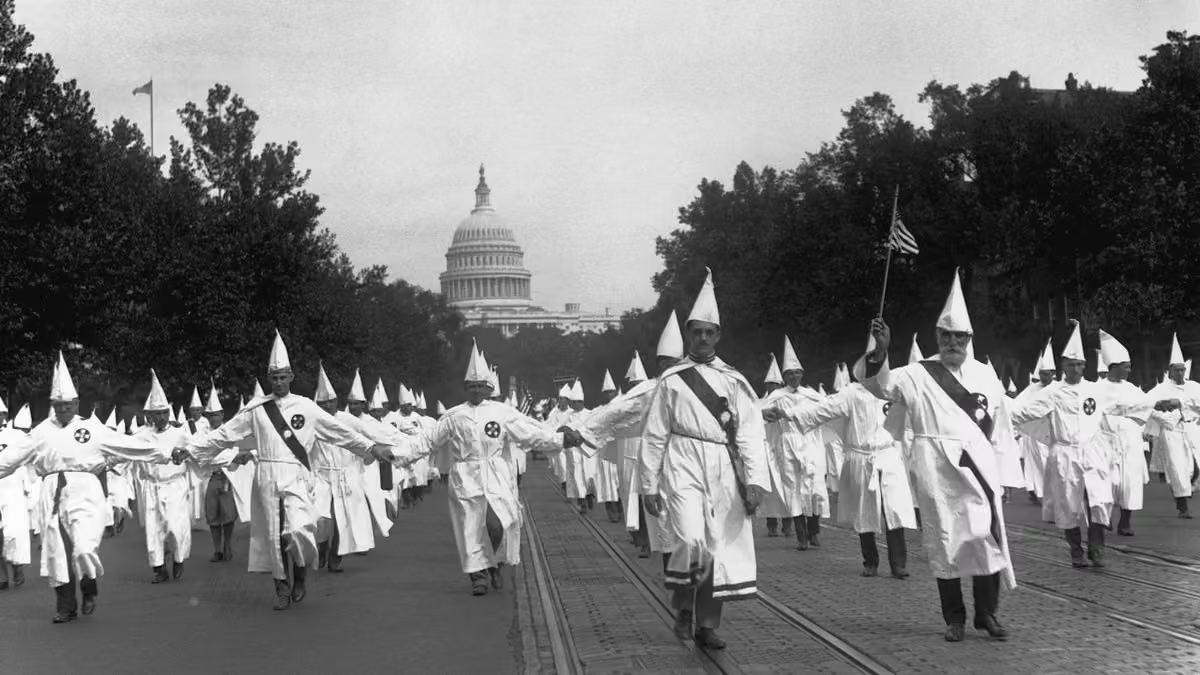 Jerry Mitchell
@JMitchellNews
#onthisday in 1904, diplomat Ralph Bunche was born in Detroit. He was a member of the “Black Cabinet,” which President Franklin D. Roosevelt consulted on minority issues.
After heading the Howard University Political Science Department for more than 20 years, he went to the United Nations and served as its mediator on Palestine. After negotiating the 1948 armistice agreements between Israel and the Arab states, he returned home to receive a ticket-tape parade on Broadway. In 1950, he received the Nobel Peace Prize.
Bunche took part in the civil rights movement for decades, served on the NAACP board and helped Martin Luther King Jr. lead the Selma to Montgomery march in 1965 in Alabama.
“To make our way, we must have firm resolve, persistence, tenacity,” he said. “We must gear ourselves to work hard all the way. We can never let up.”
mississippitoday.org/2024/08/07/1904-ralph-bunche-born/
 Jerry Mitchell
@JMitchellNews
#onthisday in 1963, a 1,000 Black Mississippians defied arrest by authorities and threats by the Ku Klux Klan to cast protest votes in the Mississippi Delta.
Mississippi had a Reconstruction law still on the books that let people who had been illegally prevented from registering to cast provisional ballots. When Black leaders talked of exercising this right, Mississippi Attorney General Joe Patterson threatened to arrest anyone who dared to cast such provisional ballots in the primary.
Activist Billie Johnson, older sister of June Johnson recalled that day: “I had fear in my heart because as soon as morning came, I had to face a big problem. That was going downtown and getting a beating. I know when the police see me they will hit me. I had it all in my mind how it was going to be: one [policeman] would hit me on the head with a nightstick, and the other would hit me in the mouth. Another was going to sic five or six dogs on me. I knew they were going to knock me down and kick me in the face.
“The moment came for me to go downtown. My mind was made up: I looked at the clock — quarter to nine. I was going at nine. If they whipped me for my freedom, I would not mind. And all at once [activist] Sam Block came in and said the police said they would not arrest anyone … I said, ‘Thank God’ three times.”
mississippitoday.org/2024/08/06/1963-protest-votes-missis…
 Jerry Mitchell
@JMitchellNews
#onthisday in 1966, Martin Luther King Jr. and others from the Southern Christian Leadership Conference marched through Marquette Park in Chicago, protesting racial discrimination in housing. Chicago activist Al Raby had invited King and the SCLC to join them in their protest to urge fair housing for residents.
The marchers were met by about 700 white counter-protesters. More than 30 were injured in the hail of bricks, bottles and rocks. King was hit, too, in the melee.
Despite the attack, King continued to champion open housing in the North. He had even moved into a shabby Chicago apartment to bring attention to the inner-city plight.
After the attack, King told reporters, “I’ve been in many demonstrations all across the South, but I can say that I have never seen — even in Mississippi and Alabama — mobs as hostile and as hate-filled as I’ve seen here in Chicago.”
The conflict and tension continued until Chicago Mayor Richard J. Daley negotiated an agreement for fair housing which King termed “the most significant program ever conceived to make open housing a reality in a metropolitan area.”
mississippitoday.org/2024/08/05/1966-mlk-chicago-freedom-…
 Jerry Mitchell
@JMitchellNews
#onthisday in 1901, Louis Armstrong, trumpeter known around the globe as “Satchmo,” was born in an impoverished area of New Orleans known as “the Battlefield.”
“As a boy, he released his energy in a variety of ways — not always socially acceptable,” singer Mahalia Jackson wrote. “One of Louis’ last transgressions as a youth, at the age of 12, was to fire a gun into the air during a New Year’ Eve celebration. He was arrested and sent to reform school.”
The two-year stay had an unexpected effect on the lad — he learned to play the cornet. After his release, he gravitated to where he could listen to music, surviving by selling newspapers and whatever work he could find. He eventually befriended one of the great band leaders of the day, Joe “King” Oliver, who gave him his first cornet.
Armstrong’s inventive playing and gravelly voice reached far beyond jazz, prompting singer Bing Crosby to declare, “He is the beginning and end of music in America.”
He broke down barriers, becoming the first Black American to host a nationally broadcast radio show and made countless appearances on radio, television and film. Often silent on politics, Armstrong made his own stand for civil rights in 1957 when he balked at participating in a U.S. government-sponsored tour of the Soviet Union after nine Black students were blocked from entering a Little Rock school.
Complaining about President Eisenhower’s handling of the problem and the way “they are treating my people in the South,” he turned down the government’s request. “It’s getting almost so bad a colored man hasn’t got any country.”
In response to his comments, the FBI opened an investigation of him. He performed to the end, dying in 1971, a month before he would have celebrated his 70th birthday.
mississippitoday.org/2024/08/04/1901-louis-armstrong-born/
 Jerry Mitchell
@JMitchellNews
#onthisday in 1979, Patricia Roberts Harris began serving as secretary of Health, Education and Welfare under President Jimmy Carter after serving for two years as secretary of Housing and Urban Development. It was one of many firsts for Harris.
She became involved in the civil rights movement while attending Howard University, taking part in a sit-in. She was the first Black woman to serve in the presidential cabinet and the first Black woman to enter the presidential line of succession.
When someone questioned her ability to represent the underclass, she shot back, “You do not seem to understand who I am. I am a Black woman, the daughter of a Pullman (railroad) car waiter. I am a Black woman who even eight years ago could not buy a house in parts of the District of Columbia. I didn’t start out as a member of a prestigious law firm, but as a woman who needed a scholarship to go to school. If you think I have forgotten that, you are wrong.”
mississippitoday.org/2024/08/03/1979-patricia-roberts-har…
 Jerry Mitchell
@JMitchellNews
#onthisday in 1924, novelist, playwright, poet, essayist and social critic James Baldwin was born in Harlem, New York.
His work explored the themes of racial, sexual and class differences and discrimination in America. His 1963 book “The Fire Next Time” became a best-seller, confronting white Americans about the moral cost of racism. He is best known for his semi-autobiographical novel, “Go Tell It on the Mountain”, which examined the role of the Christian Church in the lives of Black Americans.
Active in the civil rights movement, he became friends with Medgar Evers, whom he called “a great man … a beautiful man” whom he joined in investigating the murder of a Black man by a white storekeeper in rural Mississippi, visiting people in their homes at night “behind locked doors, lights down.”
During that visit, Evers shared the story of a tree he passed every day as a boy, where a Black man had been lynched. That trip helped inspire Baldwin to write the play, “Blues for Mister Charlie”, which began with this preface: “What is ghastly and really almost hopeless in our racial situation now is that the crimes we have committed are so great and so unspeakable that the acceptance of this knowledge would lead, literally, to madness. The human being, then, in order to protect himself, closes his eyes, compulsively repeats his crimes, and enters a spiritual darkness which no one can describe.”
He became friends with Martin Luther King Jr. and Malcolm X, writing, “I watched two men coming from unimaginably different backgrounds, whose positions originally were poles apart, driven closer and closer together. By the time each died, their positions had become virtually the same position. It can be said, indeed, that Martin picked up Malcolm’s burden, articulated the vision which Malcolm had begun to see, and for which he paid with his life.”
It was Malcolm X who said organizers wouldn’t let Baldwin speak at the 1963 March on Washington because “they know Baldwin is liable to say anything.”
Although Baldwin admired Malcolm X, he said he never joined the Nation of Islam “because I did not believe that all white people were devils, and I did not want young black people to believe that. I was not a member of any Christian congregation, because I knew that they had not heard and did not live by the commandment ‘Love one another as I love you.’ And I was not a member of the NAACP, because in the north, where I grew up, the NAACP was fatally entangled with black class distinctions, or illusions of the same, which repelled a shoeshine boy like me.”
In his last days, Baldwin began writing notes for a novel to chronicle the lives of Evers, King and Malcolm X: “I want these three lives to bang against and reveal each other, as in truth they did, and use their dreadful journey as a means of instructing people whom they loved so much, who betrayed them, and for whom they gave their lives.”
He died before finishing the novel, but his words have been captured in the 2016 documentary, “I Am Not Your Negro.”
mississippitoday.org/2024/08/02/1924-james-baldwin-born/
 Jerry Mitchell
@JMitchellNews
#onthisday in 1974, Beverly Johnson made fashion history when she became the first Black model to appear on the American cover of Vogue magazine.
When her first managers told her that major magazine covers weren’t going to happen due to her race, she got new managers. She went on to make Vogue’s cover three more times. Within a year, every major American fashion designer began to use Black models.
“My dean gave me permission to model during my work semester, even though I was in the Criminal Justice Department. I don’t know whether I’d ever have become a model if he hadn’t let me do that,” she said.
“The only reason I went into modeling originally was to help out my family, because I knew that money gave you freedom.”
Her success led her to star in television and films, and write health and beauty books. “There’s not a hair extension or a makeup artist,” she later said, “that can make me feel the way I feel when I give back.”
mississippitoday.org/2024/08/01/1974-beverly-johnson-vogue/
 Jerry Mitchell
@JMitchellNews
The Vernon Dahmer family is one of the most patriotic families in America.
Six of his seven sons served a total of 78 years in the armed forces, and on Wednesday we said goodbye to Air Force Senior Master Sgt. Vernon Dahmer Jr., one of the finest men I’ve ever known.
The first time I met him in 1994, I thought I was gazing at a ghost. He had his father’s distinctive features — a barrel-chested frame, closely cropped hair and a narrowly trimmed mustache across his upper lip.
The more we talked, the more I marveled at the similarities we shared. We had both been named after fathers we admired, and we both had family nicknames. His was “Bo,” and mine was “Boo.”
He led me to a table where he showed me a photograph taken by Chris McNair, whose daughter and three other girls had been killed in 1963 when the Ku Klux Klan bombed a Birmingham church.
The picture showed Vernon Jr., and three brothers, George, Martinez and Alvin. They were dressed in their uniforms, staring at the ashes of what had been their family home.
On Jan. 10, 1966, two carloads of Klansmen launched firebombs into the Forrest County home and the family’s grocery store, where Vernon Sr. had volunteered to let Black Mississippians pay their poll taxes so they could vote. (The state had adopted these taxes in its 1890 Constitution in hopes of barring Black Mississippians from voting.)
Another firebomb hit the family’s 1964 Ford Fairlane, setting it ablaze and causing the horn to stick. Dahmer’s wife, Ellie, stirred to the blare of the car horn, smelling smoke. She yelled out, “Vernon, I believe they got us this time.”
He jumped out of bed and grabbed a shotgun, loaded with double-aught buckshot. He fired back at Klansmen so that his family could escape safely out a back window. Unfortunately, the flames of the fire seared his lungs, and he died later that day.
Vernon Jr. was in the Air Force at the time, defending his country. He flew back home to find his father dead and his family home burned to the ground. “To come home and see what happened was totally devastating,” he said.
He had to handle the horrible details, such as the funeral and finding a new place for the family to live while the curious press swarmed around the cinders. “I didn’t have time to cry,” he told me.
He drove me to the Shady Grove Baptist Church, which his ancestors had started before slavery ended, and led me to a rose-tinted headstone that read, “Vernon Dahmer Sr., March 10, 1908—January 10, 1966.”
“If my dad hadn’t been killed by the Klan, he would have had an opportunity to see his grandkids grow up and enjoy the life that those who killed him are still enjoying,” he said. “He was killed for no reason, no valid reason other than hate.”
Despite that hate, the family had endured. Ellie Dahmer served for a dozen years as election commissioner in a mostly white county, and Vernon Jr. helped found the African American Military History Museum.
Not long after our meeting, he began to get calls from a mystery man who wouldn’t identify himself but said he had information on his father’s case. In 1997, we met that man, Bob Stringer, in a motel room on the Mississippi Gulf Coast.
Vernon Jr. asked what prompted him to come forward, and Stringer replied, “I saw you and your family on TV. You were saying how that you were sure there were some people out there who knew something vital that could help get the case reopened.”
Those words resonated with Stringer, who shared how he had overheard Imperial Wizard Sam Bowers give the order to kill Vernon Dahmer Sr. “It’s been a deep, dark secret for 30 years,” he said. “It took me so long to handle it.”
Stringer began cooperating with the Forrest County District Attorney’s office and the Mississippi attorney general’s office, which managed to get a copy of the unredacted FBI file on the case. The more than 40,000 pages enabled authorities to piece the case back together.
They met with the Dahmer family, whose quiet courage inspired them to work even harder. After then-Mississippi Attorney General Mike Moore spent the day with the Dahmer family, he tucked a photograph of the family in his car visor, a reminder that justice had yet to be done.
In spring 1998, authorities arrested Bowers, who went on trial before summer ended. In previous trials, all-white juries refused to convict, but this time would be different. Vernon Jr. was sitting in the balcony, watching the trial unfold when he finally heard the words he longed to hear: “Guilty.”
He covered his face with his fingers, tears streaming behind his calloused hands. He finally had time to cry.
Back at their home, the family gathered on the front lawn beneath the shade of the towering oaks. Friends drove by. They honked their horns and yelled out in victory.
Before darkness fell, he drove to a quiet cemetery and stared at a familiar rose-tinted headstone that read, “Vernon Dahmer Sr. Husband, Father, Community Leader, Voting Rights Activist.” He fell to his knees, telling his daddy that he could rest in peace now because justice had finally come.
On Wednesday, the man I admired and loved so much was buried in the same cemetery with his father.
mississippitoday.org/2025/07/31/son-like-father-vernon-da…
 Jerry Mitchell
@JMitchellNews
#onthisday in 1874, Patrick F. Healy was inaugurated as president of Georgetown University in Washington, D.C. Healy was the first African American to become president of a predominantly white university.
In 1834, he was born into slavery in Macon, Georgia, the son of a slave owner and an African-American woman named Mary Eliza Smith, who became the owner’s common-law wife. He fought discrimination as an elementary school student, both for his African-American and Irish Catholic roots.
In 1850, he became the first African American to enter the Jesuit order and, eight years later, was sent to Europe to study, earning a doctorate at Catholic University of Leuven in Belgium.
In a letter, he referred to the racist remarks, “which wound my heart. You know to what I refer.”
After the Civil War ended, he returned to the U.S. and taught philosophy at Georgetown before becoming president. He helped transform the small college into a major university, upgrading the law school and modernizing the sciences. His influence became so profound that many refer to him as the institution’s “second founder.” He was buried in the Jesuit cemetery on the university grounds, and Georgetown’s Alumni Association now has an award in his name.
mississippitoday.org/2024/07/31/1874-patrick-f-healy/
 Jerry Mitchell
@JMitchellNews
The Mississippi Highway Patrol suspended the state trooper who failed to obey a subpoena to testify in a DUI case involving the current son-in-law of Rankin County Sheriff Bryan Bailey, Mississippi Today has learned.
That son-in-law, Steven Frederick Jr., and another law enforcement officer are now charged with manslaughter in an unrelated case in 2022 while both were Capitol Police officers.
mississippitoday.org/2025/07/29/did-rankin-county-sheriff…
 Jerry Mitchell
@JMitchellNews
#onthisday in 1910, after a series of lynchings, a massacre took place in the unincorporated town of Slocum near Palestine, Texas, killing at least eight African Americans and perhaps more than 20. The slayings took place in this community about 100 miles east of Waco after a foreman put a Black American in charge of recruiting for local road improvements. White mobs followed, firing their guns into cabins where the Black residents lived.
“Men were going about killing Negroes as fast as they could find them,” the sheriff told The New York Times. “They hunted the Negroes down like sheep.”
Two weeks later, more than 150 African-American ministers from Washington, D.C., sent a letter to President William H. Taft, urging him to use “the powers of your great Office to suppress lynching, murder and other forms of lawlessness in this country. … Unless something is done to make human life more valuable and law more universally respected, we feel that our beloved country is doomed to destruction.”
The ministers said in a letter to Taft and the American people, decrying the disenfranchisement of Black Americans, “lynching our men on frivolous charges and unproven charges, and widening the (racial) chasm. … It is pitiable to note that the white man who makes laws for men of other races to live under has not succeeded in ruling according to the laws he has made … Within a month, approximately a hundred citizens have suffered death or persecution in a community of the State of Texas. … Humane treatment, establishing the guilt of evil doers, as a part of justice, is absolutely necessary.”
The ministers’ words fell on deaf ears. The nation’s attorney general responded coldly that this was a matter for state authorities. Only seven men were indicted, but they all walked free. No one was ever prosecuted. A historical marker now remembers the massacre.
mississippitoday.org/2024/07/29/1910-slocum-massacre/
 Jerry Mitchell
@JMitchellNews
#onthisday in 1917, up to 15,000 Black Americans marched in silence in New York City to protest lynchings in the U.S. The march began at 57th Street, down Fifth Avenue to its end at 23rd Street.
The NAACP and Harlem leaders organized the protest as the nation was going to fight “for democracy” in World War I. One parade banner read: “Mr. President, why not make America safe for democracy?”
Among those who helped organize the march was Madam C.J. Walker, who worked in the cotton fields of the South before making a fortune through beauty and hair products, thanks to thousands of “beauty evangelists.”
Four days after the march, she and other organizers gathered at the White House to meet with then-President Woodrow Wilson, but he stood them up. They wrote him and Congress a letter, noting that more than 2,800 Black Americans had been lynched without trials.
“Not a single one has been punished for murder,” they wrote. “We believe that this spirit of lawlessness is doing untold injury to our country, and we submit that the record proves that the states are either unwilling or unable to put down lynching and mob violence.”
With Wilson unwilling to talk with them, she and the other organizers met with members of Congress. Months later, U.S. Rep. Leonidas Dyer introduced an anti-lynching measure that passed the House.
“No nation that seeks to fight the battles of civilization can afford to march in blood-smeared garments,” the organizers wrote. But a filibuster by Southern Democrats blocked a vote in the Senate. Despite that setback, organizers continued their campaign against lynching, with Walker contributing $5,000 to the cause.
At the time of her death in 1919, she was reportedly the wealthiest self-made woman in America. Eight years after her death, an arts center she had backed in Indianapolis finally opened. In 1998, the Postal Service honored her with a stamp. In 2022, more than 120 years after the first anti-lynching was introduced, Congress passed the bill, which the president signed into law.
mississippitoday.org/2024/07/28/1917-silent-parade/
 Jerry Mitchell
@JMitchellNews
#onthisday in 1919, a stone-throwing melee between Black and white citizens began after a Black youth mistakenly swam into territory claimed by whites off the 29th Street beach in Chicago. Amidst the mayhem, the youth drowned. His death and the authorities’ refusal to arrest the white man accused of causing the drowning led to racial clashes.
By the time the violence ended six days later, 38 were dead and more than 500 had been injured. In addition, 1,000 Black families lost their homes to the mob violence. That violence spread across the U.S., and hundreds of African Americans became victims of violence in what became known as “Red Summer.”
Some victims were among the 380,000 Black soldiers returning from World War I. After winning a victory overseas, these veterans had continued their battle for full citizenship — something that many white Americans resented.
At the same time, about 1 million Black Americans fled the South for jobs in the North in what became known as the Great Migration. In Chicago alone, the Black population swelled by 148%.
mississippitoday.org/2024/07/27/1919-chicago-race-riot/
 Jerry Mitchell
@JMitchellNews
#onthisday in 1948, President Harry Truman issued Executive Order 9981, which abolished racial discrimination in the United States Armed Forces, eventually leading to segregation’s end in the services. The order came after he saw many returning Black soldiers become victims of violence.
“My stomach turned over when I learned that Negro soldiers, just back from overseas, were being dumped out of army trucks in Mississippi and beaten,” he said. “I shall fight to end evils like this.”
He formed the President’s Committee on Civil Rights, which asked for an end to discrimination in the armed forces, and later said in a speech at the Lincoln Memorial, “We have reached a turning point in the long history of our country’s efforts to guarantee freedom and equality to all of our citizens.”
Throughout the early history of the U.S. military, minorities had been segregated into separate units. Often given menial tasks, they rarely saw combat. But when they had been allowed to fight on the battlefield, they had proven their patriotism and their mettle. Many of the military brass resisted the change, and the last segregated units didn’t disband until 1954. Exactly 15 years later, Defense Secretary Robert McNamara instructed military commanders to boycott private facilities used by soldiers or their families that discriminated against Black Americans.
mississippitoday.org/2024/07/26/1948-truman-discriminatio…
 Jerry Mitchell
@JMitchellNews
Sad to hear of the passing of Vernon Dahmer Jr., a man I admired and loved so much. He and five other brothers served a total of 78 years in the armed forces during the Korean and Vietnam eras. He showed me a photograph of him and three brothers, George, Martinez and Alvin. They were dressed in their uniforms, staring at the rubble of the house where they'd been raised.
Their father died defending his family from an attack by the KKK. Vernon Jr. was in the Air Force at the time, defending his country. He flew back home to find his father dead and his family home burned to the ground. He handled the horrible details—the funeral, the family's finances, the search for another place to live—all white onlookers and the curious press swarmed around the cinders. "I didn't have time to cry," he told me.
After he retired from the Air Force and moved back to Mississippi, he reached out to me. It was 1994, and he told me he would serve as a spokesman for the family in their push to get his father's killing re-prosecuted. I spent many hours with him and his family in their quest to find justice.
In 1998, Sam Bowers, who ordered the attack on Vernon Dahmer Sr. and his family, finally went on trial. When Vernon Jr. heard the word "guilty," he covered his face with his fingers, tears streaming behind his calloused hands. He finally had time to cry.
Before darkness fell, he drove to a quiet cemetery and stared at a familiar rose-tinted headstone that read, "Vernon Dahmer Sr. Husband, Father, Community Leader, Voting Rights Activist." The retired Air Force sergeant fell to his knees, telling his daddy that he could rest in peace now because justice had finally come.
(This photo, taken by Chris McNair, can be seen in the Mississippi Civil Rights Museum in Jackson.)
 Jerry Mitchell
@JMitchellNews
#onthisday in 1964, Unita Blackwell became the Issaquena County delegate for the Mississippi Freedom Democratic Party, which fought to replace Mississippi’s all-white delegation at the 1964 Democratic National Convention.
“We had no idea that we were changing the whole political future of America,” she said. “We were going because we didn’t have shoes for our children and decent houses to stay in and just the everyday life that we wanted.”
Born during the Depression in the impoverished Mississippi Delta, her parents were sharecroppers, and they searched across the South for jobs that would pay them enough to feed them. When Freedom Summer came, she joined the civil rights movement and became a field secretary for SNCC. She was one of only eight Black Mississippians who tried to register to vote in Mayersville — only to get turned away.
“Because we didn’t have nothing,” she told the “Eyes on the Prize” documentary, “we couldn’t lose nothing. But we wanted something for ourselves and for our children. And so we took a chance with our lives.”
After she and her husband, Jeremiah, attempted to register to vote, they were fired from their plantation jobs, and the Ku Klux Klan tossed Molotov cocktails at her home.
In 1965, she filed litigation challenging the suspension of 300 students, including her son, Jerry, for wearing SNCC’s “Freedom” pins. The U.S. Supreme Court upheld her case, in which also called for school desegregation. In 1976, she was elected mayor of Mayersville — the first African-American woman to serve as a mayor in Mississippi’s history. Within a few years, the town boasted paved streets, a sewer system and streetlights.
In 1990, she was elected president of the National Conference of Black Mayors. Two years later, she received a MacArthur “genius” grant for her creative work as mayor. In 2006, she published her memoir, “Barefootin’: Life Lessons on the Road to Freedom.” A decade later, the state honored her with a Mississippi Freedom Trail marker.
mississippitoday.org/2024/07/25/1964-unita-blackwell/
 Jerry Mitchell
@JMitchellNews
#onthisday in 1919, a white mob, many of them World War I veterans, began assaulting random Black Americans after a white woman was allegedly attacked in Washington, D.C. Weeks prior, newspapers had fanned hysteria with reports of a “serial attacker” of white women.
Police arrested hundreds of Black men, and the Ku Klux Klan began night rides into the Black community, spreading terror. The NAACP warned the newspapers that they were “sowing the seeds of a race riot by their inflammatory headlines.” Their prediction came true when a white mob in Washington began beating anyone with Black skin, including children.
Historian Carter G. Woodson, who went on to found Black History Month, recalled seeing a Black man shot: “I heard him groaning in his struggle as I hurried away as fast as I could without running, expecting every moment to be lynched myself.”
When police refused to intervene, Black Americans fought back. About 375,000 had served in World War I and were willing to fight for their rights. President Woodrow Wilson ordered 2,000 federal troops to regain control.
By the time the violence ended, as many as 39 were dead and 150 injured. Two Black men went to prison for decades for crimes for which they were likely innocent. Before the year ended, similar violence against Black Americans would take place in more than two dozen cities, killing up to 237 Black men in Elaine, Arkansas alone. The violence became known as “Red Summer.”
“There have been race riots throughout the breadth of American history, in every decade since the founding of the country, and the worst of it was in 1919,” Cameron McWhirter, author of “Red Summer: The Summer of 1919 and the Awakening of Black America”, told Smithsonian Magazine. “Every single one was instigated by white mobs, and Washington was the pinnacle if for no other reason than the symbolism.”
mississippitoday.org/2024/07/24/1919-red-summer-washingto…
 Jerry Mitchell
@JMitchellNews
#onthisday in 1890, a half-dozen white men assassinated F.M.B. “Marsh” Cook after he criticized the pending Constitutional Convention for its plot to “restore” white supremacy and strip Black Mississippians of the right to vote. He had announced that he would run as a white Republican candidate for that convention and had urged Black voters to unite against this evil plot when he was gunned down.
The Cleveland Gazette hoped his killing would cause the federal government to intervene, but that never happened. The convention continued, and no one was ever tried for his killing. The new constitution and new laws did exactly what Cook had claimed — removed Black Mississippians from voting rolls and then kept them from regaining the right to vote through poll taxes and constitutional tests.
Other Southern states soon followed Mississippi’s lead, plunging the South into a legacy of disenfranchisement and discrimination. The measures proved so successful in barring African Americans that when the Voting Rights Act passed in 1965, less than 7% of Black Mississippians were allowed to vote.
mississippitoday.org/2024/07/23/1890-fmb-marsh-cook-assas…
 Jerry Mitchell
@JMitchellNews
#onthisday in 1939, Jane Bolin became the first Black female judge in the United States when she was sworn in as a family judge in New York City.
Her career adviser discouraged her from applying to Yale Law School, but she graduated in the top 20 in her class, becoming the first Black woman to graduate from that school. In turn, she became the first Black woman to pass the New York State bar exam and the first to join New York City’s law department.
Bolin fought to end segregation in child placement facilities, including skin color-based assignments for probation officers. She worked with First Lady Eleanor Roosevelt on the Wiltwyck School, which used a holistic approach to help end youth crime.
In a 1958 speech, Bolin spoke out for women’s rights: “Those gains we have made were never graciously and generously granted. We have had to fight every inch of the way — in the face of sometimes insufferable humiliations.”
She served on New York’s Family Court for four decades and also on the boards of the NAACP, National Urban League and Child Welfare League. Constance Baker Motley, who served as a federal judge, called Bolin a role model.
After her retirement at age 70, she became a school consultant and child reading volunteer. After her death, Congressman Charles Rangel delivered a tribute to her on the floor of the House of Representatives, and New York renamed the Queens Midtown tunnel in her honor.
mississippitoday.org/2024/07/22/1939-jane-bolin/
 Jerry Mitchell
@JMitchellNews
#onthisday in 1963, when a National Guardsman poked his bayonet at Gloria Richardson in Cambridge, Maryland, she pushed it away, refusing to back down during protests against racism and inequality. The image of Richardson, head of the Cambridge Nonviolent Action Committee, courageous stand appeared in newspapers around the world. The stand also inspired change. Two days later, she and others signed the Treaty of Cambridge in the office of Attorney General Bobby Kennedy.
The victory came after a quarter century of struggle. Richardson grew up in segregated Cambridge, where the communities were literally separated by a street named Race. She began her activism while a Howard University student, protesting segregated seating at Woolworth’s. In 1962, she and others created the committee to aid SNCC’s efforts to break down the barriers that barred Black residents from decent jobs, housing and health care.
White men hurled eggs at the protesters, who became targets of violence when nightriders attempted to bomb their homes. Richardson encouraged protesters to defend themselves with guns. After two white men were wounded in such a shootout, the governor sent in the National Guard, which stayed in the city nearly a year.
Richardson continued to stand up against them. “It got very scary, with the threats against us, and with whites coming through the Black community, shooting,” her daughter, Donna R. Orange, told The New York Times. “She just marched right past them.”
Although she signed the Treaty of Cambridge, she didn’t support the document in public: “Why would we agree to submit to have our civil rights granted by vote when they were ours already, according to the Constitution?”
Richardson became a national symbol, one of six women listed as “fighters for freedom” at the March on Washington. Fearing that she was becoming an icon, she stepped back from leadership, but not before her example inspired such activists as Stokely Carmichael.
“They looked to Ms. Richardson as the sort of uncompromising Black radical leader they should emulate,” Joseph R. Fitzgerald, author of “The Struggle Is Eternal: Gloria Richardson and Black Liberation”, told the Times.
In the book, she described her strategy in fighting the forces opposing good: “If everything else doesn’t work, then I think you should make it uncomfortable for them to exist. You have to be in their faces ’til it gets uncomfortable for politicians and corporate leaders to keep opposing activists’ demands.”
mississippitoday.org/2024/07/21/1963-gloria-richardson-ba…
 Jerry Mitchell
@JMitchellNews
#onthisday in 1950, African-American troops of the U.S. Army’s 24th Infantry Regiment began the 16-hour offensive that enabled them to recapture Yechon, South Korea. For the U.S. forces, it marked the first South Korean city restored to friendly hands.
Formed in 1869, the regiment had already played an important role in history, taking part in the important Battle of San Juan Hill in 1898. Despite their important victory in the Korean War, the regiment continued to battle prejudice and doubts among Army leaders.
Army Pfc. William Thompson stymied an enemy attack while his platoon withdrew to safety. He died later from his wounds, becoming the first of two Congressional Medals of Honor to African-American soldiers in the Korean War. The second came when the regiment’s Sgt. Cornelius H. Charlton took over command of his platoon after its officer was killed and led repeated successful assaults against protected enemy positions.
Although Army officials continued to ignore or discount such success, South Korean officials honored the regiment with its Presidential Unit Citation.
mississippitoday.org/2024/07/20/1950-24th-infantry-yechon/
 Jerry Mitchell
@JMitchellNews
#onthisday in 1948, Dockum Drug Store in downtown Wichita, Kansas, refused to serve Black patrons at its lunch counter.
“It was degrading, dehumanizing,” recalled then-teenager Galyn Vesey. “You felt like something was wrong, but you learned to cope with it.”
But something stirred up in him and other students, many of them belonging to the local NAACP Youth Council. They decided to organize to protest this segregationist policy. For three weeks, they took their seats at the lunch counter from opening to closing. For three weeks, they endured insults and threats of violence from white patrons.
“We were anticipating the potential for violence and danger, but we had faith — because we felt that righteousness and justice were on our side.”
Wichita’s nine Dockum stores belonged to the Rexall drugstore chain, which decided to end discrimination at all lunch counters nationwide because of the protest.
A downtown monument now honors those who conducted the sit-ins.
For Vesey, the fight continues. “We all have a stake in this, no matter how small,” he said. “We need both group participation and individuals speaking out for social justice and equality.”
mississippitoday.org/2024/07/19/1958-dockum-drug-store/
 Jerry Mitchell
@JMitchellNews
#onthisday in 1965, Willie Brewster died after being attacked three days earlier. He was heading home after working at a pipe foundry near Anniston, Alabama, when three white men shot him, the bullets striking his spine. Back home, his two children and his wife, Lestine, now pregnant, were waiting for him.
The men belonged to the National States Rights Party, a violent neo-Nazi group whose members had been involved in church bombings and killings of African Americans. The men had just heard the group’s Connie Lynch declare, “If it takes killing to get the Negroes out of the white man’s streets and to protect our constitutional rights, then I say, yes, kill them!” They did as he told them.
Months later, jurors sentenced Hubert Damon Strange to 10 years in prison for killing Brewster. It was believed to be the first case in Alabama where an all-white jury convicted a white man of killing a Black man in Alabama. He never served time behind bars. Instead, while he was out on bond, he was killed in a bar fight.
mississippitoday.org/2025/06/18/1965-willie-brewster/
 Jerry Mitchell
@JMitchellNews
#onthisday in 1862, Congress passed the Second Confiscation and Militia Act, which declared that all of those enslaved who had escaped through enemy lines to Union territory “shall be forever free.”
The First Confiscation Act came after the Union defeat at the First Battle of Bull Run a year earlier. In that fighting, Yankee soldiers discovered that “thousands of slaves at Manassas were doing the work of laborers and servants, and rendering all the whites of the Southern army available for fighting,” President Lincoln’s biographer Robert Morse wrote. “The handicap was so severe and obvious, that it immediately provoked the introduction of a bill freeing slaves belonging to rebels and used for carrying on the war.”
A year later, Congress considered a tougher act, something Kentucky and other border states opposed. Kentucky Sen. John J. Crittenden declared, “There is a niche in the temple of fame, a niche near to Washington, which should be occupied by the statue of him who shall save this country.”
He suggested that Lincoln could step into that niche, but if proved “a mere sectarian and a party man, that niche will be reserved for some future and better patriot.”
Illinois Congressman Owen Lovejoy, an abolitionist, responded that there was indeed a niche for Lincoln, “not in the blood-besmeared temple of human bondage; not surrounded by slave-fetters and chains, but with the symbols of freedom; not dark with bondage, but radiant with the light of Liberty. … Let Abraham Lincoln make himself … the emancipator.”
Lincoln signed the Second Confiscation Act, and six months later, he issued the Emancipation Proclamation.
mississippitoday.org/2025/07/17/on-this-day-in-1862-act-d…
 Jerry Mitchell
@JMitchellNews
#onthisday in 1947, Irene Morgan, a 27-year-old Black mother of two, was arrested for refusing to move to the back of an interstate bus in Virginia for a white couple. When a deputy handed her the warrant for her arrest, Morgan tore up the document and tossed it out the window. Then the deputy grabbed her by the arm.
“He touched me,” she told the Washington Post. “That’s when I kicked him in a very bad place. He hobbled off, and another one came on. He was trying to put his hands on me to get me off. I was going to bite him, but he was dirty, so I clawed him instead. I ripped his shirt. We were both pulling at each other. He said he’d use his nightstick. I said, ‘We’ll whip each other.’”
Authorities jailed her. “I was just minding my own business,” she said. “I’d paid my money. I was sitting where I was supposed to sit. And I wasn’t going to take it.”
Her legal appeal, after her conviction for breaking a Virginia segregation law, resulted in a 7-1 U.S. Supreme Court decision barring segregation in interstate commerce. Her act inspired the 1947 Journey of Reconciliation to test the enforcement of the court’s ruling. While on the journey, the integrated group of bus riders sang, “Get on the bus, sit anyplace, ‘cause Irene Morgan won her case.”
In 2000, Gloucester County, where she boarded the bus, honored her on its 350th anniversary. Before she died in 2007, President Bill Clinton awarded her the Presidential Citizens Medal, and the NAACP gave her the Oliver W. Hill Freedom Fighter Award. Her headstone reads, “The Nation’s First Freedom Rider.”
mississippitoday.org/2025/07/16/on-this-day-in-1944-irene…
 Jerry Mitchell
@JMitchellNews
Is Mississippi's "brain drain" the state's greatest threat?
mississippitoday.org/2025/07/15/brain-drain-greatest-threat/
Jerry Mitchell
@JMitchellNews
#onthisday in 1867, Maggie Lena Walker, the first African-American and first known female bank president to charter a bank in the United States, was born in Richmond, Virginia. She championed help for the impoverished and gave loans to Black Americans starting businesses.
“Let us have a bank,” she said, “that will take the nickels and turn them into dollars.”
She also opened a store for Black Americans, so they no longer had to use side or back entrances. In 2017, Richmond honored Walker with a statue — the first of a series aimed at honoring such unsung heroes.
mississippitoday.org/2025/07/15/on-this-day-in-1867-1st-b…
 Jerry Mitchell
@JMitchellNews
#onthisday in 1948, the Democratic National Convention adopted a platform that called for a federal anti-lynching law, the abolition of poll taxes and the desegregation of armed forces. The vote came to the floor as a minority report of the Platform Committee, the spokesman for it being then-Minneapolis Mayor Hubert Humphrey.
The entire Mississippi delegation stormed out of the convention, and so did many other Southern Democrats, including a young Alabama representative named George Wallace. Three days later, the “Dixiecrats,” who wanted to preserve Jim Crow laws and white supremacy, held their own convention and nominated South Carolina Gov. Strom Thurmond for president and Mississippi Gov. Fielding Wright for vice president.
In the November election, the pair received more than 1.1 million popular votes and 39 electoral votes from Louisiana, Mississippi, Alabama, South Carolina and Tennessee. Despite the split in the Democratic Party, President Harry Truman won the upset victory.
Although the party welcomed the Dixiecrats back to the fold after the election, this rebellion signaled the fissures that would come in the 1960s, with many Southern Democrats switching to the Republican Party.
mississippitoday.org/2025/07/14/on-this-day-in-1948-democ…
 Jerry Mitchell
@JMitchellNews
#onthisday in 1863, the Civil War Draft Riots began in Manhattan — one of the bloodiest insurrections in the nation’s history. What started as a riot by white working-class residents, upset by the government’s draft, turned into an attack on Black Americans. The mob of thousands torched dozens of buildings, including the Colored Orphan Asylum, which housed up to 800 children.
“On the 13th July at 4 PM, an infuriated mob … surrounded the premises of the Asylum and 500 of them entered the house … they deliberately set fire to it … simply because it was the home of unoffending colored orphan children,” according to the orphanage’s board minutes.
The mob shot, hanged and burned Black residents. A crowd watched as the mob tortured and killed sailor William Williams. No one intervened, and when the mob finished, they cheered, promising to carry out vengeance on “every n—– in New York.”
By the end of the carnage, at least 120 had been killed, and more than 2,000 were injured. Within two years, the Black population had plummeted beneath 10,000, the lowest for the city in more than three decades. Many of those who stayed eventually made their way to a neighborhood now known as Harlem.
“New York City had never unified to overcome the problems of racism and fully embrace black freedom,” wrote author Leslie M. Harris. “Neither would the nation.”
mississippitoday.org/2025/07/13/on-this-day-in-1863-the-c…
 Jerry Mitchell
@JMitchellNews
#onthisday in 1976, U.S. Rep. Barbara Jordan, who first came to the forefront in the Watergate hearings, became the first African-American woman to deliver the keynote address to the Democratic National Convention.
In high school, she heard a career day speech by Edith Sampson, a black lawyer. Sampson’s words inspired her to become an attorney, and she attended Texas Southern University, a black college hastily created by the Texas Legislature to avoid having to integrate the University of Texas. While there, she became part of the debate team, which famously tied Harvard University debaters.
After graduating magna cum laude in 1956, she was accepted at Boston University’s law school. After graduating, she returned to Houston to open a law office in the Fifth Ward. In 1972, she became the first black woman from the South to be elected to Congress. Four years later, she told those at the Democratic National Convention, “We are a people in a quandary about the present. We are a people in search of our future. We are a people in search of a national community. We are a people trying not only to solve the problems of the present, unemployment, inflation, but we are attempting on a larger scale to fulfill the promise of America. We are attempting to fulfill our national purpose, to create and sustain a society in which all of us are equal. …
“Many fear the future. Many are distrustful of their leaders and believe that their voices are never heard. Many seek only to satisfy their private work — wants; to satisfy their private interests. But this is the great danger America faces — that we will cease to be one nation and become instead a collection of interest groups: city against suburb, region against region, individual against individual; each seeking to satisfy private wants. If that happens, who then will speak for America? Who then will speak for the common good? …
“We cannot improve on the system of government handed down to us by the founders of the Republic. There is no way to improve upon that. But what we can do is to find new ways to implement that system and realize our destiny.”
Her own destiny had been impacted a few years earlier when she was diagnosed with the debilitating disease of multiple sclerosis. In 1979, she stepped away from politics and began teaching at the University of Texas. She delivered the keynote address again in 1992, this time from a wheelchair. Not long after, she received the Presidential Medal of Freedom, and in 1996, she died of pneumonia and leukemia. The University of Texas and Austin airport have both honored her with statues.
mississippitoday.org/2025/07/12/on-this-day-in-1976-rep-b…
 Jerry Mitchell
@JMitchellNews
#onthisday in 1964, Lt. Col. Lemuel Penn, an assistant superintendent for Washington, D.C., public schools, was driving home with two fellow officers from the U.S. Army Reserves training when he was shot and killed by three Klansmen in a passing car in Colbert, Georgia. Penn had survived World War II, fighting in New Guinea and the Philippines, earning a Bronze Star. But he died in the attack by Klansmen, just nine days after the Civil Rights Act became law.
Spotting the Washington, D.C., license plates, Klansman Howard Sims remarked, “That must be one of President Johnson’s boys.” He then said, “I’m going to kill me a n—–,” before he and Klansman Cecil Myers opened fire with their double-barreled shotguns on the car Penn was driving.
The blast from the shotgun killed Penn, and the car slammed into the side of the Broad River Bridge.
Incredibly, the judge in the case allowed Sims and Myers to take the witness stand without being cross-examined. An all-white Georgia jury found the two Klansmen not guilty, but a federal court jury convicted them. Each served about six years in federal prison. The jury, however, acquitted the other Klansman in the car as well as three other Klansmen identified as taking part in the planning.
Years after his release from prison, Sims was killed by a friend with a 12-gauge shotgun — the same kind of gun Sims had used to shoot Penn.
The Penn case was instrumental in the creation of a Justice Department task force, which eventually led to the Civil Rights Act of 1968. When Penn’s body arrived at Arlington National Cemetery, his casket was transferred to the same caisson used for President Kennedy with the same white horses. He received full military honors.
mississippitoday.org/2025/07/11/on-this-day-in-1964-klans…
 Jerry Mitchell
@JMitchellNews
For nearly two years, the embattled sheriff of Rankin County, Mississippi, has tried to distance himself from brutality in his department, saying he was unaware of assaults like those carried out by deputies who called themselves the Goon Squad.
But department records and interviews with a former FBI agent reveal that the sheriff, Bryan Bailey, had evidence of his deputies’ violent acts going back to his earliest days in office.
In 2012, the year Bailey became sheriff, the department and the FBI had reviewed video footage of a deputy ramming his car into a teenager fleeing arrest and threatening to kill him.
Eight years later, a man sued the department claiming that deputies hit him with a metal rod and shoved a gun in his mouth while he was handcuffed.
Then, in 2022, a deputy was caught on video using his Taser to shock a handcuffed man in the back of a patrol car.
The Rankin County Sheriff’s Department confirmed that it had investigated all three cases, and so had the FBI. One of the deputies involved was suspended and another was reassigned, but none of them were fired, and none faced prosecution. Several were later tied to violent raids by the Goon Squad or were convicted for their roles in torturing two men, Eddie Parker and Michael Jenkins, in 2023.
The handling of the three earlier cases reveals how the Sheriff’s Department allowed officers accused of serious violence to remain on the force and that federal authorities chose not to act, despite strong evidence supporting the allegations.
mississippitoday.org/2025/07/10/rankin-sheriff-fbi-signs-…
 Jerry Mitchell
@JMitchellNews
#onthisday in 1964, a group of Black men in Jonesboro, Louisiana, led by Earnest “Chilly Willy” Thomas and Frederick Douglas Kirkpatrick, founded The Deacons for Defense and Justice to protect civil rights activists.
The deacons, most of them veterans of the Korean War, World War II or both, began providing protection after the Congress of Racial Equality’s freedom house became a target of the Ku Klux Klan. They went on to provide security for civil rights leaders and for events such as the 1966 March Against Fear in Mississippi.
Their presence helped deter the KKK’s intimidation and violence against African Americans. Future Black Panther leader Stokely Carmichael drew inspiration from the deacons.
“Here is a group which realized that the ‘law’ and law enforcement agencies would not protect people, so they had to do it themselves,” he said. “The deacons and all other blacks who resort to self-defense represent a simple answer to a simple question: What man would not defend his family and home from attack?”
By 1968, the Deacons had begun to fade from the scene, overshadowed by groups like the Black Panthers. A 2003 TV movie, starring Forest Whitaker and Ossie Davis, depicted the story of the Deacons and others in the civil rights movement.
mississippitoday.org/2025/07/10/on-this-day-in-1964-deaco…
 Jerry Mitchell
@JMitchellNews
#onthisday in 1948, Satchel Paige became the first Black pitcher in American League history.
His debut had been long anticipated, because he was already making headlines as a Negro Leagues pitcher, and sportswriters loved to quote him. Major League Baseball wrote of him, “Paige was baseball’s Mark Twain, but with a much better fastball.” Ted Williams, Joe DiMaggio and Dizzy Dean all called him the best pitcher they had ever seen.
Paige was born in 1906 in Mobile, Alabama. At age 13, he was caught trying to shoplift, and he spent the next five years at reform school. While there, his coach Edward Byrd taught him to pitch. He went on to pitch for the Negro Leagues as well as leagues in Cuba, the Dominican Republic, Puerto Rico and Mexico. By 1948, most people thought Paige was too old to pitch in Major League Baseball. He was already 42.
“Age is a case of mind over matter,” he told reporters. “If you don’t mind, it don’t matter.”
Then the Cleveland Indians signed him. He started out as a relief pitcher and made his first start on Aug. 13, 1948, where he threw a five-hit shutout in front of more than 50,000 fans, putting Cleveland back in first place. He helped Cleveland win the pennant and the World Series, ending the year with a 6-1 record with a 2.48 ERA and two shutouts. The Sporting News named him Rookie of the Year.
Paige continued to pitch well into his 50s, retiring in 1953 — only to return in 1965 to pitch three innings for the Kansas City A’s. He faced 10 batters, “relaxing” in a rocking chair between innings. After allowing a first-inning double, he retired the Red Sox in the second and third innings. He was 59 at the time, making him the oldest player in Major League history.
In 1971, he became the first Negro League veteran to be inducted into the Baseball Hall of Fame, The Sporting News ranked him No. 19 among the 100 Greatest Baseball Players. He was depicted in the 1996 movie, “Soul of the Game,” about the Negro Leagues.
mississippitoday.org/2025/07/09/on-this-day-in-1948-satch…
 Jerry Mitchell
@JMitchellNews
#onthisday in 1876, the Hamburg Massacre took place in South Carolina after Black members of a militia marched on the Fourth of July.
Two white farmers, temporarily obstructed from traveling through town, brought a formal complaint, demanding the disbandment of the militia. When the trial began, hundreds of armed white men known as “Red Shirts” descended on the small Black community, and militia members retreated to a warehouse they used as their armory. The attackers fired a cannon at the armory, eventually killing seven Black men: Allen Attaway, Jim Cook, Albert Nyniart, Nelder Parker, Moses Parks, David Phillips and Hampton Stephens. Also killed was Thomas McKie Meriwether, the white victim.
The Charleston News and Courier denounced the white participants as “cowardly, cruel and murderous.” The newspaper was flooded with canceled subscriptions.
Eventually, 94 white men were indicted for murder, only to be cheered by throngs of white citizens along the way, who promised, “What we did in 1776 we will do in 1876.”
It was the beginning of the “Redemption,” reinstituting white supremacist rule, just as Mississippi had done a year earlier.
In 2016, the names of the Black men killed were finally recognized in a historical marker.
mississippitoday.org/2025/07/08/on-this-day-in-1876-seven…
 Jerry Mitchell
@JMitchellNews
Prosecutors fighting the release of death row inmate Jimmie Duncan after a judge found him “factually innocent” of raping and murdering 23-month-old Haley Oliveaux are “not speaking for Haley’s family,” her mother says.
Speaking publicly for the first time, Allison Layton Statham called for Duncan to go free in a July 22 bail hearing. “This innocent man is on death row,” she told Mississippi Today. “Justice needs to be done.”
In April, a judge threw out Duncan’s conviction, questioning their conclusions and citing the failures of his court-appointed counsel.
Prosecutors have appealed the judge’s decision and are fighting his release on bail, saying Duncan poses both a flight risk and “a safety risk to not only the victim’s family, but also the general public.”
Statham disagreed and said she wants all of the evidence, including a sealed video of a bite-mark expert examining her child’s body, made available so that everyone can know the truth. “Authorities are still wanting to bury the truth,” she said. “What they did was railroad him.”
For a long time, Haley’s paternal aunt, Jennifer Berry, awaited word of Duncan’s execution, she said. “We’ve mourned quite a few people in our family, and we have never mourned like we mourned when that child died.”
Haley Oliveaux ’s paternal aunt, Jennifer Berry, had awaited word of Jimmie Duncan’s execution in the child’s death but, since digging into the case, now believes he should go free.
Since talking with a documentary filmmaker in February and digging into the case, she believes he should go free. “I’ve been in turmoil since realizing this,” she said. “He’s a young man who was falsely accused of a crime he didn’t commit.”
She has petitioned prosecutors, the attorney general and the governor for a meeting but has yet to receive a reply.
The judge’s dismissal marks at least 10 wrongful convictions involving pathologist Dr. Steven Hayne, who has since died, or bite-mark expert Michael West, who once claimed he matched a suspect’s teeth to a half-eaten bologna sandwich. Eight of these wrongful convictions happened in Mississippi. (Story I did with filmmaker Catherine Legge, director of the documentary on the Duncan case.)
mississippitoday.org/2025/07/03/jimmie-duncan-case-go-free/
 Jerry Mitchell
@JMitchellNews
#onthisday in 1961, future U.S. Rep. John Lewis was released after 40 days from Mississippi’s most notorious prison, the State Penitentiary at Parchman. Jackson police arrested him and other Freedom Riders who entered a “whites-only” area of the bus station and refused to move on.
After Lewis, a son of sharecroppers, learned about the 1956 Montgomery bus boycott, he decided to attend the American Baptist Theological Seminary in Nashville, where he embraced the nonviolence philosophy.
One of the original 13 Freedom Riders, he entered the “whites-only” waiting room in Rock Hill, South Carolina — only to become the target of an attack. Two weeks later, he joined another Freedom Ride, this one bound for Jackson, Mississippi. When he and other riders arrived in Montgomery, Alabama, an angry mob attacked them, striking Lewis in the head with a wooden crate.
“I thought I was going to die,” he recalled.
In 1963, he delivered a fiery speech at the March on Washington. Two years later, he led the demonstrations in Selma, Alabama, which helped propel passage of the Voting Rights Act. In 1986, he was elected to Congress and, not long after, he proposed an African-American museum in the nation’s capital. In 2003, the bill finally passed Congress, and the president signed it.
In 2011, he received the nation’s highest civilian honor, the Presidential Medal of Freedom, and five years later, he won the National Book Award for the third installment of his graphic novel, “March.”
“I grew up in rural Alabama, very poor, very few books in our home,” he told the crowd gathered. “I remember in 1956, when I was 16 years old, going to the public library to get library cards, and we were told the library was for whites only and not for coloreds. And to come here and receive this honor, it’s too much.”
mississippitoday.org/2025/07/07/on-this-day-in-1961-john-…
 Jerry Mitchell
@JMitchellNews
#onthisday in 1957, Althea Gibson became the first African American to win the women’s singles title at Wimbledon and became the top female tennis player in the world. Just six years earlier, she had become the first black player to compete at Wimbledon.
Born in South Carolina, she grew up in Harlem, where she loved table tennis. A local musician invited her to play tennis, and she became so talented that a year later, she won a local tournament sponsored by the American Tennis Association (formed by African Americans), later winning 12 ATA titles in just 13 years.
Despite her talent, much of the tennis world remained closed off to her. The breakthrough came in 1950 when tennis legend Alice Marble lambasted the sport for barring Gibson from the world’s best tournaments. The tennis world opened its doors, and Gibson became a Top 10 player in the U.S.
In 1956, she won the French Open. After winning both the women’s singles and doubles at Wimbledon in 1957, she was welcomed with a ticker tape parade in New York City. She went on to win 56 singles and doubles championships before turning pro in 1959.
Although she declared that she never considered herself a crusader, there is no question that she opened the doors for many others. She even tried golf, becoming the first black woman to compete on the pro tour.
After she retired, she was inducted in 1971 into the International Tennis Hall of Fame. She died in 2003 at the age of 77. In 2013, the U.S. Postal Service issued a stamp in her honor. Venus Williams said Gibson has been an inspiration to her and her sister, Serena.
mississippitoday.org/2025/07/06/on-this-day-in-1957-althe…
 Jerry Mitchell
@JMitchellNews
#onthisday in 1827, a day after those enslaved were freed in the state of New York, 4,000 Black Americans marched along Broadway through downtown streets with a grand marshal carrying a drawn sword. They arrived at the African Zion Church, where abolitionist leader William Hamilton said, “This day we stand redeemed from a bitter thralldom.”
Celebrations took place as far away as Boston and Philadelphia. In New York’s capital, Nathaniel Paul, pastor of the First African Baptist Society, declared, “We look forward … (to) when this foul stain will be entirely erased, and this, the worst of evils, will be forever done away … God who has made of one blood all nations of men, and who is said to be no respecter of persons, has so decreed; I therefore have no hesitation in declaring this sacred place, that not only throughout the United States of America, but throughout every part of the habitable world where slavery exists, it will be abolished.”
Among those freed by this act? Sojourner Truth, who was born into slavery and had escaped to freedom just a year earlier. The Fifth of July is still recognized and celebrated in New York City.
mississippitoday.org/2025/07/05/on-this-day-in-1827-black…
 Jerry Mitchell
@JMitchellNews
#onthisday in 1963, Clyde Kennard — railroaded in 1960 because he dared to try to enroll at an all-white college in Mississippi — died of cancer just months after being freed from prison. He died on the anniversary of the Declaration of Independence, which promised “all men are created equal.”
After World War II ended, Kennard taught denazification classes to German students. Years later, he served as a paratrooper in the Korean War. Afterward, he attended the University of Chicago, where he worked on a political science degree, only to have to return home to help his mother after his stepfather died.
He started a chicken farm to help her make ends meet and tried to finish his degree by applying to attend the nearby college, now known as the University of Southern Mississippi.
The State Sovereignty Commission, headed by the governor, used Black leaders to try and dissuade Kennard from enrolling at the all-white college. When that failed, there was a plot to plant a bomb in the Mercury car he drove.
On Dec. 6, 1958, he wrote a letter to the editor of the Hattiesburg American, questioning the logic of the “separate but equal” approach: “After our paralleled graduate schools, where do our parallels of separate but equal go? Are we to assume that paralleled hospitals are to be built for the two groups of doctors? Are we to build two bridges across the same stream in order to give equal opportunities to both groups of engineers? Are we to have two courts of law so as to give both groups of lawyers the same chance to demonstrate their skills; two legislatures for our politically inclined, and of course two governors?”
Months later, when he attempted to enroll at the college, constables claimed they found whiskey under the seat of his car, despite the fact he was a teetotaler. When he continued his fight to attend, he was arrested on charges, this time for reportedly stealing chicken feed.
Kennard went to Parchman prison, where he was forced to pick cotton from daylight to dark. In 1961, he was diagnosed with colon cancer, but wasn’t released from prison until two years later, just months before he died.
In 2005, the man who testified against Kennard admitted that Kennard had done nothing illegal. A year later, a judge tossed out Kennard’s conviction, clearing his name for good. A new book by Devery Anderson details Kennard’s life and what Anderson calls a “slow, calculated lynching.”
mississippitoday.org/2025/07/04/on-this-day-in-1963-clyde…
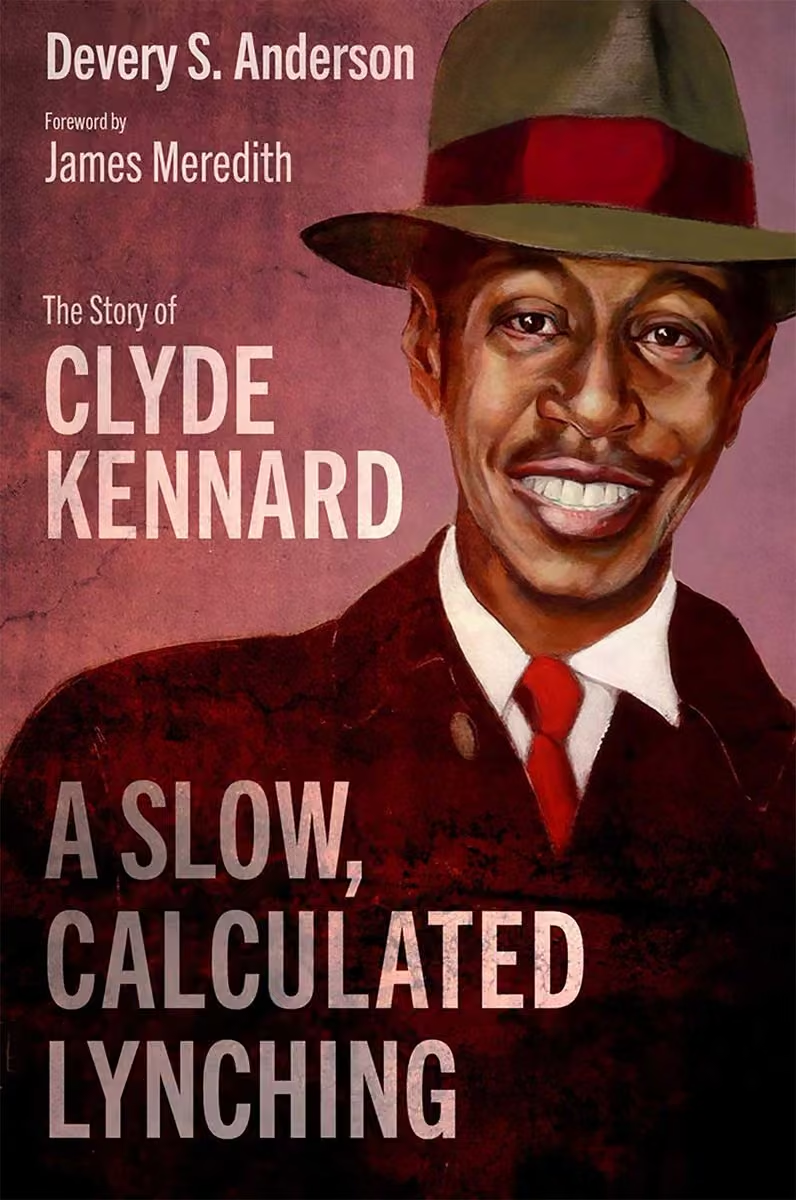 Jerry Mitchell
@JMitchellNews
#onthisday in 1917, one of the worst racial massacres in U.S. history ended after three days in East St. Louis, Illinois. After Black workers were given jobs in a factory that received government contracts, white workers began stabbing, beating and killing them. As many as 100 or more were killed, hundreds more were injured, and 6,000 were driven from their homes.
“My father … witnessed … horrible things: People’s houses being set ablaze, . . . people being shot when they tried to flee, some trying to swim to the other side of the Mississippi while being shot at by white mobs with rifles, others being dragged out of street cars and beaten and hanged from street lamps,” said Dhati Kennedy, whose father was one of the survivors.
The Pittsburgh Dispatch wrote, “The picture of wantonness by the savagery of mobs at East St. Louis will be a humiliating display for the Fourth of July sun to look down upon as it rises on our national liberty jubilation with the country just entered upon a war to make democracy safe.”
mississippitoday.org/2025/07/03/on-this-day-in-1917-illin…
 Jerry Mitchell
@JMitchellNews
Slain civil rights leader Medgar Evers would have celebrated his 100th birthday today.
On his 21st birthday, Medgar Evers and six other World War II veterans, including his brother, Charles, tried to vote in Decatur, Mississippi, only to be turned away by an armed White mob.
That day, Medgar Evers vowed that he would never be whipped again. He and other Black war veterans joined together to fight in the civil rights movement.
After graduating from Alcorn College, he tried to enroll at the University of Mississippi School of Law — only to be turned away. NAACP officials considered taking up his case but were so impressed with him they decided instead to hire him as the first field secretary for the Mississippi NAACP.
He put thousands of miles a year on his Oldsmobile, recruiting new members, reviving branches and investigating often unpunished violence against Black Americans, including the 1955 murder of Emmett Till.
On May 20, 1963, he talked on television about the mistreatment of Black Mississippians: “The years of change are upon us. In the racial picture, things will never be as they once were. History has reached a turning point, here and over the world.”
Three weeks later, he was assassinated in the driveway of his Jackson home. On his birthday in 1964, Congress passed the Civil Rights Act, and President Lyndon B. Johnson signed it hours later.
mississippitoday.org/2025/07/02/on-this-day-in-1946-medga…
 Jerry Mitchell
@JMitchellNews
This one is too tough ... Bridge Over Troubled Water is my favorite Simon & Garfunkel album ... Chicago II is Terry Kath and Chicago at their best ... Layla is Eric Clapton's best ... huge fan of CSN&Y ... Moondance is my favorite Van Morrison ... Beatles are the best ... [sigh]
Jerry Mitchell
@JMitchellNews
#onthisday in 1870, Congress created the Department of Justice to handle the flood of post-Civil War litigation. President Ulysses S. Grant appointed Amos T. Akerman, whose priority became the protection of Black voting rights from attacks by the Ku Klux Klan and similar groups.
Congress aided that fight by passing additional laws that gave the department powerful tools to fight these violent white supremacist groups. These new laws enabled Akerman to obtain hundreds of convictions across the South. On one day in November 1871, 250 men in a South Carolina county confessed membership in the Klan.
Historian William McFeely wrote of Akerman, “Perhaps no attorney general since his tenure … has been more vigorous in the prosecution of cases designed to protect the lives and rights of Black Americans.”
But instead of rewarding Akerman, Grant dismissed him, and the battle to preserve these voting rights became less of a priority.
In 2020, the Justice Department celebrated its 150th anniversary.
mississippitoday.org/2025/07/01/on-this-day-in-1870-first…
 Jerry Mitchell
@JMitchellNews
#onthisday in 1958, the U.S. Supreme Court ruled unanimously that the state of Alabama could not compel the NAACP to release its membership lists.
The lawsuit arose out of a lawsuit filed by Alabama Attorney General John M. Patterson, who claimed the civil rights organization had harmed the state’s reputation by promoting the Montgomery Bus Boycott and the admission of Autherine Lucy to the University of Alabama.
Justices wrote that requiring the NAACP to turn over membership lists would violate the First Amendment, which promises the freedom of association.
“It is hardly a novel perception that compelled disclosure of affiliation with groups engaged in advocacy may constitute as effective a restraint on freedom of association as [other] forms of governmental action,” the justices wrote. In the past, such exposures had led to members suffering “economic reprisals, loss of employment, threat of physical coercion and other manifestations of public hostility,” the justices wrote.
The ruling proved a great victory for the civil rights organization, which enabled it to continue operating in Alabama.
mississippitoday.org/2025/06/30/on-this-day-in-1958-supre…
 Jerry Mitchell
@JMitchellNews
#onthisday in 1941, Stokely Carmichael, also known as Kwame Ture, was born. Inspired by the sit-ins in the South, he joined the civil rights movement and became a Freedom Rider. Arrested in Jackson, Mississippi, he spent 53 days in Mississippi’s most notorious prison, Parchman, before being released.
It was one of dozens of arrests. He became a leader in the Student Nonviolent Coordinating Committee (SNCC), replacing John Lewis, and popularized the term “black power.” The phrase became a movement, and he became known as “honorary prime minister” of the Black Panther Party.
He died of prostate cancer in 1998.
 Jerry Mitchell
@JMitchellNews
#onthisday in 1942, Dorie Ladner was born in Hattiesburg, Mississippi. She and her sister, Joyce, became involved early with the civil rights movement, working with Medgar Evers, Vernon Dahmer, Clyde Kennard and others.
She and her sister were kicked out of Jackson State University for their support of the Tougaloo Nine, who integrated the all-white library in downtown Jackson. They became even more active at Tougaloo College. They worked with the Freedom Riders, joining the Student Nonviolent Coordinating Committee.
They later worked all day at the SNCC office to help organize the 1963 March on Washington, and Bob Dylan would sing his new songs to Dorie until well into the night. Dylan apparently penned “Outlaw Blues” about her: “I got a girl in Jackson, I ain’t gonna say her name. She’s a brown-skin woman, but I love her just the same.”
Joyce pursued graduate school, earning a doctorate in sociology, becoming the first female president of Howard University. Dorie escorted Fannie Lou Hamer to register to vote and continued her civil rights work, participating in every major civil rights march through 1968. In Washington, D.C., she earned her master’s in social work, counseling emergency room patients, visiting schools and working with the Rape Crisis Center.
The sisters were honored at the Kennedy Center, and Dorie received the Fannie Lou Hamer National Institute on Citizenship and Democracy Humanitarian Award. A decade before her 2024 death, Tougaloo gave her an honorary doctorate. A Mississippi Freedom Trail marker now honors the sisters.
mississippitoday.org/2025/06/28/on-this-day-in-1942-civil…
 Jerry Mitchell
@JMitchellNews
#onthisday in 1991, Thurgood Marshall, the first Black justice on the U.S. Supreme Court, announced his retirement from the high court. President George H.W. Bush appointed Clarence Thomas to take Marshall’s place.
Two years later, Marshall died and was buried in Arlington National Cemetery near the graves of previous justices.
“I wish I could say that racism and prejudice were only distant memories. We must dissent from the indifference. We must dissent from the apathy. We must dissent from the fear, the hatred and the mistrust,” he said in an interview before his death. “We must dissent because America can do better, because America has no choice but to do better.”
mississippitoday.org/2025/06/27/on-this-day-in-1991-thurg…
 Jerry Mitchell
@JMitchellNews
 Jerry Mitchell
@JMitchellNews
#onthisday in 1966, the March Against Fear, which became known as the “Meredith March,” ended at the Mississippi Capitol in Jackson. James Meredith, who started the one-man march before being shot, had recovered enough to help finish it with Martin Luther King Jr., who spoke.
Leaders of the Student Nonviolent Coordinating Committee used the event to organize Black voting across the state. By the time the march ended, leaders had crafted a manifesto that called on President Lyndon Johnson to “actively enforce existing federal laws to protect the rights of all Americans.” It was the last major event of a united civil rights movement.
mississippitoday.org/2025/06/26/on-this-day-in-1966-james…
 Jerry Mitchell
@JMitchellNews
Happy Birthday, James Meredith, who turned 92 today!
On his birthday in 1962, the Fifth Circuit Court of Appeals ordered his admission as the first known Black student to the University of Mississippi.
Four years later, he started his one-man March Against Fear across the state, only to be shot by a white supremacist. Meredith survived, and civil rights leaders joined him in finishing the march that ended in Jackson, where Meredith and Martin Luther King Jr. spoke. (Photo by Rogelio V. Solis for AP)
 Jerry Mitchell
@JMitchellNews
#onthisday in 1964, 30 Freedom Summer workers based in Greenville, Mississippi, made the first effort to register Black voters in Drew.
White men circled the workers in cars and trucks, some equipped with gun racks, making violent threats. One White man stopped his car and said, “I’ve got something here for you,” flashing his gun.
Despite death threats and burning crosses, the workers persisted. During Freedom Summer, about 17,000 Black Mississippians attempted to register to vote, but only 1,600 were actually allowed to vote. These acts drew national attention to the state’s disenfranchisement of Black voters and contributed to the passage of the Voting Rights Act in 1965.
A decade after the law passed, Mississippi saw the nation’s greatest increase in registered Black voters.
mississippitoday.org/2025/06/24/on-this-day-in-1964-freed…
 Jerry Mitchell
@JMitchellNews
If you haven't been through the Mississippi Civil Rights Museum, admission is free on July 2, the 100th anniversary of Medgar Evers' birthday.
 Jerry Mitchell
@JMitchellNews
#onthisday in 1963, Martin Luther King Jr. led a massive march, joined by as many as 125,000, in Detroit. The words he shared in his speech were similar to those in the “I Have a Dream” speech he delivered two months later from the steps of the Lincoln Memorial in Washington, D.C.
He mentioned his friend, Medgar Evers, who had been assassinated just 11 days earlier, and Emmett Till, whose brutal killing helped propel the modern civil rights movement.
“Before the victory is won, some, like Medgar Evers, may have to face physical death. But if physical death is the price that some must pay to free their children and their white brothers from an eternal psychological death, then nothing can be more redemptive,” he said. “I have a dream that there will be a day that we will no longer face the atrocities that Emmett Till had to face or Medgar Evers had to face, that all men can live with dignity.”
mississippitoday.org/2025/06/23/on-this-day-in-1963-marti…
 Jerry Mitchell
@JMitchellNews
#onthisday in 1909, legendary choreographer, activist and educator Katherine Dunham was born in Joliet, Illinois. For more than 30 years, she directed the Katherine Dunham Dance Company, the only self-supported black dance company in America at the time.
She was often called the “Mother of Black Dance.” In the 1940s, Dunham’s troupe traveled across America, even performing in the segregated South. After discovering that African Americans were not allowed to buy tickets to one of her shows, she refused to perform.
She received a standing ovation after a performance in Louisville, Kentucky, but following the performance she made an announcement that she would never perform there again because the manager would not allow black and white people to sit next to each other. She also expressed a hope that this would one day change.
mississippitoday.org/2025/06/22/on-this-day-in-1909-mothe…
 Jerry Mitchell
@JMitchellNews
#onthisday in 1964, a group of more than 20 Klansmen killed three civil rights workers, James Chaney, Andrew Goodman and Michael Schwerner south of Philadelphia, Mississippi. The three men had come as a part of Freedom Summer to register Black voters and work in the civil rights movement.
Imperial Wizard Sam Bowers called on Klansmen to repel this “communist invasion” by counterattacking the movement leaders at night: “Any personal attacks on the enemy should be carefully planned to include only the leaders and prime white collaborators of the enemy forces.”
The trio came to Neshoba County to investigate the KKK’s burning of a Black church and the beatings of members. On their return to Meridian, Neshoba County Deputy Cecil Price jailed the trio and then released them into the hands of the waiting Klansmen who chased them down, executed them and buried their bodies 15 feet down in an earthen dam.
Hundreds of FBI agents came to investigate the case, which the agency called “Mississippi Burning,” or MIBURN for short. Forty-four days later, agents found their bodies.
In a 1967 federal trial, seven men were convicted on conspiracy charges with none serving more than six years in prison. Nobody was ever tried for murder until 2005 when Edgar Ray Killen was convicted of orchestrating the trio’s slayings. The conviction took place on the 41st anniversary of the killings.
 Jerry Mitchell
@JMitchellNews
#onthisday in 1960, renowned singer and actor Harry Belafonte was awarded an Emmy Award for his television special, “Tonight with Harry Belafonte.” He was the first Black American to win the prestigious industry award.
He had already won a Tony Award in 1954 as a supporting actor in “John Murray Anderson’s Almanac.” He decided to forego making a fortune, saying, “I chose to be a civil rights warrior instead.” He died in 2023 of congestive heart failure at age 96.
mississippitoday.org/2025/06/20/on-this-day-in-1960-harry…
 Jerry Mitchell
@JMitchellNews
#onthisday in 1865, two months after the Civil War ended, all those enslaved in Texas learned they were finally free.
Union Gen. Gordon Granger delivered the news to those enslaved in Galveston that the Civil War had ended:
“The people of Texas are informed that, in accordance with a proclamation from the Executive of the United States, all slaves are free. This involves an absolute equality of personal rights and rights of property between former masters and slaves, and the connection heretofore existing between them becomes that between employer and hired labor.”
His announcement put the Emancipation Proclamation into effect. The news set off celebrations and continued to be remembered in the years that followed. The day became known as “Juneteenth,” which became a legal state holiday in Texas in 1980. In 2021, Juneteenth, also known as “Freedom Day,” became a national holiday.
mississippitoday.org/2025/06/19/on-this-day-in-1865-texas…
 Jerry Mitchell
@JMitchellNews
#onthisday in 1949, Ada Sipuel Fisher became the first Black woman to attend an all-white law school in the South when she entered the University of Oklahoma Law School.
Her parents had survived the 1921 Tulsa massacre, and her family moved to Chickasha, where she was born and grew up. She became valedictorian of her local high school and decided to become a lawyer after hearing Thurgood Marshall speak.
With the backing of both her family and the NAACP, she applied to the University of Oklahoma Law School, which rejected her strictly on the basis of race. When Marshall began to represent her in her battle for admission, the Oklahoma Legislature decided to step in and create a brand-new law school in five days that was nothing more than a room inside the state Capitol, and the Oklahoma courts agreed these two law schools were “equal.”
Her journey to law school began in 1946 with her law school application. A half-dozen Black students joined her in the fight. Two years later, the U.S. Supreme Court ruled in their favor, ending segregation for Black students in graduate programs.
After the U.S. Supreme Court concluded that the law school could not bar students based on race, Oklahoma officials decided to admit her. Although she recalled white classmates welcoming her, she was forced to sit in the back of the room behind a sign that read “colored” and had to eat in a separate part of the cafeteria.
In 1952, Fisher graduated and began practicing law. In 1992, Oklahoma Gov. David Walters appointed her to the University of Oklahoma’s Board of Regents. She vowed to bring enlightenment to the position, noting that she had “suffered severely from bigotry and racial discrimination as a student.”
After her 1995 death, the law named a garden to honor her, and a bronze plaque talked of “how the stone that the builders once rejected becomes the cornerstone.” The law school has since received more than $1 million to endow the Ada Lois Sipuel Fisher Chair in Civil Rights, Race and Justice in Law to teach, research and empower future lawyers.
mississippitoday.org/2025/06/18/on-this-day-in-1949-ada-s…
 Jerry Mitchell
@JMitchellNews
Today is the 10th anniversary of the mass shooting at the Mother Emanuel AME Church in Charleston. A white supremacist, intent on starting a race war, opened fire during the Wednesday night Bible study, killing nine Black worshippers as they bowed their heads in prayer. Twice a day, the church bells toll nine times, one for each of those killed, now memorialized as the Emanuel 9.
 Jerry Mitchell
@JMitchellNews
#onthisday in 1775, Peter Salem became a hero in the American Revolution. He had been born into slavery in Framingham, Massachusetts, in 1750 and was freed to fight in the revolution.
After Americans began to battle the British army, British Maj. John Pitcairn demanded that the Americans surrender. When they didn’t, he waved his sword and rallied the British troops to counterattack. He led the charge over the hill, reportedly yelling out, “The day is ours!” As he did, a Black soldier stepped forward and shot Pitcairn, according to eyewitnesses.
“As news of Pitcairn’s death spread, the morale for the American cause skyrocketed,” according to the American Battlefield Trust. Salem, who was generally credited with shooting Pitcairn, survived the battle and continued to serve in the Army for another five years.
Following the war, he married Katy Benson and worked as a cane weaver. He was buried in a pauper’s grave in Framingham, but in 1882, the townspeople erected a monument to honor him. He is also depicted in John Trumbull’s famous painting of the Bunker Hill battle.
mississippitoday.org/2025/06/17/on-this-day-in-1775-peter…
 Jerry Mitchell
@JMitchellNews
#onthisday in 1966, Stokely Carmichael, one of the original Freedom Riders and a leader of the Student Nonviolent Coordinating Committee, called for “Black Power” at a rally in Greenwood, Mississippi.
He was taking part in the James Meredith “March Against Fear,” when he and others set up tents on the grounds of a public school. When local white officials confronted him, saying they didn’t have permission to do so, Carmichael and two other leaders continued to pitch tents.
Authorities arrested the trio. Several hours after being released from jail, Carmichael addressed the crowd, saying, “We been saying freedom for six years, and we ain’t got nothin’. What we got to start saying now is Black Power! We want Black Power!” The phrase echoed through the crowd, and the slogan spread rapidly across the nation, a movement that promoted Black identity, pride and self-determination.
A year earlier, the Lowndes County Freedom Organization in Alabama had used the slogan, “Black Power for the People.” Author Richard Wright had used the phrase more than a decade before that. Carmichael became the voice of this new movement, featured in a New York Times story headlined, “Black Power Prophet,” and the FBI Director J. Edgar Hoover soon targeted him and others in the movement through COINTELPRO.
SNCC soon gave way to the Black Panthers. In 1968, Carmichael married Miriam Makeba, a beloved singer from South Africa known as “Mama Africa,” who was exiled from her homeland because the apartheid governor saw her as a threat. They left for Guinea the next year. Carmichael, also known as Kwame Ture, lived the rest of his life in Africa, continuing to speak out and fight for change before dying of prostate cancer in 1998.
“The secret of life is to have no fear,” he said. “It’s the only way to function.”
mississippitoday.org/2025/06/16/on-this-day-in-1966-stoke…
 Jerry Mitchell
@JMitchellNews
#onthisday in 1953, Martha White refused to give up her seat on a city bus in Baton Rouge, Louisiana. Soon, another Black woman joined her.
The bus driver threatened to arrest them, but when the Rev. T.J. Jemison, pastor of Mount Zion Baptist Church, arrived, he informed the driver of a recently passed city ordinance that meant White hadn’t violated the law. As a result, white bus drivers began a strike. When that ended days later, Jemison and others began a boycott.
Jemison had long been upset about the fact that although Black riders made up 80% of passengers, they had to stand in bus aisles while seats remained empty: “I thought that was just out of order; that was just cruel.”
Thousands attended the nightly meetings, and their numbers continued to grow. Money collected at meetings went to pay for gas for providing rides. The boycott ended with the compromise that other than the two side front seats for white riders and a long rear seat for Black riders, the remaining seats would be occupied on a first-come, first-served basis. After that success, a young Martin Luther King Jr. came and visited Jemison.
Two years later, the Montgomery Bus Boycott was born.
mississippitoday.org/2025/06/15/on-this-day-in-1953-black…
 Jerry Mitchell
@JMitchellNews
This Friday, I'll be on a great panel at the Investigative Reporters and Editors' Conference titled, "So You Think You Want to Write a Book?" The IRE Conference is a terrific one for investigative journalists whether you're just starting or you've been in the business a while.
 Jerry Mitchell
@JMitchellNews
#onthisday in 1965, the Mississippi Freedom Democratic Party organized a one-mile silent march, starting at Morning Star Baptist Church and ending at the Mississippi Capitol, where lawmakers were contemplating changes in voting laws.
Jackson police arrested the marchers, more than half of them students from Lanier High School. Over the next few weeks, more than 1,000 were arrested and held in livestock pens at the Mississippi State Fairgrounds.
During the protest, 5-year-old Anthony Quin waved a U.S. flag outside the Governor’s Mansion. Matt Herron’s photograph of state trooper Huey Krohn trying to wrestle the flag from Quin’s hands ran in The New York Times and other newspapers across the U.S. Quin later said that his mother had told him to hold onto that flag for dear life — and he did.
On June 30, a three-judge panel of the 5th U.S. Circuit Court of Appeals ordered the release of those arrested and barred the city of Jackson from making any further arrests.
Despite Quin’s young age, this wasn’t his first brush with the civil rights movement. A month before this photo was taken, his family’s home was firebombed in McComb because of their work in the movement. He and his sisters went on to become the first students to integrate McComb public schools.
From those days of fighting racism on a day-by-day basis, Quin learned to care for students. He became a principal of several different elementary schools before becoming an administrator over the schools. In 2015, he died of pancreatic cancer.
mississippitoday.org/2025/06/14/on-this-day-in-1965-jacks…
 Jerry Mitchell
@JMitchellNews
#onthisday in 1967, President Lyndon B. Johnson nominated the first Black American, then-Solicitor General Thurgood Marshall, to the U.S. Supreme Court, saying it was “the right thing to do, the right time to do it, the right man and the right place.”
But his push for a legal career began with disappointment. He wanted to attend the University of Maryland Law School, but the institution refused to open its doors to Black students. He wound up graduating first in his class at Howard University Law School. One of his first victories came against the University of Maryland, which had rejected a Black applicant on the basis of race alone.
Attorney Charles Hamilton Houston began serving as his mentor when he became a staff lawyer for the NAACP in 1936. Four years later, Marshall founded and became the executive director of the NAACP Legal Defense and Educational Fund. At age 32, he won his first U.S. Supreme Court victory when justices overturned the convictions of four Black men in Florida who “confessed” after they were beaten.
He went on to win an incredible 29 of the 32 cases he argued before the high court, most notably the Brown v. Board of Education decision, which ended racial segregation in schools.
The Senate confirmed his nomination by a 69-11 margin, and he served a quarter century on the high court. He once described his legal philosophy as “you do what you think is right and let the law catch up” — a comment that drew him criticism. The law school at Texas Southern University now bears his name.
In 2017, Chadwick Boseman portrayed the future justice in the movie, “Marshall,” featuring a 1940 case the NAACP lawyer took on, successfully representing a Black man accused of rape by a white socialite.
Before his death, Marshall advised, “Where you see wrong or inequality or injustice, speak out, because this is your country. This is your democracy. Make it. Protect it. Pass it on.”
mississippitoday.org/2025/06/13/on-this-day-in-1967-thurg…
 Jerry Mitchell
@JMitchellNews
Medgar Evers, a WWII veteran and civil rights leader, was assassinated on this day 62 years ago. Someone asked me to share an excerpt from "Race Against Time" where I interviewed his killer, Byron De La Beckwith, in his home in Signal Mountain, Tennessee in 1990. (He was finally convicted of murder four years later.)
 Jerry Mitchell
@JMitchellNews
#onthisday in 1963, hours after President John Kennedy told the nation that the grandchildren of those enslaved are “not yet freed from the bonds of injustice,” NAACP leader Medgar Evers was assassinated outside his home in Jackson, Mississippi, and protests followed, including a march of 5,000 people with Martin Luther King Jr., after his funeral.
Hundreds of African Americans rushed to courthouses to register to vote, only to be arrested and jailed. As for Evers’ assassin, Klansman Byron De La Beckwith was tried twice by all-white juries in 1964, but each trial ended in a hung jury. In 1989, the case was reopened, and Beckwith was convicted and sentenced to life in prison, where he died in 2001.
mississippitoday.org/2025/06/12/on-this-day-in-1963-medga…
 Jerry Mitchell
@JMitchellNews
A week after Pentagon leaders announced their intention to possibly rename the USNS Medgar Evers, christened for the World War II veteran and civil rights leader, his family is urging the Department of Defense and the Navy to reverse their position.
This could be the second time Evers’ name is erased. Although President Donald Trump called Medgar Evers a “great American hero” at the 2017 opening of the Mississippi Civil Rights Museum, his name was removed last March from the Arlington National Cemetery Website, which featured a section honoring Black Americans who fought in the nation’s wars.
“Renaming the USNS Medgar Evers is not only malicious — it is despicable,” said Evers’ daughter, Reena Evers-Everette. “As my mother said, ‘This is an injustice to a man who fought for his country both at home and abroad.’”
mississippitoday.org/2025/06/11/medgar-evers-family-fight…
 Jerry Mitchell
@JMitchellNews
#onthisday in 1963, President John F. Kennedy delivered his first civil rights speech. Hours earlier, he had seen Alabama Gov. George Wallace try to block the enrollment of two Black students at the University of Alabama, and now he felt compelled to speak out.
His senior advisers told him not to, but he remained determined to educate the nation in this moment of great urgency. His speechwriter, Ted Sorensen, finished with less than five minutes before Kennedy went on the air at 8 p.m. Eastern time. Kennedy had jotted down a few notes in case he had to speak extemporaneously.
He told those listening of the “worldwide struggle to promote and protect the rights of all who wish to be free. And when Americans are sent to Vietnam or West Berlin, we do not ask for whites only. It ought to be possible, therefore, for American students of any color to attend any public institution they select without having to be backed up by troops.”
He said every American should be able “to enjoy the privileges of being American without regard to his race or his color. In short, every American ought to have the right to be treated as he would wish to be treated, as one would wish his children to be treated. But this is not the case.”
A century of delay has “passed since President Lincoln freed the slaves, yet their heirs, their grandsons, are not fully free,” he said. “They are not yet freed from the bonds of injustice. They are not yet freed from social and economic oppression. And this Nation, for all its hopes and all its boasts, will not be fully free until all its citizens are free.”
mississippitoday.org/2025/06/11/on-this-day-in-1963-jfk-g…
 Jerry Mitchell
@JMitchellNews
#onthisday in 1966, Ben Chester White was shot to death by Klansmen near Natchez, Mississippi.
White worked most of his life as a caretaker on a plantation and had no involvement in the civil rights movement. Klansmen told White that they needed help finding a lost dog. They lied to him, part of their plot to kill White so that they could lure Martin Luther King Jr. to the area and assassinate him.
They took him to a remote area and began to fire their guns at him. His final words? “Oh, Lord, what have I done to deserve this?” As he breathed his last, his blood ran red in a stream called Pretty Creek.
News of White’s murder never made it to King, who was nowhere near Mississippi. Although one of the Klansmen later confessed, no one was ever convicted until 2003, when the last surviving Klansman was convicted and sentenced to life in prison, where he died.
mississippitoday.org/2025/06/10/on-this-day-in-1966-klans…
 Jerry Mitchell
@JMitchellNews
America lost a gentle giant in journalism when Stanley Nelson, who investigated some of the nation’s most notorious racially motivated slayings in Mississippi and Louisiana, died unexpectedly last week. He was 69.
CBC reporter David Ridgen, an award-winning documentary filmmaker and podcast host, worked with the reporter for years. “Stanley Nelson is the best of us,” he said. “A doer. Not a reminiscer. A teller. Not someone to leave anyone behind. A brotherly guy who you’d trust anything to.”
In 2012, he became a Pulitzer Prize finalist for his stories on the 1964 killing of Frank Morris in Ferriday, Louisiana, by Klansmen who belonged to the violent wing, the “Silver Dollar Group.”
Best-selling author Greg Iles depicted the journalist as the character Henry Sexton in his novel, “Natchez Burning.” Nelson chuckled to me about the portrayal, saying his alter ego lived a much more adventurous life: “He is a musician, has a girlfriend and is tech savvy — that’s something I don’t know a damn thing about.”
Iles said the most important writing he’s ever done “would not exist were it not for the inspiration and selfless collaboration of Stanley Nelson. I never knew another man who always did the right thing regardless of fear or favor, not motivated by hope for profit or fame. Stanley eventually gained a wide reputation for excellence, but not because he sought it. Because he earned it. And God knows the world is a better place because he lived and worked in it.”
mississippitoday.org/2025/06/09/civil-rights-investigativ…
Jerry Mitchell
@JMitchellNews
#onthisday in 1963, returning from a Student Nonviolent Coordinating Committee training session in South Carolina, Fannie Lou Hamer and nine other civil rights movement activists dared to ride in the “white” section of a Greyhound bus and sit at the “whites-only” lunch counter inside the bus terminal in Winona, Mississippi.
The police chief had them arrested. Inside the jail, Hamer, and fellow activists June Johnson, Annell Ponder and Lawrence Guyot were all beaten. Jailers brought in two black inmates to torture Hamer, who called the violence “the most horrifying experience I’ve ever had in my life.”
Euvester Simpson, who witnessed the brutal beating, nursed Hamer’s wounds and became even more dedicated to the movement.
Six months later, the Justice Department charged the police chief and sheriff with depriving the activists of their civil rights. Prosecutors held up the bloodstained clothes of Johnson and Hamer as evidence, while the defense lawyer declared, “You have agitators on one hand, and elected officials on the other, who shall you believe?”
Some students from the University of Mississippi School of Law cut classes to watch, marveling at Hamer’s courage. “It was plain to us that she was telling the truth, and that the defense witnesses were lying,” recalled Avery Rollins, who became an FBI agent.
Although the all-white jury acquitted the law enforcement officers on all counts, Hamer refused to stay silent. Months later, she testified before the Democratic Credentials Committee about her beating, moving a nation.
mississippitoday.org/2025/06/09/on-this-day-in-1963-fanni…
 Jerry Mitchell
@JMitchellNews
#onthisday in 1953, the U.S. Supreme Court ruled that segregation in restaurants in Washington, D.C., was unlawful.
Civil rights activist Mary Church Terrell had led that fight. Such discrimination had not always existed in the nation’s capital. In fact, Congress had passed laws in 1872 and 1873, barring restaurants and the like from refusing to serve any “well-behaved” customer, regardless of race. Those laws remained on the books, despite being ignored.
After the high court ruled in her favor, Terrell returned to the same restaurant that had turned her away, and she and her friends were served.
mississippitoday.org/2025/06/08/on-this-day-in-1953-supre…
 Jerry Mitchell
@JMitchellNews
#onthisday in 1966, James Meredith was shot a day after he began his one-man, 220-mile March Against Fear from Memphis to Jackson, Mississippi.
Meredith survived, and the sniper was arrested. Meredith did the march to encourage Black Mississippians to vote in the wake of the passage of the 1965 Voting Rights Act.
After Meredith’s shooting, Martin Luther King Jr. and other civil rights leaders and activists decided to continue the march in Meredith’s name. People from all over the nation came to join the march, which resulted in 4,000 new Black voters.
The march ended at the state Capitol in Jackson, where 15,000 gathered, including Meredith, who had recuperated from surgery. It was the largest civil rights march in the state’s history. (The photo by Associated Press’ Jack Thornell, which captured the shooting, won the Pulitzer.)
mississippitoday.org/2025/06/06/on-this-day-in-1966-james…
 Jerry Mitchell
@JMitchellNews
Hate to share such sad news, but my journalism colleague and fellow author, Stanley Nelson, who devoted his late career to undercovering unpunished cold cases from the Civil Rights Era, has died. We are all in shock.
www.hannapub.com/concordiasentinel/news/stanley-nelson-pa…
Jerry Mitchell
@JMitchellNews
#onthisday in 1963, Cleve McDowell became the first Black American to attend the University of Mississippi School of Law. He and James Meredith roomed together on campus. But university officials expelled him after they caught him with a pistol for self-protection. He began carrying the weapon after federal marshals left campus, no longer protecting him or Meredith.
McDowell went on to receive his law degree from Texas Southern University in Houston and returned to the Mississippi Delta, where he served as field secretary for the Mississippi NAACP and later worked as a public defender. He and other civil rights leaders argued that unpunished killers from the civil rights movement should be punished, just as Nazi war criminals had been. He died in 1997.
mississippitoday.org/2025/06/05/on-this-day-in-1963-cleve…
 Jerry Mitchell
@JMitchellNews
#onthisday in 1899, the Rev. D.A. Graham stepped to his A.M.E. pulpit in Indianapolis. He often read from the Gospels or spoke about the love of Jesus, but on this day, he decried the mistreatment of Black Americans.
Over the past seven years, there had been more than 1,200 lynchings of Black Americans, but nothing had been done to halt them, he said. The newly formed Afro-American Council had just held a National Day of Fasting and Prayer to protest the lynchings of Black Americans:
“We are arrested and lodged in jails on the most frivolous suspicion of being the perpetrators of most hideous and revolting crimes, and, regardless of established guilt, mobs are formed of ignorant, vicious, whiskey-besotted men, at whose approach the keys of these jails and prisons are surrendered and the suspicioned party is ruthlessly forced from the custody of the law and tortured, hanged, shot, butchered, dismembered, and burned in the most fiendish manner.”
In some lynchings, mob members collected charred body parts as souvenirs, Graham said.
“How many of them are guilty? What is the proof against them?”
In Georgia, a white girl met a young Black man “coming down a path and as he did not get out of the path she was afraid and ran. She swore that he did not speak to her and did not follow her,” Graham said.
Despite the utter lack of evidence, 19-year-old Ed Aikin served 10 years on a prison chain gang for attempted assault, Graham said.
“How can the colored youth ever learn to look upon himself as a man when he is constantly treated as a brute?” Graham asked.
In March 2022, after more than a century of lobbying, lynching finally became a federal crime.
mississippitoday.org/2025/06/04/on-this-day-in-1899-minis…
 Jerry Mitchell
@JMitchellNews
#onthisday in 1863, Harriet Tubman, along with Black soldiers, took part in a daring Union raid of Combahee Ferry near Beaufort, South Carolina.
She became the first American woman to lead a major military operation when she and at least 150 Black soldiers helped to rescue more than 700 Black Americans who had been enslaved on nearby plantations. Many of the men became soldiers for the Union Army.
The Wisconsin State Journal described her as “She-Moses,” whose raid struck “terror to the heart of the rebeldom … without losing a man or receiving a scratch.” She worked on similar missions with the famed Massachusetts 54th Infantry, portrayed in the award-winning movie, “Glory.”
In all, she made 19 trips back to the South to ensure that hundreds of others that were enslaved made their way to freedom and was quoted as telling them, “If you hear the dogs, keep going. If you see the torches in the woods, keep going. If there’s shouting after you, keep going. Don’t ever stop. Keep going. If you want a taste of freedom, keep going.”
She was never caught, despite a $40,000 reward ($1.5 million in today’s dollars) for her capture. The movie, “Harriet,” depicts the Combahee Ferry raid. Statues of Tubman can now be seen across the nation, honoring this heroic woman.
mississippitoday.org/2025/06/02/on-this-day-in-1863-harri…
 Jerry Mitchell
@JMitchellNews
#onthisday in 1964, the U.S. Supreme Court unanimously overturned Alabama’s ban on the NAACP, allowing the NAACP to operate in the state for the first time in eight years.
NAACP leader Ruby Hurley set up the office in Birmingham in 1951, only to be forced to flee the state five years later after Alabama authorities aggressively investigated the NAACP and tried to seize membership records.
After the NAACP refused, an Alabama judge levied a fine against the organization and threatened more penalties it refused to comply. The NAACP sued, only to have the Alabama Supreme Court dismiss the litigation. NAACP lawyers argued that the release of such records could invite reprisals and attacks on their members.
In 1958, the U.S. Supreme Court ruled unanimously that the right of association and assembly under the First Amendment is protected by the due process clause of the 14th Amendment. If the high court had upheld the state’s attempts to seize membership records, it would have dealt a serious blow to the organization, its members and the movement itself.
mississippitoday.org/2025/06/01/on-this-day-in-1964-supre…
 Jerry Mitchell
@JMitchellNews
#onthisday in 1921, the Tulsa race massacre began after a white mob gathered at a jail where a Black teen had been arrested on false charges of “attacking” a white girl in an elevator.
In reality, he may have tripped or bumped into her. Although authorities exonerated him, that didn’t stop the mob.
“As the whites moved north, they set fire to practically every building in the African American community, including a dozen churches, five hotels, 31 restaurants, four drug stores, eight doctor’s offices, more than two dozen grocery stores, and the Black public library,” according to a 2001 report on the massacre.
That rampage left as many as 300 dead and 10,000 homeless. “They tried to kill all the Black folks they could see,” recalled George Monroe, who was 5 at the time. The Black community known as Greenwood bore the name of the Mississippi Delta town. Greenwood, known as the “Black Wall Street” for its bustling businesses, became a pile of ashes.
No one was ever prosecuted for these crimes. Viola Fletcher, a 107-year-old who survived, said, “I have lived through the massacre every day. Our country may forget this history, but I cannot. I will not. And other survivors do not. And our descendants do not.”
The community that once sprawled beyond 35 blocks is now just one block. A 7,000-square-foot museum, Greenwood Rising, now honors that community.
mississippitoday.org/2025/05/31/on-this-day-in-1921-tulsa…
 Jerry Mitchell
@JMitchellNews
#onthisday in 1965, Vivian Malone became the first Black graduate of the University of Alabama in its 134 years of existence.
Gov. George Wallace had blocked her entry two years earlier. The night after her 1963 admission, she awoke to learn Mississippi NAACP leader Medgar Evers had been assassinated.
“I decided not to show any fear and went to classes that day,” she recalled, even as white students refused to return her smile or make eye contact with her.
One night at midnight, someone knocked on her dormitory door and told her there was a bomb threat. No bomb was found, but bombs went off later that year, not far from her dormitory. Despite that, “I was never afraid,” she said.
She graduated with a degree in business management and joined the civil rights division of the U.S. Department of Justice. She served as director of civil rights and urban affairs and later as director of environmental justice for the Environmental Protection Agency. In 2000, her alma mater gave her an honorary doctorate, and she told students, “You must always be ready to seize the moment.”
She died in 2005 in Atlanta, and her hometown of Mobile has since dedicated a downtown street for her.
mississippitoday.org/2025/05/30/on-this-day-in-1965-vivia…
 Jerry Mitchell
@JMitchellNews
Looking forward to being in Oxford on June 7 (Saturday) to speak about the courageous families featured in at "Race Against Time." If you're in the area, come by if you like.
 Jerry Mitchell
@JMitchellNews
#onthisday in 1980, Vernon Jordan, who once worked alongside Medgar Evers as a field secretary for the NAACP and later advised Bill Clinton, survived an assassination attempt in Fort Wayne, Indiana, by racist serial killer Joseph Paul Franklin (who also wounded Hustler publisher Larry Flynt in 1978).
Franklin was acquitted of the assault — only to confess his guilt years later. In an interview, Franklin said he considered Adolf Hitler his hero and “Mein Kampf” his Bible. “I read it hundreds of times.”
Trying to start a “race war,” he said he bombed synagogues, shot interracial couples and killed “enemies of the white race.” By the time it ended, he had killed at least 22 people, including Jackson State University student Johnnie Noyes Jr., who had simply been washing his car.
In 2013, Franklin was executed in Missouri for the 1977 murder of Gerald Gordon outside a synagogue in St. Louis.
mississippitoday.org/2025/05/29/on-this-day-in-1980-verno…
 Jerry Mitchell
@JMitchellNews
#onthisday in 1963, the nation’s most violent reaction to a sit-in protest took place when a mob attacked Black and white activists at a Woolworth’s lunch counter in Jackson, Mississippi.
One of them, Tougaloo College professor John Salter, said, “I was attacked with fists, brass knuckles and the broken portions of glass sugar containers, and was burned with cigarettes. I’m covered with blood, and we were all covered by salt, sugar, mustard, and various other things.”
Salter and fellow protesters Joan Trumpaeur and Anne Moody, who were both Tougaloo students, can be seen in the famous picture of the event. The protest came eight days after the U.S. Supreme Court ruled that state enforcement of restaurant segregation is a violation of the 14th Amendment.
M.J. O’Brien’s book, “We Shall Not Be Moved: The Jackson Woolworth’s Sit-In and the Movement It Inspired”, describes that event.
mississippitoday.org/2025/05/28/on-this-day-in-1963-white…
 Jerry Mitchell
@JMitchellNews
#onthisday in 1958, Ernest Green, one of the Little Rock Nine, became the first Black American to graduate from newly integrated Central High School in Little Rock, Arkansas. Forty years later, the campus became part of the National Park Service, and the Little Rock Nine received the Congressional Gold Medal, the highest civilian honor.
On the 10th anniversary of the tearing down of the Berlin Wall, President Clinton honored them for “what these people did to make the walls of bigotry and prejudice fall in America. For when they marched up the steps to school — a simple act — they became foot soldiers for freedom, carrying America to higher ground.”
These nine students passed through a “volcano of hatred,” he said, but “like Shadrach, Meshach and Abednego, they walked out without being burned. But they have their scars. They taught us that you can turn your cheek from violence without averting your eyes to injustice.”
mississippitoday.org/2025/05/27/on-this-day-in-1958-ernes…
 Jerry Mitchell
@JMitchellNews
#onthisday in 1956, a bus boycott began in Tallahassee, Florida, after Florida A&M students Wilhelmina Jakes and Carrie Patterson refused to give up their seats to white passengers. Police charged them with “placing themselves in a position to incite a riot.”
After their arrest, the student body president, Broadus Harley, called for a meeting of the 2,300 students. They voted to boycott the buses, leading to two temporary shutdowns of the bus company. The police arrested 26 people in the protests.
The Rev. C.K. Steele helped form the Inter-Civic Council, which created a car pool system for African Americans that city leaders attacked as an “illegal” business, leading to the arrest of Steele and others. He shot back to their opponents, “I would rather walk in dignity than ride in humiliation.”
Council leaders were arrested and charged with operating an “illegal car pool.” Steele, Jakes and Patterson had crosses burned outside their homes. On Jan. 3, 1957, a federal judge ruled bus segregation laws unconstitutional. Four days later, Tallahassee’s city commission repealed its segregation clause.
The city’s Civil Rights Heritage Walk highlights the boycott and other civil rights activities.
mississippitoday.org/2025/05/26/on-this-day-in-1956-bus-b…
 Jerry Mitchell
@JMitchellNews
#onthisday in 1774, Lancaster Hill and other Black Americans in the Massachusetts Bay colony, “who are detained in a state of Slavery in the Bowels of a free & Christian Country,” declared in a petition that they were born free just like the white citizens and “have never forfeited this Blessing by any compact or agreement whatever.”
Seven years later, Elizabeth “Bett” Freeman heard that the new Massachusetts Constitution said every person had a right to freedom. The next day, she approached a lawyer and was quoted as asking, “I heard that paper read yesterday, that says, all men are created equal, and that every man has a right to freedom.” She said she wanted her freedom, too. The lawyer agreed and filed a lawsuit on behalf of her and another African American.
In 1781, the case went to court, and a jury ruled in her favor, making her the first Black woman set free under the Massachusetts state constitution.
“Any time while I was a slave,” she said, “if one minute’s freedom had been offered to me and I had been told I must die at the end of that minute, I would have taken it, just to stand one minute on God’s earth a free woman!”
At the same time, Quock Walker sued his former master, Nathaniel Jennison, for battery. After the local courts ruled in his and Freeman’s favor, they pressed the Massachusetts Supreme Judicial Court on whether the state’s Constitution applied to those enslaved. That challenge led to Supreme Court Chief Justice William Cushing’s conclusion that slavery was “inconsistent with our own conduct and Constitution.”
By 1790, the U.S. Census found no Black Americans enslaved in Massachusetts, making it the first state to abolish slavery.
mississippitoday.org/2025/05/25/on-this-day-in-1774-resid…
 Jerry Mitchell
@JMitchellNews
#onthisday in 1961, 27 Freedom Riders, headed for New Orleans, were arrested as soon as they arrived in the bus station in Jackson, Mississippi. Many of the riders were sentenced to two months inside Mississippi’s worst prison, the state penitentiary in Parchman.
Within a few months, police arrested more than 400 Freedom Riders. Eric Etheridge features portraits of the Riders (then and now) in his book, “Breach of Peace.” Their journeys are captured in Raymond Arsenault’s book, “Freedom Riders: 1961 and the Struggle for Racial Justice,” and Stanley Nelson’s documentary, “Freedom Riders.”
mississippitoday.org/2025/05/24/on-this-day-in-1961-reedo…
 Jerry Mitchell
@JMitchellNews
#onthisday in 1961, days after a violent attack by a white mob, civil rights leaders James Farmer, John Lewis, Ralph Abernathy and Martin Luther King Jr. announced at a news conference in Montgomery, Alabama, that the Freedom Rides would continue.
mississippitoday.org/2025/05/23/on-this-day-in-1961-leade…
Jerry Mitchell
@JMitchellNews
#onthisday in 2002, Alabama jury convicted Bobby Cherry of taking part in the Ku Klux Klan’s 1963 bombing of a Birmingham church that killed four girls. Cherry received four life sentences — one for each slaying. In 2004, he died in prison.
Thomas Blanton, who was convicted in May 2001 as a conspirator in the case and received four life sentences, also died in prison in June 2020. Robert Chambliss, known as “Dynamite Bob,”was convicted in 1977 and died in prison eight years later. The last suspect, Herman Cash, died in 1994 and was never tried.
mississippitoday.org/2025/05/22/on-this-day-in-2002-jury-…

Jerry Mitchell reposted
 How To Be... Books Podcast 📚🎙🧠🌍
@HowToBe247
Reading @JMitchellNews' incredible investigation, "Race Against Time," and can say it's one of my favourite books this year. It's still relevant now.
Jerry Mitchell
@JMitchellNews
Here is the end of my encounter with Byron De La Beckwith when I interviewed him in April 1990, eight months before he was indicted again for Medgar Evers' murder. From "Race Against Time" ...
 Jerry Mitchell
@JMitchellNews
#onthisday in 1892, crusading journalist Ida B. Wells published a column exposing the lynchings of Black men and denouncing claims that the lynchings were meant to protect white women. Her anti-lynching campaign came after a mob killed three of her friends, who had reportedly opened a grocery store that competed with a white-owned store in Memphis.
Upset by Wells’ writings, a white mob destroyed her presses and threatened to kill her if she ever published again. She left Memphis for Chicago, but she continued to expose lynchings, calling for national legislation to make lynching a crime.
In 1898, she took her protest to the White House. “Nowhere in the civilized world save the United States of America do men, possessing all civil and political power, go out in bands of 50 and 5,000 to hunt down, shoot, hang or burn to death a single individual, unarmed and absolutely powerless,” she wrote. “We refuse to believe this country, so powerful to defend its citizens abroad, is unable to protect its citizens at home.”
The National Memorial for Peace and Justice in Montgomery, which opened in 2018, features a reflection space in honor of her.
Congress finally passed an anti-lynching law in the 2021-22 session. The Emmett Till Antilynching Act defines lynching as a federal hate crime.
mississippitoday.org/2025/05/21/on-this-day-in1892-ida-b-…
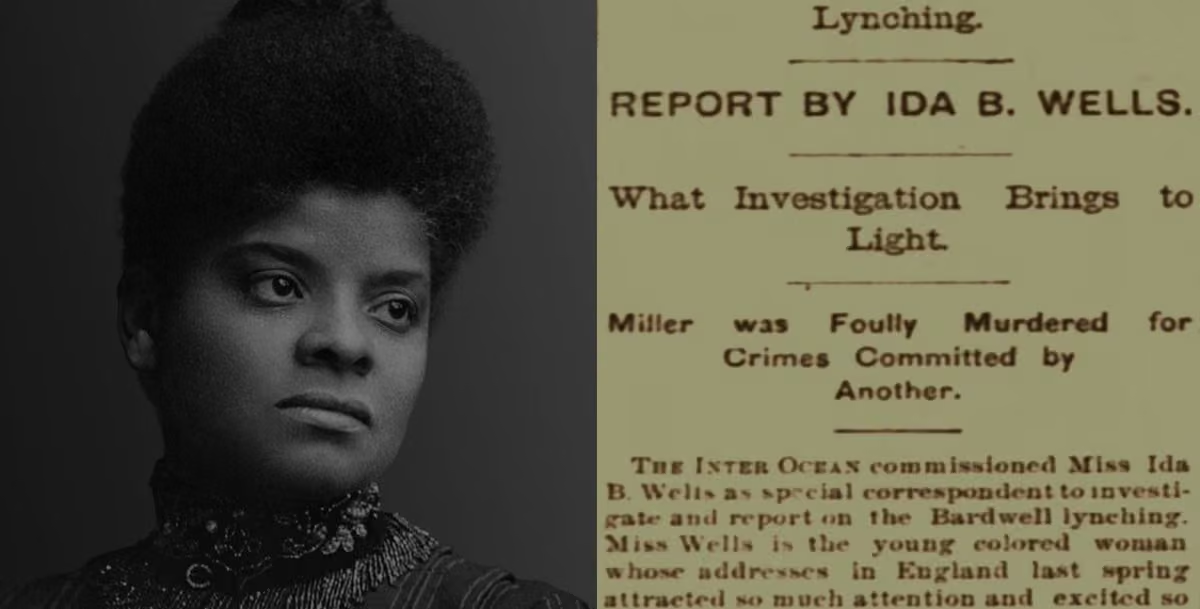 Jerry Mitchell
@JMitchellNews
#onthisday in 1961, a white mob of more than 300, including Klansmen, attacked Freedom Riders at the Greyhound Bus Station in Montgomery, Alabama. Future Congressman John Lewis was among them.
“An angry mob came out of nowhere, hundreds of people, with bricks and balls, chains,” Lewis recalled.
After beating on the riders, the mob turned on reporters and then Justice Department official John Seigenthaler, who was beaten unconscious and left in the street after helping two riders.
“Then they turned on my colleagues and started beating us and beat us so severely, we were left bloodied and unconscious in the streets of Montgomery,” Lewis recalled.
As the mob headed his way, Freedom Rider James Zwerg said he asked for God to be with him, and “I felt absolutely surrounded by love. I knew that whether I lived or died, I was going to be OK.”
The mob beat him so badly that his suit was soaked in blood.
“There was nothing particularly heroic in what I did,” he said. “If you want to talk about heroism, consider the Black man who probably saved my life. This man in coveralls, just off of work, happened to walk by as my beating was going on and said ‘Stop beating that kid. If you want to beat someone, beat me.’ And they did. He was still unconscious when I left the hospital.”
To quell the violence, Attorney General Robert Kennedy sent in 450 federal marshals.
mississippitoday.org/2025/05/20/on-this-day-in-1961-white…
 Jerry Mitchell
@JMitchellNews
Today is the 100th birthday of Malcolm X. He was born Malcolm Little in Omaha, Nebraska. When he was 14, a teacher asked him what he wanted to be when he grew up and he answered that he wanted to be a lawyer. The teacher chided him, urging him to be realistic. “Why don’t you plan on carpentry?”
In prison, he became a follower of Nation of Islam leader Elijah Muhammad. In his speeches, Malcolm X warned Black Americans against self-loathing: “Who taught you to hate the texture of your hair? Who taught you to hate the color of your skin? Who taught you to hate the shape of your nose and the shape of your lips? Who taught you to hate yourself from the top of your head to the soles of your feet? Who taught you to hate your own kind?”
Prior to a 1964 pilgrimage to Mecca, he split with Elijah Muhammad. As a result of that trip, Malcolm X began to accept followers of all races. In 1965, he was assassinated. Denzel Washington was nominated for an Oscar for his portrayal of the civil rights leader in Spike Lee’s 1992 award-winning film.
mississippitoday.org/2025/05/19/1925-malcolm-x-born-omaha…
 Jerry Mitchell
@JMitchellNews
#onthisday in 1896, the U.S. Supreme Court ruled 7-1 in Plessy v. Ferguson that racial segregation on railroads or similar public places was constitutional, forging the “separate but equal” doctrine that remained in place until 1954.
In his dissent that would foreshadow the ruling six decades later in Brown v. Board of Education, Justice John Marshall Harlan wrote that “separate but equal” rail cars were aimed at discriminating against Black Americans.
“In the view of the Constitution, in the eye of the law, there is in this country no superior, dominant, ruling class of citizens,” he wrote. “Our Constitution is color-blind and neither knows nor tolerates classes among citizens. In respect of civil rights, all citizens are equal before the law. The humblest is the peer of the most powerful. The law … takes no account of his surroundings or of his color when his civil rights as guaranteed by the supreme law of the land are involved.”
mississippitoday.org/2025/05/18/on-this-day-in-1896-us-su…
 Jerry Mitchell
@JMitchellNews
#onthisday in 1954, the U.S. Supreme Court unanimously ruled in Brown v. Board of Education that the “separate but equal” doctrine in Plessy v. Ferguson was unconstitutional under the 14th Amendment, which guaranteed equal treatment under the law.
The historic decision brought an end to federal tolerance of racial segregation, ruling in the case of student Linda Brown, who was denied admission to her local elementary school in Topeka, Kansas, because of the color of her skin.
In Mississippi, segregationist leaders called the day “Black Monday” and took up the charge of the just-created white Citizens’ Council to preserve racial segregation at all costs.
mississippitoday.org/2025/05/17/on-this-day-in-1954-us-su…
 Jerry Mitchell
@JMitchellNews
#onthisday in 1950, 20 Black families from South Carolina filed a lawsuit, Briggs v. Elliott, the first direct attack on the validity of the “separate but equal” doctrine in public schools.
The litigation was later combined with the successful Brown v. Board of Education case. The litigation might never have happened if not for the Rev. Joseph A. DeLaine, who accepted the NAACP’s call to challenge the school bus transportation practices in Clarendon County, where Black students had to walk up to 8 miles to school.
“I realize that the stand that I take may cost me my job as a school teacher, but we need men,” he wrote.
Property owner Levi Pearson had previously sued, asking that school buses be provided for Black students. After his lawsuit failed on technical grounds, Thurgood Marshall approached DeLaine, saying he needed families for litigation, or the NAACP couldn’t go any further.
After gathering the signatures of 107 parents and their children, economic pressure and violence followed. Despite this, 17 adults signed the petition again, and the lawsuit moved forward to trial. Evidence showed that South Carolina spent $221 annually for each white student, but only $45 for each Black student. White children had modern schools with a teacher for every grade. Meanwhile, Black children studied in wooden shacks, reading textbooks discarded by white students.
As a result of their activism, the Pearson family saw boycotts of their timber, and the Briggses were fired from their jobs. So were DeLaine and his wife. They saw their home and church burned to the ground. They were forced to leave the state after a drive-by shooting. In 2003, the families of DeLaine, Levi Pearson and the Briggses received Congressional Gold Medals for their courage.
mississippitoday.org/2025/05/16/on-this-day-in-1950-black…
 Jerry Mitchell
@JMitchellNews
At Thursday’s standing-room-only Board of Supervisors’ meeting, several Rankin County citizens called for Supervisor Steve Gaines to resign because of remarks that some have called racist.
The Rev. Ava Harvey, pastor for the Pilgrim Rest Missionary Baptist Church in Brandon, called for “an honest apology and an honorable resignation” by Gaines, saying, “It is time for our county to heal.”
In 2023, five of Sheriff Bryan Bailey’s deputies, some of whom called themselves the “Goon Squad,” beat, tased and sexually assaulted Eddie Parker and his friend, Michael Jenkins, before shooting Jenkins in the mouth during a mock execution. The deputies tried to plant a BB gun and drugs on the men to cover up their crimes, but they were ultimately convicted and sent to federal prison for decades.
On May 1, the sheriff’s department’s lawyer, Jason Dare, announced that Rankin County had negotiated a $2.5 million settlement with Parker and Jenkins. Two days later, Gaines praised the settlement and Dare.
“He beat the pants off of those guys—the dopers, the people that raped and doped your daughters,” Gaines told the nearly all-white crowd of 100 gathered at the sheriff’s breakfast. “He beat their pants off.”
Malik Shabazz, a lawyer for Parker and Jenkins, called Gaines’ remarks racist and said his clients are considering a defamation lawsuit.
On May 13, Gaines released a statement saying that his comments were “not aimed at anyone personally.”
At the Thursday meeting, Harvey said it’s obvious that Gaines was speaking of the two men. “If you were not referring to Mr. Eddie Parker and Michael Jenkins, who were you referring to?” he asked Gaines. “If you’re not speaking specifically to the case that the lawyer was involved in, then exactly who is it? Is there another case out here that no one knows about?”
mississippitoday.org/2025/05/15/citizens-call-for-rankin-…
 Jerry Mitchell
@JMitchellNews
#onthisday in 1970, Mississippi law enforcement officers opened fire on the Jackson State University campus, killing two Black students, Phillip Lafayette Gibbs and James Earl Green.
Police insisted the students fired first, but no evidence was found to confirm this. The killings took place 11 days after the slayings of four students at Kent State University in Ohio.
Author Margaret Walker Alexander, a JSU professor, wrote in her journal, “Thursday night all hell broke loose. The Jackson city white police and a special unit of Highway Patrolmen (Ku Klux Klan in uniform) went out to the Jackson State campus and shot without warning into the west wing of the women’s dormitory breaking all the front windows — killing two students and wounding eleven others — four critically — cutting the telephone wires — shooting into the building where all the wounded girls were shot — splattering the place with pools of blood and leaving the bullet holes to prove where the ricocheted bullets of great magnitude had torn the walls.”
A historical marker memorializes the tragedy.
mississippitoday.org/2025/05/15/on-this-day-in-1970-offic…
 Jerry Mitchell
@JMitchellNews
#onthisday in 1961, a group of Freedom Riders traveling by bus from Washington, D.C., to New Orleans arrived in Anniston, Alabama. A mob of white men led by a Klansman attacked the bus with baseball bats and iron pipes. They also slashed the tires.
After the attack ended, the hobbled bus pulled over, the mob hurled a firebomb into the bus, and someone cried out, “Burn them alive.” The riders escaped as the bus burst into flames, only to be beaten with pipes by the mob.
The Rev. Fred Shuttlesworth organized several cars of Black citizens to rescue the injured Freedom Riders. The photograph of the Greyhound bus engulfed in flames, the black smoke filling the sky became an unforgettable image of the civil rights movement.
mississippitoday.org/2025/05/14/on-this-day-in-1961-klan-…
 Jerry Mitchell
@JMitchellNews
Two Black men tortured by white “Goon Squad” deputies are considering a lawsuit against Rankin County Supervisor Steve Gaines for calling them “dopers” and rapists.
“He will be held legally accountable. He has to be,” said Malik Shabazz, a lawyer for the two men, Eddie Parker and Michael Jenkins. “Some of what [Gaines] said is obviously defamatory.”
Two days after the Rankin County Sheriff’s Department announced it was paying Parker and Jenkins $2.5 million, Gaines told the 100 people gathered at the sheriff’s breakfast that the department’s lawyer, Jason Dare, “beat the pants off of those guys — the dopers, the people that raped and doped your daughters. He beat their pants off.”
Neither of the two men have been convicted of felony drug or rape charges in Rankin County or neighboring Hinds County, according to court records. In 2019, Parker was convicted in Alabama of drug possession with intent to sell.
In 2023, six Rankin County law enforcement officers, some of whom called themselves the “Goon Squad,” tortured the two men with Tasers, used a sex toy on them and shot one of them in the mouth. Deputies planted a BB gun and drugs on the men to try and cover up their crimes, but they were caught. They are now serving between 10 and 40 years in federal prison.
On Friday, Angela English, president of the Rankin County NAACP, asked Gaines to step down: “There is no way you can effectively do your job with the kind of racial hatred you have in your heart.”
Behind the scenes, some local power brokers are urging Gaines to resign. “It’s devastating to us trying to rebuild trust in the community, which was already destroyed,” said one elected official, who asked not to be named for fear of retribution. “It’s infuriating, because we’re the ones having to pick up the pieces.”
mississippitoday.org/2025/05/13/supervisor-who-called-goo…
 Jerry Mitchell
@JMitchellNews
#onthisday in 1862, Robert Smalls and other Black Americans who were enslaved commandeered an armed Confederate ship in Charleston. Wearing a straw hat to cover his face, Smalls disguised himself as a Confederate captain. His wife, Hannah, and members of other families joined them.
Smalls sailed safely through Confederate territory by using hand signals contained in the captain’s code book, and when he and the 17 Black passengers landed in Union territory, they went from slavery to freedom. He became a hero in the North, helped convince Union leaders to permit Black soldiers to fight and became part of the war effort.
After the war ended, he returned to his native Beaufort, South Carolina, where he bought his former slaveholder’s home (and allowed his widow to live there until her death). He served five terms in Congress, one of more than a dozen Black Americans to serve during Reconstruction. He also authored legislation that enabled South Carolina to have one of the nation’s first free and compulsory public school systems and bought a building to use as a school for Black children.
After Reconstruction ended, however, white lawmakers passed laws to disenfranchise Black voters.
“My race needs no special defense for the past history of them and this country,” he said. “All they need is an equal chance in the battle of life.”
He survived slavery, the Civil War, Reconstruction and the beginnings of Jim Crow. He died in 1915, the same year Hollywood’s racist epic film, “Birth of a Nation”, was released.
A century later, his hometown of Beaufort opened the Reconstruction Era National Monument, which features a bust of Smalls — the only known statue in the South of any of the pioneering congressmen of Reconstruction. In 2004, the U.S. named a ship after Smalls. It was the first Army ship named after a Black American. A highway into Beaufort now bears his name.
mississippitoday.org/2025/05/13/on-this-day-in-1862-rober…
 Jerry Mitchell
@JMitchellNews
#onthisday in 1967, Benjamin Brown, a former civil rights organizer, was shot in the back in Jackson, Mississippi.
Brown had walked with a friend into the Kon-Tiki Café to pick up a sandwich to take home to his wife. On his way back, he encountered a standoff between law enforcement officers and Jackson State University students, who had been hurling rocks and bottles at them. Brown was hit in the back by three shotgun blasts. No arrests were ever made, and the Mississippi Sovereignty Commission gathered spy files on the students who protested.
Eyewitnesses pointed their fingers at then-Mississippi Highway Patrolman Lloyd Jones, who reportedly admitted his involvement in the killing. When some accused a Jackson police detective of killing Brown, Jones was quoted as replying that the detective “didn’t shoot that n—–, I did.”
Jones was quoted as saying that he took the shotgun home, cleaned it, wrapped it in a blanket and placed it in an attic for a few months before returning it to service. Jones was never charged and in 1995 was killed while working as sheriff in Simpson County.
mississippitoday.org/2025/05/12/on-this-day-in-1967-law-o…
 Jerry Mitchell
@JMitchellNews
#onthisday in 1968, the Poor People’s Campaign arrived in Washington, D.C. A town called “Resurrection City” was erected as a tribute to the slain Martin Luther King Jr.
King had conceived the campaign, which was led by his successor at the head of the Southern Christian Leadership Conference, Ralph David Abernathy. Civil rights leader Jesse Jackson reached out to young Black men wanting vengeance for King’s assassination.
“Jackson sat them down and said, ‘This is just not the way, brothers. It’s just not the way,”’ recalled Lenneal Henderson, then a student at the University of California at Berkeley. “He went further and said, ‘Look, you’ve got to pledge to me and to yourself that when you go back to wherever you live, before the year is out, you’re going to do two things to make a difference in your neighborhood.’ It was an impressive moment of leadership.”
mississippitoday.org/2025/05/11/on-this-day-in-1968-resur…
 Jerry Mitchell
@JMitchellNews
#onthisday in 2007, an Alabama grand jury indicted former state trooper James Bonard Fowler for the Feb. 18, 1965, killing of Jimmie Lee Jackson, who was trying to protect his mother from being beaten at Mack’s Café.
At Jackson’s funeral, Martin Luther King Jr. called him “a martyred hero of a holy crusade for freedom and human dignity.” As a society, he said, “we must be concerned not merely about who murdered him, but about the system, the way of life, the philosophy which produced the murderer.”
Authorities reopened the case after journalist John Fleming of the Anniston Star published an interview with Fowler in which he admitted, despite his claim of self-defense, that he had shot Jackson multiple times. And Fleming uncovered Fowler’s killing of another Black man, Nathan Johnson. In 2010, Fowler pleaded guilty to second-degree manslaughter in Jackson’s death and was sentenced to six months behind bars. In the 1990s, he served five years in prison in Thailand for heroin trafficking. He died in 2015.
mississippitoday.org/2025/05/10/on-this-day-in-2007-ex-tr…
 Jerry Mitchell
@JMitchellNews
#onthisday in 1928, Burl Toler was born in Memphis. The first Black official in any major sport in the U.S., he defeated prejudice at each turn.
In 1951, he starred for the legendary undefeated University of San Francisco Dons. Prejudice kept the integrated team from playing in the Gator Bowl, but the team found success anyway. Nine players went to the NFL, three of them later inducted into the Professional Football Hall of Fame. Their best player may have been Toler, who was drafted by Cleveland but suffered a severe knee injury in a college all-star game that ended his playing days. Toler decided to make his way into professional football through officiating.
The NFL hired him in 1965 — a year before Emmett Ashford became the first Black umpire in Major League Baseball and three years before Jackie White broke the color barrier in the NBA. He rose above the racism he encountered, working as a head linesman and field judge for a quarter-century.
He officiated Super Bowl XIV, where the Pittsburgh Steelers defeated the Los Angeles Rams in 1980. Two years later, he officiated the “Freezer Bowl,” where the Cincinnati Bengals defeated the San Diego Chargers in the AFC Championship Game. The game marked the coldest temperatures of any game in NFL history — minus 59 degrees wind chill — and Toler suffered frostbite.
In addition to his NFL work, he worked as an educator, becoming the first Black secondary school principal in the San Francisco district. He died in 2009.
Two area schools and a hall on the University of San Francisco campus have been renamed in his honor. On November 23, 2020, Toler was remembered again when the NFL had its first all-Black officiating crew.
 Jerry Mitchell
@JMitchellNews
For those of you who remember the case of serial killer Felix Vail that I worked on, Gone South has created a podcast series on the case. Check it out if you like.
 Jerry Mitchell
@JMitchellNews
#onthisday in 1969, members of the Black Psychiatrists of America interrupted the breakfast of the trustees of the American Psychiatric Association, sharing a list of demands that included a rise in Black leadership, a call to desegregate mental health facilities and a rule to bar psychiatrists guilty of racial discrimination.
Their founding president, Charles Pierce, was especially concerned about television: “American homes have more television sets than bathtubs, refrigerators or telephones; 95 percent of American homes have television sets.”
Convinced that the way to change young hearts would be through television, he became a senior adviser for a new educational show for preschoolers known as “Sesame Street,” which featured a racially diverse cast.
“Sesame Street” would go on to become one of the most successful shows of all time, creating iconic characters that resonate to this day.
mississippitoday.org/2025/05/08/on-this-day-in-1969-black…
 Jerry Mitchell
@JMitchellNews
Two days after the $2.5 million “Goon Squad” settlement, Rankin County Supervisor Steve Gaines praised the sheriff’s department’s lawyer & called the 2 Black men whom deputies tortured "dopers" and rapists. Click link to hear what he said. www.youtube.com/watch?v=p_knlPfv-wI&t=7s
Jerry Mitchell
@JMitchellNews
#onthisday in 1955, the Rev. George Lee was shot to death in Belzoni, Mississippi, after using his pulpit and his printing press to urge other Black Mississippians to vote.
He became one of the first African Americans to register to vote in the mostly Black Humphreys County. And when he helped register more than 90 other Black voters, white leaders spoke with concern over growing African-American power in the Mississippi Delta.
Lee continued his work in the face of threats and electrified crowds of thousands with his speeches, according to Jet magazine.
“Pray not for your mom and pop,” he told the crowd. “They’ve gone to heaven. Pray you can make it through this hell.”
Weeks later, shotgun blasts hit Lee in the face as he was driving home one night, and his Buick smashed into a house. The sheriff claimed the lead pellets found in his shattered jaw were fillings from his teeth.
Mississippi NAACP Field Secretary Medgar Evers investigated the killing, and FBI tests concluded the pellets were buckshot. No one was ever prosecuted.
More than 1,000 attended Lee’s funeral, and his widow, Rosebud, decided to open the casket to show how her husband had suffered. Photographs of his body ran in Jet magazine. A few months later, Emmett Till’s mother would do the same for her teenage son when he was killed.
Lee is among 40 martyrs listed on the Civil Rights Memorial in Montgomery, Alabama. A museum in Belzoni now bears his name and that of civil rights leader Fannie Lou Hamer.
mississippitoday.org/2025/05/07/on-this-day-in-1955-rev-g…
 Jerry Mitchell
@JMitchellNews
Rankin County Supervisor Steve Gaines backed the sheriff, then described 2 Black men tortured by deputies as "dopers [who] raped & doped your daughters." Their lawyer says this fits the racist trope of falsely accusing Black men of raping white women.
mississippitoday.org/2025/05/06/rankin-supervisor-calls-t…
 Jerry Mitchell
@JMitchellNews
A new housing development in Perth Amboy NJ is slated include a memorial to Thomas Mundy Peterson, the first Black American to vote in an election following the ratification of the 15th Amendment. His vote was cast on March 31, 1870.
 Jerry Mitchell
@JMitchellNews
#onthisday in 1983, a federal judge sentenced Raymond Bledsoe to life for beating Black jazz saxophonist Steven Harvey to death in a Kansas City park because of his race.
A Missouri jury had acquitted Bledsoe of murder, and afterward, he reportedly bragged to his girlfriend about killing a “n—–” and getting away with it.
Harvey’s family members, Alvin Sykes and the Steve Harvey Justice Campaign convinced federal authorities to pursue the case. At the time, the conviction was reportedly the fourth under the Civil Rights Act of 1968.
In 2013, federal corrections authorities denied parole to Bledsoe. To date, he remains the longest serving inmate convicted under that Civil Rights Act.
Sykes later helped bring about both the Justice Department’s reopening of the Emmett Till case and the passage of the Emmett Till Unsolved Civil Rights Crime Act.
Sykes died in 2021, and his New York Times obituary read, “Though he never took a bar exam, Mr. Sykes was a brilliant legal and legislative operator whose admirers included City Council members, politicians and U.S. attorneys general from both parties. … He led a monk’s life in the name of social justice. He rarely held a job, wore second hand clothing and lacked a permanent address for long stretches of time, staying with friends instead and living off donations and, later, speaker fees. He never learned to drive and so walked everywhere, most often to the reference section of the library in Kansas City, Missouri, where he did his research, or to a booth at a restaurant that he used as an informal office, his papers surrounded by cups of coffee and stubbed-out cigarettes.”
mississippitoday.org/2025/05/06/on-this-day-in-1983-richa…
 Jerry Mitchell
@JMitchellNews
#onthisday in 1917, Eugene Jacques Bullard became the first Black American combat pilot.
After the near lynching of his father and hearing that Great Britain lacked such racism, the 12-year-old Georgia native stowed away on a ship headed for Scotland. From there, he moved to Liverpool, England, where he handled odd jobs before becoming a boxer, traveling across Europe before he settled in Paris.
“It seems to me that the French democracy influenced the minds of both White and Black Americans there and helped us all to act like brothers as near as possible,” he said. “It convinced me, too, that God really did create all men equal, and it was easy to live that way.”
When World War I began, he was too young to fight for his adopted country, so he and other American expatriates joined the French Foreign Legion. Through a series of battles, he was wounded, and doctors believed he would never walk again.
No longer able to serve in the infantry, an American friend bet him $2,000 that he could not get into aviation. Taking on the challenge, he earned his “wings” and began fighting for the French Aéronautique Militaire.
He addressed racism with words on his plane, “All Blood Runs Red,” and he nicknamed himself, “The Black Swallow of Death.”
On his flights, he reportedly took along a Rhesus monkey named “Jimmy.” He tried to join the U.S. Air Service, only to be turned away because he was Black. He became one of France’s most decorated war heroes, earning the French Legion of Honor.
After the war he bought a Paris nightclub, where Josephine Baker and Louis Armstrong performed and eventually helped French officials ferret out Nazi sympathizers. After World War II ended, he moved to Harlem, but his widespread fame never followed him back to the U.S.
In 1960, when French President Charles de Gaulle visited, he told government officials that he wanted to see his old friend, Bullard. No one in the government knew where Bullard was, and the FBI finally found him in an unexpected place — working as an elevator operator at the Rockefeller Center in New York City.
After de Gaulle’s visit, he appeared on “The Today Show,” which was shot in the same building where he worked.
Upon his death from cancer in 1961, he was buried with honors in the French War Veterans’ section of the Flushing Cemetery in Queens, New York.
A sculpture of Bullard can be viewed in the Smithsonian National Space and Air Museum in Washington, D.C., a statue of him can be found outside the Museum of Aviation, and an exhibit on him can be seen inside the National Museum of the U.S. Air Force, which posthumously gave him the rank of a second lieutenant. He is loosely portrayed in the 2006 film, “Flyboys.”
mississippitoday.org/2025/05/05/on-this-day-in-1917-eugen…
 Jerry Mitchell
@JMitchellNews
#onthisday in 1884, crusading journalist Ida B. Wells, an African-American native of Holly Springs, Mississippi, was riding a train from Memphis to Woodstock, Tennessee, where she worked as a teacher, when a white railroad conductor ordered her to move to another car. She refused.
When the conductor grabbed her by the arm, “I fastened my teeth in the back of his hand,” she wrote.
The conductor got help from others, who dragged her off the train.
In response, she sued the railroad, saying the company forced Black Americans to ride in “separate but unequal” coaches. A local judge agreed, awarding her $500 in damages.
But the Tennessee Supreme Court reversed that ruling three years later. The decision upended her belief in the court system.
“I have firmly believed all along that the law was on our side and would, when we appealed it, give us justice,” she said. “I feel shorn of that belief and utterly discouraged, and just now, if it were possible, would gather my race in my arms and fly away with them.”
Wells knew about caring for others. At age 16, she raised her younger siblings after her parents and a brother died in a yellow fever epidemic. She became a teacher to support her family.
mississippitoday.org/2025/05/04/on-this-day-in-1884-ida-b…
 Jerry Mitchell
@JMitchellNews
#onthisday in 1850, Shadrach Minkins, already separated from his family, escaped from the Norfolk, Virginia, home, where he was enslaved. He made his way to Boston, where he did odd jobs until he began working as a waiter at Taft’s Cornhill Coffee House.
Months later, Congress passed the Fugitive Slave Act, which gave authorities the power to go into free states and arrest Black Americans who had escaped slavery.
A slave catcher named John Caphart arrived in Boston with papers for Minkins. While serving breakfast at the coffee house, federal authorities arrested Minkins.
Several local lawyers, including Robert Morris, volunteered to represent him. Three days later, a group of abolitionists, led by African-American abolitionist Lewis Hayden, broke into the Boston courthouse and rescued a surprised Minkins.
“The rescuers headed north along Court Street, 200 or more following like the tail of a comet,” author Gary Collison wrote. They guided him across the Charles River to the Cambridge home of the Rev. Joseph C. Lovejoy, whose brother, Elijah, had been lynched by a pro-slavery mob in Illinois in 1837.
Another Black leader, John J. Smith, helped Minkins get a wagon with horses, and from Cambridge, Hayden, Smith and Minkins traveled to Concord, where Minkins stayed with the Bigelow family, which guided him to the Underground Railroad, making his way to Montreal, spending the rest of his life in Canada as a free man.
Abolitionists cheered his escape, and President Millard Fillmore fumed. Morris, Hayden and others were charged, but sympathetic juries acquitted them. Meanwhile in Montreal, Minkins met fellow fugitives, married, had four children and continued to work as a waiter before operating his own restaurants.
He ended his career running a barbershop before dying in 1875. A play performed in Boston in 2016 told the dramatic story of his escape.
mississippitoday.org/2025/05/03/on-this-day-in-1850-shadr…
 Jerry Mitchell
@JMitchellNews
#onthisday in 1964, Henry Hezekiah Dee and Charles Eddie Moore, two 19-year-old Black Americans, were simply trying to get a ride back home. Instead, Klansmen abducted them, took them to the Homochitto National Forest, where they beat the pair and then drowned them in the Mississippi River.
When their bodies were found in an old part of the river, FBI agents initially thought they had found the bodies of three missing civil rights workers, James Chaney, Andrew Goodman and Michael Schwerner.
Thanks to the work of Moore’s brother, Thomas, and Canadian filmmaker David Ridgen, federal authorities reopened the case in 2005. Two years later, a federal jury convicted James Ford Seale. He received three life sentences and died in prison.
Ridgen did a podcast on the case for the CBC series, “Somebody Knows Something.”
mississippitoday.org/2025/05/02/on-this-day-in-1964-klan-…
 Jerry Mitchell
@JMitchellNews
#onthisday in 1937, Jackie Ormes became the first known Black cartoonist whose work was read coast to coast through the major black publication, the Pittsburgh Courier.
Her cartoon told the story of Torchy Brown, a Mississippi teenager who sang and danced her way from Mississippi to New York City, mirroring the Great Migration, when millions of African Americans trekked from the South to the North, Midwest and West.
In 1945, her cartoon, “Patty-Jo ‘n’ Ginger,” started. The strip proved so popular that department stores sold Patty-Jo as a doll. Five years later, Torchy returned, this time as a confident and courageous woman who dared to tackle such issues as race, sex and the environment. Readers applauded this strong model of what young Black women could be.
Ormes died on Dec. 26, 1985, at the age of 74.
In 2014, she was inducted into the Black Journalists Hall of Fame and and the Will Eisner Comic Industry Eisner Award Hall of Fame as a Judges’ Choice in 2018. She was later featured by Google on its search page.
mississippitoday.org/2025/05/01/on-this-day-in-1937-jacki…
 Jerry Mitchell
@JMitchellNews
#onthisday in 1945, Sister Rosetta Tharpe, known as the “godmother of rock ‘n’ roll,” made history by becoming the first gospel artist to rocket up the R&B charts with her gospel hit, “Strange Things Happening Every Day.” In so doing, she paved the way for a strange new sound.
“Rock ‘n’ roll was bred between the church and the nightclubs in the soul of a queer Black woman in the 1940s named Sister Rosetta Tharpe,” National Public Radio wrote. “She was there before Elvis, Little Richard and Johnny Cash swiveled their hips and strummed their guitars. It was Tharpe, the godmother of rock ‘n’ roll, who turned this burgeoning musical style into an international sensation.”
Born in Arkansas, the musical prodigy grew up in Mississippi in the Church of God in Christ, a Pentecostal denomination that welcomed all-out music and praise. By age 6, she was performing alongside her mandolin-playing mother in a traveling evangelistic troupe. By the mid-1920s, she and her mother had joined the Great Migration to Chicago, where they continued performing.
“As Tharpe grew up, she began fusing Delta blues, New Orleans jazz and gospel music into what would become her signature style,” NPR wrote.
Her hard work paid off when she joined the Cotton Club Revue in New York City. She was only 23. Before the end of 1938, she recorded gospel songs for Decca, including “Rock Me,” which became a huge hit and made her an overnight sensation. Little Richard, Aretha Franklin and Jerry Lee Lewis have all cited her as an influence.
“Sister Rosetta played guitar like the men I was listening to, only smoother, with bigger notes,” said singer-songwriter Janis Ian. “And of course, personally, any female player was a big influence on me, because there were so few.”
After hearing her successors on the radio, Tharpe was quoted as saying, “Oh, these kids and rock and roll — this is just sped up rhythm and blues. I’ve been doing that forever.”
On the eve of a 1973 recording session, she died of a stroke and was buried in an unmarked grave. In the decades that followed, she finally began to receive the accolades that had eluded her in life.
In 2007, she was inducted into the Blues Hall of Fame, and money was raised for her headstone. Eleven years later, she was inducted into the Rock and Rock Hall of Fame.
“She was, and is,” NPR concluded, “an unmatched artist.”
mississippitoday.org/2025/04/30/on-this-day-in-1945-roset…
 Jerry Mitchell
@JMitchellNews
#onthisday in 1945, “Black Boy,” Richard Wright’s memoir about his upbringing in Roxie, Mississippi, became the top-selling book in the U.S.
Wright described Roxie as “swarming with rats, cats, dogs, fortune tellers, cripples, blind men, whores, salesmen, rent collectors, and children.”
In his home, he looked to his mother: “My mother’s suffering grew into a symbol in my mind, gathering to itself all the poverty, the ignorance, the helplessness; the painful, baffling, hunger-ridden days and hours; the restless moving, the futile seeking, the uncertainty, the fear, the dread; the meaningless pain and the endless suffering. Her life set the emotional tone of my life.”
When he was alone, he wrote, “I would hurl words into this darkness and wait for an echo, and if an echo sounded, no matter how faintly, I would send other words to tell, to march, to fight, to create a sense of the hunger for life that gnaws in us all.”
Reading became his refuge. “Whenever my environment had failed to support or nourish me, I had clutched at books,” he wrote. “Reading was like a drug, a dope. The novels created moods in which I lived for days.”
In the end, he discovered that “if you possess enough courage to speak out what you are, you will find you are not alone.” He was the first Black author to see his work sold through the Book-of-a-Month Club.
Wright’s novel, “Native Son,” told the story of Bigger Thomas, a 20-year-old Black man whose bleak life leads him to kill. Through the book, Wright sought to expose the racism he saw: “I was guided by but one criterion: to tell the truth as I saw it and felt it. I swore to myself that if I ever wrote another book, no one would weep over it; that it would be so hard and deep that they would have to face it without the consolation of tears.”
The novel, which sold more than 250,000 copies in its first three weeks, was turned into a play on Broadway, directed by Orson Welles. He became friends with other writers, including Ralph Ellison in Harlem and Jean-Paul Sartre and Albert Camus in Paris. His works played a role in changing white Americans’ views on race.
mississippitoday.org/2025/04/29/on-this-day-in-1945-richa…
 Jerry Mitchell
@JMitchellNews
#onthisday 1951: Ruby Hurley opened the first permanent office of the NAACP in the South. Her introduction to civil rights activism began when she helped organize Marian Anderson’s 1939 concert at the Lincoln Memorial.
Four years later, she became national youth secretary for the NAACP. In 1951, she opened the organization’s office in Birmingham to grow memberships in Alabama, Florida, Georgia, Mississippi and Tennessee.
When she arrived in Mississippi, there were only 800 NAACP members. After the governor made remark she disagreed with, she wrote a letter to the editor that was published in a Mississippi newspaper. After that step in courage, membership grew to 4,000. “They were surprised and glad to find someone to challenge the governor,” she told the Chicago Defender. “No Negro had ever challenged the governor before.”
She helped Medgar Evers investigate the 1955 murder of Emmett Till and other violence against Black Americans. Despite threats, she pushed on. “When you’re in the middle of these situations, there’s no room for fear,” she said. “If you have to hear in your heart or mind, you can’t do a good job.”
After an all-white jury acquitted Till’s killers, she appeared on the front cover of Jet magazine with the headline, “Most Militant Negro Woman in the South.” Months later, she helped Autherine Lucy become the first Black student at the University of Alabama.
For her work, she received many threats, including a bombing attempt on her home. She opened an NAACP office in Atlanta, where she served as a mentor for civil rights leader Vernon Jordan, who has served as an adviser to President Bill Clinton.
After learning of Evers’ assassination in 1963, she became overwhelmed with sorrow. “I cried for three hours,” she said. “I shall always remember that pool of blood in which he lay and that spattered blood over the car where he tried to drag himself into the house.”
She died two years after retiring from the NAACP in 1978, and the U.S. Post Office recognized her work in the Civil Rights Pioneers stamp series. In 2022, she was portrayed in the ABC mini-series, “Women of the Movement.”
 Jerry Mitchell
@JMitchellNews
#onthisday in 1903, W.E.B. Du Bois called for active resistance to racist policies: “We have no right to sit silently by while the inevitable seeds are sown for a harvest of disaster to our children, black and white.”
In his book, “The Souls of Black Folk,” he described the tension between being Black and being an American: “One ever feels his twoness, — an American, a Negro; two souls, two thoughts, two unreconciled strivings; two warring ideals in one dark body, whose strength alone keeps it from being torn asunder.”
He criticized Booker T. Washington’s “Atlanta Compromise” speech. Six years later, Du Bois helped found the NAACP and became the editor of its monthly magazine, The Crisis. He waged protests against the racist silent film “The Birth of a Nation” and against lynchings of Black Americans, detailing the 2,732 lynchings between 1884 and 1914.
In 1921, he decried Harvard University’s decisions to ban Black students from the dormitories as an attempt to renew “the Anglo-Saxon cult, the worship of the Nordic totem, the disenfranchisement of Negro, Jew, Irishman, Italian, Hungarian, Asiatic and South Sea Islander — the world rule of Nordic white through brute force.”
In 1929, he debated Lothrop Stoddard, a proponent of scientific racism, who also happened to belong to the Ku Klux Klan. The Chicago Defender’s front page headline read, “5,000 Cheer W.E.B. DuBois, Laugh at Lothrup Stoddard.”
In 1949, the FBI began to investigate Du Bois as a “suspected Communist,” and he was indicted on trumped-up charges that he had acted as an agent of a foreign state and had failed to register. The government dropped the case after Albert Einstein volunteered to testify as a character witness.
Despite the lack of conviction, the government confiscated his passport for eight years. In 1960, he recovered his passport and traveled to the newly created Republic of Ghana. Three years later, the U.S. government refused to renew his passport, so Du Bois became a citizen of Ghana. He died on Aug. 27, 1963, the eve of the March on Washington.
mississippitoday.org/2025/04/27/on-this-day-in-1903-w-e-b…
 Jerry Mitchell
@JMitchellNews
#onthisday in 1959, days before his scheduled trial, Mack Charles Parker, a 23-year-old Black truck driver, was lynched after midnight by a hooded mob of white men in Poplarville, Mississippi.
Parker had been accused of raping a pregnant white woman and was being held in a local jail. A deputy reportedly unlocked the jail, enabling a white mob to enter Parker’s cell. The mob dragged Parker head first down the stairs, leaving a bloody trail. The mob then beat him, took him to a bridge, shot and killed him, then weighed his body down with chains and dumped him in the river.
FBI agents identified the jailer, Jewel Alford, as giving the mob the keys. Another alleged participant was J.P. Walker, elected sheriff of Pearl River County four years later. Other suspects included “Crip” Reyer, L. C. Davis, “Preacher” James Floren Lee, his son James Floren “Jeff” Lee, Herman Schultz and Arthur Smith who supplied the names of Walker, Preacher Lee, L.C. Davis and the names of others who were in the two cars. Smith told agents that Lee, Reyer, Davis and Walker were in the lead car that carried Parker from the jail.
Howard Smead’s book, “Blood Justice,” tells the story. Parker is among 40 martyrs listed on the Civil Rights Memorial in Montgomery, Alabama, and is also listed at the National Memorial for Peace and Justice.
mississippitoday.org/2025/04/25/on-this-day-in-1959-hoode…
 Jerry Mitchell
@JMitchellNews
#onthisday in 1960, a mob attacked about 125 protesters, including Dr. Gilbert Mason, after they walked onto “whites-only” Biloxi Beach. “We called it Bloody Sunday,” he recalled. “They were waiting for us with pipes and chains and baseball bats and pool cues.”
By the time dawn broke, more than 20 Black Mississippians had been injured. “Tetanus shots had to be administered, gashes were sewn, and eye and head injuries were tended to. Most of the demonstrators were beaten badly as onlookers, such as the law enforcement, stood watching,” the Mississippi Civil Rights Project wrote.
Police arrested protesters instead of their attackers. Before the week ended, two Black youths, Malcomb Jackson, a member of Mason’s scout troop, and Bud Strong had become victims of the racist violence. Less than a month later, the Justice Department sued the city of Biloxi for barring Black Americans from these nationally funded beaches.
In 1963, Mason and others conducted another wade-in to protest the segregated beaches, and dozens of them were attacked. That protest came 11 days after Mason’s close friend, Medgar Evers, was assassinated. Demonstrators placed black flags in the sand to honor the slain civil rights leader.
Mason told his story in his book, “Beaches, Blood, and Ballots: A Black Doctor’s Civil Rights Struggle.” A U.S. National Science Foundation ocean research vessel is named after Mason to honor his legacy.
mississippitoday.org/2025/04/24/on-this-day-in-1960-white…
 Jerry Mitchell
@JMitchellNews
#onthisday in 1963, William Lewis Moore, a postal worker from Baltimore, decided to march from Chattanooga to Mississippi’s capital during his one-person march against segregation, wearing a sandwich board that read, “Equal Rights for All” and “Mississippi Or Bust.”
Instead, a Klansman gunned him down in Attala, Alabama, shooting him twice in the head with a .22 rifle. The Klansman believed to have killed him went unpunished.
Moore, who was raised in Mississippi, had planned to deliver a letter to Mississippi Gov. Ross Barnett that read, “Do not go down in infamy as one who fought the democracy for all which you have not the power to prevent. … The white man cannot be truly free himself until all men have their rights. Each is dependent upon the other.”
Folk singer Phil Ochs wrote a song about Moore, among the 40 martyrs listed on the Civil Rights Memorial in Montgomery, Alabama. In 2003, Mary Stanton wrote a book on Moore’s journey, “Freedom Walk: Mississippi or Burst.” Seven years later, his hometown in Binghamton, New York, built a plaque to honor him. In 2019, a historic marker was unveiled at the sight of Moore’s slaying.
mississippitoday.org/2025/04/23/on-this-day-in-1963-willi…
 Jerry Mitchell
@JMitchellNews
#onthisday in 1892, fiery civil rights pioneer Vernon Johns was born in Darlington Heights, Virginia, which is in Prince Edward County. He taught himself German and other languages so well that when the dean of Oberlin College handed him a book of German scripture, Johns easily passed, won admission and became the top student at Oberlin College.
In 1948, the Dexter Avenue Baptist Church in Montgomery, Alabama, hired Johns, who mesmerized the crowd with his photographic memory of scripture. But he butted heads with the middle-class congregation when he chastised members for disliking muddy manual labor, selling cabbages, hams and watermelons on the streets near the state Capitol. He pressed civil rights issues, helping Black rape victims bring their cases to authorities, ordering a meal from a white restaurant and refusing to sit in the back of a bus. “If you see a good fight,” Johns was fond of saying, “get in it.”
After a series of Black men were killed by white police officers in Alabama, all ruled justifiable homicide, Johns delivered a sermon on the subject: “Last week, a white man was fined for shooting a rabbit out of season. But of course, it’s safe to murder Negroes. A rabbit is better off than a Negro because in Alabama ‘n-----s’ are always in season.” He urged the congregation to stand up against these injustices: “When you stand by and watch your brothers and sisters being lynched it’s as if you stood by while Christ was crucified.”
Few followed his lead, and turmoil continued to rise between the pastor and his parishioners. In May 1953, he resigned, returning to his family farm.
His successor? A young preacher named Martin Luther King Jr. James Earl Jones portrayed the eccentric pastor in the 1994 TV film, “Road to Freedom: The Vernon Johns Story,” and historian Taylor Branch profiled Johns in his Pulitzer-winning “Parting the Waters: America in the King Years 1954-63.”
mississippitoday.org/2025/04/22/on-this-day-in-1892-civil…
 Jerry Mitchell
@JMitchellNews
#onthisday in 1966, Milton Olive III became the first Black soldier awarded the Congressional Medal of Honor in the Vietnam War.
Olive had known tragedy in his life, his mother dying when he was only four hours old. He spent his early youth on Chicago’s South Side and then moved to Lexington, Mississippi, where he stayed with his grandparents.
In 1964, he attended one of the Mississippi Freedom Schools, and he joined the work in Freedom Summer, registering Black voters. Concerned that he might be killed, his grandmother sent him back to Chicago, where he joined the military on his 18th birthday.
“You said I was crazy for joining up,” he wrote. “Well, I’ve gone you one better. I’m now an official U.S. Army Paratrooper.”
He joined the U.S. Army’s 173rd Airborne Brigade and became known as “Preacher” for his quiet demeanor and his tendency to avoid cursing. On Oct. 22, 1965, helicopters dropped Olive and the 3rd Platoon of Company B into a dense jungle near Saigon. They returned fire on the Viet Cong, who retreated. As the soldiers pursued the enemy, a grenade was thrown into the middle of them. Olive grabbed the grenade and fell on it, absorbing the blast with his body.
“It was the most incredible display of selfless bravery I ever witnessed,” the platoon commander said.
Olive saved his fellow soldier’s lives. Then-President Lyndon B. Johnson presented the medal to his father and stepmother, and he has since been honored with a park and a junior college named for him.
mississippitoday.org/2025/04/21/on-this-day-in-1966-milto…
 Jerry Mitchell
@JMitchellNews
#onthisday in 1939, legendary jazz singer Billie Holiday stepped into a Fifth Avenue studio and recorded “Strange Fruit,” a song written by Jewish civil rights activist Abel Meeropol, a high school English teacher upset about the lynchings of Black Americans — more than 6,400 between 1865 and 1950.
Meeropol and his wife had adopted the sons of Julius and Ethel Rosenberg, who were orphaned after their parents’ executions for espionage.
Holiday was drawn to the song, which reminded her of her father, who died when a hospital refused to treat him because he was Black. Weeks earlier, she had sung it for the first time at the Café Society in New York City. When she finished, she didn’t hear a sound.
“Then a lone person began to clap nervously,” she wrote in her memoir. “Then suddenly everybody was clapping.”
The song sold more than a million copies, and jazz writer Leonard Feather called it “the first significant protest in words and music, the first unmuted cry against racism.”
After her 1959 death, both she and the song went into the Grammy Hall of Fame, Time magazine called “Strange Fruit” the song of the century, and the British music publication Q included it among “10 songs that actually changed the world.”
David Margolick traces the tune’s journey through history in his book, “Strange Fruit: Billie Holiday and the Biography of a Song.” Andra Day won a Golden Globe for her portrayal of Holiday in the film, “The United States vs. Billie Holiday.”
mississippitoday.org/2025/04/20/on-this-day-in-1939-billi…
 Jerry Mitchell
@JMitchellNews
#onthisday in 1977, Alex Haley was awarded a special Pulitzer Prize for “Roots,” which was also adapted for television.
Network executives worried that the depiction of the brutality of the slave experience might scare away viewers. Instead, 130 million Americans watched the epic miniseries, which meant that 85% of U.S. households watched the program.
The miniseries received 36 Emmy nominations and won nine. In 2016, the History Channel, Lifetime and A&E remade the miniseries, which won critical acclaim and received eight Emmy nominations.
mississippitoday.org/2025/04/19/on-this-day-in-1977-alex-…
 Jerry Mitchell
@JMitchellNews
#onthisday in 1959, about 26,000 students took part in the Youth March for Integrated Schools in Washington, D.C. They heard speeches by Martin Luther King Jr., A. Phillip Randolph and NAACP leader Roy Wilkins.
In advance of the march, false accusations were made that Communists had infiltrated the group. In response, the civil rights leaders put out a statement: “The sponsors of the March have not invited Communists or communist organizations. Nor have they invited members of the Ku Klux Klan or the White Citizens’ Council. We do not want the participation of these groups, nor of individuals or other organizations holding similar views.”
After the march, a delegation of students went to present their demands to President Eisenhower, only to be told by his deputy assistant that “the president is just as anxious as they are to see an America where discrimination does not exist, where equality of opportunity is available to all.”
King praised the students, saying, “In your great movement to organize a march for integrated schools, you have awakened on hundreds of campuses throughout the land a new spirit of social inquiry to the benefit of all Americans.”
mississippitoday.org/2025/04/18/1959-youth-march-for-inte…
 Jerry Mitchell
@JMitchellNews
#onthisday in 1863, as darkness fell on San Francisco, a young Black woman named Charlotte Brown walked a block from her home on Filbert Street and took a seat on the “whites-only” horse-drawn streetcar.
She and her family had moved to California from Maryland, a part of the city’s burgeoning Black middle class. Her father, James E. Brown, was an anti-slavery crusader and was a partner in the Black newspaper, Mirror of the Times.
When the conductor came to collect tickets, she handed him the ticket she had purchased, only for him to refuse to take it.
“He replied that colored persons were not allowed to ride,” she later testified. “I told him I had been in the habit of riding ever since the cars had been running. I answered that I had a great ways to go and I was later than I ought to be.”
The conductor asked her several times to leave. Each time she refused. When a white woman objected to her presence, the conductor grabbed her by the arm and forced her off the streetcar. She boarded twice more with the same result and sued.
Two years later, a jury awarded her the huge sum in her day of $500 (streetcar tickets were just 5 cents), and a judge ruled that barring passengers on the basis of race was illegal. He wrote in his ruling that he had no desire to “perpetuate a relic of barbarism.”
Her victories paved the way for the official end of racial discrimination on streetcars in San Francisco and beyond.
mississippitoday.org/2025/04/17/on-this-day-in-1863-charl…
 Jerry Mitchell
@JMitchellNews
#onthisday in 1963, Martin Luther King Jr. wrote his “Letter from Birmingham Jail” on scraps of paper and in the margins of newspapers. “I am in Birmingham because injustice is here,” he wrote.
Jail trusties passed his words to his lawyers, who transformed the handwriting into a 21-page typed letter to eight white clergymen who had chastised him for breaking the law.
King reminded them that everything that Adolf Hitler did in Germany was “legal” and everything the freedom fighters did in Hungary was “illegal.”
“It is the duty of people to break unjust laws,” he wrote. “Injustice anywhere is a threat to justice everywhere.”
In response to criticism that his protest was “unwise and untimely,” King responded, “I have never yet engaged in a direct-action movement that was ‘well timed,’ according to the timetable of those who have not suffered unduly from the disease of segregation. For years now I have heard the word ‘wait.’ It rings in the ear of every Negro with a piercing familiarity. This ‘wait’ has almost always meant ‘never.’”
He said he wished these ministers had praised the protesters “for their sublime courage, their willingness to suffer and their amazing discipline in the midst of the most inhuman provocation. One day, the South will recognize its real heroes.”
mississippitoday.org/2025/04/16/on-this-day-in-1963-marti…
 Jerry Mitchell
@JMitchellNews
Two men working as Capitol Police officers have been indicted for manslaughter in the fatal shooting of a Jackson man in 2022.
Mississippi Today has obtained a copy of the March 14 indictment, which charges Steven Frederick Jr. and Michael Lamar Rhinewalt with manslaughter in the Sept. 25, 2022, death of 25-year-old Jaylen Lewis in Hinds County.
It’s the same Frederick who resigned from Capitol Police in 2023 when he was charged with DUI after crashing a state-owned Mississippi Department of Public Safety vehicle.
Frederick and Rhinewalt, who’s still a Capitol Police officer, reportedly told investigators that one of them shot Lewis in self-defense after Lewis drove his car toward them. According to the indictment, Frederick and Rhinewalt said this killing “was necessary to protect himself from great bodily harm or death at the hands of Lewis,” but the indictment concluded that was “not a reasonable belief under the circumstances.”
The state attorney general’s office presented the case to the Hinds County grand jury, which indicted the officers.
Upon hearing of the indictment Tuesday, Lewis’ mother, Arkela, said, “I could jump up for joy.”
Capitol Police never explained why her son was shot in the head during a traffic stop on East Main Street, and she never received a copy of the autopsy report, she said. “I haven’t received anything. Nothing at all.”
The woman who was riding with her son told her that the officer was walking toward them with his gun drawn, she said. “My son screamed out, ‘It’s the police.’ He froze. That’s when the shots were fired.”
mississippitoday.org/2025/04/15/two-capitol-police-office…
 Jerry Mitchell
@JMitchellNews
#onthisday in 1947, Jackie Robinson broke through the color barrier in Major League Baseball, becoming the first Black player in the 20th century.
Born in Cairo, Georgia, Robinson lettered in four sports at UCLA – football, basketball, baseball and track. After time in the military, he played for the Kansas City Monarchs in the Negro Leagues. After his success there, Dodgers general manager Branch Rickey signed Robinson, and the legendary baseball player started for Montreal, where he integrated the International League.
In addition to his Hall of Fame career, he was active in the civil rights movement and became the first Black TV analyst in Major League Baseball and the first Black vice president of a major American corporation.
In recognition of his achievements, Robinson was posthumously awarded the Presidential Medal of Freedom and the Congressional Gold Medal.
Major League Baseball retired his number “42,” which became the title of the movie about his breakthrough.
Ken Burns’ four-hour documentary reveals that Robinson did more than just break the color barrier — he became a leader for equal rights for all Americans.
mississippitoday.org/2025/04/15/on-this-day-in-1947-jacki…
 Jerry Mitchell
@JMitchellNews
#onthisday in 1952, Ralph Ellison’s only novel, “Invisible Man,” which confronted many issues facing Black Americans, became the first by a Black author to win the National Book Award.
Ellison told The Paris Review that Black history “is the most intimate part of American history. Through the very process of slavery came the building of the United States.”
Born in Oklahoma City in 1914, Ellison’s father, who loved literature, died two years after he was born. Feeling they would have a better life in the North, the family moved to Gary, Indiana.
Ellison applied twice to the Tuskegee Institute and was finally admitted when the orchestra lacked a trumpet player. While he studied music there, he wound up spending free time in the library, where he read James Joyce, Gertrude Stein, T.S. Eliot’s “The Waste Land” and Dostoevsky’s “Crime and Punishment.”
Before graduating, he moved to Harlem, hoping to study sculpture. Instead, he met author Richard Wright and wrote a book review for him. Wright encouraged him to write fiction, and he did, first with a story inspired by hopping trains to get to Tuskegee. He went on to write what Time magazine and others called one of the best English-language novels of the 20th century.
The book begins: “I am an invisible man. No, I am not a spook like those who haunted Edgar Allan Poe; nor am I one of your Hollywood-movie ectoplasms. I am a man of substance, of flesh and bone, fiber and liquids—and I might even be said to possess a mind. I am invisible, understand, simply because people refuse to see me.”
A number of characters and dialogue in “Invisible Man” came from or were inspired by oral interviews he did for the Federal Writers’ Project during the Depression, including the line, “I’m in New York, but New York ain’t in me, understand what I mean?”
Before “Invisible Man,” many books by Black authors aimed at protest, but Ellison aimed at broader themes and ideas.
“Why is it,” he wrote in an essay, “that so many of those who would tell us the meaning of Negro life never bother to learn how varied it really is?” The novel inspired a memorial in Harlem.
mississippitoday.org/2025/04/14/on-this-day-in-1952-ralph…
 Jerry Mitchell
@JMitchellNews
#onthisday in 1873, after Reconstruction Republicans won the Louisiana governor’s race, a group of white Democrats vowed to “take back” the Grant Parish Courthouse from Republican leaders.
A group of more than 150 white men, including members of the Ku Klux Klan and the White League, attacked the courthouse with a cannon and rifles. The courthouse was defended by an all-Black state militia.
The death toll was staggering: Only three members of the White League died, but up to 150 Black men were killed. Of those, nearly half were killed in cold blood after they surrendered.
Historian Eric Foner called the Colfax Massacre “the bloodiest single instance of racial carnage in the Reconstruction era,” demonstrating “the lengths to which some opponents of Reconstruction would go to regain their accustomed authority.”
Congress castigated the violence as “deliberate, barbarous, cold-blooded murder.”
Although 97 members of the mob were accused, only nine went to trial. Federal prosecutors won convictions against three of the mob members, but the U.S. Supreme Court tossed out the convictions, helping to spell the end of Reconstruction in Louisiana.
A state historical marker said the event “marked the end of carpetbag misrule in the South,” and until recent years, the only local monument to the tragedy, a 12-foot tall obelisk, honored the three white men who died “fighting for white supremacy.”
In 2023, Colfax leaders unveiled a black granite memorial that listed the 57 men confirmed killed and the 35 confirmed wounded, with the actual death toll presumed much higher.
mississippitoday.org/2025/04/13/on-this-day-in-1873-louis…
 Jerry Mitchell
@JMitchellNews
#onthisday in 1864, the Fort Pillow Massacre took place when 2,500 members of a Confederate cavalry attacked the fort held by less than 700 Union soldiers.
Confederate Gen. Nathaniel Bedford Forrest led the attack on the fort, about 40 miles north of Memphis, Tennessee, but the Union leader, Maj. William F. Bradford, refused to surrender.
Confederates overran the fort, killing as many as 300 Union soldiers, most of them Black. According to survivors’ accounts, Confederates continued to fire at Union soldiers and bayonet them, even after they threw down their guns and surrendered.
In response, many “madly leaped into the (Mississippi) River, while the rebels stood on the banks or part way up the bluff, and shot at the heads of their victims,” one survivor wrote.
“I could plainly see this firing and note the bullets striking the water around the black heads of the soldiers, until suddenly the muddy current became red, and I saw another life sacrificed in the cause of the Union.”
In his memoir, U.S. Gen. Ulysses Grant talked of the river running red with “the blood of the slaughtered for 200 yards.” Afterward, the massacre became a rallying cry for the Black soldiers.
mississippitoday.org/2025/04/12/on-this-day-in-1864-confe…
 Jerry Mitchell
@JMitchellNews
#onthisday in 1968, a week after the assassination of Martin Luther King Jr., President Lyndon Johnson signed the Civil Rights Act of 1968, which paved the way for federal prosecution if someone “willingly injures, intimidates or interferes with another person, or attempts to do so, by force because of the other person’s race, color, religion or national origin” because that person was attending school, patronizing a public place, applying for a job, acting as a juror or voting.
The new law granted Native Americans full access to the rights established in the U.S. Constitution. It also included the Fair Housing Act, which barred racial discrimination in the sale, rental or leasing of U.S. housing in the wake of housing protests in Chicago and elsewhere.
mississippitoday.org/2025/04/11/on-this-day-in-1968-presi…
 Jerry Mitchell
@JMitchellNews
This summer, Investigative Reporters & Editors celebrates its 50th anniversary. After Arizona reporter Don Bolles was assassinated in 1976, a group of reporters continued his work, & IRE was born. The convention is a great place to learn from the top pros.
www.ire.org/ire-50th-news/
Jerry Mitchell
@JMitchellNews
#onthisday in 1967, Fannie Lou Hamer, Unita Blackwell and others testified about the immense poverty in the Mississippi Delta as U.S. Sen. Robert Kennedy and others listened at a Senate subcommittee hearing in Jackson.
The next day, Kennedy and Sen. Joseph Clark from Pennsylvania toured the Delta with Marian Wright, seeing malnutrition they equated with Third World countries.
The senators wrote a letter to President Lyndon B. Johnson, describing what they found. The press covered the story, including The New York Times and Jet and Look magazines.
“Congress talks of poverty and how it should be dealt with,” Daniel Schorr reported on the CBS Evening News, “but rarely does it go to look at it.”
More congressional hearings resulted, and reforms followed. Ellen Meacham’s book, “Delta Epiphany: Robert F. Kennedy in Mississippi,” tells this story.
mississippitoday.org/2025/04/10/on-this-day-in-1967-senat…
 Jerry Mitchell
@JMitchellNews
#onthisday in 1962, Cpl. Roman Ducksworth Jr., a 27-year-old Black military police officer stationed at Fort Ritchie, Maryland, was traveling home by bus to Mississippi. His wife, Melva, was expecting their sixth child and was now in the hospital because of complications.
By the time he arrived home in Taylorsville, Mississippi, he had fallen asleep. The driver called William Kelly, a white police officer onto the bus to wake him. Kelly instead arrested the serviceman, claiming he was drunk.
Off the bus, the two struggled, and the officer shot twice, striking Ducksworth in the chest. He died without knowing his wife had just given birth to a healthy baby girl. Kelly claimed he shot Ducksworth in self-defense, and he was never prosecuted.
Later he sent a message to Ducksworth’s father: “If I’d known it was your son I wouldn’t have shot him.” The father replied, “I don’t care whose son it was, you had no business shooting him.”
More than 2,000 attended the funeral for Ducksworth, who was buried with full military honors, including a 16-gun salute by an integrated honor guard. He is among 40 martyrs listed on the Civil Rights Memorial in Montgomery, Alabama.
mississippitoday.org/2025/04/09/on-this-day-in-1962-white…
 Jerry Mitchell
@JMitchellNews
#onthisday in 1918, 369th Infantry Regiment, known as the “Harlem Hellfighters,” joined the French Army in battling German forces.
“The Hellfighters, the most celebrated African-American regiment in World War I, confronted racism, even as they trained for war, helped bring jazz to France, then battled Germany longer than almost any other American doughboys,” Smithsonian Magazine wrote.
They became the first Black regiment to fight in World War I. By the end of the war, 171 of the soldiers had received the Legion of Honor for their bravery. Two soldiers, Henry Johnson and Needham Roberts, received the Croix de Guerre, bestowed by France and Belgium for heroism. The soldiers also received two Medals of Honor and many Distinguished Service Crosses.
At the end of the war, they were welcomed back home with a parade along New York City’s 5th Avenue. Black Americans packed the sidewalks, and many children were dismissed from school to watch. The day of the parade, Feb. 17, 1919, became an unofficial holiday each year in Harlem. Descending units of the Regiment have continued to serve in the years following World War I.
In 2014, a graphic novel by Max Brooks and Caanan White recognized their heroic deeds, and a year later, the soldier who symbolized their fight, Henry Johnson, received a posthumous Medal of Honor.
Johnson suffered 21 combat injuries. When he returned home from his war, he was unable to return to his pre-war porter position because of the severity of those injuries and died in July 1929.
“America can’t change what happened to Henry Johnson,” President Barack Obama said in presenting the Medal of Honor, “but we can do our best to make it right.”
mississippitoday.org/2025/04/08/on-this-day-in-1918-harle…
 Jerry Mitchell
@JMitchellNews
#onthisday in 1915, Billie Holiday was born in Baltimore and went on to become one of the greatest jazz singers of all time. One critic concluded that her unique voice “changed the art of American pop vocals forever.”
Born Eleanora Fagan, she endured a horrific childhood. At age 9, she was sent to a Catholic reform school. Just months after being returned to her mother, a neighbor tried to rape Eleanora. She fought back, and he was arrested. She remained in protective custody and was released at age 12.
She ran errands in a brothel and earned what money she could scrubbing marble steps of neighborhood homes. During this time, she first heard Bessie Smith and Louis Armstrong, whose recording of “West End Blues” exposed her to scat-singing. She joined her mother in Harlem and began singing in nightclubs there.
By 1931, she was noticed by the likes of Benny Goodman. She made her recording debut with him two years later when she was 18. Producer John Hammond credited her with changing his musical direction, because she was “an improvising jazz genius.”
Holiday became the first Black female singer to work with a white orchestra, and on their tours through the South, some members of the audience heckled her or hurled racial epithets. She eventually left, but continued to rise in the jazz world as other singers began to imitate her style.
Her recording of “Strange Fruit” drew both controversy and popularity. In 1946, she starred opposite Louis Armstrong and Woody Herman in the movie “New Orleans,” but racism and McCarthyism interfered, and much of what she did in the film was cut out.
By now, her heroin addiction had begun to interfere with her work. A year later, she was arrested for possession of narcotics. The district attorney asked for her to receive drug treatment. Instead, the judge sent her to a prison camp in West Virginia.
Released for good behavior, she returned to play to a sold-out crowd at Carnegie Hall. In the years that followed, drug use, alcoholism and abusive relationships continued to take their toll. She died of cirrhosis of the liver in 1959, and The New York Times published only a short obituary on her with no byline.
Diana Ross portrayed her in the 1972 film, “Lady Sings the Blues,” introducing her talents to a new generation. Ross won a Golden Globe for that portrayal and received an Oscar nomination. Andra Day portrayed her in the film, “United States Vs. Billie Holiday.” Day won a Golden Globe for Best Actress and received an Academy Award nomination.
Before her death at age 44, Holiday shared advice on singing with Frank Sinatra. “It is Billie Holiday,” he later said, “who was, and still remains, the greatest single musical influence on me.”
She has been inducted into the Grammy Hall of Fame, the Ertegun Jazz Hall of Fame and the Rock & Roll Hall of Fame. Baltimore built a statue to honor her.
mississippitoday.org/2025/04/07/on-this-day-in-1915-billi…
 Jerry Mitchell
@JMitchellNews
#onthisday in 1856, Booker T. Washington was born in Hale’s Ford, a community located about 25 miles from Roanoke, Virginia. He became a leading voice from the last generation of Black leaders who had once been enslaved. He promoted Black businesses and helped found the Tuskegee Institute in Alabama.
While lynchings were rampant across the South, he delivered an 1895 speech known as the “Atlanta Compromise,” calling for Black progress through education and entrepreneurship, rather than challenging the Jim Crow system that barred Black Americans from equal citizenship.
“The wisest among my race understand that the agitation of questions of social equality is the extremist folly,” he said.
His speech gained him support from white leaders but criticism from a number of Black leaders, including W. E. B. Du Bois, who believed protests were a vital way to change the Jim Crow system.
Six years later, he released his autobiography, “Up From Slavery,” which became a best-seller and remained the most popular Black biography until “The Autobiography of Malcolm X” was released in 1965.
In his book, Washington recalled the day his family was set free: “After the reading (of the Emancipation Proclamation), we were told that we were all free, and could go when and where we pleased. My mother, who was standing by my side, leaned over and kissed her children, while tears of joy ran down her cheeks. She explained to us what it all meant, that this was the day for which she had been so long praying, but fearing that she would never live to see.”
In 1915, Washington died on the campus of Tuskegee and was buried there. In the decades that followed, he continued to be honored — with a postage stamp, a coin, a liberty ship bearing his name and his childhood home, which was declared a national monument.
In a 2009 article for The New Yorker, Kelefa Sanneh argued that Washington’s message “was engineered to meet the demands of his time, not the demands of history.” Underneath his carefully moderate image, Washington believed in racial progress through Black institutions, Sanneh wrote.
“In the age of Obama, Washington seems more than ever like a precursor. A beloved barrier-smasher, sensitive to the rigorous demands of being America’s favorite Black person.”
mississippitoday.org/2025/04/05/on-this-day-in-1856-booke…
 Jerry Mitchell
@JMitchellNews
#onthisday in 1928, poet, author, playwright, film director, music composer and activist Maya Angelou was born in St. Louis.
Due to her parents’ turbulent relationship, she went to live with her grandparents in Stamps, Arkansas. When she was returned briefly to her mother’s care at age 7, she was raped by her mother’s boyfriend, who was jailed and later killed. Believing her confession contributed to the man’s death, she refused to speak a word for almost five years.
During this time, she wrote essays, poetry and kept a journal. She memorized Shakespeare and other writers. She found her voice again, not just in school, but in the civil rights movement, where she served as a coordinator for Martin Luther King Jr.
She wrote what she could not speak, and her memoir, “I Know Why the Caged Bird Sings,” became a bestseller. She went on to pen more than a dozen books.
“Nothing so frightens me as writing, but nothing so satisfies me,” she wrote. “It’s like a swimmer in the (English) Channel: you face the stingrays and waves and cold and grease, and finally you reach the other shore, and you put your foot on the ground —Aaaahhhh!”
In 1993, she recited her poem, “On the Pulse of Morning” at President Bill Clinton’s inauguration — the first poet to do so at an inauguration since Robert Frost at John F. Kennedy’s inauguration.
Five years later, she made her feature film directorial debut with “Down In the Delta,” starring Alfre Woodard and Wesley Snipes. Three years before she died in 2014, she received the Presidential Medal of Freedom.
mississippitoday.org/2025/04/04/on-this-day-in-1928-poet-…
 Jerry Mitchell
@JMitchellNews
#onthisday in 1968, Martin Luther King Jr. delivered his last speech, supporting more than 1,300 sanitation workers striking in Memphis to protest their poor working conditions and wages.
More than 2,000 came to hear him speak.
He shared the story of the Good Samaritan, where religious leaders passed by a wounded man instead of aiding him: “The question is not, ‘If I stop to help this man in need, what will happen to me?’ ‘If I do not stop to help the sanitation workers, what will happen to them?’ That’s the question.”
As a storm raged, he told the crowd that “the masses of people are rising up. And wherever they are assembled today, whether they are in Johannesburg, South Africa; Nairobi, Kenya: Accra, Ghana; New York City; Atlanta, Georgia; Jackson, Mississippi; or Memphis, Tennessee – the cry is always the same — ‘We want to be free.’”
He talked of his brush with death when a woman stabbed him and talked of threats against him now.
“We’ve got some difficult days ahead,” he told the crowd. “Like anybody, I would like to live a long life. Longevity has its place. But I’m not concerned about that now. I just want to do God’s will. And He allowed me to go up to the mountain. And I’ve looked over. And I’ve seen the Promised Land. I may not get there with you. But I want you to know tonight, that we, as a people, will get to the Promised Land.”
He was assassinated the next day.
mississippitoday.org/2025/04/03/on-this-day-in-1968-marti…
 Jerry Mitchell
@JMitchellNews
#onthisday in 1855, John Mercer Langston became the first Black public official in the U.S., serving as a town clerk in Brownhelm, Ohio. A year earlier, he had been the first Black lawyer admitted to the Ohio bar.
Born free in 1829 in Virginia, he was the youngest child of a white planter from England and a freedwoman of African and Native American descent. After his father’s death, he and his brothers moved to Ohio, where they attended prep school, becoming the first Black students admitted.
After earning a bachelor’s degree, Langston earned a master’s degree in theology in 1852 from Oberlin College. Because of his race, law schools in New York and Ohio denied him entrance, but he remained determined, becoming an apprentice under future Congressman Philemon Bliss and was admitted to the Ohio bar in 1854.
He became active in the abolitionist movement, delivering speeches and helping runaways escape slavery.
“The enslavement and degradation of one portion of the population fastens galling festering chains upon the limbs of the other. For a time these chains may be invisible; yet they are iron-linked and strong; and the slave power, becoming strong-handed and defiant, will make them felt,” he said.
“White Americans cannot stand as idle spectators to the struggle, but must unite with us in battling against this fell enemy if they themselves would save their own freedom.”
During the Civil War, he enlisted hundreds of Black Americans to fight for the Union Army, and when the war ended, he argued that those who fought in the war had earned the right to vote.
“A nation may lose its liberties and be a century in finding it out,” he said. “Where is the American liberty?”
After the war ended, Langston became education inspector for the Freedman’s Bureau and later helped draft the Civil Rights Act of 1875. Two years later, he served as a U.S. minister to Haiti.
He founded the law school at Howard University and later served as the first president of what is now known as Virginia State University. In 1890, he became the first Black Virginian to serve in Congress — one of the last African Americans to serve in that capacity before the Jim Crow era arose at the end of the 19th century with Southern states disenfranchising Black citizens.
He practiced law until his death in 1897 in Washington, D.C., and his great-nephew became one of the nation’s best-known poets, Langston Hughes.
mississippitoday.org/2025/04/02/on-this-day-in-1855-john-…
 Jerry Mitchell
@JMitchellNews
#onthisday in 1935, before an integrated audience of 2,000, the “Great Debaters” of Wiley College of Marshall, Texas, defeated the reigning national champion, the University of Southern California.
The victory meant a defeat for scientific racism, which pervaded the day.
Professor Melvin B. Tolson organized the first debate team at the Black college in 1924 and began challenging the first White teams six years later. As the “Great Debaters” took on all comers across the nation, Tolson saw these debates as a way to improve race relations.
“In the South,” he said, “I have seen ex-slaves shaking hands with the grandsons of the masters after the debate.”
His teams over the decade saw unparalleled success, reportedly losing only one time. The experiences became a great training ground for the debaters. Henrietta Bell Wells, the first female member of the debate team, became a prominent poet. James Farmer Jr. joined the team when he was only 14 and went on to become one of the nation’s most important civil rights leaders, heading the Congress of Racial Equality, which sent Freedom Riders across the South in 1961 to challenge segregation on interstate buses.
The Freedom Riders were met by violence in Alabama and arrested in Mississippi. Farmer was among those arrested.
A year before his death in 1999, he received the Presidential Medal of Freedom. In 2007, he and others were depicted in the film, “The Great Debaters,” directed by Denzel Washington. After the movie, Washington donated $1 million for Wiley College to resurrect its debate team.
In 2014, Wiley won the national championship — the championship the college had been barred from in 1935.
mississippitoday.org/2025/04/01/on-this-day-in-1935-great…
 Jerry Mitchell
@JMitchellNews
Another story on jail trusties in Rankin County. Many said the trusty program changed – or even saved – their lives. The program offered addiction recovery courses, GED classes, mentorship and counseling. It allowed some male trusties to learn or practice their trade and, through work release, enabled some male and female inmates to earn money to pay off their fines, retain lawyers and save for cars.
“I have countless positive stories about the RC trustee program, such as the GED rate of trustees,” Jason Dare, attorney for the Rankin County Sheriff’s Department wrote in a December email. However, the department failed to provide any statistics regarding GED outcomes in the trusty program to Mississippi Today, despite repeated follow-ups on five occasions and a public records request, for which the department charged $230.
Some of the same trusties who praised the program raised questions about the arbitrariness of the power exerted over them. Some male trusties said they felt they had no choice but to work at the sheriff's family chicken farm, where they said they were paid through cash or meals.
mississippitoday.org/2025/03/31/sway-sanctions-and-second…
 Jerry Mitchell
@JMitchellNews
#onthisday in 1870, one day after the ratification of the 15th Amendment, Thomas Mundy Peterson became the first Black American to vote in an election under that amendment.
Peterson served as a school principal in Perth Amboy NJ and later became the city’s first Black officeholder and the first Black person to ever serve on a jury. To honor him as the first Black voter after passage of the 15th Amendment, the community raised enough money to award him a gold medallion that featured Abraham Lincoln — a medallion now housed at Xavier University in New Orleans.
In 1989, the school where he worked was renamed after him. In New Jersey, March 31 is recognized as Thomas Mundy Peterson Day, honoring his historic vote.
mississippitoday.org/2025/03/31/on-this-day-in-1870-thoma…
 Jerry Mitchell
@JMitchellNews
#onthisday in 1941, CBS aired the nation’s first hour-long network radio show with an all-Black cast. Until then, Black musicians, actors and performers were often barred from radio.
Ann Tanneyhill of the National Urban League conceived of the idea. Since the 1930s, she had been involved in organizing the league’s campaigns, including vocational training for Black youth so they could get good jobs.
In 1941, she asked CBS for 15 minutes of free time. CBS responded by asking her to create an hour-long radio show featuring Black performers, but the network gave her no money to pay them. Undeterred, Tanneyhill and her colleague, Ed Lawson, scrambled to design a show that would air in only 10 days. Both the performers and the American Federation of Musicians agreed to waive any fees.
In her book, “Broadcasting Freedom: Radio, War, and the Politics of Race, 1938-1948,” author Barbara Dianne Savage described how the show opened with Louis Armstrong’s band, followed by Ethel Waters singing “Georgia on My Mind” in Detroit and Duke Ellington’s orchestra playing “Take the A Train.” Marian Anderson sang two songs live from Montreal.
With war ravaging Europe, the league called for the welcoming of Black Americans in defense jobs. From St. Louis, reigning heavyweight champion Joe Louis told the audience, “We can defend this country against anybody if all of us have a job to do. I know we need the jobs now worse than ever and when they give us a chance, we will punch out a new victory for America.”
The broadcast helped increase support for Black Americans, and by 1943, the league was able to make broadcasts on all of the national radio networks. This time, Tanneyhill and other leaders highlighted the contributions of Black women to history and the war efforts. CBS ran an hour-long show of her script, “Heroines in Bronze,” that shared the stories of Harriet Tubman, Sojourner Truth and Phillis Wheatley.
The show became an even greater success, leading to other networks to begin producing their own shows on the African-American experience. Tanneyhill continued her work with additional broadcasts and played a role in the desegregation of defense plants. In 1948, President Harry Truman announced he was abolishing racial discrimination in the armed forces.
mississippitoday.org/2025/03/30/on-this-day-in-1941-cbs-a…
 Jerry Mitchell
@JMitchellNews
In response to a @nytimes & @mstodaynews investigation, State Auditor Shad White has initiated an investigation into allegations that Rankin County Sheriff Bryan Bailey used inmates and taxpayer-purchased equipment on his family’s chicken farm. mississippitoday.org/2025/03/28/state-auditor-to-investig…
Jerry Mitchell
@JMitchellNews
#onthisday in 1973, Tom Bradley became mayor of Los Angeles — the first Black mayor of a predominantly white major city in the U.S.
He was born into poverty in Texas, the son of sharecroppers and the grandson of slaves. Seven years after his birth, his family moved to Los Angeles. He attended UCLA on a track scholarship and left there to join the Los Angeles Police Department.
After his 21 years at the department, he became a lieutenant — the highest rank achieved by a black officer at the time. In 1963, he became the first Black member elected to the Los Angeles City Council. After losing his first race for mayor in 1969, he returned to defeat incumbent Sam Yorty, building a coalition with white voters.
His 20 years in office marked the longest tenure of any mayor in the city’s history. During his time, he oversaw great expansion of the city and the 1984 Summer Olympics. He also appointed Myrlie Evers to the Public Works Commission.
“His mayoralty was a time in which Los Angeles reconfigured itself, redefined itself,” historian Kevin Starr told the Los Angeles Times.
But the humble politician saw his share of disappointment, falling thousands of votes short of becoming California’s first Black governor in 1982. He also endured his share of criticism for his “nearly expressionless demeanor,” receiving the nickname “The Sphinx of City Hall.” Criticism came nine years later after four White police officers beat Rodney King — an assault captured on videotape.
Bradley died in the hospital in 1998 after suffering an unexpected heart attack — his second. Raphael J. Sonenshein, the author of “Politics in Black and White: Race and Power in Los Angeles,” called Bradley “the most important political figure in Los Angeles in the last three decades.”
The Los Angeles International Airport now features a bust of Bradley, and the international terminal bears his name.
mississippitoday.org/2025/03/29/on-this-day-in-1973-tom-b…
 Jerry Mitchell
@JMitchellNews
#onthisday in 1968, Martin Luther King Jr. made his last march. Joined by Ralph Abernathy and James Lawson, King led a march of sanitation workers in Memphis.
More than 1,300 workers had gone on strike after the deaths of two workers, Echol Cole and Robert Walker, who took shelter in the back of the truck to avoid the frigid February rain. The white driver had refused to allow the two men into the cab of the truck. Cole and Walker wound up getting crushed.
“The two men’s deaths left their wives and children destitute,” Michael K. Honey wrote in “Going Down Jericho Road.” “A funeral home held the men’s bodies until the families found a way to pay for their caskets.”
On strike, workers, who qualified for food stamps, demanded better pay and better conditions. The city refused to recognize their union and, in response, hired strikebreakers.
King spoke to them and others gathered: “You are reminding, not only Memphis, but you are reminding the nation that it is a crime for people to live in this rich nation and receive starvation wages.”
King wound up halting the march when some broke windows and looted. He halted the march and vowed to have a nonviolent protest on April 5. He didn’t live to see that day.
mississippitoday.org/2025/03/28/on-this-day-in-1961-marti…
 Jerry Mitchell
@JMitchellNews
Marshall Ramsey's cartoon on our investigative story on allegations that Rankin County Sheriff Bryan Bailey used inmates and taxpayer-purchased property on his mother's chicken farm. mississippitoday.org/2025/03/27/marshall-ramsey-chicken-f…
Jerry Mitchell
@JMitchellNews
Sheriff Bryan Bailey, who saw 5 deputies go to prison in the "Goon Squad" scandal, used inmates & taxpayer-purchased equipment at his mother’s chicken farm, according to those inmates & a former deputy. Inmates reportedly received cash or meals for work.
mississippitoday.org/2025/03/27/youre-his-property-embatt…
Jerry Mitchell
@JMitchellNews
#onthisday in 1961, nine Black students from Tougaloo College entered the all-white Jackson Municipal Library and sat down. Police arrived and ordered them to go to the “colored” library, but when they refused, police arrested them.
On the day of their trial, Jackson State University students marched to the lawn outside the jail, where they were joined by Mississippi NAACP leader Medgar Evers and other civil rights activists. Police used tear gas and dogs on the protesters, some of whom were injured by the attack, including an 81-year-old man who suffered a broken arm.
The judge ordered each Tougaloo student to pay a $100 fine and gave them each a 30-day suspended sentence. The sit-in inspired other protests across Mississippi, including at Jackson State University, where students, including Dorie and Joyce Ladner, were expelled for their activism.
The NAACP filed a lawsuit against the library, which a federal court ordered to desegregate. Photos of the Tougaloo Nine now hang in the Mississippi Civil Rights Museum.
mississippitoday.org/2025/03/27/on-this-day-in-1961-black…
 Jerry Mitchell
@JMitchellNews
#onthisday in 1964, Martin Luther King Jr. and Malcolm X met for the only time — a brief encounter in Washington, D.C.
“The two seem inextricably linked in the popular consciousness,” This Day in Civil Rights History wrote. “Malcolm was from the North, King was from the South. Malcolm represented the city, while King fought for the rights of the rural poor. Both men were dynamic speakers and intellectuals. And both, sadly, were assassinated at the age of 39.”
mississippitoday.org/2025/03/26/on-this-day-in-1964-mlk-a…
 Jerry Mitchell
@JMitchellNews
Sixty years ago today, Viola Gregg Liuzzo stood among the crowd of 25,000 gathered outside Alabama’s state Capitol in Montgomery, some of whom had been beaten and tear-gassed by state troopers after crossing the Edmund Pettus Bridge in Selma.
The Detroit mother of five wept as she watched that “Bloody Sunday” broadcast on the evening news. Afterward, she heard and responded to Martin Luther King Jr.’s call to join the march for voting rights for all Americans.
“[We’re] going to change the world,” she vowed. “One day they’ll write about us. You’ll see.”
Now she listened as King spoke to the crowd.
“The burning of our churches will not deter us,” he said. “The bombing of our homes will not dissuade us. We are on the move now.” To those who asked, “How long?” King replied, “Not long, because the arc of the moral universe is long, but it bends toward justice.”
After King finished, she was helping drive marchers back to Selma when Klansmen sped after her. She floored her car, singing, “We Shall Overcome,” as Klansmen shot into her car 14 times, killing her.
Two Klansmen were convicted of federal conspiracy charges and given maximum sentences of 10 years. King and Liuzzo are among 40 martyrs listed on the Civil Rights Memorial in Montgomery. A Selma Memorial plaque now honors her and two others killed in the protest, and a statue of her now stands in Detroit, honoring her courage.
mississippitoday.org/2025/03/25/on-this-day-in-1965-kkk-k…
 Jerry Mitchell
@JMitchellNews
#onthisday in 1912, educator and civil rights pioneer Dorothy Irene Height was born in Richmond, Virginia.
By the 1930s, she was working with the Young Women’s Christian Association to improve conditions for Black female workers, which led to her election to the national office and the integration of the YMCA.
“We cannot afford to be separate,” she said. “We have to see that all of us are in the same boat.”
She coordinated strategies with Martin Luther King Jr. and was one of the chief organizers of the 1963 March on Washington.
“We have to improve life, not just for those who have the most skills and those who know how to manipulate the system,” she said, “but also for and with those who often have so much to give but never get the opportunity.”
She headed the National Council of Negro Women, which included “Wednesdays in Mississippi,” where interracial groups of women traveled to the state to push voter registration.
In 1994, she received the Presidential Medal of Freedom, and a decade later, she received the Congressional Gold Medal. When she died in 2010, President Obama called her “the godmother of the Civil Rights Movement.” In 2017, the U.S. Postal Service issued a stamp honoring her.
Before her death, she said, “I want to be remembered as someone who used herself and anything she could touch to work for justice and freedom. … I want to be remembered as one who tried.”
mississippitoday.org/2025/03/24/on-this-day-in-1912-educa…
 Jerry Mitchell
@JMitchellNews
Check out the excellent Reveal podcast by Mississippi Today reporters Brian Howey and Nate Rosenfield who tell how they uncovered a two-decade reign of terror by Rankin County deputies, some of whom called themselves the "Goon Squad."
revealnews.org/podcast/mississippi-goon-squad-drug-crimes…
Jerry Mitchell
@JMitchellNews
#onthisday in 1964, Johnnie Mae Chappell was walking to a store in Jacksonville, Florida, to buy some ice cream for her children when she realized she had dropped her wallet. As she retraced her steps along a road, four white men spotted her, and one of them killed her.
They had been looking for anyone Black to kill following a day of racial unrest. All four men were indicted, but only J.W. Rich, the alleged triggerman, was tried. He was convicted of manslaughter and served only three years behind bars.
Her story is featured at the National Civil Rights Memorial Museum in Montgomery, Alabama. Keith Beauchamp told her story in his television program, “Wanted Justice: Johnnie Mae Chappell.”
mississippitoday.org/2025/03/23/on-this-day-in-1954-4-whi…
 Jerry Mitchell
@JMitchellNews
#onthisday in 1956, Martin Luther King Jr. was found guilty of violating a 1921 boycott statute in Montgomery, Alabama. During the four-day trial, King’s lawyers, led by attorney Fred Gray, outlined the abuse and violence toward Black riders.
Among the 31 witnesses testifying were Stella Brooks, who stopped riding buses when Montgomery police killed her husband after he demanded a fare refund. The judge found King guilty and fined him $500, plus $500 in court costs.
When he decided to appeal, the judge converted the fine to 386 days behind bars. When King walked out of the courthouse, 300 supporters greeted and cheered him.
That evening at Holt Street Baptist Church, King announced that the boycott would continue. “We will continue to protest in the same spirit of nonviolence and passive resistance,” he said, “using the weapon of love.”
mississippitoday.org/2025/03/22/on-this-day-in-1956-mlk-c…
 Jerry Mitchell
@JMitchellNews
#onthisday in 1965, protesters, led by Martin Luther King Jr., began a weeklong march from Selma to the state Capitol in Montgomery to bring attention to Alabama officials preventing Black Americans from registering to vote.
At the time, only 2% of the Black population in Dallas County and 0% in Lowndes County could even vote. An order by U.S. District Judge Frank M. Johnson Jr. helped clear the way: “The extent of the right to assemble, demonstrate and march should be commensurate with the enormity of the wrongs that are being protected and petitioned against. In this case, the wrongs are enormous.”
Alabama Gov. George Wallace went into a rage, calling the march “Communist-inspired” and referring to his old friend, Johnson, as a hypocrite who “prostitutes our law in favor of mob rule.”
Wallace fired off two telegrams to President Lyndon B. Johnson, refusing to provide protection to the marchers, saying it would cost the state $400,000. This time, marchers were protected from beatings by 1,863 members of a federalized Alabama National Guard and 1,000 U.S. Army troops, along with 100 FBI agents and 100 federal marshals.
Demonstrators camped at night in supporters’ yards, where singers Harry Belafonte, Lena Horne and others entertained. Protesters swelled on the last day to 25,000, accompanied by Assistant Attorneys General John Doar and Ramsey Clark, and former Assistant Attorney General Burke Marshall, among others.
As demonstrators marched, they shouted questions and answers, “What do you want, what do you want?” “Freedom, freedom, freedom!” “When do you want it, when do you want it?” “Now, now, now!”
Photographer James Karales captured the crowd marching through the storm for Look magazine — a picture that later appeared on the cover of Taylor Branch’s Pulitzer-winning book, “Parting the Waters.”
mississippitoday.org/2025/03/21/on-this-day-in-1965-votin…
 Jerry Mitchell
@JMitchellNews
#happybirthday, Spike Lee! The award-winning filmmaker was born on this day in Atlanta in 1957.
His first film, “She’s Gotta Have It,” with a budget of only $175,000, helped pioneer the independent film movement of the 1980s and changed how Black characters were depicted in film. The film that cemented his reputation as a premier filmmaker, “Do the Right Thing,” took a searing look at racism in America through a hot summer day in Brooklyn. Movie critics Ebert & Siskel picked it as the best film of the year, but the Academy Awards failed to even nominate the movie for Best Picture, giving the award instead to “Driving Miss Daisy.”
Ebert described Lee’s “Malcolm X” as “one of the great screen biographies” and called it the best film of 1992. Denzel Washington, who portrayed the civil rights leader, received an Oscar nomination for Best Actor, but lost, drawing Lee’s ire.
His 1997 documentary about the KKK’s 1963 bombing of a Birmingham church that killed four girls received an Oscar nomination, but again didn’t win. In 2015, he received an honorary Academy Award for his work, and the Library of Congress selected several of his films for preservation in the National Film Registry. In 2019, he finally won an Academy Award, albeit for Best Adapted Screenplay for “BlacKkKlansman.”
“I think it’s very important that films make people look at what’s forgotten,” he said.
He won an Emmy and Peabody for his documentary on Hurricane Katrina’s devastation in New Orleans, “When the Levees Broke,” and later received the prestigious Gish Award: “We honor Spike Lee for his brilliance and unwavering courage in using film to challenge conventional thinking, and for the passion for justice he feels in his soul.”
mississippitoday.org/2025/03/20/on-this-day-in-1957-filmm…
 Jerry Mitchell
@JMitchellNews
#onthisday in 1966, Texas Western, the first NCAA championship basketball team to have five Black starters, defeated the top-ranked, all-white University of Kentucky team.
The starters were Orsten Artis, Harry Flournoy, Bobby Joe Hill, David Lattin and Willie Worsley. They were basketball’s David facing the mighty Goliath in the form of Kentucky and its vaunted coach Adolph Rupp, whose teams had already secured four national championships.
Before the game began, coach Don Haskins told his players that Rupp had vowed five Black starters would never beat his team. They took that personally and imposed their will on Kentucky with tough defense, steals and slam dunks.
“It was a violent game,” recalled Kentucky player Pat Riley. “I don’t mean there were any fights — but they were desperate and they were committed and they were more motivated than we were.”
The victory helped to end racist stereotypes in basketball and change the game for good.
Nolan Richardson, who played for Texas Western under coach Dan Haskins, said of the game: “What a piece of history. If basketball ever took a turn, that was it.”
Soon, schools that had long closed the door to Black athletes began to offer sports scholarships. Over the next two decades, the average number of Black players on college teams nearly doubled. The 2006 movie, “Glory Road,” recreated events leading up to and including the famous game.
mississippitoday.org/2025/03/19/on-this-day-in-1966-texas…
 Jerry Mitchell
@JMitchellNews
#onthisday in 1968, Martin Luther King Jr. wept at what he saw in Marks, Mississippi. He came as part of his Poor People’s Campaign, visiting impoverished places in the nation.
Tears came to his eyes when he saw a teacher slicing a single apple to feed lunch to students, along with crackers. He also saw hundreds of Black children walking the street without shoes. He encouraged those in Marks and the rest of the poor across the nation to come with him to Washington, D.C., so they could force the nation’s leaders to think about those affected by poverty.
“We ought to come in mule carts, in old trucks, any kind of transportation people can get their hands on,” he said. “People ought to come to Washington, sit down if necessary in the middle of the street and say, ‘We are here; we are poor; we don’t have any money; you have made us this way … and we’ve come to stay until you do something about it.’”
mississippitoday.org/2025/03/18/on-this-day-in-1968-mlk-w…
 Jerry Mitchell
@JMitchellNews
World War II veteran Medgar Evers, whom President Trump called “a great American hero,” has been erased from the Arlington National Cemetery website, which featured a section honoring Black Americans who fought in the nation’s wars.
The U.S. Army purged the section that had lauded the late Army sergeant and civil rights leader, who was assassinated by a white supremacist in Jackson in 1963. The decision to erase Evers came after an executive order by Trump to eliminate all Diversity, Equality and Inclusion programs.
Former Mississippi Supreme Court Justice Reuben Anderson, who gave Trump a 2017 tour of the Mississippi Civil Rights Museum, said he can’t imagine the president would want Evers removed. “That’s got to be a mistake,” he said. “That involves a great American who served in the military and was one of the most courageous Americans of all time.”
The White House could not be reached for comment.
Evers is far from the only war veteran whose name has been struck from the website. So was Army Maj. Gen. Charles Calvin Rogers, who was awarded the Medal of Honor in the Vietnam War.
“He got shot three times in Vietnam and survived,” said U.S. Rep. Bennie Thompson. “History has not been kind to minorities, whether women, people of color or religious groups. Part of what we do in the greatest democracy known to man is to correct the record.”
mississippitoday.org/2025/03/17/wwii-vet-medgar-evers-era…
 Jerry Mitchell
@JMitchellNews
Happy Birthday, Myrlie Evers! She was born on this day in Vicksburg, Mississippi. She had visions of being a concert pianist, but Jim Crow conspired against her and she wound up attending what is now Alcorn State University, which offered a minor in music.
On her first day on campus, she met Medgar Evers. The two married. He became the Mississippi NAACP’s first field secretary, and she became his secretary.
After he was assassinated, her husband’s killer, Byron De La Beckwith, was tried twice, but walked free when the juries couldn’t reach a verdict. She pushed for his reprosecution, which finally took place in 1994 when he was convicted of murder and received a life sentence.
A year later, she was elected chair of the national NAACP, helping rescue the civil rights organization from the brink of bankruptcy.
A dynamic speaker, she became the first woman and first layperson to deliver the prayer at the presidential inauguration in 2013.
“I have never been in this world one day without love,” she said, “and it has carried me through everything I have been through to this point, and it will carry me off.” (Any birthday wishes you leave, I will pass on to her.)
mississippitoday.org/2025/03/17/on-this-day-in-1933-myrli…
 Jerry Mitchell
@JMitchellNews
#onthisday in 1963, the Mississippi State University basketball team slipped out of town to play in the NCAA tournament against Loyola University.
Mississippi officials had refused to allow the team to play in any tournament that included integrated teams. After the team became a shoo-in for the 1963 tournament, MSU President Dean W. Colvard made a public statement that the team be allowed to play. In response, he received angry letters and phone calls, and extra security guarded his home.
“It was a tense period, and I needed some sleeping pills at night,” Colvard wrote in his journal. “I knew that we were in a fight and that we had to finish it.”
After a judge granted an injunction against the team, Colvard and other university officials scrambled to dodge service. Colvard and the coach left town, and sophomore players showed up first to fool those waiting.
Dubbed “The Game of Change,” it played a key role in the crumbling of segregation in Mississippi and the South. The Loyola team that defeated Mississippi State went on to win the national championship, and two years later, State welcomed its first Black student, Richard Holmes of Starkville.
“If some of our leaders were as liberal and generous in their attitudes as our students, they could do great things for the state,” he wrote. “This marks the beginning of a new era at Mississippi State University, an era that is past due but one that could release our people from their own prejudices and allow a degree of greatness to emerge.” #marchmadness
mississippitoday.org/2025/03/15/on-this-day-in-1963-msu-b…
 Jerry Mitchell
@JMitchellNews
#onthisday in 1933, Quincy Jones was born in Chicago.
His trumpet play won him a scholarship to the prestigious Berklee College of Music. Time magazine named him one of the most influential jazz musicians of the 20th century, and his gift for arranging songs made him sought after as an arranger, a musical director and a producer.
Jones has received a record 79 Grammy nominations, which includes 28 wins. Jones also showed a talent for scoring films, starting with the 1964 film, “The Pawnbroker,” breaking through many color barriers. In 1968, he became the first Black American nominated twice within the same year for an Academy Award for Best Original Score. In 1995, he received the Academy’s Jean Hersholt Humanitarian Award for his charity work.
In 2013, he was inducted into the Rock & Roll Hall of Fame. Two years later, his daughter, Rashida Jones, produced an award-winning documentary that detailed his life from battling poverty on Chicago’s South Side to producing some of the world’s most beloved music.
Jones died in 2024 at the age of 91.
mississippitoday.org/2025/03/14/on-this-day-in-1933-quinc…
 Jerry Mitchell
@JMitchellNews
Sixty years ago today, Dr. Marion Myles accepted a position at the University of Mississippi Medical Center. Three months later, the vice chancellor appointed her an assistant professor of pharmacology, the first Black American on the faculty.
Her appointment came over the objections of some members of the board of trustees of the state Institutions of Higher Learning.
Prior to accepting the appointment, Myles taught biology, botany, agronomy and zoology at several universities. An expert in plant physiology, she studied the effects of drugs and hormones on plant growth. She received a Carnegie Foundation Research Grant and was awarded research fellowships at the California Institute of Technology and at the Institute of Nuclear Studies at Oak Ridge National Laboratory in Tennessee.
The same year that the medical center appointed her, the center offered a residency slot to Dr. Aaron Shirley, the first Black resident.
mississippitoday.org/2025/03/13/on-this-day-in-1965-dr-ma…
 Jerry Mitchell
@JMitchellNews
#onthisday in 1998, 32 years after Mississippi created a segregationist spy agency, the Mississippi State Sovereignty Commission, its long secret records were finally opened to the public.
State lawmakers created the agency in 1956 in the wake of the Brown v. Board of Education ruling that ordered desegregation in public schools and gave the agency broad powers to fight federal “encroachment.”
Under the direction of Gov. Ross Barnett, the commission promoted propaganda, sending white and Black speakers up North to talk about how wonderful segregation was. The commission also hired informants, infiltrated civil rights groups, smeared civil rights workers and got them fired from their jobs.
The commission collected spy files on more than 10,000 people, including Elvis Presley. In addition, the commission sent more than $193,000 of taxpayers’ money to the white Citizens’ Council — a practice that drew criticism from Mississippi NAACP leader Medgar Evers.
In spring 1964, the commission spied on two young white civil rights workers, Michael and Rita Schwerner, after they began to work in the movement in Meridian, Mississippi. The commission shared its spy report with the local police, which included the brother of Klansman Alton Wayne Roberts, who was involved in killing Michael Schwerner and two other civil rights workers, James Chaney and Andrew Goodman.
In 1973, then Gov. Bill Waller vetoed the Mississippi Legislature’s appropriation to the commission, effectively shutting it down. In 1977, the Legislature abolished the agency and sealed the files for 50 years, but a lawsuit by the ACLU succeeded in opening those files.
mississippitoday.org/2025/03/12/on-this-day-in-1998-sover…
 Jerry Mitchell
@JMitchellNews
#onthisday in 1959, “A Raisin in the Sun,” the first Broadway play written by a Black woman, debuted at the Ethel Barrymore Theater.
Lorraine Hansberry, then only 28, drew inspiration for her play from a Langston Hughes’ poem: “What happens to a dream deferred? Does it dry up like a raisin in the sun?”
Hansberry also drew on her past, her family winning a landmark court case in 1940 against real estate covenants that discriminated against Black Americans, Jews and others.
She attended the University of Wisconsin, only to leave to pursue a career as a writer in New York City in 1950. She fought against evictions in Harlem, worked with W.E.B. Du Bois and Paul Robeson as she wrote for the Black newspaper, Freedom, and made speeches for equal rights.
“Raisin in the Sun” starred Sidney Poitier, Claudia McNeal and Ruby Dee on Broadway and became the first play of the modern era with a Black director, Lloyd Richards. The New York Drama Critics’ Circle named it the best play, and it was adapted into a 1961 film, which starred the original Broadway cast.
Hansberry wrote the screenplay, and Dee won Best Supporting Actress from the National Board of Review.
In 1963, she met with Attorney General Robert Kennedy, questioning the administration’s dedication to civil rights. That same year, she was diagnosed with pancreatic cancer. She died two years later, and Robeson and SNCC organizer James Forman gave eulogies.
Her friend, Nina Simone, wrote the song, “Young, Gifted and Black” to honor Hansberry. In 1973, her first play became a Broadway musical, “Raisin,” which won the Tony for Best Musical. In 2010, Hansberry’s family home became a historic landmark, and the play, considered one of the great plays of the 20th century, continues to be performed on Broadway and across the nation. PBS featured her in American Masters’ Inspiring Women.
mississippitoday.org/2025/03/11/on-this-day-in-1959-a-rai…
 Jerry Mitchell
@JMitchellNews
#onthisday in 1903, Black leaders gathered at First Baptist Church in Little Rock and demanded that Arkansas lawmakers reverse its law to have segregated streetcars.
To drive their point home, they began to boycott streetcars in three Arkansas cities: Little Rock, Pine Bluff and Hot Springs. Their “We Walk” protests drew attention from newspapers and from streetcar companies, which saw the number of Black passengers plummet by as much as 90%. The manager of one streetcar line announced that “all the trouble we have had was from whites.”
White passengers became angry after sitting in parts of the streetcar where Black passengers had been forced to ride. An Arkansas Democrat editorial bashed the law as impractical. Although the Jim Crow laws remained in place, Black leaders learned the power of such boycotts and used them elsewhere.
mississippitoday.org/2025/03/10/1903-black-ark-leaders-pr…
 Jerry Mitchell
@JMitchellNews
#onthisday in 1912, Charlotta Bass became one of the nation’s first Black female editor-owners. She renamed The California Owl newspaper The California Eagle, and turned it into a hard-hitting publication. She campaigned against the racist film “Birth of a Nation,” which depicted the Ku Klux Klan as heroes, and against the mistreatment of African Americans in World War I.
After the war ended, she fought racism and segregation in Los Angeles, getting companies to end discriminatory practices. She also denounced political brutality, running front-page stories that read, “Trigger-Happy Cop Freed After Slaying Youth.”
When she reported on a KKK plot against Black leaders, eight Klansmen showed up at her offices. She pulled a pistol out of her desk, and they beat a “hasty retreat,”
The New York Times reported. “Mrs. Bass,” her husband told her, “one of these days you are going to get me killed.” She replied, “Mr. Bass, it will be in a good cause.”
In the 1940s, she began her first foray into politics, running for the Los Angeles City Council. In 1951, she sold the Eagle and co-founded Sojourners for Truth and Justice, a Black women’s group. A year later, she became the first Black woman to run for vice president, running on the Progressive Party ticket. Her campaign slogan: “Win or Lose, We Win by Raising the Issues.”
When Kamala Harris became the first Black female vice presidential candidate for a major political party in 2020, Bass’ pioneering steps were recalled.
“Bass would not win,” The Times wrote. “But she would make history, and for a brief time her lifelong fight for equality would enter the national spotlight.”
mississippitoday.org/2025/03/09/on-this-day-in-1912-charl…
 Jerry Mitchell
@JMitchellNews
#onthisday in 1977, Henry L. Marsh III became the first Black mayor of the former capital of the Confederacy, Richmond, Virginia.
Growing up in Virginia, he attended a one-room school that had seven grades and one teacher. Afterward, he went to Richmond, where he became vice president of the senior class at Maggie L. Walker High School and president of the student NAACP branch.
When Virginia lawmakers debated whether to adopt “massive resistance,” he testified against that plan and later won a scholarship for Howard University School of Law. He decided to become a lawyer to “help make positive change happen.” After graduating, he helped win thousands of workers their class-actions cases and helped others succeed in fighting segregation cases.
“We were constantly fighting against race prejudice,” he recalled. “For instance, in the case of Franklin v. Giles County, a local official fired all of the black public school teachers. We sued and got the (that) decision overruled.”
In 1966, he was elected to the Richmond City Council and later became the city’s first Black mayor for five years. He inherited a landlocked city that had lost 40% of its retail revenues in three years, comparing it to “taking a wounded man, tying his hands behind his back, planting his feet in concrete and throwing him in the water and saying, ‘OK, let’s see you survive.’”
In the end, he led the city from “acute racial polarization towards a more civil society.” He served as president of the National Black Caucus of Elected Officials and as a member of the board of directors of the National League of Cities.
As an education supporter, he formed the Support Committee for Excellence in the Public Schools. He also hosts the city’s Annual Juneteenth Celebration. The courthouse where he practiced now bears his name and so does an elementary school.
Marsh also worked to bridge the city’s racial divide, creating what is now known as Venture Richmond. He was often quoted as saying, “It doesn’t impress me to say that something has never been done before, because everything that is done for the first time had never been done before.”
He died on Jan. 23, 2025, at the age of 91.
mississippitoday.org/2025/03/08/on-this-day-in-1977-henry…
 Jerry Mitchell
@JMitchellNews
#onthisday in 1908, Black philanthropist Oseola McCarty was born in rural Mississippi and grew up in Hattiesburg, where she was raised on a farm by her grandmother, aunt and mother.
She dropped out of school to help care for her ailing aunt and began washing and ironing for friends and neighbors. Each nickel and dime she made, she tucked underneath the pink lining of her doll buggy.
In a profile, The New York Times wrote, “Oseola McCarty spent a lifetime making other people look nice. Day after day, for most of her 87 years, she took in bundles of dirty clothes and made them clean and neat for parties she never attended, weddings to which she was never invited, graduations she never saw. She had quit school in the sixth grade to go to work, never married, never had children and never learned to drive because there was never any place in particular she wanted to go. All she ever had was the work, which she saw as a blessing. …
“She spent almost nothing, living in her old family home, cutting the toes out of shoes if they did not fit right and binding her ragged Bible with Scotch tape to keep Corinthians from falling out. Over the decades, her pay — mostly dollar bills and change — grew to more than $150,000.”
In 1995, McCarty contributed her savings so that Black students at the University of Southern Mississippi could receive something she never did — an education. Her philanthropy received international accolades. The United Nations honored her with the Avicenna Medal for educational commitment, President Clinton awarded her the President Citizens’ Medal, the nation’s second highest civilian award, and Patti LaBelle sang a tribute to her at Madison Square Garden.
McCarty died in 1999, and on the 25th anniversary of her gift, Southern Mississippi unveiled a statue of the woman who embodied generosity.
mississippitoday.org/2025/03/07/on-this-day-in-1908-phila…
 Jerry Mitchell
@JMitchellNews
#onthisday in 1857, in Dred Scott v. Sandford, the U.S. Supreme Court upheld slavery in a 7-2 vote.
Dred Scott and his family were enslaved, and when he tried to purchase their freedom, they were refused. He and his wife, Harriet, each filed separate lawsuits, calling for their freedom. They noted that they had lived for years in both free states and free territories.
A jury ruled in favor of Scott and his family. But on appeal, the Supreme Court ruled that Black Americans, whether slave or free, had no right to sue.
In a stinging dissent, Justice Benjamin Robbins Curtis wrote that the claim Black Americans could not be citizens was baseless: “At the time of the ratification of the Articles of Confederation, all free native-born inhabitants of the States of New Hampshire, Massachusetts, New York, New Jersey, and North Carolina, though descended from African slaves, were not only citizens of those States, but such of them as had the other necessary qualifications possessed the franchise of electors, on equal terms with other citizens.”
He noted that the Declaration of Independence didn’t say that “the Creator of all men had endowed the white race, exclusively with the great natural rights.
”The decision drew wrath from many, including future President Abraham Lincoln, who called it “erroneous.” Two months later, Scott won his freedom when the sons of his first owner, Peter Blow, purchased his emancipation, setting off celebrations in the North.
The court decision helped lead to the Civil War, and the 13th, 14th and 15th Amendments were adopted to counter the ruling. In 2017, on the 160th Anniversary of the Dred Scott decision, the great-great-grandnephew of Supreme Court Chief Justice Roger Taney apologized to Scott’s great-great-granddaughter and all Black Americans “for the terrible injustice of the Dred Scott decision.”
mississippitoday.org/2025/03/06/on-this-day-in-1857-us-su…
 Jerry Mitchell
@JMitchellNews
#onthisday in 1770, Crispus Attucks, who had escaped slavery, became the first of five killed by British soldiers in the Boston Massacre, a precursor to the American Revolution.
His ancestry included Black and Native American roots, and he made his way to Boston at age 27 after escaping slavery. He worked on whaling ships and was also a rope-maker.
At 6-foot-2, he was an imposing man, 6 inches taller than the average American man, and future U.S. president John Adams described him as someone “whose very looks was enough to terrify any person.”
Attucks and others faced the danger of being seized by the British and forced to join the Royal Navy. On that wintry night, Attucks led the crowd that confronted the British soldiers, “the first to defy, the first to die,” the famous poem declared.
An estimated 10,000 people — more than half of Boston’s population — joined in the procession of the five caskets to Granary Burying Ground, where Paul Revere, Samuel Adams and John Hancock were later buried. A Boston monument honoring Attucks bears John Adams’ words: “On that night, the foundation of American independence was laid.”
Martin Luther King Jr. called him one of the most important figures in Black history, “not for what he did for his own race, but for what he did for all oppressed people everywhere.”
Schools, museums and foundations throughout the U.S. now bear Attucks’ name. In 1998, the U.S. Mint issued a silver dollar to honor him.
mississippitoday.org/2025/03/05/on-this-day-in-1770-crisp…
 Jerry Mitchell
@JMitchellNews
#onthisday in 1908, Dr. T.R.M. Howard was born in Murray, Kentucky.
His mother worked as a cook for Dr. Will Mason, a white physician so impressed with the young Howard that he helped pay for much of Howard’s medical education.
After getting involved in civil rights issues, Howard moved to the all-Black town of Mound Bayou, Mississippi, where he became the first chief surgeon at the hospital.
In 1951, he founded the Regional Council of Negro Leadership and mentored young civil rights activists Medgar Evers and Aaron Henry. The council carried out a successful boycott of service stations that refused to let Black patrons use the restrooms, blanketing the area with bumper stickers that read, “Don’t Buy Gas Where You Can’t Use the Restroom.” As many as 10,000 attended their annual rallies, where Thurgood Marshall and other national figures spoke.
Howard also fought the credit squeeze by the white Citizens’ Council on those who dared to get involved in the civil rights movement. In 1955, he drew national attention when he became involved in investigating the Emmett Till murder. His compound became a safe place, and he escorted witnesses to the trial, including Till’s mother, Mamie Till Mobley, through a heavily armed caravan.
After the all-white jury acquitted Till’s killers, Howard spoke across the nation, including an overflow crowd on Nov. 27, 1955, at the Dexter Avenue Baptist Church in Montgomery, Alabama. Rosa Parks heard the speech and four days later refused to give up her seat on a bus to a white passenger. She was quoted later as saying she was thinking the whole time about Emmett Till.
Howard later spoke to 20,000 at Madison Square Garden alongside Adam Clayton Powell Jr. and former First Lady Eleanor Roosevelt. Before the year ended, the death threats and economic pressure became too much that Howard moved with his family to Chicago.
In 1956, the Chicago Defender put him on the top spot on its national honor roll, and he served as president of the National Medical Association. In 1971, Jesse Jackson formed Operation PUSH in Howard’s home, and a year later, Howard founded the Friendship Medical Center, the largest privately owned Black clinic in Chicago.
He died in 1976, and Jackson presided at his funeral. Historians David T. Beito and Linda Royster Beito have written the definitive book on his life, “T.R.M. Howard: Doctor, Entrepreneur, Civil Rights Pioneer.” ABC’s “Women of the Movement” featured Howard in the series.
mississippitoday.org/2025/03/04/on-this-day-in-1908-dr-t-…
 Jerry Mitchell
@JMitchellNews
#onthisday in 1960, Vanderbilt University expelled James Lawson for taking part in a sit-in in Nashville.
Throughout the civil rights movement, he assisted Martin Luther King Jr. in teaching the principles of nonviolence. It was a lesson Lawson learned when he was young:
“I had my first racial insult hurled at me as a child. I struck out at that child and fought the child physically. Mom was in the kitchen working. In telling her the story she, without turning to me, said, ‘Jimmy, what good did that do?’ And she did a long soliloquy then about our lives and who we were and the love of God and the love of Jesus in our home, in our congregation. And her last sentence was, ‘Jimmy, there must be a better way.’ In many ways that’s the pivotal event of my life.”
He joined the Methodist Youth Fellowship and made headlines when he refused to report for the draft in 1951. He served 14 months in prison for refusing to fight in the war. Afterward he traveled as a missionary to India, where he studied the nonviolent teachings of Mahatma Gandhi.
Back in the U.S., he met King, and the two began to work together.
“We were convinced that through nonviolent struggle, we could change the face of this nation and begin the process whereby we could really become a democracy with liberty, equality and justice for all people,” Lawson recalled.
At King’s urging, he dropped out of graduate school and joined the movement. Lawson set his sights on sit-ins in Nashville. Student Diane Nash said she didn’t think nonviolence would work but told him that nobody else was trying to do anything about this system.
The sit-ins proved successful, and a year later, Lawson and his students joined the Freedom Rides, only to be arrested again, this time in Mississippi for violating segregation laws. Rather than take them to the local jail, the Riders were hauled to the state’s notorious prison, known locally as Parchman Farm.
When he was finally freed about 40 days later, he and other Riders met with Attorney General Robert Kennedy, leading to President John Kennedy ordering that bus seating no longer be restricted by race.
In 1962, he became the pastor at Centenary Methodist Church in Memphis. Six years later, he invited King to speak in support of sanitation workers, only to see his friend assassinated the next day.
“Our country is a country trapped,” he said, “embedded, addicted to the mythology of violence.” That is why nonviolence still matters, he said. “Our nation must be changed.”
Last year, Lawson died at a Los Angeles hospital at the age of 95.
mississippitoday.org/2025/03/03/on-this-day-in-1960-vande…
 Jerry Mitchell
@JMitchellNews
#onthisday in 1955, nine months before Rosa Parks, 15-year-old Claudette Colvin refused to give up her seat to a white passenger on a city bus in Montgomery, Alabama.
“History had me glued to the seat,” the civil rights pioneer told the Guardian. “It felt as if Harriet Tubman’s hand was pushing me down on the one shoulder, and Sojourner Truth’s hand was pushing me down on the other. Learning about those two women gave me the courage to remain seated that day.”
She aspired to become a civil rights lawyer and when the bus driver ordered her to move, she responded, “It’s my constitutional right to sit here as much as that lady. I paid my fare.”
When two white police officers tried to drag her from the bus, she told them it was her constitutional right to stay. They handcuffed her, jailed her and charged her with violating segregation laws, disturbing the peace and assaulting a police officer. She learned of racism at a young age, and she was disturbed by what she heard in her all-Black school.
“One thing especially bothered me – we Black students constantly put ourselves down,” she said in “Twice Toward Justice.”
“The N-word – we were saying it to each other, to ourselves. I’d hear that word and I would start crying. I wouldn’t let people use it around me.”
After her arrest, she grew close with Parks. Other Black women followed her lead, refusing to surrender their seats, including Mary Louise Smith, Aurelia Browder and Susie McDonald. They brought the groundbreaking Browder v. Gayle lawsuit that resulted in Montgomery’s segregated bus system being declared unconstitutional.
“When it comes to justice, there is no easy way to get it,” she said. “You can’t sugarcoat it. You have to take a stand and say, ‘This is not right.’”
mississippitoday.org/2025/03/02/on-this-day-in-1955/
 Jerry Mitchell
@JMitchellNews
#onthisday in 1956, the University of Alabama expelled Autherine Lucy, the first Black student ever admitted. Thousands of students rioted.
Lucy charged in court that university officials had been complicit in allowing the disorder, as a means of avoiding compliance with the court order. The trustees expelled her for making such “outrageous, false and baseless accusations.”
In 1980, the university overturned her expulsion, and a dozen years later, she earned a master’s degree in elementary education at the university, which endowed a scholarship in her name. The institution also hung a portrait with this inscription: “Her initiative and courage won the right for students of all races to attend the university.”
When the university honored her with a monument in 2019, she looked at the huge gathering and said, “The last time I saw a crowd like this, I didn’t know what they were waiting for.”
She told the students, “If you don’t know your history, you will forget your past.” She recalled the hate she was showered with when she enrolled and the scripture that gave her strength: “The Lord is with me; I will not fear: What can man do to me?”
mississippitoday.org/2025/03/01/on-this-day-in-1956-unive…
 Jerry Mitchell
@JMitchellNews
.@seanonolennon, you have done such a masterful job with the reissues of your father's music. Would love to see you release the tapes your dad recorded in Bermuda. Producer Jack Douglas told your dad at the time he should just release them. www.youtube.com/watch?v=veTqQ9pUq9g
Jerry Mitchell
@JMitchellNews
#onthisday in 2003, a U.S. District Court jury in Jackson, Mississippi, convicted Ernest Avants of murder — the first federal murder charges connected to the pursuit of unpunished killings from the civil rights era.
Avants received a life sentence for joining other Klansmen in killing an African-American handyman, Ben Chester White, near Natchez, Mississippi. The Klansmen had hoped to lure Martin Luther King Jr., who was taking part in a march in Mississippi, to the area by killing White. The plot failed.
White is among the 40 martyrs listed on the Civil Rights Memorial in Montgomery, Alabama.
mississippitoday.org/2025/02/28/on-this-day-in-2003-ernes…
 Jerry Mitchell
@JMitchellNews
More great artwork from the Tupelo High School students who read Race Against Time ... Medgar Evers ... the four little girls killed in the Birmingham church bombing ... and Vernon Dahmer, who died defending his family from a KKK attack
 Jerry Mitchell
@JMitchellNews
Tupelo High School students who read Race Against Time created artwork, poetry & essays. Sophie Stafford won 1st with her acrylic painting on wood, Mallory Love won second with her Robert Johnson inspired guitar and Kayleigh Handley won third with her mixed media portrait.
 Jerry Mitchell
@JMitchellNews
\#onthisday in 1967, Wharlest Jackson Sr., a Korean War veteran and treasurer of the NAACP branch in Natchez, Mississippi, became a Ku Klux Klan target after he was promoted to a whites-only position at his job in Natchez.
It was a promotion his wife, Exerlena Jackson, wanted him to turn down because of what had happened two years earlier to their friend, George Metcalfe, who received a similar promotion — only to be injured by a bomb when he started his 1955 Chevrolet. The Jackson family helped nurse Metcalfe back to health.
Wharlest Jackson had just finished his shift at the Armstrong Rubber and Tire Co. and was heading home. Four blocks later, the turn signal tripped the wire to a bomb that Klansmen had planted in his truck. The explosion killed him instantly, hurling the roof of his truck hundreds of feet.
His 8-year-old son, Wharlest Jr., ran to the scene and returned home with his father’s shoe.
“He was 36 and in the prime of his life,” recalled his son. “He had the right to life, liberty and the pursuit of happiness, and they took that away.”
Despite an FBI investigation, his killers were never prosecuted.
“A lot of people have tried to push my daddy’s death under the rug,” his son said. “We’re still trying to pull it out into the light.”
Wharlest Jackson Sr. is among 40 martyrs listed on the Civil Rights Memorial in Montgomery, Alabama.
mississippitoday.org/2025/02/27/on-this-day-in-1967-kkk-k…
 Jerry Mitchell
@JMitchellNews
Thanks so much, Tupelo, for reading Race Against Time ... and what incredible artwork the students created in connection with the book. Here are the 9th grade winners who did an exhibit in memory of the four girls in a Birmingham church killed by the Ku Klux Klan in 1963.
 Jerry Mitchell
@JMitchellNews
#onthisday in 1870, Wyatt Outlaw, a Union veteran and the first Black town commissioner of Graham, North Carolina, was seized from his home and lynched by members of the Ku Klux Klan known as the White Brotherhood, which controlled the county.
Outlaw served as president of the Alamance County Union League of America, which opposed the White Brotherhood and had advocated establishing a school for Black students — something Klansmen had vowed to burn down.
When the Klan tried to terrorize the town’s Black citizens, Outlaw and two other Black constables opened fire on the hooded men. Sometime later, more than 60 hooded Klansmen invaded his home with torches, swords and pistols. They beat down Outlaw’s door with axes.
When his 73-year-old mother confronted them, they knocked her down and kicked and stomped her. As the mob dragged Outlaw away, his 6-year-old son screamed, “Oh, Daddy! Oh, Daddy!”
The Klansmen walked Outlaw bare-chested and barefoot to the Alamance County Courthouse, where they lynched him and placed a note on his chest: “Beware! Ye guilty parties — both white and black.”
Eighteen Klansmen were indicted for Outlaw’s murder, but charges were later dropped. Other Klan violence led to other deaths and injuries. Outlaw’s lynching, followed by the assassination of state Sen. John W. Stephens at the Caswell County Courthouse, prompted Gov. William Woods Holden to declare martial law in the area. As a result of his stand, the governor was impeached.
Decades later, in 1914, officials gathered to commemorate a new Confederate monument. Jacob Long, a longtime lawmaker, praised “the achievements of the great and good of our own race and blood” just steps from where he and other Klansmen reportedly lynched Outlaw. The monument still stands.
There is no monument to honor Outlaw. A play telling his story debuted in nearby Burlington in 2016. (Photo shows a 2024 candlelight vigil in his honor. Those attending included his descendants.)
mississippitoday.org/2025/02/26/on-this-day-in-1870-kkk-l…
 Jerry Mitchell
@JMitchellNews
#onthisday in 1870, two days after Mississippi was readmitted to the Union, Hiram Revels became the first Black American elected as a U.S. senator.
“All men are created equal, says the great Declaration,” Republican Sen. Charles Sumner of Massachusetts said, “and now a great act attests this verity. Today we make the Declaration a reality…. The Declaration was only half established by Independence. The greatest duty remained behind. In assuring the equal rights of all we complete the work.”
Born free in North Carolina, Revels became a national force in an office once held by Jefferson Davis, the former president of the Confederacy.
A minister by trade, Revels sought to improve the education of others, working with Black Americans in Indiana, Illinois, Kansas, Kentucky and Tennessee.
In 1854, he was imprisoned for preaching to the Black community. After that, he moved to Baltimore, where he served as principal of a Black school. When the Civil War broke out in 1861, he helped recruit two Black regiments from Maryland and later served as chaplain for Black soldiers fighting in Mississippi.
After the war ended, he worked for a church in Kansas. On the train, the conductor asked him and his family to move to the smoking car. They refused, and the conductor relented. Not long after, he and his family settled in Natchez, Mississippi, where he was elected as an alderman. Winning over both Black and white with his calls for cooperation, he was elected to the Mississippi State Senate, one of more than 30 African Americans to serve in the Legislature during Reconstruction.
“We are in the midst of an exciting canvass,” he wrote a friend in a letter. “We are determined that Mississippi shall be settled on a basis of justice and political and legal equality.”
He drew attention as soon as he arrived with his moving words. After Mississippi lawmakers appointed him to the U.S. Senate, a few tried to block him from taking office. Revels remained steadfast and took office.
“I find that the prejudice in this country to color is very great, and I sometimes fear that it is on the increase,” he went on to say. “If the nation should take a step for the encouragement of this prejudice against the colored race, can they have any grounds upon which to predicate a hope that heaven will smile upon them and prosper them?”
He supported universal amnesty for former Confederates, requiring only their sworn loyalty to the Union.
“I am in favor of removing the disabilities of those upon whom they are imposed in the South,” he said, “just as fast as they give evidence of having become loyal and being loyal.”
After the end of his Senate term in 1871, he became the first president of Alcorn University, the first land-grant school for Black students. He later taught theology at Rust College and died of a stroke in 1901.
mississippitoday.org/2025/02/25/on-this-day-in-1870-hiram…
 Jerry Mitchell
@JMitchellNews
#onthisday in 1956, U.S. Sen. Harry F. Byrd Sr. coined the term “Massive Resistance” to unite white leaders in Virginia in their campaign to preserve segregation. The policy appealed to white Virginians’ racial views, their fears and their disdain for federal “intrusion” into the “Southern way of life.”
Virginia passed laws to deny state funds to any integrated school and created tuition grants for students who refused to attend these schools. Other states copied its approach.
When courts ordered desegregation in several schools in Charlottesville and Norfolk, Virginia Gov. James Lindsay Almond Jr. ordered those schools closed. When Almond continued that defiance, 29 of the state’s leading businessmen told him in December 1958 that the crisis was adversely affecting Virginia’s economy. Two months later, the governor proposed a measure to repeal the closure laws and permit desegregation.
On Feb. 2, 1959, 17 Black students in Norfolk and four in Arlington County peacefully enrolled in what had been all-white schools.
mississippitoday.org/2025/02/24/on-this-day-in-1956-sen-h…
 Jerry Mitchell
@JMitchellNews
#onthisday in 1898, Frazier Baker, the first Black postmaster of the small town of Lake City, S.C., and his baby daughter, Julia, were killed, and his wife and three other daughters were injured when a lynch mob attacked.
When President William McKinley appointed Baker the previous year, local whites began to attack Baker’s abilities. Postal inspectors determined the accusations were unfounded, but that didn’t halt those determined to destroy him.
Hundreds of whites set fire to the post office, where the Bakers lived, and reportedly fired up to 100 bullets into their home. Outraged citizens in town wrote a resolution describing the attack and 25 years of “lawlessness” and “bloody butchery” in the area.
Crusading journalist Ida B. Wells wrote the White House about the attack, noting that the family was now in the Black hospital in Charleston “and when they recover sufficiently to be discharged, they) have no dollar with which to buy food, shelter or raiment.”
McKinley ordered an investigation that led to charges against 13 men, but no one was ever convicted. The family left South Carolina for Boston, and later that year, the first nationwide civil rights organization in the U.S., the National Afro-American Council, was formed.
In 2019, the Lake City post office was renamed to honor Frazier Baker.
“We, as a family, are glad that the recognition of this painful event finally happened,” his great-niece, Dr. Fostenia Baker said. “It’s long overdue.”
mississippitoday.org/2025/02/22/on-this-day-in-1898-lynch…
 Jerry Mitchell
@JMitchellNews
In a series of interviews from prison, a former Mississippi sheriff’s deputy described for the first time how he and others in his department regularly entered homes without warrants, beat people to get information and illegally seized evidence that helped convict people of drug crimes.
His statements corroborate many aspects of an investigation by The New York Times and Mississippi Today that uncovered a two-decade reign of terror by Rankin County sheriff’s deputies, including those who called themselves the “Goon Squad.” They also shed new light on the deputies’ tactics and the scope of their violent and illegal behavior.
The former deputy, Christian Dedmon, who once led the department’s narcotics division, told Mississippi Today in emails and phone calls that drug raids occurred in suburban Rankin County, outside Jackson, almost every week for years.
He said deputies regularly brutalized and humiliated suspects to get them to share information during the raids. And he said they often seized evidence without a legally required warrant, raising questions about possible wrongful convictions in hundreds of narcotics cases stemming from the raids.
For some raids, he said, the deputies would falsely describe emergency circumstances that gave them cover for searching without a warrant; for others, they would falsely claim that evidence was in plain sight.
He said deputies were entering homes without warrants so often that in 2022 a senior detective warned him that prosecutors in the district attorney’s office had noticed and had demanded they stop.
mississippitoday.org/2025/02/21/ex-deputy-describes-rampa…
 Jerry Mitchell
@JMitchellNews
#onthisday in 2017, “Good Morning America,” the actresses from the 2016 film “Hidden Figures” honored another hidden figure — trailblazing engineer Raye Montague.
When she was 7 and visited a captured Nazi mini-submarine in Little Rock, Arkansas, she saw the dials and was mesmerized. In 1956, she began working for the U.S. Navy as a clerk typist and quickly became more, learning engineering skills at work and computer programming at night school.
Montague became the first female programmer of ships there and a computer systems analyst at the Naval Ship Engineering Center, creating the first computer generated rough draft of a Navy ship, the Oliver Hazard Perry-class frigate. She also served as program director at Naval Seas System Command and was honored with the Meritorious Civilian Service Award in 1972.
During her career, she not only taught at the U.S. Naval Academy, she also briefed the Joint Chiefs of Staff each month. Many of her ship designs continue to be used.
In 2017, the Naval Surface Warfare Center honored her. “I didn’t realize that I was breaking glass ceilings back then,” she told those gathered. “I was just doing what had to be done.”
She died in 2018 at the age of 83.
mississippitoday.org/2025/02/20/on-this-day-in-2017-engin…
 Jerry Mitchell
@JMitchellNews
#onthisday in 1923, the U.S. Supreme Court ruled 6-2 that mob-dominated trials violated the due process clause of the 14th Amendment.
Black sharecroppers had gathered in a church at Elaine, Arkansas, to discuss fairer prices for their products. White men fired into the church, leading to three days of fighting and the reported killing of five white men and more than 100 Black men, women and children.
It was part of the wave of violence against African Americans during “Red Summer,” and one that crusading journalist Ida B. Wells wrote about.
Two days after the attack, U.S. Army troops arrived, and several hundred Black Americans were placed in stockades and reportedly tortured. A grand jury eventually charged 122 Black men, but none of the white men responsible for the violence. The first dozen were sent to death row. The next 65 pleaded guilty.
On appeal, attorney Scipio Africanus Jones, the NAACP and others represented the “Elaine Twelve” on appeal, winning when the Supreme Court concluded the trial had been prejudiced by a white mob outside yelling that if the Black men weren’t sentenced to death, the mob would lynch them. A memorial now honors the victims of the Elaine Massacre.
mississippitoday.org/2025/02/19/on-this-day-in-1923-mob-t…
 Jerry Mitchell
@JMitchellNews
#onthisday in 1965, a nighttime protest in Marion, Alabama, led to law enforcement officers attacking the 500 or so protesters who were marching from Zion United Methodist Church to the Perry County jail, where a civil rights activist was being held. Police also beat two photographers and NBC News correspondent Richard Valeriani, who had to be hospitalized.
Jimmie Lee Jackson, his mother Viola Jackson, and his 82-year-old grandfather Cager Lee, ran into Mack’s Café behind the church. After police clubbed Lee to the floor, Viola Jackson attempted to intervene. She, too, was beaten.
When Jimmie Lee Jackson tried to protect his mother, one trooper threw him against a cigarette machine. A second trooper, James Bonard Fowler, shot Jackson, who was beaten again by police after staggering from the café. Jackson’s death eight days later inspired civil rights activists to march from Selma to Montgomery.
In 2007, his killer, Fowler, was indicted for murder, eventually pleading guilty to manslaughter, but he served only five months in jail. Jackson’s death was portrayed in the 2014 movie “Selma,” and he is memorialized on the Civil Rights Memorial in Montgomery. #blackhistorymonth
mississippitoday.org/2025/02/18/on-this-day-in-1965-alaba…
 Jerry Mitchell
@JMitchellNews
#onthisday in 1960, Alabama authorities sought to stop the civil rights movement by indicting Martin Luther King Jr. for perjury, claiming he lied about his taxes.
Under state law, income tax evasion was only a misdemeanor, but that failed to halt authorities’ efforts to punish King, making him the first person ever criminally charged in this way in state history. He was accused of failing to include nearly $45,000 on his return — the equivalent of nearly half a million today.
At the home of singer and civil rights activist Harry Belafonte, a committee formed to help pay for the legal fight and declared in a statement that in “no year of his life has Dr. King’s net income even approached such a figure.”
King called the harassment nothing new, saying his taxes “have been investigated two or three times before.”
Three months later, King went on trial, facing a white judge, a white prosecutor and an all-white jury, which deliberated for more than three hours before returning the unexpected verdict: not guilty on all charges.
Afterward, King said, “Something happened to that jury. It said no matter how much they must suppress me, they must tell the truth.”
mississippitoday.org/2025/02/17/on-this-day-in-1960-alaba…
 Jerry Mitchell
@JMitchellNews
#onthisday in 1944, the U.S. Navy began training for its first Black officers.
Sixteen officer candidates began their work at the Great Lakes Naval Training Center. All 16 passed the course, but the Navy only commissioned 13.
They overcame racism and became known as “the Golden 13” for their excellence, paving the way for President Harry Truman to desegregate the military four years later.
In Paul Stillwell’s book on the men, Gen. Colin Powell wrote that these men understood that “history had dealt them a stern obligation. They realized that in their hands rested the chance to help open the blind moral eye that America had turned on the question of race.”
mississippitoday.org/2025/02/16/on-this-day-in-1944-train…
 Jerry Mitchell
@JMitchellNews
#onthisday in 1848, Sarah Roberts, a 5-year-old Black American, entered an all-white school in Boston, only to be turned away. She wound up entering four more white schools, and each time she was shown the door. And so she found herself walking from home, passing five all-white schools on the way to an all-black school the city of Boston was forcing her to attend.
This angered her father, Benjamin, one of the nation’s first Black American printers, and he sued the city. Robert Morris, one of the nation’s first Black lawyers, took up the case.
“Any child unlawfully excluded from public school shall recover damages therefore against the city or town by which such public instruction is supported,” Morris wrote.
He and co-counsel Charles Sumner argued that the Constitution of Massachusetts held all are equal before the law, regardless of race, and that the laws creating public schools made no distinctions.
Sumner wrote, “Prejudice is the child of ignorance … sure to prevail where people do not know each other.”
In 1850, the Massachusetts Supreme Judicial Court upheld the racial segregation of public schools. The attorneys brought the issue to state lawmakers. In 1855, the Commonwealth of Massachusetts banned segregated schools — the first law barring segregated schools in the U.S.
mississippitoday.org/2025/02/15/on-this-day-in-1848-black…
 Jerry Mitchell
@JMitchellNews
On Valentine's Day in 1879, Blanche Kelso Bruce became the first Black American to preside over the U.S. Senate. He was also the first Black American to serve a full term in the Senate and later the first Black American to win any votes at a major party’s nominating convention.
After escaping from slavery during the Civil War, he attempted to enlist in the Union Army. When he was turned down, he began teaching, eventually organizing Missouri’s first school for Black children in Hannibal.
After making his way down the Mississippi River, he decided to enter politics, rising through the ranks of Republican leaders, and was elected sheriff of Bolivar County, then the county superintendent of education. He turned the Bolivar County school system into one of the best in the state, becoming a well-known figure across the state.
In 1874, the Mississippi Legislature chose Bruce to fill a vacant seat in the U.S. Senate.
After Mississippi’s violent 1875 election, Bruce championed a bill to investigate the political conditions there. The bill passed the Senate, but the House, controlled by Democrats, did nothing. He pushed for the desegregation of the U.S. Army, citing what had already happened in the U.S. Navy. In 1880, he railed against the mistreatment of Native Americans.
“Our Indian policy and administration seem to me to have been inspired and controlled by stern selfishness,” he said.
He introduced legislation to assist destitute Black farmers in Kansas. Although the bill died in committee, it led to the distribution of duty–free British cotton clothing to impoverished Kansas communities.
When the Mississippi Legislature, now controlled by Democrats, gathered to select a new senator in January 1880, Bruce didn’t bother. Lawmakers selected one of Mississippi’s “Redeemers” of Reconstruction, white Democrat James Z. George, to replace him.
Bruce went on to serve as register of the U.S. Treasury and died of diabetes complications in 1898. In 2001, the Senate wing of the Capitol unveiled a portrait of Bruce, based on a Matthew Brady photograph.
The statue of George, however, continues to represent the state of Mississippi at the U.S. Capitol, along with Confederate President Jefferson Davis.
mississippitoday.org/2025/02/14/on-this-day-in-1879-us-se…
 Jerry Mitchell
@JMitchellNews
#onthisday in 1960, students, many of them students from Fisk University, began sit-ins in downtown Nashville, Tennessee. In the months that followed, more than 150 were arrested.
Rather than pay fines, the students served their time in jail. When a mayor’s committee suggested separate “Black” and “White” sections at the lunch counters, the students balked.
Two months later, a bomb exploded, nearly destroying the home of Z. Alexander Looby, the defense attorney representing many protesters. Later that day, more than 3,000 marched to city hall.
Diane Nash asked the mayor if it was wrong for a citizen of Nashville to discriminate on the basis of color. The mayor admitted it was wrong. Confronted about the lunch counters, the mayor acknowledged they should be desegregated. Weeks later, six downtown stores desegregated their lunch counters, serving Black customers for the first time.
James Lawson, who knew the principles of nonviolent resistance, led the students, many of whom became important leaders in the civil rights movement: Nash, John Lewis, James Bevel, C.T. Vivian, Marion Barry and Bernard Lafayette. David Halberstam captured their story in his book, “The Children.”
mississippitoday.org/2025/02/13/on-this-day-in-1960-stude…
 Jerry Mitchell
@JMitchellNews
#onthisday in 1900, 500 Black students at a Jacksonville, Florida, school sang a new song, “Lift Ev’ry Voice and Sing.” Their principal, James Weldon Johnson, had written the words, and his brother had finished the tune in time to honor Abraham Lincoln’s birthday.
The brothers moved on to New York City, but the children kept on singing the new song and soon others joined them. “Within 20 years, it was being sung over the South,” soon gaining the nickname, the “Negro National Anthem,” Johnson recalled.
He became executive secretary for the NAACP, a crusader against lynchings and an important voice in the Harlem Renaissance, coining the phrase “Red Summer” to describe the 1919 summer filled with race massacres.
But he remains best known for the song, which talks of the exodus from brutal slavery to the promised land. The lyrics continue to resonate today: “We have come, treading our path through the blood of the slaughtered, out from the gloomy past, ’til now we stand at last where the white gleam of our bright star is cast.”
The song continues to be recorded by top celebrities, including Beyoncé, and is now being played at NFL games. (Photo: Andra Day, who portrayed jazz singer Billie Holiday, performed the Negro National Anthem at Super Bowl LVIII.)
mississippitoday.org/2025/02/12/on-this-day-in-1900-500-b…
 Jerry Mitchell
@JMitchellNews
#onthisday in 1644, the first known legal protest by those of African descent in what became the United States took place when 11 Black Americans petitioned the Council for New Netherland (New York) for freedom, saying they had fulfilled their contracts to the Dutch West India Co.
They had been brought to the colony just a few years after its 1624 founding. They won their fight, but they remained in legal limbo in what became known as “half-freedom.” They received property, but they still had to pay crops and cattle to the company each year.
One of them, Manuel de Gerrit de Reus, was accused with eight others of killing a Black man. The company decided to execute only one of them, and de Reus drew the short straw. But when the officials tried to execute him, both nooses around his neck broke. At the behest of witnesses, they pardoned him instead.
Five months later, eight Black Americans returned to court, demanding their full freedom. They cited the arrival of English soldiers, who might re-enslave them. Despite those fears, the Black Americans managed to keep their freedom and lived north of what is now Washington Square Park, creating New York City’s first free Black community.
mississippitoday.org/2025/02/11/on-this-day-in-1644-afric…
 Jerry Mitchell
@JMitchellNews
#onthisday in 1989, Ron Brown was elected chairman of the Democratic National Committee, becoming the first Black American to lead a major political party in U.S. history.
Brown was a descendant of Mississippi Reconstruction lawmaker Eugene B. Welborne, who had to flee the state to avoid being killed. Welborne and his brother disguised themselves as Confederate soldiers and “carried it off because of their fair coloring,” Brown recalled.
Brown grew up in the Theresa Hotel in Harlem, which his father managed. In the hotel, he bumped into the likes of boxer Joe Louis and actor Paul Robeson and enjoyed the world-class entertainment available at the nearby Apollo Theater.
The son of Howard University graduates, his parents sent him to prep schools, and he became the only Black student in the freshman class at Middlebury College in Vermont.
White classmates from the Sigma Phi Epsilon fraternity welcomed him, but the national organization objected because it barred Black members. Fellow fraternity members backed him, leading to the chapter’s expulsion by the national chapter. Brown then became a trustee at the mostly white school.
After a stint in the U.S. Army, he earned a law degree, became a social worker and joined the National Urban League before becoming the first Black attorney at a high-powered Washington law firm. At first glance, Brown seemed unlikely to become chairman of the Democratic National Committee. He had just managed Jesse Jackson’s 1988 campaign for president.
“I promise you,” he told the Washington Post after his selection, “my chairmanship will not be about race; it will be about the races we win.”
Under his leadership, Democrats saw the election of a Black governor in Virginia and a Black mayor in New York City. Democrats also picked up four congressional seats in special elections.
In 1992, Bill Clinton became the first Democratic presidential candidate to win in 16 years, and he appointed Brown as secretary of Commerce. Three years later, Brown was on an official trade mission when he died in a plane crash in Croatia. Clinton praised Brown, calling the secretary “one of the best advisers and ablest people I ever knew.”
mississippitoday.org/2025/02/10/on-this-day-in-1989-ron-b…
 Jerry Mitchell
@JMitchellNews
#happybirthday, Alice Walker! The novelist and poet, was born in 1944, the eighth child born to sharecroppers in Eatonton, Georgia.
During her youth, she was accidentally blinded in one eye, and her mother gave her a typewriter, which enabled her to write. She studied at Spelman College and Sarah Lawrence College, receiving a scholarship to study in Paris. She turned it down to go instead in 1965 to Mississippi, where she joined the civil rights movement.
Part of her work involved taking depositions of sharecroppers, who like her parents had been thrown off the land. She and her husband, civil rights attorney Mel Leventhal, married in New York in March 1967, and when they returned to Mississippi four months later, they became the first legally married interracial couple in the state, where interracial marriage was still illegal.
They persevered through death threats, working together on the movement. Leventhal served as lead counsel for the NAACP Legal Defense Fund, and Walker taught history to Head Start students and became pregnant.
Grief overcame her after Martin Luther King’s assassination, and she lost her unborn child. She continued to teach, showing students at Tougaloo College and Jackson State University how poetry could be used in activism.
After moving to New York, she finished her novel, “Meridian,” which describes the coming of age of civil rights workers during the movement. In 1983, she won the Pulitzer Prize for Fiction for her novel “The Color Purple,” which has since been adapted in both a movie and a Broadway and movie musical. She has continued to champion racial and gender equality in her writing and her life.
“Activism,” she explained, “is the rent I pay for living on the planet.”
mississippitoday.org/2025/02/09/on-this-day-in-1944-autho…
 Jerry Mitchell
@JMitchellNews
#onthisday in 1968, students Samuel Ephesians Hammond Jr., Henry Ezekial Smith and Delano Herman Middleton were shot and killed by state troopers who fired on demonstrators at the South Carolina State College campus in Orangeburg, South Carolina.
Fifty were also wounded in the confrontation with highway patrolmen at the rally supporting civil rights protesters.
The students had been protesting at the All-Star Bowling Lane, which refused to serve the Black students. When police arrested protesters, chaos ensued, and police began beating protesters with billy clubs, sending eight students to the hospital. Angry at what had taken place, students set a bonfire in front of the campus. When authorities showed up to put out the fire, one officer was injured by an object thrown from the crowd.
State troopers began firing their guns at the unarmed protesters, killing two students, Hammond and Smith, as well as Middleton, a high school student who was simply sitting on the steps of the freshman dormitory, waiting for his mother.
The governor tried to blame “outside agitators” for what happened, but the federal government brought excessive force charges against the nine troopers. The jury acquitted the troopers, who claimed they acted in self-defense.
In contrast, a jury did convict activist Cleveland Sellers of a riot charge in connection with the bowling alley protests, and he was forced to serve seven months in prison.
The violence became known as the Orangeburg Massacre, foreshadowing the shootings that followed at Kent State University and Jackson State University.
The on-campus arena has since been renamed in honor of the slain students. Jack Bass, the co-author of the “Orangeburg Massacre,” which details the slayings, has called for South Carolina to do something similar to what Florida did with regard to the Rosewood Massacre — award money to surviving children and college scholarships to grandchildren.
“Perhaps,” he wrote, “it is time now for South Carolina to clear its conscience.”
mississippitoday.org/2025/02/08/on-this-day-in-1968-south…
 Jerry Mitchell
@JMitchellNews
#onthisday in 1866, ten months after Abraham Lincoln’s assassination, a delegation of Black men, led by Frederick Douglass, met with President Andrew Johnson at the White House.
Southern states had already begun to impose “Black Codes” on Black Americans now freed from slavery.
In their meeting with Johnson, Douglass and others shared why it was important that the right to vote be given to Black Americans and enforced. Johnson rejected their proposal and responded with what sounded like a prepared speech, arguing that “a war of races” would take place between newly freed Black Americans and their poor, white counterparts.
After the meeting, Douglass and the others penned a letter to the president, saying while it was true the hostility existed, the roots of such hatred were found in the system of slavery. The end of such slavery can help to bring the end to such hate, they wrote.
They questioned how Johnson could allow these Black Codes to continue “for a people whom you have repeatedly declared your purpose to maintain in freedom.”
They told the president that “peace between races can not be secured by degrading one race and exalting another, by giving power to one race and withholding it from another, but by maintaining a state of equal justice between all classes.”
In the years that followed, Douglass continued to rise as a leader, championing the rights of both African Americans and women.
Johnson became the first president impeached, dodging removal from office by one vote in the Senate. He eventually returned to Tennessee and the U.S. Senate, dying just a few months later.
mississippitoday.org/2025/02/07/on-this-day-in-1866-presi…
 Jerry Mitchell
@JMitchellNews
#onthisday in 1961, the civil rights “jail-in” movement began when eight Black students and a civil rights organizer who became known as the “Friendship Nine” in Rock Hill, South Carolina, were arrested for requesting service at a “whites-only” lunch counter.
They served jail time rather than pay fines, challenging the legitimacy of the laws.
Martin Luther King Jr. wrote to the nine and others who joined them in jail, including Charles Sherrod and Diane Nash: “You have inspired all of us by such demonstrative courage and faith. It is good to know that there still remains a creative minority who would rather lose in a cause that will ultimately win than to win in a cause that will ultimately lose.”
The “Jail, No Bail” strategy became the model for the Freedom Riders months later.
In 2015, Circuit Court Judge John C. Hayes III threw out the convictions of the Friendship Nine, who had been convicted of trespassing and protesting at the McCrory store in Rock Hill. Hayes, the nephew of the original judge who sentenced the Friendship Nine to jail, told them, “We cannot rewrite history, but we can right history.”
The nine were represented by Ernest A. Finney Jr., who defended their case 54 years earlier and went on to become the first Black chief justice of the South Carolina Supreme Court since Reconstruction.
mississippitoday.org/2025/02/06/on-this-day-in-1961-the-c…
 Jerry Mitchell
@JMitchellNews
#onthisday in 1994, a jury convicted Byron De La Beckwith for the 1963 murder of Medgar Evers after seeing evidence that included Beckwith’s fingerprint on the murder weapon and hearing six witnesses share how he had bragged about killing Evers. The judge sentenced Beckwith to life in prison.
Evers’ widow, Myrlie Evers, had prayed for this day, and now that it had come, she could hardly believe it. “All I want to say is, ‘Yay, Medgar, yay!’”
She wiped away tears. “My God, I don’t have to say accused assassin anymore. I can say convicted assassin, who laughed and said, ‘He’s dead, isn’t he? That’s one n—– who isn’t going to come back.’ But what he failed to realize was that Medgar was still alive in spirit and through each and every one of us who wanted to see justice done.”
mississippitoday.org/2025/02/05/on-this-day-in-1994-byron…
 Jerry Mitchell
@JMitchellNews
Hope you can make it Saturday!
 Jerry Mitchell
@JMitchellNews
#onthisday in 1913, Rosa Parks was born in Tuskegee, Alabama. Although she is best known for refusing to give up her bus seat, she was active in the civil rights struggle long before.
She and her husband, Raymond, became involved in the Scottsboro Boys case. In 1943, she became secretary of the Montgomery branch of the NAACP, working on voter registration and investigating a series of sexual assaults of Black women that went unpunished in Alabama. She, too, was the victim of an attempted rape by a white neighbor.
“I was ready to die, but give my consent?” she said. “Never. Never. Never.”
After refusing to give up her seat, she became a worldwide icon and driving force for the civil rights movement.
“I have learned over the years that when one’s mind is made up, this diminishes fear,” she said. “Knowing what must be done does away with fear.”
After her 2005 death, she became the first woman to lie in state at the Rotunda of the U.S. Capitol in Washington, D.C. On the 50th anniversary of her courageous act, transit authorities in New York City and some other cities left the seats behind the bus drivers empty to honor her.
In 2013, Congress added her statue to the U.S. Capitol, making her the first Black woman represented in Statuary Hall. Before her death, she noted that “racism is still with us. But it is up to us to prepare our children for what they have to meet, and, hopefully, we shall overcome.”
mississippitoday.org/2025/02/04/on-this-day-in-1913-rosa-…
 Jerry Mitchell
@JMitchellNews
#onthisday in 1956, Autherine Lucy overcame racism and threats to become the first Black student to attend graduate school at the University of Alabama. She had previously been accepted to the university, only to be rejected when university officials discovered she wasn’t white.
The NAACP’s Thurgood Marshall represented her on the appeal, and she worked in the meantime as an English teacher in Carthage, Mississippi. The U.S. Supreme Court ruled in her favor, and she entered the university as a graduate student in library science.
Despite riots and violence, she continued to attend. Three days later, the university suspended her “for her own safety,” prompting the president there to resign in protest. Feeling dejected, she opened her mail soon after to read a letter from Marshall: “Whatever happens in the future, remember for all concerned, that your contribution has been made toward equal justice for all Americans and that you have done everything in your power to bring this about.”
Her case played a key role in desegregating schools in the South, including the University of Alabama, which admitted its first Black students in 1963.
A quarter century later, the university overturned her expulsion, and she entered the graduation program in education a year later. She graduated with a master’s in 1992.
The university named an endowed scholarship in her honor and unveiled a portrait of her in the student union, with an inscription that reads, “Her initiative and courage won the right for students of all races to attend the University.”
In 2010, the university unveiled the Autherine Lucy Clock Tower, which honored those who desegregated the university. When a special marker at the College of Education honored her, she returned to speak. In 2019, she attended the university’s graduation ceremony, where she received an honorary doctorate.
“My response to fear is: Do it anyway,” she said. “Let nothing stop you. You have to push forward.”
mississippitoday.org/2025/02/03/on-this-day-in-1956-authe…
 Jerry Mitchell
@JMitchellNews
Congrats to @TheBeatles for winning their first Grammy for Best Rock Performance!
Jerry Mitchell
@JMitchellNews
#onthisday in 1955, less than a year after the U.S. Supreme Court had desegregated public schools, U.S. Rep. Adam Clayton Powell Jr. rose on the House floor.
A Baptist preacher to a congregation of 10,000 in Harlem, he was one of only three Black Americans in Congress. Since getting elected to Congress a decade earlier, he had introduced many civil rights bills. None had passed. After introducing legislation to desegregate the armed forces, then-President Harry Truman wound up doing it through an executive order.
As Powell stepped to the microphone, he chastised Congress for failing to make a difference. He and others had introduced civil rights bills, “pleading, praying that you good ladies and gentlemen would give to this body the glory of dynamic leadership that it should have, but you have failed, and history has recorded it,” he said.
“This is an hour for boldness. This is an hour when a world waits breathlessly, expectantly, almost hungrily for this Congress, the 84th Congress, through legislation to give some semblance of democracy in action. … We are derelict in our duty if we continue to plow looking backward.”
He noted that when a House committee was considering legislation to end segregation in interstate travel, Lt. Thomas Williams was arrested and jailed, even though the Supreme Court had told bus carriers to end such segregation.
“About two weeks ago, while flying a jet plane, he was killed serving his country before he had a chance to see democracy come to pass,” Powell said.
Although his legislation failed, he kept pushing for change, telling crowds, “Keep the Faith, Baby!” The civil rights rider he introduced became part of the historic Civil Rights Act of 1964, which helped change America. #blackhistorymonth
mississippitoday.org/2025/02/02/on-this-day-in-1955-us-re…
 Jerry Mitchell
@JMitchellNews
#onthisday in 1960, four Black freshmen students from North Carolina A&T — Franklin McCain, Joseph A. McNeil, David L. Richmond and Ezell A. Blair Jr. — began to ask themselves what they were going to do about discrimination.
“At what point does a moral man act against injustice?” McCain recalled.
McNeil spoke up. “We have a definite purpose and goal in mind,” he said, “and with God on our side, then we ask, ‘Who can be against us?’”
That afternoon, they entered Woolworth’s in downtown Greensboro. After buying toothpaste and other items inside the store, they walked to the lunch counter and sat down.
They ordered coffee, but those in charge refused to serve them. The students stood their ground by keeping their seats.
The next day, they returned with dozens of students. This time, white customers shouted racial epithets and insults at them. The students stayed put. By the next day, the number of protesting students had doubled, and by the day after, about 300 students packed not just Woolworth’s, but the S.H. Kress Store as well.
A number of the protesting students were female students from Bennett College, where students had already been gathering for NAACP Youth Council meetings and had discussed possible sit-ins.
By the end of the month, 31 sit-ins had been held in nine other Southern states, resulting in hundreds of arrests. The International Civil Rights Center & Museum has preserved this famous lunch counter and the stories of courage of those who took part in the sit-ins.
mississippitoday.org/2025/02/01/on-this-day-in-1960-four-…
 Jerry Mitchell
@JMitchellNews
#onthisday in 1863, the 1st South Carolina Volunteer Infantry Regiment — the Civil War’s first combat unit made up of Black soldiers that escaped slavery — officially began their service for the Union Army, even though they had already been fighting for months.
Their commander, Col. Thomas Wentworth Higginson, wrote that the officers did not come “to teach lessons, but to receive them. There were more than 100 men in the ranks who had voluntarily met more dangers in their escape from slavery than any of my young captains had incurred in all their lives.”
With the help of their scout, Harriet Tubman, the regiment conducted successful raids along the coasts of South Carolina, Florida and Georgia. Susie King Taylor, who had just run away from slavery at age 14, became their nurse. She later married one of the soldiers and was reportedly the only Black woman to publish a Civil War memoir.
The regiment helped to capture Jacksonville, Florida, twice, first in March 1863 and later in February 1864. They also helped capture Charleston, South Carolina, serving as part of the city’s Union garrison.
Higginson documented the courage of the soldiers: “Till the Blacks were armed, there was no guarantee of their freedom. It was their demeanor under arms that shamed the nation into recognizing them as men.”
mississippitoday.org/2025/01/31/on-this-day-in-1863-union…
 Jerry Mitchell
@JMitchellNews
Our story for @MSTODAYnews & @nytimes
revealed lax oversight & dangerous abuse of Tasers in Mississippi, including a man who died after officers shocked him 40+ times. 22+ have died in MS after being tased. Now 2 lawmakers want to restrict Taser use. mississippitoday.org/2025/01/14/police-taser-use-mississi…
 Jerry Mitchell
@JMitchellNews
#onthisday in 1956, as Martin Luther King Jr. stood at the pulpit, leading a mass meeting during the Montgomery bus boycott, his home was bombed. His wife and 10-week-old baby escaped unharmed. Many gathered on his lawn, angered by this attack.
“If you have weapons, take them home. He who lives by the sword will perish by the sword,” he told them. “We want to love our enemies. I want you to love our enemies. Be good to them. This is what we must live by. We must meet hate with love.”
He reassured them the movement would continue:
“If I am stopped, our work will not stop. For what we are doing is right. What we are doing is just. And God is with us.”
No one was ever prosecuted for the bombing.
mississippitoday.org/2025/01/30/on-this-day-in-1956-marti…
 Jerry Mitchell
@JMitchellNews
#onthisday in 1954, Oprah Winfrey, who became the first Black female billionaire in U.S. history, was born to a single teen mother in Kosciusko, Mississippi. She was named after a biblical character in Ruth, Orpah, which was mispronounced, and she became Oprah.
Raised initially by her grandmother, she was so impoverished that she often wore dresses made of potato sacks. Other children teased her and made fun of her.
At age 6, she was sent to inner-city Milwaukee to live with her mother. While growing up, she was molested and became pregnant at 14. The son she gave birth to, born prematurely, died in infancy. She then went to live with the man she calls her father, Vernon Winfrey, in Nashville. She became an honors student, was voted Most Popular Girl and won the Miss Black Tennessee beauty pageant at the age of 17.
While still in high school, she landed a job at a local Black radio station. By age 19, she was co-anchoring the local news station. In 1976, she began hosting the TV chat show in Baltimore, “People are Talking,” which became a hit. In 1986, she became the first Black female TV talk show host with “The Oprah Winfrey Show.”
The biggest host at the time was Phil Donahue. Within months, Winfrey’s warm ways caused her to go from worst to first in the ratings, and she never looked back, hosting the most successful talk show in U.S. history.
She won 18 Daytime Emmy Awards, two Primetime Emmy Awards, a Tony Award, a Peabody Award and was twice nominated for an Academy Award, winning its humanitarian award. In 2003, she became the first Black woman to reach billionaire status, according to Forbes magazine. A year later, she became the first Black American to reach BusinessWeek’s Annual Ranking of “America’s Top Philanthropists.”
She stopped hosting the talk show in 2011, but she never stopped, continuing her Oprah Book Club and magazine and expanding her media empire by creating the OWN Network. In 2013, she received the Presidential Medal of Freedom.
mississippitoday.org/2025/01/29/on-this-day-in-1954-oprah…
 Jerry Mitchell
@JMitchellNews
#onthisday 39 years ago, I remember standing in a newsroom in Hot Springs, Arkansas, and watching the Space Shuttle Challenger explode live on television. It was horrifying, and in the minutes and hours, we saw footage that suggested why the explosion had occurred. The Sentinel-Record, where I worked, didn't have an Associated Press photo machine. That meant we wouldn't have a photo of the explosion in the next day's newspaper, so I wound up getting permission to drive to the AP office in Little Rock and getting a copy of the photo. The next day, this photo ran on the front page of The Sentinel-Record.
 Jerry Mitchell
@JMitchellNews
#onthisday in 1963, Harvey Gantt became the first Black student at Clemson University in South Carolina, the last state to hold out against court-ordered desegregation.
After graduating second in his class from Burke High School in Charleston in 1960, he studied architecture at Iowa State University and began to fight a legal battle to attend Clemson, which he won. Nine months later, Lucinda Brawley became the first Black woman to attend. A year later, they married.
Gantt graduated with honors in 1965, receiving a bachelor’s degree in architecture and later a master’s in city planning from the Massachusetts Institute of Technology. He moved to Charlotte and co-founded an architectural firm with Jeff Huberman. Their firm developed some of the city’s most iconic landmarks, including the Johnson C. Smith University Science Center. He also broke down barriers, becoming the city’s first Black mayor in 1983. Three years later, he became a fellow in the American Institute of Architects, the highest honor given to an architect.
Gantt continued to be active in civil rights, collaborating with activist Floyd B. McKissick to design Soul City, an experimental interracial community. In 1990, he ran against U.S. Sen. Jesse Helms and was leading in the polls against the politician who had backed racial segregation, filibustered against the Martin Luther King Jr. holiday and once called the University of North Carolina the “University of Negroes and Communists.”
“Every race I’ve been in,” Gantt said, “I calculated race into the equation. If you’re in America, you calculate it into the equation. It is a factor. I never make it an issue. I don’t run the campaign wearing it on my sleeve, but I don’t run away from it either.”
Before the vote, Helms aired a commercial with a pair of white hands with the voiceover declaring, “You wanted this job, but because of a law they had to give it to a minority.”
He won with 52.5 percent of the vote.
Today, the African-American Center for Arts+Culture in Charlotte bears the name of Gantt, who continues to urge young people to “never give up on their dreams and vision to become somebody. We all possess the potential to become successful in life, and I challenge every student to settle for nothing less.”
mississippitoday.org/2025/01/28/on-this-day-in-1963-harve…
 Jerry Mitchell
@JMitchellNews
#onthisday in 1847, more than 100 citizens of Marshall, Michigan, helped Adam Crosswhite, his wife, Sarah, and their children, who had escaped slavery, to flee to Canada rather than be captured by bounty hunters.
Three years earlier, Crosswhite and his family had fled a Kentucky plantation after learning one of his four children was going to be sold. They traveled on the Underground Railroad through Indiana and Illinois before winding up in Michigan.
At 4 a.m., bounty hunters broke into the home of Crosswhite and his family, telling them they were being taken back to Kentucky. Before that could happen, hordes of citizens intervened. When the bounty hunters offered to take the children only, the couple refused. The sheriff’s office then arrived and arrested the bounty hunters for trespassing, enabling the Crosswhite family to escape to Canada.
Later, the slaveholder sued seven Black and white Marshall citizens who intervened and won $1,926, which with court costs totalled nearly $6,000 (more than $211,000 today).
Citizens of the town rallied, raised the money and adopted a resolution that said, “We will never voluntarily separate ourselves from the slave population in the country, for they are our fathers and mothers, and sisters and our brothers, their interest is our interest, their wrongs and their sufferings are ours, the injuries inflicted on them are alike inflicted on us; therefore it is our duty to aid and assist them in their attempts to regain their liberty.”
An abolitionist journal at the time, The Signal of Liberty, wrote, “If the slaveholder has the right to seize a fugitive from slavery in a free State, let him appeal to the proper tribunals to maintain that right, instead of midnight seizure, backed by a display of bowie knives and seven shooters.”
After the Civil War ended, Crosswhite and his family returned to Marshall. A monument now marks the place where they made their courageous stand.
mississippitoday.org/2025/01/27/on-this-day-in-1847-over-…
 Jerry Mitchell
@JMitchellNews
#onthisday in 1870, Virginia was readmitted to the Union after the state passed a new constitution that allowed Black men to vote and ratified the 14th and 15th Amendments. The readmission came five years after Black men first pushed to vote.
A month after the Civil War ended, hundreds of Black men showed up at polling places in Norfolk to vote. Most were turned away, but federal poll workers in one precinct did allow them to cast ballots.
“Some historians think that was the first instance of blacks voting in the South,” The Washington Post wrote. “Even in the North, most places didn’t allow blacks to vote.”
Black men showed up in droves to serve on the constitutional convention. One of them, John Brown, who had been enslaved and had seen his wife and daughter sold, sent out a replica of the ballot with the reminder, “Thou shalt love thy neighbor as thyself.” He won, defeating two white candidates.
Brown joined the 104 delegates, nearly a fourth of them Black men, in drafting the new constitution. That cleared the way not only for Black voting, but for Virginia’s senators and representatives to take their seats in Congress.
But hope of continued progress began to fade by the end of the year when the Legislature began to create its first Jim Crow laws, starting with separate schools for Black and white students. Other Jim Crow laws followed in Virginia and other states to enforce racism on almost every aspect of life, including separate restrooms, separate drinking fountains, separate restaurants, separate seating at movie theaters, separate waiting rooms, separate places in the hospital and when death came, separate cemeteries.
Following Mississippi’s lead, Virginia adopted a new constitution in 1902 that helped to disenfranchise 90% of Black Virginians who voted. States continued to adopt Jim Crow statutes until 1964 when the Civil Rights Act became the law of the land.
mississippitoday.org/2025/01/26/on-this-day-in-1870-virgi…
 Jerry Mitchell
@JMitchellNews
#onthisday in 1965, Annie Lee Cooper — portrayed by Oprah Winfrey in the film “Selma” — had been standing in line for hours outside the Dallas County courthouse in Selma, Alabama, once again attempting to register to vote.
Sheriff Jim Clark and his deputies appeared. The 6-foot Clark had a reputation for racism and violence, carrying a billy club and cattle prod and telling others that the only problem with his job was “all this n—– fuss here of late. … You just have to know how to handle them.” He ordered the activists to leave, despite the fact they were legally entitled to register.
Cooper recalled, “I was just standing there when his deputies told a man with us to move, and when he didn’t, they tried to kick him. That’s when (Clark), and I got into it. I try to be nonviolent, but I just can’t say I wouldn’t do the same thing all over again if they treat me brutish like they did this time.”
Clark began poking her over and over in the neck with his billy club. She finally struck back, knocking him down. Deputies attacked her, beating her with a billy club. They threw her into jail, where she began to sing spirituals.
Cooper had returned to Selma to care for her sick mother three years earlier. She had registered to vote where she lived in Kentucky and Ohio, but when she tried to register, the clerk told her she failed the test. She kept trying and joined SNCC’s first Freedom Day, where she waited with 400 others to register to vote in fall 1963. She was fired from her job and struck with a cattle prod. And after she was jailed in 1965, she never gave up.
The Voting Rights Act passed Congress, and she was able to vote. She lived to be 100, and the city of Selma named a street after her. Winfrey said she decided to portray Cooper because of “what her courage meant to an entire movement. Having people look at you and not see you as a human being — she just got tired of it.”
mississippitoday.org/2025/01/25/on-this-day-in-1965-annie…
 Jerry Mitchell
@JMitchellNews
#onthisday in 1941, legendary artist Aaron Neville — who NPR once said “sings like an angel who swallowed a wah-wah pedal” — was born in New Orleans.
With Black, Native American and European roots, he made a career of breaking through barriers and embracing a wide variety of music genres.
As a child growing up in poverty, he discovered that his voice was special. “I would sing my way into movies or basketball games or whatever,” he told New Orleans magazine. “Whoever was on the door, they knew I could sing, so they’d say, ‘All right, Neville, sing me a song, and I’ll let you in.”
By the mid-1950s, he and his brothers began performing as an R&B group, scoring a local hit with “Mardi Gras Mambo,” but his career came crashing down when he was arrested in 1958 for car theft and spent six months in prison. The time served as a wake-up call.
“They had eight people in a cell designed to hold four,” he told People magazine. “Rats were running over everything.”
After prison, he settled down, married his sweetheart and began a solo career. He soon found success with his single, “Over You,” which reached No. 21 on the R&B charts and decided to move to Los Angeles.
The move, intended to boost his career, devastated his personal life when he became addicted to heroin and spent a year in prison for burglary.
Determined to make it in music, he returned to New Orleans and recorded with legendary producer Allen Toussaint, scoring a major hit with “Tell It Like It Is” (ranked on Rolling Stone magazine’s “The 500 Greatest Songs of All Time”). The song rose all the way to No. 2 on the charts, selling more than a million copies, but Neville received no royalties — only a flat fee for the recording session. As a result, he had to work as a ditch digger and dockworker to support his family.
“We were eating mayonnaise sandwiches,” his son, Aaron Jr., told People. “And we didn’t have a refrigerator. We had an ice chest.”
Neville continued to struggle with his addiction. “The worst time of my life was when I was separated from my wife and thought I would lose her,” he told GQ magazine. “Then I started praying real hard.”
After his mother died in 1975, he beat back the demons and began playing again with his brothers, becoming a mainstay of the New Orleans Jazz & Heritage Festival.
In 1989, his career enjoyed a renaissance after duets with Linda Ronstadt, creating the Grammy-winning single and international hit “Don’t Know Much.” The two performed together at the Grammy Awards in what was Ronstadt’s last performance on the show.
Neville went on to record the successful “Yellow Moon” with the Neville Brothers, and his solo career continued to soar with more hits, “Everybody Plays the Fool” and “Don’t Take Away My Heaven.”
In the years that followed, he explored other genres, including country, recording a duet with Trisha Yearwood. In 2006, he released a collection of soul classics. Four years later, he recorded a collection of gospel hymns.
“I do feel God when I’m singing,” he said. “(A social worker in England) told me there was this 6-year-old boy, he was autistic and they couldn’t do anything with him. The only thing that would soothe him was to put headphones on his ears and he would hear my voice. When I heard that, I thought, ‘Well, it must be the God in me touching the God in him.’”
Shortly after the album’s release, his wife, Joel, died of cancer. A year later, he met the woman who became his second wife, Sarah, during a People magazine shoot, and she inspired him to live on Freville Farm in upstate New York.
“I don’t have neighbors that close, so I don’t bother nobody if I’m singing loud,” he told Relix. “I can hit whatever notes I want. The only ones that are gonna hear me are the chickens, and they don’t mind.”
For the first time in his career, he recorded an album in which he wrote most of the songs himself, making “Apache” a reminiscent love letter to the city he grew up in and the people he loves. “I feel,” he told New Orleans magazine, “like I am a miracle.”
mississippitoday.org/2025/01/24/on-this-day-in-1941-legen…
 Jerry Mitchell
@JMitchellNews
#onthisday in 1955, Leontyne Price became the first Black American to sing opera on television, appearing in the title role of Puccini’s “Tosca.” It was the culmination of a childhood dream for the Laurel, Mississippi, native after going on a school trip at age 14 and hearing Marian Anderson sing.
“The minute she came on stage, I knew I wanted to walk like that, look like that, and if possible, sound something near that,” she said.
When she performed alongside a White tenor, many NBC affiliates in the South refused to air the broadcast. But 11 years later, her hometown and many other radio stations across the South carried her live performance in “Antony and Cleopatra.”
With her soaring soprano, she became the first woman to open the new Met at Lincoln Center in 1966. She has received the Presidential Medal of Freedom, Kennedy Center Honors and 19 Grammy Awards. In 2017, she was inducted into The Performing Arts Hall of Fame at Lincoln Center alongside the likes of Louis Armstrong, Plácido Domingo and Yo-Yo Ma. Her interview in the documentary, The Opera House, prompted The New York Times to rave, “Leontyne Price, Legendary Diva, Is a Movie Star at 90.”
mississippitoday.org/2025/01/23/on-this-day-in-1955-missi…
 Jerry Mitchell
@JMitchellNews
#onthisday in 1906, pioneer aviator and civil rights activist Willa Beatrice Brown was born in Glasgow, Kentucky.
While working in Chicago, she learned how to fly and became the first Black female to earn a commercial pilot’s license. A journalist said that when she entered the newsroom, “she made such a stunning appearance that all the typewriters suddenly went silent. … She had a confident bearing and there was an undercurrent of determination in her husky voice as she announced, not asked, that she wanted to see me.”
In 1939, she married her former flight instructor, Cornelius Coffey, and they co-founded the Cornelius Coffey School of Aeronautics, the first Black-owned private flight training academy in the U.S.
She succeeded in convincing the U.S. Army Air Corps to let them train Black pilots. Hundreds of men and women trained under them, including nearly 200 future Tuskegee Airmen.
In 1942, she became the first Black officer in the U.S. Civil Air Patrol. After World War II ended, she became the first Black woman to run for Congress. Although she lost, she remained politically active and worked in Chicago, teaching business and aeronautics.
After she retired, she served on an advisory board to the Federal Aviation Administration. She died in 1992. A historical marker in her hometown now recognizes her as the first Black woman to earn a pilot’s license in the U.S., and Women in Aviation International named her one of the 100 most influential women in aviation and space.
mississippitoday.org/2025/01/22/on-this-day-in-1906-aviat…
 Jerry Mitchell
@JMitchellNews
If you've never toured the Mississippi Civil Rights Museum, today is your chance (thanks to FedEx). Admission is free as part of the National Day of Racial Healing, which includes a session today at the museum honoring the Rev. John Perkins, who has made a lifework of racial reconciliation.
 Jerry Mitchell
@JMitchellNews
#onthisday in 1921, George Washington Carver became one of the first Black experts to testify before Congress.
His unlikely road to Washington began after his birth in Missouri, just before the Civil War ended. When he was a week old, he and his mother and his sister were kidnapped by night raiders. The slaveholder hired a man to track them down, but the only one the man could locate was George, and the slaveholder exchanged a race horse for George’s safe return. George and his brother were raised by the slaveholder and his wife.
The couple taught them to read and write. George wound up attending a school for Black children 10 miles away and later tried to attend Highland University in Kansas, only to get turned away because of the color of his skin. Then he attended Simpson College in Indianola, Iowa, before becoming the first Black student at what is now Iowa State University, where he received a Master’s of Science degree and became the first Black faculty member.
Booker T. Washington then invited Carver to head the Tuskegee Institute’s Agriculture Department, where he found new uses for peanuts, sweet potatoes, soybeans and other crops.
In the past, segregation would have barred Carver’s testimony before Congress, but white peanut farmers, desperate to convince lawmakers about the need for a tariff on peanuts because of cheap Chinese imports, believed Carver could captivate them — and captivate he did, detailing how the nut could be transformed into candy, milk, livestock feed, even ink.
“I have just begun with the peanut,” he told lawmakers.
Impressed, they passed the Fordney-McCumber Tariff of 1922.
In addition to this work, Carver promoted racial harmony. From 1923 to 1933, he traveled to white Southern colleges for the Commission on Interracial Cooperation. Time magazine referred to him as a “Black Leonardo,” and he died in 1943.
That same year, the George Washington Carver Monument complex, the first national park honoring a Black American, was founded in Joplin, Missouri.
mississippitoday.org/2025/01/21/on-this-day-in-1921-georg…
 Jerry Mitchell
@JMitchellNews
#onthisday in 1900, Black Congressman George H. White, a Republican from North Carolina, introduced a bill to make lynching of Americans a federal offense, only to see the bill die in committee.
More attempts followed. More than 4,700 lynchings of Americans took place between 1882 and 1951, two-thirds of them Black Americans.
In 1916, the NAACP began pushing for anti-lynching legislation. NAACP President Moorfield Storey urged those in Congress to not tell Black Americans “that their case is hopeless, that this great country cannot protect them from absolute wanton murder with the connivance and with the assistance of the officers appointed by law to defend them, and with absolute indifference on the part of the United States.”
Two years later, Congressman Leonidas Dyer, a white Republican from Missouri, who was upset at the violence in St. Louis and continued lynchings across the South, introduced such a bill. Unlike White’s proposal, Dyer’s passed the House and sailed to the Senate floor for a vote — only to be halted by a filibuster carried out by Southern Democrats, who hinted that such lynchings were necessary.
Between 1882 and 1968, nearly 200 anti-lynching bills were introduced, and seven U.S. presidents asked for such a law to be adopted, but no bill passed. After the racial violence in Charlottesville, Virginia, in 2017, Black senators pushed again for anti-lynching legislation, which was finally adopted in 2022, promising to punish those who would carry out such hate crimes with up to 30 years in prison. President Biden signed the Emmett Till Antilynching Act into law.
“Lynching was pure terror to enforce the lie that not everyone belongs in America, not everyone is created equal,” he said. “Racial hate isn’t an old problem — it’s a persistent problem. Hate never goes away. It only hides.”
mississippitoday.org/2025/01/20/on-this-day-in-1900-congr…
 Jerry Mitchell
@JMitchellNews
#onthisday in 1856, Mississippi native Bridget “Biddy” Mason, who was enslaved with her family of 13, successfully sought their freedom in a landmark court case.
In 1847, she and her family were forced to travel West with Robert Smith, a slaveholder who joined the Mormon migration to Utah. She walked 1,700 miles behind a 300-wagon caravan that ended up in Salt Lake Valley and had the responsibility for setting up and breaking camp for her slaveholder.
She also cooked meals, herded cattle, served as a midwife and took care of her three daughters, 10, 4 and a newborn. Three years later, Smith ignored Mormon leader Brigham Young’s warning that slavery was illegal in California and headed for the Golden State anyway. Out of fear he would lose their services, Smith decided to send them to Texas, but a sheriff’s posse intercepted them before they could leave the state.
After spending five years still enslaved, Mason fought back and sued for her freedom in court. Although state law barred people of color from testifying, Los Angeles District Judge Benjamin Hayes listened to her story. Days later, Hayes ruled in her favor, citing the state’s constitutional prohibition of slavery.
Mason worked with a doctor and became a savvy businesswoman. She bought land and organized what is believed to be the first Black church in Los Angeles, the First A.M.E. Church. She became known as “Grandma” Mason, and by the time she died in 1891, she had used her wealth, estimated to be $10 million in modern dollars, to aid charities, shelter the impoverished, visit the prisoners and start an elementary school for Black children.
“If you hold your hand closed,” she said, “nothing good can come in. The open hand is blessed, for it gives in abundance even as it receives.”
The city of Los Angeles now features Biddy Mason Memorial Park, which celebrates her life.
mississippitoday.org/2025/01/19/on-this-day-in-1856-ensla…
 Jerry Mitchell
@JMitchellNews
Great book signing today! Dennis Dahmer told those at The Author Shoppe about his family's fight to get justice in the 1966 KKK killing of his father, Vernon Dahmer. Sam Bowers, who ordered the attack, was finally convicted in 1998. The Dahmer family continues to inspire us all!
 Jerry Mitchell
@JMitchellNews
If you're in Hattiesburg today (1/18), please stop by The Author Shoppe and say hi. I'll be signing copies of "Race Against Time" from 1 to 3. I'll be joined by Dennis Dahmer, the son of slain civil rights leader Vernon Dahmer, who died defending his family from a KKK attack.
 Jerry Mitchell
@JMitchellNews
#onthisday in 1962, officials at Southern University at Baton Rouge — under pressure from the state — closed the doors after students protested those kicked out of school for taking part in sit-ins.
State police occupied the campus to try and end these protests, and when SNCC field secretary Dion Diamond tried to meet with students, police jailed him on charges of criminal anarchy for “attempting to overthrow the state of Louisiana.”
The white guards told Black inmates if they gave Diamond a difficult time, “you may get time off for good behavior,” he recalled. After the guards left, the inmates promised to protect him instead. He wound up serving 60 days in jail before being released.
He was only 15 when he began his activism, sitting at “whites-only” lunch counters. When he was involved in a 1960 sit-in in Arlington, Virginia, American Nazi leader George Rockwell spewed insults at him.
In May 1961, he became a Freedom Rider. He said he was thinking it might be a long weekend; instead it turned out to be two and a half years. After he and other riders arrived in Jackson, Mississippi, where they were arrested and sent to the state’s worst prison, Parchman, because the city ran out of jail space.
In all, Diamond was arrested about 30 times. He remains grateful for the experience. “Any time I pick up a historical publication,” he told NPR, “I feel as if a period or a comma in that book is my contribution.”
mississippitoday.org/2025/01/18/on-this-day-in-1962-south…
 Jerry Mitchell
@JMitchellNews
If you're in Hattiesburg tomorrow (Saturday 1/18), please stop by The Author Shoppe and say hi. I'll be signing copies of "Race Against Time."
 Jerry Mitchell
@JMitchellNews
#onthisday in 1931, James Earl Jones was born in Arkabutla, Mississippi. At age 5, he moved to his grandparents’ farm in Michigan.
He had a stutter so severe, he hardly spoke. An English teacher realized his gift for writing poetry and had him recite poetry in front of the class, overcoming his stuttering.
At the University of Michigan, he was majoring in pre-med when he discovered drama. After training troops in the Korean War, he starred in “Othello” at the Ramsdell Theatre in Michigan. In 1967, he starred opposite actress Jane Alexander in “The Great White Hope,” loosely based on heavyweight champion Jack Johnson and society’s demand for a white boxer that would defeat Johnson. The play began at the Arena Stage in Washington, D.C., before moving to Broadway, where the play, Jones and Alexander all won Tonys. In the film adaptation, Jones won a Golden Globe and an Oscar nomination.
He went on to play Shakespeare on Broadway and win another Tony, three Emmys and an honorary Oscar prior to his 2024 death. The first celebrity guest on “Sesame Street,” he may be best known for providing the voice for Darth Vader in the Star Wars movies and for Mufasa in Disney’s “The Lion King.”
He saw the two biggest challenges to society as health and sanity. “I won’t say racism,” he said. “I say sanity because racism is a form of insanity.”
mississippitoday.org/2025/01/17/on-this-day-in-1931-james…
 Jerry Mitchell
@JMitchellNews
#onthisday in 1959, the Minneapolis Lakers met the Cincinnati Royals in an NBA game before a crowd in Charleston, West Virginia. Local fans were eager to see their hometown basketball hero, “Hot Rod” Hundley, play alongside rookie phenom Elgin Baylor, but Baylor sat out to protest racism he and other Black players had experienced the night before.
“The first thing I said was I was really hurt by that,” he recalled. “I thought about it and I said, ‘I’m not going out there. We’re not like animals in the circus or something and then go out there and put a show on for them.’”
After arriving in Charleston, a local hotel had denied rooms to him and the two other Black players, Boo Ellis and Ed Fleming. Hundley exploded, telling a hotel official, “You listen to me! You know who this is? Now find us some rooms! All of us!” The official refused, and the Lakers relocated elsewhere.
The indignities didn’t end there. When the team tried to eat at a local restaurant, they refused to serve the Black players, too. Upset by Baylor’s absence at the game, a local promoter urged Maurice Podoloff, the president of the NBA, to discipline Baylor, calling the player’s absence from the lineup “most embarrassing to us.”
The NBA president responded, “I would find it hard to punish a man for trying to protect his self-respect and dignity.’’
Baylor became one of the best basketball players of all time, a talented NBA executive and an ambassador for the sport. But it wouldn’t be his last encounter with racism. That came when he worked with Donald Sterling, then team owner of the LA Clippers.
After audio tapes revealed his racism, Sterling was banned from the league. Three years before Baylor’s death in 2021, the Lakers unveiled a statue of him outside the arena, and he published a book about his life in basketball called “Hang Time.”
mississippitoday.org/2025/01/16/on-this-day-in-1959-elgin…
 Jerry Mitchell
@JMitchellNews
#onthisday in 1917, civil rights pioneer C.C. Bryant was born in southwest Mississippi and cut hair on weekends in McComb.
In 1954, he became president of the local NAACP, working closely with Medgar Evers and seeking the number of Black voters on the rolls. Many feared his activism.
“Many a time I walked down the streets of McComb and the Black leadership — ministers, whatever — would move to the other side,” he said. “They were afraid to do anything.”
Seven years later, he welcomed Bob Moses to stay with him when Moses began the Student Nonviolent Coordinating Committee’s voter registration work in Mississippi.
When school children were arrested for their protests, he became furious, and so did the community, rallying around the civil rights movement.
During the summer of 1964, the Ku Klux Klan carried out violence in southwest Mississippi almost every night. Bryant’s barbershop, house and church were all bombed. When nightriders threw dynamite onto his brother’s porch, Bryant fired his gun back at the terrorists. He continued fighting for the movement until his death in 2007.
He was depicted in the HBO movie based on the McComb activism, “Freedom Song.” In 2014, he was honored with a marker on the Mississippi Freedom Trail.
mississippitoday.org/2025/01/15/on-this-day-in-1917-civil…

 Jerry Mitchell
@JMitchellNews
Last summer, a Mississippi police officer approached Vivian Burks as she sat in her car at a local park reading the Bible.
He was cordial at first, offering to help Ms. Burks replace her expired tags with the new ones she had in her car. But the encounter changed quickly after the officer, Blaine Musgrove, said he smelled marijuana and a second Carthage police officer demanded to search the vehicle.
When Ms. Burks, a 65-year-old great-grandmother with no criminal record, tried to get back into her car, the officers grabbed her and ordered her to place her hands behind her back, body camera footage shows. When she did not immediately comply, Officer Musgrove pressed his Taser into her back and shocked her, sending her to the ground in a heap.
Over the next 30 seconds, the video shows, Officer Musgrove shocked her three more times as she twisted her hands to avoid being handcuffed and begged the officers to stop, repeatedly shouting, “I’m sick!” The officers called an ambulance and then left her moaning for help until the paramedics arrived.
“I couldn’t breathe,” Ms. Burks told reporters in an interview. “I just thought that they were going to kill me.”
In many places across the nation, the repeated shocking of Ms. Burks — who was not acting aggressively and was largely under the officers’ control — would be considered an improper and dangerous use of a Taser by the police.
Not in Mississippi.
Here, police agencies set their own rules about Taser use, and many departments have held on to vague, outdated policies that allow officers to shock virtually anyone, for any behavior they see as threatening, with little fear of repercussions. As a result, cases like Ms. Burks’s have occurred all over the state without raising alarms, an investigation by The New York Times and Mississippi Today found.
mississippitoday.org/2025/01/14/police-taser-use-mississi…
 Jerry Mitchell
@JMitchellNews
#onthisday in 1963, on the same portico of the Alabama Capitol in Montgomery where Jefferson Davis was sworn in as president of the Confederacy, Alabama Gov. George Wallace delivered his inaugural address, telling the crowd, “In the name of the greatest people that have ever trod this earth, I draw the line in the dust and toss the gauntlet before the feet of tyranny, and I say segregation now, segregation tomorrow, segregation forever!”
Asa Carter, a member of the Ku Klux Klan, wrote his speech, which made national headlines and thrust Wallace into the national spotlight.
Seven months later, Martin Luther King Jr. responded to that speech, saying, “I have a dream that one day, down in Alabama, with its vicious racists, with its governor having his lips dripping with the words of ‘interposition’ and ‘nullification’ — one day right there in Alabama little black boys and black girls will be able to join hands with little white boys and white girls as sisters and brothers.”
Before his death, Wallace called his most famous phrase “his biggest mistake.”
mississippitoday.org/2025/01/14/on-this-day-in-1963-alaba…
 Jerry Mitchell
@JMitchellNews
#onthisday in 1990, Douglas Wilder, who became the first Black American elected governor since Reconstruction, took office in Richmond, Virginia.
Named after both abolitionist Frederick Douglass and poet Paul Laurence Dunbar, he worked his way through Virginia Union University before being drafted into the Korean War. During the Battle of Pork Chop, he and two fellow soldiers were cut off from their unit. When they ran into 19 Chinese soldiers, they bluffed them into surrendering. Wilder was awarded a Bronze Star Medal for his bravery.
Back in the U.S., he became a lawyer, and in 1969 won a seat in the Virginia State Senate, becoming the first African American elected to the body since Reconstruction. In 1985, he was elected lieutenant governor, and four years later won as governor. The winning margin? Less than one-half percent.
mississippitoday.org/2025/01/13/on-this-day-in-1990-dougl…
 Jerry Mitchell
@JMitchellNews
#onthisday in 1865, as the Civil War neared an end, Union Gen. William Tecumseh Sherman and Secretary of War Edwin Stanton met with local Black leaders in Savannah, Georgia.
The Rev. Garrison Frazier, a 67-year-old imposing man, spoke for the group. Asked what slavery meant, he replied, “Slavery is, receiving by irresistible power the work of another man, and not by his consent.”
He told the Army leaders that they wanted to be free from the dominion of white men, wanted to be educated and wanted to own land they could work and earn a living.
Asked if they would rather live scattered among the whites or in colonies by yourselves, Frazier replied, “I would prefer to live by ourselves, for there is a prejudice against us in the South that will take years to get over.”
In response, Sherman issued Special Field Order 15, giving each freed family 40 acres of land along the Atlantic Coast. “The effect throughout the South was electric,” wrote historian Henry Louis Gates Jr., with freedmen settling on 400,000 acres of “Sherman Land.”
Some also received mules left over from the battles, leading to the phrase “40 acres and a mule.”
After President Abraham Lincoln was assassinated, President Andrew Johnson took over, reversing Field Order 15 and smashing the dreams of Black Americans who had finally been freed.
mississippitoday.org/2025/01/12/on-this-day-in-1865-a-spe…
 Jerry Mitchell
@JMitchellNews
#onthisday in 1870, the first legislature in Radical Reconstruction met in Mississippi. During this time, at least 226 Black Mississippians held public office. Lawmakers adopted a new state constitution that ushered in free public schools and had no property requirements to vote.
These acts infuriated the Southerners who embraced white supremacy, and they responded violently. They assassinated many of those who worked on the constitution.
In Monroe County, Klansmen killed Jack Dupree, a Black Mississippian who led a Republican Party group. In Vicksburg, white supremacists formed the White Man’s party, patrolled the streets with guns, and told Black voters to stay home on election day.
White supremacists continued to use violence and voter fraud to win. When the federal government refused to step in, Congressman John R. Lynch warned, “The war was fought in vain.”
It would take almost a century for Black Mississippians to begin to regain the rights they had lost.
mississippitoday.org/2025/01/11/on-this-day-in-1870-first…
 Jerry Mitchell
@JMitchellNews
If you have never toured the Mississippi Civil Rights Museum in Jackson, here is your chance. On Jan. 21, FedEx is paying for free admission. It's part of the National Day of Racial Healing, and there will also be two panel discussions—one celebrating Dr. John Perkins' contribution to the Civil Rights Movement and the other exploring the role of philanthropy in community transformation. Lunch will be provided during the first panel discussion at 11:30 a.m.
This program is an initiative spearheaded by the W.K. Kellogg Foundation and is presented in partnership with the Mississippi Department of Archives and History, the Perkins Family, the Foundation for the Mid South, and the W.K. Kellogg Foundation. For more information, visit www.mdah.ms.gov/mlk2025.
 Jerry Mitchell
@JMitchellNews
#onthisday in 1966, Vernon Dahmer Sr. defended his family from a KKK attack at their home near Hattiesburg, Mississippi.
The farmer, businessman, entrepreneur and NAACP leader had dedicated his life to voting rights. Upset by his work on voting rights in the African-American community, Klansmen firebombed the family’s home while they were sleeping and began firing their guns into the home. Dahmer grabbed his shotgun and fired back at Klansmen, enabling his family to escape safely out a back window. Flames from the blaze seared his lungs, and he died a day later.
On his deathbed, a reporter pressed him on why he kept pushing for voting rights for Black Americans. Dahmer explained, “If you don’t vote, you don’t count.”
The case led to a few convictions, but the Klansmen didn’t stay behind bars long because governors pardoned them, commuted their sentences or released them early. Most of the killers walked free, including Imperial Wizard Sam Bowers, who ordered the attack.
Bowers was finally convicted in 1998 and sentenced to life in prison, where he died in 2006.
In 2020, county officials erected a statue in honor of Vernon Dahmer outside the same courthouse where Black residents once protested for the right to vote. Sculptor Ben Watts and artist Vixon Sullivan worked together on the statue.
mississippitoday.org/2025/01/10/on-this-day-in-1966-verno…
 Jerry Mitchell
@JMitchellNews
#onthisday in 1967, civil rights leader Julian Bond was finally seated in the Georgia House.
He had helped found the Student Nonviolent Coordinating Committee while a student at Morehouse College along with future Congressman John Lewis. The pair helped institute nonviolence as a deep principle throughout all of the SNCC protests and actions.
Following Bond’s election in 1965, the Georgia House refused to seat him after he had criticized U.S. involvement in Vietnam. In 1966, the U.S. Supreme Court ruled unanimously that the Georgia House was required to seat him.
“The truth may hurt,” he said, “but it’s the truth.”
He went on to serve two decades in the Georgia Legislature and even hosted “Saturday Night Live.” In 1971, he became president of the just-formed Southern Poverty Law Center and later served a dozen years as chairman of the national NAACP.
“The civil rights movement didn’t begin in Montgomery, and it didn’t end in the 1960s,” he said. “It continues on to this very minute.”
Over two decades at the University of Virginia, he taught more than 5,000 students and led alumni on civil rights journeys to the South. In 2015, he died from complications of vascular disease.
mississippitoday.org/2025/01/09/on-this-day-in-1967-julia…
 Jerry Mitchell
@JMitchellNews
Mississippi is ‘A Complete Unknown’ in Bob Dylan biopic: Two fascinating stories about his involvement in the state's civil rights movement (Photo by Danny Lyon/Magnum Photos)
mississippitoday.org/2025/01/08/mississippi-is-a-complete…
 Jerry Mitchell
@JMitchellNews
#onthisday in 1815, A U.S. Army unit that included Black and Choctaw soldiers helped defeat the British in the Battle of New Orleans.
While peace negotiations to end the War of 1812 were underway, the British carried out a raid in hopes of capturing New Orleans. After the British captured a gunboat flotilla, Maj. Gen. Andrew Jackson put the city under martial law.
Despite being outnumbered, the U.S. Army force of about 2,000 (including a battalion of free Black men, mostly refugees from Santo Domingo, and up to 60 Choctaw Indians) defeated the British.
After the victory, Andrew Jackson honored these soldiers of color with a proclamation: “I invited you to share in the perils and to divide the glory of your white countrymen. I expected much from you, for I was not uninformed of those qualities which must render you so formidable to an invading foe. I knew that you could endure hunger and thirst and all the hardships of war. I knew that you loved the land of your nativity, and that, like ourselves, you had to defend all that is most dear to man – But you surpass my hopes. I have found in you, united to these qualities, that noble enthusiasm which impels to great deeds.”
Prior to the battle, Jackson had promised Black soldiers pay, acres of property and freedom to those who were enslaved. That inspired James Roberts to fight as hard as he could in the Battle of New Orleans.
“In hope of freedom,” he said, “we would run through a troop and leap over a wall.”
Although Roberts would lose a finger and suffer a serious wound to the head, the pledge proved hollow for him, just as it was in the Revolutionary War when he had been promised freedom and instead was separated from his wife and children and sold for $1,500.
The memoir he self-published in 1858 is once again available for sale. (Photo is from reenactment at Jean Lafitte National Historical Park and Preserve.)
mississippitoday.org/2025/01/08/on-this-day-in-1815-a-us-…
 Jerry Mitchell
@JMitchellNews
#onthisday in 1891, noted author of the Harlem Renaissance, Zora Neale Hurston, was born in Alabama. Her father later became mayor of Eatonville, Florida — one of the few incorporated all-black towns in the U.S.
Hurston wrote four novels and dozens of short stories and essays. She is best known for her 1937 novel, “Their Eyes Were Watching God,” now regarded as a seminal work in African-American literature and female literature.
Her mother told her children to “jump at de sun!” she wrote. “We might not land on the sun, but at least we would get off the ground!”
In the novel, the main character says, “If you kin see de light at daybreak, you don’t keer if you die at dusk. It’s so many people never seen de light at all.”
That same year, she received a Guggenheim Fellowship to conduct research on those who lived in Jamaica and Haiti.
“Sometimes, I feel discriminated against, but it does not make me angry,” she said. “It merely astonishes me. How can any deny themselves the pleasure of my company? It’s beyond me.”
mississippitoday.org/2025/01/07/on-this-day-in-1891-autho…
 Jerry Mitchell
@JMitchellNews
#onthisday in 1961, a federal judge ordered the University of Georgia to admit Hamilton Holmes and Charlayne Hunter-Gault. Five days later, the university suspended them after a riot on campus by white students. Two days later, a court order reinstated them.
Two years later, Holmes became the first Black student admitted to the Emory University School of Medicine. He became an orthopedic surgeon, later serving as an associate dean as Emory and as medical director of the Grady Memorial Hospital before dying in 1995.
Hunter served a distinguished career in journalism, winning two Emmys and a Peabody for her work with The NewsHour with Jim Lehrer.
In 2020, they received the Ivan Allen Jr. Prize for Social Courage. “Let me say that I do not see myself as someone who has demonstrated social courage,” she said. “Rather, I see myself not so much with courage, but with determination. Determination, among other things, gives voice to the voiceless and makes us stay focused on our mission in the best of times and in such a time as this.”
 Jerry Mitchell
@JMitchellNews
#onthisday in 1939, Pauli Murray applied to the University of North Carolina law school, sparking white outrage across the state.
“The days immediately following the first press stories were anxious ones for me,” she recalled. “I had touched the raw nerve of white supremacy in the South.”
A year later, she was jailed twice in Virginia for refusing to give her seat on a Greyhound bus. She graduated first in her class at Howard University School of Law, but Harvard University wouldn’t accept her because of her gender. (Harvard didn’t admit women until 1950.) Instead, she became the first Black student to receive Yale Law School’s most advanced degree.
In 1942, she helped George Houser, James Farmer and Bayard Rustin form the Congress of Racial Equality, known as CORE. Four years later, she became a deputy attorney general in California. Thurgood Marshall described her 1951 book, “States’ Laws on Race and Color,” as the “bible” for civil rights lawyers.
A year later, she lost her post at Cornell University because of McCarthyism. She left her law career to work on her writing at MacDowell Colony, a haven for artists and writers in New Hampshire, where she worked on her first memoir alongside James Baldwin.
“Writing is my catharsis,” she said in an interview. “It saved my sanity. But you cannot sustain anger for years and years. It will kill you.”
She researched her ancestry. “If you call me Black, it’s ridiculous physiologically, isn’t it? I’m probably 5/8 white, 2/8 Negro — repeat American Negro — and 1/8 American Indian,” she said. “I began years before Alex Haley did. I’m always ahead of my time.”
She also penned a book of poems, “Dark Testament,” writing the words, “Hope is a song in a weary throat.”
During her time as a professor in Ghana in the early 1960s, she began to accept that ancestry, she said. “The difficulty is coming to terms with a mixed ancestry in a racist culture.”
She said she didn’t consider her experience unique.
“I don’t believe that, ‘You came over in chains so how can you feel American?’ That’s poppycock. Thousands are just like me. In fact I probably feel more American than many whites. I just want this country to live up to its billing.”
After returning from Africa, President Kennedy appointed her to his Committee on Civil and Political Rights. She worked with Martin Luther King Jr. and other top civil rights leaders and took part in the 1963 March on Washington. But she remained critical of “the blatant disparity between the major role which (Black) women have played and are playing in the crucial grass-roots levels of our struggle and the minor role of leadership they have been assigned in the national policy-making decisions.”
She helped found the National Organization of Women. In 1977, she became the first Black woman to serve as an Episcopal priest.
“Being a priest is the hardest thing I’ve ever done,” she said. “The first 48 hours were the most difficult of my life. I found myself on the receiving end of tremendous human problems I didn’t know how to handle.”
She rejected the idea that she should slow down. “We shouldn’t stop growing ‘til our last breath,” she said. She died eight years later, and in 2012, the Episcopal church named her as a saint.
In 2021, a documentary on Murray was released, using her own voice and words as narration. The documentary also includes an interview with law professor Anita Hill.
Even though Murray knew that the odds were often against her success, she kept fighting for what she believed was right,” Hill said. “It takes a lot of courage to be hopeful.”
mississippitoday.org/2025/01/05/on-this-day-in-1939-pauli…
 Jerry Mitchell
@JMitchellNews
How wonderful to see civil rights legend Fannie Lou Hamer receive the Presidential Medal of Freedom. We still need truth tellers!
 Jerry Mitchell
@JMitchellNews
#onthisday in 1965, five busloads of Black Mississippians arrived at the U.S. Capitol to challenge the seating of Mississippi’s all-white congressional delegation.
Those in charge in Washington initially had little sympathy because the Mississippi Freedom Democratic Party had rejected the compromise at the 1964 Democratic National Convention, said SNCC leader Michael Thelwell.
“We were absolutely persona non grata and the pariahs of beltway politics,” he said.
But their cause soon found some support on the floor of Congress when 149 members sided with them. Suddenly, the Mississippi Freedom Democratic Party could question the state’s top leaders. Suddenly, these white politicians, the most powerful people in Mississippi, found themselves using courtesy titles toward Black Americans — something they had refused to do since slavery ended.
Although those in Congress eventually took their seats, “it shook them,” recalled SNCC leader Victoria Gray. “That vote just really turned things upside down.”
mississippitoday.org/2025/01/04/on-this-day-in-1965-black…
 Jerry Mitchell
@JMitchellNews
#onthisday in 1933, Dr. Aaron Shirley was born in Gluckstadt, Mississippi. Before he could pronounce the word “doctor,” his mother had declared that he would be one.
“She was a widow with eight children who worked as a nurse’s aide and a domestic,” he recalled in an interview with The Clarion-Ledger. “My father died when I was 16 or 17 months old. I don’t remember him. But he did leave my mother with property.”
She sold the property off, piece by piece, to pay for the education of all her children.
After completing medical school in Tennessee, Shirley returned to Mississippi. He joined the civil rights movement, and his family’s home was bombed in Vicksburg. In 1965, he began his pediatric residency at the University of Mississippi Medical Center. He was the first Black resident there and the first Black pediatrician in the state.
Shirley’s pioneering approach to helping the impoverished with their medical needs (turning a dilapidated mall into a medical mall, establishing community health advocates to check on patients at home).
“Aaron could have done a whole lot of things in life that would’ve benefited him more financially than trying to give health care to poor people,” recalled former Mississippi Supreme Court Justice Reuben Anderson, who worked with Shirley in the movement. “But as long as I’ve known him, his complete focus has been to make sure the underprivileged are served.”
In 1993, Shirley won the MacArthur “genius” grant for his innovative approach. His wife, Ollye Brown Shirley, was a civil rights activist in her own right, chairing the Mississippi NAACP Education Committee.
After his death at age 81 in 2014, his family received a U.S. flag that had flown over the White House in his honor.
mississippitoday.org/2025/01/03/on-this-day-in-1933-dr-aa…
 Jerry Mitchell
@JMitchellNews
We have been writing about allegations of counselors & therapists sexually abusing their clients. Mississippi has no law against this. If this has happened to you in Mississippi, please let us know. My email is jmitchell@mississippitoday.org. mississippitoday.org/2024/12/27/more-allegations-of-sexua…
Jerry Mitchell
@JMitchellNews
#onthisday in 1903, President Theodore Roosevelt shut down the post office in Indianola, Mississippi, to take a stand against terror.
In 1891, then-President Benjamin Harrison had appointed educator Minnie Cox, a Mississippi property owner active in the Republican Party, as one of a handful of Black female postmasters. She served her community so well that she installed a telephone at her own expense so that customers could call to see if they had mail.
But then Reconstruction ended, accompanied by a continuing rise in white supremacy and violence.
In 1902, James K. Vardaman, who spewed racist rhetoric while successfully running for governor, insulted both Cox and white citizens for “tolerating” her. He used Cox’s position as proof Black Americans had too much power, demanding that Roosevelt remove her, but the President refused.
When she tried to quit, he refused her resignation and rerouted the mail to nearby Greenville. Days later, she and her family fled from the mob violence, which had already stolen the lives of two Black postmasters in South Carolina and Georgia.
Cox’s saga became a national story on race, and Roosevelt shut down the post office until local citizens would accept Cox as postmaster. That never happened, and when her term expired, Roosevelt appointed her friend, William Martin, in her place in 1904.
Cox and her husband, Wayne, the city’s first Black alderman, finally returned and founded the Delta Penny Savings Bank, the largest Black-owned bank in Mississippi. During those days, the bank sold hundreds of homes to Black citizens, and some of the same white citizens who called for Cox’s resignation now put money in her bank.
Her story echoed the difficulties of many Black Americans, wrestling “with racism and the erosion of democratic rights at every level of government” that led to boycotts and “Buy Black” movements.
She died in 1933, and the Indianola Post Office now bears her name. Mississippi author Steve Yarbrough fictionalized her life in his 2001 novel Visible Spirits.
mississippitoday.org/2025/01/02/on-this-day-in-1903-india…
 Jerry Mitchell
@JMitchellNews
#onthisday in 1960, nearly 1,000 Black protesters marched 10 miles through the rain and sleet to the downtown airport in Greenville, South Carolina, to protest its segregation policies and its mistreatment of Jackie Robinson, the first Black player in Major League Baseball.
Months earlier, Robinson had come to speak at an NAACP banquet, where he encouraged Black Americans. As he left the airport that night, he sat with NAACP leader Gloster Current in the “Whites-only” waiting room at the airport, where Robinson signed autographs. The airport manager ordered them to move to the “Colored” waiting room. They said no.
When the manager brought a police officer, they responded that they had a legal right to stay where they were and refused to move. After the incident, Robinson complained to the NAACP’s Thurgood Marshall, whose office was already pursuing a case against the airport. In the future, Robinson said, “I hope that we can walk in the airport and sit down and enjoy ourselves.”
During their march, protesters sang “America the Beautiful” and other songs in what they called their “prayer pilgrimage.” As they arrived at the airport, they were met by a 300-man white mob that included Klansmen. The protesters continued, and 15 of them entered the airport.
“We will no longer make a pretense of being satisfied with the crumbs of citizenship while others enjoy the whole loaf only by the right of a white-skinned birth,” the Rev. C.D. McCullough of Orangeburg declared.
The walls of segregation soon fell at both airports.
mississippitoday.org/2025/01/01/on-this-day-in-1960-march…
 Jerry Mitchell
@JMitchellNews
 Jerry Mitchell
@JMitchellNews
Between 1916 and 1970, more than 6 million Black Americans moved from the South to the North, the West and the Midwest, changing the landscape of the nation. Before “The Great Migration,” more than 90% of Black Americans lived in the South and only 20% lived in urban areas. By 1970, more than 80% of Black Americans lived in cities.
In her Pulitzer Prize winning book, “The Warmth of Other Suns,” Isabel Wilkerson detailed how Black Americans left “the terror of Jim Crow” for “an uncertain existence in the North and Midwest.”
In his book, “The Promised Land,” Nicholas Lehmann called this migration “one of the largest and most rapid mass internal movements in history.”
The migration contributed to an explosion in creative arts, including the Harlem Renaissance and blues music in Chicago. In his book, “Diversity Explosion,” William Frey wrote that a reversal has since taken place, which “began as a trickle in the 1970s, increased in the 1990s, and turned into a virtual evacuation from many northern areas in the first decade of the 2000s.”
mississippitoday.org/2024/12/31/on-this-day-in-1970-80-pe…
 Jerry Mitchell
@JMitchellNews
More than half the states consider sex between mental health professionals and their patients a crime. Mississippi isn’t one of those states.
Three Mississippi women now say then-counselor Wade Wicht of Hattiesburg sexually abused them during the time he was counseling them. They are all pushing to change that law, and two of them have filed criminal complaints against him. @SexAbuseChat
mississippitoday.org/2024/12/27/more-allegations-of-sexua…
 Jerry Mitchell
@JMitchellNews
#onthisday in 1875, Mississippi state senator Charles Caldwell was assassinated by a mob of white men in Clinton, just west of the state’s capital in Jackson.
The blacksmith had been one of the 16 black Republican delegates who participated in the 1868 Constitutional Convention, which wrote a constitution to integrate public schools, legalize interracial marriages, give the vote to all adult men and ensure property rights, regardless of race or gender.
Mississippi voters, however, rejected the constitution. An editorial in the Aug. 4, 1875, issue of the Hinds County Gazette called for the end of Republican rule, saying “the time has come when it should be stopped—peaceably if possible, forcibly if necessary.”
A month later, 2,000 Black Mississippians, along with 75 or so white allies, attended a Republican political rally and barbecue at an abandoned plantation outside Clinton, and when a former Union Army officer representing the governor began to speak, a group of 18 white men disrupted the rally. When Caldwell tried to intervene to keep the peace, gunfire erupted.
“The thing opened just like lightning, and the shot rained in there, just like rain from heaven,” one witness said.
Five Black Mississippians, including two children, were killed. So were three white Mississippians. Dozens were wounded. More than 500 Black men fled to Jackson for the protection of the U.S. Army, but the KKK-like “Modocs” killed up to 50 Black Americans, vandalized Caldwell’s home and killed several of his neighbors.
A man he thought was his friend lured him out for a Christmas week drink — only for him to be shot in the back. Caldwell told the mob, “Remember when you kill me, you kill a gentleman and a brave man. Never say you killed a coward.” Then the mob riddled him with bullets.
A historical sign now recognizes Caldwell.
mississippitoday.org/2024/12/30/on-this-day-in-1875-a-whi…
 Jerry Mitchell
@JMitchellNews
#onthisday in 1865, months after the end of the Civil War, abolitionist leader William Lloyd Garrison produced the last issue of “The Liberator,” which he began publishing in 1831.
In the first issue, he wrote, “I will be as harsh as truth, and as uncompromising as justice. On this subject [of slavery], I do not wish to think, or speak, or write, with moderation. No! No! Tell a man whose house is on fire to give a moderate alarm; tell him to moderately rescue his wife from the hands of the ravisher; tell the mother to gradually extricate her babe from the fire into which it has fallen; —but urge me not to use moderation in a cause like the present. I am in earnest – I will not equivocate – I will not excuse – I will not retreat a single inch – and I will be heard.”
His fight to end slavery emanated from his deep faith, and he envisioned a world beyond bondage: “My Bible assures me that the day is coming when even the ‘wolf shall dwell with the lamb, and the leopard shall lie down with the kid, and the wolf and the young lion and the fatling together’; if this be possible, I see no cause why those of the same species—God’s rational creatures—fellow countrymen, in truth, cannot dwell in harmony together.”
Garrison worked, too, with the Underground Railroad and Harriet Tubman, whom he nicknamed “Moses.”
When the day came to celebrate the nation’s independence in 1854, Garrison and other members of the Massachusetts Anti-Slavery Society gathered for a picnic. He stood before them and chastised the U.S. Constitution, which regarded those enslaved as property, rather than people. He set a copy on fire and called it “a covenant with death and an agreement with hell.” He called for “amens” from the crowd, which exploded, “Amen!”
A pro-slavery mob tried to lynch him and would have succeeded if some sympathizers hadn’t turned him over instead to authorities. A gallows was even erected outside his office, and he was burned in effigy.
In addition to his work to end slavery, he became a leading advocate for women’s rights. With the last issue published, Garrison declared that his “vocation as an Abolitionist, thank God, has ended.” He continued to fight for the rights of African Americans and women. His works influenced Russian author Leo Tolstoy, Mahatma Gandhi and Martin Luther King Jr. A memorial in Boston now honors Garrison.
mississippitoday.org/2024/12/29/on-this-day-in-1865-willi…
 Jerry Mitchell
@JMitchellNews
 Jerry Mitchell
@JMitchellNews
#happybirthday, Denzel Washington! The two-time Oscar winner was born 70 years ago in Mount Vernon NY, the son of a beautician and Pentecostal preacher.
Washington planned on pursuing a career in journalism, but while at Fordham University, he appeared in several student drama productions and became obsessed with acting.
After his first paying gig in a summer stock theater production in Maryland, he began to pursue television and movie roles. He made his first big screen appearance in the 1981 film, “Carbon Copy,” and a year later won the role of Dr. Philip Chandler in NBC’s hit medical series “St. Elsewhere.”
Washington continued to make films, including the 1984 film, “A Soldier’s Story,” where he drew critical notice for his performance. Five years later, he won an Academy Award for Best Supporting Actor for his work in the 1989 film “Glory” and later won for Best Actor in the 2001 film “Training Day.”
In 2016, the Golden Globes honored him with the Cecil B. DeMille Lifetime Achievement Award, and three years later, the American Film Institute bestowed its Life Achievement Award. In 2022, he received the Presidential Medal of Freedom.
mississippitoday.org/2024/12/28/on-this-day-in-1954-oscar…
 Jerry Mitchell
@JMitchellNews
Another client of former licensed professional counselor Wade Wicht is accusing him of sexual abuse, joining two other women who have already filed criminal complaints with Hattiesburg police.
“Wade saved my life,” she said, “but he also betrayed me.”
Wicht’s lawyer, Michael Reed of Hattiesburg, did not respond to requests for responses regarding the women’s accusations. The Hattiesburg police continue to investigate the complaints and have declined to comment.
Police are also investigating a third criminal complaint filed against Wicht. The Mississippi Child Protective Services has previously investigated the matter.
“My understanding is the allegations reported to CPS were unsubstantiated,” Reed said. “Of course, Mr. Wicht wholeheartedly denies the allegations.”
In 2023, the Mississippi House passed a bill that would have made it a crime for therapists, clergy, doctors and nurses to have sexual contact with those they treat or counsel, but the bill never made it to the Senate floor because senators said if something like this happens in a church-affiliated organization, the church could fire that person.
Brad Eubank, a pastor for First Baptist Church in Petal who serves on the Southern Baptist Convention’s sex abuse task force, said firing those guilty of sexual abuse isn’t enough.
“We must stop this scourge of sexual abuse and put a stop to any counselor, medical professional, social worker or clergy who would take advantage of an individual who finds themselves in a vulnerable state seeking help,” said Eubank, a victim of sexual abuse himself. “We need clear laws with stiff penalties to be a severe deterrent to stop this from ever happening as well as providing justice for those victims when it does happen.” (Photo of Jenny Green, one of the women who says Wicht sexually abused her during counseling sessions.)
mississippitoday.org/2024/12/27/more-allegations-of-sexua…
 Jerry Mitchell
@JMitchellNews
#onthisday in 1919, Black World War I veteran Powell Green was lynched by a mob of white men near Franklinton, North Carolina.
Many returning Black soldiers, who wanted their full rights as citizens, became targets of violence. Green was arrested for allegedly killing a “prominent” white movie theater owner, but he was never able to defend himself in a court of law. A mob of masked white men abducted him as while officers were transporting the 23-year-old from the jail in Franklinton to the jail in Raleigh.
During that kidnapping, Green broke free from the mob, but they managed to overtake him and tied him to a car, and he was dragged for at least a half mile before they shot him and hung him.
In the days that followed, crowds flocked to the site of his lynching. According to press accounts, “souvenir hunters” cut buttons and pieces of clothing from the body and later cut down the tree for more keepsakes. One news account seemed to suggest Green was to blame for his death, saying that he “was disposed to think well of himself and was self-assertive.”
No one was ever prosecuted for his killing, one of at least 80 lynchings that took place in 1919.
mississippitoday.org/2024/12/27/on-this-day-in-1919/
 Jerry Mitchell
@JMitchellNews
#onthisday in 1908, pro boxing pioneer Jack Johnson defeated Tommy Burns, becoming the first Black heavyweight boxing champion.
Johnson grew up in Galveston, Texas, where “white boys were my friends and pals. … No one ever taught me that white men were superior to me.”
After quitting school, he worked at the local docks and then at a race track in Dallas, where he first discovered boxing. He began saving money until he had enough to buy boxing gloves.
He made his professional debut in 1898, knocking out Charley Brooks. Because prizefighting was illegal in Texas, he was occasionally arrested there. He developed his own style, dodging opponents’ blows and then counterpunching. After Johnson defeated Burns, he took on a series of challengers, including Tony Ross, Al Kaufman and Stanley Ketchel.
In 1910, he successfully defended his title in what was called the “Battle of the Century,” dominating the “Great White Hope” James J. Jeffries and winning $65,000 — the equivalent of $1.7 million today.
Black Americans rejoiced, but the racial animosity by whites toward Johnson erupted that night in race riots. That animosity came to a head when he was arrested on racially motivated charges for violating the Mann Act — transporting a woman across state lines for “immoral purposes.”
In fact, the law wasn’t even in effect when Johnson had the relationship with the white woman. Sentenced to a year in prison, Johnson fled the country and fought boxing matches abroad for seven years until 1920 when he served his federal sentence.
He died in 1946, and six decades later, PBS aired Ken Burns’ documentary on the boxer, “Unforgivable Blackness: The Rise and Fall of Jack Johnson,” which fueled a campaign for a posthumous pardon for Johnson. That finally happened in 2018, when then-President Donald Trump granted the pardon.
To honor its native son, Galveston has built Jack Johnson Park, which includes an imposing statue of Johnson, throwing a left hook.
“With enemies all around him — white and even Black — who were terrified his boldness would cause them to become a target, Jack Johnson’s stand certainly created a wall of positive change,” the sculptor told The New York Times. “Not many people could dare to follow that act.”
mississippitoday.org/2024/12/26/on-this-day-in-1908-jack-…
 Jerry Mitchell
@JMitchellNews
On This Christmas Day in 1956, Fred Shuttlesworth somehow survived the KKK bombing that took out his home next to the Bethel Baptist Church in Birmingham, Alabama.
An arriving policeman advised him to leave town fast. In the “Eyes on the Prize” documentary, Shuttlesworth quoted himself as replying, “Officer, you’re not me. You go back and tell your Klan brethren if God could keep me through this, then I’m here for the duration.’”
Shuttlesworth and Bethel saw what happened as proof that they would be protected as they pursued their fight against racial injustice. The next day, he boarded a bus with other civil rights activists to challenge segregation laws that persisted, despite a U.S. Supreme Court decision that ordered the city of Montgomery, Alabama, to desegregate its bus service.
Months after this, an angry mob of Klansmen met Shuttlesworth after he tried to enroll his daughters into the all-white school in Birmingham. They beat him with fists, chains and brass knuckles.
His wife, Ruby, was stabbed in the hip, trying to get her daughters back in the car. His daughter, Ruby Fredericka, had her ankle broken. When the examining physician was amazed the pastor failed to suffer worse injuries, Shuttlesworth said, “Well, doctor, the Lord knew I lived in a hard town, so he gave me a hard head.”
Despite continued violence against him and Bethel, he persisted. He helped Martin Luther King Jr. found the Southern Christian Leadership Conference and was instrumental in the 1963 Birmingham Campaign that led to the desegregation of downtown Birmingham.
A statue of Shuttlesworth can be seen outside the Birmingham Civil Rights Institute, and Birmingham’s airport bears his name. The Bethel church, which was bombed three times, is now a historic landmark.
mississippitoday.org/2024/12/25/on-this-day-in-1956-fred-…
 Jerry Mitchell
@JMitchellNews
Despite the KKK's history of violence, the federal government has yet to declare it a terrorist organization. mississippitoday.org/2024/12/24/on-this-day-in-1865-six-c…
Jerry Mitchell
@JMitchellNews
#onthisday in 1865, months after the fall of the Confederacy and the end of slavery, a half dozen veterans of the Confederate Army formed a private social club in Pulaski, Tennessee, called the Ku Klux Klan. The KKK soon became a terrorist organization, brutalizing and killing Black Americans, immigrants, sympathetic whites and others.
While the first wave of the KKK operated in the South through the 1870s, the second wave spread throughout the U.S., adding Catholics, Jews and others to their enemies’ list. Membership rose to 4 million or so.
The KKK returned again in the 1950s and 1960s, this time in opposition to the civil rights movement. Despite the history of violence by this organization, the federal government has yet to declare the KKK a terrorist organization.
mississippitoday.org/2024/12/24/on-this-day-in-1865-six-c…
 Jerry Mitchell
@JMitchellNews
#onthisday in 1946, University of Tennessee refused to play a basketball game with Duquesne University, because they had a Black player, Chuck Cooper. Despite their refusal, the all-American player and U.S. Navy veteran went on to become the first Black player to participate in a college basketball game south of the Mason-Dixon line. Cooper became the first Black player ever drafted in the NBA — drafted by the Boston Celtics. He went on to be admitted to the Basketball Hall of Fame.
mississippitoday.org/2024/12/23/on-this-day-in-1946-duque…
 Jerry Mitchell
@JMitchellNews
#onthisday in 1997, the MS Supreme Court upheld the conviction of white supremacist Byron De La Beckwith for the 1963 murder of Medgar Evers. The decision helped clear the way for other prosecutions of unpunished killings from the Civil Rights Era.
mississippitoday.org/2024/12/22/on-this-day-in-1997-byron…
Jerry Mitchell
@JMitchellNews
#onthisday in 1911, Josh Gibson, the Negro League’s “Home Run King,” was born in Buena Vista, Georgia.
When the family’s farm suffered, they moved to Pittsburgh, and Gibson tried baseball at age 16. He eventually played for a semi-pro team in Pittsburgh and became known for his towering home runs.
He was watching the Homestead Grays play on July 25, 1930, when the catcher injured his hand. Team members called for Gibson, sitting in the stands, to join them. He was such a talented catcher that base runners were more reluctant to steal. He hit the baseball so hard and so far (580 feet once at Yankee Stadium) that he became the second-highest paid player in the Negro Leagues behind Satchel Paige, with both of them entering the National Baseball Hame of Fame.
The Hall estimated that Gibson hit nearly 800 homers in his 17-year career and had a lifetime batting average of .359. Gibson was portrayed in the 1996 TV movie, “Soul of the Game,” by Mykelti Williamson. Blair Underwood played Jackie Robinson, Delroy Lindo portrayed Satchel Paige, and Harvey Williams played “Cat” Mays, the father of the legendary Willie Mays.
Gibson has now been honored with a statue outside the Washington Nationals’ ballpark.
mississippitoday.org/2024/12/21/on-this-day-in-1911-negro…
 Jerry Mitchell
@JMitchellNews
#onthisday in 1958, Bruce Boynton was heading home on a Trailways bus when he arrived in Richmond, Virginia, at about 8 p.m. The 21-year-old student at Howard University School of Law — whose parents, Amelia Boynton Robinson and Sam Boynton, were at the forefront of the push for equal voting rights in Selma — headed for the restaurant inside the bus terminal.
The “Black” section looked “very unsanitary,” with water on the floor. The “white” section looked “clinically clean,” so he sat down and asked a waitress for a cheeseburger and a tea. She asked him to move to the “Black” section. An assistant manager followed, poking his finger in his face and hurling a racial epithet. Then an officer handcuffed him, arresting him for trespassing.
Boynton spent the night in jail and was fined $10, but the law student wouldn’t let it go. Knowing the law, he appealed, saying the “white” section in the bus terminal’s restaurant violated the Interstate Commerce Act. Two years later, the U.S. Supreme Court agreed. “Interstate passengers have to eat, and they have a right to expect that this essential transportation food service,” Justice Hugo Black wrote, “would be rendered without discrimination prohibited by the Interstate Commerce Act.”
A year later, dozens of Freedom Riders rode on buses through the South, testing the law. In 1965, Boynton’s mother was beaten unconscious on the day known as “Bloody Sunday,” where law enforcement officials beat those marching across the Selma bridge in Alabama. The photograph of Bruce Boynton holding his mother after her beating went around the world, inspiring changes in voting rights laws.
He worked the rest of his life as a civil rights attorney and died in 2020.
mississippitoday.org/2024/12/20/on-this-day-in-1958-bruce…
 Jerry Mitchell
@JMitchellNews
#onthisday in 1924, three-time Emmy winner Cicely Tyson was born in Harlem, New York. She became the first Black actor to appear as a series regular on a prime-time dramatic television series and in 1974 became the first Black actress to win an Emmy.
Raised by her Caribbean parents, she was discovered by a fashion editor at Ebony magazine. She became a top model and began acting. She was nominated for the Academy Award for Best Actress for her role in the 1972 film, “Sounder.” And two years later, she received an Emmy Award for her portrayal of a 110-year-old former slave in “The Autobiography of Miss Jane Pittman.” At age 88, she became the oldest person to win an acting Tony for her performance in “The Trip to Bountiful,” and the Kennedy Center honored her a year later.
Tyson performed on Broadway alongside James Earl Jones in “The Gin Game,” and in 2016, she received the Presidential Medal of Freedom, the nation’s highest civilian honor.
In 2018, three years before her death, she received an honorary Oscar at the age of 94. “I think when you begin to think of yourself as having achieved something, then there’s nothing left for you to work towards,” she said in accepting the award. “I want to believe that there is a mountain so high that I will spend my entire life striving to reach the top of it.”
mississippitoday.org/2024/12/19/on-this-day-in-1924-emmy-…
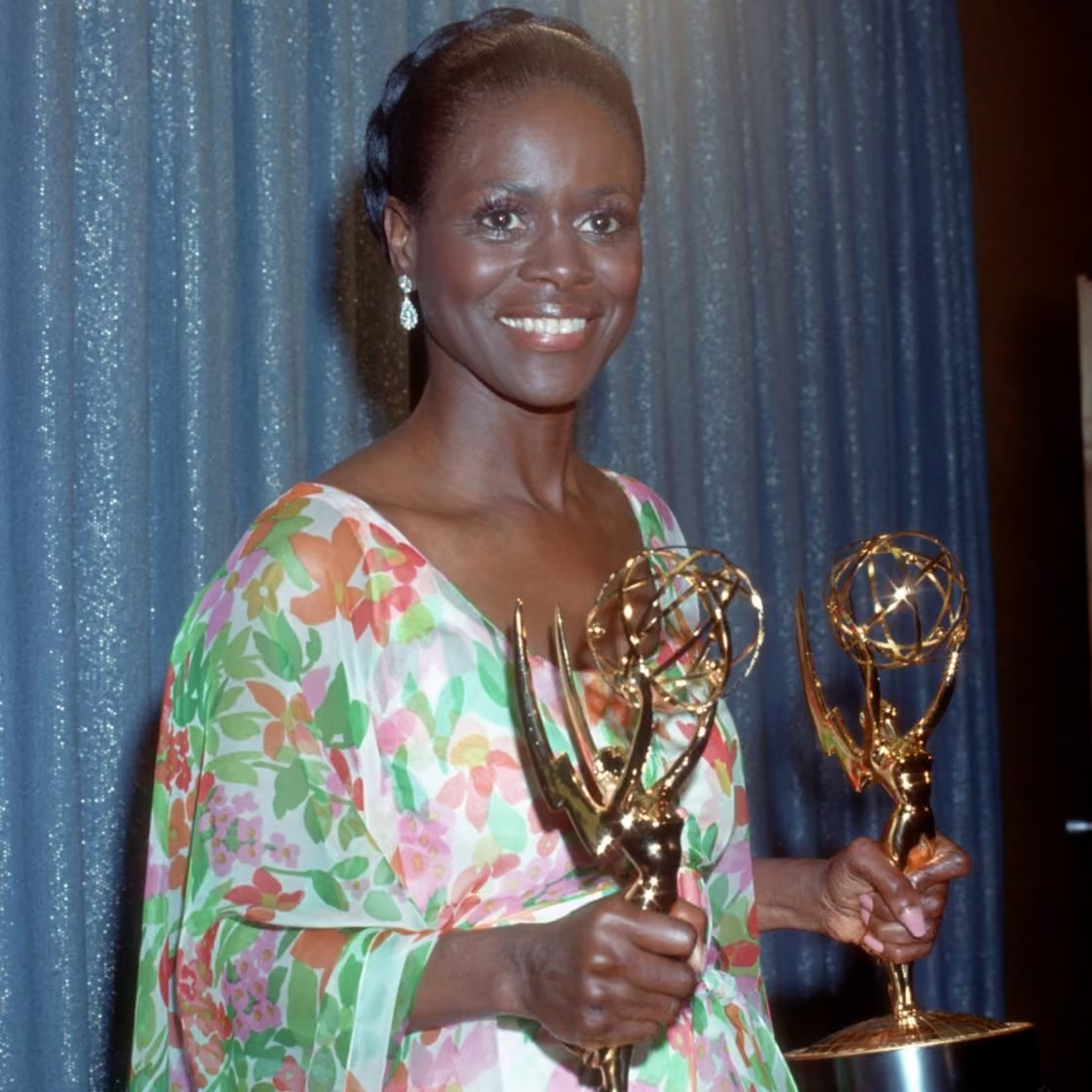 Jerry Mitchell
@JMitchellNews
#onthisday in 1917, actor, playwright and civil rights activist Ossie Davis was born in Cogdell, Georgia.
He saw racism from his youth with the KKK threatening his father because of the advanced job he held as a Black man. His father, Kince, eventually left the job, seeking greater independence.
Davis became a voracious reader and dreamed of being a writer. After graduating high school, he hitchhiked to Washington, D.C. and attended Howard University. Davis dropped out of Howard University to pursue acting in New York City.
Davis landed the lead role in the 1946 Broadway play “Jeb” about a disabled veteran battling racism in Louisiana. There he met his wife-to-be, Ruby Dee, whom he married two years later. The pair appeared in Lorraine Hansberry’s “A Raisin the Sun” and became active in the civil rights movement.
They became friends with Martin Luther King Jr., helping organize and emcee the 1963 March on Washington. They also became friends and supporters of Malcolm X. Davis gave the eulogy at Malcolm X’s funeral — a eulogy he reprised with his rich baritone in Spike Lee’s “Malcolm X.”
“Here—at this final hour, in this quiet place—Harlem has come to bid farewell to one of its brightest hopes—extinguished now, and gone from us forever,” he said. “He was our manhood, our living, Black manhood! This was his meaning to his people. And, in honoring him, we honor the best in ourselves. … Consigning these mortal remains to earth, the common mother of all, secure in the knowledge that what we place in the ground is no more now a man—but a seed—which, after the winter of our discontent, will come forth again to meet us. And we will know him then for what he was and is—a prince—our own Black shining prince!—who didn’t hesitate to die, because he loved us so.”
Davis and Dee appeared in other Lee movies, including “Do the Right Thing,” and often took on racial injustices and civil rights in their work. In 2004, they were honored at the Kennedy Center for taking “their art to colleges, community centers, cafeterias, hospitals, union halls and prisons. Wherever they stood was their stage.”
Ten months later, Davis died, and Broadway turned down the lights on marquees to honor him.
mississippitoday.org/2024/12/18/on-this-day-in-1917-actor…
 Jerry Mitchell
@JMitchellNews
#onthisday in 1938, L. C. Dorsey was born to a sharecropping family in Tribbett, Mississippi. She became friends with Fannie Lou Hamer, who inspired Dorsey to get involved in the civil rights movement and to join the Mississippi Freedom Democratic Party, for which Dorsey began organizing boycotts and demonstrations.
She began working for Head Start and then Operation Help. After getting her doctorate from Howard University, she returned to Mississippi and resumed her work with Head Start, this time as the director of social services in Greenville. She also began working on prison reform, serving as associate director of the Southern Coalition on Jails and Prisons from 1974 to 1983.
Dorsey wrote a book, “Cold Steel,” describing life in Mississippi’s Parchman prison, and served on President Jimmy Carter’s National Council for Economic Opportunity.
In 1988, she became executive director of the Delta Health Center in Mound Bayou and later worked as a clinical associate professor for the University of Mississippi Medical Center.
She died in 2013. An annual award honors her work, and so does the Mississippi Civil Rights Museum.
mississippitoday.org/2024/12/17/on-this-day-in-1938-civil…
 Jerry Mitchell
@JMitchellNews
#onthisday in 1976, President Jimmy Carter nominated Andrew Young to become U.S. ambassador to the United Nations — the first Black American to serve in the position.
Born in New Orleans, Young became a pastor in Thomasville, Georgia, where he became involved in civil rights, helping register Black voters. In 1961, he left the pulpit to work with the Southern Christian Leadership Conference, joining Septima Clark in the work of teaching literacy and leadership skills in Citizenship Schools.
He became such a trusted aide to Martin Luther King Jr. that he helped draft two of the most important civil rights bills — the Civil Rights Act of 1964 and the Voting Rights Act of 1965. He was present when King was assassinated in Memphis and later said, “It is a blessing to die for a cause, because you can so easily die for nothing.”
He served as executive vice president of SCLC before successfully running for Congress in Georgia. After his work as U.N. ambassador, he returned to Atlanta and became the city’s mayor in 1981. That same year, he received the Presidential Medal of Freedom. He is co-founder of GoodWorks International, which seeks to improve conditions in Africa and the Caribbean.
mississippitoday.org/2024/12/16/on-this-day-in-1976-andre…
 Jerry Mitchell
@JMitchellNews
#onthisday in 1968, San Francisco State College suspended classes in response to a strike that began a month earlier. Students, faculty and local activists carried out the strike to call for equal access to higher education, for more senior faculty of color and for a curriculum that would embrace the history and culture of all people.
The Black Student Union and a coalition of other student groups led the strike. Clashes between the students and San Francisco police tactical squads made national news. The strike lasted five months, longer than any other student strike in higher education history in the U.S.
As the result of the strike, the college established departments of Black Studies and Ethnic Studies, leading the way for universities across the nation.
mississippitoday.org/2024/12/14/on-this-day-in-1968-san-f…
 Jerry Mitchell
@JMitchellNews
#onthisday in 1903, Ella Baker, who played an integral role in the civil rights movement, was born in Norfolk, Virginia.
Baker began her activism after graduating from Shaw University as class valedictorian in 1927. She dedicated herself to economic justice, saying, “People cannot be free until there is enough work in this land to give everybody a job.”
In 1940, she became a field secretary for the NAACP, and three years later served as director of branches. Inspired by the 1955 Montgomery Bus Boycott, she co-founded the organization, Friendship, to fight Jim Crow laws in the Deep South. Two years later, she moved to Atlanta to work with Martin Luther King Jr. and help him organize the Southern Christian Leadership Conference.
After the 1960 sit-in in Greensboro, North Carolina, she organized a youth leadership conference at Shaw University, where more than 300 gathered. She supported the students’ decision to leave SCLC and form the Student Nonviolent Coordinating Committee. She became “the godmother of SNCC,” teaching students that “strong people don’t need strong leaders” and that they should take control of the movement, rather than relying on a leader with “heavy feet of clay,” a not-so-subtle jab at King.
She continued her grassroots work in 1964 with the Mississippi Freedom Democratic Party, and when the three civil rights workers were killed, she declared, “Until the killing of a Black mother’s son becomes as important as the killing of a white mother’s son, we who believe in freedom cannot rest.”
She remained active in the movement until her death on her 83rd birthday in 1986. In 2009, the U.S. Post Office honored her with a postage stamp.
mississippitoday.org/2024/12/13/on-this-day-in-1903-civil…
 Jerry Mitchell
@JMitchellNews
#onthisday in 1870, Joseph H. Rainey became the first Black lawmaker sworn into the U.S. House, where he served four terms.
Born on a rice plantation in South Carolina, his father purchased the family’s freedom through money made as a barber. But during the Civil War, Rainey was forced to work for the Confederate cause.
In 1862, he and his family escaped to Bermuda. When he returned to Charleston after the war, he became politically active and was elected to Congress. On April 1, 1871, he delivered his first major speech, arguing for the use of federal troops to protect southern Blacks from the recently organized Ku Klux Klan.
“When myself and my colleagues shall leave these Halls and turn our footsteps toward our southern homes,” he said, “we know not that the assassin may await our coming, as marked for his vengeance.”
Afterward, Rainey received a threatening letter, telling him and other defenders of civil rights to “prepare to meet your God.” President Ulysses S. Grant signed the Ku Klux Klan Act into law on April 20, 1871, but the bill failed to stop the violence.
On the floor of Congress, he argued in favor of the Civil Rights Act of 1875, questioning why Black members “cannot enjoy the same immunities that are accorded to white members? Why cannot we stop at hotels here without meeting objection? Why cannot we go into restaurants without being insulted?”
In 2015, his portrait became the first of a Black congressman displayed in the House, and a room inside the Capitol was renamed after him.
“It’s not really a Black story or a white story, it’s an American story,” his great-granddaughter, Lorna, told Newsday. “It’s the story of someone who rose from nothing to greatness. That’s an American story. It’s what we all think the best of America encompasses.”
mississippitoday.org/2024/12/12/on-this-day-in-1870-josep…
 Jerry Mitchell
@JMitchellNews
#onthisday in 1961, the U.S. Supreme Court threw out the convictions of Black students arrested for taking part in a sit-in at the Kress Department Store in Baton Rouge. After the sit-ins in Greensboro, North Carolina, in 1960, the all-white Louisiana Board of Education warned that any student taking part in a sit-in would face “stern disciplinary action.”
Seven students at Southern University took that decision as an insult and headed to Kress’ lunch counter on March 28, 1960. Authorities jailed them, and nine other students took part in a sit-in, this one at Sitman’s lunch counter and the Greyhound bus station. They, too, were arrested, and 3,500 students marched through Baton Rouge to the State Capitol, where they protested and prayed.
Southern University’s president Felton Clark expelled 16 students that had taken part in the sit-ins, and the NAACP’s Thurgood Marshall began to represent them. The Kennedy administration filed a friend of the court brief backing the students. After the U.S. Supreme Court threw out the students’ convictions, more sit-ins and a mass demonstration took place, leading to the arrests of 23, including CORE Field Secretary Dave Dennis.
The next day, about 4,000 people, many of them students, marched from the university to the courthouse. The continued protests finally led to the desegregation of lunch counters in 1963. A half-century later, Southern University bestowed honorary degrees to the expelled students.
mississippitoday.org/2024/12/11/on-this-day-in-1961-high-…
 Jerry Mitchell
@JMitchellNews
#onthisday in 1950, U.N. diplomat Ralph J. Bunche became the first Black American and the first person of color to win the Nobel Peace Prize.
Born in Detroit, his parents were poor, and both became ill, dying by the time he reached 13 years of age. After their deaths, he and his young sister went to live with his grandmother in Los Angeles. He sold newspapers, helped lay carpet and did other odd jobs to help the family meet ends.
At Jefferson High School in Los Angeles, he overcame prejudice to excel in both debate and sports, becoming valedictorian. He received an athletic scholarship to UCLA, where he played for the basketball team and was valedictorian of his 1927 class. He then won a scholarship to Harvard University, where he completed his master’s a year later, and would later become the first Black American to receive a PhD in political science in the U.S.
He began working at Howard University, where he became one of the leaders of a small cadre of black intellectuals whom W.E.B. Du Bois labeled the “Young Turks.” Unlike their predecessors, the Young Turks believed that issues affecting Black Americans could be attacked on the basis of class, rather than race — an integrationist approach that Martin Luther King Jr. embraced.
He became so well-known that President Franklin Roosevelt made him a member of the “Black Cabinet,” which consulted him on minority issues.
Bunche also worked with sociologist Gunnar Myrdal in the monumental study of U.S. race relations, published as “An American Dilemma” in 1944. In addition to matters of race, Bunche became an expert on colonialism, and in 1946, he began working for the United Nations. Two years later, when the UN’s chief negotiator in the Arab-Israeli conflict was assassinated, Bunche took his place. After eleven months of negotiating, Bunche obtained signatures on armistice agreements between Israel and the Arab States.
Upon his return to America, he received a ticker tape parade in New York City, and Los Angeles created a “Ralph Bunche Day.”
In accepting the Nobel Prize, Bunche declared, “The objective of any who sincerely believe in peace clearly must be to exhaust every honorable recourse in the effort to save the peace. The world has had ample evidence that war begets only conditions which beget further war.”
He became one of the nation’s most revered figures, and in 1963, President John F. Kennedy awarded him the Presidential Medal of Freedom, the nation’s highest civilian award. Two years later, Bunche joined King in the Selma march. After his death in 1971, UCLA and the City University of New York established centers named after him. A PBS documentary detailed his life.
mississippitoday.org/2024/12/10/1953-ralph-j-bunche-was-f…
 Jerry Mitchell
@JMitchellNews
#onthisday in 1872, P.B.S. Pinchback became governor in Louisiana — the first Black officeholder to do so in the U.S. He was appointed to the position during impeachment proceedings against the elected governor.
His father was a white Mississippi plantation owner, and his mother had been freed from slavery before her son was born. When his father died, he and his family moved to Ohio, and by age 12 he was supporting his family, eventually working on Mississippi River steamboats.
He was so light-skinned he could have “passed” for white, but when the Civil War came, he eventually served as a captain for the 74th U.S. Colored Infantry.
During Reconstruction, the Republican politician helped establish Louisiana’s new constitution and was elected state senator before serving as lieutenant governor and then governor.
In “Redemption: The Last Battle of the Civil War,” Nicholas Lemann described Pinchback as a larger than life figure — “newspaper publisher, gambler, orator, speculator, dandy, mountebank (who) served for a few months as the state’s governor and claimed seats in both houses of (Democratically controlled) Congress following disputed elections but could not persuade the members of either party to seat him.”
Pinchback helped establish Southern University for Black students and aided Homer Plessy’s challenge of segregation in public transportation.
mississippitoday.org/2024/12/09/on-this-day-in-1872-pbs-p…
 Jerry Mitchell
@JMitchellNews
#onthisday in 1925, Sammy Davis Jr., who succeeded as a dancer, singer and actor on stage and screen, was born in New York City.
Known as “Mr. Show Business,” he called himself “the only Black, Puerto Rican, one-eyed, Jewish entertainer in the world.” He learned dancing at a young age and played the title role in the movie, “Rufus Jones for President,” in which he was only 7.
When he turned 18 in 1943, he was drafted into World War II. “Overnight the world looked different,” he declared in his autobiography. “It wasn’t one color anymore.”
He encountered plenty of racism from some of the white soldiers.
“I must have had a knockdown, drag-out fight every two days,” he recalled.
In the end, he wound up performing in front of the same soldiers that had once abused him.
“My talent was the weapon, the power, the way for me to fight,” he recalled. “It was the one way I might hope to affect a man’s thinking.”
After his time in the military, he broke through as an entertainer after his nightclub performance following the 1951 Academy Awards. Unable to break the color barrier of television in the U.S., he starred in his own TV special on the Canadian Broadcast Co. That success and his continuing popularity helped break down the walls of the segregated entertainment industry.
He starred in seven Broadway shows, appeared in 23 films, including “Porgy and Bess,” had his own TV variety show and became a successful recording artist and member of the “Rat Pack” along with Frank Sinatra, Dean Martin and others. He performed in Las Vegas with them and appeared with them in movies, including “Ocean’s 11.” In 1972, he delivered his biggest hit, “The Candy Man,” which reached No. 1 on the charts.
That same year he also delivered one of television’s most famous kisses, smooching Archie Bunker on the cheek during an “All in the Family” episode. He received an Emmy for his television performances, a Grammy Lifetime Achievement Award and a Spingarn Medal from the NAACP. In 1987, Davis became a Kennedy Center Honors recipient, and he died of throat cancer three years later.
mississippitoday.org/2024/12/08/on-this-day-in-1925-sammy…
 Jerry Mitchell
@JMitchellNews
#onthisday in 1941, Doris “Dorie” Miller, a mess attendant aboard the battleship USS West Virginia, carried the injured captain and other shipmates to safety during the attack on Pearl Harbor.
When enemy planes swooped down, he stood behind an anti-aircraft gun and began firing, despite no prior training. He became the first Black seaman to receive the Navy Cross for valor, and a Navy recruiting poster featured him with the slogan, “above and beyond the call of duty.”
Before 1943 ended, a torpedo struck his ship, the Liscome Bay, killing Miller and more than 600 other crew members. Three decades later, the Navy named a ship after him.
Cuba Gooding Jr. portrayed Miller in the 2001 film, “Pearl Harbor,” and a statue has been built in his honor in his hometown of Waco, Texas. The Navy has since honored him by naming a new aircraft carrier after him.
“He died as he lived, an American sailor defending his nation, shoulder to shoulder with his shipmates, until the end,” Acting Navy Secretary Thomas Modly said. “Dorie Miller stood for everything that is good about our nation. His story deserves to be remembered and repeated wherever our people continue to stand the watch today. He’s not just the story of one sailor. It is the story of our Navy, of our nation and our ongoing struggle to form — in the words of our Constitution — a more perfect union.”
mississippitoday.org/2024/12/07/on-this-day-in-1941-dorie…
 Jerry Mitchell
@JMitchellNews
#onthisday in 1865, the state of Georgia provided the final vote needed for the 13th Amendment to become part of the U.S. Constitution, abolishing slavery: “Neither slavery nor involuntary servitude, except as a punishment for crime whereof the party shall have been duly convicted, shall exist within the United States, or any place subject to their jurisdiction.”
Two days before, Mississippi lawmakers had rejected ratification. In 1995, the Mississippi Legislature, trying to rectify the historic mistake, voted to ratify the anti-slavery amendment. Because of a paperwork snafu, the vote didn’t become official until 2013.
mississippitoday.org/2024/12/06/on-this-day-in-1865-georg…
 Jerry Mitchell
@JMitchellNews
#onthisday in 1955, the Montgomery Bus Boycott began. Most of the 50,000 Black workers living in Montgomery supported the boycott by walking, bicycling and car-pooling. The boycott was organized by the local chapter of the NAACP led by Pullman porter E. D. Edgar Nixon.
“We’re going to work with grim and bold determination to gain justice on the buses in this city. And we are not wrong,” new minister Martin Luther King Jr. declared. “If we are wrong, the Supreme Court is wrong. If we are wrong, the Constitution of the United States is wrong.”
Months later, the homes of King and Nixon were bombed, and when that didn’t stop the boycott, authorities arrested King and ordered him to pay $500 and serve more than a year in jail. Despite this, the boycott continued.
Nearly a year later, the U.S. Supreme Court ruled that bus segregation was unconstitutional, and the victory inspired the Civil Rights Movement.
“We came to see that, in the long run, it is more honorable to walk in dignity than ride in humiliation,” King said. “We decided to substitute tired feet for tired souls and walk the streets of Montgomery.’’
mississippitoday.org/2024/12/05/on-this-day-in-1955-the-m…
 Jerry Mitchell
@JMitchellNews
#onthisday in 1967, Martin Luther King, Jr. announced creation of the Southern Christian Leadership Conference’s Poor People’s Campaign, a movement to broadly address economic inequalities with nonviolent direct action.
“It must not be just Black people,” argued King, “it must be all poor people. We must include American Indians, Puerto Ricans, Mexicans and even poor whites.”
The idea for the push came from Marian Wright Edelman, who had recently taken U.S. Senator Robert F. Kennedy to witness poverty firsthand in the Mississippi Delta.
When she shared the idea that Washington officials should meet the nation’s most impoverished citizens, King embraced the vision, telling reporters, “We will go there, we will demand to be heard, and we will stay until America responds. If this means forcible repression of our movement, we will confront it, for we have done this before. If this means scorn or ridicule, we embrace it, for that is what America’s poor now receive. If it means jail, we accept it willingly, for the millions of poor already are imprisoned by exploitation and discrimination. … In short, we will be petitioning our government for specific reforms and we intend to build militant, nonviolent actions until that government moves against poverty.”
King talked of a debt that the nation owed Black Americans, who were set free in 1863, “yet they were not given any land to make that freedom meaningful.”
He compared it to an imprisoned man whom authorities learn is innocent, “then going up to the man saying, now you are free. And you don’t give him any bus fare to get to town. You don’t give him any clothes to put on his back. You don’t give him any money to get on his feet in life again. The whole code of jurisprudence would rise up against this and yet, this is what America did to the Black man.”
King didn’t live to see this dream through, assassinated five months later.
mississippitoday.org/2024/12/04/on-this-day-in-1967-mlk-a…
 Jerry Mitchell
@JMitchellNews
#onthisday in 1841, Frederick Douglass founded and edited his first antislavery newspaper, “The North Star,” in Rochester, New York. The publication title referred to Polaris, the bright star that helped guide Black Americans escaping slavery: “To millions, now in our boasted land of liberty, it is the STAR OF HOPE.”
He explained in this first issue that he desired to see “in this slave-holding, slave-trading, and negro-hating land, a printing-press and paper, permanently established, under the complete control and direction of the immediate victims of slavery and oppression … that the man who has suffered the wrong is the man to demand redress,—that the man STRUCK is the man to CRY OUT—and that he who has endured the cruel pangs of Slavery is the man to advocate Liberty.”
The publication also sought to “promote the moral and intellectual improvement” of people of color. He championed not only for the freedom of those enslaved, but for women’s rights as well with the motto, “Right is of no sex. Truth is of no color. God is the father of us all, and all we are brethren.”
In 1851, the paper merged with the Liberty Party Paper from Syracuse and became known as Frederick Douglass’ Paper. The paper closed during the Civil War, and in 1870, he moved from Rochester to Washington, D.C., and became part owner of the New National Era, which attacked the rise of the Ku Klux Klan and the mistreatment of and violence against Black Americans throughout the nation. His sons ran the newspaper until it folded in 1874. Because of a fire, no known collection exists of all of Douglass’ newspapers.
mississippitoday.org/2024/12/03/on-this-day-in-1841-frede…
 Jerry Mitchell
@JMitchellNews
#onthisday in 1986, Mike Espy became the first Black congressman elected from Mississippi since Reconstruction.
Born in Yazoo City, his grandfather was Thomas J. Huddleston Sr., founder of the Afro-American Sons and Daughters, which operated the Afro-American Hospital, providing health care to Black Mississippians until the 1970s. He learned soon about the color line, becoming the only Black student in a newly integrated high school.
He recalled carrying a stick to fend off racist attacks: “Relative to the civil rights experiences of snarling dogs and whips and things it was pretty tame. But I’d always have a fight. The teacher would leave the room, and then you’re among 35 in the classroom and they’d make racial jeers.”
He became a lawyer, working as an attorney for Central Mississippi Legal Services from 1978 to 1980. Between 1980 and 1984, Espy worked as assistant secretary of the Public Lands Division for the State of Mississippi and then served as assistant state attorney general for Consumer Protection.
In 1984, he served on the rules committee for the 1984 Democratic National Convention, drawing the attention of the party. In his historic campaign in 1986, he campaigned door to door for votes with his slogan, “Stand by Me, Pray for Me, Vote for Me.”
While serving as congressman, he emphasized economic development in the Delta, winning reelection three times. In 1993, he became the first Black American to serve as secretary of agriculture, ushering in a wave of reform. Four years later, he was indicted on charges of receiving improper gifts, but a jury acquitted him of all charges.
He ran for the U.S. Senate in 2018, where he lost to Republican incumbent Cindy Hyde-Smith, who drew national attention after she remarked that she would “be in the front row” of a “public hanging” if invited by a political supporter. The remark created a firestorm because of Mississippi’s history of lynchings. She later responded, “For anyone that was offended by my comments, I certainly apologize,” claiming her remark had been twisted and “turned into a weapon” against her.
Espy lost again in a rematch in 2020. mississippitoday.org/2024/12/02/on-this-day-in-1986-mike-…
 Jerry Mitchell
@JMitchellNews
#onthisday in 1955, four days after hearing civil rights leader Dr. T.R.M. Howard describe what happened to Emmett Till, Rosa Parks refused to give up her seat to a white man on a city bus in Montgomery, Alabama.
“People always say that I didn’t give up my seat because I was tired, but that isn’t true. I was not tired physically, or no more tired than I usually was at the end of a working day,” she said. “No, the only tired I was, was tired of giving in.”
This was far from her first civil rights protest; it wasn’t even her first protest on a bus. In 1943, she boarded a bus to go to the clerk’s office so she could register to vote. When the white driver demanded she re-board the standing-room only bus by entering from the back, she got off, waited for the next bus and swore she would never ride again with that driver.
Her arrest in 1955 sparked the Montgomery Bus Boycott. Weeks after her first arrest, she was jailed again, this time for her role in the boycott, helping arrange carpool rides for Black workers. When she received death threats and lost her job as a seamstress, she and her family were forced to move to Detroit, where they struggled financially until Congressman John Conyers Jr. hired her.
She continued to work on issues such as poverty, health care, housing and police brutality until her death in 2005.
mississippitoday.org/2024/12/01/on-this-day-in-1955-rosa-…
 Jerry Mitchell
@JMitchellNews
#onthisday in 1912, photographer, musician, writer and film director Gordon Parks was born in Fort Scott, Kansas.
Born into poverty, he learned early about segregation, attending a segregated elementary school. He recalled being discouraged by a teacher, who said college would be a waste of time. He struggled to survive, first working as a piano player in a brothel. He went on to work as a singer, bus boy and basketball player.
While working in a railcar as a waiter, he spotted pictures of migrant workers in a magazine. “I saw that the camera could be a weapon against poverty, against racism, against all sorts of social wrongs,” he recalled. “I knew at that point I had to have a camera.”
He brought his first camera, a Voigtländer Brillant, from a pawnshop and taught himself how to use it. Despite a lack of training, he soon honed a style that made him one of the most well-regarded photographers of his days.
He captured the life of Black Americans in Chicago and soon after chronicled the nation’s social conditions. His photo essay on a Harlem gang leader won him widespread acclaim and helped him become a photographer for Life magazine, where he worked for two decades.
He captured images of both celebrities and civil rights figures, such as Malcolm X and Stokely Carmichael. One of his best-known photographs, “American Gothic, Washington, D.C.,” featured a Black woman, Ella Watson, who worked on the cleaning crew of the FSA building, standing stiffly in front of an American flag hanging on the wall, a broom in one hand and a mop in the background.
Parks had been inspired to create the image in 1942 after encountering racism repeatedly in the nation’s capital. He went on to become the first Black director of a major Hollywood motion picture, “The Learning Tree,” but is best known for his 1971 film, “Shaft.” (He later made a cameo in the remake.)
In 1988, he received the National Medal of Arts, and a decade later, he was honored at the Kennedy Center for his work. In 2000, the Library of Congress gave him its “Living Legend” award.
Six years later, he died of cancer at age 93. Time magazine selected “American Gothic, Washington, D.C.” among the 100 Most Influential Images of All Time. @GParksFound
mississippitoday.org/2024/11/30/on-this-day-in-1912-photo…
 Jerry Mitchell
@JMitchellNews
#onthisday in 1961, a white mob attacked CORE’s Freedom Riders when they attempted to integrate the “all-white” waiting room at the Greyhound bus station in McComb in southwest Mississippi, yelling, “Kill ‘em! Kill ‘em!”
The five riders — Doratha “Dodie” Smith-Simmons, Jerome Smith, Alice Thompson, George Raymond and Tom Valentine — were from New Orleans and had already been active in the civil rights movement.
When Raymond asked for a cup of coffee, a white man poured the hot liquid over his head and smashed him with the mug. “All hell broke loose,” Smith-Simmons recalled. “I thought we would all die that day, because they were trying to kill us.”
A white mob jumped on Smith, beating him with brass knuckles. Others grabbed Valentine and began to bash his body against the floor, one man yelling out, “I’ll kill him! I’ll kill him!”
When Thompson and Smith-Simmons tried to flee, the mob turned on them, beating and kicking them. She somehow escaped.
“I just ran and ran until the truck overtook me, and I saw it was Jerome and the rest of the group and I just stood there ready to cry,” she told The Times-Picayune. “I don’t know how they all got together, but they did and went looking for me.”
They fled to safety to a Black-owned hotel. By the time night fell, it became obvious they had won. Local police, who had been conspicuously missing when the riders arrived, escorted the riders safely to the bus terminal while the FBI looked on. And the mayor and police chief told the press that segregation would no longer be enforced in the Greyhound waiting rooms.
mississippitoday.org/2024/11/29/on-this-day-in-1961-white…
 Jerry Mitchell
@JMitchellNews
#onthisday in 1961, Ernie Davis became the first Black player to win the collegiate Heisman Trophy while a running back at Syracuse University. His life story was portrayed in the 2008 movie, “The Express.”
By age 12, he excelled in sports, leading his high school basketball team in Elmira, New York, to a 52-game winning streak. He became a talented football player and was recruited to Syracuse University by alumnus Jim Brown, the legendary running back for the Cleveland Browns. Davis helped Syracuse win its only national title, defeating the University of Texas in the Cotton Bowl. Although he was named the game’s MVP, he wasn’t allowed to attend the awards banquet because of his color.
When he won the Heisman Trophy, President John K. Kennedy congratulated him. “Imagine,” Davis said, “a president wanting to shake hands with me.”
He was the first overall pick in the NFL draft, and the Cleveland Browns signed him to a record rookie contract to play in the same backfield with Brown, his childhood hero. But before he could compete on the field, doctors discovered he had leukemia. After his cancer went into remission, he practiced again with the Browns, but he was forced to reenter the hospital the following spring.
On May 18, 1963, he died in his sleep at the age of 23. Thousands attended the funeral in Elmira, including members of the Browns team that he never played for.
“Ernie Davis transcended racism. That was his essence. That was his greatness,” Jim Brown told Sports Illustrated.
“Some people say I am unlucky. I don’t believe it,” Davis wrote in The Saturday Evening Post. “When I look back, I can’t call myself unlucky. … In these years I have had more than most people get in a lifetime.”
mississippitoday.org/2024/11/28/on-this-day-in-1961-ernie…
 Jerry Mitchell
@JMitchellNews
The Pearl Police Department in Mississippi fired patrol officer Taylor Lofton for reportedly stealing $32,000 from a dying woman’s house. It’s the second officer dismissed for alleged criminal conduct in less than a year. mississippitoday.org/2024/11/26/pearl-police-officer-fire…
Jerry Mitchell
@JMitchellNews
#onthisday in 1942, legendary Jimi Hendrix, whom Rolling Stone ranks as the greatest guitarist of all time, was born in Seattle. He left his hometown because of racism and grew up in poverty.
Hemdrix began playing guitar at age 15, drenched in the blues before backing R&B artists Little Richard and The Isley Brothers on tour, becoming one of the most talented musicians on the Chitlin’ Circuit.
But he experienced firsthand the South’s segregation, unable to go to the bathroom at a gas station because of the color of his skin. Even after becoming a rock star, he experienced racism, cab drivers in New York City refusing to pick him up.
When Hendrix made his foray into rock music, he took “the blues out of the Mississippi Delta and sent it to Mars,” one music critic said. He coaxed sounds out of the electric guitar that no one else thought possible. When he played “The Star-Spangled Banner” at Woodstock, he turned the standard into a sonic masterpiece, complete with soaring rockets and bursting bombs.
His version came at the height of the Vietnam War, where Black soldiers were dying on the battlefield in record numbers. Some saw his interpretation as “unpatriotic,” but he disputed such talk on “The Dick Cavett Show,” saying, “I’m an American, too.”
The last words he wrote before he died accidentally after taking sleeping pills: “The story of life is quicker than the wink of an eye. The story of love is hello and goodbye, until we meet again.”
mississippitoday.org/2024/11/27/on-this-day-in-1942-jimi-…
 Jerry Mitchell
@JMitchellNews
#onthisday in 1915, a week before the silent film, “Birth of a Nation,” premiered at an Atlanta theater, William Simmons, along with 15 other men (including some who lynched Leo Frank) burned a cross on Stone Mountain, Georgia, signaling the rebirth of the Ku Klux Klan.
The movie’s racist portrayals of Black Americans prompted outrage by the NAACP and others, leading to huge protests in towns such as Boston and the film’s closing in Chicago.
Despite these protests, the movie became Hollywood’s first blockbuster, making as much as $100 million at the box office (the equivalent of $2.4 billion today). In the wake of the movie, the KKK became a national organization, swelling beyond 4 million members.
mississippitoday.org/2024/11/25/on-this-day-in-1915-cross…
 Jerry Mitchell
@JMitchellNews
#onthisday in 1968, Black Panther leader Eldridge Cleaver fled the U.S. to avoid imprisonment on a parole violation. He wrote in “Soul on Ice”: “If a man like Malcolm X could change and repudiate racism, if I myself and other former Muslims can change, if young whites can change, then there is hope for America.”
The Arkansas native began to be incarcerated when he was still in junior high and soon read about Malcolm X. He began writing his own essays, drawing the praise of Norman Mailer and others. That work helped him win parole in 1966. His “Soul on Ice” memoir, written from Folsom state prison, described his journey from selling marijuana to following Malcolm X. The book he wrote became a seminal work in Black literature, and he became a national figure.
Cleaver soon joined the Black Panther Party, serving as the minister of information. After a Panther shootout with police that left him injured, one Panther dead and two officers wounded, he jumped bail and fled the U.S. In 1977, after an unsuccessful suicide attempt, he returned to the U.S. pleaded guilty to a reduced charge of assault and served 1,200 hours of community service.
From that point forward, “Mr. Cleaver metamorphosed into variously a born-again Christian, a follower of the Rev. Sun Myung Moon, a Mormon, a crack cocaine addict, a designer of men’s trousers featuring a codpiece and even, finally, a Republican,” The New York Times wrote in his 1998 obituary. His wife said he was suffering from mental illness and never recovered.
mississippitoday.org/2024/11/24/on-this-day-in-1968-black…
 Jerry Mitchell
@JMitchellNews
#onthisday in 1867, the Louisiana Constitutional Convention, composed of 49 White delegates and 49 Black delegates, met in New Orleans. The new constitution became the first in the state’s history to include a bill of rights.
The document gave property rights to married women, funded public education without segregated schools, provided full citizenship for Black Americans, and eliminated the Black Codes of 1865 and property qualifications for officeholders.
The voters ratified the constitution months later. Despite the document, prejudice and corruption continued to reign in Louisiana, and when Reconstruction ended, the constitution was replaced with one that helped restore the rule of white supremacy.
mississippitoday.org/2024/11/23/on-this-day-in-1867-louis…
 Jerry Mitchell
@JMitchellNews
#onthisday in 1934, Ella Fitzgerald, the “Queen of Jazz,” made her debut at the Apollo Theater in Harlem. She had planned to go on stage and dance for Amateur Night, but when the Edwards Sisters danced before her, she decided to sing instead. That break led to others, and she became a sensation after a song she co-wrote, “A-Tisket, A-Tasket,” became a major hit in 1938.
She battled racism, ordered by Pan-Am to leave their flight to Australia. Despite missing two concerts there, she went on to set a new box office record in Australia. She helped to break racial barriers, refusing to perform before segregated audiences. The NAACP awarded her the Equal Justice Award and the American Black Achievement Award.
Fitzgerald became the first Black woman to win a Grammy. In her music, she innovated with scat singing, sang be-bop, jazz and even gospel hymns. She performed with her own orchestra, the Benny Goodman Orchestra, Duke Ellington and Count Basie, and her Song Book series became a huge critical and commercial success.
She performed in Hollywood films, and her most memorable take on television came when her voice shattered a glass. When the tape was played back, her voice broke another glass, and the ad asked, “Is it live, or is it Memorex?”
By the time she died in 1996, she had won 13 Grammy Awards, the Grammy Lifetime Achievement Award, the George and Ira Gershwin Award for Lifetime Musical Achievement, the National Medal of Arts and the Presidential Medal of Freedom.
Mattel has now designed a doll after her, part of the Barbie Inspiring Women Series, which “pays tribute to incredible heroines of their time — courageous women who took risks, changed rules and paved the way for generations to dream bigger than ever before.”
mississippitoday.org/2024/11/21/on-this-day-in-1934-ella-…
 Jerry Mitchell
@JMitchellNews
All the places you can find me!
 Jerry Mitchell
@JMitchellNews
#onthisday in 1866, 10 members of the First Congregational Society of Washington, D.C., met in the home of Deacon Henry Brewer. They decided to create a seminary to train Black clergymen. Within a year, the institution, which later became known as Howard University, embraced a broader mission and became an educational hub for the nearly 4 million freed from slavery.
In 1867, the institution welcomed its first students, educating Black doctors, teachers and pastors. Charles Hamilton Houston, a vice dean at the Howard University School of Law, brought cases to fight segregation in higher education. He mentored Howard alum, Thurgood Marshall, who successfully argued the Brown v. Board of Education decision that ended segregation in public schools.
mississippitoday.org/2024/11/20/on-this-day-in-1866-a-mee…
 Jerry Mitchell
@JMitchellNews
#onthisday in 1919, police officer and World War I hero James Wormley Jones was appointed as the first Black special agent for what was later named the FBI.
Jones served as a captain in the 368th Infantry Regiment, 92nd Division, in command of Company F. One history book described his company’s fight on the Metz front in France: “When the awful bombardment died away, just as the gray streaks of early dawn pierced the night’s blackness, which was made grayer by a thick heavy fog, the Captain ordered a charge ‘over the top’ with fixed bayonets; through the treacherous fog and into no-man-knew-what or seemed to care. The first wave, or detachment, went over with a cheer — a triumphant cheer — and the second wave followed their comrades with a dash. It may, perhaps, be best to let these boys and officers tell with their own lips of the terrific, murderous shell, shrapnel, gas, and machine-gun fire which baptized them, only to make them the more hardened and intrepid warriors; of how they contended every inch; fought with marvelous valor, never for an instant faltering.
“Trench after trench of the enemy was entered and conquered; dugout after dugout was successfully grenaded and made safe for the boys to follow; wires were cut and communicating trenches explored; machine-gun nests were raided and silenced, and still the boys fought their way on. Of course, as a natural sequence to such a daring raid, there were casualties, but the Black soldiers, heroes as they were, never flinched at death, and the wounded were too proud of their achievements even to murmur because of the pain they endured. Captain Jones and his men took over a mile of land and trenches which for four years had been held by the Germans.”
Newspapers noted the successful raid, and Jones earned a promotion. When he returned from the war, he resumed his work for the Metropolitan Police in Washington, D.C., before the FBI hired him, utilizing his undercover work and expertise in explosives to fight domestic terrorism.
mississippitoday.org/2024/11/19/on-this-day-in-1919-first…
 Jerry Mitchell
@JMitchellNews
#onthisday in 1946, future U.S. Supreme Court Justice Thurgood Marshall was nearly lynched in Columbia, Tennessee, just 30 miles from where the Ku Klux Klan was born.
He and his fellow NAACP lawyers had come here to defend Black men accused of racial violence. In a trial, Marshall and other NAACP lawyers won acquittals for nearly two dozen Black men.
After the verdicts were read, Marshall and his colleagues promptly left town. After crossing a river, they came upon a car in the middle of the road. Then they heard a siren. Three police cars emptied, and eight men surrounded the lawyers. An officer told Marshall he was being arrested for drunken driving, even though he hadn’t been drinking. Officers forced Marshall into the back seat of a car and told the other men to leave.
“Marshall knew that nothing good ever happened when police cars drove black men down unpaved roads,” author Gilbert King wrote in “Devil in the Grove.” “He knew that the bodies of blacks — the victims of lynchings and random murders — had been discovered along these riverbanks for decades. And it was at the bottom of Duck River that, during the trial, the NAACP lawyers had been told their bodies would end up.”
When the car stopped next to the river, Marshall could see a crowd of white men gathered under a tree. Then he spotted headlights behind them. It was a fellow NAACP lawyer, Zephaniah Alexander Looby, who had trailed them to make sure nothing happened. Reporter Harry Raymond concluded that a lynching had been planned, and “Thurgood Marshall was the intended victim.” Marshall never forgot the harrowing night and redoubled his efforts to bring justice in cases where Black defendants were falsely accused. (Portrait is by Ernest Shaw and is displayed at the Maryland State Capitol.)
mississippitoday.org/2024/11/18/on-this-day-in-1946-thurg…
 Jerry Mitchell
@JMitchellNews
All the places you can find me!
 Jerry Mitchell
@JMitchellNews
#onthisday in 1871, Edward Crosby stood before the congressional hearing and swore to tell the truth. By raising his right hand, Crosby put himself and his family at risk. He could be killed for daring to tell about the terrorism he and other Black Mississippians had faced.
Days earlier, he had attempted to vote in Aberdeen, Mississippi, asking for a Republican ballot. The clerk at the polling place said none was available. He waited. Dozens more Black men came to vote, and they were all told the same thing. Then he tried another polling place. Same result.
That day, white men, backed by a cannon, drove about 700 Black voters from the polls in Aberdeen. After nightfall, Crosby stepped out to retrieve water for his child when he saw 30 or so Klansmen galloping up on horses. He hid in a smokehouse, and when Klansmen confronted his wife, she replied that he was away. They left, and from that moment on, “I didn’t sleep more than an hour,” Crosby recalled. “If there had been a stick cracked very light, I would have sprung up in the bed.”
In response, Mississippi, which was under federal rule at the time, pursued an anti-Klan campaign. In less than a year, grand juries returned 678 indictments with less than a third of them leading to convictions.
That number, however, was misleading, because in almost all the cases, Klansmen pleaded no contest in exchange for small fines or suspended sentences. Whatever protection that federal troops offered had vanished by the time they left the state a few years later.
mississippitoday.org/2024/11/17/on-this-day-in-1871-edwar…
 Jerry Mitchell
@JMitchellNews
#onthisday in 1972, a law enforcement officer shot and killed two students at Southern University in Baton Rouge after weeks of protests over inadequate services.
When the students marched on University President Leon Netterville’s office, Louisiana Gov. Edwin Edwards sent scores of police officers in to break up the demonstrations. A still-unidentified officer shot and killed two 20-year-old students, Leonard Brown and Denver Smith, who weren’t among the protesters. No one was ever prosecuted in their slayings.
They have since been awarded posthumous degrees, and the university’s Smith-Brown Memorial Union bears their names. Stanley Nelson’s documentary, “Tell Them We Are Rising: The Story of Black Colleges and Universities,” featured a 10-minute segment on the killings.
“They were exercising their constitutional rights. And they get killed for it,” former student Michael Cato said. “Nobody sent their child to school to die.”
In 2022, Louisiana State University Cold Case Project reporters, utilizing nearly 2,700 pages of previously undisclosed documents, recreated the day of the shootings and showed how the FBI narrowed its search to several sheriff’s deputies but could not prove which one fired the fatal shot. The four-part series prompted Louisiana Gov. John Bel Edwards to apologize to the families of the victims on behalf of the state.
mississippitoday.org/2024/11/16/on-this-day-in-1972-offic…
 Jerry Mitchell
@JMitchellNews
#onthisday in 2017, author Jesmyn Ward became the first Black American to win the National Book Award twice.
Growing up in DeLisle, Mississippi, “I read everything,” she wrote. “Still, I still felt as if a part of me was wandering. That there was a figure in me, walking the desert, waiting for a word. A word that would sound out of the wilderness to declare that it was speaking to me, for me, within me. The sonic sear of that voice: a new knowing of not only the world I walked, but of me.”
She became the first person in her family to go to college. She attended Stanford University, where she earned a bachelor’s in English and a master’s in media studies.
When a drunken driver killed her younger brother, she decided to become a writer in his memory.
After earning a master’s in fine arts in creative writing from the University of Michigan, she and her family were caught by the floodwaters of Hurricane Katrina, but managed to take shelter with a family.
She won her first National Book Award for “Salvage the Bones,” which was set during the days of Katrina.
“When I hear people talking about the fact that they think we live in a post-racial America,” she said, “it blows my mind, because I don’t know that place. I’ve never lived there.”
She won her second National Book Award for “Sing, Unburied, Sing,” becoming the first woman and first Black American to win two National Book Awards. She also won a MacArthur “genius” grant, one of a handful of Mississippians to receive the award. In 2022, she became the youngest person to ever receive the Library of Congress Prize for American Fiction.
mississippitoday.org/2024/11/15/on-this-day-in-2017-jesmy…
 Jerry Mitchell
@JMitchellNews
Unless a court intervenes, the state of Mississippi will execute Willie Manning, despite the fact much of the case against him has crumbled.
If the Mississippi Supreme Court doesn’t give Manning another hearing, justices are expected to grant Attorney General Lynn Fitch’s request to set an execution date.
He remains on death row, convicted of the 1992 murders of two Mississippi State University students, Jon Stephen Steckler and Pamela Tiffany Miller, but the scientific evidence that helped convict him has gone up in smoke.
At trial, an FBI examiner told jurors that bullets fired into a tree, allegedly by Manning, matched those used to kill the couple to the exclusion of all other guns. The FBI later said such a conclusion was not supported by scientific standards.
Another FBI examiner testified that hairs found in Miller’s car belonged to someone Black. Steckler and Miller were white, and Manning is Black. The FBI later called such hair analysis invalid.
Beyond such evidence, the jailhouse informant who implicated Manning has since recanted.
“In this case, there are no fingerprints, fibers, DNA, or other physical evidence linking Manning to the murders or the victims,” wrote Manning’s defense team, which includes attorneys David Voisin and Robert Mink Sr. as well as Krissy C. Nobile, director of the Mississippi Office of Capital Post-Conviction Counsel. “All that remains in his case is recanted testimony and debunked forensic science.”
Fitch said Manning needs to be executed.
“The Court should not allow Manning to abuse the system by citing inapplicable rules, raising baseless claims, and incorrectly relying on this Court’s precedent to further delay execution of his lawful punishment,” she told the justices. “This Court should reject Manning’s latest attempt to further delay execution of his lawful sentence imposed thirty years ago.”
mississippitoday.org/2024/11/14/willie-manning-faces-exec…
 Jerry Mitchell
@JMitchellNews
#onthisday in 1960, federal marshals escorted 6-year-old Ruby Bridges into William Frantz Elementary School in New Orleans. Day after day, whites jeered at the Mississippi native and three other Black children, Leona Tate, Gail Etienne and Tessie Prevost, who became the first to attend all-white elementary schools in the South.
Many white families left the school in protest, but Barbara Henry stayed and taught Bridges. Norman Rockwell depicted Bridges’ entry in his painting “The Problem We All Live With,” and she received the Presidential Citizens Medal in 2001. There is now a statue of her outside the elementary school, which bears her name.
“I was an innocent child that knew absolutely nothing about what was happening that day,” she recalled, “but I learned a very valuable lesson — we should never look at a person and judge them by the color of their skin. That’s the lesson I learned in first grade.”
mississippitoday.org/2024/11/14/on-this-day-in-1960-us-ma…
 Jerry Mitchell
@JMitchellNews
It's easy to think that stun guns (also known as Tasers) are harmless, but they can also injure and even kill. Darryl Norwood is permanently injured after being shot with a Taser by a Jackson police officer. mississippitoday.org/2024/11/13/jpd-officer-stun-gun-leav…
 Jerry Mitchell
@JMitchellNews
#onthisday in 1999, a jury in Belzoni, Mississippi, convicted three men of manslaughter in the April 12, 1970, killing of Rainey Pool, a 54-year-old sharecropper.
When the one-armed man, who had been drinking, happened to enter a “whites-only” bar in Midnight, Mississippi, a mob beat him unconscious and threw him into the Sunflower River, where he died.
The killers each received the maximum of 20 years behind bars.
mississippitoday.org/2024/11/13/on-this-day-in-1999-three…
 Jerry Mitchell
@JMitchellNews
100 years ago today, civil rights leader William Monroe Trotter led a delegation that confronted President Woodrow Wilson.
Raised in Hyde Park, Massachusetts, Trotter had more education than the president. He had graduate and postgraduate degrees from Harvard University, where he became the first Black member of Phi Beta Kappa.
“New Englanders liked to talk as if ‘the Negro problem’ afflicted only the South,” The New Yorker wrote of him, “but Trotter looked around his beloved Boston and saw segregation in the city’s churches, gyms, and hospitals. This ‘fixed caste of color’ meant that ‘every colored American would be a civic outcast, forever alien in public life,’ he wrote.”
In 1901, he started The Guardian with the motto: “For every right, with all thy might.” The newspaper called itself “an organ which is to voice intelligently the needs and aspirations” of Black Americans.”
Both he and his wife, Deenie, published The Guardian each Saturday, only missing two issues: “The Trotters had no children and did not want any; The Guardian was their child.”
In their pages, Trotter leveled vicious attacks against Booker T. Washington and his accommodation policies, calling him “the Great Traitor.” When Trotter began to question Washington at a gathering of 2,000, a fight broke out, which became known as “the Boston riot,” and he was arrested, spending 30 days in jail. The wealth his family once enjoyed turned to poverty because of the money he sunk into his newspaper.
“It has cost me considerable money, but I could not keep out of it,” he wrote. “I can now feel that I am doing my duty and trying to show the light to those in darkness and keep them from at least being duped into helping in their own enslavement.”
He turned his attention to political candidates he felt would support African Americans and began backing Wilson, whom he met and shook hands with in 1912 “with great cordiality.”
A year later, he and Ida B. Wells and other civil rights leaders expressed dismay over the reinstitution of Jim Crow and even shared a chart that showed which federal offices had begun separating workers by race.
In 1914, Trotter and other Black leaders appeared at the White House with 20,000 signatures, demanding an end to Jim Crow in federal offices. The leaders told Wilson they felt betrayed because they had supported him in the election, and he had since reinstituted segregation in the federal government that included separate toilets and dismissed high-level Black appointees.
“Only two years ago you were heralded as perhaps the second Lincoln,” Trotter said, “and now the Afro-American leaders who supported you are hounded as false leaders and traitors to their race.”
He reminded the president — who had been busy championing his “New Freedom” program to restore fair-labor practices — that he had promised to aid Black Americans in “advancing the interest of their race in the United States. … Have you a ‘New Freedom’ for white Americans and a new slavery for your Afro-American fellow citizens? God forbid!”
Wilson responded that “segregation is not humiliating but a benefit” and that he had put the practice back in place because of friction between Black and white clerks. Trotter challenged this claim, calling Jim Crow humiliating to Black workers.
Wilson stuck to his guns, telling Trotter that if he and other Black Americans think “you are being humiliated, you will believe it.” The exchange lasted 45 minutes, and the president challenged Trotter’s “tone” as offensive: “You have spoiled the whole cause for which you came.”
The civil rights leader responded, “I am pleading for simple justice. If my tone has seemed so contentious, why has my tone been misunderstood?”
The argument landed on the front page of The New York Times. During World War I, the State Department refused to give Trotter a passport to Paris. To get around the restriction, he took a job as a cook on a freighter to France, and when he began reporting on the plight of Black soldiers, French newspapers shared his reporting, and he spoke there about discrimination against African Americans.
When Trotter returned home, he was welcomed by 2,000 supporters. He unsuccessfully championed a section added to Wilson’s 14 Points for peace that would say, “The elimination of civil, political, and judicial distinctions based on race or color in all nations for the new era of freedom everywhere.”
Trotter helped found the Niagara Movement, a forerunner of the NAACP. The civil rights organization adopted his proposal to address segregated transportation as a grievance, but the group rejected his proposal to make lynching a federal crime.
He championed cases the NAACP was slower to pursue, including Jane Bosfield, a Black woman was told she could only work for a Massachusetts hospital if she ate separately from her white fellow workers.
When the racist movie, ‘The Birth of a Nation’, appeared on a screen, the national NAACP tried to raise money for a rival film to counter those lies, but Trotter believed in direct action. His protests succeeded in shutting down a play that was the basis for the movie, which depicted Klansmen as heroes. After failing to halt the debut of the film in Boston, he teamed up with Roman Catholics to get a revival showing canceled.
His tactics were later used by the modern civil rights movement “to integrate lunch counters, buses, schools, and other essential spaces,” The New Yorker wrote. And his mindset “incubated the politics of Malcolm X and of the Reverend Martin Luther King Jr.”
A multicultural center at the University of Michigan bears Trotter’s name, and his first home in Dorchester is now a National Historic Landmark. He made the list of the 100 Greatest African Americans.
mississippitoday.org/2024/11/12/on-this-day-in-1914-a-civ…
 Jerry Mitchell
@JMitchellNews
#onthisday in 1898, editor Alexander Manly escaped a lynch mob in Wilmington, North Carolina, that ordered him killed on sight. Manly had already gained a reputation nationally for his commentary that challenged negative racial stereotypes.
Unable to kill Manly, the mob of 1,500 white supremacists burned down his newspaper, The Daily Record, the state’s only daily Black newspaper. The mob then embarked on a massacre, killing as many as hundreds of the town’s 2,100 Black residents, dumping their bodies into the Cape Fear River. The mob burned Black homes and businesses, forcing Black citizens to leave town. The white supremacists seized control of the local government and published a “White Declaration of Independence.”
Manly made his way to Philadelphia, where he became a member of the Black newspaper council and helped found The Armstrong Association, a precursor to the National Urban League.
“The aftermath of the coup helped usher in the ‘Jim Crow’ era of the South,” Newsweek wrote. “No Black citizen served in public office in Wilmington until 1972, and no Black citizen from North Carolina was elected to Congress until 1992.” David Zucchino’s Pulitzer Prize winning book, “Wilmington’s Lie: The Murderous Coup of 1898 and the Rise of White Supremacy” tells the story of what happened.
mississippitoday.org/2024/11/10/on-this-day-in-1898-edito…
 Jerry Mitchell
@JMitchellNews
#onthisday in 1968, singer James Brown, the “Godfather of Soul,” gave movement to the civil rights movement with his song, “Say It Loud — I’m Black and I’m Proud (Part 1),” which hit number one on this day on the R&B charts for a record sixth straight week.
“Various musicians in the 1960s tapped into yearnings for black assertiveness, autonomy and solidarity,” Harvard law professor Randall Kennedy wrote. “Curtis Mayfield and the Impressions sang ‘We’re a Winner.’ Sly and the Family Stone offered ‘Stand.’ Sam Cooke (and Aretha Franklin and Otis Redding) performed ‘A Change is Gonna Come.’ But no entertainer equaled Brown’s vocalization of Black Americans’ newly triumphal sense of self-acceptance.”
Brown saw 17 singles go to number one. Rolling Stone ranked him as one of the greatest music artists of all time, and he became an inaugural member of the Rock and Rock Hall of Fame. The movie, “Get On Up,” tells his story, and a statue was built in his hometown of Augusta, Georgia, to honor Brown, who died in 2006.
mississippitoday.org/2024/11/09/on-this-day-in-1968-james…
 Jerry Mitchell
@JMitchellNews
#onthisday in 1955, six months after nightriders gunned down his friend and fellow civil rights leader, the Rev. George Lee, for helping Black citizens register to vote, Gus Courts dared to lead 22 Black Mississippians to vote in a tiny Delta town, which bore the nickname, “Bloody Belzoni.” Courts knew this march could mean his death, but he made the trek anyway.
When he and Lee had started the first branch of the NAACP in Humphreys County in 1953, no Black Mississippian was registered to vote there. The pair decided to change that, bringing 400 Black Mississippians to pay their poll taxes, the first step toward voter registration.
Upset by this, the white Citizens’ Council began to put an economic squeeze on them, getting banks to refuse credit or to foreclose on their mortgages. Most removed their names, and when Lee was killed, even more followed suit. Courts heard that anyone who set foot on the courthouse lawn would be shot, but he and 22 others still marched to vote.
After they arrived, clerks demanded to know if they wanted their children to go to school with white children and if they belonged to the NAACP. It didn’t matter what their answers were; the clerks refused to let any of them vote.
But the reign of terror didn’t end there. Weeks later, not far from where Lee had been hit with shotgun blasts, nightriders opened fire on Courts, who bled profusely and had to be whisked to a Black hospital 80 miles away. He survived, and he and his wife fled Mississippi.
“I’m 65 years old, and I’ve never had the vote,” he told a reporter. “That’s all I wanted.”
He testified before a Senate Judiciary subcommittee, “We are the American refugees from the terror in the South, all because we wanted to vote.” He said leaders of the white Citizens’ Council told him, they would put him out of business, bar Black voters and kick out the NAACP.
He died in 1969, never returning to the Mississippi he loved.
mississippitoday.org/2024/11/08/on-this-day-in-1955-gus-c…
 Jerry Mitchell
@JMitchellNews
#onthisday in 1837, abolitionist, clergyman and editor Elijah P. Lovejoy was assassinated by a pro-slavery mob. He is considered the first martyr for freedom of the press in America.
After denouncing the lynching and burning of a Black man in St. Louis, a mob tore down his office and destroyed his printing press for the third time, he decided to move to Alton, Illinois, which was a free state.
He continued to champion the end of lynchings of Black Americans and the abolition of slavery, saying, “As long as I am an American citizen, and as long as American blood runs in these veins, I shall hold myself at liberty to speak, to write and to publisher whatever I please, being amenable to the laws of my country for the same.”
After mobs tossed another printing press in the river, donations came in from across the nation to buy him another one. When local leaders passed resolutions calling for Lovejoy to leave town, he rose to defend his rights. Yes, he had been threatened with being tarred and feathered and even assassinated, he said, with his wife driven from her sick bed to “save her life from the brickbats and violence of the mobs.”
Despite these threats, he stood firm, and when his fifth press arrived, he hid it in a nearby warehouse along with abolitionist materials. While he and others stood guard, a mob shot him dead.
John Quincy Adams called the news of the killing a “shock as of an earthquake through the country.” And when abolitionist John Brown learned of the killing, he swore, “Here, before God, in the presence of these witnesses, from this time, I consecrate my life to the destruction of slavery.”
No one was ever convicted of his murder. At the time, Lovejoy had to be buried in an unmarked grave, but in 1897, a 110-foot tall monument was built to honor him.
mississippitoday.org/2024/11/07/on-this-day-in-1837-aboli…
 Jerry Mitchell
@JMitchellNews
#onthisday in 1860, Abraham Lincoln was elected president of the United States.
The son of a Kentucky frontiersman, Lincoln struggled as a child. “Still somehow, I could read, write, and cipher,” he recalled, “but that was all.”
His physical labor eventually led to law and eight years in the Illinois Legislature.
“His ambition,” his law partner wrote, “was a little engine that knew no rest.”
He lost his 1858 race for the Senate against Stephen A. Douglas, but he gained a national reputation that led to the Republican nomination. After his election, he said in his inaugural address to the South, “In your hands, my dissatisfied fellow countrymen, and not in mine, is the momentous issue of civil war. The government will not assail you…. You have no oath registered in Heaven to destroy the government, while I shall have the most solemn one to preserve, protect and defend it.”
When Confederate batteries fired on Fort Sumter and forced its surrender, Lincoln called on the states for 75,000 volunteers, and the Civil War began.
mississippitoday.org/2024/11/06/on-this-day-in-1860-abrah…
 Jerry Mitchell
@JMitchellNews
#onthisday in 1926, Victoria Gray Adams, one of the founding members of the Mississippi Freedom Democratic Party, was born near Hattiesburg, Mississippi.
“(There are) those who are in the Movement and those who have the Movement in them,” she said. “The Movement is in me, and I know it always will be.”
In 1961, this door-to-door cosmetics saleswoman convinced her preacher to open their church to the Student Nonviolent Coordinating Committee, which began pushing for voter registration. A year later, she became a field secretary for SNCC and led a boycott of businesses in Hattiesburg, later helping found the umbrella group, the Council of Federated Organization, for all the civil rights groups working in Mississippi.
In 1964, she and other civil rights leaders fought the Jim Crow laws and practices that kept Black Mississippians from voting, marching to the courthouse in the chilly rain to protest. By the end of the day, nearly 150 had made their way to register to vote.
Adams became the first known woman in Mississippi to run for the U.S. Senate, unsuccessfully challenging longtime Sen. John Stennis. She also helped found the Mississippi Freedom Democratic Party. It was time, she said, to pay attention to Black Mississippians, “who had not even had the leavings from the American political table.”
In August 1964, she joined party members in challenging Mississippi’s all-white delegation to the Democratic National Convention.
“We really were the true Democratic Party,” she recalled in a 2004 interview. “We accomplished the removal of the wall, the curtain of fear in Mississippi for African-Americans demanding their rights.”
Four years later, the party that once barred her now welcomed her.
She continued her activism and later talked of that success: “We eliminated the isolation of the African-Americans from the political process. I believe that Mississippi now has the highest number of African-American elected officials in the nation. We laid the groundwork for that.”
In 2006, she died of cancer.
“When I met … that community of youthful civil rights activists, I realized that this was exactly what I’d been looking for all of my conscious existence,” she said. “It was like coming home.”
mississippitoday.org/2024/11/05/on-this-day-in-1926-victo…
 Jerry Mitchell
@JMitchellNews
#onthisday in 1750, Jean Baptiste Point DuSable, the “Father of Chicago,” was born.
A man of African descent, he became the first known settler in the area that became the city of Chicago. He married a Potawatomi woman, Kitiwaha (Catherine), and they had two children.
According to records, the property included a log cabin with two barns, a horse-drawn mill, a bakehouse, a poultry house, a dairy, a smokehouse, a fenced garden and an orchard. At his trading post, DuSable served Native Americans, British and French explorers and spoke a number of languages.
“He was actually arrested by the British for being thought of as an American Patriot sympathizer,” Julius Jones, curator at the Chicago History Museum told WLS, but DuSable beat those charges.
In Chicago today, a school, street, museum, harbor, park and bridge bear his name. The place where he settled near the mouth of the Chicago River is now a National Historic Landmark, part of the city’s Pioneer Court.
mississippitoday.org/2024/11/04/on-this-day-in-1750/
 Jerry Mitchell
@JMitchellNews
Thanks National College Media Conference for inviting me to speak & thank you to all the student journalists who listened & some of whom I spoke w/. Journalism is the lifeblood of democracy & we need it now more than ever! (Thanks to those who bought "Race Against Time.")

Jerry Mitchell reposted
 Stefanie Frith
@stefaniefrith
Investigative reporter Jerry Mitchell, who covered the murder of three civil rights workers (and so much more) says when he’s told he can’t have something, it makes him want it even more. @JMitchellNews #collegemedia24 investigatingpower.org/jerry-mitchell/
Jerry Mitchell reposted
 Nikki
@nikkiyunker
@JMitchellNews, investigative reporter from the Mississippi Center for Investigative Reporting, speaks at the last keynote address of #collegemedia24. #cmamola24 @acpress @collegemedia

Jerry Mitchell reposted
Nikki
@nikkiyunker
Investigative reporter Jerry Mitchell has been the target of death threats for his work. "Living fearlessly is not about living without fear, its about living beyond fear," reporter Jerry Mitchell advised the #collegemedia24 convention. #cmanola24 @collegemedia @JMitchellNews

Jerry Mitchell reposted
Stefanie Frith
@stefaniefrith
It doesn’t matter who it is, our job as journalists is to listen to people. That’s our gift. It’s amazing how much you will learn if you just listen. Great reminder from @JMitchellNews #collegemedia24
Jerry Mitchell reposted
 Lori Dann
@LoriDann34
“You’ve got to have truth to have justice.” @JMitchellNews, whose reporting helped finally convict multiple murderers in civil rights cold cases.

Jerry Mitchell reposted
Nikki
@nikkiyunker
@JMitchellNews signs a copy of his book, "Race Against Time," for @EditorRAG after the last keynote speech at #collegemedia24. #cmanola24 @collegemedia24

Jerry Mitchell reposted
Nikki
@nikkiyunker
While student journalists reaching out to sources may have yet to build credibility, they have the advantage that they appear innocuous to potential sources, investigative reporter Jerry Mitchell said. @JMitchellNews #collegemedia24 #cmanola24 @collegemedia24
Jerry Mitchell reposted
 Lisa Renze (she/her)
@LisaRenze
The LONG LONG line to buy a book is how you know the @JMitchellNews keynote was a huge success. @acpress @collegemedia
 Jerry Mitchell
@JMitchellNews
#onthisday in 1875, the first Mississippi Plan, which included violence against Black Americans to keep them from voting, resulted in huge victories for white Democrats across the state.
A year earlier, the Republican Party had carried a majority of the votes, and many Black Mississippians had been elected to office. In the wake of those victories, white leagues arose to challenge Republican rule and began to use widespread violence and fraud to recapture control of the state.
Over several days in September 1875, about 50 Black Mississippians were killed along with white supporters, including a school teacher who worked with the Black community in Clinton.
The governor asked President Ulysses Grant to intervene, but he decided against intervening, and the violence and fraud continued. Other Southern states soon copied the Mississippi plan.
John R. Lynch, the last Black congressman for Mississippi until the 1986 election of Mike Espy, wrote: “It was a well-known fact that in 1875 nearly every Democratic club in the State was converted into an armed military company.”
A federal grand jury concluded: “Fraud, intimidation, and violence perpetrated at the last election is without a parallel in the annals of history.”
mississippitoday.org/2024/11/02/on-this-day-in-1875/
 Jerry Mitchell
@JMitchellNews
#onthisday in 1890, Mississippi adopted a new state constitution aimed at barring Black voters and restoring white supremacy. The disenfranchisement clause struck all voters from the rolls and then required them to register again to vote — but only approved them if they paid poll taxes, could read and pass a quiz on the constitution.
“Dressed up in the genteel garb of bringing integrity to the voting booth,” ‘One Person, No Vote’ opined, “this feigned legal innocence was legislative evil genius.”
There was no mystery to those involved.
“There is no use to equivocate or lie about the matter,” future Gov. and U.S. Sen. James K. Vardaman declared, “Mississippi’s constitutional convention of 1890 was held for no other purpose than to eliminate the n—– from politics.”
The changes worked. Within a decade, the number of Black registered voters fell from more than 130,000 to less than 1,300. Other Southern states followed Mississippi’s lead, barring Black voters in every way they could. There were “grandfather clauses,” which required voters to have a grandfather who voted. There were even “white primaries,” where white Southern Democrats barred Black voters from their primaries.
“Jim Crow was never policed just by laws written out on paper,” according to ‘Our Unfinished March’. “It was enforced with broken bones and crushed skulls, with rope wrapped around trees and knots tied around necks, with bodies displayed in town squares or made to disappear at the bottom of rivers.”
Unlike Mississippi’s prior constitution, voters did not approve or ratify the document. The lone Black member of the constitutional constitution was Isaiah T. Montgomery, who was once enslaved by Jefferson Davis and had since helped found the all-Black town, Mount Bayou. Montgomery voted for the constitution, hoping this disenfranchisement might mean an end to violence against Black Mississippians. It didn’t.
mississippitoday.org/2024/11/01/on-this-day-in-1890-missi…
 Jerry Mitchell
@JMitchellNews
#onthisday in 1950, Earl Lloyd became the first of three Black players (Chuck Cooper and Nat Clifton were the other two) in the National Basketball Association, paving the way for other African Americans who would follow.
A native of Alexandria, Virginia, the 6-foot-6 phenom became a defensive star at Parker-Grey High School, nicknamed “Moon Fixer.” He received a scholarship from West Virginia State, whom he led to two tournament championships. He became an All-American, and in 1947-48, his Yellow Jackets were the only undefeated team in the nation.
Nicknamed “The Big Cat,” he played his first game on Halloween. “The game was totally, unequivocally uneventful except for the date — Oct. 31,” he recalled later. “Maybe they thought I was a goblin or something.”
The Korean War interrupted his career before he returned to the hardwood, first with the Harlem Globetrotters and then back with the NBA. In 1955, he helped the Syracuse Nationals (now the Philadelphia 76ers) defeat the Fort Wayne Pistons for the NBA Championship.
He and Jim Tucker were the first African Americans to play on an NBA championship team. As a player, he endured prejudice, both in the arena and out, one Indiana fan spitting on him. In 1968, he became the NBA’s first Black assistant coach with the Detroit Pistons and became head coach in the 1971-72 season. He later worked for the public schools in Detroit, running programs that taught job skills to underprivileged children.
In 2003, the Basketball Hall of Fame inducted him, recognizing his contributions to the sport. “It’s easy to be successful when you’re surrounded by the greatest,” he said.
Four years later, his hometown of Alexandria named its newly constructed basketball court in his honor. The year he died, 2015, he became one of eight Virginians that the Library of Virginia named as the “Strong Men & Women in Virginia History.”
The NBA honored Lloyd for his work as a pioneer, but he remained humble. “I don’t think my situation was anything like Jackie Robinson’s,” he said. “I remember in Fort Wayne, Indiana, we stayed at a hotel where they let me sleep, but they wouldn’t let me eat. … Did it make me bitter? No. If you let yourself become bitter, it will eat away at you inside. If adversity doesn’t kill you, it makes you a better person.”
mississippitoday.org/2024/10/31/on-this-day-in-1950-earl-…
 Jerry Mitchell
@JMitchellNews
#onthisday in 1870, three Black men challenged the racist system of segregation in Louisville, Kentucky. They paid their fares and sat up front on a trolley — only to be challenged by the driver and a white passenger.
Robert Fox, an elderly mortician, said he and his business partners had the same right to ride as whites. The driver alerted his central office, and soon a group of white drivers dragged them off the trolley, kicking them and shouting racial slurs. Police arrested the trio, whose lawyer argued that their disorderly conduct arrests had taken place because of their race.
“They are good citizens,” their lawyer said, “and they ask for simple justice and nothing more.”
The judge fined the trio $5, and Black passengers boycotted the trolley. Fox sued the Central Passenger Railroad Company, which ruled in his favor and awarded him $15. Inspired by the victory, Black passengers began staging “ride-ins” across the city. The protests led to clashes on the city streets, and Louisville’s mayor intervened. Streetcar companies agreed to desegregate the trolleys, and the Black citizens rejoiced. They had really won.
mississippitoday.org/2024/10/30/on-this-day-in-1870-three…
 Jerry Mitchell
@JMitchellNews
#onthisday in 1869, Klansmen kidnapped and savagely beat Georgia legislator Abram Colby, leaving him for dead.
Freed 15 years before emancipation, he became an early organizer of Black Americans. A Radical Republican, he represented Greene County in 1865 at a convention for freed African Americans and was elected to the Georgia Legislature a year later.
In 1869, the Ku Klux Klan offered him a $7,500 bribe to not run for re-election, but he refused. “I told them that I would not do it if they would give me all the county was worth,” he recalled.
These Klansmen were hardly impoverished white men, he said. “Some are first-class men in our town. One is a lawyer, one a doctor, and some are farmers.”
During his whipping, they asked him, “Do you think you will ever vote another damned Radical ticket?” When he answered yes, the beating became even more severe.
“They set in and whipped me a thousand licks more, with sticks and straps that had buckles on the ends of them,” he recalled. Although he survived, he was unable to work or hold office. Three years later, he testified before a joint House and Senate committee investigating reports of Southern violence, detailing what had happened.
“The worst thing was my mother, wife and daughter were in the room when they came,” he recalled. “My little daughter begged them not to carry me away. They drew up a gun and actually frightened her to death. She never got over it until she died. That was the part that grieves me the most.”
mississippitoday.org/2024/10/29/on-this-day-in-1869-klans…
 Jerry Mitchell
@JMitchellNews
#onthisday in 1798, abolitionist Levi Coffin was born in North Carolina. His home in Newport, Indiana, became known as the “Grand Central Station of the Underground Railroad.”
In 1821, his cousin ran a Sunday school for Black Americans, but when slaveholders rebelled against this, the school was forced to close. After he and his family moved to Indiana, he began working on the Underground Railroad.
“The Bible, in bidding us to feed the hungry and clothe the naked, said nothing about color, and I should try to follow out the teachings of that good book,” he said. “I thought it was always safe to do right.”
He helped thousands of Black Americans find freedom, and after the Civil War ended, he became a leader in the Western Freedmen’s Aid Society, raising more than $100,000 (the equivalent of $2.66 million) in a single year for African Americans who needed food, clothing, funds and education. His autobiography, “Reminiscences of Levi Coffin,” was published a year before his 1877 death.
In 1902, a 6-foot monument was built to mark his grave, and his former home became a National Historic Landmark.
mississippitoday.org/2024/10/28/on-this-day-in-1798-aboli…
 Jerry Mitchell
@JMitchellNews
100 years ago today, actress Ruby Dee was born in Cleveland, Ohio.
Starting in the 1940s, she acted on Broadway, in movies and on television, starring alongside Sidney Poitier and others. She and her husband, Ossie Davis, acted together and served as master and mistress of ceremonies at the 1963 March on Washington. They were friends with both Malcolm X and Martin Luther King Jr. and later hosted a two-hour special, “The Second American Revolution.”
Dee spoke passionately about “a racism that has made rage the basic rhythm of our lives. A racism that has trampled our self-esteem and numbed hope. Racism, that cancer on the bosom of our nation, that gnaws at the psyche of black America and keeps us screaming and shaking for relief. … Those who try to overcome in spite of all link us to survival, to hope, to ourselves. And so we must keep on telling the stories of our heroes and heroines, sung and unsung, as best we can. Because it is they who urge us to hang on, to join hands, to move relentlessly toward greater understanding among all people, to move toward justice and toward love.”
During her career, she won a Grammy, Emmy, Screen Actors Guild Award and Kennedy Center Honor. In 2007, she became the second oldest woman to be nominated for an Academy Award for Best Supporting Actress for her role in the movie “American Gangster.” She died in 2014.
mississippitoday.org/2024/10/27/on-this-day-in-1924-actre…
 Jerry Mitchell
@JMitchellNews
Goodbye, NYC! It's been a great week!
 Jerry Mitchell
@JMitchellNews
#onthisday in 1911, Mahalia Jackson, the “Queen of Gospel,” was born in New Orleans. After moving to Chicago, she became one of the first singers to move gospel music from the church to the mainstream, attracting white audiences and selling millions.
“I sing God’s music,” she explained, “because it makes me feel free. It gives me hope.”
In 1950, she became the first gospel singer to perform at Carnegie Hall, and 11 years later, she sang at the inauguration ball for President John Kennedy. She became a voice for the civil rights movement.
In 1956, she performed in Alabama during the Montgomery Bus Boycott, raising money for the movement. But when she returned to Ralph Abernathy’s home, it had been bombed. She continued to perform at events with Martin Luther King Jr., who said a voice like hers “comes not once in a century, but once in a millennium.”
In 1963, she sang at the March on Washington. When King veered from his prepared text, she urged him to, “Tell them about the dream,” a reference to a speech he had given months earlier in Detroit. His oration became known as his “I Have a Dream” speech — one of the most famous speeches in U.S. history.
The marches didn’t stop, and neither did Jackson, who saw her music as something that could help “break down some of the hate and fear that divide the white and black people in this country.” Her performance of “Take My Hand, Precious Lord” became King’s favorite. When he was assassinated in 1968, she sang the song at his funeral.
When she died four years later of heart failure, Aretha Franklin sang the song at her funeral, which more than 50,000 attended in Chicago.
In her life, Jackson became the first gospel music artist to win a Grammy Award, and after her death, she was inducted into the Rock & Roll Hall of Fame.
mississippitoday.org/2024/10/26/on-this-day-in-1911-mahal…
 Jerry Mitchell
@JMitchellNews
#onthisday in 1940, Benjamin O. Davis Sr. became the first Black American promoted to brigadier general in the U.S. Army.
His parents wanted him to head to college after graduating high school, but Davis chose a military career instead. He served in the Spanish-American War in the 8th United States Volunteer Infantry, an all-Black unit.
He overcame rampant prejudice and rose in the ranks. In 1900, he became the first Black American officer, and a year later, he was commissioned as a second lieutenant in the Army. He served with the famed “Buffalo Soldiers” regiment in the Philippines, leading to his temporary promotion to lieutenant colonel.
During World War II, he became the Army’s top adviser on race relations and served with the European Theater of Operation. For his stellar work, the Army honored him with the Bronze Star Medal and the Distinguished Service Medal, France awarded him the Croix de Guerre with Palm and Liberia gave him the Grade of Commander of the Order of the Star of Africa.
His important work paved the way for other people of color — just one of six Black officers in the Army between the Civil War to World War II.
On July 20, 1948, after 50 years of military service, Davis retired in a public ceremony with President Harry Truman presiding. Six days later, Truman issued Executive Order 9981, which abolished racial discrimination in the armed forces. Twenty-two years later, Davis died and was buried at Arlington National Cemetery. In 1997, the U.S. Postal Service issued a stamp in his honor.
mississippitoday.org/2024/10/25/on-this-day-in-1940-benja…
 Jerry Mitchell
@JMitchellNews
#onthisday in 1994, President Bill Clinton awarded Dorothy Porter Wesley the National Endowment for the Humanities’ Charles Frankel Award for her service as a Black librarian, bibliographer, researcher and curator.
The first Black woman to complete her graduate studies at Columbia University, she joined the Howard University library staff in 1928. With no budget and almost no staff, she overcame sexism and other barriers to transform the Library of Negro Life and History, with a few thousand titles, into a world-class research center with more than 180,000 books, pamphlets, manuscripts and other materials, which scholars from around the globe came to visit.
She recalled that work: “I went around the (Howard) library and pulled out every relevant book I could find – the history of slavery, Black poets – for the collection. Over the years, the main thing I had to do was beg – from publishers, authors, families. Sometimes it meant being there just after the funeral director took out the bodies and saying, ‘You want all this junk in the basement?’”
Before she died in 1995 at the age of 91, Howard named the reading room in its library after her, and historian Benjamin Quarles declared, “Without exaggeration, there hasn’t been a major black history book in the last 30 years in which the author hasn’t acknowledged Mrs. Porter’s help.”
A portrait of her hangs in the National Portrait Gallery.
mississippitoday.org/2024/10/24/on-this-day-in-1994/
 Jerry Mitchell
@JMitchellNews
#onthisday in 1913, an NAACP branch was formed in the Seattle-Tacoma area — one of the few branches started west of the Mississippi River.
A beautician and philanthropist, Letitia Graves served as the first president, and journalist Horace Cayton Sr. served as first vice president. He had graduated from what is now Alcorn State University and married Susie Revels, the daughter of Sen. Hiram Revels, the first Black American elected to the U.S. Senate. She worked as associate editor for the Black newspaper that he began, the Seattle Republican.
NAACP members protested President Woodrow Wilson’s new policy of segregating Black federal employees. When the racist film “The Birth of a Nation” emerged in 1915, NAACP members sought to stop the showing of the film in Seattle. The effort failed, but they succeeded six years later when the movie returned. This time, Graves convinced the president of the Seattle City Council to have the police chief block the showing of the film.
In the decades that followed, the Seattle branch challenged discrimination in court and saw its membership grow from 85 to 1,550 members. After protests regarding police brutality and failure to promote black officers, the city of Seattle hired its first Black police chief in 1964. In the years since, the branch has continued to remain active.
mississippitoday.org/2024/10/23/on-this-day-in-1913-naacp…
 Jerry Mitchell
@JMitchellNews
#onthisday in 1955, John Earl Reese, 16, and his cousins, Joyce Nelson, 13, and her sister Johnnie, 15, were drinking soft drinks and listening to music from a beat-up jukebox in a poster-plastered café near Longview, Texas, when white men fired nine shots through the window, killing him and injuring his two cousins. The killing was part of a series of shootings aimed at terrorizing African Americans into giving up plans for a new school.
One Black woman was praying at her bedside at her home when bullets came through the Venetian blinds and bullet fragments sprayed her face. The sheriff at the time originally blamed the attack on African Americans, but a prosecution took place after a Texas Rangers’ investigation determined that Joseph Reagan Simpson and Perry Dean Ross carried out Reese’s killing.
Simpson testified that Ross had been the one that fired into the café, and Ross confessed to authorities, “I held the steering wheel with my left hand and laid the gun (a Mossberg .22 automatic rifle) across the left door. I was going about 85 mph at the time, and I fired nine shots into the café.”
District Attorney Ralph Prince urged the all-white jury to convict Ross to deter others, but the defense lawyer urged the all-white jury to “call it a bad day and let the boy go on in life.”
Although all-white jury convicted Ross of murder without malice, he received only a suspended sentence. Neither he nor Simpson spent any time behind bars.
In 1989, the National Civil Rights Memorial listed Reese as one of 40 martyrs of the civil rights movement. A historical marker in Texas now honors Reese.
mississippitoday.org/2024/10/22/on-this-day-in-1955-white…
 Jerry Mitchell
@JMitchellNews
#onthisday in 1917, legendary trumpeter “Dizzy” Gillespie was born in Cheraw, South Carolina. One of the pioneers of “bebop” jazz, he is considered one of the greatest trumpeters to ever play.
At 12, he taught himself to play trumpet, dreaming of becoming a jazz musician. He played with Cab Calloway’s orchestra before getting into an altercation with the band leader. He wrote big band music with Woody Herman and Jimmy Dorsey before performing with Ella Fitzgerald. He, Charlie Parker and others initiated bebop at famous jazz clubs in New York City, and Gillespie later introduced Afro-Cuban music into that mix.
His trademark trumpet, which was bent upward, initially resulted from an accident. Happy with the new tone, he had a new “bent” trumpet made.
He played hundreds of shows a year and won Grammys in 1975 and 1980. He told his life in music in his memoir, “To Be or Not to Bop.
Before he died in 1993 of pancreatic cancer, he received the Grammy Lifetime Achievement Award, the Kennedy Center Honors Award, a star on the Hollywood Walk of Fame and the American Society of Composers, Authors, and Publishers Duke Ellington Award for a half-century of achievement as a composer, performer and bandleader.
“With his endlessly funny asides, his huge variety of facial expressions and his natural comic gifts, he was as much a pure entertainer as an accomplished artist,” The New York Times wrote. “In some ways, he seemed to sum up all the possibilities of American popular art.”
mississippitoday.org/2024/10/21/on-this-day-in-1917-trump…
 Jerry Mitchell
@JMitchellNews
#onthisday in 1942, dozens of Black leaders from the South convened in Durham, North Carolina, to address the problem of increasing racial tension. While Black soldiers fought on the battlefields of World War II, the leaders recalled the mistreatment of Black soldiers returning from World War I, “a sweeping surge of bitterness and rebuff that … constitutes one of the ugliest scars on the fair face of our nation.”
What emerged was the “Durham Manifesto,” calling for the end of segregation, the poll tax, the “white” primary and racial discrimination.
“We regard the ballot as a safeguard of democracy,” the document read. “Any discrimination against citizens in the exercise of the voting privilege, on account of race or poverty, is detrimental to the freedom of these citizens and to the integrity of the State.”
The document also decried Jim Crow laws that barred and punished Black Americans as well as mistreatment by police. “These abuses, which include wanton killings, and almost routine beatings of Negroes, whether they be guilty or innocent of an offense, should be stopped now, not only out of regard for the safety of Negroes, but of common respect for the dignity and fundamental purpose of the law,” the manifesto read.
The document also called for better schools, better health care and living wages for workers. “The correction of these problems is not only a moral matter,” the manifesto concluded, “but a practical necessity in winning the war and in winning the peace.”
Charles Spurgeon Johnson, one of the leading Black sociologists of the 20th century, helped oversee the document. The manifesto helped lead to the creation of the Southern Regional Council, which pushed for school desegregation, voter registration, equal citizenship and anti-poverty projects.
mississippitoday.org/2024/10/20/on-this-day-in-1942-black…
 Jerry Mitchell
@JMitchellNews
#onthisday in 1960, Martin Luther King Jr. was arrested along with students after thousands conducted mass sit-ins at Rich’s Department Store and other Atlanta stores, causing 16 segregated lunch counters to shut down.
The students, led by Lonnie C. King and Julian Bond, denounced segregation as contrary to democracy, only to have Georgia’s governor accuse them of breeding “dissatisfaction, discontent, discord and evil,” speculating that communists were behind this movement.
One of the main targets of the protests: Rich’s Magnolia Room, where white customers could try on clothing, use white-only washrooms and sit at a table in the Magnolia Room. Black customers, however, could not try on clothing or enter.
The judge in the case sentenced King to four months in prison. “King was thought to be in grave danger after a manacled, late-night transfer from an Atlanta jail to a remote rural facility in Klan-infested DeKalb County, and soon thereafter to the state’s notorious maximum-security prison in Reidsville,” The New York Times wrote. Bobby Kennedy, who was working as campaign manager for his brother, John F. Kennedy, reached out to the judge and asked for him to release King on bail. The judge did so.
“The Race to Save Martin Luther King Jr.’s Life and Win the 1960 Election” by Stephen and Paul Kendrick focuses on this event and the role it played in helping Kennedy get elected. When civil rights leaders were unable to reach an agreement with Atlanta’s business and city leaders, students resumed protests the day after Thanksgiving. By fall 1961, Rich’s began to desegregate.
mississippitoday.org/2024/10/19/on-this-day-in-1960-marti…

Jerry Mitchell reposted
 The Pulitzer Prizes
@PulitzerPrizes
2023 Local winner @ayewolfe, 2023 Investigative contributor @BrodyMullinsDC and living legend @JMitchellNews recently discussed investigative journalism with @laynebruce at the MS Book Festival as part of our Pulitzer on the Road initiative! Watch below. www.youtube.com/watch?v=YxIlfyVVBkI
Jerry Mitchell
@JMitchellNews
#onthisday in 1926, Chuck Berry, sometimes called “The Father of Rock & Roll,” was born in St. Louis.
He traded factory work for music, and his big break came in 1955 when he met Muddy Waters, who suggested he contact Leonard Chess of Chess Records. Berry wound up recording “Maybellene,” which reached #1 on Billboard’s Rhythm and Blues Chart and sold more than 1 million copies. He went on to record “Johnny B. Goode,” “Roll Over Beethoven!” and “Rock and Roll Music,” which influenced the Beatles, the Rolling Stones, the Beach Boys and countless others.
Bob Dylan called Berry “the Shakespeare of rock ‘n’ roll,” and John Lennon declared, “If you tried to give rock and roll another name, you might call it ‘Chuck Berry.’”
In 1986, Berry became the first inductee into the Rock & Rock Hall of Fame, Rolling Stone magazine ranked him #5 among the “100 Greatest Artists of All Time,” and in 2000, the Kennedy Center honored him. Before the Voyager departed earth for deep space, NASA officials included recordings of music from around the world, including Bach, Beethoven, Mozart and “Johnny B. Goode.”
mississippitoday.org/2024/10/18/on-this-day-in-1926-chuck…
 Jerry Mitchell
@JMitchellNews
Great to speak today to the Osher Lifelong Learning Institute (OLLI) at Southern Miss. What a wonderful audience!
 Jerry Mitchell
@JMitchellNews
If you count unspent millions, high denial rate and mysterious outcomes, the TANF scandal persists. mississippitoday.org/2024/10/16/tanf-mississippi-unspent-…
Jerry Mitchell
@JMitchellNews
#onthisday in 1961, after several Black players on the Boston Celtics were refused service at a coffee shop in Lexington, Kentucky, where they were scheduled to play the St. Louis Hawks, the Celtics’ five Black players — Bill Russell, Sam Jones, Satch Sanders, K.C. Jones and Al Butler — sat the game out in protest. They were joined by the Hawks’ Black players. When Russell returned to Boston, he said that he would refuse to play anywhere else where this happened as well.
In 1963, he ignored death threats and opened an integrated basketball camp in Jackson, Mississippi, where NAACP leader Medgar Evers had been assassinated. Two months later, Russell took part in the March on Washington.
Four years later, Russell joined fellow Black athletes Jim Brown and Kareem Abdul Jabbar in supporting Muhammad Ali’s refusal to fight in the Vietnam War. An all-white jury convicted Ali of draft evasion, but the Supreme Court reversed that conviction in 1971. “I’m not worried about Muhammad Ali,” Russell said. “He is better equipped than anyone I know to withstand the trials in store for him. What I’m worried about is the rest of us.”
mississippitoday.org/2024/10/17/on-this-day-in-1961-black…
 Jerry Mitchell
@JMitchellNews
#onthisday in 1964, Martin Luther King Jr. became the youngest recipient of the Nobel Peace Prize at the time, donating all of his prize money to the civil rights movement.
In his acceptance speech, the 35-year-old said he accepted the award on behalf of the movement, “which is moving with determination and a majestic scorn for risk and danger to establish a reign of freedom and a rule of justice. I am mindful that only yesterday in Birmingham, Alabama, our children, crying out for brotherhood, were answered with fire hoses, snarling dogs and even death. I am mindful that only yesterday in Philadelphia, Mississippi, young people seeking to secure the right to vote were brutalized and murdered. And only yesterday more than 40 houses of worship in the State of Mississippi alone were bombed or burned because they offered a sanctuary to those who would not accept segregation. …
“Sooner or later all the people of the world will have to discover a way to live together in peace, and thereby transform this pending cosmic elegy into a creative psalm of brotherhood. If this is to be achieved, man must evolve for all human conflict a method which rejects revenge, aggression and retaliation. The foundation of such a method is love. …
“I believe that wounded justice, lying prostrate on the blood-flowing streets of our nations, can be lifted from this dust of shame to reign supreme among the children of men. I have the audacity to believe that peoples everywhere can have three meals a day for their bodies, education and culture for their minds, and dignity, equality and freedom for their spirits. … I still believe that We Shall overcome! This faith can give us courage to face the uncertainties of the future. It will give our tired feet new strength as we continue our forward stride toward the city of freedom. When our days become dreary with low-hovering clouds and our nights become darker than a thousand midnights, we will know that we are living in the creative turmoil of a genuine civilization struggling to be born.”
mississippitoday.org/2024/10/14/on-this-day-in-1964-marti…
 Jerry Mitchell
@JMitchellNews
#onthisday in 1963, members of the Ku Klux Klan planted a bomb inside the 16th Street Baptist Church in Birmingham, Alabama, that killed four young girls, Denise McNair, 11, and Addie Mae Collins, Cynthia Wesley and Carole Robertson, all 14. Collins’ younger sister, Sarah, was blinded by the blast, which also injured 22 others.
That same day, police shot and killed 16-year-old Johnny Robinson after a group of kids reportedly threw rocks. Virgil Ware, 13, was shot to death while riding on the handlebars of his brother’s bicycle. (The teens who killed him got no jail time.)
The Rev. Martin Luther King Jr. sent a telegram to President Lyndon B. Johnson, “Dear Mr. President, I shudder to think what our nation has become when Sunday school children … are killed in church by racist bombs.”
Days later, he told a crowd of 8,000 at the girls’ funeral service, “The innocent blood of these little girls may well serve as the redemptive force that will bring new light to the city.”
The bombing became a turning point in generating broader sympathy for the civil rights movement. On the same day of the bombing, James Bevel and Diane Nash began the Alabama Project, which later grew into the Selma Voting Rights Movement.
mississippitoday.org/2024/09/15/on-this-day-in-1963-four-…
 Jerry Mitchell
@JMitchellNews
#onthisday in 1942, Charity Adams Earley became the U.S. Army’s first Black female officer after joining the Women’s Army Corps.
As she traveled on a train to her family’s home in Columbia, South Carolina, rail workers refused to let her enter the dining car until a fellow officer spoke up, and the two dined together.
Back home, she attended an NAACP meeting, where her father spoke. Before the meeting broke up, Earley and her family learned that the KKK were waiting for them. Her father armed them, and Klansmen never attacked.
Back in the Army, she became the first Black female commanding officer deployed to a theater of war. After arriving in England before Christmas in 1944, she directed a battalion of 855 women whose job it was to take care of the many stacks of undelivered mail to soldiers.
“With the war now at its bloody peak, mail was indispensable for morale, but delivering it had become a towering logistical challenge,” The New York Times wrote. “The backlog, piled haphazardly in cavernous hangars, amounted to more than 17 million letters and packages addressed to Allied military personnel scattered across Europe.”
Earley felt pressure because she knew the “eyes of the public would be upon us, waiting for one slip in our conduct or performance,” she later wrote in her memoir, but she was determined to make them “the best WAC unit ever sent into a foreign theater.”
The unit ran into plenty of challenges, such as many soldiers shared the same name. More than 7,500 Robert Smiths served in the European Theater alone. Commanders wanted her to complete her mission in six months. She and the 6888th Central Postal Directory Battalion did it in three, women working around the clock to make it happen.
When a U.S. general appeared for a surprise inspection and saw fewer than he expected, Earley explained that a third of them were sleeping because of their round-the-clock work. When the general threatened to replace with a white lieutenant, she stood her ground, saying, “Over my dead body, sir.”
Angered, he wanted to court martial her, but he eventually backed down. When Earley and her unit returned to the U.S., the Army made her a lieutenant colonel — the first Black woman to achieve that rank.
She spent the rest of her life as a civilian, battling for racial justice as an activist and leader in Dayton, Ohio. In 2019, the Army recognized the battalion, awarding it the Meritorious Unit Commendation, but it was too late to honor Adams, who died nearly two decades earlier. At first, it appeared there would be no honor guard available for her funeral, but when news spread, two honor guards — one from the Army and the other from the Air Force, made up mostly of women — “helped lay to rest the commander of the Six Triple Eight and the first Black woman to ever lead American troops overseas.”
mississippitoday.org/2024/08/29/on-this-day-in-1942-chari…
 Jerry Mitchell
@JMitchellNews
60 years ago today, Fannie Lou Hamer drew national attention when she testified before the Democratic National Convention’s credentials committee, challenging Mississippi’s all-white delegation. She detailed violence against Black Americans in Mississippi, including her own beating in the Winona jail.
“All of this is on account of we want to register, to become first-class citizens,” she said. “And if the Freedom Democratic Party is not seated now, I question America. Is this America, the land of the free and the home of the brave, where we have to sleep with our telephones off the hooks because our lives be threatened daily, because we want to live as decent human beings, in America?”
Before she could finish, President Lyndon Johnson’s office got the networks to cut away from her testimony for an impromptu press conference at the White House. But later that night, Hamer’s testimony ran on all the networks.
Asked why she kept pushing for the civil rights of Black Americans, she replied, “I’m sick and tired of being sick and tired.”
The Mississippi Freedom Democratic Party failed to unseat the all-white delegation, but four years later, Hamer returned in triumph, receiving a standing ovation as the first Black delegate from Mississippi since Reconstruction. mississippitoday.org/2024/08/22/on-this-day-in-1964-fanni…
 Jerry Mitchell
@JMitchellNews
#onthisday in 1863, the Civil War Draft Riots began in Manhattan — one of the bloodiest insurrections in the nation’s history. What started as a riot by white working-class residents, upset by the government’s draft, turned into an attack on Black Americans. The mob of thousands torched dozens of buildings, including the Colored Orphan Asylum, which housed up to 800 children.
“On the 13th July at 4 PM, an infuriated mob … surrounded the premises of the Asylum and 500 of them entered the house … they deliberately set fire to it … simply because it was the home of unoffending colored orphan children,” according to the orphanage’s board minutes.
The mob shot, hanged and burned Black residents. A crowd watched as the mob tortured and killed sailor William Williams. No one intervened, and when the mob finished, they cheered, promising to carry out vengeance on “every n—– in New York.”
By the end of the carnage, at least 120 had been killed, and more than 2,000 were injured. Within two years, the Black population had plummeted beneath 10,000, the lowest for the city in more than three decades. Many of those who stayed eventually made their way to a neighborhood now known as Harlem.
“New York City had never unified to overcome the problems of racism and fully embrace black freedom,” wrote author Leslie M. Harris. “Neither would the nation.”
mississippitoday.org/2024/07/13/on-this-day-in-1863-the-c…
 Jerry Mitchell
@JMitchellNews
#onthisday in 1946, Medgar Evers celebrated his 21st birthday by going with six other World War II veterans, including his brother, Charles, to try to vote in Decatur, Mississippi, only to be turned away by an armed White mob.
That day, Medgar Evers vowed that he would never be whipped again. He and other Black war veterans joined together to fight the civil rights movement.
After graduating from Alcorn College, he tried to enroll at the University of Mississippi School of Law — only to be turned away. NAACP officials considered taking up his case but were so impressed with him they decided instead to hire him as first field secretary for the Mississippi NAACP.
He put thousands of miles a year on his Oldsmobile, recruiting new members, reviving branches and investigating often unpunished violence against Black Americans, including the 1955 murder of Emmett Till.
On May 20, 1963, he talked on television about the mistreatment of Black Mississippians: “The years of change are upon us. In the racial picture things will never be as they once were. History has reached a turning point, here and over the world.”
Three weeks later, he was assassinated in the driveway of his Jackson home. On his birthday in 1964, Congress passed the Civil Rights Act, and President Lyndon B. Johnson signed it hours later.
mississippitoday.org/2024/07/02/on-this-day-in-1946-medga…
 Jerry Mitchell
@JMitchellNews
Want to learn more about the KKK's killings of James Chaney, Andrew Goodman and Michael Schwerner, the FBI investigation that followed, and the courage of the families and others who successfully pushed for a prosecution 41 years later? Check out "Race Against Time."
 Jerry Mitchell
@JMitchellNews
Here is the end of my encounter with Byron De La Beckwith when I interviewed him in April 1990, eight months before he was indicted again for Medgar Evers' murder. From "Race Against Time" ...
Jerry Mitchell
@JMitchellNews
#onthisday in 1965, Vivian Malone became the first Black graduate of the University of Alabama in its 134 years of existence.
Gov. George Wallace had blocked her entry two years earlier. The night after her 1963 admission, she awoke to learn Mississippi NAACP leader Medgar Evers had been assassinated.
“I decided not to show any fear and went to classes that day,” she recalled, even as white students refused to return her smile or make eye contact with her.
One night at midnight, someone knocked on her dormitory door and told her there was a bomb threat. No bomb was found, but bombs went off later that year, not far from her dormitory. Despite that, “I was never afraid,” she said.
She graduated with a degree in business management and joined the civil rights division of the U.S. Department of Justice. She served as director of civil rights and urban affairs and later as director of environmental justice for the Environmental Protection Agency. In 2000, her alma mater gave her an honorary doctorate, and she told students, “You must always be ready to seize the moment.”
mississippitoday.org/2024/05/30/on-this-day-in-1965-vivia…
 Jerry Mitchell
@JMitchellNews
#onthisday in 1961, a white mob of more than 300, including Klansmen, attacked Freedom Riders at the Greyhound Bus Station in Montgomery, Alabama. Future Congressman John Lewis was among them.
“An angry mob came out of nowhere, hundreds of people, with bricks and balls, chains,” Lewis recalled.
After beating on the riders, the mob turned on reporters and then Justice Department official John Seigenthaler, who was beaten unconscious and left in the street after helping two riders.
“Then they turned on my colleagues and started beating us and beat us so severely, we were left bloodied and unconscious in the streets of Montgomery,” Lewis recalled.
As the mob headed his way, Freedom Rider James Zwerg said he asked for God to be with him, and “I felt absolutely surrounded by love. I knew that whether I lived or died, I was going to be OK.”
The mob beat him so badly that his suit was soaked in blood.
“There was nothing particularly heroic in what I did,” he said. “If you want to talk about heroism, consider the Black man who probably saved my life. This man in coveralls, just off of work, happened to walk by as my beating was going on and said ‘Stop beating that kid. If you want to beat someone, beat me.’ And they did. He was still unconscious when I left the hospital.”
To quell the violence, Attorney General Robert Kennedy sent in 450 federal marshals.
mississippitoday.org/2024/05/20/on-this-day-in-1961-white…
 Jerry Mitchell
@JMitchellNews
#onthisday in 1955, the Rev. George Lee was shot to death in Belzoni, Mississippi, after using his pulpit and his printing press to urge other Black Mississippians to vote.
He became one of the first African Americans to register to vote in the mostly Black Humphreys County. And when he helped register more than 90 other Black voters, White leaders spoke with concern over growing African-American power in the Mississippi Delta.
Lee continued his work in the face of threats and electrified crowds of thousands with his speeches, according to Jet magazine.
“Pray not for your mom and pop,” he told the crowd. “They’ve gone to heaven. Pray you can make it through this hell.”
Weeks later, shotgun blasts hit Lee in the face as he was driving home one night, and his Buick smashed into a house. The sheriff claimed the lead pellets found in his shattered jaw were fillings from his teeth.
Mississippi NAACP Field Secretary Medgar Evers investigated the killing, and FBI tests concluded the pellets were buckshot. No one was ever prosecuted.
More than 1,000 attended Lee’s funeral, and his widow, Rosebud, decided to open the casket to show how her husband had suffered. Photographs of his body ran in Jet magazine. A few months later, Emmett Till’s mother would do the same for her teenage son when he was killed.
Lee is among 40 martyrs listed on the Civil Rights Memorial in Montgomery, Alabama. A museum in Belzoni now bears his name and that of civil rights leader Fannie Lou Hamer.
mississippitoday.org/2024/05/07/on-this-day-in-1955-rev-g…
 Jerry Mitchell
@JMitchellNews
#onthisday in 1917, Eugene Jacques Bullard became the first Black American combat pilot.
After the near lynching of his father and hearing that Great Britain lacked such racism, the 12-year-old Georgia native stowed away on a ship headed for Scotland. From there, he moved to Liverpool, England, where he handled odd jobs before becoming a boxer, traveling across Europe before he settled in Paris.
“It seems to me that the French democracy influenced the minds of both White and Black Americans there and helped us all to act like brothers as near as possible,” he said. “It convinced me, too, that God really did create all men equal, and it was easy to live that way.”
When World War I began, he was too young to fight for his adopted country, so he and other American expatriates joined the French Foreign Legion. Through a series of battles, he was wounded, and doctors believed he would never walk again.
No longer able to serve in the infantry, an American friend bet him $2,000 that he could not get into aviation. Taking on the challenge, he earned his “wings” and began fighting for the French Aéronautique Militaire.
He addressed racism with words on his plane, “All Blood Runs Red,” and he nicknamed himself, “The Black Swallow of Death.”
On his flights, he reportedly took along a Rhesus monkey named “Jimmy.” He tried to join the U.S. Air Service, only to be turned away because he was Black. He became one of France’s most decorated war heroes, earning the French Legion of Honor.
After the war he bought a Paris nightclub, where Josephine Baker and Louis Armstrong performed and eventually helped French officials ferret out Nazi sympathizers. After World War II ended, he moved to Harlem, but his widespread fame never followed him back to the U.S.
In 1960, when French President Charles de Gaulle visited, he told government officials that he wanted to see his old friend, Bullard. No one in the government knew where Bullard was, and the FBI finally found him in an unexpected place — working as an elevator operator at the Rockefeller Center in New York City.
After de Gaulle’s visit, he appeared on “The Today Show,” which was shot in the same building where he worked.
Upon his death from cancer in 1961, he was buried with honors in the French War Veterans’ section of the Flushing Cemetery in Queens, New York.
A sculpture of Bullard can be viewed in the Smithsonian National Space and Air Museum in Washington, D.C., a statue of him can be found outside the Museum of Aviation, and an exhibit on him can be seen inside the National Museum of the U.S. Air Force, which posthumously gave him the rank of a second lieutenant. He is loosely portrayed in the 2006 film, “Flyboys.”
mississippitoday.org/2024/05/05/on-this-day-in-1917-eugen…
 Jerry Mitchell
@JMitchellNews
#onthisday in 1952, Ralph Ellison’s only novel, “Invisible Man,” confronted many issues facing Black Americans and became the first by a Black author to win the National Book Award.
Ellison told The Paris Review that Black history “is the most intimate part of American history. Through the very process of slavery came the building of the United States.”
Born in Oklahoma City in 1914, Ellison’s father, who loved literature, died two years after he was born. Feeling they would have a better life in the North, the family moved to Gary, Indiana.
Ellison applied twice to the Tuskegee Institute and was finally admitted when the orchestra lacked a trumpet player. While he studied music there, he wound up spending free time in the library, where he read James Joyce, Gertrude Stein, T.S. Eliot’s “The Waste Land” and Dostoevsky’s “Crime and Punishment.”
Before graduating, he moved to Harlem, hoping to study sculpture. Instead, he met author Richard Wright and wrote a book review for him. Wright encouraged him to write fiction, and he did, first with a story inspired by hopping trains to get to Tuskegee. He went on to write what Time magazine and others called one of the best English-language novels of the 20th century.
The book begins: “I am an invisible man. No, I am not a spook like those who haunted Edgar Allan Poe; nor am I one of your Hollywood-movie ectoplasms. I am a man of substance, of flesh and bone, fiber and liquids—and I might even be said to possess a mind. I am invisible, understand, simply because people refuse to see me.”
A number of characters and dialogue in “Invisible Man” came from or were inspired by oral interviews he did for the Federal Writers’ Project during the Depression, including the line, “I’m in New York, but New York ain’t in me, understand what I mean?”
Before “Invisible Man,” many books by Black authors aimed at protest, but Ellison aimed at broader themes and ideas.
“Why is it,” he wrote in an essay, “that so many of those who would tell us the meaning of Negro life never bother to learn how varied it really is?” The novel inspired a memorial in Harlem.
mississippitoday.org/2024/04/14/on-this-day-in-1952-invis…
 Jerry Mitchell
@JMitchellNews
#onthisday in 1961, nine Black students from Tougaloo College entered the all-white Jackson Municipal Library and sat down. Police arrived and ordered them to go to the “colored” library, but when they refused, police arrested them.
On the day of their trial, Jackson State University students marched to the lawn outside the jail, where they were joined by Mississippi NAACP leader Medgar Evers and other civil rights activists. Police used tear gas and dogs on the protesters, some of whom were injured by the attack, including an 81-year-old man who suffered a broken arm.
The judge ordered each Tougaloo student to pay a $100 fine and gave them each a 30-day suspended sentence. The sit-in inspired other protests across Mississippi, including at Jackson State University, where students, including Dorie and Joyce Ladner, were expelled for their activism.
The NAACP filed a lawsuit against the library, which a federal court ordered to desegregate. Photos of the Tougaloo Nine now hang in the Mississippi Civil Rights Museum.
mississippitoday.org/2024/03/27/on-this-day-in-1961-nine-…
 Jerry Mitchell
@JMitchellNews
Happy Birthday, Myrlie Evers! Born on St. Patrick’s Day in Vicksburg, she had visions of being a concert pianist, but Jim Crow conspired against her and she wound up attending what is now Alcorn State University, which offered a minor in music.
On her first day on campus, she met Medgar Evers. The two married. He became the Mississippi NAACP’s first field secretary, and she became his secretary.
After he was assassinated, her husband’s killer, Byron De La Beckwith, was tried twice, but walked free when the juries couldn’t reach a verdict. She pushed for his reprosecution, which finally took place in 1994 when he was convicted of murder and received a life sentence.
A year later, she was elected chair of the national NAACP, helping rescue the civil rights organization from the brink of bankruptcy. A dynamic speaker, she became the first woman and first layperson to deliver the prayer at the Presidential inauguration in 2013.
“I have never been in this world one day without love,” she said, “and it has carried me through everything I have been through to this point, and it will carry me off.” (Photo by James Van Evers)
mississippitoday.org/2024/03/17/on-this-day-in-1933-myrli…
 Jerry Mitchell
@JMitchellNews
#onthisday in 1963, the Mississippi State University basketball team slipped out of town to play in the NCAA tournament against Loyola University. Mississippi officials had refused to allow the team to play in any tournament that included integrated teams.
Dubbed “The Game of Change,” it played a key role in the crumbling of segregation in Mississippi and the South. The Loyola team that defeated Mississippi State went on to win the national championship, and two years later, State welcomed its first Black student, Richard Holmes of Starkville.
“If some of our leaders were as liberal and generous in their attitudes as our students, they could do great things for the state,” MSU President Dean W. Colvard wrote. “This marks the beginning of a new era at Mississippi State University, an era that is past due but one that could release our people from their own prejudices and allow a degree of greatness to emerge.”
mississippitoday.org/2024/03/15/on-this-day-in-1963-missi…
 Jerry Mitchell
@JMitchellNews
#onthisday in 1959, “A Raisin in the Sun,” the first Broadway play written by a Black woman, debuted at the Ethel Barrymore Theater.
Lorraine Hansberry, then only 28, drew inspiration for her play from a Langston Hughes’ poem: “What happens to a dream deferred? Does it dry up like a raisin in the sun?”
Hansberry also drew on her past, her family winning a landmark court case in 1940 against real estate covenants that discriminated against Black Americans, Jews and others.
She attended the University of Wisconsin, only to leave to pursue a career as a writer in New York City in 1950. She fought against evictions in Harlem, worked with W.E.B. Du Bois and Paul Robeson as she wrote for the Black newspaper, Freedom, and made speeches for equal rights.
“Raisin in the Sun” starred Sidney Poitier, Claudia McNeal and Ruby Dee on Broadway and became the first play of the modern era with a Black director, Lloyd Richards. The New York Drama Critics’ Circle named it the best play, and it was adapted into a 1961 film, which starred the original Broadway cast.
Hansberry wrote the screenplay, and Dee won Best Supporting Actress from the National Board of Review.
In 1963, she met with Attorney General Robert Kennedy, questioning the administration’s dedication to civil rights. That same year, she was diagnosed with pancreatic cancer. She died two years later, and Robeson and SNCC organizer James Forman gave eulogies.
Her friend, Nina Simone, wrote the song, “Young, Gifted and Black” to honor Hansberry. In 1973, her first play became a Broadway musical, “Raisin,” which won the Tony for Best Musical. In 2010, Hansberry’s family home became a historic landmark, and the play, considered one of the great plays of the 20th century, continues to be performed on Broadway and across the nation. PBS featured her in American Masters’ Inspiring Women.
mississippitoday.org/2024/03/11/on-this-day-in-1959-rain-…
 Jerry Mitchell
@JMitchellNews
#onthisday in 1908, Black philanthropist Oseola McCarty was born in rural Mississippi and grew up in Hattiesburg, where she was raised on a farm by her grandmother, aunt and mother.
She dropped out of school to help care for her ailing aunt and began washing and ironing for friends and neighbors. Each nickel and dime she made, she tucked underneath the pink lining in her doll buggy.
In a profile, The New York Times wrote, “Oseola McCarty spent a lifetime making other people look nice. Day after day, for most of her 87 years, she took in bundles of dirty clothes and made them clean and neat for parties she never attended, weddings to which she was never invited, graduations she never saw. She had quit school in the sixth grade to go to work, never married, never had children and never learned to drive because there was never any place in particular she wanted to go. All she ever had was the work, which she saw as a blessing. …
“She spent almost nothing, living in her old family home, cutting the toes out of shoes if they did not fit right and binding her ragged Bible with Scotch tape to keep Corinthians from falling out. Over the decades, her pay — mostly dollar bills and change — grew to more than $150,000.”
In 1995, McCarty contributed her savings so that Black students at the University of Southern Mississippi could receive something she never did — an education. Her philanthropy received international accolades. The United Nations honored her with the Avicenna Medal for educational commitment, President Clinton awarded her the President Citizens’ Medal, the nation’s second highest civilian award, and Patti LaBelle sang a tribute to her at Madison Square Garden.
McCarty died in 1999, and on the 25th anniversary of her gift, Southern Mississippi unveiled a statue of the woman who embodied generosity.
mississippitoday.org/2024/03/07/on-this-day-in-1908-black…
 Jerry Mitchell
@JMitchellNews
The Goldsmith Awards have honored investigative reporters Ilyssa Daly, Brian Howey and Nate Rosenfield for their reporting on Mississippi sheriffs. They have exposed allegations of sexual abuse, torture and corruption involving sheriffs' offices. @MSTODAYnews @nytimes
 Jerry Mitchell
@JMitchellNews
#onthisday in 1967, Wharlest Jackson Sr., a Korean War veteran and treasurer of the NAACP branch in Natchez, Mississippi, became a Ku Klux Klan target after he was promoted to a whites-only position at his job in Natchez.
It was a promotion his wife, Exerlena Jackson, wanted him to turn down because of what had happened two years earlier to their friend, George Metcalfe, who received a similar promotion — only to be injured by a bomb when he started his 1955 Chevrolet. The Jackson family helped nurse Metcalfe back to health.
Wharlest Jackson had just finished his shift at the Armstrong Rubber and Tire Co. and was heading home. Four blocks later, the turn signal tripped the wire to a bomb that Klansmen had planted in his truck. The explosion killed him instantly, hurling the roof of his truck hundreds of feet.
His 8-year-old son, Wharlest Jr., ran to the scene and returned home with his father’s shoe.
“He was 36 and in the prime of his life,” recalled his son. “He had the right to life, liberty and the pursuit of happiness, and they took that away.”
Despite an FBI investigation, his killers were never prosecuted.
“A lot of people have tried to push my daddy’s death under the rug,” his son said. “We’re still trying to pull it out into the light.”
Wharlest Jackson Sr. is among 40 martyrs listed on the Civil Rights Memorial in Montgomery, Alabama.
mississippitoday.org/2024/02/27/on-this-day-in-1967-kkk-t…
 Jerry Mitchell
@JMitchellNews
#onthisday in 1929, baseball catcher Elston Howard was born in St. Louis.
In 1955, he became the first Black player to sign with the New York Yankees, signing a $70,000 contract — the highest paid baseball player at the time.
By 1959, the Yankees were often playing Howard at first base so he could remain in the lineup. Despite lacking a regular position, he was selected to the All-Star team in 1957, the first of nine consecutive years through 1965 in which he made the squad.
In 1963, he became the American League’s Most Valuable Player, the first Black player to do so, after setting a record in putouts and total chances in a season. He is credited with inventing the doughnut for batting practice, which makes the bat feel heavier so that it will feel lighter when swinging at the plate.
Howard won four World Series as a player and two more as a coach for the Yankees, becoming the first Black coach in the American League. After coaching, he became an administrative assistant with the Yankees and died in 1980.
“The Yankees’ organization lost more class on the weekend,” New York Times columnist Red Smith wrote, “than George Steinbrenner could buy in 10 years.”
The Yankees wore a black armband in memory of him in the 1981 season. Three years later, the Yankees retired his number, 32, and dedicated a plaque that honored him as “a man of great gentleness and dignity” — “one of the truly great Yankees.”
mississippitoday.org/2024/02/23/on-this-day-in-1929-baseb…
 Jerry Mitchell
@JMitchellNews
In a story in the @nytimes and @MSTODAYnews, Brian Howey and Nate Rosenfield reported on a loose band of Rankin County sheriff’s deputies, some who called themselves the Goon Squad, who barged into homes in the middle of the night, accusing people inside of dealing drugs. Then they handcuffed or held them at gunpoint and tortured them into confessing or providing information, according to dozens of people who say they endured or witnessed the assaults.
The reporters documented brutality stretching back to 2004 that devastated the lives of at least 20 victims (with presumably many more victims).
Asked about this brutality covering two decades, Rankin County Sheriff Bryan Bailey replied, “I have 240 employees, there’s no way I can be with them each and every day.” @SteelandBallast @nate_rosenfield @rorydoylephoto
mississippitoday.org/2023/11/30/rankin-county-sheriff-goo…
 Jerry Mitchell
@JMitchellNews
#onthisday in 1960, federal marshals escorted 6-year-old Ruby Bridges into William Frantz Elementary School in New Orleans. Day after day, whites jeered at the Mississippi native and three other Black children, Leona Tate, Gail Etienne and Tessie Prevost, who became the first to attend all-white elementary schools in the South.
Many white families left the school in protest, but Barbara Henry stayed and taught Bridges. Norman Rockwell depicted Bridges’ entry in his painting “The Problem We All Live With,” and she received the Presidential Citizens Medal in 2001. There is now a statue of her outside the elementary school, which bears her name.
“I was an innocent child that knew absolutely nothing about what was happening that day,” she recalled, “but I learned a very valuable lesson — we should never look at a person and judge them by the color of their skin. That’s the lesson I learned in first grade.” (Norman Rockwell painting of her first day is shown.)
mississippitoday.org/2023/11/14/on-this-day-in-1960-us-ma…
 Jerry Mitchell
@JMitchellNews
#onthisday in 1955, six months after nightriders gunned down his friend and fellow civil rights leader, the Rev. George Lee, for helping Black citizens register to vote, Gus Courts dared to lead 22 Black Mississippians to vote in a tiny Delta town, which bore the nickname, “Bloody Belzoni.” Courts knew this march could mean his death, but he made the trek anyway.
When he and Lee had started the first branch of the NAACP in Humphreys County in 1953, no Black Mississippian was registered to vote there. The pair decided to change that, bringing 400 Black Mississippians to pay their poll taxes, the first step toward voter registration.
Upset by this, the white Citizens’ Council began to put an economic squeeze on them, getting banks to refuse credit or to foreclose on their mortgages. Most removed their names, and when Lee was killed, even more followed suit. Courts heard that anyone who set foot on the courthouse lawn would be shot, but he and 22 others still marched to vote.
After they arrived, clerks demanded to know if they wanted their children to go to school with white children and if they belonged to the NAACP. It didn’t matter what their answers were; the clerks refused to let any of them vote.
But the reign of terror didn’t end there. Weeks later, not far from where Lee had been hit with shotgun blasts, nightriders opened fire on Courts, who bled profusely and had to be whisked to a Black hospital 80 miles away. He survived, and he and his wife fled Mississippi.
“I’m 65 years old, and I’ve never had the vote,” he told a reporter. “That’s all I wanted.”
He testified before a Senate Judiciary subcommittee, “We are the American refugees from the terror in the South, all because we wanted to vote.” He said leaders of the white Citizens’ Council told him, they would put him out of business, bar Black voters and kick out the NAACP.
He died in 1969, never returning to the Mississippi he loved.
mississippitoday.org/2023/11/08/on-this-day-in-1955-gus-c…
 Jerry Mitchell
@JMitchellNews
#onthisday in 1964, Martin Luther King Jr. became the youngest recipient of the Nobel Peace Prize at the time, donating all of his prize money to the civil rights movement.
In his acceptance speech, he said he accepted the @NobelPrize on behalf of the movement, “which is moving with determination and a majestic scorn for risk and danger to establish a reign of freedom and a rule of justice. I am mindful that only yesterday in Birmingham, Alabama, our children, crying out for brotherhood, were answered with fire hoses, snarling dogs and even death. I am mindful that only yesterday in Philadelphia, Mississippi, young people seeking to secure the right to vote were brutalized and murdered. And only yesterday more than 40 houses of worship in the State of Mississippi alone were bombed or burned because they offered a sanctuary to those who would not accept segregation. …
“Sooner or later all the people of the world will have to discover a way to live together in peace, and thereby transform this pending cosmic elegy into a creative psalm of brotherhood. If this is to be achieved, man must evolve for all human conflict a method which rejects revenge, aggression and retaliation. The foundation of such a method is love. …
“I believe that wounded justice, lying prostrate on the blood-flowing streets of our nations, can be lifted from this dust of shame to reign supreme among the children of men. I have the audacity to believe that peoples everywhere can have three meals a day for their bodies, education and culture for their minds, and dignity, equality and freedom for their spirits. … I still believe that We Shall overcome! This faith can give us courage to face the uncertainties of the future. It will give our tired feet new strength as we continue our forward stride toward the city of freedom. When our days become dreary with low-hovering clouds and our nights become darker than a thousand midnights, we will know that we are living in the creative turmoil of a genuine civilization struggling to be born.”
mississippitoday.org/2023/10/14/on-this-day-in-1964-marti…
 Jerry Mitchell
@JMitchellNews
#onthisday in 1966, Martin Luther King Jr. spoke to a mass meeting in Grenada, Mississippi, followed by a march. The news came after 300 members of the white community had called for “an end to violence.”
The next morning, King, along with Ralph Abernathy, Andrew Young and folk singer Joan Baez, led African-American students to the newly integrated public school. A week earlier, a white mob had attacked Black students and those escorting them. The battered and bloodied victims escaped to nearby Bellflower Baptist Church.
After a federal judge ordered troopers to protect the children, FBI agents arrested 13 white men. Despite the order, the harassment of black students continued, and they eventually walked out in protest. Two months later, a federal judge ordered the school system to treat everyone equally regardless of race. (Photo: Martin Luther King Jr escorts two 7-year-old students, Eva Grace Lemon and Aretha Willis, on their march to integrate schools in Grenada. Bob Fitch Photography Archive, Stanford Libraries) mississippitoday.org/2023/09/19/on-this-day-in-1966-marti…
 Jerry Mitchell
@JMitchellNews
A message from Lisa McNair, whose sister was 1 of the 4 little girls killed in the Birmingham church bombing:
CALLING ALL CHURCHES AND PLACES OF WORSHIP!!
I am asking that each house of worship ring your bells at 10:22 a.m. on next Friday, September 15, 2023 which is 60 years since a bomb took the lives of my sister Denise and 3 other girls. I would also like it if you can share with your congregations why you are honoring the lives of each girl.
Some churches have already agreed to do this. Those without a Church bell are ringing hand bells in front of their buildings. One Jewish temple will blow the shofar.
Please record it and put it on your social media platforms with the hashtag #4littlegirls.
Thanks again for your help and your kindness.
 Jerry Mitchell
@JMitchellNews
I spent six hours interviewing the assassin of Mississippi @NAACP leader Medgar Evers. Afterward, he insisted on walking me to my car. #raceagainsttime #booktwitter
 Jerry Mitchell
@JMitchellNews
#onthisday in 1892, crusading journalist Ida B. Wells began her crusade against the lynchings of Black men. In 2022, Congress finally passed the anti-lynching bill she urged. Her great-granddaughter, @MichelleDuster, has written a book on her.
mississippitoday.org/2023/05/21/on-this-day-in-1892-ida-b…
 Jerry Mitchell
@JMitchellNews
Congrats, Anna! What terrific work you and the others at @MSTodaynews have done. @ayewolfe
Mississippi Today
@MSTODAYnews
Anna Wolfe and Mississippi Today have won a 2023 Pulitzer Prize for the welfare scandal investigative series The Backchannel! 🥂
mississippitoday.org/2023/05/08/anna-wolfe-mississippi-to…
 Jerry Mitchell
@JMitchellNews
The white woman at the center of the Emmett Till saga, Carolyn Bryant Donham, has died. The 88-year-old was suffering from cancer and was receiving end-of-life hospice care.
mississippitoday.org/2023/04/27/carolyn-bryant-donham-emm…
Jerry Mitchell
@JMitchellNews
What a joy to spend time with Myrlie Evers on her 90th birthday! She is such an inspiration to every one of us. Please join me in wishing her the best now that she has turned 90, and I will pass your wishes on to her.
 Jerry Mitchell
@JMitchellNews
#onthisday 1963, @MSState basketball team slipped out of town to play in @NCAA @MarchMadnessMBB against @RamblersMBB. Mississippi officials had refused to allow the team to play in any tournament that included integrated teams. #gameofchange mississippitoday.org
 Jerry Mitchell
@JMitchellNews
The Mississippi Civil Rights Museum is one of the best #civilrights museums in the US. If you've never visited, here's your opportunity. Friday thru Sunday, admission is free as part of their 5th anniversary celebration. See heroes like Fannie Lou Hamer, Medgar Evers & others.
 Jerry Mitchell
@JMitchellNews
Live in any of these Mississippi counties?
Benton
Carroll
Claiborne
Covington
Franklin
Issaquena
Jasper
Quitman
Scott
Sharkey
Tippah
Wilkinson
Jefferson Davis
Clay
@ConsumerReports needs your help in testing water quality. Volunteer here: www.mississippicir.org/news/get-your-free-800-water-testing
 Jerry Mitchell
@JMitchellNews
#onthisday 1955, #ww1 vet Lamar Smith, who organized Black Americans to vote, was shot dead on the courthouse lawn in Brookhaven, Mississippi. Despite dozens of eyewitnesses, including the sheriff, no one was ever prosecuted. #voting #votingrights www.facebook.com/jerry.mitchell.5872
 Jerry Mitchell
@JMitchellNews
#onthisday 1827, a day after those enslaved were freed in New York, 4,000 Black Americans marched down Broadway & called for the repeal of slavery throughout the U.S. Fifth of July is still celebrated in NYC. #tuesdaymotivations #history #tdih www.facebook.com/jerry.mitchell.5872
 Jerry Mitchell
@JMitchellNews
#happybirthday Myrlie Evers! In 2012, she got to fulfill her childhood dream by performing in @CarnegieHall along with the @PinkMartiniBand. What a thrill to be there. #womenshistorymonth #stpatricksday #wednesdaymotivation #wednesdaythought
 Jerry Mitchell
@JMitchellNews
56 yrs ago today, KKK murdered James Chaney, Andy Goodman & Mickey Schwerner in Mississippi. #otd 2005, Chaney's daughter, Angela Lewis, saw the Klan leader who orchestrated their killings (Edgar Ray Killen) finally convicted. #sundaymorning #history www.facebook.com/jerrymitchellreporter
 Jerry Mitchell
@JMitchellNews
Remembering Medgar Evers on the 57th anniversary of his assassination in Jackson, Mississippi ... "Freedom has never been free ..."
 Jerry Mitchell
@JMitchellNews
#otd 1963 @NAACP leader Medgar Evers was assassinated in Jackson, Mississippi. His assassin went unpunished until 1994 when a jury convicted him & sentenced him to life in prison. #stopthehate #flashbackfriday #fridaymorning www.facebook.com/jerrymitchellreporter
 Jerry Mitchell
@JMitchellNews
16 yrs ago today, a jury convicted Bobby Cherry of taking part in KKK's 1963 bombing of a Birmingham #alabama church, that killed 4 girls. Cherry received four life sentences. @USSenDougJones prosecuted the case. #tuesdaythoughts #history #sschat #tdih www.clarionledger.com/story/news/local/journeytojustice/2…
 Jerry Mitchell
@JMitchellNews
Congrats to @SpotlightMovie for winning Best Picture. Congrats, too, to the real-life reporters. #oscars #journalism
 Jerry Mitchell
@JMitchellNews
Happy Birthday, Cicely Tyson! You continue to thrill us with your performances.
www.clarionledger.com/story/news/local/journeytojustice/2…

