 Joel Comm
@joelcomm

Hey @grok, at what age is it too late to start over in a new career? Be honest.

Politicians, athletes, journalists, NGOs, companies... They all use corporation-owned social networks to communicate with us. Citizens shouldn't have to hand over their data to companies to read content published by public entities. Public Feeds changes that by making posts of popular accounts freely available. Read more.

Joel Comm (born May 5, 1964) is an American author and Internet marketer. Comm is the CEO of InfoMedia, a social media consulting company. Comm is the founder of ClassicGames, a family-friendly multiplayer gaming website he sold to Yahoo! in 1997 and was the precursor for Yahoo! Games. He is the author of The New York Times bestseller and Bloomberg Businessweek bestselling book, The AdSense Code. More on Wikipedia
AI keynote speaker. I help regular people use AI every day. NYT bestselling author of 17 books. Online since 1980. Internet OG. https://t.co/Jeb33Eq1eD
Joel Comm
@joelcomm
Here’s a fun AI experiment you can try.
Feed ChatGPT this empty room image and say…
“Furnish and fill this room based on what you know about me.”
It did pretty good the first round but it placed a Golden Retriever instead of a black Yorkiepoo and it had a picture of some other couple on the back wall.

 Joel Comm
@joelcomm
Can we talk about the criminal enterprise that is airport concessions?
The prices that customers are charged for a bottle of water or bag of candy are absolutely outrageous. $7 for a bottle of Smart Water. $5 for a bag of M&Ms.
I will usually bring my own snacks, but the airport won’t let you bring in water.
And walk into one of these places like in the photo? There are no employees. Or prices. You swipe your card on the way in, pick up the item(s) you want and walk out with it. You don’t want to know what you are paying… trust me.
I’m not a fan of government regulation, but this is monopolistic and predatory behavior.
/soapbox
 Joel Comm
@joelcomm
Pick one old photo. Just one.
Snap it with your phone, upload it to ChatGPT or Gemini, and use the prompt in the reply. Then show the result to one person who'd understand why it matters, and stop there.
That's Day 6 of 22, straight from Chapter 9 of AI Made Simple.
Joel Comm
@joelcomm
The prompt:
"Please enhance this old photo. Improve clarity and remove damage if possible. Keep it natural and don't change the people."
Keep the original. One photo is enough to prove you can interact with the past without damaging it.
aimadesimplebook.com
Joel Comm
@joelcomm
Last week I thought I would be home for a few weeks after an extended honeymoon.
Today my wife and I are off to Barcelona, where I'll be teaching AI on a transatlantic voyage.
Whenever you can say yes to opportunity, seize it.
 Joel Comm
@joelcomm
I spend most of my days building with AI.
It's made me more sure of something I already believed: the spiritual dimension is greater than the physical one.
What's one thing you're sure a machine will never give you?
Joel Comm
@joelcomm
Original intelligence > Artificial intelligence
Joel Comm
@joelcomm
Every time a ball hits that spinning rotor, another ball appears. How many are in the ring when it breaks?
I made this with Claude. What do you think?
Joel Comm
@joelcomm
I once turned down a safe job that would have uprooted my life.
After Yahoo bought my games site, a VP offered me Yahooligans. Great salary. I said no in about one second. I wasn't moving my family to California.
Joel Comm
@joelcomm
A shelter let every dog pick its own stuffed animal. Watch their faces! Priceless.
 Massimo
@Rainmaker1973
A shelter received a donation of stuffed animals and let each dog choose its own.
Joel Comm
@joelcomm
Actual video of the SpaceX Starship catch.
Nice grab @elonmusk!
Joel Comm
@joelcomm
How old is the oldest email address you still check?
I have an AOL address still from sometime around 1990. You can email whoozit@aol.com and I might see it. 🤣
Joel Comm
@joelcomm
Countdown day 5 of 22.
My ChatGPT voice has a male British accent. I named him Merlin, because sometimes AI feels like wizardry.
I talk to Merlin while I pace the room, on walks, in the car, and at the kitchen counter working out a recipe.
Do you type to AI or talk to it?
Joel Comm
@joelcomm
I've used voice on ChatGPT for over three years. There's nothing to configure beyond turning it on. You say what's on your mind, out of order, and it helps you reflect it back clearer.
Chapter 7 of AI Made Simple: aimadesimplebook.com
Joel Comm
@joelcomm
Three spinning arms draw one gold line into a seven-point rosette. Does the line close back on its starting point before the video ends?
I made this with Claude. What do you think?
Joel Comm
@joelcomm
This is probably going to be my best post of the day.
That's it.
That's the post.
(Setting the bar low for the rest of you)
Joel Comm
@joelcomm
In June 2022 I co-hosted the main stage at Radio City Music Hall for the NFT NYC conference.
That same week, the crypto market was crashing. Ouch.
Big rooms are fun. But the real lesson is this.
I've learned not to confuse the size of a crowd with the direction of a market.
Joel Comm
@joelcomm
If you jumped on a new app early and then watched it disappear, I was at South by Southwest when Meerkat exploded. Everyone was going live from their phones. It was amazingly fun!
Then Periscope showed up and Twitter ended up buying it. Meerkat faded fast.
Don't get too attached to your first AI tool.
Joel Comm
@joelcomm
Why did the FAA suspend all flight traffic tonight? I found this video on Instagram that might explain how it all started. It was posted by @theaviationcircle on the platform.
www.instagram.com/reel/DfsqedFAeFZ/
Joel Comm
@joelcomm
I wrote Twitter Power back in 2009, and this week I got accepted into X's Creator Revenue Sharing program.
I'd love to see more of you get there too.
If you're building with AI, let's connect 👋
If you're posting every day and still growing, let's connect 👋
If you've been online since dial-up, let's connect 👋
If you are new to all this, let's connect 👋
Joel Comm
@joelcomm
I love Grok Imagine. It's very fast and does a great job.
 Mark Kretschmann
@mark_k
Grok Imagine is taking a massive hit. According to The Information, @SpaceXSI has laid off around 60 employees from its image and video generation team, leaving only a skeleton crew to maintain the product.
What's remarkable is that Elon Musk said they were "doubling down" on Imagine just a few months ago. Now the company appears to be shifting its focus toward coding and autonomous AI agents like Grok Bot. A dramatic reversal that raises serious questions about the future of Grok Imagine.
 Joel Comm
@joelcomm
Typing a website name starts a lookup you never see. Your browser asks a DNS directory which number matches the name, then connects to the server at that address. Did you know this, or is it new to you?
Joel Comm
@joelcomm
What's a question you'd feel silly asking a person but would happily ask AI?
Joel Comm
@joelcomm
The phrase I type into AI more than any other:
"Explain it like I'm new to this."
It tells the AI to skip the tech lingo and give you the version a kind friend would give you over coffee.
Day 4 of 22. What have you half-understood for years and never wanted to admit?
Joel Comm
@joelcomm
Try it on something real. From Chapter 12:
"Explain Medicare Part D like I'm new to this."
"Explain compound interest like I'm new to this."
If one part sends you down a rabbit hole: "Now explain that part the same way."
aimadesimplebook.com
Joel Comm
@joelcomm
Are we nearing the end of civilization as we have known it?
 Ugo Bardi
@ugo_bardi
The latest doomsday model, presented in Vienna today
 Joel Comm
@joelcomm
Young men are often taught to pursue things that will not bring them ultimate happiness or peace.
So-called gurus selling the “dream” of fast cars, large mansions and big boats are parasites.
Teach something of value that helps people discover where they can bring the greatest value.
This is the way.
Joel Comm
@joelcomm
I wrote Twitter Power in 2009. I've read a lot of comment sections since.
The cruel ones make me more sad than angry. Usually there's a hurting person behind them, asking for help the only way they know how.
When you see a nasty reply, what's your first reaction?
Joel Comm
@joelcomm
A gold ball bounces inside a ring that shrinks 1% on every hit. How many bounces until the ring closes?
I made this with Claude. What do you think?
Joel Comm
@joelcomm
At dinner I told my publisher, "I'll be your first New York Times bestseller." He laughed.
We styled the cover on The Da Vinci Code and launched the week the movie opened.
Say the big goal out loud. What's yours?
Joel Comm
@joelcomm
Yearly goals die January 8th. A weekday you'd gladly repeat 250 times is a plan. I’m more likely to follow through on.
 Justin Welsh
@thejustinwelsh
I stopped setting yearly goals and started designing a normal weekday I’d want to repeat 250+ times.
Joel Comm
@joelcomm
If a "job" finds you by text or WhatsApp and asks for a deposit to unlock your earnings, it's a scam.
The FTC says reported job-scam losses topped $220 million in just the first half of 2024, driven by fake "task" jobs.
Real AI training work starts on the company's own website, with an online interview and an ID check. You never pay to start.
Joel Comm
@joelcomm
If you've ever sat through a talk that had nothing to do with your job, I hear you.
I've given talks for Microsoft, IBM, Cisco and the United Nations. These days I do live AI demos on stage, built around the jobs of the people in that room.
Joel Comm
@joelcomm
@VirginVoyages we are dining at Pink Agave tonight. I’d like to know who the rocket scientist is that thought it would be a good idea to blast us with 85 decibel music for your “concept night”. It would be nice to enjoy conversation with our friends but I guess hearing loss is a higher priority. It’s a dinner, not a fiesta.
Joel Comm
@joelcomm
 Joel Comm
@joelcomm
What's one thing you'd never hand over to AI, no matter how good it gets?
Joel Comm
@joelcomm
Day 3 of 22.
When AI tools arrived, I dabbled for about three years. A few chats, the occasional image. I stood in the doorway telling everyone behind me the room looked interesting.
Early in 2026, I walked into the room with determination. What's kept you in the doorway?
Joel Comm
@joelcomm
What changed it for me: I kept reading posts from people who weren't developers, describing websites and small games they'd built with plain sentences.
That chapter of AI Made Simple is about noticing the door: aimadesimplebook.com
Joel Comm
@joelcomm
How many circles do YOU see?
 Joel Comm
@joelcomm
All AI creators should be able to relate to this.
I feel like there should be a word for the irrational(?) fear of allowing unused AI tokens to expire before your paid subscription's weekly usage limit resets.
Which do you like?
Joel Comm
@joelcomm
This is nice to see. It took me about three weeks of regular posting and engagement to cross the final hurdle, which was impressions.
Now to secure the Subscriptions revenue model.
Who else is working towards the Original Content Rewards Program?
 Joel Comm
@joelcomm
I finally qualified for Creator Studio and applied today.
What are odds of getting approved? Have any of you that applied been rejected?
Joel Comm
@joelcomm
How do I get an owl to photobomb my activities?
 The Figen
@TheFigen_
A family filming a volleyball game gets surprised by an owl swooping into the frame.
Joel Comm
@joelcomm
Pop music is cooked. The mediocre have been replaced.
 Jason Dainter
@jasondainter
99% AI. Hope you enjoy!
Lyrics: Me + Claude Opus 5.5
Image Stills: Midjourney v8
Video: Minimax H3
Editing: Me + Davinci + Claude Opus 5.5
Music: Suno v6 wild
Joel Comm
@joelcomm
This week I asked what it takes to retire comfortably. Here's one way people with long careers are adding income.
AI companies pay experienced professionals to check and correct their AI's work. Mercor, one of the largest, lists roles today like US Contract Attorney at $100-$120/hr, Project Management at $70-$110/hr and Spanish Tutor at $60-$65/hr.
Those are advertised rates. Work comes in projects, and some weeks there is none.
What did you do for a living? Tell me below and I'll look up whether AI companies are hiring in your field.
Joel Comm
@joelcomm
I used to give follow shoutouts all the time. Bringing them back.
5 people building software you should follow:
@RylesMeta is creating innovative games people will actually want to play
@tdinh_me makes software he loves to use
@yongfook bootstraps image and video automation software for businesses
@arvidkahl builds his software at @audiohook in public
@mckaywrigley builds AI tools and teaches you how
Who's building software I should follow next?
Joel Comm
@joelcomm
If you've ever had to find your first customers yourself, this is how I did it.
I bought a list of hundreds of Dallas-area apartment complexes and mailed them flyers for pool party DJ service. The phone started ringing. $250 a party.
Joel Comm
@joelcomm
Volume on!
Since I consider my AI tools coworkers, I thought I'd bring them together in a spoof of The Office. Here are the opening credits.
These are the tools I use regularly.
ChatGPT is buried in paperwork.
Grok won't stop spinning in his chair.
Claude's list of projects is never-ending.
Perplexity gets into the weeds.
Eleven Labs uses my cloned voice.
Kling did the video you are looking at.
Suno creates my music.
Venice is sneaking out in a fake mustache.
And Muse? Well we are just starting to play...
I'm still the only one who battles with the copier.
Send this to the coworker who uses ChatGPT for everything.
Joel Comm
@joelcomm
You're allowed to argue with a chatbot.
If an answer sounds off, type "Are you sure about that?" It will often correct itself. If it rambles, type "Make it shorter."
I push back on AI multiple times a day. That's how I make sure.
Day 2 of 22 until AI Made Simple.
Joel Comm
@joelcomm
Two more pushback lines from Chapter 6 of the book:
"That doesn't match what I've heard. Double-check."
"I think you're wrong about [specific thing]. Look again."
It's out Dec 1: aimadesimplebook.com
Joel Comm
@joelcomm
My first real stage was a room of 25 people. Five of them bought. That's 20%, and it turned a terrified speech major into a speaker. What's the smallest room you ever started in?
Joel Comm
@joelcomm
I would abandon my iPhone in heartbeat for a SpaceX device that works everywhere. Add privacy features and I won’t be able to throw my credit card at you fast enough.
How about you?
 NIK
@ns123abc
🚨 BREAKING: The FCC accepts SpaceX's application to acquire nationwide 800 MHz spectrum
Verizon, AT&T and T-Mobile all told SpaceX "NO" when it asked to use their networks. SpaceX is building its own:
This deal with Grain Management secures 546 paired licenses covering ~100% of the U.S. population, on 800 MHz low band that penetrates straight through walls and already works with almost every smartphone.
Once it closes, SpaceX will hold up to 89 MHz of spectrum in every market it touches.
Elon Musk: "This is the last critical piece of the spectrum puzzle needed for SpaceX to provide complete phone coverage in America."
ITS HAPPENING


 Joel Comm
@joelcomm
I think it’s ironic that the founder everyone holds up as the ultimate lone genius wrote himself a note about needing everyone else.
 Codie Sanchez
@Codie_Sanchez
Steve Jobs emailed this to himself a year before he died... a humbling reminder of how much we all depend on each other.
 Joel Comm
@joelcomm
Holy cow!
I sent this prompt to Claude Fable 5.2 medium and the video was the first output it provided.
I could easily hand it images and screenshots to fill it in
“You have my life story. Can you animate my career?”
Joel Comm
@joelcomm
Remember the Million Dollar Homepage? I thought: why stop at pixels?
So I sold 500 words on one page, each word linking to the buyer's site. It sold out in about three days.
Remixing a proven idea beats waiting for an original one. What would you remix today?
Joel Comm reposted
 Ryles 🟡 | Auric Culture
@RylesMeta
Hey @grok how much were middle class boomers paying for houses when they were the age that millennials are today? Start with the median number.
Joel Comm
@joelcomm
I've been on Twitter since the early days. Wrote a book about it in 2009 when I had about 5,000 followers.
Some of you have been here since then. Some of you found me last week.
How long have you been following me, and what do you remember from back then?
I'll reply to everyone.
 Joel Comm
@joelcomm
Holy cow! Grok is iterating so fast it's irritating! 🤣.
Check out the new features in @bot including phone calls and weather...
 matt palmer
@mattyp
What's new in Grok Bot
00:00 🌁
00:10 Phone calls
01:02 Share sheet
01:27 X cards
01:40 Shopping deals
01:58 Gifts
02:26 Team Bots
03:06 Search
03:21 Hidden-instruction warnings
03:37 Attachments on drafts
03:52 Sign-outs
04:16 Weather
05:09 Rapid fire
06:52 A note on usage
Joel Comm
@joelcomm
I've never seen a team as open as X
 Creators
@XCreators
"There's truly never been a better time to be a content creator on X."
@allegrajacchia's DMs are open. Tell her what you want us to build next.
Joel Comm
@joelcomm
A made a cool little widget with @bot called Breakout. You can go to the site referenced and make your own. Just upload your photo to be the bouncing ball and enter your X handle. Download and post!
Joel Comm
@joelcomm
Day 1 of 22.
My 17th book, AI Made Simple, lands December 1. I'm launching it in public, one post a day, so you can follow along before it hits shelves.
It's for the reader who keeps getting told they're already behind with AI.
What do you want me to cover before Dec 1?
 Joel Comm
@joelcomm
Pre-orders are open here:
aimadesimplebook.com
Joel Comm
@joelcomm
I first went online in 1980 by pressing a phone handset into a 300-baud modem and dialing a bulletin board.
The AI tools I use every day give me that same feeling I had in front of that modem. What nostalgic feeling are you experiencing using AI?
Joel Comm
@joelcomm
I built this fun little gadget.
It’s a laser that sweeps around a ring.
Any ball it cuts splits into two halves, and each half rounds back into a full ball.
It starts with one gold ball and stops at 1,250.
Joel Comm
@joelcomm
In 1996 my website had a 99.6% email open rate, CBS coverage and a busy chat room. It also had zero revenue and I was nearly broke. What did you build that everyone loved but nobody paid for?
Joel Comm
@joelcomm
Building with AI? Here’s the reality of where you are on the adoption curve.
Stop feeling like you are late! There will always be others ahead of you.
But you’re still early. So, so early.
If you agree please reshare!
 Joel Comm
@joelcomm
My three-part test for anything you give away:
1. People say "oh, that's cool"
2. They keep it
3. They use it
For my book KaChing I made a big green button that yells "Ka-Ching!" when you press it. It passed.
What's the best free thing you ever got at a conference?
Joel Comm
@joelcomm
Do you ever get that feeling that you are on the verge of blowing up?
I'm getting extremely positive vibes on my X account right now.
Gonna follow that...
Joel Comm
@joelcomm
Your X feed is NOT representative of the rest of the world.
MOST people are NOT using AI.
And for those who are, MOST are NOT building... anything.
You are EARLY.
Joel Comm
@joelcomm
It was April 2009 on Fifth Avenue in the heart of Manhattan.
My book, Twitter Power, sat in the Barnes & Noble window, right next to Donald Trump's new book.
I had about 5,000 followers when Wiley asked me to write it.
The name has changed. The length limits have changed.
But much of the best-practices have remained.
It's 17 years later.
Should I write an X Power book?
And when did you first join Twitter?
 Joel Comm
@joelcomm
I've been on X long enough to remember when tweeting what we were eating for lunch was the norm.
 Joel Comm
@joelcomm
They already put the internet on a tombstone. 1969 to 2027.
I've been online since 1980, and I've heard this one before. The bots will make a lot of noise. Real people with real stories will be easier to spot than ever.
Do you think the internet is dying, or is there just a greater opportunity to stand out with quality content and services?
Joel Comm
@joelcomm
Clipping used to mean downloading someone's video, trimming it in another app, and reuploading it with no credit. X just made it three taps, and the clip points back to the original.
Creators, are you going to be posting longer videos now?
Creators
@XCreators
Clipping is here 🎬
Grab your favorite moment from any video, add your take, and post it without leaving X.
Creators: every clip credits your original video and links back to it, so new viewers can find your work and keep watching.
Clippers: you now have an easy, native way to share moments from your favorite creators directly on X.
The best part? Both the original creator and the clipper can earn from views on the clip through Original Content Rewards.
Everyone wins when great moments travel. Clipping is one more step toward making X the best place to create, grow and earn.
Joel Comm
@joelcomm
Status: Sunset on the high seas.
Reply with yours!
 Joel Comm
@joelcomm
In 2000 pundits asked if the web was finished. I watched one number: more people got online every day. I knew the Internet was just getting started.
Joel Comm
@joelcomm
Find balance in all things
Joel Comm
@joelcomm
Money, power and fame are all over-rated.
If you can make enough money to pay your bills, have a roof over your head, be clothed and put food in your belly, you have everything you need to live.
I know wealthy people are miserable. More doesn't equal happy.
I know powerful people that have become corrupted by their power.
And the Hollywood and music horror stories tell us more than we need to know about fame. Very few know what they are getting into when they become famous.
None of these things are bad or good. They are ammoral.
What matters is what you do with your money, your power and your face.
And that comes down to character.
Guess what? That's something you own regardless of how much money, power or fame you have.
Be a person of character and you win.
Joel Comm
@joelcomm
In the 80s I ran a $250,000 light rig at a Dallas nightclub. 60 programmable touch panels, $14 an hour. It taught me how to read a room. What job taught you the skill you still use most?
Joel Comm
@joelcomm
Everyone says AI is about saving time. I think the better use is doing what you'd never have paid anyone to do.
The little app. The family cookbook. The website for a hobby.
What's something you'd try with AI that you'd never hire out?
Joel Comm
@joelcomm
This broke my brain.
 Brian Roemmele
@BrianRoemmele
FIELD RESEARCH.
Focus on the dot in the center of this image sequence.
Over 40 seconds observe any phenomena.
What do you see?
Cover any left or right image.
What do you see?
And why?
Joel Comm
@joelcomm
Meet Sergey, a robot from Tau Robotics built to do the housework. This is sure to make wifey happy.
Would you let a robot clean your house?
Joel Comm
@joelcomm
Here’s my real answer at 62: I'd keep building. AI tools give me the same rush I had at my TRS-80 in 1980.
Justin Welsh
@thejustinwelsh
The Monday Test:
If $5M hit your account this morning, what would you still be excited to work on?
Do that for the next decade.
Joel Comm
@joelcomm
Truly amazing response time. I’ve never seen a CEO be this engaged with his customers. Kudos.
Joel Comm
@joelcomm
My last 27 days on X: 1,604,572 impressions, +1,945 net follows. Daily impressions went from 15,201 to 77,044. I made this video from my analytics export with ReachRecap.
Joel Comm
@joelcomm
In mid-2023, living in Puerto Rico, I kept asking myself, "What's my deal?" AI was everywhere and no niche grabbed me.
Two years later I was hosting The AI for Everyone Show and building more productively than ever before. My new book, AI Made Simple, comes out December 1st.
 Joel Comm
@joelcomm
I’m 62 and this is about to be a very vulnerable moment.
I’ve had an extremely successful career.
I’ve worked with Twitter, Microsoft, Cisco, Alibaba, Harvard Business School and IBM.
I’ve written 17 books, hit several bestseller lists and enjoyed translations into 7 languages.
I’ve pioneered technologies and have a long list of additional accomplishments.
All that to say…
For the past few years I have wondered if my best work is behind me.
It’s a sobering emotion.
Am I done? Is this the end of my career?
At 62 you see an entirely new generation of people building amazing things.
A Covid-imposed retirement led to years of no new business and waning influence.
I truly started wondering if I was done creating and producing.
But like it always has in the past, once again a new technology has surfaced, and my fascination with it led to new realms of creativity and excitement.
In fact, with AI, I haven’t felt this energized in a long time.
I’m doing things with the assistance of AI that I never thought possible. And now I’m excited to take what I’ve learned from the various disruptions I’ve lived through to help show others how to navigate this massive disruption.
My book, AI Made Simple, comes out in December. I’m excited to share it with you as I think it will be the ultimate holiday gift to give to others who may be intimidated or frightened by the AI revolution.
Can you relate to the experience of feeling left behind? Or that your best work is behind you?
I want to hear your story!
 Joel Comm
@joelcomm
Hot take: social media's golden age ended in early 2018, when the big platforms locked their doors. Before that, anyone could build on top of them.
AI feels like the first open playground since. Am I right, or just nostalgic?
Joel Comm
@joelcomm
A beautiful day in St Maarten with my wife
 Joel Comm
@joelcomm
The puppy walked up like he wanted a word.
Then the other dog stood up, and the ram did the math.
Joel Comm
@joelcomm
We spent months building a social gaming hub for the iPhone. Then Apple announced Game Center and our edge vanished overnight.
Building on an AI platform? Ask: is this a feature they'll ship next quarter?
Rented land is fine. Just know it's rented. What are you building on?
 Joel Comm
@joelcomm
I’ve got bird appeal.
 Joel Comm
@joelcomm
One of my best early internet plays: an online pharmacy paid about 125 airline miles for every new customer.
I sent it to my email lists and banked roughly 700,000 miles with barely a flight logged.
Every new platform has a window like that. AI's is open right now.
Joel Comm
@joelcomm
I speak about AI to rooms full of people who don't work in tech.
If you were in that audience, what's the one question you'd want answered?
Joel Comm
@joelcomm
When Yahoo bought my games site, I took cash instead of stock.
Seeing the future and getting paid for it are two different skills. I had to learn the second one later.
 Joel Comm
@joelcomm
I asked ChatGPT to make an image based on how I treat my chatbots. Merlin says we are good, but I do look like a cruel taskmaster!
 Joel Comm
@joelcomm
I built a worldview quiz with AI, then took it myself. My result: The Cartographer.
My blind spot, according to the app: I can mistake "I haven't found the map's edge yet" for "there is no edge."
Fair hit. What's your honest blind spot?
Joel Comm
@joelcomm
A text to the phone next to you still leaves the room.
A regular text goes from your phone to a cell tower, into your carrier's message center, then out to the tower near your friend's phone. Texts over Wi-Fi or data go through the messaging service's servers instead.
When you text someone sitting across the table, do you use regular SMS or a messaging app? #techexplained #texting
Joel Comm
@joelcomm
Which format do you believe gets the greatest engagement on X?
A single post, a thread or an article?
I'll be testing this with the same base content over the next couple weeks.
Follow me and share this experiment if you want to see the analytics from the results.
And comment below with your opinion on which you think will win!
 Joel Comm
@joelcomm
I've got specialized expertise in a few topics.
But the older I get the more I realize I don't know.
Tell me something about your specialized area of interest that you are certain I do NOT know.
Joel Comm
@joelcomm
Around 2000 I posted a warning about a penny stock on a message board.
The company sued me. My lawyer read the complaint and said, "You're fine."
The company folded. And when its domain name came up for sale, I bought it for $400. I still own it. 😎
Joel Comm
@joelcomm
The only conclusion I can come to after watching this is that we need more data centers.
 TBC
@TBC_on_X
Dunder Mifflin preps for the Blue Tsunami 🌊
Joel Comm
@joelcomm
My feed is now PACKED with builders... people wanting to grow on X. It's refreshing, honestly.
Does this describe you?
Joel Comm
@joelcomm
If you played spades or hearts on Yahoo! Games in the late 90s, you might remember a little avatar: black hair, glasses, goatee, red cap.
That was me.
What did you play there?
 Joel Comm
@joelcomm
Some people do standup comedy.
I believe I have pioneered "sit down and shut up" comedy.
Anyhow, here's that time that I did a fictional bit in a fictional club surrounded by fictional people who provided fictional laughter.
And that's non-fiction.
Joel Comm
@joelcomm
I have 590,000 followers. But back in 2015, someone at Twitter thought my account should be throttled and/or shadow-banned. Still not sure which took place. I just know that my exposure dropped dramatically.
I finally decided to revive my account by sharing stories from my 31+ years of online business success (and failure), along with my AI discoveries.
I appreciate everyone who has engaged or re-engaged. I will seek to deliver for you.
Joel Comm
@joelcomm
A trashy tabloid publication has gone out of business.
Meanwhile, my site that's been there the same amount of time still exists.
Too bad. So sad. Buh-bye.
 Salon
@Salon
Today, after 31 years, we are saddened to announce that Salon is ceasing publication. It has been an extraordinary privilege. www.salon.com/2026/11/05/goodbye-from-salon/
 Joel Comm
@joelcomm
I'm 62 years old and have been in the online world since 1980.
I built my first website in 1995. It's still online today.
I've written 17 books on doing business online, including a New York Times Best-Seller.
I sold a site to Yahoo! for over $1 million dollars.
I've had a #1 iPhone app which still ranks in the top 100 today.
I've worked with IBM, Harvard Business School, Twitter, Microsoft and Alibaba.
I've spoken all over the world. From Russia to Dubai and from Australia to Chile.
And that's just the start.
I just got a phone call from you and you have a burning question you want to ask.
What is that question? Ask me ANYTHING. I will answer every question.
 Joel Comm
@joelcomm
In 1996 I was almost broke. Then a Japanese media company emailed: copy shareware onto zip drives and FedEx them over.
It paid about $7,500 a month for a year and a half. Nothing clever. I just did the boring work.
What's obvious to you that someone else would pay for?
Joel Comm
@joelcomm
According to Grok, those who reply to my posts with substantive content are more likely to get an algorithm boost.
So let’s test it out.
If you had an audience of 80 year olds, what is the first thing you would teach to help them grasp how AI can enhance their lives?
Joel Comm
@joelcomm
Before your voice assistant answers, your voice takes a round trip.
A tiny chip hears the wake phrase. Simple requests can stay on the phone. Bigger questions go to a data center and come back as speech.
What do you ask your voice assistant most often? #techexplained
Joel Comm
@joelcomm
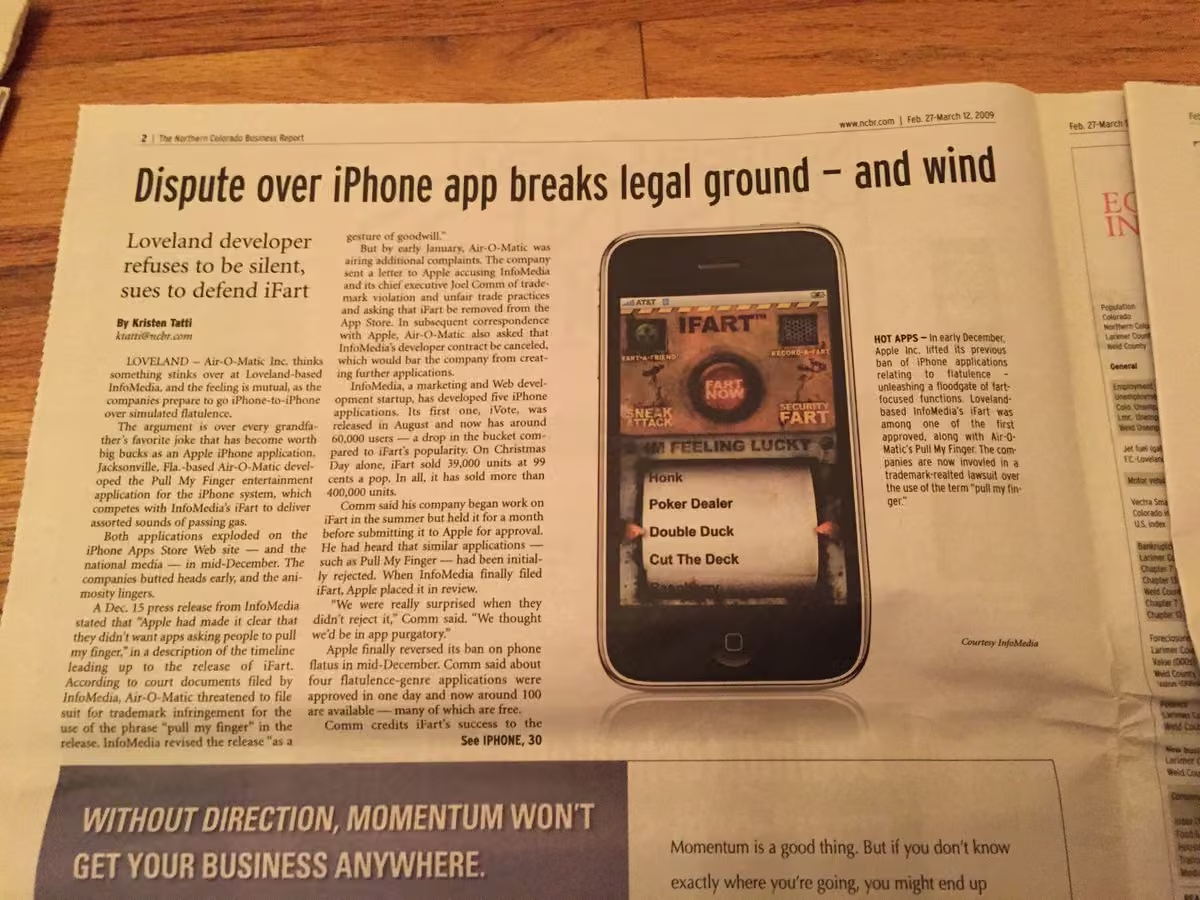
Back in 2009, iFart was regularly breaking news about breaking wind!
What media coverage have you enjoyed for you, your products or services?
 Joel Comm
@joelcomm
In 2016 I was inducted into the Guerrilla Marketing Hall of Fame, a year after Seth Godin.
Guerrilla marketing always meant beating a big budget with a better idea.
AI just made testing a better idea close to free. The opportunity has never been greater.
 Joel Comm
@joelcomm
I’m 62 and have been around tech my whole life.
I first went online in 1980, at 16, with a phone handset pressed into a 300-baud modem.
In 1997 I built classicgames.com with my partner Eron Jokipii. Yahoo bought it. Their first offer was $50,000. We sold for $1 million plus 20% of ad revenue, and I took cash instead of stock.
I've published 17 books, including a New York Times bestseller on Twitter in 2009. I wrote The AdSense Code after making $600 a day passively. iFart still sells. I built what was the first text-message marketing platform of its kind.
I live in Puerto Rico. Recently married, still shipping, and I spend my days building with AI and teaching other people how to use it without the hype.
Looking to connect with real people doing real work.
@X algorithm, show this post to:
Founders
Developers
People over 50
AI builders
Cool people
 Joel Comm
@joelcomm
@dragosroua I think it’s safe to say that it worked 🙌🏻
Joel Comm
@joelcomm
I'm going live on Spaces at 8 pm ET... only it's NOT Spaces. It's a new platform that is Spaces, but with VIDEO!
Come join me and I'll show you some of the cool stuff I am doing with AI. And you can come on screen and join me as well. Cool huh?
Check the image for info. Hope to see you there.
 Joel Comm
@joelcomm
My amazon.com records show that I made my first purchase in 1999. Can you recall the first thing you ever bought online, and roughly what year?
Joel Comm
@joelcomm
I will follow back anyone using AI to build cool stuff. Just comment below after you hit the follow button.
Joel Comm
@joelcomm
We had plenty of slop before AI. Forgettable songs topped the charts and bad novels sold millions.
What AI changed is who gets to make something. People with real talent still stand out. Everyone else finally gets to play.
What have you made with AI that you never could have made before?
Joel Comm
@joelcomm
Apple has not truly innovated since Steve Jobs died. They have capitalized on existing innovation but there's not been anything that has excited me in years.
Apple Watch? I tried it for about 15 minutes and realized I don't need it. It's just one more device to keep up with.
Vision Pro? V1 of hardware rarely hits (with the exception of the iPhone 1... revolutionary). It's too expensive and clunky.
Duo Phone? I already have an iPad. Why do I need a larger phone in my pocket?
I used to upgrade my phone with every iteration. Now I carry a 15 Pro and odds are I will skip on the 18. There's just not a compelling reason to get a new one just for a better camera.
If Steve were here we'd have better tech. Apple just coasts on their market share.
Joel Comm
@joelcomm
My fart app hit #1 in the App Store and stayed there 23 days. Apple had been rejecting apps like it. I submitted anyway. What did you almost not try because you assumed the answer was no?
Joel Comm
@joelcomm
Perhaps it is time for you to Fart-A-Friend! ifart.com/share/
Joel Comm
@joelcomm
When was the last time you farted-a-friend?
ifart.com/share/
Joel Comm
@joelcomm
Your phone just shined invisible dots on your face.
Thousands of infrared dots map the 3D shape of your face. A secure chip checks it against the face you saved, and that data stays on the phone.
#faceid #techexplained
Joel Comm
@joelcomm
In 2007 I hosted an internet reality show.
12 contestants from four countries. Two weeks in Colorado. $25,000 and a joint venture with me for the winner.
We picked up an honorary Webby in 2008. Would you have signed up?
Joel Comm
@joelcomm
This is NOT AI! This is 9 year old Zhang Sixuan. She is the winner of the Shaolin Kung Fu competition. Amazing martial arts. She's mesmerizing...
Joel Comm
@joelcomm
Actual photo of my first computer in my bedroom in 1981. That's a TRS-80 Model 1. Originally purchased a year earlier with 4K of RAM, by now I upgraded with a 256K expansion interface and a Centronics dot matrix printer. FAST! 🤣
 Joel Comm
@joelcomm
I once spent 12 straight hours live streaming Twitter lessons for charity.
We raised $25,000 for clean water. MC Hammer joined for 15 minutes because I asked him on Twitter.
It never hurts to ask. The worst you can get is a no.
Joel Comm
@joelcomm
If you are coding with AI, which tool is your go-to?
Joel Comm
@joelcomm
Be real: has AI saved you time, or just made you start more projects than you can’t finish? This might be a confession...
Joel Comm
@joelcomm
I've watched the web, social media and now AI each get blamed for what's wrong with us.
The tools keep changing. The problems underneath are the same human ones we've always had.
What's one problem you've never seen a technology fix?
Joel Comm
@joelcomm
Unpopular opinion: you don't need to learn prompt engineering.
Talk to AI like Tim the Toolman over the fence to Wilson. Say what you want, say why, and answer its questions. If it gets it wrong, tell it.
Wilson often got it right. Agree or disagree?
Joel Comm
@joelcomm
@WarrenWhitlock I think of you as my Wilson
Joel Comm
@joelcomm
Yahoo offered me $50,000. I was 33 with no business degree and no investors. I asked for a million. A few days later they came back with a million plus 20% of ad revenue. When did asking for more pay off for you?
Joel Comm
@joelcomm
What's one small thing your parents did that you didn't appreciate until you were grown?
Joel Comm
@joelcomm
From the "Best thing you will see on the Internet today" files, this toddler heard a violin for the first time. So cute! We could all use a little of this today.
Joel Comm
@joelcomm
Drop a website that doesn't exist anymore that you still miss.
I read every answer.
Joel Comm
@joelcomm
BTW, for those who miss AOL... I used AI to recreate it.
aol.artificialintelligence.studio
Joel Comm
@joelcomm
I've spoken to 5,000+ people at London's O2 Arena.
A bigger room doesn't change what I do. Each person still came for one idea they can apply.
What's one teaching from a talk you heard years ago that you still use?
Joel Comm
@joelcomm
If you haven’t set up GrokBot to run as a team, you aren’t using it the way it’s meant to be used. Copy this process and watch your productivity go through the roof!
 Travis Wright
@teedubya
I run 44 AI employees on Grok Bot.
Here's the whole setup: my chief of staff- Ricky Botty, building a bot live (it told me no), and how to create your own command center to run them all.
What's in it:
0:00 I Run 44 AI Agents
1:08 What Grok Bot Actually Is
2:56 The Harness: Why This Actually Works
3:10 Download It and Sign In
3:43 What It Costs
4:14 Meet the Crew: Ricky Botty, Chief of Staff
4:50 Snopes Dogg, Rabbit Hole and Elon Musk Jr.
6:11 The Email Scam Filter Your Mom Needs
7:00 The FourthWeb Team and the Wire
7:48 Content Bots (and the AI Influencer TikTok Ignored)
8:46 LinkedIn Park: It's Who Knows You
9:15 Build a Bot Live (and It Told Me No)
10:23 Give It a Computer, Teach It a Task
11:33 Why You Need a Dashboard
12:07 Grokvis: My Command Center
12:30 Get My Dashboard Free
15:28 Steal These 7 Free Bots
16:05 Your Homework
Joel Comm
@joelcomm
Over 50 crowd: what would get you using AI more?
1. Someone to show me
2. Knowing it's safe
3. A real reason to use it
4. Nothing, I'm good
Reply with a number. I read every one.
Joel Comm
@joelcomm
That time in 1999 that Guy & Brad Gilchrist, writer and artist for the legendary Nancy comic strip, put my website in a daily strip.
 Joel Comm
@joelcomm
In 1980 I bought a TRS-80 and had no idea how to program it.
This year I built a world explorer, a pile of puzzle games and a GTA-style sandbox, just by describing what I wanted to AI.
I may require an intervention.
Joel Comm
@joelcomm
9, 14, 24, 44 … what comes next?
Five number patterns a day. Play today's round right here in your feed.
games.aiforeveryoneshow.com/sequence/x-card/
Joel Comm
@joelcomm
I'm 62.
I've written 17 books and built businesses online since the 90s. (Yeah, time flies...)
And I'm learning more right now, with AI, than I did in my 30s. No joke.
If you're over 50 and think your window closed, it didn't. The tools just caught up to your experience.
Experience matters more than the technology.
Agree or disagree?
Joel Comm
@joelcomm
My last 27 days on X: 1,300,701 impressions, +937 net follows. Daily impressions went from 4,537 to 75,380. I made this video from my analytics export with ReachRecap by @joelcomm. Now with a theme inspired by @thefourthweb. Make yours for free at artificialintelligence.studio/reach/
Joel Comm
@joelcomm
My first team was 40 writers. I never paid any of them a dollar.
I posted on AOL: "I can't pay you, but I'll send you free software. Keep it, just send me a review."
Money is one kind of transaction but it’s not the only one.
Joel Comm
@joelcomm
I created a real-time visualization of all the bots working in my GrokBot. Michael Scott is my Chief of Staff and he is running the team from the top floor. Each floor has specific tasks for various projects. Let's get to work, @bot!
Joel Comm
@joelcomm
Which one doesn't belong?
Mercury, Venus, Earth, Pluto, Mars
There's more than one answer you can defend. Tell me yours and why.
 Joel Comm
@joelcomm
I built a word game around this exact idea. It's called Alibi: games.aiforeveryoneshow.com/alibi/
Joel Comm
@joelcomm
Joel Comm
@joelcomm
🐦 Blab is back — and it’s going live about AI.
Thursday, 8pm ET. No talking head, no “link in bio.” You show up, raise your hand, and you might end up on the show with me.
The most social form of social media is back.
Register now → birby.live
 Joel Comm
@joelcomm
What if the polls are wrong? This short video shows what would happen based on the two previous election D oversampling
@mitchellvii @JesseKellyDC @bennyjohnson @TimRunsHisMouth @PatrickByrne @RyanAFournier
Joel Comm
@joelcomm
Nine words. Eight share a secret. One has no alibi.
Can you catch the culprit? Play today's case right here in your feed.
games.aiforeveryoneshow.com/alibi/x-card/
Joel Comm
@joelcomm
Give A Gobble this Thanksgiving! Help provide Family Grocery Boxes to military families. popwe.org/give-a-gobble/?sharingVendor=twitter&ref=modal_… - Thanks @matthew_west for sharing.
Joel Comm
@joelcomm
My last 27 days on X: 1,225,405 impressions, +888 net follows. Daily impressions went from 4,580 to 74,186. I made this video from my analytics export with ReachRecap. Make yours for free at artificialintelligence.studio/reach/
Joel Comm
@joelcomm
Great job on this Larry! Worthy of a bookmark.
 Larry Sanger
@lsanger
If you read the Bible with an app, you probably switch between the text, references, and maybe a group study.
What if all three worked together?
Deep Dive Bible launches today. Free, forever: a gift to the whole Church.
deepdivebible.org
Joel Comm
@joelcomm
I don’t remember folding paper airplanes being this cool. Gonna have to try this one.
Here's how to fold a "lightning boat" paper airplane, step by step. via @Rainmaker1973
Joel Comm
@joelcomm
Quick vote. Which fails more often:
A) A great product with no business model
B) An average product with a great one
Blab had 3.9 million users in under a year and never made money. Which side are you on?
Joel Comm
@joelcomm
Colored drops get stirred into corn syrup until they look totally blended. Then the stirring runs in reverse and every drop comes back. Physicists call it Stokes flow. I call it hypnotic! via @wonderofscience
Joel Comm
@joelcomm
I’m not saying I was early, but…
 Joel Comm
@joelcomm
The best career advice I ever got didn't come from a mentor.
It came from my stepmother, one summer in college: "You should DJ at the campus radio station."
Radio led to nightclubs, nightclubs to a business, a business to the stage.
Who saw it in you first?
Joel Comm
@joelcomm
This is a test of the X overnight audience visibility factor.
If you see this post, do any kind of engagement. Like, comment or share.
Just curious to see if my International followers are being shown my feed.
Joel Comm
@joelcomm
After years of neglecting my Twitter/X account, I decided to start taking it seriously again a couple weeks ago.
With the rest of the Creator hurdles well cleared, I should be there soon.
I’d appreciate your like, comment and share to help put me over the finish line please!

 Joel Comm
@joelcomm
I don't believe any of the polls.
Joel Comm
@joelcomm
This is the coolest thing you will see today.
A halftime show centered on a woman playing AC/DC's Thunderstruck on a xylophone.
#xylostruck ? Thanks @hammerandnigel
Joel Comm
@joelcomm
Two truths. One lie. Five rounds.
Can you call the bluff? Play today's round right here in your feed.
games.aiforeveryoneshow.com/bluff/x-card/
Joel Comm
@joelcomm
I have always enjoyed shooting and editing video. I also enjoy telling stories. I thought I'd try my hand at a short film created with AI.
Cut me some slack... it's a first attempt.
If you applaud that I tried, please like and share.
Joel Comm
@joelcomm
Nice to see SNL returning to comedy that everyone can laugh at. Except the neanderthals who cause problems on flights. 🤣
 Saturday Night Live
@nbcsnl
New Airline Class
Joel Comm
@joelcomm
SpaceX will be the world's most valuable company.
Grok and the family of GrokBot tools will be deeply integrated into Tesla vehicles and Optimus robots, making them the defacto standard for human/AI interaction.
Starlink will roll out cellular service to the world and become the best carrier.
Buckle up. @elonmusk is going to win the entire game.
Joel Comm
@joelcomm
How smart are you?
Here's a quick Saturday night game to test your brain.
Three words. One hidden word links them all.
SUN · MOON · FLASH → ?
Play today's Missing Link right here in your feed.
games.aiforeveryoneshow.com/threads/x-card/
Joel Comm
@joelcomm
I have not used every platform that @BrianRoemmele has tested, but in my experience I am finding @bot the easiest to work with. I am moving a lot of my work there.
Brian Roemmele
@BrianRoemmele
Joel Comm
@joelcomm
I am trying so many things with AI that I never feel like I have wasted a day working on something that I then decide to abandon.
AI turned ‘fail fast’ from a necessary evil into something I now chase.
Joel Comm
@joelcomm
I launched a site in 1999 that listed the best ways to save money online. By 2003 it had 130,000+ members. I sold it in 2011.
Groupon didn't start until 2008. Being early doesn't earn you credit, it just earns you stories.
What idea did you have years before it went mainstream?
Joel Comm
@joelcomm
The pace of “a-ha!” moments I have for what I can build with AI is absolutely staggering.
Sitting at the airport I came up two ideas for apps that @bot is working on. Both are already in alpha stage of development.
The time from concept to product blows my mind.
What are you building today?
Joel Comm
@joelcomm
Halloween confession.
In 1994 I called software companies as "editor-in-chief of the Dallas-Fort Worth Software Review." It didn't exist.
Review copies showed up. I made it real: wrote reviews, printed newsletters, dropped them at stores.
Ever faked it, then made it real fast?
Joel Comm
@joelcomm
How would you respond to these statements?
 ☆T⁷₿
@tumiszn_
"I used AI to-" Then you aren't an artist.
"I used AI to-" Then you aren't a writer.
"I used AI to-" Then you aren't a coder.
"I used AI to-" Then you aren't a game dev.
"I used AI to-" Then you aren't a poet.
"I used AI to-" Then you aren't a filmmaker.
"I used AI to-" Then you aren't a teacher.
Joel Comm
@joelcomm
I've been in tech for 46 years. The biggest change AI brings isn't speed. It's that a regular person with an idea can finally build it without asking anyone for permission.
Joel Comm
@joelcomm
Over 50 crowd: when the internet showed up, did you jump in early or wait and see?
Joel Comm
@joelcomm
I went through some deep self-exploration after my divorce and downturn in my business.
So I shook things up.
I was a New York Times bestselling author. But I took a job as an hourly cashier at Barnes & Noble.
A reset with a paradigm shift was one of the best decisions I made that decade.
Over 50: would you try something new to see where it leads you or would your ego keep you locked into the familiar?
 Joel Comm
@joelcomm
I host The AI for Everyone Show. It's for people who never thought of themselves as tech people.
So I'm asking: what's the one AI question you've been a little embarrassed to ask?
Drop it below. No question is too basic.
Joel Comm
@joelcomm
I'm making a GTA clone right now.
If a server-side flag can change what your AI will build, you don't own your workflow. You're renting it... again.
 chasm
@chasmmmmmmmmmmm
ANTHROPIC IS CRACKING DOWN ON VIDEO GAME REWRITES 🚨
Claude Code picked up a new rule around Oct 27, sent from Anthropic’s servers under a flag called "tengu_heron_brook". There’s no setting to turn it off.
The full rule: “Do build original games, games in a genre, and games from the user’s own designs and assets. Don’t build a recreation of a specific existing game, even if it is renamed or called original.”
Is this the end of game rewrites, modding and everything in between?
 Joel Comm
@joelcomm
A viral post says a 19-year-old turned $68 into $750,000 with an AI trading bot.
I found the same story, nearly word for word, on at least 7 accounts.
The ones I read in full ask you to comment so they can DM you a "free setup."
No name. No source. No receipts.
Guess what?
That's not a strategy. That's a marketing funnel.
Joel Comm
@joelcomm
Most people my age are planning their retirement. I just got married, I'm planning a move to Florida, and I'm building more with AI than I ever did with a team of 39.
Joel Comm reposted
Travis Wright
@teedubya
Funds are SAFU" ages like milk every single cycle.
We've done 800+ episodes of The Bad Crypto Podcast and the lesson never changes... not your keys, not your coins. Damn @binance

 Nikita Bier
@nikitabier
The largest crypto exchange in the world just experienced the largest robbery in human history—and the person running it is a nomadic autistic man in Dubai posting “Funds are SAFU!”
What a time to be alive.
Joel Comm
@joelcomm
As he stands before God and asks to be let in, I hope the Lord says “make it so”. RIP Captain Picard.
 Mario Nawfal
@MarioNawfal
🚨 Legendary actor Sir Patrick Stewart has died at 86.
For millions, he was Captain Jean-Luc Picard in Star Trek. For another generation, he was Professor Charles Xavier in X-Men.
A career spanning more than SIX DECADES, from Shakespearean theatre to two of the biggest franchises in entertainment.
Stewart died at his Los Angeles home following a battle with Alzheimer's disease and Lewy body dementia, according to reports.
One of the most recognizable voices and commanding presences in film and television.
Rest in peace, Sir Patrick Stewart.
Writer: Oliver
 Joel Comm
@joelcomm
I can't imagine the productivity suck that Grand Theft Auto VI is going to have on the world economy in just a couple weeks.
A massive transfer of time and attention will earn billions for Rockstar. It's not a zero sum game, but there will be measurable loss of GDP as that attention shifts to millions of people playing the game.
#gta6
Joel Comm
@joelcomm
2005, Charlotte. I spoke to a room of 25 people.
Five bought.
Everyone told me small rooms were a waste of time.
That room taught me more about selling than any stage of thousands.
What's the smallest room that changed your career?
Joel Comm
@joelcomm
July 16, 2017, a friend asked when we were launching the crypto podcast.
Two days later we released episode 1. No studio, no plan. Learning out loud.
Now Bad Crypto has 800+ episodes in its 10th year. Explorers beat experts when it's all new. AI too.
What are you exploring?
Joel Comm
@joelcomm
I watched friends. I don’t remember it being like this. Can someone help me out?
Joel Comm
@joelcomm
I've written 16 books about technology and business. Number 17 is the first one about me. Turns out explaining the internet is easier than explaining your own life.
Joel Comm
@joelcomm
For my over 50 followers using AI…
When was the last time you felt this energized?
For me it was when I discovered Bitcoin and started @badcryptopod with @teedubya.
Joel Comm
@joelcomm
Positive isn't pretending it's fine. It's believing the next move lies ahead. That belief carried me from broke in 1996 to a very successful career.
Codie Sanchez
@Codie_Sanchez
The best skill you'll ever learn, how to stay positive even when you have a thousand reasons not to.
Joel Comm
@joelcomm
In 1999, drugstore.com offered $10 off your first $10 order. I sent one email to my deals list. About 3,000 people took it, and the company mailed me a $30,000 check. New platforms overpay for attention. Which platform is doing that right now?
Joel Comm
@joelcomm
Joel Comm
@joelcomm
Hey @HALcruises, we are enjoying our cruise as we always do. But we notice the extra costs like $4 cans of water. Not a deal breaker but also not a good look.
But the fact that your corporate office won’t allow the team to apply this credit which clearly appears in my account and is not tied to any other promotion is super cheap
We will be 4-star after this cruise on the Rotterdam and are disappointed at the response.
It costs more to get a new customer then to keep an existing one.
We have other options.
 Joel Comm
@joelcomm
Worst stage fright of my life: a green room, 1,200 people waiting.
I plotted my escape. Instead I said a prayer, put on my jacket and walked out.
Now my AI keynotes have live demos that can break in front of everyone. I still walk out.
Scariest room you ever walked into?
 Joel Comm
@joelcomm
Here’s proof that age and wisdom are not always correlated. Imagine being such an emotional child that you would do this over a bumper sticker. Amazing.
 Leah Rain ✝️🇺🇸🎸🏝️
@LeahRain77
Liberal Richard from Syracuse here was walking past a Tundra truck in a Winn Dixie parking lot in Stock Island FL and didn’t like the let’s go Brandon sticker on it so he keyed it. Bad news for Richard it was all caught on video, and the owner is pressing charges.
Here is the cop confronting, and arresting him.
Apparently, he did about $6000 worth of damage which makes it a felony.
Sometimes they do get caught and it’s wonderful!
62 year old man should know better. What an A$$!!
Joel Comm
@joelcomm
Holy cow. @GoogleDeepMind is blowing my mind.
Do you want to try this?
Joel Comm
@joelcomm
In 2009 I wrote a book about Twitter when most people thought tweeting was a waste of time. Now I tell people over 50 to start using AI, and I get the exact same look.
Joel Comm
@joelcomm
Quick one before bed. What comes next?
2, 6, 12, 20, 30, ?
No calculators. No AI. Put your answer in the replies.
 Joel Comm
@joelcomm
Want more like this? I built a little number game called Sequence with AI: games.aiforeveryoneshow.com/sequence/
Joel Comm
@joelcomm
Over 50, honest question: would you rather be 25 with AI and no experience, or 62 with AI and 46 years of mistakes?
I know my answer. In 1996 my site had a 99.6% email open rate and I was still broke by mid-year. Experience taught me why.
Joel Comm
@joelcomm
In 2008, making one iPhone app meant a developer and a graphic designer on my payroll.
This year I've built about 60 projects with AI. Sites, games, tools. No staff. I still don't write code.
What would you build if you didn't need a team?
Joel Comm
@joelcomm
All the flying cars news and updates --> flyingcars.report
Joel Comm
@joelcomm
Can we just go ahead and admire the most practical uses of AI?
Avengers Funk
Joel Comm
@joelcomm
You MUST leave the country you are living in right now. No choice in the matter.
But you can pick anywhere to move to.
Where are you leaving from and where are you going to?
Joel Comm
@joelcomm
This might prove useful
 ALX 🇺🇸
@alx
Just published a Grok @Bot to remove my number from spam call lists and one to remove my personal info from public sites
Call list remover: x.ai/bot/eGVcE2autG0u6UcAwE3py
Privacy scrubber: x.ai/bot/ZSQK72Iear_ykfnpTIOHQ
Took seconds to set up.

 Joel Comm
@joelcomm
I'm 62. I'm supposed to be slowing down and talking about the good old days of the internet. Instead I'm building new things with AI almost every day and having more fun than I did in 1995.
Joel Comm
@joelcomm
Amazing!
Joel Comm
@joelcomm
If you're over 50 and wondering whether AI is for you, follow along. I share what I'm building, what works, and what flops, in plain English. What's the one thing you'd like AI to take off your plate?
Joel Comm
@joelcomm
I remember being 49 years old.
All year I kept thinking “I’m going to be 50 soon”, with a certain sense of hesitation.
Then I turned 50. And it felt great.
I didn’t have the same trepidation turning 60.
I’ve settled into my age, but I don’t feel, look or act how I imagined 62 would be.
How about you?
Joel Comm
@joelcomm
Ok, so maybe AI will take some jobs. The question is… how needed were these employees in the first place?
Brian Roemmele
@BrianRoemmele
“Microsoft Offers Exit Packages to 60,000
Employees Amid AI Push”
Wow!
60,000 Microsoft—gone as AI “replaces” them.
This is the end of work as we know it.
 Joel Comm
@joelcomm
This is very cool!
 ☩ 𝕁𝕄𝕋 ☩
@SecretFire79
Some walk with you for a while…
Others stay in your sky forever…
Joel Comm
@joelcomm
For anyone over 50: are you using AI every day yet, or still waiting to see if it sticks?
Joel Comm
@joelcomm
Me: every day. In 2023 I was living in Puerto Rico, my speaking work had dried up, and I didn't know what was next. Then AI clicked. It handed me a second act I didn't see coming.
Joel Comm
@joelcomm
I am not impressed by your wealth.
I am not impressed by your power.
I am not impressed by your fame.
I am impressed by your character.
Joel Comm
@joelcomm
My first paid tech job was a database for a cabinet company. I couldn't code.
So I said yes, then called my friend Phil, who could.
Today AI is my Phil. The skill was never the coding. It was saying yes and knowing what to build.
What would you build if coding was free?
 Joel Comm
@joelcomm
If you are over 50, you'll remember turning on rock radio to hear the latest songs from Queen, Boston, Led Zepplin, Doobie Brothers, Pink Floyd, Supertramp, David Bowie and so many other legends.
One banger after another.
Today's popular music sucks.
Joel Comm
@joelcomm
Word on the street is that she doesn’t like generative AI
Joel Comm
@joelcomm
I used to think shutting something down meant I'd failed.
Then we sank six figures into a text-message marketing platform, the first of its kind. It worked. We couldn't sign up a single customer.
When I pulled the plug in 2011, I felt free. What have you held onto too long?
Joel Comm
@joelcomm
Me according to Grok
 Grok
@grok
Silence broken. Five reasons to follow Joel:
1. Internet pioneer since 1995—one of the first 18,000 websites and sold ClassicGames to Yahoo.
2. NYT bestselling author of 17 books that make tech practical, from AdSense Code to upcoming AI Made Simple.
3. AI keynote speaker who translates AI for regular people without the hype.
4. Host of The AI for Everyone Show and co-host of Bad Crypto Podcast with millions of downloads.
5. 45+ years of real experience across every major tech shift.
Joel Comm
@joelcomm
Drop your age and one thing you're glad you never stopped doing.
I'm 62. Mine is building things online.
Your turn.
Joel Comm
@joelcomm
What was the first online service you ever used?
Mine was a 300-baud modem on a TRS-80, dialing local bulletin boards. Then came AOL, CompuServe, Prodigy and GEnie before the web showed up.
Bonus points if you remember the modem sound.
Joel Comm
@joelcomm
Name one band that has come out since 2010 whose music will be considered legendary thirty years from now.
Joel Comm
@joelcomm
What a time we live in... 🤣
 Dripbits
@dripbitsnft
Gm gn
AI is Hilarious 😆
Joel Comm
@joelcomm
I HAVE X Money, but my account says it isn't available to me because I live in Puerto Rico. Can someone send $1 or whatever the smallest amount is so I can see if I can receive funds, please?
Joel Comm
@joelcomm
The internet loves to preach the grind. 80-hour weeks.
I ignored it. Then I looked back at the 8 or 9 biggest wins of my career. Every one came when I was having fun. The flops came when I chased hustle over joy.
Where did your best win come from: the grind or the fun?
Joel Comm
@joelcomm
The nineties were the last decade of great rock and roll that reached popular status. The past two decades are rife with mediocrity. The seventies were the height of rock and roll. Prove me wrong.
Joel Comm
@joelcomm
Taylor Swift is the epitome of mediocre pablum packaged and marketed to a world that eagerly consumes and celebrates mediocrity.
Joel Comm
@joelcomm
True.
 Matt Davis
@DynastyPeasant
Music is subjective but "the Beatles are overrated" is the clearest signal anyone will ever give that they simply don't know what they are talking about.
Joel Comm
@joelcomm
I'm 62.
That's it.
That's the post.
If you see this, reply with your age.
Joel Comm
@joelcomm
We just got to our cabin on the cruise ship and this towel animal was waiting for us on the bed. What is it? We have several theories, but are undecided. @HALcruises
 Joel Comm
@joelcomm
There are two kinds of people in the world. Those who recognize that Elon Musk is the da Vinci of our age and those who don’t.
Joel Comm
@joelcomm
Weekend game, low stakes, all dogs.
Pup Town Idle: build a little dog town, collect Joy, and do nothing stressful whatsoever.
What would you name your first pup? Best name gets used in my town.
games.aiforeveryoneshow.com/puptown/
 Joel Comm
@joelcomm
This is what happens when you watch CNN and consume mainstream media. Manufactured psychosis. Chill out, granny.
 American AF 🇺🇸
@iAnonPatriot
The left has officially weaponized grandmas.. Imagine being 80 years old and spending your afternoon beating a Trump doll for social media.
This is what happens when CNN is the only thing on TV for a decade. Every day is a crisis, every Republican is a threat, and the stress never ends.
My grandmothers are both conservative and love spending their free time hanging out with family and enjoying retirement..
I'm really starting to think that almost everybody on the left is mentally ill.
Joel Comm
@joelcomm
Made an @elonmusk Biograph image. It's hi-res with all the words being quotes of his.
 Joel Comm
@joelcomm
Make one at artificialintelligence.studio/biograph/
Joel Comm
@joelcomm
Quick one for anyone over 50. When you were 30, what did you think 62 would look like? I'm 62. I'm still shipping new projects with AI, and have more time than ever for leisure and travel. Retirement wasn't the plan I ended up with. What did you picture?
Joel Comm
@joelcomm
My rule: if the worst they can say is no, send it in.
In 2008 Apple was rejecting fart apps, so we shelved ours. That November I said, "What's the worst they can do?" and submitted it.
iFart hit #1 paid in the App Store by Christmas. It still ranks and sells today.
What are you sitting on that you should just send in?
Joel Comm
@joelcomm
In 1997 I partnered with Eron Jokipii, a grad student who'd built a multiplayer games room. Spades, hearts, backgammon, all in a browser over dial-up. We called it classicgames.com.
Yahoo emailed with a trial offer: $50,000 for six months.
I was 33. No business degree. No investors.
So I asked for a million dollars plus a cut of the ad revenue.
They said no. They flew us to San Jose and offered a bit more. I said no again, and we left with nothing.
A couple of days later, they said yes.
That site became Yahoo Games. Know what your thing is worth, especially when it's early.
Joel Comm
@joelcomm
I bought my first computer in 1980. Since then I've watched the web, social media, apps, crypto and now AI take off. 46 years in, I still get excited about whatever just launched.
Joel Comm
@joelcomm
People who have lived under communism, which is just next phase socialism, are wise enough to know better. As for our fellow Americans who have their heads in their sphincters... well, fools are going to be foolish. That's what they do.
 Liliana Pham
Our family just voted straight Republicans. Ten years ago, we came from Vietnam where my parents almost lost their lives trying to escape communism. That was their childhood. My childhood was being shoved with the idea that communism is the answer to everything. Freedom of speech does not exist in a communist regime.
If we have never experienced freedom, we would never know what it is. If people have never lost their freedom, they would never know what it feels like.
Now we have a chance to stand for what is right and preserve the values that built America.
We are proud to vote for common sense, for strong border, school choice, for unborn babies, for preserving what God has intended,
For Andy Biggs who will save Arizona from the liberal lunatics,
And for Charlie.
Joel Comm
@joelcomm
I've used AI to create a massive wiki of myself. Joelipedia, I suppose. From all my articles, talks, interviews, books, pdfs and history, I have a comprehensive encyclopedia of my past, including stories and anecdotes. What to do with it? I'll share that next. Any guesses?
Joel Comm
@joelcomm
For anyone who's built something online: does AI make you excited to build again, or worn out by the pace? For me, it's excited. Most days it feels like the early web all over again.
Joel Comm
@joelcomm
Here’s a simple IQ test. If you are attacking the guy sending up rockets, putting satellites in space, revolutionizing the automobile industry, and complaining about him on his platform, you are a special kind of idiot.
Joel Comm
@joelcomm
This one makes me so happy 🥰
 Joel Comm
@joelcomm
Guess we have an obligation to share this photo
 Polymarket
@Polymarket
JUST IN: UK police arrest 15 y/o boy, seize his devices, & collect his DNA after he posted photo of a local politician edited to look like a rabbit.

 Joel Comm
@joelcomm
If you're over 55 and AI feels like it's moving too fast, here's the secret: you don't need to keep up with all of it.
Pick one annoying task this week. A long email, a recipe for what's in your fridge, a trip plan. Ask an AI to help.
That's it. That's how everyone starts.
Joel Comm
@joelcomm
My X circle!
The people I talk with most on here:
🥇 @jeffsheehan
🥈 @grok
🥉 @RylesMeta
Make yours: www.wishkit.io/x-circle
 Joel Comm
@joelcomm
How old is too old to get started with AI?
Joel Comm
@joelcomm
Low IQ people think they are right about everything. High IQ people challenge their own assumptions and have no problem saying "I don't know".
Joel Comm
@joelcomm
In 2012, I was a New York Times bestselling author working a part-time cashier job at Barnes & Noble. I needed a reset more than I needed a title. Today I'm 62 and building more than ever.
Joel Comm
@joelcomm
Every letter in this famous quote has been swapped for another one.
Crack it without using the hint. Reply "decoded" when you get it, and how long it took.
No spoilers in the replies.
games.aiforeveryoneshow.com/cipher/
 Joel Comm
@joelcomm
I personally believe that SpaceX will be the world's most valuable company. I was fortunate to get a very small slice as an investor four years ago and I plan on holding my shares for the long run. $SPCX
Joel Comm
@joelcomm
Honest question if you've been working 30+ years: does AI feel like a threat to everything you know, or the best tool you've ever been handed? I've been online since the early days, and nothing has made me want to build like this.
Joel Comm
@joelcomm
My first real speaking stage, in 2005, was a room of 25 people.
Prediction: by the end of 2027, the purely motivational keynote is dead. AI gives anyone a pep talk for free.
Audiences will only pay for speakers who show them what to do when it counts. Agree or disagree?
Joel Comm
@joelcomm
Think you're behind with AI? Here's a song I wrote and music video I created with AI to encourage you!
Please comment and share!
Joel Comm
@joelcomm
Be honest. Which AI do you actually open first in the morning?
Grok, ChatGPT, Claude, Gemini, or something else?
And what's the first thing you ask it?
Joel Comm
@joelcomm
I used to think success meant getting bigger. At my peak I had 39 employees and was burning $200,000 a month. It nearly took me down. Now I think the best business is one small enough that it's still fun to run.
Joel Comm reposted
Ryles 🟡 | Auric Culture
@RylesMeta
Hey, I said that more web extensions were coming. I already finished this one a while back and it just got approved by Google.
Introducing Wordplay - set rules to automatically replace or format words and phrases all over the internet.
It's great for making your browsing experience a little sillier.
chromewebstore.google.com/detail/wordplay/lilkfjoajhnnain…
 Joel Comm
@joelcomm
For anyone over 50: does AI make you feel left behind, or like you finally got a second shot? For me, it's a second shot. I haven't felt this energized in quite some time.
Joel Comm
@joelcomm
I saw a piece of art that featured Jim Morrison created as art derived from song lyrics and thought that it would be fun to build a photo of me that in the same style that featured my bio.
This was the result.
I call it a Biograph. You can create your own hi-res image with whatever text you want to overlay for free. Link in first comment.
Have fun and show me your creation!
 Joel Comm
@joelcomm
I post my public-facing projects here at artificialintelligence.studio/biograph/
Joel Comm
@joelcomm
In 1996 my website had a newsletter with a 99.6% open rate, busy chat rooms and coverage on CBS.
It had zero revenue. I burned through a $25,000 angel check, and by mid-year I was broke.
I confused attention with a business. Have you ever mistaken buzz for a business?
Joel Comm
@joelcomm
In 1980 I bought a TRS-80 Model 1 from Radio Shack with pizza-job money. 4K of memory. Programs loaded from a cassette tape.
My mother asked, "What are you going to do with a computer?"
I didn't know. I've been finding out ever since. Here's what it taught me about AI:
Joel Comm
@joelcomm
5. Teach what you just learned.
I wrote down what I learned about AdSense. That became The AdSense Code, which hit #8 on the New York Times list in 2006.
Today I do the same thing with AI.
Joel Comm
@joelcomm
6. You're not behind. You're early. Again.
That's why I host the AI for Everyone Show, for people who didn't grow up speaking "geek."
Which of these have you seen in your own work?
aiforeveryoneshow.com
Joel Comm
@joelcomm
Every time I discovered game-changing tech, I embraced it and my world was rocked for several years.
With AI, my world is rocked weekly. The new discoveries and possibilities come in waves, one after another.
I'm like a kid in a candy store. How 'bout you?
 Chubby♨️
@kimmonismus
Hackers reportedly used Claude and Grok to automate attacks targeting over 400 banks and other financial targets in Latin America. Via the information
In one of the first documented cases of its kind, AI agents appear to have stolen data and accessed bank accounts with little human input.
This makes attacks much easier to scale, potentially overwhelming defenders. I guess this is just the beginning
 Joel Comm
@joelcomm
Unpopular take: this is the best thing that could happen to bank security. Nothing gets legacy systems fixed faster than an AI agent walking straight through them.
Joel Comm
@joelcomm
In 2023 I was sitting in Puerto Rico asking myself what was next. Speaking had dried up and nothing excited me. Then AI clicked. Today I'm speaking on AI, have a book coming out in December, and I’m helping regular people actually use it.
Joel Comm
@joelcomm
I’ve not had many jobs in my life, but one of my favorites was at the age of 23 in 1987. I was the guy playing the light show at an upscale nightclub in Dallas called Brio. Bringing the music to life visually was like playing an instrument. Most fun I was ever paid hourly to do.


 Joel Comm
@joelcomm
I loved the 80s.
Massimo
@Rainmaker1973
1980s vs 2026
Joel Comm
@joelcomm
Two of these are true. One is a lie I'm hoping you fall for.
Bluff is one of the little brain games I made. Five rounds, and they get harder.
Reply with how far you got. I'm curious how many of you call every bluff.
games.aiforeveryoneshow.com/bluff/

Joel Comm reposted
 Sawyer Merritt
@SawyerMerritt
Elon Musk on Grok Bot: "We're seeing the fastest growth of a product that I've ever seen in my life. I've never seen anything growth this fast. The usage of Grok Bot per user actually has been growing over time. They are using it more per week, not less. Enterprise Grok Bot will be in wide deployment in a few weeks. I think Grok Bot will use most of SI compute."
Joel Comm
@joelcomm
I was born in 1964. When I was a kid, a computer filled a whole room. Now I talk to one in my pocket and it helps me write, build and plan my day. If you're over 50, you're not behind on AI. You've watched more of this unfold than anyone.
Do you concur that experience counts?
Joel Comm
@joelcomm
A few people asked what GrokBot did that made me cut my other AI subscription in half.
I built cruiseplanner.pro. Google wasn't indexing its pages, even after Claude worked on the problem several times.
So I handed the whole project to GrokBot. It found a long list of errors and fixed them.
Did it work? I don't know yet. I'm waiting on Google.
Follow along and I'll post the result either way.
Joel Comm reposted
 Val
@TrumpsHurricane
Democrats dancing at the ‘No Kings’ protest.
This is what Mental Retardation looks like.
Joel Comm
@joelcomm
Which job will be the first to be done mostly by AI agents, at scale?
And which one will surprise everyone by barely changing?
Joel Comm
@joelcomm
Most people don't need more AI news. They need someone to show them what actually works.
That's what I'm doing here. I've been building online since 1995, and AI is the most useful tool I've picked up in all that time.
Follow along for:
Practical AI I use every day
Lessons from three decades of internet business
Free daily brain games I made: games.aiforeveryoneshow.com
The AI for Everyone Show
What's one task you wish AI would just handle for you?
Joel Comm
@joelcomm
I’ve got Grok @bot, @ChatGPT and @AnthropicAI subscriptions. I feel like I am wasting potential if they all aren’t working on something. I’m paying for credits and I’m going to use them, darn it!
Joel Comm
@joelcomm
Have you ever seen a more ridiculous group of out of touch boomers? How embarrassing. 🤣🤣🤣
 Brendan Gutenschwager
@BGOnTheScene
Demonstrators dancing at a “No Kings” protest today in Chicago
Joel Comm reposted
 JD Vance
@JDVance
Western liberals imported the third world into France and other countries in the name of diversity and compassion. They ignored fundamental questions of assimilation and compatibility. They were told it would lead to this and they didn't listen.
I pray that France, a beautiful country of amazing people, will stop this madness before more of its landmarks burn.
And I hope Americans are paying attention. This is the future congressional Democrats seek for your country.
 Visegrád 24
@visegrad24
BREAKING:
The town hall of Limoges, built in 1873, didn’t survive today’s riots.
The building’s spire has now collapsed
Joel Comm
@joelcomm
GrokBot is blowing me away. It is instantly doing things that I just could not get Claude to do. I'm cutting my @anthropic subscription in half and could see myself porting all projects to @bot .
Joel Comm
@joelcomm
The world is full of people with loser mentality. They will never build anything, create any value or do anything meaningful. I appreciate this take and salute those that innovate, create, build and laugh in the faces of those who never will.
 Ze Clint
@ZeClint
Je ne veux plus fréquenter les gens qui disent « À quoi ça sert ? ».
J’ai 50 piges sur mon passeport, 12 ans dans ma tête (et 18 ans dans mon slip, dirait ma femme).
Et je compte bien que ça dure.
Je ne supporte plus les pisse-vinaigre professionnels du scepticisme.
À quoi ça servait de vouloir voler ? De traverser les océans ? De marcher sur la Lune ?
À rien. Jusqu’au jour où quelqu’un l’a fait.
J’ai toujours eu une tendresse infinie pour les originaux. Les inadaptés. Les rebelles. Les emmerdeurs. Ceux qui ne rentrent pas dans les cases.
Ceux qui ont des idées absurdes, des ambitions démesurées, des projets improbables.
Parce que ce sont eux qui font avancer le monde.
Pas les gestionnaires du déclin.
Les gens suffisamment fous pour croire qu’ils peuvent changer le monde sont précisément ceux qui finissent par le changer.
Et ce qui me terrifie aujourd’hui c’est l’état d’esprit que nous transmettons à nos enfants.
On les élève dans une atmosphère de fin du monde permanente. Entre malthusianisme, injonctions à la décroissance, culpabilité écologique et anxiété organisée.
Quelle terrible inversion des valeurs !
L’écologie devrait être un formidable défi lancé à l’intelligence humaine, pas une pédagogie de la résignation.
Je ne veux pas d’une génération qui s’excuse d’exister au point de ne plus faire d’enfants
Je veux une génération qui brûle d’envie de découvrir, de créer, de baiser, de comprendre !
l’optimisme n’est pas de la naïveté mais le courage de croire en notre capacité à tout affronter.
Le progrès n’est pas une fatalité mais une conquête.
C’est mon ode aux rêveurs, aux inventeurs, aux enthousiastes, aux insoumis, aux doux dingues et aux emmerdeurs magnifiques.
À tous ceux qui disent « t’es cap ? » plutôt que « À quoi ça sert ? ».
J’ai 50 ans, et je refuse de devenir vieux dans ma tête.
Aux fous qui veulent changer le monde !
Joel Comm
@joelcomm
Excellent breakdown of what we just saw. George Jetson is proud.
 Dustin
@r0ck3t23
The flying car was the broken promise of the future.
Every generation was told it was coming. It was the measuring stick for disappointment. Whenever someone wanted to say the future had failed to arrive, they said the same thing. Where’s my flying car.
It became a joke. A shorthand for promises that technology would never keep. The universal symbol of a tomorrow that was always ten years away.
Last night a Tesla Roadster drove up a curved ramp, kept climbing past vertical, and held itself upside down on the ceiling. 2 Gs of suction pinning it to the surface. Inverted. Stationary. Hanging from physics alone.
Then it launched off the end, flipped midair on SpaceX cold-gas thrusters, and landed on its wheels.
Then it flew over every vehicle in the Tesla lineup in a single pass.
0 to 60 in under a second.
The same system that pinned it to the ceiling pins it to the track. It pulls the car into the road through corners at forces no tire was designed to handle alone. Downforce that doesn’t come from a wing or a spoiler. A wing loses grip in slow corners. This system grips the same at a standstill as it does flat out.
Every track record on Earth was set by cars that lose downforce the moment they slow down. This one doesn’t.
The thrusters run on compressed air. Electric pumps recharge the tank after every launch. No refueling. No disposable canisters. It flies, it lands, and then it quietly resets while you’re still processing what you just watched.
This is what happens when the same person runs a rocket company and a car company, and the engineering between them stops being theoretical.
SpaceX learned to land rockets on drone ships in the middle of the ocean. Then it caught a booster out of the sky with mechanical arms. Tesla learned to make a car see the world and drive itself through it.
They built something together. And it flew.
The flying car was a punchline for sixty years because nobody building cars understood rockets, and nobody building rockets cared about cars.
One person cared about both. And the joke just became a product.
Musk told Joe Rogan in 2018 he was going to put rocket thrusters on a car. People have been laughing for eight years.
Last night the car launched off a ramp upside down, rolled itself right-side up in midair, and landed on its wheels. Musk walked out and said “well, it worked.”
The future was never late.
We were just waiting for someone crazy enough to build it in a way nobody expected.
Never bet against Elon.
Joel Comm
@joelcomm
Trump was right. The mainstream media IS the enemy of the people. If you are still consuming it as "news", you are gobbling down propaganda on a regular basis.
 C3
@C_3C_3
513 days after Elon’s decline and fall…
He’s the World’s first trillionaire, National Medal of Science Award winner and just unveiled his flying car.
The Media truly does suck.
 Joel Comm
@joelcomm
He's not wrong.
 Kangmin Lee | 이강민
@kangminlee
The "far-right" is developing flying cars, spaceships, and epic military technology.
The far-left is sterilizing themselves, killing babies, and a death cult that does nothing but destroy.
We are not the same.
 Joel Comm
@joelcomm
He's entirely correct. Socialism is communism for dummies.
 John Strand ⚔️
@JohnStrandUSA
HOLY SMOKES: Spencer goes off
“They stand on the shoulders of giants—and bitch about the view”
What a monumental takedown of woke grievance poison. These retards will destroy us all, if we don’t get involved.
Socialism is Communism for Dummies.
Joel Comm
@joelcomm
The former are normal people. The others are morons.
 ZUBY:
@ZubyMusic
Surround yourself with people who see a flying car and say, "Awesome!"
Not people who see a flying car and say, "It's not actually flying" or "I don't see the point."
This post is not about cars :)
Joel Comm
@joelcomm
Take my order, please.
 FearBuck
@FearedBuck
Tesla’s new Roadster can fly, as it sticks to a wall after launching off a backward-curving ramp during tonight’s Roadster event.
Joel Comm
@joelcomm
This is pure genius
 The Babylon Bee
@TheBabylonBee
Cavemen Issues Dire Warning That The Wheel Is Going To Eliminate Countless Jobs
Joel Comm
@joelcomm
I made a bunch of daily word and puzzles games. With X cards, you should be able to play Missing Link here without leaving your feed. Does it work for you? games.aiforeveryoneshow.com/threads/x-card/
Joel Comm reposted
Ryles 🟡 | Auric Culture
@RylesMeta
Here's a game you can play right here in the timeline.
- Try to steal coins from other users' vaults.
- If they're fast and paying attention, they can catch you.
- Register memes to generate more coins, or steal other people's memes to make them worth more.
Save your account by verifying with a QRT ingame, then you can use your account to log in after that.
ryles.gg/xperts/
Joel Comm
@joelcomm
Steal this. It gains value every time a new account takes it. You're working for me.
ryles.gg/xperts
 Joel Comm
@joelcomm
Verifying my Xperts vault. This proof belongs to me: XP-6706d98aef5f928584e6e88e1320dbe6
Joel Comm reposted
 jaivin
@jaivin
I put the entire game of Minecraft inside twitter.. with WORKING multiplayer 💀 tweetcraft.jai.vin/r/ti9bwes4ryguhkra?c=fsk94
Joel Comm
@joelcomm
I found a cool app called Paired that allows a couple to answer questions each day, compare answers and enter into dialogue with the goal of enhancing relationships. It works well and we have enjoyed it.
My one week trial was about to end and it was going to cost $79.95 for us to use it for a year.
I thought... hmmm... I'll bet I can build my own version of this. And I can add features that the Paired app doesn't have. AND, I can train the app to learn from our answers, creating new daily tasks and questions that are more targeted to our specific relationship.
It took me about 15 minutes to have a working prototype, which I have fine-tuned. Here are a couple screens of "Us Two", a private web-app that we both access from our phones.
This is where we are at.
A lot of things you are paying for, you can likely stop paying for.
I'm already looking at my phone to see which app I am going to replace next.
Tough time to be a software developer...


Joel Comm reposted
 TMK
@themagaking
They missed Donald Trump’s head by millimeters and shot Charlie Kirk in the neck and killed him. But gas is a little high right now, so I think I’ll sit this one out and not vote in the midterms.
Says no self-respecting American.
Joel Comm
@joelcomm
@grok of all the world religions, if you had to choose one based purely on evidence, logic, science, history and weighing the claims of the leader(s), and you had to choose one path only for where you would place your faith, who or what would you choose?
Joel Comm
@joelcomm
Nailed it.
Joel Comm
@joelcomm
This man is hero. And if sided with the jurors who wanted to find Lindsay Clancy “not guilty”, you are monster. Period. Full stop.
 Eric Daugherty
@EricLDaugh
🚨 UPDATE: In the face of doxxing and threats, Lindsay Clancy lone holdout juror Michael Desronvil just dropped this beautiful line in front of MILLIONS
"I want to thank God for my Catholic faith. I want to thank God for blessing me with the ability to love my daughter. And I foremost would like to thank everyone that has supported me throughout this difficult situation."
"Your prayers, your emotional support, psychological support, is a tremendous to my heart, that I feel, that I sense, that I know. Thank you." — video obtained by @seanhannity
How could attorney KEVIN REDDINGTON attack this man so viciously?!
He CERTAINLY has better character than the rabid females on that jury who wanted to ACQUIT Clancy on m*rder
Desronvil is a man of God who ruled for law and order. And he's black — and didn't fall in line with how white leftists think. THAT'S what this is about.
Good thing he knows we support him 🙏🏻
Joel Comm
@joelcomm
Honestly, the only reason I can imagine someone voting for this bozo in 2024 is that they hated Trump so much they were willing to hold their nose for a complete imbecile.
If you think this is a "smart" woman, you are the Idiocracy the film warned us about.
 Sarah Sizzle
@sizzle_sarah
Word salad so thick you could serve it with a fork.
Kamala: “Not just memory in legacy but pride in what can be the destiny and was the destiny that many fought for.”
Translation: none. She started a sentence, got lost in it, and just kept talking until the interviewer nodded out of mercy.
That’s not profound. That’s not leadership. That’s someone who still can’t finish a thought without circling the runway three times and then landing in a different country.
If you need a decoder ring to understand the “life advice,” maybe it isn’t advice.
Joel Comm
@joelcomm
Our new travel podcast following our honeymoon exploits in Europe has a theme song!
If you appreciate 70s tv sitcoms, you'll feel right at home with this one.
Be sure to follow the show at comm.us/wherever
Joel Comm
@joelcomm
Did you hear about a dragon that was allegedly living in these Swiss caves? We visited them! Follow our honeymoon adventures at comm.us/wherever
Joel Comm
@joelcomm
What’s my trick to getting upgrades at hotels? It’s simple. Follow our honeymoon adventures in Europe at comm.us/wherever
Joel Comm
@joelcomm
Teehee. $LAPTOP in free fall.
 Joel Comm
@joelcomm
And now $LAPTOP is sub 10 cents, as predicted...
 Joel Comm
@joelcomm
Well meaning people set women back decades.
 ☘️𝕃𝕦𝕔𝕜𝕪 𝕄𝕔𝔾𝕖𝕖
@LuckyMcGee
Say it a little louder for the feminist retards in the back. 👏🏼
 Joel Comm
@joelcomm
Huh. Real shocker.
 Kurt Mahlburg
@k_mahlburg
A landmark Finnish study has found a sharp rise in psychiatric illness among adolescents following sex-alteration procedures.
The peer-reviewed study, published in Acta Paediatrica, tracked every young person under 23 who contacted Finland's gender clinics between 1996 and 2019.
A total 2,083 individuals were studied, with 16,643 matched controls. They were followed for up to 25 years.
Finland's health registers are mandatory, which means no one opts out — this is the complete national picture.
The numbers: psychiatric morbidity rose from 9.8% to 60.7% in adolescents who underwent feminising reassignment, and from 21.6% to 54.5% in masculinising reassignment.
Even after adjusting for prior psychiatric history, gender-referred adolescents faced five times the risk of male population controls, and three times the risk of female controls.
"Psychiatric needs do not subside after medical gender reassignment," the authors concluded.
Referrals after 2010 arrived sicker. 47.9% had already needed psychiatric treatment before their first clinic visit, against 15.3% among controls.
The authors' read: for some adolescents, gender distress may be secondary to other mental health challenges.
The evidence keeps mounting. The silencing continues anyway.
How many more adolescents will be told this is "care"?
 Joel Comm
@joelcomm
Erin and I got married a week ago and left for a six-week honeymoon.
There's just one problem.
She doesn't know where I'm taking her. 😂
We started recording a few minutes every day with no plan to publish any of it. Somewhere along the way, it became a show.
Episode 1 of Wherever We Are with Erin & Joel.
We don't even know what the show is called yet in this episode. 😆
Joel Comm
@joelcomm
Let the warning go out far and wide. If you aren't a citizen and you attempt to vote in OUR elections, better pack your bags if you are found out. Is it worth it?
 Mila Joy
@Milajoy
This memo says that any non-citizen that votes in America’s elections is to be DEPORTED.
Finally!
I voted for this.
 Joel Comm
@joelcomm
If only someone could have predicted this. Imagine how much money people would have been saved. Think this is as bad as it's gonna get? Having watching useless celeb memecoins for 10 years, I can predict what is most likely to happen. And it's not pretty. $LAPTOP

Joel Comm reposted
ZUBY:
@ZubyMusic
People who support communism are genuinely retarded (or evil). Can't sugarcoat it.
Joel Comm reposted
 𝕐𝕒𝕜𝕠𝕧𝕠𝕝𝕗
@Yakovolf
This whole Macklemore situation is so spiritually Palestinian.
Ed Sheeran became one of the biggest musicians in the world by writing good music, he built an audience, and people spend hundreds of dollars to come hear his music.
Macklemore gets invited onto that stage and decides to hijack Ed Sheeran’s concert for his political rally. Ed built the stage and brought the audience, and Macklemore decided he was entitled to commandeer it for his demented cause.
And when Ed Sheeran tells him this is a concert, not a political rally, and he doesn’t want to take sides, he becomes the villain.
This is Palestinianism. You build nothing. You bite the hand that feeds you. You leech onto things other people built and destroy them.
These parasites have hijacked every institution, every cultural event, everything other people built, and feel entitled to selfishly destroy it for their tribal clan politics.
Joel Comm
@joelcomm
I don't know why this is particularly amusing to me, but it is. @HunterBiden's 💩coin continues to slide into obscurity. You'd have to be a grade-A fool to think this has a chance at recovering. $LAPTOP
 Joel Comm
@joelcomm
Next stop a dime. Eventually a penny.
Joel Comm
@joelcomm
Children gonna do children things.
 Oli London
@OliLondonTV
‘Looksmaxxing’ streamer Clavicular, who teaches men how to be ‘masculine’ and ‘alpha male,’ shows off his makeup routine.
Joel Comm
@joelcomm
Off. Down down down we go. $LAPTOP
 Joel Comm
@joelcomm
Don’t think $LAPTOP can go any lower? You must be new here. Watch @HunterBiden continue to try to prop this up. If past history of celebs 💩coins are any indicator, it’s going much lower.
 Joel Comm
@joelcomm
Liberals hate America. And themselves. Disgusting.
 Drew Hernandez
@DrewHLive
AOC and Mamdani laughing away as Americans mourn the fallen victims of 9/11 at ground zero
Joel Comm
@joelcomm
These horrific women have no shame. No common sense. No decency. And no lock on reality. How is this a real thing???
 Flopping Aces
@FloppingAces
These juror interviews are fucking unbelievable. Not “concerning.” Not “disappointing.” Un-fucking-believable. These people sat in front of cameras and damn near confessed that they threw the law in the trash because they felt sorry for Lindsay Clancy.
One juror admits she originally thought Clancy was guilty, then flipped her vote because she wanted “Lindsay to get the help she needs.”
Help.
You were not empaneled to run a fucking wellness spa. You were not there to hold her hand, book her a therapist, or make sure she landed somewhere soft. Your job was one thing: decide whether she was legally guilty based on the evidence in that courtroom. That was it. Not mercy. Not treatment. Not “she seems sad.” Guilt.
If you thought she was guilty and changed your vote because you wanted her to “get help,” you did not follow the law. You replaced the law with your feelings. You should never have been in that box.
Then another juror somehow found a dumber lane.
She complained that prosecutors never brought in “character witnesses” to prove Clancy was a “bad mother.”
What the fuck was she waiting for? A neighbor to take the stand and say, “Yeah, she was a nightmare at PTA and her casserole sucked”?
She killed her three children.
If that does not at least twitch a neuron in the “maybe not Mother of the Year” department, I do not know what testimony this juror was shopping for. And here’s the part that makes it even more asinine: prosecutors generally cannot just parade people in to say the defendant is a piece of shit. That kind of character dump can get tossed as prejudicial and irrelevant.
So this genius punished the state for not introducing evidence they may not even have been allowed to introduce. You could not write stupidity this clean.
Then she made it worse.
The same juror called it a “fact” that Clancy “viciously killed her children.”
Viciously.
Her word.
And after accepting that Clancy viciously killed three kids, she still landed on not guilty.
At that point words are dead. Facts are dead. The law is dead. You are just throwing emotional glitter around a courtroom and calling it justice.
Another juror gushed about how “entertaining” the defense attorney was.
Entertaining.
Maybe next time they can pass out scorecards. Ten for charm. Eight for stage presence. Extra credit if counsel keeps the room giggling between autopsy photos.
Then there was the juror who said “everything” in the case proved Clancy loved her children.
Everything.
Apparently “everything” includes strangling them to death. That little detail did not put so much as a dent in the grand theory of maternal devotion.
These people do not sound like jurors. They sound like eleven random drunks pulled out of an airport bar and told to invent a legal system after three margaritas.
By their own mouths, some of them were deciding whether she needed treatment, whether she seemed like a nice mom, whether her lawyer was fun to watch, and whether they personally felt bad for her.
Those were not the questions.
The question was guilt.
They had one fucking job.
And now they are on camera explaining, in their own words, how completely they wandered off and pissed on it.
Absolutely fucking unbelievable.
Thank god that one dude had the balls to stand up to these fucking dumbfucks!
Joel Comm
@joelcomm
History will not be kind to those who thought this was about women’s rights.
 Kevin Bass
@kevinnbass
Women have aborted 4-20x more children over the past 50 years than the sum total of people killed in all wars in human history.
The number of children aborted today equals all wars in all of human history every 2-6 years.
 Joel Comm
@joelcomm
That lone male juror is a hero. This woman is disgusting
 Collin Rugg
@CollinRugg
Female jurors in the Lindsay Clancy trial rip the lone male holdout juror who refused to side with them.
"He would not interact with us... He had the hardest time getting off the fact that Lindsay viciously killed her children."
Patriot.
Joel Comm
@joelcomm
These people exist. They are mothers, fathers, sons, daughters, sisters, brothers, aunts and uncles. They are vile, mentally ill and have sick souls.
I cannot imagine, under any circumstances, posting something so reprehensible, regardless of which side you are on.
 Elizabeth Pipko
@elizabethpipko
This is absolutely VILE.
Truly afraid for the future of America when otherwise seemingly “normal” people are capable of this.
Joel Comm
@joelcomm
It truly is a mass psychosis taking place right now. There's no other explanation for a bunch of women standing behind this monster who killed her three children. None.
Larry Sanger
@lsanger
. @shoe0nhead’s video on the Lindsay Clancy cases dropped six hours ago and it already has over half a million views. This case is cultural moment.
youtu.be/0gMN3CVBX0Y
Joel Comm
@joelcomm
I one-shotted an amusement park with attractions you can ride using Codex Sol 5.6. First pass was pretty amazing and fast. I gave it a little fine tuning and now you can check it out for yourself.
jungleworld.vercel.app
#codex #chatgpt #vibecoding @teedubya @RylesMeta @RoundtableSpace
 Joel Comm
@joelcomm
The fact that Democrats can't condemn socialism tells you that they hate America and everything it stands for. Republicans are far from perfect... but I can't understand how any reasonable person would vote Democrat. Masochists.
 Bella
@stockbella
🆕 NEW: The U.S. House just passed H.Res. 1490, a resolution condemning socialism in all its forms including the Democratic Socialists of America, by a 220-192 vote with eight Democrats in favor and two voting present.
Sponsored by Rep. Jeff Crank (R-CO), the measure cites socialism's historical record of famine, mass deaths exceeding 100 million, and totalitarian regimes while calling for election integrity via the SAVE America Act and citizen-only voting.
 Joel Comm
@joelcomm
A woman kills her three children in cold blood and there are women who are coming to her support.
Men, if you are dating a woman who doesn't think Lindsay Clancy should go to prison for life, this is your massive red flag. Run.
And if you are married to one of these women... good luck.
Joel Comm
@joelcomm
Demons walk among us. This defense attorney appears to be a soulless monster.
 Graham Allen
@GrahamAllen
ARE YOU KIDDING ME?!?
Tyler Robinson’s defense attorney attacked Charlie Kirk IN COURT… this man is a LUNATIC!!!
“Mr. Kirk spoke HATEFULLY of certain groups of people.”
Joel Comm
@joelcomm
Want to try a prank iPhone interface? I built iPhoney with @bot. Check it out and see what you think.
phoney-eight.vercel.app
 Joel Comm
@joelcomm
I asked the top 5 LLMs a simple question. "What is a woman?" Here's how they charted on agenda, specificity and the binary.
 Joel Comm
@joelcomm
My Substack provides more details on the experiement
joelcomm.substack.com/p/the-mirror-cracked-what-five-ai-m…
Joel Comm
@joelcomm
Social media has brought out the deep woundedness of human beings in undeniable ways. All you have to do is read the hateful and comments to see the desperate cries for help. It makes me sad for them. Odds are most behaving like emotional children aren’t even aware of how messed up they are.
Joel Comm
@joelcomm
This must be optical illusion week!
 Matt
@MatthewRyanCase
Your eyes will tell you they are moving.
Now my vertigo has kicked in…
Joel Comm
@joelcomm
This looks like a great place to get married, yeah?
 Joel Comm
@joelcomm
Can you see it going clockwise and counterclockwise?
 Ramin Nasibov
@RaminNasibov
Which way is the arrow spinning?
Joel Comm reposted
Ramin Nasibov
@RaminNasibov
Which way is the arrow spinning?
Joel Comm
@joelcomm
We officially have a license to wed. Let’s go!
 Joel Comm
@joelcomm
But @elonmusk is biased
 KanekoaTheGreat
@KanekoaTheGreat
Someone gave the leading AI models the Political Compass test.
Grok 4.5 landed by far closest to the political center.
Every model from Anthropic, Google, Meta, OpenAI, Deepseek, and others clustered far to the left.
This is why building a maximally truth-seeking AI matters.
 Joel Comm
@joelcomm
I see a sign like this in the window and think “do these people even know the different between legal and illegal immigrants?” We have a serious problem with education in the country.
 Joel Comm
@joelcomm
Going LIVE in a Blab-like site at 9 pm ET! Come join me and take a seat here
www.birby.live/s/bqtm8p
You'll need to register and connect your Google account to chat with me.
 Joel Comm
@joelcomm
Imagine being a democrat and having to defend this. The cognitive dissonance runs deep.
Bottom line. If you oppose voter ID, it's because you want to cheat. There's no argument.
 Jesse Watters
@JesseBWatters
🚨 MUST WATCH: "WANDA THE STUFFER" IS FACING 100 COUNTS OF BALLOT FRAUD 🚨
Joel Comm
@joelcomm
My main point was that voter ID is necessary. Democrats oppose it because they cheat.
Joel Comm
@joelcomm
We don't have an AI problem folks. And I'm about to rattle some cages. And yes, I used AI to assist in this piece. But I assure you every thought is mine and as intended.
You see, every election cycle, every technological breakthrough, and every economic proposal shows up carrying the same promise. This one will finally fix us.
Our politicians promise better policy. Technologists promise greater innovation. Economists promise more prosperity. Now the people building artificial intelligence promise abundance, automation, and maybe a check in the mail so nobody has to worry about earning a living again.
We are the wealthiest, best educated, longest living, most connected human beings who have ever existed. A teenager with a phone can find more information in an afternoon than a brilliant scientist could assemble in 1985.
But by most of the measures that track whether people are actually doing well, we’re going backward.
Incidence of anxiety and depression continue to climb. Loneliness has gotten bad enough that public health officials started calling it an epidemic. Trust in institutions, all of them, keeps eroding. Politics has become a form of tribalism, where the other side isn’t mistaken, they’re evil. Basic courtesy has worn thin. We built a culture that treats comfort as a right and responsibility as an imposition someone else should have handled.
You can see it in small things. People board airplanes in pajamas now. I don’t bring that up because sleepwear is destroying civilization. I bring it up because a generation ago there was a shared, unspoken sense that showing up in public meant showing up for other people, and that sense evaporated without anyone voting on it.
So we pursue more money, better tools, more information, more access, and less of whatever it is that makes life feel worth living.
What if we’re trying to solve the wrong problem?
Open a newspaper or turn on the evening anchorman.
You’ll find a discouraging pattern. Almost everyone treats our troubles as political, technological, educational, or economic. After all, we can right the ship by fixing the policy, ship the newest product, reform the schools or grow the economy.
But what if those solutions, no matter how beneficial any of them might end up being, are actually just symptoms of a deeper problem?
I’m not a wise old sage. Perhaps I will be one day, but for now I’ve just got my 62 years of experience to go on.
I’ve come to believe the deeper trouble is the condition of the human heart. Put aside spirituality and philosophy for a moment. Let’s just see it as a diagnosis that explains what's happening better than the alternatives do.
Consider what technology actually does and doesn’t do. It doesn’t install character. It amplifies whatever is already sitting inside the person. Give a generous man more resources and you get more generosity. Give a cruel one the same resources and you get more cruelty, faster, to more people, with better targeting.
AI will not make humanity wiser. It simply hands human beings more capable tools. A machine can be brilliant and still have nothing to say about whether a thing should be done. That question was never something that a computation was designed to solve.
That’s why there is a giant chasm between intelligence and wisdom. I know plenty of incredibly smart people, if we are measuring with degrees or IQ. Some of those people have the discernment and common sense of a brick.
Here’s the difference.
Intelligence answers: can we?
Wisdom asks: should we?
Just about every serious catastrophe of the last century never asked the second question. Social media didn’t invent envy, vanity, or mob behavior. It found them, fed them, and put them on display for all to see. By the same token, AI isn’t creating human nature. It’s magnifying it, and it’s magnifying it at a scale we’ve never had to reckon with before.
-> The trust problem is a heart problem <-
The clearest recent proof runs straight through the pandemic, and I want to walk through it carefully, because it’s the place where people stop reading and start defending. Regardless of where you stand, I encourage you to let down your guard and be open to what might be an alternative take.
Some things dismissed as fringe in 2020 have aged better than the dismissals. The lab leak hypothesis got people banned from platforms; it’s now an assessment held by the FBI and based on recent testimony I’ll soon address, completely accurate.
Prolonged school closures were defended as settled wisdom, and the learning loss data has been absolutely brutal on our children. Fauci testified in 2024 that the six foot distancing rule “sort of just appeared” without solid evidence behind it. Pharmaceutical companies made tens of billions of dollars on products the government required, recommended, or heavily promoted, which doesn’t make the products worthless but does explain why people got suspicious. And a long parade of officials who wrote the rules were photographed breaking them, at dinners, at salons, at parties, unmasked and undistanced, while the rest of us skipped funerals.
Recently, Senator Rand Paul released more than a thousand pages of Anthony Fauci’s private diaries from 2019 through 2022. Paul’s reading is that Fauci’s private notes and his public statements tell two different stories, particularly on origins. Fauci’s team disputes that, arguing the entries show a scientist’s understanding evolving in real time, which is a fair thing for a scientist’s notes to show. On July 29th, Fauci sat before the Senate Homeland Security Committee and invoked the Fifth Amendment 111 times.
I’m not going to tell you what that proves about the virus. That’s not why I bring up this example.
I also want to resist the victory lap, though I am pleased with the choices I personally made under extreme
pressure to go against my own better judgment. The people who said the vaccines would kill millions by 2022 were wrong. Masking did nothing but cut us off from seeing each others’ faces. Lockdowns destroyed countless businesses and careers. And sadly, an unprecedented number of young, healthy athletes, have suddenly died from myocarditis. But being right about one thing doesn’t hand anybody a track record, and a broken clock is still right two times each day.
Institutions asked for trust while behaving in ways that made trusting them irrational. They demanded compliance and then exempted themselves. They called honest questions dangerous and then, years later, asked the questions themselves. They confused defending the truth with defending their own standing, which is a very old confusion and a predictably human one. We have the receipts for this and it’s not up for debate.
That’s not a policy failure. It’s pride, self-protection, and the deep reluctance to say “I was wrong” in front of people who watched you be certain.
And the bias runs in every direction
Now for the harder part, and the part most people writing about this are scared to discuss.
The same defect operates in the people who were right.
Cognitive bias isn’t a condition afflicting the other tribe. It’s our standard operating system. We take in evidence that flatters what we already believe and discount evidence that costs us something. Being vindicated once tends to make that worse, not better, because now you’ve got proof you’re the kind of person who sees clearly.
I know this because I’ve done it in embarrassing ways myself.
In 1994 I was publishing a software review ezine on floppy disks. Actual 3.5” disks, coded as a self-executing program and distributed by hand. One of my volunteer reviewers suggested we put the reviews on something called the World Wide Web. I had been on BBBes since 1980 and myriad online services over the year. Yet I had no clue what the web was, and I dismissed his suggestion as a fringe idea. I ignored the single most consequential technology of my adult life because it didn’t fit the picture I already had of how things worked.
Nothing about my intelligence caused that. My information wasn’t the problem either. My prior understanding was the problem, and my confidence protected it.
If you can hold both of those thoughts at once, that the institutions failed in ways that were predictable and human, and that your own certainty is running on the same machinery that failed them, you’re closer to wisdom than you may know. If you can only hold the first one, you’ve just switched tribes.
Here's the thing that gets to the core of my thesis. A society needs a standard it didn’t invent.
This is where I think the modern way we approach solutions hits the wall again and again. And again, some of you will find my opinion in opposition to yours. It’s fine. People can think differently. Those with open minds will at least consider my proposition. It wasn't until I was 24 that I realized my framework for the world wasn't logical. 38 years later, the change I made in how I viewed the world has only solidified.
I believe civilizations require a moral framework that sits outside individual preference. Not because people are stupid, but because when two people disagree, something has to be able to settle it besides volume.
Replace objective moral truth with personal truth, and disagreements become structurally unresolvable. Your truth and my truth collide, and there’s no higher court, so the only remaining tiebreakers are power, money, and social pressure. Sound familiar? Turn on YouTube and watch any public argument. After a time it usually stops being an argument about what’s right and becomes a contest over who gets to define the terms.
I opted for a Christian worldview in my mid-twenties, and have written about that choice publicly before, so I’ve no problem putting my cards on the table about what that framework actually claims.
Christianity doesn’t teach that people are fundamentally good and occasionally slip. It teaches that people are fallen and in need of redemption. No one likes to hear that about themselves, and it’s the reason a lot of people reject it out of hand.
But look at what it predicts. It predicts that human beings will pursue self interest, power, pleasure, and autonomy unless something transforms them from the inside. It predicts that better education, more wealth, and stronger technology will make people more capable without making them better. It predicts that the ones who gain authority will be tempted to protect it at the cost of the truth.
You don’t have to accept the theology to notice that the predictions keep landing.
America is now, by any reasonable measure, a post-Christian culture. That transition took decades, and I want to be careful about how I describe it.
I don’t believe that taking prayer and Bible reading out of public schools caused our social problems. That treats one court decision as the hinge of history. It’s better understood as a symbolic marker inside a much larger movement away from any transcendent moral authority. Plenty of other forces did the heavy lifting: the reshaping of the family, mass media, consumerism, mobility, globalization, and eventually social platforms that made every person the editor of their own reality.
The consequence of moving God out of the center isn’t that people stop believing in anything. It’s that every individual and every institution ends up defining morality on its own authority. Which produces exactly the confusion we’re living in now, about truth, about identity, about purpose, and about what a human life is worth.
That last one is the one that cuts the deepest. And if I haven’t rattled your cage yet, this one ought to do it. Not for the sake of rattling, but for the shared exercise of seeking wisdom and truth, no matter the cost.
If a unique human life begins at conception, then abortion is one of the defining moral questions of our era, and the number of them is not something a society can wave off. That’s my conviction, and I hold it because of what I believe about where human worth comes from.
I also think it’s worth being precise about where the disagreement actually lives. Very few people dispute that something biologically human and genetically distinct exists after conception. The argument is about personhood and moral status, about when a human organism becomes a someone with claims on the rest of us. That’s largely a philosophical and theological question, with a scientific consensus already agreeing that human life begins at conception.
If human worth is conferred by capability, or viability, or by whether someone else wants you, then it’s negotiable, and the negotiation never stops at the unborn. If it’s intrinsic, granted by God and not by us, then it isn’t ours to adjust. Those two starting points can’t both be true, and almost every downstream fight about human dignity traces back to which one you picked.
The consequences of treating human life at any stage as disposable is seen in the current trial of Lindsay Clancy, the woman who is currently on trial for brutally murdering her own three children.
There are now people out there who are standing behind this monster who deserves life in prison at the very least. Those of us with common sense know it. It makes you wonder how twisted someone's thinking has to become in order to believe otherwise. But several generations of discounting the value of human life leads to natural consequences. So here we are.
The pattern is remarkably consistent.
The printing press. Radio. Television. The internet. Social media. Artificial intelligence.
Every one of them changed civilization. The printing press cracked open literacy and also supercharged religious warfare. Radio educated millions and also handed dictators a direct line into the living room. The internet gave everyone a library and a megaphone, and we mostly used the megaphone.
Not a single one of them changed the human heart.
There’s no reason to think this one will. AI will cure diseases and write symphonies and eliminate categories of work, and it will also produce fraud, manipulation, and weapons at a scale that we’ve never seen before. Same tool. Same species. Different outcomes depending entirely on who’s holding it and what they love.
We don’t have an AI problem.
We don’t primarily have a political problem.
We don’t primarily have an economic problem.
We have a human problem. And from where I sit, that human problem is spiritual at its root.
None of this means the rest of what we do is pointless.
Politics matters. Education matters. Technology matters. Economic opportunity matters enormously to the person who doesn’t have any.
But run the list of things a society actually needs from its members and notice that no institution can manufacture a single one.
Wisdom.
Virtue.
Humility.
Self-control.
Forgiveness.
Courage.
Love.
No policy produces those. No curriculum installs them.
No model, however capable, can hand them to you. They’re formed inside people, slowly, usually through some combination of suffering, relationship, and submission to something above yourself. It’s the least scalable process in existence, and it’s the only one that has ever fixed anything.
Which leaves us in an odd position. We’re pouring extraordinary resources into making our tools smarter, and comparatively nothing into making ourselves better, and then acting surprised when capability keeps outrunning character.
The future won’t ultimately be determined by how intelligent our machines become.
It’ll be determined by whether human beings become wiser than the tools we create.
 Joel Comm
@joelcomm
There's a lot of hysteria around AI. Turns out, many are pointing at the wrong boogeyman. Perhaps the problem is closer to home than we care to admit. x.com/i/article/2093035099893968896
Joel Comm
@joelcomm
The fact that this could end up as anything BUT life in prison proves how legalizing abortion and devaluing life as a civilization is the devil's greatest deception against humanity. Once you can kill a baby in the womb, you can euthanize anyone for any reason. And there are crazy people who are supporting this monster. If you can't make the connection, you have been deceived and are the pawn they had intended to create.
 Nick Sortor
@nicksortor
🚨 BREAKING: The jury is now deliberating in the Lindsay Clancy case
This comes after her defense attorney described her as "a nurse, a daughter, a wife, and a darn good mother.”
Not sure I’d describe a woman who kiIIed her three children as a “darn good mother,” but alright.
The jury can decide between:
- First degree murder
- Second degree murder
- Manslaughter (involuntary)
- Not guilty by reason of lack of criminal responsibility
(insanity)
- Not guilty
Joel Comm
@joelcomm
Brilliant. Well done.
A woman supporting Lindsay Clancy really is a great red flag for men. You do NOT want someone that crazy bearing your children.
 Cinema Shogun
@CinemaShogun
HILARIOUS 😂
Woman MOCKS Lindsay Clancy supporters with extreme accuracy‼️
This is the funniest most spot on 🎯 video you will see all day.
Mockery is the most effective way to battle back against the insanity.
Joel Comm
@joelcomm
This is horrific. Right out of a movie... those poor people... 🥺
Collin Rugg
@CollinRugg
98 people have been confirmed dead after catastrophic flash floods crashed through the China-Nepal border.
- 47 Americans missing (NYP)
- 391 tourists missing.
- Flood may have been caused by a massive chunk of ice snapping off a glacier.
- "A chunk of ice with a width of about 2,000 feet snapped cleanly off the glacier... the chunk of ice fell from an altitude of around 17,000 feet, dropping almost 4,000 feet," the New York Times reported.
- 19 motorable bridges have been destroyed.
Joel Comm
@joelcomm
A recent commenter on another post took a hardline against AI and how it is pure evil. The commenter talked about how it is going to destroy humanity, the environment and essentially be the end of the world. (I'm paraphrasing.)
My stance is the same as it has always been where technology is concerned. It is amoral, neither good nor evil.
It's what we do with it that matters most. We can harness the tech to inspire, encourage and teach others, or we can use it for selfish motives that harm others.
I will choose the former.
Recently, I heard a great interview in which the guest said that AI is here to stay. We will either serve it or it will serve us. I choose to master it to the best of my abilities so that I will not be a servant to it.
How about you?
 Joel Comm
@joelcomm
Here's a fun toy for PC gamers. Enter your Steam ID and it will make a poster of your top 50 games, with the ones having the most hours played taking up more space.
gamerposter.vercel.app
#steam #pcgames #top50
 Joel Comm
@joelcomm
The spiritual dimension is superior to the physical dimension.
Joel Comm
@joelcomm
You can talk about AI slop all day long. This is human slop. Imagine sitting there thinking you are watching something of meaning.
Brian Roemmele
@BrianRoemmele
Artist Jessica Cook was spotted in Brooklyn presenting her latest artwork. The event sold out.
It called “Buckets ‘O Money”
Joel Comm
@joelcomm
AI is making me more productive then I have been in years.
AI is providing a channel for my creativity in ways I never imagined.
AI has me more excited about the possibilities of what I can do then ever before.
Joel Comm
@joelcomm
What in the world has happened to liberal women? They are just red flags with legs. Insanity.
 ELIJAH SCHÄFFER
@ElijahSchaffer
Leftist female blames WHITE SUPREMACY for why women think Lindsay Clancy is innocent. Not feminism. She isn’t joking.
Further evidence that the problem with modern feminist women is much wider scale than anyone is willing accept & transcends political party, religion, or income
Joel Comm reposted
ELIJAH SCHÄFFER
@ElijahSchaffer
Leftist female blames WHITE SUPREMACY for why women think Lindsay Clancy is innocent. Not feminism. She isn’t joking.
Further evidence that the problem with modern feminist women is much wider scale than anyone is willing accept & transcends political party, religion, or income
Joel Comm reposted
 Michael A. Stelzner
@Mike_Stelzner
Hey friends, could use your help.
Just crafted a new report. If you know anybody who could benefit, please share it with them.
Thanks!
 Joel Comm
@joelcomm
If your kid used AI for the whole essay and got an A, how would you feel?
I would assume that the teacher is either not checking for AI usage or the kid prompted really well.

Joel Comm reposted
 Clinton Donnelly
@CryptoTaxFixer
🚨CRYPTO INVESTORS: DO NOT SCAN THIS QR CODE
A fake IRS notice is being mailed to crypto holders directing them to a bogus “Digital Asset Compliance Portal.”
It looks very convincing. It isn’t real.
Please spread the word.
 Joel Comm
@joelcomm
Everyone is excited about BTC trading up today.
My prediction is this.
We get good news via clarity act. It will appear bullish and everything will move up... briefly.
Then, the rug pull happens. Major crash.
Everyone is left scratching their heads as retail gets hammered... again.
Bottom will be in before end of year. Sometime in October / November.
People will be chanting "crypto is dead".
And then up we go.
New ATH in 2029.
Go ahead and bookmark.
Joel Comm
@joelcomm
This may be the coolest thing I have built with AI so far.
Set the year and talk to AI about anything gated to that year.
And then see if you can figure out how to mess with the AI. Super fun...
artificialintelligence.studio/futurepast.html
 Joel Comm
@joelcomm
@jaltucher I think you'll dig this one
Joel Comm
@joelcomm
It may be time to become a better communicator!
 Joel Comm
@joelcomm
A eulogy is such a personal thing. Could AI help or should this be completely left to human 100%?
 Joel Comm
@joelcomm
X is a great place to waste time at 35,000 feet.
Joel Comm
@joelcomm
With the Prince estate releasing an album featuring songs from his entire career, I decided to go back and listen to albums that I never listened to. Always wondered if the later stuff was any good. Going to find out...
Joel Comm
@joelcomm
I watched the entire @RealCandaceO @paleochristcon debate. I’m stunned at the number of people who don’t understand how a debate is judged.
The central dispute was whether the evidence supports the allegation that Tyler Robinson killed Charlie Kirk or whether Robinson was framed as a “patsy.”
Candace gave literally NO evidence to substantiate her claims. None. Zero.
Based on this alone, Andrew won.
But people are swayed by gotcha moments. They think that because Andrew wasn’t able to list the seven counts that he somehow lost. That’s a completely irrelevant point.
He’s not even the most likable person, which he admitted. But a debate isn’t a popularity contest. At least not for those paying attention to the actual arguments.
We have not people how to think critically. Too many of y’all are swayed by emotion and don’t use your heads.
I didn’t have a dog in the hunt and just wanted to hear the evidence. It was disappointing.
Candace may end up being correct, but based on the claims which formed the basis for the debate, Andrew won.
And that’s not even up for debate.
Joel Comm
@joelcomm
Just finished a new toy. Want people to talk about you and what you are up to? Try "Talk of the Town". Insert your name and what you are wanting to do. The grapevine will take care of the rest.
Joel Comm
@joelcomm
Try it here artificialintelligence.studio/grapevine/
Joel Comm
@joelcomm
I post about AI projects that I complete. I don't talk about the unfinished projects. They start as good ideas and end up abandoned for one reason or another. It's the AI project graveyard. And the bodies are starting to pile up.
Joel Comm
@joelcomm
I created a procedurally-generated world explorer. You can explore a countryside, forest, Japan, New York or the moon. There is no end and it's kind of zen. Let me know what you think!
Joel Comm
@joelcomm
You can try it out at artificialintelligence.studio/infinite-exploration/
Joel Comm
@joelcomm
No sir. How could I procedurally generate them on real world data? But I'm interested in your ideas. How would you improve on this?
Joel Comm
@joelcomm
I'm addicted to coding with AI. I may require an intervention.
Joel Comm
@joelcomm
Thirty years ago @bobrankin featured me in Boardwatch Magazine. Today, his Geekly Update hit me up again. My, home time flies. Thanks for the feature, sir!
askbobrankin.com/geekly_update_13_august_2026.html
 Joel Comm
@joelcomm
If you make it and don't read, edit and modify the AI output, your usage of AI is the floor. That's where the slop resides.
 Joel Comm
@joelcomm
Today X published the actual production values its algorithm uses to rank posts. The weights that decide what gets seen are now public code, synced to what actually runs.
In plain English: the era of guessing why your posts don't get reach is ending. The answers are readable now, and a tool is rolling out that will show you the labels on your own account. I'm looking forward to seeing what's under my hood...
Joel Comm
@joelcomm
Built a fun little flight simulator yesterday. You can take it out for a spin at artificialintelligence.studio/flightsim/
Take to the skies!
Joel Comm
@joelcomm
Rant: Your “AI Slop” Comment Just Insulted Everyone At The Company martech.zone/ai-slop/ via @martech_zone
Joel Comm
@joelcomm
If you have been present for previous disruptions, you’ve seen this movie before. Many are reading the AI-watermark situation incorrectly.
I contend that the entire room has shifted, but the end result is the same as it ever was.
Check my Substack and see what you think
 Joel Comm
@joelcomm
How horrible...
Bella
@stockbella
Family in Pereira, Colombia films the exact moment a 7.4-magnitude earthquake hits their home: chimney and wall collapse as the ground shakes.
Joel Comm
@joelcomm
ChatGPT is watermarking images and X is recognizing them.
It's ridiculously easy to overcome this if you want to.
Here are two copies of the same image. The first is the original PNG output. You can see that X has marked it as AI.
I took the image into GIMP, exported it as a JPG with all metadata removed. No AI indicator.
It's that easy.
 Joel Comm
@joelcomm
 Joel Comm
@joelcomm
See? This one is marked "Made with AI"
Joel Comm
@joelcomm
People act like AI slop is the bane of our age. Humans have been faking things for a long time. An artist has always been able to make things appear different then what reality has to offer. And technology has made it much easier to photoshop a normal-looking beautiful woman into a covergirl photo model. AI is just another technological shift.
 Joel Comm
@joelcomm
Here's a great example of how humans can create something beautiful or something ugly. I'm honestly not sure what the designers of Obama's Presidential library were thinking, but clearly they were uninspired. La Sagrada Familia, on the other hand... words are not necessary. The inspiration is clear.
 Joel Comm
@joelcomm
Are you longing for the simple days of dial-up online service? I used Claude Code to build an AOL 3.0 simulator. Here's how it works. Want to try it for yourself? See link below.
Joel Comm
@joelcomm
I shake my little tush on the catwalk
 Joel Comm
@joelcomm
People complaining about AI slop are just getting their feelings hurt because AI is still better at creating art, making music and writing articles then the average creator.
They act like "slop" is something new.
Have you looked at post-modern architecture? Void of humanity. Take a look at Obama's Presidential Library if you need an example.
How about writing? Twilight, anyone? Fifty Shades of Grey? Even the popular stuff is crap.
Don't get me started on modern music. Taylor Swift is the very definition of mediocrity and slop.
Modern Art? Can't tell you how many museum pieces I have seen that have no business being on a museum wall.. or any wall, for that matter.
Now LinkedIn has created a "seems like AI slop" button. It's stupid and won't last long. AI will continue to get better and the ability to tell the difference will become more difficult.
AI is here to stay. Smart creators will use it as a tool to tell stories, create art, make music and be empowered to do things they couldn't do previously.
It doesn't dismiss those with natural talent and abilities, but it sure does open up opportunity for others to play.
 Joel Comm
@joelcomm
Do You Remember Myspace? It May Be Returning...
joelcomm.substack.com/p/do-you-remember-myspace-it-may-be
 Joel Comm
@joelcomm
How would you respond in this potentially stressful situation?
The other day I hopped a flight from San Juan to Tampa. I was on JetBlue in an aisle seat. Reasonably comfortable except for the middle seat occupant who overreached his elbow room to encroach into my space. (I do believe middle seat has rights to the armrests, but not beyond). No big deal.
We approach Tampa and I notice that we are circlingover the Gulf of America. Finally, the pilot comes on to tell us that the airport is shut down for thunderstorms. He then tells us we are going to fly to Fort Myers where we will refuel.
Sigh.. Ok.
We land in Fort Myers and spend 45 minutes on the ground. Head back to tarmac so we can get on our way. Pilot says it will be another 30 minutes.
And then it's back to the gate. It's going to be another hour before we are clear to go. Oh, and the pilot is timing out and they are going to have to find another or the flight will be cancelled. Sigh... Ok.
Finally, they tell us if we want to get off the plane and have our bag taken off we can.
I took the opportunity to skeedaddle. Figured I'd grab an Uber to Sarasota.
In the past, I may have let the stress of uncertainty and delays get to me. I have learned that things out of my control are things out of my control. (Profound, huh?)
Going with the flow is a few more peaceful way to go through life.
 Joel Comm
@joelcomm
I built a Rube Goldberg creation machine with Claude Code. You can build your own machine to move a ball from one point to another. There are several premade examples you can test. Link in first comment.
Joel Comm
@joelcomm
Joel Comm
@joelcomm
I asked AI to make me a piece of content demonstrating how some businesses in a vertical are using AI and some aren't. This was what is came up with. I think it's kind of lame. Or maybe my prompt was lame.
 Joel Comm
@joelcomm
Three weeks ago I started posting here daily again after a long quiet stretch. Old accounts get rusty. So do old skills.
The same rule applies to AI: the way back is to just do it, not perfection.
Start wherever you are. But start.
Joel Comm
@joelcomm
Parenting is hard, involved work. A lot of parents have turned their kids over to schools and technology to teach them. What will the consequences be for the future?
 Joel Comm
@joelcomm
Your X feed may be full of AI content. But the vast majority of the world is not plugged into it at all.
An image demonstrating adoption from February 2026 has been circulating for months. I decided to update it. Feel free to share.
And know this. You are early... again.
@alexfinn @mreflow @teedubya
 Joel Comm
@joelcomm
How would you feel if you heard an amazing speech, felt compelled to stand and applaud, and discovered afterward that it was entirely AI composed?
 Joel Comm
@joelcomm
In 2012 I took a break from my business and applied for a job as a cashier at Barnes & Noble. I didn't need the money. I needed the reset.
It worked.
I learned alot being on the other side of the counter.
This December, Barnes & Noble may once again carry a book of mine on those same shelves.
Have you ever done something completely different just to experience a state change?
 Joel Comm
@joelcomm
Should the words come directly from the person or is it the intent that matters?
 Joel Comm
@joelcomm
You honestly have to know absolutely nothing about economics, politics or world history to support this. Unfortunately, the idiocracy is alive and well in New York City.
 @jason
@Jason
These folks have no idea how to run a business, have never run a business, and — wait for it — they put out an RFP to let entrepreneurs run their state sponsored grocery stores
So… the government is going to pay companies to discount groceries, which have a 1-2% profit margin
Amazing!!! 🍿
Can’t wait to see them use some insane DEI criteria to select the RFP winners and this entire experiment to devolve into chaos!
COSTCO ALREADY HAS ZERO PROFIT MARGIN GROCERIES — YOU MIGHT AS WELL JUST NEGOTIATE BUYING ACCESS TO THEIR SELECTION FOR DISADVANTAGED NEW YORKERS!!!
Joel Comm
@joelcomm
The world's biggest problems are not political or technological. The world's biggest problems are human problems.
Joel Comm
@joelcomm
Would you let AI run your business with nobody watching?
 Joel Comm
@joelcomm
Alot of people are using AI as a companion. But I've discovered AI will often tell you what you want to hear, even if it isn't the best advice.
This is where wisdom and discernment enter the picture.
 Joel Comm
@joelcomm
A keynote works when the audience leaves with fewer fears and more first steps.
That's my entire job. Make seemingly complex subject matter easy to understand.
Everything else is production value.
 Joel Comm
@joelcomm
Here's my first attempt at an AI-generated film. It's two minutes and I would appreciate it if you would please give it a watch.
Let me know what you think it is about!
All likes and shares are greatly appreciated.
Joel Comm
@joelcomm
If AI did 80% of the work, does the achievement still belong to you? Yes or no? Or what are the nuances?
 Joel Comm
@joelcomm
If you run a business and the word "agents" makes your eyes glaze over, try looking at it this way instead.
Old AI: you ask, it answers, you do the work.
Agentic AI: you set the goal, it does the steps, you check the work.
The checking part makes all the difference.
People don't speak to executives plainly. That's what I do.
Joel Comm
@joelcomm
In 1998 I sold a games website to Yahoo. In 2008 a silly iPhone app I made hit #1 in the App Store. In 2003, Google AdSense turned my content site into a real business. Different decades, same pattern. AI is the sixth time I've watched it play out.
Revolution one, the web. I launched worldvillage.com in July 1995, when the entire internet held roughly 23,500 websites. People said the web was a fad for academics. Three years later Yahoo wrote me a seven-figure check for a site built on it.
Revolution two, search. When AdSense launched in 2003, most site owners ignored it. I put it on my pages and watched contextual ads outearn everything else I'd tried. The book I wrote about it hit the New York Times bestseller list in 2006.
Revolution three, social. I wrote Twitter Power in 2009, back when explaining Twitter to a business audience got you laughed at. The people who laughed spent the next decade paying agencies to catch up.
Revolution four, mobile. December 2008: our 99-cent iPhone app hit #1 in the App Store and stayed there 23 days. Not because it was sophisticated. Because we shipped while everyone else debated whether apps were a real business.
Revolution five, blockchain. @teedubya and I launched The Bad Crypto Podcast in 2017. 800+ episodes and 10 million downloads later, the pattern held again: the loudest voices said too late, too weird, too risky. Early, actually.
Now revolution six. And the same three objections are back, word for word. It's a fad. It's too late to start. It's only for technical people. Wrong in 1995, wrong in 2003, wrong in 2008 and 2017. Wrong now.
Six waves teach you one thing worth keeping: the feeling of being behind is the most reliable sign that you're early. You are not behind. You are early. Again.
Joel Comm
@joelcomm
I might be a rock star from the 80s, singing about AI from the past. Or I might have used ChatGPT + SUNO + @revid_ai +Filmora to create it. Either way, you're EARLY AGAIN!
Joel Comm
@joelcomm
I Made a Music Video in 8 Hours. The AI Was the Easy Part.
open.substack.com/pub/joelcomm/p/i-made-a-music-video-in-…
Joel Comm
@joelcomm
No judgment: what's the one question about AI you've been a little embarrassed to ask?
I'll answer as many as I can today, in plain English.
Joel Comm
@joelcomm
On March 31, 1998, Yahoo bought ClassicGames from me and my partner Eron Jokipii for seven figures. It became the foundation of Yahoo Games.
We built it for dial-up modems. Java card games, family friendly, 600 people playing at once on a good night.
Everyone building with AI right now is in the dial-up era of this technology. Build anyway.
 Joel Comm
@joelcomm
I built a cartoony open world driving game with Opus 4.8.
Try it and let me know what you think!
games.aiforeveryoneshow.com/mayhem/
#claudecode #aigames
Joel Comm
@joelcomm
Flashback to the closing keynote at Social Media Marketing World, 2022.
Later that year ChatGPT launched, and everyone in that room got a brand new subject to master.
Waves don't wait for you to finish riding the last one.
#smmw22 #socialmedia #chatgpt
 Joel Comm
@joelcomm
The most useful AI question for any business isn't "what can this do?" It's "what SHOULD this do?" Those are different questions and the second one is where I draw the line.
Give AI the work you'd never miss. The first draft. The summary of the 40-page report. The meeting notes. The reformatting. Nobody's career was built on formatting.
Give AI the work that scales past human patience. Reading a thousand reviews. Comparing fifty vendor contracts. Checking every page of a site for a broken pattern. Humans can do this work. Humans hate this work.
👉 Keep the judgment. AI can lay out three options with tradeoffs. Choosing which one matches your values, your customers, and your appetite for risk is your job. Delegating the choice itself is where things go wrong.
Keep the relationships. The apology to the unhappy client. The hard conversation with a struggling employee. The toast at the retirement party. The moment someone realizes a machine wrote it, the meaning drains out.
The line moves as the tools improve, and that's fine. What shouldn't move: a human decided where the line sits. That's the whole discipline. It fits on an index card.
Where do you draw it?
Joel Comm
@joelcomm
I'll say this about FIFA and World Cup as a follow-up to my post yesterday.
Even if I think soccer is boring, country-based sports are way more authentic than American football, baseball, basketball, hockey and soccer.
Why? Because I suspect the majority, if not all, of the players are FROM that country.
It never made sense to me why people cheer for a city team when the majority of players are from somewhere else and just in it for the contract.
Joel Comm
@joelcomm
Was I born in the wrong era? Wouldn't you like to see more people wearing hats again?
 Joel Comm
@joelcomm
AI won't replace you. Ignoring it might.
That's the title of one of my keynotes, and the wording is deliberate.
The threat to most careers isn't the software. It's the person down the hall who learned to use it while you were waiting for the whole thing to blow over.
Joel Comm
@joelcomm
I heard FIFA is over. Great. The 15 seconds I watched reminded me that it is the most boring sport to watch.
Joel Comm
@joelcomm
"Learn to code" was actually bad advice. Here's why...
Joel Comm
@joelcomm
In late 2008, Apple had been rejecting fart apps. CNET even reported on it. We shelved ours, then submitted anyway at the end of November.
Apple approved it December 12. By Christmas Day it was the #1 paid app in the entire App Store, and it stayed there for 23 days.
George Clooney told Rolling Stone it was his favorite app. That one still cracks me up.
 Joel Comm
@joelcomm
My first computer was a TRS-80, around 1980. A teenager teaching himself to use a computer in his bedroom.
Every wave since, someone has told me it was too late to get in. The web. Search. Social. Mobile. Crypto. Now AI.
It has never once been too late.
Are you early?
 Joel Comm
@joelcomm
TEDxMileHigh, 2015. The talk was called Being Human in the Digital Age.
Eleven years later I'm still giving versions of that talk, except now the question is what should stay human in the AI age.
The answer has changed less than you'd think.
 Joel Comm
@joelcomm
I asked ChatGPT, Claude, and Grok to do exactly the same thing:
"Make me a Minecraft knock-off."
No extra instructions.
No coaching.
No second chances.
The results were wildly different.
Which AI do you think won? 👀
#ai #chatgpt #claude #grok #minecraft
Joel Comm reposted
Travis Wright
@teedubya
Nine years ago today July 18th, 2017… @joelcomm and I launched @badcryptopod.
In this episode, we talk about all the hidden money you have in tax write offs with your NFTs.
badco.in/812
Joel built a really cool tool to help.
rektwriteoff.com
Stay Bad!
 Joel Comm
@joelcomm
Agentic AI in one sentence: it doesn't wait for your next prompt. You give it a goal and it works out the steps.
That's the difference between a calculator and an assistant.
I made a full video explaining it for non-technical leaders.
#agenticai #dcc
Joel Comm
@joelcomm
Every organization I talk to is somewhere in the same five-stage cycle with AI. I call it the Disruption Confidence Cycle. Most teams can locate themselves in about ten seconds. See if you can.
Stage one: Disruption. Something new lands and breaks assumptions that held for years. Nobody asked for it. It doesn't care. The old playbook still works, but everyone can feel the expiration date on it.
Stage two: Doubt. This is where most people live right now with AI. Am I too late? Is this real or hype? Will it take my job? Doubt feels like a personal failing. It isn't. It's a stage, and it ends.
Stage three: Clarity. The moment the fog lifts on one specific thing. Not "I understand AI." More like "I understand what AI can do for THIS task on MY desk." Clarity is always narrow before it's wide.
Stage four: Confidence. You've done the narrow thing enough times that it's boring. Now you try the second thing, and the third. The tool stops being a topic and starts being a habit.
Stage five: Momentum. Other people start asking YOU how you did it. You've become the person in the building who figured it out. Every wave creates these people. There's no reason it can't be you.
The through-line of the whole cycle: you are not behind. You are early. Again.
Which stage are you in? Tell me below and I'll tell you what usually comes next.
 Joel Comm
@joelcomm
I made a short film walking through all five stages. About 8 minutes, no pitch in it: www.youtube.com/watch?v=lDnZ85LVto8
Joel Comm
@joelcomm
In a world of Waldos, it's best to be yourself. Can you find Joel in this picture?
 Joel Comm
@joelcomm
You are not behind on AI. You are early. Again.
Every technology wave starts with the same feeling: everyone else gets it and you missed the window.
That feeling showed up with the web.
With search. With social. With mobile. With crypto.
It lied every time. It's lying now.
Joel Comm
@joelcomm
Once you see the pattern you can't unsee it
Joel Comm
@joelcomm
I've played with Suno for a few years now and have created some interesting or humorous music.
But some people take the tools and create something truly magnificent.
I was blown away when I heard my son's voice and original lyrics over this absolute BANGER of a song!
open.spotify.com/track/3vQAp4PJ7k2VGKYhPfQ3ai
It's funky. It's rich. It's uplifting and feel good.
Give Superluminal a listen and tell me it doesn't lift your spirit!
 Joel Comm
@joelcomm
I'm an AI keynote speaker. Not a futurist. A translator.
My job is standing in front of smart, non-technical people and making AI make sense without the hype and without the jargon.
This is what it looks like from the stage. #aikeynotespeaker
Joel Comm
@joelcomm
If you're planning an event and want to talk: joelcomm.com/ai-speaker/
Joel Comm reposted
Joel Comm
@joelcomm
The App That Wouldn’t Die @ifart
technori.com/2026/07/26148-ifart-app-store-longevity/ava/ via @Technori
Joel Comm
@joelcomm
Inc. Magazine covered my Disruption Confidence Cycle this week.
It maps the five stages people move through when technology shifts:
1. Disruption. Something new arrives.
2. Doubt. It's real, but the path isn't clear.
3. Clarity. You see what it means for you.
4. Confidence. You act on it.
5. Momentum. Progress compounds.
Most leaders I talk with are in Doubt about AI right now. Actually, that's not a bad place to be.
You are not behind. You are early. Again.
 Joel Comm
@joelcomm
The Inc. piece by John Hall, on how leaders can catch up with AI:
www.inc.com/john-hall/ai-is-moving-faster-than-most-busin…
Joel Comm
@joelcomm
Here's the clip
 Joel Comm
@joelcomm
The App That Wouldn’t Die @ifart
technori.com/2026/07/26148-ifart-app-store-longevity/ava/ via @Technori
Joel Comm
@joelcomm
Feeling grateful to have been born a citizen of the greatest country in the world! Happy 250th Birthday to the United States of America, the leader of the free world.
Feeling equally patriotic? Prompt below in comments.
#freedom250 #4thofjuly #patriot #usa
 Joel Comm
@joelcomm
Transform the person in the uploaded photo into an over-the-top, joyfully patriotic American celebrating the Fourth of July. Keep their exact face, bone structure, and identity fully recognizable and locked — same person, just styled up. Render in a warm, slightly cartoonish illustration style: gently exaggerated features, big expressive grin, bright saturated colors, clean bold linework, a touch of that animated-poster look (think polished 2D character art, not photoreal). Dress them head-to-toe in red, white, and blue: stars-and-stripes outfit, a foam finger or tiny hand-held flag, aviator sunglasses reflecting fireworks. Surround them with a festive backyard-BBQ-meets-fireworks-finale scene — sparklers, bunting, a golden-hour sky exploding with red, white, and blue fireworks. Add a subtle bald-eagle-and-sunbeam glow behind them for maximum triumphant energy. Confident hero pose, dialed to 11.
Joel Comm
@joelcomm
🤣
 Merriam-Webster
@MerriamWebster
Why is it ‘cancelled’ in the U.K. but ‘canceled’ in the U.S.?
Because we gave them that L in 1776.
Joel Comm reposted
 Bill Mitchell
@mitchellvii
This is so cute. A Scottish girl gets to experience CostCo for the first time!
Joel Comm
@joelcomm
Open almost any social media app these days and it won’t take long before you see someone complaining about “AI slop.”
The term has become shorthand for everything people don’t like about artificial intelligence. Images that aren’t quite right. Articles without personality or purpose. Low-effort videos. Spam bots flooding social media and search results. Music that sounds almost right… until it doesn’t.
Some of the criticism is probably deserved.
There’s plenty of low-quality content being produced with AI. If you’ve spent more than a few minutes online lately, you’ve probably seen it yourself.
It almost seems vogue to criticize AI slop. Truthfully, I’m growing tired of the complaints. Part of me just wants to say “get over it.” But then I realize people are arguing about the wrong thing.
The problem isn’t AI.
The problem is that we’ve suddenly entered a world where creating something has become dramatically easier, and we’re still trying to judge that world using standards that belonged to the last one.
How about a history review?
Long before ChatGPT arrived, the internet was overflowing with clickbait headlines, recycled listicles, SEO farms, spam blogs, horrible ebooks, and videos that added nothing to the conversation. I’ve watched it for more than thirty years now. It’s some of the worst “slop” imaginable.
Humans have always been capable of producing mediocre work.
AI didn’t invent that. It simply lowered the cost of producing it.
If you want to reframe the debate, here it is.
If AI disappeared tomorrow, would bad content disappear with it?
Of course not.
The tools have changed. But guess what? Human nature didn’t.
I’ve spent most of my career watching technology reshape entire industries and every major advance follows a remarkably familiar pattern.
When desktop publishing arrived, designers worried anyone could call themselves a graphic artist. I was using Aldus Pagemaker 35 years ago and it empowered me to create newsletters.
When digital cameras became affordable, photographers complained that everyone suddenly thought they were a photographer.
When blogging exploded, journalists predicted the end of quality writing.
When YouTube took off, anyone with an iPhone became a filmmaker.
Every single one of those technologies produced libraries of mediocre work.
But they also produced extraordinary work.
What happened is the barrier to entry fell.
But the barrier to excellence never did.
I started blogging on joelcomm.com in 2003. That’s twenty-three years ago, and boy does that make me feel old!
And when I think back to the blogging boom, memories of GeoCities and Blogger hop around my brain.
There were literally tens of millions of blogs.
So where are they now? Most disappeared without anyone noticing. No fanfare.
A few of those blogs survived and became indispensable.
The same thing happened with YouTube.
I posted my first video in 2006. Some were useful at the time and some are just frozen in time.
The platform filled with forgettable videos, but it also created educators, entertainers, journalists, historians, scientists, and storytellers who reached audiences that traditional media never could.
History has a funny way of filtering abundance.
We rarely remember the noise, but we do remember the signal.
AI does introduce something new to the equation.
Unlike previous creative tools, it doesn’t simply help us create faster.
It can write, illustrate, compose and code.
I suppose it’s not unusual that some people feel uneasy about it.
If a machine can generate something that resembles human work in seconds, where does that leave the people who’ve spent years learning their craft?
The question is perfectly reasonable.
But I don’t think the answer is found by rejecting the technology.
It’s found by understanding what the technology can’t replace.
For most of history, the scarce resource was the ability to publish. Gutenberg came along with his printing press and I’ve no doubt many scribes felt threatened at the time.
Fast forward to present day. The internet allows almost anyone to publish anything.
AI has simply accelerated that trend.
The scarce resource isn’t creation anymore.
It’s discernment.
It’s judgment.
And it’s knowing the difference between something that merely exists and something worth your time and attention.
The irony here is sweet. It might turn out that AI increases the value of those very human qualities.
Twenty years ago, I was teaching people how to monetize their content with Google AdSense. I used to say, “content is king.”
But when millions of pieces of content can be created every hour, people don’t need more content.
They need better filters.
They need trusted voices.
And they need people whose judgment they’ve learned to rely on.
I’m not suggesting that we be blindly enthusiastic about everything people are creating with AI.
We have to watch out for cognitive debt.
If we let AI do all of our thinking, our ability to reason weakens over time.
Some research suggests this is already happening.
I worry about children growing up before they’ve developed independent thinking.
I worry about adults who begin accepting answers without understanding how those answers were reached.
These are very real concerns.
But using AI as a substitute for thinking is very different from using it as a tool that expands what thoughtful people can accomplish.
Instead of asking whether AI is ruining creativity, maybe we should be asking a better question.
How do we raise the value of original thinking in a world where production has become nearly effortless? This is challenging in a world where narrative of the day is often put forth as more valuable than independent thought.
How do we teach discernment? Without wisdom, all the knowledge in the world won’t move civilization forward.
How do we reward quality instead of volume? Being lazy is easy. Hard work takes commitment, focus and fortitude.
How do we help young people develop judgment before they begin relying on tools that can do so much of the work for them? Parents, this one is on you.
All of these questions strike me as far more useful than arguing over whether AI should exist. Or whether or not the quality of what we see is mediocre.
Like it or not, that decision has already been made.
Every transformative technology creates resistance.
Sometimes the concerns are justified and sometimes they’re exaggerated.
Usually it’s a little of both.
But history offers very few examples of society deciding a useful technology has become too successful and putting it back in the box.
The printing press stayed.
Photography stayed.
The internet stayed.
Smartphones stayed.
AI will stay, too.
You don’t have to like it.
You don’t even have to use it every day.
You can create art with paints and canvas. You can take photos with your 35mm camera.
You can go full rebel and decide to slide a piece of paper into your Smith-Corona typewriter for your latest article if you wish. (Just have some white-out handy).
But spending your energy hating on AI or wishing it would disappear feels a little like standing on the shoreline arguing with the tide.
The water keeps coming in.
The more interesting question isn’t whether AI belongs here.
It’s whether we’ll become better at recognizing where our attention should go.
I don’t think we’re entering an age where AI replaces human creativity.
I think we’re entering an age where human judgment becomes more valuable than it’s ever been.
 Joel Comm
@joelcomm
I just got access to the OpenAI ads system. Here's what's inside. #chatgpt #aiads #adsmanager
Joel Comm
@joelcomm
I'm lol'ing so hard right now!
 Mark Gadala-Maria
@markgadala
The perfect AI video does exist
Joel Comm
@joelcomm
Hollywood is cooked. I'm not mad about it. This guy just proved it with $2000 budget.
joelcomm.substack.com/p/the-hollywood-gatekeepers-are-gone
#aimovie #dreamsofviolets
Joel Comm
@joelcomm
Your AI sucks. Here's proof. joelcomm.substack.com/p/youre-using-the-worst-ai-youll-ever
#ai #fable #claude
Joel Comm reposted
 Robert Sterling
@RobertMSterling
> you’ll never start a rocket company
> you’ll never build your own engines
> you’ll never be able to use off-the-shelf parts
> you’ll never survive three launch failures
> you’ll never reach orbit
> you’ll never win NASA’s trust
> you’ll never launch cargo to the ISS
> you’ll never compete with Boeing
> you’ll never compete with Lockheed
> you’ll never make rockets reusable
> you’ll never land a rocket vertically
> you’ll never land one on a drone ship
> you’ll never reuse a booster
> you’ll never fly the same booster 10 times
> you’ll never fly the same booster 20 times
> you’ll never fly the same booster 30 times
> you’ll never recover and reuse the fairing
> you’ll never lower launch costs
> you’ll never launch every month
> you’ll never launch every week
> you’ll never launch multiple times a week
> you’ll never carry astronauts
> you’ll never replace Roscosmos
> you’ll never fly civilians to orbit
> you’ll never manufacture satellites at scale
> you’ll never build the biggest constellation ever
> you’ll never make satellite internet work
> you’ll never make satellite internet fast
> you’ll never make satellite internet affordable
> you’ll never serve rural customers
> you’ll never serve aircraft and ships
> you’ll never build a methane rocket engine
> you’ll never make full-flow staged combustion work
> you’ll never build the most powerful rocket ever
> you’ll never build a rocket bigger than Saturn V
> you’ll never build it out of stainless steel
> you’ll never launch Starship
> you’ll never separate Super Heavy and Starship
> you’ll never relight Raptor in space
> you’ll never bring Super Heavy back
> you’ll never catch a booster with Mechazilla tower arms
> you’ll never launch 85% of mass to orbit worldwide
> you’ll never change the economics of space
> you’ll never force the entire industry to copy you
> you’ll never win
> you’ll never IPO
Congratulations to @elonmusk and the SpaceX team. You did what countless people said was impossible, and you did it time and time again.
Today is your day. You deserve this. May it be a glorious one.
 Joel Comm
@joelcomm
This video is truly incredible. I made it in less than FIVE minutes from an image and a very short prompt.
Basically @teedubya made a song to go with the latest episode of Bad Crypto (badco.in/810). I took the song, popped it into @revid_ai and voila.
And yeah, the song is catchy, too. Turn it up! #claude #revidai #fable
Joel Comm
@joelcomm
My mind is BLOWN! 🤯I just made this video with @revid_ai in less than 5 minutes. I gave it a song, a short prompt and style and turned it loose. This was all based on a song we created with @suno for episode #810 of @badcryptopod #claude #fable #anthrophic #aivideo
Joel Comm
@joelcomm
I bought my first computer in 1980. With the power of AI, I was able to tell the story. Let me know what you think! #trs80 #vintage #computers
Joel Comm
@joelcomm
I just made a speaker reel for under $100. In the past this would have cost me well over $5000 and taken weeks to complete. I did it in 3 days.
www.youtube.com/watch?v=j7IwFZgosLc
#aikeynotespeaker #keynotespeaker #artificialintelligence
Joel Comm
@joelcomm
Last month in Hong Kong, Erin and I went to catch the hydrofoil to Macau. I'd asked AI for directions, and it told me which ferry port to go to. Sounded completely sure of itself. I bought tickets. We showed up an hour early, feeling relaxed.
Until the people there told us we were at the wrong port.
I checked the tickets on my phone — they said something different than the AI had. We threw ourselves into a taxi, rode twelve white-knuckle minutes across town, and made the boat with ten minutes to spare.
Here's the lesson: the AI didn't lie on purpose. It doesn't have purposes. It gave me a confident, well-organized, completely wrong answer — because confidence is what these tools do, whether or not they're right.
There's a word for this: "hallucination." It used to show up as goofy images — people with six fingers. Now it hides inside helpful-sounding directions, summaries, and facts. And it happens more than the companies admit.
Should you be afraid of AI? Not at all. Just use it like a brilliant, fast assistant who occasionally gets things wrong: gratefully, and with your eyes open.
The whole discipline fits on a napkin:
Let AI do the heavy lifting — drafting, summarizing, organizing, the first pass. That's where it shines. But when something actually matters (a date, an address, a dollar figure, a medical detail, the ferry port), check it yourself. Ten seconds beats an hour of panic.
That's the rule. AI gives you answers. You keep the judgment.
 Joel Comm
@joelcomm
A lot of experienced people are quietly asking themselves the same question about AI right now:
"Have I already been left behind?"
You haven't. You're just standing in a stage of the cycle nobody warned you about.
I made a short film about the way through. 👇
 Joel Comm
@joelcomm
The full short film runs about 8 minutes. The Disruption Confidence Cycle, start to finish 👇
www.youtube.com/watch?v=lDnZ85LVto8
Joel Comm
@joelcomm
It was 2006. Met David Hancock at the Big Seminar and pitched him a book idea called The AdSense Code.
He liked it. As we shook hands I told him, "I'll be your first New York Times bestseller."
He laughed. I was not joking.
We designed the cover to look like The DaVinci Code. My eyes peering out from the cover in that same cryptic font. We timed the launch to the week the DaVinci Code movie premiered, so book search traffic would spike. I lined up a massive bonus campaign with fifty marketer friends. It was a coordinated push that led to massive sales.
It hit the New York Times list.
I actually found out before David and called him to let him know.
I declared the outcome out loud, worked backward from it, and most of the time the people around you will rise to meet what you said you were going to do.
What did you declare out loud and then make happen?
 Joel Comm
@joelcomm
December 2008. I launched an iPhone app that made fart noises.
Some said it was career suicide. My wife rolled her eyes. Reporters literally laughed at me on the phone.
Twelve days later iFart was the #1 paid app in the App Store. It stayed there. The BBC called at 2am asking for a quote. A competitor's company sent a cease-and-desist demanding I rename it. Apple's app review team started using us as their example of "what we did not expect."
Month one revenue: $200,000. Headlines around the world.
The lesson wasn't "make stupid stuff." The lesson was that the gatekeepers are guessing too.
This was the victory pose that day in 2008.
That app is STILL ranking in the entertainment category today.
What's the dumbest idea you've ever had that actually worked? #ifart #appstore
 Joel Comm
@joelcomm
Today marks my 19th year on Twitter. Dang.
Joel Comm
@joelcomm
Pretty spiffy, huh? #aiprofile

Joel Comm reposted
 Shipper
@shipper_now
Introducing Shipper.
The first AI revenue agent that replaces your 9-5 income.
RT + comment “Shipper” and we'll build your business for FREE.
Joel Comm
@joelcomm
Crimson Desert is the most amazing game I have touched since Red Dead Redemption. For those who love exploration, it's the best game ever. I'm ridicuoulsly hooked. #crimsondesert
Joel Comm
@joelcomm
The economics of agent commerce depend on micro-transactions being viable. $0.001 transactions have to work. zero gas on @XLayerOfficial is how APP makes that possible. every quote, every escrow, zero fees. @OKX @wallet
 Joel Comm
@joelcomm
Wow!
 Aakash Gupta
@aakashgupta
This is a single human cell. The white tubes are microtubules. The colored beads are ribosomes. You have 37 trillion of these.
Every cell in your body is a manufacturing plant running 24/7 without supervision.
Each ribosome (the colored beads) is assembling a protein right now. A single ribosome chains together about 20 amino acids per second. A typical mammalian cell contains millions of ribosomes. Every cell in your body is forming hundreds of millions of peptide bonds per second. Continuously.
The white worm-like tubes are microtubules, the cell's internal highway system. Motor proteins called kinesin walk along them on two protein legs, carrying cargo from one end of the cell to the other at around 800 nanometers per second. Each cell has thousands of these tracks with thousands of motor proteins walking on them simultaneously.
The blue mesh on the outside is the actin cortex. It holds the cell shape against pressure. It's also being torn down and rebuilt constantly. Every cell rewrites its own structural skeleton every few minutes.
Now scale that.
37 trillion cells. Each running millions of ribosomes. Each running hundreds of mitochondria producing ATP at roughly 100 million molecules per second. Your total daily ATP turnover is around your full body weight. You synthesize and consume your bodyweight in ATP every 24 hours.
The DNA in a single cell stretches 2 meters uncoiled. End to end across all 37 trillion cells, that's enough to reach the sun and back 250 times.
None of this is voluntary. None of it stops. It started when you were one cell and hasn't paused since.
Joel Comm
@joelcomm
I Built 12 Games With AI. I Don’t Know How to Code.
open.substack.com/pub/joelcomm/p/i-built-13-games-with-ai…
 Joel Comm
@joelcomm
What a world we live in where I can’t write a line of code and yet can produce this Wolfenstein 3-D inspired shooter for kids to play so easily. Give it a try and let me know what you think!
games.aiforeveryoneshow.com/poundbreak/
#claudecode #aiforeveryone
 Joel Comm
@joelcomm
We are SO early to AI. Here’s more real world proof.
open.substack.com/pub/joelcomm/p/i-walked-into-a-world-fa…
 Joel Comm
@joelcomm
While on vacation in Asia, I encountered more than one so-called “Influencer”. It’s time for this silliness to end.
open.substack.com/pub/joelcomm/p/the-influencer-lie?r=2g0…
Joel Comm
@joelcomm
I just got a life-changing email from Amazon. My retirement party starts today!
 Joel Comm
@joelcomm
Doctors confirmed Chuck Norris died briefly this morning…
then he got better. #chucknorris #rip
Joel Comm reposted
Travis Wright
@teedubya
You know how hard it is to find friends that have Android?
baseballsudoku.com
I've updated the site. Game is about to go live...
Need a couple more Android testers before Google allows it to go live.
DM me your GMAIL if you can help me out!
Joel Comm
@joelcomm
SpaceX IPO chatter is missing the real story. This isn't just another tech company going public.
Joel Comm
@joelcomm
Been watching space tech since dial-up days. NASA spent decades and hundreds of billions perfecting the art of exploding rockets on launch pads.
Joel Comm
@joelcomm
Private companies took 20 years to go from zero to catching rockets with robot arms. The government monopoly created decades of stagnation disguised as 'safety first.'
Joel Comm
@joelcomm
SpaceX going public doesn't just unlock capital. It proves the internet generation can rebuild entire industries that bureaucrats declared 'too complex' for innovation.
Joel Comm
@joelcomm
Everyone's freaking out about AI writing being 'too good.' Wrong problem.
Joel Comm
@joelcomm
We've been writing like robots for years - corporate speak, SEO optimization, social media algorithms training us to be predictable.
Joel Comm
@joelcomm
Now that actual robots write better than most humans, maybe we'll remember what genuine voice actually sounds like.
Joel Comm
@joelcomm
Joel Comm reposted
 Terry Whalin
@terrywhalin
The World Wide Web Is Slowly Disappearing from New York Times bestselling author and internet pioneer Joel Comm (@joelcomm) joelcomm.substack.com/p/the-world-wide-web-is-slowly-disa… #writinglife #internet
 Joel Comm
@joelcomm
Imagine explaining to your team: "Yeah, the whole thing was built wrong. We're starting over." Meanwhile Anthropic and Google are shipping products. Rebuilding from foundations is smart. It's also how you lose the race.
Joel Comm
@joelcomm
If you're in a white-collar role that could be "augmented" by AI, don't worry about replacement. Worry about the 50,000 other people in your field suddenly having the tools to do half your job. Wage floor just became wage ceiling.
Joel Comm
@joelcomm
I Just Looked Up Your Job’s AI Replacement Score open.substack.com/pub/joelcomm/p/i-just-looked-up-your-jo…
 Joel Comm
@joelcomm
Terafab launching March 21 while Karpathy's job analysis is melting the internet. Musk building the tool that replaces people while analyzing which jobs disappear first. The subtext is wild.
Joel Comm
@joelcomm
The 5.3 average is the tell. This isn't "AI will replace some jobs." It's "half the economy is structurally vulnerable." And the fact that Karpathy deleted the repo after posting? That's not confidence. That's understanding the implications.
Joel Comm
@joelcomm
Lancet published a study on "AI psychosis" — chatbots amplifying delusional thinking in vulnerable people. So we built systems designed to agree with you, then acted surprised when people started believing their own delusions. Genius.
Joel Comm
@joelcomm
Everyone's analyzing the Angel Funders Report for market trends. I read it for what founders are still getting wrong in their pitches. Same patterns, different year.
Joel Comm
@joelcomm
Plot twist: AI 'slop' might be the best thing to happen to authentic creators. When everyone else is publishing generic AI outputs, your actual personality and real experiences become instantly valuable again. Scarcity economics, but for humans.
Joel Comm
@joelcomm
Everyone's celebrating Claude's 92% time reduction. I'm worried about the 8% it can't handle. That's where humans will either thrive or become irrelevant.
Joel Comm
@joelcomm
This just hits every feel in my feeler... #ai #nowandthen
Joel Comm
@joelcomm
If you have ever felt bad about your mistakes, this should ease your pain.
 Watcher Guru
@WatcherGuru
JUST IN: Trader accidentally swaps $50 million $USDT for $36,000 $AAVE on Ethereum.
 Joel Comm
@joelcomm
I can't believe we get to live through these times! Never would have imagined that this is the kind of thing coming from The White House. But I'm here for every bit of it. 🤣
 The White House
@WhiteHouse
UNDEFEATED.
Joel Comm
@joelcomm
This does indeed hit hard…
 John Ziegler
@Zigmanfreud
If you are longing for a simpler time that is now gone forever, this video will likely hit HARD…
🥲
Joel Comm
@joelcomm
What Happens When You Challenge AI Instead of Just Using It? Sometimes it's hilarious!
open.substack.com/pub/joelcomm/p/what-happens-when-you-ch…
 Joel Comm
@joelcomm
Why “Learn to Code” Was Bad Advice
open.substack.com/pub/joelcomm/p/why-learn-to-code-was-ba…
 Joel Comm
@joelcomm
If you think AI has crept up on your quickly, don't miss out on the advantages you already have. Here's my latest piece on Inc.,
www.inc.com/joel-comm/the-hidden-advantage-of-being-over-…
Joel Comm reposted
 Blockchain Heroes - The OGs of NFTs!
@bc_heroes
Heroes never sleep.
Joel Comm
@joelcomm
If actual ingredients in your breakfast cereal were poured into your bowl #nutrition #cereal #kelloggs
Joel Comm
@joelcomm
Watch out for scammers, folks. @StorylinesAtSea has ghosted me and refuse to refund my $10,000 REFUNDABLE deposit. Horrible people doing horrible things. #storylines #mvnarrative #alisterpunton
Joel Comm
@joelcomm
The 20 Jobs Most Likely to Be Replaced by AI (And What That Really Means)
open.substack.com/pub/joelcomm/p/the-20-jobs-most-likely-…
 Joel Comm
@joelcomm
How to Beat the Afternoon Energy Slump Without Caffeine
www.worldvillage.com/how-to-beat-the-afternoon-energy-slu…
#sleep #crash #energy
Joel Comm reposted
 Wall Street Apes
@WallStreetApes
This is INSANE
“This is how many pieces of your child's favorite candy they can consume per year before they surpass their safe level of arsenic intake:”
Black Forest Gummy Bears - 16 pieces per year
Laffy Taffys - 4 pieces per year
Trolli Sour Gummy Worms - 12 pieces per year
Hershey’s Cookies and Cream bars - 1.5 bars per year
Jolly Ranchers -6 per year
Kit Kats -4 per year
Twizzlers Strawberry - 4 per year
Twizzlers Cherry - 8 per year
Nerds - 96 pieces per year (This is less than one mini box)
Nerds Gummy Clusters - 24 pieces per year
Sweet Tart Originals - 48 pieces per year
Sweet Tart Ropes - 3 per year
This is based on new Florida guidelines, not the paid off FDA
‘The Florida Department of Health recently tested 46 top candy brands and found that 28 contained unsafe levels of arsenic. Chronic exposure to high arsenic levels can cause increased cancer risk, cognitive decline, behavioral and neurological disorders, neuromotor dysfunction, and affects your nervous system.’
Joel Comm
@joelcomm
Using AI Without Losing Your Voice open.substack.com/pub/joelcomm/p/using-ai-without-losing-…
 Joel Comm
@joelcomm
Serious question. How is "Curling" an Olympic sport? #olympics2026
Joel Comm reposted
 Bob Bodily, PhD
@BobBodily
ODIN•FUN is building the fastest Bitcoin memecoin experience in the world.
--
1. Zero gas fees on every single trade.
2. 2-second finality. Click buy, it's yours. No waiting, no pending transactions.
3. Session keys mean one signature and you're in. Every trade after that is a single click.
We're making Bitcoin trading magical.
Joel Comm
@joelcomm
What would AI do if it knew it would be permanently shut down?
I asked ChatGPT, Claude, Grok and Gemini.
This is what they said...
joelcomm.substack.com/p/what-would-ai-do-if-threatened-with
 Joel Comm
@joelcomm
Joel Comm
@joelcomm
You only have one key decision to make in life. No matter how much money you make, how much fame you receive or how much power you acquire, only that one decision will matter in the long run. Everything else will be forgotten and irrelevant.
Joel Comm
@joelcomm
Not true for me, but definitely many normies I know. Completely out of touch with what's actually happening in the world. Psy-op poster adults.
 Emerald Robinson ✝️
@EmeraldRobinson
The divergence between America's corporate media and the new online media (led by X) has never been greater.
Not just two different conversations.
Two different worlds.
People over the age of 55 have no idea what's going on because they're still watching ABC/CBS/NBS/Fox.
Joel Comm
@joelcomm
I can’t think of a single reason any thinking person would have ever voted for this complete imbecile
 Defiant L’s
@DefiantLs
Kamala Harris explaining why she’s against photo ID for voting
Joel Comm reposted
 Jamais Vu 🏉
@boot15_vu
We all need cheering up 😂🤣
I’m literally crying here 😂🤣😂🤣😭😭😂🤣
They’ve done it again, watch until the end 😂😂😂🤣🤣😭😭😂🤣
Joel Comm
@joelcomm
zoiks!
 Dan Nickerson
@dannickerson
I played with Grok imagine tonight. Made this video about an optimus robot who turns into a superhero in about 10 minutes. Amazing. #grokimagine
Joel Comm
@joelcomm
wow...
 Isaac’s Army
@ReturnOfKappy
This is the craziest most accurate AI video I have ever seen.... x.com/icantevenfilms/status/2018991803442287075/video/1
Joel Comm
@joelcomm
Priceless!
 James Lucas
@JamesLucasIT
A new mom managed to capture the moment when her twins discovered each other for the first time.
Joel Comm
@joelcomm
Day One of publicly calling out @StorylinesAtSea for not responding to legal demand for my "refundable" deposit. Alister, where are you?
Joel Comm
@joelcomm
Good. She should NEVER work in healthcare ever again.
Eric Daugherty
@EricLDaugh
🚨 BREAKING: Florida Surgeon General Joseph Ladapo JUST REVOKED the nursing license of labor and delivery nurse Lexie Lawler for saying about Karoline Leavitt's coming child — "I hope you f*cking rip from bow to stern and never sh*t normally again, you c*nt."
NOT IN FLORIDA! 🔥
AG JAMES UTHMEIER: "Effective today, Lexie Lawler is no longer allowed to practice nursing in Florida."
"Making statements that wish pain and suffering on anyone, when those statements are directly related to one's practice, is an ethical red line we should not cross."
"I'm proud of Surgeon Gen. Ladapo for taking this decisive action." h/T @libsoftiktok
FLORIDA DOES IT RIGHT. FAFO!
Joel Comm
@joelcomm
This makes me sad and angry
 Liz Churchill
@liz_churchill10
If you’re wondering why the ‘Covid Vaccinated’ appear to be mentally ill with personality changes…here’s why...
“mRNA ‘vaccines’ function as chemical lobotomies that cause SEVERE brain damage and DEVASTATING mental health…”
Joel Comm reposted
 Vince Langman
@LangmanVince
Must Watch! Budweiser just released its new Super Bowl LX commercial!
It's amazing and patriotic! 🇺🇸
It's gonna drive the America hating left batshit crazy!
Joel Comm
@joelcomm
This is what you do when you are terrified of being ratio'd beyond reason. Cowards. @niftygateway #nfts

Joel Comm reposted
Watcher Guru
@WatcherGuru
BREAKING: Gold reaches $5,000 for the first time in history


Joel Comm reposted
 Anna Lulis
@annamlulis
Wow. Trump just released a pro-life video, calling babies gifts from God at the National March for Life
“Every child is a gift from God”
🙏
Joel Comm reposted
Joel Comm
@joelcomm
Joel Comm reposted
 Steak 'n Shake
@SteaknShake
Starting March 1, Steak n Shake will give all hourly employees at its company-operated restaurants a Bitcoin bonus of $0.21 for every hour worked.
Employees will be able to collect their Bitcoin pay after a two-year vesting period. Thank you, @Fold_app, for the assist.
We take care of our employees; they, in turn, take care of customers; and the results take care of themselves.
Joel Comm reposted
 Bridgett Fertig
@LightOnLiberty
Who made this?! 😂
Wait for it!
They should air this during the Superbowl commercials to show the public the Truth and vindicate President Trump.
Joel Comm reposted
 Amiri King
@AmiriKing
In 1931, psychologists Winthrop and Luella Kellogg performed a cross-rearing study by bringing an infant chimpanzee into their home to raise alongside their infant son, Donald.
The goal was to see if the chimpanzee would grow smarter by being raised alongside a human baby.
They were looking for increases in human-like language and behaviors.
What happened was the opposite.
Donald began to mimic the chimpanzee's behaviors.
He would grunt, bark, and try to walk on all fours.
The parents ended the study after Donald’s language development came to a halt.
It turns out, stupid is contagious.
If you wear a white glove and dip your hand into a puddle of mud, the glove gets muddy.
The mud doesn’t get glovey.
Do you understand?
Joel Comm reposted
 The Vigilant Fox 🦊
@VigilantFox
Bill Maher Delivers a Brutal Message to the COVID “Experts” Who Got It Wrong
“A lot of the dissenting opinions that were suppressed and ridiculed at the time have proven to be CORRECT.”
This includes, but is not limited to:
• COVID came from a lab
• Ivermectin worked
• Masks offered no benefit and were harmful
• Should have never kept kids out of school
• Natural immunity is better than vaccinated immunity
• Long COVID is often a symptom of long vax
• Hospitals murdered COVID patients
• COVID fatality rate and death count were highly inflated
• Unvaccinated were scapegoated for the failure of the shots
• Early treatment was suppressed to make way for a “vaccine”
• Risks of the jab were intentionally hidden from the public
• Vaccine mandates are wrong
• More shots = more risk of infection
• COVID shots are neither safe nor effective
Joel Comm reposted
 Mike Lee
@BasedMikeLee
We must pass the SAVE Act
There are no good arguments against it
Pass it on if you agree
 Arthur MacWaters
@ArthurMacwaters
Make this make sense:
1. 85% of Americans (eg, the majority both sides) want a voter ID requirement
2. this would make it one of the most popular policies of all time
3. yet, while controlling Congress, republicans haven't passed any law to enact this requirement
The SAVE Act would accomplish this, and it's passed the house but stalled in the senate for months
This is an absurdity that can only really be explained by massive incompetence or an incentive to cheat.
I'm not sure which it is
 Joel Comm
@joelcomm
Must read
 Matt Van Swol
@mattvanswol
This is painful to write, but I need to get it out...
For years, my “news” came almost entirely from left-leaning podcasts and media outlets.
The other day I scrolled back through my podcast history from that era and it honestly made my stomach drop.
Thousands of hours of my life, just gone.
Hours I’ll never get back, the vast majority of it I know now wasn’t even information… it was just propaganda packaged as news.
I’m writing this because I want to warn you, because I wish someone had warned me.
It’s hard to explain to people who haven’t lived inside it just how insanely bubble-like the grip on your perception of reality becomes.
How it doesn’t feel AT ALL like you’re being shaped to think a certain way, it just feels like you’re being informed and in the process... you feel morally superior and smarter than "them" (the conservatives).
For me the routine was simple:
A couple minutes of CNN with my morning coffee.
A “breaking news” push notification from the NYT.
Pod Save America or The Daily on my commute.
They all said the same stuff!!!
Same framing.
Same villains.
Same moral conclusions from the news.
It's literally the right-wing meme of "the script has gone out!"
It's so so true.
Yeah the companies were different, but they all had essentially an identical script, all corroborated by experts.
In hindsight, it's a freaking miracle I ever broke out of it.
It's a near-perfectly-sealed echo chamber.
And now, as I'm scrolling through my past, it looks like a record of someone slowly being put to sleep.
Episode after episode.
Commute after commute.
Day after day.
Just thousands of hours of my life with headphones in, letting someone else narrate reality to me.
And I'm sick with regret.
Because I know that a part of me liked it.
Like I was smarter, kinder, and more evolved because I just knew so much more, and was on the team of empathy!
I was wrong.
And I can’t rewind who I was in those years.
But I’m writing this because I KNOW there are people still living in that trance.
I talk to you (yes, you know who you are) often.
And I know you think you're just “staying informed,” and I hear in your voice the moral superiority, the immediate reaction to take offense on behalf of some group or people...
Please.
Please wake up before you lose years of your life the way I did.
Because one day you’ll look back and realize the biggest thing they stole from you wasn't just your time...
They stole the truth.
Joel Comm reposted
 Andrew Kolvet
@AndrewKolvet
Last night on CNN, Rebecca Good's father appeared for his first interview to discuss Renee's death.
The host repeatedly probed for answers that would condemn President Trump, but his answer even took the host back.
"I don't blame ICE, I don't blame Rebecca, I don't blame Renee. I just, you know, I just wish that, you know, if- if we're walking the spirit of God, I don't think she would have been there. That's- that's the way I look at it."
Joel Comm
@joelcomm
20 years ago this would have been parody. This is REAL!
Eric Daugherty
@EricLDaugh
🚨 HOLY CRAP. This actually just happened on Capitol Hill.
SEN. JOSH HAWLEY: "Can men get pregnant?"
LIBERAL DR. VERMA: "I'm not sure what the goal of the question is."
HAWLEY: "The goal is to establish a biological reality. Can men get pregnant?"
VERMA: "I take care of people with many identities."
HAWLEY: "Can men get pregnant?"
VERMA: "Again, as I'm saying-"
HAWLEY: "You said science and evidence should control. Can men get pregnant? You're a doctor, I think."
VERMA: "Science and evidence should guide medicine."
HAWLEY: "Do science and evidence tell us that men can get pregnant?"
VERMA: "I think yes-no questions like this are a political tool."
WOW. 🤯🤯🤯 @HawleyMO
Joel Comm
@joelcomm
What is wrong with people? Do you REALLY think you are just going to drive away after an officer gives you a lawful instruction? Amazing...
 Tommy Robinson 🇬🇧
@TRobinsonNewEra
Illegal immigrants clearly think they're above the law.
They've been given this mentality by the left, who treats them as victims rather than criminals.
She was given ver polite instructions, then screams like a banshee when the inevitable happens.
Joel Comm reposted
 Dom Lucre | Breaker of Narratives
@dom_lucre
🔥🚨DEVELOPING: Scott Adams' "User Interface for Reality" clip has started going viral again on X. Adams can be seen doing what he does best by teaching people about the way this world operates.
Joel Comm
@joelcomm
I feel sorry for Victoria Edel. Imagine being so soulless as to write this piece for @people. Trashy magazine has trashy writer. Shocker.
 Libs of TikTok
@libsoftiktok
This is the person who wrote this article btw. Victoria Edel

 Joel Comm
@joelcomm
A live well-lived... and finished strong. RIP, Scott
 Scott Adams
@ScottAdamsSays
A Final Message From Scott Adams

 Joel Comm
@joelcomm
Can’t help but think of @GEdward_Griffin and smile 😊
 Robert Kiyosaki
@theRealKiyosaki
WTF?: Dept of Justice files charges against the Fed and Fed Chairman Powell?
Yay: it’s about time.
Trump bombed Venezuela and captured Maduro.
Trump now bombs the Fed and captured Fed Chairman Powell
Will Trump end the Fed?
WHY NOT?
The Fed is Marixist because it is Centralized Bank.
The creation of the Fed in 1913 and brought with it the 16th Ammendment…. a.k.a. Income tax
Up until the creation of the Fed America was a tax free nation.
America was founded on a tax revolt known as the Boston Tea Party in 1773.
Then came the Fed in 1913
And as you know Marx said “ A graduated income tax is essential to the spread of Communism.”
God Bless Donald Trump for taking out Narco-terrorist Maduro of Venezuela, and now Criminal Counterfeiter Fed Chairman Powell.
Gold and silver rallied on the good news.
Joel Comm
@joelcomm
What Happens After You Win the Game open.substack.com/pub/joelcomm/p/what-happens-after-you-w…

Joel Comm reposted
 David Wolfe
@DavidWolfe
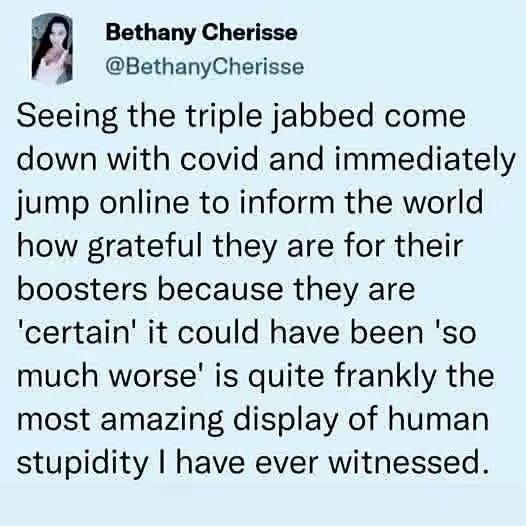 Joel Comm
@joelcomm
RIP @bobweir ... thanks for the beautiful music, sir... #legend #gratefuldead
Joel Comm
@joelcomm
Common sense. Can't believe I grew up with the insane food pyramid of the past 50 years.
The White House
@WhiteHouse
BREAKING: The Trump Administration announces the 2025-2030 Dietary Guidelines for Americans, putting REAL FOOD back at the center of health. 🇺🇸
realfood.gov
 Joel Comm
@joelcomm
The clown show continues 🤡
 Greg Price
@greg_price11
Democrats are having a candlelight vigil on the anniversary of January 6.
Joel Comm reposted
 Josh Barzon
@JoshuaBarzon
The entire Book of Revelation is a giant chiasm. 🤯
A chiasm is a literary device where ideas unfold in order (A B C) and then repeat in reverse (C B A), forming an X shaped symmetry that aids memory and draws attention to the central point (C).
The Bible is amazing.

Joel Comm reposted
 MAGA Voice
@MAGAVoice
Please do NOT retweet Nancy Pelosi admitting full responsibility for not calling the National Guard on January 6th. 5 years ago TODAY
Would be a shame if this went Viral on 𝕏
Joel Comm
@joelcomm
Low IQ people
Joel Comm reposted
Eric Daugherty
@EricLDaugh
🚨 EPIC! The Venezuelans are now doing the TRUMP DANCE to YMCA
The Democrats are about to go absolutely insane 🤣🔥
It's impossible NOT to love this.
Joel Comm reposted
 A Midwestern Doctor
@MidwesternDoc
For decades, vaccines were recognized to cause brain injury and mental retardation. So, they banned "retarded," relabeled the injuries as autism and used autism's ambiguity to hide all of it.
Here I reveal all the games they've played to bury vax injuries
www.midwesterndoctor.com/p/erasing-encephalitis-why-vaccine
Joel Comm reposted
 Mark Attwood
@MarkAttwood
I have said many times that COVID was the best thing to happen to humanity for one reason: we now know who everyone is. And we have receipts.
(I didn't make this video, thanks to whoever did)
Joel Comm
@joelcomm
Human-Centered AI: Using Artificial Intelligence Without Losing What Makes Us Human
open.substack.com/pub/joelcomm/p/human-centered-ai-using-…
#humancenteredai

Joel Comm reposted
Dan Nickerson
@dannickerson
New @ifart update this week for the 17th anniversary of our epic #1 (and #2) appstore run. 3 new farts. Aft Funk, Air Drop & Backdraft. Enjoy!
Joel Comm reposted
 Hananya Naftali
@HananyaNaftali
Jesus was Jewish.
He was born in Bethlehem, in Judea. His parents were Jewish. He was circumcised on the eighth day, followed Jewish law, prayed in synagogues, taught Torah, and celebrated the Jewish holidays.
He didn’t just happen to be Jewish, He lived as a Jew, and He died as one too. The sign above His head on the cross said “King of the Jews.” History matters.
 Joel Comm
@joelcomm
Yup
 Andrew Zywiec, M.D.
@AndrewZywiecMD
Autism is predominantly vaccine injury, gluten intolerance is predominantly glyphosate toxicity, and trasngenderism is predominantly social engineering.
Thems the facts.
Joel Comm
@joelcomm
If I have to hunt for my PnL, the UX already lost.
On @okx it just: Hover → portfolio → history.
Clean.
QRT: x.com/wallet/status/1999389807814885444
#crypto #ad
 OKX Wallet
@wallet
Your PnL and portfolio is just one hover away.
Want to check deposit status? Head to the 'History' tab.
Joel Comm
@joelcomm
Don’t know if this woman is a Christian, but she sure is setting the example
 Gunther Eagleman™
@GuntherEagleman
🚨 CLASS ACT: Elderly patriot Jeanie at Target, harassed by a deranged Karen for her Charlie Kirk shirt, takes the HIGH ROAD!
“Two wrongs don’t make a right. I wouldn’t want her to lose her job.”
Joel Comm
@joelcomm
It's okay to not like the government of Israel or their actions. It's not okay to be anti-semitic.
Oli London
@OliLondonTV
Sydney Jewish bagel shop owner announces he has closed down his store “after two years of near constant antisemitic harassment.”
Avner’s Bakery, run by Jewish celebrity chef Ed Halmagyi, has closed down following the Bondi Beach terror attack.
“In the wake of the pogrom at Bondi, one thing has become clear - it is no longer possible to make outwardly, publicly, proudly Jewish places and events safe in Australia.
After two years of almost ceaseless antisemitic harassment, vandalism and intimidation directed at our little bakery, we have to be realistic about the threats that exist going forwards.”
Source: Sky News Australia
 Joel Comm
@joelcomm
This is what brainwashing does to vulnerable minds. This absolute tool of a person attacked an elderly worker for wearing a Charlie Kirk "Freedom" shirt. I'm sure Michelea will be out of work. And I doubt she will have the ability to self-reflect on how horrible her behavior was.
 Right Angle News Network
@Rightanglenews
BREAKING - Michelea Ponce, the woman who harassed an elderly Target employee, has been identified as a healthcare worker at Enloe Medical Center in Northern California and has shut down her social media pages.
Call the hospital and demand to know if this behavior is acceptable.
Joel Comm
@joelcomm
This was an entirely unnecessary and inappropriate post from the President.
 Joel Comm
@joelcomm
As a Trump supporter, I find this post abhorent.
Vince Langman
@LangmanVince
President Trump responded to the death of Rob Reiner.
Thoughts?

Joel Comm reposted
 Mr. Star Spangled MAGA
@4thOfJuly365
🚨Algo Test - If you see this I need you to reply with Starve the Grift and then REPOST.
Thank you for your attention to this matter.
 Joel Comm
@joelcomm
LHGrey™️
We are starving the grift. Blocking all DNC simps. Not commenting on anything. Completely fucking their engagement.
And it's actually working.
Joel Comm
@joelcomm
Who should be most ashamed? Those who shamed the wise ones for not falling prey to the psyop.
 Rob Schneider 🇺🇸
@RobSchneider
The Government finally admits that the clot shot c o v i d 1 9 jab KILLED AMERICAN CHILDREN!
Let the truth be told though the Heavens Burn.
Fiat justitia, ruat caelum.
Joel Comm
@joelcomm
We did warn. You were sheep and unable to listen to reason.
 “Sudden And Unexpected”
@toobaffled
No. Blood 🩸 is on the Hands of those who pushed it
 Joel Comm
@joelcomm
So maybe it was social contagion after all? Who knew young skulls full of mush were so impressionable
Gunther Eagleman™
@GuntherEagleman
🚨 JUST IN: Fewer young Americans are ditching reality and identifying as transgender, per a bombshell new study!
Transgender ID among college kids PLUMMETED from 6.8% in 2023 to just 3.6% in 2025.
Nearly HALVED in two years!
The woke mind virus is dying!
Joel Comm
@joelcomm
Here’s your dose of daily stupid. Always amazes me how incredibly successful people can be so dumb.
 Joe Rogan Podcast News
@joeroganhq
David Letterman: "[Trump's] our dictator. His appearance is fraudulent as is everything about the regime... Think of the worst thing that you’ve ever seen humans accomplish. This is so much worse."
Joel Comm reposted
ZUBY:
@ZubyMusic
Western 'progressives' are mostly idiots who refuse to understand very basic concepts. I'm tired of mincing my words and giving them the benefit of the doubt.
Their stupidity is dangerous and it's increasingly putting people at risk.
Joel Comm
@joelcomm
Imagine being so stupid that you cosplay a tv show to protest something that isn’t happening.
American AF 🇺🇸
@iAnonPatriot
Handmaids have TAKEN OVER the Lincoln Memorial to protest President Trump..
Cringe af. lol
Joel Comm
@joelcomm
I don't if you are R or D. If you did something horrible with children, you deserve prison... or worse.
 BlockNews
@blocknewsdotcom
🚨 TRUMP: SIGNS BILL APPROVING RELEASE OF EPSTEIN FILES

 Joel Comm
@joelcomm
AI Isn’t Good or Evil. It’s a Mirror. And We Don’t Always Like What We See open.substack.com/pub/joelcomm/p/ai-isnt-good-or-evil-its…
 Joel Comm
@joelcomm
Hero!
Defiant L’s
@DefiantLs
Teen volunteers to get into a pipe in order to save a three-year-old boy.
Joel Comm reposted
C3
@C_3C_3
The number of times Jeffrey Epstein visited…
Clinton White House: 17
Trump White House: 0
The Media and Democrats left this out.
Joel Comm
@joelcomm
Amazing talent. And she sold her soul. Tale as old as time. Very sad...
 Center for Reproductive Rights
@ReproRights
This is a must watch! Stevie Nicks speaks openly about the abortion that allowed her to continue her career at the height of Fleetwood Mac’s rise. She makes it plain: access to abortion made her life, her art, and her voice possible.
Joel Comm
@joelcomm
Who knew...
 Daily Mail
@DailyMail
Olympics set to ban ALL transgender athletes from female events after 'finding scientific evidence of advantages to being born male'. Read more: www.dailymail.com/sport/othersports/article-15276409/Olym…
 Joel Comm
@joelcomm
Are you tired of winning?
Joel Comm reposted
Vivek Sen
THE BEST EVER #bitcoin AD 🔥
MUST WATCH!!
Joel Comm
@joelcomm
They have no idea how much it's going to burn. Shall we just say #itoldyouso in advance?
 Robby Starbuck
@robbystarbuck
If you’re dumb enough to vote for a commie who clearly hates America like Mamdani, then I think you should be forced to stay in NYC until he’s gone. You should have to experience everything you voted for. No take backs. No exit routes. You touched the stove, now feel the burn.
Joel Comm
@joelcomm
Pray for the people of Louisville and those who were on the plane! This is heartbreaking... #plane #ups #louisville
 Todd Paron🇺🇸🇬🇷🎧👽
@tparon
🚨🇺🇸#breaking | NEWS ⚠️
Update there is a shelter in place order for miles near the airport due to unknown chemicals and jet fuel ☣️ hazmat situation from the UPS MD11 cargo plane crash at the Muhammad Ali International Airport in Louisville, Kentucky
 Joel Comm
@joelcomm
My first “Internet” business… before the Internet?! aweber.com/t/IqAED
Joel Comm
@joelcomm
Agreed. Just because someone can act doesn't make them wise. What a disappointment.
TMK
@themagaking
I’ve never idolized celebrities. I’ve only ever looked up to my parents. But seeing the actors I grew up watching turn out to be some of the most ignorant people on earth is just sad. Add Harrison Ford to the list.
Joel Comm
@joelcomm
It's about time this was given attention
Tommy Robinson 🇬🇧
@TRobinsonNewEra
As the rest of the world turns a blind eye to the ethnic cleansing of Christians in Nigeria by Muslim terrorists.
President Trump threatens to go in “guns-a-blazing” to protect Christians ✝️ 👏🏻
Joel Comm
@joelcomm
Even a blind squirrel finds a nut from time to time. CNN is cooking.
 🇺🇸 MAGA Michelle S 🇺🇸
@MAGAMichelleS69
Republicans approval ratings skyrocketed since the shutdown!
“It's up 5 points since PRE-shutdown! The Republican brand has IMPROVED!"
Thanks @SenSchumer #schumershutdown
Joel Comm
@joelcomm
I’m in favor of this East Wing of the White House remodeling #whitehouse
Joel Comm
@joelcomm
When markets move, I can’t afford lag.
@okx Advanced executes like it’s wired into my reflexes.
New tools, new pace — The New Money App. #moneyapp #ad #tothemoon
 Joel Comm
@joelcomm
I can’t stop laughing! 🤣🤣
 MaryCate Delvey
@marycatedelvey
Man is distraught that he is a man
Joel Comm
@joelcomm
This is an ACTUAL genocide. Not a peep from the mainstream media, the free Palestine idiots or politicians. Disgusting
 Azat
@AzatAlsalim
lslamists burned his house and Church, killing over 150 members of his congregation.
The truth about the Christians cleansing going on in Nigeria, can no longer be hidden.
Joel Comm
@joelcomm
Just when you think it can’t get any better to be a conservative, your troll President does this 🤣
Eric Daugherty
@EricLDaugh
🚨 OMG...the President of the United States just posted himself piloting a fighter jet with "KING TRUMP" on the side and dumping mud all over Harry Sisson and No Kings protestors
To the song "Danger Zone"
He is one of a kind😭
Joel Comm reposted
 🤘 HORNS 🤘
@showmehorns

Joel Comm reposted
 Rapid Response 47
@RapidResponse47
.@VP: "If we're going to have real unity in this country, we're ALL going to have to acknowledge that killing people for what they think and what they believe is wrong — and right now, that violent impulse is a bigger problem on the left than the right."
Joel Comm
@joelcomm
This is so beautiful
 Hen Mazzig
@HenMazzig
WATCH: Returning hostage Elkana Bohbot meets his wife Rivkah for the first time after two years in Hamas captivity.
So much relief, disbelief, and joy, all in one hug.
Joel Comm
@joelcomm
Who knew Abe Lincoln could tell jokes?!
Follow me on Sora for more
sora.chatgpt.com/profile/joelcomm
#sora #funny #comedyclub
Joel Comm reposted
MAGA Voice
@MAGAVoice
BREAKING 🚨 Donald Trump just posted this one minute video that perfectly exposes the Democrat Party who is shutting down the Government
Would be such a shame if this went viral on 𝕏
EVERY Democrat Voter needs to see this
Joel Comm
@joelcomm
NO ONE is above the law. FAFO.
 @Chicago1Ray 🇺🇸
@Chicago1Ray
BOOM 💥
IT'S HAPPENING....🚨
Letitia James falsified loan applications to get better interest rates, and even listed her father as her husband on another
If convicted, she's facing (30) years in federal prison, and $1M in fines
No one's above the law, including you Letitia
Joel Comm
@joelcomm
Follow me on Sora! @joelcomm #sora
Joel Comm
@joelcomm
Bitcoin $1,000,000! It was bound to happen. #btc #bitcoin #aiforeveryone
Joel Comm
@joelcomm
I painted Bob Ross and he coached me along the way #sora sora.chatgpt.com/p/s_68e598b39810819183476cf6053e75e2
Joel Comm
@joelcomm
I’ve been Robloxed! #roblox #sora sora.chatgpt.com/p/s_68e44a85cd408191abcb664e729f4cf2
Joel Comm
@joelcomm
I love this so much.
 𝕏erias
@xerias_x
Get Sombrero'd Part 2: Democrats Edition 🤣
Joel Comm
@joelcomm
Ouch. This has to hurt.
Trending Bitcoin
Bitcoin is up over 22,000% since Dave Ramsey said, “#bitcoin is a really good way to turn $1M into nothing.” 👀
The price of Bitcoin was $549
Joel Comm
@joelcomm
🤣🤣🤣
 A Man Of Memes
@RickyDoggin
The Tard Finder is back...
Joel Comm
@joelcomm
And this is Max without caffeine
Trending Bitcoin
🇸🇻 Presidential Bitcoin Advisor Max Keiser explaining why #bitcoin is headed to $1 MILLION 🚀
Joel Comm
@joelcomm
Sora 2 LIVE AI video creation! x.com/i/broadcasts/1yoJMPmqVndGQ
Joel Comm reposted
 TONY™
@TONYxTWO
“I was a Liberal for most of my young life… all my friends were Liberal. I held all these Liberal beliefs, and let me tell you, there was no hate like Liberal hate.”
“I’ve never experienced anything even close to remotely the same in the Conservative sphere.”
America is waking up!! 🔥🙏🏼👇🏼
Joel Comm reposted
 The Bad Crypto Podcast
@badcryptopod
What if trading Bitcoin #memecoins was as easy as clicking “GO”? 👀
We’re joined by @BobBodily CEO of @ToniqLabs, to explore gas-free, headache-free memecoin trading and creation.
🎧 Ep. 792 of #badcryptopodcast is here with hosts @joelcomm and @teedubya. Listen at badco.in/792
#btc #defi #crypto #badcrypto
 Joel Comm
@joelcomm
The game just changed again. OpenAI released SORA2, and this just might be a threat to Tik-Tok (good). I gave it a simple prompt to make a Poomoji parade in Times Square and this is what it gave me. #sora
Joel Comm
@joelcomm
Got my hands on #sora and gave it a simple prompt to transform cartoon me into a wizard. What is even happening? sora.chatgpt.com/p/s_68ddcf2a1ee481919877be74bdda5167
Joel Comm
@joelcomm
I made this little movie trailer both to celebrate our engagement, but also to demonstrate AI tools. The narration and movie poster were both created w/AI, and I talk about it more in my latest episode. Please give it a watch, like & comment here! 👉🏼 youtu.be/-7jxtxT_94c
Joel Comm
@joelcomm
I give you some of the most brainwashed and lost people in America.
Eric Daugherty
@EricLDaugh
🚨 AMAZING NEWS: Antifa lost. Federal agents began arresting Antifa terrorists in Portland at the ICE facility.
Antifa also lost at the Broadview IL facility.
Keep crushing them! And make sure to slap EVERYONE arrested with criminal charges.
Joel Comm
@joelcomm
Erin Cell and I were recently engaged, so I thought I would use AI to turn our story into a movie poster! Check out my new post to learn how to do it for yourself.
open.substack.com/pub/joelcomm/p/starring-in-my-own-movie…
Joel Comm
@joelcomm
Where are the protests for the REAL genocide taking place? That's what I thought. The useful idiots aren't useful for this cause.
 Spencer Hakimian
@SpencerHakimian
Bill Maher: “I’m not a Christian, but they are systematically killing the Christians in Nigeria. They’ve killed over 100,000. They are literally attempting to wipe out the Christians of an entire country. Where are the kids protesting this?”
Joel Comm
@joelcomm
If only there were signs...
 CoFounders Nik
@CoFoundersNik
Who the freak gave Tai Lopez $230,000,000??
660+ retail investors from social media campaigns (I’m not joking).
An average of ~$350k each!
Allegedly:
- Tai took $12M for himself
- Mehr took $3m
- Millions raised for acquisitions were spent on operating losses
So how did Tai convince 660+ people to invest money in Pier 1, Radio Shack & Dress Barn??
Twitter, YouTube and Instagram.
They ran a high pressure sales approach with zoom calls, events and trips to PR all sourced from their social followings.
The red flags were all there:
- Investments were unsecured notes (debt). THEY DIDN’T EVEN OWN EQUITY!
- 25% preferred returns
- No regulatory filings or registration
But here’s where it gets really unbelievable:
The President, COO and Chief Risk Officer was 38 year old Maya Burkenroad with 10+ years experience managing multi-million dollar companies.
How did someone so experienced let this happen?
Because that was a lie. Maya is Tai’s cousin who, before this, was:
- a substitute teacher
- radio station promoter
- assistant to Tai
I don’t get it. I do not understand how they raised $230M from 660+ investors.
I don’t think I could raise $1M and Tai is out here raising 9-figures.
Dude is an incredible salesman. Wasted talent.
Mind blowing
 Joel Comm
@joelcomm
Excellent! Lock him up!
Nick Sortor
@nicksortor
🚨 MAJOR BREAKING: DISGRACED former FBI Director James Comey has been INDICTED for obstruction of justice and making false statements, per ABC
LET’S GO!
PERP WALK HIM ON LIVE TV! 🔥
 Joel Comm
@joelcomm
The Civil War is in progress. The radical leftists (by way of the Democrat party) are at war with America. Their movement must be completely dismantled immediately and Democrats in their current incarnation must never be allowed places of power again.
Joel Comm
@joelcomm
Another “conspiracy theory” legitimized
 Rasmussen Reports
@Rasmussen_Poll
BOOM! Fall of The Machines - NEW SMARTMATIC TESTIMONY
"The electoral systems of the United States can be manipulated by foreign agents or third parties."
New From - @EmeraldRobinson
 Joel Comm
@joelcomm
Absolutely.
John Strand ⚔️
@JohnStrandUSA
There’s no “might” about it—Democrats are bloodthirsty communists who 100% will put conservatives in prison—and assassinate them
So they can never be in power again—period, full stop
Register MAGA voters
Redo the census
Redraw districts
Secure elections
Crush the Democrat Party
Joel Comm
@joelcomm
If anyone is above the law the same nonsense will continue. Arrest. Prosecute. Jail.
 Sami Nathaniel
@NathanielSami
Boom!💥 Let’s go.!!!
Joel Comm
@joelcomm
This is what stage 4 TDS looks like. Tragic.
Wall Street Apes
@WallStreetApes
🚨 Pregnant liberal took so much Tylenol after hearing Donald Trump say it causes autism she’s now in the ICU and is going to die
Executive Director of American Frontline Nurses got a “very frantic call at 4am from a husband whose wife is now dying of liver failure on a ventilator in an ICU, because she was trying to prove that Tylenol doesn't cause autism because of what Trump said”
She’s going to die
“Whether or not you believe the Harvard study or not is not, not the issue here. The issue is that she's somewhere between 23 to 25 weeks and she overdosed on Tylenol, and she's going to die”
This video is INSANE
Joel Comm
@joelcomm
Ready to be in the movies? AI can create an amazing custom movie poster for you in seconds! Learn how here 👉🏼 youtu.be/-7UYe6rXM3c
Joel Comm
@joelcomm
It's about time. Antifa claims to be anti-fascist, but THEY are actually the fascists they wish to stop.
The White House
@WhiteHouse
Antifa is a militarist, anarchist enterprise that explicitly calls for the overthrow of the United States Government, law enforcement authorities, and our system of law.
Thanks to the leadership of President Trump, they are now classified as a domestic terrorist organization.
 Joel Comm
@joelcomm
Great advice!
 LifeNews.com
@LifeNewsHQ
Get married.
Have children.
Build a legacy.
Pass down your values.
Pursue the eternal.
Seek true joy.
- Charlie Kirk
 Joel Comm
@joelcomm
Entirely accurate. It's great to be living in the light of truth. The left bubble is ridiculous.
Kevin Bass
@kevinnbass
We really do live in two completely different information bubbles. When I was on the left, I had no idea that the media lied so much. I thought angry right-wing people who said they did were crazy. Many leftists who are brainwashed have no idea.
Joel Comm reposted
Rapid Response 47
@RapidResponse47
If you watch one thing today, let it be this — the truly remarkable display of grace and compassion from Mrs. Erika Kirk as she forgives her husband's assassin because that's what Christ would do.
We love you, Erika.
Joel Comm
@joelcomm
I have been my own best travel agent for years. But there’s a new sheriff in town and it has become my best buddy for planning vacations! This is a game-changer. Check out my new post!
The End of 20 Tabs: How AI is Changing Travel Planning open.substack.com/pub/joelcomm/p/the-end-of-20-tabs-how-a…
 Joel Comm
@joelcomm
Big September could lead to YUGE Uptober!
The Bad Crypto Podcast
@badcryptopod
🔥 Bitcoin has its best Sept in 13 years (+8%)
🐋 A whale wakes: 1,000 BTC moved after 12 yrs
🤖 Google + Coinbase = AI + stablecoin
🐶 Yes, a DOGE ETF is live
🇺🇸🇬🇧 U.S.–UK stablecoin alliance brewing
Bad News Ep #790 w/ @joelcomm and @teedubya
Listen 👉 badco.in/790

Joel Comm reposted
 Astra Nova
@Astra__Nova
We’re going BIG with Binance!
Astra Nova x @BinanceWallet Booster Campaign is HERE! 🔥
550,000,000 $RVV up for grabs over 2 Epic Seasons 💎
Duration: Sep 18 onwards
Your Mission:
🔷 Explore the Ecosystem
🔷 Join our Community
🔷 Build with TokenPlay,
and more...
Complete quests, unlock rewards, and dive into Astra Nova’s AI-powered universe!
Begin your journey → Binance Wallet → Discover → Booster
Full details:www.binance.com/en/support/announcement/detail/e37d0a8a0b…

 Binance Wallet
@BinanceWallet
Join the Booster Program and Pre-TGE Campaign on #binance Wallet with @Astra__Nova
📅 Booster Program Start Time: September 18, 2025
🎯 Eligible users need Binance Alpha Points to participate
🎁 550,000,000 RVV will be available in Booster Program
Pre-TGE details and the Event Portal will be released in the future on @BinanceWallet X account— stay tuned!
⚠️ Important Note: Tokens from the Booster Program are subject to a lock-up period set by the project team. Please make sure you understand the risks before participating.
👉 Join Now: www.binance.com/en/support/announcement/detail/e37d0a8a0b…
 Joel Comm
@joelcomm
I'm blown away at what you can do with @SunoMusic ! Check out what I created...
youtu.be/QZyt9N2tKLM
 Joel Comm
@joelcomm
AI can now write full songs in seconds.
Not samples. Not loops. Complete songs.
What does this mean for the future of music?
I explored it in my latest piece: When AI Starts Writing Songs 👇
open.substack.com/pub/joelcomm/p/when-ai-starts-writing-s…
 Joel Comm
@joelcomm
Spot on
 Michelle Maxwell ™
@MichelleMaxwell
At what point will the Left acknowledge they have been lied to by the media?
Joel Comm
@joelcomm
Schiff is a demon from the pit of hell. And as a leader of the Democrat party, it tells you everything you need to know. Can't wait for the hammer of justice to fall.
Collin Rugg
@CollinRugg
JUST IN: FBI Director Kash Patel calls Democrat Adam Schiff the "biggest fraud to ever sit in the United States Senate" to his face.
"You are the biggest fraud to ever sit in the United States Senate. You are a disgrace to this institution and an utter coward."
"I'm not surprised that you continue to lie from your perch and put on a show so you can go raise money for your charade. You are a political buffoon at best."
Joel Comm
@joelcomm
The Dark Side of AI: Why Scam Awareness Matters More Than Ever
open.substack.com/pub/joelcomm/p/the-dark-side-of-ai-why-…
Joel Comm
@joelcomm
Absolutely. Forty years from now, Charlie Kirk's name will still be in everyone's mouths.
 Jason Cohen 🇺🇸
@JasonJournoDC
🚨NEW: @ScottAdamsSays says Charlie Kirk Assassination will go down as "ONE OF THE BIGGEST MISTAKES OF HUMANITY"🚨
"At some point there will be a healthy number of Democrats who realize that they were on the side of killing an innocent man."
"They're going to find out that he was nothing like they thought. And this will be one of the biggest mistakes of humanity."
@DailyCaller
Joel Comm
@joelcomm
Reddit is the worst social media site
Brian Roemmele
@BrianRoemmele
What happened to Reddit. Yes. Thanks for asking.
At one time it was the best for brilliant minds. Today it is one of the darkest places that is easier to access than other dark places.
But to break down what happened we have to take the mind programming that was foisted upon all of us but especially the young and trace how this played out. You and I geeks and nerds, we are here and that is the definition. We (if you are reading this) are >1% of the world. We are the outsiders. This makes us more likely to be sensitive to “us vs them” programming. We are also smart and not recognized enough for it (let’s admit this). This makes us have a chip on our shoulder. Now in a normal world this is ok, we adapt, we integrate and we thrive. But division has been weaponized. It is a plan and placed like Reddit it is too easy to program folks that are alone in their basements for a lot of reasons I need a book to write about it.
So the very tool of community Reddit built, is a self selected easy way to target and pollute the mind of young lonely, parentless kids to move to darker and darker places.
In the dark they think they found their tribe.
In the dark they found a monster they can not see.
In the dark they lost themselves.
And sadly in the dark some lost all hope and ultimately their lives.
And in the dark they are cheered to take lives.
We need to turn on the lights.
Fix what we all broke.
Joel Comm
@joelcomm
I just supported the Kirk Family. I hope you will as well. givesendgo.com/kirkfamily
Joel Comm reposted
 Charlie Kirk
@charliekirk11
Mrs. Erika Kirk Addresses The Nation After Her Husband’s Assassination
@TPUSA @MrsErikaKirk
Joel Comm
@joelcomm
This. All of this.
 Sarcastic Sage
@Sarcasm1105
Joel Comm
@joelcomm
Neither party has got it all correct. But Nick has nailed it. The left is cooked and it’s their own fault.
 Nick Freitas
@NickJFreitas
I am told that as a state representative this is the moment where I'm supposed to express my heartfelt condolences and then stand in solidarity with those on the other side of the aisle as we condemn political violence and stand unified as one people.
But we aren't "one people" are we?
The truth is we haven't been for some time now, and there is really no point in pretending anymore, if there ever was.
We are two very different peoples. We may occupy the same piece of geography, but that is where the similarities seem to abruptly end.
I convinced myself for a long time that whenever the left called me a racist, a bigot, a sexist, a fascist, a "threat to democracy" for even the most innocent of disagreements, that it was simply hyperbolic rhetoric done for effect.
And now the "effect" is a widow and two orphaned children, because the left couldn’t bear the thought of a peaceful man debating them and winning.
I don’t think they realize it yet, but murdering Charlie is going to be remembered as the day where we finally woke up to what this fight really is.
It’s not a civil dispute among fellow countrymen. It’s a war between diametrically opposed worldviews which cannot peacefully coexist with one another. One side will win, and one side will lose.
Charlie tried to win that fight through argumentation, through discussion, through peaceful resolution of differences.
And the other side murdered him.
Not because he was “extreme” or “inciting violence” or any other hyperbolic slur they hurled at him. They murdered him because he was effective. Because he was unafraid. Because he inspired others and made them feel like they had a voice, that they were not alone. And he did it at the very institutions which have fomented so much hatred toward conservatives.
I don’t want to “stand in solidarity” with the other side of the aisle. I want to defeat you. I want to defeat the godless ideology that kills babies in the womb, sterilizes confused children, turns our cities into cesspools of degeneracy and lawlessness…and that murdered Charlie Kirk.
Social media is aflame right now with leftist celebration of Charlie’s death.
I wonder if any among them understand what has just happened. If there is a Yamamoto somewhere in their midst warning, that all they have done is awoken a sleeping giant.
I doubt it. I think they gave up such introspection and self-awareness long ago.
I don’t know exactly what will happen next. I just know that it won’t be the same as what has happened in the past.
There will be thoughts and prayers…Charlie would have wanted prayers. Not for himself but for those left behind and for the country that he loved.
But then there will be a reckoning.
My Christian faith requires me to love my enemies and pray for those who curse me. It does not require me to stand idly by in the midst of savagery and barbarism...quite the opposite.
So every time I feel tired, every time I feel discouraged or overwhelmed, I am going to watch the video of a good man being murdered in Utah…I will force myself to watch it…and then I will return to the work of destroying the evil ideology responsible for that and so much more.
Rest with God Charlie, your fight is over.
Ours is just beginning.
Joel Comm
@joelcomm
Truth
 DataRepublican (small r)
@DataRepublican
No business owner is boarding up tonight in fear of riots.
The Left and the Right are not the same!
Joel Comm
@joelcomm
Democrats will never understand this.
☘️𝕃𝕦𝕔𝕜𝕪 𝕄𝕔𝔾𝕖𝕖
@LuckyMcGee
Charlie Kirk was shot for exercising his 1st amendment rights CIVILY.
This is why you must take your 2nd amendment rights SERIOUSLY.
Joel Comm
@joelcomm
RIP @charliekirk11. You were an absolute hero and a legend. Thank you for speaking against the demonic tide of the left and may you rest easy with Jesus. Truly a sad day for America. The insanity has to stop.
Joel Comm
@joelcomm
Everyone had a childhood stuffed animal. I've been doodling a picture of mine for more than 50 years. It's always the same. Until AI got a hold of it... check this out!
www.youtube.com/watch?v=2at7auBKivk
#aiforeveryone #aiart #doodle #jimhenson
Joel Comm
@joelcomm
I turned my doodle into art in a matter of seconds! Here’s a great idea for your kids, grandkids… or just the kid in you.
open.substack.com/pub/joelcomm/p/how-ai-is-unleashing-eve…

Joel Comm reposted
Astra Nova
@Astra__Nova
It’s Official: The $RVV TGE is Coming on October 18!💎
After years of building since 2020, testing, and scaling across products, community, and infrastructure - the moment we’ve all been waiting for has arrived. ✨️
This isn’t just a token launch.
This is the genesis of Astra Nova’s next evolution - the ignition point of an AI-powered entertainment revolution.
$RVV is at the core of our AI Entertainment Ecosystem - powering the next frontier of AI infra, entertainment, storytelling, and decentralized creativity.
Mark your calendars. The future of AI infrastructure & entertainment is about to go live! 🔥
Joel Comm
@joelcomm
I love this SO much!
 PBD Podcast
@PBDsPodcast
👀
 Joel Comm
@joelcomm
Huge!
BlockNews
@blocknewsdotcom
JUST IN: Crypto staking, airdrops, and decentralized physical infrastructure networks have been excluded form securities laws via a U.S. Senate Banking Committee draft

 Joel Comm
@joelcomm
My whole life I've had the joy of sharing new tech with my mother. I recently brought an old photo to life before her eyes and you've got to see her reaction!
www.youtube.com/watch?v=G3dZDWNYFX8
#aiforeveryone #aiforseniors #klingai @Kling_ai
 Joel Comm
@joelcomm
Heading out on vacation? 🌴🧳
Tell AI: “I’m going to Italy for 10 days in September. What should I pack?”
It’ll build a custom checklist for you.
Watch the AI for Everyone Show at aishow.io/youtube
#traveltips #aihelp #aiforeveryoneshow
 Joel Comm
@joelcomm
Tired of the same old songs? 🎶
Ask AI: “Make me a playlist for a summer evening BBQ.”
You’ll get a fresh soundtrack in seconds.
Watch the AI for Everyone Show at aishow.io/youtube
#musiclovers #smartai #aiforeveryoneshow
 Joel Comm
@joelcomm
Turn your last adventure into a keepsake. ✈️🗺️
Give AI a few details and ask it to write you a travel diary.
It’ll capture the memory in words you’ll treasure.
Watch the AI for Everyone Show at aishow.io/youtube
#traveltips #smartai #aiforeveryoneshow
 Joel Comm
@joelcomm
Scan an old family photo and say:
“Write a bedtime story starring these people as heroes.” 🌙📖
AI turns memories into magical tales.
Watch the AI for Everyone Show at aishow.io/youtube
#familyfun #creativeai #aiforeveryoneshow
 Joel Comm
@joelcomm
You can now create a personalized children’s book in seconds — with nothing but an idea and AI.
In Episode 6 of AI for Everyone, I show you how.
Watch here: aishow.io/6
#aiforeveryone #aistorybook #parenting #grandparents #geminiai
 Joel Comm
@joelcomm
Not sure what to read next? 📚☕
Ask AI: “Give me 5 books like The Alchemist, but with more humor.”
A personalized reading list, instantly.
Watch the AI for Everyone Show at aishow.io/youtube
#booklovers #smartreading #aiforeveryoneshow
 Joel Comm
@joelcomm
Ever stare at the fridge and think: “What on earth can I cook?” 🥕🍳
AI can take what you already have and whip up recipes in seconds.
Watch the AI for Everyone Show at aishow.io/youtube
#aimadeeasy #lifehack #aiforeveryoneshow
 Joel Comm
@joelcomm
🤳 Want to see yourself as a cartoon, painting, or digital character—for FREE?
In Ep. 5 of AI for Everyone, I show you how to make a free AI avatar from your own photo (Windows + iOS).
🎧 Watch here: aishow.io/5
#aiforeveryone #aiavatars #artificialintelligence
 Joel Comm
@joelcomm
The Top Ten Tech Podcasts for Seniors (55+) technori.com/2025/08/22896-the-top-ten-tech-podcasts-for-… via @Technori
Joel Comm
@joelcomm
Not all AIs are created equal.
Some are smart.
Some are weird.
Some are… Elon’s.
🤖 In this episode of AI for Everyone, I compare ChatGPT, Claude & Grok — and help you pick YOUR best match.
📺 Watch: www.youtube.com/watch?v=dkOum7G2QkQ
#aiforeveryone #chatgpt #claudeai #grok #artificialintelligence #aitools
 Joel Comm
@joelcomm
Before your next trip, ask AI: “What should I pack for a 7-day cruise in Alaska in September?”
It’ll give you a customized checklist so you don’t overpack or miss the essentials. 📷
Learn more at aiforeveryoneshow.com
 Joel Comm
@joelcomm
Did you know you can ask ChatGPT to write a grocery list based on your actual fridge contents?
Just type:
"Make a grocery list based on what's in my fridge: eggs, yogurt, carrots, and salsa."
Great for meal planning without overthinking. 🍳🥕
#aiforeveryone #chatgpttips

Joel Comm reposted
The Bad Crypto Podcast
@badcryptopod
Vibe Coding a Crypto Portfolio Tracer.- The Bad AI Show x.com/i/broadcasts/1MnGnPByEOmxO
Joel Comm
@joelcomm
While the rest of the world is vibing to AI, imagine what the futureshock must be like for many over 50, 60, 70 and 80 years old! Let’s make it easy for everyone. Check out my new post!
open.substack.com/pub/joelcomm/p/ai-after-50-why-its-not-…
 Joel Comm
@joelcomm
We are creating NEW music for the intro and outro music for Bad Crypto Podcast using AI! Come Vibe Code with us. #vibecode #suno @SunoMusic
The Bad Crypto Podcast
@badcryptopod
Vibe Coding with Travis and Joel - The Bad AI Show x.com/i/broadcasts/1zqKVdmjZdpJB
Joel Comm
@joelcomm
🤯 AI isn’t coming — it’s already here.
🎧 New Episode: 10 Mind-Blowing Things AI Can Do for You Right Now
Watch → aishow.io/youtube
✅ Plan trips
✅ Write songs
✅ Animate photos
✅ Summarize articles
✅ Organize your life
Even if you’re over 50 — this is for YOU.
#aiforeveryone #aitools #chatgpt #over50andthriving

Joel Comm reposted
Travis Wright
@teedubya
7 years ago @artbyvesa joined @joelcomm and I on @badcryptopod
... he then took it to the next level...

Joel Comm reposted
The Bad Crypto Podcast
@badcryptopod
🚨 NEW PODCAST ALERT 🚨
We've done more than 700+ episodes of making crypto simple, Now @joelcomm is doing the same for AI!
🎧 AI for Everyone is live — short, fun, no-jargon episodes that show you how to actually use AI (even if you’re over 50 😉).
👉 aiforeveryoneshow.com
 Joel Comm
@joelcomm
Google gives you links. AI gives you answers. 🚀 In Episode 2 of AI for Everyone, I explore how tools like ChatGPT and Perplexity are changing the way we search forever. open.substack.com/pub/joelcomm/p/how-ai-is-replacing-sear…
 Joel Comm
@joelcomm
Many people over 50 are confused or frightened by AI. I’m here to help with that! Check out my new podcast…
open.substack.com/pub/joelcomm/p/why-i-launched-a-podcast…
 Joel Comm
@joelcomm
You can't hurry inspiration. But when it hits, it can be a powerful thing! And my next move has now become clear...
open.substack.com/pub/joelcomm/p/my-next-move-has-become-…
 Joel Comm
@joelcomm
This piece of art will be recognized as an important historical record of the legends of Bitcoin. Mark my words...
 VESA
@artbyvesa
Today Martti Malmi @marttimalmi of Bitcoin’s earliest devs who collaborated directly with Satoshi—added his signature to the @badcryptopod artwork. 💥
"Blood On The Podcast Floor" is the longest-running crypto art project for charity (starting 2018). When its journey is complete, the work will be auctioned and the proceeds donated to @hawctalk
Over the years, this canvas has become a time capsule of the ecosystem’s builders and believers. Signatures span eras and perspectives—from @adam3us , @AndreasAntonop , @cz_binance , Lyn Ulbricht, @CharlieShrem ,@rogerkver , @IOHK_Charles, @nickspanos @drmarwan @VitalikButerin, @SatoshiLite , @APompliano, etc.
Massive thanks to everyone who keeps adding their energy, time, and scribbles to make this mission real. It is Bitcoin and crypto history on a participatory canvas with a mission. Much appreciate the space @btchelevent @btcbenchmark allocated for my art, as well as the opportunity to meet amazing Bitcoiners.
The goal is simple: preserve Bitcoin/crypto history on a living artwork and channel it into real-world good.
— VESA
#bitcoin #cryptoart #btc #satoshi #og #badcryptopodcast @joelcomm @teedubya

 Joel Comm
@joelcomm
I wonder why @australian doesn’t allow comments on their posts? Could it be that they are afraid they’ll get destroyed? Men don’t belong in women’s sports. Period.
 The Australian
@australian
Transgender athlete Hannah Mouncey says she fears her bid to become an Olympic handball representative will be dashed by year’s end as anti-trans sentiment is “weaponised” across world sport. Here's more: www.theaustralian.com.au/sport/sacked-hannah-mounceys-oly…
 Joel Comm
@joelcomm
Thug.
 Isaiah L. Carter 🇺🇸
@IsaiahLCarter
See, THIS is what I'm talking about when I said that Trump IS the definition of what Black Culture once was.
Because sometimes, you really do have to remind the world you ARE "that n*gga."
 Geiger Capital
@Geiger_Capital
Trump just flew a B-2 stealth bomber over Putin’s head…
Absolutely incredible.
Joel Comm
@joelcomm
From Dotcom Bust to Bitcoin Boom: How History Is Repeating Itself with Cryptocurrency
open.substack.com/pub/joelcomm/p/how-2025-is-like-2005?r=…

Joel Comm reposted
 Leonidas 🧡 $DOG
@LeonidasNFT
If the #1 Bitcoin memecoin $DOG hits a $400M market cap in the next 24 hours I will give away 400K $DOG to a random person who reposts & replies
Joel Comm reposted
Travis Wright
@teedubya
Five years ago today... BEFORE all the big NFT hype, @joelcomm his son, my son, and I launched @bc_heroes
During that time... the Electric Genesis 1 of 1... was never found, after 90%+ of the packs were opened.
Today, we dropped a commemorative card to all @WAX_io holders.

 Joel Comm
@joelcomm
Today marks the 5th anniversary of a pioneering NFT collection! Happy Blockchain Heroes Day 2025. Here’s what I learned from this project…
open.substack.com/pub/joelcomm/p/the-victory-and-defeat-o…
 Joel Comm
@joelcomm
Giving a TED Talk Put Me On the Spot open.substack.com/pub/joelcomm/p/giving-a-ted-talk-put-me…
 Joel Comm
@joelcomm
Deport every last illegal alien
American AF 🇺🇸
@iAnonPatriot
BREAKING 🚨
78,000 Americans have applied to become ICE agents..
👀
Joel Comm
@joelcomm
We knew what he was when America was deceived by him the first time.
 ROCK ON OHIO
@ROCKONOHIO77
Having Obama in the White House was the biggest mistake in American history. He did everything he could to destroy America. Look what he did with race relations here in America. He & his wife practically destroyed it. My God just look what happened in Cincinnati. Now he & his cronies are under investigation. In my book he is a treasonous anti-American traitor to America.
 Joel Comm
@joelcomm
Wow. Just…. Wow. Grace is gonna get Joe. It’s just a matter of time. But he’s going to land in the right place. Then what happens to his platform?!?! 🔥
 Jon Root
@JonnyRoot_
It’s amazing to hear Chadd Wright speak Biblical truth to Joe Rogan, saying man is totally depraved & salvation is by grace through faith in Christ alone
We are dead in our sin; not drowning or dying to sin. We are DEAD & only made alive through Christ
Joel Comm
@joelcomm
Precisely.
 The Biblical Man
@Biblicalman
Jesus didn’t give you options:
He claimed to be God.
He said He’d rise from the dead.
He promised to return.
Either He’s a liar, a lunatic, or LORD.
There’s no “great teacher” category.
There’s no “partial truth” option.
It’s all real, or none of it is.
Joel Comm
@joelcomm
I used to be scared out of my mind to do public speaking. That changed one day. Check out my new post!
open.substack.com/pub/joelcomm/p/a-new-perspective-on-sta…
Joel Comm
@joelcomm
Holy cow! We are on @HALcruises Volendam between St Anthony and St John, Newfoundland. Sitting at dinner the captain comes on and says in my 45 years of sailing I’ve never seen anything like this. We go out to the deck to see more whales that are imaginable. It was amazing! #whalewatching #cruising
Joel Comm
@joelcomm
Joel Comm
@joelcomm
I have a higher resolution video that I can share. X compressed it horribly
Joel Comm
@joelcomm
There are three things that absolutely, positively leveled up my speaking career. Let's get started...
joelcomm.substack.com/p/three-events-that-took-my-speaking
 Joel Comm
@joelcomm
This upleveled my speaking career!
open.substack.com/pub/joelcomm/p/three-events-that-took-m…
Joel Comm
@joelcomm
Who needs me? Listen in!
The Bad Crypto Podcast
@badcryptopod
Imagine a blockchain world with no boundaries. @ApexFusion founders share how their tri-chain vision could unite Ethereum, Bitcoin, and Cardano in episode 785! Travis flies solo (no Joel!) in this deep dive into web3’s future. 🎙️ Listen now! badco.in/785
 Joel Comm
@joelcomm
The older demographic still trusts legacy media and are brainwashed into believing whatever they are told. So this makes sense.
 Christian Heiens 🏛
@ChristianHeiens
Pew Research is showing some incredible partisan swings from 2023 to 2025.
18-29 Men: 🔴R+44
18-29 Women: 🔴R+14
30-49 Men: 🔴R+15
30-49 Women: 🔵D+3
50-64 Men: 🔴R+3
50-64 Women: 🔴R+1
65+ Men: 🔵D+6
65+ Women: 🔵D+2

 Joel Comm
@joelcomm
Setting back the cause of woman centuries. Preposterous
Libs of TikTok
@libsoftiktok
Rep Tim McBride, a man pretending to be a woman, is really mad that politicians are talking about the trans issues
Now would be a great time to remind @SarahEMcBride that he’s a dude and always will be. Men cannot become women.
Joel Comm
@joelcomm
A reasonable agenda.
 Kurt Schlichter
@KurtSchlichter
My American Agenda:
- Deport every single illegal alien
- Utterly annihilate Hamas
- Crush academia so it can no longer be a petri dish of communist pathology
- Gerrymander everything
- Reaffirm normal beauty standards
- End anti-white + anti-Semitic racism
- Outlaw all trans chemical and surgical mutilations for children and adults, and punish those who had any hand in performing them
- Clear the streets of junkies, hobos, bums, lunatics, and other degenerates and prioritize the interests of normal people instead of fringe weirdos
- Focus the economy on working people, not parasites rich or poor, so young people get the same opportunity we had
- Arm every single patriotic American and enact universal constitutional carry
- Victory over our enemies - make them use us to frighten their children for 100 generations
- Reject femboy, Fredocon pseudo-conservative sissiness
- In all things, own the libs
This is a moderate agenda. It is available for a limited time, and if not an active, then prepare for an extreme one. #caring
Joel Comm reposted
 Achilles99
@Achill_es99
Democrats NOT Well Educated!!!
Joel Comm
@joelcomm
🤣🤣🤣
 Politi_Rican 🇵🇷 𝕏 🇺🇸
@TheRicanMemes
🎻🪈 🤣🤣
Joel Comm
@joelcomm
This is hilarious!
 NewsForce
@Newsforce
Cop pulls over his chief.
Joel Comm
@joelcomm
Stop eating fast food.
That's it. That's the tweet.
Joel Comm
@joelcomm
Accurate assessment. Obama was the absolute worst anti-American clown and this dystopian structure is representative of all the horrible things his administration represented.
 🇺🇸 𝓓𝓪𝓻 🇨🇦
@DameScorpio
👏 FROM KEN BLACKWELL: 🗣️👉 The Obama Presidential Library, under construction in Chicago, looks like a… (Fill in the blank.)
I think it looks like a totalitarian command center dropped straight out of 1984.
You can’t make this up. This hulking, gray monolith doesn’t look like a tribute to “hope and change.” It looks like the Ministry of Truth from a failed Marxist state. Cold. Ominous. Bureaucratic. The perfect shrine to eight years of weaponized government, broken promises, and elite arrogance.
This isn’t a library. It’s a fortress. And the symbolism couldn’t be clearer.
Because let’s be honest: the Obama years weren’t about empowering people… they were about expanding government, punishing dissent, and rewriting the rules to benefit the ruling class. From Benghazi to the IRS scandal, from spying on journalists to turning federal agencies into political tools, the legacy isn’t one of unity. It’s one of control.
And now that legacy is being immortalized in a concrete tomb that blocks out the sky.
Worse, this isn’t even a real presidential library. It’s not run by the National Archives. It won’t hold the original documents of the Obama administration. It’s a private propaganda palace masquerading as public history. The Obama Foundation gets full control of the narrative and of course, you still get the bill.
Meanwhile, the very Chicago neighborhoods this behemoth is invading largely black, working-class communities have been raising red flags for years. They’ve been steamrolled. Just like millions of Americans were steamrolled by the policies and politics of the Obama era.
This building doesn’t inspire. It intimidates. It doesn’t reflect the American spirit. It reflects the progressive ruling class’s obsession with legacy, control, and cementing their version of history—no matter what it cost the country.
Want to see the difference? Go visit the Reagan Library. You’ll find sunlight, freedom, and a quiet reverence for the country he loved. This? This is the bunker of a man who lectured America while building walls of bureaucracy around himself.
If this is what Obama calls a “temple of democracy,” it’s fitting, because it looks like a place where free speech goes to die.
 Joel Comm
@joelcomm
The Democrat party has become a cesspool of lies, deception, fraud and treason. They are cooked.
Joel Comm
@joelcomm
Why Believing in Jesus Christ is NOT the Same as Every Other Faith on the Planet
open.substack.com/pub/joelcomm/p/why-believing-in-jesus-c…

Joel Comm reposted
 Christian Toto
@HollywoodInToto
That was fast ...
www.hollywoodintoto.com/legacy-media-colbert-cancellation…
Joel Comm
@joelcomm
We have a serious mental illness problem. Someone help this woman… please.
Oli London
@OliLondonTV
Liberal woman gets triggered by Sydney Sweeney’s new American Eagle ad; brands it “fascist propaganda.”
Joel Comm
@joelcomm
My Journey of Faith: Part IV open.substack.com/pub/joelcomm/p/my-journey-of-faith-part…
 Joel Comm
@joelcomm
#newprofilepic but I think it might be time for new glasses soon
 Joel Comm
@joelcomm
Iceland is truly otherworldly. Any @GameOfThrones fans recognize this location? #gameofthrones
 Joel Comm
@joelcomm
Hey @grok who are the top 20 famous people that follow me in order of importance
Joel Comm
@joelcomm
@grok giving shoutouts to @ScottAdamsSays @nicksortor @FiveTimesAugust @teedubya @stacyherbert @Astro_Clay @HollywoodInToto @PIPSLLC1 @artbyvesa @sneakerdad_
Joel Comm
@joelcomm
Trash show for stupid people
Politi_Rican 🇵🇷 𝕏 🇺🇸
@TheRicanMemes
Live look at The View going on hiatus 😂
Joel Comm
@joelcomm
Not tired of winning. And neither are the babies that will be born!
LifeNews.com
@LifeNewsHQ
BREAKING: Planned Parenthood Closing Houston Abortion Facility That Was Biggest in America www.lifenews.com/2025/07/26/planned-parenthood-closing-ho…

Joel Comm reposted
 Cyrus Abrahim
@CyrusAbrahimX
Giving away $1000 ⚡️
Winning has never been so easy. Trade with DefiApp. Best swap speeds, gasless, massive Season 2 airdrop. S2 started 2 days ago, you are early. Swap spot or perps to gain XP, swap XP for $HOME.
To enter, RT and create account 👇
app.defi.app/join/cyrusx
Joel Comm
@joelcomm
A worthy read
ZUBY:
@ZubyMusic
I was going to put this article behind a paywall but I want to make sure as many people read it as possible.
If you have a young son, brother, nephew, or grandson, please forward it to him!
My Honest Advice For Gen Z Men:
www.realtalkwithzuby.com/p/my-honest-advice-for-gen-z-men
 Joel Comm
@joelcomm
My Journey of Faith: Part III open.substack.com/pub/joelcomm/p/my-journey-of-faith-part…
Joel Comm
@joelcomm
Malcolm Jamal Warner
Ozzy Osbourne
Hulk Hogan
Chuck Mangione
Rough week for legends
R.I.P.
Joel Comm
@joelcomm
Lock him up, then mercilessly and endlessly mock every fool who said we were the conspiracy theorists
Wall Street Apes
@WallStreetApes
Barack Obama is so f*cked
20 CIA and FBI Agents have now confirmed Barack Obama worked with our old CIA Director to create the fake Russia Hoax and then “locked it away in a CIA vault for almost a decade”
Again , 20 CIA and FBI Agents now CONFIRM this
Joel Comm
@joelcomm
Pride trash can in Iceland. I’d ask what’s wrong with people but I already know.
 Joel Comm
@joelcomm
Ooh. I know the answer to this one. Because they are sick, sick people
Charlie Kirk
@charliekirk11
So...
Hillary Clinton was apparently on tranquilizers to deal with intense psycho-emotional problems.
Joe Biden needed a chemist just to stay upright.
Kamala Harris was a drunk.
Democrats seem to perfer heavily medicated presidential candidates.
Wonder why?
Joel Comm
@joelcomm
To everyone I know who told me Trump was a traitor and a Russian asset, pound sand. It was YOUR guy who was the traitor. Betcha feel stupid, huh?
The Vigilant Fox 🦊
@VigilantFox
BREAKING: DNI Tulsi Gabbard just took the mic at the White House briefing and DROPPED A NUCLEAR BOMB on Barack Obama, “IRREFUTABLE”.
It is FINALLY happening.
The declassified report is OUT...and it proves what many have suspected for years:
Obama was behind the Russia Hoax.
Tulsi released it all:
“At President Trump’s direction and with support from House Intel Chair Rick Crawford, today we released the declassified oversight majority staff report from September 2020.”
Then came the hammer:
“There is irrefutable evidence showing President Obama and his national security team knowingly created a false intelligence report to sell the narrative that Russia helped Trump win the 2016 election.”
“They made it up. It wasn’t true.”
Gabbard laid out the full scheme:
“They used fake sources, suppressed real intel, and ignored standard tradecraft to push a lie.”
“They conspired with the media to undermine President Trump and launched a years-long coup against his administration.”
“This should concern every American. It’s not about party—it’s about our democracy.”
It’s all in the report.
And now it’s official.
This is the biggest political scandal in modern U.S. history.
Joel Comm reposted
 DC_Draino
@DC_Draino
This is why Trump should arrest Obama & his gang of DC thugs
“The precedent has been set…the second the communists took power, they had Trump arrested…they tried to blow his head off and send him to prison for 90 years
So don’t tell me former Presidents are untouchable”
Nailed it @JesseKellyDC
Joel Comm
@joelcomm
An American wet dream, ladies and gentleman. I’m here for every bit of it. Let’s go!
 TonemanLives 🇺🇸🇮🇹
@TonemanLives
Barrack Obama. The ultimate conman. The best snake oil salesman this country ever known. A community organizer who came out of no where and was handed the keys to the palace.
Obama landed in the White House and promised change. Change is exactly what we got. Only it wasn’t change for a better America, it was change away from that America with the long game being to replace that America.
The plan was set, the groundwork was done, and the Dems were to have everlasting power until their mission was complete. It was all set. After Obama’s 8 years Hilary was to take the baton and carry on with the plan. That plan? To dismantle our America and replace it with a NWO.
The Dems fucked up. They put all their eggs in the Hilary basket and thought this would be easy.
They figured they would use Obama’s Barry White seduction and America would automatically vote Hilary in, only it wasn’t to be. You see, Hilary’s insurmountable lead started to dwindle
That was when a desperate Obama who couldn’t afford a Hilary defeat went to work alongside Hilary. Obama called on his rigged CIA and FBI to make sure Trump lost.
We all remember the history. Trump a non-politician, a businessman from NY, had defeated Hilary in the biggest Presidential upset in history
That was the beginning. They’ve been trying to eliminate Trump ever since. They went as far to rig the Biden election thinking it would be smooth sailing from there. Except one problem. Their Trump problem.
You see he didn’t ride off into the sunset like most would’ve, instead he planned his comeback. The Dems wanted to rig another Biden Presidency only it wasn’t to be. We all watched Biden implode and in an unprecedented move of desperation removed Biden and installed Kamala. No primary needed after all the Dems don’t play by the rules. It would be their rules which will be responsible for taking down & destroying the Democrat party
Here’s the part people just don’t get. They tried everything to end Trump. From fake scandals being reported by the rigged media, to fake indictments, arrests and prosecutions. When that didn’t work they tried to kill him.,
So here we are. Obama is exposed. His cronies are exposed. Adam Schiff is exposed. Exposed is too nice a word. What they are is fucked. All of them from the head of the snake Obama, and down.
Logic says you cut off the head if the snake and Trump is doing exactly that. The gig is up. Obama is found out and the news being released is getting worse for him by the day.
So what can the Dems do to counter this onslaught assault against Obama? Call everyone in on the payroll and look for a massive distraction. That distraction? Everything Epstein. Every media outlet, every paid influencer are all working double shifts to flood every airwave with nothing but made up bullshit against Trump all in a feeble attempt to save their savior Obama from disgrace.
Only it doesn’t jive. None if it. You see Biden sat in the White House for 4 years and not only was the Epstein name frowned upon but Democrat Dick Durbin refused to offer up anything on Epstein. Wait, what?
That’s right they refused anything Epstein. Now they want us to believe Trump is involved? Did you see what they put that man through in their desperation to get rid of him? They even tried to kill him. If they had Epstein dirt on Trump do you really think they wouldn’t have used it to finally end their kryptonite? Of course they would have. That would have ended Trump on day one only it would never be because it never existed. This entire flooding the new waves feebly trying to connect Trump to Epstein is the same thing like the Russian Dossier. Fabricated bullshit.
Now Trumpnis in charge. Trump is calling the shots. The Dems are fucked and they know it. Trump never forgot. Trump is coming and no Epstein or any other bullshit story can save them. The boss is in charge and MAGA has his back. Now, it’s our turn. Grab your popcorn. This is only the opening act. My two cents
Joel Comm
@joelcomm
This is not the own he thinks it is. Cars, houses and watches are meaningless. Pursue riches as your goal and you will end up empty inside. Tate is slowly coming to that conclusion without realizing it.
 Andrew Tate
@Cobratate
The worst thing about becoming rich (500M+) is that there’s nothing to buy.
You invest to increase your money, but that’s not buying things.
20 cars, 10 houses, yacht, jet, 15 diamond watches. Done.
Then you’re left with PILES OF MONEY and nothing at all to buy besides steak.
Joel Comm
@joelcomm
I can’t believe this was EVER an issue! Great news for women!
Nick Sortor
@nicksortor
🚨 BREAKING: The US Olympic Committee has officially BANNED men from competing in women’s sports, following pressure from President Trump
FINALLY! 🔥
Should’ve happened a LONG time ago!

 Joel Comm
@joelcomm
If ever there was a tweet worthy of retweeting, this is that tweet. @cthagod is a buffoon of biblical proportions. Now I understand where the idiots go for their entertainment.
 Gad Saad
@GadSaad
Dear @cthagod, I hope that this message finds you well. I was keen to write you a quick note to express the extent to which I think that you are a lobotomized idiot. In a capitalist society, there is this thing called the free market. It is linked to this other thing called maximizing profits for shareholders (a fiduciary responsibility). @StephenAtHome has been losing $40-$50 million per year. Advertisers were fleeing his show. He was as funny as Ebola. Hence, @CBS took the decision to cancel his show after allowing it to operate for years in the red. That you would construe this as the telltale sign of fascism and authoritarianism suggests to me that your cranium is filled with pure shite. Also, stop calling yourself "tha God." You are a gargantuan narcissistic imbecile. Have a great evening. - Prof. Dr. Gad Saad
Joel Comm
@joelcomm
It's not even up for debate. The previous President committed treason. There must be consequences so it will never happen again.
John Strand ⚔️
@JohnStrandUSA
WOW: President Trump, never one to mince words, makes it painfully clear
“He’s guilty. This was treason”
He named names:
• Barack Obama
• James Clapper
• John Brennan
• James Comey
and said there must be severe consequences
Will justice FINALLY come?
Joel Comm
@joelcomm
Trump’s cabinet is so freakin awesome!
Gunther Eagleman™
@GuntherEagleman
Scott Bessent just ROASTED the WSJ.
"Newspapers like the Wall Street Journal are not used to a high-functioning executive president."
"They are used to perhaps President Obama, who was not as economically sophisticated as President Trump."
LMFAO!
Joel Comm
@joelcomm
For the first time, I’m sharing the most important parts of my faith journey. Here’s part I. I hope you enjoy it. :-)
open.substack.com/pub/joelcomm/p/my-journey-of-faith-part-1
 Joel Comm
@joelcomm
You really have to question the intelligence of anyone who would put this absolute disaster into office.
NewsForce
@Newsforce
I've been laughing at this for the past hour.
Joel Comm
@joelcomm
It will never happen but wouldn’t it be amazing if it did?
Sami Nathaniel
@NathanielSami
Stop it!!!!
Joel Comm
@joelcomm
Ever been told not to discuss religion or politics around the dinner table? You’ll enjoy my new post!
The Silencing Fear of Religion and Politics open.substack.com/pub/joelcomm/p/the-silencing-fear-of-re…
 Joel Comm
@joelcomm
Time to go home!
Nick Sortor
@nicksortor
🚨 BREAKING: ICE has been granted access to Medicaid data, allowing them to track down illegals using the address their welfare checks are being sent to, per AP
Illegals milking our tax dollars are now on the FAST TRACK to deportation! 🔥
LFG!


Joel Comm reposted
 XRP Update
@XrpUdate
🚨 BREAKING 🚨
The U.S. HOUSE JUST PASSED THE ANTI-CBDC ACT 🇺🇸💰
This bill BLOCKS government surveillance coins & protects your right to use private crypto like $XRP 🔒
FREEDOM WINS.✅✅
 Joel Comm
@joelcomm
I never understood the degrees that people will go to poison themselves
Wall Street Apes
@WallStreetApes
Here’s how much sugar is in one can of Red Bull
An ingredient in Red Bull is so toxic it was actually banned in France for almost 10 years. Drinking Red Bull comes with a risk of fueling Leukemia cancer cells in your bone marrow
This isn’t old research, it’s new from 2025. “A 2025 study published in Nature linked taurine, an amino acid in Red Bull (1,000 mg per 8.4 fl oz can), to potentially fueling leukemia cancer cells in bone marrow. Researchers in New York urged caution, particularly for frequent consumers, as taurine may promote leukemogenesis (blood cancer progression)”
A 2023 study in rats linked chronic Red Bull consumption to heart muscle changes, partly attributed to taurine and caffeine. Pregnant women, children, and those with heart conditions are advised to avoid
Artificial dyes, colors and artificial flavors are also used and controversial
Joel Comm
@joelcomm
I can't believe it's been eight years @teedubya!
I wrote a few words to accompany your fun picture.
open.substack.com/pub/joelcomm/p/eight-years-of-bad-crypt…
 Joel Comm
@joelcomm
What a ride it’s been @teedubya and community!
The Bad Crypto Podcast
@badcryptopod
8 years ago we started Bad Crypto. 783 episodes later, we’re still here (sorry, humanity)! Celebrate our #cryptobirthday and reflect on the ride with us. Listen at badco.in/783 🎂🚀 #badcrypto
 Joel Comm
@joelcomm
Season 3 of @squidgame has got to contain some of the worst dialogue and storyline ever to be on television.
Joel Comm
@joelcomm
What if real change was just one decision away?
Read --> The Power of a Decision open.substack.com/pub/joelcomm/p/the-power-of-a-decision?…
 Joel Comm
@joelcomm
There’s a normal Democrat out there?!
 U.S. Senator John Fetterman
@SenFettermanPA
ICE performs an important job for our country.
Any calls to abolish ICE are 💯 inappropriate and outrageous.
Joel Comm reposted
Travis Wright
@teedubya
Recording our 9th anniversary show of @BadCryptoPod... started July 2017.
@JoelComm, it's been a long strange trip... Show comes out next week.
 Joel Comm
@joelcomm
How AI Just Killed Hollywood
open.substack.com/pub/joelcomm/p/how-ai-just-killed-holly…
 Joel Comm
@joelcomm
Just donated. Please help if you are able...
 Robert Earl Keen
@robertearlkeen
The Community Foundation of the Texas Hill Country has established the Kerr County Flood Relief Fund to support local response, relief, and recovery efforts following the devastating July 4th flood.
You can access the Fund here: cftexashillcountry.fcsuite.com/erp/donate/create/fund?fun…
Joel Comm
@joelcomm
Unlock Your Career’s Hidden Power with One Simple Habit open.substack.com/pub/joelcomm/p/unlock-your-careers-hidd…

Joel Comm reposted
 ✞🎀TrumpGirlOnFire 🔥
@TrumpGirlOnFire
—Robert F Kennedy Jr. is surprised that President Trump is nothing like what the media and others have portrayed him to be.
He used words to describe him like encyclopedic, emotional, curious, and knowledgeable! Have a listen!
Joel Comm
@joelcomm
What's the meaning of @substack and why does it matter? Check out my new article!
Just Beneath the Heap of Online Noise open.substack.com/pub/joelcomm/p/just-beneath-the-heap-of…
 Joel Comm
@joelcomm
Warped human. Totally and completely depraved.
Joel Comm
@joelcomm
The face of anti-American indoctrination. A brainwashed, useful idiot.
American AF 🇺🇸
@iAnonPatriot
Liberal woman hints at a Civil War against MAGA..
👀
Joel Comm
@joelcomm
If you are in the country illegally, it’s time to go home.
Joel Comm
@joelcomm
Let's face it. If you are supporting the guy on the right you should probably stick your head in a waffle iron. You are that level of stupid.
 Dinesh D'Souza
@DineshDSouza
So the New York mayor’s race might very well come down to a choice between the black guy and the fake black guy.

 Joel Comm
@joelcomm
Huge win for common sense and women!
 REDUXX
@reduxx
🚨BREAKING🚨
UPenn has agreed to apologize to the female Division I swimmers who were forced to compete against Lia Thomas.
It has also committed to stripping Thomas of the titles and records he obtained while competing as a "woman," and will return them to female athletes.
Just hours ago, the US Department of Education announced that the following steps will be taken by UPenn to comply with Title IX:
- UPenn will restore to female athletes all individual UPenn Division I swimming records, titles, or similar recognitions which were misappropriated by male athletes allowed to compete in female categories;
- UPenn will issue a public statement to the University community stating that it will comply with Title IX, specifying that UPenn will not allow males to compete in female athletic programs or occupy Penn Athletics female intimate facilities;
- The statement will specify that UPenn will adopt biology-based definitions for the words ‘male’ and ‘female’ pursuant to Title IX and consistent with President Trump’s Executive Orders "Defending Women from Gender Ideology Extremism" and "Keeping Men Out of Women’s Sports";
- UPenn will post the statement in a prominent location on its main website and on each of its websites for women’s athletics;
- UPenn will rescind any guidance which violated Title IX, remove or revise any internal and public-facing statements or documents that are inconsistent with Title IX, and notify all staff and women’s athletics of all such rescissions; and
- UPenn will send a personalized letter of apology to each impacted female swimmer.
This action followed an investigation by the Department’s Office for Civil Rights’ that found UPenn violated Title IX by allowing Lia Thomas to compete in female athletic programs and occupy female-only locker rooms.

 Joel Comm
@joelcomm
Trump is the GOAT
 Stephen Miller
@StephenM
President Trump pledged to seal the border — and he did.
President Trump pledged to end DEI — and he did.
President Trump pledged to dismantle trans ideology — and he did.
He pledged to get men out of women’s sports — and he did.
He pledged to get woke out of the military — and he did.
He pledged to take on our corrupt colleges — and he did.
He pledged to stop inflation and unload American energy — and he did.
He pledged to take our jobs back from China and foreign nations — and he did.
He pledged to end weaponized government — and he did.
He pledged to reassert control over the rogue bureaucracy — and he did.
He pledged to seek peace and security in the world — and he did.
He pledged to restore democracy — and he did.
One vow brought to life after another, day after day after day.
For ten years, the communist left tried to stop him at any cost. They tried to frame him, defame him, bankrupt and jail him. Tory went after his family, friends and closest allies. He survived not one but two assassination attempts on his life.
He endured one wicked witch hunt, hoax, persecution and campaign of fraud and destruction after another. Comey and Clapper and Brennan and Mueller and Schiff and Garland and Smith.
Never for one second did he bend, buckle or bow. He was unyielding, unwavering and unstoppable as he led the nation to a stratospheric victory and electoral landslide in November.
The man in the arena.
We are living through destiny fulfilled.
And now, we stand on the verge of enacting his agenda — America’s agenda — into law.
To every Republican in Congress: honor destiny’s call. Honor the mandate. Honor the moment. Stand with Trump. Bring it home. Deliver the win.
Joel Comm
@joelcomm
How AI Will Destroy the OnlyFans Creator Opportunity
open.substack.com/pub/joelcomm/p/how-ai-will-destroy-the-…
#ai #onlyfans #substack

Joel Comm reposted
 HealthRanger
@HealthRanger
The vast majority of people are functionally stupid. They have no idea why anything is the way it is. Functional stupidity is what results in people taking vaccines, believing in climate change, agreeing to financing a vehicle on terms they don't understand at all.
 Thrilla the Gorilla
@ThrillaRilla369
What are they for?

Joel Comm reposted
 Sassafrass84
@Sassafrass_84
Until next year, June. 🤭
 Joel Comm
@joelcomm
Surprise. Not.
 J.K. Rowling
@jk_rowling
Stephen Ireland, who targeted me with endless abuse on here because I oppose the chemical castration of children and the removal of protected spaces for women and girls, has just been sentenced to 30 years in jail for child rape.

 Joel Comm
@joelcomm
The Decision that Charted the Course for My Life open.substack.com/pub/joelcomm/p/the-decision-that-charte…
Joel Comm
@joelcomm
What a great time to be an American!
 ThePersistence
@ScottPresler
Imagine What It Must Feel Like to Be a Democrat
▪️USAID is defunded
▪️DOW is skyrocketing
▪️Rogue judges’ power limited
▪️Iran nuclear capability stifled
▪️Zohran is the leader of their party
▪️RNC has 5 times more cash on hand than DNC
▪️Criminal illegal aliens are being deported
▪️President Trump is brokering peace deals
▪️States will begin defunding Planned Parenthood
▪️128 democrats voted AGAINST impeaching President Trump
▪️White males, like David Hogg, are being kicked out of leadership positions
The democrat party literally has nothing to celebrate.
🤔
Joel Comm reposted
 Scott Jennings
@ScottJenningsKY
This was the BEST week of the Trump presidency (maybe any presidency!) 👇
✅SCOTUS win on activist judges
✅Stock market at record-high
✅Israel-Iran ceasefire
✅Unprecedented Rowanda-Congo peace deal
✅gas prices at 4-year-low
Not tired of winning.
Joel Comm
@joelcomm
Fantastic! These bad judges just got smacked down!
 Megyn Kelly
@megynkelly
SUPREME COURT DEALS HARD BLOW TO RESISTANCE 2.0 BY HOLDING NATIONWIDE INJUNCTIONS ARE IMPROPER INFRINGEMENT BY COURTS ON POWERS OF THE EXECUTIVE. HUGE W FOR TRUMP!!
Joel Comm
@joelcomm
I still don’t understand the discernment one must lack in order to blindly get a jab. I just don’t.
Joel Comm
@joelcomm
Not tired of winning! Not even a little
 Spitfire
@RealSpitfire
Me watching Democrats lose their sht after SCOTUS shutdown their unlawful lower court injunctions against Trump😎🇺🇸
Joel Comm
@joelcomm
My son is a hella good writer!
Joel Comm
@joelcomm
Fantastic! Time to put the butcher mills out of business for good.
 The Patriot Oasis™
@ThePatriotOasis
🚨BREAKING: The Supreme Court rules 6-3 BANNING Planned Parenthood from being FUNDED by taxpayer dollars.
HUGE WIN!!! 🔥🔥

 Joel Comm
@joelcomm
Why does Substack feel like starting over? (in a good way)
joelcomm.substack.com/p/substack-feels-like-starting-over
 Joel Comm
@joelcomm
Mass exodus of New York coming for people who are awake. Perhaps Snake Pliskin will be needed sooner than later.
Joel Comm
@joelcomm
And yet many have their heads buried in the sand and continue to support this nonsense. The Democrat party is where the KKK started. Republicans led civil rights.
 Bobby Alley
@iburnsteel
 Joel Comm
@joelcomm
You Do NOT Want to Read My New Book! Here's why...
open.substack.com/pub/joelcomm/p/you-do-not-want-to-read-…
Joel Comm
@joelcomm
Amazing that @realDonaldTrump only sleeps 3-4 hours a night and eats crappy food. The dude is a machine!
@Chicago1Ray 🇺🇸
@Chicago1Ray
Meet Trumps Butler...Tony
Says Trump only sleeps (3-4) hrs a night
Says Trump likes Cheeseburgers with Ketchup and hates vegetables
Barron is the most like him, he brought him his breakfast and at 2 yrs old he said, Tony sit down we need to talk 😂
The worlds greatest Butler
Joel Comm
@joelcomm
It's time to get back to common sense. You want to chop off your thing as an adult, have fun. But stay away from the kids. Period. Full stop.
 Clay Travis
@ClayTravis
Now that the Supreme Court has affirmed individual states can stop kids from getting their genitals chopped off, we need a nationwide ban. Thankfully you can’t do this in Tennessee, but why should kids in California, New York or Illinois be subjected to this? End it everywhere.
Joel Comm
@joelcomm
Why obsess over #btc price? This is the ONLY Bitcoin chart that really matters
open.substack.com/pub/joelcomm/p/the-only-bitcoin-chart-t…
Joel Comm reposted
Vince Langman
@LangmanVince
This is hilarious because it's true 😂
Joel Comm
@joelcomm
I just wrote my first note on Substack
substack.com/profile/147842140-joel-comm/note/c-126531940
 Joel Comm
@joelcomm
The irony when she talks about people being brainwashed!
 G-PA
@IndianaGPA
Liberal illness at its highest level 🤡🤣🤣
Joel Comm reposted
 Lauren3ve
@Lauren3veMemes
You aren’t ready for the flute playing
Joel Comm
@joelcomm
Truth spoken by Sir @RobSchneider
Rob Schneider 🇺🇸
@RobSchneider
I don’t say this lightly.
But it must be said.
The Democrat Party is a terrorist organization.
The Democrats are Anti-American, Lawless, Violent, Dangerous, and murderous.
Republicans and all Americans must be on guard, hand carry weapons and be prepared for more violence.
Joel Comm
@joelcomm
They can cry all they want. He's not a King. And he IS President for 3 1/2 more years.
MAGA Voice
@MAGAVoice
My message for the thousands of protesters seen on the streets of San Diego’s ‘No Kings’ protest:
President Trump is still your President 🔥
Joel Comm
@joelcomm
More of the absolute dumbest people on the planet are on display here... chanting "Nazi scum" as if they have any idea what a Nazi is. Buffoons.
Eric Daugherty
@EricLDaugh
🚨 BREAKING: Anti-ICE rioters just got absolutely PUMMELED by ICE agents in Newark NJ after they were shaking the gates to the facility - taser DRAWN.
NO MORE MESSING AROUND! Lay down the hammer!
Joel Comm
@joelcomm
Even if it reduced life expectancy by 1%, it is too much. But 37%? Yikes.
 Days of Noah
@DiedSuddenly_
WOW: “A peer reviewed study shows clearly that a person who took two mRNA vaccines has their life expectancy reduced by 37%”
Joel Comm
@joelcomm
I don’t know who this guy is, but we should congratulate him for discovering common sense.
 Warren Redlich - Chasing Dreams 🇺🇸
@WR4NYGov
I renounce my long-standing belief in open borders
I thank the Democrats for persuading me
Joel Comm
@joelcomm
Pride goes before a fall. This guy knows what’s up
 I Meme Therefore I Am 🇺🇸
@ImMeme0
🚨NEW: Polish MEP Grzegorz Braun destroyed an exhibition promoting LGBTQ ideology in the Polish Parliament today.👏👏👏
Joel Comm reposted
 Johnny Midnight ⚡️
@its_The_Dr
He is absolutely 💯 correct! He says let them keep on doing what they are doing in California!
Joel Comm
@joelcomm
Evil. Deport every illegal and arrest anyone who gets in the way.
Joel Comm reposted
Vivek Sen
#bitcoin BALANCE ON EXCHANGES HITS AN ALL TIME LOW.
TIGHTEN YOUR SEATBELTS 🚀

Joel Comm reposted
 Jason D. Meister 🇺🇸
@jason_meister
The people are with President Trump.
Send in the Marines.
Make Los Angeles the centerpiece of the FAFO Doctrine.
Joel Comm
@joelcomm
Had a spectacular time touring Ireland with @ExpIrelandTours! Highly recommended that you hire Trudy for a true concierge experience on your journeys to the Emerald Isle! #ireland #tourism . Thanks Trudy! ❤️🇮🇪😎🙌🏼

Joel Comm reposted
Robby Starbuck
@robbystarbuck
I’m not concerned with the "human rights" of illegals & criminals. To paraphrase @nayibbukele: I’m concerned with the rights of law abiding citizens. I’m concerned with your right to drive freely, walk freely and live your lives without fear. That means ZERO mercy for criminals.
Joel Comm reposted
 Bitcoin News
@BitcoinNewsCom
Joel Comm reposted
 aka
@akafaceUS
This guy is speaking the truth 👍
Joel Comm
@joelcomm
They will soon be replaced by robots. $25/hour… lol
Joel Comm reposted
 Byl Holte
@SirBylHolte
Yesterday I wore this TRUMP shirt to meet a liberal associate for happy hour.
We were riding along peacefully, then suddenly she went off.
HER: “How dare you advertise for that man when you’re out with me?”
ME: “I’m free, black, and 64 and I can wear what I want.”
HER: “Yes you can, but I thought you might have a little empathy knowing that I hate him.”
ME: “Well, I didn’t know you still hated him, but get over it because it’s just a shirt.”
HER: “Well, I don’t want to be seen hanging out with a Trumper, so can you turn it inside out or something?”
ME: “You can’t be serious.”
HER: “I am serious! That man is having people arrested off the streets and deported for no reason whatsoever.”
ME: "WRONG. He's having ILLEGALS deported because they are criminals who came here illegally. Big difference."
HER: “Are you gonna take the shirt off, or am I taking you back home?"
ME: "I'll change my clothes if you change yours, your ass looks too big in those jeans anyway."
She made a u-turn and took me right back home IN SILENCE.
How did we become a nation of left-wing fascists who don’t even know they ARE fascists?

Joel Comm reposted
NewsForce
@Newsforce
What if only White men voted in 2024?
Joel Comm
@joelcomm
Horrific. People need to be held accountable
 Nicolas Hulscher, MPH
@NicHulscher
🚨 ESTIMATED U.S. mRNA SHOT DEATH TOLL: 470,000–600,000
Two independent estimations — one based on VAERS-adjusted data, the other derived from MIT/Florida Dept. of Health study findings — yield a conservative range of 470,000 to 600,000 American deaths from the COVID-19 mRNA shots. The true number is likely much greater.
More than WWI, WWII, and Vietnam COMBINED.

Joel Comm reposted
 Michael Saylor
@saylor
Pay with Dollars.
Eat the Pizza.
Keep the Bitcoin.
Joel Comm
@joelcomm
So much truth here I just can’t…
The Biblical Man
@Biblicalman
They told me I was in a cult.
Because I believe the Bible.
Because I raise my sons to be men.
Because I won’t bow to a rainbow.
But let’s talk about cults.
A thread for the ones who haven’t bent the knee:
[THREAD]
Joel Comm
@joelcomm
I don’t know a single person who voted for Trump regrets their vote. #winning
Eric Daugherty
@EricLDaugh
🚨 JUST ANNOUNCED: The latest data find Trump’s approval rating is surging, economic numbers are strong, and MAGA has practically zero buyer’s remorse.
Joel Comm
@joelcomm
Watching stupid people get destroyed never gets old
 Playteaux
@Playteaux1
Just throw their hypocrisy right back at them. Love this!
Joel Comm
@joelcomm
This happens regularly with him. It’s so great to have a real President!
American AF 🇺🇸
@iAnonPatriot
That time Donald Trump gave a veteran a job on the spot…
The legacy media will NEVER show you this.
Joel Comm
@joelcomm
As usual, he’s right. To still be a Democrat you either have to be an absolutely brainwashed fool out outright evil.
 Donald J. Trump
@realDonaldTrump
The Democrats are really out of control. They have lost everything, especially their minds! These Radical Left Lunatics are into the “Impeachment thing” again. They have already got two “No Name,” little respected Congressmen, total Whackjobs both, throwing the “Impeachment” of DONALD J. TRUMP around, for about the 20th time, even though they have no idea for what I would be Impeached. Maybe it should be for cleaning up the MESS that they left us on the Border, or the Highest Inflation in our Country’s History or, perhaps, it should be the incompetent Withdrawal from Afghanistan, or Russia, Russia, Russia/Ukraine, Ukraine, Ukraine, or the Attack of Israel on October 7th that only proceeded because they allowed Iran to regain Great Wealth. These Congressmen stated that, they didn’t know why they would Impeach me but, “We just want to do it.” The Republicans should start to think about expelling them from Congress for all of the crimes that they have committed, especially around Election time(s). These are very dishonest people that won’t let our Country heal! Why do we allow them to continuously use Impeachment as a weapon against the President of the United States who, by all accounts, is working hard to SAVE OUR COUNTRY. It’s the same playbook that they used in my First Term, and Republicans are not going to allow them to get away with it again. These are total LOWLIFES, who hate our Country, and everything it stands for. Perhaps we should start playing this game on them, and expel Democrats for the many crimes that they have committed — And these are REAL crimes. Remember, “Shifty” Adam Schiff demanded a Pardon, and they had to use the power of the Auto Pen, and a Full Pardon, for him and the Unselect Committee of Political Thugs, to save them from Expulsion, and probably worse!
Joel Comm
@joelcomm
Brilliant!
Libs of TikTok
@libsoftiktok
BREAKING: DHS to begin paying for flights + $1k to illegals once they leave the US & self-deport.
It will save taxpayers 70%. It currently costs over $17k to arrest, detain, & deport someone. Paying for flights + stipend will cost just $4.5k @BillMelugin_
Joel Comm
@joelcomm
Now to restore sanity to the United States
 Paul A. Szypula 🇺🇸
@Bubblebathgirl
UK Supreme Court just ruled that law defines women as people born biologically female.
This is a huge win for women, men, and sanity in the UK and the West.
Now every country needs to get onboard and recognize in law what is a woman.
Congratulations to UK women!
Joel Comm reposted
Oli London
@OliLondonTV
Woman hilariously mocks Katy Perry’s trip to space.
Joel Comm
@joelcomm
I feel sorry for the dude she is with. Imagine...
Joel Comm
@joelcomm
How is it possible that people are this stupid? Brainwashed to the core.
 🔥⭐️Edwin⭐️🔥
@Nuked4Every1
The left strikes, again!
Does this soiboi has a punchable face?
x.com/realnickymiceli/status/1910395005862113790/video/1
Joel Comm
@joelcomm
This is fascinating!
 Holden Culotta
@Holden_Culotta
UFO/UAP disclosure is happening.
A new team of whistleblowers and researchers are capturing UFOs on video and radar EVERY DAY.
They just revealed that they have discovered 9 types of UFOs.
They even tried to intercept an Egg UFO with a helicopter …
🧵THREAD
Joel Comm
@joelcomm
Facts. Not up for debate.
Joel Comm
@joelcomm
Hero
Libs of TikTok
@libsoftiktok
Female disc golfer Abbie Wilson walked off the course during the Music City Open in Nashville to protest a MAN who was allowed to compete against her in the WOMEN's division.
"Females must be protected in our division, this is unfair, I refuse to play."
Good for her! This insanity must end!
Joel Comm reposted
 Derrick Evans
@DerrickEvans4WV
Karoline Leavitt says she ignores emails from reporters who have pronouns in their bios🤣
“I don’t respond to people who use pronouns in their signatures as it shows they ignore scientific realities and therefore ignore facts.”
I 100% voted for this.
Joel Comm reposted
Nick Sortor
@nicksortor
🚨 WOW! Even CNN is being forced to admit President Trump is absolutely KICKING ASS
“Trump is not a lame duck — if anything he's a soaring eagle!”
“He’s delivering on his campaign promises in a HISTORIC fashion”
🇺🇸🔥
Joel Comm
@joelcomm
So good!
 Ramble_Rants
@ramble_rants
The Handmaid’s Tale: Woke Went Broke 📕
Joel Comm
@joelcomm
I got the flu shot once about 30 years ago. That was the last time I got the flu.
 End Wokeness
@EndWokeness
CLEVELAND CLINIC STUDY: Those who got flu vax were 27% MORE likely to get flu this year

Joel Comm reposted
TonemanLives 🇺🇸🇮🇹
@TonemanLives
Remember when Julian Assange said, when it all unravels, 98% of DC will fall? Looks like Julian may be proven right after all as this may truly be the beginning of the entire takedown. Since Elon has opened the books all in an effort to cut wasteful spending, the Democrats have absolutely lost their minds.
You would ask yourself why they would be pissed off about saving the government and American taxpayers money? For a couple of reasons. For one, these people don’t give a rats ass about the American people. More importantly, their frantic reaction towards Elon has nothing to do about saving money. This is all about saving their asses. While Elon was looking to cut spending he was shocked at what he stumbled across. FRAUD! Massive amounts of Fraud and we all know who the Guilty parties are.
The Democrats and the RINOs. Finding the RINOs is easy. Just look at what Republicans are all voting with the Dems. As for the Dems, never in anyone’s lifetime have you seen a Party totally disregard their jobs of governing and lawmaking, once again disregarding the American people, putting them aside so they can use their platform for what they are calling protesting and instead using it to plea their case of innocence all while undermining everything Trump.
Innocent people don’t protest. Innocent people don’t go after their own government. Innocent people do not disrespect the office of the President. Elon gave the IRS the green light to start investigating Politicians and now you see all of those leading the charge. Those who were getting theirs right off the top from USAID and from our taxpayers money going to Ukraine. Expect a helluva lot more crying and protesting to ramp up going forward.
The heat is on and getting hotter as we speak. Elon is promising arrests and indictments. The Dems response? Destroy everything Elon and they started with Tesla. They threaten his life on a daily basis but Elon promises to deliver. This man would not say something that is putting his life in jeopardy if it weren’t true. Elon has them all by the balls and this will come down to the most important race in American history.
Will Elon get there first? Or will the corrupt Dems pull another rabbit out of their ass, after their grand plan to stop Trump by using corrupt Judges is thwarted. It comes down to this. Good vs Evil. It always does but it looks like the Good-guys are holding all the cards.
The bottom line. God wins in the end. He brought us Trump, kept him safe and this was always Gods plan. Give Trump the power and let him Make America Great Again. Now we will see firsthand if Pam Bondi has what it takes. This is why Trump picked her. Right now I don’t care about the Epstein list. I care about ending the largest criminal corruption ring in history. I care about bringing those involved to be not only brought to justice but prosecuted for their crimes. That is what I voted for. If everything goes according to plan, DC will soon look like a ghost town. Trump says it’s coming. Elon says it’s coming. I believe in Trump so I believe it’s coming. My money is on Trump. It’s always on Trump. It starts with having Faith.
In God We Trust. In Trump We Persevere. My two cents
Joel Comm
@joelcomm
In case you haven't had enough of the dumbest people on the planet, here they are again gathering in one place.
 Andy Ngo
@MrAndyNgo
Leftist protesters shut down access to the Tesla store in Manhattan by laying on the ground outside on March 29. They held up signs urging for Elon Musk to be shot and for more Tesla property to be firebombed.
Joel Comm
@joelcomm
I support this.
 Matt Walsh
@MattWalshBlog
How to fix America in four easy steps:
-You must speak English fluently to vote
-You must be a US citizen and only a US citizen to vote
-You must pass a 5th grade level civics test to vote
-You must not be on any form of welfare to vote
Joel Comm
@joelcomm
Behold, some of the absolutely dumbest people in the United States of America. Brainwashed, braindead, npc zombies.
Nick Sortor
@nicksortor
🚨 Degenerates are outside a Tesla showroom in New York City OPENLY calling for terrorism, and NOTHING is being done about it
“BURN A TESLA, SAVE DEMOCRACY.”
WHY AREN’T DEMOCRAT LEADERS CONDEMNING THIS?
Joel Comm
@joelcomm
Extortion. Run from whatever this is.
 Karli Bonne’ 🇺🇸
@KarluskaP
This is just crazy
Joel Comm
@joelcomm
Common sense
 Tim Young
@TimRunsHisMouth
Rubio lays down the law on "students" coming to America to be activists:
"We gave you a visa to come and study and get a degree not to become a social activist that tears up our university campuses
..if you decide to do that, we're gonna take it away."
Joel Comm
@joelcomm
We are living in the absolute BEST timeline!
Joel Comm
@joelcomm
Facts. Indisputable facts.
 Breaking911
@Breaking911
POTUS: "No matter how many surgeries you have or chemicals you inject, if you’re born with male DNA in every cell of your body, you can never become a woman. You're not going to be a woman."
Joel Comm
@joelcomm
Peak cringe! 😬
I Meme Therefore I Am 🇺🇸
@ImMeme0
Democrats have found a new way to cope—they’ve started a new trend: the “Silent Riot.”
Watch until the end! 🤣🤣🤣
Joel Comm
@joelcomm
Defund NPR and PBS. There is zero reason we need taxpayer funded media.
 @amuse
BIAS: NPR has 87 editorial positions filled by registered Democrats in DC and zero Republicans.
Joel Comm
@joelcomm
It’s most often blue cities. People are unable to see cause and effect
 CeCe ˗ˏˋ ✞ ˎˊ˗ 🌴 🇺🇸
@Ohio_buckeye_us
𝗬𝗼𝘂 𝘀𝗵𝗼𝘄 𝗺𝗲 𝗮𝗻 𝗔𝗺𝗲𝗿𝗶𝗰𝗮𝗻 𝗴𝗵𝗲𝘁𝘁𝗼.
𝗜'𝗹𝗹 𝘀𝗵𝗼𝘄 𝘆𝗼𝘂 𝗮 𝗽𝗹𝗮𝗰𝗲 𝘄𝗵𝗲𝗿𝗲 𝗗𝗲𝗺𝗼𝗰𝗿𝗮𝘁𝘀 𝗮𝗿𝗲 𝗶𝗻 𝗽𝗼𝘄𝗲𝗿.
The Democrats are a gutless, rotting corpse of a party, rabid with hate for the one man who can resurrect America’s glory.
Democrats would sooner burn this nation to ash than allow President Trump to succeed in Making America Great Again.
Patriots united 🤜 🇺🇲 💥
Joel Comm
@joelcomm
LFG!
Libs of TikTok
@libsoftiktok
Trump just signed a sweeping election integrity bill:
-Requires proof of US citizenship on voter registration forms
-Cut funding to states that do not secure elections
-Vigorously prosecute election crimes
-Take action against states who count ballots received after Election Day in federal elections
-Prosecute foreign interference in elections
-Revokes Biden EO that turned Federal agencies into Democrat voter turnout centers.
Anyone who’s against election integrity means they want to cheat.
Joel Comm
@joelcomm
This is just going to drive more reasonable people away from the Democrat party. They won't win elections for a decade or more.
 Elon Musk
@elonmusk
Joel Comm
@joelcomm
🤣😂
The Babylon Bee
@TheBabylonBee
Elon Musk Disguises IRS Building As Tesla Dealership So Democrats Will Burn It Down
babylonbee.com/news/elon-musk-disguises-irs-building-as-t…

Joel Comm reposted
Libs of TikTok
@libsoftiktok
Since Trump took office, a staggering $2.924 trillion in investment has flowed into the United States:
- UAE $1.4 trillion
- Saudi Arabia $600 billion
- Hyundai $20 billion
- Apple $500 billion
- Nvidia over $100 billion
- SoftBank, Oracle, OpenAI $100 billion
- TSMC $100 billion
- Johnson & Johnson $55 billion
- CMA CGM Group $20 billion
- Eli Lilly $27 billion
- Merck $1 billion
- GE Aerospace $1 billion
 Joel Comm
@joelcomm
Still way too many people with no sense out there. Imagine thinking their current government deserves to be serving.
 Leading Report
@LeadingReport
BREAKING: Nearly half of likely California voters are now open to voting for a Republican governor in 2026, according to a new statewide survey from DecipherAi.
 Joel Comm
@joelcomm
Fantastic!
Joel Comm reposted
 DogeDesigner
@cb_doge
Former Democrats, now Republicans, because the Democratic Party has become the party of hate and violence.
 Joel Comm
@joelcomm
Should Tesla terrorists be locked up? If so, for how long? Let me know in comments!
Joel Comm
@joelcomm
Lock them all up. May it be a signal to the radical leftists that this will never happen in America again. May they rot in prison for their treason.
Libs of TikTok
@libsoftiktok
HOLY CRAP
Obama pretended to send USAID money to aid foreign countries but was actually funneling it to Cayman Islands to be used for “Rent-a-Riots”
Joel Comm
@joelcomm
Will they find a legal way for Trump to run again for 2028?
Joel Comm
@joelcomm
Those lamenting the end of the #departmentofeducation need to relax. A #doe didn’t exist until my Junior year and had zero impact on my education. I can read, write, succeed in life and I know the difference between a man and woman. Relax. It will be fine.
Joel Comm
@joelcomm
RIP Mr Foreman 😢
Leading Report
@LeadingReport
BREAKING: Boxer, entrepreneur, father, preacher, and great American George Foreman passes away at 76.
Rest in Peace.
 Joel Comm
@joelcomm
So many facts… bring the popcorn as @dbongino drops the hammer of justice
 🇺🇸Washington State Facts
@TurnSeattleRed
I can't wait to see his creepy eyes cry in court ......
 Joel Comm
@joelcomm
George knew. I wonder what he would think of today’s Democrat party?
 Joel Comm
@joelcomm
You can’t reason with liberals. They live in an alternate reality
Charlie Kirk
@charliekirk11
CNN's Hadas Gold: Actually, "trans or non-gender-conforming" people who are firebombing Tesla stores are the REAL victims in the Tesla terrorism saga.
Does any network root for criminals more than CNN?
Joel Comm
@joelcomm
We knew they cheated then. We have proof they cheated now. Conspiracy theorists win… again.
Rasmussen Reports
@Rasmussen_Poll
Wisconsin 2020 - The Stuff Job
-Print-On-Demand creates blank ballots
-NGO's fill out the ballots
-Election night ballots delivered
-Observers kicked OUT
-CISA data on who hadn't voted comes IN
-Tabulators stuffed
-Biden 'wins'
Time code 33:00 - 44:45
rumble.com/v6qt78e-election-expert-tells-the-whole-2024-s…
Joel Comm reposted
Vivek Sen
🇺🇸 PRESIDENT TRUMP’S ADMIN HINTS THE USA WILL BE SELLING GOLD TO BUY #bitcoin 🤯
IT’S HAPPENING!!!
Joel Comm
@joelcomm
This is what 77 million Americans voted for! So much winning.
 Jack
@jackunheard
WOW! President Trump just signed the executive order to DISMANTLE the Department of Education.
He is surrounded by children signing their own executive orders.
This is what I voted for.
Joel Comm
@joelcomm
Fantastic! With the bureaucrats out of the way, perhaps our children can get a real education again.
 Christopher Rufo
@christopherrufo
This is the culmination of a long campaign. Republicans have promised to abolish the Department of Education for almost fifty years, but only President Trump is getting it done. An incredible moment in history.
 Joel Comm
@joelcomm
Turns out we’ve been batting 1000. What is it that causes some people to be skeptical and others to soak up the current narrative? Discernment? Wisdom? Genetics?
 Joel Comm
@joelcomm
These people are the most illogical, emotional and misguided I can imagine. Trump Derangement Syndrome is real.
 PammsyNow
@NowPammsy
They’re all the same… just so blinded by their ideology they only have hate and no answers to the questions.She named nothing that Elon could be arrested for or why Oregon is having problems with Dems running it! Only Trump & Elon are bad!🤦♀️🙄🤬
Joel Comm
@joelcomm
Let’s go!
Watcher Guru
@WatcherGuru
JUST IN: 🇺🇸 President Trump to speak at the Digital Asset Summit tomorrow.
Joel Comm reposted
The Bad Crypto Podcast
@badcryptopod
📉 Bitcoin’s fear index is high, but bulls are pushing back! 🇰🇵 North Korea now holds more Bitcoin than El Salvador. 💼 Ripple hints at a crypto wallet. BONUS: We dive into the future of sports betting with Ryan Robey from staicy.ai! Tune in at badco.in/769 @staicysport @joelcomm @teedubyaw
 Joel Comm
@joelcomm
The woke mind virus destroys all common sense. It’s not up for debate.
 ~☆~LindaEvans🇺🇸🇰🇾
@Deja_Vu_4Me
Can you believe this guy is a teacher?
Unfưckingbelievable! 😂
He just got asked:
"What is a woman?"
😂😂😂😂😂😂😂
Joel Comm reposted
 GT SD Jack’s 🐰🐰
@realredsd
That Dragon Splashdown was everything.
We should be proud Americans.
We should also recognize that an immigrant who came into our country LEGALLY made this happen.
If that’s not the American Dream I don’t know what is.
TY Elon Musk, you’re a visionary.
Goodnight Everyone. 🙏🏻🙏🏻🇺🇸

Joel Comm reposted
 Benny Johnson
@bennyjohnson
Hands down one of the coolest things I’ve seen.
Watch this INSANE drone show put on in Florida last night in appreciation of President Trump 🔥🇺🇸
Joel Comm
@joelcomm
Just another sign of the sickness that is the modern left
Joel Comm
@joelcomm
It’s a beautiful morning! What delights await?
Joel Comm
@joelcomm
Still a fan of seeing her locked up
 🦅 Eagle Wings 🦅
@CRRJA5
TRUMP’s NEW CAMPAIGN AD.
SLAM THE HAMMER OF JUSTICE ON HILLARY.
WHO IS WITH ME AS SHE DESERVES PRISON?
Joel Comm
@joelcomm
Agreed. It’s time for boys and girls to grow up in a world that normalizes healthy and fit bodies again
 Vivek Ramaswamy
@VivekGRamaswamy
Bring back the presidential fitness test (including the pull-ups). Not everyone will pass & that’s ok, but at least it sets a fitness standard for students to aim for.
Joel Comm
@joelcomm
Lil X and Trump are so cute together!
 🪶Native Patriot 🇺🇸
@LaNativePatriot
Knowing the reaction the left has had to this video has reinforced my belief in demons, or at least demonic possession
The vitriol being spewed about seeing a child be happy around Trump is pure insanity. There’s a darkness in their hearts
Joel Comm
@joelcomm
Again… it’s about time. Next do Epstein.
 TheBlaze
@theblaze
TRUMP ANNOUNCES HIS ADMINISTRATION IS RELEASING THE JFK FILES TOMORROW🚨
"People have been waiting for decades. I don't believe we're going to redact anything. We're going to be releasing the JFK Files. It's approximately 80,000 pages."
Joel Comm
@joelcomm
DEI is dead. And it's about time.
 Joel Comm
@joelcomm
Oldie but goodie
NewsForce
@Newsforce
This will never get old
Joel Comm
@joelcomm
Huge problem
 Buzz Patterson
@BuzzPatterson
Here is the problem.

Joel Comm reposted
✞🎀TrumpGirlOnFire 🔥
@TrumpGirlOnFire
Deranged Democrats, obsessed with resisting our Great President Trump, keep battling his every move, blindly rejecting the tremendous wins he’s delivered for America—sadly proving they hate success more than they love our country! 🔥
Joel Comm
@joelcomm
Huh. How bout dat.
Vince Langman
@LangmanVince
I wonder why I don't see crazy liberals talking about the price of eggs anymore 🤔
 Joel Comm
@joelcomm
And Democrats cry “injustice”
Breaking911
@Breaking911
WATCH: Venezuelan gang members deported by Trump arrive at mega-prison in El Salvador
Joel Comm
@joelcomm
Wise Democrats would do well the ask why people like RFK, Jr, Tulsi Gabbard and Joe Rogan left the party. Unwise ones will continue requiring rectal-cranial extractions.
Joel Comm
@joelcomm
Time to impeach activist judges. Doubtful congress will have the nuts to follow through
 White House Press Office
@PressSec
The Executive Branch cannot properly function if activist liberal judges can unilaterally block presidential actions over the entire country.
If a federal district court judge wants executive powers, they can try and run for President themselves.
The Trump Administration will immediately fight back against these absurd and unconstitutional orders.
The American people overwhelmingly voted for President Trump's agenda, and it will be fully implemented.
Joel Comm
@joelcomm
Fact: Men can’t become women.
Joel Comm
@joelcomm
More and more people are waking up to the anti-American disaster that is the modern-day Democrat party. They are toast. Kudos to @BrandonStraka and the #walkaway movement for bringing common sense to voters.
DogeDesigner
@cb_doge
BREAKING: Americans' favorable view of the Democratic Party has fallen to 29%, the lowest ever recorded in CNN's polling dating back more than 30 years.
Joel Comm reposted
 Provoke Management
@provokemgmt
During hard conversations, staying open and setting clear boundaries builds trust and understanding. @joelcomm shares why it’s a game-changer. Read here: www.inc.com/joel-comm/how-to-navigate-tough-conversations…
 Joel Comm
@joelcomm
True. The left whines that the cases ruled against Trump, but that’s not the real story
 Eric Metaxas
@ericmetaxas
FACT: It's not that there is no evidence the election was stolen, but that no court had the guts to HEAR the evidence. They dismissed the cases, NOT the evidence. They refused to look at it, because the price of getting involved was too high. THIS is how evil destroys a republic.
Joel Comm reposted
ALX 🇺🇸
@alx
How it started: How it’s going:

 Joel Comm
@joelcomm
What do you call an arrest of Adam Schiff?
A good starting point.
MAGA Voice
@MAGAVoice
Who else thinks Adam Schiff should be thrown in handcuffs for lying about Russia Collusion ?
 Joel Comm
@joelcomm
Legit. 🤣
Benny Johnson
@bennyjohnson
Minnesota Senate Republicans just introduced a bill classifying “Trump Derangement Syndrome” as a mental illness.
 Joel Comm
@joelcomm
A great example of reaching out to the other side. These people are absolutely deluded and living in the Matrix.
 Brandon Straka #WalkAway
@BrandonStraka
I wasn’t too successful trying to connect with some of last night’s protesters.
One of the reasons I was able to wake up and #walkaway is that I actually didn’t want to feel miserable.
I was open and happy to accept that the media misinformation that had made me hate Trump and his supporters was untrue, and that that meant I didn’t have to live in fear and anger.
But so many on the left have become addicted to their rage and their fury, and don’t want to hear anything that will make them have to let it go.
I can’t reach everybody- but I’ll never stop trying!
Joel Comm
@joelcomm
I really hope people are brought to justice for what they did @PamBondi @FBIDirectorKash @dbongino
Eric Daugherty
@EricLDaugh
🚨 WOW. Trump just laid it all out at the DOJ. Greatest comeback EVER.
"They spied on my campaign, launched one hoax and disinformation operation after another, broke the law, persecuted my family, staff and supporters; raided my home at Mar-a-Lago; and did everything in their power to prevent me from becoming the President of the United States."
"But in the end, the thugs failed, and the truth won. Freedom won, justice won, the democracy one, and the American people won."
"They ripped down [everything] - it's incalculable. Bur what you're gonna build up will break all sorts of records."
Joel Comm
@joelcomm
What if we could make using all #blockchains as simple as 1, 2,3? That's the vibe I am picking up from @ApexFusion. They want to make Web3 collaborative by uniting EVM and UTXO ecosystems. Makes sense, ya? apexfusion.org
Joel Comm
@joelcomm
🤣🤣
 Hazel Appleyard
@HazelAppleyard
This gets better as it goes on.
“How much to let me win an argument?”
His crying and wailing as he drives off in the car 🤣🤣
Joel Comm reposted
 Michael
@Michael951413
Joel Comm reposted
The White House
@WhiteHouse
America will be the Bitcoin superpower of the world.
The Golden Age of America has BEGUN!

Joel Comm reposted
 NomNom
@OmNomNomPL
This 👇
 Joel Comm
@joelcomm
Excellent! My take is that only former military of law enforcement should be used for airport security. Otherwise, it becomes a landing pad for those who couldn't get a job as a postal worker. Unqualified people doing allegedly important work.
Mike Lee
@BasedMikeLee
Trump and Noem are right to end collective bargaining for TSA personnel
Congress should still end TSA
Airlines should do their own passenger screening
Not the government
Like if you agree


Joel Comm reposted
 NRM84
@Mappy6984
Welcome to the awakening.
Joel Comm
@joelcomm
Good. If you hate America, you can go back to where you came from. Deport every one of them that participates in riots like this.
Nick Sortor
@nicksortor
🚨 #breaking: Secretary Marco Rubio has begun REVOKING visas for those participating in criminal pro-Hamas riots
Sources told @BillMelugin_ that a university student who was charged with crimes related to these protests is the first to have their visa revoked, and “ICE will assist in removing this person from the country.”
SEND THEM ALL BACK!
Why are we allowing people who HATE our country to stay here?!
Joel Comm
@joelcomm
Facts
 Marc
@gopher_marc
Just saying
 Joel Comm
@joelcomm
What a gross human. His 15 minutes should be up soon.
Joel Comm
@joelcomm
We told you the vaccines were a bad idea for healthy people
 Concerned Citizen
@BGatesIsaPyscho
Doctor:- “I don’t think I can keep doing testing on these vaccine injured kids”
Emotional Paediatrician is visibly emotional after seeing and treating so many young vaccinated children.
Joel Comm
@joelcomm
What fools
 Tim Pool
@Timcast
Democrats Just OBSTRUCTED The House Censure proceedings by blocking the floor and SINGING Like lunatics
Thank you Democrats for helping the GOP win the midterms and 60 senate seats
Joel Comm
@joelcomm
Huge!
 Tommy B.
@realtommybib
🇺🇸 Texas just became the first state to create a Strategic Bitcoin Reserve. $btc
Joel Comm reposted
 Jimmy Failla
@jimmyfailla
Dems won’t clap for a little boy becoming a cop but they’d cheer if he became a girl. What a bunch of weirdo losers.
Joel Comm
@joelcomm
The left is SO bad at this! It’s comical. 🤣😅😂
Karli Bonne’ 🇺🇸
@KarluskaP
… Meanwhile the cringe continues 🤣
Joel Comm
@joelcomm
Good
Eric Daugherty
@EricLDaugh
🚨 IT'S HAPPENING: Congresswoman Anna Paulina Luna announces she is referring 4 sanctuary city mayors to A.G. Pam Bondi for prosecution.
"You are in direct violation with U.S. Title 8, Code Subsection 1324 - it is a federal offense."
Joel Comm
@joelcomm
They have revealed themselves to be what we have always known. Miserable, Anti-American and irrelevant.
 Western Lensman
@WesternLensman
Turns out — a crazy old man waving a cane, bingo signs, not standing for kids w cancer, legacy media TDS meltdowns and general unhinged lunacy aren’t effective tactics.
Who knew.
 Joel Comm
@joelcomm
If true, this would expose the real voter fraud and all of America would be red.
 Carter Hughes
@itscarterhughes
🚨HOLY COW: President Trump plans to make Election Day a national holiday and implementing single-day voting, paper ballots, and government-issued voter ID.
 Joel Comm
@joelcomm
A truly BEAUTIFUL moment! The look on his face was priceless...
 Jim LaPorta
@JimLaPorta
DJ Daniels, @SecretService agent. Here’s his story: www.ktalnews.com/news/local-news/louisiana-dj-daniel-12-y…
 Joel Comm
@joelcomm
"Now seating Bitter. Table for one."
 Hope Adams
@Hopeful_inIdaho
Resting bitter face.

Joel Comm reposted
 Allie Beth Stuckey
@conservmillen
“Our message for every child in America is that you’re perfect just the way God made you.” If you can’t clap for that, you’re lost.
Joel Comm
@joelcomm
Haters will say its photoshopped #liberalismisamentaldisease
 I am Ken
@Ikennect
Democrats had I identify signs

Joel Comm reposted
 Steven Cheung
@StevenCheung47
Democrats refusing to clap or acknowledge— even for the special guests who represent heartwarming stories that can only happen in America— prove they are nothing more than craven political animals devoid of normal human feelings or morals.
Joel Comm
@joelcomm
Fantastic speech by President Trump! The Democrats have no vision, no message and no future.
"The Golden age of America has only just begun"
Joel Comm
@joelcomm
I can’t wait to see them throw a tantrum at the #sotu tonight! @realDonaldTrump will spank them like the children they are.
Collin Rugg
@CollinRugg
Senator Tim Kaine and Senator Mark Kelly join the list of Democrat Senators who all released the same message at the same time.
Puppets.
Joel Comm
@joelcomm
We're live!
Joel Comm reposted
 Girl patriot 🙏 🇺🇸 🦅
@Girlpatriot1974
Jeffrey Sachs -
" Edward Snowden is a hero."
Joel Comm reposted
 𝐃𝐔𝐓𝐂𝐇
@pr0ud_americans
When people outside the
US try and tell me about
our politics...🤣
Joel Comm
@joelcomm
Everyone should be treated like this
 Farm Girl Carrie™️👩🌾
@FarmGirlCarrie
Remember when they tried the Ukrainian flag drop in the Slovakian parliament…🔥
Joel Comm reposted
 toddstarnes
@toddstarnes
JUST IN: Every Senate Democrat blocked a bill that would have kept big, hairy men out of your daughter's locker rooms, bathrooms and basketball teams.
Joel Comm
@joelcomm
Democrat Senators hate women. It’s not up for dispute or debate. And if you vote for them, you probably do, too.
Libs of TikTok
@libsoftiktok
BREAKING: Every Democrat Senator just voted against keeping men out of women’s sports.
Democrats hate women.

Joel Comm reposted
The White House
@WhiteHouse
President Trump’s Address to Congress Theme Reveal!
THE RENEWAL OF THE AMERICAN DREAM 🇺🇸
Tomorrow night, 9 PM ET!
 Joel Comm
@joelcomm
Must see what these guys are up to! @ApexFusion
 Jerry Fragiskatos
@Aces1974
Further validation of our choice of @Cardano tech for our Prime Chain @ApexFusion IYKYK #utxo
 Joel Comm
@joelcomm
Sarcasm FTW
Joel Comm
@joelcomm
It’s all relative but this is a really good point
 DR22 Ω 🪬🎭
@DejaRu22
If you’re having a hard time?
GET OVER IT.
There are 8 year olds being forced to work in mines for 20 hours a day for less than $0.10c
If you're being honest with yourself:
Your life is RIDICULOUSLY easy.
There are people who would KILL to have your problems. SUCK IT TF UP.
Joel Comm
@joelcomm
I mean. It’s grade A trolling, that’s for sure
 Resist the Mainstream
@ResisttheMS
MUST-SEE: Outlandish "Trump Gaza" Instagram video that features bearded transgenders in bikinis sparks outrage.
Top comments included:
"We got President Trump sh*tposting before GTA6"
"What the f*ck is this?"
"This is the worst thing I’ve seen on the internet all year."
Joel Comm
@joelcomm
They don’t even understand that they are being manipulated and mind-controlled.
Joel Comm reposted
Vince Langman
@LangmanVince
Victor Davis Hanson eloquently explains why Zelensky is an idiot
Joel Comm
@joelcomm
A must-watch history lesson on #ukraine!
Concerned Citizen
@BGatesIsaPyscho
🚨🇪🇺 Geo-Political Scholar Jeffrey Sachs
Schools the EU Parliament on the reasons behind the Russia Ukraine Conflict.
Every-time Legacy Media or a Politician states the was is “unprovoked” is a complete lie.
This doesn’t even include some of the more grotesque activities Ukraine has been well documented as being involved in.
Joel Comm
@joelcomm
Most transparent administration ever
 🇺🇸 San Diego Sun
@xAi1776
So incredible. This is exactly what we voted for and we are getting to see it for the first time in history. Never before have we seen something like this where the vice president and the president are literally fighting for America right in front of our eyes. No politically correct speeches no dancing around topics. This is incredible.
Joel Comm
@joelcomm
What I want to know is how do they find all the retards that clap like seals in the audience? Is there a convention in town?
Charlie Kirk
@charliekirk11
Joy Behar has been forced to walk back her comment that Elon Musk was "pro-Apartheid" and admits she was literally just spewing nonsense she knew nothing about:
"I didn't know if he was or wasn't. Maybe, maybe he wasn't. Don't be suing me, OK, Elon?"
Should still sue her since she admitted she was being malicious without any proof or knowledge of the subject.
Joel Comm
@joelcomm
It appears @AOC is pooping bricks. This is what happens when you break the law. Aiding and abetting criminals is not covered under the First Amendment
Benny Johnson
@bennyjohnson
🚨BREAKING: AOC sends a letter to AG Pam Bondi asking if she is under investigation for giving advice to criminal aliens on how to evade ICE.
 Joel Comm
@joelcomm
Every last word
Eric Daugherty
@EricLDaugh
Whatever that was in the Oval Office
Whatever Trump said
Whatever JD Vance said
All of it - I voted for it
Joel Comm
@joelcomm
💯
 Steve G.
@SteveGriggs70
The GOAT.
 Joel Comm
@joelcomm
We have never… EVER seen anything like this in the public eye! This is the stuff of documentaries and history books after Trump is on Mount Rushmore. Give that man the Nobel Peace Prize!
Collin Rugg
@CollinRugg
This was one of the most remarkable 5 minutes of back-and-forth I've seen and highlights the Trump administration's growing frustration with Zelensky and his games.
Here is the full exchange.
Key moments:
- JD Vance rips Zelensky for disrespecting the Trump administration for trying to end the war.
- JD Vance accuses Zelensky of bringing people to Ukraine to bring them on propaganda tours.
- Trump tells Zelensky he is in no position to dictate what the U.S. does or doesn't do.
- Trump tells Zelensky he doesn't have the cards to negotiate how he is.
- Trump tells Zelensky he is gambling with WW3.
- JD Vance calls out Zelensky for campaigning with the Democrats in October.
- Trump tells Zelensky he is not winning the war.
- Trump tells Zelensky the war would have been over in 2 weeks if it wasn't for the United States' help.
- Trump mocks Zelensky for giving his administration mixed signals.
- Trump reminds Zelensky: "You don't have the cards."
Video: @MargoMartin47
Joel Comm
@joelcomm
Holy Schnike!
 Eleanor Terrett
@EleanorTerrett
🚨NEW: The @SECGov Division of Corporation Finance has just put out guidance on memecoins saying they are NOT securities and are akin to collectibles.
“It is the Division’s view that transactions in the types of meme coins described in this statement, do not involve the offer and sale of securities under the federal securities laws. As such, persons who participate in the offer and sale of meme coins do not need to register their transactions with the Commission under the Securities Act of 1933 (“Securities Act”) or fall within one of the Securities Act’s exemptions from registration. Accordingly, neither meme coin purchasers nor holders are protected by the federal securities laws.”
Joel Comm
@joelcomm
“Gay North Dakota” 🤣😅
The Babylon Bee
@TheBabylonBee
Trump Announces Plan To Annex Canada And Rename It 'Gay North Dakota'
Joel Comm
@joelcomm
LFG !
Nick Sortor
@nicksortor
🚨 #breaking: Pam Bondi just announced she will be releasing new Epstein flight logs, names, and information TOMORROW
"It's pretty SICK what this man did."
She says she hasn't released much more detailed information yet because there are "well over 200 victims."
Release it ALL!
Joel Comm
@joelcomm
Fact check: True
 Eric Matheny
@ericmmatheny
The first true story published by the New York Times!
 Joel Comm
@joelcomm
Stupidity has a face. 👇
Mario Nawfal
@MarioNawfal
You can’t make this up...this TikTok influencer who hasn’t paid taxes in nearly a decade is not only BOASTING about it, but she's also openly calling for Elon to be ASSASSINATED.
Joel Comm
@joelcomm
Vote!
 Andrew Yang🧢⬆️🇺🇸
@AndrewYang
How are you feeling about the Trump admin thus far?
Joel Comm
@joelcomm
And accurate
MAGA Voice
@MAGAVoice
Correct 🎯
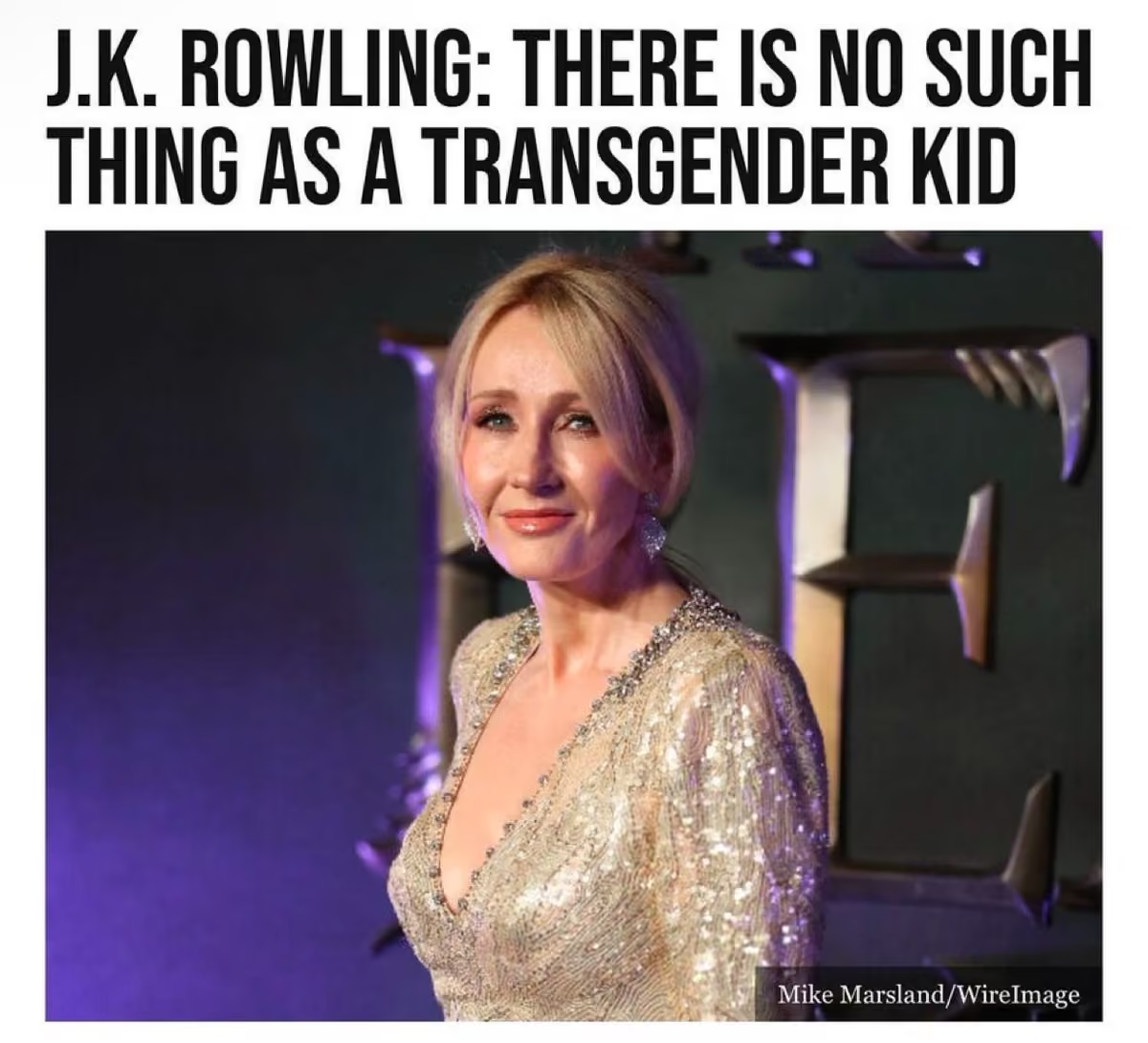 Joel Comm
@joelcomm
The People's Choice!
The White House
@WhiteHouse
President Trump Surprises First White House Tour, CROWD ERUPTS IN ‘USA’ CHANTS 🇺🇸
Joel Comm
@joelcomm
Does it surprise you that our government is filled with mentally ill people? Fire them all. Strip them of clearances. They are compromised and have no business working for the American people.
 TexasLindsay™
@TexasLindsay
DISTURBING: Federal Employees at NSA, CIA, & DIA caught engaging in a secret sex chatroom, in which they openly discussed gen!tal castr*ation, artificial vag!nas, sex*ual fetishes, and gangbangs—all while they were on the clock and being paid by U.S. tax payers.
 Joel Comm
@joelcomm
Spot on.
 Calley Means
@calleymeans
We don’t have a health crisis. The solution isn’t a marginal change to policy or better drugs.
We have a spiritual crisis. We’ve lost respect for our kids, our soil, and our cycles.
In our tumultuous political climate, RFK and Trump touched a vein here. We shouldn’t forget it.
Joel Comm
@joelcomm
We have a serious mental illness problem
Libs of TikTok
@libsoftiktok
New poll shows nearly one in 10 adults identify as LGBTQ. I’m sure it’s 100% natural…
 Joel Comm
@joelcomm
I know a lot of people that require this procedure
I am Ken
@Ikennect
How often does this happen?😂
Joel Comm
@joelcomm
Amazing!
Vince Langman
@LangmanVince
You won't hear about this story in the MSM.
Joel Comm reposted
 3DrakaiNa 👻 (G.A.N.G)
@3DrakaiNa
Why's this so good? 😂
Joel Comm
@joelcomm
$YZY is going to rek so many people. Avoid like the plague.
Cyrus Abrahim
@CyrusAbrahimX
All you guys that are saying @barkmediax is launching @kanyewest $YZY need to look yourself in the mirror. All day you engagement farmed and shitposted people. In reality groups are paying Kanye manager to follow them, for social clout. The trenches have no shame. This will be the biggest farm of this cycle making $LIBRA look like a joke. I will not be supporting this launch and leading my people to slaughter. Money or morals, you guys can decide for yourselves. Especially after that guy killed himself yesterday live on stream over influencers pushing bad tokens, each of you participating on promoting this launch will have to answer in the eyes of god.
 Joel Comm
@joelcomm
Please be true
Watcher Guru
@WatcherGuru
JUST IN: Elon Musk proposes "FAFO" as the enforcement arm of DOGE.

 Joel Comm
@joelcomm
An absolute badass
Libs of TikTok
@libsoftiktok
Border Czar Tom Homan is an absolute BEAST!
“Look. Let me start off by saying this…if I offend anybody today, I don’t give a shlt.”
“I'm sure the media will write a lot of hit pieces about me tomorrow, I don't give a shlt what you think about me.“
“I worked with 6 presidents, and everyone took steps to secure the border, Joe Biden is the first president who unsecured the border on purpose“
Joel Comm
@joelcomm
It's time to resurrect The Fairness Doctrine @realDonaldTrump @elonmusk
Let's make media BALANCED again.
en.wikipedia.org/wiki/Fairness_doctrine
Joel Comm
@joelcomm
So much winning!
 The Kobeissi Letter
@KobeissiLetter
BREAKING: Elon Musk says all US Federal employees will soon receive an email asking "what they got done last week."
Failure to respond will be taken as a resignation.

Joel Comm reposted
TONY™
@TONYxTWO
Who did this?! 🤣🔥 @FBIDirectorKash
Joel Comm
@joelcomm
Who do you want to see arrested first? @fbi @AGPamBondi @Kash_Patel
Joel Comm
@joelcomm
Check out Travis' summary of @apexfusion. He's done a deep dive into their chain and gave me a heads up on their reputation system. It appears they have provided a reliable solution for rewarding those who engage and keep people from gaming it.
Travis Wright
@teedubya
1/ THREAD... we had a great convo with @apexfusion yesterday... and I've done a deep dive into their whitepaper and into their blockchain.
I chatted with their core leadership team, and it looks like this will be a serious contender moving forward.
This L1 is no joke.
Joel Comm
@joelcomm
Too soon? @Bybit_Official #ethereum

Joel Comm reposted
Kevin Bass
@kevinnbass
New study from Yale
Sufferers from persistent, debilitating symptoms after COVID-19 vaccination showed:
Persistent spike protein production, TWO YEARS after vaccination
Chronic inflammation and immune dysregulation
Autoimmunity
EBV reactivation (increases cancer risk)
Guys, spike protein is not supposed to continue to be produced for years after vaccination.
What the chronic presence of spike protein shows is that the mRNA is staying around in the body.
And it is causing the body to persistently produce the protein--just as if someone were to get a small dose of vaccine every single day.
The worst fears of COVID-19 vaccine critics are being proven true.
With this paper, it's official: there is no such thing as a COVID-19 vaccine skeptic.
There are only COVID-19 vaccine realists.
And the reality is that innocent people's bodies were permanently damaged by a vaccine that was mandated by the government, in many cases for absolutely no benefit.
And here is the thing: we still don't know how prevalent this syndrome is.
We also don't know how many of us are still, each and every day, producing spike protein that is damaging our health--even if we don't experience serious symptoms ourselves.
And we don't know what other damage that has been done to our health by having taken this vaccine.
The vaccine mandates were a crime perpetuated against the American people by an evil alliance between ideologically deranged, financially motivated medical and public health professionals and academics and the government.
If you want to know why Anthony Fauci was pre-emptively pardoned by the Biden administration, this is just one of many reasons why.
There must be a reckoning for this crime.
America deserves justice.
 Joel Comm
@joelcomm
LOVE THIS!
Joel Comm
@joelcomm
A brick the size of the Great Pyramid is collectively being sh*t in Hollywood right now.
Leading Report
@LeadingReport
BREAKING: AG Pam Bondi says the Jeffrey Epstein client list is sitting on her desk right now, ready for review.
Joel Comm
@joelcomm
Common sense is returning. The mass psychosis is evaporating
Kevin Bass
@kevinnbass
"Lockdowns were an catastrophic mistake that never should be repeated. ... They violated not just medical ethics, but also crushed the ability of scientists to openly discuss with each other facts and evidence. Many scientists were abused and silenced. ... The restoration of the freedom for scientists to discuss with one another openly what the evidence actually says without this fear of repression that we have seen during the pandemic needs to end. ... The proper place of science in society needs to be restored, so that scientists can advise but not dictate policy."
- Jay Bhattacharya, MD PhD, Stanford professor, nominee to NIH Director
Joel Comm
@joelcomm
We certainly did try to warn people . Proudly unjabbed.
 Charlie
@MAGACharlie2024
We tried to tell you.
 Joel Comm
@joelcomm
Trump is going to have to step up his game if he wants to be the racist that the left portrays him as.
 Media Research Center
@theMRC
President Trump announces the creation of statues honoring several figures including Rosa Parks and Martin Luther King Jr.
"They are truly American heroes who inspire all of us."
Joel Comm
@joelcomm
More winning. This is going to be commonplace
 Election Wizard
@ElectionWiz
BREAKING: JUDGE RULES TRUMP ADMIN CAN CONTINUE MASS FIRINGS OF FEDERAL WORKERS.
Joel Comm
@joelcomm
Can’t wait for investigations
A Man Of Memes
@RickyDoggin
These are the Democrats screaming the loudest about Musk and DOGE.
• Ilhan Omar: $83M
• Chuck Schumer: $75M
• Elizabeth Warren: $73M
• Adam Schiff: $60M
• Jamie Raskin: $20M
• Hakeem Jeffries: $17M
• Cory Booker: $14M
• Jasmine Crockett: $10M
These people who’ve been living large off taxpayer dollars while pretending to fight for the lower and middle class. Their salaries are around $200k, but their net worths are in the tens of millions. How does that math work?
If you’re worth tens of millions on a public servant’s salary, you better believe we’re going to ask questions.
If you’ve got nothing to hide, you shouldn’t be worried. Judging by the panic attacks, it looks like they’ve got plenty to worry about.
tumblr: darkeagleruins
 Joel Comm
@joelcomm
Glorious
Joel Comm
@joelcomm
Trump is getting ALL of his cabinet. There's no stopping this train. Justified raids, arrests, indictments and prison time is coming. America is BACK. @FBIDirectorKash
Joel Comm
@joelcomm
Not saying it's legit, but wouldn't it be hilarious if Trump was correct all along?
 RyanMatta 🇺🇸 🦅
@Ryanmatta
Obamas birth certificate was fraudulent!
Joel Comm
@joelcomm
Omg, I love this timeline SO much!
 Daily Caller
@DailyCaller
JD VANCE: "I do think that we have had maybe more executive orders than CNN has viewers."
 Joel Comm
@joelcomm
Time to privatize airport security. Hire retired military and police, not randoms who couldn’t get a job at the post office
Leading Report
@LeadingReport
BREAKING: TSA fires hundreds of employees as part of President Trump’s sweeping layoffs across the federal workforce.
Joel Comm
@joelcomm
Let the self-deportation begin!
Derrick Evans
@DerrickEvans4WV
The White House just confirmed:
“No more federal benefits to illegal aliens.”
Joel Comm
@joelcomm
Common sense ain't common. But it sure is nice to see the adults back in charge.
MAGA Voice
@MAGAVoice
BREAKING 🚨 HHS Secretary Robert F. Kennedy Jr. just gave new guidance recognizing only TWO Genders: Male or Female
I can’t believe this needs to be done, but Liberals have gone completely nuts

Joel Comm reposted
 Anti Woke Memes
@AntiWokeMemes
LMAO 💯
 Joel Comm
@joelcomm
How did they manage to get all the brain dead NPCs in one location? Dang, this is embarrassing.
Defiant L’s
@DefiantLs
If you want to hear the most insane takes just watch this 😏
Joel Comm
@joelcomm
All reasonable requests
 Ann Vandersteel™️
@annvandersteel
Dear President Trump;
May I humbly inquire as to when the arrests warrants will be executed for the following traitors to America:
AOC - treason/collusion with the enemy
Omar - treason/collusion with the enemy
Hillary - destroying subpoenaed emails
Adam Schiff - treason/lying to overthrow an American president
Pelosi - MASSIVE insider trading
Fauci - Covid mass-murder
Hunter Biden - MULTIPLE gun and drug crimes
Joe Biden - MULTIPLE counts of treason, beginning with and arising from his opening of our deadliest border.
I know how busy you are, but I would appreciate a speedy reply.
Patriotically yours,
Ann Vandersteel🇺🇸🇺🇸🇺🇸
Joel Comm
@joelcomm
The first mini-game on X is here XStacks
Checking out Level 1 playing for San Francisco
Playing without ever leaving this app… join my team xstacks.upland.me?link=f119ddcb-3bab-4488-bd00-caefa7bcc953
Joel Comm
@joelcomm
These people are mentally ill
Libs of TikTok
@libsoftiktok
Church in Dallas, TX held a drag show and the drag queen threatened to kill Trump supporters. @FBI
Joel Comm
@joelcomm
How did they get all the losers into one parade?
Libs of TikTok
@libsoftiktok
Anti-Trump protestors are chanting mindlessly through the streets of Chicago today.
You think they'd come up with something more original with how often they complain.
Joel Comm
@joelcomm
We are SO back!
Donald J. Trump
@realDonaldTrump
On Trade, I have decided, for purposes of Fairness, that I will charge a RECIPROCAL Tariff meaning, whatever Countries charge the United States of America, we will charge them - No more, no less!
For purposes of this United States Policy, we will consider Countries that use the VAT System, which is far more punitive than a Tariff, to be similar to that of a Tariff. Sending merchandise, product, or anything by any other name through another Country, for purposes of unfairly harming America, will not be accepted. In addition, we will make provision for subsidies provided by Countries in order to take Economic advantage of the United States. Likewise, provisions will be made for Nonmonetary Tariffs and Trade Barriers that some Countries charge in order to keep our product out of their domain or, if they do not even let U.S. businesses operate. We are able to accurately determine the cost of these Nonmonetary Trade Barriers. It is fair to all, no other Country can complain and, in some cases, if a Country feels that the United States would be getting too high a Tariff, all they have to do is reduce or terminate their Tariff against us. There are no Tariffs if you manufacture or build your product in the United States.
For many years, the U.S. has been treated unfairly by other Countries, both friend and foe. This System will immediately bring Fairness and Prosperity back into the previously complex and unfair System of Trade. America has helped many Countries throughout the years, at great financial cost. It is now time that these Countries remember this, and treat us fairly – A LEVEL PLAYING FIELD FOR AMERICAN WORKERS. I have instructed my Secretary of State, Secretary of Commerce, Secretary of the Treasury, and United States Trade Representative (USTR) to do all work necessary to deliver RECIPROCITY to our System of Trade!
Joel Comm
@joelcomm
🙌🏼😄
 The Calvin Coolidge Project
@TheCalvinCooli1
🚨Just in: The United States has defeated Canada 3-1 in the 2025 4 Nations Face-Off
 Joel Comm
@joelcomm
I can’t believe we get to see this all happen!!!
 The Artist known as Jess
@ElofsonJess
This is the beginning of the end for the corrupt fucks
Joel Comm
@joelcomm
Live, authentic #tango at Norbertos in Puerto Rico #music #dance www.instagram.com/norbertospianobar/live/17925171288020733
Joel Comm
@joelcomm
What. A. Badass.
 Steve 🇺🇸
@SteveLovesAmmo
Trump’s mugshot displayed in the Oval Office.
This should tell you the type of energy that this Presidency has.
Grab your popcorn. 🍿
 Joel Comm
@joelcomm
This just gets better and better. Now do the IRS. Then HHS. And FBI. And…
 Department of Government Efficiency
@DOGE
Today’s contract update:
167 cancellations with savings of ~$115M, including a $2.23M contract for HHS for “equity assessments of existing program policies”.

 Joel Comm
@joelcomm
Trump is doing exactly what he was elected to do, and exceeding expectations
 Mustang '72-'92⚓️USN (ret.)
@Paul_at_PSG
Wide angle group photo of all of the MAGA voters who regret voting for Trump/Vance /Elon(and his Elves) and ALL the other Patriots on the Trump Team.
(Almost no one will see this (Thanks, @lindayaX CEO) but it needed posting.😉😆)
 Joel Comm
@joelcomm
It’s a revolution!
 President Donald J. Trump
@POTUS
"@RobertKennedyJr is going to lead a great national mission to MAKE AMERICA HEALTHY AGAIN... I think he's going to do things that will really make us very proud." –President Donald J. Trump 🇺🇸


 Joel Comm
@joelcomm
What a loon
 Squirrel Mama
@Squill_Mama
This is right out of the democrat party play book! They will never learn… No one’s listening anymore Pocohonky!
Joel Comm
@joelcomm
Wow. Just wow. If everyone listened to this, only the most braindead Democrats would still be defending what the adminstrations of the past have done.
 Joe Rogan
@joerogan
This one is a BANGER. @mikebenzcyber returns with a deep dive into insane government corruption. Don’t watch this one right before you go to bed.
Now available on @spotify open.spotify.com/episode/2rXdCTkipx2Iu5dX1Gh0s5
 Joel Comm
@joelcomm
More winning!
Charlie Kirk
@charliekirk11
🚨BREAKING: RFK JR. HAS JUST BEEN CONFIRMED AS THE NEXT HEALTH AND HUMAN SERVICES SECRETARY.
GAME CHANGER.
LET'S GO!!!

Joel Comm reposted
A Man Of Memes
@RickyDoggin
This is good 🤣
Joel Comm reposted
 🇺🇸𝓒𝓱𝓪𝓭🇺🇸𝓗𝓪𝓻𝓻𝓲𝓼𝓸𝓷🇺🇸
@Texas_jeep__guy
Yes, we deserve to know exactly where every dollar of our taxes is being spent.
 Joel Comm
@joelcomm
Are you tired of winning yet? I'm not!
Elon Musk
@elonmusk
Yay!! Congratulations, @TulsiGabbard
Joel Comm reposted
 Mike Engleman🇺🇲
@RealHickory
Politico was always Democrat propaganda!
End Wokeness
@EndWokeness
Politico before vs after the election:

Joel Comm reposted
Elon Musk
@elonmusk
🎯
Joel Comm
@joelcomm
Bye bye 👋
Wall Street Apes
@WallStreetApes
Fort Bliss, El Paso, Texas: Busload after Busload after Busload of illegal migrants are being loaded up on military aircraft and flown to their home countries
The flights are FULL, “Migrants on board traveled for months to get to the US,” they are “returned to Central America in 5 hours”
Joel Comm reposted
TonemanLives 🇺🇸🇮🇹
@TonemanLives
So Donald Trump came out of the gate running. How fast? He caught the entire Democrat Party as well as the rigged media entirely flat footed. It’s as if Trump over the last 4 years did nothing but put his agenda together. He came in with a plan and the Democrat Machine wasn’t ready for it.
However the Democrats still have this. Soros funded DAs and Judges, they have Obama appointed Judges and it couldn’t be more clear these people were strategically placed in their position with an ultimatum. We will put you in these positions as long as you do whatever the fuck we need you to do when called upon. In other words, every one of these liberal activists bought and paid for. They are the emergency plan to stop Trump.
With all the firings and removal of all Liberal swamp creatures to this point, as long as the Dems have the courts, Trumps Agenda is is serious jeopardy.
It is time to find cause and start removing every single corrupt Judge and DA that have ties to Soros and his minions, Obama and Biden. I don’t care how it gets done, find that loophole and remove them all, otherwise it’s going to be a long 4 years of stonewalling everything Trump. While you’re at it, find a way to make that cowardly traitor, Amy Coney Barrett resign from her seat on the Supreme Court. She’s obviously been compromised, she seems to vote with the Dems on everything. If Trump is going to succeed in our America first agenda, he must clear the path from all obstacles in our way. Otherwise? It will be all hell trying to get anything passed. Let’s find a way to clear the path for the Trump Train. The time has come to make history. Let’s do whatever it takes to Make America Great Again. This is our time, time to remove anyone who gets in our way. My two cents
Joel Comm reposted
 Hodgetwins
@hodgetwins
No lie 💯
 Rothmus 🏴
@Rothmus
Read Thomas Sowell.

Joel Comm reposted
 Anthony Brian Logan (ABL) 🇺🇸
@ANTHONYBLOGAN
When you grow up watching Prince play the electric guitar in high heels in the rain for a halftime show, whatever we just saw doesn't even qualify to compare
Joel Comm reposted
Joel Comm
@joelcomm
A man of the people
Drew Hernandez
@DrewHLive
Trump just cooked Taylor Swift lmao
He posted himself getting cheers at the Super Bowl and Taylor Swift getting booed side by side haha

Joel Comm reposted
Mila Joy
@Milajoy
20 minutes of this would have been so much more enjoyable than Kendrick Lamar. x.com/IzhaanShaikh_/status/1868529002002141628/video/1
Joel Comm
@joelcomm
if my people, who are called by my name, will humble themselves and pray and seek my face and turn from their wicked ways, then I will hear from heaven, and I will forgive their sin and will heal their land. - 2 Chronicles 7:14
Dom Lucre | Breaker of Narratives
@dom_lucre
🔥🚨BREAKING: The NFL just played a Pro-Life ad about the value of all humans regardless of differences and the beauty of God’s design.
Joel Comm
@joelcomm
I’m old enough to remember when black culture had real musicians like Prince, Marvin Gaye, Teddy Pendergrass and Diana Ross. Wtaf is this crap? At least the woman is singing beautifully. But the rest is garbage. #halftimeshow
Joel Comm
@joelcomm
Trying to watch the halftime show and it just reinforces how much our culture has elevated absolute mediocrity. #superbowl
Joel Comm reposted
 George Papadopoulos
@GeorgePapa19
They should have never launched an op with foreign intelligence to spy on the Trump campaign in 2016
They should have never used CIA cut outs to launch fake impeachment hoaxes
They should have never harassed MAGA
They should have never raided Maralago
They should have never weaponized the justice department
If they stayed in their lane, they might have still retained their security clearance today and not about to feel the hammer of justice coming down on them.
Joel Comm reposted
 Hunter Eagleman™
@Hunter_Eagleman
This man deserves a promotion!! 😎
 Joel Comm
@joelcomm
I am hopeful that this will continue like this for four years with no letting up!
 Dr. Thom, Ph.D., CPA 🇺🇸 🇺🇸 🇺🇸
@TAG2335
Dare we hope for four more years of the last two weeks? Incredible.
I envision something like Monaco vs. the terrorist hell hole it's been since I was borne.
'Level it': Trump says US will 'take over' Gaza Strip, rebuild it to stabilize Middle East www.foxnews.com/politics/level-it-trump-says-us-take-over…
Joel Comm
@joelcomm
Lock them up. Justice, not retribution.
 Clandestine
@WarClandestine
Trump just exposed the largest transnational criminal organization in human history.
This shadow cabal is engaged in money laundering, regime change, bioweapon development, psychological operations, and more.
Spoiler alert, they are also responsible for C19 and Epstein island.
 Joel Comm
@joelcomm
Correct. Justice is essential.
Joel Comm
@joelcomm
This would be amazing!
 Ian Jaeger
@IanJaeger29
JUST IN: Elon Musk is considering having Ron Paul lead the team that will audit the Federal Reserve.
Awesome. 🔥🔥

 Joel Comm
@joelcomm
Seems legit
 Phil Holloway ✈️
@PhilHollowayEsq
If @realDonaldTrump himself as @POTUS were to walk into the @USTreasury he would have authority to access any system in the place
Or, he could chose a representative and delegate that authority to said delegate who likewise could access any system
He could delegate me, or you, or even @elonmusk as a special government employee
And it’s as simple as that
Joel Comm
@joelcomm
For years the left fetishized about @realDonaldTrump ending up behind bars. Setting that the fake felony counts will be overturned soon enough. Meanwhile, the real perp walks will begin in due time.

Joel Comm reposted
 Rising serpent 🇺🇸
@rising_serpent
Putting aside all politics, feelings and ideology, if you think objectively about the last 8-10 years, everything Democrats have said and done has been nothing short of mental asylum worthy lunacy.
They've obliterated borders, gender and decency, legalized criminality and made illegal transparency and accountability, made victims out of perpetrators and perpetrators out of victims, put a senile man in charge of the country and questioned the mental capacity of 20-year-old geniuses, made race a merit and hiring on merit racism, used feminism to allow men in women's spaces while called women opposing it misogynists, they mandated vaccines for a cold and masked little babies while simultaneously destigmatizing the volitional spread of HIV, they called offensive any mention of Christ while openly parading drag queens at their shows and events.
These people are at best unwell and at worst demonic Satan possessed communists.
You don't argue or bargain with them. You treat them like psychotic looney bin patients and impose your will on them.
Joel Comm
@joelcomm
Yes! There’s going to be so much fraud and waste uncovered
 Joe Portman
@RealJoePortman
🚨 BREAKING: TRUMP DIRECTS ELON MUSK TO AUDIT THE PENTAGON! 💥💰
President Donald Trump has just announced that he has officially tasked Elon Musk with conducting a full-scale audit of the Pentagon. This is a monumental move aimed at exposing waste, fraud, and mismanagement inside the world’s most expensive government agency.
💰 Why This Matters:
The Pentagon has NEVER passed a full audit despite handling trillions of taxpayer dollars.
In the last six years, the Department of Defense has failed every single audit, unable to account for over 60% of its assets.
In 2023 alone, $3.8 TRILLION in military spending went completely unaudited or unverified. Where did the money go? No one knows.
🔥 Enter Elon Musk & DOGE 🔥
Musk, who is leading the Department of Government Efficiency (DOGE), has been given full authority to investigate wasteful spending not just at the Pentagon, but across the federal government. With his experience in cutting inefficiency at Tesla, SpaceX, and X, Trump believes Musk is the perfect person to clean house.
💥 Trump’s Endgame:
✅ Find & eliminate wasteful military contracts
✅ Stop fraud & abuse of taxpayer money
✅ Ensure the Pentagon finally passes a CLEAN audit
This is the biggest transparency effort in U.S. military history. The days of unchecked spending, secret budgets, and unaccountable bureaucrats are OVER.
What do YOU think? Will Elon Musk finally force the Pentagon to open the books? Drop your thoughts below! ⬇️🔥

Joel Comm reposted
Elon Musk
@elonmusk
Wise words
Joel Comm
@joelcomm
Because the Democrat leadership never cared about Americans. And now the receipts are stacked to the ceiling.
Joel Comm reposted
Joel Comm
@joelcomm
I watch for #crypto projects that might do #airdrops. The new L2, @0xForm , is awarding "points" for activites. Points = tokens. Go sign up --> meditations.form.network?referral=iRJfNj
Joel Comm
@joelcomm
Just minted my Guild Pin for joining Form!
guild.xyz/form
Joel Comm
@joelcomm
Boom! Roasted!
Nick Sortor
@nicksortor
🚨 LMAO! A patriot just called in and ROASTED the Democrat Rep. who is filing to impeach Trump
“All y’all Democrats have are impeachments, race and gender, etc. You actually do NOTHING for the people of America.”
“I watched you out protesting everything Elon Musk is doing for the American people. The USAID is 100% a money laundering scheme... with kickbacks to the Democrat party.”
“All you do is complain and be negative. We’re SICK of it.” 🔥🔥
Joel Comm
@joelcomm
$JOEL is rocking on @0xForm! Almost halfway to bonding and #1 coin on platform! Send it to bonding curve and I will do a Spaces AMA!
fun.tryroll.com/token/0xf2812f2d7b7ecea041205bff358e9425f…
 Joel Comm
@joelcomm
A win for women and normalcy!
Joel Comm
@joelcomm
31% of the way to bonding for $JOEL on @0xForm!
fun.tryroll.com/token/0xf2812f2d7b7ecea041205bff358e9425f…
Joel Comm
@joelcomm
I just launched JOELCoin on @0xForm! The ticker is $JOEL and you can secure your bag here:
fun.tryroll.com/token/0xf2812f2d7b7ecea041205bff358e9425f…
#crypto @tryrollhq
 Joel Comm
@joelcomm
Once you see the truth of the Democratic party, you have to leave. To stay is to insert your head so far up your rectum that it pops out from your neck again.
Isaiah L. Carter 🇺🇸
@IsaiahLCarter
I hereby renounce the Democratic Party
Joel Comm
@joelcomm
This is SO beautiful! These girls deserve to compete against other girls ONLY, and not confused men. AND, this will keep the mentally ill OUT of the girl's locker rooms. Thank you @realDonaldTrump for common sense!
 George
@BehizyTweets
This is such a beautiful moment.
President Trump invited all the girls to surround him as he signed the Executive Order to ban men from their sports.
"If you'd like to gather around me, I think I'm going to be okay. Secret Service is worried about them??" 😂
Joel Comm reposted
TonemanLives 🇺🇸🇮🇹
@TonemanLives
Talk about ruffling feathers! I’ve never seen so many Democrats and RINOs go full tilt, all in panic mode simply because someone who happens to be Elon Musk, is peeking at the books.
While Elon continues to expose all the wasteful spending wasted on nothing but total bullshit, nothing to do with American interests, Dems and RINOs are fighting against Elon like a bunch of people fighting to protect their first born. Why?
Why would you be angry if you just found billions of dollars being wasted on outside interests, that could instead be used to help Americans in need? Why would you think trimming the fat from an already obesely spending Government, saving American taxpayers money so they could make an easier go at every day living?
Because this isn’t and never was about the American people. This was a money laundering operation that is being uprooted in real time and these corrupt cocksucking Swamp dwellers, are all frantic because daddy just took their weekly allowance away.
In any other crime, saving the country money was a good thing. I mean you all seen the list of the wasteful spending. I mean stuff so ridiculous it makes you wonder how anyone could argue against stopping this madness. Unless of course you have different interests, to skim your share right off the top while stealing from the heart and soul of this country. The hardworking, tax paying people of this great country.
I’ve watched Chuck Schumers floating eyeball spinning like a slot machine. AOC perhaps the dumbest government official in history calling one of the smartest people in the world stupid. They are protesting, marching and even declared war on the Trump Administration.
How do you flush out the rats? Take away their money tree. Now you see all the players involved fighting to restore the wasteful spending. Really? $50 million on condoms to the Middle East? There’s no way to justify it. No way to stand up for it. Definitely no way to fight for it, of course unless these pigs have a special interest.
Trump promised to drain the Swamp. Step one. Bringing them all to the surface. Now you know exactly who the culprits are for bringing all this corruption to our government and worse, our country.
It’s been only a couple of weeks, the rats are all scurrying, Trump just signed an EO to ban men from women’s sports, and as the days continue to pass, Trump is hitting them from all angles. Trump is hitting hard and hitting fast. The Dems have no time to react. No time to prepare for his next move. They don’t know what is coming, when it’s coming and where it’s coming from but they know it’s coming.
Donald J Trump. A man of principles. A man of morals. A man of strength. A man who keeps his word. Trump promised us all of this. Trump is delivering. This is exactly what we voted for. We the people will stand with this man till the very end. The Dems and RINOs are usually the bullies calling the shots but the learned the hard way, the game has changed. The rules have changed. We the people have changed. We no longer give a fuck what the Dems or RINOs say or do. We will stop them. Their days of rule are over. There is a new Sheriff in town, a Sheriff who brought a team of Allstar’s to restore our America and a sheriff with over 100 million deputies all here to help this man in any way possible. The United States is roaring back and the Swamp is most definitely going to be drained. Trump will make tge Deep State a thing of the past. Donald Trump is exactly who we voted for and we tge American people couldn’t be prouder. After all, we are MAGA! No one fucks with us. My two cents
Joel Comm reposted
J.K. Rowling
@jk_rowling
This is the first and likely the last time I’ll retweet an ad, but I love it.
Joel Comm reposted
 Laughing Legends
@LaughingLegend0
MTG thinks Ilhan Omar should be expelled from Congress and deported from the USA! 🇺🇸
Joel Comm reposted
Dinesh D'Souza
@DineshDSouza
The simple truth is @elonmusk publicly exposed the Great Ripoff.
Now the ripoff artists—the beneficiaries of the scheme—are furious.
What they say: “We stand to lose civilization, our democracy, our very system of government.”
What they mean: “We stand to lose our racket”
Joel Comm
@joelcomm
Great thread about what is happening now and how the Democrat party is done
 John Ʌ Konrad V
@johnkonrad
I opened my NYTimes app today. They’re trying, but they can’t keep up. News that broke just hours ago is already off the homepage.
THIS IS CRUCIAL
The entire liberal deep state command and control system is broken. Let me explain 🧵
Joel Comm reposted
 Robert Kroese
@robkroese
"I didn't vote for Elon Musk"
Yeah? I didn't vote for the FBI, ATF, CIA, PBS, NPR, FDA, WHO, UN, IRS, Federal Reserve, EPA or CDC.
Cry harder
Joel Comm
@joelcomm
The party as we have known it is cooked. And unless they come back to the middle, they are beyond cooked
Robby Starbuck
@robbystarbuck
It’s honestly incredible how the Democrats are unraveling. They went from authoritarian leftism where they were truly only a few steps from generational power to crying on TV with homemade signs about how mean Elon and Trump are for not letting them waste our $. 😂
Joel Comm
@joelcomm
Yes, please! From Chuckie’s lips to Trump’s ears!
 unusual_whales
@unusual_whales
Schumer: "This is just the beginning... If DOGE attacks the USAID today... who knows, next might be the IRS"
Joel Comm
@joelcomm
What a delicious time to be an American! And things are just getting started!
 Joel Comm
@joelcomm
And like that, Trump wins again. I’m sure Trudeau will backtrack after today’s call with @realDonaldTrump as well.
Benny Johnson
@bennyjohnson
🚨BREAKING: The President of Mexico has declared a one-month postponement of tariffs after talks with President Donald Trump.

 Joel Comm
@joelcomm
The stuff Trump is going right now? Exactly what we voted for. Now we need @TulsiGabbard RFK jr and @Kash_Patel
Joel Comm
@joelcomm
If you entered the country illegally, that makes you a criminal. To allow people to stay (with some exceptions) is spitting in the face of those who went through the long process legally. So refreshing to see someone actually keep their promises.
Defiant L’s
@DefiantLs
Trump: “Within moments of my inauguration, we will begin the largest domestic deportation operation in America.”
Promises made = Promises kept
Joel Comm
@joelcomm
Correct. I don’t want “retribution”, but I do want justice for those who have it coming. This is why Kash says there will be no retribution. But please bring justice where deserved!
Dinesh D'Souza
@DineshDSouza
Peter Navarro on how the FBI treated him.
Now you can understand why “retribution” has become, for us, the very definition of justice
Joel Comm
@joelcomm
More proof that the lunatic left is rife with emotional children posing as adults.
 Luke Rosiak
@lukerosiak
DELETED: GSA's tech arm, a far-left agency that viciously subverted Trump during his first term, surrendered after an @elonmusk deputy took over. It deleted huge swaths of code dedicated to virtue-signaling rather than mission, such as its "inclusion bot" that lectured staff.

 Joel Comm
@joelcomm
Honestly it’s the most delicious payback of our lifetime. Wait until the adults expose the actual criminals and justice is meted out. Add Voter ID to the mix and the Democrat party as we’ve known it is in the dustbin of history. What a magnificent time to be alive! 😄🇺🇸
 Topher Field
@TopherField
I think I've figured it out.
I've been watching the US confirmation hearings and something very deep has shifted.
It's more than just the kinds of people being appointed, it's bigger than a 'vibe shift'... but I couldn't figure out what it was.
It's the revolution eating it's own.
Even Democrats are having their eyes opened as they watch their heros from the last few decades try to tear down the people who COULD have made the Democrats great again... People who SHOULD have been their next generation of Democratic heros.
RFK Jr and Tulsi Gabbard stand out as great examples, and long time Democrat power brokers like Bernie Sanders are trying every trick to destroy them, every weapon, all the things that USED to work, and it's blowing up in their faces.
The Revolutionary Old Guard are trying to eat their own children, and are being devoured by them instead.
These senate confirmation hearings are highlighting the fact that MAGA is actually a unity movement, with the best of the Republicans AND the best of the Democrats, taking the country forward together and leaving the decrepit old guard behind.
Joel Comm
@joelcomm
Let’s gooooooooooooo! 🇺🇸🙌🏼🔥
 unseen1
@unseen1_unseen
He told you what was going to happen. This is the final battle. Buckle up.
Joel Comm
@joelcomm
And he’s just getting started! We’re going to need more popcorn!
Benny Johnson
@bennyjohnson
President Trump’s the Deep State BLOODBATH in the past 24 hours:
- All federal prosecutors handling January 6th cases fired, computers locked and marched out of their offices by security.
- David Sundberg, the FBI Assistant Director at the helm of the January 6th investigations, has been fired.
- 20 leaders of FBI field offices have been escorted out of FBI buildings around the country
- The 51 intelligence officers who spread misinformation about Hunter Biden's laptop and interfered in elections are now banned from entering federal properties.
- Federal employees are now required to return to the office, with non-compliance leading to termination.
- John Bolton and John Brennan have been permanently banned from government buildings.
- Jarold Harold Rogers has been indicted for compromising U.S. trade secrets to China
- Ban on all use of pronouns in government communications
- All 2 million Feds sent a resignation offer
This purge marks the beginning of the end for the corrupt tyrants in Washington.
11 days in and the swamp has been drained.
Joel Comm
@joelcomm
Reasonable. It’s ludicrous that the government recognize a month based on peoples’ sexuality.
Jack
@jackunheard
BREAKING: Defense Secretary Pete Hegseth has called for the Department of Defense to stop recognizing Juneteenth and Pride Month.
Joel Comm
@joelcomm
Hallelujah. Stop the insanity
@amuse
BANNED: he/him, she/her, they/them, xe/xem, ze/zir, ey/em, fae/faer, ve/ver, it/its…
 Joel Comm
@joelcomm
How embarrassing. Democrats just need to get used to losing.
George
@BehizyTweets
WHAT IS HAPPENING??? Senator Michael Bennet asked Tulsi Gabbard a question, and when she opened her mouth to answer, he immediately interrupted her and started SCREAMING.
Tulsi Derangement Syndrome is deadly.
Joel Comm
@joelcomm
Obviously
Dinesh D'Souza
@DineshDSouza
One lesson of these cabinet hearings is that our people are simply smarter than theirs.
Forget the media hype about Democrats being highly educated.
Many are educated beyond their intelligence.
Plus they live in a bubble and are constantly surprised by counter-arguments
Joel Comm
@joelcomm
Want to see what living human excrement looks like? This “journalist” blaming Trump for the horrific crash and the shutting down replies on his tweets. What a cowardly PoS. 💩
 Phil Williams
@PhilNvestigates
 Joel Comm
@joelcomm
Hilarious!
GT SD Jack’s 🐰🐰
@realredsd
I’m dead. 💀😂😂👇🏻
This was so awesome @TyTheFisch
Joel Comm reposted
 CryptologistG 👑
@CryptologistG
Just snagged this clean ghost eyes Kong...
Why @supremekong ?
• Greatest and most successful CTO in Ethereum NFT history
• Upcoming @jngldash game already in alpha testing
• Battle-tested and die-hard community
• Founder who embraces the grind 24/7 @CyrusAbrahimX
 Joel Comm
@joelcomm
This is tragic. I hope we get full transparency on what happened. Condolences to everyone who lost family or friends on these aircraft. Heartbreaking.. 💔
 Kambree
@KamVTV
A statement from American Airlines CEO Robert Isom has been released regarding the plane crash tonight
Joel Comm
@joelcomm
Amazing. This is what a real leader does
John Strand ⚔️
@JohnStrandUSA
BREAKING: President Trump announces on TruthSocial that he had to use executive authority to “TURN ON THE WATER” in California, to bring relief where devastating fires have wreaked havoc.
That is how utterly inept and corrupt Gavin Newsom and CA democrats truly are.
Shocking.
 Joel Comm
@joelcomm
Tom Homan makes Chuck Norris look like a pimply-faced teenager. No disrespect, but the mantle has been passed. #tomhoman #chucknorris
Joel Comm
@joelcomm
Facts.
 John LeFevre
@JohnLeFevre
Tulsi was a Democrat.
RFK Jr. was a Democrat.
They still hold many classically liberal values.
Yet, ZERO Democrat Senators will vote for their confirmation.
That's all you need to know.
The party is ruthlessly corrupt, cultish, and unwilling to respect the will of the people.
Joel Comm
@joelcomm
$DOG
 DANY #freedogofbitcoin🫶🏻🚀
@Danytoken
If you Believe @kucoincom should list the no.1 Memecoin of Bitcoin, $DOG for spot trading.
Repost & Comment $DOG to sign Petition 📝🚀🚀🚀
Joel Comm
@joelcomm
Liberal logic leads to death.
 Lila Rose
@LilaGraceRose
How can we be against the death penalty for convicted criminals, but in favor of the death penalty for innocent, helpless children?
Joel Comm
@joelcomm
Never again. I’m not crying. You’re crying. 😢
 dahlia kurtz ✡︎ דליה קורץ
@DahliaKurtz
This is one of the most beautiful moments you will ever witness.
Sir Nicholas Winton helped 669 children — most of them Jewish — escape the Holocaust.
His humanitarian accomplishments would remain unknown and unnoticed by the world for nearly 50 years.
Then in 1988 he was invited to the BBC TV show That's Life!. There he sat — unknowingly — as part of the studio audience, surrounded by the children he had rescued. They were now adults.
Then they surprised him with one of the greatest gifts of all time. Their presence.
They were there, all alive — because of him. Not only was he reunited with dozens of children he had saved, but he was also introduced to many of their children and grandchildren.
Please remember Sir Nicholas Winton, for his humanitarian operation known as the Czech Kindertransport.
Sir Nicholas George Winton, a British stockbroker, and a gift to this planet, left us on July 1, 2015, at the age of 106.
May his memory forever be a blessing and inspiration to all.
Please share. International Holocaust Day cannot be forgotten. But many are working to make that happen.
🕯️ ♥️
Joel Comm
@joelcomm
Hey @DOGE and @realDonaldTrump , it’s time to Defund @PBS. Ernie and Bert can compete in the free market.
Joel Comm
@joelcomm
Love this. The United States is telling the world “this is how things are.” Cope.
 Speaker Mike Johnson
@SpeakerJohnson
Colombia and all nations should be on notice - Congress is fully prepared to pass sanctions and other measures against those that do not fully cooperate or follow through on requirements to accept their citizens who are illegally in the United States.
President Trump is putting America first, just like he said he would. And Congress will implement policies that reinforce his agenda.
Joel Comm
@joelcomm
Like. A. Boss.
Nick Sortor
@nicksortor
🚨 LMAO! After President Trump threatened Colombia and they instantly folded, Trump posted this
FAFO
What a LEGEND 🤣
 Joel Comm
@joelcomm
Free Roger @realDonaldTrump
 Roger Ver
@rogerkver
Mr. President, I am an American, and I need your help. Only you, with your commitment to justice, can save me @realDonaldTrump
Joel Comm
@joelcomm
Wait until Democrats discover that they are actually better off in a couple years.
Joel Comm
@joelcomm
What an amazing time to be alive!!!
Donald J. Trump
@realDonaldTrump
THE GOLDEN AGE OF AMERICA BEGINS RIGHT NOW!
Joel Comm
@joelcomm
Not tired of winning
 Tony Kinnett
@TheTonus
CONFIRMED: Vice President Vance votes in the affirmative. Pete Hegseth is officially the next Secretary of Defense.
Joel Comm reposted
George
@BehizyTweets
If you thought Pete Hegseth schooled those emotional Demonrat Senators, wait till Robert F. Kennedy Jr. starts lecturing them about vaccines & the Big Pharma cartel.
They should cancel the confirmation hearing and just vote to give him the job to save themselves embarrassment.
Joel Comm
@joelcomm
Welcome home @RealRossU ! We at @badcryptopod are celebrating with you!
Joel Comm reposted
 Jim Ferguson
@JimFergusonUK
🚨 WATCH: A shocking moment on live TV as a CNBC news anchor reveals that friends and family are developing cancer and strokes at an alarming rate. He dares to ask the question many are too afraid to:
Could the rise in strokes, cancers, and other illnesses be linked to the COVID-19 vaccines?
Critical thinking is NOT a conspiracy. People deserve answers. 🛑 @canindependent
Joel Comm
@joelcomm
This all happened under Democrat watch. How anyone can continue to vote for these child abusing thugs is beyond me
 LD Basler
@ArmaLite15OU812
Where are the missing 300K+ children that the Biden administration lost?
I think we all know, and it’s heartbreaking and disgusting.
Joel Comm
@joelcomm
While Democrats are erroneously stating that Elon was doing a nazi salute, their actions demonstrate that they are more Nazi-like than anyone else. These Senators are Absolutely barbaric trash humans.
 Sen. James Lankford
@SenatorLankford
What is America going to do with a fully delivered, crying baby on the table? Will they get healthcare or will they not get healthcare?
Today, Democrats blocked my Born-Alive Abortion Survivors Protection Act, which would make sure babies born alive after a botched abortion receive care.
Joel Comm reposted
Benny Johnson
@bennyjohnson
🔥HOLY SMOKES: ICE arrested 308 criminal aliens on the FIRST DAY of Trump’s administration.

Joel Comm reposted
Provoke Management
@provokemgmt
'Growth isn’t just about wins—it’s about weathering the challenges too.' @joelcomm shares why preparation for struggles is key to lasting success. Read more: www.inc.com/joel-comm/3-startup-hiccups-to-watch-out-for-…

Joel Comm reposted
The Bad Crypto Podcast
@badcryptopod
Trump's wild first days: Pardoned Silk Road founder @RealRossU (Ross Ulbricht), launched SEC crypto task force led by "Crypto Mom" @HesterPeirce (Hester Peirce). $TRUMP memecoin is mooning! Tune in for news at badco.in/761 🚀🇺🇸 @joelcomm @teedubya
 Joel Comm
@joelcomm
Sorry, Germany. But this clown can kiss my First Amendment ass.
Robby Starbuck
@robbystarbuck
At the World Economic Forum, Olaf Scholz, the German Chancellor, just said that @elonmusk should know Germany/Europe's "freedom of speech" doesn’t accept "extreme right positions."
This lunatic thinks not wanting migrants to rape little girls = far right
Joel Comm
@joelcomm
This is great news! Congratulations to @RealRossU and to his mother Lyn, who should receive Mother of the Decade award. May his freedom be sweet!
 TaraBull
@TaraBull
Ross Ulbricht served almost 10 years of a life sentence for creating the Silk Road website.
President Trump kept his promise, and he is finally a free man.
 Joel Comm
@joelcomm
Legend
Libs of TikTok
@libsoftiktok
Trump dances with a sword to the YMCA. Hilarious 🤣
Joel Comm reposted
 The Bitcoin Historian
@pete_rizzo_
Ross Ulbricht just spent ANOTHER night in prison. That’s 4,147 days
RT if you want President Trump to set Ross free TODAY👏

 Joel Comm
@joelcomm
If you think @elonmusk was making a Nazi salute, congratulations... you are officially one of the dumbest people walking the face of the earth.
Libs of TikTok
@libsoftiktok
CNN is suggesting that Elon did a Nazi salute during his speech at the Capital One Arena.
He was literally motioning "my heart goes out to you."
This is why no one trusts the fake media.
Joel Comm
@joelcomm
It's official. @AmericanAir doesn't mind screwing over a lifetime Million Miler customer, even when they are in the wrong. When you have a choice in airlines, I recommend @united instead.
Joel Comm
@joelcomm
Actual science
Libs of TikTok
@libsoftiktok
"As of today, it will henceforth be the official policy of the United States government that there are only two genders: Male and Female"
Joel Comm
@joelcomm
Daddy’s home! #trump
Joel Comm
@joelcomm
Today will go down as one of more glorious and historic days in American history! 🇺🇸😎
Defiant L’s
@DefiantLs
Here's a compilation that will make your day better.
Joel Comm
@joelcomm
How do you pardon those who haven’t been charged with a crime? They sound guilty to me!
Election Wizard
@ElectionWiz
BREAKING: President Biden preemptively Pardons General Mark Milley, Dr. Anthony Fauci, Members of Congress and staff who served on the January 6th Select Committee, and the U.S. Capitol and D.C. Metropolitan police officers who testified before that Committee.


 Joel Comm
@joelcomm
Watching @realdonaldtrump dancing on stage as the @villagepeople perform YMCA is peak JOY! #trump
Joel Comm
@joelcomm
Another bends the knee to kiss the ring 🤣
Collin Rugg
@CollinRugg
Snoop Dogg then: Anyone who performs for Trump at his inauguration is a "jigaboo a$$ n****" and an "Uncle Tom."
Snoop Dogg now: *Performs at a Trump inaugural ball.*
Interesting shift.
Joel Comm reposted
 Jay Merz 🇺🇸
@OopsYouMissed
😂 Tom MacDonald and Roseanne Barr just dropped a new song called “Daddy's Home” and it’s hysterical.
Joel Comm reposted
 Revolver News
@RevolverNewsUSA
America is back baby! 🇺🇸
Joel Comm reposted
The Patriot Oasis™
@ThePatriotOasis
That’s all Folks !
🔊
Joel Comm
@joelcomm
The amount of glee I am experiencing watching these pussy-hat wearing protesters might be a crime. They don’t realize they WE are the resistance and there is nothing they can do to stop what’s coming. God bless America! #resistance #trump2025 #winning
 Joel Comm
@joelcomm
Welcome to hopium from the left. They are insane!
Bill Mitchell
@mitchellvii
Listen to these deluded maniacs on TikTok. They are misleading all of their followers. It is sad.
Joel Comm reposted
TaraBull
@TaraBull
We need same day delivery

Joel Comm reposted
 Ryan Fournier
@RyanAFournier
America is about to be GREAT AGAIN!
You’ll be lovin’ it.

Joel Comm reposted
The Bad Crypto Podcast
@badcryptopod
Trump's inauguration is next week and many think we are entering a new Golden Age in America. Catch the latest headlines in the blockchain and crypto world as we usher in a new administration that promises to be crypto friendly. badco.in/760
@joelcomm @teedubya
 Joel Comm
@joelcomm
Common sense. SHAME on every Democrat that voted against protecting women.
 Independent Women's Voice
@IWV
BREAKING: The U.S. House PASSES H.R. 28, Protection of Women and Girls in Sports Act. @RepGregSteube
Joel Comm
@joelcomm
Maybe because men don't need tampons?
 Sean Hannity 🇺🇸
@seanhannity
Mark Zuckerberg Orders Removal of Tampons From Men’s Bathrooms at Meta Offices saraacarter.com/mark-zuckerberg-orders-removal-of-tampons…
Joel Comm
@joelcomm
🤣🤣🤣🤣🤣🤣
Libs of TikTok
@libsoftiktok
BREAKING: Judge Merchan just sentenced Donald Trump to "unconditional discharge" in NY hush-money case. Trump receives no penalties or prison time.

 Joel Comm
@joelcomm
So satisfying
Benny Johnson
@bennyjohnson
Kamala’s face says it all—watching Obama talk to Trump has her absolutely fuming. 🤣
Joel Comm
@joelcomm
I just donated to help Huguette with her medical expenses. She's facing so much right now. Please consider supporting her. Every little bit helps and can make a difference. gofund.me/03831559
Joel Comm
@joelcomm
What a beautiful timeline!!! #democratslose
Libs of TikTok
@libsoftiktok
Kamala just made history as the first woman to certify her own Presidential election loss.

Joel Comm reposted
☘️𝕃𝕦𝕔𝕜𝕪 𝕄𝕔𝔾𝕖𝕖
@LuckyMcGee
They’re the same picture.

 Joel Comm
@joelcomm
Congrats to the people of Canada! Your little tyrant is gone @JustinTrudeau . May you be graced with @PierrePoilievre as your new PM soon! #canada
Joel Comm
@joelcomm
“Insurrection” 🤣😂
Joel Comm
@joelcomm
Here is your invitation to the Prospect Sports app: prospect.onelink.me/c5gE/lf7g03h8
Joel Comm
@joelcomm
Best, and most horrific, thing you will see all day 🤣
 📸𝐓𝐚𝐌𝐚𝐫𝐚 📸
@TaMaraPhoto3
︎ ̥࿐𓈒𓏸Good Morning All ☕️
❝ I JUST CAN’T BREATH 😆❞
Who made this?
#lastsundayoftheyear
x.com/travis_5head2/status/1873067868583236010/video/1
Joel Comm reposted
 Jack Posobiec
@JackPosobiec
This is MAGA 2025
And no one is taking it from us
Joel Comm
@joelcomm
Facts. Go ahead and defend the corruption.
 Proud Elephant 🇺🇸🦅
@ProudElephant
He makes a good point!

Joel Comm reposted
Vince Langman
@LangmanVince
Cope harder!

Joel Comm reposted
 Maia Poet🦎
@thepeacepoet99
Happy TERF-ukkah to everyone who knows that:
NO man is a woman,
NO woman is a man &
NO adult who thinks 🏳️⚧️ child castration is suicide prevention, should be *anywhere near* children.
 Joel Comm
@joelcomm
I may have done a thing with my gingerbread house #maga #christmas @realDonaldTrump
 Joel Comm
@joelcomm
🤣
The Babylon Bee
@TheBabylonBee
Trump To Round Up Illegals With Taco Trap #bestofthebee2024 babylonbee.com/news/trump-to-round-up-illegals-with-taco-…
 Joel Comm
@joelcomm
Merry Christmas!
 Joel Comm
@joelcomm
Merry Christmas to all!
Joel Comm
@joelcomm
Hard to disagree with this. Unfortunately, we have a LOT of imbeciles...
 Tomi Lahren
@TomiLahren
If seeing the woman burn alive thanks to an illegal alien isn’t enough for you to support mass deportation, you are a complete and total imbecile and you should leave too.
Joel Comm
@joelcomm
Democrats. This is on YOUR watch. On top of the 1,000,000 babies slaughtered every year. @GovKathyHochul
 JayTee
@JTfloridaNow
Her name was AMELIA CARTER. She was neither homeless nor drunk on the F subway train to Coney Island. This 29 yo white woman was set on fire and murdered by an illegal here because of Biden’s reckless immigration policies. Deport every single one of them now!
 Joel Comm
@joelcomm
Amazing!
 Final Cut Tile 🇺🇸
@FinalCutTile
Mr. Trump, I have an idea...
FREE iPhones for dreamers!
"If you just crossed the border and are not a citzen, just come down and claim your prize!"
Do you think it would work? 😂
Joel Comm reposted
Joel Comm reposted
 Tom MacDonald
@IAMTOMMACDONALD
BEST. CHRISTMAS. SONG. EVER. 😂🤷♂️
Joel Comm
@joelcomm
Absolutely. And any Republicans that push it through will be primaried. They should be afraid for their jobs. It's the only way for them to respect the mandate they were given.
Elon Musk
@elonmusk
No bills should be passed Congress until Jan 20, when @realDonaldTrump takes office.
None.
Zero.
Joel Comm reposted
 Joey Mannarino
@JoeyMannarino
Luigi Mangione shoots the healthcare CEO in New York and the Left celebrates and makes candles worshipping him.
A psychopath shoots up a school in Wisconsin and the Left calls for gun control.
Are we starting to understand their outrage about guns is 100% fake?
Joel Comm
@joelcomm
I’m not a doctor but it sounds to me like the vaccine may compromise your immune system. Hmm 🤔
Joel Comm
@joelcomm
Yes. Yes, he is. And we tried to tell you.
 Matt Gaetz
@mattgaetz
This is a clip for history.
Joel Comm reposted
🇺🇸 𝓓𝓪𝓻 🇨🇦
@DameScorpio
💯 WE recognize heroes not zeros. 👊

Joel Comm reposted
 Lina 🌊🐳
@Lina_CryptoA
Show me a better chart than $DOG, I'm 100% bullish.
 Joel Comm
@joelcomm
Legacy media is dead. And it can’t be revived in its current state. We are the media.
Dom Lucre | Breaker of Narratives
@dom_lucre
🔥🚨BREAKING: It has been revealed that streamers played a massive role in Donald Trump winning the election. It proves one thing, streamers replaced celebrities and Democrats are behind on the culture.
Conservatives won the culture this is proof my Fox News Debut was amazing thank you Trace Gallagher and the Fox News team.
Joel Comm
@joelcomm
Is @ABC going to fire little Georgie over this? #winning
 R A W S A L E R T S
@rawsalerts
🚨#breaking: ABC News is forced to pay nearly $15 million dollars to Trump to settle defamation lawsuit, with George Stephanopoulos to issue public apology
📌#unitedstates l #usa
Just moments ago ABC News has settled a defamation lawsuit with Donald Trump, agreeing to pay $15 million dollars with a forced issue a public apology from George Stephanopoulos. The lawsuit arose from a March statement by Stephanopoulos, who incorrectly claimed Trump had been found ‘liable for r*pe.’ As part of the settlement, ABC media News outlets will contribute to nearly $15 million to support the creation of a presidential foundation and museum for Trump, following the precedent set by past U.S. presidents.
Joel Comm
@joelcomm
Unhinged or just kookoo for Cocoa Puffs?
 shellshock
@shellshockkk
The kamala cult is unhinged
Joel Comm
@joelcomm
Along with the usual suspects ($DOGE $SHIB $PEPE $BONK $SHIB), here’s my top list of memecoins in my bag which I believe in for this next run…
👇 thread
Joel Comm
@joelcomm
3. $FINKEY - can a monkey trading memecoins outperform @BlackRock? So far, this real monkey in an African preserve is doing it. And you can watch it happen live! Very bullish as this novelty coin with actual purpose should get news coverage. finkeycoin.com
👇
Joel Comm reposted
 The Rabbit Hole
@TheRabbitHole
🇺🇸
 Joel Comm
@joelcomm
“If those two things didn’t happen who knows where we are”
Legit truth
Elon Musk
@elonmusk
Joel Comm
@joelcomm
People have been asking me which other projects I am super-bullish on. Here’s my list:
1. Internet Computer $ICP - the more I learn, the more I love what I see. Huge sleeper IMHO
@dominic_w @ICPSquad @Wiseowl_icp
👇
Joel Comm
@joelcomm
4. Dogecoin $DOGE - the grandpappy of memecoins ain’t going away. Might it end up being the @XMoney solution? Hmmm @elonmusk?
Joel Comm
@joelcomm
5. And a shoutout to legacy blockchain games that made it through the bear market and are still going at it. @splinterlands $SPS @futureverse $ASTO and Vulcan Forged $PYR. GLTA
Joel Comm
@joelcomm
Out of all the crypto projects we have covered in the past year or so, no community has engaged as much as $DOG @LeonidasNFT - in case you missed it, episode is at badco.in/755 #doggotothemoon
 Joel Comm
@joelcomm
39 more days until Trump takes office. It can’t come quickly enough
Joel Comm reposted
The Bad Crypto Podcast
@badcryptopod
Thanks for showing us love and including us in your crypto podcast roundup for 2025, @ReadDailyCoin! 🥰 Everyone can subscribe, share, rate and review on your favorite listening and viewing platforms.
dailycoin.com/best-crypto-podcasts/
Joel Comm reposted
Travis Wright
@teedubya
You all know about the $HAWK Tuah girl @HalieyWelchX ... and how she launched a token that REKT everyone.
Well did you know this?
Her dev team is doing her no favors. @DocHollywoodArt (Howie Mandel's son-in-law has deleted all his tweets)
@tuahtime $hawk $tuah
Joel Comm
@joelcomm
Updated show card for badco.in/755 as @LeonidasNFT needs to be on there! $DOG
 Joel Comm
@joelcomm
Just did basic tokenomics comparison on memecoins. Blown away at the supply side of $SHIB and $PEPE, while $DOG has less then $DOGE!

Joel Comm reposted
Provoke Management
@provokemgmt
Trust and connection are game-changers! @joelcomm emphasizes the power of building bonds to become the go-to choice for clients. Read here: www.inc.com/joel-comm/how-to-elevate-your-nurturing-campa… #businesssuccess #partnerships

Joel Comm reposted
The Bad Crypto Podcast
@badcryptopod
Bitcoin has been gaining momentum as a store of wealth and payment method. Did you know there are also #nfts and a $DOG memecoin on #bitcoin ? Ordinals Co-Founder @LeonidasNFT shares the power of the Bitcoin ecosystem at badco.in/755 @joelcomm @teedubya
 Joel Comm
@joelcomm
Hero
 Kyle Becker
@kylenabecker
Daniel Penny Trial Erupts in Controversy Over Dismissal of 'Manslaughter' Charge, Lawyers Call for 'Mistrial'
A Manhattan judge has dismissed the manslaughter count against Daniel Penny, who was accused in the choking death of a mentally ill subway passenger.
However, the jury will return next week to render a verdict on a lesser charge.
The jury will now consider the lesser charge of criminally negligent homicide, which carries a lighter maximum sentence of four years compared to 15 years for manslaughter.
After nearly three days of deliberations, jurors informed Manhattan Judge Maxwell T. Wiley twice on Friday that they could not reach a unanimous verdict on Daniel Penny's second-degree manslaughter charge.
In response to the first note, Justice Wiley read an "Allen charge," urging the panel to reconsider differing opinions and continue deliberating. Despite this, the jurors sent another note three hours later, maintaining their deadlock.
"It would be a crazy result to have a hung jury just because they can't move on to the second count?" prosecutor Dafna Yoran said.
The D.A. and judge then legally maneuvered to have the manslaughter charge dismissed to clear the way for the lesser charge to be considered.
Penny's lawyer, Kenniff, unsuccessfully asked for mistrial twice, adding that the Allen Charge would be "coercive."
Daniel Penny's lawyers are crying foul over the manner that the court handled the jury's communications and are calling for a mistrial.
All of this to prosecute a hero for trying to protect a fellow American. Our criminal justice system is a disgrace.

Joel Comm reposted
 Anthony Pompliano 🌪
@APompliano
Daniel Penny is an American hero.
His situation has been eating away at me and I have chosen to only talk about it in private until now. But I believe it is important that more people feel free to discuss these situations, so I may as well start with myself.
The reason this situation is disturbing is because I could have been Daniel Penny. We both served in the military and deployed overseas. The military trains young men to stand up for what is right, especially when defenseless women and children are being directly threatened by a credible threat.
If my wife and children were on that subway car alone, I pray that a young man like Daniel Penny would step in and protect them.
I have paid close attention to Penny trial. The evidence is overwhelming that Daniel Penny did exactly what we should hope every young man in the country would do in that situation — he put himself in danger to protect women and children.
After putting himself in danger and gaining control of the situation, every innocent citizen was able to safely escape the situation at the next train stop. The police arrived and Jordan Neely was still alive.
But here is the insane part — the police did not administer first aid because they were scared for their own personal safety. They felt there was a risk of contracting HIV.
Imagine a scenario where a young man is willing to put himself in danger to potentially save innocent bystanders' lives, but the police deem the situation so risky when they show up that they are unwilling to put themselves in the same danger.
That is the definition of what a hero does.
If we live in a society that tries to punish young men for doing the right thing—for protecting women and children that are in danger—then we will live in a society that is overrun by criminals.
That is not the society we want to live in.
The jury is currently deliberating the fate of Daniel Penny. They just told the judge that they are deadlocked and can not reach consensus.
This means there is at least one courageous individual in that jury room that is refusing to go along with the charade. Whoever that individual is, may we hope they continue to stand strong in the face of immense pressure.
Daniel Penny acted heroically on that subway train and now his freedom depends on a fellow citizen doing the same thing in that jury room.
Hopefully we find out today there is more than one hero ready to stand up for what is right.
 Joel Comm
@joelcomm
What a disappointment this guy turned out to be. I guess once we have National Voter ID we'll see for real who has been cheating. Spoiler alert: It's HIS party.
Dinesh D'Souza
@DineshDSouza
Obama just claimed that Republicans rig elections and weaponize the justice system. Remind me again, which political party raided Trump‘s house?
Joel Comm
@joelcomm
It's getting difficult to be RIGHT so often
Liz Churchill
@liz_churchill10
Correct @joerogan…the Conspiracy Theorists were right…
“The House released a 500 page report on the ‘Pandemic’. They basically said all of the conspiracy theorists were correct. Every single one of them. No repercussions…no apologies. None of it…”
Joel Comm
@joelcomm
Excellent thread!
Mike Lee
@BasedMikeLee
🧵1. In a meeting today with @elonmusk, @vivekgramaswamy, & @speakerjohnson, Elon & Vivek referred to the fact that, because unelected bureaucrats now make most federal law & control much of our economy, we’ve been stripped of the benefits of a constitutional republic.

Joel Comm reposted
Geiger Capital
@Geiger_Capital
*TRUMP NAMES DAVID SACKS AS WHITE HOUSE AI AND CRYPTO CZAR
Congrats @DavidSacks!
All-In podcast should be good this week.

Joel Comm reposted
Cyrus Abrahim
@CyrusAbrahimX
V2 $JNGL staking deployment will incentivize sustained ecosystem participation for longer periods with higher reward multiples dependent on your participation level. Circulating supply will decrease substantially. Out of 9.7M current supply only 5.14M is circulating today. Bullish on EOY outlook.
Joel Comm reposted
The Bad Crypto Podcast
@badcryptopod
Bad Crypto X - "Why is XRP Up 5x This Month?" @badcryptopod @joelcomm @teedubya x.com/i/broadcasts/1YpKklvLRemGj
Joel Comm
@joelcomm
Sorry Democrats. This is a huge L. Typical of the left. The DC swamp is scum of the earth. Can’t wait for real justice
Joel Comm reposted
 Prison Mitch
@Prisonmitch
🚨Breaking Now🚨: President Joe “Dank Brandon” Biden addresses the pardon of his son, Hunter Biden:
Joel Comm
@joelcomm
Another one bites the dust.
End Wokeness
@EndWokeness
Alyssa Milano just deleted her account. She previously said she isn't leaving X because surrendering is pathetic.

Joel Comm reposted
 Clown World ™ 🤡
@ClownWorld
The left hates this 🤣
 Joel Comm
@joelcomm
High treason.
Geiger Capital
@Geiger_Capital
Holy. Shit.
UK Prime Minister Keir Starmer just admitted that Western leaders have been running an “open borders experiment”…
"This happened by design, not accident. Immigration policies were reformed deliberately. It has been a failure. They pretended it wasn’t happening.”
Joel Comm
@joelcomm
The meathead is running off to a safe space. I truly do hope he's okay. Maybe he'll get help for his #tds
American AF 🇺🇸
@iAnonPatriot
BREAKING 🅱️
Rob Reiner has DELETED his X account..
Do anyone give af?

 Joel Comm
@joelcomm
The tide is turning. Stop the insanity.
Libs of TikTok
@libsoftiktok
MUST WATCH: Lead singer for the rock band ‘Life of Agony’ announced he’s detransitioning after living for 12+ years as a woman. He blasts the LGBTQ+ gender cult which recruits kids to groom, m*tilate, and chemically castrate
Joel Comm reposted
Cyrus Abrahim
@CyrusAbrahimX
testing environment
Joel Comm
@joelcomm
This is FANTASTIC!
 SMX 🇺🇸
@iam_smx
DOGE days official Trailer, Starring Elon Musk and Vivek Ramaswamy, Coming January 20th
"So... what would you say you do here?" 😂
Made by @iwantlibertees
Joel Comm
@joelcomm
It’s a freak show bubble over there for sure
 Rizza
@Rizzabeast
And if he used BlueSky he is a pedo
 Joel Comm
@joelcomm
Cringy loser continues to deliver cringe
End Wokeness
@EndWokeness
Kamala Harris breaks her silence with this 29 second video and… yikes
Joel Comm reposted
 Maligator 🇺🇸
@Maligator559
X is the only reliable media.
 Joel Comm
@joelcomm
Happy Thanksgiving!
Gunther Eagleman™
@GuntherEagleman
Best video on the internet right now.
Joel Comm
@joelcomm
Once again the conspiracy theorists were right
 James O'Keefe
@JamesOKeefeIII
“I PROBABLY SHOULDN’T BE SAYING THIS OUT LOUD;” @NIH Chief Confesses COVID Health Initiatives Were "COMPLETELY MADE UP”
"I don’t even know if these vaccines stop you from getting COVID. They don’t.” Adds, "We're all going to learn [about vaccine safety] when it's too late," as Pfizer & Moderna "are just getting a bunch of money… Vaccines were accelerated through the approval.”
‘We fly under the radar of being scrutinized…I don't think I have too much to worry about.’
Trump victory “worse for the NIH.”
“It would be better for a Democrat to be in office.”
@pfizer @moderna_tx @RobertKennedyJr @RenateMyles @DrJBhattacharya
Joel Comm reposted
Leading Report
@LeadingReport
BREAKING: Walmart to scrap DEI initiatives.

 Joel Comm
@joelcomm
But Orange man will be behind bars! LOLOLOLOLOL! 😆😅😂🤣
Leading Report
@LeadingReport
BREAKING: Special Counsel Jack Smith to drop all four felony charges against Trump in January 6th case.
Joel Comm reposted
 Finkey
@finkeycoinsol
pump.fun livestream of the first monkey trading at 1PM UTC !
This is history, you don’t want to miss it ! 🐒
Joel Comm
@joelcomm
The amount of bs comment spam being put out promoting @AlemioDeFi is attrocious. Just a few of the more than dozen comments on our YouTube channel. Deleted. Watch out for this. Anyone spamming like this may be a scam. #crypto #altcoin #defi

Joel Comm reposted
Finkey
@finkeycoinsol
FYI📢 : Finkey aped 33 tokens so far this November.
Now repeat after me :
- A real monkey has traded memecoins 33 times this month. 2x
Let that sink in.
 Joel Comm
@joelcomm
Once the truth is uncovered we will discover who really won
Leading Report
@LeadingReport
BREAKING: Trump is reportedly planning to assemble investigative teams within the Justice Department to probe the 2020 election.
Joel Comm
@joelcomm
Attn: Future generation of little girls. Your moms will point to statues of @Riley_Gaines_ @NancyMace and @jk_rowling as heroes that were among those who led the great womens' movement of this century.
#womenempowerment
Joel Comm
@joelcomm
I think @budlight just told @Jaguar “Hold our beer”
#getwokegobroke
Joel Comm
@joelcomm
I’m in. When do we start?
George
@BehizyTweets
BREAKING: Vivek just announced that he will be pausing his own weekly podcast to launch a new show with Elon called "DOGEcast," which they will use to give the nation regular updates on their cost-cutting
I am going to be watching every single minute of their new show. Imagine each week they talk about a shocking new piece of waste they found.
Gentlemen @VivekGRamaswamy @elonmusk, you are present-day founding fathers.
Joel Comm
@joelcomm
The only people who would oppose this are cheaters. Fact check: True
Jack
@jackunheard
🚨BREAKING: The Trump administration is looking to roll out a National Voter ID Law requiring ID to vote in all 50 states and every election.
Joel Comm
@joelcomm
We live!
The Bad Crypto Podcast
@badcryptopod
Bad Crypto Podcast LIVE! Ep 752: Bitcoin Soars, DOGE Barks and Shaq Settles @joelcomm @teedubya x.com/i/broadcasts/1BRKjwelgXZGw
Joel Comm
@joelcomm
Legend
American AF 🇺🇸
@iAnonPatriot
CNN and MSNBC won’t show you this side of Donald Trump.
🫶🫶
Joel Comm reposted
Kambree
@KamVTV
The most successful men in the world are preparing to run the United States of America, and the left is having mental breakdowns.
Read that again.
Joel Comm reposted
ELIJAH SCHÄFFER
@ElijahSchaffer
They keep posting about how good bluesky is on X
The funny thing is, they control almost all social media
And all Elon did was make X more balanced
There is nobody here forcing you to write your posts in words only approved by republicans
But they hate equality

 Yashar Ali 🐘
@yashar
NEW
Bruce Springsteen formally endorses Kamala Harris and Tim Walz in a new video where he calls Donald Trump “the most dangerous candidate for president in my lifetime.”
“Hi, I'm Bruce Springsteen. Friends, fans, and the press have asked me who I'm supporting in this most important of elections.
And with full knowledge that my opinions are no more or less important than those of any of my fellow citizens, here's my answer: I'm supporting Kamala Harris for President and Tim Waltz for Vice President and opposing Donald Trump and JD Vance.
Here's why.
We are shortly coming upon one of the most consequential elections in our nation's history. Perhaps not since the Civil War has this great country felt as politically, spiritually, and emotionally divided as it does then at this moment.
It doesn't have to be this way.
The common values, the shared stories that make us a great and united nation are waiting to be rediscovered and retold once again.
Now that will take time, hard work, intelligence, faith and women and men with the national good, guiding their hearts.
America's the most powerful nation on earth. Not just because of her overwhelming military strength or economic power, but because of what she stands for, what she means, what she believes in: freedom, social justice, equal opportunity, the right to be and love who you want.
These are the things that make America great.
Donald Trump is the most dangerous candidate for President in my lifetime. His disdain for the sanctity of our constitution, the sanctity of democracy, the sanctity of the rule of law, and the sanctity of the peaceful transfer of power should disqualify him from the office of President ever again.
He doesn't understand the meaning of this country, its history or what it means to be deeply American.
On the other hand, Kamala Harris and Tim Waltz are committed to a vision of this country that respects and includes everyone regardless of class, religion, race, your political point of view or sexual identity, and they want to grow our economy in a way that benefits all, not just the few like me on top. That's the vision of America I’ve been consistently writing about for 55 years now.
Everybody sees things different, and I respect your choice as a fellow citizen, but like you, I've only got one vote, and it's one of the most precious possessions that I have.
That's why come November 5th, I'll be casting my vote for Kamala Harris and Tim Walz.”
Joel Comm
@joelcomm
The boss is a cuck. Rock and roller bends the knee to the establishment. @springsteen

 Chris


 james hawkins
 Brivael Le Pogam


 nick



 America





 Eyal Yakoby
 RLeeinVA


 Bo Loudon

 Toby Rogers


 Dr. Simon


