You may have noticed that it has been pretty quiet on here. To keep up with the latest articles from JPR, follow us on:
- LinkedIn: www.linkedin.com/company/journalofpeaceresearch/
- Bluesky bsky.app/profile/jpeaceresearch.bsky.social
Journal of Peace Research
The Journal of Peace Research is a bimonthly peer-reviewed academic journal that publishes scholarly articles and book reviews in the fields of peace and conflict studies, conflict resolution, and international security. It was established by Johan Galtung in 1964 and emerged as a leading journal in the field of peace and conflict studies and International Relations under the editorship of Nils Petter Gleditsch (1976-1977, 1983-2010). The current editors-in-chief are Gudrun Østby and Sebastian Schutte (all are/were researchers at the Peace Research Institute Oslo). More on Wikipedia
-
Journal of Peace Research
@JPR_journal

-
Journal of Peace Research reposted
PRIO
@PRIOresearch
Want to guest edit the Journal of Peace Research's 2027 Special Issue?
Our call for proposals is now open!
🗓️ Deadline for submitting proposals: 1 July 2025
🔗 Info & requirements: www.prio.org/journals/jpr/s/4 -
Journal of Peace Research
@JPR_journal
Does conflict intensify during harvest in crop-producing regions?
Journal of Peace Research
@JPR_journal
In this article (open access), Justin V Hastings and @DavidUbilava (@Sydney_Uni) examine how seasonal shifts in income and employment during the rice harvest shape patterns of conflict and unrest across Southeast Asia (2010-2023).
Journal of Peace Research
@JPR_journal
To learn more about the findings and how harvest dynamics can influence when and where different forms of conflict occur, read the full article here: journals.sagepub.com/doi/full/10.1177/00223433241305990
-
Journal of Peace Research
@JPR_journal
New JPR issue now available! Our March issue is here with 18 regular articles and 2 special data features. Thank you also to all the reviewers who generously contributed their time and expertise to JPR over the past year! Read the issue here: journals.sagepub.com/toc/jpra/62/2
-
Journal of Peace Research
@JPR_journal
The 2024 Best Visualization Award goes to @Mas_Kikuchi (@WUSTLPoliSci) for his article ‘How does war affect cultural tolerance? Evidence from concert programs, 1900-60’. Congratulations to the author! 🏆
Journal of Peace Research
@JPR_journal
Kikuchi analyzes concert programs from 10 major symphony orchestras across five countries between 1900 and 1960, showing how war reduces performances of enemy nations’ modern music. His visualizations stand out for their simplicity, readability, and clarity.
Journal of Peace Research
@JPR_journal
Figure 6 shows how cultural tolerance evolved in victorious vs. defeated nations post-WWI & WWII. The committee commended the article’s state-of-the-art graphic design for effectively conveying its findings. Read the full announcement: www.prio.org/journals/jpr/visualizationaward
-
Journal of Peace Research
@JPR_journal
The 2024 Nils Petter Gleditsch JPR Article of the Year Award goes to Melanie Sauter (University of Mannheim) for her article entitled ‘Politicized health emergencies and violent resistance against healthcare responders’. Congratulations to the author! 🏆
Journal of Peace Research
@JPR_journal
Sauter’s work addresses the important topic of violence against healthcare workers in conflict zones, focusing on the case of Ebola responders in the Democratic Republic of Congo 🇨🇩 (2018-2020). To learn more, read the full announcement on our website: tinyurl.com/5keup69j
-
Journal of Peace Research
@JPR_journal
Who is likely to benefit from Internet propaganda in civil wars and why?
Journal of Peace Research
@JPR_journal
@bfwalter & @Gregoire_Philli unpack this puzzle by introducing a new dataset on rebel propaganda that includes every available piece of public, downloadable Internet communication produced by every major rebel group in the Iraqi civil war between 2011 and 2015.
Journal of Peace Research
@JPR_journal
To learn more about how the type of support (international versus local), ideology, & the age of the rebel group relates to internet propaganda, read the authors in JPR journals.sagepub.com/doi/full/10.1177/00223433241235854
-
Journal of Peace Research
@JPR_journal
New dataset alert: @MatiasSpektor, @marcos_ross_f, @lucasdopaes, João Victor Dalla Pola & Vitor Loureiro Sion developed the Latin American Transnational Surveillance dataset, based on declassified foreign surveillance reports produced between 1966 and 1986 by autocratic Brazil.
Post not available here, view on X
Journal of Peace Research
@JPR_journal
Drawing on the data the authors empirically explore existing theoretical insights about the motivations, methods and consequences of transnational surveillance, and use social network analysis to test collective-action theories of transnational political violence.
Journal of Peace Research
@JPR_journal
To learn more about the dataset, read the authors in JPR journals.sagepub.com/doi/10.1177/00223433241268837
-
Journal of Peace Research
@JPR_journal
How does user language affect information about conflict-related violence obtained by ChatGPT?
Journal of Peace Research
@JPR_journal
@ChrisVSteinert & Daniel Kazenwadel address this issue in the context of the Israeli–Palestinian and Turkish–Kurdish conflicts. Using GPT-3.5, the authors employ an automated query procedure to inquire about casualties in specific airstrikes.
Journal of Peace Research
@JPR_journal
To learn more about the results and how they can inform our understanding of political biases in AI, read the authors in JPR journals.sagepub.com/doi/10.1177/00223433241279381
-
Journal of Peace Research
@JPR_journal
Do apologies promote the reintegration of former combatants? @GAgneman, @Strombomlisa, & @rettberg_a unpack this question by conducting a video experiment in Colombia.
Journal of Peace Research
@JPR_journal
To learn more about how exposure to apology & external endorsement of the apology influence reintegration attitudes, read the authors in JPR journals.sagepub.com/doi/10.1177/00223433241261560
-
Journal of Peace Research
@JPR_journal
Why do contemporary states fortify their borders? Afiq bin Oslan unpacks this question by focusing on economic motivations and using a game-theoretic model in which states compete to extract wealth from a shared population around a border.
Journal of Peace Research
@JPR_journal
To learn more about the results and their implications for the political discourse around borders, read the author in JPR journals.sagepub.com/doi/10.1177/00223433241265006
-
Journal of Peace Research
@JPR_journal
Why do rebel groups target information and communication technology infrastructure? @m_erdemarslan unpacks this puzzle by developing a theory according to which targeting is based on a cost-benefit analysis.
Journal of Peace Research
@JPR_journal
The author tests the theory by analyzing all rebel groups between 1970 and 2013. To learn more about the results and how rebel group ideology shapes telecommunication targeting strategies, read the author in JPR journals.sagepub.com/doi/10.1177/00223433241268668
-
Journal of Peace Research
@JPR_journal
What makes signing a Comprehensive Peace Agreement (CPA) more likely?
Journal of Peace Research
@JPR_journal
Johannes Karreth, Jaroslav Tir, Jason Quinn, @madhavjoshind examine this question by analyzing all intrastate armed conflicts from 1989 to 2011.
Journal of Peace Research
@JPR_journal
The authors find that a conflict country’s memberships in IGOs with high economic leverage increase the odds of (1) mediation occurring and (2) mediation subsequently leading to the signing of CPAs. To learn more about the findings, read the authors in JPR rb.gy/sud01h
-
Journal of Peace Research
@JPR_journal
What is the role of environmental policies in post-war countries? Kyosuke Kikuta & Yuta Kamahara unpack this puzzle using a difference-in-geographic-discontinuity (DiGD) design
Journal of Peace Research
@JPR_journal
to examine a 2013 policy by the DRC to mitigate the environmental side effects of mining production on deforestation. To learn more about the design, the results, and their implications for post-conflict environmental policies, read the authors in JPR rb.gy/o3k73i
-
Journal of Peace Research
@JPR_journal
When do leaders managing interstate crises implement a response?
Journal of Peace Research
@JPR_journal
@KenealyAM examines this question by presenting the first large-N empirical analysis concerning whether democracies respond with violent military force to crises slower than autocracies.
Journal of Peace Research
@JPR_journal
To learn more about the results and their implications, read the author in JPR shorturl.at/QlVOW
-
Journal of Peace Research
@JPR_journal
Under what conditions do international institutions matter for peace and war among member states?
Journal of Peace Research
@JPR_journal
Morten Egeberg’s review essay unpacks this puzzle by focusing on the EU’s organizational structure. To learn more about how the EU and EU-like structures can be more able to avoid polarization along the territorial dimension, read the author in JPR shorturl.at/sXwKr
-
Journal of Peace Research
@JPR_journal
What makes citizens gain or lose confidence in the military? Sou Shinomoto investigates this puzzle by focusing on the military’s compliance with civilian control and examines its impact on public confidence in the military.
Journal of Peace Research
@JPR_journal
Empirical data comes from an online survey experiment in Japan. To learn more about the results and their implications for research on international security dynamics, read the author in JPR journals.sagepub.com/doi/full/10.1177/00223433241231849
-
Journal of Peace Research
@JPR_journal
Why are kidnappings employed by some violent insurgent groups but not by others?
Journal of Peace Research
@JPR_journal
Lu Liu & Manuel Eisner examine this question by combining data from the Global Terrorism Database & the Big Allied and Dangerous Insurgency Dataset
Journal of Peace Research
@JPR_journal
to measure the impact of insurgents’ quasi-state activities (extraction; provision of public services; and warring activities) on their kidnapping activities. To learn more about the results, read the authors in JPR journals.sagepub.com/doi/full/10.1177/00223433241254983
-
Journal of Peace Research
@JPR_journal
Which type of signal (maximum or lesser) is more credible & effective in coercion?
Journal of Peace Research
@JPR_journal
Roseanne W McManus & Tuba Sendinç examine this question using new data on visits abroad by the US president, vice president, secretary of state, & secretary of defense.
Journal of Peace Research
@JPR_journal
To learn more about which signals are effective at deterring military challenges against the country visited, read the authors in JPR journals.sagepub.com/doi/10.1177/00223433241243194
-
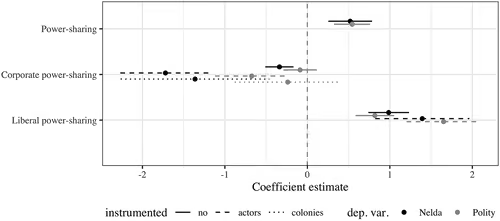
Journal of Peace Research
@JPR_journal
Does power-sharing reduce or increase ethnic salience? @andijot investigates this puzzle by relying on the most extensive collection of mass surveys used in the empirical literature on ethnic salience, encompassing more than 900,000 respondents from 132 countries.
Journal of Peace Research
@JPR_journal
To learn more about the results and their implications for efforts to institutionalize peace in divided societies, read the author in JPR journals.sagepub.com/doi/10.1177/00223433241227759
-
Journal of Peace Research
@JPR_journal
How do victims of political violence compare their suffering with that of others & why do such comparisons slip easily into competition?
Journal of Peace Research
@JPR_journal
@BachleitnerK examines these questions using survey data collected from a sample of Syrians, Palestinians, & Israelis.
Journal of Peace Research
@JPR_journal
To learn more about the results and how they can help to understand better the links between traumatic memory, victimhood, international recognition, & conflict, read the author in JPR journals.sagepub.com/doi/10.1177/00223433241231868
-
Journal of Peace Research
@JPR_journal
New dataset alert: @JordanMBeckerr, Seth Benson, J Paul Dunne, Edmund Malesky introduce a dataset that provides information on disaggregated defense spending from 35 NATO and EU members over 51 years.
Journal of Peace Research
@JPR_journal
In addition to automating the extraction of NATO and European Defence Agency data on overall military expenditures, the authors make data on equipment, personnel, operating, and infrastructure spending available.
Journal of Peace Research
@JPR_journal
To learn more about the dataset and how it can be used, read the authors in JPR. journals.sagepub.com/doi/full/10.1177/00223433231215785
-
Journal of Peace Research
@JPR_journal
Can sports nationalism fuel xenophobic behavior and attacks against immigrants?
Post not available here, view on X
Journal of Peace Research
@JPR_journal
@gabrieleaopinto examines the relationship between the national team’s performance in prominent international competitions & shifts in nationalist tendencies & xenophobic behaviors against immigrants.
Journal of Peace Research
@JPR_journal
To learn more about results and their significance, read the author in JPR: journals.sagepub.com/doi/10.1177/00223433241231177
-
Journal of Peace Research
@JPR_journal
New dataset alert: How do ethnic organizations use digital communication channels to reach their domestic and international audiences?
Journal of Peace Research
@JPR_journal
To enable research on these questions, @gremfred & @nils_weidmann introduce the Ethnic Organizations Online dataset which features more than 2000 online channels used by 265 groups.
Journal of Peace Research
@JPR_journal
To learn more about the dataset and how it can be used, read the authors in JPR journals.sagepub.com/doi/10.1177/00223433241231844
-
Journal of Peace Research
@JPR_journal
When do IMF programs induce protest?
Journal of Peace Research
@JPR_journal
@b_reinsberg and @rodabouharb investigate this question using a mixed-method strategy combining individual-level survey evidence from 12 sub-Saharan African countries and an intertemporal case study of Kenya.
Journal of Peace Research
@JPR_journal
To learn more about the role of governments in IMF-induced protests, read the authors in JPR journals.sagepub.com/doi/10.1177/00223433241231841
-
Journal of Peace Research
@JPR_journal
What are the gendered risks of social leadership & human rights activism in Colombian armed conflict zones?
Post not available here, view on X
Journal of Peace Research
@JPR_journal
The authors analyzed 40 qualitative interviews with men & women social leaders who have worked in nine different conflict regions of Colombia and found that armed actors target men & women leaders with uniquely gender-specific threats.
Journal of Peace Research
@JPR_journal
To learn more about the results, read the authors in JPR journals.sagepub.com/doi/full/10.1177/00223433231220261
-
Journal of Peace Research
@JPR_journal
Can increased female representation in foreign policy deliberations impact deliberators’ support for interstate conflict resolution?
Journal of Peace Research
@JPR_journal
@fahdhumayun unpacks this puzzle by using a survey experiment involving 149 male and 55 female elite Pakistani legislators. Contrary to expectations, the author finds that inferences of increased female representation hardened assignees’ opposition to conflict resolution.
Journal of Peace Research
@JPR_journal
To learn more about how gender constructs directionally shape elite preferences around conflict resolution, read the article in JPR rb.gy/3j3bmw
-
Journal of Peace Research
@JPR_journal
How are the dynamics of international cooperation in outer space changing?
Journal of Peace Research
@JPR_journal
@SvetlaBI provides an answer to this question by using a network analysis. The author quantifies cooperative relations between states on space matters from 1958 until 2023.
Journal of Peace Research
@JPR_journal
To learn more about what ‘space blocs’ are and why they are relevant, read the author in JPR rb.gy/fs699p
-
Journal of Peace Research
@JPR_journal
Do leaders in nondemocratic regimes face public backlash when they threaten to use military force and subsequently back down?
Journal of Peace Research
@JPR_journal
@MichalSmetana3 presents the results of an original survey experiment conducted shortly before Russia invaded Ukraine.
Journal of Peace Research
@JPR_journal
The survey investigates the micro-foundations of domestic audience costs in the Russian Federation, adding a crucial empirical contribution to the study of audience cost theory. To learn more about the results, read the author in JPR journals.sagepub.com/doi/full/10.1177/00223433231220252
-
Journal of Peace Research
@JPR_journal
How do citizens perceive hard propaganda in the authoritarian Maduro regime of Venezuela?
Journal of Peace Research
@JPR_journal
@philutsc & @karstendonnay address this question using an online survey that features a choice experiment in which respondents chose between and rated different propaganda images against more neutral political communication.
Journal of Peace Research
@JPR_journal
To learn more about the results and their implications, read the authors in JPR journals.sagepub.com/doi/full/10.1177/00223433231220269
-
Journal of Peace Research
@JPR_journal
New Dataset Alert: When, where & why do communities choose to take justice into their own hands and ‘lynch’ alleged wrongdoers?
Journal of Peace Research
@JPR_journal
@EnzoNussio & @GovClaytonn unpack this puzzle by developing the Lynching in Latin America (LYLA) dataset which covers reported lynching incidents across Latin America (2010-2019) including 2818 lynching events in 18 countries.
Journal of Peace Research
@JPR_journal
The data features information on the alleged wrongdoing that motivated the event, the type of violence deployed, the size of the mob, the exact date of the event & geo-coded coordinates capturing where the event took place at the street level.
Journal of Peace Research
@JPR_journal
To learn more about the dataset & how it can be used, read the authors in JPR journals.sagepub.com/doi/10.1177/00223433231220275
-
Journal of Peace Research
@JPR_journal
Why do women participate in political violence? Mario Ferrero offers a gendered model of the supply of violence that can account for both peaceful & violent choices.
Journal of Peace Research
@JPR_journal
To test this claim, the author uses empirical evidence of women’s involvement in the Russian revolutionary movement leading up to the 1917 revolution. To learn more about the results and their implications, read the author in JPR journals.sagepub.com/doi/10.1177/00223433231215772
-
Journal of Peace Research
@JPR_journal
What determines public approval of a government’s response to external coercion?
Post not available here, view on X
Journal of Peace Research
@JPR_journal
With a two-wave survey of Chinese citizens, the author explores how the government’s strategy affected public approval through two causal mechanisms: the state’s reputation for resolve and economic impact.
Journal of Peace Research
@JPR_journal
To learn more about the results, read the author in JPR journals.sagepub.com/doi/10.1177/00223433231221437
-
Journal of Peace Research
@JPR_journal
When state armed forces engage in violence against civilians during civil wars, why do some citizens continue to support the government?
Journal of Peace Research
@JPR_journal
@levy_gabriella unpacks this puzzle by analyzing seven years of surveys fielded by the Latin American Public Opinion Project in Colombia (2005-2011)
Journal of Peace Research
@JPR_journal
& finds that individuals’ responses to victimization by the state’s armed forces depend on whether the individuals are ideologically aligned with the state. To learn more about the results, read the author in JPR journals.sagepub.com/doi/10.1177/00223433231200926
-
Journal of Peace Research
@JPR_journal
How does cyber power influence the nature of peace, conflict & international relations?
Journal of Peace Research
@JPR_journal
The New JPR Special Issues on Cyber-Conflict, edited by Ryan Shandler & @DaphnaCanetti examines this question with a diverse range of methods. To learn more about the 11 articles and their contributions, visit the collection’s page here: journals.sagepub.com/page/jpr/specialissueoncyberconflict
-
Journal of Peace Research
@JPR_journal
New Dataset Alert: The Latin American Guerrillas Dataset (LAGD) covers the actions of 90 guerrilla organizations in 19 countries in the region,
Post not available here, view on X
Journal of Peace Research
@JPR_journal
The LAGD represents one of the first systematic efforts for collecting comparative evidence on insurgencies operating in LA
Journal of Peace Research
@JPR_journal
& should facilitate rigorous analyses on the divergent pathways of armed groups from a processual perspective, while dealing with extant issues of selection bias. To learn more about the dataset, read @g_kreiman article in JPR journals.sagepub.com/doi/abs/10.1177/00223433231215751
-
Journal of Peace Research
@JPR_journal
This year's Nils Petter Gleditsch Article of the Year and Best Visualization award results are out!
PRIO
@PRIOresearch
This year’s Nils Petter Gleditsch @JPR_journal Article of the Year has been awarded to @jaklocek, Hyun Jeong Ha & @nathanaeldotid for their article entitled “Regime change and religious discrimination after the Arab uprisings.”🏅
www.prio.org/news/3501 -
Journal of Peace Research
@JPR_journal
What happens when leaders face competing compliance pressures from an international court & their domestic public?
Journal of Peace Research
@JPR_journal
Francesca Parente posits that compliance is a function of proximity to the next presidential election, necessitating greater responsiveness to the public’s opinions, & the public’s attitudes toward the actor implicated by the ruling.
Journal of Peace Research
@JPR_journal
The author tests this argument on an original dataset of all Inter-American Court rulings implicating the military.
Journal of Peace Research
@JPR_journal
To learn more about how the findings enhance our understanding of the relationship between public attitudes & compliance with international law, read the author in JPR journals.sagepub.com/doi/10.1177/00223433231200924
-
Journal of Peace Research
@JPR_journal
Social media have become an important tool for mobilization and rebel groups are not exempt from using these tools. How do different messaging strategies impact civilian engagement with rebel messages?
Journal of Peace Research
@JPR_journal
Samuel E Bestvater & Cyanne E Loyle unpack this question by using a new dataset of rebel groups’ Twitter use. To learn more about the different effects of direct and indirect messages as well as of images, read the authors in JPR journals.sagepub.com/doi/10.1177/00223433231201448
-
Journal of Peace Research
@JPR_journal
When and why do voters support former rebel women running for political office? @lizzie_brannon examines this question by using a novel dataset on the election of former rebel women to rebel parties from 1970 to 2020.
Journal of Peace Research
@JPR_journal
To learn more about how women’s war-time role in the rebel groups and their use of violence during conflict impact their post-conflict political trajectories, read the author in JPR journals.sagepub.com/doi/10.1177/00223433231200923
-
Journal of Peace Research
@JPR_journal
Does leader age matter for the likelihood of interstate conflict? @andrewbertoli1, @AllanDafoe, & @RobertTrager explore this question by addressing the endogeneity problem through the adoption of a regression discontinuity design.
Journal of Peace Research
@JPR_journal
To learn more about the results and the role that individuals’ age shaping world politics read the authors in JPR journals.sagepub.com/doi/10.1177/00223433231201447
-
Journal of Peace Research
@JPR_journal
How does the inclusion of a marginalized group into the police impact the dominant group?
Journal of Peace Research
@JPR_journal
@MatthewJNanes explores this question by focusing on dominant group responses to police integration using micro-level data from Israel. The author uses a survey experiment & draws on multiple surveys & panel data on the identity of officers at every station over six years.
Journal of Peace Research
@JPR_journal
To learn more about the findings, read the author in JPR journals.sagepub.com/doi/10.1177/00223433231200921
-
Journal of Peace Research
@JPR_journal
Why do some dictatorships introduce multiparty elections while others don’t?
Journal of Peace Research
@JPR_journal
@ausmitchell addresses this puzzle by hypothesizing that a dictatorship’s revenue determines the regime’s spending policies & when the regime creates electoral institutions.
Journal of Peace Research
@JPR_journal
The author tests the implications of the argument for regime spending & the creation of multiparty electoral institutions using a global sample of dictatorships between 1972-2014. To learn more about the results, read the author in JPR journals.sagepub.com/doi/10.1177/00223433231196608
-
Journal of Peace Research
@JPR_journal
How do people prioritize different aspects (identity of attacker, tactic, motivation, etc.) of a terrorist attack when expressing their opinion on how the government should address terrorism?
Journal of Peace Research
@JPR_journal
@Jarek_Kantor,@Elena_Reznichen & Gerdien de Vries unpack this question by employing a conjoint experiment & survey data from the UK and the Netherlands (N = 6,315). To find out more about the results, read the authors in JPR tinyurl.com/yp82awdz
-
Journal of Peace Research
@JPR_journal
Do victims of wartime sexual violence remain politically passive or do they mobilize as a consequence of their experience? @BelenGonzalez_S & Richard Traunmüller investigate this issue by conducting a list experiment embedded in a survey administered in postwar Sri Lanka.
Journal of Peace Research
@JPR_journal
To learn more about what the findings reveal about survivors’ agency, read the authors in JPR tinyurl.com/2p9w2wed
-
Journal of Peace Research
@JPR_journal
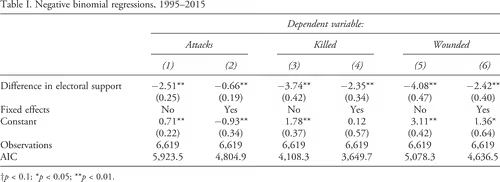
Why do states use violence to repress dissent? When do opposition groups escalate conflict by employing violent tactics?
Journal of Peace Research
@JPR_journal
Ayal Feinberg & @IdeanSalehyan unpack this puzzle by theorizing that student protests are more likely to escalate into violence than protests by other actors & that security forces are more likely to use repression against students.
Journal of Peace Research
@JPR_journal
To test their claims, the authors use event data combined with actor information on protest dynamics across seven countries in Africa & Latin America (1990-2016). To learn more about the findings, read the authors in JPR tinyurl.com/3epecyh6
-
Journal of Peace Research
@JPR_journal
How do militarized state-building interventions (MSIs) impact the survival of fragile states?
Journal of Peace Research
@JPR_journal
@KellyMatush & David A Lake examine this question by proposing a theory according to which MSIs need to create a resilient state that can endure over time, yet the intervener has its own interest which it usually achieves through installing a proxy regime.
Journal of Peace Research
@JPR_journal
The authors test their claims across a range of MSIs from 1956 to 2006. To learn more about the results and their policy implications, read the authors in JPR journals.sagepub.com/doi/10.1177/00223433231196610
-
Journal of Peace Research
@JPR_journal
Does nuclear supply stimulate states’ demand for nuclear weapons? Conversely, does the demand for nuclear weapons really facilitate the acquisition of nuclear supply?
Journal of Peace Research
@JPR_journal
@azusak3 examines these questions by unpacking the endogenous mechanisms of nuclear demand and nuclear supply over the course of nuclear proliferation.
Journal of Peace Research
@JPR_journal
To learn more about how inference issues in nuclear proliferation research can be addressed, read the author in JPR tinyurl.com/4erzvwwd
-
Journal of Peace Research
@JPR_journal
How can protest data contribute to predicting armed conflict? Espen Geelmuyden Rød, @HavardHegre & Maxine Leis explore this topic by identifying three theoretical explanations related to protest-repression dynamics, political institutions and economic development.
Journal of Peace Research
@JPR_journal
These theories are used to operationalize nine models and use the political Violence Early Warning Sytem to generate forecasts for intrastate armed conflict in Africa. To learn more about the results, read the authors in JPR tinyurl.com/yddan4ka
-
Journal of Peace Research
@JPR_journal
What are the barriers to support and justice for women and their children fathered by peacekeepers (PKFC)?
Post not available here, view on X
Journal of Peace Research
@JPR_journal
The authors apply a mixed-method SenseMaker® research with community members who interact with peacekeeping personnel and interviews with 58 women who are raising children fathered by peacekeepers.
Journal of Peace Research
@JPR_journal
To learn more about logistical, institutional and legal barriers to accessing support for PKFC, read the authors in JPR journals.sagepub.com/doi/10.1177/00223433231168182
-
Journal of Peace Research
@JPR_journal
How do citizens form attitudes toward peace agreements? @NGarbirasDiaz, Miguel García-Sánchez & @matanock unpack this puzzle by theorizing that citizens use stark cues from political elites with whom they have affinity to form their attitudes.
Journal of Peace Research
@JPR_journal
The authors test their theory using survey experiments during the implementation of Colombia’s peace agreement between the government and the Revolutionary Armed Forces of Colombia (FARC).
Journal of Peace Research
@JPR_journal
To learn more about the results and their implications, read the authors in JPR journals.sagepub.com/doi/10.1177/00223433231168189
-
Journal of Peace Research
@JPR_journal
How do different types of interstate conflict affect trade between disputing parties and trade diversion with third parties?
Journal of Peace Research
@JPR_journal
@ryan_brutger & Tim Marple theorize and test these questions by conceptualizing borders as institutions and drawing on 60 years of trade and conflict data to test the effects of border disputes and militarized disputes on bilateral and third-party trade flows.
Journal of Peace Research
@JPR_journal
To learn more about the results, read the authors in JPR tinyurl.com/yxnn56au
-
Journal of Peace Research
@JPR_journal
Do UN missions reduce forced displacement?
Post not available here, view on X
Journal of Peace Research
@JPR_journal
seemingly unrelated regression models on a global sample of 74 countries (1998–2015) to evaluate whether & how the presence, size, & mandate of UN missions affect the magnitude of forced displacement.
Journal of Peace Research
@JPR_journal
To learn more about the results of the first global analysis of the relationship between UN peace missions & flows of forcibly displaced people, including refugees and IDPs, read the authors in JPR journals.sagepub.com/doi/10.1177/00223433231186448
-
Journal of Peace Research
@JPR_journal
What is the relationship between recent repression of protest & the duration of future protests?
Post not available here, view on X
Journal of Peace Research
@JPR_journal
A simultaneous jump in grievances and risks may increase the number of people protesting who are also risk-acceptant and willing to protest for longer durations.
Journal of Peace Research
@JPR_journal
The authors test their claim by using the Armed Conflict Location & Event Data Project data & hierarchal negative binomial models. To learn more about the findings, read the authors in JPR journals.sagepub.com/doi/10.1177/00223433231186449
-
Journal of Peace Research
@JPR_journal
How do (dis)similarities in the background characteristics of leaders at the dyadic level shape international conflict outcomes?
Post not available here, view on X
Journal of Peace Research
@JPR_journal
data on international conflict onset in politically relevant dyads throughout the period 1946–2004.
Journal of Peace Research
@JPR_journal
To learn more about the results & how they can advance research on linkages between psychological & rationalist approaches to studying conflict, read the authors in JPR journals.sagepub.com/doi/10.1177/00223433231186446
-
Journal of Peace Research
@JPR_journal
How & why does conflict-related violence (CRV) concentrate within postwar cities? @emmaelfversson, @ivan_gusic, & @MarieTh_Meye examine this question in the context of Mitrovica by combining systematic mapping of violence with inductive analysis of what shapes its distribution.
Journal of Peace Research
@JPR_journal
The authors rely on novel georeferenced data on CRV, in combination with in-depth fieldwork, to map CRV in Mitrovica & explore the causes for its spatial clustering. To learn more about the results, read the authors in JPR journals.sagepub.com/doi/full/10.1177/00223433221147942
-
Journal of Peace Research
@JPR_journal
Can the legacy of state violence undermine participation in transitional justice services designed to consolidate peace after conflict?
Journal of Peace Research
@JPR_journal
@elsavoytas & @bccrisman investigate this puzzle by examining the different impacts of government & non-state violence against civilians.
Journal of Peace Research
@JPR_journal
The authors find that violence carried out by the state against civilians is associated with lower levels of enlistment in Colombia’s state-run victims’ registry. To learn more about the findings read the authors in JPR tinyurl.com/4hzkbbb2
-
Journal of Peace Research
@JPR_journal
What is the relationship between virtuous violence (i.e.: violence which the perpetrator believes is morally justified) & attitudes towards nuclear weapons use?
Post not available here, view on X
Journal of Peace Research
@JPR_journal
The authors demonstrate that moral condemnation of adversaries is extremely easy to invoke, hard to avoid, common across different cultural contexts, and a central feature of ‘binding’ morality.
Journal of Peace Research
@JPR_journal
To learn more about the results and their implications, read the authors in JPR tinyurl.com/m47xhusd
-
Journal of Peace Research
@JPR_journal
New dataset alert:@FabioAngiolillo develops a comprehensive dataset on party membership in autocracies.
Journal of Peace Research
@JPR_journal
The OPAMED features 1,845 year-observations on party membership in 42 ruling parties during the 1945–2020 period & introduces two new variables: party size & party membership volatility.
Journal of Peace Research
@JPR_journal
To learn more about how the dataset can open up the path to test theories of regime survival from a bottom-up standpoint, read the author in JPR tinyurl.com/5796cmee
-
Journal of Peace Research
@JPR_journal
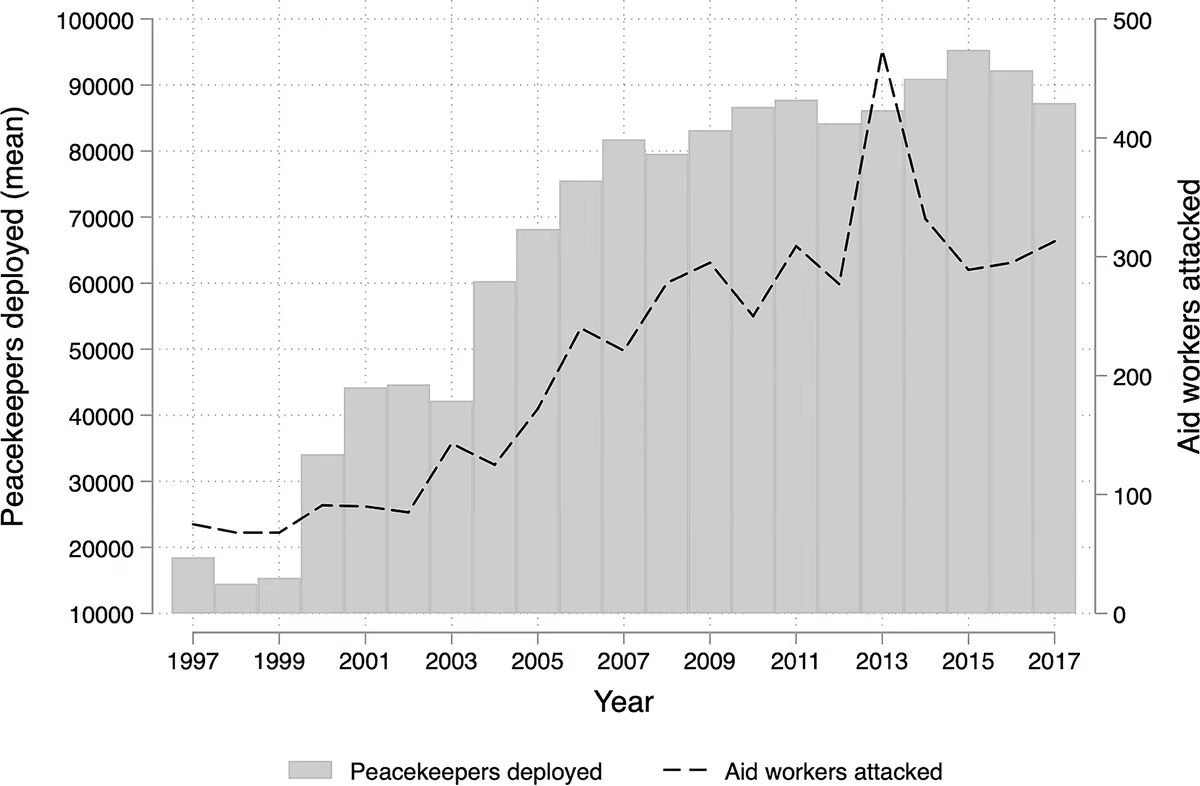
Do UN peacekeeping operations improve the security of humanitarian aid workers during conflict?
Post not available here, view on X
Journal of Peace Research
@JPR_journal
Statistical analyses of monthly data between 2000-2015 indicate that greater numbers of UN troops, but not police and observers, are correlated with fewer attacks against aid workers.
Journal of Peace Research
@JPR_journal
To learn more about the results & their implications, read the author in JPR tinyurl.com/3p7yx3hp
-
Journal of Peace Research
@JPR_journal
New dataset alert: The episodes of regime transformation (ERT) dataset captures 680 episodes of regime transformation from 1900 to 2019 and offers novel insights into regime change over the past 120 years.
Journal of Peace Research
@JPR_journal
To learn more about the unique features of the dataset and its potential utilizations, read @SeraphineMaerz, @acrowinghen, @StaffanILindber @matwilso @S_Hellmeier in JPR tinyurl.com/2s4esap3
-
Journal of Peace Research
@JPR_journal
How can autocrats boost public support for wars? @DongshuLiu & Li Shao provide an answer to this question by conducting two online survey experiments with textual and musical propaganda materials in mainland China.
Journal of Peace Research
@JPR_journal
The authors find that nationalist propaganda bolsters public support for war, regarding a potential military conflict across the Taiwan Strait.
Journal of Peace Research
@JPR_journal
To learn more about the findings and their implications for security and geopolitics in East Asia, read the authors in JPR journals.sagepub.com/doi/10.1177/00223433231178849
-
Journal of Peace Research
@JPR_journal
How & under what conditions do religious factors explain the militarization of interstate territorial disputes?
Journal of Peace Research
@JPR_journal
@ArielZellman & Jonathan Fox explore this question by developing a theory that examines the relationship between the challenger state’s religiosity & the domestic constituencies invested in religiously salient territorial claims.
Journal of Peace Research
@JPR_journal
The authors test their theory by utilizing original data on the religious salience of interstate territorial disputes from 1990 to 2010. To learn more about how the results, read the authors in JPR tinyurl.com/26rmfr3h
-
Journal of Peace Research
@JPR_journal
New Special Data Feature: @miweintraub83, @abbey_st @Mmariannedahl @havardmn @HBinningsb & Sebastián Pantoja-Barrios introduces the Mapping Attitudes, Perceptions and Support (MAPS) dataset, a panel survey (carried out in 2019 and 2021) of war-affected communities in Colombia.
Journal of Peace Research
@JPR_journal
MAPS reveals regional variation obscured in nationally representative surveys & the authors illustrate how the dataset allows us to explore how & why people’s perceptions of the agreement shift over time.
Journal of Peace Research
@JPR_journal
To learn more about the dataset, read the authors in JPR journals.sagepub.com/doi/10.1177/00223433231178848
-
Journal of Peace Research
@JPR_journal
Twitter
New dataset alert: Jack Schwartz developed the Rebel Foreign Fighter Dataset (RFFD). Using the RFFD, the author reexamines a previous study on the link between FF inclusion and civilian sexual violence and challenges previous findings.
Journal of Peace Research
@JPR_journal
To learn more about the datasets and how it’s utilized, read the author in JPR journals.sagepub.com/doi/full/10.1177/00223433231168183
-
Journal of Peace Research
@JPR_journal
Does increasing Internet access & use challenge authoritarian elections?
@LaserGabi examines this question by focusing on Uganda’s 2016 presidential elections. The author uses evidence from election monitoring & survey data, complemented by interviews.
Journal of Peace Research
@JPR_journal
To learn more about the role that Internet access can play for opposition actors in authoritarian elections & their susceptibility to manipulation by government authorities, read the author in JPR journals.sagepub.com/doi/full/10.1177/00223433231168190
-
Journal of Peace Research
@JPR_journal
What are the spatial dynamics of communal violence?
Journal of Peace Research
@JPR_journal
@stefandoring & @KMustasilta examine this question by exploring whether incidences of communal violence occur through spatial spillover processes
Journal of Peace Research
@JPR_journal
& whether spillover is explained through spillover of violence and/or through spillover of predictors with special attention given to drought exposure. To learn more about the results of their spatial models, read the authors in JPR journals.sagepub.com/doi/full/10.1177/00223433231168187
-
Journal of Peace Research
@JPR_journal
What is the relationship between logos showcased by terrorist groups & their propensity to use violence? @MatteoCasiragh3 & @EugenioCusumano investigate this puzzle by coding & analyzing 562 terrorist logos (2000–16).
Journal of Peace Research
@JPR_journal
The authors use a zero-inflated negative binomial model to analyze the relationship between these organizations’ visual choices & their deadly activities.
Journal of Peace Research
@JPR_journal
To learn more about the importance of visual artifacts & their amenability to quantitative research, read the authors in JPR journals.sagepub.com/doi/full/10.1177/00223433231168181
-
Journal of Peace Research
@JPR_journal
In 2019, attacks on healthcare coincided with the first-ever Ebola outbreak in the Democratic Republic of Congo. Many of the attacks on the Ebola response were perpetrated by civilians, but why would communities attack the very people trying to protect them from disease?
Journal of Peace Research
@JPR_journal
@melinscribe examines this question by analyzing the case of violence against Ebola responders during the Democratic Republic of the Congo’s tenth Ebola outbreak from 2018 to 2020.
Journal of Peace Research
@JPR_journal
The author combines process tracing and an interrupted time-series model. To learn more about the findings, read the author in JPR journals.sagepub.com/doi/full/10.1177/00223433231158144
-
Journal of Peace Research
@JPR_journal
Why do states engage in violence against marginalized social groups?
Journal of Peace Research
@JPR_journal
@Matthew_A_Rains & Daniel W Hill argue that governments in which nationalist parties hold substantial influence are more likely to adopt policies that lead to violence against members of marginalized groups that appear to be unconnected to dissent or anti-state mobilization.
Journal of Peace Research
@JPR_journal
The authors test their argument by examining the Ill-Treatment and Torture data, which records allegations of state violence and also information about the victim’s identity. To learn more about the findings, read the authors in JPR journals.sagepub.com/doi/10.1177/00223433231164437
-
Journal of Peace Research
@JPR_journal
Under what conditions do states shame other states for conflict-related sexual violence (CRSV)?
Post not available here, view on X
Journal of Peace Research
@JPR_journal
Through statistical analyses of state-with-state interactions within the UPR in the 2008–2019 period, the author finds that one of the most recurring patterns in CRSV-shaming is that Western donors shame states that receive their aid.
Journal of Peace Research
@JPR_journal
To learn more about the findings and their implications for the policy field of CRSV, read the author in JPR journals.sagepub.com/doi/10.1177/00223433221147943
-
Journal of Peace Research
@JPR_journal
Why do states engage in violence against marginalized social groups?
Journal of Peace Research
@JPR_journal
@Matthew_A_Rains & Daniel W Hill argue that governments in which nationalist parties hold substantial influence are more likely to adopt policies that lead to violence against members of marginalized groups that appear to be unconnected to dissent or anti-state mobilization.
Journal of Peace Research
@JPR_journal
The authors test their argument by examining the Ill-Treatment and Torture data, which records allegations of state violence and also information about the victim’s identity. To learn more about the findings, read the authors in JPR journals.sagepub.com/doi/10.1177/00223433231164437
-
Journal of Peace Research
@JPR_journal
Does human rights advocacy make a difference? @JoseKaire argues that to be able to answer this question, research needs to focus not on shaming, but on monitoring.
Journal of Peace Research
@JPR_journal
The author presents a new measure based on text analysis covering almost every country for the last 40 years and using vector autoregression models to study the endogenous relationship between monitoring and human rights.
Journal of Peace Research
@JPR_journal
To learn more about the findings, read the author in JPR journals.sagepub.com/doi/10.1177/00223433231164443
-
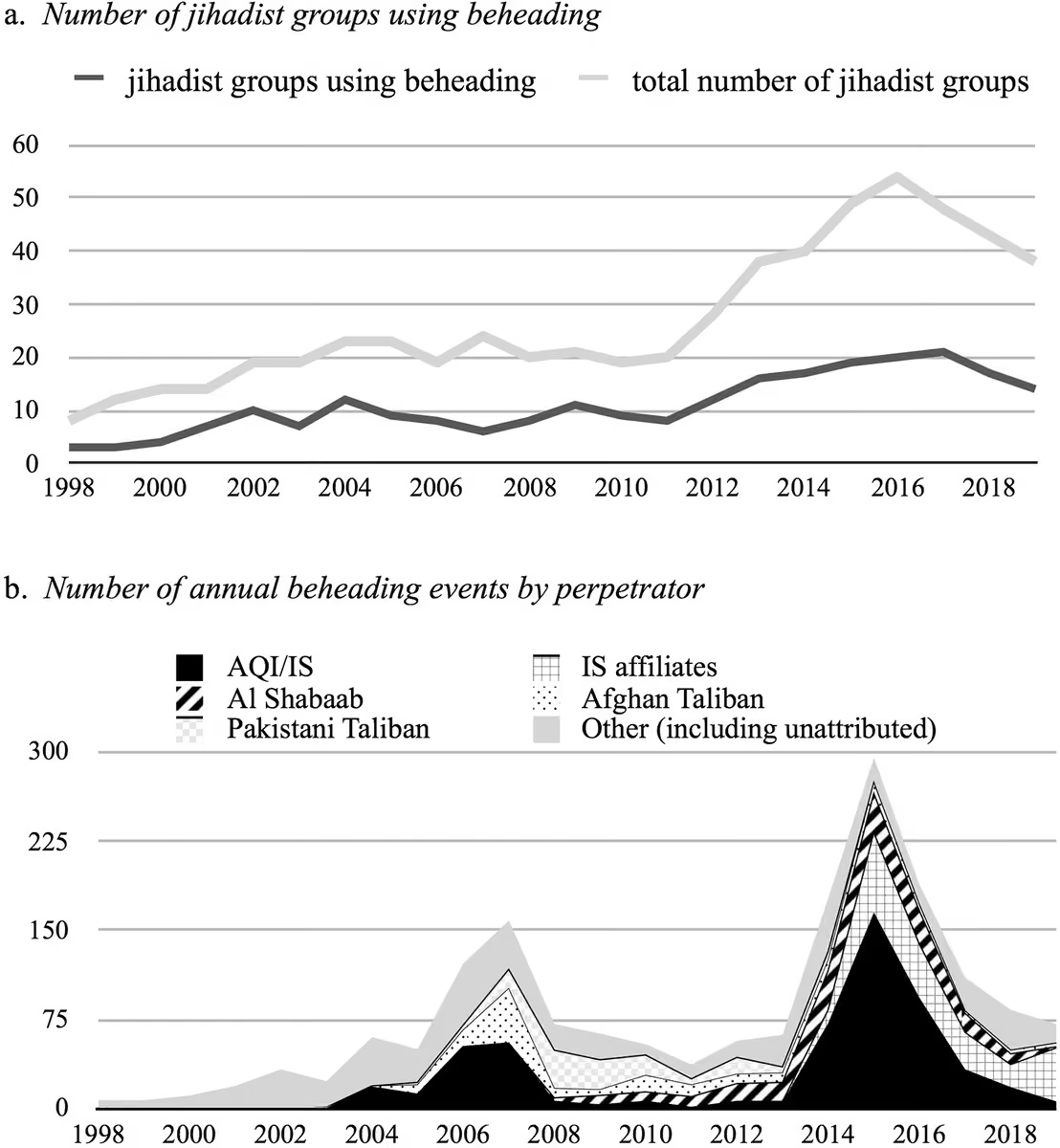
Journal of Peace Research
@JPR_journal
Why do some jihadist organizations engage in beheadings while others do not?
Journal of Peace Research
@JPR_journal
Marek K Brzezinski posits that the use of beheadings is shaped by a combination of local strategic context & transnational ties, testing his theory by using an original dataset of over 1,500 beheading events perpetrated by jihadist organizations between 1998 and 2019.
Journal of Peace Research
@JPR_journal
To learn more about the results, read the author in JPR journals.sagepub.com/doi/10.1177/00223433231164442
-
Journal of Peace Research
@JPR_journal
Do United Nations peacekeeping operations improve the security of humanitarian aid workers during conflict?
Post not available here, view on X
Journal of Peace Research
@JPR_journal
The author conducts statistical analyses of monthly data between 2000 and 2015 and finds that greater numbers of UN troops, but not police and observers, are correlated with fewer attacks against aid workers.
Journal of Peace Research
@JPR_journal
To learn more about the implications of these findings, read the author in JPR journals.sagepub.com/doi/10.1177/00223433231159186
-
Journal of Peace Research
@JPR_journal
How do preferences for public goods change when individuals experience organized violence or quotidian crime? @SarahBerens27 & @sabrinamkarim investigate this puzzle by using original survey data from rural Liberia.
Journal of Peace Research
@JPR_journal
To learn more about the importance of a disaggregated approach to understanding the effects of violence on preferences, read the authors in JPR journals.sagepub.com/doi/10.1177/00223433231155281
-
Journal of Peace Research
@JPR_journal
Is the UN Secretary-General (SG) an independent actor in conflict diplomacy, or are his political interventions influenced by the parochial interests of the UN Security Council (UN SC) permanent member states?
Journal of Peace Research
@JPR_journal
Lonjezo Peter Mpinganjira Frank offers an answer to this question by conducting the first large-N historical study on SG’s conflict interventions by distinguishing between interventions mandated by the UNSC and nonmandated interventions.
Journal of Peace Research
@JPR_journal
To learn more about the results and their contribution to the literature on the role of executive heads of international organizations, read the author in JPR journals.sagepub.com/doi/10.1177/00223433231159183
-
Journal of Peace Research
@JPR_journal
How can mediator biases balance each other to improve or hinder mediation outcomes?
Post not available here, view on X
Journal of Peace Research
@JPR_journal
By examining civil war mediation attempts between 1989-2005, the author finds that balanced mediation efforts improve the probability of reaching an agreement & influence the probability the agreement halts the violence, albeit in unexpected ways.
Journal of Peace Research
@JPR_journal
To learn more about the results, read the author in JPR journals.sagepub.com/doi/10.1177/00223433231156959
-
Journal of Peace Research
@JPR_journal
How can mediator biases balance each other to improve or hinder mediation outcomes? Elizabeth J Menninga investigates this question by developing the Mediation balance measure which aggregates the mediators’ biases when multiple third parties are present.
Journal of Peace Research
@JPR_journal
By examining civil war mediation attempts between 1989-2005, the author finds that balanced mediation efforts improve the probability of reaching an agreement & influence the probability the agreement halts the violence, albeit in unexpected ways.
Journal of Peace Research
@JPR_journal
To learn more about the results, read the author in JPR journals.sagepub.com/doi/10.1177/00223433231156959
-
Journal of Peace Research
@JPR_journal
2025 JPR Special Issue Call!
Post not available here, view on X
Journal of Peace Research
@JPR_journal
We welcome issues on topics that significantly advance the research frontier of the field, with a focus on causes and consequences of violence, conflict prevention and resolution, and nonviolent action.
Journal of Peace Research
@JPR_journal
The deadline for submitting proposals is 15 May 2023, and the decision will be made the following month. To learn more about the submission details, visit this page: www.prio.org/journals/jpr/s/1461
-
Journal of Peace Research
@JPR_journal
New dataset alert: Michael R Kenwick, Beth A Simmons & @The_RickMc developed the Border Crossings of the World (BCW) dataset which explores state authority spatially by collecting information about infrastructure built where highways cross internationally recognized borders.
Journal of Peace Research
@JPR_journal
To learn more about how the BCW dataset can contribute to research on border management cooperation, political violence, terrorism, trade & migration flows, transnational crime patterns, & human rights conditions, read the authors in JPR journals.sagepub.com/doi/full/10.1177/00223433221145582
-
Journal of Peace Research
@JPR_journal
Do intense religious experiences increase or decrease terrorism? Roland Hodler, @PaulRaschky & @schluwie03 investigate this puzzle by focusing on fasting during the month of Ramadan.
Journal of Peace Research
@JPR_journal
The authors show that longer Ramadan daylight hours reduce terrorism in predominantly Muslim countries, and play against operationally difficult terrorist attacks. Using survey evidence they show that longer Ramadan daylight hours reduce public support for terrorism.
Journal of Peace Research
@JPR_journal
To learn more about how intense religious experiences can decrease public support for terrorism, read the authors in JPR journals.sagepub.com/doi/full/10.1177/00223433221145641
-
Journal of Peace Research
@JPR_journal
How do domestic trials addressing wartime violence affect public opinion of government?
Journal of Peace Research
@JPR_journal
@kitagawarisa unpacks this question by analysing the extent to which such trials achieve procedural justice (fairness in process) and retributive justice (allocation of punishment) affects perceptions of political legitimacy.
Journal of Peace Research
@JPR_journal
The author provides survey-experimental evidence from post-conflict El Salvador that leverages the repeal of a longstanding amnesty law. To learn more about the limits of procedural justice in a post-conflict environment, read the author in JPR journals.sagepub.com/doi/10.1177/00223433221148223
-
Journal of Peace Research
@JPR_journal
How, and under what conditions, does electoral violence influence voter turnout? @sebvanbaalen investigates this puzzle by taking a subnational approach to probe the moderating effect of local incumbent strength on the association between electoral violence and turnout.
Journal of Peace Research
@JPR_journal
The author combines original subnational event data on electoral violence before Côte d’Ivoire’s 2021 legislative elections with electoral records.
Journal of Peace Research
@JPR_journal
To learn more about the conditions under which electoral violence depresses voter turnout, read the author in JPR journals.sagepub.com/doi/10.1177/00223433221147938
-
Journal of Peace Research
@JPR_journal
How does one define and measure rebel-to-party transitions?
Journal of Peace Research
@JPR_journal
@TheDapperChef examines this question by proposing a novel conceptualization and measure of rebel-to-party transition by distinguishing between failures, nominal participants (the conventional benchmark for transition), and seated participants.
Journal of Peace Research
@JPR_journal
To learn more about the importance of developing a new conceptual framework, read the author in JPR journals.sagepub.com/doi/full/10.1177/00223433221123358
-
Journal of Peace Research
@JPR_journal
How do armed actors affect the outcome of elections? @andresdu unpacks this puzzle by examining the Peruvian civil war and the ways through which Shining Path influenced elections through formal and informal governance institutions it developed.
Journal of Peace Research
@JPR_journal
The author uses archival evidence, time series analysis of micro-level violent event data, and a synthetic control study. To learn more about the results and their implications for research on electoral violence and rebel governance, read the author in JPR journals.sagepub.com/doi/10.1177/00223433221147939
-
Journal of Peace Research
@JPR_journal
Can increased transparency in the UN Security Council lead to enhanced legitimacy perceptions among UN member-states?
Journal of Peace Research
@JPR_journal
@vegardtorstad addresses this question by conducting interviews and using longitudinal content analysis of an original dataset of 4,303 legitimacy statements made by UN member-states in annual UN General Assembly debates over the periods 1990–2006 and 2006–18.
Journal of Peace Research
@JPR_journal
To learn more about the findings and their relevance for the Security Council’s legitimacy, read the author in JPR journals.sagepub.com/doi/10.1177/00223433221123996
-
Journal of Peace Research
@JPR_journal
Why did protests against covid-19 policies vary in intensity across European countries? Eric Neumayer, Katharina Gabriela Pfaff & Thomas Plümper answer this question by analyzing 28 European countries between March 2020 & August 2021.
Journal of Peace Research
@JPR_journal
To learn more about the role of mortality rates, containment policies & political culture in influencing protest intensity against Covid-19 policies, read the authors in JPR journals.sagepub.com/doi/full/10.1177/00223433221135335
-
Journal of Peace Research
@JPR_journal
Can greater inclusion in democracy for historically disadvantaged groups reduce rebel violence?
Post not available here, view on X
Journal of Peace Research
@JPR_journal
The authors employ a geographic regression discontinuity design to study the wartime effects of quotas implemented in Chhattisgarh.
Journal of Peace Research
@JPR_journal
To learn more about how reforms to create a more inclusive representative democracy can shape the trajectory of insurgent violence, read the authors in JPR journals.sagepub.com/doi/10.1177/00223433221098917
-
Journal of Peace Research
@JPR_journal
The 2023 JPR Special Issue on Nonviolent Resistance in an Age of Polarization is available.
Post not available here, view on X
Journal of Peace Research
@JPR_journal
(a) the fragmented nature of civil resistance campaigns in terms of supporters and demands; (b) the increasing prevalence of authoritarian or anti-egalitarian nonviolent campaigns;
Journal of Peace Research
@JPR_journal
(c) the complicated nature of revolutionary success, and (d) the United States as an increasingly salient site of conflict and contention. To learn more about the individual contributions, read the Special Issue in JPR journals.sagepub.com/doi/full/10.1177/00223433221145542
-
Journal of Peace Research
@JPR_journal
Do disadvantaged ethnic groups favor violent over nonviolent conflict tactics? Solveig Hillesund examines this question by analyzing group disadvantages, political violence & nonviolent resistance together.
Journal of Peace Research
@JPR_journal
The author shows that political group disadvantages predict nonviolent, as well as violent, forms of conflict. Groups’ economic status helps explain tactical choices. To learn more about the findings & their relevance, read the author in JPR journals.sagepub.com/doi/10.1177/00223433221111825
-
Journal of Peace Research
@JPR_journal
New dataset alert: @jamesigoewalsh, @_justinconrad & @bethewhitaker developed the Rebel Human Rights Violations (RHRV) dataset measuring the frequency with which rebel groups engage in eight types of human rights abuses.
Journal of Peace Research
@JPR_journal
The data include information for all rebel groups around the world between 1990 & 2018, & include arbitrary killing, detention, forced recruitment, property damage, torture, sexual violence, forced displacement & movement restriction.
Journal of Peace Research
@JPR_journal
To learn more about how the RHRV can contribute to the analysis of the abuse of civilian populations by rebel groups, read the authors in JPR journals.sagepub.com/doi/10.1177/00223433221147940
-
Journal of Peace Research
@JPR_journal
New directions in measuring military power: Mark Souva presents a new measure of military power for all country-years from 1865 to 2019 based primarily on armaments. The measure includes major naval, air & land weapons, nuclear weapons & ballistic missile capabilities.
Journal of Peace Research
@JPR_journal
To learn more about the data & how it can be used to predict predicts war outcomes read the author in JPR journals.sagepub.com/doi/full/10.1177/00223433221112970
-
Journal of Peace Research
@JPR_journal
Why are people willing to risk their lives fighting in a war?
Journal of Peace Research
@JPR_journal
@wearytolove & Nadia Eldemerdash investigate this question by focusing on perceived collective action. The authors conduct a survey experiment (n = 1,001) in Taiwan manipulating perceptions of others’ willingness to fight in a potential China–Taiwan military conflict.
Journal of Peace Research
@JPR_journal
To learn more about how national identity influences perceptions of others’ actions, read the authors in JPR journals.sagepub.com/doi/full/10.1177/00223433221099058
-
Journal of Peace Research
@JPR_journal
JPR's 2025 Special Issue Open Call is out! rb.gy/oml4o0
-
Journal of Peace Research
@JPR_journal
How do negative oil shocks affect military expenditures & the quality of democracy in the oil rentier states of the greater Middle East?
Journal of Peace Research
@JPR_journal
Sajjad F Dizaji investigates this puzzle by using data from 1990 to 2018 & an innovative approach based on panel vector autoregressive techniques (PVAR).
Journal of Peace Research
@JPR_journal
The empirical analysis is based on the historical responses of military & non-military expenditures & the political system to negative oil shocks. To learn more about the results, read the author in JPR journals.sagepub.com/doi/full/10.1177/00223433221116654
-
Journal of Peace Research
@JPR_journal
New Dataset Alert: @meredithloken & @HilaryMatfess introduce the Women’s Activities in Armed Rebellion (WAAR) multi-methods project
Journal of Peace Research
@JPR_journal
WAAR includes a cross-sectional dataset of women’s participation in more than 370 organizations fighting in civil conflicts between 1946 & 2015.
Journal of Peace Research
@JPR_journal
The dataset features 22 measures of women’s participation in rebel groups & includes a qualitative assessment of women’s involvement in each organization. To learn more about the project, read the authors in JPR journals.sagepub.com/doi/full/10.1177/00223433221128340
-
Journal of Peace Research
@JPR_journal
How can international support facilitate or undermine democratic consolidation following nonviolent revolutions?
Journal of Peace Research
@JPR_journal
@kbclarke investigates this puzzle by developing the concept of ambivalent allies & examining Egypt’s 2011 revolution and 2013 coup, drawing on approximately 100 interviews with Egyptian political leaders & foreign diplomats.
Journal of Peace Research
@JPR_journal
To learn more about the results, read the author in JPR journals.sagepub.com/doi/full/10.1177/00223433221137612
-
Journal of Peace Research
@JPR_journal
New Dataset Alert: @petternessern introduces the Jihadi Plots in Europe Dataset (JPED) which records not only attacks that were launched, but also plots that were foiled by counterterrorism.
Post not available here, view on X
Journal of Peace Research
@JPR_journal
JPED also shows that while attack data signify a trend towards small attacks by individuals, these data hide the fact that terror networks persist in plotting big attacks that get foiled.
Journal of Peace Research
@JPR_journal
To learn more about when and where terror plots occur, whether or not they result in attacks, and different types of information about perpetrators and how they operate, read the author in JPR journals.sagepub.com/doi/10.1177/00223433221123360
-
Journal of Peace Research
@JPR_journal
How can nonviolent action shape peace processes?
Journal of Peace Research
@JPR_journal
@Dessnilsson & Isak Svensson examine this question by analyzing unique new monthly data on peacemaking efforts in all intrastate armed conflicts in Africa & the Americas, 1989–2018
Journal of Peace Research
@JPR_journal
including measures such as whether civil society actors or political parties had substantive roles as either mediators or full participants at the peace talks. To learn more about the results, read the authors in JPR journals.sagepub.com/doi/10.1177/00223433221141468
-
Journal of Peace Research
@JPR_journal
What is the relationship between past exposure to mass political violence & political mobilization?@mtkilavuz, @sh_grewal, @rmkubinec address this question by measuring the legacies of violence in Algeria.
Post not available here, view on X
Journal of Peace Research
@JPR_journal
They trace the legacies of these killings onto protest participation in the 2019–20 Hirak protests by fielding a rolling online survey of over 18,000 Algerians (2019-2020) to measure self-reported protest participation, grievances, & expectations of repression over time.
Journal of Peace Research
@JPR_journal
To learn more about the results, read the authors in JPR journals.sagepub.com/doi/10.1177/00223433221137613
-
Journal of Peace Research
@JPR_journal
What factors can determine whether states embrace or reject arms control? @TobiasRisse
investigates this puzzle by examining the effect of external threats on state support for arms control.
Journal of Peace Research
@JPR_journal
The author develops a novel measure of arms control support that combines United Nations General Assembly voting data with manual coding of 1,178 resolutions and finds no significant effect of external threats on support for arms control.
Journal of Peace Research
@JPR_journal
To learn more about what this important finding means, read the author in JPR journals.sagepub.com/doi/full/10.1177/00223433221123359
-
Journal of Peace Research
@JPR_journal
The 2022 Nils Petter Gleditsch JPR article of the Year Award goes to @sjleyg for her article entitled 'High-risk participation: Demanding peace and justice amid criminal violence' (JPR 59: 6).
Congratulations to the author!Post not available here, view on X
Journal of Peace Research
@JPR_journal
With a carefully crafted research design that includes descriptive data, statistical analysis using original survey data, and qualitative evidence Ley shows that social networks have largely been the workhorse of protest activity.
Journal of Peace Research
@JPR_journal
The article draws conclusions that have implications for peace and conflict studies as well as broader issues like democracy and social movements.
To learn more theory, methods, and results, read the award-winning article in JPR for free journals.sagepub.com/doi/full/10.1177/00223433221085441 -
Journal of Peace Research
@JPR_journal
JPR’s 2022 Best Visualization Award goes to @chaara_imane, @jbfalisse & @ArushaExit for their article 'Does legal aid improve access to justice in ‘fragile’ settings? Evidence from Burundi' (Journal of Peace Research 59(6): 810–827.)
Congratulations to the authors!
Journal of Peace Research
@JPR_journal
The article focuses on the impact of a locally provisioned legal aid program on individuals' use of dispute resolution fora, legal agency, and trust in judicial institutions. The authors demonstrate that the legal aid provided mainly increases the participants' use of courts.
Journal of Peace Research
@JPR_journal
A diverse set of visualizations are effectively used to describe the study design, the underlying data, and the empirical results.
To learn more about the results and see their visualization, read the authors’ article in JPR journals.sagepub.com/doi/full/10.1177/00223433211055633 -
Journal of Peace Research
@JPR_journal
When are mass protest movements able to overthrow authoritarian regimes & promote democratic transitions?
Journal of Peace Research
@JPR_journal
@SirianneD examines this question by analyzing new global data mapping the social group composition of anti-regime protest campaigns from 1900 to 2013.
Journal of Peace Research
@JPR_journal
The author finds that socially diverse protest movements are more likely to overthrow authoritarian regimes & this is not driven by protest size. To learn more about the results & their implications, read the author in JPR journals.sagepub.com/doi/10.1177/00223433221138614
-
Journal of Peace Research
@JPR_journal
New Dataset Alert: @OstermannFalk & @wowagner_wagner developed the Parliamentary Deployment Votes Database (PDVD)
Journal of Peace Research
@JPR_journal
PDVD provides data on the voting behavior of 301 political parties in 1,022 parliamentary votes on military missions between 1990 and 2019 in 21 countries of the Global North.
Journal of Peace Research
@JPR_journal
To learn more about the temporal and spatial patterns and the potential applications of the data, read the authors in JPR journals.sagepub.com/doi/full/10.1177/00223433221116655
-
Journal of Peace Research
@JPR_journal
How can governments establish a public opinion base that is more supportive of cooperation with the rival country?
Journal of Peace Research
@JPR_journal
Azusa Uji, Sijeong Lim & Jaehyun Song offer an answer to this question by focusing on the Japan-South Korea rivalry
Journal of Peace Research
@JPR_journal
& conducting a survey-based experiment to test whether environmental cooperation with the rival country can make citizens more supportive of non-environmental cooperation. To find out more about the results, read the authors in JPR journals.sagepub.com/doi/10.1177/00223433221123369
-
Journal of Peace Research
@JPR_journal
How do sender countries’ domestic politics & legislative processes contribute to the design of sanctions & to their expected success?
Journal of Peace Research
@JPR_journal
@AshElshehawy, @nikolayvmarinov @f_nanni & @ProfJordanTama focus on the US case & propose a Natural Language Processing (NLP) approach to retrieve sanctions-related government documents between 1988-2016.
Journal of Peace Research
@JPR_journal
To learn more about the data & how it can contribute to research on sanctions, read the authors in JPR journals.sagepub.com/doi/full/10.1177/00223433221088712
-
Journal of Peace Research
@JPR_journal
How does police reform affect police violence after armed conflict? By analyzing 55 post-conflict countries between 1989 and 2015, @tiscornia21shows that accountability needs to be accompanied by a reduction in militarization to be effective.
Journal of Peace Research
@JPR_journal
To learn more about the results and their implications for security sector reforms, read the author in JPR journals.sagepub.com/doi/10.1177/00223433221128846
-
Journal of Peace Research
@JPR_journal
How does war affect states’ tolerance toward foreign cultures?
Post not available here, view on X
Journal of Peace Research
@JPR_journal
based on a novel dataset assembled from concert program notes of ten renowned symphony orchestras from Austria, Germany, Japan, the United Kingdom, & the United States between 1900- 1960, covering 29,135 concerts and 125,530 pieces.
Journal of Peace Research
@JPR_journal
To learn more about the effect of the great wars on the orchestras’ performance patterns, read the author in JPR journals.sagepub.com/doi/10.1177/00223433221123362
-
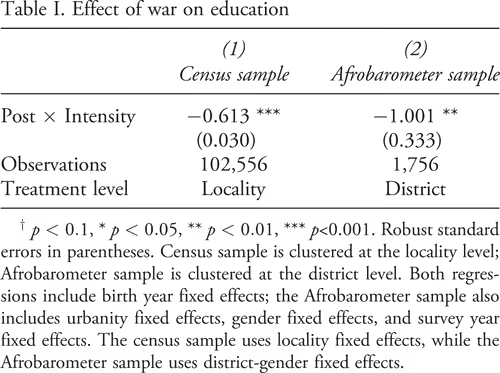
Journal of Peace Research
@JPR_journal
Under which conditions & to what extent do armed conflicts harm the long-term educational attainment of children in rural Sub-Saharan Africa? Kerstin Unfried & Krisztina Kis-Katos address this question by combining 66 rounds of DHS surveys with geo-coded conflict information.
Journal of Peace Research
@JPR_journal
The authors found that exposure to low-intensity conflict cannot be robustly linked to educational attainment in rural Sub-Saharan Africa. But, conflicts of substantial severity cause average losses in local education.
Journal of Peace Research
@JPR_journal
To learn more about the results and their implications, read the authors in JPR journals.sagepub.com/doi/10.1177/00223433221099557
-
Journal of Peace Research
@JPR_journal
New dataset alert: The Post-Rebel Electoral Parties (PREP) dataset provides longitudinal data on the electoral participation & performance in national elections of political parties formed by armed opposition groups after civil wars.
Journal of Peace Research
@JPR_journal
The data consists of 78 distinct parties derived from 56 conflict actors. PREP covers 322 legislative election years and 216 executive elections in 39 countries over 30 years (1990–2021).
Journal of Peace Research
@JPR_journal
To learn more about the dataset and how it can enhance our understanding of war-to-peace transitions, read Carrie Manning, Ian O Smith & @ozlem__tuncel in JPR journals.sagepub.com/doi/10.1177/00223433221126552
-
Journal of Peace Research
@JPR_journal
Why does terrorism result in electoral defeat for incumbents in some countries but not others? @emineari_IR, Reşat Bayer, Özge Kemahlıoğlu & @EceThinks address this question by focusing on the role of local governments.
Journal of Peace Research
@JPR_journal
The authors statistically analyze Turkish elections at the municipality level and public opinion surveys. To learn more about the terror-elections nexus and the role of local politics, read the authors in JPR journals.sagepub.com/doi/10.1177/00223433221126715
-
Journal of Peace Research
@JPR_journal
Russia’s invasion of Ukraine has resulted in hundreds of thousands of deaths, and mass displacement, & contributes to a global energy and economic crisis.
Post not available here, view on X
Journal of Peace Research
@JPR_journal
Taking advantage of the fact that different Ukrainian provinces vary in their economic ties to Russia, the authors examine whether (during the early stage of the conflict) the distributional costs of trade with Russia affects individual Ukrainians’ willingness to fight Russia
Journal of Peace Research
@JPR_journal
or make costly concessions to end the fighting. To learn more about the results, read the authors in JPR journals.sagepub.com/doi/full/10.1177/00223433221109621
-
Journal of Peace Research
@JPR_journal
WFP found that in 2022 345 million people were facing acute food insecurity in 82 countries fuelled by climate shocks & conflict.
Journal of Peace Research
@JPR_journal
To understand the conflict-hunger nexus better, @CaitrionaDowd proposes a measure of ‘food-related violence (FRV),’ in which food & food systems feature in acts of political violence.
Journal of Peace Research
@JPR_journal
The author examines the extent to which FRV is a driver of food crises by testing the relationship between FRV & subsequent food crises in 16 Sub-Saharan African contexts. To learn more about the results, read the author in JPR journals.sagepub.com/doi/full/10.1177/00223433221099309
-
Journal of Peace Research
@JPR_journal
Why would an individual choose to switch national identity? How do significant political events and experiences of violent conflict affect this process?
Post not available here, view on X
Journal of Peace Research
@JPR_journal
The authors use a diff-in-diff approach to estimate national identity preferences of individuals before and after the EU referendum.
Journal of Peace Research
@JPR_journal
To learn more about the results and their implications for our understanding of national identity in post-conflict societies, read the authors in JPR journals.sagepub.com/doi/10.1177/00223433221111824
-
Journal of Peace Research
@JPR_journal
New dataset alert: The African Peace Processes (APP) dataset includes observations on both mediated &unmediated rounds of negotiations in state-based & non-state conflicts in Africa between 1989- 2019.
Journal of Peace Research
@JPR_journal
Using the APP dataset, @AllardDuursma & @SamanthaMGamez1 find that high no. of peacekeepers is associated with a higher likelihood of negotiations in non-state conflicts, but not in intrastate conflicts.
Journal of Peace Research
@JPR_journal
To learn more about the dataset and its potential applications, read the authors in JPR journals.sagepub.com/doi/10.1177/00223433221100142
-
Journal of Peace Research
@JPR_journal
Under what conditions do states employ indiscriminate violence?
Journal of Peace Research
@JPR_journal
@danrthomas answers this question by developing a theoretical model which posits that indiscriminate violence can be the state’s preferred strategy even when it can engage in targeted violence
Journal of Peace Research
@JPR_journal
conditional on the visible characteristics of the structure of civilians’ social networks. To learn more about the model & the results of the network analysis results, read the author’s article in JPR journals.sagepub.com/doi/10.1177/00223433221096983
-
Journal of Peace Research
@JPR_journal
Guns, butter, and ice cream: New economic model of conflict & military expenditure in sub-Saharan Africa:
Journal of Peace Research
@JPR_journal
Raul Caruso & Jon Echevarria-Coco develops a theoretical model of conflict & show that international prices of manufactures are negatively associated with arms imports & military expenditure.
Journal of Peace Research
@JPR_journal
To learn more about the model & its implications, read the authors in JPR journals.sagepub.com/doi/10.1177/00223433221116657
-
Journal of Peace Research
@JPR_journal
How do changes in the status of women affect the intensity of terrorism?
Journal of Peace Research
@JPR_journal
Kyle Kattelman & Courtney Burns answer this question by disaggregating 634 terrorist organizations to determine whether the level of specific women’s status indicators affects the frequency of violence from specific terrorist ideologies.
Journal of Peace Research
@JPR_journal
The authors test their hypothesis on a sample of 185 countries from 1970 to 2014. To learn more about the results, read the authors in JPR journals.sagepub.com/doi/full/10.1177/00223433221095886
-
Journal of Peace Research
@JPR_journal
Many governments elect to engage in public diplomacy campaigns (PDCs) in the United States while involved in civil wars, in hope of changing the narrative in the United States in a more favorable direction. Are these campaigns effective at achieving their goals?
Journal of Peace Research
@JPR_journal
Benjamin T Jon & @ProfEMattiacci answer this question by studying the behavior of countries experiencing a civil war between 1995 and 2012 and gathering data on the incidence of PDCs in the US.
Journal of Peace Research
@JPR_journal
To learn more about the results and their implications for research on foreign influence in foreign policy, combatants’ moral hazard, & international norms about combatant behavior read the authors in JPR journals.sagepub.com/doi/10.1177/00223433221095887
-
Journal of Peace Research
@JPR_journal
Has there been a ‘local turn’ in knowledge production in the field of peace studies?
Post not available here, view on X
Journal of Peace Research
@JPR_journal
publishing institutions; scholarship about non-high-income countries; the conduct & focus of research collaborations; claims to theorization; & the discourse of the field.
Journal of Peace Research
@JPR_journal
However, this continued inequality is being challenged by the recent rise of upper-middle-income scholarship & publishing. To learn more about the trends & their implications, read the authors in JPR journals.sagepub.com/doi/full/10.1177/00223433221088035
-
Journal of Peace Research
@JPR_journal
How do incentives to comply with international law affect rebel behavior within a conflict?
Post not available here, view on X
Journal of Peace Research
@JPR_journal
The author uses a geographic regression discontinuity design to see how the UN partition line affected the location & timing of depopulated villages during the war.
Journal of Peace Research
@JPR_journal
To learn more about the results & how they can enhance our understanding of rebel targeting, read the author in JPR journals.sagepub.com/doi/full/10.1177/00223433221088324
-
Journal of Peace Research
@JPR_journal
Do economic slowdowns lead to military conflict? If so, through what mechanisms? Sung Chul Jung provides an answer to this question by analyzing state dyads from 1950 to 2010.
Journal of Peace Research
@JPR_journal
The author shows that a state is more likely to initiate military conflict when economic growth slows down. To learn more about the results and their implications, read the author in JPR journals.sagepub.com/doi/10.1177/00223433221116656
-
Journal of Peace Research
@JPR_journal
New dataset alert: @DiegoMartin979, Jacob N Shapiro & Julia G Ilhardt developed a dataset on the covert use of social media to influence politics by promoting propaganda, advocating controversial viewpoints, & spreading disinformation.
Journal of Peace Research
@JPR_journal
The data cover 78 foreign influence efforts (FIEs) and 25 domestic influence efforts (DIEs, in which governments target their own citizens) against 51 different countries between 2011 and 2021.
Journal of Peace Research
@JPR_journal
To learn more about the dataset and its potential usage, read the authors in JPR journals.sagepub.com/doi/10.1177/00223433221092815
-
Journal of Peace Research
@JPR_journal
Previous research found that conflicts with prevalent conflict-related sexual violence (CRSV) are more likely to attract international attention & peacekeeping missions. How do different types of conflict violence affect individuals’ support for intervention?
Journal of Peace Research
@JPR_journal
Mattias Agerberg & @Anne_Kreft explore this topic by conducting survey experiments in the United States, the United Kingdom, and Sweden. To learn more about the role of gendered protection norms in interventions, read the authors in JPR journals.sagepub.com/doi/10.1177/00223433221092960
-
Journal of Peace Research
@JPR_journal
Do International Criminal Court (ICC) indictments reduce atrocities? @andrewmiller802 answers this question by applying the concept of assurance to explain how the ICC reduces atrocities despite its limited capacity.
Journal of Peace Research
@JPR_journal
The author tests the effect of ICC indictments on violence using the weighted regression method generalized synthetic control. To learn more about the results, read the author in JPR journals.sagepub.com/doi/full/10.1177/00223433221088692
-
Journal of Peace Research
@JPR_journal
What is the role of armed conflict in the occurrence of child marriages? @degal & @HaerRoos answer this question by combining the Demographic and Health Surveys of West Africa with information on the location of armed conflict.
Journal of Peace Research
@JPR_journal
To learn more about the results and their implications for our understanding of the relationship between armed conflict, gender inequality, & their impact on children, read the authors in JPR journals.sagepub.com/doi/full/10.1177/00223433221080056
-
Journal of Peace Research
@JPR_journal
Revisiting the history of war in human history: In his article, Tibor Rutar critically assesses the latest anthropological and archaeological research on the chronology, lethality, and frequency of violence and war in human history.
Journal of Peace Research
@JPR_journal
The article demonstrates that multiple sources of evidence point more in the direction of the nomadic hunter-gatherers likely having warfare only in a minority of cases. To learn more about the implications of his findings, read the author in JPR journals.sagepub.com/doi/10.1177/00223433221090112
-
Journal of Peace Research
@JPR_journal
How and when do regime transitions intensify religious minority discrimination?
Journal of Peace Research
@JPR_journal
@jaklocek, Hyun Jeong Ha & Nathanael Gratias Sumaktoyo answer this question by applying a mixed-method research design to analyze two types of religious persecution following the Arab uprisings. To learn more about the results, read the authors in JPR journals.sagepub.com/doi/full/10.1177/00223433221085894
-
Journal of Peace Research
@JPR_journal
New dataset alert: Who leads peace operations on the ground?
Journal of Peace Research
@JPR_journal
@nicjenne’s new dataset on leadership positions in UN peace operations contains information on seven different leadership positions in 70 UN peacekeeping missions deployed between 1948 & 2019,
Journal of Peace Research
@JPR_journal
specifying the country of origin & gender of the respective office holders & their term’s duration. To learn more about the dataset & its implications for research on peace operations, read the author in JPR journals.sagepub.com/doi/full/10.1177/00223433221082121
-
Journal of Peace Research
@JPR_journal
What reduces individual support for the use of violence among groups seeking self-determination? Nadav G Shelef & @YaelZeira answer this question by focusing on the role of international recognition.
Journal of Peace Research
@JPR_journal
The authors conduct a survey experiment of Palestinians priming the 2012 UNGA recognition of Palestine. To learn more about the results read the authors in JPR journals.sagepub.com/doi/10.1177/00223433221088034
-
Journal of Peace Research
@JPR_journal
What is the relationship between ethnofederalism and communal violence?
Journal of Peace Research
@JPR_journal
@andijot & @livia_rohrbach answer this question by conducting a subnational analysis of Ethiopia’s ethnofederal system, combining new spatial data on local demographics, government control, and horizontal inequalities.
Journal of Peace Research
@JPR_journal
To learn more about how institutional factors can help to understand communal violence, read the authors in JPR journals.sagepub.com/doi/full/10.1177/00223433221079861
-
Journal of Peace Research
@JPR_journal
What is the impact of climate variability on the recruitment of children by rebel groups? Does climate variability impact the recruitment of boys & girls differently?
Journal of Peace Research
@JPR_journal
@BakakiZeta & @HaerRoos answer these questions by combining global data on temperature & precipitation shocks with information on child soldier recruitment by rebel groups.
Journal of Peace Research
@JPR_journal
To learn more about the gendered impact of climate stress & how climate variability can influence conflict dynamics, read the authors in JPR journals.sagepub.com/doi/full/10.1177/00223433221082120
-
Journal of Peace Research
@JPR_journal
Do countries that recently experienced a nonviolent resistance campaign exhibit higher levels of post-conflict judicial independence compared to countries emerging from violent campaigns?
Journal of Peace Research
@JPR_journal
@jessicabraith, @RConjecture & @mfarry513 answer this question by employing data on latent judicial independence & maximalist resistance campaigns.
Journal of Peace Research
@JPR_journal
To learn more about the results & their implications for studying post-conflict democratization, read the authors in JPR journals.sagepub.com/doi/full/10.1177/00223433221076880
-
Journal of Peace Research
@JPR_journal
Editor’s Pick Collection September 2022: In the past three years, the world has witnessed a global pandemic, growing economic inequality, and the eruption of violent conflicts both within and between states.
Post not available here, view on X
Journal of Peace Research
@JPR_journal
@joan_barcelo_, @rmkubinec, @cindy_cheng_
, @tirilrahn & @LuMesserschmidt explore whether government incentives to repress domestic dissidents influence their response to the COVID-19 pandemic.
Journal of Peace Research
@JPR_journal
Read the articles for free here: journals.sagepub.com/jpr/editorspick-sept?pbEditor=true
-
Journal of Peace Research
@JPR_journal
Which former fighters do citizens prefer to reintegrate into society?@AGodefroidt & @ArnimLanger answer this question by building on theories of threat and justice and conducting a conjoint experiment among approximately 2,000 (former) university students in Nigeria.
Journal of Peace Research
@JPR_journal
To learn more about the importance of perceptions of risk and fairness in driving attitudes toward reintegration, read the authors in JPR journals.sagepub.com/doi/full/10.1177/00223433221087070
-
Journal of Peace Research
@JPR_journal
How does organized crime-related violence affect protest? @sjleyg answers this question by focusing on how social networks influence citizens' mobilization against insecurity by using original survey data collected in Mexico in 2012 & in-depth interviews.
Journal of Peace Research
@JPR_journal
To learn more about when and how experience with violence can encourage involvement in politics and promote democratic accountability, read the author in JPR journals.sagepub.com/doi/full/10.1177/00223433221085441
-
Journal of Peace Research
@JPR_journal
The updated UCDP organized violence dataset is now available, with a special emphasis on drone warfare.
Is the world becoming more peaceful?
Journal of Peace Research
@JPR_journal
While the number of state-based conflicts decreased in 2021, fatalities increased by 46% from the previous year, driven by the conflicts in Afghanistan, Ethiopia, and Yemen.
Journal of Peace Research
@JPR_journal
To learn more about the global conflict landscape in 2021, read 'Organized violence 1989–2021, and drone warfare’ by Shawn Davies, Therése Pettersson, and Magnus Öberg, available Open Access at JPR: journals.sagepub.com/doi/full/10.1177/00223433221108428
-
Journal of Peace Research
@JPR_journal
How do the costs of a conflict influence the size and shape of territory?
Journal of Peace Research
@JPR_journal
Jordan Adamson and @bemusement provide an answer by developing a model of a multi-battle contest and using experimental evidence.
Journal of Peace Research
@JPR_journal
The authors show that the nature and scope of the territory is influenced by the economies of scale in the production of violence and the costs of projecting power at a distance. To learn more about the results, read the authors' article in JPR journals.sagepub.com/doi/full/10.1177/00223433221075006
-
Journal of Peace Research
@JPR_journal
How do natural disasters influence the onset of negotiations between the government and a rebel group in a civil war?
Journal of Peace Research
@JPR_journal
@iamnemeth and Brian Lai answer this question by building on the bargaining model of civil war and examining all territorial civil wars from 1980 to 2005. The authors find that when both sides are hit by a disaster, the likelihood of negotiation consistently increases.
Journal of Peace Research
@JPR_journal
When only one side is impacted, the effect on negotiations is not consistent across model specifications. To learn more about the results and their implications, read the authors’ article in JPR journals.sagepub.com/doi/full/10.1177/00223433211061952
-
Journal of Peace Research
@JPR_journal
New dataset alert: The Government-Sponsored Mass Expulsion (1990-2020) dataset documents cross-border mass expulsion episodes in which governments systematically remove ethnic, racial, religious or national groups, en masse.
Journal of Peace Research
@JPR_journal
The dataset documents 139 expulsion episodes since 1900, affecting over 30 million citizens and non-citizens across all world regions. To learn more about the dataset, read @mmgarrity’s article in JPR journals.sagepub.com/doi/full/10.1177/00223433211068633
-
Journal of Peace Research
@JPR_journal
What is leader-driven power expansion? Alexander Baturo and Jakob Tolstrup answer this question by developing a unified approach to studying incumbent takeovers across the political regime spectrum.
Journal of Peace Research
@JPR_journal
The authors introduce a new dataset of 495 individual takeover events carried out by 279 political leaders in 132 countries in the period 1918–2019. To learn more about the conceptualization and dataset, read the authors’ article in JPR journals.sagepub.com/doi/full/10.1177/00223433221075183
-
Journal of Peace Research
@JPR_journal
What is the relationship between criminals and protection providers? Eva Kløve and Halvor Mehlum
answer this question by developing a theoretical model which shows how the prospect of graduating from criminal to protection provider incentivizes the use of violence.
Journal of Peace Research
@JPR_journal
The authors use a unique dataset on youth offenders in South Africa to examine the relationship between gang membership and violence. To learn more about the results, read the authors’ article in JPR
journals.sagepub.com/doi/full/10.1177/00223433211064801 -
Journal of Peace Research
@JPR_journal
What explains the justice preferences of individuals emerging from mass atrocities? How does the concrete option of prosecution by the International Criminal Court (ICC) moderate the different preferences?
Journal of Peace Research
@JPR_journal
@EamonAloyo, @Doctor_Dancy, and Yvonne Dutton answer these questions by using unique survey data from Kenya. To learn more about the link between exposure to mass violence and post-conflict justice preferences, read the authors’ article in JPR journals.sagepub.com/doi/full/10.1177/00223433211065573
-
Journal of Peace Research
@JPR_journal
How do dictators coup-proof their armed forces from within the barracks? @austinsmatthews answers this question by focusing on loyalists who are commissioned into the armed forces as political officers and tasked with monitoring for disloyalty.
Journal of Peace Research
@JPR_journal
The author uses a cross-national sample of dictatorships from 1950 to 2010 and finds strong evidence that political officers are effective coup detectors, but not coup resisters.
Journal of Peace Research
@JPR_journal
To learn more about the results and their implications, read the author’s article in JPR journals.sagepub.com/doi/full/10.1177/00223433211067061
-
Journal of Peace Research
@JPR_journal
How does foreign influence shape state repression? M Christian Lehmann answers this question by examining the impact of foreign influence on the local variation of deportations and massacres during the Armenian genocide.
Journal of Peace Research
@JPR_journal
To learn more about the results and their implications for the study of state repression, read the author’s article in JPR journals.sagepub.com/doi/full/10.1177/00223433211068304
-
Journal of Peace Research
@JPR_journal
What explains the great variation in the adoption, timing, and duration of government policies made in response to the COVID-19 pandemic?
Journal of Peace Research
@JPR_journal
@joan_barcelo_, @rmkubinec, @cindy_cheng_, @tirilrahn, and @LuMesserschmidt answer this question by using data from the CoronaNet Government Response Dataset, the Armed Conflict Location and Event Dataset, and Latent Human Rights Protection Scores.
Journal of Peace Research
@JPR_journal
To learn more about how the repressiveness of state institutions shapes policy responses to a global health crisis, read the authors' article in JPR journals.sagepub.com/doi/full/10.1177/00223433211062389
-
Journal of Peace Research
@JPR_journal
What is the effect of nuclear balance on the initiation of nuclear crises?
Journal of Peace Research
@JPR_journal
@KyungwonSuh answers this question by using original data on strategic nuclear balance. He shows that having a superior nuclear arsenal compared to another nuclear-armed opponent does not lead to a reduced likelihood of a nuclear crisis initiated by the opponent.
Journal of Peace Research
@JPR_journal
To learn more about the results and their policy implications, read the author’s article in JPR journals.sagepub.com/doi/full/10.1177/00223433211067899
-
Journal of Peace Research
@JPR_journal
Editor’s Pick Collection May: In 2003, the United Nations General Assembly declared 29 May the International Day of UN Peacekeepers.
Post not available here, view on X
Journal of Peace Research
@JPR_journal
@felixhaass & @nadine_ansorg examine the reasons why certain peacekeeping missions are more effective in protecting civilians than others
Journal of Peace Research
@JPR_journal
@TIGizelis & Xun Cao examine the impact of peacekeeping on women’s access to health and education.
Read the articles for free at: journals.sagepub.com/jpr/editorspick-may?pbEditor=true -
Journal of Peace Research
@JPR_journal
Reminder: deadline for submitting proposals is tomorrow
Journal of Peace Research
@JPR_journal
Open Call for 2024 Special Issue of the Journal of Peace Research:
We welcome issues on topics that significantly advance the research frontier of the field, with a focus on causes and consequences of violence, conflict prevention and resolution, and nonviolent action. -
Journal of Peace Research
@JPR_journal
How do disasters affect intergroup peace and conflict? @EunbinChung and @inbok_rhee answer this question by estimating the impact of disasters on perceptions of out-groups.
Journal of Peace Research
@JPR_journal
The authors combine a dataset of mass disasters with individual-level survey responses from the Afrobarometer data between 2014 and 2015. To learn more about how disasters impact intergroup peace, read the authors’ article in JPR journals.sagepub.com/doi/full/10.1177/00223433211065249
-
Journal of Peace Research
@JPR_journal
New dataset alert::@pedrocayul, @Refigurar, @djaimovi and @MatteoPazzona developed the first micro-level dataset on the self-determination conflict between the Chilean state and the indigenous Mapuche.
Journal of Peace Research
@JPR_journal
MACEDA covers the period 1990–2016 and includes more than 2,600 events collected from local media. To learn more about the indigenous resistance strategies, read the authors' article in JPR journals.sagepub.com/doi/full/10.1177/00223433211064778
-
Journal of Peace Research
@JPR_journal
How can legal aid improve access to justice? @chaara_imane, @jbfalisse, and @ArushaExit answer this question by evaluating the Intercommunal Legal Aid Service program implemented in rural Burundi between 2012 and 2015.
Journal of Peace Research
@JPR_journal
The authors examine the program’s effects on 486 beneficiaries using various propensity score-matching methods and data on non-beneficiaries from two distinct control groups (n = 3,267). To learn more about the results, read the authors’ article in JPR journals.sagepub.com/doi/full/10.1177/00223433211055633
-
Journal of Peace Research
@JPR_journal
What is rebel governance and what kind of institutions does it involve? Karen E Albert answers these questions with the Rebel Quasi-State Institutions dataset, which covers 235 rebel groups between 1945 and 2012.
Journal of Peace Research
@JPR_journal
To learn more about what the dataset can tell us about the relationship between rebel strength and rebel governance institutions, read the author’s article in JPR journals.sagepub.com/doi/full/10.1177/00223433211051848
-
Journal of Peace Research
@JPR_journal
Why do some violent non-state organizations pursue chemical, biological, radiological, and nuclear weapons while most do not? And how does the use of unconventional weapons relate to attacks on cultural sites?
Journal of Peace Research
@JPR_journal
@Victor_Asal, Nazli Avdan, and Gary Ackerman answer these questions by using new data on organizational behaviors and attributes from the Big Allied and Dangerous 2 Insurgency project. To learn more, read the authors’ article in JPR journals.sagepub.com/doi/full/10.1177/00223433211057021
-
Journal of Peace Research
@JPR_journal
To what extent does exposure to conflict impact childhood health? Kien Le and My Nguyen answer this question by using a difference-in-difference method and examining child health outcomes in 56 developing countries in the period 1990–2018.
Journal of Peace Research
@JPR_journal
The detrimental ramifications of armed conflict on the health outcomes of children imply that interventions that aim to ensure the nutrition of children are of utmost importance and should be implemented during and after conflicts.
Journal of Peace Research
@JPR_journal
Furthermore, extra attention should be given to children of disadvantaged backgrounds. To learn more about the findings, read the authors’ article in JPR journals.sagepub.com/doi/full/10.1177/00223433211066417
-
Journal of Peace Research
@JPR_journal
The 2021 Nils Petter Gleditsch JPR Article of the Year Award is awarded to @alisonheslin (Center for Climate Systems Research,Columbia University) for her article ‘Riots and resources: How food access affects collective violence’ (Journal of Peace Research 58(2): 199–214).
Journal of Peace Research
@JPR_journal
Congratulations to the author! To learn more about the theory, methods, and results, read the award-winning article in JPR for free: journals.sagepub.com/doi/full/10.1177/0022343319898227
-
Journal of Peace Research
@JPR_journal
Reminder to submit your proposals for the 2024 Special Issue of JPR
Journal of Peace Research
@JPR_journal
Open Call for 2024 Special Issue of the Journal of Peace Research:
We welcome issues on topics that significantly advance the research frontier of the field, with a focus on causes and consequences of violence, conflict prevention and resolution, and nonviolent action. -
Journal of Peace Research
@JPR_journal
JPR’s 2021 Best Visualization Award goes to Gaku Ito for his article ‘Why does ethnic partition foster violence? Unpacking the deep historical roots of civil conflicts’ (Journal of Peace Research 58(5): 986–1003). Congratulations to the author!
Journal of Peace Research
@JPR_journal
To learn more about the results and see their visualization, read the author’s article in JPR journals.sagepub.com/doi/full/10.1177/0022343320957377
-
Journal of Peace Research
@JPR_journal
How do natural disasters affect the treatment of civilians by non-state actors?
Journal of Peace Research
@JPR_journal
@HaerRoos and @BabakRezaee answer this question by examining the temporal dynamics of violence against civilians combining georeferenced data on one-sided violence (ACLED) and data on disasters (Emergency Event Database; EM-DAT).
Journal of Peace Research
@JPR_journal
To learn more about how disasters can influence the relationship between civilians, rebel groups, and governments, read the authors’ article in JPR journals.sagepub.com/doi/full/10.1177/00223433211061672
-
Journal of Peace Research
@JPR_journal
How does exposure to aerial bombing influence voting for the target country’s leadership? @milos_agathon answers this question by analyzing the effect of the 1999 NATO bombing of Yugoslavia on Serbian local elections using the difference-in-differences identification strategy.
Journal of Peace Research
@JPR_journal
To learn more about how airstrikes shape voting patterns in competitive autocracies, read the author’s article in JPR journals.sagepub.com/doi/full/10.1177/00223433211056517
-
Journal of Peace Research
@JPR_journal
What is the impact of COVID-19 on attacks by non-state actors? Britt Koehnlein and Ore Koren provide an answer to this question by focusing on the incentives of both rebels and pro-government non-state actors (PGNs).
Journal of Peace Research
@JPR_journal
Using an econometric identification strategy, the authors examine daily-level data on the annual change in armed conflict and COVID-19 cases across 127 countries between 1 January 2020 and 15 June 2020.
Journal of Peace Research
@JPR_journal
To learn more about changes in rebel and PNG attacks during the pandemic, and the potential underlying mechanisms, read the authors’ article in JPR journals.sagepub.com/doi/full/10.1177/00223433211063034
-
Journal of Peace Research
@JPR_journal
Which factors facilitate the implementation of truth commission recommendations? And how quickly are recommendations enacted?
Journal of Peace Research
@JPR_journal
Héctor Centeno Martín, @wiebelhausbrahm, Ana Belén Nieto-Librero, and Dylan Wright provide answer these questions by using survival analysis to examine nearly 700 recommendations formulated by ten Latin American truth commissions that operated between 1984 and 2014.
Journal of Peace Research
@JPR_journal
To learn more about the results, read the authors’ article in JPR journals.sagepub.com/doi/full/10.1177/00223433211057011
-
Journal of Peace Research
@JPR_journal
Under what conditions can mistrust between different identity groups be overcome? @yoshikoherrera and @AHKydd provide an answer to this question by drawing on contact theory and using a game-theoretic model of how positive (or negative) interactions affect trust between groups.
Journal of Peace Research
@JPR_journal
To learn more about the model and its implications, read the authors' article in JPR journals.sagepub.com/doi/full/10.1177/00223433211058588
-
Journal of Peace Research
@JPR_journal
Does state weakness increase support for ethnic violence?
Journal of Peace Research
@JPR_journal
Konstantin Ash examines this question by conducting a survey experiment in Southern Kyrgyzstan focusing on the impact of exposure to chauvinist nationalist rhetoric on ethnic violence.
Journal of Peace Research
@JPR_journal
To learn more about the potential pathways for violence in ethnically divided low-capacity environments, read the author’s article in JPR journals.sagepub.com/doi/full/10.1177/00223433211055581
-
Journal of Peace Research
@JPR_journal
Journal of Peace Research Special Issue 2022 is out: Special Issue on Disaster Diplomacy, guest-edited by @gyannirein & Carmela Lutmar
Post not available here, view on X
Journal of Peace Research
@JPR_journal
The individual contributions examine issues such as disasters' impact on interstate rivalry, civil war negotiations, and the impact of COVID-19 policies on political violence and repression.
Journal of Peace Research
@JPR_journal
To learn more about the findings and their policy implications, read the Special Issue for free for 1 month journals.sagepub.com/toc/JPR/current
-
Journal of Peace Research
@JPR_journal
How do nonviolent campaigns emerge? Pearce Edwards addresses this question by focusing on interactions with the state and campaign resources in a sample of contentious campaigns from 1945 to 2006.
Journal of Peace Research
@JPR_journal
To learn more about how political competition and resources shape the choice of campaigns’ resistance methods, read the author’s article in JPR journals.sagepub.com/doi/full/10.1177/0022343320958456
-
Journal of Peace Research
@JPR_journal
Open Call for 2024 Special Issue of the Journal of Peace Research:
We welcome issues on topics that significantly advance the research frontier of the field, with a focus on causes and consequences of violence, conflict prevention and resolution, and nonviolent action.
Journal of Peace Research
@JPR_journal
The deadline for submitting proposals is 5 May 2022, and the decision will be made the following month.
Read the full call here: www.prio.org/journals/jpr/s/1460 -
Journal of Peace Research
@JPR_journal
Under what conditions can protests trigger coup attempts? Taku Yukawa, Kaoru Hidaka, Kaori Kushima, and Masafumi Fujita address this question by examining violent vs. nonviolent protests and whether coup attempts were undertaken before or after the Cold War.
Journal of Peace Research
@JPR_journal
To learn more about the results and their implications, read the authors’ article in JPR journals.sagepub.com/doi/full/10.1177/00223433211053187
-
Journal of Peace Research
@JPR_journal
What is the effect of women leaders on foreign policy?
Journal of Peace Research
@JPR_journal
Ulkar Imamverdiyeva and Patrick E Shea address this question by creating unique synthetic counterfactuals for three prominent women leaders – Thatcher, Gandhi, and Meir – to estimate the military spending behavior of women leaders.
Journal of Peace Research
@JPR_journal
To learn more about the results, read the authors’ article in JPR journals.sagepub.com/doi/full/10.1177/00223433211055909
-
Journal of Peace Research
@JPR_journal
New dataset alert: The International Military Training Activities Database-USA (IMTAD-USA) covers US foreign military training from 1999 to 2016 across 34 different programs.
Journal of Peace Research
@JPR_journal
IMTAD-USA enables researchers to assess the origins and consequences of military training, as well as changing patterns over time.
Journal of Peace Research
@JPR_journal
To learn more about the dataset, read @TheoMcLauchlin, Lee JM Seymour, and @BoulangerMartel’s article in JPR journals.sagepub.com/doi/full/10.1177/00223433211047715
-
Journal of Peace Research
@JPR_journal
How do drone strikes impact escalation and instability? Erik Gartzke and @jamesigoewalsh answer this question by focusing on the drone campaign in Pakistan.
Journal of Peace Research
@JPR_journal
The authors assess the relationship between strikes that kill civilians, rank-and-file militants, and militant leaders.
Journal of Peace Research
@JPR_journal
To learn more about how drone strikes in Pakistan influenced the scale and type of militant violence, read the authors’ article in JPR journals.sagepub.com/doi/full/10.1177/00223433211044673
-
Journal of Peace Research
@JPR_journal
Why, when, and where do participants in civil wars engage in intentional cultural destruction (ICD)? Luis Felipe Mantilla and Zorana Knezevic answer this question by focusing on the case of ISIS in Syria.
Journal of Peace Research
@JPR_journal
The authors examine how ideological and strategic considerations intersect to shape ICD campaigns by using an original dataset that combines data on ICD events in Syria with measures of combatant control.
Journal of Peace Research
@JPR_journal
To learn more about the results, read the authors’ article in JPR journals.sagepub.com/doi/full/10.1177/00223433211039093
-
Journal of Peace Research
@JPR_journal
What are the global macro-economic repercussions of violent conflict?
Journal of Peace Research
@JPR_journal
Olaf J de Groot, Carlos Bozzoli, @AnouchouO, @tilmanbrueck address this question by using a novel methodology and a panel of 190 countries from 1970 to 2014 to estimate the average consequence of various dimensions of conflicts on yearly GDP growth.
Journal of Peace Research
@JPR_journal
To learn more about the long term effects of violent conflict and their implications on the peace dividend, read the authors’ article in JPR journals.sagepub.com/doi/full/10.1177/00223433211046823
-
Journal of Peace Research
@JPR_journal
New dataset alert: The Anatomy of Resistance Campaigns (ARC) dataset contains 17 variables and records information on 1,426 organizations that participated in events of maximalist violent and nonviolent contention in Africa from 1990 to 2015.
Journal of Peace Research
@JPR_journal
To learn more about how the ARC dataset advances our understanding of anti-government mobilization, read Charles Butcher, @jessicabraith, @JCPinckney, @Eirinapekatt, @ingridvikbakken and Marius Swane Wishman’s article in JPR journals.sagepub.com/doi/full/10.1177/00223433211029512
-
Journal of Peace Research
@JPR_journal
In October 2021 Russia began its military buildup along the Ukraine border. In response, the US and EU countries are considering the introduction of new sanctions on Russia. Do international economic sanctions backfire?
Journal of Peace Research
@JPR_journal
Mikhail A Alexseev and Henry E Hale answer this question by using an experimental design and survey data on Western sanctions on Russia in 2014. To learn more about the results and their political implications, read the authors’ article in JPR journals.sagepub.com/doi/full/10.1177/0022343319866879
-
Journal of Peace Research
@JPR_journal
Editor's Pick 2022 🧵: In 2015, the United Nations General Assembly declared 11 February the International Day of Women and Girls in Science. The day’s aim is to promote full and equal access to and participation in science for women and girls.
Journal of Peace Research
@JPR_journal
In the first Editor’s Pick Collection of 2022, we selected three articles, all written by female authors, to promote women and girls in science.
Post not available here, view on X
Journal of Peace Research
@JPR_journal
@jillhaglund and @c_hillebrecht’s article introduces the Women’s Rights Recommendations Digital Database (WR2D2) which captures the demands international women’s rights institutions make on European states,
Journal of Peace Research
@JPR_journal
and @suboticjelena’s article opens up an important discussion on the ethics of archival research.
Please find the links to the articles below. journals.sagepub.com/jpr/editorspick2022 -
Journal of Peace Research
@JPR_journal
What are the political consequences of rising crime during periods of nascent democratic transition?
Journal of Peace Research
@JPR_journal
@c_abadeer, @AlexDBlackman,@lisablaydes, and @scottrw630 answer this question by using survey data and an original, district-level dataset of reported crimes before and after the 2011 uprisings in Egypt.
Journal of Peace Research
@JPR_journal
To learn more about how crime can impact popular support for authoritarian modes of governance during a transition, read the authors’ article in JPR journals.sagepub.com/doi/full/10.1177/00223433211052374
-
Journal of Peace Research
@JPR_journal
Under what conditions do states engage in repression preventatively? @pdcareyii, @curtismbell, @EmilyHRitter, and @thescottwolford answer this question by estimating the effect of newly discovered oil reserves on repression.
Journal of Peace Research
@JPR_journal
To learn more about a newly posited connection between natural resources and political violence, read the authors’ article in JPR journals.sagepub.com/doi/full/10.1177/00223433211047365
-
Journal of Peace Research
@JPR_journal
Last week the UN launched its largest-ever funding appeal. Over the past decades, the UN Security Council (UNSC) has transformed from a body focused on conflict to one that addresses a wide variety of issues. Why and when do international institutions change their missions?
Journal of Peace Research
@JPR_journal
@RichardHanania answers these questions by using a machine learning algorithm called latent Dirichlet allocation to examine UNSC resolutions between 1946 and 2017.
Journal of Peace Research
@JPR_journal
To learn more about how focal points events can impact institutional development, read the author’s article in JPR In JPR journals.sagepub.com/doi/full/10.1177/0022343320929728
-
Journal of Peace Research
@JPR_journal
New dataset alert: The Fisheries Conflict Database codes information on the frequency, causes, and consequences of fisheries conflict in Tanzania, Kenya, Somalia, Djibouti, Eritrea, and Yemen between 1990 and 2017.
Journal of Peace Research
@JPR_journal
To learn more about the causes and consequences of fisheries conflict around the Horn of Africa, read @DevlinColls, @SGlaserSF, @jelambert_, Ciera Villegasin’s article in JPR journals.sagepub.com/doi/full/10.1177/00223433211038476
-
Journal of Peace Research
@JPR_journal
What are the effects of power-sharing on democracy? @andijot and @dbchslr differentiate between corporate and liberal power-sharing systems and test their effect on democracy using a novel dataset on power-sharing rules for 138 multi-ethnic countries (1945-2016).
Journal of Peace Research
@JPR_journal
To learn more about the different effects of corporate and liberal power-sharing on democracy, read the authors’ article in JPR journals.sagepub.com/doi/full/10.1177/00223433211037244
-
Journal of Peace Research
@JPR_journal
When does the provision of aid and social programs increase cooperation with the state?
Journal of Peace Research
@JPR_journal
@abaldama answers this question by proposing a series of game-theoretic models that analyze the incentives that both citizens and states have in the face of conflict when social programs increase the state’s legitimacy.
Journal of Peace Research
@JPR_journal
The models show that even if aid increases citizens' intrinsic motivation to cooperate with authorities, it might not lead to an increase in citizen cooperation. To find out more about the reasons for this result, read the author’s article in JPR journals.sagepub.com/doi/full/10.1177/00223433211042792
-
Journal of Peace Research
@JPR_journal
How do central banks affect the likelihood and the form of civil war termination? @Caro_Garriga answers this question by examining a sample of civil wars between 1975 and 2009.
Journal of Peace Research
@JPR_journal
To learn more about how independent central banks impact the likelihood of government victory and inflation, read the author’s article in JPR journals.sagepub.com/doi/full/10.1177/00223433211038194
-
Journal of Peace Research
@JPR_journal
Why and how do leaders lose power? Amanda A Licht develops a novel dataset to help answer these questions.
Journal of Peace Research
@JPR_journal
The Regular Turnover Details (RTD) dataset codes the exit of 1,317 leaders between 1960 and 2015. It contains information about the manner of each leader’s exit and the relationship between outgoing and incoming leaders.
Journal of Peace Research
@JPR_journal
To learn more about the dataset and how it can push forward research on leadership transitions, read the author’s article in JPR journals.sagepub.com/doi/full/10.1177/00223433211045854
-
Journal of Peace Research
@JPR_journal
In their new article, Deniz Aksoy and David Carlson examine the extent to which electoral support received by militant associated opposition parties and nationally incumbent political parties influences subnational variation in militant attacks.
Journal of Peace Research
@JPR_journal
The authors use subnational data from 1995 to 2015 on Turkish legislative elections and attacks organized by the Kurdish militants. To learn more about the results, read the article in JPR journals.sagepub.com/doi/full/10.1177/00223433211047719
-
Journal of Peace Research
@JPR_journal
How do leaders impact the implementation of peace agreements? Alyssa K Prorok and @Dnzcil argue that leaders’ publicly adopting a pro-peace stance generates costly commitments that influence the success of peace agreements.
Journal of Peace Research
@JPR_journal
The authors test these expectations using original data on rebel and state leaders and peace agreements between 1989 and 2014. To learn more about their results, read the authors' article in JPR journals.sagepub.com/doi/full/10.1177/00223433211037130
-
Journal of Peace Research
@JPR_journal
How do military tactics shape civilian support for foreign intervention? @AJKnuppe answers this question by showing that civilian support is a function of threat perception based on three interacting heuristics: social identity, combatant targeting, and territorial control.
Journal of Peace Research
@JPR_journal
To learn more about the results of a survey among Baghdad residents during the anti-ISIS campaign, read the author’s article in JPR journals.sagepub.com/doi/full/10.1177/00223433211044059
-
Journal of Peace Research
@JPR_journal
Why do some towns recover faster than others after intrastate conflict?
Journal of Peace Research
@JPR_journal
Using satellite-observed nighttime lighting as a proxy for economic activity, Lloyd Lyall examines village-level variation in post-conflict recovery speed among Iraqi settlements following the 2014–18 Islamic State insurgency.
Journal of Peace Research
@JPR_journal
To learn more about the relationship between neighbor diversity and the pace of settlement recovery, read the author’s article in JPR journals.sagepub.com/doi/full/10.1177/00223433211039115
-
Journal of Peace Research
@JPR_journal
New dataset alert: The Linking Ethnic Data from Africa (LEDA) software package systematically links over 8,100 ethnic categories from 11 databases, including surveys, geographic data, and expert-coded lists.
Journal of Peace Research
@JPR_journal
To learn more about the LEDA R package which facilitates research on the origins and consequences of ethnic identity in Africa, read the article by @c_muellercrepon, @YannickPengl, and Nils-Christian Bormann in JPR journals.sagepub.com/doi/full/10.1177/00223433211016528
-
Journal of Peace Research
@JPR_journal
Under what conditions do threats translate into support for anti-democratic politics? And how do different types of threats affect how people assess the trade-off between security and liberty?
Journal of Peace Research
@JPR_journal
@SRadnitz answers these questions by conducting an experiment embedded in an original survey of Georgia and Kazakhstan. To learn more about the results, read @SRadnitz in JPR journals.sagepub.com/doi/full/10.1177/00223433211020809
-
Journal of Peace Research
@JPR_journal
What is the relationship between education and violence?
Journal of Peace Research
@JPR_journal
Using geospatial data and statistical analysis, @_Brandon_Ives_ and @BreslawskiJori demonstrate that education has divergent effects on violence in areas populated by politically excluded versus politically included ethnic groups in Africa and Central America.
Journal of Peace Research
@JPR_journal
To learn more about the results, read the authors’ article in JPR journals.sagepub.com/doi/full/10.1177/00223433211014269
-
Journal of Peace Research
@JPR_journal
How does a nation choose between military force and civilian value as the target of attacks during war? How does the targeted nation react against these attacks? How do their choices influence the outcome and duration of war?
Journal of Peace Research
@JPR_journal
Keisuke Nakao answers these questions by using a game-theoretic model. To learn more about the results, read the author’s article in JPR journals.sagepub.com/doi/full/10.1177/00223433211009765
-
Journal of Peace Research
@JPR_journal
Collateral damage in conflict settings: In September, the US military conducted a drone strike in Kabul that killed 10 civilians.
Journal of Peace Research
@JPR_journal
What is the relationship between psychological factors related to in-group and out-group dynamics and the level of tolerance of enemy collateral casualties?
Journal of Peace Research
@JPR_journal
Noa Schori-Eyal, Eran Halperin, and Tamar Saguy answer this question by conducting three studies among Jewish-Israelis in the context of the Palestinian conflict. To learn more about the results, read the authors’ article in JPR journals.sagepub.com/doi/full/10.1177/0022343318818658
-
Journal of Peace Research
@JPR_journal
Upcoming December elections in Libya are expected to be contested and potentially violent. What are the global patterns of electoral contention?
Journal of Peace Research
@JPR_journal
The Electoral Contention and Violence (ECAV) dataset contains more than 18,000 election-related contention events in 136 countries that held competitive national elections between 1990 and 2012.
Journal of Peace Research
@JPR_journal
To learn more about the dataset, read @uedaxecker, @ElioAmicarelli, and Alexander Jung’s article in JPR journals.sagepub.com/doi/full/10.1177/0022343318823870
-
Journal of Peace Research
@JPR_journal
Last week, UN Secretary-General Antonio Guterres warned that the current global climate situation is a “one-way ticket for disaster”. Warnings about the dire effects of climate change have existed since the writings of Thomas Malthus.
Journal of Peace Research
@JPR_journal
To learn more about the more than 200-year-old debate between climate pessimist and optimist, read Nils Petter Gleditsch’s essay in JPR journals.sagepub.com/doi/full/10.1177/0022343320969785
-
Journal of Peace Research
@JPR_journal
Do democracies have stronger or weaker reputations for resolve than autocracies in civil conflict? @Ccrismancox answers this question by creating an empirical war-of-attrition estimator that is based on a theoretical model of fighting and reputation-building.
Journal of Peace Research
@JPR_journal
To find out more about the results, read the article in JPR journals.sagepub.com/doi/full/10.1177/00223433211024697
-
Journal of Peace Research
@JPR_journal
New insights into military disloyalty: The new Military Mutinies and Defections Database (MMDD) codes events of military indiscipline from 1945 to 2017 across all regions. To learn more about the dataset, read Jaclyn Johnson’s article in JPR journals.sagepub.com/doi/full/10.1177/00223433211020092
-
Journal of Peace Research
@JPR_journal
In 2020, Mexican authorities reported that since 2006, more than 60,000 people have gone missing and several thousand have died in Mexico’s war on drugs. What is the relationship between criminal victimization and civilian political participation? And what role does kinship play?
Journal of Peace Research
@JPR_journal
Cassy Dorff answers this question by using original survey data from 1,000 respondents in Mexico. To learn more about the results, read the article in JPR journals.sagepub.com/doi/full/10.1177/0022343317691329
-
Journal of Peace Research
@JPR_journal
According to the latest SIPRI report, between 2016-2020, the five largest arms importers were Saudi Arabia, India, Egypt, Australia, and China. What is the relationship between military build-ups and the outbreak of intrastate violence?
Journal of Peace Research
@JPR_journal
Oliver Pamp and his co-authors answer this question by analyzing major conventional weapons (MCW) imports by governments and using an instrumental variable approach. To learn more about the results, read the article in JPR journals.sagepub.com/doi/full/10.1177/0022343317740417
-
Journal of Peace Research
@JPR_journal
According to a 2021 World Bank report, “COVID-19 is estimated to have dramatically increased the number of people facing acute food insecurity in 2020-2021”. What is the relationship between food access and violence against civilians?
Journal of Peace Research
@JPR_journal
To find out the answer, read Ore Koren and Benjamin E Bagozzi’s article in JPR journals.sagepub.com/doi/full/10.1177/0022343316684543
-
Journal of Peace Research
@JPR_journal
In September the president of Guinea was captured in a coup d’etat. How does irregular leader change in a neighboring country impact the likelihood of civil conflict onset?
Journal of Peace Research
@JPR_journal
@CasperSakstrup’s article in JPR answers this question using a global spatial analysis spanning from 1946 to 2014 journals.sagepub.com/doi/full/10.1177/0022343320913092
-
Journal of Peace Research
@JPR_journal
New dataset on political apologies:@MariekeZoodsma & Juliette Schaafsma created a database of political apologies that have been offered for human rights violations across the world.
Journal of Peace Research
@JPR_journal
To learn more about the trends over time & across countries, read the article in JPR journals.sagepub.com/doi/full/10.1177/00223433211024696
-
Journal of Peace Research
@JPR_journal
Combatant socialization to norms of restraint: Can armed groups train soldiers to ‘behave better’ toward civilians?@AndrewBellUS answers this question using surveys and interviews with over 1,000 US Army cadets and civilian students at the US Military Academy and elsewhere.
Journal of Peace Research
@JPR_journal
To find out more about the results, read the author’s article in JPR bit.ly/3EL9dF5
-
Journal of Peace Research
@JPR_journal
How do bilateral relations interact with trade? And how do bilateral relations affect authoritarian and democratic states' imports?
Journal of Peace Research
@JPR_journal
Qin Chen and Yi Zhou answer this question by using rare-event data from Integrated Data for Event Analysis (IDEA) and focusing on domestic and international institutional constraints. To learn more about the results, read the article in JPR journals.sagepub.com/doi/full/10.1177/0022343321992825
-
Journal of Peace Research
@JPR_journal
Millions of children are out of school due to conflict. What is the relationship between conflict, education, and political participation?
Journal of Peace Research
@JPR_journal
@shelley_x_liu answers this question by using a difference-in-differences identification strategy to show how education loss during the civil war in Liberia affects political participation.
Journal of Peace Research
@JPR_journal
To learn more about the long-term impacts of wartime education loss, read the article in JPR journals.sagepub.com/doi/full/10.1177/00223433211019460
-
Journal of Peace Research
@JPR_journal
How does exposure to gang-affiliated peers affect the social behaviors and attitudes of early adolescents?
Journal of Peace Research
@JPR_journal
Krzysztof Krakowski answers this question by using a survey of 1,782 adolescents aged ten to 13 from rural Colombia & comparing adolescents who are exposed to gang-affiliated classmates to those who are not.
Journal of Peace Research
@JPR_journal
To learn more about the role of gender differences on the effect of youth gang exposure, read the article in JPR journals.sagepub.com/doi/full/10.1177/00223433211017204
-
Journal of Peace Research
@JPR_journal
@FrancescoBailo & @goldsmithbe test the ‘stability–instability paradox’, the proposition that while nuclear weapons deter nuclear war, they also increase conventional conflict among nuclear-armed states.
Journal of Peace Research
@JPR_journal
The article theorizes some scope conditions for the paradox & applies synthetic control to model international conflict between India–Pakistan, China–India, and North Korea–USA, before & after nuclearization.
Journal of Peace Research
@JPR_journal
To learn more about the results, and their implication for nuclear deterrence, read the article in JPR journals.sagepub.com/doi/full/10.1177/00223433211018501
-
Journal of Peace Research
@JPR_journal
After a 20-year conflict, on 30 August, the last US troops left Afghanistan. But many questions remain about how the Taliban will govern the country, & what their rule means for women, human rights, & political freedoms.
Post not available here, view on X
Journal of Peace Research
@JPR_journal
@NBsisu & @AmandaMurdie use both a treatment effects approach and a continuous dose–response model to examine how various types of international interventions influence repression in the years following a conflict.
Journal of Peace Research
@JPR_journal
To learn more about the results, read the authors in JPR journals.sagepub.com/doi/full/10.1177/00223433211010857
-
Journal of Peace Research
@JPR_journal
Christian Bjørnskov & @DrStefanVoigt explore government reactions to terrorist events in the countries of the Organisation of Islamic Cooperation and ask to what degree these regimes are constrained by their emergency constitutions.
Journal of Peace Research
@JPR_journal
To learn more about the results, read the authors in JPR journals.sagepub.com/doi/full/10.1177/00223433211012445
-
Journal of Peace Research
@JPR_journal
The updated UCDP organized violence dataset is now available, with a special emphasis on Syria. Is the world becoming more peaceful? 2020 saw a record-high number of 56 state-based conflicts, most of which took place in Africa.
Journal of Peace Research
@JPR_journal
Furthermore, even though the wars in Afghanistan and Syria both de-escalated in 2020, violence in other areas increased.
Journal of Peace Research
@JPR_journal
To learn more about the global conflict landscape in 2020, read 'Organized violence 1989–2020, with a special emphasis on Syria' by Pettersson et al., available Open Access at JPR: journals.sagepub.com/doi/full/10.1177/00223433211026126
-
Journal of Peace Research
@JPR_journal
New Online First Article is available: Why do some democracies revert to non-democratic forms of governance?
Journal of Peace Research
@JPR_journal
Johannes Karreth, Jaroslav Tir & @dmgibler answer this question by developing a measure on latent territorial threat against democracies with contiguous neighbors from 1946 to 2016 using Bayesian estimation.
Journal of Peace Research
@JPR_journal
To learn more about the causes of democratic reversals, read the authors in JPR journals.sagepub.com/doi/full/10.1177/00223433211009770
-
Journal of Peace Research
@JPR_journal
Peacekeeping effectiveness at the micro-level: Can peacekeepers build peace from the bottom up?
Journal of Peace Research
@JPR_journal
Eric Mvukiyehe & @cdsamii answer this question by using matching methods, original survey & administrative data to measure local effects of the United Nations Mission in Liberia (UNMIL) on security and socio-economic outcomes.
Journal of Peace Research
@JPR_journal
To learn more about the results, read the authors in JPR journals.sagepub.com/doi/full/10.1177/0022343320912813
-
Journal of Peace Research
@JPR_journal
Does sending peacekeepers abroad increase the risk of military intervention in politics at home?
Journal of Peace Research
@JPR_journal
Jamie Levin, @lefteleven, @annesjamison, Abouzar Nasirzadeh, & @ajlsealey draw on selectorate theory & analyze panel data (1991-201) to estimate the effect of the interaction of regime type & troop contributions on coup attempts.
Journal of Peace Research
@JPR_journal
To learn more about the findings, read the authors in JPR journals.sagepub.com/doi/full/10.1177/0022343320905626
-
Journal of Peace Research
@JPR_journal
Why do some countries host more refugees than others? @oguzhanturkoglu answers this question by focusing on host countries’ support for rebels. Analysis of refugee flows between 1968 and 2011 suggests that countries that support rebel groups host twice as many refugees as others.
Journal of Peace Research
@JPR_journal
To learn more about the results and policy implication of the findings, read the author in JPR journals.sagepub.com/doi/full/10.1177/0022343321989786
-
Journal of Peace Research
@JPR_journal
A public goods approach to measuring burden-sharing within NATO: Scott Cooper & Kendall W Stiles measure commitment as each member’s contribution to NATO’s out-of-area military deployments, adjusted for population.
Journal of Peace Research
@JPR_journal
To learn more about what makes countries more likely to contribute to NATO, read the authors in JPR journals.sagepub.com/doi/full/10.1177/0022343320980820
-
Journal of Peace Research
@JPR_journal
New dataset on Native American Conflict History (NACH): conflicts between colonial powers and Native American communities have been difficult to examine due to data scarcity.
Journal of Peace Research
@JPR_journal
Brian R Urlacher has compiled a new dataset on 148 conflicts involving Native American groups and colonial actors. To learn more about the dataset, temporal, & geographic patterns in the frequency, scale, & duration of conflicts, read the author in JPR journals.sagepub.com/doi/full/10.1177/0022343320987274
-
Journal of Peace Research
@JPR_journal
Do nonproliferation agreements result in significant technological constraints in practice? Bradley C Smith & William Spaniel answer this question by using new data to estimate nuclear proficiency & applying a synthetic control method.
Journal of Peace Research
@JPR_journal
To learn more about the extent of constraining effects in nonproliferation treaties, read the authors in JPR journals.sagepub.com/doi/full/10.1177/0022343320971355
-
Journal of Peace Research
@JPR_journal
How do ceasefires affect the transition from war to negotiated peace? @ValerieSticher & @sumosika answer this question by developing a novel theoretical framework & conduct a comparative study and a within-case congruence test in the 2012-16 Colombian peace negotiations.
Journal of Peace Research
@JPR_journal
To learn more about the results, read the authors in JPR journals.sagepub.com/doi/full/10.1177/0022343320982658
-
Journal of Peace Research
@JPR_journal
How effective are mediation and peacekeeping for ending conflict? And how do mediation and peacekeeping shape each other’s effectiveness?
Journal of Peace Research
@JPR_journal
@GovClayton & @hdorus answer these questions by using UDCP data a variety of model specifications including selection model & simulations. To learn more about the results, read the authors in JPR journals.sagepub.com/doi/full/10.1177/0022343321990076
-
Journal of Peace Research
@JPR_journal
Correlates of diasporic mobilization: What factors can impact emigrated groups' mobilization after they move?
Journal of Peace Research
@JPR_journal
@connor_kopchick, @kgcunnin, @erinjenne & @smsaideman provide an answer to this question by using large-N quantitative analysis to understand the determinants of mobilization for potential diasporas whose members immigrated to the United States.
Journal of Peace Research
@JPR_journal
To learn more about the role of identity preservation needs, the urge to rescue kin in the homeland, and the mobilization capacity of potential diasporas, read the authors in JPR journals.sagepub.com/doi/full/10.1177/0022343320980803
-
Journal of Peace Research
@JPR_journal
How does local ethnic demography affect the conduct of majoritarian elections?
Journal of Peace Research
@JPR_journal
@c_muellercrepon provides an answer to this question by combining new data on the ethnic composition of local populations in 22 African countries with monthly data on riots & survey data on campaign violence.
Journal of Peace Research
@JPR_journal
To learn more about how electoral systems interact with local ethnic demography in shaping pre-election violence, read the author in JPR journals.sagepub.com/doi/full/10.1177/0022343320973724
-
Journal of Peace Research
@JPR_journal
When, how, & under what conditions does terrorism diffuse across countries via migration flows? Tobias Böhmelt & Vincenzo Bove address these questions by examining the influence of migrants’ cultural proximity to the native population of their host country.
Journal of Peace Research
@JPR_journal
To learn more about the results and their policy implications, read the authors in JPR journals.sagepub.com/doi/full/10.1177/0022343319864425
-
Journal of Peace Research
@JPR_journal
The Tasks Assigned to Missions in their Mandates (TAMM) dataset provides comprehensive new data on the mandates of UN missions between 1948 and 2015. To learn more about the TAMM dataset and its potential utilization, read Gabriella Lloyd in JPR journals.sagepub.com/doi/full/10.1177/0022343320980822
-
Journal of Peace Research
@JPR_journal
How can ethnic trust and minority status impact the ability of ethnic groups to pursue cooperative public goods? Sam Whitt answers this question by conducting a lab-in-the-field experiment between ethnic Albanians and Serbs in postwar Kosovo.
Journal of Peace Research
@JPR_journal
To learn more about the effects of conflict on majority/minority public good cooperation & the role that interethnic trust, institutions, & intergroup contact can play in overcoming ethnic divides, read the author in JPR journals.sagepub.com/doi/full/10.1177/0022343320984211
-
Journal of Peace Research
@JPR_journal
New Dataset: The database on Suicide Attacks (DSAT) includes new data on global suicide attacks & links it to the Uppsala Conflict Data Program (UCDP) data on armed conflict. It also maps networks of militant groups using suicide attacks, and their allies and rivals.
Journal of Peace Research
@JPR_journal
To learn more about the global prevalence of suicide attacks over time, and the research & policy implications of the DSAT dataset, read Robert A Pape, Alejandro Albanez Rivas & Alexandra C Chinchill in JPR journals.sagepub.com/doi/full/10.1177/0022343320978260
-
Journal of Peace Research
@JPR_journal
Biden pledged 50-52% US carbon emissions cut by 2030 & called climate change an existential threat to humanity. What are the main characteristics of the emergent field of climate security? And what are the main challenges in this field in fragile states?
Journal of Peace Research
@JPR_journal
To find out the answers, read @busbyj2 in JPR journals.sagepub.com/doi/full/10.1177/0022343320971019
-
Journal of Peace Research
@JPR_journal
Expert-coded datasets and potential errors in peace research: What types of errors are expert-coded datasets subject to? And how can different modeling strategies limit them?
Journal of Peace Research
@JPR_journal
Kyle L Marquardt answers these questions by conducting simulation analyses with five different modeling strategies. To learn more about the results and their implications, read the author in JPR journals.sagepub.com/doi/full/10.1177/0022343320959121
-
Journal of Peace Research
@JPR_journal
Diversity of repression: Is a higher level of repression associated with a few specialized tactics, or a broader repertoire of tactics? Is the global diversity of repressive repertoires rising, or declining, over time?
Journal of Peace Research
@JPR_journal
Benjamin E Bagozzi,@berliner_dan, & Ryan M Welch answer these questions by examining the period 1996-2016 & developing a novel method of measuring repertoires of state repression using event data. To learn more about the results, read the authors in JPR journals.sagepub.com/doi/full/10.1177/0022343320983424
-
Journal of Peace Research
@JPR_journal
What are the effects of gender provisions within peace agreements on women’s political rights?
Journal of Peace Research
@JPR_journal
Lindsay Reid answers this question by examining all civil war peace agreements signed between 1981 & 2011. To learn more about the role peace agreements play in shaping women’s political rights following civil wars, read the author in JPR journals.sagepub.com/doi/full/10.1177/0022343320972748
-
Journal of Peace Research
@JPR_journal
April 2021: Terrorists kill four and wound 19 UN peacekeepers in Mali. When and why do conflict parties attack peacekeepers?
Journal of Peace Research
@JPR_journal
Sara Lindberg Bromley answers this question by developing the Peacemakers at Risk (PAR) dataset which records reported incidences of violence between 1989 and 2009 in sub-Saharan Africa.
Journal of Peace Research
@JPR_journal
To learn more about the data and its implications, read the author in JPR journals.sagepub.com/doi/full/10.1177/0022343317735882
-
Journal of Peace Research
@JPR_journal
Open Call for 2023 Special Issue of the Journal of Peace Research: We welcome issues on topics that significantly advance the research frontier of the field, with a focus on causes and consequences of violence, conflict prevention and resolution, and nonviolent action.
Journal of Peace Research
@JPR_journal
The deadline for submitting proposals is 25 May 2021, and the decision will be made the following month. Read the full call here: www.prio.org/JPR/CallForSpecialIssueProposals/
-
Journal of Peace Research
@JPR_journal
2020 UN Office of Counter-Terrorism: Foreign fighters in Iraq & Syria pose a threat to peace & security.
Journal of Peace Research
@JPR_journal
Does governmental and societal discrimination against Muslim minorities explain the outflow of foreign fighters from non-Muslim-majority countries to Syria & Iraq? Meirav Mishali-Ram & Jonathan Fox answer this question by using three different datasets.
Journal of Peace Research
@JPR_journal
To find out the answer, read the authors in JPR: journals.sagepub.com/doi/full/10.1177/0022343320982652
-
Journal of Peace Research
@JPR_journal
Can food and water insecurity cause social unrest? Ore Koren, Benjamin E Bagozzi & Thomas S Benson answer this question by using geolocated Twitter data across urban areas in Kenya.
Journal of Peace Research
@JPR_journal
To learn more about how perceived food insecurity moderates and/or reinforces perceived water insecurity’s impacts on social unrest, and vice versa, read the authors in JPR journals.sagepub.com/doi/full/10.1177/0022343320975091
-
Journal of Peace Research
@JPR_journal
UNHCR: mandated to investigate war crimes committed during Sri Lanka’s civil war.
Journal of Peace Research
@JPR_journal
In 2019, @SaraKijewski & @carolin_rapp examined the relationship between war experience, interethnic attitudes, interethnic forgiveness, & the willingness to grant basic civil liberties to former enemies in the context of postwar Sri Lanka
Journal of Peace Research
@JPR_journal
by using an all-island representative survey (N = 1,420). To learn more about how civil war can shape the prospects of lasting peace between formerly opposing ethnic groups after the end of violence, read the authors in JPR journals.sagepub.com/doi/full/10.1177/0022343319849274
-
Journal of Peace Research
@JPR_journal
Survey participation effects in conflict contexts: Do survey participants in conflict zones respond differently if they have been interviewed before?
Journal of Peace Research
@JPR_journal
Alexander De Juan &@CarloKoos answer this question by using original survey data collected from 1,000 randomly sampled households in 100 villages in the eastern province of South Kivu in the DRC.
Journal of Peace Research
@JPR_journal
To learn more about how previous survey exposure affects response behavior amongst others, read the authors in JPR journals.sagepub.com/doi/full/10.1177/0022343320971034
-
Journal of Peace Research
@JPR_journal
How do civil conflicts evolve over time and space?
Journal of Peace Research
@JPR_journal
Arzu Kibris answers this question by proposing that the geotemporal evolution of a conflict is conditioned by the damages suffered by the combatant sides and testing his argument by using the Turkish State–PKK Conflict Event Database (TPCONED).
Journal of Peace Research
@JPR_journal
To learn more about the method and the results, read the author in JPR journals.sagepub.com/doi/full/10.1177/0022343320978695
-
Journal of Peace Research
@JPR_journal
Ethics & ethnography in conflict zones: What are the ethical challenges facing ethnographers in a conflict environment?
Journal of Peace Research
@JPR_journal
@_janakrause answers this question by analyzing the concepts of limited and uneven immersion in the field site. To learn more about these ethical research strategies and their implications, read the authors in JPR journals.sagepub.com/doi/full/10.1177/0022343320971021
-
Journal of Peace Research
@JPR_journal
Why do some conflicts last longer than others? @BlaxlandJoel answers this question by introducing the variable ‘incubation’ which captures the length of the time proto-insurgents spent preparing for conflict.
Journal of Peace Research
@JPR_journal
To learn more about how the pre-conflict phase impacts conflict duration, read the author in JPR journals.sagepub.com/doi/full/10.1177/0022343320970272
-
Journal of Peace Research
@JPR_journal
Intraconflict dynamics & the decision to either continue or terminate hostilities: @notEricMin developed the Interstate War Battle (IWB) dataset, which captures the outcomes and dates of 1,708 battles across 97 interstate wars between 1823 and 2003.
Journal of Peace Research
@JPR_journal
To learn more about the data and what it reveals about the informational and ripeness theories of conflict, read the author in JPR journals.sagepub.com/doi/full/10.1177/0022343320913305
-
Journal of Peace Research
@JPR_journal
How does party ideology influence variation in alliance design? Aaron Rapport & Brian Rathbun answer this question by combining the Alliance Treaty and Obligations and Provisions (ATOP) dataset with that of the Parties Manifesto Project.
Journal of Peace Research
@JPR_journal
To learn more about the different preferences of right- and left-wing parties for institutional design, read the authors in JPR journals.sagepub.com/doi/full/10.1177/0022343319900916
-
Journal of Peace Research
@JPR_journal
Salafi-jihadist groups are in competition for resources based on shared ideology. How does this competition impact the quantity & severity of groups’ attacks?
Journal of Peace Research
@JPR_journal
Megan Farrell answers this question by examining the attacks of all Salafi-jihadist groups from 2001 to 2014. To learn more about the impacts of transnational outbidding, read the author in JPR journals.sagepub.com/doi/full/10.1177/0022343319880939
-
Journal of Peace Research
@JPR_journal
What is the role of digital communication in the ongoing anti-coup protests and the repression in Myanmar? @KittyyKim & @espen_g_roed answer this question in a new essay published by @PVGlance.
Journal of Peace Research
@JPR_journal
In 2015, @espen_g_roed & @nils_weidmann examined the role of the internet in autocratic regimes between 1993–2010. To learn more about the results, read the article in JPR for free until 1 April journals.sagepub.com/doi/full/10.1177/0022343314555782
To access the essay on Myanmar, go to politicalviolenceataglance.org/2021/03/01/digitally-fuele… -
Journal of Peace Research
@JPR_journal
Last week the US carried out attacks on facilities in Syria used by Iran-backed militias which themselves often fight other rebel groups within Syria. What factors affect the risk of conflict between pairs of rebel groups?
Journal of Peace Research
@JPR_journal
Emily Kalah Gade, Mohammed M Hafez & Michael Gabbay answer this question by applying a network analysis method & examining conflictual ties among 30 rebel groups in Syria. To learn more about the methods & the results, read the authors in JPR journals.sagepub.com/doi/full/10.1177/0022343318806940
-
Journal of Peace Research
@JPR_journal
More than 100 out of 193 states recognize Kosovo as an independent state. Why do some countries extend recognition to unilateral secessions, and do so early, whereas others delay recognition or withhold it altogether?
Journal of Peace Research
@JPR_journal
David S Siroky, Milos Popovic & Nikola Mirilovic answer this question by developing a theory which emphasizes the role of great power competition and leverage on recognition.
Journal of Peace Research
@JPR_journal
To learn more about the theory and the results of the empirical analysis, read the authors in JPR journals.sagepub.com/doi/full/10.1177/0022343320963382
-
Journal of Peace Research
@JPR_journal
The 2020 Nils Petter Gleditsch JPR Article of the Year Award has been awarded to @_janakrause for her article titled "Restrained or constrained? Elections, communal conflicts, and variation in sexual violence ".Congratulations to the author!
Post not available here, view on X
Journal of Peace Research
@JPR_journal
Drawing on extensive fieldwork in both countries, she shows that communal conflicts that polarize a majority group against a minority on the local level are more likely to experience sexual violence than communal conflicts that pit two similarly strong groups against each other.
Journal of Peace Research
@JPR_journal
To learn more about the theory, methods, and results, read the award-winning article in JPR free: journals.sagepub.com/doi/full/10.1177/0022343319891763
-
Journal of Peace Research
@JPR_journal
JPR’s 2020 Best Visualization Award goes to Therese Anders for her article ‘'Territorial Control in Civil Wars: Theory and Measurement using machine learning ' Congratulations to the author!
Journal of Peace Research
@JPR_journal
Assuming that territorial control can be conceptualized as an unobserved latent variable, the article implements a Hidden Markov Model to estimate territorial control at a 0.25 decimal degree minimum diameter hexagon grid cell resolution.
Journal of Peace Research
@JPR_journal
To learn more about the novel measurement approach and how it can help to provide spatio-temporal insights into territorial control, read the award-winning article in JPR free journals.sagepub.com/doi/full/10.1177/0022343320959687
-
Journal of Peace Research
@JPR_journal
How can researchers gain a more comprehensive understanding of the UN’s decision-making processes, missions’ bias, and institutionalization of norms?
Journal of Peace Research
@JPR_journal
@ElioAmicarelli & @jessdisal answer this question by developing the Peacekeeping Operations Corpus (PKOC) dataset which is a machine-readable collection of the UN Secretary-General’s Reports on PKOs, covering the period between 1994 to 2020.
Journal of Peace Research
@JPR_journal
To learn more about the dataset, read the authors in JPR journals.sagepub.com/doi/full/10.1177/0022343320978693
-
Journal of Peace Research
@JPR_journal
According to a 2018 report by the European Commission, European businesses are particularly vulnerable to cyber theft of trade secrets which can result in considerable losses in economic growth and jobs. What is the relationship between trade and cyber attacks?
Journal of Peace Research
@JPR_journal
William Akoto answers this question by developing a novel theoretical framework that decomposes trade into its inter-and intra-industry components. To find out more about the theory and the results, read the author in JPR journals.sagepub.com/doi/full/10.1177/0022343320964549
-
Journal of Peace Research
@JPR_journal
What is the relationship between trade & cyber attacks? @william_akoto answers this question by developing a novel theoretical framework To find out more about the theory and the results, read the author in JPR journals.sagepub.com/doi/full/10.1177/0022343320964549
-
Journal of Peace Research
@JPR_journal
2020 UN Report on the Protection of Civilians in Armed Conflict: More than 20,000 civilians were killed or injured as a result of attacks in conflicts in 10 countries in 2019.
Journal of Peace Research
@JPR_journal
What are the spatio-temporal & economic dynamics of civilian targeting by conflict actors?@ptrlis, @Michael_Spagat & Uih Ran Lee answer this question by using the Civilian Targeting Index & analyzing warring actors in Africa between 1992 and 2010.
Journal of Peace Research
@JPR_journal
To learn more about the results, read the authors in JPR journals.sagepub.com/doi/full/10.1177/0022343320961150
-
Journal of Peace Research
@JPR_journal
Talks before talks: What is the relationship between the pre-negotiation phase and the outcome of negotiated settlements?
Journal of Peace Research
@JPR_journal
Lindsey Doyle & @LukasHeg answer this question by developing the first dataset on pre-negotiations in civil wars between 2005 and 2015. To learn more about the dataset and its implications for future research, read the authors in JPR journals.sagepub.com/doi/full/10.1177/0022343320961152
-
Journal of Peace Research
@JPR_journal
The recent military coup in Myanmar illustrated the relevance of research on the causes & consequences of military coups across different contexts.
Journal of Peace Research
@JPR_journal
@Junkogasudduth developed a dataset examining 116 autocratic countries & their leaders' decision to purge strong officers from the military. The Military Purges in Dictatorships (MPD) dataset contains information on more than 1000 military purges between 1965 and 2005.
Journal of Peace Research
@JPR_journal
To learn more about the dataset & its potential applications, read the author in JPR journals.sagepub.com/doi/full/10.1177/0022343320966375
-
Journal of Peace Research
@JPR_journal
Local variation in rebel responsiveness: Why is rebel governance more responsive in some areas than in others? @sebvanbaalen answers this question by analyzing local elites and their networks’ role in shaping rebel responsiveness in Côte d’Ivoire.
Journal of Peace Research
@JPR_journal
To learn more about the results of an 8-month long fieldwork, read the author in JPR journals.sagepub.com/doi/full/10.1177/0022343320965675
-
Journal of Peace Research
@JPR_journal
President Biden reversed Trump’s travel ban on citizens from Muslim majority, & African countries. How does transnational terrorism impact immigration policies?
Journal of Peace Research
@JPR_journal
Marc Helbling & Daniel Meierrieks answer this question by analyzing the migration policies of 30 OECD countries between 1980 and 2010. To learn more about the results, read the authors in JPR journals.sagepub.com/doi/full/10.1177/0022343319897105
-
Journal of Peace Research
@JPR_journal
New Special Issue on Security Implications of Climate Change is available online.
Guest Editors : Nina von Uexkull and @buhaug
Can climate change increase conflict risk - and if so, how?
Journal of Peace Research
@JPR_journal
This new special issue of JPR takes stock of the state of the art and presents novel empirical research & thoughtful perspectives that jointly comprise the most up-to-date collection of scientific studies into this important question.
Journal of Peace Research
@JPR_journal
Read the Special Issue in JPR here: journals.sagepub.com/toc/jpra/58/1
-
Journal of Peace Research
@JPR_journal
What is the relationship between the regime type of a foreign intervener and the duration of civil wars?
Journal of Peace Research
@JPR_journal
@saranorrevik & Mehwish Sarwari answer this question by focusing on the dynamics of selection and signaling effects and analyzing all intrastate conflicts between 1975 and 2012. To learn more about the results, read the authors in JPR bit.ly/2MbwHM
-
Journal of Peace Research
@JPR_journal
Natural hazards, migration, & protest: What is the relationship between natural hazards such as floods, droughts, and protest? And what is the role of migration in this relationship?
Journal of Peace Research
@JPR_journal
Kristina Petrova answers these questions by analyzing geo-referenced household-level data from Bangladesh for the period 2010–15. To learn more about the results, read the author in JPR journals.sagepub.com/doi/full/10.1177/0022343320973741
-
Journal of Peace Research
@JPR_journal
Uganda & violent pre-election: What is the relationship between the organizational strength of political parties and the risk of electoral violence?
Journal of Peace Research
@JPR_journal
@Fjelde answers this question by analyzing all national elections from 1946 to 2010. To find out more on the results, read the author in JPR journals.sagepub.com/doi/full/10.1177/0022343319885177
-
Journal of Peace Research
@JPR_journal
Historical origins of conflict in Africa: How does ethnic partition by political boundaries alter the risks of contemporary civil conflicts?
Journal of Peace Research
@JPR_journal
Gaku Ito answers this question by unpacking the causal mechanisms linking ethnic partition rooted in colonial border designs & postcolonial civil conflicts in Africa. To learn more about the empirical strategy & the results, read the author in JPR journals.sagepub.com/doi/full/10.1177/0022343320957377
-
Journal of Peace Research
@JPR_journal
Environment & conflict in Syria: How did Syria’s local growing seasons and precipitation variability affect patterns of violence between 2011 & 2019?
Journal of Peace Research
@JPR_journal
Andrew M Linke & Brett Ruether answer this question by analyzing 272 subdistricts in Syria. To find out more on the links between violence, local crop seasonality, & weather variability, read the authors in JPR journals.sagepub.com/doi/full/10.1177/0022343320973070
-
Journal of Peace Research
@JPR_journal
Authoritarian propaganda, public support for repression & the role of human rights organizations:
Journal of Peace Research
@JPR_journal
To learn more about what a survey experiment in Egypt can reveal about the persuasiveness of competing information in sharing attitudes toward state-sponsored violence, read Scott Williamson & @MalikMashail in JPR journals.sagepub.com/doi/full/10.1177/0022343320961835
-
Journal of Peace Research
@JPR_journal
Civilian deaths & non-random missingness: What are the problems associated with newswire data generating processes & how can these be overcome?
Journal of Peace Research
@JPR_journal
@SLRDawkins answers these questions by conducting interviews in South Sudan. To learn more about the implications of biases in reporting civilian deaths & the ways social scientists can build better fatality measures, read the author in JPR journals.sagepub.com/doi/full/10.1177/0022343320962159
-
Journal of Peace Research
@JPR_journal
UNDP: “the failure to consider the growing impacts of climate change risks trapping vulnerable countries in a vicious cycle of climate disaster & conflict”.
Journal of Peace Research
@JPR_journal
What is the state of climate-conflict knowledge production & how can science and policy mutually strengthen each other in this field? To find out, read Katharine J Mach & Caroline M Kraan in JPR journals.sagepub.com/doi/full/10.1177/0022343320966774
-
Journal of Peace Research
@JPR_journal
New ways to measure interstate conflict escalation: @z_terechshenko develops a new dyadic latent measure of interstate hostility, created using a Bayesian item-response theory model.
Journal of Peace Research
@JPR_journal
To learn more about the model, the method, and how it can be utilized in analyzing conflict escalation and de-escalation, read the author in JPR journals.sagepub.com/doi/full/10.1177/0022343320962546
-
Journal of Peace Research
@JPR_journal
New UNHCR report: By 2019, 79,5 million people were displaced worldwide, including almost 30 million refugees. What is the relationship between the host state’s security environment and their treatment of refugees?
Journal of Peace Research
@JPR_journal
To learn more about a novel dataset of anti-refugee violence by host states’ agents and what it can reveal, read @BurcuSavun3 & Christian Gineste in JPR journals.sagepub.com/doi/full/10.1177/0022343318811432
-
Journal of Peace Research
@JPR_journal
UN PKO deployment & speed: Why some countries deploy their troops faster than others?
Journal of Peace Research
@JPR_journal
@MagnusLLundgren, @Kseniya_Oksamyt, & @KPColeman answer these questions by developing a theoretical argument that accounts for variation across troop-contributing countries
Journal of Peace Research
@JPR_journal
& tests its observable implications against new data on the deployment speed of TCCs across 28 UN peacekeeping operations established between 1991 and 2015.
To find out more about the results, read the authors in JPR journals.sagepub.com/doi/full/10.1177/0022343320940763 -
Journal of Peace Research
@JPR_journal
Theoretical advancement in the study of positive peace: How can researchers develop the concept of positive peace considering the evolving character of conflict?
Journal of Peace Research
@JPR_journal
Gearoid Millar answers this question by developing the theory of the Trans-Scalar Peace System. To learn more about the rationale and the potential utilization of the theory, read the author in JPR journals.sagepub.com/doi/full/10.1177/0022343320941909
-
Journal of Peace Research
@JPR_journal
According to a 2019 report by the United Nations Office on Drugs and Crime (UNODC), criminal activity causes many more deaths than conflicts and terrorism combined. What is the relationship between economic freedom and homicide rates?
Journal of Peace Research
@JPR_journal
Indra de Soysa answers this question by developing a novel theory and using fixed-effects regression analysis. To learn more about the results, read the author in JPR journals.sagepub.com/doi/full/10.1177/0022343320962566
-
Journal of Peace Research
@JPR_journal
THREAD: 2020 marked the 50th anniversary of the Treaty on the Non-Proliferation of Nuclear Weapons (NPT). What are the differences between the preferences of nuclear weapons and non-nuclear weapons states?
Journal of Peace Research
@JPR_journal
Miriam Barnum & James Lo answer this question by using a Wordfish model and a computational text analysis of NPT Review Conference statements from 2000–18.
Journal of Peace Research
@JPR_journal
To learn more about the results and what it means for the global nuclear non-proliferation regime, read the authors in JPR journals.sagepub.com/doi/full/10.1177/0022343320960523
-
Journal of Peace Research
@JPR_journal
In October, Amnesty International reported that Nigeria’s security forces killed at least 56 peaceful protesters who were calling for an end to police violence. Why do governments use deadly force against unarmed protesters?
Journal of Peace Research
@JPR_journal
To find out about the impact of the size and concentration of the government’s ethnic support base on the likelihood of violent repression of nonviolent challengers, read @cullenhendrix & @IdeanSalehyan in JPR journals.sagepub.com/doi/full/10.1177/0022343318820088
-
Journal of Peace Research
@JPR_journal
According to a UN 2020 Report, conflict-related sexual violence is an obstacle to peacebuilding and recovery, but measuring the extent of this type of violence is difficult.
Journal of Peace Research
@JPR_journal
@ju_kru & @ragnhildnordas address the observational challenges and develop a novel latent variable measure to estimate the prevalence of wartime sexual violence.
Journal of Peace Research
@JPR_journal
To learn more about the method and the results, read their article in JPR journals.sagepub.com/doi/full/10.1177/0022343320961147 journals.sagepub.com/doi/full/10.1177/0022343320961147
-
Journal of Peace Research
@JPR_journal
Thread: The new dataset of American Indian and Alaska Native (AIAN) constitutions codes & measures institutional characteristics directly from the content of constitutions using machine learning techniques.
Journal of Peace Research
@JPR_journal
To learn more about the dataset and the benefits of using automated approaches to measure political institutions, read Rebecca Cordell, Kristian Skrede Gleditsch, Florian G Kern, & @SaavedraLux in JPR journals.sagepub.com/doi/full/10.1177/0022343320959122
-
Journal of Peace Research
@JPR_journal
Democratic digital control & terrorism: How do democracies control the digital space in response to threats?
Journal of Peace Research
@JPR_journal
@s_meserve and @_dbp answer this question by developing a new measure of internet censorship, using a latent variable model. To learn more about the results, read the authors in JPR journals.sagepub.com/doi/full/10.1177/0022343320959369
-
Journal of Peace Research
@JPR_journal
Earlier this year, peaceful protests started in Thailand against the government. How do nonviolent campaigns emerge? To learn more about the role of campaign resources and interactions with the state, read @pearceaedwards in JPR journals.sagepub.com/doi/full/10.1177/0022343320958456
-
Journal of Peace Research
@JPR_journal
How can changes in territorial control across time and space be measured?@thereanders answers this question by translating a theory of actor behavior into a machine learning model.
Journal of Peace Research
@JPR_journal
To learn more about the novel methodology and the estimates for conflict between the FARC and the Colombian government, and the Boko Haram insurgency read the author in JPR journals.sagepub.com/doi/full/10.1177/0022343320959687
-
Journal of Peace Research
@JPR_journal
Sahel region: competition between the Al-Qaeda’s local affiliate and the Islamic State in the Greater Sahara (ISGS). What is transitional outbidding in the context of terrorism and how does it impact the quantity and severity of terrorist attacks?
Journal of Peace Research
@JPR_journal
Megan Farrell answers this question by looking at all Salafi-jihadist groups operating from 2001 through 2014. To learn more about the results, read the author in JPR journals.sagepub.com/doi/full/10.1177/0022343319880939
-
Journal of Peace Research
@JPR_journal
Women’s Rights Recommendations Digital Database (WR2D2): How does the process of compliance with human rights recommendations related to women’s rights unfold post-ratification?
Journal of Peace Research
@JPR_journal
@jillhaglund & Courtney Hillebrecht answer this question by developing a dataset of nearly 4,500 observations across 47 countries.
Journal of Peace Research
@JPR_journal
To learn more about the dataset and how it can help scholars to understand state compliance with human right’s recommendations, read the authors in JPR journals.sagepub.com/doi/full/10.1177/0022343319897954
-
Journal of Peace Research
@JPR_journal
External sources of rebel governance: How do different forms of external support to rebel groups affect rebel service provision?
Journal of Peace Research
@JPR_journal
To learn more about the different impacts of direct military intervention on behalf of an armed opposition group and the provision of funding, weapons, or training on social service provision, read @HuangReyko & @drPLSullivan in JPR journals.sagepub.com/doi/full/10.1177/0022343320940749
-
Journal of Peace Research
@JPR_journal
Violence continues in Afghanistan despite the peace talks between the government and the Taliban. What is the impact of mediation on battle-related fatalities?
Journal of Peace Research
@JPR_journal
Constantin Ruhe answers this question by conducting an empirical analysis of all African conflicts between 1993 and 2007 to assess the effect of mediation on monthly fatal violence. To learn more about the results, read the author in JPR journals.sagepub.com/doi/full/10.1177/0022343320930072
-
Journal of Peace Research
@JPR_journal
Thread: Taiwan and Somaliland established diplomatic ties. What are the drivers of diplomatic exchanges and what are the trends in diplomatic representation across countries?
Journal of Peace Research
@JPR_journal
Jonathan D Moyer, Sara D Turner, Collin J Meisel answer these questions by developing the Diplometrics Diplomatic Representation (DDR) dataset which covers the 1960-2013 period and includes more than 18,300 country dyads.
Journal of Peace Research
@JPR_journal
To learn more about the dataset and its potential utilizations, read the authors in JPR journals.sagepub.com/doi/full/10.1177/0022343320929740
-
Journal of Peace Research
@JPR_journal
Thread: Frozen conflict escalates between Armenia and Azerbaijan over the Nagorno-Karabakh territory. What is the global landscape of frozen conflicts and what are these conflicts main characteristics?
Journal of Peace Research
@JPR_journal
@KamilKlosek, Vojtěch Bahenský, @MichalSmetana3 & @nuclearJan answer these questions by developing the Frozen Conflict Dataset spanning from 1946 to 2011 and covers 42 cases of frozen conflicts. To learn more about the dataset, read the authors in JPR journals.sagepub.com/doi/full/10.1177/0022343320929726
-
Journal of Peace Research
@JPR_journal
THREAD: Peace agreement concluded in Sudan between the government & the Sudanese Revolutionary Front, while other rebel groups remain outside of the agreement.
Journal of Peace Research
@JPR_journal
How do power sharing agreements impact post-conflict violence when some armed groups are excluded from peace agreements? To learn more about the conditions that can give rise to extra-agreement violence, read Martin Ottmann in JPR journals.sagepub.com/doi/full/10.1177/0022343319883676
-
Journal of Peace Research
@JPR_journal
@WFP received this years Nobel Prize for its "contribution to bettering conditions for peace in conflict-affected areas."
Journal of Peace Research
@JPR_journal
To learn more about the conditions under which increasing food prices can lead to urban unrest & the role of societal organizations in mitigating food-related grievances, read @IdaRudolfsen in JPR journals.sagepub.com/doi/full/10.1177/0022343319899705
-
Journal of Peace Research
@JPR_journal
Why do ex-rebel commanders sometimes maintain strong linkages to communities they ruled during civil war, but sometimes don’t?
Journal of Peace Research
@JPR_journal
Philip A Martin answers this question by analyzing a novel dataset of former rebel-occupied localities in Côte d’Ivoire. To learn more about the reasons why commander–community linkages endure or decline after post-conflict transitions, read the author journals.sagepub.com/doi/full/10.1177/0022343320929744
-
Journal of Peace Research
@JPR_journal
THREAD: Individual level processes of conflict contagion: Using original data derived from a public opinion survey of more than 1,200 participants @zesarigil examines the micro-level dynamics of contagion in the context of Turkey’s Kurdish conflict.
Journal of Peace Research
@JPR_journal
To learn more about the conditions under which ethnonationalist tendencies can increase, read the author in JPR journals.sagepub.com/doi/full/10.1177/0022343320957386
-
Journal of Peace Research
@JPR_journal
THREAD: What are the effects of the UN’s policy recommendations produced through reviewing human right practices of member states?
Journal of Peace Research
@JPR_journal
Gulnaz Anjum, Adam Chilton, & Zahid Usman answer this question by conducting an experiment in Pakistan with 614 participants.
Journal of Peace Research
@JPR_journal
To find out whether respondents were more likely to support policies aimed at improving women’s rights when they learned that the reforms were proposed by the UN, read the authors in JPR journals.sagepub.com/doi/full/10.1177/0022343320912839
-
Journal of Peace Research
@JPR_journal
Thread: Earlier this month saw the commencement of intra-Afghan peace talks. But what will the post-conflict environment look like in Afghanistan?
Journal of Peace Research
@JPR_journal
Joseph M Cox shows that ceasefires and peace agreements result in different post-conflict justice outcomes. To learn more about the mechanisms that contribute to restorative and retributive forms of justice, read the author in JPR journals.sagepub.com/doi/full/10.1177/0022343319879485
-
Journal of Peace Research
@JPR_journal
Mitigating risks of agreement failure: Which type of power sharing agreement promotes sustainable peace? To learn more about the novel theory of pre-emptive rebel defection and what the analysis of 168 negotiated settlements reveal, read Chelsea Johnson journals.sagepub.com/doi/full/10.1177/0022343320924699
-
Journal of Peace Research
@JPR_journal
Peacekeeping dividend & maternal health: How does peacekeeping operations impact maternal health and women’s well-being? To learn more about what the analysis of 45 African countries reveals, read Theodora-Ismene Gizelis & Xun Cao journals.sagepub.com/doi/full/10.1177/0022343320917198
-
Journal of Peace Research
@JPR_journal
THREAD - FAO: MENA is the world's most water-scarce region. Under what conditions do nonviolent water-related conflicts erupt in the region?
Journal of Peace Research
@JPR_journal
To learn more about the different pathways that can potentially leading to low-intensity conflicts in the MENA, read Tobias Ide, Miguel Rodriguez Lopez, @PolitKonflikt & Jürgen Scheffran in JPR journals.sagepub.com/doi/full/10.1177/0022343320910777
-
Journal of Peace Research
@JPR_journal
Mali coup: Under which conditions do coups turn violent? To learn more about the how differences in incumbent regime types and coup plotters can impact coups, read @esdebruin in JPR journals.sagepub.com/doi/full/10.1177/0022343319839449
-
Journal of Peace Research
@JPR_journal
THREAD - Editors’ Pick: Jesse Dillon Savage & Jonathan D Caverley link US foreign military training to coups, such as the most recent one in Mali.
Journal of Peace Research
@JPR_journal
They argue that adding human capital to the armed portion of an under-institutionalized state will encourage soldiers to enter politics. To learn more about their results, read the authors in JPR free (until the end of September) journals.sagepub.com/doi/full/10.1177/0022343317713557
-
Journal of Peace Research reposted
Jonathan Caverley
@jcaverley
Given events in #mali, the publisher of @JPR_journal has ungated @jdillonsavage's and my article linking US foreign military training to coups. This is part of a larger project of ours and a research program in the field, so comments welcome! journals.sagepub.com/doi/10.1177/0022343317713557
-
Journal of Peace Research
@JPR_journal
Politics of archives: What kind of ethical challenges does archival research on the Holocaust entail? To learn more about the ethical questions surrounding archival research on political violence, read @suboticjelena in JPR journals.sagepub.com/doi/full/10.1177/0022343319898735
-
Journal of Peace Research
@JPR_journal
Why food-price induced grievances sometimes lead to unrest & at other times do not?To learn more about the mechanisms through which repression of societal organizations decreases the likelihood of unrest when food prices rise, read @IdaRudolfsen in JPR journals.sagepub.com/doi/full/10.1177/0022343319899705
-
Journal of Peace Research
@JPR_journal
THREAD: Trends in post-war elections: How do previous conflict parties perform in post-war elections? @sarahzdaly answers this question by developing the first Civil War Successor Party (CWSP) dataset.
Journal of Peace Research
@JPR_journal
CWSP covers all belligerents having transitioned from civil conflict in the period 1970–2015. To learn more about dataset and how it can help researchers to understand variation across post-war environments, read the author is JPR journals.sagepub.com/doi/full/10.1177/0022343320920905
-
Journal of Peace Research
@JPR_journal
How do patriarchal practices of excluding women from public life impact conflict management practices? To find out what the statistical analysis of 249 civil wars & the case study of the Philippines show, read @RobertUNagel in JPR journals.sagepub.com/doi/full/10.1177/0022343319899456
-
Journal of Peace Research
@JPR_journal
Sources of uncertainty & civil war onset: To find out what a global spatial analyses spanning 1946–2014 can reveal about the impact of irregular leader change in a neighbouring country on the probability of intrastate conflict onset, read @CasperSakstrup journals.sagepub.com/doi/full/10.1177/0022343320913092
-
Journal of Peace Research
@JPR_journal
2020: 20th anniversary of UNSC 1325. Can women benefit from war? If yes, how so? To learn more about the results of 200 interviews, six focus group discussions carried out over a period of 12 years in seven districts of Nepal, read @punamy in JPR journals.sagepub.com/doi/full/10.1177/0022343320905619
-
Journal of Peace Research
@JPR_journal
Local-level legacies of wartime violence against civilians: How do local networks impact future mobilization? To find out the answer, read Francisco Villami’s article on the legacies of the Spanish Civil War in JPR journals.sagepub.com/doi/full/10.1177/0022343320912816
-
Journal of Peace Research
@JPR_journal
THREAD: Early June President Trump threatened to deploy the military to confront protesters. What is the effect of security sector organization on repression?
Journal of Peace Research
@JPR_journal
@esdebruin answers this question thanks to the State Security Forces (SSF) dataset, which includes 375 security forces in 110 countries between 1960–2010. To find out more on the dataset, read the author in JPR journals.sagepub.com/doi/full/10.1177/0022343320913089
-
Journal of Peace Research
@JPR_journal
Keeping & building peace at the micro level: Eric Mvukiyehe & @cdsamii’s quasi-experimental research design measures the local effects of the UN's Mission in Liberia on security & socio-economic outcomes. To find out their results, read the authors in JPR journals.sagepub.com/doi/full/10.1177/0022343320912813
-
Journal of Peace Research
@JPR_journal
New Online First Article is available: Read 'Explaining public support for violence against politicians during conflict: Evidence from a panel study in Israel' by Julia Elad-Strenger, Brian J Hall, @profstevan1 & @DaphnaCanetti in JPR journals.sagepub.com/doi/full/10.1177/0022343320905355
-
Journal of Peace Research
@JPR_journal
What are the drivers of political purges? To answer this question, Stan Hok-Wui Wong & Kelvin Chun-Man Chan developed a dataset of 980 military officials under seven founding emperors in ancient China. Read the authors in JPR journals.sagepub.com/doi/full/10.1177/0022343319899155
-
Journal of Peace Research
@JPR_journal
UN:Russian private military contractor deployed about 1,200 mercenaries to Libya to support Khalifa Haftar. To learn more about how social embeddedness impacts the relationship between civilian targeting & foreign fighters, read @PaulineMoore12 in JPR journals.sagepub.com/doi/full/10.1177/0022343318804594
-
Journal of Peace Research
@JPR_journal
THREAD; Protest and repression in the US after the killing of George Flyod: How do governments defeat challenges to state authority?
Journal of Peace Research
@JPR_journal
To answer this question, Christopher Sullivan & @engagedscholar use original panel data on a black nationalist organization, the Republic of New Africa, and US counter-movement activities directed against them between 1968 and 1971.
Journal of Peace Research
@JPR_journal
To learn more about their results, read the authors in JPR journals.sagepub.com/doi/full/10.1177/0022343317749273
-
Journal of Peace Research
@JPR_journal
Al Qaeda affiliates & the Islamic State have both presented responses to Covid-19. Which factors influence the popular support of terrorist groups? To learn more about the Reputation of Terror Groups (RTG) dataset read @efetokdemir & Seden Akcinaroglu journals.sagepub.com/doi/full/10.1177/0022343315626506
-
Journal of Peace Research
@JPR_journal
Under what conditions can a negotiated solution in a polarized conflict be achieved?To find out how a game-theoretic approach that incorporates polarization can answer this question,read Sigifredo Laengle,Gino Loyola & David Tobón-Orozco journals.sagepub.com/doi/full/10.1177/0022343319892675
-
Journal of Peace Research
@JPR_journal
World Economic Forum: Covid-19 can increase piracy. What is the relationship between maritime piracy and armed conflict? To find out the answer, read @uedaxecker & @bcprins in JPR journals.sagepub.com/doi/full/10.1177/0022343316683436
-
Journal of Peace Research
@JPR_journal
New Online First Article is available: Read 'Mapping coercive institutions: The State Security Forces dataset, 1960–2010' by @esdebruin in JPR journals.sagepub.com/doi/abs/10.1177/0022343320913089
-
Journal of Peace Research
@JPR_journal
April 2019: the Sudanese military oust President Al-Bashir in a coup d’état. Subsequent protests against the Transitional Military Council left more than 100 people dead.Under what conditions do coups turn violent? To find out the answer, read @esdebruin journals.sagepub.com/doi/full/10.1177/0022343319839449
-
Journal of Peace Research
@JPR_journal
Covid-19 & mobile location tracking programs: Is ICT a tool of repression in the hands of autocrats? To find out more on Internet implementation, expansion, and its effect on regime change, read @espen_g_roed & @nils_weidmann in JPR journals.sagepub.com/doi/full/10.1177/0022343314555782
-
Journal of Peace Research
@JPR_journal
Julian Assange began his extradition trial in London in early 2020. To learn more about the impact of human rights on extradition, read @AsifEfrat & @ANewman_forward in JPR journals.sagepub.com/doi/full/10.1177/0022343319898231
-
Journal of Peace Research
@JPR_journal
WFP warns of mega-famines due to Covid-19. How does food access impact the mobilization of collective violence? To find out the results of first-hand accounts of rioting in India in 2007 and Bangladesh in 2008 read @alisonheslin in JPR journals.sagepub.com/doi/full/10.1177/0022343319898227
-
Journal of Peace Research
@JPR_journal
How does the anticipation of external support for both opposition groups and governments affect the likelihood and form (violent vs. nonviolent) of uprising within states? To find out the answer, read @Jjacks808 Belgin San-Akca, & Zeev Maoz in JPR journals.sagepub.com/doi/full/10.1177/0022343319885181
-
Journal of Peace Research
@JPR_journal
World Press Freedom Day: Threats to free press amid the corona pandemic. What is the relationship between the targeting of journalists and state-sponsored repression? To find out the answer, read @ARGohdes & @Sabine_Carey in JPR journals.sagepub.com/doi/full/10.1177/0022343316680859
-
Journal of Peace Research
@JPR_journal
New Online First Article Available: Read 'Making disorder more manageable: The short-term effectiveness of local mediation in Darfur' by @AllardDuursma in JPR journals.sagepub.com/doi/abs/10.1177/0022343319898241
-
Journal of Peace Research
@JPR_journal
This April saw the beginning of a trial focusing on crimes against humanity by former members of the Syrian military. How does criminal prosecution impact conflict termination? To find out the answer, read @Doctor_Dancy & @wiebelhausbrahm in JPR journals.sagepub.com/doi/full/10.1177/0022343317732614
-
Journal of Peace Research
@JPR_journal
New Online First Article is available: Read ‘Trust in the aftermath of genocide: Insights from Rwandan life histories’ by @bertingelaere & Marijke Verpoorten in JPR journals.sagepub.com/doi/full/10.1177/0022343319899136
-
Journal of Peace Research
@JPR_journal
Refugees are not just vulnerable to coronavirus and other diseases, but often the first to be blamed for spreading viruses. To learn more about anti-refugee violence in the wake of security crises read @BurcuSavun3 & Christian Gineste journals.sagepub.com/doi/full/10.1177/0022343318811432
-
Journal of Peace Research
@JPR_journal
New Online First Article is available: Read ‘Bargaining under polarization: The case of the Colombian armed conflict’ by Sigifredo Laengle, Gino Loyola, David Tobón-Orozco in JPR journals.sagepub.com/doi/full/10.1177/0022343319892675
-
Journal of Peace Research
@JPR_journal
New Online First Article is available: Read ‘The Peaceful Resolution of Territorial Disputes dataset, 1945–2015’ by @drkristawiegand Emilia Justyna Powell, Steven McDowell in JPR journals.sagepub.com/doi/full/10.1177/0022343319895560
-
Journal of Peace Research
@JPR_journal
New Online First Article is available: Read ‘Action or inaction: United Nations Security Council activity, 1994–2013’ by @lady_professor & Amy T Yuen in JPR journals.sagepub.com/doi/full/10.1177/0022343319900222
-
Journal of Peace Research
@JPR_journal
New Online First Article is available: Read ‘Does cultural proximity contain terrorism diffusion?’ by Tobias Böhmelt & @_vincenzobove in JPR journals.sagepub.com/doi/abs/10.1177/0022343319864425
-
Journal of Peace Research
@JPR_journal
Check out JPR's replication data archive (freely available): www.prio.org/JPR/Datasets/