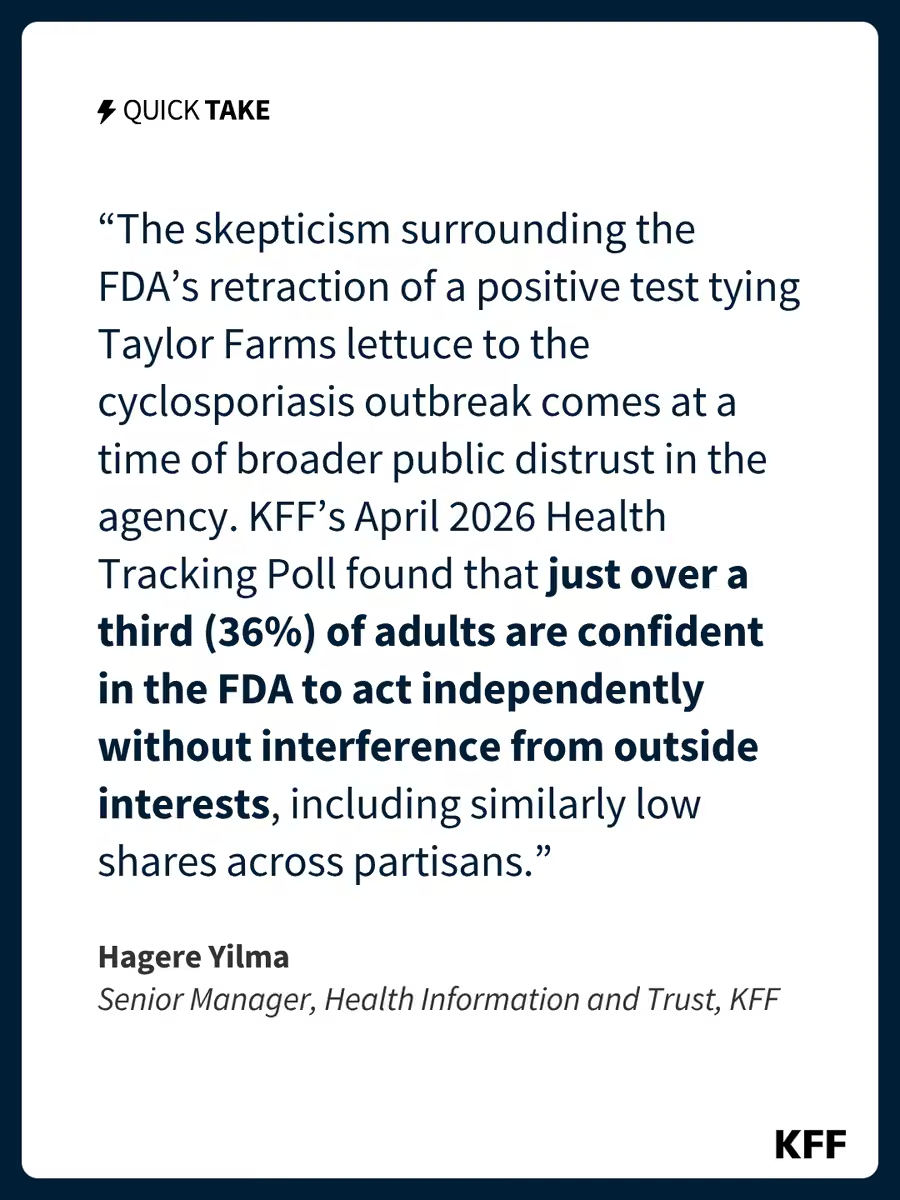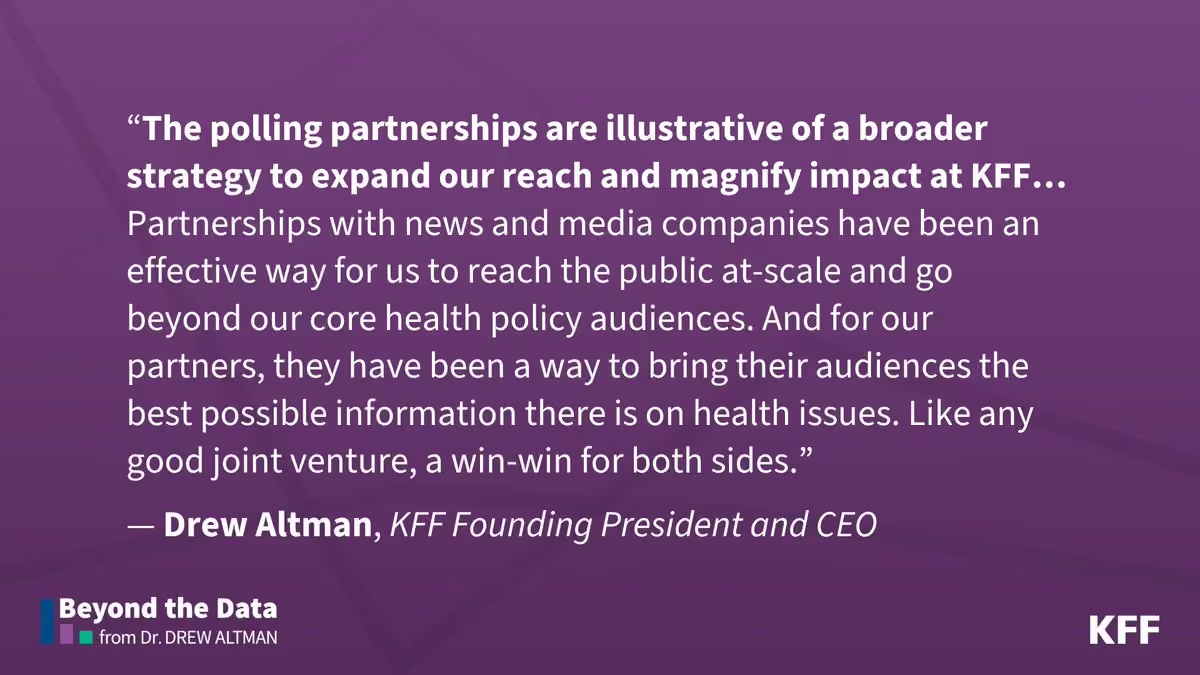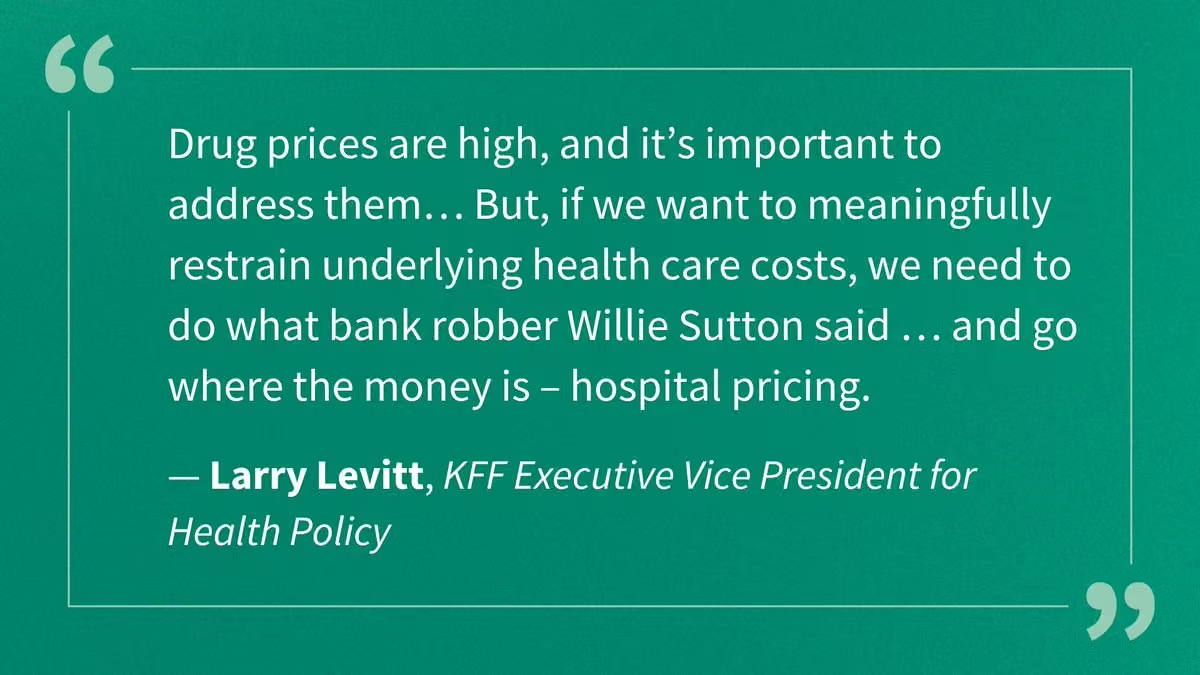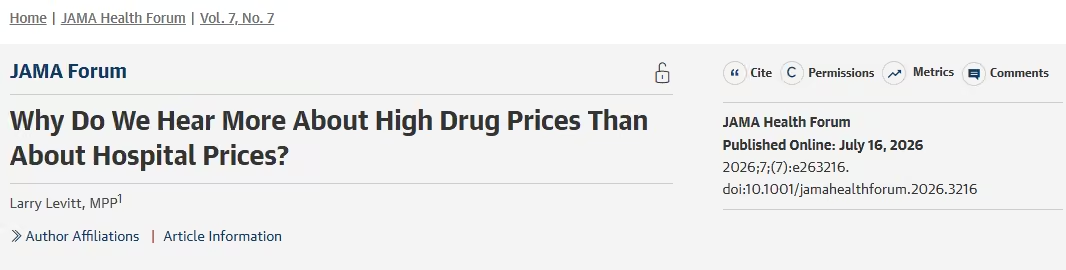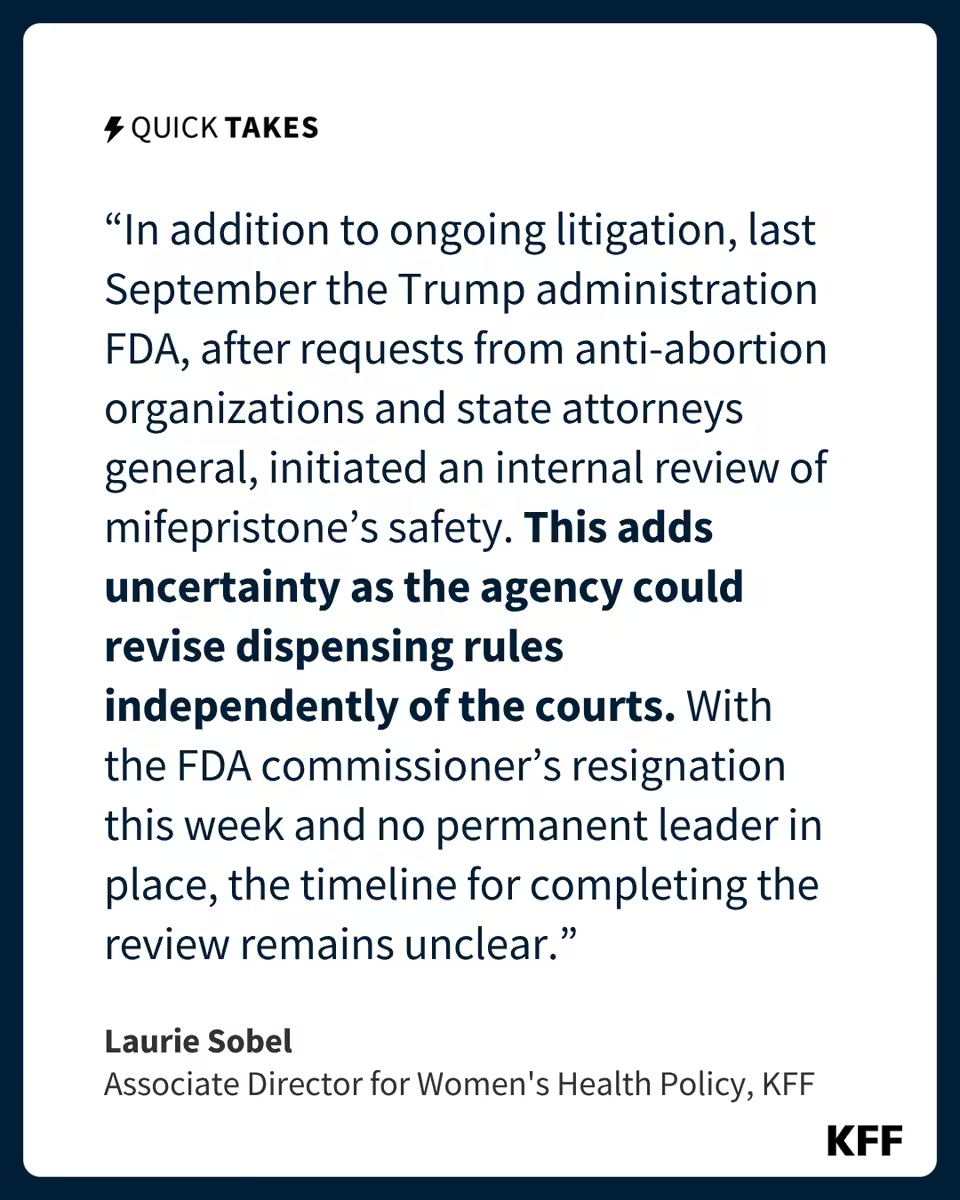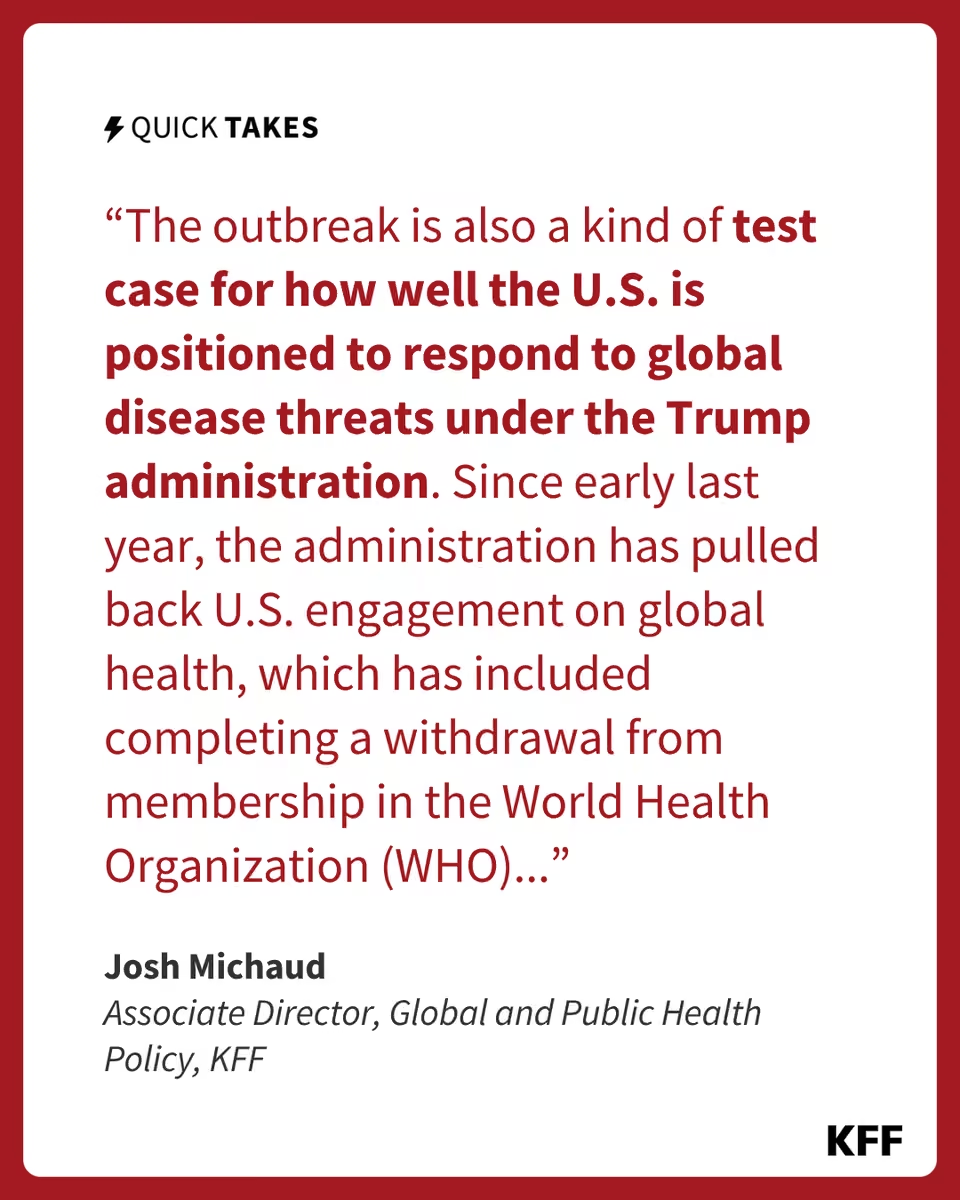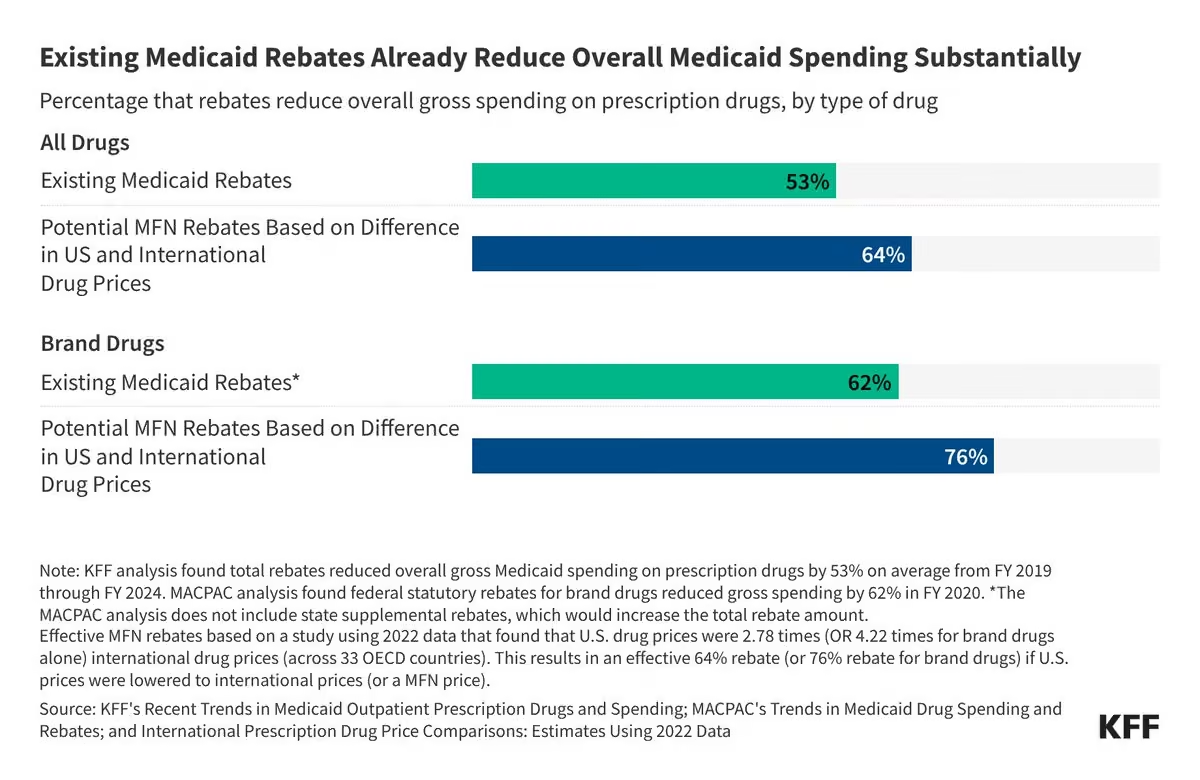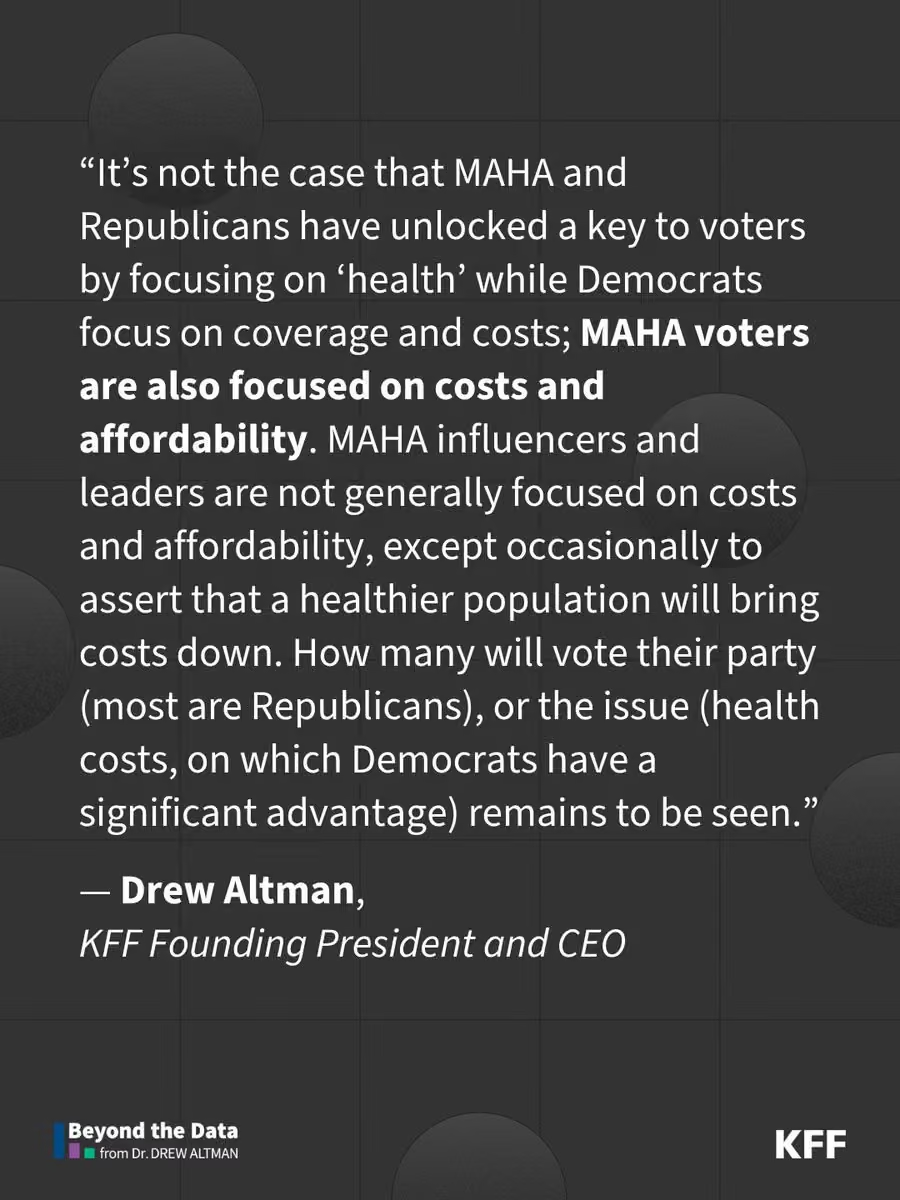

SISTER is right, more caregivers are women than men - 57 to 42 percent of caregivers. Our new survey: www.kff.org/public-opinion/experiences-of-unpaid-caregive…
KFF (health policy organization)
KFF, previously called the The Kaiser Family Foundation or The Henry J. Kaiser Family Foundation, is an American non-profit organization, headquartered in San Francisco, California. KFF is not affiliated with Kaiser Permanente and, since 2019, has been classified by the IRS as a public charity (they were previously a private foundation). KFF states that it is an independent organization focused on health policy. It conducts its own research, polling, and journalism. Its website has been praised for having the "most up-to-date and accurate information on health policy" and as a "must-read for healthcare devotees". More on Wikipedia
-
KFF reposted
Drew Altman
@DrewAltman

-
KFF
@KFF
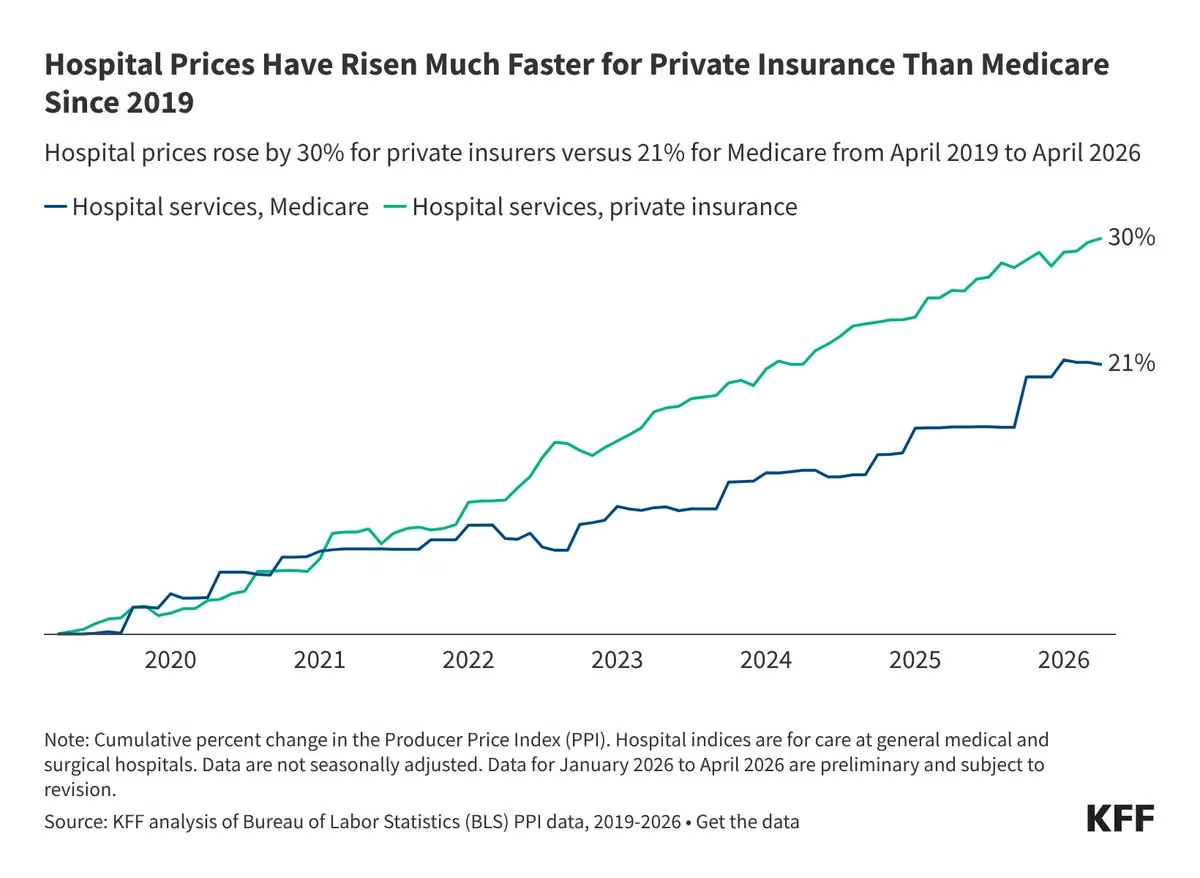
Since 2000, medical care prices have grown faster than overall consumer prices, with hospital prices rising the most.
More on these and other medical inflation trends: on.kff.org/4zYyrvQ -
KFF
@KFF
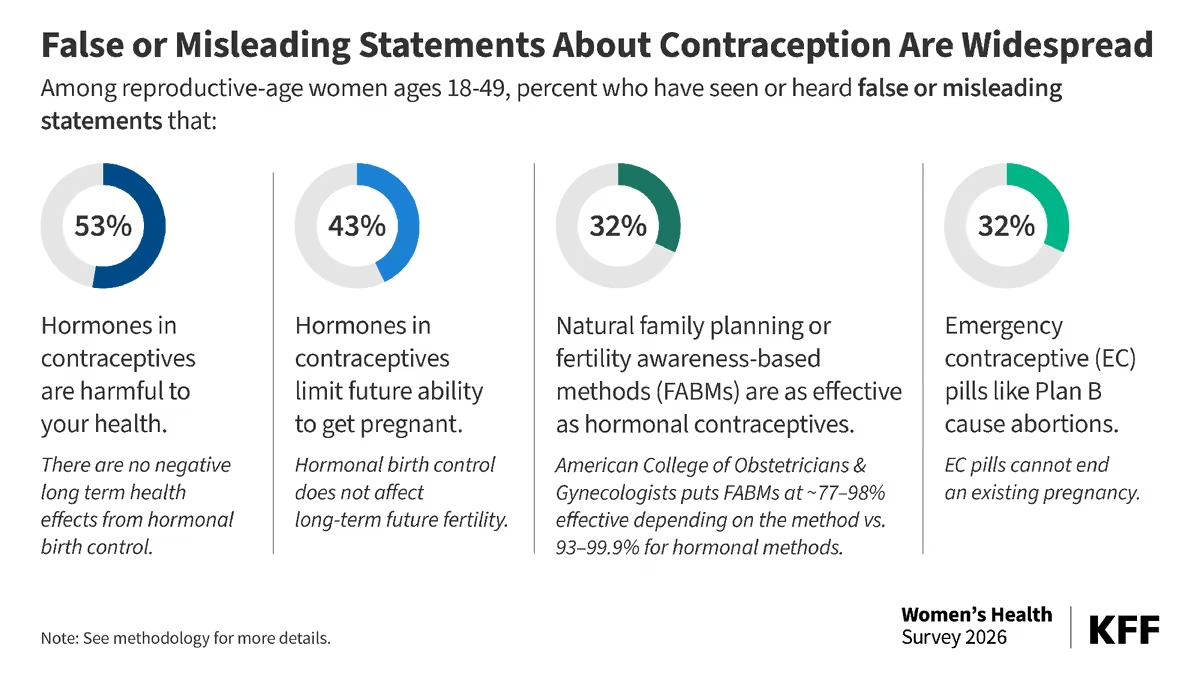
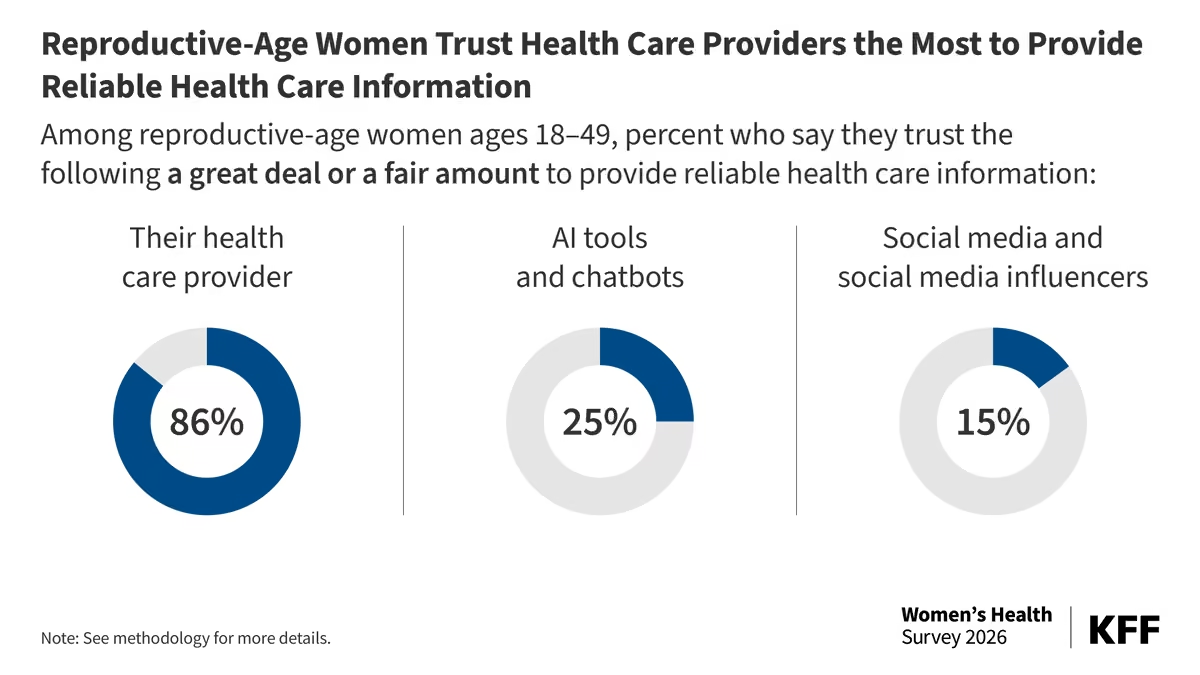
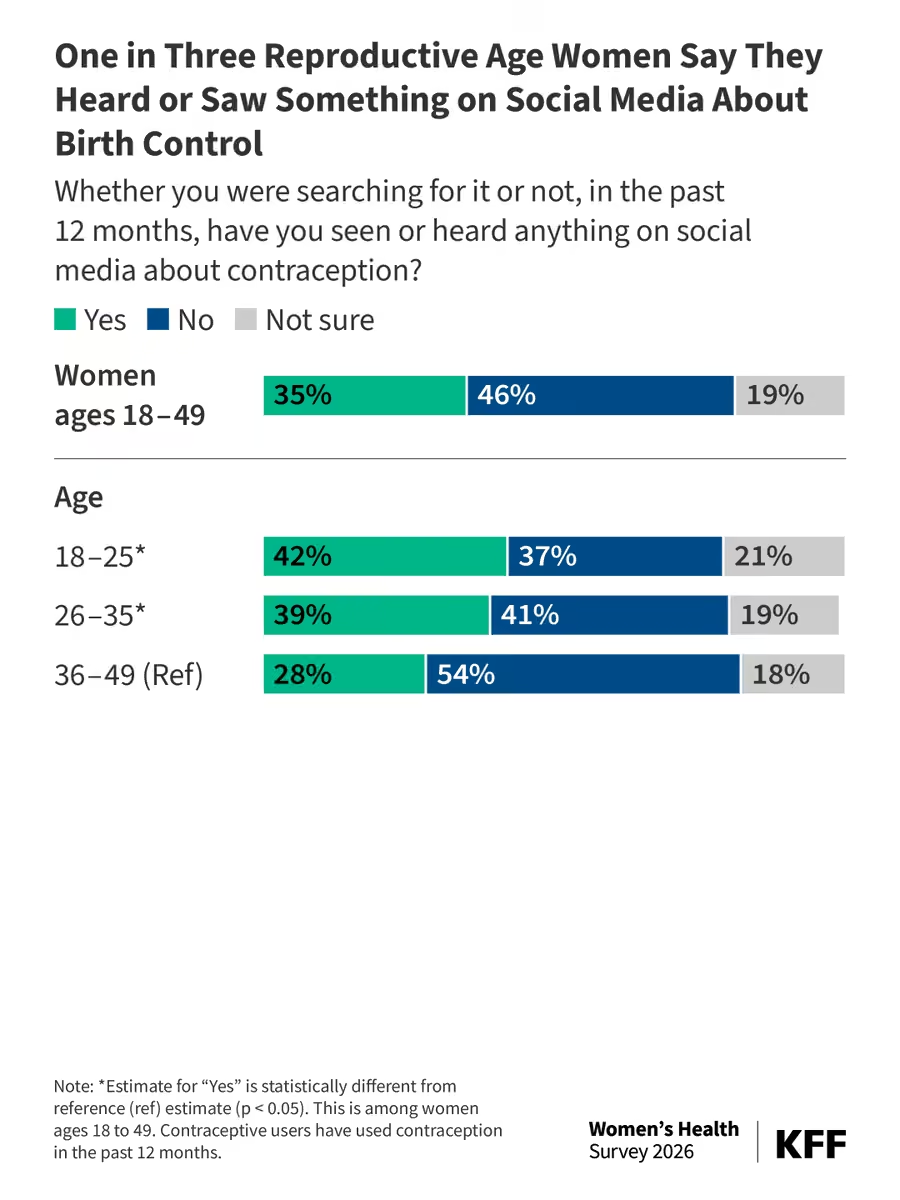
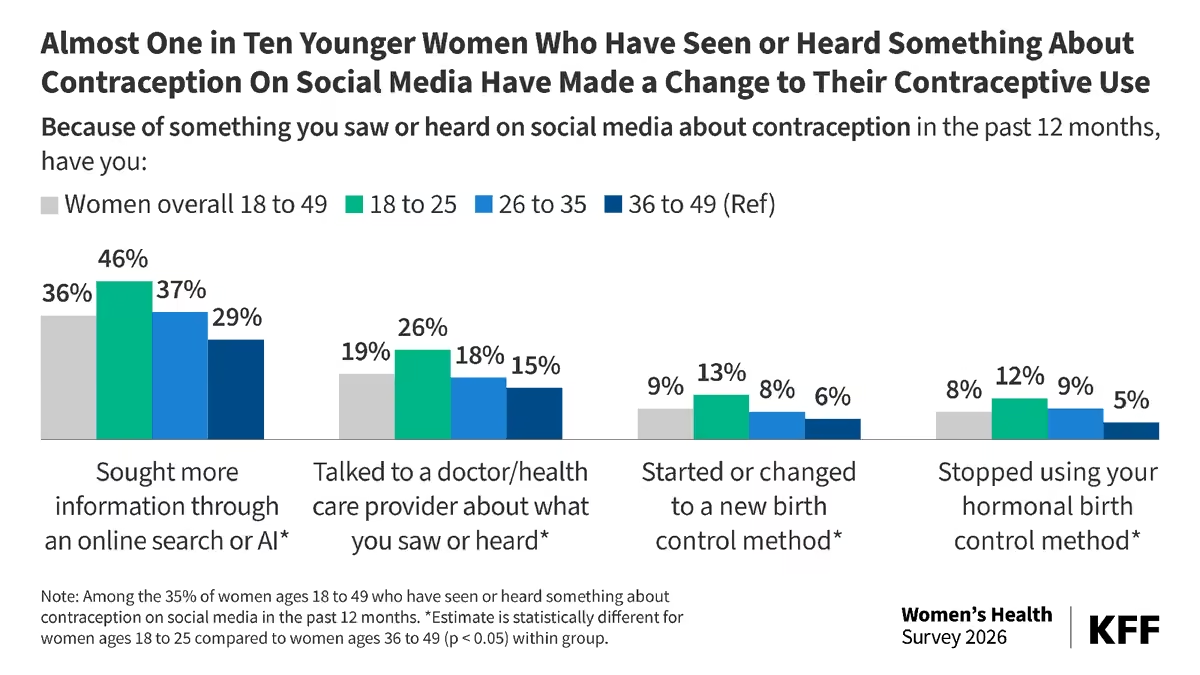
Four years after Dobbs, reproductive health policy continues to change at the federal and state levels. How are women ages 18-49 navigating it?
KFF experts share new findings from a national survey of women at a virtual event on Dec. 1 at 1 p.m. ET.
RSVP: -
KFF
@KFF
Four years after Dobbs, how are reproductive-age women navigating a changing health care landscape?
KFF’s women’s health policy experts will discuss new findings from the 2026 KFF Women’s Health Survey during a virtual event on 12/1 at 1 p.m. ET.
RSVP:on.kff.org/3XvpPye -
KFF
@KFF
Many American families have watched their health care costs grow faster than many other expenses. Since 2000, medical care prices grew 33% more than overall consumer prices.
More on medical inflation in our new analysis: on.kff.org/4zYyrvQ -
KFF
@KFF
States are under growing pressure to cut Medicaid supports for family caregivers heading into 2027 — driven by tighter budgets, reconciliation law changes, and federal program integrity scrutiny of home care payments.
More on these supports in our new brief: -
KFF
@KFF
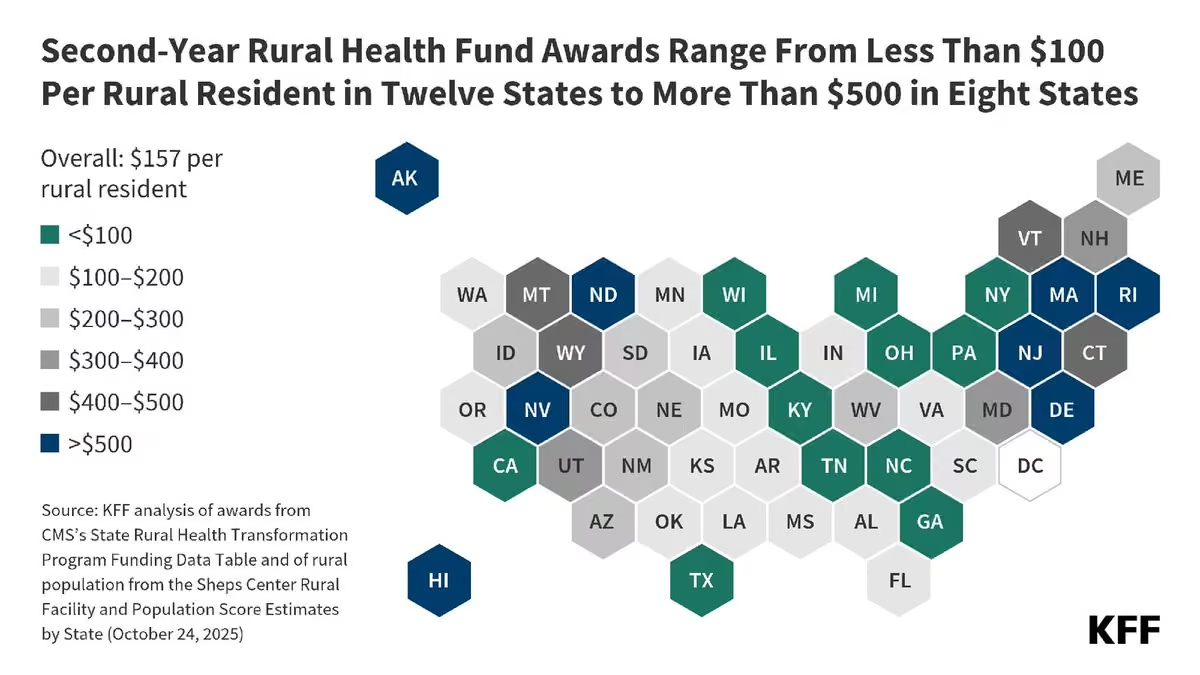
Analysis: The latest Rural Health Transformation Program awards to states continue to show wide variation when compared to state's rural residents.
Rhode Island, New Jersey and Alaska get the most per rural resident, while Texas gets the least. Learn why: -
KFF
@KFF
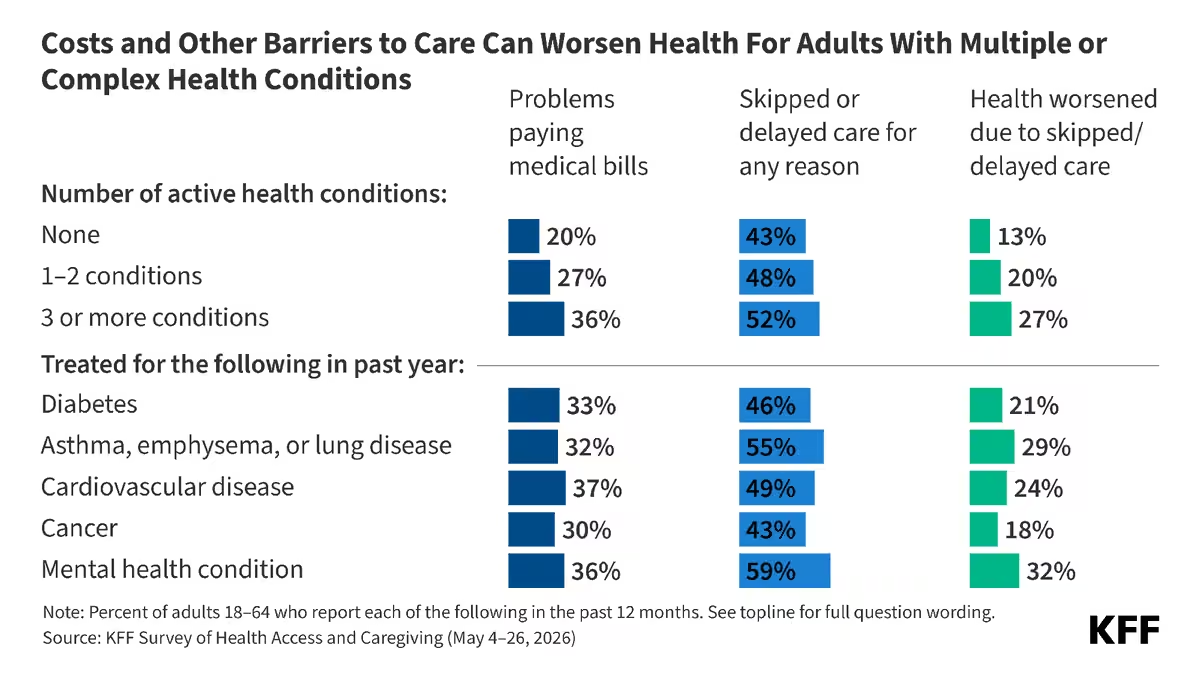
About 3 in 10 adults (29%) in the U.S. say they have provided unpaid care to a friend or family member who needs assistance due to aging, disability, or a chronic condition in the past 12 months, according to a new KFF survey: on.kff.org/48nsCMm
-
KFF
@KFF
Hospital prices have more than quadrupled since 2000—rising far faster than other health care costs and everyday expenses like housing and food.
More in our new analysis: on.kff.org/4zYyrvQ -
KFF
@KFF
Some privately insured women still pay out of pocket for prescription birth control because their plan didn’t cover the full cost or didn’t cover it at all.
More from the 2026 KFF Women’s Health Survey: on.kff.org/3WJSWOc -
KFF reposted
Larry Levitt
@larry_levitt
Lowering the age of Medicare eligibility means enrollees benefit from the substantial government subsidies for Medicare. Allowing people to buy into Medicare means they pay a premium that covers the cost of the coverage on average.
-
KFF reposted
Larry Levitt
@larry_levitt
What Noah Wyle says about medical debt is true.
www.healthsystemtracker.org/brief/the-burden-of-medical-d…
Protect Our Care
@ProtectOurCare
Noah Wyle: Right now, about one in three Americans is carrying medical debt, to the tune of about $220 billion in this country. The average is not a lot, but it’s enough to keep you in poverty. It’s enough to make you defer going back to the doctor to get the treatments you need, or to make really difficult choices between heat and health care, food and health care.
This media couldn't be displayed. See it on the original post. -
KFF reposted
Larry Levitt
@larry_levitt
There's a big difference between lowering the age of Medicare eligibility to 50 and allowing people who are 50-65 years old to buy into Medicare. Both, however, would move people from private insurance to lower cost Medicare coverage.
-
KFF
@KFF
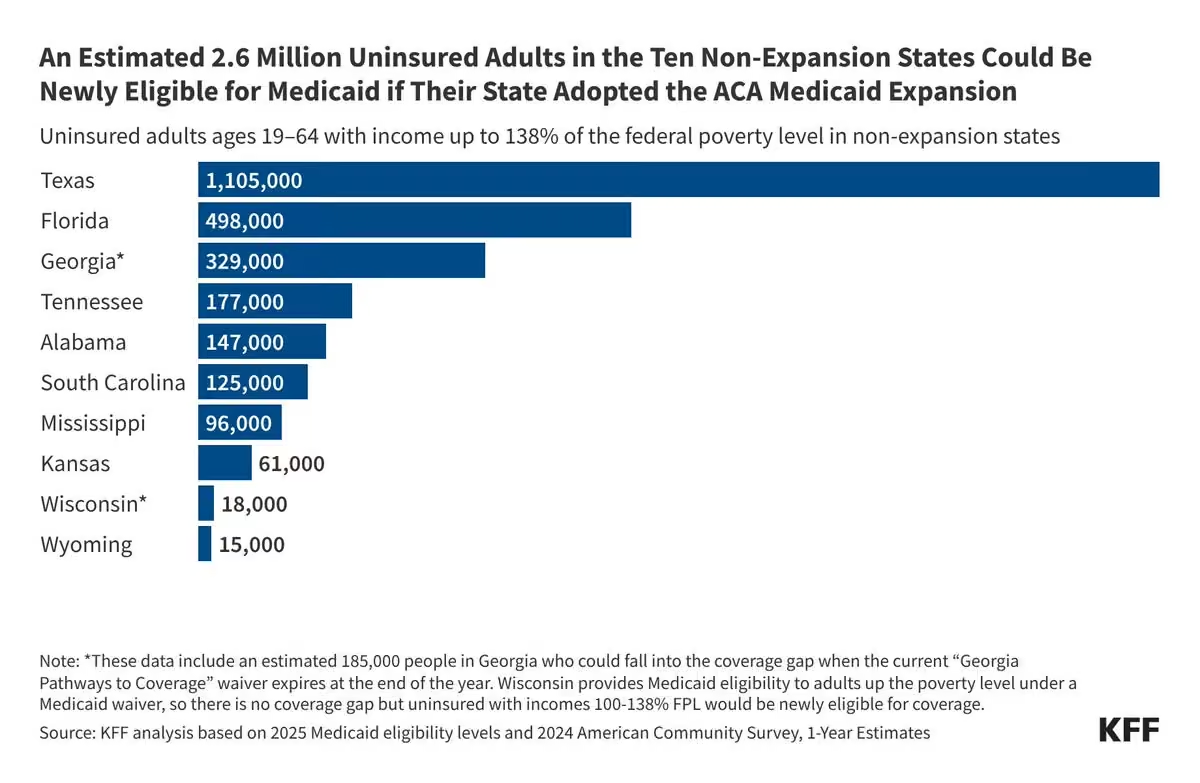
New Democratic governors and some legislative shifts in Georgia, Kansas, Texas, and Wisconsin could renew debates over Medicaid expansion, but states will also consider new federal policy changes like work requirements and financing restrictions: on.kff.org/3WzFfkS
-
KFF
@KFF
From new state abortion laws to Title X changes and updated federal rules on fertility benefits, the reproductive health landscape keeps shifting.
Join KFF on Dec. 1 at 1 p.m. ET for new data on how women are navigating it.
RSVP:on.kff.org/3XvpPye -
KFF
@KFF
With more than twice as many measles cases this year as in all of 2025, the U.S. has lost its measles elimination status. KFF’s Josh Michaud explains why it marks a step back for public health. on.kff.org/4t16gK2
-
KFF
@KFF
How did the midterm elections change the political and policy landscape for Medicaid expansion?
Our new policy watch offers early insights: on.kff.org/3WzFfkS -
KFF
@KFF
Nevada voters approved the state’s “Right to Abortion Initiative” for the second time, which is needed to take effect.
We found that 63% voted “yes” on Question 6, including 9 in 10 Democrats and nearly half of Republicans. Additionally, 8 in 10 (83%) reproductive-age women supported the initiative. Details: on.kff.org/4zoR5g0 -
KFF
@KFF
Democrats ran on promises to roll back key Medicaid and ACA changes—and newly elected Democratic governors and legislators in several states could reignite ACA Medicaid expansion debates: on.kff.org/3WzFfkS
-
KFF
@KFF
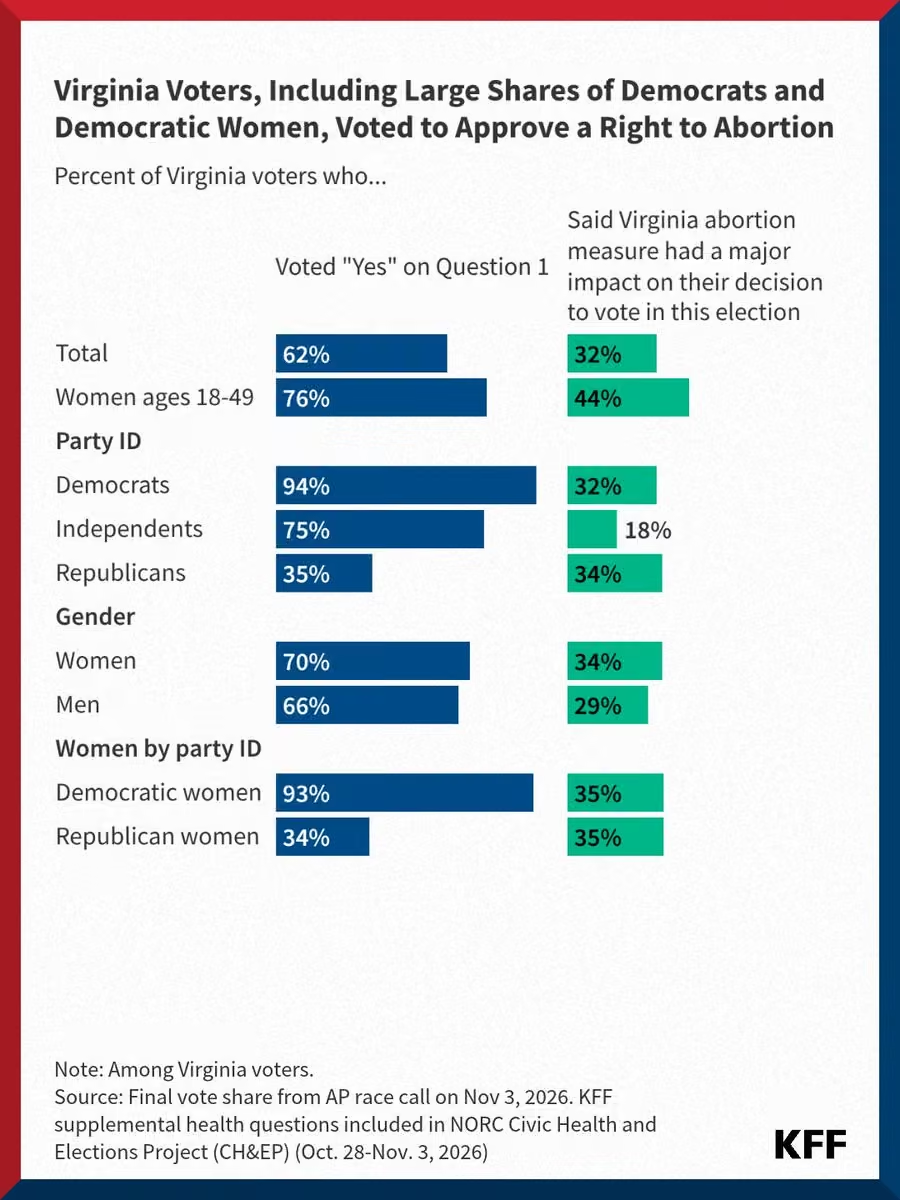
6 in 10 Virginians voted in favor of protecting abortion access, including:
• More than 9 in 10 Democrats (94%);
• About a third of Republicans (35%); and
• Three-quarters of reproductive-age women (76%).
Details: on.kff.org/4zoR5g0 -
KFF
@KFF
KFF’s Jennifer Tolbert explains the implications of the optional 6-month delay for enforcing Medicaid work requirements that CMS announced on Friday: on.kff.org/4eWgVjx
-
KFF
@KFF
KFF’s post-election analysis shows that partisans in Idaho were deeply divided about how to vote on the right to abortion in the state.
More key findings in the survey of midterm voters by NORC, with questions from KFF: on.kff.org/4zoR5g0 -
KFF
@KFF
Greater transparency could make it easier to compare Medicaid rates across states and to other payers.
KFF examines the new CMS Medicaid payment transparency requirements in fee-for-service Medicaid that took effect in July 2026: on.kff.org/4keEx6f -
KFF reposted
KFF
@KFF
What does it mean if the U.S. loses its measles elimination status?
KFF’s Josh Michaud explains why it would be a step back for public health: on.kff.org/4t16gK2 -
KFF reposted
Jen Kates
@jenkatesdc
Hopefully this doesn’t get too lost in the crazy news cycle of today, but this is not a good moment for public health in the U.S.
Liz Essley Whyte
@l_e_whyte
EXCLUSIVE: The U.S. has lost its measles elimination status.
with @JenCalfas - free link: www.wsj.com/health/u-s-loses-measles-elimination-status-a… -
KFF
@KFF
Many Missouri voters held views that did not align with both ballot measure provisions, according to the polling data.
Ultimately, when it came to their voting choice, voters’ views on abortion played a larger role. See the full findings: on.kff.org/4zoR5g0 -
KFF
@KFF
KFF’s Audrey Kearney breaks down the data showing the role abortion played in voters’ decisions in the 2026 midterms compared to past elections. on.kff.org/4f979KJ
-
KFF
@KFF
New CMS rules require states to publish Medicaid fee-for-service payment rates, but differences in how states handle the data may make comparisons difficult.
The usefulness also may vary depending on states’ reliance on fee-for-service vs. managed care: on.kff.org/4keEx6f -
KFF
@KFF
Missouri voters rejected Amendment 3 — keeping the constitutional right to abortion (first approved by voters in 2024) & leaving laws prohibiting many gender-affirming treatments for minors in place.
We found that abortion policy played a bigger role in voters’ decisions: on.kff.org/4zoR5g0 -
KFF
@KFF
What does it mean if the U.S. loses its measles elimination status?
KFF’s Josh Michaud explains why it would be a step back for public health: on.kff.org/4t16gK2 -
KFF
@KFF
A survey of midterm voters by NORC, with questions from KFF, finds that in Missouri, larger shares of Democratic voters said Amendment 3 had a major impact on their decision to vote than Republican voters in this election.
Explore the findings in our dashboard: -
KFF
@KFF
Analysis: The latest Rural Health Transformation Program awards to states continue to show wide variation when compared to state’s rural residents.
Rhode Island, New Jersey and Alaska get the most per rural resident, while Texas gets the least. Learn why: -
KFF reposted
Larry Levitt
@larry_levitt
I posted this as fact. Not surprisingly, some see it as an argument for expanding Medicare to more people or regulating health care prices, and others see it as an argument for just the opposite.
Larry Levitt
@larry_levitt
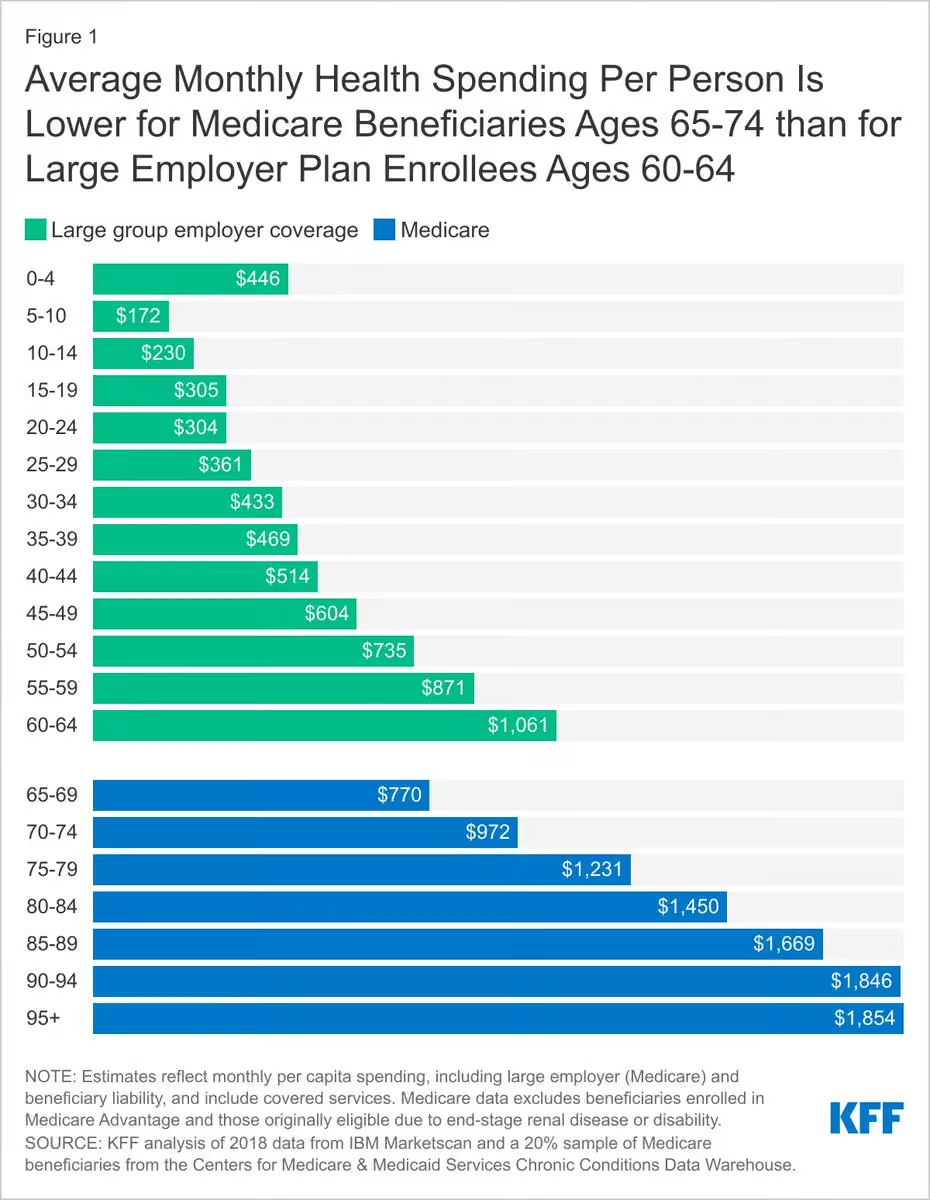
When people retire at 65 and shift from employer health insurance to Medicare, health spending decreases substantially because prices in Medicare are much lower than in private insurance.
-
KFF
@KFF
For all of AI’s advances in drug development, one challenge remains: predicting how a treatment will perform in humans.
Dr. Elias Zerhouni explains why clinical trials remain the ultimate test and what he sees as the next frontier for AI.
Full episode: -
KFF reposted
Larry Levitt
@larry_levitt
Wins by progressive candidates have jumpstarted a conversation about Medicare for All. That doesn't mean it's going to pass, but does mean it could play a big role in the 2028 presidential campaign. That depends, however, on having a candidate in the race who will champion it.
-
KFF reposted
Larry Levitt
@larry_levitt
When people retire at 65 and shift from employer health insurance to Medicare, health spending decreases substantially because prices in Medicare are much lower than in private insurance.
-
KFF
@KFF
What does AI actually do in drug development?
Dr. Elias Zerhouni explains how tools like AlphaFold 3 are helping researchers understand structures, identify targets, and optimize drug candidates much faster than before: on.kff.org/4iAw1xbThis media couldn't be displayed. See it on the original post. -
KFF
@KFF
New federal public charge guidance leaves key questions unanswered about which public benefits may affect immigrants’ green card applications.
That could deepen fear and confusion and discourage families from accessing health coverage and other programs: on.kff.org/4kBTHCF -
KFF
@KFF
More health providers are moving away from race-based clinical decision-making tools.
These changes can help reduce disparities and improve outcomes, but researchers and clinicians are still investigating what health-related information race captures: on.kff.org/3WAOpNT -
KFF
@KFF
Bipartisanship has long been the “secret sauce” of U.S. global health.
With several GOP champions leaving and 100+ new members arriving, whether it holds will help shape what comes next. on.kff.org/4BWprZy -
KFF
@KFF
AI is speeding up the search for new medicines. Can it make the discoveries themselves?
Dr. Elias Zerhouni says that while AI can accelerate discovery, the spark behind major scientific breakthroughs remains human.
More on what AI is doing in drug development: -
KFF
@KFF
What could Democratic control of Congress mean for global health?
Expect sharper congressional oversight of U.S. global health policy, including the America First Global Health Strategy, its agreements with countries, and the fallout from shuttering USAID. -
KFF
@KFF
Section 1115 waivers let states test new approaches to Medicaid—but they must be “budget neutral” for the federal government.
New CMS guidance changes how that standard is assessed and may limit what states can do. More on the changes: on.kff.org/4sSo0Y1 -
KFF
@KFF
The midterms weren’t about global health, but Democratic control of Congress could still reshape it.
KFF looks at what may change, from oversight and funding to the future of PEPFAR: on.kff.org/4BWprZy -
KFF
@KFF
New federal public charge guidance does not define who may be considered a public charge or provide an exhaustive list of benefits that may count towards public charge determinations.
Instead, officials may consider receipt of any means-tested benefits: on.kff.org/4kBTHCF -
KFF
@KFF
Clinical medicine is moving toward removing race and ethnicity from clinical calculators and guidelines, which may mitigate disparities and improve health outcomes.
However, questions remain about the impact of this movement. on.kff.org/3WAOpNT -
KFF
@KFF
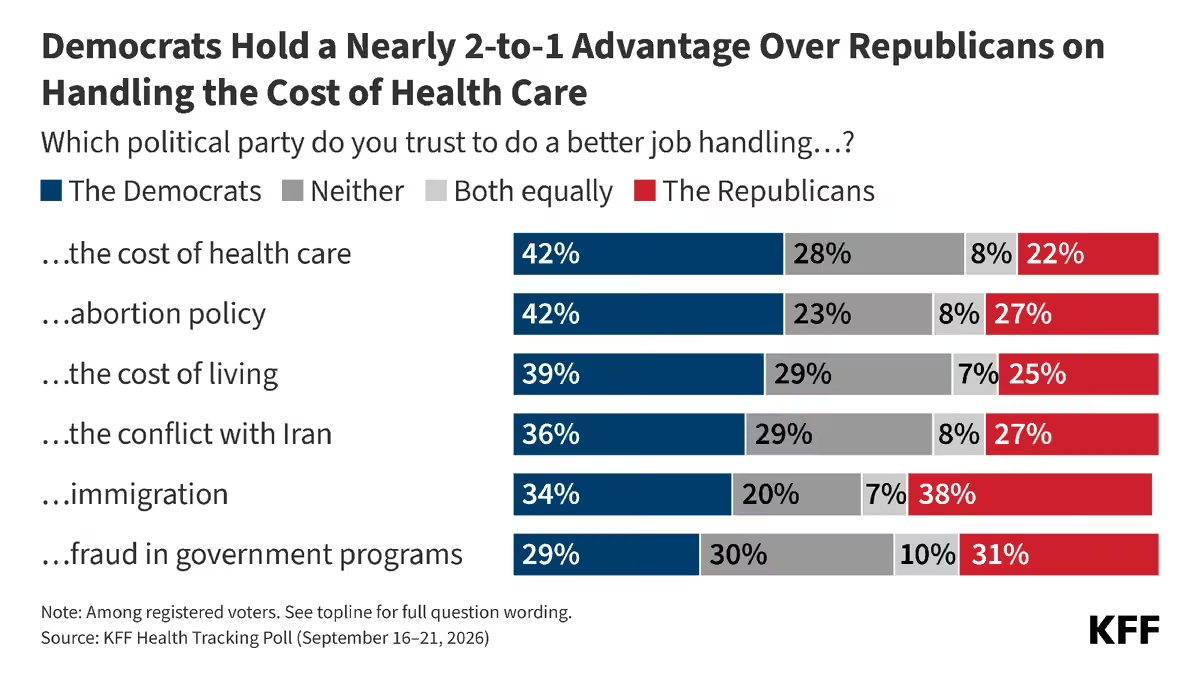
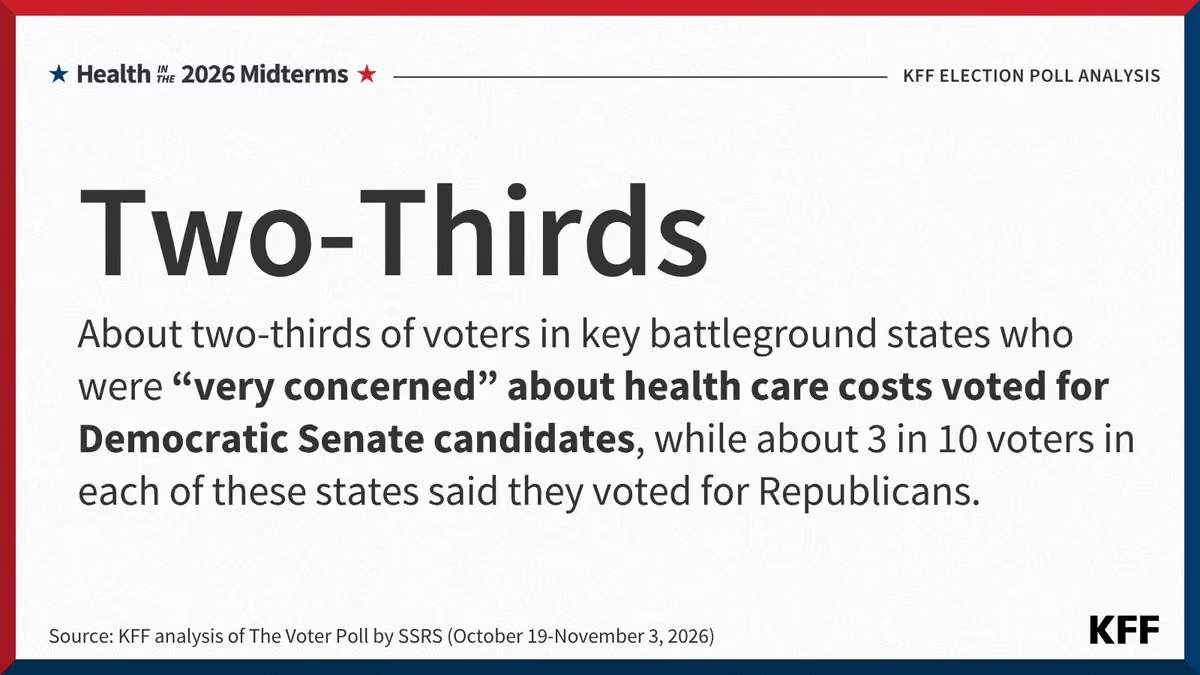
Midterm voters said the Democratic Party was better equipped than the Republican Party to handle a range of issues, with the Democrats’ biggest advantage appearing on the issue of health care.
Explore the data: on.kff.org/4z2aLoS -
KFF
@KFF
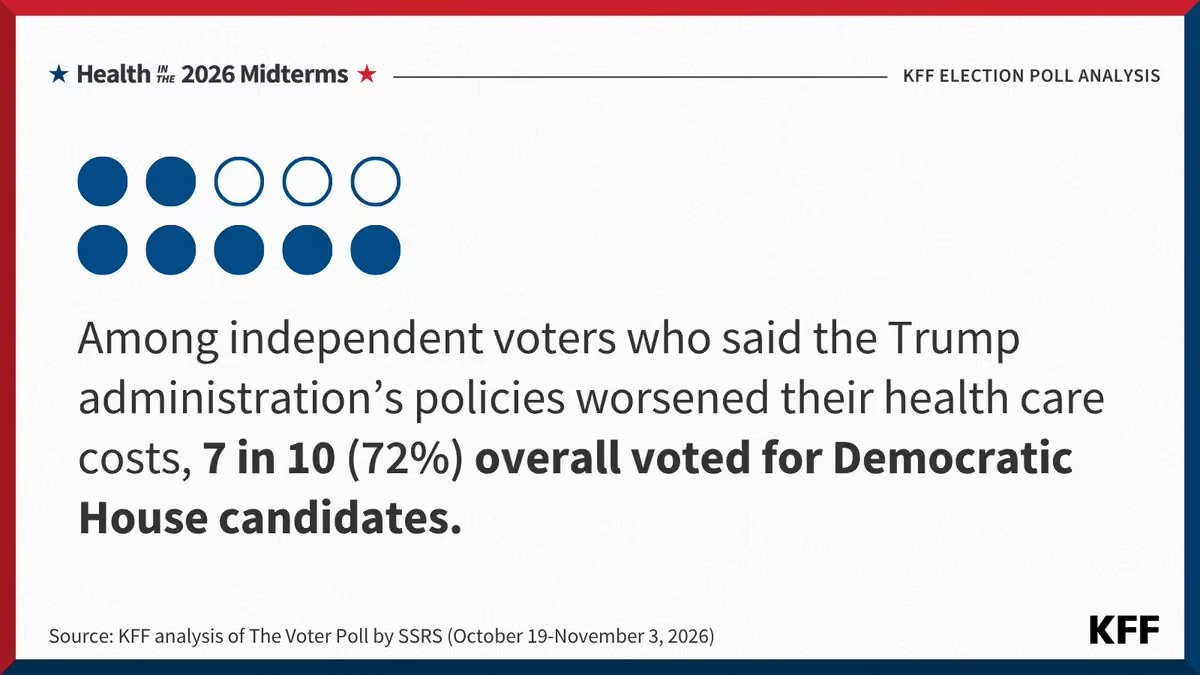
KFF’s post-election analysis finds blame aimed at the Trump administration over rising health care costs was tied to support for Democratic candidates overall, and among independent voters — a key voting group.
See the details: on.kff.org/4z2aLoS -
KFF
@KFF
KFF’s new dashboard examines voters’ views on health care costs, the Trump administration’s health care policies, and the role of government in health care, including how these issues factored into voter choices nationally and in key Senate races.
Examine the findings: -
KFF reposted
Drew Altman
@DrewAltman
The focus is appropriately on what Democrats will do, but one of the most interesting things to watch as the Republican presidential field takes shape and then after 2028 - do Republicans have a health agenda after Trump?
-
KFF
@KFF
Medicaid's non-emergency medical transportation (NEMT) benefit helps low-income enrollees get to care and accounts for less than 1% of Medicaid spending.
Learn more about the program, including who uses it: on.kff.org/48x6SgT -
KFF reposted
Larry Levitt
@larry_levitt
There's a lot of talk about what the Democratic House may do in the first 100 hours, including reversing Medicaid cuts and restoring enhanced ACA premium subsidies.
It's more complicated in the Senate without a 60 vote majority, which likely requires using budget reconciliation. -
KFF
@KFF
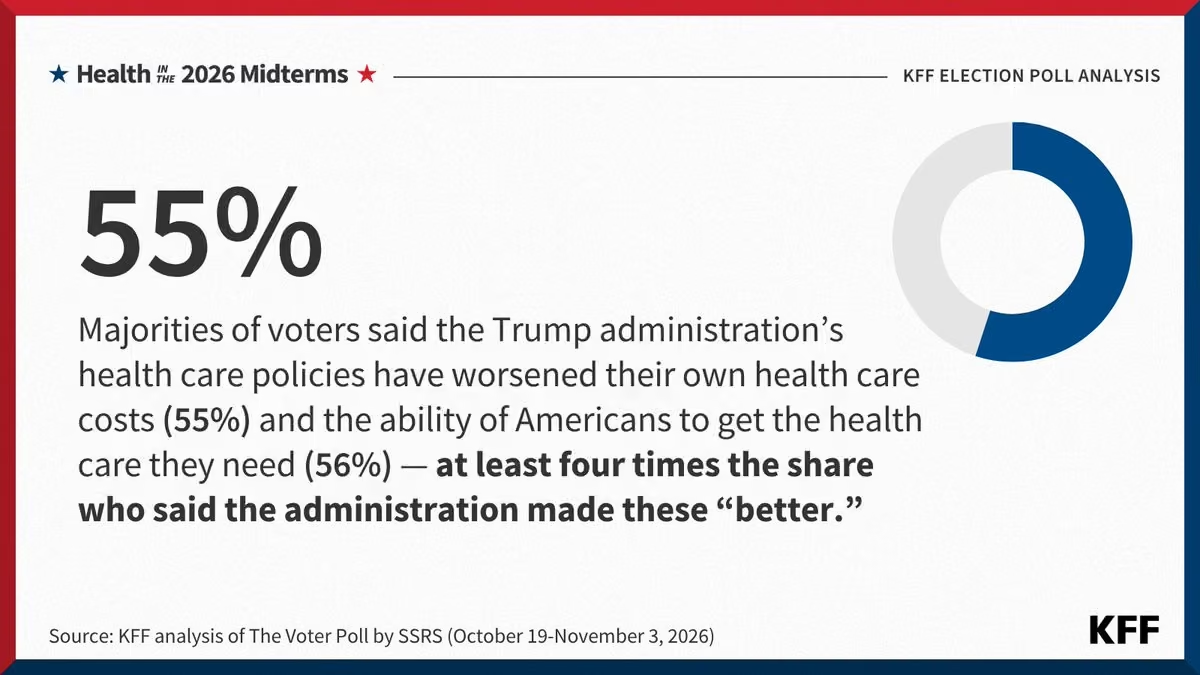
We found that 2026 midterm voters harbored largely negative views of the Trump administration’s health policies — including their impact on voters’ own health costs, access to care, the health of Americans, fraud in government health programs, and vaccine access:
-
KFF
@KFF
We found that voters in Michigan and Maine who wanted a larger government role in providing health care made up the overwhelming majority of those who voted for Democratic Senate candidates Abdul El-Sayed and Troy Jackson.
Full dashboard with findings: on.kff.org/4z2aLoS -
KFF reposted
Larry Levitt
@larry_levitt
Jay Rockefeller co-founded the Alliance for Health Reform, along with Republican John Danforth, as a bipartisan forum to discuss health policy ideas, particularly among Congressional staff. It was a different time. RIP
The Associated Press
@AP
Jay Rockefeller, former West Virginia governor and U.S. senator, has died at 89. He came from one of the nation’s richest families and spent decades in public service in one of the poorest states. apnews.com/article/jay-rockefeller-dies-west-virginia-b5c…
-
KFF reposted
Drew Altman
@DrewAltman
Jay Rockefeller was one of the greatest health care leaders ever in congress, and a good friend.
-
KFF
@KFF
With 21 new governors set to take office next year — including five from different parties — states already navigating complex Medicaid changes now face an added layer of uncertainty. on.kff.org/4sMOnyy
-
KFF
@KFF
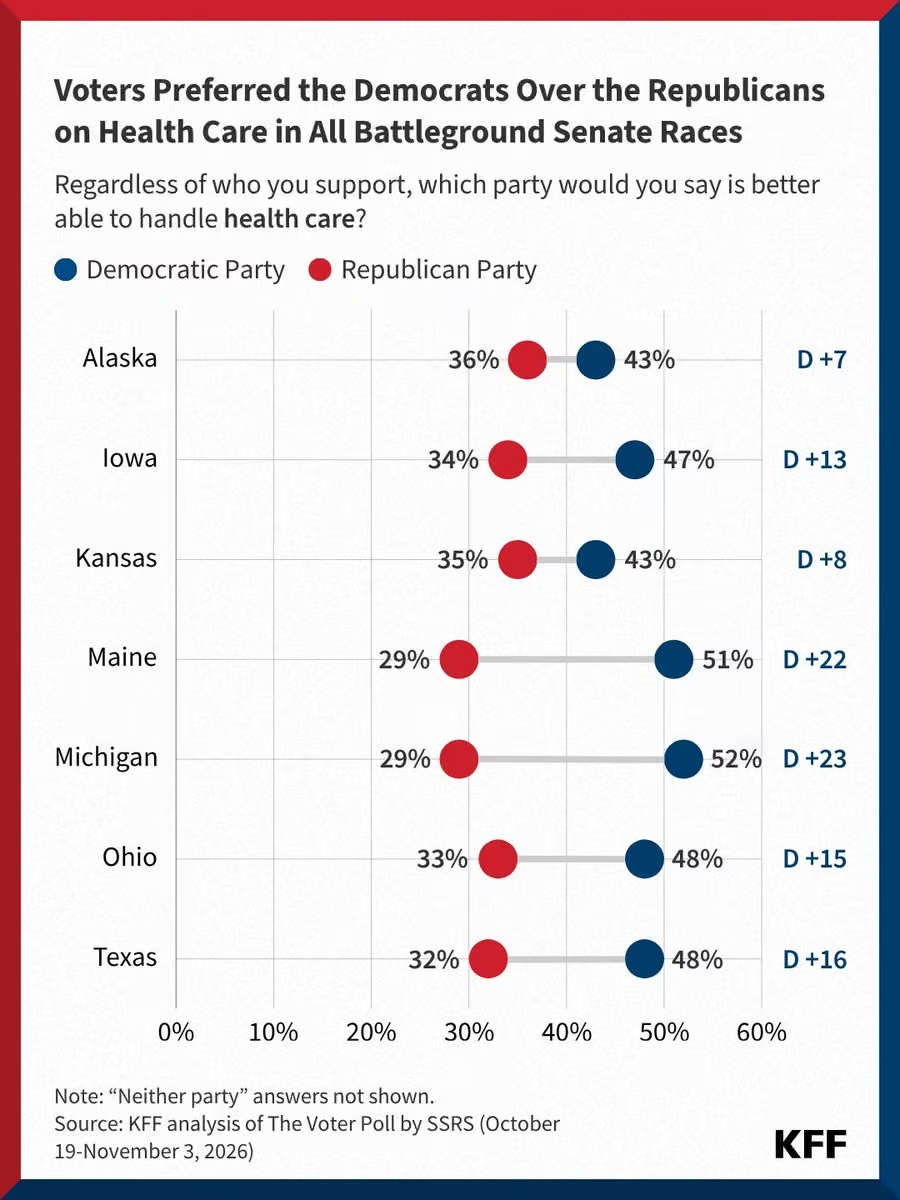
Polling data shows the Democrat’s advantage over Republicans on health care held across all key battleground Senate states.
Voters trusted Democrats over Republicans on health care by double-digit margins in Michigan, Maine, Ohio, Texas and Iowa.
See more findings: -
KFF
@KFF
In KFF’s new dashboard, users can examine voters’ views on:
Health care costs;
President Trump’s health care policies;
The role of government in health care; and
How these issues factored into voter choices nationally and in key Senate races.
See the data: -
KFF
@KFF
Half of voters said they thought the Democrats could better handle the health care, compared to 3 in 10 voters who chose Republicans.
1 in 5 voters said they thought “neither” party could better handle health care.
Learn more: on.kff.org/4z2aLoS -
KFF
@KFF
How should hospitals judge AI investments?
In this week’s episode, Charité CEO Prof. Dr. Keyo Kroemer says that its value depends on whether it improves care, helps staff, and makes innovation usable in everyday practice: on.kff.org/47Q65aN -
KFF
@KFF
KFF’s new dashboard examines how abortion factored into voters' choices in four states with ballot measures aimed at protecting or restricting abortion access.
Explore the data: on.kff.org/4zoR5g0 -
KFF
@KFF
The economy was voters’ number one issue in the 2026 midterms, and health care was the second most selected issue among voters overall, with about 4 in 10 saying the latter was an important issue.
Explore the data: on.kff.org/4z2aLoS -
KFF
@KFF
Most midterm voters said the Trump administration’s policies have made their own health care costs and American’s health and access to care worse, the data shows.
Explore more findings: on.kff.org/4z2aLoS -
KFF
@KFF
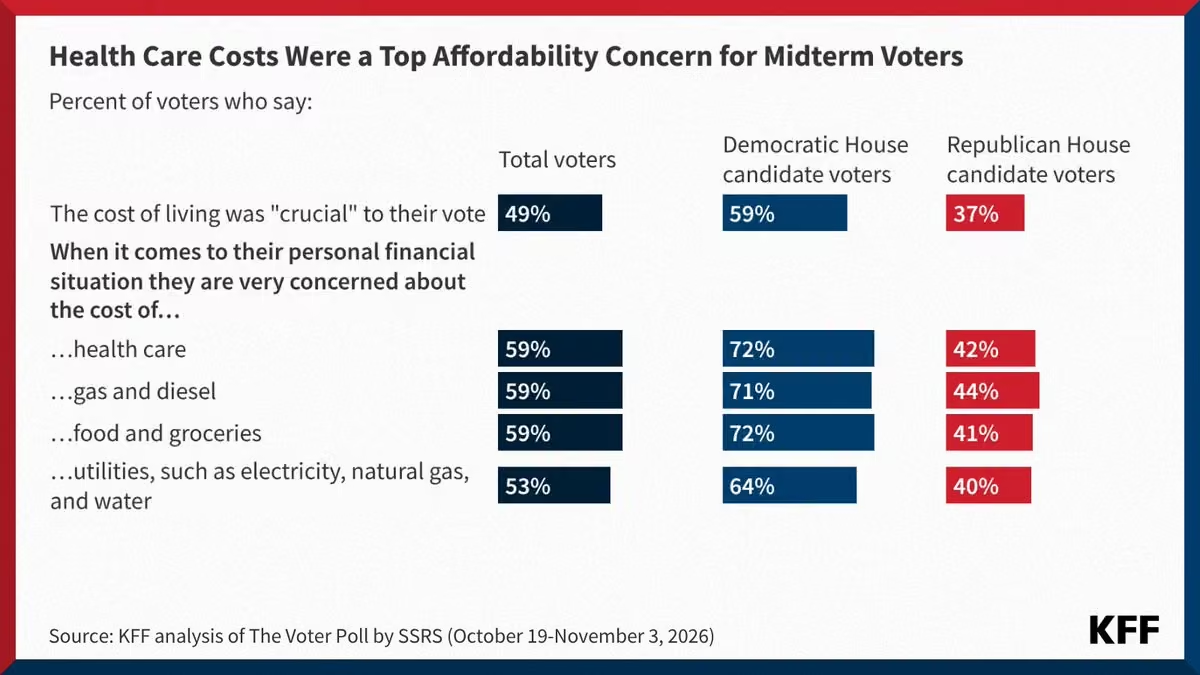
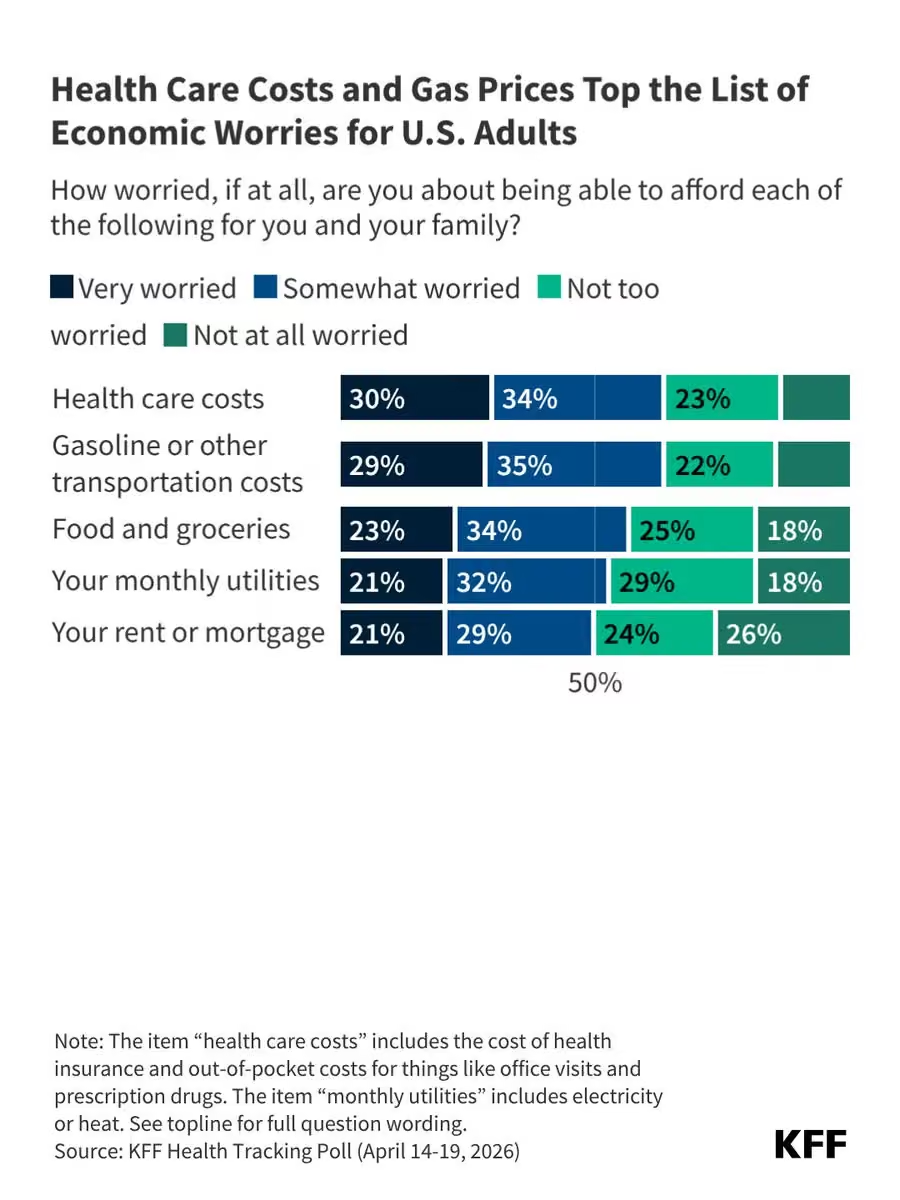
Cost of living was a top issue on voters’ minds this election. We find that concerns about health care costs, alongside concerns about gas and groceries, played a key role.
Among voters overall, about half said the cost of living was “crucial” to their vote for Congress. -
KFF reposted
Larry Levitt
@larry_levitt
One question ahead for Democrats is whether there are incremental steps on health care affordability that could appeal to both Medicare for All advocates and more moderate voices.
Burgess Everett
@burgessev
News: Bernie Sanders pushing for major Medicare expansion in next reconciliation bill. Wants to lower eligibility age to 55 or 60 and expand care to dental, eyes, hearing aids, and use Medicare Rx negotiations with pharma to do it
www.politico.com/news/2021/03/26/bernie-sanders-medicare-… -
KFF
@KFF
KFF's post-election analysis finds that the economy was voters' top issue in the 2026 midterms.
The cost of living – including the cost of health care – was a key driver of their decisions, as voters pointed to health care costs among their most pressing affordability concerns: on.kff.org/4z2aLoS -
KFF
@KFF
Dive deeper into what the latest poll findings mean for health policy going forward with KFF experts and journalists!
Watch LIVE: KFF’s post-election discussion, analysis and insights about the election results, polling, and what’s next for health policy: youtube.com/live/TKRr_aZkfFo -
KFF
@KFF
NEW: With KFF’s two new interactive dashboards, users can examine how voters weighed key health care issues as they cast their ballots this year, drawing on KFF analyses of findings from two national voter surveys.
Explore the latest data ⤵️Post not available here, view on X
KFF
@KFF
How abortion factors into voters’ choices: www.kff.org/public-opinion/abortion-on-the-ballot-in-2026…
KFF
@KFF
Want to dive deeper into what these and other poll findings mean for health policy going forward?
At noon ET KFF experts and journalists will host a live post-election discussion.
It's not too late to register: www.kff.org/event/what-do-the-midterm-election-results-me… -
KFF reposted
KFF Health News
@KFFHealthNews
A $50 billion federal program. A missed deadline. And a mass late-Friday email. CMS announced delayed rural health awards in a message one state leader called “cryptic.”
@sjtribble @Ajzionts & @besables report ⤵️
kffhealthnews.org/rural-health/rural-health-transformatio… -
KFF reposted
KFF Health News
@KFFHealthNews
What does the blue wave mean for health policy — especially when it comes to making coverage and drugs more affordable? Here’s an early take on the Democratic agenda.
@StephArmour1 & @AmandaSeitz report ⤵️
kffhealthnews.org/insurance/post-midterm-election-healthc… -
KFF reposted
SSRS
@ssrs_research
The new @KFF Election Poll Analysis dashboard focuses on the role health care costs and other health policy issues played in voters’ decisions in the 2026 midterm elections, including in key Senate races. For this analysis, KFF added supplemental questions to The Voter Poll by SSRS, a survey of the 2026 midterm electorate nationally and in all 50 states.
www.kff.org/public-opinion/health-care-in-the-2026-midter… -
KFF reposted
Alex Wayne
@aawayne
MUST-WATCH: Today at noon, an all-star @KFF team breaks down the impact of the Democrats’ rout on U.S. health policy. @jrovner leads a convo with @larry_levitt @Mollybrodie and @AmandaSeitz.
Register here: www.kff.org/event/what-do-the-midterm-election-results-me… -
KFF
@KFF
New ACA Marketplace subsidy restrictions could leave some immigrants who remain eligible uninsured due to documentation challenges, verification issues, fear, or confusion.
A look at implementation issues and potential impacts on coverage and affordability: -
KFF
@KFF
Starting Jan. 1, many lawfully present immigrants — including refugees, asylees without green cards, and people with work visas — will lose eligibility for ACA Marketplace subsidies.
The change is expected to leave 1 million more people uninsured by 2035: on.kff.org/48yxfTK -
KFF reposted
Larry Levitt
@larry_levitt
There are a variety of populist health care ideas that could, at least in theory, get bipartisan support, including: antitrust, lowering drug prices, curbing prior authorization, and more price transparency.
Josh Hawley
@HawleyMO
Good. All these huge companies gobbling up local pharmacies should be broken up
Matt Stoller
@matthewstoller
CVS CEO David Joyner just said on CNBC that the Break Up Big Medicine legislation by @SenWarren and Josh Hawley (@HawleyMO) is one reason he is breaking up his company.
This media couldn't be displayed. See it on the original post. -
KFF reposted
Drew Altman
@DrewAltman
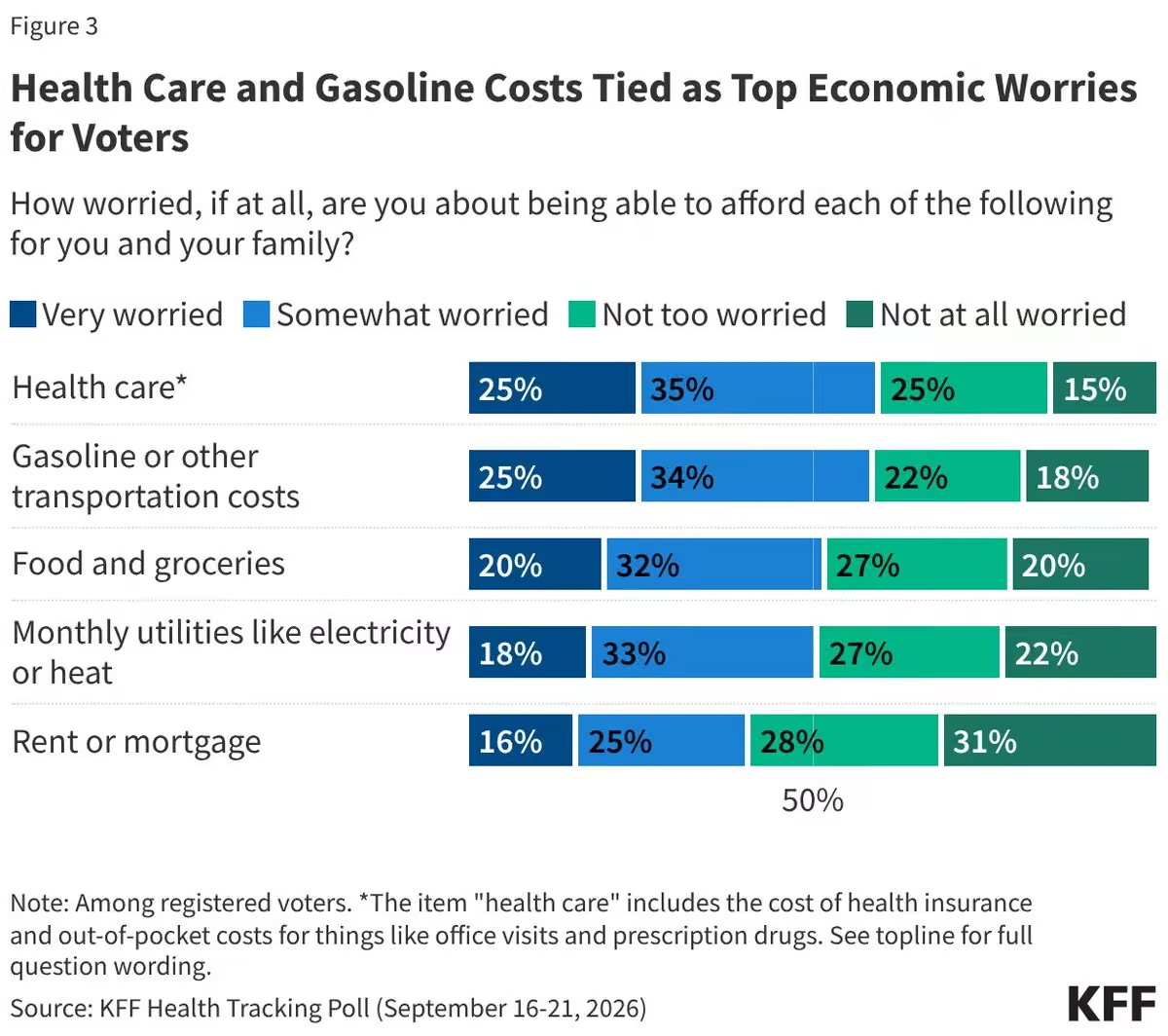
My favorite point about health costs as a voting issue. It was one element of voters’ cost of living concerns, NOT a separate issue, and underscoring the point, health costs, gas, and food are all tied:
 -
KFF
@KFF
Most Marketplace enrollees are shielded from rising premiums by tax credits — but individuals with higher incomes, some lawfully present immigrants, and people who lose Medicaid due to work requirements won’t qualify for federal help in 2027: on.kff.org/4Ac2sIh
-
KFF
@KFF
Rather than treating AI as a series of separate initiatives, Charité consolidated its scattered AI projects into a single Institute for Artificial Intelligence in Medicine.
Charité CEO Prof. Dr. Keyo Kroemer explains why — and what it could mean for the future of AI in European health care.
Listen to the full episode for more: on.kff.org/47Q65aNThis media couldn't be displayed. See it on the original post. -
KFF reposted
Larry Levitt
@larry_levitt
Wins by progressive candidates will jumpstart a national discussion of Medicare for All. Medicare for All isn't going to pass in the next two years. But, newly prominent advocates will have a platform to make sure it’s part the discussion, carrying through to the 2028 primaries.
-
KFF reposted
Larry Levitt
@larry_levitt
Democrats will be able to pass health care bills that show what they care about, likely starting with reversing Medicaid cuts and restoring enhanced ACA subsidies. President Trump will veto those, and then the game of chess will begin to figure out what can get enacted.
-
KFF
@KFF
ACA Open Enrollment is here — and this year comes with major changes.
Marketplace premiums are up 13% on average, more insurers are leaving the Marketplaces, and some will lose subsidies.
More on what to watch: on.kff.org/4Ac2sIh -
KFF reposted
Larry Levitt
@larry_levitt
Democrats will be unified in reversing Medicaid cuts and restoring enhanced ACA premium subsidies. There will be disagreements on what more they want to do on health care, especially as we get closer to the presidential primaries.
-
KFF reposted
Larry Levitt
@larry_levitt
Democrats are not going to get everything they want to accomplish on health care past Trump’s veto. But, there is going to be enormous pressure on them to try.
-
KFF
@KFF
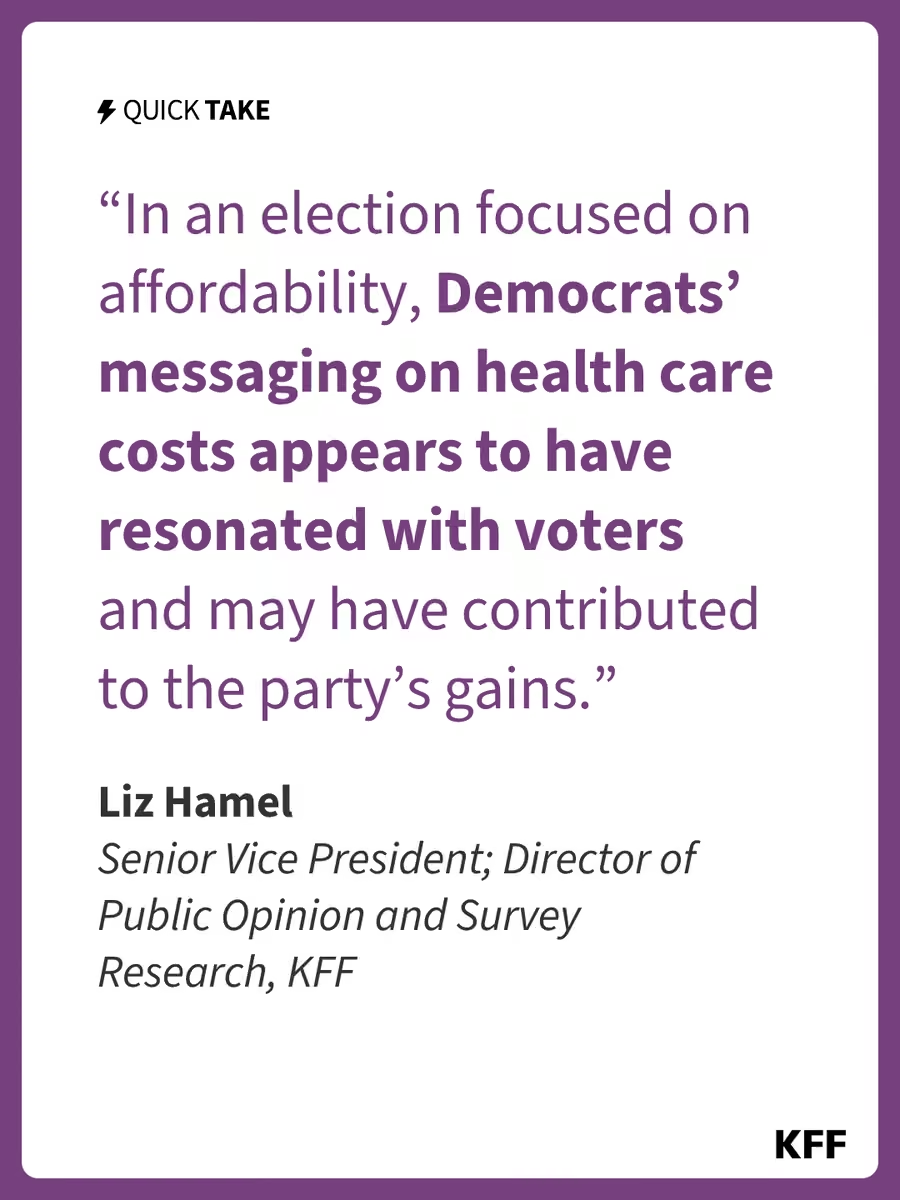
KFF’s analysis of the 2026 Voter Poll by SSRS indicates that voters were receptive to Democrats’ messages on health — as midterm voters gave Democrats a 19-percentage-point advantage on which party is better able to handle health care.
More from Liz Hamel: -
KFF reposted
Larry Levitt
@larry_levitt
Does that mean he’s open to reversing or delaying Medicaid cuts? Restoring enhanced ACA premium subsidies? We’ll see.
Weijia Jiang
@weijia
NEWS: I just got off the phone with President Trump. He says his message to Americans is:
"My message is congratulations to the Democrats, and I look forward to working with you for the good of our country."
www.cbsnews.com/news/trump-congratulates-democrats-electi… -
KFF reposted
Drew Altman
@DrewAltman
Sure gas prices matter and so do health costs. But they were part of something larger in a monster election. This was much more a
referendum on Trump, voters perceptions of the qualities of candidates, and a rejection of the direction of the country than it was about issues. -
KFF reposted
Drew Altman
@DrewAltman
An election showing anything is possible. A prediction showing the same, with modest confidence. Trump goes full transactional. Don’t expect him to call for Medicare for All flanked by Bernie and El- Sayed. Something short of that, likely working with Dems on health costs.
-
KFF reposted
Larry Levitt
@larry_levitt
A lot of the focus is going to be on the House and the Senate, but keep an eye on statehouses, too. Medicaid work requirements start January 1. Governors will be figuring out how to deal with $911 billion in Medicaid cuts over the next decade, unless they're repealed or delayed.
-
KFF reposted
Drew Altman
@DrewAltman
If you are thinking about MAHA and the election, remember whatever else MAHA adherents believe they overwhelmingly pick health costs as their top health issue, just like other voters. www.kff.org/public-opinion/kff-health-tracking-poll-maha-…
-
KFF reposted
Drew Altman
@DrewAltman
If Dems take Congress expect positioning on health care for 2028, forcing vetoes, “maybe” a deal on ACA tax credits and small bipartisan stuff. More will be hard including reversing Medicaid work requirements or provider cuts. But Trump, ever transactional, can always surprise.
-
KFF reposted
Drew Altman
@DrewAltman
Caution: post election polls that list “ health care” as a separate voting issue will miss the story. Health care costs is the issue moving voters now, and it’s part of their cost of living and economic concerns.
-
KFF
@KFF
ACA Marketplace premiums are expected to rise 13% on average in 2027 — the second consecutive year of double-digit increases.
More on rising premiums and other changes to watch in the 2027 ACA Open Enrollment period: on.kff.org/4Ac2sIh -
KFF
@KFF
In @nature, KFF’s Alina Salganicoff reviews past attempts to improve women's health research and highlights the 2024 recommendations from a @theNASEM committee, which she co-chaired, aimed at improving @NIH’s women's health research rdcu.be/mjSJwARVs8Sa
-
KFF
@KFF
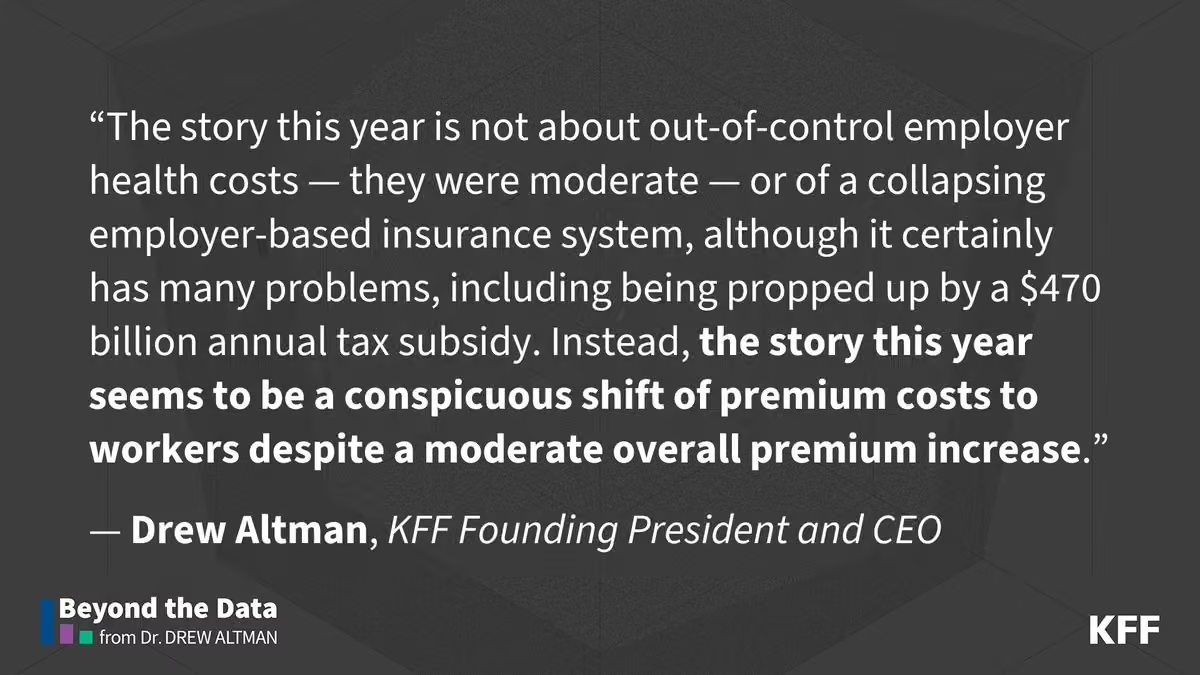
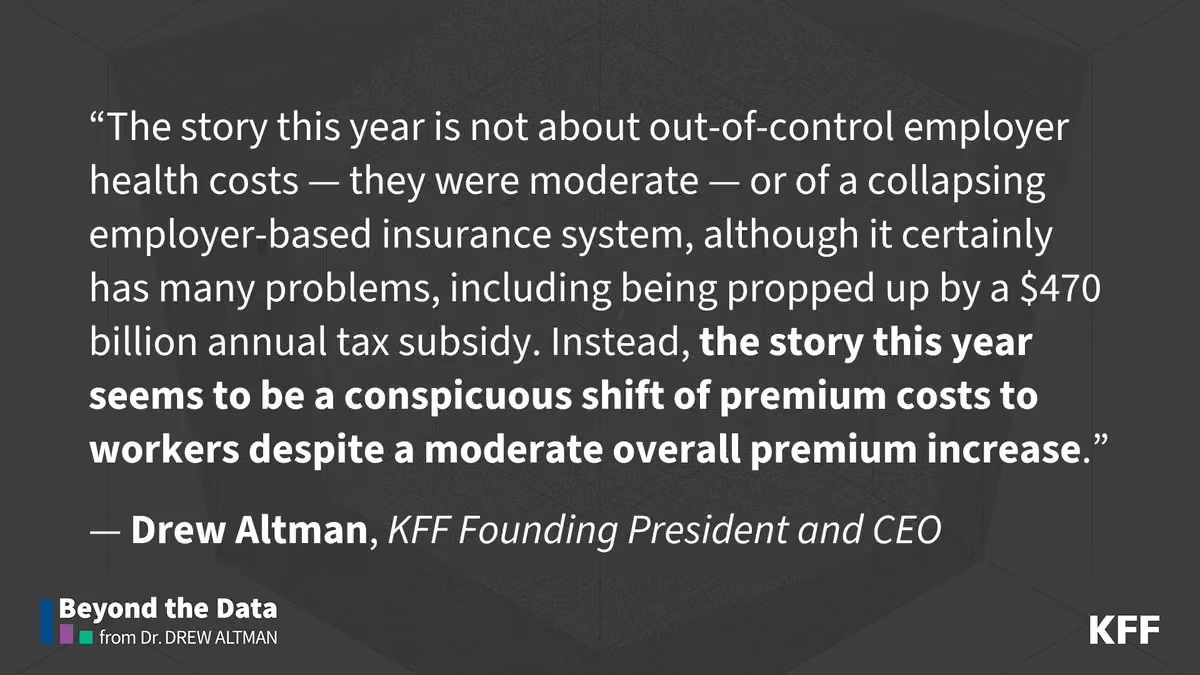
In his latest column, KFF Founding President and CEO @DrewAltman explains that despite fairly moderate increases overall, employers in 2026 chose to stick workers with a big increase in what they pay for premiums. on.kff.org/4zn6U77
-
KFF reposted
PBS News
@NewsHour
"Many people with job-based coverage have real affordability issues," said Matthew Rae, associate director of the KFF's healthcare marketplace program. www.pbs.org/newshour/nation/why-health-insurance-premiums…
-
KFF reposted
Larry Levitt
@larry_levitt
Democratic control of Congressional committees provides opportunities for oversight and investigations, not only of the Trump administration but also the health care industry. President Trump's deals with drug companies, which have not been made public, could be a target.
-
KFF reposted
Larry Levitt
@larry_levitt
If Democrats control Congress and are able to block further health care cuts, President Trump will likely move even more aggressively on executive actions. Lawsuits will no doubt follow.
-
KFF reposted
Larry Levitt
@larry_levitt
If progressives win in key senate races, it will jumpstart a national discussion about Medicare for All. Medicare for All won't become law in the next two years. But, there will be opportunities for hearings and work to move the idea forward, leading up to the 2028 campaign.
-
KFF reposted
Larry Levitt
@larry_levitt
Must pass bills, like funding government agencies, could provide opportunities for Democrats to push for delaying or reversing some Medicaid cuts or fully or partially restoring enhanced ACA premium subsidies.
-
KFF reposted
Larry Levitt
@larry_levitt
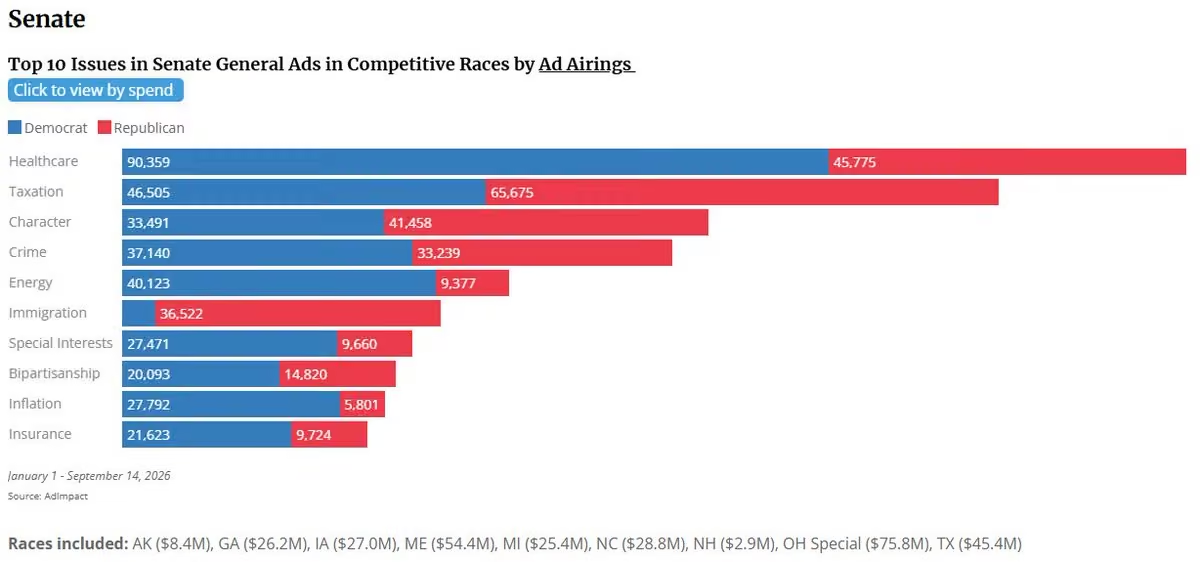
This has very much been a health care election.
Health care is a top economic worry of voters.
It was the second most frequent topic in ads in competitive races, and number one for Democrats.
Reversing Medicaid cuts and restoring ACA subsidies are top priorities for Democrats. -
KFF reposted
Larry Levitt
@larry_levitt
If Democrats take control of Congress, expectations on health care will be sky high. Democrats could pass bills undoing Medicaid cuts and restoring enhanced ACA premium subsidies, but those bills can be vetoed. They'll need to find points of leverage to negotiate with Trump.
-
KFF
@KFF
What will the midterm election results mean for health care?
Join KFF experts and @KFFHealthNews journalists at noon ET on 11/5 for a special post-election briefing offering analysis, insights and answers to audience questions.
Sign up to attend the virtual event: -
KFF reposted
Larry Levitt
@larry_levitt
We really don’t pay enough attention to the fact that insurance does not guarantee affordable access to health care. @philgalewitz @KFFHealthNews @KFF
KFF Health News
@KFFHealthNews
More than 460 people showed up for free medical, dental, and vision care over an October weekend at a free pop-up health clinic less than 30 minutes from the U.S. Capitol. One in four had health insurance.
@philgalewitz reports ⤵️ ⤵️
kffhealthnews.org/health-care-costs/healthcare-affordabil… -
KFF reposted
Chip Kahn
@chipkahn
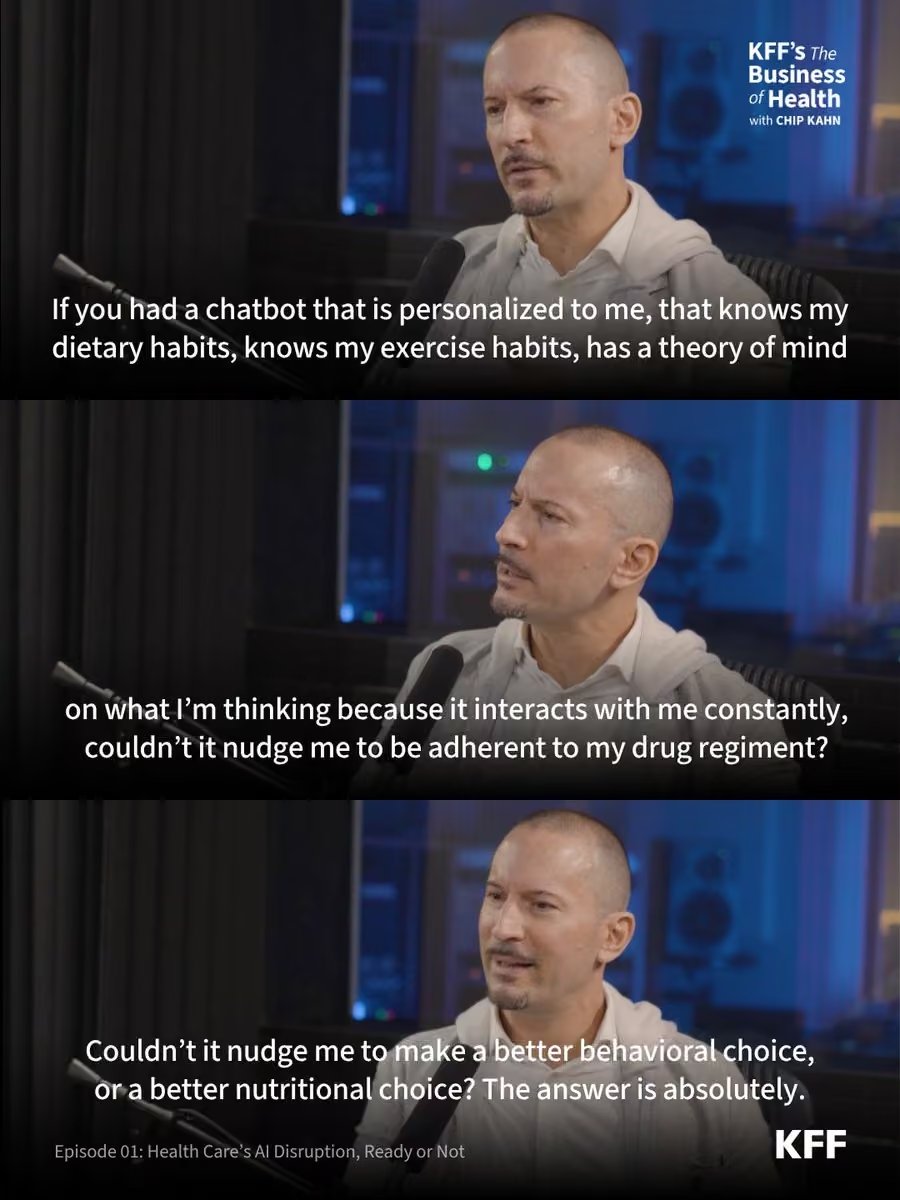
Most hospitals buy their AI. Charité – Universitätsmedizin Berlin, Europe’s largest academic medical center and ranked eighth in the world by Newsweek, is developing its own.
On the latest episode of KFF's The Business of Health, I sit down with Prof. Dr. Heyo Kroemer, Chief Executive Officer of Charité – Universitätsmedizin Berlin, to discuss what Charité stands to gain or lose by taking this path, and what it means to own an AI platform rather than license one.
Listen to the latest episode of my podcast: www.kff.org/other-health/building-ai-in-house-at-europes-…This media couldn't be displayed. See it on the original post. -
KFF reposted
Drew Altman
@DrewAltman
Hell of a story from our newsroom on the gaps in our very fragmented health system: kffhealthnews.org/health-care-costs/healthcare-affordabil…
-
KFF
@KFF
Most hospitals buy their AI. Charité — Europe’s largest academic medical center — is building its own.
Host Chip Kahn and Charité CEO Prof. Dr. Keyo Kroemer discuss what Charité stands to gain or lose by owning its AI platform instead of licensing one: youtube.com/watch?v=DqJYjJU5at0 -
KFF reposted
Ann DeFabio
@annontherun
Channel your nervous election energy into registering for our post-midterms event on Thursday, when our experts will break down what's next for health care.
KFF
@KFF
What will the results of the midterm elections mean for health care going forward?
At noon ET on 11/5, join KFF experts and @KFFHealthNews journalists for a special post-election discussion and live taping of the #wthealth podcast.
Register for the virtual event here: -
KFF
@KFF
KFF Founding President and CEO @DrewAltman explains what the data shows when it comes to rising employer health costs.
Read more in his latest column: on.kff.org/4zn6U77 -
KFF
@KFF
In a new column, KFF Founding President and CEO @DrewAltman dissects the conventional wisdom that employer health costs are “out of control.”
Read more: on.kff.org/4zn6U77 -
KFF reposted
Sammy
@sc_data52
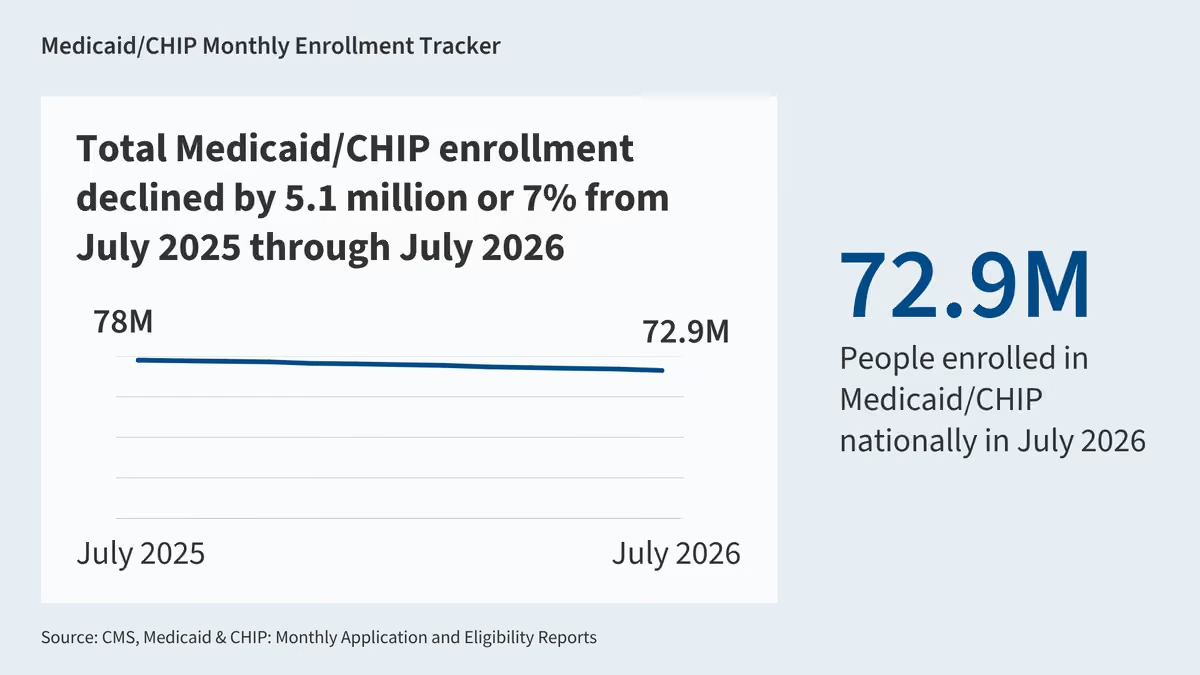
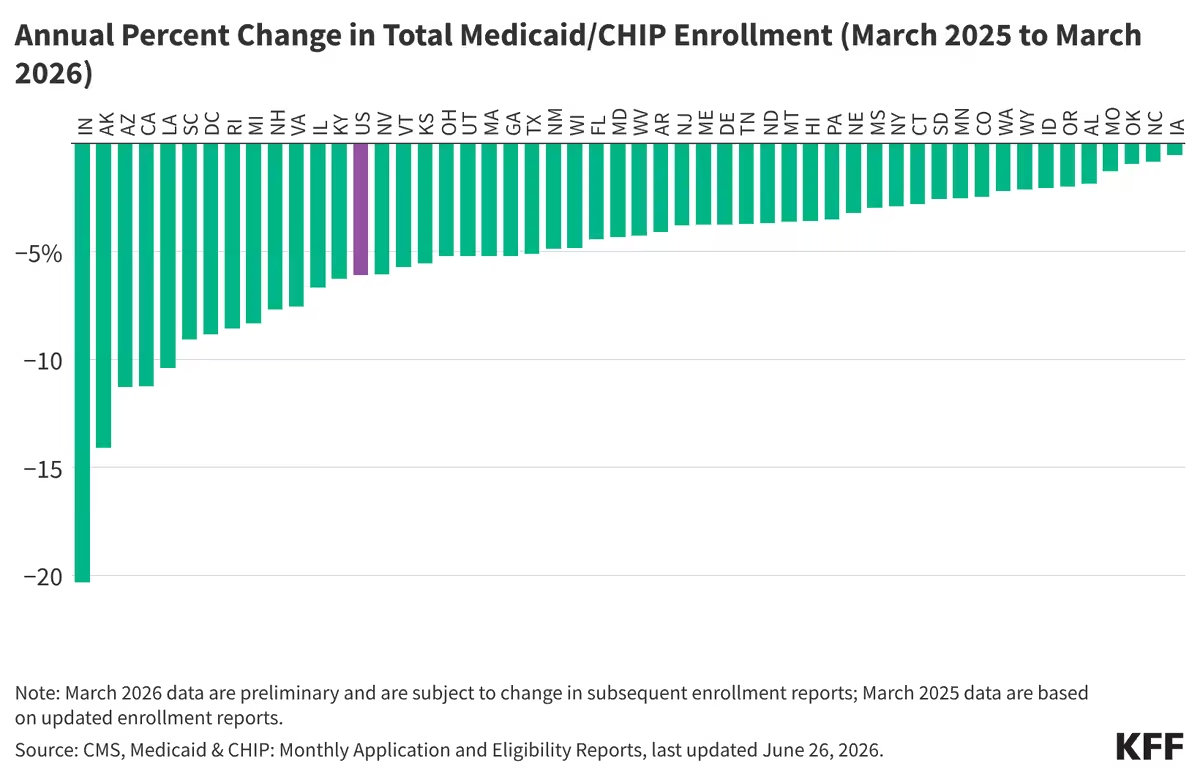
Medicaid/CHIP enrollment fell by 5.1 million (7%) from July 2025 to July 2026, to 72.9 million people. Enrollment dropped in 49 states and DC, with changes ranging from a 1% increase in Iowa to an 18% decrease in Indiana.
For more, visit @KFF's tracker : www.kff.org/medicaid/medicaid-enrollment-tracker/ -
KFF reposted
MedPage Today
@medpagetoday
🚨👀Don't miss TODAY's live webinar!
Join us at 3 PM ET for a conversation featuring @larry_levitt of @KFF and @jeremyfaust of @medpagetoday.
🔗 Register here:
ehgroup.zoom.us/webinar/register/7417925254042/WN_GoyzJsv…
(Can't make it live? Register anyway to receive the recording!) -
KFF reposted
KFF Health News
@KFFHealthNews
What’s driving healthcare costs, and how does federal policy affect patients?
Join @renurayasam and Sam Whitehead for an AMA on Reddit's r/politics today!
Submit questions now; answers begin at 1 p.m. ET.
www.reddit.com/r/politics/comments/1xlziik/were_two_healt… -
KFF
@KFF
KFF’s Jennifer Tolbert explains how the ruling in the Massachusetts vs. Oz case rejecting CMS’s strict definition of medical frailty will impact states required to implement Medicaid work requirements. #quicktake on.kff.org/4z2sbBX
-
KFF
@KFF
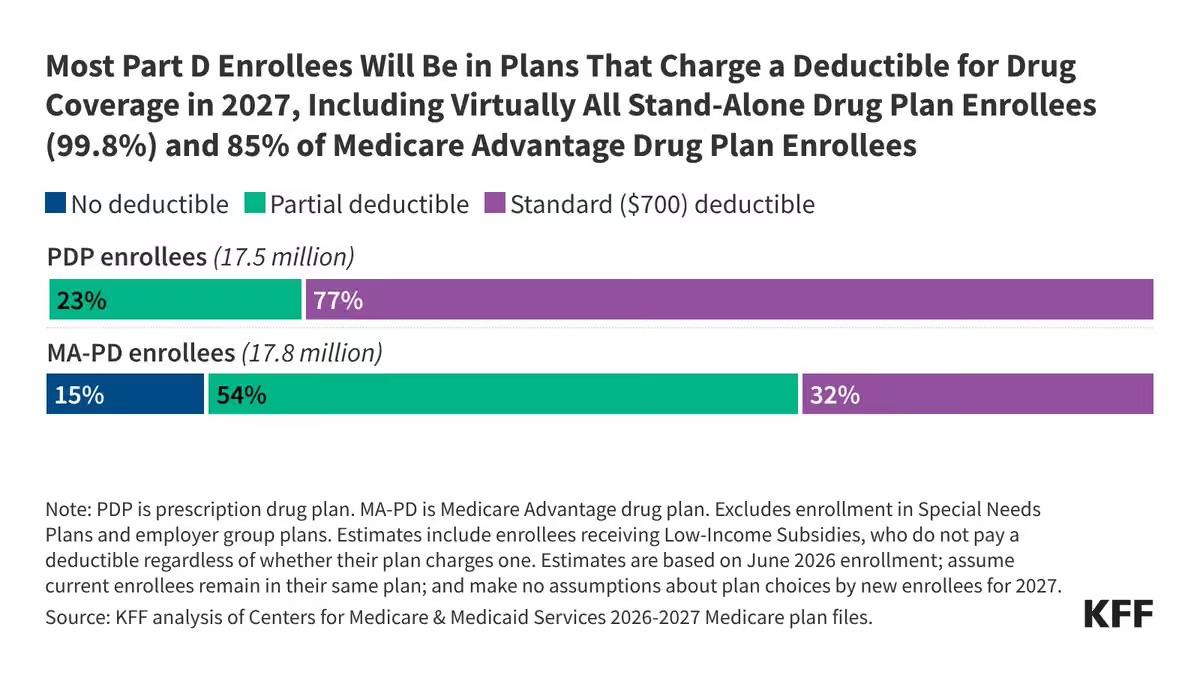
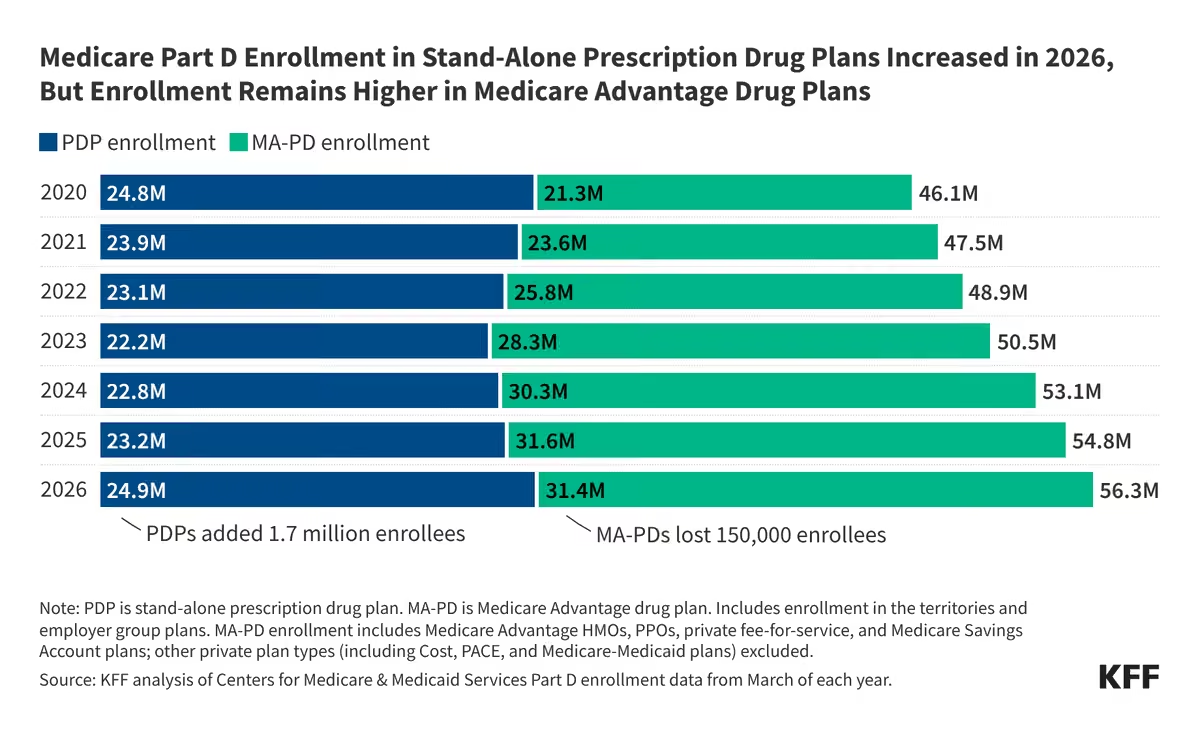
Most Medicare Part D enrollees will face a deductible of several hundred dollars for drug coverage in 2027, including 85% of Medicare Advantage enrollees with drug coverage and nearly all stand-alone drug plan enrollees, if they keep their current plans. on.kff.org/3W8kgFz
-
KFF reposted
Drew Altman
@DrewAltman
The surprising shift in employer premium costs to workers may or may not be a one time thing, we will see in next year’s employer survey, but it’s another way in which health costs are impacting cost of living now. My new column: on.kff.org/4zn6U77
-
KFF
@KFF
What will the results of the midterm elections mean for health care going forward?
At noon ET on 11/5, join KFF experts and @KFFHealthNews journalists for a special post-election discussion and live taping of the #wthealth podcast.
Register for the virtual event here: -
KFF
@KFF
How does the quality of the U.S. health system compare to other countries? The answer is complicated because countries’ health outcomes vary and quality can be difficult to measure.
Get the data: on.kff.org/42I5t4R -
KFF
@KFF
The U.S. spends nearly twice as much per person on health care as other wealthy nations and has a lower life expectancy. Measuring and comparing the quality of a country’s health system is difficult and imperfect but provides general trends.
Learn more: on.kff.org/42I5t4R -
KFF
@KFF
What will the midterm election results mean for health care?
Join KFF experts and @KFFHealthNews journalists at noon ET on 11/5 for a special post-election briefing offering analysis, insights and answers to audience questions.
Sign up to attend the virtual event: -
KFF
@KFF
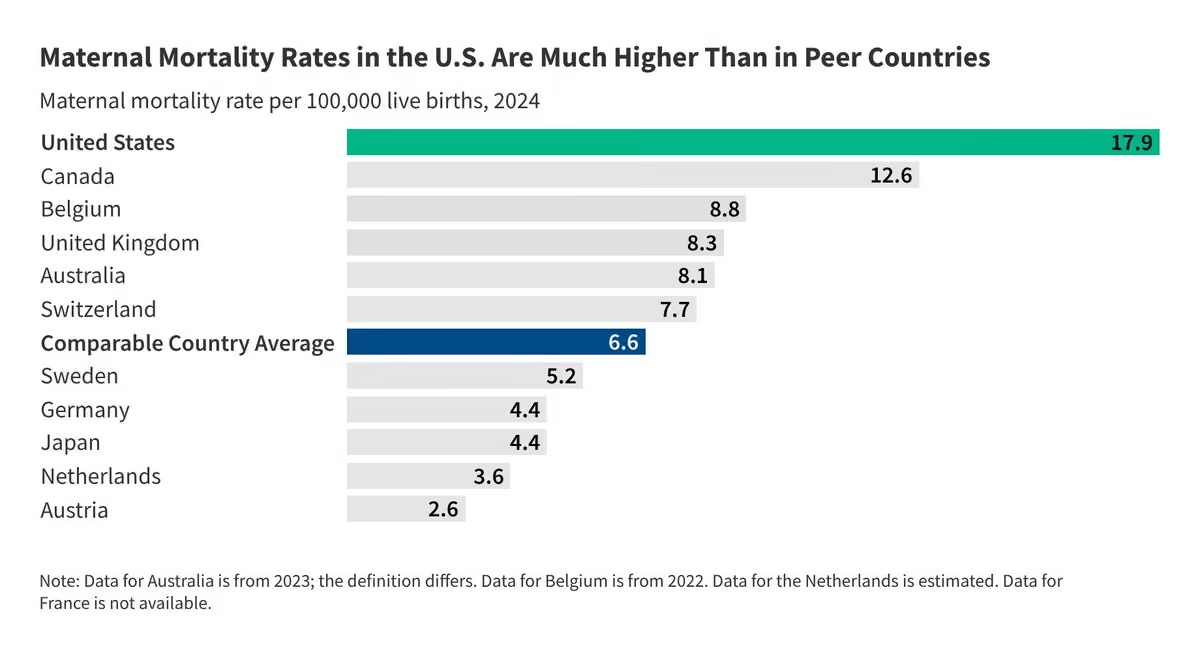
The U.S. had the highest maternal mortality rate among wealthy nations in 2024 — even though economic prosperity is correlated with lower maternal deaths: on.kff.org/42I5t4R
-
KFF
@KFF
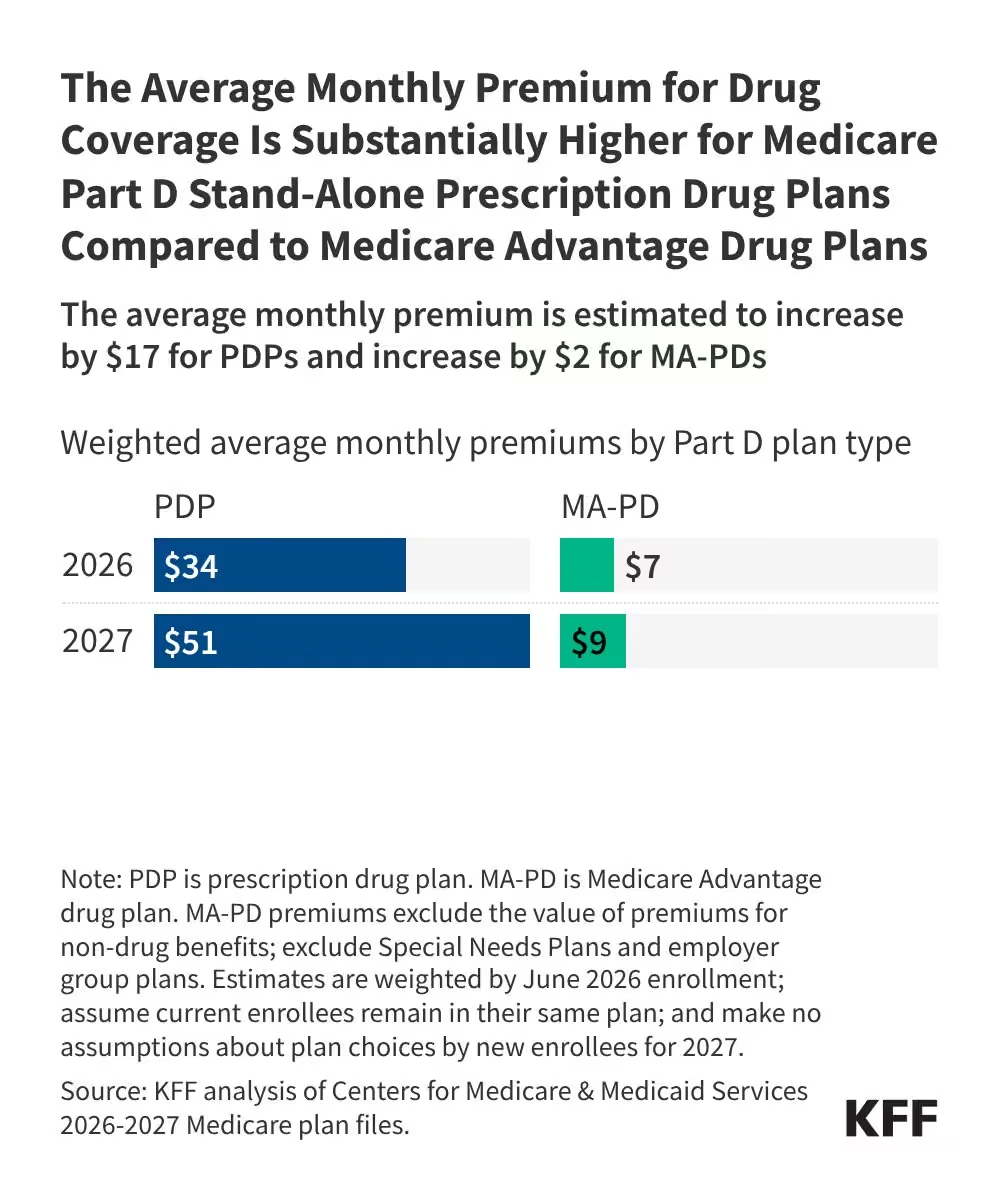
The projected average monthly premium of $51 for Medicare Part D stand-alone drug plans in 2027 is more than 5X higher than the drug coverage premium in Medicare Advantage plans that offer Part D coverage, which is projected to average $9/month in 2027. on.kff.org/3W8kgFz
-
KFF reposted
MedPage Today
@medpagetoday
Will the midterm election outcomes reshape health policy or will executive power maintain the status quo?
On Nov. 2 at 3pm, @larry_levitt & @jeremyfaust will break down the polling, analyze the election stakes, & answer your Q's LIVE: ehgroup.zoom.us/webinar/register/7417925254042/WN_GoyzJsv… @KFFHealthNews @KFF -
KFF
@KFF
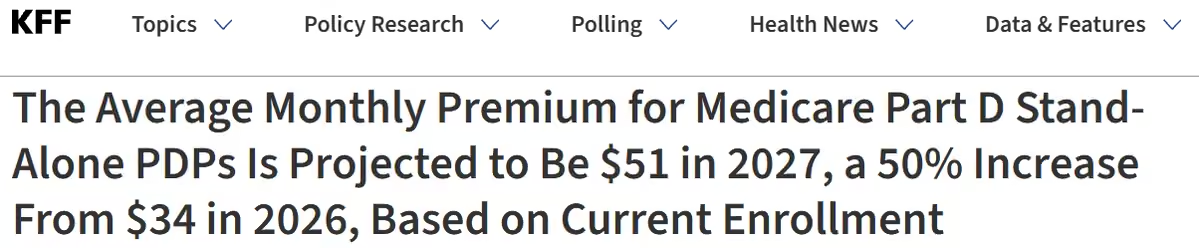
The average monthly premium for Medicare Part D coverage in stand-alone prescription drug plans (PDPs) will increase to $51 in 2027, up 50% from $34 in 2026, if current enrollees don’t switch into lower-premium plans during the open enrollment period. on.kff.org/3W8kgFz
-
KFF reposted
Alex Wayne
@aawayne
NEWS: One of Trump's key campaign-trail boasts is that he's cut drug prices. The GOP "should win just on this," he says.
Yet @KFF found that premiums for Medicare stand-alone drug plans are set to jump 50 PERCENT next year, on average.
By @philgalewitz
kffhealthnews.org/medicare/medicare-drug-plans-premium-hi… -
KFF reposted
Larry Levitt
@larry_levitt
New: Medicare Part D Stand-Alone drug plan premiums will rise 50% if enrollees stay in their current plans and don't switch to lower premium coverage.
-
KFF
@KFF
What will the results of the midterm elections mean for health care going forward?
At noon ET on 11/5, join KFF experts and @KFFHealthNews journalists for a special post-election discussion and live taping of the #wthealth podcast.
Register for the virtual event here: -
KFF
@KFF
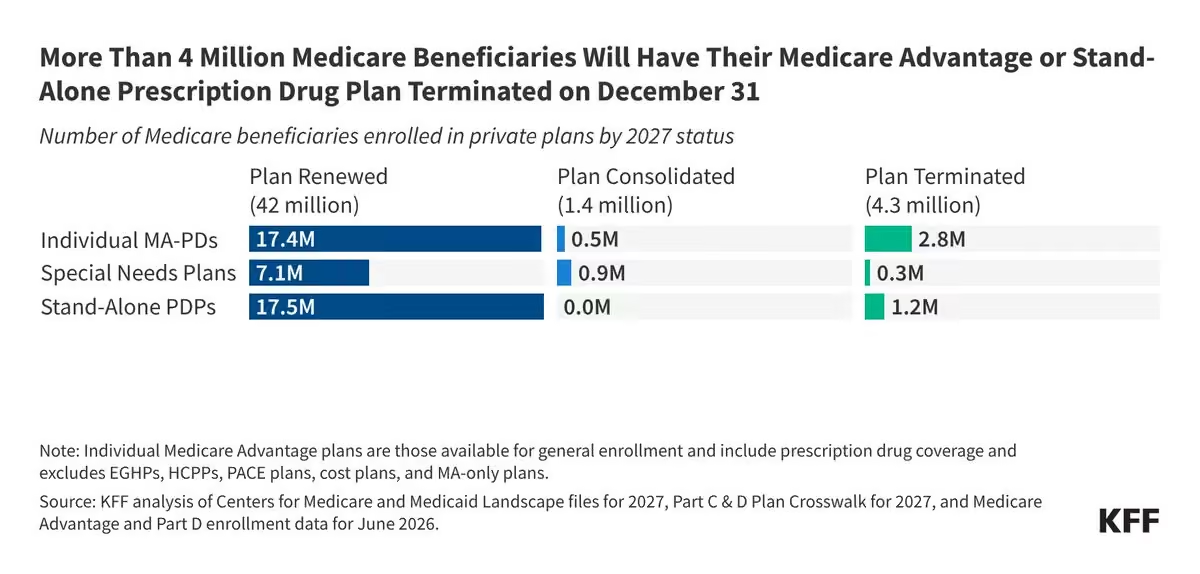
About 3.1 million people in Medicare Advantage prescription drug plans will see their plans terminated at the end of 2026.
Another 1.4 million Medicare Advantage enrollees are in a plan that is consolidating with another plan offered by the same insurer: on.kff.org/4zXlfXM -
KFF
@KFF
In @JAMAHealthForum, @Larry_Levitt notes that although Medicare-for-All plans offer more generous benefits than Medicare, it could end up looking more like Medicare if it underwent a serious national debate about the tradeoffs involved to implement it: jamanetwork.com/journals/jama-health-forum/fullarticle/28…
-
KFF
@KFF
What will the midterm election results mean for health care?
Join KFF experts and @KFFHealthNews journalists at noon ET on 11/5 for a special post-election briefing offering analysis, insights and answers to audience questions.
Sign up to attend the virtual event: -
KFF
@KFF
How much do health care costs influence voter motivation?
KFF’s @Mollybrodie and Liz Hamel discuss what our latest polling says about the connection between health care affordability, economic concerns, and voter enthusiasm ahead of the midterms.
Explore the findings:This media couldn't be displayed. See it on the original post. -
KFF reposted
Larry Levitt
@larry_levitt
New work requirements in Medicaid go into effect in two months.
POLITICO
@politico
Judge strikes down Trump admin's definition of 'medically frail' in Medicaid work rules www.politico.com/news/2026/10/29/judge-strikes-down-trump…
-
KFF
@KFF
Medicare-for-All promises more generous benefits than the existing Medicare program, with no premiums or deductibles, though a serious debate about tradeoffs likely would result in compromises, writes @Larry_Levitt in @JAMAHealthForum: jamanetwork.com/journals/jama-health-forum/fullarticle/28…
-
KFF reposted
Larry Levitt
@larry_levitt
A drawn-out legislative debate over Medicare for All would mean furious lobbying by the health care industry and likely compromises. A Medicare for All system could end up looking more like Medicare today than the proposals introduced in Congress.
jamanetwork.com/journals/jama-health-forum/fullarticle/28… -
KFF reposted
Larry Levitt
@larry_levitt
Advocates for a national health plan call it Medicare for All, drawing on the longstanding trust in the Medicare program. But, the most prominent Medicare for All plans envision coverage much more comprehensive and affordable for patients than Medicare today.
-
KFF
@KFF
In this week’s episode, Dr. Sarah Teichmann — co-founder of the Human Cell Atlas and chair in Stem Cell Medicine at the University of Cambridge — explains why seeing biology at the level of individual cells could reshape how researchers understand disease and develop treatments:
-
KFF
@KFF
About 1.2 million enrollees in Medicare stand-alone prescription drug plans (PDPs) will see their plan terminated on 12/31.
Most are in one plan, the SilverScript Choice PDP sponsored by CVS Health, which is being terminated in 13 PDP regions for 2027: on.kff.org/4zXlfXM -
KFF
@KFF
What will the results of the midterm elections mean for health care going forward?
At noon ET on 11/5, join KFF experts and @KFFHealthNews journalists for a special post-election discussion and live taping of the #wthealth podcast.
Register for the virtual event here: -
KFF
@KFF
A KFF analysis finds that 4.3 million Medicare beneficiaries will have their Part D stand-alone prescription drug plan or Medicare Advantage plan w/ drug coverage terminated on Dec. 31.
Enrollees can make coverage changes for 2027 during open enrollment: on.kff.org/4zXlfXM -
KFF
@KFF
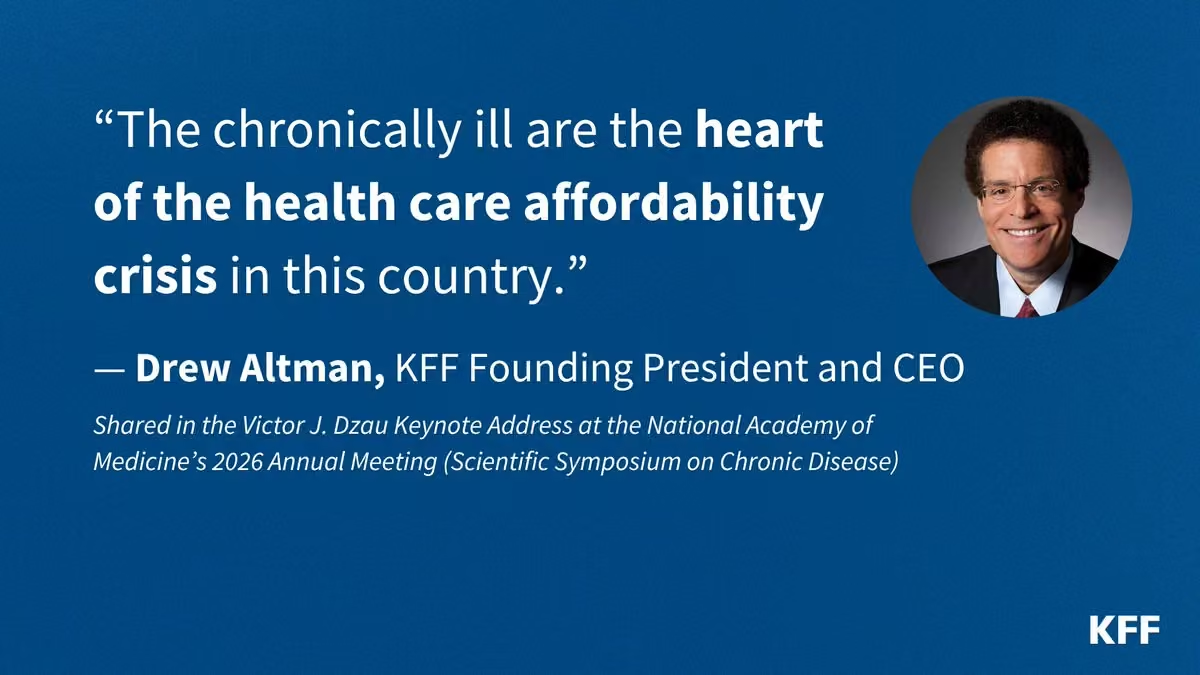
During his Victor J. Dzau Keynote Address at the National Academy of Medicine’s 2026 Annual Meeting, KFF’s @DrewAltman spoke about the challenges ahead in health policy, and where chronic illness fits.
Read the full remarks: on.kff.org/47G64pM -
KFF
@KFF
This week, Cambridge’s Sarah Teichmann discusses how detailed maps of the cells that make up the human body are already helping researchers study immune responses and explore new possibilities for vaccines and immunotherapies.
Listen to the full episode: on.kff.org/3WbIbDVThis media couldn't be displayed. See it on the original post. -
KFF
@KFF
A majority (59%) of reproductive-age women say they are concerned that abortion-provision bans may affect the safety of a future pregnancy for them or someone close to them.
More findings from our new survey about abortion experiences: on.kff.org/4yOosYG -
KFF
@KFF
What does responsible AI use look like in scientific research?
In this podcast episode, Cambridge’s Sarah Teichmann argues that researchers still need strong benchmarks, evaluations, and validation frameworks to assess AI-generated insights: on.kff.org/3WbIbDV -
KFF
@KFF
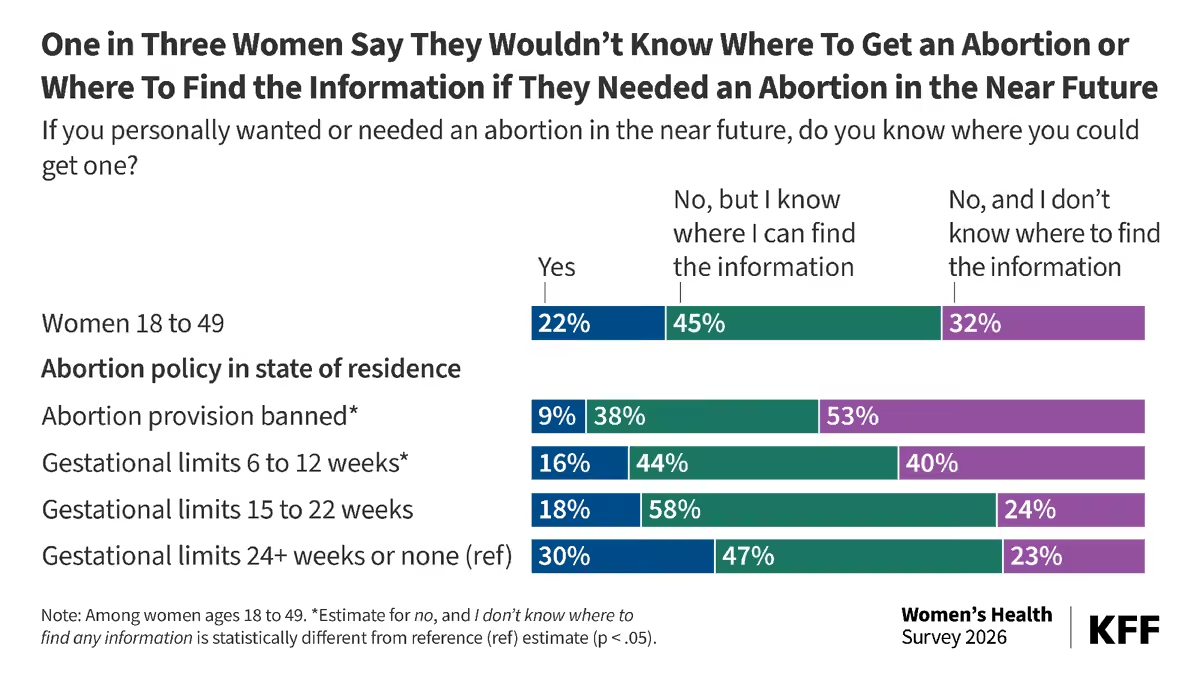
1 in 3 (32%) reproductive-age women nationally say they would not know where to go or where to find information if they needed an abortion, up from 1 in 4 (26%) in 2024, according to the 2026 KFF Women’s Health Survey: on.kff.org/4yOosYG
-
KFF
@KFF
Can a cell-by-cell map of the human body change how we understand disease?
Dr. Sarah Teichmann, chair in Stem Cell Medicine at the University of Cambridge, discusses the Human Cell Atlas — a global effort using AI and advanced biology to create a new reference map for medicine: www.youtube.com/watch?v=nuwbDCrotRY -
KFF
@KFF
More than half (53%) of reproductive-age women in states with abortion-provision bans say they would not know where to go or where to find information if they needed an abortion, up from 43% in 2024, our new survey finds: on.kff.org/4yOosYG
-
KFF
@KFF
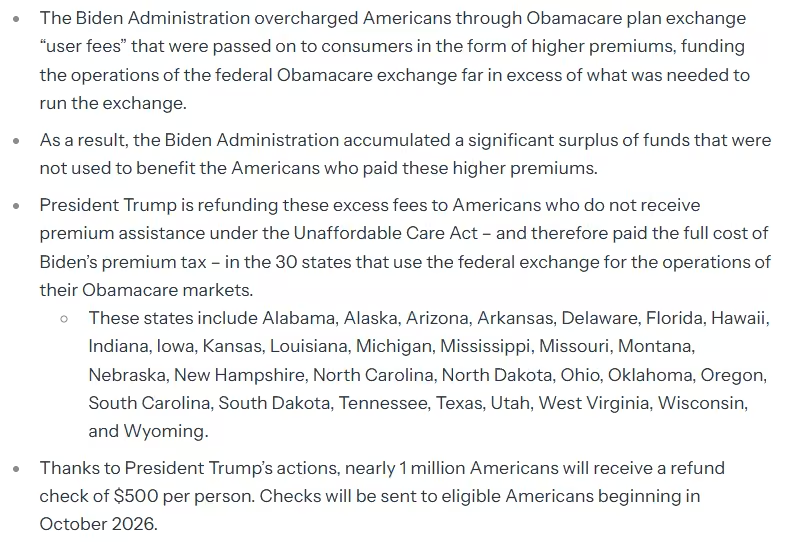
The Trump administration is sending $500 checks to about 1 million enrollees who are not receiving any tax credits this year in the 30 states that rely on the federal healthcare.gov Marketplace: on.kff.org/4kcuJcS
-
KFF reposted
Drew Altman
@DrewAltman
The media is much too focused on issue rankings in polls : economy, corruption etc. Partisan affiliation, the perceived qualities of candidates, the general mood of the country, attitudes towards Trump together can matter more.
-
KFF
@KFF
The $500 checks going to about 1 million ACA Marketplace enrollees for “excess fees” are likely smaller than the premium increases most of these enrollees faced this year.
Our new explainer on Marketplace user fees has the details:on.kff.org/4kcuJcS -
KFF
@KFF
Understanding public opinion means looking beyond the topline numbers and asking deeper questions: What information did people have? How was the issue described? Would views change with more context?
KFF’s @Mollybrodie says that’s how people become better consumers of polling data.This media couldn't be displayed. See it on the original post. -
KFF
@KFF
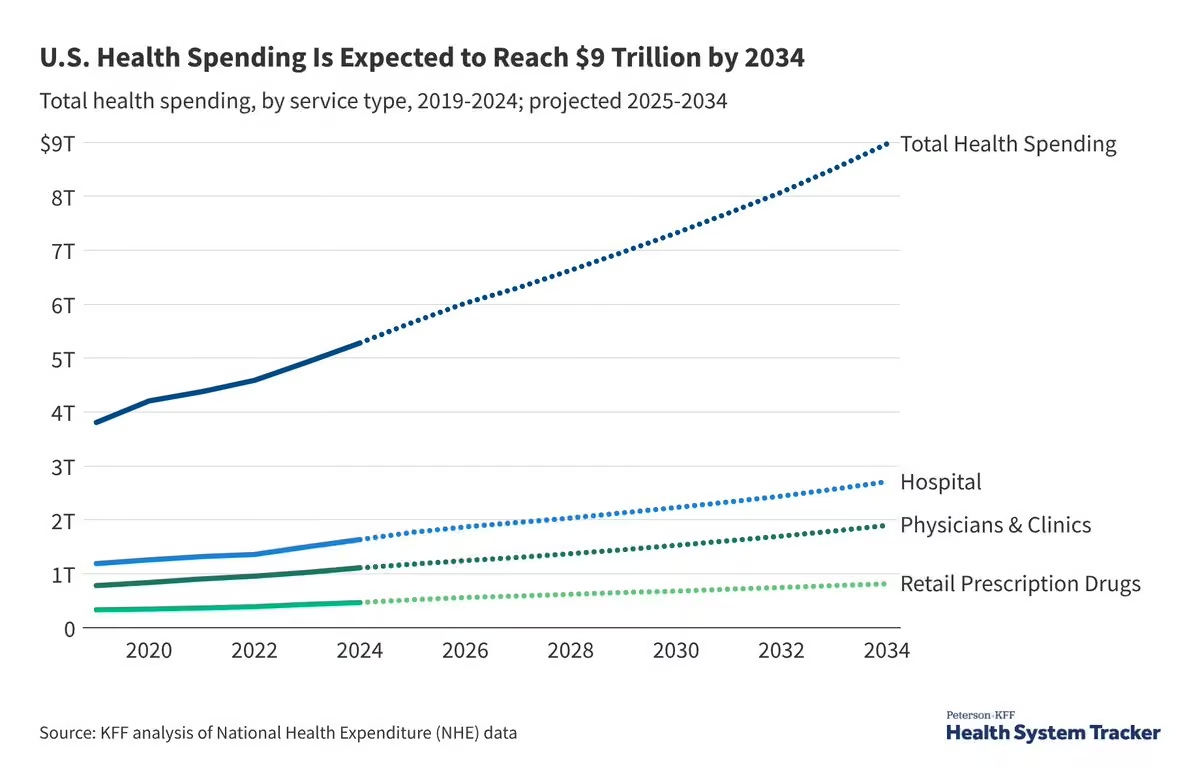
By 2034, the average American will pay $178 out of pocket for hospital services each year — up by about 32% from today.
That’s in addition to rising out-of-pocket spending on prescription drugs and physician and clinical services: on.kff.org/4yX9C2O -
KFF
@KFF
In the Monitor: As some policymakers frame childhood vaccination as an individual parental choice, more decisions may come down to conversations between parents and pediatricians, who remain parents’ most trusted source for vaccine information. on.kff.org/3TWjBq2
-
KFF
@KFF
Health spending growth is expected to outpace growth in the overall economy and eventually hit 20.6% of GDP by 2034.
More on health spending: on.kff.org/4yX9C2O -
KFF
@KFF
Our new analysis examines the $500 checks that the Trump administration is sending to some Affordable Care Act Marketplace enrollees and the user fees that are paying for them: on.kff.org/4kcuJcS
-
KFF
@KFF
Despite media and policy interest, about 1 in 10 employers not offering health benefits are using Individual Coverage Health Reimbursement Arrangements to help workers purchase coverage through the Affordable Care Act Marketplaces or elsewhere on the individual market.
-
KFF
@KFF
Among large firms with 200 or more workers, many employers say they increased costs for workers to address higher projected health costs — including by increasing the share of premium that workers pay (44%) and by increasing deductibles or other cost-sharing for most services (21%). on.kff.org/ehbs2026
-
KFF
@KFF
The false claim that COVID-19 vaccines raise the risk of miscarriage recently resurfaced amid a Senate investigation into Dr. Anthony Fauci.
Our new poll finds few people say it’s definitely true, but most aren’t sure it’s false. on.kff.org/3TWjBq2 -
KFF
@KFF
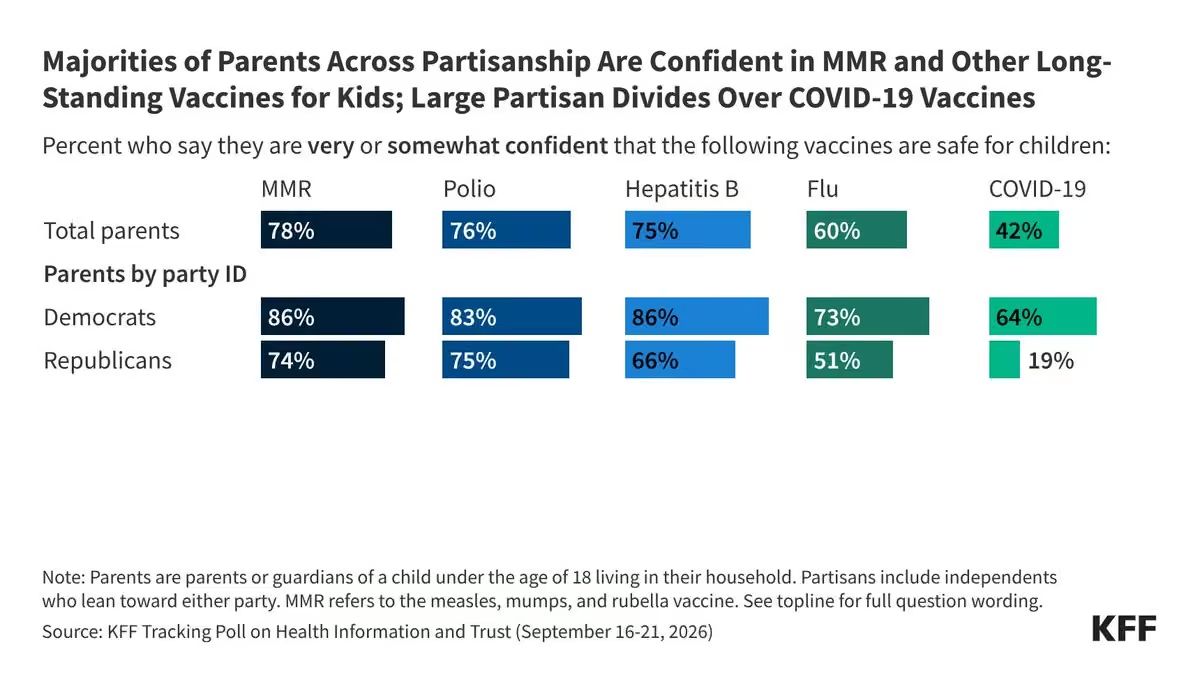
Many MAHA supporters have confidence in the safety of childhood vaccines, including three-quarters who are confident the vaccines for MMR (76%) and polio (76%) are safe and at least half who say the same of hepatitis B and flu vaccines.
Full details here: -
KFF
@KFF
What we’re watching: Fewer than half of adults, including women ages 18-49, now say they’re confident COVID-19 vaccines are safe for people who are pregnant or trying to become pregnant.
Four years ago, about half said so. on.kff.org/3TWjBq2 -
KFF
@KFF
U.S. health spending is projected to hit $6 trillion in 2026, with hospitals alone accounting for $1.9 trillion.
By 2034, health spending could reach $9 trillion and make up more than 20% of the economy: on.kff.org/4yX9C2O -
KFF
@KFF
Since 2021, family premiums and workers’ contributions have risen at similar rates (28% and 26%, respectively) and are comparable to the increase in wages (27%) and inflation (24%) over the same period. on.kff.org/ehbs2026
-
KFF
@KFF
In this podcast episode, Dr. Eyal Zimlichman argues that in the future, doctors will “be much more humane than the doctors of the present.”
Listen to the conversation: on.kff.org/4jrc64GThis media couldn't be displayed. See it on the original post. -
KFF
@KFF
States will soon need to verify who qualifies for a medical exemption from Medicaid work requirements.
Our new brief looks at how SNAP handles a similar exemption and what insights it may offer state Medicaid agencies: on.kff.org/4iuiJ5f -
KFF
@KFF
About 1 in 5 large firms cover GLP-1 drugs specifically for weight loss, often with restrictions.
Over half who currently cover the drugs for weight loss say it’s had either a significant (29%) or moderate (27%) impact on their prescription drug spending.
More details: -
KFF
@KFF
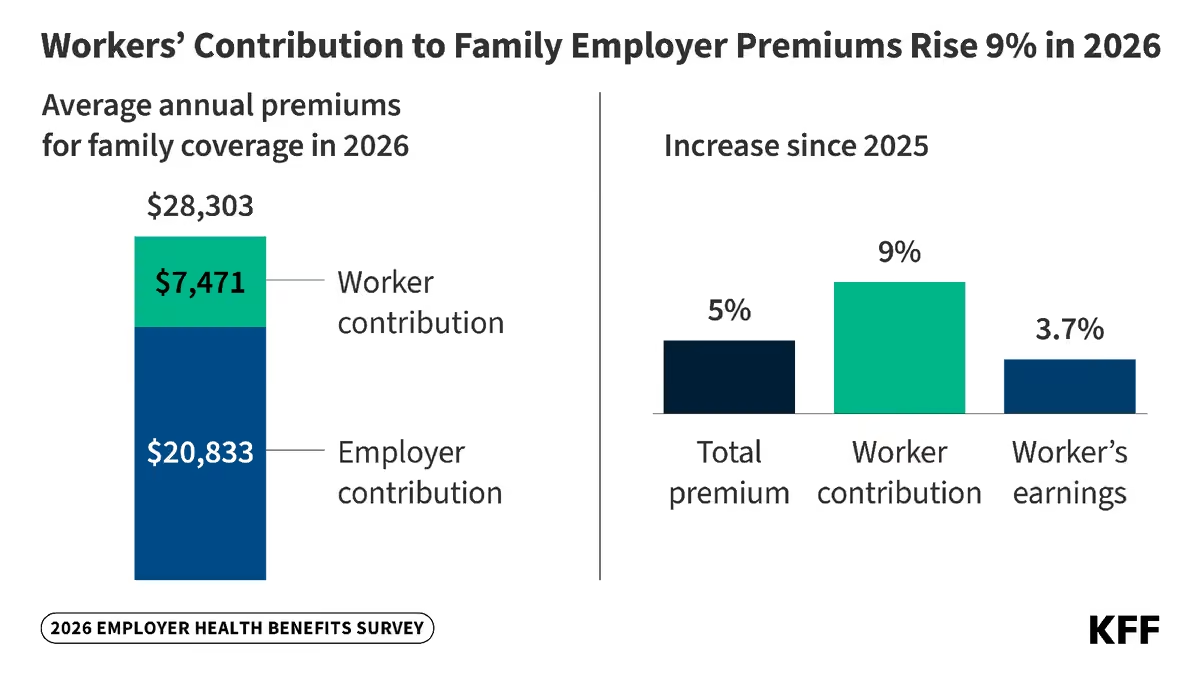
Premiums for employer-sponsored family health coverage have increased to more than $28,000 in 2026, according to KFF’s benchmark employer health benefits survey.
Explore the latest findings: on.kff.org/ehbs2026 -
KFF
@KFF
How may the Medicaid process for verifying medical exemptions from work requirements compare to SNAP’s processes?
Our new brief offers key insights: on.kff.org/4iuiJ5f -
KFF reposted
KFF Health News
@KFFHealthNews
Employers saw their healthcare premiums rise 5% this year — and some passed on that burden to workers — as the cost of family coverage in job-based insurance exceeds $28,000 for family plans.
kffhealthnews.org/insurance/kff-survey-employer-based-hea… -
KFF reposted
Drew Altman
@DrewAltman
Add a 9% increase in the worker share of premiums to Medicaid cuts and ACA marketplace premium hikes and you can understand why health costs are tied with gas prices as a cost of living concern for voters.
Our 28th employer health benefits survey is out: on.kff.org/ehbs2026 -
KFF reposted
Matthew Rae
@matthew_t_rae
🚨 KFF’s 2026 Employer Health Benefits Survey is out.
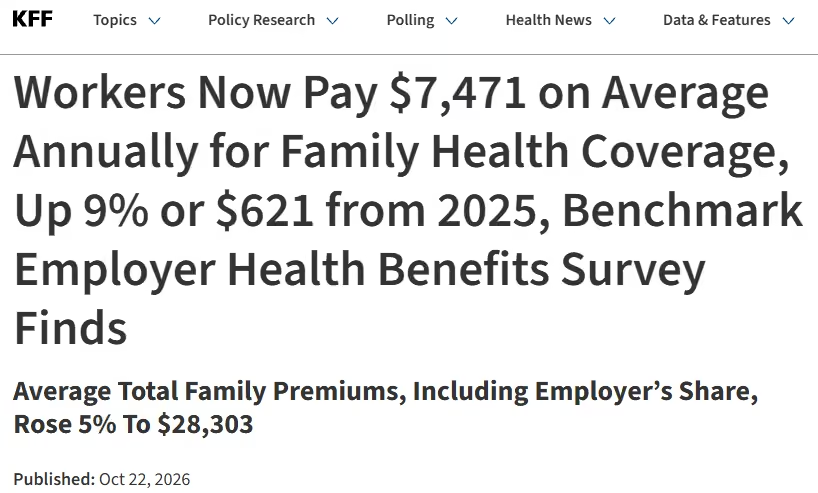
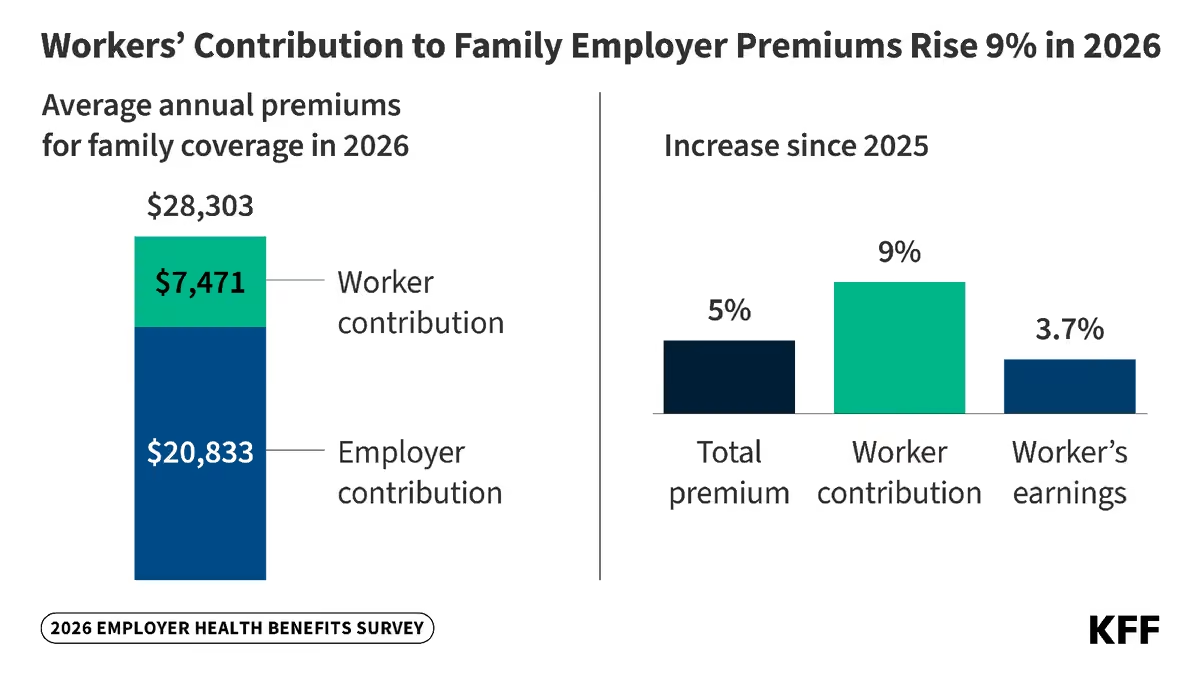
Family premiums rose 5% to $28,303—but workers’ contributions jumped 9% to $7,471, an extra $621 a year.
Explore these findings, GLP-1 coverage, onsite clinics & more:
www.kff.org/health-costs/2026-employer-health-benefits-su… -
KFF reposted
Larry Levitt
@larry_levitt
Worker premiums for family health insurance are up 9%. The total average premium is $28,303. The average deductible is $1,955. It's no wonder people are worried about health care costs.
-
KFF reposted
Larry Levitt
@larry_levitt
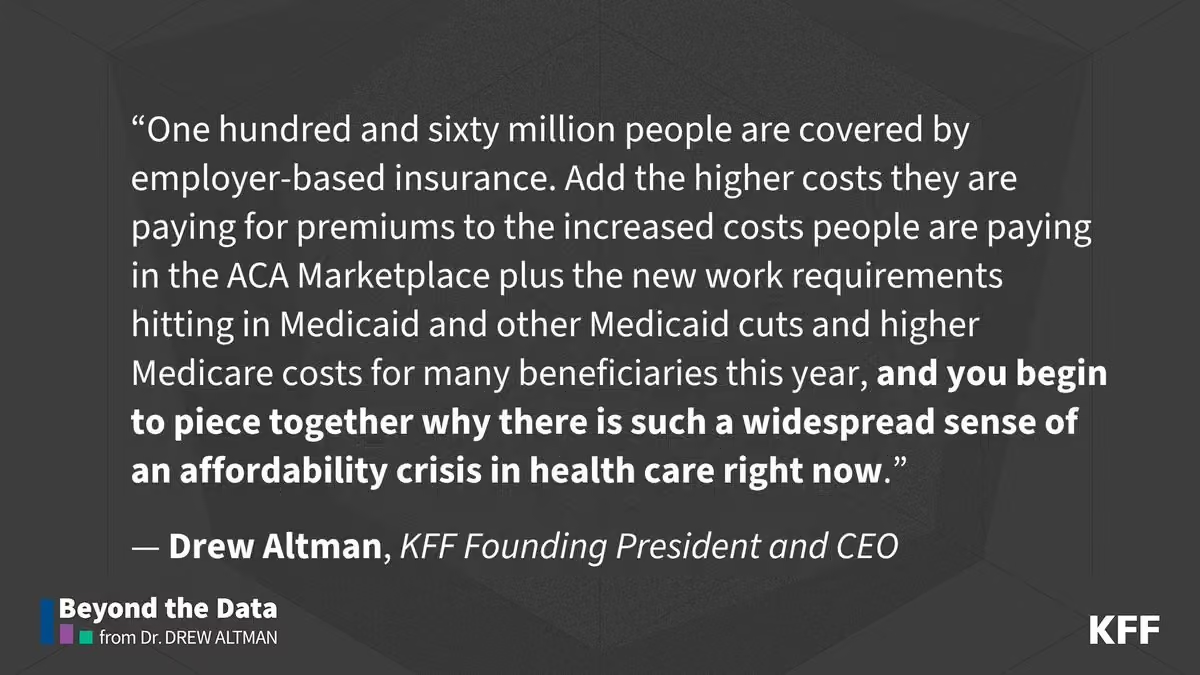
Changes to the ACA and Medicaid leading to millions losing coverage and increases in health care expenses legitimately occupy a lot of political focus. But, lack of affordability for the 157 million people with employer coverage should get more attention.
www.kff.org/private-insurance/workers-now-pay-7471-on-ave… -
KFF
@KFF
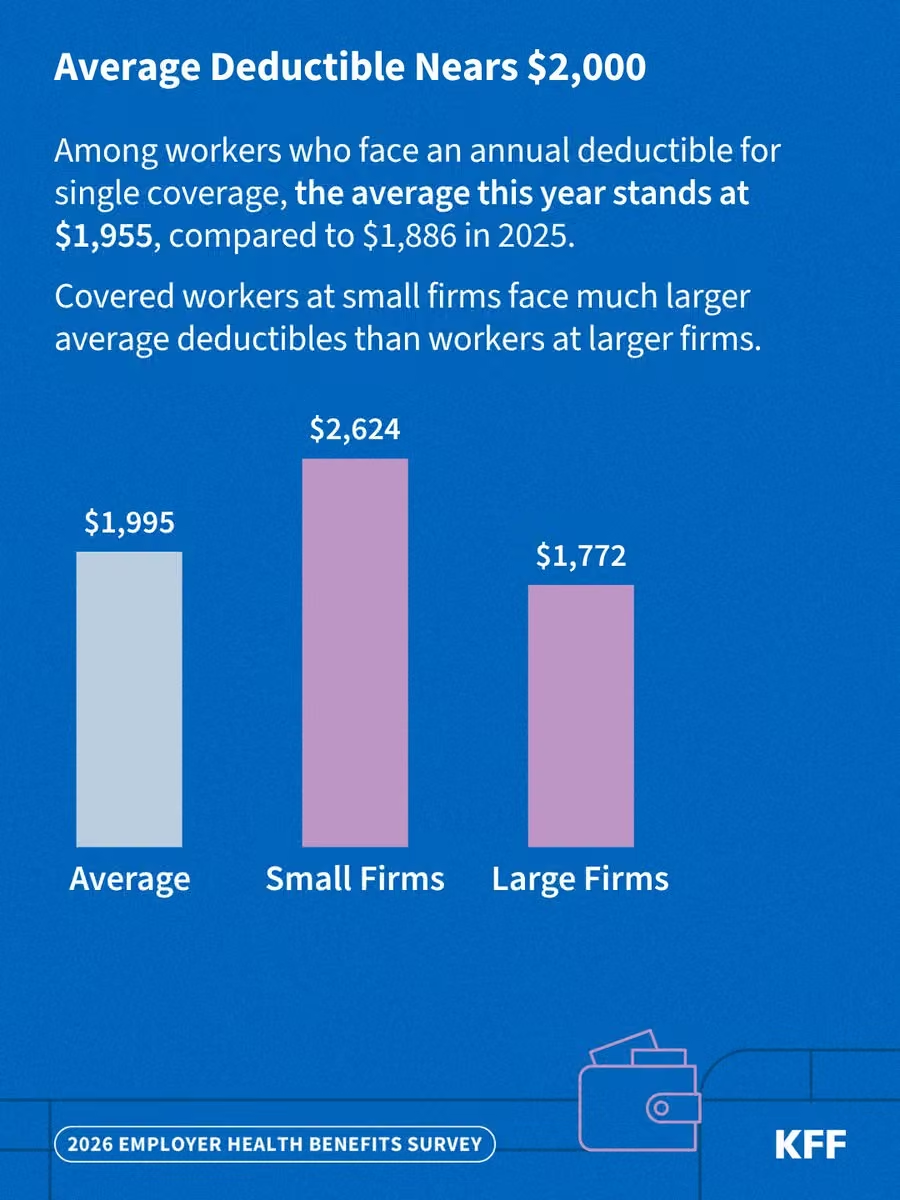
Our new survey finds that the average annual deductible for single coverage is nearly $2,000.
The average this year stands at $1,955, similar to $1,886 in 2025. Covered workers at small firms face much larger average deductibles than workers at larger firms ($2,624 vs. $1,772). -
KFF
@KFF
Our 2026 benchmark employer health benefits survey finds that total annual premiums for family coverage — including the employers’ share — now average $28,303, up 5% or $1,310 from 2025.
Workers now contribute an average of $7,471 annually to the cost of family coverage: -
KFF
@KFF
Our 2026 benchmark employer health benefits survey finds that workers are paying on average $7,471 annually toward the premiums for employer-sponsored family health benefits this year — up 9% or $621, from 2025. on.kff.org/ehbs2026
-
KFF
@KFF
In 2023, ACA Medicaid expansion covered over 1 in 4 SSDI applicants and beneficiaries waiting to be eligible for Medicare.
In future years, this group may struggle to maintain Medicaid before being eligible for Medicare due to new work requirements: on.kff.org/4yCMKF1 -
KFF
@KFF
Notable shares of the public and parents hold misperceptions about the vaccine discussions at the center of President Trump’s executive order calling for a change in U.S. childhood vaccine recommendations.
Explore these misperceptions: on.kff.org/4yTArVA -
KFF
@KFF
At least 15 states use Medicaid state directed payments to support nursing home services.
New federal limits could reduce such payments, with potential effects on nursing homes and residents — about two-thirds of whom rely on Medicaid as their primary payer: -
KFF
@KFF
About half of parents mistakenly believe spacing out vaccines is healthier for kids — but most still have confidence in the safety of MMR and other long-standing childhood vaccines, new KFF polling finds: on.kff.org/4yTArVA
-
KFF
@KFF
About half of parents (48%) mistakenly say kids are healthier when vaccines are spaced out and they do not get multiple shots in one visit, while the remaining half (52%) says there is no strong evidence to support the claim.
More in our new findings: on.kff.org/4yTArVA -
KFF
@KFF
Sheba Medical Center is building what could become the first fully AI-based hospital by 2030.
Dr. Eyal Zimlichman — Sheba’s Chief Transformation Officer, Chief Innovation Officer and Chief AI officer — talks with Host Chip Kahn about what that means for patients.
Listen to the full podcast episode: on.kff.org/4jrc64G -
KFF reposted
Larry Levitt
@larry_levitt
We're in another campaign where voters may punish the party in power for disrupting the status quo in health care, this time for changes to Medicaid and the ACA.
It also happened in 2018 after Republicans tried to repeal the ACA, and in 2010 after Democrats passed the ACA. -
KFF
@KFF
States can go beyond minimum federal requirements to establish broader guaranteed issue protections for Medigap policies.
Review federal and state rules and how they affect beneficiaries’ access to Medigap coverage in our updated analysis: on.kff.org/4zCGjTa -
KFF
@KFF
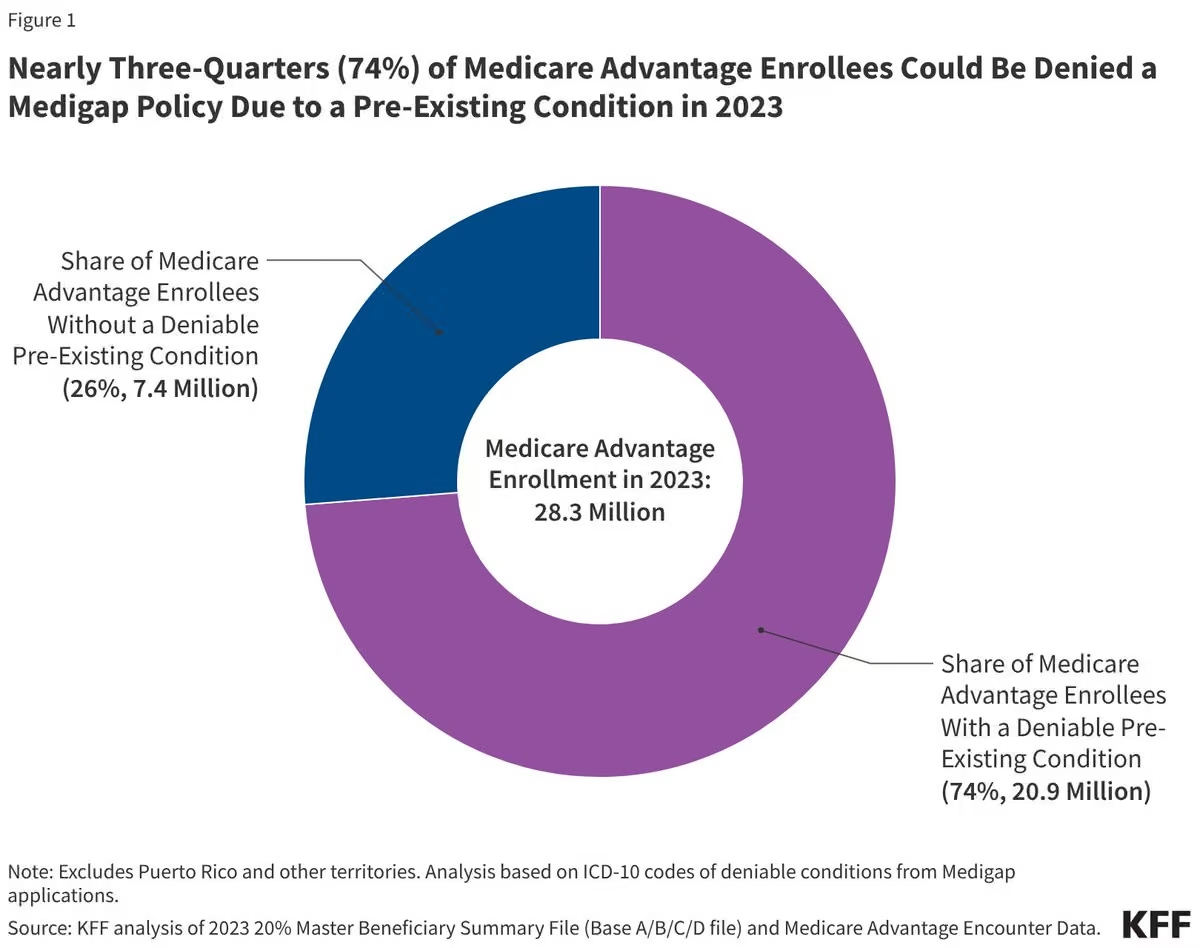
New KFF analysis finds nearly 3 in 4 Medicare Advantage enrollees (74%, or 20.9 million people in 2023) had a pre-existing medical condition that could lead private insurers to refuse to sell them a Medigap policy or charge them more if they were to try to purchase one.
Details: -
KFF
@KFF
On KFF’s Business of Health podcast, Dr. @uche_blackstock discusses why patients are increasingly turning to AI and why their experiences should help shape the future of these tools.
Hear more from her perspective in the full episode: on.kff.org/4yQQbJ0 -
KFF
@KFF
Virginia is the only state in the South that doesn't ban abortion or impose an early gestational limit.
This fall, voters decide whether to formally add a right to reproductive freedom, including abortion and contraception, to the state's constitution. on.kff.org/4spnwr7 -
KFF reposted
Larry Levitt
@larry_levitt
These ACA premium increases will hit hardest for middle-income people who lost eligibility for premium subsidies entirely when enhanced ACA tax credits expired.
@pw_cunningham
Paige W. Cunningham
@pw_cunningham
Scoop: healthcare.gov premiums for benchmark plans are set to rise 11% on average in 2027. It's the 2nd year in a row for double-digit spikes but not nearly as bad as last yr's 30%. Insurer participation is down 14%. www.washingtonsun.com/health/aca-premiums-rise-double-dig…
-
KFF
@KFF
A KFF review of Medigap applications found the medical conditions that could trigger a Medigap denial include some that are common among Medicare Advantage enrollees.
At least 1 in 5 have peripheral vascular disease, chronic kidney disease, coronary artery disease, or diabetes with related complications: on.kff.org/4ipFib6 -
KFF
@KFF
KFF’s searchable archive of frequently asked questions about Medicare open enrollment covers a range of topics, including Medicare Advantage, Part D, Medigap, low-income assistance, and more.
Open enrollment began October 15 and runs through December 7. on.kff.org/47O0UYK -
KFF
@KFF
Nevadans approved a Reproductive Rights Amendment in 2024. So why is it back on the ballot? State law requires citizen-initiated constitutional amendments to pass in 2 successive general elections.
KFF explains this and 3 other 2026 state abortion ballot measures: -
KFF
@KFF
Our new analysis provides a look at key facts about Medigap — including the characteristics of Medicare beneficiaries with a policy, variation in enrollment by state, and premiums, including trends over time.
Explore the data: on.kff.org/4dJc1Wt -
KFF
@KFF
Individual market enrollment — composed primarily of ACA Marketplace coverage as well as off-exchange coverage — fell 18% between June 2025 and June 2026, suggesting Marketplace losses are continuing.
New KFF analysis: on.kff.org/3U3WgCK -
KFF
@KFF
More than 275k refugees and asylees were awaiting green card decisions as of June 30.
Processing times have risen since FY2025, leaving many ineligible for federally funded health coverage due to new eligibility restrictions in the 2025 reconciliation law: -
KFF
@KFF
Health equity isn’t just about certain communities.
In this episode, Dr. @uche_blackstock explains why she sees health equity as inseparable from quality, safety, trust, and accountability and why improving outcomes for those facing the greatest barriers benefits everyone.This media couldn't be displayed. See it on the original post. -
KFF
@KFF
Idaho, which has a total ban with few exceptions, will vote next month on creating a right to abortion up to fetal viability (or later, in a medical emergency).
But the legislature can amend or repeal citizen-initiated statutes without restrictions. on.kff.org/4spnwr7 -
KFF
@KFF
For the first time, voters could decide to repeal a state constitutional amendment protecting abortion.
Missouri's Amendment 3 would undo 2024 protections and ban abortion with limited exceptions as well as gender-affirming care for minors.
What to know: -
KFF reposted
uché blackstock, md
@uche_blackstock
AI has enormous potential to improve health care, but we have to be intentional about how we use it so we don’t reinforce existing inequities.
I spoke with @KFF about both the opportunities and the risks. Watch our conversation here: on.kff.org/4yQQbJ0
KFF
@KFF
AI can improve care, but only if health care leaders are intentional about how it’s used, says Dr. @uche_blackstock.
Listen to this episode for a discussion of the importance of responsible implementation, ongoing feedback, and making sure new technologies don’t reinforce existing inequities: on.kff.org/4yQQbJ0 -
KFF
@KFF
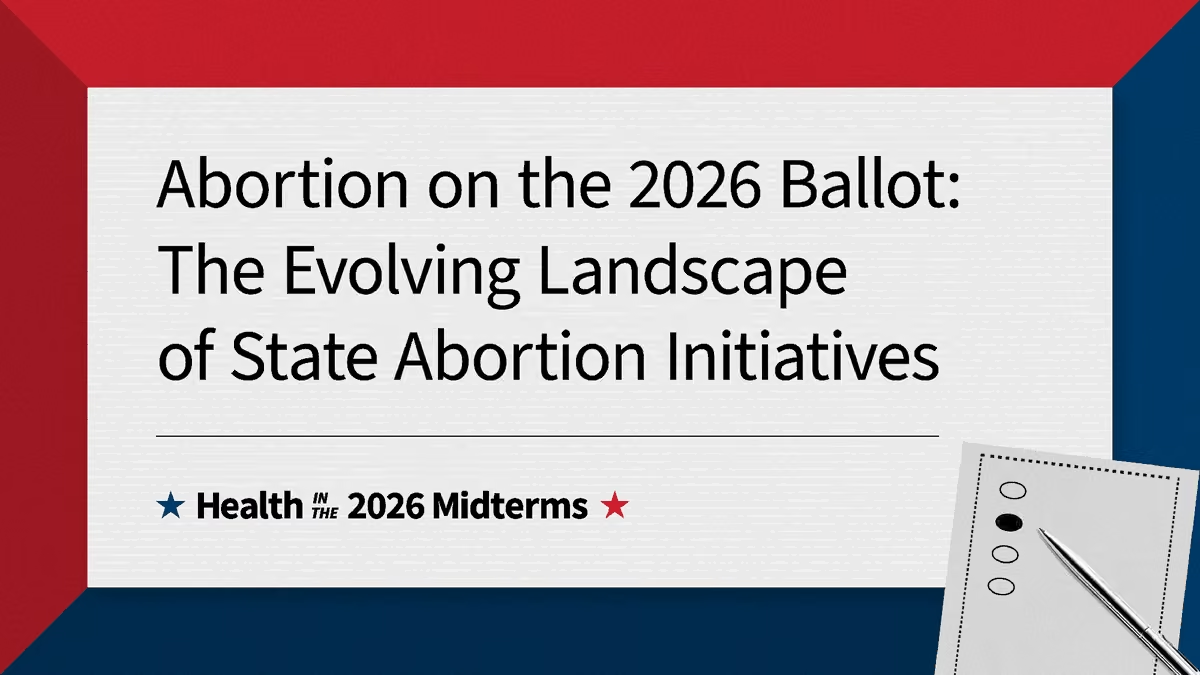
Abortion is back on the ballot this November in 4 states: Nevada and Virginia vote on constitutional amendments protecting abortion rights, Idaho on a statute guaranteeing them, and Missouri on repealing its 2024 amendment protecting abortion. on.kff.org/4spnwr7
-
KFF
@KFF
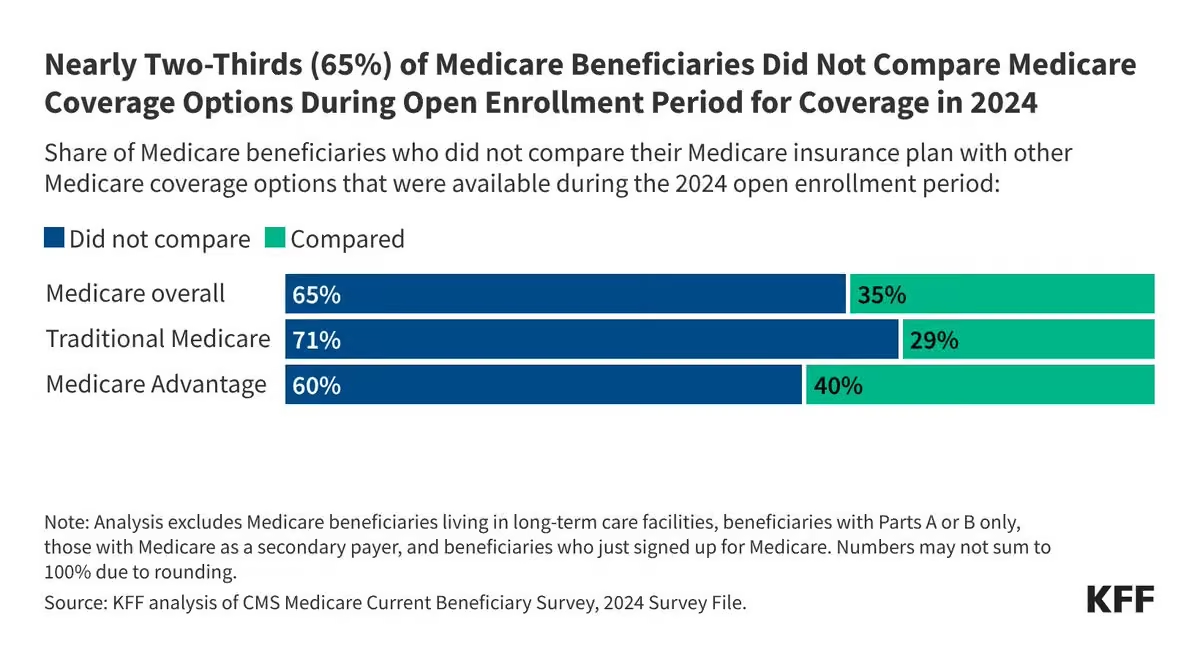
Most Medicare beneficiaries don’t compare options during open enrollment.
KFF answers key questions about coverage options, including for Rx drugs, and tradeoffs involved when deciding whether to enroll in traditional Medicare versus Medicare Advantage. on.kff.org/47hyjLe -
KFF
@KFF
Medicare comes with costs beyond monthly premiums, such as deductibles and cost sharing. Costs can vary widely depending on coverage choices.
KFF examines what people pay for traditional Medicare, Medicare Advantage, and Part D drug coverage in 2026. on.kff.org/4zxN5tn -
KFF
@KFF
Medicare open enrollment runs Oct. 15 to Dec. 7.
People can choose between traditional Medicare and Medicare Advantage, change Medicare Advantage plans, or join or switch Part D prescription drug plans.
Read our key questions and answers about this period: -
KFF reposted
Matt McGough
@mcgough_matthew
Individual market enrollment dropped by 18% or 4.6 million people between June 2025 and June 2026.
This coincides with Marketplace consumers facing higher premium payments due to the expiration of enhanced tax credits.
More from @KFF : www.kff.org/affordable-care-act/individual-market-enrollm… -
KFF reposted
uché blackstock, md
@uche_blackstock
AI has the potential to improve health care, but patients need to have a seat at the table. I spoke with @KFF about why trust and patient involvement matter.
Watch our conversation!
KFF
@KFF
As patients increasingly turn to AI tools and social media for health information, Dr. @uche_blackstock explains why involving patients in AI development and implementation is essential to building trust and creating tools that meet real needs.
Tune in to this week’s episode now: on.kff.org/4yQQbJ0 -
KFF reposted
uché blackstock, md
@uche_blackstock
Can AI help close health care gaps? I share my thoughts with @KFF. Thanks for having me!
KFF
@KFF
Can AI help close health care gaps?
Dr. @uche_blackstock says only if the people most affected by those gaps help design the tools.
Listen to hear more in this week’s episode: on.kff.org/4yQQbJ0This media couldn't be displayed. See it on the original post. -
KFF
@KFF
As patients increasingly turn to AI tools and social media for health information, Dr. @uche_blackstock explains why involving patients in AI development and implementation is essential to building trust and creating tools that meet real needs.
Tune in to this week’s episode now: on.kff.org/4yQQbJ0 -
KFF
@KFF
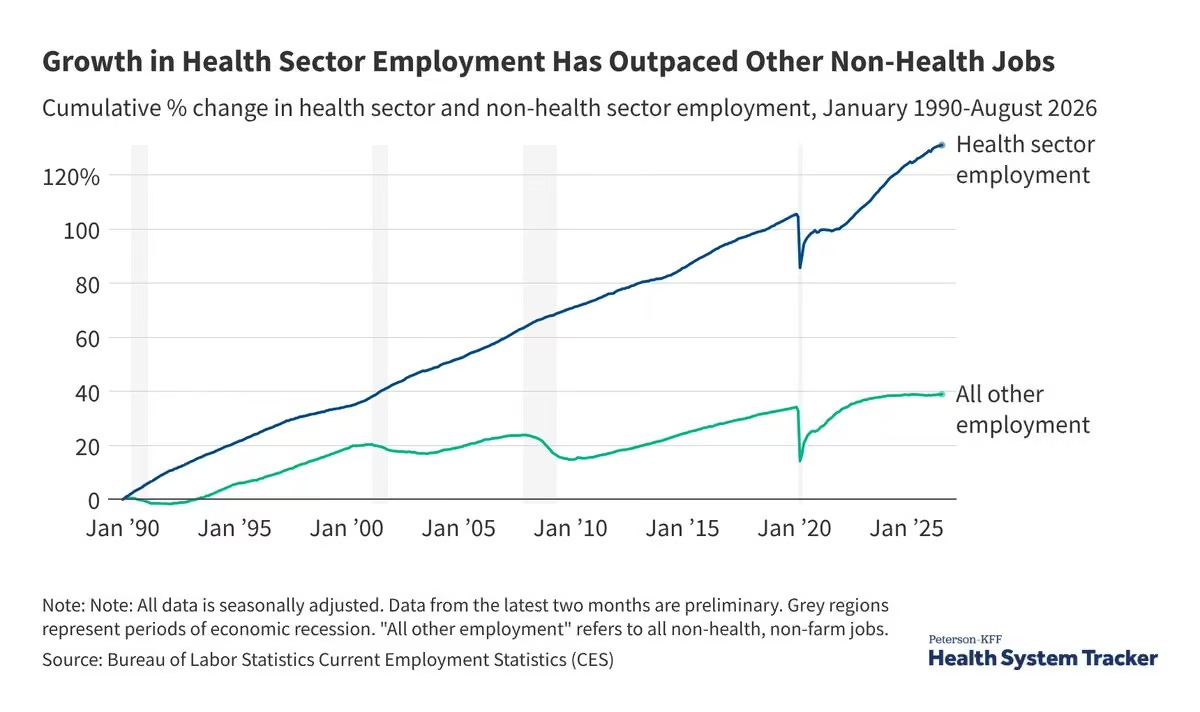
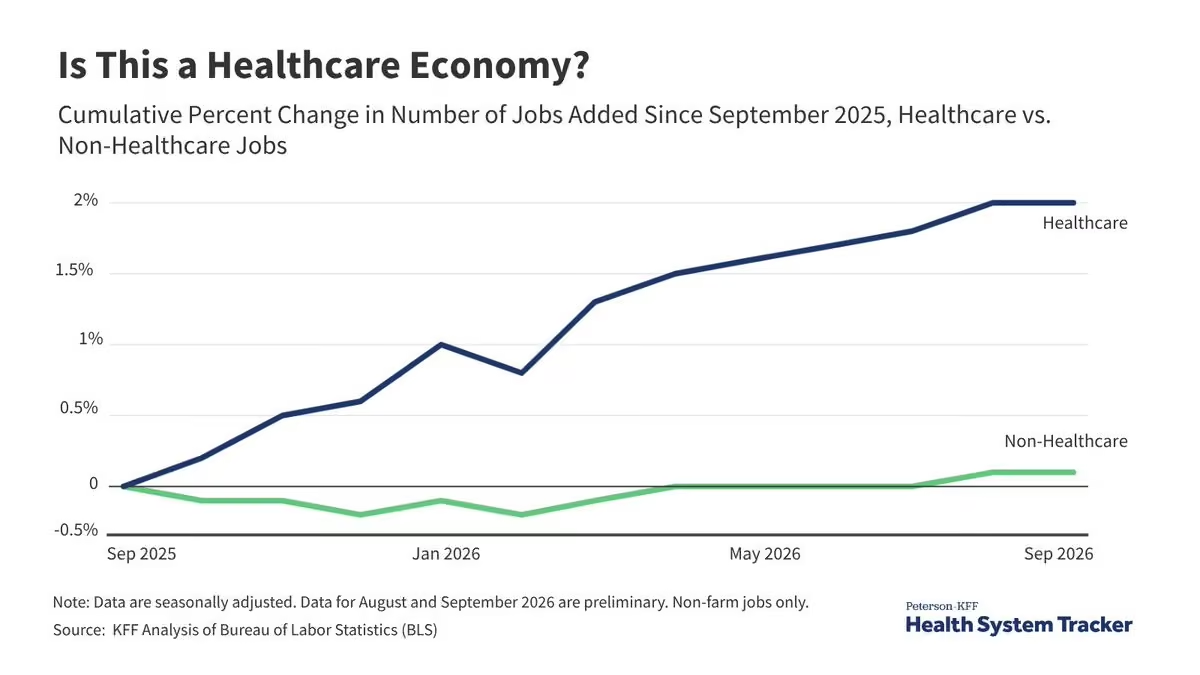
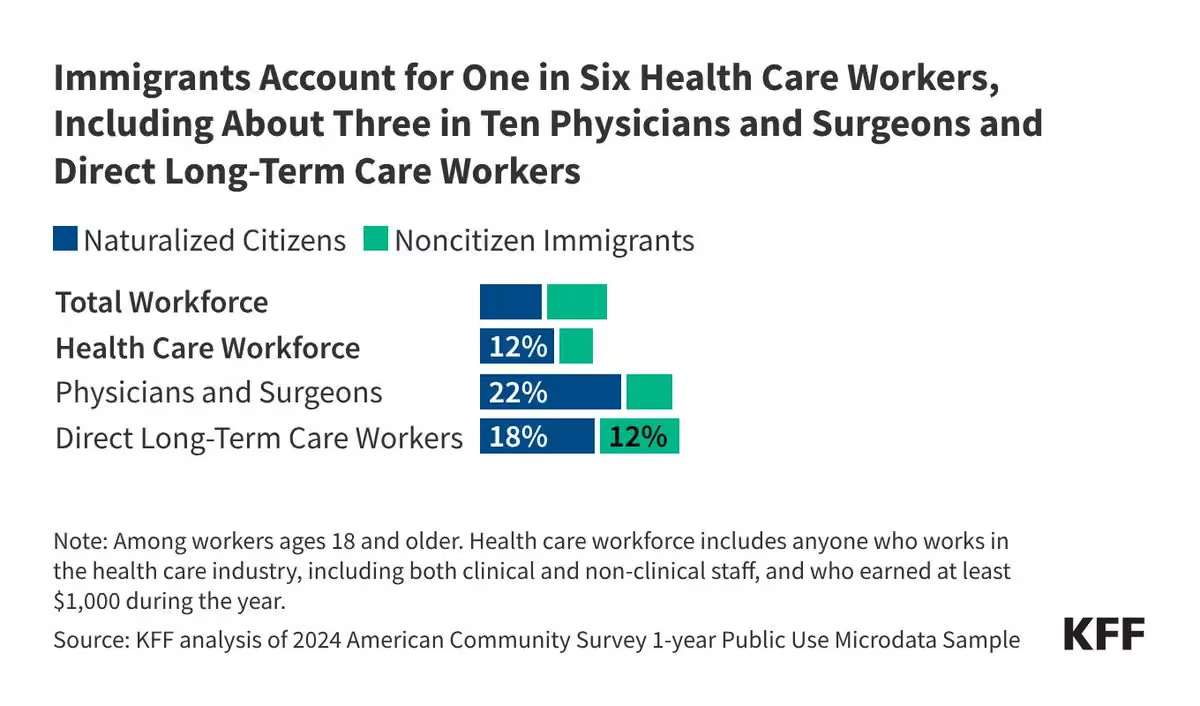
Health care employment has grown steadily while job growth elsewhere has plateaued in recent years.
Over the past year, the health sector added 378,500 jobs — a 2% increase — compared with 0.2% growth in non-health, non-farm employment: on.kff.org/3TXM5iV -
KFF
@KFF
What’s on voters’ minds about health care going into the midterms?
Join KFF experts at noon ET today for a virtual presentation on the latest KFF poll findings — including where the public stands on Medicare-for-All and how that compares historically.
Sign up now! -
KFF reposted
Larry Levitt
@larry_levitt
There’s still one insurance market where people with pre-existing conditions can be denied coverage: Medigap. 74% of Medicare Advantage enrollees have a pre-existing condition that could lead to a Medigap denial if they switch to traditional Medicare.
-
KFF
@KFF
HHS is eliminating the use of disparate impact to assess discrimination, narrowing how civil rights law is administratively enforced.
The changes may allow policies and practices that contribute to disparities in health and health care to remain in place. -
KFF
@KFF
Health care’s AI future is being built right now. The open question is: for whom?
This week, Chip Kahn talks with Dr. @uche_blackstock about who should help shape health care AI, why “neutral” technology deserves scrutiny, and what it would take to build systems that work for all patients. youtu.be/CFAoNDyTVXU -
KFF
@KFF
Since 1990, health care employment has grown over three times as much as all other non-health, non-farm employment.
More on recent trends in health sector employment here: on.kff.org/3TXM5iV -
KFF
@KFF
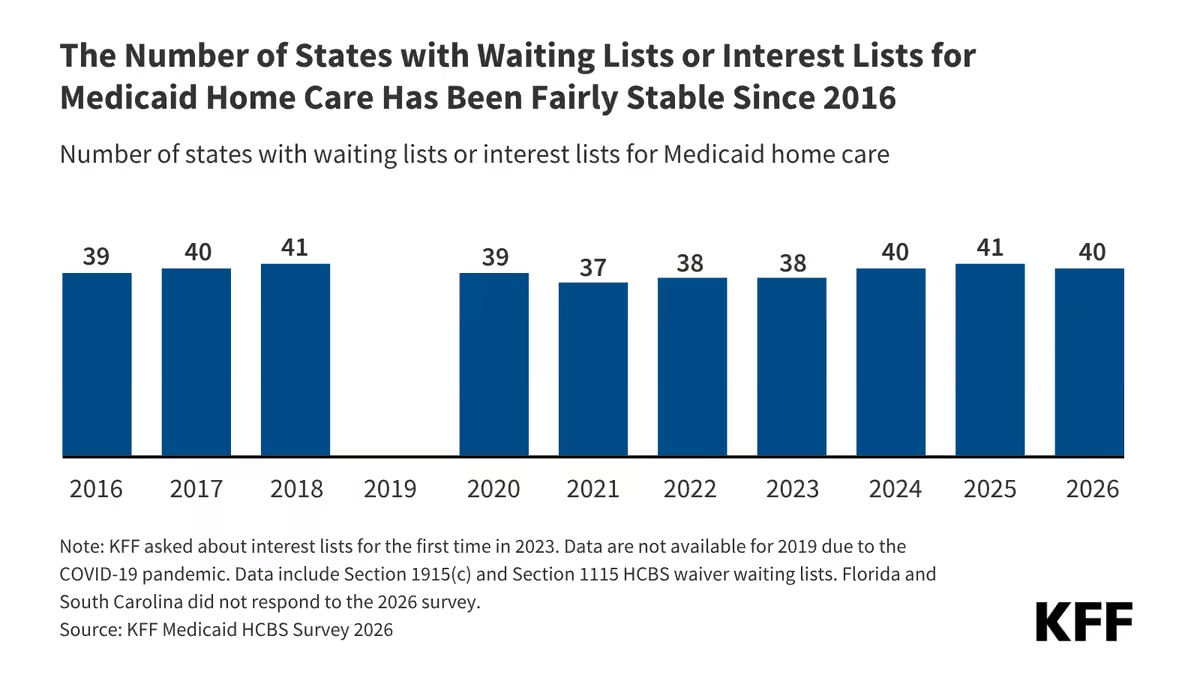
Forty states maintain waiting lists or interest lists for people who would like to receive home care, a number that fluctuated little between 2016 and 2026.
New KFF data on who is waiting and for how long: on.kff.org/4dMVmBp -
KFF
@KFF
What’s on voters’ minds about health care going into the midterms?
Join KFF experts at noon ET Wednesday, Oct. 14, for a virtual presentation on our new poll findings — including where the public stands on Medicare-for-All and how that compares historically.
Register: -
KFF
@KFF
Can AI help close health care gaps?
Dr. @uche_blackstock says only if the people most affected by those gaps help design the tools.
Listen to hear more in this week’s episode: on.kff.org/4yQQbJ0This media couldn't be displayed. See it on the original post. -
KFF
@KFF
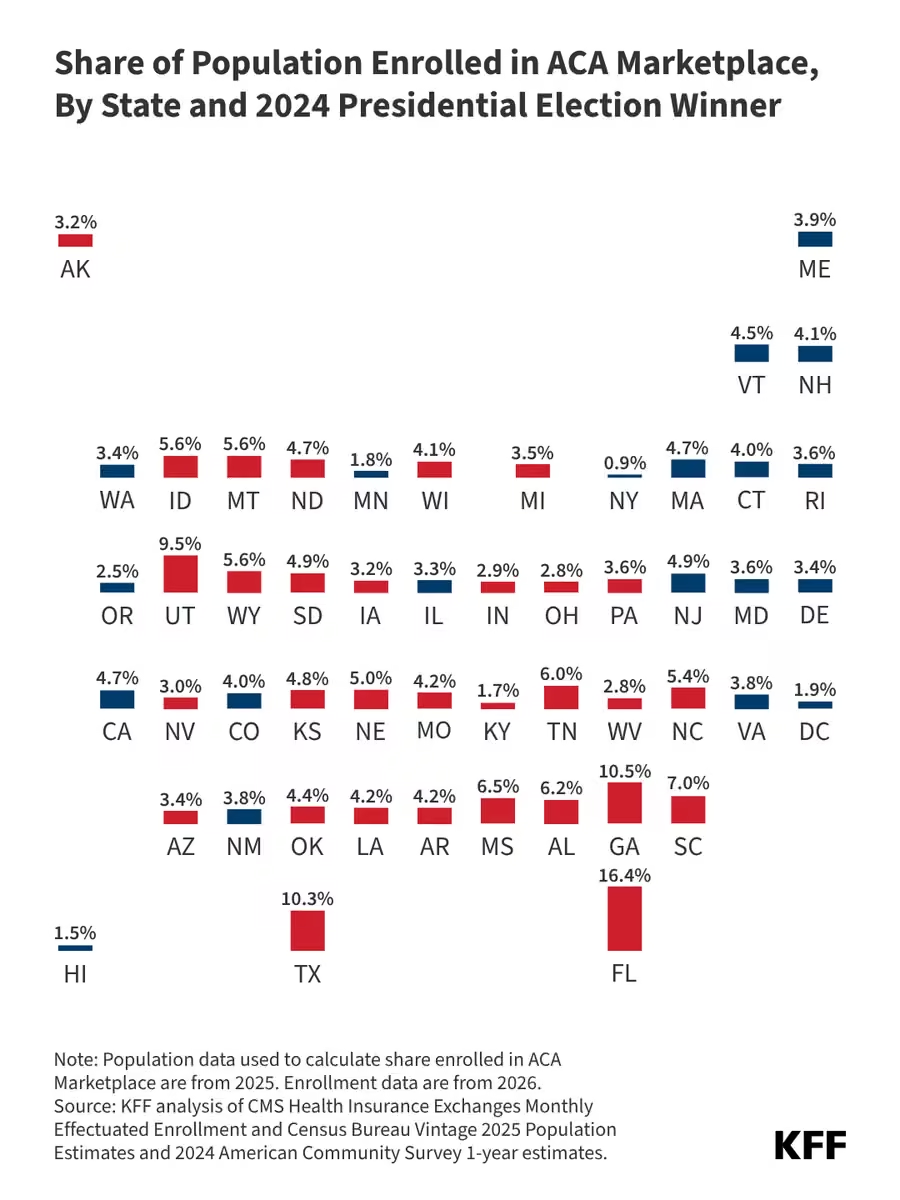
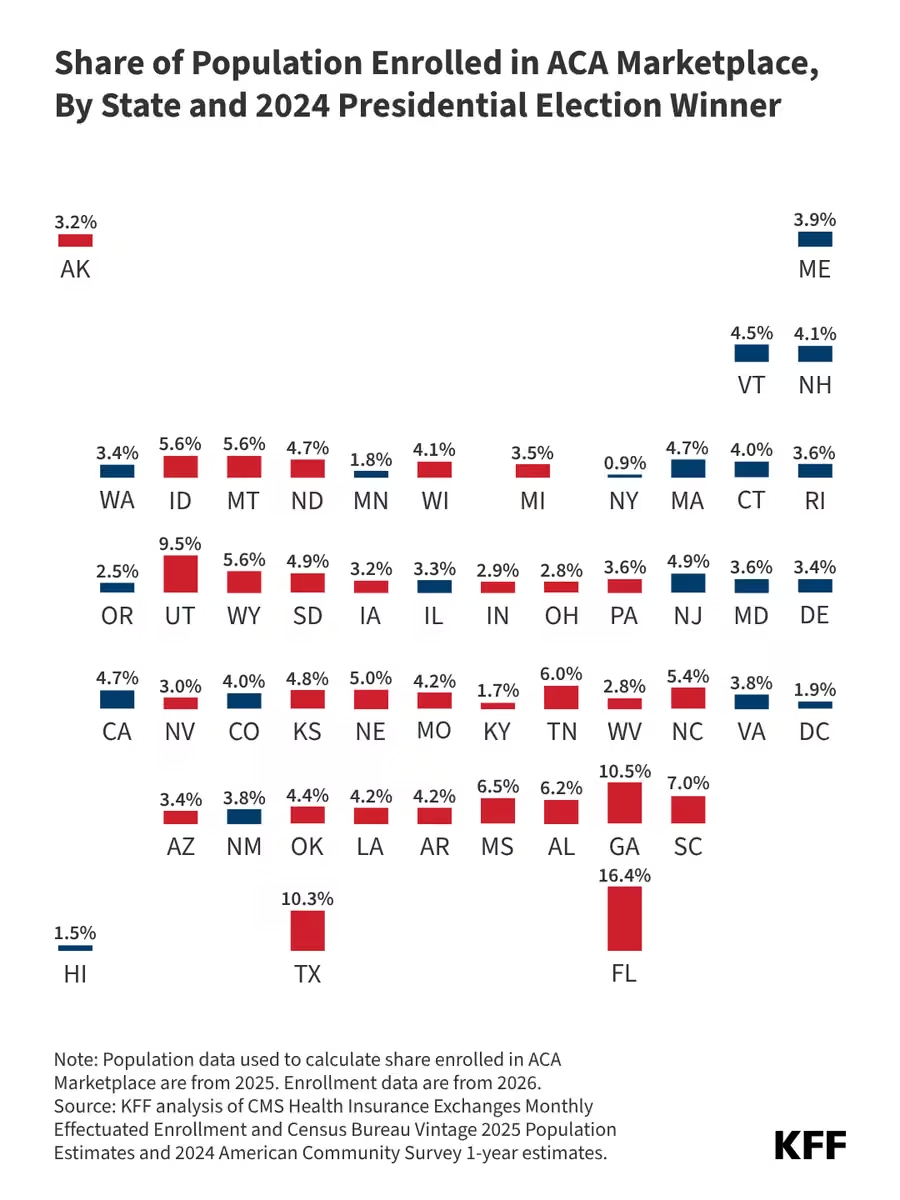
The 10 states with the highest concentration of ACA Marketplace enrollees were won by President Trump in 2024: on.kff.org/4jcR7m8
-
KFF
@KFF
What’s on voters’ minds about health care going into the midterms?
Join a virtual presentation at noon ET on Wednesday, Oct. 14, on the latest KFF polling and Q&A. 🗳️ on.kff.org/47OEvuj -
KFF
@KFF
In half of Republican congressional districts, at least 20% of residents are enrolled in Medicaid. In half of Democratic districts, at least 25% are enrolled.
More data in our new interactive maps: on.kff.org/4semxep -
KFF
@KFF
Nearly half of states (21) are using or planning to use AI to detect fraud in Medicaid home care programs.
KFF survey examines how states are approaching program integrity in their home care programs: on.kff.org/3WgLmtV -
KFF reposted
Larry Levitt
@larry_levitt
Recent polls, including from @KFF, show growing support for Medicare for All. This isn’t surprising, given worries about health care affordability and frustrations with insurers. But in a full-fledged national debate, arguments from critics — some true, some not — would resonate.
-
KFF
@KFF
KFF’s new interactive maps show Medicaid enrollment by congressional district and eligibility group.
See the data: on.kff.org/4semxep -
KFF
@KFF
The FDA is considering rules for evaluating AI that makes clinical decisions with less direct physician involvement. Public comment is open through Oct. 19.
What we're watching: What standards will decide whether these tools are accurate and safe enough? on.kff.org/4yJyprc -
KFF
@KFF
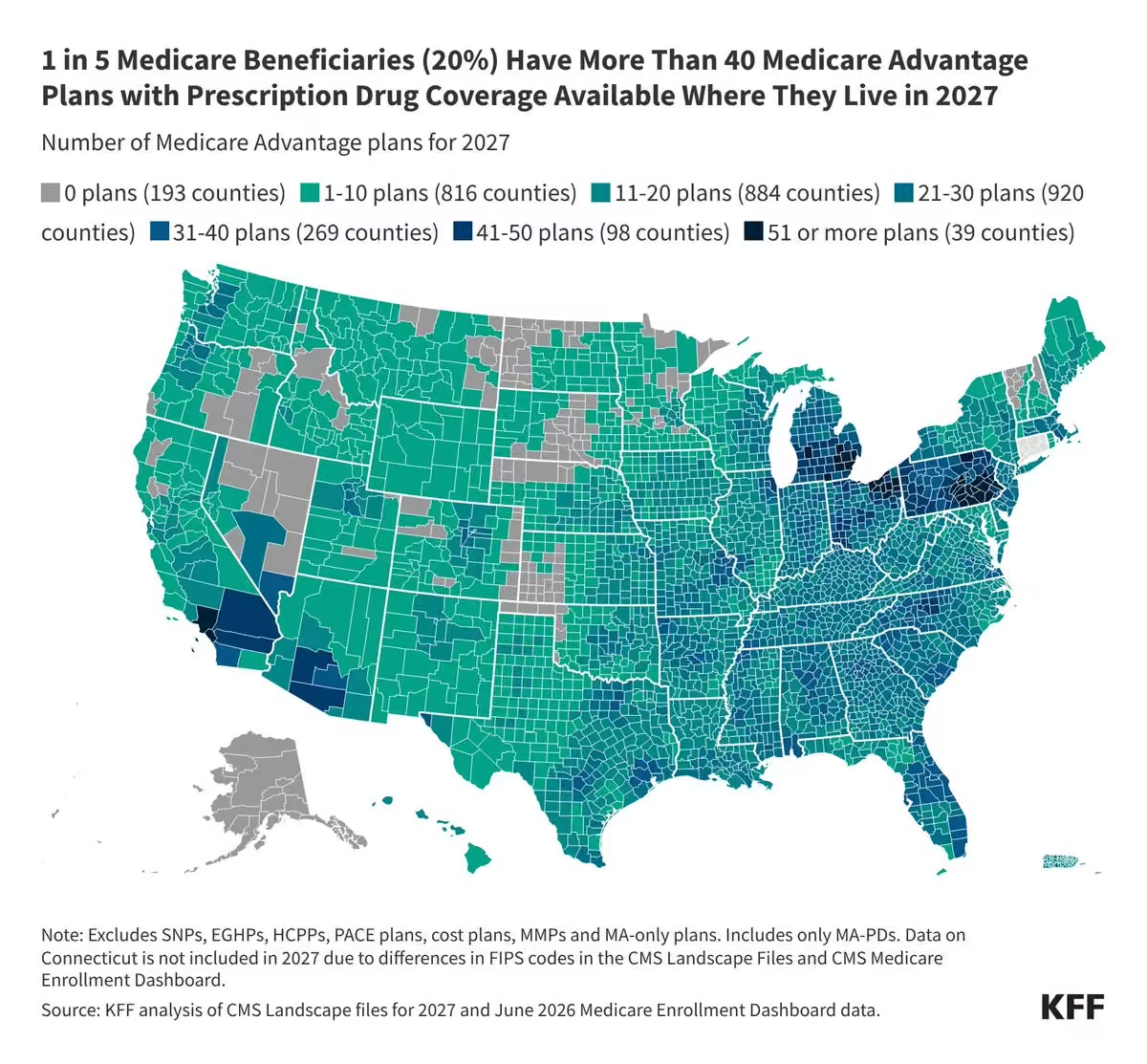
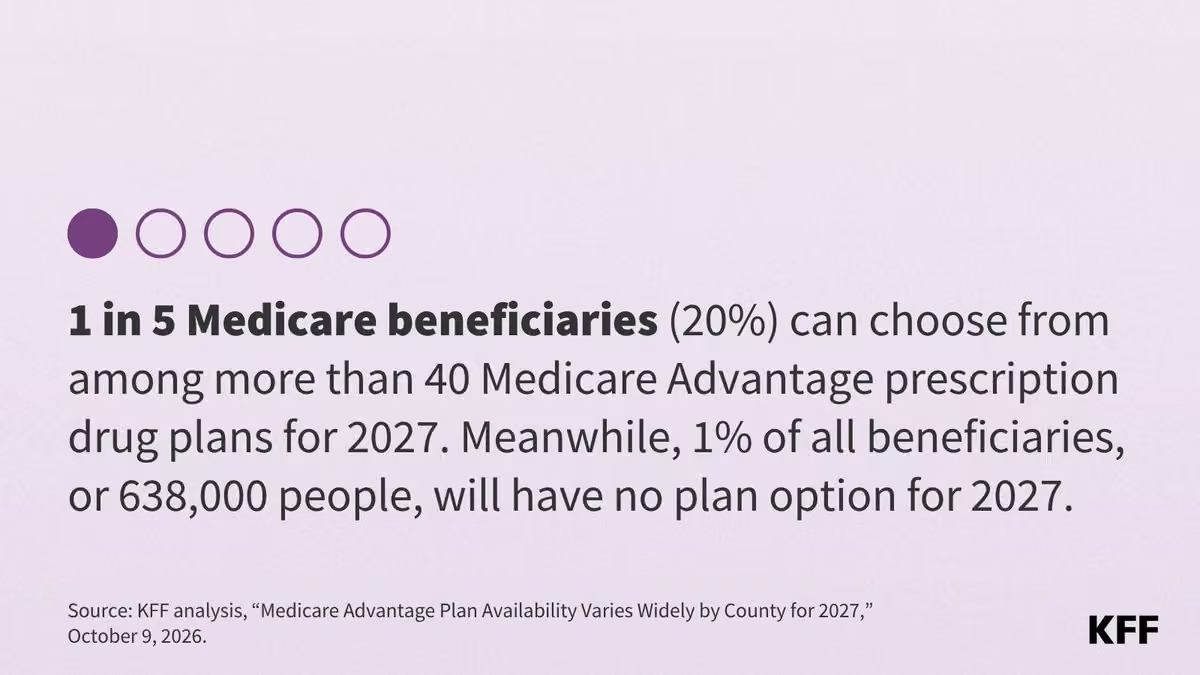
Medicare Advantage prescription drug plan availability varies widely by county in 2027, with a modest reduction in the share of enrollees with more than 40 plans to choose from and some major insurers exiting many more counties than they are entering. on.kff.org/3UbQSxr
-
KFF
@KFF
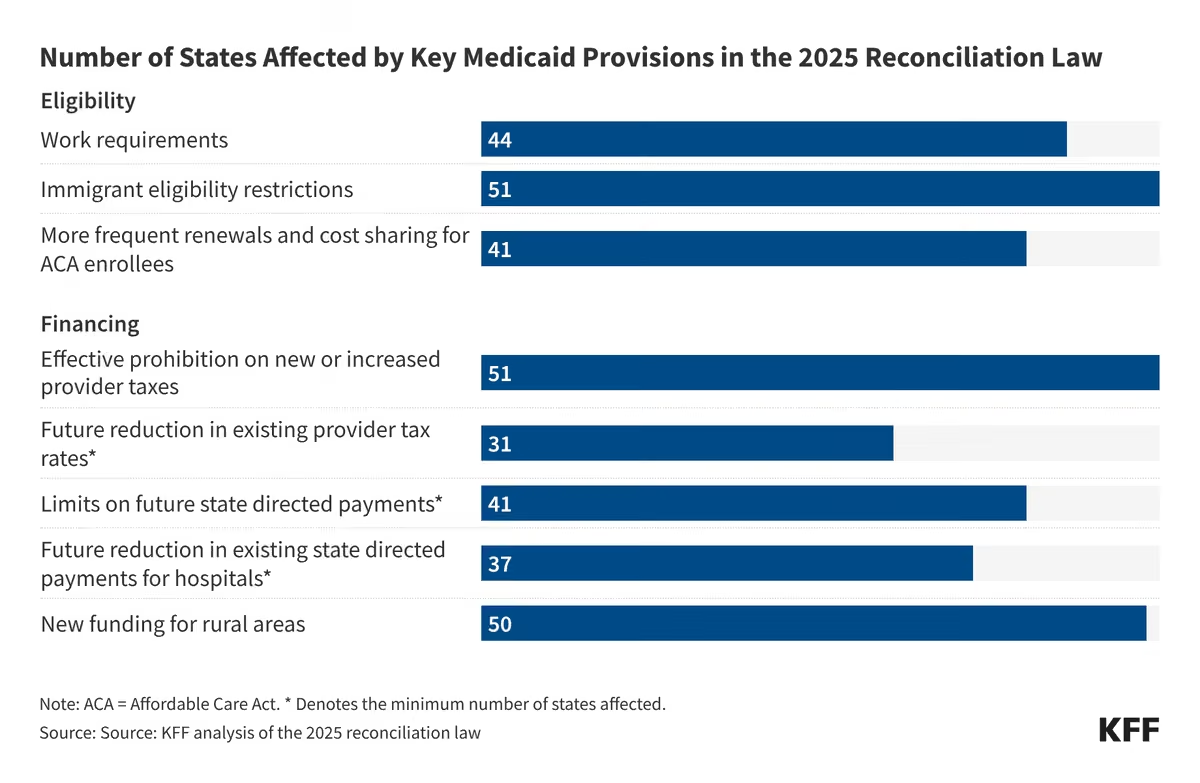
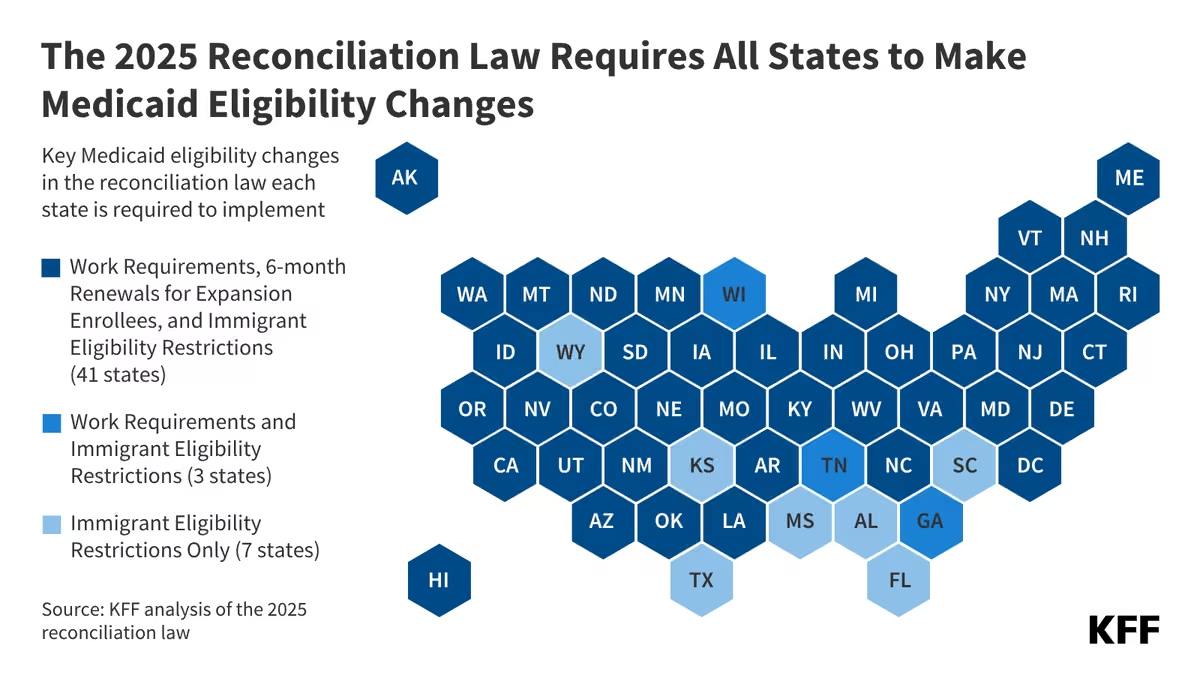
The 2025 reconciliation law makes major changes to Medicaid in every state — from work requirements (44 states) to immigrant eligibility restrictions (51) to limits on provider taxes (51).
More on how and which states are affected in our new brief: on.kff.org/4hQIsDB -
KFF
@KFF
Many women still don’t have paid parental leave in the U.S.
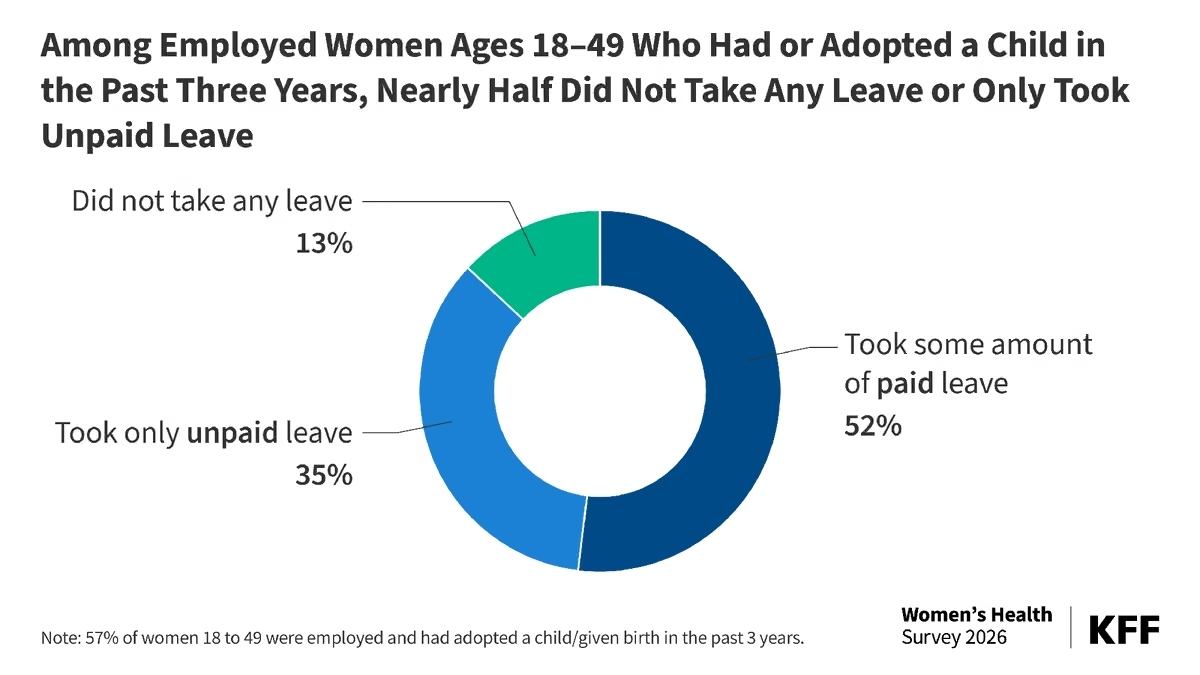
Our survey shows that among employed women who recently had or adopted a child, about half took some amount of paid leave.
Others took only unpaid leave, and more than 1 in 10 took no leave at all. -
KFF
@KFF
Compared with urban health centers, rural health centers served a higher share of patients ages 65 and older, and an outsized share of rural health center patients were veterans, worked in agriculture, or were patients at school-based health center. on.kff.org/4elNuXw
-
KFF
@KFF
Almost 650,000 people are on waiting lists for Medicaid home- and community-based services in 2026.
New KFF analysis tracks how waiting lists changed between 2016 to 2026: on.kff.org/4dMVmBp -
KFF
@KFF
The 2025 reconciliation law is changing Medicaid eligibility requirements across states.
See which states are affected by new work requirements, renewal requirements, and immigrant eligibility restrictions: on.kff.org/4hQIsDB -
KFF
@KFF
1 in 5 Medicare beneficiaries (20%) can choose from among more than 40 Medicare Advantage prescription drug plans for 2027, down from 27% in 2026.
1% of all beneficiaries, or 638,000 people, will have no plan option for 2027, up from 399,000 this year: on.kff.org/3UbQSxr -
KFF
@KFF
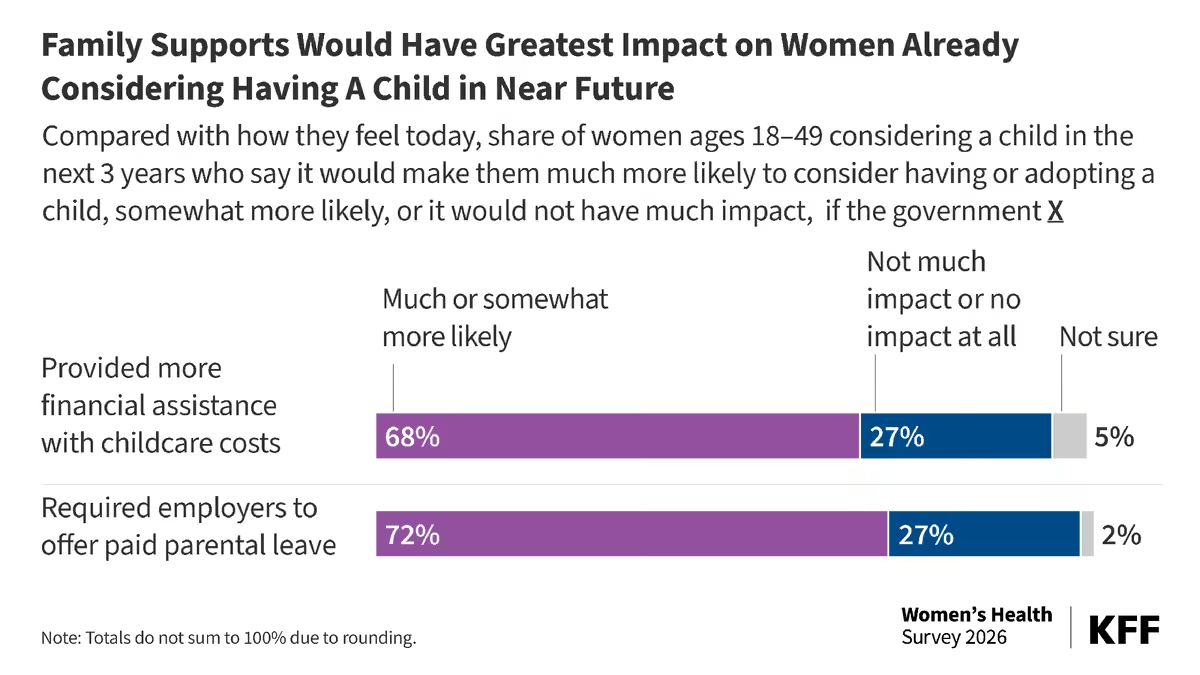
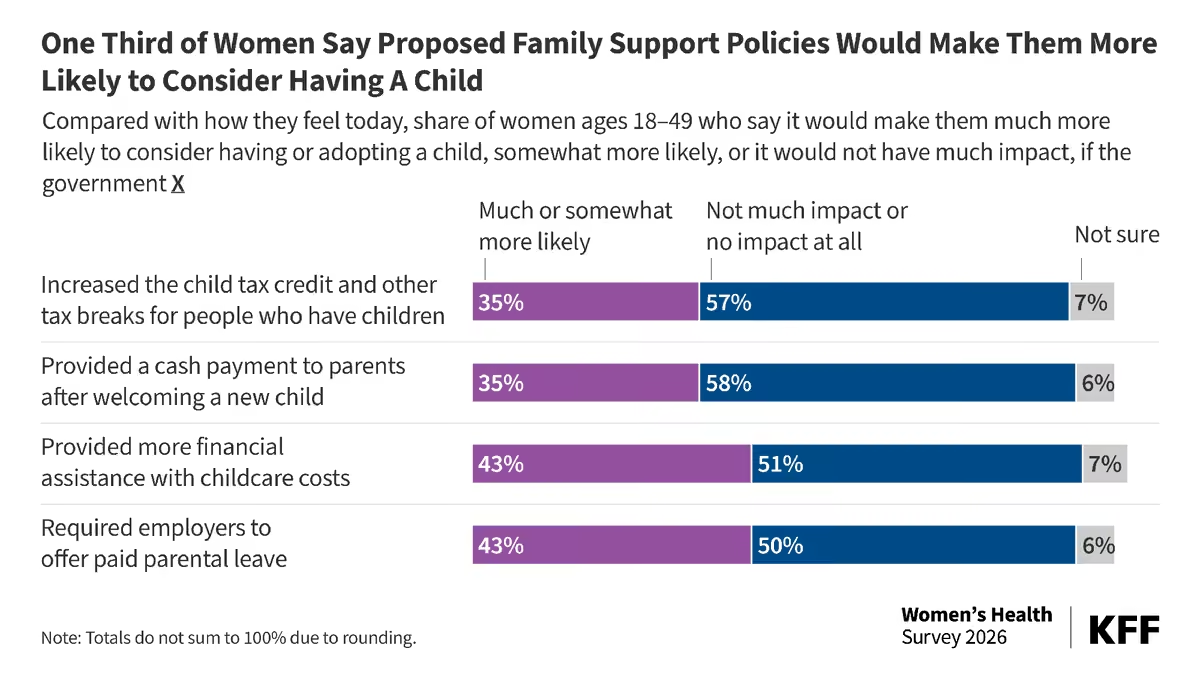
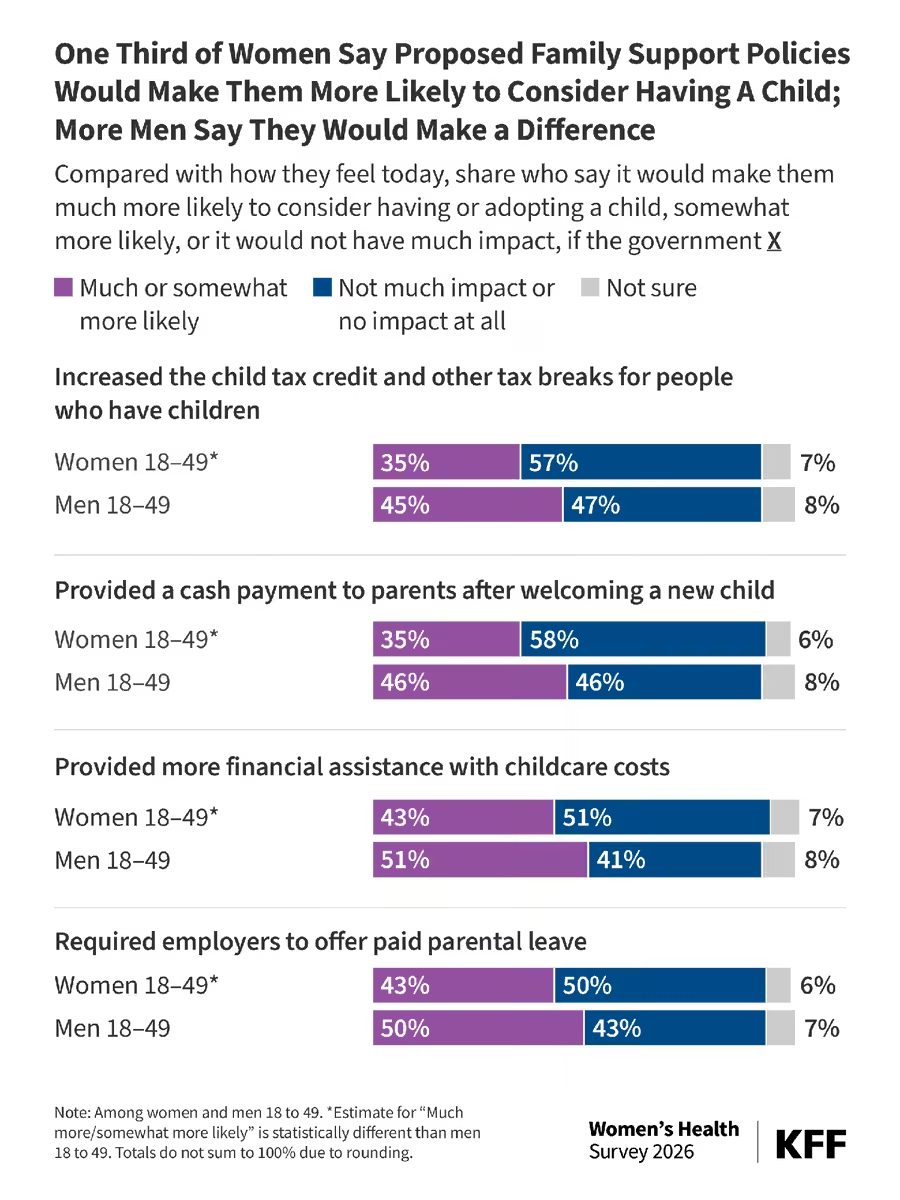
Our 2026 Women’s Health Survey finds that family support policies matter most to women who are already considering having a child.
About 7 in 10 say help with childcare costs or paid parental leave would make them more likely to do so: on.kff.org/3VV0eOw -
KFF
@KFF
Most women ages 18-49 say family support policies would not change their plans to have children or not.
But sizable shares say help with childcare costs or paid parental leave would make them more likely to consider it: on.kff.org/3VV0eOw -
KFF
@KFF
Community health centers face a number of challenges amid significant federal policy changes and funding uncertainty.
This brief provides key data on health center patients, services, and financing in 2025 and analyzes changes over time. on.kff.org/3ZdWYfG -
KFF
@KFF
All states are affected by the 2025 reconciliation law’s Medicaid changes.
See which of the law’s provisions affect each states — and which states are facing the greatest changes: on.kff.org/4hQIsDB -
KFF
@KFF
Findings from KFF’s 2026 survey of states’ Medicaid home care programs show how states are approaching program integrity in their programs: on.kff.org/3WgLmtV
-
KFF reposted
Lindsey Dawson
@LindseyH_Dawson
The Trump Administration ended the 988 suicide crisis hotline for LGBTQ young people while use of the service was increasing. Over a year later, the line has been restored under pressure from Congress. Read more about what happened from @KFF: www.kff.org/lgbtq/as-hhs-restores-the-lgbtq-988-suicide-a…
-
KFF
@KFF
In this edition of The Monitor: How a health claim is presented may matter as much as whether it's accurate.
Recent research suggests people may place more trust in an AI chatbot when it sounds conversational, even when the information it gives is wrong. on.kff.org/4yJyprc -
KFF
@KFF
AI in health care has mostly meant narrow tasks like reviewing scans or test results.
New federal pilots are testing something different: tools that interact directly with patients, provide therapy, and recommend treatment with less physician involvement. -
KFF
@KFF
Since September 2025, the healthcare sector has added 372,000 jobs (up 2%), while the overall non-farm economy apart from the healthcare sector gained 124,000 jobs (up 0.1%).
More on trends in healthcare employment in our new analysis: on.kff.org/4drAuPO -
KFF
@KFF
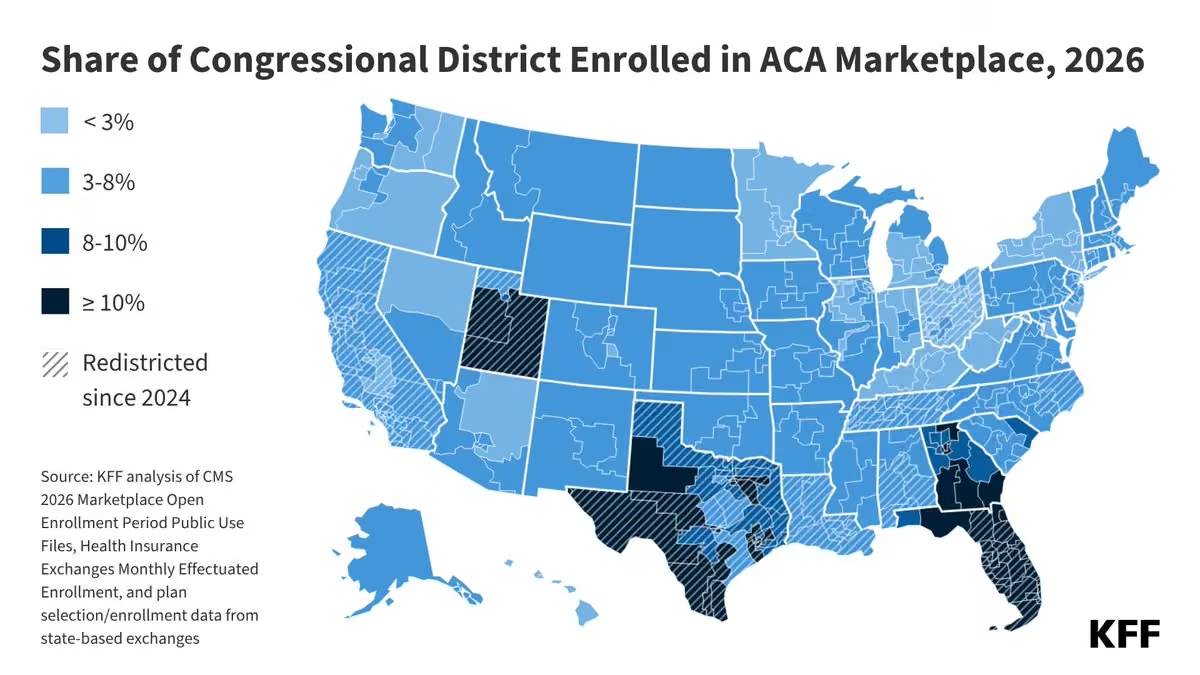
More than half of Marketplace enrollees (55%) live in Republican districts.
The highest shares of state enrollment are in Florida (16%), Georgia (11%), Texas (10%), and Utah (10%) — states that were all won by President Trump in 2024.
Get more data here: -
KFF
@KFF
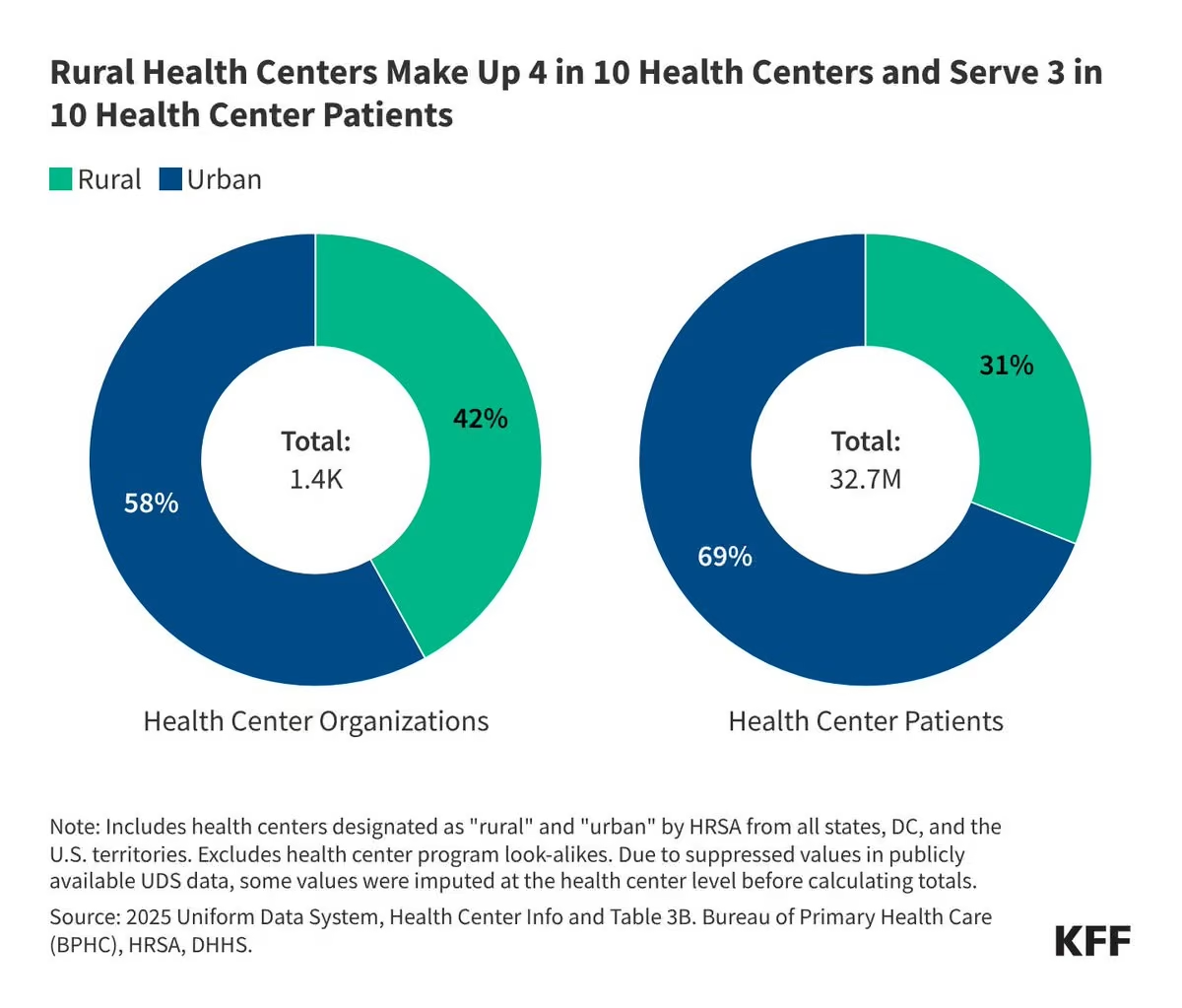
Rural health centers served 10.2 million patients in 2025 — about 3 in 10 health center patients.
Medicaid covered 37% of rural health center patients and accounted for 32% of rural health center revenue.
Rural centers make up 4 in 10 health centers. on.kff.org/4elNuXw -
KFF
@KFF
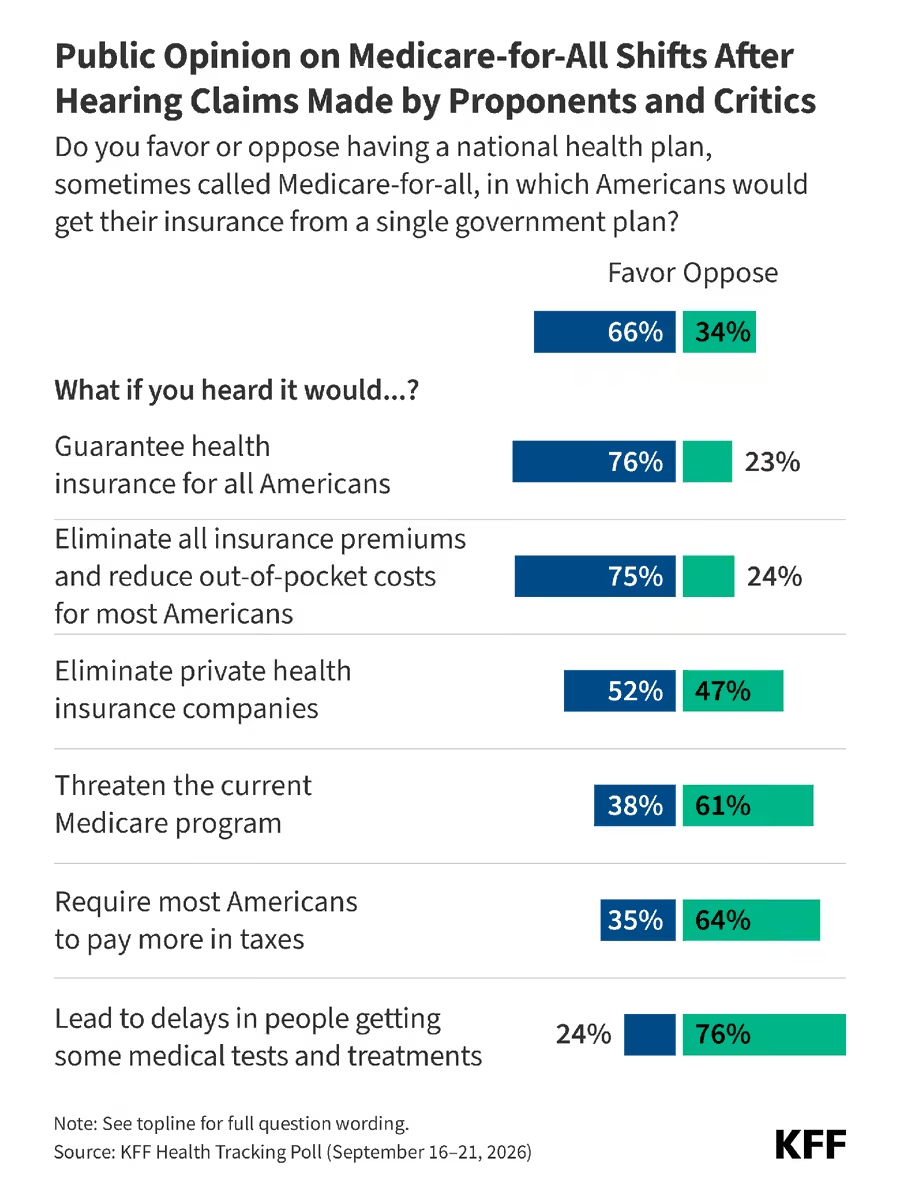
Support for a national health plan (commonly called “Medicare-for-All”) has grown, rising to about two-thirds (66%) of the public — but public opinion is highly malleable and support shifts when competing claims from critics and proponents are heard: on.kff.org/4dumQLT
-
KFF
@KFF
As the Trump administration focuses on birth rates, what kind of family policies would encourage people to grow their families?
We asked women and men what the government would have to do to make them more likely to consider having or adopting a child. on.kff.org/3VV0eOw -
KFF
@KFF
ACA Marketplace enrollment tends to be highest in the South, where several states have not expanded Medicaid. Florida leads the nation with 16% of its population enrolled, followed by Georgia (11%), Texas (10%), and Utah (10%): on.kff.org/4jcR7m8
-
KFF
@KFF
Health care employment has grown faster than other sectors of the economy, with jobs in healthcare settings, such as physician offices and hospitals, increasing over the past year even as the rest of the job market plateaued: on.kff.org/4drAuPO
-
KFF
@KFF
Florida, (16%), Georgia (11%), Texas (10%), and Utah (10%) have the highest share of residents enrolled in the ACA Marketplace.
See how enrollment varies by congressional district and changed between 2025 and 2026 in our new interactive maps: on.kff.org/4jcR7m8 -
KFF reposted
Matt McGough
@mcgough_matthew
3/ Marketplace enrollment fell more sharply in Republican-held congressional districts, which account for 55% of current enrollees but 67% of the enrollment decline between 2025 and 2026.
-
KFF reposted
Matt McGough
@mcgough_matthew
2/ In FL-27, 31% of residents are enrolled, with FL-28 (30%), FL-24 (29%), and FL-26 (28%) close behind. At the other end, 24 of the 25 lowest-enrollment districts are in New York, each under 10K, thanks to Medicaid expansion and a Basic Health Plan.
-
KFF reposted
Matt McGough
@mcgough_matthew
1/ 🗺️ ACA Marketplace enrollment varies enormously by congressional district: from 2K to 249K people. All 28 districts with 100K+ enrollees (12 D, 16 R) are in FL, TX, or GA, and Florida holds the top 11 nationwide.
Via new KFF analysis. www.kff.org/affordable-care-act/how-does-aca-marketplace-…🧵 -
KFF
@KFF
New hospital price transparency requirements took effect this year, but our new analysis finds issues with how hospitals are reporting rates that limit the usefulness of the data for researchers.
More on the data issues: on.kff.org/4jM3gP1 -
KFF
@KFF
Between 2025 and 2026, Marketplace enrollment fell more sharply in Republican-held congressional districts, which account for 55% of current enrollees but 67% of the enrollment decline: on.kff.org/4jcR7m8
-
KFF
@KFF
As Americans struggle with health care costs heading into the midterms, support for Medicare-for-All has hit a new high in KFF polling.
Here’s what nearly a decade of KFF data shows about public opinion on a national health plan: on.kff.org/4dumQLT -
KFF
@KFF
Health care costs are garnering attention, @DrewAltman writes, because voters see them not as a separate issue, but as a “dimension of their cost-of-living concerns.”
His latest column explores what that means for the midterms and why candidates in both parties should pay attention. on.kff.org/3UdCyED -
KFF
@KFF
Federal health agencies are testing AI tools that move beyond narrow support tasks into care typically handled by physicians, like diagnosing conditions and adjusting treatment.
This edition of The Monitor looks at what's changing and what questions remain: -
KFF
@KFF
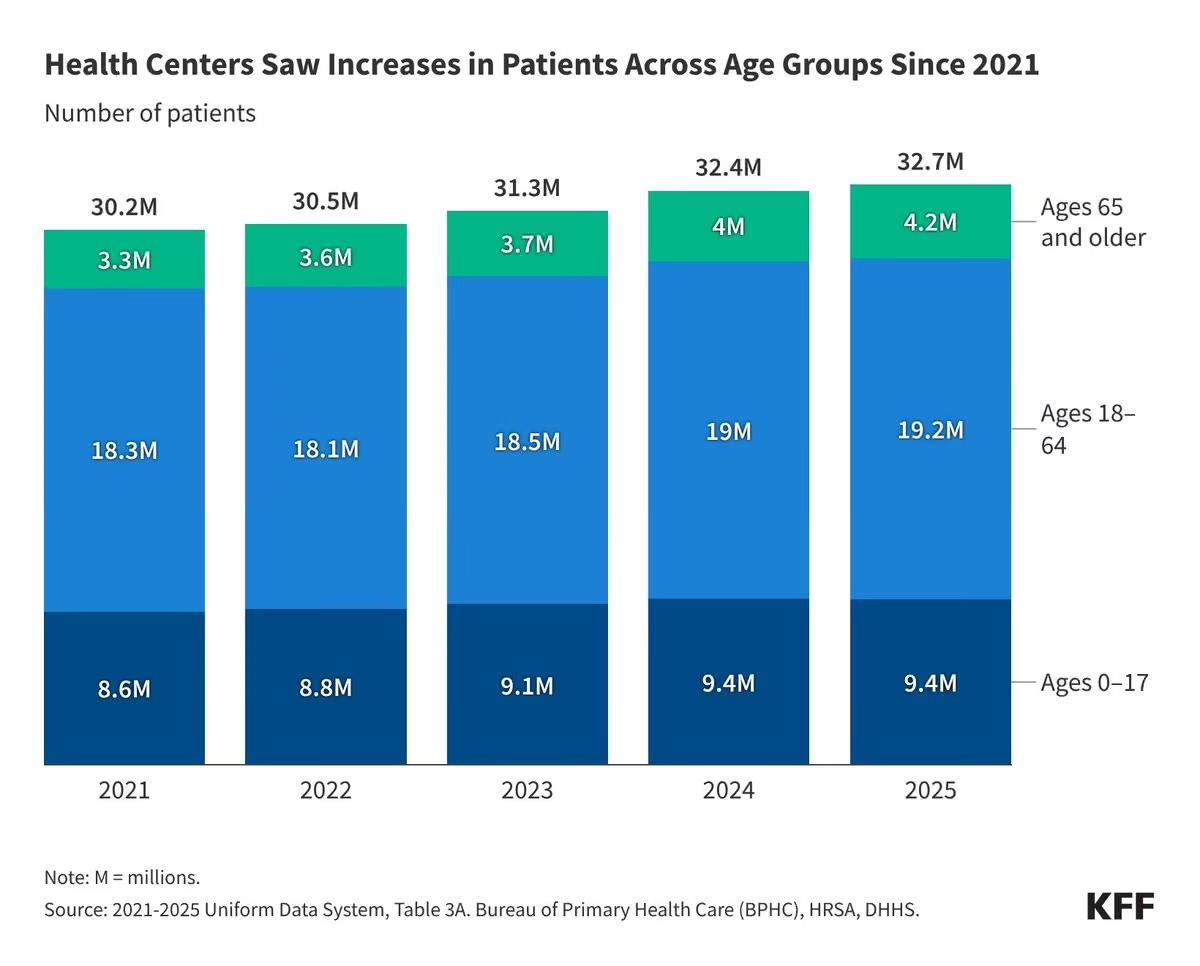
Community health centers served 32.7 million patients in 2025, with 9 in 10 patients living in low-income households.
Medicaid was the largest payer, covering nearly half of health center patients and accounting for 46% of total health center revenue. on.kff.org/3ZdWYfG -
KFF
@KFF
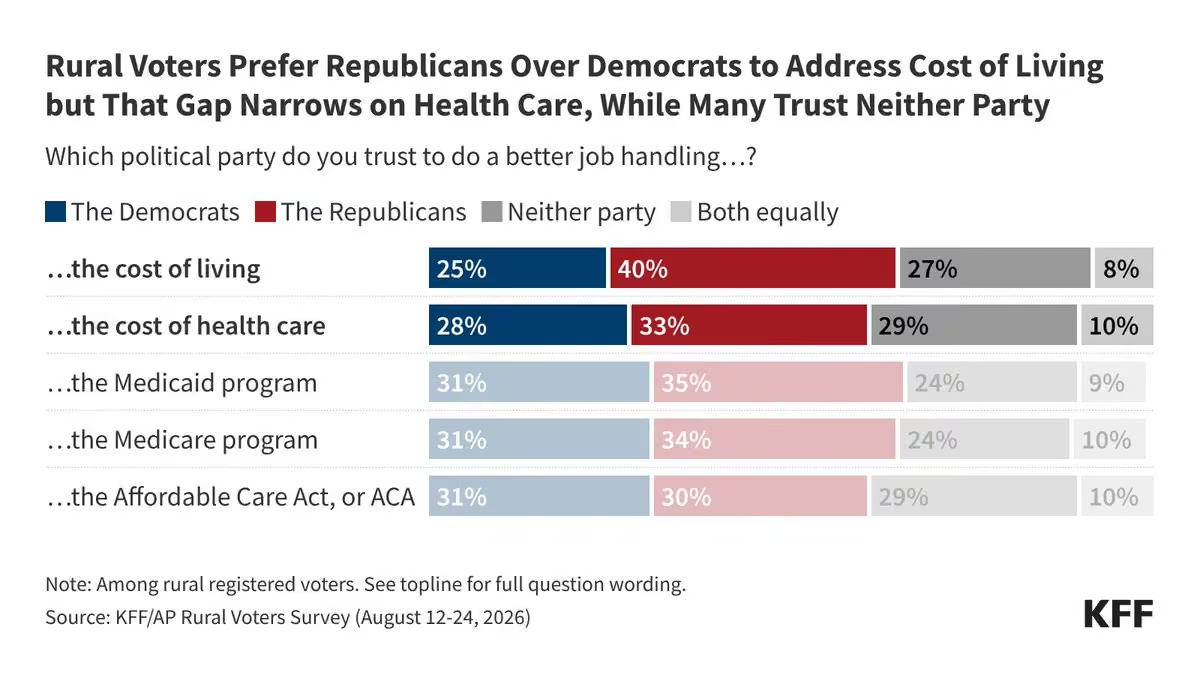
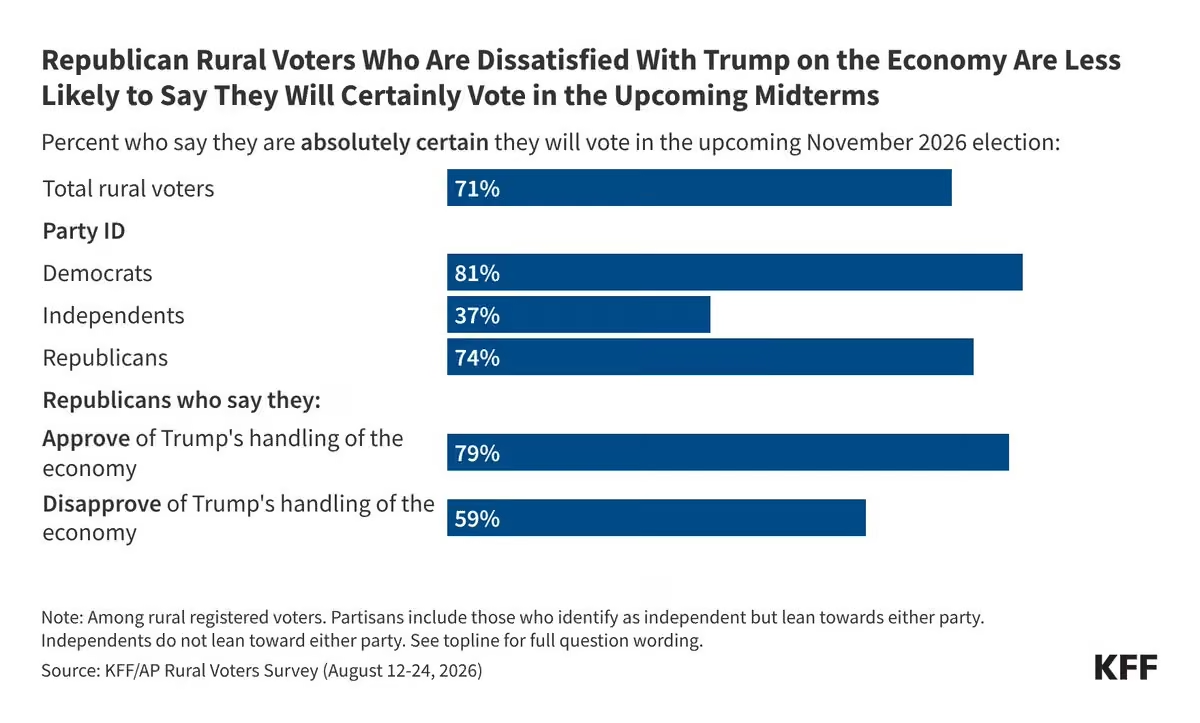
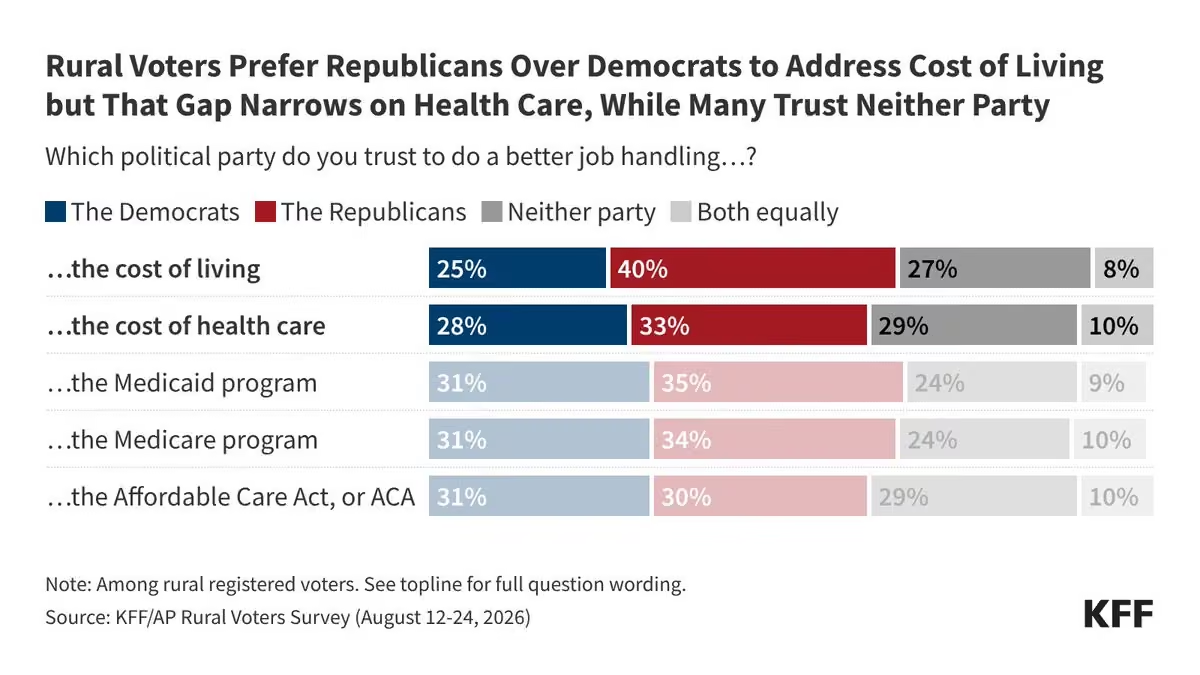
More rural voters prefer the Republican Party than the Democratic Party to best address the cost of living (40% v. 25%).
Republicans have a narrower advantage over Democrats on who rural voters trust to handle the cost of health care (33% vs. 28%).
KFF
@KFF
About a quarter of rural voters (27%), including most independents, trusts neither party to address the cost of living.
A similar share (29%) also doesn’t trust either party to deal with health care costs.
Get the details: on.kff.org/4yNL8bH -
KFF reposted
Larry Levitt
@larry_levitt
President Trump is sending $500 to some ACA enrollees. Leaving aside the legal issues, it's important to get beyond the headline. The checks go to about 1 million out of 19 million ACA enrollees, and don't come close to the higher costs people face from expired premium subsides.
-
KFF
@KFF
Health care costs are on voters’ minds, but not necessarily as a standalone issue.
In his latest column, @DrewAltman explains why cost of living is voters’ dominant concern and health care is a central element — and what that means for the midterms.
🔗: -
KFF
@KFF
America is focused on whether Al development should slow down or pause. Europe is binding Al with some of the world’s strictest rules.
In this episode, Chip Kahn and Martin McKee discuss the key differences, and the implications, for both approaches. on.kff.org/4i7cXGs -
KFF
@KFF
“The ‘issue’ that matters most in this election is cost of living, and the cost of health care is a central element of it for voters.”
In a new column, @DrewAltman explains why pollsters, analysts, and candidates should also look at it that way, and not as a separate voting issue: on.kff.org/3UdCyED -
KFF
@KFF
#icymi: Just a month away from the midterm elections, affordability worries continue to top voters’ list of midterm election issues — with health care costs and gas costs tying as the top economic concern. on.kff.org/4zgJv6z
-
KFF reposted
Drew Altman
@DrewAltman
You may see polls ranking “healthcare” third or fourth as a voter priority. That’s NOT the story now. “Health care costs” are a top voter cost of living concern right up there with gas prices. My latest column: www.kff.org/from-drew-altman/a-guide-to-the-role-of-healt…
-
KFF
@KFF
In this week’s episode Chip and Martin McKee discuss what the American Al and health care debate looks like from Europe — and explore whether Europe’s strict regulation offers an answer that the potential American pause cannot. youtu.be/rSSl4BK1JmI
-
KFF reposted
Drew Altman
@DrewAltman
Our new poll - health costs are a top cost of living issue. Tomorrow, my column on what it means for the midterms. www.kff.org/public-opinion/poll-cost-of-health-care-and-g…
-
KFF
@KFF
Two-thirds of the public favor Medicare-for-All — the highest share since KFF began polling on the topic in 2016 — but public opinion is highly malleable and support shifts when competing claims from critics and proponents are heard: on.kff.org/4zgJv6z
-
KFF
@KFF
KFF Founding President and CEO @DrewAltman describes why health care costs continue to top voters’ affordability worries heading into the midterm elections: on.kff.org/4zgJv6z
-
KFF
@KFF
Voters trust Democrats more than Republicans to handle health care costs (42% vs. 22%.) That 20-point advantage is up from an 11-point edge over Republicans in April.
More in our new Health Tracking Poll: on.kff.org/4zgJv6z -
KFF reposted
Larry Levitt
@larry_levitt
It tells you a lot about how concerned voters are about the affordability of health care when it's tied with gas prices right now as an economic worry.
-
KFF
@KFF
A month before the midterms, health care and gas costs tie as voters' top affordability worries. A quarter say they are "very worried" about affording each, ahead of food, utilities and housing. More in our new Health Tracking Poll: on.kff.org/4zgJv6z
-
KFF reposted
Cynthia Cox
@cynthiaccox
Is this a health care economy?
Jobs in the health field continue to outpace the rest of the labor force
@emmawage @cromwick -
KFF reposted
Lindsey Dawson
@LindseyH_Dawson
Under pressure from Congress, the LGBTQ 988 crisis service is back after over a year offline. Before it was shut down by the Trump administration, use was rising.
KFF examines what’s known about its return & what questions remain: www.kff.org/lgbtq/as-hhs-restores-the-lgbtq-988-suicide-a…
with @heathersaunder_ -
KFF
@KFF
HHS restored the 988 Lifeline's LGBTQ youth service on 9/30 after bipartisan pressure from Congress. Before ending in July 2025, it received 1.5M+ contacts, about 10% of 988 contacts at the time.
Questions remain about visibility and future funding. on.kff.org/4htxSmZ -
KFF
@KFF
KFF’s Juliette Cubanski explains that the Trump Administration’s plan to provide a one-time $90 payment to Medicare beneficiaries may not offset rising costs. on.kff.org/4i3f9Ph
KFF
@KFF
"Medicare’s standard Part B premium is $2,435 this year and is projected to increase by $79 annually for 2027 – meaning this increase alone would consume most of the $90 payment, which less than half of all beneficiaries will receive," she writes.
-
KFF
@KFF
Crisis Pregnancy Centers work to dissuade pregnant people from seeking abortion care. They often attract clients by offering free pregnancy tests, ultrasounds, and material goods, but lack regulation and accountability for client data.
Learn more: on.kff.org/3TCI8js -
KFF
@KFF
Amid surging cases, a new CDC policy on how to count measles deaths departs from norms that relied on reports from state health departments.
A look at the different methods and the roles of two distinct but related federal public health surveillance systems: -
KFF
@KFF
For 2027, the average Medicare beneficiary will have 28 Medicare Advantage prescription drug plan options, down from 32 in 2026.
The number of plan options is still more than were available in every year before 2022: on.kff.org/4hWfHXc -
KFF
@KFF
Among Medicaid enrollees renewing coverage under Nebraska’s new work requirements, 93% met the requirements or qualified for an exemption, while 7% lost coverage.
More data and early insights on Nebraska’s Medicaid work requirements in our new policy watch: -
KFF
@KFF
Among new Medicaid applicants subject to Nebraska's work requirements, 86% met the requirements or qualified for an exemption — while 14% were denied.
More data and early insights on Nebraska’s Medicaid work requirements in our new policy watch: on.kff.org/4htUy5i -
KFF
@KFF
Most workers have access to paid sick leave, but access to paid family and medical leave remains far less common.
Explore the latest data and policy landscape with our updated fact sheet on paid leave in the U.S. on.kff.org/4hd96r9 -
KFF
@KFF
There are over 2,000 Crisis Pregnancy Centers in the U.S. They are largely not considered medical facilities, lack accountability for client health data, and have been protected from regulation through the courts.
Our experts explain: on.kff.org/3TCI8js -
KFF
@KFF
As demands for AI regulation grow, @sklasko — a physician and former health system CEO — says health care should focus on a different question: How do we respond when AI agents go rogue?
In this week’s episode, he outlines practical steps health systems can take now to prepare. on.kff.org/4AxOCklThis media couldn't be displayed. See it on the original post. -
KFF
@KFF
New immigrant eligibility restrictions in Medicaid & CHIP mean states must redetermine eligibility for potentially affected enrollees by Oct. 1.
A new brief examines challenges states face in implementing the changes and the potential for coverage losses: on.kff.org/4z1ZdTf -
KFF
@KFF
Nebraska is the first state to implement Medicaid work requirements — here’s what the early data shows: 7% of those renewing coverage lost Medicaid and 14% of new applicants were denied for not meeting work requirements: on.kff.org/4htUy5i
-
KFF reposted
Craig Palosky
@CraigPalosky
Rural MAHA Followers Say Trump Health Policies Haven’t Reached Their Communities - @AP and @KFFHealthNews with a look at key findings from the KFF/AP Survey of Rural Voters
kffhealthnews.org/rural-health/kff-ap-poll-rural-voters-m… -
KFF
@KFF
As AI becomes more embedded in health care and government, some institutions are writing new rules for its use.
Few government AI policies address health, but one Ohio health department offers a rare example.
More in The Monitor: on.kff.org/4yW9P66 -
KFF
@KFF
Our updated fact sheet examines how paid family leave and paid sick leave policies differ across the country and what that means for workers and families.
Explore the latest findings: on.kff.org/4hd96r9 -
KFF
@KFF
States’ Medicaid Fraud Control Units have faced increased federal scrutiny amid the Trump Administration’s focus on addressing fraud, waste, and abuse in federal programs.
More on these entities and these new pressures in our brief: on.kff.org/46OUwQE -
KFF reposted
Juliette Cubanski
@jcubanski
The overall number of stand-alone drug plans will drop from 360 to 312, with two plans (HealthSpring Extra and SilverScript Choice) pulling out of multiple regions. Humana remains the only insurer offering three PDPs in all 34 PDP regions.
-
KFF reposted
Juliette Cubanski
@jcubanski
CMS has just released information about Medicare drug plan offerings for 2027, emphasizing stability in the market. Some quick preliminary analysis of the stand-alone Part D drug plan market to follow.⬇️www.cms.gov/newsroom/press-releases/medicare-advantage-me…
-
KFF
@KFF
Paid leave remains a key issue for working families, particularly women, who often take on caregiving responsibilities in addition to working outside the home.
KFF’s latest fact sheet explores how paid sick leave and paid family and medical leave policies vary across the U.S. and where workers have access to these benefits. on.kff.org/4hd96r9 -
KFF
@KFF
Language barriers can make it harder for people with limited English proficiency to enroll in coverage and access care.
About half of adults with limited English proficiency report experiencing at least one language barrier in a health care setting: on.kff.org/4xFLrV1 -
KFF
@KFF
Medicaid Fraud Control Units recovered $1.97 billion in FY 2025, two-thirds of which came from criminal convictions.
Our new brief explains the role of these entities, examines their case outcomes, and explores the issues these state law enforcement entities face: -
KFF
@KFF
Many reproductive-age women encounter false or misleading claims about contraception on social media and elsewhere, and some change their birth control use as a result.
The Monitor looks at what women are hearing and how they respond: on.kff.org/4yW9P66 -
KFF
@KFF
Proposed changes to the Census could exclude millions of noncitizen immigrants from the count, potentially reducing congressional seats for states with large immigrant populations.
It also could lead to reduced federal Medicaid funding for such states: on.kff.org/3T8Q5Nn -
KFF reposted
Larry Levitt
@larry_levitt
Ahem...
www.healthsystemtracker.org/brief/how-trumprx-brand-name-…
Aaron Rupar
@atrupar
BERNIE SANDERS: Trump claims we pay the lowest prices in the world for prescription drugs. Wow! Is the president telling the truth?
FDA NOMINEE HEIDI OVERTON: There has been immense progress--
SANDERS: Do we pay the lowest prices like the president said? You just told us you are gonna stand up to him
OVERTON: Senator, we have seen---
SANDERS: Is it true?
OVERTON: *more dissembling* -
KFF reposted
Larry Levitt
@larry_levitt
Leaving aside whether or not you support Medicare for All, @AbdulElSayed hits on an important point here: Medicare today has become enormously complicated. (It can also be expensive for beneficiaries.)
Dr. Abdul El-Sayed
@AbdulElSayed
Here's how we get Medicare for All done:
Make Medicare whole (no one can keep all the parts straight!)
Include vision, dental, and hearing.
Begin extending to more people, starting with children.
We arrive at Medicare for All, which means great Medicare for everyone.This media couldn't be displayed. See it on the original post. -
KFF
@KFF
As health care costs dominate the national political conversation, our 2026 KFF Women’s Health Survey shows the toll those costs are taking on women.
Explore the details in our latest brief in a series about women’s experiences with their health and health care: -
KFF
@KFF
Without a national requirement for paid family or paid sick leave, workers in the U.S. are left to navigate a patchwork of state, local, and employer policies.
KFF’s new fact sheet breaks down the latest landscape of paid leave across the country. on.kff.org/4hd96r9 -
KFF reposted
Larry Levitt
@larry_levitt
Are brand name drug prices on TrumpRx the lowest in the world? Short answer: No.
www.healthsystemtracker.org/brief/how-trumprx-brand-name-… -
KFF
@KFF
A KFF analysis finds that 28.5 million people in the U.S. have limited English proficiency.
People with limited English proficiency are over 3x as likely to be uninsured as people who are English proficient and report greater challenges accessing care. on.kff.org/4xFLrV1 -
KFF
@KFF
In the last year, many women — 4 in 10 women (42%) — have skipped or postponed care they thought they needed.
Our latest 2026 Women’s Health Survey brief has the details: on.kff.org/4y4XIn2 -
KFF
@KFF
The Trump administration’s proposed Census changes would ban race and ethnicity questions, eliminating a key source of data that researchers use to understand racial and ethnic disparities in health and health care, including trends over time. on.kff.org/3T8Q5Nn
-
KFF
@KFF
In this week’s episode, @Paragon_Inst’s @RealJoeGrogan shares his perspective on the government’s ideal role in regulating generative AI: Limited to what’s absolutely necessary.
Watch the full episode: on.kff.org/4At5DMDThis media couldn't be displayed. See it on the original post. -
KFF
@KFF
Doctors and other health care providers remain the go-to source of reliable health information about contraception for reproductive-age women. But many also turn to search engines, social media, and AI tools for health advice.
Explore the latest issue of The Monitor: -
KFF
@KFF
While health insurance coverage helps, it doesn’t eliminate cost barriers for women.
Our survey shows that many women with insurance are delaying care, skipping recommended tests, rationing medications, or cutting basic needs because of health care costs: -
KFF
@KFF
New immigrant eligibility restrictions in Medicaid & CHIP mean states must redetermine eligibility for potentially affected enrollees by Oct. 1.
A new brief examines challenges states face in implementing the changes and the potential for coverage losses: on.kff.org/4z1ZdTf -
KFF
@KFF
Health care providers remain the most trusted source of reliable health information for reproductive-age women (86%), per the 2026 KFF Women’s Health Survey.
Far fewer trust AI tools and chatbots (25%) or social media (15%).
More in The Monitor: on.kff.org/4yW9P66 -
KFF
@KFF
3 in 10 women (31%) say they skipped or postponed a recommended medical test or treatment in the past year because of cost — including many women with insurance.
See more findings: on.kff.org/4y4XIn2 -
KFF
@KFF
Prices for drugs without an available generic or biosimilar on trumprx.gov are about as likely to be more as less relative to the publicly listed prices in other wealthy countries.
Our analysis: on.kff.org/4ySlVgl -
KFF reposted
Larry Levitt
@larry_levitt
New: Are TrumpRx drug prices the lowest in the world? No. Many brand name drugs are cheaper than the average in other wealthy countries, but about an equal number are more expensive.
-
KFF reposted
Larry Levitt
@larry_levitt
Prices for brand name drugs on TrumpRx are in some cases the cheapest in the world, but also in some cases the most expensive.
www.healthsystemtracker.org/brief/how-trumprx-brand-name-… -
KFF reposted
Matt McGough
@mcgough_matthew
NEW: How do TrumpRx prices stack up against peer countries? Among 32 brand-name drugs with no U.S. generic or biosimilar, the TrumpRx price is lower than the average in 11 wealthy peer nations for 17 drugs, and higher for 15. www.healthsystemtracker.org/brief/how-trumprx-brand-name-…
-
KFF
@KFF
Health insurance matters but it doesn’t eliminate cost barriers for women
In the past year, 50% of women with ACA Marketplace plans, 38% with employer coverage, and 34% with Medicaid delayed care due to cost, according to our 2026 Women’s Health Survey: -
KFF
@KFF
Women tend to have lower incomes, fewer resources, and greater health care needs than men — a combination that makes cost especially burdensome.
Our survey shows 4 in 10 women skipped or postponed care in the past year because of cost, vs. 1 in 3 men: on.kff.org/4y4XIn2 -
KFF
@KFF
How do TrumpRx prices for brand-name drugs compare to prices in other wealthy countries?
Our new analysis finds they are sometimes higher and sometimes lower than the average overseas.
See the details at the @PetersonCHealth–KFF Heath System Tracker: on.kff.org/4ySlVgl -
KFF
@KFF
Overall, rural voters overwhelmingly say the cost of living is the top issue they want candidates to talk about heading into the midterm elections.
But messaging about fraud may appeal to rural Republican voters, as fraud in government programs is their top issue for candidates to talk about.
🔗: on.kff.org/4yNL8bH -
KFF
@KFF
Among rural voters, more Democrats are “absolutely certain” they’ll vote in the upcoming midterms than Republicans.
This disparity may stem in part from the 27% of rural Republicans who are dissatisfied with President Trump’s economic policies. That group is less likely than other Republicans to be “absolutely certain” they’ll vote.
🔗: on.kff.org/4yNL8bH -
KFF
@KFF
KFF-@AP’s Rural Voters Survey finds that rural voters are increasingly worried about the rising cost of living — including health costs — heading into the midterm elections.
Rural voters trust Republicans over Democrats by a wide margin on cost of living and by a smaller margin on health costs: on.kff.org/4yNL8bH -
KFF
@KFF
4 in 10 women (42%) delayed or postponed care they needed in the past year because of cost — including a third or more of women with employer coverage, Medicaid, or Affordable Care Act marketplace plans.
Explore more findings from our Women’s Health Survey: -
KFF
@KFF
Our new nationally representative survey of 4,688 women and 1,148 men ages 18–64 finds health care costs remain a major barrier for women, specifically — causing everything from delayed care to rationed medications to cuts in spending on basic needs: on.kff.org/4y4XIn2
-
KFF
@KFF
KFF-@AP’s survey finds slightly more than half of rural voters disapprove of President Trump’s handling of health care and largely view his health care policies as having negatively rather than positively impacted their health care costs, Medicaid, and the availability of care where they live. on.kff.org/4yNL8bH
-
KFF
@KFF
The KFF-AP Rural Voters Survey features @KFF polling analysis and reporting from @AP and @kffhealthnews journalists.
Explore the project in full to learn more about rural voters’ views heading into the midterm elections: on.kff.org/4yNL8bH -
KFF reposted
The Associated Press
@AP
Nearly half of rural voters say the economy has worsened since President Trump returned to office, according to a new AP-KFF poll. But their frustration over groceries, gas and healthcare does not appear to be translating into broad support for Democrats. apnews.com/article/rural-voters-trump-economy-midterms-he…
-
KFF
@KFF
A new KFF-@AP survey finds that rural voters' frustrations about the cost of living are growing and appear to be chipping away at Republicans' enthusiasm to vote in the midterm elections.
Explore the survey findings and read related reporting from AP and @KFFHealthNews: -
KFF reposted
Drew Altman
@DrewAltman
Important to add that virtually all of this “fraudulent” enrollment came from brokers manipulating the administration’s own federal exchange and little to none the many states based marketplaces. www.nytimes.com/2026/09/22/us/politics/aca-obamacare-vanc…
-
KFF
@KFF
Across the tech industry, many AI leaders are calling for oversight. But where should regulation begin?
@Paragon_Inst’s @RealJoeGrogan says policymakers should be cautious about creating AI-specific legal standards too early.
More in this week’s episode: -
KFF
@KFF
States and Medicaid managed care organizations expect to face new rate setting challenges with implementation of the 2025 reconciliation law.
Our new policy watch examines the recent and anticipated issues: on.kff.org/4hEOmbK -
KFF reposted
Cynthia Cox
@cynthiaccox
There's no question people who are fraudulently enrolled should have the coverage canceled. The question is whether all of these people were fraudulently enrolled and whether this was the appropriate process to identify fraud.
-
KFF reposted
Cynthia Cox
@cynthiaccox
That being said, there can also be real people who are harmed by anti-fraud efforts. There are many reasons why a person may not have responded in time to keep their coverage.
-
KFF reposted
Cynthia Cox
@cynthiaccox
Fraud on the ACA Marketplaces is a real problem. Some brokers have enrolled people without their knowledge or switched their plans so the broker could get a commission on the sale. As with any crime, we know what has been documented, but there could be more we don't know about.
-
KFF reposted
Cynthia Cox
@cynthiaccox
The Trump admin announced they canceled ACA coverage for 760,000 people. Insurers were asked to reach out to these people and they didn't respond w/in 30 days. Some were likely fraudulently enrolled, some were likely legitimately enrolled. We don't yet know the collateral damage.
-
KFF
@KFF
Our new survey shows substantial shares of adults across health conditions say their health got worse due to skipping/delaying care, including about:
• 3 in 10 w/ a mental health condition 32 or lung disease 29;
• 1 in 4 w/ cardiovascular disease 24;
• 1 in 5 of those w/ diabetes 21 or cancer 18. -
KFF
@KFF
In this week’s episode, @chipkahn and @RealJoeGrogan discuss one of the biggest questions facing health care AI:
Is the biggest risk to AI innovation too little regulation, or the wrong kind?
Listen to KFF’s Business of Health podcast: www.youtube.com/watch?v=lY5a_ljReXk -
KFF reposted
Larry Levitt
@larry_levitt
Full @axios story here from @caitlinnowens and @abettel on how health care is playing in the election.
www.axios.com/2026/09/22/health-care-2026-elections-votin… -
KFF reposted
Larry Levitt
@larry_levitt
As @axios notes this morning, this is very much a health care election. Both Democrats and Republicans are attacking the health care industry, but many Republicans have the political baggage of votes to cut Medicaid and opposition to enhanced ACA subsidies.
@CookPolitical -
KFF
@KFF
Deciding what health care gets covered largely falls to health insurers, and it’s not a role that wins them many fans. A KFF poll finds prior authorization is the single biggest burden insured adults say they face beyond cost.
KFF’s @larry_levitt weighs insurers’ role as a check on care that lacks medical evidence against the impact that delays and denials have on patient care and health care providers.
🎥 Watch more videos from our series, “Are Health Insurers to Blame for Our Health System Problems?” on kff.org: on.kff.org/4yorhj7
This video was scripted and produced by KFF. Visuals and graphics were developed using Adobe Creative Cloud with assistance from AI tools and refined by a graphic designer.This media couldn't be displayed. See it on the original post. -
KFF
@KFF
Our new 2026 Women’s Health Survey finds that large shares of women have been exposed to false or misleading claims about contraception on social media and elsewhere.
Explore and share the findings: on.kff.org/4gWZmkA -
KFF
@KFF
Amid uncertainty, Elevance Health said they may exit certain Medicaid markets in the coming months.
Our new policy watch examines recent and anticipated Medicaid managed care rate setting challenges and the potential implications of MCO exits: on.kff.org/4hEOmbK -
KFF
@KFF
State budgets are increasingly under pressure — and that's before Medicaid cuts and other changes in the 2025 reconciliation law take full effect.
KFF’s new analysis considers how these conditions could affect states’ future Medicaid budget decisions: on.kff.org/3SVUbIB -
KFF
@KFF
Uninsured adults with 3 or more health conditions are more likely than their insured counterparts to say they skipped or delayed needed care in the past year.
They are also about twice as likely as insured adults to skip or ration their medication due to cost: -
KFF
@KFF
Modernizing the FDA for the AI era is a tightrope. Too much regulation can stall innovation; but not enough regulation can make patients unintended test subjects for unproven new tools.
Where is the line? And can the FDA actually walk it? Our interview w/ Dr. Brian Miller:This media couldn't be displayed. See it on the original post. -
KFF
@KFF
In FY 2026, 11 states reduced general fund spending, including 5 states that made mid-year reductions to avoid shortfalls.
KFF examines the latest data on state fiscal conditions and what it could mean for Medicaid: on.kff.org/3SVUbIB -
KFF
@KFF
KFF’s Women’s Health Survey finds that younger women (18 to 25) are more likely than women ages 36 to 49 to talk to their doctor, seek more information online, or change their birth control method based on something they saw on social media: on.kff.org/4gWZmkA
-
KFF
@KFF
About 4 in 10 insured adults with certain complex conditions say their insurer denied or delayed coverage for a service, treatment, or medication their doctor prescribed.
See more survey findings: on.kff.org/4xYYfqJ -
KFF
@KFF
When it comes to limiting the spread of misleading content online, how does crowd-sourced fact-checking fare against professional fact-checking programs?
The answer may surprise you: on.kff.org/4h4l44R -
KFF
@KFF
Tightening state fiscal conditions — combined with other budgetary pressures, like federal Medicaid spending cuts in the 2025 reconciliation law — may increase the likelihood of states enacting Medicaid restrictions: on.kff.org/3SVUbIB
-
KFF reposted
Columbia Journalism Review
@CJR
A collaboration between KFF Health and local outlets produced a clearer picture of opioid settlement spending than the oversight body did. Plus: Cartoonish AI, and immigration crackdown data in Laurels and Darts by @banikarim and @carolabbottg.
www.cjr.org/laurels-and-darts/following-the-money-kff-hea… -
KFF
@KFF
Among uninsured adults, about 4 in 10 w/ multi. conditions (43%) and about 1/2 w/ a mental health condition (47%) say their health got worse after skipping or delaying care — making them about 1.5x as likely as their insured counterparts to experience a decline in health:
-
KFF
@KFF
Fact-checking is evolving: crowd-sourced corrections (like X's Community Notes) can be just as effective as expert fact-checks at cutting belief in false claims.
But speed, along with source credibility, matters for limiting spread: on.kff.org/4h4l44R -
KFF
@KFF
Health care providers remain the most trusted source for reliable birth control information for women ages 18-49, despite widespread use of social media and misinformation online.
Get the details in our first 2026 Women's Health Survey brief: on.kff.org/4gWZmkA -
KFF
@KFF
What does a former FDA official think about applying the FDA’s 1976 medical device framework to AI, a technology that learns and changes?
Hear from Dr. Brian Miller in this week’s episode — his answer may surprise you: on.kff.org/4hcOWMB -
KFF
@KFF
Insurers take a cut of every premium dollar for overhead and profit. The question isn’t just whether they profit, but also whether we’re getting value in return.
KFF’s @larry_levitt breaks down how much goes to administrative costs and profit and how that varies across private insurance markets and Medicare, and considers what a Medicare-for-all system, which would be operated by the government, would address and what might be left unresolved.
🎥 Watch more videos from our series, “Are Health Insurers to Blame for Our Health System Problems?” on kff.org: on.kff.org/4yorhj7
This video was scripted and produced by KFF. Visuals and graphics were developed using Adobe Creative Cloud with assistance from AI tools and refined by a graphic designer.This media couldn't be displayed. See it on the original post. -
KFF
@KFF
About one-third (35%) of reproductive-age women saw or heard something about contraception on social media in the past 12 months.
For women ages 18 to 25, the share increases to 42%.
Get more details in our new Women’s Health Survey: on.kff.org/4gWZmkA -
KFF
@KFF
“There are more than enough needs to go around in American health care, but if I had to pick the one group that struggles the most with costs and access, it would be people with chronic illnesses who are also uninsured,” writes KFF’s @DrewAltman.
More in his new column: -
KFF
@KFF
KFF’s nationally representative 2026 Women’s Health Survey finds that exposure to content about contraception on social media and in other places is prompting reproductive-age women to seek more information — and some to change their birth control methods: on.kff.org/4gWZmkA
-
KFF
@KFF
Our new 2026 Women’s Health Survey finds almost 1 in 10 women reproductive-age women either started or changed to a new birth control method (9%) or stopped using their hormonal birth control (8%) because of what they saw on social media: on.kff.org/4gWZmkA
-
KFF
@KFF
#icymi: A new KFF survey of more than 25,000 adults shows that about one-third of adults ages 18-64 with multiple or complex health conditions say they struggled to pay or could not pay their medical bills in the last year: on.kff.org/46l9Kwx
-
KFF
@KFF
As social media becomes a routine source of health information, our 2026 Women’s Health Survey findings offer an early look at how what women encounter online translates into real-world decisions about their contraceptive care: on.kff.org/4gWZmkA
-
KFF
@KFF
In this week’s episode, Chip Kahn and Dr. Brian Miller discuss what happens when the FDA applies its 1976 medical device framework to AI.
Miller argues that by implementing fear-driven regulations, we risk losing the opportunities AI offer: youtu.be/48CUWiRJJFk -
KFF
@KFF
About half of adults 18-64 with 3 or more health conditions say they skipped or delayed care in the past year, including 1 in 3 who did so due to cost.
About 1 in 5 adults with multiple or complex health conditions didn’t take their medication as prescribed due to cost -
KFF
@KFF
2025 provisional data show a small increase in overall suicides, after a two-year decline between 2022 and 2024, explains KFF’s Clea Bell. on.kff.org/3Tbo4oj
-
KFF
@KFF
KFF’s new survey of 25,000+ adults shows that uninsured adults 18-64 with multiple or complex health conditions struggle the most to afford and access health care.
Most report struggling with their medical bills (72%) and half report cutting back on household spending to cover their health costs (50%).
KFF
@KFF
“If the first obligation of a health care system is to take care of the sick, we are failing that test,” said KFF’s @DrewAltman
More in KFF’s new survey findings: on.kff.org/46l9Kwx -
KFF
@KFF
A growing body of research suggests that corrections after someone has been exposed to a claim on social media can reduce belief in misinformation.
The Monitor explores how early corrections may matter more than accuracy alone for limiting spread: on.kff.org/4h4l44R -
KFF
@KFF
If the first obligation of any health system is to take care of people who are sick, KFF’s @DrewAltman explains that the problems facing those who are chronically ill and uninsured are a “leading indicator of a health system that isn’t working as it should.”
Full column: -
KFF reposted
Drew Altman
@DrewAltman
The group research suggests is the most screwed in American health care. My new column: on.kff.org/4Aji0ef
-
KFF
@KFF
In a new column, KFF’s @DrewAltman previews findings about those who are chronically ill and uninsured from a large KFF survey of 25,000 Americans (releasing tomorrow).
In the column, he focuses on the cost and access challenges they face: on.kff.org/4Aji0ef -
KFF reposted
Drew Altman
@DrewAltman
With the exception of a few “ company towns” that are not typical, most corporations don’t have the leverage to influence health costs significantly in the markets they operate in.
-
KFF reposted
Larry Levitt
@larry_levitt
Republicans are trying to frame Democratic efforts to increase the number of people with health insurance and subsidize premiums as lining the pockets of health insurers. Will be interesting to see if it works at all.
David Weigel
@daveweigel
Rs running against “big insurance” and health care costs — fighting on Dem turf — one of the less appreciated ad trends this year
-
KFF reposted
Drew Altman
@DrewAltman
A caution. Usually, and for years, predicted increases in employer health premiums have significantly exceeded actual increases, for a bunch of reasons. But every year we think this is the year they will come true.
-
KFF reposted
Cynthia Cox
@cynthiaccox
Can confirm I first heard about this idea of the Trump Admin sending checks to ACA enrollees almost a year ago, amid the debate over whether to renew the ACA enhanced premium tax credits.
Paige W. Cunningham
@pw_cunningham
Trump says he'll send $500 ACA rebates to Obamacare customers in 30 states. The WH has been considering pre-midterm ACA rebates since last fall. w/ @BenMause
washingtonsun.com/healthcare/trump-white-house-aca-obamac… -
KFF reposted
Larry Levitt
@larry_levitt
President Trump says he'll send $500 rebates to almost 1 million ACA enrollees who don't receive premium subsidies. These are middle-income people who lost subsidies when Congress did not extend enhanced tax credits, and are now paying in many cases thousands of dollars more.
-
KFF reposted
Larry Levitt
@larry_levitt
The vast majority of ACA enrollees won't get $500 from the Trump administration, including: Those who still get premium subsidies, though what they're paying has gone up a lot with expiration of enhanced tax credits. And, those in mostly blue states that run their own exchanges.
-
KFF reposted
Larry Levitt
@larry_levitt
There are 19.2 million ACA enrollees. The Trump administration is talking about sending $500 rebate checks to fewer than one million of them.
-
KFF
@KFF
Costly health insurance premiums are straining employers and consumers alike. But, it’s underlying health care spending, especially for hospital care, that’s driving costs.
KFF’s @larry_levitt looks at how hospital consolidation and employer demands for broad networks affect insurers’ ability, and willingness, to control prices.
🎥 Watch more videos from our series, “Are Health Insurers to Blame for Our Health System Problems?” on kff.org: on.kff.org/4yorhj7
This video was scripted and produced by KFF. Visuals and graphics were developed using Adobe Creative Cloud with assistance from AI tools and refined by a graphic designer.This media couldn't be displayed. See it on the original post. -
KFF
@KFF
With health care affordability a top issue in this year’s midterm elections, political leaders on both sides are pointing fingers at health insurers for high costs and patient frustrations. How much blame do insurers, in fact, deserve for our health system’s problems?
A new three-part video series from KFF considers this question and the complicated answer, exploring what’s driving rising insurance premiums, whether insurers provide value, and who we trust to decide what gets covered and at what price 🎥
Watch on kff.org: on.kff.org/4yorhj7
Watch on YouTube: on.kff.org/46O3ltP -
KFF reposted
Larry Levitt
@larry_levitt
New federal data from the Quarterly Services Survey show hospital revenues were up 9.9% in the second quarter compared to last year. That is what's at the root of the affordability crisis in health care.
-
KFF
@KFF
The Business of Health with Chip Kahn is back! 🎧
Our new episode revisits some of the most thought-provoking answers to Chip’s signature question: What keeps you up at night?
From AI bias to misinformation, health care leaders share the challenges they’re watching closely: -
KFF
@KFF
What keeps health care leaders up at night when it comes to AI?
Hear perspectives on deepfakes, misinformation, bias, and preserving the human connection in care in our new episode of KFF’s Business of Health: on.kff.org/4gHEyh1 -
KFF
@KFF
States are taking different approaches to AI mental health tools. Some restrict how AI is allowed to be used and advertised; others focus on privacy, disclosures and consent.
The Monitor explores state approaches to addressing these concerns: on.kff.org/4gnKyLG -
KFF
@KFF
About 1 in 6 adults — and 3 in 10 under 30 — used AI for mental health information or advice in the past year.
Documented false answers and harmful reinforcement are among the issues prompting state action, but policies vary widely.
More in The Monitor: -
KFF
@KFF
The latest edition of The Monitor examines how states are taking different approaches to regulating AI mental health tools.
Some laws restrict how the tools are allowed to be advertised, while others emphasize privacy, disclosures, and patient consent. on.kff.org/4gnKyLG -
KFF
@KFF
4 in 10 LGBTQ+ adults — including 6 in 10 trans adults — say that their insurer delayed or denied needed care in the past two years. That compares to 1 in 4 non-LGBTQ+ adults.
Our new poll has the details: on.kff.org/4y0pRuZ -
KFF
@KFF
New KFF polling shows LGBTQ+ adults face greater challenges in accessing and affording health care compared to their non-LGBTQ+ peers.
Cost challenges are especially high for trans adults and LGBTQ+ adults who are younger, those with lower incomes, and those without insurance. -
KFF
@KFF
In 10 states, the typical drive time between rural hospitals that provide inpatient maternity care to Medicaid enrollees is at least one hour, with the longest average drives in Alaska, Nevada, and North Dakota.
More on rural hospitals in our new brief: on.kff.org/4gvka0Z -
KFF
@KFF
Hundreds of rural hospitals closed their obstetric units in recent years, raising concerns about maternity care access. Over 1 in 3 hospitals providing inpatient maternity care to Medicaid patients (39%) are located in rural areas in 2023.
More in our new brief: -
KFF
@KFF
KFF’s Drishti Pillai explains how the new DHS proposed rule establishing a $103,265 fee for H-1B visa petitions could lead to reductions in U.S. health care workforce, increasing barriers to care. on.kff.org/4qzKk7q
-
KFF
@KFF
The federal government provides vaccine guidance, funding and oversight, but states decide school entry requirements. This division of authority means changes in federal recommendations don’t automatically change state mandates.
Dive into the details: on.kff.org/4i5swPF -
KFF
@KFF
All states allow medical exemptions from school vaccine requirements. Most also allow religious or personal belief exemptions, but the process for obtaining one—and the level of oversight—varies substantially.
Our experts explain: on.kff.org/4i5swPF -
KFF
@KFF
In the past year, more than half of states saw declines in kindergarten vaccination rates for MMR, DTaP, polio, and varicella. Meanwhile, most states experienced increases in exemptions from one or more vaccines.
Our experts track the latest trends: on.kff.org/4p5I7j5 -
KFF
@KFF
Falling vaccination rates, changing federal guidance, and easier non-medical exemptions are converging.
Together, these trends could weaken protection against vaccine-preventable diseases and place more children at risk: on.kff.org/4i5swPF -
KFF
@KFF
Vaccine exemptions among kindergarteners reached a record 4.2% in 2025–2026, up from 2.5% before the pandemic. Non-medical exemptions drove the increase, rising from 2.2% to 4.0%.
KFF examines the latest trends in vaccination rates for kindergarteners: on.kff.org/4p5I7j5 -
KFF
@KFF
About 280,000 U.S. kindergarteners were unvaccinated against measles in the 2025–2026 school year. MMR vaccinations fell below the 95% level needed to prevent community transmission, as measles cases surge nationwide.
KFF examines the latest trends: on.kff.org/4p5I7j5 -
KFF reposted
Drew Altman
@DrewAltman
One of the most dedicated, human, effective public servants I have ever known. And a wonderful former KFF trustee. apnews.com/article/nancy-kassebaum-baker-senator-obituary…
-
KFF
@KFF
KFF’s new brief notes that some states have tightened oversight of exemptions, while others have made non-medical exemptions easier to obtain.
These choices can shape vaccination rates and the level of protection in schools and communities.
More: on.kff.org/4i5swPF -
KFF reposted
KFF
@KFF
Thirty-nine states reported kindergarten MMR vaccination rates below 95% for the 2025–2026 school year, including 18 states below 90%.
KFF explores declining vaccination coverage and rising exemptions: on.kff.org/4p5I7j5 -
KFF
@KFF
Thirty-nine states reported kindergarten MMR vaccination rates below 95% for the 2025–2026 school year, including 18 states below 90%.
KFF explores declining vaccination coverage and rising exemptions: on.kff.org/4p5I7j5 -
KFF
@KFF
An updated issue brief, incorporating info from a proposed CMS rule on Medicaid provider taxes, describes states’ current provider taxes, explores how federal rules governing provider taxes are changing, and summarizes which changes may affect each state: on.kff.org/4zlqKjk
-
KFF
@KFF
Affordable Care Act Marketplace enrollment fell across the nation this year, according to an analysis released by KFF. The only state not to experience a decline was New Mexico, which replaced the expired federal enhanced premium tax credits with a state-funded subsidy.
The decline coincides with the expiration of the enhanced premium tax credits at the end of last year, and come after years of rapid growth.
Previously released KFF polling of 2025 Marketplace enrollees found three in 10 switched to different Marketplace plan this year, and one in 10 enrollees dropped coverage altogether.
State-based Marketplaces that run their own enrollment platforms, including those that partially offset the expired federal subsidies, generally saw lower drops in effectuated enrollment (an average 6% decline versus 15% for states that use the healthcare.gov platform).
🔗: on.kff.org/4pJb30Q -
KFF
@KFF
Earlier this week, the DHS issued new guidance for public charge determinations. KFF’s Samantha Artiga explains how these updates — some of which are less specific than prior guidance — may affect immigrant families. on.kff.org/4g8W51k
-
KFF
@KFF
Calling mifepristone, the abortion pill, an "environmental” hazard is the latest effort to make it appear unsafe, despite lacking evidence.
The Monitor looks at a flawed, widely-criticized report being cited in legislative fights over abortion access. on.kff.org/3Sah0aQ -
KFF
@KFF
AI “doctors” are everywhere on social media, hawking supplements and bogus “miracle cures” — often to older women.
This edition of the Monitor breaks down what recent investigations of this problem have uncovered. on.kff.org/3Sah0aQ -
KFF
@KFF
Here are the 8 states that could see the biggest reductions in Medicaid payments to hospitals: CA ($7.4B), IL ($4B), KY ($3.9B), TB ($3.5B), NC ($3.4B), LA ($3.3B), AZ ($3B) and MI ($2.6B).
More in our new analysis: on.kff.org/4fYwfgh -
KFF
@KFF
Mifepristone, the abortion pill, is safe, but our polling finds that most people aren't sure.
This week's Monitor examines public opinion on mifepristone and the gap between its long-standing safety record and what the public knows about it. on.kff.org/3Sah0aQ -
KFF
@KFF
The latest edition of The Monitor examines recently released findings from KFF’s July Health Tracking Poll showing that much of the public is unsure of the abortion pill mifepristone’s safety. on.kff.org/3Sah0aQ
-
KFF
@KFF
Our new analysis looks at states’ efforts to cover lawfully present immigrant children through Medicaid/CHIP under the optional Immigrant Children’s Health Improvement Act and how it could offset coverage losses under the 2025 reconciliation law: on.kff.org/3Uj3Rgp
-
KFF
@KFF
Publicly available data on prior authorization denials provides some insights in the denial rates for requests, but there are gaps that limit its usefulness for consumers.
Our analysis: on.kff.org/3TPZ3z2 -
KFF
@KFF
A new KFF analysis shows an estimated $60 billion in federal Medicaid spending in 37 states (including DC) would likely exceed new federal limits on state directed payments for hospital services once implemented: on.kff.org/4fYwfgh
-
KFF reposted
Larry Levitt
@larry_levitt
Claims about what the Trump administration has accomplished on drug prices are somewhat exaggerated. But, there has been more progress on drug costs under the Biden and Trump administrations than was ever made before.
-
KFF
@KFF
Prior authorization denial rates varied widely by insurer in 2025 across three markets. What to make of those denial rates is less clear due to limitations in the data.
Our analysis explains: on.kff.org/3TPZ3z2 -
KFF reposted
Washington Journal
@cspanwj
FRI| @KFF Program on Medicare Policy VP & Executive Director @jcubanski discusses the Trump administration ending a Medicare Part D prescription drug plan subsidy.
Watch live at 9:30am ET! -
KFF
@KFF
On the Health Care Rounds podcast, KFF’s @larry_levitt discusses the health care system’s focus on short-term costs at the expense of long-term savings.
Listen to the full episode for more on health cost concerns in the U.S.: www.darwinresearch.com/podcasts/podcast-213-health-cares-… -
KFF reposted
Craig Palosky
@CraigPalosky
KFF's @cynthiaccox talks about rising costs of health coverage for employers and their options on @SquawkCNBC this morning
Squawk Box
@SquawkCNBC
Costs are prompting some employers to stop offering group health insurance coverage.
@KFF's Cynthia Cox says coverage of GLP-1 diabetes and weight loss drugs is one reason for the rise in costs. cnb.cx/4hxywQK -
KFF reposted
Larry Levitt
@larry_levitt
New: When patients appeal prior authorization denials by health insurance companies, the denials often get overturned. The problem is, few people appeal.
-
KFF
@KFF
New analysis: Insurers denied at least 1 in 8 standard requests for prior authorization in 2025 across 3 markets – Medicare Advantage, Medicaid managed care and the ACA Marketplace.
The available data shows large variation in denial rates by insurer: on.kff.org/3TPZ3z2 -
KFF reposted
Lindsey Dawson
@LindseyH_Dawson
The Administration has prioritized limiting gender-affirming care for young people. Its latest action, a rule barring federal Medicaid $ from covering these services, isn’t a blanket ban, but it will likely reduce access for low-income transgender youth. www.kff.org/quick-insights/new-regulation-prohibits-feder…
-
KFF
@KFF
KFF’s Lindsey Dawson examines the CMS final rule published this week that prohibits Medicaid coverage of gender-affirming care for young people. on.kff.org/4x02GB9
-
KFF
@KFF
The new federal vaccine recommendation executive order directs the HHS Secretary to offer the MMR vaccine as separate shots.
KFF experts explain that when countries have moved away from combination MMR vaccinations in the past, measles, mumps, rubella outbreaks increased. -
KFF
@KFF
KFF’s @larry_levitt joined NPR’s The Indicator from Planet Money to discuss what KFF polling shows about voters’ concerns over health care costs and how they could shape the midterm elections.
Listen to the full episode: www.npr.org/transcripts/nx-s1-5923414 -
KFF
@KFF
In a new policy watch, KFF experts examine the implications of the executive order on federal vaccine recommendations released by the White House yesterday. on.kff.org/4wPY93Z
-
KFF
@KFF
Our interactive polling dashboard tracks trends in trust in health information, exposure to and belief in false health information, attitudes towards vaccines, and more.
See the latest data and examine trends over time: www.kff.org/public-opinion/kff-polling-on-health-informat… -
KFF reposted
Larry Levitt
@larry_levitt
Who the public trusts for health information.
-
KFF
@KFF
Our analysis of physician fee schedules for abortions shows reimbursement rates vary dramatically among states that pay for abortions for Medicaid enrollees.
And, most states fail to account for the higher costs and complexity of later-pregnancy abortions. -
KFF
@KFF
National health spending has been on the rise in recent years, driven by the increasing cost of hospital care, physician and clinical services, and prescription drugs.
Looking back to the decade after the ACA, annual spending grew markedly slower, dropping as low as 4 percent in the 2010s.
See health spending in the U.S. before and after the ACA. ⤵️ -
KFF
@KFF
A change to Medicare’s proposed hospital outpatient rule would reduce spending on 340B drugs while increasing it for other services.
The average net effect: A 5.8% decrease for safety-net hospitals and a 7.4% increase for for-profit hospitals. on.kff.org/4fH1rPQ -
KFF
@KFF
While more states have begun using their own funds to cover abortion services for Medicaid enrollees since Roe was overturned, only a handful have significantly increased provider reimbursement rates, potentially undermining access for low-income patients. on.kff.org/4bvq80s
-
KFF
@KFF
Earlier this week, the FDA approved the first-ever mRNA flu vaccine for adults 50 and older, following a trial of roughly 40,000 people.
Past KFF polling shows that most in this age group were uncertain about the mRNA technology’s safety. on.kff.org/45dteme -
KFF
@KFF
What does employer health coverage really cost?
People who get health insurance through an employer typically see a deduction in every paycheck for their share of the premium. But that’s just the starting cost.
Our data shows trends in employer-sponsored health insurance coverage: on.kff.org/3Tzl4lA
KFF
@KFF
Watch for more on the true cost of employer-sponsored health insurance: www.youtube.com/shorts/UJ05HGZZK6A
-
KFF reposted
Cynthia Cox
@cynthiaccox
New: Many small businesses could see double-digit health insurance premium increases in 2027
Insurers point to high prices for hospital care and specialty rx drugs, as well as increasing utilization and risk pool deterioration as factors driving premiums up -
KFF
@KFF
Twenty-one states now cover abortion for Medicaid enrollees using state funds — up from 17 — since Roe was overturned.
But our analysis shows most states haven’t increased provider reimbursement rates, potentially limiting access for low-income patients. on.kff.org/4bvq80s -
KFF
@KFF
Nearly 300 insurers offering health coverage to small businesses reported a median proposed premium increase of 14% for 2027 — pointing to rising medical prices and increased utilization as major drivers of the premium increases: on.kff.org/4fQo1p7
-
KFF
@KFF
Small businesses that offer health insurance to their employees could see health costs rise in 2027, according to our new analysis of preliminary rate filings from all 50 states and DC.
Get the data: on.kff.org/4fQo1p7 -
KFF reposted
Drew Altman
@DrewAltman
Dr Al-Sayeed’s win today means we will be getting a lot of questions about Medicare for All at KFF. But we are far from a policy debate about how it might work, be paid for, what the tradeoffs might be. For now M4A is rallying cry; it would not actually be the Medicare program.
-
KFF reposted
Lindsey Dawson
@LindseyH_Dawson
We find there is >$230 million at stake and that separate supplemental health department funding on the table (which includes recommended CBO allocations) appears unlikely to make up for this gap. w/ @annarouw @jenkatesdc
-
KFF reposted
Lindsey Dawson
@LindseyH_Dawson
It has been widely reported that at the direction of OMB, CDC will not renew its main HIV prevention grant for community-based organizations (CBOs). New KFF analysis provides a snapshot of where, to whom, and at what level the CBO grants were distributed. www.kff.org/other-health/the-future-of-cdc-hiv-prevention…
-
KFF
@KFF
In a new column, KFF’s @DrewAltman discusses how New Mexico made childcare universal and became the only state to fully replace lost enhanced ACA tax credits while its leaders avoided polarizing labels like “progressive or “socialist.” on.kff.org/4pZ0WFz
-
KFF reposted
Larry Levitt
@larry_levitt
Medicare for All advocates talk about universal coverage, no premiums and out-of-pocket costs, administrative savings, and eliminating insurance profits.
Opponents talk about higher taxes, more government control, and giving up your current insurance plan.
All of that is true. -
KFF
@KFF
New KFF analysis finds that ACA Marketplace insurers are proposing a median premium increase of about 15% in 2027.
This would be the second consecutive year of double-digit premium hikes. on.kff.org/4h9Ou3p -
KFF
@KFF
#icymi: We’re taking a short summer podcast pause. ☀️
KFF’s The Business of Health with Chip Kahn will return in September with more conversations featuring the leaders building and managing AI tools in health care.
Catch up on past episodes: on.kff.org/4yTG8U3 -
KFF reposted
Stanford Law School
@StanfordLaw
Who's responsible when medical AI fails? Stanford Law's @michellem_mello, co-leader of the Healthcare Ethical Assessment Lab for AI, examines the urgent need for guardrails in healthcare technology.
Listen to the @kff episode: www.kff.org/other-health/guardrails-for-ai-in-health-care… -
KFF
@KFF
KFF polling data on immigrants' experiences provides insight into how the projected health coverage losses under the 2025 reconciliation law may affect health and health care for immigrant families as more lawfully present immigrants become uninsured: on.kff.org/4wwsDrA
-
KFF
@KFF
Work requirements will make it harder for SSI applicants to maintain Medicaid coverage due to the verification process for the medical frailty exclusion.
More on the SSI application process, Medicaid work requirements and the frailty exclusion here: on.kff.org/44XuMAE -
KFF
@KFF
Uninsured immigrant adults are twice as likely as their insured counterparts to skip or postpone health care (50% v. 25%).
More about their experiences as federal laws & policies are likely to lead to more lawfully present immigrants becoming uninsured: on.kff.org/4wwsDrA -
KFF
@KFF
The latest KFF Tracking Poll reveals that awareness of the safety and prevalence of mifepristone — one of two drugs commonly used together in medication abortion — remains limited.
More ➡️ on.kff.org/3Ttv9Ar -
KFF
@KFF
Under new Medicaid rules, some SSI applicants, who are generally unable to work due to a disability, could struggle to qualify for Medicaid through an exclusion to new work requirements.
More in our new brief: on.kff.org/44XuMAE -
KFF
@KFF
Our latest poll finds partisans differ on the motivation behind the FDA’s re-review of mifepristone.
Most Republicans say it’s mostly to protect the health and safety of women and most Democrats say it’s to make abortion pills more difficult to access. on.kff.org/3Ttv9Ar -
KFF
@KFF
🎙️ The Business of Health with Chip Kahn is taking a short summer break and will return in September with more conversations featuring the leaders building and managing AI tools in health care.
In the meantime, catch up on episodes you may have missed: on.kff.org/4yTG8U3 -
KFF reposted
Larry Levitt
@larry_levitt
We don't have real-time data showing the number of people uninsured with enhanced ACA premium subsidies expiring, but these reports from hospitals of more patients unable to pay their bills is a pretty good indication of what's happening.
@ReedAbelson @nytimes -
KFF
@KFF
Amid an ongoing FDA re-review of mifepristone’s safety, our latest tracking poll finds that slightly more than half of the public have little to no confidence in the FDA's ability to make science-based decisions about the drug’s safety. on.kff.org/3Ttv9Ar
-
KFF
@KFF
The current U.S. Ebola response differs from past outbreaks in key ways, including a lack of coordination with WHO and more restrictive domestic border policies, though the initial pace and scope is similar.
Our side-by-side analysis has the details: on.kff.org/4bOekGx -
KFF
@KFF
State-based ACA Marketplaces that run their own enrollment platforms, including those that partially offset the expired federal subsidies, generally saw lower drops in ACA enrollment: an average 6% decline versus 15% for states that use the healthcare.gov platform.
-
KFF
@KFF
Donor government funding for HIV has dropped by $2.1B in 2025 due to declines in disbursements from the U.S. — marking the largest annual decrease since the scale-up for HIV response began. on.kff.org/44ZkuzV
-
KFF
@KFF
In a new column, KFF Founding President and CEO @DrewAltman analyzes the polling on health costs as a voting issue and concludes that there is no one top voting issue. on.kff.org/4bkVree
-
KFF
@KFF
As we head into the midterm elections, health care costs remain a top concern for voters. What do they want candidates to address?
KFF’s Ashley Kirzinger shares insights from recent KFF polling. -
KFF
@KFF
KFF’s @jcubanski explains why CMS’s decision to end temporary subsidies to Medicare’s stand-alone drug plans could mean larger premium increases for some beneficiaries next year. on.kff.org/4x6E4WK
-
KFF
@KFF
KFF polling shows most adults aren’t confident in the CDC and FDA to make recommendations about childhood vaccine schedules. on.kff.org/4fEiVfL
-
KFF reposted
Jen Kates
@jenkatesdc
Our latest analysis of donor government funding for HIV in LMICs finds that disbursements in 2025 were down by more than $2 billion, due to U.S. reductions. It's the biggest single year drop.
KFF
@KFF
Donor government funding to combat HIV in low- and middle-income countries dropped by $2.1 billion in 2025, a 25% decrease from 2024, due to U.S. funding reductions.
Despite this decline, the U.S. remains the largest donor to HIV in the world: on.kff.org/4bdvNYN -
KFF reposted
Juliette Cubanski
@jcubanski
CMS has just announced the agency is ending the Part D premium stabilization demonstration at the end of 2026. The demo provided extra subsidies to Part D stand-alone drug plan sponsors amid uncertainty about the impact on plan bids from the IRA's changes to the Part D benefit.
-
KFF
@KFF
The 2025 reconciliation law eliminated the financial incentives that encouraged states to expand Medicaid — making it less likely the “coverage gap” will close anytime soon.
Get the latest data on how many uninsured are in the coverage gap: on.kff.org/3Rki2Rr -
KFF reposted
Larry Levitt
@larry_levitt
ACA enrollment has dropped in every state, except New Mexico. What's special about New Mexico? They are the only state to fully replace the extra federal premium subsidies that ended this year.
-
KFF reposted
Cynthia Cox
@cynthiaccox
States that run their own ACA markets, and particularly those offering extra state-funded subsidies for people buying their own insurance, saw less coverage loss & higher effectuation rates than states where the expiring federal enhanced premium tax credits were not offset.
KFF
@KFF
ACA Marketplace enrollment fell this year in every state except New Mexico, which was the only state to fully replace the enhanced premium tax credits that expired last year with a state-funded subsidy.
More data and details in our new analysis: on.kff.org/4pJb30Q -
KFF
@KFF
How does the Trump administration's Ebola response compare to past outbreaks?
Our new analysis finds the initial funding and speed are similar to past outbreaks, but a lack of coordination with WHO and other changes leave many unknowns: on.kff.org/4bOekGx -
KFF
@KFF
Pandemic preparedness: 4 in 10 adults say the nation is less prepared now than when the COVID-19 pandemic hit in 2020 – up from 1 in 4 who said so in January 2025 as the second Trump administration began.
Our poll also finds sharp partisan differences: on.kff.org/4vOOKZ5 -
KFF
@KFF
ACA Marketplace enrollment fell this year in every state except New Mexico, which was the only state to fully replace the enhanced premium tax credits that expired last year with a state-funded subsidy.
More data and details in our new analysis: on.kff.org/4pJb30Q -
KFF
@KFF
Donor government funding to combat HIV in low- and middle-income countries dropped by $2.1 billion in 2025, a 25% decrease from 2024, due to U.S. funding reductions.
Despite this decline, the U.S. remains the largest donor to HIV in the world: on.kff.org/4bdvNYN -
KFF
@KFF
If all remaining states adopted Medicaid expansion, approximately 2.4 million uninsured adults would become eligible for Medicaid, including the 1.2 million people in the “coverage gap.”
More on these individuals here: on.kff.org/3Rki2Rr -
KFF
@KFF
Donor government funding for HIV dropped by $2.1 billion in 2025 due to changes made by the US last year, marking the largest annual decrease since scale-up for the HIV response began.
KFF experts examine the numbers: on.kff.org/4bdvNYN -
KFF
@KFF
An estimated 1.2 million uninsured adults fall into the Medicaid coverage gap — earning too much for Medicaid but too little to be eligible for ACA subsidies — in the 10 states that haven't expanded Medicaid.
Get the latest data: on.kff.org/3Rki2Rr -
KFF
@KFF
Donor government funding to combat HIV in low- and middle-income countries fell by $2.1 billion in 2025, a 25% decrease from 2024, according to our new report with the Joint United Nations Programme on HIV/AIDS (UNAIDS). on.kff.org/4bdvNYN
-
KFF
@KFF
The U.S. spends more on health care than other high-income nations, and our costs keep climbing. It’s not a new issue. Why and how did care get so expensive?
For more about health care spending, from the macro level to issues facing everyday Americans, watch the first video in our new series, How Unaffordable is Health Care? on.kff.org/4bbhqUT
Source: Peterson-KFF Health System Tracker (www.healthsystemtracker.org) -
KFF
@KFF
Most states must notify potentially affected Medicaid enrollees about new work requirements in September—but the timeline is tight and the rules are complex.
Our new brief looks at what federal law requires and how states are planning their outreach: on.kff.org/4pGiDJZ -
KFF
@KFF
State Medicaid programs plan to inform people of new work requirements taking effect next year in most states via required notices as well as letters, phone calls, radio ads, social media, and more.
Read about states’ outreach efforts in our new brief: on.kff.org/4pGiDJZ -
KFF
@KFF
In a new column, @DrewAltman discusses KFF’s polling partnerships with major news organizations — a decades-long strategy central to KFF that helps “magnify our polling by bringing together survey data, in-depth journalism and storytelling.” on.kff.org/4vHtNzc
-
KFF reposted
Larry Levitt
@larry_levitt
New: With enhanced ACA premium subsidies expired and Medicaid cuts phasing in, the Congressional Budget Office expects the share of the population uninsured to rise above 10% for the first time since the ACA was implemented.
-
KFF reposted
Larry Levitt
@larry_levitt
All the bad things that happen in the health care system in the coming years are likely to get blamed on cuts in the so-called One Big Beautiful Bill Act. In many cases, it'll be true. But, hospitals are also likely to use it as a reason for closures they planned anyway.
Zara Norman
@zaraleinorman
NEW in today’s @NOTUSMetro newsletter: @MedStarWHC shutters one of its two postpartum wards Sunday.
It’s the first health provider in the District to reduce service citing, at least in part, recent changes to Medicaid (🧵)
www.notus.org/metro-newsletter/labor-pains -
KFF
@KFF
When it comes to implementing AI in health care, who makes the rules, who ensures the technology gets it right — and who answers when it doesn’t?
@MichelleM_Mello, Stanford professor at the Law School and School of Medicine, joins @chipkahn in the latest episode to discuss. -
KFF
@KFF
KFF’s Hagere Yilma explains how the FDA’s retraction of a positive test in the cyclosporiasis outbreak raises questions about public trust in the FDA. on.kff.org/4yxQskg
-
KFF reposted
Stanford Lawyer
@StanfordLawMag
AI's rapid integration into medicine outpaces regulatory development. Stanford's Michelle Mello examines who sets the rules, verifies accuracy, and assumes liability when AI fails—on KFF's Business of Health podcast. law.stanford.edu/stanford-lawyer/articles/guardrails-for-…
-
KFF reposted
Anna Claire Vollers
@acvollers
Join me, my @statesnewsroom colleagues and @KFF experts for a virtual discussion about Medicaid spending cuts, work requirements and what's next for states, providers and families. It's Thursday at noon ET and it's free: kff-org.zoom.us/webinar/register/2317835369316/WN_3WIVeJH…
-
KFF
@KFF
Dual-eligible individuals make up a disproportionately large share of Medicare and Medicaid spending relative to their enrollment, in part reflecting higher rates of chronic illness.
A look at key facts about enrollment and spending on this population: on.kff.org/4wP5joO -
KFF reposted
Drew Altman
@DrewAltman
Why we do many of our polls with major news organizations, on all kinds of issues not just health. My latest in my Untold History of KFF series: on.kff.org/4vHtNzc
-
KFF
@KFF
Although a majority of voters say there is at least some fraud in Medicaid, when asked to choose a priority, most prioritize protecting access to care for eligible people over preventing fraud.
This includes most Democrats and independents, and about half of Republicans: -
KFF
@KFF
In his new column, @drewaltman explains KFF’s decades-long strategy to partner with major news organizations and how combining polling with journalism helped tell a bigger story and reach broader audiences. on.kff.org/4vHtNzc
-
KFF reposted
StanfordHealthPolicy
@StanfordHP
SHP’s Michelle Mello joins Chip Kahn on @KFF podcast to talk about how artificial intelligence is transforming everyday medicine. They ask: who makes the rules, who ensures the technology gets it right — and who answers when it doesn’t? youtu.be/SKwINGpvJmM
-
KFF reposted
Larry Levitt
@larry_levitt
A story from our news operation about patients getting caught up in errors in Medicaid computer systems, operated by a private contractor. This is a symptom of a health insurance system that has become mind-numbingly complex.
KFF Health News
@KFFHealthNews
Errors in a Michigan IT system denied resident Marie Noon Medicaid despite her eligibility. Noon, who is disabled, was left to pay hundreds out-of-pocket for medications. “It was kind of a nightmare.”
@rachanadpradhan @samanthann + Kate Wells report ⤵️
kffhealthnews.org/health-industry/deloitte-medicaid-eligi… -
KFF
@KFF
About 12M people are enrolled in both Medicare & Medicaid.
These "dual eligible" individuals are a diverse group, but are more likely than other Medicare beneficiaries to report fair or poor health and to have lower incomes and more chronic conditions: on.kff.org/4w4HN7e -
KFF
@KFF
As AI becomes more involved in prior authorization decisions, who is ultimately accountable when something goes wrong?
@MichelleM_Mello discusses how existing safeguards work, where gaps remain, and how AI could help make the appeals process less burdensome for patients and clinicians.
Listen to the full episode: on.kff.org/4gPwcUYThis media couldn't be displayed. See it on the original post. -
KFF
@KFF
Newly final public charge regulations could lead millions of people living in a household with a noncitizen (including citizen children) to disenroll from or forgo Medicaid/CHIP coverage they are eligible for, due to “chilling effects” of fear & confusion.
🔗 on.kff.org/4yrbHEh -
KFF
@KFF
The public outcry over high drug prices overshadows what’s happening in hospitals, which account for 40% of of the growth in national health spending from 2022 to 2024.
@Larry_Levitt explores the reasons and implication in @JAMAHealthForum: on.kff.org/3T945pQ -
KFF
@KFF
What makes health care “affordable”? And who decides?
Join KFF’s Health Wonk Shop on tomorrow at 12:30 p.m. ET for a discussion on affordability, rising health care costs, and potential solutions.
🔗 Get more details and register: on.kff.org/3R8sWtq -
KFF
@KFF
High drug prices are in the public spotlight more than hospital prices, even though hospitals account for a much larger share of national health spending.
@Larry_Levitt examines 4 reasons why in his latest @JAMAHealthForum column: on.kff.org/3T945pQ -
KFF
@KFF
KFF Founding President and CEO @DrewAltman looks back at the Global Media AIDS Initiative — an ambitious partnership with the United Nations and UNAIDS that brought HIV awareness campaigns to audiences around the world.
More in his latest column: on.kff.org/3QUvoDN -
KFF
@KFF
In our latest episode, @PetersonCHealth’s Caroline Pearson explains that many administrative AI tools are being deployed in ways that intensify the most frustrating parts of the health care system — while patients, employers, and taxpayers have yet to see meaningful savings.
-
KFF
@KFF
KFF polling shows health care affordability remains a top concern for Americans.
Join us next Tuesday 12:30 p.m. ET for a timely discussion on what makes health care unaffordable and what can be done about it.
Register: on.kff.org/3R8sWtq -
KFF
@KFF
Who struggles most with health care costs? How should affordability be measured? And what can be done to help?
Join the discussion with leading experts on July 21 at 12:30 p.m. ET during KFF’s next Health Wonk Shop.
Register: on.kff.org/3R8sWtq -
KFF reposted
Larry Levitt
@larry_levitt
Why is there a whole lot more talk about drug prices than hospital prices?
Paraphrasing bank robber Willie Sutton: If we want to restrain health spending, we have to go where the money is -- hospitals.
@JAMA_current @JAMAHealthForum
jamanetwork.com/journals/jama-health-forum/fullarticle/28… -
KFF reposted
Drew Altman
@DrewAltman
Most Americans are not buying the health care fraud boogeyman, but many Republicans are: www.kff.org/public-opinion/poll-costs-are-the-top-health-…
-
KFF
@KFF
Compared to other adult workers, direct care workers are more likely to be age 50+, female, Black or Hispanic, or immigrants.
They are also more likely to have a high school degree or less, work part-time, be low-wage, and have Medicaid or be uninsured: on.kff.org/3SPqKaJ -
KFF reposted
Larry Levitt
@larry_levitt
New: Voters are more likely to think there's a lot of fraud in the tax system, defense contracts, and foreign aid than in health programs. They perceive the least fraud in the ACA Marketplaces.
-
KFF
@KFF
Compared to the other areas of government asked about in KFF’s latest survey, the ACA Marketplaces rank last among programs voters associate with widespread fraud — though nearly half of Republican voters (47%) say a lot of fraud is occurring there.
See more findings: -
KFF
@KFF
The Trump administration recently deferred federal Medicaid payments in a few states, claiming it will save money and prevent fraud.
But voters are skeptical: less than half say these deferrals are likely to save taxpayers money (43%) or lower health costs for people like them (31%): on.kff.org/44suv8B -
KFF
@KFF
Voters are more likely to say there’s fraud in the federal tax system, foreign aid programs, and federal military and defense contracts than in government health programs.
Survey data shows voters are least likely to associate widespread fraud with the ACA Marketplaces: -
KFF
@KFF
Heading into the midterm elections, health care costs top the list of issues voters say are extremely important for candidates to discuss.
At the same time, most Republican voters say it’s important for candidates to address fraud: on.kff.org/44suv8B -
KFF
@KFF
Deaths due to substance use and/or suicide increased over the past decade and peaked during the pandemic at 59.6 deaths per 100,000 people in 2021.
Older adults, men, and some communities of color were disproportionately impacted by such deaths vs. their peers: -
KFF
@KFF
Don’t miss our next Health Wonk Shop on health care affordability.
KFF’s Larry Levitt and experts will explore how it’s defined and measured, who is most impacted by rising costs, and what can be done to address it.
Join them at 12:30 p.m. ET on 7/21: -
KFF
@KFF
More people get coverage through work than any other source, but that paycheck deduction is only a fraction of the total cost.
KFF’s Matt Rae unpacks the full cost of employer-sponsored insurance — and why it may be the bigger health care affordability story hiding in plain sight 🎥 -
KFF reposted
Drew Altman
@DrewAltman
I bet you didn’t know we ran media campaigns all over the world, even in Putin’s Russia. I continue to write about our “untold” stories: on.kff.org/3QUvoDN
-
KFF
@KFF
In his latest column, KFF Founding President and CEO @DrewAltman recounts the Global Media AIDS Initiative — a KFF partnership with the UN and UNAIDS that brought HIV awareness campaigns to communities around the world.
Read more from KFF’s “untold history:” -
KFF
@KFF
In 2024, 170,449 people in the U.S. died from suicide and/or substance use, an age-adjusted death rate of 47.7 deaths per 100,000 population.
Only heart disease and cancer (rates of 157.6 and 139.4, respectively) ranked higher as causes of death that year: -
KFF
@KFF
2.3 million direct care workers provide long-term care in the U.S. — 66% in home care settings, 22% in nursing homes, and 12% in residential care facilities.
Recent federal policy changes could exacerbate the challenge of retaining and growing the workforce: -
KFF
@KFF
Join KFF on July 21 at 12:30 p.m. ET for a live conversation with leading health policy experts for a discussion exploring:
• How to define and measure affordability
• Who is most affected by rising costs
• What can be done to address health care costs
🔗: -
KFF
@KFF
Our analysis estimates how much insurers will pay out this year in Medical Loss Ratio (MLR) rebates to individuals and employers as required by an ACA provision.
Learn more about how those rebates work: on.kff.org/4aS5tDr -
KFF reposted
Larry Levitt
@larry_levitt
There is fraud in private insurance and government health programs, including the ACA. That doesn't negate the fact that many people have lost insurance this year after the expiration of enhanced premium subsidies. These are real people showing up in news reports and our surveys.
-
KFF
@KFF
Immigrants make up 30% of the U.S. direct care workforce, including 33% of home care workers.
New analysis finds immigration policy changes could worsen staffing shortages for long-term care services for older adults and people with disabilities: on.kff.org/3SPqKaJ -
KFF
@KFF
At least one in five immigrant direct care workers is from a country that is part of the Trump administration’s immigrant visa pause that impacts 75 countries.
While the immigrant visa pause is facing a court challenge, it currently remains in effect: on.kff.org/3SPqKaJ -
KFF
@KFF
The ACA has been criticized for not living up to its name, but has it actually failed on affordability? The answer is complicated and consequential.
KFF’s @cynthiaccox looks at the ACA's record and how expiring enhanced premium tax credits put a spotlight on health care costs beyond the Marketplace 🎥This media couldn't be displayed. See it on the original post. -
KFF
@KFF
Evaluations of Medicaid SUD IMD waivers in 6 states show gains in residential & inpatient SUD treatment, growth in community-based care, and lower SUD-related emergency department use.
Workforce shortages, administrative barriers and other challenges remain: on.kff.org/4vmXy8i -
KFF
@KFF
38 states (including D.C.) have approved Medicaid SUD IMD waivers to cover short-term residential and inpatient substance use disorder treatment.
Early evaluations in 6 states find the waivers expanded access to treatment and medications for opioid use disorder: -
KFF
@KFF
Insurers estimate they will pay out $759 million in Medical Loss Ratio (MLR) rebates this year to select individuals and employers that purchase their health coverage across all commercial markets, less than in recent years.
Our analysis explains: on.kff.org/4aS5tDr -
KFF
@KFF
With many older adults already using digital health tools, a new KFF brief describes CMS efforts to expand their use in Medicare: the new Medicare App Library, the ACCESS Model for technology-enabled care, and Medicare Plan Finder changes.
Learn more: on.kff.org/4h8sllM -
KFF
@KFF
Heading into the 2026 midterms, KFF’s polls show health care affordability is a top issue for voters. Why and how did care get so expensive?
In case you missed it: KFF’s new three-part video series looks at rising U.S. health spending from macro drivers to the pressures on everyday Americans. on.kff.org/healthcosts-yt -
KFF reposted
Larry Levitt
@larry_levitt
I have some ideas about potential story lines from Trump era health care cuts for the next season of the Pitt.
jamanetwork.com/journals/jama-health-forum/fullarticle/28…
Deadline
@DEADLINE
NOAH WYLE on Season 3 of ‘The Pitt’:
Up until now, we’ve plotted our show almost in real time when people are watching. We’ve written the shows eight months before we air, but we’ve written them to take place in the time and place in which they are being watched this season. We didn’t do that this season. What we’re depicting is Thursday, November 12, 2026 and it will be aired in January of 2027.
So we will be talking about where we’ve just been for the first time, and not where we’re going. That was a decision made because there’s going to be a lot of anticipation and fear and preparation going into January and the execution of the Big Beautiful Bill that will have a lot of ramifications in Americans’ lives. We wanted to focus on what those last couple of months of the year are going to be like and what most people are going to have to do to prepare themselves for a very harsh reality in the next seven to eight years, to underscore the point of how desperate this particular moment in time is.
Read the full conversation with Noah Wyle on ‘The Pitt’ here: deadline.com/2026/07/noah-wyle-the-pitt-emmy-nominations-… -
KFF
@KFF
What we’re watching:
🤖 AI chatbots matched, but didn’t outperform, public health materials in encouraging HPV vaccination.
🧬 FDA advisory panel recommends first mRNA flu vaccine, though public uncertainty about the technology persists.
More in The Monitor: -
KFF
@KFF
The Monitor examines our latest analysis of data from our tracking poll, looking at patterns of belief across vaccine myths and showing which adults are consistent myth believers, consistent myth deniers, and those who fall in the “mixed middle.” on.kff.org/44ESO3j
-
KFF
@KFF
The U.S. spends more on health care than other large wealthy nations — and costs keep climbing.
KFF’s @larry_levitt explains how we got here, who bears the consequences, and why reining in spending systematically may be central to the next big health care debate 🎥This media couldn't be displayed. See it on the original post. -
KFF
@KFF
Heading into the 2026 midterms, KFF’s polls show health care affordability is a top issue for voters. Why and how did care get so expensive?
KFF’s new three-part video series looks at rising U.S. health spending from macro drivers to the pressures on everyday Americans.
🎥 -
KFF
@KFF
In preliminary rate filings in 16 states and DC, ACA Marketplace insurers are largely proposing a double-digit premium increase for 2027, following a steep climb in premiums this year: on.kff.org/4fpMB13
-
KFF reposted
Larry Levitt
@larry_levitt
ACA premiums are increasing for two main reasons:
1. Underlying health care costs are going up.
2. With Congress allowing enhanced premium assistance to expire, enrollment is dropping, especially among healthier than average people. -
KFF reposted
KFF Health News
@KFFHealthNews
Insurers who sell plans in Obamacare marketplaces across 16 states and the District of Columbia have asked regulators to approve a 14% median premium increase for 2027, according to a new Peterson-@KFF analysis. kffhealthnews.org/insurance/priced-out-obamacare-affordab…
-
KFF reposted
Larry Levitt
@larry_levitt
ACA enrollees receiving premium subsidies will largely be shielded from these new premium increases because their government subsidies will increase as well. However, these enrollees saw an average increase of 58% this year when Congress chose not to extend enhanced subsidies.
-
KFF
@KFF
Marketplace premiums could jump more than one-third over two years.
Middle-income enrollees no longer eligible for ACA’s premium tax credits face the full increase in premiums, while most Marketplace enrollees remain protected by federal subsidies: on.kff.org/4fpMB13 -
KFF
@KFF
ACA Marketplace insurers are proposing a median premium increase of 14% for 2027 — indicating a likely second consecutive year of double-digit increases, according to our new analysis of preliminary rate filings in 16 states and DC: on.kff.org/4fpMB13
-
KFF reposted
Larry Levitt
@larry_levitt
New: This year middle-income ACA enrollees lost eligibility for premium subsidies entirely when Congress didn't extend them, seeing their out-of-pocket premiums jump. Next year most will be facing additional double digit premium increases based on preliminary insurer filings.
-
KFF reposted
Larry Levitt
@larry_levitt
Based on preliminary insurer filings, ACA premiums will have jumped by more than one-third over the 2026-2027 period. Enrollee costs are up even more with the expiration of enhanced premium subsidies.
www.healthsystemtracker.org/brief/how-much-and-why-aca-ma… -
KFF
@KFF
A new brief unpacks HHS OIG findings about prior authorization denial rates for post-acute care in Medicare Advantage: 65% for long-term care hospitals, 54% for inpatient rehab & 12% for skilled nursing facilities, higher than the 8% rate for all services. on.kff.org/4wAo1k5
-
KFF reposted
Sammy
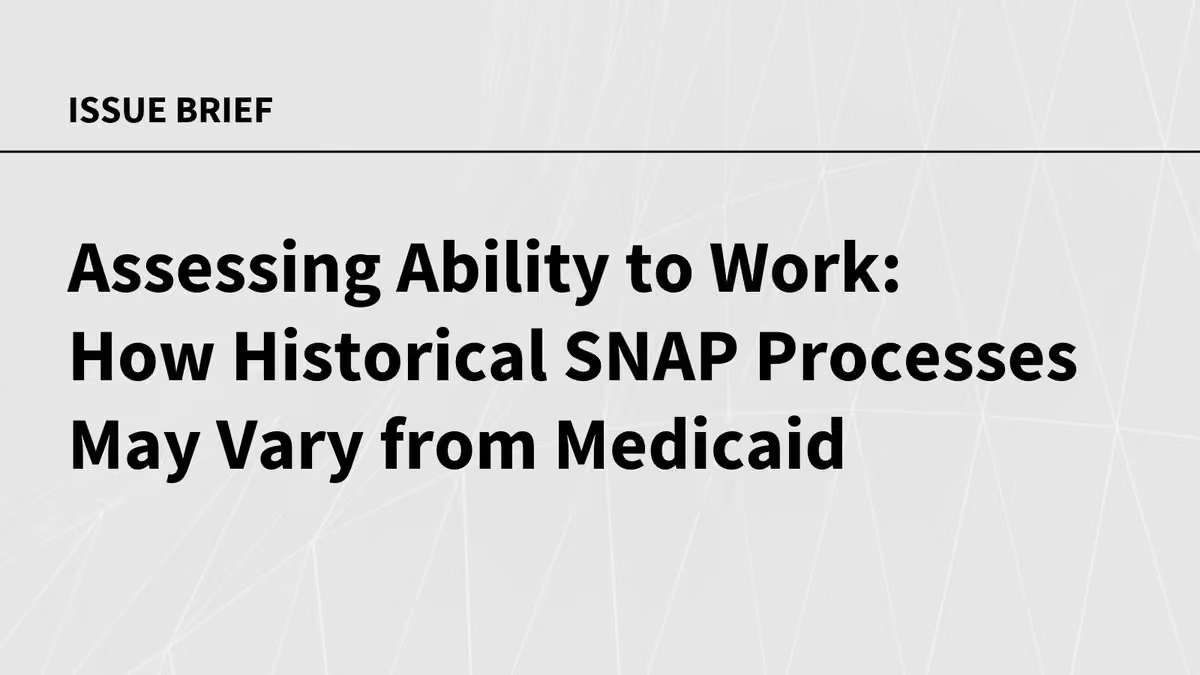
@sc_data52
@KFF's Medicaid enrollment tracker has been updated to report year-over-year trends. View your state’s trends here: www.kff.org/medicaid/medicaid-enrollment-tracker/
-
KFF reposted
Sammy
@sc_data52
NEW: Medicaid and CHIP enrollment has dropped in every state compared to a year ago in March 2025, with decreases as high as 20% in Indiana and as low as less than 1% in Iowa, based on new CMS data from March 2026.
-
KFF
@KFF
On this week’s episode, Seema Verma shares her insights on the evolution of electronic health records and why it’s necessary to redesign these systems to better integrate AI capabilities and improve the quality of care.
Listen now: on.kff.org/4aHCnqh -
KFF
@KFF
In a new column that analyzes recent KFF polling about vaccine myths, Founding President and CEO @DrewAltman concludes that only a sliver of the public hold definitive anti-science, anti-vaccine views, and are greatly outnumbered by the people who believe established science, with even more Americans stuck in a “muddled middle.” on.kff.org/4wthpni
-
KFF reposted
Drew Altman
@DrewAltman
Social media makes the anti science, anti vax crowd seem much larger than it is. Surveys show it’s actually a very small share of the public greatly outnumbered by science believers. My new column: on.kff.org/4wthpni
-
KFF
@KFF
⚡ KFF’s Zachary Levinson examines the Trump Administration's incremental approach to advancing site-neutral payment reforms in Medicare. on.kff.org/44P8Jfc
-
KFF
@KFF
A lawsuit filed by two dozen states, and two governors, challenges provisions in a newly released CMS interim final rule about medical frailty and Medicaid work requirement exclusions.
Our experts clarify how the rule may impact people with HIV, in particular: -
KFF
@KFF
Medicare Advantage accounted for 53% of total Medicare spending ($534 billion) in 2025.
Enrollment is rising and Medicare is projected to spend $76 billion more on Medicare Advantage in 2026 than it would if the beneficiaries were in traditional Medicare.
🔗: -
KFF
@KFF
A review of recent research finds experiencing racial discrimination is associated with higher risks of depression, anxiety, PTSD, substance use disorders, and adverse birth outcomes — more evidence that discrimination contributes to health disparities. on.kff.org/4y4ffMI
-
KFF
@KFF
Because Medicare Advantage plans are paid more for enrollees with more documented diagnoses, insurers have incentives to capture additional diagnosis codes.
KFF examines coding intensity, effects on beneficiaries, and proposals to improve payment accuracy: -
KFF
@KFF
Recent research suggests racial discrimination may affect health through biological pathways tied to chronic stress and inflammation.
Studies link experiences of discrimination to elevated stress markers, inflammation, and accelerated biological aging. on.kff.org/4y4ffMI -
KFF
@KFF
Our new policy watch compares CBO’s earlier Medicaid spending and enrollment projections to its February 2026 projections, which highlight the effects of Medicaid changes in the 2025 reconciliation law: on.kff.org/4xXFYuc
-
KFF
@KFF
A new CMS rule includes HIV/AIDS among 19 examples of “serious or complex” conditions that could trigger a person’s exclusion from Medicaid work requirements.
However, enrollees would have to show HIV impairs their ability to work: on.kff.org/4atK6bs -
KFF
@KFF
Physician and outpatient services now account for nearly half of all Medicare benefit spending, and Part D costs are rising as spending on GLP-1s and specialty drugs increases.
Key facts about the latest trends and projections: on.kff.org/4p4bDGn -
KFF
@KFF
A KFF analysis examines eligibility for the Medicare GLP-1 Bridge covering GLP-1s for weight reduction.
Although over 13 million beneficiaries had obesity or overweight in 2023, not all are eligible for the program — that group is an estimated 3.8 million. -
KFF
@KFF
Federal spending on the Medicare Advantage quality bonus program reached $13.4 billion in 2026, up from $12.7 billion in 2025.
At the same time, the share of enrollees in plans that get higher payments fell from 75% to 68% — the lowest level since 2018: on.kff.org/4bjpzq8 -
KFF
@KFF
How has projected Medicaid spending and enrollment changed since passage of the 2025 reconciliation law?
Our new policy watch compares recent and earlier projections from CBO: on.kff.org/4xXFYuc -
KFF
@KFF
In 2023, Medicaid covered 46% of people with HIV nationwide with 60% of adults with HIV under 65 in expansion states accessing coverage through the expansion pathway.
Learn about the impact of a new rule on Medicaid work requirements for people with HIV: -
KFF
@KFF
What does it cost adults with private insurance for inpatient mental health and substance use treatment?
Our new Peterson-KFF Health System Tracker analysis has the details: on.kff.org/4bkkXQy -
KFF reposted
Zach Levinson
@zlevs100
(2/2)
-
KFF reposted
Zach Levinson
@zlevs100
CMS is proposing to cut reimbursement for 340B drugs, which providers acquire at large discounts under the 340B program, but would increase other Part B rates by an offsetting amount. Non-340B providers, like for-profit hospitals, would benefit as a result (1/2).
-
KFF
@KFF
The latest Medicare Trustees Report projects that the Part A trust fund will be depleted in 2033, and beneficiaries are expected to face higher premiums and cost sharing in the years ahead.
A look at key trends in Medicare spending and spending growth: on.kff.org/4p4bDGn -
KFF reposted
Drew Altman
@DrewAltman
We have been about two things: policy and media, from day one. And before KFF Health News there was kaisernetwork.org. Volume 2 in my KFF history tour: on.kff.org/4vLMtii
-
KFF
@KFF
A new KFF analysis estimates that 3.8 million Medicare Part D enrollees could qualify for the Medicare GLP-1 Bridge program, which began July 1 and provides temporary coverage of GLP-1s for weight reduction for eligible beneficiaries through December 2027. on.kff.org/4eSlfiK
-
KFF
@KFF
In the second of his “Untold KFF History” series, KFF’s Founding President and CEO @DrewAltman discusses KFF’s first big foray into health news: kaisernetwork.org, which was an online health policy resource and webcasting service called “HealthCast.” on.kff.org/4vLMtii
-
KFF reposted
Larry Levitt
@larry_levitt
The good news is health care jobs are propping up the labor market. The bad news is more health care jobs means higher health care costs.
Justin Wolfers
@JustinWolfers
It's a healthcare economy.
-
KFF
@KFF
Our new Peterson-KFF Health System Tracker analysis examines the use and costs of inpatient mental health and substance use treatment among adults with private insurance.
Learn more: on.kff.org/4bkkXQy -
KFF
@KFF
A KFF review of recent research shows that experiencing racial discrimination is linked to worse health outcomes in multiple areas, including chronic disease, mental health conditions, substance use, pregnancy-related outcomes, and sleep problems. on.kff.org/4y4ffMI
-
KFF
@KFF
KFF survey research finds the tendency to endorse false vaccine claims is substantially higher among parents who report not keeping their children up to date on recommended vaccines — at least 25 percentage points higher than those who do.
Get the details: -
KFF
@KFF
Tennessee’s effort to share information about families enrolled in its Children’s Special Services program with immigration authorities has potential implications for access to care, health outcomes, and immigrant families’ willingness to seek services. on.kff.org/4blUoKS
-
KFF
@KFF
Exposure to these four false vaccine claims has been fairly steady in KFF polls over the past several years.
While few people think these myths are definitely true, at least half of adults express some uncertainty — saying the false claims are “probably true” or “probably false.” -
KFF
@KFF
In the latest episode, Host Chip Kahn speaks with @toyinajayidoc, co-founder and CEO of @cityblockhealth, about how Cityblock is using AI to improve care and the patient experience for its members.
🎧: on.kff.org/4oVsgnv -
KFF
@KFF
A new analysis shows that few adults consistently believe the false vaccine claims in our survey, while just over half say they are all false.
About 3 in 10 people fall in a “mixed middle” group, whose beliefs about the myths are inconsistent and often uncertain: -
KFF
@KFF
⚡ KFF’s Jennifer Tolbert provides context about the legal challenge by 24 states, including D.C., to the Trump administration over its interpretation of the 2025 reconciliation law’s Medicaid work requirements — including most notably, the medical frailty exemption.
-
KFF reposted
Axios
@axios
@KFF Survey Methodology director Ashley Kirzinger told Axios politics reporter @brittanyagibson that health care affordability is a top issue for voters heading into this year's midterms.
-
KFF
@KFF
Who’s more likely to believe false claims about vaccines?
According to new KFF polling:
• People who don’t have a trusted doctor or other health care provider (compared to those who do)
• People who use social media or AI for health information at least weekly (compared to those who don’t) -
KFF
@KFF
New KFF polling shows that belief in vaccine myths is tied to lacking a trusted health care provider and frequent use of social media and AI chatbots for health information.
Explore the findings: on.kff.org/4eSPhTF -
KFF
@KFF
ACA Marketplace enrollment dropped 13% following the expiration of enhanced premium tax credits at the beginning of this year — falling from a high of 22.1 million people in 2025 to 19.2 million people in February 2026.
⚡ KFF’s @cynthiaccox shares some reasons why. -
KFF reposted
Larry Levitt
@larry_levitt
Reading this story by our journalist @samanthann, it's no wonder that our @KFF polling shows prior authorization as the public's number one burden in getting health care beyond affordability.
kffhealthnews.org/health-care-costs/prior-authorization-m… -
KFF
@KFF
From our latest Tracking Poll on Health Information and Trust: Roughly three in 10 adults report turning to social media (31%) or AI chatbots (29%) at least monthly for health information and advice. But, why?
The Monitor takes a look: on.kff.org/4evTcqx -
KFF
@KFF
For the latest on state-specific and nationwide federal actions related to Medicaid program integrity, visit our new state tracker: on.kff.org/4eZuIpH
-
KFF
@KFF
As KFF approaches a leadership transition next year, KFF’s Founding President and CEO @DrewAltman is sharing some untold KFF history in a series of columns — starting with our decades-long commitment to South Africa during and after apartheid. on.kff.org/4eupmmj
-
KFF
@KFF
In our latest Tracking Poll on Health Information and Trust, the top reasons people report turning to social media for health advice are wanting to hear from those with similar experiences or a desire for quick information.
More in this week’s Monitor: on.kff.org/4evTcqx -
KFF
@KFF
Our new Medicaid program integrity tracker provides the latest on state- specific and nationwide federal actions related to the Administration’s and Congress’s focus on fraud, waste, and abuse in Medicaid, including the implications for states: on.kff.org/4eZuIpH
-
KFF
@KFF
In a new column, Founding President and CEO @DrewAltman reflects on KFF’s decades-long commitment to South Africa’s democracy and health system.
“The greatest privilege of my life was to be able to work with Nelson Mandela,” he writes.
Read more: on.kff.org/4eupmmj -
KFF reposted
Drew Altman
@DrewAltman
As we head towards a leadership change next year, I’m reviewing the most innovative things we’ve done since I founded KFF in a special series of columns.
First, our decades long program in South Africa, as they advance in the World Cup: on.kff.org/4eupmmj -
KFF
@KFF
As KFF approaches a leadership transition next year, KFF’s @drewaltman is highlighting key moments in the organization’s 37-year history in a series of columns.
The first in the series recalls KFF’s decades-long commitment to South Africa during and after apartheid. -
KFF
@KFF
KFF’s Laurie Sobel explains the sunsetting of the provision blocking federal Medicaid reimbursements to Planned Parenthood. on.kff.org/4oKSgSq
-
KFF
@KFF
While states may need to rely on providers to verify who qualifies as medically frail under Medicaid work requirements, CMS has offered little guidance on what information states need to collect from providers.
More in our new brief: on.kff.org/4eZqEWs -
KFF
@KFF
New brief: What qualifies as “medically frail” under Medicaid work requirements?
Under a new rule, states must consider both whether someone has a qualifying condition AND whether it impairs their ability to work or do other activities. on.kff.org/4eZqEWs -
KFF
@KFF
Immigrants are a key part of the U.S. health care system. They account for 30% of hospital physicians and surgeons and play major roles across clinical and non-clinical jobs.
KFF examines what's at stake as immigration policies change: on.kff.org/4aVS1OE -
KFF
@KFF
Immigrants play a key role in U.S. health care.
As of 2024, they made up 17% of the health care workforce, including 28% of physicians and surgeons and 30% of direct care workers in long-term care settings.
New KFF analysis: on.kff.org/4aVS1OE -
KFF
@KFF
Most states subject to new Medicaid work requirements — 30 of 44 — will hold gubernatorial elections this November.
Leadership transitions, particularly those involving a change in party, could complicate state implementation of work requirements.
🔗 on.kff.org/4xJiGrU -
KFF
@KFF
3 in 10 immigrant health care workers are from the Philippines (12%), Mexico (11%) or India (7%).
Among immigrant physicians and surgeons, one in five (21%) are from India, 6% from China, 5% each from Canada and Pakistan, and 4% are from the Philippines. on.kff.org/4aVS1OE -
KFF reposted
Larry Levitt
@larry_levitt
Private insurers pay hospitals about double on average what Medicare pays. So, Medicare for all would save a lot of money, but also reduce hospitals revenues a lot. Most hospitals could not survive financially like that, if, that is, they continued to operate at current costs.
Mark Cuban
@mcuban
I think great care can be offered by private hospitals, surgery centers, clinics at Medicare rates, IF, they are built so their cost structure and operations are designed to succeed at exclusively Medicare/caid rates.
The problem is only a handful of hospitals fit that description. Which means thousands of hospitals can not operate at Medicare rates. Which is why I suggested you get donors to operate a “ Medicare Hospital “
The executives running the other thousands of hospitals benefit from maximizing revenues and cash flow. So they do all they can to do so. That’s the opposite of what it would take to work at Medicare /caid rates.
And, I’ll add, there isn’t an independent physician anywhere in this country that can work at Medicare rates. They drive them to work for big carriers and providers
If you want wide support from Indy doctors, add a feature to M4A to dramatically increase the fees paid to independent doctors
And to make @DutchRojas happy, pls include in your M4A legislation, that doctors will be encouraged and funded to own hospitals. That also will get you more support. And maybe they can do a better job of designing great care for all patients at Medicare rates -
KFF reposted
Drew Altman
@DrewAltman
When HCFA became CMS 25 yrs ago it signaled a subtle change in mission. HCFA, under, Joe Califano, saw itself as using all its leverage to control costs and change the whole health system. CMS, under Tommy Thompson, would have a more limited and more industry friendly mission.
-
KFF
@KFF
In this week’s podcast episode, @chipkahn and @AJBloodMD discuss the role of AI in identifying patients for clinical trials and new therapies — which is typically a critical bottleneck in drug development — as well as how to ensure clinical trials are representative.
Listen to the full conversation: on.kff.org/4elRPsZ -
KFF reposted
Larry Levitt
@larry_levitt
Health policy trivia: 25 years ago this month, the Health Care Financing Administration was renamed the Centers for Medicare and Medicaid Services (CMS, just one "M"). CMS also now oversees major elements of the Affordable Care Act.
-
KFF reposted
Drew Altman
@DrewAltman
4) More Bob Blendon. When the RWJF started Bob was the SVP in charge of programs at what was then the most innovative of the big foundations. He was the obvious choice to be its 2nd president but for a misguided requirement they be MD’s. Bob began a second career at Harvard.
-
KFF reposted
Drew Altman
@DrewAltman
3) And Bob Blendon helped produce countless “offspring”, including me, Mollyann Brodie, and many, many more.
-
KFF reposted
Drew Altman
@DrewAltman
2) Bob Blendon was not a political scientist. But at the HSPH he made health care politics a legitimate area of inquiry. In a system dominated by money, politics and misinformation, a fundamental contribution.
-
KFF reposted
Drew Altman
@DrewAltman
One of my oldest friends and mentors Bob Blendon passed away today. Known recently as an expert on public opinion at Harvard, Bob was was the best foundation strategist ever when we worked together during RWJF’s early years. An unmatched combination of caring and brilliance.
-
KFF
@KFF
Our new poll finds that many people who seek out health information and advice via social media don’t follow up with other sources, such as health care professionals, health information websites, or government agencies.
Explore the data: on.kff.org/4eySnfl -
KFF
@KFF
Among those who use social media for health information, 4 in 10 cite cost and access issues related to visiting a provider is at least a minor reason. The share is even higher among people with low incomes and LGBT adults.
Our poll explains: on.kff.org/4eySnfl -
KFF
@KFF
NEW: About 3 in 10 adults say they use social media at least monthly for health information, often to learn from other people with similar experiences or to get a quick response. Some also cite cost and access issues.
More from our poll: on.kff.org/4eySnfl -
KFF
@KFF
While some states have enhanced data sharing with federal enforcement agencies on immigrants using or applying for services like Medicaid, others have limited data collection and enforcement in certain settings, such as health care facilities. on.kff.org/4vYFm5X
-
KFF
@KFF
KFF estimates that the vast majority (84%) of federal Medicaid spending on state directed payments (SDPs) covers hospital services, totaling an estimated $78 billion annually.
Learn more about how SDPs are used and forthcoming reductions in their funding: on.kff.org/4ebzLmL -
KFF
@KFF
How can AI determine who gets matched to new therapies, who is identified for clinical trials, and how patient tracking is scaled across large populations?
Dr. A.J. Blood — practicing cardiologist & co-founder & CEO of AIwithCare — joins the podcast this week to discuss. on.kff.org/4elRPsZ -
KFF reposted
Larry Levitt
@larry_levitt
The ban on surprise medical bills seemed like it could be a twofer -- protect patients from surprise bills and reduce the prices paid to providers engaging in surprise billing. Patients are being protected, but the price savings haven't been realized.
Peter Sullivan
@PeterSullivan4
CBO says that its original estimate that surprise billing law would lower premiums/prices might be wrong
Providers are being paid amounts "much higher than expected" thru arbitration
It calls for more research
www.cbo.gov/publication/62491 -
KFF
@KFF
Annual federal spending on state directed payments (SDPs) is highest in CA (an estimated $10.6 billion) — followed by TX ($6.3 billion), NC ($5.2 billion), and IL ($5.1 billion).
Learn more about how SDPs are used and forthcoming reductions in their funding: -
KFF
@KFF
Forty states and DC currently receive $93 billion in annual federal Medicaid spending through state directed payments (SDPs) and may be at risk due to forthcoming limits on these payments, according to new KFF estimates: on.kff.org/4ebzLmL
-
KFF reposted
Larry Levitt
@larry_levitt
In our Priced Out series, @KFFHealthNews journalists look at the effects of increased health costs and expiration of enhanced ACA premium subsidies. Latest is a North Carolina couple now uninsured after skyrocketing costs from expiration of the subsidies.
kffhealthnews.org/insurance/uninsured-obamacare-affordabl… -
KFF
@KFF
The share of Medicare Advantage enrollees in a plan with a drug deductible has increased substantially in recent years, rising from 3% in 2024 to 25% in 2026.
Most Part D enrollees in 2026 pay either the standard $615 Part D deductible or a partial amount: -
KFF
@KFF
The average monthly premium decreased for Medicare Part D stand-alone prescription drug plans (PDPs) in 2026, but the premium for Part D coverage is still substantially higher for PDPs than for Medicare Advantage plans with drug coverage. on.kff.org/4e2wXrR
-
KFF reposted
Matt McGough
@mcgough_matthew
New @KFF data shows ACA Marketplace insurer participation is declining — and the trend may be accelerating. 🧵
-
KFF
@KFF
Rebates that reduce Part D premiums for Medicare Advantage plans with drug coverage make it harder for stand-alone prescription drug plans (PDPs) to compete.
That may contribute to instability in the PDP market relied on by people in traditional Medicare: -
KFF
@KFF
Our new brief explores changes in the number of insurers participating in the ACA Marketplaces in 2026, which fell, on average, following the expiration of the enhanced premium tax credits at the end of 2025: on.kff.org/4vH5amP
-
KFF
@KFF
KFF’s new interactive tool tracks changes in ACA insurer participation, including the recently announced exits by Cigna Health, CareSource, PacificSource, Providence Health, Scott and White, and Taro Health: on.kff.org/4vIzb5x
-
KFF
@KFF
In 2026, Medicare Advantage plans are projected to use $53 per member per month in rebates to reduce Part D premiums — more than 3 times the $16 per member in temporary premium subsidies available to stand-alone Part D plans.
New KFF analysis: on.kff.org/3RR5PUh -
KFF
@KFF
Our latest edition of The Monitor highlights how official federal actions are elevating unverified or uncommon outcomes in debates over vaccine safety and gender-affirming care. on.kff.org/4xsLq8g
-
KFF
@KFF
More than a year after federal DEI initiatives were dismantled, staff cuts, program eliminations, grant terminations, and reduced data collection are impacting efforts to track and address health disparities. on.kff.org/49VYJ6X
-
KFF
@KFF
The number of Part D stand-alone Rx drug plan options for the average Medicare beneficiary has fallen by half in recent years, while Medicare Advantage drug plan options have risen — in part due to an uneven level of premium subsidies available in each market.
-
KFF
@KFF
The average number of issuers offering plans in the ACA Marketplaces has declined from a record high of 9.6 issuers per state in 2025 to 9.0 issuers per state in 2026: on.kff.org/4vH5amP
-
KFF
@KFF
Despite modest enrollment growth in stand-alone prescription drug plans, Medicare Advantage remains the primary source of Part D coverage, with 31.4 million enrollees.
New analysis examines enrollment, premiums, cost sharing in 2026, and trends over time: -
KFF
@KFF
Six health insurers have announced that they will exit ACA Marketplaces across 18 states next year.
Track which insurers are leaving with our new tool: on.kff.org/4vIzb5x -
KFF
@KFF
This week, The Monitor covers two recent federal actions, including a memo about alleged COVID-19 vaccine deaths and legal settlements creating a “detransition clinic,” and how their representation has lent credibility to unsupported narratives. on.kff.org/4xsLq8g
-
KFF
@KFF
U.S. government and Global Fund cuts will reduce health support to 29 countries by $4.3 billion (24%) through 2029, marking an unprecedented decline in the modern era of global health funding.
More from our experts: on.kff.org/4fCF4MZ -
KFF
@KFF
Our experts analyzed how much funding will decline under the Trump administration’s America First Global Health Strategy and by the Global Fund from 2026 to 2029, compared with previous years, in 29 countries with signed MOUs and available data: on.kff.org/4fCF4MZ
-
KFF
@KFF
Learn about recent federal actions related to Medicaid program integrity, including federal payment deferrals for potential fraud/abuse in MN and CA and the decertification of HI’s Medicaid Fraud Control Unit: on.kff.org/4dZ0rqL
-
KFF reposted
Cynthia Cox
@cynthiaccox
So many changes at KFF. I’m still in denial about this one! @tricia_neuman is an icon of health policy. Happy retirement, Tricia!
And congrats to @jcubanski and @jeanniebin who will be leading KFF’s Medicare team
KFF
@KFF
All of us at KFF wish @tricia_neuman, a senior VP and Medicare policy program executive director, a wonderful retirement!
We’re grateful for her dedication, hard work, and leadership to inform debates about Medicare policy and help people understand the program. -
KFF reposted
Larry Levitt
@larry_levitt
@tricia_neuman is and will always be a health policy legend. We’re going to miss her.
KFF
@KFF
All of us at KFF wish @tricia_neuman, a senior VP and Medicare policy program executive director, a wonderful retirement!
We’re grateful for her dedication, hard work, and leadership to inform debates about Medicare policy and help people understand the program. -
KFF reposted
Larry Levitt
@larry_levitt
Congrats to my colleague @jrovner! There is no better recipient of this award than Julie, who has deftly covered health policy for decades, with an encyclopedic knowledge of the issues like Robert. (Minus some of Robert's quirks, like taking notes in multiple colors.)
julie rovner
@jrovner
Honored to have been named the first recipient of the Robert Pear award for journalism from the National Academy of Social Insurance!
-
KFF reposted
julie rovner
@jrovner
Honored to have been named the first recipient of the Robert Pear award for journalism from the National Academy of Social Insurance!
-
KFF
@KFF
Combined funding from the U.S. government and the Global Fund to Fight AIDS, Tuberculosis and Malaria in 29 countries is projected to decline by an estimated $4.3 billion (24%) through 2029, our new analysis reveals.
Our experts explain: on.kff.org/4fCF4MZ -
KFF
@KFF
All of us at KFF wish @tricia_neuman, a senior VP and Medicare policy program executive director, a wonderful retirement!
We’re grateful for her dedication, hard work, and leadership to inform debates about Medicare policy and help people understand the program.
KFF
@KFF
We’re also excited to share that Juliette Cubanski (@jcubanski) has been promoted to vice president and executive director of the program on Medicare policy, and Jeannie Fuglesten Biniek (@jeanniebin) to deputy director.
-
KFF reposted
Larry Levitt
@larry_levitt
The Trump administration deserves credit for pushing for health care price transparency, which is an important patient protection that the industry has long opposed. However, it's not a panacea. Knowing that your care will be expensive does not make it affordable.
Secretary Kennedy
@SecKennedy
For years, hospitals kept Americans in the dark about the true cost of care. Families made medical decisions without knowing the price—and too often got hit with bills that drained their savings.
That ends now.
Under President Trump’s leadership, HHS is enforcing hospital price transparency with real consequences. @DrOzCMS and I have a simple message for hospitals: Post your actual prices. Come into compliance immediately—or face serious consequences.This media couldn't be displayed. See it on the original post. -
KFF reposted
Juliette Cubanski
@jcubanski
Getting more life out of Medicare's Part A trust fund would mean cuts to Part A spending (benefit or payments cuts), more revenues (payroll taxes or other revenues) or a bit of both, but either could be a hard sell for Congress. The pressure may be off for now, but not forever.
-
KFF reposted
Juliette Cubanski
@jcubanski
The 2026 Medicare Trustees report is out. Lots of important numbers in here, as always, but the one many people focus on is the year when the Part A trust fund reserves will be depleted: 2033, same as last year, but now 7 years away instead of 8. www.cms.gov/oact/tr/2026
-
KFF
@KFF
How do we know if AI use in health care actually makes patients better?
Chip Kahn and Dr. David Bates discuss how real-time measurement of patient outcomes can unlock progress across all areas of health care administration — and help ensure AI delivers meaningful impact. -
KFF
@KFF
Half (247) of Planned Parenthood clinics currently participate in Title X — a federal family planning grant program — across 29 states, down from 297 clinics in 34 states and DC last year.
CA, TX, and OH saw the largest drops in Title X participation: on.kff.org/4x9bQvo -
KFF reposted
Larry Levitt
@larry_levitt
In last year's One Big Big Beautiful Bill Act, Republicans cut Medicaid by $911 billion over a decade. Medicare was largely untouched, and reconciliation legislation can't cut Social Security. Sounds like Republicans are looking for bigger and broader cuts next year.
Max Cohen
@maxpcohen
During a local radio appearance on Monday, Speaker Johnson said he has a plan to adjust and fix entitlement spending next year>>>
-
KFF
@KFF
Our new brief examines the changing federal approach to state Medicaid program integrity, including the review of state Medicaid Fraud Control Units (MFCUs) and denial of the Hawaii MFCU’s recertification: on.kff.org/4dZ0rqL
-
KFF
@KFF
Since Jan. 2025, 57 Planned Parenthood clinics in 20 states have closed or consolidated with other sites.
A new KFF analysis finds that changes in clinics’ use of Title X — a federal family planning grant program — occurred alongside these closures: on.kff.org/4x9bQvo -
KFF
@KFF
More than half (55%) of eligible Medicare beneficiaries are enrolled in Medicare Advantage in 2026, continuing a decades-long shift toward private plans.
Special Needs Plans have driven recent growth, with nearly 1 in 4 enrollees (8.2 million) now in SNPs. -
KFF
@KFF
Nearly all Medicare Advantage enrollees (99%) are in plans that require prior authorization for some services in 2026.
Prior authorization is most common for costly services like hospital stays, skilled nursing facility care, Part B drugs, and home health services: -
KFF
@KFF
Medicare Advantage enrollment is highly concentrated among plans owned by a small number of parent firms, with UnitedHealth Group leading the market and, together with Humana, accounting for nearly half (46%) of all Medicare Advantage enrollees nationwide. on.kff.org/4e6LSA2
-
KFF
@KFF
In 2026, 75% of Medicare Advantage enrollees in individual plans with drug coverage pay no premium beyond the Part B premium.
31% are in plans that also reduce the Part B premium.
A look at premiums, OOP limits, supplemental benefits, and prior authorization in MA: -
KFF
@KFF
In this episode, Chip Kahn and Optum CEO Dr. Patrick Conway discuss how to ensure the health care industry’s use of AI serves patients first — particularly when the same company bears financial risk and builds the AI that decides who gets care: youtu.be/ZB1_r8-i_O4
-
KFF reposted
Lindsey Dawson
@LindseyH_Dawson
As Ryan White Programs face increasing financial strain, they will have to make tough choices, including possibly reducing services & enrollment. We explored the many factors that led to this situation in an analysis earlier this year. www.kff.org/hiv-aids/constrained-budgets-lead-states-to-r…
Positively Aware
@PosAware
Advocates are concerned that even though HIV meds are not impacted, the cuts could undermine adherence for Missourians with HIV. And with the state legislature adjourned for the year, a legislative solution is unlikely for now.
positivelyaware.com/missouri-suspends-ryan-white-part-b -
KFF reposted
Larry Levitt
@larry_levitt
Our public debate tends to conflate fraud -- unscrupulous health care providers or insurance brokers swindling public programs -- with policy choices such as whether people should be guaranteed health care whether or they're working.
-
KFF
@KFF
Optum CEO Dr. Patrick Conway reflects on the patients who fall through the cracks — and shares why he believes AI can play a critical role in helping clinicians and health care systems better serve patients beyond individual encounters.
Hear more in the full podcast episode: -
KFF
@KFF
CMS’s interim final rule on Medicaid work requirements, issued on June 1, adopts a restrictive definition of medical frailty that differs from states’ early expectations.
KFF’s Jennifer Tolbert explains why the more restrictive definition will be challenging for states to implement: on.kff.org/4v4t5gh -
KFF
@KFF
Following a hantavirus outbreak linked to a Dutch cruise ship in early May, false health claims are mirroring patterns documented in previous outbreaks, including unsupported claims that ivermectin is an effective treatment.
More in The Monitor: on.kff.org/43o2rCR -
KFF
@KFF
CMS released new guidance on Medicaid work requirements yesterday. For background on the medical frailty exemption, one of the key issues in the new rule, check out KFF's explainer: on.kff.org/4dyae6Q
-
KFF
@KFF
In February 2026, there were 345,000 fewer children enrolled in Medicaid/the Children’s Health Insurance Program compared to before the start of the pandemic in February 2020, a 1% decline, according to the latest data from CMS.
Details: on.kff.org/4x1gHil -
KFF
@KFF
Highlights from The Monitor:
🤒 A hantavirus outbreak in early May was followed by false health claims that mirror patterns documented in previous outbreaks.
💬 Examining Americans’ relationship with health and wellness influencers.
Read and subscribe: -
KFF reposted
Washington Journal
@cspanwj
.@KFF's @cynthiaccox spoke on the impact of expired subsidies for ACA premiums and enrollment.
"On average, to keep the same plan you had before, people were facing a 114% increase in their monthly premiums. …People didn't necessarily pay that - some people dropped their coverage, probably the people with the highest premium increases are now uninsured. And other people bought down to a lower level of coverage."This media couldn't be displayed. See it on the original post. -
KFF
@KFF
North Carolina's new Medicaid law requires longer lookback periods to verify compliance with work requirements, monthly data checks, higher copayments for certain enrollees, and financing changes: on.kff.org/3RwutJD
-
KFF reposted
Washington Journal
@cspanwj
.@KFF Vice President and Program on the ACA Director @cynthiaccox discusses how the expiration of enhanced subsidies for Affordable Care Act health insurance plans is impacting both enrollment and cost
Watch here: www.c-span.org/program/washington-journal/open-phones/680127 -
KFF reposted
Washington Journal
@cspanwj
MON| @KFF Vice President and Program on the ACA Director @cynthiaccox discusses how the expiration of enhanced subsidies for Affordable Care Act health insurance plans is impacting both enrollment and cost.
Watch live at 9:15am ET! -
KFF
@KFF
Behavioral health was the most frequently expanded Medicaid benefit over the past decade, with states adding crisis services, community-based care, peer supports, and SUD treatment.
Federal policy changes and tighter state budgets could threaten those gains: -
KFF
@KFF
This week, The Monitor examines a new analysis of Americans’ relationship with health and wellness influencers, finding that most who get health information and advice from them express skepticism about what they hear: on.kff.org/43o2rCR
-
KFF
@KFF
As Medicare spending grows, people with Medicare will face higher premiums and out-of-pocket costs over time.
For example, the annual Part B premium is projected to increase from around $2,400 today to $4,200 in 2034: on.kff.org/3Q1LMSi -
KFF
@KFF
Medicaid covers nearly 1 in 3 adults with mental illness and nearly half of adults with opioid use disorder in the U.S.
New analysis examines how states expanded services in recent years — and how fiscal pressures may make those gains harder to sustain:on.kff.org/4nRoVFu -
KFF reposted
Larry Levitt
@larry_levitt
The federal government is required to issue guidance on implementing new Medicaid work requirements by June 1, which is Monday. The work requirements have to begin by January 1, 2027. How states define and enforce an exemption for medical frailty is a big area of uncertainty.
KFF
@KFF
States are moving forward with key decisions over how to implement the medical frailty exemption from Medicaid work requirements.
CMS guidance is expected to address key issues related to defining and verifying medical frailty: on.kff.org/4dyae6Q -
KFF
@KFF
States are moving forward with key decisions over how to implement the medical frailty exemption from Medicaid work requirements.
CMS guidance is expected to address key issues related to defining and verifying medical frailty: on.kff.org/4dyae6Q -
KFF
@KFF
Long-term care services, which aren’t covered by Medicare, are unaffordable for most Medicare beneficiaries.
In 2025, the annual cost of a room in an assisted living facility was ~$74,400 vs. a median household income for Medicare beneficiaries of $43,200: -
KFF
@KFF
States are using Medicaid to support community-based behavioral health approaches like Certified Community Behavioral Health Clinics and Assertive Community Treatment.
These models can improve access to mental health care outside of hospital settings: on.kff.org/4nRoVFu -
KFF reposted
Jen Kates
@jenkatesdc
It was an honor to be part of the #rosenkranzglobal Health Policy Symposium yesterday, sharing the stage with @CondoleezzaRice, to discuss the U.S. role in global health. Thank you @StanfordHP and @ebdStanford.
StanfordHealthPolicy
@StanfordHP
The 5th annual #rosenkranzglobal Health Policy Symposium is underway with @CondoleezzaRice & health experts discussing the rethinking of global health partnerships in the shadow of the pandemic, growing isolationism and agencies such as @USAID being dismantled or underfunded.
-
KFF
@KFF
Our new policy watch provides insights into how North Carolina is preparing to implement certain Medicaid provisions of the 2025 reconciliation law amid Medicaid budget shortfalls: on.kff.org/3RwutJD
-
KFF
@KFF
The CDC’s new Ebola quarantine rule bars entry to all foreign nationals — including lawful permanent residents or “green card” holders — who have recently visited impacted countries.
KFF’s Drishti Pillai explains that this is highly unusual and likely to face legal challenges. -
KFF
@KFF
Our new brief describes early state plans to operationalize the medical frailty exemption for Medicaid work requirements and identifies key issues and questions states are facing, some of which may be answered in forthcoming CMS guidance: on.kff.org/4dyae6Q
-
KFF
@KFF
As AI transforms health care, @HCAhealthcare’s @MikeMjschlosser asks whether there should be a modern equivalent of the HITECH Act’s ‘Meaningful Use’ program to ensure access isn’t limited to only the largest systems.
More on the podcast: on.kff.org/4u1ELiv -
KFF
@KFF
Medicare premiums and other out-of-pocket costs consumed 36% of Medicare beneficiaries’ Social Security income per person in 2023.
Nearly a quarter of Medicare beneficiaries who received Social Security relied on it for 90%+ of their per capita income: on.kff.org/3Q1LMSi -
KFF reposted
Larry Levitt
@larry_levitt
"KFF is considered a reliable source of information at a time when there is so much division over health policy in the United States..."
"We’re in the fact-based information business when much of the world is not," Mr. Levitt said.
@ReedAbelson
www.nytimes.com/2026/05/27/business/media/kff-drew-altman… -
KFF reposted
Molly Brodie
@Mollybrodie
Drew built KFF into a trusted, independent source of health policy information, and I’m excited to continue working with @larry_levitt to lead this organization of talented staff.
KFF will continue our focus on how health policies and the health care system affect real people.
KFF
@KFF
Following Dr. Altman’s retirement at the end 2026, Larry Levitt will serve as KFF’s CEO and Dr. Mollyann Brodie will serve as President.
They bring with them a combined six decades at KFF in senior positions guiding policy research and polling. -
KFF
@KFF
Following Dr. Altman’s retirement at the end 2026, Larry Levitt will serve as KFF’s CEO and Dr. Mollyann Brodie will serve as President.
They bring with them a combined six decades at KFF in senior positions guiding policy research and polling.Post not available here, view on X
KFF
@KFF
Dr. @DrewAltman shared more about KFF and what’s ahead:
KFF
@KFF
Learn more: on.kff.org/kff-leadership-news
-
KFF reposted
Larry Levitt
@larry_levitt
I’ve worked with @DrewAltman for a long time and am grateful for his vision in building @KFF. There are many health policy challenges ahead, and I look forward to leading KFF with @Mollybrodie to provide timely facts through our independent and trusted research and journalism.
KFF
@KFF
KFF’s Board of Trustees has appointed Larry Levitt (@larry_levitt) and Dr. Mollyann Brodie (@Mollybrodie) as the new leadership team.
More ⤵️ on.kff.org/kff-leadership-news -
KFF reposted
Drew Altman
@DrewAltman
Nothing was certain when I came to California to start KFF with little more than an idea. Now 37 years later, @KFF is at the height of its effectiveness, and I have the perfect opportunity, thanks to our board, to hand over leadership to Larry Levitt and Molly Brodie next year.
-
KFF
@KFF
After nearly 40 years shaping the national health policy landscape, our founding president and CEO, Dr. Drew Altman, has announced he will retire at the end of the year.
Under Dr. @DrewAltman’s leadership, KFF has become the nation’s leading independent source of health care policy information, anchoring pivotal debates with rigorous, nonpartisan research, polling, and reporting.
KFF
@KFF
KFF’s Board of Trustees has appointed Larry Levitt (@larry_levitt) and Dr. Mollyann Brodie (@Mollybrodie) as the new leadership team.
More ⤵️ on.kff.org/kff-leadership-news -
KFF
@KFF
Many Medicare beneficiaries have low incomes and modest savings, which can make it hard to afford medical and long-term care services.
1 in 4 (16.5 million people) had incomes below $24,600 per person in 2024, or about 160% of the federal poverty level: on.kff.org/3Q1LMSi -
KFF
@KFF
As of January 2026, 19 states of the 41 that have adopted the ACA Medicaid expansion charge copays or other cost sharing on certain Medicaid expansion adults.
Learn more about Medicaid cost sharing: on.kff.org/4upuhuj -
KFF
@KFF
In our latest episode, @MikeMjschlosser explains his vision for a collaborative environment where AI acts as a co-pilot for health care providers, enhancing their decision-making capabilities while allowing them to focus on what they do best — caring for patients.
Watch the full episode: on.kff.org/4wQ8HAF -
KFF
@KFF
The Ebola outbreaks in the Democratic Republic of Congo and Uganda raise questions about whether the Trump administration’s global health approach can address a major viral outbreak in a region already facing multiple humanitarian crises.
More ⤵️ on.kff.org/4a5HFLI -
KFF
@KFF
A major Ebola outbreak in the Democratic Republic of Congo is the first big test of the U.S. ability to respond to global health crises under the Trump administration’s America First Global Health Strategy.
Here’s why: on.kff.org/4a5HFLI -
KFF
@KFF
Hospital prices paid by private insurers rose 30% from 2019-2026, compared to a 21% increase in Medicare payment rates.
The disparate growth widened an existing gap between what Medicare and private plans pay for hospital services: on.kff.org/4fxNqFy -
KFF
@KFF
With nearly 600 suspected cases and over 139 deaths as of May 20, the Ebola outbreak in the Democratic Republic of Congo presents unique challenges for the U.S. global health response under the Trump administration.
Our experts explain: on.kff.org/4a5HFLI -
KFF
@KFF
7 states (including D.C.) provide state-funded health coverage to at least some income-eligible adults regardless of immigration status, and 15 states (including D.C.) provide such coverage for kids.
But several states are scaling back programs amid budget pressures: -
KFF
@KFF
This week, Dr. Robert Wachter joins Chip Kahn for a discussion about the implications of AI for patient care and the physician’s role, as well as implications of AI in health care that extend beyond individual patient interactions.
Watch the full episode: -
KFF
@KFF
Since early 2025, federal pressure has resulted in dozens of providers discontinuing gender-affirming care services.
In a new brief, we explore actions in recent weeks to further limit this care. on.kff.org/4uswF3o -
KFF
@KFF
Many states impose cost sharing on certain Medicaid expansion adults and all expansion states will be required to do so by Oct 1, 2028.
Studies show cost sharing reduces utilization of care, including medically necessary care: on.kff.org/4upuhuj -
KFF
@KFF
Hospitals account for nearly one-third of US health spending and 40% of spending growth from 2022-2024.
Analysis shows hospital prices paid by private insurers have risen faster than Medicare rates since 2019, a trend with implications for affordability: on.kff.org/4fxNqFy -
KFF
@KFF
Immigrants generally use less health care and have lower health spending than U.S.-born citizens, and noncitizen immigrants remain far more likely to be uninsured than citizens.
More key facts on health coverage of immigrants: on.kff.org/42MeIk3 -
KFF reposted
Lindsey Dawson
@LindseyH_Dawson
New: 3 new actions mark escalating Trump admin. efforts to limit gender-affirming care & turn up the heat on providers. Each are connected to activity in TX which may have been selected in efforts to forum shop & work with an AG w/ similar priorities. www.kff.org/lgbtq/texas-emerges-as-focus-of-new-trump-adm…
-
KFF
@KFF
Will AI be a transformative force in medicine or just another disappointment?
On this week’s episode of KFF’s Business of Health, @Bob_Wachter says that while AI doesn't need to be perfect, it must be better than the current failing systems.
Listen where you get your podcasts. -
KFF
@KFF
Starting October 1, 2028, federal law will, for the first time, require states to impose copays or other cost sharing on certain Medicaid expansion adults.
Our new brief looks at which states currently require cost sharing for Medicaid expansion adults: on.kff.org/4upuhuj -
KFF
@KFF
Our expert explores three major developments on youth access to gender-affirming care in recent weeks — centered on U.S. Department of Justice actions in Texas, even though the state has had bans on youth gender-affirming care for several years. on.kff.org/4uswF3o
-
KFF
@KFF
Following recent settlements with a Texas hospital over youth access to gender-affirming care, our new brief examines the Trump administration’s recent efforts to restrict youth access. on.kff.org/4uswF3o
-
KFF
@KFF
Gun violence continues to shape young lives.
Firearm death rates among people 17 and under rose during the pandemic, held steady through 2023 and declined slightly in 2024 — but remain above pre-pandemic levels.
Disparities persist by age, race, gender and state: -
KFF
@KFF
1 in 4 children in the U.S. has an immigrant parent, and the vast majority are U.S. citizens.
Data show that children with noncitizen parents are more likely to be uninsured and live in lower-income households, despite most living with a full-time worker: -
KFF
@KFF
What does the future hold for AI in healthcare?
Listen to this compelling discussion with host @chipkahn and @Bob_Wachter, who shares insights from his new book, A Giant Leap.
Full episode out now: on.kff.org/43jh4XK -
KFF
@KFF
Marketplace enrollment could decline by 21.5% or nearly five million people this year, falling from 22.3 million people in 2025 to about 17.5 million in 2026: on.kff.org/4nz1Ln4
-
KFF
@KFF
Four states — IN, IA, MO, and OK — are not adopting the optional high unemployment exception to Medicaid work requirements.
About 3,300 enrollees in IA and MO live in counties that would otherwise qualify.
Learn more: on.kff.org/4wye0oa -
KFF
@KFF
This week, @ChipKahn and @UCSFMedicine’s @Bob_Wachter discuss whether AI will produce a different kind of doctor in the future — a “clinician curator rather than a clinician-diagnostician.”
The answer could define the future of medicine and the doctor-patient relationship: -
KFF
@KFF
After the ACA’s enhanced premium tax credits ended, many Marketplace shoppers shifted toward lower-premium, higher-deductible plans.
Between 2025 and 2026, sign-ups for bronze plans jumped from 30% to 40% of total plan selections: on.kff.org/4nz1Ln4 -
KFF reposted
Larry Levitt
@larry_levitt
Out-of-pocket premiums for ACA enrollees have increased 58% with enhanced subsidies expiring. Enrollment could drop by almost 5 million as people struggle to pay make the higher premium payments.
www.kff.org/affordable-care-act/what-we-know-so-far-about… -
KFF reposted
Larry Levitt
@larry_levitt
My colleague @Julie_appleby in @KFF's news operation (@KFFHealthNews) explores what's happening with the ACA now that enhanced premium subsidies have expired.
kffhealthnews.org/insurance/eroding-aca-enrollment-higher… -
KFF
@KFF
After surging during the pandemic, drug overdose deaths among adolescents fell sharply in 2024 but remain above pre-pandemic levels.
The recent decline was driven by a reduction in opioid-related deaths: 557 deaths in 2023 vs. 272 in 2024. on.kff.org/3PCS76u -
KFF
@KFF
The average ACA Marketplace deductible experienced the steepest increase in history — growing by 37% or over $1,000, from $2,759 in 2025 to $3,786 in 2026 as enhanced premium tax credits expired.
on.kff.org/4nz1Ln4 -
KFF reposted
Larry Levitt
@larry_levitt
New: The average ACA deductible has jumped by over $1,000 per person in 2026 as people switched to lower premium plans with higher deductibles as Congress allowed enhanced premium subsidies to expire.
-
KFF
@KFF
As TrumpRx expands to include generic drugs, KFF polling shows that nearly 6 in 10 adults are worried about prescription drug costs — the highest since KFF began asking in 2018.
Explore the polling data: on.kff.org/4s4LNCF -
KFF
@KFF
Suicide deaths among adolescents are slowly trending downward but remain higher than a decade ago.
In the past decade, adolescent suicide deaths increased and peaked in 2018 (1,750 deaths), followed by a gradual decline through 2024 (1,478 deaths). on.kff.org/3PCS76u -
KFF reposted
Sammy
@sc_data52
See your state's data here: www.kff.org/medicaid/medicaid-work-requirements-tracker-s…
-
KFF reposted
Sammy
@sc_data52
New from @KFF : 1.4 million Medicaid enrollees may be exempt from the work requirements included in the 2025 reconciliation law across the 39 states that are planning to adopt the optional high unemployment hardship exception.
-
KFF
@KFF
Most states subject to Medicaid work requirements are planning to adopt an optional hardship exception that will exempt expansion enrollees in high-unemployment counties from work requirements.
More in our new policy watch: on.kff.org/4wye0oa -
KFF
@KFF
Our new brief describes the history of and current policy context for federal vaccine injury compensation programs.
Learn about the two programs, including the vaccines covered, compensation rates, and other factors: on.kff.org/49nXWvt -
KFF
@KFF
Suicide deaths among adolescents are slowly trending downward but remain higher than a decade ago.
In the past decade, adolescent suicide deaths increased and peaked in 2018 (1,750 deaths), followed by a gradual decline through 2024 (1,478 deaths). on.kff.org/3PCS76u -
KFF reposted
Molly Brodie
@Mollybrodie
More than anything, this recognition makes me reflect on the incredible people I’ve had the privilege to work alongside throughout my career. Thank you to all the amazing people I’ve worked with at KFF and AAPOR... I am full of gratitude and so honored to receive this award.
SSRS
@ssrs_research
⭐WELCOME TO MOLLYWOOD! ⭐Sending a huge CONGRATULATIONS to @Mollybrodie on being recognized with the 2026 Award for Exceptionally Distinguished Achievement from @AAPOR.
Seeing Molly receive this award comes as no surprise to anyone who has had the privilege of working with her. Molly's professionalism, integrity, and longstanding commitment to public research set an incredibly high standard. Beyond her many accomplishments, Molly's leadership, generosity, and ability to inspire others make a lasting impact.
Read more about her incredible contributions:
➡️www.kff.org/public-opinion/mollyann-brodie-receives-aapor…
➡️aapor.org/announcements/aapor-recipient-of-2026-award-for… -
KFF reposted
Molly Brodie
@Mollybrodie
I’m so grateful and honored to receive this year’s Exceptionally Distinguished Achievement Award from AAPOR. I’ve been blessed to work with extraordinary colleagues and partners both at @KFF and @AAPOR throughout my career. This recognition is as much theirs as it is mine. ❤️
-
KFF
@KFF
Some pregnant people are choosing to deliver without medical support — and online communities may be playing a role.
More from The Monitor: on.kff.org/43a5PRo -
KFF reposted
SSRS
@ssrs_research
Congratulations to the 2026 @AAPOR Inclusive Voices Award Winner – @KFF Survey of Immigrants Project!
The award recognizes the important research that has improved the ability to study complex social phenomena related to understudied populations. Learn more: aapor.org/membership/2026-aapor-award-winners/
SSRS is proud to be KFF’s thought partner for this important undertaking, amplifying the voices of immigrants, who are typically understudied in survey research. -
KFF
@KFF
Some state Medicaid agencies reported collaborating with public health departments to maintain and increase access to school-based health services.
Read about other types of initiatives state Medicaid agencies are partnering with Public Health on: on.kff.org/4uIM5jv -
KFF
@KFF
Congratulations to our Executive Vice President @Mollybrodie, who received the 2026 Award for Exceptionally Distinguished Achievement from @AAPOR for leading KFF’s polling team in building “the nation’s definitive source for public opinion on health.” on.kff.org/4eO1cDR
-
KFF
@KFF
This explainer about the BALANCE Model for GLP-1 drugs in Medicare and Medicaid was updated to reflect changes in the Trump administration’s plans for implementing the model in Medicare and an extension of the Medicare GLP-1 Bridge program through 2027. on.kff.org/486FXsx
-
KFF
@KFF
⚡ KFF’s Laurie Sobel unpacks the Supreme Court’s decision to allow the FDA rule permitting the mailing of mifepristone to stay in place pending the outcome of the litigation in Louisiana v. FDA. #quicktake on.kff.org/4uUCRRz
-
KFF
@KFF
The latest edition of the Monitor examines public confidence in the independence of key federal health agencies that oversee food & drug safety and public health, as well as how differences in news consumption correlate with trust in the MMR vaccine. on.kff.org/43a5PRo
-
KFF
@KFF
Many adolescents reported a major depressive episode (15.4%) or anxiety (18.8%) in the past year, while a smaller share reported a substance use disorder (7.8%).
A look at the latest CDC data on adolescent mental health, substance use, and related deaths: on.kff.org/3PCS76u -
KFF
@KFF
A survey of state Medicaid directors found Medicaid and public health agencies are partnering on a variety of initiatives, including maternal and child health and behavioral health.
Learn more about these partnerships in our new brief: on.kff.org/4uIM5jv -
KFF
@KFF
When minutes matter for a patient’s care, what is AI’s role in clinical practice?
In our latest episode, Aidoc co-founder and CEO @elad_walach shares insights on how AI is revolutionizing patient outcomes with technology that analyzes real-time images and flags time-sensitive findings.
Listen now to learn about the potential impact on diagnostic accuracy, patient outcomes, and more. on.kff.org/4npM8OZ -
KFF
@KFF
⚡ KFF’s @joshmich explains what the hantavirus outbreak says about current U.S. outbreak response capabilities considering how the Trump administration has reduced its engagement on global health. #quicktake on.kff.org/3R4MJJR
-
KFF
@KFF
When minutes matter for a patient’s care, what is AI’s role in clinical practice?
@elad_walach, co-founder and CEO of @aidocmed — a company with a comprehensive AI health care platform that analyzes real-time images and flags time-sensitive findings — shares his perspective in our latest episode with @chipkahn.
Listen now: on.kff.org/4dlYsLm -
KFF
@KFF
Existing Medicaid rebates already reduce overall Medicaid prescription drug spending substantially, likely limiting the impact of the Trump administration's initiative to secure "most-favored-nation" drug prices in Medicaid through the new GENEROUS model. on.kff.org/4eEjp6N
-
KFF reposted
Nirmita Panchal
@NirmitaPanchal
🆕on the @KFF MH/SUD tracker:
• FDA approves fruit-flavored vapes despite youth addiction concerns
• Drug strategy emphasizes strict borders and faith-based care
• SAMHSA targets psychiatric medication prescribing practices
For more info, click here: www.kff.org/mental-health/tracking-key-mental-health-and-… -
KFF
@KFF
More people say the Trump administration’s approach to foreign aid/global health is having a negative than positive impact on:
• how people in other countries view the US
• the health of people in developing countries
• preventing spread of diseases to the US
🔗: -
KFF reposted
Larry Levitt
@larry_levitt
Going after fraud in Medicare and Medicaid – overwhelmingly perpetrated by rogue providers, not enrollees -- is important. Fraud costs the government money and can harm patients. But, while anti-fraud efforts save government money, they do little to improve patient affordability.
-
KFF
@KFF
As the Trump administration pursues its “America First” agenda, less than half (45%) of the public say the US should play at least a major role on global health — down from 50% last year and 61% in 2016, with a big partisan divide.
More from our poll: on.kff.org/4eFOhnh -
KFF
@KFF
The likely impact of CMS’s new GENEROUS model to secure “most-favored-nation” prescription drug pricing for Medicaid remains unclear due several factors, including which drug manufacturers and states participate as well as what drugs are included. on.kff.org/4eEjp6N
-
KFF
@KFF
Can courts trump the FDA’s agency authority in drug regulation? And, in what context will the Supreme Court decide whether Louisiana has standing to challenge FDA policy on the mailing of mifepristone?
Our experts explain.
on.kff.org/4tWtwsa -
KFF
@KFF
Our experts review the Louisiana v. FDA case that is now before the Supreme Court, and examine the regulatory landscape, as well as mounting tensions between states over mail access to the abortion pill mifepristone. on.kff.org/4tWtwsa
-
KFF
@KFF
AI for claims review and prior authorization: Our new brief examines current consumer protections regarding AI’s use in health care — and how the Trump administration’s proposed AI framework could preempt some state’s protections.
🔗: on.kff.org/4uzhCV8 -
KFF
@KFF
In a new column, KFF’s Drew Altman explains how the MAHA “movement” is not a monolith.
“...like a restaurant with a large menu, there is something in it for many Americans to select. But, the one thing they care about most — their health care costs — isn’t on the menu.” -
KFF reposted
KFF
@KFF
How are health plans, providers, and patients using AI to process claims and prior authorization?
Our brief explores the trends and the implications of the Trump administration's proposed AI framework that would preempt state consumer protection laws: on.kff.org/4uzhCV8 -
KFF
@KFF
How are health plans, providers, and patients using AI to process claims and prior authorization?
Our brief explores the trends and the implications of the Trump administration's proposed AI framework that would preempt state consumer protection laws: on.kff.org/4uzhCV8 -
KFF
@KFF
KFF polling shows that, overall, voters are evenly divided on whether they trust Democrats (31%) or Republicans (27%) to handle the safety of food additives and pesticides.
Meanwhile, more voters trust Democrats than Republicans to handle vaccine policy (41% vs 25%). -
KFF
@KFF
KFF polling finds a majority of adults — including majorities across partisans, among MAHA supporters, and those who do not support the movement — say there’s not enough regulation of chemical additives in food (75%) or of pesticides used in agriculture (64%).
🔗: -
KFF reposted
Drew Altman
@DrewAltman
There are many MAHAs, with different priorities. They have too many different interests to be a movement or a single voting block. Their top priority is health care costs, like other voters, but their leaders don’t talk about costs much. My new column: on.kff.org/4ngGWwO
-
KFF
@KFF
In a new column, KFF’s Drew Altman previews a take-home message from our latest poll:
“It’s not the case that MAHA and Republicans have unlocked a key to voters by focusing on ‘health’ while Democrats focus on coverage and costs; MAHA voters are also focused on costs and affordability.” on.kff.org/4ngGWwO -
KFF
@KFF
This week’s episode features Dr. John Halamka — emergency physician, medical informatics expert, and president of the Mayo Clinic Platform.
Drawing on 30+ years in the field, he breaks down what digital health has delivered, where it’s fallen short, and discusses the future of AI in health care. -
KFF
@KFF
On May 4, U.S. Supreme Court Justice Samuel Alito issued a one-week stay of a lower court decision that would have temporarily banned mifepristone access by mail nationwide.
We review Louisiana v. FDA and its implications for abortion access and the FDA. on.kff.org/4tWtwsa -
KFF
@KFF
KFF polling finds that about 4 in 10 adults say they’re supporters of the Make America Healthy Again movement.
Among MAHA voters, about half (52%) identify as Republicans, 29% identify as independents, and about one in seven (15%) identify as Democrats. -
KFF
@KFF
The data is good enough, the technology is getting better, the computing is becoming more available, and the use cases are getting clearer — but is AI truly a revolutionary technological advancement yet for health care?
Listen to the latest episode of KFF’s Business of Health: -
KFF
@KFF
Our latest tracking poll finds that MAHA voters are more supportive than other voters of the Trump Administration’s food and vaccine policies.
However, less than 1 in 3 “strongly approve” of such policies, and similar shares of MAHA voters disapprove. on.kff.org/4upqe0q -
KFF
@KFF
More MAHA voters say the cost of health care will have a major impact on their decision to vote and which party’s candidate they’ll support in the upcoming midterm elections than who say the same about vaccine policy or food safety.
Full poll findings: on.kff.org/4upqe0q -
KFF reposted
Larry Levitt
@larry_levitt
Improving health care affordability -- the top health care priority of MAHA voters -- hasn't been a major part of the MAHA policy agenda.
KFF
@KFF
Our new tracking poll shows that MAHA voters across partisans identify lowering the cost of health care as their top health priority — more than other issues that are more closely associated with the movement.
Get the details: on.kff.org/4upqe0q -
KFF
@KFF
Our new tracking poll shows that MAHA voters across partisans identify lowering the cost of health care as their top health priority — more than other issues that are more closely associated with the movement.
Get the details: on.kff.org/4upqe0q -
KFF reposted
uché blackstock, md
@uche_blackstock
Black and Latino adults are more likely than White adults to say they use AI chatbots for mental health support.
That makes equity, transparency, and accountability urgent, not optional.
New @KFF report here: www.kff.org/racial-equity-and-health-policy/the-growing-u… -
KFF
@KFF
New Business of Health episode: Listen as Dr. John Halamka, President of the Mayo Clinic Platform, joins @ChipKahn in discussing whether AI is actually disruptive or another wave of incremental change.
Available where you get your podcasts.
KFF
@KFF
Listen to the full podcast ⤵️
YouTube: on.kff.org/48JopTP
Apple: on.kff.org/4teOHVa
Spotify: on.kff.org/4tQecgB -
KFF reposted
Omar Jimenez
@OmarJimenez
As Nebraska rolls out its new work requirements for Medicaid, people are going to "lose their health insurance," says Larry Levitt of @KFF.
"[Nebraska] has not had a lot of time to communicate to people what's coming and what they have to do."This media couldn't be displayed. See it on the original post. -
KFF reposted
uché blackstock, md
@uche_blackstock
Per a recent @KFF report, 67% of adults say they trust AI tools “not too much” or “not at all” for reliable health information.
Yet 32% are already using AI chatbots for health advice.
That gap is worth paying attention to.
Link: www.kff.org/public-opinion/kff-tracking-poll-on-health-in… -
KFF
@KFF
Since Roe v. Wade was overturned, 6 states (of 13) have implemented new policies that require state-regulated private plans to include abortion coverage.
Our experts explain abortion coverage in 2026 Medicaid and private insurance plans: on.kff.org/4tF8spZ -
KFF
@KFF
Between 2015 and 2025, the total number of nursing homes in the U.S. fell by 6%, from 15,643 to 14,742. Half the decline was in rural areas.
What's driving the decline isn't clear, but one factor may be that Medicaid is providing home care to more people. on.kff.org/4w1Z3ui -
KFF
@KFF
We found that nearly half (48%) of women and teens 15-49 years-old with Medicaid either live in a state that restricts Medicaid coverage for abortion services or in one that bans the provision of abortion.
What does this mean for women with low incomes? on.kff.org/4tF8spZ -
KFF
@KFF
Artificial intelligence can exacerbate or mitigate racial and ethnic disparities in health, depending on how it is designed and used.
A look at how the growing use of AI may affect disparities and factors that can help reduce AI-related bias in health care: -
KFF
@KFF
A decades-old WHO classification has been misrepresented online to suggest birth control pills were recently found to cause cancer, showing how false and misleading health claims can spread even in the absence of outright falsehoods. on.kff.org/4udlzyK
-
KFF reposted
Drew Altman
@DrewAltman
Surgeon General and Assistant Secretary of Health were combined in ‘77 under the great Julius Richmond giving the SG much more than a podium, but separated again with the star power of Everett Koop in ‘81. Chief doctor for HHS, for the nation, or both?
-
KFF
@KFF
#icymi: KFF and other Medicaid experts discussed findings from KFF's survey of state Medicaid and CHIP program officials on how states are approaching implementation of work requirements.
Watch the replay of our virtual briefing: www.youtube.com/watch?v=sGsJTRnrmuc&t=1s -
KFF
@KFF
While planning for Medicaid work requirement implementation continues, states have reported making several policy choices — such as additional verification, early implementation, verification automation, and hardship exceptions — that can affect paperwork and staff capacity.
-
KFF
@KFF
Over 1 in 4 nursing homes are in a rural area and 1 in 5 nursing home residents live in a nursing home in a rural area.
This analysis compares the characteristics of rural and urban nursing homes and examines recent trends in the number of nursing homes: on.kff.org/4w1Z3ui -
KFF
@KFF
Four years after the Supreme Court’s Dobbs decision, we reviewed and analyzed federal and state policies on Medicaid and private insurance coverage of abortion services.
Here’s what we found: on.kff.org/4tF8spZ -
KFF
@KFF
New findings from our survey of state Medicaid and CHIP program officials cover a wide range of eligibility, enrollment, and renewal policies — some of which may affect how states implement work requirements.
Get the details: on.kff.org/4cFQeyK -
KFF
@KFF
On Friday, Nebraska will become the first state to implement Medicaid work requirements.
Nebraska is one of seven states that plan to implement Medicaid work requirements early or take a more restrictive approach to verifying them. on.kff.org/4cUFJWX -
KFF
@KFF
Our survey of state Medicaid officials examines how 43 states (including DC) are approaching implementing Medicaid work requirements.
Six states say they are using AI to assist with implementing work requirements, while most others are still exploring options. -
KFF
@KFF
At 1 p.m. ET today, we’re sharing an early look at state approaches to implementing Medicaid work requirements.
Register to join the virtual briefing, where we’ll highlight findings from our latest survey of state Medicaid and CHIP program officials: on.kff.org/3P6XLxs -
KFF
@KFF
On implementing Medicaid work requirements, our new survey of state Medicaid officials finds that many states are seeking less restrictive policies and automated verification where possible.
However, seven states are planning for more restrictive verification or early implementation. on.kff.org/4n1C3HP -
KFF
@KFF
Findings from our new survey offer an early look at states’ differing approaches to implementing Medicaid work requirements amid cost and time constraints, as well as uncertainty from delayed federal guidance.
KFF
@KFF
Get the details ⤵️
News release: on.kff.org/4n1C3HP
Full survey report: on.kff.org/4cUFJWX -
KFF
@KFF
Majorities of voters say health care costs will have a “major impact” on their decision to vote (55%) and which party’s candidate they will support (61%) in the upcoming midterm elections.
See more in our latest poll: on.kff.org/4ucGdyL -
KFF reposted
Larry Levitt
@larry_levitt
Voters trust Democrats more than Republicans on addressing the cost of health care, including prescription drugs, but many voters trust neither party right now.
www.kff.org/public-opinion/kff-health-tracking-poll-healt… -
KFF
@KFF
Nearly half of insured adults (46%) say that lowering out-of-pocket costs is their most-wanted change to their health insurance.
Explore the findings in our latest poll: on.kff.org/4ucGdyL -
KFF
@KFF
Join us at 1 p.m. ET tomorrow for a virtual briefing about states’ efforts to implement new Medicaid work requirements, which have created new administrative demands on states at a time of federal funding cuts, slowing revenue growth, and increasing spending demands.
Register: -
KFF reposted
Larry Levitt
@larry_levitt
Even as gas prices cause real pain for consumers and dominate the news, our new poll finds health care tied with gas as the public's top economic worries. Health care affordability is a big issue for voters this year.
-
KFF
@KFF
Nearly two-thirds (64%) of U.S. adults are worried about being able to afford health care costs for their families — the same share who are worried about gasoline or other transportation costs. on.kff.org/4ucGdyL
-
KFF reposted
Drew Altman
@DrewAltman
How can candidates reach voters on health care? Show they care? Have a plan? Not so much.
Some surprising clues from polling in my new column: on.kff.org/4de0NsT -
KFF
@KFF
What do voters want to see most on health from candidates? A plan? That they feel their pain?
In a new column, KFF Founding President and CEO @DrewAltman discusses findings from a new KFF poll. on.kff.org/4de0NsT -
KFF reposted
Drew Altman
@DrewAltman
The biggest change in health care over my long career - the gradual shift from a nonprofit to a largely for profit system, including most non-profits who are driven by maximizing revenues. Whose different? A small number of critical safety net hospitals and community clinics.
-
KFF
@KFF
Our latest tracking poll finds that health care costs continue to top the public’s list of economic anxieties, even as fuel prices and economic uncertainty rose following the start of the Iran war.
-
KFF reposted
Drew Altman
@DrewAltman
Hospitals are responsible for the largest share of cost increases but have largely had it easy while drug and insurance companies have been villainized. They ARE more popular, but their armor may now be thinning.
-
KFF
@KFF
In our new podcast episode, TowerBrook Advisors President Eric Larsen discusses using AI to personalize health care and help patients make better health decisions.
Listen to KFF’s Business of Health with Chip Kahn: on.kff.org/4weJyPZ -
KFF reposted
Chip Kahn
@chipkahn
The AI revolution is already here — but what does it mean for patients, clinicians, and health care industry leaders?
Listen to the latest episode of my new podcast, @KFF’s Business of Health: www.youtube.com/watch?v=YdVxni0oS-I -
KFF
@KFF
Five tech companies have so far launched consumer-facing AI health tools in 2026, reflecting demand for what some users see as a convenient source of health information, even as questions about AI’s reliability remain unresolved.
More from The Monitor: on.kff.org/4udlzyK -
KFF reposted
NABIP
@nabipsocial
Rising costs aren’t just numbers—they’re forcing real decisions for consumers, from cutting household expenses to reconsidering coverage altogether.
Want the full picture? Tune into #healthcarehappyhour.
🔗Apple: podcasts.apple.com/us/podcast/the-real-cost-of-coverage-i…
🔗Spotify: open.spotify.com/episode/3cMM6plSNMH00HHvkXnkMT
@kff -
KFF
@KFF
Just one or two hospitals or health systems controlled the entire inpatient hospital market in nearly half of metropolitan areas across the country.
In case you missed it, our analysis explores the competitiveness of hospital markets amid a continuing wave of consolidation: -
KFF reposted
Larry Levitt
@larry_levitt
Hospital executives are testifying today before Congress. There is bipartisan outrage at high hospital prices, but there's unlikely to be bipartisan agreement about what to do about that.
-
KFF
@KFF
The AI revolution is already here — but what does it mean for patients, clinicians, and health care industry leaders?
New episode of KFF’s Business of Health with @chipkahn now available! www.youtube.com/watch?v=YdVxni0oS-I -
KFF
@KFF
The latest edition of the Monitor examines dedicated consumer-facing AI health tools (and questions about their reliability) and online rumors that birth control pills were recently found to cause cancer. on.kff.org/4udlzyK
-
KFF reposted
Scholars Strategy Network (bsky: @scholars.org)
@SSNScholars
🗣️ Happening tomorrow! Don't miss Liz Hamel (@KFF)
& @AdamBerinsky (@MITPoliSci) discuss the current challenge of public health mis- and disinformation & what researchers can do to help counter these trends.
👉Register now: scholars.my.salesforce-sites.com/event/home/ssnallmemberp… -
KFF
@KFF
What do we know from the latest President’s Emergency Plan for AIDS Relief (PEPFAR) data released on April 17?
In our new global health policy brief, our experts explore the numbers. on.kff.org/4tyrT3T -
KFF
@KFF
Are health insurance companies the reason for health system’s ills?
@larry_levitt examines their role and why some entity must address what health care is covered and at what price. @JAMAHealthForum
“The question is, who do we trust to do that most effectively and fairly?” -
KFF
@KFF
Variation in state uninsured rates reflects differences in income, access to employer coverage, and eligibility for public coverage.
In 2024, uninsured rates grew in 15 states and DC and declined in only 2 states: CA and NC.
Get the data: on.kff.org/3QlHNQhhttps://on.kff.org/3QlHNQh -
KFF
@KFF
We analyzed the first program-level PEPFAR data released since the Trump administration scaled back U.S. global health programming and released a new “America First Global Health Strategy” last year.
Here’s what we found. on.kff.org/4tyrT3T -
KFF
@KFF
Our experts analyzed newly-released data from the President’s Emergency Plan for AIDS Relief (PEPFAR) and found mixed outcomes on key program-level metrics.
They compared results from July to September 2025 against the same period in 4 preceding years. on.kff.org/4tyrT3T -
KFF
@KFF
⚡ KFF’s Liz Hamel previews the latest KFF polling data, which shows 6 in 10 voters disapprove of the way Secretary Kennedy is handling his job as HHS Secretary, with his strongest approval rating among Republicans supporters of President Trump’s MAGA movement. #quicktake
-
KFF reposted
Larry Levitt
@larry_levitt
Insurers are not directly the primary cause of health spending growth. But, with major insurers posting strong profits as health care costs grow, it’s reasonable to ask what value they provide for the overhead they consume.
-
KFF
@KFF
The share of children (0-18) who were uninsured grew from 5.3% in 2023 to 5.9% in 2024.
A steeper drop in Medicaid coverage for children compared to adults contributed to the larger increase: on.kff.org/3QlHNQh -
KFF
@KFF
⚡ CMS recently announced changes to its upcoming demonstration programs covering GLP-1s in Medicare. KFF’s Juliette Cubanski breaks down what this means for beneficiaries moving forward. #quicktake on.kff.org/4cJ56uO
-
KFF
@KFF
Workers in occupations with lower wages, such as service occupations, are much less likely to have access to health care at their jobs (94% of workers in higher-wage jobs vs. 44% in lower-wage jobs).
They are also much less likely to enroll (72% vs. 49%): on.kff.org/3OgGqlt -
KFF
@KFF
As health insurers face criticism across the political spectrum, @Larry_Levitt explores the industry's role in both causing and addressing some of the health systems' biggest challenges, including rising costs and prior authorization review @JAMAHealthForum
-
KFF reposted
Drew Altman
@DrewAltman
I was challenged to write about the problems with the U.S. health system in ONE PAGE (not the reasons for them or the solutions). What would you add/subtract? Remember, one page!
My latest column: on.kff.org/4sP7PJe -
KFF reposted
Larry Levitt
@larry_levitt
Are insurance companies the cause of our health system’s problems? Yes, in part, but there is lots of blame to go around.
jamanetwork.com/journals/jama-health-forum/fullarticle/28… -
KFF
@KFF
Asked for a one-pager on what’s wrong with the U.S. health system, KFF Founding President and CEO @DrewAltman explains the top issues in this piece, published today as his latest column. on.kff.org/4sP7PJe
-
KFF
@KFF
Our new weekly podcast — KFF’s Business of Health with Chip Kahn — explores the $5 trillion health care industry in depth, explaining how it operates and where it’s headed.
First episode featuring KFF Founding President and CEO Drew Altman is out now: on.kff.org/4eFEdui -
KFF reposted
-
KFF reposted
Drew Altman
@DrewAltman
Remarkable. Even with single payer advocates running, an HHS secretary and the issue on voter’s minds, not a single health question during the televised part of the California governor’s debate. Police 24/7 was more important.
-
KFF
@KFF
We spoke with over 100 employers to learn about how they support lower waged workers’ access to health insurance as insurance prices rise: on.kff.org/3OgGqlt
-
KFF reposted
Chip Kahn
@chipkahn
I’m excited to share that KFF’s new podcast — KFF’s Business of Health with Chip Kahn — is now available. Have you listened yet?
Join us for new episodes every week where we’ll explain how the $5 trillion health care industry operates and explore where it’s headed. -
KFF
@KFF
Most eligible workers who do not use the health insurance offered by their employers cite other coverage (63%) and cost (30%) as the reason. More data on employer coverage in our updated analysis: on.kff.org/42dv4Si
-
KFF
@KFF
KFF Founding President and CEO @DrewAltman explains the importance of our podcast’s initial focus on AI in health care.
Subscribe for weekly episodes featuring in-depth interviews with senior leaders at the forefront of using AI across all areas of the health care industry: -
KFF reposted
Juliette Cubanski
@jcubanski
🚨CMS has announced that the BALANCE model for GLP-1 obesity coverage will not launch in Medicare in 2027 and the Bridge demo will run through 2027 (it was set to run from July-Dec '26). This could add billions in Medicare spending in 2026/27 since the gov't is footing the bill.
-
KFF reposted
Scholars Strategy Network (bsky: @scholars.org)
@SSNScholars
Next week, join us for a virtual event to learn about the current challenge of public health mis- and disinformation + strategies researchers can use to help counter these trends in their own work. With Liz Hamel of @KFF & @AdamBerinsky of @MITPoliSci
🔗scholars.my.salesforce-sites.com/event/home/ssnallmemberp… -
KFF
@KFF
While most employees take up health insurance when it is offered, lower-wage workers (e.g., service workers) are far less likely to be offered or take up insurance.
More in our new analysis: on.kff.org/3OgGqlt -
KFF
@KFF
About four in five (80%) adult workers under age 65 work for an employer that offers health insurance to at least some employees – a share that falls to 60% for lower-paid workers: on.kff.org/42dv4Si
-
KFF
@KFF
Now playing: KFF’s Business of Health with Chip Kahn.
Have you listened yet? 🎧 on.kff.org/3QlYbk0 -
KFF reposted
Michael McAuliff
@mmcauliff
It's unclear employers can unite to overcome health lobbies said KFF's @larry_levitt. But, "If there is going to be any kind of political counterweight to the healthcare industry to rein in healthcare costs, it will come from employers, who are footing much of the bill.”
-
KFF reposted
-
KFF
@KFF
🎙️ KFF’s Business of Health with @chipkahn just dropped!
Tune in to explore how the business of health is evolving and what it means for all of us, starting with an interview with KFF’s @DrewAltman. www.youtube.com/watch?v=nR3b3EveoQs -
KFF
@KFF
🎙️TOMORROW: Tune in for the first episode of our new podcast, KFF’s Business of Health with @chipkahn.
KFF’s @DrewAltman joins for a conversation about KFF’s vital role in health care policy and the transformative power of AI in health care.
Make sure you’re subscribed: -
KFF reposted
Larry Levitt
@larry_levitt
On an hourly basis, employers contribute towards health care more than three times on average for managerial and professional jobs what they do for service jobs.
-
KFF
@KFF
In March 2025, 60% of adults under age 65 (165.6 million people) had employer-sponsored health insurance. The share falls to 22.5% for those with lower incomes. More data on employer coverage here: on.kff.org/42dv4Si
-
KFF
@KFF
Listen in as we connect the dots between the $5 trillion American health care industry, health policy, and the impact on patients, all from the perspectives of expert guests, who explain health care delivery and financing in depth.
Our new podcast, KFF’s Business of Health with @chipkahn, premieres on April 21.
New episodes every Tuesday. 🔔 -
KFF
@KFF
KFF’s @DrewAltman explains how KFF is continually evolving to research, analyze and lead on health policy in the inaugural episode of KFF’s Business of Health with @chipkahn.
Subscribe wherever you get your podcasts to get the full episode on April 21.
🔗: -
KFF
@KFF
The uninsured rate and population rose in 2024, following the end of Medicaid continuous enrollment in 2023. The growth in America’s uninsured is expected to continue over the coming years, resulting from changes to Medicaid and the ACA: on.kff.org/3QlHNQh
-
KFF reposted
Larry Levitt
@larry_levitt
A new analysis from the Wakely consulting firm finds that 14% of people who signed up for or were automatically renewed into ACA marketplace coverage did not pay their premiums to start coverage in January, as expanded premium subsidies expired. That's millions of people.
-
KFF
@KFF
How health care operates affects the care people receive, but the business side of health is often not well understood.
Starting April 21, our new podcast will connect the dots between policy, business, and care through conversations with host @chipkahn and guests. Our first episode features KFF President and CEO @DrewAltman.
Subscribe wherever you get your podcasts! -
KFF
@KFF
🎙COMING SOON: We’re launching a new podcast, KFF’s Business of Health with Chip Kahn.
Starting April 21, host @chipkahn and guests discuss how the business of health care affects the care people receive, beginning with conversations about AI’s growing impact.
Subscribe where you get your podcasts. -
KFF
@KFF
Our new brief describes the lessons from the “Medicaid unwinding” about outreach, engagement, and renewal processes that could help states in their implementation of work requirements: on.kff.org/41Bf9gv
-
KFF
@KFF
The share and number of people without insurance grew in 2024, increasing for the first time since 2019, according to an updated KFF analysis of data from the American Community Survey: on.kff.org/3QlHNQh
-
KFF
@KFF
Our latest edition of the Monitor explores how competing ideas about what censorship and free speech mean are shaping policy action and legal challenges, with implications for how health misinformation is managed, moderated, and allowed to spread: on.kff.org/4tdP7fp
-
KFF
@KFF
What does it mean to “eliminate” measles in a country? Does the current U.S. outbreak threaten the country’s status has having eliminated endemic measles?
We explain measles elimination status and what losing it could mean for the U.S. on.kff.org/4bYOxfy -
KFF reposted
Larry Levitt
@larry_levitt
As premiums and deductibles rise, the benefits of Medicare for all become more apparent. But, with increased health care costs, the financing challenges -- replacing premiums and cost-sharing with taxes -- also become clearer.
Ronald Brownstein
@RonBrownstein
After the 2020 Dem prez primaries, single payer Medicare for All seemed on life support when Warren/Sanders struggled to defend it. Now, rising costs have prompted a big new crop of Dem candidates to embrace it. But the old vulnerabilities persist. My take www.cnn.com/2026/04/12/politics/medicare-for-all-health-c…
-
KFF
@KFF
“…Uninsured people with a common chronic illness can be as much as four times more likely to skip or delay the care that they need due to cost than insured people with the same chronic illness,” writes KFF’s @DrewAltman.
His latest column addresses that glaring problem: -
KFF reposted
Drew Altman
@DrewAltman
Excellent Ron Brownstein piece on single payer. Its resurgence on the left as a political slogan outweighs its prospects. www.cnn.com/2026/04/12/politics/medicare-for-all-health-c…
-
KFF
@KFF
The Monitor this week examines misleading claims about mifepristone that are driving new legislative and investigative action in Congress, even as major medical organizations and decades of clinical evidence support the abortion pill's safety: on.kff.org/4tdP7fp
-
KFF
@KFF
In many places across the U.S., measles vaccination rates have steadily declined, and these levels are below that needed for herd immunity. Since 2025, most measles cases primarily stem from local outbreaks.
Explore what this means in our updated brief: ⤵️ -
KFF
@KFF
Looking ahead, states expect setting managed care plan rates will be challenging as Medicaid financing changes, work requirements, and more frequent eligibility redeterminations roll out over the next several years.
Here are 10 things to know about Medicaid managed care: -
KFF reposted
Drew Altman
@DrewAltman
No group is more screwed (in health research speak, faces more barriers to care), than the chronically ill uninsured. I explain in my new column: on.kff.org/4mhgHWk
-
KFF
@KFF
In a new column, KFF President and CEO @DrewAltman explains that while affordability is the most salient issue in health care politics right now, the issue of the uninsured will make a comeback if the number of people without coverage continues to climb as expected.
-
KFF reposted
Jen Kates
@jenkatesdc
Data on official development assistance from 2025 is out. It's not a pretty picture. ODA is way down. Mostly due to the U.S. which "alone drove three quarters (75.1%) of the decline, with its ODA falling by 56.9%... the largest reduction by any provider in any year on record."
OECD ➡️ Better Policies for Better Lives
@OECD
Official development assistance (ODA) faced a historic decline in 2025, according to preliminary data from the #oecd.
ODA fell by 23.1% in real terms to USD 174.3bn, the largest decrease on record. The top 5 providers accounted for 95.7% of the cuts ➡️ www.oecd.org/en/data/insights/data-explainers/2026/04/a-h… -
KFF
@KFF
⚡ KFF’s Laurie Sobel explains what the Louisiana district court’s ruling means for access to mifepristone in the state. #quicktake on.kff.org/4tEzIod
-
KFF
@KFF
Our updated brief examines the meaning of “measles elimination status” and how it’s decided and declared.
Our experts also tackle how current measles outbreaks may threaten U.S. measles elimination status and what that might mean for U.S. measles control. -
KFF
@KFF
Most states contract with managed care plans to provide care to Medicaid enrollees. Learn more about Medicaid managed care in our updated brief: on.kff.org/41rOPW2
-
KFF reposted
Drew Altman
@DrewAltman
This analysis is full of interesting stuff: technology slowed health cost growth it didn’t increase it; and price growth slowed; helping to bend the cost curve vs projections. www.brookings.edu/articles/has-the-united-states-bent-the…
-
KFF
@KFF
In early 2025, a series of measles outbreaks began in the U.S. and by the end of March 2026, more than 3,800 cases have been reported.
Our experts break down what that could mean for the U.S., which had eliminated endemic measles: on.kff.org/4bYOxfy -
KFF
@KFF
While similar in 1980, the U.S. and its peers have diverged in life expectancy and health spending over the past 40 years.
Health care spending has grown faster in the U.S. than in peer countries and life expectancy has grown slower: on.kff.org/4dYBbRB -
KFF
@KFF
⚡ The Trump administration this week backed off a key element of its Medicare Advantage rate proposal, resulting in billions of dollars in additional payments to private insurers. KFF’s Jeannie Fuglesten Biniek explains what’s driving the higher payment rates. #quicktake
-
KFF
@KFF
Amid federal cuts and state financing changes, KFF examines initial guidance and other early insights from California on how the state is planning to implement work requirements: on.kff.org/4mb67QG
-
KFF
@KFF
Our new issue brief examines California’s state budget context and cuts to Medicaid spending amid the state’s preparations for implementing Medicaid work requirements: on.kff.org/4mb67QG
-
KFF
@KFF
The U.S. has a lower life expectancy than peer countries (79 vs. 82.7 years) and spends nearly twice as much as its peers on health care per person (and nearly $5,000 more per person than the next highest-spending country: Switzerland): on.kff.org/4dYBbRB
-
KFF
@KFF
The life expectancy gap between the U.S. and peer countries decreased from 4.1 years in 2023 to 3.7 years in 2024 as U.S. mortality dropped, with a lower mortality rate from COVID-19, drug overdoses, and some chronic diseases: on.kff.org/4dYBbRB
-
KFF
@KFF
Health care is a top voter concern, and the public has historically trusted Democrats more than Republicans on the issue.
Our new issue brief dives into the polling and other data: on.kff.org/4sflEjU -
KFF
@KFF
Health care affordability is top of mind for many Americans, rising well above other necessities based on recent KFF polling.
Our policy explainer lays out the trends contributing to rising health care costs and the issues shaping the 2026 policy debates: on.kff.org/4thnpxR -
KFF
@KFF
KFF polls have consistently found that the cost of health care is an important part of voters’ economic concerns.
More on the role health care may play in the 2026 election here: on.kff.org/4sflEjU -
KFF
@KFF
At a moment when candidates want simple ideas they can campaign on and voters want their health care costs to come down, KFF’s Drew Altman writes about the competing and complex priorities facing Democrats searching for new health policy proposals ahead of 2028.
-
KFF
@KFF
Explore the public's experiences with prescription drugs, GLP-1s, and their prices, as well as their views on policy options to address them via our updated collection of our most recent and relevant polling data: on.kff.org/4c1FVUb
-
KFF
@KFF
Most hospital markets in metro areas became less competitive from 2015 to 2024 or were controlled by one health system over that entire period.
Our analysis explores competition among hospitals as regulators consider the impact of consolidation: on.kff.org/4dGAgp5 -
KFF
@KFF
KFF is tracking the role of health care in the midterms over the coming months.
Here’s what KFF’s polling, exit polls, and other data show about health care as an election issue currently and historically: on.kff.org/4sflEjU -
KFF
@KFF
What our Health Information and Trust program is watching: A recent court ruling on the federal vaccine schedule may add to confusion as trust in federal recommendations declines.
More in the latest edition of The Monitor: on.kff.org/41JezNz -
KFF
@KFF
⚡ New prior authorization metrics that certain insurers are now required by federal regulation to report were published earlier this week. KFF’s Kaye Pestaina explains some of the limitations of the new data. #quicktake on.kff.org/3PIliF2
-
KFF reposted
Drew Altman
@DrewAltman
Two things candidates need to connect with voters on health:
+ Convince them they really care about their health care costs
+ Have a simple, tangible solution voters can understand (even if it doesn’t solve the whole problem and isn’t a comprehensive health reform plan). -
KFF
@KFF
86% of Democrats and 59% of independents say immigration enforcement activity should *not* be allowed in or around hospitals, doctors offices and clinics, while 60% of Republicans say it *should* be allowed, rising to 71% of MAGA supporters. on.kff.org/3PHhDat
-
KFF
@KFF
Medicare & Medicaid gross spending (before rebates) on GLP-1s rose a lot from 2019 to 2024, even though Medicare can't cover the drugs for weight loss and in Medicaid coverage is optional.
The BALANCE model could expand access to GLP-1s in both programs. on.kff.org/486FXsx -
KFF
@KFF
In a new column, KFF’s Drew Altman writes about the “conundrum of health policy ideas” for 2028: candidates want simple ideas they can campaign on, voters want their costs to come down, and Democrats face competing and complex priorities. on.kff.org/4bMtpJm
-
KFF
@KFF
Just one or two hospitals or health systems controlled the entire inpatient hospital market in nearly half of metropolitan areas across the country.
Our updated analysis explores the competitiveness of hospital markets amid a continuing wave of consolidation: -
KFF
@KFF
All racial and ethnic groups saw increases in life expectancy between 2021 and 2023, driven by the decline in COVID-19 deaths, which disproportionately impacted groups of color during the pandemic.
An analysis of the latest data and recent trends.👇 on.kff.org/4sLtwe8 -
KFF
@KFF
The BALANCE Model from the Trump administration could expand access under Medicare and Medicaid to GLP-1 drugs to treat obesity.
But uncertainties remain related to participation by Part D plans and states as well as the impact on federal, state, and beneficiary costs. -
KFF
@KFF
While a majority of the public say they are concerned about the Trump administration’s immigration enforcement actions in health care settings, Democrats and independents are much more likely to be concerned than Republicans, especially MAGA Republicans. on.kff.org/3PHhDat
-
KFF
@KFF
The golden rule for health reform messaging is “keep it tangible and simple” — but it’s rarely what the policy ‘idea machine’ produces.
In his latest column, KFF’s @DrewAltman previews the conundrum facing Democrats as they think about 2028. on.kff.org/4bMtpJm -
KFF reposted
Drew Altman
@DrewAltman
Candidates and voters want simple, tangible plans that address voters top concerns (their costs) and show candidates care. But experts and stakeholders generate long lists of ideas and complex plans. My new column: on.kff.org/4bMtpJm
-
KFF
@KFF
1 in 5 adults who use AI for health cite difficulties accessing or affording health care as reasons, including larger shares of younger and lower income users.
The Monitor examines our latest health information and trust poll findings: on.kff.org/41JezNz -
KFF
@KFF
Despite the effectiveness of GLP-1 drugs for obesity, coverage of weight loss drugs is prohibited under Medicare and optional for Medicaid.
The BALANCE Model could improve affordability & access to these drugs, though many uncertainties remain. on.kff.org/486FXsx -
KFF
@KFF
One-third of the public reports using AI chatbots for health information and advice in the past year, according to our latest tracking poll about health information and trust.
The latest edition of The Monitor explores this finding and more: on.kff.org/41JezNz -
KFF
@KFF
Abortion-related measures may be on November's ballot in five states (ID, MO, NE, NV, and VA).
Our brief explores how these ballot initiatives may impact abortion access: on.kff.org/4spnwr7 -
KFF reposted
Drew Altman
@DrewAltman
Gallup also finds health at the top now. A different take separating health costs from economic concerns and combining “availability” and “ affordability “, but however you ask it these days the public has health costs on their minds. news.gallup.com/poll/707732/healthcare-reclaims-top-spot-…
-
KFF
@KFF
This week’s @WSITYpod breaks down where Americans stand on health and health care ahead of the midterms.
KFF’s Liz Hamel explains why it’s much easier for the public to agree on the problems than the solutions. on.kff.org/4lXNvne -
KFF reposted
Tricia Neuman
@tricia_neuman
Medicare Advantage offers perks, like dental & gym membership, but without guaranteed coverage from one year to the next, especially when profits dip. In contrast, traditional Medicare offers stability, though without the extra benefits. @PostRowland www.washingtonpost.com/health/2026/03/28/insurance-health…
-
KFF
@KFF
What’s the status of abortion restrictions in the states that have passed constitutional amendments protecting abortion since the Supreme Court overturned Roe v. Wade?
Our experts provide an update in our brief: on.kff.org/4spnwr7 -
KFF reposted
Larry Levitt
@larry_levitt
In response to higher out-of-pocket premiums with enhanced ACA subsidies expiring, enrollees are switching to higher deductible plans. 40% of consumers are now in bronze plans -- with deductibles averaging over $7,000 per person -- up from 30% last year.
-
KFF reposted
Larry Levitt
@larry_levitt
New federal data shows that the expiration of enhanced ACA premium subsidies has resulted in a 58% increase in out-of-pocket premiums among consumers. Monthly out-of-pocket premiums are up $65 per month, or $780 on an annual basis.
-
KFF
@KFF
KFF polling shows more than one-third of adults are skipping or delaying health care due to cost.
On the @WSITYpod, KFF’s Ashley Kirzinger explains the impact.
🎧🔗: on.kff.org/4lXNvne -
KFF
@KFF
The vast majority (83%) of Medicare beneficiaries whose Medicare Advantage prescription drug plan was terminated in 2025 have at least one zero-premium MA-PD to choose from in 2026, similar to the share among this group the year before (86%). on.kff.org/4bHvdlv
-
KFF
@KFF
Which states may have abortion-related measures on the ballot for November’s mid-term elections?
Our new brief explains the evolving landscape. on.kff.org/4spnwr7 -
KFF
@KFF
Our analysis finds a wide variation in claims denial rates across healthcare.gov insurers, which had in-network denial rates as low as 3% and as high as 36% in 2024.
See the breakdown by insurer: on.kff.org/4c1PZxw -
KFF reposted
Lindsey Dawson
@LindseyH_Dawson
As midterms approach health care costs are top of mind—including for LGBT voters. Our new analysis shows most LGBT adults worry about affording care and more commonly face cost related challenges than non-LGBT adults. Learn more: www.kff.org/lgbtq/lgbt-people-experience-widespread-conce…
-
KFF reposted
Larry Levitt
@larry_levitt
A big reason hospital prices are so high: New @KFF analysis shows 97% of metropolitan areas have highly concentrated markets for inpatient hospital care based on thresholds used in current antitrust guidelines.
-
KFF reposted
Drew Altman
@DrewAltman
While everyone was focused on drug costs, hospitals were the largest source of recent health spending growth, and we went backwards on hospital competition. Most hospital markets in metropolitan areas (80%) became less competitive from 2015 to 2024. www.kff.org/health-costs/one-or-two-health-systems-contro…
-
KFF
@KFF
4 in 10 adults who use AI for health have uploaded personal medical information — like test results or doctors’ notes — into an AI tool or chatbot.
Yet most of those adults (65%) say they’re concerned about the privacy of personal medical information shared with AI. -
KFF
@KFF
Why are people turning to AI for health info?
While most say they wanted quick or immediate advice, 1 in 5 say health care affordability or access concerns are major reasons — including larger shares of young and lower-income adults. on.kff.org/4lMR4wq -
KFF reposted
Brinda Adhikari
@brindaadhikari
Is health and healthcare the driving issue of these midterms? We brought on pollsters from @KFF, @NavigatorSurvey and invited our good friend Aaron Everitt @loanly_hipster to come and dig through some interesting findings.
⚕️Healthcare costs is the singular issue of concern for a majority of Americans right now. One third of Americans say they skip doctor's visits, citing cost.
🥦Food safety -- worries about pesticides, UPFs, the environment more broadly -- ranks high up there. Above border security.
🇺🇸Kennedy and Trump don't get high approval ratings. But MAHA itself? Gets high approval ratings.
Take a listen! podcasts.apple.com/us/podcast/why-should-i-trust-you/id17… -
KFF reposted
Why Should I Trust You?
@WSITYpod
This week, we brought top pollsters from @KFF and @NavigatorSurvey and a MAHA voice (@loanly_hipster) together to ask: where are Americans really landing now on health and health care ahead of the midterms?
podcasts.apple.com/us/podcast/a-polling-palooza-is-health… -
KFF
@KFF
4 in 10 adults who use AI for health have uploaded personal medical information — like test results or doctors’ notes — into an AI tool or chatbot.
Yet most of those adults (65%) say they’re concerned about the privacy of personal medical information shared with AI. -
KFF
@KFF
Join KFF public opinion and policy experts tomorrow at noon for a virtual event on the key issues facing ACA Marketplace enrollees and policy considerations as health care costs and coverage issues rise to the top of voters’ concerns: on.kff.org/4bxIm1K
-
KFF
@KFF
Many people who consult AI for health information say they did not follow up with a doctor or other health professional afterward, including 58% who asked about mental health, and 42% who asked about physical health.
🔗: on.kff.org/4lMR4wq -
KFF
@KFF
Who’s more likely to use AI for mental health information?
- Adults under age 30, compared to older adults
- Uninsured adults, compared to those with insurance
- Black and Hispanic adults, compared to White adults
See more from our latest poll: on.kff.org/4lMR4wq -
KFF
@KFF
Why are people turning to AI for health info?
While most say they wanted quick or immediate advice, 1 in 5 say health care affordability or access concerns are major reasons — including larger shares of young and lower-income adults. on.kff.org/4lMR4wq -
KFF reposted
Drew Altman
@DrewAltman
Today’s new KFF poll. Lots of people are using AI for health information. That’s probably not surprising. What is: many are doing it because they can’t afford medical care. on.kff.org/4lMR4wq
-
KFF
@KFF
New KFF polling shows 1 in 3 adults say they’ve used AI chatbots in the past year for health information.
See more findings about AI use for health information: on.kff.org/4lMR4wq -
KFF
@KFF
Nearly all (98.9%) of the 2.6 million enrollees in a Medicare Advantage plan that terminated coverage in 2025 have at least one plan available in 2026, with an avg of 25 options.
More than two-thirds (68.7%) of them can choose a plan from the same insurer. -
KFF
@KFF
KFF’s new issue brief explains how Medicaid covers and pays for access to prescription drugs for one in five people in the U.S.: on.kff.org/47jDwTj
-
KFF
@KFF
Our analysis finds healthcare.gov insurers denied nearly one out of every five claims (19%) submitted for in-network services in 2024, similar to the share in 2023.
Fewer than 1% of denied claims are appealed. on.kff.org/4c1PZxw -
KFF
@KFF
“About 8 in 10 independent voters now say health care costs will impact their interest in voting and the party they vote for,” writes KFF’s Drew Altman. “More than 4 in 10 say it will have a ‘major impact.’”
Why health care affordability isn’t going away as a political issue: -
KFF
@KFF
More than 1 in 10 traditional Medicare beneficiaries used telehealth in the first half of 2025, but most Medicare telehealth flexibilities expire at the end of 2027.
Our brief breaks down the current rules and what’s next for coverage, access, and policy: -
KFF
@KFF
In a new column from KFF’s Drew Altman, he explains that rising gas prices may push health care costs down on voters’ list of economic worries — but only temporarily.
He writes, “...health care costs have staying power as one of the top voter concerns.” on.kff.org/4splo2D -
KFF
@KFF
In a new brief, our experts examine abortion-related measures that may be on November's ballot in five states (Idaho, Missouri, Nebraska, Nevada, and Virgina) and how these initiatives may impact abortion access. on.kff.org/4spnwr7
-
KFF
@KFF
A web of rebates, fees, and payments – guided by complex federal and state policies – determines what Medicaid pays for prescription drugs.
Our new brief provides the details: on.kff.org/47jDwTj -
KFF
@KFF
Medicare is now in its third round of drug price negotiations, targeting drugs that drove billions in spending.
Negotiated prices are in effect for the first 10 drugs (2026), with more coming in 2027 & 2028 — including the first-ever negotiated Part B drugs. on.kff.org/4c64wav -
KFF
@KFF
As context for debates about federal actions seeking to address prescription drug costs, our new issue brief highlights five key facts about Medicaid prescription drug coverage, financing, and administration: on.kff.org/47jDwTj
-
KFF
@KFF
In a new column, KFF President and CEO @DrewAltman discusses the impact of the war in Iran and rising gas prices on voter concerns about health care costs.
He writes, “...health care costs have staying power as one of the top voter concerns.” on.kff.org/4splo2D -
KFF reposted
Drew Altman
@DrewAltman
Why health care affordability will be a top economic issue after the Iran war. My latest column: on.kff.org/4splo2D
-
KFF reposted
Larry Levitt
@larry_levitt
The ACA was signed into law on this day 16 years ago.
Also, for many ACA enrollees, the grace period to pay their premiums will close the end of this month, and they'll be uninsured. Enrollees have faced big increases in costs due to expiration of enhanced premium subsidies. -
KFF
@KFF
⚡ It’s been 16 years since the Affordable Care Act’s passage. KFF’s Isabelle Valdes examines how public opinion of the law has continued to change over time. #quicktake on.kff.org/4rPSyr9
-
KFF
@KFF
Looking ahead to the midterms, our latest survey shows that 3 in 4 adults who had Marketplace coverage in 2025 and are registered to vote say health care costs will affect their decision to vote and which party’s candidate they will support. on.kff.org/3NKfN84
-
KFF
@KFF
“Payers have few tools to control costs in our system, and prior authorization is one of them,” writes KFF’s Drew Altman. “But with such profound public angst about it, it’s time to ask if it’s worth the tradeoffs.” on.kff.org/4bscQB0
-
KFF
@KFF
We have updated our ACA Marketplace Calculator with new 2026 data. See how premiums vary by age, income, family size, and zip code.
Explore the potential cost and subsidies: on.kff.org/3UysqTN -
KFF reposted
Larry Levitt
@larry_levitt
There were 24 million ACA marketplace enrollees last year, and for most of them, their health care costs are way up due to the expiration of the enhanced premium subsidies. In a close race in a House district, these voters could be a deciding factor.
Sahil Kapur
@sahilkapur
New KFF poll on expired ACA subsidies
(among 2025 marketplace enrollees)
—80% report higher health care costs
—51% say "a lot" higher
—28% switched plans, 9% went uninsured
—78% say Congress was wrong to let funds expire
—62% blame Trump or Republicans
—14% blame Democrats -
KFF
@KFF
While majorities of partisans place “a lot” of blame on lawmakers from the opposite party, independents with Marketplace coverage are more likely to say Congressional Republicans (56%) and President Trump (58%) deserve “a lot” of blame than Congressional Democrats (28%).
-
KFF
@KFF
Our follow-up survey of Marketplace enrollees highlights the role of costs following the end of the ACA’s enhanced credits last year.
See what respondents said in their own words. -
KFF
@KFF
About 1 in 10 Marketplace enrollees dropped their ACA coverage and are now uninsured and nearly 3 in 10 changed Marketplace plans, our latest survey shows.
When asked about what influenced their decision, most say their plan being too expensive was a “major reason.” -
KFF reposted
Drew Altman
@DrewAltman
Simplest math ever. A 200 bill Iran war special appropriation = almost six years of extended ACA tax credits.
-
KFF
@KFF
Our latest survey shows that Marketplace enrollees are concerned about their ability to pay for both routine and unexpected medical expenses.
See the details in our full report: on.kff.org/3NKfN84 -
KFF
@KFF
“The impacts on Marketplace enrollees we see in this follow-up survey will likely get worse as people struggle to make payments and the grace period many have expires,” KFF President and CEO @DrewAltman said.
Read more from our latest survey: on.kff.org/3NKfN84 -
KFF reposted
Larry Levitt
@larry_levitt
With limited federal data available so far, our follow-up survey of ACA enrollees is the best information on how much more people are paying with enhanced tax credits expired, how many are switching to higher deductible plans, and how many are uninsured.
www.kff.org/public-opinion/a-follow-up-survey-of-aca-mark… -
KFF
@KFF
A majority of those who re-enrolled in an ACA Marketplace plan say they have cut or plan to cut spending on food or other basic household expenses to afford their health care costs.
The impact is even greater for those with chronic health conditions: on.kff.org/3NKfN84 -
KFF reposted
-
KFF
@KFF
We re-surveyed Marketplace enrollees who shared their expectations for coverage decisions late last year.
Our latest findings show that nearly 1 in 6 returning ACA Marketplace enrollees say they’re not confident they’ll be able to afford their premiums this entire year. -
KFF reposted
Larry Levitt
@larry_levitt
Our new follow-up survey of ACA enrollees as enhanced tax credits expire finds they’re paying more for health care and cutting back on household spending. Nine percent are already uninsured, and that number is sure to grow.
-
KFF reposted
Drew Altman
@DrewAltman
NEW. Marketplace enrollees are dropping coverage and switching to higher deductible plans, but the biggest effect of not extending the credits: more than half say they can’t afford food and other essentials because they have higher health costs. on.kff.org/3NKfN84
-
KFF
@KFF
NEW: A follow-up survey of the same Marketplace enrollees KFF surveyed in 2025 finds half (51%) of returning enrollees say their health care costs are “a lot higher” this year compared to last year.
This includes 4 in 10 who specifically say this about their premiums. -
KFF
@KFF
Medicaid spending on prescription drugs is both a state and federal policy focus.
Net spending on prescription drugs grew by 46% between FY 2019 and FY 2024, similar to the period’s overall Medicaid spending growth (52%): on.kff.org/4rM7abe -
KFF
@KFF
You likely encounter these health insurance terms every year during open enrollment, but how confident are you in what they mean?
Take our 10-question quiz and see how you score: on.kff.org/healthinsurancequiz -
KFF
@KFF
Health care and pharmaceutical companies are among the earliest adopters of a practice called “generative engine optimization” (GEO).
Our most recent edition of The Monitor tackles what that means for your health information. on.kff.org/3NoALcw -
KFF
@KFF
Our updated calculator uses NEW data for 2026 to estimate health insurance premium payments and subsidies for people purchasing insurance in the ACA Marketplaces: on.kff.org/3UysqTN
-
KFF reposted
Larry Levitt
@larry_levitt
One of the limitations of TrumpRx is that it's only for people who pay for drugs not using their insurance. Of course, more people will be doing that as the number of uninsured increases by an estimated 14 million with Medicaid cuts and expiration of enhanced ACA subsidies.
-
KFF
@KFF
Our updated analysis describes recent trends in the number of Medicaid outpatient prescriptions and spending on those drugs, and also examines the implications of recent federal policy actions: on.kff.org/4rM7abe
-
KFF
@KFF
What we’re watching: The EPA has launched the next step in its review of fluoride safety as more states move to ban water fluoridation.
The review arrives as senior officials amplify concerns about fluoride that go beyond what the current evidence supports. -
KFF
@KFF
⚡ KFF’s @jenkatesdc provides background about yesterday’s court ruling which halts some of the Trump administration’s changes to federal vaccine recommendations. #quicktake on.kff.org/4sQiTWP
-
KFF
@KFF
How much are Marketplace enrollees paying in premiums this year without the ACA's enhanced premium tax credits?
Our updated Health Insurance Marketplace Calculator can provide insights: on.kff.org/3UysqTN -
KFF
@KFF
KFF polling finds most of the public, including most independents, are skeptical that the Trump administration will lower drug prices for people like them, but President Trump’s base is more optimistic. on.kff.org/4s4LNCF
-
KFF
@KFF
Understanding key insurance terms can make a real difference when choosing coverage or getting care.
Test your health insurance knowledge with our 10-question quiz: on.kff.org/healthinsurancequiz -
KFF
@KFF
A new KFF issue brief examines CMS’ new approach to federal Medicaid spending in cases of potential fraud and why it creates uncertainty for state budgets, with potentially major implications for Medicaid providers and enrollees: on.kff.org/4rAdodQ
-
KFF
@KFF
“Nothing makes American health care consumers more frustrated using the health system than prior authorization review,” writes KFF’s @DrewAltman.
He explores whether the tradeoffs from prior authorization are worth it in his latest column: on.kff.org/4bscQB0 -
KFF
@KFF
In his latest column, KFF’s @DrewAltman asks if prior authorization review could be eliminated entirely, discussing how it might be done and the tradeoffs. on.kff.org/4bscQB0
-
KFF
@KFF
⚡ KFF’s Alina Salganicoff explains how the most recent challenge to Title X for U.S. safety-net family planning providers adds to their ongoing operational uncertainty. #quicktake on.kff.org/3PeybX0
-
KFF
@KFF
Prior to TrumpRx’s launch, drug discounts have been available via third-party platforms & directly from drug manufacturers.
Among people who take prescription drugs, 4 in 10 say they’ve used a discount card/coupon & a similar share say they’ve compared drug prices online. on.kff.org/4s4LNCF -
KFF reposted
Drew Altman
@DrewAltman
People say prior authorization review is their number one problem when they try to get health care. Can we get rid of it? My new column: on.kff.org/4bscQB0
-
KFF
@KFF
Seven percent of adults who currently take prescription medication say they’ve visited the TrumpRx website to compare drug prices.
The share rises to 16% among those who currently or have ever taken a GLP-1 medication. on.kff.org/4s4LNCF -
KFF
@KFF
The U.S. spends more on health care than other wealthy countries.
See how this gap has widened over time as well as how spending growth has changed in recent years: on.kff.org/3OZbqGF -
KFF reposted
Drew Altman
@DrewAltman
Dems are up 10 pts on drug costs, the issue Trump wants R’s to play offense on. Its 31% to 18% for Independents with 41% not sold on either party on drug costs. Watch this gap as the midterms unfold. www.kff.org/public-opinion/public-views-on-prescription-d…
-
KFF reposted
Larry Levitt
@larry_levitt
43% of adults have not taken a medication as prescribed in the last year due to the cost.
www.kff.org/public-opinion/public-views-on-prescription-d… -
KFF
@KFF
How does health spending in the U.S. compare to other countries?
Our updated analysis offers answers in six key charts: on.kff.org/3OZbqGF -
KFF reposted
Larry Levitt
@larry_levitt
The pharmacy counter is the place people most frequently interact with the health care system, so concern about prescription drug costs is broad, and growing.
-
KFF
@KFF
Looking ahead to November’s midterm elections, more voters say they trust the Democratic Party (38%) than the Republican Party (28%) to do a better job addressing the cost of prescription drugs — though a quarter (27%) of voters say they don’t trust either party.
-
KFF
@KFF
Our new poll finds that large majorities across parties want the government to do more to regulate prescription drug prices.
At least two thirds of Republicans, independents, and Democrats say there is not enough government regulation limiting drug prices. -
KFF
@KFF
KFF’s latest poll shows a majority of the public (59%) now say they are at least “somewhat worried” about being able to afford prescription drugs for themselves and their families.
This is the largest share since KFF first polled on this question in 2018. -
KFF
@KFF
In 2024, about 1 in 6 adults delayed or went without some form of health care due to cost.
Our updated chart collection explores trends in how the cost of healthcare affects access to care: on.kff.org/44nCHYC -
KFF reposted
Drew Altman
@DrewAltman
This may not last with gas prices rising, but we have not seen it often: health costs are THE top household economic concern, propelled by reality, political debate about ACA tax credits, and media coverage.
-
KFF
@KFF
Copay vs. Coinsurance?
Deductible vs. out-of-pocket maximum?
How well do you understand your health insurance?
Take our 10-question quiz and test your knowledge: on.kff.org/healthinsurancequiz -
KFF reposted
KFF Health News
@KFFHealthNews
A national plastic surgeons group is warning patients to “do their homework” before getting liposuction or other cosmetic procedures.
That's after an investigation into cosmetic surgery chains by KFF Health News and NBC News, reports @FredSchulte ⤵️
kffhealthnews.org/news/article/body-shops-cosmetic-surger… -
KFF
@KFF
State suicide death rates in 2024 ranged from 5.7 deaths per 100,000 people in Washington DC to 29.7 per 100,000 in Alaska.
Rates tended to be higher in many Western states. Lower rates were more common in parts of the Northeast and a few coastal states: on.kff.org/4ugzHYQ -
KFF
@KFF
Alcohol deaths in 2024 were highest among males, adults ages 45-64, and American Indian and Alaska Native (AIAN) people.
The alcohol death rate for AIAN people was 57.9 deaths per 100,000 people, over 4X the rate among White people, the next highest group. -
KFF reposted
NBC News
@NBCNews
An investigation into cosmetic surgery chains by KFF Health News and NBC News has prompted consumer warnings from industry groups representing plastic surgeons and a call for more transparency around physician disciplinary actions in California. www.nbcnews.com/health/health-news/cosmetic-surgery-warni…
-
KFF reposted
Larry Levitt
@larry_levitt
We don't have good data from the federal government yet on ACA enrollment following the expiration of enhanced premium subsidies. But, the leading ACA insurer, Centene, says its enrollment has dropped from 5.5 million at the end of last year to 3.6 million.
@FierceHealth -
KFF reposted
Jen Kates
@jenkatesdc
As of today, 30 states, including DC, have announced that they are no longer going to follow CDC's recommendations for some or all childhood vaccines.
www.kff.org/other-health/state-indicator/reliance-on-sour… -
KFF
@KFF
Opioid overdose death rates in 2024 ranged from 3.3 deaths per 100,000 people in Nebraska to 38.6 deaths per 100,000 people in West Virginia.
From 2023 to 2024, opioid death rates fell across all states, but about half of states remained above 2019 levels. -
KFF
@KFF
While most adults with Medicaid do not have access to job-based coverage, when it is available, it can be unaffordable.
About a quarter of working-age adults in expansion states and WI decline employer coverage due to costs: on.kff.org/4rW1LPG -
KFF
@KFF
Overall suicide deaths fell slightly from their peak of 49,476 deaths in 2022 to 48,824 deaths in 2024.
However, firearm-related suicides reached their highest level and accounted for 57% of all suicides (up from 50% in 2014). on.kff.org/4ugzHYQ -
KFF
@KFF
Nearly seven in ten workers with Medicaid say they are not eligible for job-based health insurance because they do not work enough hours.
More on workers with Medicaid and job-based insurance in our new analysis: on.kff.org/4rW1LPG -
KFF
@KFF
Opioid overdose deaths fell sharply from 2023 to 2024 (79,358 to 54,045), driven largely by decreases in fentanyl-involved deaths.
Even after these declines, deaths remained above 2019, the year before opioid deaths increased sharply during the pandemic. on.kff.org/4sumABw -
KFF
@KFF
Alcohol deaths increased gradually before the pandemic, spiked to a peak of 54,258 in 2021, and have fallen somewhat since then, down to 46,714 in 2024.
Even after these declines, deaths remained above 2019, the year before the pandemic. on.kff.org/4uc6YUQ -
KFF
@KFF
⚡ KFF’s @jcubanski explains what Medicare’s temporary program to expand GLP-1 coverage to include obesity means for beneficiaries. #quicktake on.kff.org/4bgInFZ
-
KFF
@KFF
Health insurance is often complicated, but understanding the basics can help you make better decisions about your coverage and care.
How well do you understand your health insurance? Take our 10-question quiz and find out: on.kff.org/healthinsurancequiz -
KFF
@KFF
Immigrant parents report experiencing increased economic challenges, including paying for health care.
Over half (55%) say they have had problems paying for health care, housing, or food in the past 12 months, according to a KFF/NYT poll from fall 2025: on.kff.org/40KYB5b -
KFF
@KFF
Nearly two-thirds (65%) of adult workers with Medicaid in expansion states and Wisconsin cannot access job-based coverage because their employers do not offer it or because they are ineligible: on.kff.org/4rW1LPG
-
KFF
@KFF
For workers with Medicaid, job-based health insurance is often unavailable or unaffordable.
Our new analysis examines who is offered, eligible for, and enrolled in job-based insurance: on.kff.org/4rW1LPG -
KFF
@KFF
Three in ten (30%) immigrant parents say any of their children missed, delayed, or skipped health care in the past 12 months due to any of a variety of reasons.
This includes 14% who say they did so due to immigration-related fears, a fall 2025 KFF/NYT poll shows. -
KFF
@KFF
In August, CMS announced it will require states to reverify citizenship or satisfactory immigration status for certain individuals with Medicaid.
Here is how states verify citizenship and immigration status to determine eligibility and the new reverification process: -
KFF
@KFF
Due in part to the overlap in eligibility between the two programs, many states use information from SNAP to assist with determining Medicaid eligibility.
More on the intersection of SNAP and Medicaid in our new brief: on.kff.org/470uL0j -
KFF
@KFF
Among states subject to Medicaid work requirements, 15 enroll/renew individuals in Medicaid using SNAP income determinations, and 33 use SNAP info to identify potential changes in eligibility, including 10 states and DC that do both: on.kff.org/470uL0j
-
KFF
@KFF
Nearly half (47%) of immigrant parents report experiencing negative health impacts due to immigration-related worries since January 2025.
About one in five (18%) say that their child’s well-being has been affected, per KFF/NYT polling from fall 2025: on.kff.org/40KYB5b -
KFF
@KFF
States can use information from SNAP to identify individuals who may be exempt from Medicaid work requirements and those who are meeting the requirements.
Learn about these and other program intersections in our new brief: on.kff.org/470uL0j -
KFF
@KFF
Federal rules limit Medicaid eligibility to U.S. citizens and certain lawfully present immigrants; undocumented immigrants aren't eligible for federally funded coverage.
A look at how states verify citizenship & immigration status to determine eligibility: on.kff.org/4d3Odgf -
KFF
@KFF
Medicaid represents nearly $1 out of every $5 spent on health care in the U.S. and is the major source of financing for states to provide health coverage and long-term care to low-income residents: on.kff.org/4rQ8iuX
-
KFF
@KFF
In 2023, nearly half of all health spending came from 5% of the U.S. population.
Those in the top 5% spent an average of $72,918 on health care annually; while those in the top 1% spent an average of $150,467 per year: on.kff.org/4u6zqYj -
KFF
@KFF
Humana and Centene gained the most enrollees in stand-alone Medicare Part D drug plans (PDPs) between Feb. 2025 and Feb. 2026.
This is likely due to reducing monthly premiums for some PDPs in many regions and offering low or zero premium options. on.kff.org/4u6KDbi -
KFF
@KFF
New Medicaid work requirements and changes to SNAP work requirements are expected to impact enrollment in both programs.
Learn about the program intersections and more in our new brief: on.kff.org/470uL0j -
KFF
@KFF
New Medicare data shows 56.1 million people have Part D drug coverage in early 2026, with more choosing MA-PDs over PDPs. Enrollment in individual and employer group PDPs increased over 2025, while MA-PD group enrollment decreased.
See the analysis: on.kff.org/4u6KDbi -
KFF
@KFF
Federal financing changes, funding cuts, and administrative actions, including withholding federal Medicaid funds for potential fraud, are contributing to fiscal uncertainty for states.
More in our updated Medicaid financing explainer: on.kff.org/4rQ8iuX -
KFF
@KFF
Ryan White AIDS Drug Assistance Programs face new federal and state budget pressures that are resulting in several states restricting eligibility or reducing the scope of services offered with possible implications for public health.
Our experts explain: on.kff.org/4cq460q -
KFF
@KFF
At our event on shifting U.S. vaccine policy, KFF’s Liz Hamel highlighted our latest polling that shows changing levels of trust in CDC vaccine information since the COVID-19 pandemic across political parties.
Explore trends in trust in health agencies and officials with KFF’s polling dashboard: on.kff.org/4cWJoVW -
KFF
@KFF
In any given year, a small portion of the population is responsible for a very large percentage of total health spending.
See how spending varies by health status, age, sex and more: on.kff.org/4u6zqYj -
KFF
@KFF
Amid recent reports of fraud in Medicaid home care, KFF describes the safeguards that exist and why all 50 states and DC choose to provide Medicaid home care services despite potential program vulnerabilities: on.kff.org/3OM76u1
-
KFF
@KFF
People in the top 5% of out-of-pocket spending made up 90% of home health, 80% of inpatient, and 51% of ambulatory out-of-pocket spending: on.kff.org/4u6zqYj
-
KFF
@KFF
KFF’s updated analysis explores how health spending varies across the U.S. population.
Hint: Health spending is concentrated in key populations: on.kff.org/4u6zqYj -
KFF
@KFF
States are facing budget constraints that are putting pressure on HIV programs like Ryan White’s AIDS Drug Assistance Program (ADAP), with several states scaling back access to HIV treatment.
Our new brief tackles what this means: on.kff.org/4cq460q -
KFF
@KFF
While Planned Parenthood and certain other abortion providers are blocked from receiving federal Medicaid reimbursements, 11 states have committed to filling in funding gaps. In an update, our experts share more details about what states are doing. on.kff.org/4qmsNis
-
KFF
@KFF
What’s changing in school vaccination rates?
Since the pre-COVID school year, more families are opting out of required vaccines — primarily through nonmedical exemptions.
At our event on shifting U.S. vaccine policy, KFF’s @jenkatesdc discussed these trends and the state-level decisions that could follow. on.kff.org/471xV3z -
KFF
@KFF
The vast majority of traditional Medicare beneficiaries who got a service that is subject to prior authorization under the WISeR model received orthopedic pain management services to treat conditions such as back and knee pain. on.kff.org/4r2zqpF
-
KFF
@KFF
In an update, our experts examine additional state commitments to fill funding gaps created by the 2025 federal budget reconciliation law, which blocks federal Medicaid payments to certain abortion providers for all services they provide. on.kff.org/4qmsNis
-
KFF
@KFF
From The Monitor: Claims that doctors are financially incentivized to promote vaccines may be contributing to vaccine hesitancy and declining trust, even as recent analyses show doctors typically break even or lose money when administering vaccines. on.kff.org/4u5nB4L
-
KFF
@KFF
In a new update, our experts provide more details about how 11 states are responding to the year-long ban on federal Medicaid payments to Planned Parenthood created by the 2025 budget reconciliation law. on.kff.org/4qmsNis
-
KFF
@KFF
Medicare’s new prior authorization initiative targets services that account for a small but growing share of Part B spending in traditional Medicare, rising from 1.1% in 2019 to 5.3% in 2024.
The growth was driven by spending on skin substitutes. on.kff.org/4r2zqpF -
KFF
@KFF
Federal audits show most Medicaid payments (94% in 2025) meet requirements and that most improper payments are due to insufficient documentation.
More on Medicaid payment errors as well as upcoming changes and impacts: on.kff.org/3MAirwJ -
KFF
@KFF
“The goal for Trump and Republicans is not to ‘win’ the health care issue, but to erode the Democratic advantage on it by talking a lot about drug costs and villainizing drug companies.”
KFF’s @DrewAltman on how midterm strategy will shape health policy this year: -
KFF
@KFF
Adults in their early 60s with moderate incomes are paying thousands more toward their ACA insurance premiums now that enhanced premium tax credits have expired.
On average, a 60-year-old with an income of $65k now pays $10,389 more annually ($865/mo). on.kff.org/4l0zwfY -
KFF
@KFF
“Policies have declared and undeclared purposes.”
In his latest column, KFF’s @DrewAltman says that much of what happens in health policy between now and November will be substantially about the midterms.
Read more: on.kff.org/4tYaVMG -
KFF
@KFF
Highlights from this week’s edition of The Monitor:
🤖 Research “paper mills” and the role of increasingly sophisticated AI.
💉 Claims that physicians are financially incentivized to promote vaccines.
Read and subscribe: on.kff.org/4u5nB4L -
KFF
@KFF
New research shows nearly 10% of cancer research papers showed signs of being fabricated by “paper mills” that sell manuscripts at an industrial scale, with the share increasing exponentially over time.
We examine the problem and the role of AI. on.kff.org/4u5nB4L -
KFF
@KFF
Our issue brief explores how the federal government assesses improper Medicaid payments and what new Medicaid payment error rate rules and limits could mean for states: on.kff.org/3MAirwJ
-
KFF
@KFF
A CMS initiative to establish new prior authorization requirements in traditional Medicare, called the Wasteful and Inappropriate Service Reduction (WISeR) model, is likely to have only a modest impact in its first year.
See new KFF analysis 👇 on.kff.org/4r2zqpF -
KFF
@KFF
CMS is “deferring” $259 million in Medicaid funding to Minnesota for “potential fraud,” a major departure from a standard practice of using a “disallowance” for claims found to be impermissible.
More on Minnesota here: on.kff.org/3OFpdBS -
KFF
@KFF
Adults ages 50 to 64 are disproportionately affected by the expiration of ACA enhanced premium tax credits because they make up a large number of Marketplace enrollees and premiums rise with age.
Our analysis shows that older enrollees with moderate to higher incomes have been hit hardest: on.kff.org/4l0zwfY -
KFF reposted
Matt McGough
@mcgough_matthew
Older Marketplace enrollees have been disproportionately affected by the expiration of enhanced premium tax credits.
@KFF examines why: www.kff.org/affordable-care-act/how-will-the-loss-of-enha… -
KFF
@KFF
Will Republican candidates in close races want to go head-to-head on health care?
KFF’s Drew Altman writes that some may hesitate to spotlight past votes on Medicaid cuts or ACA premium increases in a general election.
Read more: on.kff.org/4tYaVMG -
KFF reposted
Ann DeFabio
@annontherun
The midterm elections may seem far off but with some primaries starting next week, @KFF's President and CEO, @DrewAltman explains how midterm political strategy will shape health policy this year in his latest column.
-
KFF reposted
Drew Altman
@DrewAltman
Behind almost every health policy move for the rest of the year - the midterms - and how that’s playing out so far. My latest column on.kff.org/4tYaVMG
-
KFF
@KFF
Amid recent reports of fraud in Medicaid home care, KFF describes the safeguards that exist and why all 50 states and D.C. choose to provide Medicaid home care services despite potential program vulnerabilities: on.kff.org/3OM76u1
-
KFF
@KFF
In a new column, KFF’s @DrewAltman discusses how midterm political strategy will shape health policy in 2026, focusing on recent moves by President Trump. on.kff.org/4tYaVMG
-
KFF
@KFF
What’s the value of TrumpRx for consumers? For people with insurance, whether it would provide any out-of-pocket savings compared to their insurance depends on a range of factors.
Our analysis explores some scenarios: on.kff.org/3OJ1vod -
KFF reposted
Larry Levitt
@larry_levitt
President Trump didn't mention at all in his SOTU the most significant changes to health care he and Republicans in Congress have engineered: the biggest Medicaid cuts ever, expiration of enhanced ACA premium subsidies, and scaling back recommended vaccines.
-
KFF
@KFF
Our new brief describes how Medicaid home care operates — including who is eligible and the systems in place to promote program integrity — and the challenges of using new CMS data to identify unusual billing patterns or potential fraud in the program: on.kff.org/3OM76u1
-
KFF reposted
Drew Altman
@DrewAltman
Trump says he has a “health plan”. Not a classic health plan, but an agglomeration of what his administration and R’s are doing in health, including his drug cost deals and TrumpRx, and, a positive spin on the largest cuts in coverage and federal health spending in history.
-
KFF reposted
Larry Levitt
@larry_levitt
President Trump has called for his deals with drug companies to be enacted into legislation. It's hard to know that means since the deals are not public.
-
KFF reposted
Larry Levitt
@larry_levitt
Things not mentioned by President Trump about health care:
Medicaid cuts that are the biggest rollback in federal support for health care ever.
Expiration of enhanced ACA premium subsidies, leading to a doubling of out-of-pocket premiums.
Fewer recommended vaccines. -
KFF reposted
Drew Altman
@DrewAltman
Trump talks up TrumpRx in the SOTU. The facts: www.kff.org/patient-consumer-protections/trumprx-whats-th…
-
KFF reposted
KFF
@KFF
Our analysts review the drugs and discounts available on TrumpRx to assess its potential to help consumers save money.
The discounts are only available to people who do not use insurance to pay for the drugs. That may limit their value for many.
More: on.kff.org/3OJ1vod -
KFF reposted
Larry Levitt
@larry_levitt
President Trump negotiated lower prices for some drugs on TrumpRx, but discounts only apply to cash paying patients not using their insurance. Many drugs already had big discounts through manufacturers or coupons, and some have generic equivalents that are already much cheaper.
-
KFF reposted
Larry Levitt
@larry_levitt
President Trump's health plan has more concepts than details. But, while shifting ACA premium tax credits to health care accounts may help healthier people, it's likely to increase costs for people who are sick.
-
KFF
@KFF
#icymi: The health care framework announced by President Trump leaves open key questions, writes KFF's Cynthia Cox . on.kff.org/4qvjo88
-
KFF reposted
Larry Levitt
@larry_levitt
The largest tax cuts in U.S. history. Also, the largest health care cuts in U.S. history.
-
KFF
@KFF
Amid recent reports of fraud in Medicaid home care, KFF describes the safeguards that exist and why all 50 states and D.C. choose to provide Medicaid home care services despite potential program vulnerabilities: on.kff.org/3OM76u1
-
KFF
@KFF
Our analysts review the drugs and discounts available on TrumpRx to assess its potential to help consumers save money.
The discounts are only available to people who do not use insurance to pay for the drugs. That may limit their value for many.
More: on.kff.org/3OJ1vod -
KFF
@KFF
The 3% rise in Medicare Advantage enrollment to 35.1 million people in 2026 was the lowest annual percentage increase in two decades, a period that saw MA enrollment climb from 8 million (19% of eligible beneficiaries) in 2007 to 34 million (54%) in 2025. on.kff.org/40pqX4G
-
KFF reposted
-
KFF
@KFF
Driven by more enrollment in special needs plans, total Medicare Advantage enrollment rose to 35.1 million people as of Feb. 1.
The increase of 1.1 million people (3%) year-over-year belied some insurers’ projections that enrollment would fall compared to 2025. -
KFF reposted
Sammy
@sc_data52
Although Medicaid work requirements have not yet taken effect for the expansion population, enrollment declined by 536,000 between January and June 2025. Explore state-level enrollment changes in KFF’s Medicaid Work Requirements Tracker: www.kff.org/medicaid/medicaid-work-requirements-tracker-s…
-
KFF
@KFF
Medicare Advantage health insurers had higher gross margins per enrollee in 2024 than those in 3 other markets, reflecting that its enrollees are older and less healthy.
Our analysis: on.kff.org/4aHGfGN -
KFF
@KFF
KFF’s new policy watch explains what newly released data on 2018 to 2024 Medicaid spending include and exclude and why it matters: on.kff.org/4kHIDlq
-
KFF
@KFF
On the latest @tradeoffspod episode, @jenkatesdc discusses states breaking from CDC vaccine guidance — and how this split could shape public health across the U.S.
Listen now: on.kff.org/4tSxenk -
KFF
@KFF
In light of recent U.S. federal vaccine policy changes, KFF experts discussed the shifting policy environment and what it means for state governments, the public health system, and Americans — including how the public views the changes.
Watch the recap: on.kff.org/471xV3z -
KFF reposted
Larry Levitt
@larry_levitt
I’m always for more data. But, be careful using the new Medicaid spending data released by the Trump administration. It’s missing a lot of important details and context.
www.kff.org/medicaid/what-newly-released-medicaid-data-do… -
KFF
@KFF
New Medicaid spending data from 2018 to 2024 are intended to help identify unusual billing patterns and potential fraud but could lead to mistaken conclusions given the data’s limitations and lack of context: on.kff.org/4kHIDlq
-
KFF
@KFF
In 2026, less than 1% of Part D enrollees are in a drug plan that covers Wegovy, the GLP-1 covered by Medicare for cardiovascular disease.
In 2027, all Part D plans will have to cover the drug, due to the Medicare drug price negotiation law.
Learn why 👇 -
KFF
@KFF
⚡ KFF’s Latoya Hill explains how new data showing declines in use of early prenatal care, particularly among people of color, points to widening disparities in maternal and infant health. #quicktake on.kff.org/3MVuOn3
-
KFF
@KFF
Our new brief describes the Managed Care Program Annual Report, a relatively new report that states must submit to CMS on their Medicaid managed care programs, aimed at improving managed care program monitoring, oversight, and transparency: on.kff.org/4qOvUz4
-
KFF
@KFF
In addition to lowering Rx drug prices, the law that requires Medicare to negotiate prices for some drugs also requires Part D plans to cover all drugs selected for price negotiation in all forms and doses, expanding beneficiaries’ access to such drugs. on.kff.org/3ZLU02b
-
KFF
@KFF
During our latest Health Wonk Shop, @Brown_SPH’s @efusebrown, @BatesWhiteEcon’s Cory Capps, and @PBGHealth’s @lizzymitch2 joined @larry_levitt for a discussion on health care consolidation and integration.
🎬 Watch the recap: on.kff.org/3OqlmZl
🎧 Listen as a podcast: -
KFF reposted
Drew Altman
@DrewAltman
One thing almost everyone agrees on: we need more competition in health care. Today’s KFF Wonk Shop examines why it’s so hard to get it. www.kff.org/event/consolidation-and-integration-in-health…
-
KFF
@KFF
KFF’s @larry_levitt explains that RFK Jr. has “remade healthcare in the U.S. in a way that no other HHS secretary has and has done it in a very short period of time.”
Listen to the full @TheEconomist episode: econ.st/46L9FTf -
KFF reposted
The Economist
@TheEconomist
“He has remade healthcare in the US in a way that no other HHS secretary has, and has done it in a very short period of time,” says @larry_levitt. MAHA one year in, on “Checks and Balance www.economist.com/podcasts/2026/02/13/mahas-first-annual-…
-
KFF
@KFF
New evidence finds no link between autism and Tylenol, but confusion may persist as officials continue to question the drug’s safety.
The Monitor examines how trust in different messengers can shape public perceptions despite scientific understanding. on.kff.org/3MpADZO -
KFF
@KFF
On Feb 19, @jenkatesdc, @joshmich, Liz Hamel, and moderator @Mollybrodie will explore recent developments in federal vaccine policy and, based on recent KFF polling, the public’s views about them.
RSVP: on.kff.org/406BnWR -
KFF reposted
Craig Palosky
@CraigPalosky
Just under half the public says they trust the CDC for vaccine information, per latest @KFF poll. More here: www.kff.org/health-information-trust/trust-in-cdc-and-vie…
LenaSun
@bylenasun
NEW: White House, RFK Jr. shake up health leadership after controversies. Jim O’Neill, who was HHS dep sec + acting director of @CDCgov will leave both positions, per sources. @LaurenWeberHP @rachel_roubein @ddiamond www.washingtonpost.com/health/2026/02/13/rfk-jr-health-de…
-
KFF reposted
Larry Levitt
@larry_levitt
The Trump administration proposed two new ACA ideas this week:
1. Catastrophic plans with deductibles of $15,600 per person.
2. Qualification of non-network plans, where insurers determine how much to pay and patients shop for providers that accept it or face a balance bill. -
KFF
@KFF
Our latest Health Information and Trust Tracking Poll finds that trust in the CDC for reliable vaccine information remains at its lowest point since the COVID-19 pandemic began.
Learn more from this edition of The Monitor: on.kff.org/3MpADZO -
KFF
@KFF
At our February 19 webinar, we’ll explain recent federal actions on vaccine policy and explore what the public thinks about them.
Join us: on.kff.org/406BnWR -
KFF
@KFF
Hospital services not only are the largest category of the nation’s health care spending, but they have been the biggest driver of spending growth in recent years.
Our analysis explains: on.kff.org/4cnJ0iX -
KFF
@KFF
HHS and the CDC’s Advisory Committee on Immunization Practices are expected to further review vaccination recommendations, potentially adding significant changes to those already made.
We’ll provide context and explore public views at our February 19 webinar. -
KFF
@KFF
Two million Part D enrollees took Ozempic in 2024, up from fewer than 150,000 in 2019.
The FDA approved the drug to treat type 2 diabetes in 2017. on.kff.org/4qJQbG1 -
KFF
@KFF
Over half of approved H-1B visas in the health care and social assistance workforce were in seven states in 2025: CA, FL, MA, NY, OH, PA & TN.
Large research universities and medical centers are major employers of these H-1B workers. on.kff.org/3Zyi7RX -
KFF reposted
Larry Levitt
@larry_levitt
The drivers of health spending growth over the last two decades.
www.kff.org/health-costs/hospital-spending-accounted-for-… -
KFF
@KFF
Explore years of KFF polling about trust in health information, exposure to and belief in false health information, attitudes towards vaccines, and more in one place.
KFF’s new polling dashboard allows users to examine trends over time and differences by party and demographics, with downloadable charts and data. on.kff.org/HITdashboard -
KFF reposted
Drew Altman
@DrewAltman
Hospitals are the biggest factor in recent health spending growth. But it’s no longer just “ the prices stupid”, it’s also hospital use. www.kff.org/health-costs/hospital-spending-accounted-for-…
-
KFF
@KFF
Community health center costs rose in 2024, overtaking increases in revenue and causing net margins to fall to -2.1%: on.kff.org/3ZdWYfG
-
KFF
@KFF
Trump administration policies affecting the H-1B visa program could exacerbate health care workforce shortages, including among rural physicians.
A new brief looks at the program and trends in H-1B visa approvals for the health care and social assistance industries: -
KFF
@KFF
Gross Medicare Part D spending on GLP-1s (not accounting for rebates) totaled $27.5 billion in 2024, a five-fold increase from 2019.
Assuming rebates of 50% across all GLP-1 products in 2024 would mean net spending of around $14 billion in 2024. on.kff.org/4qJQbG1 -
KFF
@KFF
Community health centers served 32.4 million patients in 2024, over a million more than in 2023.
Nine in ten health center patients live in low-income households, over six in ten are patients of color, and three in ten live in rural areas: on.kff.org/3ZdWYfG -
KFF reposted
Tricia Neuman
@tricia_neuman
@KFF 's new brief looks at CMMI's new WISeR model that tests prior authorization in traditional Medicare.
Prior authorization is a tool used by insurers to cut unnecessary use and spending, but can lead to delays and denials of needed medical care.
www.kff.org/medicare/examining-the-potential-impact-of-me… -
KFF reposted
Larry Levitt
@larry_levitt
I'm sure we'll be talking about this idea from @HawleyMO and @SenWarren to address vertical integration in health care on the next @KFF Health Wonk Shop on February 18. Register here:
www.kff.org/event/consolidation-and-integration-in-health…
Mark Cuban
@mcuban
Great job @HawleyMO & @SenWarren LOVE THIS.
Anyone in Congress that doesn’t support this, doesn’t want lower cost healthcare for Americans.
This is a no brainer. Let’s hope @POTUS puts his weight behind this -
KFF reposted
Drew Altman
@DrewAltman
Of all the things that drive people crazy about using the health system, prior authorization is public enemy number one: www.kff.org/public-opinion/kff-health-tracking-poll-prior….
-
KFF reposted
Cynthia Cox
@cynthiaccox
The new ACA rule is not a simple rollback of Biden policies, nor a repeat of Trump 1, tho it has elements of each
Some new policies carry significant risk of high OOP costs and unclear implications for insurance markets. It would also lead to sicker ppl paying higher net premium -
KFF
@KFF
KFF polling shows public and parental confidence in the safety of the MMR and polio vaccines is high for most people, including across partisans.
But fewer are confident in the safety of the vaccines that are no longer universally recommended, with larger partisan differences. -
KFF
@KFF
New from KFF: Our interactive polling dashboard tracks trends in trust in health information, attitudes toward vaccines, and use of news, social media, and AI for health information.
The dashboard brings together health information and trust polling from the past 5 years, including our latest Health Information and Trust Tracking Poll. Explore the data: on.kff.org/HITdashboard -
KFF
@KFF
Community health centers provide care to patients regardless of their ability to pay.
In 2024, about half of their patients were covered by Medicaid, while 22% had private insurance (including ACA coverage) and 18% were uninsured: on.kff.org/3ZdWYfG -
KFF
@KFF
New CMS data shows that use of and spending for GLP-1 drugs in Medicare grew substantially in recent years.
Medicare covers such drugs for diabetes, cardiovascular disease & sleep apnea, but current law bans Medicare from covering drugs for weight loss. on.kff.org/4qJQbG1 -
KFF
@KFF
One year into President Trump’s second term, KFF’s latest poll finds that less than half of adults (44%) express confidence in U.S. federal health agencies to make recommendations about the childhood vaccine schedule. on.kff.org/4awjeI1
-
KFF
@KFF
About half of the public has heard about recent changes to the recommended childhood vaccine schedule, KFF polling finds.
Among those aware, more expect the changes to have a negative impact on children’s health than a positive one.
The same is true among parents who have heard about the changes: on.kff.org/4awjeI1 -
KFF
@KFF
Community health centers, which are located in medically underserved urban and rural areas, face ongoing financial uncertainty following the extension of federal funding through December 2026.
More on who they serve and how: on.kff.org/3ZdWYfG -
KFF
@KFF
How has trust in the CDC as a reliable source of information changed since 2020?
KFF polling shows a steep decline amid shifting partisan views. ⤵️
KFF
@KFF
Get an up-to-date overview of the public’s trust in sources of health information, including government health agencies and officials, in our new dashboard. www.kff.org/public-opinion/kff-polling-on-health-informat…
-
KFF reposted
Washington Journal
@cspanwj
@KFFHealthNews Senior Editor Stephanie Stapleton on drop in ACA enrollment following the expiration of enhanced premium subsidies.
“The first round of numbers that came in, in terms of sign-ups, totaled about 23 million — which is 1.2 million below this time last year."This media couldn't be displayed. See it on the original post. -
KFF
@KFF
Six years ago, large majorities of Americans said they trusted the CDC for information on coronavirus.
Today, fewer than half say the same when it comes to vaccine information, according to KFF polling.
See how things have shifted over time ⤵️ -
KFF
@KFF
KFF’s new interactive polling dashboard draws on more than a dozen surveys to show trends in trust in health information, attitudes toward vaccines, and use of news, social media, and AI for health-related information.
Explore the dashboard: on.kff.org/HITdashboard -
KFF
@KFF
New KFF polling finds public trust in the CDC on vaccine information remains at a low point following changes to the recommended childhood vaccine schedule.
Fewer than half of all adults say they trust the agency at least a fair amount. Read more: on.kff.org/4awjeI1 -
KFF
@KFF
The Trump administration has announced a number of initiatives to address drug prices.
Will the administration’s moves ultimately translate into lower drug costs for most consumers? -
KFF
@KFF
KFF’s @larry_levitt briefly shared things to consider regarding #trumprx on @TheRuralImpact podcast last week.
Catch up on the full episode on the current state of health policy in America — focusing on President Trump’s recent healthcare plan — before the Trump Rx announcement tonight. on.kff.org/4aoFIcW -
KFF
@KFF
ACA Marketplace sign-ups for 2026 are down by over 1 million people compared to the same time last year.
But it will be quite a while before we get a full picture of how much enrollment has declined following expiration of the enhanced premium tax credits. -
KFF reposted
Larry Levitt
@larry_levitt
Requiring that insurers apply cash purchases of prescriptions to deductibles would be an important benefit for patients.
That wouldn't necessarily lower what employers pay or help patients with drug copays. (I know you're working on that, too!) -
KFF reposted
Larry Levitt
@larry_levitt
Remember that TrumpRx is only for people who pay cash for drugs, not the vast majority of people who are insured and use their insurance to fill prescriptions. As a result, it's unlikely to have much effect on drug costs generally.
@MarcACaputo @axios
Axios
@axios
NEW: Trump to launch TrumpRx drug discount site tonight
www.axios.com/2026/02/05/trump-trumprx-drug-price-discoun… -
KFF
@KFF
KFF’s tracking poll shows that beyond costs, people view prior authorization as the single greatest burden in navigating the health system.
-
KFF reposted
Drew Altman
@DrewAltman
The Was Post and my Red Sox have similarities. The new thing loses its luster for the billionaire. It’s a money sink to “win”. There are new toys. The right move is to sell. Instead they cut, fielding a team but no longer a championship one.
-
KFF reposted
Drew Altman
@DrewAltman
Deepest sympathies for the many great journalists laid off at the Washington Post today. A comment on many things about the news industry and why I prefer our non profit model with our own stable funding and no need to chase revenue or clicks.
-
KFF
@KFF
Our new policy watch examines how Nebraska plans to implement Medicaid work requirements, which will require complex changes to eligibility and enrollment systems as well as enrollee outreach/education, staff training, and more: on.kff.org/3NO0Pha
KFF
@KFF
Get the latest from KFF on state implementation efforts as well as relevant guidance and data for Medicaid work requirements here: on.kff.org/4ozQHFm
-
KFF
@KFF
About half of insured adults — and 6 in 10 of those with chronic conditions — say their access to a certain health care service, treatment, or medication has been denied, delayed, or altered in the past two years by their health insurer. on.kff.org/4c3sHaT
-
KFF
@KFF
The U.S. pause on processing immigrant visas for individuals from 75 nations could exacerbate health care worker shortages.
Foreign-born workers from these countries make up nearly 1 in 10 (8%) health care workers in the U.S., or ~ 1.2 million workers. on.kff.org/4aiG6JY -
KFF
@KFF
Nebraska plans to be the first state to implement Medicaid work requirements on May 1.
Here’s what state data indicate about their potential readiness for eligibility and enrollment system changes: on.kff.org/3NO0Pha -
KFF
@KFF
4 in 10 adults with a chronic condition that requires ongoing medical treatment say prior authorization is the single biggest burden when it comes to getting care — more than twice the share who say the same about other obstacles.
Explore the poll findings: -
KFF
@KFF
KFF’s latest poll finds that prior authorization ranks as the single biggest burden for people with employer coverage, Medicaid, and those who buy their own coverage (largely through the Affordable Care Act’s Marketplaces). on.kff.org/4c3sHaT
-
KFF
@KFF
Beyond health costs, people with insurance cite prior authorization review as their top problem by a wide margin — with a third (32%) saying prior authorization requirements are a “major burden.”
See more from KFF’s latest poll: on.kff.org/4c3sHaT -
KFF
@KFF
On Jan. 23, the Trump administration released policies that restrict abortion and activities related to DEI and “gender ideology.”
Our experts explore the impact of the new and expanded policies on U.S. foreign aid and global health programs: on.kff.org/4rfxqe6 -
KFF
@KFF
What’s the Mexico City Policy expansion and the Promoting Human Flourishing in Foreign Assistance Policy?
Our experts break down these Trump administration policies and examine what they mean for global health programs and U.S. foreign assistance. on.kff.org/4rfxqe6 -
KFF
@KFF
What we’re watching:
Google removed some health AI summaries after a Guardian investigation reported that AI-generated summaries for search results about multiple health topics shared false and potentially dangerous information. on.kff.org/4a6fn2W -
KFF
@KFF
If you missed our Jan 28 virtual event about the expanded Mexico City Policy, you can still grab the video, transcript, and slides about what’s changed and what it could mean for global health programs and U.S. foreign aid. on.kff.org/4kcYWqj
-
KFF
@KFF
The latest Mexico City Policy expansion marks its most significant in more than 40 years.
Get the video, transcript, and slides from our event discussing what’s changed and what it could mean for global health and foreign aid programs: on.kff.org/4kcYWqj -
KFF
@KFF
Have FDA decisions about the abortion pill consistently followed scientific evidence?
The Monitor examines a new study as misleading claims about mifepristone’s safety shape public understanding. on.kff.org/4a6fn2W -
KFF
@KFF
Highlights from this week’s edition of The Monitor:
💊 Have FDA decisions about the abortion pill consistently followed scientific evidence?
🤖 Google’s removal of some AI-generated summaries for search results about health topics.
Read and subscribe: on.kff.org/4a6fn2W -
KFF
@KFF
Nebraska is the first state to announce it will begin enforcing Medicaid work requirements early, starting May 1, 2026.
The 2025 reconciliation law requires certain states to implement Medicaid work requirements starting January 1, 2027: on.kff.org/3NO0Pha -
KFF
@KFF
Nearly $40 billion in U.S. foreign aid, spanning 160 countries, could be subject to the Trump administration’s Mexico City Policy expansion as part of its new Promoting Human Flourishing in Foreign Assistance Policy.
Our experts explore the details: on.kff.org/4rfxqe6 -
KFF
@KFF
KFF’s latest tracking poll shows most of the public continues to hold favorable views of the ACA, though support this month is down 6 percentage points since September.
The shift reflects a drop in favorability among Republicans and MAGA supporters. -
KFF
@KFF
In 2024, Medicare Advantage insurers fully or partially denied 4.1 million (7.7%) of the nearly 53 million prior authorization requests they received.
Just 11.5% of denials were appealed; in 80.7% of those cases the denial was overturned. on.kff.org/4rlorYO -
KFF
@KFF
KFF’s latest poll finds that voters overall, including independent voters, currently trust Democrats more than Republicans to address the cost of health care and most other health care issues — though neither party has an advantage on addressing the overall cost of living.
-
KFF
@KFF
Two-thirds of the public — including large majorities of Democrats and independents — say Congress did the “wrong thing” by allowing the ACA’s enhanced premium tax credits to expire.
Republicans and MAGA supporters largely say Congress did the “right thing.”
🔗: -
KFF
@KFF
ACA sign-ups dropped by about 1.2 million consumers compared to the 24.2 million who signed up around this time last year, according to CMS’s latest Open Enrollment snapshot.
See our updated #quicktake, which reflects the latest data from CMS on ACA sign-ups: -
KFF
@KFF
KFF is proud to share that @KFFHealthNews, in collaboration with @COXMG, received a 2026 Alfred I. duPont-@columbiajourn Award — one of journalism’s highest honors. #dupont2026
The award recognizes “Social Security’s Secret,” a behind-the-scenes look at the investigative reporting that exposed the real-world impact of Social Security Administration payback demands.
KFF
@KFF
Read the investigation. ⤵️ on.kff.org/4tcv7dC
-
KFF
@KFF
In his latest column, KFF’s @DrewAltman provides a brief review of the multiple health spending problems in play and the tradeoffs addressing them.
“...everyone wants to reduce health care costs and spending — their own, often at the expense of someone else,” he writes. -
KFF reposted
Drew Altman
@DrewAltman
It’s not going to be a health care election but it will partly be a health cost election.
Our new poll: on.kff.org/3LGVtUh -
KFF
@KFF
Proposed changes to public charge rules are expected to reduce participation in public programs.
A recent KFF/NYT poll found 1 in 10 immigrant adults say they disenrolled from or avoided enrolling in assistance programs due to immigration-related fears: on.kff.org/4pmhzK8 -
KFF
@KFF
A majority of Marketplace enrollees, regardless of partisanship, say that health insurance is “very important” to their financial wellbeing, their peace of mind, and their ability to access health care.
-
KFF
@KFF
Our latest survey captures the views and experiences of Marketplace enrollees as they weigh their coverage options for 2026, without the enhanced ACA credits or other policy changes that the Senate could debate this month.
See the findings: on.kff.org/4ptXoK8 -
KFF
@KFF
Compared to the CDC, KFF polling finds more people say they trust the American Academy of Pediatrics (69% of parents) and the American Medical Association (64% of all adults) to provide reliable information about vaccines. on.kff.org/4mX1Fnw
-
KFF
@KFF
People with HIV may be particularly vulnerable to substantial health care costs, treatment interruption, and declining health if Congress doesn’t extend ACA enhanced premium tax credits by the end of this year, according to our new brief. on.kff.org/47f0yuB
-
KFF
@KFF
⚡ KFF’s Matt McGough explains why individual marketplace enrollees ages 50–64 are particularly vulnerable to the expiration of the enhanced premium tax cuts. #quicktake on.kff.org/4o98XWd
-
KFF
@KFF
Most Americans, including most Republicans and MAGA supporters, say they want Congress to extend the ACA enhanced premium tax credits that help make Marketplace coverage more affordable. on.kff.org/4q7ElGy
-
KFF
@KFF
As Congress debates the future of the ACA’s enhanced premium tax credits, new KFF polling finds significant concern about affordability if they expire at the end of the year.
Explore the findings: on.kff.org/4q7ElGy -
KFF
@KFF
New KFF polling finds most Americans say they want Congress to extend the enhanced ACA tax credits that help make Marketplace coverage more affordable. on.kff.org/4q7ElGy
-
KFF
@KFF
How much more would the average ACA Marketplace enrollee pay in out-of-pocket premiums in 2026 without the enhanced premium tax credits?
114% on average, or *more than double* what they pay now.
Our new analysis explains why: on.kff.org/3WfWxjj -
KFF
@KFF
If Congress doesn’t act to extend the ACA’s enhanced premium tax credits, KFF’s latest analysis finds that premium payments would more than double on average in 2026.
See the data: on.kff.org/3WfWxjj -
KFF
@KFF
Enhanced ACA premium tax credits are set to expire at the end of 2025 unless Congress acts. The impact would be significant.
KFF’s @larry_levitt breaks down what’s at stake on @FAHhospitals’s Hospitals in Focus podcast.
🎧 Listen to the full episode: on.kff.org/4nrl2pO -
KFF
@KFF
A new analysis of initial rate filings from all 50 states and DC shows ACA Marketplace insurers are proposing a median premium increase of 18% for 2026, more than double last year’s 7% median proposed increase: on.kff.org/4m3EwQy
-
KFF
@KFF
The “One Big Beautiful Bill” would require states to impose cost-sharing of up to $35 per service for some Medicaid enrollees enrolled through the ACA Medicaid expansion with incomes between 100% and 138% of the federal poverty level.
Get the details: on.kff.org/4nGLmNp -
KFF
@KFF
Facing $880 billion in potential federal Medicaid cuts, the alternative to tax increases or other state spending cuts is to cover fewer people, offer fewer benefits, or pay providers less. KFF’s analysis puts the magnitude of potential cuts in context:
www.kff.org/medicaid/issue-brief/putting-880-billion-in-p… -
KFF
@KFF
ICYMI: “Eliminating the enhanced federal match for the expansion may or may not happen… but it…illustrates how difficult it will be for states to replace lost federal Medicaid funding,” writes KFF’s @DrewAltman.
Read more in his latest column: www.kff.org/from-drew-altman/why-most-states-will-not-rep… -
KFF
@KFF
⚡ House Republicans are reportedly considering cutting $2.3 trillion from Medicaid over 10 years — nearly a third of all federal Medicaid spending.
Such cuts would fundamentally change how Medicaid financing works, writes KFF’s Robin Rudowitz. #quicktake on.kff.org/429Yq5m -
KFF
@KFF
On the latest #pxpulse (@HIVpxresearch) episode, KFF’s @jenkatesdc discusses what the US election means for global health and the #hiv response.
Listen now: avac.org/resource/votes-are-in/ -
KFF
@KFF
KFF’s @larry_levitt joined @chipkahn on @FAHhospitals’ Hospitals in Focus for a discussion about the evolution of Medicare and Medicaid and their impact on health care.
Tune in to the full podcast: link.chtbl.com/hospitalsinfocus -
KFF
@KFF
If all states adopted the Medicaid expansion, approximately 2.9 million uninsured adults would become newly eligible for Medicaid, including the 1.5 million adults in the coverage gap: www.kff.org/medicaid/how-many-uninsured-are-in-the-covera…
-
KFF
@KFF
Today, North Carolina became the 41st state (including D.C.) to implement Medicaid expansion.
Track the history of states’ Medicaid expansion activities here: www.kff.org/status-of-state-medicaid-expansion-decisions/ -
KFF
@KFF
#icymi: @KFFHealthNews and @nytimes's #dyingbroke series looks at the rising costs for elder care in the U.S., long term care around the world, and the experience of caring for aging parents.
Read our investigative series into America’s long-term care crisis. 🧵⤵️ -
KFF
@KFF
As has been true throughout the pandemic, a much smaller share of Republicans (24%) than Democrats (70%) expect to get the new COVID-19 vaccine – a 46 percentage point gap, according to our latest COVID-19 Vaccine Monitor poll. www.kff.org/health-information-trust/kff-covid-19-vaccine…
-
KFF
@KFF
KFF interviewed nearly 80 representatives from insurance plans, state Medicaid programs, pharmacies, and other key groups to gain deeper insight into operational challenges should coverage for OTC contraceptive pills be expanded.
View KFF’s analysis: www.kff.org/affordable-care-act/insurance-coverage-of-otc… -
KFF
@KFF
A new KFF survey shows most Americans encounter health misinformation — and most aren’t sure whether it’s true or false.
At least 4 in 10 say they’ve heard each of 10 specific false claims we tested about COVID-19, reproductive health and gun violence. www.kff.org/report-section/kff-health-misinformation-trac… -
KFF
@KFF
1 in 3 Medicare households devoted 20% or more of their total household spending to health-related expenses in 2021, compared to just 1 in 14 non-Medicare households. www.kff.org/medicare/issue-brief/medicare-households-spen…
-
KFF
@KFF
Thirty states and D.C. have reported disenrolling over two million Medicaid recipients. Get the latest data on #medicaid enrollment, renewals, disenrollments – including early data from 6 states showing children making up ~1/3 of disenrollments: www.kff.org/medicaid/issue-brief/medicaid-enrollment-and-…
-
KFF
@KFF
At least 1,027,000 Medicaid enrollees have been disenrolled as of June 12, 2023, based on the most current data from 20 states. View our Medicaid Enrollment and Unwinding Tracker for the latest data.
www.kff.org/medicaid/issue-brief/medicaid-enrollment-and-… -
KFF
@KFF
New: Many #medicaid enrollees are unprepared for state eligibility renewals amid #unwinding:
65% didn't know states could remove people from Medicaid if they don't meet eligibility requirements or complete renewal process: www.kff.org/medicaid/poll-finding/the-unwinding-of-medica… -
KFF
@KFF
More than 4 in 10 Republicans – and a third of parents – oppose schools requiring children to get vaccinated for measles & other childhood illnesses. That’s up since the COVID-19 pandemic began.
www.kff.org/coronavirus-covid-19/poll-finding/kff-covid-1… -
KFF
@KFF
NEW: Emergency departments normally charge a facility fee in addition to any specific services provided to their patients, and those fees are growing fast. Our analysis of claims data w/@PetersonCHealth: www.healthsystemtracker.org/brief/how-do-facility-fees-co…
-
KFF
@KFF
“It’s possible that this is the calm before the storm, especially since a lot of people are going to lose Medicaid coverage,” said KFF VP Cynthia Cox. www.nytimes.com/2023/02/16/health/inflation-delayed-healt…
-
KFF
@KFF
Listen to @DrewAltman’s conversation with @bobkocher on @Venrock’s #runningthroughwalls podcast to learn more about @KFF & @KHNews's role as a publisher of in-depth factual information. vnrk.co/3R6BNGy
-
KFF
@KFF
RSVP for an August 24 discussion about health care inflation in the U.S. @cynthiaccox @cnrhyan & Susie Desai of @SPGlobalRatings join @larry_levitt as health care providers and insurers negotiate pricing and set premiums for the upcoming year. us02web.zoom.us/webinar/register/3616575552030/WN_Sam2pKZ…
-
KFF
@KFF
If the enhanced #marketplace subsidies expire in January, most enrollees would owe far more in premiums. Our experts explain with the help of a new calculator that shows what people would have had to pay this year without the extra help: www.kff.org/policy-watch/five-things-to-know-about-possib…
-
KFF
@KFF
How many people would be affected by the Rx drug provisions in the Senate proposal? The measures incl. allowing the gov't to negotiate some drug prices, limiting price increases, & capping out-of-pocket drug spending for Part D enrollees. With state data: www.kff.org/medicare/issue-brief/how-would-the-prescripti…
-
KFF
@KFF
Most parents say #covid19 is a bigger threat to their kids than the vaccine, but there’s a partisan divide on this question.
About 6 in 10 Republican parents say the vaccine is a bigger risk to teens, compared to about 1 in 6 Democratic parents. www.kff.org/coronavirus-covid-19/poll-finding/kff-covid-1… -
KFF
@KFF
KHN and @Hulu teamed up for a discussion of the #opioidcrisis in the U.S., following last week's premiere of the new series @DopesickOnHulu with @Dannystrong, @papergirlmacy, @aneripattani and @NirmitaPanchal, hosted by @CGOnSocial.
Watch now: www.kff.org/other/event/dopesick-the-opioid-crisis-beyond… -
KFF
@KFF
KHN and @Hulu teamed up for a discussion of the #opioidcrisis in the U.S., following last week's premiere of the new series @DopesickOnHulu with @Dannystrong, @papergirlmacy, @aneripattani and @NirmitaPanchal, hosted by @CGOnSocial.
Watch now 📺: www.kff.org/other/event/dopesick-the-opioid-crisis-beyond… -
KFF
@KFF
Nearly a quarter of parents say they have a child who had to quarantine for possible #covid19 exposure since the school year began, as the pandemic continues to disrupt in-person classes. www.kff.org/coronavirus-covid-19/poll-finding/kff-covid-1…
-
KFF
@KFF
The pandemic has elevated the importance of addressing social determinants of health to improve health and reduce longstanding disparities in health and health care.
Health programs like Medicaid can play a supporting role.
See our analysis: www.kff.org/medicaid/issue-brief/medicaid-authorities-and… -
KFF
@KFF
Almost half of all people with Medicare (47%) did not have a dental visit within the past year as of 2018 - with rates higher among those who are Black (68%) or Hispanic (61%) than among those who are White (42%). www.kff.org/medicare/issue-brief/medicare-and-dental-cove…
-
KFF
@KFF
NEW: There are almost 17 million adolescents ages 12-15 that could become eligible for a #covid19 vaccine if the FDA approves Pfizer’s pending request.
Half are people of color, and many live in low-income families: www.kff.org/policy-watch/covid-19-vaccines-for-12-15-year… -
Post not available here, view on XPost not available here, view on X
KFF
@KFF
Despite one of the highest COVID-19 mortality rates in the U.S., Black Americans are among those least likely to get vaccinated.
#betweenusaboutus includes 50 videos answering FAQs Black people are asking about the #covidvaccine.
www.kff.org/coronavirus-covid-19/press-release/the-conver… -
KFF
@KFF
A growing number of policymakers in Washington have expressed concern about the lack of a hard cap on out-of-pocket spending for #medicarepartd drug coverage enrollees -- there's bipartisan support for proposals that would establish such a spending limit. www.kff.org/medicare/report/options-to-make-medicare-more…
-
KFF
@KFF
NEW: 57% of Medicare beneficiaries do not review or compare their coverage options annually. Staying in the same plan year after year may lead to unanticipated costs.
#medicareoe is going on now until 12/07 www.kff.org/medicare/issue-brief/more-than-half-of-all-pe… -
KFF
@KFF
#covid19 is an infectious respiratory disease that currently has no vaccine or cure.
Older Americans are at higher risk of serious illness
Find FAQs on Medicare policies for coverage and costs of COVID-19 testing and treatment here: www.kff.org/medicare/issue-brief/faqs-on-medicare-coverag… -
KFF
@KFF
STAT OF THE WEEK: 4.7 million.
That's the number of people nationwide eligible to purchase a bronze plan on the ACA Marketplaces for 2020 #openenrollment with $0 premiums after subsidies.
It's the minimum coverage level, but with high deductibles. www.kff.org/private-insurance/how-many-of-the-uninsured-c… -
KFF
@KFF
.@CMSgov has extended #openenrollment until December 18 at 3 am ET
Nationally about 4.7M uninsured people could sign up for a high-deductible bronze plan without having to pay a premium.
Half live in 4 big states: Texas, Florida, N.C. and Georgia.
www.kff.org/private-insurance/issue-brief/how-many-of-the… -
KFF
@KFF
NEW: Our 2019 benchmark employer survey finds average family premiums are up 5% this year to average $20,576 annually, with workers contributing $6,015 on average.
See the trends in workers’ health benefits in the full report: www.kff.org/health-costs/2019-employer-health-benefits-su… -
KFF
@KFF
.@ChrisCollinsGVA says there's a $10 billion gap from where #globalhealth financing needs to be to end the largest three epidemics of AIDS, tuberculosis, and malaria.
Watch the clip #kfflive: www.pscp.tv/KaiserFamFound/1MnGnvAVqMjGO?t=1h3m30s -
KFF
@KFF
Last year we analyzed short-term health plans to see what they covered:
43% didn’t cover mental health services
62% didn’t cover substance abuse treatment
71% didn’t cover outpatient prescription drugs
None covered maternity care. www.kff.org/affordable-care-act/understanding-short-term-… -
KFF
@KFF
#hpv vaccination rates range from 31% of adolescent with girls up-to-date vaccinations in SC to 73% in Rhode Island kaiserf.am/2gy0fEN
-
KFF
@KFF
ANALYSIS: Lower-income people saved up to $3,354 on their deductible in 2017 thru #aca cost-sharing reductions kaiserf.am/2yJ0mow
-
KFF
@KFF
In 11 states, 30% or more of nonelderly adults likely to be denied individual insurance under pre-ACA underwriting kaiserf.am/2fwdthK
-
KFF
@KFF
Poll: Most Americans view #medicaid as important for them and their families kaiserf.am/2qI80rI
-
KFF
@KFF
NEW: House GOP #ahca’s payroll tax repeal would take 3 years off #medicare Part A trust fund solvency
kaiserf.am/2nBjkUk -
KFF
@KFF
POLL:
18% of the public wants immediate #aca repeal
28% want to wait for replacement plan
48% oppose repeal
kaiserf.am/2m4VyT6 -
KFF
@KFF
State-by-State: See #abortion statistics and policies kaiserf.am/1WSy24X #womenshealth
-
KFF
@KFF
#opioid overdose deaths hit record levels in 2014. Our Nov. poll examines the public's views kaiserf.am/1nNZaGV
-
KFF
@KFF
JUST RELEASED: 50-state survey of #medicaid & CHIP eligibility, enrollment, renewal & cost-sharing policies kaiserf.am/23fSmSK
-
KFF
@KFF
Our recent poll found #opioid addiction & abuse impacts some in the US more than others kaiserf.am/1ZL459d
-
KFF
@KFF
Track births financed by #medicaid in each state with our #womenshealth profiles kaiserf.am/1PmtCk4
-
KFF
@KFF
Why are people uninsured? Cost tops their list of reasons kaiserf.am/1Yr2Ol2
-
KFF
@KFF
Use our calculator to estimate your health insurance premiums & tax credits in the #aca Marketplace kaiserf.am/1NbUOT3 #openenrollment
-
KFF
@KFF
LA, MS, AL, ME, & SC have the largest shares of adult uninsured women in the ACA #medicaid coverage gap kaiserf.am/1ksqmJY
-
KFF
@KFF
This updated flowchart shows how #aca requirements will apply to businesses in 2016 kaiserf.am/1jQBwXS
-
KFF
@KFF
Learn the latest about preventive services covered without cost sharing. #womenshealth #aca kaiserf.am/1KuPFTu
-
KFF
@KFF
JUST RELEASED: Kaiser/HRET 2015 Employer Health Benefits Survey kff.org/health-costs/report/2015-employer-health-benefits… @HRETtweets x.com/KaiserFamFound/status/646341970630152196/photo/1
-
KFF
@KFF
New Preventive Services Tracker offers up-to-date coverage information on services related to #cancer, #womenshealth kaiserf.am/1Q1lF35?
-
KFF
@KFF
36% of low-income mothers have #paidsickdays. Our brief on women, work and family health: kaiserf.am/1Oba4Qh
-
KFF
@KFF
What % of employers offering health plans will need to change them or face the #cadillactax? kaiserf.am/1EpRfqL x.com/KaiserFamFound/status/637950393004204032/photo/1
-
KFF
@KFF
Learn about use, availability & insurance coverage of intrauterine devices (IUD) kaiserf.am/1J6o87z #womenshealth
-
KFF
@KFF
What are the latest rules for public & private coverage of #birthcontrol? Our experts explain kaiserf.am/1frFAw6 #aca #womenshealth
-
KFF
@KFF
Subscribe to our Twitter list & follow KFF’s policy experts as they tweet about #hiv #medicare & #womenshealth kaiserf.am/1IFArfg
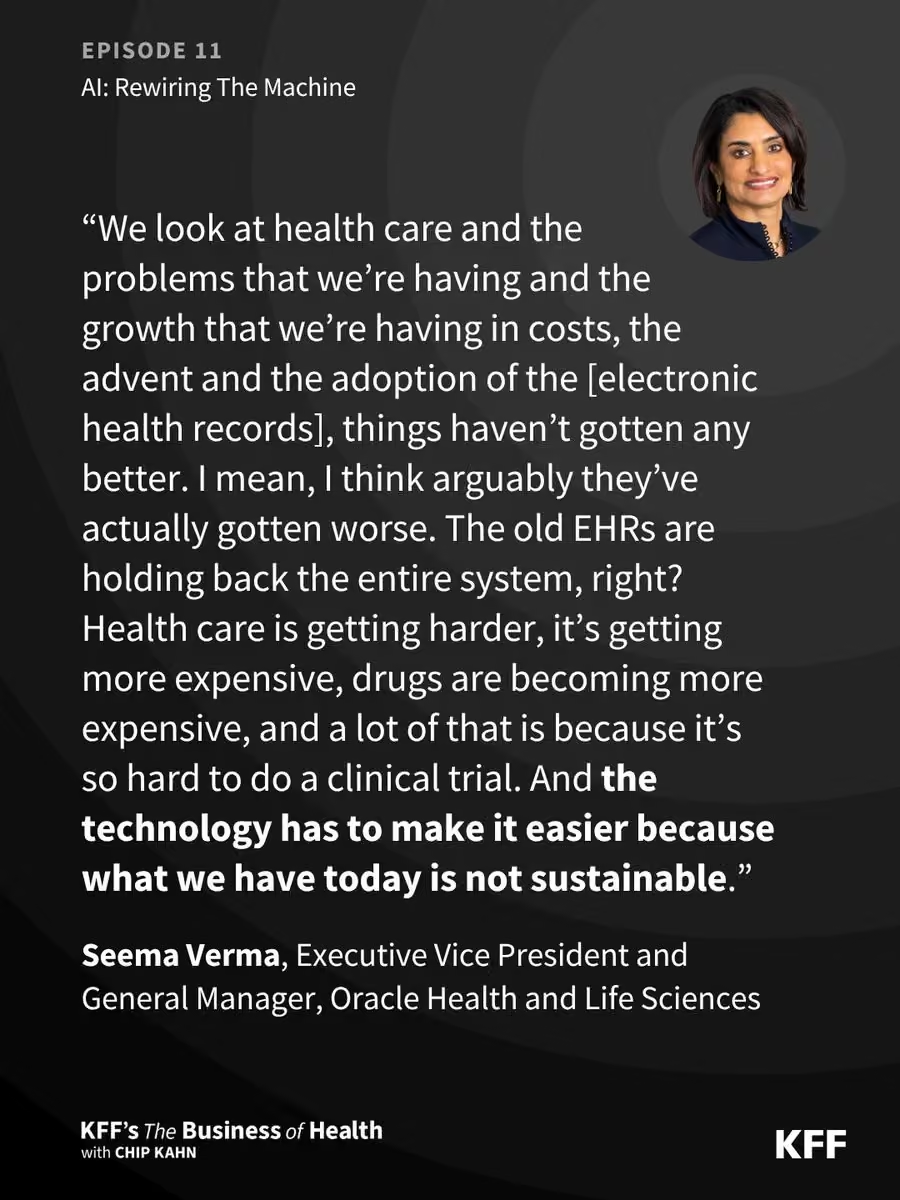
-
KFF
@KFF
#medicaid has long been the subject of partisan differences & policy debate. Our report traces its 50-year history kaiserf.am/1AuFM7c