Politicians, athletes, journalists, NGOs, companies... They all use
corporation-owned social networks to communicate with us. Citizens
shouldn't have to hand over their data to companies to read content
published by public entities. Public Feeds changes that by making posts
of popular accounts freely available.
Read more.
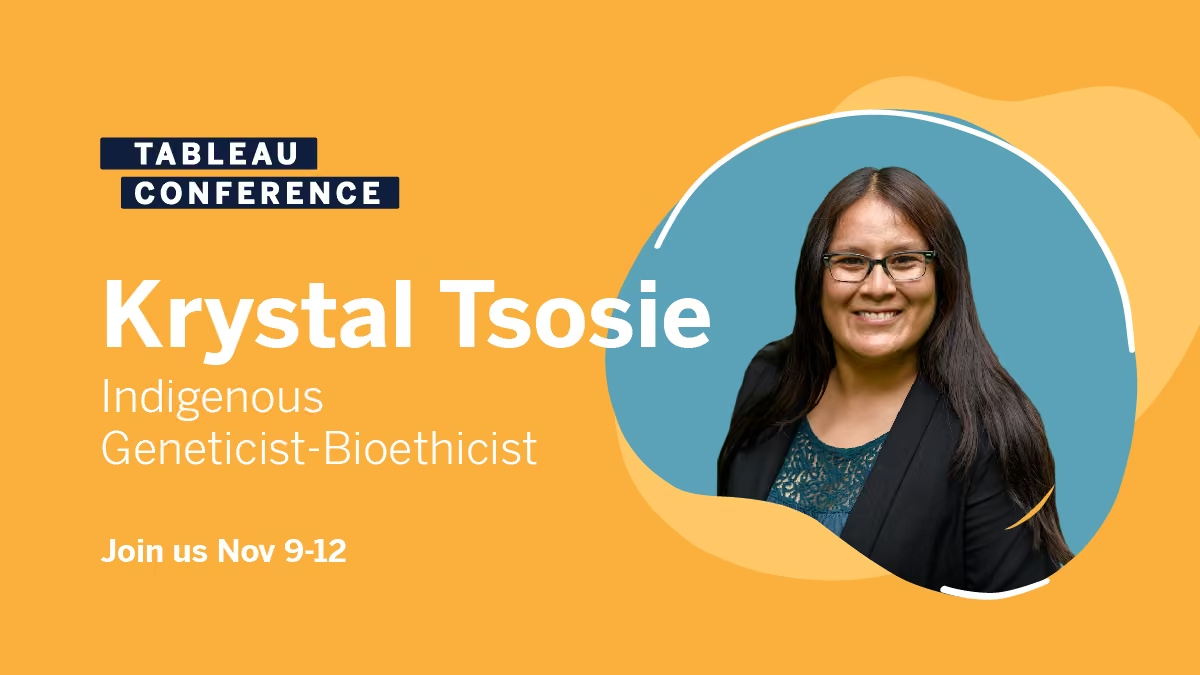
Krystal Tsosie
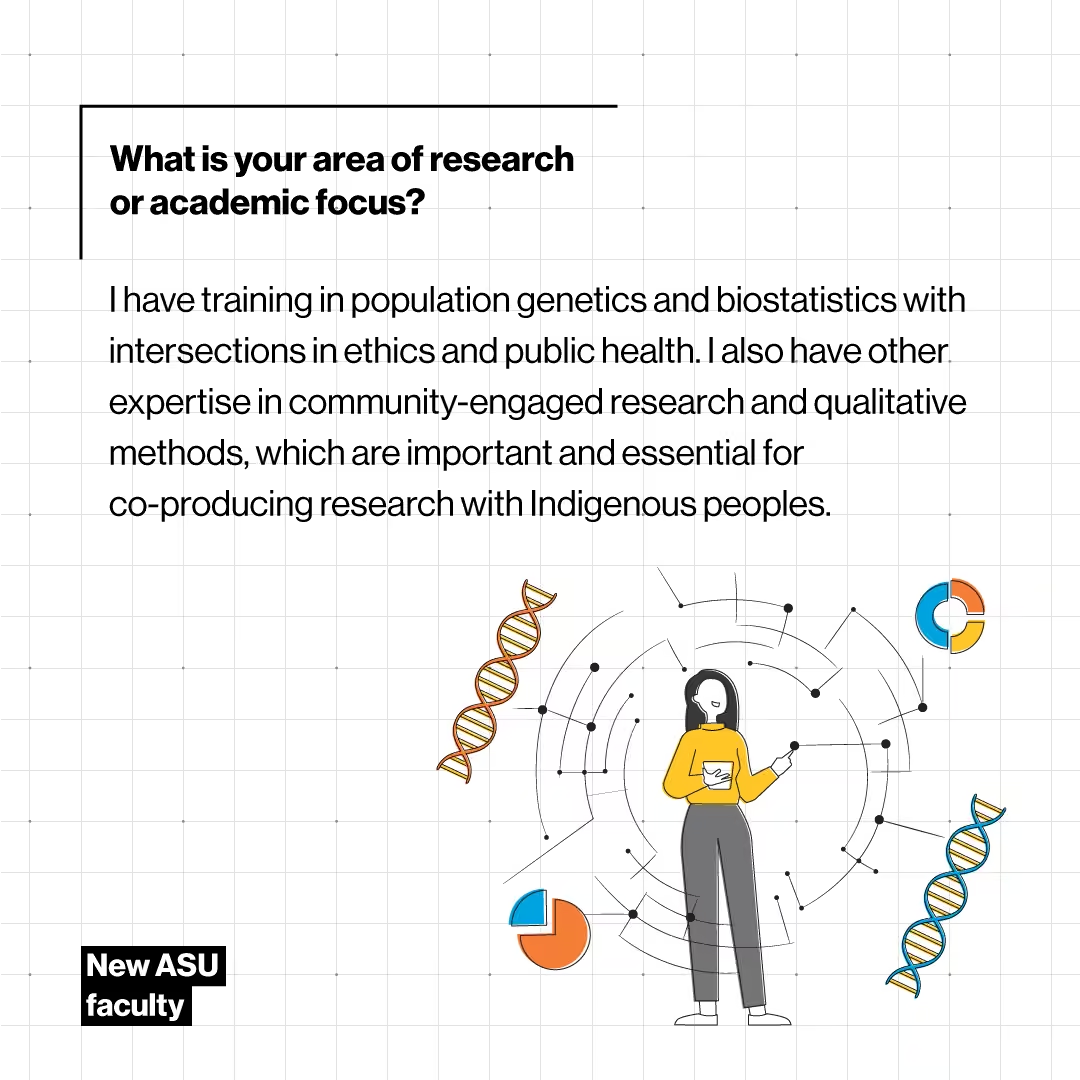
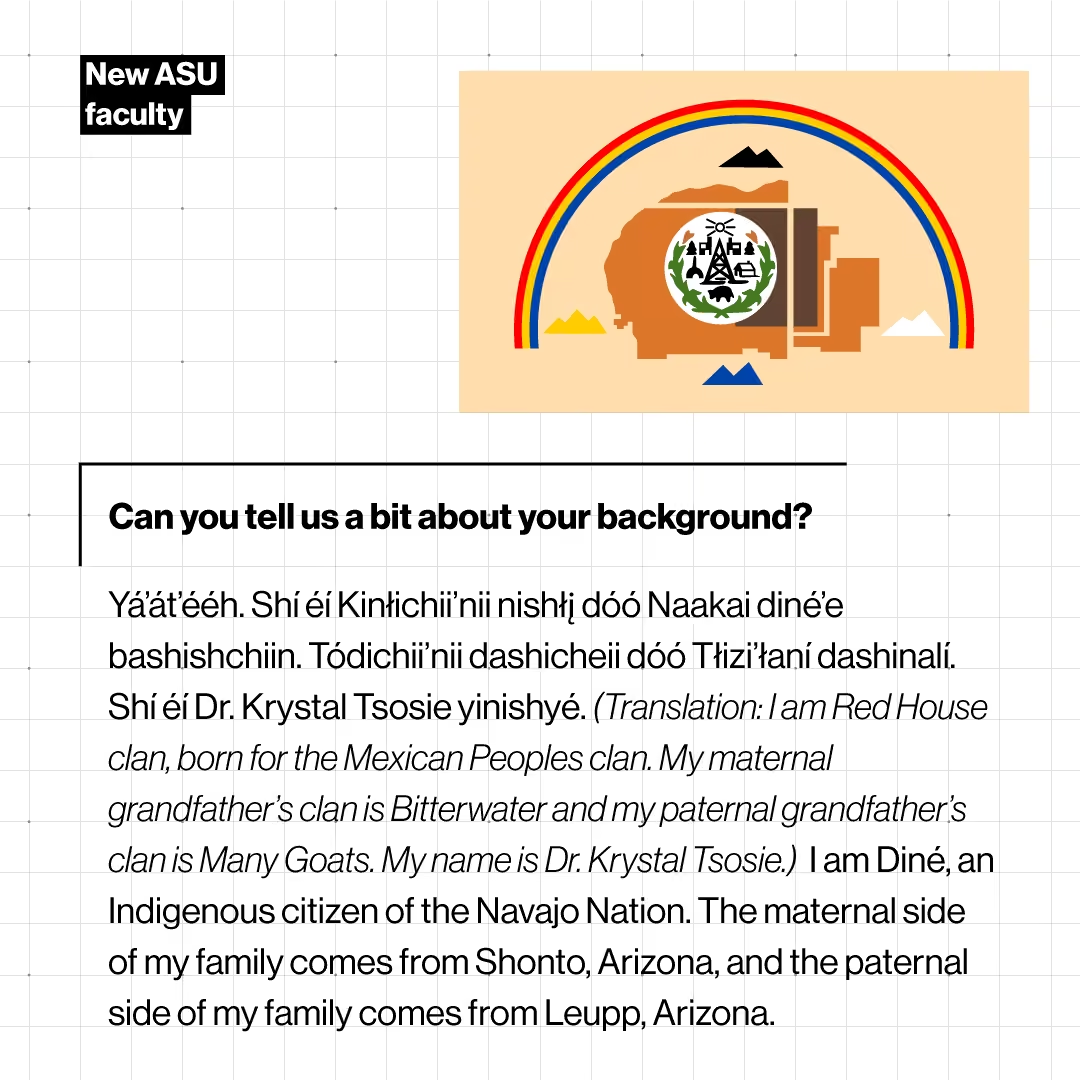
Krystal Tsosie (Diné) is a Navajo geneticist and bioethicist at Arizona State University and activist for Indigenous data sovereignty. She is also an educator and an expert on genetic and social identities. More on Wikipedia
Genomics & data science workshop focused on Indigenous research: 📍 UW–Madison | July 19–24, 2026 ⏰ Apply by March 13 (midnight Hawaiʻi) sing.nativebio.net
For those interested in #indigenous#genomics and #ashg25 in Boston, here are some interested posters/talks/events coming out of the Tsosie Lab, @NativeBio, @d4itdr. For those looking for Friday plans, attend our Ancillary Event, debuting a #tribal#data repository!
Level up your career with confidence! The Human Genetics Scholars Initiative is designed to empower trainees, post-docs, & early-career researchers with mentorship, skills, and a strong professional network. Build the career YOU deserve! 🚨Deadline = 8/18: www.ashg.org/membership/awards/hgsi/
Missed the session on protecting #indigenous biodiversity through #dna, #data, and #ai? Curious about who owns the data and who benefits from it? At the center of this conversation is the principle of data sovereignty, the right of people, organizations, #communities, and Indigenous peoples, to govern the data that originates from themselves, their #cultures, and lands.
Day 1 of @IndigiData began with an opening message from Gabriel Lopez, Chairman of the Ak-Chin Indian Community in Maricopa, Arizona. Nothing like a beautiful rainy day and an inspiring talk to welcome our scholars!
⏳Only 4 days left to nominate! Do you know someone who has contributed through research, mentoring, advocacy, or leadership to the field? Give them the recognition they deserve! Nominate them for our professional awards before May 9! 🏆👉 www.ashg.org/membership/awards/#ashg
Genetics experts told me Black ppl could be at risk with the sale of 23andMe and all its genetic data. “[T]here is a worry about the misuse of this data to support racist ideas about racial categories and specifically about Black folks.”
I am loving the fact that other countries (not the U.S.) acknowledge that these medical devices should be freely provided in public spaces as a basic human right.
Hoy presento en ICAT UNAM, por primera vez en la vida una charla corta completamente en diidxazá. Será acerca de mi trabajo en análisis de politicas internacionales y genómica. Estoy muy emocionada. Todas son lenguas
Today I gave a talk in diidxazá, my Indigenous language. It was a huge step to present at the biggest university in Mexico about the intersection of International Policy, Indigenous Rights and Biodiversity Genomics This is also a Thank you post to @kstsosie for all of her support
Hoy presento en ICAT UNAM, por primera vez en la vida una charla corta completamente en diidxazá. Será acerca de mi trabajo en análisis de politicas internacionales y genómica. Estoy muy emocionada. Todas son lenguas
🎙️ Join us for Grand Rounds on Fri 3/7 at 12:00 PM PT featuring Dr. Krystal Tsosie (@kstsosie) presenting on "The Future of Indigenous Genomics: Ethics, Clinical Testing, and Biobanking."
Krystal Tsosie, David Glazer, Arcadi Navarro, and Patrick Tan have been appointed to the Board of Directors of GA4GH, Inc. to help guide the strategic direction of the Global Alliance for Genomics and Health.
#agbt25 Powerful reminder from @kstsosie Avoid engagement washing! True engagement in genomics means meaningful, continuous collaboration across the entire data lifecycle—not just at the consent stage. Essential for ethical research & protecting underrepresented groups. #genomics
Dr. Krystal Tsosie, PhD, MPH reposted
AGBT - Advances in Genome Biology and Technology@agbt
RARE VARIANT RESEARCH: @kstsosie from @ASU showcases building data trusts and trust in data and indigenous-led genomic databases for health equity futures at the 2025 @AGBT General Meeting. #agbtgm
Dr. Krystal Tsosie, PhD, MPH reposted
AGBT - Advances in Genome Biology and Technology@agbt
As I prepare for my invited plenary talk for @AGBT Meeting tomorrow with this uninterrupted view, I am filled with proud for my students, my colleagues & our collective work in Indigenous genomics, health & digital technologies.
First Monday morning of 2025, and I’m already feeling this:
I am tired of settler-scientists only recognizing Indigenous science when they have something to gain (e.g. grant funding, access to Indigenous communities’ data, clout). This is not equity nor benefit sharing. This is straight up extraction, exploitation, and scientific colonialism.
Featuring a one-week workshop on #indigenous#health and Artificial Intelligence! @IndigiData is an Indigenous data science education experience, held this summer on the Tribal lands of the Ak-Chin Indian Community in Central, June 2-6: indigidata.org Apply: 01/31 #ai
NOW HIRING a Director of the ASU Biocollections with a concurrent appointment as a tenured associate or full professor. The anticipated start date for this position is July 1, 2025. Please see the link for more details. Application deadline: Jan 3rd: apply.interfolio.com/159166
TOMORROW: An international panel of Indigenous geneticists to discuss the ethical, cultural, legal, and clinical utility of Indigenous reference genomes. Sponsored by the @NIH Tribal Health Research Office: @kstsosie @BlackOchreOmics @PDubOtakou
National Human Genome Research Institute@genome_gov
Join the NIH Tribal Health Research Office for a panel discussion entitled, “‘I am the data, the data is me!’ Centering Culture and Indigenist Ethics and Principles in Building an Indigenous Reference Genome” on November 23 at 4p.m. ET. Learn more! dpcpsi.nih.gov/thro/news-events/native-american-heritage-…
We will host our Summer 2025 workshop on #indigenous#health & Artificial Intelligence to take place on the lands of the Ak-Chin Maricopa Indian Community in AZ week of June 2-6: indigidata.org
Travel & Lodging 100% Covered Deadline to apply: January 31st #ai
Eleven of 12 members of the Tsosie Lab for Indigenous #genomic#data Equity & Justice (tsosielab.org). 75% Indigenous mentees across all levels: PI, postdocs, PhD students, undergrads.... just representing #indigenous#science at an R1 institution, Arizona State Univ!
My lab is only a couple of years old, and it is such an honor to create a space for the future Indigenous leaders in genomics and data science! #nativeamericanheritagemonth
We will be hosting 3rd Full Circle Symposium for Native Biologists hosted at UCSF in April 2025! We aim to build community and provide opportunities for Native biologists. If you are a Native biologist who is interested fill this out to stay up to date: forms.gle/AN7nfkhdB3Fvdkkm7
This was a historic moment. The largest convening of #indigenous geneticists, data scientists, physicians to include other national leaders at Cold Spring Harbor Laboratory's science think tank, the Banbury Institute @cshlbanbury, to discuss Indigenous reference #genomes and implications:
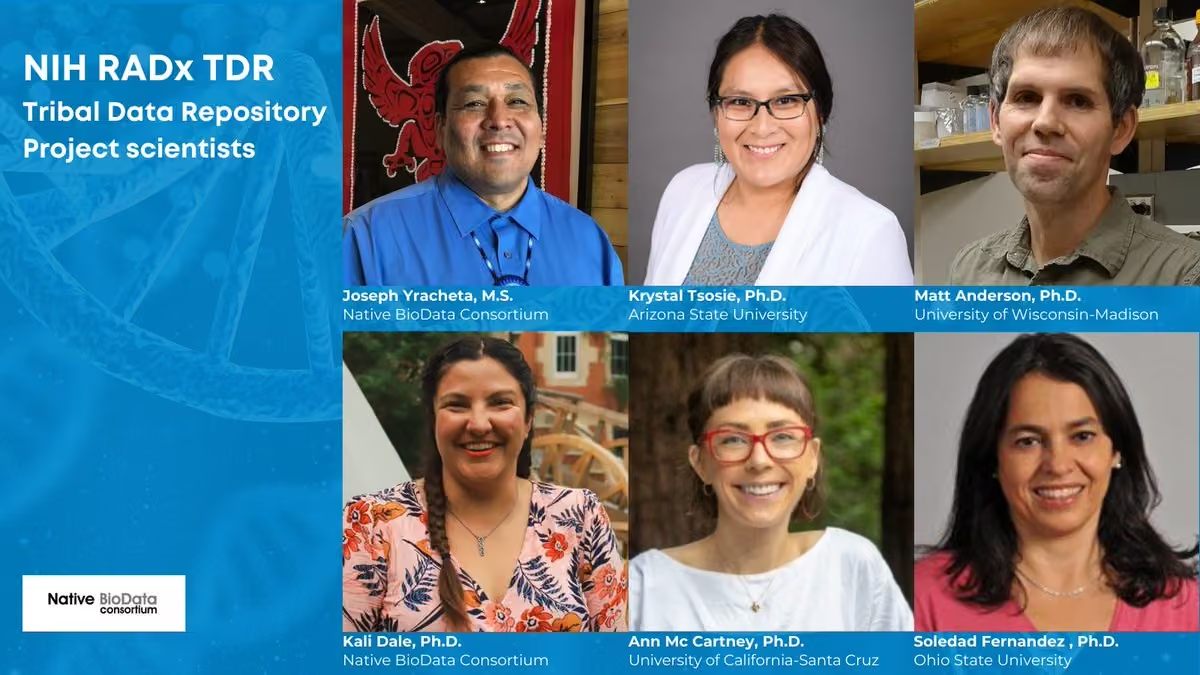
Dr. Kali Dale, Dr. Krystal Tsosie & Joe Yracheta are at @GeneticsSociety this week. Need to know about Indigenous genetics? Indigenous microbiomes, botanicals, archeology, eDNA, infectious disease, Or Indigenous Data Sovereignty come find us, even if you're not Native. #ashg24
My own small contribution: “Presuming a right to access knowledge” held by Indigenous peoples is not only disrespectful, but it can also open the door to harm - @kstsosie
So grateful to you, @kstsosie, and all the other voices listed here for speaking with @sandeeprtweets for this important piece! We at @NewsfromScience are thrilled to be have been able to feature so many Indigenous experts.
Found this little gem. I'm on TikTok! This was filmed for @ScienceNews at the Natural History Collections @ASU@BioKIC_ASU, of which I am proud to work with to advance biodiversity #genomics to ensure #indigenous peoples' data rights are protected #womeninstem
My lovely #indigenous scholars: Who is attending SACNAS in Phoenix this year? The Tsosie Lab + ASU Indigenous Innovation Initiative may be co-hosting a shindig. We'd love to know who is traveling in! Please DM, respond, or contact me via the informal usuals. Ahéhée'!
Scientists: your supposed wokeness is performative if you do not realize your positionality.
Just saw two non-Native researchers self-congratulate at length in front of their colleagues about the "success" of their outreach to Tribal peoples. Yet, the Indigenous researchers familiar to the space (who were not included in the conversation) are side-eyeing each other. Sigh.
When I was a graduate student, I was invited to collaborate on some well-funded, senior authors' research. At first, I thought it was in recognition of my growing expertise. Then, I realized that they needed an Indigenous token and, upon talking with my network, realized that other Indigenous scholars had declined.
So, I walked away. I walked away from multiple lines on my CV, from adding to publication list, and said 'no' to non-Indigenous academics more powerful than me.
I'm not saying this to congratulate myself because, in many ways, I feel like I had to chew off my own foot to save my soul. I say this to highlight that Indigenous early career mentees need to be protected from those who want to make superficial inroads into our communities. It is also important to understand the motives of why some collect Indigenous research #data.
The Tsosie Lab is excited to welcome ASU Presidential Postdoctoral Research Fellow Dr. Leke Hutchins (@IndigenizeSci) to our Lab and to ASU School of Life Sciences! As a genomicist, he is integrating Indigenous knowledge with contemporary ecological research.
Today is the pub date of #bythefirewecarry. I’m thinking a lot about the shoulders I stand on. My parents who have always had faith in me. The friend who celebrated milestones and coaxed me through the overwhelm. The incredible staff @HarperCollins who guided this book into being
You faculty without teaching commitments are adorable for questioning why collaborators are delayed with communications at the start of academic semesters. #phdlife#academictwitter
In searching for material for my class on Indigenous science, I was happy to see that this Science article highlighted specifically the Native BioData Consortium (@NativeBio) as an exemplar for serving as a Tribal institution that empowers Indigenous data governance and promotes "advances in genetics and health research benefit the Indigenous communities from which the data derive."
Indigenous peoples creating our own data solutions is a huge deal. If researchers (particularly geneticists) do not know of us already, they should.
Our first series explores Indigenous Data Sovereignty through talks with Indigenous leaders including Indigenous Geneticist-Bioethicist @kstsosie & food and seed sovereignty knowledge holder Amy Juan. Find Privacy on the Ground in Apple podcasts.apple.com/us/podcast/privacy-on-the-ground/id176…, Spotify, etc!
I love this @Nature article by @samjscience on careful considerations to human microbiome research, especially on consent, benefit sharing, commercialization, avoiding stigma, questioning data ethics norms, and calling question to health and digital equity for Indigenous peoples. Also featuring Indigenous friends and colleagues Drs. Matt Anderson, @KeoluFox, and the amazing @NativeBio.
It is special is seeing the saddle blanket that shinálí asdzą́ą́ (paternal grandma) wove for my grandfather in the background of one of the videos: "Data collection first, apologies later". It's one of the beautiful touches that I am so glad that the @ASU Media team captured: www.nature.com/immersive/d41586-024-02792-w/index.html
I’m grateful to the many researchers who spoke with me about what the future of Indigenous microbiome research should look like, particularly the Indigenous researchers who trusted me to share their histories and work @Naturewww.nature.com/immersive/d41586-024-02792-w/index.html
I am so glad to be joining the Human Biology journal as an Associate Editor! When I served as guest editor, our special issue on Indigenous Science was recognized with the Gabriel W. Lasker award. Now I am so glad to be of service to increasing representation of Indigenous voices in anthropological genetics and biological anthropology! digitalcommons.wayne.edu/humbiol/editorialboard.html
Also, since Wikipedia rates scientists who are editors of journals as of being higher impact, I hope that this will contribute to changing my status from being "woman scientist of low impact". Blah.
Speaking at our conference in Chicago, @KsTsosie (Assistant Prof @ASU, @NativeBio) spoke about the need to prioritize data rights and justice when collecting genetic data from marginalized communities.
I am excited to offer BIO311/HPS340: Biology and Society at Arizona State University again this Fall 2024!! Last year, students found the interactive lectures and complex topics related to power dynamics in science (health and ecology) fascinating, and I cannot wait to welcome the next cohort!
The Tsosie Lab for Indigenous Genomic Data Equity and Justice is hiring a Research Technician with an immediate start date at Arizona State University. The position is to assist our Community Engagement Coordinator with outreach projects related to working with Indigenous peoples and Tribal Nations. Please consider joining our ever-growing team! sjobs.brassring.com/TGnewUI/Search/Home/Home?partnerid=25…
“We do community engagement in which we solely define our ‘community’ as other researchers, but we do not actually interact with anyone else.” 😬
I keep seeing this conflation of “community” in data ethics, policy statements, frameworks. Please stop.
It subverts the intent behind community based participatory research which challenged power dynamics and meant to be more inclusive in our research practices and benefits. This conflation of “community” is neither challenging nor empowering. Language, intent, action are intertwined and important.
With generous support from Reboot Representation, the @AcademicDataSci is offering full travel support for women undergraduates majoring in a computing discipline to present a lightning talk or poster at the Annual Meeting at the University of Michigan, Ann Arbor this October. Students can request the funding in the proposal submission form. Deadline to request travel support is September 9, 2024 at 11:59 pm Pacific. form.jotform.com/240916900924154
If you're looking for a great book for your course this semester on structural racism and health, I highly recommend @layallivs's excellent SYSTEMIC. But also, I am super excited that Dr. Liverpool highlighted at length @KeoluFox myself @NativeBio and @IndigiData as examples of Indigenous community-driven experts/ endeavors to re-think genomics and health data solutions FOR Indigenous peoples. astrapublishinghouse.com/product/systemic-9781662601675/
Two of my students (PhD student and undergrad) will be presenting at the American Society of Human Genetics 2024 Annual Meeting in Denver!! From being on the mentee side to now the mentor side of this great meeting is super exciting, and I cannot wait to see you all November 5-9! @GeneticsSociety#ashg24#diversity#inclusionwww.ashg.org/meetings/2024meeting/
I always love talking to the next generation of women and leaders in data science! On a Future of AI panel with amazing technologists across disciplines, with the @HLuceFdn at the University of Chicago
Estas fotos con mi tribu en la Sierra Mixe para contarles que a partir de agosto, me uniré al Laboratorio de la Dra. @kstsosie en Arizona State University como estudiante de Doctorado en Biología y Sociedad.
Last week, our Lab taught Indigenous high school students from AZ Tribal Nations on ecological data. Our STEAM activity profiled Indigenous scholars (and themselves as STEM leaders!) through art. 🖼️
Here’s mine. “When I grow up, I want to be Associate Professor.”
Also, I thought you could add alt text onto photos uploaded through the app. And I cannot edit even with X verification. Apologies for any frustration.
The Tsosie Lab for Indigenous Genomic Equity and Justice (new acronym pending) finished the academic year and @ELSIhub#elsicon with some amazing posters for our lab hallway!
Topics: Community Engagement in precision medicine, ancient DNA, genetic counseling diversity-inclusion, neurogenetics and IDSov, and AI/ML approaches to improve health equity!
Carolyn Hill of Computercraft talks to our @IndigiData students about leading an Indigenous-owned (and now woman-owned) bioinformatics company that is at the backbone of the National Library of Medicine, NIH NCBI, and so many foundational data infrastructures!!
Other @IndigiData Day 3 activities include Justin Billy’s (Diné) demonstration of the potential of @nanopore sequencing in the field and rural area desert ecosystems
Our cohort of Indigenous data leaders have arrived for @IndigiData AZ 2024, on the theme of "Our Data Relations: Kinship, Stewardship, Sovereignty of Biodiversity and Biocollections", on the lands of the Salt River Pima-Maricopa Indian Community to discuss biodiversity genomics.
Y'all normalized cold asking for access to genomic data from Indigenous peoples, but y'all did not normalize asking for the history, provenance, and consent terms.
Sending on behalf of a friend and colleague who has started this valuable survey as part of her dissertation work. To identify challenges and opportunities for minority early career faculty members:
Them: You're Indigenous and work with Indigenous peoples. We want to propose to you this super disconcerting work. We will list you as a collaborator. Me: There are huge cultural and ethical concerns, not to mention lack of clinical relevance and utility. Them: You sound like an angry Native. We'll ask a different Native.
This is why it's important to have trust networks, to know who else has declined and why.
A great overview on @IndigiData and the importance of Indigenous data science and informatics training at the Global Indigenous Leadership in Genomics Symposium by @cheyenneithomas and Matt Anderson.
Each talk by @YrachetaJM is always illuminating. He discussed how consent can be weaponized to undercut Indigenous genomic data sovereignty. I also learned from him how AI breadcrumbing can make data theft from Tribal Nations even easier and quicker. Also learned about how “necropolitics” can silently lead to our erasure of rights. @NativeBio#global#indigenous#genomics#gilgs
Dr. Krystal Tsosie, PhD, MPH reposted
Dr. Catalina Lopez-Correa (She/Her 🏳️🌈🇨🇦🇨🇴)@clopezcorrea
Great talk by @YrachetaJM “Diversity is genomics is focusing on Latin America because these populations don’t have any protection system” Work done on #indigenous data sovereignty and data principles for #genomics is an example for the world 🧬 🌎
Dr. Krystal Tsosie, PhD, MPH reposted
Dr. Catalina Lopez-Correa (She/Her 🏳️🌈🇨🇦🇨🇴)@clopezcorrea
Such a pleasure to meet in person with @kstsosie at the @canada_sing meeting in Vancouver and to hear her talk on the challenges and opportunities around #indigenous#genomics data
Data centers + cloud computing are heating up our planet 🌏🌡️
Interested in sustainable solutions? Join us for the @PacSymBiocomp first ever session on "Earth Friendly Computation" Jan 4-8, 2025, in Kohala, Hawai'i 🌋
"This session will focus on the innovative integration of Indigenous data lifecycle models that respect the principles of data as a sacred entity and relation, with the growing field of medical AI, particularly in precision medicine and public health."
Please amplify: We are organizing a session entitled "Earth Friendly Computation: Applying Indigenous Data Lifecycles in Medical and Sovereign AI" on Big Data, Indigenous data lifecycles, environmental impact at the Pacific Symposium on Biocomputing (@PacSymBiocomp) on January 4-8, 2025, Big Island of Hawai'i. psb.stanford.edu/callfor/papers/efc.html, Paper deadline Aug 1st. Contact: @KeoluFox me @kajawasik@ajcalac@alexGioannidis@erictdawson
I am super excited for this new report by @theNASEM on Life #science#data#governance for Central Asia. It's great to see Indigenous Data Sovereignty, Biological Stewardship, and the works of @NativeBio and @LocalContexts highlighted in context with so many other great topics:
Arizona State University (@asuSOLS ) has opened a line for a Presidential Postdoctoral Fellow position in comparative #genomics and One #health. Looking for recent Ph.D. or equivalent doctoral recipients in the biological, computational, and genomic sciences to a future tenure-track appointment @ASU.
Today, I am honored as a Navajo genetic epidemiologist and bioethicist @ASU@solsASU@NativeBio to be invited to provide comments to the Research Innovation for Health Equity panel, part of the White House Minority Health Forum, to advocate for Indigenous health and data sovereignty. Live youtube.com/watch?v=s3PWXq… #healthequity#cancermoonshot
We received nearly 500 applications from 46 countries. If you are passionate about bioinformatics education and training or can share this with someone who is, Now is the time to get your application in. Join us in NY or online. New funding will help those at minority-serving institutions or from historically excluded groups attend!
Have you submitted your application for the 2024 Global Bioinformatics Education Summit yet? Applications are reviewed on a rolling basis. Learn more here: www.bioinfoedsummit.org
Online summer school for those interested in ancient DNA. Oh, and I am happy to talk Indigenous community methods, approaches, and why ethics in the space can be divisive:
Shout out to the incomparable @NealBaer who, in addition to showrunning TV series as an MD, also led this upcoming book on the Promise and Peril of CRISPR. I am happy to contribute a chapter on gene editing and impact to Indigenous peoples: www.press.jhu.edu/books/title/12754/promise-and-peril-crispr
Have a paper marinating concerning data ethics, privacy, regulation or governance in the biosciences, or know someone who does? Please consider the BMC for a special issue I am editing on bioinformatics ethics and data privacy due 13 Dec 2024!
Please share with any Indigenous AZ Community College students who are transferring to a degree program within the College of Health Solutions at ASU. This scholarship is available starting Fall 2024, and it is renewable up to 3 years. scholarships.asu.edu/scholarship/304452
So close and yet so far! My friend and colleague @YrachetaJM is at one National Academies (NASEM) talking about pharmacogenomics, and I am at the other National Academies (NAS) talking about forensic genetics.
Indigenous geneticists intellectually represent at the capital!
As of Jan '24, I am Associate Director of the Biodiversity Knowledge Integration Center (biokic.asu.edu) @ASU w/ @beckettws N. Franz. With ASU as global Secretariat for @EarthBioGenome, great things for #indigenous community engagement, biology, genomics, ethics soon! 🎉
ASU is hiring 2 Presidential Postdoctoral Fellows in #indigenous Knowledge Systems integrated with life, environmental, social, Earth sciences and global change. These positions are fast track from the postdoc to TT faculty within 1-2 years: apply.interfolio.com/140334 Deadline 3/13
Today, Schroedinger the Cat sadly passed after 14y9m of jumping into boxes and defying gravity. He saw me through grad school, a science PhD, and he helped welcome our children to our family. He was and remains one of the greatest cats in history. 💜
We will host our Summer 2024 workshop on the theme “Our Data Relations: Kinship, Stewardship, Sovereignty in Biodiversity and Biocollections” to take place on the lands of the Salt-River Pima-Maricopa Indian Community in AZ week of June 3-7. Please apply: t.ly/kx0D1
Next, @kstsosie raised pressing equity questions about situating communications engagement and our power as scientists within current research practices
Assembling scholars of diverse #data types & career stages on "#indigenous Data & Digital #sovereignty Across the Scientific Disciplines" at @UCSanDiego on Fri 1/12 @ 4 PST. Biomedicine, biodiversity, anthropology & biobanking.
What a delight to hear the voice of @kstsosie when I got into my car on @1a@wamu885@npr on the important topic of Indigenous data sovereignty. She discusses some of the motivation for her work in my book #womeninscience Now (portrait below from the book) #womeninstem
This workshop will showcase ongoing Indigenous Peoples and Local Communities efforts to harness the power of genomic data & highlight the value of IP and LC knowledge systems & intentional custodianship
Assembling scholars of diverse #data types & career stages on "#indigenous Data & Digital #sovereignty Across the Scientific Disciplines" at @UCSanDiego on Fri 1/12 @ 4 PST. Biomedicine, biodiversity, anthropology & biobanking.
Join FRIDAY, Dec 16 at 12 Noon | Native Bidaské with Joseph Yracheta, M.S., on Improving Health in Indian Country | @nativenews_net Facebook, Twitter, or YouTube channel. Currents shar.es/agoGoA
Diné faculty strong at @ASU💪🏽 Reppin in fields of Life Science, English, Archaeology, and Education. Slaying settler colonial monsters, doing our best to nurture kinship, & build futures for our beautiful people and brilliant relatives. Yéego Drs. Clark, Tsosie, & Two Bears!
While the genomic revolution has been a boon to medical research, Indigenous groups have had their genetic data mishandled, misinterpreted, or unethically collected. @kstsosie–a Diné/Navajo geneticist at @ASU–has been fighting to preserve these communities' data sovereignty #nahm
So excited for my 1st time at @ABRCMS, this year in Phoenix! I spoke on Thursday, and now I have the honor of tabling as faculty for our excellent MS & PhD programs across life sciences @asuSOLS
Come by Booth #301 to talk with me and our excellent PhD students! #abrcms2023
I missed presenting my talk “Re-Training Genomic Data Equity, Machine Learning, and Indigenous Sovereignty” at #amia2023 in person in glorious New Orleans due to illness. But I’m so grateful to the conversations, abstract writing, and group calls with such wonderful people:
Sometimes I feel very thankful to have the academic circles I have. Feeling inspired after an equity panel by @drgriffis@oliverbdw4@kstsosie and Diane Korngiebel. Thanks for affirming my love for relationships in research 💕
Yá'át'ééh! The Tsosie Lab for Indigenous Genomic Data Equity and Justice @ASU is looking for #indigenous PhD mentees in the areas of genetics, human health, data science, ethics. Degree programs across @asuSOLS and @ASUSST. Deadline Dec 1st. DM or email: search.asu.edu/profile/535281
If a grant reads "Indigenous-led", it means directed by Indigenous peoples. Period.
It does not mean settlers strong-arming Indigenous peoples to put their community names on a settler mechanism to funnel money primarily into colonial institutions.
Attending @ABRCMS in Phoenix, AZ next week? Me too! I will be presenting Thurs Nov 17 along with Dr. Krystal Tsosie @kstsosie our expert session “Understanding Genetic Variation: A Matter of Taste from Individual and Community Level Perspectives” @NIAAAnews@NINR@genome_gov
Love this take by @AdamRutherford on eugenicists: We can no longer excuse the harmful ideas of men like Galton as being 'men of their time' because "it is literally impossible for them to be any other kind of man."
Former National Institutes of Health (NIH) Director Dr. Francis Collins covering Taylor Swift at the world’s largest human genetics and genomics conference. This is proof that I’ve lived as a scientist. 🧬 #ashg2023
No, thank you! It is so good to see some of my hurdles/barriers to a career in the life sciences be validated. I hope this enriches the necessary conversations for structural changes in how we train mentees from diverse and underrepresented backgrounds.
"WOMEN IN SCIENCE NOW manages to be both rigorous and intimate. Munoz flawlessly combines first-person accounts of scientists with empirical research to illuminate the problem of representation in science and offer multi-tiered solutions." -@profbohns www.amazon.com/Women-Science-Now-Strategies-Achieving/dp/…
No, thank you! It is so good to see some of my hurdles/barriers to a career in the life sciences be validated. I hope this enriches the necessary conversations for structural changes in how we train mentees from diverse and underrepresented backgrounds.
Dr. Krystal Tsosie, PhD, MPH reposted
New York Stem Cell Foundation Research Institute@nyscf
“The pillars of trust & cultural competency are essential for us as scientists to effectively integrate into biomedical research the communities that have been marginalized by it,” - @raekaaiyar at the #nyscf2023 panel on diversifying stem cell biobanks to foster #healthequity
Lummi hosted an IndigiData workshop this summer with scientists from about a dozen tribes to discuss data & research that's critical to managing treaty resources such as salmon: nwtt.co/jf
Dr. Krystal Tsosie, PhD, MPH reposted
New York Stem Cell Foundation Research Institute@nyscf
Increasing the diversity of #stemcell biobanks is key to ensure that disease research benefits everyone who needs it. Join #nyscf2023 for a panel featuring perspectives from geneticists, researchers & patient advocates: conference.nyscf.org
Them: What's your advice on doing research & outreach in Indigenous communities? I don't want to overstep. Me: Do not ask anything of communities without first building connections & obtaining prior permissions Them: Seems like a roadblock. I'm going to do what I want anyway 😫
RTing for my future use. Interesting stance on racial/ethnic identifiers in models
Aside: In teaching bioethics history, I am struck by how often the ethic of "do no harm" was hard for biomedical scientists to acknowledge for human participants in research. Some trends die hard.
The 6th ELSI Congress (#elsicon2024) will take place at Columbia University in NYC from June 10-12, 2024. The 6th ELSI Congress welcomes all with an interest in the ethical, legal, and social implications (#elsi) of genomic research.
Talked with an Indigenous mentee about frameworks. We asked: • Who is the target, who reads this, are they the same? • Is it novel, or does it re-create other disciplines'? • Is it too all-encompassing and loses meaning?
We need steps to sustainable change & accountability
With much joy, I taught my first class @ASU yesterday! My lecture hall is across from a classroom in which I sat as an undergrad. Everything feels full circle.
It is amazing returning as Indigenous STEM faculty and seeing students, including Native students, in my class ♥️
I love lecturing about anti-colonial moves towards actualizing Indigenous genomic data futures at former houses* of 17-18th century German philosophers. Feels oddly affirming.
*Leibnizhaus, reconstruction of the 1499 building formerly occupied by Leibniz, to be more accurate
I'm so proud of the @IndigiData initiative. Since starting two summers ago, this workshop has skyrocketed to create timely and much-needed informatics and Indigenous data science workshops on topic areas of direct impact to Tribal Nations. Ahéhée' to everyone who make it happen!
Thank you all so much for your help in TWO @IndigiData#indigenous#data#science workshops this summer! We focused on the topics of gene editing, metabarcoding, Indigenous data sovereignty, IP law, and data ethics on Shakopee Mdewakanton Sioux and Lummi lands. Until next year!
“We don’t need to do literature reviews to understand our own lived experiences.”
Powerful talk this morning @IndigiData from @DarrylReano speaking about how his journey and Acoma lifeways are connected to his work in geosciences and education. #indigidata2023
In our culture, we collapse dwellings when a relative passes. It's an effective public health intervention, but we also have strong taboos. My parents were taught to never touch pottery shards or unearth belongings. Yet, "science" conducted without Tribal consent is often lauded
Tribal Nations each have their own *complicated* relationships with federal law. And, Tribal citizens have *different* experiences with structural health inequities and access to health care.
Asking us Indigenous people to pitch in to help lobby for US healthcare or genetic counseling laws that are differently or not even relevant for our space is a naive and privileged ask. 2/3
I know some of y'all want to be "inclusive" but having to constantly re-explain the healthcare landscape to non-Indigenous academics or genetic counselors who can do their own research is just an emotional tax that we as Indigenous scholars do not need. 3/3
Bringing this little cutie 🦞 home with me today from a visit at The Jackson Laboratory’s McKusick Short Course in Genetics and Genomics in Bar Harbor, Maine.
But with temperatures at 115°F at home in Phoenix, there are plenty of red lobsters there already!
Beyond her scientific expertise, @kstsosie is a community advocate, mentor, and trailblazing first-generation scholar. She returned to ASU on Jan. 1 after earning two degrees. 🎓
Researchers: If your only goal in engaging Tribal communities is to “get” DNA from Indigenous peoples, you’re already failing
Such biased engagement can be akin to coercion. We must focus on protecting Indigenous peoples’ data & interests IF they want to participate in research
The Australian Alliance for Indigenous Genomics (ALIGN) was launched earlier today as a part of @Genetics2023 held in Melbourne this week. @telethonkids is proud to one of the lead agencies behind ALIGN – helping to deliver the benefit of genomic medicine to all Aboriginal and Torres Strait Islander communities across Australia, alongside:
Disciplines in #genomics are grappling with same Qs re: #data sharing, governance, equity, inclusion, benefit-sharing. These conversations are often fast-tracked in "non-human" research, so it's important to read globally
Teaser: Indigenous data sovereignty talk today @UniMelb
very excited to be listening to @kstsosie present on the need to reach genomic health representation amongst Indigenous populations, but also the need to prioritise the calls from Indigenous populations to respect their data sharing and consent preferences #icg2023
“Nothing about us, without us," says Alex Brown, lead of the Australian Alliance for Indigenous Genomics (ALIGN) launched today @Genetics2023 to offer genomic medicine equity. Indigenous Australians still have 10 years lower life expectancy. #icg2023. www.scienceinpublic.com.au/genetics
I am honored to speak alongside leading international Indigenous researchers at the Australian Alliance for Indigenous Genomics (ALIGN), pre-#icg2023. I mention recurring trends in population genetics but end with a positive note on Indigenous-led data futures.
.@ASU’s first Indigenous geneticist in human biology Krystal Tsosie (@kstsosie) says continuing the work of her ancestors is where she gets her inner strength — learn about the ASU alum’s background and academic journey: news.asu.edu/20230629-sun-devil-life-gathering-data-genet…
The inaugural Indigidata Aotearoa Wānanga will be held 21-24 Aug by @Te_Kotahi@NeSI_NZ@REANNZ@GenomicsNZ TAIAO & Tikanga in Technology with the aim to build capacity among Māori in Māori data science, data sovereignty, data ethics, & data apps. Details: www.indigidataaotearoa.com
If SCOTUS wants to pretend that racial discrimination in education is not a thing, does that mean that the US government will also return the 11 million acres of land taken from Indigenous nations, of which major universities are still profiting? www.hcn.org/articles/indigenous-affairs-the-land-grant-un…
Settler researchers, when an Indigenous person provides u feedback on ways of working with our communities, do not respond with, “I’ve been working with Indigenous communities for ‘x’ years and in my experience …..” Times have changed my friends. This is not your space to lead.
2023 @IndigiData in Prior Lake, MN! I shared my perspective on responsible stewardship of digital data and how to contextualize and report on Indigenous health disparities data in medicine and public health. Such a great group of students, @kstsosie! @KeoluFox@tkmackey
We are honored Dr. @KeoluFox joined us virtually to talk about how non-Indigenous biologists misinterpret DNA to narrativize harmful stereotypes of our peoples. It’s important to empower #indigenous peoples to use DNA to take back control of our stories. #indigidata2023
I love that we created @IndigiData to bridge conversations about #indigenous data sovereignty, #data rights, informatics that is cultural, holistic, ignores academic-discipline lines
And: - hosts on Tribal lands - Indigenous-led - has endless coffee ☕️ indigidata.org
Since many want to highlight moves to reconcile #genetics’ racial, eugenic, and colonial practices, I urge all to FOLLOW #indigenous (Cree/Peguis) scholar @JessKolopenuk, whose scholarship in #dna and technoscience is PHENOMENAL!
#academia continually perpetuates lateral and epistemic violence onto early career #indigenous scholars. I just want to celebrate HER and her achievements in #dna.
But, having been on the other side of publishing, MDPI and borderline predatory OA journals often publish high volumes of papers as a way to boost IF. It's been killing journals with stronger review processes though WoS is starting to delist some: www.science.org/content/article/fast-growing-open-access-…
What do you do when you suspect that a peer-reviewed article in an indexed journal... that significantly and directly quotes your and your colleagues' work... appears to be ChatGPT-generated? THREAD 🧵1/9
Point: The impact factor of the journal is ≤0.5 (but also I.F. is not everything). It technically passed the peer review process. On one hand, the potential scale of its impact might be low; readers can judge for themselves if its scholarship is of lower rigor or unoriginal. 2/9
Counterpoint: The author does not appear to be in relation to Indigenous scholars (via shared work or collaborations) yet near-exclusively cites and directly quotes selectively few North American Indigenous scholars. Is this a form of erasure? 3/9
Talking Indigenous genomic data sovereignty, TK/IK, community data governance, and machine learning to the Canadian government’s top intellectual property people 🇨🇦
It’s amazing to see the convergence of these topics have renewed importance on an international scale.
Researchers have released the first “pangenome,” representing individuals with ancestry from across the globe. This could improve the genetic testing for diseases and even provide new insights into human evolution and biology. More in @NewsfromSciencewww.science.org/content/article/pangenome-hopes-represent…
Nice quote! @KeoluFox "has suggested training the next generation of Indigenous scientists to have greater agency over the genomic data. 'It’s finally time that we decentralize power and control and redistribute that among the communities themselves.'" www.nytimes.com/2023/05/10/science/pangenome-human-dna-ge…
Geeking out with @KeoluFox over @PacBio SMRT sequencing while at the Centre for Biodiversity Genomics. Advocating metadata labeling for Indigenous biocultural knowledges and provenance with @LocalContexts. Imagine a future of ensuring our knowledges are digitally attributed to us
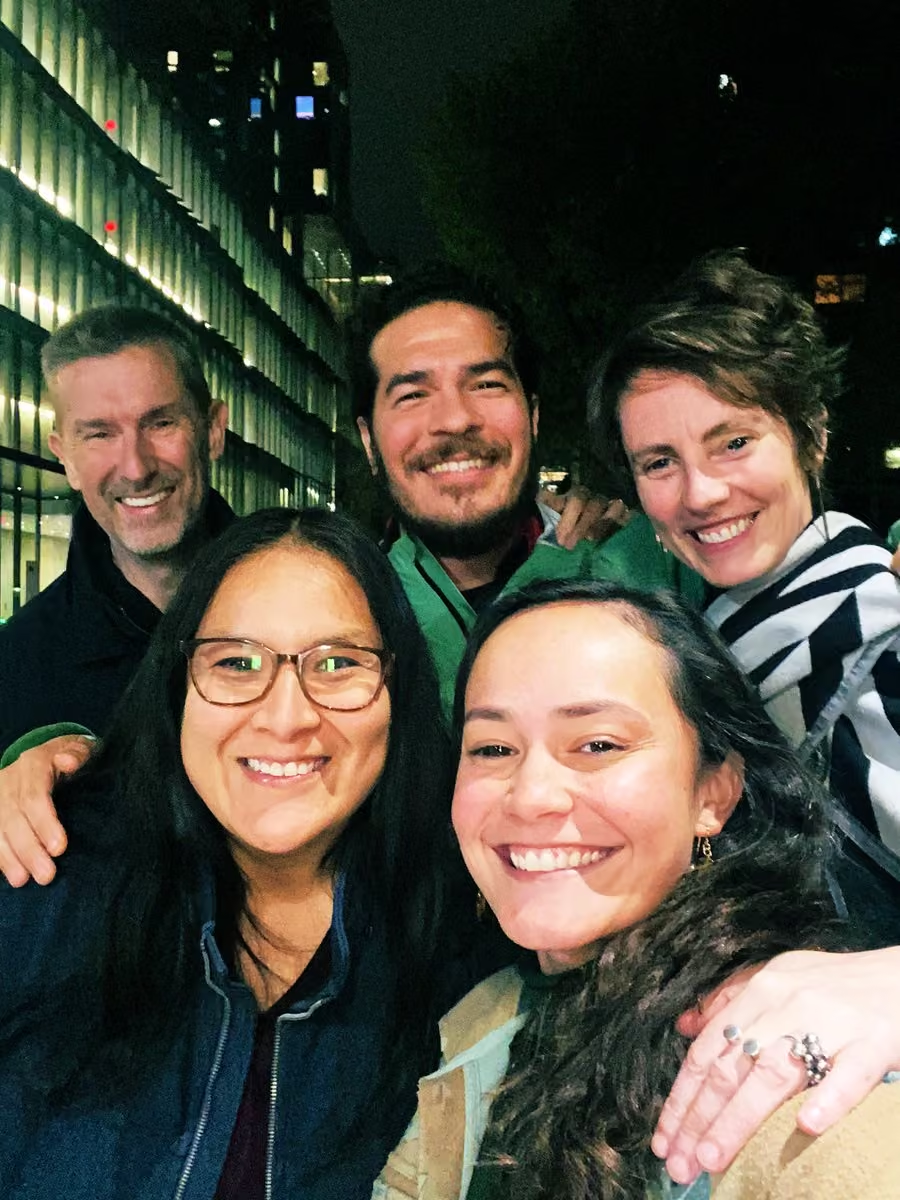
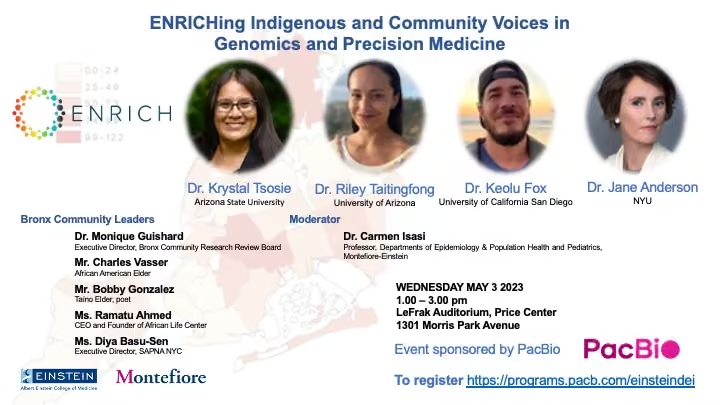
We are excited to welcome @kstsosie and @KeoluFox to lead our May 1 DEI Special Seminar: #databack: Indigenous Genomic Data Justice for Indigenous Peoples.
An very informative and important talk and panel discussion of the ENRICH (www.enrich-hub.org) leaders about indigenous populations' data and ethics. Thanks @kstsosie, Maui Hudson, and @KeoluFox for the great session. #cbipms
🔥 Don't miss CBIPM's first-ever panel event! The External Seminar Series will feature a talk by the co-directors & global chairs of ENRICH. @kstsosie@keolufox@localcontexts 🙌
The Local Contexts Summit & premiere of “Awasəwehlαwə́lətinα wikəwαmok - They Returned Home” will be held May 10! We are excited to share the Summit schedule & introduce you to the speakers this week. Full schedule & speaker bios on our website. #lcsummitlocalcontexts.org/events/lc-summit/
Speakers during this session include: Monique Tyndall (Stockbridge-Munsee Band of Mohicans), Darren Ranco (Penobscot Nation, University of Maine), @kstsosie (Diné/Navajo, @ASU, ENRICH Global Chair), @KeoluFox (Kānaka Maoli, UCSanDiego, ENRICH Global Chair), …
Apply! @ASU is hiring 3 Presidential Postdoctoral Fellows to expand Indigenous Knowledge research in life, environmental, social, Earth science apply.interfolio.com/123763
I loved being a Fellow with 70+ Indigenous faculty at an R1 institution with the highest % Indigenous students!
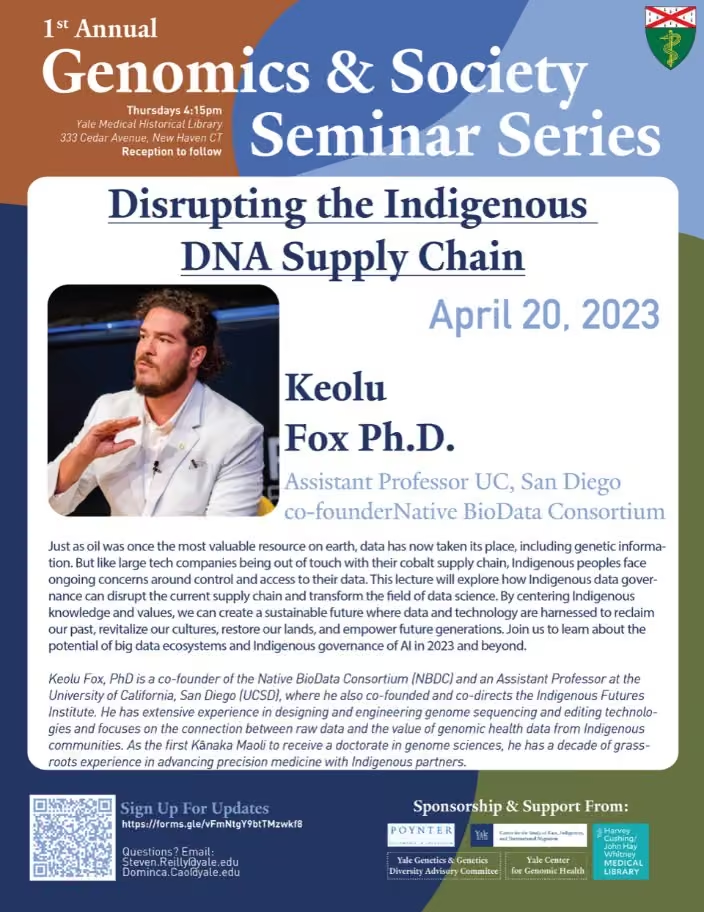
Join @kstsosie and I tomorrow @Yale@YaleGenetics for a conversation on "Disrupting the Indigenous DNA Supply Chain" tomorrow April 20th @ 4:15 pm in the Yale Medical Historical Library
Super excited today to be hosting @kstsosie and @KeoluFox at @YaleMed@YaleGenetics@YaleRITM. A day thinking about equitable human genetics for all, with a focus on indigenous genomic data sovereignty.
Join today’s Genomics & Society talk in the historical library, 4:15PM!
Having fun with the @LocalContexts team and talking about data flows and policies. Also coining fun, new abbreviations like AODPs for “asinine open data policies” 🧬🙂
~11 months ago, I defended my PhD. ~1 month ago, I accepted my first PhD student!
There’s a lot to reflect here on my own journey and hardships, but now I’m ecstatic to help usher in a new generation of scholars. Thanks, all, for opening a door so I can release the floodgate!
🔥 Don't miss CBIPM's first-ever panel event! The External Seminar Series will feature a talk by the co-directors & global chairs of ENRICH. @kstsosie@keolufox@localcontexts 🙌
Join us🗓️next Wed (April 5) at 12 PM CT! @kstsosie will talk about Digital Data Tools and #ml approaches to protect #indigenous knowledge and biodiversity!
Don't know how to join? Register to our mailing list here www.agbiodata.org/user/register or send an email to agbiodata@gmail.com!
Amazing to hear Leke Hutchins @IndigenizeSci ground his genomics work with Indigenous epistemologies in terms of collective benefit and responsibilities of data:
Absolutely honored to be here and to meet @kstsosie@KeoluFox@YrachetaJM and @ajcalac in person. Learning so much from these brilliant indigenous scholars.
A fun surprise meeting @ushamcfarling at the @ASU Indigenous Innovation, Data Economies, and AI (IDEAS) Summit! She has been covering so many important topics in @statnews.
Late post but check out this write-up about the meaningful work we are doing at @ASULibraries. @NLilyGodoy's community-driven archives (CDA) team and the Labriola Center are leading the way. Our Indigenous approach to CDA is spotlighted.
Dr. Oliver Bear Don’t Walk IV @oliverbdw4 talking about the ethical concerns with extracting race and ethnicity from clinical notes, especially for easily reproducing biases in algorithms. A super timely discussion esp. considering ongoing policy interventions
If we’re missing Indigenous epistemologies of personhood... then we are missing a key component of how Indigenous Nations will become sustainable - paraphrasing Moroni Benally on Aspire Ability for economic development through workforce transformation #databack
“Our power is our Tribal data sovereignty” - @YrachetaJM talking about the importance of keeping our Indigenous data local, fostering trust, build Tribal capacity for research that actually, truly benefits Tribes with @NativeBio#databack#indigenous#ai
Dr. Oliver Bear Don’t Walk IV @oliverbdw4 talking about the ethical concerns with extracting race and ethnicity from clinical notes, especially for easily reproducing biases in algorithms. A super timely discussion esp. considering ongoing policy interventions
There’s a pun hidden here: talking about data libraries and also libraries of Indigenous cultural data 🤓📚Thjnking about Indigenous data stewardship at the micro and macro levels!
This should be an interesting talk in relation to Indigenous librarianship. I was asked to speak on the “AI and Language Preservation” session. This is what Indigenous futurism may look like 👀 Thanks @kstsosie for the invite.
Dr. Josiah Hester talking about building sustainable computational tools to benefit Indigenous peoples. #databack#indigenous#ai Also adding conversations about eco-waste and later also digital wearables
This should be an interesting talk in relation to Indigenous librarianship. I was asked to speak on the “AI and Language Preservation” session. This is what Indigenous futurism may look like 👀 Thanks @kstsosie for the invite.
Registration deadline for our Indigenous #ai Summit is 3/20 (sols.asu.edu/ideas). We are so excited convene #data leaders from #indigenous Nations across US, Pacific Islands, Canada, NZ in health, law, justice, tech, environment, education, language, governance. Event 3/31:
So excited to be flying out for the Indigenous Innovation, Data Economies, and AI (IDEAS) Summit @ASU organized by @kstsosie! I'm thankful to be a part of a community so focused on #ai#ethics and #health in Indian Country!
Dr. Krystal Tsosie, PhD, MPH reposted
Dr. Catalina Lopez-Correa (She/Her 🏳️🌈🇨🇦🇨🇴)@clopezcorrea
Fabulous presentation from @kstsosie on Indigenous Data Sovereignty and Digital Equity this morning in Australian Genomics’ DNA Dialogue. Compulsory viewing for anyone working in genomics!!!!! Thanks Krystal for sharing! #genomics#dna#equity#blockchain
Join us🗓️next Wed (April 5) at 12 PM CT! @kstsosie will talk about Digital Data Tools and #ml approaches to protect #indigenous knowledge and biodiversity!
Don't know how to join? Register to our mailing list here www.agbiodata.org/user/register or send an email to agbiodata@gmail.com!
Stop calling tribal nations stakeholders! We are rights holders. But this thread also makes a great point as to why it's also not useful to describe other demographics either...
Local Contexts is an initiative of ENRICH, the Equity for Indigenous Research and Innovation Coordinating Hub. To meet the Local Contexts and ENRICH teams, check out our websites! www.localcontexts.org and www.enrich-hub.org
Important perspective here from Kānaka Maoli researcher @KeoluFox: “We can create as many labels as we want, but at the end of the day, who’s doing the labeling?” he asked me when we spoke yesterday “These are not the names we give ourselves.” www.statnews.com/2023/03/14/genetics-research-racial-ethn…
Registration deadline for our Indigenous #ai Summit is 3/20 (sols.asu.edu/ideas). We are so excited convene #data leaders from #indigenous Nations across US, Pacific Islands, Canada, NZ in health, law, justice, tech, environment, education, language, governance. Event 3/31:
I am so excited to facilitate multiple sessions at the 2023 @ASU Indigenous Innovation, Data Economies, and AI (IDEAS) Summit – It is such an honor and privilege to work with and learn from @kstsosie, @tkmackey, and @keolufox. 2 more weeks to go!!
THIS MONTH we are excited for our Indigenous AI/ML Summit (sols.asu.edu/ideas) to feature international #indigenous scholars on health, tech, culture, justice, and economics. With world-class hoop dancer Tony Duncan. Details for our free, in-person event @ASU:
How to be an 'Indigenous scholar' vs a 'scholar who is Indigenous'? "Ethics-washing" occurs too often in science. But the use/co-optation of my Indigeneity to place ethical veneers on work that remains extractive (and, in turn, my own complicity if it occurs) is my infinite fear:
Colonial knowledge extraction continues in #bioanth#bioethics & #genomics. Ex's include researchers who 1) think “ethics” will save them from being colonial 2) plagiarize early career Indg colleagues 3) ask Indg scholars to be research participants instead of co-thinkers/authors
THIS MONTH we are excited for our Indigenous AI/ML Summit (sols.asu.edu/ideas) to feature international #indigenous scholars on health, tech, culture, justice, and economics. With world-class hoop dancer Tony Duncan. Details for our free, in-person event @ASU:
Edward Patte & @JasonWilliamsNY at the Opening Ceremony @theNASciences@KavliFoundation Frontiers of Science Symposium: engage in not only learning the science but also appreciating the cultural differences of the science to science approach of these different disciplines
I no longer respond to requests to serve as a "study participant" or "key informant" on interview-based studies, esp. as an "Indigenous representative voice." If we are working towards similar goals as colleagues, I'd like co-authorship models to be considered instead. 1/4
As part of the engagement model, there are newfound moves to highlight community members' expertise commensurate with co-authorship, and the same should be done with Indigenous scientists operating as colleagues in the same space. 3/4
It is ironic that there is now much scholarship about "decolonizing" or "Indigenizing" research, and yet this outdated colonial methodology still exists. We can do better and train upcoming scholars to do better to properly acknowledge expertise and their sources. 4/4
The views from my most recent meetings have been amazing! From the Atlantic/Indian Ocean to now the Pacific
The ability to travel and talk in academic settings worldwide is a dream come true for me, an Indigenous scholar from the desert🌵 I can’t wait to travel with my students!
Indigenous peoples' data driving innovation must also benefit Indigenous peoples. Our ENRICH @LocalContexts webinar on "Tribal Intellectual Property Codes & Policies" will be 5/10 with Angela Riley, @scbegonias, Ibrahim Garba, Jane Anderson, and @kstsosie: www.enrich-hub.org/events/51023
This month, I happen to find myself in South Africa. That’s 3 “continents” in 3 months: Europe, Oceania, Africa. Four, I guess, if you count North America by default. All for discussing ethical approaches to Indigenous genomics research. #ichg2023 Session 21 was amazing!
With the launch of our new site, we’ve also opened applications for SING Canada 2023! Taking place from July 16-22, this year’s theme is #landback: Indigenous Peoples, Soil Science, and Disruptive Sequencing Technologies
I was once invited to be a panel speaker for a university event on genetics, race, and racism. When the event flyer came out, I found out I was the only scholar of color on the panel. 🧵
B. Having to put forth a "champion" to voice these critical viewpoints because other scholars of color feel disempowered or afraid of repercussions is a form of epistemic violence. We're supposed to be training equal peers in science, not agents of complicity and silence.
C. It is a form of violence onto me. I am introverted and being vocal on these complex issues nauseates me. But what makes me more queasy: listening to scientists-in-power talk about my kin in terms of recruitment goals in race-based genetic studies that do not benefit our people
Ethical methods should be considered hand-in-hand with the "science". It should be part of our training that ethics and science are both necessary, not discrete. Keeping abreast of latest sequencing methods should be in the same toolkit as latest discourses in ethics.
We should read outside our disciplines and raise attention to those who have already contributed (quite adeptly) to discourses on genetics, race, racism, many of whom are scholars of color. A few: @DorothyERoberts@gravesjl55@KimTallBear@JessKolopenuk Please add if you'd like!
Please share this with all Indigenous students in your networks. This is a great opportunity to receive hands-on data training while learning about the importance of grounding data in cultural and ethical frameworks. Also, the instructors are dope :D
1) IndigiData MN on gene editing and food sovereignty, and 2) IndigiData WA on waterways and fisheries. Apply: indigidata.org/apply by Feb 28th. Note the new website address:
Weather this week, for me, has been unprecedented. First, my US-New Zealand flight was postponed due to historic rainfall that flooded the international airport. Now, Dallas is in an ice storm. My apologies to all if I do not make my invited talk tonight. Be safe. #aucklandfloods
1) IndigiData MN on gene editing and food sovereignty, and 2) IndigiData WA on waterways and fisheries. Apply: indigidata.org/apply by Feb 28th. Note the new website address:
“The next genomic "discoveries" may co-opt Indigenous knowledges or disenfranchise Indigenous peoples, who are often last to benefit and are least protected from intellectual property claims.”#pag30
“As a scientist, I’m a fan of open data. But we are not yet ready for open data.” @YrachetaJM at #pag30 giving a much-needed overview of how far legal protections need to advance in order to be equitable for Tribal Nations #pag30#dna#opendata
Excellent work from @riley_ilyse on the importance of gene drive registry’s — Extremely relevant for the #pag30 and #climatejustice biotechnology community 🌱🧬
Announcing our first workshop at #pag30- quite a timely event in light of the recognition given to Indigenous Peoples and Local Communities @ #cop15. @kstsosie, @YrachetaJM, @KeoluFox, @IndigenizeSci and I welcome you to join our conversation.
Thank you to @GeneticsSociety for highlighting in The SNP Newsletter our Indigenous Innovation, Data Economies & Artificial Intelligence (IDEAS) Summit, @ASU on March 31, 2023. Free registration: sols.asu.edu/ideas
Advancing #data science for Indigenous communities!
Also, if you'd like to keep connected with human genetics and genomics news and career opportunities coming from The SNP newsletter, consider a @GeneticsSociety membership: www.ashg.org/membership/
"Community partnerships should guide ancient #dna research."
We should be wary of any *guidelines* that "falsely sets up the inclusion of communities in research as being in opposition to the progress of scientific knowledge"✊🏾 @profemmakowal@lsweyrich@KeoluFox@YrachetaJM
My scientist-in-the-pulpit moment: I paralleled science's exploitation of Indigenous bodies & genomes to study "undiscovered" genetic variation with the Doctrine of Discovery, while in a chapel. I did not choose the venue, but it did harken to recent apologies to our people
For those unaware, science literature often describes an urgency to sample Indigenous peoples' genomes as sources of "undiscovered" or "unexplored" variation. If we are not careful, it becomes 'frontier science' that objectifies our people, both living and our Ancestors
Loving this @ASNAmNat conference in beautiful Asilomar! One big highlight from today: Krystal Tsosie @kstsosie's talk on "undiscovered" genetic variation, ancient DNA, and how scientists and genetic testing companies exploit Indigenous peoples as "fonts of discovery. #asn2023
I'm no longer a postdoc. As of Jan 1st, I have joined the ranks of Indigenous research tenure-track Assistant Professors at Arizona State University, a dream come true!
I am absolutely floored by the incredible outpouring of support. I’ve been reflecting on this time point in contrast to the challenges I’ve experienced as an Indigenous geneticist, first-gen junior scholar, woman in STEM, and it feels full circle.
Announcing our first workshop at #pag30- quite a timely event in light of the recognition given to Indigenous Peoples and Local Communities @ #cop15. @kstsosie, @YrachetaJM, @KeoluFox, @IndigenizeSci and I welcome you to join our conversation.
Recent developments in the field of Oceanic population genetics have prompted me to provide some thoughts on the danger(s) of creating models w/o data and creating models to support conclusions – Here are some notes on “Settler Population Genetics 101” 1/7 🧵📝
Everyone in London was crowding into pubs to watch the World Cup. Yet, this scientist geeked out over the Broad Street Pump and the start of epidemiology! #nerd Yes, the pump handle is still missing.
I’m super excited to be in glorious London to discuss interesting applications of genetics with preeminent international scholars. Ahéhée’ for the opportunity to attend!
It's interesting to hear scientists balk at the time needed to do community engagement as being "anti-progress". It happens.
"Progress" for Indigenous peoples is NOT another publication on a scientist's CV. Let's define progress as meaningful, proximal benefits to communities!
Despite institutional strife, I try to help organize important talks.
Please sign up for geneticist-ethicist @kstsosie 's talk on Dec. 5. She will share her work on Indigenous data sovereignties and what it means to restructure research from an anti-colonial standpoint.
Tell me why the paradigms being established by the 🐘nativebio@mastodon.social Native BioData Consortium should *not* be the norm for all genomics studies of populations?
I'm thrilled to announce that our article on federated learning for Indigenous genomic data sovereignty has been published in @NatMachIntell! In it, @kstsosie , @KeoluFox , Reed A. Cartwright and I discuss using FL for community-consented data sharing.
PSU Ancient Biomolecules Research Enviro (PSABRE)@PSU_aDNA
@PSU_Anthro is co-sponsoring a virtual event to celebrate 2022 Indigenous Peoples Heritage Month. We will host a talk on Nov 30 @ 11AM EST by Dr Krystal Tsosie @kstsosie on "Stories and Statistics: Unpacking the Narratives We Tell Ourselves about “Native Americans” using DNA"
As organizers, we support the UC-wide strike starting on 11/14 and stand in solidarity with striking graduate students, postdocs, and academic researchers. We decided to postpone the Full Circle Symposium for Native American and Indigenous Scientists in Quantitative Biology.
A light joke for my academic clinician friends, especially since y'all do so much for your patients already. ❤️
Inspired by today's conversations related to #health#ai, and whether machine learning approaches are clinical relevant and can be deployed equitably in healthcare.
Today, @Harvard University's Peabody Museum is announcing it holds a massive collection of Native hair clippings representing > 300 Tribes. Over 700 taken from Native youth attending boarding schools.
Protecting our children is our common political interest.
Dr. Krystal Tsosie, PhD, MPH reposted
Dr. Catalina Lopez-Correa (She/Her 🏳️🌈🇨🇦🇨🇴)@clopezcorrea
Congratulations, @kstsosie. Bringing your voice and expertise to ASU and more visibility to your genetics and bioethics research is something to celebrate!
GG Scholars Program - Genetics & Genomics Academy@NCStateGGAGrad
Dr. @kstsosie just visited our university community and everyone is still buzzing from her visit! She's building a center of Indigenous Genomic Justice and setting the example for how to engage in equitable, community-based participatory research!
Also, those rugs in the photo background were woven by shinálí asdzą́ą́ (paternal grandmother). It's my honor to walk past them before entering my office as a daily reminder of my connection and obligation to protect and steward our Peoples' genomic information.
Absolutely fuel prices are a factor, sure. Airport pricing is “special”. And demand for decreased drivers is a factor. But a ride that used to cost $15-20 a few months ago now costs $45-50 for the same route. So this tactic of dropping standard booked fares feels... extra. 4/5
For ref, I tried booking a standard ride at $44. Driver canceled after several minutes of watching a static 🚗 icon on the app. I then booked the next-best option at $71. And bc I feel compelled to be liked, I tipped 20%
It’ll likely be unreimbursed, so I’m feeling like a rube.
GES Center - Genetic Engineering & Society Center@GESCenterNCSU
Our DNA, our data, our health, our rights: thinking beyond inclusion in genomics datasets, & about equity & Indigenous data sovereignty. Special guest @kstsosie of @NativeBio joins us as part of a 2-day series on decolonizing human genetic research Details mailchi.mp/ncsu/ges-colloquium-11-8-22
November = Native American month. Amplify the work of junior scholars. Name them. Follow them. Mention them in rooms full of opportunities. Meet @ASU’s @kstsosie Krystal Tsosie (Navajo Nation). Geneticist-Bioethicist. Co-Founder of nativebio.org.
Looking for the best #ashg22 swag? We have no swag because we have donated the funds to @IndigiData instead! You can still learn about our work, community engagement, benefit sharing, and meet our lovely team - Booth 519.
Some topics overarching topics in Tsosie Lab that may excite and interest you:
- Global Indigenous precision health - Genomic data equity & AI/ML - Social determinants of health/WGS - Community engaged research - DNA & data ethics
The NBDC is proud to have a presence at the American Society of Human Genomics 2022. With an expected attendance of 6000 the ASHG Annual Meeting is the premiere genetics and genomics meeting of the year m.youtube.com/watch?v=9pXyGqtq3R4&list=PL9CZabk3nD4FOHcAB…
Easter egg: see if you can spot the mini cameo by another one of our own Indigenous science leaders, @science_punx, on the ASHG TV @NativeBio film spot #ashg22
For an Arizona desert denizen 🌵, I forgot how cool the LA area gets at night🥶. Wish I brought my @NativeBio hoodie to support Indigenous genomic data sovereignty at #ashg22 🤓
As marketers, we're awash in all kinds of data. Krystal Tsosie's new article helped me see that de-identifying data can mean unconsciously dehumanizing it as well – with consequences worth examining.
The NBDC is proud to have a presence at the American Society of Human Genomics 2022. With an expected attendance of 6000 the ASHG Annual Meeting is the premiere genetics and genomics meeting of the year m.youtube.com/watch?v=9pXyGqtq3R4&list=PL9CZabk3nD4FOHcAB…
Dr. Krystal Tsosie, PhD, MPH reposted
GES Center - Genetic Engineering & Society Center@GESCenterNCSU
I was just publicly called the N-word and a “brown b*” by a random man who repeatedly knocked on my car window... all because we could not back up so he could cut into a packed fuel checkout lane.
Further twists: I was the passenger, and our 1 year old was in the backseat.
I was just publicly called the N-word and a “brown b*” by a random man who repeatedly knocked on my car window... all because we could not back up so he could cut into a packed fuel checkout lane.
Further twists: I was the passenger, and our 1 year old was in the backseat.
Anyway, that literally happened less than an hour ago. I need to reflect. Strongly.
I am privileged in many ways: I can largely WFH, I work in the relative shelter of academia (still racist, but usually less overtly), have slightly higher SES, and I can be among my community
There are large lessons and commentaries to be made re: complexities of racism, public complacency to overt racism & misogyny, implications for multiracial children, and just existing as a Native American woman in Arizona.
But we certainly don’t need add more fuel to racism. 🥁
Sometimes writing #ethics guidelines feels like handing a blueprint for researchers to continue their extraction... "ethics-washing" in which they superficially take our words/phrases to sound ethical while nothing changes.
We need to write the Colonial Playbook for Academia.
We will be hosting our second Full Circle symposium to highlight, build meaningful community, and give a platform for Native scientists from across the country!!! PleaE register we have a phenomenal line up speakers across career stages (1/n) please amplify!
Join us at the 2nd annual “Full Circle" symposium on November 17 & 18, 2022 at the @UCSF Mission Bay Campus, as we highlight Native and Indigenous scientists at all career stages across the US!
Geneticist-ethicist @kstsosie will speak about Indigenous data sovereignties and what it means to restructure research from an anti-colonial standpoint.
"For too long in the status of biomedical history, data has been usurped from Indigenous peoples and often not to our benefit," @NativeBio's Dr. Krystal Tsosie (@kstsosie)
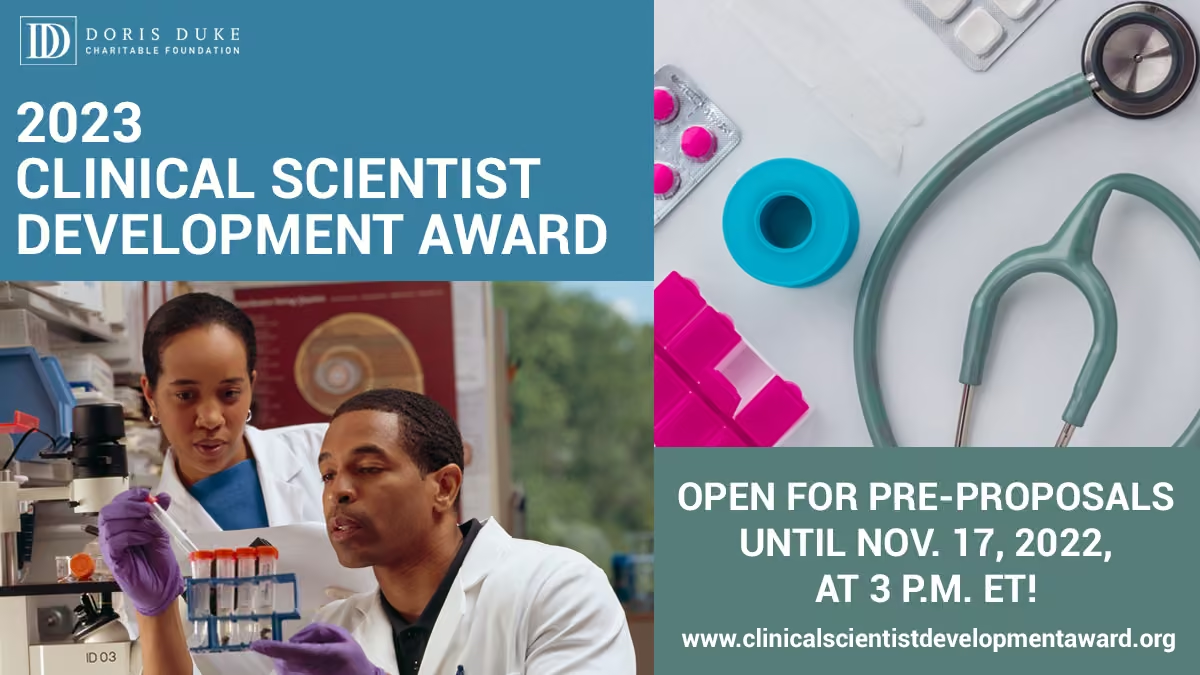
Amplifying in hopes this development award from @DorisDukeFdn helps an Indigenous early-career physician-scientist and matches their goals/timelines. The DDCF has been great at advocating for health equity in supporting the @NativeBio. @aaipdocs@aises
“Best practices” centers systems of ethics and existing legal-policy structures when, in fact, these systems may ignore those voices already disempowered in the science process, e.g. the very same marginalized communities we aim to include in health studies
It might be easy to throw in a “best practices” Aim 3 at the tail end of a grant proposal or to convene a panel to create field guidelines of praxes, but this can result in superficial applications of ethics that can cause greater future harm if not more carefully considered.
Dr. Krystal Tsosie, PhD, MPH reposted
GG Scholars Program - Genetics & Genomics Academy@NCStateGGAGrad
As an Indigenous person & university event guest, I was once asked to provide the land acknowledgment for the host. I declined.
Part of the power of these statements is disruptive, for universities to recognize their colonization. Not to offload this guilt onto Indigenous people
Was just asked to host a land acknowledgment workshop by a University. I told them my fee & they replied that they were hoping I’d do it “pro bono.” It IRKS me when Universities or multi-million dollar businesses ask Indigenous people for free labor. Was the free land not enough?
Thinking aloud: I've had many conversations about policy changes at the "stakeholder" level on data governance & sharing. But communities are often left out as being less "actionable"
Let's start there and champion policies that ensures communities govern their DNA, and mean it.
Yay our Workshop on "Genomic Efforts by Indigenous and Local Communities to C.A.R.E., Conserve, and Catalog Global Biodiversity" was accepted for #pag30. The excitement is building @kstsosie@science_punx@YrachetaJM@KeoluFox@Te_Kotahi.
Dr. Krystal Tsosie, PhD, MPH reposted
Dr. Catalina Lopez-Correa (She/Her 🏳️🌈🇨🇦🇨🇴)@clopezcorrea
When a researcher states, "We consulted with leaders from ALL Tribal Nations", it's important to exercise skepticism. There are 574 *"recognized" Nations!
Each time I've heard this claim, only a tiny subset of Tribes were consulted. And most expressed concerns about the research
Also: * "Consultation" ≠ adequate, ethical engagement ** U.S. Tribal "recognition" is a colonial concept that disenfranchises, e.g. Tribal members residing outside "recognized" lands; Native Hawaiians and other Island nations; other "unrecognized" or global Indigenous peoples
Building trust means being transparent about the Tribal engagement process. Yes, the process is not easy. But misrepresenting the buy-in from Tribal partners will only substantiate concerns and hesitation from the very same communities researchers state they want to serve.
Asking #indigenous leaders for consent PRIOR to writing a Feature also ensures that details are presented correctly. Want to ensure a Tribal community name is presented properly and respectfully (i.e., not using colonial names)? Ensure technical details are correct? Consent! 5/6
In short, 1. #indigenous peoples are not PR for your DEI effort 2. Real engagement ALWAYS supersedes performative wokeness 3. Responsibly model good engagement to mentees 4. True respect is not misusing Indigenous peoples as false endorsements 5. Always ask for consent! 6/6
Too many non-Indigenous aDNA researchers readily discount and dismiss the voices of Indigenous researchers. So listen to one of your own👇🏽 #adna#ethics then re-read and cite and listen to descendants
One problem that some of us have w/ bioethics as it is unfolding in aDNA & science at large right now is its widespread failure to overturn existing power structures & its related complicities in colonial forms of relation & governance.
Another day, another unsolicited ask to interpret someone’s genetic ancestry test
DNA ≠ Indigeneity.
US Tribal nations do not recognize these tests for enrollment. Examine your history of displacement, ask why you want to reconnect. Pls start there b4 asking for a tribal card.
This is as polite of a tweet I can muster. There are real histories of trauma, and I feel them. But there are also too many wanting to cash in on current lived experiences of Indigenous people for perceived benefits. That hurts, too. Either way, these unsolicited asks are turmoil
It needs tweaking, but this is my tentative talk title
Indigenous Data: It's Not Just Size, It's How You Use It
On re-thinking Big Data vs small sample datasets in genomic and precision health re: Indigenous data erasure, justice, and modeling missing factors in health inequity
4/5 @kstsosie co-founded @NativeBio, a research institute led by Indigenous scientists, where biological samples collected from Native people are stored on sovereign Native American land, made accessible only to researchers who are prioritizing Indigenous health needs.
Day 3 of #singusa2022, and I'm always learning something new. During Genetics 101 lecture, we discussed DNA but also pervasive sexism in the field. The "Matilda Effect", denial of contribution of women scientists such as Rosalind Franklin. So important to acknowledge in science!
I was invited to guest lecture for someone’s course as an Indigenous scientist, which is great. But they added “if you’ve never given a talk before... [super basic instructions]”
The condescension was unintended, but they are targeting Native scientists, and the tone feels weird
Huge implications for those that still conflate Indigenous genetic ancestry and blood quantum as valid metrics of belongingness. Tribal nations set the own rules as part of their sovereignty:
Now that I have my PhD, I need to update some of my consultant rates.
What do white males charge per hour for their technical and scientific expertise? Maybe I’ll start with those rates as a floor 🤗 #womenintech#womeninscience#equity#sarcasm
“If you want any say about your future and livelihood, you need to wrest back control of the fundamental building block of what makes you who you are and not allow it to be exploited for some company who sees your DNA as a dollar sign” @TonyHoWasHere@thedailybeast#blockchain 🧵
For years, the genomic data of Indigenous populations has been used by for-profit companies and researchers for selfish gains. Now, blockchain tech might offer a way for these communities to take control of their data back. My latest for @thedailybeast.
I just encountered an intake form (among many) at a medical provider's office.
The form asked me to consent to sharing genetic info with insurance companies, even though disclosure is not required under the Genetic Information Non-Discrimination Act (GINA).
For example, some university health systems have their own for-profit entities to commercialize access to their clinic databases (often with DNA data) to pharmaceutical companies. And their broadly worded "opt-in" clauses are similarly buried in their patient intake forms. 6/7
Just as a general caution, if and whenever you able to, read the fine print. Even if you think your data is being used for one thing, make sure you are not signing away access to your data to entities that may not have your direct health interests forefront. 7/7
Thank you for inspiring and motivating us: the Future of Indigenous Science is Indigenous ❤️ Use your voices and be loud, be active, be proactive and be productive. - @kstsosie
Sitting in my new lab office for the first time to sit on a panel with @canada_sing! My old graduate TA office is just around the corner on the same floor.
Any Indigenous dancers or dance groups in Arizona available on Fri, November 18th for an event I'm planning in the Phoenix area? Please DM or send recommendations. Ahéhée'!
Dr. @eanelson42 (Turtle Mountain Band) talking about disparities in TB care between Native vs white people. She recounts Dr. Susan La Flesche Picotte, the 1st Indigenous woman MD, who founded a privately funded clinic as a means to counter institutional racism in care. 🦠
There were so many people coughing at the two major airports from which I flew yesterday. Hardly anyone was wearing a mask. It was like a scene out of every pathogen disaster movie I've ever seen. Next needed is the slow-motion capture of cough particulates dispersing in the air.
. @BrenUCSB named a server after me! Introducing the TSOSIE computing server on which environmental data science students will be conducting their amazing work.
Such a cool practice to name data tools after BIPOC leaders in #data#science justice.
I think enough has occurred with the US courts this week for everyone to reconsider the use of “democratizing x” as a buzz phrase for anything positive.
“It’s important for Tribes to develop laws and policies in place under Tribal law, otherwise Tribes are left unprotected in data use agreements that largely benefit universities and researchers to get around Tribal #sovereignty” -@YrachetaJM#indigidata22#indigenous#data
I wrote a paper during my 1st Masters on scientists/public health officials obfuscating obvious uranium mining links with disease horribly called “Navajo neurohepatopathy” by saying it was due to “inbreeding” after “population bottleneck” (genocide). Genetics can reinforce racism
It’s unpublished at the moment. I didn’t have the courage (or encouragement) at the time I wrote it as an early stage scientist. If there’s a place or interest in publishing it, let me know!
Today, I just picked up the keys to my new dry-wet lab! 🧬 It’s hard to believe I started here @ASU as one of few Native Americans in life sciences, and now I get to create a new #indigenous#stem home for ethical study of genetics & data science! Ahéhée’ @asuSOLS@ASUResearch
.@kstsosie with important thoughts for anyone who does work with IRBs: "Informed Consent language centers risks-benefits on the individual; This is culturally-inconsistent with Indigenous communitarian ethics." #hlp22
There are too many ways to circumvent IDSov. Lack of recognition of Tribal agency, inequities in #research capacity, "research" vs "public health" regulations, individual and group consent...
We as Indigenous people need to become knowledgeable about these loopholes.
How was your first day? Did you have a major breakthrough? Find new allies? Learn something new or hear an innovative idea? We want to know! #bestofrightscon#rightscon
Thrilled that @YrachetaJM@MarkiaASmith@robbeewedow and Maya Sabatello will be coming together @GeneticsSociety for our Invited Speaker session: “Upset the set up: Moving from community engagement to community empowerment” - see you in LA in October!
I wish I did not have to start each presentation asserting to senior scientists that Indigenous DNA & data exploitation occurs. Rampantly and at increasing scale. Seriously, the lack of knowledge of harms their own fields continually perpetrate onto us is blatant ignorance.
The NativeBioData Consortium, for the first time, just submitted a huge federal grant application with @kstsosie@science_punx@drkatclaw@YrachetaJM@khmiga and a host of other folks in our huge and growing International Indigenous Network.
I've seen A LOT of "ethics training" modules for scientists. Too often, attention to research harms perpetrated onto minorities stops at the Belmont Report, as if it is a panacea for future harms. Yet, recent and ongoing harms are undiscussed. We need to do better #elsicon2022
Happening Jun 9th: Come hear perspectives from @kstsosie (Indigenous geneticist-ethicist) and working group members to explore the meanings of brain wellness🧠 in an Indigenous health context!
Our newest piece on #adna#ethics! An amazing work that examines ethical frameworks in paleogenomics over the past decade-plus... because ancient DNA ethics discourse, particularly in descendant communities, has been long and ongoing...
Two days ago, I defended my dissertation "#indigenous Community Perspectives on #genomics Research & #data Sharing", part of a larger body of work from my time @VanderbiltU. Ahéhée' to you & my mentors who believed it me! #phdone
1: Many researchers benefited professionally from decades of research “on” Indigenous peoples. Methods change and ethics change. If a researcher refuses to update their praxes, then Indigenous peoples and researchers may opt out of collaborating with them
2: We understand it can be hard to find reviewers. But placing potentially problematic researchers as decision makers in the review process can be a form of harm; it substantiates power imbalances and may prevent Indigenous communities from pursuing their own empowered research
Indigenous science CANNOT be implemented or integrated by non-Indigenous peoples. That is bc spirituality is at the core of Indigenous science. -Hernandez, 2023.
Today is James Watson’s birthday. His sexism and racism further exacerbate his theft of attribution to DNA discoverer Rosalind Franklin, a true STEM icon
And today, this Navajo geneticist is about to labor & welcome a son! (and our matrilineal surname is Franklin)
Unless you’ve already demonstrated a commitment or connection to Indigenous issues in your work, I will be ignoring email requests of my time to educate academics until June.
I’ve been too generous with these asks, and they rarely result in benefit to me or my peoples.
Addendum: This is in response to non-Indigenous, senior scholars who solicit my time (on their timelines, not mine), knowledge, access to my networks for projects that unilaterally benefit them w/o attribution or reciprocation. This is about self-worth as an Indigenous academic.
What it looks like when biology is falsely conflated with Indigeneity as a marketing ploy, and our regalia are reduced to pan-Indigenous stereotypes to sell genetic narratives to largely non-Indigenous people.
The tactic is cheap, but the exploitation is endless.😠
I didn't think I needed any new examples to update my lecture slide decks on false narratives of genomics and Indigeneity. But here's @genomelink to provide one all the same.
Non-Indigenous scientists will, time and time again, look to other non-Indigenous scientists’ “expertise” on ethically engaging with Indigenous peoples...
Some NIH committees will preferentially ask non-Indigenous scientists to apply for tribal research grants or provide input on tribal research affairs before asking Indigenous scientists and tribal leaders and community members.
Just @Illumina and @Nasdaq featuring our Indigenous-led efforts at @NativeBio to secure genomic and precision health autonomy for Tribal nations across the United States through data equity and justice! 🎉
I was delighted to represent @Illumina as part of @Nasdaq’s Pioneer the Possible series celebrating the biotech industry along with @NativeBio. I am proud that @illumina we help researchers and clinicians globally pioneer the possible in #genomics.
There's a lot of interest in gathering genomic data from Indigenous populations, but why? And who actually gets to benefit from this work? @kstsosie, cofounder of @NativeBio, lays out the ethical issues with studying ancient & modern Native American DNA geneticsunzipped.com/blog/2026/2/13/genetics-of-americas
CW: Police used sexual assault victim’s DNA to later arrest her.
Article: Using victims’ DNA violates 4th Amendment ban on unreasonable search & seizure. “Fewer women would want to come forward... if they thought their DNA would be used against them.” gizmodo.com/san-francisco-cops-used-dna-from-rape-victim-…
“Center the community”@latifajackson dropping knowledge on the importance of establishing #community connections when building genomic research projects WITH African American communities in the US through @HowardUniv
Join us NEXT WEEK to hear perspectives on data justice and learn how all areas of research and development can ethically promote data equity and empowerment! Register for FREE: us02web.zoom.us/webinar/register/WN_y59dWOOYTW-moYfF9HheAw
The @IndigiData Indigenous data science workshop has not even begun, and I'm already obsessed with the participant swag bag and #tribal#archaeology subtopic.
Many of my recent interviews have been off-record because there are too many ongoing controversies in which researchers choose unethical means of extracting DNA and data from Indigenous peoples. In health and ancient studies.
Even if there are no public records to track research transgressions, researchers are accountable to their fields which, thankfully, increasingly incl. Indigenous scholars & true allies. Calling out researchers is fraught, but we will call in for better, ethical research praxes.
Indigenous students, faculty, and community members will discuss Indigenous data sovereignty, the future of AI for our nations, with a hands on-on informatics component! Details:
Just brainstorming a future publication or talk title:
"Sovereignty" Is Not a Swear Word.
Too many of y'all consider Indigenous data sovereignty as a barrier to engagement. EVERYONE should be looking to IDS as a move towards equity and justice in research & data science
✊🏾 It's great to hear that people and senior academics are listening and reading our work on Indigenous genomic data sovereignties and community-driven models of equitable research!
Profit motives driving biomed research are as evident as a slap across the face Researchers want Indigenous DNA to develop therapeutics... BUT using our DNA to study conditions disproportionately ailing Indigenous people is not "cost-effective" "Democratizing research" in action
Too many researchers say they want to "partner" or "increase inclusion" of underrepresented groups in research but, in actuality, preempt power dynamics that (already) unilaterally benefit them That is not "partnership" or "engagement". It is a false ethical veneer for extraction
White male researcher kept interrupting & talking over me as I, an Indigenous researcher, explained the importance of tribal engagement. It’s not his specialty, but it is mine, yet he felt compelled to take over as subject matter expert & diminish my expertise in front of others
Oh wow, the episode landed! #howtocitizen with @baratunde is an amazing series, and I was honored to be asked to converse along with such a thought-provoking and entertaining host!! Thanks for the spotlight!
This episode was awesome! Thank you @kstsosie for sharing your mindblowing wisdom and for all that you do. Especially loved the underpants gnomes analogy. Thank you @baratunde for all that you do. #howtocitizen
Not only is there a “fractionation of federal departments & policies that make it more difficult for Tribes to assert their sovereignty”, but there is also fractionation in how we define data
We’ve removed the human element from 2° data but without removing risks to communities
It’s an unfortunate trope that “science is outpacing ethics”, esp when social scientists have debated these issues for DECADES before the tech existed, but scientists often do not read across disciplines
Now when I refer to “hard sciences”, I’ll think “hard (headed) sciences”😁
THEM: We need diverse scholars in discussions on data, science/tech, research & AI! US: Let's fix problems that cause ethical harms! THEM: *affronted* We need "positive approaches" (that still reinforce data extraction). Your anger impedes (our definition of) progress
I am tired of researchers self-defining bare minimum terms of "tribal engagement" and not respecting #indigenous communities' right to define adequate, ethical #research "engagement" themselves
Your "tribal consultation" included talking to one leader or sending one email? Stop.
Listening to a great conversation with @kstsosie and @stephaniehicks about the nature of populations missing from big data sets and how to bridge the gap for these communities in an authentic and trustworthy way. cme.stanford.edu
So many great works out this week from Indigenous researchers & allied collaborators! This work by @sbtrini@vhiratsuka et al conducted a democratic deliberation w/ tribal leaders on precision medicine #research. Some 🔥 quotes on importance of #indigenous#data#sovereignty: 1/7
Tribal leaders are aware when researchers inappropriately pit individual vs group rights. This dichotomy inaccurately reflects reality: equitable engagement, respecting tribal & data sovereignties at all levels, considering direct benefits to tribes needed to advance research 6/7
I am glad that collaborative groups such as @CEIGR_OU are advocating for democratic deliberations to advance qualitative research methodologies by treating tribal members as the experts they are. I recommend genetic researchers become savvy to these qualitative approaches! 7/7
aDNA expertise ≠ ethical expertise. Those benefiting from aDNA should not position themselves as arbiters of data access w/o acknowledging their COI. Look to better, more stringent (& earlier published) standards www.nature.com/articles/d41586-021-03542-y
Key quote: "Ethical integrity in aDNA research entails shifting the status quo around who governs and who benefits from it. Centering those doing the work and de-centering those whom the work affects concentrates power with those who currently control the research process."
"We realized (at last moment) we do not have x representation at our event. We invite you to speak! Oh, and please be available all day to talk about increasing inclusion at our racist institution. Honorarium? It's an 'honor' to be invited."
Part of the reparations and building processes entail acknowledging harms and traumas which STILL adversely impact our communities. One cannot just gloss over these real histories because they are uncomfortable for researchers.
The "not me" mentality is blame-shifting and unprogressive. Scientists and researchers need to acknowledge these histories of research harm so that a) they hold the field accountable and b) ensure that these research harms are not repeated.
The ongoing pandemic has revealed that many tribal nations' data sovereignty must be empowered and strengthened to prevent long-term, unrestricted access to our Indigenous genomes. Our suggestions for creating equitable data agreements in @FrontPubHealth: www.frontiersin.org/journals/public-health/articles/10.33…
The scientific process should account for and be tested against complementary & competing hypotheses
It is thus interesting when scientists actively silence valid dissenting views (from Indigenous scientists) as being “anti-progress”, which is in fact hypocritically anti-science
Now that we're in the height of conference season, are you in favor of conference-specific slide deck designs or do you prefer to use your own design? 🎨
Reading comments from the #scifoo "anti-conference". "Decolonize X" (co-opted from actual decolonial scholars) has now become "democratize X" as the most overused buzz phrase among academics. We need more critical thought about the ACTUAL meaning of these terms before use:
I'm rebelling against the phrase "democratizing science".
1. Democracy does not necessarily mean equality or equity and is culturally-specific 2. Not all communities support "open access" data 3. Benefiting "most" reinforces systems that already disenfranchises minority groups
If non-Indigenous scientists feel their research presence is unwelcome in communities, they have their non-Indigenous colleagues to blame for past research transgressions; Indigenous scholars are NOT the gatekeepers
Maybe researchers who’ve done press photo shoots holding human remains as props should stay well away from preaching about the ethics of studying human remains…
"They seem like they’re stating what they should be doing anyway and not really pushing toward the place where Indigenous communities would like them to be,” said one scholar who was critical of the new guidelines www.nytimes.com/2021/10/20/science/ancient-dna-archaeolog…
It's like there are some scientists out there right now like Columbus suddenly ‘discovering’ the ethical scientific practices that many Indigenous ppls have been advocating for decades. And to rearticulate Indigenous ppls prior knowledge as novel is a form of colonialism.
Follow local regulations. Minimize damage to human bones. Engage with all stakeholders. Those are some of the new guidelines that an international group of researchers who study ancient DNA have released for their work. www.nytimes.com/2021/10/20/science/ancient-dna-archaeolog…
This is going to be a fantastic collaborative project to support data science programs at MSIs and TCUs. Please do help us spread the word that we're recruiting for working group members.
Get inspired by influential thought leaders at Tableau Conference. ✨ Register now to hear big ideas from @kstsosie, an indigenous geneticist-bioethicist and co-founder of @NativeBio: tabsoft.co/3A2Ebpl#data21
For #indigenouspeoplesday2021 here are some of my fav Native voices on here. Get Indigenous content more than 1 day a year by hitting that follow button!🧵:
Henrietta Lacks' estate sued Thermo Fisher Scientific for commercial use without consent of her HeLa cells. "Why is it they have intellectual rights to her cells and can benefit billions of dollars when her family, her flesh and blood, her Black children, get nothing?" 1/3
Commercialization of biological materials from disenfranchised peoples is of concern. Uncomfortable parallels can be drawn: Indigenous peoples question why Coriell sells their genetic material, while medicines they were promised were never delivered: www.nytimes.com/2007/06/20/world/americas/20blood.html 2/3
"For whom does this benefit?" should be the question at the center of all research involving disempowered peoples. If they are not benefitting, then something needs to change. Not decades from now. The onus is on all researchers to consider these responsibilities. 3/3
As of yesterday, Indigenous people accounted for 29% of Montana's active missing persons population. Native Americans comprise 6.7% of the state's population. #mtnews#mmiw#mmip
I literally just wrote: "An implicit line has been drawn linking 1) need to increase inclusion of Indigenous peoples in genomic datasets to ameliorate health disparities, and 2) need to amass large datasets of Indigenous genomic data. However, this reasoning/logic is flawed" 🙂
A widespread misconception in science right now is that making data publicly available will resolve problems of colonialism. As if democratization and decolonization are somehow interchangeable concepts.
Stay tuned for an upcoming paper! Just another stone thrown in the glass house that is the "open data and big data are panaceas for all our health disparities woes" argument. 🪨
I dislike the term "best practices" in ethics 1) It typically becomes a bare minimum checklist ✅ 2) Contentious researchers just cite your "best practices", then continue utilizing their same staid extractive, unethical methods I wish we had better accountability in research.
If you missed the #paleopathologyasssociation webinar on Colonialism and Bioarchaeology that I had the immense honor of hosting and moderating, it now available. Immense thanks to the PPA, @kstsosie, Robyn Humphreys, and @ChrisStantis for this important, serious discussion.
Did you have to miss that amazing session on colonialism and bioarchaeology? Well now you can view Robyn Humpheys, @kstsosie, and @Bonesholmes using this link: jwp.io/s/ci05dCtH
As with poverty, so too the trauma of residential school survivors? In both cases, it'll depend on who's writing + for whom, a Q #cdnmedia need to much better reckon with. Thank you for tweeting this.
Reporters: you don’t get to use our Indigenous peoples’ trauma as “color” for your stories, especially when your narrative is supposed to be focused on Indigenous community empowerment.
“Poverty porn” is such a cheap and unoriginal way to portray our communities and our peoples.
Reporters: you don’t get to use our Indigenous peoples’ trauma as “color” for your stories, especially when your narrative is supposed to be focused on Indigenous community empowerment.
“Poverty porn” is such a cheap and unoriginal way to portray our communities and our peoples.
[1/4] Less that two weeks until the International Genetic Epidemiology Society's 2021 Virtual Meeting--but there's still time to register! Join us on October 13-16 for fabulous keynotes by Heike Bickeböller @ceclindgren@zkutalik@hakyim Ambroise Wonkam and more... #iges2021
Indigenous scientists are revolutionizing biomedical research, asking important questions about who controls the research process and the data derived from it.
"In addition to Indigenous sovereignty we are trying to make the science better, the science more meaningful," says @YrachetaJM, co-founder of @NativeBio.
Just because you are within the law, doesn't mean you're upholding strong ethical principles related to reciprocity, restorative justice and respect for sovereignty. There is such a thing as "lawful but awful".
Amazing article! "We also want to remind all that 'respect for sovereignty' requires special consideration when recruiting AI/AN peoples residing outside of tribal boundaries." This is important for universities studying AI/AN EHR and omics data off the rez.
The rest of the @bioethics_net issue has great perspectives from #indigenous leaders, scholars, allies on #ethical considerations for working with tribal sovereignties. We point to Saunkeah et al’s “Extending Research Protections to Tribal Communities”. Hope you read it!
Barriers to beneficial research with tribal partners:
“universities may have... policies discouraging their IRBs to cede review to an external IRB, including tribal IRBs... result[ing] in either a tribe deferring to university/nontribal IRBs or stopping the research altogether”
Great points! And we shouldn't name a genetic platform after an Indigenous people's colonized name ESPECIALLY if they have concerns abt their inclusion in genetic studies! @ELSforensics & co-authors: PIMA (Population Informative Multiplex for the Americas)
Changing the wrapping won’t fix genetic-racism package from @latifajackson @kstsosie and @KeoluFox : "To demolish genetic racism, geneticists must defer to communities to self-define their ‘belongingness’" go.nature.com/3zx4vXD
It should be required for all human geneticists to regularly read commentaries by social scientists. None of these sentiments are new. The change is that geneticists who come from communities themselves are now calling for reformation of these ideas. We just need to listen:
I want to thank @UNC_Biology & @haven_luke for the extraordinarily kind welcome to UNC Chapel Hill! It was a great snapshot of academic life pre-pandemic in which visiting for lectures was the norm. I appreciated meeting everyone both in-person (safely) and virtually. Ahéhée'!
.@YrachetaJM's latest talk: We must be careful that #elsi discussions are not limited to "getting people comfortable enough to sign the consent form." Changing power imbalances also entails ensuring tribal legal alignment & assuring that research directly impacts communities
Ae! I've repeatedly found that when collaborating with non-indig, other non-indig prioirtise talking to the collaborator not us. Why? well one reason it means they don't have to acknowledge OUR ethical frameworks or realities #falseallies
I’m curious about non-Indigenous “experts” who are granted authority to comment on “ethical research conduct” in our Indigenous communities. (Way to objectify us as “research objects” instead of partners).
True “allies” step down & let Indigenous people occupy these spaces.
h/t to anonymous colleague. We conversed two weeks ago, and I’m still thinking about it. I’d tag them but also don’t want to single them out in case of fallout
Indigenous peoples need more spaces (beyond nondescript subtweets) to voice these concerns without fear of retribution
An addendum. What actually happens when precision health and genomics overpromises benefits to Indigenous communities while also usurping Indigenous genomic data sovereignties:
As a woman in science and "junior scholar", too often I feel compelled to "play nice" or cloak valid criticisms in "polite (white) tones" just to feel heard. It's hard. I see too many examples of genomic data exploitation of my people. Staying "dispassionate" is not an option.
As I hit a Twitter milestone, I want to say thank you to everyone who has granted me time and virtual space to connect in a way that feels meaningful. I am so grateful to have forged many valuable connections and hope to continue promoting genomic and data equity. Ahéhée'!
Seems like a good time to gently remind non-Indigenous instructors with “decolonizing” courses that asking to access Indigenous knowledges for your syllabus is a sadly ironic show of academic colonialism.
One of the top biotech companies in the world donates Next-Gen sequencing technology to an Indigenous-led research nonprofit I and other scientists/friends/colleagues help run?
In celebration of International Day of the World's Indigenous Peoples, we’re highlighting @NativeBio, the first nonprofit research institute led and staffed by indigenous scientists and tribal community members in the US. #covidsurveillance#genetics
Earlier this year, I accepted an Assistant Professor offer at Arizona State University's School of Life Sciences for Fall 2022. In the interim, I will be a Presidential Postdoctoral Fellow. It is my honor to come back to @ASU especially as an #indigenous geneticist-bioethicist!
A hidden feature about the @nytimes photos for @IndigiData is they were in the new Tsosie Lab (to include community engagement space). Credit: @TomasKarmelo My research: equity-centered population health, genetic epidemiology, bioethics, #indigenous genomic #data sovereignty.
My research philosophy is that studies impacting our Indigenous communities must be done in an ethical and equitable manner, if done at all. I am so grateful to you all, family, Vanderbilt mentors, @SINGConsortium, and my new mentors at ASU @sexchrlab@StoneLab_ASU. Ahéhée'!
Overvaluing individual consent ignores risks to tribal participants "While many researchers acknowledge that ‘de-identified’ individuals can be bioinformatically re-identified, this is a greater issue for members of small #tribes, despite data safeguards" pubmed.ncbi.nlm.nih.gov/31308520/
Favorite part of this interview: "Why am I diluting drugs, applying to it to cells in Petri dishes, while listening to researchers count drug patents on their walls?" -my younger self Q-ing being Indigenous in cancer biology when top-tier drugs usually first benefit those with $
.@kstsosie is a geneticist at Vanderbilt University and the Native BioData Consortium and a member of the Navajo Nation. She helped to organize the first IndigiData consortium, focused on training a new generation of Indigenous data scientists.
"I feel like we created a movement. We are going to take up-and-coming Indigenous scholars and say that our data should belong to us... to build local STEM capacity, to build technologies that benefit us, not Fortune 500 companies who care about their next stock price increase."
Vanderbilt researcher and member of the Navajo Nation, Krystal Tsosie, has created a workshop centered on Indigenous data sovereignty, the idea that nations have the right to govern the collection, ownership and application of their own data, via @NYTimes.
I met @kstsosie at Dragon Con several years ago. She helped open my eyes to the way Indigenous data is used and exploited. Now she's helping other Indigenous scientists to take the data and power back for the good of their communities. www.nytimes.com/2021/06/29/science/indigenous-data-microb…
When we received news earlier this year that our @IndigiData workshop secured funding, I remarked it is a “dream come true”. Seeing our Indigenous faces—students, organizers, guest speakers, our community elder, come together to discuss #indigenous#data sovereignty is the dream:
Concurrently ongoing during our #indigidata21 (@IndigiData) Indigenous data science workshop, we are also working on another project here @NativeBio, TBA... 🙂
And that concludes #indigidata21! Thank you all to our participants, esteemed speakers and guests, and organizers! It was such an EMPOWERING #data#science#education experience rooted in #indigenous cultures!
All this talk about increasing "inclusivity" & "diversity" tied with recruitment. What about EQUITY? Benefit sharing?
Genomics has always strove to increase N of underrepresented pops leading to bioethical breaches of trust. What is new with this discussion? @aaas@Roche
Dr. @KeoluFox talking about bias and racism in machine learning and algorithms to our #indigidata21 participants in his talk titled, "The Digital Jim Crow" 🔥 #indigenous#data#ai How we can empower Indigenous communities is the way forward, according to Dr. Fox.
"Tribal people should have control our #data because it is fundamentally ours" - a sentiment stated by one of our Indigenous data science panelists and echoed by our community elder #indigidata21
Elder comments: The reason we as community members are concerned about #opendata is because "once you put the #data out there, we do not have control over what happens to it" and "these pharmaceutical companies claim credit to the #data and not us" #indigidata21
It's amazing how many "self-taught" bioinformaticians there are in the field of data science! @DrosophilaDave talking about his career as a Research Scientist as part of Dose Biosystems #indigidata21
Mind blown by @jaspernotwell & learning of their Indigenous Futures Imagery work. So many great ideas to think about in terms of technological practices as kinship & Indigenizing machine learning to make AI think more Indigenous.
When asked about future of #bigdata & machine learning, @jaspernotwell says there's interest in languages of #indigenous people for training algorithms.
As a geneticist, my concern is rare variant interest in Indigenous people but our languages are in danger of colonization, too
“Greetings from Eagle Butte!” So excited to be back at @NativeBio headquarters in Eagle Butte, SD in Lakota country! Taking care of Indigenous data while also starting Day 1 of our @IndigiData workshop! This summer it’s virtual, next year it’ll be HERE
1. There's a graphics novel by @TheCurieSociety to teach STEM skills! Super cool story about an "elite organization dedicated to #womeninstem [who undertake] high-stakes missions to save the world" 2. I am a featured resource on #genetics#ethics in the guide! 🤩 Where's my cape?
Two scientific societies recently disseminated data sharing climate surveys to member professionals. BUT the Qs assume open data is an ethic shared by all, and one even places descendant communities as being blockades to progress against the will of scientists. 1/3
From a qual methods lens, it’s poor study design to write Qs presuming respondents’ views.
If the survey is to solicit perspectives to develop policies, the tool is biased, leading to creation of field standards benefiting those already sharing that view (not “democratization”)
Who ultimately should direct data decisions and benefit from open data? From an equity standpoint, I hope it’s the communities from whom that data is derived first. 3/3
As an Indigenous scientist, early career investigator, #firstgen scholar, I cannot realize the number of professional opportunities missed by keeping contact details such as my email address private or within a trust network... all to avoid targeted racism:
I want to agree. But as an Indigenous #womeninscience who occasionally speaks in media on genetics, I had to remove my email from most public platforms due to safety reasons. I imagine other BIPOC scholars have done the same. This is the disproportionate burden some of us face.
I am grateful for portals such as ResearchGate, LinkedIn, Academia, Loop, etc for providing an additional N° of separation. I am also so thankful to everyone who connected me with these opportunities, esp if expending extra effort to contact me. Ahéhée’ for understanding!
Thanks @Dey_Gautam for inspiring this line of thought. Also I want to thank those scholars who have shared their own stories with me. Please follow more #bipoc in #stem!
To add to the amazing nominees, I wish I could nominate every woman and person of color in science who faces discrimination from public and peers for advocating looking beyond biologizing race. On top of the science, many experience hostility just for existing in these spaces:
Do you know someone who has promoted sound science in the face of hostility? Nominations are open until 14 June for the 2021 John Maddox Prize for Standing up for Science. Find out more and submit a nomination: go.nature.com/3mPXsVp
Central to US history is the idea Indigenous peoples were destined to vanish. Join @KimTallBear June 30 at 10 AM PT as she examines the impact of this national myth via Indigenous frameworks that challenge dominant scientific ideas on population and race: aka.ms/AAcsoyv
I want to agree. But as an Indigenous #womeninscience who occasionally speaks in media on genetics, I had to remove my email from most public platforms due to safety reasons. I imagine other BIPOC scholars have done the same. This is the disproportionate burden some of us face.
I am recalling with grief the times that population geneticists, reviewers, and journal editors white-wash Indigenous peoples’ histories as “bottlenecks” but push back on Indigenous scientists using terms that reflect reality, such as “colonization” and “genocide”.
I strive to be THAT scholar that brings up structural barriers in accessing healthcare due to racism whenever I feel scientists are over-emphasizing the role of genetic differences between population groups as the the magical, be-all answer to ameliorating health disparities:
Stay informed and up-to-date on important topics within the Choctaw Nation by reading Chief Gary Batton's Blog at the following link >> biskinik.com/leadership-speaks/.
This week, he announces the launch of an initiative to consider tribal membership for Choctaw Freedmen.
Museums and institutions that accept federal CARES funds could face NAGPRA scrutiny of Indigenous collections. It's time to return the care of our ancestors and belongings to our people. indiancountrytoday.com/news/private-museums-could-face-na…
Huge win today with a manuscript acceptance after 3 rounds of revisions that brought me to tears. I'm going to soak this in. Data disaggregation beyond race for American Indians & Alaska Natives with scary words like tribal control & sovereignty is getting published! 🙌🏽
I’m so glad these welcome boxes are a hit with our @IndigiData Indigenous Data Science workshop attendees! This is just a microcosm of the joy and excitement I feel in working with our Organizers to pull together the details for this event next month. Ahéhée’ to all! ☕️ 🍫 🍯 🧼
Even though our inaugural @IndigiData#indigenous data science workshop is virtual, we wanted to ensure that everyone had a shared experience to connect us. Our welcome packages feature goods from Native owned and operated businesses! #nativetwitter#supportnative
#iges2021 will also feature a round table discussion on diversity, equity and inclusion in genetic epidemiology featuring Ambroise Wonkam, @kstsosie (co-founder of the Native BioData Consortium @NativeBio), and others...
Today is Red Dress Day. It is a day when we honour missing and murdered Indigenous women, girls & gender diverse people. We remember & uplift them. We support their families. We recognize this disproportionate violence as a national tragedy. We advocate for change. #mmiwg2s
Join @novapbs and Boston’s @CentSqTheater at 7:30 p.m. EDT on Thursday, Apr. 29 for a free virtual panel discussion about “Picture a Scientist,” and a conversation about #womeninstem.
Who are the #indigenous researchers doing neat things with #data currently residing in cool locations around the world? @DeondreSmiles and I are doing an "IndigiGEO" geography game for @IndigiData and looking to highlight a few people as "clues"!! 🌎🌍🌏
I should clarify: the “clue” is a geographic locale. But it will feature those who do cool work with Indigenous data and knowledges. It could be an Indigenous person at any academic or professional level, incl students!
The point is to create connections across people and space!
"Addressing problems of colonialism will ultimately not entail whether open data practices are implicitly and universally decolonial, but whether Indigenous peoples have shared governance over the afterlives of data generated about and affecting them." onlinelibrary-wiley-com.mutex.gmu.edu/doi/10.1002/ajpa.24184
If you: * work with living or dead Indigenous people for research * teach about Indigenous lives, past or present * have Indigenous students * have any interest in DNA you should watch @kstsosie's talk abt Indigenous Genomics at the #aapa2021
This is what Next-generation sequencing capacity looks like on Indigenous lands! Keeping genomic data local by generating and keeping it completely under the domain of tribal sovereignty. Thanks @Illumina for your amazing support of @NativeBio. For Natives, by Natives. ✊🏽
The Indigenous #data Science Education workshop application deadline is March 1st!
Learn data skills, ethics, and implications for Indigenous data sovereignty from other Indigenous data scientists in a 4-day virtual setting over the summer. ✊🏽
Now accepting applications for the IndigiData #indigenous#data#science workshop! Our virtual workshop will take place June 14-17. Short applications due March 1st.
I'm rebelling against the phrase "democratizing science".
1. Democracy does not necessarily mean equality or equity and is culturally-specific 2. Not all communities support "open access" data 3. Benefiting "most" reinforces systems that already disenfranchises minority groups
This goes for all disempowered communities in all fields of #research. Just like “diversity” should not be a buzzword to fulfill a grant requirement, we should hold ourselves to higher than the bare minimum standard when engaging communities. #diversity#stem
There def are not enough of us. :) @SINGConsortium includes scientists, social scientists, legal scholars & others interested in cross section of #genomics & Indigeneity. We do host a workshop. Due Jan 31st. More info: conferences.igb.illinois.edu/sing/