Politicians, athletes, journalists, NGOs, companies... They all use
corporation-owned social networks to communicate with us. Citizens
shouldn't have to hand over their data to companies to read content
published by public entities. Public Feeds changes that by making posts
of popular accounts freely available.
Read more.
Maine Policy Institute
The Maine Policy Institute (MPI), formerly the Maine Heritage Policy Center, is a conservative public policy think tank located in Portland, Maine. MPI's CEO is Matthew Gagnon. MPI operates The Maine Wire, a media outlet that publishes public policy commentary, political news coverage, and investigative reporting related to Maine legislative issues. The think tank's policy stance has been described as aligning with free-market and limited government positions. More on Wikipedia
In an election cycle that offered plenty of disappointment for proponents of free markets and limited government, one encouraging result came from an unlikely place.
In California, voters rejected Proposition 40, a proposal to impose a one-time 5% tax on billionaires’ wealth.
That's correct. Even in California, voters drew the line at giving government a direct claim on residents’ accumulated wealth: roughly 53% of voters opposed this legislation designed to tax a select group of individuals in order to fund more endless government spending.
Read our full analysis at the link in the comments.
.@SteveRob is the editor-in-chief of @TheMaineWire — a project of Maine Policy Institute — and each week he does an MW segment on Maine Policy CEO @MatthewGagnon 's daily @WGANMorningNews show.
On this week's segment, the two discussed the recent federal ruling that the Hermon School Committee discriminated against an evangelical church in rejecting its application to rent space in the town’s high school on a yearly basis for its Sunday services.
The court found that the committee violated The Pines Church’s First Amendment rights because it was “more likely than not that discriminatory animus” was a motivating factor in its rejection.
Read the full story by The Maine Wire at the link in the comments.
One of ranked-choice voting's most prominent selling points is that it produces majority winners. Proponents of ranked-choice voting often claim that in a ranked-choice election, a candidate needs to earn more than half of the votes to win.
While this might seem logical based on the sequence of events in a ranked-choice election, it does not always hold true.
Peer-reviewed research points to the lack of a majority winner as a crucial flaw in the ranked-choice voting system. A 2014 study revealed that ranked-choice voting frequently does not produce a majority winner. In fact, none of the winners of the elections examined in the study won with a majority of the votes cast. In our previous report on RCV, Maine Policy Institute examined 96 ranked-choice voting races from across the country where additional rounds of tabulation were necessary to declare a winner. We concluded that the eventual winner failed to receive a true majority of the votes cast 61 percent of the time, as seen in the graphic here.
Thus, the claim that ranked-choice voting always provides a majority winner because a candidate is required to earn more than 50 percent of the vote is false and deserves further scrutiny from voters. While candidates sometimes do receive a majority of the total votes cast, a winner is often declared only after a large number of exhausted ballots have been removed from the final denominator.
To learn more, see page 23 of our newest report on ranked-choice voting at the link in the comments
Many thanks to @JonathanTurley for joining Maine Policy Institute as they keynote speaker for this year's Freedom & Opportunity Luncheon!
Professor Turley, left, is a nationally recognized attorney, legal scholar, columnist, and New York Times best-selling author. He is the Shapiro Professor of Public Interest Law at George Washington University, where he has taught since 1990, and this year he published "Rage and the Republic: The Unfinished Story of the American Revolution."
Pictured here is Professor Turley with Maine Policy CEO @MatthewGagnon, who gifted him “The Maine Woods” by Henry David Thoreau.
Ranked-choice voting does not impose the same practical burdens on every voter.
Completing an RCV ballot requires voters to understand a more complex marking system, decide how many candidates to rank, and avoid errors that can prevent later preferences from being counted.
Research suggests that these challenges are not distributed evenly across the electorate. Of particular significance for Maine, research has found that jurisdictions with higher proportions of older voters are more likely to report ballot marking mistakes. Maine is the oldest state in the nation, with a median age of 44.9 years.
The burden also appears to fall disproportionately on racial and ethnic minorities, lower-income voters, those with less education, and voters whose first language is not English. A voting system should ensure that every legally cast ballot carries equal weight throughout the process.
RCV instead risks creating a two-tiered electorate where voters who successfully navigate the ranking process retain their influence through every round, while others lose their voice before the winner is ultimately determined.
Read our full report on RCV at the link in the comments.
Great news for @PingreeHannah! Maine Policy Institute has identified at least $1.03 billion in estimated biennial savings, outlined in the budget section of our 2026 Blueprint.
The proposed savings are even organized by department to show where specific reforms would occur, followed by several non-departmental recommendations.
Taken together, these recommendations show that Maine can make meaningful progress toward restoring fiscal discipline without relying on broad-based tax increases or cuts to critical services
Governor-elect Pingree and the rest of the 133rd Legislature can review the budget section of our Blueprint at the link in the comments!
We created Maine Political Data because the story of Maine's political past shouldn't be buried in the archives — it should be in the hands of the people who are going to help shape the future of this state.
Results from the 2026 midterms will be added as soon as the official numbers are released from the Secretary of State's office. Check the website in the coming weeks — link in the comments! — #maine
Ranked-choice voting makes ballots more difficult to complete correctly.
A study examining approximately three million cast-vote records from Maine, Alaska, New York City, and San Francisco found that 4.8% of voters improperly marked a ranked-choice voting (RCV) ballot in at least one way.
This means nearly 1 in 20 voters improperly marked a ranked ballot, and ranked-choice votes were about 10× more likely to be rejected for an improper mark than votes cast in traditional choose-one contests.
As it turns out, a more complicated ballot creates more opportunities for mistakes.
RCV supporters promise voters more choices. But what happens when the system makes it harder to express those choices correctly?
Our new report, "A Decade of Unmet Promises," examines the evidence. Read it at the link in the comments.
Professor @JonathanTurley is a nationally recognized attorney, legal scholar, columnist, and New York Times best-selling author.
He's also the keynote speaker at Maine Policy Institute's 2026 Freedom & Opportunity Luncheon this Friday, November 13 at the Holiday Inn By The Bay in Portland.
Register to attend today at the link in the comments!
The physical iteration of our newest report is finally here! 🎉
"A Decade of Unmet Promises: The Failed Experiment of Ranked-Choice Voting, Part II" identifies 16 key issues with the ranked-choice voting system.
It also explains how RCV works, traces its legal and political history in Maine, and evaluates the key problems with RCV using election data, academic research, and Maine’s own experience.
Want a physical copy? We're happy to mail you one! Request a copy by messaging us at the link in the comments.
Only the Press Herald could come up with a headline this stupid. Maine wanted "something different," which is why they voted for the same people to run things in Augusta as have been running things in Augusta for the past eight years consecutively with no meaningful opposition.
The CD2 race with Paul LePage and Matt Dunlap is now heading to ranked-choice voting, a profoundly flawed system we've identified 16 major issues with.
Interesting fact: Hannah Pingree held a key leadership role in the Mills administration as the Director of the Governor's Office of Policy Innovation and the Future, where she directed administration efforts on major state issues including energy policy and housing.
Today housing and energy costs in Maine are among the most expensive in the country.
Context: If you are curious to know how last night's election results compare to past midterms, here is every net gain in both the House and the Senate for the last 100 years. This year's number is our best estimate based on the returns that have come in. Worth a look.
Maine Policy Institute invites you to its annual Freedom & Opportunity Luncheon!
Join us for this special event at the Holiday Inn By The Bay in Portland, Maine on Friday, November 13, 2026 at 12 p.m.
This year’s keynote speaker is Professor Jonathan Turley, a nationally recognized attorney, legal scholar, columnist, and New York Times best-selling author. He is the Shapiro Professor of Public Interest Law at George Washington University, where he has taught since 1990.
Reserve your seat and learn more about Professor Turley at the link in the comments!
The welfare fraudsters arrested this morning assured @Seamus_Othot that their $50M home health care business was legitimate a few months ago.
Now six have been arrested for a health care fraud conspiracy.
Charged: Community Home Health Care LLC; owner Noora Abd, 37; Faysal Kalayaf Manahe, 51; Adel Al Rashid, 47; Sura Almohammed, 47; Ethar Alyaseen, 46; and Mohammed Alkhalaf, 41. All are charged with health care fraud conspiracy. Alkhalaf is also charged with lying to the FBI, and Abd and Manahe with obstruction.
A study examining approximately three million cast-vote records from Maine, Alaska, New York City, and San Francisco found that 4.8% of voters improperly marked a ranked-choice voting ballot in at least one way.
This means nearly 1 in 20 voters improperly marked a ranked ballot, and RCV votes were about 10× more likely to be rejected for an improper mark than votes cast in traditional choose-one contests.
As it turns out, a more complicated ballot creates more opportunities for mistakes.
RCV supporters promise voters more choices. But what happens when the system makes it harder to express those choices correctly?
Our new report examines the evidence. Read it at the link in the comments.
"Who are these people coming in and telling us how to do our jobs who don't even do what we do?"
In our latest documentary, "Inside the Classroom," Emily Talmage, an elementary school teacher in Maine, describes how hired consultants dictate what teachers should or should not be doing.
Watch the 22-minute documentary from Maine Policy and its education project Maine Education Initiative at the link in the comments. — #maine#education#maineschools#teacher
Nearly 10 years later, has ranked-choice voting delivered on its promises?
In our estimation, it has not.
The state now has enough experience to test its promised benefits against the system’s actual operation. Maine has confronted exhausted ballots, delayed tabulations, administrative errors, recount limitations, constitutional disputes, changes to the technical rules governing candidate elimination, and more.
This report examines that record. Updated from our 2019 report, "A False Majority: The Failed Experiment of Ranked-Choice Voting," this report explains how RCV works, traces its legal and political history in Maine, and evaluates the key problems with RCV using election data, academic research, and Maine’s own experience.
"We're imposing on [young students] some pretty strong social messages. Those social messages in a public school at those ages, they're not ready for; nor, I challenge, do they even need to be there."
Sheila Lyman is a 37-year elementary school teacher. In our recent documentary, "Inside the Classroom," she discusses how public education in Maine has changed for the worse over time.
"We always think that more information is better and it will help hold government accountable when all this information is freely out in the public."
MPI Policy Analyst Montana Towers recently appeared on Maine's Morning News with Ric Tyler & Paul Wolfe to discuss the launch of our newest initiative, Maine Political Data, a free public record of Maine politics.
The site includes election results for every town back to statehood in 1820, more than sixty years of party registration, campaign money from the FEC and the Maine Ethics Commission, nearly 700 historical polls, and a page for every one of the 20,000-plus people who have held or sought office here.
Explore your town's political history at the link in the comments.
3/ Each town page shows the races behind the rating, the registration edge (active Democrats minus Republicans), 2024 turnout, and whether the vote runs ahead of or behind the enrollment.
That gap is the most useful column for anyone running a campaign in one of these towns.
One view on the Campaign Finance page shows how Republican and Democratic candidates stack up in the money race across the whole State House, the whole State Senate, and each congressional district.
"I'll make housing and electricity affordable!" said the former director of the Governor’s Office of Policy Innovation and the Future who dictated policy for housing and electricity.
Every FEC and Maine Ethics Commission report for every 2026 Maine race, one page: raised, spent, cash on hand, outside spending, party vs. party by chamber. History to 1980.
Pre-general FEC reports are due today; on the site this weekend. Link in comments.
"I still love to teach, but it has never been harder."
A Maine educator — who chose to stay anonymous — describes her feelings as a teacher in Maine in our latest documentary, "Inside the Classroom: Understanding Maine's Education Challenges."
Watch the full documentary — a collaboration with our education project Maine Education Initiative — at the link in the comments.
3/ Every Maine governor since William King, in order, by party, with portraits, and a results map for every governor's race. mainepoliticaldata.com/governors/
4/ All 132 Maine Legislatures, seat by seat, with the party balance of each chamber charted from 1820 to today and a page for every session. mainepoliticaldata.com/legislature/
5/ A page for each of the 20,000+ people who have held or sought office in Maine, from the First Legislature to the people on your ballot this November: offices held, every election contested, where their votes came from.
6/ Every U.S. senator and representative Maine has sent to Washington, and every justice of the Supreme Judicial Court with the governor who appointed them. All of it free, all of it sourced. #mepolitics
WATCH: Inside the Classroom: Understanding Maine's Education Challenges.
Earlier this year, it was reported that children in Maine were found to have some of the worst education outcomes in the nation. Approximately three-quarters of fourth graders were found to be not proficient in reading; the same share of eighth graders were not proficient in math.
Now, in the wake of this troubling news, Maine Policy Institute and its education project, Maine Education Initiative, are releasing our latest documentary, Inside The Classroom.
Offering a unique perspective from Maine educators, the 22-minute documentary illuminates the daily challenges and hardships faced by teachers in the state that now ranks 41st in the nation for education.
4/ Of Maine's 504 towns: 288 rate safe Republican 65 lean Republican 51 are true battlegrounds 25 lean Democratic 75 rate safe Democratic Maine's statewide margins come from a small number of large, strongly Democratic places. Most of the map leans the other way.
5/ Each town page also shows a separate registration figure (the active Democratic minus Republican share, statewide D+5.5 as of March) and 2024 turnout, so you can see whether a town's vote is running ahead of or behind its enrollment.
Every one of Maine's 504 towns, cities and plantations has its own page as of this morning. So do all 16 counties and all 188 legislative and congressional districts.
On each page: how it voted in every race on file, how its party registration has moved over the decades, who represents it in Augusta and Washington, its Census profile, and how it compares with the rest of Maine.
Every Maine town, county and district, in one free place. Every election since 1820. Sixty years of registration. Campaign money, polls, 20,000+ political figures.
Look up your town at the link in the comments. #mepolitics
1/ What's in it: Election results for every Maine town back to 1820, rebuilt from Secretary of State tabulation books at the State Archives, the Law Library's canvasses and the Maine Register. Every governor's race by town back to 1868.
2/ Voter registration by party for every town, with more than sixty years of history, including reports from the 1950s through the 1980s the state no longer had in one place.
3/ A page for every town, county, region, State House and Senate district and congressional district: results, registration trends, Census profile, current representatives, and a rating of how it leans in a neutral year. Example: mainepoliticaldata.com/town/lewiston
4/ Campaign finance for every federal and legislative race, 1980 to today, from the FEC and the Maine Ethics Commission. Who raised what, who spent it on what, and how the parties stack up in each chamber. mainepoliticaldata.com/campaign-finance/
6/ All 132 Maine Legislatures, seat by seat. Every governor since William King. Every U.S. senator and representative. And a page for each of the 20,000+ people in the record. mainepoliticaldata.com/people/
"Susan Collins didn’t just win the first debate. She gave Maine’s former Senate president a much-needed lesson in how government actually works."
There is a fundamental difference between sounding like you know what you’re talking about and actually knowing what you’re talking about. Jackson seemed more interested in delivering his next rehearsed one-liner than offering substantive answers about the challenges facing Maine families.
If Jackson hopes to convince Mainers that he belongs in the U.S. Senate, he will need to offer considerably more than political theater.
Read the full analysis by Director of Legislative Affairs Jacob Posik at the link in the comments.
We're watching Maine's autism Medicaid crisis in real time.
African migrants took over the MaineCare Section 21 homes. They've made hundreds of millions of dollars. Patients have been and are being abused systemically.
Now that @TheMaineWire is exposing the fraud, the houses are closing -- and the state has no plan for the disabled adults who are now being thrown out on the streets.
Four migrant-run autism companies (running dozens of houses) have been shuttered for fraud. We're aware of two more that are now closing.
This means dozens and dozens of disabled adults are being displaced and abandoned by the government. Mills is AWOL. DHHS Sec. Sarah Gagne-Holmes is apparently sick on extended leave (but not too sick to go to a Hannah Pingree's fundraiser a few weeks ago).
@MaineWireJon is right now with a MaineCare Section 21 patient who is being kicked out of her housing on short notice tomorrow.
Join Maine Policy Institute and its Maine Education Initiative on Tuesday, October 13, at the Holiday Inn Portland - By The Bay for the official showing of "Inside the Classroom: Understanding Maine's Education Challenges," a new documentary examining Maine’s K–12 education system and highlighting the need for greater transparency, accountability, and a focus on student outcomes.
Learn more and register to attend at the link in the comments.
While there is a host of variables at play, these are four major barriers that stand in the way between the currently abysmal state of housing in Maine, and a future in which housing is more plentiful and affordable here.
Making housing more affordable will at the very least require Maine to reject its current trajectory and remove the rules that restrict supply, raise construction costs, and delay new homes. This has been done in other parts of the country, and Maine can do it, too.
"He was trying to silence Joe and stop him from reporting on what is effectively a taxpayer-subsidized drug dealing operation."
@SteveRob, editor-in-chief of @TheMaineWire — a project of Maine Policy Institute — joined Maine Policy CEO @MatthewGagnon on his @WGANMorningNews show to discuss Maine Wire reporter Joe Sokol's incident in Bangor last week in which a man almost struck him with his vehicle in a deliberate act, repeating a pattern of violence and threats the Maine Wire staff have frequently faced this year while reporting in the field.
Listen to the full segment at the link in the comments. — #maine
The Portland Press Herald recently reported that a Siena Research Institute survey of 824 Maine residents found 85% of respondents viewed the availability of affordable housing negatively. Another 65% thought it was unlikely that people in their communities could afford quality housing.
The survey found housing dissatisfaction across political parties, age groups, and regions.
So how did we get here? The answer is complicated, but part of the answer lies in years of policy decisions that limited where housing could be built, increased the cost of building, and attempted to regulate affordability into existence.
Learn how Maine made it harder to build housing at the link in the comments.
A deranged methadone patient attempted to murder @TheMaineWire journalist @iAmJoeSokol this morning for covering a methadone clinic that has received $25M in Medicaid since 2018.
Then the methadone clinic employees, rather than call the police, continued to serve as accessories after the fact to an attempted murder by covering up for their patient. The Bangor PD have been excellent and we are cooperating.
One year ago, 250 absentee ballots were found in an Amazon Prime package. At the same time, Shenna Bellows admitted that an unnamed DC-area firm somehow got AB ballot affidavit envelopes. She's refused for nearly a year to name the firm. Now we know why. x.com/i/article/2105405423536791553
In the wake of this week's dismal survey results by Siena Research Institute/Portland Press Herald, it bears repeating: the housing crisis in Maine CAN be mitigated — by making it easier to actually build housing.
This means introducing pro-market reforms and reducing red tape such as reforming restrictive zoning laws, streamlining permitting, and eliminating unnecessary regulations. Not, as one candidate suggests, by dumping $100 million PER YEAR in housing development, first-time homebuyer programs, and redevelopment.
🚨EXCLUSIVE: After 228 days, Shenna Bellows has finally responded to our FOAA request about where absentee ballot return envelopes were sent before the 2025 election.
She previously failed to name the agency at a press conference and before Maine's Veterans and Legal Affairs Committee.
We can now reveal that the envelopes were sent to the Center for Civic Design, a Maryland nonprofit with ties to Bellows and funding from Soros- and Arabella-linked grantmakers.
What if keeping your job meant letting the government track your every move? For Maine lobsterman Frank Thompson, that isn’t a hypothetical; it’s his reality.
In 2023, Maine implemented a mandate passed by the Atlantic States Marine Fisheries Commission by creating a rule that, according to the state Department of Marine Resources, forces a device to be attached to a covered boat that records every minute while the boat is moving, and once every six hours while tied. The device must be active and on the vessel at all times including in port, when the owner is fishing, and even when the owner is using the boat for personal purposes only.
Now, the U.S. Supreme Court has been asked to take up a challenge to the government’s power in tracking a lobsterman’s boat around the clock. The petitioner in the case is Mr. Thompson, a fifth-generation lobsterman from Vinalhaven who argues that the rule goes too far.
Mr. Thompson is right: the rule does go too far. Just because lobster fishing is a regulated industry does not mean regulation is therefore a blank check for surveillance. The Supreme Court should take up the case and strike down this requirement as unconstitutional.
Read the full analysis at the link in the comments ⬇️
Now that Maine has been ranked #51 by the @Heritage Foundation for education freedom and academic transparency, we decided to update our "Maine by the Numbers" graphic to convey the state of things here.
It doesn't have to be this way; better policy could mitigate these issues. As we say here, Maine has the potential to lead, not burn.
As the U.S. Department of Education winds down its operations, states have a historic opportunity to reclaim the role the Founders always intended them to play.
Vertical Harvest has been a darling of the Maine political and media establishment for its promise of pumping out hydroponic lettuce in a "conscious" manner.
After about $50 million in government loans, here's what is really happening.
The moonbat running this scam told me they'd be "churning out salad" by the end of the year and that I'd been to harsh on their government-funded scam.
CEO Nona Yehia got $48.7M in Biden Era "green" loans, plus another $1M from Maine.
An $88 million hydroponic farming project in downtown Westbrook that received tens of millions of dollars in federally backed financing, state loans and other public support is now facing foreclosure.
Vertical Harvest had been promoted for years as an innovative model for year-round agriculture in Maine, combining indoor food production with employment opportunities for people with disabilities.
When we visited the facility earlier this year, however, we discovered conveyor belts shut off, blinds closed, and only a minuscule amount of produce.
"There's been no investigation that we know of, and Secretary Bellows has just decided to stop talking about it altogether."
@TheMaineWire Editor-in-Chief @SteveRob recently joined Maine Policy CEO @MatthewGagnon 's daily @WGANMorningNews show for a segment on the mystery surrounding the 250 ballots that arrived at a Newburgh resident's home in an Amazon package last fall, with Secretary of State @shennabellows still not providing any answers nearly a year later despite an alleged investigation into the matter.
The two also discussed how "access journalism" hinders critical media reporting, as well as Attorney General Aaron Frey's inaction on the Lewiston victims' fund misuse.
Listen to the full segment at the link in the comments. — #maine
It's a curious thing: despite Tokyo's greater metro population of 33 million people, Maine Policy CEO Matt Gagnon never saw a single example of open-air drug abuse, homelessness, needles, or public disorder of any kind on a trip there earlier this month.
Portland Mayor Mark Dion made waves last week for publicly calling for a new approach in combatting the drug and crime problems in Portland: “The addicts have taken us hostage,” Dion said during the Portland Regional Chamber of Commerce’s annual State of the City breakfast. “We need more accountability, period.” These comments from Dion are a common-sense reaction to the increasing disorder and decline of quality of life in his city, and change is desperately needed.
Contrast all of this with Matt's experience in Japan, which was in spite of visiting virtually every corner of the city on foot, on the subway system, and driving by car. That he didn't see an example of any of the aforementioned public disorder in a city population of that magnitude is a remarkable achievement of the city, and it has no doubt happened because of policies that do not tolerate the lawlessness that the Portland City Council finds both routine and normal.
On this episode of the Pine Tree Pulse Podcast we discuss all of this, as well as Maine's governor's race and Representative Rachel Henderson's recently-proposed "Eliot Cutler Law."
Listen to the full episode on Substack or Spotify at the link in the comments.
Maine is one of the most expensive states in the country for residential electricity prices, according to the U.S. Energy Information Administration (EIA).
As of May 2026, the price came to 28.63¢/kWh in Maine, making the Pine Tree State roughly 65–70% more expensive than the national average for residential electricity.
While the answer is multivariable, among the greatest culprits are Maine’s clean energy policies. That includes programs like net energy billing, which pushes solar subsidies onto ratepayers, as well as the cost of building out more power lines, backup generation and other infrastructure to support wind and solar. Add in the push to electrify cars and home heating, and Mainers are being asked to pay for a much bigger, more expensive electric grid.
Note: While this graphic lists Maine as the sixth-most expensive in the nation for retail electricity prices, this ranking shifts regularly. For example, in October 2025, Maine was ranked #5, according to the EIA. Using newly-released June data, Maine is now ranked at #4. This ranking could easily shift back to sixth in October, but regardless, Maine is consistently ranked as among the highest in the country for electricity prices.
Could this be the solution to the issue Maine Policy CEO @MatthewGagnon broached here earlier this year?
Representative Rachel Henderson recently announced on social media that she is proposing legislation she has dubbed the “Eliot Cutler Law,” named after the disgraced former independent gubernatorial candidate whose repeated probation-related court cases have brought renewed attention to how Maine handles sex offenders who allegedly violate conditions of release.
Under Henderson’s proposal, convicted sex offenders on probation would be required to serve the remainder of their original suspended sentence after their first probation violation.
At the time this clip of Matthew was posted in February, Cutler had allegedly violated parole three times. That number has since increased to five.
Read more in @TheMaineWire at the link in the comments.
Many may not be aware that Maine Policy Institute is an organization composed of multiple initiatives we've created over the years.
So who are we, exactly, and what does each of us do?
As you'll see, @TheMaineWire, led by Editor-in-Chief @SteveRob, is our news media project that began in 2011. It has now become a leading digital media outlet in Maine, with more than 225,000 followers on Facebook alone.
Maine Education Initiative, led by former state representative Heidi Sampson, is designed to restore trust and academic excellence to Maine's public schools.
Maine Civic Action is the 501(c)(4) arm of Maine Policy. It is led by Executive Director Michael Quatrano.
Maine Policy Institute is led by CEO Matthew Gagnon. We work to expand individual liberty and economic freedom in Maine.
Collectively, we are united by an ethos that Mainers deserve to live in a state of excellence and prosperity.
To learn more, follow us on social media, visit our websites at the bottom of this image, and sign up on each website for regular updates on the work we do as champions for the people of Maine.
Today is a solemn day. Twenty-five years since the deadliest terror attacks in American history, we remember the incalculable suffering of that day, the souls that perished, and the brave heroes who courageously put their lives on the line to save others.
Today, Thursday, September 10, marks one year since Turning Point USA founder and conservative commentator Charlie Kirk was assassinated in broad daylight in front of thousands of young college students.
He was 31 years old.
Just one month before Charlie's assassination, our sister organization Maine Civic Action hosted him for a speaking event in Old Orchard Beach. Charlie spoke on a variety of issues affecting Maine before moving on to a Q-and-A session with @SteveRob, Editor-in-Chief of @TheMaineWire, a project of Maine Policy Institute.
This would be one of the last public events of Charlie’s short life. While deeply saddening, we are profoundly grateful that MCA had the honor of hosting him. Furthermore, we’re thankful that as a result, scores of Mainers — including young Mainers who greatly admired him — had the opportunity to see him speak.
To commemorate his life one year after his sudden and tragic death, we are sharing the video of the event here.
Many Mainers may not realize that one of the most consequential changes to the state’s energy policy in years is already law.
Last year, Governor Janet Mills signed LD 1868, now Public Law Chapter 386. The law moved Maine’s previous 2050 energy goal forward by an entire decade and requires that by 2040, 90% of retail electricity sales in Maine come from renewable resources, and another 10% come from qualifying “clean resources.”
In other words, Maine has legally committed itself to a 100% clean-electricity sales standard by 2040.
By going in this direction, Mainers will ultimately be the ones paying the exorbitant costs that will accompany this radical mandate. The question Mainers should be asking is simple: What, exactly, will it cost?
We break down the effects of this law, including what it could cost Maine ratepayers, at the link in the comments ⬇️
Mainers were found to pay the third largest share of their income in rent each month — a whopping 52.72 percent of income — surpassed only by New York and Hawaii, according to a recent report by @wallethub published in @TheMaineWire.
Homeowners in Maine fared comparatively better, although the state still ranked in the bottom half, coming in 15th-worst, with an average monthly housing cost of 26.60 percent of income.
Let that sink in.
Visit the link in the comments to read our 2024 study about what's driving these costs and what we can do to fix them. — #maine
💥IT'S OFFICIAL: Maine Policy Institute today released its 2026 edition of the "Maine Policy Blueprint," a publication designed to serve as a roadmap for Maine’s next governor and the 133rd Legislature.
The Blueprint is the final result of meticulous and painstaking research spanning months.
Published every four years, the publication outlines a comprehensive review of state government — legislative and executive alike — with the explicit goal of restoring focus, accountability, and economic growth. No institution is exempt from examination: legislative rules, constitutional officers, executive orders, agency rulemaking, permitting systems, and the procedures by which regulations are drafted and enforced.
Among the suggested reforms outlined in the Blueprint are:
➡ Roughly $1 billion in biennial savings in Maine’s state budget, spanning nearly every department and agency of state government. ➡ Recommended reforms and policy changes to each cabinet-level department. ➡ Reform to the process of selecting Maine’s Constitutional Officers. ➡ Changes to Legislative rules in the Maine House and Maine Senate. ➡ An index of written legislation to be introduced by lawmakers.
View and download the 2026 Maine Policy Blueprint at the link in the comments. — #maine
What Democrats described as a $118 million "structural gap" was actually a fraud gap.
We now know MaineCare fraud is costing Maine hundreds of millions of dollars -- and the response from Augusta has been to raise taxes on working Mainers.
"I think that Mainers are probably going to rankle at the idea that they are being asked to pay more taxes so that Medicaid fraudsters can drive around in Mercedes G-Wagons and live in nicer houses than most working people." — @TheMaineWire Editor-in-Chief @SteveRob joined Maine Policy CEO @MatthewGagnon on Matt's daily @WGANMorningNews show for a weekly update on issues in Maine.
On this segment, they discuss Troy Jackson's controversial past, the Secretary of State's errors in redistricting, and Medicaid fraud in Maine.
Listen to the full segment at the link in the comments. — #maine
Portland business owners are again speaking out about the pervasive disorderly conduct that in recent years has become severely disruptive to their operations, as well as to the quality of life in the city. The Portland Prss Herald published this article this week.
Head to the comments for some of the progressive policies that have led to this abysmal state of affairs.
BREAKING NEWS from Augusta: Rep. Barbara Bagshaw has just left a meeting with Secretary of State officials that she requested after she discovered a "glitch" that shifted voters into her district.
It was a "human error" but they cannot tell Bagshaw who made the error. They claim it happened in Dec. 2024. She only noticed the un-constitutional redistricting because she was knocking on doors and recognized houses on her voter list were not in her district two years ago.
Maine has created a permanent entitlement program with few restrictions on who receives it, and almost no obligation for recipients to provide anything in return.
Here are a few things the program will do:
🚨 Pay tuition for students of wealthy families 🚨 Subsidize students who leave Maine 🚨 Cover education unrelated to workforce shortages 🚨 Place the financial risk of non-completion on taxpayers
Perhaps worse is what the program doesn't require:
❌ Require recipients to study an occupation facing a shortage ❌ Require them to complete their program ❌ Require them to work in Maine after graduation ❌ Require them to remain in Maine for any period after they stop attending college ❌ Require repayment from students who receive free tuition and then leave the state ❌ Require repayment from students who withdraw, repeatedly change programs, or leave without earning a credential
The program is far too broad and relaxed, going well beyond supporting students who cannot afford tuition. And Maine taxpayers foot the bill.
Read our full analysis of this flawed new entitlement at the link in the comments.
State records show Paradise Residential Services, an autism agency run by "New Mainers" from Central Africa, violated disability rights while earning $25 million under MaineCare. x.com/i/article/2086765961554563072
Maine DHHS suspended MaineCare payments to the allegedly fraudulent Maine Connect Care just days after The Maine Wire published an article detailing its ties to a money transfer station and other allegedly fraudulent home health care billers.
The notice of suspension accuses Maine Connect Care of billing for services not rendered, billing for services while unlicensed, and billing for services provided by an individual excluded from the MaineCare program.
The notice required the immediate suspension of all MaineCare payments to the business and was only issued following a careful review of the allegations made against it.
Maine Connect Care, operated by Ahdaf Shamkhi, billed MaineCare a massive $7,243,676 from 2021 to 2025.
We were there in January investigating Medicaid fraud at a now-suspended fraud hive when we watched the Brinks guys walk away from the Dahabshiil.
That’s the Central Bank of Somali’s favorite remittance service, Winner of the 2024 Somali Excellence Awards.
Because of course it’s not suspicious or anything to run six Medicaid licenses and a Somali money-transmitter out of the same office. No red flags there.
From @TheMaineWire Editor-in-Chief @SteveRob: "From 2019 to 2025, Maine spent more than $22 million in state and federal tax dollars on syringe services programs — that is, 'clinics' where intravenous drug users can get needles for free, 100 at a time.
What did we get for all that cash? The distribution of 17.2 million free needles — 2.3 million of which remain uncollected — and the largest HIV/AIDS and hepatitis C outbreak in generations.
The Department of Health and Human Services (DHHS) reports that 91 percent of the currently infected patients injected drugs within the last year. Of the 45 patients, 40 have a hepatitis co-infection — also the result of fentanyl injections."
Essentially: Maine’s worst-ever HIV and hepatitis outbreak unfolded precisely as lawmakers poured millions of dollars into testing the proposition that handing out free needles would limit the spread of diseases like HIV and hepatitis.
This is an absolutely monumental failure in policy, and with devastating consequences that has cost Maine taxpayers.
Read the full report by Steve Robinson at the link in the comments.
Then Senate candidate Janet Mills released a campaign video attacking Dr. Oz for wanting to crack down on fraud the SAME DAY her administration filed letters of termination against multiple fraudsters:
FRAUD CRACKDOWN: Felix R. Hagenimana, a Rwandan migrant, is alleged to have processed ~1,500 asylum claims with the help of AI while he was running a fraudulent autism business that exploited disabled Mainers.
Hagenimana’s Medicaid received at least $13.8 million in MaineCare payments from 2022 through 2025.
State payments grew from $1.08 million in 2022 to $3.32 million in 2023, $4.19 million in 2024 and $5.19 million in 2025.
That worked out to $33,905.50 per client per month.
DHHS eventually pulled the plug on his business, citing inspections that found his disabled residents were neglected and their rights were abused.
At the same time, he was charging migrants $1,000 to $7,000 to submit asylum claims on their behalf — claims that, in some instances, were allegedly written using large-language models like ChatGPT.
Twelve maternity units have closed in Maine since 2015.
As Hannah Pingree calls for a moratorium, her six years inside the Mills administration — along with Maine’s spending on reproductive health and its troubled child-welfare record — are coming under new scrutiny.
The Mills Administration is covering up Medicaid fraud and pretending to crack down because the fraudsters are “New Mainers” — the coalition of noncitizen welfare profiteers they’ve leveraged for selfish political gain.
The biggest Somali fraudster in Maine helped Janet Mills win re-election on 2022. Now he’s fled to Africa amid House Oversight and Homeland Security investigations.
Our investigation laid out every detail of the scheme. Democrats used taxpayer money to register welfare dependent migrants to vote.
If I were the toadies’s surrounding Janet Mills, I’d spend less time whining about @TheMaineWire and more time worrying about their personal legal jeopardy.
This opinion editorial was published in the Portland Press Herald this week.
Serious question: Given the fact that the Maine Legislature has demonstrated precisely zero fiscal restraint, has dramatically increased the state’s budget by 45% since 2019, and has provided a profoundly underwhelming return on the spending, why should we trust the money will be spent wisely, meaningfully, and honestly?
Why should more hardworking Mainers — even those in an anomalous cohort — surrender more of their hard-earned money to the Maine government after we’ve witnessed its egregious spending habits and abysmal fiscal management for the last eight years?
To be clear, Maine Policy has not only been opposed to this surcharge tax, but to taxes affecting all Mainers in general.
In 2025, Governor Janet Mills and the Maine Legislature passed a slate of new taxes that affect ordinary, working Mainers, taking more of their money to be used for — what, exactly? To help Mainers, or to fill some budgetary shortfall created by lawmakers in Augusta? In any case, we opposed those taxes, too — not to mention the limitless spending. To compound the offense, Governor Mills had made hollow campaign promises not to raise taxes, and sure enough…
The reality is, as with most or all “progressive” ideas, taking more money from Maine taxpayers and throwing it at various issues to ostensibly benefit Mainers is, at this point, rooted in unrealistic and utopian fantasies, given our state government’s track record with spending and fiscal mismanagement in the last eight years.
The Mills administration has announced it has suspended payments to five MaineCare providers, terminated additional providers, and taken enforcement action against dozens of agencies.
The announcement comes just two days after Dr. Oz visited Maine...
The United States has spent years trying to address housing affordability through subsidies, tax credits and government financed developments.
Yet home prices and rents remain unaffordable for millions of Americans because policymakers have often avoided the central problem: there are simply not enough homes in the places where people want to live.
The recently-enacted "21st Century ROAD to Housing Act" represents a partial recognition of that reality. The sweeping federal law includes more than 60 individual sections covering construction, financing, manufactured housing, zoning, federal grant programs, rural housing, community banks, institutional investors, and more.
From Maine Policy Institute’s perspective, the law is a mixed bag. Its strongest provisions remove government barriers that make housing harder and more expensive to build. Its weakest provisions expand subsidies, increase federal involvement, and restrict who may purchase private property.
Read Maine Policy's full analysis of the "ROAD to Housing Act" at the link in the comments.
WOW: Nearly three-quarters of Mainers perceive the state as unaffordable, and 30 percent plan to move away at some point in the next five years, according to a new @UofNH poll published in a recent story by @TheMaineWire, a project of Maine Policy Institute.
Of that 30 percent, about two-thirds cite housing and the cost of living as the driving factor for their decision to leave the state.
50 percent of those who plan to leave the state mentioned lower taxes as a reason for their plan to move away from Maine in the near future.
The massive HIV/AIDs outbreak in Maine falls squarely on Gov. Janet Mills’ shoulders, along with the restorative justice / harm reduction crowd — and the NGO complex they created with working peoples’ money. This is a taxpayer-funded public health crisis Democrats created through idiotic public policy.
First, Mills suspended the 1:1 needle exchange requirement to save us from the Wuhan Bat Plague. Then Democratic lawmakers gave big bags of cash to a panoply of leftist NGOs to shovel needles into the streets, including Down East AIDS Network / Health Equity Alliance, Maine Access Points, Wabanaki Health & Wellness, Church of Safe Injection, and Tri-County Mental Health Services. $3.7M total just from state funds.
How’d that work out? In 2018, the state distribute 763k needles and actually recovered MORE than 800k. Last year, according to the Mills Admin’s own reporting, the state doled out 2.7 million needles and collected just 2.5 million. Under Mills, Maine handed out 17.2 million needles and 2.3 million remain uncollected. That is, they’re on the streets, in our rivers and public forests, and strewn through public parks.
Might as well have airdropped a million dirty needles over every city in Maine. One former bum camp in Bangor was so infested with dirty needles they had to rehab it like a Brownfield site. A three-year-old got pricked by a needle along the Penobscot River this week. A few weeks before it was a woman in Lewiston. Even dogs are getting stabbed by Democrats’ free needles.
The social costs of these policies have been disastrous. Every public space is now a mine field littered with taxpayer-funded dirty needles poisoned with fentanyl and potentially HIV or Hepatitis. This massive expense and extreme externality was imposed upon the working people of Maine for one single purpose: limiting the transmission of bloodborne pathogens like HIV/AIDs and Hepatitis. Again, how’s that workin’ out for ya?
The scholarship supporting the communal health benefits of syringe services programs was shaky at best. But now we have our own irrefutable case study showing that these programs not only fail to mitigate the spread of bloodborne illnesses. They actually INCREASE the transmission of deadly viruses. The first two dozen cases of HIV/Hep-C in Bangor were all traced back to a taxpayer-funded needle clinic! Every patient was getting free needles 100 at a time from the same clinic.
The free needles, combined with the de facto decriminalization of intravenous drug use and “safe” injection bum camps, incontestably spawned more drug use, more drug users, and more profit for the Dominican drug gangs slinging fentanyl into Maine. I haven’t heard @PingreeHannah opine on these policies, but given that she was Mills’ policy chief at GOPIF, I have to assume her response to this health crisis will be more needles, more money for NGOs, and higher taxes for working people who can no longer safely enjoy public parks.
Earlier this year, the Maine Legislature passed an 18-month moratorium on the construction of data centers. However, Governor Janet Mills vetoed it, and the Legislature failed to override the governor's veto.
Here, independent gubernatorial candidate Rick Bennett explains his stance on data centers.
To learn more about his energy policies, watch the full conversation with Bennett at the link in the comments.
Rick Bennett is the 2026 independent gubernatorial nominee in Maine. Here, he lays out some of his policy plans to rectify Maine's housing crisis.
Visit our Substack page at the link in the comments to watch the full episode with Bennett as well as our most recent conversation with Republican gubernatorial nominee Bobby Charles. — #maine
WATCH: Independent gubernatorial candidate Rick Bennett joined Maine Policy Institute on the Pine Tree Pulse Podcast to discuss a myriad of topics surrounding the Maine governor’s race, including the issues facing Maine and Bennett's policy prescriptions for those issues.
This is our second interview in a podcast series with the Maine gubernatorial candidates. We most recently interviewed Republican candidate Bobby Charles (link in the comments), and we seek to have Democrat candidate Hannah Pingree on next to continue the conversation.
Maine Policy Institute does not endorse candidates or involve itself in political campaigns. We are bringing you conversations like this so you may better understand the priorities of individuals who seek powerful positions in Maine’s government.
Watch the episode with Rick Bennett at the link in the comments.
.@SteveRob: "When [Troy Jackson] was Senate president, he claimed more money in reimbursements than any lawmaker in the history of the Legislature. . . . During the COVID years, he made over $160,000 in reimbursements on meals, travel, and lodging . . . and the only person who had to approve his reimbursements submissions was Troy Jackson."
@TheMaineWire Editor-in-Chief Steve Robinson joined Maine Policy Institute CEO @MatthewGagnon on Matt's daily @WGANMorningNews show to discuss Troy Jackson's shifting political stances over the years, his residency conflicts in Augusta and Allagash, his staggering reimbursements while in the Maine State Legislature, and the lien that was filed against him for unpaid state income taxes.
Listen to the full segment at the link in the comments.
I don't have a story quite this bad, but certainly similar in many ways related to a few things I wanted to do on my property. This is how normal people become radicalized against government.
At the height of the COVID-19 lockdowns in Maine (which were draconian and severe), Troy Jackson was traveling, living it up at hotels, and using the taxpayer piggybank like his own personal credit card!!!
These are records we got under a Freedom of Access Act request.
Jackson living in Augusta is important because the entire time he was Senate President, he continued to claim mileage, meals, and lodging reimbursements as if he was making the ~600 mile round trip drive from Allagash to Augusta and back.
Thank you, Rick Bennett, for stopping by the Maine Policy office for another episode of the Pine Tree Pulse Podcast!
The Independent gubernatorial candidate sat down with Maine Policy CEO @MatthewGagnon to discuss the Maine governor's race, the problems facing Maine, his policy prescriptions, and much more.
We endeavor to have Democrat @PingreeHannah on the podcast next to continue the conversation.
Maine Policy Institute does not endorse candidates or involve itself in political campaigns. We are bringing you conversations like this so you may better understand the priorities of individuals who seek powerful positions in Maine’s government.
Too often, working people feel like their leaders don't have their backs. Too often, they're right.
It was clear when I first met @MattieforMaine that she was a different kind of leader. I'm forever grateful to her for spearheading Maine's historic Paid Family and Medical Leave program, which we passed into law in 2023.
Mattie, your endorsement means the world to me. Thank you!
Every year, when the Maine State Legislature adjourns, it is tempting to think the policymaking is over and everyone’s freedoms are at least temporarily safe.
But unfortunately, that is increasingly not how Maine governance actually works.
In many cases, the end of the legislative session does not mean the end of policymaking; it simply means the action moves to state agencies, appointed boards, regulatory proceedings, councils, commissions, authorities, and “stakeholder” processes that most Mainers will never hear about and almost never follow.
That should concern everyone who cares about having a transparent and accountable government.
Read the full analysis at the link in the comments.
I am once again reminding you that Maine Secretary of State @shennabellows — the same person who tried a unconstitutional ploy to kick Trump off the ballot in 2024 — admitted on Marc Elias’ YouTube show that non-citizens are registered to vote in Maine.
She later lied to the state legislature and said she never said this thing that’s on video.
MPI works to expand individual liberty and economic freedom in Maine. Part of our mission is to ensure hardworking Mainers keep the fruits of their labor and that their rights and liberties are defended from government overreach.
Come behind the scenes here with Director of Legislative Affairs Jacob Posik at the Maine State Capitol in Augusta to see Maine Policy Institute in action.
The Senate campaigns of the former gubernatorial, Congress, and Senate candidates — who already dropped out of a race once this year — lasted about a week.
🚨 UNREAL: Children in Maine were found to have some of the WORST education outcomes in the nation, according to a story published Tuesday by @TheMaineWire.
Academic outcomes for Maine students are poor not only in comparison to other states, but also in relation to Maine children just a few years ago, experiencing one of the most dramatic drops in the country since 2019, The Maine Wire reports.
Approximately three-quarters of fourth graders were found to be not proficient in reading, as the same share of eighth graders were not proficient in math.
Read the full Maine Wire article at the links in the comments.
In 2024 Maine Policy Institute published a report titled, "The Decline of Maine K-12 Education," which details a staggering decline in student achievement, teacher satisfaction and classroom safety in Maine schools over the past 38 years.
The report attributes this decline in part to a shift in educational policy driven by state and federal mandates that have “undermined local control over education” and burdened educators with multiple “deleterious effects” stemming from new teaching, testing and class management requirements.
UPDATE: Portland City Council approved a stopgap measure Monday to allow downtown businesses and organizations that have been unable to obtain entertainment licenses to instead host events through single-day permits, per the Portland Press Herald.
We applaud this measure, which we see as a necessary pro-business reform for the City of Portland.
The 100-foot "business dispersal requirement” rule dates to the 1990s and was retained when Portland created its downtown entertainment overlay zone in 2007.
Scrapping the rule is a long-overdue step toward making Portland a city that welcomes new businesses and enables the current ones to better prosper.
Read our analysis, "Portland’s 100-Foot Rule is One More Barrier to Doing Business," at the link in the comments.
The "Democracy Defender" who attempted to remove a presidential candidate from the 2024 ballot has suspended her U.S. Senate campaign to finally work at her taxpayer-funded position as Secretary of State.
Legend has it that Bellows is still boasting about "standing up to Trump" despite a 9-0 SCOTUS ruling that determines that "states do not have the authority to disqualify candidates for federal office under Section 3 of the 14th Amendment."
At a time when Portland’s storefronts are sitting empty, the city should be encouraging new businesses. Instead, City Hall requires business owners to navigate a maze of restrictions and permitting requirements before opening.
Under the city’s Downtown Entertainment Overlay, a business generally cannot obtain an entertainment license if it is located within 100 feet of another entertainment-licensed establishment.
After hearing from business owners and arts advocates, Portland’s Housing and Economic Development Committee has finally forwarded a proposal to remove the restriction to the Planning Board. The board is expected to hold a workshop and public hearing before sending a recommendation to the City Council. This recommendation is long overdue, and the council should absolutely repeal the rule.
Read the full analysis at the link in the comments.
President Trump has been in office for 1.5 years, but many of the most critical issues facing Maine precede his presidency and aren't chiefly tied to federal policies — the issues surrounding housing, electricity, education, taxes. The problems associated with these are primarily a consequence of state policies.
So why are some of Maine's progressive leadership attributing the issues to Trump?
Watch the full conversation with 2026 Maine Republican gubernatorial nominee @Bobby4Maine at the link in the comments.
A lesson in Maine politics: Maine's SoS as well as the AG, Treasurer and Auditor, are elected by the majority party of state legislators. We are the only state in the U.S. that does it this way. And yes, it produces insiders, hacks and unqualifies leeches in these jobs.
"This state has generated surpluses year over year, and the problem is, the Democrats just turn around and spend the surplus and create more programs..."
2026 Maine Republican gubernatorial nominee Bobby Charles (@Bobby4Maine) provides a "sneak peek" into his tax plan, with the goal of cutting $1 billion from the budget and reduce spending.
Watch or listen to the full conversation at the link in the comments. #maine
"If you care about the state of Maine more than you hate Donald Trump, then I'm your guy."
2026 Maine Republican gubernatorial nominee Bobby Charles (@Bobby4Maine) argues why Maine voters who oppose President Trump should still elect him, despite supporting policies Trump promotes.
Watch the full conversation at the link in the comments.
2026 Maine Republican gubernatorial nominee @Bobby4Maine on centrist Democrat alienation and the failures of progressive leadership in Maine.
Watch or listen to the full conversation at the link in the comments. — This is part one of an interview series with the 2026 gubernatorial nominees. Maine Policy Institute does not endorse candidates or involve itself in political campaigns. We are bringing you conversations like this so you may better understand the priorities of individuals who seek powerful positions in Maine’s government. — #maine
Bobby Charles is the Republican nominee in the Maine governor’s race. Following his nomination in the Republican primaries, which he won by nearly 20 points, Charles sat down for a conversation on the Maine Policy Institute podcast to discuss the Maine governor's race, why he ran, the problems facing Maine, the failures of the leadership in Augusta, and much more.
Thank you @Bobby4Maine for stopping by the Maine Policy office for another episode of the Pine Tree Pulse Podcast!
The Republican gubernatorial nominee sat down with Maine Policy CEO Matt Gagnon to discuss the Maine governor's race, why he ran, the problems facing Maine, and much more.
We endeavor to have Democratic and Independent gubernatorial nominees Hannah Pingree and Rick Bennett on the podcast to continue the conversation.
Maine Policy Institute does not endorse candidates or involve itself in political campaigns. We are bringing you conversations like this so you may better understand the priorities of individuals who seek powerful positions in Maine’s government.
How will Maine Democrats choose their candidate to run against Susan Collins for the U.S. Senate seat?
Unlike the June primary, the replacement nominee will not be chosen by Maine voters. Instead, the nominee will be selected through an internal Democratic Party nominating convention after candidates complete a multi-step qualification process.
The Revolutionary War was also a civil war, according to Alan Taylor.
Taylor is a renowned historian, scholar, author, and two-time Pulitzer Prize winner. Originally from Portland and raised in Windham, he is a graduate of Colby College. If you've watched Ken Burns' latest six-part documentary, "The American Revolution", you would have seen Mr. Taylor featured prominently as an expert throughout the series.
In the spirit of America's 250th anniversary this year, Mr. Taylor sat down with Matt and Garrick from Maine Policy to discuss the Revolutionary War, its significance and impacts, Maine's role in the revolution, and much more.
Alan Taylor is a renowned historian, scholar, author, and two-time Pulitzer Prize winner. Originally from Portland and raised in Windham, he is a graduate of Colby College. If you've watched Ken Burns' latest six-part documentary, "The American Revolution", you would have seen Mr. Taylor featured prominently as an expert throughout the series.
In the spirit of America's 250th anniversary this year, Mr. Taylor sat down with Matt and Garrick from Maine Policy to discuss the American Revolution, its significance and impacts, Maine's role in the war, and much more.
In a shocking act of retaliation, Portland, Maine - formerly Falmouth, Massachusetts - was burned down by the British during the Revolutionary War.
Here, historian Alan Taylor describes the event and how it affected the colonists at the time. — Alan Taylor is a renowned American historian, scholar, author, and two-time Pulitzer Prize winner. Originally from Portland and raised in Windham, he is a graduate of Colby College. If you've watched Ken Burns' latest six-part documentary, "The American Revolution", you would have seen Mr. Taylor featured prominently as an expert.
In the spirit of America celebrating its 250th anniversary, Mr. Taylor sat down with Matt and Garrick from Maine Policy to discuss the American Revolution, its significance and impacts, and much more.
For years, Maine Policy Institute has warned that Portland’s inclusionary zoning policy would make the city’s housing shortage worse, not better.
Last December, when Portland commissioned yet another study on the subject, MPI noted that the evidence was already clear: Inclusionary zoning acts like a tax on housing development, raises the cost of building, and discourages the very housing production that Portland desperately needs. The city wanted its own study anyway.
Now that the results are in, even Portland’s own analysis reaches the same basic conclusion: You cannot mandate affordability into existence by making housing harder to build.
"Mainers have gotten, once again, another look at how exactly chaotic, confusing, and convoluted this entire system really is." — After more than a week of waiting, Bobby Charles is officially the Republican gubernatorial candidate, and Hannah Pingree is the Democratic gubernatorial candidate after initially ranking second. Similarly, Matt Dunlap is the Democratic CD2 candidate after initially ranking second.
Here, @MatthewGagnon, CEO of Maine Policy Institute, reacts to the results and comments on the abysmal ranked-choice voting system. — #maine
With America's 250th just weeks away, join us in reading David McCollough's "1776" to get an immersive and illuminating glimpse into George Washington's army during the famous year when our nation declared independence from Britain. — #maine#america250#america#americanhistory#historybooks#bookrecommendations
Stunning development in Maine’s ongoing election counting…
The Secretary of State’s Office is claiming, one week after primary Election Day, that the Biddeford clerk sent them the wrong thumb drive.
Because Maine has Ranked-Choice Voting, the results can’t be counted in a municipality by the clerk who has had the job for 30 years. Instead, a thumb drive has to be couriered to a centralized location where the Secretary of State’s office enters all of the data into an algorithm and then, like the Delphine oracle, comes out with the results so indeterminate time later.
Biddeford is a massive Democrat city in CD1. But these results will not alter the U.S. Senate primary and they won’t really matter outside of local elections and the Dem Gov primary.
Really the only election that this thumb-drive could change the outcome of is … THE ONE SECRETARY OF STATE SHENNA BELLOWS IS RUNNING IN 😂
She’s like House of Cards meets VEEP. I’m praying that the results out of Biddeford go Shenna’s way by two standard deviations from other cities. Maybe then Democrats will let us go back to free and fair elections counted by city clerks rather than eggheads in Augusta.
We will never know the chain of custody on that thumb drive.
"The fact that [Janet Mills] got 20% [of the vote] is a pretty significant indication, I think, that there is some hesitation and some worry in Democratic circles about Platner." — Maine Policy CEO @MatthewGagnon joined Gregg Lagerquist on @WGME last week to discuss the Maine gubernatorial primaries and the U.S. Senate race with Susan Collins and Graham Platner.
🔥 NEW: The election last week dominates this episode of the Pine Tree Pulse Podcast as we analyze the results in Maine’s race for governor, U.S. Senate, and the 2nd Congressional District.
All three major races in Maine are headed to a ranked choice voting re-tabulation, and no one really knows what is going to happen.
We also discuss Graham Platner’s continuing...misadventures.
"At a time when confidence in elections is already fragile, Maine should be working to make the process simpler and more transparent, not more complicated . . . Elections should produce clear and timely results that voters can understand. Ranked-choice voting does the opposite."
President Trump said Republican Sen. Susan Collins has his support as she seeks reelection in Maine.
“She's a sane woman and she's a respected person,” Trump told reporters. He also called Collins’ Democratic opponent Graham Platner “a fake thug” and “a bad person.”
"I don't have a fancy title. The reality is, I know business, I know finances . . . I know small government, and I know the direction we're going is the wrong direction." — @Robert_Wessels is a 2026 Maine Republican gubernatorial candidate and self-described political outsider.
Over the years Robert has worked in leadership roles in retail, and in 2012, he was elected to the Town of Paris’ select board. This year he became the first Republican candidate to file a ballot petition for the 2026 Maine governor’s race.
In our interview with Robert, we discuss what led to his decision to run for governor, as well as his stance on a host of different issues.
Watch or listen to our interview with Robert on the Pine Tree Pulse Podcast on Substack or Spotify.
"I have built a billion-dollar company from scratch and created 15,000 jobs. Very few people will ever have that experience..." — @Ben_Midgley4Gov is a 2026 Maine Republican gubernatorial candidate and an entrepreneur with a successful career in the fitness industry. He got his start by cleaning gym equipment in exchange for a membership, which quickly spun off into doing, in his words, “virtually every job you could do” in fitness.
Eventually he rose to become an executive, serving as the president of Planet Fitness. Most recently, Ben was a Founding Partner and former CEO of Crunch Franchising, a company he steered for 15 years from a startup into a billion-dollar business.
In our interview with Ben on our Pine Tree Pulse Podcast, we discussed his journey and what made him decide to run for governor. We also discuss Maine’s economy, property taxes, housing, education and other major issues facing the state into the future. Watch the full interview, including interviews with other candidates, on our Substack and Spotify pages.
"I'm going to live by the policies that I myself implement here in the state, and I think we need a governor who has stake in the game for the future." — @garrettmason is a 2026 Maine Republican gubernatorial candidate, businessman, and former Maine State Senator.
In 2010, at just 25 years old, Garrett ran for the Maine State Senate and defeated an 18-year incumbent by 11% of the vote. He served eight years representing Androscoggin and Kennebec Counties and was twice elected by his Republican colleagues to serve as Senate Majority Leader, becoming the youngest Majority Leader in Maine history at age 29.
After leaving the Legislature, Garrett built and grew businesses in public affairs, crisis management, and real estate.
Earlier this year we sat down with Garrett to discuss his campaign, his background, and his candidacy. Watch the full interview, including interviews with other candidates, on our Substack and Spotify pages.
"I'm not one to sit there and say 'David Jones knows it all,' but David Jones listens, and David Jones continually learns." — David @Jones4Gov, a well-known real estate broker and businessman, is a 2026 Maine Republican gubernatorial candidate.
David sat down for an interview with Maine Policy Institute to talk about his unique story, and why he thinks he is the best candidate for governor in 2026. Our conversation covers a lot of ground, including his personal history, his thoughts on the years of the Mills administration, and what he thinks is necessary to create a prosperous Maine.
Watch the full interview, including interviews with other candidates, on our Substack and Spotify pages.
"I have built my life making systems work at scale." — Jonathan Bush is a 2026 Republican gubernatorial candidate. He is also a technology entrepreneur, best known as the cofounder and former chief executive officer of athenahealth, a healthcare technology company he founded in 1997. Here, Bush provides his closing remarks at our Gubernatorial Debate in March.
Earlier this year, Bush sat down with Maine Policy to discuss his personal history, including his business ventures, service in the military, personal challenges, and his reasons for jumping in the governor’s race. We also talk about the state’s spending addiction, the broken healthcare market, explosive housing costs, energy and our failing education system.
The June 9 primary is next week. To learn more about Bush, as well as the other Republican candidates, watch or listen to the full interviews on our Substack and Spotify pages.
Per sources: Graham Platner’s campaign is now aware of the severity of the next round of information that will come out. Worse than Nazi tattoo. Worse than Reddit. Worse than ‘Predator’s Paradise.’
The emergency trip home had nothing to do with reporters at the house his dad gave him. This is the DEFCON 1 of damage control.
New damage control memo from Graham Platner campaign says they've "seen some of the strongest fundraising of the entire campaign" in the past few days and have a new poll in the field yesterday+today showing him leading Collins.
Thank you to everyone who attended our event, "What is Going to Happen?" in May!
At the event, Matthew Gagnon, CEO of Maine Policy Institute, and Mike Quatrano, Director of Civic Engagement of Maine Civic Action, spoke before an audience to discuss what to anticipate in this year's election season, which Mr. Quatrano described, sans hyperbole, as "the most important of our lifetime."
Topics included voter patterns, the political makeup of Maine, "Mills Fatigue," and more.
We were thrilled to present this event and we were truly delighted to see such a great turnout of wonderful supporters!
From left to right in photo: Heather Noyes, Director of Operations; Christina Foster, Donor Relations and Events Coordinator; Mike Quatrano, Director of Civic Engagement; Matthew Gagnon, CEO; Heidi Sampson, Executive Director, Maine Education Initiative; Jacob Posik, Director of Legislative Affairs; Montana Towers, Policy Analyst; Veronica Wilson, Development Officer.
"I have an entrepreneur's ability to envision the future, describe it, and rally people towards it." —— Owen McCarthy is an entrepreneur and 2026 Maine gubernatorial candidate.
Owen is originally from Patten and describes himself as the son of “a third-generation logger and a second-generation lunch lady.” He is a University of Maine graduate, and is the co-founder of MedRhythms, a company pioneering FDA-approved technology to help people regain mobility after a stroke, multiple sclerosis, or Parkinson’s disease.
As part of our candidate interview series on our Pine Tree Pulse Podcast, we discussed his backstory, what motivated him to run for governor, and what he wants to do as governor to make permanent change in Maine.
The June 9 primary is next week. Listen to the full interview, as well as interviews with other candidates, on our Substack, YouTube, and Spotify pages.
Once again, Secretary Bellows and state leaders have chosen a politically charged fight with Washington. And once again, Maine taxpayers may be left paying the bill.
Per @TheMaineWire, the U.S. Department of Justice has sued the State of Maine, Governor @JanetMillsforME, Attorney General Aaron Frey, and Secretary of State @shennabellows over a Bureau of Motor Vehicles policy restricting federal law enforcement agencies’ access to confidential license plates.
Maine officials should not treat state government as a vehicle for national political resistance. The Bureau of Motor Vehicles exists to administer vehicle laws, not to create leverage over federal agencies or turn routine law enforcement tools into ideological bargaining chips.
When state leaders blur that line, they invite litigation, waste public resources, and distract from the basic work Mainers actually need their government to do. Maine should apply neutral rules evenly, avoid symbolic fights it is unlikely to win, and stop forcing taxpayers to underwrite political theater.
RIP BDN -- The @TheMaineWire Team continues to leave the liberal media in the dust heap.
In addition to the anemic engagement numbers, I'm told their morning lobbyist gossip email has less just a couple hundred subscribers.
You'd think that with $2.4M in no-bid contracts from Janet Mills -- via a sister company that takes all kinds of taxpayer money -- they'd be able to do something interesting. But they're only interested in lazy left-wing pap.
"When I witnessed firsthand when a boy was now vaulting against the girls, these girls . . . were now in tears before an event would start. They're trying to find any excuse not to compete." — At the State House in April, Allen Cornwall, a former pole vault coach and official, testified in support of LD 2239, "An Act to Designate School Sports Participation and Facilities by Sex." After his testimony concluded, Cornwall explained to Maine Policy Institute why he supports the bill.
Per @TheMaineWire, a top official in Maine Secretary of State Shenna Bellows’ office has recommended invalidating a citizen initiative that would require public school athletic teams, bathrooms, locker rooms and showers to be designated by sex, placing the high-profile referendum in jeopardy just months before the November election.
"Other states like Mississippi have turned things around with only modest increases in their budgets; we should be charting the course to do the same here in Maine."
2026 Democratic gubernatorial candidate @nirav_maine recently joined Maine Policy CEO Matt Gagnon on @WGANMorningNews to discuss his candidacy path and motivations, what separates him from other candidates, and his policy stances on various issues.
As @shennabellows says: "When someone shows you who they are, believe them."
Well, here's a newly uncovered Graham Platner post:
"I still have to jerk off every time I sit in a portashitter… that blue water smell conditioned me."
Here's Platner, explaining a graffiti'd penis while responding to a post asking for "dick art" to grow my "fat collection:"
"As I sat there expelling Texas Pete soaked eggs and a contraband beer from my booty hole, the early morning light began to creep past the blue exterior.
There before me, backlit by the earliest rays of life giving sunshine as it spread across Central Asia, was the most beautiful sight these cynical old infantry eyes have ever seen.
It was beautiful. Engorged and veiny, it rode towards its penetrative glory upon two smoking hot rod wheels, smoke and fire enshrouding its tumescence, winged like Nike as it pushed ever forward towards its conquests."
Molly Curtis, pictured here, is currently trending on social media for her testimony in Augusta on LD 2239, describing disturbing stories about obscene and inappropriate behavior of trans students in female private spaces.
“…my sister has witnessed [a male student masturbating in the female locker room]. She’s a freshman in high school, and she’s seen that… the girls don’t say anything because they’re scared to talk about it. They don’t want to cause problems.” - College freshman, Molly Curtis’ testimony in Augusta on 4/14/2026
Molly’s Testimony is clear: 🚨 Males have been masturbating in female private spaces, as witnessed by young females, in multiple schools. 🚨 Males are in Female private spaces (bathrooms and locker rooms) every day. This is very commonplace. 🚨 Young female athletes are too scared to speak up, for fear of retaliation.
Why does the Maine Women’s Lobby (?!), Equality Maine, and many of our politicians continue to repeat the falsehood that “it’s not happening here” and that this is a “manufactured crisis”? They are gaslighting young females!
You’d hope that organizations which purport to stand for Women and Equality would stand with us and with these young courageous females, fighting to end the daily violation of the Sex-based civil rights of Maine’s most vulnerable population: its children. Instead, they gaslight these young females, and champion sex-based discrimination in schools.
This Sex-based discrimination is regressive, sexist, and illegal, and it MUST end. The ballot referendum to "Designate School Sports Participation & Facilities by Sex" protects the Sex-based Civil Rights of ALL kids: ✅ The act respects Gender Identity while recognizing Biological fact, designating all competitive sports and private spaces in public schools by innate Sex. ✅ Everyone has a Sex, and Sex is not Gender (definitionally, legally, scientifically) ✅ We have the progressive belief that there is no right or wrong way to be a male or female! Dress, feel, present, identify how you want. Sex is big enough for everyone, no matter how you identify. ✅ Nobody is banned. Ever. Everyone plays sports and accesses private spaces, simply designated by Sex.
A public hearing was held before the Legislature's Judiciary Committee yesterday for LD 2239, "An Act to Designate School Sports Participation and Facilities by Sex." Voices from around Maine testified on the bill, which will go to the ballot in November as a citizen initiative if the Legislature chooses not to pass it.
Mainers Molly and Delaney, both of whom were present to support LD 2239, spoke afterwards about why they support the bill, including their personal stories about how they've been affected directly and indirectly by Maine's current laws and policies.
Secretary of State Shenna Bellows released the referendum question last week. If you would like to read and submit a comment on the wording of the question that will appear on ballot, visit this link: www.maine.gov/sos/form/act-designate-school-sports-partic…
"People want things to get done, and they actually don't really care what party does it."
News broke today that Governor @JanetMillsforME has endorsed 2026 Democratic gubernatorial candidate @PingreeHannah, who recently joined Maine Policy CEO Matt Gagnon on WGAN Morning News to discuss her campaign, her stances on issues such as housing and energy, and more.
In a viral clip from a recent podcast episode of "It's Open with Ilana Glazer," U.S. Rep Alexandria Ocasio-Cortez predictably opined that, "You can’t earn a billion dollars. You just can’t earn that. You can get market power. You can break rules. You can do all sorts of things. You can abuse labor laws. You can pay people less than what they’re worth. But you can’t earn that.”
If you think this is a painfully daft take, you are correct.
Under this view, great wealth is treated less as evidence of value creation and more as evidence of exploitation. If someone becomes extraordinarily successful, the assumption is that they did not earn it, and because they did not earn it, that money should be reclaimed for the good of “society.”
"I think we had a program that was not well-designed, that cost ratepayers, and then we managed to anger the people who built it in the first place."
2026 Democratic gubernatorial candidate @anguskingiii joined Maine Policy CEO @MatthewGagnon on @WGANMorningNews to discuss his campaign, his stances on issues such as housing and energy, and more.
Vance had some very complimentary things to say about @TheMaineWire - a project of Maine Policy Institute - with Editor-in-Chief @SteveRob and reporters Jon Fetherston (@LocalPoliticsis) and Seamus Othot all receiving recognition as Vance discussed MaineCare fraud, Medicaid abuse and government accountability.
On this episode of Maine Policy's Pine Tree Pulse Podcast, we talk about the visit, the issue of fraud, and we review the state of play in Maine’s gubernatorial race. Plus - the Bangor couple from Texas who came to Maine to escape climate change, only to discover people sleeping on their porch and leaving feces behind.
We are now just weeks away from the June primaries, with early voting starting last week.
There are five candidates on the Democrat ticket, and seven on the Republican ticket.
Want to learn more about the Republican candidates? Maine Policy Institute offers resources to get to know each candidate, including long-form interviews with each, as well as our 2026 Republican Gubernatorial Debate in Bangor.
At his speech in Bangor today, Vice President @JDVance gave a nod to @TheMaineWire - a project of Maine Policy Institute - as well as reporter Jon Fetherston (@LocalPoliticsis) and Editor-in-Chief Steve Robinson (@AsMaineGoes), for exposing fraud in Maine.
We're proud that the work we do, thanks to our generous supporters, can receive this level of recognition!
JD Vance answers a question from Maine Wire reporter @LocalPoliticsis about what Maine citizens can do to help combat fraud while state leaders are turning a blind eye to the issue:
"So ultimately what you're saying is that the Legislature and the governor have not been bold enough or progressive enough to have tackled the problems in a way that would have solved them?" "Yes."
Maine Secretary of State @shennabellows joined Maine Policy CEO Matt Gagnon on his @WGANMorningNews show this week to discuss her gubernatorial debate. Here, Bellows explains why she believes Maine voters should elect her after eight years of Democrat leadership.
Protestors holding 86 47 signs walk away in shame to avoid being on camera, while a ski mask-wearing lady tries to box out @LocalPoliticsis from asking them questions...
Fun Fact: One of John Adams' most significant moments in his life was in 1774 in Portland, Maine - then Falmouth, Massachusetts - when he was here for what would be his last turn on the circuit as a lawyer right before he left for the First Continental Congress in Philadelphia.
He and his best friend Jonathan Sewall, who was attorney general at the time, climbed up a hill overlooking Casco Bay. In conversation they came to the conclusion that they had completely different allegiances, Sewall a loyalist to Great Britain, and Adams a patriot. Things between them would never be the same; the schism was irreconcilable.
"In his diary," author David McCollough explains, "Adams had grieved that his best friend in the world had become his implacable enemy."
Probably the most surreal 'zombie' home health care office we've seen yet.
Zahraa Home Care, run out of a trailer, billed MaineCare for $233,392.39 in 2025.
After filming this video, we were able to get in touch with the owner (not through the listed phone number on the sign), who told us the business did not have a permit.
Last week the Maine Policy team got together over lunch to bid our donor relations and events manager, Sarah, a fond farewell as she moves on to a new chapter in life!
However, we also welcomed aboard our new donor relations and events manager, Christina Foster! Please give Christina a warm welcome!
(Clockwise from left: Heather Noyes, Director of Operations; Sarah Morrison, former Donor Relations and Events Manager; Mike Quatrano, Director of Civic Engagement; Montana Towers, Policy Analyst; Veronica Wilson, Development Officer; Matthew Gagnon, CEO; Garrick Hoffman, Director of Digital Media; Christina Foster, new Donor Relations and Events Manager)
"Fraud is so bad in Maine that it's theft from every pocket of any taxpayer in Maine; it doesn't even affect your political party."
@TheMaineWire reporter Jon Fetherston (@LocalPoliticsis) joined Maine Policy CEO Matt Gagnon for Matt's weekly Maine Wire Monday segment on his @WGANMorningNews show this morning. The two discussed gun violence and leadership neglect in Lewiston, fraud and political silence, exploitation of the vulnerable at home healthcare businesses, and the Protect Girls Sports ballot initiative.
"Janet Mills' time as a relevant figure in Maine politics is effectively over — and not too soon."
In lieu of @GovJanetMills suspending her Senate campaign last week, Maine Policy CEO Matt Gagnon reflects on Mills' eight years of governorship and her "long record of failure." — #maine#janetmills
As the 132nd Maine Legislature raced toward adjournment, lawmakers pushed through a wave of major bills in just a matter of days.
The final stretch of the session was fast-moving, and decisions were made that will shape Maine’s economy, healthcare system, and tax climate for years to come.
Maine Policy Institute closely tracked many of these proposals, engaging in advocacy efforts and working with lawmakers to improve or stop legislation where necessary.
News broke last week that 2026 Maine Republican gubernatorial candidate @Robert_Wessels would be barred from the Republican gubernatorial debate this Thursday on @WGME, which stated that Wessels was "not significant enough" to participate.
In a social media post, candidate Ben Midgley implored WGME to reconsider, saying "A full and open debate ensures transparency, fairness and a more informed electorate." Candidate Bobby Charles backed out of the debate entirely after the announcement.
Maine Policy Institute hosted a gubernatorial debate back in March with all eight Republican candidates, including Wessels. Here, @SteveRob, Editor-in-Chief at @TheMaineWire, asks him about the seriousness of his candidacy given his comparatively modest resources and campaign finances.
To Matt Gagnon, CEO of Maine Policy, it can be reduced to two things: her authoritarian approach to COVID-19 and her repeatedly broken campaign promises.
Three weeks ago, we at the Pine Tree Pulse asked a very specific question: Is Janet Mills Going to Drop Out?
Our consensus: Mills had no viable path forward, she wasn’t going to recover politically, and she was likely to try to save face by quitting soon.
This week, our prophecy came true and Mills walked away. But she didn’t just walk away from the dream of being a one term senator; she is undoubtedly walking away from politics. At the age of 78, it is difficult to imagine her staging some kind of political comeback in future election cycles.
On this episode, we ask a fundamental set of questions: why did her campaign fail? What is her legacy, now that her career is over? What will happen to Maine’s Democratic Party now that it is in the hands of its ultra-progressive left? We discuss answers to these questions and more.
This past weekend the nation witnessed what can only be interpreted as another attempted assassination on President Trump, and likely on other top officials at the White House Correspondents' Dinner.
As Maine Policy CEO Matt Gagnon said here on his @WGANMorningNews show, the hyperbolic and oftentimes violent rhetoric almost exclusively from the left is "now at a level that weaponizes unbalanced people like this to the degree where they are out of their mind. . . . It's sick, it's twisted, and it is just one side, and you can't really deny it, and it has to change."
Maine is known for having one of the lowest crime rates in the U.S., consistently ranking among the safest states in the nation.
But anyone - especially Mainers who have lived here for many years - can nonetheless recognize that a myriad of crime, drug use, and anti-social behavior has seemingly become much more pervasive than it once was, particularly in Maine’s largest cities. Matt Gagnon, Maine Policy Institute CEO, shares a story of his that highlights this.
This past weekend, the Portland Police Department issued an urgent public safety alert after the city experienced seven suspected overdoses in less than 20 hours, prompting officials to warn residents about increasingly potent drugs circulating in the area.
Last year, businesses in Monument Square petitioned the Portland City Council about their concerns with safety, citing rampant public drug use, homelessness, theft, littering, harassment, and public disturbances in the area. This resulted in decreased foot traffic, adversely affecting their business and making both customers and staff feel unsafe.
News out of both Lewiston and Bangor is consistently drug- or violence-related, causing some businesses to flee.
The list goes on - and stories like Matt’s are not just anecdotal.
In an op-ed in @TheMaineWire last week, Sanford Police Chief Eric Small even said his officers recently “encountered an individual out on 27 separate sets of bail conditions. Twenty-seven.”
Chief Small rightfully argued for accountability. He continued: “This is not about being harsh. It is about being honest. Low-level crime matters. Disorder matters. The early stages of criminal behavior matter. When those actions are met with little more than a fine, if it is paid at all, the system is not correcting behavior; it is normalizing it. . . . Accountability should not be controversial. It should be the foundation of our state. Is this the ‘Way Life Should Be?’ I say it is not.” — #maine
"Nobody chases the American dream away like the Democrats in Augusta."
2026 Maine Republican gubernatorial candidate @Jonathan_Bush came on Maine Policy CEO Matt Gagnon's daily Newsradio WGAN show this week to discuss his campaign strategy and key issues. He criticized the recent legislative session for raising taxes, further increasing the state’s tax burden.
Why aren’t Maine lawmakers talking about this? — Disgraced two-time gubernatorial candidate Eliot Cutler was recently arrested for allegedly violating probation for the third time. He's currently held in Cumberland County Jail, and has reportedly missed court-ordered treatment as a result. Additionally, this week the Hancock County district attorney and Cutler's probation officer requested that the judge revoke Cutler's probation.
After he was arrested in 2023, Cutler was given a meager nine-month jail sentence - a sentence any reasonable person would find both inexcusable and utterly reprehensible given the egregious nature of his crimes and the victims involved. And now here he is, allegedly violating his parole not once, not twice, but *three times!*
But why haven't any Maine lawmakers attempted to make changes to the law to ensure sufficient and harsher sentences are delivered for criminals like Cutler? Why haven't they even explored the topic? Why do we hear nothing about this from Augusta?
Matt Gagnon, CEO of Maine Policy Institute, broaches the issue here with 2026 gubernatorial candidate Garrett Mason in his recent interview on the Pine Tree Pulse Podcast as they discussed crime in Maine. -- #maine
"What you're really doing is taxing people as they're getting ready for retirement, and that is just ridiculous. And it's a broken campaign promise by Janet Mills and Maine Democrats."
2026 Maine Republican gubernatorial candidate @garrettmason joined Maine Policy CEO Matt Gagnon on Matt's daily WGAN Morning News show to discuss his campaign and the state’s political climate, the "millionaire's tax" that was recently signed into law, and the controversial “coffee maker ban” resulting from a misinterpreted PFAS products law.
Republican gubernatorial candidate @Ben_Midgley4Gov recently won the Maine Republican Party straw poll in which the MRP surveyed voters and activists to ask them their preference for governor. While the poll results are unscientific, they nonetheless represent where the 700 respondents stand, according to the MRP.
Here’s Midgley at last month’s 2026 Maine Republican Gubernatorial Debate answering the opening question by moderator @SteveRob, Editor-in-Chief of @TheMaineWire. — #maine
In response to Secretary of State Shenna Bellows' proposed ballot language for the Protect Girls Sports citizen referendum, Maine Policy Institute and Maine Civic Action collaborated to craft our own proposed language for the ballot.
As it is currently written, Bellows' language for LD 2239, "An Act to Designate School Sports Participation and Facilities by Sex," is inaccurate, misleading, and appears designed in such a way as to deliberately misinform voters to persuade them to vote in a particular direction. We object to it, so we decided to write it ourselves.
Here, Maine Policy CEO Matt Gagnon reads it on the latest episode of the Pine Tree Pulse Podcast.
In the fall, Maine voters will have the opportunity to vote on a citizen referendum aimed at protecting girls’ sports by requiring schools to separate athletic teams and certain facilities based on biological sex as recorded at birth.
Before they ever get the chance to vote on the policy, however, there is a critically important step that often receives far less attention: the wording of the ballot question itself.
In Maine, that responsibility falls to the Secretary of State - currently, the 2026 gubernatorial candidate, Shenna Bellows - who must translate the legislation into a single, concise question that voters can easily understand.
However, Bellows' proposed language for this referendum is where the real concern begins:
“Do you want to change civil rights and education laws to require public schools to restrict access to bathrooms and sports based on the gender on the child’s original birth certificate and allow students to sue the schools?”
Rather than simply explaining what the referendum would do, the language is loaded, overly complex, and framed in a way that risks shaping voter perception instead of informing it.
The wording of a ballot question is not a minor technicality. For many voters, it is the only description of the policy they will ever read. Because of that, Maine law requires that ballot questions be clear, concise, and neutral. The current draft, however, falls short of that standard.
On today's segment of @TheMaineWire Monday on Maine Policy CEO Matt Gagnon's daily @WGANMorningNews show, @SteveRob and Matt discuss Graham Platner's rally with U.S. Senator Elizabeth Warren this past weekend, Warren endorsing him, and the Maine Republican Party straw poll that showed Ben Midgley ahead.
The 132nd Maine legislative session was a fiscal abomination.
Here, Matt Gagnon, Maine Policy Institute CEO, excoriates the disastrous supplemental budget passed earlier this month on party lines and signed into law by Governor Mills.
As reported by @TheMaineWire, among the provisions included in the final version of the budget are a new tax on Mainers earning over $1 million, free community college, funding for “reproductive health care” providers, as well as a plan to send $300 checks to many Maine residents, among other things.
Numerous Republican-backed amendments to the bill were raised and rejected.
Maine Policy has been deeply critical of Mills' supplemental budget proposal since its inception, particularly what we surmise was her vote-buying attempt with the $300 "relief" checks that will offer little to no relief to working Mainers who are already crushed under the burdens of heavy taxes and cost of living.
Furthermore, the tax increase, which Maine Policy has been very vocal about in our opposition, will have punishing effects on our economy, drive businesses out, and repel entrepreneurs from investing in Maine.
Abdi Iftin is a naturalized Somali-American who has worked as a translator, a columnist, and within the nonprofit sector.
He has seen firsthand how those systems are supposed to serve vulnerable communities—and how, at times, they fail.
In this commentary, he argues that leaders in the Somali community need to stop framing fraud concerns as political attacks, and need to start confronting the problem honestly:
Representative @laurel_libby of House District 90 explains why she supports the Protect Girls Sports in Maine ballot initiative, how current Maine laws and policies are discriminating against girls, and why Secretary of State Shenna Bellows' proposed ballot question for the referendum errs in its wording.
A public hearing was held before the Maine Legislature's Judiciary Committee yesterday for LD 2239, "An Act to Designate School Sports Participation and Facilities by Sex." Rep. Libby was present in the hearing.
Secretary Bellows released the proposed referendum question last week. If you would like to read and submit a comment on the wording of the question that will appear on ballot, visit this link: www.maine.gov/sos/form/act-designate-school-sports-partic…
A public hearing was held before the Legislature's Judiciary Committee yesterday for LD 2239, "An Act to Designate School Sports Participation and Facilities by Sex." Voices from around Maine testified on the bill, which will go to the ballot in November as a citizen initiative if the Legislature chooses not to pass it.
Mainers Molly and Delaney, both of whom were present to support LD 2239, spoke afterwards about why they support the bill, including their personal stories about how they've been affected directly and indirectly by Maine's current laws and policies.
Secretary of State Shenna Bellows released the referendum question last week. If you would like to read and submit a comment on the wording of the question that will appear on ballot, visit this link: www.maine.gov/sos/form/act-designate-school-sports-partic…
Mostafa Alahmedi comes to Maine, lives in public housing, registers a "home health agency," makes millions of dollars, gets audited for a whole year, never pays a dime back, screws off to Turkmenistan.
"All together, the home care businesses where Alahmedi has worked drew a collective $66,487,379 from 2019-2025."
Medicaid has become a trillion-dollar scam thanks to Obamacare and Joe Biden.
Now that LD 1089 has been weaved into the Maine supplemental budget and signed into law by Governor Mills, we await the fate of LD 229. Both are tax increases.
LD 1089 is an additional 2% surcharge on incomes over $1m. LD 229 restructures Maine’s income tax brackets and raises the top income marginal tax rate to 8.95% starting in tax year 2026.
Here's gubernatorial candidate @Bobby4Maine at last month's debate discussing the bills, which MPI strongly oppose and which we believe will be destructive to Maine's economy — and not just "the rich,” as supporters claim.
@SteveRob joined @WGANMorningNews to explain how a hidden provision in Maine’s latest budget could shift millions in Medicaid costs onto taxpayers and to criticize Shenna Bellows’ ballot language.
Last week was a week of great change and movement in Maine’s political world.
On this episode of the Pine Tree Pulse Podcast, we go over the end of the legislative session in Augusta, and how (and why) the Democrats ultimately decided to support two absurd, destructive policies — $300 “relief” checks funded by the Rainy Day Fund, and a dramatic income tax hike.
(Spoiler alert: it happened because of political desperation on the part of Gov. Janet Mills, and backroom deals.)
Speaking of Mills, we have been detailing how deflated her campaign for U.S. Senate has become, but after this past week, the wheels seem to be falling off. The governor has gone quiet on the airwaves, pulling all of her advertising across all platforms, abandoning her attacks on Graham Platner. She’s also now being accused of ducking a key debate, and now reports are circulating that national Democrats are panicking over Mills’ poor performance, and believe she may imperil their ability to retake the majority in the U.S. Senate.
We also got new language for the upcoming ballot question that seeks to protect girl’s sports in Maine. Predictably, the question was terribly phrased, with Secretary of State Shenna Bellows (once again) choosing to act like an ultra-partisan activist rather than a public servant.
 🚨 REJECTED: AUTOMATED TRAFFIC ENFORCEMENT IN MAINE
Last week, the Maine Legislature killed a bill that would have authorized the Maine Turnpike Authority to run a pilot program using automated speed enforcement cameras in highway work zones. It also would have established the legal and technological foundation for automated traffic enforcement in Maine, a system that could have fundamentally changed how traffic laws are enforced and how the government monitors the movement of the public.
The bill initially passed through the Transportation Committee with bipartisan consensus, with only one member, Rep. Jim White of House District 30, opposing. In the house it was voted down as such: Yeas 55 - Nays 92 - Absent 3 - Excused 0 - Vacant 1.
Maine Policy opposed LD 1457 since its inception, seeing it as not only a threat to Mainers' liberties, but a pernicious pilot program that could have eventually expanded to much broader — and Orwellian — surveillance.
From Jacob Posik, Director of Legislative Affairs at MPI/Maine Civic Action: "Maine Policy applauds the Legislature's defeat of LD 1457. This bill was 'the camel's nose under the tent' for regular automated surveillance of Mainers on our roadways. We sincerely thank those who voted against it, as well as Rep. Jim White for standing alone against the bill in the Transportation Committee."
In a statement on the passage of the supplemental budget yesterday, April 9, @GovJanetMills she looks “forward to signing it in the coming days.”
The budget - which has passed in both chambers of the Maine Legislature and is heading toward Mills’ desk - now includes the so-called “millionaire’s tax,” although the tax will adversely affect many more people than the earners it’s supposed to target. This is why Maine Policy has strongly objected to it since its initial iteration as its own bill, LD 1089.
The budget also includes $300 “relief” checks, which Maine Policy has also objected to, since in our estimation, it was nothing more than an attempt for Governor Mills to buy votes.
Now the question is: when Mills signs the budget into law, will Maine lawmakers actually use this new revenue for purposes that are sound, frugal, and not at all frivolous?
Considering the track record of the last seven years, we doubt it. — #maine
LD 1089 - the so-called "millionaire's" income tax increase - was surreptitiously added to Governor Janet Mills' supplementary budget last week.
If the budget passes with the tax increase, do you think lawmakers will actually use the new revenue for purposes that are legitimate, prudent, and not at all frivolous?
 🚨 IT'S OFFICIAL: The Maine Supreme Judicial Court has issued a unanimous advisory opinion in which the Court concluded that the Legislature’s attempt to expand ranked-choice voting (RCV) to general elections for governor, state senator, and state representative would violate the Maine Constitution.
This decision does not turn on whether ranked-choice voting is good or bad policy; it turns on the language, structure, and history of Maine’s Constitution, which establishes a system in which each voter casts a single vote, that vote is counted once, and the candidate with the plurality of votes wins.
The path forward is clear: If lawmakers or advocates want to expand ranked-choice voting to general elections for state offices, they must do so properly through a constitutional amendment.
The draft wording for the ballot referendum to protect girls' sports is out, and it will likely open up Shenna Bellows to even more abuse-of-power criticism:
“Do you want to change civil rights and education laws to require public schools to restrict access to bathrooms and sports based on the gender on the child’s original birth certificate and allow students to sue the schools?”
Bellows has faced criticism in the past for ballot language that opponents argued was overly complicated, slanted, or written in a way that obscured the core issue before voters.
(Case in point, the voter ID law initiative.)
That history is likely to fuel fresh concerns from referendum supporters who believe the wording should be straightforward and clearly describe what the initiative would actually do, rather than frame it through dense legal language.
MWTV - April 7, 2026: Shenna Bellows strikes again as the draft ballot language for the girls’ sports referendum is made public. x.com/i/broadcasts/1kKzDMobgQaJv
"The smaller employers, I think, are going to really feel the brunt of that."
Scott Wellman, Maine Policy Institute's Board Chairman, discusses how employers will deal with the absence of employees who take advantage of Maine's new Paid Family and Medical Leave program. Applications to the program became available last week, with benefits going live on May 1.
Scott has a long career in the private sector working with health insurance, particularly in the management of self-funded health plans for some of Maine’s most important companies. This experience has given him a practical understanding and perspective of Maine’s healthcare market, and how it operates at the ground level.
Much of the nuts and bolts of this new law remain uncertain, and there are many unanswered questions about how it will work (and what employees will want) as leave requests begin.
Scott joined us on our inaugural "Deep Dive" episode on the Pine Tree Pulse Podcast to discuss Maine’s new Paid Family and Medical Leave law, which is only now starting to be understood by businesses in the state.
⚡EXCLUSIVE: Public records put Paul Mills, the brother of Maine Gov. Janet Mills, at the center of a network of Chinese marijuana traffickers whom the U.S. Department of Homeland Security have linked to Asian Transnational Criminal Organizations.
We first reported on Paul Mills' involvement in a bizarre real estate deal that transferred an illicit cannabis grow to a Chinese national living in Guangdong Province, China, back in 2024.
Since then, Mills has continued to facilitate real estate deals involving out-of-state cannabis entrepreneurs, including a cluster of Chinese growers who’ve opened up shop within miles of his home in New Sharon.
In a late-night maneuver, Maine Dems added a new “millionaire’s tax” to their supplemental budget proposal, prompting immediate backlash from Republicans who say the measure is just the latest example of rushed, partisan lawmaking in Augusta.
The proposal would impose an additional 2% income tax surcharge on wealthy Mainers, applying to the portion of a resident’s taxable income beyond $1 million for single filers, $1.5 million for heads of household, and $1.5 million for people filing jointly.
Another day, another example of Shenna Bellows opposing a measure to improve election integrity.
The Trump EO cites constitutional authority as well as existing federal statutes, including the Help America Vote Act of 2002 and the National Voter Registration Act of 1993, as the legal basis for the new directives.
In addition to citizenship verification measures, the executive order instructs the USPS to begin a rulemaking process establishing new standards for mail-in and absentee ballot handling.
Maine currently has an honor-based system to prevent non-citizens from voting, and Shenna has admitted that non-citizens are on the rolls.
On this episode of the Pine Tree Pulse Podcast, we talk about our impressions of the debate, and discuss which candidates helped themselves (or hurt themselves) the most. We also talk about what we heard, what we liked, what we didn’t, and we discuss some of the core claims made by candidates on the stage.
Maine Republican Gubernatorial Poll -- Pre & Post Debate
We surveyed Robinson Report subscribers about the Republican gubernatorial field both before and after last week's debate.
This was an informal and unscientific poll, and should be viewed through that lens.
Nevertheless, the results are interesting.
PRE DEBATE:
Which GOP candidate are you leaning toward for governor?
🔴 Bobby Charles - 51.2% 🔴 None/undecided - 22.4% 🔴 Garrett Mason - 9.7% 🔴 Jonathan Bush - 5.7% 🔴 Ben Midgley - 5.7% 🔴 Robert Wessels - 3.3% 🔴 David Jones - 1% 🔴 Owen McCarthy - 0.7% 🔴 Jim Libby - 0.3%
POST DEBATE:
If the GOP primary election were held today, who would you vote for?
🔴 Bobby Charles - 48.2% 🔴 Ben Midgley - 25.8% 🔴 Garrett Mason - 7.4% 🔴 Owen McCarthy - 6.4% 🔴 Jonathan Bush - 6.0% 🔴 David Jones - 2.7% 🔴 Robert Wessels - 2.7% 🔴 Jim Libby - 1.0 %
Do you want the government tracking you when you drive? Do you trust the government to stay true to its promises? Do you want traffic tickets arriving in your mail?
Neither do we.
Lawmakers in Augusta are currently considering LD 1457, a bill that would authorize the Maine Turnpike Authority to run a pilot program using automated speed enforcement cameras in highway work zones.
The bill may appear modest on its surface, framed as a limited pilot program to improve safety in work zones, but beneath the surface, LD 1457 is both nefarious and Orwellian.
It does far more than create a “temporary safety experiment;" it also establishes the legal framework and technological infrastructure necessary for automated traffic enforcement in Maine. Once that system exists, experience from other states suggests it *rarely* remains limited for long. This is why Maine Policy Institute vehemently opposes LD 1457.
To set the stage for the debate, moderator and @TheMaineWire Editor-in-Chief @SteveRob asked each candidate a question at the very beginning that was specifically tailored to the candidate’s chief weakness before getting into their stances on various issues.
Here’s @OwenforMaine’s response to Steve’s question.
Today, applications for Maine’s new paid family leave program open. The program - which will begin paying out benefits on May 1st - provides up to 12 weeks of pay for Mainers to take parental, medical, safety, or military leave.
But much of the nuts and bolts of this new law remain uncertain, and there are many unanswered questions about how it will work (and what employees will want) as leave requests begin.
In our inaugural Deep Dive podcast series, Scott Wellman, Maine Policy Institute’s Board Chairman, joins to discuss the details of and challenges from Maine’s new Paid Family and Medical Leave law - a law that MPI opposed in its creation, and which is only now starting to be understood by businesses in the state.
Scott has a long career in the private sector working with health insurance, particularly in the management of self-funded health plans for some of Maine’s most important companies. This experience has given him a practical understanding and perspective of Maine’s healthcare market, and how it operates at the ground level.
We get into the law’s purpose and design, how it is supposed to function, how it will likely be used, and what both corporations and employees need to know as it is implemented.
In one of the more memorable moments of the Maine Republican gubernatorial debate this week, candidate David @Jones4Gov spent the full two minutes of his final remarks excoriating @Bobby4Maine
The 2026 Maine Republican Gubernatorial Debate is officially SOLD OUT!
Thank you so much to everyone who registered to attend. We're very much looking forward to the event and can't wait to host it for Mainers both in person and virtually!
For those who can't make it, you can stream the debate on @TheMaineWire and the @SteveRob Report , including here on Facebook, on X, and on YouTube. We also recommend you subscribe to the Robinson Report Substack to have the livestream delivered directly to your inbox - link below.
🚨 CONFIRMED: Even Maine Democratic Attorney General Aaron Frey argues ranked-choice voting is unconstitutional!
In answering the question of whether ranked-choice voting (RCV) for Representative, Senator, and Governor is consistent with provisions of the Maine Constitution setting forth the mechanics of how those elections are to be conducted and determined, Maine Attorney General Aaron Frey wrote, “The correct answer to the Legislature’s question is ‘no.’”
This means despite being a Democrat - which all the sponsors of RCV expansion bill LD 1666 are - even AG Frey reached the only conclusion that is possible to reach if you are being honest about the law: RCV for these races is unconstitutional.
“You understand that’s a failure of your leadership, right?”
2026 Maine Republican gubernatorial candidate @Robert_Wessels on Janet Mills’ boasting about MaineCare enrollment numbers, and excessive dependency on government.
Watch the full Pine Tree Pulse episode on Maine Policy’s Substack, YouTube, or Spotify:
Mills’ campaign is now going after Platner for his Reddit comment history (go for it!), but we also couldn’t help notice the inclusion of her “tough” statements from her State of the State address that she’s now using for campaign ad fodder (which we predicted when we said it was more of a campaign speech than a State of the State).
Yet as it turns out, despite her trying to appear as some formidable guardian of the Maine people, and despite her slinging mud at Platner, she doesn’t exactly have a squeaky clean background herself considering not only all the scandals she’s found herself in, but also her verified history of making life measurably and markedly harder for Mainers.
LD 229, two new bills that would increase taxes and deal another blow to Maine's economy if passed.
For example, when supporters of the bills say the tax hikes would "only affect the wealthy," remember: the economic impact doesn't stop there. They can affect workers, families, and communities across Maine.
MPI Policy Analyst Montana Towers breaks the bills down here.
Today, the tax committee passed LD 229, which means it will now join LD 1089 to head to the House floor.
If both bills become law, it would stack multiple tax increases on the same income. This would result in higher costs for business owners and professionals who invest in Maine and provide many of the state’s higher-paying jobs, and would directly affect hiring, expansion, and wage decisions, ultimately causing serious damage to our economy.
Consequently, Maine Policy *strongly* opposes these bills.
🫵 What YOU can do: 📢 Tell Augusta lawmakers to REJECT these bills, and that you OPPOSE another tax increase! ⬇️ Visit this page and fill out the pre-written form here: mainepolicy.org/bills/increasing-the-income-tax/
🚨HEADS UP! 🚨 The tax committee for LD 229 - a bill that would increase taxes - meets TODAY at 1pm. If this bill passes, it could have seriously damaging effects on Maine's economy, which Maine cannot afford.
🚨 ANOTHER potential tax increase on the horizon! 🚨
Politicians in Augusta appear poised to pass LDs 229 and 1089 this session, which would raise Maine’s top income tax rate to 10.95%. Our research concludes that either one of these bills could individually cause *serious* damage to Maine’s economy if passed:
‣ Slower economic growth and reduced investment ‣ Increased revenue volatility and budget risk ‣ Risk of talent loss and reduced attraction of high-value workers ‣ Widening competitive disadvantage relative to New Hampshire ‣ Disproportionate impact on employers and small businesses
❌ Consequently, Maine Policy STRONGLY opposes these bills.
Somali State Rep. Deqa Dhalac DENIES any knowledge of fraud at Gateway Community Services when confronted by the Maine Wire.
Gateway is accused of systematically overbilling Medicaid by over $1 million while its CEO was running for president of Jubbaland, Somalia.
Dhalac's excuse was that she worked on the non-profit side of the business.
There are many reasons that the explanation doesn't hold up, including that she was actively campaigning for Gateway CEO Abdullahi Ali's presidential run.
The non-profit side also shares the same offices as the for-profit side.
When we pressed Dhalac on the investigation into her from the House Oversight Committee, she clammed up and scampered off.
Robinson: Maine's dirtbag leftists have spent ten years calling every conservative a Nazi, but now their darling progressive hero has a serious Nazi problem of his own.
We'd like to take a moment to applaud Rep. Jim White of House District 30 for being the ONLY member of the Transportation Committee who voted AGAINST LD 1457.
If it eventually becomes law, LD 1457 will allow the Maine Turnpike Authority to deploy automated, machine-run, speed enforcement cameras in highway construction zones.
Maine Policy Institute opposes this as a serious expansion of surveillance and a shift toward automated policing - all under the guise of "safety."
Since all other members of the committee voted in support of the bill, it will now make its way to the Senate, where we hope it will die.
Thank you, Rep. White, for standing for liberty and for your vote to prevent Maine from becoming an Orwellian surveillance state.
We urge all Mainers to contact their State Representatives to vote NO on LD 1457!
Why aren’t Maine lawmakers talking about this? — Disgraced two-time gubernatorial candidate Eliot Cutler was recently arrested for allegedly violating probation for the third time. He's currently held in Cumberland County Jail, and has reportedly missed court-ordered treatment as a result. Additionally, this week the Hancock County district attorney and Cutler's probation officer requested that the judge revoke Cutler's probation.
After he was arrested in 2023, Cutler was given a meager nine-month jail sentence - a sentence any reasonable person would find both inexcusable and utterly reprehensible given the egregious nature of his crimes and the victims involved. And now here he is, allegedly violating his parole not once, not twice, but *three times!*
But why haven't any Maine lawmakers attempted to make changes to the law to ensure sufficient and harsher sentences are delivered for criminals like Cutler? Why haven't they even explored the topic? Why do we hear nothing about this from Augusta?
Matt Gagnon, CEO of Maine Policy Institute, broaches the issue here with 2026 gubernatorial candidate Garrett Mason in his recent interview on the Pine Tree Pulse Podcast as they discussed crime in Maine. -- #maine
Maine lawmakers are currently considering a proposal that would exempt all residential electricity from the state sales tax.
While it may be a relatively small cut among all of Maine’s over-taxation and regulation, it is nevertheless good policy as well as an important acknowledgment of the growing reality that electricity costs are putting real pressure on Maine household budgets.
Sponsored by six Democrats and one Republican, LD 2078 would allow Mainers to keep more of their own money without expanding government programs or adding bureaucratic complexity.
Mere hours after announcing she wouldn’t be attending the National Governors Association gathering in Washington last week, @GovJanetMills was spotted in attendance, catching the media - and everyone else - by surprise.
Maine Policy CEO Matt Gagnon and @TheMaineWire Editor-in-Chief @SteveRob discuss this and more on today’s Maine Wire Monday segment of Matt’s daily @WGANMorningNews show.
The Supreme Court delivered a long awaited ruling on Trump's tariffs, and the White House is NOT happy.
On this episode we deal with the big news out of Washington, as well as the “warmth of collectivism” already cooling off in New York City, as Mayor Zohran Mamdani proposed to raise property taxes by 9.5 percent.
Then, we discuss the white substance sent to Maine GOP headquarters, as well as Janet Mills going, then not going, then going to the annual National Governors Association meeting, and much more.
A longtime BMV employee came forward in December to expose a scam that allowed non-citizens to get driver's permits with a near 100% pass rate, by using foreign language translators to supply correct answers during the permit test.
In response, the BMV announced they will no longer allow outside translators to be used for permit tests.
The only committee member to speak out against this was Senator Jill Duson.
Duson's son runs Gateway Community Services, a migrant services agency accused of overbilling Medicaid $1.6M.
Gateway shares its office with a migrant run transportation agency subcontracted by ModivCare.
Imagine paying HUNDREDS of BILLIONS of dollars more - just for less reliable power.
New Englanders could avoid deadly power blackouts by replacing state-mandated renewable energy projects with nuclear and natural gas power, a new study released recently by a coalition of New England think tanks - including Maine Policy - finds.
The study, “Alternatives to New England’s Affordability Crisis,” estimated the effects of trying to meet the region’s energy needs through 2050 with nuclear and natural gas plants instead of wind and solar power.
The findings are wild:
⚡️Meeting the region’s 2050 energy needs with natural gas would cost $106.9 billion and reduce greenhouse gas emissions by 24.5%.
⚡️Nuclear power would cost $415.3 billion and reduce the region’s total annual greenhouse gas emissions by 92%.
⚡️Meeting the region’s 2050 energy needs with renewables would cost over $800 billion and its emissions reductions would come at a significantly greater cost than the supposed climate benefits it’d offer.
Furthermore, natural gas, nuclear, or a “happy medium” of both would come with the added benefit of avoiding power blackouts caused by relying too heavily on wind and solar power, which cannot run continuously, as nuclear and natural gas plants can 🔋
On this episode, we discuss the attempts by Democrats in the Maine House to expand ranked-choice voting.
This seems like an obvious partisan attempt by the left to try to make it more likely that they win the gubernatorial election, but is that assumption actually right? And what will the opinion of the Supreme Judicial Court be when they consider this? We discuss.
We also talk more about the latest arrest of Eliot Cutler. Despite his horrendous crime and his repeated violation of his parole, it seems like there is no one in Maine government who is talking about changing law to make his crimes punished more severely. That is something we all agree should change.
We also get into more of the Epstein files, George Mitchell, the decision by Gallup to end presidential approval polling, and more.
Last June, Maine Policy Institute urged Governor Janet Mills to veto LD 1666, a bill expanding ranked-choice voting (RCV) to elections for governor, state senator, and state representative.
That request was grounded in clear constitutional text, the Maine Supreme Judicial Court’s 2017 advisory opinion, and Governor Mills’ own legal analysis as Attorney General. Since then, nothing material has changed, except the Legislature’s willingness to ignore those constraints.
Despite an explicit veto threat from the Governor and an unresolved constitutional defect already identified by Maine’s highest court, the House has advanced LD 1666 anyway.
The Maine Supreme Court already ruled this very thing unconstitutional in 2017.
Democrats are choosing to ignore their oath and the constitution to follow after their own misguided ideas. They see the constitution as a pesky roadblock. Maybe instead of trying to skirt or bend or outright ignore the Constitution, the Dems should actually read it, learn to love it and our founding principles and spend their time fighting to protect our state instead of destroying it one bill at a time.
I know the chances are slim. But a girl can dream!
According to the U.S. Department of Health and Human Services Office of Inspector General (OIG), Maine made at least $45.6 MILLION in improper Medicaid payments for autism related services in just one year. Even more troubling, these failures were systemic and entirely preventable.
Now, the Trump administration’s Centers for Medicare & Medicaid Services (CMS), led by Administrator Dr. Mehmet Oz, is escalating its scrutiny of Maine under Governor Janet Mills, alleging the state has left taxpayer-funded programs vulnerable to abuse and warning that federal officials are now moving to clamp down.
Autism Fraud & Abuse In Maine By Foreigners (You need to watch every minute of this) 🤬
+Sexual abuse claims +Africans in Maine getting filthy rich of the victims +Democrats & state turning a blind eye & facilitating +State moved clients from Mainers to foreigners +Absolute neglect & borderline torture +Special need individuals dying & wandering in streets +Tax payer money funneled +Retaliation for speaking out
*Last night I decided to casually watch a few minutes of Steve's interview. It was one of the most soul changing moments of my life. I've seen countless coverage from @TheMaineWire - but this was different. He never skips a beat - Shawn doesn't even know how to respond - and Steve lays it all out. I have a rage that I cannot quell after watching this. It's much more than the autism, or Lewiston Shooting, or illegal foreigners.
MAINE WIRE MONDAYS: “There are lots of people who made the choice to associate with this guy, be friends with this guy, hang out with this guy, do stuff with this guy, continue to talk to him all the time after we already knew who he was.”
You’ve probably heard about Minnesota’s fraud problems. Maine also needs to clean up its act.
Last month, HHS investigators released a report that identified at least $45 million in improper payments to the state’s Medicaid-funded treatment program for children with autism.
Somali fraudsters in Minnesota stole millions from a similar program, and we’re seeing all the same red flags in Maine:
Rapid growth in payouts (over 50% in just four years) Treatment centers clustering in small geographic areas Insufficient documentation of autism diagnoses Lack of effective state oversight
Other programs, including interpreter services and personal care, are also raising red flags.
That’s why, today, we sent Gov. Janet Mills and her state health commissioner a letter outlining our concerns and requesting additional information.
We want to know what MaineCare is doing to 1) prevent fraud, 2) identify fraud when it happens, 3) ban dishonest providers from billing the system, and 4) recover stolen or misspent taxpayer funds.
If we’re not satisfied with their answers, CMS is ready to take action.
Gov. Mills has 30 days to respond. The clock is ticking.
On this episode, we deal with the nuts and bolts of Governor Janet Mills’s proposal to send out $300 checks to Mainers.
It is an obvious vote-buying scheme meant to boost her U.S. Senate campaign, but this week we learned that her intention is to raid the Rainy Day Fund to pay for it, and the total bill for her scheme is absolutely astounding.
This and more on this week’s edition of the Pine Tree Pulse.
State Senator Rick Bennett talks about the state of politics today versus what it was once like.
Watch the full interview with the 2026 Maine gubernatorial candidate, as well as other candidates, on the Pine Tree Pulse Podcast on Substack, Spotify, or YouTube. — #maine
State Senator Rick Bennett describes what he sees as the top priorities facing Maine that he’d focus on if elected governor.
Watch the full interview with the 2026 Maine gubernatorial candidate, as well as other candidate interviews, on the Pine Tree Pulse podcast on Substack, YouTube, and Spotify.
Maine Dems want a $2M grant for armed security at NGOs.
Sponsors are Sen. Jill Duson, whose son now runs Gateway Community Services, and Deqa Dhalac, who used to work at Gateway — accused of overbilling Medicaid $1.6M while CEO Abdullahi Ali was raising a militia in Jubbaland.
Rick Bennett is a Maine state senator with a long history in Maine politics.
He recently came on the Pine Tree Pulse podcast to discuss his 2026 gubernatorial run, as well as his political background, the lessons he has learned having been involved in Maine politics over the years, his decision to step away from the Republican party and run for governor as an independent, and many issues facing the state.
This interview is the seventh in a series of interviews that Maine Policy Institute is conducting with those seeking to be elected governor of Maine. Maine Policy Institute does not endorse candidates or involve itself in political campaigns. We are bringing you conversations like this so you may better understand the priorities of individuals who seek powerful positions in Maine’s government.
The official Secretary of State website and social pages have issued a press release reacting to alleged **discussions** of impeaching her over her refusal to issue confidential license plates.
No impeachment proposals have actually been brought forward.
Shenna's campaign pages are also posting similar talking points.
Should the official Secretary of State account be used for campaign purposes?
Portland city officials are urging Governor Janet Mills to impose a 60-day statewide eviction moratorium in response to “fear and instability” that they are linking to federal immigration enforcement.
Such a moratorium risks repeating a policy mistake that Maine, and the nation, has already seen with damaging consequences.
The Portland City Council may feel that such a moratorium is compassionate, but it ultimately worsens the structural problems that are already driving Maine’s housing shortage.
Somali-born state Rep. Yusuf Yusuf runs a home care business with apparent ties to an interconnected network of Somali-operated companies drawing millions in Medicaid funding, and operating out of a Portland office equipped to funnel taxpayer money back to Africa.
At the same time, Yusuf’s wife works at Legit Home Care in Portland, which faced a MaineCare audit and drew in $7,116,267 between 2019-2024.
In her State of the State address, @JanetMillsforME claimed that the reason why Mainers’ energy bills are so expensive is due to the over-reliance on fossil fuels - specifically natural gas - and insisted that Maine needs to invest more in renewable energy sources such as wind and solar to offset costs.
“Read the studies,” she said.
However, rather inconveniently to her claims, we released a study earlier this month called “Alternatives to New England’s Affordability Crisis” that revealed that investing MORE in natural gas and nuclear will actually SAVE money for Mainers in the long run ⚡️💵
Even more damning, the study revealed that investing in renewables will actually cost SIGNIFICANTLY more than investing in nuclear and natural gas - at least $400 BILLION more.
As your governor, I will defend you. I will defend our Constitution – a Constitution written by immigrants – and I will defend our democracy. With everything I have.
Rep. Billy Bob Faulkingham highlights seven years of accomplishments from Governor Mills:
➡️ Budget increased from $7 billion to $13 billion ➡️ Highest increase in electrical rates in the country ➡️ Health Care system in collapse, drowning in fraud ➡️Near or at the bottom of the nation in education ➡️Proliferation of Chinese organized crime ➡️143 children have died while under the care of the Office of Child and Family Safety ➡️Free drug needles for everyone, while hiking taxes on cigarettes.
"The state of the state now is an abysmal failure."
These are the sponsors behind bill LD 2150, which if passed will:
🚫 Silence dissent: It gives bureaucrats the power to shut out critics, journalists, and protesters just for being “confrontational.” ⚖️ Violate due process: The state acts first, citizens fight later — the opposite of how the Constitution works. 🗣️ Threaten free speech: Political criticism and investigative reporting could be labeled “harassment.” 🎯 Invite viewpoint discrimination: Those who challenge government are far more likely to be targeted. 📜 Be unconstitutional: Federal courts have repeatedly struck down laws like this. 💸 Waste taxpayer money: Maine will almost certainly lose in court and pay for it.
The public hearing for this bill is this Thursday, Jan. 29, at 10am.
This Thursday a hearing will take place on a bill titled LD 2150, which if passed will SIGNIFICANTLY undermine civil liberties. Consequently, Maine Policy Institute STRONGLY opposes this bill.
If it passes, LD 2150 will: 🚫 Silence dissent: It gives bureaucrats the power to shut out critics, journalists, and protesters just for being “confrontational.” ⚖️ Violate due process: The state acts first, citizens fight later — the opposite of how the Constitution works. 🗣️ Threaten free speech: Political criticism and investigative reporting could be labeled “harassment.” 🎯 Invite viewpoint discrimination: Those who challenge government are far more likely to be targeted. 📜 Be unconstitutional: Federal courts have repeatedly struck down laws like this. 💸 Waste taxpayer money: Maine will almost certainly lose in court and pay for it.
The bill would also create a serious risks for journalists, watchdogs, and whistleblowers, who could be all barred for being “confrontational.” It blurs the line between harassment and constitutionally protected reporting, giving agencies broad discretion to silence scrutiny.
Paul Munyura arrived in Maine claiming to be a refugee in 2019.
In 2024, his autism business pulled in $17.3M. He owns multiple properties, including rentals and an $800k home, and his 3rd car is a Mercedes Benz G-Wagon.
We wanted to understand why Medicaid agencies were proliferating in Maine, so we obtained spending data by provider for 2019-2024. When we eliminated firms that billed some amount in 2019 or 2020, these were the start-ups we were left with.
Last week we published a new study, “Alternatives to New England Energy Affordability Crisis,” that estimates the effects of trying to meet the region’s energy needs through 2050 with nuclear and natural gas plants instead of wind and solar power.
The findings are striking, and reveal that natural gas and nuclear would be significantly more affordable, efficient, cleaner, and reliable than renewables.
“I used Grok to write a program that would guess at the URLs where those documents were, and scraped from the government server about 5,000 documents. They told me they couldn’t give me the records, but all of it was pointing toward no-bid contracts. The amount of wealth being extracted from the American taxpayer is enormous. We’re talking about rebuilding whole communities in Mogadishu.”
This week in 1991, Jonathan Bush signed up at the Middletown, Connecticut Army recruiter as a combat medic - the day Operation Desert Storm began.
Jonathan Bush recently came on the Pine Tree Pulse Podcast to discuss his backstory and various issues as part of his 2026 gubernatorial campaign.
Maine Policy Institute does not endorse candidates or involve itself in political campaigns. We are bringing you conversations like this so you may better understand the priorities of individuals who seek powerful positions in Maine’s government.
Watch this podcast episode, as well as previous episodes of conversations with other gubernatorial candidates, here:
We spoke with residents in Lewiston about their reaction to hearing that money raised for survivors of the Lewiston shooting went instead to non-profits:
🚨🇺🇸🇸🇴 BREAKING: SOMALI MAN INDICTED ON FRAUD & GUN CHARGES SWORN IN TO MAINE CITY COUNCIL
You seriously can’t make this up.
A Somali man facing active criminal charges including fraud, theft, illegal firearm possession, and questions about his legal residency, has just been sworn in as a City Council member in Lewiston, Maine… All while under indictment too.
Even wilder? Democrats are backing the move.
Apparently being criminally charged no longer disqualifies you from running a city as long as you check the right political boxes.
It’s a total mockery of the justice system and local governance, although some insist he’s “innocent until proven guilty,” and that the charges shouldn’t interfere with his public service.
But let’s be real: if the roles were reversed, or if this guy had an “R” next to his name, the outrage would be nuclear.
This is about basic trust in our institutions, not race or immigration.
If a sitting councilmember under indictment for crimes involving fraud and weapons can still be handed political power, what message does that send?
The Maine Legislature meets again this month and a number of key bills are up for debate, ranging from housing reform and energy policy, to education and taxes, to elections and civil liberties 🗽⚖️
Here a few of the most important bills that could have the biggest impacts for Maine taxpayers, families & businesses.
A Somalian man named Mohammed took the podium in Maine to deliver a warning to Democrats
If you keep talking about the fraud taking place, the entire voting community will abandon Democrats
He actually says this, DEPORT THEM ALL
‘Somalians came out in droves, demanding the city NOT investigate one of their own, Iman Osman’
“My name is Mohamed. I'm speaking today on behalf of the Somali community in Lewiston. Some of you sitting here today, we voted for you. We elected you to protect our community interests, not creating division or go after one elected member from our community. This narrative, if this narrative continues, our community will be forced to re-examine our relationship or political relationship, including our relationship with the Democratic Party and who will be voting in the future.”
The Somalian man they are demanding they stop investigating is the Somalian refugee named Iman Osman who will be sworn into the Lewiston Maine City Council even though he’s under investigation for fraud and lied about his address to run for the seat
He’s
- Charged will stealing firearm - Provided a false address to run for seat - Lied about the address and reasoning - Address given was condemned and raided for drugs - He also currently sits on Lewiston School Board
Here's Iman Osman, the Somali refugee who is refusing to resign his Lewiston City Council seat despite bipartisan calls for an investigation into his false claims to live in the ward he was elected to.
This morning he pleaded not guilty to two separate gun theft charges.
This comes after there was a massive methamphetamine trafficking case at 210 Blake St. in Lewiston involving Oman's associate Muktar Abshir Aden.
Osman's brother, Rilwan Osman, owns 210 Blake St., and he's also the head of Maine Immigrant and Refugee Services, a nonprofit that was caught overbilling Maine Care by $2.4M.
Not a single Maine media outlet other than the Maine Wire was there this morning to cover his gun trafficking case.
“Myyy preciousss” — Last month, Secretary of State @shennabellows asked a federal court to throw out the U.S. Department of Justice lawsuit challenging Maine’s refusal to provide electronic copies of its voter registration list and basic information about how that list is maintained.
This dispute isn’t about ballot secrecy or voter intimidation; it’s about whether states must comply with routine federal list-maintenance rules designed to keep voter rolls accurate.
Also, why is Bellows so steadfast about “protecting” the list? Is it really about voter privacy, as she has claimed, or is there an ulterior motive - something she’d prefer hidden, perhaps?
2026 is here, and the Pine Tree Pulse is back, reflecting on 2025 and looking ahead to what is certain to be one of the most consequential years in recent Maine political history.
From testifying on more than 230 bills, to stopping the effort to expand ranked choice voting, to the massive growth and enormous success of @TheMaineWire - 2025 has been an incredible year for Maine Policy, and CEO Matthew Gagnon thanks you so much for all your support!
We wish you a very Happy New Year 🎉 and we look forward to tackling even more in what will surely be a big year for Maine - 2026.
To continue supporting Maine Policy Institute, visit mainepolicy.org/donate. Link in bio.
After introducing a host of new - and, as it turned out, unnecessary - taxes on Mainers to “meet current revenue needs,” the state suddenly is sitting on a nearly $250 million surplus. So why did the state introduce these new taxes, and why wouldn’t it repeal them?
Read more, including our proposed reforms to this issue, at our “Revenue Forecast” blog post on mainepolicy.org.
As the Senate debates the AI moratorium/pause, it is worth considering that a patchwork of state rules will leave most of the country living under regulatory regimes passed by state officials they had no part in electing.
It’s smart for Congress to pump the brakes on state-level #ai regulations. We’ve already seen in #maine this year how out of control these regulations can get. Maine’s delegation should support the proposed moratorium. www.bangordailynews.com/2025/06/25/opinion/opinion-contri…
In 2017 as attorney general, @GovJanetMills plainly stated that ranked-choice voting in its application to general elections for state offices is unconstitutional. Today, we call on her to veto LD 1666, a flawed attempt to apply RCV to these races anyway without a constitutional amendment. mainepolicy.org/open-letter-to-gov-mills-please-veto-ld-1…
We've been working on this common sense bill since the pandemic. Allowing providers to watch more children before having to obtain a license will increase availability for childcare services statewide. #mepolitics
The @PressHerald's new "investigative reporter" is literally ripping off original reporting from @steverob and @TheMaineWire with no credit. Shameless.
The flood of state AI regulatory proposals threatens to drown the U.S. AI industry. A late-night @HouseCommerce markup is about to discuss a moratorium on state AI regulation. We submitted a letter from twelve state-based organizations supporting this important provision. A 🧵
LD1742, a bill to prohibit #maine from censoring online speech, is scheduled for public hearing @ 3pm today before the Judiciary Committee. Except if you go to the Legislature's online testimony portal, there is no option to submit testimony on LD1742. Kinda ironic, right?
"If you want to live in Portland now, it's already difficult to impossible to really afford to do it. And as more people want to live there, and less housing is built, it's going to get more expensive and worse."
Some of her most scientific edicts included treating restaurants differently based on their liquor license classification, and only let Mainers golf in their home county (unless they were a member of a golf club in a different county).
Martin Lowenthal (@Lompie77) did everything state authorities suggested for his energy future, installing solar panels and converting his home heating from oil to heat pumps. Instead of savings, he got hit with this month's massive spike in energy costs. Hear his story: #mapoli
Yet on her second day in office, Sanborn defends net energy billing policy in a @PressHerald interview despite its punishing effects on low-income Mainers. Collectively, the policy costs Maine ratepayers hundreds of millions per year. She's not there to fight for ratepayers. She's there to do whatever @GovJanetMills tells her to do. #mepolitics
Today, I was pleased to swear-in Heather Sanborn as Maine's Public Advocate. Her experience as a lawmaker and small businessowner, along with her sharp intellect and unmatched integrity, have prepared her to fight for Maine ratepayers and consumers.
Net energy billing (solar tax) is "part of the economy," according to Maine's new energy public advocate, Heather Sanborn. Her predecessor estimated these subsidies for solar developers cost ratepayers up to $220 million per year.
Her job is to advocate for low-income ratepayers, yet somehow eliminating NEB is "not good policy making."
How much did @mdoenews spend on this video that has less than 400 views? "Measure What Matters" is a transparent attempt to change traditional measures of academic success with bogus SEL metrics in Maine public schools. MDOE is releasing this campaign at the same time the new NAEP scores are coming out. Coincidence? Nope. #mepolitics www.youtube.com/watch?v=hBhoaVs2VCg&list=PL-cO8lcaOYu1Gxo…
Maine Policy CEO Matt Gagnon sits down with Congressman Jared Golden for a wide-ranging interview on his political future, recent votes in the House, and how he plans to navigate the work ahead in the Trump administration:
Sadly, concept drafts still have a home in the Maine Legislature.
Lawmakers finally took action to reform the Legislature’s joint rules at the beginning of this session, but they didn’t go as far as they could to improve transparency in the legislative process.
Bill Becker's visionary efforts established @MainePolicy as a pivotal force in Maine's policy arena. His unwavering commitment to improving lives through free-market solutions will be profoundly missed. spn.org/articles/bill-becker/
The Maine Policy Institute has released the following statement:
No Tax Increases or Raiding the Rainy Day Fund to Fix Maine's General & Highway Fund Shortfalls
PORTLAND, Maine – Maine Policy Institute CEO Matthew Gagnon issued the following statement today outlining Maine Policy’s budget priorities for the 132nd Legislature on this first day of session:
“Maine lawmakers have a lot of work ahead of them this year, but nothing is more important than the state’s next two-year budget. Given the projected shortfalls in the state’s General and Highway Funds, it is imperative that lawmakers act in the best interest of Maine taxpayers to close these gaps. Maine Policy's stance on the upcoming budget could not be more clear: Lawmakers must address these issues without adopting new tax increases or raiding the state’s rainy day fund.
“The best way to proceed is to cut spending within the General Fund after multiple majority budgets which contained reckless spending increases, and to reallocate all automobile-related sales taxes to the Highway Fund. These changes would permanently fix the state’s ongoing transportation funding woes while keeping the budget balanced as required by the state Constitution.
“It remains unclear what avenue the Governor and the majority party intend to pursue to address these problems. Regardless, Maine Policy will work diligently throughout the session to ensure Maine taxpayers and the state’s piggy bank are protected from the Legislature's final solution."
Maine is the only state in the nation where the Legislature chooses the constitutional officers, and the process never fails to reward well-connected insiders over qualified candidates.
Six major costs of New England’s renewable energy policies:
-Increased electricity bills for New England residents
-Increased cost of doing business in New England
-New England’s lost competitive edge over other regions
-The storage costs of non-dispatchable energies
-Increased risks of blackouts
-Wasted land
Abolishing net energy billing and moving away from offshore wind, the most expensive form of renewable energy, would be good first steps in improving our state’s energy policy.
For context, the New England states are collectively responsible for 0.4% of global climate emissions. Tradeoffs are inherent in public policy. The human and economic costs of decarbonization simply are not worth the alleged climate benefit. #mepolitics
I'm anchoring coverage on election night at @WGANNews this evening from 7 through midnight. I'll be live tweeting throughout the evening for anyone who wants to follow along.
MPI Research Fellow @jonahdavids1 joined @GeorgeHaleRicT1 to discuss a survey that asked school board members across the state to identify which among 40-education-related issues they view as the most important in their district.
Last year, environmental groups used an obscure procedural tactic to try and force EV mandates throughout the entire state.
In order to bring awareness to the absurdity of this process, the Maine Policy Institute will now be using the same obscure procedures to bring forth a host of regulatory petitions.
1. Members are most focused on student mental health, teacher shortages, and student behavior. 2. Members are highly polarized on "culture war" issues.
Between Austin Theriault getting cut off during his closing statement, and Rob Caldwell's poor moderating performance, the News Center Maine CD-2 debate was a complete mess!
Stopped by the State House today, and hand delivered some offshore wind blade material to @Maura_Healey@RonMariano@RepBradJones@SenBruceTarr & Spilka’s office. They need to hold this industry accountable for the ratepayers of MA. #mapoli
Stopped by the State House today, and hand delivered some offshore wind blade material to @Maura_Healey@RonMariano@RepBradJones@SenBruceTarr & Spilka’s office. They need to hold this industry accountable for the ratepayers of MA. #mapoli
Why aren't the Maine State Police involved more in cracking down on illegal Chinese marijuana grows, and why hasn't Governor Mills said anything about it?
By placing a focus on price gouging, Kamala is trying to shift the blame for inflation onto "big and evil" corporations, rather than her administration's own policies.
Despite being a part of the current administration, Kamala Harris has been unable to articulate any policy proposals, instead resorting to bashing Trump at every turn.
"It’s not AI, robots or automation that are threats to our students succeeding in a technologically sophisticated future. It’s a Maine DOE that is willing to abandon tried and true educational methods and metrics for new-age platitudes and futurist fantasies." - @jonahdavids1#mepolitics www.pressherald.com/2024/08/16/opinion-maine-doe-should-n…
A code of ethics for the Supreme Court would dissolve into a political dog and pony show where Justices would be dragged in front of Congress for every tiny grievance.
Pine Tree Pulse Episode 13: Illegal Convening of a Rogue Legislature
Matt Gagnon and Harris Van Pate are joined by William Clardy and Michelle Tucker of Respect Maine, who are suing Janet Mills and legislative leaders over, they argue, the unconstitutional convening of the Legislature. They contend that Democratic leaders colluded together to engineer a coup on the Maine state budget
Blades breaking already. Where is it? Did any boats hit it? Why did it break off? Non-answers from @VineyardWindUS so far.@NOAA where are you? Too concerned about 10 knot speed limits in Nantucket sound where there are NO WHALES. @InkyM @ACKCurrent
Maine Wire Editor-in-Chief Steve Robinson and Maine Policy Institute CEO Matt Gagnon sit down with former Congressman Bruce Poliquin to talk about the debate disaster and what it means for the election and the country:
Organizers were collecting signatures for two conservative-minded petitions during last week's elections, including a people's veto of the National Popular Vote.
Here's why the initiative might not be as good of an idea as it seems.
Remember that time Mills as AG sent a letter to LePage saying 20-something days was too long to fulfill a FOAA request? Maine Policy and @TheMaineWire have waited a year or more for routine requests on multiple occasions. Maine's FOAA law desperately needs reform. #mepolitics
The Can We Project seeks to bring students of different backgrounds together through dialogue and discussion.
On the latest episode of the Pine Tree Pulse Podcast, we spoke with a student participant in the program, as well as the Director of Third Thought Initiatives for Civic Engagement at Waynflete School.
Larry Rubinstein joined the Pine Tree Pulse podcast to debunk some of the absurd narratives being pushed by pro-Palestine protestors across the nation.
Listen to our recap of everything that happened under the dome in Augusta this week during the Legislature's mad dash to finish its work in the 1st episode of our new Pine Tree Pulse podcast: open.spotify.com/episode/07R5NTuI7IPE1mangt7eIn#mepolitics
"[Machias Police Chief Keith] Mercier says he used one of Robinson’s articles as a training tool in what to look for before executing the search warrant at the Machias property.
“Once we subpoenaed the power records from the power company, [it] was pretty hard to explain why somebody anywhere would be using that amount of power,” he said.
A CBS News investigation finds illegal marijuana growing operations are expanding in rural parts of the U.S. — and the billion-dollar black market boom may be backed by Chinese organized crime. @nicolesganga reports.
Maine Democrats are using the Lewiston tragedy as a pretext to implement red flag laws, despite the Lewiston Commission's initial report stating that Maine's current yellow flag laws should have been enough to remove Robert Card's guns.
Governor Mills' budgetary change package provides money for restoring coastal dunes, while simultaneously destroying coastal dunes on Sears Island in the name of offshore wind.
Among a slew of gun control measures being considered in Augusta this session is a last-minute bill from Speaker Talbot Ross that would impose a "red flag law" on the state.
Here's how a "red flag" law would differ from Maine's current "yellow flag" law.
The governor’s supplemental budget change package provides no tax relief for struggling Mainers while establishing a new digital streaming tax and raiding the rainy day fund.
"It's become a dirty legislative trick that needs to go."
Jake Posik explains the "concept draft" problem in Augusta, and why it allowed controversial bill LD 227 to be concealed from the public until right before its public hearing.
Full testimony from MPI's Jacob Posik in opposition to the National Popular Vote:
"Endorsing the compact is to discount the opinions of one's own constituents, mathematically dilute Mainer's voice and defer to voters of other states to make our decisions for us."
Jacob Posik and Matthew Gagnon preview tomorrow's Bureau of Environmental Protection meeting, which could put Maine on a path to mandate all vehicle sales be EVs by 2035.
Maine's Legislative Council rejected every bill that sought to alter or delay the Aroostook Power Corridor, so the project appears to be full steam ahead.
A good accounting of the unnecessary barriers to working in #maine. So many of these occupations pose little to no threat to public health and safety, but Mainers still need to jump through burdensome hoops in order to earn a living here in these professions. Why? #mepolitics
Maine Policy's 2023 Freedom & Opportunity Luncheon has been cancelled due to the ongoing threat to public safety in #maine. We are exploring our options of postponing the event to another date and will have more information to share in the coming days. All sponsors and ticket holders will be notified. Thank you for your understanding and patience during this time.
Arguably the worst bill that will be considered in the Second Legislative Session is LD 1578, which would give away Maine's voice in presidential elections to the national popular vote.
It is amazing to me how so many people who understand the failures of prohibition in the drug war will turn around and demand new prohibitions in their personal war on tobacco.
People deserve a choice in car ownership. These decisions belong to families and individual consumers, not bureaucrats in Augusta or Washington D.C. #mepolitics#saveourcars
Today, AEA joined the Save Our Cars Coalition along with 31 other national or state-based organizations. The coalition will fight to preserve and expand consumer choice in the selection of cars and trucks. www.americanenergyalliance.org/2023/09/aea-joins-coalitio…
Today, AEA joined the Save Our Cars Coalition along with 31 other national or state-based organizations. The coalition will fight to preserve and expand consumer choice in the selection of cars and trucks. www.americanenergyalliance.org/2023/09/aea-joins-coalitio…
Matthew Gagnon from @MainePolicy spoke with @GreggWGME about the ethics complaint filed against Senate President Troy Jackson during last week's WGME Friday Focus segment.
You still have until August 28th to submit public comment to the Maine Department of Environmental Protection, telling them to OPPOSE the proposed EV mandates!
The maker of the battery-powered buses used across southern Maine filed for bankruptcy last week, paving an uncertain path for the continued electrification of the state’s fleet. www.pressherald.com/2023/08/17/maker-of-maines-ev-buses-f…
Today, I signed a historic budget agreement that delivers on my guiding belief that the way to build a stronger, more prosperous state is to invest in the infrastructure that Maine people need to succeed.
NEWS: We just passed a transformative budget for the people of Maine.
Whether it's support for child care, #paidleave, or tackling some of the biggest challenges facing Mainers, one thing is clear– the Maine Legislature has the backs of working families. #mepolitics
Official Statement from Maine Wire Editor-in-Chief @steverob concerning the @bangordailynews editorial accepting @RTalbotRoss' apology for saying we should "storm the capitol" of MDOE's failures.
We're ready to storm* with you, Speaker!
(*In a totally peaceful non-trumpy metaphorical kind of way...)
Education Freedom Accounts have been a tremendous success. Proud to sign this legislation expanding eligibility for families without the financial resources necessary for their students to attend the school that best fits their path.
Thanks to those Mainers who contacted their reps in opposition to this bad bill! #maine should be moving to deregulate inspections -- not increase fees or digitize the system. If the @MEStatePolice want to modernize the program, they should help eliminate it. #mepolitics
The Maine Senate just voted 30-2 against LD 900, the bill to increase the annual motor vehicle inspection fee and create a computerized inspection program. #mepolitics
Here are the lawmakers who voted to increase the vehicle inspection fee, including 16 Republicans. How do you call for tax cuts in one breath and then vote for a fee increase in another? #mepolitics
Maine lawmakers can choose to fund basic necessities first, instead of continuing to put them on the credit card. It's a basic tenet of personal finance that somehow got lost in the logical vacuum of Augusta
And in adopting this digital system, we create a weird surveillance system for the State Police. Can a trooper on duty see you brought your car somewhere, failed inspection but didn’t get it fixed, then use that as the pretext to pull you over? Nobody knows. #mepolitics
After parroting “science” for 2 years, nobody else in Maine media seems to care about science anymore. The science doesn’t support this policy (it never did), but the lapdogs won’t call it what it is (unscientific) because @GovJanetMills’ admin isn’t telling them to. #mepolitics
“The goal...is to satirize what (landlords) are trying to do, which is to imagine that somehow they are the victims rather than the perpetrators of economic violence." Tell us you've never read an econ textbook without telling us you've never read an econ textbook. #mepolitics
Signs targeting Portland's rent control referendum are causing confusion. The man behind them says they're satirical, but some landlords and residents say they're misleading. www.pressherald.com/2023/06/02/campaign-signs-spark-debat…
New @MorningConsult poll of 725 New England registered voters finds 60% strongly/somewhat agree that "the federal government has too much control over our day-to-day lives"
Lawmakers should pursue ways to expand all types of energy production in Maine through a level playing field, not more carve-outs for politicians’ donors and their favored energy projects.
Slashing Maine’s corporate income tax by one-quarter for every business in Maine is far more likely to create jobs than offering a small handful of corporations massive taxpayer-financed incentives with little oversight or accountability.
LD 1895: “An Act Regarding the Procurement of Energy from Offshore Wind Resources,” is a misguided plan which will cost Mainers in higher fees and taxes.
It is crucial that governing authority be vested primarily in the people’s body; the principle of separation of powers must not be forgotten, even during an emergency.
Without transparency, it becomes impossible for parents to hold educators and administrators accountable for the quality of the education their children are receiving:
And despite being a lawyer, thought it was fitting for his agency to selectively boot reporters from his press briefings. This guy is a nightmare who seems to only fail up. Who knows what kind of tragedies will happen to our country if he leads the US CDC. #mepolitics
Governor Mills' new $900 million spending package is a clear indication that the Democrats were never intending on having good-faith budget negotiations.
If Maine simply adopted rules in line with national norms, the number of providers and available slots would immediately increase without undermining health and safety.
The state needs to examine regulations rather than continue to throw money at an industry that is rapidly disappearing, to the detriment of Maine’s economy.
1/3 In 2019 we worked to pass LD 1209, a bill that requires #meleg to hold public hearings on ballot Qs before taking action on them or kicking the issues to voters. #mepolitics
2/3 This is good for public transparency and provides voters more info than they'll get in the 30-second campaign soundbites. Upon signing the bill into law, @GovJanetMills said: "The legislature should hold public hearings on ballot initiatives–DUH!" #mepolitics
3/3 We're glad to see #meleg is taking this duty seriously and willing to pick a legal fight with @GovJanetMills to ensure the law is followed, despite the legislative shenanigans that led to the current "special session" we're in today. #mepolitics
As heard before in the State House: "If @MainePolicy and @MECEP1 both oppose this, it's probably a bad idea." @GovJanetMills' Dirigo Incentives Program is #corporatewelfare, and it should not take precedence over individual tax relief in the supplemental budget. #mepolitics
LD1748 may be the worst bill of the 131st #maine Legislature. It would turn the local school budget referendum process on its head, eliminating oversight. To stop drastic property tax increases, you'd have to collect enough sigs to force a vote.#mepolitics legislature.maine.gov/legis/bills/getPDF.asp?paper=HP1127…
@JanetMillsforME said one of her top priorities was to solve the drug crisis - and that Medicaid Expansion would be her #1 tool. How's that going? Not well... #mepolitics
This bill simply extends Janus decision protections to everyone, and enforces penalties on labor organizations that compel non-consenting employees to pay dues or fees against their wishes. This graphic is highly unserious and misleading. #mepolitics
This is extreme government overreach. Tell @SenatorBrakey, Sens. Trey Stewart, Marianne Moore, & Matt Harrington, & Reps. Billy Bob Faulkingham, Tracy Quint, Gary Drinkwater, Heidi Sampson & Laurel Libby to withdraw their support for this anti-worker bill! #mepolitics
Deregulate the industry by aligning #maine regulations with national norms and eliminating the rules that have no bearing on subjective standards of "quality," and watch while the number of providers increase and the cost of care go down. #mepolitics
Crazy the House is still working right now. Session supposed to start at 10am. Public hearings, including Leg Council, supposed to start at 1pm. But House still in session because @RTalbotRoss didn't stroll in until 11:15. Really disrespectful of the public's time. #mepolitics
We’ve been talking about the shrinking number of family providers for 10 years. You and @MEChildren are regulating them out of existence in favor of expensive childcare centers. The answer is deregulation, not throwing more money at the problem government created. #mepolitics
As a menthol smoker who resides in Portland, I wonder how those folks who voted for the ban feel about me driving every other day to Scarborough to make my purchase. My carbon footprint for that same legislator is a concern… 🙄
More youths are facing mental health, academic and housing instability problems than before the COVID-19 pandemic, according to a report by the Maine Children's Alliance.



 Maine Policy Institute
@MainePolicy



 Matthew Gagnon


 The Maine Wire

 Steve Robinson


 Dilan Esper





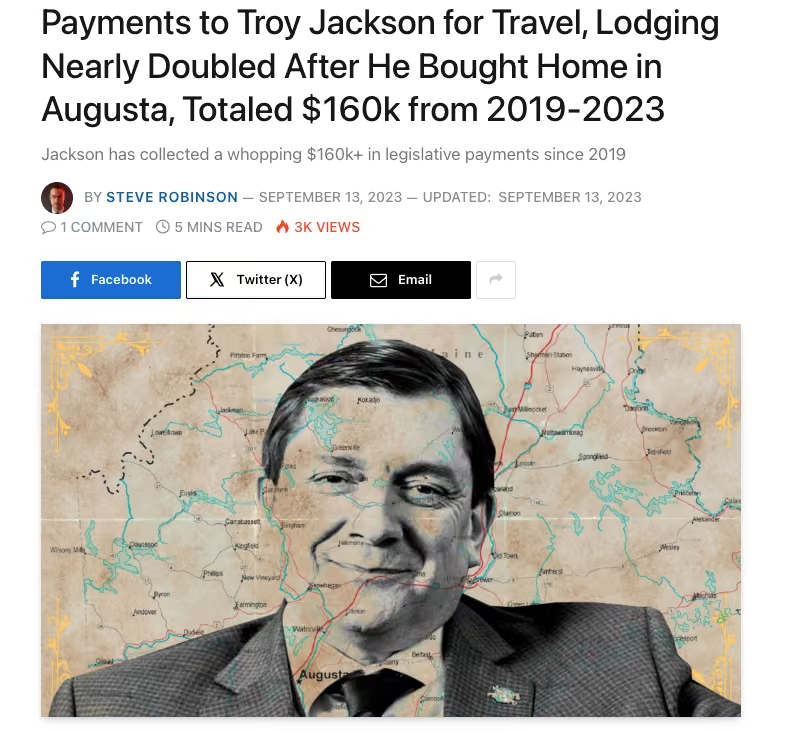


 Brandi Kruse


 Alex Seitz-Wald


 Maine Girl Dads


 Lead Maine


 Reagan Paul


 TheUnquirer

 Dr. Oz CMS


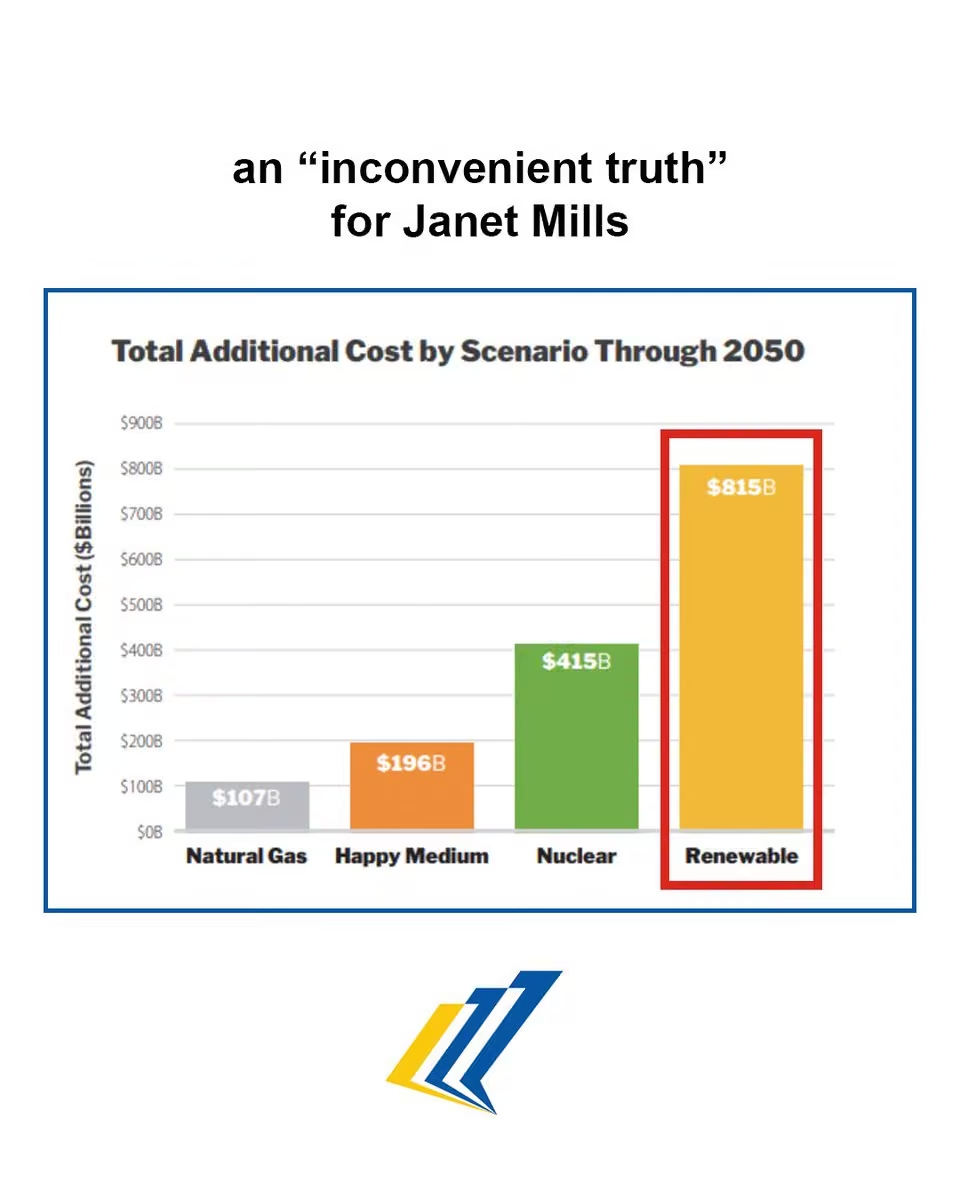


 Center for Election Confidence

 Shawn Ryan Show




 Not the Bee


 Shawn Ryan


 Wall Street Apes
 Isaac Orr


 🅱️ryce N.Y. Chinault
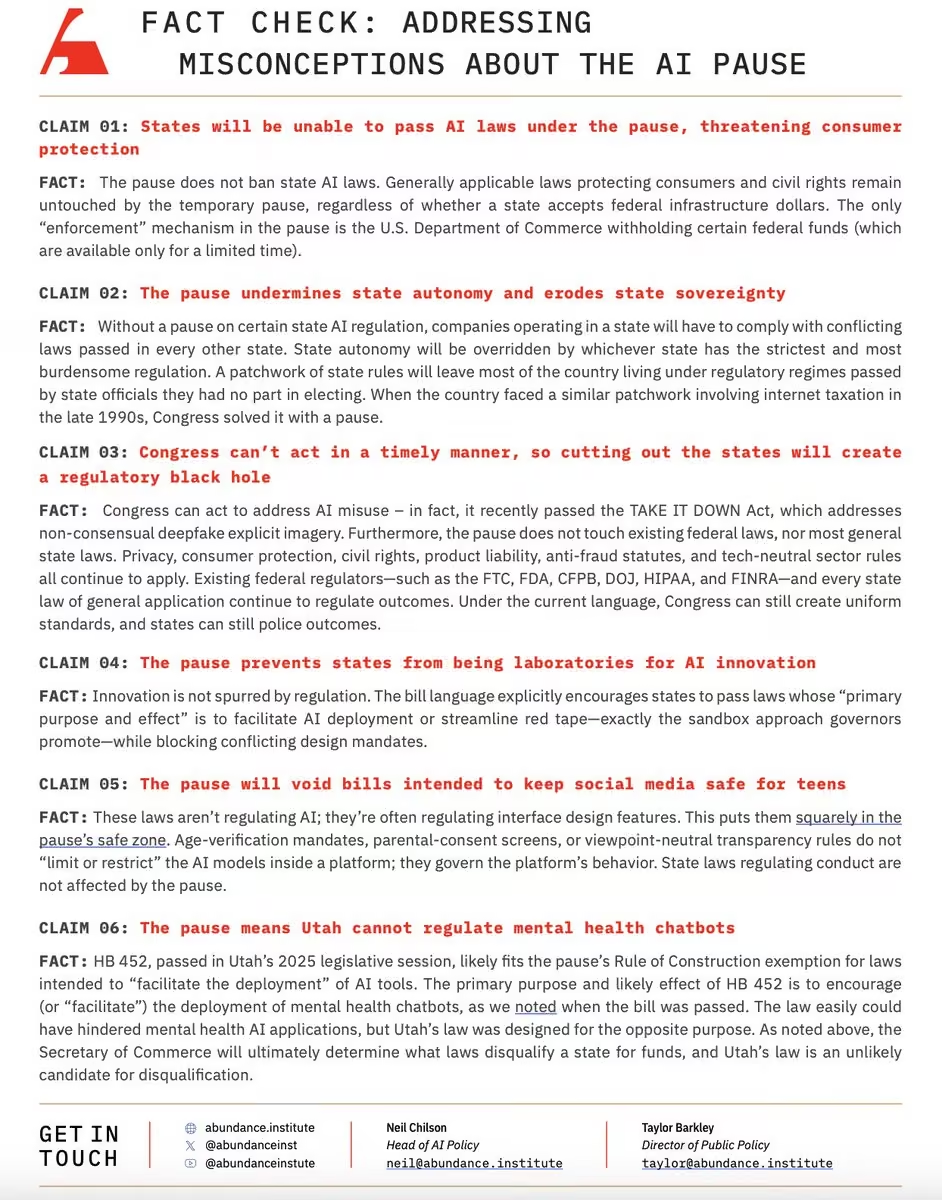

 Neil Chilson ⤴️⬆️🆙📈 🚀


 Chris Woodward


 Fiscal Alliance Foundation


 Paul Diego Craney


 Massachusetts Fiscal Alliance
 ACK4whales






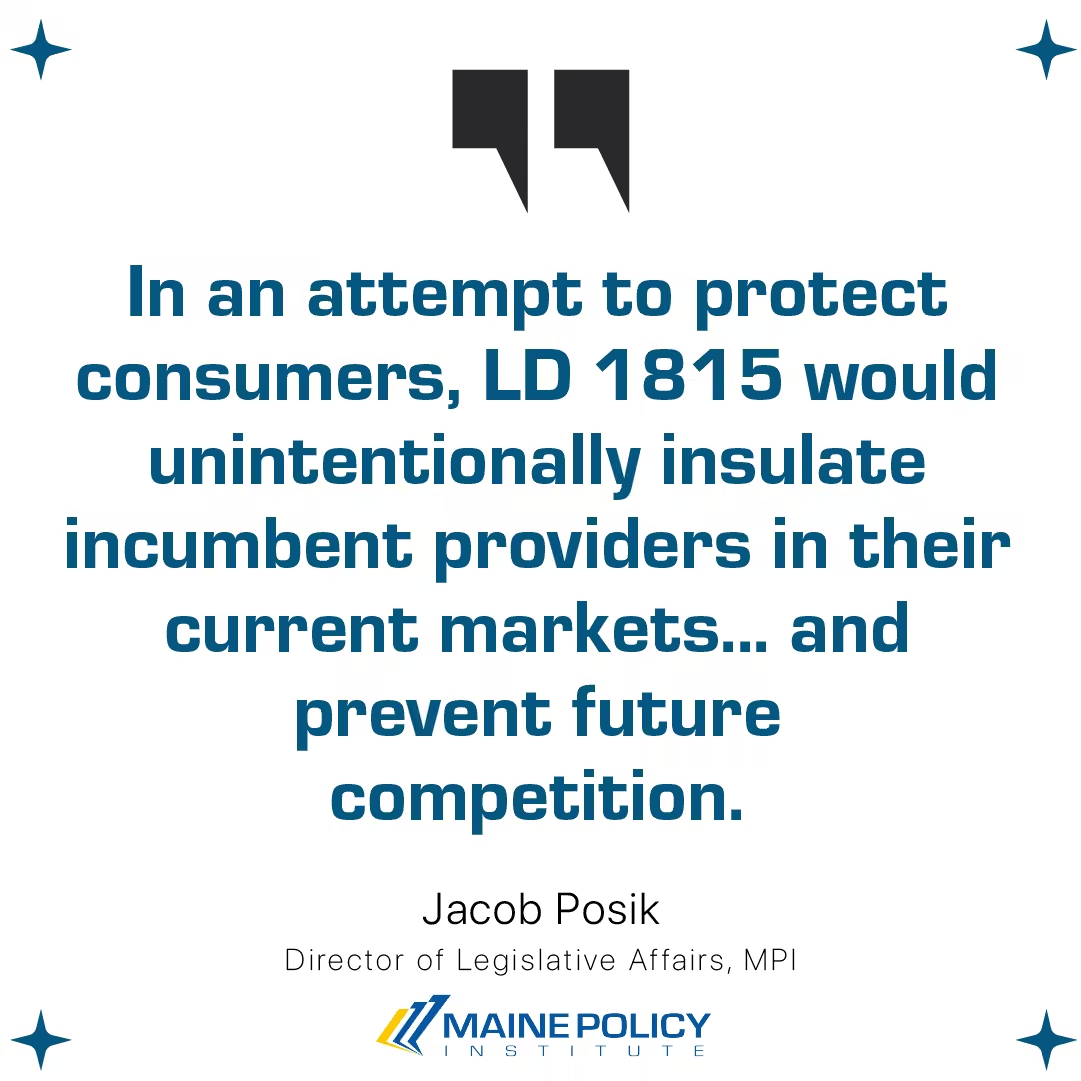


 Phil Kerpen


 The Knee Regulatory Research Center


 Eric Brakey 🌲🦔


 Nick Murray
 Ben Smith

 American Energy Alliance


 Portland Press Herald


 Maine Senate Democrats




 Michael P Senger


 Heritage Action


 Sam Adolphsen

 Maine AFL-CIO


 Joshua Chaisson
 Corey A. DeAngelis, school choice evangelist
