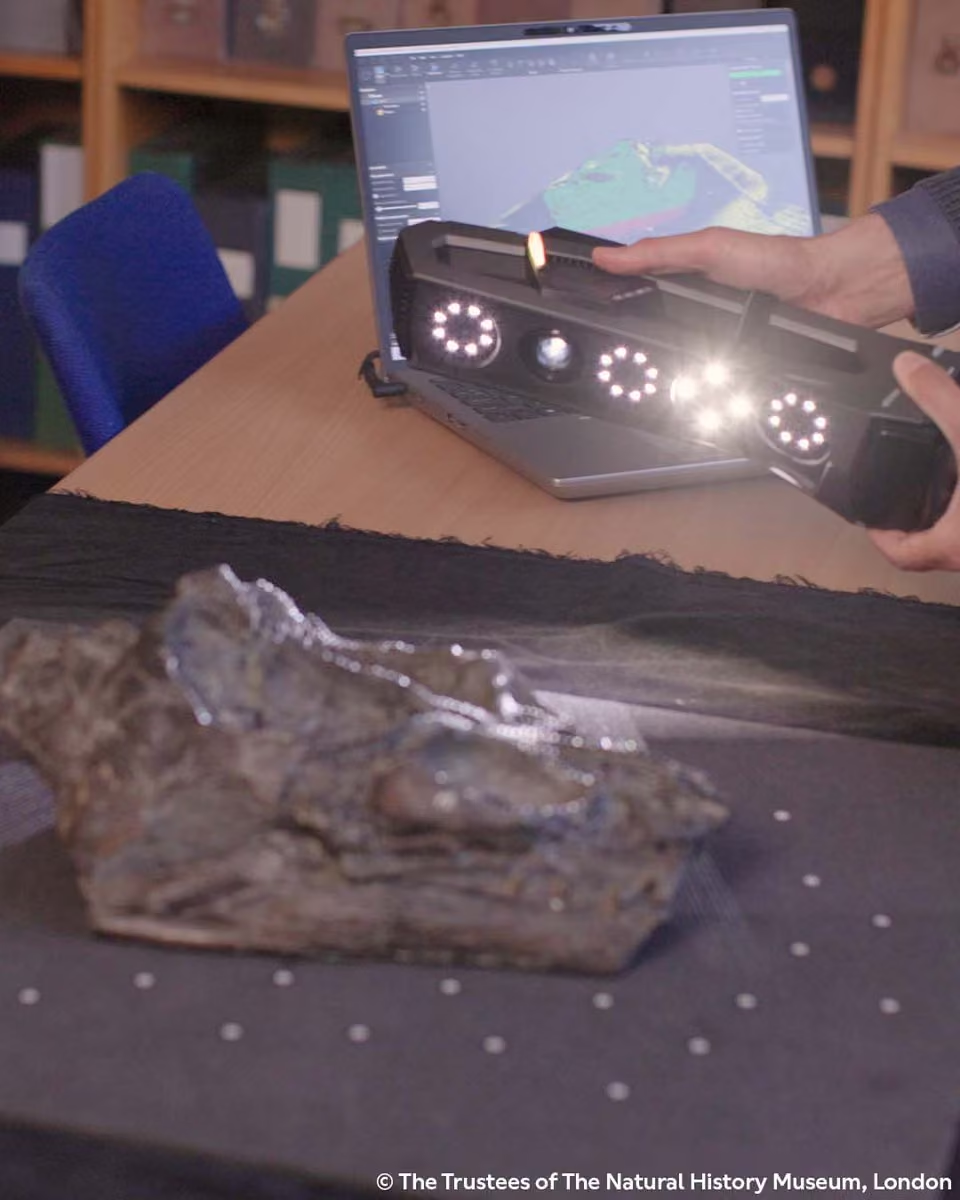
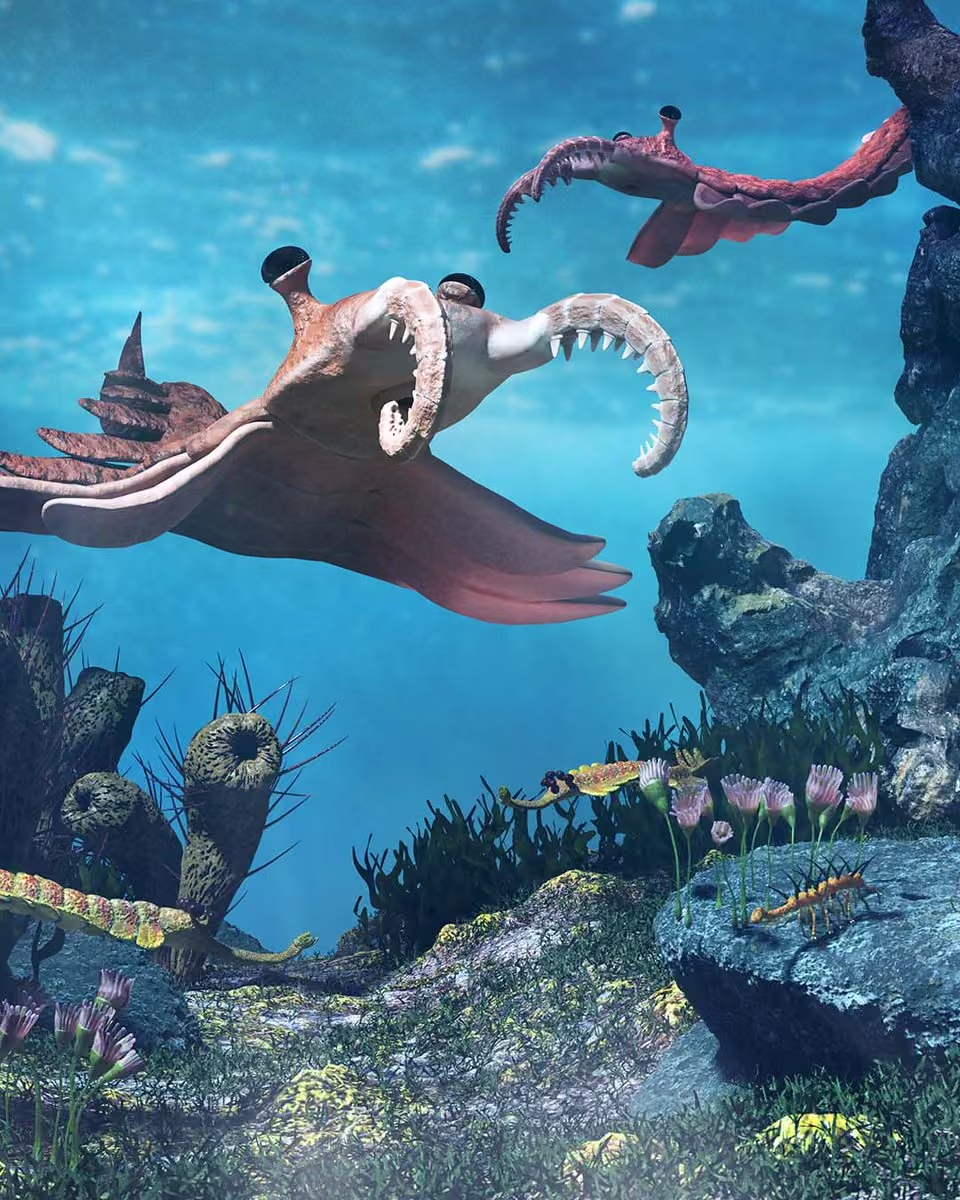
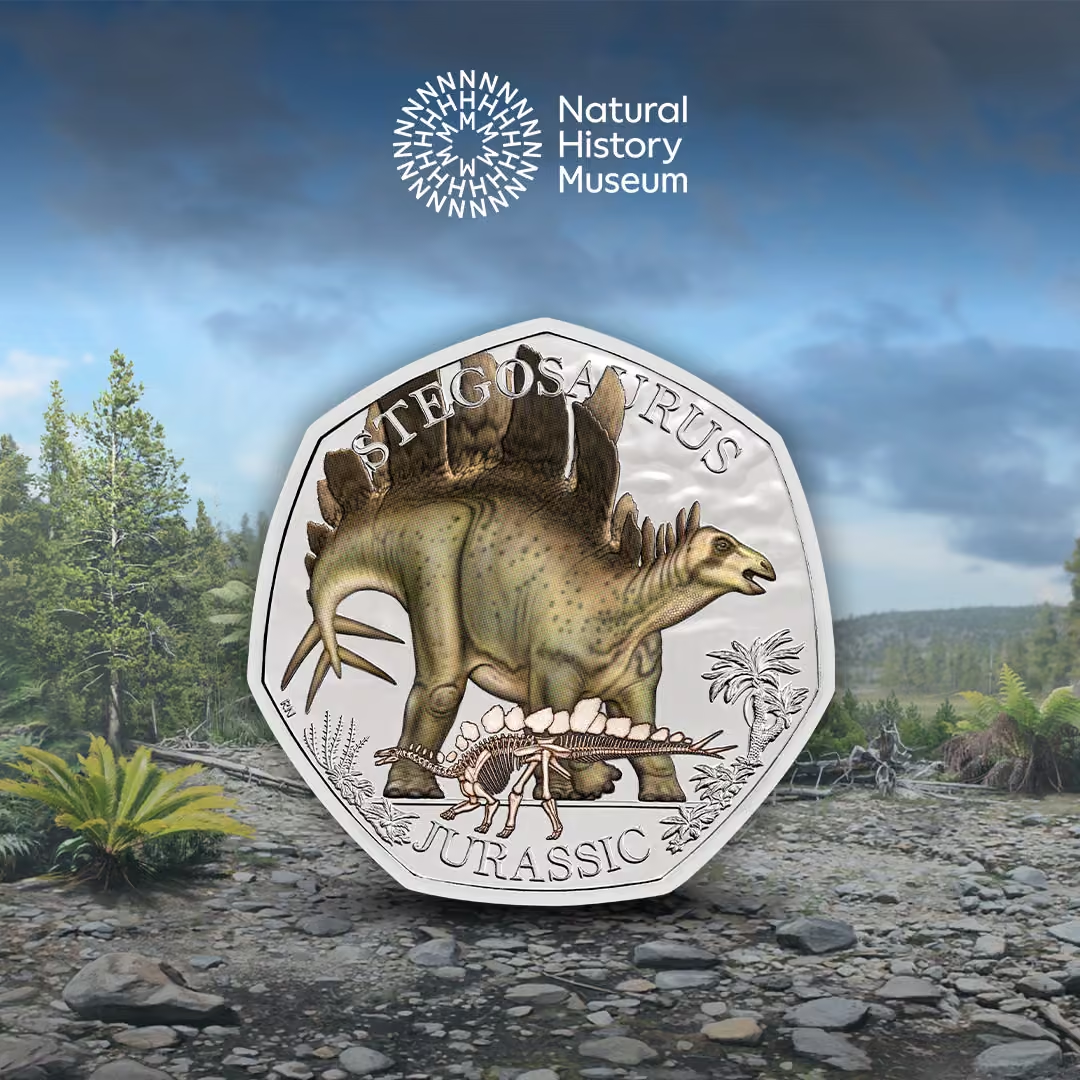
Due to popular demand, our exhibition Jurassic Oceans will be extended until 21 February 2027! 🎉
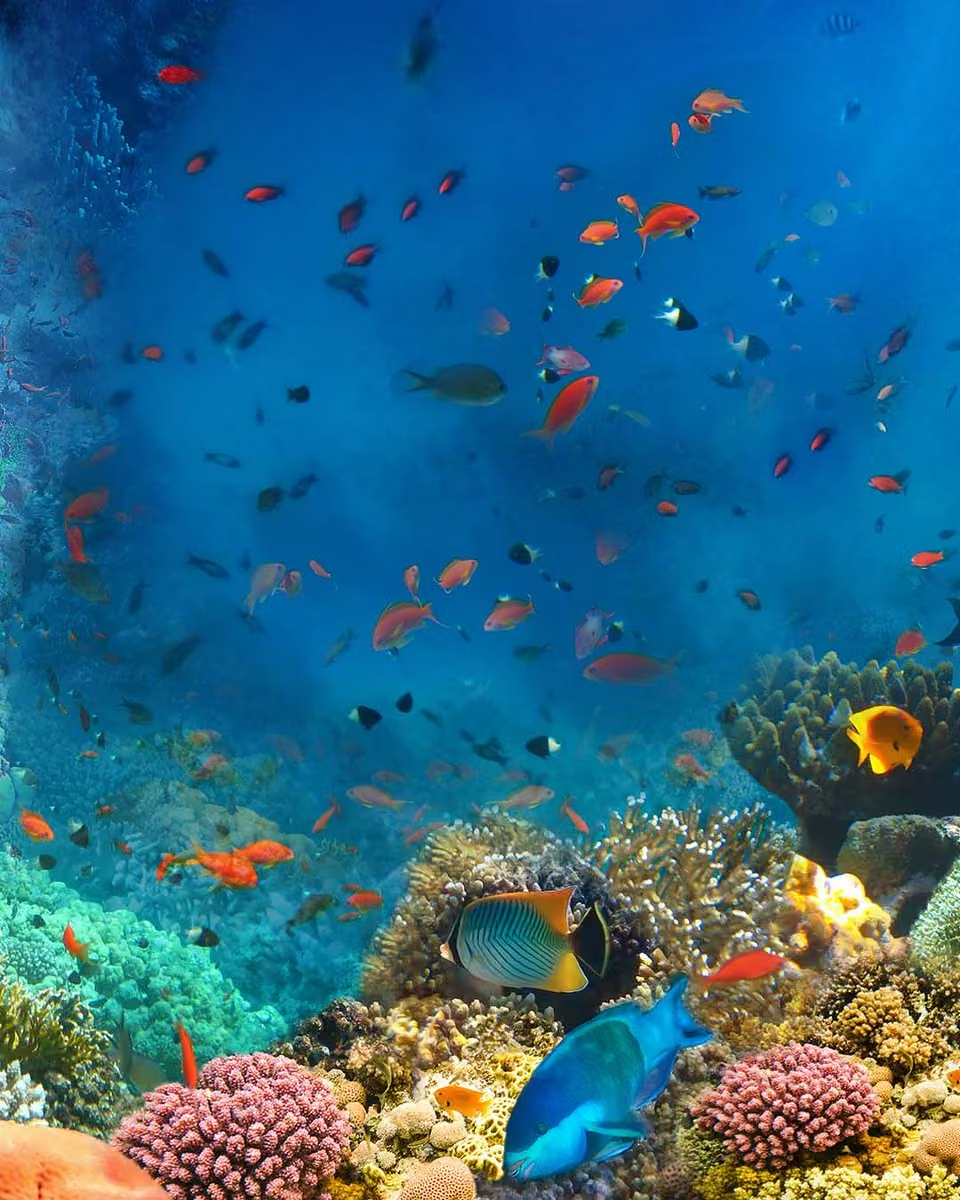
This immersive experience takes you back 200 million years to the prehistoric seas. 🌊
Book your tickets to see these marine predators 👉 www.nhm.ac.uk/visit/exhibitions/jurassic-oceans.html
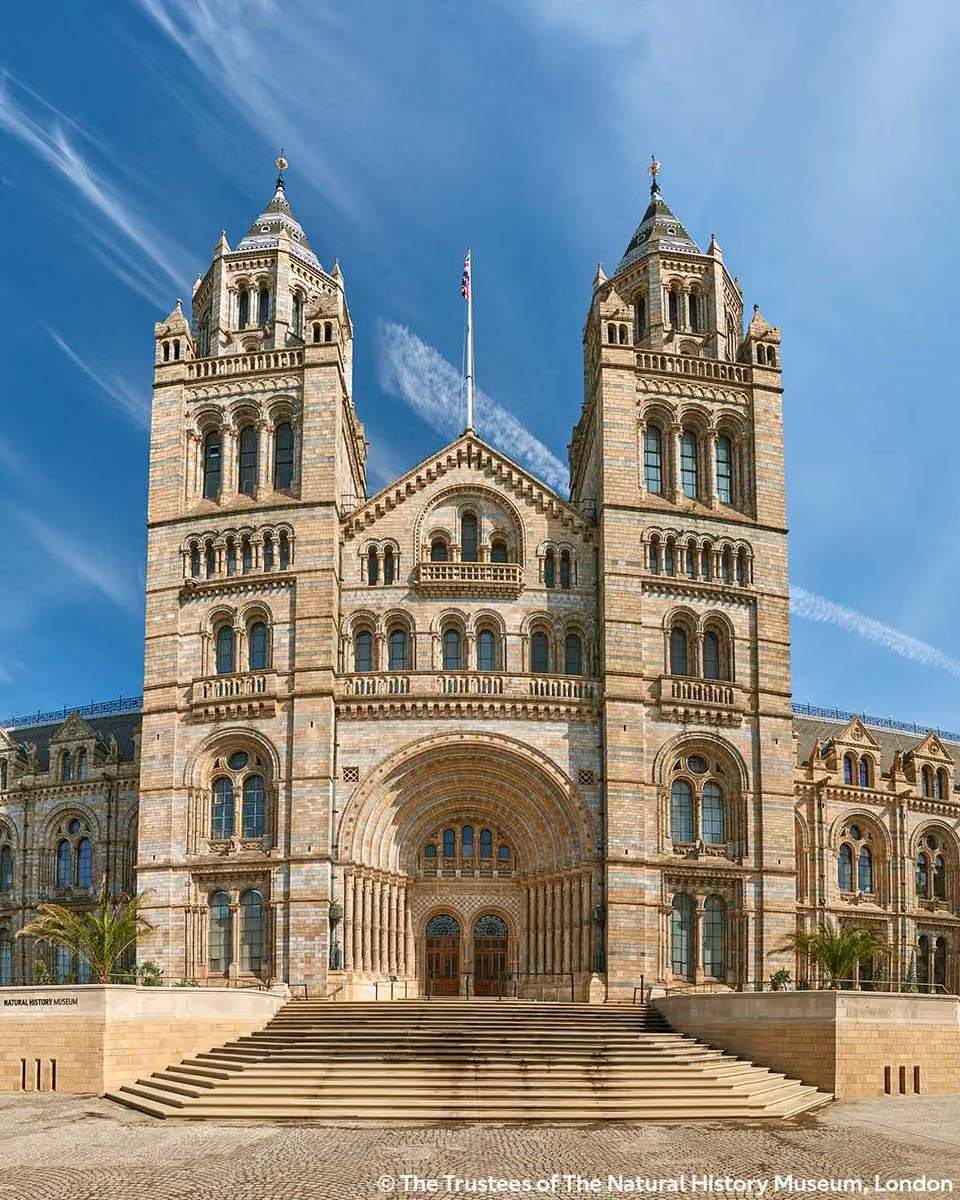
Natural History Museum, London
The Natural History Museum in London, England, is a museum that exhibits a vast range of specimens from various segments of natural history. It is one of three major museums on Exhibition Road in South Kensington, the others being the Science Museum and the Victoria and Albert Museum. The Natural History Museum's main frontage, however, is on Cromwell Road. More on Wikipedia
-
Natural History Museum
@NHM_London

-
Natural History Museum
@NHM_London
We can’t get enough of these beautiful gems! 💎✨
Did you know that you can find hundreds of gems, rocks and minerals in our Vault? It’s tucked at the back of our Minerals Gallery and it’s one of our favourite spaces in the Museum. -
Natural History Museum
@NHM_London
About 200 years ago, someone loved weevils so much they had one set in a gold ring. Inside this ring sits a Hispaniolan regal weevil, found only on the Caribbean island of Hispaniola.
Have you ever seen anything like this before? -
Natural History Museum
@NHM_London
Voyager 1, the most distant human-made object in space, is about to reach an incredible new milestone! 🚀
Can you guess what it is?
Natural History Museum
@NHM_London
On 18 November, Voyager 1 is expected to reach one light-day from Earth! 🌌
That's almost 26 billion kilometres, which is more than five times the distance between Earth and Neptune.
Launched in 1977, the spacecraft's mission was to explore the outer Solar System.
Natural History Museum
@NHM_London
Its close flybys of Jupiter and Saturn transformed our understanding of these giant planets and their moons.
Voyager 1 even helped discover two previously unknown moons of Jupiter and five of Saturn! 🪐
Almost 50 years later, it’s still travelling further into the unknown. 🚀 -
Natural History Museum
@NHM_London
Can you guess what this bird is called? 🪶
Here’s a clue: it was native to New Zealand!
Vote in the below poll! 👇
Natural History Museum
@NHM_London
Time to vote!
-
Natural History Museum
@NHM_London
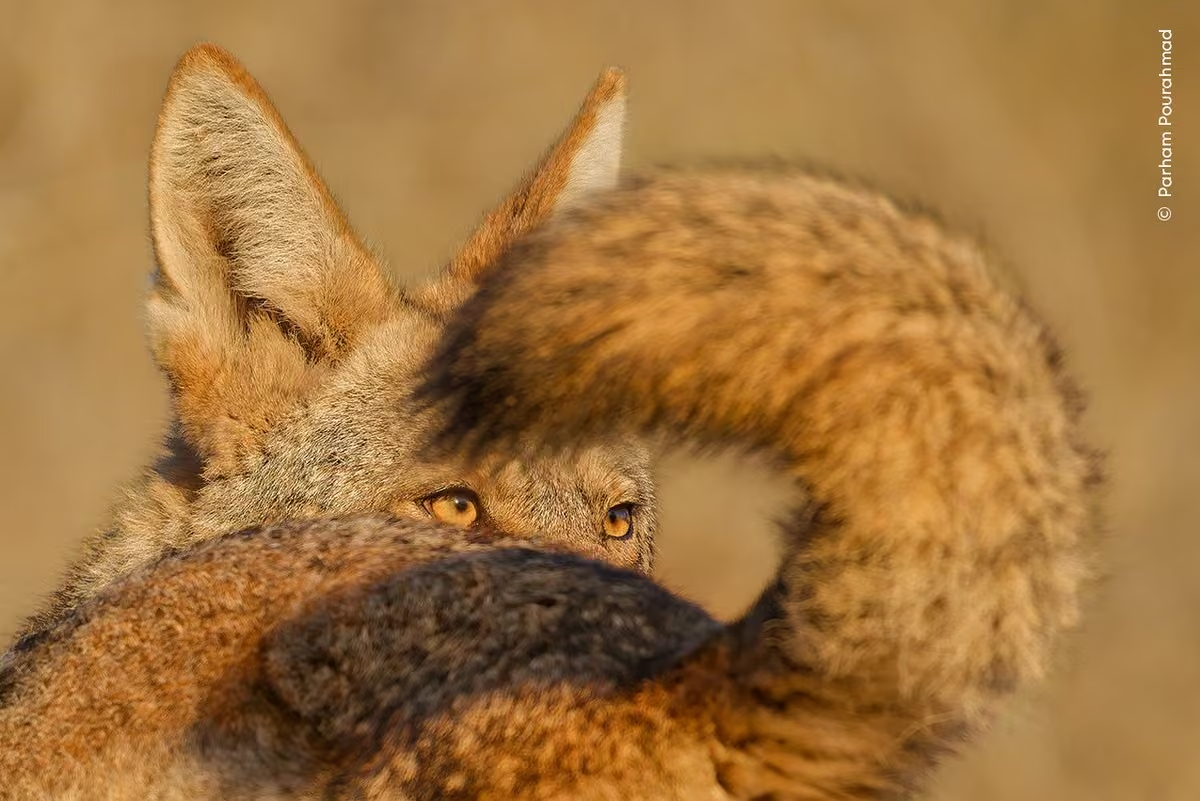
Could you be the next Wildlife Photographer of the Year? 📸
From adorable animal portraits to breathtaking landscapes, we’re looking for photographs that tell unique stories about our planet.
Find out more information and apply before 3 December 2026: www.nhm.ac.uk/wildlife-photographer-of-the-year/competiti… -
Natural History Museum
@NHM_London
How do you dress a giant animatronic T. rex in a Christmas jumper? 🎄
Standing almost 15 feet tall, our T. rex is once again dressed to impress! This year’s jumper took 12 hours to make and pays homage to our beloved Stegosaurus, Sophie!
Who’s coming to see it in person? 👀 -
Natural History Museum
@NHM_London
Opening today at the Museum, come and experience the intriguing work of artist and filmmaker John Akomfrah. 👏
The multi-screen installation explores how migration, colonialism and empire have shaped the planet, its people and its natural environments alike. -
Natural History Museum
@NHM_London
Our online ticketing system is down for maintenance right now. Don't worry - you can still get free entry by walking up and can buy tickets for special exhibitions and events once at the Museum. We're sorry for any inconvenience 🦕
-
Natural History Museum
@NHM_London
🦖 A new species of dinosaur has been identified in the UK!
But which famous dinosaur was it closely related to?
Natural History Museum
@NHM_London
The answer is Iguanodon! 🦕
This plant-eating dinosaur was around four metres long when it died and lived around 125 million years ago.
Its fossils were excavated at a brickworks in Surrey in 2001 and donated to the Natural History Museum, where they remained until scientists identified them as a new species.
Natural History Museum
@NHM_London
The new species has been named Paludohadros proudlovii in honour of Will Proudlove, a manager at the brickworks who sadly died just one year before its discovery.
A passionate dinosaur enthusiast, Will loved searching for fossils. Now, his name lives on in this remarkable discovery. -
Natural History Museum
@NHM_London
This isn't what it looks like...😱🍄🟫
Despite its macabre appearance – and name! – dead man's fingers is a common fungus found all over the world! ☝️
Natural History Museum
@NHM_London
It's a saprotroph fungus, meaning that it feeds on dead organic material. It's a common sight in British woodlands, and you'll usually find it on rotten tree stumps! Have you ever seen it?
-
Natural History Museum
@NHM_London
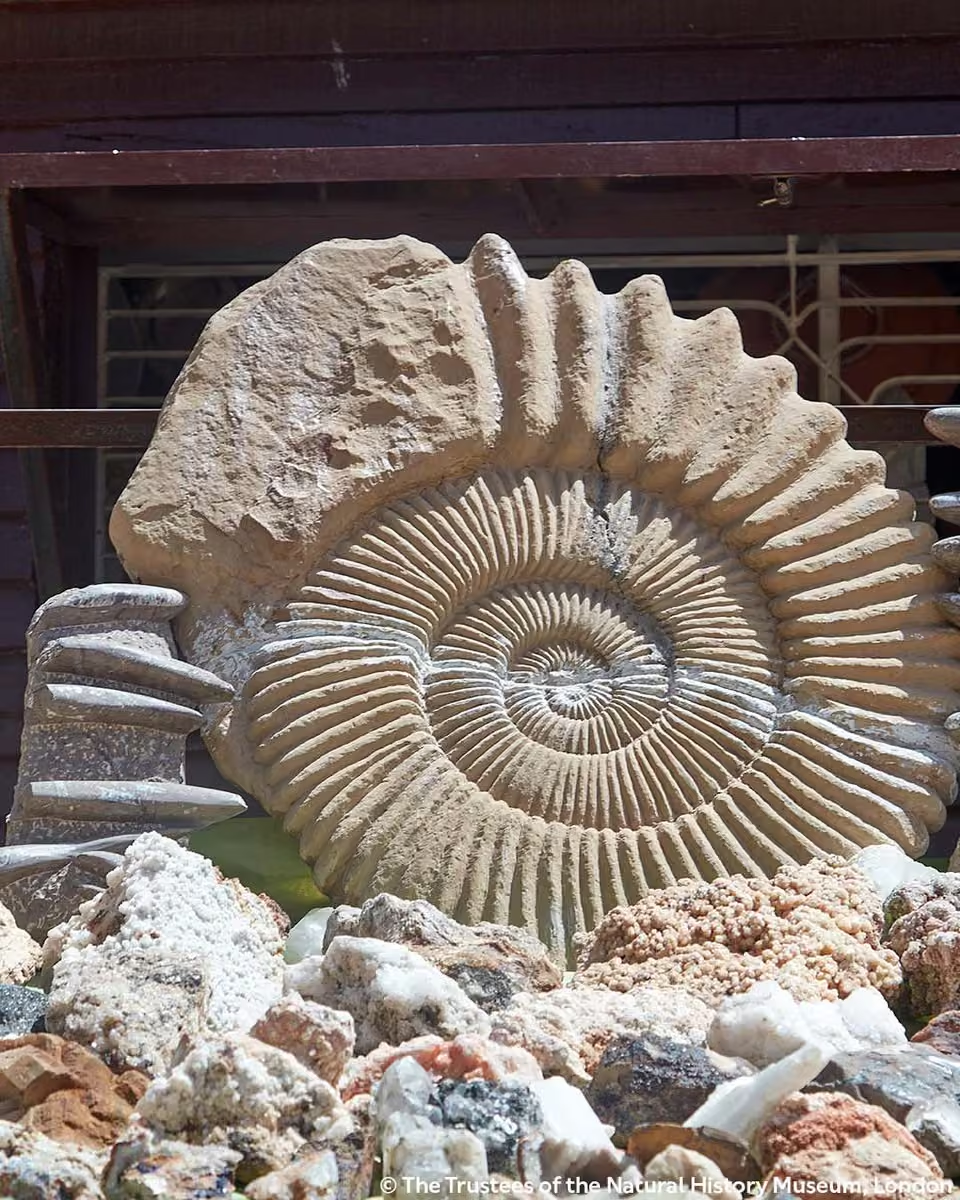
Have you ever seen such pretty ammonites? ✨ 🌀
These specimens have preserved their mother-of-pearl shells, which give them their distinctive shiny look! -
Natural History Museum
@NHM_London
If you're planning to visit the Museum this weekend, please be aware that South Kensington Underground Station will be exit only from Friday 30 October to Sunday 1 November between 09.30-17.00 due to overcrowding.
We recommend planning your journey in advance and considering alternative routes to the Museum. 🦕 -
Natural History Museum
@NHM_London
A moment of appreciation for the beautiful arches in the Museum - it’s not nicknamed ‘the cathedral to nature' for nothing! 😍✨
-
Natural History Museum
@NHM_London
There’s a chill in the air and a special delivery has arrived at the Museum...what could be inside the box? 🤔
-
Natural History Museum
@NHM_London
Are you getting a pumpkin this Halloween? 👀
Natural History Museum
@NHM_London
Have you noticed pumpkins looking a little smaller this year?
Some growers, particularly in Southern England, have reported smaller crops, likely due to this summer's severe drought.
Natural History Museum
@NHM_London
Pumpkins were brought over from the Americas in the 16th century.
But before they became the Halloween stars we know and love, people carved jack-o’-lanterns from turnips and other root veg! 🥕 -
Natural History Museum
@NHM_London
If these dinosaurs look a little odd, it’s because they were made before the Museum was open! 🦖
These are miniature models of the Crystal Palace dinosaurs, which were created when very little was known about these beasts. Have you heard of them before? -
Natural History Museum
@NHM_London
🦴 How many specimens do you think are held in the Natural History Museum’s collections?
Natural History Museum
@NHM_London
It’s more than 80 million! 🤯
These specimens hold more than clues to the past, they could help unlock exciting new discoveries about life on Earth. 🌍
Natural history collections around the world contain a treasure trove of DNA just waiting to be explored!
Natural History Museum
@NHM_London
Just 0.2% of known animal and plant species have had their whole genomes sequenced. 🤯
Unlocking DNA from museum specimens could help fill the gaps, revealing new insights into evolution, environmental change and even new medicines. 🔬 -
Natural History Museum
@NHM_London
Meet Barley and Rye, the grey faced Dartmoor sheep! To help maintain our meadows and encourage biodiversity, twice a year we welcome the help of two woolly guests.
Have you visited them yet? We’d love to see your pics. 👀This media couldn't be displayed. See it on the original post. -
Natural History Museum
@NHM_London
The 62nd Wildlife Photographer of the Year exhibition opens today! 🎉 📸
Through 100 awe-inspiring photographs, the exhibition celebrates the variety of life on Earth whilst spotlighting the threats facing many species.
Find out more and book your tickets: www.nhm.ac.uk/visit/exhibitions/wildlife-photographer-of-…
The Wildlife Photographer of the Year exhibition is supported by Lead Corporate Sponsor Nuveen (@NuveenInv), a leading global asset manager. -
Natural History Museum
@NHM_London
A new species of long-clawed dinosaur has been discovered in Europe! 🦖
But where was the fossil found? 🤔
Natural History Museum
@NHM_London
It was found in the UK! 🎉
Acquired by the Natural History Museum in 1924, this fossil went overlooked in a drawer for more than a century.
Now, scientists have revealed it belongs to a previously unknown dinosaur species!
Natural History Museum
@NHM_London
This 120-million-year-old dinosaur belonged to a group of agile, two-legged predators called megaraptorans, known for their enormous, curved claws measuring about 10–20 cm. 🦖
It likely had feathers and hunted small dinosaurs, lizards and mammals. -
Natural History Museum
@NHM_London
Congratulations to our Wildlife Photographer of the Year winners! 🎉📸
🐘 Federico Veronesi is our Wildlife Photographer of the Year 2026, awarded for his mesmerising image, ‘The Aftermath’, showing a female elephant carrying a deceased calf.
🪲 Oscar Whitfield’s ‘Labour of Love’, capturing a dung beetle, crowns him our Young Wildlife Photographer of the Year 2026. -
Natural History Museum
@NHM_London
A reminder that the Museum is closed today as we are hosting a charity gala. 🦖
We rarely make the decision to close to the public, however, hosting events like this helps us to continue our vital work, including our +350 scientists’ research. -
Natural History Museum
@NHM_London
According to WWF’s Living Planet Report, how much have vertebrate populations declined since 1970?
Natural History Museum
@NHM_London
The answer is 73%. 📉
But what could nature recovery look like?
Natural history collections are time capsules of life on Earth, in some cases, records of living species stretch back hundreds of years.
Natural History Museum
@NHM_London
Millions of specimens, brought together, can help us reconstruct what species and ecosystems looked like in the past.
This evidence can help us understand what has changed, and guide where conservation action could have the greatest impact. 🌿 -
Natural History Museum
@NHM_London
Did you hear that a new species of penguin has recently been described? 🐧
Natural History Museum
@NHM_London
It’s the first penguin species to be described in more than 100 years! 🎉
Researchers studying gentoo penguins identified a previously unknown species, which they’ve named the southeastern gentoo.
Natural History Museum
@NHM_London
Scientists also found that three gentoo subspecies are genetically distinct enough to be considered separate species. 🧬
The newly described southeastern gentoo lives on the Kerguelen Islands in the southern Indian Ocean, one of the most remote places on Earth. -
Natural History Museum
@NHM_London
A new study has found that the genetic diversity of the moss carder bumblebee has fallen by around a quarter across Britain over the past century! 🐝
But where were the most pronounced changes seen?
Natural History Museum
@NHM_London
It was England and Wales! 🏴🏴
When populations become smaller and more isolated, inbreeding can increase, reducing genetic diversity.
Bumblebees are also declining in Scotland, but their genetic diversity hasn’t fallen as much, suggesting habitats may be better connected.
Natural History Museum
@NHM_London
By examining the DNA of museum specimens collected over more than 100 years, scientists could trace how genetic diversity has changed over time. 🧬
This technique could also be used to examine other insects whose populations are becoming more isolated due to habitat loss. -
Natural History Museum
@NHM_London
Autumn is a feast for the eyes, with leaves shifting from vibrant green to shades of crimson, gold, and amber. 🍃🍂
Do you know what triggers tree leaves to change colour in autumn? 🤔
Natural History Museum
@NHM_London
As the days grow shorter and the air turns crisp, the trees that lose their leaves shut down photosynthesis to preserve as much energy as possible. They start by breaking down chlorophyll, the dominant pigment that gives their leaves their green hue during the warmer months.
Natural History Museum
@NHM_London
With the green fading, hidden pigments that have been there all along - yellow flavonoids, orange carotenoids, and red anthocyanins - are revealed, creating the beautiful autumn colours. 🍁
The exact mixture of these compounds varies depending on the species, which explains why some trees are more yellow or red than others! -
Natural History Museum
@NHM_London
What do you think is older, seaweed or dinosaurs? 🤔
Natural History Museum
@NHM_London
You might be surprised to hear that seaweed is much older than dinosaurs!
Discover more about the seaweed display in Hintze Hall in our series, Natural History Museum Showstoppers.This media couldn't be displayed. See it on the original post. -
Natural History Museum
@NHM_London
A reminder that the Museum will be closed on 9 October as we're hosting a charity gala. 🦖
We rarely close to the public, however, hosting events like this helps us to continue our vital work, including scientist research and finding solutions to the planetary emergency. -
Natural History Museum
@NHM_London
Do you know of much of our DNA we share with gorillas? 🦍🧬
Natural History Museum
@NHM_London
Chimpanzees and bonobos are our closest living relatives in the animal kingdom, sharing approximately 98.7% of our DNA. Gorillas come in close second, as we share about 98% of our DNA with them! 😲
-
Natural History Museum
@NHM_London
Rhinos are known for their iconic horns, but what they’re made up for might surprise you…
Rhino horns are made up of the same stuff as which of our body part? 🦏
Natural History Museum
@NHM_London
Rhino horns aren't made of bone like antlers, they're largely made of keratin, a protein also found in human fingernails, and hair! Did you know that their horns don't stop growing during their lifetime? 😲
-
Natural History Museum
@NHM_London
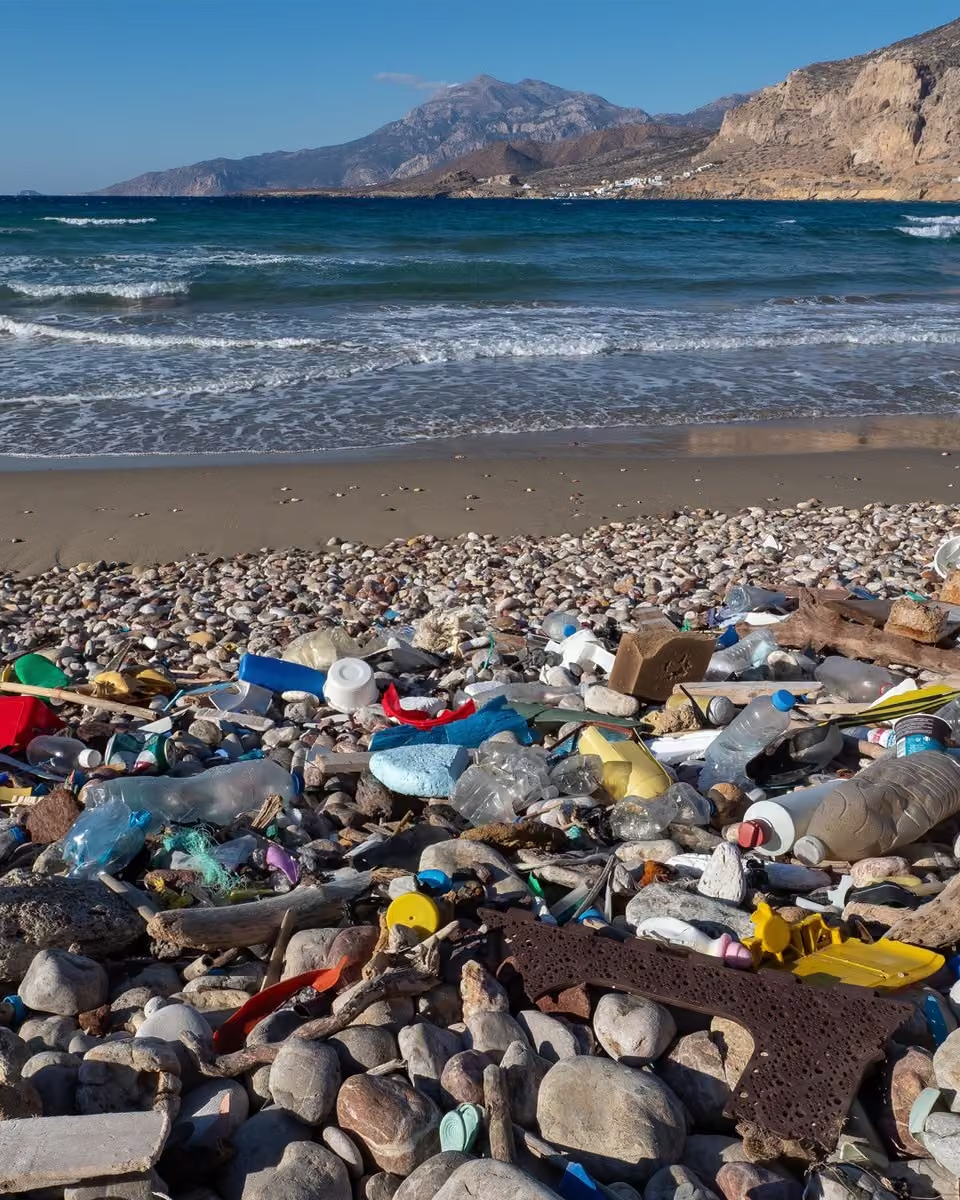
Today is the start the Marine Conservation Society’s Great British Beach Clean! Join thousands of volunteers taking part in beach cleans across the UK.
The litter data collected is used to make a positive impact on our ocean. 🐚
Find out more: www.mcsuk.org/what-you-can-do/beach-clean/gbbc/ -
Natural History Museum
@NHM_London
🌍Migratory birds can travel huge distances every year!
Many follow major routes across the globe.
But what are these routes called?
Natural History Museum
@NHM_London
🐦They’re called flyways!
The latest State of the World’s Birds report is out, and it contains some worrying news.
About 45% of migratory bird species are declining, including cuckoos, turtle doves and Arctic terns.
Natural History Museum
@NHM_London
But some have already been lost. 💔
Seven migratory bird species are thought to have gone extinct in the past 150 years, including the slender-billed curlew.
Stronger protection along migration routes, particularly major flyways, could help migratory birds recover. -
Natural History Museum
@NHM_London
Our new temporary exhibition, Nature and Us, is open! 🌿
Housed in a gallery closed to the public for over 80 years, this exhibition explores our changing relationship with nature. There's over 50 specimens to discover – would you like to learn more about them? 👇 -
Natural History Museum
@NHM_London
Do you think the amount of plastic in our oceans is increasing?
Natural History Museum
@NHM_London
A 16-year study of sable shearwaters on Australia’s Lord Howe Island has found a worrying trend.
More and more plastic is ending up in the birds’ stomachs.
Last year, one bird was found with a record-breaking 900 pieces in its stomach.
Natural History Museum
@NHM_London
As talks on a Global Plastic Treaty continue, researchers say stronger recycling laws, including for items like bottle lids, will be vital to tackling plastic waste.
Would you support a global treaty on plastics? Let us know in the comments 👇 -
Natural History Museum
@NHM_London
Can you spot the difference? 👀
Although these photos were taken over 100 years apart, our Minerals Gallery is much the same - right down to the original oak display cabinets from 1881.
Do you like the original Victorian gallery feel, or do you prefer something more modern?
Natural History Museum
@NHM_London
Don't worry, we love the Minerals gallery and aren't changing it!
-
Natural History Museum
@NHM_London
Did you know that some of the treasures in our collection were donated as gifts in wills? 🔬
This #rememberacharityweek, why not help support scientific research and inspire the next generation by leaving a gift in your will? 🎓
Find out more: www.nhm.ac.uk/support-us/legacy-giving.html -
Natural History Museum
@NHM_London
If you've been on walks this summer, you might've suffered the pain of a nettle's sting!
Can you guess why nettles sting? 🤔🌿
Natural History Museum
@NHM_London
Their stings are a defence mechanism to protect themselves from being eaten by herbivores.
The plants are covered in needle-like hairs called trichomes. When something touches them, the tips break off, releasing chemicals that cause an allergic reaction. 😖
Natural History Museum
@NHM_London
Despite their bad reputation, nettles can be beneficial to our health! When prepared properly, they can be turned into tea, pesto and even baked into cakes. 🍰
They’re also crucial for biodiversity, providing food for a variety of pollinators, including butterflies. 🦋 -
Natural History Museum
@NHM_London
Which dinosaur do these hands belong to? 🦕
We know you love our dinosaurs, so today we're testing your knowledge! Vote in the poll below. 👇
Natural History Museum
@NHM_London
Vote now!
-
Natural History Museum
@NHM_London
If you’ve seen Jurassic Park, you’re probably familiar with amber. 🦕
But do you know what it actually is?
Natural History Museum
@NHM_London
It’s fossilised plant resin! 🌳
Scientists have discovered the oldest amber in China, dating back around 385 million years.
The discovery shows that resin production evolved in plants much earlier than previously demonstrated.
Natural History Museum
@NHM_London
Plants produce resin to help seal wounds and protect against damage from pathogens, insects and wildfires. 🔥
The evolution of resin may have been an important innovation that helped early terrestrial plants survive and thrive as they spread across the land. 🌱 -
Natural History Museum
@NHM_London
Our T. rex needs regular check-ups to keep it roaring so it’ll be off display for maintenance from 7 to 25 September. 🦖
But don't worry, we have plenty of other dinosaurs to visit around the Museum, which one is your favourite? #naturalhistorymuseum #dinosaurThis media couldn't be displayed. See it on the original post. -
Natural History Museum
@NHM_London
Our T. rex needs regular check-ups to keep it roaring so it’ll be off display for maintenance from 7 to 25 September. 🦖
But don't worry, we have plenty of other dinosaurs to visit around the Museum, which one is your favourite?
#naturalhistorymuseum #dinosaur -
Natural History Museum
@NHM_London
Dorothea Bate has been honoured with a Historic England blue plaque at the Natural History Museum in Tring! 🌟
A pioneering palaeontologist, she was known for her fossil mammal discoveries. 🦴
But which prehistoric animal did Dorothea discover evidence of on Cyprus?
Natural History Museum
@NHM_London
It was miniature elephants! 🐘
One of the first female scientists to work at the Museum, Dorothea led expeditions in England and further afield.
Her discoveries also include Myotragus, a goat-like antelope that lived around 6,000 years ago.
Natural History Museum
@NHM_London
In 1924, Dorothea became curator of Ice Age birds and mammals before eventually becoming Officer in Charge at Tring.
More than 70 years after her death, her ideas, writing and collections continue to inspire and inform new generations of scientists. 🔬 -
Natural History Museum
@NHM_London
We're excited to share our new exhibition, Nature and Us! 🌱
Housed in a space closed to the public since World War II, this free temporary exhibition questions how our relationship with nature has changed over time through an eclectic mix of objects, tools and specimens.
Photography credit: © The Trustees of the Natural History Museum London. -
Natural History Museum
@NHM_London
What colour is octopus blood? 🐙
Natural History Museum
@NHM_London
Octopus blood is blue! 🔵
It contains a copper-based protein (instead of iron-based, like our blood) which binds with oxygen to appear blue. If it becomes deoxygenated, it loses its blue colour and turns clear instead.
Did you get it right, or learn something new? We'd love to know! 🐙 -
Natural History Museum
@NHM_London
The glass models that tell the story of life in the deep sea. 🦑
These were made by Leopold and Rudolf Blaschka, who created over 10,000 glass models of jellyfish, octopus and squid.
Have you seen these in our Treasures gallery? 😍 -
Natural History Museum
@NHM_London
We’re excited to share a first look at the 62nd Wildlife Photographer of the Year images! 😲 📸
Featuring 100 photographs awarded for their creativity and skill, get ready to explore the beauty of the natural world in our new exhibition!
Which image is your favourite?
Natural History Museum
@NHM_London
Discover more and book your tickets to the world’s most prestigious wildlife photography exhibition, opening 16 October 2026: www.nhm.ac.uk/visit/exhibitions/wildlife-photographer-of-…
The exhibition is supported by Lead Corporate Sponsor, @NuveenInv . -
Natural History Museum
@NHM_London
Whales are becoming a more regular sight off the east coast of Greenland as sea ice disappears! 🐋
According to a new study, which species showed an increase in sightings between 1987 and 2025?
Natural History Museum
@NHM_London
It was all of them! ✅
Scientists have also observed seasonal “feeding frenzies” as the whales hunt capelin, a cold-loving fish that is moving farther north as the seas warm. 🐟
Natural History Museum
@NHM_London
The Arctic and North Atlantic are among the fastest-warming regions on Earth. 📈
As sea ice retreats, baleen whales are taking advantage of newly accessible feeding grounds, a shift that could have major impacts on the local food web. 🦐 -
Natural History Museum
@NHM_London
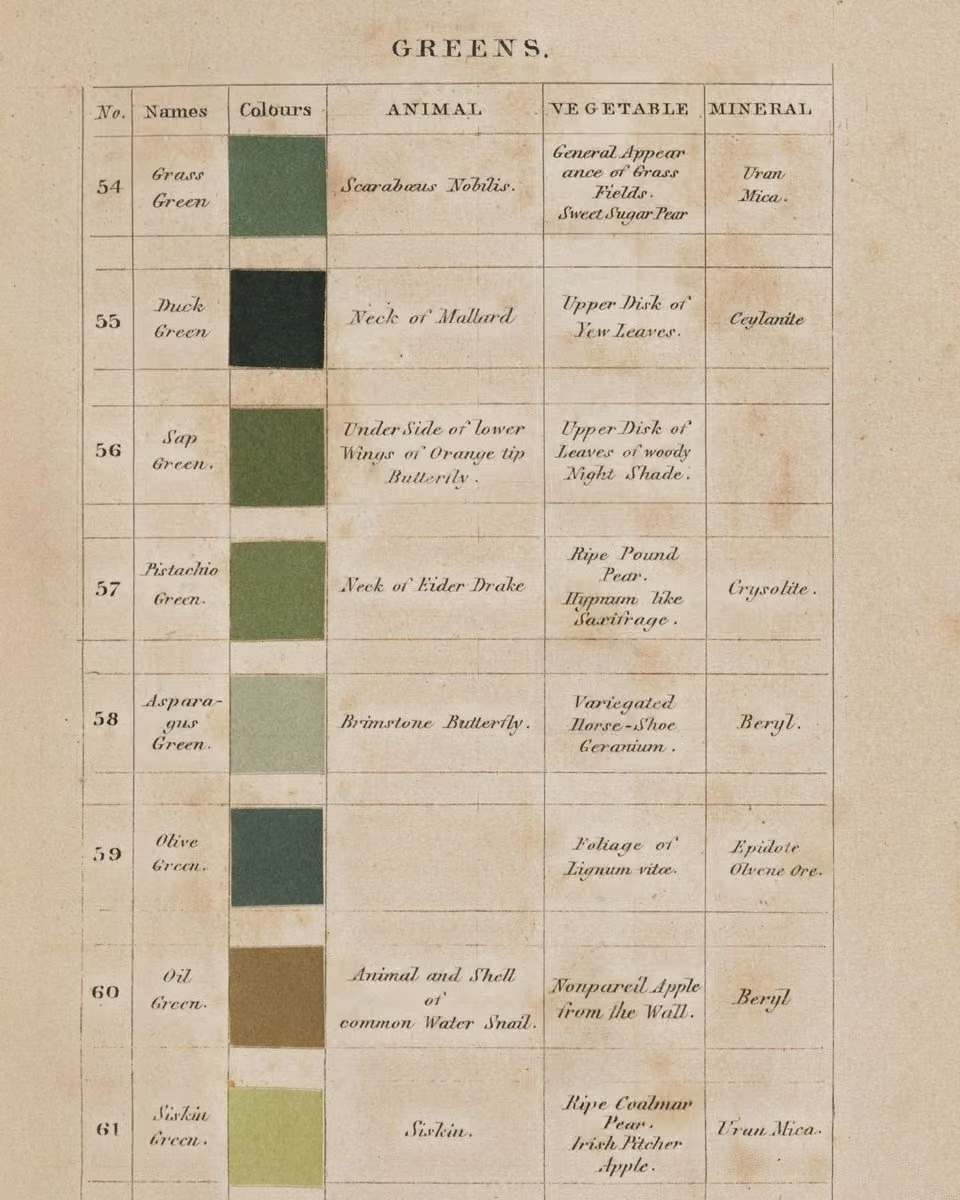
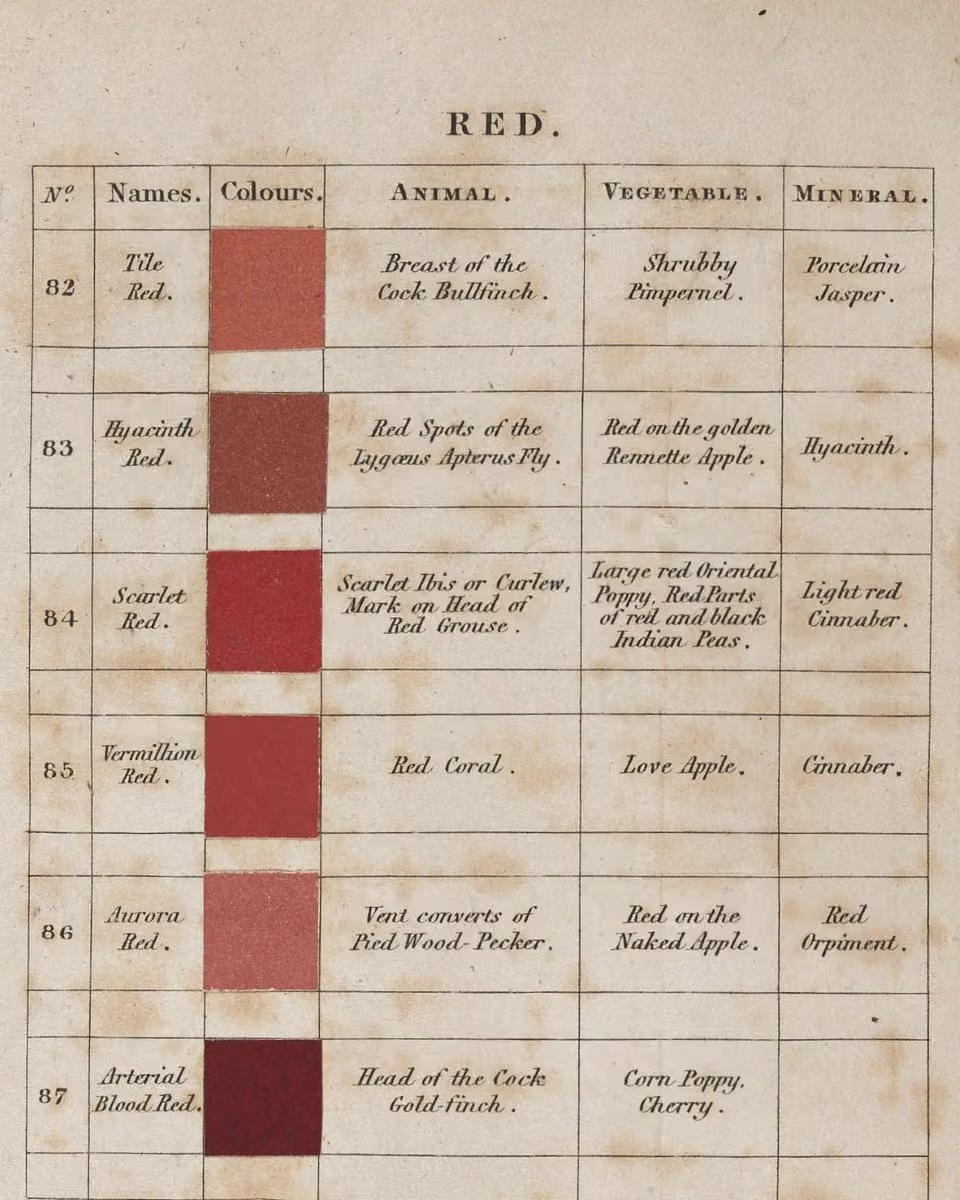
This beautiful dictionary of colours found in nature dates back to more than a century before Pantone. 🎨
Werner's Nomenclature of Colour was an indispensable resource for Charles Darwin, helping him describe new species.
We love these natural colours - which do you like best? -
Natural History Museum
@NHM_London
There’s almost 150 years of history between these photos. 🏛️
These two photos were taken in the same spot, 145 years apart, facing the west balcony in Hintze Hall.
What changes can you see? 👀 -
Natural History Museum
@NHM_London
Which of these is NOT another name for a stag beetle?
Natural History Museum
@NHM_London
Stag beetles have been called oak-ox, billywitches and thunder-beetles, but not squeezy bugs. 🪲
Historically, people saw stag beetles flying in warm, muggy weather before thunderstorms and believed that they could summon thunder - actually, it's just prime mating weather! -
Natural History Museum
@NHM_London
⚠ Plastic pollution is devastating seabird populations!
A pioneering 15-year study has revealed how the amount of plastic sable shearwater chicks consume affects their chances of surviving at sea. 🌊
Which remote island was the study conducted on?
Natural History Museum
@NHM_London
It was Australia’s Lord Howe Island! 🏝️
When the chicks are old enough, they head out to sea for several years before returning to the colony to breed.
The study found that consuming just 0.5g of plastic reduces a chick’s chances of returning by 12%.
Natural History Museum
@NHM_London
Scientists believe other seabird populations are likely to be similarly affected by plastic pollution.
Without immediate action to reduce plastic entering our oceans, the problem will only get worse.
Would you reduce your plastic consumption to help nature? -
Natural History Museum
@NHM_London
The time between birth and independence is called the childhood dependency period!
It's no surprise that humans have the longest childhood dependency period, but can you guess which animal stays close to their mother for over seven years? 👶
Natural History Museum
@NHM_London
Young orangutans spend seven to ten years close to their mothers! Mothers teach their young what food to eat, show them where to find it, and keep them safe.
-
Natural History Museum
@NHM_London
The light is shining through the stained glass of our Treasures gallery to frame Hope and Hintze Hall beautifully this morning. 🐋
From Hope and all of us here at the Natural History Museum: good morning, and have a fantastic start to the week! 🌞 -
Natural History Museum
@NHM_London
The air isn’t just for insects, bats and birds - did you know there are other airborne animals? ☁️
Here are four fantastic flyers that you might not expect to see when you look to the skies…Post not available here, view on X
Natural History Museum
@NHM_London
Also known as parachute frogs, Wallace's flying frogs spend most of their lives in trees, but use their webbed feet to glide up to 15 metres between trees or to the ground to catch prey or escape predators. 🪂
They have large toe pads which enable a soft landing and help them stick to tree trunks. 🐸
Natural History Museum
@NHM_London
Which was your favourite of these fantastic fliers?
-
Natural History Museum
@NHM_London
It's World Lizard Day! Can you guess which continent lizards DON’T live on? 🦎
Natural History Museum
@NHM_London
Lizards live in a wide variety of habitats, from deserts to jungles and even urban environments.
They can be found all over the planet, except Antarctica! As they’re cold-blooded animals, they prefer warmer environments. 🦎 -
Natural History Museum
@NHM_London
Minerals gallery appreciation moment 🚨💎
Doesn’t our Minerals gallery look gorgeous in the morning sun? Let us know when you last visited it below! 👇 -
Natural History Museum
@NHM_London
You probably know the cranefly better by its nickname, the daddy long legs!
But do you know why they have such long legs? 🦵🏽
Natural History Museum
@NHM_London
The legs of a cranefly act like whiskers, with their long reach helping them feel for obstacles and nearby hazards! They also add stability during flight and confuse predators. 🪰
Find out more about the life of a daddy long legs here: www.nhm.ac.uk/discover/crane-fly-daddy-long-legs-facts.html -
Natural History Museum
@NHM_London
There’s nothing quite like walking around our Museum gardens during golden hour. 🦕 🌇
When was the last time you visited? Let us know below! 👇 -
Natural History Museum
@NHM_London
🗞️ How much were you following natural history news in July? Take our quiz to find out!
First up, scientists analysed fossils to estimate the true size of the ancient marine reptile Liopleurodon.
How long did they estimate it was?Post not available here, view on X
Natural History Museum
@NHM_London
Final question 👇
A new dinosaur species from the Late Triassic was recently discovered along the shore of a lake.
Which African country was it found in?
Natural History Museum
@NHM_London
✅ The answer is: Zimbabwe.
Musango is only the fifth dinosaur to be discovered in Zimbabwe and is thought to be an early relative of Diplodocus.
How many did you get right? Let us know your score, and tell us which story was your favourite. 👇 -
Natural History Museum
@NHM_London
We share a lot about the specimens on display in the Museum, but the visit starts right outside our building! 😍
Have you ever taken the time to stop and admire our façade? Take a look at these stunning windows! -
Natural History Museum
@NHM_London
What do Dippy, Hope and George have in common? 🦕🐳🐘
They are or were the specimens that welcomed our visitors in Hintze Hall! Take a look at these stunning photos from our Library and Archives collection. 😍 -
Natural History Museum
@NHM_London
Hintze Hall looked beautiful in the morning light. ☀️
If you had to choose, would you visit the Museum at dawn or at dusk? Let us know in the comments! -
Natural History Museum
@NHM_London
Purple is relatively rare in nature - but there are some powerfully purple species across the globe!
Let’s meet some of the purplest players seen in the natural world ⬇️🧵Post not available here, view on X
Natural History Museum
@NHM_London
You might have seen a purple emperor in southern UK woodlands - but they aren’t always purple!
Microscopic scales on their wings bend and reflect light so that they look purple or brown from different viewing angles.
Natural History Museum
@NHM_London
Which is your favourite purple animal?
-
Natural History Museum
@NHM_London
Electric eels are remarkable fish with the power to deliver electric shocks! ⚡
But do you know how powerful these shocks can be?
Natural History Museum
@NHM_London
Some electric eel species can generate electrical shocks up to 860 volts!
They use these shocks to defend themselves, hunt, navigate and even communicate with each other.
Find out more about these sparky swimmers here: www.nhm.ac.uk/discover/how-do-electric-eels-work.html -
Natural History Museum
@NHM_London
🦕 A new dinosaur species from the Late Triassic has been discovered in Zimbabwe!
It was around 4.5 metres long, weighed about the same as a pig and walked on two legs. But what was it related to?
Natural History Museum
@NHM_London
✅ It was an early relative of Diplodocus!
It is only the fifth dinosaur species ever named from Zimbabwe and is helping us better understand a time when dinosaurs were beginning to spread across the planet.
Discover more 👇
www.nhm.ac.uk/discover/news/2026/july/musango-the-new-zim… -
Natural History Museum
@NHM_London
Can you guess what the largest big cat is? 🐈
Natural History Museum
@NHM_London
At the 'big cat Olympics', tigers would win gold! They're huge beasts, and at up to 300kgs, the Amur tiger, also known as the Siberian tiger, is the world's largest big cat. 🐅
-
Natural History Museum
@NHM_London
It’s going to be another scorcher few days in London! ☀️
If you're visiting us during this hot weather, please take extra care as our galleries can get quite warm and busy.
Explore at your own pace, stay hydrated and speak to a member of staff if you need any help. 🦕 -
Natural History Museum
@NHM_London
A staircase...but make it extra! ✨
You’ll find exquisite carvings of animals and plants all around the Hintze Hall staircases! Have you ever noticed them? -
Natural History Museum
@NHM_London
Sea turtles are remarkable specimens of evolution - but how much do you really know about them? 🐢
Take a second to get to know these marine marvels with our top 5 sea turtle facts 🌊Post not available here, view on X
Natural History Museum
@NHM_London
5. They’re really old 🐢
Sea turtles have been on earth over 100 million years, when dinosaurs were around! 🦕
Natural History Museum
@NHM_London
A not so fun fact…
Six out of seven sea turtle species are at risk of extinction due to plastic pollution, climate change and sea turtle tourism.
Could you reduce your plastic use to help these wonderful creatures? Share this thread to raise awareness 💚 -
Natural History Museum
@NHM_London
What do ducks and camels have in common? 🦆🐪
The answer is ‘afoot’ in this week’s #suprisingscience 😉 -
Natural History Museum
@NHM_London
Liopleurodon was a fearsome marine predator that lived during the Jurassic Period.
📏 How long do you think it was?
Natural History Museum
@NHM_London
Scientists estimate that they averaged around 6 metres long.
These reptiles were famously portrayed in the 1999 BBC series Walking with Dinosaurs as reaching lengths of up to 25 metres!
But more recent research suggests this was a major overestimate. 😮
Natural History Museum
@NHM_London
A recent study re-examined Liopleurodon fossils and estimated that known specimens ranged from 2.5 to 8.1 metres long.
One of the fossils used in the study is currently on display in our Jurassic Oceans exhibition. Find out more about the exhibition 👇
www.nhm.ac.uk/visit/exhibitions/jurassic-oceans.html -
Natural History Museum
@NHM_London
Pufferfish are known for their incredible ability to swell up at a moment’s notice - but which of these adaptations is NOT involved? 🐡
Natural History Museum
@NHM_London
The answer is internal gas!
Pufferfish swell by sucking water into elastic stomachs. With specially modified gill muscles and no ribs, they can swell up to four times their size to ward off predators.
Find out more about these incredible inflating fish: www.nhm.ac.uk/discover/pufferfish-underwater-balloon-of-d… -
Natural History Museum
@NHM_London
The Museum will be closed on 9 October 2026 as we are hosting a charity gala. 🦖
We rarely close to the public however, hosting events like this helps us to continue our vital work, including our +350 scientists’ research.
We’re sorry for any inconvenience this may cause. -
Natural History Museum
@NHM_London
Did you know that there’s a 1,300-year old tree slice in the Natural History Museum? 🌳
Find out more about the giant sequoia in our new series, Natural History Museum Showstoppers. 👇 -
Natural History Museum
@NHM_London
Which underwater animal is famous for the males becoming pregnant?
Natural History Museum
@NHM_London
In seahorses, it’s the male who becomes pregnant! Females transfer their eggs into a special brood pouch on the male’s body.
The male then fertilises the eggs and carries them for around 25 days before giving birth to over 1000 young!
Find out the reason behind this unique behaviour in this week's Surprising Science!This media couldn't be displayed. See it on the original post. -
Natural History Museum
@NHM_London
Meet Coelophysis, one of the earliest known dinosaurs! 🦕😮
This small, slender meat-eater had sharp claws and teeth! Have you spotted it in our Dinosaurs gallery? Let us know in the comments! 👇 -
Natural History Museum
@NHM_London
You’ve heard of moths - but there are also about 1850 species of micro-moths in the UK.
Can you guess the size of the UK’s smallest micro-moth? 🦋
Natural History Museum
@NHM_London
The smallest micro-moth in the UK is the Sorrel Dot (Enteucha acetosae). It has a wingspan of just 3mm - about the edge of a £1 coin, or half a grain of rice!
Find out more about miniature moths here: www.nhm.ac.uk/discover/tiniest-moths-in-the-world.html -
Natural History Museum
@NHM_London
Which fish did researchers recently find evidence of breeding in British rivers within the past 200 years? 🐟
Natural History Museum
@NHM_London
✅It was the Sturgeon!
While sturgeon have been recorded in UK waters for centuries, it has remained unclear whether they bred here or were simply passing through to feed.
Researchers combed through newspaper archives and museum collections to find records of breeding.
Natural History Museum
@NHM_London
Dam construction, pollution and overfishing have caused sturgeon populations to collapse across the UK and much of Europe.
This new research is an important step towards understanding whether sturgeon could one day return to Britain’s rivers! -
Natural History Museum
@NHM_London
Camels never leave home without their lunchboxes! 🐪🍱
Discover how these lumpy desert travellers power long journeys across the sand in this week’s #surprisingscience 🐪This media couldn't be displayed. See it on the original post. -
Natural History Museum
@NHM_London
Stag beetles are known for their huge antler-like jaws! 🪲
Only male stag beetles boast these massive mandibles - but do you know what they’re used for?
Natural History Museum
@NHM_London
Male stag beetles use their antler-like jaws to battle each other for females in breeding season - much like male deer do with their antlers!
Find out more about it and see some dramatic stag-wresting photos here: www.nhm.ac.uk/discover/stag-beetles.html -
Natural History Museum
@NHM_London
Around half a billion years ago the Earth went through a period known as the Cambrian Explosion 💥
What is this era famous for?
Natural History Museum
@NHM_London
During the Cambrian explosion life on Earth went through a rapid transformation, diversifying into almost all of the major animal groups we see today.
This includes some of our oldest ancestors: small jawless fishes, which were the first animals with backbones 🐟 -
Natural History Museum
@NHM_London
Scientists have discovered a 518-million-year-old fossil that has the earliest known evidence of a particular feature found in modern spiders. 🕷️
What was it?
Natural History Museum
@NHM_London
It’s fangs!
Using X-ray analysis, researchers found two pincer-like limbs emerging just behind the animals’ eyes.
These structures are thought to be the earliest known precursors to the fangs used by modern spiders and their relatives.
Natural History Museum
@NHM_London
The fossil is of a small marine arthropod called Urokodia that measured just 2–3 cm long and lived during the Early Cambrian.
At first glance, it looks very different from the spiders and scorpions that we know today. -
Natural History Museum
@NHM_London
Have you ever spotted Sophie in the Museum?
Discover more about Stegosaurus in our new series, Natural History Museum Showstoppers. 🦕🐋 -
Natural History Museum
@NHM_London
How do you think turtles breathe underwater? 🐢
Natural History Museum
@NHM_London
Using a process called cloacal respiration, turtles breathe through their bum! 😳
This week’s #surprisingscience explains the reason for this unusual adaptation!This media couldn't be displayed. See it on the original post. -
Natural History Museum
@NHM_London
The illegal wildlife trade is driving the decline of many threatened species.
What is thought to be the world’s most illegally trafficked mammal?Post not available here, view on X
Natural History Museum
@NHM_London
Pangolin scales are often the only part of the animal found in marketplaces, making it difficult to identify the species they came from.
But DNA analysis can help identify which species are being targeted and pinpoint poaching hotspots, focusing conservation efforts where they are needed most.
Natural History Museum
@NHM_London
As part of the study, researchers examined DNA from historical pangolin specimens, including one held at the Natural History Museum that was described in 1836!
When first described, the specimen was called Manis aurita, which is now the official name of the species. -
Natural History Museum
@NHM_London
Just a moment of appreciation for our Minerals gallery! 😍💎
From sparkling gems to striking minerals from around the world, there’s so much to explore! Did you know that the specimens are displayed in original 19th century oak cabinets? -
Natural History Museum
@NHM_London
Sea cucumbers are squashy creatures live on the sea floor, recycling nutrients from the sediment.
Who do you think sea cucumbers are closest related to?
Natural History Museum
@NHM_London
Despite looking nothing like their spiky relatives, sea cucumbers are classified as echinoderms, making them most closely related to creatures like starfish and sea urchins.
Their unique shape owes to the fact that they have evolved separately for over 450 million years - 200 million years before the first dinosaurs! 🦖 -
Natural History Museum
@NHM_London
Today we're talking all things colugo, a tree-dwelling mammal often called the flying lemur 🌳
How accurate do you think that nickname is?
Natural History Museum
@NHM_London
Colugos are neither flying nor lemurs! 🌿
Instead, they belong to their own unique order of mammals, Dermoptera.
Rather than flying, they glide between trees using a huge skin membrane called a patagium. Some colugos have been recorded gliding up to 150 metres through the forest canopy! 🍃 -
Natural History Museum
@NHM_London
The first dinosaur fossil ever discovered in Antarctica has been identified. 🦕
But what kind of dinosaur was it?
Natural History Museum
@NHM_London
It was a Titanosaur!
The fossil was collected during an expedition in 1985, but researchers initially thought it belonged to a marine reptile.
Decades later, scientists re-examined the specimen. Find out what else they learned 👇
www.nhm.ac.uk/discover/news/2026/june/first-ever-dinosaur… -
Natural History Museum
@NHM_London
🐛 Centipede literally means “100 feet”!
How many legs do you think a centipede can actually have?
Natural History Museum
@NHM_London
The smallest centipedes have 30 legs, while the largest ever discovered had 382 👀
🐛 Despite the name, no centipede with exactly 100 legs has ever been found. Surprising science explains why!This media couldn't be displayed. See it on the original post. -
Natural History Museum
@NHM_London
It’s going to be another scorcher few days in London! ☀️
If you're visiting us during this hot weather, please take extra care as our galleries can get quite warm and busy.
Explore at your own pace, stay hydrated and speak to a member of staff if you need any help. 🦕 -
Natural History Museum
@NHM_London
Of the world’s rainforests, the biggest is the Amazon. It’s one of the most biodiverse places on Earth! 🌍
What percentage of known plant and animal species call the Amazon home?
Natural History Museum
@NHM_London
The Amazon is thought to be home to around 10% of the world’s known species, with new ones being discovered regularly. 🌿
Tropical rainforests like the Amazon also help to regulate the climate, acting as carbon sinks that absorb large amounts of greenhouse gases. 🌍 -
Natural History Museum
@NHM_London
All snakes are carnivores, but unlike other meat-eaters they swallow their food whole. 🐍
Which of these is not a real adaptation that helps snakes swallow large prey?
Natural History Museum
@NHM_London
Despite the common myth, snakes don't actually unhinge their jaws! Instead, their skulls are made up of flexible bones that allow them to open their mouths remarkably wide!
Some snakes can consume enormous prey: one African rock python was even recorded swallowing a 59kg impala. 😳 -
Natural History Museum
@NHM_London
Have you ever noticed the minerals and rocks displayed along the Hintze Hall balconies? 🪨
Take a look at their colours and shapes during your next visit! -
Natural History Museum
@NHM_London
Happy #summersolstice! 🌞
What's your favourite thing about this time of year? -
Natural History Museum
@NHM_London
Have you ever said hi to Charles Darwin in Hintze Hall? 😮
This 2.5 tonne marble statue was unveiled in 1885, only a year and a half after the Museum opened. After being moved to make way for a statue of Richard Owen, it took centre stage in Hintze Hall in 2008!
141 years after being unveiled, his statue keeps watch over the Museum. 👀 -
Natural History Museum
@NHM_London
The titanosaurs were among the largest land animals to ever live, with some species being longer than a blue whale or weighing as much as 10 elephants. 🐘
There are many suggestions for how they came to be so big - which one of these is not a current hypothesis?
Natural History Museum
@NHM_London
Scientists have explored many explanations for dinosaur gigantism, but theories about gravity and oxygen levels have been debunked.
We now understand that their huge size came from a combination of biological adaptations working together, rather than a single cause. 🦕 -
Natural History Museum
@NHM_London
We love our beautiful 1930s blue whale model! 🐳
This is a particularly impressive model, as it was built at the time when living whales weren’t studied. To make it, its makers had to rely on images of carcasses stranded on beaches.
Have you seen it before? -
Natural History Museum
@NHM_London
Did you know that the New Mexico Whiptail Lizard is entirely female? 🦎
But how do they reproduce? Find out in this episode of #surprisingscience! -
Natural History Museum
@NHM_London
Which animal would you like to see in real life? 👀
Natural History Museum
@NHM_London
Whilst the specimens in the Museum haven’t come to life, the Wildlife Photographer of the Year exhibition features images of the most striking species on our planet! 📸
Find out more and book your tickets before it closes on 12 July: www.nhm.ac.uk/visit/exhibitions/wildlife-photographer-of-…
The exhibition is supported by Lead Corporate Sponsor, Nuveen. -
Natural History Museum
@NHM_London
Ever wondered what goes on behind the scenes in the Museum?
Dig into the ichthyosaurs, plesiosaurs and other marine reptiles we look after ⬇️Post not available here, view on X
Natural History Museum
@NHM_London
Another fantastic fossil displayed in the gallery is Attenborosaurus.
The animal’s skull was recently digitised for Sir David Attenborough’s 100th birthday. However, details about this plesiosaur’s life are still uncertain.
Hopefully, the scan will help to change that!
Natural History Museum
@NHM_London
If you’ve enjoyed this quick peek into the collection, then don’t worry – there’s plenty more to discover.
Find out more about the fossil marine reptiles and amphibians, and what else is lurking in its depths 👇
www.nhm.ac.uk/discover/behind-the-scenes-fossil-marine-re… -
Natural History Museum
@NHM_London
Just how large do you think a giant squid can grow?
Natural History Museum
@NHM_London
With female giant squid reaching up to 13 metres, they are longer than a London bus 🚌
Despite their enormous size, they remain rarely observed in the wild and have inspired sea monster legends for centuries. -
Natural History Museum
@NHM_London
A moment of appreciation for our building! 😍
If you wander around the Hintze Hall balconies, you’ll see beautiful arches and columns, as well as a great view of Hope, our beloved blue whale skeleton! -
Natural History Museum
@NHM_London
Don’t lose your head over these macabre mantis facts! 😳
In this episode of #surprisingscience, discover how these insects give a whole new meaning to “looking good enough to eat” 🍴 -
Natural History Museum
@NHM_London
Which body part does a female praying mantis often bite off during mating?
Natural History Museum
@NHM_London
In some species, the female may bite off the male’s head during mating, in a behaviour known as sexual cannibalism!
Surprising Science explains why 👇This media couldn't be displayed. See it on the original post. -
Natural History Museum
@NHM_London
An ancient reptile called Eunotosaurus africanus was originally thought to be an early turtle ancestor, but a new study suggests otherwise. 🐢
What feature did it have that led scientists to think it was an early turtle?
Natural History Museum
@NHM_London
It had wide, flattened ribs that formed broad plates, similar to an early turtle shell!
Scientists now believe that Eunotosaurus belonged to a different group of reptiles, and this unusual ribcage evolved independently in both groups.
Learn more 👇
www.nhm.ac.uk/discover/news/2026/june/new-fossil-analysis… -
Natural History Museum
@NHM_London
Do you know what this is?
It’s an enormous fossil of a pincer that’s 16 centimetres long – and it belongs to the world’s largest ever scorpion!
Natural History Museum
@NHM_London
Praearcturus gigas would have been up to a metre long overall, and lived 415 million years ago.
But can you guess where its fossils were found?
Natural History Museum
@NHM_London
Its fossils come from the UK!
The scorpion probably split its time between in and out of the water, at a time when life on land was still developing.
Find out more about this awesome scorpion 👇
www.nhm.ac.uk/discover/news/2026/june/worlds-largest-scor… -
Natural History Museum
@NHM_London
Over half a billion years ago in the Cambrian Period, the distant ancestors of many of today’s animals suddenly appeared on the scene.
This rapid period of evolution has a name that goes off with a bang – but what is it called?
Natural History Museum
@NHM_London
It’s the Cambrian Explosion!
New research, however, shows that complex life had already started to sense the world around it in the years before this major event.
Find out about these early animals 👇
www.nhm.ac.uk/discover/news/2026/june/animals-developing-… -
Natural History Museum
@NHM_London
Have you heard of a gogotte? ⏳
It's a rare type of sand concretion. Millions of years ago in northern France, superheated water filtered through pure sand, creating the grooves you can see on this specimen. You can find it in our Lasting Impressions gallery! -
Natural History Museum
@NHM_London
For this month’s news quiz, we’re focusing on the awesome invertebrates that have hit the headlines in May!
Join us to discover deep sea creatures, shiny beetles and Sir David Attenborough’s own wasp! (1/7)Post not available here, view on X
Natural History Museum
@NHM_London
Last but not least, it was Sir David Attenborough’s big birthday in May!
In honour of his 100th birthday, one of our scientists named a wasp after him – but which country does the insect originally come from? (6/7)
Natural History Museum
@NHM_London
It came from Chile!
The researchers hope the name Attenboroughnculus tau honours the role of Sir David in inspiring generations of scientists and getting people to think about the world around them.
Discover more about this spectacular species 👇 (7/7)
www.nhm.ac.uk/discover/news/2026/may/new-species-named-af… -
Natural History Museum
@NHM_London
Did you know that giraffes have around 170 bones?🦒
Come marvel at the world's tallest animal in Hintze Hall! You’ll also get to examine its impressive skeleton.
Have you seen this specimen in the Museum before? -
Natural History Museum
@NHM_London
Overfishing doesn’t just reduce cod populations, it can change the fish themselves. 🐟
Find out how cod have evolved – and why sustainable fishing is so important – in this week’s #surprisingscience. -
Natural History Museum
@NHM_London
Climate stress is changing the physical shape of UK bumblebees!🌡️
Museum scientists found that bees show greater asymmetry in hotter and wetter years.
🐝This matters because bumblebees are essential pollinators, underpinning both ecosystems and food systems. -
Natural History Museum
@NHM_London
Have you ever spotted this meteorite tucked away in the Museum? 🌠
At 4.5 billion years old, the Imilac meteorite dates back to the beginning of our solar system! Find it in Hintze Hall during your next visit. 🌟 -
Natural History Museum
@NHM_London
It’s #worldotterday! Can you guess why otters hold hands? 🤔🦦
Natural History Museum
@NHM_London
It’s all about safety, not romance! As oceans current can be strong and unpredictable, sea otters hold hands to stay together and not drift apart. 🤝
-
Natural History Museum
@NHM_London
This is the oldest skull of a barbary lion found in the UK! 🦁
In our Treasures gallery, you’ll find this impressive skull belonging to a barbary lion. Whilst they’re now extinct in the wild, these beasts used to roam freely across North Africa! -
Natural History Museum
@NHM_London
How many eggs do you think a sunfish can lay at a time? 🥚
Natural History Museum
@NHM_London
Sunfish begin life smaller than a grain of rice, but the lucky few that survive can grow into some of the largest bony fish in the ocean 🌊
But how big? Find out in this week’s Surprising Science! -
Natural History Museum
@NHM_London
The wait is over – our new exhibition Jurassic Oceans: Monsters of the Deep is open! 😍
From the pliosaur to the ichthyosaur, meet the legends of Earth’s prehistoric oceans. 🌊
Book your tickets now 👉 www.nhm.ac.uk/visit/exhibitions/jurassic-oceans.html
Natural History Museum
@NHM_London
Will we see you there?
-
Natural History Museum
@NHM_London
Today we’re celebrating the birthday of someone whose legacy continues to inspire us today! Can you guess who it is? 🦴🥳
Here’s a clue: their discoveries can be found in our Fossil Marine Reptiles gallery.
Natural History Museum
@NHM_London
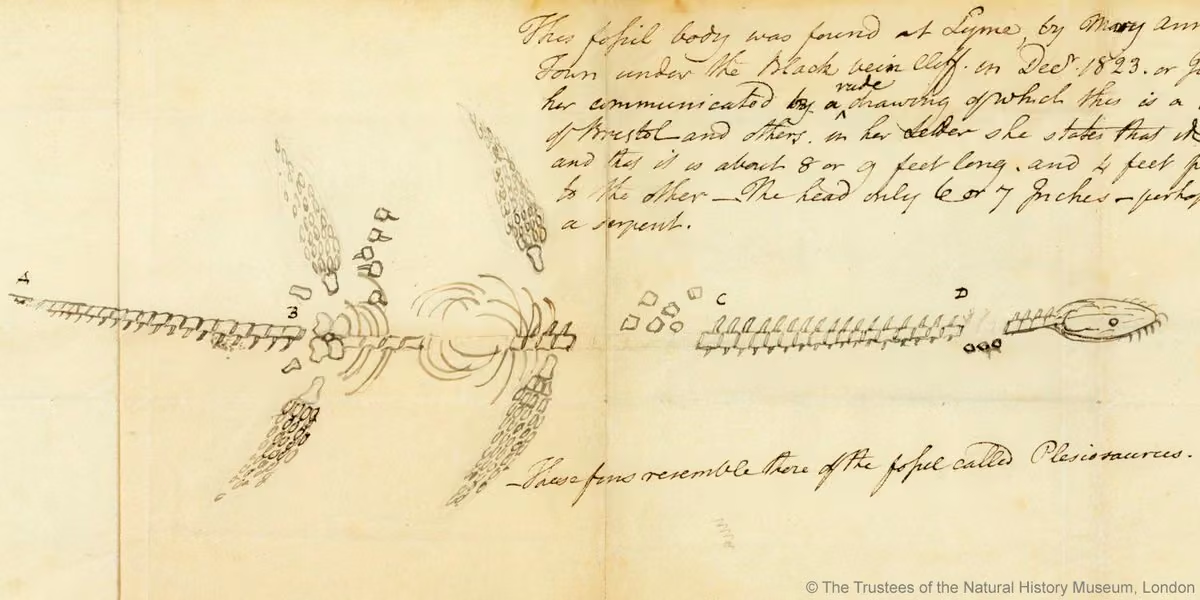
The pioneering palaeontologist Mary Anning was born on this day 227 years ago! In our Fossil Marine Reptiles Gallery, you’ll find several of Mary Anning's spectacular finds, including her ichthyosaur, plesiosaur and pterosaur. Much like they did two centuries ago, her fossil discoveries continue to intrigue us today. 🦴
-
Natural History Museum
@NHM_London
With their iconic black and yellow stripes, bees are a common sight in our gardens! 🐝💐
Can you guess which of the following bee facts is wrong?
Natural History Museum
@NHM_London
It’s a common misconception that bees die after stinging once! Whilst female worker honeybees generally die after stinging, most bumblebee species can sting multiple times.
Do you do anything to help bees in your back garden or local green space? Let us know 👇 -
Natural History Museum
@NHM_London
Our Dinosaur gallery is full of skeletons, big and small! If you’ve visited it before, you might have spotted this small dinosaur.
This is a Dromaeosaurus - a carnivorous dinosaur that lived during the Late Cretaceous period! 🥩 -
Natural History Museum reposted
Great Exhibition Road Festival
@ExRdFestival
🎉 Want to win free tickets to two incredible museum experiences?
We've teamed up with two Festival partners @sciencemuseum and @NHM_London for a brilliant prize draw!
Register for the Festival for FREE by 23.59 on 3 June to be in with a chance to win: www.eventbrite.com/e/great-exhibition-road-festival-2026-… -
Natural History Museum
@NHM_London
Do goats really faint and scream? 🤔
Find out in this week's #surprisingscience! 👇 -
Natural History Museum
@NHM_London
Have you ever heard of ground beetles?
There are around 40,000 named species, from bombardier beetles with their powerful chemical defences to blind cave-dwellers.
They also have some great scientific names - but which of these isn't a beetle?
Natural History Museum
@NHM_London
So far, there’s no beetle called Agra culture!
At a time when the world is changing rapidly, understanding how many species there are is vital - but waiting for them to be named might be too late.
Find out how a new approach could change that 👇
www.nhm.ac.uk/discover/news/2026/april/how-the-worlds-mis… -
Natural History Museum
@NHM_London
Find out about the fascinating behaviour of the Surinam toad in today's #surprisingscience 🐸
-
Natural History Museum
@NHM_London
Have you ever noticed the monkeys on the Museum’s walls? 🙊
If you take a stroll around, you’ll spot many animals carved on the walls. These monkeys are some of our favourites - their curious and cheeky expressions almost bring the walls to life! -
Natural History Museum
@NHM_London
Do you know the story of great auks? 🥚
These seabirds became extinct in the mid-1840s, but we're still learning more about them! By comparing the structure of their eggs to that of their living relatives, we can find out more about their breeding habits. 🔍 -
Natural History Museum
@NHM_London
Scientists are rethinking what venomous really means and the results are surprising. 🤔
Find out how expanding the scientific definition of venom is dramatically increasing the number of species we consider as venomous. -
Natural History Museum
@NHM_London
Join us in wishing a massive happy 100th birthday to the man who has inspired millions of people around the world to care about nature and look after our planet - the incredible Sir David Attenborough! 🎉
-
Natural History Museum
@NHM_London
The deep sea is home to some of the most extraordinary animals, but it's also filled with vast mineral resources critical to modern technology.
Which minerals are found in the deep?
Natural History Museum
@NHM_London
It’s all of the above! Exactly how mining might affect the animals of the deep is still unknown.
By assessing over 50 years of data, a new report has tried to figure this out 👇🏻
www.nhm.ac.uk/discover/news/2026/may/most-comprehensive-r… -
Natural History Museum
@NHM_London
A new wasp has been named in honour of Sir David Attenborough! 🥳🙌
This is Attenboroughnculus tau - a newly described 3.5 mm parasitic wasp.
Find out more about this exciting discovery. 👇Post not available here, view on X
Natural History Museum
@NHM_London
Despite being collected over 40 years ago, the wasp’s unusual characteristics were only recently spotted.
Museum researchers identified a unique combination of anatomical traits that separate it from known genera. These traits include a strongly curved abdominal segment as well as a unique wing and leg structure.
Natural History Museum
@NHM_London
Its name celebrates Sir David’s work and how he continues to inspire generations to appreciate and protect the natural world.
This study highlights the importance of our collections and how they help us deepen our understanding of many species. 💚 -
Natural History Museum
@NHM_London
Who’s hiding behind these magnificent monkey-laden archways? 👀
See if you can guess! Did you get it right? Let us know below! -
Natural History Museum
@NHM_London
What do giant octopuses, teeth pendants and ancient sea creatures have to do with each other?
They’re all the subject of this month’s news quiz – so join us and test your knowledge below! (1/7)Post not available here, view on X
Natural History Museum
@NHM_London
Last but not least, an artefact made by ancient humans over 15,000 years ago has been discovered!
They carved the tooth of a mammal into a pendant – but which animal does it come from? (6/7)
Natural History Museum
@NHM_London
It comes from a seal!
The pendant reveals that our distant relatives were trading and travelling across Europe thousands of years ago, and provides a crucial insight into their lives.
Discover more about this pendant 👇 (7/7)
www.nhm.ac.uk/discover/news/2026/april/seal-tooth-pendant… -
Natural History Museum
@NHM_London
Good news: it’s Friday and our gardens are looking very spring-like at the moment. ☀️🌿
How have you been enjoying the warmer weather recently? Let us know below! -
Natural History Museum
@NHM_London
When did our own species evolve?
Natural History Museum
@NHM_London
We probably appeared as humans around 300,000 years ago!
New research is now looking at how malaria might have shaped this evolution.
Find out how 👇🏻
www.nhm.ac.uk/discover/news/2026/april/evolution-of-ancie… -
Natural History Museum
@NHM_London
The specimen displays in Hintze Hall are iconic, but have you taken the time to look at the architecture details nearby? 😍
Which one is your favourite! 👇 -
Natural History Museum
@NHM_London
What is coral? 🪸
Natural History Museum
@NHM_London
Though they might look a little like plants or rocks, corals are actually animals, like us!
So why does coral look so unusual, and what is it made of? 🪸
Find out the what, why, and how of coral in this week’s Surprising Science!This media couldn't be displayed. See it on the original post. -
Natural History Museum
@NHM_London
The largest ever octopus has just been found! 🐙
Living over 80 million years ago, Nanaimoteuthis haggarti was up to 19 metres long. That’s about the same size as:
Natural History Museum
@NHM_London
It’s the length of a bowling lane!
At this size, Nanaimoteuthis haggarti may have been the largest creature in Cretaceous oceans - even bigger than the marine reptile Mosasaurus!
Find out all about this enormous octopus 👇
www.nhm.ac.uk/discover/news/2026/april/largest-ever-octop… -
Natural History Museum
@NHM_London
This ferocious predator roamed North America about 15,000 years ago...but can you guess what it is? 😱🦷
Vote below!
Natural History Museum
@NHM_London
Time to guess! Is it...
-
Natural History Museum
@NHM_London
Warmer weather and beautiful springtime has our gardens bursting with wildlife - including this main character! 🦆
Take a few seconds to enjoy the sights and sounds of nature. 🌼 -
Natural History Museum
@NHM_London
Binominal names are the way scientists identify all the species on Earth.
Gorilla gorilla is for the western gorilla, and Gazella gazella stands for the mountain gazelle – but what has the name Puffinus puffinus?
Natural History Museum
@NHM_London
It’s the Manx Shearwater!
Seabirds like the shearwaters are facing increasingly harsh conditions as the ocean heats up. New research reveals that over 5% of all short-tailed shearwaters died in just a few months in 2023!
Find out what's happening 👇
www.nhm.ac.uk/discover/news/2026/april/over-600000-seabir… -
Natural History Museum
@NHM_London
How long has the Perseverance rover been exploring the surface of Mars?
Natural History Museum
@NHM_London
It’s been going for 5 years! During its exploration of the red planet it has been collecting samples. Scientists are now figuring out how to prevent these samples from contaminating Earth.
Find out how 👇🏻
www.nhm.ac.uk/discover/news/2026/april/new-device-aims-to… -
Natural History Museum
@NHM_London
Have you ever seen such beautiful moths? 🦋
These are Light Crimson Underwings (Catocala promissa), found across the UK. They've been digitised by our Museum team – a process which allows lots more people to access the specimens online.
Have you ever seen one of these? -
Natural History Museum
@NHM_London
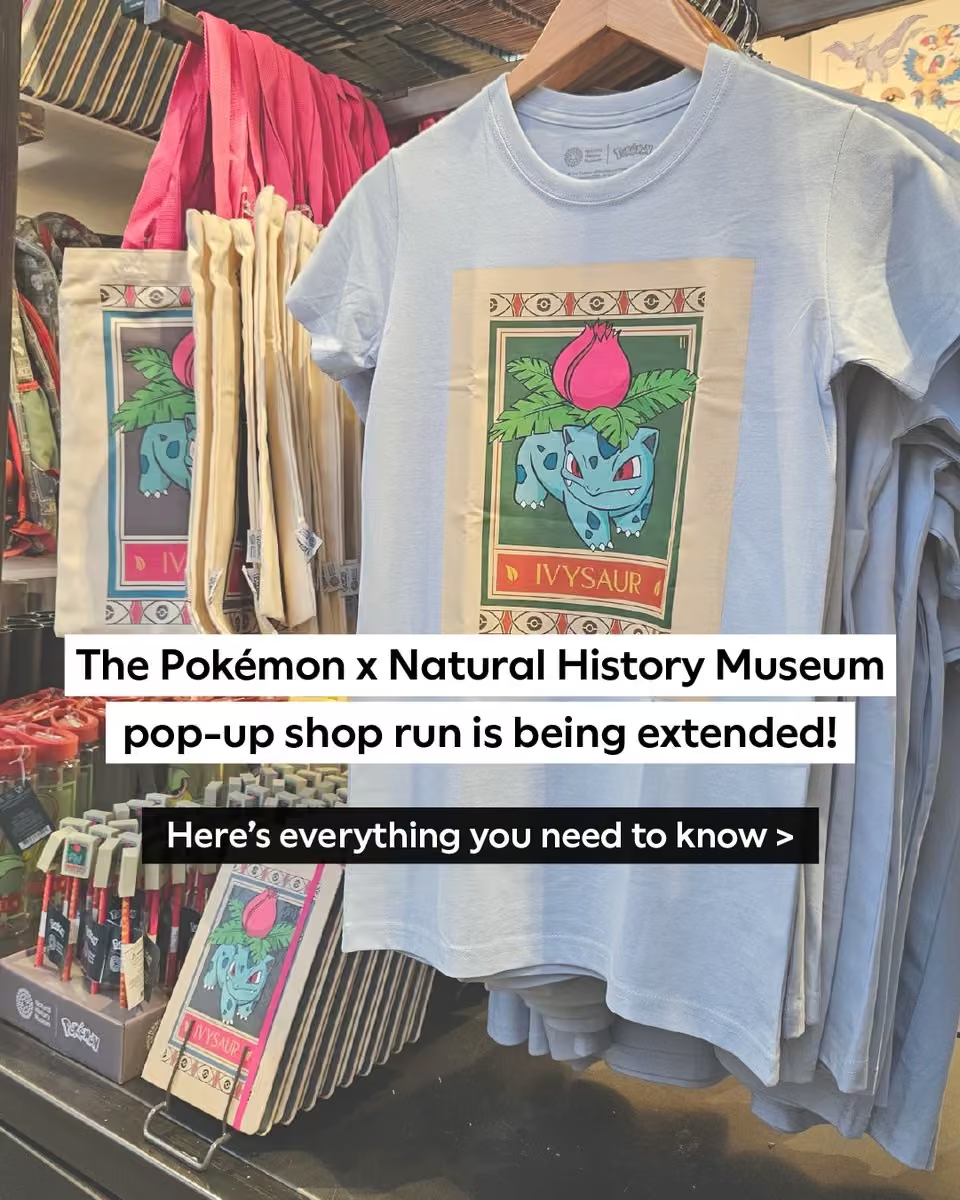
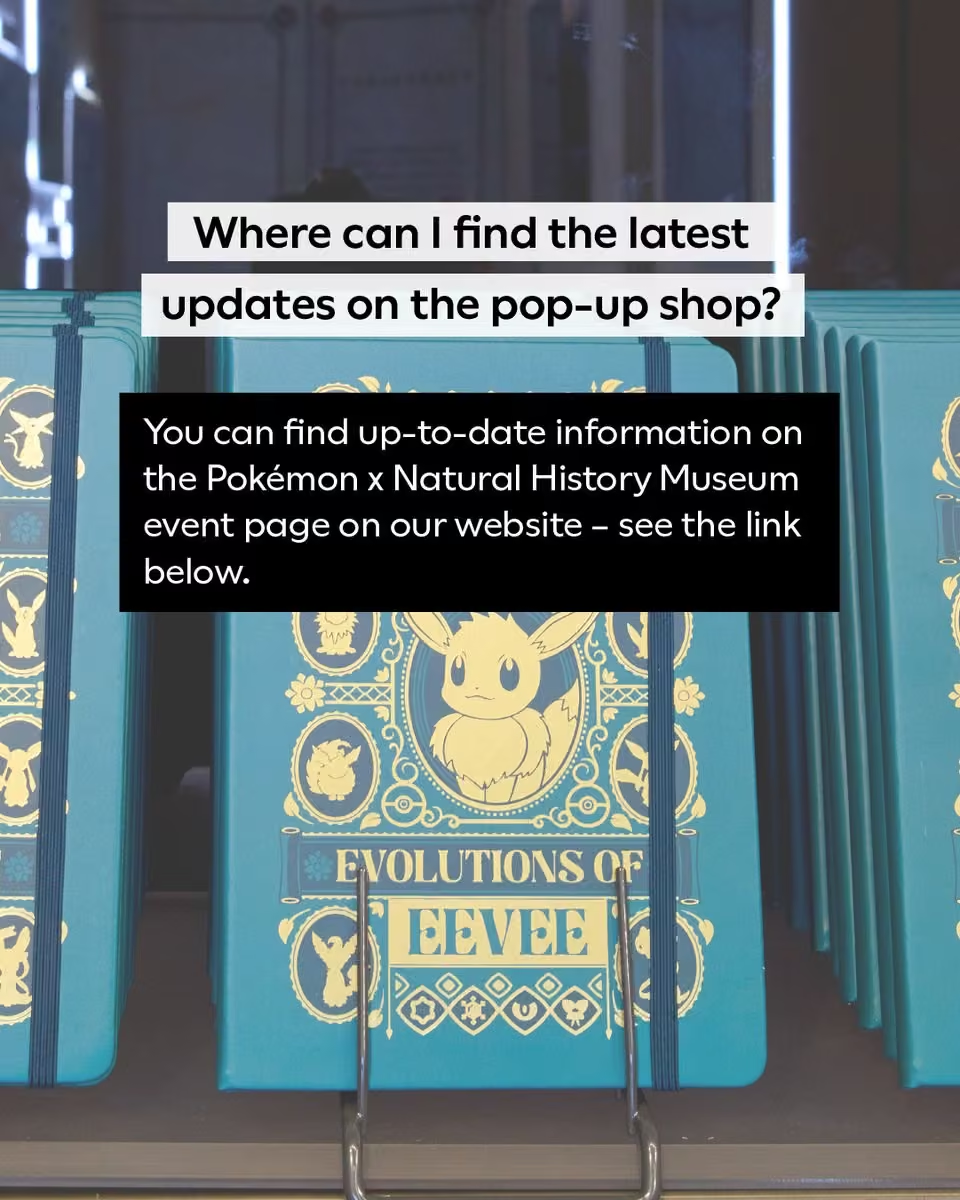
Good news for Pokémon fans: the Pokémon x Natural History Museum pop-up shop is sticking around for a little longer! ⚡
Thinking of visiting? Here’s everything you need to know about the pop-up shop extension. ⬇️
Natural History Museum
@NHM_London
See the latest information about the Pokémon x Natural History Museum pop-up shop here: www.nhmshop.co.uk/catalog/category/view/s/pokemon/id/1813/
Natural History Museum
@NHM_London
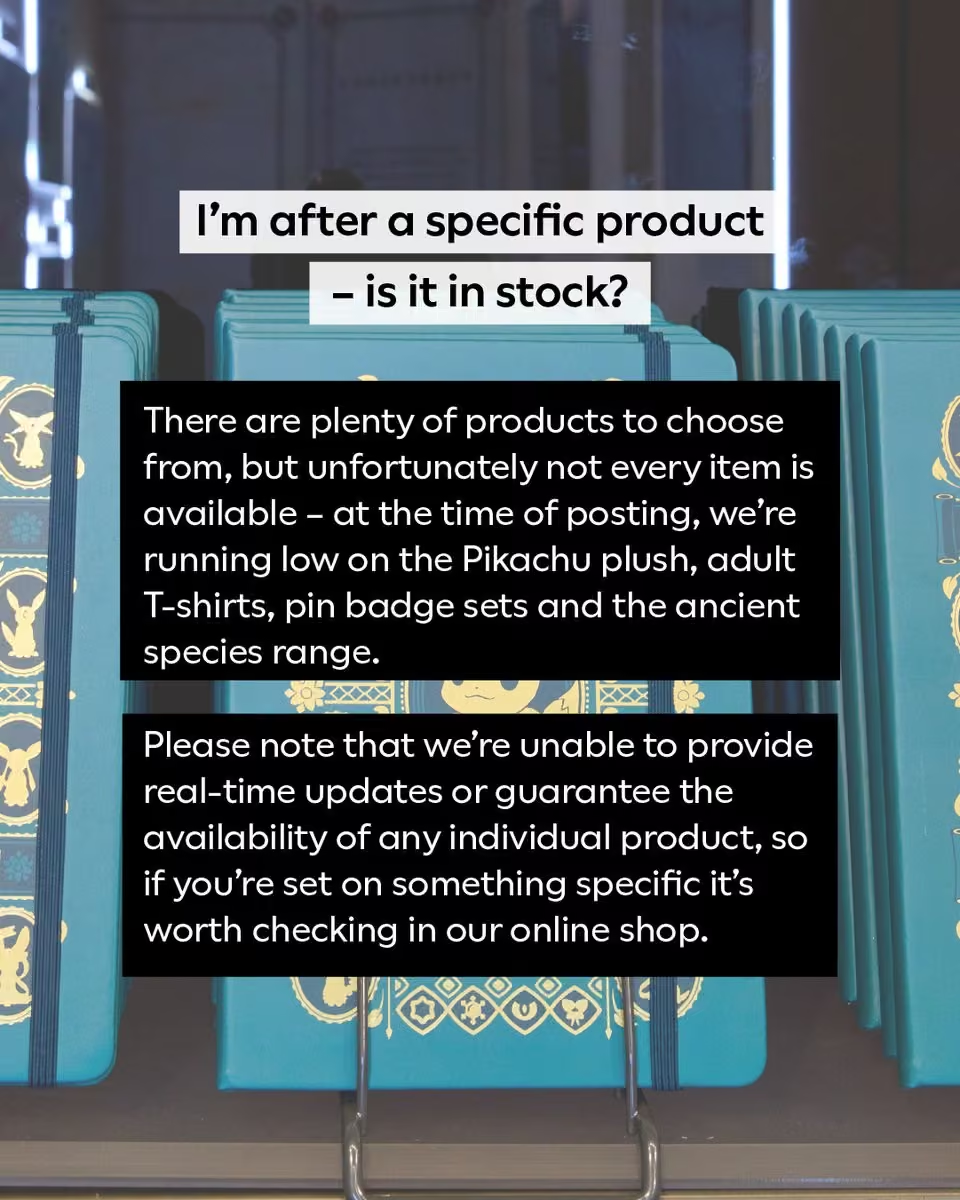
We can now confirm that the Pikachu plush is now out of stock in store and in our online shop.
Unfortunately we aren't able to provide further or individual stock updates, so if you're set on a specific product we'd recommend checking in our online shop. -
Natural History Museum
@NHM_London
A new report has looked at the benefits sequencing the genomes of all UK species would bring to the UK economy – and it is huge!
How much could it generate?
Natural History Museum
@NHM_London
It is an extraordinary £3 billion!
The benefits range from conservation and agriculture to fisheries and medicines.
Find out what this would mean in practice 👇🏻
www.nhm.ac.uk/discover/news/2026/april/sequencing-dna-all… -
Natural History Museum
@NHM_London
Along the Hintze Hall balconies, you’ll find this impressive tree slice! Can you guess which tree it’s from? 🌳
Vote below! 👇
Natural History Museum
@NHM_London
Is it...
-
Natural History Museum
@NHM_London
Did you know that you can see the world’s tallest animal in the Museum? 🦒
They’ll greet you as you enter Hintze Hall – you can’t miss them! -
Natural History Museum
@NHM_London
There’s nothing quite like walking around our Museum gardens during golden hour. 🦕 🌇
When was the last time you visited? Let us know below! 👇 -
Natural History Museum
@NHM_London
The world’s oldest octopus isn’t actually an octopus at all! 🐙
New research reveals that Pohlsepia mazonensis is actually a relative of another sea creature – but which?
Natural History Museum
@NHM_London
It’s actually a nautilus relative!
While the 300-million-year-old Pohlsepia is no longer part of the octopus family tree, it helps to reveal more about what ancient nautiloids were like.
Dive into the history of this mysterious fossil 👇
www.nhm.ac.uk/discover/news/2026/april/worlds-oldest-octo… -
Natural History Museum
@NHM_London
Ever wondered what goes on behind the scenes in the Museum?
Dive into the fish collection with us to see just some of the marine marvels we look after ⬇️Post not available here, view on X
Natural History Museum
@NHM_London
It's just one of the eight million fish we look after, ranging from small sardines to sizable sunfish!
They're far more than just a library of specimens - instead, the fish are windows into the past.
They can help scientists to find new species, study climate change and more!
Natural History Museum
@NHM_London
If you’ve enjoyed this quick peek into the collection, then don’t worry – there’s plenty more to discover.
Find out more about what goes on in the fish collection, and what else is lurking in its depths 👇
www.nhm.ac.uk/discover/behind-the-scenes-fish.html -
Natural History Museum
@NHM_London
A rare tooth pendant worn more than 15,000 years ago has been discovered!
Found in Devon, the artefact reveals a window into the past – but can you guess what the tooth comes from?
Natural History Museum
@NHM_London
It’s from a grey seal!
Just four other seal tooth pendants from this time have been found, providing rare evidence of the culture of ancient Europeans.
Find out what it reveals 👇
www.nhm.ac.uk/discover/news/2026/april/seal-tooth-pendant… -
Natural History Museum
@NHM_London
Not everyone has made room in their hearts for Fern – but the feeling certainly isn’t mutual!
Here’s Fern giving a big diplodocus grin – send some love back! 💚 -
Natural History Museum
@NHM_London
The evolution of complex life may have happened sooner than we thought!
A surprise discovery of a fossil bed in China is reshaping our understanding of when most animal groups alive today first appeared.
What period were the fossils from?
Natural History Museum
@NHM_London
It was the Ediacaran!
The fossils, which are up to 554 million years old, have cast doubt on the widely held belief that life suddenly diversified during the Cambrian.
Find out more 👇
www.nhm.ac.uk/discover/news/2026/april/origins-of-complex… -
Natural History Museum
@NHM_London
Have you seen this statue before?
This statue commemorates Richard Owen, one of the most prominent scientific figures of the Victorian era.
It stood at the head of Hintze Hall from 1927-2008, before being moved to the other end to make way for Charles Darwin. -
Natural History Museum
@NHM_London
We might need a bigger toothbrush! 🪥🦷
In the Mammals gallery you’ll discover skulls, jaws and tusks belonging to beasts that once roamed our planet. Which one is your favourite? 🤔 -
Natural History Museum
@NHM_London
Time for a Fossil News Quiz from the Natural History Museum!
First up, a baby dinosaur named after a cartoon character named Dooly was revealed - but where does this small species come from? (1/6)Post not available here, view on X
Natural History Museum
@NHM_London
Last but not least, the origin of domestic dogs has been pushed back by thousands of years!
New analysis reveals that man’s best friend was already widespread across Europe and Türkiye 14,000 years ago – but what did they evolve from? (5/6)
Natural History Museum
@NHM_London
Dogs evolved from wolves!
By studying the genetics of these animals, scientists have got an unprecedented look at dog evolution.
Find out more about what they've found👇 (6/6)
www.nhm.ac.uk/discover/news/2026/march/oldest-evidence-of… -
Natural History Museum
@NHM_London
The UK is one of the most nature depleted nations on Earth – and it’s about to get worse.
A new report predicts that hundreds of species are set to go extinct in Britain in the next 50 years - but which of these groups will be impacted the most?
Natural History Museum
@NHM_London
Plants will be worst hit – almost 200 species will be extinct in Britain by 2080!
While some species have little chance of survival, others can still be saved – but only with urgent action now.
Find out what can be done to help👇
www.nhm.ac.uk/discover/news/2026/march/more-than-100-spec… -
Natural History Museum
@NHM_London
🚨New species alert🚨
24 new deep-sea animals have been named after being discovered thousands of metres beneath the surface of the Pacific Ocean.
They're what are known as amphipods - but who are these animals closely related to?
Natural History Museum
@NHM_London
They're crustaceans!
The names of the new species have been inspired by a range of different things, from friends and family members to the video game Hollow Knight!
Find out more about these incredible animals 👇
www.nhm.ac.uk/discover/news/2026/march/dozens-deep-sea-sp… -
Natural History Museum
@NHM_London
Surinam toads have a unique type of reproduction. Do you know where the young are born?
Natural History Museum
@NHM_London
They’re born on their mother’s back, after the eggs are pushed in and covered by her skin! 😮 Hear more about this weird and wonderful creature from Museum scientist Jeff, in this week’s surprising science. 👇
This media couldn't be displayed. See it on the original post. -
Natural History Museum
@NHM_London
Last week we shared that we were UK's most popular visitor attraction for 2025! It made us wonder: what’s your favourite specimen in the Museum? 🦕🐳
Natural History Museum
@NHM_London
Or maybe it’s another one? Let us know below!
-
Natural History Museum
@NHM_London
The history that this 'cathedral to nature' has seen never fails to amaze us 😍
-
Natural History Museum
@NHM_London
Tired of the commute? 😴
Well, at least you don’t have to travel as far as the dorado catfish! It travels 11,000 kilometres as it migrates during its lifetime – but whereabouts does it live?
Natural History Museum
@NHM_London
It comes from South America!
It's one of many freshwater fish that make epic migrations - but these animals are in trouble.
Discover the challenges facing them - and how their declines can be turned around 👇
www.nhm.ac.uk/discover/news/2026/march/salmon-eels-sturge… -
Natural History Museum
@NHM_London
DNA analysis of a 15,800-year-old fossil has revealed the oldest genetic evidence of domestic dogs. 😮
But where was the fossil discovered?
Natural History Museum
@NHM_London
It was discovered in Türkiye!
Similar-aged fossils found at multiple sites across Europe, including Gough’s Cave in the UK, show that dogs were widespread by at least 14,000 years ago. 🐕
Find out what else we can learn from this remarkable discovery 👇
www.nhm.ac.uk/discover/news/2026/march/oldest-evidence-of… -
Natural History Museum
@NHM_London
We’re excited to announce that the winner of the Wildlife Photographer of the Year Nuveen People's Choice Award 2026 is 'Flying Rodent' by Josef Stefan. 👏📸
Josef’s striking photograph captures a young lynx playfully throwing a rodent into the air before eating it.
You can now find it in this year’s exhibition! -
Natural History Museum
@NHM_London
Microorganisms developing resistance to drugs, such as antibiotics, are a major concern for global public health. 🦠
How many global deaths are thought to have been a direct result of drug-resistant bacteria in 2019?
Natural History Museum
@NHM_London
It was 1.27 million!
New research has revealed that a widely used weedkiller could be unintentionally turning soils into a breeding ground for drug-resistant bacteria that can spread to hospitals.
Find out how 👇
www.nhm.ac.uk/discover/news/2026/march/common-weedkiller-… -
Natural History Museum
@NHM_London
Say twit-twoo if you can hear us! 🦉
Many people think that the tufts on top of an owl’s head are its ears – actually, their ears are much lower.
This owl in our birds gallery has a pencil inserted to mark the accurate location – though this probably doesn’t help anyone’s hearing. ✏️
Did you know this? Let us know if you’d like more owls! -
Natural History Museum
@NHM_London
🚨New species of dinosaur alert🚨
But where was Doolysaurus found?
Natural History Museum
@NHM_London
The answer is South Korea! In recognition of this, the researchers named this new species of baby dinosaur after a famous South Korean cartoon character.
Find out more about what this means 👇🏻
www.nhm.ac.uk/discover/news/2026/march/new-species-of-sou… -
Natural History Museum
@NHM_London
Here’s a wholesome reminder to kick-start your week: today is the first Monday of spring!
Once the clocks go forward this weekend, the sun will set after 7pm in the UK. ☀️🐝🌸 -
Natural History Museum
@NHM_London
You're looking at the skull that began Mary Anning's career.
Found in 1811 by her brother, Mary later found the rest of the skeleton – her first steps as a fossil dealer and palaeontologist.
We now know these are ichthyosaur bones – find out about them this #fossilfriday (1/6)Post not available here, view on X
Natural History Museum
@NHM_London
While ichthyosaurs were a major part of life on Earth for over 100 million years, they disappeared around 90 million years ago.
Today, all that’s left are fossils. Many of these, including some of Mary Anning’s finds, are on display in the Museum – have you visited them? (5/6)
Natural History Museum
@NHM_London
These fossils are still helping us to find out more about where ichthyosaurs lived, how they evolved and what they would have looked like.
Discover all about the incredible ichthyosaurs 👇 (6/6)
www.nhm.ac.uk/discover/what-is-an-ichthyosaur.html -
Natural History Museum
@NHM_London
Thank you to all our visitors for making us the UK's most popular visitor attraction for 2025! 🎉
We can't wait to inspire millions more people to be advocates for the planet, and will be opening a new or revitalised gallery every year until our 150th birthday in 2031 🎂.
Natural History Museum
@NHM_London
Will you be visiting the Museum in 2026?
-
Natural History Museum reposted
Great Exhibition Road Festival
@ExRdFestival
It's finally here - registration for #exrdfest 2026 is now open!
Expect hundreds of free exhibits, workshops and talks for all ages and interests on 6-7 June😍
Register now to be first to hear about updates and ticket releases: www.greatexhibitionroadfestival.co.uk -
Natural History Museum
@NHM_London
Hintze Hall looked beautiful in the morning light. ☀️
If you had to choose, would you visit the Museum at dawn or at dusk? Let us know below! -
Natural History Museum
@NHM_London
30 years after being first brought to the Museum, this mysterious blue mineral is now on display in our Minerals gallery! 💎💙
Meaning ‘blue sky’ in Greek due to its intense blue colour, Aerinite was first named in 1876, but its complex structure wasn’t determined until 2004. -
Natural History Museum
@NHM_London
Think you know the Jurassic period? Think again. 🌊
Announcing our new exhibition, Jurassic Oceans: Monsters of the Deep, opening 22 May 2026.
Find out more info and book your early bird tickets here 👉
www.nhm.ac.uk/visit/exhibitions/jurassic-oceans.html
Natural History Museum
@NHM_London
Will you be coming to see Jurassic Oceans: Monsters of the Deep?
-
Natural History Museum
@NHM_London
Looking for leg day inspo? Look no further...🦵🏽🦵🏽
If the legs don’t shine like a Sagra beetle, we don’t want them.
#beetles #naturalhistory #legday -
Natural History Museum
@NHM_London
Please note that our Mammals gallery (Blue whale model) will be closed from 24-26 March 2026 for planned conservation works.
We’re sorry for any inconvenience this may cause and hope that you can still enjoy the rest of the Museum. 🦕 -
Natural History Museum
@NHM_London
Do you know which of the following animals DON'T have horns? 🐮
Natural History Museum
@NHM_London
Sheep, cows and goats all have horns - the correct answer is deer, who have antlers instead!
What’s the difference? Find out here in this week’s Surprising Science…👀This media couldn't be displayed. See it on the original post. -
Natural History Museum
@NHM_London
Something is coming… 🌊
Can you guess what it might be? 🤔 Check back here Wednesday 18 March to find out! 👀 -
Natural History Museum
@NHM_London
Time is ticking! Only a few days left to vote for the Wildlife Photographer of the Year Nuveen People's Choice Award. 📸🥇
Discover the 24 images selected and vote before 18 March: www.nhm.ac.uk/wpy/peoples-choice -
Natural History Museum
@NHM_London
A look at some beautiful weevils in our beetle collection. 😍
The diversity of colours and patterns continues to amaze us, it's hard to believe that these are real!
Which one is your favourite? Let us know 🪲 -
Natural History Museum
@NHM_London
You might know Hintze Hall for its impressive skeletons, but have you ever looked at our beautiful display of butterflies? 🦋🤩
-
Natural History Museum
@NHM_London
Visiting the Museum this week?
A reminder that our Fixing Our Broken Planet Gallery will be closed from the 9-22 March whilst our teams work on the displays.
The rest of the Museum is still open for you to enjoy. 🦖 -
Natural History Museum
@NHM_London
Do you know why dung is so precious to dung beetles? 🟤🪲
Natural History Museum
@NHM_London
As it goes, there are many reasons why dung is so important to dung beetles - including all of the above!
See how and why their lives centre around this smelly substance in this week’s Surprising Science! 🪲This media couldn't be displayed. See it on the original post. -
Natural History Museum
@NHM_London
🌸 Happy International Women's Day! 🌸
The Museum is full of incredible women working across a huge variety of roles - join us in saying thank you to all the women who support the Museum! 👏 -
Natural History Museum
@NHM_London
Come for the dinosaurs, stay for the architecture! 🤩
We couldn’t resist sharing some more photos taken on a recent stroll around the Museum!
Have you ever noticed these details? ✨ -
Natural History Museum
@NHM_London
Something seems fishy here. 🤔
Can you guess what this intriguing specimen? Vote below! 👇
Natural History Museum
@NHM_London
Cast your vote! 👇
-
Natural History Museum
@NHM_London
Time for a Nature News Quiz from the Natural History Museum!
First up, a new species of ancient reptile looking like a ‘reptilian greyhound’ was named from a fossil found in southern Wales.
But who was Galahadosuchus jonesi named after? (1/6)Post not available here, view on X
Natural History Museum
@NHM_London
Last but not least, beavers are being reintroduced in England!
Beavers help to create wetlands, control flooding and improve water quality, but were hunted to extinction in the UK. When did they disappear? (5/6)
Natural History Museum
@NHM_London
Beavers were wiped out in the UK more than 400 years ago – but there are plans to reintroduce more than 100 in the next year!
Find out more about the proposals 👇 (6/6)
www.nhm.ac.uk/discover/news/2026/february/beavers-set-to-… -
Natural History Museum
@NHM_London
🎉 When you head out to a party, what do you prefer to do? 🎉
Natural History Museum
@NHM_London
Tanyka amnicola liked to be late – in fact, it survived long after many of its close relatives had gone extinct!
Not only was it unusually long lived, but it also had jaws with teeth sticking out sideways!
Find out more about this strange species 👇
www.nhm.ac.uk/discover/news/2026/march/new-species-living… -
Natural History Museum
@NHM_London
Our Fixing Our Broken Planet Gallery will be closed from the 9-22 March whilst our teams work on the displays.
We apologise for any inconvenience and hope that you can continue to enjoy the rest of the Museum during this time. 🦖 -
Natural History Museum
@NHM_London
Extraordinary, extinct, but not exempt from a case of the Mondays.
Don’t worry dodo, we feel it too.
Natural History Museum
@NHM_London
How's your Monday mood?
-
Natural History Museum
@NHM_London
Which of these is the only venomous primate?
Natural History Museum
@NHM_London
Meet the world’s only venomous primate, the slow loris - just don’t ask where they keep the venom… 👀
Hear Museum scientist Zach Williams explain in this week’s Surprising Science!This media couldn't be displayed. See it on the original post. -
Natural History Museum
@NHM_London
We need your help to settle a debate! Do you think it’s too early for hot cross buns? 😋🧈
Post not available here, view on X
Natural History Museum
@NHM_London
Speaking of wings, migratory birds are making their return to the UK! After spending winter in warmer climates, blackcaps, chiffchaffs and sand martins will soon be spotted in gardens and parks. 🐦
Natural History Museum
@NHM_London
You’ll also start seeing snowdrops and daffodils in parks and even newts in ponds! Will you look out for signs of spring around you? 🌻
-
Natural History Museum
@NHM_London
This is Megatherium. A species that was up to 10x the size of living sloths and weighed up to four tonnes (similar to a bull elephant).
On its hind legs, Megatherium americanum would have stood 12 feet tall. 😮 -
Natural History Museum
@NHM_London
Our brilliant conservation team have been busy carrying out essential and important work to ensure that the rhinos in the Mammals Hall are well preserved.
Without conservation, specimens will deteriorate over time, resulting in the loss of scientific information and history. -
Natural History Museum
@NHM_London
Meet a new species of dinosaur - Spinosaurus mirabilis!
It lived in what’s now the Sahara Desert, 95 million years ago when it was covered by forests and rivers. Can you guess what this dinosaur snacked on while it was alive?
Natural History Museum
@NHM_London
Spinosaurus mirabilis likely ate fish!
It would have stood out thanks to the striking crest on its head, which was probably used to show off to mates and scare off rivals.
Find out more about this dinosaur 👇
www.nhm.ac.uk/discover/news/2026/february/new-sabre-crest… -
Natural History Museum
@NHM_London
It’s been a very wet few weeks here in the UK – but we’re far from the rainiest place on Earth! ☔
One place which gets a lot more rain is the Amazon rainforest – but how much wetter is it than the UK?
Natural History Museum
@NHM_London
On average, the Amazon is around twice as wet as the UK!
One reason the Amazon is so wet is because the forest helps generate rain. New research reveals this is worth billions to Brazil’s economy, which might help to stop deforestation.
Find out more 👇
www.nhm.ac.uk/discover/news/2026/february/tropical-forest… -
Natural History Museum
@NHM_London
Planning on visiting the Museum this week?
To avoid disappointment, please ensure you have an entry ticket booked as we are extremely busy during this half term week. Unfortunately we cannot guarantee entry if you do not have a pre-booked ticket. -
Natural History Museum
@NHM_London
Say hello to Galahadosuchus! 👋🏻
Scientists have named a new species of ancient crocodile-like predator from southwestern England dating to the Late Triassic.
When was this?
Natural History Museum
@NHM_London
It dates to about 200 million years ago!
At this point in time, the region would have been a hot and arid coastal environment.
Find out what that means for the animals that lived there 👇🏻
www.nhm.ac.uk/discover/news/2026/february/new-species-anc… -
Natural History Museum
@NHM_London
Did you know that, by looking at the surface of teeth, you can find out what ancient mammals were eating?
It's true! Our scientists have recently been looking at what wolves ate in the distant past.
What impact do you think warmer temperatures had on their teeth?
Natural History Museum
@NHM_London
Their teeth get rougher – suggesting they were having to eat more bone!
By comparing these findings to modern wolves, we can get an idea of how today's wolves are being affected by climate change.
Find out more 👇
www.nhm.ac.uk/discover/news/2026/february/ice-age-fossils… -
Natural History Museum
@NHM_London
Beavers are being reintroduced in the wild in England!
The first three groups of beavers have been officially released in the past year – but where haven’t they been reintroduced?
Natural History Museum
@NHM_London
Beavers haven't been officially introduced to the Isle of Wight - but they might be in the future!
Reintroducing beavers could help to capture carbon, create wetlands and shape forests across the UK.
Find out about beaver reintroduction plans 👇
www.nhm.ac.uk/discover/news/2026/february/beavers-set-to-… -
Natural History Museum
@NHM_London
Today is International Day of Women and Girls in Science! We’re highlighting the important work of four women who changed our understanding of the natural world. 👇
Post not available here, view on X
Natural History Museum
@NHM_London
Dorothea Bate’s mammal fossils discoveries had a profound impact on our understanding of species that once roamed Earth. On the islands of Cyprus and Crete, she discovered fossils of extinct species, such a squirrel-sized dormice, a tiny elephant and a goat-antelope. 🦴
Natural History Museum
@NHM_London
Renowned as one of history’s most important palaeontologists, Mary Anning discovered fossils, including the first correctly identified ichthyosaur skeleton, many of which you can see in the Museum! 💦
Natural History Museum
@NHM_London
Their contributions not only made a significant impact during their lifetimes, but they continue to inform our discoveries today. Join us in celebrating their legacy and the women who are making ground-breaking strides in science today!
-
Natural History Museum
@NHM_London
There are only a few weeks left to join our space mission! 🌙🚀
Don’t miss the opportunity to discover the cutting-edge technology that’s getting us closer to finding life outside our planet in our exhibition, Space: Could Life Exist Beyond Earth?
Find out more and book your tickets: www.nhm.ac.uk/visit/exhibitions/space.html -
Natural History Museum
@NHM_London
Dogs are known for having a great sense of smell and their olfactory receptors help with this.
Do you know how many olfactory receptors dogs can have? 🐶
Natural History Museum
@NHM_London
Dogs can have up to 300 million olfactory receptors - some pups have such a strong sense of smell, they can even detect things underwater! 👃🏽
See more about how dogs process different smells in this week’s Surprising Science. 🐕This media couldn't be displayed. See it on the original post. -
Natural History Museum
@NHM_London
In 2022, countries agreed to slash global pesticide use - but new research shows it's actually rising!
In fact, just one country is on track to meet the target of halving the impact of pesticides by the end of the decade – but which?
Natural History Museum
@NHM_London
It’s Chile!
Insects, worms and fish are bearing the brunt of rising pesticide levels - threatening ecosystems that are already under strain.
But all is not lost. Find out why 👇
www.nhm.ac.uk/discover/news/2026/february/nature-under-th… -
Natural History Museum
@NHM_London
Time for a Fossil News Quiz from the Natural History Museum!
First up, new research has helped solve an ancient mystery in Europe. Which dinosaur’s relatives were discovered in the continent for the first time? (1/6)Post not available here, view on X
Natural History Museum
@NHM_London
Last but not least, we’ve also been finding out about the lives of ancient humans!
A 480,000-year-old tool was discovered in southern England – but what’s it made from? (5/6)
Natural History Museum
@NHM_London
It’s made from elephant bone!
The hammer was used to sharpen other tools, showing ancient humans could plan ahead.
Find out more about their lives 👇 (6/6)
www.nhm.ac.uk/discover/news/2026/january/ancient-humans-m… -
Natural History Museum
@NHM_London
It’s time to vote for the Wildlife Photographer of the Year Nuveen People's Choice Award 2026! 📸 🐻
From a playful lynx to adorable bear cubs, which of the 24 breathtaking images is your favourite?
You can vote until 18 March 2026: www.nhm.ac.uk/wpy/peoples-choice
@NuveenInv -
Natural History Museum
@NHM_London
Thank you for your patience whilst we continue to work hard to resolve the ongoing technical issues on our website. Please bear with our Contact Centre team as they deal with a high number of enquiries. Thank you for your understanding.
-
Natural History Museum
@NHM_London
Ever wondered what goes on behind the scenes in the museum?
You’re invited for a peek into the fossil mammals collection to see just some of the amazing animals we look after ⬇️
Natural History Museum
@NHM_London
This hippo tooth comes from somewhere unexpected – the centre of London!
This 125,000-year-old canine was discovered in Trafalgar Square, and is a reminder of a time when Britain was much warmer.
It's also one of our fossil mammal curator’s favourite specimens!
Natural History Museum
@NHM_London
This skull, meanwhile, has had many celebrity admirers over the years.
It’s from Toxodon, an ancient mammal that looked a bit like a hippo and rhino combined.
The fossil was first collected by Charles Darwin and studied by famous scientists such as Richard Owen, our founder.
Natural History Museum
@NHM_London
While this box might not look that interesting, it pays to take a closer look.
It contains earth collected during excavations, and we’ve got enough to fill around 28 hot tubs!
Sorting through it reveals tiny fossils that tell us about the mammals living millions of years ago.
Natural History Museum
@NHM_London
If you’ve enjoyed this quick peek into the collection, then don’t worry – there’s plenty more to discover.
Find out more about what goes on in the fossil mammal collection, and what it reveals about the past 👇
www.nhm.ac.uk/discover/behind-the-scenes-fossil-mammals -
Natural History Museum
@NHM_London
We're experiencing technical issues on our website today which means that some of our services, including ticketing and our customer support phone lines, are unavailable. We're working hard to resolve it. Thank you for your patience.
-
Natural History Museum
@NHM_London
All over the world, there are legends of sea monsters living in the deep.
In the mid-18th century, Dutch miners came face-to-face with one. They’d discovered Mosasaurus – an ancient animal unlike anything seen before.
Find out about this undersea titan for #fossilfriday!Post not available here, view on X
Natural History Museum
@NHM_London
Mosasaurus and its relatives lived during the Late Cretaceous, and their fossils are found all over the world.
Sea levels were much higher at the time, so they can even be found far inland in the USA and Canada, where an ancient body of water once split North America apart!
Natural History Museum
@NHM_London
While mosasaurs survived for millennia, they died out 66 million years ago.
This was when a giant asteroid struck, killing the mosasaurs, dinosaurs and many other species.
Only their fossils survive today - find out what they reveal about the mosasaurs 👇
www.nhm.ac.uk/discover/what-is-a-mosasaur.html -
Natural History Museum
@NHM_London
We’ve been lucky to work with many famous scientists across history, and we look after many of their specimens today.
But can you guess which famous scientist’s octopus we have? 🐙
Natural History Museum
@NHM_London
It’s Charles Darwin’s!
Animals collected by Darwin have been part of new research to understand more about them and how they’re preserved.
Find out what's been revealed 👇
www.nhm.ac.uk/discover/news/2026/january/contents-jars-co… -
Natural History Museum
@NHM_London
A new species of amphibian from the Jurassic Period has been discovered in Portugal.
What unusual feature did this tiny creature have?
Natural History Museum
@NHM_London
It had a projectile tongue, which allowed it to feed in a similar way to chameleons.
The new species has been named Nabia civiscientrix in honour of the local community of citizen scientists that helped to discover the fossils.
Find out more👇
www.nhm.ac.uk/discover/news/2026/january/jurassic-amphibi… -
Natural History Museum
@NHM_London
If you’ve been trying to access our online shop for the Pokémon x Natural History Museum range, thank you for your patience while we deal with a technical issue.
While this is being resolved, orders paid for via PayPal as a payment method can be placed.
Natural History Museum
@NHM_London
We will be restarting the queue shortly - please be aware that only orders made using PayPal can be confirmed.
Our teams are working to resume other payment options as soon as possible.
Natural History Museum
@NHM_London
Our team have now resolved the payment issues affecting our online shop.
If you are hoping to shop the Pokémon x Natural History Museum range online, we can now accept regular credit, debit or bank card payments as well as PayPal. -
Natural History Museum
@NHM_London
Do you know what snakes do when it’s snowy? ❄️
Natural History Museum
@NHM_London
As snakes can’t generate their own body heat, you won’t usually spot one slithering in the snow…❄️
See how these cold-blooded creatures survive the snow and cold in this week’s Surprising Science! 🐍This media couldn't be displayed. See it on the original post. -
Natural History Museum
@NHM_London
A fossil jawbone discovered in northern Ethiopia has revealed that Paranthropus, an ancient relative of early humans, was more widespread than previously thought.
Do you know the nickname for Paranthropus?
Natural History Museum
@NHM_London
It is known as Nutcracker Man! 🥜
The name comes from their large jaws and flat molars, which were well-adapted for a specialised diet of tough plant foods.
Discover more about these unusual ancient human relatives. 👇www.nhm.ac.uk/discover/news/2026/january/nutcracker-man-v… -
Natural History Museum
@NHM_London
An ancient bone tool used for sharpening has been discovered in the UK – but what’s it made from?
Natural History Museum
@NHM_London
It's made from elephant bone! 🐘
The ancient hammer is around 480,000 years old, long before our species ever reached Britain. Homo heidelbergensis, or the Neanderthals, might have made the tool.
Find out what this discovery reveals 👇
www.nhm.ac.uk/discover/news/2026/january/ancient-humans-m… -
Natural History Museum
@NHM_London
Sponges are among the oldest animals that live on our planet!
But how old are they?
Natural History Museum
@NHM_London
Sponges are over half a billion years old!
New research has helped to narrow down when they first evolved - and it could reveal more about the first ever animals!
Find out more about these marine marvels 👇
www.nhm.ac.uk/discover/news/2026/january/weve-finally-dis… -
Natural History Museum
@NHM_London
Do you think fish can walk? 🐟
Natural History Museum
@NHM_London
Some fish can walk - and choose to! 🦵🏽
Find out how they do this, why, and see it in action in this week’s Surprising Science! 🐟This media couldn't be displayed. See it on the original post. -
Natural History Museum
@NHM_London
Have you ever wondered how we care for our galleries and specimens? 🧹🐳
Last December, our conservation team undertook work in one of our most iconic spaces, the Mammals gallery. Discover what they've been up to. ⬇️Post not available here, view on X
Natural History Museum
@NHM_London
Some of the specimens have been in our collections for over a century, so they sometimes require conservation treatments. Here, the team consolidated the fragile skin of a historic elephant with a solution called Lascaux consolidant. 🐘
Natural History Museum
@NHM_London
These works are essential to ensure our iconic Mammals gallery can be enjoyed by many more visitors!
Would you like to learn more about conservation in the Museum? 🦣 -
Natural History Museum
@NHM_London
Do you wear different clothes in the winter? 🧣
Natural History Museum
@NHM_London
Whether you have a full seasonal rotation or just layer up, changing clothes for the cold is natural for us - but did you know that some animals do this too?
See how and why some species go white in the winter in this week’s Surprising Science! ❄️ -
Natural History Museum
@NHM_London
Time for a Good News Quiz from the Natural History Museum!
Find out some of the weird and wonderful discoveries that have been revealed in the past month (1/8) 🧵Post not available here, view on X
Natural History Museum
@NHM_London
They come from South America!
Some of the specimens were collected more than a century ago, but have only just been recognised as species.
Find out about these beautiful butterflies 👇 (7/8)
www.nhm.ac.uk/discover/news/2025/december/nine-new-butter…
Natural History Museum
@NHM_London
That’s all for this month’s quiz!
Let us know how you got on! (8/8) -
Natural History Museum
@NHM_London
Brr, it’s chilly outside! 🥶❄️
You might put an extra layer on to stay warm, but animals actually get a little more creative! Today, we’re looking at the fascinating ways animals survive the cold. ⬇️Post not available here, view on X
Natural History Museum
@NHM_London
Dormice, bats and hedgehogs are the only species to truly hibernate in the UK! They enter a state of almost complete inactivity that enables them to save energy when food resources are scarce. 🦔
Natural History Museum
@NHM_London
You can also help animals this winter by doing any of these actions. ⬇️
🐦 Make a fat ball to help birds survive the cold
🪵 Leave out logs for hedgehogs to shelter in
🪨 Create a rock pile in your garden to help frogs find food -
Natural History Museum
@NHM_London
This January’s return to routine has the animals in our architecture feeling all sorts of ways… 🫣
Which of these singular statues feel like looking in a mirror to you? Let us know! 🪞 -
Natural History Museum
@NHM_London
Relatives of Triceratops have never been found in Europe – until now.
It turns out these dinosaurs were under our noses the entire time! A dinosaur called Ajkaceratops showed they were mistaken for another group of dinosaurs – but can you guess where its fossils are found?
Natural History Museum
@NHM_London
Ajkaceratops is from Hungary!
It showed that many rhabdodontid dinosaurs might actually be ceratopsians after all - and it's not the only Triceratops relative the team identified.
Find out all about these dinosaurs 👇
www.nhm.ac.uk/discover/news/2026/january/europes-missing-… -
Natural History Museum
@NHM_London
A very Merry Christmas from everyone here at the Natural History Museum! 🎄
We’ll be open again from the 27th December, and can’t wait to welcome you back throughout the New Year. -
Natural History Museum
@NHM_London
Even dinosaurs need a break sometimes! Remember that we’ll be closed 24-26 December. 🎄🎁
We look forward to welcoming you back on 27 December! 🦖 -
Natural History Museum
@NHM_London
Scientists have described a new species of beetle from Madagascar. 🪲
Which famous naturalist has it been named after?
Natural History Museum
@NHM_London
It’s been named after Gerald Durrell!
The new beetle species was described by one of our taxonomists, who was inspired to pursue science by Gerald’s stories and pioneering conservation work.
Find out more 👇
www.nhm.ac.uk/discover/news/2025/december/new-species-of-… -
Natural History Museum
@NHM_London
Do you know the main connection between sprouts, broccoli, cauliflower and cabbage? 🥦
Natural History Museum
@NHM_London
-
Natural History Museum
@NHM_London
You might pop an extra layer on to stay warm during the colder months, but birds must get a little more creative!
Can you guess what birds DON’T do to keep warm in the winter? 🐦 🥶
Natural History Museum
@NHM_London
Whilst birds don't bury themselves under leaves to keep warm, they do all the rest!
They huddle together in enclosed spaces and puff their feathers up for extra insulation. Standing on one leg also allows them to tuck the other one close to their body to stay extra cosy! ❄️ -
Natural History Museum
@NHM_London
A 407-million-year-old fossil from northern Scotland is changing what we know about the evolution of a major group – but can you guess which?
Natural History Museum
@NHM_London
It’s plants!
New analysis of a species called Horneophyton is showing how plants went from centimetres tall to growing to enormous heights!
Find out more about this fossil 👇
www.nhm.ac.uk/discover/news/2025/december/ancient-fossil-… -
Natural History Museum
@NHM_London
More than 2000 years ago, a woman was laid to rest in southern England.
Since her skeleton was rediscovered in 2012, the remains of the Beachy Head Woman have been researched to help understand life in ancient Britain.
But who was ruling most of the island at the time?
Natural History Museum
@NHM_London
It was the Romans!
Our understanding of Beachy Head Woman has changed a lot over the past decade as new technology has improved our knowledge of her life.
Find out what's been revealed 👇
www.nhm.ac.uk/discover/news/2025/december/the-changing-st… -
Natural History Museum
@NHM_London
Our scientists have been busy this year!
They have described an amazing range of new species, from dinosaurs to diatoms 🪸🐠🦎🦋🪱
How many species did they describe in total?
Natural History Museum
@NHM_London
They named an amazing 262 new species!
The most new species this year were the moths and butterflies, including some truly dazzling insects known as the jewel butterflies ✨🦋
Read more about the rest of this year’s list 👇🏻
www.nhm.ac.uk/discover/news/2025/december/natural-history… -
Natural History Museum
@NHM_London
A dinosaur mystery has been solved!
Dozens of small armoured dinosaur fossils found in China were thought to belong to either baby ankylosaurs or miniature adults. New analysis has now revealed the answer.
What do you think these fossils are?
Natural History Museum
@NHM_London
They were babies!
One of the fossils even showed signs of having recently hatched, making it one of the youngest ankylosaurs ever discovered.
Find out what researchers can learn from these fossils 👇
www.nhm.ac.uk/discover/news/2025/december/first-armoured-… -
Natural History Museum
@NHM_London
Have you ever wondered why penguins waddle? 🐧
Natural History Museum
@NHM_London
It turns out, penguins didn’t evolve their funny way of walking just to look adorable (though it certainly is).
Find out why penguins waddle and what it’s useful for in this week’s Surprising Science! 🐧This media couldn't be displayed. See it on the original post. -
Natural History Museum
@NHM_London
In the 1340s, a plague pandemic swept Europe that was so serious it became known as the Black Death.
But while the plague might seem like a disease of the past, it's still around today! Rising temperatures are likely to affect its spread - but how?
Natural History Museum
@NHM_London
It's hard to say - heat lets plague spread faster at first, but limits the disease once it gets too hot.
It suggests similar diseases spreading from animals to humans could become more unpredictable in the future.
Find out what new research reveals 👇
www.nhm.ac.uk/discover/news/2025/december/climate-change-… -
Natural History Museum
@NHM_London
It’s the time of year when red-breasted robins adorn everything from cards and paper to indoor trees - but if you listen carefully, robins sing almost all year round!🎄
Do you know how robins became associated with Christmas?
Natural History Museum
@NHM_London
Robins became the iconic bird of Christmas in the Victorian era, when postmen were nicknamed robins for their red waistcoats! Robins began to appear on Christmas cards to represent the postmen who delivered them. 📮
Learn more about robins here: www.nhm.ac.uk/discover/robin-erithacus-rubecula.html -
Natural History Museum
@NHM_London
A butterfly is missing! 🚨
Or, at least it was! Thereus tiasa vanished shortly after being named – but how long ago was that?
Natural History Museum
@NHM_London
It was more than 150 years ago!
Now, as part of in-depth research into these butterflies, our scientists have named a replacement. In the process, they also found nine new species!
Find out all about their discovery 👇
www.nhm.ac.uk/discover/news/2025/december/nine-new-butter… -
Natural History Museum
@NHM_London
When did people first learn to make fire?
Natural History Museum
@NHM_London
The oldest evidence of fire-making has been unearthed in the UK! 🔥
Dating back 400,000 years, it shows early Neanderthals were controlling fire in northern Europe as our own species was only just emerging.
Find out how this shaped human evolution 👇🏻
www.nhm.ac.uk/discover/news/2025/december/earliest-fire-m… -
Natural History Museum
@NHM_London
My sabretooth tiger fossil has no nose - how does it smell?
Natural History Museum
@NHM_London
We haven't sniffed our sabretooth, but we now know more about its sense of smell!
Scientists have reconstructed what parts of the brain involved in smell looked like to get a better idea of how well ancient mammals smelled.
Discover what it revealed 👇
www.nhm.ac.uk/discover/news/2025/december/sabre-toothed-t… -
Natural History Museum
@NHM_London
📢 We're thrilled to announce we're now on AccessAble - the free app that outlines access information to help plan a visit based on your access needs.
This is a great step in our journey to continue to make the Museum more accessible!
Find it here 👉 www.accessable.co.uk/natural-history-museum/access-guides… -
Natural History Museum
@NHM_London
Seaweed – it’s surprisingly big business!
The seaweed industry is worth billions of pounds, and is involved in everything from construction to fertilisers. But what is most seaweed grown for?
Natural History Museum
@NHM_London
Over three quarters of all farmed seaweed is used for food!
However, seaweeds are under threat, and often overlooked in protected areas. A new project aims to turn this around with the help of seaweed farmers.
Find out how 👇
www.nhm.ac.uk/discover/news/2025/december/vital-seaweed-h… -
Natural History Museum
@NHM_London
Time for a New Species quiz from the Natural History Museum!
Discover a few of the wonderful animals that have been named by our scientists this month! (1/8) 🧵Post not available here, view on X
Natural History Museum
@NHM_London
It was found in Scotland!
The fossil suggests that fungi might have had an important role to play in helping plants survive on land.
Discover more about this microscopic marvel👇 (7/8)
www.nhm.ac.uk/discover/news/2025/november/ancient-fossil-…
Natural History Museum
@NHM_London
That’s all for this month’s roundup!
We want to hear more about what you’d like these quizzes to focus on – would you prefer to have questions about: (8/8) -
Natural History Museum
@NHM_London
Have you ever seen different species of animal helping each other?
Natural History Museum
@NHM_London
Some creatures, like the hornbill and the mongoose, form unexpectedly close bonds.
Find out why this happens and see the peculiar pair in action in this week’s Surprising Science 🐾🪽This media couldn't be displayed. See it on the original post. -
Natural History Museum
@NHM_London
For millennia, Australia’s apex predator were the thylacines – a unique group of meat-eaters which are now extinct.
But do you know what’s replaced them as the apex predator?
Natural History Museum
@NHM_London
It's the dingo – a type of ancient dog!
New research has revealed how their lives were reshaped after European colonists arrived in the 1700s and began transforming the continent.
Find out what happened to these animals👇
www.nhm.ac.uk/discover/news/2025/november/lifestyle-austr… -
Natural History Museum
@NHM_London
In the wild, birds live in diverse communities. But as humans alter the world, these communities start to change.
Scientists have found that we're reducing the ability for nature to absorb these shocks at an ever quicker pace.
Find out what this means👇🏻
www.nhm.ac.uk/discover/news/2025/november/bird-communitie… -
Natural History Museum
@NHM_London
Over 50 years ago, the relatively complete skeleton of an ancient human was discovered in Ethiopia.
It’s formally named Australopithecus afarensis – but have you heard of this famous skeleton’s nickname?
Natural History Museum
@NHM_London
It’s Lucy!
For decades, her species was thought to have played a key role in our evolution - but a recent discovery raises the possibility that a different species was our ancestor.
Find out what new fossils have revealed 👇
www.nhm.ac.uk/discover/news/2025/november/early-hominin-a… -
Natural History Museum
@NHM_London
Whether you chase a golden tan in the summer or slather yourself in factor 50, the Sun is an endlessly fascinating yet wildly misunderstood topic. 🌞🌡️
Can you guess which of the following Sun facts is wrong ? ☀️
Natural History Museum
@NHM_London
You might’ve coloured the Sun in yellow as a child, but it’s not quite accurate! It actually emits light that is a range of colours. However, the light that reaches our eyes has been scattered by the Earth’s atmosphere, making it appear yellow. 😮
-
Natural History Museum
@NHM_London
Our T. rex is looking incredibly festive in this year's Christmas jumper! 🎄
It takes a mighty effort to make a dinosaur sized jumper, but can you guess how much it weighs? 🦖 -
Natural History Museum
@NHM_London
If you’re planning on visiting the Museum next week, please note that our Mammals gallery (Blue whale model) will be closed from 1-5 December 2025 for planned conservation works.
We’re sorry for any inconvenience this may cause and hope that you can still enjoy the rest of the Museum. 🦕 -
Natural History Museum
@NHM_London
Many creatures have evolved incredible and bizarre defence strategies to survive!
Can you guess which of these is the bombardier beetle’s weapon of choice? 🪲
Natural History Museum
@NHM_London
All of these are real defence strategies used by animals - but the bombardier beetle’s choice is noxious flatulence!
See the science behind their full-faced flatulence in this week’s Surprising Science 🪲💨 -
Natural History Museum
@NHM_London
Every year, our scientists name hundreds of new species, from tiny insects to enormous dinosaurs.
The names can be inspired by many different things – but what would you name a species after?
Natural History Museum
@NHM_London
When species are named, scientists choose one individual to be the type specimen.
These specimens are used to identify species - in some cases, over 100 years after they were last seen!
Find out all about type specimens, and why they’re important👇
www.nhm.ac.uk/discover/what-is-a-type-specimen.html -
Natural History Museum
@NHM_London
With the arrival of winter, you might spot a winged spectacle in the sky! Do you know what a group of starlings is called? 🪽✨
Post not available here, view on X
Natural History Museum
@NHM_London
Whilst we’re not entirely sure why starlings fly in such large groups, it’s believed that it might be to protect themselves from predators, such as hawks, falcons and owls. 🦉
Natural History Museum
@NHM_London
If you’re keen to spot them this winter, we’ve got tips for you! By arriving at least 30 minutes before sunset, you’ll get a better vantage point. You can also check out the Starlings in the UK website to find where roosting sites are located: www.starlingsintheuk.co.uk 🗺️
-
Natural History Museum
@NHM_London
Tickets for the Pokémon x Natural History Museum pop-up shop are now available! ⚡
Head here to book: nhmpe.seetickets.com/timeslot/nhmpe
Please note that tickets are in high demand and likely to go quickly. Tickets are non-transferrable, and any resold tickets will be cancelled.
Natural History Museum
@NHM_London
All tickets to the Pokémon x Natural History Museum pop-up shop have now been booked.
If you weren’t lucky enough to get a ticket, you can still shop the range in our online shop! Just keep an eye on our social media channels for more information closer to the time. -
Natural History Museum
@NHM_London
Pick up a Poké Ball and get ready – it's almost time for the Pokémon x Natural History Museum pop-up shop ticket release! ⚡
Here’s how to book tickets ⬇️
Natural History Museum
@NHM_London
If you signed up to the priority list, you’ll receive an email with booking instructions from 10am today. 📨
If not, check back here for a link to general sale tickets from 10am tomorrow! ⚡ -
Natural History Museum
@NHM_London
We rely on many creatures to pollinate the plants we use for food, medicine and materials - but do you know which of the following is NOT an important pollinator? 🪻🐝
Natural History Museum
@NHM_London
The answer is caterpillars! Bees, hummingbirds and even bats are all vital pollinators. 🌻
See an adorable bat covered in pollen and learn why a world without bats would be world without tequila in this week’s Surprising Science. 🦇🍸This media couldn't be displayed. See it on the original post. -
Natural History Museum
@NHM_London
Over the past 250 million years, the land and sea of our planet have moved around as tectonic plates have shifted.
That means that some fossils can end up in some pretty unexpected locations – but where was an ancient ocean ecosystem from the Early Triassic recently found?
Natural History Museum
@NHM_London
What was once the seabed is now partway up a mountain in Svalbard!
It contains over 30,000 fossils from all kinds of fish and marine reptiles - as well as some more unexpected animals!
Discover what it reveals 👇
www.nhm.ac.uk/discover/news/2025/november/fossils-ancient… -
Natural History Museum
@NHM_London
You might’ve seen this fascinating fossil in our Treasures gallery, but do you know what it’s called?
Here’s a clue: It was once thought to be the earliest bird, but scientists now believe there may have been even older ancestors.
Cast your vote below!
Natural History Museum
@NHM_London
Time to vote! ⬇️
-
Natural History Museum
@NHM_London
Due to popular demand, we’re so excited to announce that our immersive experience, Our Story with David Attenborough, will be extended until 30 August 2026! 😍
Have you seen it yet? Book your tickets for this incredible experience now 👉 www.nhm.ac.uk/visit/exhibitions/our-story-with-david-atte… -
Natural History Museum
@NHM_London
Antarctica – a land of penguins and polar ice caps!
It’s a continent of extremes that has set many records. But which of these records doesn’t it have? (1/6)Post not available here, view on X
Natural History Museum
@NHM_London
Rising temperatures are causing sea levels to rise as more Antarctic ice melts into the ocean.
In some climate scenarios, the west Antarctic ice sheet collapses in the next 300 years, causing sea levels to rise by almost 4.5 metres – about the same height as what? (3/6)
Natural History Museum
@NHM_London
That's the same as a double decker bus!
As the ice disappears, it’ll harm the animals that need it - krill, for example, use ice to shelter when young.
Krill feed lots of wildlife and regulate the climate, so any declines could cause serious global problems (4/6)
Natural History Museum
@NHM_London
Fortunately, it’s not too late to turn things around.
Slashing greenhouse gases will help to protect Antarctica, the kind that could be agreed at the COP30 climate conference happening right now in Brazil.
Which of these would you most like to see agreed at #cop30? (5/6)
Natural History Museum
@NHM_London
Discover what’s changing in the Antarctic – and how that could affect the whole world 👇 (6/6)
www.nhm.ac.uk/discover/climate-change-antarctica.html -
Natural History Museum
@NHM_London
One week to go! ⚡
Tickets for the Pokémon x Natural History Museum pop-up shop will be available from 10am next Thursday, 20 November.
Natural History Museum
@NHM_London
If you signed up to the priority list (and haven’t booked tickets yet) you can book from 10am next Wednesday 19 November!
Just keep an eye on your email (including junk/spam folders) next Wednesday for booking instructions. 👀 -
Natural History Museum
@NHM_London
We’ve found a new species of fungus! 🍄
Rugososporomyces lavoisierae is from a fossil site, known as the Windyfield Chert, that's over 400 million years old. But can you guess where that is?
Natural History Museum
@NHM_London
It's from Scotland! 🏴
The Windyfield Chert preserves an ancient wetland ecosystem in extraordinary detail, meaning that the fossil was able to survive all this time!
Discover what we know about this fantastic fungus 👇
www.nhm.ac.uk/discover/news/2025/november/ancient-fossil-… -
Natural History Museum
@NHM_London
Our Contact Centre is currently having technical issues, if you're trying to get in touch, please bear with us while we work to solve it.
We're sorry for any inconvenience and hope to have it resolved soon. 🦖 -
Natural History Museum
@NHM_London
Confused about COP? We’ve got you covered!
Find out everything you need to know about the climate conference #cop30 happening in Brazil right now 👇🏻
www.nhm.ac.uk/discover/cop-all-you-need-to-know-about-the…… -
Natural History Museum
@NHM_London
We’ve uncovered a new species of snake! 🐍
We’re big fans of these slithery animals, but what about you – are they friend or foe?
Natural History Museum
@NHM_London
Whatever the case, you don’t have to worry about meeting Paradoxophidion – it lived 37 million years ago!
It has a strange mix of features that suggest it's an early caenophidian, the group containing 80% of living snakes.
Discover what it reveals 👇
www.nhm.ac.uk/discover/news/2025/november/weird-new-speci… -
Natural History Museum
@NHM_London
What do you think has been on Earth longer - sharks or trees?
Natural History Museum
@NHM_London
You might think trees have been around for a long time, but sharks have been here even longer!
See how sharks have survived and thrived through all five of Earth’s mass extinction events in this week’s Surprising Science.This media couldn't be displayed. See it on the original post. -
Natural History Museum
@NHM_London
Three new species of tree-dwelling toads from Tanzania’s Eastern Arc Mountains have been described by scientists. 🐸
But what’s unusual about these toads?
Natural History Museum
@NHM_London
They give birth to live young!
These amphibians are among the few species of frogs and toads that don’t lay frogspawn or have a tadpole phase.
Find out how museum specimens helped scientists to discover these new species. 👇
www.nhm.ac.uk/discover/news/2025/november/new-species-of-… -
Natural History Museum
@NHM_London
Are you ready? ⚡
The next (and last) ticket release for the Pokémon x Natural History Museum pop-up shop is coming soon!
Here’s how to get tickets ⬇️
Natural History Museum
@NHM_London
If you signed up to the priority list but weren’t able to get tickets, you’ll receive an email with booking instructions from 10am on Wednesday 19 November.
Natural History Museum
@NHM_London
If you aren't on the priority list, don’t worry!
We’ll be releasing a number of tickets for general sale from 10am on Thursday 20 November – just keep an eye on our channels for details! -
Natural History Museum
@NHM_London
Have you been watching Hamza’s Hidden Wild Isles on the BBC?
Natural History Museum
@NHM_London
We caught up with its presenter, acclaimed cameraman Hamza Yassin, ahead of one of our Dig Deeper talks at the Museum, where he spoke about his love of nature and his work in the great outdoors.
Check out a sneak preview of our chat with him 👇
www.nhm.ac.uk/discover/hamza-yassin-discusses-filming-wil… -
Natural History Museum
@NHM_London
We’re so excited to share our exclusive Christmas jumper with you! 🦖🎄
With its roar-some design, it’s the perfect way to kick off the festive season.
Natural History Museum
@NHM_London
Getting major jumper envy? Don’t worry, we have it in human and even dog sizes this year! 🎁
Find our Christmas jumper in-store and online: www.nhmshop.co.uk/christmas.html -
Natural History Museum
@NHM_London
Time for a Good News Quiz from the Natural History Museum!
Take a walk on the wild side with us as we delve into nature news from the past month! (1/8) 🧵Post not available here, view on X
Natural History Museum
@NHM_London
It was a hyena!
Wim van den Heever’s image of a brown hyena in an abandoned town won top prize ahead of our new exhibition opening to the public.
Find out more about these impressive images 👇 (7/8)
www.nhm.ac.uk/discover/news/2025/october/wildlife-photogr…
Natural History Museum
@NHM_London
That’s all for this month’s roundup!
Let us know how you got on! (8/8) -
Natural History Museum
@NHM_London
Do you know what Billie Eilish’s song ‘Ocean Eyes’ is about?
Natural History Museum
@NHM_London
While the pop star is yet to confirm, we’re pretty sure that Billie Eilish was singing about scallop eyes - but you be the judge! 👀
Find out all about scallop eyes in this week’s Surprising Science. 👁️🐚👁️This media couldn't be displayed. See it on the original post. -
Natural History Museum
@NHM_London
Have you ever wondered how deep the deep sea is? Or which deep sea creature acts like a Star Wars monster? 🌊🪱
You’re in luck! Our deep sea scientist, Dr Adrian Glover, is here to answer the big questions from Zoe from @UKRI_news.This media couldn't be displayed. See it on the original post. -
Natural History Museum
@NHM_London
Spooky season is in full swing!
What creatures come to mind the most when you think of Halloween? 🎃Post not available here, view on X
Natural History Museum
@NHM_London
If you’re looking for something a little less scary, keep an eye out for the bat adorning our building! 🦇
Natural History Museum
@NHM_London
Which of these would you visit first in the Museum?
Let us know below! ⬇️ -
Natural History Museum
@NHM_London
Our teams are currently working on a technical issue in our Minerals, Earth's Treasury and Treasures galleries, which are temporarily closed whilst they get this fixed.
We're sorry for any inconvenience caused and hope to be open as normal soon. -
Natural History Museum
@NHM_London
Do you know what moths eat? 💡🦋
Natural History Museum
@NHM_London
Actually, different moth species eat all of the above! 💧🩸
Vampire moths might sound more horror film than natural world, but they’re 100% real. See why some moths pick human blood over fruit juice in this week’s Surprising Science 🧛🏽🦇This media couldn't be displayed. See it on the original post. -
Natural History Museum
@NHM_London
Scientists have debunked a long-held myth that a mosquito evolved in which location in London?
Natural History Museum
@NHM_London
The mosquito was originally thought to have evolved on the London Underground! 🦟
It gained notoriety in the Second World War when it fed on Londoners seeking shelter in the rail tunnels during the Blitz.
Discover the true origin story of this insect.👇
www.nhm.ac.uk/discover/news/2025/october/origins-of-the-l… -
Natural History Museum
@NHM_London
It looks like our T. rex finally made it onto the nice list this year! What do you think is in the present? Let us know your guesses in the comments! 🎁🦕
Natural History Museum
@NHM_London
Sign up to our newsletter to be among the first to unwrap our Christmas surprise: www.nhmshop.co.uk
-
Natural History Museum
@NHM_London
In the depths of the Natural History Museum lurks an exclusive club of record breakers – the biggest fish ever caught in the UK.
But what are these animals known as?
Natural History Museum
@NHM_London
They're the record fish!
Our scientists have been helping to verify these marine marvels for over 50 years, with new records being set all the time.
Find out about these fantastic fish 👇
www.nhm.ac.uk/discover/british-fish-records-how-uk-bigges… -
Natural History Museum
@NHM_London
Did you know that we can predict how a species might be affected by habitat loss and climate change by studying its genes?
Natural History Museum
@NHM_London
The secret to saving a species from extinction may be hidden in its DNA. 🧬
Scientists are studying the genomes of different reed frog populations in East Africa to understand how they are likely to be affected by future changes in their environment.
Find out how 👇 -
Natural History Museum
@NHM_London
Could you be the next Wildlife Photographer of the Year? 📸
From adorable animal portraits to breathtaking landscapes, we’re looking for photographs that tell unique stories about our planet.
Find out more and apply before 11.30 on 4 December 2025: www.nhm.ac.uk/wildlife-photographer-of-the-year/competition -
Natural History Museum
@NHM_London
Have you ever played a game of conkers? 🌰🧵
Post not available here, view on X
Natural History Museum
@NHM_London
These autumn seeds even have a special spot in the Natural History Museum, appearing in one of the intricate botanical panels that make up the ceiling of Hintze Hall! 🌳
In this illustration, you can see the spiked shells that encase conkers hanging on a horse chestnut tree.
Natural History Museum
@NHM_London
Falling conkers are a sure sign that Autumn has arrived! 🍂
Have you seen any conkers recently? Better yet, have you collected any for games? Let us know! -
Natural History Museum
@NHM_London
What’s your favourite way of cooking eggs?
Natural History Museum
@NHM_London
How about covered in fungus?
It might be unusual, but it's popular among stinkbugs. New research shows they cover their eggs in fungi to help protect them from wasps!
Find out how this fungal friend helps out 👇
www.nhm.ac.uk/discover/news/2025/october/stinkbugs-evolve… -
Natural History Museum
@NHM_London
The 61st Wildlife Photographer of the Year exhibition opens today! 🎉 📸
Through 100 awe-inspiring photographs, the exhibition celebrates the variety of life on Earth and spotlights the threats facing species around the world.
The exhibition is supported by Lead Corporate Sponsor, @NuveenInv.
Natural History Museum
@NHM_London
Ready to encounter fascinating species and see breathtaking environments? Book your tickets: www.nhm.ac.uk/visit/exhibitions/wildlife-photographer-of-…
-
Natural History Museum
@NHM_London
Autumn is a feast for the eyes, with leaves shifting from vibrant green to shades of crimson, gold, and amber. 🍃🍂
Do you know what triggers tree leaves to change colour in autumn? 🤔
Natural History Museum
@NHM_London
As the days grow shorter and the air turns crisp, the trees that lose their leaves shut down photosynthesis to preserve as much energy as possible. They start by breaking down chlorophyll, the dominant pigment that gives their leaves their green hue during the warmer months.
Natural History Museum
@NHM_London
With the green fading, hidden pigments that have been there all along - yellow flavonoids, orange carotenoids, and red anthocyanins - are revealed, creating the beautiful autumn colours. 🍁
The exact mixture of these compounds varies depending on the species, which explains why some trees are more yellow or red than others! -
Natural History Museum
@NHM_London
Coral reefs are currently in the middle of the worst bleaching event on record.
Can you guess when it began?
Natural History Museum
@NHM_London
It was two years ago! It’s being driven by our warming planet, which is pushing us closer to a reef-less future.
This is one of the climate tipping points that are approaching - but we can still turn things around.
Find out why all is not lost 👇
www.nhm.ac.uk/discover/news/2025/october/we-are-reaching-… -
Natural History Museum
@NHM_London
Congratulations to our Wildlife Photographer of the Year winners! 🎉📸
Wim van den Heever is our Wildlife Photographer of the Year 2025, awarded for his mesmerising image, ‘Ghost Town Visitor’.
Andrea Dominizi’s ‘After the Destruction’ crowns him our Young Wildlife Photographer of the Year 2025.
Natural History Museum
@NHM_London
See the 100 photographs featured in this year’s exhibition! Find out more and book your tickets: www.nhm.ac.uk/visit/exhibitions/wildlife-photographer-of-…
-
Natural History Museum
@NHM_London
How big do you imagine the prehistoric shark Megalodon was? 🦈↔️
Natural History Museum
@NHM_London
New scientific research suggests that Megalodon might be even bigger than we first thought - almost the size of Hope, our blue whale skeleton! 🐋
See how this was calculated in this week’s Surprising Science 🦈This media couldn't be displayed. See it on the original post. -
Natural History Museum
@NHM_London
Do you sometimes find your eyes are bigger than your mouth?
Natural History Museum
@NHM_London
Some plants have this issue with animals - their mouths aren't big enough to spread their seeds!
It's a real problem on islands, where the loss of dodos, tortoises and more means that some plants have nowhere to go!
Find out how big this problem is 👇
www.nhm.ac.uk/discover/news/2025/october/extinctions-inva… -
Natural History Museum
@NHM_London
Ecosystem services are the benefits provided by nature that are important for all life on Earth.
Which of these services do you think is the most important?
Natural History Museum
@NHM_London
They're all vital, but they're not always considered when protected areas are being put together.
In fact, all over the world, just 22% of the land delivering the most critical ecosystem services is protected.
Find out why it's time for that to change👇
www.nhm.ac.uk/discover/news/2025/october/road-to-cop30-br… -
Natural History Museum
@NHM_London
A reminder that our South Kensington Museum will be closing at 5pm this Thursday 9 October for a private event.
We’re sorry for any inconvenience this may cause and hope that you can still enjoy the Museum during the rest of the day. 🦕 -
Natural History Museum
@NHM_London
In February 2025, scientists arrived in Svalbard expecting to see the landscape covered in snow and ice.
Can you guess what they saw instead:
Natural History Museum
@NHM_London
They saw all of the above!
Last winter, Svalbard experienced some of the warmest temperatures on record. These winter warming events are becoming increasingly more common in the Arctic.
Read more about what the researchers witnessed. 👇
www.nhm.ac.uk/discover/arctic-melting.html -
Natural History Museum
@NHM_London
There's a chill in the air and the days are getting shorter: autumn has arrived in the UK! 🍂
As we continue to transition into a new season, we're taking the opportunity to slow down and notice the nature around us. Here are three natural changes to look out for this season! ⬇️Post not available here, view on X
Natural History Museum
@NHM_London
Going on a walk through the woods soon? Look out for fallen tree seeds!
Expect plump acorns, shiny conkers and papery sycamore wings. 🌳
Natural History Museum
@NHM_London
A new season can be a great opportunity to appreciate the nature around you.
Are you planning to get out more this autumn? -
Natural History Museum
@NHM_London
Have you heard of the great auk? 🐧
Today we’re diving deep into the story of the bird that once lived on remote islands around the world and what it teaches us about human greed. ⬇️Post not available here, view on X
Natural History Museum
@NHM_London
Sadly, humans drove this species to extinction. In the 1850s, after years of exploitation, European fishermen and whalers devastated their entire population for food, feathers and fat.
Natural History Museum
@NHM_London
The great auk has now become a powerful symbol of the damage humans can cause.
If you’re planning a visit to the Museum, why not take a look at our beautiful great auk specimen in our Treasures gallery? -
Natural History Museum
@NHM_London
Tickets for the Pokémon x Natural History Museum pop-up shop are released today! ⚡
Patrons and members who joined the priority list can book from 9am, and priority list sign-ups will receive an email with booking instructions from 11am.
Natural History Museum
@NHM_London
Any leftover tickets will be released later today, so check back for further announcements! 👀
Natural History Museum
@NHM_London
Today’s tickets for the Pokémon x Natural History Museum pop-up shop are now sold out, but more tickets will be released in November 2025.
Natural History Museum
@NHM_London
If you were on the priority list but weren't able to book tickets, you’ll be among the first to hear when November’s tickets are available to book - just keep an eye on your email inbox or our channels for more information nearer the time!
-
Natural History Museum
@NHM_London
Time for a Good News Quiz from the Natural History Museum!
Join us as we delve into secrets from the past and present revealed in the past month! (1/8) 🧵Post not available here, view on X
Natural History Museum
@NHM_London
It's called biomimetics!
The process has inspired velcro and bullet trains, and seaweeds could offer plenty of possibilities.
Find out just how helpful seaweed could be 👇 (7/8)
www.nhm.ac.uk/discover/news/2025/september/seaweed-cells-…
Natural History Museum
@NHM_London
That’s all for this month’s roundup!
Let us know how you got on! (8/8) -
Natural History Museum
@NHM_London
If you signed up to the Pokémon priority list but aren't a member or a patron of the Museum, you'll receive an email with a link to get tickets at 11.00 as originally planned.
Thank you for your patience! 🙂 -
Natural History Museum
@NHM_London
Do you know where baby snakes come from? 🤔🐍
Natural History Museum
@NHM_London
Contrary to popular belief, only about 70% of snakes lay eggs - many species, like the anaconda, give birth to live young! 🐍
Discover why they do this and how it works in this week’s #surprisingscience 🥚 -
Natural History Museum
@NHM_London
New research is pushing back the origin of our species.
What is our official scientific name?
Natural History Museum
@NHM_London
Analysis of ancient skulls unearthed in China reveals that our species is actually most closely related to Denisovans, and they split over a million years ago.
Read more about this amazing discovery 👇🏻
www.nhm.ac.uk/discover/news/2025/september/origin-of-our-… -
Natural History Museum
@NHM_London
Before the Museum welcomed visitors for the day, we walked up our grand staircase in Hintze Hall to admire some of the exceptional specimens on display.
Have you explored our balconies? Let us know in the comments! ⬇️ -
Natural History Museum
@NHM_London
Long ago, mammoths made their way from Asia to North America – but can you guess how they got there? 🦣
Natural History Museum
@NHM_London
They walked over a piece of land that's now under the sea!
There were two kinds of mammoth in North America - the woolly and the Columbian - and it turns out they were breeding together.
Find out about these hybrid mammoths 👇
www.nhm.ac.uk/discover/news/2025/september/hybrid-mammoth… -
Natural History Museum
@NHM_London
If you’re visiting our South Kensington Museum on Thursday 9 October 2025, please note that we’ll be closing at 5pm for a private event.
We’re sorry for any inconvenience this may cause and hope that you can still enjoy the Museum during the rest of the day. 🦕
For more information, or to book tickets for another time, visit: www.nhm.ac.uk -
Natural History Museum
@NHM_London
Have you ever seen some fossil amber?
Natural History Museum
@NHM_London
You might know it from the start of Jurassic Park, where an ancient mosquito is discovered trapped in it.
Now, for the first time ever, amber containing insects has now been found in South America.
Find out what it reveals 👇
www.nhm.ac.uk/discover/news/2025/september/ancient-insect… -
Natural History Museum
@NHM_London
Pack some Poké Balls and get ready to catch the Pokémon x Natural History Museum pop-up shop! 🦖🔥
From 26 January - 22 March 2026, our Cranbourne Boutique will transform into a Pokémon pop-up shop experience, with exclusive products designed specially for the collaboration. 🙌
Natural History Museum
@NHM_London
If you’re keen to visit the pop-up shop experience, you’ll need to book a free ticket, available from 1 October! 🎫
Find out more and join the priority list to be among the first to access tickets: www.nhmshop.co.uk/catalog/category/view/s/pokemon/id/1813/
Natural History Museum
@NHM_London
Not able to visit? Don’t worry - the product range will also be available through our online shop in January. Just keep an eye out on our channels! 🛍️
-
Natural History Museum
@NHM_London
Do you know what causes malaria?
Natural History Museum
@NHM_London
It’s the parasite that causes malaria.
Unfortunately, mitigation techniques such as nets and insecticides are falling short in the fight against malaria.
Find out how genetics is being used to fix this 👇🏻
www.nhm.ac.uk/discover/news/2025/september/genetic-study-… -
Natural History Museum
@NHM_London
The quest for life outside of our planet has fascinated us for decades! Before humans landed on the moon, animals were the first to go to outer space.
Can you guess what was the first living creature sent to space?
Natural History Museum
@NHM_London
The first living creatures intentionally sent into space were fruit flies! They travelled aboard a V2 rocket on 20 February 1947. NASA currently recognises the altitude of 100km as the point where space begins, making the fruit flies the first living creatures considered to have reached space. 😲
Natural History Museum
@NHM_London
If you’re interested in learning more about the secrets of outer space and how technology is getting us closer to finding life outside of our planet, you’ll love our exhibition Space: Could Life Exist Beyond Earth?🚀🌌
Find out more and book your tickets: www.nhm.ac.uk/visit/exhibitions/space.html -
Natural History Museum
@NHM_London
Picture this: you’re chilling in the grasslands, when a Komodo dragon comes for a cheeky chomp on your knee. 🦵
What’s your top concern?
Natural History Museum
@NHM_London
While attacks on humans are thankfully rare, Komodo dragons are well equipped to hunt prey much larger than themselves - with all three of the above. ☠️
Discover more of their deadly dental secrets in this week’s #surprisingscience 🦎This media couldn't be displayed. See it on the original post. -
Natural History Museum
@NHM_London
From the familiar rat to the adorable hazel dormouse, rodents make up about 40% of the mammals on our planet!
Can you guess what the largest rodent in the world is? 🐀🤔
Natural History Museum
@NHM_London
Capybaras are the world’s largest rodent! Twice the size of an average beaver, adult capybaras can grow up to 1.3 metres in length and weigh over 60 kg. The females are also slightly larger than the males.
They’re native to South America and are found in places where water is easily accessible, such as wetlands, swamps and open grasslands. 🌿
Natural History Museum
@NHM_London
With their partially webbed toes, capybaras are particularly strong swimmers!
Their long and brittle fur is perfect for drying out quickly on land and their eyes, noses and ears are located high on their faces to stay alert even when they’re mostly submerged in water. 💦
Natural History Museum
@NHM_London
Capybaras are mainly herbivorous and feed on tough, fibrous vegetation that can be hard to digest. To ensure they get all the nutrients they need, they’re known to re-ingest their own poo to supplement their diet. 😲
Natural History Museum
@NHM_London
They also have sharp, chisel-like teeth at the front of their mouths that continuously grow to allow them to chomp on tough vegetation. 😬
Next time you see an adorable capybara pop up on your social media feed, think of all the wonderful things these creatures can do! -
Natural History Museum
@NHM_London
There’s a brand new species of dinosaur!
It’s called Zavacephale rinpoche, and it’s a pachycephalosaur. These dinosaurs had an unusual-looking head – what shape is it?
Natural History Museum
@NHM_London
They’re dome-headed dinosaurs!
Pachycephalosaurs used these domes to compete with each other - and the new species reveals more about where they came from!
Find out all about it 👇
www.nhm.ac.uk/discover/news/2025/september/new-dome-heade… -
Natural History Museum
@NHM_London
A reminder that our South Kensington Museum, including our gardens, will be closed on 3 October 2025 as we are hosting a charity gala. 🦖
We’re sorry for any inconvenience this may cause and look forward to welcoming you another time. -
Natural History Museum
@NHM_London
Meet some of Earth’s toughest creatures! 😲 🪱
Whilst humans need specific conditions to thrive, the specimens in jars pictured here can survive in our planet’s most extreme environments.
Let’s take a look at some of them! 👇Post not available here, view on X
Natural History Museum
@NHM_London
These mussels and clams form dense clusters around deep-sea vents, teaming up with bacteria that live inside their gills.
Together, they convert the heat and chemicals from deep-sea volcanoes into the energy they need to survive. 🐚
Natural History Museum
@NHM_London
These creatures can provide insight into how life could adapt to conditions on distant moons far from Earth. 🌙
Find out more in our exhibition Space: Could Life Exist Beyond Space? Book your tickets: www.nhm.ac.uk/visit/exhibitions/space.html -
Natural History Museum
@NHM_London
Did you know seaweeds are a big part of your everyday life?
What aren’t they used in?
Natural History Museum
@NHM_London
They’re not used in microchips, but they could be used for tech in the future!
The way seaweeds control light and colour has all kinds of possible uses, from UV-resistant paints to solar panels!
Find out the secret of their extraordinary abilities 👇
www.nhm.ac.uk/discover/news/2025/september/seaweed-cells-… -
Natural History Museum
@NHM_London
You’ve heard of lizards – but have you heard of rhyncocephalians?
These reptiles were a big part of life alongside the dinosaurs - but now there's just one species, called the tuatara, left!
Do you know where it lives?
Natural History Museum
@NHM_London
The tuatara comes from New Zealand! Now, a new species is revealing more about how it evolved.
Agriodontosaurus is over 240 million years old, and is the oldest relative of lizards and snakes ever found!
Find out how it's surprising scientists👇
www.nhm.ac.uk/discover/news/2025/september/newly-found-fo… -
Natural History Museum
@NHM_London
If you’ve been to the Museum before, you’re probably familiar with this impressive skeleton, but do you know what it is? 🤔 🦴
Here's a clue: This specimen was once called the Missouri Leviathan, when it was believed to be a sea monster.
Cast your vote below! ⬇️
Natural History Museum
@NHM_London
Is it...
-
Natural History Museum
@NHM_London
Did you know that over 20% of all oxygen in the sea is produced by just one organism?
It’s called Prochlorococcus – but what form of life is it?
Natural History Museum
@NHM_London
Prochlorococcus is a type of bacteria!
These microbes are fundamental to life in the ocean, but rising temperatures are a growing threat.
Find out what this could mean for marine life 👇
www.nhm.ac.uk/discover/news/2025/september/climate-change… -
Natural History Museum
@NHM_London
Echidnas are unusual mammals - so unusual, in fact, that when specimens first arrived in Europe, scientists mistook one key feature…
What mistake do you think they made? 🤔
Natural History Museum
@NHM_London
This was not a labelling error, but a taxidermy one - the scientists were confused by echidna’s backwards-facing feet, and mounted them forward!
Find out all about echidna’s wonderful feet and what they’re used for in this week’s #surprisingscience 🦔🦶🏾This media couldn't be displayed. See it on the original post. -
Natural History Museum
@NHM_London
Did you know that primates and rodents are the only mammals with thumbnails?
Natural History Museum
@NHM_London
In fact, thumbnails might help to explain how rodents became the biggest group of mammals!
By helping them to spread to new habitats and handle food, rodents have spread to every continent except Antarctica!
Discover the rodent rule of thumb 👇
www.nhm.ac.uk/discover/news/2025/september/how-thumbnails… -
Natural History Museum
@NHM_London
Once upon a time, this used to be a lake.
Fish used to swim beneath the surface of Morocco's Lake Aoua while holidaymakers boated on the surface. But those days are gone now.
Its story reflects what's happening to many lakes around the world - and all is not lost... (1/7) 🧵Post not available here, view on X
Natural History Museum
@NHM_London
What would you do to help save water? (6/7)
Natural History Museum
@NHM_London
Plans are also in motion for the restoration of Lake Aoua, but it will take time to restore the lake to its former glory.
Find out more about the climate challenges Morocco is facing, and how it's combatting them 👇 (7/7)
www.nhm.ac.uk/discover/moroccan-lake-front-line-climate-c… -
Natural History Museum
@NHM_London
Have you ever wondered how we care for Hope, our beloved blue whale? 🤔🐳
Twice a year, our conservators carry out detailed inspections of her 25-metre skeleton. This work includes cleaning and making essential repairs, ensuring Hope can continue to inspire and be admired by generations to come. -
Natural History Museum
@NHM_London
Every year, an incredible array of dinosaurs are uncovered all over the world.
While some end up in public collections, others end up for sale to the highest bidder. Do you think it's right to put fossils up for sale? (1/6) 🧵Post not available here, view on X
Natural History Museum
@NHM_London
On the other hand, the sale of fossils is an important income source for many people around the world.
The commercial fossil trade can also bring unusual dinosaurs to the attention of scientists.
This helps attract research attention they might not get otherwise (5/6)
Natural History Museum
@NHM_London
The role of the commercial fossil trade in palaeontology is contentious, and there are no easy answers.
Delve into the debate with the help of experts from across the world, and make up your own mind 👇 (6/6)
www.nhm.ac.uk/discover/dinosaur-auctions-is-it-right-to-h… -
Natural History Museum
@NHM_London
Time for a Good News Quiz from the Natural History Museum!
Join us on a journey through time and space as we delve into news highlights from the past month! (1/8) 🧵Post not available here, view on X
Natural History Museum
@NHM_London
It was Brian May, who has a PhD in astrophysics!
The sample has shown what the asteroid Bennu is made of, revealing more about the early years of the solar system.
Find out what's inside the asteroid👇 (3/8)
www.nhm.ac.uk/discover/news/2025/august/near-earth-astero…
Natural History Museum
@NHM_London
Zooming forward in time, ancient evidence of humans in southeast Asia has been uncovered!
But what was found on the island of Sulawesi? (4/8)Post not available here, view on X
Natural History Museum
@NHM_London
From deer and elephants to sloths and jellyfish, the preview images document the beauty and fragility of the natural world.
Treat yourself to a glimpse 👇 (7/8)
www.nhm.ac.uk/discover/news/2025/august/first-look-at-wil…
Natural History Museum
@NHM_London
That’s all for this month’s roundup!
Let us know what topics you’d like to hear about next time! (8/8) -
Natural History Museum
@NHM_London
From common pigeons roaming our streets to impressive eagles flying across mountains, birds are a familiar sight! But do you know which animal they evolved from? 🤔
Natural History Museum
@NHM_London
Birds evolved from a group of meat-eating dinosaurs called theropods! They’ve come a long way, and there’s still so much to discover about them. 🐦
If you’re all about beaks and wings, we’ve got just the event for you. This month, we’re hosting an exciting day dedicated to bird conservation. Find out more and book your tickets: www.nhm.ac.uk/our-science/study/events/british-ornitholog… -
Natural History Museum
@NHM_London
Have you ever seen your own bone(s)? 🩻
Natural History Museum
@NHM_London
Most of us humans are lucky enough to keep our bones safely tucked away - but the showboating sloth has theirs on show every day! 🦥
Find out which part of their skeleton lives outside of their body and why in this week’s #surprisingscience 🦴This media couldn't be displayed. See it on the original post. -
Natural History Museum
@NHM_London
Would you want to go on a dinosaur dig? 🧵 (1/6)
Post not available here, view on X
Natural History Museum
@NHM_London
With the bones found, the team went from pickaxes to trowels and brushes as they got closer to the fossils.
They then coated the fossils in plaster jackets so they could safely take them back to the lab.
Here, they carefully removed the rock surrounding the bones. (5/6)
Natural History Museum
@NHM_London
The fossils were then studied, revealing Spicomellus was a truly weird dinosaur!
It's hoped that the fossils might be able to go on display in Morocco, and inspire more people to become palaeontologists!
Discover the full story of this dino dig 👇 (6/6)
www.nhm.ac.uk/discover/discovering-mysterious-middle-jura… -
Natural History Museum
@NHM_London
From distant planets to icy moons, space is a fascinating topic! 🌌🚀
Let’s play a game of True or False. We’ll give you some space claims, and you’ll guess if they’re fact or fiction.
True or False: The Sun is made of fire. 🔥
Natural History Museum
@NHM_London
Although it’s hot, reaching up to 15 million degrees at its core, the Sun isn’t made of fire! It’s a huge ball of gas and plasma and around 91% of it is hydrogen gas.
It’s the centre of the solar system around which all the planets, moons, comets and asteroids orbit and its heat and light are essential for life. 🔥
Natural History Museum
@NHM_London
Without the Sun, life as we know it on our planet wouldn’t exist!
Our exhibition, Space: Could Life Exist Beyond Earth?, explores how our solar system formed and what could lie beyond it! Find out more and book your tickets: www.nhm.ac.uk/visit/exhibitions/space.html -
Natural History Museum
@NHM_London
How would you solve a crime from thousands of years ago?
Natural History Museum
@NHM_London
A team of scientists have been working on a 12,000-year-old cold case after finding an ancient skeleton.
Buried in a Vietnamese cave, this is some of the oldest ever evidence of human violence.
Find out how scientists got to the bottom of this mystery👇
www.nhm.ac.uk/discover/news/2025/august/ancient-skeleton-… -
Natural History Museum
@NHM_London
Have you ever heard of #spicomellus?
It’s one of the world’s strangest dinosaurs, and new bones suggest it’s even stranger still… (1/5)🧵Post not available here, view on X
Natural History Museum
@NHM_London
The longest spikes are believed to have been more than a metre long, sticking out from either side of its neck.
Spicomellus' armour is so elaborate that scientists aren't even sure how it moved, as there's not much space for its muscles to attach to its bone! (3/5)
Natural History Museum
@NHM_London
It’s thought that its elaborate armour might have evolved to show off to potential mates, like the tail feathers of a male peacock.
Later ankylosaurs might have moved to more functional armour as more advanced predators evolved. (4/5)
Natural History Museum
@NHM_London
Hear from the team that have researched this animal, and discover more about this amazing ankylosaur 👇 (5/5)
www.nhm.ac.uk/discover/news/2025/august/bizarre-armoured-… -
Natural History Museum
@NHM_London
We’re excited to share a first look at the 61st Wildlife Photographer of the Year images! 😲 📸
Featuring 100 awe-inspiring photographs awarded for their creativity and skill, our yearly exhibition celebrates the beauty and the fragility of the natural world.
Which one is your favourite?
Natural History Museum
@NHM_London
Discover more and book your tickets to the world’s most prestigious wildlife photography exhibition, opening 17 October 2025: www.nhm.ac.uk/visit/exhibitions/wildlife-photographer-of-…
The exhibition is supported by Lead Corporate Sponsor, Nuveen. -
Natural History Museum
@NHM_London
Have you heard of Bennu?
This asteroid is one of the most likely to hit Earth, but what’s the chance it’ll hit us sometime soon?
Natural History Museum
@NHM_London
It’s just 0.06%, but it's still worth keeping an eye on!
New research shows that the solar system's basic building blocks are missing from Bennu, which offers clues about where it came from.
Discover what's been revealed 👇
www.nhm.ac.uk/discover/news/2025/august/near-earth-astero… -
Natural History Museum
@NHM_London
Growing in gardens and along canal paths, nettles are a familiar sight in Britain! But many of us have suffered the pain of their sting after unknowingly brushing against one.
Can you guess why nettles sting? 🤔🌿
Natural History Museum
@NHM_London
Their stings are a defence mechanism to protect themselves from being eaten by herbivores.
They’re covered in needle-like hairs called trichomes. When something touches them, the tips break off, releasing chemicals that cause an allergic reaction. 😖
Natural History Museum
@NHM_London
Despite their bad reputation, nettles can be beneficial to our health! When prepared properly, they can be turned into tea, pesto and even baked into cakes. 🍰
They’re also crucial for biodiversity, providing food for a variety of pollinators, including butterflies. 🦋 -
Natural History Museum
@NHM_London
Want to find out about the newest named dinosaur?
Natural History Museum
@NHM_London
This is Istiorachis macarthurae, which lived over 120 million years ago on the Isle of Wight!
It’s a relative of Iguanodon, but unlike its famous cousin it had a large sail along its back.
Find out about this new species 👇
www.nhm.ac.uk/discover/news/2025/august/new-sail-backed-d… -
Natural History Museum
@NHM_London
We were taking a stroll along the Hintze Hall balconies, and thought we would share these stunning pictures of Hope, our 25.2-metre-long blue whale! 🐳
Hope has been on display in Hintze Hall since 2017 and is one of our most beloved specimens. 😍 -
Natural History Museum
@NHM_London
The Apollo mission's latest discovery has been made - more than 50 years after it ended!
Do you know when the last manned Moon mission was?
Natural History Museum
@NHM_London
It was in 1972 - but samples from the Moon are still being studied!
One recently opened tube is revealing more about one of the Moon’s most unusual structures - the Light Mantle.
Discover what's been uncovered 👇
www.nhm.ac.uk/discover/news/2025/august/apollo-moon-sampl… -
Natural History Museum
@NHM_London
Would you rather have a built-in drinking straw in your mouth, or be able to taste through your feet? 🥤🦶🏻
Natural History Museum
@NHM_London
Whilst we’re dreaming in hypotheticals, butterflies don’t have to choose - and they make good use of their tasting feet, too.
Find out all about it in this week’s #surprisingscience 👅🦋This media couldn't be displayed. See it on the original post. -
Natural History Museum
@NHM_London
Chameleons are fascinating reptiles, yet there’s a lot we get wrong about them!
Can you guess which of the following chameleon facts is false? 🤔
Natural History Museum
@NHM_London
You might have heard that chameleons match their skin colour to their surroundings to camouflage, but it’s a myth!
These rapid colour changes are mainly used for communicating with other chameleons, such as deterring rival males.
Natural History Museum
@NHM_London
Chameleons make these colour changes using cells in their skin called iridophores, which contain tiny reflective crystals.
Stretching or compressing these cells changes the colour they reflect. 😲 -
Natural History Museum
@NHM_London
It’s getting hot again in the UK this week! ☀️
What’s your go-to way to beat the heat? 🥵Post not available here, view on X
Natural History Museum
@NHM_London
Bright, sunny rooms are lovely - until there’s a heatwave! ☀️
You can cool your home significantly by keeping blinds and curtains shut on any windows in direct sunlight. Thermal or blackout curtains and blinds work especially well at keeping out heat, but any cover helps! 🕶️
Natural History Museum
@NHM_London
Keep cool at home whilst saving energy, money and reducing emissions. Will you try any of these?
Check out Find Your Climate Action for more on:
🏡 Heatproofing your home
🥵 Coping in hot weather
❄️ The environmental impact of air conditioning
Here: www.nhm.ac.uk/take-part/find-your-climate-action/keep-you… -
Natural History Museum
@NHM_London
We just had to share these beautiful photos of our Mammals gallery taken before we welcomed visitors! 🐳🐘
From an impressive blue whale model to extinct mammoths and their living relatives, you’ll discover some of the biggest mammals in the animal kingdom.
Which specimen is your favourite? Let us know below. 👇 -
Natural History Museum
@NHM_London
What do you think is the loudest creature in the world? 🔊🫨
Natural History Museum
@NHM_London
These are all top contenders - but it’s actually sperm whales that produce the loudest noise of any animal on the planet, with calls reaching up to 230 decibels! 🐳🫨
So how do these creatures create a noise as loud as a jet engine? Find out in this week’s #surprisingscience 🔊This media couldn't be displayed. See it on the original post. -
Natural History Museum
@NHM_London
During the last Ice Age, the UK was home to all kinds of large carnivores including cave lions and hyenas.
After centuries of extinctions, there aren’t many predatory animals left in the UK today. What’s the biggest carnivore left in the wild?
Natural History Museum
@NHM_London
It’s the badger – but there are plans to bring back larger carnivores!
The lynx is thought to be the most likely, as this cat could live in the woodlands of Scotland and northern England.
Find out what benefits it could bring - and potential issues👇
www.nhm.ac.uk/discover/lynx-reintroduction-benefits-chall… -
Natural History Museum
@NHM_London
In the last few weeks, some parts of the UK have been blessed by a veritable swarm of ladybirds in gardens and on beaches - they even disrupted the cricket (game)! 🦗
But do you know the collective noun for a group of ladybirds? 🐞
Natural History Museum
@NHM_London
The collective noun is a loveliness of ladybirds - which we think fits perfectly!
It’s thought that the recent influx of insects is due to warm weather and abundance of aphids - good news for gardeners, as ladybirds act as a natural pest control!
Have you seen any recently? 🐞 -
Natural History Museum
@NHM_London
Can you guess what this dinosaur is called? 🤔🦕
If you’ve been to our Dinosaur gallery before, you might have spotted this small creature. Here’s a clue: This carnivorous dinosaur lived during the Late Cretaceous period.
Cast your vote below! 👇
Natural History Museum
@NHM_London
Time to guess. ⬇️
-
Natural History Museum
@NHM_London
You might have heard of Scott of the Antarctic, who was heading out on what would become his final journey 115 years ago.
You might not know that, as well as trying to reach the south pole, the expedition discovered many new species - but what didn't they bring back? (1/7)Post not available here, view on X
Natural History Museum
@NHM_London
There was a slight snag - details of where Scott's samples were taken were lost!
Fortunately, they were recently rediscovered so the team could visit the same areas.
Many of the techniques, like trawl nets and sediment samplers, haven't changed much in the past century (3/7)
Natural History Museum
@NHM_London
They also faced similar challenges - like getting stuck in ice!
The voyage tried to shelter from a storm in a bay, but ended up trapped in an isolated pocket of ocean as ice closed in.
Luckily, they were able to push through the still-thin ice to escape! (4/7)Post not available here, view on X
Natural History Museum
@NHM_London
Many are coming to the Museum, where they'll be compared to Scott specimens.
Early findings suggest the animals' hard outer layers are much thinner now.
Rising levels of carbon dioxide make the ocean more acidic, making it hard for starfish and their relatives to survive (6/7)
Natural History Museum
@NHM_London
It goes to show how much even the remotest parts of Earth are changing because of our actions.
Delve deeper into how the Antarctic is changing - and how better understanding the continent could help to turn things around👇(7/7)
www.nhm.ac.uk/discover/news/2025/august/sailing-in-the-wa… -
Natural History Museum
@NHM_London
How do you prefer to travel – on foot or by boat?
Natural History Museum
@NHM_London
If you were an ancient human, walking was really your only option - until you reached the edge of the world.
New research has revealed what our distant relatives did at the edge of Asia, and took to water for the first time.
Find out what happened 👇
www.nhm.ac.uk/discover/news/2025/august/ancient-human-spe… -
Natural History Museum
@NHM_London
Our South Kensington Museum, including our gardens, will be closed on 3 October 2025 as we are hosting a charity gala. 🦖
We’re sorry for any inconvenience this may cause and look forward to welcoming you another time. -
Natural History Museum
@NHM_London
What’s got more arms – an octopus or a starfish?
Natural History Museum
@NHM_London
While octopuses have 8 arms, the sunflower sea star can have up to 24!
Unfortunately, sea star wasting disease can make its arms fall off. Billions of starfish have died from it - but there's hope.
Find out how new research discovered the cause 👇
www.nhm.ac.uk/discover/news/2025/august/starfish-killing-… -
Natural History Museum
@NHM_London
Time for a Good News Roundup from the Natural History Museum!
This time, we’re heading back over 66 million years for a #fossilfriday special! (1/8) 🧵Post not available here, view on X
Natural History Museum
@NHM_London
One of the animals you can find there is Temnodontosaurus!
New research shows it was a stealthy predator, based on a well-preserved flipper.
Find out how it helped these animals sneak up on their prey 👇(7/8)
www.nhm.ac.uk/discover/news/2025/july/giant-ichthyosaurs-…
Natural History Museum
@NHM_London
That’s all for this month’s roundup!
Let us know what topics you’d like to hear about next time! (8/8) -
Natural History Museum
@NHM_London
What is the best way to eat potatoes?
Natural History Museum
@NHM_London
However you like to eat the delicious vegetable, scientists have solved the mystery of where they came from.
It turns out that potatoes are the result of a hybrisation event nine million years ago.
Find out what this means 👇🏻
www.nhm.ac.uk/discover/news/2025/july/we-finally-solved-t… -
Natural History Museum
@NHM_London
If you’ve visited the Museum before, you’ve probably seen our animatronic T. rex and Hope, our resident blue whale! 🦖🐳
But did you know there are thousands of other specimens to see? From a pocket-sized mammal to a bone-chilling gemstone, discover four unusual specimens you might not have heard of. ⬇️Post not available here, view on X
Natural History Museum
@NHM_London
If you look closely at the specimens on display in our Mammals gallery, you might spot this tiny yet delightful animal! 🥺
This is our beloved Pygmy shrew! This small mammal is widespread in the UK and mainly feeds off insects. 🐜
Natural History Museum
@NHM_London
Among the skeletons in Hintze Hall, you’ll find this equally impressive banded iron formation! It began forming millions of years ago in what's now northwestern Australia.
At 2.5 billion years old and weighing in at 2.5 tonnes, it’s so heavy that the floor underneath it had to be reinforced. 😲
Natural History Museum
@NHM_London
Have you seen any of these specimens? Let us know below! ⬇️
-
Natural History Museum
@NHM_London
If you’ve been to Hintze Hall before, you might have seen this striking and colourful seaweed display. This arrangement isn’t only beautiful, it also tells us a lot about the importance of seaweed.
Let’s take a look at the crucial role seaweed plays in our ecosystems and why it needs to be protected. ⬇️Post not available here, view on X
Natural History Museum
@NHM_London
Sadly, rising sea temperatures are putting Britain’s vital seaweed forests at risk. As seaweed populations decline, our coastlines become more vulnerable to erosion, threatening land stability. This could also lead to habitat loss for countless of marine species, such as fish.
Natural History Museum
@NHM_London
By joining the #bigseaweedsearch, you can help us and @mcsuk understand the impacts of rising sea temperatures, non-native species and ocean acidification on seaweed species.
Find out more and get surveying: www.nhm.ac.uk/take-part/monitor-and-encourage-nature/big-… -
Natural History Museum
@NHM_London
Do you know why some birds' eggs are pyriform (long and pointy) instead of perfectly ovoid? 🥚
Natural History Museum
@NHM_London
Aside from the beautiful individual colours and patterns, the unusual pyriform shape of guillemot eggs has caused a lot of discussion among scientists - and as always, it comes down to egg-volution.
Find out the point of these perfectly peaked eggs in this week’s #surprisingscience 🥚🏔️ -
Natural History Museum
@NHM_London
Do you think we’re alone in the universe? 👽
Natural History Museum
@NHM_London
Whether you think aliens and other life forms exist or not, you can discover more about the search for life in our exhibition Space: Could Life Exist Beyond Earth? 🚀
You’ll also get to touch real-life meteorites and smell the scents of outer space! 😲
Natural History Museum
@NHM_London
Book your tickets now for this summer’s most thrilling day out: www.nhm.ac.uk/visit/exhibitions/space.html
Space: Could Life Exist Beyond Earth? is supported by Lead Funder, Huo Family Foundation, and Lead Corporate Sponsor, @JupiterAM_UK. -
Natural History Museum
@NHM_London
What has a bird-like skull, a lizard-like body and a clawed tail?
Natural History Museum
@NHM_London
It's a drepanosaur! These bizarre animals lived up in the trees during the Triassic.
New research has revealed another weird thing about them - a feather-like structure that's nothing to do with birds!
Find out all about it for #fossilfriday👇
www.nhm.ac.uk/discover/news/2025/july/bizarre-new-fossil-… -
Natural History Museum
@NHM_London
Fossil footprints unearthed in Canada could be the first evidence of mixed-species herding in dinosaurs! 🦕
Which dinosaur’s footprints were NOT found in this group?
Natural History Museum
@NHM_London
Most of the tracks were made by Ceratopsians, the group of horned dinosaurs that includes Triceratops.
Researchers also found footprints belonging to an Ankylosaurus and two T. rex. 🦖
Find out what this discovery can tell us about dinosaur behaviour. 👇
www.nhm.ac.uk/discover/news/2025/july/dinosaur-footprints… -
Natural History Museum
@NHM_London
What’s a bug scientist’s favourite bug - and why?
Our Curator of Hemiptera, Diana, has shared with us her favourite bugs and why she loves them!
Best Bugs: A Thread ⬇️🐜🧵Post not available here, view on X
Natural History Museum
@NHM_London
The ant-mimicking treehopper (Cyphonia clavata) has evolved an ant-shaped thorax to scare off animals that don't want to deal with bites or stings. 🐜
This is called Batesian mimicry - where a harmless species resembles a dangerous one to avoid predators!
Natural History Museum
@NHM_London
The kissing bug (Triatoma). 🪳
Charles Darwin was bitten by one of these whilst travelling the world on the HMS Beagle, and even wrote about it in his journals!
Natural History Museum
@NHM_London
Which of our bug scientist’s favourite bugs is your favourite?
-
Natural History Museum
@NHM_London
What’s older – spiders or scorpions?
Natural History Museum
@NHM_London
The oldest arachnid is currently a 430-million-year-old scorpion - but their early evolution is a bit of a puzzle!
Possibly the oldest arachnid ever found has just been revealed - and it's over half a billion years old!
Find out about Mollisonia👇
www.nhm.ac.uk/discover/news/2025/july/half-a-billion-year… -
Natural History Museum
@NHM_London
The oldest solids in our solar system are known as CAIs, which have been dated at over 4.5 billion years old!
These ancient materials are made up of two elements – but can you guess which?
Natural History Museum
@NHM_London
They're calcium and aluminium inclusions, which have only been found in meteorites.
However, a network of telescopes has now detected signs of them forming nearly 1,400 light years around a young star!
Catch a glimpse of its brand new solar system 👇
www.nhm.ac.uk/discover/news/2025/july/earliest-moments-pl… -
Natural History Museum
@NHM_London
We’ve got our eye on you, and want to know something – what has the biggest eyes in the world?
Natural History Museum
@NHM_London
The colossal squid's eyes are at least 27cm wide - but ichthyosaurs aren't far behind!
Some of these ancient marine reptiles used their big eyes to hunt in low light, sneaking up on prey in the dark.
Discover more about these stealthy swimmers👇
www.nhm.ac.uk/discover/news/2025/july/giant-ichthyosaurs-… -
Natural History Museum
@NHM_London
What would you give a Diplodocus for a birthday gift? 🎁
We’d love to hear your best ideas - though we have left it to the last minute, as tomorrow our Diplodocus Fern is turning one! 🎉🦕
Join us in wishing Fern the best first birthday ever, and let us know your gift ideas! 🎂 -
Natural History Museum
@NHM_London
Do you know when the dinosaurs first appeared?
Natural History Museum
@NHM_London
It's the Triassic - but the dinosaurs' origins are shrouded in mystery.
One group of animals that might reveal where the dinosaurs come from are the silesaurs - and a new fossil suggests they could be bigger than expected.
Dig into their early history👇
www.nhm.ac.uk/discover/news/2025/july/first-dinosaurs-mig… -
Natural History Museum
@NHM_London
Have you heard? There’s a new dinosaur in town, and it's name is Enigmacursor.
But who, or what, is it? Find out everything you need to know with these five fast facts, almost as speedy as the cursor itself 5️⃣🦖💨 -
Natural History Museum
@NHM_London
Hyenas: cackling carnivores most commonly found in clans across Africa. But do you know what kind of animal a hyena is? 🤔
Natural History Museum
@NHM_London
A lot of people think hyenas are a kind of dog, and they do share a lot of similar traits - but actually, hyenas are in a family all of their own.
So why are they so similar to dogs? Find out in this week’s #surprisingscience 🐕 -
Natural History Museum
@NHM_London
It's getting warm here in the UK! As we try to cool down, we turn to something that's literally frozen solid all year round.
Can you guess what an icy moon is? 🥶
Natural History Museum
@NHM_London
An icy moon is quite literally a moon with a frozen surface! Hundreds of millions of miles away, moons orbit Saturn and Jupiter.
Let’s take a look at two missions which aim to find out if life could thrive in the hidden oceans of our Solar System’s icy moons. 👇
Natural History Museum
@NHM_London
The European Space Agency’s spacecraft Juice is on its way to three of Jupiter’s moons: Ganymede, Callisto and Europa.
Due to arrive in 2031, Juice will investigate what is beneath their frozen surfaces, measuring the thickness of the ice and mapping hidden oceans. 😲Post not available here, view on X
Natural History Museum
@NHM_London
NASA’s groundbreaking Dragonfly mission will study Titan’s surface and air to learn more about how life may have started on Earth and whether it could exist on Titan.
Natural History Museum
@NHM_London
Curious to find out more about the quest for life?
Explore extraterrestrial environments and discover the fascinating technology that’s getting us closer to finding life outside of our planet in Space: Could Life Exist Beyond Earth? 🚀
Book your tickets: www.nhm.ac.uk/visit/exhibitions/space.html -
Natural History Museum
@NHM_London
In August 1883, a volcano off the coast of Indonesia called Krakatau erupted. 🌋
Something very strange happened to the Moon for about a year after the eruption. Do you know what?
Natural History Museum
@NHM_London
Turns out “once in a blue moon” isn’t just a phrase - the moon really can turn blue, and it did for a whole year after Krakatau erupted! 🌋
Find out how it happened, why, and when you might see another blue moon in this week’s #surprisingscience 🔵🌙 -
Natural History Museum
@NHM_London
Are you looking to take a break from screens this summer? 🌿
Hobbies have never been more popular and one of the favourites is birdwatching! Today, we’re sharing some beginner-friendly tips to spot a variety of species without leaving your garden. ⬇️Post not available here, view on X
Natural History Museum
@NHM_London
Many bird species live in the UK all year round and are easy to spot, including chaffinches, robins and blue tits. 🐦
Armed with patience and appetising treats, you’ll see a beautiful, winged spectacle from the comfort of your home.
Natural History Museum
@NHM_London
Have you spotted any birds recently? Send us photos – we'd love to see them! 📸🐥
-
Natural History Museum
@NHM_London
What blew up during the Cambrian Explosion?
Natural History Museum
@NHM_London
It's when the major animal groups first appear - but it might not have been as big a bang as thought!
New research suggests animals were already evolving new lifestyles long before the Cambrian.
Find out how this set the scene for modern life 👇
www.nhm.ac.uk/discover/news/2025/july/complex-animals-liv… -
Natural History Museum
@NHM_London
Did you know you can get fossils inside other fossils? 🤯
Natural History Museum
@NHM_London
Scientists have been investigating tiny holes in some of our marine reptile fossils.
These turned out to be the burrows of bone-eating worms which are up to 100 million years old!
They've now been named as new species - find out more about them 👇
www.nhm.ac.uk/discover/news/2025/july/ancient-bone-eating… -
Natural History Museum
@NHM_London
Do any of these plastics look familiar to you?
While these were collected from the river Thames in 2019, many were made and disposed of between 1980-1998 - designed to be used once, then in our waters forever.Post not available here, view on X
Natural History Museum
@NHM_London
This is a stark reminder of the direct impact of our plastic consumption - but also the impact we can make by taking action, especially collective action.
#plasticfreejuly is a global movement where millions of people reduce plastic waste to help wildlife and the environment.
Natural History Museum
@NHM_London
Will you take any steps this #plasticfreejuly to help wildlife like this crab? 🦀
-
Natural History Museum
@NHM_London
Porcupines are fascinating yet elusive animals. Due to their nocturnal lifestyle, we rarely see them during the day. 👀
Let's play a game of two truths and a lie! Can you guess which of the following facts is wrong?
Natural History Museum
@NHM_London
Contrary to popular belief, porcupines cannot shoot their own quills!
Whilst they can’t actively project them, their quills are sharp and barbed and can be used to fight off predators. 😲
Natural History Museum
@NHM_London
Porcupines aren’t usually aggressive animals, but they’ll defend themselves! When threatened, they’ll hiss, stomp their feet and even shake their quills, which usually lie flat on their bodies.
These quills are easily detachable and will lodge themselves into the body of their attacker. Because of their sharp tips, the quills are hard to remove once stuck in another animal’s skin. 📌
Natural History Museum
@NHM_London
Here's a bonus fun fact for you: Did you know that the word porcupine is derived from Old French ‘porc-espin’, meaning ‘spiny pig’? 🐖
That’s a prickingly fitting name! -
Natural History Museum
@NHM_London
Want to help the planet, but not sure where to start? We got you. 🌍
Find Your Climate Action today: www.nhm.ac.uk/take-part/find-your-climate-action 🌱 -
Natural History Museum
@NHM_London
145 million years old, still killing it from every angle…what’s your secret, Enigmacursor Mollyborthwickae? 📐🦖🦴
#classicjurassic #newdinowhodis -
Natural History Museum
@NHM_London
Want to catch up on some exciting discoveries from the past month?
First up is a fantastic new dinosaur that’s now on show in the Museum – but what does Enigmacursor’s name mean? 🧵 (1/7)Post not available here, view on X
Natural History Museum
@NHM_London
It's from Serbia – so take note all you Lex Luthor’s out there!
Back in reality, Jadarite could help feed the demand for electric cars and green energy - but only if we can find more of it.
Find out about this 'super' mineral👇 (6/7)
www.nhm.ac.uk/discover/news/2025/june/kryptonite-like-min…
Natural History Museum
@NHM_London
That’s it for our quiz – how many points did you get? (7/7)
-
Natural History Museum
@NHM_London
What looks like a lizard, walks like a lizard, and climbs like a lizard? 🦎
Natural History Museum
@NHM_London
It's a rhynchocephalian!
These lizard-like animals were everywhere when the dinosaurs were alive - but now, only the tuatara is left!
An extinct species has now been uncovered after a forgotten link between fossils was revealed - find out how 👇
www.nhm.ac.uk/discover/news/2025/july/fossil-halves-separ… -
Natural History Museum
@NHM_London
We may be experiencing a heatwave in the UK right now, but did you know that over 600 million years ago, the Earth's surface was almost entirely covered in ice?
Natural History Museum
@NHM_London
These events, known as Snowball Earth, saw average global temperatures plummet to a chilly -50°C! ❄️
Scientists are now learning how life was able to survive these freezing conditions, which lasted for millions of years.
Learn more 👇
www.nhm.ac.uk/discover/news/2025/july/early-life-may-have… -
Natural History Museum
@NHM_London
Why do you think giraffes have spots? 🦒🟠
Natural History Museum
@NHM_London
If you picked to be cool, you’re definitely on the right track…but there’s a little more to these peculiar patches!
Find out exactly why giraffes have spots, what they do and what lies beneath them in this week’s #surprisingscience 🦒🟠This media couldn't be displayed. See it on the original post. -
Natural History Museum
@NHM_London
The air isn’t just for insects, bats and birds - did you know there are other airborne animals? ☁️
Here are four fantastic flyers that you might not expect to see when you look to the skies…Post not available here, view on X
Natural History Museum
@NHM_London
Draco lizards, also known as flying dragons, have unique “wings” - folds of skin supported by elongated ribs which extend and retract as needed. 🐉
They can glide up to 58 metres. Males are very territorial and will often use their gliding skills to chase other lizards away from trees they see as their own. 🦎
Natural History Museum
@NHM_London
Flying fish live in warm ocean waters around the world. Their torpedo shape allows them to build up speed underwater, break the surface and extend large wing-like pectoral fins to lift and become airborne. ✈️
Four-winged flying fish can reach heights of 1.2 metres and glide as far as 200 metres! 🐟
Natural History Museum
@NHM_London
Also known as parachute frogs, Wallace's flying frogs spend most of their lives in trees, but use their webbed feet to glide up to 15 metres between trees or to the ground to catch prey or escape predators. 🪂
They have large toe pads which enable a soft landing and help them stick to tree trunks. 🐸
Natural History Museum
@NHM_London
Did any of these unusual flyers surprise you, or are you lucky enough to have seen any of these before? Did we miss any you were expecting to see? Let us know!
-
Natural History Museum
@NHM_London
Why do you think we've never been able to visit our astral adjacents, Venus and Mars? 🚀
Natural History Museum
@NHM_London
Unsurprisingly, none of these are the real reason we haven’t visited Venus or Mars (though we’re probably still waiting on a formal invite.) 💌
Discover the actual dilemmas preventing us from popping to the neighbours in this week’s #surprisingscience 🚀🌌This media couldn't be displayed. See it on the original post. -
Natural History Museum
@NHM_London
Think you know all of the dinosaurs? Think again…
There’s a brand new dinosaur species in town. Say hello to never-seen-before Enigmacursor mollyborthwickae 👋🏽Post not available here, view on X
Natural History Museum
@NHM_London
The name ‘Enigma’ acknowledges the mystery surrounding its taxonomy, which was finally resolved by new research co-authored by Natural History Museum palaeontologists Professor Susannah Maidment and Professor Paul Barrett.
Natural History Museum
@NHM_London
From tomorrow, Enigmacursor mollyborthwickae will be on permanent public display in the Earth Hall of the Natural History Museum - just one floor up from contemporary Sophie the stegosaurus.
Will you be popping by to say hello to the newest dinosaur species? 🦖 -
Natural History Museum
@NHM_London
Earlier this month, the NHM student association hosted our 19th annual student conference!
Over two days, we welcomed over 100 Masters and PhD students affiliated with NHM to present their work and attend interesting tours and talks.
Take a look at the conference’s highlights.👇Post not available here, view on X
Natural History Museum
@NHM_London
This year’s keynote speakers, Professor Yannick Wurm and Professor Turi King, shared fascinating insights into their careers.
Students enjoyed tours across the Museum, from our spirit collection to our archives, discovering treasures from Museum collections they may not have visited before. 🧪
Natural History Museum
@NHM_London
To conclude the conference, students were awarded prizes for best talk, poster and the SciArt and Photography competitions!
Congratulations to the winners and thank you to all participants for another brilliant a conference featuring the
breath of interdisciplinary work that happens at the Museum. 👏 -
Natural History Museum reposted
Environmental Audit Committee
@CommonsEAC
Last week, we visited @NHM_London to learn about the museum’s varied work, from biodiversity monitoring to public engagement.
1/7 -
Natural History Museum
@NHM_London
Which of these animals are venomous? 🤔
Natural History Museum
@NHM_London
The answer is all of them! 😲
Scientists looking at how venom works have come to the startling realisation that the definition of venom should be expanded to include tens of thousands of new species.
Find out what this means 👇🏻
www.nhm.ac.uk/discover/news/2025/june/your-garden-is-harb… -
Natural History Museum
@NHM_London
This week marks the start of summer!
As we welcome this new season, we’re sharing three changes you can notice in your surroundings. ☀️⬇️
Natural History Museum
@NHM_London
The air is buzzing with butterflies! As the weather gets warmer, you’ll spot more butterfly species.
If you pay attention, you might notice Marble whites, Meadow browns or Red admirals. 🦋Post not available here, view on X
Natural History Museum
@NHM_London
One of the most impressive natural changes taking place in the summer can be observed by just looking up!
As bats hunt for food, you might see them swooping in the evenings. 🦇
Natural History Museum
@NHM_London
Have you noticed any changes in nature recently? Send us photos, we’d love to see! ⬇️🦋
-
Natural History Museum
@NHM_London
Have you ever heard of a colugo?
They’re more commonly known as flying lemurs - but they aren’t lemurs, and if we’re being technical, they can’t really fly either.
So we’re left with the question - what is a colugo? 🤷🏽♂️Post not available here, view on X
Natural History Museum
@NHM_London
Generally colugos will glide between 40-60 metres, but journeys of up to 150 metres have been reported! 📏
Gliding allows colugos to effectively avoid the dangers of the forest floor, while retaining access to the safety and food found in the canopy. 🥭
Natural History Museum
@NHM_London
Colugos are incredibly well adapted to gliding as a way of finding safety in the forest. 🌳
Want to take a closer look? See Museum scientist Christian talk through these adaptations with the help of some amazing specimens: www.youtube.com/watch?v=mcoDU6LCYcw -
Natural History Museum
@NHM_London
Scientists are learning more about the origin of a group of fungi that inspired The Last of Us.
Have you watched The Last of Us?
Natural History Museum
@NHM_London
In true sci-fi style, scientists have found insects preserved in amber with fungi growing out of their bodies. 🍄
This 99-million-year-old discovery is among the oldest evidence of fungi infecting insects.
Read more about this remarkable discovery. 👇
www.nhm.ac.uk/discover/news/2025/june/origins-of-parasiti… -
Natural History Museum
@NHM_London
Sharks have been around for a really long time - longer than humans, trees and dinosaurs!
But 50 years ago, the release of pop cult film Jaws helped turn the tide of public opinion against its starring sharks, harming populations - and their reputation has struggled to recover.
Natural History Museum
@NHM_London
But just how true to life is the leg-chomping, boat-jumping shark of the big screen? It’s been 50 years - it’s time to get clued up! 🔍
Head here to find out the truth about what Jaws gets wrong about the great white shark: www.nhm.ac.uk/discover/what-jaws-gets-wrong-about-great-w… 🦈 -
Natural History Museum
@NHM_London
Around 70,000 years ago, a big change took place in our ancestors.
Homo sapiens suddenly got better at living in different environments – but which?
Natural History Museum
@NHM_London
It was all three!
While it's not quite clear why these changes were taking place, it might have happened because different populations were sharing their ideas!
Find out how this helped our species to spread around the world 👇
www.nhm.ac.uk/discover/news/2025/june/sharing-ideas-might… -
Natural History Museum
@NHM_London
Today’s the day - Our Story with David Attenborough is officially open! 🎉
Watch as the walls and floor burst into life around you in this 360° cinematic experience featuring Sir David Attenborough!
Book your tickets now 👉 www.nhm.ac.uk/visit/exhibitions/our-story-with-david-atte… -
Natural History Museum
@NHM_London
Do you enjoy a walk by the sea?
Natural History Museum
@NHM_London
If you do, have you checked you're not an early pterosaur?
New research has suggested that they preferred temperate and humid environments - like a woodland near the sea.
Knowing this might find their missing fossils - find out how 👇
www.nhm.ac.uk/discover/news/2025/june/early-pterosaur-fos… -
Natural History Museum
@NHM_London
Somewhere, over the rainbow, there are some incredible multicoloured animals you might not even aware of - and we hate to say it, but they’re feeling a little left out. 💔
It’s time to show these rainbow recluses some love. 🌈
Let us introduce you to…
Natural History Museum
@NHM_London
🌈 The dead-nettle leaf beetle! 🪲
This tiny shiny is only 5-6mm long, and can be found all over the UK, often in its habitat of dead-nettle plants.
Natural History Museum
@NHM_London
🌈 The gouldian finch! 🐦
An Australian bird also known as the rainbow finch or Australia’s winged jewels, these birds come in several different colour combinations of purple, green, blue, orange, red, black, yellow and white!Post not available here, view on X
Natural History Museum
@NHM_London
🌈 The rainbow sea slug 🌊
Usually seen in Mediterranean waters, in recent years these rare sea slugs have been spotted in Devon and Cornwall, including in rock pools.
Natural History Museum
@NHM_London
Which of these colourful creatures is your favourite and who would you add to the list? Let us know! 🌈
-
Natural History Museum
@NHM_London
Did you know that the most accurate skeleton of this dinosaur can be found in our Museum? 🌿
If you’ve visited our gardens, you might have encountered this Hypsilophodon! Discover four facts about this small yet fascinating creature. ⬇️Post not available here, view on X
Natural History Museum
@NHM_London
Last summer, we added this bronze cast of a Hypsilophodon skeleton to our new gardens. It’s the most accurate Hypsilophodon reconstruction ever created! Cutting-edge research by our scientists allowed our team to work out what the skull looked like to a new level of detail. 😲
Natural History Museum
@NHM_London
With summer just around the corner, why not take some time to explore our gardens? You’ll get to see a wide range of vegetation and you can’t miss our beloved bronze Diplodocus, Fern! 🦕
-
Natural History Museum
@NHM_London
Can you guess the name of the biggest beetle in the world? 🪲🐞
Post not available here, view on X
Natural History Museum
@NHM_London
So why are they so big? 🤔
These beetles are found in the rainforests of South America, deep in the Amazon. They’re able to grow so large because of the higher oxygen content in these tropical regions. 🌳
Natural History Museum
@NHM_London
Millions of years ago in the Carboniferous period, insects could grow up to metre-long wingspans due to the higher oxygen content in the air. 🪰
Now that oxygen content is much lower, insects are only able to get as big as Titanus giganteus - which is still quite big! -
Natural History Museum
@NHM_London
With the start of the United Nations Oceans Conference, which aims to get support to put 30% of international waters into protected areas, it's more important than ever to talk about the importance of our oceans.
Do you know how much of our oceans are currently protected?
Natural History Museum
@NHM_London
Only 8% of the oceans are currently protected!
But researchers tracking large marine animals, such as whales, sharks and sea turtles, have found that even the 30% target may fall short in helping these species. 🐳
Find out why 👇
www.nhm.ac.uk/discover/news/2025/june/protecting-30-perce… -
Natural History Museum
@NHM_London
Did you know that we have a new podcast series exploring specimens from our Museum?
Natural History Museum
@NHM_London
This week, our hosts Museum Zoologist Natalie and Science Writer Josh, are given the task of finding the 'perfect' specimen for the word 'squishy'.
Listen now by searching 'Natural History Museum The Perfect Specimen' wherever you get your podcasts! And let us know what you think of episode two in the comments 👇 -
Natural History Museum
@NHM_London
With the summer solstice approaching, why not embrace the new season as an opportunity to connect with nature? 🧑🌾🌿
We’ve got four outdoor activities to explore your surroundings and help your local wildlife this summer. ⬇️
Natural History Museum
@NHM_London
Have you thought about pressing leaves and flowers? 💐
First, make sure you have permission to pick plants. Line a book with newspaper and place your flowers on the page before weighing it down. Once dried, use the flowers to create art or cards!
Natural History Museum
@NHM_London
It’s crucial for birds to have a reliable water source for bathing and drinking. You can help them out by building a quick and simple bird bath in your garden. 💦
Place a large terracotta pot upside down on the ground with a saucer filled with water on top – you've got a bird bath! Now wait and watch which of our winged friends comes to visit. 🐦Post not available here, view on X
Natural History Museum
@NHM_London
If you’re looking for a creative and useful project, why not create a bee hotel? 🐝
Use hollow canes and a plant pot to create a home for a variety of solitary bees, including red mason bees and leafcutter bees.
Natural History Museum
@NHM_London
You could also get ahead of winter and create a hedgehog home or search for seaweed during your next trip to the beach!
How do you connect with your surroundings during summer? Let us know in the comments! 👇 -
Natural History Museum
@NHM_London
Can you guess which of these unpleasant behaviours rabbits do?
Natural History Museum
@NHM_London
While they might seem all sweetness and fluff, rabbits are hiding a horrible habit - but for a good reason.
See the secret snack of rabbits in this week’s #surprisingscience 💩🐇This media couldn't be displayed. See it on the original post. -
Natural History Museum
@NHM_London
If you’ve ever wanted to go stargazing in a city, we’ve got just the thing for you! 🌟🌃
Admiring stars in an urban environment can be tricky, but we’ve got three tips for you to spot stars and even meteor showers. 👇Post not available here, view on X
Natural History Museum
@NHM_London
Here's a bonus tip: be patient! When it comes to stargazing, it’s important to let your gaze adapt to darkness. Wait for at least 10 minutes to adjust your vision. 🌟
Natural History Museum
@NHM_London
Even if you don’t spot any stars, you can take this opportunity to slow down and reconnect with your surroundings. ✨
Will you try stargazing this summer? -
Natural History Museum
@NHM_London
Did you know that birds have been using human rubbish in their nests for centuries? 🪹
It’s true - we first see this in a drawing from 1785 of a reed warbler nest containing human-made twine. This behaviour isn’t new - so why is it a problem now?Post not available here, view on X
Natural History Museum
@NHM_London
This problem is widespread. In our Fixing Our Broken Planet gallery, you can see three birds' nests made by a Eurasian reed warbler, a long-tailed tit and a blackbird, all containing plastic materials that can fatally harm chicks.
Natural History Museum
@NHM_London
We know what the problem is - but how can we fix it? 🛠️
#worldenvironmentday 2025 calls for collective action to tackle plastic pollution. Every time we choose an alternative to single use plastic, one less piece can harm nature.
What plastic swap will you make today? 💚 -
Natural History Museum
@NHM_London
On #nationaleggday, we’re taking a look at the fascinating story of the great auk and what its eggs can tell us about this now extinct species. 👇
Post not available here, view on X
Natural History Museum
@NHM_London
Whilst it couldn’t fly, the great auk was a powerful swimmer! This was a useful trait when it came to hunting its favourite food, such as fish and crustaceans.
After years of exploitation by European fishermen, this species was driven to extinction in the 19th century. The entire population of great auk was hunted and killed for food, feathers and fat. 😔
Natural History Museum
@NHM_London
The Museum holds six rare great auk eggs! Whilst the great auk is extinct, we’re still making new discoveries about this fascinating species. 🥚
By comparing the structure of their eggs to that of their living relatives, we could learn more about their breeding ecology! 🔍 -
Natural History Museum
@NHM_London
Want to catch up on some exciting discoveries from the past month?
One of them could be the first signs of animal life making a permanent home on land – but what made the footprints?🧵 (1/7)Post not available here, view on X
Natural History Museum
@NHM_London
Last but not least, koalas have also hit the headlines this month!
These fluffy friends are in trouble - which of these isn't a threat they're facing today?
Natural History Museum
@NHM_London
It's the fur trade - but millions of koalas were killed for fur in the past!
DNA from koalas in the Museum has now been compared to living populations to see how their genetics have changed.
Find out how this could help koalas survive👇 (6/7)
www.nhm.ac.uk/discover/news/2025/may/how-museum-specimens…
Natural History Museum
@NHM_London
That’s it for our quiz – how many points did you get? (7/7)
-
Natural History Museum
@NHM_London
Have you spotted any butterflies yet this summer? 🦋
Post not available here, view on X
Natural History Museum
@NHM_London
Dead leaf or butterfly? Make sure to watch your step when out in nature this June to avoid stepping on a comma!
The colour and shape of this butterfly’s wings conceal hibernating adults from predators 🍂
Natural History Museum
@NHM_London
The sun doesn’t always shine during a British summer, but fear not, the ringlet can still be spotted amongst damp grasslands.
It flies in a characteristic bobbing movement to bring joy to even the dullest day ⛅ -
Natural History Museum
@NHM_London
Happy Birthday to master storyteller Sir David Attenborough! 🎉
We’ve loved working with Sir David as he delivered the narration to the upcoming immersive experience, Our Story with David Attenborough.
Tickets go on sale in just two weeks. Keep an eye out for the announcement! -
Natural History Museum
@NHM_London
When you think of venom, do you picture insect stings and reptile bites? 🦷
This injectable substance is actually used by a number of animals, including some you might not expect! -
Natural History Museum
@NHM_London
Have you heard of the adventurous entomologist Lucy Evelyn Cheesman? 🐛🐞
As we continue to celebrate Women’s History Month, we’re taking a closer look at Cheesman’s fascinating life! 🧵Post not available here, view on X
Natural History Museum
@NHM_London
Despite the barriers she faced as a woman in the scientific field at the beginning of the 20th century, Cheesman’s impact on entomology is still relevant today!
40 years after her death, scientists are still identifying new species and making discoveries among the specimens she collected. -
Natural History Museum
@NHM_London
Meet Maud Horman-Fisher.
We don’t know what she looks like, or very much about her life. ❓
Still - we’d like to turn the spotlight on this former employee this #internationalwomensday, for a few particular reasons.Post not available here, view on X
Natural History Museum
@NHM_London
To be paid and credited for scientific work as a woman in the 1880s, financially supporting her mother and sisters, and leaving behind a wealth of stunning and accurate entomological images that are still relevant today.🐞
Please join us in in celebrating Maud Horman-Fisher 🎨🦋 -
Natural History Museum
@NHM_London
Huge congratulations to @IanWoodPhotos, who has won the 2024 #wpypeopleschoice Award! 👏
In his perfectly timed photograph, Ian captures the surreal moment an ambling Eurasian badger looks up at graffiti of a badger in St Leonards-on-Sea, England. 🦡 -
Natural History Museum
@NHM_London
Have you heard of frost flowers? ❄️🌸
We all know that during winter nature slows down, animals hibernate, and the cold air makes our breath visible. But have you ever wondered about the curious phenomena that happen during the colder months?
Let’s take a look at frost flowers. 🧵 -
Natural History Museum
@NHM_London
Have you heard about the National Education Nature Park? 🌳
-
Natural History Museum
@NHM_London
How did people study undersea specimens before adequate photography was developed? 🦑
Let’s take a closer look at the fascinating glass models in our collections that tell us the stories of the deep sea. ⬇️ -
Natural History Museum
@NHM_London
When we think of animals hibernating, we might picture them sleeping all winter and waking up refreshed in the spring. 💤
Hibernation is in fact much more complex than that! Let’s take a look at this seasonal phenomenon. 👇 -
Post not available here, view on X
Natural History Museum
@NHM_London
Whether you’re a fan or a-feared, there’s a fair bit of science to the speed of these arachnids (that’s not just more legs = more speed).
Find out how spiders move so quickly in this week’s #surprisingscience 🕷️💨 -
Post not available here, view on XPost not available here, view on X
Natural History Museum
@NHM_London
In Yorkshire, it was believed that a 7th-century abbess, Saint Hilda, cast a curse on snakes, turning them into stones.
In early Christian times, snakes were associated with the Devil and had to be cleared before Saint Hilda could establish a sacred site. -
Natural History Museum
@NHM_London
Who did you share your first trip to the Museum with?
Was it a school trip? With a parent or carer? Or perhaps you came along on your own.
Share your first Museum memories with us below 👇 -
Natural History Museum
@NHM_London
Can wasps use mind control? 🤔
Find out in this fascinating #surprisingscience 👇 -
Post not available here, view on X
Natural History Museum
@NHM_London
Lungfish are 'living fossils', having been on Earth for 420 million years!
Unlike other animals, their #fossil record gets worse the closer you get to the present - making it hard to know where they came from.
Find out how a #newspecies could help 👇
www.nhm.ac.uk/discover/news/2024/august/fossil-hunter-dis… -
Natural History Museum
@NHM_London
Did you know that prejudice towards the #lgbtq+ community has negatively impacted our scientific understanding of the natural world?
-
Post not available here, view on X
Natural History Museum
@NHM_London
Museum scientist Erica McAlister introduces us to the wonderful world of fly ears in this week’s Surprising Science. 🦟
-
Natural History Museum
@NHM_London
The first animals did more for us than we thought! 😮
Early communities of marine animals may have affected the distribution of food and oxygen in the ocean, which helped drive the evolution of complex life. 📷
Find out how 👇
www.nhm.ac.uk/discover/news/2024/may/earliest-animal-ecos… -
Natural History Museum
@NHM_London
Everyone loves Dippy, but did you know that our Diplodocus cast was first unveiled to the public #onthisday in 1905? 😮
We're so grateful to have fascinating archive images like this one to show Dippy's memories through the Museum! 🦕 -
Post not available here, view on X
Natural History Museum
@NHM_London
Moving around at night can be pretty tricky - that's why dormice carry out ‘whisk assessments’... 🐭
Find out more in this week’s Surprising Science. 👇 (2/2) -
Natural History Museum
@NHM_London
Did you know it is legal to sell mammoth ivory? 🦣
This has been making it hard for customs officials to know if an ivory product is legal or not. Scientists now may have an answer.
Find out how 👇
www.nhm.ac.uk/discover/news/2024/april/laser-technology-c… -
Natural History Museum
@NHM_London
An ancient marine reptile found in the UK may be the largest ever discovered! 😮
The 202 million-year-old remains are believed to be from a species of ichthyosaur that was as long as a blue whale. 🐋
Find out more about this remarkable discovery 👇
www.nhm.ac.uk/discover/news/2024/april/giant-marine-repti… -
Post not available here, view on X
Natural History Museum
@NHM_London
These goats might just have you beat.
Museum scientist Natalie Cooper explains how male goats attract females with their urine in this week’s #surprisingscience. 🐐 -
Natural History Museum
@NHM_London
Meet one of the most well-known extinct species, the dodo!
Keep reading to find out how this beloved bird lived 👇 -
Natural History Museum
@NHM_London
👋 Say hello to a new group of birds!
Researchers have created the most detailed evolutionary tree of birds to date, and in the process found some new and surprising relationships that form a new group: the Elementaves! 🔥🌊🌬🪨
Find out more 👇
www.nhm.ac.uk/discover/news/2024/april/most-detailed-bird… -
Natural History Museum
@NHM_London
The third and final coin as part of our ‘Iconic Specimens’ collaboration with @RoyalMintUK is now available to purchase! (1/3)
-
Natural History Museum
@NHM_London
Research in the field, caring for 5.2 million specimens, co-leading a dedicated Women’s Network - all in a day’s work for Dr Blanca Huertas. 💪🏽
This #internationalwomensday, meet one of our scientists who inspires inclusion by working to improve gender parity in science. -
Natural History Museum
@NHM_London
Introducing the new Stegosaurus coin, the latest release in collection with @RoyalMintUK celebrating our most iconic dinosaur specimens.
The coin is available to buy alongside the T. rex on the Royal Mint website. #talesoftheearth 👇
www.royalmint.com/shop/limited-editions/dinosaurs-iconic-… -
Natural History Museum
@NHM_London
Early humans had reached northern #europe by 45,000 years ago!
New #humanevolution research suggests Homo sapiens braved freezing temperatures to reach the region, but didn't stick around for long.
Find out about the lives of these early Europeans 👇
www.nhm.ac.uk/discover/news/2024/january/oldest-evidence-… -
Natural History Museum
@NHM_London
This is the most complete #stegosaurus ever found. 🤯
It lived about 150 million years ago and was discovered in 2003 by fossil hunter Bob Simon in Wyoming.
Now found in our Earth Hall, this delightful dinosaur named Sophie welcomes visitors every day! 👇 -
Natural History Museum
@NHM_London
Giant whales evolved much earlier than expected! 😮
A fossil from #australia shows huge baleen whales were swimming in the southern hemisphere over 10 million years before their northern counterparts.
Discover this colossal cetacean for #fossilfriday 👇
www.nhm.ac.uk/discover/news/2023/december/early-giant-wha… -
Natural History Museum
@NHM_London
Our new release is worth every penny.🪙
We’ve partnered with @RoyalMintUK for a new coin collection celebrating the most iconic dinosaurs.
T. rex launches today, followed by the Stegosaurus and Diplodocus coins in 2024. #talesoftheearth
Read more👇
www.nhm.ac.uk/discover/news/2023/december/new-royal-mint-… -
Natural History Museum
@NHM_London
This black dust is from an #asteroid! ☄️
Researchers at the Museum were some of the first to get their hands on a sample of the asteroid #bennu! 😲
Find out what this means, and what our scientists plan on doing with it 👇www.nhm.ac.uk/discover/news/2023/november/sample-of-aster… -
Natural History Museum
@NHM_London
This #blackhistorymonth, we’re acknowledging the hidden figures behind our collection.
English Entomologist, Henry Smeathman is recognised as 'the father of termitology' - but his discoveries wouldn’t be possible without the indigenous people of Sierra Leone.
Find out more 👇 -
Natural History Museum
@NHM_London
📢 Exciting news - the National #educationnaturepark has launched!
This free programme enables young people to boost biodiversity on their learning sites, develop green skills and connect to nature 🍃
Find out how you can get involved! 👇
www.educationnaturepark.org.uk -
Natural History Museum
@NHM_London
Photographer @gregorsailer faced temperatures of - 55°c to produce this image.
It highlights the effects of global temperatures rising to 3x the average in the Arctic.
Read about this challenge and why it can't be ignored. 👇
www.nhm.ac.uk/discover/meet-gregor-sailer-the-man-photogr… -
Natural History Museum
@NHM_London
📣 Exciting news for educators!
From 4 October, all education settings in England can join the National #educationnaturepark!
This free programme helps young people boost biodiversity on their learning sites, develop green skills and connect to nature🍃
www.educationnaturepark.org.uk -
Natural History Museum
@NHM_London
An ancient marine predator is revealing how #insects evolved! 🐛
With three eyes, Kylinxia may not sound similar to living animals, but its structure reveals the arthropod head dates back over 500 million years.
Find out more this #fossilfriday 👇
www.nhm.ac.uk/discover/news/2023/september/three-eyed-fos… -
Natural History Museum
@NHM_London
Did you know that temperatures in the Arctic are rising 3x faster than the global average? 😮
The melting ice is creating a new sea route called the #polarsilkroad, named after the ancient ‘silk road’ trade route which linked Asia, the Middle East, East Africa and Europe. 📷
Natural History Museum
@NHM_London
Photographer Gregor Sailer’s work explores the growing importance of the Arctic regions, as countries compete for new shipping routes and control of raw materials.
These developments all have implications on the #climatecrisis, local people, animals and plants.📷
Natural History Museum
@NHM_London
These important images highlight the impact of #climatechange and question what our role is, as individuals, when human actions in one location impact places thousands of miles away.
Visit the exhibition in the Jerwood Gallery at the museum today! -
Post not available here, view on X
Natural History Museum
@NHM_London
Peppa Pig and her brother George are coming to the museum for a special visit! 🎉🐷
We’re collaborating with @peppapig to open a brand-new playroom of discovery here at the museum. Join in fun and educational activities, from drawing to story time and pick up Peppa Pig treats. -
Natural History Museum
@NHM_London
The heaviest animal ever might have been found! 🤯
While its exact weight is uncertain, Perucetus could weigh as much as 340 tonnes - or the same as two blue whales! 🐋🐋
Discover how this ancient #whale got so chunky 👇
www.nhm.ac.uk/discover/news/2023/august/new-fossil-whale-… -
Natural History Museum
@NHM_London
😮 An ancient mammal has returned to #london!
A new sculpture of Palaeotherium, an early horse relative, has been added to the @cpdinosaurs after the original mysteriously disappeared in the 1960s.
Discover what's next for these historic statues 👇
www.nhm.ac.uk/discover/news/2023/july/missing-crystal-pal… -
Natural History Museum
@NHM_London
‘The future of the natural world, on which we all depend, is in our hands’ 🌎
These are the inspiring words from Sir David Attenborough that we proudly unveiled today in our gardens for the #urbannatureproject.
Find out more 👉 www.nhm.ac.uk/discover/news/2023/june/sir-david-attenboro… -
Natural History Museum
@NHM_London
Say hello to the newest #dinosaur! 👋
A new species of armoured dinosaur has been described from the Isle of Wight and named in honour of Museum scientist @NHMdinolab! 🦕
Watch to find out more about the spikey find this #fossilfriday 👇This media couldn't be displayed. See it on the original post. -
Natural History Museum
@NHM_London
📢 New event announcement 📢
Join us on 24 June to celebrate the contributions that South Asian women have made to science.
Book your free ticket to access our free programme of talks, tours and workshops at Explorer’s Family Festival: Sultana’s Dream👇
www.nhm.ac.uk/events/explorers-family-festival.html -
Natural History Museum
@NHM_London
Exciting news 📢 We're going to be on TV!
Tune into @channel5_tv tonight at 8pm to watch Natural History Museum: World of Wonder and meet some of the people who make the Natural History Museum such a wonderful place to be.
#naturalhistorymuseum #worldofwonder -
Post not available here, view on XPost not available here, view on X
Natural History Museum
@NHM_London
@educationgovuk has teamed up with @EdenProject to send wildflower seeds to every primary school in England. Plant yours to start boosting biodiversity and continue your biodiversity journey by getting involved in the National #educationnaturepark 👇 www.nhm.ac.uk/about-us/national-impact/national-education…
-
Natural History Museum
@NHM_London
We congratulate His Majesty The King Charles III on his #coronationday 👑
We are grateful for the King's long-held commitment to championing the protection of our natural world. -
Natural History Museum
@NHM_London
Tonight, we’re thrilled to be hosting @NazLegacy for #iftar, a dinner where young people and leaders of all faiths and none will discuss how we can all become better guardians for the planet.
Find out more👇
www.standard.co.uk/comment/iftar-ramadan-fast-change-the-… -
Natural History Museum
@NHM_London
Even microscopic particles have big impacts.
#bacteria associated with abscesses and food poisoning were higher in birds which had eaten more #microplastics.
Discover why in today's #naturenews 👇
www.nhm.ac.uk/discover/news/2023/march/microplastics-seab… -
Natural History Museum
@NHM_London
'The first time I managed to photograph a spectacled bear, I was shocked!' 🐻🐻
This #earthhour, learn about the spectacled bear. These elusive creatures are important for biodiversity, their extinction could cause the collapse of their ecosystem.
www.nhm.ac.uk/discover/wildlife-photographer-of-the-year-… -
Natural History Museum
@NHM_London
Elevating women’s rights might just be the single greatest action to tackle the #planetaryemergency.
-
Oakham School
@OakhamSch
Pupils in Lower 1 took part in a unique and exciting sleepover at the @NHM_London.
Read more > www.oakham.rutland.sch.uk/news/pupils-magical-sleepover-a…
Natural History Museum
@NHM_London
We hope everyone had a great time! 🦖
-
Natural History Museum
@NHM_London
Are you a young person who cares for our planet? 🌍
#generationhope is launching next week!
From 20-25 March we'll be hosting a free programme of inspiring workshops, panels and talks created with young people, for young people.
Book your ticket 👇
www.nhm.ac.uk/events/generation-hope.html -
Natural History Museum
@NHM_London
The effect of 400 years of extinctions on Mauritius is still being felt by the remaining wildlife.
The loss of animals such as giant tortoises & dodos means that plants with big seeds are struggling for survival.
Find out more with today's #naturenews 👇
www.nhm.ac.uk/discover/news/2023/march/extinctions-island… -
Natural History Museum
@NHM_London
It's #motherlanguageday! A day that promotes language diversity🌎
This year's theme is 'Multilingual education - a necessity to transform education'. So, we asked six Museum colleagues to describe their favourite specimen👇Post not available here, view on X
Natural History Museum
@NHM_London
Arianna Salili-James is an Iranian mathematician working with the @NHM_Digitise team. She talks about the skull of an Asiatic Cheetah in Farsi🐆
-
Natural History Museum
@NHM_London
Super beavers to the rescue!
Wetlands help us fight climate change, but they are disappearing.
Beavers can help as their dams make thriving wetland ecosystems which we could never recreate.
Read more about these eco heroes 👇
#feelgoodfriday www.bbc.co.uk/news/science-environment-64502365 -
Post not available here, view on XPost not available here, view on X
Natural History Museum
@NHM_London
Alexandra Daisy Ginsberg will be in conversation with @Amivee, a wildlife photographer.
Ami's photo of the last male northern white rhino moments before he passed away was highly commended in the @NHM_WPY People's Choice category.Post not available here, view on X
Natural History Museum
@NHM_London
Join @daisyginsberg, @Amivee and @BarberInstitute live tomorrow, Friday 20 January at 17.00 GMT as they discuss the iconography of the rhinoceros. 🦏
Go to our profile to watch for free: instagram.com/natural_history_museum/ -
Post not available here, view on X
Natural History Museum
@NHM_London
[🧵2/2] In artist Daisy Ginsberg’s essay on The Lost Rhino, discover the inspiration behind the art installation and gain a deeper understanding of it.
www.nhm.ac.uk/discover/alexandra-daisy-ginsberg-on-the-lo… -
Natural History Museum
@NHM_London
Congratulations @SandyKnapp, @ChrisStringer65 and Richard Fortey!
Chris, Richard and Sandy have been celebrated in the 2023 New Year Honour's list, in recognition of their outstanding contributions to science 👏
Find out more about their amazing work👇
www.nhm.ac.uk/discover/news/2022/december/three-museum-sc… -
Post not available here, view on XPost not available here, view on X
Natural History Museum
@NHM_London
As usual, there was a healthy number of new beetles this year too.
A beetle trapped in Ukrainian amber showed that not even war prevents scientific collaboration, while this extraordinary silver specimen from China was something of a surprise for the researchers 🪲 5/7 -
Natural History Museum
@NHM_London
Did you know that today is #lostspeciesday?
It is a chance to explore the stories of extinct or critically endangered species. This year we’re shining a light on the northern white rhino. 🦏 -
Natural History Museum
@NHM_London
Congratulations to our fabulous Learning Volunteer team whose Women in Science Tours have been awarded winners of the 2021 Marsh Award for Museum Learning for London. 🥳
-
Natural History Museum
@NHM_London
Are you nervous about the climate crisis? 🌎
If you are, visit our Coffee House Café at the Museum between 8th - 11th November to talk to @fon_xyz youth activists and our scientists about the crisis and find out what you can do to help!
Find out more 👇 www.nhm.ac.uk/events/climate-cafe-with-force-of-nature.html -
Natural History Museum
@NHM_London
For millions of years, parents across the animal kingdom have cared for their eggs and young, providing both time and resources, sometimes to their own detriment. Dinosaurs were no exception. [🧵1/6]
-
Natural History Museum
@NHM_London
We are very grateful for the support #thequeen has shown us - from celebrating the 100th anniversary of the Museum to taking interest in our scientific research, the long-standing relationship #thequeen has had with the Museum has left a mark on many of us.
-
Natural History Museum
@NHM_London
We are deeply saddened to hear of the passing of Her Majesty #thequeen.
Her sense of duty and devotion to a life of service was matched by her care for the natural world.
This inspirational legacy lives on in the commitment demonstrated by her family to the health of our planet. -
Natural History Museum
@NHM_London
Today the Museum welcomed some very special guests from @lkcnhm!
They've started @signifynathist, which aims to digitise the most significant specimens collected from Singapore.
This has included Remphan hopei, the first insect from Singapore to be given a scientific name. 🪲/1Post not available here, view on X
Natural History Museum
@NHM_London
This morning was the first step towards these international collaborations!
The Museum welcomed the team from @lkcnhm to launch @signifynathist, a digital archive of Singapore’s historical biodiversity 🌱/5 -
Post not available here, view on XPost not available here, view on X
Natural History Museum
@NHM_London
Don't you just love it you rediscover something forgotten? 🦋
We had that moment ourselves this month, when an insect collected by our founder was revealed in the Museum's collections.
Our scientists explain what else our collections can do👇(6/7)
www.nhm.ac.uk/discover/news/2022/july/rare-moth-collected… -
Natural History Museum
@NHM_London
Want to enter a world where the gummy squirrels roam? Then come with us under the sea 🌊
Over 30 new species may have been found by Museum scientists in an expedition backed by @MooreFound.
Read on to discover some of the extraordinary creatures for #nationalmarineweek 🧵 (1/5) -
Natural History Museum
@NHM_London
There are more male specimens in natural history collections than female.
This might sound inconsequential, but it could be baking in a sex bias for studies looking at everything from biogeography to taxonomy.
Read today's #naturenews to find out how 👇
www.nhm.ac.uk/discover/news/2019/october/more-male-than-f… -
Natural History Museum
@NHM_London
#didyouknow that today is the #earthovershoot Day for the UK? That means it's the day when humans' demand for ecological resources exceeds what the Earth can regenerate in that year if all of humanity consumed resources at the same rate as the population of the UK.
-
Natural History Museum
@NHM_London
It may be extinct by name, but Gasteranthus extinctus is not extinct in nature.
Named after its home was largely razed, the rediscovered flowering plant reminds us we can turn the biodiversity crisis around.
Discover why there's reason for hope 👇 www.nhm.ac.uk/discover/news/2022/april/extinct-flower-red… -
Post not available here, view on X
Natural History Museum
@NHM_London
Glad you enjoyed it! 🦖
-
Natural History Museum
@NHM_London
Wondering where #dippy will be venturing to after the temporary installation at the Museum later this year?
We have some news! We're searching for a partner venue to host this much-loved dinosaur for a long-term loan. Find out more 👇
www.nhm.ac.uk/about-us/national-impact/dippy-long-term-lo… -
Natural History Museum
@NHM_London
It's International Day of Women and Girls in Science!
We're celebrating the women who lead our labs, research and curation, and who are answering some of the biggest questions we have about life on Earth.
#womeninscience #womeninstem -
Natural History Museum
@NHM_London
We're excited to announce that Sir Patrick Vallance, Government Chief Scientific Adviser, will be our new Chair of the Board of Trustees!
He brings a wealth of experience in academia and science and we look forward to working with him.
Find out more 👇 www.nhm.ac.uk/discover/news/2022/january/sir-patrick-vall… -
Natural History Museum
@NHM_London
Meet the speakers who will be joining us to discuss gender equality in a #planetaryemergency this Wednesday at 17.00 GMT 🧵⬇️
www.nhm.ac.uk/events/gender-equality-in-a-planetary-emerg… -
Natural History Museum
@NHM_London
Dig through the photos in this year's #wpypeopleschoice Award you'll discover touching moments of guardians with their young. From pictures of kangaroos and joeys to images of orphaned orangutans and their keepers, vote for your favourite: www.nhm.ac.uk/wpy/peoples-choice
#wpy57 @NHM_WPY -
Natural History Museum
@NHM_London
With only two specimens recorded over a period of 135 years, many thought the striking lemon-yellow butterfly Catasticta lycurgus was long extinct.
But after mounting expeditions to the mountains of Colombia, scientists have rediscovered this lost beauty. www.nhm.ac.uk/discover/news/2021/december/colombia-s-twic… -
Natural History Museum
@NHM_London
A century ago today, the explorer Ernest Shackleton died aboard his ship the Quest, on his final Antarctic expedition 🇦🇶
The centenary has inspired a drive to reunite the artefacts of this often overlooked last voyage of discovery. #shackleton100
www.nhm.ac.uk/discover/news/2022/january/shackletons-fina… -
Natural History Museum
@NHM_London
Who’s tuning in to #onenightin tonight to see @alex_brooker, @joshwiddicombe and @WeeMissBea explore the Museum?
9pm, Channel 4 🦖
Channel 4
@Channel4
Nothing to see here, just @alex_brooker, @joshwiddicombe and @WeeMissBea scooting around the @NHM_London 🛴
#onenightin tonight at 9pm on Channel 4 📺 -
Natural History Museum
@NHM_London
.@stephenfry has been suitably bewitched by #nhmfantasticbeasts and you can be too.
Book tickets today to catch the magical exhibition before it closes on 3 January: www.nhm.ac.uk/visit/exhibitions/fantastic-beasts-the-wond… -
Natural History Museum
@NHM_London
Next week at the Museum we are excited to welcome university students and early career scientists from Black, Asian and other marginalised ethnicities to learn more about careers in environmental sciences and natural history research. www.nhm.ac.uk/our-science/courses-and-students/student-ev…
-
Natural History Museum
@NHM_London
At over eight metres long, 'Big John' is by far the largest Triceratops ever found.
But as Big John sold for over £5 million, there are concerns the growing cost of fossils is pricing researchers out of studying such scientifically valuable specimens 💰 www.nhm.ac.uk/discover/news/2021/october/largest-known-tr… -
Natural History Museum
@NHM_London
Congratulations to this year's #wildlifephotographeroftheyear Laurent Ballesta! 🏆
He dived day and night in Fakarava, French Polynesia, to capture his image, Creation. It shows the annual spawning of camouflage groupers.
#wpy57 #wpyawards @NHM_WPY www.nhm.ac.uk/discover/news/2021/october/wildlife-photogr… -
Natural History Museum
@NHM_London
Get your game on with our next #nhmlates Online on Thu 30 Oct, 19.30 BST.
Join us as we explore a beautiful island in @WildlifeAlba, an open world adventure game that centres around appreciating nature and rebuilding our relationship with it. www.nhm.ac.uk/events/lates.html -
Natural History Museum
@NHM_London
An extraordinary new dinosaur from Morocco is the oldest ankylosaur ever discovered and the first to be found on the African continent.
But it also had bony spikes fused from its ribs, a feature not seen in any other vertebrate species living or extinct.
www.nhm.ac.uk/discover/news/2021/september/new-species-of… -
Natural History Museum
@NHM_London
For #threatenedspeciesday the @NFSAonline has released this newly colourised haunting footage of the last known thylacine.
Yet every year there are numerous reports of the extinct marsupial. Why do people still believe they're alive?
Find out more:
www.nhm.ac.uk/discover/news/2021/march/why-we-want-to-bel…
NFSA National Film and Sound Archive of Australia
@NFSAonline
The NFSA has released colourised footage of the last known surviving Tasmanian tiger - or Thylacine - for National Threatened Species Day. Read more about how this B&W footage has been given a new life. www.nfsa.gov.au/latest/colourised-footage-last-tasmanian-…
#thylacine #tasmaniantiger #threatenedspeciesThis media couldn't be displayed. See it on the original post. -
Natural History Museum
@NHM_London
It's #worldbeeday! 🐝
Bees are important pollinators. Without them, our food supplies would be in big trouble.
Bees look after us, so we should look after them by cutting chemicals, restoring wildflowers and giving them room to thrive.
#ourbrokenpanet www.nhm.ac.uk/discover/news/2018/november/bee-declines-is… -
Natural History Museum
@NHM_London
✨ Alohomora, the doors to #nhmfantasticbeasts are unlocked. See objects that aren't as they appear and extraordinary creatures that are beyond belief. Best availability Mon to Thu. Book: www.nhm.ac.uk/visit/exhibitions/fantastic-beasts-the-wond…
-
Natural History Museum
@NHM_London
We're ready to roar!
After yesterday's announcement, we can confirm the Museum will be reopening on MONDAY 17 MAY - that's just next week!
🚫 Please note: you still cannot hug the dinosaurs 🚫 -
Natural History Museum
@NHM_London
By gardening with nature in mind, you can attract diverse wildlife to an area. About 3,300 species have been recorded in the Museum's Wildlife Garden, including 602 butterflies and moths 🦋, 381 beetles 🐞 and 66 bird species 🐦.
#nationalgardeningweek www.nhm.ac.uk/discover/twenty-five-years-wildlife-museum-… -
Natural History Museum
@NHM_London
Have you ever experienced eco-anxiety? The challenges in creating a greener future can sometimes feel insurmountable - but each of us can make a difference. Tune in at 12.30 BST for a free #ourbrokenplanet talk with @cloverhogan and @Carolinehickma. www.nhm.ac.uk/events/turning-eco-anxiety-into-eco-action.…
-
Natural History Museum
@NHM_London
Explore our next two free #ourbrokenplanet events taking place in April. Discover how we can turn eco-anxiety into eco-action, and how we can improve our global relationship with nature 🌱
Speakers include @cloverhogan @Carolinehickma @SorengArchana www.nhm.ac.uk/visit/our-broken-planet.html -
Natural History Museum
@NHM_London
If you just can’t wait until #nhmfantasticbeast reopens, get a sneak peek of the exhibition with 360° virtual tour courtesy of @googlearts. artsandculture.google.com/story/take-a-virtual-stroll-thr…
-
Natural History Museum
@NHM_London
Although they're rare, walrus have been seen in Ireland before, and they're also occasional visitors to Scotland.
Ireland's National Biodiversity Data Centre reports at least 8 sightings of walrus since 1979, though some are unconfirmed. www.nhm.ac.uk/discover/news/2021/march/rare-walrus-sighti… -
Natural History Museum
@NHM_London
The Pride flag's blue stripe is for SERENITY 💙
Seen from ocean to sky, blue is seemingly everywhere in the natural world - but it's actually one of the most difficult colours to produce using pigments.
#lgbthm21 #rainbownature www.nhm.ac.uk/discover/rainbow-nature-life-in-blue.html -
Natural History Museum
@NHM_London
These teeth are less than 48,000 years old, which puts them into the time frame when Neanderthals and Homo sapiens overlapped.
It adds to the possibility that there was a population with a mixed ancestry in Europe. www.nhm.ac.uk/discover/news/2021/february/human-teeth-in-… -
Natural History Museum
@NHM_London
These teeth were the first fossils to be recognised as dinosaur remains.
Discovered in Sussex in 1822, they kickstarted the world's obsession with ancient reptiles. www.nhm.ac.uk/discover/the-discovery-of-iguanodon.html -
Natural History Museum
@NHM_London
A giant ocean sunfish specimen found in Sydney Harbour has been at the Museum since 1883 but had started to burst apart.
Fortunately, the Museum's brilliant conservation team were on hand to give it the care and restoration it needed. www.nhm.ac.uk/discover/how-to-restore-a-sunfish.html -
Natural History Museum
@NHM_London
"They're dying out...It could be deforestation, but we don't know."
Missed out on @flygirlNHM's insights into our behind the scenes collections? Catch up with #naturalhistorymuseum: World of Wonder on @My5_tv, or tune in to @channel5_tv at 16.05 GMT today for a replay. -
Natural History Museum
@NHM_London
Antlers usually help us tell male and female deer apart, but reindeer are an exception to the rule.
So if you see an image of Rudolph the Red-Nosed Reindeer sporting a striking set of antlers, there are a few things you need to know. -
Natural History Museum
@NHM_London
It's a magical day at the Museum as Fantastic Beasts: The Wonder of Nature is now open! Share photos from your visit with us using #nhmfantasticbeasts. We'd love to see what you get up to! www.nhm.ac.uk/visit/exhibitions/fantastic-beasts-the-wond…
-
Natural History Museum
@NHM_London
Tickets are now on general sale for #nhmfantasticbeasts! Discover where the real and wizarding worlds intertwine, and how the wonders of the natural world have inspired myths, legends and magical creatures for generations. Book now. www.nhm.ac.uk/visit/exhibitions/fantastic-beasts-the-wond…
-
Natural History Museum
@NHM_London
Keep an eye on the sky this week and hope clouds clear - the Leonid meteor shower is due to peak on 17 November, with around 15 meteors per hour between midnight and dawn. You can expect a decent number of meteors for a couple of nights either side too. 🌠 www.nhm.ac.uk/discover/meteor-shower-lyrids-perseids-gemi…
-
Natural History Museum
@NHM_London
We couldn't let #worldorigamiday pass without sharing one of our favourite #nhmathome activities - a simple origami frog that jumps. What colourful amphibian will you create? 🐸 www.nhm.ac.uk/discover/how-to-make-an-origami-frog.html
-
Natural History Museum
@NHM_London
The Museum's collections have helped to reveal that a monkey living on the side of an extinct volcano in Myanmar is a new species to science!
With only 260 individuals thought to remain, it is hoped that more can now be done to protect their future 🐒🌋 www.nhm.ac.uk/discover/news/2020/november/new-species-of-… -
Natural History Museum
@NHM_London
Did you see the #fullmoon last night?
Not only is the Moon a beautiful sight, but it also has a big impact on life on Earth. In fact, a full Moon triggers one of the most dramatic natural phenomenon - the mass spawning of corals on the Great Barrier Reef. www.nhm.ac.uk/discover/how-does-the-moon-affect-life-on-e… -
Natural History Museum
@NHM_London
Calling all witches, wizards, Muggles and No-Majs! We are delighted to announce that Fantastic Beasts: The Wonder of Nature will open on 9 December 2020, with tickets going on sale next month #nhmfantasticbeasts www.nhm.ac.uk/visit/exhibitions/fantastic-beasts-the-wond…
-
Natural History Museum
@NHM_London
Your half-term mission: help a stranded dinosaur return to its time period! My Dino Mission AR, the augmented reality game created by @42_kids in partnership with the Museum, is out now. Find out more:
www.nhm.ac.uk/take-part/try-this-at-home/my-dino-mission.… -
Natural History Museum
@NHM_London
The @nhm_wpy 2021 call for entries is now open. Submit your images by 11.30 (GMT) on Thursday 10 December to be in with a chance of being featured in next year's exhibition. Find out more: www.nhm.ac.uk/wpy/competition/enter-the-competition
-
Natural History Museum
@NHM_London
The Museum Reopens www.pscp.tv/w/cfkZ5zF6dkVOV3BtZE5aUWV8MXlOR2FCblFQQVZKahU…
-
Natural History Museum
@NHM_London
'Now more than ever we need to be reminded to be uplifted, to be transported by the wonder of nature' - it's so fantastic to hear @BillBailey's excitement about the Museum reopening on Wednesday!
This media couldn't be displayed. See it on the original post. -
Natural History Museum
@NHM_London
It's the news you've all been waiting for...our doors will reopen on Wednesday 5 August!
We'll be open to visitors with pre-booked tickets (available from Thursday) Wed to Sun, from 11.00 to 18.00
Here's everything you need to know: www.nhm.ac.uk/visit.html
#rediscoversouthken -
Natural History Museum
@NHM_London
Fantastic to hear today's announcement that means we'll be able to whalecome you back to our galleries later this Summer 🐳
We're working hard to plan exactly how and when we can open our doors again – we'll be sure to let you know all the details as soon as possible. -
Natural History Museum
@NHM_London
We're delighted to announce the appointment of a new Director, and we look forward to welcoming Dr Douglas Gurr to the Museum later this year. www.nhm.ac.uk/discover/news/2020/june/doug-gurr-appointed…
-
Natural History Museum
@NHM_London
This #worldenvironmentday, join host David de Rothschild @DRexplore founder of the Voice for Nature Foundation, LIVE today from 18.00 BST as the panel discuss the importance of protecting the variety and volume of life on Earth. www.nhm.ac.uk/events/its-time-for-nature-live-talk.html
-
Natural History Museum
@NHM_London
Go on a neighbourhood safari and record the wildlife you see from your window, garden or local green space in your very own nature journal ✏️📗
Let us know what you see using #nhmathome. www.nhm.ac.uk/discover/how-to-make-and-use-a-nature-journ… -
Natural History Museum
@NHM_London
To mark #endangeredspeciesday, this week's #naturedrawingclub prompt is, you guessed it, endangered species!
Can you capture a penguin in pencil or a chimpanzee in charcoal? Have a go and share your work with us using the hashtag ✏️ -
Natural History Museum
@NHM_London
Today sees the start of #museumweek 2020!
That means 7 days, 7 themes and 7 hashtags - keep an eye out for them over the rest of this week as we celebrate this worldwide festival of Museums on social media
🏺🖼️💎📚🔬🦖 -
Natural History Museum
@NHM_London
It's our birthday! 🥳
The Museum opened #otd in 1881 - that's 139 years of researching life on planet Earth.
To celebrate, take a stroll through the galleries of the past. www.nhm.ac.uk/discover/indexing-earths-wonders.html -
Natural History Museum
@NHM_London
It's #batappreciationday! So in celebration of the fluffy sky puppies, we want you all to draw us your best bat for this week's #naturedrawingclub!
Whether it's a curious hammer-headed bat or an imprudent flasher bat, sketch a chiropteran and share it with us! Happy Drawing! 🦇 -
Natural History Museum
@NHM_London
Add some Cretaceous chic to your home and make your own delightful origami Tyrannosaurus rex with our simple instructions. Be sure to share photos of your creations with us! #nhmathome 🦖 www.nhm.ac.uk/discover/origami-tyrannosaurus-rex-dinosaur…
-
Natural History Museum
@NHM_London
Until recently, it was thought that by 300,000 years ago there was only one species of human living in Africa: our own.
We now know that was not the case, and that there were perhaps seven human species living throughout Africa and Eurasia. www.nhm.ac.uk/discover/news/2020/april/dating-the-broken-… -
Natural History Museum
@NHM_London
William 'Strata' Smith was born #otd in 1769. He would go on to become the first person to map the geology of an entire nation, creating something rather beautiful in the process. www.nhm.ac.uk/discover/first-geological-map-of-britain.html
-
Natural History Museum
@NHM_London
It's #internationaldayofforests, a perfect time to celebrate the natural beauty we have on our doorstep in the UK.
While we're social distancing, now is a good time to get out into a forest near you. If you can do it safely, a walk in nature supports mental health and wellbeing. -
Natural History Museum
@NHM_London
In a time when we all need something to bring us together, we're starting an #naturedrawingclub - running every friday!
On this #worldsparrowday, we're kicking off with the theme 'birds'. So draw, paint or sculpt any bird you want – then share what you've done with us 🦉🦜🦩 -
Natural History Museum
@NHM_London
Following UK Government advice to limit the spread of the COVID-19 pandemic, the Museum will be closed from 13.00 today, Tues 17 March.
Read our full statement below or visit the website for more details.
Thank you for your ongoing support, patience and understanding.
#covid2019 -
Post not available here, view on X
Natural History Museum
@NHM_London
Today we're launching our new strategy to 2031. Our vision is a future where people and the planet thrive.
We must protect nature, we must act on scientific evidence and we must act together. We need an unprecedented response.
#forpeopleandplanet www.nhm.ac.uk/about-us/our-vision-strategy.html -
Natural History Museum
@NHM_London
Calling all witches and wizards! Tickets are now on sale for our major new exhibition Fantastic Beasts: The Wonder of Nature. Get yours here:
#nhmfantasticbeasts www.nhm.ac.uk/visit/exhibitions/fantastic-beasts-the-wond… -
Natural History Museum
@NHM_London
Wands at the ready! The first release of tickets for our major new exhibition Fantastic Beasts: The Wonder of Nature go on general sale tomorrow morning at 10:00 GMT. #nhmfantasticbeasts www.nhm.ac.uk/visit/exhibitions/fantastic-beasts-the-wond…
-
Natural History Museum
@NHM_London
Flies (Diptera) are very diverse. The stalk-eyed fly Achias rothschildi is particularly striking. Each eye is further from its body than its body is long. It uses this arrangement in mating displays - the fly equivalent of deer antlers.
#taxonomytuesday www.nhm.ac.uk/discover/compelling-case-why-flies-are-fabu… -
Post not available here, view on XPost not available here, view on X
Natural History Museum
@NHM_London
ALICE's little sister, mirrored ALICE, is a a new prototype. We've no idea how this Parasaurolophus got their hands on it. 🤨 #dinovember
-
Natural History Museum
@NHM_London
Be brave just like Matilda and go on an adventure around the galleries #roalddahlday www.nhm.ac.uk/discover/13-ways-to-be-brave-at-the-museum.…
-
Post not available here, view on X
Natural History Museum
@NHM_London
There are two main divisions in primates, between the strepsirrhines (wet-nosed) lemurs, galagos and lorisids, and the haplorhines (dry-nosed) tarsiers, monkeys and apes.
This is a northern slow loris (Nycticebus bengalensis) from southeast Asia. #internationalprimateday -
Natural History Museum
@NHM_London
'This tragedy has been caused by choices we have made and it is a problem which is truly global.
'The good news is that forests can and will recover because life finds a way. The evidence is there, they do come back if we let them.' www.nhm.ac.uk/discover/news/2019/august/experts-explain-t… -
Natural History Museum
@NHM_London
Mary Anning is about to have her moment on the big screen 🎉 www.nhm.ac.uk/discover/news/2019/july/a-series-of-mary-an…
-
Natural History Museum
@NHM_London
Join Mary Moore, daughter of British Sculptor Henry Moore, as she discusses an artist's interpretation of the natural world with the Museum's Principal Curator of Mammals, Richard Sabin, on Tuesday 30 July.
Find out more and book tickets: www.nhm.ac.uk/events/mary-moore-richard-sabin.html -
Natural History Museum
@NHM_London
The Museum's Director, Sir Michael Dixon, has announced his intention to retire on 31 March 2021.
Sir Michael joined in 2004. Highlights of his tenure include the opening of the Museum's Darwin Centre in 2010 and his recognition in the 2014 Queen's Birthday Honours. -
Natural History Museum
@NHM_London
“No one will protect what they don't care about, and no one will care about what they have never experienced.”
On his birthday we're sending huge thanks to Sir #davidattenborough for being such an incredible advocate for the natural world 🌿🦋🦍🦎🦈🌍 -
Natural History Museum
@NHM_London
To mark #britishscienceweek, hear why a visit to the Museum can show students the real-world application of the science that they're learning in school. Find out more about our learning activities www.nhm.ac.uk/schools.html
This media couldn't be displayed. See it on the original post. -
Natural History Museum
@NHM_London
Happy birthday to Alfred Russel Wallace, an explorer who was born #otd in 1823 🎈
Wallace came up with the idea of evolution at the same time as Charles Darwin, but Darwin overshadowed Wallace and it has been his name associated with the famous theory. www.nhm.ac.uk/discover/who-was-alfred-russel-wallace.html -
Natural History Museum
@NHM_London
From dinosaurs to giant sharks, hundreds of new species of animals, minerals, plants, algae and foraminifera have been described by Museum researchers this year 🌿🦈🐛 www.nhm.ac.uk/discover/news/2018/december/over-270-new-sp…
-
Natural History Museum
@NHM_London
Beware anything that disturbs Vampyroteuthis infernalis, meaning 'vampire squid from Hell'. In the darkness of the deep sea, it avoids predators by covering itself with its cloak, turning itself inside out to reveal its spikes. Discover #lifeinthedark: www.nhm.ac.uk/visit/exhibitions/life-in-the-dark.html
-
Natural History Museum
@NHM_London
Imagine what you could achieve if your limbs could think for themselves…
Octopuses don't need to imagine. They know.
Find out more this #octopusday: www.nhm.ac.uk/discover/octopuses-keep-surprising-us-here-… -
Natural History Museum
@NHM_London
The Museum's blue whale died almost 130 years ago, but thanks to new technology scientists have been able to reveal details of where she went in last seven years of her life 🐋 🏛️ www.nhm.ac.uk/discover/news/2018/september/secret-history…
-
Natural History Museum
@NHM_London
A heartbreaking photo of a sun bear features in this year's @NHM_WPY exhibition.
Photographer @e_garthwaite said, 'It hurts to witness animal cruelty, but I have never been one to look away...the sun bear was weak, broken and imprisoned.'
www.nhm.ac.uk/discover/wildlife-photographer-of-the-year-… -
Natural History Museum
@NHM_London
.@TheWiderEarth performance escaped out of the Museum's theatre and into the main hall. If you missed the action, take a look at what happened. www.nhm.ac.uk/visit/exhibitions/the-wider-earth.html
-
Natural History Museum
@NHM_London
Today is #roalddahlday! After all the fun of @roald_dahl James and the Giant Weekend, spot our splendifico scientists and magnifico Museum in the official #roalddahlday show, a special edition of Puffin Virtually Live. Tune in all over the world from 14.00 puffinvirtuallylive.co.uk
-
Natural History Museum
@NHM_London
The @roald_dahl Giant Bugs are in full swing! Come and hear their songs and stories and vote for your favourite bug 🐛🕸🕷 #roalddahl
-
Natural History Museum
@NHM_London
It may be called the Orange Zone but everything’s peachy today! Drop by for loads of free @roald_dahl James and the Giant Weekend activities and be sure to try on @SmiffysUK outfits - little and big kids welcome!#roalddahl
-
Natural History Museum
@NHM_London
Before you see the film #americananimals, take a look at the prints from John James Audubon's iconic and valuable book The Birds of America.
Six of the striking prints are on display in the Birds gallery: www.nhm.ac.uk/discover/the-birds-of-american-animals.html -
Natural History Museum
@NHM_London
Join us and @roald_dahl for the terrifico, splendifico James and the Giant Weekend on 8-9 September. Get hands-on with real specimens, take part in a Whizzbanging Words session, and dance along with #roalddahl's Giant Bugs. For more info, have a look-see: www.nhm.ac.uk/events/james-and-the-giant-weekend.html
-
Natural History Museum
@NHM_London
So we heard it's #musmeme day.
A classic. -
Natural History Museum
@NHM_London
Dinosaurs died out 66 million years ago, but could scientists find a way to bring them back to life, Jurassic World style? 🦖 www.nhm.ac.uk/discover/could-scientists-bring-dinosaurs-b…
-
Natural History Museum
@NHM_London
Which dinosaur are you? Brush up on your dino facts with our free #dippyontour teaching resources. Suitable for 4-11s, visit the website to find out more #kidsmw #museumweek www.nhm.ac.uk/take-part/dippy-on-tour.html
-
Natural History Museum
@NHM_London
To mark the last day of #womenshistorymonth, here's the story of adventuress Evelyn Cheesman as you've never seen her before. Let us know if you'd like to see more work from guest artists like Sammy! 👩🎨 www.nhm.ac.uk/discover/evelyn-cheesman-comic.html
-
Post not available here, view on XPost not available here, view on X
Natural History Museum
@NHM_London
#womeninstem: Andrea Hart is our Library Special Collections Manager. She says, 'Having worked at the Museum for 20 years, to this day I remain in awe of them and the importance they hold in helping inspire future generations about the natural world.' www.nhm.ac.uk/discover/the-women-watching-over-londons-na…
-
Post not available here, view on XPost not available here, view on X
Natural History Museum
@NHM_London
#news: At our Annual Science Lecture featuring @SylviaEarle we’ve just announced that the Museum is to stop selling single-use plastic water bottles due to the impact of plastic pollution on marine species #nobluenogreen #asl2017 www.nhm.ac.uk/about-us/news/2017/november/museum-to-stop-…
-
Post not available here, view on X
Natural History Museum
@NHM_London
We have dinosaurs. No contest.
-
Natural History Museum
@NHM_London
A spot of comparative anatomy for #taxonomytuesday: the flipper of a Ganges river dolphin (Platanista gangetica) cf the hand of Homo sapiens
-
Natural History Museum
@NHM_London
Reminder: after #horizon’s #dippyandthewhale finishes we’ll be doing a special #nhm_live on @PeriscopeTV at 22.00 www.pscp.tv/NHM_London
-
Natural History Museum
@NHM_London
A moving speech from Sir David Attenborough: from his 1st visit to the Museum to quotes from the visionaries Charles Darwin and Richard Owen
-
Natural History Museum
@NHM_London
Guests at the Launch Reception for Hope are filling #hintzehall. It's difficult to show how impressive she is but hopefully this helps!
-
Post not available here, view on X
Natural History Museum
@NHM_London
Next week's #nhm_live at 18.30 BST on Thu 22 Jul will feature Human origins expert @ChrisStringer65 who'll be telling us about Neanderthals
-
Natural History Museum
@NHM_London
#otd in 1912 Bram Stoker died, so here's a dracula fish to help you sleep better tonight (don't worry... it's only 17mm long)
-
Natural History Museum
@NHM_London
Museum experts are scanning and 3D-modelling our #bluewhale skeleton to capture data for science and education: www.nhm.ac.uk/discover/scanning-the-blue-whale.html
-
Natural History Museum
@NHM_London
Alfred Russel Wallace, co-discoverer w/ Darwin of evolution by natural selection and much more was born #otd in 1823 www.bbc.co.uk/programmes/b06fnjlw
-
Natural History Museum
@NHM_London
Recreating the lost world of the dodo: avian palaeontologist Dr Julian Hume introduces new tech to old bones www.nhm.ac.uk/discover/the-lost-world-of-the-dodo.html
-
Natural History Museum
@NHM_London
80 years extinct: #onthisday in 1936, the last known thylacine (or Tasmanian Wolf) died in captivity #thylacineday
-
Natural History Museum
@NHM_London
Carotenoid pigments are responsible for the #rainbownature of the YELLOW warbler www.nhm.ac.uk/discover/rainbow-nature-life-in-yellow.html
-
Natural History Museum
@NHM_London
Pokéstops galore at our South Kensington site + a gym at our main entrance – let us know what you catch #pokemongo
-
Natural History Museum
@NHM_London
Fossil pioneer Mary Anning was born #onthis Day in 1799 - see some of her discoveries in Fossil Marine Reptiles
-
Natural History Museum
@NHM_London
We first opened our doors #onthisday in 1881 - before that our collection was @britishmuseum www.nhm.ac.uk/about-us/history-and-architecture.html
-
Natural History Museum
@NHM_London
#sensationalbutterflies from the 1600s - exploration and the oldest butterfly collection: www.nhm.ac.uk/discover/adventures-worlds-oldest-butterfli…
-
Natural History Museum
@NHM_London
A #throwbackthursday to the time before the dinosaurs (were in our Reptiles Gallery) - crocs dominate in Nov 1889
-
Natural History Museum
@NHM_London
Explore early attempts to catalogue Australian species in #bauerbrothers: www.nhm.ac.uk/discover/art-highlights-by-two-masters-of-s…
#australiaday -
Natural History Museum
@NHM_London
An #orchidobservers #fossilfriday: an orchid bee preserved in copal, a younger form of amber known as a subfossil
-
Natural History Museum
@NHM_London
They're Grade I listed but what bugs the @cpdinosaurs? The #nhm_microverse gets its swabs out
www.nhm.ac.uk/natureplus/community/citizen_science/blog/2… -
Natural History Museum
@NHM_London
The Lion's share of Trafalgar Square has lasted much longer than you think. Find out more: www.nhm.ac.uk/natureplus/blogs/whats-new/2014/07/10/londo…