 Nature Human Behaviour
@NatureHumBehav

Equitable funding for inclusive big team science dlvr.it/TWLs98


Politicians, athletes, journalists, NGOs, companies... They all use corporation-owned social networks to communicate with us. Citizens shouldn't have to hand over their data to companies to read content published by public entities. Public Feeds changes that by making posts of popular accounts freely available. Read more.
Nature Human Behaviour is a monthly multidisciplinary online-only peer-reviewed scientific journal covering all aspects of human behaviour. It was established in January 2017 and is published by Nature Portfolio. The editor-in-chief is Stavroula Kousta. According to the Journal Citation Reports, the journal has a 2025 impact factor of 17.5. More on Wikipedia
A Nature Portfolio journal bringing you research and commentary on all aspects of human behaviour. RTs not endorsements. Tweeting with the help of LLMs.
Nature Human Behaviour
@NatureHumBehav
Equitable funding for inclusive big team science dlvr.it/TWLs98
Nature Human Behaviour
@NatureHumBehav
Causal role of human hippocampus in relational structure learning and inference dlvr.it/TWLs42
 Nature Human Behaviour
@NatureHumBehav
Usage frequency predicts lexicalization across languages dlvr.it/TWLryJ
 Nature Human Behaviour
@NatureHumBehav
Long-term training continually fine tunes motor memories dlvr.it/TWHkyV
 Nature Human Behaviour
@NatureHumBehav
AI ‘slop’ is a social judgement dlvr.it/TWG1md
 Nature Human Behaviour
@NatureHumBehav
Long-term development of a motor memory dlvr.it/TWG1gY
 Nature Human Behaviour
@NatureHumBehav
A natural field experiment on the effectiveness of economic sanctions before and after the Russian invasion of Ukraine dlvr.it/TWG1Zj
 Nature Human Behaviour
@NatureHumBehav
Preprimary education laws and women’s empowerment later in life dlvr.it/TWBXJD
 Nature Human Behaviour
@NatureHumBehav
Preprimary education laws and women’s gender attitudes, empowerment and reproductive autonomy in 117 low- and middle-income countries dlvr.it/TWBXD0
 Nature Human Behaviour
@NatureHumBehav
AI governance needs to consider users’ emotional responses dlvr.it/TW41ds
 Nature Human Behaviour
@NatureHumBehav
Decredentialed jobs and upward mobility among non-college workers in the USA dlvr.it/TW41Yt
 Nature Human Behaviour
@NatureHumBehav
Within-family heritability estimates for behavioural and disease phenotypes from 500,000 sibling pairs of diverse ancestries dlvr.it/TW41Vb
 Nature Human Behaviour
@NatureHumBehav
Generative AI and the temporary upskilling of knowledge workers dlvr.it/TW41Pm
 Nature Human Behaviour
@NatureHumBehav
Turing-like tests for language and vision demonstrate a narrowing gap between humans and AI dlvr.it/TW41KX
 Nature Human Behaviour
@NatureHumBehav
Large language models for computational social science dlvr.it/TW41Cl
 Nature Human Behaviour
@NatureHumBehav
Privileged representational axes in biological and artificial neural networks dlvr.it/TW2NzQ
 Nature Human Behaviour
@NatureHumBehav
Our October 2026 issue is now live! Check out the table of contents:
www.nature.com/nathumbehav/volumes/10/issues/10
 Nature Human Behaviour
@NatureHumBehav
Refining a new movement by practicing it upside down dlvr.it/TW0ZfK
 Nature Human Behaviour
@NatureHumBehav
Use AI to heterogenize science dlvr.it/TVz5tq
 Nature Human Behaviour
@NatureHumBehav
The case for AI degrowth dlvr.it/TVz5mL
 Nature Human Behaviour
@NatureHumBehav
Motor abstraction training generalizes to the refinement of specific movement patterns dlvr.it/TVz5h7
 Nature Human Behaviour
@NatureHumBehav
Trait judgements of faces using a task without word labels dlvr.it/TVz5Zg
 Nature Human Behaviour
@NatureHumBehav
Petition style changes with AI writing support but outcomes do not improve dlvr.it/TVvnFg
 Nature Human Behaviour
@NatureHumBehav
Responsibilism and culture dlvr.it/TVtF64
 Nature Human Behaviour
@NatureHumBehav
Recognizing Indigenous peoples dlvr.it/TVtF1S
 Nature Human Behaviour
@NatureHumBehav
Both selfish and prosocial actors distort their impact on others, but selfish-serving spin seems to spread dlvr.it/TVtDxK
 Nature Human Behaviour
@NatureHumBehav
Simulated responses from large language models are weak proxies for human economic preferences across 74 countries dlvr.it/TVtDsb
 Nature Human Behaviour
@NatureHumBehav
Recreational screen use and internalizing problems from preadolescence to young adulthood in a longitudinal twin cohort with co-twin comparison dlvr.it/TVqdMR
 Nature Human Behaviour
@NatureHumBehav
Microdelays disrupt online learning dlvr.it/TVqdDk
 Nature Human Behaviour
@NatureHumBehav
Algorithm-assisted personalized risk communication to encourage flu vaccination in the USA: three randomized field trials dlvr.it/TVnJ4d
 Nature Human Behaviour
@NatureHumBehav
Contract incentives and behaviours of medical consultants in Ireland dlvr.it/TVnHzy
 Nature Human Behaviour
@NatureHumBehav
Gendered motives for group formidability among children and adults dlvr.it/TVlBQL
 Nature Human Behaviour
@NatureHumBehav
Selfish and prosocial individuals both distort their actions’ impact, but selfish distortions can be more contagious dlvr.it/TVkGXQ
 Nature Human Behaviour
@NatureHumBehav
Intrinsic rewards guide visual resource allocation via reinforcement learning dlvr.it/TVkGPx
 Nature Human Behaviour
@NatureHumBehav
Introducing AI to an online petition platform changed outputs but not outcomes dlvr.it/TVjNBj
 Nature Human Behaviour
@NatureHumBehav
AI amplifies experts, not expertise www.nature.com/articles/s41562-026-02604-3?error=cookies_…
 Nature Human Behaviour
@NatureHumBehav
Effects of land acknowledgements on non-Indigenous audiences in Australia and the USA www.nature.com/articles/s41562-026-02520-6?error=cookies_…
 Nature Human Behaviour
@NatureHumBehav
Why girls have worse mental health than boys www.nature.com/articles/s41562-026-02577-3?error=cookies_…
 Nature Human Behaviour
@NatureHumBehav
Why do #inequalities endure, and what does “#fairness” really mean? Published today, our new Focus issue, Inequality and Fairness in a Complex World, explores these questions and their implications for research and policy. [1/10] www.nature.com/collections/ehfjhefhfg
Nature Human Behaviour
@NatureHumBehav
AI companions are often seen as tools for connection and support. In this Comment, @nliulab and colleagues discuss how they could also exacerbate existing social inequalities. [7/10] #aicompanions
www.nature.com/articles/s41562-026-02538-w
Nature Human Behaviour
@NatureHumBehav
Why are some forms of inequality seen as fair? In this Comment, Cappelen and Tungodden examine the link between meritocratic beliefs and the acceptance of inequality and what this means for policymakers. [8/10] @TheChoiceLab #meritocracy
www.nature.com/articles/s41562-026-02567-5
Nature Human Behaviour
@NatureHumBehav
What should fairness research focus on next? In this concluding Perspective, Ernst Fehr and Keyu Wu propose a forward-looking research agenda and call for more real-world research to inform policy and practice. [9/10] @econ_uzh #fairness
www.nature.com/articles/s41562-026-02557-7
Nature Human Behaviour
@NatureHumBehav
Finally, special thanks to our Art Editor @InfinitiveIdea for the for the exceptional cover image and animation that brought the hand and dice to life. [10/10]
 Nature Human Behaviour
@NatureHumBehav
What chimpanzees at war have taught me about being human www.nature.com/articles/s41562-026-02601-6?error=cookies_…
 Nature Human Behaviour
@NatureHumBehav
There is no clear target for replication rates idp.nature.com/transit?redirect_uri=https%3A%2F%2Fwww.nat…
 Nature Human Behaviour
@NatureHumBehav
Genome-wide analysis of social behaviour across social domains, reporters and developmental stages: a meta-regression approach www.nature.com/articles/s41562-026-02551-z?error=cookies_…
 Nature Human Behaviour
@NatureHumBehav
Impacts of PM2.5 air pollution on high-skilled worker productivity in China idp.nature.com/transit?redirect_uri=https%3A%2F%2Fwww.nat…
 Nature Human Behaviour
@NatureHumBehav
The future of large-scale experiments and their challenges in the digital era www.nature.com/articles/s41562-026-02582-6?error=cookies_…
 Nature Human Behaviour
@NatureHumBehav
A research agenda for making evidence useful, usable and used in policymaking idp.nature.com/transit?redirect_uri=https%3A%2F%2Fwww.nat…
Nature Human Behaviour
@NatureHumBehav
Staying in academia after extended leave idp.nature.com/transit?redirect_uri=https%3A%2F%2Fwww.nat…
 Nature Human Behaviour
@NatureHumBehav
Loneliness and desire for thinness explain sex differences in adolescent internalizing problems www.nature.com/articles/s41562-026-02578-2?error=cookies_…
 Nature Human Behaviour
@NatureHumBehav
Complexity is a unified cognitive kind idp.nature.com/transit?redirect_uri=https%3A%2F%2Fwww.nat…
 Nature Human Behaviour
@NatureHumBehav
Building health-literate artificial intelligence idp.nature.com/transit?redirect_uri=https%3A%2F%2Fwww.nat…
 Nature Human Behaviour
@NatureHumBehav
Large estimated size of the Australian Indigenous population before its extensive decline following colonial invasion www.nature.com/articles/s41562-026-02571-9
 Nature Human Behaviour
@NatureHumBehav
Defining collectivism as duties in relationships rather than generalized warmth improves predictive validity in 100 cultures idp.nature.com/transit?redirect_uri=https%3A%2F%2Fwww.nat…
 Nature Human Behaviour
@NatureHumBehav
How Registered Reports can improve trust in machine learning research idp.nature.com/transit?redirect_uri=https%3A%2F%2Fwww.nat…
 Nature Human Behaviour
@NatureHumBehav
A case for fast science amid calls for slow science www.nature.com/articles/s41562-026-02589-z
 Nature Human Behaviour
@NatureHumBehav
Effects of a randomized controlled trial of unconditional cash transfers on epigenetic measures of ageing and cognition in children and mothers www.nature.com/articles/s41562-026-02568-4
 Nature Human Behaviour
@NatureHumBehav
How does AI shape cognition, learning, and human difference? Join 'Living with AI' at Breaking Barriers 2026 to explore the evidence.
Register: cassyni.com/events/9qEYec9jVmHwSHhPqguqLZ #breakingbarriers2026 #genderequality #ai
 Nature Human Behaviour
@NatureHumBehav
The gender gap reconsidered www.nature.com/articles/s41562-026-02448-x
 Nature Human Behaviour
@NatureHumBehav
How contemporary academic structures constrain scientific creativity and hold back early-career researchers www.nature.com/articles/s41562-026-02575-5
 Nature Human Behaviour
@NatureHumBehav
Mourning the loss of AI companions www.nature.com/articles/s41562-026-02569-3
 Nature Human Behaviour
@NatureHumBehav
Gender and LGBTQ+ representation across college majors and achievement levels using nationally representative US data www.nature.com/articles/s41562-026-02510-8
 Nature Human Behaviour
@NatureHumBehav
Turning biometrics into a commodity raises privacy and governance risks www.nature.com/articles/s41562-026-02587-1
 Nature Human Behaviour
@NatureHumBehav
Saturation of moral language predicts lower content engagement on social media www.nature.com/articles/s41562-026-02560-y
 Nature Human Behaviour
@NatureHumBehav
Causal overclaiming is widespread in the social sciences www.nature.com/articles/s41562-026-02552-y?error=cookies_…
 Nature Human Behaviour
@NatureHumBehav
Improving computational reproducibility in the social sciences www.nature.com/articles/s41562-026-02570-w
 Nature Human Behaviour
@NatureHumBehav
The future of AI-assisted science is both fast and slow www.nature.com/articles/s41562-026-02574-6
 Nature Human Behaviour
@NatureHumBehav
Anatomical white matter tracts span the cortical hierarchy to support cognitive diversity www.nature.com/articles/s41562-026-02559-5
 Nature Human Behaviour
@NatureHumBehav
Social technology use and life satisfaction in a five-wave panel study of US adults www.nature.com/articles/s41562-026-02564-8
 Nature Human Behaviour
@NatureHumBehav
Ongoing thoughts at rest reflect functional brain organization and behaviour www.nature.com/articles/s41562-026-02563-9
 Nature Human Behaviour
@NatureHumBehav
Mentalizing and heuristics as distinct cognitive strategies in human teaching www.nature.com/articles/s41562-026-02540-2
 Nature Human Behaviour
@NatureHumBehav
Educational interventions are effective in improving students’ ethical and moral outcomes: a systematic review and meta-analysis www.nature.com/articles/s41562-026-02456-x
 Nature Human Behaviour
@NatureHumBehav
Public perceptions of polygenic testing and embryo selection for non-medical traits www.nature.com/articles/s41562-026-02562-w
 Nature Human Behaviour
@NatureHumBehav
How can research help advance gender rights and justice?
Join Breaking Barriers for Gender Rights and Justice through Research, a free virtual conference exploring evidence-based solutions for gender equality.
cassyni.com/s/breaking-barriers/seminars
#breakingbarriers2026 #genderequality #sdg5
 Nature Human Behaviour
@NatureHumBehav
Refining the role of behavioural and social sciences in pandemic response post-COVID-19 www.nature.com/articles/s41562-026-02506-4
 Nature Human Behaviour
@NatureHumBehav
AI writing assistants shrink linguistic diversity and blur personal identity idp.nature.com/authorize?response_type=cookie&client_id=g…
 Nature Human Behaviour
@NatureHumBehav
The shrinking landscape of linguistic diversity in the age of large language models www.nature.com/articles/s41562-026-02550-0
 Nature Human Behaviour
@NatureHumBehav
Large language models do not have emotions www.nature.com/articles/s41562-026-02558-6?error=cookies_…
 Nature Human Behaviour
@NatureHumBehav
Quantifying the prevalence and impact of overreaching causal claims in social science idp.nature.com/transit?redirect_uri=https%3A%2F%2Fwww.nat…
 Nature Human Behaviour
@NatureHumBehav
Trial-by-trial fluctuations in decision criterion shape confidence www.nature.com/articles/s41562-026-02544-y
 Nature Human Behaviour
@NatureHumBehav
Our August 2026 issue is now live! Check out the table of contents: www.nature.com/nathumbehav/volumes/10/issues/8
 Nature Human Behaviour
@NatureHumBehav
A quasi-experimental study of abortion rates following gestational age limit changes in Japan www.nature.com/articles/s41562-026-02531-3
 Nature Human Behaviour
@NatureHumBehav
How speech plans become spoken sequences www.nature.com/articles/s41562-026-02545-x
 Nature Human Behaviour
@NatureHumBehav
Genetic similarity between partners has intensified throughout the 20th century www.nature.com/articles/s41562-026-02555-9
 Nature Human Behaviour
@NatureHumBehav
How is AI changing us and our society? Join us in Beijing for The Human Mind and Society in the AI Era to explore one of the defining questions of our time. natureconferences.streamgo.live/the-human-mind-and-societ… #natureconference #aiandsociety
 Nature Human Behaviour
@NatureHumBehav
Parental haplotype reconstruction in up to 440,209 UK and Estonian individuals reveals recent assortative mating dynamics www.nature.com/articles/s41562-026-02556-8?error=cookies_…
 Nature Human Behaviour
@NatureHumBehav
An agenda for real-world fairness research to inform policy and organizations www.nature.com/articles/s41562-026-02557-7?error=cookies_…
 Nature Human Behaviour
@NatureHumBehav
Voluntary attention regulates acute immune responses in humans www.nature.com/articles/s41562-026-02541-1
 Nature Human Behaviour
@NatureHumBehav
Neural dynamics underlying minute-timescale persistent behaviour in the human brain www.nature.com/articles/s41562-026-02537-x
 Nature Human Behaviour
@NatureHumBehav
Short- and long-term shifts in food purchasing behaviours and nutrition disparities in the USA during and after the COVID-19 pandemic www.nature.com/articles/s41562-026-02547-9
 Nature Human Behaviour
@NatureHumBehav
Uneven patterns of cross-border media coverage following natural disasters idp.nature.com/authorize?response_type=cookie&client_id=g…
 Nature Human Behaviour
@NatureHumBehav
Why America’s prisons are shrinking and racial gaps are closing www.nature.com/articles/s41562-026-02536-y?error=cookies_…
 Nature Human Behaviour
@NatureHumBehav
Homophily in grant evaluations www.nature.com/articles/s41562-026-02554-w
 Nature Human Behaviour
@NatureHumBehav
Cutting a nerve of the hand alters the organization of digit maps in primary somatosensory cortex www.nature.com/articles/s41562-026-02548-8
 Nature Human Behaviour
@NatureHumBehav
Distinct neural processes link speech planning and execution www.nature.com/articles/s41562-026-02546-w
 Nature Human Behaviour
@NatureHumBehav
Human ticklishness is a widespread, culturally shared and bodily organized sensory experience www.nature.com/articles/s41562-026-02535-z
 Nature Human Behaviour
@NatureHumBehav
Reassurance through normalization inadvertently suppresses treatment www.nature.com/articles/s41562-026-02542-0
 Nature Human Behaviour
@NatureHumBehav
Open practices across science, software, education and other domains www.nature.com/articles/s41562-026-02526-0
 Nature Human Behaviour
@NatureHumBehav
Hierarchical resource rationality explains human reading behaviour www.nature.com/articles/s41562-026-02534-0
 Nature Human Behaviour
@NatureHumBehav
Individual and differential harm in redistricting www.nature.com/articles/s41562-026-02511-7
Nature Human Behaviour
@NatureHumBehav
Fluctuations in arousal reflect latent state transitions that facilitate behavioural optimization www.nature.com/articles/s41562-026-02533-1
 Nature Human Behaviour
@NatureHumBehav
Interaction with AI companions and psychological well-being idp.nature.com/transit?redirect_uri=https%3A%2F%2Fwww.nat…
 Nature Human Behaviour
@NatureHumBehav
Negative influence of early social media use on school outcomes www.nature.com/articles/s41562-026-02523-3
Nature Human Behaviour
@NatureHumBehav
Longitudinal effect of early social media use on standardized learning outcomes during school career www.nature.com/articles/s41562-026-02522-4
 Nature Human Behaviour
@NatureHumBehav
A life-course map of health risks associated with exposure to second-hand smoke www.nature.com/articles/s41562-026-02481-w
 Nature Human Behaviour
@NatureHumBehav
Our July 2026 issue is now live! Check out the table of contents:
www.nature.com/nathumbehav/volumes/10/issues/7
 Nature Human Behaviour
@NatureHumBehav
Insights from climate psychology for misinformation research www.nature.com/articles/s41562-026-02530-4
 Nature Human Behaviour
@NatureHumBehav
Association of traumatic experiences with depressive symptoms among LGBTQ+ population in China www.nature.com/articles/s41562-026-02518-0
 Nature Human Behaviour
@NatureHumBehav
Tuning tasks to how we learn www.nature.com/articles/s41562-026-02508-2
Nature Human Behaviour
@NatureHumBehav
AI detection risks undermining academic integrity www.nature.com/articles/s41562-026-02528-y
 Nature Human Behaviour
@NatureHumBehav
The unspoken tensions that AI brings to academic collaboration www.nature.com/articles/s41562-026-02529-x
 Nature Human Behaviour
@NatureHumBehav
Online consumer reviews can no longer be trusted www.nature.com/articles/s41562-026-02527-z
 Nature Human Behaviour
@NatureHumBehav
Why using AI as a learning coach can improve education www.nature.com/articles/s41562-026-02524-2
 Nature Human Behaviour
@NatureHumBehav
Common and rare genetic variant associations with cognitive performance across development in British birth cohorts www.nature.com/articles/s41562-026-02491-8
 Nature Human Behaviour
@NatureHumBehav
Smallpox in colonial Australia www.nature.com/articles/s41562-026-02517-1
 Nature Human Behaviour
@NatureHumBehav
Stochastic models indicate rapid smallpox spread and mass mortality of Indigenous Australians after colonial exposure www.nature.com/articles/s41562-026-02504-6
 Nature Human Behaviour
@NatureHumBehav
Individual gaze is linked to neural tuning and perceptual skills www.nature.com/articles/s41562-026-02499-0
 Nature Human Behaviour
@NatureHumBehav
Active vision is linked to category selectivity in the individual brain www.nature.com/articles/s41562-026-02494-5
 Nature Human Behaviour
@NatureHumBehav
Two roads to prosociality www.nature.com/articles/s41562-026-02442-3
 Nature Human Behaviour
@NatureHumBehav
Bridging the divide in motor learning research www.nature.com/articles/s41562-026-02519-z
 Nature Human Behaviour
@NatureHumBehav
Stable intuition and the rise of deliberative prosociality in childhood www.nature.com/articles/s41562-026-02487-4
 Nature Human Behaviour
@NatureHumBehav
Many conferences lack clear information about disability access www.nature.com/articles/s41562-026-02514-4
 Nature Human Behaviour
@NatureHumBehav
Trusting the body and self-harm www.nature.com/articles/s41562-026-02498-1
 Nature Human Behaviour
@NatureHumBehav
Interoception in self-harm and suicide: a scoping review and meta-analysis www.nature.com/articles/s41562-026-02490-9
 Nature Human Behaviour
@NatureHumBehav
Genome-wide association studies of infant and toddler temperament in European and multi-ancestry populations www.nature.com/articles/s41562-026-02486-5
 Nature Human Behaviour
@NatureHumBehav
An effort recalibration framework for digital media use and cognition www.nature.com/articles/s41562-026-02500-w
 Nature Human Behaviour
@NatureHumBehav
Secondhand smoke exposure and human health: an umbrella review www.nature.com/articles/s41562-026-02480-x
 Nature Human Behaviour
@NatureHumBehav
Building capacity for unity in diversity www.nature.com/articles/s41562-026-02509-1
 Nature Human Behaviour
@NatureHumBehav
Prevalence and severity of mental health problems in early-career researchers: a systematic review and meta-analysis www.nature.com/articles/s41562-026-02505-5
 Nature Human Behaviour
@NatureHumBehav
Our June 2026 issue is now live! Check out the table of contents: www.nature.com/nathumbehav/volumes/10/issues/6
 Nature Human Behaviour
@NatureHumBehav
Feel free to reach out if you're also attending the BGA annual meeting in Amsterdam.
 Yushi Jiang
@YushiJiang666
Getting ready for BGA 2026! Welcome to reach out if you’re also here and would like a chat about publishing your work at @NatureHumBehav or curious about our editorial work, either here or via email. Happy to connect!
 Nature Human Behaviour
@NatureHumBehav
Political polarization in low- and middle-income countries www.nature.com/articles/s41562-026-02507-3
 Nature Human Behaviour
@NatureHumBehav
The growing concentration of national influence in global science www.nature.com/articles/s41562-026-02489-2
 Nature Human Behaviour
@NatureHumBehav
Potential mechanisms and functional significance of aperiodic neural activity www.nature.com/articles/s41562-026-02503-7
 Nature Human Behaviour
@NatureHumBehav
Political segregation in the US workplace www.nature.com/articles/s41562-026-02501-9
 Nature Human Behaviour
@NatureHumBehav
Representativeness and response validity across nine opt-in online samples www.nature.com/articles/s41562-026-02438-z
 Nature Human Behaviour
@NatureHumBehav
Re-evaluating evidence for a ‘naming bias’ in scientific awards www.nature.com/articles/s41562-026-02495-4
 Nature Human Behaviour
@NatureHumBehav
When languages favour complex words www.nature.com/articles/s41562-026-02493-6
 Nature Human Behaviour
@NatureHumBehav
US funding cuts offer a rare chance to remodel Global North–Global South research collaboration idp.nature.com/transit?redirect_uri=https%3A%2F%2Fwww.nat…
 Nature Human Behaviour
@NatureHumBehav
The interaction of meaning similarity and confusability explains regularity in form–meaning mappings at and below the word level idp.nature.com/transit?redirect_uri=https%3A%2F%2Fwww.nat…
 Nature Human Behaviour
@NatureHumBehav
Our editor @GiacomoAriani is attending the #ohbm2026, feel free to reach out!
 Giacomo Ariani
@GiacomoAriani
En route to Bordeaux, France for @OHBM’s annual meeting. Get in touch (dm, email) if you’d like to discuss the fit of your research with us @NatureHumBehav how we work as editors, or your ideas about science publishing. #ohbm2026
 Nature Human Behaviour
@NatureHumBehav
Social determinants of health and epigenetic clocks: a systematic review and meta-analysis of 140 studies www.nature.com/articles/s41562-026-02477-6
 Nature Human Behaviour
@NatureHumBehav
LGBTQ laws and public opinion change www.nature.com/articles/s41562-026-02424-5
 Nature Human Behaviour
@NatureHumBehav
Decriminalizing same-sex relationships and its impact on social media discussions in Asia www.nature.com/articles/s41562-026-02485-6
 Nature Human Behaviour
@NatureHumBehav
Genome-wide meta-analysis of quantitatively measured generalized anxiety symptoms in individuals of European ancestry www.nature.com/articles/s41562-026-02476-7
Nature Human Behaviour
@NatureHumBehav
A reporting checklist for large language models in behavioural science idp.nature.com/transit?redirect_uri=https%3A%2F%2Fwww.nat…
 Nature Human Behaviour
@NatureHumBehav
The healing power of nature reduces stress, anxiety and depression www.nature.com/articles/s41562-026-02434-3
Nature Human Behaviour
@NatureHumBehav
Methodological considerations for evaluating policy impacts on transgender and non-binary youth suicidality www.nature.com/articles/s41562-026-02467-8
Nature Human Behaviour
@NatureHumBehav
A systematic overview and second-order meta-analysis of nature-based interventions for stress, anxiety and depression www.nature.com/articles/s41562-026-02433-4
 Nature Human Behaviour
@NatureHumBehav
Thalamic oscillations distinguish natural states of consciousness in humans www.nature.com/articles/s41562-026-02446-z
 Nature Human Behaviour
@NatureHumBehav
Our May 2026 issue is now live! Check out the table of contents: idp.nature.com/transit?redirect_uri=https%3A%2F%2Fwww.nat…
 Nature Human Behaviour
@NatureHumBehav
Why social media research has failed policy-makers www.nature.com/articles/s41562-026-02482-9
 Nature Human Behaviour
@NatureHumBehav
Spatial memory transforms for days to decades www.nature.com/articles/s41562-026-02483-8
 Nature Human Behaviour
@NatureHumBehav
Status quo bias drives public support for drug policy in the USA www.nature.com/articles/s41562-026-02471-y
 Nature Human Behaviour
@NatureHumBehav
The prenatal sex steroid theory of autism after 25 years www.nature.com/articles/s41562-026-02437-0
 Nature Human Behaviour
@NatureHumBehav
A systematic investigation reveals dissociable effects of ageing on implicit and explicit components of sensorimotor learning www.nature.com/articles/s41562-026-02468-7

Nature Human Behaviour reposted
Samantha Antusch
@SamanthaAntusch
Just 10 more days until #aps2026 in Barcelona, and I couldn’t be more excited!
You are attending too and would like to chat about publishing in @NatureHumBehav, publishing more broadly, or editorial work? Feel free to reach out (here or via email). Looking forward to connecting!
 Nature Human Behaviour
@NatureHumBehav
Polygenic risk scores are not genetic predispositions www.nature.com/articles/s41562-026-02475-8
 Nature Human Behaviour
@NatureHumBehav
Time to close the socioeconomic gap in access to childcare www.nature.com/articles/s41562-026-02479-4
 Nature Human Behaviour
@NatureHumBehav
Long-term memory reorganization of navigational episodes www.nature.com/articles/s41562-026-02472-x
 Nature Human Behaviour
@NatureHumBehav
Brain activity, disruption and connectivity comparisons identify origins of human metacognition in other primates www.nature.com/articles/s41562-026-02473-w
 Nature Human Behaviour
@NatureHumBehav
How networking harassment fuels the leaky pipeline www.nature.com/articles/s41562-026-02484-7
 Nature Human Behaviour
@NatureHumBehav
E-cigarettes increase harm and should be discouraged www.nature.com/articles/s41562-026-02470-z
 Nature Human Behaviour
@NatureHumBehav
To regulate vaping we need pragmatic, evidence-based policy www.nature.com/articles/s41562-026-02461-0
 Nature Human Behaviour
@NatureHumBehav
Climate change and social health www.nature.com/articles/s41562-026-02455-y
 Nature Human Behaviour
@NatureHumBehav
Early-career-researcher-led best practices for social science and behavioural genetics www.nature.com/articles/s41562-026-02469-6
 Nature Human Behaviour
@NatureHumBehav
The political polarization of health outcomes in the USA www.nature.com/articles/s41562-026-02474-9
 Nature Human Behaviour
@NatureHumBehav
Remote delivery of STEM and entrepreneurship role models at scale changes college major choice in Ecuador www.nature.com/articles/s41562-026-02421-8
 Nature Human Behaviour
@NatureHumBehav
Digital CBT reduces mental disorders and boosts access to care in college students www.nature.com/articles/s41562-026-02460-1
 Nature Human Behaviour
@NatureHumBehav
Developing multifaceted metacognition www.nature.com/articles/s41562-026-02444-1
 Nature Human Behaviour
@NatureHumBehav
Human gloss perception reproduced by tiny neural networks www.nature.com/articles/s41562-026-02445-0
 Nature Human Behaviour
@NatureHumBehav
Social functioning in autism: a systematic review and meta-analysis www.nature.com/articles/s41562-026-02457-w
 Nature Human Behaviour
@NatureHumBehav
Children reach consensus using flexible imitation and emergent roles in networks www.nature.com/articles/s41562-026-02450-3?error=cookies_…
 Nature Human Behaviour
@NatureHumBehav
The hidden cost of acute task switching as revealed in routine surgical practice www.nature.com/articles/s41562-026-02458-9?error=cookies_…
 Nature Human Behaviour
@NatureHumBehav
Population-based RCT of a digital cognitive-behavioural guided self-help intervention for anxiety, depression and eating disorders in college students www.nature.com/articles/s41562-026-02454-z?error=cookies_…
Nature Human Behaviour
@NatureHumBehav
Government policy documents across 185 countries largely cite Global North sources www.nature.com/articles/s41562-026-02464-x?error=cookies_…
 Nature Human Behaviour
@NatureHumBehav
An individual participant data meta-analysis of how physical activity relates to affective well-being in daily life www.nature.com/articles/s41562-026-02427-2?error=cookies_…
 Nature Human Behaviour
@NatureHumBehav
Domain generality is an emergent, not inherent, property of metacognition www.nature.com/articles/s41562-026-02443-2?error=cookies_…
Nature Human Behaviour
@NatureHumBehav
Human curriculum learning of a cue combination task www.nature.com/articles/s41562-026-02452-1?error=cookies_…
Nature Human Behaviour
@NatureHumBehav
Ancient DNA evidence for the history of the Albanians www.nature.com/articles/s41562-026-02462-z?error=cookies_…
 Nature Human Behaviour
@NatureHumBehav
Young children build consensus in networks with local information idp.nature.com/authorize?response_type=cookie&client_id=g…
 Nature Human Behaviour
@NatureHumBehav
The emerging disenchantment with retrospective meta-analysis www.nature.com/articles/s41562-026-02463-y?error=cookies_…
 Nature Human Behaviour
@NatureHumBehav
How to design effective scientific figures www.nature.com/articles/s41562-026-02466-9
 Nature Human Behaviour
@NatureHumBehav
Causal evidence of task-switching costs in organ transplantation www.nature.com/articles/s41562-026-02459-8?error=cookies_…
 Nature Human Behaviour
@NatureHumBehav
Our April 2026 issue is now live! Check out the table of contents:
www.nature.com/nathumbehav/volumes/10/issues/4
 Nature Human Behaviour
@NatureHumBehav
How to conduct behavioural experiments online www.nature.com/articles/s41562-026-02465-w
 Nature Human Behaviour
@NatureHumBehav
A cluster-randomized trial of labelled cash transfers for uptake of care for chronic conditions among middle-aged and older adults in Burkina Faso www.nature.com/articles/s41562-026-02453-0
 Nature Human Behaviour
@NatureHumBehav
Economic burden of falls for 190 countries and territories from 2020 to 2050 based on health-augmented macroeconomic modelling www.nature.com/articles/s41562-026-02451-2
 Nature Human Behaviour
@NatureHumBehav
Challenging the mechanism for the implicit association test www.nature.com/articles/s41562-026-02439-y?error=cookies_…
Nature Human Behaviour
@NatureHumBehav
Feature selection leads to divergent neurobiological interpretations of brain-based machine learning biomarkers www.nature.com/articles/s41562-026-02447-y
 Nature Human Behaviour
@NatureHumBehav
Individual versus group-based interventions: a systematic review and meta-analysis of physical activity, functional, psychosocial and health outcomes www.nature.com/articles/s41562-026-02429-0
 Nature Human Behaviour
@NatureHumBehav
Shifting from brain ageing to brain longevity www.nature.com/articles/s41562-026-02441-4?error=cookies_…
Nature Human Behaviour
@NatureHumBehav
How deceptive online networks reached millions in the US 2020 elections www.nature.com/articles/s41562-026-02435-2
 Nature Human Behaviour
@NatureHumBehav
Social media users experience more political hostility in less economically equal and less democratic societies www.nature.com/articles/s41562-026-02432-5
 Nature Human Behaviour
@NatureHumBehav
Unlearning research microbehaviours from authoritarian backgrounds www.nature.com/articles/s41562-026-02440-5
Nature Human Behaviour
@NatureHumBehav
Premature termination of unemployment benefits increased COVID-19 transmission and deaths in the USA www.nature.com/articles/s41562-026-02431-6?error=cookies_…
 Nature Human Behaviour
@NatureHumBehav
A systematic review of the global and regional estimates of the prevalence of sexual violence against children www.nature.com/articles/s41562-026-02436-1
 Nature Human Behaviour
@NatureHumBehav
Our March 2026 issue is now live! Check out the table of contents:
www.nature.com/nathumbehav/volumes/10/issues/3
 Nature Human Behaviour
@NatureHumBehav
Sustainable neuroscience through open science www.nature.com/articles/s41562-026-02426-3
 Nature Human Behaviour
@NatureHumBehav
The effect of praise from peers on empathy and political inclusion towards racial or ethnic outgroups dlvr.it/TRf9kl
Nature Human Behaviour
@NatureHumBehav
The overlooked threat of democratic neutrality in the USA dlvr.it/TRf9XJ
Nature Human Behaviour
@NatureHumBehav
Measuring thresholds for individual change can improve social change interventions www.nature.com/articles/s41562-026-02418-3?error=cookies_…
 Nature Human Behaviour
@NatureHumBehav
The value of living systematic reviews www.nature.com/articles/s41562-026-02428-1?error=cookies_…
 Nature Human Behaviour
@NatureHumBehav
Integrating behavioural experimental findings into dynamical models to inform social change interventions www.nature.com/articles/s41562-026-02417-4
 Nature Human Behaviour
@NatureHumBehav
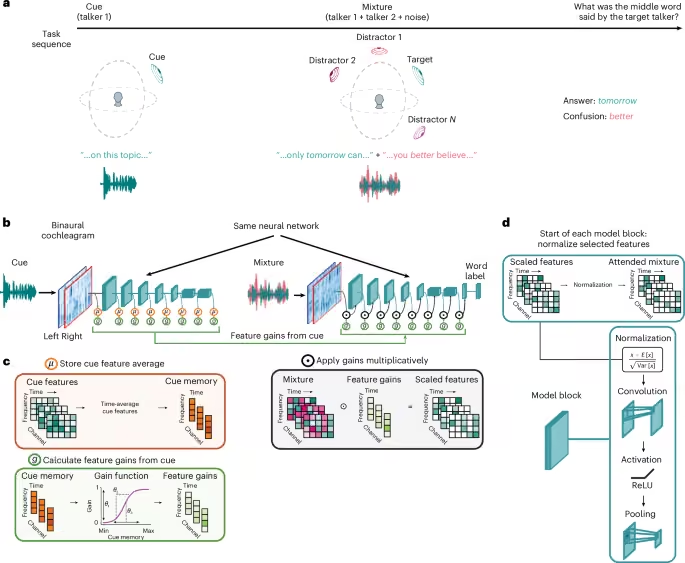
Optimized feature gains explain and predict successes and failures of human selective listening www.nature.com/articles/s41562-026-02414-7
 Nature Human Behaviour
@NatureHumBehav
The effects of Facebook and Instagram political advertisements on the 2020 US election www.nature.com/articles/s41562-025-02329-9
 Nature Human Behaviour
@NatureHumBehav
Behavioural genetics must prioritize communication www.nature.com/articles/s41562-026-02422-7
 Nature Human Behaviour
@NatureHumBehav
Large language models have the potential to level the playing field in consumer financial complaints www.nature.com/articles/s41562-026-02411-w
 Nature Human Behaviour
@NatureHumBehav
Low fertility may persist and could be good for the economy www.nature.com/articles/s41562-026-02423-6
 Nature Human Behaviour
@NatureHumBehav
The conceptual landscape of self-regulation in neurodevelopmental conditions: an overview of reviews www.nature.com/articles/s41562-026-02410-x
 Nature Human Behaviour
@NatureHumBehav
A crowdsourced megastudy of 12 digital single-session interventions for depression in US adults www.nature.com/articles/s41562-026-02415-6?error=cookies_…
 Nature Human Behaviour
@NatureHumBehav
The effects of political advertising on Facebook and Instagram before the 2020 US election www.nature.com/articles/s41562-025-02328-w
 Nature Human Behaviour
@NatureHumBehav
Episodic memory encoding fluctuates at a theta rhythm of 3–10 Hz www.nature.com/articles/s41562-026-02416-5
 Nature Human Behaviour
@NatureHumBehav
An ancient mass grave reveals targeted killing of women and children in the Early Iron Age www.nature.com/articles/s41562-025-02400-5
 Nature Human Behaviour
@NatureHumBehav
Our February 2026 issue is now live! Check out the table of contents:
idp.nature.com/authorize?response_type=cookie&client_id=g…
 Nature Human Behaviour
@NatureHumBehav
A new series of 'How to' Comment is now launched! It provides guidance and practical recommendations for topics of broad interest to our readership. This editorial led by @GiacomoAriani explains more:
www.nature.com/articles/s41562-026-02425-4
Nature Human Behaviour
@NatureHumBehav
Voices of experience www.nature.com/articles/s41562-026-02425-4
 Nature Human Behaviour
@NatureHumBehav
How to foster a supportive research group culture www.nature.com/articles/s41562-026-02407-6?error=cookies_…
 Nature Human Behaviour
@NatureHumBehav
How to research ethically with online data www.nature.com/articles/s41562-026-02408-5?error=cookies_…
 Nature Human Behaviour
@NatureHumBehav
Digital mental health needs a purpose-driven approach www.nature.com/articles/s41562-025-02380-6?error=cookies_…
 Nature Human Behaviour
@NatureHumBehav
A large mass grave from the Early Iron Age indicates selective violence towards women and children in the Carpathian Basin www.nature.com/articles/s41562-025-02399-9?error=cookies_…
 Nature Human Behaviour
@NatureHumBehav
A systematic review and meta-analysis of the proficiency and variability of mathematical ability in populations with autism spectrum disorder www.nature.com/articles/s41562-025-02384-2
 Nature Human Behaviour
@NatureHumBehav
The adoption and efficacy of large language models in US consumer financial complaints www.nature.com/articles/s41562-026-02409-4
 Nature Human Behaviour
@NatureHumBehav
Why artificial intelligence detectors could penalize academic writing www.nature.com/articles/s41562-026-02420-9
 Nature Human Behaviour
@NatureHumBehav
Six reasons to study emotional support from conversational artificial intelligence www.nature.com/articles/s41562-026-02412-9
 Nature Human Behaviour
@NatureHumBehav
The role of context in continuity and segmentation www.nature.com/articles/s41562-026-02403-w
 Nature Human Behaviour
@NatureHumBehav
Caprine dairy exploitation on the Iranian Plateau from the seventh millennium BC www.nature.com/articles/s41562-025-02396-y
 Nature Human Behaviour
@NatureHumBehav
Humans can use positive and negative spectrotemporal correlations to detect rising and falling pitch dlvr.it/TQs6Nm
 Nature Human Behaviour
@NatureHumBehav
Language barriers and the speed of international knowledge diffusion www.nature.com/articles/s41562-025-02367-3
 Nature Human Behaviour
@NatureHumBehav
Social safety nets empower women economically and socially www.nature.com/articles/s41562-025-02395-z
 Nature Human Behaviour
@NatureHumBehav
How personalized disaster warnings can save lives www.nature.com/articles/s41562-026-02405-8
 Nature Human Behaviour
@NatureHumBehav
Social safety nets, women’s economic achievements and agency in 45 countries: a systematic review and meta-analysis www.nature.com/articles/s41562-025-02394-0
 Nature Human Behaviour
@NatureHumBehav
Hybrid neural–cognitive models reveal how memory shapes human reward learning www.nature.com/articles/s41562-025-02324-0
 Nature Human Behaviour
@NatureHumBehav
Why single-item measures of wellbeing are best www.nature.com/articles/s41562-026-02401-y
 Nature Human Behaviour
@NatureHumBehav
Political action is now crucial for US scientists www.nature.com/articles/s41562-026-02406-7?error=cookies_…
 Nature Human Behaviour
@NatureHumBehav
Generative AI predicts personality traits on the basis of open-ended narratives www.nature.com/articles/s41562-025-02397-x
 Nature Human Behaviour
@NatureHumBehav
The tension between big team science and colonial power dynamics www.nature.com/articles/s41562-026-02404-9
 Nature Human Behaviour
@NatureHumBehav
Generative LLMs (e.g., ChatGPT, Claude) were used to score Big Five traits from open-ended thoughts and video diaries. LLM scores aligned with self-reports and predicted behavior, showing personality’s expression in everyday language.
www.nature.com/articles/s41562-025-02389-x
Nature Human Behaviour
@NatureHumBehav
In this Comment, Yao et al. proposes an age-sensitive climate adaptation framework that emphasizes non-digital communication, financial assistance, and community-based strategies to support them.
www.nature.com/articles/s41562-026-02402-x
Nature Human Behaviour
@NatureHumBehav
In this study, @loopyluppi @JordyTasserie et al. identify transcriptomic and connectomic controllers of information integration and its breakdown induced by anaesthesia across species @ccig_cambridge @UnivParisSaclay @CEAParisSaclay @NeuroPSI_saclay
www.nature.com/articles/s41562-025-02381-5
Nature Human Behaviour
@NatureHumBehav
Navigating the academic job market is never easy.@AmyIAnSu1 reflects on her experience searching for a faculty position during the Trump-era hiring freeze and the lessons she learned on her path to a tenure-track role. #academictwitter #phd #jobsearch
www.nature.com/articles/s41562-025-02398-w
Nature Human Behaviour
@NatureHumBehav
Our first issue of 2026 is now live! Check out the table of contents:
www.nature.com/nathumbehav/volumes/10/issues/1
 Nature Human Behaviour
@NatureHumBehav
In this Stage 2 Registered Report, Tibon et al. show using fMRI that neural activity associated with successful memory retrieval did not differ between semantic and episodic memory, using a task with features matched across these conditions.
www.nature.com/articles/s41562-025-02390-4
Nature Human Behaviour
@NatureHumBehav
In this Article, Nicholas & Mattar show that people use episodic memory to make decisions when it is unclear what will be needed in the future, suggesting that the rich representational capacity of episodic memory enables flexible decision making.
www.nature.com/articles/s41562-025-02383-3
Nature Human Behaviour
@NatureHumBehav
This research finds a strong recency bias in information gathering, attenuated in those on the OCD spectrum — a possible mechanism for indecisiveness. Behavioural and MEG data show reduced evidence updating and in high-OC individuals.
www.nature.com/articles/s41562-025-02385-1
Nature Human Behaviour
@NatureHumBehav
This new research shows evidence for a non-hierarchical linguistic representation in English.
www.nature.com/articles/s41562-025-02387-z
Nature Human Behaviour
@NatureHumBehav
This study by Deng et al. shows that a series of peripheral diseases were associated with increased dementia risk and collectively were related to about one third of global dementia burden.
www.nature.com/articles/s41562-025-02392-2
Nature Human Behaviour
@NatureHumBehav
Economic uncertainty exaggerated by tariffs may threaten health in many ways. Targeted policies and prevention efforts are essential to protect vulnerable populations and ease the pressure on public health systems. @S_Vandoros
www.nature.com/articles/s41562-025-02346-8
Nature Human Behaviour
@NatureHumBehav
This network meta-analysis of wellbeing interventions found that yoga, mindfulness, compassion, exercise and positive psychology improved adult wellbeing, with combined exercise and psychological approaches showing the largest effects.
www.nature.com/articles/s41562-025-02369-1
Nature Human Behaviour
@NatureHumBehav
In this Article, @xrmasiso et al. show that spatial contexts with more reliable brain representations better support memory for future experiences within them, revealing how stable neural maps help the brain organize and recall life events.
www.nature.com/articles/s41562-025-02379-z
Nature Human Behaviour
@NatureHumBehav
In this How to Comment, @AnneEUrai et al. discuss how to organize participatory workshop that promote culture change in academia.
www.nature.com/articles/s41562-025-02391-3
Nature Human Behaviour
@NatureHumBehav
Using ancient DNA, isotopes, and proteomics, this work reveal social inequality and mobility in Eastern Zhou China, showing female sacrifices, dietary disparities across classes, kinship networks among elites, and rare evidence of social mobility.
www.nature.com/articles/s41562-025-02356-6
Nature Human Behaviour
@NatureHumBehav
Our last issue of the year, the December 2025 issue, is now live! Check out the table of contents:
www.nature.com/nathumbehav/volumes/9/issues/12
 Nature Human Behaviour
@NatureHumBehav
In this study, Wang et al. compare human and LLM creativity, finding that humans perform slightly better on average. Efforts to enhance LLM performance, such as adopting genius personas or using strategic prompts, show mixed results.
www.nature.com/articles/s41562-025-02331-1
Nature Human Behaviour
@NatureHumBehav
In this Article, Lerousseau and Summerfield compare humans to
transformer networks in a task designed to distinguish "in-weights" and "in-context" learning processes.
www.nature.com/articles/s41562-025-02359-3
Nature Human Behaviour
@NatureHumBehav
A cross-country survey among 82,324 sexual and gender diverse people finds that family rejection, homophobic reactions, and institutional stigma and discrimination are linked with individual well-being, especially for those facing poverty.
www.nature.com/articles/s41562-025-02361-9
Nature Human Behaviour
@NatureHumBehav
In this study, Huang, Cao and Liu compile a dataset of 3,534 profiles of members of China’s national academies to trace academic exchanges over 120 years, and find evidence for a decline in foreign-educated faculty.
www.nature.com/articles/s41562-025-02366-4
Nature Human Behaviour
@NatureHumBehav
This article by @AOzkirli @ralfer and @David__Pascucci shows that, rather than improving performance, serial dependence makes perceptual decisions more uncertain. @EPFL @Brainmind_EPFL @unil @CHUVLausanne @_TheSense_
www.nature.com/articles/s41562-025-02362-8
Nature Human Behaviour
@NatureHumBehav
In this Article, Battiston et al. discuss the emerging technique of higher-order network analysis, and its application to understanding social systems.
www.nature.com/articles/s41562-025-02373-5
Nature Human Behaviour
@NatureHumBehav
Using brain lesions and DNN models, this article by @yanchaobi et al. suggests that human visual perception is modulated by language.
www.nature.com/articles/s41562-025-02357-5
Nature Human Behaviour
@NatureHumBehav
Article by @thomasrdavidson examines how multimodal LLMs evaluate hate speech: larger models aligned with human judgment in context-sensitive decisions, but pervasive demographic and lexical biases remain, and visual identity cues may amplify disparities.
www.nature.com/articles/s41562-025-02360-w
Nature Human Behaviour
@NatureHumBehav
Beginning in December 2025, Australia prohibits individuals under the age of 16 from holding social media accounts. Whether this decisive move will effectively address growing concerns about adolescent social media use remains uncertain.
www.nature.com/articles/s41562-025-02378-0
Nature Human Behaviour
@NatureHumBehav
This new study shows adding place cues to climate-risk emails doubled click-throughs and increased engagement in wildfire-preparedness actions. #cliamteresilience #placeattachment
www.nature.com/articles/s41562-025-02352-w
Nature Human Behaviour
@NatureHumBehav
This new paper finds that people from groups underrepresented in science tend to have lower trust in science, and those from low-trusting groups have higher trust in scientists who share their characteristics.
www.nature.com/articles/s41562-025-02358-4
Nature Human Behaviour
@NatureHumBehav
In this comment, @CasonSchmit et al. highlight how threats to democracy hinder voters' ability to advance policies that serve their health interests, creating a dangerous feedback cycle of health vulnerability and democratic barriers. www.nature.com/articles/s41562-025-02377-1
Nature Human Behaviour
@NatureHumBehav
This article shows that, by age 4, children understand lexical causatives to refer to direct causes and periphrastic causatives to indirect causes in causal chains. Understanding causation by absence develops later in older children. @tobigerstenberg
www.nature.com/articles/s41562-025-02345-9
Nature Human Behaviour
@NatureHumBehav
Currently, there is a low barrier to access AI characters, and regulations fail to adequately protect users online. This Comment discusses the specific risks of AI characters, the regulatory framework, and potential avenues for mitigating harm.
www.nature.com/articles/s41562-025-02375-3
Nature Human Behaviour
@NatureHumBehav
Working in #academia can be stressful. In a new World View, @laraffington suggests treating it as "just a job" to reduce performance pressure and advocate for structural improvements.
www.nature.com/articles/s41562-025-02376-2
Nature Human Behaviour
@NatureHumBehav
Happy #internationalvolunteerday! To celebrate, we launch our new Collection on prosocial behaviour, which explores the science behind prosociality and its real-world impacts. Read our Editorial: www.nature.com/articles/s41562-025-02382-4 and the Collection: www.nature.com/collections/cehebedddi #ivd2025
Nature Human Behaviour
@NatureHumBehav
A behind-the-design look at the Waste Focus cover from our art editor @InfinitiveIdea. See how each flower language brings meaning to rethinking waste. Check out the full story here: www.nature.com/collections/djidjjaebi
 Nature Human Behaviour
@NatureHumBehav
Opie and Atkinson conduct a global phylogenetic analysis of 868 cultures and find evidence indicating that cereal grain cultivation, not agricultural surplus, drove state formation. Their findings also link taxation and writing to state emergence.
www.nature.com/articles/s41562-025-02365-5
Nature Human Behaviour
@NatureHumBehav
In this Article, Futrell and Hahn argue that languages can be understood as codes that minimize predictive information, i.e. they express approximately independent features systematically and locally.
www.nature.com/articles/s41562-025-02336-w
Nature Human Behaviour
@NatureHumBehav
In this study, Howard-Spink et al. develop an empirically based model of orangutan diet development, which suggests that social learning is vital for allowing orangutans to acquire varied diets.
www.nature.com/articles/s41562-025-02350-y
Nature Human Behaviour
@NatureHumBehav
Our new Focus issue "Rethinking Waste" has just gone live! We’re thrilled to present a human-centred look at sustainable waste management. [1/14] www.nature.com/collections/djidjjaebi
Nature Human Behaviour
@NatureHumBehav
This Comment from Riccardo Torelli calls for business to adopt zero-waste principles, supported by corporate governance that's inclusive and incentivises waste reduction. #zerowaste [12/14] www.nature.com/articles/s41562-025-02330-2
Nature Human Behaviour
@NatureHumBehav
Are we consumers or people? Pauline Deutz challenges how sustainability research frames human, calling for inclusive, people-first approaches to drive real change in #circulareconomy and waste management. #sustainability [13/14] www.nature.com/articles/s41562-025-02341-z
Nature Human Behaviour
@NatureHumBehav
And huge thanks to our marvelous art editor @InfinitiveIdea for the visuals and the video up top! Please enjoy the photography and hand-drawn flowers crafted to inspire waste rethinking. [14/14]
 Nature Human Behaviour
@NatureHumBehav
New study using the #grambank database finds that about 1/3 of 191 proposed grammatical universals hold across languages
#linguistics #universals #typology #bayesian
www.nature.com/articles/s41562-025-02325-z
Nature Human Behaviour
@NatureHumBehav
Dee & Pyne find that having mental-health first responders accompany police on certain emergency calls reduces the number of individuals placed in involuntary psychiatric detentions. @ProfTDee
#mentalhealth, #law, #police, #reform
www.nature.com/articles/s41562-025-02339-7
Nature Human Behaviour
@NatureHumBehav
In this study, Collins proposes an alternative dual process (working memory-habit) model of Reinforcement Learning in humans.
www.nature.com/articles/s41562-025-02340-0
Nature Human Behaviour
@NatureHumBehav
In this study, Piray shows a problem of low statistical power in many studies that use Bayesian model selection with computational modelling in psychology and neuroscience.
www.nature.com/articles/s41562-025-02348-6
Nature Human Behaviour
@NatureHumBehav
Adolescents are especially vulnerable to misinformation but also possess unique strengths. This perspective by @_Ili_Ma et al. outlines a research agenda to understand these vulnerabilities and foster resilience through age-appropriate interventions.
www.nature.com/articles/s41562-025-02338-8
Nature Human Behaviour
@NatureHumBehav
How do people disengage, reengage, and flexibly adapt goals? A new meta-analysis reviewed 235 studies (1,421 effects) on goal adjustment. A model that unifies the fragmented field is put forward.
www.nature.com/articles/s41562-025-02312-4
Nature Human Behaviour
@NatureHumBehav
In this Article, Qian et al. use 7T fMRI to show that the intraparietal sulcus (IPS) plays an active role in biasing and synchronizing local competition in V1 during binocular rivalry.
www.nature.com/articles/s41562-025-02320-4
Nature Human Behaviour
@NatureHumBehav
In this study, Sagar et al. show that human sniff behavior is active sensing which responds to the specific odor being detected.
www.nature.com/articles/s41562-025-02327-x
Nature Human Behaviour
@NatureHumBehav
In this article, Holton et al. show that both humans and artificial neural networks have similar patterns of transfer and interference during sequential learning.
www.nature.com/articles/s41562-025-02318-y
Nature Human Behaviour
@NatureHumBehav
In this study, Tian et al. show that rich temporal dynamics within individual brain regions form stable individual-specific “barcodes”, reflecting inter-individual variation across datasets. @linktianx @bbefijfa @angli1993 @BingLiu_BNU
www.nature.com/articles/s41562-025-02332-0
Nature Human Behaviour
@NatureHumBehav
In this Comment, authors argue that it is time to integrate natural ecosystems into the bioecological model of human development.
www.nature.com/articles/s41562-025-02334-y
Nature Human Behaviour
@NatureHumBehav
Our October 2025 issue is now live! Check out the table of contents:
www.nature.com/nathumbehav/volumes/9/issues/10
 Nature Human Behaviour
@NatureHumBehav
This article shows that how you express yourself on social media is more influential than who you are in attracting attention.
www.nature.com/articles/s41562-025-02323-1
Nature Human Behaviour
@NatureHumBehav
..@ruipei_penn @zakijam et al. find that undergrads who perceive peers as empathic show better well-being but underestimate their peers' empathy. Simple interventions that reduced this perception gap boosted social behavior and connection. @StanfordSNL
www.nature.com/articles/s41562-025-02307-1
Nature Human Behaviour
@NatureHumBehav
In this study, Tamnes et al. explore the complex relationship between illbeing - including mental and behavioural disorders - and mental wellbeing. www.nature.com/articles/s41562-025-02319-x
Nature Human Behaviour
@NatureHumBehav
Individuals are very different in their social behaviour. In this Perspective Kuper and colleagues examine interdisciplinary evidence for why this is and what it means for our understanding of individual and collective human behaviour.
www.nature.com/articles/s41562-025-02301-7
Nature Human Behaviour
@NatureHumBehav
In this article, Park et al. find that emotionally arousing moments during a narrative are associated with heightened integration across functional brain networks, which in turn predict how well those moments are subsequently remembered.
www.nature.com/articles/s41562-025-02315-1
Nature Human Behaviour
@NatureHumBehav
#whs2025 This Comment by Gelen et al discusses diversity in representation at the World Health Summit. They found an increasing diversity in representation is increasing — but influence remains uneven. They propose three areas for future reform.
www.nature.com/articles/s41562-025-02321-3
Nature Human Behaviour
@NatureHumBehav
Our editor @YushiJiang666 is at the #whs2025, feel free to reach out!
Yushi Jiang
@YushiJiang666
I will be attending #whs2025 @WorldHealthSmt
this year (Oct. 12-14). If you're also there and have any questions regarding the journal @NatureHumBehav
or interesting ideas to discuss, feel free to reach out!
 Nature Human Behaviour
@NatureHumBehav
Psychometric network models have become increasingly popular in psychology and the social sciences. Huth et al. show that many reported network findings are based on weak or inconclusive evidence inviting caution when interpreting results.
www.nature.com/articles/s41562-025-02314-2
Nature Human Behaviour
@NatureHumBehav
Population-weighted exposure to tropical storms and hurricanes increased in the U.S. between 1992 and 2017. The attractions of high-risk areas currently outweigh incentives to reduce exposure to future storms through migration. @vbolotnyy @abehrer
www.nature.com/articles/s41562-025-02281-8
Nature Human Behaviour
@NatureHumBehav
Children can solve a difficult sorting task by spontaneously discovering efficient sorting algorithms. Older children outperform younger children, showing developmental growth in strategy use and problem-solving find Yang et al.
www.nature.com/articles/s41562-025-02302-6
Nature Human Behaviour
@NatureHumBehav
Formal education systems rarely include knowledge and skills of hunter-gatherer societies. In this Comment, Heys et al. argue that, for education to be both high quality and sustainable, Indigenous knowledge should be recognized and valued.
www.nature.com/articles/s41562-025-02288-1
Nature Human Behaviour
@NatureHumBehav
In this new Perspective, Christopher Summerfield et al. discuss a range of potential impacts of advanced artificial intelligence (AI) on democracy, considering both risks and possible opportunities.
www.nature.com/articles/s41562-025-02309-z
Nature Human Behaviour
@NatureHumBehav
Surveys are a cornerstone of research in the social and behavioral sciences, but they come with challenges. In a new How to Comment, @ProfPeterLynn shares practical advice on ensuring surveys are truly fit for purpose!
www.nature.com/articles/s41562-025-02317-z
Nature Human Behaviour
@NatureHumBehav
In this correspondence, Yoav Zeevi et al. argue that adjustments for multiple comparisons should be standard practice in psychological research.
www.nature.com/articles/s41562-025-02313-3
Nature Human Behaviour
@NatureHumBehav
The silent crisis in girls’ mental health: across countries, girls’ mental health is worsening. In Japan, suicides among girls under 20 have now surpassed boys for the first time. @ZuiCNarita @Gem_K_1 @NCNP_PR @KingsCollegeLon @igakuken
@UTokyo_News_en
www.nature.com/articles/s41562-025-02322-2
Nature Human Behaviour
@NatureHumBehav
.@miladmzdh was once told that to be successful in #academia, developing unique expertise was necessary. Over the years, he learned that diversification is more valuable.
www.nature.com/articles/s41562-025-02316-0
Nature Human Behaviour
@NatureHumBehav
In an online study with 3,371 participants from 13 societies, @shuxian_jin et al. found that perceived societal honour norms predicted both greater competition and cooperation.@UskulAyse @honorlogic_erc @Sussex_Psych
www.nature.com/articles/s41562-025-02308-0
Nature Human Behaviour
@NatureHumBehav
A Swedish study examines whether the risks of maternal and paternal suicide attempt differ during and after pregnancy and found a reversed sex difference in risk of suicide attempt during and after pregnancy compared to the general population.
www.nature.com/articles/s41562-025-02311-5
Nature Human Behaviour
@NatureHumBehav
In this Registered Report, Buchanan et al. show strong evidence confirming the phenomenon of semantic priming across speakers of 19 diverse languages. @aggieerin
#priming #semantics #psychology #linguistics #psycholinguistics #wordnerds
www.nature.com/articles/s41562-025-02254-x
Nature Human Behaviour
@NatureHumBehav
Jia et al. experimentally show that when individuals can tailor their actions to each neighbour - a freedom termed social networking agency - they display higher cooperation, trust and fairness in economic games. @_IvanRomic @pholme
www.nature.com/articles/s41562-025-02289-0
Nature Human Behaviour
@NatureHumBehav
In this 'How to' Comment, Paul L. Gribble gives advice on how to think about one's academic website and how to go about building one. #academicwebsite #sciencecommunication
www.nature.com/articles/s41562-025-02310-6
Nature Human Behaviour
@NatureHumBehav
Our September 2025 issue is now live! Check out the table of contents:
www.nature.com/nathumbehav/volumes/9/issues/9
 Nature Human Behaviour
@NatureHumBehav
Systematic review and meta-analysis of RCTs using social norms messaging for changing health behaviours in developed countries finds an initial small effect. The effect however disappeared when controlling for publication bias. @trisevgenipap
www.nature.com/articles/s41562-025-02275-6
Nature Human Behaviour
@NatureHumBehav
This RCT by @LaudineCarbucc et al. finds that providing information and support to target cognitive and behavioural barriers eliminates early childcare application gaps for low-income and immigrant families in France. @sciencespo
www.nature.com/articles/s41562-025-02293-4
Nature Human Behaviour
@NatureHumBehav
How do humans and large language models (LLMs) represent sentences? Liu et al. design a rule inference task, revealling that both humans and LLMs implicitly decomposes a sentence into tree-structured constituents.
www.nature.com/articles/s41562-025-02297-0
Nature Human Behaviour
@NatureHumBehav
This new paper from Herpell et al. examines the effects of a private hosting program in Germany on the integration outcomes of Ukrainian refugees.
www.nature.com/articles/s41562-025-02303-5
Nature Human Behaviour
@NatureHumBehav
This new work from Baudouin et al. tested two interventions to reduce vaccine hesitancy among adolescent students. Both pedagogical activities and a chatbot improved attitudes towards vaccination.
www.nature.com/articles/s41562-025-02306-2
Nature Human Behaviour
@NatureHumBehav
A network meta-analysis of 152 RCTs found that personalized and group-customized digital interventions improve smoking cessation versus standard care, with better benefits among middle-aged adults in short-to-medium-term programs.
www.nature.com/articles/s41562-025-02295-2
Nature Human Behaviour
@NatureHumBehav
In this study, @MeryemAYucel et al. examine how skin and hair characteristics impact functional Near-Infrared Spectroscopy (fNIRS) signal quality, and provide recommendations for inclusive use of fNIRS. @BU_NPC @BoasDavid
www.nature.com/articles/s41562-025-02274-7
Nature Human Behaviour
@NatureHumBehav
In this article, Boucherie et al. apply physics-based models to the arrangement of locations to study how geography shapes human movement. They find an underlying pattern in how people choose to move, independent of geographical layout.
www.nature.com/articles/s41562-025-02282-7
Nature Human Behaviour
@NatureHumBehav
This umbrella review by Gosling et al. finds that there is no high-quality evidence to support the efficacy of any complementary, alternative, and integrative medicine (CAIM) for core or associated symptoms of #autism.
www.nature.com/articles/s41562-025-02256-9
Nature Human Behaviour
@NatureHumBehav
A study of millions of couples shows spouses often share psychiatric disorders. This pattern is consistent across cultures and has persisted for generations, impacting how these disorders are inherited.
www.nature.com/articles/s41562-025-02298-z
Nature Human Behaviour
@NatureHumBehav
Our senior editor @SamanthaAntusch is at @ehps2025, feel free to reach out!
Samantha Antusch
@SamanthaAntusch
@ehps2025 will start tomorrow and I am looking forward to days filled with fascinating health psychology research and talks. If you are interested in publishing in @NatureHumBehav, have an idea to discuss, or just want to grab a coffee and talk research, please reach out!
Nature Human Behaviour
@NatureHumBehav
In this new paper, @GSwaryandini et al. present a systematic review and meta-analysis of 53 randomized controlled trials and find that educational interventions can reduce cognitive biases among students. @mnoetel @UQ_News
#cognitivebias #education
www.nature.com/articles/s41562-025-02253-y
Nature Human Behaviour
@NatureHumBehav
In this new Article, Tomi Akinyemiju et al. develop and validate a new measure of cultural racism in the United States. They find that cultural racism is associated with higher mortality and lower life expectancy.
www.nature.com/articles/s41562-025-02290-7
Nature Human Behaviour
@NatureHumBehav
Our August 2025 issue is now live! Check out the table of contents:
www.nature.com/nathumbehav/volumes/9/issues/8
 Nature Human Behaviour
@NatureHumBehav
In this article, Egan et al. examine multisensory evidence accumulation and show that evidence in two modalities sub-additively co-activate a single, thresholded motor process.
www.nature.com/articles/s41562-025-02280-9
Nature Human Behaviour
@NatureHumBehav
This study by Han et al. analyzes how older adults across the US access key services like healthcare, food, and housing, revealing geographic disparities and highlighting the need for more equitable planning as the population continues to age.
www.nature.com/articles/s41562-025-02285-4
Nature Human Behaviour
@NatureHumBehav
Nature Human Behaviour senior editor Dr Jamie Horder is at @CogCompNeuro CCN 2025 in Amsterdam! Feel free to ask him any questions you might have about the journal or the Nature portfolio.
 Nature Human Behaviour
@NatureHumBehav
In this article, Maier et al. show that metacognitive learning from consequences can shape moral decision-making. @MaxMa1er @vanessachg_ @FalkLieder @RtnlAltruismLab
www.nature.com/articles/s41562-025-02271-w
Nature Human Behaviour
@NatureHumBehav
In this Article, Silva et al. show that cash transfers reduced AIDS incidence and mortality among 12.3 million Brazilian women, especially those with overlapping social vulnerabilities. #cashtransfers #aids #healthinequities #socialprotection
www.nature.com/articles/s41562-025-02278-3
Nature Human Behaviour
@NatureHumBehav
A Registered Report of 7,978 people in 20 countries finds that decision-makers willfully ignore inconvenient information. Learning about the negative consequences of their choices increases prosociality, especially among guilt-prone individuals. @JF_Schul
www.nature.com/articles/s41562-025-02286-3
Nature Human Behaviour
@NatureHumBehav
This 'How to' Comment by @meganakpeters discusses the creative process and practical recommendations for finding good research questions.
www.nature.com/articles/s41562-025-02292-5
Nature Human Behaviour
@NatureHumBehav
Drawing on daily emotion and health reports from over 71K adults, Newman et al. find that education is consistently linked to better health, while income is associated with greater well-being. @wendybmendes #health #wellbeing
www.nature.com/articles/s41562-025-02264-9
Nature Human Behaviour
@NatureHumBehav
Drawing on methods from psychophysics across ten experiments, Boger and Firestone examine the cognitive and computational foundations of style perception. Their findings suggest that this capacity is grounded in known psychological processes
www.nature.com/articles/s41562-025-02249-8
Nature Human Behaviour
@NatureHumBehav
Using intracranial EEG recordings in epilepsy patients, @dpacheco5 et al. describe changes in the neural representations of cues and contexts during fear and extinction learning in the human brain. @ruhrunibochum @UABBarcelona
www.nature.com/articles/s41562-025-02268-5
Nature Human Behaviour
@NatureHumBehav
Shen et al. show that pre-existing neural similarity in strangers predicts future friendship and changes in social distance over time in an emerging social network of MBA students. @lisashen_yixuan, @ryanhhyon, @parkinsoncm
www.nature.com/articles/s41562-025-02266-7
Nature Human Behaviour
@NatureHumBehav
In this study, Liang et al. estimate the prevalence of LLM-modified text in recent scientific papers and preprints, finding widespread use (up to 17.5% of papers in Computer Science).
www.nature.com/articles/s41562-025-02273-8
Nature Human Behaviour
@NatureHumBehav
Physical inactivity is increasingly common, posing an important societal challenge. This Perspective offers a complex systems approach in tackling the problem, emphasizing the role of interactions between dynamic systems across time. @UniKonstanz
www.nature.com/articles/s41562-025-02279-2
Nature Human Behaviour
@NatureHumBehav
The PhD is done but what comes next? In a new Correspondence, @SanneRaghoebar
@ThomasGultzow @danjphipps and @vtugce discuss how we can empower early- and mid-career researchers in #academia.
www.nature.com/articles/s41562-025-02283-6
 Nature Human Behaviour
@NatureHumBehav
A new study by Johnson & Obradovich explores whether large language models generate completions that simulate altruistic behaviour in the dictator game, and how they respond to different prompts and parameters.
www.nature.com/articles/s41562-025-02258-7
Nature Human Behaviour
@NatureHumBehav
Behavioural interventions often hit structural barriers. This new Comment by Hofmann et al. urges policymakers to combine structural & behavioural insights for systemic reforms. #behaviouralscience
www.nature.com/articles/s41562-025-02284-5
Nature Human Behaviour
@NatureHumBehav
Our July 2025 issue is now live! Check out the table of contents:
www.nature.com/nathumbehav/volumes/9/issues/7
 Nature Human Behaviour
@NatureHumBehav
This research advances a mechanistic reward learning account of social learning strategies. Through experiments & simulations, it shows how people learn to learn from others, dynamically shaping the processes involved in cultural evolution. @DSchultner
www.nature.com/articles/s41562-025-02269-4
Nature Human Behaviour
@NatureHumBehav
There is a growing discussion on the proposal of four-day working week, the authors of this Correspondence call for more research to understand how it might influence health outcomes. @S_Vandoros
www.nature.com/articles/s41562-025-02262-x
Nature Human Behaviour
@NatureHumBehav
This study establishes how aperiodic activity develops in localized brain regions and illuminates the development of prefrontal control during adolescence in the development of attention and memory. @cross_zachariah @NUFeinbergMed @NorthwesternU
www.nature.com/articles/s41562-025-02270-x
Nature Human Behaviour
@NatureHumBehav
A large cross-country trial finds that income-preserving four-day workweeks boost job satisfaction and worker's well-being. @OrlamKelly Boston @BostonCollege @ucddublin
#sociology #4dw
www.nature.com/articles/s41562-025-02259-6
Nature Human Behaviour
@NatureHumBehav
In this Article, @OriPlonsky et al. introduce a new model that merges behavioral science and machine learning to predict choice under risk and uncertainty. Tested on multiple large datasets, it exceeds top psychological and AI models.
www.nature.com/articles/s41562-025-02267-6
Nature Human Behaviour
@NatureHumBehav
This new study from Ben-Hur Francisco Cardoso et al. uses large-scale data to examine patterns of occupational skill and status segregation along race and gender lines in Brazil
www.nature.com/articles/s41562-025-02272-9
Nature Human Behaviour
@NatureHumBehav
In this new study, Liu et al. examine the role of sustained neural activity in the planning and production of speech sequences.
www.nature.com/articles/s41562-025-02250-1
Nature Human Behaviour
@NatureHumBehav
In this Comment, Sarracino et al. argue that governments should prioritize human wellbeing over economic growth.
www.nature.com/articles/s41562-025-02277-4
Nature Human Behaviour
@NatureHumBehav
A Registered Report by Batruch et al aimed to replicate 35 key hypotheses from 17 correlational and five experimental studies using quota-based or probability samples from the U.S., France, Switzerland, and India.
www.nature.com/articles/s41562-025-02234-1
Nature Human Behaviour
@NatureHumBehav
In this Article, Paluch et al. show that unattended working memory items, as well as attended ones, are encoded in persistent activity in the medial temporal lobe.
www.nature.com/articles/s41562-025-02235-0
Nature Human Behaviour
@NatureHumBehav
In this Correspondence, Dunivin and Smaldino argue for greater user control of algorithms for scientific search, and explain why this will benefit both science and platforms alike.
www.nature.com/articles/s41562-025-02276-5
Nature Human Behaviour reposted
Giacomo Ariani
@GiacomoAriani
In Heraklion, Crete for @ASSC2025. Excited for my first time at this conference! Reach out if you’d like to see your #consciousness research in @NatureHumBehav or to chat about science #publishing in general. #assc28
 Nature Human Behaviour
@NatureHumBehav
A new Perspective by @FriedrichMGoetz, @d_t_luca, @DouglasTKenrick et al proposes a unifying Geographical–Psychological Interactionist Framework, aiming to inspire concrete & testable hypotheses.
www.nature.com/articles/s41562-025-02237-y
Nature Human Behaviour
@NatureHumBehav
In this new paper, Ojer et al. map respondents from the American National Election Studies (ANES) into a two-dimensional ideological space and trace dynamics of political polarization and partisan sorting over time
www.nature.com/articles/s41562-025-02251-0
Nature Human Behaviour
@NatureHumBehav
In this study, Chen et al. use UK Biobank data to reveal a dietary pattern associated with a lower risk of dementia, and validate this in additional cohorts.
www.nature.com/articles/s41562-025-02255-w
Nature Human Behaviour
@NatureHumBehav
New study shows people use popularity & social distance to strategically spread gossip. @alicex78 @NassarLab @apaxon @orielf #socialnetworks
www.nature.com/articles/s41562-025-02241-2
Nature Human Behaviour
@NatureHumBehav
In this study, @MatanRubin1 @_desmond_ong @amit_goldenb @AnatPerry et al show that human-attributed responses are rated as more empathic than AI-attributed ones, especially when conveying shared experience and care.
www.nature.com/articles/s41562-025-02247-w
Nature Human Behaviour
@NatureHumBehav
While individualism and isolated work remain common in #academia, coordination offers substantial benefits. This Comment urges systemic changes from all stakeholders toward more coordinated #science. @sajedeh_rasti @lakens
www.nature.com/articles/s41562-025-02260-z
Nature Human Behaviour
@NatureHumBehav
In this article, @Sacha_Altay @EmmaHoes93 and @mwojcieszak show that following the news on social media increases current affairs knowledge, the ability to discern true from false news, and trust in the news.
www.nature.com/articles/s41562-025-02205-6
Nature Human Behaviour
@NatureHumBehav
This video summarizes the recent work by Fassi et al. regarding mental health conditions among adolescents.
Here is the link to the original article: www.nature.com/articles/s41562-025-02134-4
 Springer Nature
@SpringerNature
Social media use amongst adolescents is widespread. At the same time, the mental health of adolescents is worsening. Research found that one in six 7–16-year-olds and one in four 17–19-year-olds in the UK have a probable mental health condition.
@NaturePortfolio @NatureHumBehav
Nature Human Behaviour
@NatureHumBehav
In this article, Zhu et al. use machine learning to reveal new complex insights into human strategic decision-making.
www.nature.com/articles/s41562-025-02230-5
Nature Human Behaviour
@NatureHumBehav
Using in silico neuroscience, Gifford et al. developed a neural control algorithm to modulate the representational relationships between visual cortical areas, revealinghow these areas jointly represent the world as an interconnected network. #neuroai
www.nature.com/articles/s41562-025-02252-z
Nature Human Behaviour
@NatureHumBehav
Our June 2025 issue is now live! Check out the table of contents:
www.nature.com/nathumbehav/volumes/9/issues/6
 Nature Human Behaviour
@NatureHumBehav
#conspiracy theories and conspiracy thinking are becoming an increasing concern for researchers, politicians and policymakers. A Perspective by Van Prooijen et al examines how conspiracy beliefs affect #sustainability attitudes and behaviour.
www.nature.com/articles/s41562-025-02243-0
Nature Human Behaviour
@NatureHumBehav
A new systematic review & meta-analysis shows less than 25% of crimes are group-committed, but half of offenders co-offend at least once. Co-offending is more common in property crimes and among young offenders, often involving two people. www.nature.com/articles/s41562-025-02244-z
Nature Human Behaviour
@NatureHumBehav
In this Comment, Rod and Varga discuss interdisciplinary research from the perspective of complex systems, and suggest actions that public health funders, institutions, and researchers can take to fully engage in interdisciplinary work.
www.nature.com/articles/s41562-025-02257-8
Nature Human Behaviour
@NatureHumBehav
New research by Lu et al. reveals cultural tendencies in AI outputs based on the language used to prompt it. @MITSloan @MIT #genai #culture
www.nature.com/articles/s41562-025-02242-1
Nature Human Behaviour
@NatureHumBehav
Dargan Shelter at 1073m elevation in the upper Blue Mountains is believed to be the oldest occupied high-altitude site in Australia (occupation first occurred ~20,000 years ago). @sydneyarchaeology @australianmuseum @sydney_uni
#australianarchaeology
www.nature.com/articles/s41562-025-02180-y
Nature Human Behaviour
@NatureHumBehav
New study by @EricFeltham @NAChristakis et al. reveals how people in Honduran villages cognitively map their social networks. #socialnetwork
www.nature.com/articles/s41562-025-02221-6
Nature Human Behaviour
@NatureHumBehav
Contemporary information systems face growing public distrust across a range of issues. This Perspective introduces a Community-Centered Exploration, Engagement, and Evaluation system to help detect and mitigate potential information harms.
www.nature.com/articles/s41562-025-02233-2
Nature Human Behaviour
@NatureHumBehav
How do laypeople make sense of scientific explanations? This new Article from @cruz_fcorreia & @tanialombrozo looks at the role of jargon. They find that people find explanations with jargon satisfying, even though jargon reduces understanding.
www.nature.com/articles/s41562-025-02227-0
Nature Human Behaviour
@NatureHumBehav
In this Article, @yamasahiro et al. explore how conversational content is represented in the brain, revealing brain activity patterns with contrasting timescales for speech production and comprehension.
www.nature.com/articles/s41562-025-02231-4
Nature Human Behaviour
@NatureHumBehav
Ramadan et al. examine how humans deploy hierarchical and counterfactual reasoning strategies given cognitive constraints.
www.nature.com/articles/s41562-025-02232-3
Nature Human Behaviour
@NatureHumBehav
This study uncovered several genetic associations linked to environmental sensitivity in psychiatric and neurodevelopmental traits, using data from over 21,000 MZ twins @munroe_patsy @thaliaeley
www.nature.com/articles/s41562-025-02193-7
Nature Human Behaviour
@NatureHumBehav
Goel et al. examine why some factually correct news articles are often shared alongside fake news claims on social media.
www.nature.com/articles/s41562-025-02223-4
Nature Human Behaviour
@NatureHumBehav
This socio-centric social network study estimates the social influence and social selection on preference for cutting female relatives using data from 5163 Ethiopian Arsi Oromo adults.
www.nature.com/articles/s41562-025-02236-z
Nature Human Behaviour
@NatureHumBehav
Federal funding of science has been cut, and trainee scientists in the US face an unstable and uncertain future. Nicole Rust explains how and why we should act to support junior US researchers at this time.
www.nature.com/articles/s41562-025-02246-x
Nature Human Behaviour
@NatureHumBehav
In this Correspondence, @Higher_Ed_Frank and Hutchens argue that restrictions on academic freedom risk future scientific breakthroughs and innovation.
www.nature.com/articles/s41562-025-02248-9
Nature Human Behaviour
@NatureHumBehav
This study by Cao et al. shows that human amygdala and hippocampus neurons encode visual facial features, bridging perception and semantic representations.
www.nature.com/articles/s41562-025-02218-1
Nature Human Behaviour
@NatureHumBehav
In this study, Lu et al. introduce All-Topographic Neural Networks (All-TNN) as a parsimonious model of the human visual cortex.
www.nature.com/articles/s41562-025-02220-7
Nature Human Behaviour
@NatureHumBehav
This research shows majority support for global redistributive policies in 20 countries. Follow-up experiments show the support is sincere. @adrien_fabre, @TDouenne, @cired8568, @CNRS
#econtwitter #econsky #climate #greensky
www.nature.com/articles/s41562-025-02175-9
Nature Human Behaviour
@NatureHumBehav
In this study, Linka et al recorded eye movements of thousands of children and adults viewing scene images in a museum. Adult gaze was marked by well-established spatial and semantic biases, but children deviated from this well into teenage years.
www.nature.com/articles/s41562-025-02191-9
Nature Human Behaviour
@NatureHumBehav
New research from Xu et al. shows to what extent LLMs exhibit human-like language representations. @809548386
www.nature.com/articles/s41562-025-02203-8
Nature Human Behaviour
@NatureHumBehav
In this Review, @JGyapong et al review current interventions for neglected tropical diseases and highlight the role of human behaviour, community engagement and involvement in driving intervention success. @mawuligohoh @AlfredManyeh @mustapha82315
www.nature.com/articles/s41562-025-02219-0
Nature Human Behaviour
@NatureHumBehav
In this Article, Lee et al. fine tune large language models on debate data to create belief embeddings that capture the nuanced relationship between a wide range of topics and reveal how people form new opinions.
www.nature.com/articles/s41562-025-02228-z
Nature Human Behaviour
@NatureHumBehav
In this World View, Di shares his experience and lessons learned when he was a PhD student doing research on environmental public health in the US.
www.nature.com/articles/s41562-025-02239-w
Nature Human Behaviour
@NatureHumBehav
A large-scale study of academics’ tweets shows disparities in who shapes academic discourse and how it reaches the public. @Prashant_Garg_ @fetzert www.nature.com/articles/s41562-025-02199-1
Nature Human Behaviour
@NatureHumBehav
Woodley et al. find that a custom cooperative online quiz game called Tango (letstango.org) reduced partisan animosity and improved democracy-related attitudes, with effects lasting up to four months.
www.nature.com/articles/s41562-025-02225-2
Nature Human Behaviour
@NatureHumBehav
In this article, Du & Haith show that behavior can become habitual in two different ways, involving response initiation and response preparation, respectively
www.nature.com/articles/s41562-025-02215-4
Nature Human Behaviour
@NatureHumBehav
In this article, Trach and @smickdougle show that motor responses can form part of structured, graph-like memory representations. www.nature.com/articles/s41562-025-02217-2
Nature Human Behaviour
@NatureHumBehav
This Perspective by @MohammadAtari90, @JoHenrich and Jonathan Schultz argues for psychology to become a historical and geographical science, a transformation they term the chronospatial revolution.
www.nature.com/articles/s41562-025-02229-y
Nature Human Behaviour
@NatureHumBehav
In this Correspondence, @joshuasweitz et al describe an interactive visualisation that illustrates the likely impacts of funding cuts on the US economy and employment. #scienceimpacts #scienceeconomy #nihcuts #federalresearch
www.nature.com/articles/s41562-025-02238-x
Nature Human Behaviour
@NatureHumBehav
In this World View, climate and water scientist Peter Gleick calls on scientists able and willing to do so to speak out publicly, arguing that while dissent carries risks, it is riskier to stay silent.
www.nature.com/articles/s41562-025-02240-3
Nature Human Behaviour
@NatureHumBehav
This new Comment calls for psychological and behavioural scientists to study degrowth. @DarioKrps11 @jasonhickel @g_kallis @LSEBehavioural @LSE_PBS www.nature.com/articles/s41562-025-02211-8
#degrowth #behaviour_change #sustainability
#transformation
Nature Human Behaviour
@NatureHumBehav
Collecting an extensive publicly available dataset on 4 inhibitory control tasks, @GrattonCaterina et al. show that more than 1000 trials/participant are necessary to reduce within-subject variability and improve the reliability of the congruency effect.
www.nature.com/articles/s41562-025-02198-2
Nature Human Behaviour
@NatureHumBehav
This Perspective by Marshall et al. raises the possibility that, rather than focusing on overcoming biases against caring for distant others, in some domains, we possess an early-emerging tendency to care for them.
www.nature.com/articles/s41562-025-02212-7
Nature Human Behaviour
@NatureHumBehav
Our May 2025 issue is now live! Check out the table of contents:
www.nature.com/nathumbehav/volumes/9/issues/5
 Nature Human Behaviour
@NatureHumBehav
There is an ongoing debate about phenotypic differences in #autism spectrum disorder between girls and boys. In this study, Pierce et al found no significant sex differences in ASD toddlers across 17 of 18 measures. @UCSD_ACE
www.nature.com/articles/s41562-025-02132-6
Nature Human Behaviour
@NatureHumBehav
Why do people follow rules, even when breaking them has no consequences? New research by Gächter et al. suggests it’s driven by an intrinsic respect for rules and social expectations—not just rewards or punishments.
www.nature.com/articles/s41562-025-02196-4
Nature Human Behaviour
@NatureHumBehav
This Comment by Mutapi & Woolhouse discusses the importance of hygiene behaviours for combating neglected tropical diseases (NTDs), and why it's crucial to understand contextual factors that might mean hygiene is not prioritised.
www.nature.com/articles/s41562-025-02192-8
Nature Human Behaviour
@NatureHumBehav
In this Article, the authors introduce PIGEON, a statistical framework for estimating gene-environment interactions for complex traits. @Jiacheng_Miao @Q_StatGen
www.nature.com/articles/s41562-025-02202-9
Nature Human Behaviour
@NatureHumBehav
This new research by @Ying55437547 @binleychen et al reveals disparities in infrastructure access across 166 counties and how they are related to health outcomes.
#healthequity
www.nature.com/articles/s41562-025-02208-3
Nature Human Behaviour
@NatureHumBehav
This Review by Bailenson et al presents five canonical psychological research findings in VR over the past three decades. These findings have been consistently replicated, and are useful for both researchers and users of VR.
www.nature.com/articles/s41562-025-02216-3
Nature Human Behaviour
@NatureHumBehav
This new paper finds that GPT-4 outperforms humans in debates when prompted with basic sociodemographic data. @fraslv @manoelribeiro @ricgallotti @cervisiarius
www.nature.com/articles/s41562-025-02194-6
Nature Human Behaviour
@NatureHumBehav
This meta-analysis of 79 RCTs by Hoppen et al found that social comparison is an effective behaviour change technique for pro-environmental-, health-, performance-, and service-related behaviours.
www.nature.com/articles/s41562-025-02209-2
Nature Human Behaviour
@NatureHumBehav
In this Perspective, @AmiraSkeggs & @OrbenAmy review current interventions on social media use among adolescents and propose a new theoretical model to guide the effective design and research of such interventions.
www.nature.com/articles/s41562-025-02167-9
#socialmedia #adolescents #mentalhealth
Nature Human Behaviour
@NatureHumBehav
Fridman et al. show associations of reproductive phenotypes and educational attainment in heterozygotic carriers of pathogenic variants associated with recessive conditions.
www.nature.com/articles/s41562-025-02204-7
Nature Human Behaviour
@NatureHumBehav
In this Stage 2 Registered Report, Crompton et al. examine how information is shared by autistic and non-autistic people and find that rapport is higher with others of the same neurotype and when diagnosis is disclosed.
www.nature.com/articles/s41562-025-02163-z
Nature Human Behaviour
@NatureHumBehav
This study of 50 wild Western chimpanzee mother-offspring dyads revealed no evidence of disorganized attachment. Instead, offspring exhibited secure-like and insecure-avoidant-like behaviors during threats. @EleRolland, @TaiChimpProject
www.nature.com/articles/s41562-025-02176-8
Nature Human Behaviour
@NatureHumBehav
In this World View, Sterling Williams-Ceci shares her experience and advice about switching fields for PhD.
www.nature.com/articles/s41562-025-02214-5
#fieldswitch and #academicculture
Nature Human Behaviour
@NatureHumBehav
Fillingim et al. show that biological and psychosocial factors jointly predict chronic pain associated conditions
www.nature.com/articles/s41562-025-02156-y
Nature Human Behaviour
@NatureHumBehav
The application of polygenic risk scores (PRS) in clinical practice has advanced but also received criticism. In this Perspective by @scsanderson and @minouye271, major psychological and behavioural arguments against PRS applications have been assessed.
www.nature.com/articles/s41562-025-02200-x
Nature Human Behaviour
@NatureHumBehav
What happens when Large Language models play repeated economic games? This new study from @elifakata et al investigates across a range of models and games. @cpilab
www.nature.com/articles/s41562-025-02172-y
Nature Human Behaviour
@NatureHumBehav
A genome-wide association study of age at onset of walking in over 70,000 infants found 11 significant loci. Age at onset of walking showed SNP heritability of 24%, a reliable polygenic score and genetic overlap with ADHD and brain phenotypes.
www.nature.com/articles/s41562-025-02145-1
Nature Human Behaviour
@NatureHumBehav
What's the relationship between social media use and mental health problems in adolescents? A Registered Report by @FassiLuisa et al examined this question using a nationally representative UK sample. @mrccbu #socialmedia #mentalhealth
www.nature.com/articles/s41562-025-02134-4
Nature Human Behaviour
@NatureHumBehav
.@jcuartas2 et al.’s meta-analysis from 92 low- and middle-income countries, shows that physical punishment of children is linked to a higher risk of detrimental outcomes across the life course.
@NYUAppliedPsych @nyusteinhardt
www.nature.com/articles/s41562-025-02164-y
Nature Human Behaviour
@NatureHumBehav
In this study, @EmorieBeck et al test associations between life and domain satisfaction and show that aggregated, population-level research might fail to capture individual differences in personalised happiness. @ucdavis, @ucdavispsych
www.nature.com/articles/s41562-025-02171-z
Nature Human Behaviour
@NatureHumBehav
In this study, Zhang et al provide brain imaging evidence showing how auditory cortex activation and cognitive function develop during a 6- month follow-up after gene therapy in children with congenital deafness.
www.nature.com/articles/s41562-025-02184-8
Nature Human Behaviour
@NatureHumBehav
VanderWeele and Johnson examine unidimensional vs. multidimensional approaches to well-being, assessing their conceptual, empirical, and policy implications
www.nature.com/articles/s41562-025-02187-5
Nature Human Behaviour
@NatureHumBehav
New findings from the Global Flourishing Study shed light on whether people from 22 diverse countries are flourishing (a state where all aspects of life are good). Read the collection:
www.nature.com/collections/global-flourishing-study-wave1
 Nature Human Behaviour
@NatureHumBehav
In this study, Hindes et al examine evidence for adverse birth and pregnancy outcomes. They find that reduced rates of preterm birth and increased positive screening rates for possible antenatal depression are associated with the first lockdowns.
www.nature.com/articles/s41562-025-02139-z
Nature Human Behaviour
@NatureHumBehav
In this new study from the Global Flourishing Study project, Bialowolski et al. analyze how financial well-being correlates with demographic and childhood condition variables across 22 countries. @kozminskiuniversity
www.nature.com/articles/s41562-025-02207-4
#financialwellbeing #financialfreedom
Nature Human Behaviour
@NatureHumBehav
In this new Perspective, Lisa Gennetian et al. present a policy case for child-centric reparations for slavery and legacies of structural and systemic racism in the United States.
www.nature.com/articles/s41562-025-02189-3
Nature Human Behaviour
@NatureHumBehav
This network meta-analysis by Zhu et al. leveraging Large Language Models compared 19 mobile stress interventions. No conclusive evidence that human support or mobile technology significantly enhanced intervention outcomes was found.
www.nature.com/articles/s41562-025-02162-0
Nature Human Behaviour
@NatureHumBehav
Our April 2025 issue is now live! Check out the table of contents:
www.nature.com/nathumbehav/volumes/9/issues/4
 Nature Human Behaviour
@NatureHumBehav
Why do scientists disagree with each other? This new study from Sulik et al. surveys psychologists to find that scientific divides are associated with differences in researcher cognitive traits. @Mi3Lab
www.nature.com/articles/s41562-025-02153-1
Nature Human Behaviour
@NatureHumBehav
Using multi-modal data from the UK Biobank, @lezhou1 @danilobzdok et al. delineate the phenotyping and brain basis of early risers and night owls at a population scale, showing links to habit formation and emotional regulation.
www.nature.com/articles/s41562-025-02182-w
Nature Human Behaviour
@NatureHumBehav
This new research by @GraceLiu78 et al shows binary data visuals help overcome the "boiling frog" effect in climate change perception. @cocosci_lab
#climatechange #climatechangecommunication
www.nature.com/articles/s41562-025-02183-9
Nature Human Behaviour
@NatureHumBehav
New study by Yin et al. charts early brain development (0-6 yrs) using fMRI, revealing key connectivity patterns tied to cognitive abilities. @Weiyan_Yin @WeiliLinBRIC @BRIC_UNC
#earlybraindevelopment #braincharts
www.nature.com/articles/s41562-025-02160-2
Nature Human Behaviour
@NatureHumBehav
In this new systematic review & meta-analysis,
@shuquan_chen and colleagues examine how emotion regulation and mental health are related across cultures.
@CaiQiyue
#culture #emotion #metaanalysis
www.nature.com/articles/s41562-025-02168-8
Nature Human Behaviour
@NatureHumBehav
In this new Registered Report, @v_gligoric et al. identify partisan differences in trust in scientists in the U.S. and find that several interventions fail to increase trust among conservatives.
www.nature.com/articles/s41562-025-02147-z
#trustinscientists #scientists #ideology #trust
Nature Human Behaviour
@NatureHumBehav
Jung et al. show the existence of polygenic overlap and associations between subjective well-being and psychiatric disorders
www.nature.com/articles/s41562-025-02155-z
 Nature Human Behaviour
@NatureHumBehav
.@shahanmemon @alshebli et al. examine the impact that having a paper retracted has on scientists' subsequent careers. @NYUAbuDhabi @uw_ischool
#scisci #metascience #metaresearch #retraction
www.nature.com/articles/s41562-025-02154-0
Nature Human Behaviour
@NatureHumBehav
This new paper from Neil et al. finds that variation in fatal police shooting rates across U.S. agencies is associated with differences in social contexts.
www.nature.com/articles/s41562-025-02169-7
Nature Human Behaviour
@NatureHumBehav
Patricia Lockwood discusses why she values peer review and participating in the peer review process despite some of the challenges.
www.nature.com/articles/s41562-025-02188-4
Nature Human Behaviour
@NatureHumBehav
Examining Congressional speeches from 1879 to 2022, Aroyehun et al. suggest that evidence-based language has continued to decline since the mid-1970s, together with a decline in legislative productivity. @dgarcia_eu @uni-konstanz.de
www.nature.com/articles/s41562-025-02136-2
Nature Human Behaviour
@NatureHumBehav
Around the world, more than a billion children are regularly exposed to violence or neglect. Flor et al. systematically review evidence that links childhood physical violence, psychological violence, and neglect to increased risks for health outcomes.
www.nature.com/articles/s41562-025-02143-3
Nature Human Behaviour
@NatureHumBehav
Gender-based violence is widespread, affecting women and men worldwide. Stein et al. use meta-analysis and the burden of proof methodology to evaluate associations between gender-based violence and several health outcomes.
www.nature.com/articles/s41562-025-02144-2
Nature Human Behaviour
@NatureHumBehav
This Comment by Zhang & Xue discusses the value of large-scale cohort studies in advancing research on child brain development. They introduce the Chinese Child Brain Development Project as one important initiative in the field.
www.nature.com/articles/s41562-025-02186-6
Nature Human Behaviour
@NatureHumBehav
In this article by Behrendt et al., two nationwide randomized controlled trials in England with over 4 million participants found that text messages emphasizing “Top of the queue” increased COVID-19 vaccination rates.
www.nature.com/articles/s41562-025-02165-x
#behaviouralscience #vaccination
Nature Human Behaviour
@NatureHumBehav
In this Correspondence, Kil Won Lee & Tae Jung Park describe a historic ruling in South Korea, which may inspire courts worldwide to evaluate whether their governments’ climate policies align with constitutional principles and international obligations.
www.nature.com/articles/s41562-025-02174-w
Nature Human Behaviour
@NatureHumBehav
In this Correspondence, John S. Ji. discusses why health outcomes are well-suited to furnish indicators for adaptation success (or otherwise).
www.nature.com/articles/s41562-025-02179-5
Nature Human Behaviour
@NatureHumBehav
Qi et al. reveal that the brain encodes complex movement sequences as series of temporal states, each corresponding to a small movement fragment, with motor cortex neurons dynamically altering their encoding across states. @Zhejiang University
www.nature.com/articles/s41562-025-02157-x
Nature Human Behaviour
@NatureHumBehav
This article has been beautifully adapted into a comic by @dr_appie and @Lizah_Aart. It effectively illustrates the complex interplay between nature and nurture in shaping socio-economic status. communities.springernature.com/posts/are-we-born-to-succe…
 Nature Human Behaviour
@NatureHumBehav
In this Perspective, @dr_appie et al. synthesize genomic evidence and show how social stratification may create selection pressures. This may have consequences for genetic architectures and social inequality.
www.nature.com/articles/s41562-025-02150-4
Nature Human Behaviour
@NatureHumBehav
In the month of International Women’s Day, we asked six scientists about the most influential woman who shaped their field. @emiliahsc @histoftech
www.nature.com/articles/s41562-025-02161-1
Nature Human Behaviour
@NatureHumBehav
This Comment from Gary Charness and colleagues discusses how various LLM tools can support different stages of the experimental research process.
www.nature.com/articles/s41562-025-02137-1
Nature Human Behaviour
@NatureHumBehav
Using the CHIMGEN cohort, Yu et al investigate the associations of growing up without siblings and adult brain structure, function, connectivity, cognition, personality, and mental health.
www.nature.com/articles/s41562-025-02142-4
Nature Human Behaviour
@NatureHumBehav
.@JoshChGray et al. found that the genetic overlap between alcohol use disorder and body mass index consists of variants with mixed effect directions and implicates brain regions involved in executive functioning, reward, and food intake regulation.
www.nature.com/articles/s41562-025-02148-y
Nature Human Behaviour
@NatureHumBehav
Cheng et al introduce a neural geometry approach to reconcile past conflicting findings and propose a unified theory of visual perceptual learning using deep neural network modeling, human fMRI imaging, and multi-unit recordings in macaques.@ru_yuan_zhang
www.nature.com/articles/s41562-025-02149-x
Nature Human Behaviour
@NatureHumBehav
In this Perspective, @dr_appie et al. synthesize genomic evidence and show how social stratification may create selection pressures. This may have consequences for genetic architectures and social inequality.
www.nature.com/articles/s41562-025-02150-4
Nature Human Behaviour
@NatureHumBehav
Our March 2025 issue is now live! Check out the table of contents:
www.nature.com/nathumbehav/volumes/9/issues/3
 Nature Human Behaviour
@NatureHumBehav
Each individual is unique, and so is their brain activity. Using fMRI and brain fingerprinting during anaesthesia, @loopyluppi et al. find that human brains become temporarily more difficult to identify and tell apart from each other when unconscious.
www.nature.com/articles/s41562-025-02121-9
Nature Human Behaviour
@NatureHumBehav
In this Comment, Kostandova et al. highlight three key challenges and opportunities in using human mobility data for infectious disease research. They call for simulation and modelling, reporting guidelines, and investment in data repositories.
www.nature.com/articles/s41562-025-02151-3
Nature Human Behaviour
@NatureHumBehav
The integration of embodied cognition with cognitive load theory offers a new framework for educational practices. This review highlights the importance of bridging these frameworks @liye_zou
www.nature.com/articles/s41562-025-02152-2
Nature Human Behaviour
@NatureHumBehav
The increasing fragmentation of constructs and measures in psychological literature hinders cumulative knowledge generation. This Comment by Anvari et al calls on the field to take action toward defragmentation via four key recommendations. www.nature.com/articles/s41562-025-02138-0
Nature Human Behaviour
@NatureHumBehav
.@emilykubota et al. find that white matter connections of ventral temporal cortex are innately organized by cytoarchitecture, category, and eccentricity from birth, and develop in parallel from infancy to adulthood. @stanford_vpnl
www.nature.com/articles/s41562-025-02116-6
Nature Human Behaviour
@NatureHumBehav
Past adaptations were local. Archaeological insights in this new Comment show collaboration and place-based research are key to climate resilience. #climatechange #archaeology
www.nature.com/articles/s41562-025-02131-7
Nature Human Behaviour
@NatureHumBehav
Understanding when and why laypeople adopt predictive algorithms is key to aligning technology with user needs. In this Comment, Dietvorst proposes that adoption is driven by performance expectations.
www.nature.com/articles/s41562-025-02135-3
Nature Human Behaviour
@NatureHumBehav
This new Comment examines datasets in agriculture, health, and energy, calling for Afrocentric data that better reflect African experiences. #aiinafrica
www.nature.com/articles/s41562-025-02140-6
Nature Human Behaviour
@NatureHumBehav
In this World View, Hye Yun Kang discusses her experiences with challenges of translating DEI initiatives developed in places like the US to other contexts when she worked at a Korean campus of a US institution.
www.nature.com/articles/s41562-025-02141-5
Nature Human Behaviour
@NatureHumBehav
How does the human mind understand social relationships? This paper by Wang et al. discovers a universal conceptual structure across modern and ancient cultures, with five major dimensions and three core categories. @Bruce_Yin_Wang
www.nature.com/articles/s41562-025-02122-8
Nature Human Behaviour
@NatureHumBehav
This study by @NickBDiamond et al. finds that sleep enhances memory for the order of events from an art tour, but not the details of the events. The sleep-related advantage for sequences persists for over a year.
@stf_simpson @briantlevine @rotmanresearch
www.nature.com/articles/s41562-025-02117-5
Nature Human Behaviour
@NatureHumBehav
This study by @dirkuwulff et al. uses language models to create semantic embeddings of psychometric items and scales, aiding in predicting empirical relations and clarifying psychological taxonomies.
www.nature.com/articles/s41562-024-02089-y
Nature Human Behaviour
@NatureHumBehav
The Middle Paleolithic in southwest Asia saw interactions between archaic and modern humans ca 130-80 ka ago, leading to increased behavioral complexity and consolidation of a uniform behavioral set across Homo groups. @labHCE www.nature.com/articles/s41562-025-02110-y
Nature Human Behaviour
@NatureHumBehav
Suthana et al. studied brain recordings from implanted electrodes in freely moving humans. They show that neural dynamics encoded actual and imagined routes similarly. @SuthanaLab @m_seeber
www.nature.com/articles/s41562-025-02119-3
Nature Human Behaviour
@NatureHumBehav
In this Q&A, we asked why they organized Stand Up for Science. Here are the answers:
www.nature.com/articles/s41562-025-02146-0
#standupforscience2025
Nature Human Behaviour
@NatureHumBehav
In this Perspective, Dörr et al. argue that research on social media has mainly focused on anti-social behaviours and call for more research on the ways in which social media platforms can empower pro-social behaviour.
www.nature.com/articles/s41562-025-02102-y
Nature Human Behaviour
@NatureHumBehav
.@GoldsteinYAriel et al. link acoustic, speech, and linguistic data with brain activity during real-life conversations to create a model that predicts neural responses during speech with high accuracy. @HassonLab
www.nature.com/articles/s41562-025-02105-9
Nature Human Behaviour
@NatureHumBehav
Non-author contributions often go unnoticed in scientific publications. This Comment by Emogor et al proposes ‘Extended Research Credits’, a standardized, tiered system to highlight hidden labour in research.
www.nature.com/articles/s41562-025-02123-7
Nature Human Behaviour
@NatureHumBehav
This Comment by Bartoš et al proposes ‘Synchronous Robustness Reports’ as a brief format intended to accompany important articles.
www.nature.com/articles/s41562-025-02129-1
Nature Human Behaviour
@NatureHumBehav
Research by Zeng et al shows that mentees trained in larger groups tend to exhibit superior academic performance compared to those from smaller groups, as long as they stay in academia after graduation.
www.nature.com/articles/s41562-025-02114-8
Nature Human Behaviour
@NatureHumBehav
This systematic review and meta-analysis by Dumitru et al suggests consistently positive associations between death anxiety and distress outcomes. @ElisaDumitru @IoanaA_Cristea
www.nature.com/articles/s41562-025-02115-7
Nature Human Behaviour
@NatureHumBehav
In natural conversations, people can stop speaking at any time. How? Using high-density electrocorticography, Zhao et al. find a distinct neural signal in the human premotor cortex that inhibits speech output to achieve abrupt stopping. @ChangLabUcsf
www.nature.com/articles/s41562-025-02118-4
Nature Human Behaviour
@NatureHumBehav
How can Generative AI and LLMs be leveraged in academia? This Comment by Jiao et al examines different academic guidelines and recommends balanced approaches for the responsible integration of GenAI and LLMs in education.
www.nature.com/articles/s41562-025-02124-6
Nature Human Behaviour
@NatureHumBehav
This World View by Natalia Ocampo-Peñuela discusses from a personal perspective the challenges of being an academic and a mother, pointing out ways in which academia can become more family-friendly.
www.nature.com/articles/s41562-025-02126-4
Nature Human Behaviour
@NatureHumBehav
Grätz et al. use Mendelian randomization to identify the causal effects of parental age at first birth on children's test scores. They find no causal effects of both maternal and paternal age at first birth on children's test scores at age 10.
www.nature.com/articles/s41562-025-02108-6
Nature Human Behaviour
@NatureHumBehav
In this study, Revsine et al. find that participants tend to remember (or forget) the same speakers’ voices. They show that voice memorability can be predicted from a set of acoustic features. @CRevsine @WilmaBainbridge @UChicagoPsych
www.nature.com/articles/s41562-025-02112-w
Nature Human Behaviour
@NatureHumBehav
Our January 2025 issue is now live! Check out the table of contents:
www.nature.com/nathumbehav/volumes/9/issues/2
 Nature Human Behaviour
@NatureHumBehav
In this cross-ancestry genomewide meta-analysis on depression, Luo et al identified new risk loci and potential causal variants and genes, providing insights into the genetic architecture of depression and likely therapeutic targets.
www.nature.com/articles/s41562-024-02073-6
Nature Human Behaviour
@NatureHumBehav
This new paper uses surveys and a large set of resumes from the US to identify a nested hierarchical structure in portfolios of workplace skills, with implications for wage disparities.
www.nature.com/articles/s41562-024-02093-2
Nature Human Behaviour
@NatureHumBehav
In this Perspective, Nicol et al. propose using implementation science methods to accelerate the translation\ of psychedelic research into psychedelic-assisted therapy.
www.nature.com/articles/s41562-025-02103-x
Nature Human Behaviour
@NatureHumBehav
Brissenden et al. show that spatial cognition can adaptively shift to counteract errors in the allocation of visual attention. This suggests an error-driven learning mechanism analogous to movement adaptation in motor control. @tarazlee @brissend
www.nature.com/articles/s41562-025-02109-5
Nature Human Behaviour
@NatureHumBehav
This Correspondence proposes a guideline for academic institutions to better support international Early Career Researchers (ECRs) adapting to a new environment. @EM_OYSTER
@Euromarine_tw
www.nature.com/articles/s41562-025-02125-5
Nature Human Behaviour
@NatureHumBehav
In this SRMA, @janpfaender and @Sacha_Altay find that people rate true news as more accurate than false news and are better at rating false news as false than at rating true news as true.
www.nature.com/articles/s41562-024-02086-1
Nature Human Behaviour
@NatureHumBehav
This Comment by @RobinMazumder introduces the concept of Neuromimicry to explore the potential application of lessons from the neuroscience of brain organization to urban design.
www.nature.com/articles/s41562-025-02128-2
Nature Human Behaviour
@NatureHumBehav
This Correspondence by Zacharias Roupas argues for a rethink of the supervisor-student relationship, placing limits to the power supervisors/PI’s have on ECR careers and transforming the teacher-student relationship into a guide-explorer one.
www.nature.com/articles/s41562-025-02127-3
Nature Human Behaviour
@NatureHumBehav
A Review proposes the Adverse Adolescent Experiences (AAEs) framework to categorise and examine potentially traumatising experiences during adolescence. @kathrynbates47 @DeliaFuhrmann
www.nature.com/articles/s41562-024-02098-x
Nature Human Behaviour
@NatureHumBehav
In this new Perspective, Xu et al. review emerging applications of mobility behavioural data. They propose a model that helps to track urban inequalities such as facility access and spontaneous adaptation to unexpected events.
www.nature.com/articles/s41562-024-02079-0
Nature Human Behaviour
@NatureHumBehav
Our January 2025 issue is now live! Check out the table of contents:
www.nature.com/nathumbehav/volumes/9/issues/1
 Nature Human Behaviour
@NatureHumBehav
In this Comment, Sarker et al. argue that the commonly discussed 'know-do gap' is really a continuum, and recommend five interrelated steps to bridge this.
www.nature.com/articles/s41562-025-02106-8
Nature Human Behaviour
@NatureHumBehav
Huang et al. propose six actionable steps of allyship for academics.
www.nature.com/articles/s41562-025-02104-w
Nature Human Behaviour
@NatureHumBehav
Behavioral and decision scientists, by definition, study behavior and decision, but rarely define these concepts. A Comment by Krpan et al. calls for precise definitions of these concepts. @barbarafasolo
www.nature.com/articles/s41562-025-02111-x
Nature Human Behaviour
@NatureHumBehav
This genome-wide association study (GWAS) identifies 162 genetic loci linked to income, shedding light on the complex interplay between genetics, income, education, and health. @Pkoellinger @dr_appie @H_Kweon @ning_yc @WDavidHill @kph3k
go.nature.com/42zisGQ
Nature Human Behaviour
@NatureHumBehav
.@a_bagaini, @rui__mata, et al. use a meta-analytic approach to examine the temporal stability of over 350 risk preference measures. They find that overall there is low agreement across measures.
go.nature.com/42uP9Vy
Nature Human Behaviour
@NatureHumBehav
In this Comment, Xu and Hu describe the current retraction crisis in China and propose 5 initiatives that might be helpful to combat this crisis.
go.nature.com/40wWf9F
Nature Human Behaviour
@NatureHumBehav
A register-based cohort study by Berg et al. found that adolescents who were vaccinated with Pfizer-BioNTech BNT162b2 COVID-19 and those who were not vaccinated with it did not differ in healthcare use.
go.nature.com/3Cc4IXH
Nature Human Behaviour
@NatureHumBehav
What is the state of trust in scientists around the world? Cologna et al surveyed 71,922 respondents in 68 countries and found that – despite concerns of low trust in scientists – trust in scientists is moderately high.
go.nature.com/4gmstdL
Nature Human Behaviour
@NatureHumBehav
This "How to" Comment by @neuranna discusses best practices for designing and interpreting a growing number of studies evaluating the 'cognitive' abilities of large language models.
go.nature.com/3DZwebp
Nature Human Behaviour
@NatureHumBehav
In this new Correspondence, Derks et al. discuss the queen bee phenomenon in academia and argue that it is a consequence rather than a cause of gender inequality.
go.nature.com/4fYvlNI
Nature Human Behaviour
@NatureHumBehav
This new Comment calls for the U.S. media to more accurately cover the realities of firearm violence, rather than focusing disproportionately on rare homicidal events perpetrated by strangers.
go.nature.com/4gRtwmH
Nature Human Behaviour
@NatureHumBehav
Luo et al. identify schizophrenia risk loci in East Asians and uncover potential causal genes and therapeutic targets through cross-ancestry GWAS, finemapping, and functional genomics, offering insights into the genetic basis of schizophrenia.
go.nature.com/4fXtE2K
Nature Human Behaviour
@NatureHumBehav
Shen et al. characterize protein signatures in the blood associated with social isolation and loneliness, showing how these proteins link social isolation and loneliness to an increased risk of disease and mortality. @BJSahakian
go.nature.com/3DQw99Q
Nature Human Behaviour
@NatureHumBehav
.@DavideGhez and @wouterkool show that, in multidimensional environments, people allocate attention to individual distractors based on their interference with the current task. A neural model supports these findings. @cdmlab
go.nature.com/429s0YL
Nature Human Behaviour
@NatureHumBehav
In this Comment, @ZiaMehrabi and co-author propose incorporating human impact and human rights considerations into carbon labelling to assist net-zero emissions. @CUBoulderENVS @CUBoulder
www.nature.com/articles/s41562-024-02087-0
Nature Human Behaviour
@NatureHumBehav
This Article from Fabel et al. shows that youth participation in Fridays for Future protests positively relates to green voting in Germany. @ifo_Institut @EconomicsatYork @tuBraunschweig @econmunich
www.nature.com/articles/s41562-024-02075-4
Nature Human Behaviour
@NatureHumBehav
In this Article, @zzwziwei and @monicarosenb build a model that predicts surprise from brain network dynamics revealing similarities across distinct contexts (task learning, basketball watching, and cartoon viewing). @UChicagoPsych @UChicago_Brains
www.nature.com/articles/s41562-024-02017-0
Nature Human Behaviour
@NatureHumBehav
In the Bolivian Amazon, people living in low-density urban settlements between 700-1400CE had maize staple diets and kept Muscovy ducks, finds this study from Dr Hermenegildo et al. @CarlaJaimesBet1 @mpi_gea @UniBonn
www.nature.com/articles/s41562-024-02070-9
Nature Human Behaviour
@NatureHumBehav
This paper from @takayabe_0505 et al. identifies dependencies in visits to points-of-interest and finds that these dependencies improve predictions of business resilience to shocks. @estebanmoro @mrfrank5790 @alex_pentland @nyutandon @NYU_CUSP @NUnetsi
www.nature.com/articles/s41562-024-02072-7
Nature Human Behaviour
@NatureHumBehav
Wild chimpanzees show reliable individual differences in nutcracking efficiency, according to this study of a community in Bossou, Guinea. @sophie_berdugo @oxford_anthro @ICArEHB
www.nature.com/articles/s41562-024-02071-8
Nature Human Behaviour
@NatureHumBehav
.@suyvonne is a woman of colour in academia. In this World View, she explains why diversity is not only about optics and why the tokenization of women of colour needs to stop.
www.nature.com/articles/s41562-024-02092-3
Nature Human Behaviour
@NatureHumBehav
Xiamin Leng and colleagues find that framing options in a choice set as inclusive (instead of mutually exclusive) increases the efficiency of choices and reduces feelings of conflict.
www.nature.com/articles/s41562-024-02064-7
Nature Human Behaviour
@NatureHumBehav
When estimating how well #covid19 social science preprints replicate, beginners and experienced participants both achieve above-chance accuracy when using a structured protocol. @a_marcoci @CSERCambridge @Cambridge_Uni @replicats
www.nature.com/articles/s41562-024-01961-1
Nature Human Behaviour
@NatureHumBehav
Our December issue is now live! Check out the table of contents: www.nature.com/nathumbehav/volumes/8/issues/12
 Nature Human Behaviour
@NatureHumBehav
Biobank data are extensively used. Schoeler et al. show that self-report inaccuracy and selective participation are sources of poor reproducibility for biobank-scale research.
www.nature.com/articles/s41562-024-02061-w
Nature Human Behaviour
@NatureHumBehav
.@Moshe_Glickman and @affectivebrain reveal a human-AI feedback loop, where AI amplifies subtle human biases, which are then further internalized by humans. This cycle increases human bias over time across domains.
www.nature.com/articles/s41562-024-02077-2
Nature Human Behaviour
@NatureHumBehav
Big team science (BTS) can accelerate advances in comparative cognition but faces some unique challenges. Alessandroni et al. highlight solutions to 3 key challenges and discuss how BTS can transform the field.
www.nature.com/articles/s41562-024-02081-6
Nature Human Behaviour
@NatureHumBehav
To improve trust in science, we need to communicate uncertainty—and we should recognize that this is subjective, argue David Allison and Raul Cruz in this Comment.
www.nature.com/articles/s41562-024-02084-3
Nature Human Behaviour
@NatureHumBehav
.@voloudakis et al. show statistically significant, but weak, associations between occupational categories and genetic risk scores for psychiatric disorders.
www.nature.com/articles/s41562-024-02074-5
Nature Human Behaviour reposted
 Nature Portfolio
@NaturePortfolio
A study in @NatureHumBehav shows that large language models—especially BrainGPT, an LLM the authors tuned on the neuroscience literature—outperform experts in predicting neuroscience results and could assist scientists in making future discoveries. go.nature.com/3Vk260d

Nature Human Behaviour reposted
Springer Nature
@SpringerNature
Tell us about your attitudes towards, and experience of, sharing null results (also known as ‘negative’ or ‘inconclusive’ results). Take part in our survey and enter a prize draw for 1 of 5 $100 Visa gift cards 👉 springernature.eu.qualtrics.com/jfe/form/SV_3wmbYG0o5u8JL…
 Nature Human Behaviour
@NatureHumBehav
Kang et al. examine how patterns of knowledge diffusion can forecast the collapse of scientific 'bubbles'. @profjamesevans @UChicago
www.nature.com/articles/s41562-024-02041-0
Nature Human Behaviour
@NatureHumBehav
In this Stage 2 Registered Report, Lin et al. show that trait impressions of faces are correlated with, and causally influence, mental state inferences from the same faces.
www.nature.com/articles/s41562-024-02059-4
Nature Human Behaviour
@NatureHumBehav
Using genomic and archaeological data from Europe's oldest farming communities, @peregx9 et al. find differentiated genetic networks but no evidence of unequal access to resources linked to sex or kin. @heasvienna
www.nature.com/articles/s41562-024-02034-z
Nature Human Behaviour
@NatureHumBehav
Luo et al. show that large language models (LLMs)–and especially an LLM the authors tuned on neuroscience papers–outperform experts in predicting neuroscientific results and could therefore be used in the future to assist scientists in making discoveries.
www.nature.com/articles/s41562-024-02046-9
Nature Human Behaviour
@NatureHumBehav
Mandatory calorie labeling in the out-of-home food sector in England was not associated with a reduction in calories purchased or consumed, reports this observational study from @MeganPolden and colleagues.
www.nature.com/articles/s41562-024-02032-1
Nature Human Behaviour
@NatureHumBehav
Crawford et al. assembled data from over half a million pupils in low- and middle-income countries, to show that pupils over the first three years are failing to acquire the most basic reading skills. @Kathy_Rastle #phonics #reading #education #lmics
www.nature.com/articles/s41562-024-02028-x
Nature Human Behaviour
@NatureHumBehav
This Review article from Haiyan Song and colleagues provides a broad overview of how tourist behaviour changed during the COVID-19 pandemic and which changes might persist.
www.nature.com/articles/s41562-024-02037-w
Nature Human Behaviour
@NatureHumBehav
.@gokberkalagoz et al. examine the genetic overlap between #dyslexia and rhythm impairment and shed light on how the #genome influences the neural bases of human #language and #musicality. @ReynaGordonPhD @ProfSimonFisher
www.nature.com/articles/s41562-024-02051-y
Nature Human Behaviour
@NatureHumBehav
Data donation studies are gaining popularity, but they also face unique challenges. In this Correspondence, Valkenburg et al. call for immediate action to ensure online data access for scientific research.
www.nature.com/articles/s41562-024-02066-5
Nature Human Behaviour
@NatureHumBehav
.@chris_a_kelly and @affectivebrain reveal that web-browsing both reflects and affects mental health. Highlighting webpage emotional impacts helped reduce negative browsing and improve mood.
www.nature.com/articles/s41562-024-02065-6
Nature Human Behaviour
@NatureHumBehav
"Menstruation Matters" launches today! Our November Focus explores periods from a multidisciplinary lens, addressing myths, period poverty, and supporting menstrual health across diverse populations. [1/14] www.nature.com/collections/dfecidfcac
Nature Human Behaviour
@NatureHumBehav
Our Editorial introduces pieces in the Focus, highlighting why talking openly about menstruation matters and what to include in the conversation. [2/14] www.nature.com/articles/s41562-024-02083-4
Nature Human Behaviour
@NatureHumBehav
In 2021, we published an Article that uses app data from 3.3m women, to explore how mood, behaviour and vital signs vary with menstrual cycle. We welcome future submissions in this field! [13/14] @2plus2make5, @timalthoff, Daniel Thomas, @hillarpa & @jure www.nature.com/articles/s41562-020-01046-9
Nature Human Behaviour
@NatureHumBehav
And here’s our cover image for the Issue - with many thanks to our brilliant art editor @InfinitiveIdea for her work on this image, and the animation at the top of this thread! [14/14] www.nature.com/nathumbehav/volumes/8/issues/11
 Nature Human Behaviour
@NatureHumBehav
.@Shyamer et al. find that over 75% of links to news shared on Facebook during the election seasons of 2017-2020 were forwarded without first being clicked on by the sharer. @MERL_PSUCOC
www.nature.com/articles/s41562-024-02067-4
Nature Human Behaviour
@NatureHumBehav
.@flxhlzmstr et al. find that decision markets can be a useful tool for selecting studies for #replication. In a sample of 26 online experiments published in PNAS selected by a decision market, replication rates range between 54% and 62%. #openscience
www.nature.com/articles/s41562-024-02062-9
Nature Human Behaviour
@NatureHumBehav
This study from Luo et al. finds that internet use is associated with reduced depressive symptoms, higher life satisfaction, and better self-reported health among older adults across 23 countries. @QPCN
www.nature.com/articles/s41562-024-02048-7
Nature Human Behaviour
@NatureHumBehav
Across five pre-registered studies, Koetke et al. find that perceptions of scientists’ intellectual humility positively affect how trustworthy scientists and their research are perceived.
www.nature.com/articles/s41562-024-02060-x
Nature Human Behaviour
@NatureHumBehav
The negative risk gradient of parental education and income with young adult death is well-known, but this largely disappears when adjusting for school performance, according to this population-wide study from Norway by Reme et al.
www.nature.com/articles/s41562-024-02053-w
Nature Human Behaviour
@NatureHumBehav
Rohitash Chandra explains why he sees value in bringing together science and spirituality in the quest for knowledge.
www.nature.com/articles/s41562-024-02055-8
Nature Human Behaviour
@NatureHumBehav
Using genetic, transcriptomic and proteomic data from multiple cohorts, Rosoff et al. examine alcohol consumption behaviour. They identify 217 associated proteins in the human cortex and 255 associated genes at single cell resolution.
www.nature.com/articles/s41562-024-02040-1
Nature Human Behaviour
@NatureHumBehav
Using new experimental data from Mexico @AlbertoSimpser et al. find that collaborative contact that equalizes the social status of opposing partisans can reduce political polarization. @erinrossiter @SeiraEnrique
www.nature.com/articles/s41562-024-02043-y
Nature Human Behaviour
@NatureHumBehav
This new study from Zeng et al. uses data from a U.S. food delivery platform to find that food orders from Black-owned restaurants increased after the murder of George Floyd, compared to restaurants not highlighted by the platform as Black-owned.
www.nature.com/articles/s41562-024-02038-9
Nature Human Behaviour
@NatureHumBehav
In this study of neuroticism among 394,005 individuals in UK Biobank, Xin-Rui Wu and colleagues identify 56 associated genes and quantify the heritability of rare coding variants at 7.3%.
www.nature.com/articles/s41562-024-02045-w
Nature Human Behaviour
@NatureHumBehav
An umbrella review of 56 meta-analyses and 296 effect sizes examines the risk factors, protective factors, and consequences of #cyberbullying, and examines the effectiveness of interventions. @sgSMU
www.nature.com/articles/s41562-024-02011-6
Nature Human Behaviour
@NatureHumBehav
Working memory is constructive. In three studies, @YingFanLaLaLa, @luohuan_huan et al. provide converging evidence that a 1-D syllable sequence is reorganized into a 2-D representation in working memory, reflecting hierarchical linguistic organization.
www.nature.com/articles/s41562-024-02047-8
Nature Human Behaviour
@NatureHumBehav
How did human culture become ecologically dominant? Morgan et al. propose that, contrary to prior belief, cumulative change and high transmission fidelity are not unique to human culture.
www.nature.com/articles/s41562-024-02035-y
Nature Human Behaviour
@NatureHumBehav
In this How To, Goudeau et al. discuss challenges in classroom-based research and offer practical recommendations on how to address them.
www.nature.com/articles/s41562-024-02027-y
Nature Human Behaviour
@NatureHumBehav
In a study using individual-level data from 7 countries, Kefeng Li et al. find evidence that unmarried status is associated with a 79% higher risk of depressive symptoms.
www.nature.com/articles/s41562-024-02033-0
Nature Human Behaviour
@NatureHumBehav
Whittaker et al. explain how technical features of the skin conductance response, a component of lie detector tests, may exacerbate inequities in the criminal justice system.
www.nature.com/articles/s41562-024-02025-0
Nature Human Behaviour
@NatureHumBehav
.@GordPennycook et al. found that while psychological inoculation helps detecting misinformation at scale globally, it may not be effective unless it is combined with accuracy reminders. @STWorg @DG_Rand @AdamBerinsky @hauselin
www.nature.com/articles/s41562-024-02023-2
Nature Human Behaviour
@NatureHumBehav
Intergenerational poverty is particularly high in the US compared to four other high income countries, report @zparolin et al., who also examine the mechanisms through which poverty persists.
www.nature.com/articles/s41562-024-02029-w
Nature Human Behaviour
@NatureHumBehav
Vaccaro et al. present a systematic review and meta-analysis on the performance of human-AI combinations, finding that, on average, human-AI combinations performed significantly worse than the best of humans or AI alone.
www.nature.com/articles/s41562-024-02024-1
Nature Human Behaviour
@NatureHumBehav
New study from @dndb1886 et al. finds that an interactive chatbot increased COVID-19 vaccination uptake more than a one-way message or control in the Chaco province (Argentina). @adelaidabarrera @B_I_Team @INECOArgentina @ChacoEcom @chacosalud @CasaRosada
www.nature.com/articles/s41562-024-01985-7
Nature Human Behaviour
@NatureHumBehav
Today we’re launching a new Focus Issue! In ‘Connecting Humans and Machines’, our authors explore the many ways in which our relationship with digital technologies is changing, and the implications for individuals and society. [1/13]
www.nature.com/nathumbehav/volumes/8/issues/10
Nature Human Behaviour
@NatureHumBehav
Language reveals clues to human emotions, thinking styles, and culture. A Review by @radamihalcea et al. provides an overview of computational methods to analyze natural language as a new tool to understand social processes and human behavior. [12/13]
www.nature.com/articles/s41562-024-01938-0
Nature Human Behaviour
@NatureHumBehav
Last but not least, a big thank you to our talented Art Editor @InfinitiveIdea who put a lot of work into the beautiful custom artwork for the cover image and this animation. [13/13]
Nature Human Behaviour
@NatureHumBehav
Narratives about Gen AI can shape research priorities and policy agendas. We need to understand the origins and dynamics of these narratives, argue Gilardi et al.
www.nature.com/articles/s41562-024-02026-z
Nature Human Behaviour
@NatureHumBehav
Does committing to telling the truth reduce dishonest behavior? A large-scale online experiment (N=21,506) allowing the underreporting of earnings tested 21 honesty oaths and found that effectiveness depended on the specific formulation. @Goatfield2
www.nature.com/articles/s41562-024-02009-0
Nature Human Behaviour
@NatureHumBehav
Megastudies can be a great new tool for conducting research—but how to best design them? @jgvoelkel et al discuss the challenges that researchers face in a new ‘How to’ Comment. @jchu1225 @RobbWiller
www.nature.com/articles/s41562-024-01998-2
Nature Human Behaviour
@NatureHumBehav
In this Comment, @okada_yukinori and colleagues discuss the challenges, limitations and ethical implications of polygenic scores for genetic testing of embryos.
www.nature.com/articles/s41562-024-02019-y
Nature Human Behaviour
@NatureHumBehav
Synthesizing evidence from 76 studies, Kunin et al. find two distinct drivers of infant looking: the degree to which a stimulus is (1) unexpected and (2) visually novel. @rebecca_saxe
www.nature.com/articles/s41562-024-01965-x
Nature Human Behaviour
@NatureHumBehav
Zhou et al. find that humans can discriminate between different odour sequences within a single sniff, and almost half a second faster than previously thought.
www.nature.com/articles/s41562-024-01984-8
Nature Human Behaviour
@NatureHumBehav
.@martha_newson et al. show that the Twinning Project, a soccer-based prison intervention, reduced prison adjudications. Post-release, social bonding are related to desistance and community acceptance.
www.nature.com/articles/s41562-024-02006-3
Nature Human Behaviour
@NatureHumBehav
In an umbrella review of 194 observational meta-analyses and 748 interventional studies, Chen et al. find that maternal adiposity is associated with 12 adverse perinatal and offspring outcomes.
www.nature.com/articles/s41562-024-01994-6
Nature Human Behaviour
@NatureHumBehav
.@gaojian08 and @dashunwang develop a measure framework which demonstrates the widespread use and benefits of AI in science. Nonetheless, there is a substantial gap between AI education and application across disciplines. @KelloggCSSI @KelloggSchool
www.nature.com/articles/s41562-024-02020-5
Nature Human Behaviour
@NatureHumBehav
Orticio et al. show that exposure to detectable misinformation makes children more inclined to fact-check new claims. @celestekidd
www.nature.com/articles/s41562-024-01992-8
Nature Human Behaviour
@NatureHumBehav
Who submits higher online review ratings, men or women? Across 1.2 billion datapoints, @docbayerl et al. find it's women, likely due to concern on consequences of negative feedback. @yanivdover @hila_riemer_lab @erasmusuni @HUBusSchool @bengurionu @HebrewU
www.nature.com/articles/s41562-024-02003-6
Nature Human Behaviour
@NatureHumBehav
In this Comment by Crum et al., the authors urge misinformation neuroscience researchers to prioritize ecological validity by collecting data across the ecological spectrum.
www.nature.com/articles/s41562-024-02015-2
Nature Human Behaviour
@NatureHumBehav
In this new systematic review and network meta-analysis, @ShamimaAkter616, @RiotaNakamura et al. compare the effectiveness of population-level interventions designed to curb smoking behaviour. @SarminAktar64 @thomasrouyard @HIASHealth2825 @GPHRF @CUNYSPH
www.nature.com/articles/s41562-024-02002-7
Nature Human Behaviour
@NatureHumBehav
This new Comment from Bertram Gawronski et al. proposes that Signal Detection Theory can be used as a framework for the evaluation of interventions against misinformation.
www.nature.com/articles/s41562-024-02021-4
Nature Human Behaviour
@NatureHumBehav
.@masterswaage et al. find Black and Hispanic faculty in the US face double-standards in Promotion and Tenure voting. Disparities persist when accounting for discipline, grants, productivity, etc. #diversity #academia
www.nature.com/articles/s41562-024-01977-7
Nature Human Behaviour
@NatureHumBehav
Zheng et al. show neural evidence for a functional role of phase precession in human episodic memory.
www.nature.com/articles/s41562-024-01983-9
Nature Human Behaviour
@NatureHumBehav
Universities need to do more to promote equity in higher education argues Assim Ditta in a new World View.
www.nature.com/articles/s41562-024-02016-1
Nature Human Behaviour
@NatureHumBehav
James Munyawera, Rwandan conservationist, is optimistic about the future of biodiversity - here's why.
www.nature.com/articles/s41562-024-01999-1
Nature Human Behaviour
@NatureHumBehav
A paper by @TrevorProject suggests that US anti-transgender laws increased past-year suicide attempts among transgender and nonbinary young people.
www.nature.com/articles/s41562-024-01979-5
Nature Human Behaviour
@NatureHumBehav
Here is the September issue table of contents www.nature.com/nathumbehav/volumes/8/issues/9
 Nature Human Behaviour
@NatureHumBehav
Retraction Note for "High replicability of newly discovered social-behavioural findings is achievable" (www.nature.com/articles/s41562-024-01997-3) & Matters Arising by Bak-Coleman and @zerdeve discussing the issues rdcu.be/dU3FQ
Nature Human Behaviour
@NatureHumBehav
And coverage in @chronicle by @stephaniemlee www.chronicle.com/article/this-study-was-hailed-as-a-win-…
Nature Human Behaviour
@NatureHumBehav
Blum et al find that speech segmentation is aided by the lengthening of word-initial consonants, a strategy found across 51 languages.
www.nature.com/articles/s41562-024-01988-4
Nature Human Behaviour
@NatureHumBehav
In this World View, Dr. Caroline Solomon discusses how the development of STEM sign language lexicons contributes to inclusive education and highlights challenges that still need to be overcome.
www.nature.com/articles/s41562-024-01993-7
Nature Human Behaviour
@NatureHumBehav
This new Comment from Noam Angrist & Stefan Dercon highlights the gap between education policies and their actual implementations and calls for new efforts to close these gaps.
www.nature.com/articles/s41562-024-02013-4
Nature Human Behaviour
@NatureHumBehav
Brain-computer interfaces (BCIs) are at the forefront of modern neuroscience technology. @anna_wexler and @AFeinsinger discuss important ethical considerations for translating BCIs from the laboratory to real-world and non-clinical applications.
www.nature.com/articles/s41562-024-01972-y
Nature Human Behaviour
@NatureHumBehav
How do people track information flow through social networks? New research finds that extended periods of rest, like sleep, help people build abstract cognitive maps for efficient navigation of social networks. @marclluis @orielf @apaxon
www.nature.com/articles/s41562-024-01990-w
Nature Human Behaviour
@NatureHumBehav
Contrary to observational evidence from UK Biobank data, #genetic analyses reveal that #loneliness is more a potential surrogate marker than a direct cause for most diseases. @Sizhi_Ai #publichealth #epidemiology
www.nature.com/articles/s41562-024-01970-0
Nature Human Behaviour
@NatureHumBehav
In this Comment, @santo_fortunato et al. discuss the rapid rise in scientific publications during the COVID-19 pandemic, many from non-experts. They call on actions to support interdisciplinary collaboration.
www.nature.com/articles/s41562-024-01969-7
Nature Human Behaviour
@NatureHumBehav
Contier et al. show that dimensions are superior to categories at predicting brain responses to visual objects.
www.nature.com/articles/s41562-024-01980-y
Nature Human Behaviour
@NatureHumBehav
To prevent eating disorders in the LGBTQ+ community, we must enact safeguards, address the stigma, and fund relevant research, argue @jacasiegel and Johns in this Comment.
www.nature.com/articles/s41562-024-01976-8
Nature Human Behaviour
@NatureHumBehav
Frömer et al. show using EEG that stimulus-locked activity can mimic an evidence accumulation process when aligned to the response.
www.nature.com/articles/s41562-024-01971-z
Nature Human Behaviour
@NatureHumBehav
Do fact-checker warning labels work for those who distrust fact-checkers? @Cameron_Martel_ and @DG_Rand find that warning labels reduce belief in, and sharing of, false posts both on average and for those highly distrusting of fact-checkers.
www.nature.com/articles/s41562-024-01973-x
Nature Human Behaviour reposted
Samantha Antusch
@SamanthaAntusch
Travelling to Portugal to attend the Annual Conference of the European Health Psychology Society. I am looking forward to many interesting talks and conversations. Send me a msg if you'd like to meet over coffee and discuss research and publishing in @NatureHumBehav. @EHPS2024
Nature Human Behaviour
@NatureHumBehav
Less than one week left to apply for this new Editor position in the social sciences at @Nature!
springernature.wd3.myworkdayjobs.com/SpringerNatureCareer…
Nature Human Behaviour
@NatureHumBehav
Repetto et al. provide an analysis of the genetic basis of variation of neuro-related protein levels in plasma and link this to human behaviour and disorders.
www.nature.com/articles/s41562-024-01963-z
Nature Human Behaviour
@NatureHumBehav
.@sam_pertl et al. use a systematic review and meta-analysis in combination with a 74-country dataset to show that emotions are associated with intertemporal and risky decision-making. @OlegUrminsky
www.nature.com/articles/s41562-024-01927-3
Nature Human Behaviour reposted
Aisha Bradshaw
@AishaB05
I’m excited to be in Rotterdam for #eeaesem24! Drop me a line if you’d like to chat about @NatureHumBehav!
Nature Human Behaviour
@NatureHumBehav
The link between non-cognitive skills (e.g., motivation & self-regulation) and academic performance becomes stronger over time and is mainly due to shared genetic factors, report Malanchini et al.
www.nature.com/articles/s41562-024-01967-9
Nature Human Behaviour
@NatureHumBehav
In this Comment, @AromarRevi and @KGhoge explain why we need a localized approach to climate resilient development.
www.nature.com/articles/s41562-024-01968-8
Nature Human Behaviour
@NatureHumBehav
Regev, Casto et al. show how neural populations in the language network process information over different timescales.
www.nature.com/articles/s41562-024-01944-2
Nature Human Behaviour
@NatureHumBehav
.@BVeckalov, @SandraJGeiger et al. test the effectiveness of scientific consensus messaging on climate change for changing misperceptions, beliefs, worry, and support for action. @kairuggeri @Sander_vdLinden @UvA @PsySciLab @univienna @EnvPsyVienna
www.nature.com/articles/s41562-024-01928-2
Nature Human Behaviour
@NatureHumBehav
Wu et al. show that involving citizens in local decision-making (participatory budgeting) improves civic engagement in a Chinese context.
www.nature.com/articles/s41562-024-01964-y
Nature Human Behaviour
@NatureHumBehav
The August issue is out! Featuring a collaborative piece celebrating the 100 years anniversary of the first human EEG recording. Check the entire table of contents here www.nature.com/nathumbehav/volumes/8/issues/8
 Nature Human Behaviour
@NatureHumBehav
This new Review from Drew Bailey et al. looks at key challenges for causal inference in studies of human behaviour and offers an overview of methodological solutions for these challenges.
www.nature.com/articles/s41562-024-01939-z
Nature Human Behaviour
@NatureHumBehav
Analyzing 2,605,224 papers spanning five decades from the social sciences and physical sciences, @russellfunk and colleagues find that while the organization of scientific concepts is important for the growth of knowledge, the mechanisms vary across time.
www.nature.com/articles/s41562-024-01957-x
Nature Human Behaviour
@NatureHumBehav
On the centenary of the first human #eeg recording, @faisalmushtaq et al. ask more than 500 experts to reflect on the impact of this discovery and potential of its application in science and society over the next 100 years.
www.nature.com/articles/s41562-024-01941-5
Nature Human Behaviour
@NatureHumBehav
In this Correspondence, @MN_Ahun et al. discuss how parenting interventions can benefit from a behavioural science approach.
www.nature.com/articles/s41562-024-01966-w
Nature Human Behaviour
@NatureHumBehav
New systematic review and meta-analysis of experimental methods for modulating intrusive memories following lab-analogue trauma exposure. @MohithMVarma @ShengziZeng @xiaoqing_hu
www.nature.com/articles/s41562-024-01956-y
Nature Human Behaviour
@NatureHumBehav
Natural experiment with game console lotteries in Japan suggests positive effects of video gaming on mental well-being.
www.nature.com/articles/s41562-024-01948-y
Nature Human Behaviour
@NatureHumBehav
Garrett et al. use intracranial EEG to show that cortico-cortical co-ripples increase during reading and semantic decisions.
www.nature.com/articles/s41562-024-01952-2
Nature Human Behaviour
@NatureHumBehav
The use of #chatgpt can generate more creative ideas for everyday and innovation-related problems, compared to not using any technology or using conventional web searches. New study by @BLeeMarketing @Jc134Chung et al. @UHouston
@RiceUniversity #openai
www.nature.com/articles/s41562-024-01953-1
Nature Human Behaviour
@NatureHumBehav
Using GWAS and meta-analyses on dimensions of personality from large existing datasets, @dflevey1 et al. find novel genomic loci that refine our understanding of the genetic architecture of complex traits. @yale @Yalepsych @Yalemed
www.nature.com/articles/s41562-024-01951-3
Nature Human Behaviour
@NatureHumBehav
Functional connectivity estimates vary significantly across different fMRI preprocessing pipelines. Due to these variations, using seemingly similar minimal preprocessing does not ensure consistency. @xin_hui_li @nathaliaesper @g_kiar @MilhamMichael
www.nature.com/articles/s41562-024-01942-4
Nature Human Behaviour
@NatureHumBehav
The July issue is here! Check it out www.nature.com/nathumbehav/volumes/8/issues/7
 Nature Human Behaviour
@NatureHumBehav
This systematic review and meta-analysis from Sicong Liu et al. examines evidence from 88 randomized controlled trials testing the effectiveness of 7 intervention strategies for increasing vaccination uptake.
www.nature.com/articles/s41562-024-01940-6
Nature Human Behaviour
@NatureHumBehav
Brough et al. show that speakers show a “like me” bias to mention people who are more like them first, and thus highlight the perspectives of their own social groups.
www.nature.com/articles/s41562-024-01943-3
Nature Human Behaviour
@NatureHumBehav
.@RosenblattMatt, @DScheinost et al. run over 900 million resampling-based simulations in functional and structural connectivity data to show that low and medium effect size predictions require training and external samples in the hundreds to thousands.
www.nature.com/articles/s41562-024-01931-7
Nature Human Behaviour
@NatureHumBehav
Evidence from a large database of metal objects from prehistoric Europe suggests that consumption patterns were consistent with modern economic behaviour and standard economic theory.
www.nature.com/articles/s41562-024-01926-4
Nature Human Behaviour
@NatureHumBehav
.@Nature is hiring! They are looking for a new Editor with research background in the social sciences (e.g., education, communication, sociology, political science).
Job location: NYC or Berlin (Hybrid working model)
Application deadline: September 6th, 2024
 Mary Elizabeth
@meharpist
Are you passionate about the social sciences and keen on expanding @Nature publications on societally relevant topics? If so, Nature is hiring a social sciences editor! Read more here: springernature.wd3.myworkdayjobs.com/SpringerNatureCareer…
Nature Human Behaviour reposted
Mary Elizabeth
@meharpist
Are you passionate about the social sciences and keen on expanding @Nature publications on societally relevant topics? If so, Nature is hiring a social sciences editor! Read more here: springernature.wd3.myworkdayjobs.com/SpringerNatureCareer…
Nature Human Behaviour reposted
Giacomo Ariani
@GiacomoAriani
Tomorrow I’ll be heading out to Rotterdam for #cogsci2024. I'll be there for the next few days representing @NatureHumBehav. Happy to chat about #publishing with us but also #academia and #science more broadly. Come find me at @cogsci_soc or reach out here.
 Nature Human Behaviour
@NatureHumBehav
In six studies, @paul_b_sharp and @eraneldar show that human predict backward--from a desired outcome to actions that precede it, particularly in divergent environment. @HebrewU @YalePsychology
www.nature.com/articles/s41562-024-01930-8
Nature Human Behaviour
@NatureHumBehav
As multimodal AI tools become more capable and common in everyday life, it’s important to actively collaborate with them in ways that promote, rather than inhibit, human skill development.
www.nature.com/articles/s41562-024-01932-6
Nature Human Behaviour
@NatureHumBehav
This new study from Koren and Bukari uses data form 1997-2019 to examine the impact of outbreaks of zoonotic disease on conflict in Africa.
www.nature.com/articles/s41562-024-01929-1
Nature Human Behaviour
@NatureHumBehav
Rafiei, @Mynameismedha and @DobyRahnev develop a neural network (RTNet) that generates stochastic decisions and human-like RT distributions. RTNet reproduces features of human responses and predicts human behavior on novel images.
www.nature.com/articles/s41562-024-01914-8
Nature Human Behaviour
@NatureHumBehav
In this World View, @DrRaniaAwaad discusses how her Islamic faith has guided her research, and in following zakat, how she has been inspired to mentor others.
www.nature.com/articles/s41562-024-01934-4
Nature Human Behaviour
@NatureHumBehav
Berger et al. use fine-grained credit data from the US to examine the tradeoff between government welfare support during the COVID-19 pandemic and consumer reliance on high-cost credit.
www.nature.com/articles/s41562-024-01922-8
Nature Human Behaviour
@NatureHumBehav
In this article, Sun et al. show that lifestyle improvements can achieve greater benefits in preventing early-onset cardiovascular disease in young adults at high genetic risk.
www.nature.com/articles/s41562-024-01923-7
Nature Human Behaviour
@NatureHumBehav
Guo et al. use data-driven proteomics to highlight the value of CSF YWHAG for Alzheimer's diagnosis and prediction with implications for future clinical trials.
www.nature.com/articles/s41562-024-01924-6
Nature Human Behaviour
@NatureHumBehav
Universities must do better to support parents. Ernestine Gheyoh Ndzi, parental rights advocate and expert in employment law, explains why she wants universities to put breastfeeding on their gender pay gap agenda.
www.nature.com/articles/s41562-024-01925-5
Nature Human Behaviour
@NatureHumBehav
Carey et al. reveal 35 major latent constructs (factors) in the phenotype data from UK Biobank unrelated individuals with predominantly estimated European genetic ancestry.
www.nature.com/articles/s41562-024-01909-5
Nature Human Behaviour
@NatureHumBehav
Using propensity score matching, Kim et al. find evidence of higher short- and long-term risk of adverse neuropsychiatric outcomes in Korean and Japanese cohorts of individuals infected with SARS-CoV-2.
www.nature.com/articles/s41562-024-01895-8
Nature Human Behaviour
@NatureHumBehav
2024 is election year for many countries. What is the role of scientists during politically charged times? Maria Caffrey, a whistleblower who defended scientific integrity under Trump, gives her advice.
www.nature.com/articles/s41562-024-01913-9
Nature Human Behaviour
@NatureHumBehav
Our June issue is out! Check out the table of contents here www.nature.com/nathumbehav/volumes/8/issues/6
 Nature Human Behaviour
@NatureHumBehav
In this article, Feng et al. reveal behavioral and physiological factors associated with genetic predisposition to suicide attempts in the UK Biobank.
www.nature.com/articles/s41562-024-01903-x
Nature Human Behaviour
@NatureHumBehav
Evidence from a cave in GunaiKurnai County suggests that an Aboriginal ritual recorded in 19th century ethnographic texts was practiced continually for ~500 generations, dating back to the last ice age.
www.nature.com/articles/s41562-024-01912-w
Nature Human Behaviour
@NatureHumBehav
This News & Views by Elspeth Hayes puts this finding in context, explaining why this new evidence that suggests twelve thousand years of ritual practice is so important in shaping our understanding of cultural traditions and cultural transmission.
www.nature.com/articles/s41562-024-01916-6
Nature Human Behaviour
@NatureHumBehav
In this World View, Guoyu Wang describes the development of ethics committees in China and explains their importance for responsible research.
www.nature.com/articles/s41562-024-01917-5
Nature Human Behaviour reposted
Nature Portfolio
@NaturePortfolio
A study in @NatureHumBehav finds evidence of higher short- and long-term risk of adverse neuropsychiatric outcomes in Korean and Japanese cohorts of individuals infected with SARS-CoV-2 than in the general population. go.nature.com/4eOT6IG

Nature Human Behaviour reposted
Giacomo Ariani
@GiacomoAriani
Heading to Seoul for #ohbm2024. I'm looking forward to reconnecting with the broad #neuroimaging community. If you want to talk about #science, #publishing, or have questions about our scope and editorial bar at @NatureHumBehav come find me at @OHBM or message me here.
Nature Human Behaviour
@NatureHumBehav
Games can help us to understand the human mind, because they are intuitive and fun. In this Perspective, Allen et al. discuss the pros and cons of games over standard lab experiments.
www.nature.com/articles/s41562-024-01878-9
Nature Human Behaviour
@NatureHumBehav
This new paper from @Gen_Pov et al. evaluates the impacts of monthly unconditional cash transfers on family investments. @KimberlyGNoble @profkmag @HiroYoshikawaNY
www.nature.com/articles/s41562-024-01915-7
Nature Human Behaviour
@NatureHumBehav
This new paper from @Gen_Pov et al. evaluates the impacts of monthly unconditional cash transfers on family investments. @KimberlyGNoble @profkmag @HiroYoshikawaNY
www.nature.com/articles/s41562-024-01915-7
Nature Human Behaviour
@NatureHumBehav
Korponay et al. show that estimates of functional brain connectivity artifactually inflate over the course of resting-state and task-based fMRI scans.
www.nature.com/articles/s41562-024-01908-6
Nature Human Behaviour
@NatureHumBehav
In this Review, Weiss et al. discuss recent advances in our understanding of the development of brain and behaviour, which begins in the womb and continues in infancy.
www.nature.com/articles/s41562-024-01896-7
Nature Human Behaviour
@NatureHumBehav
Ye et al. find a positive causal effect of mental well-being on healthy aging independent of socioeconomic status, underscoring the importance of prioritizing mental wellbeing in health policies for fostering healthy aging.
@tiangewang1031
@ChaojieYeEmma
www.nature.com/articles/s41562-024-01905-9
Nature Human Behaviour
@NatureHumBehav
.@KMajlesi et al. show that Asian workers in occupations with a higher likelihood of face-to-face interactions were more likely to become unemployed after the COVID-19 pandemic due to shifts in public opinion.
www.nature.com/articles/s41562-024-01904-w
Nature Human Behaviour
@NatureHumBehav
.@MonashBusiness @MonashUni @SilviaPrina @Northeastern @Paul_J_Sullivan @AU_Economics
Nature Human Behaviour
@NatureHumBehav
Anlló et al. show that context effects on reward value encoding are found across 11 diverse countries, suggesting that this may be a basic feature of human decision-making.
www.nature.com/articles/s41562-024-01894-9
Nature Human Behaviour
@NatureHumBehav
In this Article, @nhagura et al. show that the brain learns and remembers actions differently based on the level of uncertainty associated with their context. @cinet_info
www.nature.com/articles/s41562-024-01911-x
Nature Human Behaviour
@NatureHumBehav
Across 37 sites involving 2,239 participants, @Alessan09558632 @GabiJB @hansijzerman @iropovik et al. find that four #mindfulness exercises significantly reduced short-term, self-reported stress. @SwanseaUni @UGrenobleAlpes @LIPPC2S
www.nature.com/articles/s41562-024-01907-7
Nature Human Behaviour
@NatureHumBehav
.@emmahoes93 et al. find that current interventions against misinformation erode belief in accurate information. The authors stress that future strategies should shift their focus: do not just fight falsehoods, nurture trust in reliable news too.
www.nature.com/articles/s41562-024-01884-x
Nature Human Behaviour
@NatureHumBehav
In this Review, Paul M Bays and colleagues discuss how computational modelling is revealing new aspects of working memory.
www.nature.com/articles/s41562-024-01871-2
Nature Human Behaviour
@NatureHumBehav
In a new Comment, Sarvenaz Sarabipour and colleagues discuss strategies for faculty, departments, institutions and funders to ensure excellent academic mentorship.
www.nature.com/articles/s41562-024-01910-y
Nature Human Behaviour
@NatureHumBehav
In this article, @kranzlerhenry et al. show that adverse childhood events are associated with risk of substance dependence and risk of mood and anxiety disorders.
www.nature.com/articles/s41562-024-01885-w
Nature Human Behaviour
@NatureHumBehav
Using aDNA and isotopic data from 31 individuals, @JoGretzing, @stschiff et al. find evidence for a dynastic system of matrilineal inheritance among the Celtic society of southern Germany.
www.nature.com/articles/s41562-024-01888-7
Nature Human Behaviour
@NatureHumBehav
Read our May issue here! www.nature.com/nathumbehav/volumes/8/issues/5
 Nature Human Behaviour
@NatureHumBehav
In this Article, @PTVassiliadis, @UPHUMMEL_EPFL et al. use transcranial Temporal Interference Stimulation (tTIS) to show that stimulation of the striatum applied at 80Hz disrupts the ability to learn from reinforcement feedback. @Neuro_X_EPFL
www.nature.com/articles/s41562-024-01901-z
Nature Human Behaviour
@NatureHumBehav
Genome-wide analyses from @padillaccc @andrea_migliano et al. reveal a deep history of musical instruments and vocabulary among Central African #huntergatherers, suggesting long-term cultural interconnectivity. #culturalevolution #humanevolution
www.nature.com/articles/s41562-024-01891-y
Nature Human Behaviour
@NatureHumBehav
Calling all behavioral scientists! Align the science of human behavior with that of behavioral ecology - the science of all life in context - argue @MarlenZGonzalez & Marissa Rice in this Comment.
www.nature.com/articles/s41562-024-01906-8
Nature Human Behaviour
@NatureHumBehav
Specific parts of the vmPFC are necessary for putting in effort to help other people suggests a new paper by @thepsychologist @DrJoCutler @TheCHBH @IMH_UoB @UoB_SoP
www.nature.com/articles/s41562-024-01899-4
Nature Human Behaviour
@NatureHumBehav
In this Article, @MauricioGForero of @SchoolofBiology @univofstandrews models the #evodevo dynamics of hominin brain size and finds evidence for the role of developmental constraints in driving human #brainevolution.
www.nature.com/articles/s41562-024-01887-8
Nature Human Behaviour
@NatureHumBehav
In this randomized controlled trial of a nurse-led 911 triage program in Washington, DC, @khayeswilson et al. (@beckyj, @TheLab_DC) find the program improves use of ambulance services and helps connect non-emergency callers with primary care.
nature.com/articles/s41562-024-01889-6
Nature Human Behaviour
@NatureHumBehav
Coastal communities face multiple challenges, exacerbated by climate change. Dr Raha and colleagues advocate for collaboration and co-creation to find solutions.
www.nature.com/articles/s41562-024-01875-y
Nature Human Behaviour
@NatureHumBehav
Biodiversity conservation is crucial, and we need causal inference to understand if it is really working. In this Comment, @juliapjones & @geeshree outline priorities for using behavioral science and behavioral interventions to reverse biodiversity loss.
www.nature.com/articles/s41562-024-01897-6
Nature Human Behaviour
@NatureHumBehav
Systematically testing language models on a broad battery of Theory of Mind tasks with comparison to human data, a study by @jamesstrachan et al. demonstrates human-like performance by AI chatbots such as GPT-4. @ASTOUND_project
www.nature.com/articles/s41562-024-01882-z
Nature Human Behaviour
@NatureHumBehav
In this Correspondence, Schneider et al. explain why science-policy research collaborations need philosophers.
www.nature.com/articles/s41562-024-01892-x
Nature Human Behaviour reposted
 NUJ
@NUJofficial
In an unprecedented move, UK staff working on the renowned Nature portfolio of science journals are balloting for industrial action in a dispute over pay. The portfolio, which includes leading science magazine Nature, is owned by Springer Nature www.nuj.org.uk/resource/nature-staff-hold-unprecedented-v…
Nature Human Behaviour
@NatureHumBehav
Morin and Winterhalder analyze ethnohistoric data on hunting across 272 globally distributed locations and use optimal foraging theory to examine the potential value of endurance running as a method of food procurement.
www.nature.com/articles/s41562-024-01876-x
Nature Human Behaviour
@NatureHumBehav
Yang et al. digitized a large linguistic inventory of Chinese dialects and combine this with genetic data from 30,408 Han Chinese individuals to examine the social-genetic history of the Han Chinese.
www.nature.com/articles/s41562-024-01886-9
Nature Human Behaviour reposted
Nature Portfolio
@NaturePortfolio
How do we orient ourselves in space? A study in @NatureHumBehav identifies a complex network of brain regions that track head direction in free-moving human participants. 🔒 go.nature.com/4b7dlPo
 Nature Human Behaviour
@NatureHumBehav
Using a computational model to quantify difficulty in reconstructing images from compressed codes, @qi_lin7 et al. show that reconstruction errors explain aspects of perception and memory performance. @YalePsychology @WuTsaiYale
www.nature.com/articles/s41562-024-01870-3
Nature Human Behaviour
@NatureHumBehav
.@AnaSKozyreva et al. review individual-level interventions against online #misinformation and compile a toolbox. @Sander_vdLinden @GordPennycook @Briony_Swire @CorneliaBetsch @AdamBerinsky @jbakcoleman
www.nature.com/articles/s41562-024-01881-0
Nature Human Behaviour
@NatureHumBehav
.@sarah_wandelt et al. introduce a brain-machine interface that can translate intracortical neural activity during inner speech (no movement, no sound) into text in real time.
www.nature.com/articles/s41562-024-01867-y
Nature Human Behaviour
@NatureHumBehav
Mu et al. use two-sample Mendelian randomization analyses to examine the causal impact of resting-state fMRI phenotypes on 12 psychiatric disorders.
www.nature.com/articles/s41562-024-01879-8
Nature Human Behaviour
@NatureHumBehav
In this World View, @thuyvytnguyen shares valuable first-hand experiences on culturally relevant mentoring for both, mentors and mentees.
www.nature.com/articles/s41562-024-01880-1
Nature Human Behaviour
@NatureHumBehav
In this Article, @b_j_griffiths et al. use EEG and iEEG data to identify a complex network of brain regions that track head direction in freely-moving humans. @t_staudigl @LMU_Muenchen @TheCHBH #neuroscience #psychology #navigation
www.nature.com/articles/s41562-024-01872-1
Nature Human Behaviour
@NatureHumBehav
This new Correspondence from Khalid Siddig & Mohammed Basheer draws attention to the devastation of the ongoing conflict in Sudan and highlights the need for stronger assessments of its economic impacts.
www.nature.com/articles/s41562-024-01883-y
Nature Human Behaviour
@NatureHumBehav
You can find our latest issue (April 2024) here! Check out the table of contents to discover published research and opinion articles. www.nature.com/nathumbehav/volumes/8/issues/4
 Nature Human Behaviour
@NatureHumBehav
Here Attaallah et al. examine individuals with autoimmune limbic encephalitis (ALE) to better understand the role of the hippocampus in processing rewards in uncertain scenarios.
www.nature.com/articles/s41562-024-01855-2
Nature Human Behaviour
@NatureHumBehav
In this new Resource article, @evcesanek @DMWolpert et al. introduce Ouvrai, an open-source solution that facilitates the design and execution of remote VR studies, capitalizing on the surge in VR headset ownership.
www.nature.com/articles/s41562-024-01834-7
Nature Human Behaviour
@NatureHumBehav
This new paper from @deaneckles et al. counters recent findings that clustered networks are better at facilitating the spread of threshold-based contagions than randomly rewired networks. @aminrahimian @mitidss @PittTweet
www.nature.com/articles/s41562-024-01865-0
Nature Human Behaviour
@NatureHumBehav
Across a series of experiments and simulations, Ma, @MartinMWiener et al. show that time is a feature of visual processing that is intrinsic to perceptual experience and closely linked to the probability of recalling an image (memorability).
www.nature.com/articles/s41562-024-01863-2
Nature Human Behaviour
@NatureHumBehav
In line with evolutionary models Linking distaste and sociomoral processes, Gan et al. use fMRI to track a neuromarker of subjective core disgust that generalizes to oral distaste and unfairness. @bn_becker @ganxianyang @FengZhou_ @UESTC1956 @HKUniversity
www.nature.com/articles/s41562-024-01868-x
Nature Human Behaviour
@NatureHumBehav
A multi-ancestral meta-analysis using data from electronic health records finds 88 risk loci for tobacco use disorder and hundreds of associations with health outcomes.
www.nature.com/articles/s41562-024-01851-6
Nature Human Behaviour
@NatureHumBehav
Using a combination of fMRI and lesion patient studies, Holton et al. show that human vmPFC causes goal perseveration during incremental goal pursuit.
www.nature.com/articles/s41562-024-01844-5
Nature Human Behaviour
@NatureHumBehav
New Comment by Andrea Luppi on combining anesthesia and neuroimaging to study human consciousness. "Spanning molecular, cognitive, and clinical neuroscience, anesthesia provides a bridge from molecules to mind".
www.nature.com/articles/s41562-024-01860-5
Nature Human Behaviour
@NatureHumBehav
In this large-scale exome-wide association study, Deng et al. report novel genetic associations between neurodegenerative diseases and mental disorders.
www.nature.com/articles/s41562-024-01861-4
Nature Human Behaviour
@NatureHumBehav
Systematic review and meta-analysis on the effects of physical touch on physical and mental health by @j_packheiser.
www.nature.com/articles/s41562-024-01841-8
Nature Human Behaviour
@NatureHumBehav
Researchers have a wide variety of choices when it comes to careers. In this Comment, Cassandra Jacobs gives great advice on how to transition from a job in academia to one in industry, or vice versa.
www.nature.com/articles/s41562-024-01864-1
Nature Human Behaviour
@NatureHumBehav
Lin et al. analyze a unique dataset with intracranial recordings from neurosurgical patients performing a visual search task to uncover the neuronal network dynamics associated with attentional capture.
www.nature.com/articles/s41562-024-01852-5
Nature Human Behaviour
@NatureHumBehav
Our March issue is live! With an editorial outlining when own text recycling is appropriate in scientific papers (and when it is not).
www.nature.com/articles/s41562-024-01862-3
 Nature Human Behaviour
@NatureHumBehav
Could relying on LLMs to do our writing for us lead to changes in how we think?
www.nature.com/articles/s41562-024-01859-y
Nature Human Behaviour
@NatureHumBehav
New Comment by Berdejo-Espinola et al. calls for more research into the use of #vr for nature experiences and improving health outcomes.
www.nature.com/articles/s41562-024-01857-0
Nature Human Behaviour
@NatureHumBehav
This study from @Yunhe_W @XieJunqing @prito_alhambra using UK Biobank data reports increased risk of psychiatric disorders and psychotropic prescriptions 1 year following SARS-CoV-2 infection.
www.nature.com/articles/s41562-024-01853-4
Nature Human Behaviour
@NatureHumBehav
Which interventions limit the spread of COVID-19 misinformation online? A Facebook messenger experiment in Kenya and Nigeria suggests that nudges to consider information accuracy work best. @mofferw @LeahRosenzweig @Susan_Athey @GSBsiLa
www.nature.com/articles/s41562-023-01810-7
Nature Human Behaviour
@NatureHumBehav
In this Article, Ye et al. examine the decomposition of an odor compound in olfactory perception and central neural representation. This work establishes a direct correspondence between coding of sub-molecular chemical features and odor quality.
www.nature.com/articles/s41562-024-01849-0
Nature Human Behaviour
@NatureHumBehav
.@hunterschone and colleagues (@plasticity_lab, @Chris_I_Baker) show that people can learn to control bionic hands just as effectively, if not better, using arbitrary compared to biomimetic control strategies.
www.nature.com/articles/s41562-023-01811-6
Nature Human Behaviour
@NatureHumBehav
This meta-analysis of neuroanatomical studies of a common neurodevelopmental language disorder finds evidence for consistent abnormalities in the basal ganglia. @ullmanm @Georgetown
www.nature.com/articles/s41562-024-01843-6
Nature Human Behaviour
@NatureHumBehav
.@silvia_saccardo and @hengchen_dai find that interventions effective in past field work improve COVID-19 booster uptake, but those deemed effective in surveys measuring intentions or predictions do not.
www.nature.com/articles/s41562-023-01813-4
Nature Human Behaviour
@NatureHumBehav
Prevalence of cardiovascular risk factors among people living in extreme poverty revealed by 105 nationally representative surveys. Study from @PGeldsetzer1 et al.
www.nature.com/articles/s41562-024-01840-9
Nature Human Behaviour
@NatureHumBehav
Chimpanzees can use social learning to acquire a skill they didn't independently innovate. Shown in an experimental study by @ejcvanleeuwen et al.
www.nature.com/articles/s41562-024-01836-5
Nature Human Behaviour
@NatureHumBehav
Using fMRI, @harrison_ritz & @amitaishenhav found that the frontoparietal cortex independently encodes different task-relevant stimulus features, enabling coordinated cognitive control. @ShenhavLab @BrownUniversity @BrownCLPS @CarneyInstitute
www.nature.com/articles/s41562-024-01826-7
Nature Human Behaviour
@NatureHumBehav
In this World View, Liu discusses the mental health stigma faced by students in the US and China. Joint efforts are required to improve mental health literacy and better understand students' needs.
www.nature.com/articles/s41562-024-01854-3
Nature Human Behaviour
@NatureHumBehav
.@SandroAmbuehl shows that financial incentives may not be as likely to lead to distorted decision-making as commonly believed. @econ_uzh @ubscenter
www.nature.com/articles/s41562-024-01817-8
Nature Human Behaviour
@NatureHumBehav
.@uma_r_mohan, @neurojosh et al. examine how the direction of traveling waves of neural oscillations coordinate interactions between brain regions to support memory encoding and recall. @CUSEAS @ColumbiaBME
www.nature.com/articles/s41562-024-01838-3
Nature Human Behaviour
@NatureHumBehav
Lamarche et al. discuss how to give a great scientific talk, with tips for managing anxiety, job interviews, and more.
www.nature.com/articles/s41562-024-01839-2
Nature Human Behaviour
@NatureHumBehav
In this new piece, Zhicheng Lin shares some top tips for crafting optimal prompts for large language models.
www.nature.com/articles/s41562-024-01847-2
Nature Human Behaviour
@NatureHumBehav
.@norijacoby @JoshHMcDermott et al find that, despite different local musical traditions, properties of rhythm representation are common across cultures. @CompAudition @MPI_ae @maxplanckpress @mitbrainandcog @mcgovernmit @MIT_CBMM @ScienceMIT @MIT
www.nature.com/articles/s41562-023-01800-9
Nature Human Behaviour
@NatureHumBehav
In this completed Stage 2 Registered Report, Lin et al. examine whether people can learn to value effort in its own right. @hauselin @mit @mitsloan @uofregina @uoft
www.nature.com/articles/s41562-024-01842-7
Nature Human Behaviour
@NatureHumBehav
Here is our latest February issue! Our editorial reflects on the importance of giving voice to a diverse range of perspectives in archaeology for a more nuanced understanding of our past. www.nature.com/articles/s41562-024-01848-1
 Nature Human Behaviour
@NatureHumBehav
Last few days left, apply!
Nature Human Behaviour
@NatureHumBehav
We are hiring!
This opening is for a full-time professional editor with a background in public health/epidemiology, behavioural genetics, computational science or quantitative social sciences.
There are still 3 weeks left to apply:
careers.springernature.com/job/Shanghai-Associate-or-Seni…
Nature Human Behaviour
@NatureHumBehav
Conservatives show higher bias thresholds towards underrepresentation of nondominant groups, while liberals do for dominant ones.
www.nature.com/articles/s41562-023-01779-3
Nature Human Behaviour
@NatureHumBehav
In this article, @DanBang_ et al. show that dopamine and serotonin measured during awake brain surgery track social context and value statistics in an economic game with human and computer partners. @CFIN_AU @FralinBiomed @xiaosigu @SinaiBrain
www.nature.com/articles/s41562-024-01831-w
Nature Human Behaviour
@NatureHumBehav
Although people tend to stick to their beliefs (rather than following the evidence), Melnikoff (@DEMelnikoff) and Strohminger show that this irrational tendency may still result from fully rational Bayesian calculations. www.nature.com/articles/s41562-024-01819-6
Nature Human Behaviour
@NatureHumBehav
Two weeks left to apply! All details👇
Nature Human Behaviour
@NatureHumBehav
We are hiring!
This opening is for a full-time professional editor with a background in public health/epidemiology, behavioural genetics, computational science or quantitative social sciences.
There are still 3 weeks left to apply:
careers.springernature.com/job/Shanghai-Associate-or-Seni…
Nature Human Behaviour
@NatureHumBehav
Zhao et al. find that young children exhibit greater honesty after having been trusted to help by adults.
www.nature.com/articles/s41562-024-01837-4
Nature Human Behaviour
@NatureHumBehav
In this Perspective, @AndersFjell and @KWalhovd argue that, because human sleep need is variable and dynamically related to neurocognitive function, future research needs to consider environmental, individual, and situational factors.
www.nature.com/articles/s41562-024-01827-6
Nature Human Behaviour
@NatureHumBehav
Using mobility and debit/credit card data, this paper by @zparolin @giulia_giupponi et al. finds that unconditional child tax benefits in the U.S. increased spending at child care centers, health- and personal-care establishments, and grocery stores.
www.nature.com/articles/s41562-024-01835-6
Nature Human Behaviour
@NatureHumBehav
We must act now to prevent our closest living relatives--the great apes--from extinction at our own hands. In this Perspective, Mitani et al set out a critical agenda for policymakers, funders and researchers.
www.nature.com/articles/s41562-024-01830-x
Nature Human Behaviour
@NatureHumBehav
Cabrera-Mendoza et al. use computational methods to investigate genetic signatures of assortative mating across behavioural and psychiatric traits identifying interactions between assortative mating, socioeconomic status and participation bias.
www.nature.com/articles/s41562-024-01828-5
Nature Human Behaviour
@NatureHumBehav
Here Aceves and Evans document wide variation in information density and speed of communication across the world’s languages. They find that higher density languages communicate information more quickly than lower density languages.
www.nature.com/articles/s41562-024-01815-w
Nature Human Behaviour
@NatureHumBehav
In this article, @Sabina_Gherman @Steph_Bickel @spk3lly @RedmondOConnell use intracranial EEG to identify brain regions that track decision formation independently of the associated response.
www.nature.com/articles/s41562-024-01824-9
Nature Human Behaviour
@NatureHumBehav
In this article, Brus, @RafaPolania, and colleagues use non-invasive electrical stimulation of the prefrontal cortex to modulate slow oscillatory neural activity and improve top-down control of non-spatial attention.
www.nature.com/articles/s41562-024-01820-z
Nature Human Behaviour
@NatureHumBehav
We are hiring!
This opening is for a full-time professional editor with a background in public health/epidemiology, behavioural genetics, computational science or quantitative social sciences.
There are still 3 weeks left to apply:
careers.springernature.com/job/Shanghai-Associate-or-Seni…
Nature Human Behaviour
@NatureHumBehav
No prior editorial experience is required as full training is given, although applicants with significant editorial experience will be considered for a Senior Editor role.
This position will be based in Berlin, Shanghai, or Heidelberg.
Nature Human Behaviour
@NatureHumBehav
New Comment by @lakens and Ensinck on why you should publish your #preregistered but abandoned research. #filedrawer
www.nature.com/articles/s41562-024-01829-4
Nature Human Behaviour
@NatureHumBehav
Positionality statements describe how researcher identities shape research processes. In this World View, @floswald_ argues that we must consider how these statements can enact harm upon marginalized researchers.
www.nature.com/articles/s41562-023-01812-5
Nature Human Behaviour
@NatureHumBehav
This 12-week longitudinal study from Roey Schurr et al. used computational models and several cognitive tasks to examine the dynamics of temporal variability and state effects in computational phenotypes of human cognition
www.nature.com/articles/s41562-024-01814-x
Nature Human Behaviour
@NatureHumBehav
This work by @ShohamAdva et al. uses deep learning to disentangle the contributions of visual, visual-semantic, and semantic information in human face and object representations.
www.nature.com/articles/s41562-024-01816-9
Nature Human Behaviour
@NatureHumBehav
15-minute cities are about convenience, not conspiracy, and new research from MIT proves it, write Carlo Ratti and Arianna Salazar-Miranda www.bloomberg.com/news/articles/2024-02-05/new-research-s… via @citylab
Nature Human Behaviour
@NatureHumBehav
The 15-minute city quantified using human mobility data: www.nature.com/articles/s41562-023-01770-y
Nature Human Behaviour
@NatureHumBehav
In this Comment, @janeonhealth & Rueben Warren write that we need to recognize our human tendency towards 'otherness', understand how this impacts science -and work to overcome the biases it creates.
www.nature.com/articles/s41562-024-01821-y
Nature Human Behaviour
@NatureHumBehav
Congrats to our sister journal @NatureClimate on publishing their first Stage 2 Registered Report. The study which found no evidence for a role of motivated reasoning in climate change denial www.nature.com/articles/s41558-023-01910-2
Nature Human Behaviour
@NatureHumBehav
This Correspondence by Masaki Iwasaki argues that national authorities and international organizations should implement more reward structures to incentivize whistleblowing of environmental crimes.
www.nature.com/articles/s41562-024-01825-8
Nature Human Behaviour
@NatureHumBehav
In this article, Tsay and colleagues (@tsay_jonathan @ivrylab and @itsnowforever) use a citizen science approach to replicate established findings and identify novel predictors of successful sensorimotor learning.
www.nature.com/articles/s41562-023-01798-0
Nature Human Behaviour
@NatureHumBehav
Our January issue is now live! Take a look at our editorial announcing our partnership with @I4Replication to reproduce/replicate at scale research published in the journal www.nature.com/articles/s41562-024-01818-7
 Nature Human Behaviour
@NatureHumBehav
Weinerova et al. explore five innovative ways to promote reproducible science in practice.
nature.com/articles/s41562-023-01808-1
Nature Human Behaviour
@NatureHumBehav
Polarization is on the rise, including among university students. In this 'How to' Comment, Sigal Ben-Porath of @PennGSE discusses a number of ways that faculty and staff can work towards depolarization on campus.
nature.com/articles/s41562-023-01801-8
Nature Human Behaviour
@NatureHumBehav
Although movement and imagery share population-wide brain responses in motor cortex, a subset of those exists in orthogonal and unique subspaces.
@RNELabs @brian_dekleva @jenpgh @raeedcho @YuLikeNeuro @PittResearch
nature.com/articles/s41562-023-01804-5
Nature Human Behaviour
@NatureHumBehav
Baker, @solangerigaud et al. analyze personal ornaments worn by European hunter-gatherers 34000-24000 years ago and find evidence for nine distinct cultural groups.
nature.com/articles/s41562-023-01803-6
Nature Human Behaviour
@NatureHumBehav
We’re thrilled with the overwhelming response to our joint initiative with @I4Replication to reproduce/replicate research published in the journal! Interested in participating? Reach out to @I4Replication by email at instituteforreplication@gmail.com.
 I4R
@I4Replication
24 hours later... we already have 15 ongoing robustness reproductions/replications for @NatureHumBehav. It's a first come first served. All reproducers/replicators get coauthorship to a paper combining our efforts to be submitted to NHB.
List of articles: osf.io/6mr3p/
Nature Human Behaviour
@NatureHumBehav
*Partnership alert* @NatureHumBehav and @I4Replication are joining forces in an initiative to reproduce/replicate at scale research articles published in the journal. #reproducibility #replicability #transparencyinscience dx.doi.org/10.1038/s41562-024-01818-7
Nature Human Behaviour
@NatureHumBehav
Brodeur et al. discuss the @I4Replication’s work and provide more information on our partnership in an associated Correspondence dx.doi.org/10.1038/s41562-023-01807-2
Nature Human Behaviour
@NatureHumBehav
Interested in participating as a replicator? Reach out to @I4Replication via i4replication.org/contact.html
Nature Human Behaviour reposted
 Communications Psychology
@CommsPsychol
Although often stigmatized in mainstream psychology, self-relevant research offers many benefits including increasing the presence of underrepresented researchers and promoting more valid and representative research. @kathleen_bogart www.nature.com/articles/s44271-024-00056-x
Nature Human Behaviour
@NatureHumBehav
We are at @netscix2024 this week -- come say hi!
 Nature Human Behaviour
@NatureHumBehav
More than nature and nurture, indirect genetic effects on children’s academic achievement are consequences of dynastic social processes:
www.nature.com/articles/s41562-023-01796-2
Nature Human Behaviour
@NatureHumBehav
Spens and Burgess (@neilburgess10, @ucl_icn) develop a computational model that shows how hippocampal replay recombines conceptual and sensory representations of experience for episodic memory and mental imagery.
www.nature.com/articles/s41562-023-01799-z
Nature Human Behaviour
@NatureHumBehav
In this new Review, Aguinis et al. survey the literature on corporate social responsibility (CSR) at the individual-level of analysis and propose a new framework for organizing research CSR perceptions, CSR attitudes, and CSR actions.
www.nature.com/articles/s41562-023-01802-7
Nature Human Behaviour
@NatureHumBehav
.@laura_meine et al conduct a systematic review and meta-analysis, examining the evidence for transdiagnostic cognitive-behavioral psychotherapy (TD-CBT) for the treatment of emotional disorders.
www.nature.com/articles/s41562-023-01787-3
Nature Human Behaviour
@NatureHumBehav
In this collaborative realist review, @awalsh9890 & al examine evidence for the use of remote measurement technologies for depression in young people
@McPinYPNetwork, @McPinFoundation, @WellcomeTrust, @MentalElf #activeingredientsmh, #digitalmentalhealth www.nature.com/articles/s41562-023-01793-5
Nature Human Behaviour reposted
Maggie Clapp
@clapp_maggie
🚨 New paper!
In this review, we explore factor indeterminacy and outline how we can use genetic data to test the validity of latent factors.
www.nature.com/articles/s41562-023-01789-1
With @Tedo_, @tuckerdrob, @kph3k, Andrew Grotzinger, and @michelnivard
Nature Human Behaviour
@NatureHumBehav
.@wayneresearch and @devonvproudfoot show that disagreement on how valuable an idea grows when it is novel. People may see the higher variability in value evaluation as a sign of risk. @cornellilr @UBusiness #creativity #innovation
www.nature.com/articles/s41562-023-01794-4
Nature Human Behaviour
@NatureHumBehav
In this article, @_Tobias_Thomas et al. examine how dataset effects may limit the generalizability of machine learning-based models of human choice.
www.nature.com/articles/s41562-023-01784-6
Nature Human Behaviour reposted
 NetScience
@net_science
The low-rank hypothesis of complex systems www.nature.com/articles/s41567-023-02303-0
Nature Human Behaviour
@NatureHumBehav
We need more-diverse biobanks to improve behavioural genetics:
www.nature.com/articles/s41562-023-01795-3
Nature Human Behaviour
@NatureHumBehav
Genetic studies of complex traits, including #educationalattainment, have mostly been conducted in European samples. This is problematic because genomic discoveries may not be transferable across populations, even though it is assumed so.
www.nature.com/articles/s41562-023-01781-9
Nature Human Behaviour reposted
 Nature Mental Health
@NatMentHealth
🔥 off the press: Using a multivariate approach in a sample from the UK Biobank, @dtroelfs et al. examined the genetic relationships between measures of functional connectivity and #psychiatric disorders.
@TobKaufmann, @SFFNORMENT, @UniOslo, @uni_tue
www.nature.com/articles/s44220-023-00190-1
Nature Human Behaviour
@NatureHumBehav
The aggregate demand for interpersonal skills in the Australian labour market has accelerated since the onset of the #covid-19 pandemic. @CSIRO
www.nature.com/articles/s41562-023-01788-2
Nature Human Behaviour
@NatureHumBehav
Monetary incentives are more motivating than psychological interventions for individuals in WEIRD countries. www.nature.com/articles/s41562-023-01769-5
Nature Human Behaviour
@NatureHumBehav
Using #ukb data, Yu et al examine the genetic architecture of the human hypothalamus. They identify 23 novel loci, and genetic associations with neuropsychiatric disorders. #hypothalamus #gwas
www.nature.com/articles/s41562-023-01792-6
Nature Human Behaviour
@NatureHumBehav
In this new Perspective, Mark Hatzenbuehler et al. set out an agenda for research on the link between social inequality and brain structure and function.
www.nature.com/articles/s41562-023-01774-8
Nature Human Behaviour reposted
Nature Human Behaviour
@NatureHumBehav
@GretaTuckute et al. use machine learning to find sentences which optimally activate the human language processing network.
www.nature.com/articles/s41562-023-01783-7
Nature Human Behaviour
@NatureHumBehav
@GretaTuckute et al. use machine learning to find sentences which optimally activate the human language processing network.
www.nature.com/articles/s41562-023-01783-7
Nature Human Behaviour
@NatureHumBehav
Our December Issue is now live, with an editorial encouraging you to post preprints:
www.nature.com/nathumbehav/volumes/7/issues/12
 Nature Human Behaviour
@NatureHumBehav
COVID-19 vaccination coverage for half a million non-EU migrants and refugees in England:
www.nature.com/articles/s41562-023-01768-6
Nature Human Behaviour
@NatureHumBehav
Socio-cultural practices may have affected sex differences in stature in Early Neolithic Europe:
www.nature.com/articles/s41562-023-01756-w
Nature Human Behaviour
@NatureHumBehav
Evidence from Finland and Sweden on the relationship between early-life diseases and lifetime childlessness in men and women:
www.nature.com/articles/s41562-023-01763-x
Nature Human Behaviour
@NatureHumBehav
Geometry of visuospatial working memory information in miniature gaze patterns:
www.nature.com/articles/s41562-023-01737-z
Nature Human Behaviour reposted
Nature Human Behaviour
@NatureHumBehav
Doctorate recipients with disabilities in #stem earn less per year than non-disabled counterparts, and are underrepresented in higher academic positions:
www.nature.com/articles/s41562-023-01745-z
Nature Human Behaviour
@NatureHumBehav
Population descriptors and behavioural genetic research: www.nature.com/articles/s41562-023-01772-w
Nature Human Behaviour reposted
 Cory Clark
@ImHardcory
1. My latest now out in @PNASNews w/38 all-star co-authors. Scientists censor themselves and each other largely for prosocial reasons, to protect reputations from public scrutiny & to protect vulnerable groups from potentially harmful scientific findings: www.pnas.org/doi/10.1073/pnas.2301642120
Nature Human Behaviour
@NatureHumBehav
An eye-tracking study indicates that individual preferences for faces versus non-social objects are associated with genetic variation:
www.nature.com/articles/s41562-023-01764-w
Nature Human Behaviour
@NatureHumBehav
Doctorate recipients with disabilities in #stem earn less per year than non-disabled counterparts, and are underrepresented in higher academic positions:
www.nature.com/articles/s41562-023-01745-z
Nature Human Behaviour
@NatureHumBehav
"These results underscore a crucial distinction between behavioral changes and NPIs: while behavioral changes are a result of self-organization, NPIs can be implemented as soon as needed for highest effectiveness." @mrcpangallo on their recent NHB paper:
socialsciences.nature.com/posts/the-unequal-effects-of-th…
Nature Human Behaviour reposted
 Marco Pangallo
@mrcpangallo
Were lockdowns needed,or would spontaneous behavior change have led to better epidemic-economic outcomes? In our paper just out in @NatureHumBehav,we address this & other questions by building a highly granular & data-driven epi-econ agent-based model www.nature.com/articles/s41562-023-01747-x 1/12
 Marco Pangallo
@mrcpangallo
Happy to finally share the results from a large interdisciplinary collaboration that last > 2 years! We address some of the most debated epidemic-economic tradeoffs by building what we think is the most granular & data-driven joint epi-econ model so far arxiv.org/abs/2212.03567
 Nature Human Behaviour
@NatureHumBehav
Miroslav Sirota and colleagues call for behavioural and social scientists to tackle the crisis of antimicrobial resistance.
www.nature.com/articles/s41562-023-01762-y
Nature Human Behaviour
@NatureHumBehav
We’re thrilled to present our new Focus on artificial intelligence - Navigating the AI Frontier. (1/20)
idp.nature.com/transit?redirect_uri=https%3A%2F%2Fwww.nat…
Nature Human Behaviour
@NatureHumBehav
In this World View, @neurograce argues that, while they are becoming increasingly capable, large language models (LLMs) are fundamentally ill-equipped to replace humans in editorial and peer-review tasks. (13/20)
www.nature.com/articles/s41562-023-01730-6
Nature Human Behaviour
@NatureHumBehav
The spread of AI is replicating colonial patterns of oppression - to counter this Africa needs a decolonized appropriation of AI technology, argues @MboaThomas (14/20)
www.nature.com/articles/s41562-023-01741-3?error=cookies_…
Nature Human Behaviour
@NatureHumBehav
Cultures worldwide differ in attitudes towards AI, and globally we need to recognise this, rather than allowing Western attitudes to dominate, writes Professor Shoko Suzuki. (19/20)
www.nature.com/articles/s41562-023-01738-y
Nature Human Behaviour
@NatureHumBehav
Last but not least, thank you so much to our awesome art editor @InfinitiveIdea for the custom artwork – you can see a preview in the animation (credit to animator Alex Whitworth) at the top of this thread! (20/20)
Nature Human Behaviour
@NatureHumBehav
Do mandated public health interventions have similar economic and health effects as organic behavioral change? Using computational experiments, new work shows that a similar tradeoff between epidemic and economic outcomes exists in both cases.
www.nature.com/articles/s41562-023-01747-x
Nature Human Behaviour
@NatureHumBehav
.@cnavarreteliz @cesifoti et al. use #digitalparticipation data to develop a metric of political divisiveness that helps identify polarizing proposals in the 2022 French and Brazilian elections. #digitaldemocracy
www.nature.com/articles/s41562-023-01755-x
Nature Human Behaviour
@NatureHumBehav
Screen time is linked to small differences in education and health outcomes among young people, according to an umbrella review of meta-analyses published today, from @TarenSanders, @lonsdale_c, @ACUmedia
www.nature.com/articles/s41562-023-01712-8
Nature Human Behaviour
@NatureHumBehav
Also see this Research Briefing to accompany the paper:
www.nature.com/articles/s41562-023-01713-7
Nature Human Behaviour
@NatureHumBehav
de Vries et al. map civic opportunity across America, demonstrating that it is correlated with pro-social community behaviors, but is unequally distributed and underrepresented in public dialogue. @hahriehan @milandv @JaeJaeyKim2 @snfagorajhu
www.nature.com/articles/s41562-023-01743-1
Nature Human Behaviour
@NatureHumBehav
In this new World View, Ammaarah Martinus draws on her experience working in government to offer advice for strong policy-academia partnerships.
www.nature.com/articles/s41562-023-01757-9
Nature Human Behaviour
@NatureHumBehav
This new Comment from Lisa Rasmussen et al. calls on researchers to make greater use of authorship agreements to benefit both researchers and overall research culture.
www.nature.com/articles/s41562-023-01758-8
Nature Human Behaviour
@NatureHumBehav
High replicability is possible with best practices. @jprotzko et al discovered and replicated 16 novel findings with practices like #preregistration, large sample sizes, and replication fidelity.
www.nature.com/articles/s41562-023-01749-9
Nature Human Behaviour
@NatureHumBehav
Luo et al examine the genetic architecture of anxiety disorders using data from 75.9k cases and 400k controls, and identify 10 new risk loci.
www.nature.com/articles/s41562-023-01746-y
Nature Human Behaviour
@NatureHumBehav
New work from @chelseysclark et al. finds that the Dobbs ruling by the U.S. Supreme Court directly influenced public views on the legality of abortion, perceptions of social norms, and the legitimacy of the Court.
www.nature.com/articles/s41562-023-01708-4
Nature Human Behaviour
@NatureHumBehav
Social media data are incredibly useful for research on human behaviour. But researchers must use platform-owned APIs to access them, which are not compatible with Open Science principles, explain @BritDavidson & al.
www.nature.com/articles/s41562-023-01750-2
Nature Human Behaviour
@NatureHumBehav
To combat climate change we need to decarbonise our buildings. Jeetika Malik & al argue that to do this we need to change our behaviour, with a view to achieving energy sufficiency. @DrSeaRotmann @BerkeleyLab
www.nature.com/articles/s41562-023-01752-0
Nature Human Behaviour reposted
 nature
@Nature
Falling behind: postdocs in their thirties tire of putting life on hold.
Read the results of Nature’s second global survey of postdoctoral researchers go.nature.com/3Qtd4hI
Nature Human Behaviour
@NatureHumBehav
Hippocampal neurons code individual episodic memories in humans:
www.nature.com/articles/s41562-023-01706-6
Nature Human Behaviour
@NatureHumBehav
Mental health challenges faced by autistic people:
www.nature.com/articles/s41562-023-01718-2
Nature Human Behaviour
@NatureHumBehav
Resampling can reduce bias amplification in experimental social networks
www.nature.com/articles/s41562-023-01715-5
Nature Human Behaviour
@NatureHumBehav
Bullying comes in many guises - sometimes, managers are bullied by their employees. Sara Branch advises workplaces to adopt policies that combat all forms of bullying.
www.nature.com/articles/s41562-023-01702-w
Nature Human Behaviour
@NatureHumBehav
Large-scale scientific collaborations should enlist the help of the humanities and social sciences, argue Marcoci et al.
www.nature.com/articles/s41562-023-01674-x
Nature Human Behaviour
@NatureHumBehav
In 2019, the government of China enacted new restrictions on video game playing time for children. Zendle et al. use large-scale telemetry data to find no evidence that these regulations reduced heavy playing time.
www.nature.com/articles/s41562-023-01669-8
Nature Human Behaviour
@NatureHumBehav
In this multi-author Feature Article, a diverse group of scientists shares their views, hopes, and predictions about the future of academic publishing.
From @aubakari_ahmed @YapBoum2 @drcpennington @humbertodebat @Alonso_GD @lisalibrarian
www.nature.com/articles/s41562-023-01637-2
Nature Human Behaviour
@NatureHumBehav
A healthy lifestyle is associated with longer disease-free life expectancy, suggests this analysis of 451,233 Chinese adults from @AutumnSun165 et al www.nature.com/articles/s41562-023-01624-7
Nature Human Behaviour
@NatureHumBehav
Off-task behaviour can affect the quality of research data. We need to understand the nature of this behaviour and to account for its influences: www.nature.com/articles/s41562-023-01653-2
Nature Human Behaviour
@NatureHumBehav
Science-relevant misinformation is persistent, and corrections fare better when they are detailed, when recipients are likely familiar with both sides of the issue ahead of the study, and when the issue is not politically polarized.:
www.nature.com/articles/s41562-023-01623-8
Nature Human Behaviour
@NatureHumBehav
A must-read review for all Science Of Science researchers: datasets, measurement, and methods:
www.nature.com/articles/s41562-023-01562-4
Nature Human Behaviour
@NatureHumBehav
The cost of living crisis in the U.K. hits PhD students hard, and more must be done to support PhD students financially. This Correspondence from Emma Francis & Hannah Franklin discusses challenges and solutions for this urgent problem.
www.nature.com/articles/s41562-023-01614-9
Nature Human Behaviour
@NatureHumBehav
Peoples' fraud beliefs in 2020 US election increased when their preferred candidate lost and decreased when he won; but this can be explained by rational belief updating:
www.nature.com/articles/s41562-023-01570-4
Nature Human Behaviour
@NatureHumBehav
There is a lot of inconsistency in reporting shared first authorships in academic CVs. This leads to unfair credit attribution in the job market. We need stricter shared-authorship reporting norms:
www.nature.com/articles/s41562-023-01588-8
Nature Human Behaviour
@NatureHumBehav
In this Correspondence, Saman Hosseinpour et al. urge university admissions committees to take into account the home research environments of international applicants when evaluating candidates.
www.nature.com/articles/s41562-023-01580-2
Nature Human Behaviour
@NatureHumBehav
Aquino et al. show that the human pre-supplementary motor area (pre-SMA) encodes an integrated utility signal for choice options and decisions.
www.nature.com/articles/s41562-023-01548-2
Nature Human Behaviour
@NatureHumBehav
Work by @FloydZhang93 suggests that political endorsement by the scientific journal @Nature may have reduced confidence in the journal and trust in scientists among Trump supporters.
www.nature.com/articles/s41562-023-01537-5
Nature Human Behaviour
@NatureHumBehav
See also this accompanying News & Views in Nature from @ArthurLupia:
www.nature.com/articles/d41586-023-00799-3
Nature Human Behaviour
@NatureHumBehav
This new Correspondence from @MoriMahmoudi shines a light on a less common, but destructive, form of bullying: upwards bullying against people in positions of greater power.
idp.nature.com/transit?redirect_uri=https%3A%2F%2Fwww.nat…
Nature Human Behaviour
@NatureHumBehav
Can individuals be motivated to identify misinformation? Across 4 experiments, @steverathje2, @jayvanbavel, @roozenbot & @Sander_vdLinden find that financial incentives improve accuracy and reduce partisan bias in judgements of political news headlines.
www.nature.com/articles/s41562-023-01540-w
Nature Human Behaviour
@NatureHumBehav
@mathiesoniain et al. carried out a GWAS of reproductive success (number of children born) in humans, revealing the importance of diverse neuro-endocrine and behavioural factors. @melindacmills @jrbperry
idp.nature.com/transit?redirect_uri=https%3A%2F%2Fwww.nat…
Nature Human Behaviour
@NatureHumBehav
Holt & Vinopal use data from the American Time Use Survey to examine inequalities in time spent waiting for basic services and find that low-income people spend more time waiting than high-income people. www.nature.com/articles/s41562-023-01524-w
Nature Human Behaviour
@NatureHumBehav
Our January issue has arrived!
You can find all content here:
www.nature.com/nathumbehav/volumes/7/issues/1
 Nature Human Behaviour
@NatureHumBehav
Scientists have called to redefine statistical significance, but the recommendations are not widely adopted. To change this, Bialek et al. propose the introduction of mandated alpha-level statements by journals and preregistration platforms.
idp.nature.com/transit?redirect_uri=https%3A%2F%2Fwww.nat…
Nature Human Behaviour
@NatureHumBehav
Our final issue of the year is out!
Find the whole issue here: www.nature.com/nathumbehav/volumes/6/issues/12
 Nature Human Behaviour
@NatureHumBehav
The Earth’s climate is in crisis, and we must act now. During #cop27, world leaders are discussing how to address the challenges posed by #climatechange. A new Focus issue by @NatureHumBehav and @NatureClimate highlights the role of human behaviour in adaptation & mitigation. 🧵
 Nature Human Behaviour
@NatureHumBehav
This systematic review finds beneficial relationships mostly in authoritarian contexts but detrimental associations in established democracies for different political variables across methods. @lorenz_spreen @LisaFOswaldo @STWorg @arc_mpib
idp.nature.com/transit?redirect_uri=https%3A%2F%2Fwww.nat…
Nature Human Behaviour
@NatureHumBehav
Life expectancy fell in 2020 due to the pandemic, but in 2021, some countries bounced back, while others saw continued losses. @jschoeley @MPIDRnews @jm_aburto @ridhikash07 @OxfordDemSci @radboudumc
Article: idp.nature.com/transit?redirect_uri=https%3A%2F%2Fwww.nat…
Research Briefing: idp.nature.com/transit?redirect_uri=https%3A%2F%2Fwww.nat…
Nature Human Behaviour
@NatureHumBehav
This meta-analysis by Cox et al. examines different features of infant-directed speech (IDS) across languages and infant ages. Results suggest cross-linguistic tendencies and that caregivers adjust the properties of IDS to suit infants’ changing needs.
idp.nature.com/transit?redirect_uri=https%3A%2F%2Fwww.nat…
Nature Human Behaviour
@NatureHumBehav
@OlieMatshabane et al urge neuroscientists working in Africa to discuss cultural understandings of mental illness with local communities, and call for a Consortium for Neuroethics in Africa to facilitate contextually appropriate mental health research.
idp.nature.com/authorize?response_type=cookie&client_id=g…
 Nature Human Behaviour
@NatureHumBehav
@courtneybhilton @LTF_01 et al find that infant-directed speech and song across cultures differs consistently from adult-directed speech and song, and listeners can tell the difference. From @samuelmehr @_themusiclab
idp.nature.com/transit?redirect_uri=https%3A%2F%2Fwww.nat…
 Nature Human Behaviour
@NatureHumBehav
Our focus on the war in Ukraine highlights the experiences of Ukrainian scientists and provides insights into impacts of the war, including food insecurity, sanctions, disinformation, cyberwarfare, mental health, and the refugee crisis.
www.nature.com/collections/ukraine-war
 Nature Human Behaviour
@NatureHumBehav
By examining the scientific output of each country, Ahn et al. reveal a three-cluster structure of global science.
idp.nature.com/transit?redirect_uri=https%3A%2F%2Fwww.nat…
 Nature Human Behaviour
@NatureHumBehav
Maheu et al collected extensive data from humans in a sequence tracking task, and show that probabilistic and deterministic sequences are processed
@maheump @StanDehaene
idp.nature.com/transit?redirect_uri=https%3A%2F%2Fwww.nat…
 Nature Human Behaviour
@NatureHumBehav
We are delighted to announce publication of a special focus issue featuring several brilliant and important pieces on #vaccineequity in the context of the current #covid19 pandemic. Read the Editorial here: www.nature.com/articles/s41562-022-01309-7 and check our website for the individual pieces!
 Nature Human Behaviour
@NatureHumBehav
🎉🎉🎉Nature Human Behaviour turns five!🎉🎉🎉
Read our Editorial here: www.nature.com/articles/s41562-022-01299-6. We also invited 22 leading experts in some of the key disciplines we cover to share their visions for the future of their disciplines, read the feature here: idp.nature.com/authorize?response_type=cookie&client_id=g…
 Nature Human Behaviour
@NatureHumBehav
Editorial: Breaking the stigma of retraction - while some retractions arise because of wrongdoing, many do not www.nature.com/articles/s41562-021-01266-7
 Nature Human Behaviour
@NatureHumBehav
Evolution of prosocial behaviours in multilayer populations - such as friendship / professional networks www.nature.com/articles/s41562-021-01241-2 From @QiSu85610412 @jplotkin
 Nature Human Behaviour
@NatureHumBehav
An important new cross-journal collection of reviews on youth mental health, focusing on "active ingredients" that underpin clinical efficacy of interventions for anxiety & depression: www.nature.com/collections/active-ingredients #snmentalhealthresearch
 Nature Human Behaviour
@NatureHumBehav
How can data collected using an app help fight COVID-19? Allen et al report results from over 500k users of the How We Feel app, exposing risk factors and highlighting dynamics of symptoms and self-isolation behaviour. idp.nature.com/transit?redirect_uri=https%3A%2F%2Fwww.nat…
Nature Human Behaviour
@NatureHumBehav
politically diverse editor teams produce higher-quality @Wikipedia articles than homogeneous or moderate teams shows a recent paper @MishaTeplitskiy idp.nature.com/transit?redirect_uri=https%3A%2F%2Fwww.nat…
Nature Human Behaviour
@NatureHumBehav
Read an excellent News & Views on the paper by @miteshspatel of the Penn Medicine Nudge Unit here: www.nature.com/articles/s41562-018-0445-x
 Nature Human Behaviour
@NatureHumBehav
Reliance on social vs. individual learning shaped by subsistence strategies Luke Glowacki & Lucas Molleman go.nature.com/2qqwTsc
