New paper today:
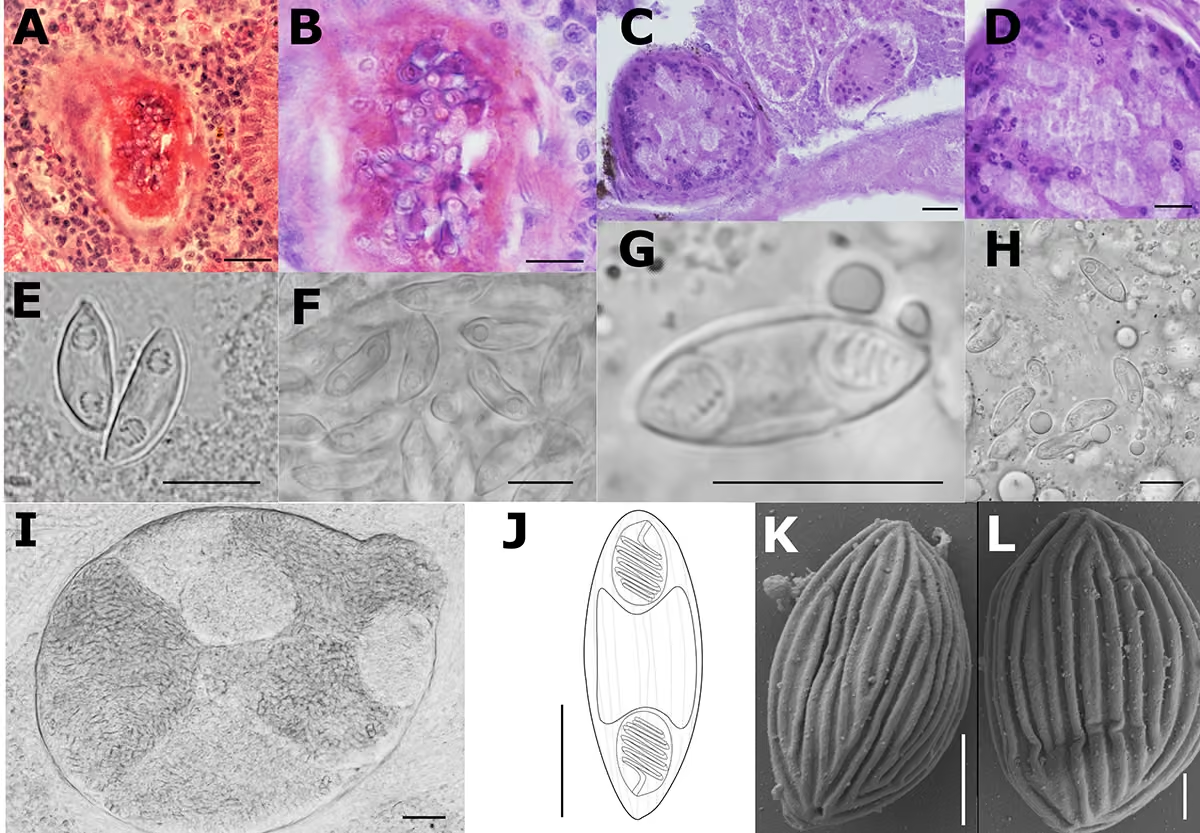
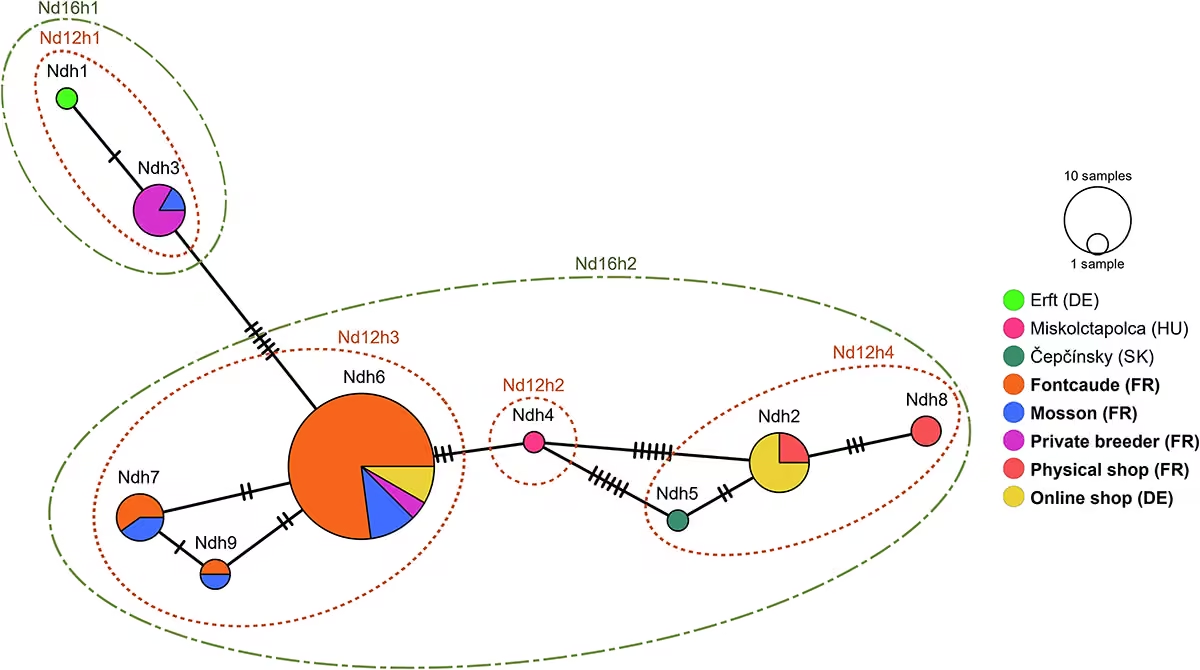
Molecular characterization of Blastocystis in wild Tibetan macaques (Macaca thibetana) and evidence of isolation by distance in subtype ST3
doi.org/10.1051/parasite/2026063
Parasite (journal)
Parasite is a peer-reviewed open access scientific journal covering all aspects of human and animal parasitology. The journal publishes reviews, articles, and short notes. It is published by EDP Sciences and is an official journal of the Société Française de Parasitologie (English: "French Society of Parasitology"). It is published by EDP Sciences and the editor-in-chief is Jean-Lou Justine (National Museum of Natural History, Paris). The journal was established in 1923 as Annales de Parasitologie Humaine et Comparée and obtained its current title in 1994, with volume numbering restarting at 1. More on Wikipedia
-
Parasite - The Journal
@ParasiteJournal
-
Parasite - The Journal
@ParasiteJournal
New paper in press:
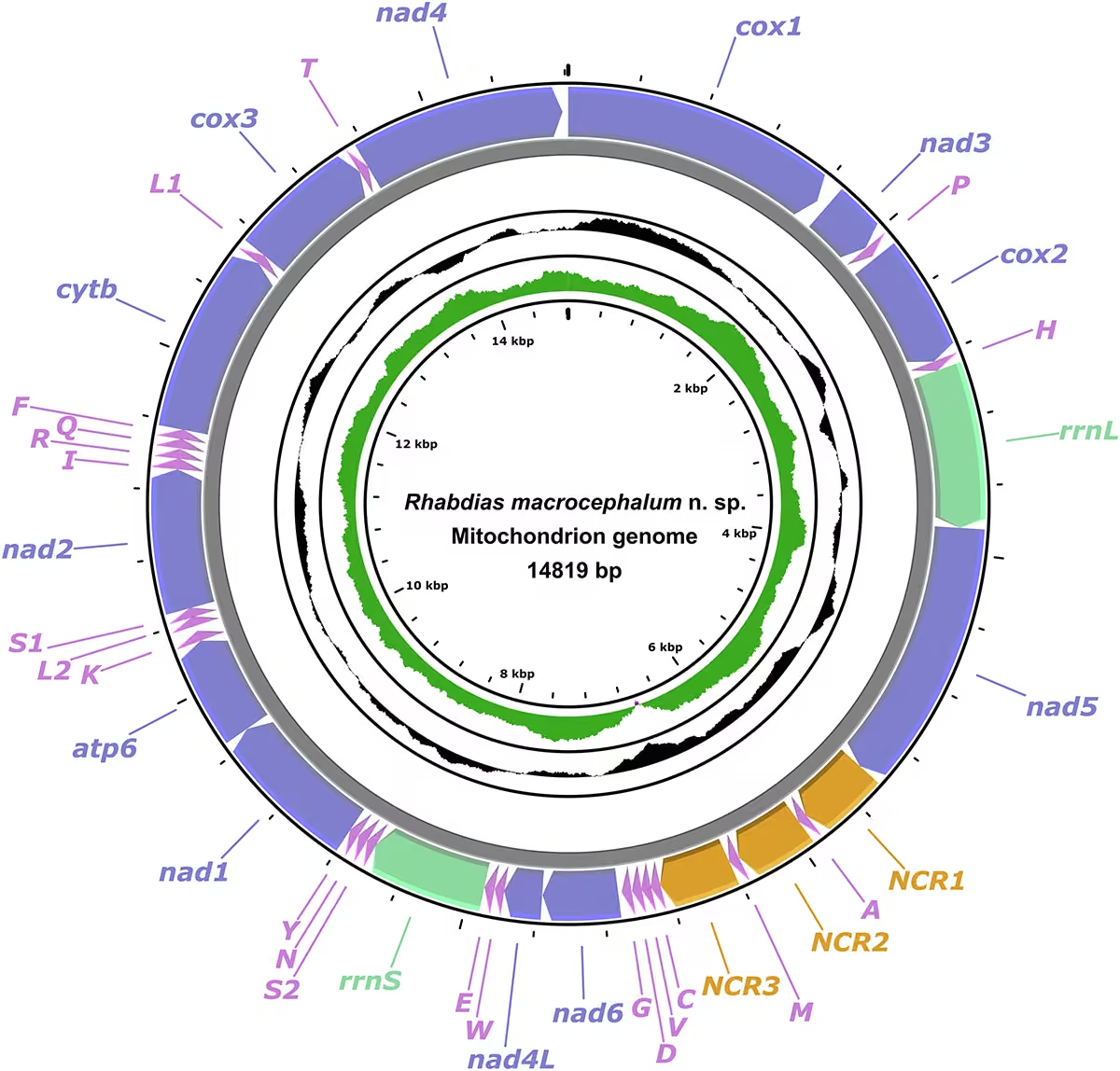
A mitogenome-based phylogeny of the Polyopisthocotylea confirms close relationships among the Hexabothriidae, Chimaericolidae and Polystomatidae, but does not support their basal position
Soon... www.parasite-journal.org -
Parasite - The Journal
@ParasiteJournal
New paper in press:
Description of Culicoides liliae n. sp. (Diptera: Ceratopogonidae) with notes on morphological identification of the subgenus Avaritia Fox in the Western Palaearctic region
Soon... www.parasite-journal.org
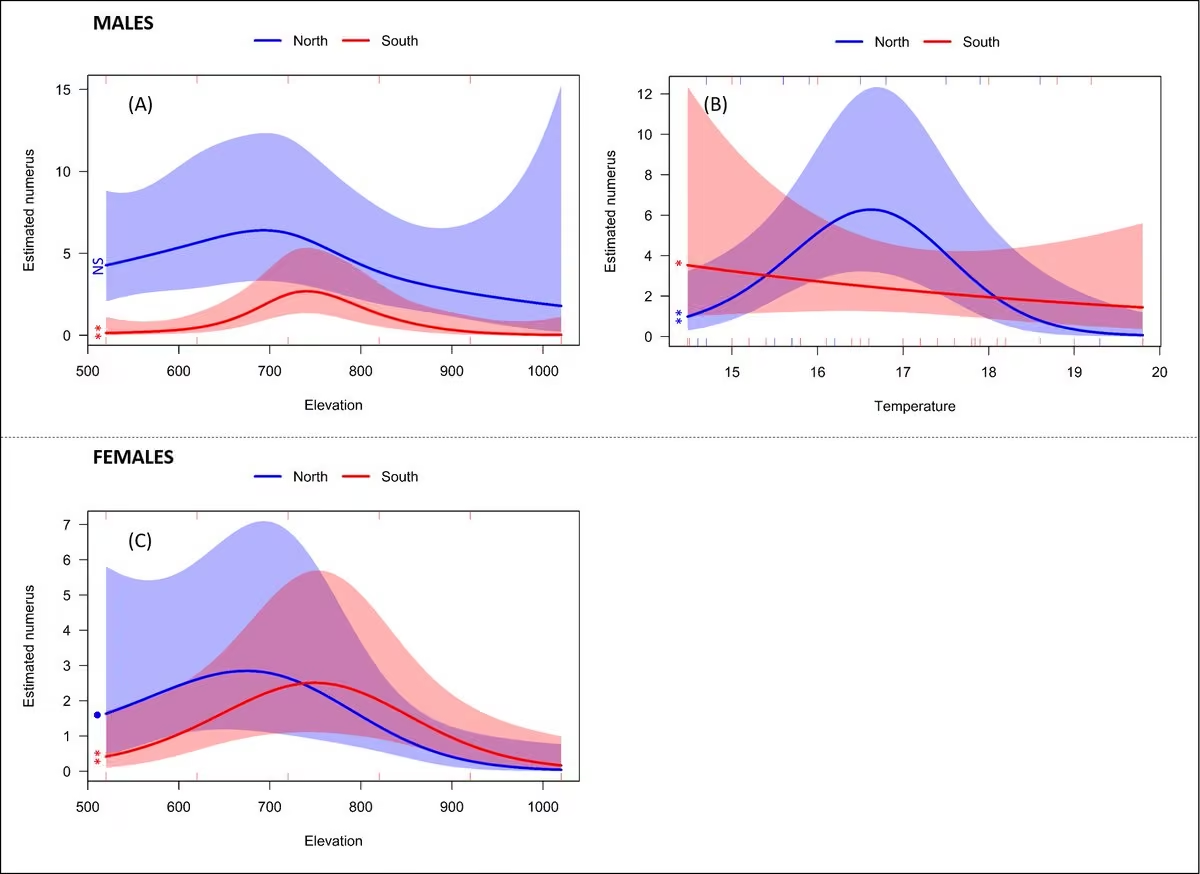
Abstract: Biting midges in the genus Culicoides Latreille (Diptera: Ceratopogonidae) are mainly known as vectors of arboviruses of medical and veterinary importance. In the Western Palaearctic region, the subgenus Avaritia Fox includes major vector species such as C. imicola Kieffer, C. obsoletus/scoticus (Obsoletus group), C. chiopterus (Meigen), and C. dewulfi Goetghebuer. This study combined morphological and molecular evidence to describe Culicoides liliae n. sp. , a new species from the subgenus Avaritia closely allied to C. dewulfi and widely distributed throughout Europe. We found that a long-overlooked morphological character, the number of hairs on the first abdominal tergite, reliably separates C. liliae and C. dewulfi from other Avaritia species in the region. Statistical analysis further showed that this trait is sexually dimorphic within the Obsoletus group, raising intriguing questions regarding the evolutionary and behavioral role of chaetotaxy in this cryptic species complex. Future studies are needed to elucidate the host associations, ecology, and vectorial capacity of C. liliae n. sp. and other members of this epidemiologically important group of insects. -
Parasite - The Journal reposted
Parasite - The Journal
@ParasiteJournal
New paper today:
Redescription, with molecular information, of Trinigyrus peregrinus (Monogenea: Dactylogyridae) from the invasive Pterygoplichthys pardalis in southern China
doi.org/10.1051/parasite/2026064 -
Parasite - The Journal
@ParasiteJournal
New paper today:
Redescription, with molecular information, of Trinigyrus peregrinus (Monogenea: Dactylogyridae) from the invasive Pterygoplichthys pardalis in southern China
doi.org/10.1051/parasite/2026064 -
Parasite - The Journal reposted
Parasite - The Journal
@ParasiteJournal
For #worlddiabetesday this paper which links diabetes and parasitology (in an animal model):
"Transcriptome changes of liver fluke Opisthorchis viverrini in diabetic hamsters" (2024)
doi.org/10.1051/parasite/2024056 -
Parasite - The Journal
@ParasiteJournal
For #worlddiabetesday this paper which links diabetes and parasitology (in an animal model):
"Transcriptome changes of liver fluke Opisthorchis viverrini in diabetic hamsters" (2024)
doi.org/10.1051/parasite/2024056 -
Parasite - The Journal
@ParasiteJournal
New paper in press:
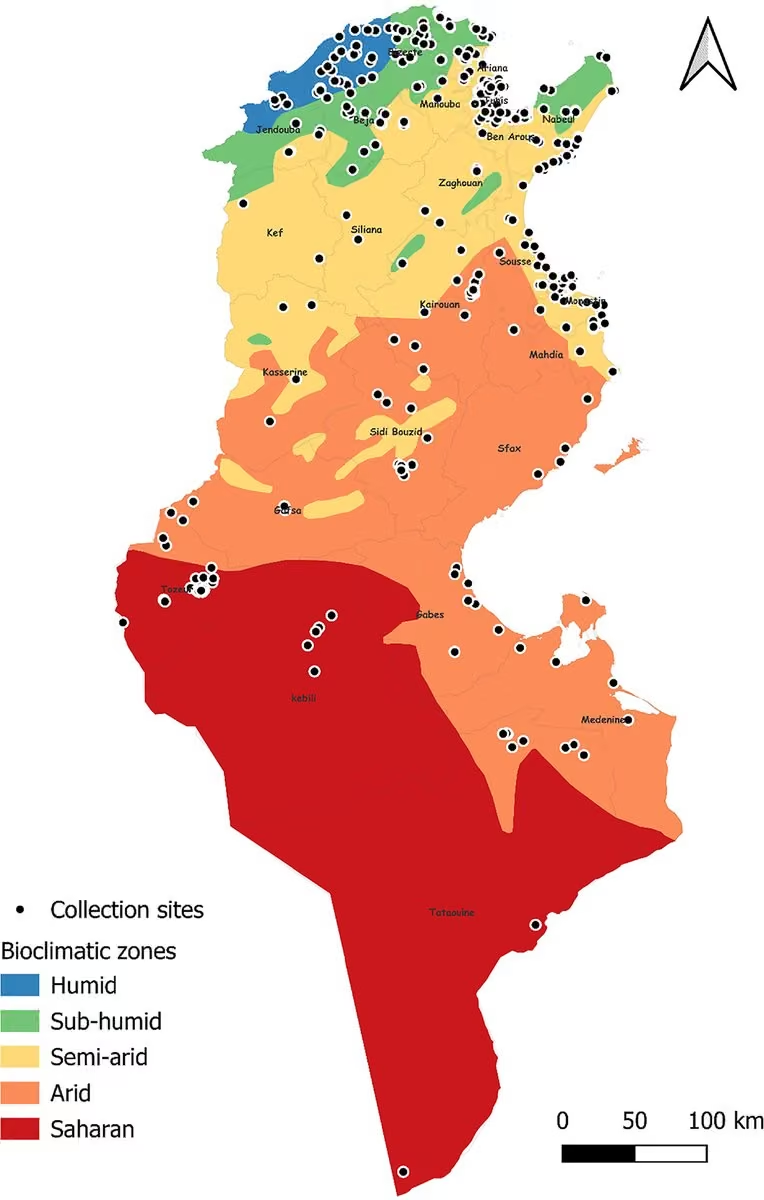
Morphological characterization and genetic diversity of human-associated Demodex mites from patients in central Tunisia 🇹🇳
Soon... www.parasite-journal.org -
Parasite - The Journal
@ParasiteJournal
New paper in press:
Schistosomiasis in newly arrived migrants: proposed diagnostic tools and an algorithm
Soon... www.parasite-journal.org -
Parasite - The Journal reposted
Parasite - The Journal
@ParasiteJournal
New paper today:
Gastrointestinal parasites and molecular characterisation of Cryptosporidium spp. and Giardia sp. in ruminants and other domestic animals in Corsica (France), a Mediterranean island environment
doi.org/10.1051/parasite/2026059 -
Parasite - The Journal
@ParasiteJournal
New paper today:
Gastrointestinal parasites and molecular characterisation of Cryptosporidium spp. and Giardia sp. in ruminants and other domestic animals in Corsica (France), a Mediterranean island environment
doi.org/10.1051/parasite/2026059 -
Parasite - The Journal
@ParasiteJournal
New paper in press:
Feasibility and current limitations of matrix-assisted laser desorption/ionisation time-of-flight mass spectrometry (MALDI-TOF MS) in identifying adult Moniezia spp. and Thysaniezia connochaeti (Cestoda) after prolonged storage in ethanol
Soon... -
Parasite - The Journal reposted
Parasite - The Journal
@ParasiteJournal
New paper today:
Experimental evidence for pigs as a potential long-term reservoir of Trypanosoma brucei gambiense
doi.org/10.1051/parasite/2026061 -
Parasite - The Journal
@ParasiteJournal
New paper today:
Experimental evidence for pigs as a potential long-term reservoir of Trypanosoma brucei gambiense
doi.org/10.1051/parasite/2026061 -
Parasite - The Journal reposted
Parasite - The Journal
@ParasiteJournal
About #shamonda virus in France:
Read this 2023 paper: "Systematic review of hematophagous arthropods present in cattle in France"
The conclusion read: this work highlights the lack of entomologists, funding, training and government support...
doi.org/10.1051/parasite/2023059 -
Parasite - The Journal reposted
Parasite - The Journal
@ParasiteJournal
About #shamondavirus in France:
a century ago, our journal was already publishing papers on Culicoides midges—the vectors of several viruses—in different regions of France!
e.g. "A propos des Culicoides de la région bordelaise"
doi.org/10.1051/parasite/1929073218 -
Parasite - The Journal reposted
Parasite - The Journal
@ParasiteJournal
About #shamondavirus in France:
a century ago, our journal was already publishing papers on Culicoides midges—the vectors of several viruses—in different regions of France!
e.g. "Présence à Bordeaux de Culicoides perpungens" published in 1926...
doi.org/10.1051/parasite/1926044319 -
Parasite - The Journal
@ParasiteJournal
Cited >250 times (Google Scholar)!
Why is resistance to artemisinin-based combination therapies a major threat to malaria control?
This 2018 review examined the emergence and spread of antimalarial resistance in Plasmodium falciparum
Open access: doi.org/10.1051/parasite/2018021 -
Parasite - The Journal
@ParasiteJournal
About #shamondavirus in France:
a century ago, our journal was already publishing papers on Culicoides midges—the vectors of several viruses—in different regions of France!
e.g. "Présence à Bordeaux de Culicoides perpungens" published in 1926...
doi.org/10.1051/parasite/1926044319 -
Parasite - The Journal
@ParasiteJournal
About #shamondavirus in France:
a century ago, our journal was already publishing papers on Culicoides midges—the vectors of several viruses—in different regions of France!
e.g. "A propos des Culicoides de la région bordelaise"
doi.org/10.1051/parasite/1929073218 -
Parasite - The Journal
@ParasiteJournal
About #shamonda virus in France:
Read this 2023 paper: "Systematic review of hematophagous arthropods present in cattle in France"
The conclusion read: this work highlights the lack of entomologists, funding, training and government support...
doi.org/10.1051/parasite/2023059 -
Parasite - The Journal
@ParasiteJournal
Virus Shamonda : une première détection chez l’être humain agriculture.gouv.fr/virus-shamonda-une-premiere-detection…
-
Parasite - The Journal reposted
World Health Organization (WHO)
@WHO
On 20 October 2026, France reported the first documented case of human disease caused by the Shamonda virus. This virus primarily affects animals such as cattle, sheep, goats and horses.
WHO is in touch with the French authorities and is closely monitoring the situation.
Here is what you need to know ➡️ -
Parasite - The Journal reposted
Tedros Adhanom Ghebreyesus
@DrTedros
#france has reported the first documented case of a human infection with #shamonda virus, a virus only previously detected in animals.
The patient was immunocompromised, which made them more vulnerable to infection and severe disease, and unfortunately died. My heartfelt condolences to their loved ones.
Shamonda virus primarily affects animals such as cattle, sheep, goats and horses. The virus is thought to spread between animals by the bites of a midge, which is a small fly-like insect. Further studies are needed to fully understand transmission.
The French patient was in an area where the Shamonda virus was circulating in animals and where Culicoides midges were also present.
@WHO is in contact with French authorities who are collecting information to better understand the source of infection in the first human patient, possible routes of transmission and any potential risk to public health. -
Parasite - The Journal
@ParasiteJournal
New paper in press:
Development and characterisation of microsatellite markers for analysing the population genetics of the tsetse fly Glossina austeni
Read it soon... www.parasite-journal.org -
Parasite - The Journal reposted
Parasite - The Journal
@ParasiteJournal
In memory of Dr Dominique Kerboeuf, who passed away on 16 October, we highlight some of her papers published in our journal:
doi.org/10.1051/parasite/2019079
1/3 [2020] Effects of cholesterol content on activity of P-glycoproteins and membrane physical state, and consequences for anthelmintic resistance... -
Parasite - The Journal reposted
Parasite - The Journal
@ParasiteJournal
In memory of Dr Dominique Kerboeuf, who passed away on 16 October, we highlight some of her papers published in our journal:
doi.org/10.1051/parasite/1997044373
2/3 [1997] Actin in spermatids and spermatozoa of Teladorsagia circumcincta and Trichostrongylus colubriformis (Nematoda, Trichostrongylida) -
Parasite - The Journal reposted
Parasite - The Journal
@ParasiteJournal
In memory of Dr Dominique Kerboeuf, who passed away on 16 October, we highlight some of her papers published in our journal: 🧪
doi.org/10.1051/parasite/2001084325
3/3 [2001] The life cycle of Ohbayashinema erbaevae (Nematoda, Heligmosomoidea, Heligmosomidae) in Ochotona rufescens rufescens (Ochotonidae) -
Parasite - The Journal
@ParasiteJournal
In memory of Dr Dominique Kerboeuf, who passed away on 16 October, we highlight some of her papers published in our journal:
doi.org/10.1051/parasite/1997044373
2/3 [1997] Actin in spermatids and spermatozoa of Teladorsagia circumcincta and Trichostrongylus colubriformis (Nematoda, Trichostrongylida) -
Parasite - The Journal
@ParasiteJournal
In memory of Dr Dominique Kerboeuf, who passed away on 16 October, we highlight some of her papers published in our journal:
doi.org/10.1051/parasite/2019079
1/3 [2020] Effects of cholesterol content on activity of P-glycoproteins and membrane physical state, and consequences for anthelmintic resistance... -
Parasite - The Journal
@ParasiteJournal
Now in press:
Proceedings of the French Society of Parasitology Congress and 5th Franco-Maghreb Conference on Parasitology and Mycology, Marseille, France, 28–30 April 2026
Soon... www.parasite-journal.org -
Parasite - The Journal
@ParasiteJournal
This 1990 paper... now cited in the famous blog "Parasite of the day"
doi.org/10.1051/parasite/1990655255
dailyparasite.blogspot.com/2026/10/anisakis-spp-et-al.html
A new species of the genus Crassicauda from the penis of Globicephala melas... -
Parasite - The Journal reposted
Parasite - The Journal
@ParasiteJournal
New paper:
Epidemiological and molecular insights into human lice (Anoplura: Pediculidae) in France: genetic diversity and DNA barcoding
#openaccess doi.org/10.1051/parasite/2026060 -
Parasite - The Journal
@ParasiteJournal
New paper:
Epidemiological and molecular insights into human lice (Anoplura: Pediculidae) in France: genetic diversity and DNA barcoding
#openaccess doi.org/10.1051/parasite/2026060 -
Parasite - The Journal reposted
Parasite - The Journal
@ParasiteJournal
New paper today:
Epidemiological and molecular insights into human lice (Anoplura: Pediculidae) in France: genetic diversity and DNA barcoding
www.parasite-journal.org/articles/parasite/full_html/2026… -
Parasite - The Journal reposted
Parasite - The Journal
@ParasiteJournal
This 2015 paper has now been viewed 𝟯𝟮,𝟬𝟬𝟬 times and cited >𝟵𝟬𝟬 times (GoogleScholar)
An update on Acanthamoeba keratitis: diagnosis, pathogenesis and treatment
🔗 doi.org/10.1051/parasite/2015010 -
Parasite - The Journal reposted
Johannes Charlier
@charlierjo
Want to stay in touch on follow-up action on how we are adressing this issue? Take part in the SPARC final event on 4 December in Brussels!
wormsparc.com/sparc-building-the-future-of-sustainable-wo…
Parasite - The Journal
@ParasiteJournal
This 2020 paper has now been downloaded 𝟭𝟴,𝟬𝟬𝟬 times and cited 𝟯𝟱𝟬 times (GoogleScholar):
Increasing importance of anthelmintic resistance in European livestock: creation and meta-analysis of an open database
doi.org/10.1051/parasite/2020062 -
Parasite - The Journal
@ParasiteJournal
New paper today:
Epidemiological and molecular insights into human lice (Anoplura: Pediculidae) in France: genetic diversity and DNA barcoding
www.parasite-journal.org/articles/parasite/full_html/2026… -
Parasite - The Journal
@ParasiteJournal
This 2015 paper has now been viewed 𝟯𝟮,𝟬𝟬𝟬 times and cited >𝟵𝟬𝟬 times (GoogleScholar)
An update on Acanthamoeba keratitis: diagnosis, pathogenesis and treatment
🔗 doi.org/10.1051/parasite/2015010 -
Parasite - The Journal
@ParasiteJournal
This 2020 paper has now been downloaded 𝟭𝟴,𝟬𝟬𝟬 times and cited 𝟯𝟱𝟬 times (GoogleScholar):
Increasing importance of anthelmintic resistance in European livestock: creation and meta-analysis of an open database
doi.org/10.1051/parasite/2020062 -
Parasite - The Journal
@ParasiteJournal
New paper in press:
Redescription, with molecular information, of Trinigyrus peregrinus (Monogenea: Dactylogyridae) from the invasive Pterygoplichthys pardalis in southern China
Soon... www.parasite-journal.org -
Parasite - The Journal reposted
Parasite - The Journal
@ParasiteJournal
Leishmaniasis in horses — an emerging infection in France?
doi.org/10.1051/parasite/2026054
A new study reports the first documented cases of equine cutaneous leishmaniasis caused by Leishmania (Mundinia) martiniquensis in France.
Three horses from different regions developed localized cutaneous lesions -
Parasite - The Journal reposted
Parasite - The Journal
@ParasiteJournal
New paper today:
Molecular characterization of Echinococcus species causing human cystic echinococcosis in Algeria: predominance of Echinococcus granulosus sensu stricto 🇩🇿
www.parasite-journal.org/articles/parasite/full_html/2026…
Abstract: Genotyping of cystic echinococcosis (CE) specimens enables the identification of predominant species and genotypes, yielding critical insights into disease epidemiology. Species identification is essential for the development of effective prevention and control strategies. In this context, we assessed the molecular diversity of E. granulosus sensu lato among surgically confirmed human CE cases recruited from Algerian referral hospitals. Hydatid cysts were collected from 31 patients undergoing surgery for pulmonary and/or hepatic CE in Algeria between 2022 and 2024. Hydatid fluid, cyst wall, and laminated-layer preparations were used for DNA extraction. End-point PCR coupled with Sanger sequencing, targeting the mitochondrial 12S-rrnS, nad5, and nad2 markers, was performed for species identification and genotyping, with real-time PCR (qPCR) performed in parallel. End-point PCR was successful in 29 cases (93.5%), while qPCR detected DNA of Echinococcus spp. in 30 cases (96.8%). The additional qPCR-positive sample showed late amplification but could not be assigned to a genotype because no sequence was obtained. Among the 29 molecularly characterized samples, E. granulosus sensu stricto genotype G1 was predominant and was identified in 27 samples (93.1%). One isolate was identified as E. granulosus sensu stricto genotype G3, and one as E. canadensis G6/G7. Genotype G1 and G3 cases were distributed in northern and central Algeria, while the G6/G7 isolate was detected in a patient from Tindouf, southern Algeria. These results demonstrate the predominance of E. granulosus sensu stricto genotype G1 among the molecularly characterized human cystic echinococcosis cases in this series. -
Parasite - The Journal reposted
Parasite - The Journal
@ParasiteJournal
A new species of Lamellodiscus from the gills of the West African butterflyfish Chaetodon hoefleri!
Lamellodiscus louiseuzeti n. sp. has a unique haptoral lamellodisc morphology and a distinctive male copulatory organ.
doi.org/10.1051/parasite/2026053 -
Parasite - The Journal
@ParasiteJournal
A new species of Lamellodiscus from the gills of the West African butterflyfish Chaetodon hoefleri!
Lamellodiscus louiseuzeti n. sp. has a unique haptoral lamellodisc morphology and a distinctive male copulatory organ.
doi.org/10.1051/parasite/2026053 -
Parasite - The Journal
@ParasiteJournal
New paper in press:
Molecular characterization of Blastocystis in wild Tibetan macaques (Macaca thibetana) and evidence of isolation by distance in subtype ST3
Soon... www.parasite-journal.org -
Parasite - The Journal
@ParasiteJournal
Leishmaniasis in horses — an emerging infection in France?
doi.org/10.1051/parasite/2026054
A new study reports the first documented cases of equine cutaneous leishmaniasis caused by Leishmania (Mundinia) martiniquensis in France.
Three horses from different regions developed localized cutaneous lesions -
Parasite - The Journal reposted
Parasite - The Journal
@ParasiteJournal
How can an amoeba influence bacterial virulence?
doi.org/10.1051/parasite/2026057
A new study uses quantitative proteomics to investigate the interaction between Acanthamoeba castellanii and Klebsiella pneumoniae, identifying a C-type lysozyme as a promising candidate for triggering capsule enlargement. -
Parasite - The Journal reposted
Parasite - The Journal
@ParasiteJournal
🐕 What parasites are carried by experimental dogs?
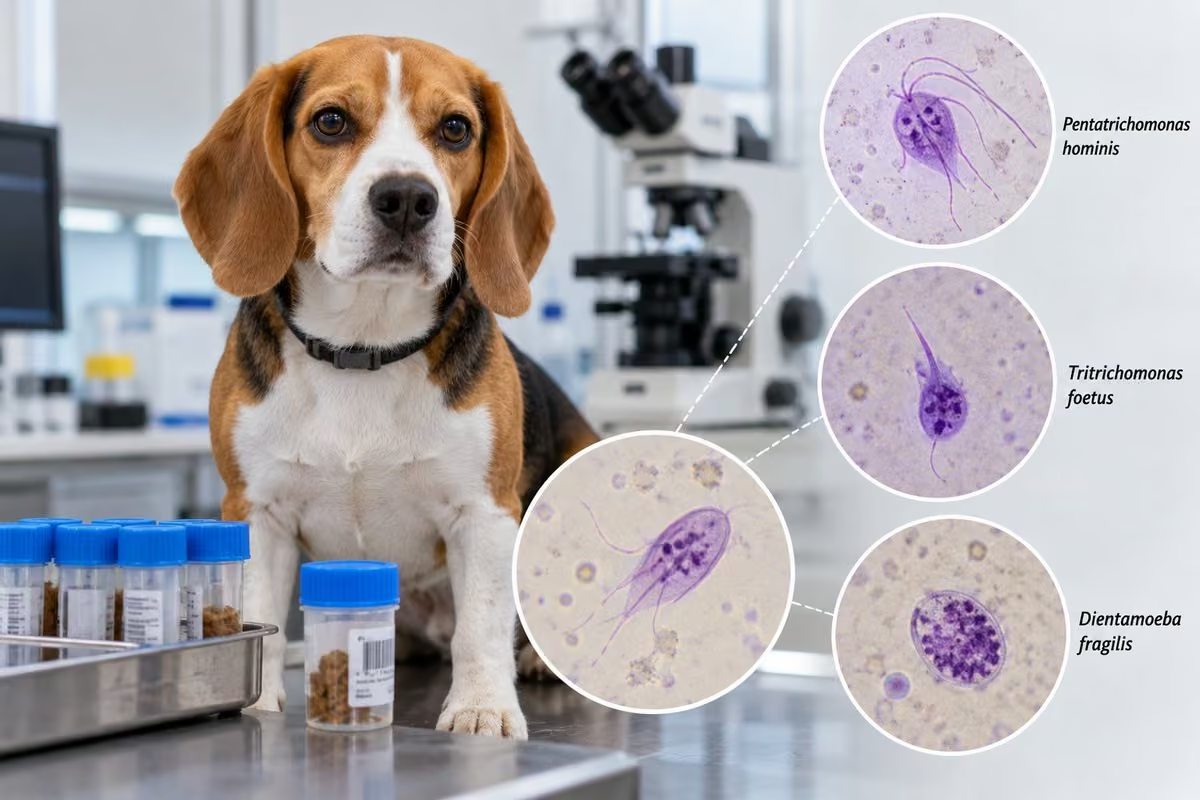
A new study from China investigates 452 faecal samples from experimental beagles and provides the first molecular prevalence data for three trichomonad species: P. hominis, T. foetus and D. fragilis.
doi.org/10.1051/parasite/2026056 -
Parasite - The Journal reposted
Parasite - The Journal
@ParasiteJournal
🐌 Parasites trapped in snail shells?
A new study reveals remarkable anti-parasite defences in terrestrial gastropods, including the first evidence of trematode shell-encapsulation in a non-helicid snail.
doi.org/10.1051/parasite/2026052 -
Parasite - The Journal
@ParasiteJournal
How can an amoeba influence bacterial virulence?
doi.org/10.1051/parasite/2026057
A new study uses quantitative proteomics to investigate the interaction between Acanthamoeba castellanii and Klebsiella pneumoniae, identifying a C-type lysozyme as a promising candidate for triggering capsule enlargement. -
Parasite - The Journal
@ParasiteJournal
🐕 What parasites are carried by experimental dogs?
A new study from China investigates 452 faecal samples from experimental beagles and provides the first molecular prevalence data for three trichomonad species: P. hominis, T. foetus and D. fragilis.
doi.org/10.1051/parasite/2026056 -
Parasite - The Journal
@ParasiteJournal
🐌 Parasites trapped in snail shells?
A new study reveals remarkable anti-parasite defences in terrestrial gastropods, including the first evidence of trematode shell-encapsulation in a non-helicid snail.
doi.org/10.1051/parasite/2026052 -
Parasite - The Journal
@ParasiteJournal
New paper in press:
Experimental evidence for pigs as a potential long-term reservoir of Trypanosoma brucei gambiense
Soon... www.parasite-journal.org -
Parasite - The Journal reposted
Parasite - The Journal
@ParasiteJournal
New paper today:
Lamellodiscus louiseuzeti n. sp. (Monopisthocotyla: Diplectanidae: Lamellodiscinae): a parasite of Chaetodon hoefleri (Teleostei, Chaetodontidae) with distinct attachment organ morphology
doi.org/10.1051/parasite/2026053 -
Parasite - The Journal reposted
Parasite - The Journal
@ParasiteJournal
New paper today:
Proteomic identification of Acanthamoeba castellanii excretory–secretory proteins associated with Klebsiella pneumoniae capsule enlargement: a candidate role for C-type lysozyme
doi.org/10.1051/parasite/2026057 -
Parasite - The Journal reposted
Parasite - The Journal
@ParasiteJournal
New paper today:
First detection and molecular characterization of three trichomonad species in experimental beagle dogs in China
doi.org/10.1051/parasite/2026056 -
Parasite - The Journal reposted
Parasite - The Journal
@ParasiteJournal
New paper today:
Occurrence of brachylaimid trematodes, alive and shell-trapped, in sympatric species of terrestrial gastropods in France
doi.org/10.1051/parasite/2026052 -
Parasite - The Journal
@ParasiteJournal
New paper today:
Lamellodiscus louiseuzeti n. sp. (Monopisthocotyla: Diplectanidae: Lamellodiscinae): a parasite of Chaetodon hoefleri (Teleostei, Chaetodontidae) with distinct attachment organ morphology
doi.org/10.1051/parasite/2026053 -
Parasite - The Journal
@ParasiteJournal
New paper today:
Proteomic identification of Acanthamoeba castellanii excretory–secretory proteins associated with Klebsiella pneumoniae capsule enlargement: a candidate role for C-type lysozyme
doi.org/10.1051/parasite/2026057 -
Parasite - The Journal
@ParasiteJournal
New paper today:
First detection and molecular characterization of three trichomonad species in experimental beagle dogs in China
doi.org/10.1051/parasite/2026056 -
Parasite - The Journal
@ParasiteJournal
New paper today:
Occurrence of brachylaimid trematodes, alive and shell-trapped, in sympatric species of terrestrial gastropods in France
doi.org/10.1051/parasite/2026052 -
Parasite - The Journal reposted
Parasite - The Journal
@ParasiteJournal
New paper today:
First documented cases of equine leishmaniasis caused by Leishmania (Mundinia) martiniquensis in France
doi.org/10.1051/parasite/2026054 -
Parasite - The Journal reposted
Parasite - The Journal
@ParasiteJournal
New paper today:
Low genetic polymorphism of the PvMSP1-19 vaccine candidate among Plasmodium vivax isolates along the Thailand–Myanmar border
doi.org/10.1051/parasite/2026055
Abstract: Plasmodium vivax remains the predominant malaria species in Thailand, accounting for approximately 97% of all reported cases, with transmission persisting in endemic border regions such as Kanchanaburi Province along the Thailand–Myanmar border. The C-terminal 19-kDa fragment of merozoite surface protein 1 (PvMSP1-19) has been proposed as a promising blood-stage vaccine candidate owing to its essential role in erythrocyte invasion and EGF-like domains. However, population-level genetic evidence from localized transmission foci in Southeast Asia remains limited. I this study, we investigated the genetic diversity and structural integrity of PvMSP1-19 in 109 P. vivax clinical isolates from Kanchanaburi, Thailand, between 2023 and 2025. Genomic DNA was extracted and the PvMSP1-19 region was amplified by PCR, sequenced by Sanger sequencing, and population genetic parameters were analyzed using DnaSP. Protein structure was predicted using AlphaFold3 and validated by MolProbity, PROCHECK, ProSA, and ERRAT2. Sequence analysis across 276 nucleotide positions identified only one segregating site, yielding two haplotypes with extremely low nucleotide and haplotype diversity. The dominant haplotype, corresponding to the Sal-1 reference strain, was present in 99.1% of isolates, and the single nucleotide substitution identified was synonymous, resulting in no amino acid substitution. A negative Tajima’s D value suggested a trend consistent with purifying selection, although this was not statistically significant. Structural modelling of PvMSP1-19 confirmed a stable, high-quality conformation. These findings demonstrate that PvMSP1-19 is highly conserved in P. vivax populations circulating along the Thailand–Myanmar border and support its potential as a promising antigen for blood-stage vaccine development targeting vivax malaria in Southeast Asia. -
Parasite - The Journal
@ParasiteJournal
New paper today:
First documented cases of equine leishmaniasis caused by Leishmania (Mundinia) martiniquensis in France
doi.org/10.1051/parasite/2026054 -
Parasite - The Journal
@ParasiteJournal
New paper in press:
Epidemiological and molecular insights into human lice (Anoplura: Pediculidae) in France: genetic diversity and DNA barcoding
Soon... www.parasite-journal.org -
Parasite - The Journal reposted
Parasite - The Journal
@ParasiteJournal
New paper in press:
Molecular characterization of Echinococcus species causing human cystic echinococcosis in Algeria: predominance of Echinococcus granulosus sensu stricto 🇩🇿
Soon... www.parasite-journal.org -
Parasite - The Journal reposted
Parasite - The Journal
@ParasiteJournal
A novel aspartyl protease of Trichinella spiralis promotes larval invasion of intestinal epithelial cells.
RNAi and specific antibodies significantly reduced invasion, highlighting TsEasp as a key factor in T. spiralis host invasion.
🔗 doi.org/10.1051/parasite/2026050 -
Parasite - The Journal reposted
Parasite - The Journal
@ParasiteJournal
What role do wild small mammals play in the transmission of Schistosoma japonicum around Poyang Lake, China?
🔗 doi.org/10.1051/parasite/2026051
Molecular screening found S. japonicum in Apodemus agrarius and Rattus losea, highlighting their potential role in schistosomiasis transmission and surveillance. -
Parasite - The Journal reposted
Parasite - The Journal
@ParasiteJournal
Enterocytozoon bieneusi is widespread in sika deer in China: a survey of 466 faecal samples from four provinces found a 44.4% prevalence and 11 genotypes, including two novel genotypes.
BEB6 was the predominant genotype.
🔗 doi.org/10.1051/parasite/2026049 -
Parasite - The Journal reposted
Parasite - The Journal
@ParasiteJournal
How has zoonotic cutaneous leishmaniasis evolved in Morocco over nearly three decades?
An analysis of 58,880 cases (1995–2022) reveals cyclical epidemic peaks and persistent hotspots, with Zagora identified as a major focus of transmission.
🔗 doi.org/10.1051/parasite/2026045 -
Parasite - The Journal reposted
Parasite - The Journal
@ParasiteJournal
Avian trypanosomes in Thai bulbuls: an integrative study combining morphology and molecular analyses.
🔗 doi.org/10.1051/parasite/2026036
Molecular screening revealed substantially more infections than microscopy and uncovered mixed infections involving multiple trypanosome strains and/or species. -
Parasite - The Journal
@ParasiteJournal
New paper in press:
Gastrointestinal parasites and molecular characterisation of Cryptosporidium spp. and Giardia sp. in ruminants and other domestic animals in Corsica (France), a Mediterranean island environment
Soon... www.parasite-journal.org -
Parasite - The Journal
@ParasiteJournal
Avian trypanosomes in Thai bulbuls: an integrative study combining morphology and molecular analyses.
🔗 doi.org/10.1051/parasite/2026036
Molecular screening revealed substantially more infections than microscopy and uncovered mixed infections involving multiple trypanosome strains and/or species. -
Parasite - The Journal
@ParasiteJournal
How has zoonotic cutaneous leishmaniasis evolved in Morocco over nearly three decades?
An analysis of 58,880 cases (1995–2022) reveals cyclical epidemic peaks and persistent hotspots, with Zagora identified as a major focus of transmission.
🔗 doi.org/10.1051/parasite/2026045 -
Parasite - The Journal
@ParasiteJournal
Enterocytozoon bieneusi is widespread in sika deer in China: a survey of 466 faecal samples from four provinces found a 44.4% prevalence and 11 genotypes, including two novel genotypes.
BEB6 was the predominant genotype.
🔗 doi.org/10.1051/parasite/2026049 -
Parasite - The Journal
@ParasiteJournal
What role do wild small mammals play in the transmission of Schistosoma japonicum around Poyang Lake, China?
🔗 doi.org/10.1051/parasite/2026051
Molecular screening found S. japonicum in Apodemus agrarius and Rattus losea, highlighting their potential role in schistosomiasis transmission and surveillance. -
Parasite - The Journal
@ParasiteJournal
A novel aspartyl protease of Trichinella spiralis promotes larval invasion of intestinal epithelial cells.
RNAi and specific antibodies significantly reduced invasion, highlighting TsEasp as a key factor in T. spiralis host invasion.
🔗 doi.org/10.1051/parasite/2026050 -
Parasite - The Journal
@ParasiteJournal
New paper in press:
Molecular characterization of Echinococcus species causing human cystic echinococcosis in Algeria: predominance of Echinococcus granulosus sensu stricto 🇩🇿
Soon... www.parasite-journal.org -
Parasite - The Journal
@ParasiteJournal
New paper in press:
Proteomic identification of Acanthamoeba castellanii excretory–secretory proteins associated with Klebsiella pneumoniae capsule enlargement: a candidate role for C-type lysozyme
Soon... www.parasite-journal.org -
Parasite - The Journal reposted
Parasite - The Journal
@ParasiteJournal
What shaped the colonisation of the veterinary vector Culicoides imicola across the South-West Indian Ocean? 🦟
doi.org/10.1051/parasite/2026044
Phylogeographic analyses reveal low genetic structure and suggest multiple colonisation pathways, with animal trade likely playing an important role. -
Parasite - The Journal reposted
Société Française de Parasitologie
@SFParasitologie
Nouvel article dans 𝗣𝗮𝗿𝗮𝘀𝗶𝘁𝗲, la revue de la SFP:
doi.org/10.1051/parasite/2026044
Histoire de la colonisation d'une espèce vectrice d'intérêt vétérinaire : phylogéographie de Culicoides imicola (Diptera : Ceratopogonidae) dans l'océan Indien révélant une faible structuration génétique -
Parasite - The Journal reposted
Parasite - The Journal
@ParasiteJournal
New paper:
Colonisation history of a vector species of veterinary interest: phylogeography of Culicoides imicola (Diptera: Ceratopogonidae) in the Indian Ocean revealing low genetic structure
www.parasite-journal.org/articles/parasite/full_html/2026… -
Parasite - The Journal reposted
Parasite - The Journal
@ParasiteJournal
New paper:
Molecular characterization of a novel Trichinella spiralis aspartyl protease and its role in the larval invasion of host intestinal epithelial cells
doi.org/10.1051/parasite/2026050
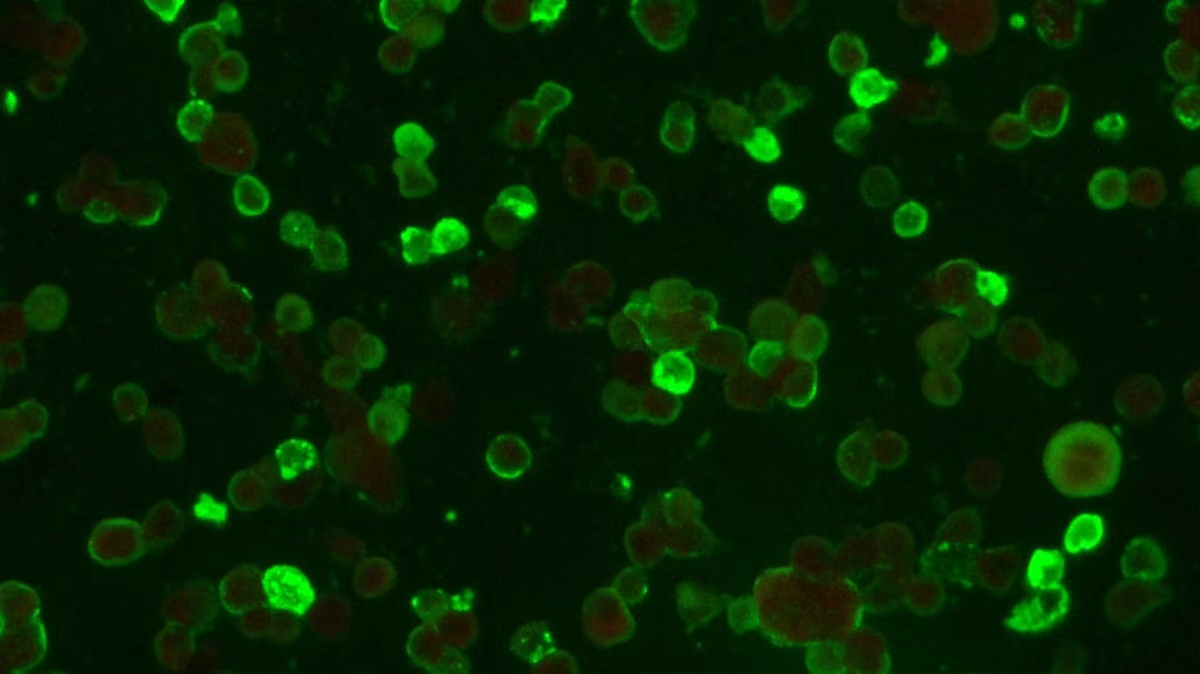
Abstract: The aim of the present study was to characterize the molecular properties of a novel Trichinella spiralis aspartic protease (TsEasp) and to investigate its role in the larval invasion of host intestinal epithelial cells. The full-length TsEasp cDNA was cloned and expressed, and recombinant TsEasp protein (rTsEasp) was purified. Immunization of mice with rTsEasp elicited a robust specific IgG response. qPCR analyses revealed that TsEasp was transcribed at all T. spiralis developmental stages, with markedly higher transcription levels in intestinal infective larvae and adult worms. Indirect immunofluorescence testing showed that TsEasp was expressed throughout the T. spiralis life cycle, and mainly localized at the cuticle, and embryonic periphery in adult females. Far-western blot and indirect immunofluorescence confirmed that rTsEasp binds specifically to Caco-2 cells, predominantly on the cell membrane. The in vitro invasion assay showed that rTsEasp significantly accelerated the larval invasion of Caco-2 monolayers in a dose-dependent manner of rTsEasp protein, whereas anti-rTsEasp antibodies and RNAi markedly suppressed this invasion. Collectively, our results indicate that TsEasp is a key invasive virulence factor in T. spiralis infection. -
Parasite - The Journal reposted
Parasite - The Journal
@ParasiteJournal
New paper:
Species composition of small mammal communities and prevalence of Schistosoma japonicum in the Poyang Lake region, China
Abstract: Small mammals are an important part of the ecosystem and can serve as the definitive host of Schistosoma japonicum. The Poyang Lake region of Jiangxi Province is one of the most important endemic areas of schistosomiasis japonica in China. However, data on the prevalence of schistosomiasis in local small mammal communities are lacking. Therefore, from 2021 to 2022, we captured 409 small mammals in four townships in this region, with a total capture rate of 6.89% (409/5938). There were significant differences in the capture rate among different habitats (χ2 = 100.74, p < 0.001) and different sampling sites (χ2 = 100.74, p < 0.001), but there was no significant difference between sampling seasons (χ2 = 4.437, p = 0.109). Traditional morphology combined with molecular DNA-barcoding was effective in identifying species, and four species, Apodemus agrarius, Rattus losea, R. norvegicus and Crocidura attenuata were identified. PCR of the Sjr2 gene showed a total prevalence of S. japonicum of 2.85% (8/281) in A. agrarius and 2.83% (3/106) in R. losea. The species, sex, age, sampling sites, seasons, and habitats were not significant factors influencing the prevalence of S. japonicum in small mammals. This study revealed the molecular prevalence of S. japonicum in the wild small mammal community in the Poyang Lake region for the first time. Monitoring schistosomiasis prevalence in A. agrarius and R. losea may contribute to future elimination efforts around Poyang Lake.
doi.org/10.1051/parasite/2026051 -
Parasite - The Journal
@ParasiteJournal
New paper:
Molecular characterization of a novel Trichinella spiralis aspartyl protease and its role in the larval invasion of host intestinal epithelial cells
doi.org/10.1051/parasite/2026050
Abstract: The aim of the present study was to characterize the molecular properties of a novel Trichinella spiralis aspartic protease (TsEasp) and to investigate its role in the larval invasion of host intestinal epithelial cells. The full-length TsEasp cDNA was cloned and expressed, and recombinant TsEasp protein (rTsEasp) was purified. Immunization of mice with rTsEasp elicited a robust specific IgG response. qPCR analyses revealed that TsEasp was transcribed at all T. spiralis developmental stages, with markedly higher transcription levels in intestinal infective larvae and adult worms. Indirect immunofluorescence testing showed that TsEasp was expressed throughout the T. spiralis life cycle, and mainly localized at the cuticle, and embryonic periphery in adult females. Far-western blot and indirect immunofluorescence confirmed that rTsEasp binds specifically to Caco-2 cells, predominantly on the cell membrane. The in vitro invasion assay showed that rTsEasp significantly accelerated the larval invasion of Caco-2 monolayers in a dose-dependent manner of rTsEasp protein, whereas anti-rTsEasp antibodies and RNAi markedly suppressed this invasion. Collectively, our results indicate that TsEasp is a key invasive virulence factor in T. spiralis infection. -
Parasite - The Journal
@ParasiteJournal
New paper:
Colonisation history of a vector species of veterinary interest: phylogeography of Culicoides imicola (Diptera: Ceratopogonidae) in the Indian Ocean revealing low genetic structure
www.parasite-journal.org/articles/parasite/full_html/2026… -
Parasite - The Journal
@ParasiteJournal
New paper in press:
Low genetic polymorphism of the PvMSP1-19 vaccine candidate among Plasmodium vivax isolates along the Thailand–Myanmar border
Soon... www.parasite-journal.org -
Parasite - The Journal reposted
Parasite - The Journal
@ParasiteJournal
A new parasitological mystery along the coast of South Carolina?
Researchers from the College of Charleston @CofC and University of Georgia @universityofga investigated new hosts and found new parasites
#openaccess paper: doi.org/10.1051/parasite/202604 -
Parasite - The Journal
@ParasiteJournal
A new parasitological mystery along the coast of South Carolina?
Researchers from the College of Charleston @CofC and University of Georgia @universityofga investigated new hosts and found new parasites
#openaccess paper: doi.org/10.1051/parasite/202604 -
Parasite - The Journal reposted
Parasite - The Journal
@ParasiteJournal
New paper:
Another host, another mystery: Infection of polychaete Pista palmata (Annelida: Terebellidae) with a new blood fluke (Digenea: Aporocotylidae) in the coastal Northwest Atlantic Ocean 🇺🇸
doi.org/10.1051/parasite/2026048
Abstract: Terebelliform annelids can serve as intermediate hosts for blood flukes of marine fishes and sea turtles. The scarcity of global reports on the life cycles of these parasites reflects the need for further exploration. Our objective was to further our knowledge of the diversity and life cycles of blood flukes in coastal South Carolina (SC), United States. Four species of terebellids (Enoplobranchus sanguineus, Amphitrite ornata, Pista palmata, and Streblosoma hartmanae) were collected (total N = 201) at low tide from September 2025 to February 2026 at two localities in SC. Twelve specimens of three terebellid species were infected, and parasites were identified by sequencing the LSU and ITS2 regions of ribosomal RNA and the COI mitochondrial DNA gene. Enoplobranchus sanguineus (12.9% prevalence, 4/31) and A. ornata (3.6% prevalence, 2/55) were infected with the previously reported blood flukes Neospirorchis sp. Neogen14 (Unicaecidae) and Cardicola parvus (Aporocotylidae), respectively. No specimens of S. hartmanae were infected (0/86). One new aporocotylid with mature sporocysts containing microcercous cercariae was discovered in P. palmata (20.7% prevalence, 6/29). Phylogenetic analysis revealed that sequences of the new aporocotylid were in a well-supported clade with sequences of Braya spp. and Cardicola abu. The fish host of this parasite has yet to be discovered to fully elucidate the life cycle of this new aporocotylid. -
Parasite - The Journal reposted
Parasite - The Journal
@ParasiteJournal
Bothriocestus claviceps (Cestoda: Bothriocephalidae) in pike in southwestern France (Teleostei: Esocidae): molecular evidence
doi.org/10.1051/parasite/2026046
Abstract: Bothriocestus claviceps (Goeze, 1782) is a cestode parasite infecting several fish species. One of its principal definitive hosts is the European eel Anguilla anguilla. The parasite is widely distributed across Europe and has been reported from numerous countries, such as Poland, Czechia, and France. In southern France, the European eel co-occurs with the Aquitanian pike, Esox aquitanicus, an endemic species. This pike is threatened by human activities and hybridization with the introduced Northern pike Esox lucius and is therefore classified as “vulnerable” on the French Red List of the International Union for Conservation of Nature (IUCN). Despite its conservation status, little information is available regarding its biology, particularly its parasitofauna, which remains undocumented. Over a three-year period, Aquitanian pike were collected and examined for parasites. Cestodes recovered from the intestinal tract were analyzed using a molecular approach. Molecular identification of the species was based on partial sequences of 28S ribosomal DNA and cytochrome oxidase subunit I (COI). Morphometric data were also obtained to provide additional data on the identified cestode species. Our results provide the first evidence of the presence of B. claviceps in the intestine of E. aquitanicus, as well as in one hybrid (E. aquitanicus × E. lucius), and suggest that these fish can act as definitive or post-cyclic hosts for this cestode species. This study contributes new insights into the parasitofauna of the Aquitanian pike and expands current knowledge of B. claviceps. -
Parasite - The Journal
@ParasiteJournal
New paper:
Another host, another mystery: Infection of polychaete Pista palmata (Annelida: Terebellidae) with a new blood fluke (Digenea: Aporocotylidae) in the coastal Northwest Atlantic Ocean 🇺🇸
doi.org/10.1051/parasite/2026048
Abstract: Terebelliform annelids can serve as intermediate hosts for blood flukes of marine fishes and sea turtles. The scarcity of global reports on the life cycles of these parasites reflects the need for further exploration. Our objective was to further our knowledge of the diversity and life cycles of blood flukes in coastal South Carolina (SC), United States. Four species of terebellids (Enoplobranchus sanguineus, Amphitrite ornata, Pista palmata, and Streblosoma hartmanae) were collected (total N = 201) at low tide from September 2025 to February 2026 at two localities in SC. Twelve specimens of three terebellid species were infected, and parasites were identified by sequencing the LSU and ITS2 regions of ribosomal RNA and the COI mitochondrial DNA gene. Enoplobranchus sanguineus (12.9% prevalence, 4/31) and A. ornata (3.6% prevalence, 2/55) were infected with the previously reported blood flukes Neospirorchis sp. Neogen14 (Unicaecidae) and Cardicola parvus (Aporocotylidae), respectively. No specimens of S. hartmanae were infected (0/86). One new aporocotylid with mature sporocysts containing microcercous cercariae was discovered in P. palmata (20.7% prevalence, 6/29). Phylogenetic analysis revealed that sequences of the new aporocotylid were in a well-supported clade with sequences of Braya spp. and Cardicola abu. The fish host of this parasite has yet to be discovered to fully elucidate the life cycle of this new aporocotylid. -
Parasite - The Journal
@ParasiteJournal
New paper:
Epidemiologic survey and genotyping of Enterocytozoon bieneusi in sika deer (Cervus nippon) in four provinces of China
doi.org/10.1051/parasite/2026049 -
Parasite - The Journal
@ParasiteJournal
New paper in press:
First documented cases of equine leishmaniasis caused by Leishmania (Mundinia) martiniquensis in France
Soon... www.parasite-journal.org
Abstract: In this study, we describe the first documented cases of equine cutaneous leishmaniasis caused by Leishmania (Mundinia) martiniquensisin France and provide clinical and parasitological data relevant for the recognition of this emerging infection in horses. Three horses presenting localized cutaneous lesions were diagnosed with L. martiniquensis infection in different regions of France without spatial or temporal clustering. Lesions were clinically nonspecific and initially compatible with common equine dermatological conditions, including sarcoid-like tumors. Histopathological examination revealed granulomatous dermatitis with intrahistiocytic organisms morphologically consistent with Leishmaniaamastigotes in all cases. Molecular analysis of formalin-fixed paraffin-embedded tissue confirmed the presence of Leishmania DNA, and sequencing of the ITS1 locus identified L. martiniquensis. Direct agglutination test serology was negative in two horses and strongly positive in one. In one case, parasite isolation was achieved in culture. The disease remained localized in all animals, with spontaneous regression in one case, resolution following surgical excision in another, and complete healing after intralesional treatment with meglumine antimoniate in the third. -
Parasite - The Journal reposted
Parasite - The Journal
@ParasiteJournal
Bothriocestus claviceps (Cestoda: Bothriocephalidae) in pike in southwestern France (Teleostei: Esocidae): molecular evidence
doi.org/10.1051/parasite/2026046 -
Parasite - The Journal
@ParasiteJournal
Bothriocestus claviceps (Cestoda: Bothriocephalidae) in pike in southwestern France (Teleostei: Esocidae): molecular evidence
doi.org/10.1051/parasite/2026046 -
Parasite - The Journal
@ParasiteJournal
New paper in press:
Lamellodiscus louiseuzeti n. sp. (Monopisthocotyla: Diplectanidae: Lamellodiscinae): a parasite of Chaetodon hoefleri (Teleostei, Chaetodontidae) with distinct attachment organ morphology
Soon... www.parasite-journal.org -
Parasite - The Journal reposted
Parasite - The Journal
@ParasiteJournal
Putative nerve elements in live protoscolex
in
Camicia et al., In vivo double labeling of putative neuronal and excretory structures in Echinococcus granulosus protoscoleces and associated membranes obtained by a lipophilic dye
doi.org/10.1051/parasite/2026040
Movie: -
Parasite - The Journal reposted
Parasite - The Journal
@ParasiteJournal
Infektionen des Menschen mit Fasciola hepatica in Österreich zwischen 1955 und 2025: Daten aus einem Land mit niedriger Inzidenz
doi.org/10.1051/parasite/2026047 -
Parasite - The Journal
@ParasiteJournal
Hommage au professeur Patrick Camerlynck (1934-2026)
Ses articles publiés dans notre journal:
[1990] Mise au point d’un modèle expérimental de culture in vitro des stades asexués de Cryptosporidium sp.
doi.org/10.1051/parasite/1990651041 -
Parasite - The Journal
@ParasiteJournal
Hommage au professeur Patrick Camerlynck (1934-2026)
Ses articles publiés dans notre journal:
[1972] Infestation mixte de Bulinus truncatus (Audouin, 1827) par des formes larvaires de Schistosoma haematobium (Bilharz, 1852) et d’un Echinostomatidae
doi.org/10.1051/parasite/1972474499 -
Parasite - The Journal
@ParasiteJournal
New paper in press:
Occurrence of brachylaimid trematodes, alive and shell-trapped, in sympatric species of terrestrial gastropods in France
Soon... www.parasite-journal.org
Abstract : Following the detection of Brachylaima spp., which are potentially pathogenic for domestic animals and humans, in Cornu aspersum and Cepaea nemoralis at a rural site in France, we investigated trematode distribution among sympatric gastropod species to assess their role in the parasite life cycle. Eight species were investigated (Cepea nemoralis, Cernuella neglecta, Clausilia bidentata, Cochlicella acuta, Cornu aspersum, Lauria cylindracea, Pomatias elegans, and Theba pisana ). Four species were parasitised by trematodes: C. aspersum (prevalence 56%), C. nemoralis (10%), and T. pisana (2%) as second intermediate hosts of Brachylaima spp., and C. neglecta (6%) as new first intermediate host of Pseudoleucochloridium sp. Moreover, we observed for the first time shell-encapsulation of trematodes in a non-helicid species (C. neglecta) and nematodes in a non-stylommatophoran species (P. elegans), suggesting more general anti-parasite defence than previously thought among land snails. Our current and previous results, including molecular data (28S rDNA, COI mtDNA), suggest the occurrence of four Brachylaima species at the site: Brachylaima mesostoma and three unidentified species. Cornu aspersum is the only identified first intermediate host for B. mesostoma and one of the unidentified trematode species also found at a metacercarial stage in C. aspersum and C. nemoralis. Another unidentified species recorded in C. aspersum and C. nemoralis, characterised by small orange metacercariae, may be a new species. The sole metacercaria found in T. pisana may also belong to an undescribed species. -
Parasite - The Journal
@ParasiteJournal
𝗣𝗿𝗼𝗰𝗲𝘀𝘀𝗶𝗻𝗴 𝗮𝗻𝗱 𝗺𝗼𝘂𝗻𝘁𝗶𝗻𝗴 𝗽𝗵𝗹𝗲𝗯𝗼𝘁𝗼𝗺𝗶𝗻𝗲 𝘀𝗮𝗻𝗱 𝗳𝗹𝗶𝗲𝘀: 𝗮 𝗰𝗼𝗻𝘀𝗲𝗻𝘀𝘂𝘀 𝗴𝘂𝗶𝗱𝗲𝗹𝗶𝗻𝗲
doi.org/10.1051/parasite/2026009
Video on Sand fly midgut dissectionThis media couldn't be displayed. See it on the original post. -
Parasite - The Journal
@ParasiteJournal
New paper in press:
Species composition of small mammal communities and prevalence of Schistosoma japonicum in the Poyang Lake region, China 🇨🇳
Soon... www.parasite-journal.org -
Parasite - The Journal reposted
Parasite - The Journal
@ParasiteJournal
New paper:
Bothriocestus claviceps (Cestoda: Bothriocephalidae) in pike in southwestern France (Teleostei: Esocidae): molecular evidence
doi.org/10.1051/parasite/2026046
Abstract: Bothriocestus claviceps (Goeze, 1782) is a cestode parasite infecting several fish species. One of its principal definitive hosts is the European eel Anguilla anguilla. The parasite is widely distributed across Europe and has been reported from numerous countries, such as Poland, Czechia, and France. In southern France, the European eel co-occurs with the Aquitanian pike, Esox aquitanicus, an endemic species. This pike is threatened by human activities and hybridization with the introduced Northern pike Esox lucius and is therefore classified as “vulnerable” on the French Red List of the International Union for Conservation of Nature (IUCN). Despite its conservation status, little information is available regarding its biology, particularly its parasitofauna, which remains undocumented. Over a three-year period, Aquitanian pike were collected and examined for parasites. Cestodes recovered from the intestinal tract were analyzed using a molecular approach. Molecular identification of the species was based on partial sequences of 28S ribosomal DNA and cytochrome oxidase subunit I (COI). Morphometric data were also obtained to provide additional data on the identified cestode species. Our results provide the first evidence of the presence of B. claviceps in the intestine of E. aquitanicus, as well as in one hybrid (E. aquitanicus × E. lucius), and suggest that these fish can act as definitive or post-cyclic hosts for this cestode species. This study contributes new insights into the parasitofauna of the Aquitanian pike and expands current knowledge of B. claviceps. -
Parasite - The Journal reposted
Parasite - The Journal
@ParasiteJournal
New paper:
Human infestations with Fasciola hepatica in Austria between 1955 and 2025: data from a low-incidence country
doi.org/10.1051/parasite/2026047
Abstract: Although rare, human Fasciola hepatica (FH) infestations represent a clinically relevant parasitosis that can cause significant clinical manifestations and functional limitations, particularly affecting the liver. Laboratory tests typically reveal elevated white blood cell counts and absolute or relative eosinophilia. The Department of Medical Parasitology at the Institute for Specific Prophylaxis and Tropical Medicine, Center of Pathophysiology, Infectiology and Immunology, Medical University of Vienna, is the national reference center for FH infestations in Austria. In this study, we assessed all confirmed human FH infestation cases between 1955 and 2025 and retrospectively analyzed their demographic, clinical, laboratory, and imaging data. In all, 64 human FH infestations were recorded. Although some patients were asymptomatic, most had fever, abdominal pain, hepatosplenomegaly, and elevated liver parameters. Pancreatitis, diarrhea, pulmonary symptoms, weight loss, or skin lesions, mainly urticaria, were present in a few cases. During the observation period, the diagnosed cases gradually increased decade by decade, largely due to improved diagnostic tests for FH. However, during the last 10 years, a decline in new diagnosed cases has been observed. Until the 1980s, cases concerned only individuals born in Austria. Since the 1990s, there have been case reports concerning people with a migration background, reflecting demographic changes. The distribution of FH cases within Austria was found to be unequal, with certain regions reporting higher incidence (Salzburg, Upper Austria, and Vorarlberg). Fasciola hepatica infestation is a rare parasitosis in Austria. However, it should be considered as a differential diagnosis, especially among migrants and travelers returning from endemic regions presenting with eosinophilia and abdominal pain. -

Parasite - The Journal reposted
Parasitologie UCAD
@UParasitologie
Nouvelle date pour les soumissions des abstracts en vue du congrès conjoint SOSEPAME/SoAP/SFP. @UCAD_Senegal
-
Parasite - The Journal
@ParasiteJournal
Infektionen des Menschen mit Fasciola hepatica in Österreich zwischen 1955 und 2025: Daten aus einem Land mit niedriger Inzidenz
doi.org/10.1051/parasite/2026047 -
Parasite - The Journal
@ParasiteJournal
New paper:
Human infestations with Fasciola hepatica in Austria between 1955 and 2025: data from a low-incidence country
doi.org/10.1051/parasite/2026047
Abstract: Although rare, human Fasciola hepatica (FH) infestations represent a clinically relevant parasitosis that can cause significant clinical manifestations and functional limitations, particularly affecting the liver. Laboratory tests typically reveal elevated white blood cell counts and absolute or relative eosinophilia. The Department of Medical Parasitology at the Institute for Specific Prophylaxis and Tropical Medicine, Center of Pathophysiology, Infectiology and Immunology, Medical University of Vienna, is the national reference center for FH infestations in Austria. In this study, we assessed all confirmed human FH infestation cases between 1955 and 2025 and retrospectively analyzed their demographic, clinical, laboratory, and imaging data. In all, 64 human FH infestations were recorded. Although some patients were asymptomatic, most had fever, abdominal pain, hepatosplenomegaly, and elevated liver parameters. Pancreatitis, diarrhea, pulmonary symptoms, weight loss, or skin lesions, mainly urticaria, were present in a few cases. During the observation period, the diagnosed cases gradually increased decade by decade, largely due to improved diagnostic tests for FH. However, during the last 10 years, a decline in new diagnosed cases has been observed. Until the 1980s, cases concerned only individuals born in Austria. Since the 1990s, there have been case reports concerning people with a migration background, reflecting demographic changes. The distribution of FH cases within Austria was found to be unequal, with certain regions reporting higher incidence (Salzburg, Upper Austria, and Vorarlberg). Fasciola hepatica infestation is a rare parasitosis in Austria. However, it should be considered as a differential diagnosis, especially among migrants and travelers returning from endemic regions presenting with eosinophilia and abdominal pain. -
Parasite - The Journal
@ParasiteJournal

New paper:
Bothriocestus claviceps (Cestoda: Bothriocephalidae) in pike in southwestern France (Teleostei: Esocidae): molecular evidence
doi.org/10.1051/parasite/2026046
Abstract: Bothriocestus claviceps (Goeze, 1782) is a cestode parasite infecting several fish species. One of its principal definitive hosts is the European eel Anguilla anguilla. The parasite is widely distributed across Europe and has been reported from numerous countries, such as Poland, Czechia, and France. In southern France, the European eel co-occurs with the Aquitanian pike, Esox aquitanicus, an endemic species. This pike is threatened by human activities and hybridization with the introduced Northern pike Esox lucius and is therefore classified as “vulnerable” on the French Red List of the International Union for Conservation of Nature (IUCN). Despite its conservation status, little information is available regarding its biology, particularly its parasitofauna, which remains undocumented. Over a three-year period, Aquitanian pike were collected and examined for parasites. Cestodes recovered from the intestinal tract were analyzed using a molecular approach. Molecular identification of the species was based on partial sequences of 28S ribosomal DNA and cytochrome oxidase subunit I (COI). Morphometric data were also obtained to provide additional data on the identified cestode species. Our results provide the first evidence of the presence of B. claviceps in the intestine of E. aquitanicus, as well as in one hybrid (E. aquitanicus × E. lucius), and suggest that these fish can act as definitive or post-cyclic hosts for this cestode species. This study contributes new insights into the parasitofauna of the Aquitanian pike and expands current knowledge of B. claviceps. -
Parasite - The Journal reposted
Parasite - The Journal
@ParasiteJournal
More than 13,000 views for this long paper on nematode eggshells (published 2023)
doi.org/10.1051/parasite/2023007
𝗡𝗲𝗺𝗮𝘁𝗼𝗱𝗲 𝗲𝗴𝗴𝘀𝗵𝗲𝗹𝗹𝘀: 𝗔 𝗻𝗲𝘄 𝗮𝗻𝗮𝘁𝗼𝗺𝗶𝗰𝗮𝗹 𝗮𝗻𝗱 𝘁𝗲𝗿𝗺𝗶𝗻𝗼𝗹𝗼𝗴𝗶𝗰𝗮𝗹 𝗳𝗿𝗮𝗺𝗲𝘄𝗼𝗿𝗸, 𝘄𝗶𝘁𝗵 𝗮 𝗰𝗿𝗶𝘁𝗶𝗰𝗮𝗹 𝗿𝗲𝘃𝗶𝗲𝘄 𝗼𝗳 𝗿𝗲𝗹𝗲𝘃𝗮𝗻𝘁 𝗹𝗶𝘁𝗲𝗿𝗮𝘁𝘂𝗿𝗲 𝗮𝗻𝗱 𝘀𝘂𝗴𝗴𝗲𝘀𝘁𝗲𝗱 𝗴𝘂𝗶𝗱𝗲𝗹𝗶𝗻𝗲𝘀 𝗳𝗼𝗿 𝘁𝗵𝗲 𝗶𝗻𝘁𝗲𝗿𝗽𝗿𝗲𝘁𝗮𝘁𝗶𝗼𝗻 𝗮𝗻𝗱 𝗿𝗲𝗽𝗼𝗿𝘁𝗶𝗻𝗴 𝗼𝗳 𝗲𝗴𝗴𝘀𝗵𝗲𝗹𝗹 𝗶𝗺𝗮𝗴𝗲𝗿𝘆 -
Parasite - The Journal reposted
Parasite - The Journal
@ParasiteJournal
More than 12,000 views, many citations, and high Altmetric score for this paper on lemongrass (2013) 🧪
𝗧𝗵𝗲 𝗿𝗲𝗽𝗲𝗹𝗹𝗲𝗻𝗰𝘆 𝗼𝗳 𝗹𝗲𝗺𝗼𝗻𝗴𝗿𝗮𝘀𝘀 𝗼𝗶𝗹 𝗮𝗴𝗮𝗶𝗻𝘀𝘁 𝘀𝘁𝗮𝗯𝗹𝗲 𝗳𝗹𝗶𝗲𝘀, 𝘁𝗲𝘀𝘁𝗲𝗱 𝘂𝘀𝗶𝗻𝗴 𝘃𝗶𝗱𝗲𝗼 𝘁𝗿𝗮𝗰𝗸𝗶𝗻𝗴
doi.org/10.1051/parasite/2013021 -
Parasite - The Journal reposted
Parasite - The Journal
@ParasiteJournal
“Giant tick” attacks: dynamics of Hyalomma lusitanicum and detection of Rickettsia sibirica mongolitimonae in southern France [July 2026]
#openaccess : doi.org/10.1051/parasite/2026037 -
Parasite - The Journal
@ParasiteJournal
More than 13,000 views for this long paper on nematode eggshells (published 2023)
doi.org/10.1051/parasite/2023007
𝗡𝗲𝗺𝗮𝘁𝗼𝗱𝗲 𝗲𝗴𝗴𝘀𝗵𝗲𝗹𝗹𝘀: 𝗔 𝗻𝗲𝘄 𝗮𝗻𝗮𝘁𝗼𝗺𝗶𝗰𝗮𝗹 𝗮𝗻𝗱 𝘁𝗲𝗿𝗺𝗶𝗻𝗼𝗹𝗼𝗴𝗶𝗰𝗮𝗹 𝗳𝗿𝗮𝗺𝗲𝘄𝗼𝗿𝗸, 𝘄𝗶𝘁𝗵 𝗮 𝗰𝗿𝗶𝘁𝗶𝗰𝗮𝗹 𝗿𝗲𝘃𝗶𝗲𝘄 𝗼𝗳 𝗿𝗲𝗹𝗲𝘃𝗮𝗻𝘁 𝗹𝗶𝘁𝗲𝗿𝗮𝘁𝘂𝗿𝗲 𝗮𝗻𝗱 𝘀𝘂𝗴𝗴𝗲𝘀𝘁𝗲𝗱 𝗴𝘂𝗶𝗱𝗲𝗹𝗶𝗻𝗲𝘀 𝗳𝗼𝗿 𝘁𝗵𝗲 𝗶𝗻𝘁𝗲𝗿𝗽𝗿𝗲𝘁𝗮𝘁𝗶𝗼𝗻 𝗮𝗻𝗱 𝗿𝗲𝗽𝗼𝗿𝘁𝗶𝗻𝗴 𝗼𝗳 𝗲𝗴𝗴𝘀𝗵𝗲𝗹𝗹 𝗶𝗺𝗮𝗴𝗲𝗿𝘆 -
Parasite - The Journal
@ParasiteJournal
More than 12,000 views, many citations, and high Altmetric score for this paper on lemongrass (2013) 🧪
𝗧𝗵𝗲 𝗿𝗲𝗽𝗲𝗹𝗹𝗲𝗻𝗰𝘆 𝗼𝗳 𝗹𝗲𝗺𝗼𝗻𝗴𝗿𝗮𝘀𝘀 𝗼𝗶𝗹 𝗮𝗴𝗮𝗶𝗻𝘀𝘁 𝘀𝘁𝗮𝗯𝗹𝗲 𝗳𝗹𝗶𝗲𝘀, 𝘁𝗲𝘀𝘁𝗲𝗱 𝘂𝘀𝗶𝗻𝗴 𝘃𝗶𝗱𝗲𝗼 𝘁𝗿𝗮𝗰𝗸𝗶𝗻𝗴
doi.org/10.1051/parasite/2013021 -
Parasite - The Journal
@ParasiteJournal
“Giant tick” attacks: dynamics of Hyalomma lusitanicum and detection of Rickettsia sibirica mongolitimonae in southern France [July 2026]
#openaccess : doi.org/10.1051/parasite/2026037 -
Parasite - The Journal
@ParasiteJournal
New paper in press:
Molecular characterization of a novel Trichinella spiralis aspartyl protease and its role in the larval invasion of host intestinal epithelial cells
Soon... www.parasite-journal.org -
Parasite - The Journal reposted
Parasite - The Journal
@ParasiteJournal
A new look at the hidden anatomy of Echinococcus granulosus!
Using the lipophilic dye DiI in live protoscoleces, researchers visualized putative neuronal structures alongside the excretory system, revealing apparent anatomical connections.
doi.org/10.1051/parasite/2026040 -
Parasite - The Journal reposted
Parasite - The Journal
@ParasiteJournal
For #worldmosquitoday, a selection of our recent papers about mosquitoes and malaria:
🦟🦟🦟🦟🦟🦟
Efficacy of Interceptor® G2, a new long-lasting insecticidal net against wild pyrethroid-resistant Anopheles gambiae...
doi.org/10.1051/parasite/2018042 -
Parasite - The Journal reposted
Parasite - The Journal
@ParasiteJournal
Selection of #openaccess papers for #worldmosquitoday
Stegomyia mosquitoes in Mayotte, description of S. pia
dx.doi.org/10.1051/parasite/2013030 -
Parasite - The Journal reposted
Parasite - The Journal
@ParasiteJournal
For #worldmosquitoday, a selection of our recent papers about mosquitoes and malaria:
🦟🦟🦟🦟🦟🦟
An outbreak of locally acquired Plasmodium vivax malaria among migrant workers in Oman
doi.org/10.1051/parasite/2017028 -
Parasite - The Journal reposted
Parasite - The Journal
@ParasiteJournal
For #worldmosquitoday, a selection of our recent papers about mosquitoes and malaria:
🦟🦟🦟🦟🦟🦟
Diagnostic accuracy of loop-mediated isothermal amplification (LAMP) for screening patients with imported malaria in a non-endemic setting. doi.org/10.1051/parasite/2017054 -
Parasite - The Journal reposted
Parasite - The Journal
@ParasiteJournal
For #worldmosquitoday, a selection of our recent papers about mosquitoes and malaria:
🦟🦟🦟🦟🦟🦟
Antimalarial stewardship programs are urgently needed for malaria elimination: a perspective. doi.org/10.1051/parasite/2019016 -
Parasite - The Journal reposted
Parasite - The Journal
@ParasiteJournal
For #worldmosquitoday, a selection of our recent papers about mosquitoes and malaria:
🦟🦟🦟🦟🦟🦟
High-dose ivermectin in malaria and other parasitic diseases: a new step in the development of a neglected drug. doi.org/10.1051/parasite/2018039 -
Parasite - The Journal reposted
Parasite - The Journal
@ParasiteJournal
Selection of #openaccess papers for #worldmosquitoday
Challenges of drug-resistant malaria [2014]
dx.doi.org/10.1051/parasite/2014059 -
Parasite - The Journal reposted
Parasite - The Journal
@ParasiteJournal
For #worldmosquitoday, a selection of our recent papers about mosquitoes and malaria:
🦟🦟🦟🦟🦟🦟
Plasmodium falciparum resistance to artemisinin-based combination therapies: A sword of Damocles in the path toward malaria elimination
doi.org/10.1051/parasite/2018021 -
Parasite - The Journal reposted
Parasite - The Journal
@ParasiteJournal
For #worldmosquitoday, a selection of our recent papers about mosquitoes and malaria:
🦟🦟🦟🦟🦟🦟
Dirofilaria and Wolbachia in mosquitoes (Diptera: Culicidae) in central European Russia and on the Black Sea coast.
doi.org/10.1051/parasite/2019002 -
Parasite - The Journal reposted
Parasite - The Journal
@ParasiteJournal
For #worldmosquitoday a selection of papers:
[2021] Increased prevalence of insecticide resistance in Anopheles coluzzii populations in the city of Yaoundé, Cameroon and influence on pyrethroid-only treated bed net efficacy
www.parasite-journal.org/articles/parasite/full_html/2021… -
Parasite - The Journal reposted
Parasite - The Journal
@ParasiteJournal
For #worldmosquitoday a selection of papers:
Piper aduncum essential oil: a promising insecticide, acaricide and antiparasitic. A review [2021]
www.parasite-journal.org/articles/parasite/full_html/2021… -
Parasite - The Journal reposted
Parasite - The Journal
@ParasiteJournal
For #worldmosquitoday a selection of papers:
Mosquito mass rearing: who’s eating the eggs?
Élevage de masse de moustiques : mais qui mange les œufs ?
[2019]
www.parasite-journal.org/articles/parasite/full_html/2019… -
Parasite - The Journal reposted
Parasite - The Journal
@ParasiteJournal
For #worldmosquitoday a selection of papers:
[2023] Radiation dose-fractionation in adult Aedes aegypti mosquitoes
www.parasite-journal.org/articles/parasite/full_html/2023… -
Parasite - The Journal reposted
Parasite - The Journal
@ParasiteJournal
For #worldmosquitoday a selection of papers:
Altitudinal variations in wing morphology of Aedes albopictus (Diptera, Culicidae) in Albania, the region where it was first recorded in Europe [2019 paper]
www.parasite-journal.org/articles/parasite/full_html/2019… -
Parasite - The Journal reposted
Parasite - The Journal
@ParasiteJournal
For #worldmosquitoday a selection of papers:
[2021] First record of the invasive mosquito species Aedes koreicus (Diptera, Culicidae) in the Republic of Kazakhstan
www.parasite-journal.org/articles/parasite/full_html/2021… -
Parasite - The Journal reposted
Parasite - The Journal
@ParasiteJournal
For #worldmosquitoday a selection of papers:
[2022] Using a pupal exuvia to designate the undamaged neotype of a species belonging to a complex of sibling species – the case of Aedes coluzzii (Diptera, Culicidae)
www.parasite-journal.org/articles/parasite/full_html/2022… -
Parasite - The Journal reposted
Parasite - The Journal
@ParasiteJournal
For #worldmosquitoday a selection of papers:
[2014] Activity of Ocimum basilicum, Ocimum canum, and Cymbopogon citratus essential oils against Plasmodium falciparum and mature-stage larvae of Anopheles funestus s.s.
doi.org/10.1051/parasite/2014033 -
Parasite - The Journal reposted
Parasite - The Journal
@ParasiteJournal
For #worldmosquitoday a selection of papers:
Black soldier fly (Hermetia illucens) larvae powder as a larval diet ingredient for mass-rearing Aedes mosquitoes [2019]
www.parasite-journal.org/articles/parasite/full_html/2019… -
Parasite - The Journal reposted
Parasite - The Journal
@ParasiteJournal
For #worldmosquitoday a selection of papers:
Modeling and mapping the habitat suitability and the potential distribution of Arboviruses vectors in Morocco [2021]
doi.org/10.1051/parasite/2021030 -
Parasite - The Journal reposted
Parasite - The Journal
@ParasiteJournal
For #worldmosquitoday a selection of papers:
Implication of Anopheles funestus in malaria transmission in the city of Yaoundé, Cameroon [2020]
www.parasite-journal.org/articles/parasite/full_html/2020… -
Parasite - The Journal reposted
Parasite - The Journal
@ParasiteJournal
For #worldmosquitoday a selection of papers:
[2019] Dirofilaria and Wolbachia in mosquitoes (Diptera: Culicidae) in central European Russia and on the Black Sea coast
www.parasite-journal.org/articles/parasite/full_html/2019… -
Parasite - The Journal reposted
Parasite - The Journal
@ParasiteJournal
For #worldmosquitoday a selection of papers:
[2023] Three Aedes species infested by mermithids in France
www.parasite-journal.org/articles/parasite/full_html/2023… -
Parasite - The Journal reposted
Parasite - The Journal
@ParasiteJournal
For #worldmosquitoday a selection of papers:
Aedes aegypti larval development and pupal production in the FAO/IAEA mass-rearing rack and factors influencing sex sorting efficiency [2020]
www.parasite-journal.org/articles/parasite/full_html/2020… -
Parasite - The Journal reposted
Parasite - The Journal
@ParasiteJournal
For #worldmosquitoday a selection of papers:
[2015] Efficacy of Olyset® Duo, a permethrin and pyriproxyfen mixture net against wild pyrethroid-resistant Anopheles gambiae s.s. from Côte d’Ivoire: an experimental hut trial
doi.org/10.1051/parasite/2015028 -
Parasite - The Journal reposted
Parasite - The Journal
@ParasiteJournal
For #worldmosquitoday a selection of papers:
[2022] Assessment of expertise in morphological identification of mosquito species (Diptera, Culicidae) using photomicrographs
www.parasite-journal.org/articles/parasite/full_html/2022… -
Parasite - The Journal reposted
Parasite - The Journal
@ParasiteJournal
For #worldmosquitoday a selection of papers:
[2018] Efficacy of Interceptor® G2, a new long-lasting insecticidal net against wild pyrethroid-resistant Anopheles gambiae s.s. from Côte d’Ivoire: a semi-field trial
doi.org/10.1051/parasite/2018042 -
Parasite - The Journal reposted
Parasite - The Journal
@ParasiteJournal
For #worldmosquitoday a selection of papers:
Anopheles bionomics, insecticide resistance mechanisms, and malaria transmission in the Korhogo area, northern Côte d’Ivoire: a pre-intervention study [2019]
www.parasite-journal.org/articles/parasite/full_html/2019… -
Parasite - The Journal reposted
Parasite - The Journal
@ParasiteJournal
For #worldmosquitoday a selection of papers:
[2008] Aedes albopictus, vector of chikungunya and dengue viruses in Reunion Island: biology and control
doi.org/10.1051/parasite/2008151003 -
Parasite - The Journal reposted
Parasite - The Journal
@ParasiteJournal
For #worldmosquitoday a selection of papers:
[2011] Natural vertical transmission of dengue viruses by Aedes aegypti in Bolivia
doi.org/10.1051/parasite/2011183277 -
Parasite - The Journal reposted
Parasite - The Journal
@ParasiteJournal
For #worldmosquitoday a selection of papers:
[2019] Larvicidal activity of Ocimum campechianum, Ocotea quixos and Piper aduncum essential oils against Aedes aegypti
doi.org/10.1051/parasite/2019024 -
Parasite - The Journal reposted
Parasite - The Journal
@ParasiteJournal
For #worldmosquitoday a selection of papers:
[2021] Diapause characterisation and seasonality of Aedes japonicus japonicus (Diptera, Culicidae) in the northeast of France
www.parasite-journal.org/articles/parasite/full_html/2021… -
Parasite - The Journal reposted
Parasite - The Journal
@ParasiteJournal
For #worldmosquitoday a selection of papers:
The mosquitoes of Armenia: review of knowledge and results of a field survey with first report of Aedes albopictus [2020]
www.parasite-journal.org/articles/parasite/full_html/2020… -
Parasite - The Journal reposted
Parasite - The Journal
@ParasiteJournal
For #worldmosquitoday a selection of papers:
[2022] An alien in Marseille: investigations on a single Aedes aegypti mosquito likely introduced by a merchant ship from tropical Africa to Europe
www.parasite-journal.org/articles/parasite/full_html/2022… -
Parasite - The Journal reposted
Parasite - The Journal
@ParasiteJournal
For #worldmosquitoday a selection of papers:
Demonstration of resistance to satyrization behavior in Aedes aegypti from La Réunion island [2020]
www.parasite-journal.org/articles/parasite/full_html/2020… -
Parasite - The Journal
@ParasiteJournal
A new look at the hidden anatomy of Echinococcus granulosus!
Using the lipophilic dye DiI in live protoscoleces, researchers visualized putative neuronal structures alongside the excretory system, revealing apparent anatomical connections.
doi.org/10.1051/parasite/2026040 -
Parasite - The Journal reposted
Parasite - The Journal
@ParasiteJournal
New paper today:
In vivo double labeling of putative neuronal and excretory structures in Echinococcus granulosus protoscoleces and associated membranes obtained by a lipophilic dye
doi.org/10.1051/parasite/2026040
Abstract: Echinococcus granulosus is a platyhelminth parasite and the causative agent of cystic echinococcosis, a neglected zoonotic disease affecting humans and animals worldwide. In this study, lipophilic tracing techniques were applied to live protoscoleces and associated membranes to evaluate whether neuronal structures could be visualized in vivo. Incubation with the lipophilic tracer DiI produced a staining pattern consistent with both excretory structures and putative neuronal elements. Although DiI is commonly used as a neuronal tracer, it reproducibly labeled a branched tubular structure resembling the excretory system of live protoscoleces. Notably, staining revealed a continuous connection between the protoscolex excretory system and the excretory network within the brood capsule, suggesting anatomical continuity between these structures. In addition, putative neuronal cell bodies and projections were observed mainly in the scolex region, and some putative multipolar neuronal cells were detected in brood capsules. Close spatial localization between neuronal projections and the terminal regions of the excretory canals was also observed. These staining patterns were absent in dead protoscoleces, indicating that DiI can function as a vital stain under these conditions. In contrast, resazurin produced a different staining pattern and did not label defined internal membranous structures. Although DiI fluorescence was retained after paraformaldehyde fixation, the signal did not withstand the permeabilization and antibody-incubation procedures required for immunohistochemistry. This study represents the first application of a neuronal tracer in live cestode larvae and provides a novel approach for visualizing putative neuronal and excretory structures, potentially aiding the identification of new targets for cystic echinococcosis. -
Parasite - The Journal
@ParasiteJournal
New paper today:
In vivo double labeling of putative neuronal and excretory structures in Echinococcus granulosus protoscoleces and associated membranes obtained by a lipophilic dye
doi.org/10.1051/parasite/2026040
Abstract: Echinococcus granulosus is a platyhelminth parasite and the causative agent of cystic echinococcosis, a neglected zoonotic disease affecting humans and animals worldwide. In this study, lipophilic tracing techniques were applied to live protoscoleces and associated membranes to evaluate whether neuronal structures could be visualized in vivo. Incubation with the lipophilic tracer DiI produced a staining pattern consistent with both excretory structures and putative neuronal elements. Although DiI is commonly used as a neuronal tracer, it reproducibly labeled a branched tubular structure resembling the excretory system of live protoscoleces. Notably, staining revealed a continuous connection between the protoscolex excretory system and the excretory network within the brood capsule, suggesting anatomical continuity between these structures. In addition, putative neuronal cell bodies and projections were observed mainly in the scolex region, and some putative multipolar neuronal cells were detected in brood capsules. Close spatial localization between neuronal projections and the terminal regions of the excretory canals was also observed. These staining patterns were absent in dead protoscoleces, indicating that DiI can function as a vital stain under these conditions. In contrast, resazurin produced a different staining pattern and did not label defined internal membranous structures. Although DiI fluorescence was retained after paraformaldehyde fixation, the signal did not withstand the permeabilization and antibody-incubation procedures required for immunohistochemistry. This study represents the first application of a neuronal tracer in live cestode larvae and provides a novel approach for visualizing putative neuronal and excretory structures, potentially aiding the identification of new targets for cystic echinococcosis.
Parasite - The Journal
@ParasiteJournal
The paper "In vivo double labeling of putative neuronal and excretory structures in Echinococcus granulosus protoscoleces and associated membranes obtained by a lipophilic dye" 🧪 doi.org/10.1051/parasite/2026040
has also a movie! -
Parasite - The Journal reposted
Parasite - The Journal
@ParasiteJournal
New paper:
Spatiotemporal patterns of zoonotic cutaneous leishmaniasis in the high-burden provinces of Morocco, 1995–2022: an exploratory analysis of environmental and socio-demographic correlates
doi.org/10.1051/parasite/2026045 -
Parasite - The Journal
@ParasiteJournal
New paper:
Spatiotemporal patterns of zoonotic cutaneous leishmaniasis in the high-burden provinces of Morocco, 1995–2022: an exploratory analysis of environmental and socio-demographic correlates
doi.org/10.1051/parasite/2026045 -
Parasite - The Journal
@ParasiteJournal
New paper in press:
Another host, another mystery: Infection of polychaete Pista palmata (Annelida: Terebellidae) with a new blood fluke (Digenea: Aporocotylidae) in the coastal Northwest Atlantic Ocean
Soon... www.parasite-journal.org
Abstract: Terebelliform annelids can serve as intermediate hosts for blood flukes of marine fishes and sea turtles. The scarcity of global reports on the life cycles of these parasites reflects the need for further exploration. Our objective was to further our knowledge of the diversity and life cycles of blood flukes in coastal South Carolina (SC), United States. Four species of terebellids (Enoplobranchus sanguineus, Amphitrite ornata, Pista palmata, and Streblosoma hartmanae) were collected (total N = 201) at low tide from September 2025 to February 2026 at two localities in SC. Twelve specimens of three terebellid species were infected, and parasites were identified by sequencing the LSU and ITS2 regions of ribosomal RNA (rRNA) and the COI mitochondrial DNA (mtDNA) gene. Enoplobranchus sanguineus (12.9% prevalence, 4/31) and A. ornata (3.6% prevalence, 2/55) were infected with the previously reported blood flukes Neospirorchis sp. Neogen14 (Unicaecidae) and Cardicola parvus (Aporocotylidae), respectively. No specimens of S. hartmanae were infected (0/86). One new aporocotylid with mature sporocysts containing microcercous cercariae was discovered in P. palmata(20.7% prevalence, 6/29). Phylogenetic analysis revealed that sequences of the new aporocotylid were in a well-supported clade with sequences of Braya spp. and Cardicola abu. The fish host of this parasite has yet to be discovered to fully elucidate the life cycle of this new aporocotylid. -
Parasite - The Journal reposted
Parasite - The Journal
@ParasiteJournal
New paper in Parasite!
doi.org/10.1051/parasite/2026042
Genetic characterisation of Cryptosporidium spp., Encephalitozoon spp., and Enterocytozoon bieneusi in hares from Czechia and Slovakia.
🔬 370 samples | 2022–2024
🧬 Cryptosporidium, Encephalitozoon & E. bieneusi detected
🌍 Cryptosporidium sp. deer mouse genotype IV reported for the first time in Europe! -
Parasite - The Journal reposted
Parasite - The Journal
@ParasiteJournal
𝗖𝘆𝗰𝗹𝗼𝘀𝗽𝗼𝗿𝗮 𝗼𝘂𝘁𝗯𝗿𝗲𝗮𝗸 𝗶𝗻 𝘁𝗵𝗲 𝗨𝗦𝗔, 𝗹𝗶𝗻𝗸𝗲𝗱 𝘄𝗶𝘁𝗵 𝘀𝗮𝗹𝗮𝗱.
Read this 2019 paper by CDC specialists:
Evaluation of Multilocus Sequence Typing of Cyclospora cayetanensis based on microsatellite markers
doi.org/10.1051/parasite/2019004 -
Parasite - The Journal
@ParasiteJournal
𝗖𝘆𝗰𝗹𝗼𝘀𝗽𝗼𝗿𝗮 𝗼𝘂𝘁𝗯𝗿𝗲𝗮𝗸 𝗶𝗻 𝘁𝗵𝗲 𝗨𝗦𝗔, 𝗹𝗶𝗻𝗸𝗲𝗱 𝘄𝗶𝘁𝗵 𝘀𝗮𝗹𝗮𝗱.
Read this 2019 paper by CDC specialists:
Evaluation of Multilocus Sequence Typing of Cyclospora cayetanensis based on microsatellite markers
doi.org/10.1051/parasite/2019004 -
Parasite - The Journal
@ParasiteJournal
New paper in press:
Human infestations with Fasciola hepatica in Austria between 1955 and 2025: data from a low- incidence country
Soon... www.parasite-journal.org -
Parasite - The Journal reposted
Parasite - The Journal
@ParasiteJournal
Papers on "One Health":
⚫ Parasitology at the heart of the “One Health” concept... (2026)
doi.org/10.1051/parasite/2026008
⚫ Linking humans, their animals, and the environment again... (2020)
doi.org/10.1051/parasite/2020055 -
Parasite - The Journal
@ParasiteJournal
Papers on "One Health":
⚫ Parasitology at the heart of the “One Health” concept... (2026)
doi.org/10.1051/parasite/2026008
⚫ Linking humans, their animals, and the environment again... (2020)
doi.org/10.1051/parasite/2020055 -
Parasite - The Journal
@ParasiteJournal
New paper:
Genetic characterisation of Cryptosporidium spp., Encephalitozoon spp., and Enterocytozoon bieneusi in European brown hare (Lepus europaeus) in Central Europe
Abstract: The European brown hare (Lepus europaeus) is an ecologically important small game mammal whose populations have declined in many European countries. A total of 370 faecal samples collected between 2022 and 2024 from hares in the Czechia and Slovakia were molecularly screened for the presence of Cryptosporidium spp. (18S rRNA, gp60), Giardia intestinalis (TPI), Encephalitozoon spp., and Enterocytozoon bieneusi (ITS). qPCR analysis confirmed the presence of Cryptosporidium spp. (n = 15; 4.1%; CI: 2.5–6.6%), Encephalitozoon spp. (n = 34; 9.2%; CI: 6.7–12.6%), and E. bieneusi (n = 16; 4.3%; CI: 2.6–6.9%). Sequence analyses revealed the presence of C. parvum (n = 2), C. sciurinum (n = 3), C. ubiquitum (n = 5), and Cryptosporidium sp. deer mouse genotype IV (n = 5). At the gp60 locus, C. parvum belonged to subtypes IIaA15G1R1 and IIaA23G1R1, C. sciurinum to subtypes VIIIcA10G2R1 (n = 2) and VIIIbA11G1R1 (n = 1), and C. ubiquitum to subtypes XIIa (n = 3) and XIId (n = 2). Five E. bieneusi genotypes were identified: D (n = 8), CHALT1 (n = 1), WildBoar3 (n = 1), CHN-F1 (n = 2), and C (n = 4). Encephalitozoon sequencing revealed E. cuniculi genotypes I (n = 6), II (n = 26), and III (n = 1), and E. hellem (n = 1). Giardia intestinalis was not detected. Cryptosporidium sp. deer mouse genotype IV is reported here for the first time in Europe.
doi.org/10.1051/parasite/2026042 -
Parasite - The Journal
@ParasiteJournal
New paper in press:
Bothriocestus claviceps (Cestoda: Bothriocephalidae) in pike in southwestern France (Teleostei: Esocidae): molecular evidence
Soon... www.parasite-journal.org
Abstract: Bothriocestus claviceps (Goeze, 1782) is a cestode parasite infecting several fish species. One of its principal definitive hosts is the European eel Anguilla anguilla. The parasite is widely distributed across Europe and has been reported from numerous countries, such as Poland, Czechia, and France. In southern France, the European eel co-occurs with the Aquitanian pike, Esox aquitanicus, an endemic species. This pike is threatened by human activities and hybridization with the introduced Northern pike Esox luciusand is therefore classified as “vulnerable” on the French Red List of the International Union for Conservation of Nature (IUCN). Despite its conservation status, little information is available regarding its biology, particularly its parasitofauna, which remains undocumented. Over a three-year period, Aquitanian pike were collected and examined for parasites. Cestodes recovered from the intestinal tract were analyzed using a molecular approach. Molecular identification of the species was based on partial sequences of 28S ribosomal DNA and cytochrome oxidase subunit I (COI). Morphometric data were also obtained to provide additional data on the identified cestode species. Our results provide the first evidence of the presence of B. claviceps in the intestine of E. aquitanicus, as well as in one hybrid (E. aquitanicus× E. lucius), and suggest that these fish can act as definitive or post-cyclic hosts for this cestode species. This study contributes new insights into the parasitofauna of the Aquitanian pike and expands current knowledge of B. claviceps. -
Parasite - The Journal reposted
Parasite - The Journal
@ParasiteJournal
Two recent papers about #ticks and tick-borne diseases in urban environment in France:
🕷️ Ixodes ricinus in Strasbourg
doi.org/10.1051/parasite/2026043
🕷️Hyalomma lusitanicum near Marseille
doi.org/10.1051/parasite/2026037
🕷️ Also: this paper on the anatomy of Amblyomma variegatum -
Parasite - The Journal reposted
Parasite - The Journal
@ParasiteJournal
New paper:
Evaluation of 1,094 children diagnosed with scabies in Turkey: a 5-year retrospective observational study
doi.org/10.1051/parasite/2026041 -
Parasite - The Journal
@ParasiteJournal
New paper:
Evaluation of 1,094 children diagnosed with scabies in Turkey: a 5-year retrospective observational study
doi.org/10.1051/parasite/2026041 -
Parasite - The Journal reposted
Parasite - The Journal
@ParasiteJournal
From Asia to Europe: epidemiology, genetic diversity, and One Health implications of Thelazia callipaeda
doi.org/10.1051/parasite/2026032 -
Parasite - The Journal
@ParasiteJournal
From Asia to Europe: epidemiology, genetic diversity, and One Health implications of Thelazia callipaeda
doi.org/10.1051/parasite/2026032 -
Parasite - The Journal reposted
Parasite - The Journal
@ParasiteJournal
New paper:
Molecular surveillance of intestinal parasites and Acanthamoeba species in soils from outdoor built environments in rural northwestern Argentina
doi.org/10.1051/parasite/2026039 -
Parasite - The Journal reposted
Parasite - The Journal
@ParasiteJournal
Et toujours à propos de tiques, cette étude détaillée d'une tique tropicale, Amblyomma variegatum [2025]
doi.org/10.1051/parasite/2025068 -
Parasite - The Journal reposted
Parasite - The Journal
@ParasiteJournal
Deux articles récents sur les tiques et les maladies associées en France, deux approches:
Près de Marseille
doi.org/10.1051/parasite/2026037
Autour de Strasbourg
doi.org/10.1051/parasite/2026043 -
Parasite - The Journal
@ParasiteJournal
New paper:
Molecular surveillance of intestinal parasites and Acanthamoeba species in soils from outdoor built environments in rural northwestern Argentina
doi.org/10.1051/parasite/2026039 -
Parasite - The Journal
@ParasiteJournal
Deux articles récents sur les tiques et les maladies associées en France, deux approches:
Près de Marseille
doi.org/10.1051/parasite/2026037
Autour de Strasbourg
doi.org/10.1051/parasite/2026043
Parasite - The Journal
@ParasiteJournal
Et toujours à propos de tiques, cette étude détaillée d'une tique tropicale, Amblyomma variegatum [2025]
doi.org/10.1051/parasite/2025068 -
Parasite - The Journal reposted
Parasite - The Journal
@ParasiteJournal
New paper today:
Environmental hazard of tick-borne diseases in urban and peri-urban sites in an endemic area of eastern France
doi.org/10.1051/parasite/2026043 -
Parasite - The Journal
@ParasiteJournal
New paper today:
Environmental hazard of tick-borne diseases in urban and peri-urban sites in an endemic area of eastern France
doi.org/10.1051/parasite/2026043 -
Parasite - The Journal reposted
Parasite - The Journal
@ParasiteJournal
New paper:
A fast and reliable molecular method to detect Anisakidae in zooplanktonic Euphausiacea
doi.org/10.1051/parasite/2026038 -
Parasite - The Journal
@ParasiteJournal
New paper:
A fast and reliable molecular method to detect Anisakidae in zooplanktonic Euphausiacea
doi.org/10.1051/parasite/2026038 -
Parasite - The Journal
@ParasiteJournal
New paper in press:
Spatiotemporal patterns of zoonotic cutaneous leishmaniasis in the high-burden provinces of Morocco, 1995–2022: an exploratory analysis of environmental and socio-demographic correlates
Soon... www.parasite-journal.org -
Parasite - The Journal
@ParasiteJournal
New paper in press:
Colonisation history of a vector species of veterinary interest: phylogeography of Culicoides imicola (Diptera: Ceratopogonidae) in the Indian Ocean revealing low genetic structure
Soon: www.parasite-journal.org -
Parasite - The Journal reposted
Parasite - The Journal
@ParasiteJournal
Parasite is delighted to report an increase in its Impact Factor alongside a consistently strong CiteScore, reaffirming the journal's standing as a trusted resource in parasitology.
The 2025 Impact Factor for Parasite is 2.8, a 16.7% rise from last year.
www.parasite-journal.org/news/307-parasite-delivers-conti… -
Parasite - The Journal reposted
Société Française de Parasitologie
@SFParasitologie
2 - 4 Décembre 2026, Dakar – Sénégal
Congrès Conjoint:
Société Sénégalaise de Parasitologie, Mycologie et Entomologie (SOSEPAME)
Société Africaine de Parasitologie (SoAP)
Société Française de Parasitologie (SFP)
Parasites, Champignons et Vecteurs dans un monde en mutation : Défis scientifiques et approche One Health -
Parasite - The Journal reposted
Parasite - The Journal
@ParasiteJournal
Reports of aggressive “giant ticks” in southern France prompted a 3-year survey (2,940 ticks).
The species was Hyalomma lusitanicum, carrying Rickettsia sibirica mongolitimonae. MALDI-TOF MS proved highly reliable for tick identification.
doi.org/10.1051/parasite/2026037 -
Parasite - The Journal reposted
Parasite - The Journal
@ParasiteJournal
Study of 121 bulbuls from Thailand revealed diverse Trypanosoma infections. Molecular analyses detected higher prevalence than microscopy and identified multiple co-infecting strains/species, improving our understanding of avian trypanosomes. 🇹🇭🐦
doi.org/10.1051/parasite/2026036 -
Parasite - The Journal reposted
Parasite - The Journal
@ParasiteJournal
First published record of dactylosomatid haemoparasites in frogs from Slovakia! 🇸🇰🐸
Morphological and molecular analyses characterize Dactylosoma cf. ranarum in Pelophylax water frogs, but no parasite was detected in potential dipteran vectors.
doi.org/10.1051/parasite/2026031 -
Parasite - The Journal reposted
Parasite - The Journal
@ParasiteJournal
For #worldhorseday a few selected papers on horse parasites:
[2025] Trypanosoma evansi infection in Tunisia: current situation
doi.org/10.1051/parasite/2025058 -
Parasite - The Journal reposted
Parasite - The Journal
@ParasiteJournal
For #worldhorseday a few selected papers on horse parasites:
[2020] Prevalence and morphological and molecular characteristics of Sarcocystis bertrami in horses in China
doi.org/10.1051/parasite/2019078 -
Parasite - The Journal reposted
Parasite - The Journal
@ParasiteJournal
For #worldhorseday a few selected papers on horse parasites:
[1937] "Hyperkératose amiantacée equine localisée (fausse teigne amiantacée)"
doi.org/10.1051/parasite/1937156544 -
Parasite - The Journal reposted
Parasite - The Journal
@ParasiteJournal
For #worldhorseday a few selected papers on horse parasites:
[1938] "Treatment of equine cutaneous spirurosis using artificial cold" doi.org/10.1051/parasite/1938162142 -
Parasite - The Journal reposted
Parasite - The Journal
@ParasiteJournal
For #worldhorseday a few selected papers on horse parasites:
[1931] "Oestrid larvae causing duodenal tumors in horses in Spain"
doi.org/10.1051/parasite/1931096503 -
Parasite - The Journal reposted
Parasite - The Journal
@ParasiteJournal
For #worldhorseday a few selected papers on horse parasites:
[1976] "On Setaria spp. (Nematoda, Filarioidea, Setariidae) from the peritoneal cavity of Equine spp. ..."
doi.org/10.1051/parasite/1976515589 -
Parasite - The Journal reposted
Parasite - The Journal
@ParasiteJournal
For #worldhorseday a few selected papers on horse parasites:
[2005] Equine infection with Leishmania in Portugal
doi.org/10.1051/parasite/2005122183 -
Parasite - The Journal
@ParasiteJournal
For #worldhorseday a few selected papers on horse parasites:
[2005] Equine infection with Leishmania in Portugal
doi.org/10.1051/parasite/2005122183 -
Parasite - The Journal
@ParasiteJournal
For #worldhorseday a few selected papers on horse parasites:
[1976] "On Setaria spp. (Nematoda, Filarioidea, Setariidae) from the peritoneal cavity of Equine spp. ..."
doi.org/10.1051/parasite/1976515589 -
Parasite - The Journal
@ParasiteJournal
For #worldhorseday a few selected papers on horse parasites:
[1931] "Oestrid larvae causing duodenal tumors in horses in Spain"
doi.org/10.1051/parasite/1931096503 -
Parasite - The Journal
@ParasiteJournal
For #worldhorseday a few selected papers on horse parasites:
[1938] "Treatment of equine cutaneous spirurosis using artificial cold" doi.org/10.1051/parasite/1938162142 -
Parasite - The Journal
@ParasiteJournal
For #worldhorseday a few selected papers on horse parasites:
[1937] "Hyperkératose amiantacée equine localisée (fausse teigne amiantacée)"
doi.org/10.1051/parasite/1937156544 -
Parasite - The Journal
@ParasiteJournal
For #worldhorseday a few selected papers on horse parasites:
[2020] Prevalence and morphological and molecular characteristics of Sarcocystis bertrami in horses in China
doi.org/10.1051/parasite/2019078 -
Parasite - The Journal
@ParasiteJournal
For #worldhorseday a few selected papers on horse parasites:
[2025] Trypanosoma evansi infection in Tunisia: current situation
doi.org/10.1051/parasite/2025058 -
Parasite - The Journal
@ParasiteJournal
First published record of dactylosomatid haemoparasites in frogs from Slovakia! 🇸🇰🐸
Morphological and molecular analyses characterize Dactylosoma cf. ranarum in Pelophylax water frogs, but no parasite was detected in potential dipteran vectors.
doi.org/10.1051/parasite/2026031 -
Parasite - The Journal
@ParasiteJournal
Study of 121 bulbuls from Thailand revealed diverse Trypanosoma infections. Molecular analyses detected higher prevalence than microscopy and identified multiple co-infecting strains/species, improving our understanding of avian trypanosomes. 🇹🇭🐦
doi.org/10.1051/parasite/2026036 -
Parasite - The Journal
@ParasiteJournal
Reports of aggressive “giant ticks” in southern France prompted a 3-year survey (2,940 ticks).
The species was Hyalomma lusitanicum, carrying Rickettsia sibirica mongolitimonae. MALDI-TOF MS proved highly reliable for tick identification.
doi.org/10.1051/parasite/2026037 -
Parasite - The Journal
@ParasiteJournal
New paper in press:
Environmental hazard of tick-borne diseases in urban and peri-urban sites in an endemic area of eastern France
Soon... www.parasite-journal.org -
Parasite - The Journal reposted
Parasite - The Journal
@ParasiteJournal
New paper today:
“Giant tick” attacks: dynamics of Hyalomma lusitanicum and detection of Rickettsia sibirica mongolitimonae in southern France
doi.org/10.1051/parasite/2026037
Abstract: Since 2019, media reports have raised concerns about the emergence of “giant ticks” in Europe, particularly Hyalomma marginatum, due to its potential to transmit the Crimean-Congo haemorrhagic fever virus (CCHFV). In 2022, following several reports of unusually large ticks displaying aggressive behaviour toward humans in the Étang de Bolmon area (Bouches-du-Rhône, southern France), a popular area for walking and nature exploration, an investigation was conducted to characterise the local tick fauna, their seasonal activity, and associated microorganisms. Between 2022 and 2025, a total of 2,940 ticks were collected through environmental and host-based sampling, with 89% obtained from the ground and 11% from rabbits. Morphological, molecular, and MALDI-TOF mass spectrometry analyses were carried out and four species were identified: Hyalomma lusitanicum (78%), Rhipicephalus pusillus (22%), Haemaphysalis hispanica (<1%), and Ixodes ventalloi (<1%). The “giant ticks” were identified as H. lusitanicum, not H. marginatum. Molecular screening revealed Rickettsia sibirica mongolitimonae in H. lusitanicum, suggesting its role in the ecology of this emerging human pathogen, along with the endosymbiont Candidatus Midichloria mitochondrii. This work also confirmed the accuracy of MALDI-TOF MS as a reliable tool for rapid tick identification and highlights the re-emergence of H. lusitanicum in southern France, while indicating that the associated risk to human public health currently remains relatively limited. -
Parasite - The Journal
@ParasiteJournal
New paper today:
“Giant tick” attacks: dynamics of Hyalomma lusitanicum and detection of Rickettsia sibirica mongolitimonae in southern France
doi.org/10.1051/parasite/2026037
Abstract: Since 2019, media reports have raised concerns about the emergence of “giant ticks” in Europe, particularly Hyalomma marginatum, due to its potential to transmit the Crimean-Congo haemorrhagic fever virus (CCHFV). In 2022, following several reports of unusually large ticks displaying aggressive behaviour toward humans in the Étang de Bolmon area (Bouches-du-Rhône, southern France), a popular area for walking and nature exploration, an investigation was conducted to characterise the local tick fauna, their seasonal activity, and associated microorganisms. Between 2022 and 2025, a total of 2,940 ticks were collected through environmental and host-based sampling, with 89% obtained from the ground and 11% from rabbits. Morphological, molecular, and MALDI-TOF mass spectrometry analyses were carried out and four species were identified: Hyalomma lusitanicum (78%), Rhipicephalus pusillus (22%), Haemaphysalis hispanica (<1%), and Ixodes ventalloi (<1%). The “giant ticks” were identified as H. lusitanicum, not H. marginatum. Molecular screening revealed Rickettsia sibirica mongolitimonae in H. lusitanicum, suggesting its role in the ecology of this emerging human pathogen, along with the endosymbiont Candidatus Midichloria mitochondrii. This work also confirmed the accuracy of MALDI-TOF MS as a reliable tool for rapid tick identification and highlights the re-emergence of H. lusitanicum in southern France, while indicating that the associated risk to human public health currently remains relatively limited.
Parasite - The Journal
@ParasiteJournal
“Giant tick” attacks: dynamics of Hyalomma lusitanicum and detection of Rickettsia sibirica mongolitimonae in southern France
Additional videos:
doi.org/10.5281/zenodo.20141476 -
Parasite - The Journal reposted
Parasite - The Journal
@ParasiteJournal
New paper:
Prevalence, morphology, and molecular characterization of trypanosomes in bulbuls from Thailand
doi.org/10.1051/parasite/2026036
Abstract: Birds represent the second most species-rich class of vertebrates, comprising more than 10,000 extant species worldwide, including wild and domesticated forms, as well as migratory and resident species. Bulbuls (Family Pycnonotidae) are important seed dispersers, and keeping them in cages is a long-standing tradition in Thai culture. Health assessments of these birds are therefore essential for sustaining cage-bird keeping, supporting local livelihoods, while also supporting biodiversity conservation. This study aimed to investigate the prevalence, morphology, and molecular characteristics of trypanosomes in Olive-winged bulbuls (Pycnonotus plumosus, OWB), Streak-eared bulbuls (Pycnonotus conradi, SEB), and Yellow-vent bulbuls (Pycnonotus goiavier, YVB) captured in Thailand. Blood samples were collected from 121 bulbuls (26 OWBs, 79 SEBs, and 16 YVBs). Three Giemsa-stained blood smears were prepared per sample, and genomic DNA was extracted. Additionally, nested-PCR and sequence analysis of the small subunit ribosomal ribonucleic acid gene (SSU rRNA) were performed. As a result, microscopic examination revealed Trypanosoma spp. infections in seven SEBs and ten YVBs, and up to nine putative morphotypes of Trypanosoma spp. were identified. Nested-PCR revealed a higher prevalence (11.39% in SEBs and 75.00% in YVBs) compared to microscopic examination (8.86% in SEBs and 62.50% in YVBs). Sequence analysis of all 21 nested-PCR positive samples further revealed multiple trypanosome strain/species infections. Collectively, these findings provide baseline data to support veterinary diagnostic laboratories and inform future epidemiologic and molecular investigations of avian trypanosomes in Thailand. -
Parasite - The Journal reposted
Emilie Bouhsira
@EBouhsira
#entomology #summercourse 2026: lets get started #vectors, #parasites #vectorbornediseases
@ParasiteJournal @SFParasitologie @env_toulouse -
Parasite - The Journal
@ParasiteJournal
New paper in press:
Genetic characterisation of Cryptosporidium spp., Encephalitozoon spp., and Enterocytozoon bieneusi in European brown hare (Lepus europaeus) in Central Europe
Soon... www.parasite-journal.org -
Parasite - The Journal
@ParasiteJournal
New paper in press:
In vivo double labeling of putative neuronal and excretory structures in Echinococcus granulosus protoscoleces and associated membranes obtained by a lipophilic dye
Soon... www.parasite-journal.org -
Parasite - The Journal
@ParasiteJournal
New paper in press:
Evaluation of 1,094 children diagnosed with scabies in Turkey: a 5-year retrospective observational study
Soon... www.parasite-journal.org -
Parasite - The Journal reposted
Parasite - The Journal
@ParasiteJournal
An integrative assessment of Dactylosoma cf. ranarum (Apicomplexa: Dactylosomatidae) from Pelophylax water frogs
doi.org/10.1051/parasite/2026031 -
Parasite - The Journal
@ParasiteJournal
An integrative assessment of Dactylosoma cf. ranarum (Apicomplexa: Dactylosomatidae) from Pelophylax water frogs
doi.org/10.1051/parasite/2026031 -
Parasite - The Journal reposted
Société Française de Parasitologie
@SFParasitologie
Séminaire — Neuroangiostrongyloidose
Par Robert Cowie
Aujourd'hui - 10h30 -
Parasite - The Journal reposted
Parasite - The Journal
@ParasiteJournal
Processing and mounting phlebotomine sand flies: a consensus guideline
doi.org/10.1051/parasite/2026009
Nearly 5,000 views already!
This paper is set to become a defining reference for sand fly research over the next 20 years.
And to make it even better: it’s fully translated into 30+ languages -
Parasite - The Journal reposted
Parasite - The Journal
@ParasiteJournal
Our new Impact Factor is 2.8 (+16%) 🤓
-
Parasite - The Journal reposted
Parasite - The Journal
@ParasiteJournal
New paper today:
Molecular surveillance of Plasmodium falciparum resistance to sulfadoxine-pyrimethamine among pregnant women attending antenatal clinics in Bobo-Dioulasso, Burkina Faso 🇧🇫🦟🦠
doi.org/10.1051/parasite/2026035 -
Parasite - The Journal
@ParasiteJournal
New paper today:
Molecular surveillance of Plasmodium falciparum resistance to sulfadoxine-pyrimethamine among pregnant women attending antenatal clinics in Bobo-Dioulasso, Burkina Faso 🇧🇫🦟🦠
doi.org/10.1051/parasite/2026035 -
Parasite - The Journal reposted
Jean-Lou Justine
@Plathelminthe4
As Editor-in-Chief, I am delighted to see our journal achieve an improved Impact Factor:
-- 2.8 --
I would like to sincerely thank our authors for choosing the journal to publish their work, our reviewers for their rigorous evaluations, and our Associate Editors for their dedication.
Parasite - The Journal
@ParasiteJournal
Our new Impact Factor is 2.8 (+16%) 🤓
-
Parasite - The Journal reposted
Société Française de Parasitologie
@SFParasitologie
Le nouveau Facteur d'Impact de 𝙋𝙖𝙧𝙖𝙨𝙞𝙩𝙚, la revue de la Société Française de Parasitologie, est 𝟮.𝟴
Félicitations à l'équipe éditoriale et remerciements aux auteurs et évaluateurs!
Parasite - The Journal
@ParasiteJournal
Our new Impact Factor is 2.8 (+16%) 🤓
-
Parasite - The Journal
@ParasiteJournal
Our new Impact Factor is 2.8 (+16%) 🤓
-
Parasite - The Journal
@ParasiteJournal
New paper in press: Molecular surveillance of intestinal parasites and Acanthamoeba species in soils from outdoor built environments in rural northwestern Argentina.
Soon... www.parasite-journal.org -
Parasite - The Journal
@ParasiteJournal
New paper in press:
A fast and reliable molecular method to detect Anisakidae in zooplanktonic Euphausiacea
Soon... www.parasite-journal.org -
Parasite - The Journal
@ParasiteJournal
New paper now in press:
“Giant tick” attacks: dynamics of Hyalomma lusitanicum and detection of Rickettsia sibirica mongolitimonae in southern France
Soon... www.parasite-journal.org -
Parasite - The Journal reposted
Société Française de Parasitologie
@SFParasitologie
Nouveau DU :
𝗣𝗔𝗥𝗔𝗦𝗜𝗧𝗢𝗦𝗘𝗦 & 𝗠𝗬𝗖𝗢𝗦𝗘𝗦 𝗘́𝗠𝗘𝗥𝗚𝗘𝗡𝗧𝗘𝗦 - 𝗔𝗻𝘁𝗶𝗰𝗶𝗽𝗲𝗿 𝗹𝗲𝘀 𝗶𝗻𝗳𝗲𝗰𝘁𝗶𝗼𝗻𝘀 𝗱𝗲 𝗱𝗲𝗺𝗮𝗶𝗻
Organisé par Dr Juliette Guitard & Dr Jeanne Bigot à AP-HP Sorbonne Université
[détails dans l'image) -
Parasite - The Journal reposted
Société Française de Parasitologie
@SFParasitologie
Conférence le 25.06.2026 14h30 organisé par ICARES
𝗔𝗴𝗲𝗻𝘁𝘀 𝗶𝗻𝗳𝗲𝗰𝘁𝗶𝗲𝘂𝘅 𝗲𝗻 𝗺𝗼𝘂𝘃𝗲𝗺𝗲𝗻𝘁
par Pr. Pascal Boireau
Amphithéâtre 5, UMPV (à côté du bâtiment E), Route de Mende, 34 Montpellier -
Parasite - The Journal reposted
Parasite - The Journal
@ParasiteJournal
For #worlddengueday, a selection of papers on mosquitoes 🦟
[2025] Bioassay tests reveal for the first time pyrethroid resistance in Aedes mosquitoes from Franceville, southeast Gabon, Central Africa
doi.org/10.1051/parasite/2025036 -
Parasite - The Journal reposted
Parasite - The Journal
@ParasiteJournal
For #worlddengueday, a selection of papers on mosquitoes
Evaluating BG-Sentinel trap setting as an effective surveillance tool for mosquito vectors in the Republic of Cyprus
doi.org/10.1051/parasite/2026033 -
Parasite - The Journal reposted
Parasite - The Journal
@ParasiteJournal
For #worlddengueday, a selection of papers on mosquitoes
[2026] The mosquitoes (Diptera: Culicidae) of Tunisia: updated checklist and new distribution data
doi.org/10.1051/parasite/2026018 -
Parasite - The Journal reposted
Parasite - The Journal
@ParasiteJournal
For #worlddengueday, a selection of papers on mosquitoes 🦟
Effects of small-scale temperature shifts on Aedes mosquito production and the influence of environmental conditions on quality assessment with the FAO/IAEA flight test device
doi.org/10.1051/parasite/2026019 -
Parasite - The Journal reposted
Parasite - The Journal
@ParasiteJournal
For #worlddengueday, a selection of papers on mosquitoes 🦟
[2025] Suppression of Aedes albopictus in Sri Lanka using the Sterile Insect Technique (SIT) with a sustained effect
doi.org/10.1051/parasite/2025050 -
Parasite - The Journal reposted
Parasite - The Journal
@ParasiteJournal
For #worlddengueday, a selection of papers on mosquitoes 🦟
[2025] Comparison of the standard and boosted sterile insect techniques for the suppression of Aedes albopictus populations under semi-field conditions
doi.org/10.1051/parasite/2025047 -
Parasite - The Journal reposted
Parasite - The Journal
@ParasiteJournal
For #worlddengueday, a selection of papers on mosquitoes 🦟
[2025] Optimizing larval mass-rearing techniques for Aedes mosquitoes: enhancing production and quality for genetic control strategies
doi.org/10.1051/parasite/2025024 -
Parasite - The Journal reposted
Parasite - The Journal
@ParasiteJournal
For #worlddengueday, a selection of papers on mosquitoes 🦟
[2024] Sterile Insect Technique (SIT) field trial targeting the suppression of Aedes albopictus in Greece 🇬🇷
doi.org/10.1051/parasite/2024020 -
Parasite - The Journal reposted
Parasite - The Journal
@ParasiteJournal
For #worlddengueday, a selection of papers on mosquitoes 🦟
[2023] Two invasions at once: update on the introduction of the invasive species Aedes aegypti and Aedes albopictus in Cyprus – a call for action in Europe
doi.org/10.1051/parasite/2023043 -
Parasite - The Journal reposted
Parasite - The Journal
@ParasiteJournal
For #worlddengueday, a selection of papers on mosquitoes 🦟
[2023] Radiation dose-fractionation in adult Aedes aegypti mosquitoes
doi.org/10.1051/parasite/2023005 -
Parasite - The Journal reposted
Parasite - The Journal
@ParasiteJournal
For #worlddengueday, a selection of papers on mosquitoes 🦟
[2022] Assessment of expertise in morphological identification of mosquito species (Diptera, Culicidae) using photomicrographs
doi.org/10.1051/parasite/2022045 -
Parasite - The Journal reposted
Parasite - The Journal
@ParasiteJournal
For #worlddengueday, a selection of papers on mosquitoes 🦟
[2022] An alien in Marseille: investigations on a single Aedes aegypti mosquito likely introduced by a merchant ship from tropical Africa to Europe
doi.org/10.1051/parasite/2022043 -
Parasite - The Journal
@ParasiteJournal
For #worlddengueday, a selection of papers on mosquitoes 🦟
[2022] An alien in Marseille: investigations on a single Aedes aegypti mosquito likely introduced by a merchant ship from tropical Africa to Europe
doi.org/10.1051/parasite/2022043 -
Parasite - The Journal
@ParasiteJournal
For #worlddengueday, a selection of papers on mosquitoes 🦟
[2022] Assessment of expertise in morphological identification of mosquito species (Diptera, Culicidae) using photomicrographs
doi.org/10.1051/parasite/2022045 -
Parasite - The Journal
@ParasiteJournal
For #worlddengueday, a selection of papers on mosquitoes 🦟
[2023] Radiation dose-fractionation in adult Aedes aegypti mosquitoes
doi.org/10.1051/parasite/2023005 -
Parasite - The Journal
@ParasiteJournal
For #worlddengueday, a selection of papers on mosquitoes 🦟
[2023] Two invasions at once: update on the introduction of the invasive species Aedes aegypti and Aedes albopictus in Cyprus – a call for action in Europe
doi.org/10.1051/parasite/2023043 -
Parasite - The Journal
@ParasiteJournal
For #worlddengueday, a selection of papers on mosquitoes 🦟
[2024] Sterile Insect Technique (SIT) field trial targeting the suppression of Aedes albopictus in Greece 🇬🇷
doi.org/10.1051/parasite/2024020 -
Parasite - The Journal
@ParasiteJournal
For #worlddengueday, a selection of papers on mosquitoes 🦟
[2025] Optimizing larval mass-rearing techniques for Aedes mosquitoes: enhancing production and quality for genetic control strategies
doi.org/10.1051/parasite/2025024 -
Parasite - The Journal
@ParasiteJournal
For #worlddengueday, a selection of papers on mosquitoes 🦟
[2025] Comparison of the standard and boosted sterile insect techniques for the suppression of Aedes albopictus populations under semi-field conditions
doi.org/10.1051/parasite/2025047 -
Parasite - The Journal
@ParasiteJournal
For #worlddengueday, a selection of papers on mosquitoes 🦟
[2025] Suppression of Aedes albopictus in Sri Lanka using the Sterile Insect Technique (SIT) with a sustained effect
doi.org/10.1051/parasite/2025050 -
Parasite - The Journal
@ParasiteJournal
For #worlddengueday, a selection of papers on mosquitoes 🦟
Effects of small-scale temperature shifts on Aedes mosquito production and the influence of environmental conditions on quality assessment with the FAO/IAEA flight test device
doi.org/10.1051/parasite/2026019 -
Parasite - The Journal
@ParasiteJournal
For #worlddengueday, a selection of papers on mosquitoes
[2026] The mosquitoes (Diptera: Culicidae) of Tunisia: updated checklist and new distribution data
doi.org/10.1051/parasite/2026018 -
Parasite - The Journal
@ParasiteJournal
For #worlddengueday, a selection of papers on mosquitoes
Evaluating BG-Sentinel trap setting as an effective surveillance tool for mosquito vectors in the Republic of Cyprus
doi.org/10.1051/parasite/2026033 -
Parasite - The Journal
@ParasiteJournal
For #worlddengueday, a selection of papers on mosquitoes 🦟
[2025] Bioassay tests reveal for the first time pyrethroid resistance in Aedes mosquitoes from Franceville, southeast Gabon, Central Africa
doi.org/10.1051/parasite/2025036 -
Parasite - The Journal reposted
Parasite - The Journal
@ParasiteJournal
📅 5 years ago:
Could an Amazonian plant help fight mosquitoes, mites, and parasites?
doi.org/10.1051/parasite/2021040
This review of Piper aduncum essential oil revealed bioactivity against pests and pathogens, highlighting its potential as a natural alternative to conventional pesticides.
Now highly cited! -
Parasite - The Journal reposted
Parasite - The Journal
@ParasiteJournal
📅 Five years ago, we published this paper which explored the hidden diversity of echinostome parasites at high latitudes.
doi.org/10.1051/parasite/2021054
From Iceland to Alaska, analyses of freshwater snails uncovered 14 species, including four newly recorded in Europe and numerous new country records. -
Parasite - The Journal
@ParasiteJournal
📅 5 years ago:
Could an Amazonian plant help fight mosquitoes, mites, and parasites?
doi.org/10.1051/parasite/2021040
This review of Piper aduncum essential oil revealed bioactivity against pests and pathogens, highlighting its potential as a natural alternative to conventional pesticides.
Now highly cited! -
Parasite - The Journal
@ParasiteJournal
📅 Five years ago, we published this paper which explored the hidden diversity of echinostome parasites at high latitudes.
doi.org/10.1051/parasite/2021054
From Iceland to Alaska, analyses of freshwater snails uncovered 14 species, including four newly recorded in Europe and numerous new country records. -
Parasite - The Journal reposted
Parasite - The Journal
@ParasiteJournal
[2021] A parasite life cycle solved—and several assumptions overturned.
doi.org/10.1051/parasite/2021027
DNA data revealed that Donax variabilis is "just" a facultative host for 3 digeneans. The paper also clarified the life cycle of Lasiotocus trachinoti and confusion over hosts and larval stages. -
Parasite - The Journal reposted
Parasite - The Journal
@ParasiteJournal
📅 Two years ago today:
We published a review on cystic echinococcosis in Tunisia 🇹🇳, including a One Health perspective for a future control programme.
doi.org/10.1051/parasite/2024029 -
Parasite - The Journal reposted
Parasite - The Journal
@ParasiteJournal
📅 Three years ago:
We published this major review on Acanthocephala "Hooking the scientific community on thorny-headed worms"
Now widely cited!
doi.org/10.1051/parasite/2023026 -
Parasite - The Journal reposted
Parasite - The Journal
@ParasiteJournal
📅 One year ago today:
doi.org/10.1051/parasite/2025026
We published a striking case report describing the death of a wild giant panda from severe Baylisascaris schroederi infection. More than 1,600 nematodes were recovered at necropsy, highlighting the impact of parasitic disease on endangered wildlife. 🐼 -
Parasite - The Journal reposted
Parasite - The Journal
@ParasiteJournal
What parasites are hiding in Europe's water frogs? 🐸
doi.org/10.1051/parasite/2026031
By examining 239 frogs from Slovakia, this new paper combined morphology with DNA data to reassess Dactylosoma cf. ranarum. Surprisingly, none of the sampled flying insects carried the parasite.
#amphibians #apicomplexa -
Parasite - The Journal
@ParasiteJournal
📅 Three years ago:
We published this major review on Acanthocephala "Hooking the scientific community on thorny-headed worms"
Now widely cited!
doi.org/10.1051/parasite/2023026 -
Parasite - The Journal
@ParasiteJournal
📅 Two years ago today:
We published a review on cystic echinococcosis in Tunisia 🇹🇳, including a One Health perspective for a future control programme.
doi.org/10.1051/parasite/2024029 -
Parasite - The Journal
@ParasiteJournal
📅 One year ago today:
doi.org/10.1051/parasite/2025026
We published a striking case report describing the death of a wild giant panda from severe Baylisascaris schroederi infection. More than 1,600 nematodes were recovered at necropsy, highlighting the impact of parasitic disease on endangered wildlife. 🐼 -
Parasite - The Journal
@ParasiteJournal
[2021] A parasite life cycle solved—and several assumptions overturned.
doi.org/10.1051/parasite/2021027
DNA data revealed that Donax variabilis is "just" a facultative host for 3 digeneans. The paper also clarified the life cycle of Lasiotocus trachinoti and confusion over hosts and larval stages. -
Parasite - The Journal
@ParasiteJournal
What parasites are hiding in Europe's water frogs? 🐸
doi.org/10.1051/parasite/2026031
By examining 239 frogs from Slovakia, this new paper combined morphology with DNA data to reassess Dactylosoma cf. ranarum. Surprisingly, none of the sampled flying insects carried the parasite.
#amphibians #apicomplexa -
Parasite - The Journal reposted
Parasite - The Journal
@ParasiteJournal
New paper today:
An integrative assessment of Dactylosoma cf. ranarum (Apicomplexa: Dactylosomatidae) from Pelophylax water frogs
doi.org/10.1051/parasite/2026031
Abstract: While various haemoparasites have been reported from anuran hosts, this study provides the first published record of dactylosomatid parasites (Dactylosomatidae Jakowska & Nigrelli, 1955 emend. Levine, 1971) in frogs from Slovakia. Of the 239 anurans screened for apicomplexans, 67 individuals belonging to three species of water frogs, Pelophylax esculentus (Linnaeus, 1758), P. ridibundus (Pallas, 1771), and P. lessonae (Camerano, 1882) were found to be infected with haemogregarines of the genus Dactylosoma Labbé, 1894. Our results demonstrate that the haemogregarine found in all three species of water frogs, collected from three different localities in western Slovakia, represents a single taxon that morphologically resembles the type species, Dactylosoma ranarum (Kruse, 1890). Based on comprehensive morphometric, morphological, and molecular data from newly collected isolates from Pelophylax frogs, including the type host, we provide an integrative assessment of Dactylosoma cf. ranarum. We also conducted molecular screening of dipterans collected from the study sites, which could serve as potential vectors of the parasite, but no representatives of Dactylosoma were detected in any of the examined specimens. -
Parasite - The Journal reposted
Parasite - The Journal
@ParasiteJournal
🦟 Which BG-Sentinel trap setup works best for mosquito surveillance in Cyprus? 🇨🇾
doi.org/10.1051/parasite/2026033
This new paper shows that attractant performance varies by species & sex, highlighting the need for locally validated surveillance strategies for invasive Aedes mosquitoes and SIT programs. -
Parasite - The Journal reposted
Parasite - The Journal
@ParasiteJournal
From Asia to Europe, Thelazia callipaeda is emerging as a major zoonotic threat.
This new review examines its epidemiology, genetic diversity, transmission dynamics, and the need for integrated One Health surveillance and control strategies. 👁️
doi.org/10.1051/parasite/2026032 -
Parasite - The Journal reposted
Parasite - The Journal
@ParasiteJournal
Can we assess sand fly repellency without exposing dogs to bites? 🐶🦟 This new ex vivo feeding model matched in vivo results and confirmed long-lasting (>80%) protection of dinotefuran–permethrin–pyriproxyfen against Phlebotomus perniciosus. #3rs
doi.org/10.1051/parasite/2026029 -
Parasite - The Journal reposted
Parasite - The Journal
@ParasiteJournal
New insights into Trypanosoma lainsoni kDNA minicircles: reconstruction of guide RNA networks and mRNA editing cascades, discovery of distinct genotypes in Argentina, and development of a minicircle-based PCR diagnostic tool.🇦🇷 #parasitology #genomics
doi.org/10.1051/parasite/2026034 -
Parasite - The Journal
@ParasiteJournal
New paper in press:
Prevalence, morphology, and molecular characterization of trypanosomes in bulbuls from Thailand 🐦🇹🇭🦠
Soon... www.parasite-journal.org -
Parasite - The Journal
@ParasiteJournal
New paper today:
An integrative assessment of Dactylosoma cf. ranarum (Apicomplexa: Dactylosomatidae) from Pelophylax water frogs
doi.org/10.1051/parasite/2026031
Abstract: While various haemoparasites have been reported from anuran hosts, this study provides the first published record of dactylosomatid parasites (Dactylosomatidae Jakowska & Nigrelli, 1955 emend. Levine, 1971) in frogs from Slovakia. Of the 239 anurans screened for apicomplexans, 67 individuals belonging to three species of water frogs, Pelophylax esculentus (Linnaeus, 1758), P. ridibundus (Pallas, 1771), and P. lessonae (Camerano, 1882) were found to be infected with haemogregarines of the genus Dactylosoma Labbé, 1894. Our results demonstrate that the haemogregarine found in all three species of water frogs, collected from three different localities in western Slovakia, represents a single taxon that morphologically resembles the type species, Dactylosoma ranarum (Kruse, 1890). Based on comprehensive morphometric, morphological, and molecular data from newly collected isolates from Pelophylax frogs, including the type host, we provide an integrative assessment of Dactylosoma cf. ranarum. We also conducted molecular screening of dipterans collected from the study sites, which could serve as potential vectors of the parasite, but no representatives of Dactylosoma were detected in any of the examined specimens. -
Parasite - The Journal
@ParasiteJournal
🦟 Which BG-Sentinel trap setup works best for mosquito surveillance in Cyprus? 🇨🇾
doi.org/10.1051/parasite/2026033
This new paper shows that attractant performance varies by species & sex, highlighting the need for locally validated surveillance strategies for invasive Aedes mosquitoes and SIT programs. -
Parasite - The Journal
@ParasiteJournal
From Asia to Europe, Thelazia callipaeda is emerging as a major zoonotic threat.
This new review examines its epidemiology, genetic diversity, transmission dynamics, and the need for integrated One Health surveillance and control strategies. 👁️
doi.org/10.1051/parasite/2026032 -
Parasite - The Journal
@ParasiteJournal
Can we assess sand fly repellency without exposing dogs to bites? 🐶🦟 This new ex vivo feeding model matched in vivo results and confirmed long-lasting (>80%) protection of dinotefuran–permethrin–pyriproxyfen against Phlebotomus perniciosus. #3rs
doi.org/10.1051/parasite/2026029 -
Parasite - The Journal
@ParasiteJournal
New insights into Trypanosoma lainsoni kDNA minicircles: reconstruction of guide RNA networks and mRNA editing cascades, discovery of distinct genotypes in Argentina, and development of a minicircle-based PCR diagnostic tool.🇦🇷 #parasitology #genomics
doi.org/10.1051/parasite/2026034 -
Parasite - The Journal
@ParasiteJournal
New paper in press:
Molecular surveillance of Plasmodium falciparum resistance to sulfadoxine-pyrimethamine among pregnant women attending antenatal clinics in Bobo-Dioulasso, Burkina Faso
Soon... www.parasite-journal.org -
Parasite - The Journal reposted
Parasite - The Journal
@ParasiteJournal
New paper today:
Evaluating BG-Sentinel trap setting as an effective surveillance tool for mosquito vectors in the Republic of Cyprus 🇨🇾🦟
doi.org/10.1051/parasite/2026033
Abstract: Effective surveillance of invasive Aedes mosquitoes, particularly Ae. aegypti and Ae. albopictus, is essential for early detection, risk assessment, and optimization of control strategies such as the Sterile Insect Technique (SIT). Although BG-Sentinel 2 traps are widely used in Europe, their performance under eastern Mediterranean conditions remains insufficiently evaluated. We assessed the attractiveness of BG-Sentinel 2 traps baited with BG-Lure, dry ice (CO2), their combination, and unbaited controls using a Latin square field design in Larnaca and Nicosia, Cyprus. A total of 1,649 mosquitoes were collected. In Larnaca, Ae. aegypti occurred at low densities. Male captures were consistently low and unaffected by attractants, while female captures increased significantly only when BG-Lure and CO2 were combined (RR = 2.7, 95% CI: 1.6–4.5). In Nicosia, Ae. albopictus was abundant, but responses were sex-specific. Male captures were significantly reduced by CO2 alone (RR = 0.297, 95% CI: 0.175–0.467), with a weaker reduction when combined with BG-Lure, while female captures were not significantly affected by any treatment. For Culex pipiens, CO2 strongly increased female captures (RR ≈ 16), irrespective of BG-Lure, whereas males showed only a modest response to BG-Lure alone. Overall, attractant efficacy was highly species- and sex-specific. Standard baiting strategies did not consistently enhance detection of invasive Aedes mosquitoes and, in some cases, reduced male captures, with implications for SIT programs. These findings emphasize the need for local validation of surveillance protocols particularly at points of entry. -
Parasite - The Journal reposted
Parasite - The Journal
@ParasiteJournal
New review paper today:
From Asia to Europe: epidemiology, genetic diversity, and One Health implications of Thelazia callipaeda
doi.org/10.1051/parasite/2026032
Abstract: Thelazia callipaeda, commonly known as the oriental eyeworm, is a vector-borne parasitic nematode that infects the ocular tissues of a wide range of mammalian hosts, including dogs, cats, wildlife, and humans. Historically confined to East and Southeast Asia, T. callipaeda has emerged over the past 2 decades as a significant zoonotic parasite in Europe, with an expanding geographic distribution driven by the spread of lachryphagous drosophilid fruit fly vectors of the genus Phortica. This review synthesizes current knowledge on the taxonomy, epidemiology, biology, genetic diversity, pathogenesis, and control of T. callipaeda, with particular emphasis on its One Health relevance. Molecular studies reveal low but structured genetic variability, characterised by a single predominant haplotype circulating in Europe and high haplotype diversity in Asian populations, reflecting long-term endemicity and distinct transmission dynamics. Clinically, infection can result in ocular irritation ranging from mild conjunctivitis to severe keratitis and corneal ulceration, with dogs acting as the primary domestic reservoir and wildlife sustaining sylvatic transmission cycles. Human infections, though underreported, are increasingly recognised and pose a growing public health concern. Effective management relies on mechanical worm removal, macrocyclic lactone treatment and prevention, and integrated surveillance of animal hosts and vectors. Given the influence of climate change, animal mobility, and environmental factors on vector ecology, coordinated One Health strategies are essential to mitigate the continued spread and zoonotic impact of this emerging eyeworm. -
Parasite - The Journal reposted
Parasite - The Journal
@ParasiteJournal
New paper today:
A novel 3R-compliant ex vivo approach to assess ectoparasiticide repellency against Phlebotomus perniciosus in dogs 🦟🐕
doi.org/10.1051/parasite/2026029
Abstract: Ectoparasiticides are essential for preventing insect bites and transmission of arthropod-borne pathogens such as Leishmania spp. Traditionally, their anti-feeding efficacy is evaluated in vivo using sedated dogs exposed to sand flies. To comply with 3R principles (replacement, reduction and refinement) and to avoid animal exposure, this study aimed to develop an ex vivo feeding model to assess the efficacy of a dinotefuran, permethrin, and pyriproxyfen (DPP) [Vectra®3D] combination against Phlebotomus perniciosus as an alternative to in vivo testing. Twelve dogs were assigned to either a DPP-treated group (n = 6) or an untreated control group (n = 6). On days -7, 1, 7, 14, 21, and 28, dogs were sedated and exposed for one hour to 50 (±5) female sand flies. In parallel, hair collected from each dog was used in an ex vivo artificial feeding system. After exposure, sand flies were assessed for feeding and survival rates. Anti-feeding efficacy was the primary criterion, while insecticidal efficacy was evaluated as a secondary outcome. In both models, control groups showed feeding and survival rates above 31% and 90%, confirming a reliable challenge. The treated group showed significantly lower feeding and survival rates than the control group (p < 0.05). In both models, DPP demonstrated a strong anti-feeding effect in dogs for one month, with efficacy above 80%. This first direct comparison of in vivo and ex vivo models confirms DPP’s fast and lasting protection against Ph. perniciosus and positions the ex vivo model as a promising 3R-aligned alternative for studying vector-borne disease prevention. -
Parasite - The Journal reposted
Parasite - The Journal
@ParasiteJournal
New paper today:
Deciphering Trypanosoma lainsoni kDNA minicircles: insights into genetic diversity, mRNA editing, and molecular diagnosis
doi.org/10.1051/parasite/2026034
Abstract: The mitochondrial genome of kinetoplastids, organized in a unique DNA net called the kinetoplast, presents significant complexity compared to other eukaryotic mitochondrial genomes. Minicircles, which constitute over 90% of the kinetoplast mass, are essential for the post-transcriptional editing of maxicircle transcripts. This study focuses on Trypanosoma lainsoni, a trypanosomatid first discovered in northern Brazil and later reported in Argentina. Utilizing a combined second and third generation sequencing approach, we conducted an in-depth analysis of the kDNA minicircles of three Argentinian isolates of T. lainsoni. Through de novo assembly, minicircle molecules with two conserved regions interspaced by two hypervariable regions 180° apart, were identified. Guide RNAs encoded within hypervariable regions were inferred and the mitochondrial mRNA editing cascades mediated by these guide RNAs were fully reconstructed. We also developed a PCR-based approach for the detection and confirmation of T. lainsoni kDNA using minicircle-specific primers. A deeper analysis on the diversity of minicircle hypervariable regions revealed that the three isolates correspond to different genotypes circulating in the region. This research significantly advances our understanding of the genomic architecture of T. lainsoni and offers valuable tools for its molecular identification, differentiation from other trypanosomes, and the study of kinetoplastid biology. -
Parasite - The Journal
@ParasiteJournal
New paper today:
A novel 3R-compliant ex vivo approach to assess ectoparasiticide repellency against Phlebotomus perniciosus in dogs 🦟🐕
doi.org/10.1051/parasite/2026029
Abstract: Ectoparasiticides are essential for preventing insect bites and transmission of arthropod-borne pathogens such as Leishmania spp. Traditionally, their anti-feeding efficacy is evaluated in vivo using sedated dogs exposed to sand flies. To comply with 3R principles (replacement, reduction and refinement) and to avoid animal exposure, this study aimed to develop an ex vivo feeding model to assess the efficacy of a dinotefuran, permethrin, and pyriproxyfen (DPP) [Vectra®3D] combination against Phlebotomus perniciosus as an alternative to in vivo testing. Twelve dogs were assigned to either a DPP-treated group (n = 6) or an untreated control group (n = 6). On days -7, 1, 7, 14, 21, and 28, dogs were sedated and exposed for one hour to 50 (±5) female sand flies. In parallel, hair collected from each dog was used in an ex vivo artificial feeding system. After exposure, sand flies were assessed for feeding and survival rates. Anti-feeding efficacy was the primary criterion, while insecticidal efficacy was evaluated as a secondary outcome. In both models, control groups showed feeding and survival rates above 31% and 90%, confirming a reliable challenge. The treated group showed significantly lower feeding and survival rates than the control group (p < 0.05). In both models, DPP demonstrated a strong anti-feeding effect in dogs for one month, with efficacy above 80%. This first direct comparison of in vivo and ex vivo models confirms DPP’s fast and lasting protection against Ph. perniciosus and positions the ex vivo model as a promising 3R-aligned alternative for studying vector-borne disease prevention. -
Parasite - The Journal
@ParasiteJournal
New review paper today:
From Asia to Europe: epidemiology, genetic diversity, and One Health implications of Thelazia callipaeda
doi.org/10.1051/parasite/2026032
Abstract: Thelazia callipaeda, commonly known as the oriental eyeworm, is a vector-borne parasitic nematode that infects the ocular tissues of a wide range of mammalian hosts, including dogs, cats, wildlife, and humans. Historically confined to East and Southeast Asia, T. callipaeda has emerged over the past 2 decades as a significant zoonotic parasite in Europe, with an expanding geographic distribution driven by the spread of lachryphagous drosophilid fruit fly vectors of the genus Phortica. This review synthesizes current knowledge on the taxonomy, epidemiology, biology, genetic diversity, pathogenesis, and control of T. callipaeda, with particular emphasis on its One Health relevance. Molecular studies reveal low but structured genetic variability, characterised by a single predominant haplotype circulating in Europe and high haplotype diversity in Asian populations, reflecting long-term endemicity and distinct transmission dynamics. Clinically, infection can result in ocular irritation ranging from mild conjunctivitis to severe keratitis and corneal ulceration, with dogs acting as the primary domestic reservoir and wildlife sustaining sylvatic transmission cycles. Human infections, though underreported, are increasingly recognised and pose a growing public health concern. Effective management relies on mechanical worm removal, macrocyclic lactone treatment and prevention, and integrated surveillance of animal hosts and vectors. Given the influence of climate change, animal mobility, and environmental factors on vector ecology, coordinated One Health strategies are essential to mitigate the continued spread and zoonotic impact of this emerging eyeworm. -
Parasite - The Journal
@ParasiteJournal
New paper today:
Evaluating BG-Sentinel trap setting as an effective surveillance tool for mosquito vectors in the Republic of Cyprus 🇨🇾🦟
doi.org/10.1051/parasite/2026033
Abstract: Effective surveillance of invasive Aedes mosquitoes, particularly Ae. aegypti and Ae. albopictus, is essential for early detection, risk assessment, and optimization of control strategies such as the Sterile Insect Technique (SIT). Although BG-Sentinel 2 traps are widely used in Europe, their performance under eastern Mediterranean conditions remains insufficiently evaluated. We assessed the attractiveness of BG-Sentinel 2 traps baited with BG-Lure, dry ice (CO2), their combination, and unbaited controls using a Latin square field design in Larnaca and Nicosia, Cyprus. A total of 1,649 mosquitoes were collected. In Larnaca, Ae. aegypti occurred at low densities. Male captures were consistently low and unaffected by attractants, while female captures increased significantly only when BG-Lure and CO2 were combined (RR = 2.7, 95% CI: 1.6–4.5). In Nicosia, Ae. albopictus was abundant, but responses were sex-specific. Male captures were significantly reduced by CO2 alone (RR = 0.297, 95% CI: 0.175–0.467), with a weaker reduction when combined with BG-Lure, while female captures were not significantly affected by any treatment. For Culex pipiens, CO2 strongly increased female captures (RR ≈ 16), irrespective of BG-Lure, whereas males showed only a modest response to BG-Lure alone. Overall, attractant efficacy was highly species- and sex-specific. Standard baiting strategies did not consistently enhance detection of invasive Aedes mosquitoes and, in some cases, reduced male captures, with implications for SIT programs. These findings emphasize the need for local validation of surveillance protocols particularly at points of entry. -
Parasite - The Journal reposted
Parasite - The Journal
@ParasiteJournal
For over a century, zoonotic cutaneous #leishmaniasis caused by #leishmania major has been viewed as a gerbil–sandfly disease.
𝗕𝘂𝘁 𝗰𝗼𝘂𝗹𝗱 𝗵𝘂𝗺𝗮𝗻𝘀 𝗮𝗹𝘀𝗼 𝗮𝗺𝗽𝗹𝗶𝗳𝘆 𝘁𝗿𝗮𝗻𝘀𝗺𝗶𝘀𝘀𝗶𝗼𝗻?
doi.org/10.1051/parasite/2026030
This review calls for renewed investigation. -
Parasite - The Journal
@ParasiteJournal
For over a century, zoonotic cutaneous #leishmaniasis caused by #leishmania major has been viewed as a gerbil–sandfly disease.
𝗕𝘂𝘁 𝗰𝗼𝘂𝗹𝗱 𝗵𝘂𝗺𝗮𝗻𝘀 𝗮𝗹𝘀𝗼 𝗮𝗺𝗽𝗹𝗶𝗳𝘆 𝘁𝗿𝗮𝗻𝘀𝗺𝗶𝘀𝘀𝗶𝗼𝗻?
doi.org/10.1051/parasite/2026030
This review calls for renewed investigation. -
Parasite - The Journal reposted
Bloodsucking Parasites
@bloodSparasites
Zoonotic cutaneous leishmaniasis caused by Leishmania major: Do humans play a role in amplifying transmission? pubmed.ncbi.nlm.nih.gov/42184356/?fc=20240129113740&ff=20… PubMed
-
Parasite - The Journal reposted
Parasite - The Journal
@ParasiteJournal
The mosquitoes (Diptera: Culicidae) of Tunisia: updated checklist and new distribution data 🦟🇹🇳
doi.org/10.1051/parasite/2026018 -
Parasite - The Journal reposted
Parasite - The Journal
@ParasiteJournal
New paper today:
Prevalence and risk factors of human trichostrongylosis in Satun, southern Thailand
doi.org/10.1051/parasite/2026027
Abstract: Trichostrongylus spp., zoonotic soil-transmitted nematodes, affect both livestock and humans globally. In Thailand, human trichostrongylosis has been reported, but no systematic study examining livestock and humans in the same locality has been conducted. This study aimed to address this gap in Satun Province, southern Thailand by characterizing the disease’s epidemiologic status among livestock, farmers, and the environment using both microscopic and molecular techniques. Human risk factors were assessed via questionnaires. Stool samples were collected from livestock farmers, their families, and herbivores in Nongkhai, Ratchaburi, and Satun Provinces. Vegetable samples were also obtained from households and local markets. Human and livestock feces were examined using the modified Kato–Katz method and a Mini Parasep® solvent-free fecal parasite concentrator. Total DNA was then extracted from fecal and vegetable sediments, and a 211 bp fragment of the ribosomal internal transcribed spacer 2 (ITS2) gene was amplified using a polymerase chain reaction (PCR). PCR products were digested with HinfI and analyzed via electrophoresis to identify Trichostrongylus species. In Satun, Trichostrongylus colubriformis monoinfection was found in 12 of 221 (5.4%) residents, while co-infection with T. colubriformis and T. axei occurred in 3 (1.4%). Herbivore feces and vegetable sediments from Satun also tested positive. No human cases were found in Nongkhai or Ratchaburi. Risk factors included education level, occupation, and outdoor toilet use. Most infected individuals in Satun were asymptomatic. Despite this, public health interventions should be implemented, targeting the human–livestock–environment interface to control the disease effectively. -
Parasite - The Journal reposted
Parasite - The Journal
@ParasiteJournal
New paper today:
Zoonotic cutaneous leishmaniasis caused by Leishmania major: Do humans play a role in amplifying transmission?
doi.org/10.1051/parasite/2026030
Abstract: Zoonotic cutaneous leishmaniasis (ZCL) caused by Leishmania (L.) major is the most widespread form of CL worldwide, with hundreds of thousands of cases annually. It is associated with significant morbidity and economic burden, particularly in North Africa and the Middle East. For over a century, the zoonotic transmission of ZCL, involving wild gerbils (Muridae: Gerbillinae) as the reservoir and Phlebotomus (Ph.) papatasi as the vector, has been considered an established fact, with no contradictory debate. However, the pronounced endophilic and anthropophilic behaviors of Ph. papatasi, the exposure of multiple and large lesions, although with relatively limited persistence, to sandflies during their seasonal activity, and the simultaneous detection of human and L. major DNA within the vector, suggest a contribution of humans to the parasite cycle. Conversely, the high incidence of the disease in anthropized foci and the high prevalence of family cases highlight the role of humans in amplifying transmission. The experiments carried out by Adler and Theodor in the 1920s in Palestine and the more recent studies done by Fatemi et al. (2018) in Iran that identified L. major infectious metacyclic forms in Ph. papatasi fed on ZCL lesions reinforce this hypothesis. Additional xenodiagnoses-based approaches could provide definitive answers and lead to better management and control of ZCL, leading to a recommendation of updated preventive measures at the household level. This review aims to report on what is currently known about the zoonotic transmission of L. major, and to develop arguments supporting the hypothesis that humans play a potential role as “reservoir host” of the parasite, albeit a complementary one. -
Parasite - The Journal
@ParasiteJournal
New paper now in press:
Deciphering Trypanosoma lainsoni kDNA minicircles: insights into genetic diversity, mRNA editing, and molecular diagnosis
Soon...www.parasite-journal.org -
Parasite - The Journal
@ParasiteJournal
New paper today:
Zoonotic cutaneous leishmaniasis caused by Leishmania major: Do humans play a role in amplifying transmission?
doi.org/10.1051/parasite/2026030
Abstract: Zoonotic cutaneous leishmaniasis (ZCL) caused by Leishmania (L.) major is the most widespread form of CL worldwide, with hundreds of thousands of cases annually. It is associated with significant morbidity and economic burden, particularly in North Africa and the Middle East. For over a century, the zoonotic transmission of ZCL, involving wild gerbils (Muridae: Gerbillinae) as the reservoir and Phlebotomus (Ph.) papatasi as the vector, has been considered an established fact, with no contradictory debate. However, the pronounced endophilic and anthropophilic behaviors of Ph. papatasi, the exposure of multiple and large lesions, although with relatively limited persistence, to sandflies during their seasonal activity, and the simultaneous detection of human and L. major DNA within the vector, suggest a contribution of humans to the parasite cycle. Conversely, the high incidence of the disease in anthropized foci and the high prevalence of family cases highlight the role of humans in amplifying transmission. The experiments carried out by Adler and Theodor in the 1920s in Palestine and the more recent studies done by Fatemi et al. (2018) in Iran that identified L. major infectious metacyclic forms in Ph. papatasi fed on ZCL lesions reinforce this hypothesis. Additional xenodiagnoses-based approaches could provide definitive answers and lead to better management and control of ZCL, leading to a recommendation of updated preventive measures at the household level. This review aims to report on what is currently known about the zoonotic transmission of L. major, and to develop arguments supporting the hypothesis that humans play a potential role as “reservoir host” of the parasite, albeit a complementary one. -
Parasite - The Journal
@ParasiteJournal
New paper today:
Prevalence and risk factors of human trichostrongylosis in Satun, southern Thailand
doi.org/10.1051/parasite/2026027
Abstract: Trichostrongylus spp., zoonotic soil-transmitted nematodes, affect both livestock and humans globally. In Thailand, human trichostrongylosis has been reported, but no systematic study examining livestock and humans in the same locality has been conducted. This study aimed to address this gap in Satun Province, southern Thailand by characterizing the disease’s epidemiologic status among livestock, farmers, and the environment using both microscopic and molecular techniques. Human risk factors were assessed via questionnaires. Stool samples were collected from livestock farmers, their families, and herbivores in Nongkhai, Ratchaburi, and Satun Provinces. Vegetable samples were also obtained from households and local markets. Human and livestock feces were examined using the modified Kato–Katz method and a Mini Parasep® solvent-free fecal parasite concentrator. Total DNA was then extracted from fecal and vegetable sediments, and a 211 bp fragment of the ribosomal internal transcribed spacer 2 (ITS2) gene was amplified using a polymerase chain reaction (PCR). PCR products were digested with HinfI and analyzed via electrophoresis to identify Trichostrongylus species. In Satun, Trichostrongylus colubriformis monoinfection was found in 12 of 221 (5.4%) residents, while co-infection with T. colubriformis and T. axei occurred in 3 (1.4%). Herbivore feces and vegetable sediments from Satun also tested positive. No human cases were found in Nongkhai or Ratchaburi. Risk factors included education level, occupation, and outdoor toilet use. Most infected individuals in Satun were asymptomatic. Despite this, public health interventions should be implemented, targeting the human–livestock–environment interface to control the disease effectively. -
Parasite - The Journal
@ParasiteJournal
The mosquitoes (Diptera: Culicidae) of Tunisia: updated checklist and new distribution data 🦟🇹🇳
doi.org/10.1051/parasite/2026018 -
Parasite - The Journal
@ParasiteJournal
New paper in press:
Evaluating BG-Sentinel trap setting as an effective surveillance tool for mosquito vectors in the Republic of Cyprus 🇨🇾🦟
Soon... www.parasite-journal.org -
Parasite - The Journal reposted
Parasite - The Journal
@ParasiteJournal
New paper today:
Phenology and parasitism rates of Xenos oxyodontes and Xenos moutoni (Strepsiptera: Xenidae) in Vespa (Hymenoptera: Vespidae) in South Korea 🇰🇷🪰
doi.org/10.1051/parasite/2026028
Abstract: The long-term seasonal parasitism patterns, hereafter referred to as stylopization, and within-nest developmental stage distributions of Vespa-associated Xenidae (Strepsiptera) remain poorly characterized in South Korea. We compiled 15 years of data (2008–2023) based on trapped Vespa individuals from multiple regions and quantified stylopization rates for two Xenidae species, Xenos oxyodontes and Xenos moutoni, based on diagnostic characters visible on stylopized hosts. Seasonal occurrence was summarized primarily from female Xenos specimens, which can be identified to species, and host-association patterns were assessed where possible. To complement the trap-based records, we dissected 22 Vespa analis colonies collected in September 2020 and documented strepsipteran developmental stages within the nests. Across 39,610 examined host individuals, stylopization rates and seasonal occurrence differed between the two Xenos species and among host taxa, indicating distinct host-use and temporal activity patterns. Importantly, the nest dissections provided direct observations of late-season developmental stage compositions, enabling us to compare within-nest reproductive/developmental stages to those inferred from trap-detected stylopized hosts. This comparison revealed that key reproductive-stage information may not be captured by trap records alone. Thus, integrating long-term trap data with nest-level observations can clarify species-specific phenology and developmental/reproductive stage distributions in Vespa-associated Xenidae, providing a better empirical context for interpreting stylopization intensity and developmental timing in field populations. -
Parasite - The Journal reposted
Parasite - The Journal
@ParasiteJournal
𝗣𝗿𝗼𝗰𝗲𝘀𝘀𝗶𝗻𝗴 𝗮𝗻𝗱 𝗺𝗼𝘂𝗻𝘁𝗶𝗻𝗴 𝗽𝗵𝗹𝗲𝗯𝗼𝘁𝗼𝗺𝗶𝗻𝗲 𝘀𝗮𝗻𝗱 𝗳𝗹𝗶𝗲𝘀: 𝗮 𝗰𝗼𝗻𝘀𝗲𝗻𝘀𝘂𝘀 𝗴𝘂𝗶𝗱𝗲𝗹𝗶𝗻𝗲
This exceptional article (63 authors, 5 movies) is available in 35 languages. The GIF below shows only fifteen of them...
#openaccess 🔗: -
Parasite - The Journal reposted
Parasite - The Journal
@ParasiteJournal
New zoonosis reported in Japan: the nematode Onchocerca takaokai, usually a parasite of wild boars, was identified in a 24-year-old man.
#openaccess 🔗: doi.org/10.1051/parasite/2026023 -
Parasite - The Journal
@ParasiteJournal
New zoonosis reported in Japan: the nematode Onchocerca takaokai, usually a parasite of wild boars, was identified in a 24-year-old man.
#openaccess 🔗: doi.org/10.1051/parasite/2026023 -
Parasite - The Journal
@ParasiteJournal
𝗣𝗿𝗼𝗰𝗲𝘀𝘀𝗶𝗻𝗴 𝗮𝗻𝗱 𝗺𝗼𝘂𝗻𝘁𝗶𝗻𝗴 𝗽𝗵𝗹𝗲𝗯𝗼𝘁𝗼𝗺𝗶𝗻𝗲 𝘀𝗮𝗻𝗱 𝗳𝗹𝗶𝗲𝘀: 𝗮 𝗰𝗼𝗻𝘀𝗲𝗻𝘀𝘂𝘀 𝗴𝘂𝗶𝗱𝗲𝗹𝗶𝗻𝗲
This exceptional article (63 authors, 5 movies) is available in 35 languages. The GIF below shows only fifteen of them...
#openaccess 🔗: -
Parasite - The Journal
@ParasiteJournal
New paper now in press:
From Asia to Europe: epidemiology, genetic diversity, and One Health implications of Thelazia callipaeda
Soon... www.parasite-journal.org
Abstract: Thelazia callipaeda, commonly known as the oriental eyeworm, is a vector-borne parasitic nematode that infects the ocular tissues of a wide range of mammalian hosts, including dogs, cats, wildlife, and humans. Historically confined to East and Southeast Asia, T. callipaeda has emerged over the past 2 decades as a significant zoonotic parasite in Europe, with an expanding geographic distribution driven by the spread of lachryphagous drosophilid fruit fly vectors of the genus Phortica. This review synthesizes current knowledge on the taxonomy, epidemiology, biology, genetic diversity, pathogenesis, and control of T. callipaeda, with particular emphasis on its One Health relevance. Molecular studies reveal low but structured genetic variability, characterised by a single predominant haplotype circulating in Europe and high haplotype diversity in Asian populations, reflecting long-term endemicity and distinct transmission dynamics. Clinically, infection can result in ocular irritation ranging from mild conjunctivitis to severe keratitis and corneal ulceration, with dogs acting as the primary domestic reservoir and wildlife sustaining sylvatic transmission cycles. Human infections, though underreported, are increasingly recognised and pose a growing public health concern. Effective management relies on mechanical worm removal, macrocyclic lactone treatment and prevention, and integrated surveillance of animal hosts and vectors. Given the influence of climate change, animal mobility, and environmental factors on vector ecology, coordinated One Health strategies are essential to mitigate the continued spread and zoonotic impact of this emerging eyeworm. -
Parasite - The Journal reposted
Parasite - The Journal
@ParasiteJournal
Since #hantavirus is currently a trending topic, here is a description of Stilestrongylus manni, a nematode parasite of the long-tailed pygmy rice rat.
Published 2010. Completely unrelated to virus transmission!
doi.org/10.1051/parasite/2010172107 -
Parasite - The Journal reposted
Société Française de Parasitologie
@SFParasitologie
Première journée thématique gratuite de la SFP:
𝗡𝗼𝘂𝘃𝗲𝗹𝗹𝗲𝘀 𝗮𝗽𝗽𝗿𝗼𝗰𝗵𝗲𝘀 𝘁𝗵𝗲́𝗿𝗮𝗽𝗲𝘂𝘁𝗶𝗾𝘂𝗲𝘀 𝗮𝘂 𝘀𝗲𝗿𝘃𝗶𝗰𝗲 𝗱𝗲 𝗹𝗮 𝗹𝘂𝘁𝘁𝗲 𝗰𝗼𝗻𝘁𝗿𝗲 𝗹𝗲𝘀 𝗽𝗮𝗿𝗮𝘀𝗶𝘁𝗲𝘀 𝗿𝗲́𝘀𝗶𝘀𝘁𝗮𝗻𝘁𝘀 𝗱𝗲 𝗹’𝗮𝗻𝗶𝗺𝗮𝗹 𝗮̀ 𝗹’𝗵𝗼𝗺𝗺𝗲. Mardi 26 mai 2026
Inscription: sondages.inrae.fr/index.php/177189?newtest=Y&lang=fr -
Parasite - The Journal
@ParasiteJournal
Since #hantavirus is currently a trending topic, here is a description of Stilestrongylus manni, a nematode parasite of the long-tailed pygmy rice rat.
Published 2010. Completely unrelated to virus transmission!
doi.org/10.1051/parasite/2010172107 -
Parasite - The Journal reposted
Parasite - The Journal
@ParasiteJournal
New paper now in press in Parasite:
An integrative assessment of Dactylosoma cf. ranarum (Apicomplexa: Dactylosomatidae) from Pelophylax Water Frogs
Soon... www.parasite-journal.org -
Parasite - The Journal
@ParasiteJournal
New paper now in press in Parasite:
An integrative assessment of Dactylosoma cf. ranarum (Apicomplexa: Dactylosomatidae) from Pelophylax Water Frogs
Soon... www.parasite-journal.org -
Parasite - The Journal reposted
Parasite - The Journal
@ParasiteJournal
New paper in press:
Zoonotic cutaneous leishmaniasis caused by Leishmania major: do humans play a role in amplifying transmission?
Soon... www.parasite-journal.org -
Parasite - The Journal reposted
Parasite - The Journal
@ParasiteJournal
Module-level recombination drives DBLMSP polymorphism and functional conservation in Plasmodium falciparum
A modular view of DBLMSP genes reveals recombinable sequence blocks shaping diversity.
doi.org/10.1051/parasite/2026024 -
Parasite - The Journal reposted
Parasite - The Journal
@ParasiteJournal
Influence of host cell line and microsporidian species on the in vitro infection efficiency of Encephalitozoon spp.
How much do host cells matter in microsporidia research?
doi.org/10.1051/parasite/2026026 -
Parasite - The Journal reposted
Parasite - The Journal
@ParasiteJournal
Stomoxys calcitrans as a potential mechanical vector of Anaplasma phagocytophilum: assessment through original ex vivo feeding models
Can stable flies play a role in transmitting granulocytic anaplasmosis?
doi.org/10.1051/parasite/2026021
Abstract:
Granulocytic anaplasmosis is a zoonotic disease that affects various domestic mammals (dogs, horses, and, more rarely, cats). In ruminants, it is better known as tick-borne fever (TBF) and is responsible for significant economic losses on European livestock farms, mainly due to a drop in milk production, abortions, and immunosuppression, which can lead to secondary infections. The disease is caused by the strictly intracellular bacterium Anaplasma phagocytophilum, whose biological vectors are ticks of the genus Ixodes. Other blood-feeding arthropods may be involved in transmitting this bacterium, notably Stomoxys calcitrans, a major ectoparasite of livestock that is implicated in transmitting other pathogens, including bacteria of the genus Anaplasma. This study aimed to evaluate the potential of S. calcitrans to act as a mechanical vector of A. phagocytophilum under laboratory conditions. Two experimental models were employed: one mimicking immediate transmission, and the other delayed transmission. In both models, A. phagocytophilum DNA and RNA were detected in S. calcitrans for the first time, but no traces of the bacterium’s DNA or RNA were found in the glass feeder’s blood. Further research is needed to confirm these findings through field studies investigating the presence of the bacterium in flies under natural conditions. This study also describes two original infection models of stable flies designed to reproduce their ex vivo blood-feeding, promoting alternative experimental approaches in accordance with animal welfare regulations and 4R principles. -
Parasite - The Journal
@ParasiteJournal
Module-level recombination drives DBLMSP polymorphism and functional conservation in Plasmodium falciparum
A modular view of DBLMSP genes reveals recombinable sequence blocks shaping diversity.
doi.org/10.1051/parasite/2026024 -
Parasite - The Journal
@ParasiteJournal
Influence of host cell line and microsporidian species on the in vitro infection efficiency of Encephalitozoon spp.
How much do host cells matter in microsporidia research?
doi.org/10.1051/parasite/2026026 -
Parasite - The Journal
@ParasiteJournal
Stomoxys calcitrans as a potential mechanical vector of Anaplasma phagocytophilum: assessment through original ex vivo feeding models
Can stable flies play a role in transmitting granulocytic anaplasmosis?
doi.org/10.1051/parasite/2026021
Abstract:
Granulocytic anaplasmosis is a zoonotic disease that affects various domestic mammals (dogs, horses, and, more rarely, cats). In ruminants, it is better known as tick-borne fever (TBF) and is responsible for significant economic losses on European livestock farms, mainly due to a drop in milk production, abortions, and immunosuppression, which can lead to secondary infections. The disease is caused by the strictly intracellular bacterium Anaplasma phagocytophilum, whose biological vectors are ticks of the genus Ixodes. Other blood-feeding arthropods may be involved in transmitting this bacterium, notably Stomoxys calcitrans, a major ectoparasite of livestock that is implicated in transmitting other pathogens, including bacteria of the genus Anaplasma. This study aimed to evaluate the potential of S. calcitrans to act as a mechanical vector of A. phagocytophilum under laboratory conditions. Two experimental models were employed: one mimicking immediate transmission, and the other delayed transmission. In both models, A. phagocytophilum DNA and RNA were detected in S. calcitrans for the first time, but no traces of the bacterium’s DNA or RNA were found in the glass feeder’s blood. Further research is needed to confirm these findings through field studies investigating the presence of the bacterium in flies under natural conditions. This study also describes two original infection models of stable flies designed to reproduce their ex vivo blood-feeding, promoting alternative experimental approaches in accordance with animal welfare regulations and 4R principles. -
Parasite - The Journal
@ParasiteJournal
New paper in press:
Zoonotic cutaneous leishmaniasis caused by Leishmania major: do humans play a role in amplifying transmission?
Soon... www.parasite-journal.org -
Parasite - The Journal reposted
Parasite - The Journal
@ParasiteJournal
“A high-quality preparation makes correct identification possible. Too often, people work in isolation without drawing on the experience of others. I hope this paper helps to share that experience, which is often missing for beginners and sometimes even for more experienced researchers”, Depaquit said.
Read the #openaccess paper: doi.org/10.1051/parasite/2026009
Read the news: www.parasite-journal.org/news/306-a-global-first-new-guid… -
Parasite - The Journal reposted
Parasite - The Journal
@ParasiteJournal
As every year since the publication of the paper in 2016, we celebrate today the chewing lice named 𝙍𝙞𝙘𝙞𝙣𝙪𝙨 𝙫𝙖𝙙𝙚𝙧𝙞...
May the 4th be with you!
doi.org/10.1051/parasite/2016007
Chewing lice of genus Ricinus (Phthiraptera, Ricinidae) deposited at the Zoological Institute of the Russian Academy of Sciences, Saint Petersburg, Russia, with description of a new species
Abstract
We revised a collection of chewing lice deposited at the Zoological Institute of the Russian Academy of Sciences, Saint Petersburg, Russia. We studied 60 slides with 107 specimens of 10 species of the genus Ricinus (De Geer, 1778). The collection includes lectotype specimens of Ricinus ivanovi Blagoveshtchensky, 1951 and of Ricinus tugarinovi Blagoveshtchensky, 1951. We registered Ricinus elongatus Olfers, 1816 ex Turdus ruficollis, R. ivanovi ex Leucosticte tephrocotis and Ricinus serratus (Durrant, 1906) ex Calandrella acutirostris and Calandrella cheleensis which were not included in Price’s world checklist. New records for Russia are R. elongatus ex Turdus ruficollis; Ricinus fringillae De Geer, 1778 ex Emberiza aureola, Emberiza leucocephalos, Emberiza rustica, Passer montanus and Prunella modularis; Ricinus rubeculae De Geer, 1778 ex Erithacus rubecula and Luscinia svecica; Ricinus serratus (Durrant, 1906) ex Alauda arvensis. New records for Kyrgyzstan are R. fringillae ex E. leucocephalos and ex Fringilla coelebs. A new record for Tajikistan is R. serratus ex Calandrella acutirostris. The new species Ricinus vaderi Valan n. sp. is described with Calandra lark, Melanocorypha calandra; from Azerbaijan, as a type host. -
Parasite - The Journal reposted
Emilie Bouhsira
@EBouhsira
Check our new paper in @ParasiteJournal -coming out soon ! 😎
#entomology #alternativemodel #3r
@MVarloud @CevaSanteAnimal @guillemWeis
Parasite - The Journal
@ParasiteJournal
New paper in press:
A novel 3R-compliant ex vivo approach to assess ectoparasiticide repellency against Phlebotomus perniciosus in dogs
Soon... www.parasite-journal.org -
Parasite - The Journal
@ParasiteJournal
As every year since the publication of the paper in 2016, we celebrate today the chewing lice named 𝙍𝙞𝙘𝙞𝙣𝙪𝙨 𝙫𝙖𝙙𝙚𝙧𝙞...
May the 4th be with you!
doi.org/10.1051/parasite/2016007
Chewing lice of genus Ricinus (Phthiraptera, Ricinidae) deposited at the Zoological Institute of the Russian Academy of Sciences, Saint Petersburg, Russia, with description of a new species
Abstract
We revised a collection of chewing lice deposited at the Zoological Institute of the Russian Academy of Sciences, Saint Petersburg, Russia. We studied 60 slides with 107 specimens of 10 species of the genus Ricinus (De Geer, 1778). The collection includes lectotype specimens of Ricinus ivanovi Blagoveshtchensky, 1951 and of Ricinus tugarinovi Blagoveshtchensky, 1951. We registered Ricinus elongatus Olfers, 1816 ex Turdus ruficollis, R. ivanovi ex Leucosticte tephrocotis and Ricinus serratus (Durrant, 1906) ex Calandrella acutirostris and Calandrella cheleensis which were not included in Price’s world checklist. New records for Russia are R. elongatus ex Turdus ruficollis; Ricinus fringillae De Geer, 1778 ex Emberiza aureola, Emberiza leucocephalos, Emberiza rustica, Passer montanus and Prunella modularis; Ricinus rubeculae De Geer, 1778 ex Erithacus rubecula and Luscinia svecica; Ricinus serratus (Durrant, 1906) ex Alauda arvensis. New records for Kyrgyzstan are R. fringillae ex E. leucocephalos and ex Fringilla coelebs. A new record for Tajikistan is R. serratus ex Calandrella acutirostris. The new species Ricinus vaderi Valan n. sp. is described with Calandra lark, Melanocorypha calandra; from Azerbaijan, as a type host. -
Parasite - The Journal
@ParasiteJournal
New paper in press:
A novel 3R-compliant ex vivo approach to assess ectoparasiticide repellency against Phlebotomus perniciosus in dogs
Soon... www.parasite-journal.org -
Parasite - The Journal
@ParasiteJournal
“A high-quality preparation makes correct identification possible. Too often, people work in isolation without drawing on the experience of others. I hope this paper helps to share that experience, which is often missing for beginners and sometimes even for more experienced researchers”, Depaquit said.
Read the #openaccess paper: doi.org/10.1051/parasite/2026009
Read the news: www.parasite-journal.org/news/306-a-global-first-new-guid… -
Parasite - The Journal
@ParasiteJournal
𝗔 𝗴𝗹𝗼𝗯𝗮𝗹 𝗳𝗶𝗿𝘀𝘁: new guideline for studying disease-carrying sand flies published in 35 languages
Read the paper: doi.org/10.1051/parasite/2026009
Read the news: www.parasite-journal.org/news/306-a-global-first-new-guid… -
Parasite - The Journal reposted
Société Française de Parasitologie
@SFParasitologie
À Marseille avec Stéphane Ranque, accueillant organisateur du Congrès annuel de la Société Française de Parasitologie
#sfp2026 -
Parasite - The Journal reposted
Parasite - The Journal
@ParasiteJournal
New paper:
Influence of host cell line and microsporidian species in the in vitro infection efficiency of Encephalitozoon spp.
doi.org/10.1051/parasite/2026026 -
Parasite - The Journal
@ParasiteJournal
New paper now in press:
Phenology and parasitism rates of Xenos oxyodontes and Xenos moutoni (Strepsiptera: Xenidae) in Vespa (Hymenoptera: Vespidae) in South Korea
Soon... www.parasite-journal.org -
Parasite - The Journal
@ParasiteJournal
New paper:
Influence of host cell line and microsporidian species in the in vitro infection efficiency of Encephalitozoon spp.
doi.org/10.1051/parasite/2026026 -
Parasite - The Journal reposted
Parasite - The Journal
@ParasiteJournal
New paper:
First analysis of Spirometra mansoni excretory–secretory proteins by the 4D-DIA method
doi.org/10.1051/parasite/2026025 -
Parasite - The Journal
@ParasiteJournal
New paper:
First analysis of Spirometra mansoni excretory–secretory proteins by the 4D-DIA method
doi.org/10.1051/parasite/2026025 -
Parasite - The Journal
@ParasiteJournal
New paper:
Stomoxys calcitrans as a potential mechanical vector of Anaplasma phagocytophilum: assessment through original ex vivo feeding models
doi.org/10.1051/parasite/2026021 -
Parasite - The Journal reposted
Bloodsucking Parasites
@bloodSparasites
Module-level recombination drives DBLMSP polymorphism and functional conservation in Plasmodium falciparum pubmed.ncbi.nlm.nih.gov/41995169/?fc=20240129113740&ff=20… PubMed
-
Parasite - The Journal
@ParasiteJournal
New: First molecular survey of ticks on domestic ruminants in Malawi: 37% carry pathogens, with Theileria parva dominant. 🇲🇼🐄
First record of Rhipicephalus appendiculatus in the south reshapes East Coast fever risk and calls for updated surveillance.
doi.org/10.1051/parasite/2026022 -
Parasite - The Journal reposted
Parasite - The Journal
@ParasiteJournal
First human case of Onchocerca takaokai infection reported in Japan 🇯🇵
doi.org/10.1051/parasite/2026023
Unlike previous zoonotic onchocerciasis cases, it presented as creeping eruption. Molecular data confirmed a wild boar parasite, expanding the clinical and diagnostic spectrum of Onchocerca in humans.
Abstract: Zoonotic onchocerciasis is a rare human infection caused by Onchocerca species that normally parasitize non-human mammals. In Japan, all previously reported human cases have been attributed to Onchocerca japonica and have presented as localized, non-migratory subcutaneous nodules. Here, we report the first human infection caused by Onchocerca takaokai Uni et al., 2015. A 24-year-old male presented with linear migratory erythema on the forearm, clinically consistent with creeping eruption. Histopathological examination revealed an adult female filarial nematode with polymyarian-coelomyarian musculature, without internal cuticular ridges in the lateral cords, and lacking transverse ridges on the cuticle. Molecular analyses of the mitochondrial 12S rRNA and cytochrome c oxidase subunit I (cox1) genes confirmed that the parasite was O. takaokai, a parasite of wild boars in Japan. This case demonstrates a clinical presentation distinct from that of O. japonica and suggests that O. takaokai should be considered in the differential diagnosis of creeping eruption in endemic areas. -
Parasite - The Journal
@ParasiteJournal
Now in press:
Prevalence and risk factors of human trichostrongylosis in Satun, southern Thailand
Soon... www.parasite-journal.org -
Parasite - The Journal reposted
Parasite - The Journal
@ParasiteJournal
New article: Processing and mounting phlebotomine sand flies: a consensus guideline.
doi.org/10.1051/parasite/2026009
A practical, comprehensive guide covering collection, handling, mounting techniques, preservation media, and molecular approaches to support accurate identification and pathogen detection.
Abstract: This article provides a comprehensive guide for the processing and mounting of phlebotomine sand fly specimens, which is crucial for species identification and pathogen detection and isolation. It discusses a range of techniques suitable for both field and laboratory settings. The guide includes detailed instructions on sand fly collection, handling, covering, and euthanasia (recommending dry freezing or CO2 over chemicals) as well as conservation strategies, such as cold storage and preservation in ethanol. The quality of preparation of certain anatomical structures (genital organs, head and wings) is essential for their proper microscopic observation and is described in this work. The article also presents detailed sample processing, including the clearing process with agents such as potassium hydroxide then Marc-André solution. The mounting process compares different media, emphasizing their optical properties and preservation potential. Hoyer fluid (also known as chloral gum) is recommended for quick observation, particularly for spermathecae, due to its clarity, although it is not suitable for long-term storage. Other media discussed include polyvinyl alcohol, Euparal® (for limited water tolerance), and Canada balsam (a hydrocarbon-soluble medium), with the latter two offering long-term preservation capabilities. Innovative molecular biology approaches such as DNA sequencing and MALDI-ToF, which require particular attention to sample processing, are also addressed. Furthermore, short video clips illustrating various mounting techniques as well as translations in many different languages are provided, allowing the guideline to reach the diverse needs and expectations of the global scientific community. -
Parasite - The Journal reposted
Parasite - The Journal
@ParasiteJournal
New article: Effects of small-scale temperature shifts on Aedes mosquito production and the influence of environmental conditions on quality assessment with the FAO/IAEA flight test device. 🦟
doi.org/10.1051/parasite/2026019
Shows that even 1–2 °C changes significantly affect development and quality. -
Parasite - The Journal reposted
Parasite - The Journal
@ParasiteJournal
New article: The mosquitoes (Diptera: Culicidae) of Tunisia: updated checklist and new distribution data.
doi.org/10.1051/parasite/2026018
Nationwide surveys (2013–2023) document 35 species and shifting distributions, highlighting key vectors and the need for surveillance, especially for A. albopictus.
Abstract: In the context of climate change and rapid environmental changes in the Mediterranean basin, accurate and up-to-date mosquito distribution data are essential to support the control of mosquito-borne diseases, which remain a major public health concern. Here, we report the results of intermittent, nationwide, cross-sectional mosquito sampling missions conducted in Tunisia between 2013 and 2023 to update the Culicidae checklist and document current species distribution of species. A total of 35 species were collected, compared with 49 species previously reported in the Tunisian literature. The primary malaria vectors Anopheles labranchiae and An. claviger sensu stricto were still recorded in the north, while An. multicolor and An. sergentii were found in the south, indicating that vigilance remains necessary following malaria elimination. The most abundant and widespread species were Aedes caspius, Ae. detritus, Culex perexiguus and Cx. pipiens. The latter two are recognised as vectors of pathogens such as West Nile virus and therefore require sustained surveillance. Several mosquito species previously reported in the literature were not detected during our surveys. The invasive species Ae. Albopictus, recently established in Tunisia, requires particular monitoring due to its spread to several regions of the country. -
Parasite - The Journal reposted
Parasite - The Journal
@ParasiteJournal
New paper:
Trichinella spiralis serine proteinase enhances antibody-dependent cell-mediated (ADCC) killing of newborn larvae by driving M1 polarization via the NF-κB pathway
doi.org/10.1051/parasite/2026020 -
Parasite - The Journal reposted
Parasite - The Journal
@ParasiteJournal
New paper:
Unveiling the tick-borne pathogens from domestic ruminant ticks in Malawi and the emergence of the brown ear tick in the southern region: implications for East Coast fever control
doi.org/10.1051/parasite/2026022 -
Parasite - The Journal reposted
Parasite - The Journal
@ParasiteJournal
New paper:
First human infection with Onchocerca takaokai (Spirurida: Onchocercidae) presenting as creeping eruption in Japan
doi.org/10.1051/parasite/2026023 -
Parasite - The Journal reposted
Parasite - The Journal
@ParasiteJournal
New paper:
Module-level recombination drives DBLMSP polymorphism and functional conservation in Plasmodium falciparum
doi.org/10.1051/parasite/2026024 -
Parasite - The Journal
@ParasiteJournal
New paper:
Module-level recombination drives DBLMSP polymorphism and functional conservation in Plasmodium falciparum
doi.org/10.1051/parasite/2026024 -
Parasite - The Journal
@ParasiteJournal
New paper:
First human infection with Onchocerca takaokai (Spirurida: Onchocercidae) presenting as creeping eruption in Japan
doi.org/10.1051/parasite/2026023 -
Parasite - The Journal
@ParasiteJournal
New paper:
Unveiling the tick-borne pathogens from domestic ruminant ticks in Malawi and the emergence of the brown ear tick in the southern region: implications for East Coast fever control
doi.org/10.1051/parasite/2026022 -
Parasite - The Journal
@ParasiteJournal
New paper:
Trichinella spiralis serine proteinase enhances antibody-dependent cell-mediated (ADCC) killing of newborn larvae by driving M1 polarization via the NF-κB pathway
doi.org/10.1051/parasite/2026020 -
Parasite - The Journal
@ParasiteJournal
New article: The mosquitoes (Diptera: Culicidae) of Tunisia: updated checklist and new distribution data.
doi.org/10.1051/parasite/2026018
Nationwide surveys (2013–2023) document 35 species and shifting distributions, highlighting key vectors and the need for surveillance, especially for A. albopictus.
Abstract: In the context of climate change and rapid environmental changes in the Mediterranean basin, accurate and up-to-date mosquito distribution data are essential to support the control of mosquito-borne diseases, which remain a major public health concern. Here, we report the results of intermittent, nationwide, cross-sectional mosquito sampling missions conducted in Tunisia between 2013 and 2023 to update the Culicidae checklist and document current species distribution of species. A total of 35 species were collected, compared with 49 species previously reported in the Tunisian literature. The primary malaria vectors Anopheles labranchiae and An. claviger sensu stricto were still recorded in the north, while An. multicolor and An. sergentii were found in the south, indicating that vigilance remains necessary following malaria elimination. The most abundant and widespread species were Aedes caspius, Ae. detritus, Culex perexiguus and Cx. pipiens. The latter two are recognised as vectors of pathogens such as West Nile virus and therefore require sustained surveillance. Several mosquito species previously reported in the literature were not detected during our surveys. The invasive species Ae. Albopictus, recently established in Tunisia, requires particular monitoring due to its spread to several regions of the country. -
Parasite - The Journal
@ParasiteJournal
New article: Effects of small-scale temperature shifts on Aedes mosquito production and the influence of environmental conditions on quality assessment with the FAO/IAEA flight test device. 🦟
doi.org/10.1051/parasite/2026019
Shows that even 1–2 °C changes significantly affect development and quality. -
Parasite - The Journal
@ParasiteJournal
New article: Processing and mounting phlebotomine sand flies: a consensus guideline.
doi.org/10.1051/parasite/2026009
A practical, comprehensive guide covering collection, handling, mounting techniques, preservation media, and molecular approaches to support accurate identification and pathogen detection.
Abstract: This article provides a comprehensive guide for the processing and mounting of phlebotomine sand fly specimens, which is crucial for species identification and pathogen detection and isolation. It discusses a range of techniques suitable for both field and laboratory settings. The guide includes detailed instructions on sand fly collection, handling, covering, and euthanasia (recommending dry freezing or CO2 over chemicals) as well as conservation strategies, such as cold storage and preservation in ethanol. The quality of preparation of certain anatomical structures (genital organs, head and wings) is essential for their proper microscopic observation and is described in this work. The article also presents detailed sample processing, including the clearing process with agents such as potassium hydroxide then Marc-André solution. The mounting process compares different media, emphasizing their optical properties and preservation potential. Hoyer fluid (also known as chloral gum) is recommended for quick observation, particularly for spermathecae, due to its clarity, although it is not suitable for long-term storage. Other media discussed include polyvinyl alcohol, Euparal® (for limited water tolerance), and Canada balsam (a hydrocarbon-soluble medium), with the latter two offering long-term preservation capabilities. Innovative molecular biology approaches such as DNA sequencing and MALDI-ToF, which require particular attention to sample processing, are also addressed. Furthermore, short video clips illustrating various mounting techniques as well as translations in many different languages are provided, allowing the guideline to reach the diverse needs and expectations of the global scientific community. -
Parasite - The Journal reposted
Parasite - The Journal
@ParasiteJournal
New paper:
The mosquitoes (Diptera: Culicidae) of Tunisia: updated checklist and new distribution data
🇹🇳🦟🇹🇳🦟🇹🇳🦟
doi.org/10.1051/parasite/2026018 -
Parasite - The Journal
@ParasiteJournal
New paper:
The mosquitoes (Diptera: Culicidae) of Tunisia: updated checklist and new distribution data
🇹🇳🦟🇹🇳🦟🇹🇳🦟
doi.org/10.1051/parasite/2026018 -
Parasite - The Journal reposted
Parasite - The Journal
@ParasiteJournal
New paper:
Effects of small-scale temperature shifts on Aedes mosquito production and the influence of environmental conditions on quality assessment with the FAO/IAEA flight test device
doi.org/10.1051/parasite/2026019 -
Parasite - The Journal
@ParasiteJournal
New paper:
Effects of small-scale temperature shifts on Aedes mosquito production and the influence of environmental conditions on quality assessment with the FAO/IAEA flight test device
doi.org/10.1051/parasite/2026019 -
Parasite - The Journal reposted
Parasitologie UCAD
@UParasitologie
Save the date : la parasitologie à Dakar (Sénégal) du 2-4 décembre 2026 pour un congrès conjoint entre SoAP et la SFP @UCAD_Senegal
-
Parasite - The Journal reposted
Depaquit
@Depaquit1
So proud to share this incredible paper translated in 34 languages! Processing and mounting phlebotomine sand flies: a consensus guideline | Parasite www.parasite-journal.org/articles/parasite/full_html/2026…
-
Parasite - The Journal reposted
Parasite - The Journal
@ParasiteJournal
Processing and mounting phlebotomine sand flies: a consensus guideline
doi.org/10.1051/parasite/2026009
An exceptional paper: 63 international authors, 10 figures, 7 movies, and full translation into 34 languages.
𝗔𝗹𝗹 𝗺𝗲𝘁𝗵𝗼𝗱𝘀 𝗱𝗲𝘀𝗰𝗿𝗶𝗯𝗲𝗱 𝗶𝗻 𝗱𝗲𝘁𝗮𝗶𝗹𝘀.
Abstract: This article provides a comprehensive guide for the processing and mounting of phlebotomine sand fly specimens, which is crucial for species identification and pathogen detection and isolation. It discusses a range of techniques suitable for both field and laboratory settings. The guide includes detailed instructions on sand fly collection, handling, covering, and euthanasia (recommending dry freezing or CO2 over chemicals) as well as conservation strategies, such as cold storage and preservation in ethanol. The quality of preparation of certain anatomical structures (genital organs, head and wings) is essential for their proper microscopic observation and is described in this work. The article also presents detailed sample processing, including the clearing process with agents such as potassium hydroxide then Marc-André solution. The mounting process compares different media, emphasizing their optical properties and preservation potential. Hoyer fluid (also known as chloral gum) is recommended for quick observation, particularly for spermathecae, due to its clarity, although it is not suitable for long-term storage. Other media discussed include polyvinyl alcohol, Euparal® (for limited water tolerance), and Canada balsam (a hydrocarbon-soluble medium), with the latter two offering long-term preservation capabilities. Innovative molecular biology approaches such as DNA sequencing and MALDI-ToF, which require particular attention to sample processing, are also addressed. Furthermore, short video clips illustrating various mounting techniques as well as translations in many different languages are provided, allowing the guideline to reach the diverse needs and expectations of the global scientific community.
Key words: Mounting / Phlebotomine sand fly / Hoyer fluid / Marc-André solution / Chloral gum / Polyvinyl alcohol / Euparal® / Canada balsam / Leishmania isolation / Field conditions / Culture / Dissection / Molecular biology / MALDI-ToF / Type-specimens
#openaccess #sandfly #entomology #leishmaniasis -
Parasite - The Journal reposted
Parasite - The Journal
@ParasiteJournal
Processing and mounting phlebotomine sand flies: a consensus guideline
𝗘𝘃𝗲𝗿𝘆𝘁𝗵𝗶𝗻𝗴 𝘆𝗼𝘂 𝗻𝗲𝗲𝗱 𝘁𝗼 𝗸𝗻𝗼𝘄 𝗮𝗯𝗼𝘂𝘁 𝘀𝗮𝗻𝗱𝗳𝗹𝗶𝗲𝘀! doi.org/10.1051/parasite/2026009
This is one of the videos...This media couldn't be displayed. See it on the original post. -
Parasite - The Journal
@ParasiteJournal
Processing and mounting phlebotomine sand flies: a consensus guideline
𝗘𝘃𝗲𝗿𝘆𝘁𝗵𝗶𝗻𝗴 𝘆𝗼𝘂 𝗻𝗲𝗲𝗱 𝘁𝗼 𝗸𝗻𝗼𝘄 𝗮𝗯𝗼𝘂𝘁 𝘀𝗮𝗻𝗱𝗳𝗹𝗶𝗲𝘀! doi.org/10.1051/parasite/2026009
This is one of the videos...This media couldn't be displayed. See it on the original post. -
Parasite - The Journal reposted
Parasite - The Journal
@ParasiteJournal
Processing and mounting phlebotomine sand flies: a consensus guideline
Everything you need to know about sandflies!
doi.org/10.1051/parasite/2026009
This is one of the videos...This media couldn't be displayed. See it on the original post. -
Parasite - The Journal reposted
Parasite - The Journal
@ParasiteJournal
Processing and mounting phlebotomine sand flies: a consensus guideline
doi.org/10.1051/parasite/2026009
Exceptional paper: 63 international authors, 10 figures, 7 movies, and full translation into 34 languages.
Full description of all methods.
#openaccess #sandfly #entomology 🦟 -
Parasite - The Journal reposted
Bloodsucking Parasites
@bloodSparasites
Processing and mounting phlebotomine sand flies: a consensus guideline pubmed.ncbi.nlm.nih.gov/41930829/?fc=20240129113740&ff=20… PubMed
-
Parasite - The Journal
@ParasiteJournal
Processing and mounting phlebotomine sand flies: a consensus guideline
Everything you need to know about sandflies!
doi.org/10.1051/parasite/2026009
This is one of the videos...This media couldn't be displayed. See it on the original post. -
Parasite - The Journal
@ParasiteJournal
Processing and mounting phlebotomine sand flies: a consensus guideline
doi.org/10.1051/parasite/2026009
Exceptional paper: 63 international authors, 10 figures, 7 movies, and full translation into 34 languages.
Full description of all methods.
#openaccess #sandfly #entomology 🦟 -
Parasite - The Journal reposted
Société Française de Parasitologie
@SFParasitologie
"Traitement et montage des phlébotomes : un guide consensuel"
Maintenant publié, avec traductions en 34 langues et 7 vidéos. 𝗨𝗻 𝗮𝗿𝘁𝗶𝗰𝗹𝗲 𝗲𝘅𝗰𝗲𝗽𝘁𝗶𝗼𝗻𝗻𝗲𝗹!
Accès libre: doi.org/10.1051/parasite/2026009
Société Française de Parasitologie
@SFParasitologie
La Parasitologie n'a pas de frontières.
Parasite, la revue de la Société Française de Parasitologie, va bientôt publier un article avec 𝗱𝗲𝘀 𝘁𝗿𝗮𝗱𝘂𝗰𝘁𝗶𝗼𝗻𝘀 𝗲𝗻 𝗽𝗹𝘂𝘀 𝗱𝗲 𝟯𝟬 𝗹𝗮𝗻𝗴𝘂𝗲𝘀...
www.parasite-journal.org -
Parasite - The Journal
@ParasiteJournal
New paper in press:
Influence of host cell line and microsporidian species in the in vitro infection efficiency of Encephalitozoon spp.
Soon... www.parasite-journal.org -
Parasite - The Journal reposted
Parasite - The Journal
@ParasiteJournal
New paper today:
Clonorchis sinensis and cholangiocarcinoma: molecular mechanisms and biomarker advances
doi.org/10.1051/parasite/2026011
Abstract: Clonorchis sinensis, a common food-borne liver fluke in East Asia, is a Group 1 carcinogen strongly linked to cholangiocarcinoma. In recent years, molecular biology and multi-omics studies have revealed that this parasite drives chronic inflammation of the bile duct epithelium, epigenetic abnormalities, and the formation of precancerous lesions. Concurrently, circulating miRNAs, DNA methylation patterns, differential protein expression, metabolite profiles, and parasite-specific antigens have been proposed as potential early molecular biomarkers, which offers new avenues for the non-invasive detection of precancerous conditions. However, current research mainly remains at the laboratory stage and studies have small-scale cohorts, lacking multi-center, large-sample prospective validation and standardized detection protocols, which limits their clinical applicability. Furthermore, traditional imaging and histological methods exhibit limited sensitivity for early identification. This review aims to systematically summarize the molecular carcinogenic mechanisms associated with C. sinensis infection, recent advances in molecular biomarker research, and strategies for identifying precancerous lesions. It will particularly focus on discussing the major obstacles in clinical translation and future directions, with the goal of providing insights for early screening and prevention strategies. -
Parasite - The Journal reposted
Parasite - The Journal
@ParasiteJournal
New paper today:
A novel RFLP-PCR method for the rapid diagnosis of Echinococcus multilocularis and different Echinococcus granulosus sensu lato species from tissue samples
doi.org/10.1051/parasite/2026017
Abstract: Both alveolar echinococcosis and cystic echinococcosis are zoonotic diseases affecting thousands of humans in Europe annually. Five Echinococcus species are known to be endemic in Europe, but with varying relative importance in humans and animals. In order to identify these Echinococcus species from tissue samples, an RFLP-PCR method was developed and validated in accordance with the French quality standards for molecular diagnostics (NF U47-600-2). Amplification by PCR of about 846 bp from the 12S ribosomal RNA gene was followed by a single digestion step with three restriction enzymes (AccI, DdeI and HinfI). The RFLP-PCR method distinguishes Echinococcus multilocularis, E. granulosus sensu stricto, E. equinus, E. ortleppi and E. canadensis in six specific profiles composed of two or three bands. Each profile is specific for the species, except an additional specific profile from genotype G8 of E. canadensis. Species from other genera of the Taeniidae family correspond to two other types of profiles. Additionally, in silico analyses predicted three specific additional profiles for the other four Echinococcus species. The limit of detection of the method including DNA extraction is estimated to be a minimum of 1,000 copies. Total specificity and sensitivity were obtained by testing a panel of 73 and 79 DNA samples previously identified by sequencing. This RFLP-PCR technique is cost-effective, simple and rapid to implement, making it suitable for use in large epidemiological studies, as well as for single diagnostic purposes targeting tissue samples, such as cysts or worms, without requiring sequencing. -
Parasite - The Journal reposted
Parasite - The Journal
@ParasiteJournal
Our next paper will include translations in more than 𝟯𝟬 𝗹𝗮𝗻𝗴𝘂𝗮𝗴𝗲𝘀!
Stay tuned!
www.parasite-journal.org -
Parasite - The Journal
@ParasiteJournal
Our next paper will include translations in more than 𝟯𝟬 𝗹𝗮𝗻𝗴𝘂𝗮𝗴𝗲𝘀!
Stay tuned!
www.parasite-journal.org -
Parasite - The Journal
@ParasiteJournal
New paper today:
A novel RFLP-PCR method for the rapid diagnosis of Echinococcus multilocularis and different Echinococcus granulosus sensu lato species from tissue samples
doi.org/10.1051/parasite/2026017
Abstract: Both alveolar echinococcosis and cystic echinococcosis are zoonotic diseases affecting thousands of humans in Europe annually. Five Echinococcus species are known to be endemic in Europe, but with varying relative importance in humans and animals. In order to identify these Echinococcus species from tissue samples, an RFLP-PCR method was developed and validated in accordance with the French quality standards for molecular diagnostics (NF U47-600-2). Amplification by PCR of about 846 bp from the 12S ribosomal RNA gene was followed by a single digestion step with three restriction enzymes (AccI, DdeI and HinfI). The RFLP-PCR method distinguishes Echinococcus multilocularis, E. granulosus sensu stricto, E. equinus, E. ortleppi and E. canadensis in six specific profiles composed of two or three bands. Each profile is specific for the species, except an additional specific profile from genotype G8 of E. canadensis. Species from other genera of the Taeniidae family correspond to two other types of profiles. Additionally, in silico analyses predicted three specific additional profiles for the other four Echinococcus species. The limit of detection of the method including DNA extraction is estimated to be a minimum of 1,000 copies. Total specificity and sensitivity were obtained by testing a panel of 73 and 79 DNA samples previously identified by sequencing. This RFLP-PCR technique is cost-effective, simple and rapid to implement, making it suitable for use in large epidemiological studies, as well as for single diagnostic purposes targeting tissue samples, such as cysts or worms, without requiring sequencing. -
Parasite - The Journal
@ParasiteJournal
New paper today:
Clonorchis sinensis and cholangiocarcinoma: molecular mechanisms and biomarker advances
doi.org/10.1051/parasite/2026011
Abstract: Clonorchis sinensis, a common food-borne liver fluke in East Asia, is a Group 1 carcinogen strongly linked to cholangiocarcinoma. In recent years, molecular biology and multi-omics studies have revealed that this parasite drives chronic inflammation of the bile duct epithelium, epigenetic abnormalities, and the formation of precancerous lesions. Concurrently, circulating miRNAs, DNA methylation patterns, differential protein expression, metabolite profiles, and parasite-specific antigens have been proposed as potential early molecular biomarkers, which offers new avenues for the non-invasive detection of precancerous conditions. However, current research mainly remains at the laboratory stage and studies have small-scale cohorts, lacking multi-center, large-sample prospective validation and standardized detection protocols, which limits their clinical applicability. Furthermore, traditional imaging and histological methods exhibit limited sensitivity for early identification. This review aims to systematically summarize the molecular carcinogenic mechanisms associated with C. sinensis infection, recent advances in molecular biomarker research, and strategies for identifying precancerous lesions. It will particularly focus on discussing the major obstacles in clinical translation and future directions, with the goal of providing insights for early screening and prevention strategies. -
Parasite - The Journal reposted
Parasite - The Journal
@ParasiteJournal
New paper today:
Microphallus pseudopygmaeus (Digenea) infects phylogenetically distant gastropods, with signs of host-linked genetic divergence
doi.org/10.1051/parasite/2026016
Abstract: Host-switching between distantly related host species offers rare insight into how parasites overcome compatibility barriers and initiate evolutionary divergence. Microphallus pseudopygmaeus is exceptional among digeneans in its ability to infect gastropods from two distantly related subclasses, Vetigastropoda and Caenogastropoda. This study aimed to test the hypothesis about the species status of M. pseudopygmaeus and clarify its host range. We obtained partial sequences of the cox1 gene, 28S rDNA and ITS2 for M. pseudopygmaeus from nine host species, including Margarites spp. (Vetigastropoda). The data on the conservative and variable markers, phylogenetic and barcoding gap analyses, supported the unity of the species and its broad specificity to the first intermediate hosts. The cox1-based haplotype network revealed host-associated genetic divergence, particularly in isolates from Margarites spp. and Cryptonatica affinis. This pattern may result from localized circulation of the parasite in the regions where certain host species, such as Margarites spp., dominate in the absence of periwinkles, creating ecological conditions that could promote reproductive isolation and incipient speciation. This work opens up the prospects of using M. pseudopygmaeus as a model for studying host-switching and speciation in parasites. -
Parasite - The Journal reposted
Parasite - The Journal
@ParasiteJournal
Highly cited 2019 review, downloaded > 10,000 times:
Benzoylphenyl ureas as veterinary antiparasitics. An overview and outlook with emphasis on efficacy, usage and resistance
doi.org/10.1051/parasite/2019026 -
Parasite - The Journal
@ParasiteJournal
Highly cited 2019 review, downloaded > 10,000 times:
Benzoylphenyl ureas as veterinary antiparasitics. An overview and outlook with emphasis on efficacy, usage and resistance
doi.org/10.1051/parasite/2019026 -
Parasite - The Journal reposted
Parasite - The Journal
@ParasiteJournal
New paper: A systematic review of experimental evidence on microbial pathogen transmission by Stomoxys spp. 🪰🦠
doi.org/10.1051/parasite/2026014
This review highlights the epidemiological importance of stable flies as mechanical vectors and major knowledge gaps for African and Asian species. #onehealth
Abstract: Stomoxys flies are mechanical vectors of pathogens present in the blood and skin of their animal hosts, especially livestock, but occasionally humans. In livestock, their direct effects are disturbance, skin lesions, reduction of food intake, stress, blood loss, and a global immunosuppressive effect. They also induce the gathering of animals for mutual protection; meanwhile they favor development of pathogens in the hosts and their transmission. Their indirect effect is the mechanical transmission of pathogens. In case of interrupted feeding, Stomoxys can re-start their blood meal on another host. When injecting saliva prior to blood-sucking, they can inoculate some infected blood remaining on their mouthparts. Beside this immediate transmission, it was observed that Stomoxys may keep some blood in their crop, which offers a friendly environment for pathogens that could be regurgitated during the next blood meal; thus a delayed transmission by Stomoxys seems possible. Such a mechanism has a considerable epidemiological impact since it allows inter-herd transmission of pathogens. Equine infectious anemia, African swine fever, West Nile, and Rift Valley viruses are known to be transmitted by Stomoxys, while others are suspected. Rickettsia (Anaplasma, Coxiella), other bacteria and parasites (Trypanosoma spp., Besnoitia spp.) are also transmitted by Stomoxys. Finally, Stomoxys was also found to act as an intermediate host of the helminth Habronema microstoma and may be involved in the transmission of some Onchocerca and Dirofilaria species. Being cosmopolite, Stomoxys calcitrans might have a worldwide and greater impact than previously thought on animal and human pathogen transmission. -
Parasite - The Journal reposted
Parasite - The Journal
@ParasiteJournal
New paper:
Host genetic background influences the severity of disease in Schistosoma haematobium infections
doi.org/10.1051/parasite/2026013 -
Parasite - The Journal
@ParasiteJournal
New paper: A systematic review of experimental evidence on microbial pathogen transmission by Stomoxys spp. 🪰🦠
doi.org/10.1051/parasite/2026014
This review highlights the epidemiological importance of stable flies as mechanical vectors and major knowledge gaps for African and Asian species. #onehealth
Abstract: Stomoxys flies are mechanical vectors of pathogens present in the blood and skin of their animal hosts, especially livestock, but occasionally humans. In livestock, their direct effects are disturbance, skin lesions, reduction of food intake, stress, blood loss, and a global immunosuppressive effect. They also induce the gathering of animals for mutual protection; meanwhile they favor development of pathogens in the hosts and their transmission. Their indirect effect is the mechanical transmission of pathogens. In case of interrupted feeding, Stomoxys can re-start their blood meal on another host. When injecting saliva prior to blood-sucking, they can inoculate some infected blood remaining on their mouthparts. Beside this immediate transmission, it was observed that Stomoxys may keep some blood in their crop, which offers a friendly environment for pathogens that could be regurgitated during the next blood meal; thus a delayed transmission by Stomoxys seems possible. Such a mechanism has a considerable epidemiological impact since it allows inter-herd transmission of pathogens. Equine infectious anemia, African swine fever, West Nile, and Rift Valley viruses are known to be transmitted by Stomoxys, while others are suspected. Rickettsia (Anaplasma, Coxiella), other bacteria and parasites (Trypanosoma spp., Besnoitia spp.) are also transmitted by Stomoxys. Finally, Stomoxys was also found to act as an intermediate host of the helminth Habronema microstoma and may be involved in the transmission of some Onchocerca and Dirofilaria species. Being cosmopolite, Stomoxys calcitrans might have a worldwide and greater impact than previously thought on animal and human pathogen transmission. -
Parasite - The Journal
@ParasiteJournal
New paper in press:
Module-level recombination drives DBLMSP polymorphism and functional conservation in Plasmodium falciparum
Soon: www.parasite-journal.org -
Parasite - The Journal
@ParasiteJournal
New paper:
Host genetic background influences the severity of disease in Schistosoma haematobium infections
doi.org/10.1051/parasite/2026013 -
Parasite - The Journal reposted
Parasite - The Journal
@ParasiteJournal
New paper today:
A systematic review of experimental evidence on microbial pathogen transmission by Stomoxys spp.
doi.org/10.1051/parasite/2026014 -
Parasite - The Journal reposted
Parasite - The Journal
@ParasiteJournal
New paper today:
Field efficacy of a combination of afoxolaner, moxidectin and pyrantel pamoate against natural infestation with Otodectes cynotis in dogs
doi.org/10.1051/parasite/2026015 -
Parasite - The Journal
@ParasiteJournal
New paper today:
A systematic review of experimental evidence on microbial pathogen transmission by Stomoxys spp.
doi.org/10.1051/parasite/2026014 -
Parasite - The Journal
@ParasiteJournal
New paper today:
Field efficacy of a combination of afoxolaner, moxidectin and pyrantel pamoate against natural infestation with Otodectes cynotis in dogs
doi.org/10.1051/parasite/2026015 -
Parasite - The Journal
@ParasiteJournal
New paper in press:
First human infection with Onchocerca takaokai (Spirurida: Onchocercidae) presenting as creeping eruption in Japan
Soon... www.parasite-journal.org -
Parasite - The Journal reposted
Parasite - The Journal
@ParasiteJournal
How well do mosquito biting rates reflect real malaria exposure? A new study from Thailand shows that anti-salivary biomarker surveillance captures spatio-temporal patterns of Anopheles exposure—while revealing gaps in malaria risk assessment in this region.🦟🇹🇭
-
Parasite - The Journal
@ParasiteJournal
Now in press in Parasite:
Unveiling the tick-borne pathogens from domestic ruminant ticks in Malawi and the emergence of the brown ear tick in the southern region: implications for East Coast fever control 🇲🇼
Soon... www.parasite-journal.org -
Parasite - The Journal reposted
Parasite - The Journal
@ParasiteJournal
New paper today:
Immunological surveillance using anti-gSG6-P1 IgG biomarker reveals spatio-temporal dynamics of Anopheles exposure and gaps in malaria risk assessment in the Greater Mekong Subregion
doi.org/10.1051/parasite/2026012
Abstract: Entomological parameters such as mosquito biting rates often fail to capture variability in human behavior, thereby limiting its accuracy for assessing the population-level malaria risk. This study investigated the use of previously described Anopheles gambiae-based anti-salivary biomarker, anti-gSG6-P1, as a serological marker for Anopheles exposure, and examined key entomological, human, and environmental risk factors in Sisaket Province, Thailand. Blood samples were collected via finger prick from the same set of 184 participants across three seasons: rainy (August 2022), cool-dry (December 2022), and hot-dry (April 2023). Anti-gSG6-P1 IgG levels were quantified using ELISA. Factor Analysis of Mixed Data revealed that seasonality exerted the strongest influence on anti-gSG6-P1 IgG levels, which was likely driven by human activities, particularly the frequency of rubber tapping activity in the areas where Anopheles dirus is present. A higher frequency of rubber plot entry (5–7 days/week) significantly increased anti-gSG6-P1 IgG responses (1.08 ± 0.36) compared with the lower frequency group (0–4 days/week) (0.96 ± 0.35). Furthermore, our findings revealed the complex interplay between anti-gSG6-P1 IgG levels and the seasonality of human behavioral and vector dynamics. These factors highlight key limitations of the anti-gSG6-P1 IgG biomarker in the Greater Mekong Subregion, particularly the lack of well-characterized anti-gSG6-P1 IgG serological response kinetics in regions where predominant vector species exhibit low salivary peptide homology to An. gambiae. These findings emphasize the need for new serological tools tailored to malaria vector species present in the Subregion to improve malaria risk assessment and strengthen vector control strategies. -
Parasite - The Journal reposted
Parasite - The Journal
@ParasiteJournal
Now cited > 300 times:
Vuitton et al., International consensus on terminology to be used in the field of echinococcoses (2020)
doi.org/10.1051/parasite/2020024 -
Parasite - The Journal reposted
Parasite - The Journal
@ParasiteJournal
Parasites vs. invasive hornets
2025 paper. First record of strepsipteran (Xenos moutoni, X. oxyodontes) parasitism in Vespa velutina in South Korea. Stylopized hornets stop working and reproducing—but the biological control effect may be modest.
doi.org/10.1051/parasite/2025004 -
Parasite - The Journal
@ParasiteJournal
Now cited > 300 times:
Vuitton et al., International consensus on terminology to be used in the field of echinococcoses (2020)
doi.org/10.1051/parasite/2020024 -
Parasite - The Journal reposted
Emilie Bouhsira
@EBouhsira
Very proud to share our latest article published (soon) in @ParasiteJournal assessing the vectorial role of stable flies for the #zoonotic bacteria Anaplasma phagocytophilum !
Société Française de Parasitologie
@SFParasitologie
Nouvel article sous presse dans 𝗣𝗮𝗿𝗮𝘀𝗶𝘁𝗲, la revue de la Société Française de Parasitologie:
"Stomoxys calcitrans comme vecteur mécanique potentiel d'Anaplasma phagocytophilum : évaluation à l'aide de modèles d'alimentation ex vivo originaux"
Bientôt... -
Parasite - The Journal
@ParasiteJournal
New paper in press:
Stomoxys calcitrans as a potential mechanical vector of Anaplasma phagocytophilum: assessment through original ex vivo feeding models
Soon... www.parasite-journal.org -
Parasite - The Journal
@ParasiteJournal
Parasites vs. invasive hornets
2025 paper. First record of strepsipteran (Xenos moutoni, X. oxyodontes) parasitism in Vespa velutina in South Korea. Stylopized hornets stop working and reproducing—but the biological control effect may be modest.
doi.org/10.1051/parasite/2025004 -
Parasite - The Journal reposted
Parasite - The Journal
@ParasiteJournal
Parasitology at the heart of the “One Health” concept: a longstanding alliance illustrated by cysticercosis control
doi.org/10.1051/parasite/2026008 -
Parasite - The Journal
@ParasiteJournal
Parasitology at the heart of the “One Health” concept: a longstanding alliance illustrated by cysticercosis control
doi.org/10.1051/parasite/2026008 -
Parasite - The Journal
@ParasiteJournal
New paper in press:
Trichinella spiralis serine proteinase enhances antibody-dependent cell-mediated (ADCC) killing of newborn larvae by driving M1 polarization via the NF-κB pathway
Soon... www.parasite-journal.org -
Parasite - The Journal
@ParasiteJournal
New paper in press:
Effects of small-scale temperature shifts on Aedes mosquito production and the influence of environmental conditions on quality assessment with the FAO/IAEA flight test device
Soon... www.parasite-journal.org -
Parasite - The Journal reposted
Société Française de Parasitologie
@SFParasitologie
Quinzièmes Journées du CAPF
16–17 mars 2026 Strasbourg
sfparasitologie.com/capf2026/ -
Parasite - The Journal reposted
Société Française de Parasitologie
@SFParasitologie
Nouvelles approches thérapeutiques au service de la lutte contre les parasites résistants de l’animal à l’homme
𝗣𝗿𝗲𝗺𝗶𝗲̀𝗿𝗲 𝗷𝗼𝘂𝗿𝗻𝗲́𝗲 𝘁𝗵𝗲́𝗺𝗮𝘁𝗶𝗾𝘂𝗲 𝗴𝗿𝗮𝘁𝘂𝗶𝘁𝗲 𝗱𝗲 𝗹𝗮 𝗦𝗙𝗣
26 mai 2026
Tours, France
Inscription: sondages.inrae.fr/index.php/177189?newtest=Y&lang=fr -
Parasite - The Journal reposted
Parasite - The Journal
@ParasiteJournal
Parasitology at the heart of the “One Health” concept: a longstanding alliance illustrated by cysticercosis control
doi.org/10.1051/parasite/2026008
Abstract: The “One Health” concept, emphasizing the interdependence of human, animal, and ecosystem health, has gained renewed global attention and institutional support from the World Health Organization, Food and Agriculture Organization of the United Nations, United Nations Environment Program, and World Organization for Animal Health. Here we underline that some principles of parasitology are embedded in this concept. As early as the 19th century, Rudolf Virchow affirmed the unity of human and veterinary medicine, a vision long practiced by parasitologists through their multidisciplinary work on zoonotic diseases. The classical “One Health” triad (humans, animals, and ecosystems) closely mirrors the complex life cycles of many parasitic zoonoses, where distinct stages circulate among hosts and ecosystems. Parasitology societies worldwide have fostered collaboration among scientists, veterinarians, physicians, and other professionals, embodying some aspects of the “One Health” approach well before its formal recognition. Using cysticercosis as an example, this article illustrates how a multisectoral, integrated framework could support effective disease control. We argue that implementing a comprehensive “One Health” strategy to combat parasitic diseases requires a systemic approach that encompasses not only veterinary and human medicine, but also ecology, the social sciences, and economics. This approach must explicitly consider research objectives related not only to human and animal health, but also to ecosystem health. -
Parasite - The Journal reposted
Parasite - The Journal
@ParasiteJournal
📈 Highly cited 2014 article
Treatment of echinococcosis: albendazole and mebendazole – what else?
A landmark review outlining drug discovery strategies, from whole-organism screening to genome-driven targeted therapies against Echinococcus.
doi.org/10.1051/parasite/2014073 -
Parasite - The Journal reposted
Jean-Lou Justine
@Plathelminthe4
Every parasitologist already knows that parasitology is at the heart of the One Health concept.
This paper will convince the others...
doi.org/10.1051/parasite/2026008
Parasite - The Journal
@ParasiteJournal
𝗡𝗲𝘄 𝗽𝗮𝗽𝗲𝗿 𝘁𝗼𝗱𝗮𝘆:
Parasitology at the heart of the “One Health” concept: a longstanding alliance illustrated by cysticercosis control
doi.org/10.1051/parasite/2026008 -
Parasite - The Journal reposted
Parasite - The Journal
@ParasiteJournal
𝗡𝗲𝘄 𝗽𝗮𝗽𝗲𝗿 𝘁𝗼𝗱𝗮𝘆:
Parasitology at the heart of the “One Health” concept: a longstanding alliance illustrated by cysticercosis control
doi.org/10.1051/parasite/2026008 -
Parasite - The Journal
@ParasiteJournal
𝗡𝗲𝘄 𝗽𝗮𝗽𝗲𝗿 𝘁𝗼𝗱𝗮𝘆:
Parasitology at the heart of the “One Health” concept: a longstanding alliance illustrated by cysticercosis control
doi.org/10.1051/parasite/2026008 -
Parasite - The Journal
@ParasiteJournal
📈 Highly cited 2014 article
Treatment of echinococcosis: albendazole and mebendazole – what else?
A landmark review outlining drug discovery strategies, from whole-organism screening to genome-driven targeted therapies against Echinococcus.
doi.org/10.1051/parasite/2014073 -
Parasite - The Journal reposted
Parasite - The Journal
@ParasiteJournal
🆕 New in Parasite
doi.org/10.1051/parasite/2026010
Dry-season transition triggers:
✔ gonotrophic dissociation in Anopheles coluzzii
✔ larger body size & fat body hypertrophy
✔ increased energy reserves (species-specific)
Divergent survival strategies within the Anopheles gambiae complex. -
Parasite - The Journal reposted
Parasite - The Journal
@ParasiteJournal
🆕 New in Parasite
Automated OvaCyte vs Mini-FLOTAC & McMaster:
✔ highest sensitivity (up to 95%)
✔ low detection limit (3 EPG)
✔ species-level strongyle differentiation
A major step toward standardized, high-throughput coprology in ruminants.
doi.org/10.1051/parasite/2026002 -
Parasite - The Journal
@ParasiteJournal
🆕 New in Parasite
doi.org/10.1051/parasite/2026010
Dry-season transition triggers:
✔ gonotrophic dissociation in Anopheles coluzzii
✔ larger body size & fat body hypertrophy
✔ increased energy reserves (species-specific)
Divergent survival strategies within the Anopheles gambiae complex. -
Parasite - The Journal
@ParasiteJournal
New paper in press:
A novel RFLP-PCR method for the rapid diagnosis of Echinococcus multilocularis and different Echinococcus granulosus sensu lato species from tissue samples
Soon... www.parasite-journal.org -
Parasite - The Journal
@ParasiteJournal
🆕 New in Parasite
Automated OvaCyte vs Mini-FLOTAC & McMaster:
✔ highest sensitivity (up to 95%)
✔ low detection limit (3 EPG)
✔ species-level strongyle differentiation
A major step toward standardized, high-throughput coprology in ruminants.
doi.org/10.1051/parasite/2026002 -
Parasite - The Journal reposted
Parasite - The Journal
@ParasiteJournal
𝗡𝗲𝘄 𝗽𝗮𝗽𝗲𝗿 𝘁𝗼𝗱𝗮𝘆:
Evaluation of OvaCyte for the detection of gastrointestinal parasites in ovine and bovine animals: comparison with traditional flotation techniques
doi.org/10.1051/parasite/2026002
Abstract: This study aimed to evaluate the diagnostic and analytical performance of OvaCyte, an automated image-based system for the detection of gastrointestinal parasites in ruminants, against traditional flotation techniques. OvaCyte is available in two versions: OvaCyte Plus, which automates egg detection and quantification, and OvaCyte Premium, which incorporates enhanced analysis to differentiate parasite families, genera, and species within strongyles (e.g., Trichostrongylidae, Haemonchus contortus, and Nematodirus spp.). Coccidia are also classified as standard or type B, with the latter specifically including Eimeria weybridgensis, Eimeria crandallis and Eimeria ovinoidalis, based on distinct morphometrical features. The identification of Haemonchus contortus was validated using peanut agglutinin (PNA) fluorescence staining as the gold standard. Sensitivity and specificity for OvaCyte Plus, Mini-FLOTAC, and McMaster were calculated based on a consensus “true status”. Limits of detection and quantification were calculated using regression analysis. OvaCyte Plus demonstrated the highest sensitivity, especially for Nematodirus (95%), coccidia (93%), strongyles (92%), and Strongyloides papillosus (90%). Mini-FLOTAC showed moderate sensitivity (63–79%), while McMaster had the lowest value (30–76%). For Moniezia spp., sensitivity was similar for OvaCyte Plus and Mini-FLOTAC (79%), but lower for McMaster (59%). Specificity was high across all techniques (92–100%). Differences in performance were attributed to varying multiplication factors: OvaCyte Plus (3 EPG), Mini-FLOTAC (7.5 EPG), and McMaster (50 EPG). Strong correlations were observed between OvaCyte Plus and manual techniques for strongyle egg counts. OvaCyte Premium exhibited the highest sensitivity across all parasites. OvaCyte Plus and Premium demonstrated performance comparable to or exceeding traditional techniques for the detection of gastrointestinal parasites in ruminants. -
Parasite - The Journal reposted
Parasite - The Journal
@ParasiteJournal
𝗡𝗲𝘄 𝗽𝗮𝗽𝗲𝗿 𝘁𝗼𝗱𝗮𝘆:
Phenotypic changes in natural populations of Anopheles gambiae s.l. at the onset of the long dry season in tropical savannahs of Burkina Faso, West Africa
doi.org/10.1051/parasite/2026010 -
Parasite - The Journal
@ParasiteJournal
𝗡𝗲𝘄 𝗽𝗮𝗽𝗲𝗿 𝘁𝗼𝗱𝗮𝘆:
Phenotypic changes in natural populations of Anopheles gambiae s.l. at the onset of the long dry season in tropical savannahs of Burkina Faso, West Africa
doi.org/10.1051/parasite/2026010 -
Parasite - The Journal
@ParasiteJournal
𝗡𝗲𝘄 𝗽𝗮𝗽𝗲𝗿 𝘁𝗼𝗱𝗮𝘆:
Evaluation of OvaCyte for the detection of gastrointestinal parasites in ovine and bovine animals: comparison with traditional flotation techniques
doi.org/10.1051/parasite/2026002
Abstract: This study aimed to evaluate the diagnostic and analytical performance of OvaCyte, an automated image-based system for the detection of gastrointestinal parasites in ruminants, against traditional flotation techniques. OvaCyte is available in two versions: OvaCyte Plus, which automates egg detection and quantification, and OvaCyte Premium, which incorporates enhanced analysis to differentiate parasite families, genera, and species within strongyles (e.g., Trichostrongylidae, Haemonchus contortus, and Nematodirus spp.). Coccidia are also classified as standard or type B, with the latter specifically including Eimeria weybridgensis, Eimeria crandallis and Eimeria ovinoidalis, based on distinct morphometrical features. The identification of Haemonchus contortus was validated using peanut agglutinin (PNA) fluorescence staining as the gold standard. Sensitivity and specificity for OvaCyte Plus, Mini-FLOTAC, and McMaster were calculated based on a consensus “true status”. Limits of detection and quantification were calculated using regression analysis. OvaCyte Plus demonstrated the highest sensitivity, especially for Nematodirus (95%), coccidia (93%), strongyles (92%), and Strongyloides papillosus (90%). Mini-FLOTAC showed moderate sensitivity (63–79%), while McMaster had the lowest value (30–76%). For Moniezia spp., sensitivity was similar for OvaCyte Plus and Mini-FLOTAC (79%), but lower for McMaster (59%). Specificity was high across all techniques (92–100%). Differences in performance were attributed to varying multiplication factors: OvaCyte Plus (3 EPG), Mini-FLOTAC (7.5 EPG), and McMaster (50 EPG). Strong correlations were observed between OvaCyte Plus and manual techniques for strongyle egg counts. OvaCyte Premium exhibited the highest sensitivity across all parasites. OvaCyte Plus and Premium demonstrated performance comparable to or exceeding traditional techniques for the detection of gastrointestinal parasites in ruminants. -
Parasite - The Journal reposted
Parasite - The Journal
@ParasiteJournal
📈 𝗛𝗶𝗴𝗵𝗹𝘆 𝗰𝗶𝘁𝗲𝗱 2014 review
Cutaneous leishmaniasis in North Africa: rising incidence, geographic spread and strong eco-epidemiological contrasts between Leishmania species — a major challenge for disease control and development.
doi.org/10.1051/parasite/2014014 -
Parasite - The Journal reposted
Parasite - The Journal
@ParasiteJournal
Highly cited 2016 review
𝗚𝗶𝗮𝗿𝗱𝗶𝗮 𝗱𝘂𝗼𝗱𝗲𝗻𝗮𝗹𝗶𝘀 𝗴𝗲𝗻𝗲𝘁𝗶𝗰 𝗮𝘀𝘀𝗲𝗺𝗯𝗹𝗮𝗴𝗲𝘀 𝗮𝗻𝗱 𝗵𝗼𝘀𝘁𝘀
doi.org/10.1051/parasite/2016013 -
Parasite - The Journal reposted
Parasite - The Journal
@ParasiteJournal
Highly cited 1973 paper:
Angiostrongylus vasorum (Baillet, 1866). Morphological and biological study
doi.org/10.1051/parasite/1973484567
Abstract
Angiostrongylus vasorum (Baillet, 1866) found in dog’s circulatory system in Toulouse (France) by Serres (1853) has been described by Baillet (1862-1866).
Its life-cycle remained unknow till 1960. At that time one of us shown that a slug (Arion rufus) could play the part of intermediate host. Many other pulmonate gasteropod molluscs (11 out of 17 utilized) revealed themselves more or less receptive.
Larval evolution (L1-L2-L3) of Angiostrongylus vasorum in mollusc’s body lasts about 16 to 18 days at 23-26° Celsius. In dog’s organism, migratory larvae keep 4-5 days in abdominal visceral lymphatic nodes where take place last moults from which stages L4 and L5 are born. Then immatures follow the portal system (8th day) to reach ventricle and pulmonary artery (9th-10th day). L1 larvae appear in the faeces 38 to 50 days (on an average of 45 days) after experimental infestation.
Accuracies are brought about morphology of the different stages and more particulary about that of the fourth one and about the characters of male genital apparatus provided for a gubemaculum which presence was discussed. -
Parasite - The Journal
@ParasiteJournal
Highly cited 2016 review
𝗚𝗶𝗮𝗿𝗱𝗶𝗮 𝗱𝘂𝗼𝗱𝗲𝗻𝗮𝗹𝗶𝘀 𝗴𝗲𝗻𝗲𝘁𝗶𝗰 𝗮𝘀𝘀𝗲𝗺𝗯𝗹𝗮𝗴𝗲𝘀 𝗮𝗻𝗱 𝗵𝗼𝘀𝘁𝘀
doi.org/10.1051/parasite/2016013 -
Parasite - The Journal
@ParasiteJournal
📈 𝗛𝗶𝗴𝗵𝗹𝘆 𝗰𝗶𝘁𝗲𝗱 2014 review
Cutaneous leishmaniasis in North Africa: rising incidence, geographic spread and strong eco-epidemiological contrasts between Leishmania species — a major challenge for disease control and development.
doi.org/10.1051/parasite/2014014 -
Parasite - The Journal reposted
Parasite - The Journal
@ParasiteJournal
🚀 2022 Highly cited paper!
A rapid, ultrasensitive and equipment-light assay for Toxoplasma gondii detection combining RAA, CRISPR-Cas13a fluorescence and lateral flow readout.
👁️ Visual result in 2 h at 37 °C
🔬 100× more sensitive than qPCR 🧪
doi.org/10.1051/parasite/2022021 -
Parasite - The Journal reposted
Parasite - The Journal
@ParasiteJournal
📊 Highly cited (2021)
doi.org/10.1051/parasite/2020075
First large-scale molecular characterization of Anaplasma ovis and Theileria spp. in sheep & goats from Northern Pakistan:🇵🇰
✔ 800 animals screened
✔ 45.1% overall prevalence
✔ genotype diversity
✔ multivariable risk factor analysis -
Parasite - The Journal reposted
Parasite - The Journal
@ParasiteJournal
📊 Highly cited 2021 paper in Parasite
High-latitude study of echinostomes in snails:
✔ 14 trematode species
✔ 11 snail hosts
✔ 4 new species in Europe
✔ Integrative morphological & molecular approach
doi.org/10.1051/parasite/2021054 -
Parasite - The Journal
@ParasiteJournal
📊 Highly cited 2021 paper in Parasite
High-latitude study of echinostomes in snails:
✔ 14 trematode species
✔ 11 snail hosts
✔ 4 new species in Europe
✔ Integrative morphological & molecular approach
doi.org/10.1051/parasite/2021054 -
Parasite - The Journal
@ParasiteJournal
📊 Highly cited (2021)
doi.org/10.1051/parasite/2020075
First large-scale molecular characterization of Anaplasma ovis and Theileria spp. in sheep & goats from Northern Pakistan:🇵🇰
✔ 800 animals screened
✔ 45.1% overall prevalence
✔ genotype diversity
✔ multivariable risk factor analysis -
Parasite - The Journal
@ParasiteJournal
🚀 2022 Highly cited paper!
A rapid, ultrasensitive and equipment-light assay for Toxoplasma gondii detection combining RAA, CRISPR-Cas13a fluorescence and lateral flow readout.
👁️ Visual result in 2 h at 37 °C
🔬 100× more sensitive than qPCR 🧪
doi.org/10.1051/parasite/2022021 -
Parasite - The Journal reposted
Parasite - The Journal
@ParasiteJournal
Fasciolosis in cattle in Bangladesh: parthenogenetic Fasciola dominate (68%). 🇧🇩
doi.org/10.1051/parasite/2026004
This paper confirms their presence, establishes ex vivo culture, and shows triclabendazole failure linked to CestB mutations. Only oxyclozanide & nitroxynil remain effective — a One Health concern. -
Parasite - The Journal reposted
Parasite - The Journal
@ParasiteJournal
Diversity and abundance of Culicoides on goat and cattle farms in southern Republic of Korea 🇰🇷
🔗doi.org/10.1051/parasite/2026005
124,000 biting midges collected at 15 sites, including 2 newly recorded species for South Korea. Clear seasonal and host-associated patterns observed. -
Parasite - The Journal
@ParasiteJournal
Fasciolosis in cattle in Bangladesh: parthenogenetic Fasciola dominate (68%). 🇧🇩
doi.org/10.1051/parasite/2026004
This paper confirms their presence, establishes ex vivo culture, and shows triclabendazole failure linked to CestB mutations. Only oxyclozanide & nitroxynil remain effective — a One Health concern. -
Parasite - The Journal
@ParasiteJournal
New paper in press:
Microphallus pseudopygmaeus (Digenea) infects phylogenetically distant gastropods, with signs of host-linked genetic divergence
Soon... www.parasite-journal.org
Abstract: Host-switching between distantly related host species offers rare insight into how parasites overcome compatibility barriers and initiate evolutionary divergence. Microphallus pseudopygmaeus is exceptional among digeneans in its ability to infect gastropods from two distantly related subclasses, Vetigastropoda and Caenogastropoda. This study aimed to test the hypothesis about the species status of M. pseudopygmaeus and clarify its host range. We obtained partial sequences of the cox1 gene, 28S rDNA and ITS2 for M. pseudopygmaeus from nine host species, including Margarites spp. (Vetigastropoda). The data on the conservative and variable markers, phylogenetic and barcoding gap analyses, supported the unity of the species and its broad specificity to the first intermediate hosts. The cox1-based haplotype network revealed host-associated genetic divergence, particularly in isolates from Margarites spp. and Cryptonatica affinis. This pattern may result from localized circulation of the parasite in the regions where certain host species, such as Margarites spp., dominate in the absence of periwinkles, creating ecological conditions that could promote reproductive isolation and incipientspeciation. This work opens up the prospects of using M. pseudopygmaeusas a model for studying host-switching and speciation in parasites. -
Parasite - The Journal reposted
Société Française de Parasitologie
@SFParasitologie
Webinaire
“Joint meeting between the French and Italian Societies of Parasitology”
16 février 15h
𝗔𝘂𝗷𝗼𝘂𝗿𝗱'𝗵𝘂𝗶! -
Parasite - The Journal reposted
Parasite - The Journal
@ParasiteJournal
Diversity and abundance of Culicoides on goat and cattle farms in southern Republic of Korea
🔗 doi.org/10.1051/parasite/2026005
124,055 biting midges collected at 15 sites (2023), including 2 newly recorded species for South Korea. Clear seasonal and host-associated patterns observed.
#culicoides #vectorbiology #veterinaryentomology -
Parasite - The Journal reposted
Parasite - The Journal
@ParasiteJournal
New paper in Parasite:
Fasciolosis in cattle in Bangladesh: validation of parthenogenetic Fasciola and anthelmintic efficacy
🔗doi.org/10.1051/parasite/2026004
Parthenogenetic Fasciola represent >68% of isolates.
Triclabendazole showed no efficacy; nitroxynil and oxyclozanide remained effective.
#fasciolosis #anthelminticresistance #veterinaryparasitology -
Parasite - The Journal reposted
Parasite - The Journal
@ParasiteJournal
Nematode eggshells: A new anatomical and terminological framework (2023)
doi.org/10.1051/parasite/2023007
A critical review correcting long-standing errors in nematode eggshell anatomy and proposing a clear hexalaminar framework with practical guidelines for interpreting and reporting eggshell imagery. -
Parasite - The Journal reposted
Parasite - The Journal
@ParasiteJournal
Toxoplasma gondii in domiciled dogs and cats in urban Brazil: risk factors and spatial distribution (2021)
doi.org/10.1051/parasite/2021049
Seroprevalence in Rio de Janeiro:
34% in dogs, 8.1% in cats.
Offal consumption was a risk factor for both species.
#toxoplasma #zoonoses #onehealth #veterinarypublichealth -
Parasite - The Journal
@ParasiteJournal
Nematode eggshells: A new anatomical and terminological framework (2023)
doi.org/10.1051/parasite/2023007
A critical review correcting long-standing errors in nematode eggshell anatomy and proposing a clear hexalaminar framework with practical guidelines for interpreting and reporting eggshell imagery. -
Parasite - The Journal
@ParasiteJournal
New paper in Parasite:
Fasciolosis in cattle in Bangladesh: validation of parthenogenetic Fasciola and anthelmintic efficacy
🔗doi.org/10.1051/parasite/2026004
Parthenogenetic Fasciola represent >68% of isolates.
Triclabendazole showed no efficacy; nitroxynil and oxyclozanide remained effective.
#fasciolosis #anthelminticresistance #veterinaryparasitology -
Parasite - The Journal
@ParasiteJournal
Diversity and abundance of Culicoides on goat and cattle farms in southern Republic of Korea
🔗 doi.org/10.1051/parasite/2026005
124,055 biting midges collected at 15 sites (2023), including 2 newly recorded species for South Korea. Clear seasonal and host-associated patterns observed.
#culicoides #vectorbiology #veterinaryentomology -
Parasite - The Journal reposted
Parasite - The Journal
@ParasiteJournal
New paper today:
Diversity and abundance of Culicoides on goat and cattle farms in the southern part of the Republic of Korea
doi.org/10.1051/parasite/2026005
Abstract: Biting midges of the genus Culicoides Latreille (Ceratopogonidae) pose a significant threat to veterinary health as vectors of over 60 viruses, most of which affect livestock. In this study, we used light traps to sample Culicoides populations on cattle and goat farms from May to October 2023 at 15 sites in Gyeongsangnam-do, Jeollanam-do, and Jeju Island, South Korea. Diversity and abundance were analysed based on the collection date, environmental conditions, and host species. A total of 124,055 individuals were collected, comprising 14 previously recorded and two newly recorded species: C. asiana and C. palawanensis. The dominant species was C. arakawae, which accounted for 80.60% of the total collected individuals, followed by C. punctatus (10.25%), and C. tainanus (3.36%), while the remaining 13 species constituted 5.80% of the collection. Total Culicoides abundance peaked in August (40.15%), driven largely by fluctuations in C. arakawae abundance, but the seasonal abundances of individual species varied. Culicoides arakawae and C. punctatus were dominant on the mainland, while C. matsuzawai, C. lungchiensis, and C. tainanus were dominant on Jeju Island. The dominant species on cattle farms were C. arakawae and C. punctatus, while C. arakawae dominated in collections from goat farms. The detection of two new species records suggests that the fauna of South Korea is still incompletely understood. -
Parasite - The Journal reposted
Parasite - The Journal
@ParasiteJournal
New paper today:
Fasciolosis, a foodborne zoonotic trematode infection in cattle in Bangladesh: multifaceted validation of parthenogenecity and anthelmintic efficacy
doi.org/10.1051/parasite/2026004
Abstract: Parthenogenic Fasciola (Trematoda: Fasciolidae) flukes have been developed by the hybridization of Fasciola hepatica and Fasciola gigantica. They are aspermic (asF) but capable of clonal expansion through parthenogenesis and are spreading rapidly throughout the globe. Here, we unambiguously prove the occurrence of parthenogenic Fasciola in cattle in Bangladesh, along with their ex vivo culture protocol and anthelmintic efficacy. By employing multiple conventional and molecular tools, we confirmed the presence of both the spermic F. gigantica (sFg) (31.7%; 814/2575) and asF (68.3%; 1761/2575) in Bangladesh. Both the adult sFg and asF survived well in DMEM supplemented with 20% bovine serum and 20% bovine bile. Using a DMEM-based ex vivo culture protocol, we found that nitroxynil (NTX) and oxyclozanide (OCZ) efficiently killed both sFg and asFg in a concentration and time-dependent manner. Surprisingly, triclabendazole (TCBZ) and clorsulon (CRL) killed neither sFg nor asF. Also, praziquantel, albendazole, and levamisole did not affect the viability of the flukes. We found that all TCBZ survivors had more than one mutation, both in nucleotides (G440A, G643A, and G788A) and amino acids (R147K, E215K, and R263K) of the binding pocket of carboxylesterase B (CestB), providing molecular evidence of TCBZ resistance in Fasciola. Taken together, asF constitutes more than two-thirds of the Fasciola population in Bangladesh. This study unambiguously proved the ineffectiveness of TCBZ against both asF and sFg circulating in Bangladesh. Therefore, only OCZ and NTX remain effective against fasciolosis, which thus poses ongoing public health risks of infection in humans with TCBZ-tolerant strains of fasciolosis. -
Parasite - The Journal
@ParasiteJournal
New paper today:
Diversity and abundance of Culicoides on goat and cattle farms in the southern part of the Republic of Korea
doi.org/10.1051/parasite/2026005
Abstract: Biting midges of the genus Culicoides Latreille (Ceratopogonidae) pose a significant threat to veterinary health as vectors of over 60 viruses, most of which affect livestock. In this study, we used light traps to sample Culicoides populations on cattle and goat farms from May to October 2023 at 15 sites in Gyeongsangnam-do, Jeollanam-do, and Jeju Island, South Korea. Diversity and abundance were analysed based on the collection date, environmental conditions, and host species. A total of 124,055 individuals were collected, comprising 14 previously recorded and two newly recorded species: C. asiana and C. palawanensis. The dominant species was C. arakawae, which accounted for 80.60% of the total collected individuals, followed by C. punctatus (10.25%), and C. tainanus (3.36%), while the remaining 13 species constituted 5.80% of the collection. Total Culicoides abundance peaked in August (40.15%), driven largely by fluctuations in C. arakawae abundance, but the seasonal abundances of individual species varied. Culicoides arakawae and C. punctatus were dominant on the mainland, while C. matsuzawai, C. lungchiensis, and C. tainanus were dominant on Jeju Island. The dominant species on cattle farms were C. arakawae and C. punctatus, while C. arakawae dominated in collections from goat farms. The detection of two new species records suggests that the fauna of South Korea is still incompletely understood. -
Parasite - The Journal reposted
Parasite - The Journal
@ParasiteJournal
Molecular evidence on phenotypic variation in Rhadinorhynchus cololabis
Molecular data reveal that striking spine variation reflects phenotypic plasticity, not species boundaries—highlighting pitfalls of morphology-only taxonomy in acanthocephalans.
doi.org/10.1051/parasite/2025069 -
Parasite - The Journal reposted
Parasite - The Journal
@ParasiteJournal
One year ago: Molecular pathogenesis of Cryptosporidium and advancements in therapeutic interventions
A review of how Cryptosporidium causes disease and where new drug targets and treatments may finally change the outlook for cryptosporidiosis.
doi.org/10.1051/parasite/2025001 -
Parasite - The Journal reposted
Parasite - The Journal
@ParasiteJournal
One year ago: The impact of schistosomiasis on the Global Disease Burden
Using GBD 2021 data, this study shows a global decline in schistosomiasis burden—but persistently high impact in Africa and low-SDI regions.
doi.org/10.1051/parasite/2025005 -
Parasite - The Journal
@ParasiteJournal
One year ago: The impact of schistosomiasis on the Global Disease Burden
Using GBD 2021 data, this study shows a global decline in schistosomiasis burden—but persistently high impact in Africa and low-SDI regions.
doi.org/10.1051/parasite/2025005 -
Parasite - The Journal
@ParasiteJournal
One year ago: Molecular pathogenesis of Cryptosporidium and advancements in therapeutic interventions
A review of how Cryptosporidium causes disease and where new drug targets and treatments may finally change the outlook for cryptosporidiosis.
doi.org/10.1051/parasite/2025001 -
Parasite - The Journal
@ParasiteJournal
Molecular evidence on phenotypic variation in Rhadinorhynchus cololabis
Molecular data reveal that striking spine variation reflects phenotypic plasticity, not species boundaries—highlighting pitfalls of morphology-only taxonomy in acanthocephalans.
doi.org/10.1051/parasite/2025069 -
Parasite - The Journal reposted
Parasite - The Journal
@ParasiteJournal
𝗧𝗼𝘅𝗼𝗽𝗹𝗮𝘀𝗺𝗮 𝗴𝗼𝗻𝗱𝗶𝗶 𝗮𝘀 𝗮 𝗱𝗿𝘂𝗴 𝗳𝗼𝗿 𝗮𝗻𝘁𝗶-𝘁𝘂𝗺𝗼𝗿 𝗶𝗺𝗺𝘂𝗻𝗼𝘁𝗵𝗲𝗿𝗮𝗽𝘆
doi.org/10.1051/parasite/2026006
A parasite best known as a pathogen may become an ally against cancer. This new paper reviews its immune mechanisms, therapeutic potential, and the challenges ahead. -
Parasite - The Journal reposted
Parasite - The Journal
@ParasiteJournal
𝗚𝗹𝗼𝘀𝘀𝗶𝗻𝗮 𝗳𝗿𝗼𝗺 𝘁𝗵𝗲 𝗥𝗲𝗽𝘂𝗯𝗹𝗶𝗰 𝗼𝗳 𝘁𝗵𝗲 𝗖𝗼𝗻𝗴𝗼 🇨🇬
Can MALDI-TOF MS improve tsetse fly identification? This study shows it's a rapid and reliable tool for identifying Glossina species—though not for detecting trypanosome infections. -
Parasite - The Journal
@ParasiteJournal
𝗚𝗹𝗼𝘀𝘀𝗶𝗻𝗮 𝗳𝗿𝗼𝗺 𝘁𝗵𝗲 𝗥𝗲𝗽𝘂𝗯𝗹𝗶𝗰 𝗼𝗳 𝘁𝗵𝗲 𝗖𝗼𝗻𝗴𝗼 🇨🇬
Can MALDI-TOF MS improve tsetse fly identification? This study shows it's a rapid and reliable tool for identifying Glossina species—though not for detecting trypanosome infections. -
Parasite - The Journal
@ParasiteJournal
𝗧𝗼𝘅𝗼𝗽𝗹𝗮𝘀𝗺𝗮 𝗴𝗼𝗻𝗱𝗶𝗶 𝗮𝘀 𝗮 𝗱𝗿𝘂𝗴 𝗳𝗼𝗿 𝗮𝗻𝘁𝗶-𝘁𝘂𝗺𝗼𝗿 𝗶𝗺𝗺𝘂𝗻𝗼𝘁𝗵𝗲𝗿𝗮𝗽𝘆
doi.org/10.1051/parasite/2026006
A parasite best known as a pathogen may become an ally against cancer. This new paper reviews its immune mechanisms, therapeutic potential, and the challenges ahead. -
Parasite - The Journal
@ParasiteJournal
We have updated our Instructions for Authors
We hope you will find them simpler and easier to follow.
www.parasite-journal.org/author-information/instructions-…
Parasite - The Journal
@ParasiteJournal
Please note this limitation:
Papers reporting parasite prevalence will be considered only if they include several parasite and/or host species, and if the study area is sufficiently broad to attract international interest. Consequently, a study reporting the prevalence of a single parasite species in a single host species will generally be rejected. -
Parasite - The Journal reposted
Parasite - The Journal
@ParasiteJournal
𝗡𝗲𝘄 𝗽𝗮𝗽𝗲𝗿 𝘁𝗼𝗱𝗮𝘆:
Toxoplasma gondii as a drug for anti-tumor immunotherapy: mechanisms, challenges, and perspectives
doi.org/10.1051/parasite/2026006
Abstract: Toxoplasma gondii is an intracellular protozoan parasite known to infect a wide range of hosts, including humans, and is a significant cause of health issues, particularly in pregnant women and immunocompromised individuals. However, it has garnered attention for its potential in cancer treatment due to its diverse anti-cancer mechanisms. Toxoplasma gondii induces key cytokines such as IL-12 and IFN-γ, triggering robust Th1 immune responses that effectively target tumor cells. Furthermore, it modulates the immunosuppressive tumor microenvironment (TME), reduces inhibitory immune cells, promotes activated immune cells, induces apoptosis in tumor cells, inhibits proliferation, and disrupts tumor angiogenesis through regulatory signaling pathways. Despite these promising antitumor attributes, significant limitations hinder its translation into clinical practice. These include strain-dependent differences in virulence and therapeutic efficacy, ethical and biosafety concerns associated with wild-type strains, limited applicability of animal data to human therapy, and the possibility that the parasite may promote tumorigenesis under certain conditions. Innovative approaches such as engineered strains for precise tumor targeting, exploitation of its bioactive agents, use as a drug carrier for brain tumors, and combination therapies with other anti-cancer modalities show promise. These advances, coupled with comprehensive cost-effectiveness assessments, present new opportunities and hope for integrating T. gondii into cancer therapy. -
Parasite - The Journal reposted
Parasite - The Journal
@ParasiteJournal
𝗡𝗲𝘄 𝗽𝗮𝗽𝗲𝗿 𝘁𝗼𝗱𝗮𝘆:
Glossina from the Republic of the Congo: species identification by MALDI-TOF MS and research of associated micro-organisms
doi.org/10.1051/parasite/2026007
Abstract: Human African trypanosomiasis (HAT) and Animal African trypanosomiasis (AAT), transmitted by Glossina species, remain major health and economic burdens in Africa. Accurate vector identification is essential for effective control strategies. However, current identification methods of Glossina species based on morphological and/or molecular techniques have several limitations that often hinder reliable species-level classification. This study assessed matrix-assisted laser desorption/ionization time-of-flight mass spectrometry (MALDI-TOF MS) as an alternative or complementary approach to morphological and molecular methods for Glossina species identification and explored its ability to detect infection status. A total of 265 tsetse flies were collected and morphologically classified into the Glossina palpalis group (n = 200) and the Glossina fuscipes group (n = 65), later confirmed by molecular analysis as Glossina palpalis palpalis and Glossina fuscipes quanzensis, respectively. Spectra were generated from wings, legs, and thoraxes to identify the most suitable body parts. For G. p. palpalis, high-quality spectra were obtained from wings (98.0%), legs (96.5%), and thoraxes (93.5%); for G. f. quanzensis, corresponding values were 89.2%, 87.7%, and 72.3%. Blind testing showed that 89.5% of spectra for G. p. palpalis and 95.2% for G. f. quanzensis matched morphological identification, with 87.0% and 94.6%, respectively, reaching relevant score thresholds. Molecular screening detected Trypanosoma congolense DNA in nine specimens, but MALDI-TOF MS spectra could not distinguish infected from uninfected flies. These findings demonstrate that MALDI-TOF MS is a rapid, reliable tool for Glossina species identification, particularly using wings and legs, but is unsuitable for infection status determination. -
Parasite - The Journal
@ParasiteJournal
Now in press:
Host genetic background influences the severity of disease in Schistosoma haematobium infections
Soon... www.parasite-journal.org
Abstract: Host genetic factors influence the severity of infectious diseases, including schistosomiasis, which are major public-health burdens in Africa. While the role of host genetic background in Schistosoma mansoni infection has been clearly established, this link remains poorly explored for S. haematobium infections (Sh). Therefore, this study aims to investigate the relationship between genetic background and morbidity associated with urogenital schistosomiasis using a candidate gene approach. We analyzed urine samples from 334 Beninese men, measuring urinary eosinophil cationic protein (ECP) by ELISA as a marker for bladder inflammation. Abdominopelvic ultrasonography was performed in a subgroup of 146 participants (69 Sh-positive and 77 Sh-negative) to assess morbidities associated with Schistosoma infection. Blood samples were analyzed for TNF-α levels by ELISA and for TNF-α promoter polymorphisms by sequencing to assess associations between genetic variation and morbidity. Results showed that 25.4% of Sh+ had significantly higher mean TNF-α (U = 5888; p = 0.0098) and ECP (U = 912.5; p < 0.0001) levels than Sh-. Positive correlations were observed between egg count and both ECP (Tau = 0.4016; p < 0.0001) and TNF-α levels (Tau = 0.2238; p = 0.014). Morbidity mainly included bladder irregularities (6%), thickening (29%), and kidney dilation (6%). The G mutant allele on the rs3093660 marker was significantly associated with morbidity (χ² = 4.47; p = 0.034; OR = 5.09 [95% CI: 1.04–24.9]). Our results suggest, for the first time, that carriers of the G mutant allele at rs3093660 marker have a five-fold increased risk of developing severe urogenital schistosomiasis. -
Parasite - The Journal
@ParasiteJournal
Now in press:
Immunological surveillance using anti-gSG6-P1 IgG biomarker reveals spatio-temporal dynamics of Anopheles exposure and gaps in malaria risk assessment in the Greater Mekong Subregion
Soon... www.parasite-journal.org -
Parasite - The Journal
@ParasiteJournal
𝗡𝗲𝘄 𝗽𝗮𝗽𝗲𝗿 𝘁𝗼𝗱𝗮𝘆:
Glossina from the Republic of the Congo: species identification by MALDI-TOF MS and research of associated micro-organisms
doi.org/10.1051/parasite/2026007
Abstract: Human African trypanosomiasis (HAT) and Animal African trypanosomiasis (AAT), transmitted by Glossina species, remain major health and economic burdens in Africa. Accurate vector identification is essential for effective control strategies. However, current identification methods of Glossina species based on morphological and/or molecular techniques have several limitations that often hinder reliable species-level classification. This study assessed matrix-assisted laser desorption/ionization time-of-flight mass spectrometry (MALDI-TOF MS) as an alternative or complementary approach to morphological and molecular methods for Glossina species identification and explored its ability to detect infection status. A total of 265 tsetse flies were collected and morphologically classified into the Glossina palpalis group (n = 200) and the Glossina fuscipes group (n = 65), later confirmed by molecular analysis as Glossina palpalis palpalis and Glossina fuscipes quanzensis, respectively. Spectra were generated from wings, legs, and thoraxes to identify the most suitable body parts. For G. p. palpalis, high-quality spectra were obtained from wings (98.0%), legs (96.5%), and thoraxes (93.5%); for G. f. quanzensis, corresponding values were 89.2%, 87.7%, and 72.3%. Blind testing showed that 89.5% of spectra for G. p. palpalis and 95.2% for G. f. quanzensis matched morphological identification, with 87.0% and 94.6%, respectively, reaching relevant score thresholds. Molecular screening detected Trypanosoma congolense DNA in nine specimens, but MALDI-TOF MS spectra could not distinguish infected from uninfected flies. These findings demonstrate that MALDI-TOF MS is a rapid, reliable tool for Glossina species identification, particularly using wings and legs, but is unsuitable for infection status determination. -
Parasite - The Journal
@ParasiteJournal
𝗡𝗲𝘄 𝗽𝗮𝗽𝗲𝗿 𝘁𝗼𝗱𝗮𝘆:
Toxoplasma gondii as a drug for anti-tumor immunotherapy: mechanisms, challenges, and perspectives
doi.org/10.1051/parasite/2026006
Abstract: Toxoplasma gondii is an intracellular protozoan parasite known to infect a wide range of hosts, including humans, and is a significant cause of health issues, particularly in pregnant women and immunocompromised individuals. However, it has garnered attention for its potential in cancer treatment due to its diverse anti-cancer mechanisms. Toxoplasma gondii induces key cytokines such as IL-12 and IFN-γ, triggering robust Th1 immune responses that effectively target tumor cells. Furthermore, it modulates the immunosuppressive tumor microenvironment (TME), reduces inhibitory immune cells, promotes activated immune cells, induces apoptosis in tumor cells, inhibits proliferation, and disrupts tumor angiogenesis through regulatory signaling pathways. Despite these promising antitumor attributes, significant limitations hinder its translation into clinical practice. These include strain-dependent differences in virulence and therapeutic efficacy, ethical and biosafety concerns associated with wild-type strains, limited applicability of animal data to human therapy, and the possibility that the parasite may promote tumorigenesis under certain conditions. Innovative approaches such as engineered strains for precise tumor targeting, exploitation of its bioactive agents, use as a drug carrier for brain tumors, and combination therapies with other anti-cancer modalities show promise. These advances, coupled with comprehensive cost-effectiveness assessments, present new opportunities and hope for integrating T. gondii into cancer therapy. -
Parasite - The Journal
@ParasiteJournal
Now in press:
Clonorchis sinensis and cholangiocarcinoma: molecular mechanisms and biomarker advances
Soon... www.parasite-journal.org
Abstract: Clonorchis sinensis, a common food-borne liver fluke in East Asia, is a Group1 carcinogen strongly linked to cholangiocarcinoma. In recent years, molecular biology and multi-omics studies have revealed that this parasite drives chronic inflammation of the bile duct epithelium, epigenetic abnormalities, and the formation of precancerous lesions. Concurrently, circulating miRNAs, DNA methylation patterns, differential protein expression, metabolite profiles, and parasite-specific antigens have been proposed as potential early molecular biomarkers, which offers new avenues for the non-invasive detection of precancerous conditions. However, current research mainly remains at the laboratory stage and small-scale cohorts, lacking multi-center, large-sample prospective validation and standardized detection protocols, which limits their clinical applicability. Furthermore, traditional imaging and histological methods exhibit limited sensitivity for early identification. This review aims to systematically summarize the molecular carcinogenic mechanisms associated with C. sinensis infection, recent advances in molecular biomarker research, and strategies for identifying precancerous lesions. It will particularly focus on discussing the major obstacles in clinical translation and future directions, with the goal of providing insights for early screening and prevention strategies. -
Parasite - The Journal reposted
Société Française de Parasitologie
@SFParasitologie
𝗖𝗼𝗻𝗴𝗿𝗲̀𝘀 𝗮𝗻𝗻𝘂𝗲𝗹:
Société Française de Parasitologie
Société Française de Mycologie Médicale
5ème Journée Franco-Maghrébine de Parasitologie-Mycologie
Marseille, 28 au 30 avril 2026
sfp-sfmm2026.org -
Parasite - The Journal
@ParasiteJournal
Now in press in Parasite:
𝗣𝗿𝗼𝗰𝗲𝘀𝘀𝗶𝗻𝗴 𝗮𝗻𝗱 𝗺𝗼𝘂𝗻𝘁𝗶𝗻𝗴 𝗽𝗵𝗹𝗲𝗯𝗼𝘁𝗼𝗺𝗶𝗻𝗲 𝘀𝗮𝗻𝗱 𝗳𝗹𝗶𝗲𝘀: 𝗮 𝗰𝗼𝗻𝘀𝗲𝗻𝘀𝘂𝘀 𝗴𝘂𝗶𝗱𝗲𝗹𝗶𝗻𝗲
This paper will be published with translations in several languages!
Stay tuned... www.parasite-journal.org
Abstract: This article provides a comprehensive guide for the processing and mounting of phlebotomine sand fly specimens, which is crucial for species identification and pathogen detection and isolation. It discusses a range of techniques suitable for both field and laboratory settings. The guide includes detailed instructions on sand fly collection, handling, covering, and euthanasia (recommending dry freezing or CO2 over chemicals) as well as conservation strategies, such as cold storage and preservation in ethanol. The quality of preparation of certain anatomical structures (genital organs, head and wings) is essential for their proper microscopic observation and is described in this work. The article also presents detailed sample processing, including the clearing process with agents such as potassium hydroxide then Marc-André solution. The mounting process compares different media, emphasizing their optical properties and preservation potential. Hoyer fluid (also known as chloral gum) is recommended for quick observation, particularly for spermathecae, due to its clarity, although it is not suitable for long-term storage. Other media discussed include polyvinyl alcohol, Euparal®(for limited water tolerance), and Canada balsam (a hydrocarbon-soluble medium), with the latter two offering long-term preservation capabilities. Innovative molecular biology approaches such as DNA sequencing and MALDI-ToF, which require particular attention to sample processing, are also addressed. Furthermore, short video clips illustrating various mounting techniques as well as translations in 33 different languages are provided, allowing the guideline to reach the diverse needs and expectations of the global scientific community. -
Parasite - The Journal reposted
Parasite - The Journal
@ParasiteJournal
New paper today:
Comparative assessment of immunochromatographic test kits using low-molecular-weight antigens from cyst fluids of two different genotypes of Taenia solium for serodiagnosis of human cysticercosis
doi.org/10.1051/parasite/2026003
Abstract: Human cysticercosis is a serious zoonosis caused by infection with larvae (cysticerci) of the pork tapeworm, Taenia solium. Infection can involve the nervous system, causing chronic headache and intracranial hypertension, focal neurological deficits, epileptic seizures, and paralysis. The disease is found in developing countries, where porcine cysticercosis is prevalent and undercooked pork is habitually consumed. This study aimed to develop immunochromatography-based test (ICT) kits, using low-molecular-weight antigens purified from cyst fluids of Latin American and Asian genotypes of T. solium. To evaluate the kits, we used 164 serum samples, including 24 from proven/confirmed cysticercosis cases, 110 from cases with other parasitoses, and 30 from healthy individuals. Diagnostic performances were calculated. The sensitivity, specificity, and accuracy were 83.3% (95% CI [62.6–95.3]), 93.6% (95% CI [88.1–97.0]), and 92.1% (95% CI [86.8–95.7]), respectively for the American genotype-based ICT kit, while for the Asian genotype-based ICT kit, they were 87.5% (95% CI [67.6–97.3]), 98.6% (95% CI [94.9–99.8]), and 97.0% (95% CI [93.0–99.0]), respectively. The sensitivity and specificity did not significantly differ between the two ICT kits (exact McNemar’s test; p > 0.05), with a concordance of 93.9%, represented by a Cohen’s kappa of 0.77 (p < 0.001), indicating substantial agreement. These results indicate that affinity-purified antigens from different geographical isolates can be used for the diagnosis of human cysticercosis. The diagnostic specificities were better than for a previously reported ICT kit that used crude antigen. -
Parasite - The Journal reposted
Parasite - The Journal
@ParasiteJournal
New study:
NexGard® Plus shows strong field efficacy against canine sarcoptic mange.
Afoxolaner + moxidectin + pyrantel eliminated Sarcoptes scabiei (100%) after 2 treatments, with rapid clinical improvement. 🐶🔬
doi.org/10.1051/parasite/2026001 -
Parasite - The Journal
@ParasiteJournal
New study:
NexGard® Plus shows strong field efficacy against canine sarcoptic mange.
Afoxolaner + moxidectin + pyrantel eliminated Sarcoptes scabiei (100%) after 2 treatments, with rapid clinical improvement. 🐶🔬
doi.org/10.1051/parasite/2026001 -
Parasite - The Journal
@ParasiteJournal
New paper today:
Comparative assessment of immunochromatographic test kits using low-molecular-weight antigens from cyst fluids of two different genotypes of Taenia solium for serodiagnosis of human cysticercosis
doi.org/10.1051/parasite/2026003
Abstract: Human cysticercosis is a serious zoonosis caused by infection with larvae (cysticerci) of the pork tapeworm, Taenia solium. Infection can involve the nervous system, causing chronic headache and intracranial hypertension, focal neurological deficits, epileptic seizures, and paralysis. The disease is found in developing countries, where porcine cysticercosis is prevalent and undercooked pork is habitually consumed. This study aimed to develop immunochromatography-based test (ICT) kits, using low-molecular-weight antigens purified from cyst fluids of Latin American and Asian genotypes of T. solium. To evaluate the kits, we used 164 serum samples, including 24 from proven/confirmed cysticercosis cases, 110 from cases with other parasitoses, and 30 from healthy individuals. Diagnostic performances were calculated. The sensitivity, specificity, and accuracy were 83.3% (95% CI [62.6–95.3]), 93.6% (95% CI [88.1–97.0]), and 92.1% (95% CI [86.8–95.7]), respectively for the American genotype-based ICT kit, while for the Asian genotype-based ICT kit, they were 87.5% (95% CI [67.6–97.3]), 98.6% (95% CI [94.9–99.8]), and 97.0% (95% CI [93.0–99.0]), respectively. The sensitivity and specificity did not significantly differ between the two ICT kits (exact McNemar’s test; p > 0.05), with a concordance of 93.9%, represented by a Cohen’s kappa of 0.77 (p < 0.001), indicating substantial agreement. These results indicate that affinity-purified antigens from different geographical isolates can be used for the diagnosis of human cysticercosis. The diagnostic specificities were better than for a previously reported ICT kit that used crude antigen. -
Parasite - The Journal
@ParasiteJournal
Now in press:
Parasitology at the heart of the “One Health” concept: a longstanding alliance illustrated by cysticercosis control
Soon... www.parasite-journal.org
Abstract: The “One Health” concept, emphasizing the interdependence of human, animal, and ecosystem health, has gained renewed global attention and institutional support from the World Health Organization, Food and Agriculture Organization of the United Nations, United Nations Environment Program, and World Organization for Animal Health. Here we underline that some principles of parasitology are embedded in this concept. As early as the 19th century, Rudolf Virchow affirmed the unity of human and veterinary medicine, a vision long practiced by parasitologists through their multidisciplinary work on zoonotic diseases. The classical “One Health” triad (humans, animals, and ecosystems) closely mirrors the complex life cycles of many parasitic zoonoses, where distinct stages circulate among hosts and ecosystems. Parasitology societies worldwide have fostered collaboration among scientists, veterinarians, physicians, and other professionals, embodying some aspects of the “One Health” approach well before its formal recognition. Using cysticercosis as an example, this article illustrates how a multisectoral, integrated framework could support effective disease control. We argue that implementing a comprehensive “One Health” strategy to combat parasitic diseases requires a systemic approach that encompasses not only veterinary and human medicine, but also ecology, the social sciences, and economics. This approach must explicitly consider research objectives related not only to human and animal health, but also to ecosystem health. -
Parasite - The Journal
@ParasiteJournal
New paper today:
Field efficacy assessment of a combination of afoxolaner, moxidectin and pyrantel pamoate to treat dogs naturally infested with Sarcoptes scabiei
doi.org/10.1051/parasite/2026001
Abstract: Canine sarcoptic mange, caused by Sarcoptes scabiei, is a highly contagious and intensely pruritic skin disease in dogs. It is prevalent worldwide and has zoonotic potential. Therefore, effective treatment is important to safeguard animal welfare and public health. The present clinical field study aimed to confirm the efficacy of NexGard® Plus, an oral combination of afoxolaner, moxidectin and pyrantel pamoate, in treating dogs naturally infested with S. scabiei. It was a blinded, randomised, single-centre, negative-controlled efficacy study. Twenty naturally infested dogs were allocated into two groups: a group treated on Day 0 and Day 26/28 at the label dose, and an untreated control group. Skin scrapings were conducted similarly, once between Day −6 to 0, then on Days 26/28 and 56 for mite counts. Assessments of clinical signs were conducted at the same time intervals. In the treated group, mite infestations were reduced by 97% after the first treatment and were eliminated (100%) after the second treatment (p < 0.0005), while all dogs in the untreated control group remained infested for the whole study. Treated dogs had no pruritus, papules or crusts and clear evidence of hair regrowth by Day 56, unlike the dogs in the control group. This study demonstrated the elimination of S. scabiei mites and significant improvement of sarcoptic mange clinical signs in naturally infested dogs treated with the oral combination of afoxolaner, moxidectin and pyrantel. -
Parasite - The Journal
@ParasiteJournal
New paper now in press:
"Glossina from the Republic of the Congo: species identification by MALDI-TOF MS and research of associated micro-organisms"
Soon... www.parasite-journal.org -
Parasite - The Journal
@ParasiteJournal
Paper now in press, will be published soon:
1. Treatment of dogs infested with Sarcoptes scabiei
2. Kits for serodiagnosis of human cysticercosis
3. Kit for detecting gastrointestinal parasites in ovine and bovine
4. Fascioliosis in cattle in Bangladesh
5. Culicoides on farms in the Republic of Korea
6. Toxoplasma gondii as drug for anti-tumor immunotherapy
Soon... www.parasite-journal.org -
Parasite - The Journal
@ParasiteJournal
New paper now in press:
Diversity and abundance of Culicoides on goat and cattle farms in the southern part of the Republic of Korea
Soon... www.parasite-journal.org -
Parasite - The Journal reposted
Parasite - The Journal
@ParasiteJournal
Freshwater fish host more trematodes than we thought!
51 metacercariae species identified (vs 25 before) using integrative taxonomy in Lithuania.
Hidden diversity + potential invasions highlight how underestimated European trematodes remain.
doi.org/10.1051/parasite/2025067 -
Parasite - The Journal reposted
Société Française de Parasitologie
@SFParasitologie
Premier article de 𝙋𝙖𝙧𝙖𝙨𝙞𝙩𝙚 pour l'année 2026:
"Une comparaison des données historiques et nouvelles révèle une plus grande diversité contemporaine des métacercaires de Trématodes chez les poissons d’eau douce"
doi.org/10.1051/parasite/2025067
Résumé: Les métacercaires de Trématodes sont les helminthes les plus abondants et les plus fréquemment rencontrés chez les poissons d’eau douce. Cependant, l’identification précise des espèces reste difficile, ce qui peut conduire à une sous-estimation de la diversité des Trématodes. À partir des données issues d’examens parasitologiques de 1 030 poissons (47 espèces) prélevés dans divers habitats d’eau douce en Lituanie (2022-2024), nous avons évalué la diversité contemporaine des métacercaires de Trématodes, les associations d’hôtes, les préférences de microhabitat et l’évolution des profils de diversité et de la dynamique de transmission. Grâce à des techniques morphologiques et moléculaires intégrées, nous avons identifié des métacercaires appartenant à 51 espèces dans huit familles, soit plus du double de la diversité précédemment rapportée (25 espèces). Si la composition des familles de trématodes est restée largement inchangée, les Diplostomidae et les Strigeidae restant les familles les plus diversifiées, des différences notables ont été observées au niveau des espèces. Des métacercaires d’Echinochasmidae et d’Echinostomatidae ont été détectées pour la première fois, tandis que les Clinostomidae précédemment signalés étaient absents. Les poissons Leuciscidae abritaient la plus grande diversité de Trématodes. La spécificité d’hôte des métacercaires était généralement faible, la plupart des espèces étant euryxènes. Au niveau du microhabitat, les yeux abritaient le plus grand nombre d’espèces, tandis que les muscles présentaient la plus forte densité de métacercaires. Nous avons notamment détecté des espèces caractérisées génétiquement pour la première fois en Amérique du Nord (Echinoparyphium sp. 2 et Ichthyocotylurus sp. 2) et des espèces appartenant potentiellement au genre Neogogatea, jusqu’alors connues uniquement d’Asie et d’Amérique du Nord, soulignant ainsi les risques potentiels d’invasion et suggérant que la diversité des trématodes européens reste largement sous-estimée. Les efforts futurs devraient permettre d’obtenir des données moléculaires à partir de spécimens adultes correctement identifiés afin de déterminer l’identité des espèces actuellement identifiées uniquement au niveau du genre ou de la famille, permettant ainsi d’évaluer leur répartition géographique et leurs rôles écologiques.
Parasite - The Journal
@ParasiteJournal
New paper today, the first for 2026:
Comparison of historic and novel data reveals higher contemporary diversity of trematode metacercariae in freshwater fish
doi.org/10.1051/parasite/2025067 -
Parasite - The Journal reposted
Parasite - The Journal
@ParasiteJournal
New paper today, the first for 2026:
Comparison of historic and novel data reveals higher contemporary diversity of trematode metacercariae in freshwater fish
doi.org/10.1051/parasite/2025067 -
Parasite - The Journal
@ParasiteJournal
New paper today, the first for 2026:
Comparison of historic and novel data reveals higher contemporary diversity of trematode metacercariae in freshwater fish
doi.org/10.1051/parasite/2025067 -
Parasite - The Journal reposted
Parasite - The Journal
@ParasiteJournal
How does Babesia ovis persist in ticks? 🐑🕷️
Multi-generation lab experiments show that Rhipicephalus bursa can transmit B. ovis from mother to offspring across several generations, while retaining high virulence in sheep.
doi.org/10.1051/parasite/2025055 -
Parasite - The Journal reposted
Parasite - The Journal
@ParasiteJournal
Are sand flies that transmit leishmaniasis really “human-loving”? 🦟
This review argues most vectors aren’t truly anthropophilic, but opportunistic feeders (“anthropportunists”) that bite humans when conditions allow—reshaping how we assess disease risk.
doi.org/10.1051/parasite/2025039 -
Parasite - The Journal reposted
Parasite - The Journal
@ParasiteJournal
A new deep-sea parasite from the Red Sea 🌊🔬
Researchers described Cardiodectes tofaili n. sp., a mesoparasitic copepod found on an endemic mesopelagic lightfish at ~500–650 m depth—highlighting the hidden biodiversity of the Red Sea.
doi.org/10.1051/parasite/2025038 -
Parasite - The Journal reposted
Parasite - The Journal
@ParasiteJournal
A first for the Galápagos 🦭🌍
This study reports the first evidence of exposure to Toxoplasma gondii in Galápagos sea lions. High antibody prevalence suggests frequent contact with this cat-borne parasite, raising conservation concerns for this endemic species. -
Parasite - The Journal reposted
Parasite - The Journal
@ParasiteJournal
Leishmaniases threaten >1B people worldwide, yet treatments remain toxic, costly & resistance-prone. This March 2025 review explored new strategies—from combo therapies & nanoparticles to drug repurposing, immunomodulation & ethnobotanicals—aiming for safer, smarter treatments.
doi.org/10.1051/parasite/2025009
Abstract: Leishmaniases are vector-borne parasitic diseases that pose a threat to over 1 billion people worldwide. The parasites target cells of the reticulohistiocytic system, such as macrophages, where they replicate. The disease manifests in various forms, ranging from localized cutaneous leishmaniasis to life-threatening visceral forms, which are fatal in 95% of cases without treatment. Current treatments rely on the invasive administration of toxic and expensive drugs that are increasingly encountering resistance. Therefore, finding alternative treatments for this disease is imperative. This literature review focuses on recent advancements in alternative treatments and aims to present the various strategies designed to address current limitations, including cost, toxicity, off-target effects, administration routes, and the emergence of drug resistance. Starting with an overview of the existing approved treatments and their specific limitations, we categorize treatment development strategies into five key sections: (i) combination therapies using existing approved treatments to enhance efficacy and reduce resistance; (ii) nanoparticle formulations, which enable targeted delivery to infected organs and improved therapeutic efficiency; (iii) drug repositioning, a strategy that has already contributed to the approval of over half of current therapeutic compounds; (iv) immunomodulation, used in conjunction with standard chemotherapies to enhance treatment efficacy and lower relapse rates; and (v) ethnobotanicals, which have demonstrated promising in vitro results by combining low toxicity, immunomodulatory properties, and potent anti-parasitic effects. In summary, this review outlines current strategies in treatment development, emphasizing their advantages over conventional therapies while acknowledging their limitations. -
Parasite - The Journal reposted
Parasite - The Journal
@ParasiteJournal
Schistosomiasis remains a major neglected tropical disease. Using GBD 2021 data, this analysis shows major global declines in mortality & DALYs since 1990—but a persistently high burden in Africa and rising trends in high-SDI regions. Coordinated global action remains essential. doi.org/10.1051/parasite/2025005
-
Parasite - The Journal
@ParasiteJournal
Leishmaniases threaten >1B people worldwide, yet treatments remain toxic, costly & resistance-prone. This March 2025 review explored new strategies—from combo therapies & nanoparticles to drug repurposing, immunomodulation & ethnobotanicals—aiming for safer, smarter treatments.
doi.org/10.1051/parasite/2025009
Abstract: Leishmaniases are vector-borne parasitic diseases that pose a threat to over 1 billion people worldwide. The parasites target cells of the reticulohistiocytic system, such as macrophages, where they replicate. The disease manifests in various forms, ranging from localized cutaneous leishmaniasis to life-threatening visceral forms, which are fatal in 95% of cases without treatment. Current treatments rely on the invasive administration of toxic and expensive drugs that are increasingly encountering resistance. Therefore, finding alternative treatments for this disease is imperative. This literature review focuses on recent advancements in alternative treatments and aims to present the various strategies designed to address current limitations, including cost, toxicity, off-target effects, administration routes, and the emergence of drug resistance. Starting with an overview of the existing approved treatments and their specific limitations, we categorize treatment development strategies into five key sections: (i) combination therapies using existing approved treatments to enhance efficacy and reduce resistance; (ii) nanoparticle formulations, which enable targeted delivery to infected organs and improved therapeutic efficiency; (iii) drug repositioning, a strategy that has already contributed to the approval of over half of current therapeutic compounds; (iv) immunomodulation, used in conjunction with standard chemotherapies to enhance treatment efficacy and lower relapse rates; and (v) ethnobotanicals, which have demonstrated promising in vitro results by combining low toxicity, immunomodulatory properties, and potent anti-parasitic effects. In summary, this review outlines current strategies in treatment development, emphasizing their advantages over conventional therapies while acknowledging their limitations. -
Parasite - The Journal
@ParasiteJournal
A first for the Galápagos 🦭🌍
This study reports the first evidence of exposure to Toxoplasma gondii in Galápagos sea lions. High antibody prevalence suggests frequent contact with this cat-borne parasite, raising conservation concerns for this endemic species. -
Parasite - The Journal
@ParasiteJournal
A new deep-sea parasite from the Red Sea 🌊🔬
Researchers described Cardiodectes tofaili n. sp., a mesoparasitic copepod found on an endemic mesopelagic lightfish at ~500–650 m depth—highlighting the hidden biodiversity of the Red Sea.
doi.org/10.1051/parasite/2025038 -
Parasite - The Journal
@ParasiteJournal
Are sand flies that transmit leishmaniasis really “human-loving”? 🦟
This review argues most vectors aren’t truly anthropophilic, but opportunistic feeders (“anthropportunists”) that bite humans when conditions allow—reshaping how we assess disease risk.
doi.org/10.1051/parasite/2025039 -
Parasite - The Journal
@ParasiteJournal
How does Babesia ovis persist in ticks? 🐑🕷️
Multi-generation lab experiments show that Rhipicephalus bursa can transmit B. ovis from mother to offspring across several generations, while retaining high virulence in sheep.
doi.org/10.1051/parasite/2025055 -
Parasite - The Journal reposted
Parasite - The Journal
@ParasiteJournal
Is Myxidium rhodei really one species? 🐟🧬
Using morphology + SSU rDNA, This 2024 paper showed that parasites long lumped as M. rhodei actually represent multiple cryptic species with distinct host specificity in cypriniform fishes.
doi.org/10.1051/parasite/2024030 -
Parasite - The Journal reposted
Parasite - The Journal
@ParasiteJournal
Can sterile mosquitoes help control dengue? 🦟
A pilot field trial in Sri Lanka shows that releasing sterile Aedes albopictus males led to ~98% suppression of the dengue vector, with effects lasting weeks after releases stopped.
doi.org/10.1051/parasite/2025050 -
Parasite - The Journal
@ParasiteJournal
Can sterile mosquitoes help control dengue? 🦟
A pilot field trial in Sri Lanka shows that releasing sterile Aedes albopictus males led to ~98% suppression of the dengue vector, with effects lasting weeks after releases stopped.
doi.org/10.1051/parasite/2025050
Parasite - The Journal
@ParasiteJournal
Also about Aedes albopictus: "Comparison of the standard and boosted sterile insect techniques for the suppression of Aedes albopictus populations under semi-field conditions" doi.org/10.1051/parasite/2025047
-
Parasite - The Journal
@ParasiteJournal
Is Myxidium rhodei really one species? 🐟🧬
Using morphology + SSU rDNA, This 2024 paper showed that parasites long lumped as M. rhodei actually represent multiple cryptic species with distinct host specificity in cypriniform fishes.
doi.org/10.1051/parasite/2024030 -
Parasite - The Journal reposted
Parasite - The Journal
@ParasiteJournal
This August 2024 paper described Rhabdias macrocephalum from the lung of Diploderma splendidum 🦎 using SEM + multilocus genetics. Its complete mitogenome shows a novel gene arrangement in Nematoda, and phylogeny places it as a basal lineage in Rhabdias.
doi.org/10.1051/parasite/2024046 -
Parasite - The Journal reposted
Parasite - The Journal
@ParasiteJournal
[September 2024] First report of Gasterophilus intestinalis in an African lion 🦁 from the Serengeti. Using morphology + cox2 genetics, the paper reveal rare host crossover from zebra 🦓 to lion, highlighting parasite ecology.
doi.org/10.1051/parasite/2024060 -
Parasite - The Journal reposted
Parasite - The Journal
@ParasiteJournal
Climate change is reshaping sand fly distributions in France 🇫🇷
This systematic review [August 2024] maps where and how abundant phlebotomine sand flies are, identifying 7 species nationwide.
doi.org/10.1051/parasite/2024045 -
Parasite - The Journal
@ParasiteJournal
Climate change is reshaping sand fly distributions in France 🇫🇷
This systematic review [August 2024] maps where and how abundant phlebotomine sand flies are, identifying 7 species nationwide.
doi.org/10.1051/parasite/2024045 -
Parasite - The Journal
@ParasiteJournal
This August 2024 paper described Rhabdias macrocephalum from the lung of Diploderma splendidum 🦎 using SEM + multilocus genetics. Its complete mitogenome shows a novel gene arrangement in Nematoda, and phylogeny places it as a basal lineage in Rhabdias.
doi.org/10.1051/parasite/2024046 -
Parasite - The Journal
@ParasiteJournal
[September 2024] First report of Gasterophilus intestinalis in an African lion 🦁 from the Serengeti. Using morphology + cox2 genetics, the paper reveal rare host crossover from zebra 🦓 to lion, highlighting parasite ecology.
doi.org/10.1051/parasite/2024060 -
Parasite - The Journal reposted
Parasite - The Journal
@ParasiteJournal
[April] Study finds no evidence that Toxocara canis infection induces Alzheimer’s-like pathology in mice. Despite larval presence in the CNS, amyloid-β levels and behavior remained unchanged—challenging infection-based AD hypotheses.
doi.org/10.1051/parasite/2025019 -
Parasite - The Journal reposted
Parasite - The Journal
@ParasiteJournal
🐝 [February] New record from South Korea: strepsipteran parasites (Xenos spp.) found in the invasive hornet Vespa velutina. First evidence that native parasites have adapted to this alien host, with potential—though limited—impacts on colony dynamics.
doi.org/10.1051/parasite/2025004 -
Parasite - The Journal reposted
Parasite - The Journal
@ParasiteJournal
🦟 Recent advances in phlebotomine sand fly research! A review of key findings from ISOPS XI (Slovenia, 2024), covering Leishmania transmission, vector–microbiota interactions, diagnostics, surveillance, and emerging control strategies.
doi.org/10.1051/parasite/2025062 -
Parasite - The Journal reposted
Parasite - The Journal
@ParasiteJournal
🕷️ New study on the giant tropical bont tick Amblyomma variegatum! Detailed dissections reveal internal anatomy across life stages, focusing on organs key to vector competence. A practical guide for host–tick–pathogen research.
doi.org/10.1051/parasite/2025068 -
Parasite - The Journal
@ParasiteJournal
[April] Study finds no evidence that Toxocara canis infection induces Alzheimer’s-like pathology in mice. Despite larval presence in the CNS, amyloid-β levels and behavior remained unchanged—challenging infection-based AD hypotheses.
doi.org/10.1051/parasite/2025019 -
Parasite - The Journal
@ParasiteJournal
🐝 [February] New record from South Korea: strepsipteran parasites (Xenos spp.) found in the invasive hornet Vespa velutina. First evidence that native parasites have adapted to this alien host, with potential—though limited—impacts on colony dynamics.
doi.org/10.1051/parasite/2025004 -
Parasite - The Journal
@ParasiteJournal
🦟 Recent advances in phlebotomine sand fly research! A review of key findings from ISOPS XI (Slovenia, 2024), covering Leishmania transmission, vector–microbiota interactions, diagnostics, surveillance, and emerging control strategies.
doi.org/10.1051/parasite/2025062 -
Parasite - The Journal
@ParasiteJournal
🕷️ New study on the giant tropical bont tick Amblyomma variegatum! Detailed dissections reveal internal anatomy across life stages, focusing on organs key to vector competence. A practical guide for host–tick–pathogen research.
doi.org/10.1051/parasite/2025068 -
Parasite - The Journal reposted
Parasite - The Journal
@ParasiteJournal
Published in 2014, this review on Hyalomma scupense in the Maghreb region has surpassed 10,000 downloads.
Read the #openacces paper here: doi.org/10.1051/parasite/2014002
#tick -
Parasite - The Journal
@ParasiteJournal
Published in 2014, this review on Hyalomma scupense in the Maghreb region has surpassed 10,000 downloads.
Read the #openacces paper here: doi.org/10.1051/parasite/2014002
#tick -
Parasite - The Journal
@ParasiteJournal
Trypanosoma brucei brucei?
Trypanosoma brucei rhodesiense?
Trypanosoma brucei gambiense?
Remarkably, this 1995 article on subspecific taxonomy is still seeing heavy downloads.
doi.org/10.1051/parasite/1995021003 -
Parasite - The Journal reposted
Parasite - The Journal
@ParasiteJournal
Remarkably, this 1938 paper has now been viewed over 12,000 times. We’re amazed by its continued impact.
"Sur une Nucleophaga parasite d’Endolimax nana" by Brumpt & Lavier
doi.org/10.1051/parasite/1935135439 -
Parasite - The Journal
@ParasiteJournal
Remarkably, this 1938 paper has now been viewed over 12,000 times. We’re amazed by its continued impact.
"Sur une Nucleophaga parasite d’Endolimax nana" by Brumpt & Lavier
doi.org/10.1051/parasite/1935135439 -
Parasite - The Journal reposted
Parasite - The Journal
@ParasiteJournal
This 2009 Review has been cited >200 times (GoogleScholar):
Biological and ecological characteristics of soft ticks (Ixodida: Argasidae) and their impact for predicting tick and associated disease distribution
#openaccess here: doi.org/10.1051/parasite/2009163191
#ticks -
Parasite - The Journal reposted
Parasite - The Journal
@ParasiteJournal
This 2018 Review has been cited more than 100 times (GoogleScholar):
Assessing viability and infectivity of #foodborne and waterborne stages (cysts/oocysts) of #giardia duodenalis, #cryptosporidium spp., and #toxoplasma gondii: a review of #methods
doi.org/10.1051/parasite/2018009 -
Parasite - The Journal reposted
Parasite - The Journal
@ParasiteJournal
This 2019 Review has been cited more than 100 times (GoogleScholar):
𝗘𝗽𝗶𝗱𝗲𝗺𝗶𝗼𝗹𝗼𝗴𝘆 𝗼𝗳 𝗕𝗹𝗮𝘀𝘁𝗼𝗰𝘆𝘀𝘁𝗶𝘀 𝘀𝗽. 𝗶𝗻𝗳𝗲𝗰𝘁𝗶𝗼𝗻 𝗶𝗻 𝗖𝗵𝗶𝗻𝗮: 𝗮 𝘀𝘆𝘀𝘁𝗲𝗺𝗮𝘁𝗶𝗰 𝗿𝗲𝘃𝗶𝗲𝘄
doi.org/10.1051/parasite/2019042 -
Parasite - The Journal
@ParasiteJournal
This 2019 Review has been cited more than 100 times (GoogleScholar):
𝗘𝗽𝗶𝗱𝗲𝗺𝗶𝗼𝗹𝗼𝗴𝘆 𝗼𝗳 𝗕𝗹𝗮𝘀𝘁𝗼𝗰𝘆𝘀𝘁𝗶𝘀 𝘀𝗽. 𝗶𝗻𝗳𝗲𝗰𝘁𝗶𝗼𝗻 𝗶𝗻 𝗖𝗵𝗶𝗻𝗮: 𝗮 𝘀𝘆𝘀𝘁𝗲𝗺𝗮𝘁𝗶𝗰 𝗿𝗲𝘃𝗶𝗲𝘄
doi.org/10.1051/parasite/2019042 -
Parasite - The Journal
@ParasiteJournal
This 2018 Review has been cited more than 100 times (GoogleScholar):
Assessing viability and infectivity of #foodborne and waterborne stages (cysts/oocysts) of #giardia duodenalis, #cryptosporidium spp., and #toxoplasma gondii: a review of #methods
doi.org/10.1051/parasite/2018009 -
Parasite - The Journal
@ParasiteJournal
This 2009 Review has been cited >200 times (GoogleScholar):
Biological and ecological characteristics of soft ticks (Ixodida: Argasidae) and their impact for predicting tick and associated disease distribution
#openaccess here: doi.org/10.1051/parasite/2009163191
#ticks -
Parasite - The Journal reposted
Parasite - The Journal
@ParasiteJournal
New study from Hainan shows domestic pigs & cattle host multiple Blastocystis subtypes, including two novel sequences.
With high prevalence and zoonotic potential, livestock may play a key role in human infection.
doi.org/10.1051/parasite/2025070 -
Parasite - The Journal
@ParasiteJournal
New study from Hainan shows domestic pigs & cattle host multiple Blastocystis subtypes, including two novel sequences.
With high prevalence and zoonotic potential, livestock may play a key role in human infection.
doi.org/10.1051/parasite/2025070 -
Parasite - The Journal reposted
Parasite - The Journal
@ParasiteJournal
𝗡𝗲𝘄 𝗽𝗮𝗽𝗲𝗿 𝘁𝗼𝗱𝗮𝘆:
Molecular characterization and zoonotic potential of Blastocystis subtypes in domestic pigs and cattle from Hainan, a tropical island province in China
doi.org/10.1051/parasite/2025070 -
Parasite - The Journal
@ParasiteJournal
𝗡𝗲𝘄 𝗽𝗮𝗽𝗲𝗿 𝘁𝗼𝗱𝗮𝘆:
Molecular characterization and zoonotic potential of Blastocystis subtypes in domestic pigs and cattle from Hainan, a tropical island province in China
doi.org/10.1051/parasite/2025070 -
Parasite - The Journal reposted
U. Nomi
@Uni_of_Nomi
This #paper offers an incredible #methods section detailing how to rear ticks in the #lab and how to dissect them for anatomical study.
#tick #science #methodsmatter
Parasite - The Journal
@ParasiteJournal
This is how the inside of a female giant tropical bont tick looks like.
This, and more information, in this #openaccess article:
doi.org/10.1051/parasite/2025068 -
Parasite - The Journal reposted
Parasite - The Journal
@ParasiteJournal
This is how the inside of a female giant tropical bont tick looks like.
This, and more information, in this #openaccess article:
doi.org/10.1051/parasite/2025068 -
Parasite - The Journal reposted
Parasite - The Journal
@ParasiteJournal
Highlights from ISOPS XI: new models of Leishmania transmission, fresh insights on vector–parasite–microbiota interactions, reports of L. donovani in new regions, improved diagnostics, rising insecticide resistance, and CLIMOS EWS advances.
doi.org/10.1051/parasite/2025062 -
Parasite - The Journal reposted
Parasite - The Journal
@ParasiteJournal
New insights into why tap water might be a risk factor for Acanthamoeba keratitis.
doi.org/10.1051/parasite/2025066
Researchers show that calcium ions in regular tap water dramatically increase Acanthamoeba castellanii adhesion (up to 80% more than in purified water) and significantly enhance its cytopathic effects on corneal epithelial cells.
This could explain why contact lens wearers who rinse or store lenses in tap water are at much higher risk of blinding infections. -
Parasite - The Journal reposted
Parasite - The Journal
@ParasiteJournal
𝗡𝗲𝘄 𝗽𝗮𝗽𝗲𝗿 𝘁𝗼𝗱𝗮𝘆:
News from the forest of Mondulkiri: additions to the mosquito fauna of Cambodia (Diptera: Culicidae)
doi.org/10.1051/parasite/2025064
The Culicidae fauna of Cambodia now includes 312 species, 43 of which are known to be of medical importance, involved in the transmission of pathogens. -
Parasite - The Journal reposted
Parasite - The Journal
@ParasiteJournal
𝗡𝗲𝘄 𝗽𝗮𝗽𝗲𝗿 𝘁𝗼𝗱𝗮𝘆:
Identification of highly cross-reactive immunogens in Eimeria tenella sporozoites
doi.org/10.1051/parasite/2025071 -
Parasite - The Journal
@ParasiteJournal
𝗡𝗲𝘄 𝗽𝗮𝗽𝗲𝗿 𝘁𝗼𝗱𝗮𝘆:
News from the forest of Mondulkiri: additions to the mosquito fauna of Cambodia (Diptera: Culicidae)
doi.org/10.1051/parasite/2025064
The Culicidae fauna of Cambodia now includes 312 species, 43 of which are known to be of medical importance, involved in the transmission of pathogens.
Parasite - The Journal
@ParasiteJournal
This paper is the sequel to:
"Checklist of the mosquito fauna (Diptera, Culicidae) of Cambodia" (2021)
doi.org/10.1051/parasite/2021056 -
Parasite - The Journal
@ParasiteJournal
𝗡𝗲𝘄 𝗽𝗮𝗽𝗲𝗿 𝘁𝗼𝗱𝗮𝘆:
Identification of highly cross-reactive immunogens in Eimeria tenella sporozoites
doi.org/10.1051/parasite/2025071 -
Parasite - The Journal
@ParasiteJournal
New insights into why tap water might be a risk factor for Acanthamoeba keratitis.
doi.org/10.1051/parasite/2025066
Researchers show that calcium ions in regular tap water dramatically increase Acanthamoeba castellanii adhesion (up to 80% more than in purified water) and significantly enhance its cytopathic effects on corneal epithelial cells.
This could explain why contact lens wearers who rinse or store lenses in tap water are at much higher risk of blinding infections. -
Parasite - The Journal
@ParasiteJournal
Highlights from ISOPS XI: new models of Leishmania transmission, fresh insights on vector–parasite–microbiota interactions, reports of L. donovani in new regions, improved diagnostics, rising insecticide resistance, and CLIMOS EWS advances.
doi.org/10.1051/parasite/2025062 -
Parasite - The Journal
@ParasiteJournal
New work on the thorny-headed worm Rhadinorhynchus cololabis shows two spine morphotypes are actually one species (ASAP + BI data).
doi.org/10.1051/parasite/2025069
Results also question several Rhadinorhynchus taxa.
First complete mitogenome of R. cololabis reported. -
Parasite - The Journal
@ParasiteJournal
This is how the inside of a female giant tropical bont tick looks like.
This, and more information, in this #openaccess article:
doi.org/10.1051/parasite/2025068 -
Parasite - The Journal reposted
Parasite - The Journal
@ParasiteJournal
New article:
𝗣𝗿𝗼𝘁𝗲𝗶𝗻 𝗰𝗵𝗮𝗿𝗮𝗰𝘁𝗲𝗿𝗶𝘇𝗮𝘁𝗶𝗼𝗻 𝗼𝗳 𝘁𝗵𝗲 𝗜𝗴𝗠 𝘁𝗿𝗶𝗽𝗹𝗲𝘁 𝗶𝗻 𝗰𝗼𝗻𝗴𝗲𝗻𝗶𝘁𝗮𝗹 𝘁𝗼𝘅𝗼𝗽𝗹𝗮𝘀𝗺𝗼𝘀𝗶𝘀.
doi.org/10.1051/parasite/2025065
The authors identify proteins underlying the pathognomonic IgM triplet, offering new insight into vertical transmission and future therapeutic targets. -
Parasite - The Journal reposted
Parasite - The Journal
@ParasiteJournal
For no particular reason, here’s this photograph—because colorful lice are beautiful. And yes, there’s good science in the paper too!
doi.org/10.1051/parasite/2020026 -
Parasite - The Journal reposted
Parasite - The Journal
@ParasiteJournal
New article:
𝗖𝗮𝗹𝗰𝗶𝘂𝗺 𝗶𝗼𝗻𝘀 𝗶𝗻 𝘁𝗮𝗽 𝘄𝗮𝘁𝗲𝗿 𝗺𝗮𝘆 𝗯𝗼𝗼𝘀𝘁 𝗔𝗰𝗮𝗻𝘁𝗵𝗮𝗺𝗼𝗲𝗯𝗮 𝗮𝗱𝗵𝗲𝘀𝗶𝗼𝗻 𝘁𝗼 𝗰𝗼𝗿𝗻𝗲𝗮𝗹 𝗰𝗲𝗹𝗹𝘀.
doi.org/10.1051/parasite/2025066
The authors show tap water increases trophozoite attachment and cytopathic effects, suggesting calcium may promote Acanthamoeba keratitis progression. -
Parasite - The Journal reposted
Parasite - The Journal
@ParasiteJournal
Now published and #openaccess
12 beautiful figures with all steps of dissection
doi.org/10.1051/parasite/2025068
Parasite - The Journal
@ParasiteJournal
𝗡𝗲𝘄 𝗽𝗮𝗽𝗲𝗿 𝗶𝗻 𝗽𝗿𝗲𝘀𝘀 :
Dissection and internal anatomy of the giant tropical bont tick Amblyomma variegatum
Soon... 🔜 www.parasite-journal.org
Abstract
The tropical bont tick, Amblyomma variegatum, is endemic in sub-Saharan and southern Africa, as well as several Caribbean islands. This tick is deleterious for the general health of ruminants and is the primary vector of Ehrlichia ruminantium, the causative agent of heartwater. Understanding the ecology and biology of A. variegatum is thus crucial to describe tick-host-bacteria interactions and thus develop effective control methods. To better understand vector competence, detailed functional characterization and precise isolation of tick organs is needed. All procedures described in this study were performed using a simple, high-quality binocular magnifying glass. Following this approach, we present descriptions and illustrations of the internal anatomy of A. variegatum at male, female (at various stages of engorgement), and nymph stages. This study focused on critical tissues associated with vector competence, including midguts, salivary glands, or ovaries, which were targeted and isolated. We identified morphological differences in the reproductive systems of both A. variegatum male and female ticks when compared with other tick species. We also provide numerous practical and technical aspects for obtaining organs suitable for detailed studies. The method presented here ensures organs of high quality, without degradation or contamination, as required for cellular or molecular studies on host-vector-pathogen interactions.
Keywords: Amblyomma variegatum, heartwater, dissection, tick organs, anatomy, hard-bodied ticks -
Parasite - The Journal reposted
Parasite - The Journal
@ParasiteJournal
𝗡𝗲𝘄 𝗽𝗮𝗽𝗲𝗿 𝘁𝗼𝗱𝗮𝘆: 🧪
Dissection and internal anatomy of the giant tropical bont tick Amblyomma variegatum
[20 pages, 12 beautiful figures]
doi.org/10.1051/parasite/2025068
Abstract: The tropical bont tick, Amblyomma variegatum, is endemic in sub-Saharan and southern Africa, as well as several Caribbean islands. This tick is deleterious for the general health of ruminants and is the primary vector of Ehrlichia ruminantium, the causative agent of heartwater. Understanding the ecology and biology of A. variegatum is thus crucial to describe tick-host-bacteria interactions and thus develop effective control methods. To better understand vector competence, detailed functional characterization and precise isolation of tick organs is needed. All procedures described in this study were performed using a simple, high-quality binocular magnifying glass. Following this approach, we present descriptions and illustrations of the internal anatomy of A. variegatum at male, female (at various stages of engorgement), and nymph stages. This study focused on critical tissues associated with vector competence, including midguts, salivary glands, or ovaries, which were targeted and isolated. We identified morphological differences in the reproductive systems of both A. variegatum male and female ticks when compared with other tick species. We also provide numerous practical and technical aspects for obtaining organs suitable for detailed studies. The method presented here ensures organs of high quality, without degradation or contamination, as required for cellular or molecular studies on host-vector-pathogen interactions -
Parasite - The Journal reposted
Parasite - The Journal
@ParasiteJournal
𝗡𝗲𝘄 𝗽𝗮𝗽𝗲𝗿 𝘁𝗼𝗱𝗮𝘆:
Molecular evidence on phenotypic variation in the poorly known acanthocephalan species Rhadinorhynchus cololabis Laurs & McCauley, 1964 (Echinorhynchida: Rhadinorhynchidae)
doi.org/10.1051/parasite/2025069
Abstract
Acanthocephalans of the genus Rhadinorhynchus parasitize various marine fishes worldwide. However, the true diversity of Rhadinorhynchus is still unclear. In this study, we found an example of phenotypic variation in trunk spines of the poorly known rhadinorhynchid species R. cololabis Laurs & McCauley, 1964. According to the number and distribution of trunk spines, the present specimens of R. cololabis can be divided into two distinct morphotypes, which may erroneously be recognized as distinct taxa in the absence of molecular data. However, the Assemble Species by Automatic Partitioning (ASAP) and Bayesian inference (BI) analyses based on different nuclear and mitochondrial sequence data, all confirm that the two distinct morphotypes are conspecific, and do not represent two separate genetic lineages. Our ASAP and BI results of cox1 data also suggest that is R. villalobosi Martínez-Flores et al., 2025 is a synonym of R. trachinoti Grano-Maldonado et al., 2025, and challenge the validity of R. dorsoventrospinosus Amin et al., 2011, and R. hiansi Soota & Bhattacharya, 1981. The present findings also indicate that the number and distribution of trunk spines vary markedly in some species of Rhadinorhynchus, and care must be taken when differentiating Rhadinorhynchus species based on this feature. Additionally, the complete mitogenome of R. cololabis is presented for the first time, which has only 13,567 bp, and displays a very high level of similarity with the mitogenome of R. laterospinosus in both nucleotide sequences (94.6%) and amino acid sequences of 12 protein-coding genes (93.8%). However, comparative mitogenomics support R. cololabis and R. laterospinosus representing two separate taxa. -
Parasite - The Journal reposted
Damien F. Meyer
@damimeyer
🕷️ Everything you always wanted to know about the intimate anatomy of the giant tropical tick — and never dared to ask…
Now published & #openaccess in @ParasiteJournal
👉doi.org/10.1051/parasite/2025068
Perfect for anyone working on tick biology and host–pathogen interactions
Parasite - The Journal
@ParasiteJournal
Now published and #openaccess
12 beautiful figures with all steps of dissection
doi.org/10.1051/parasite/2025068
Parasite - The Journal
@ParasiteJournal
𝗡𝗲𝘄 𝗽𝗮𝗽𝗲𝗿 𝗶𝗻 𝗽𝗿𝗲𝘀𝘀 :
Dissection and internal anatomy of the giant tropical bont tick Amblyomma variegatum
Soon... 🔜 www.parasite-journal.org
Abstract
The tropical bont tick, Amblyomma variegatum, is endemic in sub-Saharan and southern Africa, as well as several Caribbean islands. This tick is deleterious for the general health of ruminants and is the primary vector of Ehrlichia ruminantium, the causative agent of heartwater. Understanding the ecology and biology of A. variegatum is thus crucial to describe tick-host-bacteria interactions and thus develop effective control methods. To better understand vector competence, detailed functional characterization and precise isolation of tick organs is needed. All procedures described in this study were performed using a simple, high-quality binocular magnifying glass. Following this approach, we present descriptions and illustrations of the internal anatomy of A. variegatum at male, female (at various stages of engorgement), and nymph stages. This study focused on critical tissues associated with vector competence, including midguts, salivary glands, or ovaries, which were targeted and isolated. We identified morphological differences in the reproductive systems of both A. variegatum male and female ticks when compared with other tick species. We also provide numerous practical and technical aspects for obtaining organs suitable for detailed studies. The method presented here ensures organs of high quality, without degradation or contamination, as required for cellular or molecular studies on host-vector-pathogen interactions.
Keywords: Amblyomma variegatum, heartwater, dissection, tick organs, anatomy, hard-bodied ticks -
Parasite - The Journal
@ParasiteJournal
𝗡𝗲𝘄 𝗽𝗮𝗽𝗲𝗿 𝘁𝗼𝗱𝗮𝘆: 🧪
Dissection and internal anatomy of the giant tropical bont tick Amblyomma variegatum
[20 pages, 12 beautiful figures]
doi.org/10.1051/parasite/2025068
Abstract: The tropical bont tick, Amblyomma variegatum, is endemic in sub-Saharan and southern Africa, as well as several Caribbean islands. This tick is deleterious for the general health of ruminants and is the primary vector of Ehrlichia ruminantium, the causative agent of heartwater. Understanding the ecology and biology of A. variegatum is thus crucial to describe tick-host-bacteria interactions and thus develop effective control methods. To better understand vector competence, detailed functional characterization and precise isolation of tick organs is needed. All procedures described in this study were performed using a simple, high-quality binocular magnifying glass. Following this approach, we present descriptions and illustrations of the internal anatomy of A. variegatum at male, female (at various stages of engorgement), and nymph stages. This study focused on critical tissues associated with vector competence, including midguts, salivary glands, or ovaries, which were targeted and isolated. We identified morphological differences in the reproductive systems of both A. variegatum male and female ticks when compared with other tick species. We also provide numerous practical and technical aspects for obtaining organs suitable for detailed studies. The method presented here ensures organs of high quality, without degradation or contamination, as required for cellular or molecular studies on host-vector-pathogen interactions -
Parasite - The Journal
@ParasiteJournal
𝗡𝗲𝘄 𝗽𝗮𝗽𝗲𝗿 𝘁𝗼𝗱𝗮𝘆:
Molecular evidence on phenotypic variation in the poorly known acanthocephalan species Rhadinorhynchus cololabis Laurs & McCauley, 1964 (Echinorhynchida: Rhadinorhynchidae)
doi.org/10.1051/parasite/2025069
Abstract
Acanthocephalans of the genus Rhadinorhynchus parasitize various marine fishes worldwide. However, the true diversity of Rhadinorhynchus is still unclear. In this study, we found an example of phenotypic variation in trunk spines of the poorly known rhadinorhynchid species R. cololabis Laurs & McCauley, 1964. According to the number and distribution of trunk spines, the present specimens of R. cololabis can be divided into two distinct morphotypes, which may erroneously be recognized as distinct taxa in the absence of molecular data. However, the Assemble Species by Automatic Partitioning (ASAP) and Bayesian inference (BI) analyses based on different nuclear and mitochondrial sequence data, all confirm that the two distinct morphotypes are conspecific, and do not represent two separate genetic lineages. Our ASAP and BI results of cox1 data also suggest that is R. villalobosi Martínez-Flores et al., 2025 is a synonym of R. trachinoti Grano-Maldonado et al., 2025, and challenge the validity of R. dorsoventrospinosus Amin et al., 2011, and R. hiansi Soota & Bhattacharya, 1981. The present findings also indicate that the number and distribution of trunk spines vary markedly in some species of Rhadinorhynchus, and care must be taken when differentiating Rhadinorhynchus species based on this feature. Additionally, the complete mitogenome of R. cololabis is presented for the first time, which has only 13,567 bp, and displays a very high level of similarity with the mitogenome of R. laterospinosus in both nucleotide sequences (94.6%) and amino acid sequences of 12 protein-coding genes (93.8%). However, comparative mitogenomics support R. cololabis and R. laterospinosus representing two separate taxa. -
Parasite - The Journal reposted
Parasite - The Journal
@ParasiteJournal
𝗛𝗮𝘃𝗶𝗻𝗴 𝘁𝘂𝗿𝗸𝗲𝘆 𝗳𝗼𝗿 𝗧𝗵𝗮𝗻𝗸𝘀𝗴𝗶𝘃𝗶𝗻𝗴?
If you need a conversation starter, why not bring up this 1948 paper on 𝘁𝘂𝗿𝗸𝗲𝘆 𝗽𝗮𝗿𝗮𝘀𝗶𝘁𝗲𝘀! The translation below will guide you through the twists of Cyclocoelum systematics.
Guaranteed to fascinate everyone at the table. 🦃
Paper: doi.org/10.1051/parasite/1948233129
Page 190: "It would be quite embarrassing for Mr. Neveu-Lemaire and G. Lesbouyries if one were to ask them who has ever seen a Cyclocoelumin the ceca of a turkey; they simply copied an incorrect piece of information based on a mistaken interpretation of an old text. Here is the origin of the error: in Padua, Ant. Frid. Polonio, having found a trematode in a turkey cecum, gave it to Raf. Molin, who described it very incompletely (1859, p. 824), attributing it to Monostomum attenuatumRudolphi 1809 [which is actually a Notocotylus].
Despite the inadequacy of Molin’s description, Fra. Sav. Monticelli (1892, p. 709) considered that, by certain characters, it resembled M. mutabile and by others M. flavum, but that since the resemblance seemed greater with M. mutabile, he ventured to suggest the possible identity of the two forms. However, when one refers back to Molin’s text, one reads that it concerns a species with both testes at the same horizontal level and the vitellaria located in the middle third of the body—features that rule out any identification with Cyclocoelum mutabile (Zeder).
Nonetheless, Monticelli’s unacceptable and vague supposition unfortunately gained acceptance with Alcide Railliet (Traité de Zoologie médicale et agricole, 1895, p. 338) and was retained by L. G. Neumann (1909, p. 137). In Railliet’s Traité, one finds: “Monostomum attenuatum Molin 1859 nec Rudolphi 1809,” listed as a synonym of Monost. mutabile Zeder!
Since Monticelli’s assumption rests on no solid basis, it is desirable that authors of textbooks, manuals, and general works definitively abandon the claim that Cyclocoelum mutabile (Zeder) has been found in the ceca of the turkey." -
Parasite - The Journal
@ParasiteJournal
For no particular reason, here’s this photograph—because colorful lice are beautiful. And yes, there’s good science in the paper too!
doi.org/10.1051/parasite/2020026 -
Parasite - The Journal
@ParasiteJournal
New article:
𝗖𝗮𝗹𝗰𝗶𝘂𝗺 𝗶𝗼𝗻𝘀 𝗶𝗻 𝘁𝗮𝗽 𝘄𝗮𝘁𝗲𝗿 𝗺𝗮𝘆 𝗯𝗼𝗼𝘀𝘁 𝗔𝗰𝗮𝗻𝘁𝗵𝗮𝗺𝗼𝗲𝗯𝗮 𝗮𝗱𝗵𝗲𝘀𝗶𝗼𝗻 𝘁𝗼 𝗰𝗼𝗿𝗻𝗲𝗮𝗹 𝗰𝗲𝗹𝗹𝘀.
doi.org/10.1051/parasite/2025066
The authors show tap water increases trophozoite attachment and cytopathic effects, suggesting calcium may promote Acanthamoeba keratitis progression. -
Parasite - The Journal
@ParasiteJournal
New article:
𝗣𝗿𝗼𝘁𝗲𝗶𝗻 𝗰𝗵𝗮𝗿𝗮𝗰𝘁𝗲𝗿𝗶𝘇𝗮𝘁𝗶𝗼𝗻 𝗼𝗳 𝘁𝗵𝗲 𝗜𝗴𝗠 𝘁𝗿𝗶𝗽𝗹𝗲𝘁 𝗶𝗻 𝗰𝗼𝗻𝗴𝗲𝗻𝗶𝘁𝗮𝗹 𝘁𝗼𝘅𝗼𝗽𝗹𝗮𝘀𝗺𝗼𝘀𝗶𝘀.
doi.org/10.1051/parasite/2025065
The authors identify proteins underlying the pathognomonic IgM triplet, offering new insight into vertical transmission and future therapeutic targets. -
Parasite - The Journal reposted
Parasite - The Journal
@ParasiteJournal
𝗡𝗲𝘄 𝗽𝗮𝗽𝗲𝗿 𝘁𝗼𝗱𝗮𝘆:
Protein characterization of the IgM triplet involved in the diagnosis of congenital toxoplasmosis
doi.org/10.1051/parasite/2025065 -
Parasite - The Journal
@ParasiteJournal
𝗡𝗲𝘄 𝗽𝗮𝗽𝗲𝗿 𝘁𝗼𝗱𝗮𝘆:
Protein characterization of the IgM triplet involved in the diagnosis of congenital toxoplasmosis
doi.org/10.1051/parasite/2025065 -
Parasite - The Journal reposted
Parasite - The Journal
@ParasiteJournal
𝗡𝗲𝘄 𝗽𝗮𝗽𝗲𝗿 𝘁𝗼𝗱𝗮𝘆:
Calcium ions in tap water may increase the adhesion ability of Acanthamoeba, potentially enhancing its cytopathic effects on corneal cells
doi.org/10.1051/parasite/2025066
Abstract. Acanthamoeba spp. are free-living amoebae found in various water sources, including domestic tap water. These amoebae are known to cause Acanthamoeba keratitis, a severe corneal infection that can lead to vision loss. Although Acanthamoeba keratitis is commonly associated with water exposure, the environmental factors that enhance Acanthamoeba adhesion to corneal epithelial cells remain poorly understood. In this study, we examined the effects of domestic tap water on Acanthamoeba adhesion and found that exposure to tap water significantly increased the number of adherent trophozoites, potentially enhancing their cytopathic effects on corneal cells. We hypothesized that the calcium ions present in tap water may play a key role in regulating amoebal adhesion. To investigate this further, we analyzed the expression levels of several adhesion-related genes following exposure to different water conditions. Our findings suggest that tap water facilitates Acanthamoeba attachment and may contribute to disease progression. Understanding the role of calcium and other potential regulatory factors in adhesion may provide new insights into Acanthamoeba keratitis pathogenesis and aid in the development of preventive strategies. -
Parasite - The Journal reposted
Parasite - The Journal
@ParasiteJournal
New: Potential effects of acanthocephalan and microsporidian parasites on the trophic status of the freshwater isopod Asellus aquaticus.
doi.org/10.1051/parasite/2025063
A multi-month field study shows infection-linked shifts in δ¹⁵N and δ¹³C, highlighting subtle but important trophic effects of parasites in freshwater detritivores. -
Parasite - The Journal reposted
Parasite - The Journal
@ParasiteJournal
A look back at a remarkable 1928 report:
doi.org/10.1051/parasite/1928063368
2 children were said to have expelled live myriapods (Scutigera coleoptrata and Geophilus linearis) after anthelmintic treatment, with symptoms disappearing immediately. A fascinating example of “accidental parasitism”... -
Parasite - The Journal
@ParasiteJournal
New: Potential effects of acanthocephalan and microsporidian parasites on the trophic status of the freshwater isopod Asellus aquaticus.
doi.org/10.1051/parasite/2025063
A multi-month field study shows infection-linked shifts in δ¹⁵N and δ¹³C, highlighting subtle but important trophic effects of parasites in freshwater detritivores. -
Parasite - The Journal reposted
Parasite - The Journal
@ParasiteJournal
𝗡𝗲𝘄 𝗽𝗮𝗽𝗲𝗿 𝘁𝗼𝗱𝗮𝘆:
Potential effects of acanthocephalan and microsporidian parasites on the trophic status of the freshwater isopod Asellus aquaticus
doi.org/10.1051/parasite/2025063 -
Parasite - The Journal
@ParasiteJournal
𝗡𝗲𝘄 𝗽𝗮𝗽𝗲𝗿 𝘁𝗼𝗱𝗮𝘆:
Potential effects of acanthocephalan and microsporidian parasites on the trophic status of the freshwater isopod Asellus aquaticus
doi.org/10.1051/parasite/2025063 -
Parasite - The Journal reposted
Société Française de Parasitologie
@SFParasitologie
𝗖'𝗲𝘀𝘁 𝗮𝘂𝗷𝗼𝘂𝗿𝗱'𝗵𝘂𝗶!
Assemblé Générale de la Société Française de Parasitologie
Mercredi 12 novembre à 14h
Sur Zoom - le lien a été envoyé par email aux adhérents de la SFP -
Parasite - The Journal reposted
Parasite - The Journal
@ParasiteJournal
En commémoration du 11 novembre 1918, cet article de 1925 qui décrit un cas d'échinococcose chez un soldat de la Grande Guerre.
doi.org/10.1051/parasite/1925032151 -
Parasite - The Journal
@ParasiteJournal
En commémoration du 11 novembre 1918, cet article de 1925 qui décrit un cas d'échinococcose chez un soldat de la Grande Guerre.
doi.org/10.1051/parasite/1925032151 -
Parasite - The Journal reposted
Parasite - The Journal
@ParasiteJournal
New study:
“Different patterns of Toxoplasma gondii infection epidemiology in southeastern China (2019–2023)” — animal contact workers showed the highest seroprevalence, highlighting occupational exposure risks.
doi.org/10.1051/parasite/2025061 -
Parasite - The Journal
@ParasiteJournal
New study:
“Different patterns of Toxoplasma gondii infection epidemiology in southeastern China (2019–2023)” — animal contact workers showed the highest seroprevalence, highlighting occupational exposure risks.
doi.org/10.1051/parasite/2025061 -
Parasite - The Journal reposted
Parasite - The Journal
@ParasiteJournal
This new paper brings together the sandfly research presented by these authors at the latest ISOPS congress.
doi.org/10.1051/parasite/2025062
Abstract
The 11th International Symposium on Phlebotomine Sand flies (ISOPS XI) took place in Portorož, Slovenia, in September 2024 and brought together experts from around the world to discuss recent advances in the biology, ecology and control of phlebotomine sand flies and the pathogens they transmit. This report summarises the key findings of the symposium and is organised thematically by session. Key topics included the development of refined experimental models of Leishmania transmission, new insights into the interactions between vector, parasite and microbiota, and the detection of Leishmania donovani in new geographic regions. Advances in molecular diagnostics and surveillance technologies were emphasised, as were emerging concerns about insecticide resistance. The potential of paratransgenesis and symbiont-based vector control approaches was also emphasised. In a separate session, the CLIMOS project was presented, which integrates climate monitoring, ecological modelling and public health tools to develop an early warning system (EWS) for sand fly-borne diseases. Overall, the contributions to the symposium reflect the dynamic development of sand fly research in response to global environmental change and emphasise the importance of international collaboration in combating emerging vector-borne diseases. -
Parasite - The Journal
@ParasiteJournal
This 2018 Parasite paper “Human anisakiasis in Italy: a retrospective epidemiological study over two decades” has now surpassed 100 citations!
A landmark study on zoonotic risk from raw fish in Italy 🇮🇹
🔗 doi.org/10.1051/parasite/2018034
#parasitology #anisakis
Parasite - The Journal
@ParasiteJournal
For Anisakis in France, see this paper:
"A national retrospective survey of anisakidosis in France (2010-2014): decreasing incidence, female predominance, and emerging allergic potential"
doi.org/10.1051/parasite/2018016 -
Parasite - The Journal
@ParasiteJournal
This new paper brings together the sandfly research presented by these authors at the latest ISOPS congress.
doi.org/10.1051/parasite/2025062
Abstract
The 11th International Symposium on Phlebotomine Sand flies (ISOPS XI) took place in Portorož, Slovenia, in September 2024 and brought together experts from around the world to discuss recent advances in the biology, ecology and control of phlebotomine sand flies and the pathogens they transmit. This report summarises the key findings of the symposium and is organised thematically by session. Key topics included the development of refined experimental models of Leishmania transmission, new insights into the interactions between vector, parasite and microbiota, and the detection of Leishmania donovani in new geographic regions. Advances in molecular diagnostics and surveillance technologies were emphasised, as were emerging concerns about insecticide resistance. The potential of paratransgenesis and symbiont-based vector control approaches was also emphasised. In a separate session, the CLIMOS project was presented, which integrates climate monitoring, ecological modelling and public health tools to develop an early warning system (EWS) for sand fly-borne diseases. Overall, the contributions to the symposium reflect the dynamic development of sand fly research in response to global environmental change and emphasise the importance of international collaboration in combating emerging vector-borne diseases. -
Parasite - The Journal
@ParasiteJournal
𝗡𝗲𝘄 𝗽𝗮𝗽𝗲𝗿 𝗶𝗻 𝗽𝗿𝗲𝘀𝘀 :
Molecular evidence on phenotypic variation in the poorly known acanthocephalan species Rhadinorhynchus cololabis Laurs & McCauley, 1964 (Echinorhynchida: Rhadinorhynchidae)
Soon... 🔜 www.parasite-journal.org
Abstract
Acanthocephalans of the genus Rhadinorhynchus parasitize various marine fishes worldwide. However, the true diversity of Rhadinorhynchus is still unclear. In this study, we found an example of phenotypic variation in trunk spines of the poorly known rhadinorhynchid species R. cololabis Laurs & McCauley, 1964. According to the number and distribution of trunk spines, the present specimens of R. cololabis can be divided into two distinct morphotypes, which may erroneously be recognized as distinct taxa in the absence of molecular data. However, the Assemble Species by Automatic Partitioning (ASAP) and (Bayesian inference) BI analyses based on different nuclear and mitochondrial sequence data, all confirm that the two distinct morphotypes are conspecific, and do not represent two separate genetic lineages. Our ASAP and BI results of cox1 data also suggest that we consider R. villalobosi Martínez-Flores et al., 2025 a synonym of R. trachinoti Grano‑Maldonado et al., 2025, and challenge the validity of R. dorsoventrospinosus Amin et al., 2011, and R. hiansi Soota & Bhattacharya, 1981. The present findings also indicate that the number and distribution of trunk spines vary markedly in some species of Rhadinorhynchus, and care must be taken when differentiating Rhadinorhynchus species based on this feature. Additionally, the complete mitogenome of R. cololabis is presented for the first time, which has only 13,567 bp, and displays a very high level of similarity with the mitogenome of R. laterospinosus in both nucleotide sequences (94.6%) and amino acid sequences of 12 protein-coding genes (93.8%). However, comparative mitogenomics support R. cololabis and R. laterospinosus representing two separate taxa. -
Parasite - The Journal
@ParasiteJournal
𝗡𝗲𝘄 𝗽𝗮𝗽𝗲𝗿 𝗶𝗻 𝗽𝗿𝗲𝘀𝘀 :
Dissection and internal anatomy of the giant tropical bont tick Amblyomma variegatum
Soon... 🔜 www.parasite-journal.org
Abstract
The tropical bont tick, Amblyomma variegatum, is endemic in sub-Saharan and southern Africa, as well as several Caribbean islands. This tick is deleterious for the general health of ruminants and is the primary vector of Ehrlichia ruminantium, the causative agent of heartwater. Understanding the ecology and biology of A. variegatum is thus crucial to describe tick-host-bacteria interactions and thus develop effective control methods. To better understand vector competence, detailed functional characterization and precise isolation of tick organs is needed. All procedures described in this study were performed using a simple, high-quality binocular magnifying glass. Following this approach, we present descriptions and illustrations of the internal anatomy of A. variegatum at male, female (at various stages of engorgement), and nymph stages. This study focused on critical tissues associated with vector competence, including midguts, salivary glands, or ovaries, which were targeted and isolated. We identified morphological differences in the reproductive systems of both A. variegatum male and female ticks when compared with other tick species. We also provide numerous practical and technical aspects for obtaining organs suitable for detailed studies. The method presented here ensures organs of high quality, without degradation or contamination, as required for cellular or molecular studies on host-vector-pathogen interactions.
Keywords: Amblyomma variegatum, heartwater, dissection, tick organs, anatomy, hard-bodied ticks -
Parasite - The Journal
@ParasiteJournal
𝗡𝗲𝘄 𝗽𝗮𝗽𝗲𝗿 𝗶𝗻 𝗽𝗿𝗲𝘀𝘀 (with 15 figures!):
Comparison of historic and novel data reveals higher contemporary diversity of trematode metacercariae in freshwater fish
Soon... 🔜 www.parasite-journal.org
Abstract
Trematode metacercariae are the most abundant and frequently encountered helminths in freshwater fish. Yet, accurate species identification remains challenging, potentially leading to an underestimation of trematode diversity. Using data from parasitological examinations of 1,030 fish (47 species) collected from diverse freshwater habitats in Lithuania (2022–2024), we assessed the contemporary diversity of trematode metacercariae, host associations, microhabitat preferences, and changes in diversity patterns and transmission dynamics. Through integrated morphological and molecular techniques, we identified metacercariae belonging to 51 species from eight families, more than doubling previously reported diversity (25 species). While trematode family composition remained largely unchanged – the Diplostomidae and Strigeidae remained the most diverse families – notable differences were observed at the species level. Metacercariae of the Echinochasmidae and Echinostomatidae were detected for the first time, while previously reported Clinostomidae were absent. Fish of the Leuciscidae hosted the highest trematode diversity. Host specificity of metacercariae was generally low, with most species being euryxenous. At the microhabitat level, eyes harboured the highest number of species, while muscles showed the highest metacercarial density. Notably, we detected species first genetically characterised in North America (Echinoparyphiumsp. 2 and Ichthyocotylurus sp. 2) and species of the genus Neogogatea, previously known only from Asia and North America, highlighting potential invasion risks and suggesting that European trematode diversity remains substantially underestimated. Future efforts should obtain molecular data from correctly identified adult specimens to resolve the identity of species currently identified only to the genus or family level, thereby enabling assessment of their geographical distributions and ecological roles. -
Parasite - The Journal reposted
Parasite - The Journal
@ParasiteJournal
This Halloween, don’t let nematodes haunt your sheep — try pumpkin seed cake + cloves! 🎃
This 2021 paper shows how these feed additives reduce nematode egg shedding in sheep
👉 doi.org/10.1051/parasite/2021076
#parasitology #halloween #sheep -
Parasite - The Journal reposted
Parasite - The Journal
@ParasiteJournal
New open-access article in Parasite: “Recent advances in Phlebotomine sand fly research”.
Dive into the latest discoveries on sand-fly biology, vector-parasite interactions and implications for disease control
doi.org/10.1051/parasite/2025062
#vectorbiology -
Parasite - The Journal
@ParasiteJournal
This Halloween, don’t let nematodes haunt your sheep — try pumpkin seed cake + cloves! 🎃
This 2021 paper shows how these feed additives reduce nematode egg shedding in sheep
👉 doi.org/10.1051/parasite/2021076
#parasitology #halloween #sheep -
Parasite - The Journal
@ParasiteJournal
New open-access article in Parasite: “Recent advances in Phlebotomine sand fly research”.
Dive into the latest discoveries on sand-fly biology, vector-parasite interactions and implications for disease control
doi.org/10.1051/parasite/2025062
#vectorbiology -
Parasite - The Journal reposted
Parasite - The Journal
@ParasiteJournal
New study out: “Different patterns of Toxoplasma gondii infection in the general population, animal-contact workers & blood donors in southeastern China (2019-2023)” by Wang et al.
🔗 doi.org/10.1051/parasite/2025061
Major differences found by age group & occupation.
#parasitology #epidemiology -
Parasite - The Journal reposted
Parasite - The Journal
@ParasiteJournal
𝗡𝗲𝘄 𝗽𝗮𝗽𝗲𝗿 𝘁𝗼𝗱𝗮𝘆:
Recent advances in Phlebotomine sand fly research: a review based on studies presented at ISOPS XI
doi.org/10.1051/parasite/2025062 -
Parasite - The Journal
@ParasiteJournal
𝗡𝗲𝘄 𝗽𝗮𝗽𝗲𝗿 𝘁𝗼𝗱𝗮𝘆:
Recent advances in Phlebotomine sand fly research: a review based on studies presented at ISOPS XI
doi.org/10.1051/parasite/2025062 -
Parasite - The Journal
@ParasiteJournal
New study out: “Different patterns of Toxoplasma gondii infection in the general population, animal-contact workers & blood donors in southeastern China (2019-2023)” by Wang et al.
🔗 doi.org/10.1051/parasite/2025061
Major differences found by age group & occupation.
#parasitology #epidemiology -
Parasite - The Journal
@ParasiteJournal
𝗧𝗿𝘆𝗽𝗮𝗻𝗼𝘀𝗼𝗺𝗮 𝗲𝘃𝗮𝗻𝘀𝗶 𝗶𝗻𝗳𝗲𝗰𝘁𝗶𝗼𝗻 𝗶𝗻 𝗧𝘂𝗻𝗶𝘀𝗶𝗮: 𝗰𝘂𝗿𝗿𝗲𝗻𝘁 𝘀𝗶𝘁𝘂𝗮𝘁𝗶𝗼𝗻
An updated look at the epidemiology, hosts & control challenges of this important vector-borne disease.
🔗 doi.org/10.1051/parasite/2025058
#parasitology #epidemiology -
Parasite - The Journal reposted
Parasite - The Journal
@ParasiteJournal
Trypanosoma evansi infection in Tunisia: current situation
Infection à Trypanosoma evansi en Tunisie : situation actuelle
مرض الدباب (الجُفَار) في تونس: الوضع الراهن
doi.org/10.1051/parasite/2025058 -
Parasite - The Journal reposted
Parasite - The Journal
@ParasiteJournal
𝗡𝗲𝘄 𝗽𝗮𝗽𝗲𝗿 𝘁𝗼𝗱𝗮𝘆:
Different patterns of Toxoplasma gondii infection epidemiology in the general population, animal contact workers, and blood donors in southeastern China between 2019 and 2023: a cross-sectional study
www.parasite-journal.org/articles/parasite/full_html/2025… -
Parasite - The Journal
@ParasiteJournal
New paper in press:
Potential effects of acanthocephalan and microsporidian parasites on the trophic status of the freshwater isopod Asellus aquaticus
Soon: www.parasite-journal.org -
Parasite - The Journal reposted
Société Française de Parasitologie
@SFParasitologie
Article de vulgarisation sur la découverte de microsporidies chez des vers plats.
theconversation.com/des-parasites-decouverts-chez-les-ver…
L'article scientifique est dans Parasite:
doi.org/10.1051/parasite/2025060
Jean-Lou Justine
@Plathelminthe4
[Article dans The Conversation - n'hésitez pas à partager 😀]
Des parasites découverts chez les vers plats envahissants, enfin une piste de lutte ? theconversation.com/des-parasites-decouverts-chez-les-ver… via @FR_Conversation -
Parasite - The Journal reposted
Jean-Lou Justine
@Plathelminthe4
An Irish cocktail of DNAs 🍀
Our new paper reveals two invasive land flatworms in Northern Ireland each host a new species of Microsporidia — in a genus once known from only one species!
Flatworms, earthworms & parasites — all in one genome story.
doi.org/10.1051/parasite/2025060 -
Parasite - The Journal reposted
Parasite - The Journal
@ParasiteJournal
𝗡𝗲𝘄 𝗽𝗮𝗽𝗲𝗿 𝘁𝗼𝗱𝗮𝘆:
An Irish cocktail of flatworm, earthworm and parasite DNAs: genomics of invasive land flatworms (Geoplanidae) reveal infestations by two new Mitosporidium species (Microsporidia)
doi.org/10.1051/parasite/2025060 -
Parasite - The Journal
@ParasiteJournal
𝗡𝗲𝘄 𝗽𝗮𝗽𝗲𝗿 𝘁𝗼𝗱𝗮𝘆:
An Irish cocktail of flatworm, earthworm and parasite DNAs: genomics of invasive land flatworms (Geoplanidae) reveal infestations by two new Mitosporidium species (Microsporidia)
doi.org/10.1051/parasite/2025060 -
Parasite - The Journal reposted
Parasite - The Journal
@ParasiteJournal
𝗡𝗲𝘄 𝗽𝗮𝗽𝗲𝗿 𝘁𝗼𝗱𝗮𝘆:
Diversity of haemosporidian parasites in cranes: description of Haemoproteus balearicae and its phylogenetic position within the H. antigonis clade
doi.org/10.1051/parasite/2025059 -
Parasite - The Journal
@ParasiteJournal
New paper in press:
Recent advances in Phlebotomine sand fly research: a review based on studies presented at ISOPS XI
Soon... www.parasite-journal.org -
Parasite - The Journal
@ParasiteJournal
𝗡𝗲𝘄 𝗽𝗮𝗽𝗲𝗿 𝘁𝗼𝗱𝗮𝘆:
Diversity of haemosporidian parasites in cranes: description of Haemoproteus balearicae and its phylogenetic position within the H. antigonis clade
doi.org/10.1051/parasite/2025059 -
Parasite - The Journal
@ParasiteJournal
This 2009 paper “Methods for parasitic protozoans detection in environmental samples” reached 15,000 downloads!
Still going strong after all these years — a sign that good methods never get old.
doi.org/10.1051/parasite/2009163183 -
Parasite - The Journal
@ParasiteJournal
Trypanosoma evansi infection in Tunisia: current situation
Infection à Trypanosoma evansi en Tunisie : situation actuelle
مرض الدباب (الجُفَار) في تونس: الوضع الراهن
doi.org/10.1051/parasite/2025058 -
Parasite - The Journal reposted
FAO Livestock
@FAOLivestock
#readingnow | New paper on vector-borne animal #trypanosomosis in #tunisia
#yearofcamelids
📑 Read paper: doi.org/10.1051/parasite/2025058
👉 COMBAT project: doi.org/10.12688/openreseurope.14759.2
👉 DIMCAT project: doi.org/10.1016/j.pt.2025.07.003
🪰🗺️ Tsetse atlas: doi.org/10.4060/cd2022en -
Parasite - The Journal reposted
Parasite - The Journal
@ParasiteJournal
Pet-traded species can reshape parasite dynamics in the wild.
This new study tracks microsporidian infections in feral Neocaridina davidi shrimp and native crustaceans in southern France.
Results: native parasites jump hosts — spillback risk ahead.
doi.org/10.1051/parasite/2025053 -
Parasite - The Journal reposted
Parasite - The Journal
@ParasiteJournal
مرض الدباب (الجُفَار) في تونس: الوضع الراهن
doi.org/10.1051/parasite/2025058 -
Parasite - The Journal reposted
Parasite - The Journal
@ParasiteJournal
New paper today:
Trypanosoma evansi infection in Tunisia: current situation
doi.org/10.1051/parasite/2025058 -
Parasite - The Journal
@ParasiteJournal
مرض الدباب (الجُفَار) في تونس: الوضع الراهن
doi.org/10.1051/parasite/2025058 -
Parasite - The Journal
@ParasiteJournal
New paper today:
Trypanosoma evansi infection in Tunisia: current situation
doi.org/10.1051/parasite/2025058 -
Parasite - The Journal reposted
Parasite - The Journal
@ParasiteJournal
New ELISA for canine ehrlichiosis: EhrlichiaCHECK Ab shows high sensitivity (96.1%) & specificity (95.1%) vs IFAT. Strong agreement (98%) with commercial ELISA, with improved specificity.
A reliable tool for diagnosing E. canis.
doi.org/10.1051/parasite/2025054 -
Parasite - The Journal reposted
Parasite - The Journal
@ParasiteJournal
Multi-generational experiments confirm transovarial transmission of Babesia ovis in Rhipicephalus bursa. Infection persisted across 4 tick generations (up to 98% in F3), producing severe babesiosis in sheep.
doi.org/10.1051/parasite/2025055 -
Parasite - The Journal reposted
Parasite - The Journal
@ParasiteJournal
Plasmodium cynomolgi from humans (Cambodia) & macaques (Thailand) shows DHFR/DHPS mutations, but antifolate binding unaffected.
Monitoring zoonotic malaria drug resistance remains key.
doi.org/10.1051/parasite/2025057 -
Parasite - The Journal
@ParasiteJournal
Multi-generational experiments confirm transovarial transmission of Babesia ovis in Rhipicephalus bursa. Infection persisted across 4 tick generations (up to 98% in F3), producing severe babesiosis in sheep.
doi.org/10.1051/parasite/2025055 -
Parasite - The Journal
@ParasiteJournal
New ELISA for canine ehrlichiosis: EhrlichiaCHECK Ab shows high sensitivity (96.1%) & specificity (95.1%) vs IFAT. Strong agreement (98%) with commercial ELISA, with improved specificity.
A reliable tool for diagnosing E. canis.
doi.org/10.1051/parasite/2025054 -
Parasite - The Journal
@ParasiteJournal
Plasmodium cynomolgi from humans (Cambodia) & macaques (Thailand) shows DHFR/DHPS mutations, but antifolate binding unaffected.
Monitoring zoonotic malaria drug resistance remains key.
doi.org/10.1051/parasite/2025057 -
Parasite - The Journal reposted
Société Française de Parasitologie
@SFParasitologie
3eme congrès 𝗘𝗰𝗵𝗶𝗻𝗼𝗰𝗼𝗰𝗰𝗼𝘀𝗲 𝗸𝘆𝘀𝘁𝗶𝗾𝘂𝗲 𝗠𝗲́𝗱𝗶𝘁𝗲𝗿𝗿𝗮𝗻𝗲́𝗲, les 18 et 19 novembre 2025 à Besançon
-
Parasite - The Journal reposted
Société Française de Parasitologie
@SFParasitologie
𝗗𝗶𝗽𝗹𝗼̂𝗺𝗲 𝗨𝗻𝗶𝘃𝗲𝗿𝘀𝗶𝘁𝗮𝗶𝗿𝗲
"Zoonoses liées aux tiques : Impact pour l’Homme et l’animal dans une approche One Health"
Janvier-Juin 2026 -
Parasite - The Journal reposted
Société Française de Parasitologie
@SFParasitologie
𝗪𝗲𝗯𝗶𝗻𝗮𝗶𝗿𝗲 𝗿𝗲𝗰𝗵𝗲𝗿𝗰𝗵𝗲
"Et si les chimpanzés nous permettaient de lutter contre le paludisme ?"
Mardi 14 octobre 2025
11h30 à 12h30
zoom.us/j/95980997272?pwd=ferzKFX6dw7m1bDRbNHRK4Q8bKXMTm.1 -
Parasite - The Journal reposted
Jean-Lou Justine
@Plathelminthe4
Guess what? We found parasites inside this invasive land flatworm.
Which ones? You’ll be surprised… Stay tuned!
It will be published in Parasite www.parasite-journal.org -
Parasite - The Journal
@ParasiteJournal
New paper in press:
Different patterns of Toxoplasma gondii infection epidemiology in the general population, animal contact workers, and blood donors in southeastern China between 2019 and 2023: a cross-sectional study
Soon... www.parasite-journal.org -
Parasite - The Journal reposted
Parasite - The Journal
@ParasiteJournal
According to GoogleScholar, this 2013 paper has been cited more than 450 times. Congratulations to the authors!
𝗧𝗿𝗮𝗻𝘀𝗺𝗶𝘀𝘀𝗶𝗼𝗻 𝗼𝗳 𝗽𝗮𝘁𝗵𝗼𝗴𝗲𝗻𝘀 𝗯𝘆 𝗦𝘁𝗼𝗺𝗼𝘅𝘆𝘀 𝗳𝗹𝗶𝗲𝘀 (𝗗𝗶𝗽𝘁𝗲𝗿𝗮, 𝗠𝘂𝘀𝗰𝗶𝗱𝗮𝗲): 𝗮 𝗿𝗲𝘃𝗶𝗲𝘄
doi.org/10.1051/parasite/2013026 -
Parasite - The Journal reposted
Parasite - The Journal
@ParasiteJournal
𝗡𝗲𝘄 𝗽𝗮𝗽𝗲𝗿 𝘁𝗼𝗱𝗮𝘆:
Molecular analysis of DHFR and DHPS gene mutations in Plasmodium cynomolgi from humans and macaques in Southeast Asia
doi.org/10.1051/parasite/2025057 -
Parasite - The Journal
@ParasiteJournal
According to GoogleScholar, this 2013 paper has been cited more than 450 times. Congratulations to the authors!
𝗧𝗿𝗮𝗻𝘀𝗺𝗶𝘀𝘀𝗶𝗼𝗻 𝗼𝗳 𝗽𝗮𝘁𝗵𝗼𝗴𝗲𝗻𝘀 𝗯𝘆 𝗦𝘁𝗼𝗺𝗼𝘅𝘆𝘀 𝗳𝗹𝗶𝗲𝘀 (𝗗𝗶𝗽𝘁𝗲𝗿𝗮, 𝗠𝘂𝘀𝗰𝗶𝗱𝗮𝗲): 𝗮 𝗿𝗲𝘃𝗶𝗲𝘄
doi.org/10.1051/parasite/2013026 -
Parasite - The Journal
@ParasiteJournal
𝗡𝗲𝘄 𝗽𝗮𝗽𝗲𝗿 𝘁𝗼𝗱𝗮𝘆:
Molecular analysis of DHFR and DHPS gene mutations in Plasmodium cynomolgi from humans and macaques in Southeast Asia
doi.org/10.1051/parasite/2025057 -
Parasite - The Journal reposted
ScienceOpen
@Science_Open
'Prevalence and subtype distribution of #blastocystis infections among community participants in Thailand: a systematic review and meta-analysis' - a @ParasiteJournal article published by @EDPSciences on #scienceopen 📄🔓
#parasitology #publichealth -
Parasite - The Journal reposted
-
Parasite - The Journal reposted
ScienceOpen
@Science_Open
'Prevalence, morphological and molecular characterization of #leucocytozoon macleani (Apicomplexa: Haemosporida) from chickens in Thailand' - a @ParasiteJournal article published by @EDPSciences on #scienceopen 📄🔓
#parasitology #poultryhealth -
Parasite - The Journal reposted
ScienceOpen
@Science_Open
'Two new species of #microcotylidae Taschenberg, 1879 (Platyhelminthes: Polyopisthocotyla) parasitising Diplodus capensis (Teleostei, Sparidae) off South Africa' - a @ParasiteJournal article published by @EDPSciences on #scienceopen 📄🔓
#parasitology #marinebiodiversity -
Parasite - The Journal reposted
Parasite - The Journal
@ParasiteJournal
The introduction of non-native pet-traded species poses potential threats to global biodiversity. This new paper investigated the dynamics of microsporidian infections in an established feral population of cherry shrimp, Neocaridina davidi.
doi.org/10.1051/parasite/2025053 -
Parasite - The Journal reposted
Parasite - The Journal
@ParasiteJournal
Canine monocytic ehrlichiosis (CME) is a disease caused by the bacterium Ehrlichia canis, transmitted by the ticks Rhipicephalus spp. This new paper describes EhrlichiaCHECK Ab ELISA, a novel rapid indirect ELISA for detecting anti-E. canis antibodies.
doi.org/10.1051/parasite/2025054 -
Parasite - The Journal reposted
Parasite - The Journal
@ParasiteJournal
Babesia ovis is a tick-transmitted apicomplexan parasite that causes ovine babesiosis. In this new paper, its transovarial transmission was investigated in 4 generations.
doi.org/10.1051/parasite/2025055 -
Parasite - The Journal
@ParasiteJournal
Canine monocytic ehrlichiosis (CME) is a disease caused by the bacterium Ehrlichia canis, transmitted by the ticks Rhipicephalus spp. This new paper describes EhrlichiaCHECK Ab ELISA, a novel rapid indirect ELISA for detecting anti-E. canis antibodies.
doi.org/10.1051/parasite/2025054 -
Parasite - The Journal
@ParasiteJournal
The introduction of non-native pet-traded species poses potential threats to global biodiversity. This new paper investigated the dynamics of microsporidian infections in an established feral population of cherry shrimp, Neocaridina davidi.
doi.org/10.1051/parasite/2025053 -
Parasite - The Journal
@ParasiteJournal
Babesia ovis is a tick-transmitted apicomplexan parasite that causes ovine babesiosis. In this new paper, its transovarial transmission was investigated in 4 generations.
doi.org/10.1051/parasite/2025055 -
Parasite - The Journal reposted
Parasite - The Journal
@ParasiteJournal
𝗡𝗲𝘄 𝗽𝗮𝗽𝗲𝗿 𝘁𝗼𝗱𝗮𝘆:
Seasonal exchange of microsporidian parasites between native and non-native pet-traded freshwater crustaceans: Is parasite spillover favored over spillback?
www.parasite-journal.org/articles/parasite/full_html/2025… -
Parasite - The Journal reposted
Parasite - The Journal
@ParasiteJournal
𝗡𝗲𝘄 𝗽𝗮𝗽𝗲𝗿 𝘁𝗼𝗱𝗮𝘆:
Evaluation of a newly developed rapid ELISA to detect anti-Ehrlichia canis antibodies in dogs
www.parasite-journal.org/articles/parasite/full_html/2025… -
Parasite - The Journal reposted
Parasite - The Journal
@ParasiteJournal
𝗡𝗲𝘄 𝗽𝗮𝗽𝗲𝗿 𝘁𝗼𝗱𝗮𝘆:
Cryptosporidium spp. in wild rodents in the Poyang Lake region, China
www.parasite-journal.org/articles/parasite/full_html/2025… -
Parasite - The Journal
@ParasiteJournal
𝗡𝗲𝘄 𝗽𝗮𝗽𝗲𝗿 𝘁𝗼𝗱𝗮𝘆:
Cryptosporidium spp. in wild rodents in the Poyang Lake region, China
www.parasite-journal.org/articles/parasite/full_html/2025… -
Parasite - The Journal
@ParasiteJournal
𝗡𝗲𝘄 𝗽𝗮𝗽𝗲𝗿 𝘁𝗼𝗱𝗮𝘆:
Evaluation of a newly developed rapid ELISA to detect anti-Ehrlichia canis antibodies in dogs
www.parasite-journal.org/articles/parasite/full_html/2025… -
Parasite - The Journal
@ParasiteJournal
𝗡𝗲𝘄 𝗽𝗮𝗽𝗲𝗿 𝘁𝗼𝗱𝗮𝘆:
Seasonal exchange of microsporidian parasites between native and non-native pet-traded freshwater crustaceans: Is parasite spillover favored over spillback?
www.parasite-journal.org/articles/parasite/full_html/2025… -
Parasite - The Journal reposted
Société Française de Parasitologie
@SFParasitologie
Nouvel article dans Parasite aujourd'hui:
"Évaluation d’un nouveau test ELISA rapide pour la détection des anticorps anti-Ehrlichia canis chez le chien"
www.parasite-journal.org/articles/parasite/full_html/2025… -
Parasite - The Journal reposted
Société Française de Parasitologie
@SFParasitologie
Nouvel article dans Parasite aujourd'hui:
"Échanges saisonniers de microsporidies parasites entre crustacés d’eau douce indigènes et crustacés non indigènes commercialisés comme animaux de compagnie : le débordement parasitaire est-il favorisé par rapport à la retransmission ?" -
Parasite - The Journal reposted
Société Française de Parasitologie
@SFParasitologie
Nouvel article dans Parasite aujourd'hui:
"Cryptosporidium spp. chez les rongeurs sauvages de la région du lac Poyang, en Chine"
www.parasite-journal.org/articles/parasite/full_html/2025… -
Parasite - The Journal reposted
Parasite - The Journal
@ParasiteJournal
Now in press:
Diversity of haemosporidian parasites in cranes: description of Haemoproteus balearicae and its phylogenetic position within the H. antigonis clade
Soon... www.parasite-journal.org -
Parasite - The Journal reposted
Parasite - The Journal
@ParasiteJournal
Are 𝘀𝗮𝗻𝗱𝗳𝗹𝗶𝗲𝘀 specifically attracted to humans in preference to other mammals?
In this new paper, J.J. Shaw proposes that saying species are “𝗮𝗻𝘁𝗵𝗿𝗼𝗽𝗼𝗽𝗵𝗶𝗹𝗶𝗰” when they are preferentially attracted to humans is misleading.
doi.org/10.1051/parasite/2025039 -
Parasite - The Journal reposted
Parasite - The Journal
@ParasiteJournal
𝗡𝗲𝘄 𝗽𝗮𝗽𝗲𝗿 𝗶𝗻 𝗽𝗿𝗲𝘀𝘀:
An Irish cocktail of flatworm, earthworm and parasite DNAs: genomics of invasive land flatworms (Geoplanidae) reveal infestations by two parasite species
Soon... www.parasite-journal.org -
Parasite - The Journal
@ParasiteJournal
𝗡𝗲𝘄 𝗽𝗮𝗽𝗲𝗿 𝗶𝗻 𝗽𝗿𝗲𝘀𝘀:
An Irish cocktail of flatworm, earthworm and parasite DNAs: genomics of invasive land flatworms (Geoplanidae) reveal infestations by two parasite species
Soon... www.parasite-journal.org -
Parasite - The Journal
@ParasiteJournal
Are 𝘀𝗮𝗻𝗱𝗳𝗹𝗶𝗲𝘀 specifically attracted to humans in preference to other mammals?
In this new paper, J.J. Shaw proposes that saying species are “𝗮𝗻𝘁𝗵𝗿𝗼𝗽𝗼𝗽𝗵𝗶𝗹𝗶𝗰” when they are preferentially attracted to humans is misleading.
doi.org/10.1051/parasite/2025039 -
Parasite - The Journal reposted
LSHTM RAFT
@LSHTM_RAFT
Suppression of Aedes albopictus in Sri Lanka using the Sterile Insect Technique (SIT) with a sustained effect:
www.parasite-journal.org/articles/parasite/full_html/2025…
@ParasiteJournal @EDPSciences -
Parasite - The Journal
@ParasiteJournal
Now in press:
Diversity of haemosporidian parasites in cranes: description of Haemoproteus balearicae and its phylogenetic position within the H. antigonis clade
Soon... www.parasite-journal.org -
Parasite - The Journal reposted
Parasite - The Journal
@ParasiteJournal
Cutaneous leishmaniasis presents a significant challenge to public health.
In this paper, the authors examined the efficacy of ivermectin, 𝗺𝗼𝘅𝗶𝗱𝗲𝗰𝘁𝗶𝗻, afoxolaner, and permethrin against all stages of Leishmania tropica and THP-1 cells.
doi.org/10.1051/parasite/2025035 -
Parasite - The Journal reposted
Parasite - The Journal
@ParasiteJournal
Are 𝘀𝗮𝗻𝗱𝗳𝗹𝗶𝗲𝘀 specifically attracted to humans in preference to other mammals?
In this new paper, J.J. Shaw proposes that saying species are “anthropophilic” when they are preferentially attracted to humans is misleading.
#leishmania
doi.org/10.1051/parasite/2025039 -
Parasite - The Journal reposted
Parasite - The Journal
@ParasiteJournal
Babesia ovis is a tick-transmitted apicomplexan parasite that causes ovine babesiosis, a disease with high economic impact.
In this new paper, the transovarial transmission of B. ovis was studied experimentally in 4 generations.
doi.org/10.1051/parasite/2025055 -
Parasite - The Journal reposted
Parasite - The Journal
@ParasiteJournal
Dengue fever is a significant public health concern in Sri Lanka.
This new paper assessed the efficacy of the Sterile Insect Technique (SIT) against Aedes albopictus, the predominant dengue vector in the country. 🇱🇰 🦟
More: doi.org/10.1051/parasite/2025050 -
Parasite - The Journal
@ParasiteJournal
Cutaneous leishmaniasis presents a significant challenge to public health.
In this paper, the authors examined the efficacy of ivermectin, 𝗺𝗼𝘅𝗶𝗱𝗲𝗰𝘁𝗶𝗻, afoxolaner, and permethrin against all stages of Leishmania tropica and THP-1 cells.
doi.org/10.1051/parasite/2025035 -
Parasite - The Journal
@ParasiteJournal
Are 𝘀𝗮𝗻𝗱𝗳𝗹𝗶𝗲𝘀 specifically attracted to humans in preference to other mammals?
In this new paper, J.J. Shaw proposes that saying species are “anthropophilic” when they are preferentially attracted to humans is misleading.
#leishmania
doi.org/10.1051/parasite/2025039 -
Parasite - The Journal
@ParasiteJournal
Babesia ovis is a tick-transmitted apicomplexan parasite that causes ovine babesiosis, a disease with high economic impact.
In this new paper, the transovarial transmission of B. ovis was studied experimentally in 4 generations.
doi.org/10.1051/parasite/2025055 -
Parasite - The Journal
@ParasiteJournal
Dengue fever is a significant public health concern in Sri Lanka.
This new paper assessed the efficacy of the Sterile Insect Technique (SIT) against Aedes albopictus, the predominant dengue vector in the country. 🇱🇰 🦟
More: doi.org/10.1051/parasite/2025050 -
Parasite - The Journal reposted
Jérémy Bouyer
@bouyer_jeremy
In Sri Lanka, SIT lead to a 98% reduction of Aedes albopictus which extended 6 months after the last release thanks to a good isolation of the target area by rice crops. Congrats Pr. Menaka & team! @IAEANA
www.parasite-journal.org/articles/parasite/full_html/2025… -
Parasite - The Journal reposted
Parasite - The Journal
@ParasiteJournal
𝗡𝗲𝘄 𝗽𝗮𝗽𝗲𝗿 𝘁𝗼𝗱𝗮𝘆:
Transovarial transmission of Babesia ovis in Rhipicephalus bursa, confirmed by multi-generational experiments
www.parasite-journal.org/articles/parasite/full_html/2025…
Abstract: Babesia ovis is a tick-transmitted intraerythrocytic apicomplexan parasite that causes ovine babesiosis, a disease with high economic impact in endemic regions. Although Rhipicephalus bursa is a known biological vector of B. ovis, the dynamics of vertical (transovarial) transmission are poorly understood. In the present study, the transovarial transmission of B. ovis was investigated experimentally in four continuous generations of R. bursa under laboratory controlled conditions. A total of 11 sheep were used during the study. An initial stabilate co-infected with B. ovis and Theileria ovis was inoculated into a splenectomized sheep, followed by an infestation with Babesia-free adult R. bursa. Study of dead tick bodies and larval pools by molecular methodology confirmed the elimination of T. ovis and the vertical transmission B. ovis. Rhipicephalus bursa ticks derived vertically from F1 to F4 generations kept high levels of infection (98% in F3 adults), and consistently led to severe clinical babesiosis in both immunosuppressed and immunocompetent sheep. Although all feeding stages became infected while feeding on their hosts, only adult ticks were able to transmit the parasite to vertebrate hosts. Our findings demonstrate that B. ovis can be transmitted vertically through several tick generations, while preserving its ability to cause severe disease, even without selective pressure. The virulent, mono-infected B. ovis strain developed in this study will provide an infectious challenge model for future vaccine and pathogenesis studies under field-relevant conditions.
Résumé
Babesia ovis est un parasite apicomplexe intraérythrocytaire transmis par les tiques et responsable de la babésiose ovine, une maladie à fort impact économique dans les régions endémiques. Bien que Rhipicephalus bursa soit un vecteur biologique connu de B. ovis, la dynamique de la transmission verticale (transovarienne) est mal comprise. Dans la présente étude, la transmission transovarienne de B. ovis a été étudiée expérimentalement sur quatre générations continues de R. bursa dans des conditions contrôlées en laboratoire. Au total, 11 moutons ont été utilisés au cours de l’étude. Un stabilat initial co-infecté par B. ovis et Theileria ovis a été inoculé à un mouton splénectomisé, suivi d’une infestation par des adultes de R. bursa indemnes de Babesia. L’étude des tiques mortes et des lots de larves par méthodologie moléculaire a confirmé l’élimination de T. ovis et la transmission verticale de B. ovis. Les tiques R. bursa dérivées verticalement des générations F1 à F4 ont conservé des niveaux d’infection élevés (98 % chez les adultes F3) et ont systématiquement entraîné une babésiose clinique sévère chez les moutons immunodéprimés et immunocompétents. Bien que tous les stades d’alimentation aient été infectés en se nourrissant de leurs hôtes, seules les tiques adultes ont pu transmettre le parasite à leurs hôtes vertébrés. Nos résultats démontrent que B. ovis peut être transmis verticalement par plusieurs générations de tiques tout en préservant sa capacité à provoquer une maladie grave, même en l’absence de pression sélective. La souche virulente et mono-infectée de B. ovis développée dans cette étude fournira un modèle infectieux pour de futures études de vaccin et de pathogénèse dans des conditions de terrain. -
Parasite - The Journal reposted
Société Française de Parasitologie
@SFParasitologie
[ Le Monde avec AFP ]
Chikungunya : forte hausse des cas autochtones en métropole, Santé publique France appelle à la vigilance face aux moustiques tigres www.lemonde.fr/planete/article/2025/09/17/chikungunya-for… -
Parasite - The Journal reposted
Société Française de Parasitologie
@SFParasitologie
Nouvel article dans Parasite, le journal de la Société Française de Parasitologie:
"𝗧𝗿𝗮𝗻𝘀𝗺𝗶𝘀𝘀𝗶𝗼𝗻 𝘁𝗿𝗮𝗻𝘀𝗼𝘃𝗮𝗿𝗶𝗲𝗻𝗻𝗲 𝗱𝗲 𝗕𝗮𝗯𝗲𝘀𝗶𝗮 𝗼𝘃𝗶𝘀 𝗰𝗵𝗲𝘇 𝗥𝗵𝗶𝗽𝗶𝗰𝗲𝗽𝗵𝗮𝗹𝘂𝘀 𝗯𝘂𝗿𝘀𝗮, 𝗰𝗼𝗻𝗳𝗶𝗿𝗺𝗲́𝗲 𝗽𝗮𝗿 𝗱𝗲𝘀 𝗲𝘅𝗽𝗲́𝗿𝗶𝗲𝗻𝗰𝗲𝘀 𝗺𝘂𝗹𝘁𝗶𝗴𝗲́𝗻𝗲́𝗿𝗮𝘁𝗶𝗼𝗻𝗻𝗲𝗹𝗹𝗲𝘀"
www.parasite-journal.org/articles/parasite/full_html/2025…
Résumé: Babesia ovis est un parasite apicomplexe intraérythrocytaire transmis par les tiques et responsable de la babésiose ovine, une maladie à fort impact économique dans les régions endémiques. Bien que Rhipicephalus bursa soit un vecteur biologique connu de B. ovis, la dynamique de la transmission verticale (transovarienne) est mal comprise. Dans la présente étude, la transmission transovarienne de B. ovis a été étudiée expérimentalement sur quatre générations continues de R. bursa dans des conditions contrôlées en laboratoire. Au total, 11 moutons ont été utilisés au cours de l’étude. Un stabilat initial co-infecté par B. ovis et Theileria ovis a été inoculé à un mouton splénectomisé, suivi d’une infestation par des adultes de R. bursa indemnes de Babesia. L’étude des tiques mortes et des lots de larves par méthodologie moléculaire a confirmé l’élimination de T. ovis et la transmission verticale de B. ovis. Les tiques R. bursa dérivées verticalement des générations F1 à F4 ont conservé des niveaux d’infection élevés (98 % chez les adultes F3) et ont systématiquement entraîné une babésiose clinique sévère chez les moutons immunodéprimés et immunocompétents. Bien que tous les stades d’alimentation aient été infectés en se nourrissant de leurs hôtes, seules les tiques adultes ont pu transmettre le parasite à leurs hôtes vertébrés. Nos résultats démontrent que B. ovis peut être transmis verticalement par plusieurs générations de tiques tout en préservant sa capacité à provoquer une maladie grave, même en l’absence de pression sélective. La souche virulente et mono-infectée de B. ovis développée dans cette étude fournira un modèle infectieux pour de futures études de vaccin et de pathogénèse dans des conditions de terrain. -
Parasite - The Journal reposted
Parasite - The Journal
@ParasiteJournal
𝗡𝗲𝘄 𝗽𝗮𝗽𝗲𝗿 𝘁𝗼𝗱𝗮𝘆:
Suppression of Aedes albopictus in Sri Lanka using the Sterile Insect Technique (SIT) with a sustained effect 🇱🇰
www.parasite-journal.org/articles/parasite/full_html/2025… -
Parasite - The Journal
@ParasiteJournal
𝗡𝗲𝘄 𝗽𝗮𝗽𝗲𝗿 𝗶𝗻 𝗽𝗿𝗲𝘀𝘀:
Trypanosoma evansi infection in Tunisia: current situation 🇹🇳
Soon... www.parasite-journal.org -
Parasite - The Journal
@ParasiteJournal
𝗡𝗲𝘄 𝗽𝗮𝗽𝗲𝗿 𝘁𝗼𝗱𝗮𝘆:
Suppression of Aedes albopictus in Sri Lanka using the Sterile Insect Technique (SIT) with a sustained effect 🇱🇰
www.parasite-journal.org/articles/parasite/full_html/2025… -
Parasite - The Journal reposted
Parasite - The Journal
@ParasiteJournal
[2023] Black spot diseases in seven commercial fish species from the English Channel and the North Sea: infestation levels, identification and population genetics of Cryptocotyle spp.
doi.org/10.1051/parasite/2023028 -
Parasite - The Journal reposted
Parasite - The Journal
@ParasiteJournal
Systematic review and meta-analysis of the global prevalence and infection risk factors of Trichomonas vaginalis
#openaccess doi.org/10.1051/parasite/2025051 -
Parasite - The Journal reposted
Parasite - The Journal
@ParasiteJournal
Morphological and molecular characterization of Henneguya cystigena n. sp. (Cnidaria, Myxosporea) parasitizing the alimentary tract of yellowfin seabream, Acanthopagrus latus, in the East China Sea
#openaccess doi.org/10.1051/parasite/2025048 -
Parasite - The Journal reposted
Parasite - The Journal
@ParasiteJournal
𝗡𝗲𝘄 𝗽𝗮𝗽𝗲𝗿:
16S rDNA-based detection technology: use in lambs infected with Nematodirus oiratianus to analyze changes in intestinal flora
www.parasite-journal.org/articles/parasite/full_html/2025… -
Parasite - The Journal reposted
Parasite - The Journal
@ParasiteJournal
Uma revisão das infecções por Leishmania em flebotomíneos americanos – Os transmissores da leishmaniose são antropofílicos ou antropoportunistas?🧪
A review of Leishmania infections in American Phlebotomine sand flies...
doi.org/10.1051/parasite/2025039 -
Parasite - The Journal
@ParasiteJournal
Morphological and molecular characterization of Henneguya cystigena n. sp. (Cnidaria, Myxosporea) parasitizing the alimentary tract of yellowfin seabream, Acanthopagrus latus, in the East China Sea
#openaccess doi.org/10.1051/parasite/2025048 -
Parasite - The Journal
@ParasiteJournal
Systematic review and meta-analysis of the global prevalence and infection risk factors of Trichomonas vaginalis
#openaccess doi.org/10.1051/parasite/2025051 -
Parasite - The Journal
@ParasiteJournal
𝗡𝗲𝘄 𝗽𝗮𝗽𝗲𝗿:
16S rDNA-based detection technology: use in lambs infected with Nematodirus oiratianus to analyze changes in intestinal flora
www.parasite-journal.org/articles/parasite/full_html/2025… -
Parasite - The Journal
@ParasiteJournal
[2023] Black spot diseases in seven commercial fish species from the English Channel and the North Sea: infestation levels, identification and population genetics of Cryptocotyle spp.
doi.org/10.1051/parasite/2023028 -
Parasite - The Journal
@ParasiteJournal
De nombreux intervenants de ce DU sont auteurs dans Parasite... 😀
Société Française de Parasitologie
@SFParasitologie
Diplôme d’Université
𝗣𝗮𝘁𝗵𝗼𝗹𝗼𝗴𝗶𝗲𝘀 𝗧𝗿𝗼𝗽𝗶𝗰𝗮𝗹𝗲𝘀 𝗘𝘀𝘀𝗲𝗻𝘁𝗶𝗲𝗹𝗹𝗲𝘀
Sorbonne Université
dupathologiestropicales.fr
Les inscriptions sont ouvertes! -
Parasite - The Journal
@ParasiteJournal
Uma revisão das infecções por Leishmania em flebotomíneos americanos – Os transmissores da leishmaniose são antropofílicos ou antropoportunistas?🧪
A review of Leishmania infections in American Phlebotomine sand flies...
doi.org/10.1051/parasite/2025039 -
Parasite - The Journal reposted
Parasite - The Journal
@ParasiteJournal
Avian trichomonosis (caused by Trichomonas gallinae) is a common disease affecting columbids and raptors, and recently emerging among finch populations in Europe.
This 2019 paper reported cases in France, with a video of a sick European greenfinch.
doi.org/10.1051/parasite/2019022 -
Parasite - The Journal reposted
Parasite - The Journal
@ParasiteJournal
Uma revisão das infecções por Leishmania em flebotomíneos americanos – Os transmissores da leishmaniose são antropofílicos ou antropoportunistas?
doi.org/10.1051/parasite/2025039 -
Parasite - The Journal reposted
Parasite - The Journal
@ParasiteJournal
[2024] Cystic echinococcosis (Echinococcus granulosus sensu lato infection) in Tunisia, a One Health perspective for a future control programme
doi.org/10.1051/parasite/2024029
Photo: A heavily infected ewe liver. -
Parasite - The Journal reposted
Parasite - The Journal
@ParasiteJournal
[Highly cited 2017 paper]
The phlebotomines of Tunisia (Diptera-Phlebotominae). A revision of the systematics, distribution and behaviour
doi.org/10.1051/parasite/1978536711 -
Parasite - The Journal reposted
Parasite - The Journal
@ParasiteJournal
[2019 highly cited paper]
Toxoplasma gondii infection and toxoplasmosis in North Africa: a review
doi.org/10.1051/parasite/2019006 -
Parasite - The Journal
@ParasiteJournal
Uma revisão das infecções por Leishmania em flebotomíneos americanos – Os transmissores da leishmaniose são antropofílicos ou antropoportunistas?
doi.org/10.1051/parasite/2025039 -
Parasite - The Journal reposted
LSHTM RAFT
@LSHTM_RAFT
Comparison of the standard and boosted sterile insect techniques for the suppression of Aedes albopictus populations under semi-field conditions: www.parasite-journal.org/articles/parasite/full_html/2025…
#edpsciences -
Parasite - The Journal
@ParasiteJournal
[Highly cited 2017 paper]
The phlebotomines of Tunisia (Diptera-Phlebotominae). A revision of the systematics, distribution and behaviour
doi.org/10.1051/parasite/1978536711 -
Parasite - The Journal
@ParasiteJournal
[2019 highly cited paper]
Toxoplasma gondii infection and toxoplasmosis in North Africa: a review
doi.org/10.1051/parasite/2019006 -
Parasite - The Journal
@ParasiteJournal
[2024] Cystic echinococcosis (Echinococcus granulosus sensu lato infection) in Tunisia, a One Health perspective for a future control programme
doi.org/10.1051/parasite/2024029
Photo: A heavily infected ewe liver. -
Parasite - The Journal reposted
Société Française de Parasitologie
@SFParasitologie
Nouvel article de synthèse dans 𝙋𝙖𝙧𝙖𝙨𝙞𝙩𝙚, le journal de la Société Française de Parasitologie:
doi.org/10.1051/parasite/2025039
"Une revue des infections à Leishmania des phlébotomes américains – Ceux qui transmettent la leishmaniose sont-ils anthropophiles ou anthropoportunistes ?" par J. J. Shaw -
Parasite - The Journal reposted
Bloodsucking Parasites
@bloodSparasites
A review of Leishmania infections in American Phlebotomine sand flies - Are those that transmit leishmaniasis anthropophilic or anthropportunists?★ pubmed.ncbi.nlm.nih.gov/40920915/?fc=20240129113740&ff=20… PubMed
-
Parasite - The Journal reposted
Parasite - The Journal
@ParasiteJournal
𝗡𝗲𝘄 𝗿𝗲𝘃𝗶𝗲𝘄 𝗽𝗮𝗽𝗲𝗿:
A review of Leishmania infections in American Phlebotomine sand flies – Are those that transmit leishmaniasis anthropophilic or anthropportunists?
doi.org/10.1051/parasite/2025039 -
Parasite - The Journal
@ParasiteJournal
𝗡𝗲𝘄 𝗿𝗲𝘃𝗶𝗲𝘄 𝗽𝗮𝗽𝗲𝗿:
A review of Leishmania infections in American Phlebotomine sand flies – Are those that transmit leishmaniasis anthropophilic or anthropportunists?
doi.org/10.1051/parasite/2025039 -
Parasite - The Journal
@ParasiteJournal
Now published and #openaccess:
www.parasite-journal.org/articles/parasite/full_html/2025…
Parasite - The Journal
@ParasiteJournal
In press, will be published very soon:
"A review of Leishmania infections of American Phlebotomine sand flies – Are those that transmit leishmaniasis anthropophilic or anthropportunists?" by J.J. Shaw
www.parasite-journal.org
Abstract
Understanding why Diptera, such as mosquitoes and sand flies, feed on humans is crucial in defining them as vectors of diseases such as malaria, dengue fever, Zika virus, and leishmaniasis. Determining their attraction to humans (anthropophily) helps in assessing the risk of disease transmission, designing effective vector control strategies, and monitoring the effectiveness of existing control measures. An important question is whether they are specifically attracted to humans in preference to other mammals or whether there is something else at play. In this paper, I propose that the idea that saying species are “anthropophilic” when they are preferentially attracted to humans is misleading and that such species are generalists that will opportunistically feed on a wide range of animals including humans when they are available. Other species are specialists that, under rare circumstances, accidently feed on humans. For these groups, I propose the names anthropportunists and anthroaccidentalists, respectively. The level of contact depends on a range of environmental factors and it is these that must be considered in evaluating potential vector importance and management. In this paper, I propose a review of the Leishmania identified in American sand flies and relate them to these two concepts and how it is linked to taxonomic groups, evolution, and ecology. There are records of Leishmania in 91 species, which is only 16.5% of American sand fly species. Of these infections, 56.7% are in the genera Lutzomyia, Nyssomyia, Pintomyia, and Psychodopygus, which are typically generalist anthropportunists. Of the species considered to be proven vectors, 77.4% belong to these four genera. As infections were detected by a variety of methods, further case-by-case field studies are required to evaluate the vectorial role of many of the sand fly species in which Leishmania have been found. -
Parasite - The Journal
@ParasiteJournal
𝗡𝗲𝘄 𝗽𝗮𝗽𝗲𝗿 𝗶𝗻 𝗽𝗿𝗲𝘀𝘀:
Molecular analysis of DHFR and DHPS gene mutations in Plasmodium cynomolgi from humans and macaques in Southeast Asia
Soon... www.parasite-journal.org -
Parasite - The Journal
@ParasiteJournal
New paper in press:
Cryptosporidium spp. in wild rodents in the Poyang Lake region, China
Soon... www.parasite-journal.org -
Parasite - The Journal reposted
Société Française de Parasitologie
@SFParasitologie
𝟭𝟯𝗲 𝗝𝗼𝘂𝗿𝗻𝗲́𝗲 𝗱𝗲 𝗣𝗮𝗿𝗮𝘀𝗶𝘁𝗼𝗹𝗼𝗴𝗶𝗲-𝗠𝘆𝗰𝗼𝗹𝗼𝗴𝗶𝗲 𝗖𝗹𝗶𝗻𝗶𝗾𝘂𝗲
Paris, jeudi 16 octobre 2025
[détails dans l'image] -
Parasite - The Journal reposted
Société Française de Parasitologie
@SFParasitologie
Nos collègues de la Société Africaine de Parasitologie (SoAP) organisent un Webinaire:
Financement de la recherche scientifique en Afrique : opportunités et stratégies
Mardi 9 septembre 2025 de 14h00 – 15h30 (GMT) -
Parasite - The Journal reposted
Parasite - The Journal
@ParasiteJournal
Innovative control tools are needed against mosquitoes.
The 𝗯𝗼𝗼𝘀𝘁𝗲𝗱 𝘀𝘁𝗲𝗿𝗶𝗹𝗲 𝗶𝗻𝘀𝗲𝗰𝘁 𝘁𝗲𝗰𝗵𝗻𝗶𝗾𝘂𝗲 (𝗯𝗦𝗜𝗧) consists of treating sterile males with a biocide prior to their release to contaminate larval habitats.
doi.org/10.1051/parasite/2025047
This new paper compares the efficacy of SIT and bSIT. -
Parasite - The Journal
@ParasiteJournal
𝗡𝗲𝘄 𝗽𝗮𝗽𝗲𝗿 𝗶𝗻 𝗽𝗿𝗲𝘀𝘀:
Transovarial transmission of Babesia ovis in Rhipicephalus bursa, confirmed by multi-generational experiments
Soon... www.parasite-journal.org -
Parasite - The Journal
@ParasiteJournal
𝗡𝗲𝘄 𝗽𝗮𝗽𝗲𝗿 𝗶𝗻 𝗽𝗿𝗲𝘀𝘀:
Evaluation of a newly developed rapid ELISA to detect anti-Ehrlichia canis antibodies in dogs
Soon... www.parasite-journal.org -
Parasite - The Journal reposted
Parasite - The Journal
@ParasiteJournal
𝙏𝙧𝙞𝙘𝙝𝙤𝙢𝙤𝙣𝙖𝙨 𝙫𝙖𝙜𝙞𝙣𝙖𝙡𝙞𝙨 is a parasite causing a sexually transmitted disease called trichomoniasis.
This new #openaccess paper provides a detailed analysis of its occurrence and risk factors worldwide.
doi.org/10.1051/parasite/2025051 -
Parasite - The Journal reposted
Parasite - The Journal
@ParasiteJournal
𝙀𝙘𝙝𝙞𝙣𝙤𝙘𝙤𝙘𝙘𝙪𝙨 𝙜𝙧𝙖𝙣𝙪𝙡𝙤𝙨𝙪𝙨 is a cestode parasite with a life cycle involving definitive hosts (dogs & carnivores) and intermediate hosts (usually ungulates).
doi.org/10.1051/parasite/2018027
This paper reports a rare case in which 𝗮 𝗰𝗮𝘁 was intermediate host. The vesicles in the movie are metacestodes. -
Parasite - The Journal
@ParasiteJournal
𝙏𝙧𝙞𝙘𝙝𝙤𝙢𝙤𝙣𝙖𝙨 𝙫𝙖𝙜𝙞𝙣𝙖𝙡𝙞𝙨 is a parasite causing a sexually transmitted disease called trichomoniasis.
This new #openaccess paper provides a detailed analysis of its occurrence and risk factors worldwide.
doi.org/10.1051/parasite/2025051 -
Parasite - The Journal reposted
Jérémy Bouyer
@bouyer_jeremy
In this study, we demonstrate that boosted sterile males may contaminate Aedes breeding sites directly with pyriproxyfen. @Cirad @ird_fr @ERC_Research
doi.org/10.1051/parasite/2025047 -
Parasite - The Journal reposted
Parasite - The Journal
@ParasiteJournal
Impact of COVID-19 restrictions on incidence of gastrointestinal protozoal infections in Mexico and their association with environmental and socioeconomic risk factors
doi.org/10.1051/parasite/2025049 -
Parasite - The Journal reposted
Parasite - The Journal
@ParasiteJournal
𝗡𝗲𝘄 𝗽𝗮𝗽𝗲𝗿 𝘁𝗼𝗱𝗮𝘆:
Comparison of the standard and boosted sterile insect techniques for the suppression of Aedes albopictus populations under semi-field conditions
doi.org/10.1051/parasite/2025047 -
Parasite - The Journal reposted
Parasite - The Journal
@ParasiteJournal
𝗡𝗲𝘄 𝗽𝗮𝗽𝗲𝗿 𝘁𝗼𝗱𝗮𝘆:
Systematic review and meta-analysis of the global prevalence and infection risk factors of Trichomonas vaginalis
doi.org/10.1051/parasite/2025051 -
Parasite - The Journal reposted
Parasite - The Journal
@ParasiteJournal
Development and validation of a real-time SYBR green PCR method for the detection and differentiation of Babesia and Theileria species (Apicomplexa: Piroplasmida) in hard ticks and cattle blood from Thailand
doi.org/10.1051/parasite/2025040 -
Parasite - The Journal
@ParasiteJournal
Development and validation of a real-time SYBR green PCR method for the detection and differentiation of Babesia and Theileria species (Apicomplexa: Piroplasmida) in hard ticks and cattle blood from Thailand
doi.org/10.1051/parasite/2025040 -
Parasite - The Journal
@ParasiteJournal
Impact of COVID-19 restrictions on incidence of gastrointestinal protozoal infections in Mexico and their association with environmental and socioeconomic risk factors
doi.org/10.1051/parasite/2025049 -
Parasite - The Journal
@ParasiteJournal
𝗡𝗲𝘄 𝗽𝗮𝗽𝗲𝗿 𝘁𝗼𝗱𝗮𝘆:
Systematic review and meta-analysis of the global prevalence and infection risk factors of Trichomonas vaginalis
doi.org/10.1051/parasite/2025051 -
Parasite - The Journal
@ParasiteJournal
𝗡𝗲𝘄 𝗽𝗮𝗽𝗲𝗿 𝘁𝗼𝗱𝗮𝘆:
Comparison of the standard and boosted sterile insect techniques for the suppression of Aedes albopictus populations under semi-field conditions
doi.org/10.1051/parasite/2025047 -
Parasite - The Journal reposted
Parasite - The Journal
@ParasiteJournal
New paper today:
Development and validation of a real-time SYBR green PCR method for the detection and differentiation of Babesia and Theileria species (Apicomplexa: Piroplasmida) in hard ticks and cattle blood from Thailand
www.parasite-journal.org/articles/parasite/full_html/2025… -
Parasite - The Journal reposted
Parasite - The Journal
@ParasiteJournal
Although Toxoplasma gondii has a life cycle involving felids (especially cats), cases have also been reported in marine mammals.
Two recent articles on this topic:
➡️ Northern fur seals
doi.org/10.1051/parasite/2025045
➡️ Galapagos sea lions
doi.org/10.1051/parasite/2025028 -
Parasite - The Journal
@ParasiteJournal
New paper today:
Development and validation of a real-time SYBR green PCR method for the detection and differentiation of Babesia and Theileria species (Apicomplexa: Piroplasmida) in hard ticks and cattle blood from Thailand
www.parasite-journal.org/articles/parasite/full_html/2025… -
Parasite - The Journal
@ParasiteJournal
New paper in press:
Seasonal exchange of microsporidian parasites between native and non-native pet-traded freshwater crustaceans: is parasite spillover favored over spillback?
Soon... www.parasite-journal.org -
Parasite - The Journal
@ParasiteJournal
Although Toxoplasma gondii has a life cycle involving felids (especially cats), cases have also been reported in marine mammals.
Two recent articles on this topic:
➡️ Northern fur seals
doi.org/10.1051/parasite/2025045
➡️ Galapagos sea lions
doi.org/10.1051/parasite/2025028 -
Parasite - The Journal reposted
Parasite - The Journal
@ParasiteJournal
A novel myxosporean species was identified in the alimentary tract wall of a yellowfin seabream Acanthopagrus latus from the East China Sea.
This new paper describes it.
doi.org/10.1051/parasite/2025048 -
Parasite - The Journal reposted
Parasite - The Journal
@ParasiteJournal
The microsporidia 𝙀𝙣𝙩𝙚𝙧𝙤𝙘𝙮𝙩𝙤𝙯𝙤𝙤𝙣 𝙗𝙞𝙚𝙣𝙚𝙪𝙨𝙞 is an important zoonotic pathogens. This 2024 paper presented a systematic review and meta-analysis of its prevalence in endemic regions and analyzed potential risk factors.
doi.org/10.1051/parasite/2024007 -
Parasite - The Journal reposted
Parasite - The Journal
@ParasiteJournal
The sterile insect technique (SIT) involves releasing large numbers of sterile males to outcompete wild males in mating with females.
In this 2024 paper, the authors conducted a suppression trial in Greece against the invasive dengue vector mosquito 𝘼𝙚𝙙𝙚𝙨 𝙖𝙡𝙗𝙤𝙥𝙞𝙘𝙩𝙪𝙨
doi.org/10.1051/parasite/2024020 -
Parasite - The Journal reposted
Parasite - The Journal
@ParasiteJournal
Avian haemosporidian parasites (Apicomplexa) are blood and tissue parasites transmitted by blood-sucking dipteran insects.
doi.org/10.1051/parasite/2023066
This 2024 paper provided morphological description and molecular characterization of 2 Haemoproteus species, including 1 new. -
Parasite - The Journal reposted
Parasite - The Journal
@ParasiteJournal
Did the covid-19 pandemic, including workplace closures, event cancellations, stay-at-home mandates, and enhanced hand hygiene changed the incidence of gastrointestinal protozoal infections?
This new study show that it did.
doi.org/10.1051/parasite/2025049 -
Parasite - The Journal
@ParasiteJournal
Avian haemosporidian parasites (Apicomplexa) are blood and tissue parasites transmitted by blood-sucking dipteran insects.
doi.org/10.1051/parasite/2023066
This 2024 paper provided morphological description and molecular characterization of 2 Haemoproteus species, including 1 new. -
Parasite - The Journal
@ParasiteJournal
The microsporidia 𝙀𝙣𝙩𝙚𝙧𝙤𝙘𝙮𝙩𝙤𝙯𝙤𝙤𝙣 𝙗𝙞𝙚𝙣𝙚𝙪𝙨𝙞 is an important zoonotic pathogens. This 2024 paper presented a systematic review and meta-analysis of its prevalence in endemic regions and analyzed potential risk factors.
doi.org/10.1051/parasite/2024007 -
Parasite - The Journal
@ParasiteJournal
The sterile insect technique (SIT) involves releasing large numbers of sterile males to outcompete wild males in mating with females.
In this 2024 paper, the authors conducted a suppression trial in Greece against the invasive dengue vector mosquito 𝘼𝙚𝙙𝙚𝙨 𝙖𝙡𝙗𝙤𝙥𝙞𝙘𝙩𝙪𝙨
doi.org/10.1051/parasite/2024020 -
Parasite - The Journal
@ParasiteJournal
A novel myxosporean species was identified in the alimentary tract wall of a yellowfin seabream Acanthopagrus latus from the East China Sea.
This new paper describes it.
doi.org/10.1051/parasite/2025048 -
Parasite - The Journal
@ParasiteJournal
Did the covid-19 pandemic, including workplace closures, event cancellations, stay-at-home mandates, and enhanced hand hygiene changed the incidence of gastrointestinal protozoal infections?
This new study show that it did.
doi.org/10.1051/parasite/2025049 -
Parasite - The Journal reposted
Parasite - The Journal
@ParasiteJournal
New paper today:
Impact of COVID-19 restrictions on incidence of gastrointestinal protozoal infections in Mexico and their association with environmental and socioeconomic risk factors
www.parasite-journal.org/articles/parasite/full_html/2025… -
Parasite - The Journal reposted
Parasite - The Journal
@ParasiteJournal
Increasing importance of anthelmintic resistance in European livestock: creation and meta-analysis of an open database
doi.org/10.1051/parasite/2020062
This 2020 paper has been viewed 𝟭𝟮,𝟬𝟬𝟬 𝘁𝗶𝗺𝗲𝘀 and cited > 200 times -
Parasite - The Journal reposted
Parasite - The Journal
@ParasiteJournal
New paper today:
Prevalence and subtype distribution of Blastocystis infections among community participants in Thailand: a systematic review and meta-analysis
www.parasite-journal.org/articles/parasite/full_html/2025… -
Parasite - The Journal
@ParasiteJournal
New paper today:
Prevalence and subtype distribution of Blastocystis infections among community participants in Thailand: a systematic review and meta-analysis
www.parasite-journal.org/articles/parasite/full_html/2025… -
Parasite - The Journal
@ParasiteJournal
New paper today:
Impact of COVID-19 restrictions on incidence of gastrointestinal protozoal infections in Mexico and their association with environmental and socioeconomic risk factors
www.parasite-journal.org/articles/parasite/full_html/2025… -
Parasite - The Journal reposted
Parasite - The Journal
@ParasiteJournal
1935 paper by Brumpt "Sur une Nucleophaga parasite d’Endolimax nana"
doi.org/10.1051/parasite/1935135439
Still downloaded (12,000 times!) and cited after 90 years... in some journals you would have to pay 40€ just to see it. We believe in #openaccess and the paper is free to read and download. -
Parasite - The Journal reposted
Parasite - The Journal
@ParasiteJournal
Proceedings of the International Symposium: Innovation for the Management of Echinococcosis Besançon, March 27–29, 2014
This paper has been viewed 𝟭𝟱,𝟬𝟬𝟬 𝘁𝗶𝗺𝗲𝘀
doi.org/10.1051/parasite/2014024 -
Parasite - The Journal
@ParasiteJournal
1935 paper by Brumpt "Sur une Nucleophaga parasite d’Endolimax nana"
doi.org/10.1051/parasite/1935135439
Still downloaded (12,000 times!) and cited after 90 years... in some journals you would have to pay 40€ just to see it. We believe in #openaccess and the paper is free to read and download. -
Parasite - The Journal
@ParasiteJournal
Increasing importance of anthelmintic resistance in European livestock: creation and meta-analysis of an open database
doi.org/10.1051/parasite/2020062
This 2020 paper has been viewed 𝟭𝟮,𝟬𝟬𝟬 𝘁𝗶𝗺𝗲𝘀 and cited > 200 times -
Parasite - The Journal
@ParasiteJournal
Proceedings of the International Symposium: Innovation for the Management of Echinococcosis Besançon, March 27–29, 2014
This paper has been viewed 𝟭𝟱,𝟬𝟬𝟬 𝘁𝗶𝗺𝗲𝘀
doi.org/10.1051/parasite/2014024 -
Parasite - The Journal reposted
Parasite - The Journal
@ParasiteJournal
Isolation of Toxoplasma gondii from the placenta of northern fur seals (Callorhinus ursinus)...
#openaccess paper: doi.org/10.1051/parasite/2025045 -
Parasite - The Journal reposted
Parasite - The Journal
@ParasiteJournal
[2019] Evaluation of immune protection against Toxoplasma gondii infection in mice induced by a multi-antigenic DNA vaccine containing TgGRA24, TgGRA25 and TgMIC6
doi.org/10.1051/parasite/2019050 -
Parasite - The Journal
@ParasiteJournal
[2019] Evaluation of immune protection against Toxoplasma gondii infection in mice induced by a multi-antigenic DNA vaccine containing TgGRA24, TgGRA25 and TgMIC6
doi.org/10.1051/parasite/2019050 -
Parasite - The Journal reposted
Parasite - The Journal
@ParasiteJournal
A new species of mesoparasitic pennellid copepod from the Red Sea...
#openaccess paper:
doi.org/10.1051/parasite/2025038 -
Parasite - The Journal reposted
Parasite - The Journal
@ParasiteJournal
Repositioning of moxidectin: a promising approach in cutaneous leishmaniasis therapy
#openaccess paper: doi.org/10.1051/parasite/2025035 -
Parasite - The Journal
@ParasiteJournal
Repositioning of moxidectin: a promising approach in cutaneous leishmaniasis therapy
#openaccess paper: doi.org/10.1051/parasite/2025035 -
Parasite - The Journal
@ParasiteJournal
A new species of mesoparasitic pennellid copepod from the Red Sea...
#openaccess paper:
doi.org/10.1051/parasite/2025038 -
Parasite - The Journal
@ParasiteJournal
Isolation of Toxoplasma gondii from the placenta of northern fur seals (Callorhinus ursinus)...
#openaccess paper: doi.org/10.1051/parasite/2025045 -
Parasite - The Journal reposted
Société Française de Parasitologie
@SFParasitologie
Nouvel article dans 𝙋𝙖𝙧𝙖𝙨𝙞𝙩𝙚 aujourd'hui:
"Caractérisation morphologique et moléculaire d’Henneguya cystigena n. sp. (Cnidaria, Myxosporea) parasitant le tube digestif du Pagre à nageoires jaunes, Acanthopagrus latus, en mer de Chine orientale"
doi.org/10.1051/parasite/2025048
Parasite - The Journal
@ParasiteJournal
New paper today:
Morphological and molecular characterization of Henneguya cystigena n. sp. (Cnidaria, Myxosporea) parasitizing the alimentary tract of yellowfin seabream, Acanthopagrus latus, in the East China Sea
doi.org/10.1051/parasite/2025048 -
Parasite - The Journal reposted
ScienceOpen
@Science_Open
'Efficacy of oral afoxolaner against Amblyomma maculatum infestations in dogs' - a @ParasiteJournal article on #scienceopen -
🖇️ @EDPSciences #parasitology #tickcontrol #veterinarymedicine #afoxolaner -
Parasite - The Journal reposted
Parasite - The Journal
@ParasiteJournal
New paper today:
Morphological and molecular characterization of Henneguya cystigena n. sp. (Cnidaria, Myxosporea) parasitizing the alimentary tract of yellowfin seabream, Acanthopagrus latus, in the East China Sea
doi.org/10.1051/parasite/2025048 -
Parasite - The Journal reposted
ScienceOpen
@Science_Open
🔬🦠 @ParasiteJournal is an international, peer-reviewed, #openaccess journal publishing high-quality research on all aspects of human and animal #parasitology. @EDPSciences 🧫🌍
-
Parasite - The Journal reposted
ScienceOpen
@Science_Open
'Prevalence and genetic diversity of Pentatrichomonas hominis in pig populations in Guangdong and Anhui Provinces, China' - a @ParasiteJournal article on #scienceopen -
🖇️ @EDPSciences #veterinaryparasitology #zoonoticdiseases #pighealth #microbialgenetics -
Parasite - The Journal
@ParasiteJournal
Morphological phylogeny on the unnatural grouping of Demidospermus-like species (Monopisthocotyla,
Dactylogyridae)...
with 41 pages, 20 figures, 106 references
doi.org/10.1051/parasite/2025034 -
Parasite - The Journal
@ParasiteJournal
New paper today:
Morphological and molecular characterization of Henneguya cystigena n. sp. (Cnidaria, Myxosporea) parasitizing the alimentary tract of yellowfin seabream, Acanthopagrus latus, in the East China Sea
doi.org/10.1051/parasite/2025048 -
Parasite - The Journal reposted
Parasite - The Journal
@ParasiteJournal
Leucocytozoon species are common in countries with warm climates but are an often neglected blood parasite in poultry. In this new paper, Leucocytozoon macleani was investigated in Thailand, and prevalence was high.
doi.org/10.1051/parasite/2025043 -
Parasite - The Journal
@ParasiteJournal
Leucocytozoon species are common in countries with warm climates but are an often neglected blood parasite in poultry. In this new paper, Leucocytozoon macleani was investigated in Thailand, and prevalence was high.
doi.org/10.1051/parasite/2025043 -
Parasite - The Journal reposted
Parasite - The Journal
@ParasiteJournal
New paper today:
Prevalence, morphological and molecular characterization of Leucocytozoon macleani (Apicomplexa: Haemosporida) from chickens in Thailand
doi.org/10.1051/parasite/2025043 -
Parasite - The Journal reposted
Parasite - The Journal
@ParasiteJournal
New LONG paper today:
Morphological phylogeny on the unnatural grouping of Demidospermus-like species (Monopisthocotyla, Dactylogyridae) with the proposal of new genera, genera resurrections, and descriptions of new species
doi.org/10.1051/parasite/2025034 -
Parasite - The Journal
@ParasiteJournal
New paper today:
Prevalence, morphological and molecular characterization of Leucocytozoon macleani (Apicomplexa: Haemosporida) from chickens in Thailand
doi.org/10.1051/parasite/2025043 -
Parasite - The Journal
@ParasiteJournal
New LONG paper today:
Morphological phylogeny on the unnatural grouping of Demidospermus-like species (Monopisthocotyla, Dactylogyridae) with the proposal of new genera, genera resurrections, and descriptions of new species
doi.org/10.1051/parasite/2025034 -
Parasite - The Journal reposted
Parasite - The Journal
@ParasiteJournal
New paper today:
Isolation of Toxoplasma gondii from the placenta of northern fur seals (Callorhinus ursinus) and potential transplacental transmission of the parasite
doi.org/10.1051/parasite/2025045 -
Parasite - The Journal reposted
Parasite - The Journal
@ParasiteJournal
Monogeneans on exotic Indian freshwater fish. 8. Co-translocation of Cichlidogyrus tilapiae (Monogenea, Dactylogyridae) with pindani Chindongo socolofi (Cichliformes, Cichlidae): first report of this parasite genus in India within aquarium trade facilities
doi.org/10.1051/parasite/2025046 -
Parasite - The Journal reposted
Parasite - The Journal
@ParasiteJournal
Spatial distribution of Ixodes ricinus in forest habitats: a comparative study of the northern and southern slopes of Mount Slavnik, Slovenia
doi.org/10.1051/parasite/2025044 -
Parasite - The Journal reposted
Parasite - The Journal
@ParasiteJournal
Effects of forest structure on the endoparasitism in roe deer Capreolus capreolus
doi.org/10.1051/parasite/2025041 -
Parasite - The Journal
@ParasiteJournal
Effects of forest structure on the endoparasitism in roe deer Capreolus capreolus
doi.org/10.1051/parasite/2025041 -
Parasite - The Journal
@ParasiteJournal
Spatial distribution of Ixodes ricinus in forest habitats: a comparative study of the northern and southern slopes of Mount Slavnik, Slovenia
doi.org/10.1051/parasite/2025044 -
Parasite - The Journal
@ParasiteJournal
Monogeneans on exotic Indian freshwater fish. 8. Co-translocation of Cichlidogyrus tilapiae (Monogenea, Dactylogyridae) with pindani Chindongo socolofi (Cichliformes, Cichlidae): first report of this parasite genus in India within aquarium trade facilities
doi.org/10.1051/parasite/2025046 -
Parasite - The Journal
@ParasiteJournal
New paper today:
Isolation of Toxoplasma gondii from the placenta of northern fur seals (Callorhinus ursinus) and potential transplacental transmission of the parasite
doi.org/10.1051/parasite/2025045
Parasite - The Journal
@ParasiteJournal
On the same topic, this recent paper:
First epidemiological survey of Toxoplasma gondii in Galapagos sea lions (Zalophus wollebaeki)
doi.org/10.1051/parasite/2025028 -
Parasite - The Journal reposted
Maarten Vanhove
@MPM_Vanhove
A new route for monogenean parasites of cichlids to spread? A species was found for the first time in the ornamental fish sector!
It is also the first observation of a member of Cichlidogyrus in India, and the first species-level ID of a monogenean infesting a Malawi cichlid.
Parasite - The Journal
@ParasiteJournal
New paper today:
Monogeneans on exotic Indian freshwater fish. 8. Co-translocation of Cichlidogyrus tilapiae (Monogenea, Dactylogyridae) with pindani Chindongo socolofi : first report of this parasite genus in India within aquarium trade facilities
www.parasite-journal.org/articles/parasite/full_html/2025… -
Parasite - The Journal reposted
Parasite - The Journal
@ParasiteJournal
New paper today:
Monogeneans on exotic Indian freshwater fish. 8. Co-translocation of Cichlidogyrus tilapiae (Monogenea, Dactylogyridae) with pindani Chindongo socolofi : first report of this parasite genus in India within aquarium trade facilities
www.parasite-journal.org/articles/parasite/full_html/2025… -
Parasite - The Journal
@ParasiteJournal
New paper in press:
Systematic review and meta–analysis of the global prevalence and infection risk factors of Trichomonas vaginalis
Soon: 🔗 www.parasite-journal.org -
Parasite - The Journal
@ParasiteJournal
New paper in press:
Suppression of Aedes albopictus in Sri Lanka using the sterile insect technique with a sustained effect
Soon... www.parasite-journal.org -
Parasite - The Journal
@ParasiteJournal
New paper today:
Monogeneans on exotic Indian freshwater fish. 8. Co-translocation of Cichlidogyrus tilapiae (Monogenea, Dactylogyridae) with pindani Chindongo socolofi : first report of this parasite genus in India within aquarium trade facilities
www.parasite-journal.org/articles/parasite/full_html/2025… -
Parasite - The Journal reposted
Parasite - The Journal
@ParasiteJournal
𝗡𝗲𝘄 𝗽𝗮𝗽𝗲𝗿 𝘁𝗼𝗱𝗮𝘆:
Two new species of Microcotylidae Taschenberg, 1879 (Platyhelminthes: Polyopisthocotyla) parasitising Diplodus capensis (Teleostei, Sparidae) off South Africa
doi.org/10.1051/parasite/2025037 -
Parasite - The Journal reposted
Parasite - The Journal
@ParasiteJournal
New paper today:
Effects of forest structure on the endoparasitism in roe deer Capreolus capreolus
doi.org/10.1051/parasite/2025041 -
Parasite - The Journal reposted
Parasite - The Journal
@ParasiteJournal
𝗡𝗲𝘄 𝗽𝗮𝗽𝗲𝗿 𝘁𝗼𝗱𝗮𝘆:
Spatial distribution of Ixodes ricinus in forest habitats: a comparative study of the northern and southern slopes of Mount Slavnik, Slovenia
doi.org/10.1051/parasite/2025044 -
Parasite - The Journal
@ParasiteJournal
𝗡𝗲𝘄 𝗽𝗮𝗽𝗲𝗿 𝘁𝗼𝗱𝗮𝘆:
Spatial distribution of Ixodes ricinus in forest habitats: a comparative study of the northern and southern slopes of Mount Slavnik, Slovenia
doi.org/10.1051/parasite/2025044 -
Parasite - The Journal
@ParasiteJournal
New paper today:
Effects of forest structure on the endoparasitism in roe deer Capreolus capreolus
doi.org/10.1051/parasite/2025041 -
Parasite - The Journal
@ParasiteJournal
𝗡𝗲𝘄 𝗽𝗮𝗽𝗲𝗿 𝘁𝗼𝗱𝗮𝘆:
Two new species of Microcotylidae Taschenberg, 1879 (Platyhelminthes: Polyopisthocotyla) parasitising Diplodus capensis (Teleostei, Sparidae) off South Africa
doi.org/10.1051/parasite/2025037 -
Parasite - The Journal reposted
Parasite - The Journal
@ParasiteJournal
Congratulations to Wang et al., authors of this 2024 paper already cited more than 20 times.
"𝗚𝗹𝗼𝗯𝗮𝗹 𝗽𝗿𝗲𝘃𝗮𝗹𝗲𝗻𝗰𝗲 𝗮𝗻𝗱 𝗿𝗶𝘀𝗸 𝗳𝗮𝗰𝘁𝗼𝗿𝘀 𝗼𝗳 𝗘𝗻𝘁𝗲𝗿𝗼𝗰𝘆𝘁𝗼𝘇𝗼𝗼𝗻 𝗯𝗶𝗲𝗻𝗲𝘂𝘀𝗶 𝗶𝗻𝗳𝗲𝗰𝘁𝗶𝗼𝗻 𝗶𝗻 𝗵𝘂𝗺𝗮𝗻𝘀: 𝗮 𝘀𝘆𝘀𝘁𝗲𝗺𝗮𝘁𝗶𝗰 𝗿𝗲𝘃𝗶𝗲𝘄 𝗮𝗻𝗱 𝗺𝗲𝘁𝗮-𝗮𝗻𝗮𝗹𝘆𝘀𝗶𝘀"
doi.org/10.1051/parasite/2024007 -
Parasite - The Journal reposted
Parasite - The Journal
@ParasiteJournal
Congratulations to Georgios Balatsos et al., authors of this 2024 paper already cited 18 times:
𝗦𝘁𝗲𝗿𝗶𝗹𝗲 𝗜𝗻𝘀𝗲𝗰𝘁 𝗧𝗲𝗰𝗵𝗻𝗶𝗾𝘂𝗲 (𝗦𝗜𝗧) 𝗳𝗶𝗲𝗹𝗱 𝘁𝗿𝗶𝗮𝗹 𝘁𝗮𝗿𝗴𝗲𝘁𝗶𝗻𝗴 𝘁𝗵𝗲 𝘀𝘂𝗽𝗽𝗿𝗲𝘀𝘀𝗶𝗼𝗻 𝗼𝗳 𝗔𝗲𝗱𝗲𝘀 𝗮𝗹𝗯𝗼𝗽𝗶𝗰𝘁𝘂𝘀 𝗶𝗻 𝗚𝗿𝗲𝗲𝗰𝗲 -
Parasite - The Journal
@ParasiteJournal
Congratulations to Georgios Balatsos et al., authors of this 2024 paper already cited 18 times:
𝗦𝘁𝗲𝗿𝗶𝗹𝗲 𝗜𝗻𝘀𝗲𝗰𝘁 𝗧𝗲𝗰𝗵𝗻𝗶𝗾𝘂𝗲 (𝗦𝗜𝗧) 𝗳𝗶𝗲𝗹𝗱 𝘁𝗿𝗶𝗮𝗹 𝘁𝗮𝗿𝗴𝗲𝘁𝗶𝗻𝗴 𝘁𝗵𝗲 𝘀𝘂𝗽𝗽𝗿𝗲𝘀𝘀𝗶𝗼𝗻 𝗼𝗳 𝗔𝗲𝗱𝗲𝘀 𝗮𝗹𝗯𝗼𝗽𝗶𝗰𝘁𝘂𝘀 𝗶𝗻 𝗚𝗿𝗲𝗲𝗰𝗲 -
Parasite - The Journal
@ParasiteJournal
Congratulations to Wang et al., authors of this 2024 paper already cited more than 20 times.
"𝗚𝗹𝗼𝗯𝗮𝗹 𝗽𝗿𝗲𝘃𝗮𝗹𝗲𝗻𝗰𝗲 𝗮𝗻𝗱 𝗿𝗶𝘀𝗸 𝗳𝗮𝗰𝘁𝗼𝗿𝘀 𝗼𝗳 𝗘𝗻𝘁𝗲𝗿𝗼𝗰𝘆𝘁𝗼𝘇𝗼𝗼𝗻 𝗯𝗶𝗲𝗻𝗲𝘂𝘀𝗶 𝗶𝗻𝗳𝗲𝗰𝘁𝗶𝗼𝗻 𝗶𝗻 𝗵𝘂𝗺𝗮𝗻𝘀: 𝗮 𝘀𝘆𝘀𝘁𝗲𝗺𝗮𝘁𝗶𝗰 𝗿𝗲𝘃𝗶𝗲𝘄 𝗮𝗻𝗱 𝗺𝗲𝘁𝗮-𝗮𝗻𝗮𝗹𝘆𝘀𝗶𝘀"
doi.org/10.1051/parasite/2024007 -
Parasite - The Journal
@ParasiteJournal
New paper in press:
Impact of COVID-19 restrictions on incidence of gastrointestinal protozoal infections in Mexico and their association with environmental and socioeconomic risk factors
Soon... www.parasite-journal.org -
Parasite - The Journal reposted
Parasite - The Journal
@ParasiteJournal
Congratulations to authors Majoor, Michel, Marty, Boyer & Pomares. This paper published in March is already cited 4 times in July.
𝗟𝗲𝗶𝘀𝗵𝗺𝗮𝗻𝗶𝗮𝘀𝗲𝘀: 𝗦𝘁𝗿𝗮𝘁𝗲𝗴𝗶𝗲𝘀 𝗶𝗻 𝘁𝗿𝗲𝗮𝘁𝗺𝗲𝗻𝘁 𝗱𝗲𝘃𝗲𝗹𝗼𝗽𝗺𝗲𝗻𝘁
doi.org/10.1051/parasite/2025009 -
Parasite - The Journal reposted
Parasite - The Journal
@ParasiteJournal
Congratulations to authors Shen & Luo. This paper published in February is already cited 4 times in July.
doi.org/10.1051/parasite/2025005
𝗧𝗵𝗲 𝗶𝗺𝗽𝗮𝗰𝘁 𝗼𝗳 𝘀𝗰𝗵𝗶𝘀𝘁𝗼𝘀𝗼𝗺𝗶𝗮𝘀𝗶𝘀 𝗼𝗻 𝘁𝗵𝗲 𝗚𝗹𝗼𝗯𝗮𝗹 𝗗𝗶𝘀𝗲𝗮𝘀𝗲 𝗕𝘂𝗿𝗱𝗲𝗻: 𝗮 𝘀𝘆𝘀𝘁𝗲𝗺𝗮𝘁𝗶𝗰 𝗮𝗻𝗮𝗹𝘆𝘀𝗶𝘀 𝗯𝗮𝘀𝗲𝗱 𝗼𝗻 𝘁𝗵𝗲 𝟮𝟬𝟮𝟭 𝗚𝗹𝗼𝗯𝗮𝗹 𝗕𝘂𝗿𝗱𝗲𝗻 𝗼𝗳 𝗗𝗶𝘀𝗲𝗮𝘀𝗲 𝘀𝘁𝘂𝗱𝘆 -
Parasite - The Journal
@ParasiteJournal
Congratulations to authors Majoor, Michel, Marty, Boyer & Pomares. This paper published in March is already cited 4 times in July.
𝗟𝗲𝗶𝘀𝗵𝗺𝗮𝗻𝗶𝗮𝘀𝗲𝘀: 𝗦𝘁𝗿𝗮𝘁𝗲𝗴𝗶𝗲𝘀 𝗶𝗻 𝘁𝗿𝗲𝗮𝘁𝗺𝗲𝗻𝘁 𝗱𝗲𝘃𝗲𝗹𝗼𝗽𝗺𝗲𝗻𝘁
doi.org/10.1051/parasite/2025009 -
Parasite - The Journal
@ParasiteJournal
New paper in press:
Morphological and molecular characterization of Henneguya cystigena n. sp. (Cnidaria, Myxosporea) parasitizing the alimentary tract of yellowfin seabream, Acanthopagrus latus, in the East China Sea
Soon... www.parasite-journal.org -
Parasite - The Journal reposted
Parasite - The Journal
@ParasiteJournal
In this new paper, a new species of the copepod genus Cardiodectes, Cardiodectes tofaili n. sp., was described based on 13 adult females from ten specimens of the lightfish Vinciguerria mabahiss from the Red Sea.
More: doi.org/10.1051/parasite/2025038 -
Parasite - The Journal
@ParasiteJournal
Leishmaniasis is an important zoonotic disease. In this #openaccess paper, a new one-step multiplex qPCR assay could identify Leishmania martiniquensis and L. orientalis in clinical samples with 100% sensitivity and 100% specificity.
Details: doi.org/10.1051/parasite/2025030 -
Parasite - The Journal
@ParasiteJournal
In this new paper, a new species of the copepod genus Cardiodectes, Cardiodectes tofaili n. sp., was described based on 13 adult females from ten specimens of the lightfish Vinciguerria mabahiss from the Red Sea.
More: doi.org/10.1051/parasite/2025038 -
Parasite - The Journal
@ParasiteJournal
New paper in press:
Comparison of the standard and boosted sterile insect techniques for the suppression of Aedes albopictus populations under semi-field conditions
Soon... www.parasite-journal.org -
Parasite - The Journal reposted
Carlos
@carangpre
Very proud of @KenLim96243543 Another chapter of his thesis🐟
Describing a new species of a parasitic copepod
Parasite - The Journal
@ParasiteJournal
New paper:
Discovery of new species of mesoparasitic pennellid (Copepoda: Siphonostomatoida) from the endemic mesopelagic lightfish Vinciguerria mabahiss in the Red Sea
www.parasite-journal.org/articles/parasite/full_html/2025… -
Parasite - The Journal reposted
Société Française de Parasitologie
@SFParasitologie
Nouvel article dans 𝙋𝙖𝙧𝙖𝙨𝙞𝙩𝙚:
"Découverte d’une nouvelle espèce de Pennellidae mésoparasite (Copepoda : Siphonostomatoida) du poisson bioluminescent mésopélagique endémique Vinciguerria mabahiss en mer Rouge"
www.parasite-journal.org/articles/parasite/full_html/2025…
Parasite - The Journal
@ParasiteJournal
New paper:
Discovery of new species of mesoparasitic pennellid (Copepoda: Siphonostomatoida) from the endemic mesopelagic lightfish Vinciguerria mabahiss in the Red Sea
www.parasite-journal.org/articles/parasite/full_html/2025… -
Parasite - The Journal reposted
Ken Lim
@KenLim96243543
Proud of this taxonomic work describing the first species in the genus Cardiodectes from the Red Sea!
#phdthesis #fishparasite #indianocean
Parasite - The Journal
@ParasiteJournal
New paper:
Discovery of new species of mesoparasitic pennellid (Copepoda: Siphonostomatoida) from the endemic mesopelagic lightfish Vinciguerria mabahiss in the Red Sea
www.parasite-journal.org/articles/parasite/full_html/2025… -
Parasite - The Journal reposted
Parasite - The Journal
@ParasiteJournal
New paper:
Discovery of new species of mesoparasitic pennellid (Copepoda: Siphonostomatoida) from the endemic mesopelagic lightfish Vinciguerria mabahiss in the Red Sea
www.parasite-journal.org/articles/parasite/full_html/2025… -
Parasite - The Journal
@ParasiteJournal
New paper:
Discovery of new species of mesoparasitic pennellid (Copepoda: Siphonostomatoida) from the endemic mesopelagic lightfish Vinciguerria mabahiss in the Red Sea
www.parasite-journal.org/articles/parasite/full_html/2025… -
Parasite - The Journal reposted
Parasite - The Journal
@ParasiteJournal
Cutaneous leishmaniasis is a significant challenge to public health. This new paper examined the efficacy of ivermectin, moxidectin, afoxolaner, and permethrin against Leishmania tropica.
Moxidectin was found a promising candidate for the treatment of leishmaniasis. -
Parasite - The Journal
@ParasiteJournal
Now in press:
Monogeneans on exotic Indian freshwater fish. 8. Co-translocation of Cichlidogyrus tilapiae (Monogenea, Dactylogyridae) with pindani Chindongo socolofi (Cichliformes, Cichlidae): first report of this parasite genus in India within aquarium trade facilities
🔜 -
Parasite - The Journal
@ParasiteJournal
Now in press:
Isolation of Toxoplasma gondii from the placenta of northern fur seals (Callorhinus ursinus) and potential transplacental transmission of the parasite
Soon... www.parasite-journal.org -
Parasite - The Journal
@ParasiteJournal
New paper in press in Parasite:
Spatial distribution of Ixodes ricinus in forest habitats: a comparative study of the northern and southern slopes of Mount Slavnik, Slovenia
Soon... www.parasite-journal.org -
Parasite - The Journal
@ParasiteJournal
New paper in press in Parasite:
Prevalence, morphological and molecular characterization of Leucocytozoon macleani (Apicomplexa: Haemosporida) from chickens in Thailand
Soon... www.parasite-journal.org -
Parasite - The Journal reposted
Emilie Bouhsira
@EBouhsira
Happening now: the 5th edition of the #entomology #summercourse ! Thanks to @SFParasitologie for its support !
@ParasiteJournal
#continuingeducation #parasitology #onehealth -
Parasite - The Journal reposted
Parasite - The Journal
@ParasiteJournal
This paper published in 2020 in 𝙋𝙖𝙧𝙖𝙨𝙞𝙩𝙚 has now been cited more than 200 times:
Increasing importance of anthelmintic resistance in European livestock: creation and meta-analysis of an open database
doi.org/10.1051/parasite/2020062
Congratulations to authors! -
Parasite - The Journal reposted
Parasite - The Journal
@ParasiteJournal
Repositioning of moxidectin: a promising approach in cutaneous leishmaniasis therapy
#openaccess paper: doi.org/10.1051/parasite/2025035 -
Parasite - The Journal
@ParasiteJournal
This paper published in 2020 in 𝙋𝙖𝙧𝙖𝙨𝙞𝙩𝙚 has now been cited more than 200 times:
Increasing importance of anthelmintic resistance in European livestock: creation and meta-analysis of an open database
doi.org/10.1051/parasite/2020062
Congratulations to authors! -
Parasite - The Journal
@ParasiteJournal
New paper in press:
Prevalence and subtype distribution of Blastocystis infections among community participants in Thailand: a systematic review and meta-analysis
Soon... www.parasite-journal.org -
Parasite - The Journal
@ParasiteJournal
New paper in press:
Effects of forest structure on the endoparasitism in roe deer Capreolus capreolus
Soon... www.parasite-journal.org -
Parasite - The Journal
@ParasiteJournal
Repositioning of moxidectin: a promising approach in cutaneous leishmaniasis therapy
#openaccess paper: doi.org/10.1051/parasite/2025035 -
Parasite - The Journal reposted
Parasite - The Journal
@ParasiteJournal
New paper today:
Usefulness of microsatellite loci for differentiating between Dibothriocephalus dendriticus and Dibothriocephalus ditremus (Cestoda: Diphyllobothriidea)
doi.org/10.1051/parasite/2025033 -
Parasite - The Journal reposted
Parasite - The Journal
@ParasiteJournal
New paper today:
Repositioning of moxidectin: a promising approach in cutaneous leishmaniasis therapy
#openaccess 🔗: doi.org/10.1051/parasite/2025035 -
Parasite - The Journal
@ParasiteJournal
New paper today:
Repositioning of moxidectin: a promising approach in cutaneous leishmaniasis therapy
#openaccess 🔗: doi.org/10.1051/parasite/2025035 -
Parasite - The Journal
@ParasiteJournal
New paper today:
Usefulness of microsatellite loci for differentiating between Dibothriocephalus dendriticus and Dibothriocephalus ditremus (Cestoda: Diphyllobothriidea)
doi.org/10.1051/parasite/2025033 -
Parasite - The Journal
@ParasiteJournal
New paper now in press:
Development and validation of a real-time SYBR green PCR method for the detection and differentiation of Babesia and Theileria species (Apicomplexa: Piroplasmida) in hard ticks and cattle blood from Thailand
Soon: 🔗 www.parasite-journal.org -
Parasite - The Journal reposted
Parasite - The Journal
@ParasiteJournal
New paper today:
Bioassay tests reveal for the first time pyrethroid resistance in Aedes mosquitoes from Franceville, southeast Gabon, Central Africa
🔗: www.parasite-journal.org/articles/parasite/full_html/2025… -
Parasite - The Journal reposted
Parasite - The Journal
@ParasiteJournal
Published one year ago:
Solving the Myxidium rhodei (Myxozoa) puzzle: insights into its phylogeny and host specificity in Cypriniformes
#openaccess
🔗 doi.org/10.1051/parasite/2024030 -
Parasite - The Journal
@ParasiteJournal
Published one year ago:
Solving the Myxidium rhodei (Myxozoa) puzzle: insights into its phylogeny and host specificity in Cypriniformes
#openaccess
🔗 doi.org/10.1051/parasite/2024030 -
Parasite - The Journal
@ParasiteJournal
New paper today:
Bioassay tests reveal for the first time pyrethroid resistance in Aedes mosquitoes from Franceville, southeast Gabon, Central Africa
🔗: www.parasite-journal.org/articles/parasite/full_html/2025… -
Parasite - The Journal
@ParasiteJournal
Now published: www.parasite-journal.org/articles/parasite/full_html/2025…
Parasite - The Journal
@ParasiteJournal
Paper coming soon:
Bioassay tests reveal for the first time pyrethroid resistance in Aedes mosquitoes from Franceville, southeast Gabon, Central Africa.
www.parasite-journal.org -
Parasite - The Journal
@ParasiteJournal
Paper coming soon:
Bioassay tests reveal for the first time pyrethroid resistance in Aedes mosquitoes from Franceville, southeast Gabon, Central Africa.
www.parasite-journal.org -
Parasite - The Journal reposted
Parasite - The Journal
@ParasiteJournal
New paper:
Efficacy of oral afoxolaner against Amblyomma maculatum infestations in dogs
More info: 🔗 doi.org/10.1051/parasite/2025032 -
Parasite - The Journal reposted
Parasite - The Journal
@ParasiteJournal
China was once a major endemic zone for bilharziasis, but decades of control efforts have dramatically reduced transmission.
doi.org/10.1051/parasite/2025031
This new paper explores genetic diversity of Oncomelania hupensis snails in an area where Schistosoma transmission has been interrupted for 30 years -
Parasite - The Journal reposted
Parasite - The Journal
@ParasiteJournal
Leishmaniasis is one of the most important zoonotic diseases.
This new paper describes a one-step multiplex qPCR assay for simultaneous identification and quantification of Leishmania martiniquensis and Leishmania orientalis/Leishmania chancei
🔗 doi.org/10.1051/parasite/2025030 -
Parasite - The Journal reposted
Parasite - The Journal
@ParasiteJournal
Toxoplasma gondii is the protozoan parasite responsible for toxoplasmosis.
This new paper reports the 1st epidemiological survey of Toxoplasma gondii in Galapagos sea lions (Zalophus wollebaeki)
🔗doi.org/10.1051/parasite/2025028 -
Parasite - The Journal reposted
Parasite - The Journal
@ParasiteJournal
Cryptosporidium spp. are important zoonotic parasites that can cause moderate to severe diarrhea in humans and animals.
This new paper reports epidemiological data on Cryptosporidium in sika deer in China
doi.org/10.1051/parasite/2025029 -
Parasite - The Journal reposted
Parasite - The Journal
@ParasiteJournal
Pentatrichomonas hominis is a protozoan parasite that infects the gastrointestinal tract of humans and mammals, causing abdominal pain and diarrhea.
doi.org/10.1051/parasite/2025027
This new paper investigated the prevalence of P. hominis in pigs and its potential for zoonotic transmission. -
Parasite - The Journal reposted
Parasite - The Journal
@ParasiteJournal
Reverse vaccinology is a time- and cost-effective approach to identify potential vaccinable antigens for further experimental validation.
doi.org/10.1051/parasite/2025025
This new study uses the rodent hookworm Nippostrongylus brasiliensis as model for the human hookworm Necator americanus. -
Parasite - The Journal reposted
Parasite - The Journal
@ParasiteJournal
The nematode Baylisascaris schroederi is specific to giant pandas (Ailuropoda melanoleuca), and is a major health threat, particularly to wild populations.
This new paper reports a fatal case of parasite infection.
doi.org/10.1051/parasite/2025026 -
Parasite - The Journal
@ParasiteJournal
New paper in press:
A review of Leishmania infections of American Phlebotomine sand flies – Are those that transmit leishmaniasis anthropophilic or anthropportunists?
Soon... www.parasite-journal.org -
Parasite - The Journal reposted
Société Française de Parasitologie
@SFParasitologie
Projet de Thèse financé, ED MTCI, Université Paris Cité
Etude du rôle des vésicules extracellulaires dans la physiopathologie du neuropaludisme
Date limite de candidature : le 10 septembre 2025
[détails dans les images] -
Parasite - The Journal reposted
Société Française de Parasitologie
@SFParasitologie
13ème JOURNEE DE PARASITOLOGIE-MYCOLOGIE CLINIQUE
Jeudi 16 octobre 2025
[détails dans l'image]
Organisation : Dr Sophie BRUN
Comité scientifique : Dr Sophie BRUN, Dr Anthony MARTEAU
Service de Parasitologie-Mycologie, hôpital Avicenne AP-HP,
AP-HP. Hôpitaux universitaires Paris Seine-Saint-Denis - Tél : 01 48 95 56 51/54
Programme
8h45 : ouverture de la journée
9h00 : Dr Arezki Izri, Dr GérômeBohelay
9h00-9h45 : Dr A. Izri : quoi de neuf à propos de la gale ?
9h45-10h30 : Dr G. Bohelay : Démodécidose : manifestations cliniques et dermocopiques,
thérapeutique.
10h30-11h00 : pause café
11h00 : Dr Anthony Marteau, Dr Aoun
11h00-11h45 : Dr A. Marteau : Actualités du paludisme
11h45-12h30 : Dr O. Aoun : Du Tchad à la Côte d'Ivoire : Tribulations tropicales d'un médecin
militaire en Afrique subsaharienne
12h30 : déjeuner libre
14h00 : Dr Emma Oliosi, Dr Mohamed Ben Romdhane
14h00-14h45 : Dr E. Oliosi : Infections urinaires à Candida spp. : faut-il traiter, et comment ?
14h45-15h30 : Dr M. Ben Romdhane : Imagerie pulmonaire des mycoses
15h30-15h45 : pause-café
15h45 : Dr Sophie Brun, Dr Marianne Ranorohasimanana
15h45-16h30 : Dr S. Brun : Actualités sur les teignes du cuir chevelu en France
16h30-17h15 : Dr M. Ranorohasimanana : Mycoses exotiques: quand y penser ?
17h15 : Evaluation des connaissances (QCM)
17h30 : Fermeture de la journée -
Parasite - The Journal
@ParasiteJournal
The nematode Baylisascaris schroederi is specific to giant pandas (Ailuropoda melanoleuca), and is a major health threat, particularly to wild populations.
This new paper reports a fatal case of parasite infection.
doi.org/10.1051/parasite/2025026 -
Parasite - The Journal
@ParasiteJournal
Reverse vaccinology is a time- and cost-effective approach to identify potential vaccinable antigens for further experimental validation.
doi.org/10.1051/parasite/2025025
This new study uses the rodent hookworm Nippostrongylus brasiliensis as model for the human hookworm Necator americanus. -
Parasite - The Journal
@ParasiteJournal
Pentatrichomonas hominis is a protozoan parasite that infects the gastrointestinal tract of humans and mammals, causing abdominal pain and diarrhea.
doi.org/10.1051/parasite/2025027
This new paper investigated the prevalence of P. hominis in pigs and its potential for zoonotic transmission. -
Parasite - The Journal
@ParasiteJournal
Cryptosporidium spp. are important zoonotic parasites that can cause moderate to severe diarrhea in humans and animals.
This new paper reports epidemiological data on Cryptosporidium in sika deer in China
doi.org/10.1051/parasite/2025029 -
Parasite - The Journal
@ParasiteJournal
Toxoplasma gondii is the protozoan parasite responsible for toxoplasmosis.
This new paper reports the 1st epidemiological survey of Toxoplasma gondii in Galapagos sea lions (Zalophus wollebaeki)
🔗doi.org/10.1051/parasite/2025028 -
Parasite - The Journal
@ParasiteJournal
Leishmaniasis is one of the most important zoonotic diseases.
This new paper describes a one-step multiplex qPCR assay for simultaneous identification and quantification of Leishmania martiniquensis and Leishmania orientalis/Leishmania chancei
🔗 doi.org/10.1051/parasite/2025030 -
Parasite - The Journal
@ParasiteJournal
China was once a major endemic zone for bilharziasis, but decades of control efforts have dramatically reduced transmission.
doi.org/10.1051/parasite/2025031
This new paper explores genetic diversity of Oncomelania hupensis snails in an area where Schistosoma transmission has been interrupted for 30 years -
Parasite - The Journal
@ParasiteJournal
New paper:
Efficacy of oral afoxolaner against Amblyomma maculatum infestations in dogs
More info: 🔗 doi.org/10.1051/parasite/2025032 -
Parasite - The Journal reposted
Société Française de Parasitologie
@SFParasitologie
[Le Monde et AFP]
Chikungunya : huit cas autochtones enregistrés en métropole, un niveau jamais vu aussi tôt dans l’année www.lemonde.fr/sante/article/2025/06/25/chikungunya-huit-… -
Parasite - The Journal reposted
Parasite - The Journal
@ParasiteJournal
New paper today:
A one-step multiplex qPCR assay for simultaneous identification and quantification of Leishmania martiniquensis and Leishmania orientalis/Leishmania chancei and detection and quantification of trypanosomatids in clinical samples
www.parasite-journal.org/articles/parasite/full_html/2025… -
Parasite - The Journal reposted
Parasite - The Journal
@ParasiteJournal
New paper today:
Genetic diversity and structure of Oncomelania hupensis snails in an area where Schistosoma japonicum transmission has been interrupted for nearly 30 years
www.parasite-journal.org/articles/parasite/full_html/2025… -
Parasite - The Journal reposted
Parasite - The Journal
@ParasiteJournal
New paper today:
Efficacy of oral afoxolaner against Amblyomma maculatum infestations in dogs
www.parasite-journal.org/articles/parasite/full_html/2025… -
Parasite - The Journal
@ParasiteJournal
New paper today:
Efficacy of oral afoxolaner against Amblyomma maculatum infestations in dogs
www.parasite-journal.org/articles/parasite/full_html/2025… -
Parasite - The Journal
@ParasiteJournal
New paper today:
Genetic diversity and structure of Oncomelania hupensis snails in an area where Schistosoma japonicum transmission has been interrupted for nearly 30 years
www.parasite-journal.org/articles/parasite/full_html/2025… -
Parasite - The Journal
@ParasiteJournal
New paper today:
A one-step multiplex qPCR assay for simultaneous identification and quantification of Leishmania martiniquensis and Leishmania orientalis/Leishmania chancei and detection and quantification of trypanosomatids in clinical samples
www.parasite-journal.org/articles/parasite/full_html/2025… -
Parasite - The Journal
@ParasiteJournal
Plusieurs membres du Comité Éditorial de Parasite sur cette photos...
Société Française de Parasitologie
@SFParasitologie
Quiz parasitologique à la fin du Congrès de la SFP à Amiens, où on vu des parasitologues soi-disant lourdement expérimentés échouer à répondre à des questions... pleines de subtilité... 😀 mais bon, c'était dans la bonne humeur!
-
Parasite - The Journal reposted
Société Française de Parasitologie
@SFParasitologie
Prochain congrès de la Société Française de Parasitologie:
Marseille en avril 2026 -
Parasite - The Journal
@ParasiteJournal
Emmanuel Liénard est Éditeur Associé pour Parasite
Société Française de Parasitologie
@SFParasitologie
Parasitogie vétérinaire cet après-midi. Emmanuel Liénard et Yannick Caron: coproscopie vétérinaire
-
Parasite - The Journal reposted
Société Française de Parasitologie
@SFParasitologie
Première communication du congrès de la SFP par Antoine Huguenin - MALDI-TOF pour les mycoses et parasitoses
-
Parasite - The Journal reposted
Société Française de Parasitologie
@SFParasitologie
Présentation du Congrès de la Société Française de Parasitologie à Amiens par Grégory Karadjian, Président de la SFP
-
Parasite - The Journal reposted
Jean-Lou Justine
@Plathelminthe4
Aujourd’hui à Amiens pour le congrès de la société Française de Parasitologie
-
Parasite - The Journal reposted
ScienceOpen
@Science_Open
'Monogeneans on exotic Indian freshwater fish. 7. Results of a national study on ornamental fishes from 2019–2022
Translated title: Monogènes des poissons d’eau douce exotiques en Inde. 7. Résultats d’une étude nationale sur les poissons d’ornement de 2019 à 2022'
- an article in @ParasiteJournal by @EDPSciences on #scienceopen:
🔗 www.scienceopen.com/document?vid=942aee53-4e4c-46c7-919d-…
#research #parasitology #monogenea -
Parasite - The Journal reposted
ScienceOpen
@Science_Open
'Optimizing larval mass-rearing techniques for Aedes mosquitoes: enhancing production and quality for genetic control strategies
Translated title: Optimisation des techniques d’élevage larvaire en masse pour les moustiques Aedes : améliorer la production et la qualité pour les stratégies de lutte génétique'
- an article in @ParasiteJournal by @EDPSciences on #scienceopen:
🔗 www.scienceopen.com/document?vid=aefaea17-904c-44b9-8429-…
#openaccess #research #parasitology -
Parasite - The Journal reposted
ScienceOpen
@Science_Open
'Reverse vaccinology for hookworms: a rational selection of vaccinable antigens against parasitic nematodes
Translated title: Vaccinologie inverse pour les ankylostomes : une sélection rationnelle d’antigènes vaccinables contre les nématodes parasites'
- an @ParasiteJournal article by @EDPSciences on #scienceopen:
🔗 www.scienceopen.com/document?vid=833afd42-d26a-4bda-b2e1-…
#research #parasitology #vaccinedevelopment -
Parasite - The Journal reposted
Parasite - The Journal
@ParasiteJournal
Parasite est publié par la Société Française de Parasitologie
(au cas improbable où ça ne serait pas connu)
Société Française de Parasitologie
@SFParasitologie
Rappel:
Congrès de la Société Française de Parasitologie
Amiens
18 — 20 juin 2025
sfpsfmm2025.sciencesconf.org -
Parasite - The Journal
@ParasiteJournal
New paper in press:
Discovery of new species of mesoparasitic pennellid (Copepoda: Siphonostomatoida) from the endemic mesopelagic lightfish Vinciguerria mabahiss in the Red Sea
Soon... www.parasite-journal.org -
Parasite - The Journal reposted
Parasite - The Journal
@ParasiteJournal
Little is known about the exposure of Galapagos’ threatened species to Toxoplasma gondii.
This new paper documents for the first time exposure to T. gondii of Galapagos sea lions (Zalophus wollebaeki), an emblematic species of the archipelago.
More: doi.org/10.1051/parasite/2025028 -
Parasite - The Journal reposted
Parasite - The Journal
@ParasiteJournal
The nematode Baylisascaris schroederi is specific to the giant panda.
This new paper describes the case of a wild female dead after an heavy infection.
More: doi.org/10.1051/parasite/2025026 -
Parasite - The Journal reposted
Nico J Smit
@NicoJSmit1
Great work by @NWU_WRG and @NWU_UESM Post Doc Dr Anja Vermaak loading!
Parasite - The Journal
@ParasiteJournal
New paper in press:
Two new species of Microcotylidae Taschenberg, 1879 (Platyhelminthes: Polyopisthocotyla) parasitising Diplodus capensis (Teleostei, Sparidae) off South Africa
Soon: www.parasite-journal.org -
Parasite - The Journal
@ParasiteJournal
The nematode Baylisascaris schroederi is specific to the giant panda.
This new paper describes the case of a wild female dead after an heavy infection.
More: doi.org/10.1051/parasite/2025026 -
Parasite - The Journal
@ParasiteJournal
Little is known about the exposure of Galapagos’ threatened species to Toxoplasma gondii.
This new paper documents for the first time exposure to T. gondii of Galapagos sea lions (Zalophus wollebaeki), an emblematic species of the archipelago.
More: doi.org/10.1051/parasite/2025028 -
Parasite - The Journal reposted
Parasite - The Journal
@ParasiteJournal
New paper today:
Pathology of fatal Baylisascaris schroederi infection in a wild giant panda
🔗 doi.org/10.1051/parasite/2025026
Abstract: Baylisascaris schroederi McIntosh, 1939 (Ascarididae), a nematode specific to giant pandas (Ailuropoda melanoleuca), is a major health threat, particularly to wild populations. A 20-year-old wild adult female giant panda rescued from a Chinese nature reserve died with a 2-month history of emaciation and weakness. Necropsy was performed. Grossly, the giant panda was very thin with minimal fat stores throughout, and marked serous atrophy of fat around the kidneys. Mesenteric edema was very pronounced in the posterior intestine. The abdominal cavity contained approximately 5 L of orange-yellow, translucent, low-viscosity fluid. There were ca. 1,660 robust ascarids occupying the lumen of the esophagus, stomach, and intestines. Microscopically, the intestine showed moderate necrotizing and eosinophilic enteritis with adult nematodes, consistent with an ascarid. PCR and sequencing confirmed that the ascarid species was B. schroederi. This case highlights a fatal B. schroederi infection in a wild giant panda, with malnutrition and possible multiple organ failure identified as the primary causes of death.
Résumé
Baylisascaris schroederi McIntosh, 1939 (Ascarididae), un nématode spécifique des pandas géants (Ailuropoda melanoleuca), constitue une menace sanitaire majeure, en particulier pour les populations sauvages. Une femelle panda géant sauvage adulte de 20 ans, sauvée d’une réserve naturelle chinoise, est décédée après deux mois d’émaciation et de faiblesse. Une autopsie a été pratiquée. L’examen macroscopique a révélé que le panda géant était très maigre, avec des réserves adipeuses minimales et une atrophie séreuse marquée de la graisse autour des reins. Un œdème mésentérique était très prononcé dans l’intestin postérieur. La cavité abdominale contenait environ 5 L de liquide jaune orangé, translucide et de faible viscosité. Environ 1 660 ascarides robustes occupaient la lumière de l’œsophage, de l’estomac et des intestins. Au microscope, l’intestin présentait une entérite nécrosante et éosinophile modérée à nématodes adultes, compatible avec un ascaride. La PCR et le séquençage ont confirmé que l’espèce d’ascaride était B. schroederi. Ce cas met en évidence une infection mortelle à B. schroederi chez un panda géant sauvage, la malnutrition et une possible défaillance multiviscérale ayant été identifiées comme causes principales du décès. -
Parasite - The Journal reposted
Parasite - The Journal
@ParasiteJournal
New paper today:
Prevalence and genetic diversity of Pentatrichomonas hominis in pig populations in Guangdong and Anhui Provinces, China
🔗www.parasite-journal.org/articles/parasite/full_html/2025… -
Parasite - The Journal reposted
Parasite - The Journal
@ParasiteJournal
New paper today:
Prevalence and characterization of Cryptosporidium in sika deer from Northern China
doi.org/10.1051/parasite/2025029 -
Parasite - The Journal reposted
Parasite - The Journal
@ParasiteJournal
New paper today:
First epidemiological survey of Toxoplasma gondii in Galapagos sea lions (Zalophus wollebaeki)
doi.org/10.1051/parasite/2025028
Abstract: Toxoplasma gondii is the protozoan parasite responsible for toxoplasmosis, a zoonosis that represents a health risk for mammals, including marine species. Felines are the only definitive hosts of this parasite, playing a critical role in the introduction and maintenance of the pathogen in a new environment. Recent data demonstrate the contamination by T. gondii of the terrestrial and seawater environment of the Galapagos archipelago, in the Pacific Ocean. Little is known about the exposure of Galapagos’ threatened species to T. gondii, although introduced domestic cats in the archipelago are known to be seropositive for T. gondii. We documented for the first time exposure to T. gondii of Galapagos sea lions (Zalophus wollebaeki), an endemic and emblematic species of the archipelago. The modified agglutination test revealed the presence of antibodies against T. gondii in 61 of 77 plasma samples collected in 2016–2017 from 2- to 4-year-old wild sea lions live-handled in their breeding sites on the inhabited island of San Cristóbal. Antibodies were also detected in 4 of 19 serum samples (21%) from sea lions whose corpses were found in 2021 on the same island. In addition, T. gondii DNA was detected in a lung sample from one necropsied pup and a tissue cyst-like structure was found in another, suggesting infection. These results, together with the high prevalence of antibodies in 2 to 4-year-olds, indicate that Galapagos sea lions are frequently exposed to T. gondii and raise concerns that toxoplasmosis may pose a threat to this endemic species.
Résumé
Toxoplasma gondii est le parasite protozoaire responsable de la toxoplasmose, une zoonose qui représente un risque sanitaire pour les mammifères, y compris les espèces marines. Les félins sont les seuls hôtes définitifs de ce parasite, jouant un rôle essentiel dans l’introduction et le maintien de l’agent pathogène dans un nouvel environnement. Des données récentes mettent en évidence la contamination par T. gondii de l’environnement terrestre et marin de l’archipel des Galápagos, dans l’océan Pacifique. On sait peu de choses sur l’exposition des espèces menacées des Galápagos à T. gondii, bien que les chats domestiques introduits dans l’archipel soient connus pour être séropositifs à T. gondii. Nous documentons pour la première fois l’exposition à T. gondii des otaries des Galápagos (Zalophus wollebaeki), une espèce endémique et emblématique de l’archipel. Le test d’agglutination modifié a révélé la présence d’anticorps contre T. gondii dans 61 des 77 échantillons de plasma prélevés en 2016–2017 sur des otaries sauvages âgées de 2 à 4 ans, manipulées vivantes dans leurs sites de reproduction sur l’île habitée de San Cristóbal. Des anticorps ont également été détectés dans 4 des 19 échantillons de sérum (21 %) provenant d’otaries dont les cadavres ont été retrouvés en 2021 sur la même île. De plus, de l’ADN de T. gondii a été détecté dans un échantillon de poumon d’un juvénile autopsié et une structure ressemblant à un kyste tissulaire a été trouvée chez un autre, suggérant une infection. Ces résultats, associés à la forte prévalence d’anticorps chez les otaries âgées de 2 à 4 ans, indiquent que les otaries des Galápagos sont fréquemment exposées à T. gondii et suscitent des inquiétudes quant à la menace que la toxoplasmose pourrait représenter pour cette espèce endémique. -
Parasite - The Journal
@ParasiteJournal
New paper today:
Prevalence and characterization of Cryptosporidium in sika deer from Northern China
doi.org/10.1051/parasite/2025029 -
Parasite - The Journal
@ParasiteJournal
New paper today:
Pathology of fatal Baylisascaris schroederi infection in a wild giant panda
🔗 doi.org/10.1051/parasite/2025026
Abstract: Baylisascaris schroederi McIntosh, 1939 (Ascarididae), a nematode specific to giant pandas (Ailuropoda melanoleuca), is a major health threat, particularly to wild populations. A 20-year-old wild adult female giant panda rescued from a Chinese nature reserve died with a 2-month history of emaciation and weakness. Necropsy was performed. Grossly, the giant panda was very thin with minimal fat stores throughout, and marked serous atrophy of fat around the kidneys. Mesenteric edema was very pronounced in the posterior intestine. The abdominal cavity contained approximately 5 L of orange-yellow, translucent, low-viscosity fluid. There were ca. 1,660 robust ascarids occupying the lumen of the esophagus, stomach, and intestines. Microscopically, the intestine showed moderate necrotizing and eosinophilic enteritis with adult nematodes, consistent with an ascarid. PCR and sequencing confirmed that the ascarid species was B. schroederi. This case highlights a fatal B. schroederi infection in a wild giant panda, with malnutrition and possible multiple organ failure identified as the primary causes of death.
Résumé
Baylisascaris schroederi McIntosh, 1939 (Ascarididae), un nématode spécifique des pandas géants (Ailuropoda melanoleuca), constitue une menace sanitaire majeure, en particulier pour les populations sauvages. Une femelle panda géant sauvage adulte de 20 ans, sauvée d’une réserve naturelle chinoise, est décédée après deux mois d’émaciation et de faiblesse. Une autopsie a été pratiquée. L’examen macroscopique a révélé que le panda géant était très maigre, avec des réserves adipeuses minimales et une atrophie séreuse marquée de la graisse autour des reins. Un œdème mésentérique était très prononcé dans l’intestin postérieur. La cavité abdominale contenait environ 5 L de liquide jaune orangé, translucide et de faible viscosité. Environ 1 660 ascarides robustes occupaient la lumière de l’œsophage, de l’estomac et des intestins. Au microscope, l’intestin présentait une entérite nécrosante et éosinophile modérée à nématodes adultes, compatible avec un ascaride. La PCR et le séquençage ont confirmé que l’espèce d’ascaride était B. schroederi. Ce cas met en évidence une infection mortelle à B. schroederi chez un panda géant sauvage, la malnutrition et une possible défaillance multiviscérale ayant été identifiées comme causes principales du décès. -
Parasite - The Journal
@ParasiteJournal
New paper today:
Prevalence and genetic diversity of Pentatrichomonas hominis in pig populations in Guangdong and Anhui Provinces, China
🔗www.parasite-journal.org/articles/parasite/full_html/2025… -
Parasite - The Journal
@ParasiteJournal
New paper in press:
Two new species of Microcotylidae Taschenberg, 1879 (Platyhelminthes: Polyopisthocotyla) parasitising Diplodus capensis (Teleostei, Sparidae) off South Africa
Soon: www.parasite-journal.org -
Parasite - The Journal
@ParasiteJournal
Paper in press, will be published very soon:
Prevalence and Genetic Diversity of Pentatrichomonas hominis in Pig Populations in Guangdong and Anhui Provinces, China
www.parasite-journal.org -
Parasite - The Journal
@ParasiteJournal
Paper in press, will be published very soon:
Pathology of fatal Baylisascaris schroederi infection in a wild giant panda (Ailuropoda melanoleuca)
www.parasite-journal.org -
Parasite - The Journal
@ParasiteJournal
Paper in press, will be published very soon:
Prevalence and Characterization of Cryptosporidium in Sika Deer from Northern China
www.parasite-journal.org -
Parasite - The Journal
@ParasiteJournal
Paper in press, will be published very soon:
First epidemiological survey of Toxoplasma gondii in Galapagos sea lions (Zalophus wollebaeki)
www.parasite-journal.org -
Parasite - The Journal
@ParasiteJournal
𝗡𝗲𝘄 𝗽𝗮𝗽𝗲𝗿 𝗶𝗻 𝗽𝗿𝗲𝘀𝘀 𝗶𝗻 𝙋𝙖𝙧𝙖𝙨𝙞𝙩𝙚:
Cystic echinococcosis (Echinococcus granulosus sensu lato infection) in Tunisia, a One Health perspective for a future control programme
🔜 www.parasite-journal.org -
Parasite - The Journal
@ParasiteJournal
For #worldmosquitoday a selection of papers:
[2019] Dirofilaria and Wolbachia in mosquitoes (Diptera: Culicidae) in central European Russia and on the Black Sea coast
www.parasite-journal.org/articles/parasite/full_html/2019… -
Parasite - The Journal
@ParasiteJournal
For #worldmosquitoday a selection of papers:
Anopheles bionomics, insecticide resistance mechanisms, and malaria transmission in the Korhogo area, northern Côte d’Ivoire: a pre-intervention study [2019]
www.parasite-journal.org/articles/parasite/full_html/2019… -
Parasite - The Journal
@ParasiteJournal
For #worldmosquitoday a selection of papers:
Altitudinal variations in wing morphology of Aedes albopictus (Diptera, Culicidae) in Albania, the region where it was first recorded in Europe [2019 paper]
www.parasite-journal.org/articles/parasite/full_html/2019… -
Parasite - The Journal
@ParasiteJournal
For #worldmosquitoday a selection of papers:
Black soldier fly (Hermetia illucens) larvae powder as a larval diet ingredient for mass-rearing Aedes mosquitoes [2019]
www.parasite-journal.org/articles/parasite/full_html/2019… -
Parasite - The Journal
@ParasiteJournal
For #worldmosquitoday a selection of papers:
Implication of Anopheles funestus in malaria transmission in the city of Yaoundé, Cameroon [2020]
www.parasite-journal.org/articles/parasite/full_html/2020… -
Parasite - The Journal
@ParasiteJournal
For #worldmosquitoday a selection of papers:
Mosquito mass rearing: who’s eating the eggs?
Élevage de masse de moustiques : mais qui mange les œufs ?
[2019]
www.parasite-journal.org/articles/parasite/full_html/2019… -
Parasite - The Journal
@ParasiteJournal
For #worldmosquitoday a selection of papers:
Demonstration of resistance to satyrization behavior in Aedes aegypti from La Réunion island [2020]
www.parasite-journal.org/articles/parasite/full_html/2020… -
Parasite - The Journal
@ParasiteJournal
For #worldmosquitoday a selection of papers:
The mosquitoes of Armenia: review of knowledge and results of a field survey with first report of Aedes albopictus [2020]
www.parasite-journal.org/articles/parasite/full_html/2020… -
Parasite - The Journal
@ParasiteJournal
For #worldmosquitoday a selection of papers:
Aedes aegypti larval development and pupal production in the FAO/IAEA mass-rearing rack and factors influencing sex sorting efficiency [2020]
www.parasite-journal.org/articles/parasite/full_html/2020… -
Parasite - The Journal
@ParasiteJournal
For #worldmosquitoday a selection of papers:
[2021] Increased prevalence of insecticide resistance in Anopheles coluzzii populations in the city of Yaoundé, Cameroon and influence on pyrethroid-only treated bed net efficacy
www.parasite-journal.org/articles/parasite/full_html/2021… -
Parasite - The Journal
@ParasiteJournal
For #worldmosquitoday a selection of papers:
Modeling and mapping the habitat suitability and the potential distribution of Arboviruses vectors in Morocco [2021]
doi.org/10.1051/parasite/2021030 -
Parasite - The Journal
@ParasiteJournal
For #worldmosquitoday a selection of papers:
Piper aduncum essential oil: a promising insecticide, acaricide and antiparasitic. A review [2021]
www.parasite-journal.org/articles/parasite/full_html/2021… -
Parasite - The Journal
@ParasiteJournal
For #worldmosquitoday a selection of papers:
[2021] Diapause characterisation and seasonality of Aedes japonicus japonicus (Diptera, Culicidae) in the northeast of France
www.parasite-journal.org/articles/parasite/full_html/2021… -
Parasite - The Journal
@ParasiteJournal
For #worldmosquitoday a selection of papers:
[2021] First record of the invasive mosquito species Aedes koreicus (Diptera, Culicidae) in the Republic of Kazakhstan
www.parasite-journal.org/articles/parasite/full_html/2021… -
Parasite - The Journal
@ParasiteJournal
For #worldmosquitoday a selection of papers:
[2022] Using a pupal exuvia to designate the undamaged neotype of a species belonging to a complex of sibling species – the case of Aedes coluzzii (Diptera, Culicidae)
www.parasite-journal.org/articles/parasite/full_html/2022… -
Parasite - The Journal
@ParasiteJournal
For #worldmosquitoday a selection of papers:
[2022] An alien in Marseille: investigations on a single Aedes aegypti mosquito likely introduced by a merchant ship from tropical Africa to Europe
www.parasite-journal.org/articles/parasite/full_html/2022… -
Parasite - The Journal
@ParasiteJournal
For #worldmosquitoday a selection of papers:
[2022] Assessment of expertise in morphological identification of mosquito species (Diptera, Culicidae) using photomicrographs
www.parasite-journal.org/articles/parasite/full_html/2022… -
Parasite - The Journal
@ParasiteJournal
For #worldmosquitoday a selection of papers:
[2023] Radiation dose-fractionation in adult Aedes aegypti mosquitoes
www.parasite-journal.org/articles/parasite/full_html/2023… -
Parasite - The Journal
@ParasiteJournal
For #worldmosquitoday a selection of papers:
[2023] Three Aedes species infested by mermithids in France
www.parasite-journal.org/articles/parasite/full_html/2023… -
Parasite - The Journal
@ParasiteJournal
For #worldmosquitoday a selection of papers:
[2015] Efficacy of Olyset® Duo, a permethrin and pyriproxyfen mixture net against wild pyrethroid-resistant Anopheles gambiae s.s. from Côte d’Ivoire: an experimental hut trial
doi.org/10.1051/parasite/2015028 -
Parasite - The Journal
@ParasiteJournal
For #worldmosquitoday a selection of papers:
[2011] Natural vertical transmission of dengue viruses by Aedes aegypti in Bolivia
doi.org/10.1051/parasite/2011183277 -
Parasite - The Journal
@ParasiteJournal
For #worldmosquitoday a selection of papers:
[2019] Larvicidal activity of Ocimum campechianum, Ocotea quixos and Piper aduncum essential oils against Aedes aegypti
doi.org/10.1051/parasite/2019024 -
Parasite - The Journal
@ParasiteJournal
For #worldmosquitoday a selection of papers:
[2018] Efficacy of Interceptor® G2, a new long-lasting insecticidal net against wild pyrethroid-resistant Anopheles gambiae s.s. from Côte d’Ivoire: a semi-field trial
doi.org/10.1051/parasite/2018042 -
Parasite - The Journal
@ParasiteJournal
For #worldmosquitoday a selection of papers:
[2014] Activity of Ocimum basilicum, Ocimum canum, and Cymbopogon citratus essential oils against Plasmodium falciparum and mature-stage larvae of Anopheles funestus s.s.
doi.org/10.1051/parasite/2014033 -
Parasite - The Journal
@ParasiteJournal
For #worldmosquitoday a selection of papers:
[2008] Aedes albopictus, vector of chikungunya and dengue viruses in Reunion Island: biology and control
doi.org/10.1051/parasite/2008151003 -
Parasite - The Journal
@ParasiteJournal
Diversité et phylogénie du genre bactérien transmis par les tiques Candidatus Allocryptoplasma (Anaplasmataceae)
Accès Ouvert: www.parasite-journal.org/articles/parasite/full_html/2023… -
Parasite - The Journal
@ParasiteJournal
▶️ All our papers since 1⃣9⃣2⃣3⃣ (that's 9⃣7⃣years!) are #openaccess and free to download 😀
▶️ That includes "Annales de Parasitologie Humaine et Comparée" (1923-1993) and "Parasite (1994-present)
▶️ List: www.parasite-journal.org/component/issues/?task=all&Itemi… -
Parasite - The Journal
@ParasiteJournal
For #worldmosquitoday, a selection of our recent papers about mosquitoes and malaria:
🦟🦟🦟🦟🦟🦟
An outbreak of locally acquired Plasmodium vivax malaria among migrant workers in Oman
doi.org/10.1051/parasite/2017028 -
Parasite - The Journal
@ParasiteJournal
For #worldmosquitoday, a selection of our recent papers about mosquitoes and malaria:
🦟🦟🦟🦟🦟🦟
Diagnostic accuracy of loop-mediated isothermal amplification (LAMP) for screening patients with imported malaria in a non-endemic setting. doi.org/10.1051/parasite/2017054 -
Parasite - The Journal
@ParasiteJournal
For #worldmosquitoday, a selection of our recent papers about mosquitoes and malaria:
🦟🦟🦟🦟🦟🦟
Efficacy of Interceptor® G2, a new long-lasting insecticidal net against wild pyrethroid-resistant Anopheles gambiae...
doi.org/10.1051/parasite/2018042 -
Parasite - The Journal
@ParasiteJournal
For #worldmosquitoday, a selection of our recent papers about mosquitoes and malaria:
🦟🦟🦟🦟🦟🦟
High-dose ivermectin in malaria and other parasitic diseases: a new step in the development of a neglected drug. doi.org/10.1051/parasite/2018039 -
Parasite - The Journal
@ParasiteJournal
For #worldmosquitoday, a selection of our recent papers about mosquitoes and malaria:
🦟🦟🦟🦟🦟🦟
Plasmodium falciparum resistance to artemisinin-based combination therapies: A sword of Damocles in the path toward malaria elimination
doi.org/10.1051/parasite/2018021 -
Parasite - The Journal
@ParasiteJournal
For #worldmosquitoday, a selection of our recent papers about mosquitoes and malaria:
🦟🦟🦟🦟🦟🦟
Antimalarial stewardship programs are urgently needed for malaria elimination: a perspective. doi.org/10.1051/parasite/2019016 -
Parasite - The Journal
@ParasiteJournal
For #worldmosquitoday, a selection of our recent papers about mosquitoes and malaria:
🦟🦟🦟🦟🦟🦟
Dirofilaria and Wolbachia in mosquitoes (Diptera: Culicidae) in central European Russia and on the Black Sea coast.
doi.org/10.1051/parasite/2019002 -
Parasite - The Journal
@ParasiteJournal
Selection of #openaccess papers for #worldmosquitoday
Challenges of drug-resistant malaria [2014]
dx.doi.org/10.1051/parasite/2014059 -
Parasite - The Journal
@ParasiteJournal
Selection of #openaccess papers for #worldmosquitoday
Stegomyia mosquitoes in Mayotte, description of S. pia
dx.doi.org/10.1051/parasite/2013030