Politicians, athletes, journalists, NGOs, companies... They all use
corporation-owned social networks to communicate with us. Citizens
shouldn't have to hand over their data to companies to read content
published by public entities. Public Feeds changes that by making posts
of popular accounts freely available.
Read more.
Privacy International
Privacy International (PI) is a UK-based registered charity that defends and promotes the right to privacy across the world. First formed in 1990, registered as a non-profit company in 2002 and as a charity in 2012, PI is based in London. Its current executive director, since 2012, is Dr Gus Hosein. More on Wikipedia
The Israeli government has long-been deploying biometrics, including facial recognition technology, and Palestinians living under Israeli occupation have little control over the way their sensitive data is turned against them 🧵
The increased investments into AI must now be seen in this frame as well: these tools are and will be used to control people, to abuse their human rights. They will be used for atrocities. And enable war crimes and genocide.
Before more atrocities and abuses follow, we urgently need rules and frameworks to govern this. Industry must not facilitate abuses, and governments must not be able to engage in draconian surveillance.
Intelligence agencies around the world are adopting AI in the shadows.
Our new report examines the UK’s intelligence agencies and finds a troubling combination of expanding technological power, weak safeguards and secrecy.
Amid booming military budgets, we show how the world’s largest technology companies have become key military suppliers, while traditional arms producers race to build autonomous weapons pvcy.org/WarAlgorithms
Should the power to use information we share online be unlimited, when governments use it to make material decisions about our lives? pvcy.org/agencyrights
Effective regulation of military AI should recognise that privacy is not a peripheral technical considerations, but a core human rights obligation pvcy.org/AIHumanRights
Intelligence agencies are likely using AI in their workflows, while being exempt from data protection, human rights, and equality laws pvcy.org/agencyrights
Around the world, states are using technologies to monitor populations, suppress dissent and exert control often without transparency, meaningful oversight or routes to redress.
States and corporations are blurring the line between civilian life and military power to advance foreign policy agendas and to assert geopolitical dominance. This is what dual-use technology is all about pvcy.org/dualuse
Governments and companies around the world are fighting to establish their dominance - plunging us into a ‘tech race’ that is redefining the battlefield and blurring the line between civilian and military infrastructures pvcy.org/militarytech
Investors, customers, and people everywhere deserve to know how these companies are selling, building, and deploying their technologies - including when that technology is being used against people. pvcy.org/AiWar
AI can reveal your location from a single photo. Vision‑Language Models can determine where any photo is from without using GPS data. What does that means for your privacy? It can lead to covert surveillance, doxxing, discriminatory policing, and profiling pvcy.org/geo
Investors, customers, and people everywhere deserve to know how these companies are selling, building, and deploying their technologies - including when that technology is being used against people.
China, European countries, Israel, the US, and Russia are providing surveillance tools to entrench political control, and used to spy on activists, journalists, dissidents and opposition pvcy.org/driversofsurveillance
AI can reveal your location from a single photo. Vision‑Language Models (VLMs) can now determine where in the world any given photo is taken, without using any GPS data.
What does that means for your privacy? Covert surveillance, doxxing, and profiling
Intelligence agencies around the world are adopting AI in the shadows.
Our new report examines the UK’s intelligence agencies and finds a troubling combination of expanding technological power, weak safeguards and secrecy.
Meta is in the headlines again, this time over allegations of tracking and collecting patients' sensitive medical information, including appointment and prescription details, as well as health conditions, from healthcare websites and apps. www.ibtimes.co.uk/meta-pixel-health-data-privacy-lawsuit-…
We previously wrote about this emerging trend of pushback within the US against companies via the use of class actions as a legal route to seek redress for the exploitation of health data. privacyinternational.org/long-read/5711/call-class-action…
Health data class actions provide the means to litigate against abuses of health data and push back against companies’ profit-driven collection of health data.
AI and automated systems are increasingly used to decide how people are monitored, scheduled, rated, paid and fired at work, often with no explanation and no way to challenge the outcome.
Workers and their representatives need access to information, safeguards against disproportionate surveillance and algorithmic discrimination, and a real right to explanation, human intervention and appeal.
Intelligence agencies around the world are adopting AI in the shadows.
Our new report examines the UK’s intelligence agencies and finds a troubling combination of expanding technological power, weak safeguards and secrecy.
Intelligence agencies around the world are adopting AI in the shadows.
Our new report examines the UK’s intelligence agencies and finds a troubling combination of expanding technological power, weak safeguards and secrecy.
Norway is proposing a ban on AI smart glasses in places where privacy is particularly important, including schools, healthcare facilities and changing rooms.
People should not have to worry about being secretly recorded while going about their daily lives.
♥️ Are you staying up all night waiting on election results? ♦️ Our data, tech and elections card game is here to keep you occupied! ♠️ Play a game of cards and discuss voter data protection with your fellow players ♣️ privacyinternational.org/long-read/5702/technology-data-a…
Governments are exerting control over access to abortion information and care on the Web, including blocking websites and surveilling people’s online activity.
The line between tech designed to care and tech designed for war is blurring. Our data is sold, leaked, and weaponised, and can end up being used to train lethal algorithms.
But there is hope: this trajectory for AI and automated weapons systems is not set in stone. Regulation can change our future, and we must demand it does. We are proud to have contributed to this powerful short film by @BanKillerRobots: www.youtube.com/watch?v=JEYrJT2MJ4w
From Ukraine to Gaza to Iran, autonomous weapons systems are increasingly being employed in war. These systems rely on the large-scale collection and processing of, and inferences from our personal data to identify, select, and engage targets.
Sign the petition to call on the UK government to support a treaty on autonomous weapons and ensure meaningful human control over every decision to use force petition.parliament.uk/petitions/782836
Do you remember the Cambridge Analytica scandal? It was ten years ago we found out about the misuse of personal data for political campaigns. Words like "profiling" and "micro-targeting" were suddenly intrinsically related to election campaigns. web.archive.org/web/20260514165404/https://www.privacyint…
What we know is that the growing reliance on digital and data-driven technologies, including AI, has significantly transformed election management and political campaigning. This evolving landscape requires an effective protection of rights, including the right to privacy.
We’re in the UK Court of Appeal today with @A__W______O , intervening in a case between Clearview AI - provider of facial recognition technology based on scraped data - and the UK’s Data Protection Authority, the ICO 🧵
But they’re arguing that they are beyond the reach of data protection law because they provide services to foreign law enforcement agencies (mainly in the US)
In reality though the GDPR’s global reach is carefully considered and calibrated. And Clearview’s biometric surveillance and behavioural monitoring is captured.
It’s more important than ever that companies don’t escape scrutiny because of their links with foreign governments.
Around the world, states are using tech to monitor populations, suppress dissent & exert control often without transparency, meaningful oversight or routes to redress.
Our new Global Report on the Authoritarian Use of Technology documents this trend.
But according to @DigitalRightsPK, the success of Pakistan’s digital transformation will not be measured only by how many services move online or how quickly new systems are introduced.
The measure of progress will be visible in ordinary experiences: students accessing education services without unnecessary exposure of personal data; patients using a digital health service that ensures the privacy of their records. Read more: privacyinternational.org/long-read/5863/building-rights-r…
Google and menstrual tracking app Flo Health have announced a new partnership which purports to support women's health, but we can't help but hear alarm bells ringing for users' privacy. blog.google/products-and-platforms/products/google-health…
Our 2025 research into menstrual tracking apps assessed their privacy practices, but also whether those practices are adequate in today’s increasingly hostile environment for reproductive rights. privacyinternational.org/long-read/5570/conclusions
🚨 NEW: Our Global Report on the Authoritarian Use of Technology documents how states are deploying surveillance technologies to stifle dissent, assert control and diminish human rights.
Globally these technologies are increasingly being used monitor entire populations and target specific communities such as migrants, journalists and human rights defenders.
Our report also includes recommendations as to how these technologies should be safeguarded, restricted, or prohibited to ensure they comply with human rights standards and curtail their use in ways that we believe to be authoritarian.
We are deeply concerned by news that Preston City Council has more than 100 CCTV cameras with facial recognition technology enabled. www.bbc.co.uk/news/articles/cwm24vlg1d5vo
The council has confirmed it is operating a watchlist for one of its FRT enabled cameras, which further raises questions around the quality and source of the images obtained for its watchlist.
This is another example of authorities independently taking steps to deploy highly evasive surveillance technology in the absence of legislation to govern how this tech is used to protect people's rights. privacyinternational.org/long-read/5682/toward-regulation…
📱💘 Millions of people worldwide use them in pursuit of love: dating apps.
⚧️ But according to research by @Karisma and others, dating apps can collect more than 56 types of users' personal data, including weight, height, sexual orientation and HIV status.
📈 People are often unaware of how their sensitive data is collected and processed when using dating apps. The guide 'Qué Putería', developed by @Karisma, provides care tips for users of these apps.
1/ In June 2026, the @ILO adopted the first Convention which addresses the impact of technology on platform workers’ rights and calls for the responsible use of automated decision making in the workplace. So what happens now?
4/ The ILO should sustain its commitment to the Convention and provide technical expertise and guidance to support swift ratification and effective implementation and enforcement.
Norway's move is welcome against big tech's greedy attempts to extract ever more data, often in absence of any thought for the privacy or rights of others.
No reality exists in which people expect to be secretly surveilled going about their daily lives
🃏 Are you an electoral observer interested in tech, data and elections? We’ve got a game for you! Play a game of cards and discuss voter data protection with your fellow players ♥️♠️♦️♣️ privacyinternational.org/long-read/5702/technology-data-a…
As part of the Human Rights Council 63rd session, tomorrow we'll be participating in a hybrid side event to launch new guidelines - developed together with @UNHumanRights and @CarterCenter - on the use of digital technologies in electoral processes: indico.un.org/event/1026002/
We also make recommendations related to voter registration, identification and authentication; biometric data; business procurement; the role of personal data in electoral processes; microtargeting for political advertising; and the rise in disinformation and hate speech.
Data plays a key role in war and conflict. As military systems seep into law enforcement, border control, public health, and education, what should be a clear distinction between national defence and domestic governance is collapsing.
We are deeply concerned by the results of the British Transport Police's live FRT trial. It reaffirms how invasive and disproportionate live facial recognition tech is and why it shouldn't be permitted.
Thousands of people have their highly sensitive facial data processed in public spaces as they go about their daily lives, sometimes unknowingly. It also undermines claims of it being a targeted measure.
What's further concerning is that they continue to extend these deployments when there is no specific legal framework in place to regulate facial recognition, which is essential to ensure there are restrictions and safeguards on its use to protect people's rights.
1/ In June 2026, the International Labour Organisation @ILO adopted the first Convention to look at the impact of technology in the platform/gig economy. The new directive can make a difference for workers, with the right enforcement. But more is needed.
6/ All of that needs to happen by engaging directly with workers, their representatives and civil society in order to develop an effective legislative framework to implement the Convention at the national level in open and inclusive dialogue.
On Safe Abortion Day, we’re highlighting our guide with @WoWabortionpill to help sexual and reproductive justice activists protect their privacy online, with practical tips for securing devices, messaging safely and practising good digital hygiene.
After years of advocacy by unions, worker groups, and civil society, the ILO adopted a landmark Convention on Decent Work in the Platform Economy. See this and more in our Summer highlights: pvcy.org/XJfswh
Defence-driven systems are seeping into everyday life. These systems can enable surveillance, data collection, and amplified biases. What happens when this tech shapes our town squares? Learn more: privacyinternational.org/long-read/5669/blurring-line-how…
There's a quiet trade in every ecosystem: convenience now, dependency later. Interoperability could loosen that grip - but opening a system to competitors also opens it to new risks.
Europol has responded to scrutiny over its data-processing practices, but transparency, oversight, and accountability gaps still remain. Find more about this and other results from this Summer: pvcy.org/XJfswh
Period tracking apps have become a key part of managing our reproductive health. Our research examines the potential risks they pose for the privacy of our intimate reproductive health data.
In the context of a global roll back on reproductive rights, we urge menstruation apps to ensure they take a privacy-by-design approach to give users full transparency and control of their reproductive health data to protect their privacy.
The increasingly prominent role of data and tech in the election process can affect the right to privacy and lead to a chilling of political participation, particularly for minoritised groups.
The inclusion of unnecessary or unreliable information in voter registers can lead to discriminatory disenfranchisement. Additionally, inaccessible ballots and voting systems can exclude blind or partially sighted people from voting secretly.
Democracy cannot be upheld if certain groups of people are categorically excluded from voting. It is therefore crucial that the technology used and data required during the electoral process does not lead to the exclusion of voters. Learn more: privacyinternational.org/long-read/5762/voter-disenfranch…
Uber drivers are fighting back against the algorithm that decides their work and pay arguing that an AI-powered system is used to set pay and allocate jobs.
Workers shouldn't be controlled by systems they can't see or judged by decisions they cannot challenge.
The hearing will consider how our case and Apple’s new challenge should move forward together which is an important step towards bringing these secret powers into the open.
The consequences could affect the privacy and security of people around the world.
In a recent publication, @theintercept revealed it gained access to contracts between the US military and Anthropic, Google, OpenAI and xAI - yet another example illustrating the intimate relationship between these Tech Giants and defence. theintercept.com/2026/09/08/military-ai-weapons-contracts…
The spread of AI decision-support systems into military domains leads to a compression of the kill chain. In essence, the time between data being fed into autonomous weapons systems and the targeting decision being made is minimised - weakening meaningful human control.
Who controls the infrastructure orbiting above us? As satellite constellations expand, private companies are providing connectivity and Earth observation while also becoming increasingly embedded in defence and military operations.
From Starlink’s geopolitical leverage to commercial Earth observation and dual-use infrastructure, our latest analysis explores a satellite ecosystem growing faster than the rules designed to govern it.
Every time you use your device, you generate unique identifiers which can be accessed by the police. If you're at a protest it's important to keep this in mind. Visit our Free to Protest guide to help you understand how police use technologies at protestspvcy.org/freetoprotest
Our phones are the perfect profiling devices. They know all our habits and preferences that make us unique. We’re angry that there are apps indiscriminately making fortunes out of breaching our privacy. And you should be too. privacyinternational.org/node/4404/
Our Free to Protest guide provides a range of information about police surveillance capabilities so you can be prepared when you next head out. Stay safe out there and happy protesting! pvcy.org/freetoprotest
Our friends @CenDemTech polled the UK public about encryption
- 93% believe they have a right to private conversations online - 84% are worried that compromising encryption would help hackers & criminals - 79% think it would endanger vulnerable groups
It’s interesting then that the UK Government seems to be continuing its efforts to do exactly that - secretly undermining your privacy by undermining the safety of your data stored by Apple (and with possibly much further-reaching effects)
🃏 Are you an electoral observer interested in tech, data and elections? We’ve got a game for you! Play a game of cards and discuss voter data protection with your fellow players ♥️♠️♦️♣️ privacyinternational.org/long-read/5702/technology-data-a…
Apps and websites are full of prying third parties who want to know more about you. It’s time for you to know more about them and learn how to fight back privacyinternational.org/node/4398/
Intrusive surveillance technology is increasingly used during protests around the world, and is now being used to prosecute activists and peaceful protesters. Read our report: privacyinternational.org/node/5468/
Curious why you're being targeted with a specific ad? Companies are bidding in hidden auctions during the milliseconds your page loads. All for that advertising spot and for your precious attention.
Food delivery apps are ground zero for trialing algorithms that use workers’ own data against them. This leaves workers trapped in a game that they don’t know the rules to and where the house makes sure it always wins. privacyinternational.org/node/5509/
Public money helped built powerful oil empires. AI empires may be next. The question is who it is built to serve? Is the taxpayer getting a raw deal? pvcy.org/PJtBty
Schools should not be gateways and facilitators to a lifelong of surveillance for students developing their identities. Time to fight back. privacyinternational.org/node/5696/
The "share" button looks harmless, like it's just a simple way to send content you like to your friends and family. But it's helping companies profile you, and them. Learn more: privacyinternational.org/node/4403/
As governments exert control over access to the Web, people are increasingly turning to VPNs to access social media and to read & share info on upcoming protests.
The increasingly prominent role of data and tech in the election process can affect the right to privacy and lead to a chilling of political participation, particularly for minoritised groups.
The inclusion of unnecessary or unreliable information in voter registers can lead to discriminatory disenfranchisement. Additionally, inaccessible ballots and voting systems can exclude blind or partially sighted people from voting secretly.
Democracy cannot be upheld if certain groups of people are categorically excluded from voting. It is therefore crucial that the technology used and data required during the electoral process does not lead to the exclusion of voters. Learn more: privacyinternational.org/long-read/5762/voter-disenfranch…
The internet is the workplace and livelihood of content creators, and we all deserve workplaces where we feel safe. But just how safe is it to have the internet as your "office"? Learn more: privacyinternational.org/node/5013/
The use of intrusive surveillance technology during protests is becoming normalised around the world, and is used to prosecute activists and peaceful protesters. Read stories from those affected: privacyinternational.org/node/5460/
Because of their widespread dominance, big tech companies are able to collect huge troves of data. The more data they have, the better they are able to profile you and your loved ones. privacyinternational.org/node/4369/
Commercial large language models such as ChatGPT or Claude keep making headlines, but one topic that hasn’t received enough attention is how and why these tools threaten your privacy.
Disenfranchisement is the deprivation of the right to vote, and it erodes election integrity. The increasingly prominent role of data and tech in elections can lead to a chilling of political participation. Read more on our explainer:
From surveillance systems embedded in Syria’s machinery of repression, commercial spyware in Saudi Arabia, and mass communications monitoring in Egypt, a new @SMEX report shows how ‘innovative’ technology can become a tool of control 👇 smex.org/new-report-on-the-militarization-of-tech-in-the-…
Be wary which apps can access your mobile's location, some of them are selling it for a quick buck. Advertisers, police and military have long been taking advantage of the hidden trackers on your phone. Learn more: www.privacyinternational.org/node/4404
From Big Oil to Big Algorithm: governments are investing public money in AI with little transparency. We’ve seen what happens when it comes too late. pvcy.org/PJtBty
The defence and protection of the environment continues to come at a high cost for activists. 🌱💚 We surveyed climate activists on their use of tech and created a guide to mitigate information shared online & limit social media monitoring. pvcy.org/climate
Activists we surveyed stated that tech use was essential to their activism, and a majority rely on social media for their work. To support everyone including those protecting our rights, we created guides to limit social media monitoring. pvcy.org/guides
Want to know why you are being followed around the web by the same ad? It’s really easy just go to…we’re kidding you’ll never know 😡 ✨ But there are things you can do. Read our guides: privacyinternational.org/guides
Office365 isn't just about productivity or Word, Outlook and Teams. What if we told you it can easily be used by your employer to spy on you? privacyinternational.org/node/4909/
Are you a sexual and reproductive justice activist or organisation looking to protect your work and those you fight for? We have developed a guide to help you better protect your privacy online and on your devices. 👇️
The performance, “My ID, My Right/Aqoonsigayga Waa Xuquuqdayda”, drew in many people, enabling conversations that Kenya’s government had largely kept behind closed doors.
In a world of legal briefs and policy submissions, creative activism is a reminder that the fight for privacy and digital rights is ultimately a fight to enure that those most affected by digital infrastructures know when and how their data is used.
♠ What regulations apply to political parties and other political actors during elections?
♠ With elections having become more “data-driven”, it’s important that all organisations involved in political campaigns process voter data in compliance with data protection principles.
♠ Risks of profiling, predicting and micro-targeting can include echo chambers, disenfranchisement and discrimination of minoritised voters, chilling of political participation, increased polarisation, erosion of robust democratic debate, and weakening of election integrity.
Ahead of the 2026/27 season, the Premier League has donated £3.42 million to the Met Police to test live Facial Recognition Tech (FRT) at upcoming London matches.
In official documentation from the Mayor’s Office for Policing and Crime approving the donation, it states that the technology could ultimately be replicated at football matches and other live events across the UK.
We have previously warned of increasing surveillance at sporting events, including football becoming a testing ground for FRT. Repeated deployments build the infrastructure, experience and acceptance to use it more widely.
The checklist unpacks modern challenges to elections, including: 🧑💻 How personal data is used in political campaigning 🤖 Election tech 💰 The role of private companies
🔨 A tool for electoral observers, the checklist aims to help assess both the technology supporting the electoral process and the potential for voter manipulation through data-intensive political campaigning.
Large tech companies and venture capitalists - but also international consortia made up in part of universities - are participating in the race to develop autonomous weapon systems.
This article was published as part of a collaborative project that challenges the militarisation of tech globally. The project advocates for a world where tech and society are not dominated by war and conflict. Find out more: privacyinternational.org/campaigns/militarisation-of-tech
As governments exert control over access to the Web, people are increasingly turning to VPNs to access social media and to read & share info on upcoming protests.
Now that Paraná's facial recognition is finally receiving the scrutiny it deserves, it's time for other states to take a look at their own deployments of this invasive technology.
Dazzled and confused by the myriad of companies harvesting your personal data to profile you? Dive in with us to understand who these companies are and what they do 💪 privacyinternational.org/node/4398/
The prominent role of data and tech in elections can lead to a chilling of political participation as well as raising privacy concerns, particularly for minoritised groups. Find out more by reading our piece on disenfranchisement & privacy: privacyinternational.org/long-read/5762/voter-disenfranch…
But the issue is not only whether employers should consult over WMT use; but also whether certain forms of WMT should be allowed at all, due to the violation of workers' right to privacy.
We continue to support civil society in raising concerns with the NHS partnership with Palantir highlighting its dubious human rights record and consequences for patient privacy which is essential for delivering healthcare. www.medact.org/2026/resources/briefings/briefing-palantir…
We recommend the government implement the recommendations by both the Health, and Science, Innovation and Technology committees and halt renewing the contract with Palantir. committees.parliament.uk/committee/81/health-and-social-c…
Police in the UK are gathering vast amounts of personal data and have plans to share this data across 50 law enforcement agencies, the Home Office, the Ministry of Justice, and others. www.computerweekly.com/news/366645965/Inside-police-plans…
We have continuously raised concerns with Palantir's integration with UK public services, as have several parliamentary committees over its questionable human rights record. committees.parliament.uk/committee/135/science-innovation…
We call on law enforcement, the Home Office, and the Ministry of Justice to consider the risks to privacy posed by data integration and AI processing of personal data posed by this new system.
We call upon legislators in the UK parliament to challenge the government’s use of Technical Capability Notices and the chilling effect these notices have globally on individuals’ privacy and security.
Our Free to Protest guide provides a range of information about police surveillance capabilities so you can be prepared when you next head out. Happy protesting! 🪧 pvcy.org/freetoprotest
Facial recognition technology is being used in schools and universities worldwide. We are mapping where. If you know of a case in your country, share it. Help build the picture. pvcy.org/frtmap
We are gathering evidence on facial recognition in education settings. If you are aware of deployments in your country, your insight matters. pvcy.org/frtmap
A senior immigration judge has just accused the Home Office of relying on "AI hallucinated" evidence to refuse the asylum claim of a Moroccan woman and her child, fleeing forced underage marriage and violence including rape.
A number of highly opaque and secretive algorithms permeate immigration enforcement - in 2020, under the threat of litigation, the Home Office withdrew an algorithmic tool that discriminated between certain nationalities.
The Home Office must urgently provide meaning information about the algorithmic decision-making systems that it is using, and their impact on individual cases.
Education should not resemble a high-surveillance environment. Privacy International is documenting the use of facial recognition in schools and universities. We need your input. pvcy.org/frtmap
Facial recognition technology is being used in schools and universities worldwide. We are mapping where. If you know of a case in your country, share it. Help build the picture. pvcy.org/frtmap
Did you know that some brand new phones come with software that is already unsupported? It seems obvious, but companies should ship phones with operating systems that are not out of date. Read more privacyinternational.org/campaigns/privacy-shouldnt-be-lu…
We are gathering evidence on facial recognition in education settings. If you are aware of deployments in your country, your insight matters. pvcy.org/frtmap
From surveillance systems embedded in Syria's machinery of repression, commercial spyware in Saudi Arabia, and mass communications monitoring in Egypt, the @SMEX report shows how 'innovative' technology can become a tool of control 👇
According to a recent MIT study, AI recruitment algorithms might actually be more biased than humans. Not only can algorithms replicate human bias they learn in training, but they can create new ones, too.
Between algorithmic bias and blatant inconsistency in outputs for the same candidate, there seems to be more harm than help in using AI to assist recruitment decisions. Read our latest investigation into AI recruitment tools to find out more: privacyinternational.org/long-read/5798/humanless-resourc….
If you want to protect yourself, start with some simple steps: use a VPN, decline non-essential cookies, and check the ad personalisation settings on any website or app you use.
AI systems used to generate targets in Gaza. Spyware deployed against dissidents. Internet shutdowns as collective punishment. The new @SMEX report shows the alarming costs of a tech industry shaped by military and security interests, and the companies profiting from it 👇
Facial recognition technology is being used in schools and universities worldwide. We are mapping where. If you know of a case in your country, share it. Help build the picture. pvcy.org/frtmap
Facial recognition technology is being used in schools and universities worldwide. We are mapping where. If you know of a case in your country, share it. Help build the picture. pvcy.org/frtmap
Public money helped built powerful oil empires. AI empires may be next. The question is who it is built to serve? Is the taxpayer getting a raw deal? pvcy.org/PJtBty
A new report by @SMEX evaluates the production, testing, and consumption of militarised tech across SWANA, emphasising the human (rights) cost of an increasingly militarising tech industry.
Every time you use your device, you generate unique identifiers which can be accessed by the police. Visit our Free to Protest guide to help you understand how police use technologies at protests🪧 pvcy.org/freetoprotest
We are gathering evidence on facial recognition in education settings. If you are aware of deployments in your country, your insight matters. pvcy.org/frtmap
We are gathering evidence on facial recognition in education settings. If you are aware of deployments in your country, your insight matters. pvcy.org/frtmap
Not only are many online ads super annoying, but they are often fuelled by a dirty data industry. We want you to know that there are small steps you can take right now to fight back. 👇 privacyinternational.org/guides
Education should not resemble a high-surveillance environment. Privacy International is documenting the use of facial recognition in schools and universities. We need your input. pvcy.org/frtmap
Education should not resemble a high-surveillance environment. Privacy International is documenting the use of facial recognition in schools and universities. We need your input. pvcy.org/frtmap
New research! With the help of @privacyinternational, we’ve published a groundbreaking research paper on how the SWANA region functions as a site of production, a consumption market, and a live testing ground of militarized tech.
Facial recognition technology is being used in schools and universities worldwide. We are mapping where. If you know of a case in your country, share it. Help build the picture. pvcy.org/frtmap
Facial recognition technology is being used in schools and universities worldwide. We are mapping where. If you know of a case in your country, share it. Help build the picture. pvcy.org/frtmap
We are gathering evidence on facial recognition in education settings. If you are aware of deployments in your country, your insight matters. pvcy.org/frtmap
We are gathering evidence on facial recognition in education settings. If you are aware of deployments in your country, your insight matters. pvcy.org/frtmap
Climate activists we surveyed stated that tech was essential to their activism, and a majority rely on social media for their work. To support those protecting our planet, we created a guide to limit social media monitoring. pvcy.org/climate
Education should not resemble a high-surveillance environment. Privacy International is documenting the use of facial recognition in schools and universities. We need your input. pvcy.org/frtmap
Education should not resemble a high-surveillance environment. Privacy International is documenting the use of facial recognition in schools and universities. We need your input. pvcy.org/frtmap
An estimated 90% of employers use some form of automated or algorithmic system in recruitment. The platforms we looked at are only case studies for the wide breadth of similar platforms maximising AI for recruitment.
Intrusive surveillance technology is increasingly used during protests around the world, and is now being used to prosecute activists and peaceful protesters. Read stories from those affected: privacyinternational.org/node/5460/
Russia is building its own version of the internet so the state can monitor, block and control what people do online.
Authorities say it’s to protect from foreign-controlled infrastructure, but internet “sovereignty” is increasingly being used to expand state surveillance.
We are gathering evidence on facial recognition in education settings. If you are aware of deployments in your country, your insight matters. pvcy.org/frtmap
We are gathering evidence on facial recognition in education settings. If you are aware of deployments in your country, your insight matters. pvcy.org/frtmap
Ads online can be eerily accurate or annoyingly random. But in either case it’s tough to understand why you’re being shown a certain ad One reason might be due to a bidding system that is happening behind the scenes Here’s how it works privacyinternational.org/node/2974/
Education should not resemble a high-surveillance environment. Privacy International is documenting the use of facial recognition in schools and universities. We need your input. pvcy.org/frtmap
Education should not resemble a high-surveillance environment. Privacy International is documenting the use of facial recognition in schools and universities. We need your input. pvcy.org/frtmap
Facial recognition technology is being used in schools and universities worldwide. We are mapping where. If you know of a case in your country, share it. Help build the picture. pvcy.org/frtmap
Facial recognition technology is being used in schools and universities worldwide. We are mapping where. If you know of a case in your country, share it. Help build the picture. pvcy.org/frtmap
We are gathering evidence on facial recognition in education settings. If you are aware of deployments in your country, your insight matters. pvcy.org/frtmap
We are gathering evidence on facial recognition in education settings. If you are aware of deployments in your country, your insight matters. pvcy.org/frtmap
Apps and websites are full of prying third parties who want to know more about you 👀. It’s time for you to know more about them and learn how to fight back privacyinternational.org/node/4398/
Tomorrow, we will be making a statement at Fourth High-Level Conference of Heads of Counter-Terrorism Agencies of Member States👇 www.un.org/counterterrorism/en/HLC2026
There is an inherent uncertainty in the fact that AI algorithms are probabilistic, and unrealistic expectations can lead to the deployment of tools that can have lethal consequences.
European Commission's proposed reform for the EU’s policing agency, Europol, dangerously erodes privacy, automates surveillance, and sidelines oversight. 🧵
This latest proposal comes in the wake of the revelation that Europol has been running a “shadow IT system” for phone records, identity documents, financial and geolocation information - even of people not suspected of a crime. www.computerweekly.com/news/366642525/They-protect-the-la…
For more information, listen to the latest episode of our podcast on Europol's shadow surveillance - as it was revealed by journalists like Bill Goodwin www.youtube.com/watch?v=PmXas6UjFC4
📢🗳️ #transparenciaelectoral y la Universidad de Salamanca (@usal) reúnen a las máximas autoridades electorales de Iberoamérica.
El Programa Internacional de Fortalecimiento de Capacidades en Gestión Electoral se celebrará los días 29 y 30 de junio en la Facultad de Derecho de la Universidad de Salamanca, España, con el apoyo de la Organización de Estados Americanos.
Education should not resemble a high-surveillance environment. Privacy International is documenting the use of facial recognition in schools and universities. We need your input. pvcy.org/frtmap
Education should not resemble a high-surveillance environment. Privacy International is documenting the use of facial recognition in schools and universities. We need your input. pvcy.org/frtmap
Wondering what kind of data a company has on you? You can ask companies for a copy of your data if you’re in the EU / the company operates in the EU… Read our guide to find out more tips privacyinternational.org/node/3845/
Facial recognition technology is being used in schools and universities worldwide. We are mapping where. If you know of a case in your country, share it. Help build the picture. pvcy.org/frtmap
Facial recognition technology is being used in schools and universities worldwide. We are mapping where. If you know of a case in your country, share it. Help build the picture. pvcy.org/frtmap
Enter: Anthropic’s Claude Mythos and consumer-facing version, Fable.
While the model has primarily been discussed through the lens of cybersecurity and public safety, the underlying issue is also about personal data and the concentration of power.
In particular, the Met are bulldozing ahead with their expansion of FRT despite a recent public consultation, which the government previously stated would be followed by legislation. assets.publishing.service.gov.uk/media/6a18713db95db968c8…
We are deeply concerned that the Met continue to expand the use of these technologies without scrutiny, consultation and the necessary legal frameworks in place.
European Commission's proposed reform for the EU’s policing agency, Europol, dangerously erodes privacy, automates surveillance, and sidelines oversight. 🧵
This latest proposal comes in the wake of the revelation that Europol has been running a “shadow IT system” for phone records, identity documents, financial and geolocation information - even of people not suspected of a crime. www.computerweekly.com/news/366642525/They-protect-the-la…
For more information, listen to the latest episode of our podcast - where we discussed Europol's shadow surveillance as it was revealed by journalists like Bill Goodwin www.youtube.com/watch?v=PmXas6UjFC4
When you give an app access to your location, it may be selling it to shady third parties you’ve never heard of. Advertisers, police and military forces have been taking advantage of the hidden trackers on our phones privacyinternational.org/node/4404/
We are gathering evidence on facial recognition in education settings. If you are aware of deployments in your country, your insight matters. pvcy.org/frtmap
We're pleased to see Meta has paused tracking its employees to train AI in light of privacy concerns - but this just reiterates that workplace surveillance shouldn't have even been considered in the first place.
Overall the report raises concerns around the impact of the deployment of surveillance technologies creating a chilling effect, diminishing the civic space, suppressing dissent, and eroding democratic participation.
From conflict zones such as Ukraine and Palestine, to borders such as the Mediterranean or US-Mexico, military technology is being deployed to cover for any need, be it migration control, dissent surveillance or policing.
Privacy International and @PAXforpeace investigated how AI and other digital technologies are rapidly integrated into warfare, how and which companies play a key role and how international law relates to these developments👇
Education should not resemble a high-surveillance environment. Privacy International is documenting the use of facial recognition in schools and universities. We need your input. pvcy.org/frtmap
Heard about companies tracking you and collecting your data to profile you? Learn about those who shape our secret identities and how to fight back! privacyinternational.org/node/4398/
Facial recognition technology is being used in schools and universities worldwide. We are mapping where. If you know of a case in your country, share it. Help build the picture. pvcy.org/frtmap
France’s highest administrative court confirmed that the adtech company Criteo violated GDPR. See this and more in our Spring highlights: pvcy.org/XJfswh
This is why policy mechanisms like the ILO's recent Convention on platform work is so important - it marks a major step from a global organisation to recognise the need for better transparency, accountability and privacy rights for platform workers.
Privacy International and @PAXforpeace investigated how AI and other digital technologies are rapidly integrated into warfare, how and which companies play a key role and how international law relates to these developments👇
Find out more about how these chatbots have become gateways to re-purposing your data for advertising and sponsored content within the AI chatbot sphere.
We are gathering evidence on facial recognition in education settings. If you are aware of deployments in your country, your insight matters. pvcy.org/frtmap
We are gathering evidence on facial recognition in education settings. If you are aware of deployments in your country, your insight matters. pvcy.org/frtmap
For too long platform workers have been guinea pigs for the rollout of algorithmic management tools that use their own data to undermine and exploit them.
🚨 NEW: Tech for Bad raise alarm bells as the @WFP grows and scales partnership with US data analytics firm Palantir on the world´s largest humanitarian supply chain. techforbad.com
In our work on Palantir in the UK, we have highlighted the push to expand surveillance capabilities and harness the power of data to deliver public services, often through public-private partnerships entered without due diligence. privacyinternational.org/report/4271/all-roads-lead-palantir
We continue to call for development and humanitarian donors and agencies to resist the adoption of technologies that facilitate surveillance, creating serious threats to individuals’ human rights, particularly including their right to privacy. privacyinternational.org/learn/humanitarian-sector
We examine how AI and other digital technologies are being integrated into warfare, the growing role of major technology companies, and the risks these developments pose for human rights and international law.
In their publication, SIPRI asks the question: when do export controls apply to AI?
AI is increasingly used for military, surveillance and intelligence tools - which also means civilian data is being deployed for the development of these tools 🧵
It highlights a lack of clarity around applying multilateral export control standards to the transfer of AI and other data-intensive tech. Find out more by reading SIPRI's suggestions on how to strengthen export controls on AI algorithms, training data and models 👇
Education should not resemble a high-surveillance environment. Privacy International is documenting the use of facial recognition in schools and universities. We need your input. pvcy.org/frtmap
It’s easy to feel like there’s nothing you can do to stop being tracked online by advertisers. ✨ But we want you to know that there are steps you can take right now to be a bit more protected. 👇 privacyinternational.org/guides
Facial recognition technology is being used in schools and universities worldwide. We are mapping where. If you know of a case in your country, share it. Help build the picture. pvcy.org/frtmap
In their publication, SIPRI asks the question: when do export controls apply to AI?
AI is increasingly used for military, surveillance and intelligence tools - which also means civilian data is being deployed for the development of these tools 🧵
It highlights a lack of clarity around applying multilateral export control standards to the transfer of AI and other data-intensive tech. Find out more by reading SIPRI's suggestions on how to strengthen export controls on AI algorithms, training data and models 👇
Our phones are the perfect profiling devices. They know all our habits and preferences that make us unique. We’re angry that there are apps indiscriminately making fortunes out of breaching our privacy. And you should be too. privacyinternational.org/node/4404/
We are gathering evidence on facial recognition in education settings. If you are aware of deployments in your country, your insight matters. pvcy.org/frtmap
In their publication, SIPRI asks the question: when do export controls apply to AI?
AI is increasingly used for military, surveillance and intelligence tools - which also means civilian data is being deployed for the development of these tools 🧵
It highlights a lack of clarity around applying multilateral export control standards to the transfer of AI and other data-intensive tech. Find out more by reading SIPRI's suggestions on how to strengthen export controls on AI algorithms, training data and models 👇
The structures that uphold gender inequality also impact how women and LGBTQ+ people experience the environmental harm caused by data centres and other sources of energy and water consumption.
@RCW_ concludes that states must stop the integration of AI into military systems, and refuse to engage in an arms race. Instead, they can chose to invest in collective care and environmental regeneration.
Education should not resemble a high-surveillance environment. Privacy International is documenting the use of facial recognition in schools and universities. We need your input. pvcy.org/frtmap
Facial recognition technology is being used in schools and universities worldwide. We are mapping where. If you know of a case in your country, share it. Help build the picture. pvcy.org/frtmap
Public money helped built powerful oil empires. AI empires may be next. The question is who it is built to serve? Is the taxpayer getting a raw deal? pvcy.org/PJtBty
OpenAI received billions from Microsoft, Google has its web scraping capacities, Meta its treasure trove of data. This is a reflection of deeper problems rooted in the surveillance practices of Big Tech. privacyinternational.org/node/5331/
We are gathering evidence on facial recognition in education settings. If you are aware of deployments in your country, your insight matters. pvcy.org/frtmap
MEPs are urging the European Commission to hold some of Europol's budget after it was revealed they were running a "shadow IT system" for phone records, identity documents, financial and geolocation information - even of people not suspected of a crime. pvcy.org/RFHE8C
It can be overwhelming to think about the amount of data big tech has about us. But there are things you can do. For example, you might be able to ask companies to give you a copy of your data. Learn how 💪 privacyinternational.org/node/3845/
Education should not resemble a high-surveillance environment. Privacy International is documenting the use of facial recognition in schools and universities. We need your input. pvcy.org/frtmap
NEW: The UK Science, Innovation and Technology Committee have published a report following its inquiry into the UK government's plans for the digital transformation of public services. committees.parliament.uk/publications/53352/documents/298…
The committee also echoed civil society calls on the government to exercise the Feb 2027 break clause in the contract with Palantir highlighting the lack of transparency over the nature of their access to identifiable and non-identifiable patient data. www.medact.org/2026/resources/briefings/briefing-palantir…
The report highlights issues around the importance of privacy, public confidence and trust that we continue to raise. Trust is essential to delivering healthcare and the NHS.
This continues to be the case today, as reportedly insufficient due diligence and data protection measures were included in the design and implementation of the WFP system in Palestine.
Social protection and humanitarian assistance programmes are incorporating tech solutions including algorithmic decision making at an alarming rate, and without, among others, appropriate human rights and data protection impact assessments. privacyinternational.org/learn/social-protection-programmes
We continue to call for development and humanitarian donors and agencies to resist the adoption of technologies that facilitate surveillance, creating serious threats to individuals’ human rights, including their right to privacy. privacyinternational.org/learn/humanitarian-sector
MEPs are urging the European Commission to hold some of Europol's budget after it was revealed they were running a "shadow IT system" for phone records, identity documents, financial and geolocation information - even of people not suspected of a crime. pvcy.org/RFHE8C
This week @ILO are in Geneva discussing a new convention that could protect workers from unprecedented surveillance and monitoring, as well as other harms endemic to the platform economy.
The ILO must take this opportunity to protect workers rights
From Big Oil to Big Algorithm: governments are investing public money in AI with little transparency. We’ve seen what happens when it comes too late. pvcy.org/PJtBty
MEPs are urging the European Commission to hold some of Europol's budget after it was revealed they were running a "shadow IT system" for phone records, identity documents, financial and geolocation information - even of people not suspected of a crime. pvcy.org/RFHE8C
MEPs are urging the European Commission to hold some of Europol’s budget after it was revealed they were running a "shadow IT system" for phone records, identity documents, financial and geolocation information - even of people not suspected of a crime.
This week the @ILO will be discussing and voting on a new convention that, if robust, could protect workers from unprecedented surveillance and monitoring, as well as other harms endemic to the platform economy pvcy.org/letter
🃏 Una forma lúdica de explorar temas importantes como la protección de datos de los votantes, la tecnología utilizada para realizar elecciones, la transparencia de los anuncios políticos y el papel de las redes sociales durante las elecciones.
We've joined 40 organisations telling the ILO to take their groundbreaking opportunity to protect workers rights by adopting the new convention on decent work in the platform economy and ensuring that the text provides robust protections.
Every time you use ChatGPT, your conversations could end up shaping responses to complete strangers and giving OpenAI a window into your entire digital life.
Here are 6 settings worth changing now to protect your data.
40 organisations are telling the ILO to take their groundbreaking opportunity next week to protect workers rights by adopting the new convention on decent work in the platform economy and ensuring that the text provides robust protections.
The final text of the convention is not currently certain, and all eyes are on the ILO to see if it can fulfill its purpose, by taking the lead to stop deterioration in working conditions.
But the final text of the convention is not certain, and all eyes are on the ILO to see if it can fulfill its purpose, by taking the lead to guarantee protections for all workers in the platform economy.
It is how journalists, civil society and the public can understand whether EU institutions are acting in the public interest, especially where powerful private actors are involved. 🔍️
The Commission should restore transparency by default, use confidentiality narrowly and withdraw or suspend the inclusion of DMA and DSA proceedings unless there is a proper legal basis.
IP addresses are essential to the functioning of the Internet. Because they can be connected to individuals, they ought to be treated as personal data at the very least by anyone who can make such an identification. privacyinternational.org/node/5755/
Our website will be temporarily inoperable today, as the website content management system Drupal has announced a highly critical security risk that will require updating the software.
Please share this news from Drupal with others who run similar sites
War is being transformed by AI - and the companies building these systems are rarely held accountable
This week at CPDP2026, Privacy International and @Article19org are hosting a session on data-driven warfare, civilian risk, and corporate responsibility
Heading to CPDP2026 this week? Don’t miss Friday’s session on data-driven warfare with Privacy International and @article19org - AI, civilian risk, and why tech companies can’t keep dodging accountability
The gig economy is ground zero for the use of experimental algorithms that use workers’ own data against them. Leaving workers playing a game that they don’t know the rules to, that the house always wins privacyinternational.org/node/5509/
We believe that people should be able to attend peaceful protests without the police using sophisticated surveillance tools to monitor, track and identify protestors indiscriminately.
We welcome the UK government's confirmation, within the Kings Speech yesterday, that they plan to bring forward legislation to regulate the police's use of facial recognition technology (FRT).
Think Office365 is just about Word, Outlook and Teams? What if we told you it can also be used by your employer to spy on you? privacyinternational.org/node/4909/
From Big Oil to Big Algorithm: Public Money in Private Models
In our latest piece, we explain what the current ‘govAI’ looks like across the UK, EU and U.S. and the privacy implications this could have for residents of a country.
Online ads range from being annoyingly random to being eerily accurate. Either way it can be difficult to make sense of how certain ads end up in front of you.
For PI's latest Tech Pill podcast, we dove into data debt spirals in Kenya with Joan, a member of the Kenyan Community Advisory Team helping to steer the @DigHealthRights
The decision to roll out the system regardless can have major consequences, like losing enough income to not be able to meet daily caloric needs, or being turned away from the hospital.
NEW: From Big Oil to Big Algorithm: Public Money in Private Models
In our latest piece, we explain what the current ‘govAI’ looks like across the UK, EU and U.S. and the privacy implications this could have for residents of a country.
These uses raise questions around privacy and data protection. How are residents’ data protected and managed when being processed and stored by a black box algorithm? Are there data-sharing risks when it comes to tuning? And is this the most responsible use of taxpayer money?
From Big Oil to Big Algorithm: Public Money in Private Models
Governments have the public responsibility and accountability to protect their residents’ data in good faith, but do AI companies providing services have the same public accountability?
It is easy to feel helpless in face of the many companies that profile us online. That’s why we’ve given you some tips for how you could limit the intrusions into your online activity! ⬇️💪 privacyinternational.org/node/4398/
“Having a parallel processing environment where guardrails cease to exist is cheaper, faster, and more effective … but without these, anyone is at the mercy of the guy in front of the screen.”
♠ Dado que las elecciones se basan cada vez más en datos, es importante que todas las organizaciones involucradas en campañas políticas procesen los datos de los votantes de conformidad con los principios de protección de datos.
♠ Los riesgos de la elaboración de perfiles, la predicción y la microsegmentación pueden incluir cámaras de resonancia, la privación de derechos y la discriminación de votantes minoritarios, la posible inhibición de la participación política, y el aumento de la polarización.
This is the story you never knew about the “shadow IT system” run by Europe’s police agency, which gathered phone records, identity documents, financial and geolocation information on people not suspected of any crime.
Europol has been running a “shadow IT system” for phone records, identity documents, financial and geolocation information - even of people not suspected of a crime.
It lacked proper oversight, and had huge security risks
'Digital Democracy or Data Exploitation: Monitoring the Use of Personal Data in Elections' is a new @NDI guide to which we contributed. Written for election observers, the guide explores how to examine data-driven practices & tech use during elections: ndi.org/publications/digital-democracy-or-data-exploitati…
The prominent role of data and tech in elections can lead to a chilling of political participation as well as raising privacy concerns, particularly for minoritised groups. Find out more by reading our latest piece on disenfrachisement & privacy: privacyinternational.org/long-read/5762/voter-disenfranch…
Everything you do online might be used to profile you. But who are the profilers? What do they do with your data? 🤔 privacyinternational.org/node/4398/
In this video, US Senator Bernie Sanders asks AI agent Claude about AI collecting massive amounts of personal data and how that information is being used to violate our privacy rights. www.youtube.com/watch?v=h3AtWdeu_G0
Intrusive surveillance technology is increasingly used during protests around the world, and is now being used to prosecute activists and peaceful protesters. Read our report: privacyinternational.org/node/5468
Biobank volunteers may have wanted their health data to be used for research purposes, but the systems they are being asked to put an enormous amount of trust in are fallible.
And that trust is demolished by moments like this 🏚️
We're disappointed by the UK High Court's judgement that the Met Police's use of live facial recognition technology is lawful after a judicial review was brought by claimants including knife crime campaigner Shaun Thompson who was misidentified by the tech bigbrotherwatch.org.uk/press-releases/responding-to-live-…
We have continued to raise concerns about the human rights implications of this highly invasive technology including racial bias and discriminatory outcomes, and the need for specific legislation to regulate it privacyinternational.org/advocacy/5741/privacy-internatio…
The increasingly prominent role of data and tech in the election process can affect the right to privacy and lead to a chilling of political participation, particularly for minoritised groups.
The inclusion of unnecessary or unreliable information in voter registers can lead to discriminatory disenfranchisement. Additionally, inaccessible ballots and voting systems can exclude blind or partially sighted people from voting secretly.
Democracy cannot be upheld if certain groups of people are categorically excluded from voting. It is therefore crucial that the technology used and data required during the electoral process does not lead to the exclusion of voters. Learn more: privacyinternational.org/long-read/5762/voter-disenfranch…
How do companies actually track you? Read our short explainer to learn about the most common ways of tracking: cookies, tracking pixels, fingerprinting, and more privacyinternational.org/node/2976/
End to end encryption is essential both to human rights and to everyday life
With many people reliant on tech giants to provide encrypted services, companies have a responsibility to implement it in a secure, reliable way that puts people first.
Facial recognition technology (FRT) deployment is often framed as improving efficiency or security. In reality, it raises questions about privacy, consent and accountability.
With football being such an important space of participation and expression, introducing FRT can change the condition under which people gather, speak and enjoy the sport they love.
Schools should not be gateways to lifelong data surveillance. It is time to ask where these boundaries should lie, and who gets to decide. privacyinternational.org/node/5696/
Governments are exerting control over access to abortion information and care on the Web, including blocking websites and surveilling people’s online activity.
But still, especially in the US, oversight remains limited. Officers can access and use this data without a warrant, and legal concepts such as qualified immunity reduce the likelihood of accountability. Without meaningful constraints, this model of policing will expand.
🗳️🇦🇷 Compartimos el informe "Las autoridades electorales argentinas deben garantizar un voto universalmente secreto y accesible" un trabajo conjunto con @privacyint que presenta los hallazgos del programa desplegado por Transparencia Electoral para las elecciones de 2025.
Seguí el hilo con alguno de los datos más relevantes👇
The expansion of facial recognition in educational spaces raises serious human rights concerns, that’s why we’re urging states to ban the technology and implementers to stop using it. privacyinternational.org/node/5469/
Are you a sexual and reproductive justice activist or organisation looking to protect your work and those you fight for? Read on! privacyinternational.org/node/5742/
Billions of photos are shared on social media every day. Each one of those is now a portal to your precise location. New developments in a type of artificial intelligence called Vision-Language Models are a huge threat on your privacy. privacyinternational.org/node/5736/
Working conditions were already harmful for JustEat Takeaway drivers, but a new owner poses an opportunity for change and transparency. But is that what Prosus is promising? privacyinternational.org/news-analysis/5731/what-does-pro…
Read our guide 'Securing Reproductive Justice: A Guide to Digital Privacy for Sexual and Reproductive Justice Activists' 👇 privacyinternational.org/node/5742/
🃏 Are you an electoral observer interested in tech, data and elections? We've got a game for you! Play a game of cards and discuss voter data protection with your fellow players ♥️♠️♦️♣️ privacyinternational.org/node/5702/
🃏 ¿Eres observador electoral y te interesa la tecnología, los datos y las elecciones? ¡Tenemos un juego para ti! Juega a las cartas y habla sobre la protección de datos de los votantes con tus compañeros ♥️♠️♦️♣️ privacyinternational.org/node/5724
63% of sexual and reproductive justice activists who responded to our survey shared fears of being surveilled. We have developed a guide to help them better protect their privacy online and on their devices.
Want to learn more about how companies develop commercial tech that feeds the military industrial complex and vice-versa? Read our most recent reports on Thales, Leonardo, Elbit and Skydio 🕵️ pvcy.org/dualuse
We have created a practical guide that sexual and reproductive justice activists can use to help protect their privacy online and to secure their devices. 👇 privacyinternational.org/node/5742/
♥️ ¡Hemos creado una baraja de cartas sobre tecnología, datos y elecciones! Ofrecen a los observadores electorales y a la sociedad civil las herramientas necesarias para explorar el papel de las tecnologías en el proceso electoral. privacyinternational.org/node/5724
We recently supported @Medact and others in raising concerns over Palantir's contract with the NHS in a briefing for NHS Trust Boards to inform and empower them to question Palantir's suitability as an NHS provider. www.medact.org/2026/resources/briefings/briefing-palantir…
The use of facial recognition turns educational institutions into environments of constant surveillance, akin to “high-security” settings privacyinternational.org/node/5469/
♥️ We've created a deck of tech, data and elections playing cards! They give electoral observers and civil society the necessary tools to explore the role of technologies in the electoral process. privacyinternational.org/node/5702/
🃏 ¿Eres observador electoral y te interesa la tecnología, los datos y las elecciones? ¡Tenemos un juego para ti! Juega a las cartas y habla sobre la protección de datos de los votantes con tus compañeros ♥️♠️♦️♣️ privacyinternational.org/long-read/5724/juego-de-cartas-t…
♥️ ¡Hemos creado una baraja de cartas sobre tecnología, datos y elecciones! Ofrecen a los observadores electorales y a la sociedad civil las herramientas necesarias para explorar el papel de las tecnologías en el proceso electoral. privacyinternational.org/long-read/5724/juego-de-cartas-t…
♠️ Cada tarjeta contiene una pregunta que invita a los jugadores a reflexionar sobre lo que sucede en sus contextos electorales. Las tarjetas generarán debates sobre la importancia de la privacidad durante el ciclo electoral.
We’re happy to see the Fairwork network launch seven insightful new reports assessing the working conditions on digital labor platforms in Argentina, Brazil, Colombia, Chile, Ecuador, Peru, Paraguay and Uruguay.
Similarly, PI, along with 30 partners all over the world are calling on the International Labour Organisation to adopt international legally binding standards that better protect platform workers.
PI has continued to raise concerns about the human rights implications with this highly invasive technology including racial bias and discriminatory outcomes and the need for specific legislation to regulate FRT.
We recently responded to the UK Home Office consultation on FRT within which we outline the necessary and safeguards required to ensure FRT is deployed in a way that is compliant with human rights.
Though 2025 was tumultuous, we were able to generate significant change that directly affects every one of us 🚀 Here are some of our biggest achievements: pvcy.org/S1AKRS
🇦🇷🗳️ Argentina’s election authorities must guarantee the right to a universally accessible secret vote.
Together with our partner @privacyint, we called upon Argentina's election authorities to implement accessible voting, provision of non-internet dependent audio devices, and availability & security of an accessible ballot.
The electoral reform to be discussed this year is an opportunity for Congress to adopt better accesibility measures.
Nuestra nueva investigación analiza cómo la plataforma Telegram se viene consolidando como una infraestructura para la venta ilegal de datos personales en la región. Los indicios que vemos sugieren posibles vínculos con bases de datos del sector público.
Better regulations and standards, court rulings and regulatory action, challenging business-models, inspiring movements and more 💪 See key highlights of our impact: pvcy.org/S1AKRS
What happens when AI brings the dead back as a chatbot? Gus and Caitlin dig into the ethics of posthumous AI with @james_muldoon_ on the new episode of Tech Pill.
7amleh has released a new report titled “How EU Funding and Exports of High-risk AI Systems Exacerbate Severe Human Rights Violations in Palestine and the Broader Region.” The report provides an in-depth analysis of how European policies contribute to financing and exporting advanced digital technologies used in contexts of surveillance, control, and repression, including in the occupied Palestinian territory and countries across the Middle East and North Africa.
The report shows that the European role does not end with developing regulatory frameworks for artificial intelligence within its own borders. Through funding programs, investment mechanisms, and technology exports, the EU also supports the spread of high-risk systems abroad, where they are used in areas such as migration management, biometric surveillance, predictive security systems, and data analysis. In the absence of strong safeguards and oversight, these technologies contribute to deepening violations related to freedom of expression, privacy, freedom of movement, and political participation.
New reforms in Finland are set to allow 24/7 surveillance inside the homes of people with disabilities as part of new disproportionate intrusive surveillance of people accessing public services in the name of austerity.
Read our joint statement with @MyEDF and Finnish Disability Forum representative and join us as we challenge governments around the world to uphold and protect human rights as technology becomes embedded in social protection systems. privacyinternational.org/advocacy/5729/joint-statement-ne…
What happens when AI brings the dead back as a chatbot? Gus and Caitlin dig into the ethics of posthumous AI with @james_muldoon_ on the new episode of Tech Pill.
Though 2025 was tumultuous, we were able to generate significant change that directly affects every one of us. 🚀 Here are some of our biggest achievements: pvcy.org/S1AKRS
What happens when AI brings the dead back as a chatbot? Gus and Caitlin dig into the ethics of posthumous AI with @james_muldoon_ on the new episode of Tech Pill.
What happens when AI brings the dead back as a chatbot? Gus and Caitlin dig into the ethics of posthumous AI with @james_muldoon_ on the new episode of Tech Pill.
Sexual and Reproductive Justice (SRJ) activists are operating in legally restrictive environments and consequently facing heightened risk of surveillance by law enforcement and nefarious actors.
In collaboration with Women on Web we created ‘A guide to Digital Privacy for Sexual and Reproductive Justice Activists’ to help activists better protect their privacy online and to secure their devices.
We hope the guide will help SRJ activists navigate this hostile environment and equip them with tools and tactics to protect their online privacy. You can access the guide here: privacyinternational.org/long-read/5742/privacy-internati…
In the name of austerity, new reforms are set to allow disproportionate intrusive surveillance of people accessing public services, including 24/7 surveillance inside the homes of people with disabilities.
These reforms represent technosolutionism without care or due diligence, leading to serious harms for people in vulnerable situations, including violations of the right to privacy.
Read our joint statement with @MyEDF and Finnish Disability Forum representative and join us as we challenge governments around the world to uphold and protect human rights as technology becomes embedded in social protection systems. privacyinternational.org/advocacy/5729/joint-statement-ne…
What happens when AI brings the dead back as a chatbot? Gus and Caitlin dig into the ethics of posthumous AI with @james_muldoon_ on the new episode of Tech Pill.
This week the UK government announced a public consultation on digital ID that includes a suggestion that police could access the facial images held on the digital ID database to conduct facial recognition tech (FRT) searches. www.gov.uk/government/consultations/making-public-service…
FRT would turn these photos into biometric data – a category of sensitive data like DNA and fingerprints that can be used to uniquely identify individuals.
Last year, representatives of PI and @BigBrotherWatch issued pre-action correspondence to the Home Office and Met Police about similar concerning FRT searches of the passport and immigration databases, which have massively increased over the last few years privacyinternational.org/news-analysis/5635/revealed-skyr…
The UK government has acknowledged the need for a legal framework on how FRT is used by law enforcement given its risk to rights, and recently consulted on to how this should look - including when police can access public databases for FRT searches. www.gov.uk/government/consultations/legal-framework-for-u…
We responded to the consultation highlighting the need for restrictions and safeguards around the use of this invasive tech including when law enforcement can access a database for FRT searches. privacyinternational.org/advocacy/5741/privacy-internatio…
The use of any database should be outlined in law and require an assessment of whether it is necessary and proportionate - a requirement that is hard to meet for databases which contain information on most of the population.
It is disappointing that whilst we await the outcome of the consultation, the government continues to roll out FRT and make future plans to enhance its capabilities through searches against public databases, making the assumption it will be permitted in the first place.
Our analysis of the UK's GPS tagging of migrants shows that it has not adequately addressed the data protection violations identified by the UK data protection authority and also it has pushed legislation that overlooks its findings completely 👉 privacyinternational.org/long-read/5738/analysis-disclosu…
AI is being used by intelligence agencies for counter-terrorism. But what build is automated surveillance, which can wrongly flag individuals as threats.
We spoke at the United Nations about how technical failures become human rights issues.
NEW: 63% of sexual and reproductive justice activists who responded to our survey shared fears of being surveilled. We have developed a guide to help them better protect their privacy online and on their devices.
Sexual and reproductive justice (SRJ) activists are finding themselves in an increasingly hostile environment with increased criminalisation and surveillance of those seeking access to sexual and reproductive healthcare.
We hope these measures will help SRJ activists to better manage the risks they are exposed to, and help to equip them to protect themselves, their devices, and the people with whom they work online.
"Companies shouldn’t be exploiting data – whether it belongs to their employees or their customers – in ways that put their profits over people’s privacy.
"Aggregated data can be used by anyone who buys it for surveillance and profiling."
New profiles just dropped in our Dual-Use Technology series! Want to learn more about how companies develop commercial tech that feeds the military industrial complex and vice-versa? Read our most recent reports on Thales, Leonardo, Elbit and Skydio 🕵️ pvcy.org/dualuse
We did a deep dive into the underbelly of the AI supply chain powered by human labellers who have to sit through some of the most graphic footage to train AI models - often without knowing what company they're working for.
For JustEat drivers the options are not good. Few companies are competing to offer them a better workplace; instead there seems to be a new race to the bottom for workers’ rights.
Prosus - and any other company looking to get involved in the gig economy - need to face up to the responsibilities they have to their workers, who are after all the people who are ultimately the ones driving their profits. Read more: privacyinternational.org/news-analysis/5731/what-does-pro…
These findings are disturbing. They indicate a lack of respect for the authority and expertise of regulatory oversight bodies. When such mechanisms are undermined, so is our ability to hold the UK government to account and to effectively protect people.
But we won't stop. We keep fighting to ensure that everyone is protected against government overreach that undermines people's rights, autonomy and dignity.
Private military and security companies are using more drones, facial recognition and spyware to monitor people - and what starts on the battlefield will soon come to your backyard
Discord pausing its age verification rollout emphasises what privacy advocates have been saying about the technology: it creates a honeypot for malicious individuals, with no guarantees for users that the company they’re uploading their face to is safe.
FRT has led to yet another wrongful arrest in the UK. This time, a man was detained for hours after the technology matched him to a burglary 100 miles away in spite of clear differences.
Even Naspers (Prosus’ parent company) shareholders are worried about the treatment of delivery workers employed by iFood - and the potential for their controversial labour practices to spread groundup.org.za/article/share-challenges-nasperss-new-ceo…
Companies and governments must push back now, lest they enable and copy these practices. Now’s not the time to seek profit by enabling injustice, it’s the time to step up and protect everyone and our data.
As part of a joint series with @CorpWatchUK, our latest publication is on defence tech startup Shield AI. The company's catalogue of products includes autonomous drones and AI pilots for combat, enabling automated surveillance, mapping, and monitoring.
Its products have been used in an ever expanding series of context from war zones, naval operations, policing operations, as well as border and coastal surveillance. This is a familiar pattern: a company building tools of war embedding itself civilian infrastructure.
While gaining profitable defence contracts, venture capital investments in the rapidly growing Shield AI point to the role of private finance, often based in Silicon Valley, in shaping the future of modern warfare.
Technologies once designed exclusively for military use are now shaping civilian life, and vice versa. Together with @CorpWatchUK, we are exploring the rise of dual-use technologies through a series of company profiles.
In 2024, reports emerged indicating that front companies operated by the Russian state regularly purchased Pléiades satellite imagery, used to attack Ukrainian critical infrastructure.
The commercial application of military tools spreads oppressive technologies into our daily lives, while lowering the barriers to dubious data practices. Read the full Airbus company profile: privacyinternational.org/report/5720/dual-use-tech-airbus…
The UK government has recently announced an overhaul to policing including plans to expand facial recognition technology (FRT) vans, from 10 to 50 mobile units, and greater use of artificial intelligence.
Biometric technologies such as FRT are highly invasive and have the potential to pave the road to a dystopian biometric surveillance state, where everyone is identified and tracked everywhere they go, in real time, as they get on with their lives.
This announcement undermines the consultation process, and raises concern that the resulting legal framework would serve merely as a rubber stamp for continuing to deploy biometric technologies in a way that may infringe upon human rights, paving the way for a surveillance state.
After continuous calls from civil society about the harms of facial recognition technology (FRT) and the need to regulate its use, the Home Office has published an open consultation on the legal framework for using FRT in law enforcement. www.gov.uk/government/consultations/legal-framework-for-u…
You have until the 12th February to respond to the consultation and tell the government we urgently need specific legislation to restrict the harmful impact of FRT to protect human rights. www.gov.uk/government/consultations/legal-framework-for-u…
In case you missed it, OpenAI announced that it will be testing out ads on ChatGPT for US users. The chatbot isn't turning the profit investors want, so it's turning to what Sam Altman once called the last resort: advertising. openai.com/index/our-approach-to-advertising-and-expandin…
Talking with a chatbot might feel intimate, but it can be anything but. Take a look at our guides to see if there are any small changes you could make to your settings to improve your control over your data. privacyinternational.org/guides/llmguides
The Home Office has published an open consultation on the legal framework for using facial recognition technology (FRT) in UK law enforcement, a welcomed development after years of calls by civil society to regulate the deployment of FRT
The court ruled that the company’s collection of iris scans was unlawful and unconstitutional. The court affirmed that WorldCoin violated the Data Protection Act by failing to conduct a Data Protection Impact Assessment (DPIA) and by obtaining consent through inducement.
Critically, the judge ordered the permanent deletion of all unlawfully collected Kenyan data. This ruling is a powerful precedent, affirming that the right to privacy is non-negotiable in the digital age.
Drones have moved from being recreational tools to devices in sectors like agriculture, journalism, and environmental management. This same technology that enables the delivery of medicines to remote areas can also be used to monitor protests, or control territories, however.
Digital safety and freedoms are central to human dignity and gender empowerment. @7amleh has published a comprehensive study on the causes, patterns, and perpetrators of digital gender-based violence against Palestinian women. 7amleh.org/post/7amleh-releases-new-study:-“war-and-digit…
Our partner @DigitalRightsPK are advancing a human rights approach to Pakistan’s evolving digital governance landscape, considering privacy implications of the Digital Nation Act 2025 for women, transgender persons, religious & ethnic communities, & other marginalised groups.
As part of this project, DRF has developed advocacy guidance to distill key legislative concerns into accessible guidance for national commissions and government bodies.
Every time you use your device, you generate unique identifiers which can be accessed by the police. Visit our Free to Protest guide to help you understand how police use technologies at protests🪧 pvcy.org/freetoprotest
Our partner @derechosdigital is celebrating a milestone: in 2025, they prevented Meta from censoring political activism in Argentina. The Oversight Board reversed the removal of a political poem critical of the government, which had been published as an image.
Political Billboards is an initiative that brings order to the chaos of political advertising in public spaces across North Macedonia. By mapping billboards used for paid political campaigns, the platform shows who is advertising where & how political-billboards.mk
This helps monitor how Article 78-a of the Electoral Code is implemented in practice and makes the distribution of billboard space between parties more transparent and accountable. It is recognised as an anti-corruption tool.
Citizens are invited to participate: anyone can send photos and GPS locations of billboards from their town, helping “clean up” public space from offensive, unsafe, or unlawfully placed political ads and pushing institutions and municipalities to be more accountable and open.
Climate activists we surveyed stated that tech was essential to their activism, and a majority rely on social media for their work. To support those protecting our planet, we created a guide to limit social media monitoring. pvcy.org/climate
🃏 States are increasingly employing technologies to run their elections. Reasons given for the use of these technologies are: increased transparency, facilitation of voter identification, fighting corruption, and increasing confidence in election results.
🃏 These concerns, combined the potential for privacy violations & exploitation of data used in electoral processes, raise serious questions about if and when new election technologies should be deployed.
The defence and protection of the environment continues to come at a high cost for activists. 🌱💚 We surveyed climate activists on their use of tech and created a guide to mitigate information shared online & limit social media monitoring. pvcy.org/climate
Looking back on 2025: @StatewatchEU conducted training workshops on data protection for people working with migrants & asylum seekers in Europe. They held workshops on relevant EU laws and tech infrastructure; EU privacy and data protection law; and more www.statewatch.org/publications/events/data-protection-in…
Want to know why you are being followed around the web by the same ad? It’s really easy just go to…we’re kidding you’ll never know 😡 ✨ But there are things you can do. Read our guides: privacyinternational.org/act/protect-yourself-online-trac…
The new handbook for European Union Election Observation includes tips for election observers to assess the use of election technologies and adherence to data protection and privacy laws: www.eeas.europa.eu/sites/default/files/2025/documents/Han…
The handbook recommends that EU election missions review election-related legislation in the observation country by asking: Does the legal framework include comprehensive privacy & data protection legislation? Does it establish an independent data protection authority?
We’re asking companies to - Publish information about the algorithms they use - Provide personalised explanations of how algorithms were involved in decisions - Let workers & their reps test how management algorithms function Find out more: gigeconomy.privacyinternational.org
In England’s schools, children are tracked through a vast, opaque network of digital systems that turn education into a lifelong exercise in data collection and surveillance. Read more: privacyinternational.org/long-read/5696/playground-databa…
As governments exert control over access to the Web, people are increasingly turning to VPNs to access social media and to read & share info on upcoming protests.
Intrusive surveillance technology is increasingly used during protests around the world, and is now being used to prosecute activists and peaceful protesters. Read stories from those affected: privacyinternational.org/long-read/5460/prosecuted-protes…
It is easy to feel helpless in face of the many companies that profile us online. That’s why we’ve given you some tips for how you could limit the intrusions into your online activity! ⬇️💪 privacyinternational.org/long-read/4398/companies-control…
Throughout 2025 we have seen the rapid expansion of facial recognition technology (FRT) on streets across the UK, raising worrying questions for our human rights.
After continuous calls from civil society about the harms of FRT and the need to regulate its use, the Home Office has published an open consultation on the legal framework for using FRT in law enforcement. www.gov.uk/government/consultations/legal-framework-for-u…
Following our complaint, the EU Ombudsman opened an investigation into the European Commission’s refusal to disclose documents related to mergers. Find out more in our latest results summary, covering our autumn achievements: pvcy.org/jDDWd1
It’s easy to feel like there’s nothing you can do to stop being tracked online by advertisers. ✨ But we want you to know that there are steps you can take right now to be a bit more protected. 👇 privacyinternational.org/act/protect-yourself-online-trac…
Gig workers are increasingly being ‘managed by bots’ - important decisions about how much they’re paid and even whether they keep their job are being made in ways they can’t understand and that they don’t have any say over.
Because of their dominance, big tech companies are able to collect vast amounts of data. The more data they have, the better they are able to profile you and your loved ones. privacyinternational.org/news-analysis/4369/hypocrisy-usi…
Wondering what kind of data a company has on you? You can ask companies for a copy of your data if you’re in the EU / the company operates in the EU… Read our guide to find out more tips privacyinternational.org/explainer/3845/71-tips-how-make-…
Intrusive surveillance technology is increasingly used during protests around the world, and is now being used to prosecute activists and peaceful protesters. Read our report: privacyinternational.org/report/5468/protest-surveillance…
Our Free to Protest guide provides a range of information about police surveillance capabilities so you can be prepared when you next head out. Happy protesting! 🪧 pvcy.org/freetoprotest
An invisible eye is spying on Ugandans. Journalists, political activists, and opposition figures are targeted; their private information intercepted. Watch The Spying State: Big Brother Uganda - a documentary featuring our partner @UnwantedWitnesswww.youtube.com/watch?v=dDhKelz2ZPg
Did you know that some brand new phones come with software that is already unsupported? It seems obvious, but companies should ship phones with operating systems that are not out of date. Read more privacyinternational.org/campaigns/privacy-shouldnt-be-lu…
Our call to ban facial recognition in schools got support from the UN, and helped campaigns at the national level. Read more about the ban and explore our other autumn results: pvcy.org/jDDWd1
Back in October, Clearview AI were told that the UK GDPR applies to their business of selling your face to foreign law enforcement agencies, after our intervention.
Don’t let the adtech industry ruin festive surprises! 🎁🎅 Use our handy guides to minimise targeted ads on social media to make it harder for companies to retarget to you. privacyinternational.org/act/minimise-targeted-ads
Los derechos al secreto del voto, la privacidad, la participación política y la no discriminación se vieron socavados en las elecciones legislativas de octubre de 2025 en Argentina, constatamos junto con @TransparenciaAL en una investigación publicada hoy.
Junto con @TransparenciaAL, instamos a las autoridades electorales de Argentina para que implementen el voto accesible, proporcionen dispositivos de audio que no dependan de Internet y garanticen la disponibilidad y seguridad de una papeleta accesible.
The rights to secrecy of the vote, privacy, political participation and non-discrimination were undermined in Argentina’s October 2025 legislative elections, we find with @TransparenciaAL in new research launched today.
Together with @TransparenciaAL we call upon Argentina’s National Electoral Chamber and the National Electoral Directorate to implement accessible voting, provision of non-internet dependent audio devices, and availability & security of an accessible ballot.
Various challenges are in motion to hold governments to account and subject their hostile policies to scrutiny, and we hope going into 2026 these will result in better protections for people on the move so they can live in dignity.
What is border externalisation and what does it mean for people on the move? Tune in to the latest episode of our podcast Technology Pill to hear moving stories from incredible human rights defenders who see first-hand what EU and US policies reap. privacyinternational.org/video/5712/moving-stories-border…
♠️ We’ve created a deck of tech, data and elections playing cards 🃏 A playful way to explore important topics like voter data protection, the tech used to run elections, political ads transparency, and the role of social media during elections ♣️ privacyinternational.org/long-read/5702/technology-data-a…
Election observation organisations representing all regions of the world met at the UN last week to reaffirm their commitment to supporting the principles for international election observation. www.ungeneva.org/en/news-media/press-release/2025/12/join…
Reflecting on the increasing role played by personal data & tech in the election cycle, they also published principles and guidance for observing data use in elections, covering the role of data in political campaigns and the administration of elections. dop-elections.org/wp-content/uploads/2025/12/DoP-Data-Pro…
Not only are many online ads super annoying, but they are often fuelled by a dirty data industry. We want you to know that there are small steps you can take right now to fight back. 👇 privacyinternational.org/act/protect-yourself-online-trac…
This autumn, we helped to ensure that Clearview AI's business falls under the GDPR. To learn more about this, check out our autumn highlights: pvcy.org/jDDWd1
Companies and governments must push back now, lest they enable and copy these practices. Now’s not the time to seek profit by enabling injustice, it’s the time to step up and protect everyone and our data.
The litigants, who were users of the Flo app, won the case with a creative interpretation of wiretapping laws, and ultimately (via a combination of settlement agreements and a court-ordered payment) secured compensation for the misuse of their data.
🚨The UK Home Office has published an open consultation on the legal framework for using facial recognition technology (FRT) in law enforcement - a welcomed development after years of calls by civil society to regulate the deployment of FRT.
♥️ Are you staying up all night waiting on election results? ♦️ Our data, tech and elections card game is here to keep you occupied! ♠️ Play a game of cards and discuss voter data protection with your fellow players ♣️ privacyinternational.org/long-read/5702/technology-data-a…
En Privacy International seguimos interesadas en entender cómo las integraciones verticales de las grandes empresas tecnológicas impactan el mercado y nuestros derechos.
Puedes leer nuestra investigación en español aquí 👉
1️⃣ Governments are using data-intensive systems for military ends 2️⃣ Non-defence companies are entering the defence sector 3️⃣ Defence tech is seeping into civic spaces 4️⃣ Tech used in conflict is used commercially too
The government is scooping data that you probably didn’t know you were sharing.
For thousands of families, that resulted in the UK tax agency HMRC wrongly suspending child benefit payments on the basis of incomplete and misinterpreted flight records.
With allies from around the world, we're calling on members of @ilo to strengthen the draft of a new global law on decent work in the platform economy. It currently does not sufficiently address challenges related to the use of automated systems nor protect a wider labour rights.
Check out our website to learn more about our recommendations and read about why this new law is essential to protect workers in the platform economy from algorithmic harms and data exploitation 👇 privacyinternational.org/advocacy/5693/analysis-draft-ilo…
Revealed: Europol is quietly building a vast AI-driven criminal data hub, sweeping up messages, biometrics, and other sensitive info with minimal oversight or transparency, raising major risks for privacy, civil rights, and biased policing.
The UK Home Office’s asylum reform plan will include “exploring how AI technology” & “facial age estimation technology” can improve the assessment process to assess age in a bid to deter people who pretend to be children 'in an attempt to claim asylum'
The UK Home Office has already been issued various legally binding decisions deeming its use of technology against migrants unlawful, including electronic monitoring of migrants and the seizing and extracting data from migrants’ mobile phones.
We will continue to monitor technologies proposed in the new asylum reform package. Learn more about how we expose and challenge the use of invasive technology against people on the move: privacyinternational.org/what-we-do/demand-humane-approac…
We call upon legislators in the UK parliament to challenge the government's use of Technical Capability Notices and the chilling effect these notices have globally on individuals privacy and security.
🆕 BREAKING: The push back against TCNs grows, as WhatsApp has just announced it is asking to intervene in Apple's, PI's and @libertyhq's challenges to the UK's secret surveillance regime which could force companies to break encryption.
🚨 Alongside @libertyhq and @LeighDay_Law, we've filed a complaint against the UK Government's use of ‘Technical Capability Notices’ - a power that gives the government the right to issue secret orders to companies, undermining our privacy and security.
From unconstitutional searches, to emotional analysis technologies that have now been banned in the EU - learn more about the disturbing world of surveillance technologies in schools
As immigration enforcement increasingly moves from human to automated decision-making, transparency is the first step to ensuring that individuals going through migration systems can effectively challenge harmful decisions with life-changing consequences.
🆕 The EU is funding a digitised policing programme in West Africa that facilitates the collection and sharing of personal data on a huge scale as part of their migration management plans.
🚨 BREAKING 🚨 The UK government’s policy of GPS tagging asylum seekers arriving in the UK has been found UNLAWFUL, in a powerful decision by the data protection regulator, @ICOnews.
If you're interested in governance of a UK registered charity that is continuously exploring methods to promote the human right of privacy throughout the world and to achieve meaningful change, please apply 👇
Kicking off soon - #sif23 on the role of internet and #ict in crises, conflicts and disasters! Don't miss the livestream of the opening session 👉stockholminternetforum.se/sif23/
🆕 French Data Protection Authority (CNIL) imposes a €5.2 million penalty against Clearview AI for failing to comply with the order issued in October 2022.
Following complaints from us and other NGOs, French data protection authority @CNIL_EN has issued the maximum €20 million fine under EU privacy law against Clearview AI, and ordered it to stop collecting data in France and delete previously collected data
@Apple is not the first company to offer cloud encryption (@ProtonDrive, @MEGAprivacy, @Sync...also do), it is a step in the right direction that a big tech company offers this level of protection for their services. We call on @MSCloud, @googledrive and @awscloud to do the same.
Not only are many online ads super annoying, but they are often fuelled by a dirty data industry.❤️ We want you to know that there are small steps you can take right now to fight back. Read our short how-to guides on online tracking 👇 privacyinternational.org/act/protect-yourself-online-trac…
Following complaints from us and other NGOs, French data protection authority @CNIL_EN has issued the maximum €20 million fine under EU privacy law against Clearview AI, and ordered it to stop collecting data in France and delete previously collected data
Today, the UK High Court rules that the blanket and secret policy of the Home Office to seize and search asylum seekers’ phones breached their privacy rights. A landmark case led by @GoldJenningsLaw and @dpg_law, in which PI intervened.
Sometimes, complicated is good. Passwords are the main keys to our digital life and we should try to make them as strong as possible 🔑. Time to change this old password you've been using everywhere!
This is a devastating report implicating not only NSO Group and its customers, but the entire global surveillance industry and the governments around the world which have allowed it to flourish.
PI together with @OpenRightsGroup submitted a joint response to the the College of Policing public consultation on the police's management of records and information. Our response was also supported by @defenddigitalme, @CCLCUK and @raparuk.
Since yesterday Israelis are once again being tracked by the Intelligence Services as part of the Covid-19 contact tracing programme. Yet this measure has been repeatedly questionned. Read our take : www.privacyinternational.org/long-read/3747/israels-coron…
The increasing deployment of highly intrusive technologies in public & private spaces such as facial recognition technologies threaten to impair our freedom of movement. These systems track & monitor millions of people without any regulation or oversight
NEW: We analysed 136 popular web pages about mental health in France, Germany and the UK and found that websites share users' personal data with advertisers and other third parties. Some also leak depression test results.
The way in which data is used in modern political campaigning is highly privacy invasive, raises important security questions, and has the potential to undermine faith in the democratic process.
You may think that uploading photos is a small price to pay for the entertainment of the #faceappchallenge, but #faceapp raises concerns about privacy, manipulation, and data exploitation.
Do you use Kayak, Duolingo, Spotify, or Yelp? Then you may want to read our latest research on how these apps, and others, are automatically transferring your data to Facebook privacyinternational.org/campaigns/investigating-apps-int…
Twitter’s is 12 pages, Instagram’s is 11, Netflix is at 9. Reddit’s comes in shortest at 6 pages, but this still takes an estimated 13 minutes to read, and longer to actually digest


 Privacy International
@privacyint

 Williamrt


 Big Brother Watch
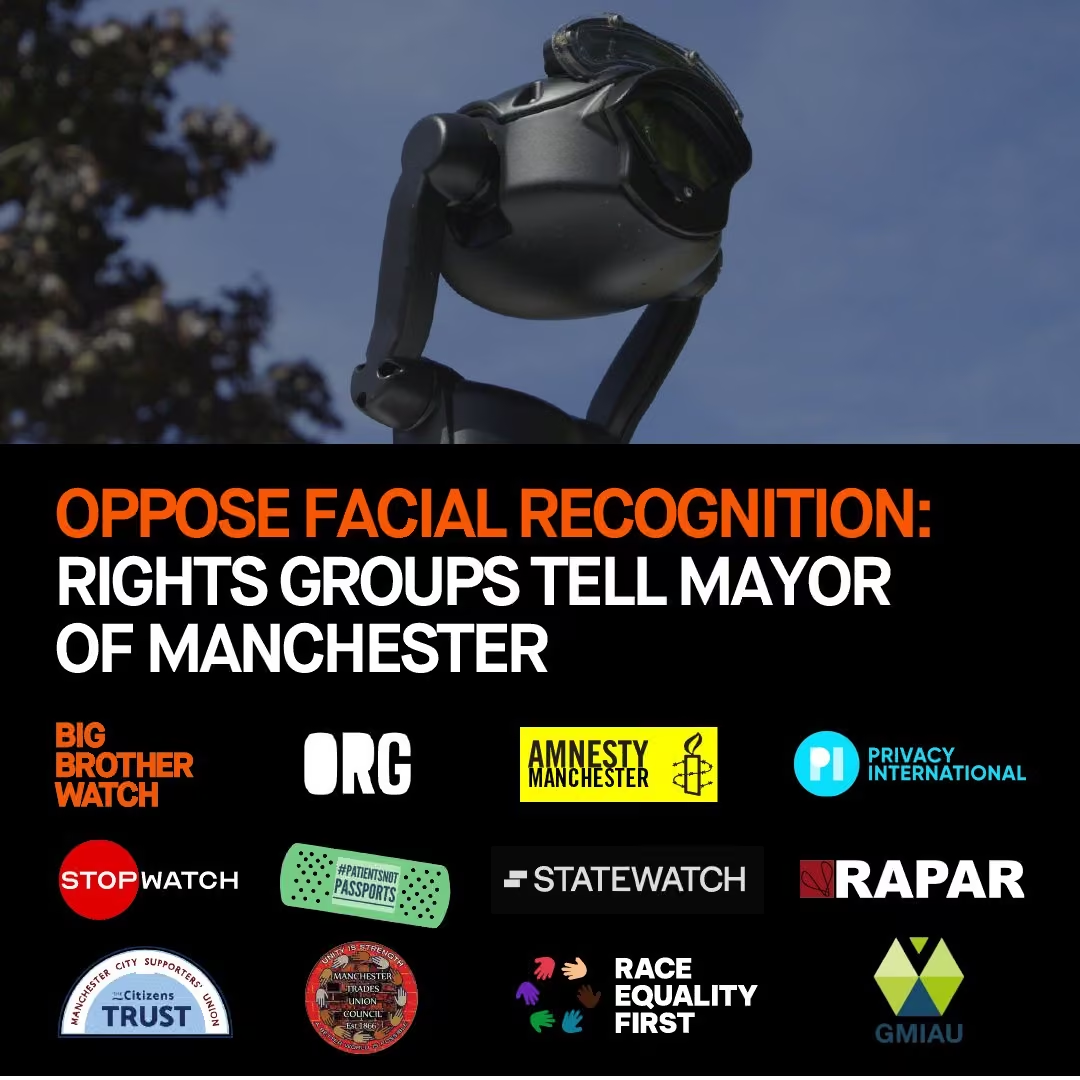


 SMEX


 Transparencia Electoral








 Unwanted Witness


 Hiperderecho
 Derechos Digitales


 7amleh حملة


 Sthlm Internet Forum



 Amnesty Tech


