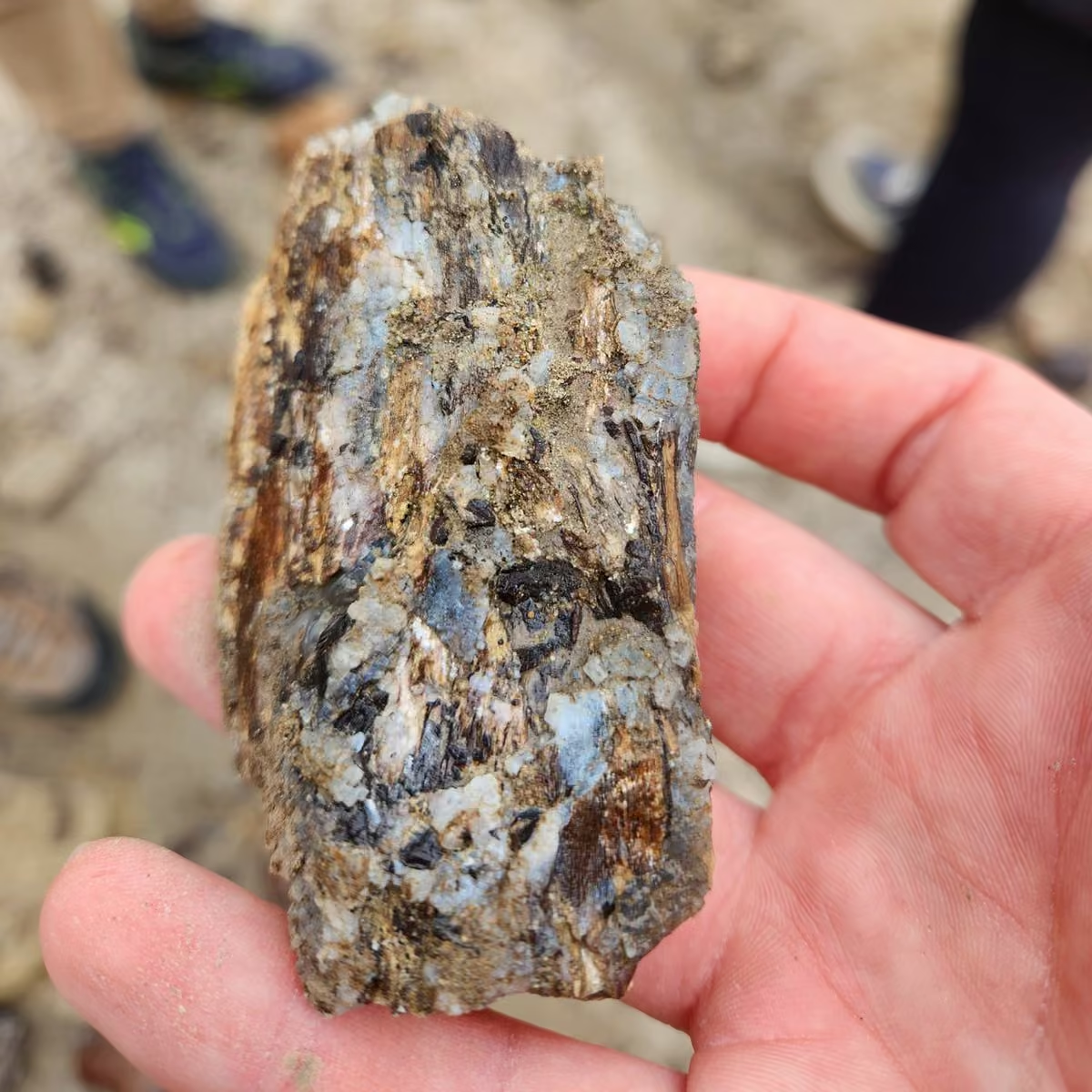
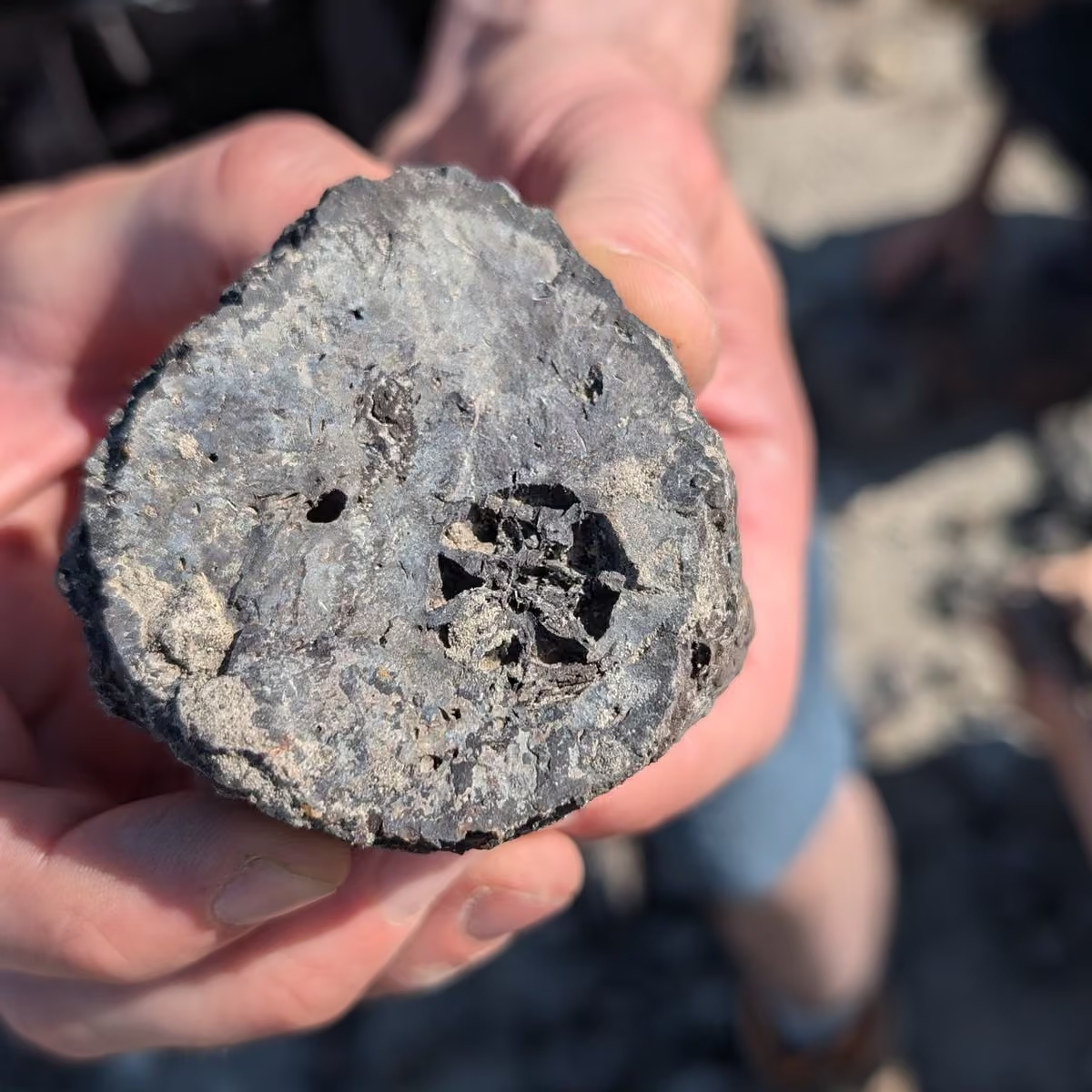
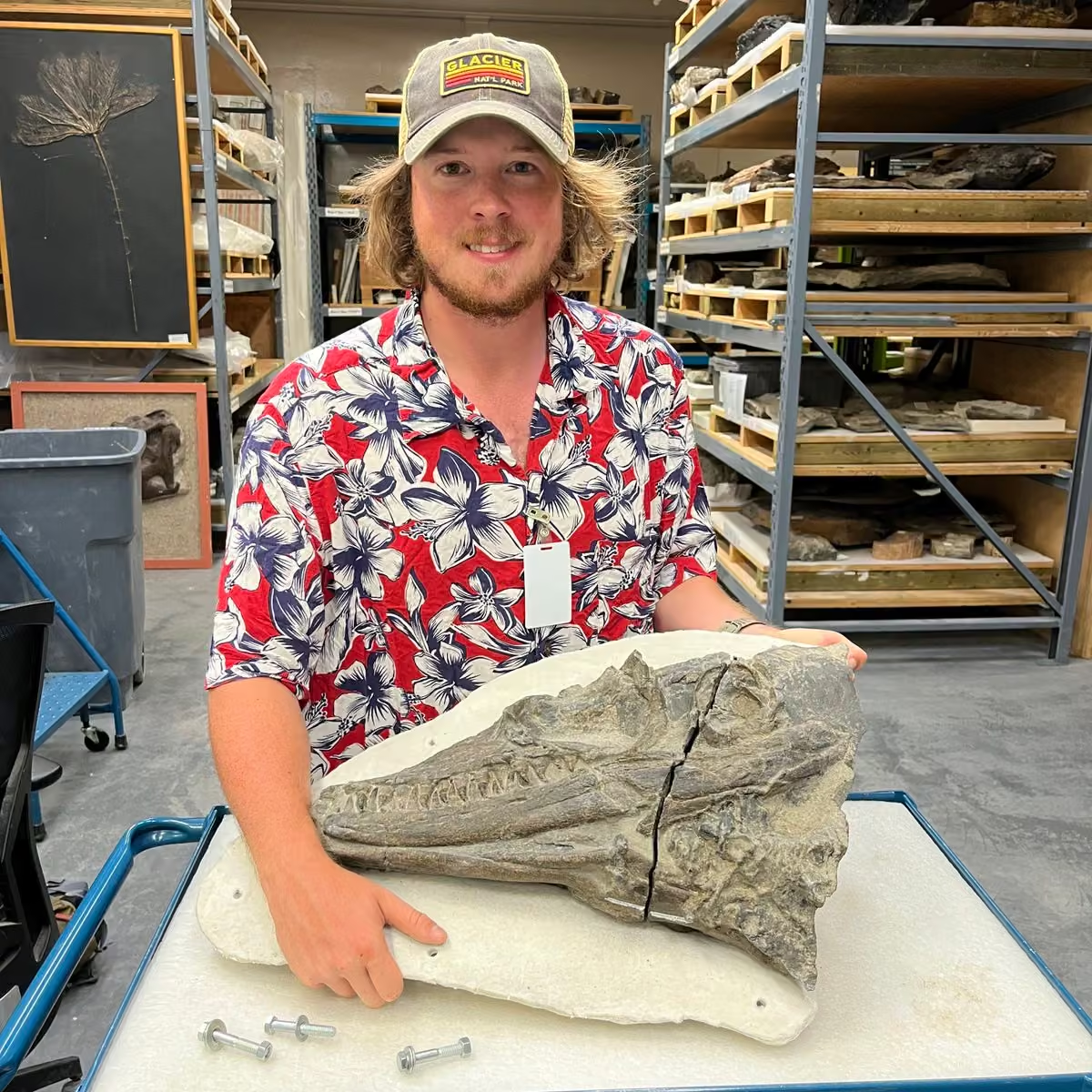
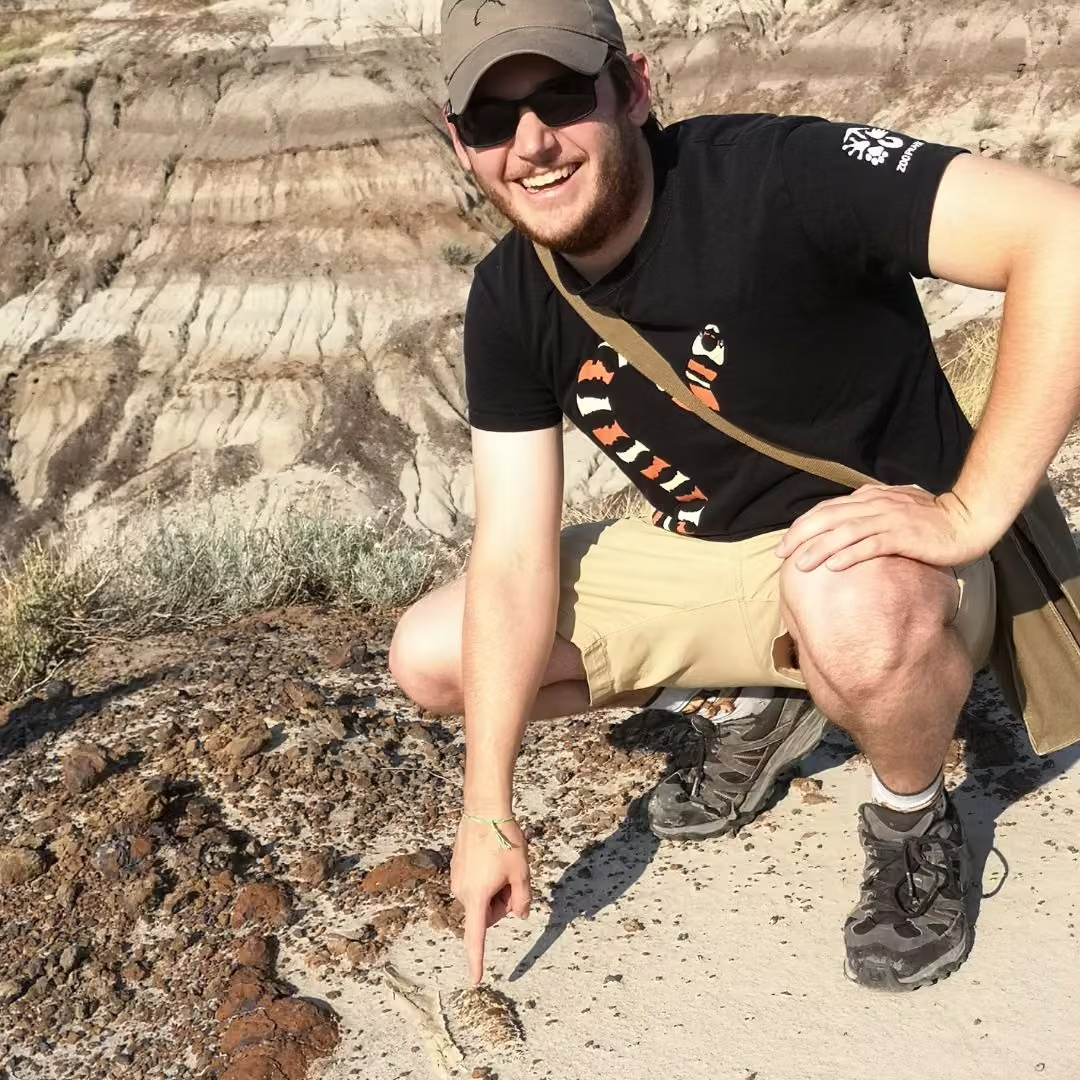
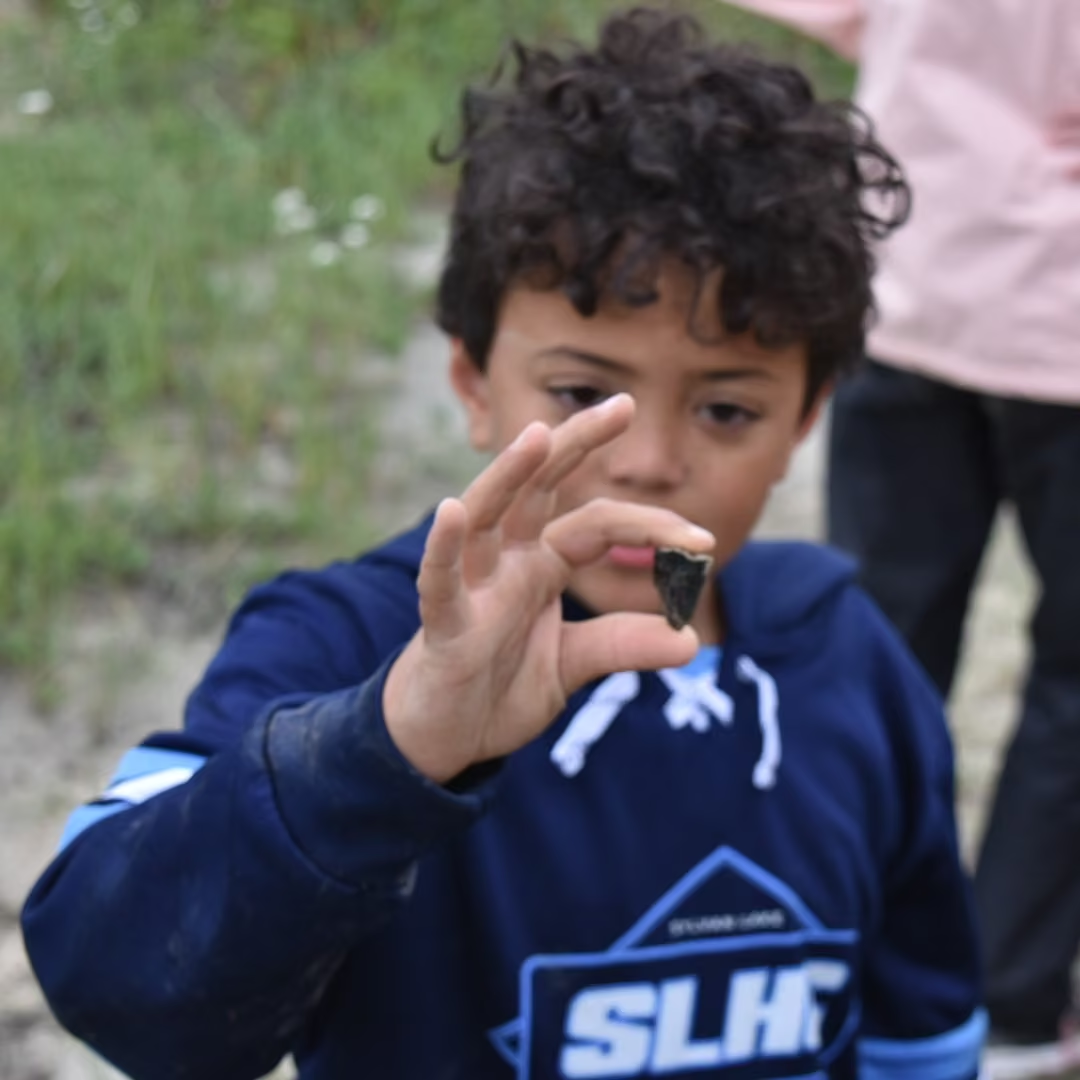
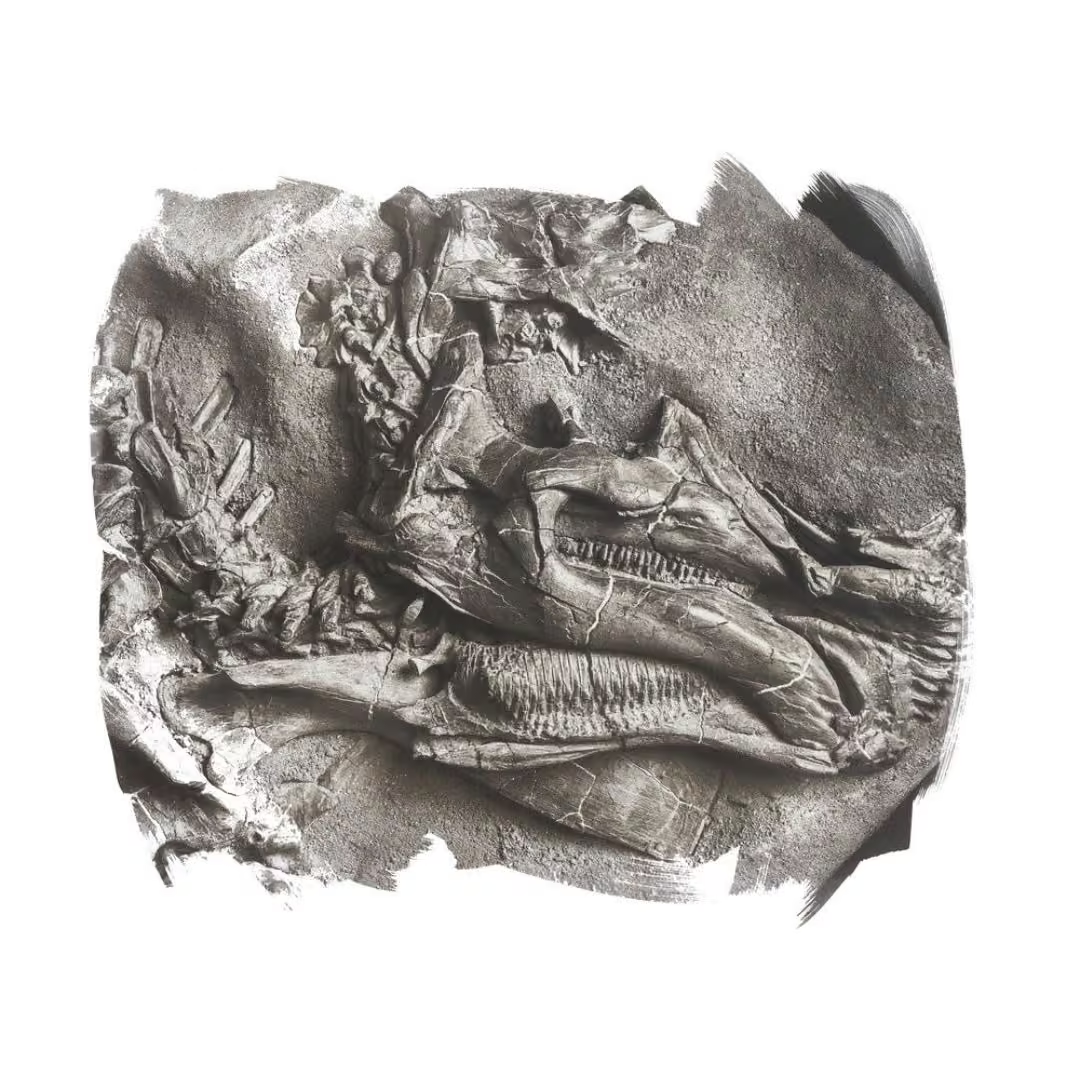
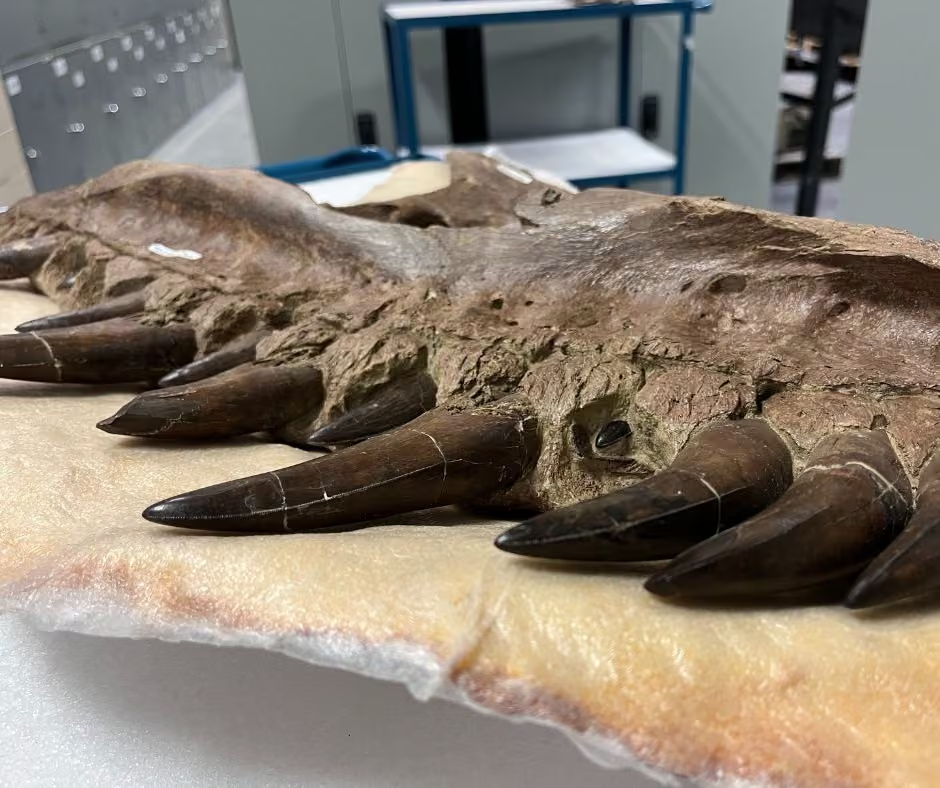
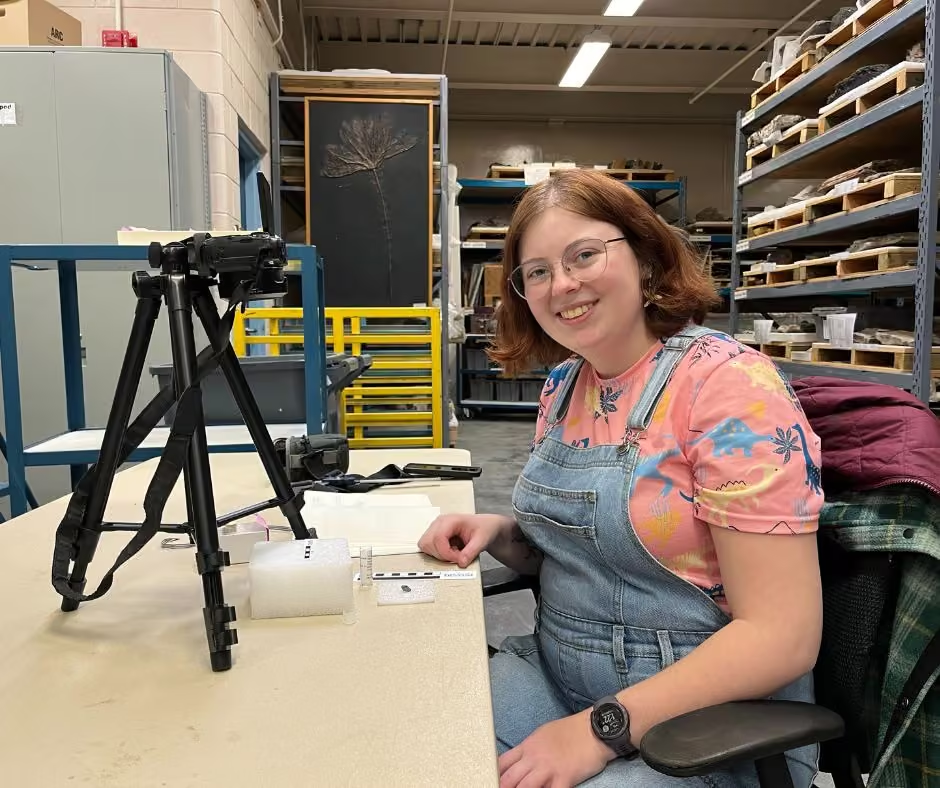
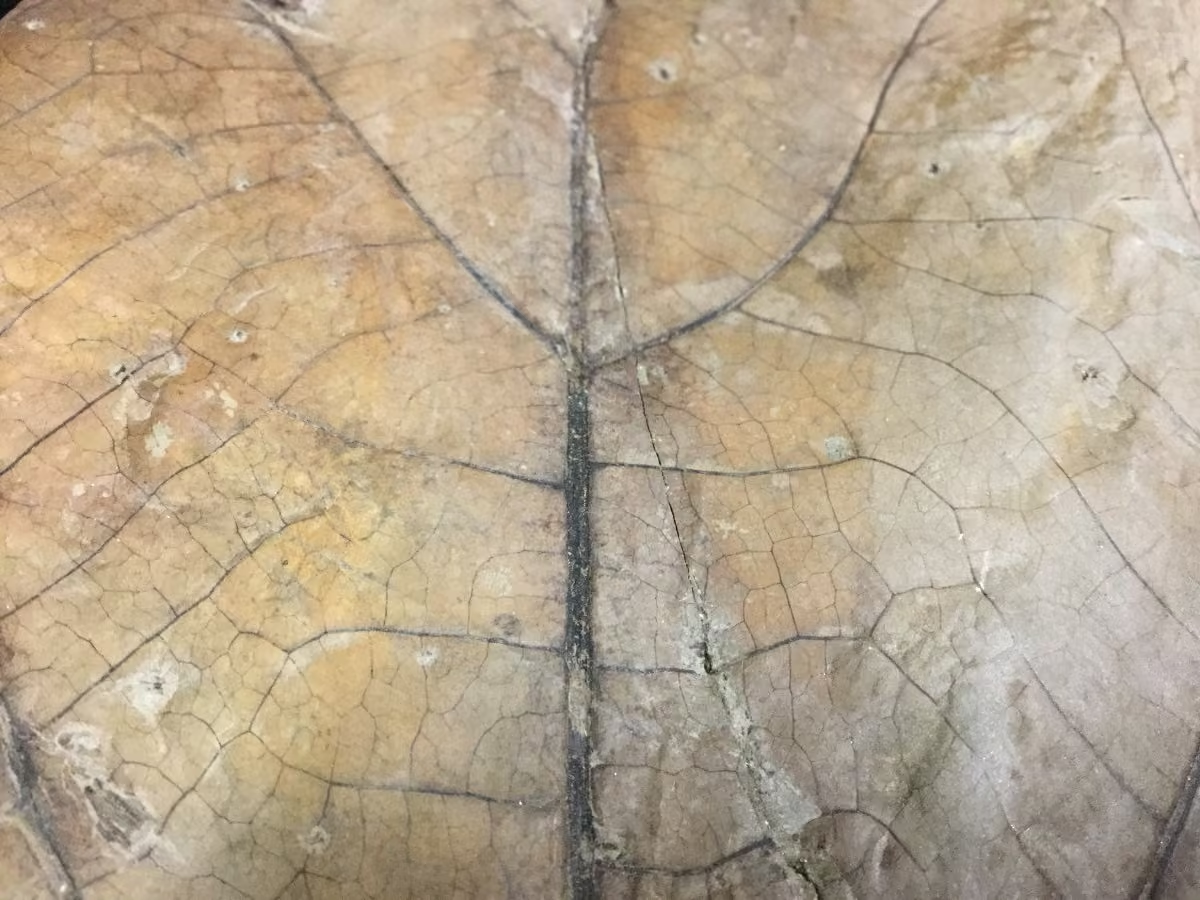
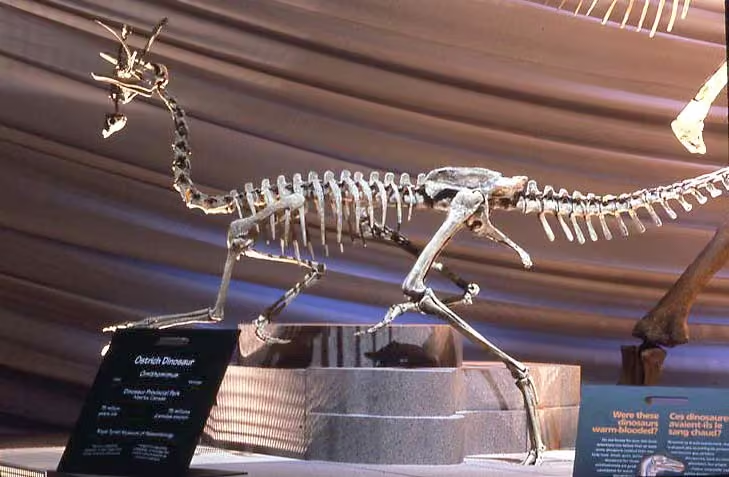
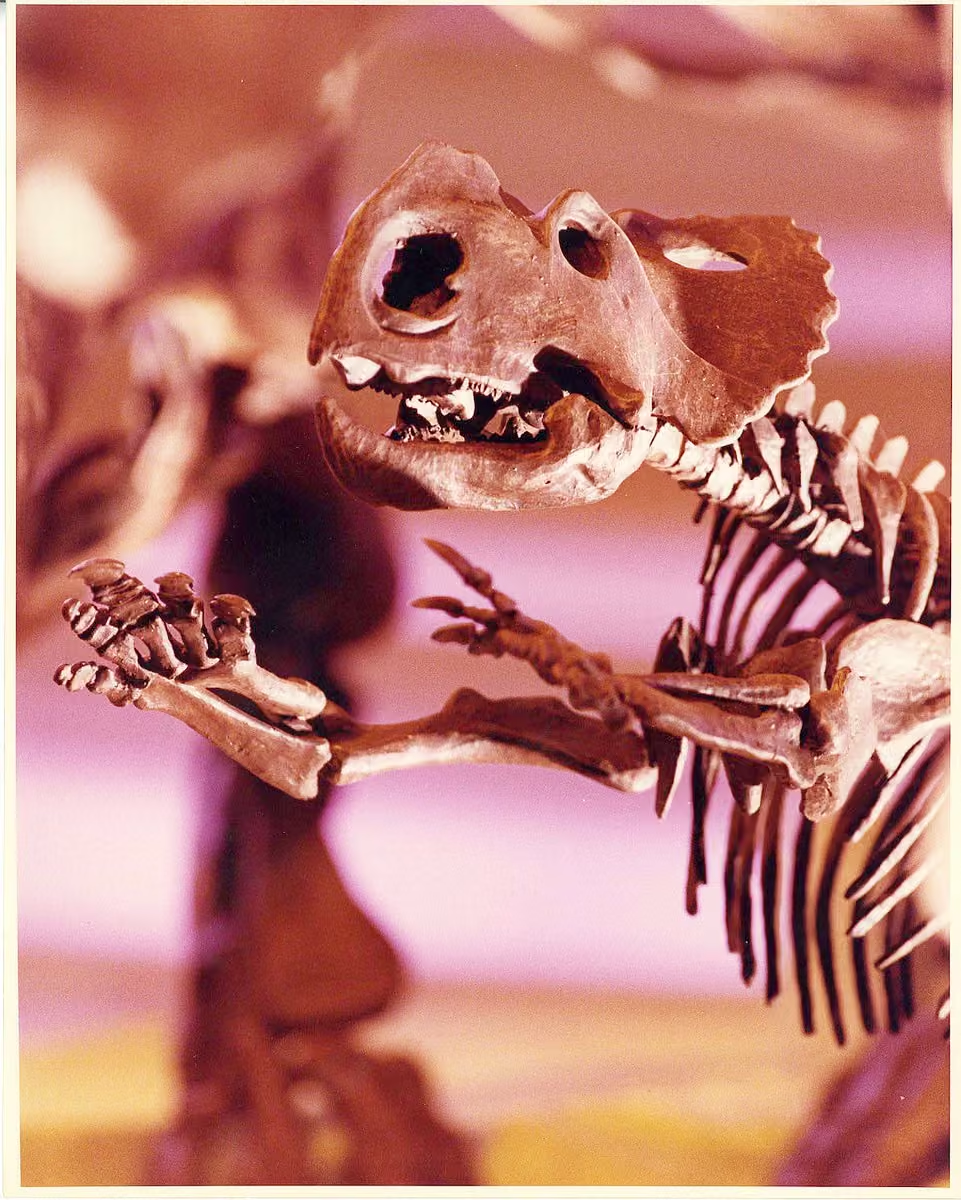
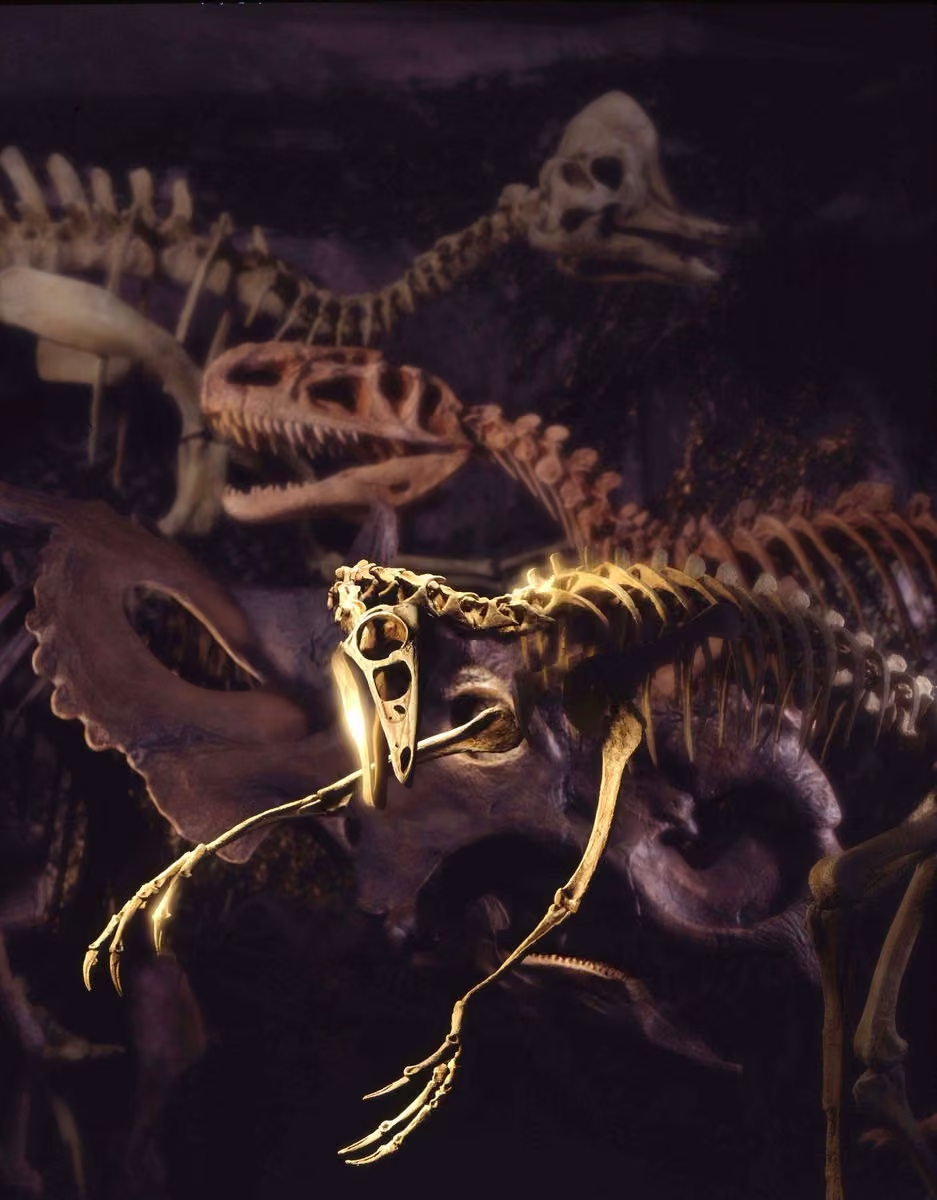
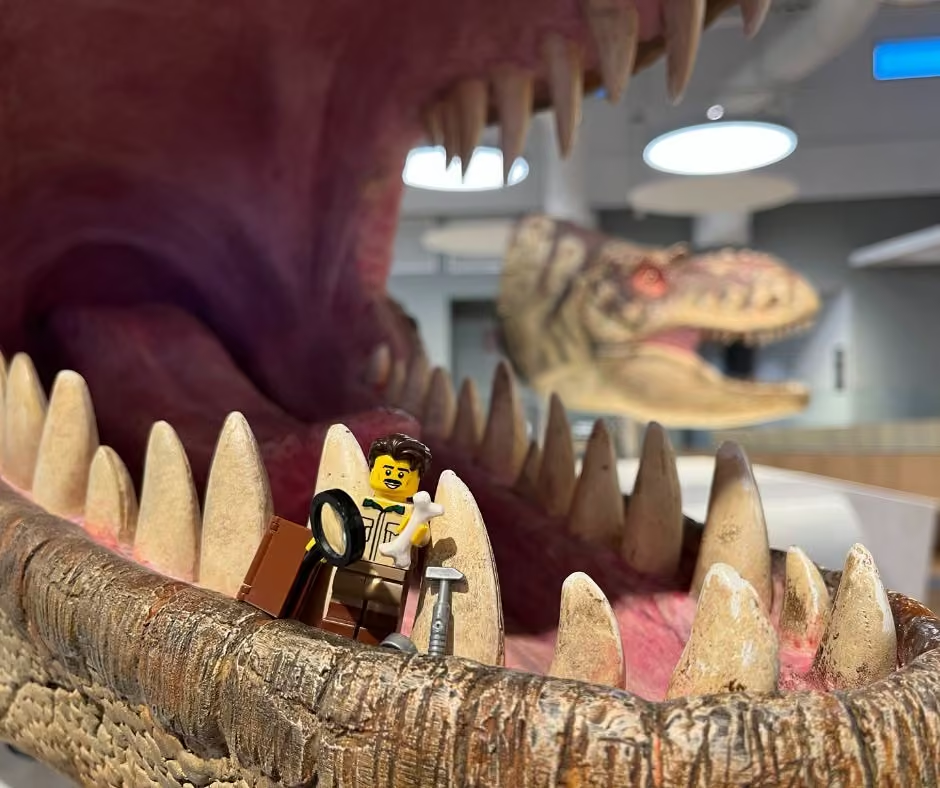
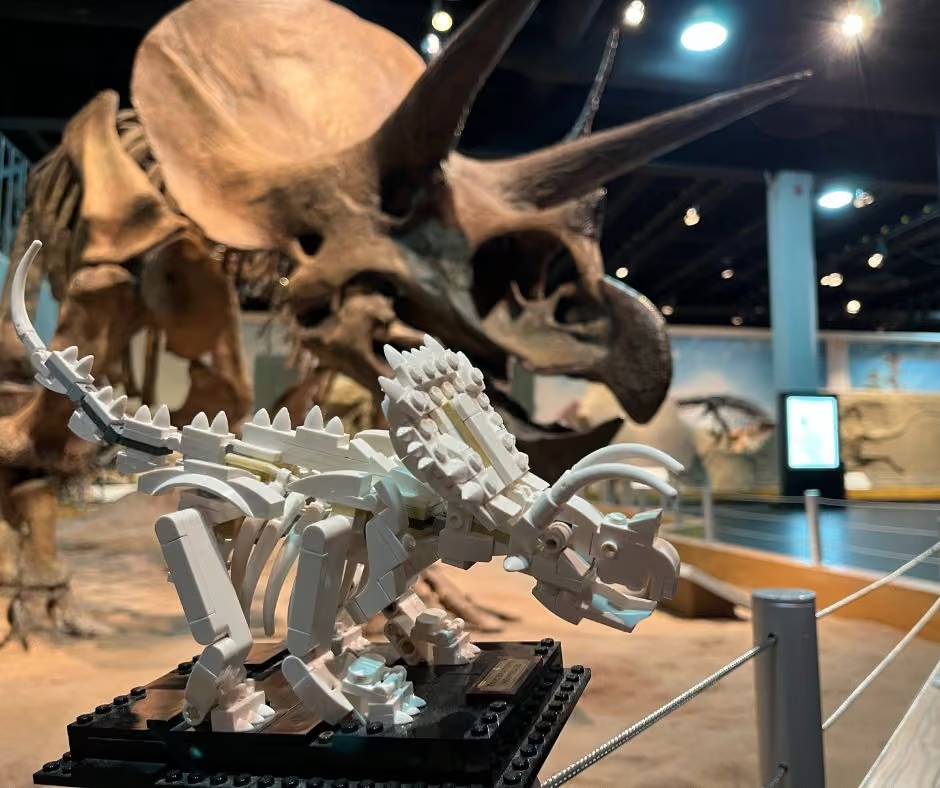
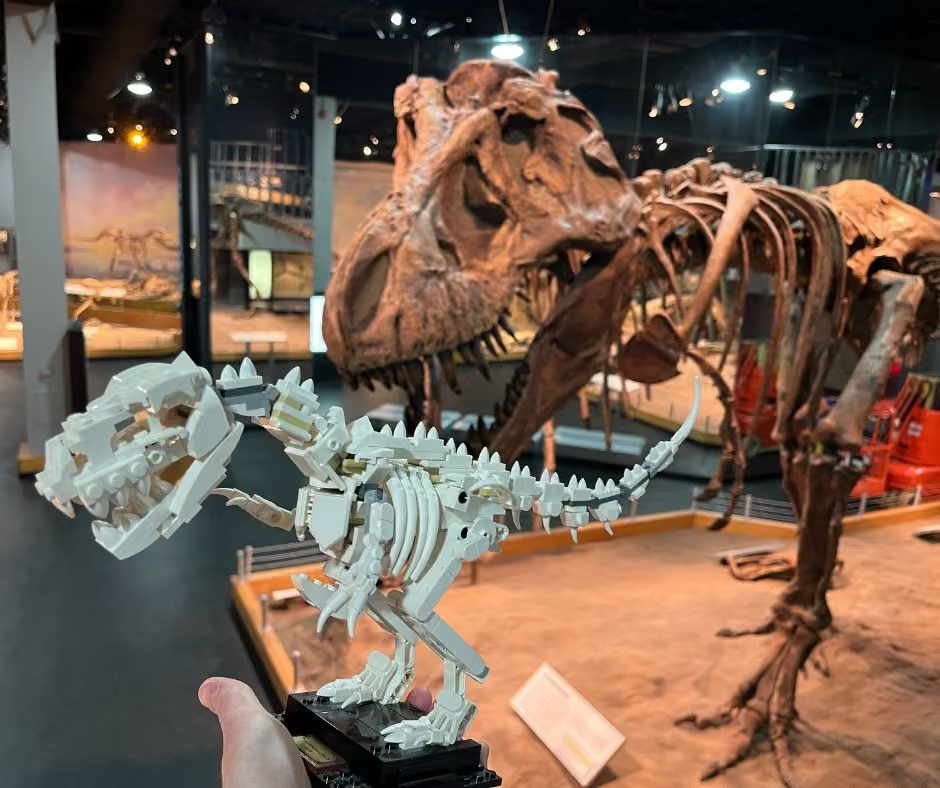
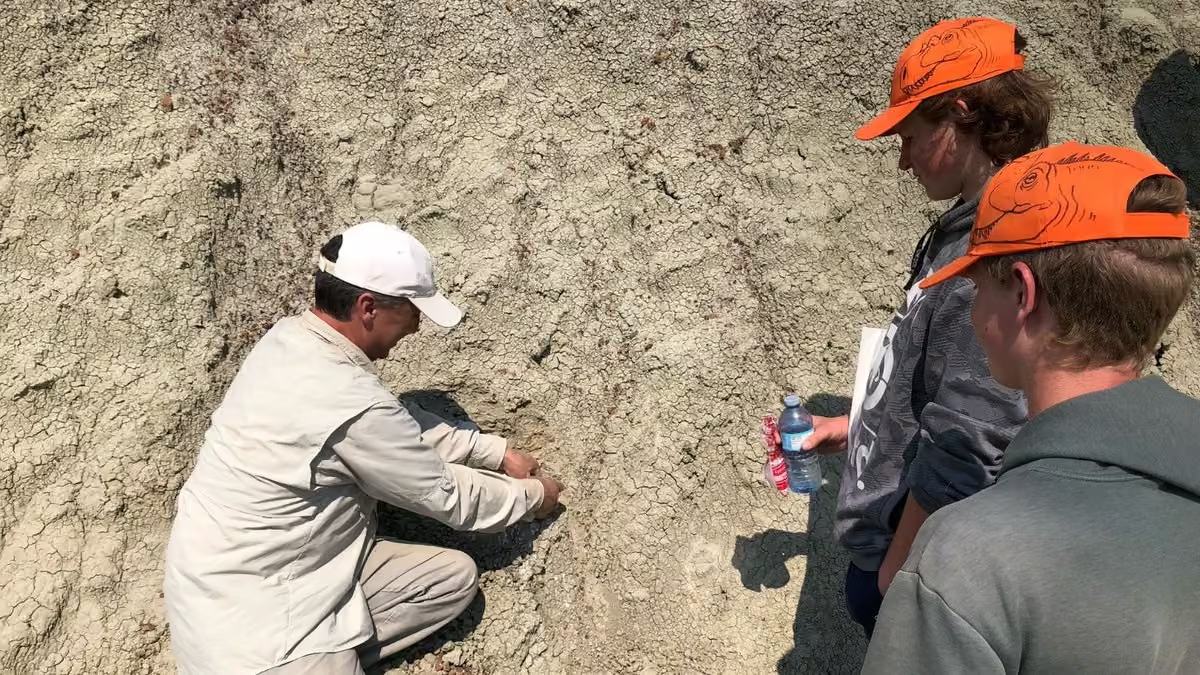
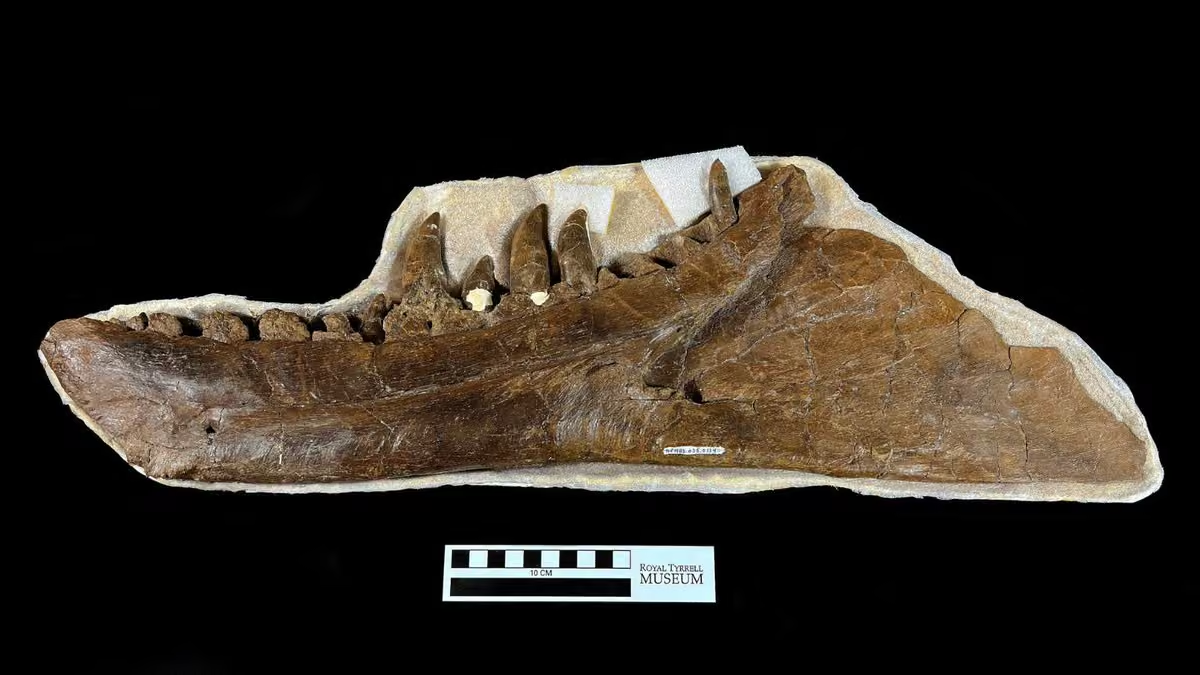
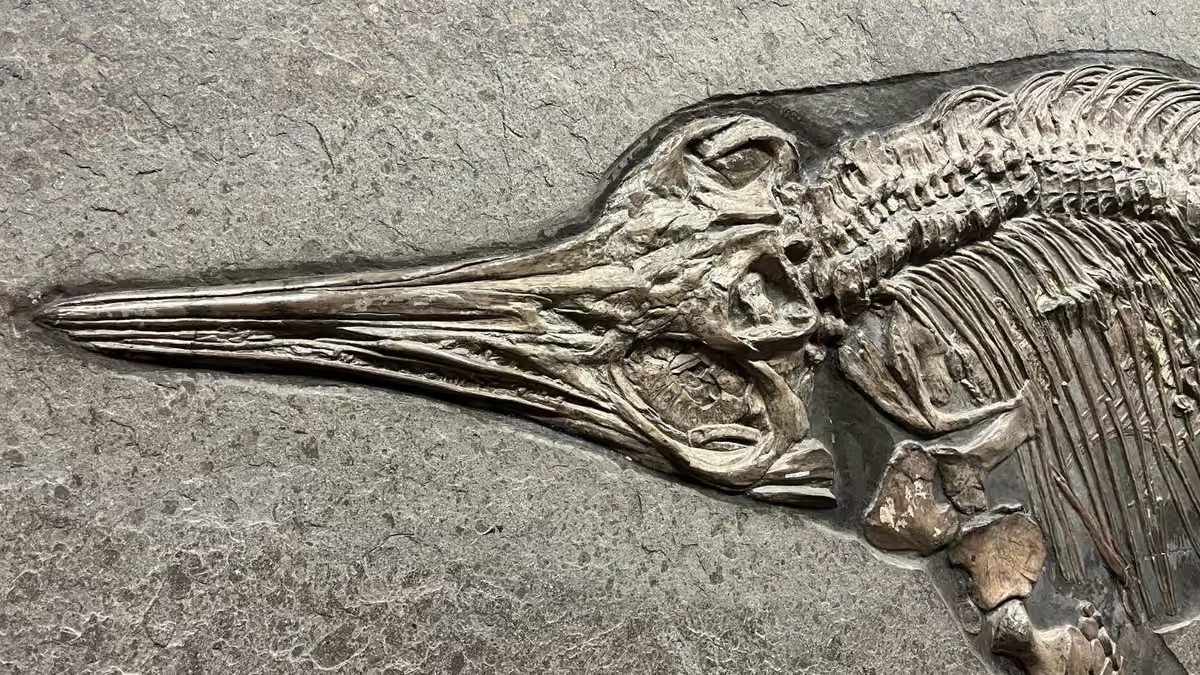
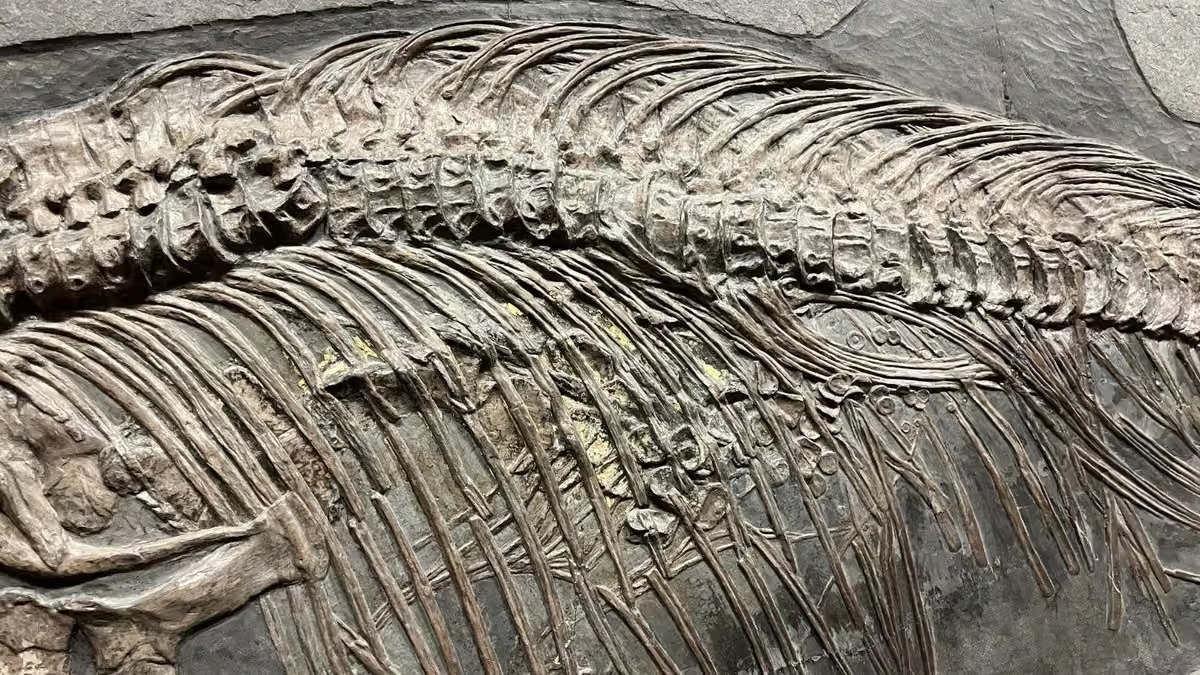
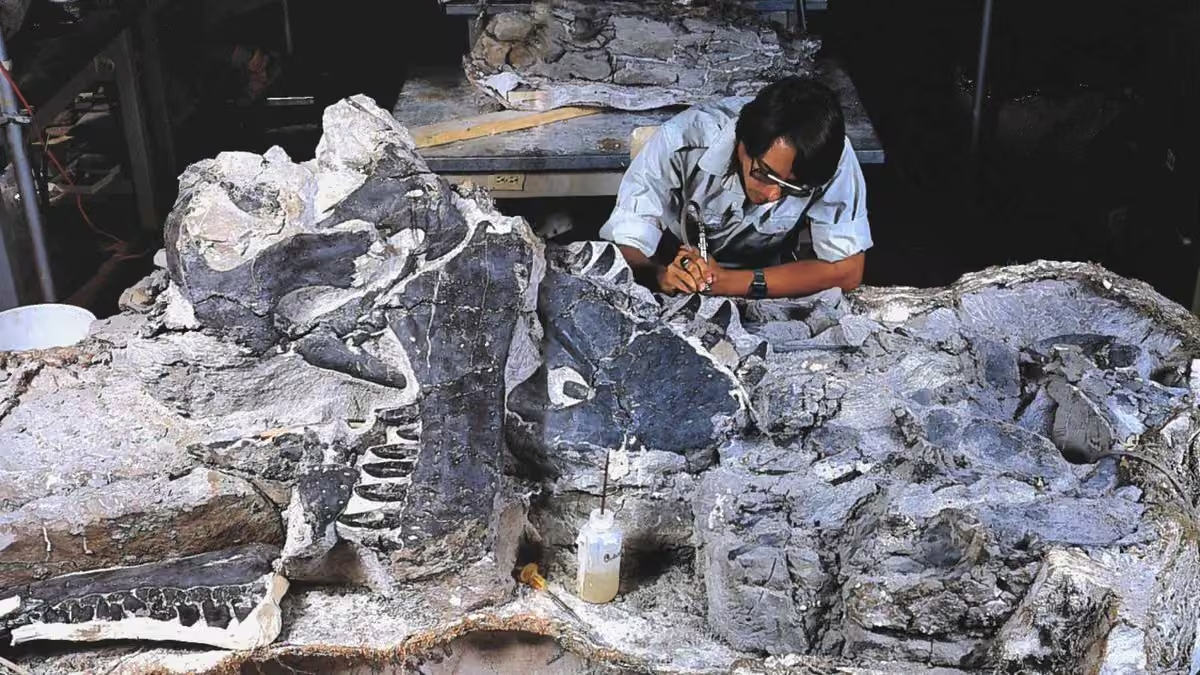
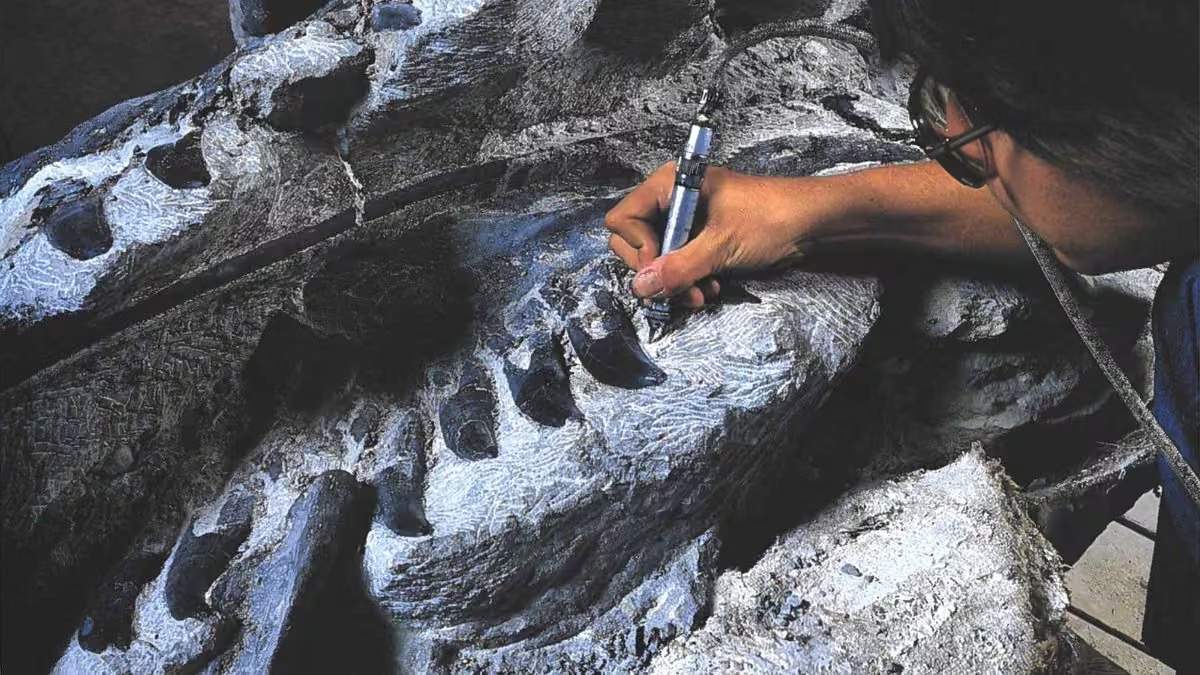
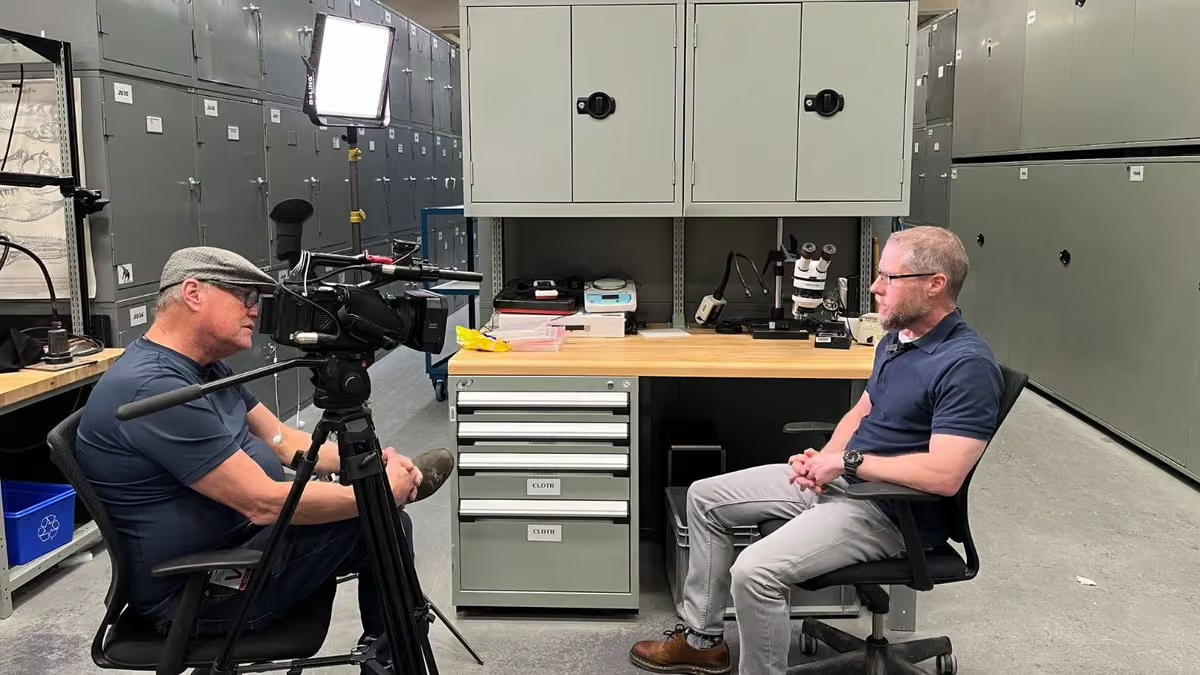
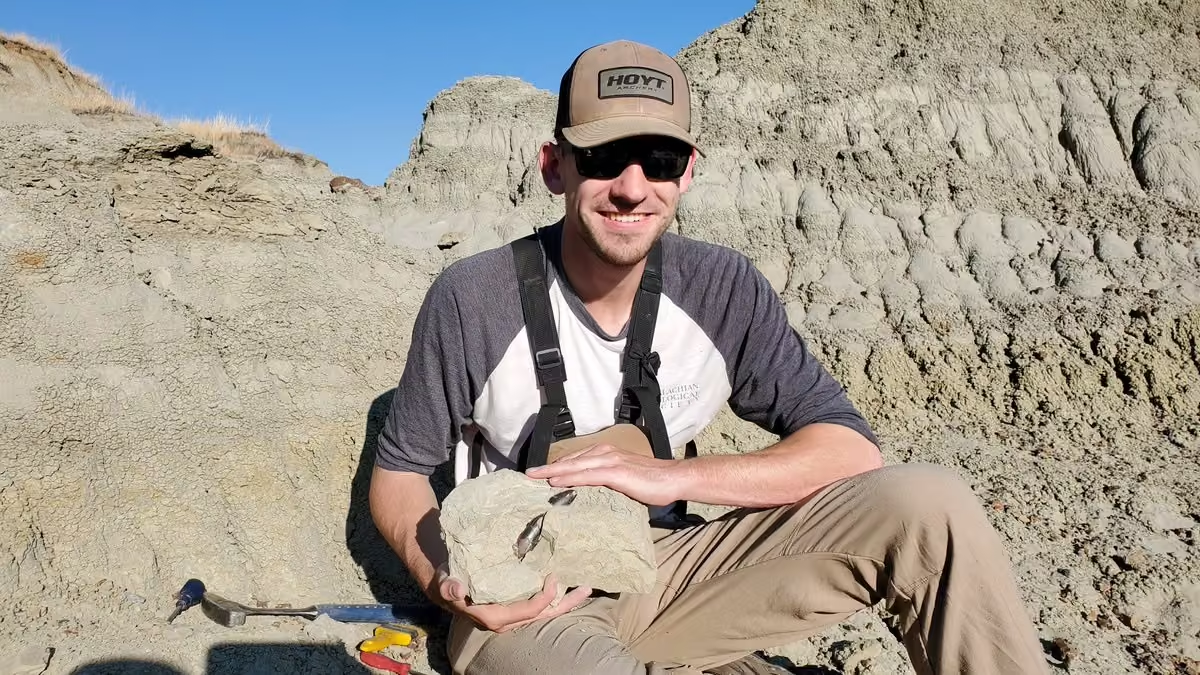
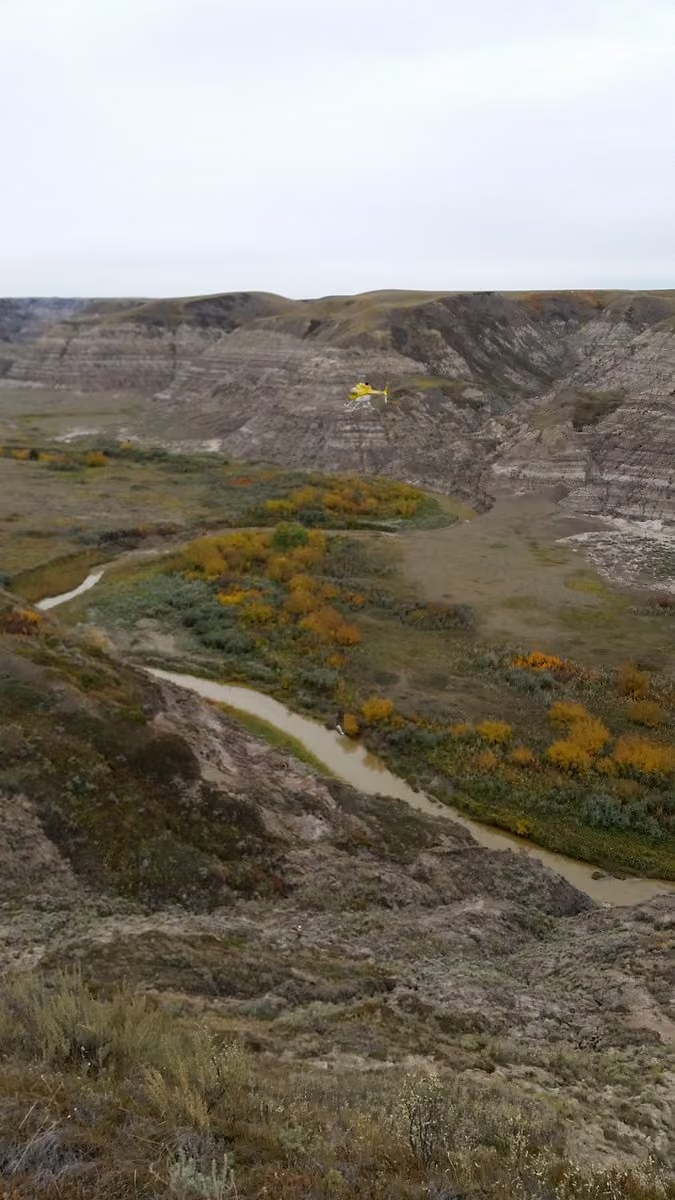
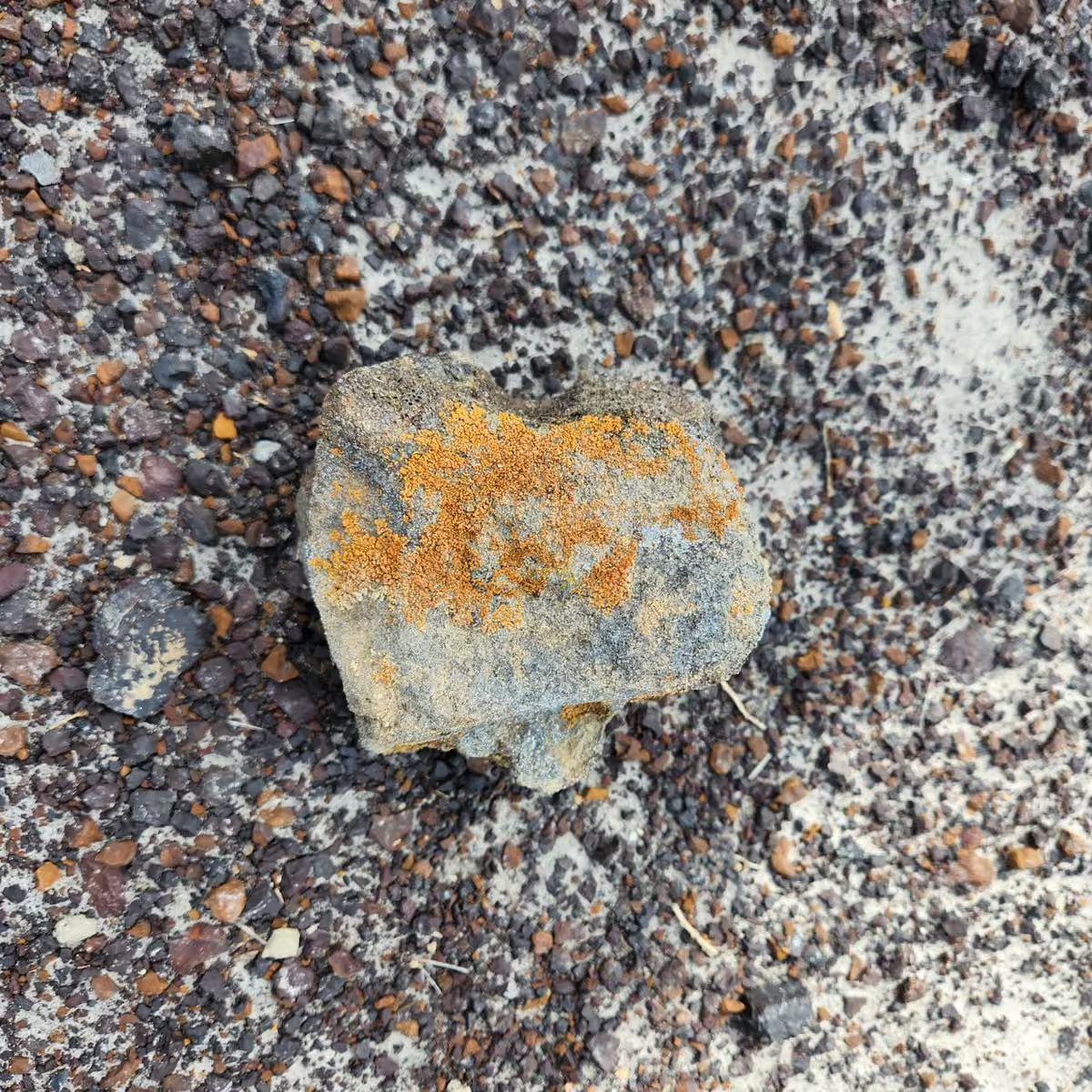
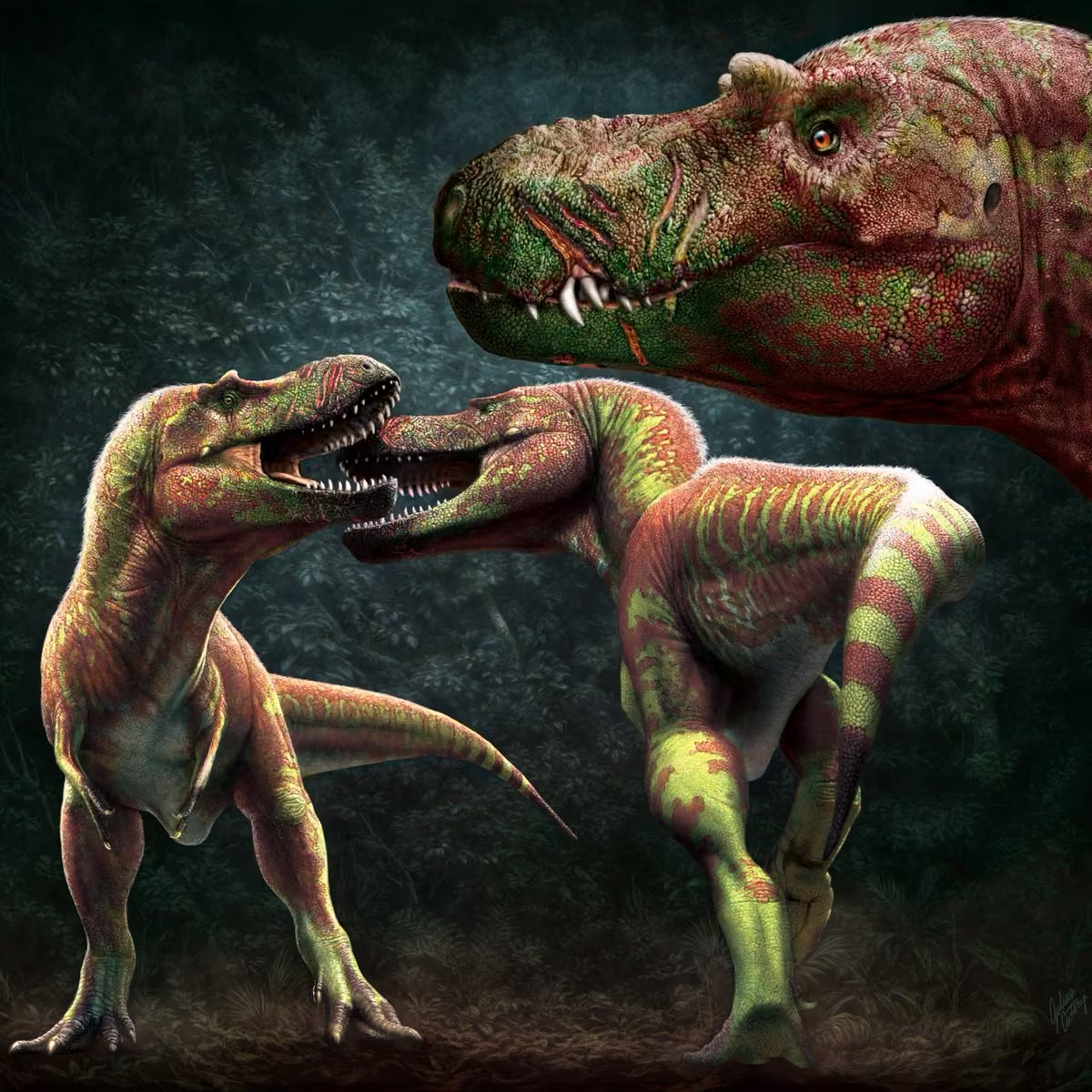
Today’s catch: new research led by Dr. Donald Brinkman found that some fishes (like salmonids) were already adapted to higher-latitude environments during the Late Cretaceous. Learn more: onlinelibrary.wiley.com/doi/full/10.1002/spp2.70014
Royal Tyrrell Museum of Palaeontology
The Royal Tyrrell Museum of Palaeontology (RTMP; often referred to as the Royal Tyrrell Museum) is a palaeontology museum and research facility in Drumheller, Alberta, Canada. The museum was named in honour of Joseph Burr Tyrrell, and is situated within a 12,500-square-metre-building (135,000 sq ft) designed by BCW Architects at Midland Provincial Park. More on Wikipedia
-
Royal Tyrrell Museum of Palaeontology
@RoyalTyrrell

-
Royal Tyrrell Museum of Palaeontology
@RoyalTyrrell
FINAL TALK OF THE SEASON: Join us next Thursday, May 1 for a free presentation by Dr. Corwin Sullivan, “From Dragon Bones to Dino-Birds: The Rise of Vertebrate Palaeontology in China.”
Learn more and register now: tyrrellmuseum.com/whats_on/special_events/speaker_series -
Royal Tyrrell Museum of Palaeontology
@RoyalTyrrell
Join us on April 25 for Dr. Yan-Yin Wang’s Speaker Series talk, “Anatomy and Biomechanics of the Ribcage in Birds, Crocodiles, and Dinosaurs, with Implications on the Evolution of Ventilation.”
Learn more: www.tyrrellmuseum.com/whats_on/special_events/speaker_series -
Royal Tyrrell Museum of Palaeontology
@RoyalTyrrell
Join us on Thursday, April 17 at 11 a.m. for next week’s Speaker Series talk. Dr. Bruce Archibald will present, “Things Change When You Warm Up Winters — What Fossils Tell us.”
Register for the Zoom talk now: tyrrellmuseum.com/whats_on/special_events/speaker_series -
Royal Tyrrell Museum of Palaeontology
@RoyalTyrrell
Join us next week for Dr. Brian Davis’s talk, “Tiny Fossils and the Big Picture: Mammals from the Age of Dinosaurs.”
Learn more and register: www.tyrrellmuseum.com/whats_on/special_events/speaker_series -
Royal Tyrrell Museum of Palaeontology
@RoyalTyrrell
Join us next Thursday, April 3 for Lauren Wilson’s Speaker Series talk, “Cretaceous Arctic Birds from the Prince Creek Formation of Northern Alaska.”
Learn more and register for the Zoom talk now: www.tyrrellmuseum.com/whats_on/special_events/speaker_series -
Royal Tyrrell Museum of Palaeontology
@RoyalTyrrell
Dr. Todd Kristensen will present next week’s Speaker Series talk, “Ice Mummies on Mountains: Archaeology of Frozen Corpses in British Columbia and Italy.”
Learn more and register now: tyrrellmuseum.com/whats_on/special_events/speaker_series -
Royal Tyrrell Museum of Palaeontology
@RoyalTyrrell
Join us next week for Dr. Kiersten Formoso’s talk, “Going for a Swim: Influences of Terrestrial Ancestry on Land-to-Sea Transformations.”
Learn more and register: www.tyrrellmuseum.com/whats_on/special_events/speaker_series -
Royal Tyrrell Museum of Palaeontology
@RoyalTyrrell
Our Dr. Francois Therrien published a new Canadian Encyclopedia article about Ankylosaurus. This illustration by Julius Csotonyi depicts Euoplocephalus, a close relative of Ankylosaurus.
Learn more: www.thecanadianencyclopedia.ca/en/article/ankylosaurus -
Royal Tyrrell Museum of Palaeontology
@RoyalTyrrell
For next week’s Speaker Series talk, Dr. Lisa Boucher will present,
“Landscape Paleoecology and the Evolution of Late Cretaceous Forests Along the Western Interior Seaway.”
Learn more and register to join us via Zoom: www.tyrrellmuseum.com/whats_on/special_events/speaker_series -
Royal Tyrrell Museum of Palaeontology
@RoyalTyrrell
Join us next Thursday for Darren Tanke’s Speaker Series talk, “Ongoing Epic Excavation of the Kaskie Hadrosaur Skeleton, One of the World’s Biggest Dinosaur Quarries.”
Learn more: www.tyrrellmuseum.com/whats_on/special_events/speaker_series -
Royal Tyrrell Museum of Palaeontology
@RoyalTyrrell
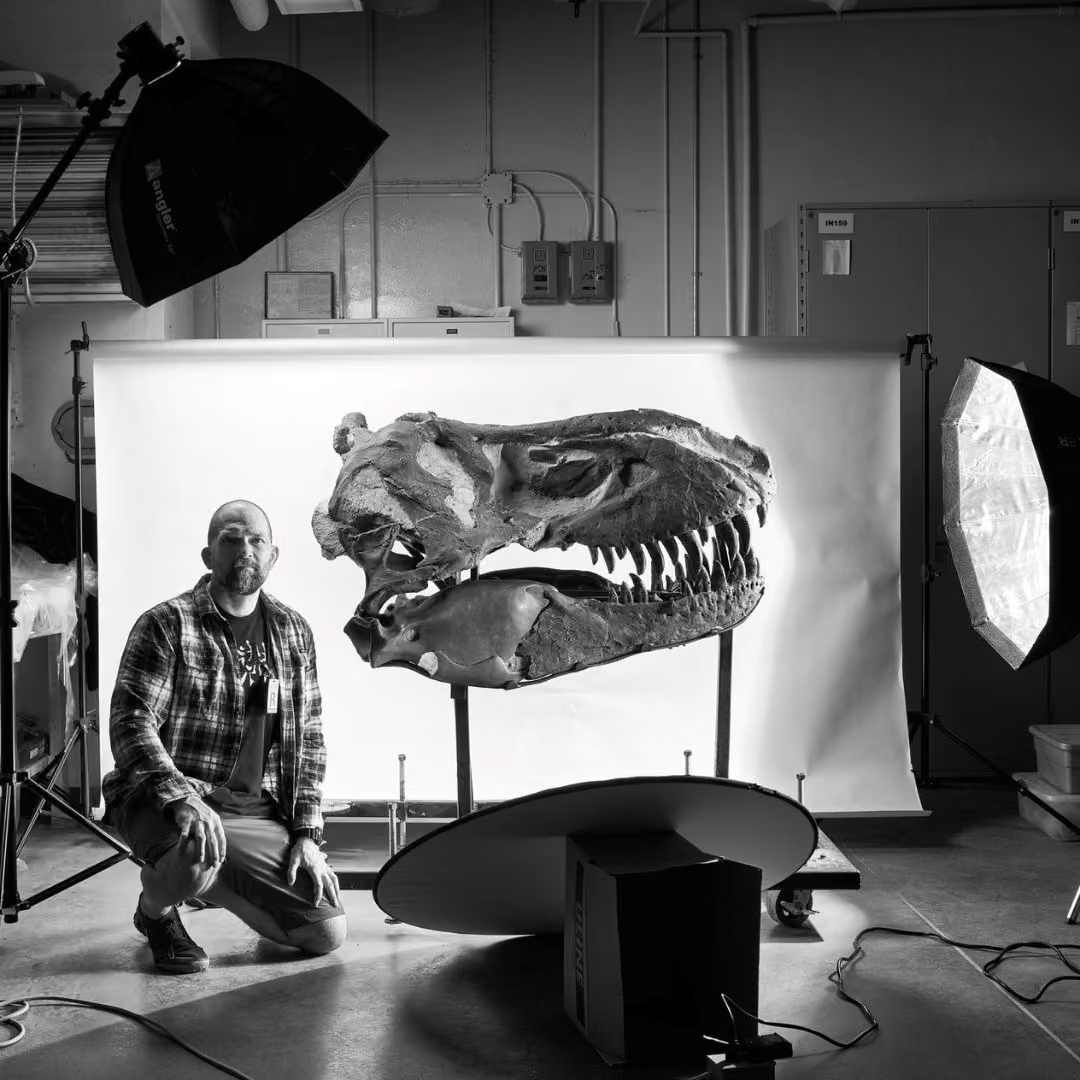
In next Wednesday’s Speaker Series talk, Andre Gogol will provide an in-depth look at his photographic methods and the ideas behind the images currently on display in our Perspectives exhibit.
Learn more: www.tyrrellmuseum.com/whats_on/special_events/speaker_series -
Royal Tyrrell Museum of Palaeontology
@RoyalTyrrell
Please note: Tickets to the Royal Tyrrell Museum are only available by walk-up admission today.
High attendance may result in line-ups requiring visitors to wait outdoors. We thank you in advance for your patience and look forward to your visit! -
Royal Tyrrell Museum of Palaeontology
@RoyalTyrrell
In next week’s Speaker Series talk, Christiana Garros will present, “Broken, Bruised, and Bitten: Survival Tales of Tyrannosaur Injuries.”
Join us at 11 a.m. on Thursday, February 20!
Learn more: www.tyrrellmuseum.com/whats_on/special_events/speaker_series -
Royal Tyrrell Museum of Palaeontology
@RoyalTyrrell
For next week’s Speaker Series talk, Dr. Alfred Lemierre will discuss the Quercy Phosphorites in southwest France, one of most fossil-rich localities preserving the Cenozoic of Europe. To register or learn more: www.tyrrellmuseum.com/whats_on/special_events/speaker_series
-
Royal Tyrrell Museum of Palaeontology
@RoyalTyrrell
Our Dr. Christopher West co-authored new research analyzing leaf megafloras from the Miocene. The study found that Miocene environments were much warmer, wetter, and greener than today.
Learn more: www.sciencedirect.com/science/article/pii/S29501172250000… -
Royal Tyrrell Museum of Palaeontology
@RoyalTyrrell
Join us on February 6 at 11 a.m. MT for a Speaker Series talk by Alessandro Franchini about microfossils found in Wyoming.
Learn more next week in the Museum’s Auditorium, or register to join us through Zoom: www.tyrrellmuseum.com/whats_on/special_events/speaker_series -
Royal Tyrrell Museum of Palaeontology
@RoyalTyrrell
New research led by our Dr. Caleb Brown reveals a bite mark found in a fossil neck vertebra of a juvenile pterosaur from the Cretaceous of Alberta. The research suggests a crocodylian most likely bit the pterosaur. Learn more: royaltyrrellmuseum.wpcomstaging.com/2025/01/23/juvenile-p…
Royal Tyrrell Museum of Palaeontology
@RoyalTyrrell
The specimen was discovered during excavation of a bonebed as part of a collaborative field school with the @UniofReading (England) and University of New England (Australia). #paleoresearch #palaeonews
-
Royal Tyrrell Museum of Palaeontology
@RoyalTyrrell
Join us for free talks exploring hot topics in palaeontology during our 2025 Speaker Series. Attend in-person or via Zoom to learn about fossil photography, palaeobotany, and tyrannosaur injuries—to name a few.
Check out the full lineup: www.tyrrellmuseum.com/whats_on/special_events/speaker_series -
Royal Tyrrell Museum of Palaeontology
@RoyalTyrrell
Give the gift of membership this #givingtuesday 🎁
From now until December 16, when you buy a Museum membership as a gift, you’ll receive two FREE adult admission passes!
Purchase yours now: www.tyrrellmuseum.com/about/join_support -
Royal Tyrrell Museum of Palaeontology
@RoyalTyrrell
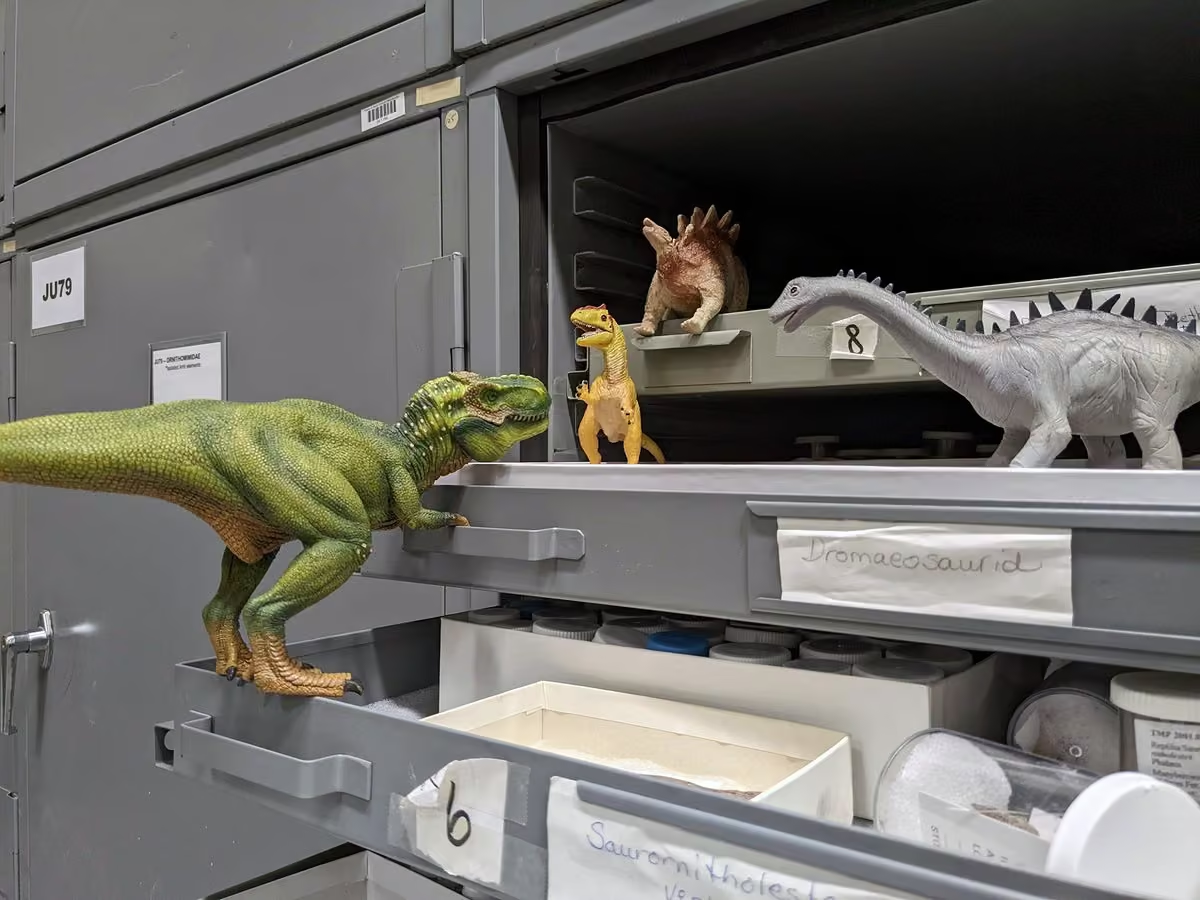
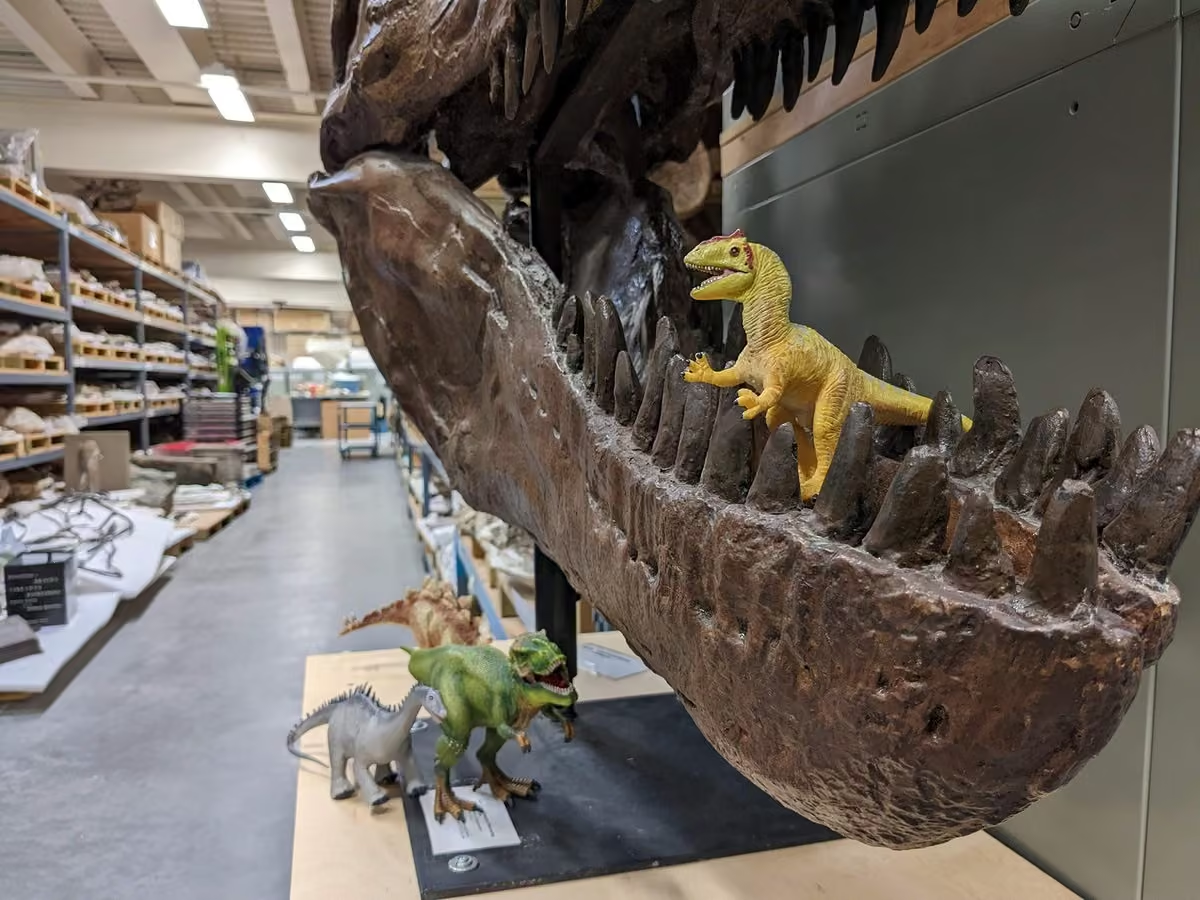
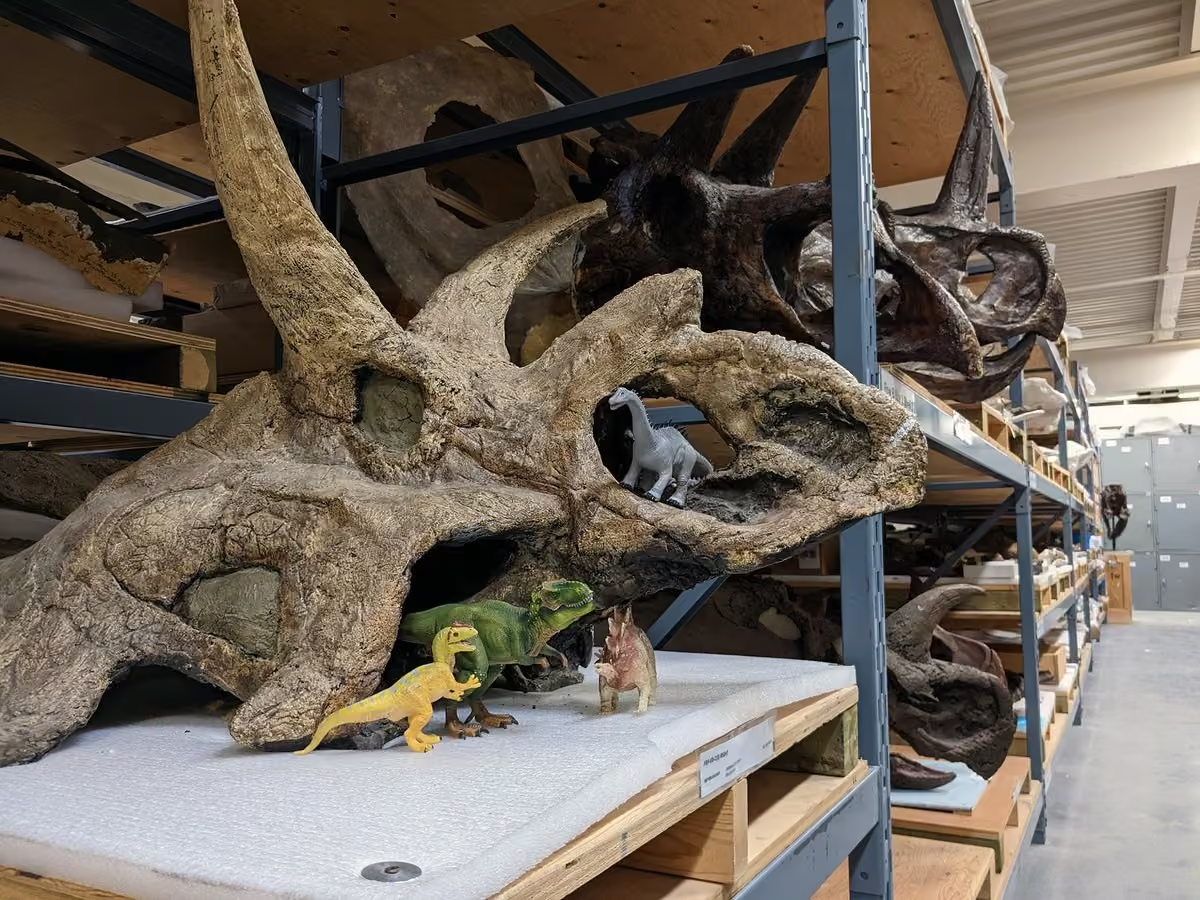
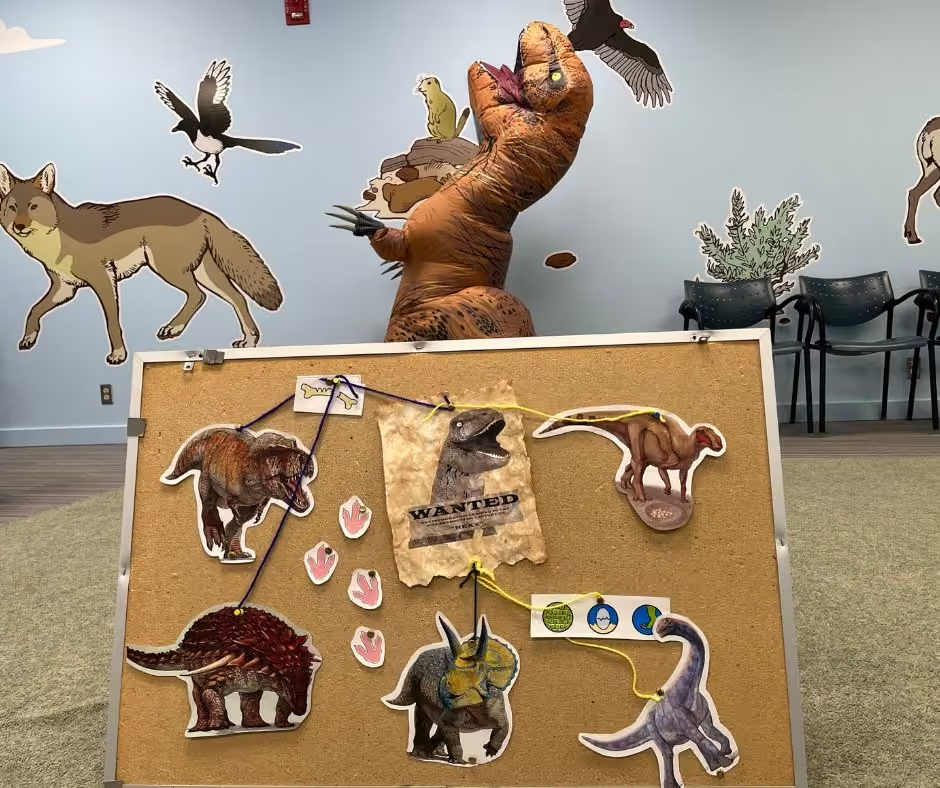
It looks like the dinosaurs found their way into our Education department’s excavation lab! What do you think Parasaurolophus and the dromaeosaur have discovered? #dinovember
-
Royal Tyrrell Museum of Palaeontology
@RoyalTyrrell
Are there any dino-lovers on your holiday shopping list?
Help them stay stylish and warm this winter with our custom toque: www.tyrrellmuseumshop.com -
Royal Tyrrell Museum of Palaeontology
@RoyalTyrrell
The hadrosaur Corythosaurus lived in Alberta during the Late Cretaceous. Its name comes from the Greek word “korythos,” meaning “helmet.” In ancient times, Corinthian soldiers wore helmets that were similarly shaped. #fossilfriday
-
Royal Tyrrell Museum of Palaeontology
@RoyalTyrrell
The Museum is open regular hours, 10 a.m. – 5 p.m., on Monday, November 11.
-
Royal Tyrrell Museum of Palaeontology
@RoyalTyrrell
#dinovember has returned! Follow along this month to see what mischief our dinosaurs get up to. Let us know what area of the Museum you’d like to see them explore next. ⬇️🦖🦕
-
Royal Tyrrell Museum of Palaeontology
@RoyalTyrrell
Our Kidosaurus Club is back! Children aged 3 – 5 can join our club to participate in six weekly sessions that run every Saturday from January 4 – February 8, 2025. Register your little ones now before the program fills up: www.tyrrellmuseum.com/whats_on/activities/kidosaurus_club
-
Royal Tyrrell Museum of Palaeontology
@RoyalTyrrell
T. rex or Treat! Happy Halloween 🎃🍬
-
Royal Tyrrell Museum of Palaeontology
@RoyalTyrrell
Our Dr. François Therrien has authored a number of Canadian Encyclopedia articles related to Alberta’s palaeontological record. His most recent entry discusses the famous Tyrannosaurus rex: www.thecanadianencyclopedia.ca/en/article/tyrannosaurus-rex
Art by Julius Csotonyi. -
Royal Tyrrell Museum of Palaeontology
@RoyalTyrrell
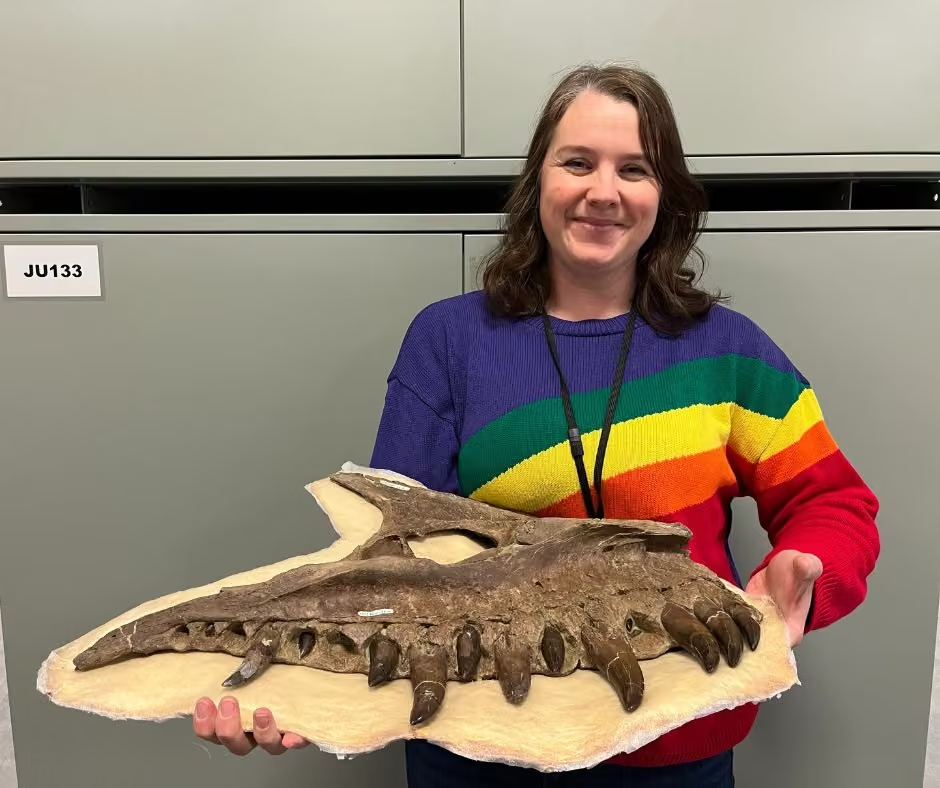
This mosasaur is on display for the first time in our new Fossils in Focus exhibit! It was discovered near Lethbridge, AB in 2022. This Prognathodon specimen was preserved in an unusual position, with the body folded in half, and the tail resting beside the head.
-
Royal Tyrrell Museum of Palaeontology
@RoyalTyrrell
Are you participating in any art challenges in October? 🎨🖼️🖌️
Click through the photos to see what our staff have been creating during this artistic month! #rtmpartwork #artober2024 -
Royal Tyrrell Museum of Palaeontology
@RoyalTyrrell
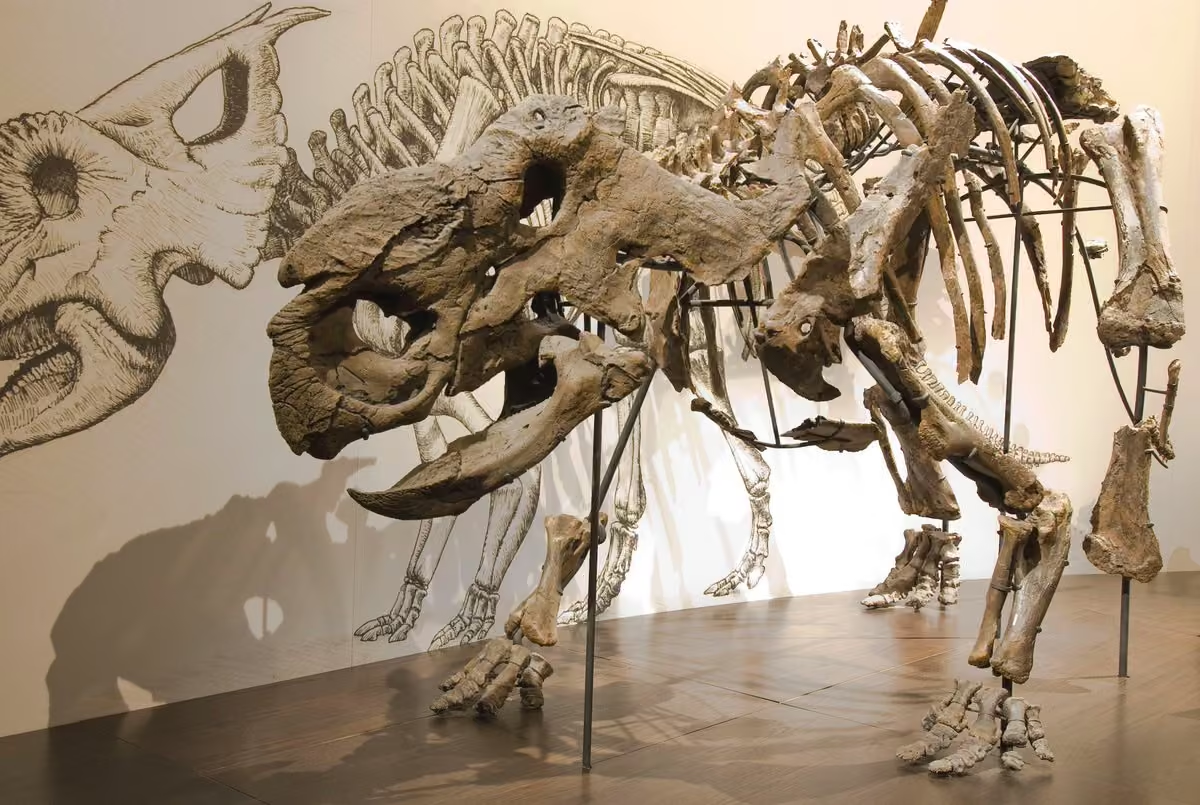
#dyk the first Styracosaurus fossil was found in Alberta? Canadian palaeontologist Lawrence Lambe named the holotype (the original fossil used to describe a new species) in 1913.
The Styracosaurus in the photos was discovered in Dinosaur Provincial Park in 1986. #fossilfriday -
Royal Tyrrell Museum of Palaeontology
@RoyalTyrrell
We wrapped up our fall programs for the year last weekend. Thank you to everyone who joined us this season! These photos show some of the neat finds documented by our participants during our guided hikes. See you next spring! #nationalfossilday
-
Royal Tyrrell Museum of Palaeontology
@RoyalTyrrell
At the beginning of the Pleistocene, some of the largest land mammals to ever exist emerged, including the forest browser Gomphotherium. This animal would have weighed between 4,500 – 6,600 kg! #galleryglimpse
-
Royal Tyrrell Museum of Palaeontology
@RoyalTyrrell
Looking for something to do this long weekend? The Museum is open every day (including Thanksgiving Monday) from 10 a.m. – 5 p.m., with final entry at 3:30 p.m. 🍂🦃
-
Royal Tyrrell Museum of Palaeontology
@RoyalTyrrell
Did you hear? Our new “Fossils in Focus” exhibit is now open! Specimens on display for the first time include a spectacular mosasaur skull and a pterosaur neck vertebra. Learn more on our blog: royaltyrrellmuseum.wpcomstaging.com/2024/10/11/2024-fossi…
-
Royal Tyrrell Museum of Palaeontology
@RoyalTyrrell
Our Dr. Christopher West led research for a new study examining fossils from northwest of Dawson City, Yukon. Using plant fossils collected from the Fifteenmile River locality, researchers reconstructed the ancient Eocene environment. Learn more: dx.doi.org/10.1029/2024PA004874
-
Royal Tyrrell Museum of Palaeontology
@RoyalTyrrell
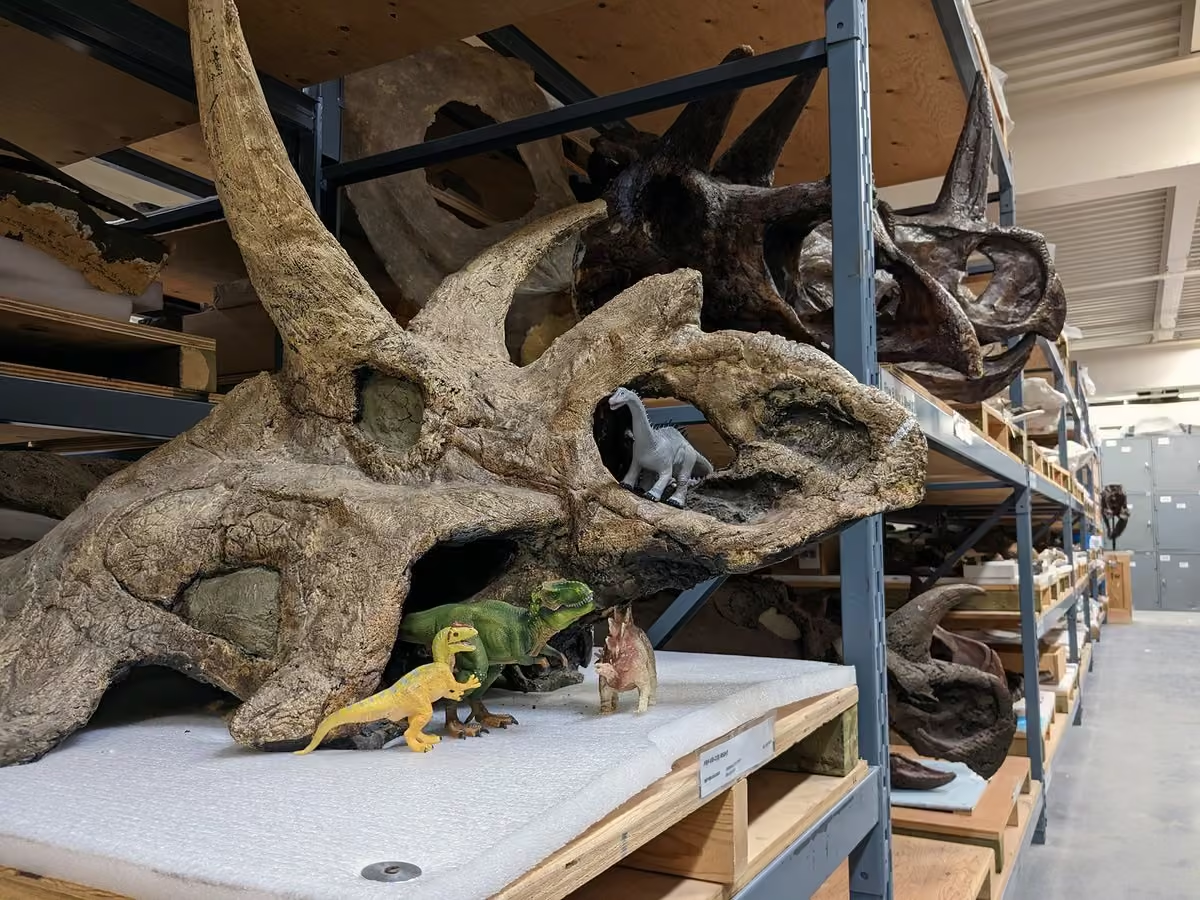
It’s been one year since we unveiled ‘Calli,’ Canada’s best-preserved Triceratops! This incredible specimen was found in southern Alberta in 2014. It took our technician Ian Macdonald (📷 #2) seven years to prepare it for research and display.
Have you seen Calli in person? -
Royal Tyrrell Museum of Palaeontology
@RoyalTyrrell
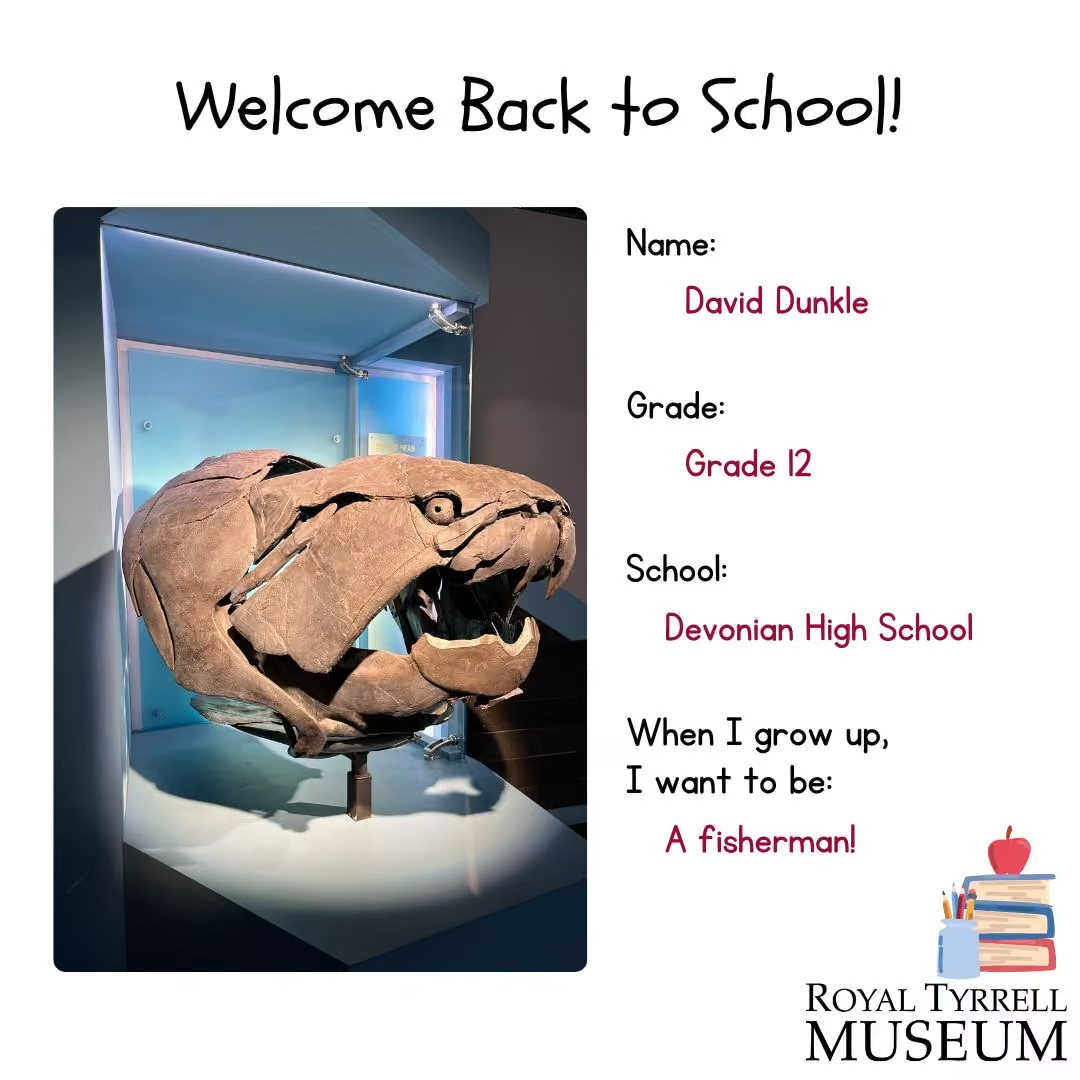
Dunkleosteus was the top predator 365 million years ago. It grew up to 4 m long and weighed as much as a beluga whale. It did not have teeth. Instead, the bones of its jaw formed jagged, self-sharpening razor-like edges that were perfect for cutting prey.
-
Royal Tyrrell Museum of Palaeontology
@RoyalTyrrell
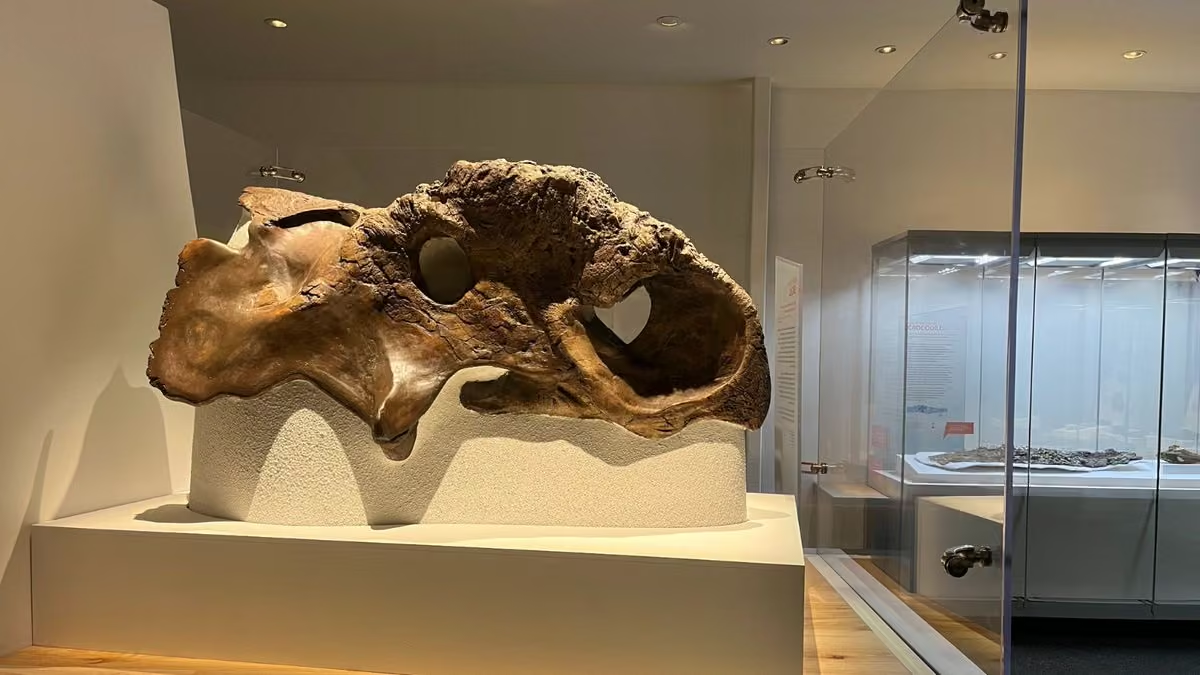
It took our technician Brady about three months to prepare this Euoplocephalus skull. #fossilfriday
This ankylosaur specimen was discovered in Dinosaur Provincial Park. The animal would have lived during the Late Cretaceous. -
Royal Tyrrell Museum of Palaeontology
@RoyalTyrrell
Dr. James Gardner co-authored research analyzing the oldest occurrence of edentulism (lack of teeth) in a North American frog: www.tandfonline.com/doi/full/10.1080/02724634.2024.2399102
This photo depicts jaw bones of a modern bullfrog (above) and a gulf coast toad (below), showing toothed & non-toothed specimens. -
Royal Tyrrell Museum of Palaeontology
@RoyalTyrrell
Kallie Moore, host of @EonsShow, recently visited our Museum! In this photo, Kallie stands next to ‘Calli,’ Canada’s best-preserved and most complete Triceratops skull.
-
Royal Tyrrell Museum of Palaeontology
@RoyalTyrrell
Today is the anniversary of the Museum opening to the public on September 25, 1985. When did you first walk through our doors?
-
Royal Tyrrell Museum of Palaeontology
@RoyalTyrrell
Autumn is the perfect time to visit the Drumheller Valley. The leaves are changing, local attractions are less crowded, and the weather is ideal for exploring the badlands trails. What are you most looking forward to on your next visit to the area?
-
Royal Tyrrell Museum of Palaeontology
@RoyalTyrrell
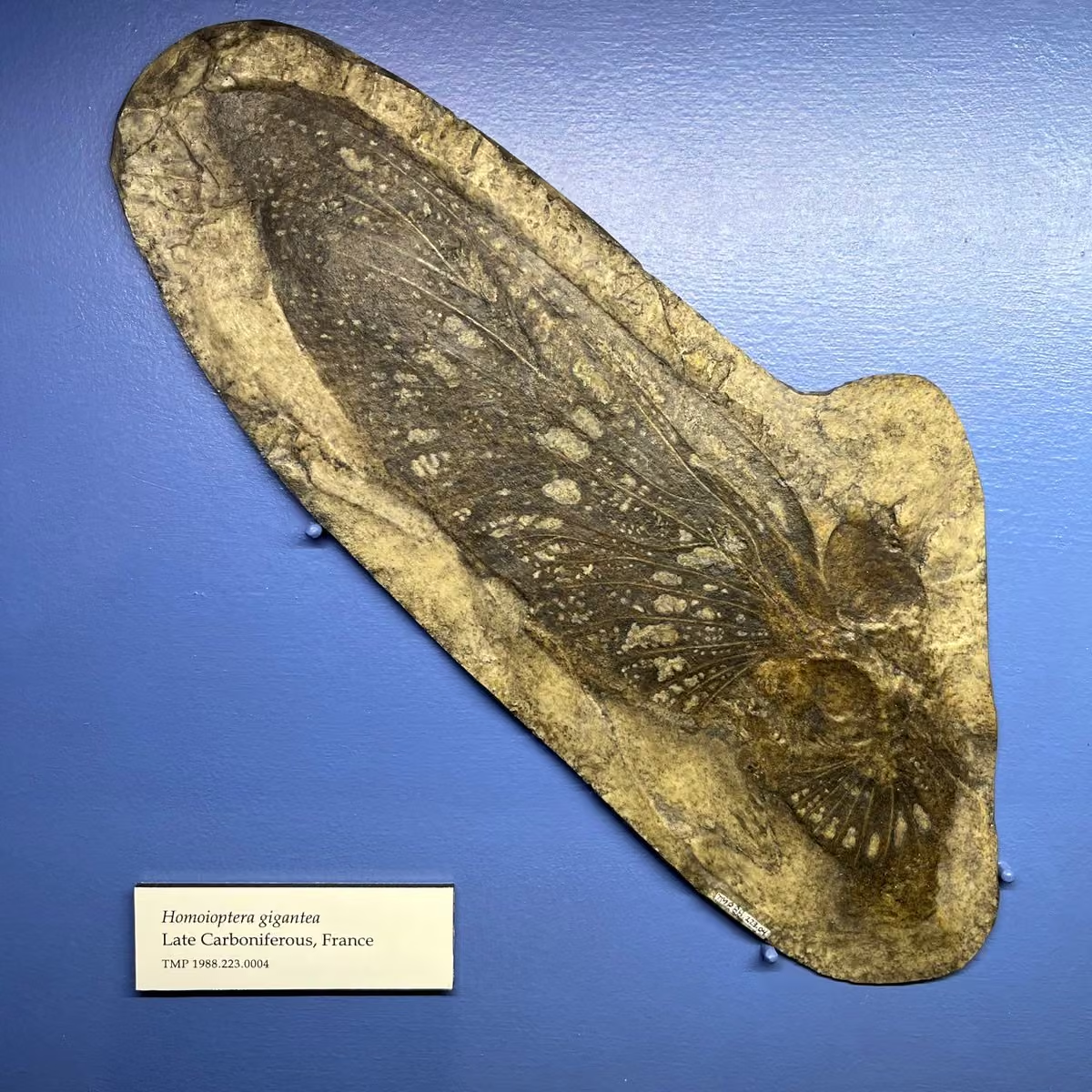
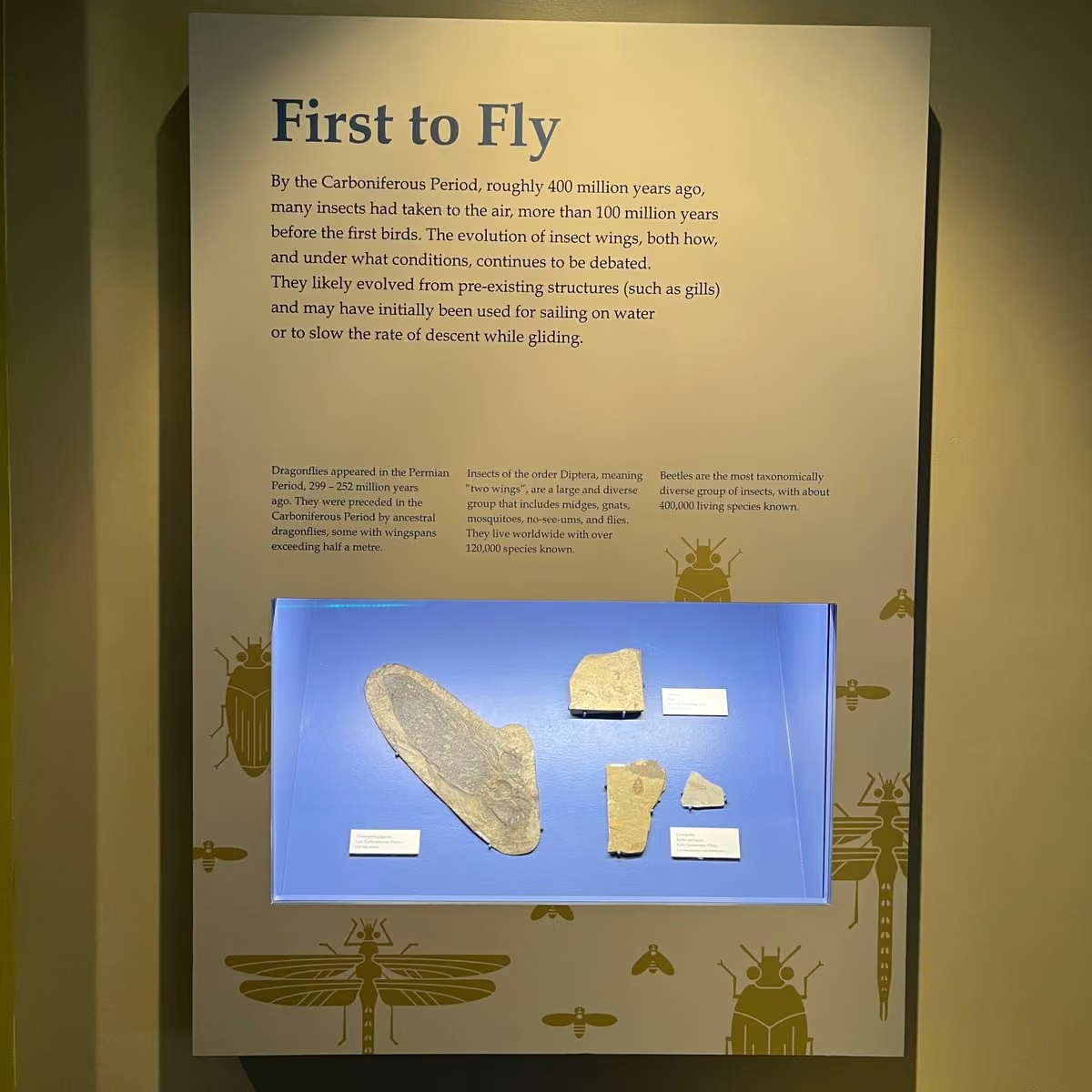
Look at the details preserved in this Homoioptera gigantea specimen!
By the Carboniferous Period, roughly 400 million years ago, many insects had taken to the air, more than 100 million years before the first birds. #galleryglimpse -
Royal Tyrrell Museum of Palaeontology
@RoyalTyrrell
Not far from home, in Dinosaur Provincial Park, our staff made a surprising discovery in 1995. While collecting plant fossils, they found what would become the Most Complete Ornithomimid, featured in the 2022 Guinness World Records book.
-
Royal Tyrrell Museum of Palaeontology
@RoyalTyrrell
Therizinosaurs are arguably one of the strangest groups of dinosaurs. Claws from Therizinosauruscan be up to a metre long! These dinosaurs were likely herbivores. They might have used their claws to forage for food, or for defense. Art © James Kuether.
Royal Tyrrell Museum of Palaeontology
@RoyalTyrrell
This cast comes from a Mongolian dinosaur that stood ~5 metres tall. Can you identify the fossil and the dinosaur? #rtmpfossilchallenge
-
Royal Tyrrell Museum of Palaeontology
@RoyalTyrrell
This cast comes from a Mongolian dinosaur that stood ~5 metres tall. Can you identify the fossil and the dinosaur? #rtmpfossilchallenge
-
Royal Tyrrell Museum of Palaeontology
@RoyalTyrrell
Our Dr. Craig Scott authored a new paper exploring taeniodonts, an unusual group of larger-bodied mammals that lived during the early Cenozoic. This article documents the first evidence of taeniodonts from the Palaeocene epoch of Alberta: www.tandfonline.com/doi/full/10.1080/02724634.2024.237053…
-
Royal Tyrrell Museum of Palaeontology
@RoyalTyrrell
Our newest Perspectives exhibit features the fossil photography of Andre Gogol. Andre recently visited his exhibit at the Museum, and he said, "I’ve been going to the Royal Tyrrell since I was 10 years old, and I’m really excited to invite people to see my work at the Museum.”
-
Royal Tyrrell Museum of Palaeontology
@RoyalTyrrell
Join us on Friday, October 25 for our “Dinosaurs After Dusk” event for adults (18+)! Participants will experience a guided flashlight tour through the galleries, meet the Museum’s scariest specimens, and chat with one of our palaeontologists. Book now: www.tyrrellmuseum.com/whats_on/dinosaurs_after_dusk
-
Royal Tyrrell Museum of Palaeontology
@RoyalTyrrell
Call her the palaeo paparazzi 📷
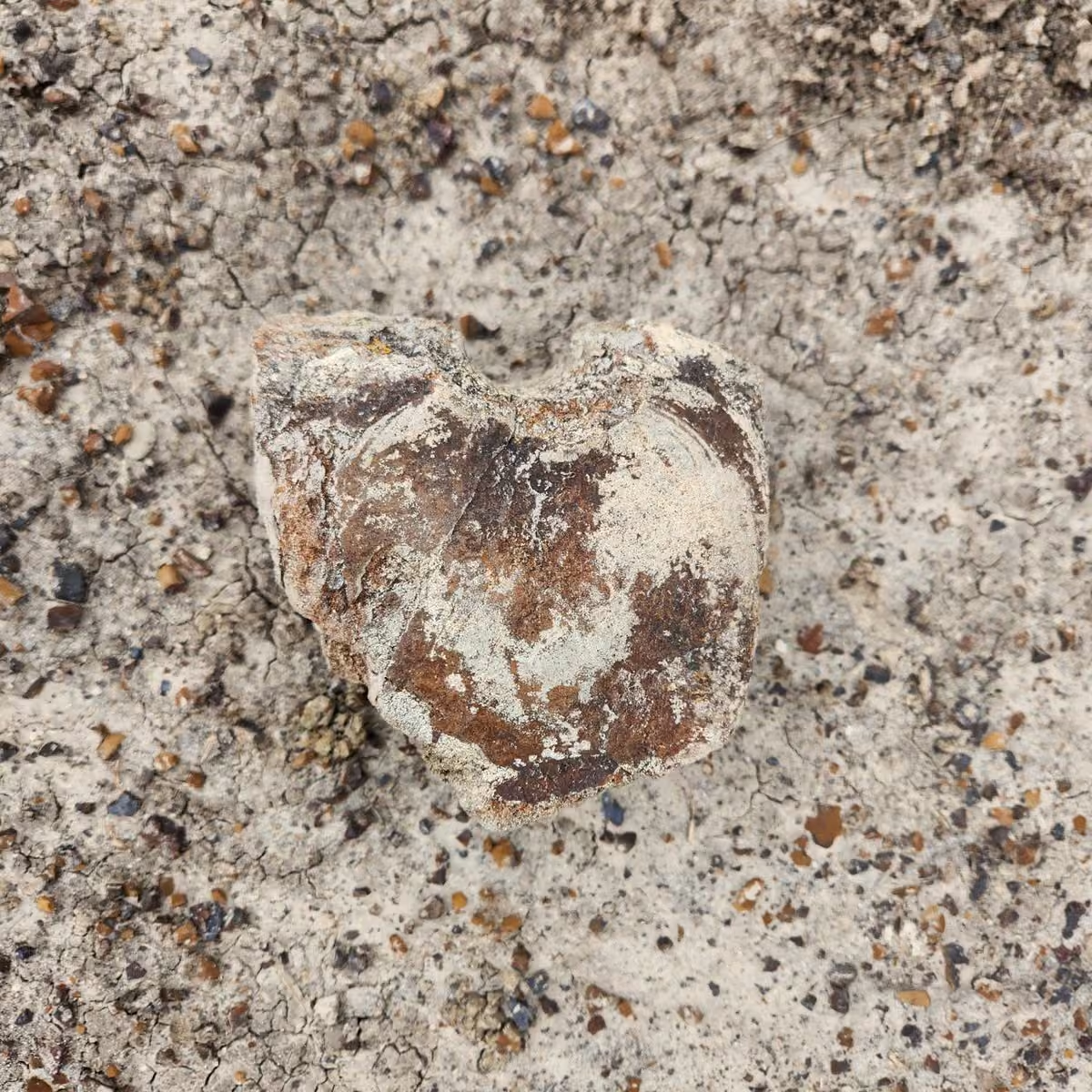
When prepared specimens arrive in Collections, Jill ensures they get photographed for our database. This hadrosaur caudal (tail) vertebra was collected in Horseshoe Canyon as part of an incomplete skeleton in 2023. #behindthescenes #palaeontology -
Royal Tyrrell Museum of Palaeontology
@RoyalTyrrell
📣 Research alert! Our Dr. Donald Henderson published new research on gastroliths (stomach stones) found in four Albertan plesiosaur specimens.
Learn more: peerj.com/articles/17925 -
Royal Tyrrell Museum of Palaeontology
@RoyalTyrrell
This week’s social media posts are courtesy of the Museum’s Collections team! Stay tuned for peeks behind-the-scenes at how our team takes care of the 2 million fossils in our collection.
Meet the team! From left to right: Tom, Becky, Rhian, Jill, Susanne, and Brandon. -
Royal Tyrrell Museum of Palaeontology
@RoyalTyrrell
“Love me some bones.” – Visitors from Yukon and Manitoba
What is your favourite dinosaur? #sundayfunday -
Royal Tyrrell Museum of Palaeontology
@RoyalTyrrell
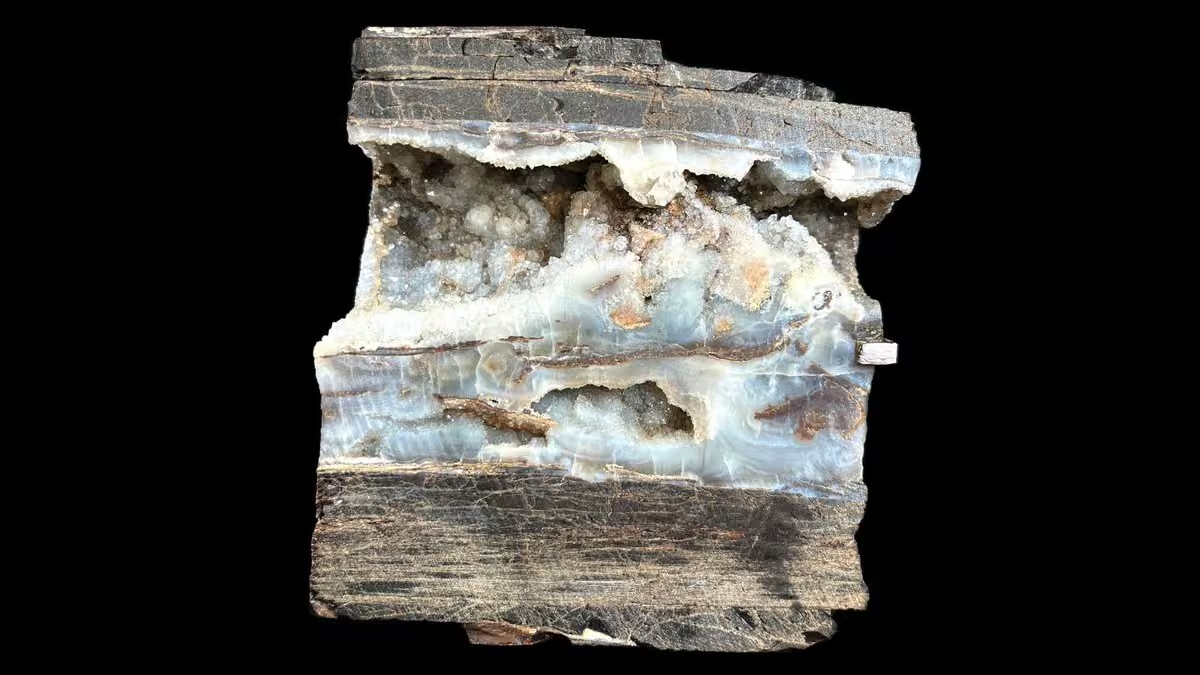
Visitors may recognize Chuck’s friendly face in the galleries or at our Visitor Services desk! Chuck has a long history with the Museum that began when he found a petrified tree stump in 1983 that is still on display in our “Dinosaur Hall” today! #staffspotlight
-
Royal Tyrrell Museum of Palaeontology
@RoyalTyrrell
The cast skull our Collections Assistant Susanne is shown holding belongs to Lestodon armatus, a large ground sloth that lived in South America during the Pleistocene Epoch.
#dyk Lestodon was one of the largest ground sloths, reaching the size of an Asian elephant? -
Royal Tyrrell Museum of Palaeontology
@RoyalTyrrell
Thalassomedon haningtoni was a long-necked plesiosaur that lived 96 million years ago. Elasmosaurs had small heads, and mouths filled with slender pencil-like teeth, well suited to capture prey items like small fishes, ammonites, squid, and sea urchins. #rtmpcollections
-
Royal Tyrrell Museum of Palaeontology
@RoyalTyrrell
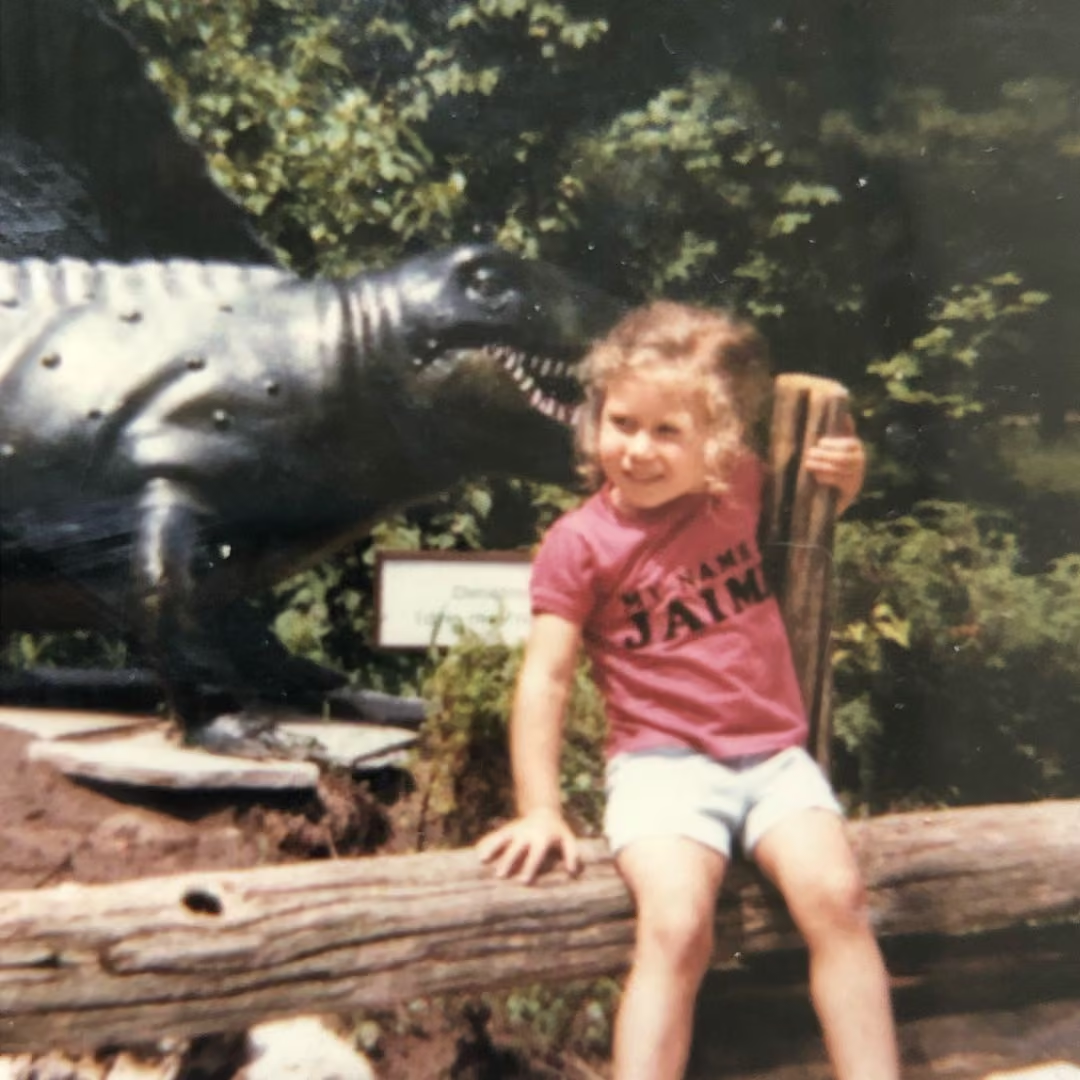
As Visitor Services Team Leader, Jaime welcomes and engages with Museum visitors as soon as they walk through our doors. This year, Jaime is also the project manager for our annual “Fossils in Focus” exhibit that will open in October. #staffspotlight
-
Royal Tyrrell Museum of Palaeontology
@RoyalTyrrell
When you’re in an online meeting and the host tells you to turn your camera on. 😬
📸: This wooden beaver and Mac computer were part of an “Ice Age Mammals” exhibit we hosted during the mid-2000s. That display also included real Mammoth fur! 😮 -
Royal Tyrrell Museum of Palaeontology
@RoyalTyrrell
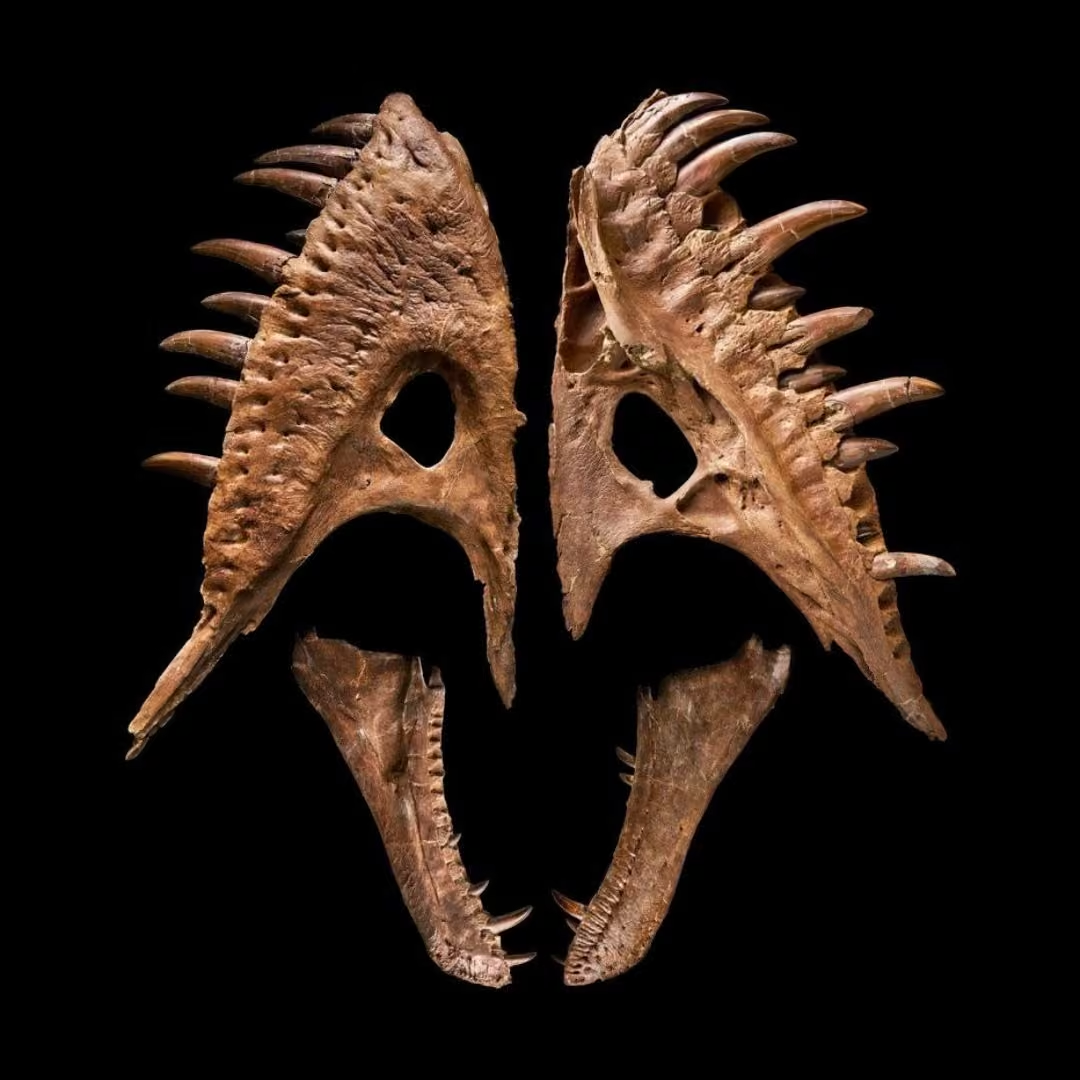
This is the left maxilla (upper jawbone) of Gorgosaurus libratus. It was found in Dinosaur Provincial Park in 1983. Gorgosaurus predated its famous cousin Tyrannosaurus rex by about 8 million years, and Albertosaurus by over 3 million years.
-
Royal Tyrrell Museum of Palaeontology
@RoyalTyrrell
“AWESOME ❤️ ❤️!!!! ❤️❤️” – Visitors from Kensington, PEI
How would you describe our Museum in one word? #sundayfunday -
Royal Tyrrell Museum of Palaeontology
@RoyalTyrrell
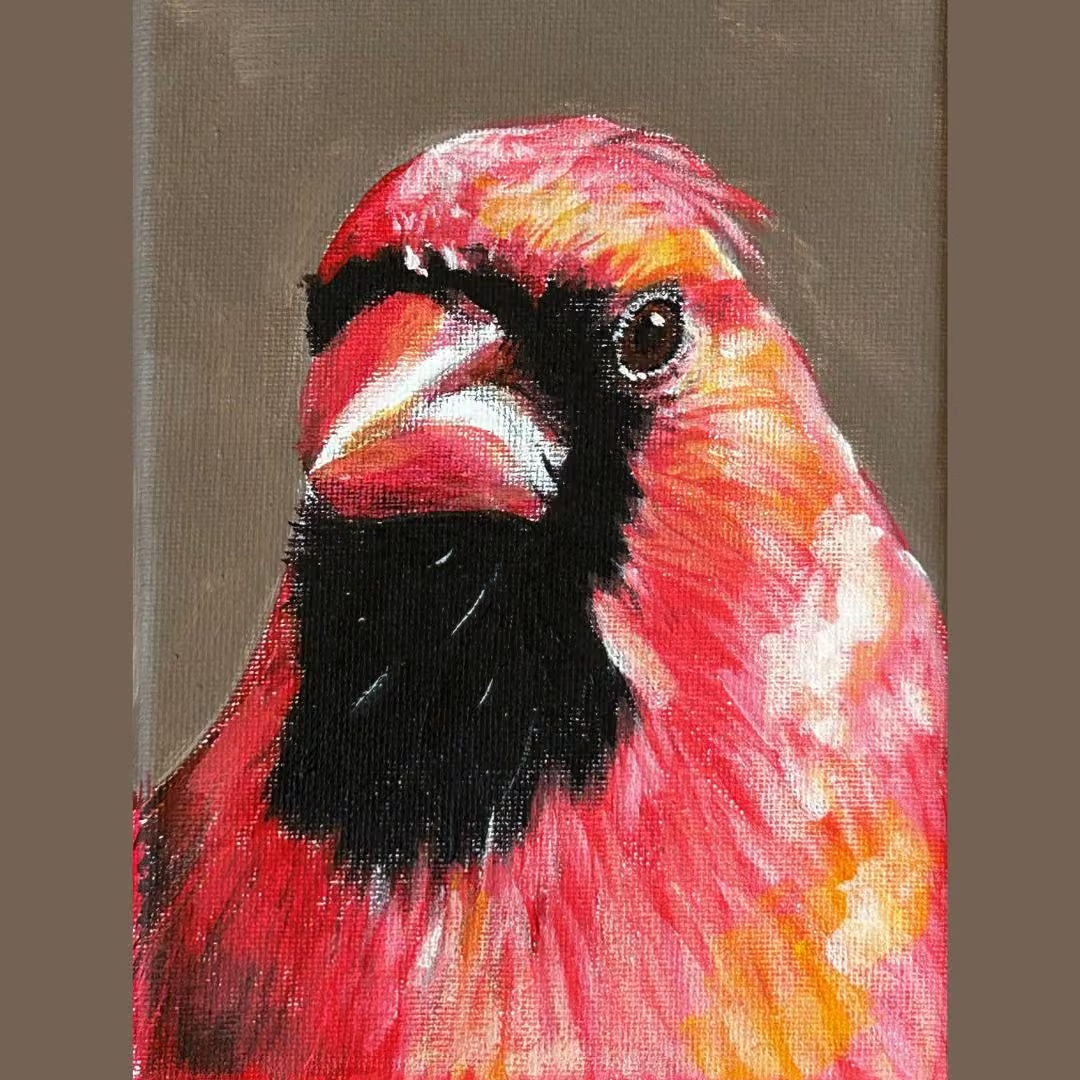
Meet one of our newest Gallery Experience Officers, Kiev. Kiev is currently a student at Drumheller Valley Secondary School. She plans to pursue a career in palaeontology. Outside of work, Kiev plays the cello, paints, and hikes in the badlands.
-
Royal Tyrrell Museum of Palaeontology
@RoyalTyrrell
It’s #nationaltellajokeday. Check out this joke our Curator of Dinosaurs, Dr. Donald Henderson, dug up!
#sobaditsgood #dadjokes #paleojoke #fishandchips -
Royal Tyrrell Museum of Palaeontology
@RoyalTyrrell
Get you a prehistoric creature that can do both 💅
Tiktaalik is known as a “fishapod” because it has a mix of fish and tetrapod features. Like all lobe-finned fishes, it had internal gills as well as rudimentary lungs to survive in both oxygen-rich and oxygen-poor waters. -
Royal Tyrrell Museum of Palaeontology
@RoyalTyrrell
Calling all gardeners! 👒🍃
We’re hiring a temporary horticulturalist to maintain our “Cretaceous Garden,” a living botanical collection that recreates how the Drumheller area might have looked 72 million years ago. Learn more and apply by August 15: jobpostings.alberta.ca/job/DRUMHELLER-Horticulturalist/58… -
Royal Tyrrell Museum of Palaeontology
@RoyalTyrrell
For National Book Lover’s Day, our Gallery Experience Officer John decided to teach “Trevor” the Albertosaurus how to read a book from our Museum Shop.
What is your favourite palaeontology-related book?
#nationalbookloversday #paleobook #dinofiction #naturalhistory -
Royal Tyrrell Museum of Palaeontology
@RoyalTyrrell
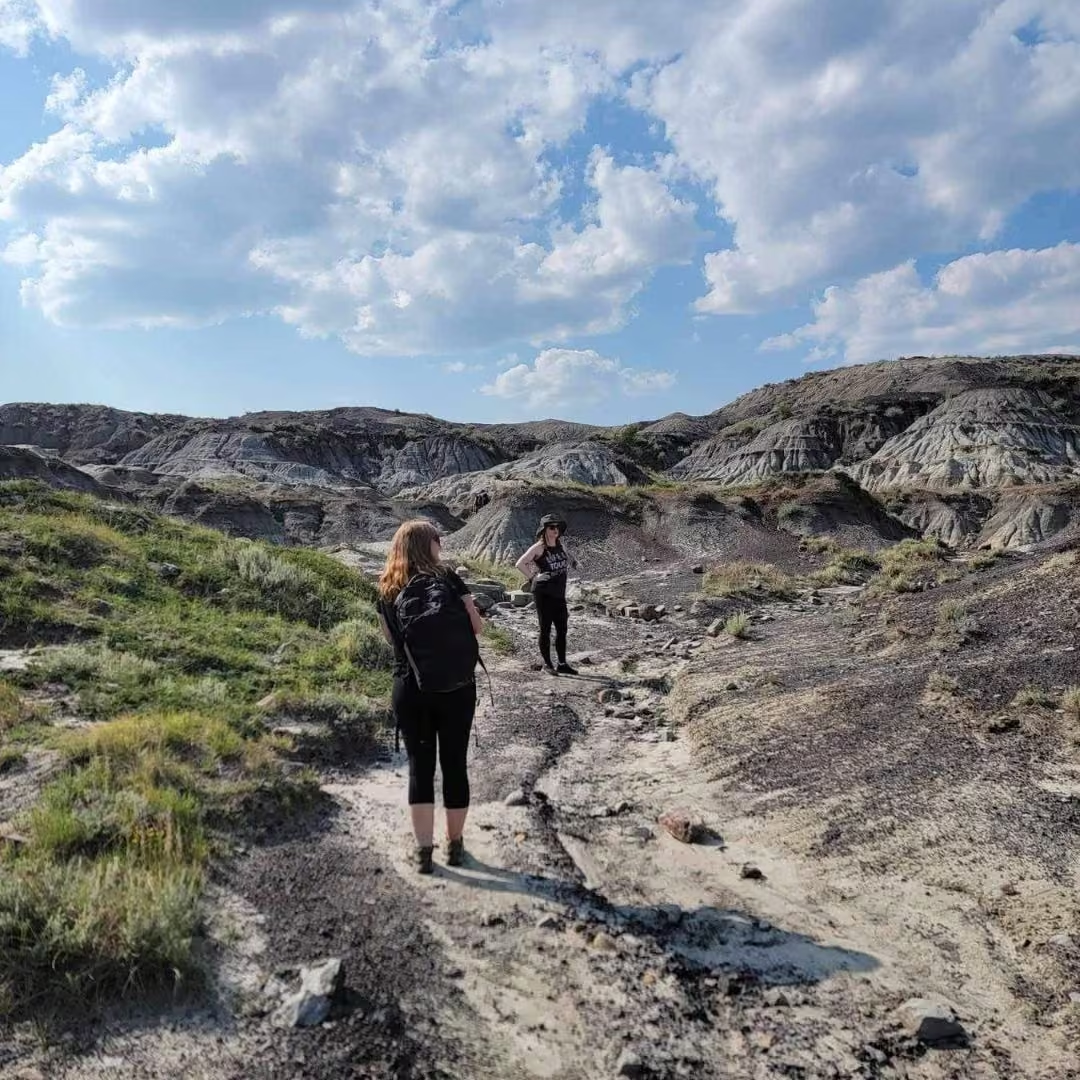
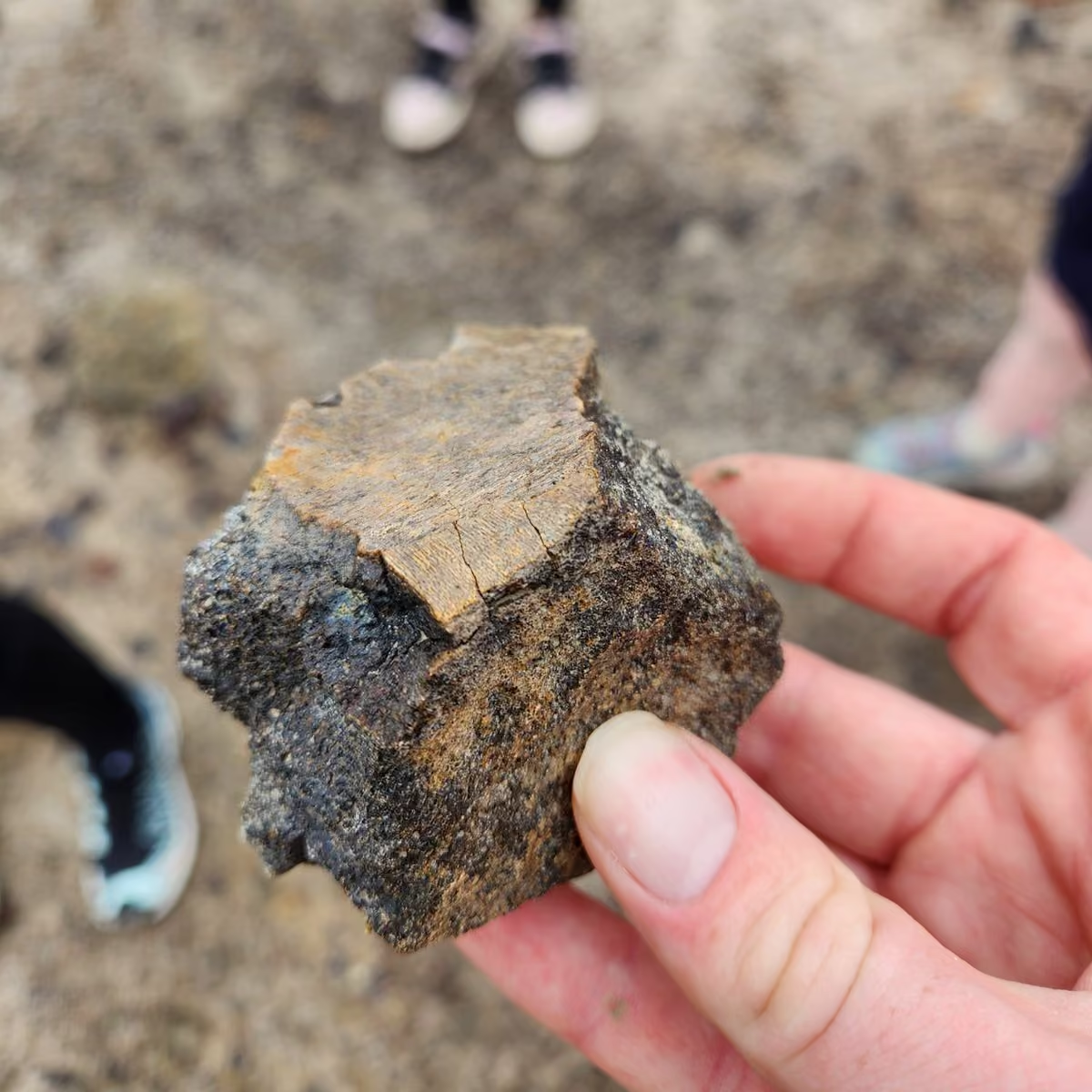
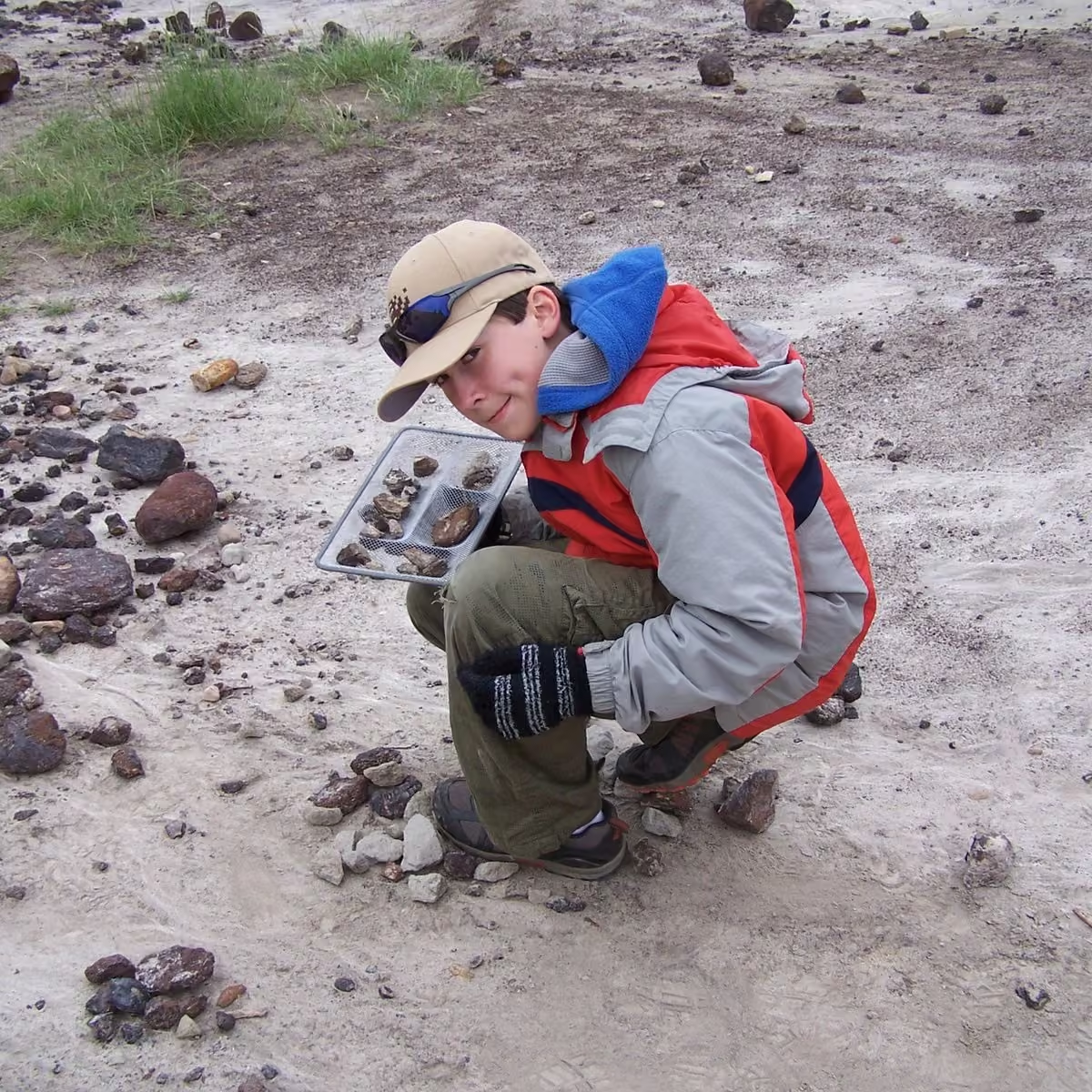
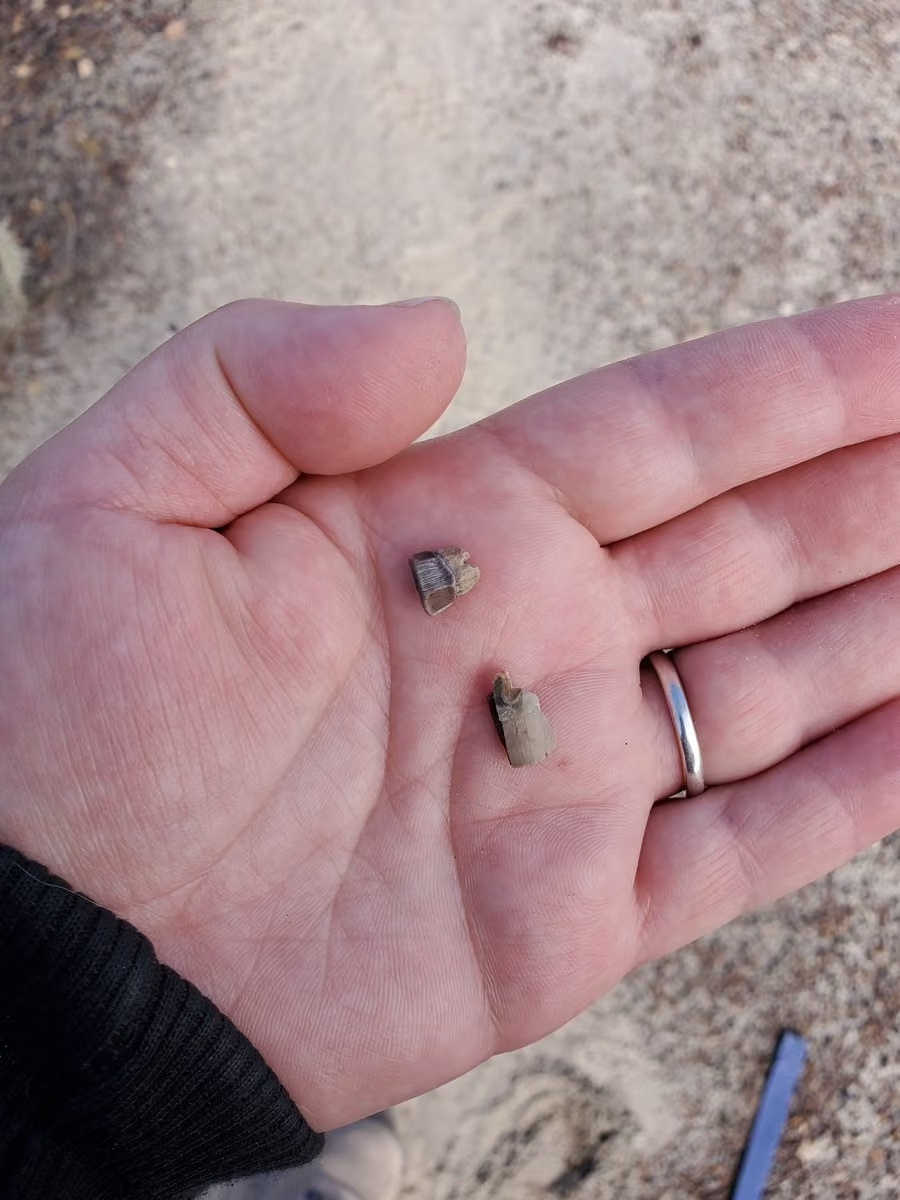
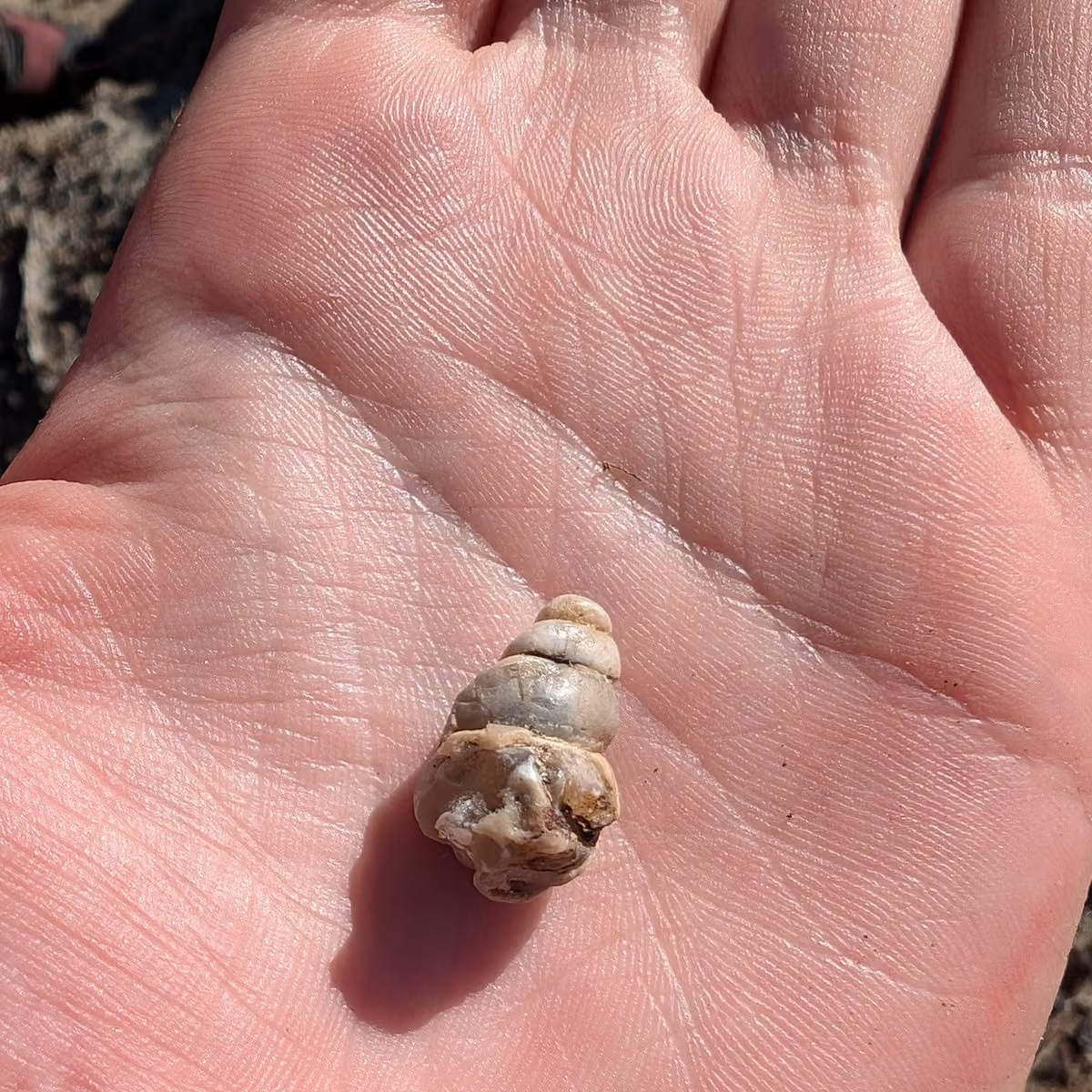
Check out these fossils that participants found while on our Dinosite and Badlands Adult Hike programs. #fossilfinds
Reminder: we are offering programs every day until August 31! Learn more: tyrrellmuseum.com/whats_on/activities -
Royal Tyrrell Museum of Palaeontology
@RoyalTyrrell
Max Scott from the University of Manitoba is visiting our Collections to examine mosasaur cranial (skull) pathologies. He’s interested in studying the source of these injuries to determine whether they might have been caused by other mosasaurs.
#palaeontology #pathology -
Royal Tyrrell Museum of Palaeontology
@RoyalTyrrell
Champsosaurs are a group of extinct semi-aquatic, crocodile-like reptiles, distantly related to birds and crocodiles. The champsosaur fossil that accompanies this diorama was found in Olds, Alberta. #texturetuesday
Royal Tyrrell Museum of Palaeontology
@RoyalTyrrell
Do you recognize this #texturetuesday object? Hint: this reconstruction is on display in our “Cenozoic Gallery.”
-
Royal Tyrrell Museum of Palaeontology
@RoyalTyrrell
Do you recognize this #texturetuesday object? Hint: this reconstruction is on display in our “Cenozoic Gallery.”
-
Royal Tyrrell Museum of Palaeontology
@RoyalTyrrell
Meet Kano, one of our seasonal preparation technicians. Kano’s work involves preparing fossils, interacting with visitors at our Preparation Table in the Museum’s galleries, and excavating fossils in the field. #staffspotlight
-
Royal Tyrrell Museum of Palaeontology
@RoyalTyrrell
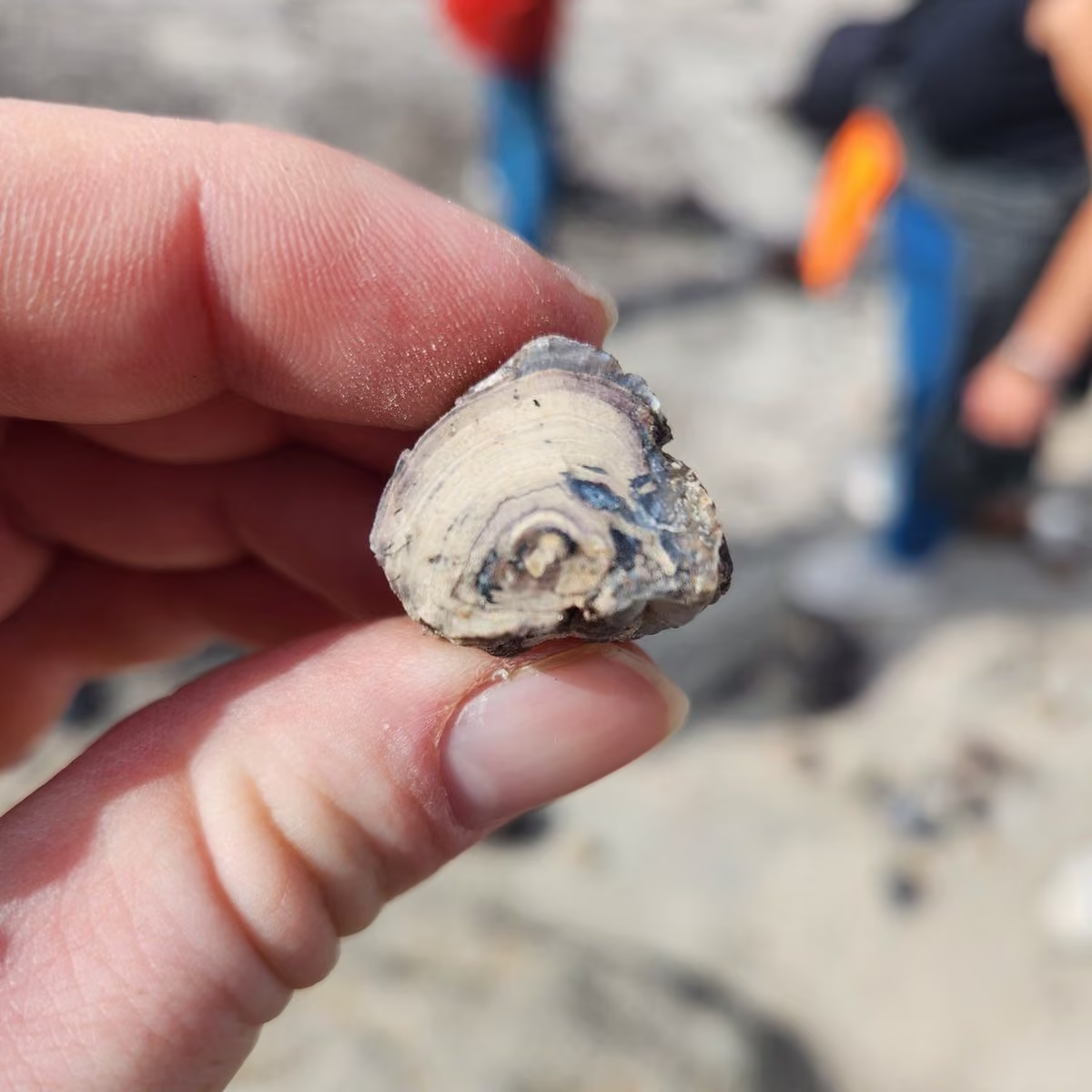
These fossilized circular vertebrae belong to Squalicorax microserratodon. This Late Cretaceous shark was found in Kansas. #dyk that similar to tree rings, fossil vertebrae like these show lines of growth than can be counted—enabling an estimate of the animal’s age?
Royal Tyrrell Museum of Palaeontology
@RoyalTyrrell
Can you guess what type of animal these fossils came from? Hint: it’s a marine animal. #rtmpfossilchallenge #fossilfriday
-
Royal Tyrrell Museum of Palaeontology
@RoyalTyrrell
Can you guess what type of animal these fossils came from? Hint: it’s a marine animal. #rtmpfossilchallenge #fossilfriday
-
Royal Tyrrell Museum of Palaeontology
@RoyalTyrrell
One of the ways we combat pests in our “Cretaceous Garden” is by releasing ladybugs! They are natural predators of aphids. Check out these photos our co-worker Angie took, and swipe to the end for a surprise 🐸
-
Royal Tyrrell Museum of Palaeontology
@RoyalTyrrell
Dr. Christine Sosiak recently visited from the Okinawa Institute of Science and Technology (Japan)! Christine is interested in learning how insect communities were changing in the Cretaceous and early Cenozoic. #rtmpcollections
-
Royal Tyrrell Museum of Palaeontology
@RoyalTyrrell
Meet Aidan, one of our Preparation Technicians!
Aidan has been interested in palaeontology since the age of 2. He first visited the Royal Tyrrell Museum at 11 years old. Outside of work, Aidan enjoys painting miniatures, and playing tabletop games and Dungeons and Dragons. -
Royal Tyrrell Museum of Palaeontology
@RoyalTyrrell
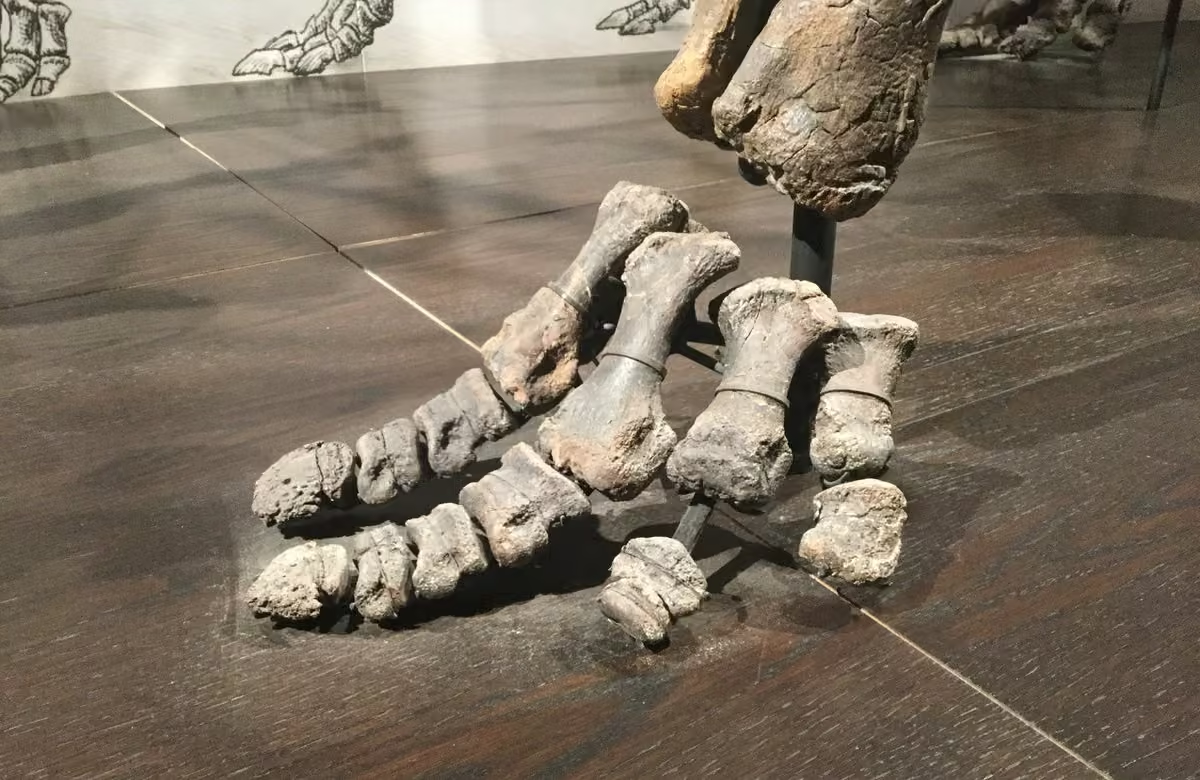
The paddles of plesiosaurs are made of many round and cylinder-shaped limb and finger bones. This paddle belongs to the Cretaceous plesiosaur Albertonectes vanderveldei, recognized for having the Longest Neck Ever (based on the number of vertebrae). #fossilfriday
Royal Tyrrell Museum of Palaeontology
@RoyalTyrrell
These oddly shaped bones belong to one of our specimens that was featured in the Guinness World Records book. Do you know what they are? #rtmpfossilchallenge #fossilfriday
-
Royal Tyrrell Museum of Palaeontology
@RoyalTyrrell
These oddly shaped bones belong to one of our specimens that was featured in the Guinness World Records book. Do you know what they are? #rtmpfossilchallenge #fossilfriday
-
Royal Tyrrell Museum of Palaeontology
@RoyalTyrrell
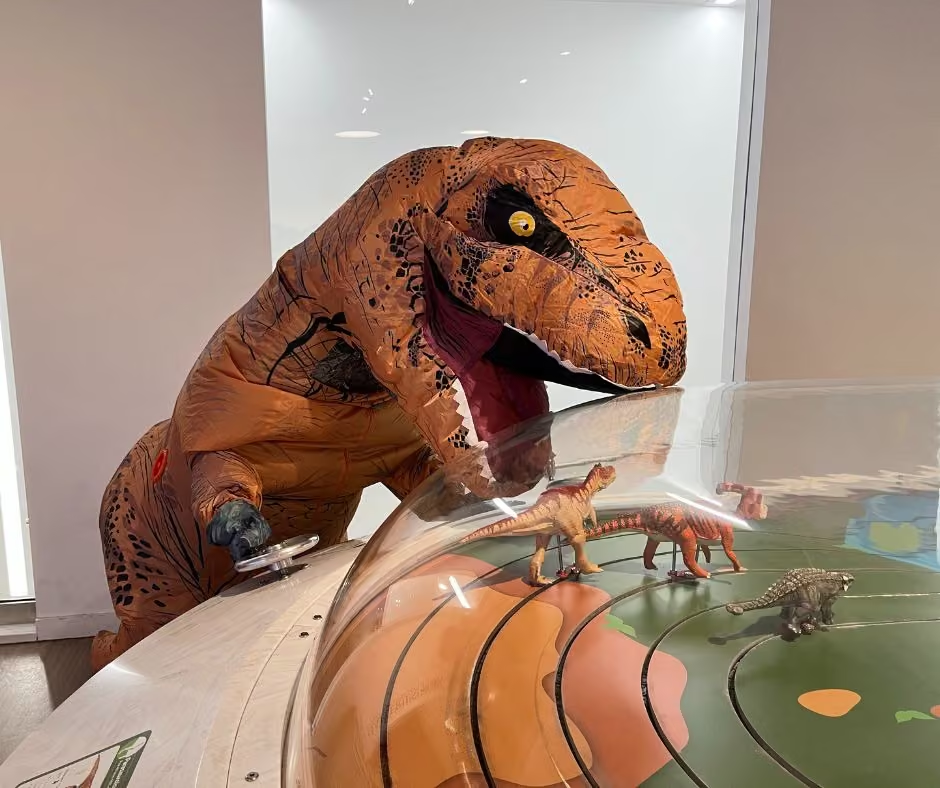
You can use the interactive display in our Learning Lounge to ‘hunt’ as an Albertosaurus roughly 72 – 68 million years ago. Swipe to see the details! #texturetuesday
Royal Tyrrell Museum of Palaeontology
@RoyalTyrrell
Welcome to our new #texturetuesday series 🔎
Can you recognize the reconstruction shown in this close-up photo? -
Royal Tyrrell Museum of Palaeontology
@RoyalTyrrell
Welcome to our new #texturetuesday series 🔎
Can you recognize the reconstruction shown in this close-up photo? -
Royal Tyrrell Museum of Palaeontology
@RoyalTyrrell
Take part in our programs and you may meet our Seasonal Educator Ben! Ben loves sharing his passion for the ancient world and inspiring future generations to pursue palaeontology.
Outside of work, Ben enjoys creating palaeoart and learning more about the prehistoric past. -
Royal Tyrrell Museum of Palaeontology
@RoyalTyrrell
Isotelus gigas is a large-bodied trilobite. Trilobites are extinct marine arthropods that lived from the Early Cambrian to the Permian Period. Although this specimen is not as large as its relative Isotelus rex, it could still grow to be more than 40 cm long. #rtmpfossilchallenge
Royal Tyrrell Museum of Palaeontology
@RoyalTyrrell
This specimen was found near Colborne, Ontario, and it dates back to the Ordovician Period. Can you name this week’s #rtmpfossilchallenge? #fossilfriday
-
Royal Tyrrell Museum of Palaeontology
@RoyalTyrrell
This specimen was found near Colborne, Ontario, and it dates back to the Ordovician Period. Can you name this week’s #rtmpfossilchallenge? #fossilfriday
-
Royal Tyrrell Museum of Palaeontology
@RoyalTyrrell
Our Badlands Science Camp brings in children from across Canada, including this family located 1,500 miles away. When their flights unexpectedly cancelled, they decided on a last-minute road trip to make it in time. Check out this Drumheller Mail story: www.drumhellermail.com/news/36441-1-500-mile-road-trip-to…
-
Royal Tyrrell Museum of Palaeontology
@RoyalTyrrell
Nichollsemys baieri is the best-preserved skull of any Campanian sea turtle, and it includes some soft tissue preservation. New research co-authored by our Dr. Donald Brinkman re-describes this holotype using CT scanning: sjpp.springeropen.com/articles/10.1186/s13358-024-00323-8
-
Royal Tyrrell Museum of Palaeontology
@RoyalTyrrell
“The Preparation Lab was inspiring. Loved reading the stories of how some of the fossils were discovered!” – Visitors from Spokane, Washington
Museum visitors often leave reviews and feedback about their experiences. We love hearing from visitors! Tell us your favourite exhibit. -
Royal Tyrrell Museum of Palaeontology
@RoyalTyrrell
Say hello to Senia 👋
Senia works in our Museum Shop, helping visitors with their purchases. Outside of work, Senia is an artist who focuses on drawing and painting, although she also enjoys pottery, linocut reduction, and soapstone carving. #staffspotlight -
Royal Tyrrell Museum of Palaeontology
@RoyalTyrrell
Jennifer Brennan recently visited our Collections to examine pachycephalosaur fossils. Jennifer is 3D-scanning many specimens to continue studying once she returns to Washington, DC, where she’s pursuing a Ph.D. at George Washington University. #rtmpcollections
-
Royal Tyrrell Museum of Palaeontology
@RoyalTyrrell
Have you ever wanted to become more involved with the Museum? When you join us as a member, your support helps fund the Museum’s exciting research and fieldwork, innovative exhibits, and award-winning educational programs. Learn more: tyrrellmuseum.com/about/join_support
-
Royal Tyrrell Museum of Palaeontology
@RoyalTyrrell
As a seasonal science educator, Jamie loves helping people connect to the world. #staffspotlight
Outside of work, Jamie builds model kits, sews, draws, and has created props for use in our educational programs. -
Royal Tyrrell Museum of Palaeontology
@RoyalTyrrell
Look at the intricate details on these specimens 👀 #fossilfriday
Trilobites are extinct marine arthropods that lived ~520 – 252 million years ago. Did you know 22,000+ species of trilobites have been described? Horseshoe crabs are considered their living relatives. -
Royal Tyrrell Museum of Palaeontology
@RoyalTyrrell
Some of these youngsters could be future palaeontologists! 🦴
Our first Junior Badlands Science Camp of 2024 finishes today. These campers spent the past few days prospecting for fossils, touring behind the scenes at the Museum, and getting some hands-on experience with fossils. -
Royal Tyrrell Museum of Palaeontology
@RoyalTyrrell
We are thrilled to announce that the Royal Tyrrell Museum has been designated a Recognized Museum Leader by @AlbertaMuseums! 🏛
Royal Tyrrell Museum of Palaeontology
@RoyalTyrrell
This appointment demonstrates our long-term commitment to going above and beyond to maintain best practice standards for museums. When you visit our museum, we strive to offer a memorable experience that not only brings the past to life, but also creates lifelong memories.
-
Royal Tyrrell Museum of Palaeontology
@RoyalTyrrell
In scientific articles describing a new species, researchers explain the meaning behind each new fossil’s name. Did you know the Museum has 400+ fossils in our Collections with “canadensis” in the name? This skull of Brachylophosaurus canadensis was found in Milk River, Alberta.
-
Royal Tyrrell Museum of Palaeontology
@RoyalTyrrell
Gunnar recently visited the Museum with his family. He had many thoughts about meeting dinosaurs! 🦖🦕
Do you remember your first visit to the Museum?
Photo courtesy of Hannah Boness. -
Royal Tyrrell Museum of Palaeontology
@RoyalTyrrell
Valerie Given, Visitor Services Team Leader, provides support to our team and welcomes visitors to the Museum. #staffspotlight
Valerie is a Mi’kmaq Metis woman, with a degree in Archaeology. Outside of work, Valerie spends time on her beadwork and sews dresses for her daughter. -
Royal Tyrrell Museum of Palaeontology
@RoyalTyrrell
Although the model is anatomically correct, scientists have since determined that dromaeosaurs were fully feathered. This more recent illustration by Julius Csotonyi offers insight into what these theropods might have looked like.
-
Royal Tyrrell Museum of Palaeontology
@RoyalTyrrell
Talk about a glow up ✨
This image shows an older sculpture of a dromaeosaur. These small (~2m long) predators are known for the large, sickle-shaped claw on each foot that might have been used to disembowel prey. #fossilfriday -
Royal Tyrrell Museum of Palaeontology
@RoyalTyrrell
Discover the photography of Andre Gogol in our new “Perspectives” exhibit. This stunning series features specimens from the Royal Tyrrell Museum’s Collection.
Learn about this exhibit and Andre’s photography on our blog: royaltyrrellmuseum.wpcomstaging.com/2024/06/27/perspectiv… -
Royal Tyrrell Museum of Palaeontology
@RoyalTyrrell
Beth is one of the Museum’s preparation technicians. Beth’s work involves preparing fossils, creating and painting casts, and helping excavate fossils in the field.
Outside of work, Beth enjoys playing video games and making art. -
Royal Tyrrell Museum of Palaeontology
@RoyalTyrrell
Today is National Indigenous Peoples Day. Our colleagues at the Royal Alberta Museum (@RoyalAlberta) have compiled an Indigenous History Resource List: royalalbertamuseum.ca/blog/indigenous-history-resource-list
-
Royal Tyrrell Museum of Palaeontology
@RoyalTyrrell
Summer in the badlands can often reach 30+ degrees Celsius. Visitors exploring the interpretive trails outside the Museum should come prepared. Forgot your cap? Don’t sweat it! Our Museum Shop has you covered with lots of hat options.
Shop yours: www.tyrrellmuseumshop.com -
Royal Tyrrell Museum of Palaeontology
@RoyalTyrrell
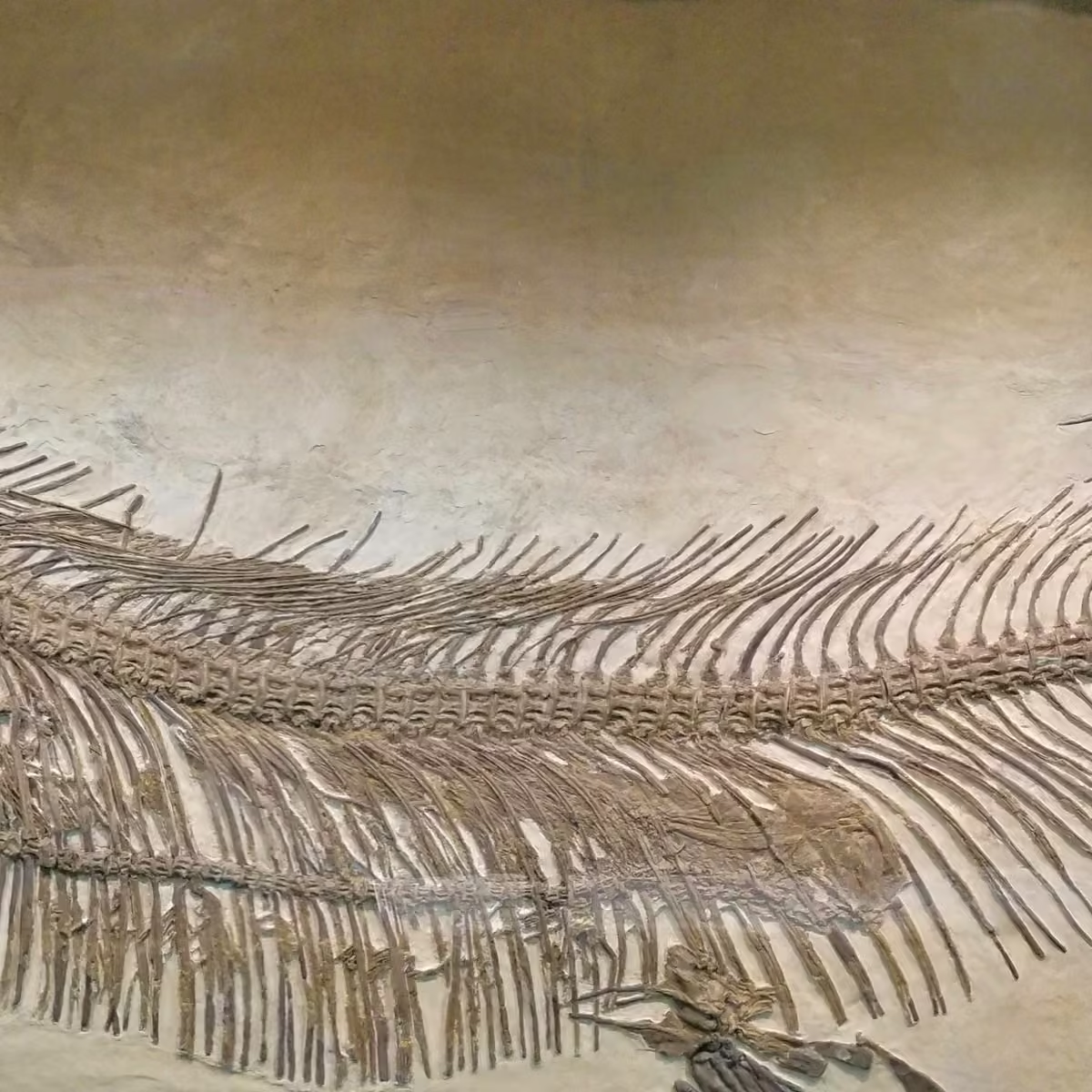
Tom’s catch of the week 🐟
This fish lived during the Triassic in what is now Wapiti Lake, BC. It belonged to the family Parasemionotiform, which is at the base of the lineage that includes most of the living bony fishes. -
Royal Tyrrell Museum of Palaeontology
@RoyalTyrrell
Congratulations/félicitations @AlfredLemierre 🎉
We look forward to working with you!
Alfred Lemierre
@AlfredLemierre
C'est officiel, je serais le prochain postdoctorant au Royal Tyrrell Museum ! Début pour l'automne ^^
-
Royal Tyrrell Museum of Palaeontology
@RoyalTyrrell
Cool job alert! ⬇️
We are hiring a Curator of Fossil Marine Reptiles to join our research team. If you have a master’s degree and at least two years of related experience, this could be the role for you. Apply by June 26: jobpostings.alberta.ca/job/DRUMHELLER-Curator-of-Fossil-M… -
Royal Tyrrell Museum of Palaeontology
@RoyalTyrrell
To all the fathers and father figures we look up to—Happy Father’s Day!
-
Royal Tyrrell Museum of Palaeontology
@RoyalTyrrell
Meet Tomas, our Junior Exhibit Designer. Tomas’s work involves creating displays, photography, and working with our design team. Outside of work, Tomas volunteers with the Badlands Trail Society and can be found cycling around the scenic Drumheller Valley. #staffspotlight
-
Royal Tyrrell Museum of Palaeontology
@RoyalTyrrell
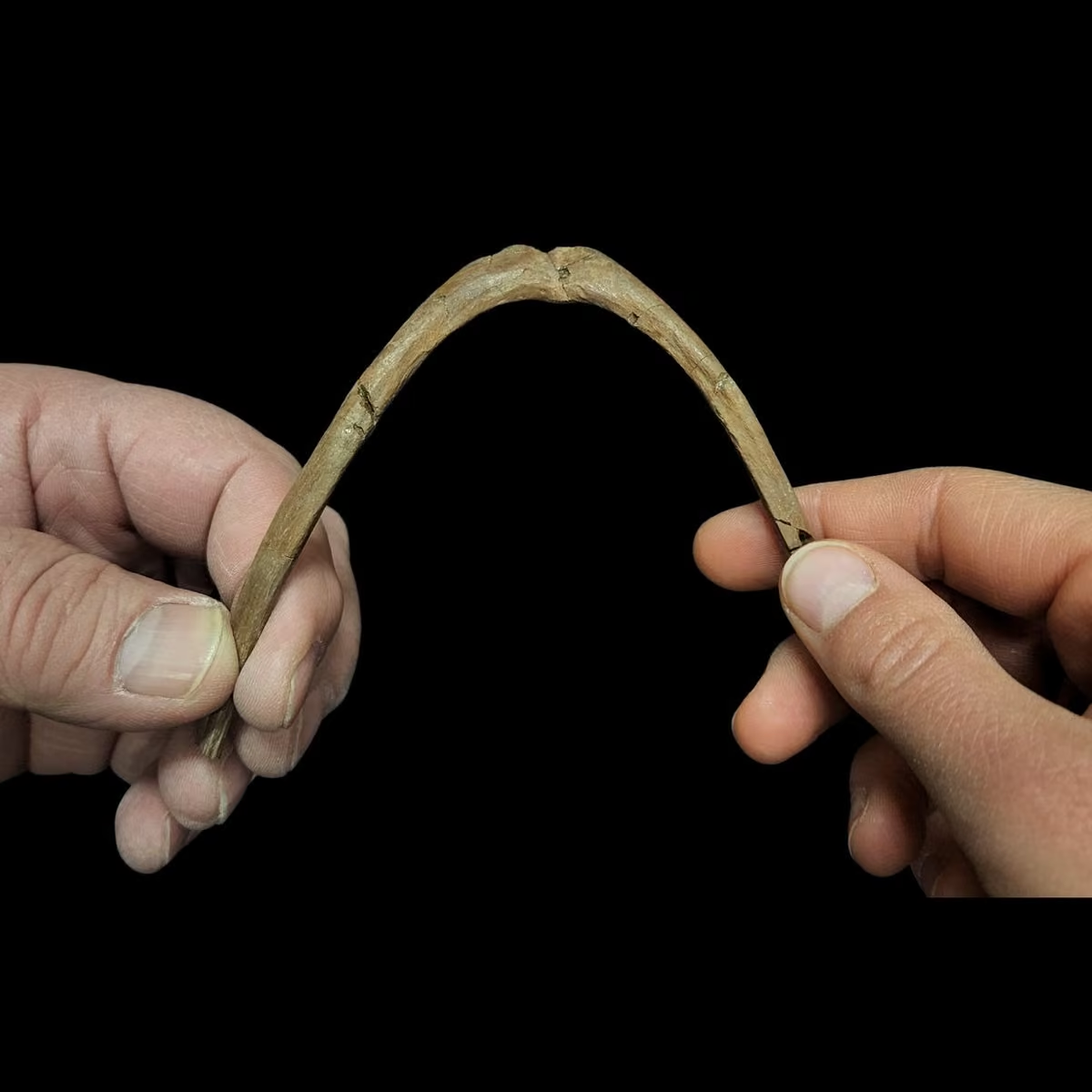
Furculae are specialized bones in some birds and theropod dinosaurs that developed from fusion of the collarbones. In modern birds, the furcula (wishbone) likely developed as an attachment site for flight muscles. In non-avian theropods, it helped stabilize the shoulder girdle.
Royal Tyrrell Museum of Palaeontology
@RoyalTyrrell
Can you identify this fossil for our #rtmpfossilchallenge? Hint: it’s one clue that dinosaurs and modern-day birds are related. #fossilfriday
-
Royal Tyrrell Museum of Palaeontology
@RoyalTyrrell
Can you identify this fossil for our #rtmpfossilchallenge? Hint: it’s one clue that dinosaurs and modern-day birds are related. #fossilfriday
-
Royal Tyrrell Museum of Palaeontology
@RoyalTyrrell
Some marine reptiles such as mosasaurs fed on ammonites. This ammonite shell was preserved with bite marks from a mosasaur embedded in it.
This specimen was collected south of Lethbridge, Alberta. -
Royal Tyrrell Museum of Palaeontology
@RoyalTyrrell
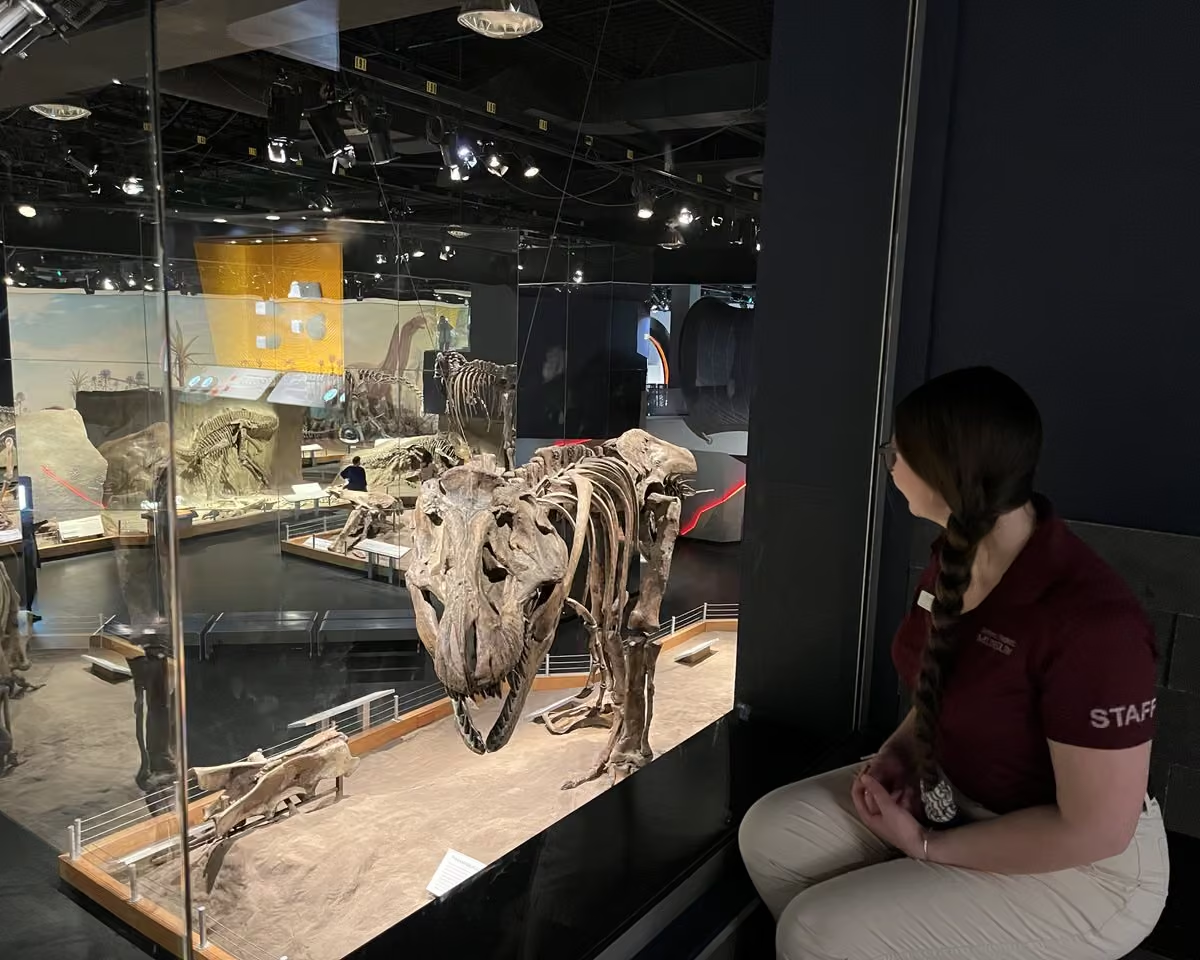
The “First Life” exhibit offers visitors a new vantage point overlooking our “Dinosaur Hall,” with improved accessibility for wheelchair users and small children. You can sit face-to-face with our ‘Huxley’ T. rex, the first T. rex that was found in Canada! #tyrannosaurtuesday
-
Royal Tyrrell Museum of Palaeontology
@RoyalTyrrell
Fossils found near the Museum 🦴
Museum educators lead groups around the badlands for our Dinosite and Badlands Adult Hike programs. The photos show some of the finds documented by participants. Can you identify any of these fossils? Comment below! -
Royal Tyrrell Museum of Palaeontology
@RoyalTyrrell
Well known Canadian natural history illustrator Julius Csotonyi recently paid us a visit! In the past decade, he has created many scientifically inspired illustrations for the Royal Tyrrell Museum. Which artwork is your favourite?
-
Royal Tyrrell Museum of Palaeontology
@RoyalTyrrell
This little sea star lived during the Late Cretaceous of Alberta. It was named Tethyaster albertensis in 1990. Few sea star fossils from the Cretaceous Period have been discovered in North America, making this specimen unique.
#watermw #museumweek2024 #worldoceansday -
Royal Tyrrell Museum of Palaeontology
@RoyalTyrrell
Planning summer adventures? A new @NatGeo article featuring our Dr. Caleb Brown recommends travelling to Alberta’s badlands and visiting the Royal Tyrrell Museum for “one of the world’s largest, most comprehensive dinosaur exhibits”
Learn more: www.nationalgeographic.com/travel/article/experience-cana… @JaymeMoye -
Royal Tyrrell Museum of Palaeontology
@RoyalTyrrell
Our next adult (18+) gathering, “Bones & Brews: Ask an Expert,” features an engaging dinosaur presentation by Dr. Caleb Brown, the Museum’s Curator of Dinosaur Systematics & Evolution. Join us for an evening of fossils, food, and fun!
Register now: tyrrellmuseum.com/whats_on/bones_brews -
Royal Tyrrell Museum of Palaeontology
@RoyalTyrrell
Did you know that modern birds are dinosaurs?
Although non-avian dinosaurs disappeared with the end-Cretaceous extinction, some avian dinosaurs survived. Birds are a kind of theropod, making theropods the only group of dinosaurs that is not completely extinct. #biodiversitymw -
Royal Tyrrell Museum of Palaeontology
@RoyalTyrrell
Seniors (65+) can enjoy free admission to the Royal Tyrrell Museum during Seniors’ Week, June 3–9. Book now! tyrrellmuseum.com/visit/hours_admission
-
Royal Tyrrell Museum of Palaeontology
@RoyalTyrrell
Celebrate Pride Month with our Ally-saurus! 🦖🏳️🌈 #pride2024
-
Royal Tyrrell Museum of Palaeontology
@RoyalTyrrell
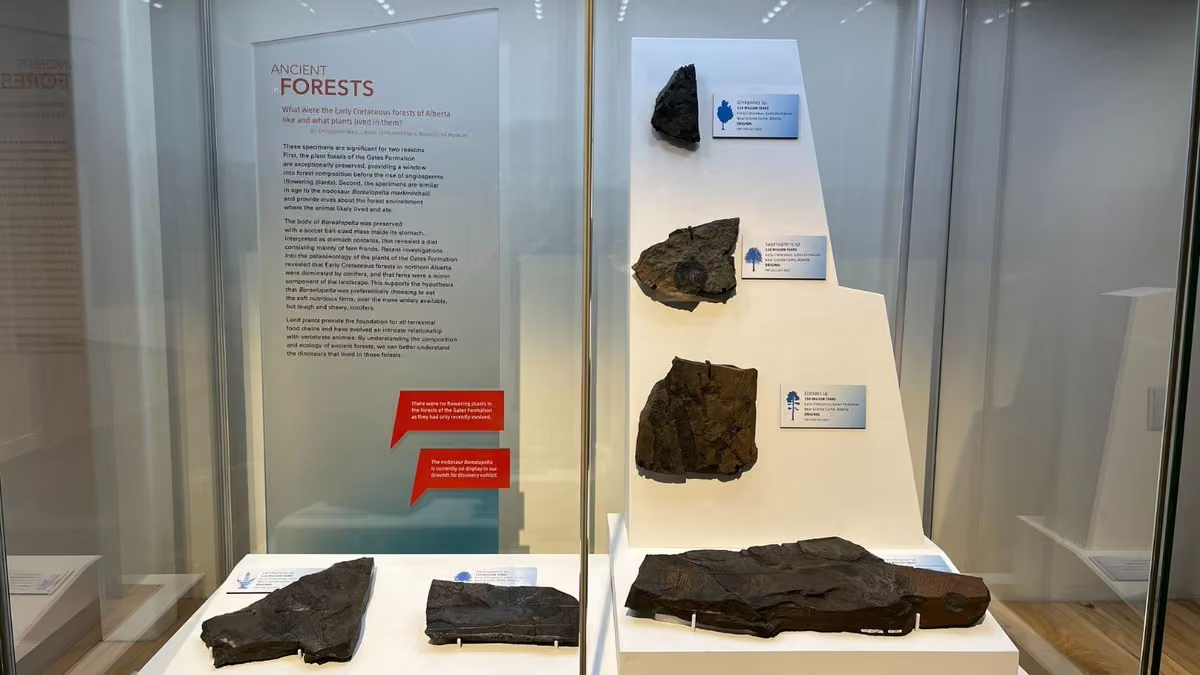
Have you met Borealopelta markmitchelli yet?
This nodosaur has been recognized as the best-preserved armoured dinosaur by @GWR! This specimen is preserved three-dimensionally, complete with skin and body armour. You can find it on display in our “Grounds for Discovery” exhibit. -
Royal Tyrrell Museum of Palaeontology
@RoyalTyrrell
The vast majority of dinosaurs found in Canada are from Alberta, including the tyrannosaur Daspletosaurus. Charles Sternberg first discovered Daspletosaurus in 1921, but at the time, he believed it was a Gorgosaurus specimen.
Royal Tyrrell Museum of Palaeontology
@RoyalTyrrell
Later research published by Dale Russell scientifically named Daspletosaurus in 1970. Daspletosaurus lived in Alberta ~77 – 75 million years ago. Art by Julius Csotonyi.
-
Royal Tyrrell Museum of Palaeontology
@RoyalTyrrell
#dyk Albertosaurus, like birds, had lungs and air sacs that ensured the separation of oxygen-rich and oxygen-poor air? Whether it inhaled or exhaled, Albertosaurus always had fresh air flowing through its lungs in what is known as unidirectional breathing. #tyrannosaurtuesday
-
Royal Tyrrell Museum of Palaeontology
@RoyalTyrrell
This fossil vertebra belongs to Champsosaurus, a common reptile that lived in Alberta during the Late Cretaceous and early Cenozoic. With a long snout and slender, pointed teeth, it hunted small aquatic prey in rivers and swamps. #rtmpfossilchallenge
Royal Tyrrell Museum of Palaeontology
@RoyalTyrrell
This fossil was discovered in Alberta. Can you identify the animal this vertebra belonged to? #rtmpfossilchallenge
-
Royal Tyrrell Museum of Palaeontology
@RoyalTyrrell
This fossil was discovered in Alberta. Can you identify the animal this vertebra belonged to? #rtmpfossilchallenge
-
Royal Tyrrell Museum of Palaeontology
@RoyalTyrrell
Did you know that many baby ankylosaurs hatched without tail clubs or much armour? Ankylosaur tail clubs and body armour developed as the animals grew, reaching sizes similar to this Euoplocephalus tail shown in the first two photos. #rtmpcollections
-
Royal Tyrrell Museum of Palaeontology
@RoyalTyrrell
Note the tightly packed rows of small teeth in this Corythosaurus skull. The teeth formed a large chewing surface known as a dental battery. As this herbivorous hadrosaur chewed vegetation, its teeth would have worn down, to be replaced by new teeth emerging.
-
Royal Tyrrell Museum of Palaeontology
@RoyalTyrrell
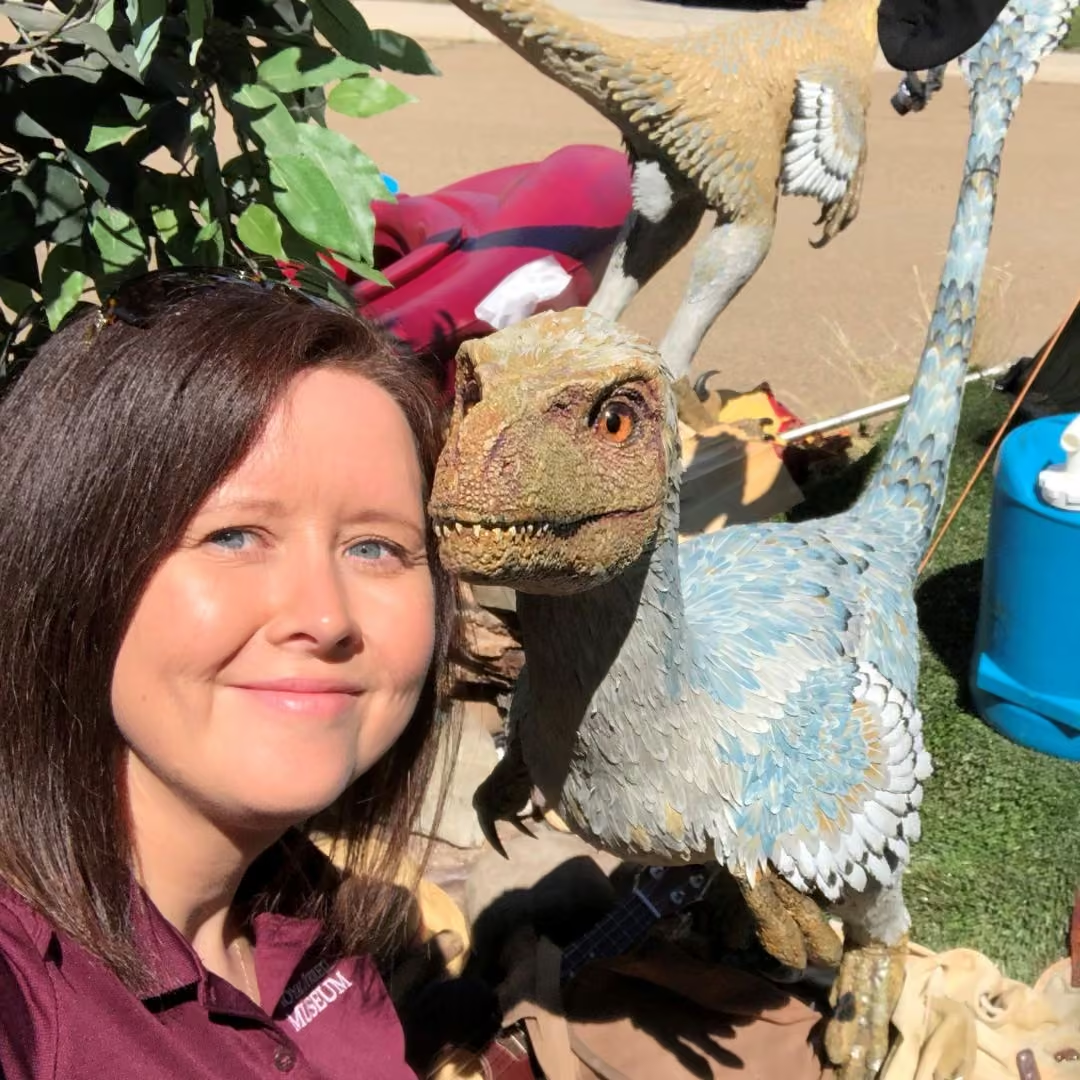
Our co-worker Tyler was the calmest raptor rider we’ve ever seen!
#throwback to our Calgary Stampede parade float entry in 2004. Would you last 8 seconds on a raptor? #flashbackfriday -
Royal Tyrrell Museum of Palaeontology
@RoyalTyrrell
Tap on the video to see a preview of our new First Life exhibit, open now!
In this exhibit, you can meet some of the oldest known fossils, learn about where and when life began, and how the Precambrian and Cambrian paved the way for complex life forms. -
Royal Tyrrell Museum of Palaeontology
@RoyalTyrrell
After exploring billions of years of life on Earth inside the Museum, you’ll find further biodiversity just outside our doors in Midland Provincial Park. Visitors have observed butterflies, ground squirrels, many bird species, and more. #internationaldayforbiologicaldiversity
-
Royal Tyrrell Museum of Palaeontology
@RoyalTyrrell
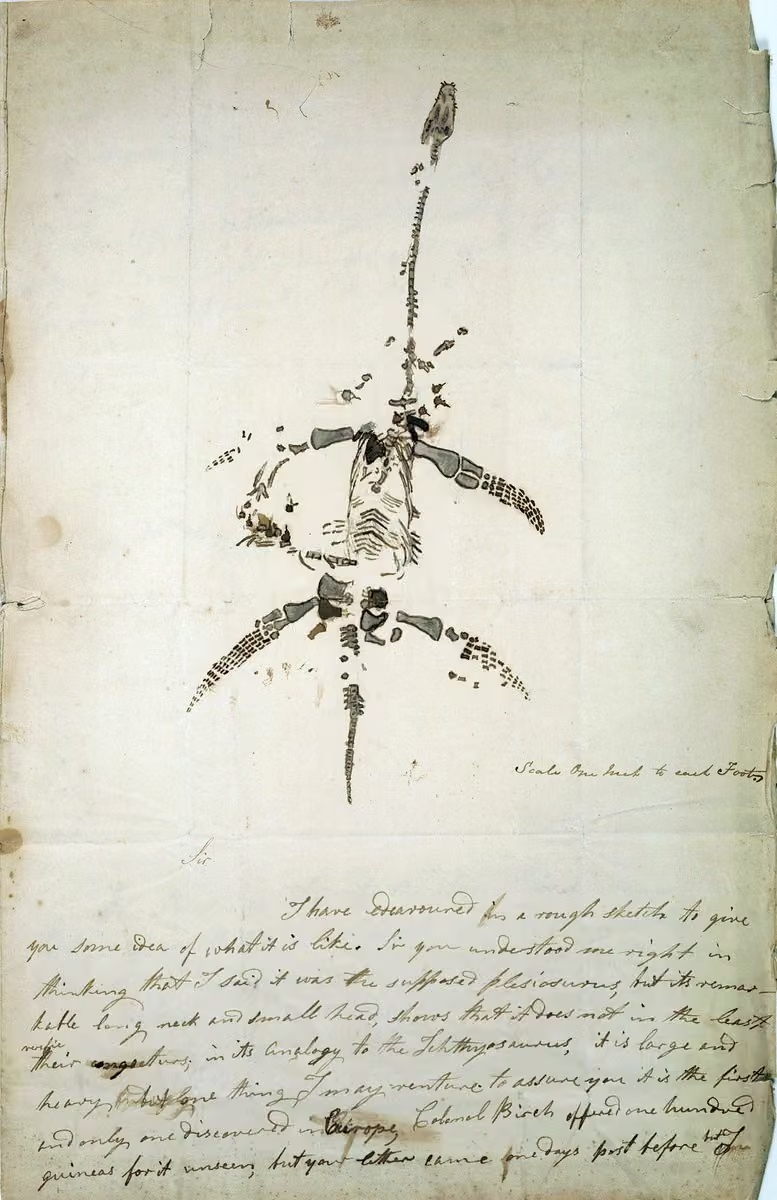
#otd in 1799, Mary Anning was born.
At 12 years old, she found the first known ichthyosaur—a large marine reptile. Despite finding some of England’s finest fossils, Anning was unable to join the Geological Society of London.
Royal Tyrrell Museum of Palaeontology
@RoyalTyrrell
Anning found the first Plesiosaurus macrocephalus (a marine reptile) and the first British example of a pterosaur. Plesiosaurus macrocephalus was officially described and named by the British palaeontologist William Buckland in 1830.
-
Royal Tyrrell Museum of Palaeontology
@RoyalTyrrell
This hadrosaur toe bone preserves 13 distinct tooth marks arranged in a pattern, suggesting it was repeatedly bitten. The bite marks were likely caused by a predator (probably a dromaeosaur or young tyrannosaur) feeding on the carcass. #fossilfact
-
Royal Tyrrell Museum of Palaeontology
@RoyalTyrrell
The Royal Tyrrell Museum’s new “First Life” exhibit, open now, explains how life evolved—from its earliest beginnings, to the major diversification of complex life forms known as the Cambrian Explosion.
#internationalmuseumday #imd2024 -
Royal Tyrrell Museum of Palaeontology
@RoyalTyrrell
First Life: Origins of Biodiversity
Walk among some of the oldest known fossils in our new “First Life” exhibit. Open now! Learn more: royaltyrrellmuseum.wpcomstaging.com/2024/05/17/first-life… -
Royal Tyrrell Museum of Palaeontology
@RoyalTyrrell
This mammoth display has a secret…
Have you ever noticed the clouds slowly moving in front of the moon in this mural? This lighting detail adds dimension to the display, making it a popular stop for selfies. #galleryglimpse -
Royal Tyrrell Museum of Palaeontology
@RoyalTyrrell
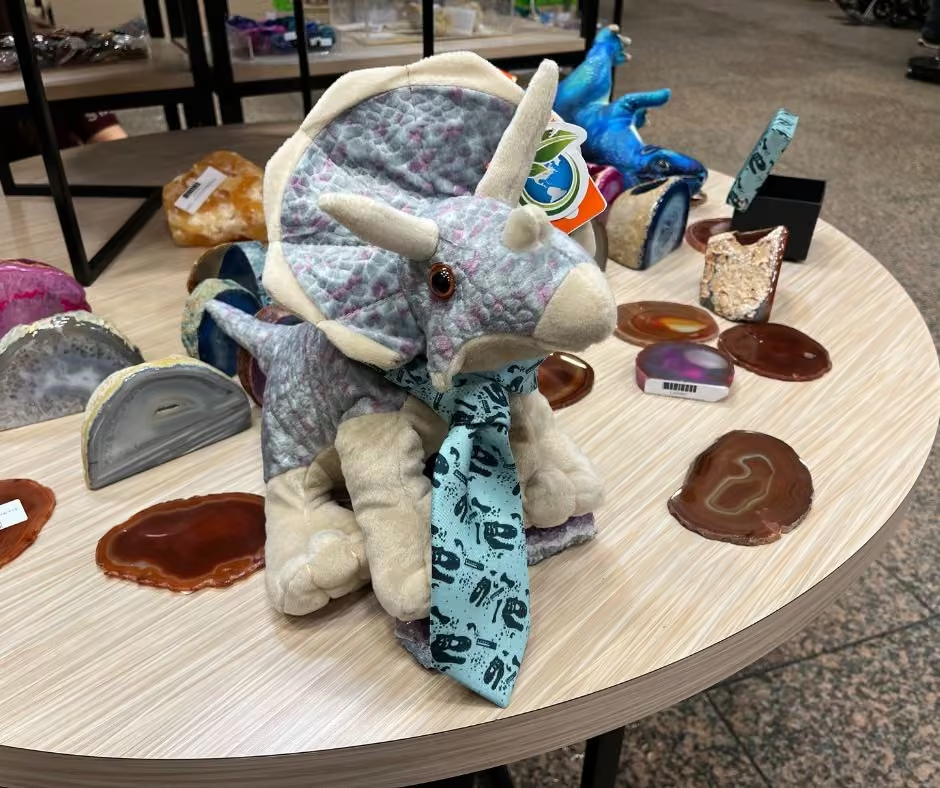
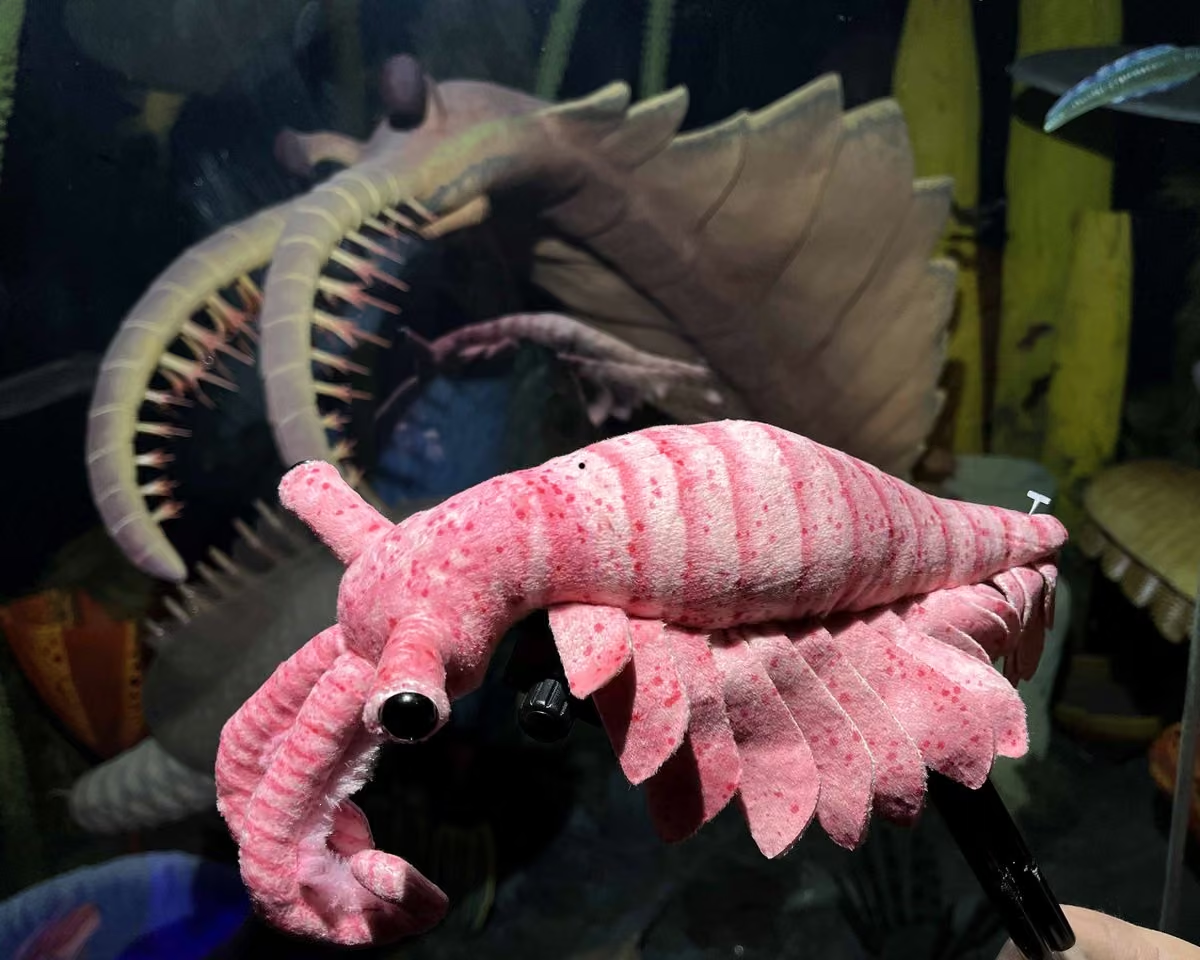
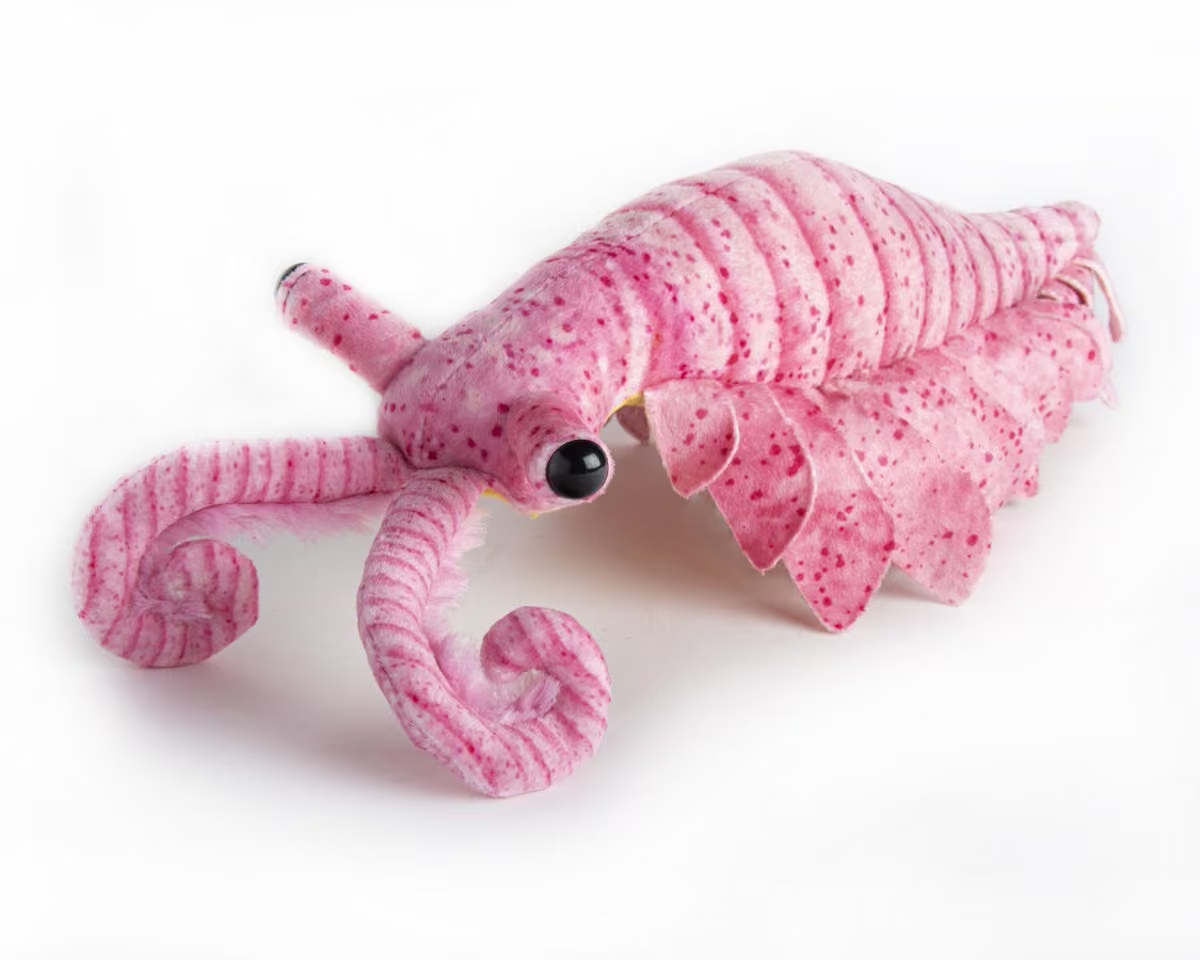
Meet the newest custom plush in our Museum Shop!
Here, Anomalocaris visits its counterpart in our Burgess Shale diorama, which depicts creatures at 12 times their actual size.
Shop in person or online: www.tyrrellmuseumshop.com/collections/only-at-the-rtm/pro… -
Royal Tyrrell Museum of Palaeontology
@RoyalTyrrell
Revisit childhood memories this long weekend! The Museum is open daily, 9 a.m. – 9 p.m., including on May 20.
Dr. Christopher West, our Curator of Palaeobotany, first visited the Museum in 1988. His favourite dinosaur hasn’t changed since then: Triceratops. -
Royal Tyrrell Museum of Palaeontology
@RoyalTyrrell
A sneak peek at our new “First Life” gallery 👀
Our newest exhibit opens May 17, just in time for the long weekend! Find out about the evolution of life, and how the Precambrian and Cambrian paved the way for complex life forms. #firstlife #palaeontologynews -
Royal Tyrrell Museum of Palaeontology
@RoyalTyrrell
Happy Mother's Day!
-
Royal Tyrrell Museum of Palaeontology
@RoyalTyrrell
Our spring program season begins on May 18!
Join our Badlands Adult Hike, try your hand at Fossil Casting, participate in a simulated dig, and more! Explore your options and register: www.tyrrellmuseum.com/whats_on/activities -
Royal Tyrrell Museum of Palaeontology
@RoyalTyrrell
Amateur fossil hunter Bill Bloss found this Gorgosaurus specimen (nicknamed ‘Blossom’) in 2015. The animal’s age at death has been estimated at between five to seven years old.
#fossilfriday #rtmpfossilchallenge
Royal Tyrrell Museum of Palaeontology
@RoyalTyrrell
This specimen was on display in our 2022 “Fossils in Focus” exhibit. It was discovered near Dinosaur Provincial Park. Can you name the species? #rtmpfossilchallenge #fossilfriday
-
Royal Tyrrell Museum of Palaeontology
@RoyalTyrrell
This specimen was on display in our 2022 “Fossils in Focus” exhibit. It was discovered near Dinosaur Provincial Park. Can you name the species? #rtmpfossilchallenge #fossilfriday
-
Royal Tyrrell Museum of Palaeontology
@RoyalTyrrell
Found a fossil? 🦴
📷 Photograph it. 📍 Locate it on a map. ❌ Leave it buried. 📞 Report your find to the Museum by emailing tyrrell.fossilreport@gov.ab.ca.
Royal Tyrrell Museum of Palaeontology
@RoyalTyrrell
By reporting information about a fossil to us, you could make an important contribution to science! Learn more about Alberta’s fossil laws and what to do if you find a fossil: www.tyrrellmuseum.com/research/found_a_fossil
-
Royal Tyrrell Museum of Palaeontology
@RoyalTyrrell
Mistaken Point, Newfoundland is home to the oldest and best-preserved fossils from the Ediacaran Period. In our new “First Life” gallery, visitors will be able to interact with and touch bronze casts of fossils found in this slab. #rtmpfossilchallenge
Royal Tyrrell Museum of Palaeontology
@RoyalTyrrell
This rock slab preserves the remains of an ancient deep-sea environment from 565 million years ago. Can you name the locality where it was found? Hint: It’s Canadian and is part of our new “First Life” exhibit! #rtmpfossilchallenge
-
Royal Tyrrell Museum of Palaeontology
@RoyalTyrrell
This rock slab preserves the remains of an ancient deep-sea environment from 565 million years ago. Can you name the locality where it was found? Hint: It’s Canadian and is part of our new “First Life” exhibit! #rtmpfossilchallenge
-
Royal Tyrrell Museum of Palaeontology
@RoyalTyrrell
Our collections assistant Susanne shows off an elk skull specimen (Cervus canadensis) that was found northwest of Drumheller in Three Hills, Alberta.
-
Royal Tyrrell Museum of Palaeontology
@RoyalTyrrell
This slab preserves two species from ~500 million years ago: Waptia fieldensis and Marrella splendens. It was found in Yoho National Park, BC. This fossil is one of many on loan from the Royal Ontario Museum that will be part of our new “First Life” exhibit opening on May 17.
-
Royal Tyrrell Museum of Palaeontology
@RoyalTyrrell
May the force be with you! Did you know Jar-Jar Binks, designed by Terryl Whitlatch in the 1990s for Star Wars: The Phantom Menace, was heavily based on hadrosaurs as well as amphibians? We recognize Jar-Jar’s duck-billed mouth in some of the hadrosaurs in our galleries.
-
Royal Tyrrell Museum of Palaeontology
@RoyalTyrrell
Our preparation technician Brady holds a 52-million-year-old fossil block on this #fossilfriday. This slab preserves palm fronds below two complete Notogoneus fish specimens. It was found in the Green River Formation.
-
Royal Tyrrell Museum of Palaeontology
@RoyalTyrrell
Summer hours update 🦴
Starting May 15, the Museum is open seven days a week, 9 a.m. – 9 p.m. During summer hours, the last daily ticket time is 7:30 p.m., with no entry past 8:00 p.m. We look forward to welcoming you! -
Royal Tyrrell Museum of Palaeontology
@RoyalTyrrell
Our “First Life” exhibit opens in two weeks!
Check out this sneak peek of the animated videos our graphic designer Bailey created for the gallery.
#firstlife #newexhibit #travelideas #palaeontology -
Royal Tyrrell Museum of Palaeontology
@RoyalTyrrell
Thousands of people had a roaring good time at Travel Drumheller’s Jurassic Jamboree on April 27! Museum educators Kathryn and Alex shared their love of fossils at the event. @tourdrumheller
Royal Tyrrell Museum of Palaeontology
@RoyalTyrrell
After the @GWR attempt, many people visited the Museum wearing their dinosaur costumes. One couple even got engaged here! Swipe to see their special moment in front of our ‘Black Beauty’ T. rex skeleton.
-
Royal Tyrrell Museum of Palaeontology
@RoyalTyrrell
For the final talk in our 2024 Speaker Series, Tammo Reichgelt will present “Global Greening in a Warmer World: What We Can Learn from Plant Fossils.” Join us Thursday, May 2, at 11 a.m. in the Museum Auditorium.
Learn more: www.tyrrellmuseum.com/whats_on/special_events/speaker_series -
Royal Tyrrell Museum of Palaeontology
@RoyalTyrrell
Dr. Brian Pickles and Issy Walker from the University of Reading recently visited our Collections to study Pachycephalosaur fossils. The Foraminacephale brevis skull dome Dr. Pickles holds in 📸 #2 was collected in 2022 and is the best-preserved example of that species.
-
Royal Tyrrell Museum of Palaeontology
@RoyalTyrrell
Stromatolites form when sediments become trapped in dense, sticky microbial mats produced by cyanobacteria and other microorganisms. This stromatolite, Collenia undosa, is one of the oldest fossils in Alberta. It was found in Waterton Lake and is 1.3 billion years old!
Royal Tyrrell Museum of Palaeontology
@RoyalTyrrell
This week’s #rtmpfossilchallenge is 1.3 billion years old! Can you name this fossil? Hint: It’ll be on display in our newly renovated First Life exhibit opening May 17. #fossilfriday
-
Royal Tyrrell Museum of Palaeontology
@RoyalTyrrell
This week’s #rtmpfossilchallenge is 1.3 billion years old! Can you name this fossil? Hint: It’ll be on display in our newly renovated First Life exhibit opening May 17. #fossilfriday
-
Royal Tyrrell Museum of Palaeontology
@RoyalTyrrell
We’re ready for @tourdrumheller's Jurassic Jamboree this weekend – are you? Help Drumheller break the world record for Largest Gathering of People Dressed as Dinosaurs by wearing your dinosaur costume downtown on April 27. Learn more: traveldrumheller.com/events/world-record-challenge/
-
Royal Tyrrell Museum of Palaeontology
@RoyalTyrrell
🟣 Aquatic Aliens 🟣
Watch as Senior Graphic Designer Mary Sanche explains some design choices behind our new #firstlife exhibit opening next month.
#newexhibit #museum #museumdesign #moodboard #designprocess -
Royal Tyrrell Museum of Palaeontology
@RoyalTyrrell
Join us on April 25 for our second last Speaker Series talk! Vlad Codrea’s talk will discuss “History and Contributions of Romanian Vertebrate Paleontology: Beasts, Bioevents, Geology”. Learn more: www.tyrrellmuseum.com/whats_on/special_events/speaker_series
-
Royal Tyrrell Museum of Palaeontology
@RoyalTyrrell
Earth Day is a time to reflect on the past, present, and future of our beautiful planet. This year’s #earthday theme is Planet vs. Plastics. Reduce, reuse and recycle to preserve the planet.
-
Royal Tyrrell Museum of Palaeontology
@RoyalTyrrell
#dyk our Cretaceous Garden includes fossils? The plants growing in this exhibit are living relatives of vegetation that grew in Alberta during the Cretaceous Period. If you look closely, you’ll notice a hadrosaur footprint and some petrified wood among the plants.
-
Royal Tyrrell Museum of Palaeontology
@RoyalTyrrell
Dr. Phil Currie recently visited the Museum to present a talk about theropod dinosaurs for our annual Speaker Series.
You can find recordings of many Speaker Series talks on our YouTube channel, including Dr. Currie’s: www.youtube.com/@RoyalTyrrell -
Royal Tyrrell Museum of Palaeontology reposted
Museum of the Rockies
@MuseumRockies
Happy #fossilfriday! @Brown_Caleb_M visited the #mor #paleontology collections from @RoyalTyrrell in Drumheller Alberta. Brown is taking a close look at the horns of #dinosaurs like this #triceratops (#mor1604) from the #cretaceous Hell Creek Formation (~ 66 mya) of #montana.
-
Royal Tyrrell Museum of Palaeontology
@RoyalTyrrell
🌷 This creature is known as a tulip animal 🟣
Siphusauctum gregarium is one of 40 fossils on long-term loan from the Royal Ontario Museum (@ROMtoronto) to help tell the story of early life in our new “First Life” exhibit, opening May 17. #fossilfriday
Royal Tyrrell Museum of Palaeontology
@RoyalTyrrell
This unique tulip-shaped animal likely attached itself to the ocean floor like modern sea anemone. It lived 500 million years ago during the Cambrian Period. Scientists believe it fed by filtering particles from water with its calyx (the top of the organism). #fossilfriday
-
Royal Tyrrell Museum of Palaeontology
@RoyalTyrrell
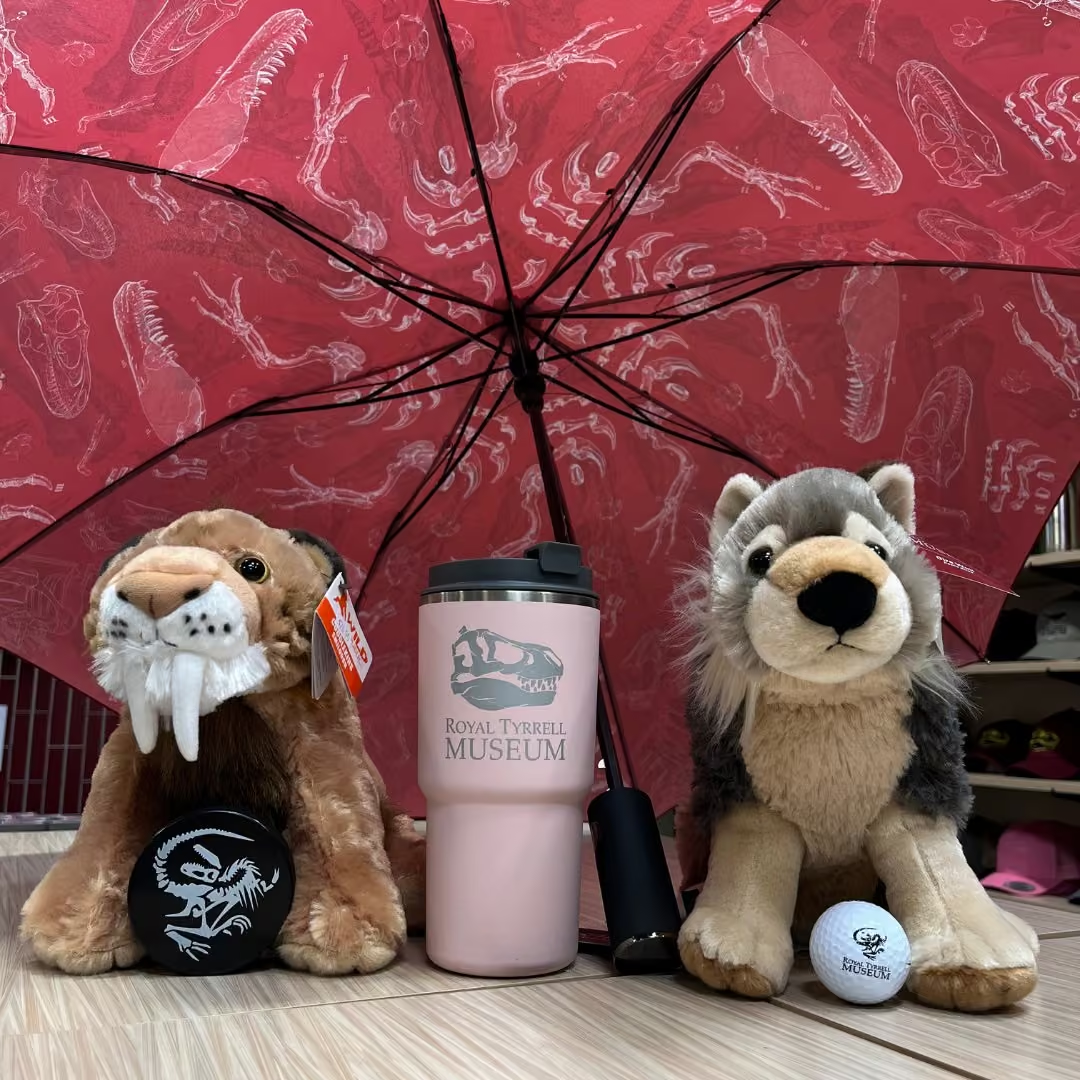
April in Alberta can bring snow, rain, and/or sunshine. Our Museum Shop stuffies are prepared for any weather with their umbrella, golf ball, and hockey puck! Shop yours: www.tyrrellmuseumshop.com
-
Royal Tyrrell Museum of Palaeontology
@RoyalTyrrell
Our new “First Life” exhibit opens on Friday, May 17!
🟣 Meet some of the oldest known fossils, including the earliest evidence of life in Alberta.
🟣 Learn about where and when life began.
🟣 Discover the unique story Canadian fossils tell us about early life. -
Royal Tyrrell Museum of Palaeontology
@RoyalTyrrell
The skull of this Struthiomimus specimen is one of the best-preserved ornithomimid skulls known from Alberta. Like other ornithomimids (ostrich-mimic dinosaurs), this animal had long, powerful legs suited for rapid running to evade predators.
-
Royal Tyrrell Museum of Palaeontology
@RoyalTyrrell
John Hunter (Ohio State University) is this week’s Speaker Series presenter. Join us April 18 at 11 a.m. in the Museum’s Auditorium for his talk, “Teeth and Mammalian Evolution.”
Learn more and watch recordings of Speaker Series talks: www.tyrrellmuseum.com/whats_on/special_events/speaker_series -
Royal Tyrrell Museum of Palaeontology
@RoyalTyrrell
Merycoidodon gracilis was a small mammal distantly related to camels. This fully grown individual is roughlythe size of a house cat. Analysis of Merycoidodon teeth show that they were herbivorous, and likely browsed on plant shoots and leaves.
-
Royal Tyrrell Museum of Palaeontology
@RoyalTyrrell
The Museum will offer special programming for Homeschool Day on Friday, May 17. Students can sign up for our programs, including Ancient Creatures, Cretaceous Crime Scene, and Fossil Casting. Learn more and sign up here: tyrrellmuseum.com/whats_on/special_events/homeschool_days
-
Royal Tyrrell Museum of Palaeontology
@RoyalTyrrell
The small aquatic reptile Keichousaurus is distantly related to plesiosaurs. Keichousaurus fossils like this specimen are found exclusively in China. This subadult male would have lived during the Triassic Period. #fossilfriday
-
Royal Tyrrell Museum of Palaeontology
@RoyalTyrrell
Would you have a dinosaur pet if you could? Our Gallery Experience Officer Adin tried to convince “Trevor” the Albertosaurus to go for a walk outside for #nationalpetday.
-
Royal Tyrrell Museum of Palaeontology
@RoyalTyrrell
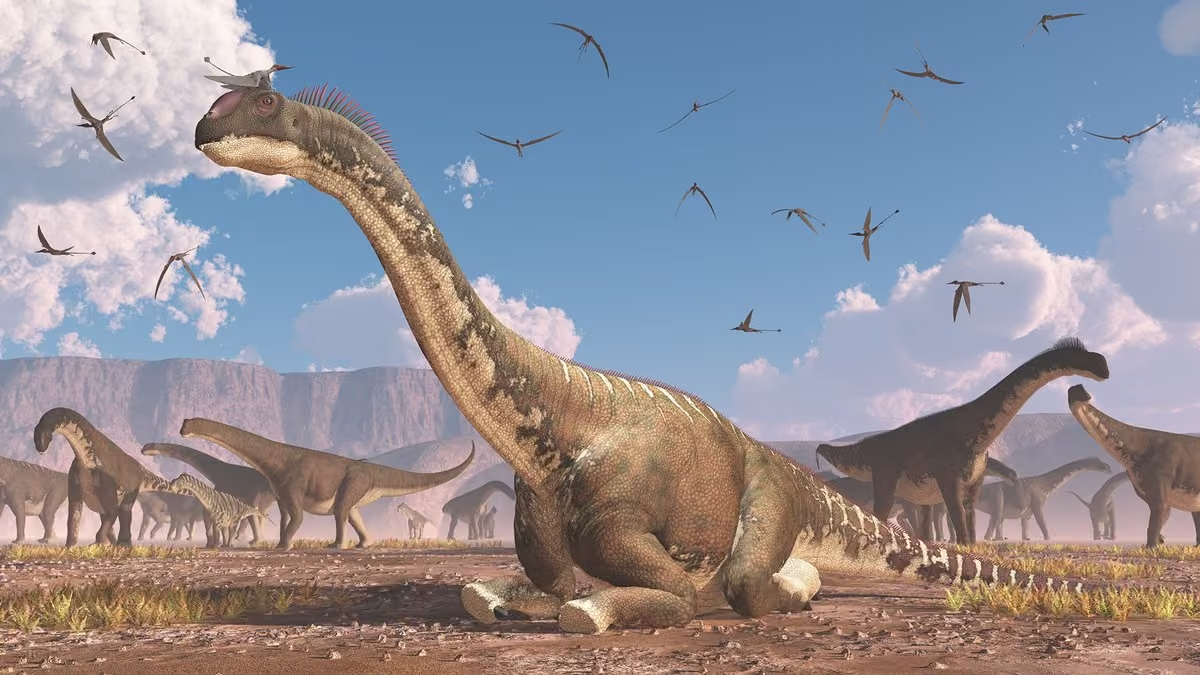
The tooth from today's #rtmpfossilchallenge belongs to Camarasaurus, the largest dinosaur on display in our Museum! These gentle giants fed on tough vegetation. Researchers estimate they could replace old teeth with new ones every 60 days. Art © James Kuether
Royal Tyrrell Museum of Palaeontology
@RoyalTyrrell
For this week’s #rtmpfossilchallenge, can you name the animal this tooth once belonged to? This dinosaur lived during the Jurassic Period. A skeleton is on display in our Dinosaur Hall.
-
Royal Tyrrell Museum of Palaeontology
@RoyalTyrrell
For this week’s #rtmpfossilchallenge, can you name the animal this tooth once belonged to? This dinosaur lived during the Jurassic Period. A skeleton is on display in our Dinosaur Hall.
-
Royal Tyrrell Museum of Palaeontology
@RoyalTyrrell
Join us for Jeff Liston’s presentation, “Descent into Carnivory: How Large Vertebrate Suspension-Feeding in the Mesozoic Ran Out of Options.” This free talk takes place on April 11 at 11 a.m. in the Museum’s Auditorium. Learn more: www.tyrrellmuseum.com/whats_on/special_events/speaker_series
-
Royal Tyrrell Museum of Palaeontology
@RoyalTyrrell
Meet Shonisaurus sikanniensis, an ichthyosaur with its own room in the Museum. This specimen holds the world record for Largest Marine Reptile Skeleton. The skull lacks teeth, making this fossil the earliest-known example of a giant filter-feeding vertebrate.
-
Royal Tyrrell Museum of Palaeontology
@RoyalTyrrell
This photo might look ancient, but it’s only a few decades old. The Triceratops skeleton being unloaded here is on display in our Dinosaur Hall. The Drumheller water tower is visible in the far background.
-
Royal Tyrrell Museum of Palaeontology
@RoyalTyrrell
The first Styracosaurus was discovered in Alberta in 1913. These herbivorous ceratopsians (horned dinosaurs) lived during the Late Cretaceous. The name Styracosaurus means “spiked lizard,” referring to the many spikes on the skull’s frill. #fossilfriday
-
Royal Tyrrell Museum of Palaeontology
@RoyalTyrrell
On April 27, help Drumheller break the world record for Largest Dinosaur Inflatable Gathering! Learn more: @tourdrumheller
After helping set a new world record, you can visit the Museum in costume, but please respect our non-costumed friends (and fossils). @GWR -
Royal Tyrrell Museum of Palaeontology
@RoyalTyrrell
Exciting job opportunity! Do you love palaeontology? Have you completed your Ph.D. within the last five years? We are seeking applicants for our Dr. Elizabeth Nicholls Postdoctoral Fellowship. Learn more and apply by April 30: tyrrellmuseum.com/about/jobs
-
Royal Tyrrell Museum of Palaeontology
@RoyalTyrrell
Join us April 4 at 11 a.m. for a free talk by Femke Holwerda, “Munching Mosasaurs: A Look into Mosasaur Feeding Ecology from The Netherlands and Canada.” Learn more: www.tyrrellmuseum.com/whats_on/special_events/speaker_series
-
Royal Tyrrell Museum of Palaeontology
@RoyalTyrrell
Plant, animal, or art? Pentacrinus subangularis is part of an extinct genus of crinoids that lived during the early Triassic Period. While they might resemble plants, specimens like these are actually marine animals. #rtmpcollections
-
Royal Tyrrell Museum of Palaeontology
@RoyalTyrrell
Albertosaurus hatchlings grew quickly. Fossil evidence suggests Albertosaurus reached adulthood at about 18 years old, and continued to grow slowly for the remainder of its life, unlike mammals and birds that stop growing once they are adults.
-
Royal Tyrrell Museum of Palaeontology
@RoyalTyrrell
This plesiosaur was excavated in extreme temperatures (-30 C)! Workers discovered large bone fragments while preparing the land for a new highway project in 2012. The skull wasn’t found, but our scientists believe the specimen belongs to the Wapuskanectes genus. #fossilfriday
-
Royal Tyrrell Museum of Palaeontology
@RoyalTyrrell
This interactive display in our Cenozoic Gallery allows you—and some friends—to stand on the scale and find a creature that is equal to your weight. Have you met your match? #galleryglimpse
-
Royal Tyrrell Museum of Palaeontology
@RoyalTyrrell
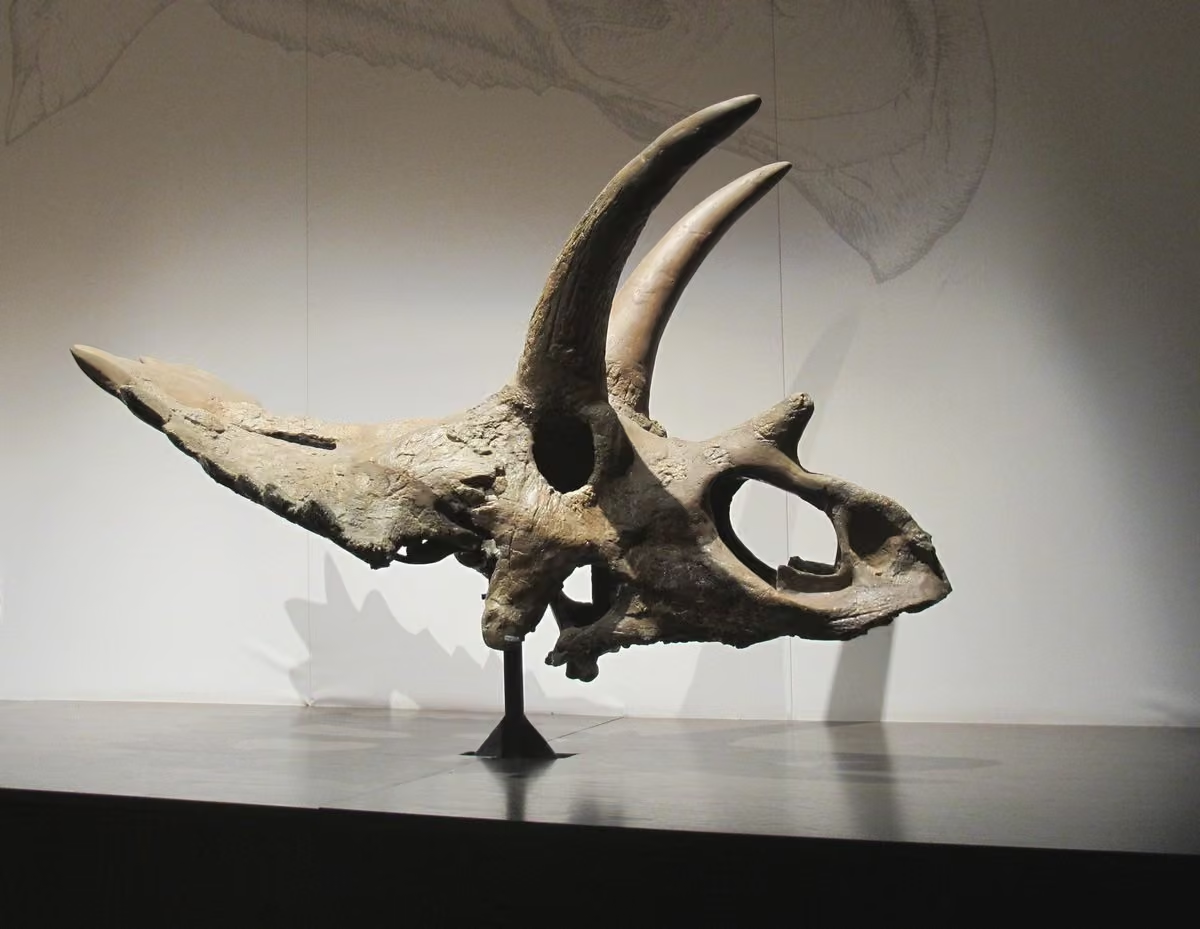
Geologist Peter Hews discovered Regaliceratops peterhewsi in 2005. This horned dinosaur was nicknamed ‘Hellboy’ due to the combination of difficult excavation conditions, the hardness of the rock surrounding the skull, and the small horns over the eyes.
Royal Tyrrell Museum of Palaeontology
@RoyalTyrrell
Dr. Caleb Brown and Dr. Donald Henderson identified the specimen as a new species. It first went on display in the 2015 “Fossils in Focus” exhibit. The specimen can now be found in our Dinosaur Hall. #rtmpcollections
-
Royal Tyrrell Museum of Palaeontology
@RoyalTyrrell
James Napoli of the North Carolina Museum of Natural Sciences recently visited our Collections. He’s studying tyrannosaur growth and evolution. In the photo, James is 3D-scanning a specimen of a young Gorgosaurus found in Dinosaur Provincial Park. #tyrannosaurtuesday
-
Royal Tyrrell Museum of Palaeontology
@RoyalTyrrell
Tune in online Thursday at 3 p.m. for a presentation on “What the Fossil Record Tells Us About Parasites, and What Parasites Can Tell Us About Fossil Animals.” Join us on Zoom for this free talk by Tommy Leung. Learn more and register: www.tyrrellmuseum.com/whats_on/special_events/speaker_series
-
Royal Tyrrell Museum of Palaeontology
@RoyalTyrrell
On Easter weekend, try our egg hunt! Find the eggs hidden in our exhibits and be entered in a contest to win a prize.
From Friday, March 29 to Monday, April 1, the Museum is open daily from 10 a.m. – 5 p.m. How many eggs can you spot in the photos? -
Royal Tyrrell Museum of Palaeontology
@RoyalTyrrell
This patch of skin belonged to a hadrosaur that died ~76 million years ago. The specimen preserves large pebbly-textured scales. Although duck-billed dinosaurs were common in Alberta, fossilized skin is rare. #fossilfriday #rtmpfossilchallenge
Illustration by Julius Csotonyi.
Royal Tyrrell Museum of Palaeontology
@RoyalTyrrell
Can you identify this specimen found in Dinosaur Provincial Park? Hint: it’s not a plant fossil. #rtmpfossilchallenge
-
Royal Tyrrell Museum of Palaeontology
@RoyalTyrrell
Can you identify this specimen found in Dinosaur Provincial Park? Hint: it’s not a plant fossil. #rtmpfossilchallenge
-
Royal Tyrrell Museum of Palaeontology
@RoyalTyrrell
Henry Fairfield Osborn studied this ornithomimid skeleton in 1917 and was surprised by the animal’s lack of teeth. He compared it to living, large-bodied flightless birds. He decided to name it Struthiomimus, meaning ostrich mimic. Art by Donna Sloan.
-
Royal Tyrrell Museum of Palaeontology
@RoyalTyrrell
#dyk ammolite is Alberta’s official gemstone? Ammolite comes from the shells of extinct ammonites. Over millions of years, pressure, heat, and mineralization compressed these shells into a colourful, iridescent material that is now used to create jewellery.
-
Royal Tyrrell Museum of Palaeontology
@RoyalTyrrell
Join us this Thursday for Philip Currie’s presentation “Theropod Dinosaurs of the Nemegt Formation (Upper Cretaceous) of Mongolia.” This free talk will be held on March 21 at 11 am in the Museum’s Auditorium.
To see the full Speaker Series lineup, visit: www.tyrrellmuseum.com/whats_on/special_events/speaker_series -
Royal Tyrrell Museum of Palaeontology
@RoyalTyrrell
Happy St. Patrick’s Day! ☘️
-
Royal Tyrrell Museum of Palaeontology
@RoyalTyrrell
This specimen of a juvenile Prosaurolophus maximus was found in marine rocks, suggesting the animal was swept out to sea after death. Growth rings in the bone indicate this individual was at least three years old when it died. #rtmpfossilchallenge #fossilfriday
Royal Tyrrell Museum of Palaeontology
@RoyalTyrrell
This 74-million-year-old skeleton was collected near an ammolite mine in 1998. Can you identify the animal? #rtmpfossilchallenge
-
Royal Tyrrell Museum of Palaeontology
@RoyalTyrrell
This 74-million-year-old skeleton was collected near an ammolite mine in 1998. Can you identify the animal? #rtmpfossilchallenge
-
Royal Tyrrell Museum of Palaeontology
@RoyalTyrrell
Looking for some family eggs-citement this Easter weekend? We will offer special programming daily from March 29 – 31. Learn more and sign up at tyrrellmuseum.com/whats_on/special_events/easter
-
Royal Tyrrell Museum of Palaeontology
@RoyalTyrrell
University of Alberta master’s student Henry Sharpe recently visited our Collections to look at marine reptile specimens. The mosasaur in the photo is known as ‘Mr. Sinister.’ This specimen of Mosasaurus missouriensis was discovered south of Lethbridge, AB.
-
Royal Tyrrell Museum of Palaeontology
@RoyalTyrrell
Nick Cairns from the @RoyalAlberta is this week’s Speaker Series presenter. His talk, “Forests, Prairies, Puddles, and Badlands: Exploring Alberta’s Amphibians and Reptiles” takes place in the Museum’s Auditorium on March 14 at 11 a.m. Learn more: www.tyrrellmuseum.com/whats_on/special_events/speaker_series
-
Royal Tyrrell Museum of Palaeontology
@RoyalTyrrell
-
Royal Tyrrell Museum of Palaeontology
@RoyalTyrrell
Spring is just around the corner! If you come across interesting fossil material while enjoying time outside, be sure to leave it where you found it, take photos, and email the location to our staff: tyrrellmuseum.com/research/found_a_fossil
-
Royal Tyrrell Museum of Palaeontology
@RoyalTyrrell
Happy International Women’s Day! Many thanks to the amazing women who share their unique skills and experience to help make the Museum great. #internationalwomensday
-
Royal Tyrrell Museum of Palaeontology
@RoyalTyrrell
University of Alberta Masters student Gorm Raun recently visited the Museum’s Collections to study Tarbosaurus casts. The tyrannosaur Tarbosaurus lived about 70 million years ago. All original fossils have been discovered in Asia. #rtmpcollections
-
Royal Tyrrell Museum of Palaeontology
@RoyalTyrrell
Did Spinosaurus, one of the largest predators of the Cretaceous, hunt on land or at sea? Newly published research co-authored by Dr. Donald Henderson suggests Spinosaurus was not a deep diver but instead semiaquatic and hunted in shallow water. Learn more: journals.plos.org/plosone/article?id=10.1371/journal.pone…
-
Royal Tyrrell Museum of Palaeontology
@RoyalTyrrell
Cretaceous-Palaeogene (K-Pg) Boundary blocks like this one are evidence of the end of the Age of Dinosaurs. Fossils of non-avian dinosaurs are only found below the volcanic ash and claystone layers (at centre in the photo).
Royal Tyrrell Museum of Palaeontology
@RoyalTyrrell
Like other mass extinctions, the end-Cretaceous event was complex and involved multiple contributing factors. This specimen is on display in the entrance to our Cenozoic Gallery. #galleryglimpse #didyouknow #science
-
Royal Tyrrell Museum of Palaeontology
@RoyalTyrrell
Did you know the Museum’s educators have been delivering interactive presentations for seniors’ communities about Alberta’s fossil heritage? In this photo, Judy from Drumheller’s Sunshine Lodge is holding a piece of a ceratopsian skull.
-
Royal Tyrrell Museum of Palaeontology
@RoyalTyrrell
More than 44,000 species are threatened with extinction on the ICUN Red List of Threatened Species. The final section of our Cenozoic: The Rise of Mammals exhibit highlights a handful of the thousands of globally at-risk species. #worldwildlifeday
-
Royal Tyrrell Museum of Palaeontology
@RoyalTyrrell
The Royal Tyrrell Museum is seeking a Head of Community Engagement to deepen the impact of community contributions on the Museum’s core functions and public value.
Learn more and apply by March 18. jobpostings.alberta.ca/job/DRUMHELLER-Head%2C-Community-E… -
Royal Tyrrell Museum of Palaeontology
@RoyalTyrrell
Our washable tablecloth allows children – and creative adults – to colour prehistoric creatures how they imagine them. What do you think of this pink Smilodon?
Shop yours here: www.tyrrellmuseumshop.com -
Royal Tyrrell Museum of Palaeontology
@RoyalTyrrell
Next week’s Speaker Series talk is hosted by Thomas Cullen. His talk is titled, “You Are What You Eat: Revealing Dinosaur Diets Using Fossil Tooth Chemistry”. Join us in the Museum’s auditorium at 11 am for this free talk!
To see the entire lineup, visit: www.tyrrellmuseum.com/whats_on/special_events/speaker_series -
Royal Tyrrell Museum of Palaeontology
@RoyalTyrrell
This spectacular Xiphactinus specimen from Kansas is on display in Dinosaur Hall. This fast, powerful swimmer grew up to 6 metres and was one of the most ferocious predators of the Late Cretaceous seas. #rtmpfossilchallenge
Royal Tyrrell Museum of Palaeontology
@RoyalTyrrell
This fossil is famously called the “fish-within-a-fish” skeleton. Can you guess this week’s #rtmpfossilchallenge?
-
Royal Tyrrell Museum of Palaeontology
@RoyalTyrrell
This fossil is famously called the “fish-within-a-fish” skeleton. Can you guess this week’s #rtmpfossilchallenge?
-
Royal Tyrrell Museum of Palaeontology
@RoyalTyrrell
It’s spring again in our Cretaceous Gardens exhibit! What plants are you most looking forward to seeing this spring?
-
Royal Tyrrell Museum of Palaeontology
@RoyalTyrrell
Swipe to see our Collections Assistant Jill hold an ammonite fossil.
The first ammonite is a fossil cast from West Germany, and it’s reputed to be the largest ammonite ever found! The second ammonite was found in southern Alberta, and it’s a lot easier for Jill to hold. -
Royal Tyrrell Museum of Palaeontology
@RoyalTyrrell
These visually striking displays were part of the Lords of the Land exhibit, which ran from 2007 – 2017. The style was inspired by traditional art galleries, with gilded frames, dramatic lighting, and velvet curtains. Did you see this exhibit in person?
-
Royal Tyrrell Museum of Palaeontology
@RoyalTyrrell
Meet Pterodactylus kochi, this week’s #rtmpfossilchallenge. This species was the first flying reptile ever described. To date, most fossils have been found in Germany. If you look closely, you’ll notice this animal has a broken femur. #fossilfriday
Royal Tyrrell Museum of Palaeontology
@RoyalTyrrell
This reptile comes from Germany. A cast was added to our collection in 1995. Do you recognize this animal? #rtmpfossilchallenge
-
Royal Tyrrell Museum of Palaeontology
@RoyalTyrrell
This reptile comes from Germany. A cast was added to our collection in 1995. Do you recognize this animal? #rtmpfossilchallenge
-
Royal Tyrrell Museum of Palaeontology
@RoyalTyrrell
Jordan Mallon is next week’s Speaker Series presenter. His talk, “Eco-tales of the Dinosaurs: 75 Million Years Ago in Alberta” takes place in the Museum’s Auditorium on February 29 at 11 a.m. Find our full Speaker Series schedule here: tyrrellmuseum.com/whats_on/special_events/speaker_series
-
Royal Tyrrell Museum of Palaeontology
@RoyalTyrrell
Fact or fiction: dire wolves like the ones on Game of Thrones were real.
Fact! During the Pleistocene, creatures like Canis dirus roamed North America. Dire wolves were up to 20% larger than the modern grey wolf—but smaller than the fictional TV show wolves! -
Royal Tyrrell Museum of Palaeontology
@RoyalTyrrell
Our “Devonian Reef” diorama depicts life in the seas 419 – 359 million years ago. To keep the models clean, the display was constructed to be completely sealed, ensuring dust cannot settle inside. #galleryglimpse
-
Royal Tyrrell Museum of Palaeontology
@RoyalTyrrell
Although our collection includes over 2 million fossils, only a small fraction of organisms ever fossilize.
How does an organism become a fossil? Check out our new blog post to learn about the fossilization process:
royaltyrrellmuseum.wpcomstaging.com/2024/02/02/how-fossil… -
Royal Tyrrell Museum of Palaeontology
@RoyalTyrrell
Jigsaw puzzle: Palaeo Edition.
Many fossils are found disarticulated, meaning the bones were scattered after death. Our preparation technician Mark and collections technician Tom recently arranged this plesiosaur skeleton for research by Dr. Donald Henderson. #fossilfriday
Royal Tyrrell Museum of Palaeontology
@RoyalTyrrell
This skeleton, the holotype of its species, was found in Dinosaur Park Formation in southern Alberta. Can you identify this week’s #rtmpfossilchallenge?
Royal Tyrrell Museum of Palaeontology
@RoyalTyrrell
The marine reptile Fluvionectes sloanae reached an estimated 5 m (16.4 feet) in length. The small stones in this photo are gastroliths or ‘stomach stones.’ They were found alongside the skeleton in Dinosaur Provincial Park. #rtmpfossilchallenge
-
Royal Tyrrell Museum of Palaeontology
@RoyalTyrrell
This skeleton, the holotype of its species, was found in Dinosaur Park Formation in southern Alberta. Can you identify this week’s #rtmpfossilchallenge?
-
Royal Tyrrell Museum of Palaeontology
@RoyalTyrrell
Scientists Lisa Bohach, Craig Scott, and Christopher West will present next week’s Speaker Series talk, “Livingston: Snapshot of an Ancient Ecosystem.”
Join us in the Museum’s Auditorium on Feb. 22 at 11 a.m. Learn more about our Speaker Series at www.tyrrellmuseum.com/whats_on/special_events/speaker_series -
Royal Tyrrell Museum of Palaeontology
@RoyalTyrrell
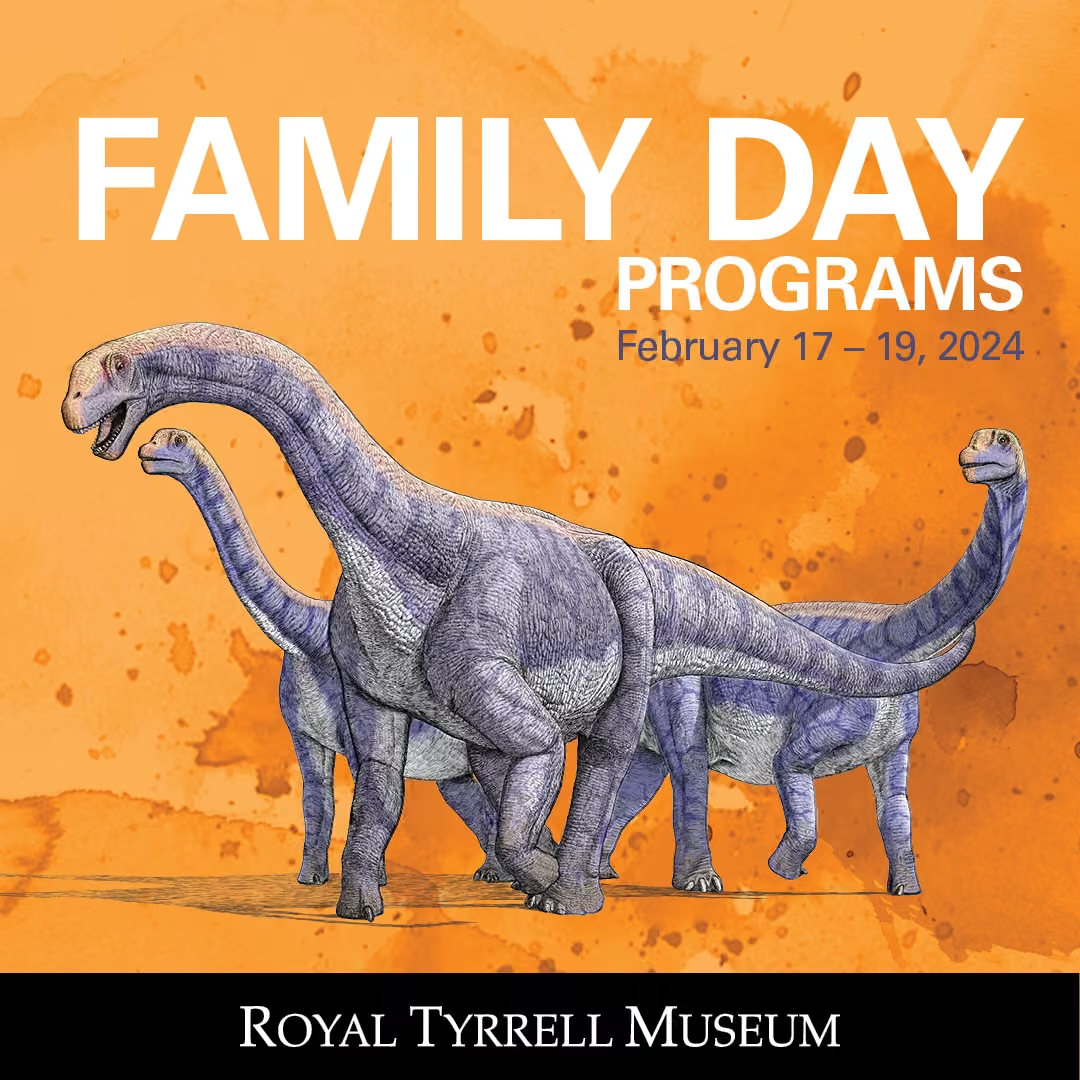
The Museum includes 12,300 square metres of exhibits and programming space—plenty of room for excited children to explore! Thank you to everyone who has booked advance tickets to visit us this weekend. Please note: all admission tickets have sold out for #familyday Feb. 19.
-
Royal Tyrrell Museum of Palaeontology
@RoyalTyrrell
Feeling ‘sedimental’? Send this to someone you want to wish a Happy Valentine’s Day!
-
Royal Tyrrell Museum of Palaeontology
@RoyalTyrrell
The Royal Tyrrell Museum welcomed more than 520,000 visitors in 2023—a new record! Learn more about the ‘dinosaur tourism’ for which Drumheller is known in this travel piece: www.insidehook.com/travel/drumheller-canada-dinosaur-tourism
-
Royal Tyrrell Museum of Palaeontology
@RoyalTyrrell
Wherever you are, and however you choose to celebrate, here’s wishing you a Happy Valentine’s Day!
#valentinesday #galentinesday -
Royal Tyrrell Museum of Palaeontology
@RoyalTyrrell
Participants in our Kidosaurus Club spent the last six weeks learning about dinosaurs, exploring the Museum, and trying to stop “Rexy” the tyrannosaur from causing trouble. We had an awesome time!
-
Royal Tyrrell Museum of Palaeontology
@RoyalTyrrell
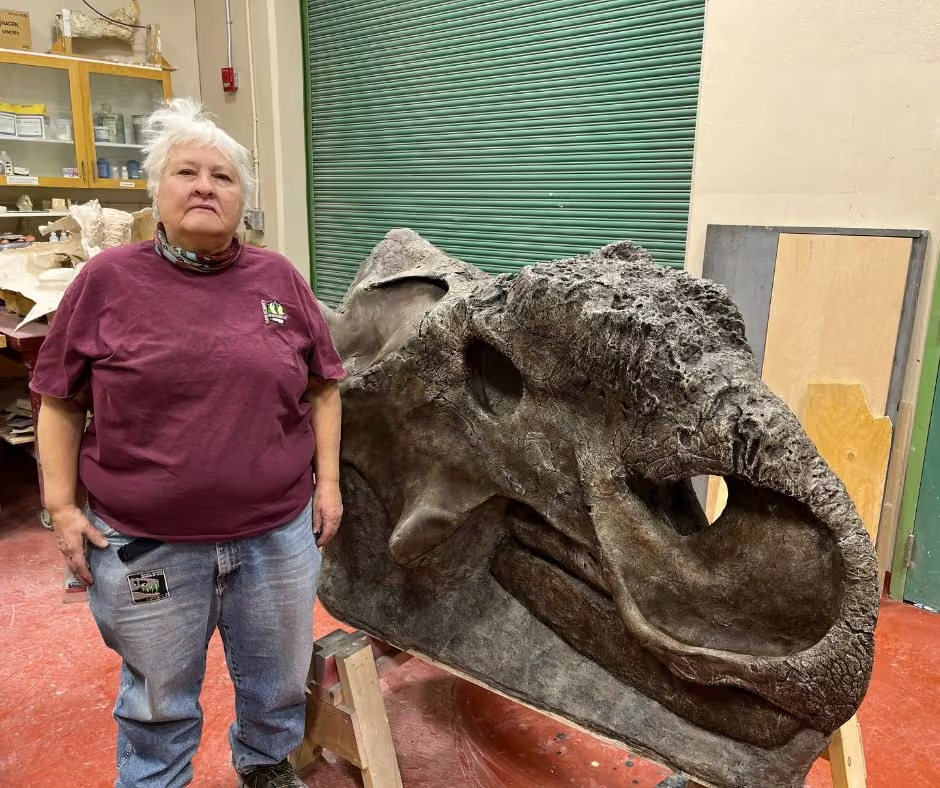
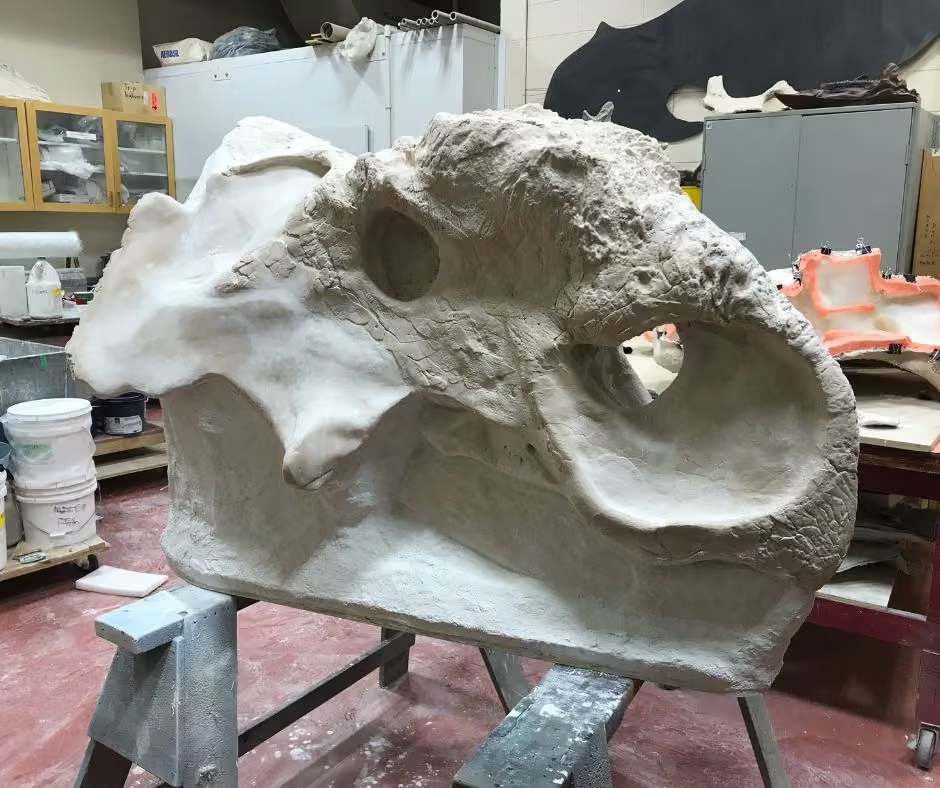
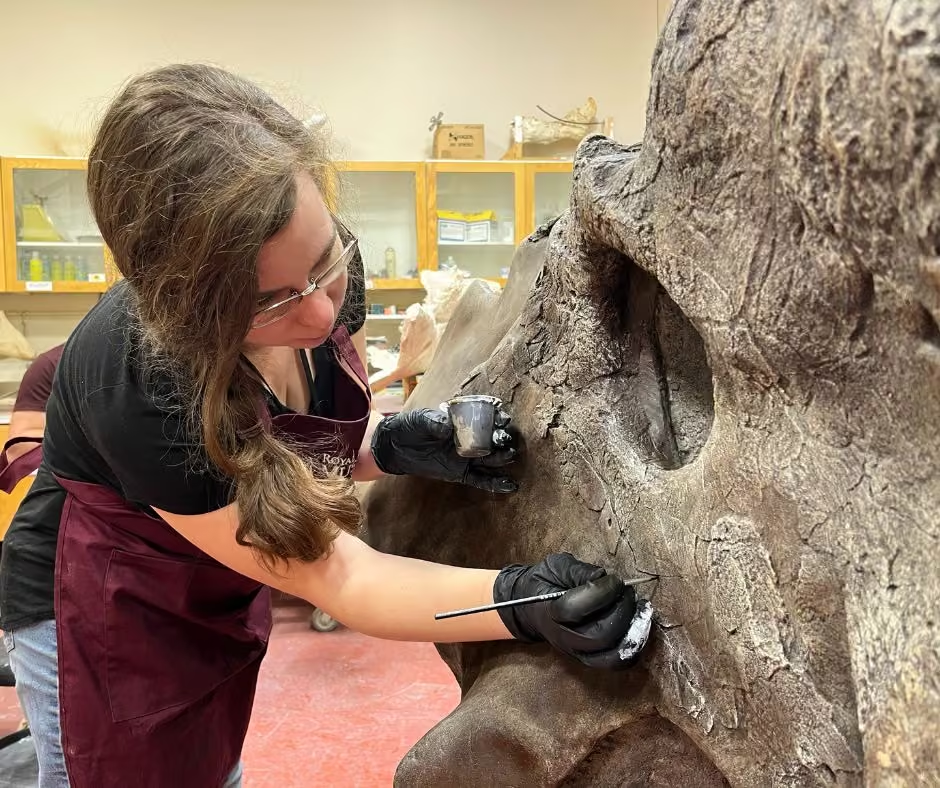
It’s #internationaldayofwomenandgirlsinscience! Marilyn (📷 #1) created a cast of an original Pachyrhinosaurus skull donated to the Museum by the Badlands Historical Centre. Beth (📷 #2) then painted the cast, which will be displayed at the Badlands Historical Centre.
-
Royal Tyrrell Museum of Palaeontology
@RoyalTyrrell
Meet one of North America’s oldest and most complete plesiosaur specimens, on display in our Grounds for Discovery exhibit. Nichollssaura borealis, found in Fort McMurray, AB, lived in the Western Interior Seaway 112 million years ago. #galleryglimpse
Royal Tyrrell Museum of Palaeontology
@RoyalTyrrell
This specimen was named in honour of Dr. Elizabeth (Betsy) Nicholls, the Museum’s Curator of Marine Reptiles from 1990 until her untimely passing in 2004. #fossilfriday
-
Royal Tyrrell Museum of Palaeontology
@RoyalTyrrell
Jon Noad is our next featured Speaker Series presenter. Joing us for his talk, “The Springbank Off-stream Reservoir Project: A Fossil Smorgasbord,” in the Museum’s Auditorium on February 15 at 11 a.m. See the full Speaker Series schedule here: tyrrellmuseum.com/whats_on/special_events/speaker_series
-
Royal Tyrrell Museum of Palaeontology
@RoyalTyrrell
Platycrinites saffordiis a fossilized crinoid. While crinoids might resemble plants, specimens like these are actually marine animals. Some crinoids attached themselves to the sea floor and swayed with the ocean’s currents. #rtmpfossilchallenge
Royal Tyrrell Museum of Palaeontology
@RoyalTyrrell
This creature lived during the Carboniferous Period in what is now Indiana. Can you identify this week’s #rtmpfossilchallenge?
Royal Tyrrell Museum of Palaeontology
@RoyalTyrrell
Here are some more examples of fossilized crinoids. Crinoids still exist today and are also known as “sea lilies.” Scientists believe these specimens were suspension feeders, meaning they trapped food floating in the surrounding water using tube feet on their arms.
-
Royal Tyrrell Museum of Palaeontology
@RoyalTyrrell
This creature lived during the Carboniferous Period in what is now Indiana. Can you identify this week’s #rtmpfossilchallenge?
-
Royal Tyrrell Museum of Palaeontology
@RoyalTyrrell
#dyk tyrannosaurs lost and replaced teeth throughout their lives? Our conservation assistant Rhian shows off the maxilla (upper jaw) of a Daspletosaurus with teeth at different stages of growth. #tyrannosaurtuesday
-
Royal Tyrrell Museum of Palaeontology
@RoyalTyrrell
There are some spaces available in our public programs over Family Day weekend! Try your hand at fossil casting or dig for fossils in our indoor workshops. Learn more: tyrrellmuseum.com/whats_on/special_events/family_day_weekend
-
Royal Tyrrell Museum of Palaeontology
@RoyalTyrrell
Discosauricus was a small, primarily aquatic reptile that likely fed on worms and insect larvae. This fossil, collected in the Czech Republic, is from the Early Permian. #galleryglimpse
-
Royal Tyrrell Museum of Palaeontology
@RoyalTyrrell
Which one of these teeth belonged to a T. rex? #fossilfriday
There are many drawers of theropod teeth in our Collections. Test your identification skills to see if you can recognize the T. rex tooth before the end of the video! -
Royal Tyrrell Museum of Palaeontology
@RoyalTyrrell
Our 2024 Speaker Series begins next week with a free presentation by Dr. Donald Henderson, our Curator of Dinosaurs. Join us in the Museum’s Auditorium on Feb. 8 at 11 a.m. for Dr. Henderson’s talk about what went wrong on Mars.
Royal Tyrrell Museum of Palaeontology
@RoyalTyrrell
To see our full 2024 Speaker Series lineup, visit: tyrrellmuseum.com/whats_on/special_events/speaker_series
-
Royal Tyrrell Museum of Palaeontology
@RoyalTyrrell
Two University of Victoria masters students recently visited our Collections. Teegue Dickson looked at theropod feet to try to match the footbone proportions to an undescribed footprint found in British Columbia.
Royal Tyrrell Museum of Palaeontology
@RoyalTyrrell
Emily Cross is studying ankylosaur teeth found across North America to determine whether it’s possible to distinguish between the two types of ankylosaurs – nodosaurids and ankylosaurids – by tooth shape and size.
-
Royal Tyrrell Museum of Palaeontology
@RoyalTyrrell
This week’s #rtmpfossilchallenge features a Macginitiea plant leaf from the early Palaeocene. Although this plant family only has a single living genus, the fossil record tells us that the family was considerably more diverse in the past.
Royal Tyrrell Museum of Palaeontology
@RoyalTyrrell
This fossil was collected in 1977 near Edmonton, Alberta. Do you know what it is? #rtmpfossilchallenge
-
Royal Tyrrell Museum of Palaeontology
@RoyalTyrrell
This fossil was collected in 1977 near Edmonton, Alberta. Do you know what it is? #rtmpfossilchallenge
-
Royal Tyrrell Museum of Palaeontology
@RoyalTyrrell
Here’s a look back at the Ex Terra travelling exhibit, also known as “The Greatest Show on Earth,” when it visited Edmonton in the early 1990s. The exhibit included specimens from the Museum’s Collections.
-
Royal Tyrrell Museum of Palaeontology
@RoyalTyrrell
Our Lego palaeontologist found some incredible teeth to study for #internationallegoday. Swipe to see Lego dinosaurs!
-
Royal Tyrrell Museum of Palaeontology
@RoyalTyrrell
#dyk there’s a turtle swimming in our Cretaceous Alberta exhibit? This exhibit features a family of four Albertosaurus individuals moving across a dry river channel. If you look beneath some fallen tree branches, you’ll see a turtle lurking in the water.
-
Royal Tyrrell Museum of Palaeontology
@RoyalTyrrell
Heath Caldwell recently visited our Collections from Montana State University (@MuseumRockies). Heath is scanning hadrosaur teeth to look for trends between specimens, and investigate whether tooth shape impacts how hadrosaurs might have chewed their food. #rtmpcollections
-
Royal Tyrrell Museum of Palaeontology
@RoyalTyrrell
The Story of Life mural created by the late artist Lorraine Malach welcomes visitors to our lobby. Ten panels represent the evolution of life, from the Precambrian to the Cretaceous Period, using human forms and expressions.
Royal Tyrrell Museum of Palaeontology
@RoyalTyrrell
Unfortunately, the artist passed away in March 2003, more than two years after her project began, and only months away from its completion. Artist Janet Grabner completed the firing, and Jake Ketler sealed and installed the mural. #rtmpgalleryglimpse
-
Royal Tyrrell Museum of Palaeontology
@RoyalTyrrell
#dyk dinosaurs walked on their toes with their heels off the ground, similar to cats and dogs? This posture, called digitigrade, allowed them to take longer strides. This Albertosaurus cast in our Learning Lounge shows how tyrannosaurs walked.
-
Royal Tyrrell Museum of Palaeontology
@RoyalTyrrell
Not all fossils are easy to recognize. This rock slab contains an Athrotaxites fossil—from a genus of conifer that has been found around the world. This fossil was found in Grande Cache, Alberta, and comes from the Cretaceous Period.
Royal Tyrrell Museum of Palaeontology
@RoyalTyrrell
The slab in the this photo contains various plants, including some Ginkgoites leaves, from the Cretaceous Period in Alberta. It was also found in the Grande Cache area. #fossilfriday
-
Royal Tyrrell Museum of Palaeontology
@RoyalTyrrell
New research by our Dr. Craig Scott and colleagues explores size versus shape of isolated teeth in distinguishing among similar species of multituberculates (rodent-like mammals from the Late Cretaceous and early Palaeocene). Learn more: www.cambridge.org/core/journals/journal-of-paleontology/a…
-
Royal Tyrrell Museum of Palaeontology
@RoyalTyrrell
Check out what our staff are up to for #museumselfieday! ⬇️ ⬇️
Photo 1: Jill is photographing fossils for our collections database, to be accessed by our team and other researchers.
Photo 2: Kathryn posed with a Prognathodon mosasaur found in Alberta.
Royal Tyrrell Museum of Palaeontology
@RoyalTyrrell
Photo 1: Chuck welcomes visitors to the Museum.
Photo 2: Alex stands next to “Calli,” the best-preserved, most complete Triceratops skull known from Canada.
Photo 3: Science Educator Sarah-Beth snapped a photo with Plesiadapis, a plush toy available in our Museum Shop.
Royal Tyrrell Museum of Palaeontology
@RoyalTyrrell
Photo 1: After taking down our 2023 holiday display, Warren posed with “Lumpy” the snow Triceratops.
Photo 2: Horticulturalist Dawn takes care of our “Cretaceous Garden” exhibit, making sure each plant gets what it needs. -
Royal Tyrrell Museum of Palaeontology
@RoyalTyrrell
This is the world’s most complete Ornithomimus skeleton, with only a few hand bones missing. The specimen was completely hidden within the rock. It was discovered when a jackhammer hit the shoulder blade while the crew was digging for plant fossils. #rtmpfossilchallenge
Royal Tyrrell Museum of Palaeontology
@RoyalTyrrell
This skeleton was collected from Dinosaur Provincial Park almost 30 years ago. Can you identify the animal? #rtmpfossilchallenge
-
Royal Tyrrell Museum of Palaeontology
@RoyalTyrrell
This skeleton was collected from Dinosaur Provincial Park almost 30 years ago. Can you identify the animal? #rtmpfossilchallenge
-
Royal Tyrrell Museum of Palaeontology
@RoyalTyrrell
Looking for dino-themed winter wear to help you face the elements with style? From a bright toque featuring dinosaur skulls, to cozy Triceratops mittens and more, we’ve got you covered. Visit our online shop! www.tyrrellmuseumshop.com
-
Royal Tyrrell Museum of Palaeontology
@RoyalTyrrell
#dyk the first Dimetrodon fossil was found in 1845? A Prince Edward Island farmer was digging a well and discovered an upper jawbone 21 feet below the surface. Although it resembles a dinosaur, Dimetrodon is actually more closely related to mammals than reptiles. #galleryglimpse
-
Royal Tyrrell Museum of Palaeontology
@RoyalTyrrell
The Green River Shale of Wyoming is known for exquisite fossil preservation. This block contains two fishes: the larger is Notogoneus, and above it is the smaller Priscacara. This specimen was used to help identify the first Cretaceous-aged Notogoneus fossil from Canada.
-
Royal Tyrrell Museum of Palaeontology
@RoyalTyrrell
As we set out on a new year and new adventures, we’re looking back on a few of the Royal Tyrrell Museum’s many 2023 highlights. Read more in our blog: royaltyrrellmuseum.wpcomstaging.com/2024/01/10/what-a-yea…
-
Royal Tyrrell Museum of Palaeontology
@RoyalTyrrell
One of our technicians discovered a surprise while preparing this tyrannosaur maxilla (upper jaw)! A fossil pinecone wound up in one of the snout cavities of this dinosaur, likely washed in after the dinosaur died. #rtmpfossilchallenge
Royal Tyrrell Museum of Palaeontology
@RoyalTyrrell
This photo contains two fossils. Can you guess what they might be? #rtmpfossilchallenge
-
Royal Tyrrell Museum of Palaeontology
@RoyalTyrrell
This photo contains two fossils. Can you guess what they might be? #rtmpfossilchallenge
-
Royal Tyrrell Museum of Palaeontology
@RoyalTyrrell
No matter how often our lab technicians clean, dirt tends to get everywhere. #cleanoffyourdeskday isn’t easy for those with a different type of work desk!
-
Royal Tyrrell Museum of Palaeontology
@RoyalTyrrell
Kidosaurus Club participants are learning to be dino detectives! They have discovered a mischievous tyrannosaur named “Rexy” causing trouble in the exhibits. Each week, the detective team will uncover Rexy’s plans as they explore the Royal Tyrrell Museum.
-
Royal Tyrrell Museum of Palaeontology
@RoyalTyrrell
Amber is best known for preserving insects, but all kinds of matter can be preserved inside. Look at this near-perfectly preserved feather! Although it isn’t possible to say what species the feather comes from, it is a remarkable fossil from the Late Cretaceous.
-
Royal Tyrrell Museum of Palaeontology
@RoyalTyrrell
#dyk you can distinguish between Lambeosaurus species by the shape of the crest? Lambeosaurus lambei (left) has a crest that includes a short rod projecting backward. The crest of Lambeosaurus magnicristatus (right) has no rod. #galleryglimpse
-
Royal Tyrrell Museum of Palaeontology
@RoyalTyrrell
On #nationalbirdday, we present one of the earliest known birds, Confuciusornis sanctus. Confuciusornis was similar to modern birds in that it had a toothless beak and feathers for flight; however, its prominent clawed forelimbs appear more similar to those of a dinosaur.
-
Royal Tyrrell Museum of Palaeontology
@RoyalTyrrell
Can we interest you in an evening of fossils, food, and fun? Our next adult-only gathering, “Bones & Brews,” combines an informal social event with engaging hands-on activities that reveal what fossils can tell us about the ancient past.
Learn more: www.tyrrellmuseum.com/whats_on/bones_brews -
Royal Tyrrell Museum of Palaeontology
@RoyalTyrrell
Maiasaura means “Good Mother Lizard.” The first specimens found included juveniles near an adult skeleton, suggesting Maiasaura provided parental care after its eggs hatched. This represented the first evidence of parental behaviour in dinosaurs.
Royal Tyrrell Museum of Palaeontology
@RoyalTyrrell
Maiasaura lived in North America during the Cretaceous Period. Fossils of this duck-billed dinosaur have been found in Alberta. Illustration by Julius Csotonyi.
-
Royal Tyrrell Museum of Palaeontology
@RoyalTyrrell
It’s Science Fiction Day! Nothing sparks the imagination quite like a great novel that finds a way to bring dinosaurs back to life. What’s your go-to palaeo fiction read?
-
Royal Tyrrell Museum of Palaeontology
@RoyalTyrrell
Happy New Year from our families to yours!
-
Royal Tyrrell Museum of Palaeontology
@RoyalTyrrell
The badlands in winter 😍
While the Museum welcomes its largest numbers of visitors in the summer, winter in Drumheller offers fewer crowds, lovely scenery, and a quieter Museum experience. We’re closed Monday, January 1 – but we’re open Dec. 30 & 31! -
Royal Tyrrell Museum of Palaeontology
@RoyalTyrrell
Albertonectes vanderveldei has 76 neck vertebrae—the most of any animal known. That’s over 10 times more than a giraffe, which only has seven. This specimen was also found with several kilograms of gastroliths, or stomach stones, in the gut area.
-
Royal Tyrrell Museum of Palaeontology
@RoyalTyrrell
#dyk some high school students found the first pieces of our “Black Beauty” skeleton while fishing in the Crowsnest Pass area of Alberta in 1980? Here are some photos of this T. rex specimen throughout the years, going back to when it entered our Preparation Lab.
-
Royal Tyrrell Museum of Palaeontology
@RoyalTyrrell
Ginkgo trees were once much more widespread than they are today. The first image is a fossilized Ginkgo leaf impression from the Cretaceous. The second photo shows Ginkgo biloba alive in the Royal Tyrrell Museum. What’s your favourite plant in our “Cretaceous Garden”?
-
Royal Tyrrell Museum of Palaeontology
@RoyalTyrrell
Imagine building a new home every time you outgrew yours.
Ammonites were born with a tiny shell, and as they grew, they built new chambers onto it. Illustration by Julius Csotonyi.
Royal Tyrrell Museum of Palaeontology
@RoyalTyrrell
These fossil photos show the interior walls that ammonites would seal off once they became too large for their living quarters. #fossilfriday
-
Royal Tyrrell Museum of Palaeontology
@RoyalTyrrell
The Museum will be closed on Dec. 24 and 25, reopening on Dec. 26. In the meantime, look at these photos of our dinosaurs wearing sweaters! To celebrate the opening of the “Foundations” exhibit in 2016, our staff dressed dinosaurs outside the Museum in cozy, hand-knit sweaters.
-
Royal Tyrrell Museum of Palaeontology
@RoyalTyrrell
See how our Collections Assistant Jill measures up to this Megacerops skull! Megacerops was a large rhinoceros-like mammal that lived during the Eocene, 38 – 34 million years ago. Swipe to see a Megacerops specimen on display in our Cenozoic Exhibit.
-
Royal Tyrrell Museum of Palaeontology
@RoyalTyrrell
You can use the interactive display in our Learning Lounge to ‘hunt’ as an Albertosaurus might have roughly 72 – 68 million years ago. Albertosaurus had colour vision, like all dinosaurs.
Royal Tyrrell Museum of Palaeontology
@RoyalTyrrell
Albertosaurus would have been able to see well, with partial binocular vision, although it likely also used scent to hunt its prey. #tyrannosaurtuesday
-
Royal Tyrrell Museum of Palaeontology
@RoyalTyrrell
Despite the rows of sharp, pointed teeth, Merycoidodon was a herbivore. This individual was roughly the size of a sheep. It roamed North America 32 million years ago, using its specialized teeth to feed on tough vegetation. #rtmpfossilchallenge
Royal Tyrrell Museum of Palaeontology
@RoyalTyrrell
This specimen comes from the Brule Formation of South Dakota. Do you recognize the animal?
#rtmpfossilchallenge -
Royal Tyrrell Museum of Palaeontology
@RoyalTyrrell
This specimen comes from the Brule Formation of South Dakota. Do you recognize the animal?
#rtmpfossilchallenge -
Royal Tyrrell Museum of Palaeontology
@RoyalTyrrell
#dyk marine reptiles sometimes fought each other? A mosasaur tooth was found embedded in the skull of this Mosasaurus missouriensis specimen. Analysis of the tooth suggests the animal was attacked by another mosasaur of similar size that probably came from below.
-
Royal Tyrrell Museum of Palaeontology
@RoyalTyrrell
Troodon was a small, bird-like theropod that lived during the Late Cretaceous. This preserved nest shows how Troodon dinosaurs laid their eggs. It was found in Devil’s Coulee, Alberta, where many fossilized dinosaur eggshells have been discovered. #fossilfriday
-
Royal Tyrrell Museum of Palaeontology
@RoyalTyrrell
Are you a last-minute holiday shopper? Don’t stress – our Museum Shop has you covered with palaeo-related gifts for all ages.
Check out our online Museum shop: www.tyrrellmuseumshop.com -
Royal Tyrrell Museum of Palaeontology
@RoyalTyrrell
Look up! We installed a new text panel about the hand blown glass creatures outside our Learning Lounge. These pieces were created by Firebrand Glass Studio in Diamond Valley, Alberta and showcase many animals that lived during the Devonian Period.
-
Royal Tyrrell Museum of Palaeontology
@RoyalTyrrell
Meet Gala Freeman Peters and Luke Nelson, graduate students at the University of Alberta. Gala and Luke recently visited our Collections to study lobster fossils from the Late Cretaceous in Alberta.
Royal Tyrrell Museum of Palaeontology
@RoyalTyrrell
They are hoping to describe these fossils in more detail and compare them to animals alive today. Look at these two Palaeonephrops specimens, both discovered in mines operated by Enchanted Designs.
-
Royal Tyrrell Museum of Palaeontology
@RoyalTyrrell
This incredible preserved track of a hadrosaur (duck-billed dinosaur) is from the Cretaceous Period. Trace fossils like these offer information that can’t be gleaned from bones alone, such as how dinosaurs moved and interacted with their environments.
-
Royal Tyrrell Museum of Palaeontology
@RoyalTyrrell
For the first time, a fossilized tyrannosaur has been found with stomach contents preserved in place. Partial remains of two small dinosaurs were discovered inside the stomach cavity of a Gorgosaurus specimen from Dinosaur Provincial Park. Check out this video for details!
Royal Tyrrell Museum of Palaeontology
@RoyalTyrrell
A new study conducted by an international team led by our Dr. François Therrien, published in the journal Science Advances, sheds light on this remarkable discovery. Learn more: royaltyrrellmuseum.wpcomstaging.com/2023/12/08/a-young-ty…
-
Royal Tyrrell Museum of Palaeontology
@RoyalTyrrell
#throwbackthursday to the renovation of our “Cretaceous Garden” in 2012. The ancient Alberta landscape was very different from what you see today. Dinosaurs and other animals lived in a lush, coastal environment dotted with swamps, ponds, and marshes.
Royal Tyrrell Museum of Palaeontology
@RoyalTyrrell
The plants in our Cretaceous Garden are living relatives of vegetation that flourished in Alberta during the Cretaceous Period, 75 – 66 million years ago. Even in December, it’s warm and humid in the garden.
-
Royal Tyrrell Museum of Palaeontology
@RoyalTyrrell
Meet Smilodon, one of the fiercest predators of the Cenozoic. With nearly one-foot-long canines, the name Smilodon means ‘knife tooth.’
Check out our fun Distance Learning webcast “Ice Age Safari” to learn more: tyrrellmuseum.com/learn/distance_learning/school_webcasts -
Royal Tyrrell Museum of Palaeontology
@RoyalTyrrell
Attention, young scientists! Registration is open for Badlands Science Camp 2024. Campers will learn basic geology, prospect for fossils, and participate in amazing hands-on science projects. Learn more and register: tyrrellmuseum.com/whats_on/activities/badlands_science_camp
-
Royal Tyrrell Museum of Palaeontology
@RoyalTyrrell
A festive new selfie spot has popped up in our lobby. Check out our holiday display on your next visit and snap a pic with the ‘Tri-carrot-ops'!
-
Royal Tyrrell Museum of Palaeontology
@RoyalTyrrell
Our Collections department welcomed Dr. Kirstin Brink and two of her students last week, Michael Thompson (right) and Max Scott (far left). Dr. Brink worked at the Royal Tyrrell Museum before becoming a professor at the University of Manitoba!
Royal Tyrrell Museum of Palaeontology
@RoyalTyrrell
Michael is studying Corythosaurus skulls found in Dinosaur Provincial Park, including the one shown in this photo. Specifically, he’s interested in the shape and morphology of the Corythosaurus skulls in our Collections.
Royal Tyrrell Museum of Palaeontology
@RoyalTyrrell
Max is studying face biting behaviour in mosasaurs of the same species. To conduct his research, Max is analyzing our mosasaur skulls, including this Prognathodon specimen.
-
Royal Tyrrell Museum of Palaeontology
@RoyalTyrrell
We talk a lot about dinosaurs in the Cretaceous Period, but what kind of world did they live in? These plant fossils provide clues about forest environments where extinct animals likely lived and ate.
Royal Tyrrell Museum of Palaeontology
@RoyalTyrrell
By understanding the composition and ecology of ancient forests, we can better understand the dinosaurs that lived in those forests. #fossilsinfocus
-
Royal Tyrrell Museum of Palaeontology
@RoyalTyrrell
Holiday décor but make it dinosaur themed. Which ornament is your favourite? Browse the Museum Shop here: www.tyrrellmuseumshop.com
-
Royal Tyrrell Museum of Palaeontology
@RoyalTyrrell
Palaeoart can be a complex and challenging art form. As palaeontological discoveries are made, how we imagine the past changes. For example, look at the differences between our 1985 Dinosaur Hall mural and a more recent illustration by Julius Csotonyi (next tweet).
Royal Tyrrell Museum of Palaeontology
@RoyalTyrrell
The mural features Gorgosaurus, while the illustration depicts Albertosaurus. Albertosaurus and Gorgosaurus are extremely similar, distinguished by subtle differences in their teeth and skull bones. Albertosaurus lived a few million years after Gorgosaurus.
-
Royal Tyrrell Museum of Palaeontology
@RoyalTyrrell
It looks like the dinosaurs found their way into our Education department’s fossil casting lab! About two-thirds of the fossils in our exhibits are original, but some of the specimens on display are casts–exact replicas produced using molds of the original fossils. #dinovember
-
Royal Tyrrell Museum of Palaeontology
@RoyalTyrrell
In which exhibit can you find this little creature?
During the Cretaceous Period 69 million years ago, animals like Didelphodon were among the largest mammals alive. They likely lived in forests with dawn redwood trees, flowering plants, and a variety of ferns. -
Royal Tyrrell Museum of Palaeontology
@RoyalTyrrell
During the Oligocene Epoch ~33-23 million years ago, mammals like Leptomeryx evansi lived in North America. These mammals were like deer, but they were much smaller. Unlike modern deer, Leptomeryx evansi did not have horns. #fossilfriday
-
Royal Tyrrell Museum of Palaeontology
@RoyalTyrrell
Meet “Lumpy,” our newest custom plush! Lumpy is a snow Triceratops, but this toy will never melt. This soft plush is ready to be your friend year-round. Swipe to see Lumpy playing outside on our Museum plaza.
You can find Lumpy in our online Museum Shop: www.tyrrellmuseumshop.com -
Royal Tyrrell Museum of Palaeontology
@RoyalTyrrell
Some University of Alberta students recently visited our Collections. Undergraduate student Corbin Gomez created a photogrammetry model of this partially prepared mosasaur specimen. The model will allow Corbin to study the specimen virtually back in Edmonton.
Royal Tyrrell Museum of Palaeontology
@RoyalTyrrell
Jordan Stock is researching how Albertosaurus changed over time, including how it changed with the environment or climate. Albertosaurus has been found in a few Alberta locations, but Jordan is focused on fossil material found in the Drumheller area.
-
Royal Tyrrell Museum of Palaeontology
@RoyalTyrrell
New research led by Dr. Cary Woodruff (@DoubleBeam) describes the pachycephalosaur Sphaerotholus lyonsi based on material in our collection! doi.org/10.1002/spp2.1535
The illustration by Julius Csotonyi shows Stegoceras, another pachycephalosaur dinosaur. -
Royal Tyrrell Museum of Palaeontology
@RoyalTyrrell
Almost 400 million years ago, Alberta was home to rhodophytes, also known as red algae. Rhodophytes are the predominant large algae in virtually all tropical reef systems today.
Royal Tyrrell Museum of Palaeontology
@RoyalTyrrell
This red algae specimen was discovered near Fort McMurray in fall 2022 and may represent a new species. Research on this fossil, which is on display as part of our updated “Fossils in Focus” exhibit, is ongoing.
-
Royal Tyrrell Museum of Palaeontology
@RoyalTyrrell
Are you a marketing professional who is passionate about museums? The Royal Tyrrell Museum has an exciting opportunity and is looking for a Head, Marketing & Public Relations to join our team! Learn more and apply by November 27: jobpostings.alberta.ca/job/DRUMHELLER-Head%2C-Marketing-&…
-
Royal Tyrrell Museum of Palaeontology
@RoyalTyrrell
Psittacosaurus is known as the “parrot lizard” for the unique shape of its beak. Psittacosaurus is an early ceratopsian dinosaur that lived in Asia, although it lacks the brow and nasal horns for which later ceratopsians became known. Art by Julius Csotonyi. #galleryglimpse
-
Royal Tyrrell Museum of Palaeontology
@RoyalTyrrell
Do you remember this exhibit? “Lillian” the Albertosaurus was part of an early diorama in our Dinosaur Hall. Our ceratopsian corner replaced this display in the mid-2000s. Today, Lillian is enjoying a second life at Drumheller Valley Secondary School!
-
Royal Tyrrell Museum of Palaeontology
@RoyalTyrrell
This pig-like creature of the Palaeogene is a member of the Merycoidodontidae family. During the Oligocene epoch (~33 – 23 million years ago), these animals lived in parts of North America. Researchers think they would have lived in large herds. #fossilfriday
-
Royal Tyrrell Museum of Palaeontology
@RoyalTyrrell
What can teeth tell us about extinct animals? Watch as science educator Clement compares fossil teeth of a mammoth and T. rex in a new video from the Museum’s Distance Learning Studio.
Learn more about our Distance Learning studio on our website: tyrrellmuseum.com/learn/distance_learning -
Royal Tyrrell Museum of Palaeontology
@RoyalTyrrell
These dinosaurs are learning about Alberta’s “fossil hotspots” for World GIS (Geographic Information System) Day. #dyk fossils have been found throughout the province? Our Resource Management Assistant Allison uses GIS mapping data to keep track of fossil sites across Alberta.
-
Royal Tyrrell Museum of Palaeontology
@RoyalTyrrell
Attention teachers: we’ve launched a new educational program! “Badlands Unboxed” provides opportunities for students to learn about the badlands through the eyes of a palaeontologist, zoologist, botanist, and geologist. Learn more: tyrrellmuseum.com/learn/badlands_unboxed
-
Royal Tyrrell Museum of Palaeontology
@RoyalTyrrell
What a busy day at the beach!
This slab preserves the footprints of three types of dinosaurs. Although heavily eroded, the trackways were left by probable Albertosaurus hatchlings and adults, small and large ornithomimids, and a medium-sized ornithopod, possibly Parksosaurus. -
Royal Tyrrell Museum of Palaeontology
@RoyalTyrrell
Say hello to an ancient teenaged Stegoceras valdium. This dinosaur was a sub-adult when it died, meaning it was nearly adult-sized. This pachycephalosaur skull is unique for the peripheral elements preserved around the skull dome, which are found less frequently.
-
Royal Tyrrell Museum of Palaeontology
@RoyalTyrrell
The Museum is open regular hours, 10 a.m. – 5 p.m., on Saturday, November 11.
-
Royal Tyrrell Museum of Palaeontology
@RoyalTyrrell
#dyk there are frames and wires hidden beneath our dinosaur mounts? To easily set up exhibits and facilitate lighting, each mount is rolled into place, then flooring is constructed on top of the frames to hide the supports. #throwbackthursday
-
Royal Tyrrell Museum of Palaeontology
@RoyalTyrrell
These little ceratopsian models wanted to meet their fossil counterparts in the Museum’s Collections. There are many species of horned dinosaurs, including the famous Triceratops. #dinovember
-
Royal Tyrrell Museum of Palaeontology
@RoyalTyrrell
What exactly happens when a fossil is discovered? The answer is different for every specimen. Some can be carried, or easily transported, out of the badlands. But larger, heavier specimens may require special equipment.
Royal Tyrrell Museum of Palaeontology
@RoyalTyrrell
We collected fossils from three sites with the help of a helicopter this fall. Two of the specimens collected were found by members of the public!
Learn more in our new blog post: royaltyrrellmuseum.wpcomstaging.com/2023/11/06/incredible… -
Royal Tyrrell Museum of Palaeontology
@RoyalTyrrell
Pantodonts were the first group of mammals to evolve a large body size following the mass extinction at the end of the Cretaceous Period, 66 million years ago. Which display do you prefer, the creatively mounted specimen or the diorama?
-
Royal Tyrrell Museum of Palaeontology
@RoyalTyrrell
Imagine meeting this crocodile today 😲❌
Our Dr. François Therrien stands next to Sarcosuchus, one of the largest crocodiles in the fossil record. It lived alongside dinosaurs like Spinosaurus in Africa during the Cretaceous Period. -
Royal Tyrrell Museum of Palaeontology
@RoyalTyrrell
Choose your fighter: Godzilla vs T. rex. #godzilladay
-
Royal Tyrrell Museum of Palaeontology
@RoyalTyrrell
Our Kidosaurus Club is back!
Children aged 3 – 5 can join our weekly programs every Saturday from January 6 – February 10, 2024, so be sure to register your little ones before the class fills up! Learn more at: tyrrellmuseum.com/whats_on/activities/kidosaurus_club -
Royal Tyrrell Museum of Palaeontology
@RoyalTyrrell
#dinovember is back! It looks like some dinosaurs have been reading up on Joseph Burr Tyrrell to celebrate his birthday. J.B. Tyrrell, after whom the Museum is named, found the first Albertosaurus skull near Drumheller in 1884.
-
Royal Tyrrell Museum of Palaeontology
@RoyalTyrrell
Happy Halloween from Boo-realopelta!
-
Royal Tyrrell Museum of Palaeontology
@RoyalTyrrell
#dyk some ancestors of whales lived on land? Watch as science educator Clement describes “walking whales” that roamed the Earth during the early Eocene, about 50 million years ago.
-
Royal Tyrrell Museum of Palaeontology
@RoyalTyrrell
#dyk that turtles are not separate from their shells?
This turtle fossil shows how shells form an integral part of a turtle’s skeleton. Plesiobaena antiqua, found in Dinosaur Provincial Park, lived during the Late Cretaceous. #fossilfriday -
Royal Tyrrell Museum of Palaeontology
@RoyalTyrrell
“How it started / How it’s going”: Dinosaur Hall edition!
Check out this snapshot of our most popular gallery, taken during construction in 1985. #throwbackthursday -
Royal Tyrrell Museum of Palaeontology
@RoyalTyrrell
Meet Taia Wyenberg-Henzler, a Ph.D. student at the University of Alberta. As part of her research, Taia visited the Museum’s Collections to study bitemarks on hadrosaurs (duck-billed dinosaurs).
Royal Tyrrell Museum of Palaeontology
@RoyalTyrrell
The blue material Taia paints onto the fossils forms a silicone mold, which creates a negative image she can take home and study. #rtmpcollections
-
Royal Tyrrell Museum of Palaeontology
@RoyalTyrrell
Did you know nearly 100 species of dinosaurs have been found in Alberta? Celebrate our rich and diverse fossil record with a new custom T-shirt from our Museum Shop!
www.tyrrellmuseumshop.com -
Royal Tyrrell Museum of Palaeontology
@RoyalTyrrell
This Pachyrhinosaurus canadensis skull was found more than 60 years ago, and it’s still considered the most complete, best-preserved skull of its species.
Discovered in Horsethief Canyon, this amazing skull was on display in downtown Drumheller from 1967 to 2022.
Royal Tyrrell Museum of Palaeontology
@RoyalTyrrell
The Badlands Historical Centre donated it to the Museum in 2022 to ensure ongoing conservation and to provide scientific access to this important fossil. You can find it on display in our “Fossils in Focus” exhibit.
-
Royal Tyrrell Museum of Palaeontology
@RoyalTyrrell
Plant fossils provide context about the world in which dinosaurs and other ancient creatures lived. Join our palaeobotanist Dr. Christopher West in this week’s “Fossils from the Field” video, which features specimens collected in collaboration with @UniofReading
-
Royal Tyrrell Museum of Palaeontology
@RoyalTyrrell
New research by a team including our Dr. Don Brinkman discusses a fish specimen they named Vango faniny. It is a close relative of the living Milk Fish, and it lived in Madagascar during the late Cretaceous Period. Learn more: www.tandfonline.com/doi/full/10.1080/02724634.2023.2255630
-
Royal Tyrrell Museum of Palaeontology
@RoyalTyrrell
Many of the fossils in this death assemblage are ammonites. Scientists believe that like mollusks today, ammonites reproduced toward the end of their life. After spawning, the adults died together. #fossilfriday
-
Royal Tyrrell Museum of Palaeontology
@RoyalTyrrell
Exciting job opportunity! Do you love palaeontology? Have you completed your Ph.D. within the last five years? We are seeking applicants for our Dr. Elizabeth Nicholls Postdoctoral Fellowship. Learn more and apply by October 31: tyrrellmuseum.com/about/jobs
-
Royal Tyrrell Museum of Palaeontology
@RoyalTyrrell
Did you know “Oviraptor” means “egg thief”? In our newest Distance Learning video, Science Educator Megan explains the mystery behind this dinosaur’s name.
-
Royal Tyrrell Museum of Palaeontology
@RoyalTyrrell
Each week, we’re highlighting specimens featured in our new “Fossils in Focus” exhibit. Meet the first well-preserved crocodile found in the Manyberries area of Alberta! This intricate crocodile specimen was discovered fossilized against a petrified log.
-
Royal Tyrrell Museum of Palaeontology
@RoyalTyrrell
A ghost visited the Museum and seemed to enjoy learning about the end-Cretaceous extinction event. Read about the “deadly day” that wiped out all non-avian dinosaurs in 📷 #2. 👻🎃
-
Royal Tyrrell Museum of Palaeontology
@RoyalTyrrell
You’ll find this interesting checkmark-shaped specimen in our Palaeozoic Gallery. This group of trilobite fossils, called Acernaspis orestes, lived 440 million years ago. Trilobites are an extinct group of animals related to shrimps, spiders, and insects. #galleryglimpse
-
Royal Tyrrell Museum of Palaeontology
@RoyalTyrrell
Geologist Dr. Emlyn Koster recently gave a presentation at the Museum about the “Anthropocene,” a new geological age marked by the impacts of human activity on the climate and environment.
Missed the talk? Check out the recording on our YouTube channel: youtu.be/rKRVuMuJFAc -
Royal Tyrrell Museum of Palaeontology
@RoyalTyrrell
Our new “Badlands Adult Hike” program debuted this summer and completed its final session of the year last weekend. Thank you to everyone who joined us this season! The photos show some of the neat finds documented by our participants. See you next spring! #fossilfriday
-
Royal Tyrrell Museum of Palaeontology
@RoyalTyrrell
In this week’s “Fossils from the Field” video, our Dr. Caleb Brown shows off dinosaur claws that were recently collected from Dinosaur Provincial Park. These fossils were excavated in collaboration with @UniofReading.
-
Royal Tyrrell Museum of Palaeontology
@RoyalTyrrell
Did you hear? The Royal Tyrrell Museum’s new “Fossils in Focus” exhibit opened on October 5. Every specimen is on display for the first time, including two incredible dinosaur skulls: Pachyrhinosaurus and ‘Calli’ the Triceratops. Learn more on our blog: royaltyrrellmuseum.wpcomstaging.com/2023/09/26/2023-fossi…
-
Royal Tyrrell Museum of Palaeontology
@RoyalTyrrell
There are some terrifying creatures lurking in the Museum’s collections. Take Dilophosaurus, for example. Did you know these dinosaurs grew to be 20 feet long? They were not the dog-sized critters shown in the 1993 Jurassic Park movie.
Royal Tyrrell Museum of Palaeontology
@RoyalTyrrell
Check out our fun Distance Learning webcast “10 Scariest Specimens” to learn more about the Museum’s spookiest fossils! Register here: tyrrellmuseum.com/learn/distance_learning/school_webcasts
-
Royal Tyrrell Museum of Palaeontology
@RoyalTyrrell
Grandma’s jewellery—or a relic of a much more distant past? This necklace is made from 78 amber beads. Amber is a gemstone formed through the preservation of tree resin. Sometimes it can contain fossils of insects, plants, and even primitive birds.
-
Royal Tyrrell Museum of Palaeontology
@RoyalTyrrell
The largest and heaviest bison to live in North America (left) and our Preparation Technician Darren (right).
Bison latifrons, better known as the Long-horned Bison, roamed the Great Plains of North America for 200,000+ years during the Pleistocene Epoch. -
Royal Tyrrell Museum of Palaeontology
@RoyalTyrrell
Research by a team including our Dr. François Therrien on caenagnathids, a group of dinosaurs related to Oviraptor, describes new fossils that prove caenagnathids were alive at the end of the Age of the Dinosaurs – and here in Alberta too! Learn more: www.sciencedirect.com/science/article/pii/S01956671230023…
-
Royal Tyrrell Museum of Palaeontology
@RoyalTyrrell
This #fossilfriday, meet “Calli,” Canada’s best-preserved Triceratops. This incredible skull is now on display for the first time! The specimen was found in southern Alberta in 2014, and it took our technician Ian Macdonald seven years to prepare for research and display.
Royal Tyrrell Museum of Palaeontology
@RoyalTyrrell
Learn more about this specimen in our new blog post: royaltyrrellmuseum.wpcomstaging.com/2023/09/19/calli-cana…
-
Royal Tyrrell Museum of Palaeontology
@RoyalTyrrell
Are crocodiles ‘living dinosaurs’? Find out from Science Educator Clement in the latest video from our Distance Learning Studio.
We offer online Distance Learning programs for schools, homeschool students, families, and all kinds of groups. Learn more: tyrrellmuseum.com/learn/distance_learning -
Royal Tyrrell Museum of Palaeontology
@RoyalTyrrell
Something BIG will be unveiled later this week in the newest installation of our “Fossils in Focus” exhibit 👀 Can you guess what it is?
-
Royal Tyrrell Museum of Palaeontology
@RoyalTyrrell
Pterosaur fossils are extremely rare. Imagine the excitement when a bone from a juvenile flying reptile was collected at Dinosaur Provincial Park through our collaboration with the @UniofReading field school. Learn more in this week’s fossil feature with our Dr. Caleb Brown.
-
Royal Tyrrell Museum of Palaeontology
@RoyalTyrrell
POV: you’re cozying up with your favourite palaeontology book for #internationalcoffeeday ☕
-
Royal Tyrrell Museum of Palaeontology
@RoyalTyrrell
Therizinosaurs are arguably one of the strangest groups of dinosaurs. Claws from Therizinosauruscan be up to one metre long! These dinosaurs were likely herbivores. They may have used their claws to forage for food, or for defense. Art © James Kuether.
Royal Tyrrell Museum of Palaeontology
@RoyalTyrrell
This cast comes from a Mongolian dinosaur that stood ~5 metres tall. Can you identify the fossil and the dinosaur? #rtmpfossilchallenge
-
Royal Tyrrell Museum of Palaeontology
@RoyalTyrrell
This cast comes from a Mongolian dinosaur that stood ~5 metres tall. Can you identify the fossil and the dinosaur? #rtmpfossilchallenge
-
Royal Tyrrell Museum of Palaeontology
@RoyalTyrrell
Join our palaeontologist Dr. Caleb Brown alongside @UniofReading’s Dr. Brian Pickles as they share some fossils they found this summer while collaborating on fieldwork. Each week they’ll discuss a different fossil they collected from Dinosaur Provincial Park.
-
Royal Tyrrell Museum of Palaeontology
@RoyalTyrrell
Here’s a sneak peek at work in progress in the Museum’s fabrication shop, as we prepare to install the new version of our “Fossils in Focus” exhibit. Stay tuned for exciting fossils on display for the first time beginning on October 5!
-
Royal Tyrrell Museum of Palaeontology
@RoyalTyrrell
It’s the Royal Tyrrell Museum’s birthday! Today we’re celebrating 38 years of sharing a love of palaeontology with people from around the world.
Stenonychosaurus inequalis, a member of the troodontid family (pictured here), was discovered in Dinosaur Provincial Park in 1932. -
Royal Tyrrell Museum of Palaeontology
@RoyalTyrrell
Garden appreciation post 🦎 🌳
What’s your favourite plant in the Museum’s “Cretaceous Garden”? -
Royal Tyrrell Museum of Palaeontology
@RoyalTyrrell
It’s officially autumn! 🍂 🍁
Lambeosaurine dinosaurs like Corythosaurus casuarius had a large head crest that developed as they matured. #dyk some scientists theorized this crest helped amplify the dinosaur’s calls, acting as a kind of musical instrument? -
Royal Tyrrell Museum of Palaeontology
@RoyalTyrrell
Imagine teeth strong enough to bite through the shells of these ancient turtles. Judithemys sukanovi was found in Dinosaur Provincial Park with a bite mark embedded in it, likely caused by a crocodile.
Royal Tyrrell Museum of Palaeontology
@RoyalTyrrell
This other Judithemys specimen isn’t quite as well preserved, but it holds a particularly distinctive bite mark! Only tyrannosaurs had teeth matching this shape—likely Daspletosaurus or Gorgosaurus. #fossilfriday
-
Royal Tyrrell Museum of Palaeontology
@RoyalTyrrell
Exciting job opportunity! Do you love writing? Do you want to share your passion for science and natural history with the world? We are seeking a Writer and Interpretive Planner to join our team. Learn more and apply: tyrrellmuseum.com/about/jobs
-
Royal Tyrrell Museum of Palaeontology
@RoyalTyrrell
What’s up with the strange frill on this ceratopsian dinosaur? Chasmosaurus belli has two large openings (‘fenestrae’) in the top of its frill.
Royal Tyrrell Museum of Palaeontology
@RoyalTyrrell
During life, skin would have covered these openings. However, unlike other horned dinosaurs, Chasmosaurus frills were too fragile for defense. #galleryglimpse
-
Royal Tyrrell Museum of Palaeontology
@RoyalTyrrell
You might have seen this Albertosaurus model in our Learning Centre lobby. Trevor, as we’ve nicknamed him, is a scaled-down version of an Albertosaurus. The sculpture was created for a display in Toronto’s CN Tower. Trevor found his home at the Royal Tyrrell Museum in 2005.
-
Royal Tyrrell Museum of Palaeontology
@RoyalTyrrell
In our newest series of short videos, staff from the Museum’s Distance Learning program share answers to some frequently asked questions. You asked, “Are there insect fossils in the Museum’s collections?” Get the scoop from our Science Educator Megan: youtube.com/shorts/innL4sf2weo
-
Royal Tyrrell Museum of Palaeontology
@RoyalTyrrell
Have you ever felt like something was watching you in our Terrestrial Palaeozoic exhibit? Our Ichthyostega model blinks at visitors every minute or so. Ichthyostega is surrounded by tree-sized foliage, which first appeared 385 million years ago. #galleryglimpse
-
Royal Tyrrell Museum of Palaeontology
@RoyalTyrrell
This Lestodon armatus skull dates to the Pleistocene Epoch, beginning 2.6 million years ago. These prehistoric ground sloths would have reached around 4m from snout to tail tip, likely weighing up to 4 tons! #fossilfriday
-
Royal Tyrrell Museum of Palaeontology
@RoyalTyrrell
Check out this Albertosaurus tooth our Badlands Science Camp counsellors found this summer! They called Dr. François Therrien, who showed the campers how to excavate the tooth.
Royal Tyrrell Museum of Palaeontology
@RoyalTyrrell
Large teeth like these are rare. Dr. Therrien explained that large teeth tend to break apart into many pieces because they are too big to be exposed and released from the rock all at once in one piece. #rtmpsciencecamp
-
Royal Tyrrell Museum of Palaeontology
@RoyalTyrrell
Reminder: free presentation by Dr. Emlyn Koster one week from today at 11:00 a.m. in the Museum’s Auditorium. Join us as Dr. Koster discusses the “Anthropocene,” a new geological age marked by the impacts of human activity on the environment. Learn more: tyrrellmuseum.com/whats_on/special_events/special_present…
-
Royal Tyrrell Museum of Palaeontology
@RoyalTyrrell
This shell plate is from an extinct sea turtle that was found at Dry Island Buffalo Jump. In the first photo, you can see the texture of the carapace (upper shell), while the underside of the shell is shown in the second photo.
-
Royal Tyrrell Museum of Palaeontology
@RoyalTyrrell
-
Royal Tyrrell Museum of Palaeontology
@RoyalTyrrell
Calling all budding palaeontologists! 🦕
Children ages 6–9 can join our new weekly palaeontology club this fall, on Saturdays from 2–3:30 pm. They’ll learn about prospecting, excavating, fossil casting, and more. Learn more here: www.tyrrellmuseum.com/whats_on/activities/jr_palaeo_club -
Royal Tyrrell Museum of Palaeontology
@RoyalTyrrell
Look at these strange teeth in our Collections. This tooth whorl belongs to the ratfish Helicoprion, which lived during the Permian Period.
Royal Tyrrell Museum of Palaeontology
@RoyalTyrrell
The ‘buzz saw’ orientation of the teeth was debated from the time of its discovery in 1899. Researchers determined that it likely ate prehistoric cephalopods, relatives to today’s squid and octopus. #fossilfriday
-
Royal Tyrrell Museum of Palaeontology
@RoyalTyrrell
Join us for a special presentation by Dr. Emlyn Koster, Director Emeritus, about the Anthropocene. All are welcome to attend this free talk in the Museum’s Auditorium on Wednesday, September 20 at 11:00 a.m.
Learn more: tyrrellmuseum.com/whats_on/special_events/special_present…
Royal Tyrrell Museum of Palaeontology
@RoyalTyrrell
Some scientists argue we are currently in a new geological age called the “Anthropocene,” which is marked by the impacts of human activity on the climate and environment. Dr. Koster asks whether it should be an much longer and ongoing “event."
-
Royal Tyrrell Museum of Palaeontology
@RoyalTyrrell
These colour-changing mugs are a fun addition to our Museum Shop! Watch Plesiadapis appear as your morning tea steeps ☕
Call 403-823-8899 or email shop@tyrrellmuseumshop.com to order yours today. -
Royal Tyrrell Museum of Palaeontology
@RoyalTyrrell
Welcome back to school! Our ‘classmates’ are excited for the year ahead. #backtoschool #dinosaurmeme
-
Royal Tyrrell Museum of Palaeontology
@RoyalTyrrell
This juvenile Prosaurolophus specimen is special for the skin impressions preserved near the ribs. Skin impressions on fossils can be rare, but they provide valuable information about an animal’s hide that fossilized bones alone cannot reveal. #rtmpcollections
-
Royal Tyrrell Museum of Palaeontology
@RoyalTyrrell
Build a dinosaur with us in this stop-motion video. #fossilfriday #rtmpraptorassembly
-
Royal Tyrrell Museum of Palaeontology
@RoyalTyrrell
Although mammals have been around for 225 million years, they didn’t achieve large body sizes until after the extinction of the dinosaurs. Pantodonts were among the largest mammals of the Palaeocene. Despite their fierce appearance, they were herbivorous. #galleryglimpse
-
Royal Tyrrell Museum of Palaeontology
@RoyalTyrrell
And that’s a wrap for our 2023 Badlands Science Camp! Thank you to everyone who was part of another great season. Registration for our 2024 Science Camp will open in December. Stay tuned! #rtmpsciencecamp
-
Royal Tyrrell Museum of Palaeontology
@RoyalTyrrell
Did you know tyrannosaur teeth took between one and two-and-a-half years to grow? Many dinosaurs lost and replaced teeth throughout their lifetimes, which explains why tooth fossils are so abundant. #tyrannosaurtuesday
-
Royal Tyrrell Museum of Palaeontology
@RoyalTyrrell
Don’t like Mondays? Feel like you’re carrying the weight of the world on your shoulders? Consider a visit to the Museum. We’ll be open daily from 10 a.m. – 5 p.m. for the Labour Day long weekend, including Monday, Sept. 4.
Royal Tyrrell Museum of Palaeontology
@RoyalTyrrell
Pictured here is Head of Exhibit Services Warren ‘holding’ our globe when it was moved from the lobby to the ceratopsian exhibit in our Dinosaur Hall in 2007.
-
Royal Tyrrell Museum of Palaeontology
@RoyalTyrrell
Meet Urgon, one of our Preparation Technicians! Urgon first visited the Museum with his family in 2010. Urgon said, “When I looked through the glass into the preparation lab, immediately I knew I wanted to be on the other side.” #staffspotlightsunday
-
Royal Tyrrell Museum of Palaeontology
@RoyalTyrrell
Enjoy some photos of our co-workers’ pups for #nationaldogday! Dogs as we know them were domesticated thousands of years ago, but dog-like reptiles such as Sycosaurus were the top carnivores during the Late Permian of South Africa.
-
Royal Tyrrell Museum of Palaeontology
@RoyalTyrrell
The Royal Tyrrell Museum’s Dr. Donald Henderson shares his expertise on dinosaur trackways in a new @CBCNews article: www.cbc.ca/radio/asithappens/alaskan-dinosaur-footprints-…
Scientists believe many of the tracks were from species including Pachyrhinosaurus, pictured here (illustration by Julius Csotonyi). -
Royal Tyrrell Museum of Palaeontology
@RoyalTyrrell
In 1985, a group visited where Joseph Burr Tyrrell found the first Albertosaurus skull. They were celebrating Tyrrell’s discovery exactly 100 years later! The party included former Museum staff, the landowner, a few palaeontologists, and a reporter from the Calgary Herald.
-
Royal Tyrrell Museum of Palaeontology
@RoyalTyrrell
Dinictis is sometimes confused with animals like Smilodon, but it’s actually a “false sabre-toothed cat.” Unlike modern large cats, Dinictis walked flat-footed. However, it would still have been a powerful predator in its own environment. #galleryglimpse
-
Royal Tyrrell Museum of Palaeontology
@RoyalTyrrell
Look at these young scientists at work! Our Badlands Science Campers learned to sort through microfossil material that was gathered in Dinosaur Provincial Park. They found turtle, fish, and dinosaur fossils. #rtmpsciencecamp
-
Royal Tyrrell Museum of Palaeontology
@RoyalTyrrell
Meet Glyptodon clavipes, a mammal that lived during the Pleistocene (2.5 million years ago to 11,000 years ago). Glyptodonts were herbivorous armadillos that grew up to 6m long. This rendering by Heinrich Harder was created around 1920 (public domain).
-
Royal Tyrrell Museum of Palaeontology
@RoyalTyrrell
Meet Kathryn, one of our Science Educators! Kathryn's interest in palaeontology began early when she and her brothers would visit the Royal Tyrrell Museum with their grandfather. Kathryn is excited to share her knowledge with others as an educator. #staffspotlightsunday
-
Royal Tyrrell Museum of Palaeontology
@RoyalTyrrell
Fresh fossils from the field (try saying that five times fast) 🦴
Dr. Greg Funston and Dr. Ryuji Takasaki are post-doctorate researchers with the Royal Ontario Museum (@ROMtoronto). They spent part of this summer conducting fieldwork in southern Alberta.
Royal Tyrrell Museum of Palaeontology
@RoyalTyrrell
Many fossils are inside these protective plaster jackets, including ceratopsian material, a hadrosaur brain case, and even a pterosaur femur! The fossils they collected were recently dropped off to be catalogued in our Collections.
-
Royal Tyrrell Museum of Palaeontology
@RoyalTyrrell
Between 34-32 million years ago, camels like Poebrotherium wilsoni lived in North America. These camels were likely much faster and more agile than their living relatives. You’ll notice that this animal didn’t have distinct humps. #galleryglimpse
-
Royal Tyrrell Museum of Palaeontology
@RoyalTyrrell
After learning to prospect for fossils and collect surrounding debris (“matrix”), our Senior Badlands Science campers studied microfossils found in Dinosaur Provincial Park under a microscope. So far, they’ve found lots of preserved clam shell material. #rtmpsciencecamp
-
Royal Tyrrell Museum of Palaeontology
@RoyalTyrrell
The Royal Tyrrell Museum is seeking an Executive Assistant to provide senior administrative support services to the Museum’s Executive Director and senior managers. Apply by August 29! Details: jobpostings.alberta.ca/job/Drumheller-Branch-Executive-As…
-
Royal Tyrrell Museum of Palaeontology
@RoyalTyrrell
What would a partly crushed fossil look like when reconstructed? Alexandre Demers-Potvin and Louis-Philippe Bateman (McGill University) recently visited our Collections to 3D scan some of our specimens.
Royal Tyrrell Museum of Palaeontology
@RoyalTyrrell
Look at their rendering of the mosasaur Prognathodon! Alexandre and Louis-Philippe digitally reconstructed entire skeletons of some of our specimens using their 3D scanner. Their scans will assist with future research, and will also serve as educational tools. #rtmpcollections
-
Royal Tyrrell Museum of Palaeontology
@RoyalTyrrell
This complete specimen of a fish that lived during the Triassic Period was found near Sulphur Mountain in British Columbia. It likely belongs to the Albertonia genus. Based on the body shape, the fish was probably slow moving, like goldfish are today.
-
Royal Tyrrell Museum of Palaeontology
@RoyalTyrrell
Meet our Collections Technician, Tom. Tom has been working in Collections since 2001. He’s pictured here with one of his favourite fossils, a cast of horn coral he calls “Bart Simpson.” Do you see the resemblance? #staffspotlightsunday
-
Royal Tyrrell Museum of Palaeontology
@RoyalTyrrell
On this day in 1884, the first fossils of Albertosaurus were collected near Drumheller. Joseph Burr Tyrrell and his crew did not have the experience, time, or equipment to do a proper excavation, but thankfully enough of the skull was salvaged to be described in 1905.
-
Royal Tyrrell Museum of Palaeontology
@RoyalTyrrell
What can scars tell us about dinosaur behaviour? Josh Doyon, an undergraduate student at the University of Alberta, visited our Collections to look at bite marks on tyrannosaur fossils. In this photo, he’s kneeling next to a juvenile Gorgosaurus libratus specimen.
Royal Tyrrell Museum of Palaeontology
@RoyalTyrrell
This Gorgosaurus upper jaw shows five raised scars that are healed bite marks from another tyrannosaur, with two of them crossing the entire bone. From the bite marks, we know there was a fight between two tyrannosaurs, and that although it was injured, this animal survived.
Royal Tyrrell Museum of Palaeontology
@RoyalTyrrell
Healed bite marks are commonly found in fossilized tyrannosaur skulls, suggesting these animals regularly engaged in face-biting behaviour. They may have fought over territory, food resources, or mates. #fossilfriday
-
Royal Tyrrell Museum of Palaeontology
@RoyalTyrrell
Senior campers in our Badlands Science Camp learned how to prospect for fossils with Dr. François Therrien, our Curator of Dinosaur Palaeoecology. They visited Dry Island Buffalo Jump, where they also collected loose sediment for future screen washing.
Royal Tyrrell Museum of Palaeontology
@RoyalTyrrell
When collecting fossils, the surrounding rock and soil (“matrix”) can often hold microfossils. This makes collecting matrix important for discovering smaller specimens. #rtmpsciencecamp
-
Royal Tyrrell Museum of Palaeontology
@RoyalTyrrell
The closest thing to a “museum cat” we have is our Smilodon, but many of our co-workers celebrate their felines on #internationalcatday. Here are some photos of our co-workers’ cats!
-
Royal Tyrrell Museum of Palaeontology
@RoyalTyrrell
Get acquainted with the fossil preparation process at our Prep Table, located just outside the window into our Preparation Lab. You can ask our technicians questions and watch them prepare fossils every day from 9 a.m. to 4 p.m. until August 31. #galleryglimpse
-
Royal Tyrrell Museum of Palaeontology
@RoyalTyrrell
Meet our Collections Assistant, Susanne! Susanne catalogues specimens into our database, from Daspletosaurus skeletons to tiny (<1mm!) prehistoric mammal teeth. Before joining our team, Susanne worked at the Revelstoke Railway Museum. #staffspotlightsunday
-
Royal Tyrrell Museum of Palaeontology
@RoyalTyrrell
These stunning photos were captured during a recent visit to our Collections by Andre Gogol, a teacher and photographer from Vancouver Island, BC. Andrew is currently completing his Master of Education degree with a focus in Art Education and Photography. #rtmpcollections
-
Royal Tyrrell Museum of Palaeontology
@RoyalTyrrell
What can core samples from fossils tell us about what dinosaurs ate? Liam Norris, a Ph.D. student with the University of Texas, drove all the way from Austin to study our tyrannosaur specimens.
Royal Tyrrell Museum of Palaeontology
@RoyalTyrrell
Using calcium analysis of dinosaur tooth enamel, Liam is researching whether the diet of tyrannosaurs differed as they aged from juveniles to adults. You can see him taking samples from our Gorgosaurus libratus in these photos.
-
Royal Tyrrell Museum of Palaeontology
@RoyalTyrrell
This Gorgosaurus maxilla (upper jaw) cast was created specifically for our Gallery Experience Officers to use as an educational tool with visitors. The original fossil rests in our Collections. If you notice our staff carrying fossils in the galleries, ask them questions!
-
Royal Tyrrell Museum of Palaeontology
@RoyalTyrrell
As one of our graphic designers, Bailey works on illustration and animations, including T-shirt designs, social media posts, and educational videos. Bailey said, “I love having the opportunity to combine my life’s greatest passions: art and palaeontology.” #staffspotlightsunday
-
Royal Tyrrell Museum of Palaeontology
@RoyalTyrrell
Dinokanaga hillsi is a holotype specimen, meaning it acts as the identifier for an entire species. This nearly complete female scorpionfly was found in British Columbia with all four wings preserved. It lived during the early Eocene, 56 to 41 million years ago. #fossilfriday
-
Royal Tyrrell Museum of Palaeontology
@RoyalTyrrell
Paying the palaeo way 👌 #museumshopfeature
You can find these wallets in our Museum Shop, or online at www.tyrrellmuseumshop.com -
Royal Tyrrell Museum of Palaeontology
@RoyalTyrrell
We asked our postdoctoral researcher Dr. Femke Holwerda about her favourite fossils. Dr. Holwerda likes this Prognathodon fossil because it’s such a complete specimen, and it exemplifies how terrifying these creatures were.
Royal Tyrrell Museum of Palaeontology
@RoyalTyrrell
This “exploded” Daspletosaurus skull is comprised of 41 fossilized bones that were found separate from each other and uncrushed. This specimen, on display in our Foundations exhibit, shows just how many bones make up the animal’s skull.
Royal Tyrrell Museum of Palaeontology
@RoyalTyrrell
Finally, meet Mosasaurus missouriensis, also known as “Mr. Sinister.” Dr. Holwerda pointed out this fossil because it contains soft tissue preservation and the remains of its last meal. #rtmpcollections
-
Royal Tyrrell Museum of Palaeontology
@RoyalTyrrell
The powerful tail of Albertosaurus made up 48% of its body length. This display in our Learning Lounge shows how the tail helped provide a stable base for muscles that propelled the animal forward, and also helped with balance. #galleryglimpse #tyrannosaurtuesday
-
Royal Tyrrell Museum of Palaeontology
@RoyalTyrrell
-
Royal Tyrrell Museum of Palaeontology
@RoyalTyrrell
Meet Oscar, a Badlands Science Camp Counsellor, in today’s #staffspotlightsunday! Oscar became a counsellor after attending Science Camp as a child. He’s excited to share his knowledge with the next generation of campers.
-
Royal Tyrrell Museum of Palaeontology
@RoyalTyrrell
Lobsters… in Alberta?! Back when the Western Interior Seaway ran vertically through North America, many marine species lived in what is now Alberta. This Hoploparia lived during the Late Cretaceous. The specimen was found in Smoky River in 1994. #fossilfriday
-
Royal Tyrrell Museum of Palaeontology
@RoyalTyrrell
One of the many great things about participating in our Badlands Science Camp is getting to explore the Museum behind the scenes. This week’s campers are excited to learn how to draw dinosaurs, and get some hands-on experience with fossils! #rtmpsciencecamp
-
Royal Tyrrell Museum of Palaeontology
@RoyalTyrrell
#dyk some ancestors of whales lived on land? Pakicetus attocki is what we call “a walking whale.” It lived during the early Eocene, about 50 million years ago. It was about the size of a dog, with a long, thick tail and sharp, conical teeth. #galleryglimpse
-
Royal Tyrrell Museum of Palaeontology
@RoyalTyrrell
Dr. Todd Cook (Associate Professor at Penn State University) recently visited our Collections to study shark specimens. Alongside our Curator Emeritus Dr. Donald Brinkman, Dr. Cook is working on describing Nanocorax microserratodon in better detail.
Royal Tyrrell Museum of Palaeontology
@RoyalTyrrell
Because sharks have a lot of cartilage, previous knowledge of this specimen was largely based on teeth found. Nanocorax microserratodon had tiny teeth; look at them scattered in this photo.
Royal Tyrrell Museum of Palaeontology
@RoyalTyrrell
Did you know you can guess the age of this animal through its circular vertebrae? Like tree rings, fossil bones show lines of growth than can be counted. #rtmpcollections
-
Royal Tyrrell Museum of Palaeontology
@RoyalTyrrell
Several small theropod teeth in our Collection were coated with gold, to prepare them for scanning electron microscopy. The thin layer of gold allowed for better conductivity, producing higher-quality scans.
Royal Tyrrell Museum of Palaeontology
@RoyalTyrrell
These specimens were prepared in the 1980s, before advances in technology eliminated the need for this technique. #rtmpcollections
-
Royal Tyrrell Museum of Palaeontology
@RoyalTyrrell
Meet Asher, a Badlands Science Camp counsellor! Asher’s favourite exhibit at the museum is our Cenozoic Gallery. He says, “I always loved mammalian palaeontology, and that hall is what led me down my path to going to school for zoology.” #staffspotlightsunday
-
Royal Tyrrell Museum of Palaeontology
@RoyalTyrrell
Pachycephalosaurus and Plesiadapis are ready for some summer sun. Are you? www.tyrrellmuseumshop.com #saturdaysun #treatyoself
-
Royal Tyrrell Museum of Palaeontology
@RoyalTyrrell
We call this “using your head.” These Stegoceras skull domes are solid bone. Scientists theorize that pachycephalosaurs like Stegoceras used their domes as head-butting weapons. All three skull domes pictured here were found in Dinosaur Provincial Park.
-
Royal Tyrrell Museum of Palaeontology
@RoyalTyrrell
In our Palaeozoic Era exhibit, we showcase a cast of the largest known trilobite, Isotelus rex. At 70 cm long, this specimen is almost twice as big as the next largest specimen. It was found in Churchill, Manitoba. #galleryglimpse
-
Royal Tyrrell Museum of Palaeontology
@RoyalTyrrell
Our Badlands Science Camp has officially started its 2023 season! Here are some memorable moments from last year, including finding a crocodile tooth (📷 #2), the sunset at the science camp site, and some microfossil sorting (📷 #3). #rtmpsciencecamp
-
Royal Tyrrell Museum of Palaeontology
@RoyalTyrrell
This month, @nationaltrustca marks #historicplacesdays2023. We’re proud to join hundreds of historic places across Canada in bringing our heritage to life. What’s your favourite exhibit in our museum?
-
Royal Tyrrell Museum of Palaeontology
@RoyalTyrrell
Dr. James Gardner, our Curator of Palaeoherpetology, studies small bones of fossil amphibians (frogs and salamanders). Many of the specimens are so small that a microscope must be used to examine them.
Royal Tyrrell Museum of Palaeontology
@RoyalTyrrell
This fossil frog maxilla (upper jaw) is one of the oldest known examples of a toothless frog. Most living frogs have tiny teeth in their maxillae. The fossil record shows that frogs repeatedly lost teeth during their 240-million-year evolution.
Royal Tyrrell Museum of Palaeontology
@RoyalTyrrell
Some frogs today also lack teeth. Alberta is home to a few species of toothless frogs. The toads pictured in the third and fourth photos do not have teeth. Photo credit: Dr. George Lawrence Powell.
-
Royal Tyrrell Museum of Palaeontology
@RoyalTyrrell
Today for #staffspotlightsunday meet Alexandra, a Badlands Science Camp Counsellor. Alexandra has been attending Science Camp since 2014. She’s a student at the University of Victoria in Computer Science and Visual Arts. In her free time, Alexandra paints portraits and dinosaurs.
-
Royal Tyrrell Museum of Palaeontology
@RoyalTyrrell
Have you ever wanted to become more involved with the Museum? When you join us as a member, your support helps fund the Museum’s exciting research and fieldwork, innovative exhibits, and award-winning educational programs. Learn more: tyrrellmuseum.com/about/join_support
-
Royal Tyrrell Museum of Palaeontology
@RoyalTyrrell
What could be better than a palaeo-themed indulgence for #worldchocolateday? Our Project Coordinator Lorna made these cupcakes to celebrate the opening of our Learning Lounge in 2019. These miniature Albertosaurus treats are too sweet!
-
Royal Tyrrell Museum of Palaeontology
@RoyalTyrrell
This ammonite was found in Lyme Regis, England, and it comes from the Jurassic Period. This specimen, named Eoderoceras armatum, is unique for the pyrite embedded in the fossil. #rtmpcollections
-
Royal Tyrrell Museum of Palaeontology
@RoyalTyrrell
Some of the specimens on display at the Museum are casts—exact replicas produced using molds of the original fossils. By making casts, we help ensure delicate fossils are preserved and can be shared widely with researchers, other institutions, and within our own exhibits.
Royal Tyrrell Museum of Palaeontology
@RoyalTyrrell
About two-thirds of the fossils in our exhibits are original. You can check the labels to find out whether each specimen is an original or a cast. #galleryglimpse
-
Royal Tyrrell Museum of Palaeontology
@RoyalTyrrell
One of the favourite fossils of Dr. Caleb Brown, our Curator of Dinosaur Systematics & Evolution, is on display in our Dinosaur Hall. Regaliceratops peterhewsi, nicknamed ‘Hellboy’ after the comic book character, was discovered in 2005.
Royal Tyrrell Museum of Palaeontology
@RoyalTyrrell
The name Regaliceratops is a combination of the Latin word “regalis,” meaning “royal,” and the Greek word “ceratops,” meaning “horned face.” Illustration by Julius Csotonyi.
Royal Tyrrell Museum of Palaeontology
@RoyalTyrrell
Dr. Brown has led extensive research on one of our most famous specimens. Borealopelta markmitchelli, the world’s best-preserved armoured dinosaur, was named after our technician Mark Mitchell, who spent 7,000+ hours preparing the fossil.
Royal Tyrrell Museum of Palaeontology
@RoyalTyrrell
Another one of Dr. Brown’s favourite fossils came from Acrotholus audeti, which he found when he was a graduate student. Photo credit: Derek Larson.
Royal Tyrrell Museum of Palaeontology
@RoyalTyrrell
This head dome of Acrotholus audeti, a pachycephalosaur, became a holotype of a new genus and species of dinosaur. It is also the oldest pachycephalosaur known from North America. #rtmpcollections
-
Royal Tyrrell Museum of Palaeontology
@RoyalTyrrell
Looking for some one-on-one quality time with our dinosaurs? The Museum’s busiest hours are typically in the morning and afternoon, but we’re open daily in the summer until 9 p.m.! We recommend people seeking a quieter, more relaxed experience consider visiting in the evening.
-
Royal Tyrrell Museum of Palaeontology
@RoyalTyrrell
This summer, we’re taking time to highlight our employees in #staffspotlightsunday. Our first feature is Stephen, one of our Badlands Science Camp counsellors! Before becoming one of our counsellors, Stephen was a camper since 2016.
-
Royal Tyrrell Museum of Palaeontology
@RoyalTyrrell
Meet Leidyosuchus canadensis, an alligator from the Late Cretaceous. It was discovered in Dinosaur Park in the early 1900s, and later named by Canadian palaeontologist Lawrence Lambe. Did you know we have more than 400 fossils in our Collections with “canadensis” in the name?
-
Royal Tyrrell Museum of Palaeontology
@RoyalTyrrell
The largest sauropods reached up to 22 m tall! How were these dinosaurs able to live, and what made their massive body sizes functional? Our Dr. Donald Henderson recently spoke with #quirksandquarks @CBC. Listen to his segment beginning at 34:35: www.cbc.ca/radio/quirks/quirks-quarks-june-24-listener-qu…
-
Royal Tyrrell Museum of Palaeontology
@RoyalTyrrell
Dr. Fion Ma from the @smithsonian recently visited our Collections to research our duck-billed dinosaurs. While here, Dr. Ma created silicone moulds of some hadrosaur teeth to study under a microscope, looking for scratches and wear on the teeth.
Royal Tyrrell Museum of Palaeontology
@RoyalTyrrell
You can see the blue mould in this photo, created by blue silicone that can be peeled off the fossil once dry. #fossilfriday
-
Royal Tyrrell Museum of Palaeontology
@RoyalTyrrell
This juvenile Gorgosaurus was between five and seven years old when it died. If you look closely, you’ll notice bite marks preserved on its skull. This specimen is the smallest, or youngest, Gorgosaurus to preserve facial bite marks. #rtmpcollections
-
Royal Tyrrell Museum of Palaeontology
@RoyalTyrrell
Did you know camels lived in Alberta during the Cenozoic Era? These Camelops hesternus upper teeth were found in a gravel pit excavation. They are part of a display of fossils that are on loan from the @RoyalAlberta. #galleryglimpse
-
Royal Tyrrell Museum of Palaeontology
@RoyalTyrrell
Dr. Christopher West (@paleoleaves), our Curator of Palaeobotany, pointed out his favourite fossils in our Collections. The first specimen, Ginkgo adiantoides, is part of a family of plants that first appeared during the Permian Period. This example is from the Palaeocene Epoch.
Post not available here, view on X
Royal Tyrrell Museum of Palaeontology
@RoyalTyrrell
These fossils are significant because they provide evidence of temperate forests that once existed in the Canadian High Arctic, where no trees live today. #rtmpcollections
Royal Tyrrell Museum of Palaeontology
@RoyalTyrrell
Finally, another one of Dr. West’s favourite fossils is on display in our Cenozoic gallery. Sabalites geneseensis is the first plant fossil Dr. West described and named. This small palm tree lived in Alberta during the early Palaeocene, roughly 65 million years ago.
-
Royal Tyrrell Museum of Palaeontology
@RoyalTyrrell
Our displays have changed over the years, but awkward photos will always be in style. Recreate your childhood pictures this long weekend! We’re open Friday through Monday from 9 a.m. to 9 p.m. daily.
-
Royal Tyrrell Museum of Palaeontology
@RoyalTyrrell
We call this “cooking with style.” Buy dinosaur-themed housewares from our online Museum Shop! www.tyrrellmuseumshop.com
-
Royal Tyrrell Museum of Palaeontology
@RoyalTyrrell
Have you noticed that each Albertosaurus reconstruction in our Cretaceous Alberta exhibit has scars on its body? The scars are more numerous on the larger dinosaurs, hinting at the fights tyrannosaurs would have faced throughout their lives. #galleryglimpse
-
Royal Tyrrell Museum of Palaeontology
@RoyalTyrrell
This #fossilfriday, we present a complete Albertonia skeleton that was found in Wapiti Lake, British Columbia. This fish lived during the Triassic Period. The specimen is notable for the intricate details preserved. #rtmpcollections
-
Royal Tyrrell Museum of Palaeontology
@RoyalTyrrell
Some students recently travelled a long distance to visit our Collections! Meet Sara Meyers, an undergraduate student from the University of Kansas. Sara came to the Museum to study our ornithomimid fossils, taking measurements and notes to compare with fossils back in Kansas.
Royal Tyrrell Museum of Palaeontology
@RoyalTyrrell
The ornithomimid limb bones shown in this photo were collected in Dinosaur Provincial Park. #rtmpcollections
Royal Tyrrell Museum of Palaeontology
@RoyalTyrrell
Next, Alexandre Guillaume recently flew in from the Nova School of Science and Technology in Portugal. Alexandre’s Ph.D. research involves amphibians and lizards from the Late Jurassic of Portugal. The fossil he’s looking at is a jawbone so tiny it can rest on your pinky finger!
-
Royal Tyrrell Museum of Palaeontology
@RoyalTyrrell
Today is National Indigenous Peoples Day. Our neighbours at @BlckftCrossing have events happening throughout June, including Indigenous Days Celebrations and the Prairie Chicken Dance World Championship. Check out their profile and website to learn more.
-
Royal Tyrrell Museum of Palaeontology
@RoyalTyrrell
What if hadrosaurs (duck-billed dinosaurs) had striped skin? New collaborative research co-authored by our Dr. François Therrien published in the Journal of Vertebrate Paleontology discusses three hadrosaurid specimens that preserve skin impressions on the hands, feet, and torso.
Post not available here, view on X
Royal Tyrrell Museum of Palaeontology
@RoyalTyrrell
This research is important because modern animals with striped patterns, such as hyenas and zebras, often live in open habitats. This discovery suggests that some hadrosaur species might have preferred open habitats, rather than dense forests.
Royal Tyrrell Museum of Palaeontology
@RoyalTyrrell
This article also discusses the shape of the fleshy ‘mitten’ that wraps hadrosaur fingers. The specimens studied had mittens around different digits, showing that not all hadrosaurs had identical hands. Learn more:
www.tandfonline.com/doi/full/10.1080/02724634.2023.2213287 -
Royal Tyrrell Museum of Palaeontology
@RoyalTyrrell
Some plesiosaur ribs and vertebrae are hidden inside this rock, along with a marine turtle carapace (upper shell)! Our Preparation Technician Mark Mitchell is using a rock chainsaw to better access the fossils, which are protected by a plaster jacket.
Royal Tyrrell Museum of Palaeontology
@RoyalTyrrell
These fossils were found at an ammolite mine in Alberta, and they are roughly 74 million years old. Because marine turtle fossils are rare in Alberta, this represents a scientifically important find.
-
Royal Tyrrell Museum of Palaeontology
@RoyalTyrrell
We asked our Curator of Dinosaur Palaeoecology, Dr. François Therrien, about his favourite fossils. In this photo, Dr. Therrien is pictured with the “Most Complete Ornithomimid” specimen (per Guinness World Records). #rtmpcollections
Royal Tyrrell Museum of Palaeontology
@RoyalTyrrell
While not as showy as the Ornithomimus in the previous photo, this specimen was the first-ever feathered ornithomimid discovered. Dr. Therrien noticed the feather impressions while excavating the specimen in the field.
Royal Tyrrell Museum of Palaeontology
@RoyalTyrrell
Another one of Dr. Therrien’s favourite fossils is this juvenile Gorgosaurus known as ‘Blossom.’ Skeletons of young dinosaurs are relatively rare, making this young tyrannosaur an important find. This specimen is currently on display in our “Fossils in Focus” exhibit.
-
Royal Tyrrell Museum of Palaeontology
@RoyalTyrrell
Happy Pride Month! We are proudly committed to diversity, equity, inclusion, and ensuring that everyone feels welcome at the Museum—this month and every month. #pride2023
-
Royal Tyrrell Museum of Palaeontology
@RoyalTyrrell
A paper by a team that includes our Dr. Donald Brinkman (Curator Emeritus) describes a new fish species! Dercetis magnificus, so named because it’s four times larger than the other two Dercetis fish species, was found in southern Alberta.
Royal Tyrrell Museum of Palaeontology
@RoyalTyrrell
Dercetis magnificus lived about 74-72 million years ago. It’s the first well-preserved Dercetis specimen reported in Canada. At more than 1 m long, this specimen proves that some of these predatory fish could reach large sizes. Read more here: www.sciencedirect.com/science/article/abs/pii/S0195667123…
-
Royal Tyrrell Museum of Palaeontology
@RoyalTyrrell
New research by a team that included our Dr. Christopher West published in “Palaeoceanography and Palaeoclimatology” examines how global warming affects different parts of the Earth, using a case study from the early Eocene (56-48 million years ago).
Royal Tyrrell Museum of Palaeontology
@RoyalTyrrell
Studying how our climate shifted millions of years ago helps shed light on current climate change patterns, and predict future rainfall patterns. Learn more: agupubs.onlinelibrary.wiley.com/doi/10.1029/2022PA004542
-
Royal Tyrrell Museum of Palaeontology
@RoyalTyrrell
We recently updated our Terrestrial Palaeozoic exhibit, which showcases early life on land. We added some new specimens, including primitive plants and invertebrates, and insects trapped in amber. #galleryglimpse
-
Royal Tyrrell Museum of Palaeontology
@RoyalTyrrell
Have you ever wanted to learn how to identify fossils? Our new Badlands Adult Hike explores the geology and palaeontology of the badlands around the Museum, and the flora and fauna living here today. Check out some of the fossils our participants found! www.tyrrellmuseum.com/whats_on/activities/badlands_adult_…
-
Royal Tyrrell Museum of Palaeontology
@RoyalTyrrell
We asked Dr. Donald Henderson, our Curator of Dinosaurs, to tell us about a few of his favourite fossils. This photo contains the fossils of many ammonites together, known as a “death assemblage.”
Royal Tyrrell Museum of Palaeontology
@RoyalTyrrell
Dactylioceras tenuicostatum, like living octopi and many squid, likely reproduced at the end of its life. After producing a large quantity of eggs and spawning, the adults then died together.
Royal Tyrrell Museum of Palaeontology
@RoyalTyrrell
Next, Dr. Henderson pointed out this T. rex furcula bone. Before this preserved furcula (also known as the “wishbone” in birds today) was discovered, it was difficult to prove that theropods and living birds are related.
Royal Tyrrell Museum of Palaeontology
@RoyalTyrrell
The final photo shows one of the oldest fossils in our Collection. This slab of rock contains evidence of life on Earth from 1.5 – 1.2 billion years ago! The layers show where cyanobacteria lived in marine environments, using photosynthesis to grow.
-
Royal Tyrrell Museum of Palaeontology
@RoyalTyrrell
Fossils of petrified wood, hadrosaurs (duck-billed dinosaurs), and ornithomimids (bird-mimic dinosaurs) are relatively common in the badlands around Drumheller. However, more than 90 species of dinosaurs have been discovered in Alberta, including four extinct bird species.
Royal Tyrrell Museum of Palaeontology
@RoyalTyrrell
Today’s @MuseumWeek theme is #heritagemw. We want to thank our followers and collaborators for all the public fossil reports we receive. Palaeontologists have been collecting fossils in Alberta for more than 100 years, and new species are still being discovered.
-
Royal Tyrrell Museum of Palaeontology
@RoyalTyrrell
It’s International Museum Week! Today’s theme is #oceansmw. When dinosaurs walked the Earth, many other species lived in the oceans, including large marine reptiles.
Royal Tyrrell Museum of Palaeontology
@RoyalTyrrell
This exceptionally preserved ichthyosaur came all the way from Germany, where it was collected in 1984. Stenopterygius quadriscissus lived during the Early Jurassic. #rtmpcollections @MuseumWeek
-
Royal Tyrrell Museum of Palaeontology
@RoyalTyrrell
Seniors (65+) can enjoy free admission to the Royal Tyrrell Museum during Seniors’ Week, June 5 – 11, 2023. Book now! tyrrellmuseum.com/visit/hours_admission
-
Royal Tyrrell Museum of Palaeontology
@RoyalTyrrell
Planning your next trip to the Museum? Don’t forget to check out our programs! We offer a range of amazing experiences, from fossil casting and simulated digs to our new guided walk, the Badlands Adult Hike. Learn more: tyrrellmuseum.com/whats_on/activities
-
Royal Tyrrell Museum of Palaeontology
@RoyalTyrrell
The Museum is open Tuesday to Sunday, 10 a.m.-5 p.m., through May 14. Open seven days a week for summer hours from May 15-August 31, 9 a.m.-9 p.m daily. To reach us, email tyrrell.info@gov.ab.ca or call 403-823-7707.
-
Royal Tyrrell Museum of Palaeontology
@RoyalTyrrell
When you visit the Museum, the first exhibit you walk through is our Cretaceous Alberta gallery, inhabited by a group of Albertosaurus. Click on the photos to see how much of a difference the background makes in creating a life-like exhibit. #galleryglimpse
-
Royal Tyrrell Museum of Palaeontology
@RoyalTyrrell
The Museum will offer special programming for Homeschool Day on Friday, May 19. Students can sign up for our programs, including Ancient Creatures, Cretaceous Crime Scene, and Lost Landscapes. Learn more and sign up here: tyrrellmuseum.com/whats_on/special_events/homeschool_days
-
Royal Tyrrell Museum of Palaeontology
@RoyalTyrrell
One of the oldest known rodents, Ischyromys, is displayed in our Cenozoic Gallery. This specimen is 34 – 32 million years old, collected from the Brule Formation of Nevada. Notice the well-developed incisors of this squirrel-like rodent. Art by Eric Fossi.
-
Royal Tyrrell Museum of Palaeontology
@RoyalTyrrell
The film “The Croods” imagines what life might have been like for a cave-dwelling family in prehistoric times. When an earthquake destroys the family’s home, they flee into a jungle and meet a “Macawnivore” named Chunky. This brightly coloured feline tries to hunt the family.
Royal Tyrrell Museum of Palaeontology
@RoyalTyrrell
“Macawnivores,” also known as ‘death cats,’ look similar to Smilodon with a parrot’s colouring. The name Smilodon means “knife tooth.” We think ‘death cat’ also sounds accurate. #moviemonday
-
Royal Tyrrell Museum of Palaeontology
@RoyalTyrrell
We had fun hosting a tour this week for cast members of the TV series “Fargo.” The wonderful Juno Temple (@JunoTemple) told us visiting the Museum was a dream come true, after a childhood spent finding ammonite fossils along the coast near her home in Somerset, England.
-
Royal Tyrrell Museum of Palaeontology
@RoyalTyrrell
Earth Day is a time to reflect on the past, present, and future of our beautiful planet. Scientists around the world continue to work to better understand our changing planet, informing decisions that affect the future of our ecosystems. #earthday2023
-
Royal Tyrrell Museum of Palaeontology
@RoyalTyrrell
Join us next Thursday, April 27 at 11 a.m. for our final 2023 Speaker Series talk! Dr. Angela Perri (Texas A&M University) will present “Chasing Tales: Wolves, Dogs, Evolution, and Domestication.” Register here: us02web.zoom.us/webinar/register/WN_BMR_-o1XT7qz24aCi33cNA
-
Royal Tyrrell Museum of Palaeontology
@RoyalTyrrell
You won’t find these blooms in your garden this spring, but this plant’s living relatives include trees in the southern hemisphere. Florissantia quilchenensis is a flower known from various deposits around North America.
Royal Tyrrell Museum of Palaeontology
@RoyalTyrrell
This Florissantia fossil dates back to the early Eocene Epoch, roughly 53 million years ago. It was found near Cache Creek in British Columbia. #fossilfriday
-
Royal Tyrrell Museum of Palaeontology
@RoyalTyrrell
Meet Robert Mansergh, a Ph.D. student at University College London (United Kingdom). Here, Robert is sitting next to Regaliceratops peterhewsi, a chasmosaurine ceratopsian. This fossil dates to the Late Cretaceous, and was found in Waldron Flats, Alberta.
Royal Tyrrell Museum of Palaeontology
@RoyalTyrrell
Robert is interested in the evolutionary history of horned dinosaurs. He came all the way from England to study our ceratopsian fossils! The second photo shows Centrosaurus apertus, another ceratopsian found in Alberta, that Robert examined during his visit. #rtmpcollections
-
Royal Tyrrell Museum of Palaeontology
@RoyalTyrrell
Here’s a look back to the preparation of our famous Black Beauty specimen from the Hitachi Dino Venture Guidebook (1990). The fossils of this T. rex were found disarticulated yet preserved in excellent condition in southwestern Alberta in 1980. #tyrannosaurtuesday
-
Royal Tyrrell Museum of Palaeontology
@RoyalTyrrell
Is it too late to hop on this trend? #barbiethemovie
-
Royal Tyrrell Museum of Palaeontology
@RoyalTyrrell
The Museum opened its doors on September 25, 1985, attracting people from near and far. A huge crowd was here for our official opening day! We are so pleased to continue sharing Alberta’s rich fossil heritage, and the stories around it, with all who are interested. #throwback
-
Royal Tyrrell Museum of Palaeontology
@RoyalTyrrell
Alethopteris grandini is a seed fern, meaning that it produced seeds but had fern-like leaves, as shown in the fossil pictured. At times, seed ferns could reach the size of small trees! These plants lived during the Carboniferous and Permian periods. #galleryglimpse
-
Royal Tyrrell Museum of Palaeontology
@RoyalTyrrell
Postdoctoral fellow Dr. Femke Holwerda studies mosasaurs from the Bearpaw Formation of southern Alberta. Here, she’s sitting next to Prognathodon overtoni, a mosasaur that lived during the Late Cretaceous. This specimen is notable for its particularly heavy set of jaws.
Royal Tyrrell Museum of Palaeontology
@RoyalTyrrell
Dr. Holwerda (@femke_holwerda) is creating a mold of some of this specimen’s teeth. After creating the molds, Dr. Holwerda will be able to create cast teeth to study. This will allow her to confirm the differences in feeding style among marine reptiles based on each tooth’s wear.
-
Royal Tyrrell Museum of Palaeontology
@RoyalTyrrell
Next week’s Speaker Series talk is all about cats! Dr. Magdalena Krajcarz (Nicolaus Copernicus University, Toruń, Poland) will present “A Brief (Pre-)History of the Domestic Cat” on April 20 at 11 a.m. MT. Register here: us02web.zoom.us/webinar/register/WN_jq1ihVR2TiKY7OymMRwrow
Royal Tyrrell Museum of Palaeontology
@RoyalTyrrell
To learn more about the full Speaker Series lineup, visit tyrrellmuseum.com/whats_on/special_events/speaker_series
-
Royal Tyrrell Museum of Palaeontology
@RoyalTyrrell
This little sea star lived during the Late Cretaceous of Alberta. It was named Tethyaster albertensis in 1990. Few sea star fossils from the Cretaceous Period have been discovered in North America, making this fossil a unique specimen. #rtmpcollections
-
Royal Tyrrell Museum of Palaeontology
@RoyalTyrrell
We’re highlighting some of our co-workers’ animals for #nationalpetday2023. What pets do you have?
-
Royal Tyrrell Museum of Palaeontology
@RoyalTyrrell
“The Land Before Time” movies remain an iconic series filled with nostalgia. Littlefoot’s friend “Ducky” is likely a young Parasaurolophus, a herbivorous duck-billed dinosaur. This Parasaurolophus specimen was previously displayed in our Dinosaur Hall. #moviemonday
-
Royal Tyrrell Museum of Palaeontology
@RoyalTyrrell
Our 2022 Annual Report is out!
Learn about recent progress on our six strategic goals, including strengthening public value, building relationships, and ensuring we are diverse, equitable, accessible, and inclusive.
Read more: tyrrellmuseum.com/about/annual_report -
Royal Tyrrell Museum of Palaeontology
@RoyalTyrrell
Look at how well-preserved these trilobite fossils are. Trilobites are extinct marine arthropods that appeared in the fossil record more than 500 million years ago. Did you know 22,000+ species of trilobites have been described? #fossilfriday #rtmpcollections
-
Royal Tyrrell Museum of Palaeontology
@RoyalTyrrell
Tune in next Thursday at 11 a.m. MT to hear Dr. Taran Grant talk about “Chemical Defense in Poison Frogs” for our 2023 Speaker Series. Dr. Grant is a professor at the University of São Paulo. Register for his talk here: us02web.zoom.us/webinar/register/WN_1aGQ3CWFRgWkdEmQZAAUyA
Royal Tyrrell Museum of Palaeontology
@RoyalTyrrell
To learn more, or see the full schedule of Speaker Series talks, visit: tyrrellmuseum.com/whats_on/special_events/speaker_series
-
Royal Tyrrell Museum of Palaeontology
@RoyalTyrrell
Our palaeontologist Dr. François Therrien spoke with Emily Chung (@mle_chung) about fossil eggshells collected in Alberta, what they tell us about Troodon body temperature and reproduction—and what they reveal about how dinosaurs became birds! www.cbc.ca/news/science/dinosaur-egg-shells-1.6799550 @CBCNews
-
Royal Tyrrell Museum of Palaeontology
@RoyalTyrrell
Albertosaurus looks different when you’re knee-high! The skeleton mounted in our Learning Lounge includes space where children can crawl beneath the fossil for unique views. #galleryglimpse
-
Royal Tyrrell Museum of Palaeontology
@RoyalTyrrell
Dinosaur lovers might say they value fossils more than precious gems, but this fossil has the best of both worlds. Long after this theropod bone fossilized, it happened to be in the right place, and at the right time, to undergo a secondary mineralization process.
Royal Tyrrell Museum of Palaeontology
@RoyalTyrrell
Chalcedony quartz grew inside the hollow cavity of the bone over many years, similar to how geodes are formed. This fossil eventually found its way to the surface. It was collected sometime before 1947 in Dinosaur Provincial Park.
-
Royal Tyrrell Museum of Palaeontology
@RoyalTyrrell
Today’s birds are a far cry from the large, meat-eating theropods that once roamed the Earth. Where does non-avian dinosaur end and bird begin? 🚨 New research 🚨 by a team including our Dr. François Therrien investigates this question using Troodon eggshells.
Post not available here, view on X
Royal Tyrrell Museum of Palaeontology
@RoyalTyrrell
The results reveal that Troodon possessed characteristics of both non-avian dinosaurs and modern birds. For example, although Troodon was found to be warm-blooded, some eggshells were formed at lower temperatures, indicating Troodon could lower its body temperature.
Royal Tyrrell Museum of Palaeontology
@RoyalTyrrell
Troodon possessed the reptilian process of egg formation, presumably using two ovaries (unlike modern birds). However, like modern ostriches, Troodon likely shared large nests, possibly taking turns at brooding. Learn more: royaltyrrellmuseum.wpcomstaging.com/2023/04/03/troodon-wh…
-
Royal Tyrrell Museum of Palaeontology
@RoyalTyrrell
Set the right tone for your Monday morning meeting with a palaeontology tie. www.tyrrellmuseumshop.com #sundayscaries #museumshopsunday
-
Royal Tyrrell Museum of Palaeontology
@RoyalTyrrell
Did you know that some of our fossils smell–and even taste–like citrus?
🦖
🦕
🦖
🦕
🦖
(…just kidding. April Fools!) -
Royal Tyrrell Museum of Palaeontology
@RoyalTyrrell
Our Dr. François Therrien has authored a number of Canadian Encyclopedia articles related to Alberta’s palaeontological record. His most recent entry discusses Lambeosaurus, a large, plant-eating, duck-billed dinosaur: www.thecanadianencyclopedia.ca/en/article/lambeosaurus
Art by Julius Csotonyi. -
Royal Tyrrell Museum of Palaeontology
@RoyalTyrrell
Sign up for next week’s Speaker Series talk by Dr. Yara Haridy (University of Chicago), presenting “Deep-Time Beginnings of Bone Biology.” Register now at: us02web.zoom.us/webinar/register/WN_eOGshYFUTeejyKnlu0xcAA
Royal Tyrrell Museum of Palaeontology
@RoyalTyrrell
To learn more and see the full Speaker Series schedule, visit: tyrrellmuseum.com/whats_on/special_events/speaker_series
-
Royal Tyrrell Museum of Palaeontology
@RoyalTyrrell
Looking for some family eggs-citement this Easter weekend? We will offer special programming daily from April 7 – 9. Learn more and sign up at tyrrellmuseum.com/whats_on/special_events/easter
-
Royal Tyrrell Museum of Palaeontology
@RoyalTyrrell
We welcomed the arrival of the Museum’s 15 millionth visitor yesterday! The lucky winners were Ben Pike, his partner Stephanie, and their grandchild Hawken, who had traveled from Edmonton to visit the Museum.
Royal Tyrrell Museum of Palaeontology
@RoyalTyrrell
The family received free admission, a CAD $250 gift card to our Museum Shop, a behind-the-scenes tour, free lunch, and a prize package generously donated by our community partners. #rtmp15millionthvisitor
-
Royal Tyrrell Museum of Palaeontology
@RoyalTyrrell
We recently caught up with visiting researcher Dr. Philip Currie (University of Alberta) in our Collections. Dr. Currie came to the Museum to see Troodon teeth and Albertosaurus material for a research paper he’s co-authoring.
Royal Tyrrell Museum of Palaeontology
@RoyalTyrrell
Dr. Chinzorig Tsogtbaatar travelled all the way from the Mongolian Academy of Sciences to study our pachycephalosaur fossils! Beside his left hand, you can see an example of the thick domed skull for which these dinosaurs are known.
Royal Tyrrell Museum of Palaeontology
@RoyalTyrrell
Dr. Eva Koppelhus (University of Alberta) studies palynology, i.e., plant microfossils, fossilized spores, and pollen. You can see slides containing pollen specimens in the drawer Dr. Koppelhus is holding.
-
Royal Tyrrell Museum of Palaeontology
@RoyalTyrrell
Spring has sprung in our Cretaceous Garden 🌷🌿 . New leaves are budding on our Ginkgo and Metasequoia trees in preparation for the warm weather. Can you spot the brown anole lizard and pink-bellied salamander in some of our photos? #galleryglimpse
-
Royal Tyrrell Museum of Palaeontology
@RoyalTyrrell
Annie McIntosh, a Ph.D. student at the University of Alberta, recently visited our Collections to study theropod fossils. Annie’s research includes describing the textured areas on the bones of the foot to get a better idea of where the tendons of the leg muscles were attached.
-
Royal Tyrrell Museum of Palaeontology
@RoyalTyrrell
This Placenticeras fossil was discovered during Ammolite mining, and it’s special for more than its iridescent shine. A complete trilobite-like fossil (a barnacle) is preserved within the ammonite specimen! #fossilfriday
-
Royal Tyrrell Museum of Palaeontology
@RoyalTyrrell
Ph.D. student Talia Lowi-Merri (University of Toronto) will present next week’s Speaker Series talk. Zoom in on Thursday, March 30 at 11 a.m. MT to hear her speak about “Locomotor Ecology in the Fossil Bird Ichthyornis.” Register here: us02web.zoom.us/webinar/register/WN_B0F-jzJiRFuoT7u-FR68Aw
Royal Tyrrell Museum of Palaeontology
@RoyalTyrrell
To see the full Speaker Series schedule and learn more, visit tyrrellmuseum.com/whats_on/special_events/speaker_series
-
Royal Tyrrell Museum of Palaeontology
@RoyalTyrrell
Our palaeontologist Dr. Donald Henderson is presenting a talk about pterosaurs this weekend at the @museumofflight in Seattle!
Royal Tyrrell Museum of Palaeontology
@RoyalTyrrell
This Rhamphorynchus specimen was collected from the Solnhofen basin of Germany. It’s unique for preserving soft tissues of the wing membrane, gut contents, and even a coprolite.
-
Royal Tyrrell Museum of Palaeontology
@RoyalTyrrell
As we prepare to welcome our 15 millionth visitor to the Museum, we’ve been remembering days gone by. Following years of planning, the Tyrrell Museum opened on Sept. 25, 1985. We officially became the “Royal” Tyrrell Museum in 1990—the third Canadian museum to receive this honour
Royal Tyrrell Museum of Palaeontology
@RoyalTyrrell
Here we are celebrating our first million visitors in 1987 (📷#1) and welcoming our 5 millionth visitor in 1997 (📷#2). The outfits might have changed, but our love of palaeontology hasn’t. #rtmp15millionthvisitor
-
Royal Tyrrell Museum of Palaeontology
@RoyalTyrrell
#worldtattooday is an opportunity to show off the tattoos of some of our staff. 😍 Do you have any palaeo-themed body art?
-
Royal Tyrrell Museum of Palaeontology
@RoyalTyrrell
Our #moviemonday series wouldn’t be complete without mentioning a crowd favourite: Jurassic Park. This 1993 film inspired a whole generation of dinosaur lovers. It was also the highest-grossing film at the time, a record it held until the release of Titanic in 1997.
Royal Tyrrell Museum of Palaeontology
@RoyalTyrrell
While not everything depicted in Jurassic Park reflects current scientific knowledge, we can still admire its art—just look at the similarities between the movie Triceratops and the specimen in our Dinosaur Hall. What is your favourite moment in the film?
-
Royal Tyrrell Museum of Palaeontology
@RoyalTyrrell
Is there a chance that cleaning our specimens will attract warmer weather? #springcleaning #squeakyclean
-
Royal Tyrrell Museum of Palaeontology
@RoyalTyrrell
Catch us on Drain The Oceans this month on @NatGeoTV! The “Secrets of the Dinosaurs” episode features our palaeontologists talking about the world’s best-preserved armoured dinosaur, Borealopelta markmitchelli. Watch the trailer: player.vimeo.com/video/798354827?h=93a7ef9465&badge=0&aut…
-
Royal Tyrrell Museum of Palaeontology
@RoyalTyrrell
Dr. Caroline Strömberg will deliver next week’s Speaker Series presentation, “The Evolution of Grasslands: What Tiny Plant Fossils Reveal About One of the Largest Ecosystem Changes in the last 66 Million Years.” Register here: us02web.zoom.us/webinar/register/WN_5vN9VTqnTNyp-wHklEdPGg
Royal Tyrrell Museum of Palaeontology
@RoyalTyrrell
To learn more about our Speaker Series, and to see the full schedule, visit tyrrellmuseum.com/whats_on/special_events/speaker_series
-
Royal Tyrrell Museum of Palaeontology
@RoyalTyrrell
Happy St. Patrick’s Day! We hope your day is as lucky as a T. rex wearing a leprechaun hat. ☘️
-
Royal Tyrrell Museum of Palaeontology
@RoyalTyrrell
We’re getting closer to welcoming our 15 millionth visitor! The lucky person, and those in their party, will receive some special experiences and gifts on the day they visit. Could it be you? #rtmp15millionthvisitor
-
Royal Tyrrell Museum of Palaeontology
@RoyalTyrrell
This specimen would have formed part of a hadrosaur’s dental battery (hundreds of teeth that work together to help an animal chew its food). Duck-billed dinosaurs like this Lambeosaurus family (illustration by Julius Csotonyi) lived during the Cretaceous and were herbivores.
Royal Tyrrell Museum of Palaeontology
@RoyalTyrrell
This fossil was found in Dinosaur Provincial Park. What could it be? #rtmpfossilchallenge
-
Royal Tyrrell Museum of Palaeontology
@RoyalTyrrell
This fossil was found in Dinosaur Provincial Park. What could it be? #rtmpfossilchallenge
-
Royal Tyrrell Museum of Palaeontology
@RoyalTyrrell
Some University of Alberta students recently visited our collections! Mark Powers is a Ph.D. student working on revising how tyrannosaur species are described. The Gorgosaurus fossil pictured here was found in Dinosaur Provincial Park.
Royal Tyrrell Museum of Palaeontology
@RoyalTyrrell
Colton Coppock is looking at tyrannosaurs for his Master’s degree. This Daspletosaurus skull is currently unnamed. Colton hopes to describe the species of the specimen for his thesis. #tyrannosaurtuesday
Royal Tyrrell Museum of Palaeontology
@RoyalTyrrell
Meet Jordan Stock, an undergraduate student in the palaeontology program at the University of Alberta. This Ectenosaurus mosasaur specimen Jordan is studying was found in Kansas. It’s the second complete skull of its species.
-
Royal Tyrrell Museum of Palaeontology
@RoyalTyrrell
In the first “Ice Age” movie, three unlikely animals become friends as they try to save a human baby. Do you remember Manny the woolly mammoth and Diego the sabre-toothed cat from the 2002 film? We know them as Mammuthus primigenius and Smilodon fatalis in our Cenozoic gallery.
-
Royal Tyrrell Museum of Palaeontology
@RoyalTyrrell
This fossil accumulation, known as a bonebed, contains the heads and body shields of several dozen fishes. Dating back 425 million years, this slab preserves one of the oldest examples of a fish mass death. #galleryglimpse
-
Royal Tyrrell Museum of Palaeontology
@RoyalTyrrell
The science fiction movie “65” dramatizes what might happen if people had to survive alongside dinosaurs. In a new @SmithsonianMag article, our Dr. Caleb Brown comments on how different western North America would have been in the Late Cretaceous: www.smithsonianmag.com/science-nature/what-earth-would-ha…
-
Royal Tyrrell Museum of Palaeontology
@RoyalTyrrell
Next week’s Speaker Series talk, “Ecosystem Jenga: What Tiny Fossils Tell Us About a Massive Extinction,” will be presented by Dr. Emily Bamforth of the Philip J. Currie Museum. Register here: us02web.zoom.us/webinar/register/WN_yqZpAYHMS4G1_NkPXYt_ZA
Royal Tyrrell Museum of Palaeontology
@RoyalTyrrell
To learn more and see the entire Speaker Series schedule, visit: tyrrellmuseum.com/whats_on/special_events/speaker_series
-
Royal Tyrrell Museum of Palaeontology
@RoyalTyrrell
Dr. Az Klymiuk, an associate professor with the University of Manitoba, recently visited our collections to look at plant fossils and plan potential research collaborations for the future.
Royal Tyrrell Museum of Palaeontology
@RoyalTyrrell
Their research focuses on palaeobotany and contemporary botany, along with mycology (the study of fungi). Here, Dr. Klymiuk examines some plant fossils that were found in British Columbia. #fossilfriday
-
Royal Tyrrell Museum of Palaeontology
@RoyalTyrrell
The Royal Tyrrell Museum will reach an exciting new attendance milestone this month when we welcome our 15 millionth visitor. The Museum’s success in its first four decades reflects the amazing support of our entire community. We are grateful to you.
-
Royal Tyrrell Museum of Palaeontology
@RoyalTyrrell
On #internationalwomensday, we remember the prolific fossil hunter Mary Anning (1799-1846). At 12 years old, she found the first known ichthyosaur—a large marine reptile. Despite finding some of England’s finest fossils, Anning rarely received credit for her work.
Royal Tyrrell Museum of Palaeontology
@RoyalTyrrell
Anning found the first Plesiosaurus macrocephalus (also a marine reptile) and the first British example of a pterosaur. Plesiosaurus macrocephalus was officially described and named by the British palaeontologist William Buckland in 1830 (shown in the first picture).
-
Royal Tyrrell Museum of Palaeontology
@RoyalTyrrell
Heliobatis is an early stingray that lived in freshwater environments. The name Heliobatis means “sun ray,” referring to the circular shape of the fin. This fossil came from the Green River Formation of Wyoming. #rtmpcollections
Royal Tyrrell Museum of Palaeontology
@RoyalTyrrell
This week’s #rtmpfossilchallenge dates back to the Palaeogene Period. What is it?
-
Royal Tyrrell Museum of Palaeontology
@RoyalTyrrell
This week’s #rtmpfossilchallenge dates back to the Palaeogene Period. What is it?
-
Royal Tyrrell Museum of Palaeontology
@RoyalTyrrell
“Night at the Museum” brings to life every museum lover’s dream (or nightmare, depending on the museum and its collection!). ‘Rexy’ the tyrannosaur appears terrifying at first, but ultimately just wants to play fetch.
Royal Tyrrell Museum of Palaeontology
@RoyalTyrrell
On this #moviemonday, check out the T. rex skeleton in these throwback photos from our “Lords of the Land” exhibit. Unnerving, or awesome? (Or both?)
-
Royal Tyrrell Museum of Palaeontology
@RoyalTyrrell
About 74 million years ago, the Bearpaw Sea stretched across much of North America. During this time, marine reptiles such as Clidastes propython were among the top predators of the Late Cretaceous. #galleryglimpse
-
Royal Tyrrell Museum of Palaeontology
@RoyalTyrrell
#throwback to when we added some new dinosaurs to our outdoor plaza. Pachyrhinosaurus and Albertosaurus are just two of the dinosaurs that welcome visitors to the Museum all year long.
-
Royal Tyrrell Museum of Palaeontology
@RoyalTyrrell
On this #worldwildlifeday, we remember how different Earth looked even a few million years ago. This Gomphotherium skeleton is from one of the largest land mammals, which would have weighed between 4,500 – 6,600 kg.
-
Royal Tyrrell Museum of Palaeontology
@RoyalTyrrell
Join us in welcoming Dr. Elsa Panciroli (Oxford University Museum of Natural History @morethanadodo) to our 2023 Speaker Series. Her online talk, “Beasts Before Us: The Untold Story of Mammal Evolution,” takes place March 9 at 11 a.m. MT. Register here: us02web.zoom.us/webinar/register/WN_NE4UdGYaTcShTpBhGntqKQ
Royal Tyrrell Museum of Palaeontology
@RoyalTyrrell
To learn more about our Speaker Series, and to see the full schedule, visit tyrrellmuseum.com/whats_on/special_events/speaker_series
-
Royal Tyrrell Museum of Palaeontology
@RoyalTyrrell
This is a cast skull of Herrerasaurus ischigualastensis from Argentina. Its genus name means “Herrera’s lizard,” after the rancher who discovered the first specimen in 1958. This small, primitive bipedal predator lived during the Triassic Period. #rtmpcollections
-
Royal Tyrrell Museum of Palaeontology
@RoyalTyrrell
Did you know there are dinosaurs in Disney’s 1940 film “Fantasia”? At one point, T. rex approaches some grazing dinosaurs. Sauropods and ceratopsians look on as T. rex attacks a nearby stegosaur. Spoiler alert: it does not end well for the stegosaur.
Royal Tyrrell Museum of Palaeontology
@RoyalTyrrell
The film depicts Dimetrodon alongside dinosaurs (note: Dimetrodon is from the Permian Period, long before dinosaurs appeared). So, while we can’t vouch for its accuracy, we can say Fantasia was a hit movie that remains popular 80+ years later!
-
Royal Tyrrell Museum of Palaeontology
@RoyalTyrrell
We’ve updated our exhibits! Just kidding, but these miniature dinosaurs created by participants in our Kidosaurus Club program were too cute not to post. Can you find them all?
-
Royal Tyrrell Museum of Palaeontology
@RoyalTyrrell
We’ve reached the final post in our Collections A – Z series. This Zanthopsis crab fossil from the Lincoln Creek Formation of Washington state dates to the Oligocene Epoch. Rock concretions from this area often contain marine fossils.
-
Royal Tyrrell Museum of Palaeontology
@RoyalTyrrell
The amphibian fossils our Curator of Palaeoherpetology Dr. James Gardner is looking at are tiny; the largest is no bigger than a grape. Three holotype specimens from the @AMNH were recently delivered by hand for Dr. Gardner to examine.
Royal Tyrrell Museum of Palaeontology
@RoyalTyrrell
This Scapherpeton illustration by Julius Csotonyi depicts what one of these salamanders might have looked like. Between 72 and 55 million years ago, there area that is now Montana was a warm, swampy environment—perfect habitat for salamanders.
-
Royal Tyrrell Museum of Palaeontology
@RoyalTyrrell
Dr. Ellen Currano will present next week’s Speaker Series talk, “Excavating Wyoming’s Ancient Tropical Forests While Challenging (and Changing) the Face of Science.” Register for the live online talk in advance: us02web.zoom.us/webinar/register/WN_YpeWhWF9RFaJ1NBF4RtiaQ
Royal Tyrrell Museum of Palaeontology
@RoyalTyrrell
To learn more about our Speaker Series, and to see the entire schedule, visit tyrrellmuseum.com/whats_on/special_events/speaker_series
-
Royal Tyrrell Museum of Palaeontology
@RoyalTyrrell
This Basilemys specimen contains two turtles. The previous image shows part of the left turtle’s feet, found in the bottom left-hand corner of this photo. That turtle is lying with its stomach facing up; beside it, another turtle rests on its side.
Royal Tyrrell Museum of Palaeontology
@RoyalTyrrell
This picture depicts part of a creature from the Late Cretaceous. What is it? #rtmpfossilchallenge
Royal Tyrrell Museum of Palaeontology
@RoyalTyrrell
Here is a close-up of another foot. Along the stomach of one turtle, you can see indentations where it was stepped on by another animal. This fossil was found in Dinosaur Provincial Park. #rtmpcollections
-
Royal Tyrrell Museum of Palaeontology
@RoyalTyrrell
This picture depicts part of a creature from the Late Cretaceous. What is it? #rtmpfossilchallenge
-
Royal Tyrrell Museum of Palaeontology
@RoyalTyrrell
Our famous “Black Beauty” T. rex skull is taking a trip to the @ROMtoronto! Their exhibit, “T. rex: The Ultimate Predator,” will feature fossils from the Royal Tyrrell Museum’s Collection. The nickname for this specimen comes from the shiny, dark colour of the fossil bones.
-
Royal Tyrrell Museum of Palaeontology
@RoyalTyrrell
For this week’s #moviemonday, we’re going back in time to 1954, when the first Godzilla movie premiered. Godzilla appears to be a mix of many creatures. His long arms and fingers separate him from T. rex, while the bony plates on his back resemble the spikes of Stegosaurus.
-
Royal Tyrrell Museum of Palaeontology
@RoyalTyrrell
Did you know that many baby ankylosaurs hatched without tail clubs or much armour? Ankylosaur tail clubs and body armour developed as they grew, reaching sizes similar to this Euoplocephalus tail shown in the first two photos. #rtmpcollections
-
Royal Tyrrell Museum of Palaeontology
@RoyalTyrrell
The earliest-known reptile, Hylonomus, lived during the Carboniferous Period in what is now Nova Scotia. Our recreation of Hylonomus shows the animal before its death inside a hollow tree stump. #galleryglimpse
-
Royal Tyrrell Museum of Palaeontology
@RoyalTyrrell
Aaron Kilmury will deliver next week’s Speaker Series presentation, “Vertebrate Faunal Assemblages of the Late Cretaceous Western Interior Seaway of Manitoba, Canada.” Register for the live talk in advance: us02web.zoom.us/webinar/register/WN_71hv0KvJS3ayt6nfKyD9kQ
Royal Tyrrell Museum of Palaeontology
@RoyalTyrrell
To see the entire Speaker Series lineup and learn more, visit: tyrrellmuseum.com/whats_on/special_events/speaker_series
-
Royal Tyrrell Museum of Palaeontology
@RoyalTyrrell
We’ve reached the letter Y in our Collections A – Z series. The Yixian Formation of western Liaoning, China is a hotspot for Early Cretaceous fossils. Our collection includes several exquisite examples, such as insects, and feathered avian and non-avian dinosaurs. #fossilfriday
-
Royal Tyrrell Museum of Palaeontology
@RoyalTyrrell
Amelia Zietlow (@TyrantLzrdQueen) of the @AMNH gave a talk last week at our Museum about mosasaurs (massive marine reptiles that swam the seas during the Late Cretaceous). However, she also spent the week looking at mosasaurs in our Collection.
Royal Tyrrell Museum of Palaeontology
@RoyalTyrrell
Amelia’s Ph.D. research focuses on the evolution of mosasaurs and uses 3D computer modelling. While visiting, Amelia created 3D models of our mosasaur specimens so that she can study them back in the United States. Check out this model of Mosasaurus missouriensis she made!
-
Royal Tyrrell Museum of Palaeontology
@RoyalTyrrell
Thank you to everyone who registered to visit the Museum on Family Day! General admission tickets for Feb. 20 are sold out, but there are spaces available in our programs this weekend. Learn more: tyrrellmuseum.com/whats_on/special_events/family_day_weekend
-
Royal Tyrrell Museum of Palaeontology
@RoyalTyrrell
Proof that Valentine’s Day can be enjoyable whether you celebrate with a partner, friends, or your favorite snack. #happyvalentinesday
-
Royal Tyrrell Museum of Palaeontology
@RoyalTyrrell
UPDATE: This week’s Speaker Series talk on Palaeocene Floras of Antarctica by Dr. Anne-Marie Tosolini will be held at 2 p.m. MT on Thursday. Please note the updated time for the presentation. If you haven’t registered yet, visit us02web.zoom.us/webinar/register/WN_0e0I4IntSWWT0dYVxeOTxw
-
Royal Tyrrell Museum of Palaeontology
@RoyalTyrrell
As part of a new weekly series, we’re looking at popular TV shows and movies with prehistoric creatures. First up is a classic: Dino the Snorkasaurus. In “The Flintstones,” Dino is a long-necked purple dinosaur who walks on all four legs and behaves like a modern pet dog.
Royal Tyrrell Museum of Palaeontology
@RoyalTyrrell
With his long neck and tail, Dino almost looks like a miniature Camarasaurus. Despite his sauropod appearance, Dino chews on bones and eats meat in the series. What type of dinosaur do you think Dino could be?
-
Royal Tyrrell Museum of Palaeontology
@RoyalTyrrell
Today on #internationaldarwinday, we celebrate the accomplished British naturalist Charles Darwin, the father of the theory of evolution. Darwin’s discoveries in the field of biology have helped shape many of the concepts that drive our understanding of palaeontology.
-
Royal Tyrrell Museum of Palaeontology
@RoyalTyrrell
It’s not often you see dinosaurs and snowbirds together, but the 2010 Calgary Stampede Parade was an exception. Our parade float entry that year featured a dromaeosaur. #throwback #calgarystampede
-
Royal Tyrrell Museum of Palaeontology
@RoyalTyrrell
We’ve reached the letter X in our Collections A – Z series. The famous fish-within-a-fish skeleton, on display in Dinosaur Hall, features a spectacular Xiphactinus specimen from Kansas. #rtmpcollections #fossilfriday
-
Royal Tyrrell Museum of Palaeontology
@RoyalTyrrell
Don’t forget to register for next week’s Speaker Series talk. Dr. Anne-Marie Tosolini (University of Melbourne, Australia) presents “Paleocene Floras of Antarctica as Indicators of Past Climate.” us02web.zoom.us/webinar/register/WN_0e0I4IntSWWT0dYVxeOTxw
Royal Tyrrell Museum of Palaeontology
@RoyalTyrrell
To learn more about our Speaker Series, and to see the entire schedule, visit tyrrellmuseum.com/whats_on/special_events/speaker_series
-
Royal Tyrrell Museum of Palaeontology
@RoyalTyrrell
This Edmontosaurus skull was so big that researchers initially thought it belonged to a different genus. However, recent research showed that it is, in fact, just an exceptionally large Edmontosaurus.
Royal Tyrrell Museum of Palaeontology
@RoyalTyrrell
These creatures could grow 12-14 m in length, even challenging T. rex in size! This hadrosaur fossil dates back to the Late Cretaceous, roughly 67 million years ago. #galleryglimpse
-
Royal Tyrrell Museum of Palaeontology
@RoyalTyrrell
If you zoom in on this Albertosaurus tooth, you’ll notice the left edge looks uneven. That’s because there are tiny serrations all along the tooth, which would have made theropods like Albertosaurus better at gripping and eating their prey. #tyrannosaurtuesday
-
Royal Tyrrell Museum of Palaeontology
@RoyalTyrrell
What came first, the dinosaur or the egg? Technically speaking, the egg. More than 300m years ago, tetrapods (ancestors to all dinosaurs) began laying amniotic eggs. Amniotic eggs were more durable and didn’t dry out, so they didn’t have to be laid in water, unlike previous eggs.
Royal Tyrrell Museum of Palaeontology
@RoyalTyrrell
This allowed animals to lay eggs in dry environments for the first time, moving to live on land. We have this egg evolution to thank for the dinosaurs that eventually came along (millions of years later).
Royal Tyrrell Museum of Palaeontology
@RoyalTyrrell
These images show what a dinosaur egg may have looked like, using real fossils and composite material. The second and third photos are of a fossilized dinosaur egg nest.
-
Royal Tyrrell Museum of Palaeontology
@RoyalTyrrell
These coral fossils are 400+ million years old, dating back to the Devonian Period. Did you know some corals are solitary, while others are colonial – meaning that many individuals shared the same external skeleton? #galleryglimpse
-
Royal Tyrrell Museum of Palaeontology
@RoyalTyrrell
Here’s a look back at the Ex Terra travelling exhibit that visited Drumheller in the early 1990s. This T. rex skull is a cast of a specimen from the @AMNH.
-
Royal Tyrrell Museum of Palaeontology
@RoyalTyrrell
This skull is the type specimen and sole fossil of the lizard-like reptile Wapitisaurus problematicus. It was named after Wapiti Lake, British Columbia, where the fossil was found in Early Triassic rocks. #rtmpcollections #fossilfriday
-
Royal Tyrrell Museum of Palaeontology
@RoyalTyrrell
Our Dr. Craig Scott spoke with @CTVCalgary about two newly described archaic primate species that lived in what is now southern Alberta ~60 million years ago, when the area was a humid, subtropical wetland. Learn more: calgary.ctvnews.ca/royal-tyrrell-researchers-exploring-fo…
-
Royal Tyrrell Museum of Palaeontology
@RoyalTyrrell
Next week’s Speaker Series talk, “Mosasaurs: World Serpents of the Cretaceous,” will be presented by Amelia Zietlow of the American Museum of Natural History. Register now! us02web.zoom.us/webinar/register/WN_c2gPoSJeQqm9R5hAjeR12g
Royal Tyrrell Museum of Palaeontology
@RoyalTyrrell
To learn more about our Speaker Series, and to see the entire schedule, visit
tyrrellmuseum.com/whats_on/special_events/speaker_series -
Royal Tyrrell Museum of Palaeontology
@RoyalTyrrell
Theropod dinosaurs are the stuff of nightmares. These meat eaters are often portrayed as massive, thundering creatures. But what if they had an upper size limit? A new paper by our Dr. Donald Henderson in “The Science of Nature” considers growth constraints on theropod body size.
Royal Tyrrell Museum of Palaeontology
@RoyalTyrrell
Dr. Henderson used theropod hipbones (including Albertosaurus, pictured here) to create digital 3D models of the dinosaur’s body. Using the relationship between a theropod’s pelvic area and overall body length, Dr. Henderson can estimate theropod dinosaur size.
Royal Tyrrell Museum of Palaeontology
@RoyalTyrrell
This application could be helpful in determining the body length of specimens lacking a complete fossil skeleton. Learn more: link.springer.com/article/10.1007/s00114-023-01832-1
Illustration by Julius Csotonyi. -
Royal Tyrrell Museum of Palaeontology
@RoyalTyrrell
Masters student Tristan Joubarne (University of Calgary) recently visited the Museum to study hadrosaur skin impressions. This adult hadrosaur fossil is from the Late Cretaceous.
Royal Tyrrell Museum of Palaeontology
@RoyalTyrrell
Skin impressions on fossils are rare. See how detailed they can be in 📸#2. Tristan is interested in trying to learn what hadrosaur hands might have looked like, and how this could vary from one species to another.
-
Royal Tyrrell Museum of Palaeontology
@RoyalTyrrell
Our Dr. Craig Scott spoke with @CBCNews about two newly described archaic primate species that lived in what is now southern Alberta ~60 million years ago, when the area was a humid, subtropical wetland. Learn more: www.cbc.ca/news/canada/calgary/archaic-primates-southern-…
-
Royal Tyrrell Museum of Palaeontology
@RoyalTyrrell
Join us on Thursday, Feb. 16, 7 – 9 p.m. for our fun 18+ event, Fossils After Dusk! Participants will be treated to a crash course with a palaeontologist on badlands fossils and how to identify them. Tickets are selling out quickly. Book yours today. www.tyrrellmuseum.com/whats_on/fossils_after_dusk
-
Royal Tyrrell Museum of Palaeontology
@RoyalTyrrell
A new @arstechnica article covers everything you wanted to know (and more!) about our one-in-a-billion nodosaur, Borealopelta markmitchelli, the world’s best-preserved armoured dinosaur. Learn more: arstechnica.com/science/2023/01/researchers-look-a-dinosa…
-
Royal Tyrrell Museum of Palaeontology
@RoyalTyrrell
Happy #internationallegoday! Check out this Lego model of the Burgess Shale, made by one of our staff members 😍
Despite existing high in the Rocky Mountains, the Burgess Shale fossil site is home to one of the earliest marine ecosystems, from ~500 million years ago. -
Royal Tyrrell Museum of Palaeontology
@RoyalTyrrell
In our collections A-Z series, V is for a crowd favourite: Velociraptor. These animals lived in what is now Asia during the Late Cretaceous. They’re perhaps best known as the villains in Jurassic Park.
Royal Tyrrell Museum of Palaeontology
@RoyalTyrrell
Alberta’s equivalent to Velociraptor is Dromaeosaurus albertensis. These small predators are known for the large, sickle-shaped claw on each foot that may have been used to disembowel prey. #rtmpcollections #fossilfriday
-
Royal Tyrrell Museum of Palaeontology
@RoyalTyrrell
We don’t often think of the Canadian Arctic as warm, but 52 million years ago, that area featured lush cypress swamps. @SmithsonianMag interviewed our Dr. Christopher West for an article about two new primate-like species found in Nunavut. Learn more: www.smithsonianmag.com/science-nature/primate-relatives-l…
-
Royal Tyrrell Museum of Palaeontology
@RoyalTyrrell
Our 2023 Speaker Series begins next Thursday! Join us online for free weekly palaeontology talks by professionals from around the world. Our first speaker is Lindsay Zanno from the North Carolina Museum of Natural Sciences. Register here: us02web.zoom.us/webinar/register/WN_VCEVVKJWSqqh8lrlPUYE7g
Royal Tyrrell Museum of Palaeontology
@RoyalTyrrell
Dr. Zanno’s talk is called, “Teenage Wasteland: Growth, Sex, and an Identity Crisis in Tyrannosaurus rex.” To see the entire Speaker Series schedule, visit tyrrellmuseum.com/whats_on/special_events/speaker_series
-
Royal Tyrrell Museum of Palaeontology
@RoyalTyrrell
Trionychidae is a family of soft-shelled turtles that existed during the Cretaceous Period. This particular fossil has unique colouring, likely caused by weathering when part of the fossil was exposed.
Royal Tyrrell Museum of Palaeontology
@RoyalTyrrell
Here’s a close-up of a fossil found in Dinosaur Provincial Park. What could it be? #rtmpfossilchallenge
-
Royal Tyrrell Museum of Palaeontology
@RoyalTyrrell
Here’s a close-up of a fossil found in Dinosaur Provincial Park. What could it be? #rtmpfossilchallenge
-
Royal Tyrrell Museum of Palaeontology
@RoyalTyrrell
A paper by a team that includes our Dr. Craig Scott describes two new primate species! Palaeontologists discovered the teeth pictured here at several sites in the Porcupine Hills and Paskapoo formations near Calgary and Cochrane in southwestern Alberta.
Royal Tyrrell Museum of Palaeontology
@RoyalTyrrell
These discoveries led to the announcement of the new species Edworthia greggi and Ignacius glenbowensis. For reference, here is a reconstruction of Plesiadapis churchilli, a related archaic primate found in Alberta. These little primates likely ate soft fruit or leaves.
Royal Tyrrell Museum of Palaeontology
@RoyalTyrrell
The fossil record of early primates from the late Palaeocene (~60 million years ago) is relatively sparse, especially at northern latitudes. This discovery represents a welcome addition to that record. Read more here: www.cambridge.org/core/journals/journal-of-paleontology/a…
-
Royal Tyrrell Museum of Palaeontology
@RoyalTyrrell
Tyrannosaur teeth often take centre stage, but this #tyrannosaurtuesday let’s talk about hearing. T.rex had impeccable hearing due to its unusually long cochlea.
Royal Tyrrell Museum of Palaeontology
@RoyalTyrrell
This fluid-filled structure within a bone is sensitive to nearby vibrations. This means a T. rex likely heard low-frequency sounds best, such the footsteps of nearby prey. #tyrannosaurtuesday
Art by Julius Csotonyi. -
Royal Tyrrell Museum of Palaeontology
@RoyalTyrrell
2022 was a big year. Review the highlights and reflect with us on some of our favourite moments here: royaltyrrellmuseum.wpcomstaging.com/2023/01/20/year-in-re…
-
Royal Tyrrell Museum of Palaeontology
@RoyalTyrrell
Canada is home to some of the world’s best-known dinosaur fossils. Many have been found right here in Alberta. Our Dr. François Therrien wrote a Canadian Encyclopedia article listing all 88 dinosaurs discovered in Canada. Learn more www.thecanadianencyclopedia.ca/en/article/dinosaurs-found…
Art by Julius Csotonyi -
Royal Tyrrell Museum of Palaeontology
@RoyalTyrrell
Metasequoia (Dawn Redwood) was believed to have gone extinct 2.5 million years ago, at the end of the Pliocene Epoch. In 1941, a living Dawn Redwood was discovered in China, and its seeds were distributed around the world. Today, it stands tall in the Museum’s Cretaceous Garden.
-
Royal Tyrrell Museum of Palaeontology
@RoyalTyrrell
Soft body parts rarely fossilize, as they are likely to decompose before fossilization. This hadrosaur specimen has several patches of fossilized skin. Can you spot any? #fossilfriday
-
Royal Tyrrell Museum of Palaeontology
@RoyalTyrrell
In our Collections A – Z series, U is for Ursus spelaeus (cave bear). These bears that roamed the Earth during the Pleistocene Epoch were similar in size to today’s brown bear. Despite their fearsome appearance, these animals were herbivores. #rtmpgalleryglipmse
-
Royal Tyrrell Museum of Palaeontology
@RoyalTyrrell
In a new @calgaryherald article, our Dr. François Therrien comments on a recent study claiming some dinosaurs had neuron density similar to modern primates. Because dinosaur brains haven’t been discovered fossilized yet, we can’t know their brain size for certain. 1/2
Royal Tyrrell Museum of Palaeontology
@RoyalTyrrell
Several factors make estimating dinosaur brain mass, neuron counts, behaviour, and ‘intelligence’ tricky, says Dr. Therrien. Learn more: calgaryherald.com/news/doubt-cast-over-study-claiming-som…
-
Royal Tyrrell Museum of Palaeontology
@RoyalTyrrell
This lower jaw belonged to one of many creatures that once lived in what is now Alberta. This prehistoric horse fossil was found alongside other animals from the Cenozoic Era, such as rhinoceroses, camels, and lions.
Royal Tyrrell Museum of Palaeontology
@RoyalTyrrell
This fossil was found at a gravel pit excavation site in Riverview Pit, Alberta. What could it be? #rtmpfossilchallenge
Hint: It’s on loan from the @RoyalAlberta
Royal Tyrrell Museum of Palaeontology
@RoyalTyrrell
Most horse populations were likely gone from North America by the end of the Pleistocene Epoch. Today’s horses were introduced by Europeans.
-
Royal Tyrrell Museum of Palaeontology
@RoyalTyrrell
This fossil was found at a gravel pit excavation site in Riverview Pit, Alberta. What could it be? #rtmpfossilchallenge
Hint: It’s on loan from the @RoyalAlberta -
Royal Tyrrell Museum of Palaeontology
@RoyalTyrrell
It’s hard to take a selfie when you’re an Albertosaurus! Here, our graphic designer Bailey lends “Trevor” a hand for #museumselfieday. 📷
-
Royal Tyrrell Museum of Palaeontology
@RoyalTyrrell
This Pentacrinus subangularis fossil is part of an extinct genus of crinoids that lived during the early Triassic Period. While they might resemble plants, specimens like these are actually marine animals. #rtmpcollections
-
Royal Tyrrell Museum of Palaeontology
@RoyalTyrrell
You’ve heard that no two snowflakes are the same, but what about ceratopsian nasal horns? Ceratopsian dinosaurs found in the same geological time—even in the same herd—can have different shaped horns, whether curved or straight. Their nasal horn shape developed as they aged.
-
Royal Tyrrell Museum of Palaeontology
@RoyalTyrrell
Dunkleosteus was the top predator during its time 365 million years ago. It grew up to 10 m long and weighed as much as three elephants. Even though it didn’t have teeth, the bones of its jaw formed jagged, self-sharpening razor-like edges that were perfect for cutting prey.
-
Royal Tyrrell Museum of Palaeontology
@RoyalTyrrell
In our Collections A – Z series, T is for trilobites, an extinct group of highly successful marine arthropods. Morocco is known for its beautiful, exceptionally well-preserved trilobite fossils. #rtmpcollections
-
Royal Tyrrell Museum of Palaeontology
@RoyalTyrrell
Ph.D. student Amber Whitebone (University of New England, Australia) recently visited our Collections. To better understand how dinosaurs moved as they aged, Amber is researching where muscles, tendons, and ligaments attached to dinosaur bones.
Royal Tyrrell Museum of Palaeontology
@RoyalTyrrell
Amber uses a microscope equipped with a liquid crystal filter to see where muscles, tendons & ligaments attached to dinosaur bones. For example, this image shows a change in the colours within that tidemark. That means it’s an area where a tendon would have attached to the bone.
-
Royal Tyrrell Museum of Palaeontology
@RoyalTyrrell
A friendly reminder: it’s important to leave fossil collection to the experts. This Albertosaurus tooth was just visible on the surface, but once the crew started digging, they saw that the entire root was still intact! At ~10 cm, this is as large as it gets for this genus.
-
Royal Tyrrell Museum of Palaeontology
@RoyalTyrrell
It’s #cleanoffyourdeskday. Hope you have better luck than Dennis Nedry. #jurassicpark #ifyouknowyouknow
-
Royal Tyrrell Museum of Palaeontology
@RoyalTyrrell
During the Pleistocene Epoch, creatures like Canis dirus (dire wolf) roamed across North America. Dire wolves were up to 20 percent larger than the modern grey wolf—but smaller than the fictional dire wolves found on the Game of Thrones TV show! #galleryglimpse
-
Royal Tyrrell Museum of Palaeontology
@RoyalTyrrell
Our Dr. François Therrien has authored six Canadian Encyclopedia articles related to Alberta’s palaeontological record. His most recent entry talks about Canada’s largest pterosaur, Cryodrakon boreas: www.thecanadianencyclopedia.ca/en/article/cryodrakon
Art by Julius Csotonyi. -
Royal Tyrrell Museum of Palaeontology
@RoyalTyrrell
This Sycosaurus skull comes from the Late Permian of South Africa, where dog-like reptiles such as Sycosaurus were the top carnivores. Large canine teeth near the front of the mouth would have been used to grip and tear prey. #fossilfriday #rtmpfossilchallenge
-
Royal Tyrrell Museum of Palaeontology
@RoyalTyrrell
Here is a detail of a fossil that is on display at the Museum. What is it? Here’s a hint: we’ve reached the letter “S” in our Collections A – Z series. #rtmpfossilchallenge
-
Royal Tyrrell Museum of Palaeontology
@RoyalTyrrell
We heard it’s #nationalbirdday! Confuciusornis sanctus is one of the earliest known birds, and is from Liaoning Province, China. Confuciusornis was similar to modern birds in that it had a toothless beak and feathers for flight.
Royal Tyrrell Museum of Palaeontology
@RoyalTyrrell
Today’s birds are descended from animals that survived the great extinction event 66 million years ago that eradicated non-avian dinosaurs. This photo of a Great Horned Owl (Alberta’s provincial bird) was taken right outside the Museum.
-
Royal Tyrrell Museum of Palaeontology
@RoyalTyrrell
Our team excavated a hadrosaur skeleton at Tolman Bridge in the fall. Based on the shape of some bones, they suspect it’s a lambeosaurine hadrosaur called Hypacrosaurus altispinus. This adult dinosaur skeleton was found in rocks that date back ~71 million years.
-
Royal Tyrrell Museum of Palaeontology
@RoyalTyrrell
The Museum frequently hosts visits from researchers who come to study items in our Collections. Meet Ph.D. student Jared Voris of @UCalgary. Jared is investigating how tyrannosaur bones changed shape as the animals aged. #rtmpcollections
Royal Tyrrell Museum of Palaeontology
@RoyalTyrrell
The Gorgosaurus libratus individual pictured here was between five and seven years old. As Gorgosaurus and other tyrannosaurs aged, their long, narrow skulls became deeper and wider, so they could pursue larger prey.
-
Royal Tyrrell Museum of Palaeontology
@RoyalTyrrell
Did you know that mammoth tusks contain growth rings, similar to trees? A cross section of a tusk reveals information about the animal’s life. The layers hold clues about the mammoth’s age, travels, diet, and even what may have contributed to its death.
-
Royal Tyrrell Museum of Palaeontology
@RoyalTyrrell
Happy New Year from our families to yours 🎆🎇. Wishing you all the best in the year to come.
-
Royal Tyrrell Museum of Palaeontology
@RoyalTyrrell
We spy a familiar face in our Preparation Lab 🔍. Our newest volunteer is former co-worker Andy Neuman (our Executive Director from 2007 – 2019). He has recently started doing some fossil microvertebrate sorting! The material Andy is picking through is Palaeocene in age.
-
Royal Tyrrell Museum of Palaeontology
@RoyalTyrrell
We’ve reached day five of our #icymi #2022highlights: Shonisaurus sikanniensis, recognized by Guinness World Records as the Largest Marine Reptile Skeleton. This fossil comes from the Sikanni Chief River in British Columbia.
-
Royal Tyrrell Museum of Palaeontology
@RoyalTyrrell
Not far from home in Dinosaur Provincial Park, our staff made a surprising discovery that led to a #2022guinnessworldrecord. While looking for plant fossils in 1995, they found what would become the Most Complete Ornithomimid, our Ornithomimus. #icymi
-
Royal Tyrrell Museum of Palaeontology
@RoyalTyrrell
#icymi this Gorgosaurus libratus was awarded Most Complete Tyrannosaur Skeleton by Guinness World Records in 2022. Gorgosaurus was a smaller cousin of the famous Tyrannosaurus rex. It roamed Alberta roughly 10 million years before the King of Dinosaurs. #2022highlights
-
Royal Tyrrell Museum of Palaeontology
@RoyalTyrrell
Meet Borealopelta markmitchelli on day two of our #icymi 2022 Guinness World Record specimens. While now recognized as the world’s best-preserved armoured dinosaur, this fossil needed five-and-a-half years (and 7,000 hours of prep work) to be ready for display.
-
Royal Tyrrell Museum of Palaeontology
@RoyalTyrrell
The upcoming New Year has us reflecting on 2022. #icymi: Guinness World Records recognized five of our specimens as record-breakers! First up is Albertonectes vanderveldei, which won Longest Neck Ever (based on its 76 vertebrae). Its neck is 6.5m long—54% of its total length.
-
Royal Tyrrell Museum of Palaeontology
@RoyalTyrrell
’Twas the night before Christmas and all through the Museum, not a creature was stirring—not even a Microraptor. Wishing you and your family a happy holiday season! 🎄🎁
-
Royal Tyrrell Museum of Palaeontology
@RoyalTyrrell
This fossil is part of our 2022 Fossils In Focus exhibit. What is it? #rtmpfossilchallenge
Royal Tyrrell Museum of Palaeontology
@RoyalTyrrell
The remains of this possible new species of leptoceratopsid (a type of horned dinosaur) were found in southwestern Alberta. Construction to expand the Pincher Creek Landfill halted when workers uncovered the fossil in 2015.
Royal Tyrrell Museum of Palaeontology
@RoyalTyrrell
These creatures were among the last dinosaurs to exist before the Cretaceous-Palaeogene mass extinction that marked the end of the Age of the Dinosaurs. While related to Triceratops, this species was much smaller, and had no horns.
-
Royal Tyrrell Museum of Palaeontology
@RoyalTyrrell
New research has documented the foot of a tiny mammal found in stomach contents of the small, feathered dinosaur Microraptor. Learn more in a @CBCNews article that includes comments from our Dr. Caleb Brown: www.cbc.ca/news/canada/edmonton/dino-dining-on-mammals-ca…
-
Royal Tyrrell Museum of Palaeontology
@RoyalTyrrell
In a recent @Gizmodo article, our Dr. Femke Holwerda talks about her research on how massive mosasaurs lived alongside turtles, sharks, fishes, and more in the Bearpaw Sea ecosystem 145 to 66 million years ago.
Royal Tyrrell Museum of Palaeontology
@RoyalTyrrell
The Bearpaw Sea stretched through North America during the Cretaceous Period, covering much of present-day Alberta. Learn more: gizmodo.com/mosasaurs-venomous-diet-jaws-paleontology-184…
-
Royal Tyrrell Museum of Palaeontology
@RoyalTyrrell
Good luck fitting one of these ancient sloths under your Christmas tree. Standing up to 4 m tall, the giant Glossotherium was unable to climb trees. South American trace fossils show its large claws were used for digging massive burrows. #countdowntotheholidays
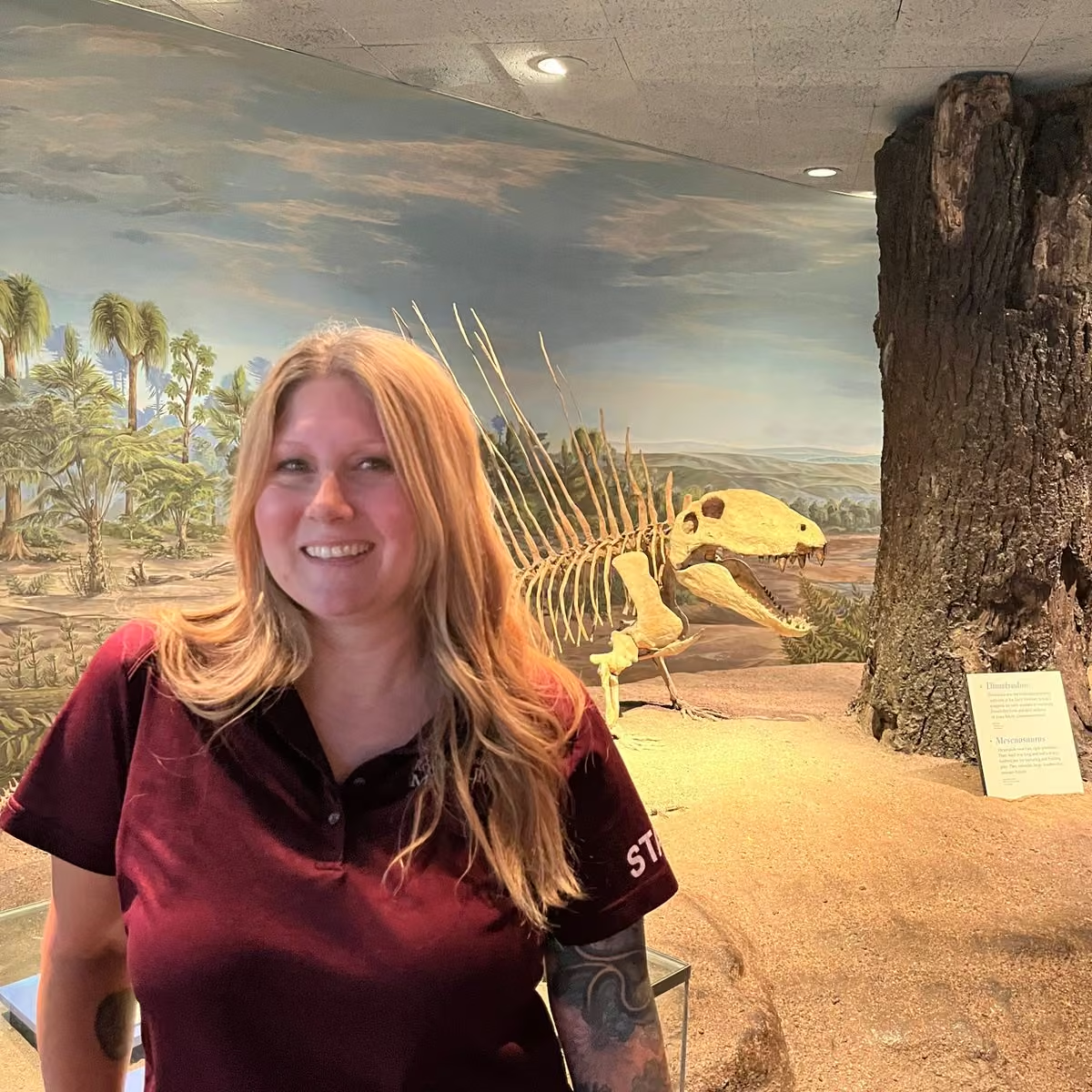
-
Royal Tyrrell Museum of Palaeontology
@RoyalTyrrell
New research by a team including our Dr. Christopher West investigates the picky eating habits of Borealopelta markmitchelli, the world’s best-preserved armoured dinosaur. Learn more: royaltyrrellmuseum.wpcomstaging.com/2022/12/20/borealopel… #rtmpresearch
Royal Tyrrell Museum of Palaeontology
@RoyalTyrrell
Previous research analyzing the stomach contents of Borealopelta found its last meal consisted of mostly ferns, along with conifers, cycads, twigs and stems, and charcoal. Now, 5 fossil sites and 3,000+ plant fossils later, scientists are providing new insights into these results
Royal Tyrrell Museum of Palaeontology
@RoyalTyrrell
Sampling indicates that even where ferns were locally abundant, conifers and other gymnosperms were still the dominant vegetation. These results provide further evidence that Borealopelta markmitchelli was preferentially looking for ferns over more widely available vegetation.
-
Royal Tyrrell Museum of Palaeontology
@RoyalTyrrell
-
Royal Tyrrell Museum of Palaeontology
@RoyalTyrrell
Joseph ‘Brrr’ Tyrrell has been sporting a hat this month to keep warm and festive. The Museum is open Tuesdays – Sundays, 10 a.m. – 5 p.m. Closed on Dec. 24 & 25 and Jan. 1 & 2. Happy Holidays!
-
Royal Tyrrell Museum of Palaeontology
@RoyalTyrrell
#newpalaeoresearch suggests that ankylosaurs may have used their tail clubs as weapons for fighting against other ankylosaurs, much like modern deer use their antlers for intraspecific combat.
Learn more: arstechnica.com/science/2022/12/ankylosaurs-tails-may-hav… -
Royal Tyrrell Museum of Palaeontology
@RoyalTyrrell
It’s time for the letter Q in our Collections A – Z series. “Quill knobs,” a row of bumps along the ulna where the secondary feathers anchor to the bone, are a distinct feature of modern birds. A few non-avian dinosaur fossils that preserve this feature have been found.
Royal Tyrrell Museum of Palaeontology
@RoyalTyrrell
Our Apatoraptor skeleton was studied by Funston and Currie in 2016; a CT scan of the forearm revealed quill knobs along the surface of the bone. #rtmpcollections
Royal Tyrrell Museum of Palaeontology
@RoyalTyrrell
Although feathers were not preserved in the rock, the presence of quill knobs indicates that the caenagnathid possessed large feathers on its arms. #rtmpcollections
-
Royal Tyrrell Museum of Palaeontology
@RoyalTyrrell
Our Dr. François Therrien led prospecting expeditions to some of the protected areas around Dry Island Buffalo Jump this fall. His team collected a rib that preserves several tooth marks left behind by a small, carnivorous dinosaur. #rtmpfieldwork
Royal Tyrrell Museum of Palaeontology
@RoyalTyrrell
While hiking through Dry Island Buffalo Jump Provincial Park, the crew also visited the famous Pisces Point fish locality. Here, Dr. Therrien points out tabular cross-stratification in a sandstone layer, preserving migration of sandbars in an ancient braided river.
-
Royal Tyrrell Museum of Palaeontology
@RoyalTyrrell
In a recent @SmithsonianMag article, our Dr. James Gardner comments on a recent paper in “Climate Change Ecology” investigating how frogs survived the extinction of the dinosaurs 66 million years ago.
Royal Tyrrell Museum of Palaeontology
@RoyalTyrrell
The trick, according to the researchers? Frogs had to be just the right size—not too big or too small—to persevere. Learn more here:
www.smithsonianmag.com/science-nature/how-frogs-survived-… -
Royal Tyrrell Museum of Palaeontology
@RoyalTyrrell
-
Royal Tyrrell Museum of Palaeontology
@RoyalTyrrell
The first fossils of Smilodon were discovered in cave deposits in Brazil in the mid-1800s. With nearly one-foot-long canine teeth, the name Smilodon means ‘knife tooth.’ Only one fossil has been found in Canada, but the genus was widespread in the Americas.
-
Royal Tyrrell Museum of Palaeontology
@RoyalTyrrell
Here’s a look back at the cast Mamenchisaurus skeleton being assembled for the ExTerra Foundation’s “Greatest Show Unearthed.” The original skeleton took four summers to excavate, revealing a dinosaur with a 13-metre-long neck—half the length of its entire body!
-
Royal Tyrrell Museum of Palaeontology
@RoyalTyrrell
We’ve reached the letter P in our Collections A – Z series. Parksosaurus warreni is a great example of a species of dinosaur known only from a single specimen. The first specimen was collected by the Royal Ontario Museum at a site north of Drumheller in 1922. #fossilfriday
Post not available here, view on X
Royal Tyrrell Museum of Palaeontology
@RoyalTyrrell
Since its initial discovery 100 years ago, no other skeletons of this animal have been found. Our understanding of the evolutionary relationships of small, plant-eating dinosaurs like Parksosaurus is limited, making this single specimen extremely important.
Royal Tyrrell Museum of Palaeontology
@RoyalTyrrell
An international team including our Dr. Caleb Brown recently published a paper redescribing the anatomy of this Parksosaurus specimen in detail, with the hope that it will add to our understanding of these often overlooked smaller dinosaurs.
authors.elsevier.com/a/1fw0YiVLDJHcW -
Royal Tyrrell Museum of Palaeontology
@RoyalTyrrell
’Tis the season to stop by and check out our new holiday display. Bring the whole family and pose for photos with our ‘Tri-carrot-ops’!
-
Royal Tyrrell Museum of Palaeontology
@RoyalTyrrell
It’s a marshmallow world in the badlands! This new holiday ornament features a Pachyrhinosaur parent and child, and would make a great gift. To order now, call our shop at 403-823-8899 or email shop@tyrrellmuseumshop.com.
TreatYoSelfTuesday -
Royal Tyrrell Museum of Palaeontology
@RoyalTyrrell
-
Royal Tyrrell Museum of Palaeontology
@RoyalTyrrell
The trilobite genus Scutellum includes more than a dozen species. The name means ‘little shield,’ thanks to the hard exoskeleton that covers it. This specimen came from Zona di Alnif in Morocco, an area known for exquisitely preserved fossils from the Devonian Period.
-
Royal Tyrrell Museum of Palaeontology
@RoyalTyrrell
Peter Hodgkinson reported a fossil site along the Red Deer River north of Drumheller this fall. Peter joined our team to collect the material, which included the upper jaw of an Albertosaurus, along with various isolated teeth and bone fragments.
-
Royal Tyrrell Museum of Palaeontology
@RoyalTyrrell
In this week’s edition of our Collections A – Z series, we’ve reached the letter O. Oreopithecus is an extinct ape that lived nine million years ago in what is now the Tuscany region of Italy. Some scientists hypothesize that it walked upright on two legs, similar to humans.
-
Royal Tyrrell Museum of Palaeontology
@RoyalTyrrell
This fossil from Montana has been cut open to show off these strange features.
What could it be?
#rtmpfossilchallenge
Royal Tyrrell Museum of Palaeontology
@RoyalTyrrell
Unlike ammonites, nautilus shells have simple curved walls separating each chamber. They also survived the extinction event at the end of the Cretaceous Period. This shell belongs to the genus Eutrophoceras, which went extinct about five million years ago.
-
Royal Tyrrell Museum of Palaeontology
@RoyalTyrrell
Your responses to a short survey will help us as we develop a public badlands hike for adults—a new offering for summer 2023. Provide input here: www.surveymonkey.com/r/DFCPKRB Thank you for your support!
-
Royal Tyrrell Museum of Palaeontology
@RoyalTyrrell
These dinosaurs found their way into our Fabrication Shop, where they helped put the finishing touches on the Museum’s holiday display. Stay tuned for the unveiling in our lobby! #dinovember
-
Royal Tyrrell Museum of Palaeontology
@RoyalTyrrell
Unlike humans, the two lower jaw bones of tyrannosaurs do not fuse together as the animal develops. These bones are instead held together by ligaments, allowing for some mobility in the jaw. After death, these bones may completely separate.
#tyrannosaurtuesday -
Royal Tyrrell Museum of Palaeontology
@RoyalTyrrell
-
Royal Tyrrell Museum of Palaeontology
@RoyalTyrrell
Hidden in our Cretaceous Alberta exhibit is the small mammal Didelphodon. Its name means “opossum tooth.” Like the modern opossum, it was a small marsupial mammal. It lived ~70 million years ago alongside the dinosaurs—a time when marsupial diversity was much higher.
-
Royal Tyrrell Museum of Palaeontology
@RoyalTyrrell
Did you miss the chance to register your little ones for our weekly Kidosaurus Club program? We’ll add a second session if there’s enough interest! To learn more and join the waiting list, visit: www.tyrrellmuseum.com/whats_on/activities/kidosaurus_club
-
Royal Tyrrell Museum of Palaeontology
@RoyalTyrrell
In our Collections A – Z series, N is for the Neogene Period. Lasting from 23 – 2.6 million years ago, it's marked by a great exchange of species between North & South America as the Isthmus of Panama formed. Most mammalian families alive today first appeared during this period.
-
Royal Tyrrell Museum of Palaeontology
@RoyalTyrrell
The fossilized skeleton of this tiny critter was found in Wyoming’s Green River Formation.
What is it?
#rtmpfossilchallenge
Royal Tyrrell Museum of Palaeontology
@RoyalTyrrell
Wyoming’s Eocene-aged fossil deposits capture beautifully preserved flora and fauna including leaves, insects, and much more. Our Echmatemys haydeni turtle skeleton provided researchers with the first look at details of this species’ skull.
-
Royal Tyrrell Museum of Palaeontology
@RoyalTyrrell
Thanks to a public fossil report, our team recently collected a partial ceratopsian frill from a site north of the Museum. They also found a set of tail vertebrae from a duck-billed dinosaur that appear to have fused together after an injury. #rtmpfieldwork
-
Royal Tyrrell Museum of Palaeontology
@RoyalTyrrell
These curious dinosaurs found their way into our Learning Centre. Somehow, they managed to make some fossil casts. We were pleasantly surprised by the quality of their handiwork—and by the lack of mess! #dinovember
-
Royal Tyrrell Museum of Palaeontology
@RoyalTyrrell
Looking for some unique gifts for your loved ones this holiday season? Check out our online shop! There are plenty of options to suit every age and interest for those on your list. www.tyrrellmuseumshop.com
-
Royal Tyrrell Museum of Palaeontology
@RoyalTyrrell
-
Royal Tyrrell Museum of Palaeontology
@RoyalTyrrell
The first skeleton of the hadrosaur Gryposaurus was found in the Red Deer River Valley in 1913. With a prominently arched nasal bone, it’s no wonder the name means “hook-nosed lizard.” Have you spotted this giant in our Dinosaur Hall on your visits?
🎨: © Andrey Atuchin -
Royal Tyrrell Museum of Palaeontology
@RoyalTyrrell
Our Kidosaurus Club is back! Children aged 3 – 5 can join our weekly programs every Saturday from 10:15 – 11:45 a.m. Kidosaurus Club runs from January 7 – February 11, 2023. Be sure to register your little ones now before the class fills up! Learn more: tyrrellmuseum.com/whats_on/activities/kidosaurus_club
-
Royal Tyrrell Museum of Palaeontology
@RoyalTyrrell
We’ve reached the letter M in our Collections A – Z series. Several important fossils have been found in the Manyberries area of Alberta. Here are examples from our collection, including a baculite, mosasaur, and turtle. #fossilfriday
-
Royal Tyrrell Museum of Palaeontology
@RoyalTyrrell
This skeleton was collected from Dinosaur Provincial Park almost 30 years ago.
Which animal is it?
#rtmpfossilchallenge
Royal Tyrrell Museum of Palaeontology
@RoyalTyrrell
This is the world’s most complete Ornithomimus skeleton. All but a couple hand bones are preserved in life position. The fossils were completely hidden within the rock, and were discovered when a jackhammer hit the shoulder blade while the crew was digging for plant fossils.
-
Royal Tyrrell Museum of Palaeontology
@RoyalTyrrell
Thanks to @KneehillCounty for providing staff and an all-terrain vehicle to assist our team with the removal of a partial hadrosaur skeleton from Horseshoe Canyon this fall. Thanks also to the Nature Conservancy @NCC_CNC for granting land access during the retrieval.
-
Royal Tyrrell Museum of Palaeontology
@RoyalTyrrell
Is this what happens when the Museum’s Collections area is left unattended? We caught these dinosaurs checking out their own fossils! Or perhaps they’re just playing a game of hide and seek? #dinovember
-
Royal Tyrrell Museum of Palaeontology
@RoyalTyrrell
Some rocks may have a head-like appearance, but look closer and you’ll notice missing details. Skulls of animals like tyrannosaurs are made of many smaller, fragile bones. These bones do not fuse together, and may become separated after death.
#tyrannosaurtuesday -
Royal Tyrrell Museum of Palaeontology
@RoyalTyrrell
-
Royal Tyrrell Museum of Palaeontology
@RoyalTyrrell
Baculites were straight-shelled cephalopods that inhabited Late Cretaceous seas around the world. The genus was described by Lamarck in 1799. Thanks to the long, cylindrical shape of the fossilized shells, the name means “walking stick rock.”
-
Royal Tyrrell Museum of Palaeontology
@RoyalTyrrell
Our staff are so passionate about palaeontology that they even organize outings to fossil sites on their days off! This group spent 11 hours hiking to the Burgess Shale site near Yoho, B.C. They were in awe of the fossils they saw, including Marella, Opabinia, and trilobites.
-
Royal Tyrrell Museum of Palaeontology
@RoyalTyrrell
This partial skeleton was collected from Drumheller shortly after the Museum opened.
Do you know what it is?
#rtmpfossilchallenge
Royal Tyrrell Museum of Palaeontology
@RoyalTyrrell
This skeleton of Champsosaurus albertensis is one of the more complete specimens in our collection, but the elements are not articulated. Many casts have been created to put the animal back together. This set of fossils travelled to Japan for an overseas display in 2000.
-
Royal Tyrrell Museum of Palaeontology
@RoyalTyrrell
The Museum is open regular hours, 10 a.m. – 5 p.m., on Friday, November 11.
-
Royal Tyrrell Museum of Palaeontology
@RoyalTyrrell
We followed a trail of markers and found the dinosaurs in our administration office! They got into the stationery supplies. What message do you think they’re trying to share with us? #dinovember
-
Royal Tyrrell Museum of Palaeontology
@RoyalTyrrell
A tyrannosaur ‘smile’ appears far more jagged and uneven than a human smile. That’s because their teeth were lost and replaced at different rates throughout their lives. The tooth fairy must have been very busy in the Cretaceous!
#tyrannosaurtuesday -
Royal Tyrrell Museum of Palaeontology
@RoyalTyrrell
-
Royal Tyrrell Museum of Palaeontology
@RoyalTyrrell
The smooth, blocky head and robust beak of Psittacosaurus are why it was named the “parrot lizard.” Although it lacks many characteristics that the ceratopsians are known for, it is still part of the same group, although restricted to Asia and Russia. 🎨 by Julius Csotonyi
-
Royal Tyrrell Museum of Palaeontology
@RoyalTyrrell
While marvelling at this beautiful reconstruction that transports us back to Palaeocene Alberta, don’t forget to peek under the tree roots! This snapping turtle model is based on a fossil found near Blackfalds, AB.
#rtmpgalleryglimpse (Diorama by Blue Rhino Studio) -
Royal Tyrrell Museum of Palaeontology
@RoyalTyrrell
This skeleton is among the favourites encountered by visitors to our collections storage area.
What could it be?
#rtmpfossilchallenge
Royal Tyrrell Museum of Palaeontology
@RoyalTyrrell
This Gorgosaurus skeleton was collected in Dinosaur Provincial Park in 1999. It was one of the largest single blocks ever collected by Museum staff. It took 19 people and 2 ATVs to flip this specimen. It then took 5 hours to haul the 9,500 kg block to the trailer for transport.
-
Royal Tyrrell Museum of Palaeontology
@RoyalTyrrell
In our Collections A – Z series, L is for Latoplatecarpus. Many mosasaur species have been found in Alberta, but fossils of this genus in our collection come from Morden, MB. These marine reptiles were swift predators in the Bearpaw Sea of North America. 🖌© @Paleoartologist
-
Royal Tyrrell Museum of Palaeontology
@RoyalTyrrell
#dinovember is back! It looks like some dinosaurs were doing a little light reading in the Museum’s staff library last night.
What do you think they were searching for? -
Royal Tyrrell Museum of Palaeontology
@RoyalTyrrell
Although tyrannosaur fossils are rather abundant, trackways attributed to this group are relatively rare. These footprints were found in northeastern B.C. in 2014. Researchers have identified 3 tyrannosaur track-makers walking together in the same direction.
#tyrannosaurtuesday -
Royal Tyrrell Museum of Palaeontology
@RoyalTyrrell
Happy Halloween from Candy Corn-otaurus!
#halloween2022 -
Royal Tyrrell Museum of Palaeontology
@RoyalTyrrell
© Peanuts Worldwide LLC
#mememonday -
Royal Tyrrell Museum of Palaeontology
@RoyalTyrrell
We love seeing the beautiful art pieces inspired by our Museum’s exhibits! Be sure to share your artwork by tagging us, or by using the hashtag #rtmpartwork. @Sharp_Sticks
-
Royal Tyrrell Museum of Palaeontology
@RoyalTyrrell
In a recent @CTVCalgary interview, the Royal Tyrrell Museum’s Dr. François Therrien talked about fieldwork in Alberta, and provided some great tips on reporting fossil finds. Check it out!
calgary.ctvnews.ca/video?clipId=2545965 -
Royal Tyrrell Museum of Palaeontology
@RoyalTyrrell
Next up in our Collections A – Z series is K, for K-Pg boundary. This slab provides evidence of the extraterrestrial impact event that led to the demise of the dinosaurs. The clay layer in the middle is enriched with iridium, a rare element on Earth, but abundant in asteroids.
Royal Tyrrell Museum of Palaeontology
@RoyalTyrrell
K-Pg is short for Cretaceous-Palaeogene, marking the transition between the two periods. This iridium-rich layer can be found at K-Pg sites around the world, a reminder of how deadly this extinction event was on a global scale.
-
Royal Tyrrell Museum of Palaeontology
@RoyalTyrrell
This fearsome mouth belongs to an animal that was unintentionally discovered while preparing another specimen. To whom does it belong?
#rtmpfossilchallenge
Royal Tyrrell Museum of Palaeontology
@RoyalTyrrell
A skull of the extinct fish Enchodus was found preserved alongside a massive Prognathodon skeleton during preparation. These fossils were found in an Ammolite mine in southern Alberta in 2018. The circumstances that led to their mutual burial are unclear.
-
Royal Tyrrell Museum of Palaeontology
@RoyalTyrrell
One of the most unique skulls on display at the Royal Tyrrell Museum belongs to the mammal-like reptile Estemmenosuchus. The name is Greek for “crowned crocodile.” The bony skull projections give it an almost gargoyle-like appearance. 🎨 © Tigran Nshanyan
-
Royal Tyrrell Museum of Palaeontology
@RoyalTyrrell
A new @CanadianMint coin features Mercuriceratops! It was named after the Greek god Mercury thanks to wing-like projections on its frill. Illustration by palaeoartist Julius Csotonyi, with scientific consultation by Dr. François Therrien. Learn more at: www.mint.ca/en/blog
-
Royal Tyrrell Museum of Palaeontology
@RoyalTyrrell
Thanks to a public report, a ceratopsian jaw and horn core were recovered from the Tolman Bridge area. Their position within the rocks suggests these are likely Anchiceratops fossils—a reminder that it’s important to leave fossils in place and report them for proper collection.
-
Royal Tyrrell Museum of Palaeontology
@RoyalTyrrell
The final coin in our @CanadianMint series features our iconic Gorgosaurus libratus skeleton in the death pose. Our senior technician Darren Tanke and former curator Dr. Philip Currie found this specimen while prospecting for fossils in southern Alberta in 1991.
-
Royal Tyrrell Museum of Palaeontology
@RoyalTyrrell
The @CanadianMint released its Dinosaurs of Canada coin collection in 2019. One species featured in the series is Pachyrhinosaurus canadensis, a horned dinosaur that could reach 8 m in length. The name Pachyrhinosaurus means “thick-nosed lizard” due to the bony boss on its snout.
-
Royal Tyrrell Museum of Palaeontology
@RoyalTyrrell
Marrella splendens is depicted on this @CanadianMint Ancient Canada coin. Fossils of this invertebrate scavenger have been found in the Burgess Shale, a site in Yoho National Park that preserves an abundance of bizarre, soft-bodied animals of the Cambrian Period.
-
Royal Tyrrell Museum of Palaeontology
@RoyalTyrrell
This @CanadianMint coin depicts one of our most famous specimens, an Ornithomimus skeleton discovered in Dinosaur Provincial Park, AB in 1995. Dr. François Therrien provided scientific consultation for the coin. #eurekamw
-
Royal Tyrrell Museum of Palaeontology
@RoyalTyrrell
This @CanadianMint coin features a reconstruction of a giant pterosaur, the largest flying creature to have ever existed. At the time the coin was developed, the only specimen known from Canada (housed in our collection) was thought to belong to the genus Quetzalcoatlus.
-
Royal Tyrrell Museum of Palaeontology
@RoyalTyrrell
Check out this @CanadianMint glow-in-the-dark hatching hadrosaur coin from 2019! Alberta is one of the few places in the world where dinosaur embryos have been found. A large nesting site was discovered at Devil’s Coulee in southern Alberta in 1987.
-
Royal Tyrrell Museum of Palaeontology
@RoyalTyrrell
This @CanadianMint coin features the ceratopsian (horned dinosaur) Styracosaurus albertensis! It can be distinguished from its cousin Triceratops by the large horn on its nose, and horns extending back from its frill. Photo of a juvenile specimen in our collection.
-
Royal Tyrrell Museum of Palaeontology
@RoyalTyrrell
The first dinosaur coin in our new series of @CanadianMint posts features Edmontonia. George Paterson found the holotype of Edmontonia longiceps near Morrin, AB in 1928. It is a nodosaur, an armoured dinosaur that lacked a tail club, and had large spikes on its shoulders.
-
Royal Tyrrell Museum of Palaeontology
@RoyalTyrrell
We’re planning a series of posts about collector coins from the @CanadianMint that have featured amazing fossils found across the country. Do you have any in your collection?
-
Royal Tyrrell Museum of Palaeontology
@RoyalTyrrell
In one week, Dr. Michelle Stocker (Virginia Polytechnic Institute and State University) presents her Speaker Series talk “Life After Death: Evolutionary Experimentation in the Aftermath of the Permo-Triassic Mass Extinction.” Register here: us02web.zoom.us/webinar/register/WN_xvkTcrj1Tomf0P9rVfmlrQ
-
Royal Tyrrell Museum of Palaeontology
@RoyalTyrrell
Introducing the first new species of tyrannosaur discovered in Canada in 50 years. Meet Thanatotheristes degrootorum, the ‘reaper of death’! Read all about it on our blog: royaltyrrellmuseum.wpcomstaging.com/2020/02/10/announcing… #thanatotheristes #reaperofdeath #rtmpresearch
-
Royal Tyrrell Museum of Palaeontology
@RoyalTyrrell
Dr. Andrew Heckert (@appstate) will discuss aetosaurs, the evolutionary prototype of the heavily armoured animals. Join us tomorrow in our auditorium at 11 a.m. or tune into Twitter for live coverage. #speakerseries
(📷: @appstate Commercial Photography Class, Spring, 2018) -
Royal Tyrrell Museum of Palaeontology
@RoyalTyrrell
Interested in working at Canada’s dinosaur museum? We are now hiring Preparations and Field Technicians for summer 2019. Visit our website for details or to apply. Application deadline Friday, January 25. www.tyrrellmuseum.com/about/preparation_and_field_technic…
-
Royal Tyrrell Museum of Palaeontology
@RoyalTyrrell
I'm dreaming of a white winter, just like the ones I used to know. Where the treetops glisten and children listen to hear dinosaurs in the snow. 🎄❄️
-
Royal Tyrrell Museum of Palaeontology
@RoyalTyrrell
Today is the 160th birthday of our namesake J.B. Tyrrell! In 1884 he discovered Canada’s first meat-eating dinosaur just a few kilometres from where the Museum now stands. www.independent.co.uk/news/science/joseph-burr-tyrrell-go…
-
Royal Tyrrell Museum of Palaeontology
@RoyalTyrrell
Lift #1 is successful. This specimen is the back end and legs of an ornithomimid dinosaur from the Horseshoe Canyon Formation. #livefromthefield
-
Royal Tyrrell Museum of Palaeontology
@RoyalTyrrell
#onthisday in 1985 we opened our doors to the public. Over the past 33 years, we have welcomed over 13 million visitors and have shared a love of palaeontology and Alberta’s rich fossil heritage with people from around the world.
-
Royal Tyrrell Museum of Palaeontology
@RoyalTyrrell
What did dinosaurs eat? What’s the biggest specimen in our collection? What is it like to be a palaeontologist? Dr. François Therrien will answer all your questions about palaeontology tomorrow for #askacurator Day!
-
Royal Tyrrell Museum of Palaeontology
@RoyalTyrrell
From research and planning to scientific interpretation and fabrication, a lot of time and resources go into building new exhibits. Our Cooperating Society has helped fund a number of our most memorable exhibits, such as Alberta’s Last Sea Dragon. #25yearsrtmcs
-
Royal Tyrrell Museum of Palaeontology
@RoyalTyrrell
Anchiceratops ornatus was first discovered in 1912 along the Red Deer River. It has a large rectangular frill edged by large triangular bony projections, as well as large orbital and nasal horns. #fossilfriday
-
Royal Tyrrell Museum of Palaeontology
@RoyalTyrrell
Just putting the finishing touches on this cast! This Albertosaurus skull cast was sent to @MifuneMuseum in Japan where it will be on display until the end of September. The original specimen is currently in our exhibit Foundations. #fossilfriday #lifeinthelab
-
Royal Tyrrell Museum of Palaeontology
@RoyalTyrrell
A tyrannosaur tooth is carefully uncovered next to other bones in our Foremost Formation bonebed #livefromthefield
-
Royal Tyrrell Museum of Palaeontology
@RoyalTyrrell
This Pachyrhinosaurus was discovered in Dinosaur Provincial Park in 2002. Its well-preserved toes show evidence of a serious disease that affected three of its feet and suggests the animal may have been in pain while walking. #fossilfriday
-
Royal Tyrrell Museum of Palaeontology
@RoyalTyrrell
Each year the city comes to us. Over 480,000 people visited this past year. We’re very lucky to be located in the beautiful badlands just outside Drumheller. #museumweek #citymw
-
Royal Tyrrell Museum of Palaeontology
@RoyalTyrrell
Interested in working at Canada’s dinosaur museum? We are hiring a Head of Marketing and Public Relations. Application deadline is Monday, May 7. Visit our website for more information or to apply. tyrrellmuseum.com/about/head_maketing_pr.htm
-
Royal Tyrrell Museum of Palaeontology
@RoyalTyrrell
Fossil preparation, managing our collection and fossil records, conservation, fieldwork, and science education are just some of the few ways our female staff contribute to preserving Alberta’s fossil heritage and educating the public about palaeontology. #museumweek #womenmw
-
Royal Tyrrell Museum of Palaeontology
@RoyalTyrrell
What can discoveries of feathers teach us about dinosaurs as living animals? Join us tomorrow in our auditorium at 11 a.m. as we unveil four realistic sculptures of Dromaeosaurus albertensis. We will be live tweeting the presentation. #speakerseries
-
Royal Tyrrell Museum of Palaeontology
@RoyalTyrrell
Using radiometric dating, we are able to compare localities like Dinosaur Provincial Park to other similarly aged locations in Alberta and around the world, allowing us to analyze the evolutionary patterns of plants and animals through time.
-
Royal Tyrrell Museum of Palaeontology
@RoyalTyrrell
“Homologous structures” are traits in two or more species inherited from a common ancestor. Humans and whales have a common ancestor and share many traits. Pictured is the forelimb of a beluga whale, highlighting the individual bones it shares in common with humans. #fossilfriday
-
Royal Tyrrell Museum of Palaeontology
@RoyalTyrrell
Justin Lemberg, Ph.D. student from @UChicago discusses how computer animation can help us understand convergent evolution. Join us tomorrow in our auditorium at 11 a.m. Due to ongoing research, this presentation will not be live-tweeted or published on YouTube. #speakerseries
-
Royal Tyrrell Museum of Palaeontology
@RoyalTyrrell
First Feathered Dinosaur Discovered in North America youtu.be/fA8fImZED9U
-
Royal Tyrrell Museum of Palaeontology
@RoyalTyrrell
Daspletosaurus torosus is now on display! This display was one of our most difficult and technical projects yet, using new technologies and artistic techniques to create the cast and mount. As far as we know, it is the only exploded dinosaur skull in the world. #fossilfriday
-
Royal Tyrrell Museum of Palaeontology
@RoyalTyrrell
We are open on Family Day, Monday, February 19! Visit our website for more information about available programs. www.tyrrellmuseum.com/news/Family_Day_Weekend.htm
-
Royal Tyrrell Museum of Palaeontology
@RoyalTyrrell
To show all 41 bones of the skull of Daspletosaurus torosus, we mounted the cast as an exploding skull. We suspended the specimen in the air to determine the position of the pieces. Once the positions were finalized, a mount was constructed to hold the specimen. #fossilfriday
-
Royal Tyrrell Museum of Palaeontology
@RoyalTyrrell
The best is yet to come. Happy new year from the Royal Tyrrell Museum. Here’s to another year of new discoveries. #happynewyear #newyearseve
-
Royal Tyrrell Museum of Palaeontology
@RoyalTyrrell
Wild dinosaurs spotted in the galleries! We love it when our visitors dress up.
-
Royal Tyrrell Museum of Palaeontology
@RoyalTyrrell
See the installation process as we transport specimens to their new home in #fossilsinfocus #fossilfriday
-
Royal Tyrrell Museum of Palaeontology
@RoyalTyrrell
Happy #internationalmuseumday! What is your favourite fossil at the Museum? #imd2016
-
Royal Tyrrell Museum of Palaeontology
@RoyalTyrrell
In the process of exposing a Palaeocene trionychid (soft shelled) turtle skull collected in 2015 #fossilfriday
-
Royal Tyrrell Museum of Palaeontology
@RoyalTyrrell
Free admission to the Museum with donation of used mobile device on April 22! #earthday2016
tyrrellmuseum.com/media/EarthDay-PDFpage.pdf -
Royal Tyrrell Museum of Palaeontology
@RoyalTyrrell
One of our volunteers is working on the rib of a Triceratops; this rib is huge! #fossilfriday #palaeontology
-
Royal Tyrrell Museum of Palaeontology
@RoyalTyrrell
Royal Tyrrell Museum announces new species of dinosaur. www.tyrrellmuseum.com/news/Regaliceratops-release.htm #dinosaurcountry #palaeontology
-
Royal Tyrrell Museum of Palaeontology
@RoyalTyrrell
More fossil preparation @TELUS_Spark. There is a piece of turtle shell in with the hadrosaur dentary (lower jaw).