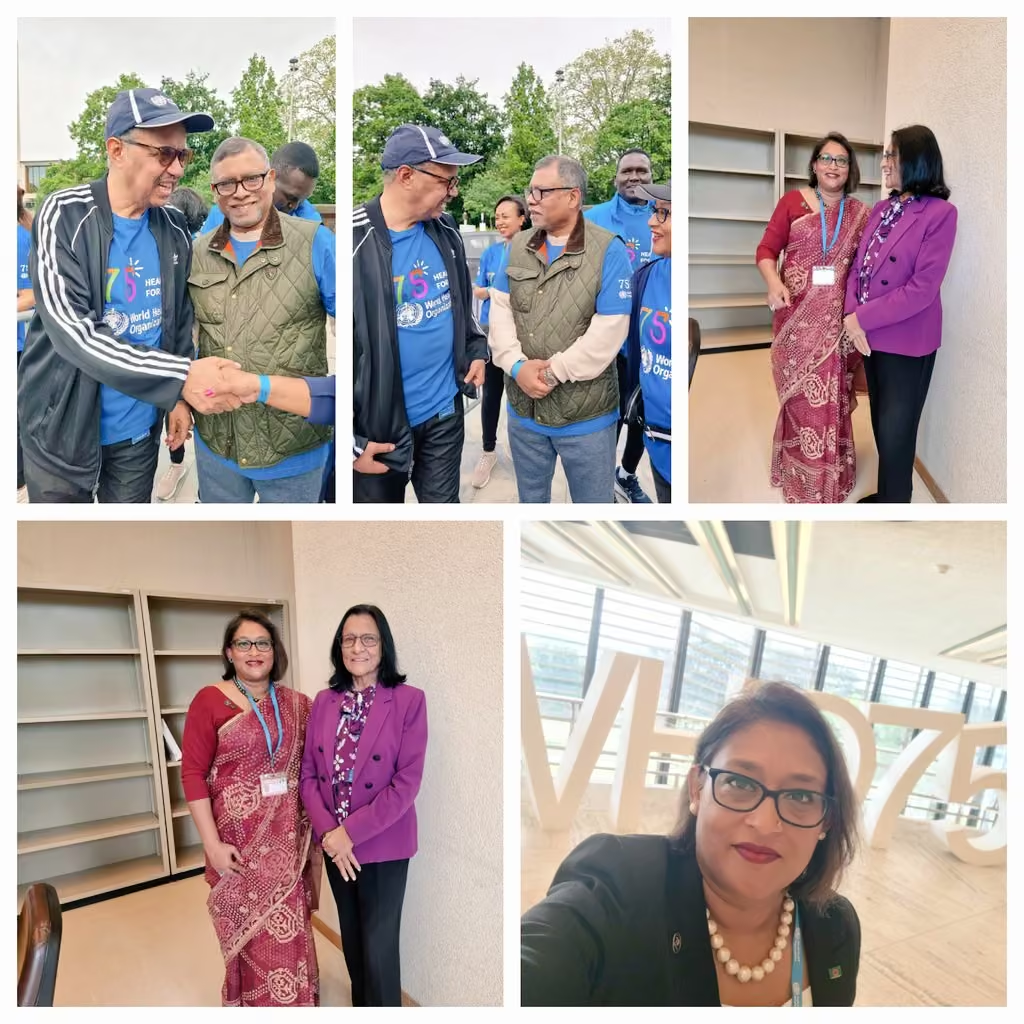
Today, April 7th, is @WHO's founding anniversary - the day our constitution came into force.
This is the day chosen to mark #worldhealthday - the theme of which this year is “My health, my right.”
This year’s theme was chosen to champion the right of everyone everywhere to access quality health services, education, and information.
It tells us of the right to safe drinking water, clean air, and good nutrition.
It reminds us that quality housing, decent working and environmental conditions, and freedom from discrimination should be enjoyed by everyone.
Put simply, this is a reminder that every person, regardless of circumstance, deserves the highest standard of mental and physical well-being.
Realizing this right to health demands comprehensive action. We have to guarantee that both health services, and the underlying determinants of health, are available, accessible, acceptable, and of adequate quality.
Today, on World Health Day, I would like to reiterate my vision for @WHOSEARO.
I envision a region where people take a holistic approach to health and well-being, and are physically and mentally empowered to achieve their full potential.
As we are reminded today, health is a basic human right. We want a Region where this right is enjoyed by everyone, starting from before birth, including the most vulnerable, and covering every community.
The manifestation of this is more than access to healthcare facilities and services. It manifests in a comprehensive array of realised rights that enable people to lead healthy lives.
These include access to education, safe food & water, housing, favourable working conditions, and a clean environment. These are the underlying determinants of health.
Against this backdrop, my Strategic Priorities during my tenure as Regional Director will address five distinct areas:
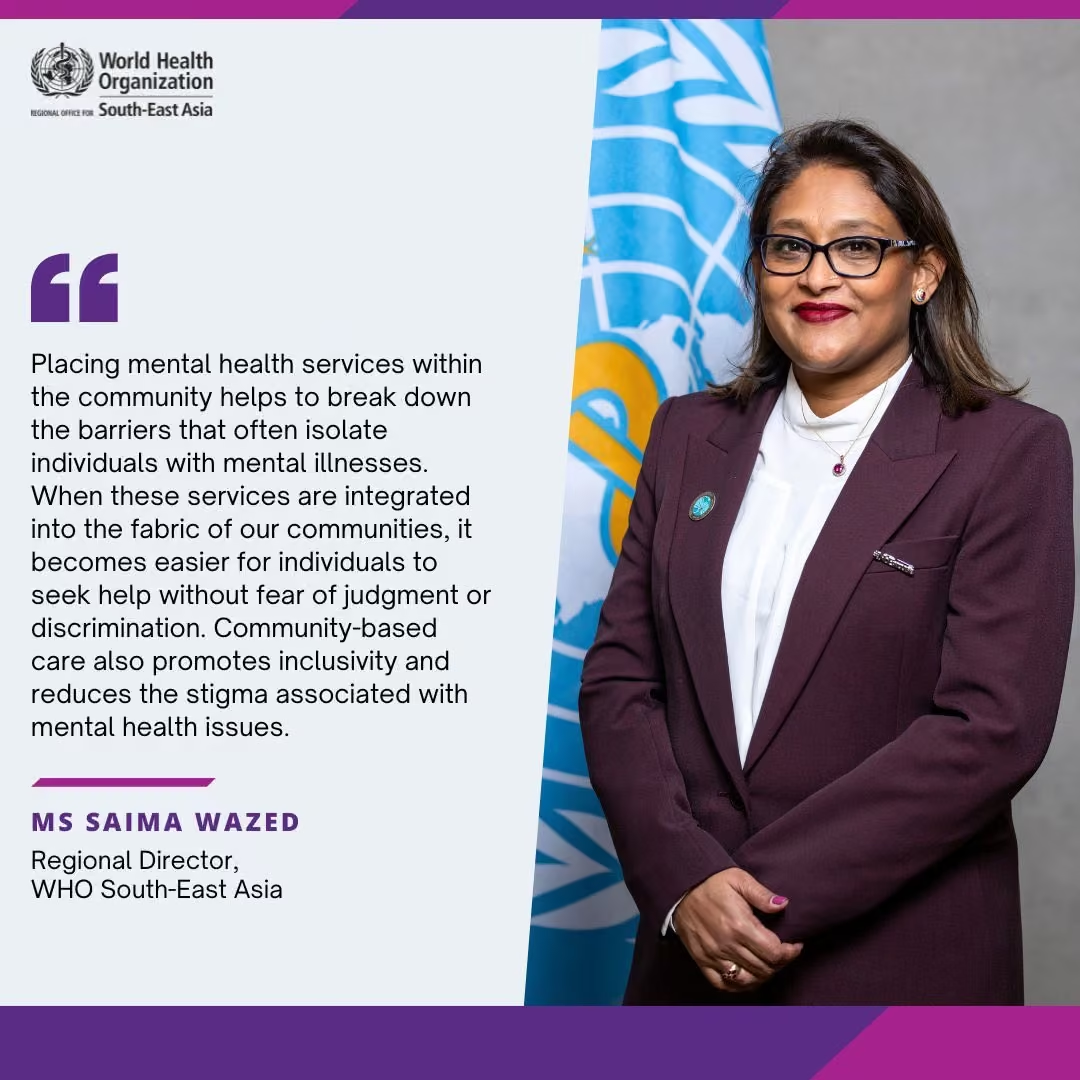
- Mental Health
- Women & Children
- Vulnerable Populations,
- Climate Change, and
- Technology & Innovations
Our region already has much to be proud of. This is because of the hard work of our Member States, our @WHO Country Offices, and all my @WHOSEARO colleagues.
We have improved in various health indicators, including the UHC service coverage index, and a significant increase in the number of health professionals.
We have substantial declines in maternal, under-five, and neonatal mortality from 2000 to 2020.
Immunization rates for various diseases have improved steadily, and many countries are on track to meet global immunization coverage targets.
New HIV and malaria infection rates have fallen, and our Region's ability to handle health emergencies has improved.
Nonetheless, challenges remain.
Almost 40% of the people in our Region's lack essential health service coverage.
Government health expenditure remains unacceptably low. This has led to high out-of-pocket expenses for people.
Tuberculosis continues to pose challenges.
The probability of death from noncommunicable diseases remains unacceptably high.
Vulnerable population groups continue to face significant barriers to healthcare access, and gender inequalities persist in access and treatment.
Violence against women and girls remains pervasive.
My five Strategic Priority areas will be designed to tackle these very challenges.
As duty-bearers, we at @WHO and our partners in government have an obligation to ensure the progressive realization of the right to health and other human rights.
We will continue asking governments to increase investments in health and strengthen health systems to advance Universal Health Coverage grounded in Primary Health Care.
We will continue asking them to implement policies that address the underlying determinants of health.
Today, on World Health Day, I would like to acknowledge my colleagues at @WHOSEARO, at our Country offices, and at @WHO. I hope you realise that together you have made South-East Asia better for millions.
I know you will continue to work hard, and I hope you will continue to inspire and improve our region with science, solutions and solidarity.


 Saima Wazed
@drSaimaWazed

 Sajeeb Wazed
@sajeebwazed

 Dr Saia Ma'u Piukala


 Yohei Sasakawa

 World Health Organization South-East Asia


 June Kunugi


 PIB India


 UN Biodiversity

 WHO Nepal


 Ministry of Health, Family and Welfare

 UN in the Maldives


 Etienne Krug


 Chikwe Ihekweazu


 WHO Timor-Leste


 Dr. Hanan H. Balkhy | د. حنان حسن بلخي




 WHO African Region


 Jagat Prakash Nadda


 NCD Alliance






 WHO Sri Lanka


 Luke J. Lindberg


 World Health Organization Bangladesh

 WHO Afghanistan

 WHO Indonesia




 Chungong Stella


 Dechen Wangmo


 Dr. Ahmed Ashraf




 Dr Ooi Hean @WHO

 WHO Maldives


 Ministry of Foreign Affairs 🇲🇻




 Hai Kyung Jun


 India at UN, Geneva








 Global Center on Adaptation


 Claire Munoz Parry 🌎 🇪🇺🇪🇸🇬🇧💙


 Rob Yates

 Roland Mollerus



 Dr Valentina Iemmi, PhD


 Chatham House Global Health Programme