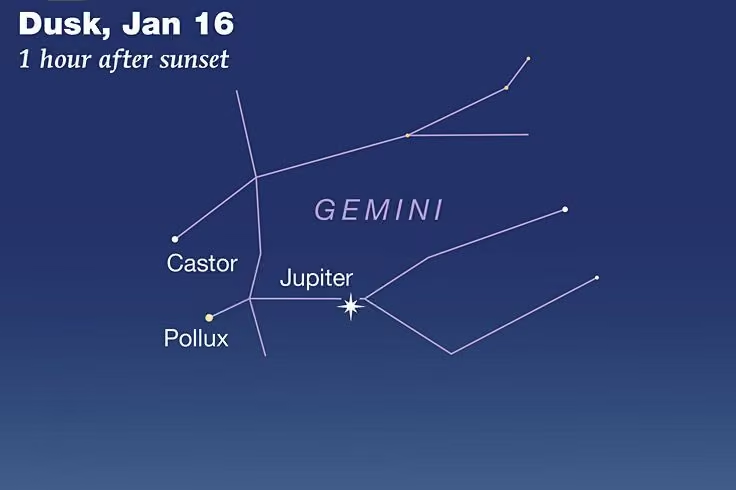
Jupiter routinely occults and eclipses its four bright Galilean moons. Over the next few months, the moons get in on the act, eclipsing and occulting one another!
Read more: skyandtelescope.org/astronomy-news/watch-jupiters-moons-e…
Sky & Telescope
Sky & Telescope (S&T) is a monthly magazine covering all aspects of amateur and professional astronomy, including what to see in the sky tonight and new findings in astronomy. Other topics covered include: More on Wikipedia
-
Sky & Telescope
@SkyandTelescope
-
Sky & Telescope
@SkyandTelescope
You can hold the whole world in your hand with our 6-inch (15-cm) Earth globe. The mosaic used for this globe incorporates the Natural Earth 2 database, created by cartographers worldwide.
shopatsky.com/products/sky-telescopes-15-cm-earth-globe
.
.
#astronomygifts #giftguide2026 #giftguide #earth #globe -
Sky & Telescope
@SkyandTelescope
Join Dr. Zahi Hawass, archaeologist, for a once-in-a-lifetime journey to Egypt combining the eclipse of the century with access to Egypt’s ancient wonders.
Discover the August 2027 Solar Eclipse with Archaeological Paths: archaeologicalpaths.com/solar-eclipse
From a trusted S&T partner. -
Sky & Telescope
@SkyandTelescope
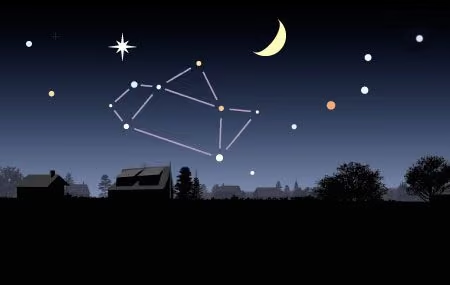
This evening the Moon floats on an enormously wide bowl asterism: the Moon Bowl. Saturn two fists to the Moon's left, Beta Ceti two fists to Saturn's lower right, Fomalhaut two fists below the Moon, and fainter Delta Capricorni to their right.
skyandtelescope.org/astronomy-news/observing-news/this-we…
#stargazing -
Sky & Telescope
@SkyandTelescope
In volume 13 of Annals of the Deep Sky, nothing in the universe is off limits with Lynx, Lyra, Mensa, Microscopium, Monoceros, Musca, Norma, and Octans. Get your copy today or gift one to your favorite astronomer.
shopatsky.com/products/annals-of-the-deep-sky-volume-13
.
.
#astronomygifts #giftguide2026 -
Sky & Telescope
@SkyandTelescope
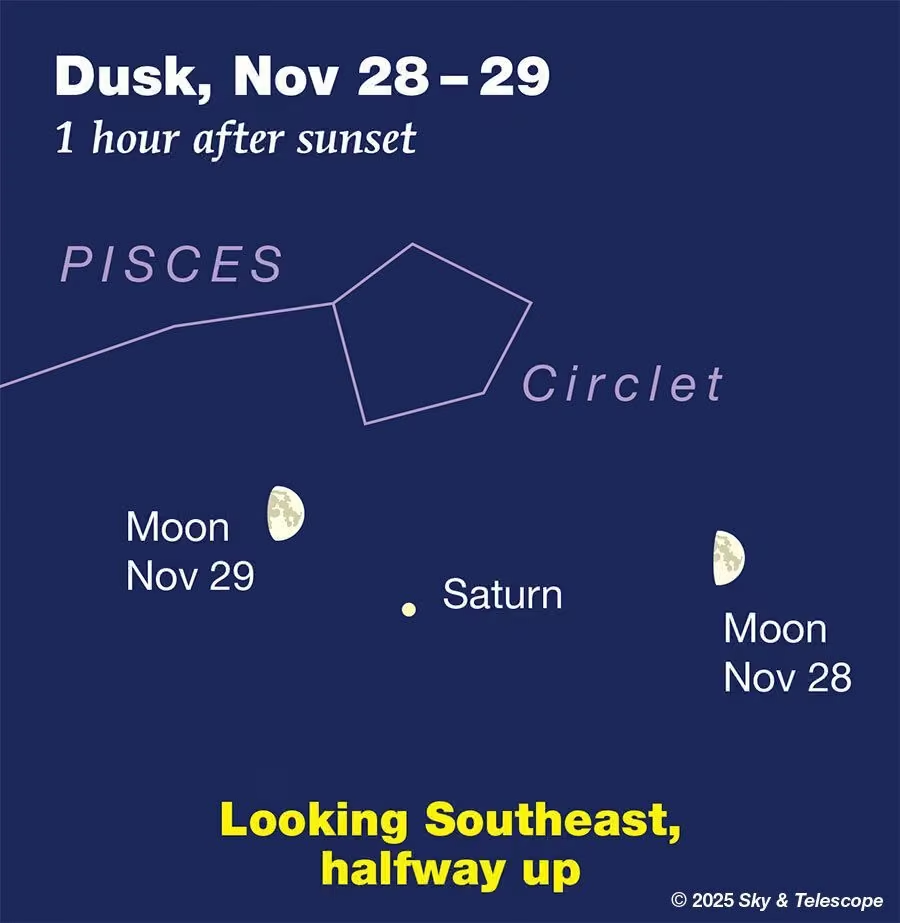
The Moon hangs due south as twilight ends. Look for Fomalhaut about two fists down from the Moon and one fist left in early evening. Spot Altair about four fists right or upper right of the Moon. Saturn glows about equally far left of the Moon.
skyandtelescope.org/astronomy-news/observing-news/this-we…
#stargazing -
Sky & Telescope
@SkyandTelescope
Hear from Voyager Project Scientist Linda Spilker as she discusses the latest updates from the Voyager probes — and what it means now that Voyager 1 has reached 1 light-day from Earth.
Read more: skyandtelescope.org/astronomy-news/voyager-1s-linda-spilk… -
Sky & Telescope
@SkyandTelescope
Is any observing setup really complete without a monthly copy of Sky & Telescope? We don't think so. Subscribe now so your telescope never has to feel lonely again.
skyandtelescope.dragonforms.com/loading.do?omedasite=SKY_…
.
.
#astronomygifts #giftguide2026 #giftguide #magazine #subscription -
Sky & Telescope
@SkyandTelescope
This episode takes you on a guided audio tour of the stars and planets that you’ll see overhead during November. So grab your curiosity, and come along on this month’s Sky Tour.
Sponsored by @Celestron
skyandtelescope.org/stargazing-and-observing/astronomy-po…
#podcast #stargazing -
Sky & Telescope
@SkyandTelescope
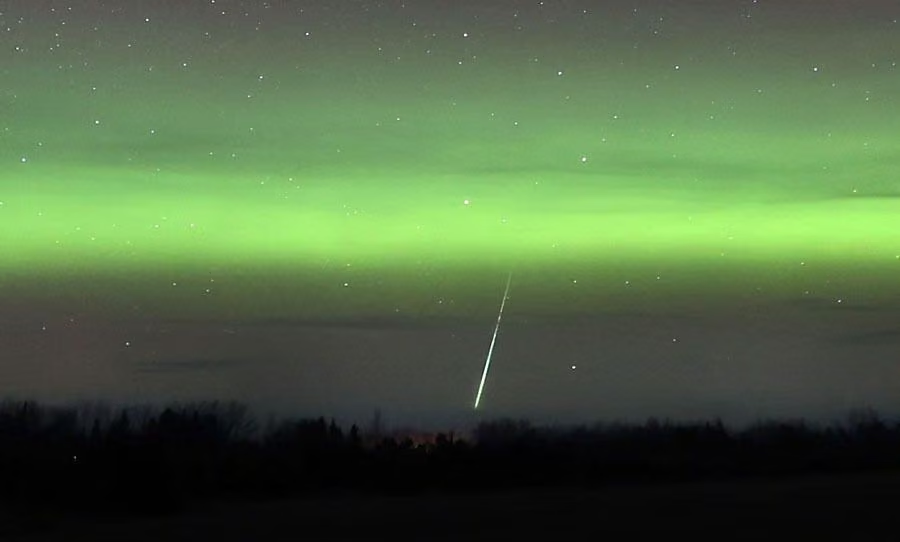
The annual Leonid meteor shower should peak late tonight and late tomorrow night. The first-quarter Moon sets around 11 tonight, and midnight tomorrow night, leaving the early-morning Leonid-watching moonlight free.
Image Credit: Koen Miskotte
skyandtelescope.org/astronomy-news/observing-news/this-we…
#stargazing -
Sky & Telescope
@SkyandTelescope
For $200 or less, you can buy a complete telescope for first-person contact with the Moon, planets, and deep-sky showpieces.
Read more: skyandtelescope.org/astronomy-equipment/four-telescopes-f… -
Sky & Telescope
@SkyandTelescope
This beautiful circular puzzle features Viking 1 Orbiter imagery of the Red Planet affixed to a strong cardboard backing. It's a great educational gift for kids and adults alike.
shopatsky.com/products/sky-telescopes-mars-puzzle
.
.
#astronomygifts #giftguide2026 #giftguide #puzzle #mars -
Sky & Telescope
@SkyandTelescope
Vega is the brightest star high in the west on November evenings. Its little constellation Lyra extends to its left. Three of Lyra's stars near Vega are interesting doubles. Barely above Vega is Epsilon Lyrae, the Double-Double.
skyandtelescope.org/astronomy-news/observing-news/this-we…
#stargazing -
Sky & Telescope
@SkyandTelescope
Show off your favorite hobby with swag from Sky & Telescope. They also make great gifts for your favorite astronomer.
portal.axomo.com/x/aas/store-item/the-concert-teest?categ…
.
.
#astronomygifts #giftguide2026 #giftguide #tshirt #swag -
Sky & Telescope
@SkyandTelescope
Pull yourself out of bed in early dawn tomorrow and look east-southeast. It may be cold out, but the hottest planets in the solar system await you there. And before it gets too bright, can you make out Spica, one of the hottest bright stars?
skyandtelescope.org/astronomy-news/observing-news/this-we…
#stargazing -
Sky & Telescope
@SkyandTelescope
Europe's Hera spacecraft is visiting the Dimorphos-Didymos asteroid system to take a close look at the aftermath of NASA's impact in 2022.
Read more: skyandtelescope.org/astronomy-news/spacecraft-investigate… -
Sky & Telescope
@SkyandTelescope
This quick-reference sky chart shows the location of all the Messier Catalog's 109 deep-sky objects. It makes a great stocking stuffer for any amateur astronomer.
shopatsky.com/products/messier-card
.
.
#astronomygifts #giftguide2025 #giftguide #stargazing #messierobjects -
Sky & Telescope
@SkyandTelescope
Jupiter and Mars are poised together high in Leo before and during dawn all week. Tomorrow morning, as shown below, they're almost at their November 16th conjunction. They and Regulus now fit within a 5.3° circle.
skyandtelescope.org/astronomy-news/observing-news/this-we…
#stargazing -
Sky & Telescope
@SkyandTelescope
Jupiter and Mars creep through their pre-dawn conjunction this week. Far lower left of them, Venus and Mercury rise to shine in early dawn.
Read more: skyandtelescope.org/astronomy-news/observing-news/this-we… -
Sky & Telescope
@SkyandTelescope
With 30 times more sky surveyed and thousands of new strong-lens candidates found, the European satellite’s latest data release lays the groundwork for cosmology breakthroughs.
Read more: skyandtelescope.org/astronomy-news/euclid-space-telescope… -
Sky & Telescope
@SkyandTelescope
Much of the sage advice of the past on buying binoculars for astronomy has become obsolete. Here's what binocular observers are saying now: skyandtelescope.org/astronomy-equipment/buying-binoculars…
.
.
#astronomygifts #giftguide2026 #giftguide #binocularobserving #binoculars -
Sky & Telescope
@SkyandTelescope
Once the stars come out, find Polaris due north. A little-known trick: Draw a straight line from Capella to Vega. Polaris is the brightest star a fist at arm's length from the center of that line. (Currently, Polaris is below that point.)
skyandtelescope.org/astronomy-news/observing-news/this-we…
#stargazing -
Sky & Telescope
@SkyandTelescope
Place Mercury, the Roman messenger to the gods, on your desk! This globe combines data from 18,000 Messenger images, specially processed to preserve the natural light and dark shading.
shopatsky.com/products/sky-telescopes-mercury-globe
.
.
#astronomygifts #giftguide2026 #giftguide #mercury #globe -
Sky & Telescope
@SkyandTelescope
Here it is November, but Deneb still shines near the zenith as the stars come out. And brighter Vega is still quite high toward the west.
skyandtelescope.org/astronomy-news/observing-news/this-we…
#stargazing -
Sky & Telescope
@SkyandTelescope
The ancient globular cluster VVV CL001 might be almost as old as the universe. But its claim to fame rests on a single star, meaning more work needs to be done.
Read more: skyandtelescope.org/astronomy-news/is-this-the-star-clust… -
Sky & Telescope
@SkyandTelescope
Sky & Telescope’s celestial atlases are the standard by which all other star atlases have been judged for more than half a century. Sky & Telescope’s Pocket Sky Atlas is the go-to celestial reference!
shopatsky.com/products/pocket-sky-atlas-second-edition
.
.
#astronomygifts #giftguide2026 #giftguide #atlas -
Sky & Telescope
@SkyandTelescope
Sometime around 8 p.m., depending on where you live, zero-magnitude Capella will have risen exactly as high in the northeast as zero-magnitude Vega has sunk in the west-northwest. How accurately can you time their perfect balance?
skyandtelescope.org/astronomy-news/observing-news/this-we…
#stargazing -
Sky & Telescope
@SkyandTelescope
Our passing glance at Miranda, the fifth-largest moon of Uranus, revealed a bizarre geology that has yet to be explained.
Read more: skyandtelescope.org/stargazing-and-observing/celestial-ob… -
Sky & Telescope
@SkyandTelescope
Get them the gift that lasts all year with a subscription to Sky & Telescope magazine.
skyandtelescope.dragonforms.com/loading.do?omedasite=SKY_…
.
.
#astronomygifts #giftguide2026 #giftguide #magazine #subscription -
Sky & Telescope
@SkyandTelescope
Did you know you can also enjoy our Sky Tour astronomy podcast on YouTube?
www.youtube.com/watch?v=nVhpOFyDBq8
#podcast #youtube #stargazing -
Sky & Telescope
@SkyandTelescope
Algol is at minimum light for a couple hours centered on 7:23 p.m. EST tonight.
skyandtelescope.org/astronomy-news/observing-news/this-we…
#stargazing -
Sky & Telescope
@SkyandTelescope
The odor of hydrogen chloride in Mars’s atmosphere indicates that some form of volcanic activity is still going on.
Read more: skyandtelescope.org/astronomy-news/noxious-smoke-hints-at… -
Sky & Telescope
@SkyandTelescope
Puzzle Time! This puzzle is perfect for those long snowy night without a star in the sky. Pick one up for your favorite astronomer: shopatsky.com/products/mystic-mountain-puzzle
.
.
#astronomygifts #giftguide2026 #giftguide #puzzel #mysticmountain -
Sky & Telescope
@SkyandTelescope
As soon as the stars come out, the Great Square of Pegasus still balances on its corner, more or less, high in the southeast. Brighter Saturn shines below it. But in just an hour or so the Square turns around to lie level high in the south.
skyandtelescope.org/astronomy-news/observing-news/this-we…
#stargazing -
Sky & Telescope
@SkyandTelescope
Stay warm this holiday season while on the go or at the telescope with S&T-branded winter apparel.
portal.axomo.com/x/aas/store-item/circular-rib-beaniest?c…
.
.
#astronomygifts #giftguide2026 #giftguide #swag #hat -
Sky & Telescope
@SkyandTelescope
After dark this week Capella shines well up in the northeast, and the Pleiades are well up three fists to Capella's right. As evening grows later, you'll find orange Aldebaran climbing up below the Pleiades.
skyandtelescope.org/astronomy-news/observing-news/this-we…
.
.
#stargazing -
Sky & Telescope
@SkyandTelescope
S&T's Laminated Moon Maps make great stocking stuffers for your favorite Luna lover.
shopatsky.com/products/moon-map-laminated
.
.
#astronomygifts #giftguide2026 #giftguide #moon #moongazing -
Sky & Telescope
@SkyandTelescope
As dawn begins to brighten on Saturday morning the 7th, look low in the east-southeast for Venus. Within 2° of it (depending on your location) are shy Spica and the very thin waning crescent Moon, just two days from new.
skyandtelescope.org/astronomy-news/observing-news/this-we…
.
.
#stargazing -
Sky & Telescope
@SkyandTelescope
A new ultraviolet space telescope will fill a gap in the spectrum, bearing witness to cosmic cataclysms and probing the evolution of the early universe.
Read more: skyandtelescope.org/astronomy-news/nasa-moves-ahead-with-… -
Sky & Telescope
@SkyandTelescope
Fireball alert? Maybe. The weak, prolonged Southern and Northern Taurid meteor showers sputter along from mid-October through mid- to late November. This week we're roughly in their slow, overlapping peaks.
skyandtelescope.org/astronomy-news/observing-news/this-we…
#stargazing -
Sky & Telescope
@SkyandTelescope
So you wanna buy (or gift) a telescope? Make sure our buying guide is your first stop: skyandtelescope.org/astronomy-equipment/how-to-choose-a-t…
.
.
#astronomygifts #giftguide2026 #giftguide #telescope #astronomylovers -
Sky & Telescope
@SkyandTelescope
Hamilton’s code sent humans to the Moon with a “defensive programming” mindset.
Read more: skyandtelescope.org/astronomy-news/people-places-and-even… -
Sky & Telescope
@SkyandTelescope
Annals of the Deep Sky Volume 13 just arrived at Shop@Sky! Grab your copy now while supplies last: shopatsky.com/products/annals-of-the-deep-sky-volume-13
#annalsofthedeepsky #stargazing #booklaunch #outnow #justdropped -
Sky & Telescope
@SkyandTelescope
Here it is November, but Deneb still shines right near the zenith as the stars come out. And brighter Vega is still not far from the zenith. The third star of the "Summer" Triangle, Altair, remains high in the southwest. Why have they stalled out?
Answer: skyandtelescope.org/astronomy-news/observing-news/this-we… -
Sky & Telescope
@SkyandTelescope
Have you ever seen the Northern Lights? This book from Bob King has everything you need to prepare to watch this "magnetic" phenomenon. And it makes a great gift.
shopatsky.com/products/magnificent-aurora
.
.
#astronomygifts #giftguide2026 #giftguide #aurora #book -
Sky & Telescope
@SkyandTelescope
Asteroids that come too close to the Sun don't last long. Now astronomers think they might know why.
Read more: skyandtelescope.org/astronomy-news/sunlight-pulverizes-as… -
Sky & Telescope
@SkyandTelescope
Sometime around 9 p.m., depending on where you are, zero-magnitude Capella will have risen exactly as high in the northeast as zero-magnitude Vega has sunk in the west-northwest. How accurately can you time this event?
skyandtelescope.org/astronomy-news/observing-news/this-we…
#stargazing -
Sky & Telescope
@SkyandTelescope
S&T's Solar Eclipse Globe is the first globe ever constructed that depicts the paths of every total solar eclipse from 2001 to 2100.
Get yours now shopatsky.com/products/sky-telescopes-solar-eclipse-globe
.
.
#astronomygifts #giftguide2026 #giftguide #solareclipse #eclipseglobe -
Sky & Telescope
@SkyandTelescope
NASA’s Swift mission will soon meet a fiery end, after more than two decades of ground-breaking science.
Read more: skyandtelescope.org/astronomy-news/swift-observatory-ends… -
Sky & Telescope
@SkyandTelescope
Orbiter and rover data are showing that water may have flowed more recently on the Martian surface, maybe even into the present era.
Read more: skyandtelescope.org/astronomy-news/mars-may-have-been-war… -
Sky & Telescope
@SkyandTelescope
Give the gift of the night sky this holiday season with a subscription to Sky & Telescope.
skyandtelescope.dragonforms.com/loading.do?omedasite=SKY_…
.
.
#astronomygifts #giftguide2026 #giftguide #magazine #subscription -
Sky & Telescope
@SkyandTelescope
In the early morning hours of Tuesday the 3rd, catch the waning Moon below the Mars-Jupiter-Regulus lineup.
skyandtelescope.org/astronomy-news/observing-news/this-we…
#stargazing -
Sky & Telescope
@SkyandTelescope
A love of astronomy can be nurtured at any age. It’s never too late — or too early — to look up.
Read more: skyandtelescope.org/astronomy-blogs/stargazing-why-we-loo… -
Sky & Telescope
@SkyandTelescope
The latest episode of our Sky Tour Astronomy podcast is out now! This episode takes you on a guided audio tour of the stars and planets that you’ll see overhead during November.
Sponsored by Celestron
Read more: skyandtelescope.org/stargazing-and-observing/astronomy-po…
#podcast #stargazing -
Sky & Telescope
@SkyandTelescope
The Moon, now half a day past last quarter, rises around 11 or midnight standard time, closely accompanied by Mars. By the beginning of dawn Monday morning in North America, the Moon will be just 1° or 2° from Mars. Jupiter blazes under them.
skyandtelescope.org/astronomy-news/observing-news/this-we…
#stargazing -
Sky & Telescope
@SkyandTelescope
Halloween evening is moonless this year. But once the night is dark, find Saturn glowing steadily, balefully, as the brightest dot up in the east. Tell your spooked kids it's watching them.
skyandtelescope.org/astronomy-news/observing-news/this-we…
#stargazing -
Sky & Telescope
@SkyandTelescope
Spot bright Vega high in the west soon after dark. It's the brightest star there. Use it to find Altair, the second brightest, to Vega's left. Just upper right of Altair, is orange Tarazed, Altair's eternal little sidekick.
skyandtelescope.org/astronomy-news/observing-news/this-we…
#stargazing -
Sky & Telescope
@SkyandTelescope
Astronomers have identified more than 1,000 outer solar system objects in data from the Rubin Observatory — including a possible new dwarf planet.
Read more: skyandtelescope.org/astronomy-news/possible-new-dwarf-pla… -
Sky & Telescope
@SkyandTelescope
Saturn glows for Halloween, the Summer Triangle effect continues, the Taurids tease, and the last-quarter Moon passes Mars, Jupiter, and Regulus in early dawn.
Read more: skyandtelescope.org/astronomy-news/observing-news/this-we… -
Sky & Telescope
@SkyandTelescope
A star party where friendliness outshines even the stars.
Read more: skyandtelescope.org/stargazing-and-observing/at-the-cross… -
Sky & Telescope
@SkyandTelescope
Mars, Jupiter and Regulus are still in a straight line before dawn, but the grouping has shrunk to just 12° long.
skyandtelescope.org/astronomy-news/observing-news/this-we…
#stargazing -
Sky & Telescope
@SkyandTelescope
From the Scream Nebula to bobbing for planets in daylight, Halloween offers an ample bag of treats.
Read more: skyandtelescope.org/astronomy-news/have-a-screamingly-goo… -
Sky & Telescope
@SkyandTelescope
Look for bright Capella sparkling low in the northeast these evenings. Look for the Pleiades cluster about three fists at arm's length to Capella's right. The Moon shines roughly midway below them once it rises.
skyandtelescope.org/astronomy-news/observing-news/this-we…
#stargazing -
Sky & Telescope
@SkyandTelescope
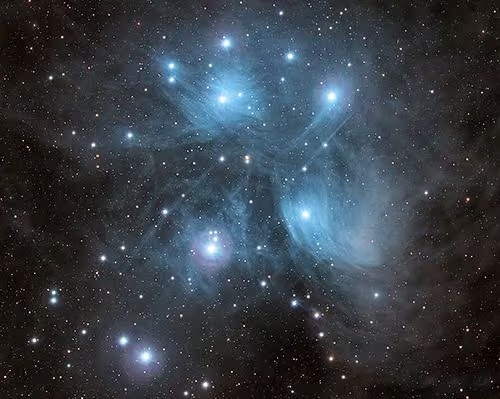
The waning gibbous Moon will be very close to or even in the midst of the Pleiades this evening, depending on your time and location. Use binoculars or a telescope.
skyandtelescope.org/astronomy-news/observing-news/this-we…
#stargazing -
Sky & Telescope
@SkyandTelescope
This pintsized powerhouse takes images of the night sky that will surprise even seasoned astrophotographers.
Read more: skyandtelescope.org/astronomy-equipment/choosing-astronom… -
Sky & Telescope
@SkyandTelescope
The California demonstration by Reflect Orbital used spotlights to imitate sunlight-reflecting satellites.
Read more: skyandtelescope.org/astronomy-news/astronomy-and-society/… -
Sky & Telescope
@SkyandTelescope
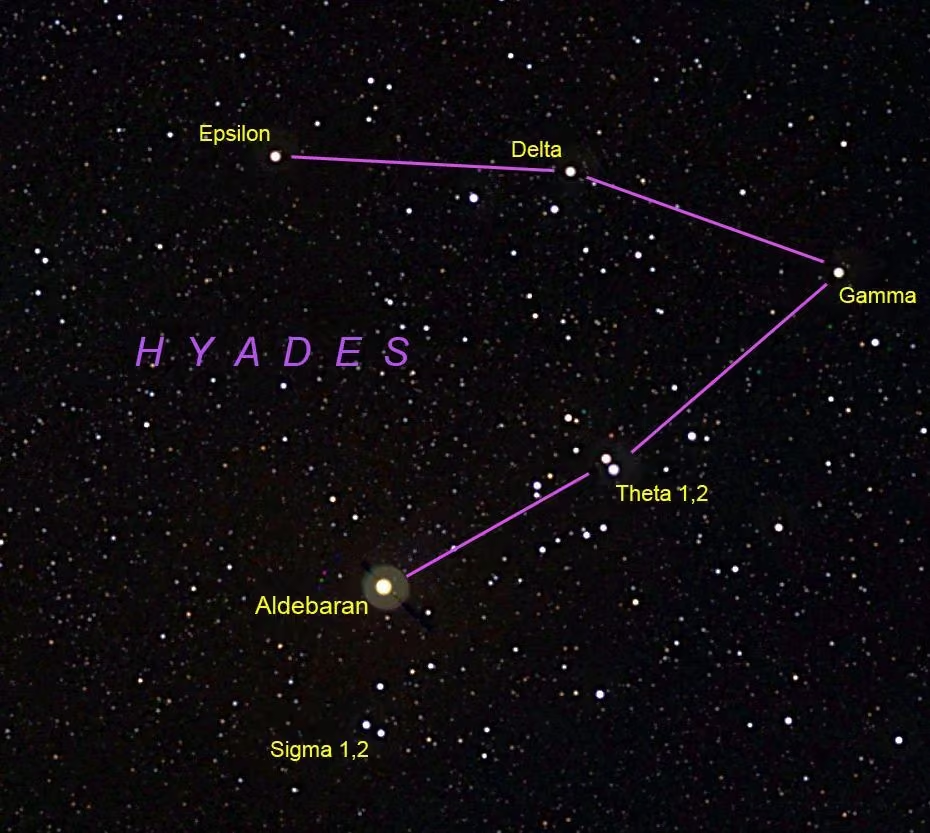
A team of researchers claims the Hyades star cluster may form the heart of van Gogh's "The Starry Night." Others aren't so sure.
Read more: skyandtelescope.org/astronomy-news/did-venus-and-the-hyad… -
Sky & Telescope
@SkyandTelescope
This is the time of year when the Big Dipper lies down horizontal low in the north-northwest after dark. How low? The farther south you are, the lower.
skyandtelescope.org/astronomy-news/observing-news/this-we…
#stargazing -
Sky & Telescope
@SkyandTelescope
Three or four finger-widths upper left of the Moon this evening, spot the two brightest stars of Aries, 2nd and 3rd magnitude. Cover the Moon with your hand to keep its glare out of your eyes.
skyandtelescope.org/astronomy-news/observing-news/this-we…
#stargazing -
Sky & Telescope
@SkyandTelescope
Halloween is approaching, and this means that Arcturus, the yellow-orange star sparkling low in the west-northwest in twilight, has taken on its role as "the Ghost of Summer Suns."
skyandtelescope.org/astronomy-news/observing-news/this-we…
#stargazing -
Sky & Telescope
@SkyandTelescope
Saturn shines lower left of the Moon at dusk. As the evening grows late and they rise higher, Saturn will slowly shift to the left of the Moon. It will be directly left of the Moon by about midnight.
skyandtelescope.org/astronomy-news/observing-news/this-we…
#stargazing -
Sky & Telescope
@SkyandTelescope
The Moon lights the way to Saturn 3,300 times farther behind it, then it befriends the Pleiades. The Ghost of Summer Suns arrives for Halloween. The Dipper lies low.
Read more: skyandtelescope.org/astronomy-news/observing-news/this-we… -
Sky & Telescope reposted
Finn Murphy
@FinnMurphy12
Once we have the telescopes to look, signs of life in the galaxy will be more frequent than we expect. For this Forecast 2050 we discuss looking up to the stars for the sparks of life that might help us answer the question that has plagued humanity for centuries. Are we alone out here?
Laura Kreidberg, Director of the Max Planck Institute for Astronomy in Heidelberg, Germany, thinks that we are within 30 years of finding out whether humanity is all alone in the universe.
Appointed at the age of 30, Laura is one of the youngest directors in the history of the Max Planck Society. Her work uses the Hubble and James Webb space telescopes to explore the atmospheres of planets orbiting distant stars. Read more about the science behind this in the @SkyandTelescope article linked below.
We discuss:
- How astronomers study exoplanet atmospheres, including measuring wind speed.
- The race to find the first exomoon.
- Why Laura would bet more than a bottle of wine that Mars and Venus once had life.
- The smoking gun evidence for alien life.
- The Fermi Paradox & whether the universe is indifferent to our presence.
- Science as soft power on the world stage.
Enjoy!
TIMESTAMPS
0:00 Intro
3:10 The Atmospheres of Other Worlds
8:14 In Astronomy, Bigger is Better
10:50 Earth-like Planets
20:04 The Huge Variety of Exoplanets
26:03 Science Communication
27:30 Intelligence is Not Evolutionary Favorable
33:30 Signs of Life on Exoplanets
40:19 Discovering Aliens in 30 Years
45:44 Science as Soft PowerThis media couldn't be displayed. See it on the original post. -
Sky & Telescope
@SkyandTelescope
Draw a line from Altair, the brightest star very high in the southwest after dark, toward the right to Vega in the west. Continue the line onward by half as far, and you hit the Lozenge: the pointy-nosed head of Draco, the Dragon.
skyandtelescope.org/astronomy-news/observing-news/this-we…
#stargazing -
Sky & Telescope
@SkyandTelescope
The Orionid meteor shower should be near the middle of its peak in the early-morning hours tonight. The bright Moon sets about two hours before dawn Thursday morning, so that's the best time to try.
skyandtelescope.org/astronomy-news/observing-news/this-we…
Image Credit: Bob King, Source: Stellarium
#stargazing -
Sky & Telescope
@SkyandTelescope
Solar Image of the Month: Solar prominences and filaments raged across the Sun's disk alongside clusters of sunspots on November 5, 2024. Marvin Lei captured this image from New York using a Lunt Solar Systems LS60MT Double-Stack Hydrogen-Alpha Telescope.
#solarobserving -
Sky & Telescope
@SkyandTelescope
The Great Square of Pegasus is high in the east-southeast at nightfall — still, for now, almost balanced on one corner (for the world's mid-northern latitudes). Saturn shines brighter below it.
skyandtelescope.org/astronomy-news/observing-news/this-we…
#stargazing -
Sky & Telescope
@SkyandTelescope
Deneb, the head of the Northern Cross, has now completely displaced Vega as the zenith star at nightfall. It's at its closest to straight up as soon as twilight ends. The shaft of the Northern Cross points from Deneb toward the southwest.
skyandtelescope.org/astronomy-news/observing-news/this-we…
#stargazing -
Sky & Telescope
@SkyandTelescope
Planetesimal wrecks are raging around distant stars. With the Webb and Spitzer Space Telescopes, astronomers are learning what that looks like.
Read more: skyandtelescope.org/astronomy-news/webb-and-spitzer-teles… -
Sky & Telescope
@SkyandTelescope
The Moon shines in the south-southwest this evening. It's just a day past apogee; can you reliably detect that it's just a bit smaller than average?
skyandtelescope.org/astronomy-news/observing-news/this-we…
#stargazing -
Sky & Telescope
@SkyandTelescope
Algol, the prototype eclipsing binary star, should be its minimum brightness, magnitude 3.4 instead of its usual 2.1, for a couple hours centered on 9:52 p.m. EDT.
skyandtelescope.org/astronomy-news/observing-news/this-we…
#stargazing -
Sky & Telescope
@SkyandTelescope
The South American country, which hosts some of the world’s major astronomical observatories, promises to protect its night skies, from the Atacama Desert to Tierra del Fuego.
Read more: skyandtelescope.org/astronomy-news/chiles-light-pollution… -
Sky & Telescope
@SkyandTelescope
Before and during early dawn, Mars, Jupiter and Regulus continue to draw together high in the southeast. If you get up early keep an eye on them. Mars and Jupiter will pass each other on the morning of November 16th.
skyandtelescope.org/astronomy-news/observing-news/this-we…
#stargazing -
Sky & Telescope
@SkyandTelescope
Hey diddle diddle, the Moon's in the Teapot. And high in the dawn, Mars jumps over Jupiter while Regulus twinkles below.
Read more: skyandtelescope.org/astronomy-news/observing-news/this-we… -
Sky & Telescope
@SkyandTelescope
This curious cloud requires no solid particles to seed its formation — a theoretical phenomenon that's never been observed until now.
Read more: skyandtelescope.org/astronomy-news/a-cloud-forms-spontane… -
Sky & Telescope
@SkyandTelescope
Tour the stars and planets that you’ll see overhead during October. This month the spotlight is on Saturn, which can be seen all night, and a fantastic occultation of Jupiter by the Moon. So grab your curiosity, and come along on this month’s Sky Tour.
skyandtelescope.org/stargazing-and-observing/astronomy-po… -
Sky & Telescope
@SkyandTelescope
AAS Sky Publish LLC is proud to announce that Annals of the Deep Sky Volume 13 will be arriving at shopatsky.com soon.
-
Sky & Telescope
@SkyandTelescope
The Moon bugs out just in time to enjoy the peak of the Orionids, which trace their origin to Halley's Comet.
Read more: skyandtelescope.org/astronomy-news/rise-early-on-october-… -
Sky & Telescope
@SkyandTelescope
NASA announced three new scientific payloads that will head to the Moon to better understand lunar hazards and resources.
Read more: skyandtelescope.org/astronomy-news/nasa-initiative-to-stu… -
Sky & Telescope
@SkyandTelescope
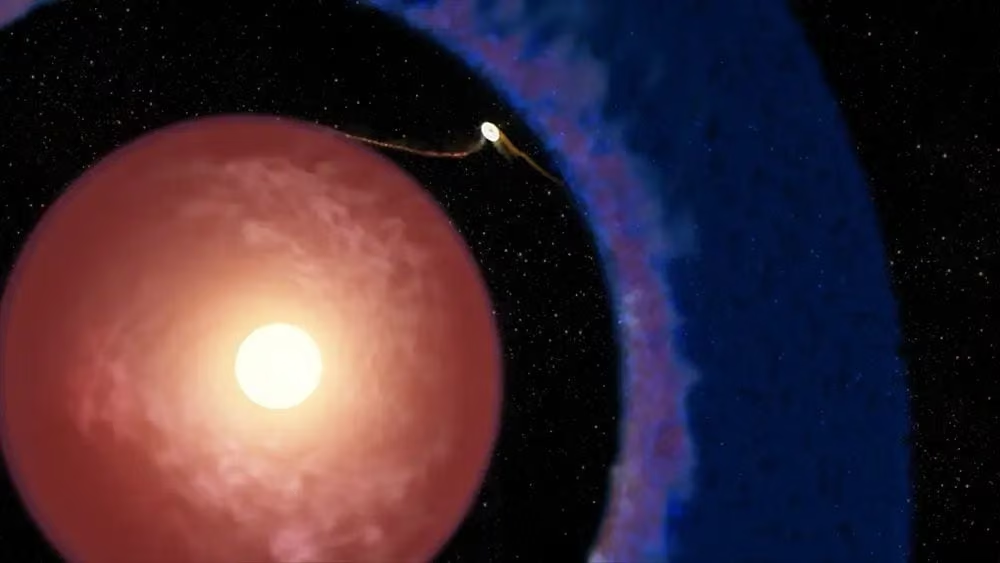
New simulations suggest that the planets' orbits will destabilize well before the Sun expands into its red giant phase.
Read more: skyandtelescope.org/astronomy-news/the-solar-system-has-a… -
Sky & Telescope
@SkyandTelescope
New simulations suggest that the planets' orbits will destabilize well before the Sun expands into its red giant phase.
Read more: skyandtelescope.org?p=255507567627 -
Sky & Telescope
@SkyandTelescope
The stellar gathering known as Garro 04 belongs to a growing number of enigmatic groupings that combine traits of young open clusters ancient globulars.
Read more: skyandtelescope.org/astronomy-news/meet-the-star-cluster-… -
Sky & Telescope
@SkyandTelescope
Take advantage of these moonless evenings! Make friends with some far Cassiopeia clusters in the high-arching Milky Way. Soon the Moon will return.
Read more: skyandtelescope.org/astronomy-news/observing-news/this-we… -
Sky & Telescope
@SkyandTelescope
Astronomers have found a distant fast radio burst whose signal has traversed much of the universe before arriving at Earth.
Read more: skyandtelescope.org/astronomy-news/fast-radio-burst-shatt… -
Sky & Telescope
@SkyandTelescope
Cassiopeia lies astride the winter Milky Way. It thus offers lots of open star clusters for telescopes, including a few within range of binoculars depending your sky. Three Cas clusters you can try for are NGC 457, M103, and NGC 663.
skyandtelescope.org/astronomy-news/observing-news/this-we…
#stargazing -
Sky & Telescope
@SkyandTelescope
This is the time of year when, once nightfall is complete, W-shaped Cassiopeia stands on end halfway up the northeastern sky — and when, off to its left in the north, the dim Little Dipper extends leftward from Polaris.
skyandtelescope.org/astronomy-news/observing-news/this-we…
#stargazing -
Sky & Telescope
@SkyandTelescope
The universe still calls on rainy or cloudy nights, and Zooniverse — a project that's still going strong after 20 years — might be the window you're looking for.
Read more: skyandtelescope.org/astronomy-blogs/doing-my-part-in-the-… -
Sky & Telescope
@SkyandTelescope
On the morning of Wednesday the 7th, the thinning Moon shines under Regulus and Jupiter before and during dawn.
skyandtelescope.org/astronomy-news/observing-news/this-we…
#stargazing -
Sky & Telescope
@SkyandTelescope
The Moon occults Jupiter very late tonight for observers in eastern and central North America and parts of the mountain region, and for much of Africa. The occultation will start as the Moon's bright limb slowly covers the planet.
skyandtelescope.org/astronomy-news/observing-news/this-we…
#stargazing -
Sky & Telescope
@SkyandTelescope
Vega is the brightest star very high in the west at nightfall. Arcturus, equally bright, is getting low in the west-northwest. The brightest star in the vast expanse between them is Alphecca, the crown jewel of Corona Borealis.
skyandtelescope.org/astronomy-news/observing-news/this-we…
#stargazing -
Sky & Telescope
@SkyandTelescope
Saturn is at opposition tonight, opposite the Sun as seen from Earth. It rises at sunset, is highest in the middle of the night, and sets at sunrise. The Seeliger effect brightening Saturn's rings should be at its strongest tonight.
skyandtelescope.org/astronomy-news/observing-news/this-we…
#stargazing #saturn -
Sky & Telescope
@SkyandTelescope
Jupiter disappears then returns in a blaze of glory at the Moon's dark rim before dawn.
Read more: skyandtelescope.org/astronomy-news/rare-sight-ahead-watch… -
Sky & Telescope
@SkyandTelescope
The Moon occults Jupiter for much of North America very late Monday night October 5-6, after missing Castor, Pollux, and Mars on previous nights.
Read more: skyandtelescope.org/astronomy-news/observing-news/this-we… -
Sky & Telescope
@SkyandTelescope
Sky & Telescope is proud to announce the release of the 250th episode of our Sky Tour Astronomy podcast! 🎉 This October follow along as Saturn makes its return to the evening sky with a celestial splash and the Moon passes in front of Jupiter.
skyandtelescope.org/stargazing-and-observing/astronomy-po…
#podcast -
Sky & Telescope
@SkyandTelescope
With the evening sky now moonless, this is a great week for the Milky Way under a dark sky. When Cygnus crosses your zenith, around 9 p.m. now, the Milky Way does too.
skyandtelescope.org/astronomy-news/observing-news/this-we…
#stargazing
Image credit: Cheryl Wilcox -
Sky & Telescope
@SkyandTelescope
Leaves fall. Frost sparkles. And once again we fall under the magical spell of the Lord of the Rings.
Read more: skyandtelescope.org/astronomy-news/saturn-flaunts-its-rin… -
Sky & Telescope
@SkyandTelescope
The waning gibbous Moon rises in the east-northeast about an hour after dark, with the Pleiades less than a fist to its upper right. Aldebaran comes up below the Moon about an hour behind it. They all climb through the night.
skyandtelescope.org/astronomy-news/observing-news/this-we…
#stargazing -
Sky & Telescope
@SkyandTelescope
New simulations show that our now-moonless neighbor might once have had a satellite, but the moon crashed back into it.
Read more: skyandtelescope.org/astronomy-news/did-venus-swallow-its-… -
Sky & Telescope
@SkyandTelescope
The starry W of Cassiopeia stands high in the northeast. Look at the second segment of the W from the top. The brightest of the dim naked-eye stars along that segment, on the right, is Eta Cassiopeiae. It's a remarkably Sun-like star.
skyandtelescope.org/astronomy-news/observing-news/this-we…
#stargazing -
Sky & Telescope
@SkyandTelescope
In his new podcast series Off-World with David Eicher, Dave Eicher chats with current Editor in Chief of Sky & Telescope magazine, Diana Hannikainen.
www.youtube.com/watch?v=cP3cPTVLFG8... -
Sky & Telescope
@SkyandTelescope
On September 28th, Europe's JUICE mission makes another pass by home, en route to the icy moons of Jupiter.
Read more: skyandtelescope.org/astronomy-news/jupiter-icy-moons-expl… -
Sky & Telescope
@SkyandTelescope
Vega is the brightest star very high when you face west. Look to the right of Vega for Eltanin, the nose of Draco the Dragon. It's tinted orange. The rest of Draco's fainter, lozenge-shaped head is a little farther right.
skyandtelescope.org/astronomy-news/observing-news/this-we…
#stargazing -
Sky & Telescope
@SkyandTelescope
The island was the backup site for the giant telescope, whose future remains in limbo.
Read more: skyandtelescope.org/astronomy-news/rejected-spains-propos… -
Sky & Telescope
@SkyandTelescope
Algol should be at its minimum brightness for a couple hours centered on 8:11 p.m. EDT. It takes several hours before and after to fade and rebrighten. Use this comparison star chart.
skyandtelescope.org/astronomy-news/observing-news/this-we…
#stargazing -
Sky & Telescope
@SkyandTelescope
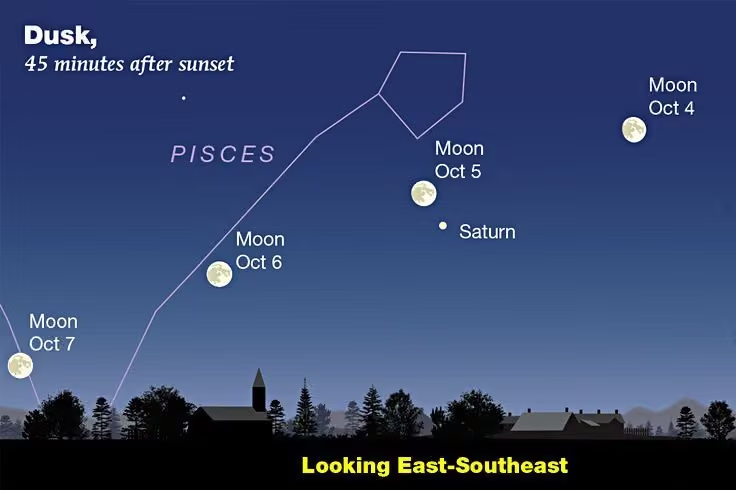
The Moon rises in the east very close to the moment of sunset. As twilight deepens, look for Saturn under it. They climb higher together all evening. In the early morning hours of Sunday, Saturn will be to the Moon's lower left.
skyandtelescope.org/astronomy-news/observing-news/this-we…
#stargazing -
Sky & Telescope
@SkyandTelescope
NASA has selected a new space probe for development: The PRIMA telescope will explore the far-infrared universe.
Read more: skyandtelescope.org/astronomy-news/nasa-selects-far-infra… -
Sky & Telescope
@SkyandTelescope
Saturn comes to opposition. So does the Moon. Once the Moon is gone from the evening sky, try with your telescope for the autumn globular clusters Sagittifolia, Queen Anne's Lace, Watercress by the Stream, and Seaflower of the Deep.
Read more: skyandtelescope.org/astronomy-news/observing-news/this-we… -
Sky & Telescope
@SkyandTelescope
Algol, the eclipsing variable star, has an eclipse tonight. It's normally the second-brightest star in Perseus at magnitude 2.1, but it should dip to magnitude 3.4 for a couple hours centered on its time of mid-eclipse, 11:22 p.m. EDT.
skyandtelescope.org/astronomy-news/observing-news/this-we…
#stargazing -
Sky & Telescope
@SkyandTelescope
Astronomers have directly imaged a giant planet around a low-mass star — something they didn’t think was possible.
Read more: skyandtelescope.org/astronomy-news/how-can-a-puny-star-ma… -
Sky & Telescope
@SkyandTelescope
A baby planet is carving out a gap in the natal disk of its star as it assembles material, providing a rare window into the earliest stages of planet formation.
Read more: skyandtelescope.org/astronomy-news/astronomers-have-spott… -
Sky & Telescope
@SkyandTelescope
A baby planet is carving out a gap in the natal disk of its star as it assembles material, providing a rare window into the earliest stages of planet formation.
Read more: skyandtelescope.org/astronomy-news/astronomers-have-spott… -
Sky & Telescope
@SkyandTelescope
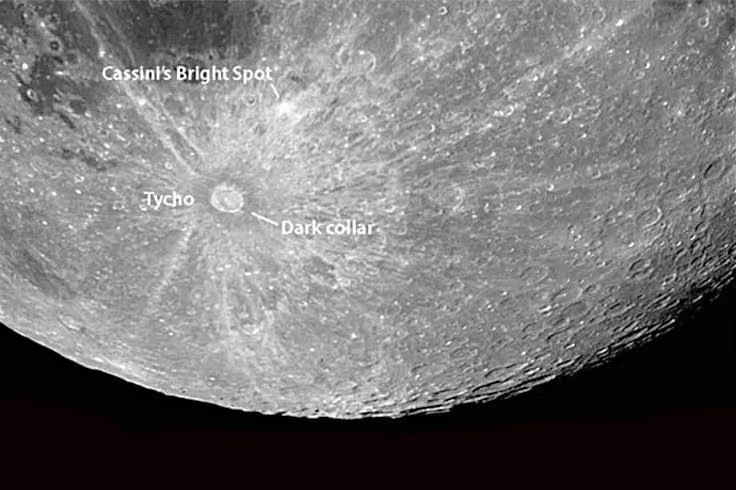
Copernicus, now lit at a high Sun angle, has turned into an almost shadowless bright splotch surrounded by its system of splashed rays. Reinhold is nearly invisible. White Tycho far to the south (below) displays its larger ray system.
skyandtelescope.org/astronomy-news/observing-news/this-we…
#stargazing -
Sky & Telescope
@SkyandTelescope
Autumn begins in the Northern Hemisphere, and spring in the Southern Hemisphere, at the equinox: 8:05 p.m. EDT tonight. This is when the Sun crosses the equator — both Earth's equator and the celestial equator.
skyandtelescope.org/astronomy-news/observing-news/this-we…
#stargazing
Image credit: parisabajelan -
Sky & Telescope
@SkyandTelescope
The stellar nursery IC 348 is forming lots of stars — and some of the puniest brown dwarfs (aka, “failed stars”) we’ve ever seen.
Read more: skyandtelescope.org/astronomy-news/stunning-panorama-reve… -
Sky & Telescope
@SkyandTelescope
Cygnus the Swan floats nearly straight overhead these evenings. Its brightest stars form the big Northern Cross. When you face southwest and crane your head way up, the cross appears to stand upright. It's about two fists at arm's length tall.
skyandtelescope.org/astronomy-news/observing-news/this-we…
#stargazing -
Sky & Telescope
@SkyandTelescope
The Moon is two days past first quarter. So this evening the Moon's sunrise terminator crosses Mare Imbrium, as you can see with the naked eye. Mare Imbrium is the left-side eye of the Man in the Moon. His crooked smile is beginning to appear.
skyandtelescope.org/astronomy-news/observing-news/this-we…
#stargazing -
Sky & Telescope
@SkyandTelescope
Solar Image of the Month: On the morning of June 24th around 7:56 a.m., the Sun sported many filaments and several interesting prominences along its western limb. Tim Engels captured this image using a Lunt Solar 80-mm Hydrogen-Alpha Solar Telescope.
#solarobserving -
Sky & Telescope
@SkyandTelescope
Tonight, is NASA's International Observe the Moon Night. The Moon is in the Sagittarius Teapot, so grab a small telescope or pair of binoculars and enjoy the craggy terrain of Earths' delightful companion.
skyandtelescope.org/astronomy-news/observing-news/this-we…
#stargazing -
Sky & Telescope
@SkyandTelescope
The winners of the 18th annual Astronomy Photographer of the Year contest were announced on September 17th. Take a look at the winning photos.
Read more: skyandtelescope.org/astronomy-news/royal-observatory-gree… -
Sky & Telescope
@SkyandTelescope
Every evening the waxing gibbous Moon reveals a wealth of new telescopic detail. Can you still catch Venus low in twilight as it nears conjunction? On the opposite side of the sky, Saturn nears opposition.
Read more: skyandtelescope.org/astronomy-news/observing-news/this-we… -
Sky & Telescope
@SkyandTelescope
In watching an impact's aftermath, scientists have confirmed that such large blasts shake up and cool wide swaths of the lunar surface.
Read more: skyandtelescope.org/astronomy-news/once-in-a-century-impa… -
Sky & Telescope
@SkyandTelescope
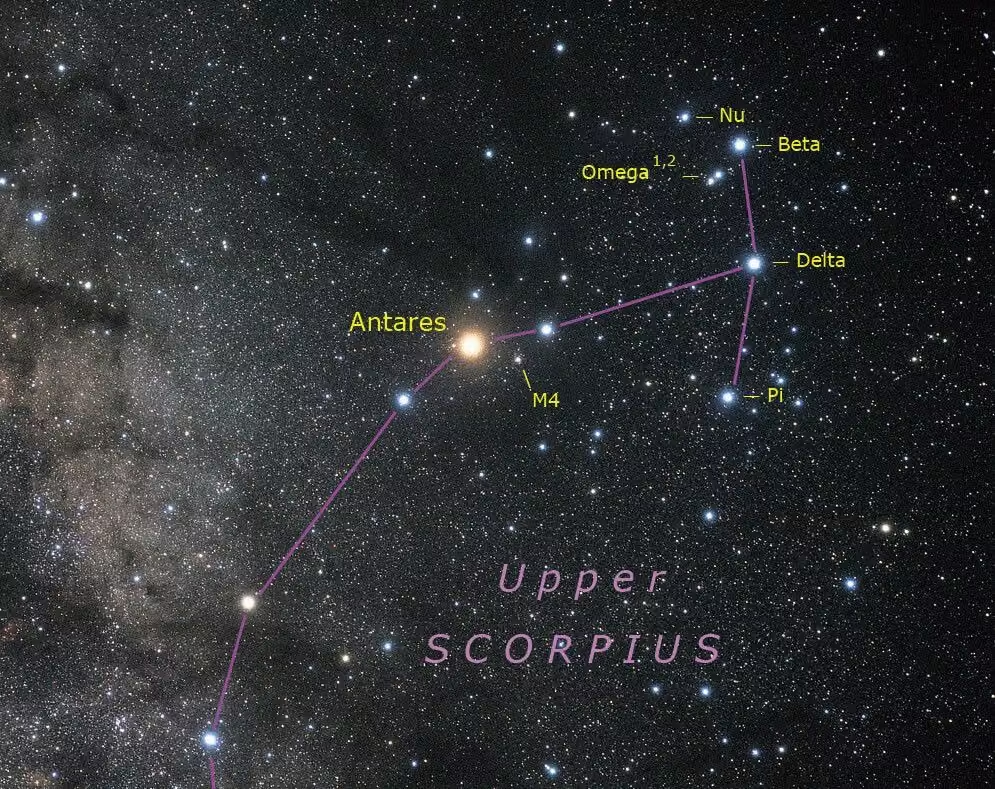
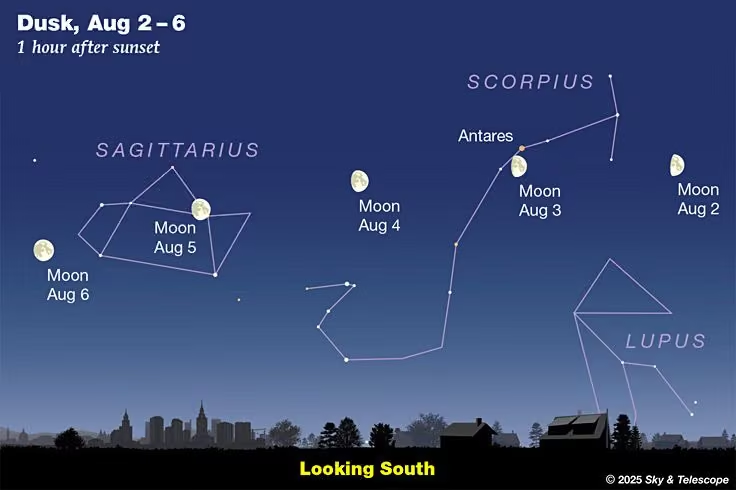
Tonight Antares, and then Delta Scorpii, shine to the right of the Moon in early evening.
skyandtelescope.org/astronomy-news/observing-news/this-we…
#stargazing -
Sky & Telescope
@SkyandTelescope
Disconnect from the digital world for a while — all you have to do is look up.
Read more: skyandtelescope.org/astronomy-news/join-the-world-in-obse… -
Sky & Telescope
@SkyandTelescope
A familiar galaxy in Pegasus hosts a supernova bright enough to see in a 4-inch telescope.
Read more: skyandtelescope.org/astronomy-news/ngc-7331-cracks-off-2n… -
Sky & Telescope
@SkyandTelescope
The Moon, approaching first quarter, shines in the southwest in late twilight and shortly after dark. Spot orange Antares to its upper left and Delta Scorpii, not much fainter, to the Moon's upper right.
skyandtelescope.org/astronomy-news/observing-news/this-we…
#stargazing -
Sky & Telescope
@SkyandTelescope
Two massive stars might’ve been born separately before getting tangled in each other’s orbits, revealing a new way that binaries form.
Read more: skyandtelescope.org/astronomy-news/some-pairs-of-stars-we… -
Sky & Telescope
@SkyandTelescope
Arcturus shines in the west these evenings as twilight fades out. Capella, equally bright, is barely rising in the north-northeast. Later in the evening, Arcturus and Capella shine at the same height in their respective compass directions.
skyandtelescope.org/astronomy-news/observing-news/this-we…
#stargazing -
Sky & Telescope
@SkyandTelescope
This episode takes you on a tour of the stars and planets that you’ll see overhead during September. First, we’ll check out this month’s equinox and Harvest Moon; then we’ll track down the bright planets.
Sponsored by @Celestron
skyandtelescope.org/stargazing-and-observing/astronomy-po…
#podcast #stargazing -
Sky & Telescope
@SkyandTelescope
New research suggests that the circumplanetary disk surrounding the exoplanet PDS 70c contains a ring of dense dust, and the conditions within this ring may allow baby moons to form.
Read more: skyandtelescope.org/astronomy-news/are-moons-growing-arou… -
Sky & Telescope
@SkyandTelescope
Tonight the thickening Moon is more obvious low in twilight. It points its bulge toward Venus 6° or 7° to its lower right.
skyandtelescope.org/astronomy-news/observing-news/this-we…
#stargazing -
Sky & Telescope
@SkyandTelescope
The thin crescent Moon returns to the evening sky... barely. Look for it very low in the west-southwest a half hour after sunset or less while twilight is still fairly bright, as shown below. Venus lights the way.
skyandtelescope.org/astronomy-news/observing-news/this-we…
#stargazing -
Sky & Telescope
@SkyandTelescope
The Teapot pattern of Sagittarius is just past the meridian (i.e. just right of due south) when nightfall is complete. It's a bit wider that your fist at arm's length, with its handle to the left and its triangular spout to the right.
skyandtelescope.org/astronomy-news/observing-news/this-we…
#stargazing -
Sky & Telescope
@SkyandTelescope
The recent detection from the LUX-ZEPLIN experiment could point to “heavy” dark matter.
Read more: skyandtelescope.org/astronomy-news/scientists-found-a-pot… -
Sky & Telescope
@SkyandTelescope
The crescent Moon steps past Venus, very low after sunset, from Sunday to Monday. A couple days later, it steps past higher Antares.
Read more: skyandtelescope.org/astronomy-news/observing-news/this-we… -
Sky & Telescope
@SkyandTelescope
Painstaking observations have revealed unexpected evolution in the rings around Chariklo, a tiny outer-solar-system object.
Read more: skyandtelescope.org/astronomy-news/webb-space-telescope-d… -
Sky & Telescope
@SkyandTelescope
"One of my favorite sights at this time of year is the Wild Duck Cluster, M11," writes Matt Wedel in the September Sky & Telescope. At magnitude 5.8 it's bright enough to be a naked-eye object under dark skies. M11 resides in Scutum.
skyandtelescope.org/astronomy-news/observing-news/this-we…
#stargazing -
Sky & Telescope
@SkyandTelescope
You can see in the stars that the season is changing. We've reached the time of year when, after nightfall, Cassiopeia has already climbed a little higher in the northeast than the Big Dipper has sunk in the northwest.
skyandtelescope.org/astronomy-news/observing-news/this-we…
#stargazing -
Sky & Telescope
@SkyandTelescope
As dawn brightens Wednesday morning the 9th, use binoculars to help pick up the thin waning crescent Moon low in the east-northeast about a fist-width below Jupiter. Look 4° or 5° below the Moon for twinkly Regulus.
skyandtelescope.org/astronomy-news/observing-news/this-we…
#stargazing -
Sky & Telescope
@SkyandTelescope
Every astronomy club, if it’s lucky, counts among its members one who is fired with a life purpose of bringing the night sky to everyone. In the Texas Astronomical Society, that member was John Wagoner.
Read more: skyandtelescope.org/astronomy-resources/john-wagoner-mast… -
Sky & Telescope
@SkyandTelescope
This timelapse of the August 12th total solar eclipse was taken from Sant Joan de Moró, Spain, by Markus-Mugrauer with his Samsung Galaxy A54 smartphone. For more great astrophotography, follow us, visit our Online Gallery, and subscribe to S&T!
.
.
#timelapse #solareclipse -
Sky & Telescope
@SkyandTelescope
As dawn begins to brighten Tuesday morning the 8th, look east-northeast for the waning crescent Moon hanging over Jupiter.
skyandtelescope.org/astronomy-news/observing-news/this-we…
#stargazing -
Sky & Telescope
@SkyandTelescope
With the evening sky moonless, this is a great week for the Milky Way under a dark sky. When Deneb crosses your zenith, the Milky Way does too — running straight up from the southwest horizon and down to the northeast.
skyandtelescope.org/astronomy-news/observing-news/this-we…
#stargazing
Image credit: Astromania -
Sky & Telescope
@SkyandTelescope
Look for bright Vega passing the zenith as twilight fades away, if you live in the world's mid-northern latitudes. Vega goes right through your zenith if you're at latitude 39° north.
skyandtelescope.org/astronomy-news/observing-news/this-we…
#stargazing -
Sky & Telescope
@SkyandTelescope
Alexandru Barbovschi captured this composite image of the August 12th total solar eclipse from Aragon, Spain with a Sony a7R IIIA camera and Tamron 28-to-75-mm lens.
Want to see more content like this? Follow us here, and subscribe to S&T today!⠀
.⠀
.⠀
#eclipse -
Sky & Telescope
@SkyandTelescope
Venus is sinking down and away. The Sagittarius Teapot pours out its tea as summer nears its end. Saturn rises around nightfall.
Read more: skyandtelescope.org/astronomy-news/observing-news/this-we… -
Sky & Telescope
@SkyandTelescope
The Moon will rise around 11 p.m. daylight-saving time, making this one of the earliest-to-rise last quarter Moons of the year. Watch for it to come up in the east-northeast almost two fists lower right of Capella.
skyandtelescope.org/astronomy-news/this-weeks-sky-at-a-gl…
#stargazing -
Sky & Telescope
@SkyandTelescope
Astronomers once thought dark matter clumps had torn their way through long lines of stars — now, a new study shows that gaps in such stellar streams can arise even without dark matter.
Read more: skyandtelescope.org/astronomy-news/gaps-in-stellar-stream… -
Sky & Telescope
@SkyandTelescope
Looking for a way to learn astronomy? Check out this virtual astronomy course, it gets great reviews and is easy to follow. To learn more and to register visit www.astronomyteacher.net.
.
.
This message is from a trusted S&T partner.
#astronomy #onlineclass #astronomyclass -
Sky & Telescope
@SkyandTelescope
A daytime occultation to whet your appetite for next month's spectacular show.
Read more: skyandtelescope.org/uncategorized/tuesdays-daytime-jupite… -
Sky & Telescope
@SkyandTelescope
After last night's conjunction, Spica and Venus are now still only 1.7° apart, with Spica to Venus's upper right. If it was cloudy last night, try again for a good image now.
skyandtelescope.org/astronomy-news/this-weeks-sky-at-a-gl…
#stargazing -
Sky & Telescope
@SkyandTelescope
Tracking the phase, moonrise, and nightly position of the Moon can help give a tempo to life and its seasons.
Read more: skyandtelescope.org/astronomy-blogs/stargazing-why-we-loo… -
Sky & Telescope
@SkyandTelescope
The latest episode of our Sky Tour Astronomy podcast is out now! This episode tours the stars and planets that you’ll see overhead during September. First, we’ll check out this month’s equinox and Harvest Moon.
Sponsored by @Celestron
skyandtelescope.org/stargazing-and-observing/astronomy-po…
#podcast #stargazing -
Sky & Telescope
@SkyandTelescope
Venus and Spica are in conjunction at dusk. Venus will be getting very low in the west-southwest as twilight fades. Can you make out tiny Spica 1.5° above it? Spica is only 1/160 as bright! And they get lower by the minute. Bring binoculars.
skyandtelescope.org/astronomy-news/this-weeks-sky-at-a-gl…
#stargazing -
Sky & Telescope
@SkyandTelescope
The end of August means that Scorpius, which was the proud starring constellation in the south on July evenings, is now tilting over and lying down in the southwest after dark, preparing to bed down and drift off for the season.
skyandtelescope.org/astronomy-news/this-weeks-sky-at-a-gl…
#stargazing -
Sky & Telescope
@SkyandTelescope
The fastest known star in our galaxy comes so close to Sgr A* that the black hole’s rotation may pull it off course, enabling a first-of-its-kind detection.
Read more: skyandtelescope.org/astronomy-news/star-feels-spin-of-mil… -
Sky & Telescope
@SkyandTelescope
The waning gibbous Moon rises in the east in late twilight. Saturn follows it up about 30 minutes later. Another hour and they're nicely high free and clear. skyandtelescope.org/astronomy-news/this-weeks-sky-at-a-gl…
#stargazing -
Sky & Telescope
@SkyandTelescope
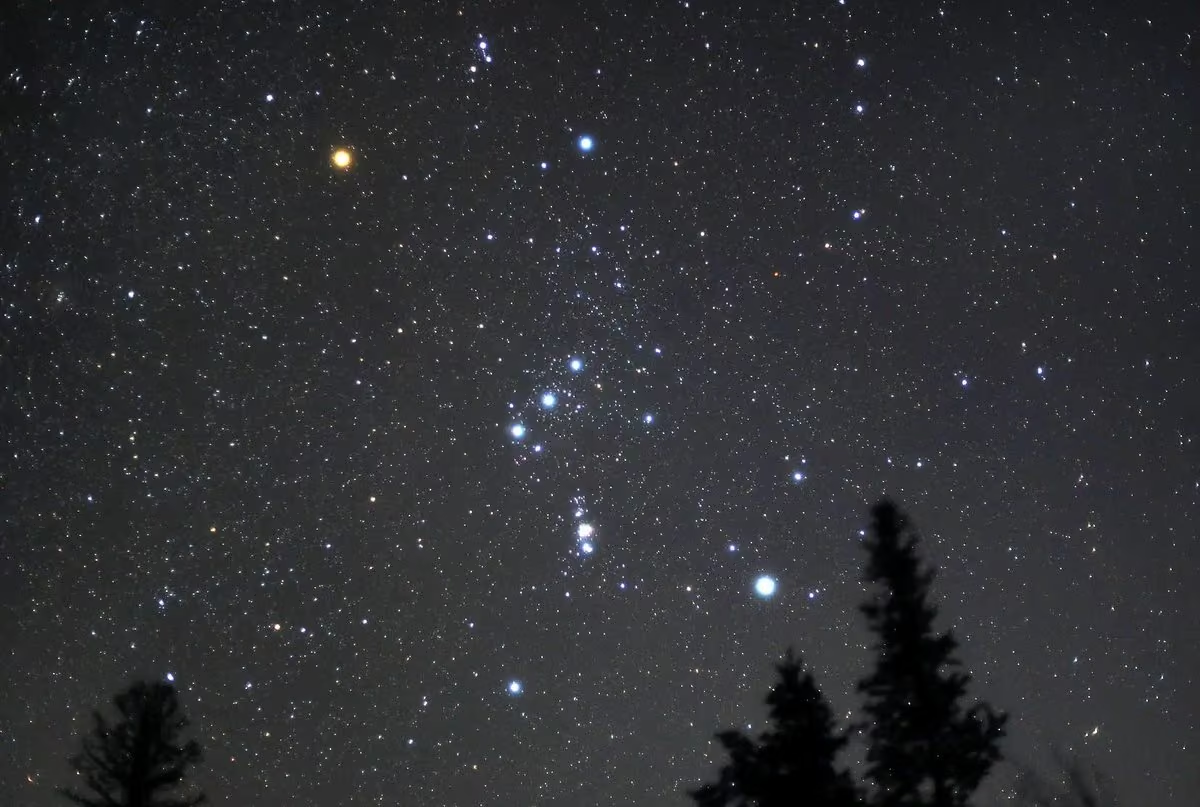
Step out before the first light of dawn any time this coming week, and the sky displays the same starry panorama that it will at dinnertime around New Year's. Orion will be striding up in the southeast, with the Pleiades high above it.
skyandtelescope.org/astronomy-news/this-weeks-sky-at-a-gl…
#stargazing -
Sky & Telescope
@SkyandTelescope
The legendary Stellafane Convention has been blowing away expectations for a century, and plans are in place to make sure it continues to do so for another 100 years.
Read more: skyandtelescope.org/astronomy-news/stellafane-or-bust -
Sky & Telescope
@SkyandTelescope
Venus and Spica finally have their conjunction just as they sink way down in twilight. After dark, Boötes and the Big Dipper have assumed their late-summer pose.
Read more: skyandtelescope.org/astronomy-news/this-weeks-sky-at-a-gl… -
Sky & Telescope
@SkyandTelescope
An almost total eclipse of the Moon will occur tonight for most of the Americas! Skywatchers in the eastern half of North America can watch the entire eclipse. Westerners will see the partially eclipsed Moon rise at sunset.
skyandtelescope.org/astronomy-news/this-weeks-sky-at-a-gl…
#stargazing #eclipse -
Sky & Telescope
@SkyandTelescope
There's near-total lunar eclipse tonight, wraping up August’s trifecta of two major eclipses and the Perseids.
skyandtelescope.org/astronomy-news/next-up-a-deep-partial…
#lunareclipse #eclipse #tonight -
Sky & Telescope
@SkyandTelescope
This evening look about three fists above the Moon, and maybe a bit right, for 1st-magnitude Altair. As evening grows late, watch for rising Fomalhaut two fists in the opposite direction from the Moon.
skyandtelescope.org/astronomy-news/this-weeks-sky-at-a-gl…
#stargazing -
Sky & Telescope
@SkyandTelescope
How soon after sunset can you see the big Summer Triangle? Face east. Vega, the Triangle's brightest star, is nearly at the zenith. Deneb is the first bright star to Vega's east-northeast. Altair shines less high in the southeast.
skyandtelescope.org/astronomy-news/this-weeks-sky-at-a-gl…
#stargazing -
Sky & Telescope
@SkyandTelescope
The highest part of Perseus includes the wintry Double Cluster. To find it, look below the lowest two stars of the Cassiopeia W (they're the faintest two), by somewhat more that the distance between them. Binoculars or a finderscope will help.
skyandtelescope.org/astronomy-news/this-weeks-sky-at-a-gl…
#stargazing -
Sky & Telescope
@SkyandTelescope
Late these evenings as autumn approaches, Fomalhaut, the Autumn Star, makes its inevitable appearance above the southeast horizon. Its rising time will depend on where you live. But by about 11 p.m. now, you should spot it low in the southeast.
skyandtelescope.org/astronomy-news/this-weeks-sky-at-a-gl…
#stargazing -
Sky & Telescope
@SkyandTelescope
As August proceeds and nights begin to turn chilly, the Great Square of Pegasus looms up in the east, balancing on one corner. Its stars are only 2nd and 3rd magnitude. Your fist at arm's length fits inside it.
skyandtelescope.org/astronomy-news/this-weeks-sky-at-a-gl…
#stargazing -
Sky & Telescope
@SkyandTelescope
The waxing Moon is on its way to a not-quite-total lunar eclipse Thursday the 27th. On Friday the 21st, it's still east of Antares in the evening sky.
Read more: skyandtelescope.org/astronomy-news/this-weeks-sky-at-a-gl… -
Sky & Telescope
@SkyandTelescope
Looking for a way to learn astronomy? Check out this virtual astronomy course, it gets great reviews and is easy to follow. To learn more and to register visit www.astronomyteacher.net.
.
.
This message is from a trusted S&T partner.
#astronomy #onlineclass #astronomyclass -
Sky & Telescope
@SkyandTelescope
Solar Image of the Month: Greg LaMonica captured this image the Sun's disk featuring several prominences along the right limb as well as numerous active regions.
Equipment:
- Lunt 50-mm Hydrogen-Alpha Solar Telescope
- Double Stack
- ZWO ASI678MM camera
#solarobserving -
Sky & Telescope
@SkyandTelescope
The Moon returns to Antares tonight, as it does every month. But this time the Moon is only barely past first quarter. When it met up with Antares last month, the Moon was more gibbous.
skyandtelescope.org/astronomy-news/observing-news/this-we…
#stargazing -
Sky & Telescope
@SkyandTelescope
A near-total lunar eclipse wraps up August's trifecta of two major eclipses and the Perseids.
Read more: skyandtelescope.org/astronomy-news/next-up-a-deep-partial… -
Sky & Telescope
@SkyandTelescope
The Moon is in dim Libra, to the right of Antares. The distinctive, three-star head of Scorpius is between them. The stars form a roughly vertical row. skyandtelescope.org/astronomy-news/observing-news/this-we…
#stargazing -
Sky & Telescope
@SkyandTelescope
After dark, spot the Big Dipper in the northwest. This is the time of year when it scoops down during evening, as if to pick up the water that it will dump from high overhead in the evening early next spring.
skyandtelescope.org/astronomy-news/observing-news/this-we…
#stargazing -
Sky & Telescope
@SkyandTelescope
Traversing through the solar system, a comet split in two, and a recent study used six months of observations to investigate when and why.
Read more: skyandtelescope.org/astronomy-news/spying-on-a-split-comet -
Sky & Telescope
@SkyandTelescope
Whenever bright Vega crosses nearest your zenith, as it does after dark now, you know that the Sagittarius Teapot is posing at its highest due south.
skyandtelescope.org/astronomy-news/observing-news/this-we…
#stargazing -
Sky & Telescope
@SkyandTelescope
Elizabeth Zhang of Cupertino, California, has earned the Astronomical League's National Young Astronomer award for her study of circumbinary planets.
Read more: skyandtelescope.org/astronomy-news/california-teen-wins-2… -
Sky & Telescope
@SkyandTelescope
Check the sky low in the northwest or north at the end of these long summer twilights. Would you recognize shiny, ripply noctilucent clouds if you saw them? They're the most astronomical of all cloud types.
skyandtelescope.org/astronomy-news/observing-news/this-we…
#stargazing
Image credit: Debra Ceravolo -
Sky & Telescope
@SkyandTelescope
This month we’ve got three big celestial events to cover: eclipses of the Sun and Moon, and especially good prospects for the Perseid meteor shower. Plus we’ll track down a few planets, and gaze at the center of our galaxy.
Sponsored by @Celestron
skyandtelescope.org/stargazing-and-observing/astronomy-po… -
Sky & Telescope
@SkyandTelescope
The Moon is back in the evening sky as a three-day-old crescent. Spot it low in the west about 40 minutes after sunset. Venus shines 4° or 5° to the Moon's upper left this evening.
skyandtelescope.org/astronomy-news/observing-news/this-we…
#stargazing -
Sky & Telescope
@SkyandTelescope
Did you see Wednesday's eclipse? S&T Associate Editor Edwin L. Augirre and Imelda B. Joson captured this stunning view from Burgos, Spain!
-
Sky & Telescope
@SkyandTelescope
After eclipsing the Sun last Wednesday, the Moon returns to the evening sky as a crescent low in twilight. Watch it pass Venus, then Spica.
Read more: skyandtelescope.org/astronomy-news/observing-news/this-we… -
Sky & Telescope
@SkyandTelescope
Sky & Telescope editors traveled the world, both literally and figuratively, to see the solar eclipse that darkened the world in the most magical way on August 12, 2026. Here are some of their stories.
Read more: skyandtelescope.org/astronomy-news/did-you-see-the-solar-… -
Sky & Telescope
@SkyandTelescope
August is prime Milky Way time whenever the Moon is out of the evening sky. The Milky Way runs up from between Sagittarius and Scorpius in the south-southwest to Perseus low in the north-northeast.
skyandtelescope.org/astronomy-news/this-weeks-sky-at-a-gl…
#stargazing
Image credit: Nishat Khan -
Sky & Telescope
@SkyandTelescope
August has one more astronomical treat in store - a deep partial lunar eclipse!
Read more: skyandtelescope.org/astronomy-press-releases/prepare-for-… -
Sky & Telescope
@SkyandTelescope
With a new Moon in play, skywatchers anticipate a fine Perseid performance this year.
Read more: skyandtelescope.org/astronomy-news/observing-news/a-perfe… -
Sky & Telescope
@SkyandTelescope
The star at the heart of the oft-observed Helix Nebula powered a clumpy wind before it died. Now, new images capture these clumps’ dissolution into the space between stars.
Read more: skyandtelescope.org/astronomy-news/the-helix-nebula-is-hu… -
Sky & Telescope
@SkyandTelescope
Today is the new Moon, and an eclipse of the Sun! The eclipse will be total only for parts of Greenland, Iceland, northern Spain, and a strip of the Atlantic Ocean. But a partial eclipse will occur for much of the US and all of Canada.
skyandtelescope.org/astronomy-news/this-weeks-sky-at-a-gl…
#solareclipse -
Sky & Telescope
@SkyandTelescope
East of Deneb in Cygnus, the Milky Way runs between Cepheus and faint little Lacerta, the Lizard, before reaching Cassiopeia. Although the Lizard's stick figure is made of only 4th to 5th-magnttude stars, it's rich with Milky Way background.
skyandtelescope.org/astronomy-news/this-weeks-sky-at-a-gl…
#stargazing -
Sky & Telescope
@SkyandTelescope
As dawn brightens on Tuesday morning, can you catch the super-thin Moon, hardly more than a day from new, just a couple degrees from Mercury? Try about 45 minutes before sunrise.
skyandtelescope.org/astronomy-news/this-weeks-sky-at-a-gl…
#stargazing -
Sky & Telescope
@SkyandTelescope
The Big Dipper hangs diagonally in the northwest after dark. From its midpoint, look to the right to find Polaris (not very bright) glimmering due north as always.
skyandtelescope.org/astronomy-news/this-weeks-sky-at-a-gl…
#stargazing -
Sky & Telescope
@SkyandTelescope
On Sunday morning the 9th before and during early dawn, the waning crescent Moon shines near Mars.
skyandtelescope.org/astronomy-news/this-weeks-sky-at-a-gl…
#stargazing -
Sky & Telescope
@SkyandTelescope
In twilight, watch bold Venus and tiny Spica approach each other to meet September 1st. And check whether you'll be able to see anything of Wednesday's solar eclipse!
Read more: skyandtelescope.org/astronomy-news/this-weeks-sky-at-a-gl… -
Sky & Telescope
@SkyandTelescope
View the August 12th total solar eclipse from anywhere — the livestream options are plentiful!
Read more: skyandtelescope.org/astronomy-news/where-to-see-the-augus… -
Sky & Telescope
@SkyandTelescope
The latest episode of our Sky Tour Astronomy podcast is out now! This month we’ve got three big celestial events: eclipses of the Sun and Moon, and especially good prospects for the Perseid meteor shower.
Sponsored by @Celestron
skyandtelescope.org/stargazing-and-observing/astronomy-po…
#podcast #stargazing -
Sky & Telescope
@SkyandTelescope
Several science campaigns plan to greet the racing shadow of the Moon on August 12th.
Read more: skyandtelescope.org/astronomy-news/science-campaigns-plan… -
Sky & Telescope
@SkyandTelescope
The Moon occults some of the Pleiades late tonight for observers in eastern North America. Elsewhere, the Moon will closely accompany the Pleiades. skyandtelescope.org/astronomy-news/observing-news/this-we…
#stargazing -
Sky & Telescope
@SkyandTelescope
All you really need for stargazing is your eyes and dark skies . . . right?
Read more: skyandtelescope.org/uncategorized/all-i-need-for-a-night-… -
Sky & Telescope
@SkyandTelescope
With a new Moon in play, skywatchers anticipate a fine Perseid performance this year.
Read more: skyandtelescope.org/astronomy-news/observing-news/a-perfe… -
Sky & Telescope
@SkyandTelescope
Scientists observing the Sun with the Daniel K. Inouye Solar Telescope have caught a wave-like shape that's never been seen on the Sun's visible surface.
Read more: skyandtelescope.org/astronomy-news/inouye-solar-telescope… -
Sky & Telescope
@SkyandTelescope
One of the brightest Cepheid variable stars in the sky — a naked-eye, glance-up-to-check-it variable star just waiting there for you — is Eta Aquilae, high on display these evenings. Never heard of it? It's 8° south of Altair.
skyandtelescope.org/astronomy-news/observing-news/this-we…
#stargazing -
Sky & Telescope
@SkyandTelescope
Tomorrow: The imminent lunar impact of a SpaceX Falcon 9 rocket booster highlights the growing amount of space debris near the Moon.
skyandtelescope.org/astronomy-news/spacex-booster-will-hi… -
Sky & Telescope
@SkyandTelescope
The brightest star high in the southeast these evenings is 1st-magnitude Altair, with little orange Tarazed above it by a finger-width at arm's length. A little more than a fist-width to Altair's left is delicate Delphinus, the Dolphin.
skyandtelescope.org/astronomy-news/observing-news/this-we…
#stargazing -
Sky & Telescope
@SkyandTelescope
Brief but powerful flashes of radio waves are aiding astronomers' quest to find and map cosmic gas.
Read more: skyandtelescope.org/astronomy-news/a-new-way-to-map-the-u… -
Sky & Telescope
@SkyandTelescope
The August 12th total solar eclipse in Europe gives North Americans a partial view.
Read more: skyandtelescope.org/astronomy-press-releases/a-partial-ec… -
Sky & Telescope
@SkyandTelescope
The year's best meteor shower has its peak on the night of August 12th.
Read more: skyandtelescope.org/astronomy-press-releases/a-perfect-ye… -
Sky & Telescope
@SkyandTelescope
Seen any Perseid meteors yet? The peak night for this annual shower should be the night of August 12-13 this year: a week from Wednesday. But the occasional Perseid may begin to show up by the beginning of August.
skyandtelescope.org/astronomy-news/observing-news/this-we…
Image Credit: Rafael Schmall
#stargazing -
Sky & Telescope
@SkyandTelescope
Delphinus, the constellation looks just like a tiny Dolphin that's splashing its way through the sky amidst other famous summer sights.
Read more: skyandtelescope.org/stargazing-and-observing/celestial-ob… -
Sky & Telescope
@SkyandTelescope
Enormous Ophiuchus, the Serpent-Holder, stands atop Scorpius in the south-southwest after dark, butting heads with Hercules higher up. The brightest star of Ophiuchus is Rasalhague ("Head of the Snake Collector").
skyandtelescope.org/astronomy-news/observing-news/this-we…
#stargazing -
Sky & Telescope
@SkyandTelescope
The longest total solar eclipse visible from land until 2114 will sweep across Spain and North Africa on August 2, 2027. Here’s how to choose where to watch it.
Read more: skyandtelescope.org/astronomy-news/plan-for-the-2027-ecli… -
Sky & Telescope
@SkyandTelescope
Today is Lammas Day or Lughnasadh, one of the four traditional "cross-quarter" days midway between the solstices and the equinoxes. Sort of. In the centuries after this tradition arose, the calendar drifted from Earth's position in orbit.
skyandtelescope.org/astronomy-news/observing-news/this-we…
#stargazing -
Sky & Telescope
@SkyandTelescope
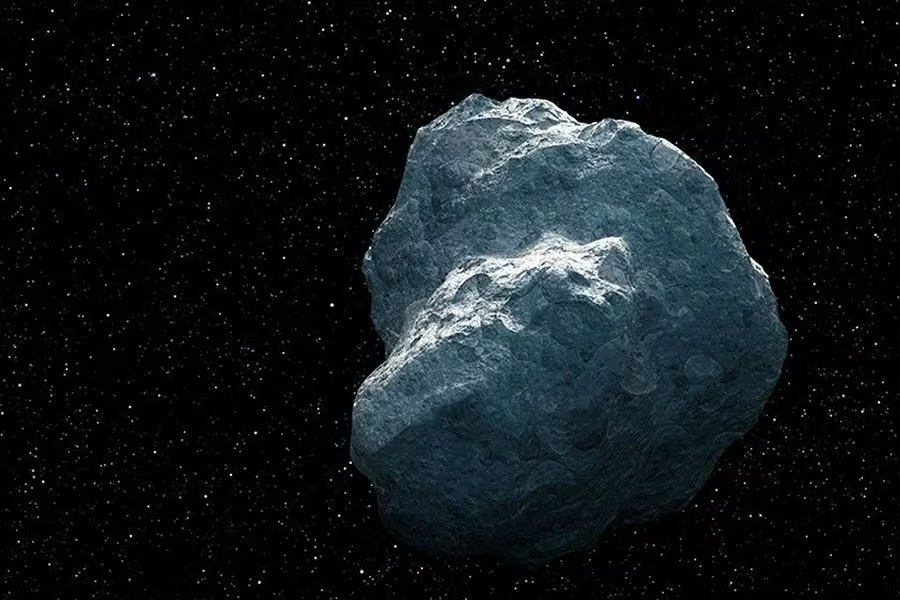
Asteroid 44 Nysa has the weirdest shape yet seen for an asteroid, and that’s saying something.
Read more: skyandtelescope.org/astronomy-news/astronomers-spot-weird… -
Sky & Telescope
@SkyandTelescope
What becomes possible when an astrophysicist and an artist create together? ART-SCIENCE UNDISCIPLINED reveals how values-based collaboration can spark innovation, overcome institutional barriers, and transform the way we make knowledge.
www.ucpress.edu/books/art-science-undisciplined/paper -
Sky & Telescope
@SkyandTelescope
What is it like to stand in the shadow of Earth and look out at the vastness of the Milky Way? THE ULTRAVIEW EFFECT shares how astronauts’ experiences of profound humility in the face of the unknown transform their understanding of humanity.
www.ucpress.edu/books/the-ultraview-effect/hardcover -
Sky & Telescope
@SkyandTelescope
Once the bright Moon is out of the evening sky by Monday or so, use Altair high in the southeast to find little Delphinus and Sagitta roughly a fist at arm's length from it.
Read more: skyandtelescope.org/astronomy-news/observing-news/this-we… -
Sky & Telescope
@SkyandTelescope
New analysis of observations taken in 2024 confirm a stellar companion for Betelgeuse in the constellation Orion.
Read more: skyandtelescope.org/astronomy-news/new-images-confirm-bet… -
Sky & Telescope
@SkyandTelescope
Astronomers have long thought supermassive black holes can escape their home galaxies — now they've found one roaming its host's galactic outskirts.
Read more: skyandtelescope.org/astronomy-news/wandering-supermassive… -
Sky & Telescope
@SkyandTelescope
East of Ophiuchus's, the Serpent-Holder, east shoulder (Beta Ophiuchi, Cebalrai) is a dim V-shaped asterism like a smaller, fainter Hyades. This is the face of the defunct constellation Taurus Poniatovii, "Poniatowski's Bull."
skyandtelescope.org/astronomy-news/observing-news/this-we…
#stargazing -
Sky & Telescope
@SkyandTelescope
Astronomers have long thought supermassive black holes can escape their home galaxies — now they've found one roaming its host's galactic outskirts.
Read more: skyandtelescope.org/astronomy-news/wandering-supermassive… -
Sky & Telescope
@SkyandTelescope
We're not yet halfway through summer, but already W-shaped Cassiopeia, a constellation of fall and winter evenings, is climbing up in the north-northeast as evening grows late.
skyandtelescope.org/astronomy-news/observing-news/this-we…
#stargazing -
Sky & Telescope
@SkyandTelescope
Talk about great timing. The only total solar eclipse of the year coincides with one of the best-known meteor showers.
Read more: skyandtelescope.org/astronomy-news/rare-total-solar-eclip… -
Sky & Telescope
@SkyandTelescope
Ash from countless volcanic eruptions on Io have likely built up its porous surface.
Read more: skyandtelescope.org/astronomy-news/jupiters-moon-io-is-su… -
Sky & Telescope
@SkyandTelescope
The Moon is exactly full at 10:36 a.m. EDT on the morning of the 29th. Once the Moon is well up, you'll find that it's between the Sagittarius Teapot to its right and the dim boat-shape pattern of Capricornus closer to its left.
skyandtelescope.org/astronomy-news/observing-news/this-we…
#stargazing -
Sky & Telescope
@SkyandTelescope
The Moon this evening shines by the handle of the Teapot. The Moon now forms a big, flattish isosceles triangle with Altair 3½ fists to its upper left and Antares the same distance to its right.
skyandtelescope.org/astronomy-news/observing-news/this-we…
#stargazing -
Sky & Telescope
@SkyandTelescope
Look to Arcturus high in the west. Arcturus is best known for its cosmic history: It's an orange giant some 7 billion years old, older than the solar system, racing by us on a trajectory that indicates it was born in another galaxy.
skyandtelescope.org/astronomy-news/observing-news/this-we…
#stargazing -
Sky & Telescope
@SkyandTelescope
As summer progresses, bright Arcturus moves down the western side of the evening sky. Its pale ginger-ale tint always helps identify it. Arcturus forms the bottom point of the Kite of Boötes. The Kite extends upper right from Arcturus.
skyandtelescope.org/astronomy-news/observing-news/this-we…
#stargazing -
Sky & Telescope
@SkyandTelescope
When a meteorite tore through a New Jersey home, the homeowner quickly preserved the fragments. Now, they're giving scientists a look at Earth's early history.
Read more: skyandtelescope.org/astronomy-news/new-jersey-meteorite-o… -
Sky & Telescope
@SkyandTelescope
The waxing gibbous Moon passes Antares. Turn the Summer Triangle into the Summer Diamond. And as you snuggle into bed, would Vega land on your roof if it dropped out of the sky?
Read more: skyandtelescope.org/uncategorized/this-weeks-sky-at-a-gla… -
Sky & Telescope
@SkyandTelescope
Much of the sage advice of the past has become obsolete following recent changes in the equipment marketplace.
skyandtelescope.org/astronomy-equipment/buying-binoculars… -
Sky & Telescope
@SkyandTelescope
After nightfall Altair shines high in the southeast. It's the brightest star on the eastern side of the sky, not counting Vega high above it. Above Altair by a finger-width at arm's length is little orange Tarazed, Altair's eternal sidekick.
skyandtelescope.org/astronomy-news/observing-news/this-we…
#stargazing -
Sky & Telescope
@SkyandTelescope
This periodic visitor is now bright enough to see in binoculars from a dark sky. We also report on a bright supernova in Ursa Major.
Read more: skyandtelescope.org/astronomy-news/comet-10p-tempel-brigh… -
Sky & Telescope
@SkyandTelescope
Astronomers have found a Jupiter-mass world orbiting a brown dwarf that orbits a star.
Read more: skyandtelescope.org/astronomy-news/new-contender-for-exom… -
Sky & Telescope
@SkyandTelescope
We're only a third of the way through summer, but already Cassiopeia is getting well up after dark. Look for its tilted W pattern in the north-northeast. High above it is dimmer Cepheus. Below it, the head of Perseus is on the rise.
skyandtelescope.org/astronomy-news/observing-news/this-we…
#stargazing -
Sky & Telescope
@SkyandTelescope
Tonight, the Moon shines about a fist left of Spica: a quarter of the way from 1st-magnitude Spica to 1st-magnitude Antares. Every month the Moon takes just about 4 days to make the eastward trip from Spica to Antares.
skyandtelescope.org/astronomy-news/observing-news/this-we…
#stargazing -
Sky & Telescope
@SkyandTelescope
The first-quarter Moon is this evening and tomorrow evening. It's exactly first quarter at 7:06 a.m. EDT Tuesday morning, about halfway between the two evenings for the Americas. Notice that the Moon's terminator is not quite straight..
skyandtelescope.org/astronomy-news/observing-news/this-we…
#stargazing -
Sky & Telescope
@SkyandTelescope
Calling all Southern Hemisphere astrophotographers:
nPAE_Andrew
@nPAE_Andrew
Get your astro cameras ready! The nPAE Southern Hemisphere contest is now open. 1st Prize is £200. Full details on how to enter here: www.npae.net/competition/
-
Sky & Telescope
@SkyandTelescope
Observations of remote cosmic explosions reveal that the outer spiral arms of the Milky Way might extend farther out than previously thought.
Read more: skyandtelescope.org/astronomy-news/gamma-ray-bursts-size-… -
Sky & Telescope
@SkyandTelescope
Spot the Cat's Eyes in Scorpius's tail. They are Shaula and Lesath, Lambda and Upsilon Scorpii. They're unequal and canted at an angle; the cat has a bleary eye and is tilting his head to our right. The fainter one, Lesath, is the nearer one.
skyandtelescope.org/astronomy-news/observing-news/this-we…
#stargazing -
Sky & Telescope
@SkyandTelescope
Starry Scorpius is sometimes called "the Orion of Summer." But Scorpius passes a lot lower across the southern sky than Orion does, for those of us at mid-northern latitudes. That means it has only one really good evening month: July.
skyandtelescope.org/astronomy-news/observing-news/this-we…
#stargazing -
Sky & Telescope
@SkyandTelescope
The crescent Moon visits Venus in twilight. After dark, we're in peak time for "the Orion of Summer" and its Cat's Eyes. But cold-weather Cassiopeia is already poking up.
Read more: skyandtelescope.org/astronomy-news/observing-news/this-we… -
Sky & Telescope
@SkyandTelescope
A team of astronomers have discovered helium escaping from a rocky planet, marking the first detection of an atmosphere on a rocky world.
Read more: skyandtelescope.org/astronomy-news/first-atmosphere-terre… -
Sky & Telescope
@SkyandTelescope
In twilight this evening, low in the west, catch the returning crescent Moon less than a fist to the lower right of Venus. Hardly more than 1° from the Moon (depending on your location), look for vastly fainter Regulus.
skyandtelescope.org/astronomy-news/observing-news/this-we…
#stargazing -
Sky & Telescope
@SkyandTelescope
Two teams of astronomers independently discovered a third giant gas planet orbiting in the famous Beta Pictoris system.
Read more: skyandtelescope.org/astronomy-news/famous-system-has-a-th… -
Sky & Telescope
@SkyandTelescope
The Federal Communications Commission (FCC) has approved the launch of Reflect Orbital's Earendil 1 satellite — a space mirror 18 meters wide designed to reflect sunlight to the ground.
Read more: skyandtelescope.org/astronomy-news/observers-beware-refle… -
Sky & Telescope
@SkyandTelescope
Look due south for orange Antares on the meridian. Around and upper right of Antares are the other, whiter stars forming the distinctive pattern of upper Scorpius. The rest of the Scorpion runs down from Antares toward the horizon, then left.
skyandtelescope.org/astronomy-news/observing-news/this-we…
#stargazing -
Sky & Telescope
@SkyandTelescope
This month’s episode highlights the bright star Spica, now prominent high in the southwest after evening twilight. It’s leading the parade of constellations, along with the brilliant planet Venus.
skyandtelescope.org/stargazing-and-observing/astronomy-po…
Sponsored by @Celestron -
Sky & Telescope
@SkyandTelescope
"Rogue" Neptune-size worlds might not roam the galaxy totally on their own, just very far away from their parent stars.
Read more: skyandtelescope.org/uncategorized/rogue-neptunes-are-deta… -
Sky & Telescope
@SkyandTelescope
One hour after sunset, as twilight is fading and the stars are coming out, you'll find the two brightest stars of summer, Vega and Arcturus, equally near the zenith: Vega toward the east, Arcturus toward the southwest.
skyandtelescope.org/astronomy-news/observing-news/this-we…
#stargazing -
Sky & Telescope
@SkyandTelescope
You may already know the Large Sagittarius Star Cloud just off the spout of the Sagittarius Teapot. But did you know about the little globular star cluster NGC 6522 embedded within?
skyandtelescope.org/astronomy-news/observing-news/this-we…
#stargazing
Image Credit: Australian Astronomical Observatory/David Malin -
Sky & Telescope
@SkyandTelescope
The sharp-eyed and far-seeing Euclid space telescope has picked up 31 early quasars that have evaded detection until now.
Read more: skyandtelescope.org/astronomy-news/euclid-telescope-finds… -
Sky & Telescope
@SkyandTelescope
Check the sky low in the northwest or north at the end of these long summer twilights. Would you recognize shiny, ripply noctilucent clouds if you saw them? They're the most astronomical of all cloud types.
skyandtelescope.org/astronomy-news/observing-news/this-we…
#stargazing
Image Credit: Debra Ceravolo -
Sky & Telescope
@SkyandTelescope
Low in the north-northeast after dark, the upright W of Cassiopeia is slowly beginning to tilt and climb.
skyandtelescope.org/astronomy-news/observing-news/this-we…
#stargazing -
Sky & Telescope
@SkyandTelescope
The bright, distinctive pattern of Upper Scorpius is on its best display in the south right after nightfall. Telescopic treasures await. In the west, Regulus now departs from Venus.
Read more: skyandtelescope.org/astronomy-news/observing-news/this-we… -
Sky & Telescope
@SkyandTelescope
Visit our new online Marketplace to see the latest astronomy tech and accessories from trusted S&T partners.
skyandtelescope.org/marketplace/ -
Sky & Telescope
@SkyandTelescope
China’s Tianwen 2 mission returns its close view of Earth's tiny "quasi-moon" Kamoʻoalewa.
Read more: skyandtelescope.org/astronomy-news/tianwen-2-arrives-at-q… -
Sky & Telescope
@SkyandTelescope
We all might aspire to such a captivating image, but there’s a real learning curve to astrophotography
skyandtelescope.org/astronomy-blogs/making-peace-with-ter… -
Sky & Telescope
@SkyandTelescope
Catch Venus low in the west as twilight fades. It's now having its conjunction with Regulus, much fainter, 1° under it. Binoculars will help reveal Regulus through the twilight.
skyandtelescope.org/stargazing-and-observing/sky-at-a-gla…
#stargazing -
Sky & Telescope
@SkyandTelescope
Soon after nightfall, look due south for orange Antares. Around and upper right of Antares are the other, stars forming the distinctive pattern of upper Scorpius. The rest of the Scorpion runs down from Antares toward the horizon, then left.
skyandtelescope.org/stargazing-and-observing/sky-at-a-gla…
#stargazing -
Sky & Telescope
@SkyandTelescope
Here's an observing guide to both familiar and lesser-known deep-sky objects that inhabit our galaxy's equatorial zone.
Read more: skyandtelescope.org/astronomy-news/steamy-nights-at-the-g… -
Sky & Telescope
@SkyandTelescope
We might be living through a comet shower created by a star that millions of years ago jostled the Oort Cloud surrounding the solar system.
Read more: skyandtelescope.org/astronomy-news/did-a-passing-star-sho… -
Sky & Telescope
@SkyandTelescope
Due to several customer service issues, we have a new contact for subscriber queries. If you have any questions or concerns about your subscription, please email Skyandtelescope@subscription-team.com or call 800-253-0245.
skyandtelescope.org/contact-us/ -
Sky & Telescope
@SkyandTelescope
Japan’s Hayabusa 2 mission has revealed another "snowman" asteroid — a pair of asteroids attached with a narrow neck. The contact binary could help shed light on planet formation.
Read more: skyandtelescope.org/astronomy-news/hayabusa-2-completes-f… -
Sky & Telescope
@SkyandTelescope
The half-lit Moon rises in the east around midnight or 1 a.m. tonight. As the Moon gets higher, spot Saturn about a fist to its right and the two or three brightest stars of Aries a similar distance to the Moon's left.
skyandtelescope.org/stargazing-and-observing/sky-at-a-gla…
#stargazing -
Sky & Telescope
@SkyandTelescope
Earth is at aphelion, ours farthest from the Sun for the year. But the difference is small. At perihelion in January, we're just 3.4% closer to the Sun than now.
skyandtelescope.org/stargazing-and-observing/sky-at-a-gla…
#stargazing
Image credit: Phil Whitebloom -
Sky & Telescope
@SkyandTelescope
Meet Cygnus, the Swan, a high-flying constellation that looks like its namesake and has a rich mythological history.
Read more: skyandtelescope.org/stargazing-and-observing/celestial-ob… -
Sky & Telescope
@SkyandTelescope
The Moon finally rises in the east around midnight tonight; it's nearing last quarter. An hour later Saturn rises to the Moon's lower left. By the beginning of dawn they're high in the south-southeast.
skyandtelescope.org/stargazing-and-observing/sky-at-a-gla…
#stargazing -
Sky & Telescope
@SkyandTelescope
M13 is famous as one of the best and brightest globular star clusters in the sky, now nearly overhead after dark. But part of its fame is due to its easily findable location. Less known is its near-twin, M92 to the northeast.
skyandtelescope.org/stargazing-and-observing/sky-at-a-gla…
#stargazing -
Sky & Telescope
@SkyandTelescope
For those in the U.S., happy 4th of July! JWST sees through the gas and dust that cocoons baby stars in the FS Tau star system. The still-forming stars emit outflows to break out of their shells and sparkle.
Image Credit: NASA, ESA, CSA, STScI, Alyssa Pagan (STScI) -
Sky & Telescope
@SkyandTelescope
A daring mission will attempt to reach and save a key astrophysics observatory in low Earth orbit.
Read more: skyandtelescope.org/astronomy-news/mission-launches-to-re… -
Sky & Telescope
@SkyandTelescope
Regulus creeps up to Venus in twilight this week. Vega and Arcturus balance across the zenith. And this being July, Scorpius decorates the south.
Read more: skyandtelescope.org/astronomy-news/observing-news/this-we… -
Sky & Telescope
@SkyandTelescope
The Big Dipper, high in the northwest as evening advances, is beginning to turn around to "scoop up water" through the hours and months to come.
skyandtelescope.org/astronomy-news/observing-news/this-we…
#stargazing -
Sky & Telescope
@SkyandTelescope
NASA's Transiting Exoplanet Survey Satellite has found two "super-puff" planets in the same system, each one as light as cotton candy.
Read more: skyandtelescope.org/astronomy-news/cotton-candy-exoplanet… -
Sky & Telescope
@SkyandTelescope
NASA has awarded contracts to three aerospace companies for four lunar landers to launch in 2028.
Read more: skyandtelescope.org/astronomy-news/nasa-announces-four-ne… -
Sky & Telescope
@SkyandTelescope
Solar Image of the Month: Enormous solar prominences erupted from the Sun's limb on September 13, 2024. Arturo Buenrostro captured this image using a Lunt 130-mm Double Stack solar telescope and Player One Astronomy Apollo-M camera.
.
.
#solarobserving #halpha #luntsolar -
Sky & Telescope
@SkyandTelescope
The waning gibbous Moon rises in the east-southeast around the end of twilight. The Big Summer Triangle hangs high above it. The triangle's highest and brightest star is Vega; look for it very high due east.
skyandtelescope.org/astronomy-news/observing-news/this-we…
#stargazing
Image Credit: Stellarium -
Sky & Telescope
@SkyandTelescope
The latest episode of our Sky Tour Astronomy podcast is out now! This month’s episode highlights the bright star Spica, now prominent high in the southwest after twilight. It’s leading the parade of constellations, along with Venus.
Sponsored by @Celestron
skyandtelescope.org/stargazing-and-observing/astronomy-po… -
Sky & Telescope
@SkyandTelescope
The telescope should spot billions of astronomical objects in the next 10 years.
Read more: skyandtelescope.org/astronomy-news/vera-c-rubin-observato… -
Sky & Telescope
@SkyandTelescope
Star colors are mostly subtle, and different people have an easier or harder time seeing them. For instance, Vega is white with just a touch of icy blue. Arcturus is a pale yellow-orange giant.
skyandtelescope.org/astronomy-news/observing-news/this-we…
#stargazing
Image Credit: Stephen Rahn, CC 0 -
Sky & Telescope
@SkyandTelescope
Nighttime reveals that the Moon is at the handle of the Sagittarius Teapot — if the sky isn't too hazy. To help bring out the Teapot's 2nd- and 3rd-magnitude stars, cover the Moon with your fingertip to hide its bright glare.
skyandtelescope.org/astronomy-news/observing-news/this-we…
#stargazing -
Sky & Telescope
@SkyandTelescope
Astronomers have underestimated just how bright the low-frequency radio sky is, new measurements show.
Read more: skyandtelescope.org/astronomy-news/radio-astronomers-meas… -
Sky & Telescope
@SkyandTelescope
These evenings the main stars of the little constellation Lyra dangle down from bright Vega high in the east. The two brightest stars of the pattern after Vega are Beta and Gamma Lyrae. Beta Lyrae is an eclipsing variable star.
skyandtelescope.org/astronomy-news/observing-news/this-we…
#stargazer -
Sky & Telescope
@SkyandTelescope
This is the time of year when the two brightest stars of summer, Arcturus and Vega, shine about equally high overhead shortly after dark: Arcturus toward the southwest, Vega toward the east. They are 37 and 25 light-years away, respectively.
skyandtelescope.org/astronomy-news/observing-news/this-we…
#stargazing -
Sky & Telescope
@SkyandTelescope
The almost-full Moon steps past orange Antares between Friday and Saturday evenings, June 26th and 27th.
Read more: skyandtelescope.org/astronomy-news/observing-news/this-we… -
Sky & Telescope
@SkyandTelescope
Venus and Jupiter now shine 15° apart in the western sky as twilight fades, making a diagonal line. Extend the line the upper left from Venus tonight and you'll land on Regulus. How early can you first see Regulus?
skyandtelescope.org/astronomy-news/this-weeks-sky-at-a-gl…
#stargazing #venus #jupiter #regulus -
Sky & Telescope
@SkyandTelescope
The core of the brightest galaxy in the cluster Abell 402 contains a curious void. New observations suggest that an ultra-massive black hole could have excavated this feature.
Read more: skyandtelescope.org/astronomy-news/into-the-void-investig… -
Sky & Telescope
@SkyandTelescope
Leo the Lion is mostly a constellation of late winter and spring. But he's not gone yet. As twilight ends look due west, for Regulus, his brightest and now lowest star. It's the forefoot of the Lion stick figure.
skyandtelescope.org/astronomy-news/this-weeks-sky-at-a-gl…
#stargazing #leo -
Sky & Telescope
@SkyandTelescope
Exploding stars have left their radioactive mark on our planet. Now scientists have found more evidence of a particularly violent event in Earth’s more ancient past.
Read more: skyandtelescope.org/astronomy-news/exploding-stars-sprink… -
Sky & Telescope
@SkyandTelescope
At nightfall, look for Spica about 5° upper right of the Moon. Later in the evening, as the sky twists, Spica will shine more directly to the Moon's right.
skyandtelescope.org/astronomy-news/this-weeks-sky-at-a-gl…
#stargazing #virgo #spica -
Sky & Telescope
@SkyandTelescope
New analysis reveals a tight relationship between two supernova remnants in the outer Milky Way.
Read more: skyandtelescope.org/astronomy-news/double-whammy-binary-s… -
Sky & Telescope
@SkyandTelescope
After dark, look southeast for orange Antares. Antares has been called "the Betelgeuse of summer." Around and upper right of Antares are the other, whiter stars of upper Scorpius, forming their distinctive pattern.
skyandtelescope.org/astronomy-news/this-weeks-sky-at-a-gl…
#stargazing #antares #scorpius -
Sky & Telescope
@SkyandTelescope
Today is the longest day of the year for the Northern Hemisphere, and the official start of summer (shortest day and start of winter for the Southern Hemisphere). The summer solstice comes at 4:25 a.m. EDT, when the Sun ends its northward run.
skyandtelescope.org/astronomy-news/this-weeks-sky-at-a-gl…
#stargazing -
Sky & Telescope
@SkyandTelescope
Take a closer look at Donaldjohanson, the "snowman" asteroid that NASA's Lucy spacecraft flew by last year: skyandtelescope.org/astronomy-news/lucys-first-asteroid-f…
-
Sky & Telescope
@SkyandTelescope
On this final evening of spring, look very low in the north-northwest in late twilight for wintry Capella twinkling far out of season. The farther north you are the longer Capella hangs in. For the South it's well and truly gone.
skyandtelescope.org/astronomy-news/this-weeks-sky-at-a-gl…
#stargazing #capella -
Sky & Telescope
@SkyandTelescope
The Moon as it will appear in an amateur telescope at 10 p.m. EDT Friday the 19th. This week Venus and Jupiter continue moving apart low in the western twilight. Vega and Arcturus shine equally high after dark. And watch Beta Lyrae self-eclipse.
Read more: skyandtelescope.org/astronomy-news/this-weeks-sky-at-a-gl… -
Sky & Telescope
@SkyandTelescope
We have a diagonal lineup of five objects in the western dusk 1st-magnitude or brighter. From upper left, spot Regulus, the Moon, Venus, Jupiter, and Mercury. The whole line is 44° long along the ecliptic.
skyandtelescope.org/astronomy-news/observing-news/this-we…
#stargazing -
Sky & Telescope
@SkyandTelescope
A star-forming galaxy in the early universe might have sent a ghostly particle known as a neutrino crashing into the ice at Earth’s South Pole, after an 11 billion-year journey through space.
Read more: skyandtelescope.org/astronomy-news/shadow-blaster-galaxy-… -
Sky & Telescope
@SkyandTelescope
Today's daylight occultation of Venus by the Moon's dark limb, if you have a clear blue sky at the time, will be visible with a telescope or possibly even binoculars.
Image Credit: Elias Chasiotis December 2008
skyandtelescope.org/astronomy-news/observing-news/this-we…
#stargazing #venus #moon #occultation -
Sky & Telescope
@SkyandTelescope
Venus, Jupiter, and Mercury now form an equally spaced line in twilight, 7° from planet to planet. The thin crescent Moon joins them, hanging between Jupiter and Mercury.
skyandtelescope.org/astronomy-news/observing-news/this-we…
#stargazing #venus #jupiter #mercury #moon -
Sky & Telescope
@SkyandTelescope
A deep spectrum of a mysterious "little red dot" reveals a supermassive black hole cocooned in gas so dense it's opaque — but glowing in the infrared.
Read more: skyandtelescope.org/astronomy-news/little-red-dot-is-a-co… -
Sky & Telescope
@SkyandTelescope
On June 17th, much of North America can watch the Moon occult Venus in the daytime sky. All you need are binoculars.
Read more: skyandtelescope.org/astronomy-news/see-venus-disappear-in… -
Sky & Telescope
@SkyandTelescope
This is the time of year when, at the end of twilight, the Little Dipper floats straight upward from Polaris — perhaps like a helium balloon on a curving string escaped into the night from a prom party.
skyandtelescope.org/astronomy-news/observing-news/this-we…
#stargazing #littledipper -
Sky & Telescope
@SkyandTelescope
This month’s episode of the Sky Tour astronomy podcast highlights the close pairing of Venus and Jupiter under way in the western sky after sunset.
Sponsored by @Celestron
skyandtelescope.org/stargazing-and-observing/astronomy-po… -
Sky & Telescope
@SkyandTelescope
Bright Arcturus, shining very high toward the south these evenings, and Spica, about three fists at arm's length below it and a bit right, form an almost perfect equilateral triangle with Denebola, off to their right.
skyandtelescope.org/astronomy-news/observing-news/this-we…
#stargazing #spring #springtriangle -
Sky & Telescope
@SkyandTelescope
Venus and Jupiter have widened to 4½° apart. That's the same separation as the Gemini twins Pollux and Castor, which emerge into view to their right as twilight deepens.
skyandtelescope.org/astronomy-news/observing-news/this-we…
#stargazing #venus #jupiter #gemini -
Sky & Telescope
@SkyandTelescope
A rare meteorite recovered from the Sahara Desert could be a fragment of a Moon-size body that met a violent end in the earliest days of the solar system.
Read more: skyandtelescope.org/astronomy-news/did-a-moon-size-planet… -
Sky & Telescope
@SkyandTelescope
The three planets in the western twilight are pulling away from each other now. On Wednesday, the Moon will occult Venus in daylight.
Read more: skyandtelescope.org/astronomy-news/observing-news/this-we… -
Sky & Telescope
@SkyandTelescope
Learn how to photograph the most dynamic object you can observe in the sky.
skyandtelescope.org/astronomy-resources/solar-photography… -
Sky & Telescope
@SkyandTelescope
Mars has been gradually getting less difficult low in the dawn, and tomorrow morning the 12th, the waning crescent Moon helps point the way to it. The Moon will stand 6° or 7° above Mars.
skyandtelescope.org/astronomy-news/observing-news/this-we…
#stargazing -
Sky & Telescope
@SkyandTelescope
Australia's Molonglo Observatory was saved from retirement; now, it holds the promise of future radio observations.
Read more: skyandtelescope.org/astronomy-news/revival-of-australias-… -
Sky & Telescope
@SkyandTelescope
Bob King captured this image of last night's conjunction from a lake near Duluth, Minnesota as a firefly flitted across the scene.
Subscribe to Sky & Telescope skyandtelescope.dragonforms.com/init.do?pk=SLASH&omedasit… for more.
.
.⠀⠀⠀⠀⠀⠀⠀⠀
#conjunction #venus #jupiter #firefly #brightstars -
Sky & Telescope
@SkyandTelescope
After dark, Vega is the brightest star high in the east. Barely lower left of it is Epsilon Lyrae, the Double-Double. A 4-inch telescope at 120× or more should resolve each of Epsilon's two components into a tight pair.
skyandtelescope.org/astronomy-news/observing-news/this-we…
#stargazing -
Sky & Telescope
@SkyandTelescope
Meet Callisto, the heavily cratered moon that's the most distant of the Galilean satellites from Jupiter.
Read more: skyandtelescope.org/astronomy-news/meet-callisto-jupiters… -
Sky & Telescope
@SkyandTelescope
Astronomer and comet-hunter Alan Hale passed away on Saturday, June 6th, at 67 years old in his home in Cloudcroft, New Mexico.
Read more: skyandtelescope.org/astronomy-news/alan-hale-1958-2026 -
Sky & Telescope
@SkyandTelescope
Venus and Jupiter are finally in conjunction, 1.65° apart. Don't forget Mercury 14° to their lower right. Think photo opportunity!
skyandtelescope.org/astronomy-news/observing-news/this-we…
#stargazing -
Sky & Telescope
@SkyandTelescope
The satellites being launched by Amazon are brighter than IAU-recommended limits — which means they'll interfere with astronomy.
Read more: skyandtelescope.org/astronomy-news/amazons-satellites-are… -
Sky & Telescope
@SkyandTelescope
Astronomers have released the newest list of gravitational-wave detections, almost doubling the number of known signals from colliding black holes.
Read more: skyandtelescope.org/astronomy-news/gravitational-wave-det… -
Sky & Telescope
@SkyandTelescope
Venus and Jupiter are almost their closest together this evening, 1.8° apart . . . tomorrow they'll be in conjunction.
skyandtelescope.org/astronomy-news/observing-news/this-we…
#stargazing -
Sky & Telescope
@SkyandTelescope
The Big Dipper has swung around to hang down by its handle high in the northwest after dark. The middle star of its handle is Mizar, with Alcor right next to it. On which side of Mizar should you look for Alcor? On the side facing Vega!
skyandtelescope.org/astronomy-news/observing-news/this-we…
#stargazing -
Sky & Telescope
@SkyandTelescope
Vega and Arcturus are the two brightest stars in the evening sky. Vega shines fairly high in the east and Arcturus is very high up as you face south. A third of the way from Arcturus down to Vega, look for semicircular Corona Borealis.
skyandtelescope.org/astronomy-news/observing-news/this-we…
#stargazing -
Sky & Telescope
@SkyandTelescope
The Office of Management and Budget envisions diminishing peer review and international collaborations.
Read more: skyandtelescope.org/astronomy-news/proposed-u-s-grant-fun… -
Sky & Telescope
@SkyandTelescope
Update (Friday, June 5): After a disappointing showing last night, there's still a good chance we may see aurorae tonight.
skyandtelescope.org/astronomy-news/auroras-may-dance-over… -
Sky & Telescope
@SkyandTelescope
Bright Venus and Jupiter pass through conjunction in twilight this week, while Mercury, Pollux, and Castor watch them from nearby.
Read more: skyandtelescope.org/astronomy-news/observing-news/this-we… -
Sky & Telescope
@SkyandTelescope
Multiple coronal mass ejections (CMEs) could spark a significant auroral display over North America Thursday night.
Read more: skyandtelescope.org/astronomy-news/auroras-may-dance-over… -
Sky & Telescope
@SkyandTelescope
The true origins of some globular clusters can give you a new perspective when you're viewing them through your telescope.
Read more: skyandtelescope.org/astronomy-blogs/a-globular-season-sur… -
Sky & Telescope
@SkyandTelescope
For much of the spring at mid-northern latitudes, the Milky Way lies right down out of sight all in the evening. But look east now. The rich Cepheus-Cygnus-Aquila stretch of the Milky Way is rising, earlier and higher every week.
skyandtelescope.org/astronomy-news/observing-news/this-we…
#stargazing #milkyway -
Sky & Telescope
@SkyandTelescope
Jennifer Willis explores the genesis of globular clusters in the latest installment of Why We Look Up.
Read more: skyandtelescope.org/astronomy-blogs/a-globular-season-sur… -
Sky & Telescope
@SkyandTelescope
A beautiful conjunction is coming, and all you need are your eyes to enjoy it.
Read more: skyandtelescope.org/astronomy-news/venus-jupiter-converge… -
Sky & Telescope
@SkyandTelescope
If you're at the latitude of San Antonio, Orlando, or points south, Alpha Cen skims just above your true southern horizon for a little while late these evenings.
skyandtelescope.org/astronomy-news/observing-news/this-we…
#stargazing #centaurus -
Sky & Telescope
@SkyandTelescope
The latest episode of our Sky Tour Astronomy podcast is out now! This episode highlights the close pairing of Venus and Jupiter under way in the western sky after sunset.
Sponsored by @Celestron
skyandtelescope.org/stargazing-and-observing/astronomy-po… -
Sky & Telescope
@SkyandTelescope
Bright Arcturus shines pale yellow-orange high overhead toward the south these evenings. The kite shape made by the brightest stars of its constellation, Boötes, extends up from Arcturus nearly to the zenith after nightfall.
skyandtelescope.org/astronomy-news/observing-news/this-we…
#stargazine #bootes -
Sky & Telescope
@SkyandTelescope
In the hours after midnight tonight, cover the waning gibbous Moon with your finger to (hopefully) reveal that it is just above the spout of the Sagittarius Teapot.
skyandtelescope.org/astronomy-news/observing-news/this-we…
#stargazing #moon #sagittarius -
Sky & Telescope
@SkyandTelescope
The bottom two stars of the little Lyra parallelogram, faintly seen in in the image at top pointing toward Altair, are Beta and Gamma Lyrae. Gamma is the one farthest from Vega. Beta is a famous eclipsing variable star.
skyandtelescope.org/astronomy-news/observing-news/this-we…
#stargazing #lyra #variablestars -
Sky & Telescope
@SkyandTelescope
After dusk look for orange Antares 2° or 3° left of the Moon. Antares is closer above the Moon by the beginning of dawn. You can reduce the Moon's glare by covering it with a finger. Binoculars help reveal the star and its color.
skyandtelescope.org/astronomy-news/observing-news/this-we…
#stargazing #moon #antares -
Sky & Telescope
@SkyandTelescope
Rovers, drones, and landers will usher in a sustained lunar presence, under the new plan NASA announced this week.
Read more: skyandtelescope.org/astronomy-news/nasa-brings-its-lunar-… -
Sky & Telescope
@SkyandTelescope
Reanalysis shows that the Hubble Space Telescope's detection of water vapor escaping from Jupiter’s moon Europa might have been a glitch.
Read more: skyandtelescope.org/astronomy-news/evidence-of-water-plum… -
Sky & Telescope
@SkyandTelescope
Venus and Jupiter grab your eyes in the west in late twilight. The Summer Triangle marks the dark in the east. So will the subtler Milky Way once the glary Moon is gone.
Read more: skyandtelescope.org/astronomy-news/observing-news/this-we… -
Sky & Telescope
@SkyandTelescope
The two brightest planets in our sky will be less than 2 degrees apart on June 9th at sunset.
Read more: skyandtelescope.org/astronomy-press-releases/close-encoun… -
Sky & Telescope
@SkyandTelescope
To most of us, "Cassiopeia" means "Cold." Late fall and winter are when this landmark constellation stands high overhead. But even on warm June evenings, it lurks low. As twilight fades out, look for it down near the north horizon.
skyandtelescope.org/astronomy-news/observing-news/this-we…
#stargazing #cassiopeia -
Sky & Telescope
@SkyandTelescope
I share my "discovery" of a new Milky Way star cloud that's been staring at me for ages.
Read more: skyandtelescope.org/astronomy-news/lost-in-the-star-cloud… -
Sky & Telescope
@SkyandTelescope
Constellations seem to twist around fast when they pass your zenith. Just two weeks ago, the Big Dipper floated horizontally in late twilight an hour after sunset. Now it's angled diagonally. In just another two weeks it will hang down by its handle!
skyandtelescope.org/astronomy-news/observing-news/this-we… -
Sky & Telescope
@SkyandTelescope
The Moon now shines about 5° or 6° to the right of Spica in the south after dark. The Moon is 1.3 light-seconds away. Spica is about 250 light-years in its background.
skyandtelescope.org/astronomy-news/observing-news/this-we…
#stargazing #moon #spica #virgo -
Sky & Telescope
@SkyandTelescope
NASA’s Psyche asteroid mission made a course adjustment via a flyby past Mars en route to its final destination. Here's what it saw.
Read more: skyandtelescope.org/astronomy-news/nasas-psyche-sends-bac… -
Sky & Telescope
@SkyandTelescope
The waxing gibbous Moon shines high after dark. Look for Regulus to its left. Denebola, Leo's tailtip, is a little farther to the Moon's upper right. The three of them form a huge kite-shaped asterisin with Arcturus.
skyandtelescope.org/astronomy-news/observing-news/this-we…
#stargazing #moon #regulus #leo -
Sky & Telescope
@SkyandTelescope
Have you ever seen even one star of Centaurus? Alpha Centauri never gets above the horizon unless you’re as far south as San Antonio or Orlando. But Theta Centauri (Menkent) clears the horizon anywhere in the continental U.S.
skyandtelescope.org/astronomy-news/observing-news/this-we…
#stargazing #centaurus -
Sky & Telescope
@SkyandTelescope
With the Moon just a half day past first quarter (for the Americas), the terminator between lunar day and night still crosses almost perfectly straight across the Moon's face.
Read More: skyandtelescope.org/astronomy-news/observing-news/this-we…
Check out our Moon Phases Tool: skyandtelescope.org/stargazing-and-observing/the-phase-of… -
Sky & Telescope
@SkyandTelescope
New research suggests that Triton — or a Triton-like object — might have disrupted Neptune's original moon system. Nereid might be the sole survivor.
Read more: skyandtelescope.org/astronomy-news/nereid-could-be-neptun… -
Sky & Telescope
@SkyandTelescope
Solar Image of the Month: This exquisitely detailed image from August 6, 2024, features many dark filaments and bright patches of plage. Mark Johnston captured it using double-stacked Lunt Solar etalons on a TEC APO160FL refractor.
#solarobserving #halpha #luntsolar #solarmaximum -
Sky & Telescope
@SkyandTelescope
Venus and Jupiter — the Evening Star and the False Evening Star — draw closer together in the western twilight and point down to Mercury. The waxing Moon shows off its rich telescopic detail.
Read more: skyandtelescope.org/astronomy-news/observing-news/this-we… -
Sky & Telescope
@SkyandTelescope
Vega, the Summer Star, is now nicely up in the east-northeast after dark. Look for its faint little constellation Lyra, the Lyre, hanging down from it with its bottom canted to the right.
skyandtelescope.org/astronomy-news/observing-news/this-we…
#stargazing #lyra #vega -
Sky & Telescope
@SkyandTelescope
Tonight the Moon shines upper left of Jupiter and Venus in the darkening dusk. The Moon makes an isosceles triangle (two equal sides) with Jupiter and Pollux.
skyandtelescope.org/astronomy-news/observing-news/this-we…
#stargazing #moon #jupiter #gemini -
Sky & Telescope
@SkyandTelescope
For most of human history, the sky was not something we studied — it was something we lived with.
Read more: skyandtelescope.org/astronomy-blogs/stonehenge-and-the-ge… -
Sky & Telescope
@SkyandTelescope
This evening, the waxing Moon forms the latest of its monthly quadrilaterals with Jupiter, Pollux, and Castor. Down to their lower right shines Venus. skyandtelescope.org/astronomy-news/observing-news/this-we…
#stargazing #moon #jupiter #gemini -
Sky & Telescope
@SkyandTelescope
A new model explains how Ganymede got its molten core — which in turn has given Jupiter's largest moon its magnetic field.
Read more: skyandtelescope.org/astronomy-news/how-jupiters-moon-gany… -
Sky & Telescope
@SkyandTelescope
This evening waxing crescent Moon will shine just 2° or 3° from Venus. Such a striking couple they'll make! They will turn the heads of your non-astronomical friends and family anywhere in the Americas.
skyandtelescope.org/astronomy-news/observing-news/this-we…
#stargazing #moon #venus -
Sky & Telescope
@SkyandTelescope
Astronomers have identified the likely source of gas that flows into the maw of the Milky Way’s central black hole, Sagittarius A*.
Read more: skyandtelescope.org/astronomy-news/whats-feeding-our-supe… -
Sky & Telescope
@SkyandTelescope
For the eastern third of North America, Europa and Io will reappear out of eclipse by Jupiter's shadow just three minutes apart, at 8:50 and 8:53 p.m. EDT. They will appear fairly close together about two Jupiter-widths to Jupiter's east.
skyandtelescope.org/astronomy-news/observing-news/this-we… -
Sky & Telescope
@SkyandTelescope
Vega is the brightest star in the east-northeast after dark. Look to Vega's upper left for Eltanin, the nose of Draco the Dragon. Closer above and upper left of Eltanin are the three fainter stars forming the rest of Draco's stick-figure head.
skyandtelescope.org/astronomy-news/observing-news/this-we… -
Sky & Telescope
@SkyandTelescope
A planetary odd couple — a mini-Neptune and a hot Jupiter — probably formed much farther away from their star before migrating closer in.
Read more: skyandtelescope.org/astronomy-news/how-did-this-peculiar-… -
Sky & Telescope
@SkyandTelescope
The Moon, Venus, and Jupiter — the three brightest celestial objects after the Sun — will form up beautifully in twilight this Monday, Tuesday, and Wednesday.
Read more: skyandtelescope.org/astronomy-news/observing-news/this-we… -
Sky & Telescope
@SkyandTelescope
What's the oldest thing you have ever seen? It might be the Sun, age 4.6 billion years. Next is Arcturus, it has aged about 7 billion years. Or pick a proton, any proton, and it has very likely remained intact, since the Big Bang!
skyandtelescope.org/astronomy-news/observing-news/this-we… -
Sky & Telescope
@SkyandTelescope
Two objects that appeared to be galaxies residing in a universe about 150 million years old turn out to be brown dwarfs in the Milky Way.
Read more: skyandtelescope.org/astronomy-news/webb-telescope-reveals… -
Sky & Telescope
@SkyandTelescope
Watch the crescent Moon dance with the planets when it returns next week.
Read more: skyandtelescope.org/astronomy-news/moon-planets-gather-in… -
Sky & Telescope
@SkyandTelescope
Spot Venus in the western twilight. As the sky darkens this evening, you'll see that Venus is sitting halfway between Beta Tauri (to its right) and dimmer Zeta Tauri (to its left). These are the horn tips of Taurus. The rest of him is setting.
skyandtelescope.org/astronomy-news/observing-news/this-we… -
Sky & Telescope
@SkyandTelescope
Low in the eastern dawn Wednesday and Thursday mornings, the waning crescent Moon guides your way to difficult Saturn and even more difficult Mars.
skyandtelescope.org/astronomy-news/observing-news/this-we… -
Sky & Telescope
@SkyandTelescope
The Big Dipper floats upside down high in the north after dark, as if dumping spring showers onto the world. The farther north you are, the higher it'll be.
skyandtelescope.org/astronomy-news/observing-news/this-we… -
Sky & Telescope
@SkyandTelescope
In 2019, a supermassive black hole in a galaxy 300 million light-years away woke up. Now, it’s puzzling astronomers with an unexpected slowdown in its X-ray bursts.
Read more: skyandtelescope.org/astronomy-news/a-black-holes-puzzling… -
Sky & Telescope
@SkyandTelescope
The Arch of Spring spans the western sky in late twilight, highlighted by Jupiter near its top. Pollux and Castor, lined up roughly horizontally, form the top of the Arch. Watch for them to come out in the fading twilight upper right of Jupiter.
skyandtelescope.org/astronomy-news/observing-news/this-we… -
Sky & Telescope
@SkyandTelescope
Three zero-magnitude stars shine after dark in May: Arcturus high in the southeast, Vega much lower in the northeast, and Capella in the northwest.
skyandtelescope.org/astronomy-news/observing-news/this-we… -
Sky & Telescope
@SkyandTelescope
The imminent lunar impact of a SpaceX Falcon 9 rocket booster highlights the growing amount of space debris near the Moon.
Read more: skyandtelescope.org/astronomy-news/spacex-booster-will-hi… -
Sky & Telescope
@SkyandTelescope
Jupiter, shining high the western dusk, inches down day toward brighter Venus. Venus, meanwhile, creeps toward the horntip stars of Taurus and stands between them on May 13th
Read more: skyandtelescope.org/astronomy-news/observing-news/this-we… -
Sky & Telescope
@SkyandTelescope
Observations — including from an amateur astronomer — show that the Plutino 2002 XV93 has a thin wisp of air around it.
Read more: skyandtelescope.org/astronomy-news/pluto-like-object-has-… -
Sky & Telescope
@SkyandTelescope
Astronomers may have found the missing link required to understand one of the James Webb Space Telescope’s most puzzling discoveries.
Read more: skyandtelescope.org/astronomy-news/astronomers-spot-possi… -
Sky & Telescope
@SkyandTelescope
The high spring constellation Canes Venatici, the hunting dogs, offers the well-known bright double star Cor Caroli as its Alpha, and it also bears the 8th-magnitude spiral galaxy M94.
skyandtelescope.org/astronomy-news/observing-news/this-we… -
Sky & Telescope
@SkyandTelescope
The James Webb Space Telescope has observed the surface of a bare rocky exoplanet, revealing old, dark rock akin to that on our Moon.
Read more: skyandtelescope.org/astronomy-news/nearby-super-earth-has… -
Sky & Telescope
@SkyandTelescope
The manufacturer of the highly coveted Questar telescope has closed its shutters after 76 years of serving the astronomy community.
Read more: skyandtelescope.org/astronomy-news/questar-ceases-operations -
Sky & Telescope
@SkyandTelescope
Jupiter's darkest-surfaced big satellite, Callisto, transits across Jupiter's bright face tonight from 10:33 p.m. to 2:41 a.m. EDT. Callisto is having one of its infrequent transit seasons.
Learn more: skyandtelescope.org/astronomy-news/observing-news/this-we… -
Sky & Telescope
@SkyandTelescope
Some celestial events are sure things; it's just a question of when. We're still waiting for T Corona Borealis to go nova — any month now.
Read more: skyandtelescope.org/astronomy-blogs/stargazing-why-we-loo… -
Sky & Telescope
@SkyandTelescope
Leo, the Lion, is one of the most recognizable of the spring constellations, with its large size, distinctive shape, and plentiful bright stars.
Read more: skyandtelescope.org/astronomy-news/meet-the-constellation… -
Sky & Telescope
@SkyandTelescope
These spring evenings, the long, dim sea serpent Hydra snakes almost level far across the southern sky. Find his head, a rather dim asterism, in the southwest. It's a little more than halfway from Regulus to Procyon.
skyandtelescope.org/astronomy-news/observing-news/this-we… -
Sky & Telescope
@SkyandTelescope
This is the time of year when nightfall catches Leo, the Lion, walking horizontally at his highest across the south. At the end of twilight, face south-southwest and look high up from there. The brightest star you'll encounter is Regulus, Leo's forefoot.
skyandtelescope.org/astronomy-news/observing-news/this-we… -
Sky & Telescope
@SkyandTelescope
Late tonight the bright waning gibbous Moon rises in the company of orange Antares and the rest of upper Scorpius.
skyandtelescope.org/astronomy-news/observing-news/this-we… -
Sky & Telescope
@SkyandTelescope
A gigantic asterism you can easily trace out is the Great Diamond, some 50° tall and extending over five constellations. It now leans left in the southeast after dusk, over the Moon tonight.
skyandtelescope.org/astronomy-news/observing-news/this-we… -
Sky & Telescope
@SkyandTelescope
The latest edition of our Sky Tour astronomy podcast is here! This episode showcases the Big and Little Dippers, now placed high in the northern evening sky. So grab your curiosity, and come along.
Sponsored by @Celestron
skyandtelescope.org/stargazing-and-observing/astronomy-po… -
Sky & Telescope
@SkyandTelescope
Venus hangs in place in the western twilight while Aldebaran and the Pleiades continue their downward slide behind it. And if Venus is the Evening Star, then bright Jupiter high to its upper left counts as the False Evening Star.
Read more: skyandtelescope.org/astronomy-news/observing-news/this-we… -
Sky & Telescope
@SkyandTelescope
The most recent interstellar visitor was crisscrossing our galaxy for some 10 to 12 billion years before it came near the Sun.
Read more: skyandtelescope.org/astronomy-news/interstellar-comet-3i-… -
Sky & Telescope
@SkyandTelescope
Here's a quick guide to tell meteors from machines in your wide-field images of the night sky.
Read more: skyandtelescope.org/astronomy-news/satellite-or-meteor-di… -
Sky & Telescope
@SkyandTelescope
Scientists have identified at least seven carbon-rich molecules that NASA's Curiosity rover detected on Mars, and they're more complex than any found before.
Read more: skyandtelescope.org/astronomy-news/curiosity-team-hits-ja… -
Sky & Telescope
@SkyandTelescope
This evening and tomorrow evening, Venus is almost equidistant from the Pleiades to its lower right and Aldebaran to its left.
skyandtelescope.org/astronomy-news/this-weeks-sky-at-a-gl… -
Sky & Telescope
@SkyandTelescope
The Great Red Spot should cross Jupiter's central meridian around 9:44 p.m. EDT. The Red Spot is visible almost as easily for about an hour before and after transiting, in a good 4-inch telescope if the atmospheric seeing is sharp and steady.
skyandtelescope.org/astronomy-news/this-weeks-sky-at-a-gl… -
Sky & Telescope
@SkyandTelescope
What factors impact how long it takes for a supermassive black hole binary to merge?
Read more: skyandtelescope.org/astronomy-news/how-tilted-orbits-impa… -
Sky & Telescope
@SkyandTelescope
In deepening evening twilight, Venus forms a straight line between the Pleiades to its lower right and Aldebaran farther to its upper left. And whenever Aldebaran is on its way down in the west, the V of the Hyades stars near it is always upright.
skyandtelescope.org/astronomy-news/this-weeks-sky-at-a-gl… -
Sky & Telescope
@SkyandTelescope
The Moon will occult Regulus for North and Central America today. Regulus will vanish behind the Moon during twilight for the much of the Eastern Seaboard, but during late afternoon farther west. Your telescope may be able to show Regulus in daytime sky.
skyandtelescope.org/astronomy-news/this-weeks-sky-at-a-gl… -
Sky & Telescope
@SkyandTelescope
The Moon occults Regulus in twilight or bright afternoon for most of North America. Venus lines up between Aldebaran and the Pleiades. Sirius nears its heliacal setting.
Read more: skyandtelescope.org/astronomy-news/this-weeks-sky-at-a-gl… -
Sky & Telescope
@SkyandTelescope
A Venus-Uranus challenge: Venus in late twilight is passing its closest by the Pleiades. Right near the end of twilight this evening, try using optical aid to pick out the tiny, dot of Uranus ¾° to Venus's left or lower left (for evening in North America)
skyandtelescope.org/astronomy-news/observing-news/this-we… -
Sky & Telescope
@SkyandTelescope
The James Webb Space Telescope has taken a deep look at the rings around the ice giant Uranus and found a new mystery to be solved.
Read more: skyandtelescope.org/astronomy-news/uranuss-outermost-ring… -
Sky & Telescope
@SkyandTelescope
NASA has announced that the Nancy Grace Roman Space Telescope is all set for a September launch.
Read more: skyandtelescope.org/astronomy-news/the-nancy-grace-roman-… -
Sky & Telescope
@SkyandTelescope
The Moon and Jupiter shine only 3° or 4° apart this evening. Over them, I can picture Pollux and Castor as the pinpoint eyes of an invisible creature looking down on them. He doesn't seem friendly.
skyandtelescope.org/astronomy-news/observing-news/this-we… -
Sky & Telescope
@SkyandTelescope
The Proba 3 mission flies two spacecraft in precise formation to create an artificial eclipse and obtain close views of the solar wind as it leaves the Sun.
Read more: skyandtelescope.org/astronomy-news/sun-observing-satellit… -
Sky & Telescope
@SkyandTelescope
Astronomers have located the edge of the Milky Way’s star-forming disk for the first time, showing that star formation is focused within 40,000 light-years of our galactic center.
Read more: skyandtelescope.org/astronomy-news/astronomers-find-the-e… -
Sky & Telescope
@SkyandTelescope
Once again we're in the days of the month when the Moon forms changing quadrilaterals with Jupiter, Pollux, and Castor.
skyandtelescope.org/astronomy-news/observing-news/this-we… -
Sky & Telescope
@SkyandTelescope
Amid a period of rapid change across the scientific and research enterprise, the AAS seeks a strategic, mission-driven Chief Executive Officer (CEO) to serve as an inspiring advocate for the discipline, the Society, and its members.
aas.org/jobregister/ad/09f3cb3d -
Sky & Telescope
@SkyandTelescope
The thickening crescent Moon hangs about halfway between Venus and Jupiter at nightfall. These are the three brightest objects in the early-evening sky.
skyandtelescope.org/astronomy-news/observing-news/this-we… -
Sky & Telescope
@SkyandTelescope
State-of-the-art simulations shed light on how galaxies die — and how we can determine the cause of death.
Read more: skyandtelescope.org/astronomy-news/galaxies-dont-die-all-… -
Sky & Telescope
@SkyandTelescope
Saturn is barely emerging from deep in the sunrise glare to join Mercury and Mars as possibly visible extremely low as dawn gets bright. Bring binoculars or a wide-field telescope. On Monday morning the 20th the three planets form a tight line.
skyandtelescope.org/astronomy-news/observing-news/this-we… -
Sky & Telescope
@SkyandTelescope
Low in the west-northwest in twilight, a hair-thin crescent Moon, just 1½ days old, hangs 4° or 5° to the right or lower right of Venus. Binoculars should give a lovely view of earthshine softly illuminating the Moon's whole night landscape.
skyandtelescope.org/astronomy-news/observing-news/this-we… -
Sky & Telescope
@SkyandTelescope
Sky & Telescope editors made their annual pilgrimage to the Northeast Astronomy Forum to check out new astro-gear and meet up with contributors and readers alike.
Read more: skyandtelescope.org/astronomy-news/sky-telescope-reports-… -
Sky & Telescope
@SkyandTelescope
The waxing Moon this week visits Venus, the Pleiades, and the Jupiter-Pollux-Castor triangle, then it occults Regulus in a bright sky.
Read more: skyandtelescope.org/astronomy-news/observing-news/this-we… -
Sky & Telescope
@SkyandTelescope
The crew of Artemis 2 reported six flashes of light while passing behind the Moon. We've seen those kinds of flashes before.
Read more: skyandtelescope.org/astronomy-news/what-were-the-flashes-… -
Sky & Telescope
@SkyandTelescope
Watch Regulus disappear and reappear before your eyes during its last North American occultation in the current cycle.
Read more: skyandtelescope.org/astronomy-news/see-the-moon-hide-regu… -
Sky & Telescope
@SkyandTelescope
Grab your curiosity, and come along on this month’s Sky Tour. This episode showcases the stars and planets visible on April evenings. We’ll explore Moon quirks; spot Jupiter after sunset; and hunt for meteors toward month’s end.
Sponsored by @Celestron
skyandtelescope.org/stargazing-and-observing/astronomy-po… -
Sky & Telescope
@SkyandTelescope
Sky & Telescope editors made their annual pilgrimage to the Northeast Astronomy Forum to check out new astro-gear and meet up with contributors and readers alike.
Read more: skyandtelescope.org/astronomy-news/sky-telescope-reports-… -
Sky & Telescope
@SkyandTelescope
The close pass of Apophis is nothing to fear. Will you be watching on Friday, April 13, 2029, when this asteroid glides across the sky?
Read more: skyandtelescope.org/astronomy-news/do-look-up-asteroid-ap… -
Sky & Telescope
@SkyandTelescope
Astronomers have uncovered evidence that two planets collided around a young star, revealing how giant impacts sculpt baby solar systems.
Read more: skyandtelescope.org/astronomy-news/planets-collide-around… -
Sky & Telescope
@SkyandTelescope
Arcturus forms the pointy end of a long, narrow kite asterism formed by the brightest stars of Boötes, the Cowherd. The kite is currently lying on its side to Arcturus's left. The head of the kite, at the far left, is bent slightly upward.
skyandtelescope.org/astronomy-news/observing-news/this-we… -
Sky & Telescope
@SkyandTelescope
Find Procyon again high above brilliant Sirius in the southwest. Look upper left of Procyon by 15° (about a fist and a half at arm's length) for the dim head of Hydra, the enormous Sea Serpent.
skyandtelescope.org/astronomy-news/observing-news/this-we… -
Sky & Telescope
@SkyandTelescope
The Vera C. Rubin Observatory will discover up to 500,000 solar system objects every year. It’s already starting to deliver on that promise.
Read more: skyandtelescope.org/astronomy-news/rubin-observatory-anno… -
Sky & Telescope
@SkyandTelescope
This is the latest rising last-quarter Moon of the year; it comes up around 3 a.m. local daylight-saving time. Once it's in good view, look for the Teapot of Sagittarius to its right or upper right, and Scorpius much farther beyond to the upper right.
skyandtelescope.org/astronomy-news/observing-news/this-we… -
Sky & Telescope
@SkyandTelescope
The weekend of April 11–12 marks the return of the world’s largest astronomy and space expo with telescopes, cameras, and activities for the entire family.
skyandtelescope.org/astronomy-news/join-us-at-the-35th-an… -
Sky & Telescope
@SkyandTelescope
Scientists have unveiled a new dynamic view of our world at night, showing for the first time a night-by-night view of changes in light pollution.
Read more: skyandtelescope.org/astronomy-news/light-pollution-is-inc… -
Sky & Telescope
@SkyandTelescope
Check out our Sky Tour astronomy podcast on YouTube.
www.youtube.com/watch?v=ClTV9gKhtrg -
Sky & Telescope
@SkyandTelescope
A small telescope will show Jupiter's moon Io reappearing from eclipse out of Jupiter's shadow around 10:21 p.m. EDT. Watch for Io to swell into view out of the darkness over the course of two or three minutes.
skyandtelescope.org/astronomy-news/observing-news/this-we… -
Sky & Telescope
@SkyandTelescope
After dark, the Sickle of Leo stands vertical high in the south. Its bottom star is Regulus, Leo's brightest. Leo himself is walking horizontally westward. The Sickle forms his front leg, chest, mane, and part of his head.
skyandtelescope.org/astronomy-news/observing-news/this-we… -
Sky & Telescope
@SkyandTelescope
A glimpse of a stellar cluster ties generations together.
Read more: skyandtelescope.org/astronomy-blogs/when-astronomy-is-in-… -
Sky & Telescope
@SkyandTelescope
The Artemis 2 crew set records and provided amazing views — with more to come — as they journeyed around the Moon.
Read more: skyandtelescope.org/astronomy-news/amazing-views-from-art… -
Sky & Telescope
@SkyandTelescope
Vega rises in the northeast late these evenings. How early or late depends on your latitude and also on your longitude within your time zone. Follow a straight line from Mizar through Alcor all the way down to the horizon. That's where Vega will appear.
skyandtelescope.org/astronomy-news/observing-news/this-we… -
Sky & Telescope
@SkyandTelescope
Capella, high in the west-northwest after dusk, has a pale yellow-white color matching the Sun's — they're about the same temperature. But Capella consists of two yellow-giant stars. Moreover, it's accompanied by a distant, tight pair of faint red dwarfs.
skyandtelescope.org/astronomy-news/observing-news/this-we… -
Sky & Telescope
@SkyandTelescope
Shortly after the end of twilight around this time of year, Arcturus, the bright Spring Star climbing in the east, stands just as high as Sirius, the even brighter Winter Star descending in the southwest.
skyandtelescope.org/astronomy-news/observing-news/this-we… -
Sky & Telescope
@SkyandTelescope
New observations reveal that permanently shadowed regions at the lunar poles might contain less water ice than astronauts were hoping for.
Read more: skyandtelescope.org/astronomy-news/do-the-moons-poles-hol… -
Sky & Telescope
@SkyandTelescope
This month's episode of our Sky Tour astronomy podcast is here! We’ll explore full-Moon quirks; spot Venus and Jupiter after sunset; learn about Gemini, the celestial twins; and hunt for meteors toward month’s end. So grab your curiosity, and come along.
skyandtelescope.org/stargazing-and-observing/astronomy-po… -
Sky & Telescope
@SkyandTelescope
Arcturus, the Spring Star, is on its way up in the east. Vega, the Summer Star, rises later in the evening. Jupiter shines high toward the southwest.
Read more: skyandtelescope.org/astronomy-news/observing-news/this-we… -
Sky & Telescope
@SkyandTelescope
If we're lucky, we'll soon have bright comets at both dawn and dusk.
Read more: skyandtelescope.org/astronomy-news/dawn-comet-c-2025-r3-p… -
Sky & Telescope
@SkyandTelescope
Now the Moon, a day past full, is just a couple of degrees below Spica. Cover the Moon with your hand to hide its glare.
skyandtelescope.org/astronomy-news/observing-news/this-we… -
Sky & Telescope
@SkyandTelescope
NASA’s Artemis 2 mission has departed Earth, as humans return to cis-lunar space after more than 50 years.
Read more: skyandtelescope.org/astronomy-news/artemis-2-mission-laun… -
Sky & Telescope
@SkyandTelescope
From pizza "flavor zones" around stars to therapy sessions for black holes, astronomers are in fine form on this April 1st.
Read more: skyandtelescope.org/astronomy-news/astronomers-play-april… -
Sky & Telescope
@SkyandTelescope
Astronomers disagree on whether they’ve found evidence that stars don’t make certain sizes of black hole.
Read more: skyandtelescope.org/astronomy-news/black-holes/have-we-fo… -
Sky & Telescope
@SkyandTelescope
The full Moon is in Virgo. Look for springtime Spica about one fist below it and the "Spring Star" Arcturus, brighter, about three fists to the Moon's left. On this special date only, Orion flips upside down. Think photo opportunity. skyandtelescope.org/astronomy-news/observing-news/this-we…
-
Sky & Telescope
@SkyandTelescope
High above the Big Dipper late these evenings, nearly crossing the zenith, are three pairs of dim naked-eye stars, marking the Great Bear's feet. They're also known as the Three Springs (or Leaps) of the Gazelle, from early Arab lore.
skyandtelescope.org/astronomy-news/observing-news/this-we… -
Sky & Telescope
@SkyandTelescope
Striking images from Hubble, Webb, and the Very Large Telescope dive into Saturn's atmosphere, capture the Crab Nebula's expansion, and reveal a newborn planet.
Read more: skyandtelescope.org/astronomy-news/new-astro-images-satur… -
Sky & Telescope
@SkyandTelescope
Powerful X-rays from the nearby naked-eye star Gamma Cas mystified astronomers for decades. Now, a new observatory reveals that they come from its white dwarf companion.
Read more: skyandtelescope.org/astronomy-news/white-dwarf-discovered… -
Sky & Telescope
@SkyandTelescope
Winter's gone, but the Winter Triangle remains (for now). Trace out this gigantic asterism right after dark before it sinks. Jupiter glares inside its top.
Read more: skyandtelescope.org/astronomy-news/observing-news/this-we… -
Sky & Telescope
@SkyandTelescope
The Hubble Space Telescope caught a long-period comet breaking up just after it passed the Sun.
Read more: skyandtelescope.org/astronomy-news/comet-break-up-caught-… -
Sky & Telescope
@SkyandTelescope
Castor and Pollux shine near the Moon this evening; bright Jupiter is nearby. Draw a line from Castor through Pollux, follow it farther out by about 2½ fist-widths at arm's length, and you're at the dim head of Hydra, the Sea Serpent.
skyandtelescope.org/astronomy-news/observing-news/this-we… -
Sky & Telescope
@SkyandTelescope
New analysis shows alkaline and acidic water may have mixed beneath the Martian surface, creating an environment that could theoretically have supported life.
Read more: skyandtelescope.org/astronomy-news/many-waters-may-have-m… -
Sky & Telescope
@SkyandTelescope
The Moon shines high in the south during dusk, forming an irregular four-sided pattern with Jupiter, Pollux and Castor.
skyandtelescope.org/astronomy-news/observing-news/this-we… -
Sky & Telescope
@SkyandTelescope
Two brown dwarfs are whipping around each other in a tight tango — an unexpected dance for objects that are not-quite-stars and not-quite-planets.
Read more: skyandtelescope.org/astronomy-news/brown-dwarfs-dance-une… -
Sky & Telescope
@SkyandTelescope
Now that it's spring Orion has already tilted southwestward by nightfall, with his three-star belt roughly horizontal. Now the belt remains nearly horizontal from when it's high at dusk all the way until it sets due west around 11 or midnight.
skyandtelescope.org/astronomy-news/observing-news/this-we… -
Sky & Telescope
@SkyandTelescope
A new analysis of samples from the asteroid Bennu has solved a long-standing mystery: Cracks in the boulders strewn across its surface masquerade as sand.
Read more: skyandtelescope.org/astronomy-news/nasa-has-cracked-the-m… -
Sky & Telescope
@SkyandTelescope
On the traditional divide between the winter and spring sky lies the dim constellation Cancer. It's high in the south these evenings, midway between" wintry" Gemini to its west and "springtime" Leo to its east.
skyandtelescope.org/astronomy-news/observing-news/this-we… -
Sky & Telescope
@SkyandTelescope
After dark, spot the Pleiades about 5° upper left of the waxing crescent Moon. On the Moon itself this evening, a small telescope or even binoculars will show that two of the gray lunar maria have come into sunlight. Mare Crisium and Mare Fecunditatis.
skyandtelescope.org/astronomy-news/observing-news/this-we… -
Sky & Telescope
@SkyandTelescope
Sirius shines brilliantly in the south-southwest after dark. Lower left of it, by about one fist, is the triangle of Aludra, Wezen, and Adhara, counting from left to right. They form Canis Major's tail, rear end, and hind foot, respectively.
skyandtelescope.org/astronomy-news/observing-news/this-we… -
Sky & Telescope
@SkyandTelescope
The Rubin Observatory has detected thousands of new asteroids, including several that spin a lot faster than expected for typical rubble piles.
Read more: skyandtelescope.org/astronomy-news/rubin-observatory-dete… -
Sky & Telescope
@SkyandTelescope
Spring has finally sprung! Happy equinox, everyone.
chandra.si.edu/photo/2026/spring/ -
Sky & Telescope
@SkyandTelescope
The waxing Moon grows along the horns of Taurus, then passes first-quarter phase amid Jupiter and the heads of the Gemini twins.
Read more: skyandtelescope.org/astronomy-news/observing-news/this-we… -
Sky & Telescope
@SkyandTelescope
Artificial intelligence is revolutionizing our world — and how we interpret the heavens above us.
Read more: skyandtelescope.org/astronomy-resources/how-ai-is-reshapi… -
Sky & Telescope
@SkyandTelescope
When Andy Weir published Project Hail Mary, he based his novel on two worlds. We explore these planet candidates — and why they probably don’t exist.
Read more: skyandtelescope.org/astronomy-news/explore-the-worlds-of-… -
Sky & Telescope
@SkyandTelescope
A young-Moon challenge awaits you very low after sunset. This evening probably offers your best chance in a long while to set your lifetime record for the youngest, thinnest crescent Moon you have ever seen. Venus helpfully guides the way.
skyandtelescope.org/astronomy-news/this-weeks-sky-at-a-gl… -
Sky & Telescope
@SkyandTelescope
As the comet prepares for its perilous perihelion passage, we look at what to expect.
Read more: skyandtelescope.org/astronomy-news/latest-news-on-kreutz-… -
Sky & Telescope
@SkyandTelescope
Bright Sirius now stands due south on the meridian as the stars come out. Sirius is the bottom star of the big, equilateral Winter Triangle. The triangle's other two stars are orange Betelgeuse to Sirius's upper right and Procyon to Sirius's upper left.
skyandtelescope.org/astronomy-news/this-weeks-sky-at-a-gl… -
Sky & Telescope
@SkyandTelescope
Samples returned from Ryugu contain all five nucleobases, just like from asteroid Bennu. The find suggests life’s ingredients could have come from outside Earth.
Read more: skyandtelescope.org/astronomy-news/asteroid-ryugu-also-co… -
Sky & Telescope
@SkyandTelescope
This is the time of year when Orion declines in the southwest, with his Belt roughly horizontal. But when will Orion's Belt appear exactly horizontal? That depends mostly on your latitude, but also on where you're located in your time zone.
skyandtelescope.org/astronomy-news/this-weeks-sky-at-a-gl… -
Sky & Telescope
@SkyandTelescope
The Small Magellanic Cloud, a dwarf galaxy near the Milky Way, is undergoing a complete galactic transformation after a recent collision with its nearest neighbor.
Read more: skyandtelescope.org/astronomy-news/a-nearby-dwarf-galaxy-… -
Sky & Telescope
@SkyandTelescope
These moonless nights are a fine time to collect some telescopic triple stars with Bob King's list of 17 of them for this time of year.
skyandtelescope.org/astronomy-news/this-weeks-sky-at-a-gl… -
Sky & Telescope
@SkyandTelescope
An oddly low-density planet isn’t quite rocky or gaseous — instead, it might have a deep ocean of magma and a stinky, sulfurous atmosphere.
skyandtelescope.org/astronomy-news/molten-sulfurous-world… -
Sky & Telescope
@SkyandTelescope
We're only five days from the official (astronomical) beginning of spring. Earth will cross the March equinox point in its orbit on March 20th this year, at 10:46 a.m. EDT. On the traditional divide between the winter and spring sky lies Cancer.
skyandtelescope.org/astronomy-news/this-weeks-sky-at-a-gl… -
Sky & Telescope
@SkyandTelescope
This month’s episode of the Sky Tour astronomy podcast showcases the stars and planets visible on March evenings. Track down three planets after sunset, and savor the easy-to-spot Winter Triangle of bright stars.
Sponsored by @Celestron
skyandtelescope.org/observing/astronomy-podcasts/sky-tour… -
Sky & Telescope
@SkyandTelescope
Other than Polaris, all you may see of the Little Dipper through light pollution are the two stars forming the outer edge of its bowl: Kochab and Pherkad. Find these two "Guardians of the Pole" to Polaris's lower right.
skyandtelescope.org/astronomy-news/this-weeks-sky-at-a-gl… -
Sky & Telescope
@SkyandTelescope
A rare, near perfect young-Moon challenge awaits North Americans after sunset on March 19th. Jupiter rules the evening from its throne on high in central Gemini.
Read more: skyandtelescope.org/astronomy-news/this-weeks-sky-at-a-gl… -
Sky & Telescope
@SkyandTelescope
As evening proceeds, Sirius shines brilliantly in the south-southwest. Lower left of it, by about one fist, is the triangle of Aludra, Wezen, and Adhara, from left to right. They form Canis Major's tail, rear end, and hind foot, respectively.
skyandtelescope.org/astronomy-news/observing-news/this-we… -
Sky & Telescope
@SkyandTelescope
The disk of gas that spirals onto a newborn magnetar wobbles, creating "bumps" in the brightness of the supernova that accompanied this object's birth.
Read more: skyandtelescope.org/astronomy-news/super-bright-supernova… -
Sky & Telescope
@SkyandTelescope
Astronomers have used 40 years’ worth of data to peer inside the Sun, revealing that the solar cycle can leave a distinct fingerprint beneath the visible surface.
Read more: skyandtelescope.org/astronomy-news/the-solar-cycle-leaves… -
Sky & Telescope
@SkyandTelescope
Sirius is the bottom star of the big, equilateral Winter Triangle. The triangle's other two stars are orange Betelgeuse to Sirius's upper right (Orion's shoulder) and Procyon to Sirius's upper left.
skyandtelescope.org/astronomy-news/observing-news/this-we… -
Sky & Telescope
@SkyandTelescope
Dozens on amateur astronomers helped measure the minuscule difference in Didymos’s trajectory around the Sun, after NASA’s DART mission impacted its moon.
Read more: skyandtelescope.org/astronomy-news/asteroid-didymoss-orbi… -
Sky & Telescope
@SkyandTelescope
The Moon rises around 3 a.m. local daylight-saving time. By the beginning of Wednesday's dawn it will be well up in the south-southeast in the feet of Ophiuchus, left of Scorpius.
skyandtelescope.org/astronomy-news/observing-news/this-we… -
Sky & Telescope
@SkyandTelescope
Many binocular observers like to check in on the 5th-magnitude open cluster M41 just 4° south of Sirius. And now the sky is free of troublesome moonlight in early evening. But how many observers then look the other way from Sirius for the cluster M50? skyandtelescope.org/astronomy-news/observing-news/this-we…
-
Sky & Telescope
@SkyandTelescope
While small galaxies are expected to have even smaller satellite galaxies, astronomers have found a surprising number of tiny companions around one dwarf galaxy.
Read more: skyandtelescope.org/astronomy-news/dwarf-galaxy-has-too-m… -
Sky & Telescope
@SkyandTelescope
Arcturus, the Spring Star, now rises in the east-northeast about an hour after complete nightfall. By modern measurements Arcturus is visual magnitude –0.05, making it the fourth-brightest nighttime star.
skyandtelescope.org/astronomy-news/observing-news/this-we… -
Sky & Telescope
@SkyandTelescope
After sundown this evening and tomorrow evening, Saturn will be just 1.1° from Venus very low in the west. It's upper left of Venus this evening, then lower left of it tomorrow evening. Find a spot with a very low view due west, and bring binoculars.
skyandtelescope.org/astronomy-news/observing-news/this-we… -
Sky & Telescope
@SkyandTelescope
The latest JWST images, along with archival images taken before the asteroid was even discovered, combine to refine its trajectory.
Read more: skyandtelescope.org/astronomy-news/lunar-impact-from-aste… -
Sky & Telescope
@SkyandTelescope
Bright Jupiter highlights the Gemini stick-figure twins standing on either side of it. Down below, the Winter Triangle balances on its Sirius point.
Read more: skyandtelescope.org/astronomy-news/observing-news/this-we… -
Sky & Telescope
@SkyandTelescope
The shadow of Jupiter's moon Europa crosses Jupiter's face from 8:26 to 11:16 p.m. EST. Europa itself appears to bud off from Jupiter's western limb at 9:03 p.m. EST. skyandtelescope.org/astronomy-news/observing-news/this-we…
-
Sky & Telescope
@SkyandTelescope
Tony Puerzer, author of "Bringing the Night Sky to Life" in our February 2026 issue, created this video tutorial on how to create night-sky time-lapses: www.youtube.com/watch?v=IR0-4_XTAdw.
Subscribe to Sky & Telescope for even more astrophotography tutorials: skyandtelescope.dragonforms.com/init.do?pk=SLASH&omedasit…. -
Sky & Telescope
@SkyandTelescope
The Vera Rubin Observatory is seeing 800,000 astronomical alerts per night — and that number will only increase.
Read more: skyandtelescope.org/astronomy-news/rubin-observatory-send… -
Sky & Telescope
@SkyandTelescope
February was Orion's month to stand at its highest in the south in the evening. Now March pushes him westward and spotlights his dog, Canis Major sporting Sirius on his chest, center stage on the meridian.
skyandtelescope.org/astronomy-news/observing-news/this-we… -
Sky & Telescope
@SkyandTelescope
We live our lives in a blink of universal time.
Read more: skyandtelescope.org/astronomy-blogs/stargazing-why-we-loo… -
Sky & Telescope
@SkyandTelescope
Known as ASTERIS, the AI network removes noise from images to reveal features a full magnitude fainter than before.
Read more: skyandtelescope.org/astronomy-news/ai-reveals-new-galaxie… -
Sky & Telescope
@SkyandTelescope
It's not spring for another 2½ weeks (the equinox is on March 20th this year). But the Spring Star Arcturus seems eager to climb into view. It rises above the east-northeast horizon sometime around 8 p.m. now.
skyandtelescope.org/astronomy-news/observing-news/this-we… -
Sky & Telescope
@SkyandTelescope
There'll be a total lunar eclipse tomorrow morning, as the full Worm Moon wriggles through Earth's shadow. Tell us all about your eclipse watch party plans in the comments!
Subscribe today to learn more: skyandtelescope.org/astronomy-news/dawn-delight-total-lun…
.
.
#lunareclipse #eclipse #bloodmoon -
Sky & Telescope
@SkyandTelescope
A total Eclipse of the full Moon happens before and during dawn Tuesday, mostly for the western part of North America, with the Moon getting low in the western sky.
Subscribe to S&T to learn more: skyandtelescope.org/astronomy-news/observing-news/this-we… -
Sky & Telescope
@SkyandTelescope
A moonlit challenge: Bright Sirius shines high in the south on the meridian by about 8 p.m. now. Use binoculars or a scope at low power to examine the spot 4° south of Sirius. Can you see a dim patch of haze there? That's the open star cluster M41.
skyandtelescope.org/astronomy-news/observing-news/this-we… -
Sky & Telescope
@SkyandTelescope
This month’s episode showcases the stars and planets visible on March evenings. First up: March 3rd’s predawn a total lunar eclipse! Then track down three planets after sunset, and savor the easy-to-spot Winter Triangle of bright stars.
Read more: skyandtelescope.org/observing/astronomy-podcasts/sky-tour… -
Sky & Telescope
@SkyandTelescope
The solar cycle has ramped up, and it's a great time to photograph this captivating target.
Read more: skyandtelescope.org/astronomy-resources/solar-photography… -
Sky & Telescope
@SkyandTelescope
The Moon, in dim Cancer, shines far lower left of Jupiter and company at nightfall. By 8 or 9 p.m. the scene will have turned so that Jupiter is directly right of the Moon.
skyandtelescope.org/astronomy-news/observing-news/this-we… -
Sky & Telescope
@SkyandTelescope
Your pretty pictures can contain valuable information.
Read more: skyandtelescope.org/astronomy-resources/astrophotography-… -
Sky & Telescope
@SkyandTelescope
While twilight is still bright this evening, watch for Venus to emerge very low in the west. Saturn, much fainter, comes into view somewhat later above Venus and a bit left. Mercury is hardest of all; it's very low and fainter than Saturn.
skyandtelescope.org/astronomy-news/observing-news/this-we…
.
#planetparade -
Sky & Telescope
@SkyandTelescope
A total eclipse of the Moon will be visible before dawn this Tuesday, March 3rd, from western North America. The eclipse happens on Tuesday evening for Australia and East Asia.
Read more: skyandtelescope.org/press-releases/get-ready-for-the-marc… -
Sky & Telescope
@SkyandTelescope
AAS President Dara Norman and Past President Kelsey Johnson published an opinion article in SpaceNews today titled "The future of astronomy is both on Earth and in space."
spacenews.com/the-future-of-astronomy-is-both-on-earth-an… -
Sky & Telescope
@SkyandTelescope
A purely pragmatic look at the cost of doing it yourself.
Read more: skyandtelescope.org/astronomy-equipment/telescopes-to-bui… -
Sky & Telescope
@SkyandTelescope
March opens with a spectacular total lunar eclipse. Our guide will help you make the most of it.
Read more: skyandtelescope.org/astronomy-news/dawn-delight-total-lun… -
Sky & Telescope
@SkyandTelescope
The gibbous Moon this evening forms a long rectangular box with Jupiter, Pollux, and Castor. The exact position of the Moon, and thus the shape of the box, will depend on the time and on your location. What will be its exact shape for you?
skyandtelescope.org/astronomy-news/observing-news/this-we… -
Sky & Telescope
@SkyandTelescope
Grinding your own mirror can be great fun - and result in an excellent telescope.
Read more: skyandtelescope.org/astronomy-equipment/pushing-glass-how… -
Sky & Telescope
@SkyandTelescope
Observing challenge!
Want to try for Sirius B, the famous white dwarf? Sirius A and B are still at about the widest apparent separation of their 50-year orbit. You'll want at least a 10-inch scope and a night of really excellent seeing.
skyandtelescope.org/astronomy-news/observing-news/this-we… -
Sky & Telescope
@SkyandTelescope
The Moon shines unusually high overhead around sunset; in fact the Moon goes right through your zenith if you're at the latitudes of southern Florida. After dark you'll find that the Moon, in Taurus, is about one fist from the Pleiades.
skyandtelescope.org/astronomy-news/observing-news/this-we… -
Sky & Telescope
@SkyandTelescope
One of the largest known stars — a red supergiant — suddenly shrank and heated up, transforming into a different kind of star.
Read more: skyandtelescope.org/astronomy-news/largest-star-transforms -
Sky & Telescope
@SkyandTelescope
Deep-sky astrophotography is rapidly evolving, and in some ways, the future is already here.
Read more: skyandtelescope.org/astronomy-equipment/choosing-astronom… -
Sky & Telescope
@SkyandTelescope
Taking special care of the stars in your astrophoto will make the entire image shine.
Read more: skyandtelescope.org/astronomy-resources/astrophotography-… -
Sky & Telescope
@SkyandTelescope
The Moon shines just a degree or two from the Pleiades at nightfall tonight. They're even closer later in the evening depending on your location.
skyandtelescope.org/astronomy-news/observing-news/this-we… -
Sky & Telescope
@SkyandTelescope
The best optic for resolving fine planetary detail has changed over time.
Read more: skyandtelescope.org/astronomy-equipment/what-makes-a-good… -
Sky & Telescope
@SkyandTelescope
Here's a lightweight reflector that fits in your carry-on luggage.
Read more: skyandtelescope.org/astronomy-equipment/building-an-ultra… -
Sky & Telescope
@SkyandTelescope
Panoramic mosaics can show far more than a single image ever can.
Read more: skyandtelescope.org/astronomy-resources/sewing-up-nightsc… -
Sky & Telescope
@SkyandTelescope
The thick crescent Moon shines below the Pleiades after dark. The Moon is a lesser distance upper left of the two or three brightest stars of Aries.
skyandtelescope.org/astronomy-news/observing-news/this-we… -
Sky & Telescope
@SkyandTelescope
The unexpected arrangement of exoplanets around a star more than 100 light-years from Earth might change how we think about planet formation.
Read more: skyandtelescope.org/astronomy-news/a-planetary-system-tha… -
Sky & Telescope
@SkyandTelescope
Latest-generation CMOS cameras make astrophotography easier than ever.
Read more: skyandtelescope.org/astronomy-resources/live-stacking-the… -
Sky & Telescope
@SkyandTelescope
Here are some tips to get the most out of your galaxy images.
Read more: skyandtelescope.org/astronomy-resources/astrophotography-… -
Sky & Telescope
@SkyandTelescope
Have you ever seen Canopus, the second-brightest star after Sirius? As it happens, Canopus lies almost due south of Sirius: by 36°. That's far enough south that it never appears above your horizon unless you're below latitude 37° N.
skyandtelescope.org/astronomy-news/observing-news/this-we… -
Sky & Telescope
@SkyandTelescope
Different filters help reveal the chemistry of the universe.
Read more: skyandtelescope.org/astronomy-resources/palettes-of-the-d… -
Sky & Telescope
@SkyandTelescope
When nightscape photos fall short of expectations, chances are the problem is the lens.
Read more: skyandtelescope.org/astronomy-equipment/choosing-astronom… -
Sky & Telescope
@SkyandTelescope
Much of the sage advice of the past has become obsolete following recent changes in the equipment marketplace.
Read more: skyandtelescope.org/astronomy-equipment/buying-binoculars… -
Sky & Telescope
@SkyandTelescope
Three of the five naked-eye planets emerge in the fading afterglow of sunset. The first-quarter Moon Tuesday passes as close to straight up as you may ever see it. And can you try for Sirius B?
Read more: skyandtelescope.org/astronomy-news/observing-news/this-we… -
Sky & Telescope
@SkyandTelescope
Space debris are contaminating our atmosphere at very high altitudes – and we don't yet understand the effects.
Read more: skyandtelescope.org/astronomy-news/rocket-reentry-leaves-… -
Sky & Telescope
@SkyandTelescope
The RAMSES mission to the asteroid Apophis will launch in 2028 to meet the asteroid before its close encounter with Earth.
Read more: skyandtelescope.org/astronomy-news/europes-ramses-mission… -
Sky & Telescope
@SkyandTelescope
Kemble's Cascade awaits your binoculars very high in the north-northwest these dark evenings. This straight star chain was named in 1980 for Fr. Lucian Kemble of Canada. But it's located in dim Camelopardalis the Giraffe, difficult to navigate.
skyandtelescope.org/astronomy-news/observing-news/this-we… -
Sky & Telescope
@SkyandTelescope
Master the basics of the most popular astronomical image-processing software.
Read more: skyandtelescope.org/astronomy-resources/astrophotography-… -
Sky & Telescope
@SkyandTelescope
Traversing the galaxy from places yet known, a few interstellar objects have taken a quick dip into our solar system. Astronomers look to nearby planet-forming stellar systems as possible launching posts.
Read more: skyandtelescope.org/astronomy-news/we-have-visitors-inter… -
Sky & Telescope
@SkyandTelescope
Here’s all you need to know to help measure the size of Earth’s shadow during the next lunar eclipse.
Read more: skyandtelescope.org/observing/useful-projects-for-a-lunar… -
Sky & Telescope
@SkyandTelescope
A hairline Moon occults Mercury very low in twilight for a select region of the southeastern U.S. and Central America. Elsewhere throughout the Americas, the 1½-day-old Moon has a lovely close conjunction with Mercury.
skyandtelescope.org/astronomy-news/observing-news/this-we… -
Sky & Telescope
@SkyandTelescope
Here’s how you can contribute to the science of astronomy.
skyandtelescope.org/astronomy-resources/photometry-measur… -
Sky & Telescope
@SkyandTelescope
When's the next opportunity to photograph a young crescent Moon? Sky & Telescope's interactive tool will show the Moon's phase for any date from 4000 BC to AD 8000.
skyandtelescope.org/observing/the-phase-of-the-moon/ -
Sky & Telescope
@SkyandTelescope
Here’s a different approach to recording deep-sky targets over natural and urban landscapes.
skyandtelescope.org/astronomy-resources/a-new-approach-to… -
Sky & Telescope
@SkyandTelescope
Right after dark, the W of Cassiopeia shines high in the northwest. And near the zenith is Capella. The brightest star about midway between Cassiopeia and Capella is Alpha Persei. It lies on the lower-right edge of the Alpha Persei Cluster.
skyandtelescope.org/astronomy-news/observing-news/this-we… -
Sky & Telescope
@SkyandTelescope
On February 18th, the willowy crescent Moon has a close shave with Mercury, so close that it occults the planet from some U.S. cities.
skyandtelescope.org/astronomy-news/watch-the-young-moon-g… -
Sky & Telescope
@SkyandTelescope
Few celestial sights are as arresting and beautiful as a slender crescent Moon in the western evening sky, the day after it passes the Sun each month. skyandtelescope.org/observing/celestial-objects-to-watch/…
-
Sky & Telescope
@SkyandTelescope
High in the northern sky these evenings, in the empty wastes between Capella overhead and Polaris due north, sprawls big, dim Camelopardalis, the Giraffe. Unless you have a good dark sky, you'll need binoculars to work out its large, nondescript pattern.
skyandtelescope.org/astronomy-news/observing-news/this-we… -
Sky & Telescope
@SkyandTelescope
Dedicating multiple nights to a single target can lead to surprising results.
Read more: skyandtelescope.org/astronomy-resources/ultra-deep-astro-… -
Sky & Telescope
@SkyandTelescope
In this month’s episode, go on a guided tour of the stars and planets that you’ll see overhead during February. First we’ll keep tabs on the Moon; say good-bye to Saturn; trace out the Winter Milky Way; and explore some lesser-known constellations.
skyandtelescope.org/observing/astronomy-podcasts/sky-tour… -
Sky & Telescope
@SkyandTelescope
Have you ever seen a red dwarf star? These are the most common stars in space, but none of them are visible to the naked eye. One of the nearest and brightest lies just west of Procyon. It's Luyten's Star and it's in range of small to medium telescopes.
skyandtelescope.org/astronomy-news/observing-news/this-we… -
Sky & Telescope
@SkyandTelescope
After a recent explosive outburst, Comet 29P/Schwassmann-Wachmann is bright enough to see in a medium-sized telescope.
Read more: skyandtelescope.org/astronomy-news/ice-volcano-eruption-m… -
Sky & Telescope
@SkyandTelescope
Below Orion and to the right of Sirius hides Lepus the Hare. He's a crouching bunny, with his nose pointing lower right, his faint ears extending up toward Rigel (Orion's brighter foot), and his body bunched to the left.
skyandtelescope.org/astronomy-news/observing-news/this-we… -
Sky & Telescope
@SkyandTelescope
Astrophotography with remotely operated telescopes is easier than you might think.
Read more: skyandtelescope.org/astronomy-resources/a-remote-experience -
Sky & Telescope
@SkyandTelescope
On February 18th, the willowy crescent has a close shave with Mercury, so close that it occults the planet from some U.S. cities.
Read more: skyandtelescope.org/astronomy-news/watch-the-young-moon-g… -
Sky & Telescope
@SkyandTelescope
Astronomers might have spotted a star in the Andromeda Galaxy collapsing directly into a black hole, without the accompanying fanfare of a supernova.
Read more: skyandtelescope.org/astronomy-news/astronomers-discover-s… -
Sky & Telescope
@SkyandTelescope
Three planets await in the western twilight, though low Venus is a toughie. The crescent Moon passes them and, for the lucky, occults Mercury. After dark, Dog and Hare accompany Orion. And try for Kemble's Cascade.
Read more: skyandtelescope.org/astronomy-news/observing-news/this-we… -
Sky & Telescope
@SkyandTelescope
Here's how to reveal the reflected light of stellar explosions photographically.
Read more: skyandtelescope.org/astronomy-resources/imaging-supernova… -
Sky & Telescope
@SkyandTelescope
Here's how you can add a personal element to your solar eclipse photography.
Read more: skyandtelescope.org/astronomy-resources/interacting-with-… -
Sky & Telescope
@SkyandTelescope
By 9 p.m. or so, the Big Dipper stands on its handle in the northeast. In the northwest, Cassiopeia also stands on end (its brighter end) at about the same height. Between them is Polaris, about as bright as most of the Big Dipper's stars. skyandtelescope.org/astronomy-news/observing-news/this-we…
-
Sky & Telescope
@SkyandTelescope
Astronomers might have found a moon half the mass of Jupiter orbiting in a nearby system, based on the wobbles of its host world.
Read more: skyandtelescope.org/astronomy-news/astronomers-find-hints… -
Sky & Telescope
@SkyandTelescope
Here are some tips to get the most out of your galaxy images.
Read more: skyandtelescope.org?p=255507548868 -
Sky & Telescope
@SkyandTelescope
This stunning image from NASA’s Hubble Space Telescope reveals a dramatic interplay of light and shadow in the Egg Nebula, sculpted by freshly ejected stardust. science.nasa.gov/missions/hubble/nasas-hubble-captures-li…
-
Sky & Telescope
@SkyandTelescope
Have you ever carefully compared the colors of Betelgeuse and Aldebaran? Can you detect any difference in their colors at all? I can't, really. Yet Aldebaran is often called an "orange" giant, while Betelgeuse is usually called a "red" supergiant.
skyandtelescope.org/astronomy-news/observing-news/this-we… -
Sky & Telescope
@SkyandTelescope
Upgrading to the latest cameras may require changing your imaging techniques.
Read more: skyandtelescope.org/astronomy-resources/astrophotography-… -
Sky & Telescope
@SkyandTelescope
The 4-billion-year-old Moon rocks brought back from the farside of the Moon challenge ideas about what it was like in the early solar system.
Read more: skyandtelescope.org/astronomy-news/oldest-moon-rocks-foun… -
Sky & Telescope
@SkyandTelescope
Jupiter's Great Red Spot should cross Jupiter's central meridian around 9:46 p.m. EST (6:46 p.m. PST). The Spot should be visible almost as easily for about an hour before and after.
skyandtelescope.org/astronomy-news/observing-news/this-we… -
Sky & Telescope
@SkyandTelescope
Astronomers have discovered three still-growing galaxy clusters in the early universe that point to a faster track of evolution than expected.
Read more: skyandtelescope.org/astronomy-news/infant-galaxy-clusters… -
Sky & Telescope
@SkyandTelescope
The last-quarter Moon rises around 1 a.m. tonight. If you're up in the cold hour before the start of dawn, spot Antares and the other stars of upper Scorpius a fist or two to the Moon's lower left, and Spica about twice as far to the Moon's upper right.
skyandtelescope.org/astronomy-news/observing-news/this-we… -
Sky & Telescope
@SkyandTelescope
Orion is high in the southeast right after dark. Left of it is the constellation Gemini, with bright Jupiter in its middle now and headed up by Castor and Pollux at far left. The stick-figure Twins are still lying on their sides.
skyandtelescope.org/astronomy-news/observing-news/this-we… -
Sky & Telescope
@SkyandTelescope
In this month’s episode, go on a guided tour of the stars and planets that you’ll see overhead during February. First we’ll keep tabs on the Moon; say good-bye to Saturn; and trace out the Winter Milky Way.
skyandtelescope.org/observing/astronomy-podcasts/sky-tour… -
Sky & Telescope
@SkyandTelescope
The Winter Hexagon encompasses the brightest winter stars. Near Orion, the Big Dog prances and the Hare crouches. And the moonless dark this week opens telescopic deep-sky depths.
Read more: skyandtelescope.org/astronomy-news/observing-news/this-we… -
Sky & Telescope
@SkyandTelescope
Io emerges from eclipse out of Jupiter's shadow at 10:35 p.m. EST. Watch for it to slowly swell into view about a third of a Jupiter-diameter out from Jupiter's east (following) limb.
skyandtelescope.org/astronomy-news/observing-news/this-we… -
Sky & Telescope
@SkyandTelescope
Virginia Trimble collected "shiny things" in astronomy — and her curated collections fascinated astronomers around the world.
Read more: skyandtelescope.org/astronomy-resources/famous-astronomer… -
Sky & Telescope
@SkyandTelescope
Feeling sluggish and crabby? Got cloudy skies? You might be suffering from SDS.
Read more: skyandtelescope.org/astronomy-blogs/starlight-deprivation… -
Sky & Telescope
@SkyandTelescope
A distant Kreutz comet heading our way may grow a glorious tail in April.
Read more: skyandtelescope.org/astronomy-news/new-kreutz-comet-c-202… -
Sky & Telescope
@SkyandTelescope
Jupiter's moon Io starts to cross Jupiter's face at 10:20 p.m. EST (7:20 p.m. PST), followed by its tiny black shadow 37 minutes later. Io exits the other side of Jupiter at 12:36 a.m. EST, again followed by its shadow 37 minutes later.
skyandtelescope.org/astronomy-news/observing-news/this-we… -
Sky & Telescope
@SkyandTelescope
The proposed installation — less than 10 miles from Paranal Observatory — sparked international concern. Now it’s canceled.
Read more: skyandtelescope.org/astronomy-news/chilean-observatories-… -
Sky & Telescope
@SkyandTelescope
An AI search through decades-old spacecraft images reveals that Mercury may still be alive and kicking, geologically speaking.
Read more: skyandtelescope.org/astronomy-news/hundreds-of-bright-str… -
Sky & Telescope
@SkyandTelescope
Leo announces spring," goes an old saying. Actually, Leo showing up in the evening announces the cold, sloppy back half of winter. Come spring, Leo will already be high.
skyandtelescope.org/astronomy-news/observing-news/this-we… -
Sky & Telescope
@SkyandTelescope
This evening the Moon, barely past full, will pass in front of the 1st-magnitude star Regulus as seen from most of North America except the far West, Alaska, and the Gulf Coast.
skyandtelescope.org/astronomy-news/observing-news/this-we… -
Sky & Telescope
@SkyandTelescope
Darkness tonight will reveal the Sickle of Leo to the Moon's lower left (east). By midnight the scene climbs and rotates so that the Moon, very high, will be directly right of the Sickle.
skyandtelescope.org/astronomy-news/observing-news/this-we… -
Sky & Telescope
@SkyandTelescope
Now the Moon shines to the lower left of Jupiter, Pollux, and Castor at dusk. By late evening the Moon is much higher and directly left of the others.
skyandtelescope.org/astronomy-news/observing-news/this-we… -
Sky & Telescope
@SkyandTelescope
The dazzling Moon occults Regulus Monday night while Regulus is busy announcing February. Betelgeuse turns the Winter Hexagon into the Heavenly G.
Read more: skyandtelescope.org/astronomy-news/observing-news/this-we… -
Sky & Telescope
@SkyandTelescope
New observations reveal a strange structure in the iconic nebula that has evaded astronomers for centuries.
Read more: skyandtelescope.org/astronomy-news/the-ring-nebula-has-an… -
Sky & Telescope
@SkyandTelescope
The Moon this evening forms a nearly isosceles triangle with the horntips of Taurus, Beta and lesser Zeta Tauri, glimmering to its right. Bright Jupiter shines farther to the Moon's lower left in early evening, then straight left of it by about 10 p.m.
skyandtelescope.org/astronomy-news/observing-news/this-we… -
Sky & Telescope
@SkyandTelescope
Tonight the Moon is much farther from the Pleiades than last night but almost same distance from Aldebaran as it was then.
skyandtelescope.org/astronomy-news/observing-news/this-we… -
Sky & Telescope
@SkyandTelescope
The final release of data from the Dark Energy Survey widens tensions in our understanding of the cosmic evolution.
Read more: skyandtelescope.org/astronomy-news/the-dark-energy-survey… -
Sky & Telescope
@SkyandTelescope
The gibbous Moon shines near the Pleiades tonight. North Americans can watch the Moon move farther away from the Pleiades during the course of the evening. But Europeans will have seen see some of these occultations in darkness.
skyandtelescope.org/astronomy-news/observing-news/this-we… -
Sky & Telescope
@SkyandTelescope
Right after nightfall this evening, find Orion lower right of the Moon by about two fists at arm's length. Around about 8 p.m. Orion stands straight under the Moon. Whenever Orion stands more or less upright his three-star belt is diagonal.
skyandtelescope.org/astronomy-news/observing-news/this-we… -
Sky & Telescope
@SkyandTelescope
Sculpted gases in the Helix Nebula, revealed in a new Webb image, look like the firework-like tendrils in a distant amateur-discovered supernova remnant — here's why.
Read more: skyandtelescope.org/astronomy-news/what-does-the-helix-ne… -
Sky & Telescope
@SkyandTelescope
The Moon shines in Aries this evening. Spot Alpha Arietis and dimmer Beta Arietis a few degrees to the Moon's upper right, one above the other. Closer to the lower left of Beta Arietis is Gamma. This is a lovely telescopic double star.
skyandtelescope.org/astronomy-news/observing-news/this-we… -
Sky & Telescope
@SkyandTelescope
Face west after nightfall and look straight up. Perseus is crossing the zenith. A fist of so west of there, spot Andromeda's high foot: Gamma Andromedae. Andromeda is standing on her head, which is also the top corner of the Great Square of Pegasus.
skyandtelescope.org/astronomy-news/observing-news/this-we… -
Sky & Telescope
@SkyandTelescope
Tiny Mars might have an outsize effect on Earth's climate over hundreds of thousands of years.
Read more: skyandtelescope.org/astronomy-news/scientists-measure-mar… -
Sky & Telescope
@SkyandTelescope
A new study suggests that an early version of Mars’s smaller moon Deimos was pulverized by its own debris, explaining the moon's oddities.
Read more: skyandtelescope.org/astronomy-news/martian-moon-deimos-mi… -
Sky & Telescope
@SkyandTelescope
The waxing Moon marches east across the evening sky. It says hello to binary Gamma Arietis on Saturday, then occults some of the Pleiades for Europe on Tuesday. But it's past them by nightfall in North America.
Read more: skyandtelescope.org/astronomy-news/observing-news/this-we… -
Sky & Telescope
@SkyandTelescope
The Pleiades are at their peak these evenings. The thumbprint-sized cluster transits very high overhead an hour after dark now, with the tiny dipper asterism of their six brightest stars almost level if you're facing south.
skyandtelescope.org/astronomy-news/observing-news/this-we…
Image by: Keith Belzner -
Sky & Telescope
@SkyandTelescope
New videos from the Solar Orbiter and the Chandra X-ray Observatory capture magnetic avalanches on the Sun and the exploding remnants of a star 17,000 light-years away.
Read more: skyandtelescope.org/astronomy-news/watch-stellar-explosio… -
Sky & Telescope
@SkyandTelescope
Mira the Wonderful is back! Of course, it's always been there, but now it's near maximum brightness and easily visible with the unaided eye.
Read more: skyandtelescope.org/astronomy-news/nights-with-mira-a-mos… -
Sky & Telescope
@SkyandTelescope
The crescent Moon sinks in the west-southwest during and after dusk, with Saturn looking on less than two fists to its upper left. The same distance left or lower left of Saturn tonight, Beta Ceti makes a wide isosceles triangle with the two of them.
skyandtelescope.org/astronomy-news/observing-news/this-we… -
Sky & Telescope
@SkyandTelescope
Congress has rejected a draconian budget request, passing a bill that funds the space agency similarly to 2025.
Read more: skyandtelescope.org/astronomy-news/nasas-budget-woes-are-… -
Sky & Telescope
@SkyandTelescope
One of the most familiar binocular asterisms in winter is the tiny head of Orion. Under all-too-typical light pollution, his head is just a point: Lambda Orionis, magnitude 3.4. But binoculars easily show that Lambda is the top of a nice little triangle.
skyandtelescope.org/astronomy-news/observing-news/this-we… -
Sky & Telescope
@SkyandTelescope
Orion is high in the southeast right after dark and stands highest due south around 9 p.m. Orion is the brightest of the 88 constellations, but his main pattern is surprisingly small compared to some of his dimmer neighbors.
skyandtelescope.org/astronomy-news/observing-news/this-we… -
Sky & Telescope
@SkyandTelescope
Astronomers have found two gravitationally lensed supernovae that are missing images. Those images' arrival will offer a measure of the universe's expansion.
Read more: skyandtelescope.org/astronomy-news/missing-supernova-imag… -
Sky & Telescope
@SkyandTelescope
Sirius twinkles brightly after dinnertime below Orion in the southeast. Around 8 or 9 p.m., depending on your location, Sirius shines precisely below fiery Betelgeuse in Orion's shoulder. How accurately can you time this event for your location?
skyandtelescope.org/astronomy-news/observing-news/this-we… -
Sky & Telescope
@SkyandTelescope
If your sky is reasonably dark, see if you can trace out the winter Milky Way arching across the sky. It extends up from the west-northwest horizon along Cygnus and on down toward the east-southeast horizon between Procyon and Sirius.
skyandtelescope.org/astronomy-news/observing-news/this-we…
Image by: A. Carrozzi -
Sky & Telescope
@SkyandTelescope
This winter the biggest planet is the brightest. The brightest star pins the Winter Triangle. And did you know Capella and Rigel march in step?
Read more: skyandtelescope.org/astronomy-news/observing-news/this-we… -
Sky & Telescope
@SkyandTelescope
There's more to be found telescopically in and around the Pleiades than you probably know — including abundant double stars, most of them quite unlike each other. skyandtelescope.org/astronomy-news/observing-news/this-we…
-
Sky & Telescope
@SkyandTelescope
ight after dark, face east and look very high. The bright star there is Capella, the Goat Star. To the right of it, by a couple of finger-widths at arm's length, is a small, narrow triangle of 3rd- and 4th-magnitude stars known as "The Kids."
skyandtelescope.org/astronomy-news/observing-news/this-we… -
Sky & Telescope
@SkyandTelescope
Schmidt Sciences has unveiled details on four ambitious observatories to monitor the dynamic cosmos, with data from all four expected by 2029.
Read more: skyandtelescope.org/astronomy-news/four-privately-funded-… -
Sky & Telescope
@SkyandTelescope
www.youtube.com/live/JwOksb3l0Lc?t=10230&cbrd=1&ucbcb=1
Deployment sequence for BlackCAT and SPARCS around T+2 hours 20 minutes after launch.
When SpaceX’s fourth launch of an already busy year for spaceflight left Vandenberg Space F
Read more: skyandtelescope.org/astronomy-news/two-new-cubesats-to-mo… -
Sky & Telescope
@SkyandTelescope
Just before and during early dawn Wednesday morning, spot the waning crescent Moon low in the southeast. Orange Antares shines 3° to 4° to its left or lower left.
skyandtelescope.org/astronomy-news/observing-news/this-we… -
Sky & Telescope
@SkyandTelescope
In new observations, astronomers detect a moving wake of gas in the outer layers of the red supergiant Betelgeuse, offering fresh evidence for a long-suspected secondary star.
Read more: skyandtelescope.org/astronomy-news/betelgeuses-elusive-co… -
Sky & Telescope
@SkyandTelescope
Close to the zenith, spot Andromeda's high foot: 2nd-magnitude Gamma Andromedae (Almach), slightly orange. Andromeda is standing on her head.
skyandtelescope.org/astronomy-news/observing-news/this-we… -
Sky & Telescope
@SkyandTelescope
The young, nearby star may be experiencing an episode of repeated, violent collisions within its forming planetary system.
Read more: skyandtelescope.org/astronomy-news/did-asteroids-collide-… -
Sky & Telescope
@SkyandTelescope
Here we are near the coldest very bottom of the year, but Vega, the Summer Star, is still hanging in. Look for it twinkling over the northwest horizon during and shortly after dusk. The farther north you are the higher it will be.
skyandtelescope.org/astronomy-news/observing-news/this-we… -
Sky & Telescope
@SkyandTelescope
NASA's new, small observatory — launched successfully on January 11th — has a big mission: to characterize exoplanet atmospheres.
Read more: skyandtelescope.org/astronomy-news/pandora-mission-launch… -
Sky & Telescope
@SkyandTelescope
Above the Moon when it rises tonight, by three or four finger-widths at arm's length, will be springtime Spica making its cold, post-midnight January appearance. By tomorrow's dawn the Moon will be high in the south with Spica to its upper right.
skyandtelescope.org/astronomy-news/observing-news/this-we… -
Sky & Telescope
@SkyandTelescope
This month's Sky Tour podcast is here! In this month’s episode, start with one of the year’s best meteor showers, then spend some time with Jupiter, and check out a mythical queen and hunter who have ego problems.
skyandtelescope.org/observing/astronomy-podcasts/sky-tour… -
Sky & Telescope
@SkyandTelescope
These moonless evening offer the winter Milky Way arching high over the world. And, when will Betelgeuse stand straight over Sirius for you?
Read more: skyandtelescope.org/astronomy-news/observing-news/this-we… -
Sky & Telescope
@SkyandTelescope
Astronomers discovered a cloud of hydrogen gas that’s devoid of stars. Held together by an invisible halo of dark matter, the starless cloud may elucidate its nature.
Read more: skyandtelescope.org/astronomy-news/starless-gas-cloud-mig… -
Sky & Telescope
@SkyandTelescope
Observers across America may witness a special transit and shadow event of Jupiter’s moon on opposition day.
Read more: skyandtelescope.org/astronomy-news/an-extremely-rare-call… -
Sky & Telescope
@SkyandTelescope
Jupiter's having a special moment! Don't miss the giant planet at its best when it reaches opposition this week.
Read more: skyandtelescope.org/astronomy-news/big-and-bright-jupiter… -
Sky & Telescope
@SkyandTelescope
Astronomers have measured the mass of a free-floating planet for the first time. Comparable to Saturn, it’s surprisingly massive for such rogue worlds.
Read more: skyandtelescope.org/astronomy-news/rogue-saturn-discovere… -
Sky & Telescope
@SkyandTelescope
For 2026, I want to be more myself — less stress and rumination, more centeredness and joy — and that’s going to necessitate a lot more time beneath the stars.
Read more: skyandtelescope.org/astronomy-blogs/a-new-year-of-star-ca… -
Sky & Telescope
@SkyandTelescope
Annals of the Deep Sky Volume 12 is available now at Shop@Sky, shopatsky.com/products/annals-of-the-deep-sky-volume-12!
-
Sky & Telescope
@SkyandTelescope
Many less massive galaxies appear to lack something astronomers thought was ubiquitous: a central, supermassive black hole.
Read more: skyandtelescope.org/uncategorized/not-every-galaxy-gets-a… -
Sky & Telescope
@SkyandTelescope
The bright Moon shines over Jupiter, Pollux and Castor on Friday evening the 2nd, then
groups right up amidst them on Saturday the 3rd.
Read more: skyandtelescope.org/astronomy-news/observing-news/this-we… -
Sky & Telescope
@SkyandTelescope
The Quadrantids and Eta Aquariids will have Moon trouble in 2026, but the beloved Perseids and Geminids should be glorious.
Read more: skyandtelescope.org/astronomy-news/the-best-meteor-shower… -
Sky & Telescope
@SkyandTelescope
Tour 15 of the sky's brightest stars all in one night on this New Year's Eve! This interactive Worldwide Telescope video will show you the way.
Read more: skyandtelescope.org/astronomy-news/tour-15-of-the-brighte… -
Sky & Telescope
@SkyandTelescope
LAST CHANCE! Today is the final day you can purchase a digital subscription at our discounted $29 rate. Don't miss out!
skyandtelescope.org/subscribe-today -
Sky & Telescope
@SkyandTelescope
Astronomers have discovered a bridge of gas and dust between two protostars, the signature of a close encounter 15,000 years ago.
Read more: skyandtelescope.org/astronomy-news/passing-baby-stars-loc… -
Sky & Telescope
@SkyandTelescope
FINAL DAYS: There's only one more day to subscribe to our digital edition for $29! You'll get a full year of the essential guide to astronomy delivered right to your inbox and full access to exclusive articles on our website.
skyandtelescope.org/subscribe-today -
Sky & Telescope
@SkyandTelescope
The highlights of spaceflight in 2025 have included missions to explore the Moon, Mars, and the Sun — and more is coming in the New Year.
Read more: skyandtelescope.org/astronomy-news/spaceflight-for-astron… -
Sky & Telescope
@SkyandTelescope
For only two more days! Get a full year of digital Sky & Telescope issues delivered to your inbox and access to all the exclusive articles on our website. Don't miss out!
skyandtelescope.org/subscribe-today -
Sky & Telescope
@SkyandTelescope
The waxing Moon, now a day past first quarter, offers a dramatic view to telescope users. In the north the sunrise terminator crosses the middle of big, round Mare Imbrium.
skyandtelescope.org/observing/sky-at-a-glance/
Image by James Wentworth
.
.
#astronomy #stargazing #moon #mareimbrium #moongazing -
Sky & Telescope
@SkyandTelescope
Just three days to go before our $29 discount for all digital subscriptions disappears. Don't wait!
skyandtelescope.org/subscribe-today -
Sky & Telescope
@SkyandTelescope
At dusk the Moon shines a fist or a little more to the upper left of Saturn. Spot Fomalhaut nearly three fists below Saturn; they're almost exactly equal in brightness.
skyandtelescope.org/observing/sky-at-a-glance/
.
.
#astronomy #stargazing #moon #saturn #pisces -
Sky & Telescope
@SkyandTelescope
Only a few more days to go before our $29 discount on digital subscriptions disappears forever. Save now!
skyandtelescope.org/subscribe-today -
Sky & Telescope
@SkyandTelescope
While you're out returning all the gifts you didn't want, make sure to get yourself something you'll actually enjoy, like a subscription to Sky & Telescope magazine. It's only $29 for your first year! Take advantage now because this deal won't last.
skyandtelescope.org/subscribe-today -
Sky & Telescope
@SkyandTelescope
Jupiter nears opposition. The waxing Moon pairs with Saturn, then guides the way to the fine telescopic double star Gamma Arietis, and later passes the Pleiades.
Read more: skyandtelescope.org/astronomy-news/observing-news/this-we… -
Sky & Telescope
@SkyandTelescope
Saturn at the Aquarius-Pisces border is the brightest dot high in the south at nightfall, lower left of the Great Square of Pegasus. It gets lower in the southwest through the evening and sets around midnight.
skyandtelescope.org/astronomy-news/observing-news/this-we…
.
.
#astronomy #stargazing #saturn -
Sky & Telescope
@SkyandTelescope
How to start sky exploring with that new telescope. How to set it up right, other key things to know -- and great cosmic immensities to start finding tonight.
Read more: skyandtelescope.org/astronomy-resources/stargazing-basics… -
Sky & Telescope
@SkyandTelescope
Above Orion shines orange Aldebaran with the large, loose Hyades cluster in its background. Binoculars are the ideal instrument for this cluster given its size. The main Hyades stars famously form a V.
skyandtelescope.org/astronomy-news/observing-news/this-we…
.
.
#astronomy #stargazing #hyades -
Sky & Telescope
@SkyandTelescope
The stockings are hung, the cookies baked, and Santa has checked his list twice. Or did he? Did you forget someone this holiday season? Maybe a last minute guest? No worries, a digital subscription to S&T makes the perfect last-minute gift.
skyandtelescope.dragonforms.com/loading.do?omedasite=SKY_… -
Sky & Telescope
@SkyandTelescope
Astronomers are trying to determine if they've witnessed a complex stellar explosion or a relatively ordinary supernova.
Read more: skyandtelescope.org/astronomy-news/did-astronomers-see-a-… -
Sky & Telescope
@SkyandTelescope
The crescent Moon, rather low in the southwest at nightfall, hangs between Fomalhaut, to its left, and Altair, farther to the Moon's right. These bright stars are two of our nearest neighbors.
skyandtelescope.org/astronomy-news/observing-news/this-we…
.
.
#astronomy #stargazing #moon #altair #fomalhaut -
Sky & Telescope
@SkyandTelescope
Sky & Telescope's digital subscription makes a great last minute gift for every astronomer on your list.
skyandtelescope.dragonforms.com/loading.do?omedasite=SKY_… -
Sky & Telescope
@SkyandTelescope
Waves of recent star formation have made Orion winter's most scintillating constellation. You can see how it all came to be.
Read more: skyandtelescope.org/astronomy-news/explore-orions-massive… -
Sky & Telescope
@SkyandTelescope
At any random time you glance up at Algol, you have a 1-in-30 chance of catching it at least 1 magnitude fainter than normal.
skyandtelescope.org/astronomy-news/observing-news/this-we…
.
.
#astronomy #stargazing #variablestar #algol -
Sky & Telescope
@SkyandTelescope
Show you're loved ones you really care by gifting them the whole universe with a Sky & Telescope digital subscription.
skyandtelescope.dragonforms.com/loading.do?omedasite=SKY_… -
Sky & Telescope
@SkyandTelescope
This is the shortest day of the year in the Northern Hemisphere. At sunrise I will be with a crowd singing up the Sun by a lakeside, so it doesn't forget to return.
skyandtelescope.org/astronomy-news/observing-news/this-we…
Image by senolsanli
.
.
#astronomy #stargazing #solstice #wintersolstice -
Sky & Telescope
@SkyandTelescope
Sirius, the Dog Star, sparkles low in the east-southeast. Procyon, the Little Dog Star, shines to its left in the east. But directly left? That depends! Around latitude 30°N, they will be at the same height.
skyandtelescope.org/astronomy-news/observing-news/this-we…
.
.
#astronomy #stargazing #sirius #procyon -
Sky & Telescope
@SkyandTelescope
Discovered by amateur astronomers, a mysterious arc of gas might be the ghostly remains of a star shedding its outer layers. However, astronomers haven’t reached a consensus yet.
Read more: skyandtelescope.org/astronomy-news/glowing-arc-by-androme… -
Sky & Telescope
@SkyandTelescope
We greet the winter solstice. Jupiter nears opposition. Will the two Dog Stars balance for you? And meet the House in the Hyades.
Read more: skyandtelescope.org/astronomy-news/observing-news/this-we… -
Sky & Telescope
@SkyandTelescope
Looking for the essential guide to astronomy? Sky & Telescope is one of the world’s leading astronomy magazines, bringing wonders of the night sky straight to your mailbox or inbox.
skyandtelescope.dragonforms.com/loading.do?pk=METER1&r=&r… -
Sky & Telescope
@SkyandTelescope
Lie on your back with the binocs and look straight up. M31 crosses smack through your zenith if you're at 41° north latitude.
Photo by Ron Brooks Jr.
skyandtelescope.org/astronomy-news/observing-news/this-we… -
Sky & Telescope
@SkyandTelescope
Annals of the Deep Sky is a comprehensive reference to every mind-boggling corner of the observational universe.
shopatsky.com/collections/calendars-almanacs/annals-of-th… -
Sky & Telescope
@SkyandTelescope
There could be liquid water trapped under the southern polar cap of Mars. But new observations suggest otherwise.
Read more: skyandtelescope.org/astronomy-news/new-radar-data-chills-… -
Sky & Telescope
@SkyandTelescope
This reference card has all the Messier objects in one place. It's the perfect stocking stuffer for your favorite astronomer.
shopatsky.com/products/messier-card -
Sky & Telescope
@SkyandTelescope
Where does the Sun end and the solar wind begin? Scientists have mapped the dynamic magnetic edge that bounds our star.
Read more: skyandtelescope.org/astronomy-news/scientists-map-the-sun… -
Sky & Telescope
@SkyandTelescope
The Pleiades cluster shines very high in the southeast after dinnertime, no bigger than your fingertip at arm's length. How many Pleiads can you count with your unaided eye?
Photo by Fernando Menezes
skyandtelescope.org/astronomy-news/observing-news/this-we… -
Sky & Telescope
@SkyandTelescope
Thinking about getting a new observer a telescope for the holidays? We suggest getting them a pair of binoculars instead.
skyandtelescope.org/astronomy-equipment/binoculars-for-as… -
Sky & Telescope
@SkyandTelescope
NASA is working to restore communications with its MAVEN Mars Orbiter mission.
Read more: skyandtelescope.org/astronomy-news/mars-maven-mission-may… -
Sky & Telescope
@SkyandTelescope
During December you can watch for some impressive shooting stars and spend some time with the “Demon Star,” which can’t decide how bright it wants to be. Bundle up, grab your curiosity, and head outdoors for this month’s fun and informative Sky Tour. skyandtelescope.org/observing/astronomy-podcasts/sky-tour…
-
Sky & Telescope
@SkyandTelescope
The Red Spot transits about every 9 hours 56 minutes. But not quite like clockwork! It drifts east or west in Jupiter's atmosphere irregularly. A change is often detectable to visual transit timers over a span of months.
Photo by Arravintha Gobinathan
skyandtelescope.org/astronomy-news/observing-news/this-we… -
Sky & Telescope
@SkyandTelescope
Show off your love for S&T and keep your observing-session snack warm with this thermos.
aas.axomo.com/product/titan-copper-insulated-food-storagest -
Sky & Telescope
@SkyandTelescope
Plan your stargazing sessions with the essential 2026 Skygazer's Almanac Wall Poster.
shopatsky.com/products/2026-skygazers-almanac-wall-poster -
Sky & Telescope
@SkyandTelescope
Did you catch any Geminids last night? Tell us how many you saw in the comments.
skyandtelescope.org/astronomy-news/observing-news/this-we… -
Sky & Telescope
@SkyandTelescope
Venus is an intensely volcanic planet whose geology has been shaped by vast eruptions. Lava plains cover 85% of its surface. Sky & Telescope's updated 12" scale model of Venus was created from a mosaic of images from the Magellan mission.
shopatsky.com/products/sky-telescopes-venus-globe -
Sky & Telescope
@SkyandTelescope
The Geminid meteor shower should peak late tonight. The sky is dark and free of moonlight until the medium-thick waning crescent Moon rises around 2 or 3 a.m., and even then its modest moonlight is really not a problem.
skyandtelescope.org/astronomy-news/looks-like-a-wonderful… -
Sky & Telescope
@SkyandTelescope
Early Sunday morning, the Moon and Spica will be 3° or 4° apart. And as early dawn brightens, Mercury will rise some four fists lower left of the Moon. Fainter Beta Scorpii will shimmer 0.6° lower right of Mercury.
skyandtelescope.org/astronomy-news/observing-news/this-we… -
Sky & Telescope
@SkyandTelescope
There's only one more night until the Geminid Meteor Shower. Do you have your warm layers, blanket, and reclining lawn chair ready?
skyandtelescope.org/astronomy-news/looks-like-a-wonderful… -
Sky & Telescope
@SkyandTelescope
Big Jupiter now rises in the east-southeast less than an hour after dark. It's high in sharp telescopic viewing by about 10 p.m.
Read more: skyandtelescope.org/astronomy-news/observing-news/this-we… -
Sky & Telescope
@SkyandTelescope
Give the gift of the night sky this holiday season with a subscription to Sky & Telescope.
skyandtelescope.dragonforms.com/loading.do?omedasite=SKY_… -
Sky & Telescope
@SkyandTelescope
Observations from the James Webb Space Telescope suggest the planet might have a nitrogen-and-methane atmosphere — but more data are needed to rule out a bare rock scenario.
Read more: skyandtelescope.org/astronomy-news/webbs-first-look-at-tr… -
Sky & Telescope
@SkyandTelescope
There's two days left until the peak of the Geminid Meteor Shower. Here's how to catch a few "falling stars": skyandtelescope.org/astronomy-news/looks-like-a-wonderful….
-
Sky & Telescope
@SkyandTelescope
Two winter stars left their mark long ago on wispy gas clouds near the solar system. Their passage might even have influenced life on Earth.
Read more: skyandtelescope.org/astronomy-news/two-stars-swept-by-the… -
Sky & Telescope
@SkyandTelescope
The Moon rises around midnight tonight, due east below Leo. Can you see that, by then, its phase is already a trace past exact last quarter?
skyandtelescope.org/astronomy-news/observing-news/this-we…
.
.
#astronomy #stargazing #leo #moon -
Sky & Telescope
@SkyandTelescope
Perfect for beginners and experienced stargazers alike, Sky & Telescope’s Pocket Sky Atlas is your go-to celestial reference!
shopatsky.com/products/pocket-sky-atlas-second-edition -
Sky & Telescope
@SkyandTelescope
Face southwest during evening this week, look very high up, and there's the Great Square of Pegasus. Seeing any early Geminid meteors yet? The shower's peak is due in three days.
skyandtelescope.org/astronomy-news/observing-news/this-we…
.
.
#astronomy #stargazing #pegasus #saturn #geminidmeteorshower -
Sky & Telescope
@SkyandTelescope
This is only Moon reference you'll ever need at the telescope! Using maps drawn by renowned lunar cartographer Antonín Rükl, you'll be able to find and identify craters, lava flows, mountains and more.
shopatsky.com/products/field-map-of-the-moon -
Sky & Telescope
@SkyandTelescope
This is the time of year when M31, the Andromeda Galaxy, passes your zenith around 7 or 8 p.m. Binoculars will show M31 as a faint, fuzzy little glow just off the knee of the constellation.
skyandtelescope.org/astronomy-news/observing-news/this-we…
.
.
#astronomy #stargazing #andromeda #galaxy #andromedagalaxy -
Sky & Telescope
@SkyandTelescope
Astronomers have discovered one of the largest structures in the universe — and the galaxies within it — spinning like a fairground teacup ride.
Read more: skyandtelescope.org/astronomy-news/galaxies-spin-on-vast-… -
Sky & Telescope
@SkyandTelescope
Thinking about purchasing your favorite observer a telescope this holiday season? Start your search here: skyandtelescope.org/astronomy-equipment/how-to-choose-a-t….
-
Sky & Telescope
@SkyandTelescope
It’s December and that means one of the best celestial events will grace the skies. The Geminid meteor shower should peak between Saturday night and Sunday morning, December 13–14.
Read more: skyandtelescope.org/press-releases/get-ready-for-the-gemi… -
Sky & Telescope
@SkyandTelescope
The "Summer" Triangle is sinking low in the west to northwest, and Altair is the first of its stars to go (for mid-northern skywatchers).
skyandtelescope.org/astronomy-news/observing-news/this-we…
.
.
#astronomy #stargazing #summertriangle -
Sky & Telescope
@SkyandTelescope
You'll need to dress warmly to watch the Geminids this week. Why not do so in style with Sky & Telescope branded sweaters and Jackets?
aas.axomo.com/category/2-sky-telescope -
Sky & Telescope
@SkyandTelescope
With a retiring crescent Moon in the mix, prospects for the year's richest meteor shower are excellent.
Read more: skyandtelescope.org/astronomy-news/looks-like-a-wonderful… -
Sky & Telescope
@SkyandTelescope
The December 7th sunset is the earliest sunset of the year if you live near latitude 40° north. The latest sunrise will come on January 4th. Meanwhile in the southern hemisphere, the earliest sunset is on June 11th and the latest sunrise on June 30th.
skyandtelescope.org/astronomy-news/observing-news/this-we… -
Sky & Telescope
@SkyandTelescope
Use our Skygazer's Almanac Wall Poster to plan your next observing session. This extra-large version is perfect for classrooms and observatories.
shopatsky.com/products/2026-skygazers-almanac-wall-poster -
Sky & Telescope
@SkyandTelescope
This Solar Eclipse globe depicts the paths of total solar eclipses – nature's most spectacular sky sights. This unique 12-inch globe carefully plots the paths of every total solar eclipse from 2001 to 2100.
shopatsky.com/products/sky-telescopes-solar-eclipse-globe -
Sky & Telescope
@SkyandTelescope
Tonight the Moon bunches up with Jupiter, Castor and Pollux, for their journey across the sky together.
skyandtelescope.org/astronomy-news/observing-news/this-we…
.
.
#astronomy #stargazing #gemini #jupiter #moon -
Sky & Telescope
@SkyandTelescope
A new analysis of the Solar Orbiter's unique views of the Sun's poles shows how a "conveyor belt" moves within our nearest star.
Read more: skyandtelescope.org/astronomy-news/the-suns-poles-are-dif… -
Sky & Telescope
@SkyandTelescope
They've got telescopes and eyepieces a plenty. Atlases and filters galore.
What do you get the amateur astronomer who has it all? A subscription to S&T of course!
skyandtelescope.dragonforms.com/loading.do?omedasite=SKY_…
.
.
#astronomy #astronomygifts #giftguide2025 #giftguide #magazine #subscription #telescope -
Sky & Telescope
@SkyandTelescope
The Moon, waning away from full, groups up with Jupiter, Castor and Pollux on two nights. Later in the week the grand Geminid meteor shower comes into full bloom.
Read more: skyandtelescope.org/astronomy-news/observing-news/this-we… -
Sky & Telescope
@SkyandTelescope
The groundbreaking mission designed to observe our Sun and its interactions with Earth celebrates three decades in space this week.
Read more: skyandtelescope.org/astronomy-news/the-solar-and-heliosph… -
Sky & Telescope
@SkyandTelescope
An idea for the stubborn winter stargazer on your holiday list (especially if it's you!)
Read more: skyandtelescope.org/astronomy-blogs/stargazing-why-we-loo… -
Sky & Telescope
@SkyandTelescope
The full Moon is a perigee again, meaning its slightly closer, bigger, and brighter than your average full Moon. It's in northern Taurus, about a third of the way from Aldebaran to Capella.
skyandtelescope.org/astronomy-news/observing-news/this-we…
.
.
#astronomy #stargazing #moon #fullmoon #supermoon #taurus -
Sky & Telescope
@SkyandTelescope
Did you catch that aurora last month? Learn everything you ever wanted to know about this stunning phenomena and more with Bob King's "Magnificent Aurora."
shopatsky.com/products/magnificent-aurora -
Sky & Telescope
@SkyandTelescope
Why is the gravitational-wave background — the hum made by supermassive black holes colliding across the universe — stronger than expected?
Read more: skyandtelescope.org/astronomy-news/boosting-the-gravitati… -
Sky & Telescope
@SkyandTelescope
Shop@Sky is pleased to offer these popular titles from Oculum-Verlag.
shopatsky.com/collections/calendars-almanacs/books -
Sky & Telescope
@SkyandTelescope
The Moon occults some of the Pleiades this evening and into the night for North America. They'll disappear behind the very thin remaining dark limb of the 99% sunlit Moon — so use a telescope.
skyandtelescope.org/astronomy-news/observing-news/this-we…
.
.
#astronomy #stargazing #taurus #pleiades #occultation #moon -
Sky & Telescope
@SkyandTelescope
The microphone on NASA's Perseverance rover unexpectedly heard tiny claps of thunder from sparks caused by colliding dust grains.
Read more: skyandtelescope.org/astronomy-news/tiny-sparks-of-lightni… -
Sky & Telescope
@SkyandTelescope
This time of year the Dipper lies down lowest somewhat after nightfall. It slides entirely below the north horizon if you're as far south as Miami.
skyandtelescope.org/astronomy-news/observing-news/this-we…
.
.
#astronomy #stargazing #ursamajor #bigdipper -
Sky & Telescope
@SkyandTelescope
This Giving Tuesday donate to help us preserve the history of S&T and receive a gift that will last a lifetime.
aas.org/donate
.
.
#astronomy #givingtuesday #giveback #supportyourcommunity #donate #stargazing -
Sky & Telescope
@SkyandTelescope
During December you can watch for some impressive shooting stars and spend some time with the “Demon Star,” which can’t decide how bright it wants to be. Bundle up, grab your curiosity, and head outdoors for this month’s Sky Tour.
skyandtelescope.org/observing/astronomy-podcasts/sky-tour…
Sponsored by Celestron -
Sky & Telescope
@SkyandTelescope
As the stars come out, the Cassiopeia W stands on end (its fainter end) high in the northeast. Watch Cas turn around to become a flattened M, even higher in the north, by late evening.
skyandtelescope.org/astronomy-news/observing-news/this-we…
.
.
#astronomy #stargazing #cassiopeia -
Sky & Telescope
@SkyandTelescope
Baby, it's cold outside! Stay warm during all your meteor shower parties and winter stargazing sessions with our S&T-branded winter wear.
skytelescope.axomo.com -
Sky & Telescope
@SkyandTelescope
Can you still make out Venus 10° under Mercury in the eastern dawn, as shown below? Bring binoculars to a site with a flat east-southeast horizon.
skyandtelescope.org/astronomy-news/observing-news/this-we…
.
.
#astronomy #stargazing #venus #mercury -
Sky & Telescope
@SkyandTelescope
Plan your stargazing sessions with the essential 2026 Skygazer's Almanac Wall Poster. shopatsky.com/products/2026-skygazers-almanac-wall-poster
-
Sky & Telescope
@SkyandTelescope
The waxing gibbous Moon, almost two days past first quarter, shines about 4° or 5° upper left of Saturn at dusk. Later in the evening it looms straight over Saturn.
skyandtelescope.org/astronomy-news/observing-news/this-we…
.
.
#astronomy #stargazing #pisces #moon #saturn -
Sky & Telescope
@SkyandTelescope
Shop Small Saturday with our tiny globes at Shop@Sky! And the big ones, too!
shopatsky.com/collections/maps-globes/globes
.
.
#astronomy #globe #venus #shopsmallsaturday #giftguide #holidays #holidaygiftguide #astronomygiftguide -
Sky & Telescope
@SkyandTelescope
A small space telescope may signal a big new trend for modern astronomy.
Read more: skyandtelescope.org/astronomy-news/first-private-space-te… -
Sky & Telescope
@SkyandTelescope
Saturn remains super-thin-ringed high after dark. The interstellar comet, 11th magnitude, is now nice and high in the dark before dawn. Don't wait; moonlight approaches.
Read more: skyandtelescope.org/astronomy-news/observing-news/this-we… -
Sky & Telescope
@SkyandTelescope
The holiday shopping season has officially begun! Give your favorite astronomer the celestial gift of the year with a subscription to Sky & Telescope.
skyandtelescope.dragonforms.com/loading.do?omedasite=SKY_…
.
.
#astronomy #magazine #subscription #holidays #giftguide #2025giftguide #astronomygift #blackfriday -
Sky & Telescope
@SkyandTelescope
Happy Thanksgiving! After the turkey has been devoured, take the family out for a bit of after-dinner observing. Tonight, the Moon is in central Aquarius, with Saturn about two fists to its upper left.
skyandtelescope.org/astronomy-news/observing-news/this-we…
.
.
#astronomy #stargazing #aquarius #saturn #moon -
Sky & Telescope
@SkyandTelescope
Observers can't resist the challenge of seeking faint objects with curious names. We go deep and visit two — Andromeda's Parachute and Dracula's Chivito.
Read more: skyandtelescope.org/observing/celestial-objects-to-watch/… -
Sky & Telescope
@SkyandTelescope
The Andromeda Galaxy (M31) and the Perseus Double Cluster are both cataloged as 4th magnitude, and in a fairly good sky you can see each with the unaided eye. Binoculars make them easier.
skyandtelescope.org/astronomy-news/observing-news/this-we…
.
.
#astronomy #stargazing #andromedagalaxy #perseusdouble cluster -
Sky & Telescope
@SkyandTelescope
Puzzle Time! Get your hands on this stunning Mystic Mountain puzzle.
shopatsky.com/products/mystic-mountain-puzzle -
Sky & Telescope
@SkyandTelescope
The crescent Moon, 5½ days old, shines in dim Capricornus in the south-southwest at nightfall. This evening for North America, the sunrise terminator is crossing Mare Tranquillitatis.
skyandtelescope.org/astronomy-news/observing-news/this-we…
.
.
#astronomy #stargazing #moon #apollo11
Image by Fernando Menezes -
Sky & Telescope
@SkyandTelescope
Astronomers have tuned in to the celestial “songs” of two red giant stars to reveal their hidden histories — including a case of stellar cannibalism.
Read more: skyandtelescope.org/astronomy-news/red-giant-star-songs-r… -
Sky & Telescope
@SkyandTelescope
Now that the Pleiades and (below them) Aldebaran are shining due east after dark, can Orion be far behind? Orion's entire iconic figure takes about an hour and a quarter to clear the eastern horizon.
skyandtelescope.org/astronomy-news/observing-news/this-we…
.
.
#astronomy #stargazing #pleiades #orion #taurus -
Sky & Telescope
@SkyandTelescope
Spain’s offer to host the powerful observatory, mired in funding obstacles and local controversies, might promise a new path forward.
Read more: skyandtelescope.org/astronomy-news/thirty-meter-telescope… -
Sky & Telescope
@SkyandTelescope
The bowl of the Little Dipper slowly swings down in the evening at this time of year, left or lower left of Polaris. Most of the Little Dipper is dim. The exceptions are Polaris and Kochab.
skyandtelescope.org/astronomy-news/observing-news/this-we…
.
.
#astronomy #stargazing #littledipper #polaris -
Sky & Telescope
@SkyandTelescope
We're two thirds of the way through fall, so Capella shines in the northeast as soon as the stars come out. Almost three fists left of it is the Pleiades cluster, the size of your fingertip at arm's length.
skyandtelescope.org/astronomy-news/observing-news/this-we…
.
.
#astronomy #stargazing #capella #pleiades -
Sky & Telescope
@SkyandTelescope
Uranus is its closest to Earth all year on the night of November 21st, and you can find it easily in the evening sky using Sky & Telescope’s exclusive star chart.
Read more: skyandtelescope.org/observing/spot-uranus-at-opposition -
Sky & Telescope
@SkyandTelescope
Saturn's rings are now the closest to edge on that they'll get. The famous interstellar comet has become higher and easier for amateur telescopes before dawn.
Read more: skyandtelescope.org/astronomy-news/observing-news/this-we… -
Sky & Telescope
@SkyandTelescope
Now that Comet 3I/ATLAS has emerged from the Sun's glare, its behavior is being monitored by every available observatory.
Read more: skyandtelescope.org/astronomy-news/updates-on-interstella… -
Sky & Telescope
@SkyandTelescope
We're two thirds of the way through fall, so Capella shines in the northeast as soon as the stars come out. Almost three fists left of it is the Pleiades cluster. Below the Pleiades is Aldebaran.
skyandtelescope.org/astronomy-news/observing-news/this-we…
.
.
#astronomy #stargazing #pleiades #taurus #auriga #orion -
Sky & Telescope
@SkyandTelescope
The Pleiades star cluster is part of a much larger complex that stretches across the entire sky, a new study shows.
Read more: skyandtelescope.org/astronomy-news/meet-the-seven-sisters… -
Sky & Telescope
@SkyandTelescope
Vega is the brightest star high in the west these evenings. Its little constellation Lyra extends to its left. Three of Lyra's stars near Vega are interesting doubles.
skyandtelescope.org/astronomy-news/observing-news/this-we…
.
.
#astronomy #stargazing #vega #lyra #doublestars -
Sky & Telescope
@SkyandTelescope
Around 7 p.m. this week the first stars of Orion rise above the east horizon. Starting with the rise of Bellatrix, it takes the seven stars of Orion's main figure a little more than an hour to clear the horizon.
skyandtelescope.org/astronomy-news/observing-news/this-we…
.
.
#astronomy #stargazing #orion #bellatrix -
Sky & Telescope
@SkyandTelescope
Watch an Oort Cloud comet disintegrate before your eyes. Meanwhile, interstellar intruder 3I/ATLAS is brighter than expected.
Read more: skyandtelescope.org/astronomy-news/comet-k1-atlas-crumble… -
Sky & Telescope
@SkyandTelescope
If you have a good view of a dark south horizon picture an equilateral triangle with Fomalhaut and Beta Ceti as its top two corners. Just right of where the third corner would be is Alpha Phoenicis, or Ankaa, in Phoenix.
skyandtelescope.org/astronomy-news/observing-news/this-we…
.
.
#astronomy #stargazing #phoenix -
Sky & Telescope
@SkyandTelescope
By exploring the edge of the solar system, astronomers have estimated how long our star stuck around its siblings after birth.
Read more: skyandtelescope.org/astronomy-news/the-sun-left-home-in-a… -
Sky & Telescope
@SkyandTelescope
The modest Leonid meteor shower should peak in the early hours of Monday morning. Bundle up very warmly, get comfortable in a reclining lawn chair under an open sky, and be patient.
skyandtelescope.org/astronomy-news/observing-news/this-we…
.
.
#astronomy #stargazing #leo #leonidmeteorshower #leonids #meteorshower -
Sky & Telescope
@SkyandTelescope
If you set up a large (>8-inch) telescope before the beginning dawn to try for the faint interstellar comet low in the southeast , stick around after to examine the thin Moon.
skyandtelescope.org/astronomy-news/observing-news/this-we…
.
.
#astronomy #stargazing #interstellarcomet #moon #3i/ATLAS #comet3i/ATLAS -
Sky & Telescope
@SkyandTelescope
In this month’s Sky Tour astronomy podcast, we’ll watch two sets of shooting stars, spot some bright planets, point out a few late-autumn constellations, and put a spotlight on five interesting stars. Sponsored by @Celestron
skyandtelescope.org/observing/astronomy-podcasts/sky-tour… -
Sky & Telescope
@SkyandTelescope
With the help of an intervening galaxy cluster, astronomers have found what might be the first generation of stars — but the jury's still out.
Read more: skyandtelescope.org/astronomy-news/have-astronomers-disco… -
Sky & Telescope
@SkyandTelescope
Using the James Webb Space Telescope, astronomers might have spotted some of the first stars to form after the Big Bang.
skyandtelescope.org/astronomy-news/have-astronomers-disco… -
Sky & Telescope
@SkyandTelescope
Saturn's rings are turning as edge-on as we will see them for another 15 years. The planet awaits your scope high in the evening sky. Low in the dawn, the thin Moon approaches Venus.
Read more: skyandtelescope.org/astronomy-news/observing-news/this-we… -
Sky & Telescope
@SkyandTelescope
Astrophotography pioneer Jack Borden Newton passed away earlier this week.
www.facebook.com/share/v/1CzANJ2Y9Q/ -
Sky & Telescope
@SkyandTelescope
A small but unique mission to Mars is taking an innovative path to reach the Red Planet in late 2027.
Read more: skyandtelescope.org/astronomy-news/escapade-mission-launc… -
Sky & Telescope
@SkyandTelescope
Vega is the brightest star in the west in early evening. Left from Vega, is Albireo, the beak of Cygnus. This is one of the finest and most colorful double stars for small telescopes.
skyandtelescope.org/astronomy-news/observing-news/this-we…
.
.
#astronomy #stargazing #cygnus #lyra #vega #doublestar -
Sky & Telescope
@SkyandTelescope
When can you start observing tonight? What planets will be visible in the night sky? Plan your stargazing sessions with the essential 2026 Skygazer's Almanac Wall Poster! Its the perfect display for classrooms, libraries, planetariums, and observatories.
shopatsky.com/products/2026-skygazers-almanac-wall-poster -
Sky & Telescope
@SkyandTelescope
Last night's aurora painted the sky in reds, greens and even oranges. It's expected to return tonight!
Read more: skyandtelescope.org/astronomy-news/double-solar-eruption-… -
Sky & Telescope
@SkyandTelescope
Our second edition Pocket Sky Atlas is back in stock at Shop@Sky! Sky & Telescope’s celestial atlases are the standard by which all other star atlases have been judged for more than half a century. Our Pocket Sky Atlas is no exception.
shopatsky.com/products/pocket-sky-atlas-second-edition -
Sky & Telescope
@SkyandTelescope
The west side of the Great Square points down toward Fomalhaut. Whenever Fomalhaut is "southing" (crossing the meridian due south), the Pointers of the Big Dipper stand upright low due north, straight below Polaris.
skyandtelescope.org/astronomy-news/observing-news/this-we…
.
.
#astronomy #stargazing #pegasus -
Sky & Telescope
@SkyandTelescope
Saturn's as edgy as it'll get for the next 13 years. With special visual treats in store, here's what to keep eyes on the planet this month.
Read more: skyandtelescope.org/astronomy-news/see-saturns-rings-at-t… -
Sky & Telescope
@SkyandTelescope
Cygnus, high in the west after dark, is one of the most Milky-Way-rich constellations, but it has a reputation as being poor in deep-sky objects. A fine exception is the open cluster M39 located east-northeast of Deneb.
skyandtelescope.org/astronomy-news/observing-news/this-we…
.
.
#astronomy #stargazing #cygnus -
Sky & Telescope
@SkyandTelescope
Sky & Telescope's Chile tour offered magnificent views of the southern sky, professional observatories, and one of the world’s most remarkable deserts.
Read more: skyandtelescope.org/astronomy-news/astronomy-heaven-sky-t… -
Sky & Telescope
@SkyandTelescope
When night arrives tonight the Great Square of Pegasus is still a bit tipped, high in the southeast above brighter Saturn. Within an hour or so the Square finishes righting itself to lie level, high in the south.
skyandtelescope.org/astronomy-news/observing-news/this-we…
.
.
#astronomy #stargazing #pegasus #saturn -
Sky & Telescope
@SkyandTelescope
The waning gibbous Moon rises around 9 p.m. local standard time. As always, the exact time depends on your location. Jupiter follows it up a half hour later. Pollux and Castor are to the Moon's upper left.
skyandtelescope.org/astronomy-news/observing-news/this-we…
.
.
#astronomy #moon #stargazing #jupiter #gemini -
Sky & Telescope
@SkyandTelescope
This pintsized powerhouse takes images of the night sky that will surprise even seasoned astrophotographers.
Read more: skyandtelescope.org/astronomy-equipment/choosing-astronom… -
Sky & Telescope
@SkyandTelescope
Our solar system globes are back in stock!
Have your very own model of the Moon in your office. Explore the detailed locations of every solar eclipse until 2100! See Mars, Venus, Mercury, and so much more up close.
Grab yours before they're gone: shopatsky.com/collections/maps-globes/globes -
Sky & Telescope
@SkyandTelescope
Observing obstacles plague all amateur astronomers, but when the chance arises, we can still embrace unanticipated wonder.
Read more: skyandtelescope.org/astronomy-blogs/stargazing-opportunit… -
Sky & Telescope
@SkyandTelescope
Wednesday night's full Moon is near the perigee of its orbit. Many call this a supermoon. This evening, and yesterday evening too, it appears 7% larger than average — which is barely enough to see for sure even if you're a frequent Moon watcher.
skyandtelescope.org/astronomy-news/observing-news/this-we… -
Sky & Telescope
@SkyandTelescope
Astronomers have found that star-forming galaxies in the early universe were far messier than modern-day disk galaxies.
Read more: skyandtelescope.org/astronomy-news/early-galaxies-were-me… -
Sky & Telescope
@SkyandTelescope
The fast spin of small near-Earth asteroids suggests scientists need to revise their ideas about what holds these rocky bodies together.
Read more: skyandtelescope.org/astronomy-news/near-earth-asteroids-s… -
Sky & Telescope
@SkyandTelescope
Around 10 p.m., depending on where you are, zero-magnitude Capella rises exactly as high in the northeast as zero-magnitude Vega has sunk in the west-northwest. How accurately can you time this event?
skyandtelescope.org/astronomy-news/observing-news/this-we… -
Sky & Telescope
@SkyandTelescope
In this month’s Sky Tour astronomy podcast, we’ll watch two sets of shooting stars, spot some bright planets, point out a few late-autumn constellations, and put a spotlight on five interesting stars.
Read more: skyandtelescope.org/observing/astronomy-podcasts/sky-tour… -
Sky & Telescope
@SkyandTelescope
Saturn is in excellent view all evening. In a telescope its rings look like a thin needle piercing the big yellow globe. Soon the rings will turn exactly edge-on.
Read more: skyandtelescope.org/astronomy-news/observing-news/this-we… -
Sky & Telescope
@SkyandTelescope
A new study has found that the 260-day ritual calendar is the key to understanding how the Maya predicted solar eclipses.
Read more: skyandtelescope.org/astronomy-news/maya-260-day-calendar-… -
Sky & Telescope
@SkyandTelescope
An alien comet will soon depart the Sun and enter the morning sky. Get ready for the observing opportunity of a lifetime.
Read more: skyandtelescope.org/astronomy-blogs/explore-night-bob-kin… -
Sky & Telescope
@SkyandTelescope
Two recent discoveries of black hole mergers add to the evidence that such mergers happen over and over again.
Read more: skyandtelescope.org/astronomy-news/gravitational-wave-det… -
Sky & Telescope
@SkyandTelescope
Albert H. Nagler, a pioneer of telescope optics, passed away at the office of his company Tele Vue Optics on Monday, October 27th. He was 90 years old.
Read more: skyandtelescope.org/astronomy-news/al-nagler-1935-2025 -
Sky & Telescope
@SkyandTelescope
It's the end of October, but Deneb still shines near the zenith as the stars come out. And Vega is still not far toward the west. Altair, remains very high in the south-southwest. Why have they stalled out?
skyandtelescope.org/astronomy-news/observing-news/this-we…
.
.
#astronomy #stargazing #summertriangle -
Sky & Telescope
@SkyandTelescope
Astronomers have discovered a ready-to-image super-Earth candidate less than 20 light-years away.
Read more: skyandtelescope.org/astronomy-news/a-super-earth-candidat… -
Sky & Telescope
@SkyandTelescope
The waxing crescent Moon crosses the Sagittarius Teapot, which is low and steeply tilted on its way to disappearing for the season. The Moon will differ in position somewhat depending on where you are.
skyandtelescope.org/astronomy-news/observing-news/this-we…
.
.
#astronomy #stargazing #moon #sagittarius -
Sky & Telescope
@SkyandTelescope
The crescent Moon returns and waxes to first quarter. Two binocular comets are on the way out. And Arcturus is once again the Ghost of Summer Suns.
Read more: skyandtelescope.org/astronomy-news/observing-news/this-we… -
Sky & Telescope
@SkyandTelescope
The merged remnants of stellar pairs may orbit the Milky Way’s central, supermassive black hole.
Read more: skyandtelescope.org/uncategorized/merged-stellar-pairs-ma… -
Sky & Telescope
@SkyandTelescope
Astronomers have discovered a second asteroid in the inner solar system, circling the Sun almost entirely within the orbit of Venus.
Read more: skyandtelescope.org/astronomy-news/newly-discovered-aster… -
Sky & Telescope
@SkyandTelescope
The Orionid meteor shower is predicted to peak late tonight in the hours leading up to dawn. This relatively long-lasting shower is also active for several days before and after.
skyandtelescope.org/astronomy-news/this-weeks-sky-at-a-gl…
.
.
#astronomy #stargazing #orionidmeteorshower #meteorshower -
Sky & Telescope
@SkyandTelescope
In a surprise to researchers, the small, icy bodies beyond Pluto's orbit tend to rotate opposite the way they move around the Sun, which might say something about how they formed.
Read more: skyandtelescope.org/astronomy-news/objects-at-the-edge-of… -
Sky & Telescope
@SkyandTelescope
The discovery of a new array of molecules spouted from Enceladus indicates new promise for habitability within Saturn's frozen-over ocean.
Read more: skyandtelescope.org/astronomy-news/new-study-identifies-o… -
Sky & Telescope
@SkyandTelescope
Spot bright Altair high in the southwest after dark. Above Altair lurk Delphinus the Dolphin, far to Altair's upper left, and Sagitta the Arrow, to Altair's upper right.
skyandtelescope.org/astronomy-news/this-weeks-sky-at-a-gl…
.
.
#astronomy #stargazing #altair #delphinus #sagitta -
Sky & Telescope
@SkyandTelescope
The longest-duration burst of gamma rays on record might mark the moment a black hole tunneled through a star and blew it up from within.
Read more: skyandtelescope.org/astronomy-news/black-hole-eats-throug… -
Sky & Telescope
@SkyandTelescope
After checking out the two binocular comets right after dark this week, catch a double shadow transit on Jupiter and the late-night Orionid meteors.
Read more: skyandtelescope.org/astronomy-news/this-weeks-sky-at-a-gl… -
Sky & Telescope
@SkyandTelescope
Circumstances are ideal for watching debris from Halley's Comet set the morning sky ablaze.
Read more: skyandtelescope.org/astronomy-news/dip-a-toe-in-the-orion… -
Sky & Telescope
@SkyandTelescope
Pegasus is a large, distinctive constellation that’s easy to spot. During October, you can use it to find some amazing celestial sights. Get all the details and more by downloading this month’s Sky Tour podcast!
skyandtelescope.org/observing/astronomy-podcasts/sky-tour…
.
.
#podcast #astronomy #stargazing #pegasus -
Sky & Telescope
@SkyandTelescope
Have you been watching Saturn with respect to the Great Square of Pegasus? Saturn is the brightest point in the east-southeast after dark. The Great Square stands to Saturn's upper left in early evening.
skyandtelescope.org/astronomy-news/observing-news/this-we…
.
.
#astronomy #stargazing #pegasus #saturn -
Sky & Telescope
@SkyandTelescope
Sky & Telescope’s 2025 “Galileo’s Italy” tour offered much more than sightseeing, as participants enjoyed multiple opportunities to stand on astronomical hallowed ground.
Read more: skyandtelescope.org/astronomy-news/in-the-footsteps-of-ga… -
Sky & Telescope
@SkyandTelescope
Precise measurements of stars’ motions show that a wave is propagating outward from our galaxy’s center — perhaps from a long-ago collision with another galaxy.
Read more: skyandtelescope.org/astronomy-news/a-great-wave-is-crashi… -
Sky & Telescope
@SkyandTelescope
In early dawn Monday morning the Moon stands between the stick figures of the Gemini twins (for the longitudes of the Americas), with Jupiter just below them.
skyandtelescope.org/astronomy-news/observing-news/this-we…
.
.
#astronomy #stargazing #gemini #moon -
Sky & Telescope
@SkyandTelescope
In tonight's sky, Cassiopeia stands high in the northeast. Off to its left the dim Little Dipper runs leftward. How much of the Little Dipper you can see is a check of your light pollution.
skyandtelescope.org/astronomy-news/observing-news/this-we…
.
.
#astronomy #stargazing #cassiopeia #littledipper #polaris -
Sky & Telescope
@SkyandTelescope
Never caught a double shadow transit on Jupiter? This week offers several chances. Meanwhile, Cassiopeia stands high and the Little Dipper leans over.
Read more: skyandtelescope.org/astronomy-news/observing-news/this-we… -
Sky & Telescope
@SkyandTelescope
Imagine experiencing a total solar eclipse in the same spot where the ancient Egyptians did! Archaeological Paths is offering an amazing VIP tour that will witness one of the longest total solar eclipses of this century from the Lost Golden City of Luxor!
archaeologicalpaths.com/solar-eclipse -
Sky & Telescope
@SkyandTelescope
Our solar system globes are back in stock!
Have your very own model of the Moon in your office. Explore the detailed locations of every solar eclipse until 2100! See Mars, Venus, Mercury, and so much more up close.
Grab yours before they're gone: shopatsky.com/collections/maps-globes/globes -
Sky & Telescope
@SkyandTelescope
Astrophysicist Mansi Manoj Kasliwal, whose work has been key to understanding the changing infrared sky, is guiding Palomar Observatory into its next chapter.
Read more: skyandtelescope.org/astronomy-news/palomars-first-woman-d… -
Sky & Telescope
@SkyandTelescope
Astronomers discovered a small, free-floating object that’s accreting matter at a breakneck pace, suggesting that some planet-size worlds could form similar to stars.
Read more: skyandtelescope.org/astronomy-news/rogue-world-found-gobb… -
Sky & Telescope
@SkyandTelescope
Check out our podcast on YouTube! Pegasus is a large, distinctive constellation that’s easy to spot. During October, you can use it to find some amazing celestial sights in their vicinity.
www.youtube.com/watch?v=WFzpXjGso-U
.
.
#astronomy #stargazing #pegasus #moon #stars #podcast -
Sky & Telescope
@SkyandTelescope
Vega is the brightest star high in the west these evenings. Less high in the southwest is Altair. Just upper right of Altair is little orange Tarazed. Down from Tarazed runs the backbone of Aquila, the Eagle.
skyandtelescope.org/astronomy-news/observing-news/this-we…
.
.
#astronomy #stargazing #milkyway #aquila -
Sky & Telescope
@SkyandTelescope
With just a one-minute setup and no technical skills required, students can explore the universe with Unistellar’s smart telescopes. And with NASA and SETI as their partners, the science behind it is as real as it gets.
Learn more at buffer.com @Unistellar -
Sky & Telescope
@SkyandTelescope
The experience of truly dark skies is one that no one should miss.
Read more: skyandtelescope.org/astronomy-blogs/get-thee-to-a-dark-sk… -
Sky & Telescope
@SkyandTelescope
The Moon, just a day from full, shines low in the southeast at nightfall with Saturn a couple degrees below or lower right of it.
skyandtelescope.org/astronomy-news/observing-news/this-we…
.
.
#astronomy #stargazing #moon #saturn #pisces -
Sky & Telescope
@SkyandTelescope
While civil servants are furloughed or working without pay, funding for NASA remains uncertain.
Read more: skyandtelescope.org/astronomy-news/nasa-faces-government-… -
Sky & Telescope
@SkyandTelescope
It's Harvest Moon week, when the Moon shines low and bright at nightfall for many days running. Along the way it passes edge-on Saturn.
Read more: skyandtelescope.org/astronomy-news/observing-news/this-we… -
Sky & Telescope
@SkyandTelescope
Spacecraft orbiting the Red Planet will aim a suite of instruments at Comet 3I/ATLAS to capture details about this enigmatic object.
Read more: skyandtelescope.org/astronomy-news/mars-orbiters-will-hav… -
Sky & Telescope
@SkyandTelescope
The Moon shines left of the Teapot's handle tonight. The terminator nearly bisects Mare Imbrium now, and it crosses the big walled plain Clavius with its distinctive internal arc of craters.
skyandtelescope.org/astronomy-news/this-weeks-sky-at-a-gl…
.
.
#astronomy #stargazing #sagittarius #moon #mareimbrium -
Sky & Telescope
@SkyandTelescope
After a dearth of bright comets earlier this year, we look forward to an exciting month ahead.
Read more: skyandtelescope.org/astronomy-news/two-bright-comets-conv… -
Sky & Telescope
@SkyandTelescope
This month's Sky Tour astronomy podcast is here! Pegasus is a large, distinctive constellation that’s easy to spot. You can use it to find amazing celestial sights. Presented by @Celestron
skyandtelescope.org/observing/astronomy-podcasts/sky-tour…
.
.
#astronomy #stargazing #pegasus #moon #stars #podcast -
Sky & Telescope
@SkyandTelescope
A fight against conventionality has driven cosmologist Stephon Alexander on a groundbreaking journey through theoretical physics.
Read more: skyandtelescope.org/astronomy-resources/famous-astronomer… -
Sky & Telescope
@SkyandTelescope
Already trusted by 100+ institutions in the USA (including Harvard, Brown, Berkeley, 25 community colleges, and 15 scout camps), Unistellar's connected telescopes bring the cosmos into the classroom and beyond.
Learn more: www.unistellar.com/education-program/ and @Unistellar -
Sky & Telescope
@SkyandTelescope
The Moon shines above the Cat's Eyes pair of stars in the tail of Scorpius tonight. The pair is a little less than a fist at arm's length below the Moon.
skyandtelescope.org/astronomy-news/this-weeks-sky-at-a-gl…
.
.
#astronomy #stargazing #scorpius #scorpio #moon -
Sky & Telescope
@SkyandTelescope
Primordial chemistry might destroy most of the water on sub-Neptunes; if so, there could be far fewer “water worlds” than previously thought.
Read more: skyandtelescope.org/astronomy-news/water-worlds-might-be-… -
Sky & Telescope
@SkyandTelescope
VIPER, a water-seeking rover, has gotten a new lease on life, with a new launch vehicle and lander announced by NASA.
Read more: skyandtelescope.org/astronomy-news/nasas-viper-mission-ha… -
Sky & Telescope
@SkyandTelescope
The waxing crescent Moon passes through upper Scorpius on its way to meeting Saturn, while the Moon's sunrise terminator unveils more and more lunar features for telescope users.
Read more: skyandtelescope.org/astronomy-news/this-weeks-sky-at-a-gl… -
Sky & Telescope
@SkyandTelescope
A new heliophysics mission seeks to unlock the secrets of the region where the solar wind collides with cosmic radiation.
Read more: skyandtelescope.org/astronomy-news/nasa-launches-three-mi… -
Sky & Telescope
@SkyandTelescope
An Australian amateur has discovered a binocular nova on the first day of fall, visible to viewers in the Southern Hemisphere.
Read more: skyandtelescope.org/astronomy-news/bright-nova-flares-nea… -
Sky & Telescope
@SkyandTelescope
The asteroid 1 Ceres, the first discovered and the largest, is nearing its October 2nd opposition. It's in binocular range at magnitude 7.6 this week and next, near Eta Ceti. skyandtelescope.org/astronomy-news/observing-news/this-we…
.
.
#astronomy #stargazing #ceres #asteroid #cetus -
Sky & Telescope
@SkyandTelescope
The discovery of a rare Einstein Cross — five images of the same galaxy — reveals a trillion-solar-mass dark matter clump.
skyandtelescope.org/astronomy-news/astronomers-spot-rare-…
.
.
#astronomy #einsteincross #einstein #darkmatter -
Sky & Telescope
@SkyandTelescope
Calling all schools and teachers! Unistellar’s smart telescopes make astronomy fun and accessible for everyone. With just a one-minute setup and no technical skills required, students can explore the universe—even from light-polluted areas.
www.unistellar.com/education-program/ and @Unistellar -
Sky & Telescope
@SkyandTelescope
By 9 or 10 p.m. two of the best-known deep-sky objects, the Double Cluster in Perseus and the Great Andromeda Galaxy M31, are in high view in the east. They're only 22° (two fists) apart.
skyandtelescope.org/astronomy-news/observing-news/this-we…
.
.
#astronomy #stargazing #doublecluster #andromedagalaxy -
Sky & Telescope
@SkyandTelescope
In a move that’s concerning astronomers and environmental groups alike, the Federal Communications Commission (FCC) has proposed reducing environmental oversight of space-based operations.
Read more: skyandtelescope.org/astronomy-news/environmental-exclusio… -
Sky & Telescope
@SkyandTelescope
On these dark evenings the Perseus Double Cluster and the Andromeda Galaxy, M31, await in the northeast. They're only two fist-widths apart.
Read more: skyandtelescope.org/astronomy-news/observing-news/this-we… -
Sky & Telescope
@SkyandTelescope
Astronomers using the James Webb Space Telescope have confirmed that, just 800 million years after the Big Bang, there is a galaxy that contains a supermassive black hole — and not much else.
Read more: skyandtelescope.org/astronomy-news/early-galaxy-hosts-bla… -
Sky & Telescope
@SkyandTelescope
Titan joins its shadow for a "grand finale" this October.
Read more: skyandtelescope.org/astronomy-news/last-call-for-a-remark… -
Sky & Telescope
@SkyandTelescope
Venus and the thin crescent Moon shine less than a Moon-diameter apart on Friday morning as seen from much of North America. . . while Venus is also having its conjunction with Regulus about ½° from it.
skyandtelescope.org/astronomy-news/this-weeks-sky-at-a-gl…
.
.
#astronomy #stargazing #moon Venus #regulus #leo -
Sky & Telescope
@SkyandTelescope
Arcturus, the "Spring Star," shines a little lower in the west after dark every week now. From Arcturus, the narrow, kite-shaped pattern of Boötes extends to the upper right by about two fists at arm's length.
skyandtelescope.org/astronomy-news/observing-news/this-we…
.
.
#astronomy #stargazing #arcturus #boötes -
Sky & Telescope
@SkyandTelescope
With just a one-minute setup and no technical skills required, students can explore the universe with Unistellar’s smart telescopes. And with NASA and SETI as their partners, the science behind it is as real as it gets.
Learn more at www.unistellar.com/education-program/ and @unistellar -
Sky & Telescope
@SkyandTelescope
A surge of asteroids might have peppered the inner solar system some 800 million years ago, in a short-lived shower that left its mark — literally — on Earth and its neighbors.
Read more: skyandtelescope.org/astronomy-news/did-asteroids-once-rai… -
Sky & Telescope
@SkyandTelescope
September’s night sky features the iconic Summer Triangle, almost directly overhead, and a newcomer to the evening sky: Saturn. Downloading this month’s Sky Tour podcast! Presented by @Celestron
skyandtelescope.org/observing/astronomy-podcasts/sky-tour…
.
.
#astronomy #stargazing #saturn #stars #podcast -
Sky & Telescope
@SkyandTelescope
The name "Dumbbell Nebula" was bestowed by John Herschel in 1828. In his day, dumbbells were sometimes made by connecting two heavy bells top-to-top by a short rod.
skyandtelescope.org/astronomy-news/this-weeks-sky-at-a-gl…
.
.
#astronomy #stargazing #dumbellnebula #dumbell #nebula -
Sky & Telescope
@SkyandTelescope
A bright new comet plies the evening sky.
Read more: skyandtelescope.org/astronomy-news/new-comet-swan25-pops-… -
Sky & Telescope
@SkyandTelescope
See the images that won the 2025 Astronomy Photographer of the Year award.
Read more: skyandtelescope.org/astronomy-news/royal-observatory-gree… -
Sky & Telescope
@SkyandTelescope
The LIGO gravitational-wave detector celebrates its 10th birthday with the clearest signal yet from a pair of merging black holes.
Read more: skyandtelescope.org/astronomy-news/celebrating-10-years-o… -
Sky & Telescope
@SkyandTelescope
Venus has close conjunctions with the waning crescent Moon and Regulus in the dawn next Friday the 19th. And this week Saturn and Neptune are at opposition.
Read more: skyandtelescope.org/astronomy-news/this-weeks-sky-at-a-gl… -
Sky & Telescope
@SkyandTelescope
S&T editors attended star parties in the past months in various locations around the country to observe with fellow stargazers.
Read more: skyandtelescope.org/astronomy-news/people-places-and-even… -
Sky & Telescope
@SkyandTelescope
The Perseverance has found compounds associated with life on Earth. But whether they indicate life on Mars awaits sample return.
Read more: skyandtelescope.org/astronomy-news/best-evidence-yet-for-… -
Sky & Telescope
@SkyandTelescope
Reflect Orbital plans to launch gigantic satellites to reflect sunlight into regions where night has already fallen, potentially harming eyes, altering sleep, and blocking the starry sky.
Read more: skyandtelescope.org/astronomy-news/new-kind-of-satellite-… -
Sky & Telescope
@SkyandTelescope
Already trusted by 100+ institutions in the USA (including Harvard, Brown, Berkeley, 25 community colleges, and 15 scout camps), Unistellar's connected telescopes bring the cosmos into the classroom and beyond.
Learn more: www.unistellar.com/education-program/ and @unistellar -
Sky & Telescope
@SkyandTelescope
Is seeing the northern lights on your bucket list? With the fall equinox approaching, now is the best time to catch aurorae. Learn more and discover how you can see the aurorae at skyandtelescope.org/how-to-see-the-aurora/.
.
.
#astronomy #stargazing #aurora #northernlights #auroraborialis -
Sky & Telescope
@SkyandTelescope
Imagine experiencing a total solar eclipse in the same spot where the ancient Egyptians did! Archaeological Paths is offering an amazing VIP tour that will witness one of the longest total solar eclipses of this century from the Lost Golden City of Luxor!
archaeologicalpaths.com/solar-eclipse -
Sky & Telescope
@SkyandTelescope
The number of gravitational-wave signals has just doubled with the release of the newest catalog of events.
Read more: skyandtelescope.org/astronomy-news/scientists-release-the… -
Sky & Telescope
@SkyandTelescope
Saturn follows behind the full Moon across the sky tonight. By no coincidence, Saturn is just two weeks from opposition. With your naked eyes, what is the smallest surface feature that you can see on the Moon?
skyandtelescope.org/astronomy-news/observing-news/this-we…
.
.
#astronomy #stargazing #moon #saturn -
Sky & Telescope
@SkyandTelescope
Whether you end up catching a falling star or not, meteor shower vigils offer time with the stars.
Read more: skyandtelescope.org/astronomy-blogs/why-we-look-up-simply… -
Sky & Telescope
@SkyandTelescope
Saturn nears opposition as the full Moon passes it. Once the Moon goes away, the dark sky offers up the Dumbbell Nebula and the globular M2.
Read more: skyandtelescope.org/astronomy-news/observing-news/this-we… -
Sky & Telescope
@SkyandTelescope
Marsquakes reveal a lumpy, viscous mantle and a large, solid inner core, with profound implications for Mars past, present, and future.
Read more: skyandtelescope.org/astronomy-news/mars-might-have-a-surp… -
Sky & Telescope
@SkyandTelescope
Observations with the James Webb Space Telescope have shown the new interstellar, Comet 3I/ATLAS, is surprisingly rich in carbon dioxide. Read more: skyandtelescope.org/astronomy-news/webb-telescope-finds-i…
-
Sky & Telescope
@SkyandTelescope
A promising comet could reach naked-eye brightness next month. Here's how to track it.
Read more: skyandtelescope.org/astronomy-news/sweet-prospects-for-co… -
Sky & Telescope
@SkyandTelescope
JWST captured this view of IRAS 04302+2247, a planet-forming disc about 525 light-years away in Taurus.
www.esa.int/Science_Exploration/Space_Science/Webb/Dusty_… -
Sky & Telescope
@SkyandTelescope
Just discovered, it’s been orbiting the Sun alongside Earth for decades, and will continue to do so for decades more
Read more: skyandtelescope.org/astronomy-news/meet-2025-pn7-earths-n… -
Sky & Telescope
@SkyandTelescope
Calling all schools and teachers! Unistellar’s smart telescopes make astronomy fun and accessible for everyone. With just a one-minute setup and no technical skills required, students can explore the universe—even from light-polluted areas.
Learn more: www.unistellar.com/education-program/ -
Sky & Telescope
@SkyandTelescope
Titan casts its shadow onto Saturn's face tomorrow night. Every 15 years, Titan repeatedly crosses in front of Saturn. The current series of these events is nearing its end.
skyandtelescope.org/astronomy-news/observing-news/this-we…
.
.
#astronomy #stargazing #titan #saturn #saturnmoon #titantransit -
Sky & Telescope
@SkyandTelescope
This month's Sky Tour astronomy podcast is here! September’s night sky features the iconic Summer Triangle, directly overhead, and a newcomer to the evening sky: Saturn. Presented by @Celestron
skyandtelescope.org/observing/astronomy-podcasts/sky-tour…
.
.
#astronomy #stargazing #saturn #moon #stars #podcast -
Sky & Telescope
@SkyandTelescope
The European spacecraft en route to Jupiter, named JUICE, completed its only flyby of the planet Venus
Read more: skyandtelescope.org/astronomy-blogs/astronomy-space-david… -
Sky & Telescope
@SkyandTelescope
After nightfall, Antares and Delta Scorpii line up to the right of the Moon. The line points the same length the other way to the spout of the Sagittarius Teapot.
skyandtelescope.org/astronomy-news/observing-news/this-we…
.
.
#astronomy #stargazing #antares #scorpius #moon #leo #venus #mercury #sagittarius -
Sky & Telescope
@SkyandTelescope
On September 2nd, Sky & Telescope will launch subscription access to our online articles. Subscribe to get full digital access to the website and magazine!
Read more: skyandtelescope.org/astronomy-news/sky-telescope-announce… -
Sky & Telescope
@SkyandTelescope
As dawn brightens this week, Jupiter, Venus, and low Mercury form a tall, straight line in the east.
skyandtelescope.org/astronomy-news/observing-news/this-we…
.
.
#astronomy #stargazing #jupiter #venus #mercury #gemini -
Sky & Telescope
@SkyandTelescope
Astronomers have pinpointed the location of an one-time fast radio burst to a spiral arm of a nearby galaxy.
Read more: skyandtelescope.org/astronomy-news/fast-radio-bursts-neig… -
Sky & Telescope
@SkyandTelescope
With the Very Large Telescope in Chile, astronomers have spotted a planet forming around a star 430 light-years away.
Read more: skyandtelescope.org/astronomy-news/baby-planet-clears-gap… -
Sky & Telescope
@SkyandTelescope
Twelve years after they were first discovered, astronomers are coming to grips with fast X-ray transients (FXTs).
Read more: skyandtelescope.org/astronomy-news/weird-x-ray-flashes-lo… -
Sky & Telescope
@SkyandTelescope
The Moon is about equidistant between Spica and Mars tonight. The brightest star high in the southeast these moonless nights is Altair. To Altair's left is delicate Delphinus.
skyandtelescope.org/astronomy-news/observing-news/this-we…
.
.
#astronomy #stargazing #moon #mars #virgo #delphinus #aquila -
Sky & Telescope
@SkyandTelescope
In this roundup of recent news, birds react to light pollution and a respected mirror maker calls it a day.
Read more: skyandtelescope.org/astronomy-news/60-second-astro-news-l… -
Sky & Telescope
@SkyandTelescope
The Kite of Boötes tips. The Great Square of Pegasus balances en pointe. Cassiopeia climbs. And Saturn muscles up in the east.
Read more: skyandtelescope.org/astronomy-news/observing-news/this-we… -
Sky & Telescope
@SkyandTelescope
Astronomers have spotted a new small moon for Uranus in images from earlier this year.
Read more: skyandtelescope.org/astronomy-news/jwst-discovers-new-moo… -
Sky & Telescope
@SkyandTelescope
The James Webb Space Telescope shows intriguing new details in the Apep Nebula, created by the colliding winds of two dying stars.
Read more: skyandtelescope.org/uncategorized/the-serpentine-apep-neb… -
Sky & Telescope
@SkyandTelescope
How a determined amateur astronomer may have hit on the identity of a Cepheid variable double star described by a beloved author.
Read more: skyandtelescope.org/astronomy-news/the-mystery-of-leslie-… -
Sky & Telescope
@SkyandTelescope
On Wednesday morning the 19th the crescent Moon, Venus, Jupiter, Pollux and Castor all fit in a circle 12° wide. See if you can take a good pic of them.
skyandtelescope.org/astronomy-news/observing-news/this-we…
.
.
#astronomy #stargazing #planets #moon #venus #jupiter #gemini #astrophotography #photochallenge -
Sky & Telescope
@SkyandTelescope
A "little red dot" galaxy from when the universe was roughly half a billion years old shows signs of the most distant black hole known.
Read more: skyandtelescope.org/astronomy-news/distant-little-red-dot… -
Sky & Telescope
@SkyandTelescope
Scouring old data from NASA’s Cassini mission revealed puzzling atmospheric stripes that could help probe Saturn’s icy moon.
Read more: skyandtelescope.org/astronomy-news/saturns-moon-enceladus… -
Sky & Telescope
@SkyandTelescope
Whenever Vega crosses nearest your zenith, as it does soon after dark now, the Sagittarius Teapot is at its highest due south. The Sagittarius area is famously rich in deep-sky objects.
skyandtelescope.org/astronomy-news/observing-news/this-we…
.
.
#astronomy #stargazing #sagittarius #nebula #constellations -
Sky & Telescope
@SkyandTelescope
New James Webb Space Telescope observations of the third world in the seven-planet TRAPPIST-1 system rule out a variety of atmospheres.
Read more: skyandtelescope.org/astronomy-news/no-evidence-for-atmosp… -
Sky & Telescope
@SkyandTelescope
Load up on the bug juice, and come along on this month’s Sky Tour! Peek at some Perseids; welcome Saturn to the evening sky; and gaze at the center of our galaxy.
Presented by @Celestron
skyandtelescope.org/observing/astronomy-podcasts/sky-tour…
.
.
#astronomy #podcast #stargazing #moon #perseids #saturn -
Sky & Telescope
@SkyandTelescope
Saturn glows through the evening near the Andromegasus Dipper. Venus and Jupiter, drawing apart, still light the dawn dramatically. The Moon joins them.
Read more: skyandtelescope.org/astronomy-news/observing-news/this-we… -
Sky & Telescope
@SkyandTelescope
You don't need a PhD to understand noise in astronomical images — here's an introduction to the various sources of noise in astrophotography and how to combat them.
Read more: skyandtelescope.org/astronomy-blogs/imaging-foundations-r… -
Sky & Telescope reposted
Looking Up Podcast
@LookingUpPod
Science journalist Anne Saker describes the Nobel Prize winning discovery changed astronomy. @DeanRegas chats with Anne to learn more about Donna Elbert's astronomical legacy and celebrates five years of the rebirth of the @yerkescosmos www.wvxu.org/podcast/looking-up/2025-08-01/the-human-comp…
-
Sky & Telescope
@SkyandTelescope
Late tonight comes the predicted peak of the annual Perseid meteor shower. However, a bright waning gibbous Moon will hide many or most of the meteors.
skyandtelescope.org/astronomy-news/this-weeks-sky-at-a-gl…
.
.
#astronomy #stargazing #perseids #perseidmeteorshower #meteorshower #shootingstars #meteors -
Sky & Telescope
@SkyandTelescope
Astronomers at the South African MeerKAT observatory have discovered the most distant flash of radio waves to date, most likely stemming from activity around a magnetar.
Read more: skyandtelescope.org/astronomy-news/a-fast-radio-burst-fro… -
Sky & Telescope
@SkyandTelescope
New research opens the possibility that the first stars weren’t the behemoths we expected them to be.
skyandtelescope.org/astronomy-news/were-the-very-first-st…
.
.
#astronomy #cosmology #stars #starformation #firststars -
Sky & Telescope
@SkyandTelescope
Are you seeing any Perseid meteors yet? The Perseids are active days before their peak. Venus and Jupiter shine in conjunction in the east Tuesday morning.
skyandtelescope.org/astronomy-news/this-weeks-sky-at-a-gl…
.
.
#astronomy #stargazing #jupiter #venus #gemini #perseids #meteorshower #perseidmeteorshower -
Sky & Telescope
@SkyandTelescope
Join Lech Walesa, the Nobel Peace Prize winner, on his first-ever Grand Lecture Tour across the U.S. and Canada. Don’t miss this once-in-a-lifetime opportunity to learn from the man who made history and changed the world forever.
Register now: www.historyexplorer.com -
Sky & Telescope
@SkyandTelescope
Set an alarm and take a peek east in early dawn to follow Venus and Jupiter through their spectacular conjunction.
Read more: skyandtelescope.org/astronomy-news/this-weeks-sky-at-a-gl… -
Sky & Telescope
@SkyandTelescope
Direct images from the James Webb Space Telescope show what could be a Saturn-mass planet around Alpha Centauri.
Read more: skyandtelescope.org/astronomy-news/alpha-centauri-might-h… -
Sky & Telescope
@SkyandTelescope
Sure, the Moon will be a problem. But clouds are worse. Don't miss one of the best meteor showers of the year.
Read more: skyandtelescope.org/astronomy-news/moon-or-not-the-persei… -
Sky & Telescope
@SkyandTelescope
This evening for North America, the Moon sits where the Teapot's spout joins its body. To bring out the Teapot's 2nd- and 3rd-magnitude stars, cover the Moon with a fingertip to hide its bright glare.
skyandtelescope.org/astronomy-news/this-weeks-sky-at-a-gl…
.
.
#astronomy #stargazing #sagittarius #moon #teapot -
Sky & Telescope
@SkyandTelescope
Sky & Telescope Associate Editor Sean Walker and Contributing Editor Stephen James O’Meara accompanied nine adventurers on a stargazing safari for an immersive experience in the African bush in Botswana.
Read more: skyandtelescope.org/astronomy-blogs/astronomy-holidays-st… -
Sky & Telescope
@SkyandTelescope
Even today, the names of women in astronomy are not as well known as they should be.
Read more: skyandtelescope.org/astronomy-blogs/honoring-the-women-of… -
Sky & Telescope
@SkyandTelescope
This evening the waxing gibbous Moon hangs below orange Antares. The neutral gray of the lunar surface always seems to enhance the color of whatever star or planet the Moon is near. Do you agree?
skyandtelescope.org/astronomy-news/this-weeks-sky-at-a-gl…
.
.
#astronomy #stargazing #scorpius #scorpio #antares #moon -
Sky & Telescope
@SkyandTelescope
The waxing gibbous Moon of August haunts the low south. Venus and Jupiter draw toward a spectacular conjunction in early dawn.
Read more: skyandtelescope.org/astronomy-news/this-weeks-sky-at-a-gl… -
Sky & Telescope
@SkyandTelescope
Find out “what’s up” in the August sky. We’ll track down four planets before dawn; have some fun with New Moons; peek at some Perseids; and gaze at the center of our galaxy. So load up on the bug juice, and come along on this month’s Sky Tour.
Read more: skyandtelescope.org/observing/astronomy-podcasts/sky-tour… -
Sky & Telescope
@SkyandTelescope
The International Astronomical Union has recommended brightness limits for satellites, but companies aren't abiding by them.
Read more: skyandtelescope.org/astronomy-news/satellite-constellatio… -
Sky & Telescope
@SkyandTelescope
One of the brightest Cepheid variable stars in the sky is . . . Eta Aquilae! Never heard of it? It's located 8° due south of Altair and pulses from magnitude 4.3 to 3.4 and back every 7.18 days.
skyandtelescope.org/astronomy-news/observing-news/this-we…
.
.
#astrononmy #aquila #stargazing #variablestar #cepheid -
Sky & Telescope
@SkyandTelescope
Observations have revealed the comet’s fuzzy coma, hinted at a weird tail, and suggested an ancient history. Plus, some missions might keep observing the interstellar comet when it ducks behind the Sun.
Read more: skyandtelescope.org/astronomy-news/interstellar-comet-3i-… -
Sky & Telescope
@SkyandTelescope
The House and Senate bill drafts keep NASA near current funding levels, but the Trump administration is prematurely readying the agency for heavy cuts
Read more: skyandtelescope.org/astronomy-news/congresss-nasa-and-nsf… -
Sky & Telescope
@SkyandTelescope
Use the crescent Moon to guide you to Mars and Denebola in the fading twilight this evening. At dusk in the next three days, the Moon moves from lower right of Mars to much closer lower right of Spica.
skyandtelescope.org/astronomy-news/observing-news/this-we…
.
.
#astronomy #stargazing #moon #mars #virgo #corvus -
Sky & Telescope
@SkyandTelescope
A new image from the Gemini Observatory might show a stellar companion to Betelgeuse, but the discovery is tentative.
Read more: skyandtelescope.org/astronomy-news/betelgeuses-companion-… -
Sky & Telescope
@SkyandTelescope
The newly waxing Moon passes Mars low in the west, then Spica and Antares while growing more robust. At dawn, Jupiter heads toward Venus.
Read more: skyandtelescope.org/uncategorized/this-weeks-sky-at-a-gla… -
Sky & Telescope
@SkyandTelescope
NASA’s TRACERS spacecraft will look at the snap of magnetic field lines at the boundary between the solar wind and Earth's magnetic field.
Read more: skyandtelescope.org/astronomy-news/nasa-launches-tracers-… -
Sky & Telescope
@SkyandTelescope
Astronomers have found a baby system that’s just beginning to build planets — and it can tell us about how and where planet formation starts.
Read more: skyandtelescope.org/astronomy-news/webb-space-telescope-s… -
Sky & Telescope
@SkyandTelescope
Meteor-watchers will be busy this month and next. Not only are the Southern Delta Aquariids peaking soon, but they get a boost from additional minor showers.
Read more: skyandtelescope.org/astronomy-news/observing-news/thumbs-… -
Sky & Telescope
@SkyandTelescope
Cassiopeia is now well past its bottoming-out for the year as seen soon after dark. Look for its tilted W pattern low-ish in the north-northeast. The farther north you live, the higher it will be.
skyandtelescope.org/astronomy-news/observing-news/this-we…
.
.
#astronomy #stargazing #cassiopeia -
Sky & Telescope
@SkyandTelescope
More than 200 planets in the TESS catalogs may be bigger than originally estimated — putting initially Earth-size planets into the super-Earth category.
skyandtelescope.org/astronomy-news/some-planets-are-bigge…
.
.
#astronomy #exoplanets #superearths -
Sky & Telescope
@SkyandTelescope
During dawn Monday morning, look east for the thin (14% illuminated) waning crescent Moon hanging 7° or 8° above Venus. Way down to their lower left, can you pick up Jupiter?
skyandtelescope.org/astronomy-news/observing-news/this-we…
.
.
#astronomy #stargazing #moon #moongazing #venus #taurus #gemini #jupiter -
Sky & Telescope
@SkyandTelescope
The waning crescent Moon joins Venus and Jupiter at dawn. In the dark of night, the Guardians of the Pole are no such things, except they are. And thereby hangs a tale. . .
Read more: skyandtelescope.org/astronomy-news/observing-news/this-we… -
Sky & Telescope
@SkyandTelescope
Researchers have discovered a rare ring-galaxy duo that appears to harbor a supermassive black hole formed through direct collapse
Read more: skyandtelescope.org/astronomy-news/a-candidate-direct-col… -
Sky & Telescope
@SkyandTelescope
This month we’ll check on the planets’ whereabouts and chase down one of best know celestial critters: Scorpius. So grab your curiosity, and come along on this month’s Sky Tour episode. Presented by @Celestron
skyandtelescope.org/observing/astronomy-podcasts/sky-tour…
.
.
#astronomy #podcast #stargazing #scorpius -
Sky & Telescope
@SkyandTelescope
Gravitational-wave astronomers have detected the collision of two beefy black holes, which created the most massive merger-made black hole found thus far.
Read more: skyandtelescope.org/astronomy-news/new-black-hole-merger-… -
Sky & Telescope
@SkyandTelescope
Standing atop Scorpius in the south after dark is enormous Ophiuchus. Just east of his east shoulder is a dim V-shaped asterism. This is the defunct constellation Taurus Poniatovii, "Poniatowski's Bull."
skyandtelescope.org/astronomy-news/observing-news/this-we…
.
.
#astronomy #stargazing #scorpius #ophiuchus -
Sky & Telescope
@SkyandTelescope
Scorpius is sometimes called "the Orion of Summer.". But Scorpius passes a lot lower across the southern sky than Orion does. So for those of us at mid-northern latitudes it's only really good in the evenings in July.
skyandtelescope.org/astronomy-news/observing-news/this-we…
.
.
#astronomy #stargazing #scorpius -
Sky & Telescope
@SkyandTelescope
In early dawn on Saturday the 12th, Taurus uses Venus to open his very rare, strikingly brilliant second eye. In the following days the eye slips out of place.
Read more: skyandtelescope.org/astronomy-news/observing-news/this-we… -
Sky & Telescope
@SkyandTelescope
Trump’s first administration helped establish the Traffic Coordination System for Space (TraCSS). His second administration wants to dismantle it.
Read more: skyandtelescope.org/astronomy-news/proposed-noaa-budget-k…
.
.
#astronomy #spacepolicy #satellites -
Sky & Telescope
@SkyandTelescope
Finding out where on the sky these mysterious radio flashes come from is hard. The team behind the discovery of one odd signal has now retracted their claim.
Read more: skyandtelescope.org/astronomy-news/exotic-fast-radio-burs… -
Sky & Telescope
@SkyandTelescope
A 23 million light-year-long gaseous filament and 39 bursts of radio waves are helping astronomers chart the universe's largest-scale structures.
Read more: skyandtelescope.org/astronomy-news/astronomers-map-the-co… -
Sky & Telescope
@SkyandTelescope
Near Antares, three nice double stars and the globular cluster M4 await small-telescope users. Akira Fujii took this photo before Delta Scorpii entered its historic brightening.
skyandtelescope.org/astronomy-news/observing-news/this-we…
.
.
#astronomy #stargazing #scorpius #scorpio #antares #gobularclusters -
Sky & Telescope
@SkyandTelescope
Join Lech Walesa, the Nobel Peace Prize winner, on his first-ever Grand Lecture Tour across the U.S. and Canada. Don’t miss this once-in-a-lifetime opportunity to learn from the man who made history and changed the world forever.
Register now: www.historyexplorer.com -
Sky & Telescope
@SkyandTelescope
Astronomers have just spotted for the first time a huge cloud of cold hydrogen gas just 300 light-years from Earth.
Read more: skyandtelescope.org/astronomy-news/giant-gas-cloud-discov… -
Sky & Telescope
@SkyandTelescope
A newfound comet from a remote star system may become bright enough to see in amateur telescopes this November.
Read more: skyandtelescope.org/astronomy-news/rare-interstellar-come… -
Sky & Telescope
@SkyandTelescope
This evening the Moon shines in the head of Scorpius. And tonight the Moon's dark limb occults Pi Scorpii for observers nearly all across North and Central America.
skyandtelescope.org/astronomy-news/observing-news/this-we…
.
.
#astronomy #stargazing #occultation #moon #scorpius #scorpio#sagittarius -
Sky & Telescope
@SkyandTelescope
On Sunday night the Moon occults Pi Scorpii for almost all of North America. Elsewhere in Scorpius, the Cat's Eyes point to the Little Cat's Eyes.
Read more: skyandtelescope.org/astronomy-news/observing-news/this-we… -
Sky & Telescope
@SkyandTelescope
Early July is a great time to catch multiple passes of the International Space Station passes in a single night. Here's why.
Read more: skyandtelescope.org/astronomy-news/see-more-of-the-intern… -
Sky & Telescope
@SkyandTelescope
What's rarer than a naked-eye nova? Having two of them at the same time!
Read more: skyandtelescope.org/astronomy-news/observing-news/see-dua… -
Sky & Telescope
@SkyandTelescope
Astronomers have imaged a "jellyfish" galaxy in detail, revealing that its spiral arms now drag behind it as a pair of tails.
Read more: skyandtelescope.org/astronomy-news/jellyfish-galaxy-sheds… -
Sky & Telescope
@SkyandTelescope
Every 15 years Titan, Saturn's largest moon, repeatedly crosses Saturn's face from Earth's viewpoint. A new series of these events is under way. They will continue every 16 days until October. skyandtelescope.org/astronomy-news/observing-news/this-we…
.
.
#astronomy #stargazing #saturn #titan #mooncrossing -
Sky & Telescope
@SkyandTelescope
This month's Sky Tour astronomy podcast is here! Let’s explore “what’s up” in the July sky. Presented by @Celestron
skyandtelescope.org/observing/astronomy-podcasts/sky-tour…
.
.
#astronomy #stargazing #sun #moon #stars #podcast -
Sky & Telescope
@SkyandTelescope
Want to build and expand your astronomy community? Go hyperlocal.
Read more: skyandtelescope.org/astronomy-blogs/building-community-on… -
Sky & Telescope reposted
American Astronomical Society (AAS)
@AAS_Office
🚨 Speak Out for Science: Testimonial Action Day is to empower scientists at all levels (students, postdocs, faculty) to share their personal stories and make their voices heard by elected representatives. Join us on Zoom, 1 July at 7:00 pm ET. Register: forms.gle/38ZtznWT3fxeTWmdA
-
Sky & Telescope
@SkyandTelescope
After late dusk tonight, the Moon hangs close to Mars in the west. For North America, they'll be 1° apart. Dawn Monday morning, Venus inhabits Taurus in the vicinity of the Pleiades and Aldebaran.
skyandtelescope.org/astronomy-news/observing-news/this-we…
.
.
#astronomy #stargazing #moon #mars #venus #taurus -
Sky & Telescope
@SkyandTelescope
Space rocks pelt Georgia after Thursday's thunderous bolide.
Read more: skyandtelescope.org/astronomy-news/observing-news/explodi… -
Sky & Telescope
@SkyandTelescope
The Saturn-mass planet candidate is probably newly formed and orbits a young star that's only 6.4 million years old.
Read more: skyandtelescope.org/astronomy-news/james-webb-space-teles… -
Sky & Telescope
@SkyandTelescope
After a stunning fall over Georgia, meteorite hunters are now searching for the black gold. Read more from @AstroBob_bk: skyandtelescope.org/astronomy-news/observing-news/explodi…
-
Sky & Telescope
@SkyandTelescope
Mercury, Regulus, and Mars drift apart as they descend in the western twilight. After dark, check out double stars in the head of Scorpius. . . where occultation action is coming up.
Read more: skyandtelescope.org/astronomy-news/observing-news/this-we… -
Sky & Telescope
@SkyandTelescope
The Moon returns to the evening sky this week to show off its elegant crescent and invite us to tour its nightside.
Read more from #bobking: skyandtelescope.org/astronomy-news/observing-news/explore… -
Sky & Telescope
@SkyandTelescope
Walking through neighborhoods, volunteers identified sources of light pollution —surprisingly, streetlights weren’t the main culprit.
Read more from #janhattenbach: skyandtelescope.org/astronomy-news/light-pollution-what-i… -
Sky & Telescope
@SkyandTelescope
Light pollution is increasing every year, and policies addressing the problem often focus on streetlights. But a citizen-science study in Germany shows that the main sources of lighting are not always what we think! Read more: skyandtelescope.org/astronomy-news/light-pollution-what-i…
-
Sky & Telescope
@SkyandTelescope
M13 in the edge of the Keystone of Hercules is famous as one of the best and brightest globular star clusters. It's now high in the east after dark. Less known is its near-twin, M92 to the northeast.
skyandtelescope.org/astronomy-news/this-weeks-sky-at-a-gl…
.
.
#astronomy #stargazing #hercules #globularclusters -
Sky & Telescope
@SkyandTelescope
Images from a unique new space observatory are in, showcasing its potential for exploring the universe near and far.
skyandtelescope.org/astronomy-news/spherex-observatory-se…
.
.
#astronomy #observatory #spaceimages #nasa #spherex -
Sky & Telescope
@SkyandTelescope
They're here! See the long-awaited first images from the Vera C. Rubin Observatory. skyandtelescope.org/astronomy-news/vera-c-rubin-observato…
-
Sky & Telescope reposted
American Astronomical Society (AAS)
@AAS_Office
📷 Enter the Royal Society Publishing 2025 Photo Competition
This annual competition, which includes an #astronomy category, celebrates the role great images play in making science accessible to a wide audience. Deadline for entries: 15 August. aas.org/posts/news/2025/06/enter-royal-society-publishing… -
Sky & Telescope
@SkyandTelescope
Stay up late these evenings, and Scorpius will await you in the south. Following behind it is Sagittarius, recently arisen. Use binoculars to hunt out the labeled Messier objects.
skyandtelescope.org/astronomy-news/this-weeks-sky-at-a-gl…
.
.
#astronomy #stargazing #scorpius #scorpio #sagittarius #globularclusters -
Sky & Telescope
@SkyandTelescope
The Vera C. Rubin Observatory is dropping its first images on Monday, June 23rd. Join a watch party, and be among the first to see them!
rubinobservatory.org/news/rubin-first-look/rubin-party
.
.
#astronomy #verarubin #womeninstem #womeninscience #verarubinobservatory #watchparty -
Sky & Telescope
@SkyandTelescope
Today's the longest day and the shortest night of the year for the Northern Hemisphere and vise versa for the Southern Hemisphere. Watch Mars and Regulus draw farther apart this week.
skyandtelescope.org/astronomy-news/this-weeks-sky-at-a-gl…
.
.
#astronomy #stargazing #solstice #summersolstice #mars #regulus #leo -
Sky & Telescope
@SkyandTelescope
Astronomers puzzled over why a gravitationally lensed quasar was missing one of its images — then the Chandra X-ray Observatory found it.
skyandtelescope.org/astronomy-news/chandra-x-ray-observat…
.
.
#astronomy #xrayastronomy #quasar #gravitationallensing -
Sky & Telescope
@SkyandTelescope
James Webb Space Telescope observations of two young planets 326 light-years away show a series of surprises.
skyandtelescope.org/astronomy-news/silicate-clouds-and-a-…
.
.
#astronomy #jwst #exoplanets #planets -
Sky & Telescope
@SkyandTelescope
After dark, look southeast for orange Antares, "the Betelgeuse of summer." Around and upper right of Antares are the other, whiter stars of upper Scorpius, forming the distinctive pattern.
skyandtelescope.org/astronomy-news/observing-news/this-we…
.
.
#astronomy #stargazing #scorpius #scorpio #antares #betelgeuse -
Sky & Telescope
@SkyandTelescope
A newly-discovered nova in Lupus is on the rise and approaching naked-eye visibility. Here’s how to see it.
skyandtelescope.org/astronomy-news/bright-nova-lights-up-…
.
.
#astronomy #lupus #nova #stargazing -
Sky & Telescope
@SkyandTelescope
One of two Nobel Prize-winning LIGO sites is on the budgetary chopping block. skyandtelescope.org/astronomy-news/shattering-nsf-budget-…
.
.
#astronomy #ligo #budget #budgetcuts #nsf #gravitationalwaves #interferometry -
Sky & Telescope
@SkyandTelescope
Mars and Regulus shine together in the west tomorrow evening. This is a great time to compare their colors in binoculars. Mars is now nearly identical in brightness to Regulus. But several factors complicate things.
skyandtelescope.org/astronomy-news/observing-news/this-we…
.
.
#astronomy #stargazing #leo #mars -
Sky & Telescope
@SkyandTelescope
A one-on-one connection with a friend under clearer skies represents vicarious astronomy at its best. For Jennifer Willis, that means FaceTime calls with her dad.
skyandtelescope.org/astronomy-blogs/vicarious-astronomy-w…
.
.
#astronomy #stargazing #father #dad #fathersday #qualitytime -
Sky & Telescope
@SkyandTelescope
Let’s go on a tour of “what’s up” in the June nighttime sky. This month we’ll celebrate the Sun’s solstice; follow the Moon through all its phases; and shine a spotlight on Arcturus. Presented by @Celestron.
skyandtelescope.org/observing/astronomy-podcasts/june-pod…
.
.
#astronomy #stargazing #stars #podcast -
Sky & Telescope
@SkyandTelescope
New observatories in space and on the ground are providing us with our best views yet of the Sun — providing insight into puzzles that have remained unsolved for decades.
skyandtelescope.org/astronomy-news/never-before-seen-view…
.
.
#astronomy #sun #solarobserving #solarobservatory #solarorbiter -
Sky & Telescope
@SkyandTelescope
Mercury is getting a little higher in bright twilight after sunset (bring binoculars), but Jupiter has sunk hopelessly low.
skyandtelescope.org/astronomy-news/observing-news/this-we…
.
.
#astronomy #stargazing #mercury #gemini #jupiter -
Sky & Telescope
@SkyandTelescope
As wildfire season expands, observers across much of the country try to make do.
skyandtelescope.org/astronomy-news/wildfires-imperil-our-…
.
.
#astronomy #stargazing #wildfires #wildfireseason #smoke -
Sky & Telescope
@SkyandTelescope
European nations and universities have pledged more than $850 million for international scientists.
skyandtelescope.org/astronomy-news/amid-u-s-science-fundi…
.
.
#astronomy #astronomyfunding #grants #scientists #funding #budgetcuts -
Sky & Telescope
@SkyandTelescope
Astronomers have found X-rays coming from a strange object that releases regular bursts of radio waves, shedding new light on what that object might be.
skyandtelescope.org/astronomy-news/mystery-object-in-the-…
.
.
#astronomy #xrays #xrayastronomy #radiowaves #radioastronomy -
Sky & Telescope
@SkyandTelescope
June's full Moon is called the honey moon because it's often yellow. There are two reasons for this. First, summer air is humid and hazy. Haze reddens the Moon. Second, the Moon rides its lowest in the sky in June.
skyandtelescope.org/astronomy-news/observing-news/this-we…
.
.
#astronomy #stargazing #fullmoon -
Sky & Telescope
@SkyandTelescope
Join Lech Walesa, the Nobel Peace Prize winner, on his first-ever Grand Lecture Tour across the U.S. and Canada. Don’t miss this once-in-a-lifetime opportunity to learn from the man who made history and changed the world forever.
Register now: www.historyexplorer.com -
Sky & Telescope
@SkyandTelescope
The nearly full Moon (it'll be full on Tuesday night the 10th) shines well to the upper right of Antares this evening. As night advances, the scene moves higher and tips to the right toward the south.
skyandtelescope.org/astronomy-news/observing-news/this-we…
.
.
#astronomy #stargazing #moon #fullmoon #antares -
Sky & Telescope
@SkyandTelescope
Check out our monthly podcast on YouTube. This month we’ll celebrate the Sun’s solstice; follow the Moon through all its phases; and shine a spotlight on the star Arcturus. Presented by Celestron
www.youtube.com/watch?v=iWFDlAmaJB0
.
.
#astronomy #stargazing #sun #moon #stars #youtube -
Sky & Telescope
@SkyandTelescope
Looking for a way to learn astronomy? Check out this virtual astronomy course from astronomyteacher.net.
.
.
To learn more and register for the class visit astronomyteacher.net. This message is from a trusted S&T partner.
#astronomy #onlineclass #astronomyclass -
Sky & Telescope
@SkyandTelescope
A second try for a successful Moon landing for the iSpace company in Japan, with its Resilience lander, ended in silence.
skyandtelescope.org/astronomy-news/japaneses-resilience-l…
.
.
#astronomy #moonlander #lunarmission -
Sky & Telescope
@SkyandTelescope
Observers across the northern and central U.S. may see the #aurora two nights in a row in the wake of one of the Sun’s most powerful #solarflares this #solarcycle.
#aurorae #northernlights #auroraborealis
skyandtelescope.org/astronomy-news/major-solar-flare-may-… -
Sky & Telescope
@SkyandTelescope
New analysis of #betelgeuse’s brightness variations and other data points to a small, close companion for this giant #star.
skyandtelescope.org/astronomy-news/does-betelgeuse-have-a… -
Sky & Telescope
@SkyandTelescope
Have you ever wondered what causes the #aurora? Or what’s behind its ghostly forms, movements, and colors? Bob King's new guide covers the gamut, from myth to our modern understanding of the phenomenon, in a friendly, accessible, non-technical way.
shopatsky.com/products/magnificent-aurora -
Sky & Telescope
@SkyandTelescope
AAS Nova brings us updates on the iconic #hubbleultradeepfield, which is still proving useful more than two decades after it was first observed.
skyandtelescope.org/astronomy-news/the-hubble-ultra-deep-… -
Sky & Telescope
@SkyandTelescope
Hi everyone! 👋 The October issue has arrived. This issue features southern hemisphere deep-sky observing, astro-travel, and several space missions. Don't miss out! Subscribe, pick up a copy at your local newsstand, or order one from our online store, shopatsky.com/products/sky-telescope-october-2024-magazine.
-
Sky & Telescope
@SkyandTelescope
This month's Sky Tour astronomy podcast is here! This month offers a chance to glimpse a dramatic coverup of the bright star Spica by the Moon. You can also glimpse Mercury just after sunset — and Saturn very late in the evening. Sponsored by @Celestron.
skyandtelescope.org/observing/sky-tour-podcast-july-2024/ -
Sky & Telescope
@SkyandTelescope
A new, official competition allows anyone to propose a mythology-based name for a “quasi-moon,” an asteroid that orbits the Sun alongside Earth.
skyandtelescope.org/astronomy-news/you-can-name-a-quasi-m… -
Sky & Telescope
@SkyandTelescope
Did you catch the aurorae last weekend? Share your images with us at skyandtelescope.org/online-gallery.
This image was captured by Rob Mack from Bow, New Hampshire, using a Canon EOS R5 camera and a 24-to-70-mm lens at 10:00 p.m. on Friday. -
Sky & Telescope
@SkyandTelescope
Thanks to everyone who joined us on our 2024 Total Solar Eclipse tours this week! Check out skyandtelescope.org/tours if you're interested in joining us for the next one.
-
Sky & Telescope
@SkyandTelescope
Here we go! See you on the other side of #totality!
-
Sky & Telescope
@SkyandTelescope
Just in time for the April 8th Great North American total solar eclipse, the American Astronomical Society (AAS) and Big Kid Science have released version 4.0 of the Totality app, available free for iOS and Android smartphones.
aas.org/press/aas-big-kid-science-unveil-totality-40 -
Sky & Telescope
@SkyandTelescope
Need a solar filter for your telescope, binoculars, or camera? Check out the AAS's list of trusted solar filter manufacturers.
eclipse.aas.org/eye-safety/viewers-filters -
Sky & Telescope
@SkyandTelescope
American astronomer Vera Rubin (1928–2016) measured how fast galaxies rotate, delivering decisive evidence for the existence of dark matter. #womenshistorymonth
skyandtelescope.org/astronomy-resources/vera-rubin-dark-m… -
Sky & Telescope
@SkyandTelescope
We've packed everything you could ever dream of needing to know about the 2024 total solar eclipse into this guide. It's perfect for anyone interested in the eclipse this April. Don't wait!
US Shipping: shopatsky.com/products/2024-eclipse-guide International Shipping: shopatsky.com/products/the-great-2024-eclipse-guide-inter… -
Sky & Telescope
@SkyandTelescope
We're saying "goodbye" to #blackhistorymonth and "hello" to #women'sHistoryMonth with a profile on Dara Norman. After delving into the nature of quasars, Dara Norman now paves the way for astronomers to do the work they love.
skyandtelescope.org/astronomy-resources/famous-astronomer… -
Sky & Telescope
@SkyandTelescope
Our guide to the April 2024 total solar eclipse across North America is now ready for preorder! Everything you need to prepare for this awe-inspiring event is at your fingertips in this special issue.
shopatsky.com/products/2024-eclipse-guide -
Sky & Telescope
@SkyandTelescope
The sky highlight of the week is Venus and Mars in the west in late twilight, especially with the Moon joining them on Wednesday. After dark look south-southeast for orange Antares, "the Betelgeuse of summer." Both are 1st-magnitude "red" supergiants.
skyandtelescope.org/astronomy-news/observing-news/this-we… -
Sky & Telescope
@SkyandTelescope
The waxing gibbous Moon shines in the handle of the Sagittarius Teapot Monday evening for the Americas. Moreover, the dark edge of the Moon will occult one of the handle's stars — Tau Sagittarii. How soon after sunset can you see the big Summer Triangle?
buffer.com -
Sky & Telescope
@SkyandTelescope
The Moon, nearly first quarter, poses just to the right of the head of Scorpius after dusk. A winter preview: Step out before the first light of dawn this week, and the sky displays the same starry panorama it does at dinnertime in early January.
buffer.com -
Sky & Telescope
@SkyandTelescope
You’ve heard of sunspots, but how about Sun dots? A recent solar mission has snapped photos of tiny, bright dots on the Sun, and astronomers are contemplating their cause.
buffer.com -
Sky & Telescope
@SkyandTelescope
Astronomers have spotted the X-ray flash that precedes a nova. The brief flare is the first sign of a white dwarf erupting into a nuclear-fusion fireball.
skyandtelescope.org/astronomy-news/white-dwarf-thermonucl… -
Sky & Telescope
@SkyandTelescope
Low in Monday's dawn the waning crescent Moon is below Venus, Mars, and Saturn, which now form an isosceles triangle. This is the time of year when Orion declines in the southwest after dark, with his Belt roughly horizontal.
skyandtelescope.org/uncategorized/this-weeks-sky-at-a-gla… -
Sky & Telescope
@SkyandTelescope
The first quantitative assessment of professional telescopes’ carbon footprint finds that they contribute more emissions than all other astronomy research activities combined.
skyandtelescope.org/astronomy-news/is-slow-science-the-an… -
Sky & Telescope
@SkyandTelescope
Nature proves truth is still stranger than fiction: A pulsar has shot energetic particles in a thin, straight line that extends for light-years into space. The discovery might explain how antimatter makes its way to Earth.
skyandtelescope.org/astronomy-news/pulsar-shoots-7-light-… -
Sky & Telescope
@SkyandTelescope
Dava Sobel's deep-dive into the story of women "computers" of the late 19th and early 20th centuries places these women's achievements into the wider context of history, astronomy, and feminism. #womenshistorymonth
www.facebook.com/SkyandTelescope/videos/10155210209470773… -
Sky & Telescope
@SkyandTelescope
Happy #womenshistorymonth! Margaret Burbidge had a long and stellar career in multiple fields of astrophysics. One of her most significant achievements was formulating our understanding of nucleosynthesis in stars.
skyandtelescope.org/astronomy-news/happy-birthday-margare… -
Sky & Telescope
@SkyandTelescope
A minor space storm took down much of the latest Starlink batch shortly after launch.
skyandtelescope.org/astronomy-news/space-storm-knocks-out… -
Sky & Telescope
@SkyandTelescope
The latest release from the Dark Energy Survey catalogs millions of galaxies, mapping the history of galaxy clustering across space and time.
skyandtelescope.org/astronomy-news/dark-energy-survey-cat… -
Sky & Telescope
@SkyandTelescope
Radio observations have turned up evidence of a cloud of hot plasma near — or even in — the solar system. But its distance estimate is still up for debate.
skyandtelescope.org/astronomy-news/twinkling-quasar-hints… -
Sky & Telescope
@SkyandTelescope
Detailed calculations reveal a surprise about how black holes bend light around themselves, opening a new possibility for future observations.
skyandtelescope.org/astronomy-news/scientists-predict-cou… -
Sky & Telescope
@SkyandTelescope
The red supergiant Betelgeuse marking Orion's shoulder has always been slightly variable, but lately it has been in an unusually low dip: As of January 9th it was around visual magnitude +1.4 instead of its more typical +0.5.
www.skyandtelescope.com/observing/this-weeks-sky-at-a-gla… -
Sky & Telescope
@SkyandTelescope
In early dawn on Monday the 23rd, look southeast for tiny Mars to the right or upper right of the crescent Moon. The little Pleiades cluster glitters very high in the east-southeast these evenings, over Orion and Aldebaran. How many Pleiads can you count? www.skyandtelescope.com/observing/this-weeks-sky-at-a-gla…
-
Sky & Telescope
@SkyandTelescope
Are you ready for totality in 2020? Sky & Telescope is making preparatinos for our solar eclipse tour! www.skyandtelescope.com/observing/solar-eclipse-plans-in-…
-
Sky & Telescope
@SkyandTelescope
The Geminid Meteor shower, usually one of the best of the year, should be at its peak late tonight and late tomorrow night.
www.skyandtelescope.com/observing/this-weeks-sky-at-a-gla… -
Sky & Telescope
@SkyandTelescope
Astronomers have struggled to understand the origin of the parallel fractures on Saturn’s icy moon Enceladus, known as “tiger stripes,” from which water-ice spews into space. Now, a single explanation ties all the pieces together.
www.skyandtelescope.com/astronomy-news/how-moon-enceladus… -
Sky & Telescope
@SkyandTelescope
The EROSITA X-ray space observatory has seen first light! www.skyandtelescope.com/astronomy-news/first-light-german…
-
Sky & Telescope
@SkyandTelescope
The Very Large Telescope in Chile captured a "fleeting moment in time": the ephemeral glow of a dying star that has ejected its outer layers in a planetary nebula. www.eso.org/public/news/eso1902/
-
Sky & Telescope
@SkyandTelescope
Happy perihelion day! Earth comes the closest to the Sun today, at a distance of 147,099,761 km.
-
Sky & Telescope
@SkyandTelescope
Observing alert (especially for those on the west coast of the US!): Beautiful conjunction of the crescent Moon and Venus this Sunday evening. Details here >> www.skyandtelescope.com/astronomy-news/observing-news/cre… #stargazing #astronomy #planets #space
-
Sky & Telescope
@SkyandTelescope
Take a tour of observing sights in June's night sky in this month's Sky Tour podcast! www.skyandtelescope.com/observing/astronomy-podcast-june-… #stargazing #observing #skytourpod
-
Sky & Telescope
@SkyandTelescope
This week's Sky at a Glance is live — check out our observing picks for the week! >> www.skyandtelescope.com/observing/this-weeks-sky-at-a-gla… << #astronomy #stargazing #skyataglance
-
Sky & Telescope
@SkyandTelescope
This week's Sky at a Glance is live! What will you be looking for in the sky this week? www.skyandtelescope.com/observing/this-weeks-sky-at-a-gla… #stargazing #astronomy
-
Sky & Telescope
@SkyandTelescope
Look up just after sunset tonight for a beautiful pairing of Venus and the crescent Moon! www.skyandtelescope.com/observing/this-weeks-sky-at-a-gla… #skyatagalance
-
Sky & Telescope
@SkyandTelescope
Tomorrow night (the night of April 13–14) asteroid 113 Amalthea will occult an 11th-magnitude star in Sagittarius: www.skyandtelescope.com/observing/asteroid-113-amalthea-t… #stargazing #astronomy #occultations
-
Sky & Telescope
@SkyandTelescope
Have you explored this week's Sky at a Glance yet? Mars and Saturn grace the pre-dawn sky this week and more! www.skyandtelescope.com/observing/sky-at-a-glance/this-we… #stargazing #astronomy #fridaymotivation
-
Sky & Telescope
@SkyandTelescope
This week's Sky at a Glance is live! Don't miss the conjunction of Mars and Saturn before dawn on Monday morning. www.skyandtelescope.com/observing/sky-at-a-glance/this-we… #astronomy #stargazing #skyataglance
-
Sky & Telescope
@SkyandTelescope
This week's Sky at a Glance is now live! What will you be gazing at this week? www.skyandtelescope.com/observing/this-weeks-sky-at-a-gla… #stargazing #astronomy #skyataglance
-
Sky & Telescope
@SkyandTelescope
Happy Valentine's Day! Enjoy this beautiful image of the Heart Nebula (IC 1805) from our Gallery.
Image credit: Nicolas Kizilian, www.skyandtelescope.com/online-gallery/heart-nebula-sho-2/
And check out all the other beautiful images of the Heart Nebula in our Gallery: www.skyandtelescope.com?s=heart+nebula&submit= -
Sky & Telescope
@SkyandTelescope
Are you ready? The total lunar eclipse Wednesday morning will feature a combination — an eclipse during the month's second full Moon and near lunar perigee — that hasn't happened in 35 years! www.skyandtelescope.com/observing/moon-trifecta-on-januar…
-
Sky & Telescope
@SkyandTelescope
This week's Sky at a Glance is ready for your eyeballs! 👀 www.skyandtelescope.com/observing/this-weeks-sky-at-a-gla… #stargazing #astronomy
-
Sky & Telescope
@SkyandTelescope
pssst... hey... there's a total lunar eclipse this month... www.skyandtelescope.com/sky-and-telescope-magazine/januar…
-
Sky & Telescope
@SkyandTelescope
The Sun doesn't always rise in the east — or at least, not always due east. Here's a good basic explanation to share on moon- and sunrise: www.skyandtelescope.com/astronomy-resources/sunrise-moonr… #stargazing #astronomy #qanda
-
Sky & Telescope
@SkyandTelescope
Don't get too excited that the Quadrantids peak tonight... www.skyandtelescope.com/observing/poor-year-for-quadrantids/ #stargazing #meteorshower
-
Sky & Telescope
@SkyandTelescope
A great start to your observing year — a conjunction of Mars and Jupiter www.skyandtelescope.com/observing/mars-jupiter-conjunction/ #conjunctionjunction #planets #stargazing
-
Sky & Telescope
@SkyandTelescope
There's no better time to look back at the top 10 news stories in the astronomy world this year: www.skyandtelescope.com/astronomy-news/top-10-astronomy-n…
-
Sky & Telescope
@SkyandTelescope
Want to become an eclipse chaser? The first step is knowing where and when to go — find out where all the solar and lunar eclipses will be in 2018: www.skyandtelescope.com/astronomy-news/observing-news/sol…
-
Sky & Telescope
@SkyandTelescope
ICYMI: Tonight (12/15) is the last night of (3200) Phaethon at its brightest www.skyandtelescope.com/observing/3200-phaethon/ If you have a small telescope, you may be able to spot it!
-
Sky & Telescope
@SkyandTelescope
It's Friday, and that means it's time for this week's Sky at a Glance! What are you looking for in the sky this week?
www.skyandtelescope.com/observing/sky-at-a-glance/this-we… -
Sky & Telescope
@SkyandTelescope
*psst* hey... did you hear? Tonight's the peak of the #geminidmeteorshower!
We've got a run-down of everything you need to know (okay, not everything in the whole world, but a lot about the #geminids...) in case you missed it last week: www.skyandtelescope.com/observing/geminid-shower-2017/ -
Sky & Telescope
@SkyandTelescope
Well, we did say not to stare at the Sun... www.skyandtelescope.com/astronomy-news/report-of-lasting-…
-
Sky & Telescope
@SkyandTelescope
The Geminids cometh. Get your eyeballs ready and scope out your dark sky observing spot — this year should be a good 'un! www.skyandtelescope.com/observing/geminid-shower-2017/
-
Sky & Telescope
@SkyandTelescope
Happy December! Get the scoop on all things observing with this month's Sky Tour Podcast: www.skyandtelescope.com/observing/astronomy-podcast-decem… #skytourpod #astronomy #stargazing
-
Sky & Telescope
@SkyandTelescope
Scientists thought switching from sodium lights to LEDs would help with light pollution. A new study has news and it's not good for stargazers... #clearskies #darkskies #stargazing www.skyandtelescope.com/astronomy-news/lost-led-revolutio…
-
Sky & Telescope
@SkyandTelescope
Simple formulas for the telescope owner: magnification, focal ratio, true field of view, power per inch and more: www.skyandtelescope.com/observing/stargazers-corner/simpl…
-
Sky & Telescope
@SkyandTelescope
This week's Sky at a Glance is now live! Featuring challenge planets, naked-eye faint fuzzies, and
more! #fridayfeeling #stargazing #astronomy #skyataglance www.skyandtelescope.com/observing/sky-at-a-glance/this-we… -
Sky & Telescope
@SkyandTelescope
Conjunction junction! Venus and Jupiter meet in the morning sky on November 13th ✨ #clearskies #observing #planets www.skyandtelescope.com/observing/an-exquisite-venus-jupi…
-
Sky & Telescope
@SkyandTelescope
ICYMI: These spooooky nebulae are sure to delight! 🎃👻🌌 🔭 #happyhalloween #spaceghosts #deadstars #stargazing www.skyandtelescope.com/observing/spooky-nebulae-for-hall…
-
Sky & Telescope
@SkyandTelescope
For all the "luna"tics out there (and everyone else too!) October 28 is International Observe the Moon Night! #inomn www.skyandtelescope.com/astronomy-news/observing-news/moo…
-
Sky & Telescope
@SkyandTelescope
Spot this quartet of clusters in Cassiopeia with your binoculars! #stargazing #clearskies #tuesdaythoughts www.skyandtelescope.com/observing/celestial-objects-to-wa…
-
Sky & Telescope
@SkyandTelescope
Spot some consistently delightful variable stars shared in October's Deep Sky Wonders! #astronomy #mondaymotivation www.skyandtelescope.com/sky-and-telescope-magazine/the-in…
-
Sky & Telescope
@SkyandTelescope
Have you listened to this month's #skytourpodcast yet? www.skyandtelescope.com/observing/tour-octobers-sky-satur…
-
Sky & Telescope
@SkyandTelescope
What's in this week's Sky at a Glance? The Orionid meteor shower starts Thursday! www.skyandtelescope.com/observing/this-weeks-sky-at-a-gla…
-
Sky & Telescope
@SkyandTelescope
Asteroid 2012 TC4 makes its close approach Oct 12 — you'll need at least an 8" and dark skies as it's mag 12 to 13
www.skyandtelescope.com/astronomy-blogs/astronomy-space-d… -
Sky & Telescope
@SkyandTelescope
This Week's Sky at a Glance is now live! Don't miss what the sky has for you this week! www.skyandtelescope.com/observing/this-weeks-sky-at-a-gla…
-
Sky & Telescope
@SkyandTelescope
Dr. Schechner curates the collection of historical scientific instruments at Harvard -- fantastic scholar!
This post is unavailable. See it on X. -
Sky & Telescope
@SkyandTelescope
Thanks to Robert Schwartz for sharing his aurora australis videos with us (all of us!): vimeo.com/polarlights
-
Sky & Telescope
@SkyandTelescope
Saturn's strange, two-faced moon, Iapetus, is well west of Saturn & shining its brightest during the next two weeks. www.skyandtelescope.com/astronomy-news/observing-news/sat…
-
Sky & Telescope
@SkyandTelescope
Watch the lunar #eclipse this Monday/Tuesday with #skyweek as your guide: www.skyandtelescope.tv/videos/april-14-20-2014/
-
Sky & Telescope
@SkyandTelescope
Comet #ison is coming to life! It was 6x brighter this morning (Nov. 14th) than the previous morning. Read more here: skyandtelescope.org/astronomy-news/observing-news/comet-i…
-
Sky & Telescope
@SkyandTelescope
Full Moon tonight - slight penumbral eclipse just detectable ~7:50pm EDT in eastern half of North America. www.skyandtelescope.com/observing/home/October-18ths-Penu…
-
Sky & Telescope
@SkyandTelescope
#nasajuno flies by Earth tonight. More about where you can observe the Jupiter-bound spacecraft from @NightSkyGuy: www.skyandtelescope.com/news/home/Junos-Hi-and-Bye-Flyby-…