Americans have just cast their ballots, and now voters in Beijing are heading to the polls today. How do two very different political systems approach elections, political representation, and democratic participation?
Many years ago, when I was studying at Cornell, I had a roommate for one semester who was an exchange student from the Netherlands.
His uncle was the deputy prime minister of the Netherlands at the time.
So, naturally, our dorm room had no shortage of political discussions. Unfortunately, neither of us had the authority to settle any of them at the beginning.
He knew relatively little about China, yet he had quite a few preconceived notions about the country, particularly its political system. And he's passionate.
On Friday and Saturday nights, after the lights went out in our dorm, we would often lie in our beds and engage in heated but friendly debates that sometimes lasted late into the late night.
While other college students spent their Friday nights partying, we spent ours debating in the dark. Not exactly the typical college experience, I know.
Like many others, he was skeptical about how elections worked in China.
I explained to him that deputies to the people's congresses at the county, county-level city, municipal district, township, are directly elected by citizens aged 18 and above who are entitled to vote. Representatives at higher levels are also elected, through an indirect electoral process.
I also pointed out something about China's political representation that he hadn't realized: all 55 ethnic minority groups have representatives in the National People's Congress, with special arrangements to ensure representation even for groups with very small populations.
I asked him: "Can the US Congress guarantee that every ethnic minority group has a voice of its own in the national legislature?"
Silence fell over his bed. And if you knew how much we loved arguing, you'd understand how unusual that was.
I continued:
If, under one political system, everyone formally has an equal vote, yet certain groups consistently struggle to achieve adequate representation, while another system specifically guarantees political participation for smaller ethnic groups through its allocation of seats and institutional arrangements, how should we understand what democratic representation truly means?
Through our countless late-night debates, some of his assumptions about China gradually began to shift.
Years later, our friendship had outlasted our disagreements-and his connection to China had taken a turn neither of us could have imagined. Two years ago, he married a Chinese woman.
And he invited me to their wedding! I guess China had found a more persuasive ambassador than me.
Of course, marrying a Chinese woman does not mean that he has to agree with everything about China. But I firmly believe that when someone truly gets to know China and its people, the China they come to see is often very different from the China they once imagined.
Today, I found myself thinking once again about my former Dutch roommate.
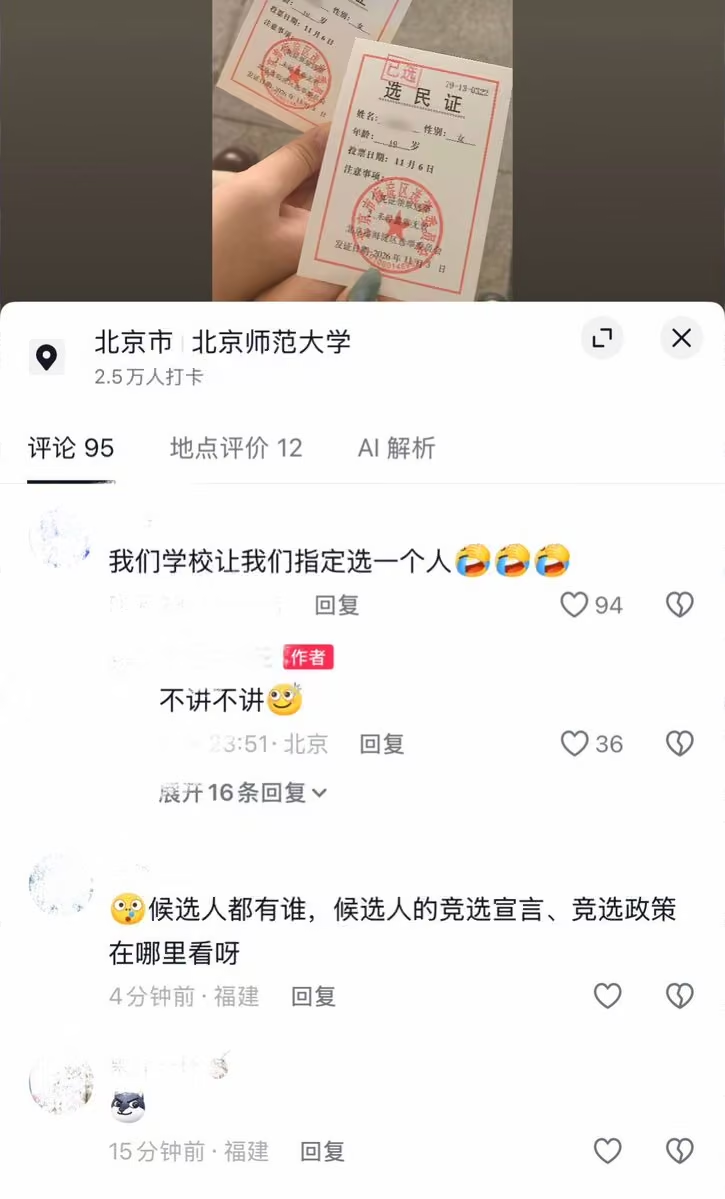
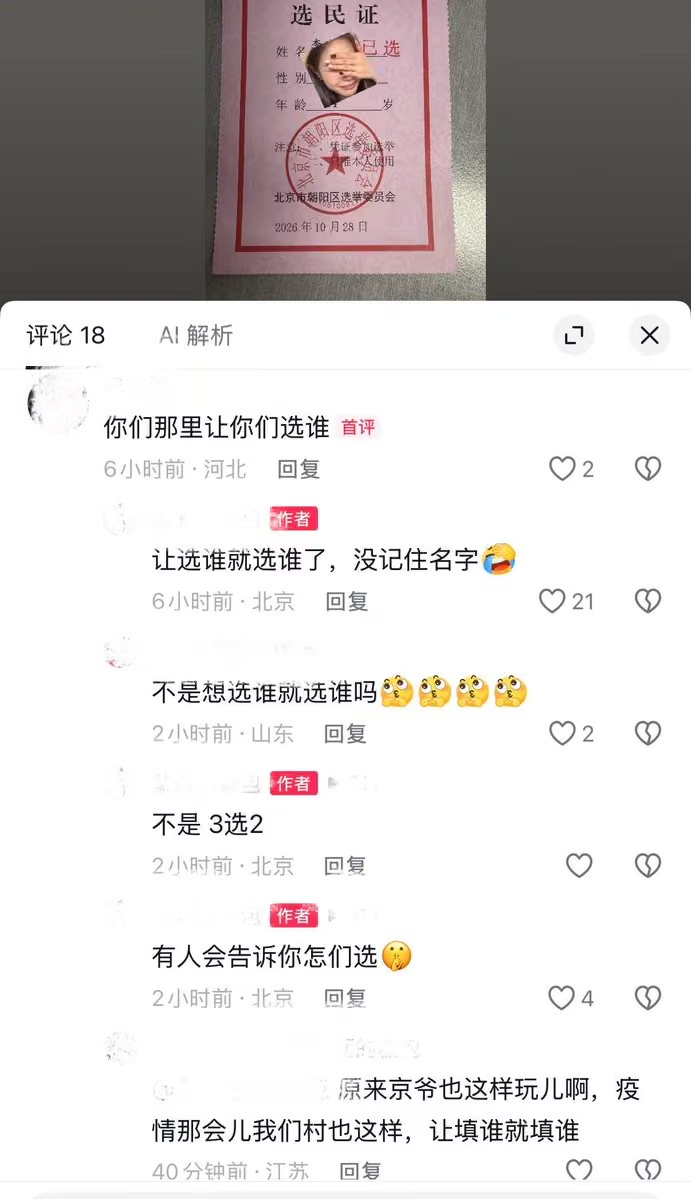
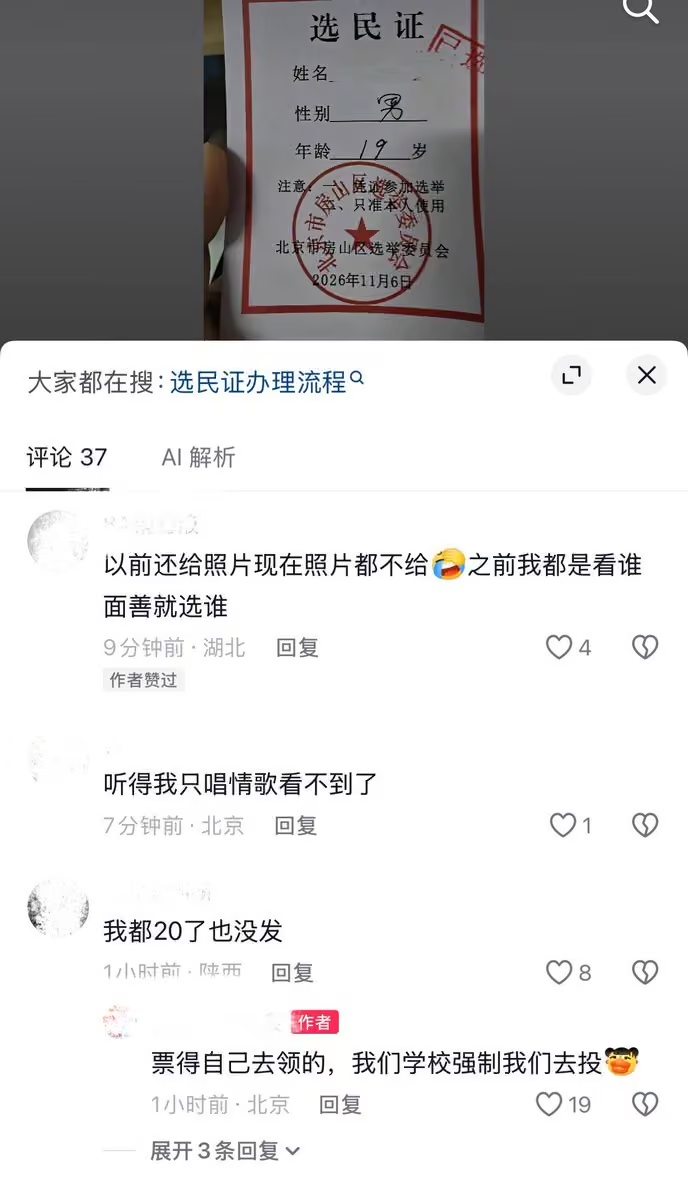
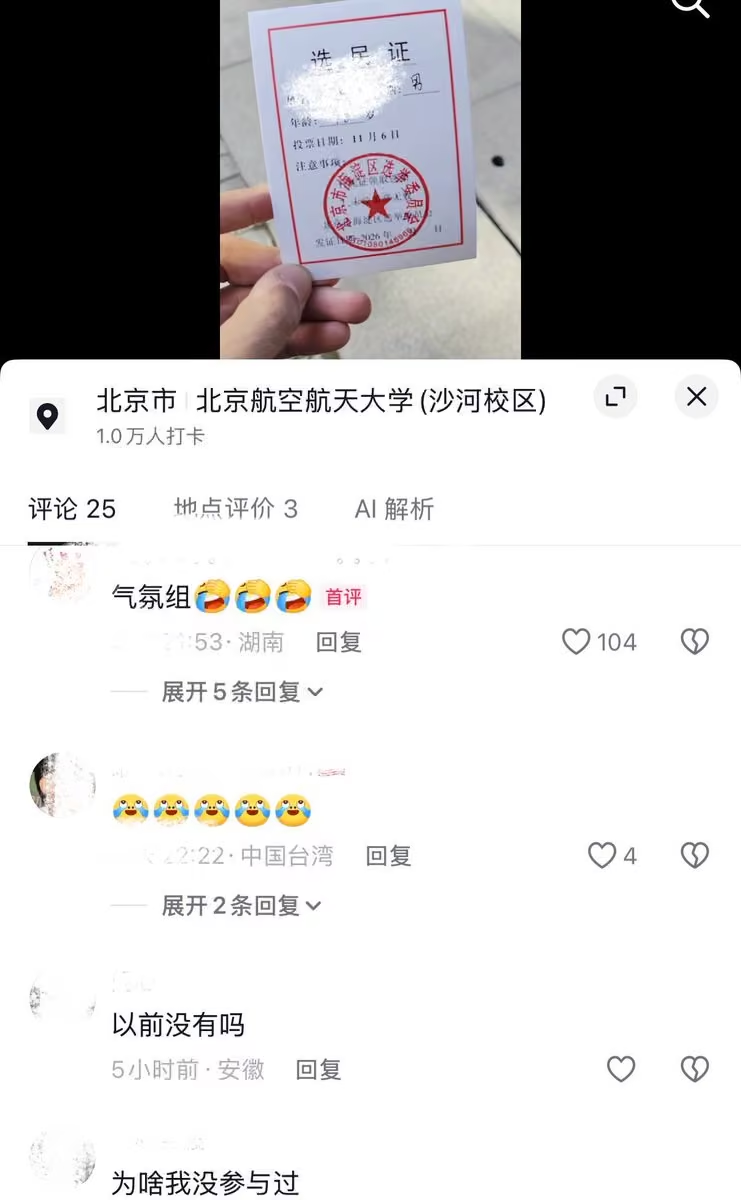
Because it is election day in Beijing for a new term of deputies to the people's congresses at the district and township levels.
Well before election day, both my local community and my workplace had both contacted me to ask where I intended to register and cast my ballot.
I could also clearly sense that Beijing has placed considerable emphasis this year on encouraging and organizing voter participation.
According to figures released by the Beijing municipal authorities, by late October 9.57 million voters have registered and been confirmed as eligible to vote in this round of elections.
More than 13,000 polling stations have been established across the city. Voters will elect 4,898 deputies to the new district-level people's congresses and 11,137 deputies to the township-level people's congresses.
On this very day, one polling station in particular attracted considerable public attention: the Huairentang (Hall of Cherished Benevolence/怀仁堂) polling station in the Zhongnanhai (中南海) electoral constituency of Beijing's Xicheng District.
Huairentang was once the residence and office of the Empress Dowager Cixi, who wielded the real power in China during the final years of the Qing Dynasty (1644-1911).
In 1900, when the Eight-Nation Alliance occupied Beijing, Marshal Alfred von Waldersee, the commander of the allied forces, unceremoniously chose Huairentang as his residence. The building was subsequently destroyed in a mysterious fire. Some accounts suggest that the blaze was accidentally started by Waldersee's cook.
During the Republican era, Huairentang became a venue for presidential receptions and official ceremonies. In 1949, it hosted the First Plenary Session of the Chinese People's Political Consultative Conference, a landmark gathering that helped lay the groundwork for the founding of the PRC. It subsequently became an important venue for meetings of senior CPC leaders.
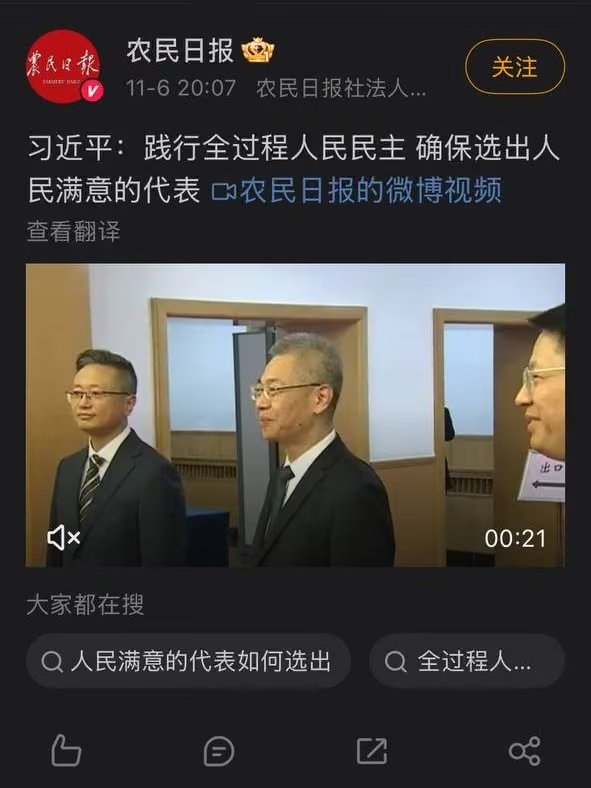
Chinese President Xi cast his ballot at the Huairentang polling station in Beijing's Zhongnanhai leadership compound. Xi presented his voter registration card and was handed a ballot after officials verified his eligibility. He then marked his choice and dropped the ballot into a box.
Xi said electing deputies to people's congresses was essential to the functioning of China's people's congress system and a major event in the country's political life. He added voters should be ensured to elect representatives they are satisfied with.
All of this brought back memories of the many debates I used to have with my Dutch roommate. In fact, China's electoral system has a number of features that deserve closer examination.
The first is a basic question: How are deputies to China's people's congresses actually elected?
China uses a combination of direct and indirect elections. Deputies to people's congresses at the county level, including those in urban districts, counties, autonomous counties and cities without districts, as well as deputies at the township level, are directly elected by voters.
Deputies to people's congresses at higher levels, including cities, provincial regions and the NPC, are elected indirectly through people's congresses at the next lower level.
The second concerns political representation: China's electoral law explicitly seeks to ensure that deputies do not come exclusively from a narrow political or social elite. China's Electoral Law of the National People's Congress and Local People's Congresses stipulates an appropriate number of deputies from females, the grassroots, particularly workers, farmers and intellectuals.
It even provides for representation of returned overseas Chinese in the congresses in areas with significant populations of returned overseas Chinese.
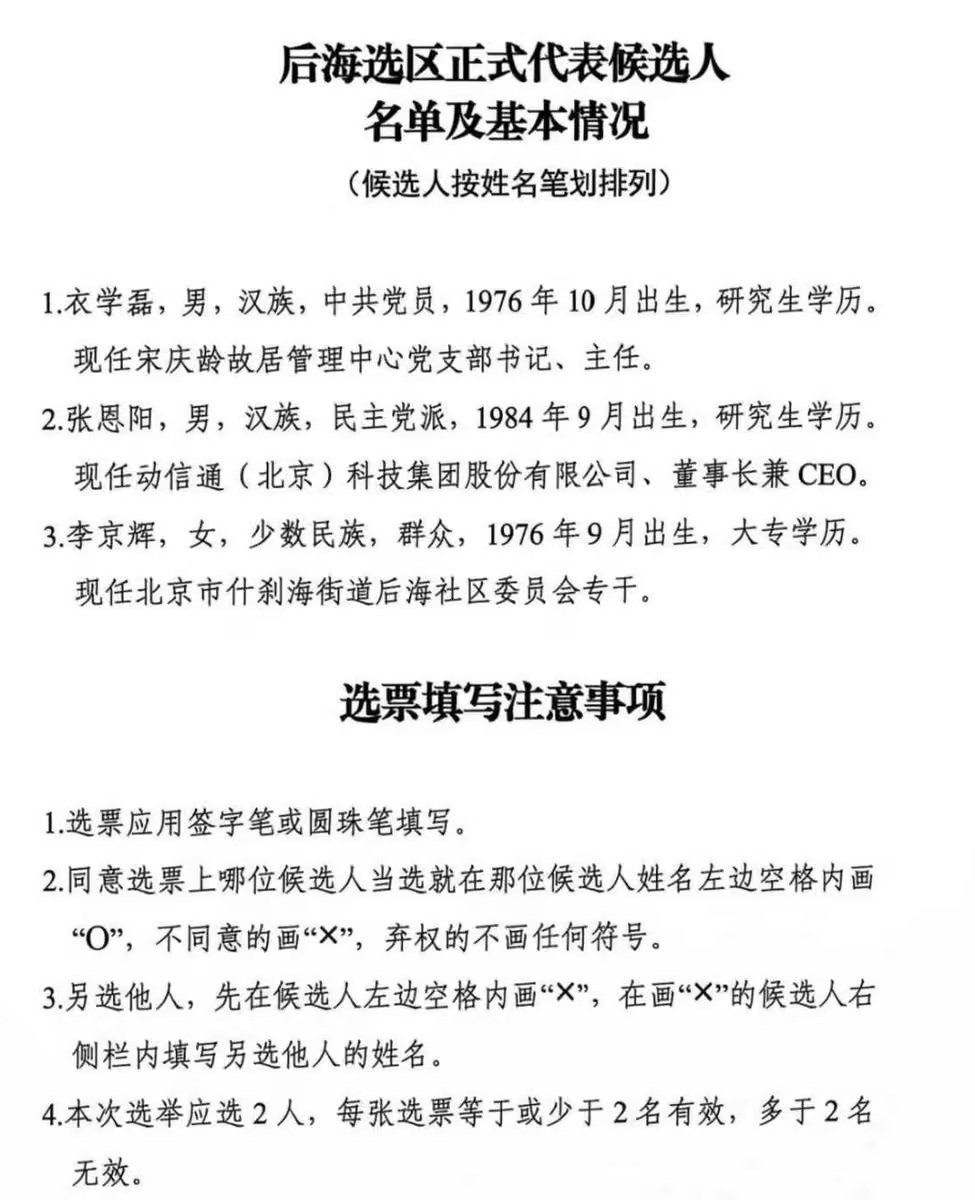
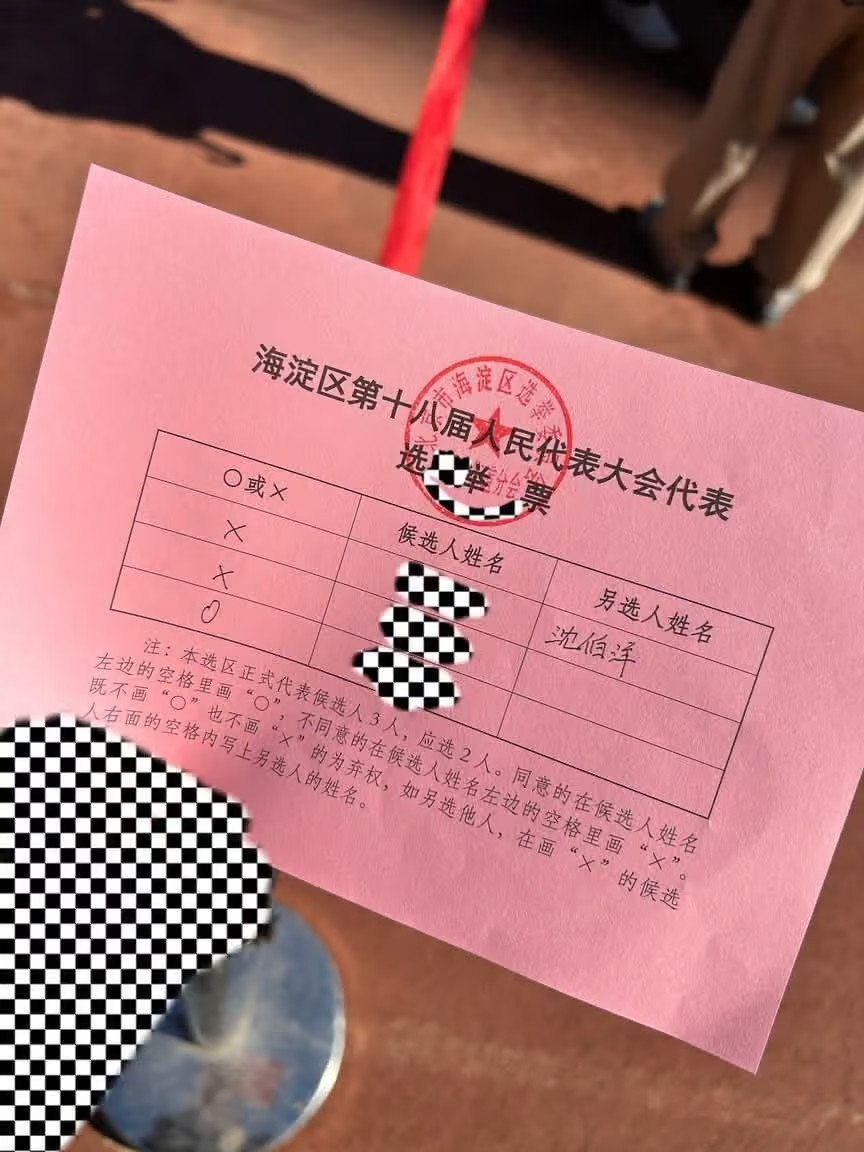
In direct elections, the number of candidates must exceed the number of seats by between one-third and 100%. For example, if three seats are available, there must be between four and six candidates.
In indirect elections, where deputies are elected to the next higher level of people's congress, the number of candidates must exceed the number of seats by between 20% and 50%. Thus, an election for 10 seats would require between 12 and 15 candidates.
Looking back, the question my Dutch roommate and I debated most fiercely was not really whether China's political system was better or worse than those of Western countries.
It was something more fundamental:
Is there only one legitimate model of democracy, or can democratic participation and representation take different institutional forms?


 李老师不是你老师
@whyyoutouzhele











 不明白播客





 墙国蛙哈哈🐸




 赛博信访局














 中国人权-Human Rights in China








 李翘楚#许志永早日回家














 格雷老師 Teacher Grey








 Laura Harth
 NetAskari


 Jane Wang









 Anna Chunli Liu


 Gao Pu


 伍雷(吊证律师)


 Lee1ng















 賈葭












 Inter-Parliamentary Alliance on China (IPAC)








 RSF


 KiraEqual











 《议报》


 MeT


















 牛马ICU













 読道社




 Fear_Nation_世界苦茶

















 China Commission




 悉尼奶爸 SydneyDaddy 雪梨奶爸 🇦🇺🇮🇱


 Global Government Affairs
















 The Wall




 Mosavi


 说真话的徐某人













 李承鹏(大眼哥)


 王重阳


 Murong Xuecun慕容雪村
 多伦多方脸


 何流 | Liu He
 Ken Liu
 贾千户


 空调


 Zhai Xiang


 DW 中文- 德国之声


 迷人的小红
 外汇交易员


 Boubou 🐼
 Alice



 SabbirX

 Paul郑褚
 有点创意好吗
 Eu Carvalho
 喵主席爱吃蛋炒饭


 TaiwanDreamer|打臉藍白第一品牌
 查百万
 Renzo Carvalho 🇵🇸

 はるひ
 Jielin Dong 董洁林
 于淼


 Big Tech Alert

 Kuangyi (Guagua) Bo


 放纵的小男孩
 🐻老大🔬兔友研究院Bot


 Watcher Guru

 Gordon G. Chang
 山景城小路
 Sinya 李新野


 小径残雪

 曹操说

 lidang 立党 (劝人卖房/学CS/买SP500/纳100/OpenAI/Anthrop第一人)

 wangyun
 清丝老师谈治国理政
 LILIN
 bgg123

 盟军
 hjh789577
 William Long

 maybe🍥



 大阪陳較瘦|行政書士事務所

 Eagle’s Vision老鹰🦅
 なおNaO

 巴丢草 Bad ї ucao


 Iggie🚁
 甘文


 实事求是永立不败之地
 shushi mo
 Vinnieee

 sahiaaaa


 红袍猫后Penny🌊


 张内咸
 David Fishman

 JF Books 季風書園 | 季风书店


 五岳散人

 徒步的骑手


 二大爷

 老周横眉


 二爷Alex


 叶隐
 NEXTA

 紀春生
 RJ


 yanguoliusheng
 joejoejoe

 鈴木 泰志

 华尔街日报中文网


 认真迎夕阳


 BK|Game Documentaries


 HenryMorgan


 Blizzard(日常反思中
 投资五花肉
 前特工Eric.V


 精神病全球救治中心
 Rainier

 Jeanette Tong 简奈
 Zineb Riboua


 Willy想做活动家

 小陆师傅


 周锋锁 Fengsuo Zhou


 爱国不爱党



 Vivian Wu


 Psychohistorian
 宝玉

 ユキ🎀


 Aifindcar
 钟嘉新

 一席
 易富贤Yi Fuxian《大国空巢》

 Frederick(一位神秘的高级官员)


 Ignatius Lee

 Charles


 雪莉不是雪梨

 Takeshi🐈Kido


 MMK

 中華人民共和国駐日本国大使館


 Yi Zhu
 老路有话说


 屠夫吳淦
 YiFeng Su


 Zhuo


 世界历史宝爷


 戚洪HONG QI


 失业观察日报


 金山熊
 horse
 KUNLUN昆侖


 中規中矩


 今村優莉


 iPaul

 加菲众


 作家崔成浩


 枫叶留声机

 平泽唯😼😼😼


 佛瑞德里希4th😷


 Ripple(66%)


 The Middle East

 𝙋𝙖𝙨𝙨𝙡𝙪𝙤 𝘼𝙄
 weixinart


 rick awsb ($people, $people)


 Jeff Li




 小小上上狼


 yangfan666
 象牙山伯爵


 夏巢川 Rei Xia


 杨若晖 Ruohui Yang


 蔣不CHIANG Seeta


 CAT


 马聚


 Not Jerome Powell

 0


 Li

 龙虾喵
 勃勃OC

 Bethany 貝書穎
 xROx


 Michael Anti
 北美王路飞



 大声


 曹哲


 朱利安大王


 Jacobson🌎🌸贴贴BOT


