Start With Shared Goals
Improving communities starts with agreeing on what matters.
A key takeaway from a recent Polco webinar is the importance of finding common ground by focusing on shared goals before debating solutions.
Residents may disagree about how to address housing affordability, transportation, public safety, or infrastructure, but often share the same desired outcomes: safe neighborhoods, greater opportunity, reliable services, and a better quality of life.
A Shared Destination. More Than One Path.
By separating goals from solutions, communities can find common ground, evaluate different approaches, and make more informed decisions.
At Telosa, we believe listening to residents, identifying shared priorities, and working together on practical solutions can build trust, strengthen communities, and create a better future for everyone.
The path forward begins with agreeing on where we want to go.
blog.polco.us/hot-topics-sound-decisions-engaging-residen…
Telosa
Telosa is a proposed utopian planned American city conceived by American billionaire Marc Lore and announced in 2021. The project has a target population of 5 million people by 2050, with the first phase of construction expected to house 50,000. The location has not been chosen yet, with the project's planners intending the city to be built on cheap land in Appalachia or the American West desert. More on Wikipedia
-
City of Telosa
@CityofTelosa
-
City of Telosa
@CityofTelosa
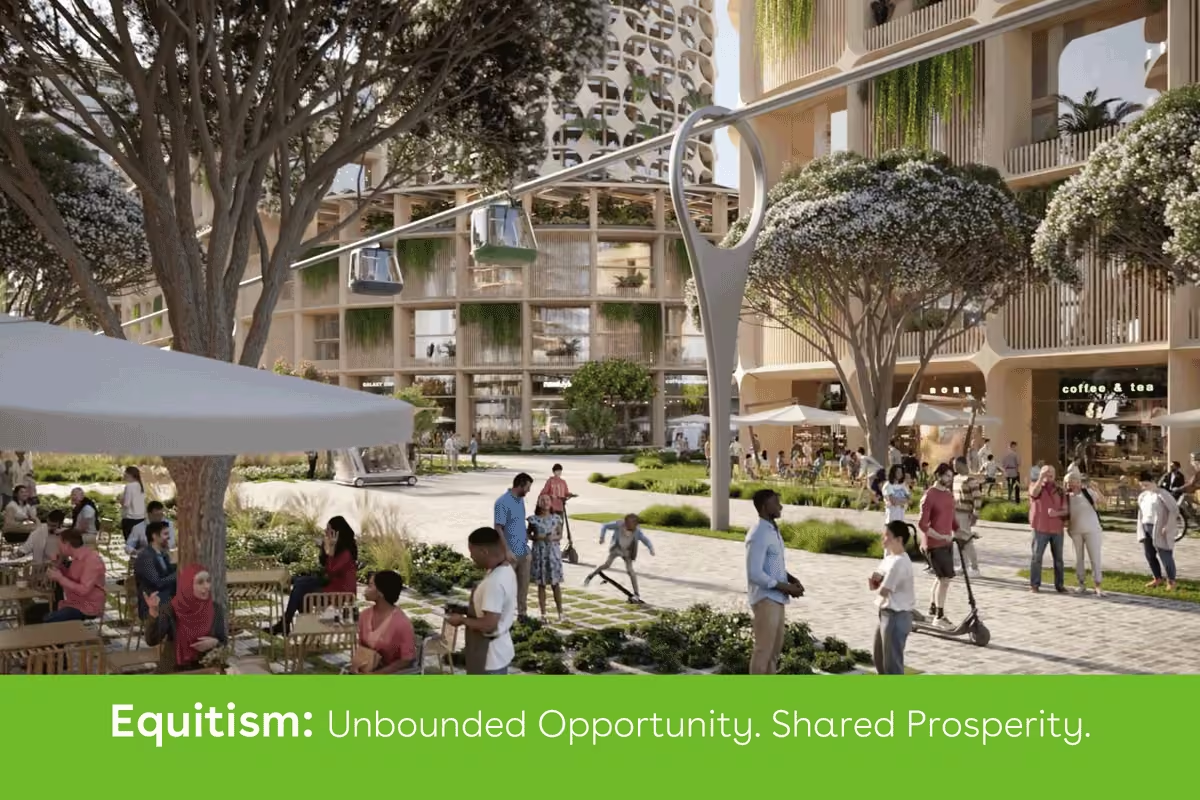
Equitism: Unbounded Opportunity. Shared Prosperity.
What if the economic success of a city could create greater opportunities for everyone who lives there?
That's the central idea behind Equitism, Telosa's proposed social and economic framework designed to encourage entrepreneurship, innovation, investment, and individual success while strengthening the broader community.
In our latest Telosa Talk, Jon Mallon is joined by Tom Rossman, Telosa Senior Advisor and board member of the Henry George School of Social Science, to explore:
• What is Equitism, and who benefits?
• How does Land Value Return work to reinvest a portion of growing land values into community priorities?
• Where are similar principles already being applied, and what can we learn from those examples?
• How can existing cities incorporate Land Value Return policies and practices?
• How could Equitism help shape future cities like Telosa?
At its heart, Equitism seeks to create a virtuous cycle of growth and reinvestment, where economic success helps fund housing, education, healthcare, workforce development, and other priorities that expand opportunity and improve quality of life.
As a city prospers, its residents should have the opportunity to prosper alongside it.
Join us for this Telosa Talk as we explore how these principles can help strengthen communities today and for generations to come.
cityoftelosa.com/telosa-talks-equitism/ -
City of Telosa
@CityofTelosa
When Shared Needs Meet Nearby Impacts
Communities need more housing, reliable energy, infrastructure, and essential services. Yet proposals for new developments often face local opposition, sometimes described as NIMBYism (“Not In My Backyard”).
The tension is understandable. While projects may benefit the broader community through more housing options, jobs, and services, nearby residents may have legitimate concerns about traffic, noise, resource use, and neighborhood change.
As highlighted in the recent Polco webinar, the challenge is to weigh these local concerns alongside broader community needs not instead of them.
At Telosa, we believe listening to residents, identifying shared goals, evaluating trade-offs, and working together on practical solutions can help communities build trust and make better decisions.
Progress begins by understanding different perspectives and finding solutions that strengthen the community as a whole.
blog.polco.us/hot-topics-sound-decisions-engaging-residen… -
City of Telosa
@CityofTelosa
Tighter Budgets. Tougher Choices.
Local governments are facing growing financial pressures. According to data highlighted in a recent Polco webinar, only 45% of city finance officers were optimistic about meeting FY2026 needs, down from 64% in 2024.
Rising costs, declining federal assistance, and competing priorities are forcing communities to make difficult decisions. Should they reduce services, raise taxes or fees, or delay important investments?
These choices can create disagreement over what gets protected, who pays, and how limited resources are allocated.
But finding common ground often begins with agreeing on the outcomes we want to achieve, not debating the solutions first.
Most residents want safe neighborhoods, good schools, reliable infrastructure, affordable housing, and a high quality of life. While people may disagree on how to achieve these goals, starting with shared priorities can create a foundation for constructive dialogue.
At Telosa, we believe listening to residents, establishing shared goals, using data to evaluate options, and measuring results can help communities navigate difficult choices, build trust, and make better decisions.
By working to find common ground on shared goals, listening to residents, and coming together on solutions, we can build trust, strengthen communities, and improve quality of life.
blog.polco.us/hot-topics-sound-decisions-engaging-residen… -
City of Telosa
@CityofTelosa
Your Voice Counts
When Abraham Lincoln spoke of a government “of the people, by the people, for the people,” he captured a fundamental principle of American democracy: our government depends on the participation of the people it represents.
Voting is one of the most important ways we exercise that responsibility and help shape the future of our communities and our country.
Broad civic participation strengthens democracy in several important ways. It promotes accountability, encourages public debate, supports the peaceful transfer of power, and gives residents a meaningful voice in decisions that affect their lives.
But civic participation doesn't end at the ballot box. Staying informed, engaging with local government, listening to different perspectives, and working together to address community challenges are equally important to building trust and strengthening our communities.
At Telosa, we believe strong communities begin with engaged residents. When people participate, share their perspectives, and take an active role in shaping their future, we create opportunities for better decisions, stronger connections, and a higher quality of life.
Every voice matters. Every vote counts. And every one of us has a role in building a better future together. -
City of Telosa
@CityofTelosa
Equitism: A New Economic Model for Stronger Communities
What if we could create an economic framework that encourages innovation, investment, and individual success while also generating greater opportunity and prosperity throughout the community?
That's the idea behind Equitism, the social and economic framework at the heart of Telosa.
Equitism is built on a simple principle: a community is most successful when it creates an environment in which individuals and the community as a whole can thrive together. Individual success and community prosperity can reinforce one another, creating a foundation for sustainable growth and a higher quality of life for everyone.
Today, many towns and cities struggle to generate sufficient resources to maintain essential services, invest in infrastructure, and support long-term growth.
Equitism offers a different approach.
Under Telosa's proposed model, land will be donated to the Telosa Community Foundation, which will own and steward it for the long-term benefit of the community. As the city develops and land values increase, a portion of that growing value can be captured through Land Value Return (LVR) and reinvested in housing, education, healthcare, workforce development, childcare, elder care, and other community priorities.
The objective is to create a virtuous cycle of growth, investment, and opportunity, where a thriving community supports individual success, and individual success contributes to a stronger community.
Importantly, these principles aren't limited to building a new city. Existing cities can also explore approaches to land value, public assets, and community investment that help generate resources for long term prosperity.
At Telosa, we believe economic growth and community well-being should reinforce one another expanding opportunity, strengthening communities, and improving quality of life for generations to come.
Learn more about Equitism, how Land Value Return works, and how these principles can be applied in new and existing cities in our two-page primer.
cityoftelosa.com/wp-content/uploads/2026/10/2026-Telosa-E… -
City of Telosa
@CityofTelosa
Cybersecurity: Protecting the Cities of Tomorrow
Artificial intelligence and digital innovation are creating extraordinary opportunities to make our cities smarter, safer, more efficient, and better places to live. But as communities become increasingly connected, protecting the systems and services residents depend on becomes more important than ever.
Recent research from Google's Threat Intelligence Group highlights the rapidly evolving cybersecurity landscape. The number of disclosed software vulnerabilities more than doubled between January and August 2026, while observed exploitation also increased significantly.
AI is accelerating the ability to identify vulnerabilities, creating opportunities for both cybercriminals and those working to protect our systems.
For cities, cybersecurity is about much more than protecting data. It means safeguarding essential services including water, electricity, transportation, healthcare, emergency response, and government operations that residents rely on every day.
Fortunately, AI can also be a powerful tool for strengthening cybersecurity through earlier threat detection, identifying vulnerabilities, automating responses, and improving resilience.
At Telosa, we believe technological innovation and responsible planning must go hand in hand. Building smarter cities also means building safer, more resilient communities.
By investing in cybersecurity, embracing innovation responsibly, and planning for emerging challenges, we can strengthen public trust, protect essential services, and create communities that are better prepared for the future.
The goal isn't simply more advanced technology. It's safer, stronger communities and a better quality of life for everyone.
www.theatlantic.com/technology/2026/10/ai-hacking-cyberse… -
City of Telosa
@CityofTelosa
AI-Powered Cities: Innovation for a Higher Quality of Life
Artificial intelligence is creating extraordinary opportunities to rethink how cities operate, deliver services, and improve quality of life for residents.
A new global study by Deloitte, ServiceNow, NVIDIA, and ThoughtLab examines how 250 cities across 78 countries are exploring and adopting AI to improve government operations, transportation, public safety, infrastructure, health, and sustainability.
The potential benefits are significant: more efficient city services, smarter transportation systems, better infrastructure management, improved resource efficiency, and more responsive government.
But realizing these benefits requires more than adopting new technology. Cities need thoughtful planning, clear priorities, responsible policies, and a shared understanding of the outcomes they want to achieve.
At Telosa, we believe AI can be a powerful tool to help create more affordable, accessible, sustainable, and connected communities. The goal isn't simply to build smarter cities. It's to use innovation to expand opportunity and improve quality of life for everyone.
www.deloitte.com/global/en/industries/government-public/r… -
City of Telosa
@CityofTelosa
Strategic Planning: A Virtuous Cycle of Progress
Strong communities don't happen by chance. They require thoughtful planning, clear goals, effective execution, and a commitment to continuous improvement.
In a recent webinar, The State of Us, our partners at Polco highlighted an important principle: strategic planning is not a one-time exercise, but an ongoing cycle of learning and improvement.
The process involves five interconnected steps:
1. Assess current conditions: Understand where the community stands today using reliable data and resident feedback.
2. Set realistic goals: Establish clear priorities and measurable outcomes that reflect community needs and aspirations.
3. Develop strategies: Identify the actions, resources, and partnerships needed to achieve those goals.
4. Measure performance: Track progress and evaluate whether strategies are delivering meaningful results.
5. Share and refine: Communicate results, engage residents, learn from experience, and adjust plans as conditions change.
When communities consistently follow this process, each cycle builds on the last strengthening accountability, improving decision making, and creating a virtuous cycle of progress.
At Telosa, we believe that listening to residents, measuring what matters, and continuously learning and adapting are essential to building stronger, more resilient communities.
The ultimate goal isn't simply to execute a plan. It's to turn knowledge into action, action into measurable progress, and progress into greater opportunity and a better quality of life for residents.
blog.polco.us/the-state-of-us-assessing-community-strengt… -
City of Telosa
@CityofTelosa
AI and the Future of Cities: Getting It Right
AI is advancing rapidly, creating extraordinary opportunities to improve city services, strengthen infrastructure, expand economic opportunity, and enhance quality of life. But realizing these benefits requires thoughtful planning and implementation.
In our latest Telosa Talk, I am joined again by Telosa Senior Advisor Tom Rossman as we explore five important questions about the future of AI and cities:
• Where can AI make the biggest difference in residents' everyday lives?
• How can communities balance innovation with appropriate policies and guardrails?
• How should we prepare for AI's impact on jobs and the future of work?
• What could we do differently when designing a new city with AI in mind?
• What might an AI-enabled city look like 10 or 20 years from now?
At Telosa, we believe technology should support a higher quality of life and opportunity for residents. AI isn't the vision. A better life for residents is the vision.
Getting it right means embracing innovation, preparing for change, building trust, and keeping people and quality of life at the center of our policies and decisions.
Watch our latest Telosa Talk:
cityoftelosa.com/telosa-talks-getting-ai-right/ -
City of Telosa
@CityofTelosa
Planning and Process: Turning Ideas into Action
Nearly every community has goals and aspirations for the future. But developing a strategic plan and successfully putting it into action are two very different things.
In a recent webinar, The State of Us: Assessing Community Strengths, Needs, and Priorities, our partners at Polco explored why so many strategic plans fall short and how communities can turn good intentions into measurable progress.
The discussion highlighted three essential ingredients for effective strategic planning:
1. Start with data. Understand current conditions, identify trends, and establish meaningful benchmarks.
2. Listen to residents and stakeholders. Understand what people value, their experiences, and the priorities that matter most.
3. Turn insights into action. Establish clear goals, align resources, measure outcomes, and regularly evaluate progress.
Importantly, the webinar also demonstrated how advances in data analytics and AI can dramatically reduce the time and resources needed to develop strategic plans, allowing communities to focus more attention on collaboration, implementation, and results.
At Telosa, we believe thoughtful planning, meaningful community engagement, and disciplined execution are essential to creating stronger, more resilient communities. The goal isn't simply to create a plan. It's to translate ideas into action, expand opportunity, and deliver measurable improvements in quality of life for residents.
blog.polco.us/the-state-of-us-assessing-community-strengt… -
City of Telosa
@CityofTelosa
Affordability Requires Fiscal Responsibility
Affordability is one of the most significant challenges facing families and communities today. Housing, healthcare, childcare, transportation, insurance, and other necessities all compete for household budgets.
There is no single solution. Increasing housing supply, improving transportation, reducing unnecessary costs, encouraging innovation, and creating greater economic opportunity can all help. But fiscal responsibility should also be part of the conversation.
The federal government continues to run large deficits while carrying historically high levels of debt. In fiscal year 2025, net federal interest costs reached nearly $1 trillion. Large and growing federal borrowing can also put upward pressure on interest rates, increase borrowing costs, crowd out private investment, and leave governments with less flexibility to respond to future challenges.
Those effects ultimately matter to communities. Higher borrowing costs can make it more expensive to finance homes, businesses, infrastructure, and investment which are the very things communities need to grow and prosper.
The same principle of fiscal responsibility applies closer to home. Cities need to provide essential services and invest for the future, while also controlling costs, spending wisely, using public assets effectively, designing infrastructure efficiently, and considering the long term burden placed on future residents.
At Telosa, we believe affordability and fiscal responsibility should go hand in hand. Creating greater opportunity and a higher quality of life isn't only about solving today's problems. It means planning, investing, and making responsible choices so that our communities remain strong and resilient for our children and future generations.
www.crfb.org/papers/deficit-reduction-key-improving-affor… -
City of Telosa
@CityofTelosa
Property Taxes: Finding the Right Balance
Nobody likes paying higher taxes. With housing costs and property values rising significantly, it is understandable that homeowners are looking for relief. A growing number of states are considering significant changes to property taxes.
But there is another side to the equation. Communities need reliable resources for the essential services that make places desirable to live: good schools, public safety, roads, water and sewer systems, parks, infrastructure, and other local services. Property taxes remain a major source of funding for local governments.
History also shows that tax reform can have consequences beyond its original goal. California’s Proposition 13, approved in 1978 amid concerns about rapidly rising property taxes, provided significant protection for existing homeowners. But research has identified a “lock-in effect,” in which large differences between longtime homeowners’ tax bills and those of newer buyers can discourage people from moving and reduce housing turnover.
The challenge isn’t simply whether property taxes should be higher or lower. It’s how to create a sustainable balance between affordability for residents and the resources communities need to thrive.
That means looking at both sides of the equation: controlling costs, spending wisely, planning for the long term, designing infrastructure efficiently, making better use of public assets, and exploring new approaches to generating revenue.
At Telosa, this is one reason we have explored Land Value Return (LVR), a model designed to capture a portion of the increase in land value and reinvest it in housing, education, healthcare, workforce development, infrastructure, and other community priorities.
Affordability matters. So do strong schools, safe neighborhoods, reliable infrastructure, parks, and essential services. The goal should be finding a balance that allows individuals and communities to thrive not just today, but for generations to come.
www.theatlantic.com/ideas/2026/09/florida-taxes-amendment… -
City of Telosa
@CityofTelosa
Bringing Everyday Life Closer to Home
What if more of the things we need every day including work, schools, parks, shops, healthcare, and community spaces were within a short walk, bike ride, or transit trip from home?
That is the idea behind the 15-minute city: designing communities so residents can access more of their everyday needs close to where they live.
Today, there is considerable room for improvement. Polco data highlights some of the challenges: average travel time to work is approximately 26 minutes, only 3% of employed people walk to work, and communities score relatively low on measures of walkability, job access, and compact neighborhoods.
The benefits of bringing destinations closer together can extend far beyond convenience. Shorter trips can reduce transportation costs and commuting time, encourage walking and physical activity, support local businesses, reduce the need for parking and valuable land devoted to cars, strengthen community connections, and improve access for people of different ages and abilities.
At Telosa, we believe the 15-minute city offers important principles for both new and existing communities. A new city can incorporate these ideas from the beginning, while existing cities can make incremental changes adding mixed-use development, improving walkability and transit, creating neighborhood destinations, and bringing more services closer to residents.
The goal isn't simply to make trips shorter. It's to give people more time, more choices, greater access, and a higher quality of life.
www.15minutecity.com -
City of Telosa
@CityofTelosa
Understanding Communities Starts with Listening
Good decisions start with understanding what residents are actually experiencing and combining those perspectives with reliable data.
On September 30, our partners at Polco will host “The State of Us: Assessing Community Strengths, Needs, and Priorities,” exploring how local governments, foundations, nonprofits, and civic organizations can bring resident feedback and public data together to better understand their communities and inform strategic planning.
The conversation will explore how to integrate data and resident perspectives, identify community strengths and needs, and turn those insights into actionable strategic plans.
At Telosa, we believe listening to residents, measuring what matters, and understanding both a community’s strengths and needs are essential to good decision making. When leaders combine data with the lived experiences of residents, they can better prioritize resources, strengthen trust, expand opportunity, and improve quality of life.
To Register for the September 30th webinar:
polco-us.zoom.us/webinar/register/1517895647534/WN_EudBy8… -
City of Telosa
@CityofTelosa
Using Social Knowledge to Strengthen Communities
Strong communities develop when people know their neighbors, understand local resources, exchange information, and stay connected through relationships and everyday interactions.
Social knowledge (the local norms, networks, relationships, and shared understanding of how a community works) is an important form of social infrastructure. It develops through people, conversations, connections, and everyday interactions. Who are our neighbors? Where can someone turn for help? What resources are available? Who knows whom? What is working well, and what needs attention?
“You can never step in the same river twice” and “nothing endures but change” are observations attributed to the ancient Greek philosopher, Heraclitus. Even 2,500 years ago, keeping up with change was a challenge. Today, information moves faster than ever and constantly competes for our attention. At the same time, powerful new tools can help communities better understand what is happening and how residents are experiencing their communities.
Social knowledge can strengthen communities in four important ways:
• Trust & cooperation: Knowing and understanding one another can make it easier to work together, help neighbors, improve public safety, and respond to emergencies.
• Information flow: Knowing “who to ask” can help residents find jobs, childcare, community services, and guidance on civic issues.
• Reduced conflict: Connections across groups can build understanding, expose people to different perspectives, and help bridge differences.
• Civic participation: People who feel informed, connected, and included are better positioned to participate actively in their communities.
At Telosa, we believe strong community connections can contribute to better outcomes and better-functioning towns and cities. Strengthening social knowledge can expand access to opportunity, strengthen social capital, and improve quality of life for everyone.
www.linkedin.com/pulse/seven-ways-build-social-knowledge-… -
City of Telosa
@CityofTelosa
Climate Week NYC: Building a More Sustainable and Resilient Future
This week, more than 100,000 people are gathering across New York City for Climate Week NYC, bringing together leaders from business, government, academia, and communities to turn ideas into action. This year's theme is Energy, Impact, and Action to help focus on many of the issues shaping the future of our cities and communities.
From resilient infrastructure and clean energy to transportation, technology and AI, as well as health, nature, and sustainable communities, the conversations taking place this week reinforce an important idea: sustainability is not a single issue. It is about how we design communities where people can thrive today while preparing for the challenges and opportunities of tomorrow.
At Telosa, we believe sustainability and resilience should go hand in hand with affordability, economic opportunity, innovation, and quality of life. The best solutions can accomplish multiple goals at once to create healthier communities, reducing costs, strengthening resilience, expanding opportunity, and protecting the environment.
We are also pleased that Christa Daniels, a Senior Advisor to the Telosa Community Foundation and Assistant Director for Community Partnerships at the Dartmouth Climate Collaborative, is helping with Dartmouth's participation and activities in Climate Week. On Tuesday, Christa will help lead the Resilience Action Lab, bringing together local leaders to develop practical strategies around climate resilience, energy affordability, public health, economic vitality, and community well-being.
Climate Week is an opportunity to learn, collaborate, and turn promising ideas into practical solutions. By bringing sustainability, resilience, innovation, and community together, we can help build a more equitable and sustainable future improving quality of life for everyone.
Learn more:
www.climateweeknyc.org -
City of Telosa
@CityofTelosa
How to Create a City Full of Happy Residents
What makes people happy? Income and economic security matter, but research increasingly shows that quality of life is influenced by much more than how much we earn. Where we live and the environment around us can also play an important role.
A recent WalletHub analysis of the happiest cities in America looks at many of the conditions associated with well-being, including mental and physical health, employment, commute times, leisure, sleep, and the strength of the surrounding community.
The analysis groups these factors into three broad categories:
- Emotional & Physical Well-Being - including depression, sleep, physical health, and food insecurity
- Income & Employment - including income growth, job satisfaction, unemployment, and commute time
- Community & Environment - including parks, leisure time, weather, and other community conditions
The results provide interesting examples of how different aspects of everyday life can contribute to overall well-being from adequate sleep and leisure time to economic security, physical health, and the communities around us.
Cities such as Fremont, CA; Bismarck, ND; Jersey City, NJ; and South Burlington, VT, can help us understand some of the conditions associated with happier, healthier communities.
At Telosa, we are constantly striving to learn from cities and towns around the world about how the places we build and the environments we create can expand opportunity and improve quality of life. Happier communities can provide valuable lessons about what helps people thrive.
wallethub.com/edu/happiest-places-to-live/32619 -
City of Telosa
@CityofTelosa
Equitism - A New Model for New and Existing Cities
The core mission of Equitism is to create unbounded opportunity with shared prosperity and enhance quality of life for everyone. A way to advance this goal: help communities retain/reinvest more of the value their residents, businesses, and public investments help create. When too much of that value leaves the community, cities can face greater challenges funding essential services like housing, healthcare, education, workforce development.
There are several mechanisms that can be utilized to capture/reinvest more of this value locally. First, a Land Value Tax (LVT) can generate revenue while encouraging productive use of land. Unlike a traditional property tax, which taxes both land and improvements, an LVT places greater emphasis on the value of the land so improving a home or business does not itself increase the land-value portion of the tax. It can also increase the cost of holding valuable land vacant or significantly underutilized, creating greater incentives for development. Several Pennsylvania have used variations of land-value taxation as part of their approaches to urban development/revitalization.
Second, Putting Assets to Work (PAW) focuses on making better use of existing publicly owned land, buildings, and other assets. By identifying what a city owns, understanding its value, finding productive new uses for underutilized assets, communities can generate additional revenue while maintaining public ownership/control.
Lastly, cities can explore professionally managed public or urban wealth funds that seek to generate long-term value from publicly owned assets. International examples demonstrate how public assets can be managed strategically to generate resources for infrastructure and other community priorities.
Telosa believes that value generated through the combined efforts/investments of residents, businesses, and the broader community should ideally help create lasting benefits for that community. By managing land and public assets more strategically, cities can expand opportunity, strengthen their financial foundations, and reinvest in a higher quality of life for residents.
cityoftelosa.com/equitism/ -
City of Telosa
@CityofTelosa
Equitism - Unbounded Opportunity, Shared Prosperity
Equitism is the social and economic framework at the heart of Telosa. It is designed around two complementary goals: dynamic growth and broad participation in the prosperity that growth creates. By creating an innovative environment in which individuals can succeed within the framework of a thriving, flourishing society, Equitism seeks to expand individual opportunity while helping ensure that the prosperity created by growth benefits the entire community.
In Telosa, a key mechanism for putting Equitism into practice is Land Value Return (LVR). The Telosa Community Foundation will steward the land in the city, allowing the value—created as the community grows and land values increase—to be reinvested in ways that expand opportunity and benefit the entire community. Unlike a traditional property tax on privately owned land and buildings, Telosa's LVR model is designed to capture a portion of the increasing value of the land itself and reinvest it in the community.
The initial focus will be four pillars of opportunity: housing, education, healthcare, and jobs and workforce development. As the city grows and land values increase, additional resources can be reinvested in services and opportunities for residents. The idea is simple but powerful: a portion of the value created by the growth and success of the community is returned to the community, creating a virtuous cycle of opportunity, investment, and long-term prosperity.
If you live in or work for an existing city, stay tuned. In our next post, we'll explore how the principles behind Equitism can be applied in towns and cities today—without having to build a new city.
cityoftelosa.com/equitism/ -
City of Telosa
@CityofTelosa
Building Resilient Communities Together
Building a more sustainable future requires looking at community challenges together, not in isolation. Climate resilience, energy affordability, public health, economic vitality, and community well-being are all interconnected.
During NYC Climate Week, the Dartmouth Climate Collaborative will host the Resilience Action Lab: Building an Integrated Just Transition for Our Communities, an interactive workshop exploring how communities and organizations can address these challenges together and develop practical strategies for a more resilient future.
We are especially pleased that Christa Daniels, a Telosa Community Foundation advisor and the Assistant Director for Community Partnerships for the Dartmouth Climate Collaborative, is helping organize this important conversation.
At Telosa, we believe resilience and sustainability go hand in hand with affordability, opportunity, and quality of life. Bringing people and organizations together to develop integrated solutions can help communities become stronger, healthier, and better prepared for the future.
Tuesday, September 22 | 11:45 AM–2:30 PM
The Cornell Club | New York City
Following the workshop, Dartmouth will also host a panel on “Affordable and Resilient: Community-based Sustainable Energy Transitions.”
Learn more and register:
docs.google.com/forms/d/e/1FAIpQLSdRspTwUEEVQdu_y3VSkfUfF… -
City of Telosa
@CityofTelosa
Community - At the Heart of It All
Every town and city is deeply concerned about health, safety, economic growth, good governance, and housing. Other important contributors to quality of life include placemaking, integration with nature, a sense of belonging, and shared purpose. At the center of all of these issues is one overriding factor - Community. Decades of research have demonstrated the important role that strong community bonds, social connections, and social capital can play in creating happier, healthier, more prosperous, and resilient communities.
The experience and evidence further show that community connections do not happen by chance. They must be cultivated and intentionally strengthened. This can be a serious challenge given the car centric designs of the past 50 years and the prevalence of social media, smartphones, and television. There is a great deal of competition for people's attention today.
The first step is to consider physical and social infrastructure together. Are we designing neighborhoods, streets, and public spaces where people can comfortably meet and interact, shop, play, and connect?
Secondly, it is important to establish a baseline to understand where community connections are strong and where there are opportunities for improvement. The Telosa–Polco Community Connections Index can help communities measure these connections and identify areas for action.
Lastly, community needs to be a priority. By putting it on the agenda and incorporating connection into planning and decision-making, cities can intentionally create more opportunities to bring people together and strengthen social capital.
For Telosa, greater opportunity and quality of life are our North Star. Strong community connections and social capital are foundational to creating thriving, connected communities. -
City of Telosa
@CityofTelosa
Belonging Is Infrastructure: How Place, Connection, and Purpose Shape Community Well-Being
In last week's Polco webinar, we discussed how every town and city has both physical and social infrastructure and how each can influence and reinforce the other. Social connection is more than a personal experience, it is shaped by whether people have meaningful relationships, welcoming places to gather, opportunities to contribute, and a voice in the decisions that affect their lives. As loneliness, mental-health challenges, substance misuse, and deaths of despair affect communities across the country, strengthening belonging and helping people feel that they matter have become increasingly important to individual and collective well-being.
The webinar explored the many ways communities can foster connection from thoughtful placemaking and welcoming public spaces to inclusive engagement, community programs, cross-sector partnerships, and informal networks of support. Over recent decades, many traditional forms of community connection have weakened, while technology and smartphones have transformed how we interact. To reverse this trend, we need to think intentionally about how we build and design communities. By creating walkable neighborhoods, integrating nature, and developing welcoming places to gather, towns and cities can create more opportunities for residents to meet, interact, support local businesses, and build community.
At Telosa, we are committed to exploring how welcoming places, thoughtful programs, and meaningful resident engagement can strengthen community connections and belonging. By intentionally bringing physical and social infrastructure together, communities can strengthen social capital, deepen relationships, and improve quality of life.
Watch the webinar:
blog.polco.us/belonging-is-infrastructure-how-place-conne… -
City of Telosa
@CityofTelosa
Strong Communities Lead to Stronger Cities and Towns
Strong community connections and social capital are often unseen, but their impact is very real. When you visit a town or city with strong community connections, things often seem to work better. People feel connected to their neighbors and community, participate more actively, and develop a stronger sense of belonging. Research has consistently linked strong social connections with greater happiness, health, prosperity, resilience, and civic engagement.
At a time of high polarization and declining trust, strengthening these connections is becoming increasingly important. Some measures of trust in the federal government have fallen from more than 70% several decades ago to below 30% today. At the same time, many communities are confronting isolation, declining civic participation, and weakening social connections.
One way cities can respond is by intentionally designing places that bring people together. By creating places and spaces where people can meet and interact, cities can meaningfully strengthen community connection and quality of life.
One specific example is what Strong Towns calls the “stroad,” a combination of a street and a road. Streets are places where people can walk, interact, shop, eat, and build relationships; roads are designed primarily to move people efficiently between places. Stroads attempt to do both and often accomplish neither particularly well.
Walkable neighborhoods with shops, restaurants, public spaces, and everyday destinations can instead create more opportunities for people to interact while supporting local businesses, improving safety, encouraging physical activity, and making more productive use of valuable urban land.
At Telosa, we believe the way communities are designed can meaningfully influence how people connect. Sometimes relatively simple, thoughtful changes to urban planning can strengthen social capital, improve quality of life, and help create healthier, more connected, and resilient communities.
actionlab.strongtowns.org/hc/en-us/articles/1181209806581… -
City of Telosa
@CityofTelosa
Belonging is Infrastructure
What makes people feel that they truly belong in a community?
Meaningful relationships, welcoming places to gather, opportunities to contribute, and having a voice all help create connection and a sense that we matter.
Join Telosa and Polco on Wednesday, August 26 at 12:00 PM ET as we explore how thoughtful placemaking, resident engagement, community programs, and partnerships can strengthen belonging, social connection, and well-being.
Michelle Kobayashi of Polco will join Tom Rossman and me from Telosa to discuss practical ways we can create communities where people feel connected, heard, supported, valued, and needed.
To Register:
polco-us.zoom.us/webinar/register/2717864613953/WN__nbXra… -
City of Telosa
@CityofTelosa
Community Is Infrastructure
When we think about infrastructure, we usually think about roads, bridges, utilities, schools, and broadband. But thriving communities depend on another form of infrastructure which are the connections between people.
Trust, relationships, civic participation, neighborhood organizations, gathering places, and mutual support all contribute to the social capital that helps communities function and thrive.
Just as physical infrastructure requires investment and maintenance, community connections do too. When those connections weaken, communities can experience greater isolation, declining trust, and less civic participation. When they are strong, people are better able to support one another, solve problems together, and respond to challenges.
Cities can intentionally strengthen this infrastructure by creating welcoming public spaces, supporting neighborhood organizations and community events, encouraging volunteering, engaging residents in local decisions, and creating opportunities for people from different backgrounds to connect.
At Telosa, we believe community connections should be viewed as essential infrastructure. Investing in the relationships, places, and opportunities that bring people together can strengthen trust, resilience, belonging, and quality of life. -
City of Telosa
@CityofTelosa
Innovations for Longer, Healthier Lives
Cities are ultimately about people, and thriving communities depend on people having the opportunity to live healthy, fulfilling lives.
In the 1960s, “wellness” became a popular movement in healthcare, reflecting a more proactive approach to better health through diet, regular exercise, and stress management. Today, advances in diagnostics, genomics, data science, and AI are helping drive another evolution: a growing focus on healthspan and longevity.
The goal is not simply to live longer, but to live healthier for longer. With better data and increasingly sophisticated tools, researchers are gaining a deeper understanding of human health, biological aging, and how our bodies change over time. Earlier detection, more personalized care, and continued advances in prevention could help people remain healthier and more active as they age.
The implications extend well beyond healthcare. As people live longer, healthier lives, communities will need to evolve as well from housing and transportation to employment, public spaces, healthcare, and opportunities for social connection and purpose. Healthy longevity is not just a medical challenge: strong social connections and a sense of purpose can also play an important role in helping people live longer, healthier lives.
Another important consideration is access. Transformative innovations often begin as expensive technologies available to relatively few people, but their greatest societal impact comes when they become broadly accessible. The opportunity is to help ensure that advances in health and longevity ultimately benefit everyone, not just a select few.
At Telosa, we believe the goal should be more than adding years to life, it should be adding healthy, fulfilling years while creating communities that enable people of every age to thrive. Healthier people can remain active, connected, and engaged in their communities longer, strengthening both individual quality of life and the communities around them.
Read more from Columbia University:
www.publichealth.columbia.edu/news/what-science-says-abou… -
City of Telosa
@CityofTelosa
Will AI Make Cities Better Places to Live?
AI is already reshaping how cities operate and its impact will only grow.
In our latest Telosa Talk, I joined Senior Advisor Tom Rossman to discuss the trends shaping AI—opportunities for better services and economic growth, potential challenges around jobs, privacy and trust, and what community leaders can do today to prepare.
For cities, the real question is not simply what AI can do, but how we choose to use it. The goal should be to harness innovation in ways that strengthen communities, expand opportunity, and keep people at the center of decision-making.
Our key takeaway: AI has tremendous potential, but better outcomes are not automatic. Communities that embrace change, prepare thoughtfully, and develop people-centered policies will be better positioned to use AI to expand opportunity and improve quality of life.
Please listen to the conversation!
cityoftelosa.com/telosa-talks-ai-impact-on-cities/ -
City of Telosa
@CityofTelosa
How Will AI Shape the Future of Our Cities?
Artificial intelligence has the potential to transform everything from public services and transportation to housing, healthcare, education, and community engagement. It also raises important questions about jobs, privacy, trust, and governance.
Join me and Tom Rossman, Senior Advisor to the Telosa Community Foundation, for a conversation about how AI is likely to impact cities now and over the coming decades and what community leaders can do today to help prepare for a future that can improve quality of life for all residents.
The recording will be available next week. We hope you will tune in! -
City of Telosa
@CityofTelosa
Cities Building Trust Through Resident Engagement
Public trust is no longer built through one-way communication alone. Today's residents want to be heard, participate in decisions, and understand how their voices help shape the future of their communities.
A recent article highlights how leading local governments are strengthening trust through open engagement, transparent communication, and meaningful opportunities for residents to participate in decision-making. From neighborhood conversations to digital feedback and community storytelling, resident engagement is becoming an essential part of effective governance.
At Telosa, we believe trust grows when communities are informed, engaged, and connected. By listening to residents, measuring community feedback, and creating opportunities for ongoing dialogue, local governments can strengthen trust, make more informed decisions, and improve quality of life.
Read more:
www.gravityglobal.com/blog/citizen-engagement-2026 -
City of Telosa
@CityofTelosa
Housing That Works for Every Generation
America is aging, and our communities must evolve with it. Most people want to remain in the communities they know and love as they grow older, but many neighborhoods were not designed with aging in place in mind.
A recent webinar by our partner Polco highlighted one of the most important opportunities: expanding housing options that are affordable, accessible, and designed for every stage of life. Features like no-step entries, single-floor living, and homes close to services can help older adults maintain their independence while strengthening community connections.
Housing is one significant part of the picture. The webinar also highlights practical strategies to strengthen transportation, health, community connection, financial security, caregiving, emergency preparedness, and access to services.
At Telosa, we believe housing is more than shelter. It is the foundation for opportunity, belonging, and quality of life. Creating communities where people of every age can thrive requires thoughtful planning, accessible housing, and strong partnerships.
Watch the webinar:
blog.polco.us/aging-in-place-a-government-guide-backed-by…
#aginginplace #communitylivability -
City of Telosa
@CityofTelosa
Solving Grand Challenges with Bold Thinking
One of the themes that stood out from last week's Global Quantum Forum in Chicago was a simple but powerful idea: the world's biggest challenges require bold thinking and collaboration across sectors. The event brought together global policymakers, Fortune 500 CEOs, and tech visionaries to discuss the future of transformative technologies and innovation.
Chicago's emerging quantum ecosystem, including the Illinois Quantum & Microelectronics Park, is an example of what can happen when government, universities, entrepreneurs, investors, and industry come together around a long-term vision. It's exciting to see organizations like Clayco helping transform the former U.S. Steel South Works site into a global center for innovation and advanced manufacturing.
At Telosa Community Foundation, we believe the same mindset applies beyond technology. Whether advancing Community 2.0, exploring land value return, or developing new models for community and economic development, meaningful progress begins with a willingness to rethink traditional approaches and build partnerships that create long-term public benefit.
The future belongs to communities willing to think boldly, collaborate broadly, and invest for generations to come.
globalquantumforum.com -
City of Telosa
@CityofTelosa
Financial Security Strengthens Communities
Financial security is one of the foundations of a strong community which depends on more than roads, schools, and infrastructure. When people have greater economic stability, they are better able to participate in community life, support local businesses, care for their families, and plan for the future.
Social Security and Medicare are two of the most significant public programs in American history. Before Social Security, many older Americans struggled with poverty after retirement. Before Medicare, many seniors lacked access to affordable healthcare and life-saving treatments. Together, these programs have helped provide financial and health security for generations of Americans.
Today, however, changing demographics present an important long-term challenge. Lower birth rates, longer life expectancy, and an aging population are placing increasing pressure on both programs. As the number of retirees grows relative to the working-age population, finding sustainable long-term solutions becomes increasingly important.
There is no single answer, and thoughtful people disagree on the best path forward. But most agree that addressing these challenges sooner rather than later will provide more options and reduce the need for more difficult decisions in the future.
At Telosa, we believe financial security is an important foundation for strong communities and a high quality of life. Addressing long-term challenges like these through thoughtful planning, collaboration, and innovation can help ensure that future generations continue to have the opportunity to thrive.
Read article:
www.theatlantic.com/ideas/2026/07/social-security-insolve… -
City of Telosa
@CityofTelosa
Gen Z Is Reimagining the American Dream
For generations, the American Dream has been associated with economic opportunity, homeownership, career success, and building a better life than the generation before. A recent survey by American University suggests that while Gen Z still believes in the American Dream, they are redefining what success looks like. Growing up and coming of age in the shadow of the 2008 recession, increasing political polarization, Covid and now AI, Gen Z doesn't always define success in the same way their parents did.
The survey found that young adults continue to value hard work and financial success, but they also place a high priority on being happy and fulfilled, having the freedom to make important life decisions, and building close, meaningful relationships. At the same time, many recognize that broader economic and social forces play an important role in shaping their opportunities.
These findings offer an important reminder that quality of life is about more than economic growth alone. Strong communities, access to opportunity, affordable housing, meaningful work, and trust in institutions all influence whether people believe they can build the future they envision.
At Telosa, we believe communities should expand opportunity while improving quality of life. By creating places that are more affordable, connected, sustainable, and resilient, we can help ensure that everyone has the opportunity to pursue their own American Dream.
Read more:
www.american.edu/sine-institute/reimagining-poll.cfm -
City of Telosa
@CityofTelosa
Another Company Recognizes the Value of Community
Where people work together matters. Strong connections between leadership, employees, and the surrounding community can strengthen organizations while creating broader economic benefits for cities and regions.
One current example is taking place in St. Louis, Missouri. To align senior leadership more closely with engineers and major production facilities, Boeing is relocating the headquarters of its Defense, Space & Security division to St. Louis, where approximately 18,000 employees already work. By bringing manufacturing, engineering, and senior leadership together in one place, the company aims to streamline decision-making, strengthen collaboration, and support the high-quality production of world-class products.
The move highlights an important principle: organizations are often strongest when leadership is closely connected to the people, places, and communities they serve.
At Telosa, we believe community is more than a social value. It is a strategic advantage. When organizations invest in connection, collaboration, and place, they help create stronger communities, greater opportunity, and a higher quality of life.
Read more:
www.sedc.org/news/boeing-moves-defense-space-and-security… -
City of Telosa
@CityofTelosa
Autonomous Vehicles: The Future Is Here
Autonomous vehicles are rapidly moving from innovation to everyday reality. Beyond the technology itself, they have the potential to fundamentally reshape mobility by changing how people move through and experience their communities.
Safer roads, lower transportation costs, greater independence for older adults and people with disabilities, fewer privately owned vehicles, reduced parking needs, and more efficient use of valuable urban land could improve affordability, expand access, increase housing and public spaces and enhance quality of life for millions of people.
At Telosa, we believe innovation should expand opportunity while improving everyday life for residents. When technologies like autonomous vehicles are integrated with thoughtful planning, they can help create communities that are more affordable, accessible, sustainable, and connected.
Read more:
www.cnbc.com/2026/07/08/waymo-starts-driverless-rides-in-… -
City of Telosa
@CityofTelosa
From Industrial Legacy to Innovation Economy
Chicago's new Illinois Quantum and Microelectronics Park is more than a technology project. It is a powerful example of how innovation can help revitalize communities.
Built on the former U.S. Steel South Works site, the project is transforming a historic industrial landscape into a hub for quantum computing, research, healthcare, and workforce development. It also represents an investment in surrounding neighborhoods and the next generation of opportunity.
The initial phase is being constructed by Clayco, led by Telosa advisor Bob Clark, in partnership with a coalition of public and private organizations committed to the region's future.
At Telosa, we believe thriving communities are built by connecting innovation with place, investing in people, and creating opportunities that strengthen both local economies and quality of life.
Read more:
www.bobclarkbeyond.com/blog-post/the-future-is-taking-sha… -
City of Telosa
@CityofTelosa
Preserving Tradition, Practicing Stewardship, and Expanding Housing
Vancouver is a beautiful city on Canada's Pacific coast with one significant challenge—housing. The city's government estimates it will need approximately 83,000 new homes by 2033.
One way to understand housing affordability is to compare the median household income to the median home price. A ratio above three is often considered unaffordable. In 2024, the U.S. average was 3.9. In the New York metropolitan area, it was about 7.4. In Vancouver, it was approximately 11.8.
An innovative project is now offering a new approach. In 2002, the Canadian government returned 10 acres in the heart of Vancouver to the Squamish Nation, whose ancestors lived there. Today, the Squamish are developing Senakw, a new neighborhood that will include approximately 6,000 homes in 11 residential towers. The first residents moved in during May 2026.
By preserving First Nations culture, language, and design, while creating much-needed housing and pursuing a net-zero, transit-oriented development, the Squamish are demonstrating how cultural heritage and innovation can work together.
As Khelsilem, chair of the Squamish Council, said:
"We think building a sense of place and community is part of the solution. It's us saying to the world that we want to be part of the solution."
At Telosa, we believe communities can honor their history while embracing innovative solutions that expand opportunity, strengthen sustainability, and improve quality of life. Senakw offers an inspiring example of that vision in practice.
Read article:
www.nytimes.com/2026/06/15/opinion/vancouver-housing-cris… -
City of Telosa
@CityofTelosa
Community Resilience Begins with Preparation
Thank you to everyone who joined the recent webinar with Telosa Advisor Christa Daniels and our partner Michelle Kobayashi from Polco on strengthening emergency preparedness and climate resilience.
One of the key takeaways was that resilience is built long before a disaster occurs. Through thoughtful planning, community engagement, strong partnerships, and data informed decision making, local governments can better prepare for future challenges and protect the people they serve.
At Telosa, we believe resilient communities are built through long-term planning, collaboration, and proactive leadership.
See the presentation:
blog.polco.us/emergency-preparedness-and-climate-resilience -
City of Telosa
@CityofTelosa
America: Still Beautiful at 250
Two hundred and fifty years ago, America gave form to a new idea when the Declaration of Independence was signed—that people have the right and responsibility to govern themselves. In the immortal words of Thomas Paine, “We have it in our power to begin the world over again.” This creative energy and unparalleled ambition were matched by the practical realization of how difficult building a new nation would be. Through an unwavering belief in a shared purpose and mutual sacrifice, Americans won the Revolutionary War and adopted the Constitution, firmly establishing the great country we all enjoy today.
By uniting bold ideals with pragmatic execution, America has become an exceptional nation with a drive to grow, innovate, and continually improve. At Telosa, we believe that meaningful progress also begins with bold ideas, thoughtful collaboration, and the commitment to turn vision into reality in pursuit of greater opportunity, sustainability, and quality of life.
Telosa proudly celebrates this remarkable milestone and wishes all Americans a wonderful Independence Day as we celebrate our nation's 250th birthday. You only turn 250 once!
america250.org -
City of Telosa
@CityofTelosa
People Make Communities Stronger
One of the themes we often discuss at Telosa is that strong communities are built through relationships, shared purpose, and people investing in one another.
In a recent blog, Telosa advisor Bob Clark reflects on the diverse journeys of several Clayco team members and the culture that helps them grow, contribute, and succeed. His message is powerful: Real people make each other better.
Whether in a company, a neighborhood, or a city, meaningful progress begins with people who support one another and work toward a common purpose.
At Telosa, we believe that investing in people is one of the most important ways to build stronger communities and create greater opportunity.
Read Bob's blog:
www.bobclarkbeyond.com/blog-post/real-people-making-each-… -
City of Telosa
@CityofTelosa
Community Resilience Begins with Preparation
Strong communities do not just respond to challenges; they prepare for them.
Join Telosa advisor Christa Daniels and our partner Polco's Michelle Kobayashi for a discussion on practical steps local governments can take to strengthen emergency preparedness, build climate resilience, and better protect residents before the next disruption occurs.
At Telosa, we believe resilience is an essential part of creating thriving communities and a higher quality of life.
Learn more and register:
polco-us.zoom.us/webinar/register/9017799956714/WN_A2SgC-…
#climateaction #localgovernment #communityresilience #emergencymanagement -
City of Telosa
@CityofTelosa
Sustainability on the Rise
As economic, energy, and supply chain uncertainty continue to challenge communities around the world, sustainability is moving back to the forefront of business and government decision making. In many ways, however, it never left.
Today, sustainability is gaining momentum for three key reasons. First, it is driving innovation. With nearly $2.2 trillion invested globally in clean energy, new technologies are helping lower long-term energy costs while expanding access and deployment. Second, sustainability is supporting economic growth as companies and governments discover that efficient use of energy, materials, and resources can improve performance while reducing costs and risk. Finally, resilience, climate adaptation, and the transition toward a circular economy have become increasingly important priorities as communities seek to prepare for future challenges and use resources more effectively.
At its best, sustainability is about creating long term value by strengthening resilience, improving quality of life, supporting economic opportunity, and protecting the resources future generations depend upon.
At Telosa, we believe sustainability is an essential part of building thriving communities. As cities around the world continue to implement innovative solutions, there is much we can learn from the leaders showing what is possible.
See which cities are leading in sustainability:
sustainabilitymag.com/top10/top-10-sustainable-cities -
City of Telosa
@CityofTelosa
Community is the foundation of a thriving society.
Among city managers and urban planners around the world, there is a guiding principle: cities are people. Successful cities may have different economies, natural resources, attractions, and histories, but they often share one important characteristic: strong community connections.
These connections create a sense of belonging, that feeling that "this is where I should be", which transforms a collection of houses into a neighborhood and a city into a community.
Research over the past four decades has consistently shown that communities with stronger social bonds tend to be healthier, happier, more resilient, more prosperous, and less polarized.
For Telosa, building community is one of our highest priorities. That is why we have compiled research, case studies, and best practices from communities around the world into a comprehensive report.
We invite local leaders to explore the findings and learn how tools like the Community Connections Index can help identify opportunities to strengthen connection, trust, and quality of life.
cityoftelosa.com/wp-content/uploads/2026/06/2026-Telosa-B… -
City of Telosa
@CityofTelosa
Big Business Discovers the Power of Community
In 2019, Barnes & Noble was in trouble. After years of store closures and declining sales, the company brought in new leadership to chart a different course. The corporate cookie-cutter approach to store layouts and inventory was abandoned and replaced with a simple principle: serve the local community.
By customizing store layouts, book selections, and events to the interests of local customers, Barnes & Noble became a hub for readers of all ages. Decision making was pushed closer to the local level, empowering store managers to respond to the needs of their communities. Within a few years, sales rebounded and the company began opening new locations.
Patagonia is another example of harnessing the power of community. Through its commitment to sustainability, environmental stewardship, and shared values, it has built one of the most respected brands in the world while creating lasting impact beyond its products.
By bringing people together around shared interests, experiences, and values, both Barnes & Noble and Patagonia demonstrate an important lesson: community is not just good for society. It can also be a powerful driver of long term success.
At Telosa, we believe that when organizations invest in connection, trust, and belonging, they strengthen communities, improve quality of life and create more opportunity for the people they serve.
medium.com/better-marketing/barnes-nobles-road-to-turnaro… -
City of Telosa
@CityofTelosa
Advancing Student Success
Recent national assessments highlight ongoing challenges in reading and math performance among students. While the results are concerning, they also present an opportunity to focus on what matters most: helping every student reach their full potential.
Improving educational outcomes requires more than academic instruction alone. Student success is strengthened by supportive schools, engaged families, strong communities, and access to opportunity.
At Telosa, we believe investing in education is one of the most important ways to expand opportunity, improve quality of life, and build thriving communities for future generations. Read more:
time.com/article/2026/05/16/student-test-scores-reading-m… -
City of Telosa
@CityofTelosa
Stewarding the Colorado River for Long-Term Water Security
Recent proposals to reduce water withdrawals from the Colorado River highlight the growing need for long-term water resilience across the American West.
The Colorado River supplies water to more than 40 million people, supports agriculture across the Southwest, and sustains vital ecosystems. As drought, population growth, and changing climate conditions place increasing pressure on the river, long-term solutions are becoming more urgent.
Many experts believe long-term solutions need to acknowledge that the river was allocated based on flow assumptions that exceed today's realities, while adapting to prolonged drought and changing climate conditions.
Long-term water security will require more than temporary cuts. It will require rethinking how water is conserved, how agricultural and urban systems use scarce resources, and how Indigenous nations and ecosystem needs are incorporated into future planning.
While conservation measures are an important step, lasting solutions will require a broader approach that considers ecosystem health, sustainable agriculture, water efficiency, inclusion of Indigenous voices, and long-term stewardship.
At Telosa, we believe resilient communities are built by aligning environmental stewardship, fairness, and long-term planning to protect vital resources for future generations.
www.yahoo.com/news/articles/us-plan-colorado-river-could-… -
City of Telosa
@CityofTelosa
Placemaking: A Key to Stronger Communities
New research from the Telosa–Polco Community Connections Index suggests that one of the most effective ways to strengthen trust and reduce polarization may be surprisingly simple: creating more opportunities for people to connect.
One of the biggest challenges facing communities today is identifying where connections are strongest, where they are weakest, and what actions can make the greatest difference. The Community Connections Index (CCI) was designed to help answer those questions.
In a recent assessment of leading city and county managers, the CCI revealed an important insight: placemaking received the lowest assessment scores of any category measured, yet it was also identified as the top priority for improvement.
The discussion that followed focused on creating more public spaces, walkable neighborhoods, community events, and opportunities for residents to connect.
The takeaway was clear: by measuring community connections and intentionally strengthening them, communities can build stronger social bonds, greater trust, and a higher quality of life.
blog.polco.us/reducing-polarization-starts-with-understan… -
City of Telosa
@CityofTelosa
Measuring What Matters Drives Real Results
The power of community connections and social capital to bring people together and build stronger, more resilient towns and cities is well established. The bigger challenge for most communities is identifying where connections are strongest, where gaps exist, and how to develop strategies to strengthen them.
The Telosa/Polco team recently had the opportunity to survey a group of leading city and county managers from across the country. It was a productive exercise as the managers took the Community Connections Index survey, helping them better understand the strengths and opportunities within their communities.
We then launched into a roundtable discussion on practical strategies to strengthen both bonding and bridging connections. There is an old adage in business: "What gets measured gets managed." By using the Community Connections Index, we can help communities build stronger social connections, greater trust, and a higher quality of life for residents.
cityoftelosa.com/wp-content/uploads/2024/09/Community-Con… -
City of Telosa
@CityofTelosa
Turning Data Into Better Decisions
Today, local governments have more data, dashboards, and performance metrics than ever before. But the challenge is no longer collecting information. It’s turning insights into meaningful action.
Research and discussions with our partner Polco highlight several common barriers: too much information, unclear priorities, hesitancy to address poor results, low trust in how data will be used, and difficulty connecting metrics to daily community needs.
At Telosa, we believe data is most powerful when it helps create a culture of transparency, accountability, and action focused on improving quality of life for residents. Technology and analytics should not just measure communities. Instead, they should help strengthen them.
blog.polco.us/dashboard-theater-how-local-governments-can… -
City of Telosa
@CityofTelosa
Building Trust and Community to Bridge Divides
One encouraging takeaway from the ICMA Conference was the strong recognition among local leaders that while polarization is affecting communities and local governance, there are tools and solutions to address it.
During our session with Polco on bridging divides, city managers emphasized the importance of building trust, strengthening community connection, and creating opportunities for residents to engage constructively.
There is a strong sense that communities can work together to address these challenges and apply practical tools to help make progress.
At Telosa, we believe stronger community connection is essential to reducing polarization and building a better future.
iccma.informz.net/informzdataservice/onlineversion/ind/bW… -
City of Telosa
@CityofTelosa
Local Leaders are working to Rebuild Public Trust
One of the encouraging takeaways from last week's ICMA Conference was the strong level of engagement from local government leaders focused on improving quality of life in their communities.
During our presentation session with Polco on building public trust, city managers and local officials shared practical ideas and a genuine commitment to strengthening engagement, communication, and resident trust.
Government is often perceived as moving slowly, but this group was thoughtful, solutions-oriented, and committed to finding better ways to serve their communities.
At Telosa, we believe trust grows when communities feel connected, heard, and engaged.This media couldn't be displayed. See it on the original post. -
City of Telosa
@CityofTelosa
How Community Can Help Restore Trust
Trust is foundational to strong communities and a thriving society. Over the past several decades, trust in institutions has steadily declined alongside a broader decline in community connection and social capital. American's trust in our government peaked in the early 1960's near the 80% range and has been in a fairly steady decline since that time, bouncing more recently around 30%.
Research popularized by Robert Putnam’s “I-We-I” curve highlights this shift through changes in civic participation, local engagement, and social connection from neighborhood groups and volunteering to community gatherings, local involvement and yes, bowling leagues.
While correlation is not causation, the trend points to an important opportunity: when communities intentionally strengthen connection, participation, and belonging, trust can grow as well.
At Telosa, we believe rebuilding community connection is one of the most important ways to strengthen trust, resilience, and quality of life. Through our Community Connections work, published papers and a new index we developed with our partner, Polco, we are helping communities measure connection and identify practical strategies to bring people together. -
City of Telosa
@CityofTelosa
Restoring Trust at the Local Level
Public trust has been declining nationally, and that sentiment is increasingly shaping how residents view local government. Survey data shows that while trust in local leadership matters deeply, many expect it to decline over the next decade.
But this is not inevitable.
Local leaders have real opportunities to build trust through transparency, resident engagement, and consistent communication. Measuring trust, listening to residents, and using data to guide decisions can help communities respond more effectively and build trust and confidence over time.
Join Telosa and our partner, Polco, at the ICMA Conference on May 15 I 10:45 AM to explore practical, data-driven strategies to strengthen trust and connection in our communities.
lgr.icma.org/philadelphia/ -
City of Telosa
@CityofTelosa
Technology and Community - A Powerful Opportunity
As we explore in our Community 2.0 work, technology can bring people together or push them apart. The opportunity for local governments is to use it intentionally to keep residents informed, engaged, and connected.
Research shows that informed residents have higher levels of trust in their governments and contribute more to community well-being.
Today, leading communities are using technology in practical ways from local neighborhood networks and digital tools that support real-world connection and stronger civic engagement.
When people feel informed and heard, they are more likely to engage, participate, and contribute to the life of their community.
At Telosa, we believe technology should strengthen community, build trust, and expand opportunity helping create more connected and resilient cities.
cityoftelosa.com/wp-content/uploads/2024/09/Community-Con… -
City of Telosa
@CityofTelosa
Building the Next Generation of Community
How do we help the next generation build the skills to listen, reflect, and engage thoughtfully with others to help them thrive?
Our schools have long played an important role in preparing our young people to become informed, engaged citizens and to strengthen community life. The American school system was founded with the assumption that better informed citizens would lead to a better governed society.
Research suggests that students benefit when schools create space and set the framework for open discussion, intellectual curiosity, and meaningful debate. Learning to consider multiple perspectives, be reflective, ask questions with humility, and take responsibility for one’s actions helps develop thoughtful citizens and future leaders.
Creating a culture of curiosity, respectful dialogue, and shared responsibility in our schools can help strengthen the foundations of community itself.
In a fast-moving digital age, teaching empathy, reflection, and constructive dialogue may be one of the most important investments we can make.
At Telosa, we believe that when we learn to connect and understand one another, we build the foundation for stronger communities and a better future.
Read more:
time.com/article/2026/04/17/how-american-schools-can-addr… -
City of Telosa
@CityofTelosa
Bridging Divides: Local Strategies to Counter Polarization
Polarization is not only a national issue, it's also a local issue impacting city councils, schools, and communities across the country.
Join this session at the ICMA Conference to explore how local leaders can respond. Featuring insights from Polco and a Telosa senior advisor, the discussion will highlight practical, research backed strategies to strengthen trust, improve decision making, and foster more constructive community dialogue.
We will also preview a new Community Connections Index that is designed to help communities measure connection, identify gaps, and take action to strengthen trust and resilience.
While polarization can feel overwhelming, the message is clear: local action matters. By focusing on shared outcomes, resident engagement, and stronger communication, communities can rebuild trust, strengthen connections, and reduce polarization.
Friday, May 15, 2026
10:45 – 11:45 AM ET
Learn more:
lgr.icma.org/philadelphia/ -
City of Telosa
@CityofTelosa
Trust Grows When Residents Are Better Informed
One of the most powerful insights from Polco’s recent webinar, “Building Public Trust: What Top-Rated Communities Do Differently,”was simple and measurable:
As residents become more informed, trust and confidence in local government rises.
Top performing communities don’t leave this to chance. They prioritize clear communication, share data openly, and consistently connect resident input to real decisions and outcomes.
The takeaway is clear: trust is not built through messaging alone. It is built through transparency, community engagement, and follow-through.
At Telosa, we believe informed, engaged communities are the foundation for stronger governance and better outcomes.
Learn more:
blog.polco.us/building-public-trust-what-top-rated-commun… -
City of Telosa
@CityofTelosa
How Can Vacant Homes and Lots Contribute More to Communities?
In parts of New York City, some of the most valuable residential buildings in the world sit largely unoccupied. On stretches like “Billionaires’ Row,” many units are owned by non-residents and remain dark with the lights off for much of the year.
A new proposal from city and state leaders would place a levy on high-value second homes, aiming to generate significant revenue for public services. This would apply to around 13,000 apartments and bring in approximately $500 million in annual revenue.
This is one example of a broader idea gaining attention: how can communities ensure that rising land and property values contribute more directly to the places that make them valuable?
Approaches like this are not one-size-fits-all, but they reflect a growing effort to address fairness, reduce underutilization, and reinvest in essential services like schools, infrastructure, and public safety.
At Telosa, we believe the core principle is important: when communities create value, a portion of that value can be reinvested to increase opportunity and improve quality of life for all.
Read more:
abc7ny.com/post/new-york-gov-kathy-hochul-flips-position-… -
City of Telosa
@CityofTelosa
Cities Are Getting More Creative About Attracting Residents and Opportunity
Cities are rethinking how to attract residents, workers, and investment.
Tulsa Remote offers one of the most well-known examples: offering $10,000 for eligible remote workers to relocate paired with community and support. The program has attracted 4,000+ participants since 2018.
Detroit is taking a different approach. The “Make Detroit Home” program offers up to $15,000 for homeownership, housing support, or business investment focused on residents, returners, and local growth.
Same goal, different strategies:
Tulsa is attracting new talent
Detroit is investing in existing communities
These programs go beyond simply attracting new residents. They reflect a broader shift toward place-based opportunity, community building, and long-term economic growth. At Telosa, we see this as central to building communities where people can thrive.
www.businessinsider.com/us-cities-pay-people-move-incentives
#futureofcities #urbaninnovation #economicopportunity #communitybuilding -
City of Telosa
@CityofTelosa
What Do the Most Trusted Communities Do Differently?
Join our partner Polco this Wednesday April 22nd to hear from leaders in top-rated communities like Milton, GA and Clive, IA. Learn how they use data, resident feedback, and proven strategies to build trust and deliver results.
You will hear how leading communities translate resident input into better decisions, more reliable services, and improved quality of life.
At Telosa, we believe trust is foundational to strong communities and effective governance.
To Register:
polco-us.zoom.us/webinar/register/9817746378382/WN_cowNEp…
#polco #publictrust #bestingovernanceawards #polcowebinar #localgovernment -
City of Telosa
@CityofTelosa
The Other Half of the Affordability Crisis - Wages
The affordability challenge in the U.S. is not just about rising costs; it is also about stagnant wages.
While prices for housing, healthcare, education, and childcare have climbed steadily, wage growth for many workers has not kept pace. Since the early 1970s, hourly inflation-adjusted wages for the typical worker have barely risen, growing only about 0.2% per year. Over the past several decades, productivity has increased significantly, but the gains have not been broadly shared.
Historically, stronger alignment between wages and productivity helped expand opportunity and build a thriving middle class. In the decades following WWII, a 'wage standard' in most industries, enforced through labor contracts, and big companies tended to share their economic gains with their employees. As they invested in new equipment that enabled workers to create more output, wages rose along with productivity. But in the 1970's this process began to break down. Today, that connection has weakened creating a growing gap between what people earn and what it costs to live.
There are many ideas being explored to address this challenge from workforce development and skills training to new approaches that support wage growth and broader participation in economic gains.
At Telosa, we believe solving affordability requires addressing both sides of the equation, reducing costs while expanding opportunity and income, so more people can experience a higher quality of life.
www.newyorker.com/news/the-financial-page/an-economists-q…This media couldn't be displayed. See it on the original post. -
City of Telosa
@CityofTelosa
AI and the Future of Work
According to a recent Goldman Sachs report, up to 40% of U.S. jobs could be impacted by AI within the next decade which is a shift that may reshape the economy as profoundly as past industrial transitions.
Leaders in the AI space are beginning to explore how we manage this change and its impact on workers and communities. History offers a useful precedent: the GI Bill of 1944, which helped millions transition into a new economy through education, training, and expanded opportunity.
Today, new ideas are emerging from public investment models to shorter workweeks and expanded access to retraining as we consider how to support workers through this transformation.
However this transition unfolds, its impact will be felt most directly in cities and communities where people live, work, and build their futures.
At Telosa, we believe preparing for the future of work means investing in lifelong learning, skills development, and community infrastructure so that innovation continues to expand opportunity.
www.axios.com/2026/04/06/behind-the-curtain-sams-superint… -
City of Telosa
@CityofTelosa
Inspiration from Exploration - What’s Possible When We Work Together
For the first time in over 50 years, astronauts are once again journeying toward the Moon marking a powerful moment of innovation, collaboration, and human ambition.
Missions like Artemis remind us of what is possible when people come together with a shared vision combining science, technology, and teamwork to achieve something once thought out of reach.
At Telosa, we are inspired by this same spirit. Building the cities of the future requires bold thinking, collaboration across disciplines, and a commitment to creating opportunity for generations to come.
Follow the Artemis II mission and learn more.
www.nasa.gov/news-release/nasas-artemis-ii-mission-leaves… -
City of Telosa
@CityofTelosa
American Renewal - How Cities Are Improving Safety, Housing, and Quality of Life
Towns and cities across the U.S. are turning to innovative solutions to address long-standing challenges from safer streets to expanding housing and building resilience. At Telosa, we are cataloging these best practices to inform our work and support cities learning from what is working.
Chicago launched a pilot in 2020 allowing in-law suites and backyard cottages in select neighborhoods. The result is more housing options and additional income opportunities for residents. The program has since expanded citywide.
Spokane, WA updated zoning to allow up to three additional units on single-family lots. Early success led to permanent adoption, with hundreds of new units now approved.
Madison, WI redesigned a dangerous intersection using cost-effective materials, significantly improving safety for drivers and pedestrians. The approach is now being implemented more broadly.
Sheboygan, WI transformed part of a downtown street into a vibrant public gathering space, supporting local businesses and community connection. This effort is now expanding to other areas.
Transformation does not always require large-scale projects. Across the country, cities are proving that thoughtful, practical solutions can meaningfully improve quality of life.
www.strongesttown.com/contestantsThis media couldn't be displayed. See it on the original post. -
City of Telosa
@CityofTelosa
Marion, Ohio - Building Hope, One Step at a Time
I grew up about 30 minutes from Marion, Ohio in a typical Midwestern town. Years later, I was struck to learn of a rally in the town square called “Hope Over Heroin.” It was a powerful reminder of how deeply many communities have been tested.
Like much of the Midwest, Marion faced decades of economic disruption from factory closures to the decline of small farms. But what stands out is not the hardship, it’s what came next.
The people of Marion made a simple but profound realization: "No one is coming to rescue us. It is us."
That mindset sparked a quiet transformation. Local leaders, nonprofits, and residents focused on small, meaningful actions to revitalize public spaces, support recovery, help families in need, and create attainable housing. Step by step, block by block, the community began to rebuild.
Today, Marion is recognized by Strong Towns as one of the top communities in the country—not because of one big project, but because of consistent, community-driven progress.
At Telosa, we believe this is an important lesson: strong communities are built through participation, trust, and shared purpose. Real change often starts small but when it’s rooted in community, it can lead to something much bigger.
www.strongtowns.org/journal/2025-10-22-this-ohio-city-did… -
City of Telosa
@CityofTelosa
A Defining Moment for Housing in America
The Senate has passed what could be one of the most significant housing packages in decades which is focused on increasing supply, reducing barriers to construction, and improving affordability.
At its core, the message is clear: we need to build more housing. The legislation includes steps to streamline regulations, support local zoning reform, expand manufactured housing, and unlock financing to accelerate development.
But policy alone isn’t enough.
At Telosa, we believe lasting affordability requires a broader approach that aligns land use, community investment, and economic opportunity so that growth benefits everyone.
This is an important step forward and a reminder that solving the housing crisis will require continued collaboration across cities, communities, and sectors.
Please Read more:
time.com/article/2026/03/13/housing-bill-congress-prices-… -
City of Telosa
@CityofTelosa
Undervalued and Underappreciated - The Value of a Vacant Lot
The importance of Land Value Return (LVR) is not only that it encourages economic activity, makes cities more vibrant, and addresses urban blight, but also that it can be an important source of much needed public revenue.
In a recent webinar hosted by the Henry George School of Social Science, Greg Miller and Lars Doucet discussed findings from a study of vacant residential land in Baltimore. The report found that, on average, vacant lots were assessed at just one-eighth of their true value. Citywide, this resulted in an estimated $427 million in undervalued land, costing over $8 million annually in lost tax revenue while also discouraging development.
In one neighborhood, a vacant lot was assessed at $1 per sq ft, while neighboring developed parcels were assessed at $8 per sq ft. That same vacant lot later sold for $8 per sq ft. In another area, vacant land was assessed at $1 per sq ft versus $11 per sq ft for developed lots. (This study focused only on residential land.)
LVR is a powerful tool to encourage productive land use, reduce speculation, and strengthen local economies.
Watch the video:
drive.google.com/file/d/1S1uwIOb8RAZpzRu-C_IQM8n0F6-nJiQb… -
City of Telosa
@CityofTelosa
Stronger Communities Lead to Safer Cities
The U.S. is experiencing one of the most significant declines in violent crime in decades. Recent data shows violent crime has dropped to its lowest levels since the late 1960s, with homicides falling sharply even as the number of police officers has declined.
What’s driving this?
While factors like technology and post pandemic trends may play a role, one of the most compelling explanations is increased investment in communities. Federal funding through the American Rescue Plan helped cities expand education, social services, community programs, and targeted violence prevention efforts.
In cities like Baltimore, coordinated strategies bringing together police, schools, healthcare providers, and community organizations are making a measurable difference.
The takeaway is clear: public safety is not just about enforcement. It’s about building strong, connected communities.
At Telosa, we believe that when cities invest in people through community, opportunity, and essential services, they create safer, more resilient places for everyone.
www.theatlantic.com/ideas/2026/01/great-crime-decline/685… -
City of Telosa
@CityofTelosa
The Disappearing Mortgage and the Future of Homeownership
Homeownership has long been one of the most important paths to opportunity. But for many in Gen Z, that path is becoming harder to reach as rising home prices, higher interest rates, student debt, and limited housing supply push the traditional mortgage further out of reach.
This trend matters not just for individuals, but for communities. When younger generations can’t access homeownership, it becomes harder to build long-term stability, wealth, and connection to place.
The good news is that solutions exist. Expanding housing supply, modernizing zoning, supporting first-time buyers, and reinvesting community created value into housing and essential services can help open the door again.
At Telosa, we believe the next generation should not be left behind. By designing cities that expand opportunity and affordability, we can ensure that Gen Z has the chance to build homes, communities, and a future of shared prosperity.
www.theatlantic.com/ideas/2026/03/mortgage-decline/686178/
#homeownership #futureofcities #genz -
City of Telosa
@CityofTelosa
Designing Cities Where People and Nature Thrive
The most resilient cities are those that bring people, community, and nature together. Thoughtful urban design with green spaces, walkable neighborhoods, clean energy, and access to transit can lower everyday costs while improving health, connection, and quality of life.
When cities align sustainability, affordability, and opportunity, they create places where residents and communities can truly thrive.
At Telosa, we believe the future of cities lies in building environments that are both livable and sustainable where growth benefits people and the planet.
#sustainablecities #futureofcities #urbandesign #qualityoflife -
City of Telosa
@CityofTelosa
Value Return: A Practical Solution for Cities
In this recent video, Josh Vincent, a leading expert on Land Value Return (LVR), reflects on more than 40 years of work helping cities strengthen their economies and generate sustainable public revenue.
In communities across Pennsylvania, LVR policies have helped revitalize downtown neighborhoods, reduce speculation, and provide tax relief for many homeowners while also addressing empty lots, deteriorating buildings, and urban blight.
During the 1980s, cities such as Allentown and Harrisburg were struggling through the Rust Belt crisis, facing severe fiscal challenges and shrinking economic activity. Through a bipartisan coalition of public leaders willing to try new approaches, these cities adopted LVR policies that helped stabilize finances and encourage new development. Today, both communities have experienced meaningful revitalization.
Josh is now working with cities including Baltimore and Philadelphia as they explore how Land Value Return strategies might help address housing shortages, fiscal pressures, and underutilized land.
Watch the video to learn how this long-tested policy approach is helping communities rethink land, growth, and opportunity.
blog.landeconomics.org/p/decades-of-wisdom-from-an-lvt-ad… -
City of Telosa
@CityofTelosa
Honoring Women’s History Month
Since 1995, March has been recognized as Women’s History Month, a time to honor and reflect on the accomplishments of women who have shaped American history and continue to influence our future.
Across fields from science and technology to sustainability, policy, business, and community leadership, women are helping redefine how we build stronger, more resilient communities. Their work is advancing innovation, environmental stewardship, economic opportunity, and social progress around the world.
At Telosa, we believe thriving communities are built through diverse leadership, collaboration, and the contributions of people from every background. This month, we celebrate the many women whose ideas, research, and leadership continue to shape a more equitable and sustainable future.
Learn more and explore the stories at this Smithsonian American Women's History Museum link:
womenshistory.si.edu/womens-history-month
#womenshistorymonth #leadership #innovation #strongercommunities #futureofcities -
City of Telosa
@CityofTelosa
The Hidden Cost of Monopolies: Why Competition Matters for Affordability
Monopolies in America cost the average household roughly $5,000 per year in higher prices according to NYU professor Thomas Philippon. When competition declines, prices rise, product quality can fall, and additional “junk fees” often follow.
Similar dynamics can emerge in land and housing markets when land concentration, restrictive policies, or special government favors limit competition and reduce the supply of homes and services communities need.
Since the early 20th century trust-busting era, we have known that excessive concentration weakens markets, suppresses wages, and raises costs for residents. Thriving cities depend on open markets, fair rules, and policies that encourage productive investment rather than speculation.
At Telosa, we believe cities can improve affordability and opportunity through greater transparency, encouraging competition, and ensuring that the value created by communities benefits the people who live there.This media couldn't be displayed. See it on the original post. -
City of Telosa
@CityofTelosa
Housing Beyond Affordability: What Cities Can Actually Influence
Housing affordability is a structural challenge affecting communities nationwide.
In a recent webinar hosted by our partner Polco, experts explored what local governments can realistically influence amid rising rents, stagnant wages, and constrained supply.
One critical insight stood out: rent burden is not just a housing metric, it’s a leading indicator of broader community health, linked to public safety, fiscal stability, and resident well-being.
Importantly, local governments are not powerless. From modernizing zoning and aligning infrastructure to strategically using public land, financial tools, stability policies, and coordinated community engagement, local leaders have meaningful levers to pull.
At Telosa, we believe thoughtful data, active engagement with residents, and coordinated reinvestment are essential to creating more attainable and resilient communities. Housing stability is foundational to opportunity and with the right tools, cities can act and make measurable impact.
Watch the full webinar:
blog.polco.us/housing-beyond-affordability-what-local-gov…
#polco #communityengagement #localgovernment #telosa -
City of Telosa
@CityofTelosa
Honoring Black History Month
For 100 years, our nation has recognized the achievements, contributions, and enduring impact of Black Americans during the month of February.
Black history in America is shaped by resilience, leadership, innovation, and the ongoing pursuit of opportunity and justice.
At Telosa, we believe stronger communities are built when every voice is valued and every story is acknowledged. We honor the past, celebrate the present, and remain committed to building a more equitable and sustainable future.
Learn more about Black History through the Smithsonian's National Museum of African American History & Culture:
nmaahc.si.edu/explore/moments/black-history-month
#blackhistorymonth #strongercommunities -
City of Telosa
@CityofTelosa
Smart Talk: Land, Housing, and the Economy
The Henry George School of Social Science, recently hosted a compelling Smart Talk on the relationship between land, housing, and the broader economy.
In conversation with Ed Dodson, John Muellbauer, Professor of Economics at Nuffield College, Oxford and Senior Fellow at INET, explored how housing policy changes beginning in the 1980s contributed to rising and volatile land prices, increased speculation, and the capital shifting away from the productive economy. His insights help explain many of today’s economic and social pressures globally.
At Telosa, we believe understanding how land policy shapes opportunity, affordability, and long-term economic stability is essential to building stronger communities. Conversations like this help underscore the importance of aligning housing, land, and investment to create more equitable and sustainable cities.
Watch the full Smart Talk.
www.hgsss.org/smart-talk/smart-talk-land-housing-and-the-…
#henrygeorgeschool #landuse #housingpolicy #urbaneconomics #housingaffordability #inclusivegrowth -
City of Telosa
@CityofTelosa
Trust Is Earned - And It Can Grow
Congratulations to the City of Milton, Georgia for earning national recognition as a Polco 2025 Best in Governance Award winner in the Transformation category for Trust in Government.
This distinction is especially meaningful because it is grounded entirely in resident voice through the National Community Survey. Milton didn’t just perform well. It showed measurable improvement over time in key areas like welcoming resident involvement (+14%), honesty (+14%), overall confidence (+11%), and transparency (+11%).
Trust does not happen by accident. It is built intentionally through clear communication, ethical leadership, responsiveness, and consistent engagement with residents. Milton’s progress demonstrates that when local governments commit to listening and acting with integrity, public confidence can strengthen year after year.
At Telosa, we believe trust is foundational to thriving communities. When residents feel heard, respected, and included, everything works better from policy implementation to economic growth to community well-being.
Milton’s example shows what is possible when leadership and community residents work together. Trust is earned. And with intentional effort, it can continue to grow.
blog.polco.us/milton-georgia-a-champion-in-building-publi…
#trustingovernment #bestingovernance #communityconnection #residentvoice #strongercommunities #goodgovernance #telosa -
City of Telosa
@CityofTelosa
Urban Development can attract investment without pricing people out
Major global events like the Olympics can catalyze investment, infrastructure, and global attention. But history shows they can also accelerate displacement if affordability and community stability are not part of the strategy from the beginning.
Recent reporting on Milan highlights how Olympic driven development has coincided with rising housing prices and growing pressure on long standing residents. Even when “legacy housing” is promised, benefits can sometimes arrive too late or at price points that no longer serve the original community.
These experiences offer important lessons. Cities can attract global investment and still protect local residents but it requires intentional planning.
At Telosa, we believe housing should be treated as core infrastructure from the start. That means:
- Planning mixed-income neighborhoods from the earliest phases
- Co-designing housing and public spaces with residents
- Aligning jobs, transit, and housing so opportunity is within reach
- Exploring policies like Land Value Return to reduce speculation and reinvest growth locally
No city gets everything right. But by learning from past mega events, we can design development strategies that expand opportunity without pricing people out.
Global relevance, economic impact and local stability are compatible with thoughtful policy and community-centered planning.
www.weforum.org/stories/2026/02/winter-olympics-2026-econ… -
City of Telosa
@CityofTelosa
Land Value Return: A Proven Policy for Today’s Challenges
In a recent conversation, we asked Joshua Vincent, President of the Center for the Study of Economics, whether today’s fiscal pressures and housing shortages present an opportunity to revisit Land Value Return policies especially given Pennsylvania cities' long experience with the split-rate tax.
History shows that communities using this approach have seen higher development, reduced speculation, and more vibrant downtown areas. Josh emphasized an equally important point that the policy also reduces the tax burden on regular homeowners. Neighborhoods benefit. Cities benefit. And long standing residents are rewarded and not penalized by the tax system.
Land Value Return helps address economic “leakage” from absentee landowners and ensures that the value created by communities stays local helping to support stronger, more resilient cities.This media couldn't be displayed. See it on the original post. -
City of Telosa
@CityofTelosa
Building Trust and Strengthening Community
Congratulations to Clive, Iowa for recently being named a National Champion for Excellence in Trust in Government as part of Polco’s Best in Governance Awards. This distinction is based on resident voice and results from the National Community Survey. Clive ranks among the top-performing communities nationwide for trust, transparency, fairness, and ethical leadership.
Clive earned exceptional marks across key measures that matter to residents such as treating people with respect, acting in the community’s best interest, being honest and transparent, and fostering confidence in local government. These results reflect more than strong policies; they point to a sustained commitment to listening, communicating clearly, and earning trust every day.
At Telosa, we believe trust is foundational to thriving communities. When residents feel heard and respected, civic participation rises, policies work better, and quality of life improves. Clive’s example is supported by Polco’s rigorous measurement and engagement tools. Trust can be measured, strengthened, and built intentionally. As more cities look to rebuild connection and confidence in local governance, Clive offers a powerful model that we can all learn from.
Read Polco’s full blog for additional data and insights.
blog.polco.us/clive-iowa-a-national-champion-in-trustwort… -
City of Telosa
@CityofTelosa
Solving for Income Inequality Through Greater Opportunity
Current federal data continues to show how the middle class has been hollowed out over the past four decades with wages stagnating while the cost of living continued to rise. But income inequality isn’t just a symptom, it’s a signal that we need greater access to opportunity.
Solving this challenge means more than talking about wages. We need policies and systems that help people build skills for good jobs, connect residents to training and lifelong learning, and ensure fair labor practices and paths to stable employment.
When communities invest in education, workforce readiness, and policies that support upward mobility, more people can participate in the economy.
Cities play a critical role here from supporting training programs and transportation options to ensuring housing stability, public services, and inclusive growth policies. When opportunity expands, so do incomes, community resilience, and shared prosperity.
www.msn.com/en-us/money/news/how-the-middle-class-was-hol… -
City of Telosa
@CityofTelosa
The Housing Problem Is a Product of Our Own Choices - Which Means We Can Also Solve It
It is estimated that the U.S. has a housing shortage of between 4 and 5 million homes. In many places, this is the result of long standing policy choices we have made and continue to make. The good news is that this also means we can make different choices and begin to reduce the impact.
In Los Angeles, a city working to recover and rebuild after devastating fires, just 8,712 residential permits were issued last year which is a 10-year low. That is roughly five times fewer permits per capita than in places like Austin, Texas. The impact is both clear and measurable: rents in Austin have declined by approximately 21%, while rents in Los Angeles are up roughly 28% since 2020.
The challenge is compounded by ongoing policy debates, including opposition by some local leaders to a state law that allows new housing near major transit hubs which is a strategy that has been used successfully in other cities to expand supply and reduce housing pressures. These dynamics have deep roots. Beginning in the 1960s, Los Angeles and many other major cities made deliberate decisions to slow housing construction, even as population growth continued.
According to several housing experts, three policy factors continue to shape today’s crisis: artificial scarcity, regulatory uncertainty, and punitive or misaligned taxes. Together, these conditions make it harder to build housing and harder for residents to find affordable places to live. The housing crisis in Los Angeles and in many other cities is ultimately a policy challenge, which means it is also solvable by learning from approaches that have worked elsewhere.
www.msn.com/en-us/money/realestate/contributor-los-angele… -
City of Telosa
@CityofTelosa
Why Cities Matter More Than Ever
The U.S. population is growing more slowly than in past decades driven by declining fertility rates and lower levels of immigration. This trend is happening globally across developed countries. At the same time, more people are choosing to live in cities and urban areas, making cities increasingly central to daily life and long-term opportunity.
As this shift continues, the quality of city services, public spaces, and policies matters more than ever. Cities are where people access education, healthcare, jobs, culture, and community. It’s where thoughtful design can reduce everyday costs while improving quality of life.
Cities also thrive on the vibrancy that comes from people sharing streets, downtowns, parks, and public spaces. That vibrancy fuels local businesses, strengthens social connections, and makes cities places where people want to live, work, and raise families.
With slower population growth, cities can no longer rely on growth alone. The focus must shift to making places work better for the people who live there by investing in opportunity, strengthening community, and creating a place where people can thrive.
When cities are designed around people, they become engines of innovation, belonging, and shared prosperity. -
City of Telosa
@CityofTelosa
Affordability Is More Than Housing
Affordability isn’t just about the cost of a home. For many residents, transportation is the second-largest expense after housing and it shapes daily quality of life.
When rising land values are reinvested back into the community, cities can strengthen essential services, including reliable, convenient public transportation. Done well, this can reduce commute times, congestion, and household costs while improving access to jobs and opportunity.
Thoughtful planning also matters. Streamlined regulations and coordinated design can lower construction costs and help transportation systems work better for residents.
Affordability improves when cities align investment, design, and opportunity and when the focus is on how people actually live and move every day.This media couldn't be displayed. See it on the original post. -
City of Telosa
@CityofTelosa
Affordability is one of the defining challenges of our time. It’s about more than just rising prices. It’s also about whether people have access to higher incomes and opportunity.
In this full Telosa Talks conversation, we explore some of the root causes of today’s affordability crisis.
We discuss the long-term forces driving higher costs across housing, healthcare, education, and childcare alongside the reality that wages and opportunity have not kept pace. We also examine how thoughtful city design, land use, and tools like Land Value Return can help lower costs and expand economic opportunity.
There’s no single policy solution. Addressing affordability requires an integrated approach that aligns design, investment, and governance to improve quality of life and increase incomes over time.
Watch the full Telosa Talks conversation!
cityoftelosa.com/telosa-talks-affordability/ -
City of Telosa
@CityofTelosa
Affordability: Understanding the Root Causes
In this short excerpt from our current Telosa Talk, Jon Mallon (our CEO) sits down with Tom Rossman, Senior Advisor to the Telosa Community Foundation and board member of the Henry George School of Social Science, to discuss one of the most urgent challenges facing communities today: Affordability.
Tom explains that the affordability crisis didn’t happen overnight. For more than 40 years, the costs of housing, healthcare, education, and childcare have grown four to five times faster than wages, with inflation compounding year after year while median incomes have risen only modestly. The result is a widening gap between what people earn and what it costs to live.
This conversation underscores a critical point: affordability won’t be solved by a single policy. It will require a coordinated set of solutions across housing, wages, services, and governance designed to expand opportunity and improve quality of life.
The full Telosa Talk will be made available on Thursday.This media couldn't be displayed. See it on the original post. -
City of Telosa
@CityofTelosa
Honoring Cities Where Resident Voice Builds Strong Community Connections
At Telosa, we believe strong communities are built through belonging, trust, and meaningful human connection. Today, we’re proud to honor communities recognized through Polco’s Best in Governance Awards for Community Connections.
The Best in Governance Voice of the People (VOP) Awards are a national recognition program, grounded entirely in resident voice. Using statistically valid feedback from the National Community Survey, Polco evaluates results from hundreds of high-performing communities nationwide. Communities earn this recognition not through applications or panels, but through what residents themselves say about belonging, inclusion, and opportunities to engage.
2025 Community Connections Award Winners:
Excellence: Coronado, California
Transformation: Borough of State College, Pennsylvania
Being named a Best in Governance winner means standing out among hundreds of communities based on lived experience. These communities demonstrate how listening to residents and investing in social connection strengthens civic trust and everyday quality of life.
Congratulations to all of this year’s top performers! Your leadership shows the power of centering resident voice in building places where people feel valued and connected.
Looking ahead, Telosa and Polco will continue highlighting innovative cities like these to share lessons, data, and real-world examples of how strong community connections can be intentionally built and sustained.
Read Polco’s full blog to explore the data, resident insights, and the complete list of Community Connections winners.
blog.polco.us/building-stronger-bonds-2025-best-in-govern…
#bestingovernance #voiceofthepeople #communityconnections #residentvoice #peoplefirst #belonging #civictrust #strongercommunities -
City of Telosa
@CityofTelosa
Join our partner Polco for an important webinar on how cities and counties can modernize thoughtfully without chasing shiny tools or overhauling everything at once.
Local governments today are being asked to do more with fewer resources, rising resident expectations, and systems not designed for today’s realities.
"The Connected Community: 5 Critical Technology Imperatives for Modern Local Governments" offers a clear, practical roadmap by drawing on the work from 150+ communities nationwide on what actually works and why.
This session aligns with the same principles Telosa focuses on: strengthening community connection, improving governance, and using technology intentionally to expand opportunity and to build trust.
Wednesday, January 14, 2026 | 1:00pm ET / 10:00am PT
To Register:
polco-us.zoom.us/webinar/register/2517659008866/WN_aHdGEM… -
City of Telosa
@CityofTelosa
Affordability Starts with How We Design Our Cities and Create Opportunity.
Affordability is one of the biggest challenges facing communities today especially when it comes to housing, but also transportation, energy, and everyday costs that add up quickly.
At Telosa, we see affordability as more than lowering prices. It’s also about increasing opportunity. When cities reinvest in essential services like education, job training, and healthcare alongside housing and infrastructure, then people gain the skills, access, and well-being needed for higher paying jobs and greater economic stability.
At Telosa, we believe affordability isn’t solved by a single policy or program. It also comes from how cities are planned and designed: building enough housing, allowing a mix of uses and incomes, reducing the cost of transportation through walkable neighborhoods, and creating economic opportunity close to where people live.
When communities align planning, design, and policy while reinvesting back into housing and essential services like education, the costs can come down and quality of life can rise.
There’s no one-size-fits-all solution, but thoughtful, people-centered city building and policies can help create the conditions for people to flourish as we create a more equitable and sustainable future.
www.brookings.edu/articles/in-every-corner-of-the-country… -
City of Telosa
@CityofTelosa
Land Value Return (LVR) - Investing in ourselves and our communities.
LVR is a powerful way for communities to ensure that the value created by people flows back to the people.
Making it work requires more than policy. It requires focus, intention, and trust. Four key elements for communities are:
1) Storytelling
Communicate the core idea clearly: residents create land value through their work, taxes, and shared investment. It’s only fair that they share in the upside.
2) Data & Modeling
Use transparent tools to show how land value is created and how reinvestment can expand services, affordability, and quality of life.
3) Coalition Building
Build trust through co-design working with residents, local leaders, and institutions to shape solutions together.
4) Legal Analysis
Each city and state is different. Understanding local rules ensures LVR strategies are practical and workable.
When done well, Land Value Return generates economic gains that can be reinvested into housing, infrastructure, health, education, and jobs creating communities that are healthier, safer, happier, and more prosperous.
At Telosa, we see LVR as a path to a more equitable and sustainable future.
cityoftelosa.com/lvr/ -
City of Telosa
@CityofTelosa
Happy 2026! Together we can create greater opportunity and a higher quality of life. This year, we look forward to turning ideas into impact where we can help strengthen communities and create opportunities that last.
Telosa Team -
City of Telosa
@CityofTelosa
May this season bring joy, hope, and happiness to you and those you love.
Telosa Team -
City of Telosa
@CityofTelosa
Land Value Return is More Than a Tax Tool. It is A Multi-Solving Strategy
Land Value Return (LVR) is often misunderstood as simply a tax policy. But as Christa Daniels, Senior Telosa Advisor, Dartmouth faculty member, and expert in land use and sustainable development, shared in our recent webinar, LVR is far more powerful than that.
At its core, LVR is a multi-solving tool and an approach that can address multiple challenges at the same time. When designed well, it can support anti-displacement efforts, empower residents, strengthen local resilience, and enable mixed-income, mixed-use communities. It also gives local governments a way to reinvest in what matters most: green infrastructure, wetland restoration, flood mitigation, safer roads, and reduced disaster costs while strengthening social connections and local economies.
By returning the value created by community investment back to the community, LVR helps ensure growth benefits everyone, not just a few.
At Telosa, we believe policies like Land Value Return are essential to building cities that are more equitable, resilient, and designed around people to create a higher quality of life and greater opportunity for all. -
City of Telosa
@CityofTelosa
The Great Housing Debate – Are Homes a Place to Live or Financial Assets?
The United States is experiencing a housing crisis. We are currently short approximately four million housing units, with extreme shortages in starter homes and affordable housing. This pushes more people, especially those just starting out, to rent instead of buying. And even when a viable apartment is found, more than half of renters are currently paying more than 50% of their income, placing them in the extremely cost-burdened category.
There are many causes of this: restrictive zoning, a dearth of new housing permits, and local regulations that prevent new housing construction. This problem has been identified and decried by pundits and politicians on both sides. Another growing factor in the affordability crisis is the rise of private equity ownership.
Last month, the Lincoln Institute of Land Policy and the Center for Geospatial Solutions published a report showing that corporations now own nearly one in 11 residential real estate parcels in the 500 urban counties surveyed and in some communities, control more than 20 percent of properties. This crowds out potential homebuyers, especially first-time buyers with less cash on hand and lower credit scores.
This brings us back to the central question: if housing is fully financialized, this trend may not be a problem. But if single-family homes are also a place to live, where people build community and intergenerational wealth, then this trend raises serious concerns, turning future homeowners into permanent renters.
In the coming months we will be discussing practical ideas, case studies and possible solutions that can help cities move toward a more equitable and sustainable future.
www.lincolninst.edu/publications/other/who-owns-america-m…
#housing #community #qualityoflife #futureofcities #opportunity -
City of Telosa
@CityofTelosa
A Telosa Foundation Policy Brief
Excerpt - At Telosa, we believe in building communities where a higher quality of life and greater opportunity lead to shared prosperity.
Land Value Return (LVR) is a simple but transformative idea: when public action and community investment make land more valuable, part of that value should flow back to the people who helped create it. This principle is not only about fairness - it’s
about creating stronger, more resilient communities. By reinvesting these gains into the essential building blocks of prosperity - housing, infrastructure, health and wellness, education, and job training - everyone has a stake in the city’s success. When growth benefits all, cities can thrive, creating a more equitable and sustainable future.
The piece also includes real-world case studies, different LVR strategies, and why land use decisions reflect our deepest values about opportunity and inclusion.
Read the full overview and join the conversation on how cities can grow more equitably and sustainably.
cityoftelosa.com/wp-content/uploads/2025/12/Telosa-Land-V… -
City of Telosa
@CityofTelosa
Transforming our Towns and Cities through Land Value Return
Even though Land Value Return(LVR) has been in the public discourse for a 150 years, it is gaining new momentum as cities struggle with budget constraints and sluggish economic growth. The fundamental principle is both clear and compelling – the value created by the people and their tax dollars should be reinvested back into the community. In hundreds of urban areas in which LVR has been implemented in the US and around the world, it has led to a revitalization of the city’s economy, elimination of dilapidated buildings and vacant lots, and an incentive for dynamic sustainable development that benefits the entire community.
As LVR is a major component of Telsoa’s development strategy, we held a webinar recently featuring some of the top experts in the field. These world class thinkers systematically map out the benefits of LVR and discuss the challenges and opportunities of implementation. As Henry George said, "Everybody works but the vacant lot.” We think it is about time to put vacant lots to work, for everyone. Watch the webinar for details.
cityoftelosa.com/lvr/ -
City of Telosa
@CityofTelosa
Investing in the Next Generation: A New Model for Shared Prosperity
Across the country, bold new ideas are emerging to help every child begin life with a foundation for opportunity. A current example is the national Invest America program, where the US treasury will seed long-term investment accounts with $1,000 each for children born between 2025–2028. Eligible families will receive initial federal contributions and philanthropic partners are helping, including Michael and Susan Dell with their $6.25 billion donation to extend these accounts to millions more children in communities most in need.
“We believe that if every child can see a future worth saving for, this program will build something far greater than an account. It will build hope and opportunity and prosperity for generations to come,” said Michael Dell, the founder and CEO of Dell Technologies.
These early-life investment accounts are more than financial tools. They represent a growing belief that shared prosperity must begin with the next generation and that every child should enter adulthood with real options for education, skills training, homeownership, or starting a business. Stronger beginnings create stronger communities.
At Telosa, we see strong alignment between these national efforts and our Equitism model, where a community foundation owns land and reinvests the gains back into essential social services such as housing, education, health, and job training. The goal is the same: ensure that as communities grow, the benefits flow directly to the people who make that growth possible.
We applaud programs like Invest America and the philanthropic commitments now emerging that prioritize opportunity, reduce inequality, and build the conditions for a more equitable and sustainable future. We believe more philanthropic and civic leaders will follow this path.
By investing in the next generation, we are building the foundation for strong, vibrant, flourishing communities.
thehill.com/homenews/administration/5629450-michael-susan… -
City of Telosa
@CityofTelosa
How Can Cities Give Residents a Real Voice in Their Future?
As cities explore new solutions to today’s housing and land-use challenges, we asked Michelle Kobayashi, Senior Policy & Community Engagement Expert at Polco, a key question:
How can local leaders involve residents so they truly feel ownership of the decisions that shape their future?
Michelle shared that she has dedicated her career to improving community engagement and one lesson is clear that traditional town hall meetings alone don’t work. Real participation requires intentional, ongoing, and accessible engagement, including:
- Participatory budgeting, where residents and officials work side-by-side to decide how funds are spent and where new housing should be located.
- Community surveys and data-driven outreach to understand what people value and the tradeoffs they are willing to make.
- Digital tools and hyper-local apps that allow more people to contribute meaningfully.
Around the U.S. and globally, cities using these approaches are seeing higher participation, stronger trust, better decision-making, and more effective local problem-solving.
The message is clear:
When residents have a real voice, communities make better choices.This media couldn't be displayed. See it on the original post. -
City of Telosa
@CityofTelosa
Why More Cities Are Exploring Land Value Return (LVR)
We recently spoke with land-policy expert Josh Vincent about which cities are considering Land Value Return and why this model is gaining momentum.
Cities like Baltimore, MD, which continues to struggle with high numbers of vacant properties, and Hartford, CT, are actively exploring LVR legislation. Several Northeastern state capitals, including Albany and Trenton, are studying similar approaches. In Pennsylvania, a number of cities already use LVR, and Pittsburgh is preparing to revisit the policy again.
But what’s driving this renewed interest?
These communities share a common goal:
to unlock the value created by residents and reinvest it back into housing, local services, infrastructure, and economic opportunity.
Land Value Return helps cities:
- Revitalize vacant or underused land
- Support more affordable housing
- Reduce speculation and encourage productive development
- Strengthen local tax bases without raising traditional taxes
- Fund essential services that improve quality of life
As Josh notes, cities aren’t just trying to grow, they are trying to grow more fairly. LVR offers a practical, proven way to ensure that when land values rise, the benefits flow back to the people who created them.
This is the kind of innovative thinking that can help cities build shared prosperity, stronger neighborhoods, and a more equitable and sustainable future.
mgaleg.maryland.gov/cmte_testimony/2025/wam/1A-FwElErYAMR… -
City of Telosa
@CityofTelosa
A Time for Thanks and for Giving
Gratitude is such an essential part of human interaction and community. Studies show that grateful people tend to be happier, healthier, and enjoy a wider circle of friends. At Telosa, we are exceptionally grateful for the hard work and dedication of everyone involved. We are also incredibly thankful to the entire Telosa Community who are so crucial to our pursuit of a more equitable and sustainable future for all.
At the same time, there are many people in this holiday season who are struggling. The affordability of housing, food, and daily living expenses is making it difficult to get through each month. We encourage everyone who has the means to embrace Giving Tuesday on December 2nd and donate to your favorite charity to give the needy a generous boost for the holidays.
Our heartfelt thanks and warm Thanksgiving wishes to everyone helping to bring Telosa's vision to life. -
City of Telosa
@CityofTelosa
How important is accurate land assessment to LVR?
In our recent webinar, Telosa invited Nick Allen of MIT to discuss his incredible work in advocating for Land Value Return in the city of Detroit. One of the important topics that came up during the discussion was the critical issue of assessments, as you can see in the attached video.
By taxing land a higher rate and buildings/improvements at a lower rate, cities can encourage economic development, infill projects that reduce blight and sprawl, and revitalize critical downtown and business/entertainment districts. This one small change which is either revenue neutral or even revenue positive in many cases, has proven to be successful in the US and around the world. One key to this process is getting the assessments correct which is no easy task when so many towns, cities, and counties are wedded to the existing system of undervaluing land and heavily taxing development and improvements.
www.ownwell.com/glossary/land-valueThis media couldn't be displayed. See it on the original post. -
City of Telosa
@CityofTelosa
The 50-Year Mortgage: What It Solves and What It Doesn’t
Housing is at the heart of America’s affordability challenges. In many regions, home prices have far outpaced local incomes due to limited new construction, restrictive zoning, limited housing permits, and decades of underbuilding.
One proposal now gaining national attention is the 50 year mortgage. But would it actually help?
On the positive side, it would lower monthly mortgage payments. The average 30 year mortgage payment for a $500,000 home would drop from $2,455 to $2,171 with a 50-year mortgage, a $300/month savings. A clear benefit to the owner. However, this benefit does come with some drawbacks. Firstly, with the additional risk of the longer loan, banks will charge higher interest rates, raising costs over the long term substantially. It will also significantly slow the process of building equity in the home which makes the mortgages riskier to the homebuyer and more susceptible to negative equity in downturns. Lastly, the average homeowner occupies their house for an average of 12-13 years. So, the greater mismatch in the length of the loan vs the length in occupancy will be a fiscal boon to the banking industry but hurt the average homebuyer.
There are still many details that will need to be ironed out, and the true risks and rewards are not fully understood at the moment. Ultimately, will the short-term benefits be worth the longer-term downsides of higher costs and greater volatility? What we do know is that there are many policy ideas such as lowering restrictions on new housing construction in existing neighborhoods, zoning reform for multi-housing units, and LVR polices to encourage better land use that could make a significant impact now in improving quality of life and increasing opportunity for all, especially those first-time homebuyers seeking their piece of the American Dream.
www.strongtowns.org/journal/2025-11-12-the-50-year-mortga… -
City of Telosa
@CityofTelosa
Curitiba - Innovative Solutions for Common Problems
Curitiba, Brazil is like many cities around the world. They had a difficult transit problem that was holding back growth and causing a major pain point for their residents. Instead of implementing a multi-year project of digging subway tunnels that would have cost billions and caused major disruptions for their citizens, they pioneered the world’s first Bus Rapid Transit system, which not only improved mobility but also created neighborhood level hubs where local commerce and community life thrive.
The transit system was intentionally designed to strengthen social connection bringing people together, supporting small businesses, and making it easier for residents to meet, gather, and participate in community life. The added benefit is that it cost a fraction of the other proposed alternatives and created little disruption in the daily life of their people. This is a wonderful example of practical, innovative thinking for cities that provides tangible benefits for everyone.
www.asce.org/publications-and-news/civil-engineering-sour… -
City of Telosa
@CityofTelosa
Great cities don’t just happen. It takes intention and a design that supports social connection.
Around the world, some cities are doing extraordinary things to strengthen connection and belonging.
Copenhagen prioritizes that every development project shows how it creates social interaction. The vision for a "metropolis for people" is implemented by requiring public and private spaces to be designed to facilitate social interaction, often through specific design features like common areas, community-focused design, and the integration of public amenities into new developments.
Melbourne redesigned their street grid so every resident is within a 15-minute walk of a park as there is well-established evidence that links better health outcomes and overall well-being with direct contact with nature.
Detroit's "Neighbor Nights" and National Night Out bring residents together to solve local challenges and promote community safety.
At Telosa, we study best practices like these because the lessons are universal:
When people feel connected, and included - communities thrive.This media couldn't be displayed. See it on the original post. -
City of Telosa
@CityofTelosa
Putting Community 2.0 into Practice—The Family Dinner Foundation
A few decades ago, Lawrence E. Adjah had a simple but yet profound idea. In order to build connection and community within urban neighborhoods, he would host a family dinner style gathering to bring people together. From those humble origins, it has spread into a global movement across 40 cities on three continents and touching over 50,000 lives. In order to extend the reach of this successful project even further, Reverand Adjah has also developed a framework for translating these incredible experiences into lasting support networks called The 5 C's of Reliable Relationships + Community. The 5 C's are Commitment, Connection, Communication, Crisis, and Celebration.
The Family Dinner Foundation and their wonderful work is a perfect example of Community 2.0 in action. In fostering deep, close relationships among the people of a neighborhood and taking those connections to an even higher level with ongoing network of support, the Foundation is a model of building community and social capital in the 21st century.
ourfamilydinner.org -
City of Telosa
@CityofTelosa
Decisions on Land Impact Everyone in the Community
The policy choices we make substantially affect how land is used and the affordability and availability of housing, a critical need for our communities. Housing is considered a 'bundled good' in which both the land itself and the built environment are assessed together.
In 1978, California passed Proposition 13 capping the annual increase in property taxes. According to a recent research project by the Progress and Poverty Institute, after nearly a half century, the impact of this change has been clear - it has worsened affordability, increased inequality, and substantially decreased housing production. All of these, taken together, have contributed to California's housing crisis.
As we work toward a more equitable and sustainable future, examining and reforming policies such as Prop 13 is a clear and present need.
progressandpovertyinstitute.org/nestor-garza-jose-martinez/ -
City of Telosa
@CityofTelosa
A Clarion Call for All Telosa Co-creators
In order to participate in co-creating a better world, we need to do more than just think, plan and identify best practices. We need to act. All of us have that opportunity on Nov. 4th to take action. To have participatory governance, we have to participate. Therefore, we urge everyone in the Telosa community to go the ballot box on Tuesday and do your part. Many have sacrificed and fought valiantly to provide this right to us and we should honor that commitment to America and our future by taking the time to do our duty. Thank you again for joining us in our efforts to create a more equitable and sustainable future. If you have not yet voted, we hope to see you at the polls. -
City of Telosa
@CityofTelosa
Building Hope and Resilience Together
Strong communities are built on the places where people come together. Award-winning sociologist Eric Klinenberg, author of "Palaces for the People," shows how everyday spaces like libraries, parks, and schools form the foundation for trust, belonging, and resilience.
At the Local Solutions Conference: Bouncing Forward for Resilient Communities (hosted by Dartmouth College and Antioch University), more than 170 local and regional leaders from across the U.S. came together to share, learn, and co-create solutions for affordable housing, community health, and climate resilience.
Local Solutions stands out for working with, not just for, communities as they adapt to the realities of the climate and energy transition, turning local challenges into shared opportunities. It also shows how collaboration across levels of government, nonprofits, and residents can build stronger futures. One participant captured the spirit of the gathering perfectly: “The activities and questions were so engaging. I could have stayed all day. It was incredibly generative and re-generative.”
Eric Klinenberg’s keynote inspired a collective sense of hope and action. His message aligns with Telosa’s vision and with applying the Community Connections Guidebook. By investing in people, places, and institutions today, we can create thriving cities and towns where communities are connected, prepared, and resilient.
Watch his full keynote!
www.youtube.com/watch?v=bdPpordTDaM -
City of Telosa
@CityofTelosa
Celebrating the Nation’s Top Communities!
At the ICMA Annual Conference in Tampa, Florida, our partner Polco proudly announced the 2025 Best in Governance National Champions—highlighting the cities and counties setting the national standard in resident engagement, measurable impact, and transformational leadership. These communities aren’t just performing well—they’re transforming how government works. By blending resident voice, trusted data, and actionable insight, they’re charting a smarter, more connected, and more responsive future for us all.
Telosa congratulates these visionary leaders—and our partners at Polco for supporting this movement toward better governance for every community.
info.polco.us/about/best-in-governance-awards
#bestingovernance #communityexcellence #residentengagement #telosa #polco #icma2025 -
City of Telosa
@CityofTelosa
Land Value Return: Building a Better Future
Across America, cities and towns are searching for new ways to create affordable housing, revitalize main streets, and build thriving, sustainable communities.
On November 18 at 1 PM, Telosa will host an inspiring live webinar featuring leading experts and innovators in Land Value Return (LVR) a powerful model for reinvesting the value that communities create back into housing, infrastructure, and opportunity.
You’ll hear high-level insights and real-world examples from across the country, showing how LVR is helping cities unlock growth, fairness, and shared prosperity.
At its core, cities are about people and everyone deserves a place to live, to grow, and to thrive. Join us for a lively discussion with world-class land-use professionals, followed by an interactive Q&A.
Together, we can reimagine how land, opportunity, and prosperity are shared to build a better future for all. -
City of Telosa
@CityofTelosa
Why Cities Matter
The Future of cities is the future of humanity.
Today, more than half of the world’s population lives in cities and that number continues to grow. If we want to improve quality of life and expand opportunity, we need to focus on the conditions that make cities thrive.
By rethinking the model for how cities are designed, built, and governed, as well as ways to bring people together to develop new ideas and opportunity, we can create places that are healthier, safer, happier, wealthier and more sustainable for everyone. -
City of Telosa
@CityofTelosa
To change the model for growth, we need to first change how we think.
Redefining growth for the future. It’s time to redesign growth around what really matters - People.
For too long, success has been measured only by GDP or market expansion. But real progress comes when we focus on quality of life, greater opportunity, and shared prosperity.
Cities that prioritize education, health, housing, jobs training, and connection build stronger economies naturally because people are the foundation of every thriving community.
Let’s shift from growth for growth’s sake to a more inclusive and sustainable growth that works for everyone. -
City of Telosa
@CityofTelosa
Revitalizing Rural Economies Through Innovation and Connection
Rural communities are often seen as the backbone of America but they’re also becoming centers of innovation, redefining what a resilient and regenerative economy looks like.
At this year’s Radically Rural Conference, I had the privilege of joining an inspiring panel alongside Kristen Graf, Darn Tough Vermont, Brandon Dennison, Coalfield Development Corporation, and Dawn Carpenter, Solidarity Economy Network. Together, we explored how rural regions can revitalize supply chains and regenerate economies through circularity, values-aligned manufacturing, and skills renewal. The session was anchored by the short documentary Interwoven, which shares the story of a North Carolina community reclaiming its economic future through worker-owned cooperatives and sustainable practices.
Our panel explored how rural communities can build resilience and create circular futures. The conversation highlighted that resilience isn’t just about “bouncing back” after disruption, it’s about redesigning systems so communities can thrive.
To bring these ideas to life, Christa Daniels facilitated an activity that engaged participants in small-group table discussions, where they mapped a current system, identified vulnerabilities and opportunities for inclusion, and examined their spheres of influence for advancing circularity.
Paired with frameworks such as Raworth’s Doughnut Economics, the Circular Economy, and Regenerative Development, the key takeaway for the audience was clear. Rural regions have the vision, creativity, and networks to turn disruption into opportunity and lead the way toward regenerative and self-sustaining economies.
radicallyrural.org -
City of Telosa
@CityofTelosa
From the Industrial Revolution to the new era of AI
Past revolutions reshaped work but mostly replaced manual labor with machines creating new skilled jobs along the way. The AI era is different: for the first time, many high-skilled, knowledge-based jobs could be disrupted as productivity accelerates.
This change brings both challenge and opportunity. Cities and workers must invest in lifelong learning, reskilling, and skills upgrading to stay ahead.
If we plan, adapt, and learn together, we can harness AI not to displace people but to empower us, expand opportunity, and create work that’s more meaningful and human. By embracing and preparing for AI, we will create a more equitable and sustainable future.This media couldn't be displayed. See it on the original post. -
City of Telosa
@CityofTelosa
We are honored to have our work featured in the October issue of PM Magazine from ICMA the leading voice for city and county managers.
In a time when technology, polarization, and rapid change are reshaping how people connect and trust, community is more critical than ever. Our article, Community 2.0: A Blueprint for Innovative Cities, explores how cities can treat community itself as essential infrastructure to strengthen social bonds, rebuild trust, and create the conditions for residents to thrive.
The evidence is overwhelmingly clear that strong community bonds make cities and all urban areas more resilient, healthier, happier, better governed, and more prosperous. At the same time, the challenges of strengthening community bonds in 2025 are much different than they were during the age of Rotary Clubs, union halls, and bowling leagues. Community 2.0 bridges that gap to show how we can build strong community bonds and social capital in the age of the internet, AI and social media.
Thank you to ICMA for advancing innovative leadership and for highlighting new ideas to help local governments build stronger, more connected communities. icma.org/articles/pm-magazine/community-20-blueprint-inno… -
City of Telosa
@CityofTelosa
At the 2025 LES Conference, I was honored to moderate “Back to Basics: Financing Energy Saving Projects Post OBBBA.” The path to clean energy now rests on local leadership, creative financing, & determined communities. Our panel shared stories from New Hampshire businesses & municipalities that are advancing clean energy, housing, & health initiatives despite facing political & financial hurdles. The session provided practical pathways, peer-tested solutions, candid insights, along with replicable strategies & renewed inspiration.
Timothy Donovan of Energy Efficient Investments, Inc. explained how energy savings performance contracting works, enabling towns to invest in efficiency projects without requiring upfront capital. Dori Drachman of Monadnock Sustainability Hub introduced a new program, Electrify Monadnock, which will provide grants & energy coaching to help moderate-income households access renewable upgrades, making clean energy more affordable & attainable in the region. James Key-Wallace, Executive Director, NH Business Finance Authority, walked through C-PACE (Commercial Property Assessed Clean Energy). This financing tool enables building owners to borrow private capital for clean energy & resiliency improvements & repay it via a property tax assessment, giving towns the benefits of new investment without financial risk. Marc Leménager, Eversource Energy, detailed how NHSaves programs & the Eversource Clean Energy Fund help municipalities implement practical, cost-saving projects via coordinated partnerships.
The session showed that financing is not just about paying for projects; it is about unlocking wider community benefits, lowering energy costs, strengthening housing, improving public health, & building community resilience.
Christa Daniels, Ph.D., AICP
Resident Scholar, Irving Institute for Energy & Society
Lecturer, Guarini School of Graduate & Advanced Studies, Dartmouth College
Senior Advisor, Telosa Community Foundation
www.cleanenergynh.org/_files/ugd/c6c29c_6ede830d95b844609… -
City of Telosa
@CityofTelosa
How Cities Thrive: The Three Infrastructures
Why do some cities thrive while others struggle? We’ve found that three essential systems shape long-term success: Physical, Social, and Economic Infrastructure. When these work together, cities create higher quality of life and greater opportunity for everyone.
Physical Infrastructure - Build healthy, human-scaled environments where housing, work, services, and learning are co-located in walkable districts. Integrate responsive housing, mobility, access to nature, renewable energy, and local production. Focus on environmental infrastructure that supports ecosystems, climate resilience, and regenerative land use. Design public spaces that invite creativity and connection, adapt over time, and support ecological and social well-being.
Social Infrastructure - Strengthen trust, identity, and belonging through civic engagement, cultural expression, and shared rituals. Use participatory governance and digital tools for community feedback and transparency. Cultivate local networks and social capital which are key to resilience, well-being, and opportunity.
Economic Infrastructure - Develop systems that promote shared prosperity and inclusive growth. Capture and reinvest rising land values back into the community (Equitism, Land Value Return), expand affordable ownership, support entrepreneurs, and foster innovation. Entrepreneurship and innovation ecosystems are engines of a dynamic economy but not an end in itself. Ensure economic vitality serves people and place.
As we are implementing with Telosa, combining these three infrastructures - physical, social, and economic - creates the conditions for cities to thrive and flourish.This media couldn't be displayed. See it on the original post. -
City of Telosa
@CityofTelosa
Preparing for the Future of Work
While the future is unpredictable, one thing is clear: the future of work will demand new skills, ongoing training, and lifelong learning. Unlike in previous times when a person trained during their late teens and twenties and then used that skillset throughout their career, acquiring new abilities will be essential to a long career. With advanced technologies like AI, robotics, and autonomous machines reshaping industries, we need to adapt together.
Cities will play an important role in fostering life-long learning. By providing the platforms and resources that allow their citizens to train in their local communities, cities will not only assist their citizens in obtaining the vital skills needed for a rapidly changing workforce but also maintain continuity within their community and strengthen social capital. By working as a community and planning ahead, cities can ensure residents are prepared and create places with a higher quality of life and greater opportunities for all. -
City of Telosa
@CityofTelosa
The Power of Community: Driving Economic Growth, Jobs, and Opportunity
A strong community isn’t just a place where people live—it’s an engine for economic growth. When people come together, exchange ideas, and collaborate, innovation flourishes. This is how new businesses are born, industries evolve, local economies thrive. Think of the most dynamic cities and towns—not just the large ones but also the smaller communities that have revitalized themselves. Their success isn’t random; it’s fueled by a culture of connection, where entrepreneurs, business owners, local officials, residents work together to create an environment that attracts investment, talent, opportunity.
A thriving community fosters a cycle of economic success—a virtuous cycle. When people feel engaged and invested in their community, they are more likely to support local businesses, mentor young professionals, and participate in civic activities and initiatives. This creates a ripple effect—stronger businesses lead to more jobs, increased tax revenue, better public services, higher quality of life. People are naturally drawn to vibrant places where they see opportunity leading to population growth, higher home values, and a greater sense of pride and belonging.
But these benefits require deliberate effort. Here’s what we can all do at a local level to build an economically strong community:
Building Blocks of a Thriving Community
- Support Local Businesses
- Create Spaces for Connection
- Invest in Skills/Workforce Development
- Encourage Entrepreneurship
- Strengthen Public-Private Partnerships -
City of Telosa
@CityofTelosa
A City for Everyone: Rebuilding Trust
In a time of division and polarization, it’s easy to lose sight of what brings us together. But the foundation of every strong city is community - a place where people feel safe, supported, and hopeful about the future.
At Telosa, we believe in working toward common goals: a higher quality of life and greater opportunity for all. When we rebuild trust and invest in one another, we create cities that truly belong to everyone.c
cityoftelosa.com/wp-content/uploads/2025/09/Polarization-… -
City of Telosa
@CityofTelosa
Imagine a Future City...
What if we could take the best qualities of cities around the world and bring them together?
- The vibrancy and diversity of a city like New York City
- The efficiency, safety, and cleanliness of a city like Tokyo
- The social services, sustainability, and governance of a city like Stockholm
That’s the vision of Telosa - a city designed to combine what works best globally, while reimagining what’s possible at the local level. A place built on a set of values of being open, fair and inclusive with a higher quality of life for everyone.
The future of cities isn’t about starting over – it is about building better, together.
cityoftelosa.com
#telosa #equitism #futureofcities #cityoftomorrow #urbaninnovation
#sustainablecities #smartcities -
City of Telosa
@CityofTelosa
Land: The $400 Trillion Asset
Land is the most valuable asset class in the world - worth an estimated $400 trillion. That’s more than all global stocks and bonds combined. Yet land is often missing from our economic conversations, mentioned only in the context of housing or real estate.
This is a mistake. Land matters because people create its value.
Think about a small city in America. As families move in, they pay taxes to build roads, schools, water systems, and parks. Over time, the land becomes more valuable not because of what’s sitting on it, but because of the community around it. Everyone helps create the value.
That’s where Land Value Return (LVR) comes in. LVR ensures that the rising value of land which is created by the people flows back to the people. By reinvesting those gains into education, housing affordability, health, and jobs training, cities create a virtuous circle of growth: stronger communities lead to a higher quality of life and greater opportunity.
This isn’t just economics. It’s fairness. And it’s a tool every city can use to fund essential services and build a better future—Learn more.
www.lincolninst.edu/publications/policy-briefs/land-value…
#equitism #landvaluereturn #sharedprosperity #futureofcities #urbaninnovation #faircities #inclusivegrowthThis media couldn't be displayed. See it on the original post. -
City of Telosa
@CityofTelosa
Reclaiming the American Dream in Our Cities
The term 'The American Dream' was coined in 1931 to describe a deep belief of people in America and those coming to America that they would be able to work hard a build a better a life for themselves, their families and the future generations. This was the hope and aspiration of everyone who viewed America as a shining city on a hill. For several generations from the late 1800's until the 1970's this was true.
But today, for too many, the American Dream feels out of reach. Prices are rising faster than incomes, and while past generations saw nearly 90% of young people do better than their parents, today it’s closer to 50%.
The path forward requires new models of growth. By using innovative strategies that generate income for the community, including capturing land value return, cities can create a steady source of reinvestment.
Those resources can then be directed back into the building blocks of prosperity - education, health and wellness, housing affordability, and jobs training - which helps fuel expanded economic growth. This creates a virtuous cycle.
The future of the American Dream depends on our ability to build communities with a higher quality of life and greater access to opportunity. We must do better to create hope and real opportunities for every generation. That is one of our core missions with Telosa—emphasizing shared prosperity where everyone has a stake in their economic future, with no one being left behind.
Together we can create a more equitable and sustainable future.
www.msn.com/en-us/money/markets/gen-z-is-forcing-us-to-re…This media couldn't be displayed. See it on the original post. -
City of Telosa
@CityofTelosa
New Thinking and Innovative Ideas Create Jobs and Opportunity
Across the country, cities are testing bold programs that prove a simple truth: when you invest in people, you create opportunity.
- Baltimore, MD - Open Works supports 150+ small businesses in tech, art, and fabrication, helping to rebuild the city’s manufacturing economy.
- Oakland, CA - Local leaders launched mentorship and grant programs that empower entrepreneurs in underserved communities.
- Tulsa, OK - Offers relocation packages, community support, and $10K startup grants to attract entrepreneurs and mobile workers.
Big picture: These programs work because they meet people where they are to provide skills, capital, and networks that unlock potential.
Takeaway for other cities:
- Invest in creative spaces and small business ecosystems
- Provide targeted support for underserved entrepreneurs
- Attract and retain talent through incentives + community building
Cities that combine innovation with inclusion are showing the way forward. This is how we create jobs, rebuild industries, and expand opportunity.This media couldn't be displayed. See it on the original post. -
City of Telosa
@CityofTelosa
The Importance of Partnership & Collaboration: Leading Cities for Today and Tomorrow
Chicago is transforming the former U.S. Steel site into a 128-acre quantum innovation campus—the Illinois Quantum & Microelectronics Park. At its core is the Chicago Quantum Exchange (CQE): bringing together 50+ partners across government, academia, and industry driving research, startups, workforce training, to develop the first U.S. utility-scale quantum computer.
Why it matters:
- Transformational vision: Revitalizes land and sparks new industries.
- Scalable model: Keeps breakthroughs local, benefiting communities.
- City blueprint: A framework other cities can adopt for challenges from jobs to climate.
Our partner, Clayco, is proud to be a part of this exciting initiative.
This is a model for how partnerships can rebuild American industry, create good jobs, and shape a bold future.
claycorp.com/project/psiquantum-campus
#quantumcomputing #futureofcities #collaboration #innovation #partnershipsThis media couldn't be displayed. See it on the original post. -
City of Telosa
@CityofTelosa
Giving a Voice to the Next Generation
As our future leaders, we need to listen to what matters most to them.
The Gen Z Happy Lab is led by teens who poll their peers worldwide, asking big questions about what drives happiness:
- Income
- Purpose
- Education
- Health
- Community…
Their real-time insights can shape today’s cities and inspire the new cities of tomorrow.
Together, we can build a more equitable and sustainable future.
We want to hear from you. Share your thoughts! x.com/GenZHappyLab #genz #genzvoices #peoplecentered #urbanvibrancy #cultureincities #cityoftomorrow #genzhappylab -
City of Telosa
@CityofTelosa
People are the essence of the city—bringing it to life.
Tech and innovation matter, but a city needs a soul that rings true for its people.
Culture—art, music, everyday vibrancy—creates belonging, excitement, and opportunity.
Our next generation is clear: build for people, nurture culture, strengthen community.
What gives your city its soul?
#genz #genzvoices #peoplecentered #urbanvibrancy #cultureincities #cityoftomorrow #genzhappylab -
City of Telosa
@CityofTelosa
Resilience in Practice: Lessons from Melbourne and Singapore
Melbourne—Green Infrastructure
- Uses street trees, rain gardens, permeable streets, and a water sensitive urban design to cut heat and manage stormwater.
- Shade networks + urban forest strategies cool neighborhoods and reduce flood risk.
Singapore—Biophilic City
- Parks, park-connector networks, and blue-green corridors weave nature through the city.
-Vertical greenery and nature-based cooling improve comfort, air quality, and biodiversity.
What does this mean for us?
- Plan proactively and co-design: local officials + community map heat/flood hotspots, set canopy/cool-street targets, and invest in nature-based solutions.
-Measure, iterate, and maintain—resilience is an ongoing practice.
Together we can realize the benefits of safer streets, cooler neighborhoods, fewer floods, better health, and stronger local economies. -
City of Telosa
@CityofTelosa
What is a Resilient City?
A resilient city is able to anticipate, withstand, and adapt to shocks and stresses—like floods, heat, and disruptions—while also improving everyday life.
Resilience keeps people safe, services running, and long-term costs down as climate risks rise.
Examples of Cities that we can learn from, include:
- Rotterdam—“Living with water”: water plazas, floodable parks, green roofs, and major surge defenses that store/divert stormwater instead of fighting it.
- Copenhagen—People-first infrastructure: world-class bike and transit networks, and streets that channel heavy rain safely.
Bottom line:
At Telosa, we believe that when residents and local officials co-design solutions, resilience delivers real benefits—safer neighborhoods, cleaner air and water, healthier lives, and stronger local economies. -
City of Telosa
@CityofTelosa
Bouncing Forward for Resilient Communities is the theme for the 2025 Local Solutions Conference which senior Telosa Advisor Christa Daniels is organizing with other key partners.
The keynote speaker, Eric Klinenberg, is Award-Winning Sociologist,
Director of NYU's Institute for Public Knowledge, and Research Director for Rebuild by Design.
Eric highlights that social infrastructure, “the physical places and organizations that shape the way people interact,” is the surprisingly simple key to building a democracy that works for everyone. Our ability to live and work together depends on rebuilding our libraries, parks, churches, and schools—all the places where strangers and familiar faces mingle and cross paths.
In a time of deep division, don’t miss this opportunity to hear directly from Eric on building a collective path forward, grounded in mutual resilience, solidarity, and shared purpose.
Also - learn about:
- Innovative approaches to expanding housing access, including zoning reforms, incremental development, community land trusts, and land value strategies.
- Circular cities and towns, where we'll explore how rethinking material use, what we consume, how we reuse, and what we throw away, can unlock bold new opportunities for climate action.
- How local leaders are addressing the growing climate challenges and diminishing federal support … and more!
Let's move forward together. For Information and Registration:
www.sustainability.dartmouth.edu/local-solutions-conference -
City of Telosa
@CityofTelosa
Co-design builds places from ideas—shaped by the people who will call them home.
In cities and towns, co-design starts with authentic engagement—as the core principle.
It rejects a top-down approach where administrators or experts plan in isolation. Instead, residents, city planners, businesses, and nonprofits sit at the same table. Their values and voices are heard and shape a shared vision for the place they call home.
It’s a measured, iterative process—that sets goals, tracks outcomes, brings people back to assess and improve.
Co-design isn’t a one-off event; it’s an ongoing process. Open engagement, shared decisions, and continuous learning will be the key to building a city by and for people. -
City of Telosa
@CityofTelosa
Strong community bonds are the foundation of a resilient city—past, present, and future.
Nearly 30 years ago, in 1996, Chicago was struck by a deadly heat wave that cost over 700 lives in just a few days of sweltering temperatures and humidity. In the aftermath of this disaster, researchers uncovered a striking pattern: neighborhoods with similar resident demographics and income levels saw wildly different outcomes. The key differences? Social capital and Community bonds.
- North Lawndale endured widespread social isolation, limited services, and weak community networks—and suffered one of the highest death rates.
- Just across the street in South Lawndale, tight-knit neighbors checked in on one another while community centers and churches remained open as cooling shelters for those who lacked air conditioning. This resulted in one of the lowest mortality rates in the city during this time.
While this example is decades old, its lesson is more urgent than ever as extreme heat becomes routine. The vital importance of strong community bonds and social capital is often overlooked as a key element in thriving, vibrant urban areas. Investing in local connections, reliable social services, and welcoming public spaces can literally save lives.
As we plan—and build—tomorrow’s cities, let’s remember that true resilience isn’t built on infrastructure alone. It’s built by and for people and in the bonds we share.
#communityconnections #resilientcities #climateaction -
City of Telosa
@CityofTelosa
Extreme Heat Isn’t Just an Urban Issue—Rural Communities Also Need Solutions.
Cities around the world are taking action to combat rising temperatures. Strategies include appointing Chief Heat Officers, expanding cooling centers, planting urban trees, using reflective materials in infrastructure. Sadly, rural communities are often left out of these conversations. They face very different challenges when it comes to extreme heat.
Headwaters Economics & the Federation of American Scientists collaborated on an analysis of the risk that extreme heat poses to rural communities. Their findings are stark. Rural residents are twice as likely to have pre-existing health conditions that amplify heat risks. These communities face higher risks from extreme heat, not just because of older homes & limited infrastructure, but because many residents are older, work outdoors, or have health conditions that make them more vulnerable. Additionally, being more spread out & isolated can make it harder to get help when most needed.
Rural communities need solutions, both local & scalable. That means mobile cooling units that can reach remote areas, weatherization programs to upgrade aging homes, shaded rest areas to protect outdoor workers. Just as important are accessible rural health systems that serve as a first line of defense against heat-related illness. Strong community connections lay the foundation for mutual aid networks & neighborhood groups that step up in times of need. These trusted local relationships can spark proactive efforts, like checking on vulnerable neighbors, distributing cooling supplies, or organizing shade & hydration stations, to reduce heat risk & keep everyone safe.
Want to explore what rural resilience can look like? Join us at the Local Solutions: Climate and Community Resilience Conference, co-hosted by Dartmouth, Antioch University, & NOAA, to learn more about strategies built for rural places.
www.sustainability.dartmouth.edu/local-solutions-conference
#resilientcities #climateaction -
City of Telosa
@CityofTelosa
New cities are being built around the world. So why hasn’t the United States built a major city from scratch in over 100 years?
Here are some of the challenges and the opportunity:
- Fragmented Regulations & Governance
Multiple cities, counties and agencies—with conflicting laws and rules—can slow or block large-scale projects.
- No Economic Catalyst Event
Historic booms—Gold Rush: San Francisco; rail hub: Chicago; trade and finance center: New York; auto industry: Detroit— all created jobs and helped spur the last great urban development.
- Reluctance to Embrace Change
Our comfort with “more of the same” makes bold new models hard to imagine.
- Suburban Sprawl
Growth has extended into lower-density suburbs, redirecting land, resources and investment.
- Sky-high Land & Construction Costs
Today’s real-estate prices and the cost of resources have made greenfield development economically challenging.
Above all, as a society we lack a shared, people-centered vision—one that puts quality of life and opportunity first.
We have a unique opportunity to design a brand-new, people-centered city in America—one that begins with a bold vision and shared purpose. Let’s build our next great American city together. -
City of Telosa
@CityofTelosa
Disaster recovery starts with planning and is an ongoing process. Severe events are becoming more frequent. What makes this more challenging is that you not only have to plan for past conditions but increasingly need to plan for events that have not occurred before. Afterwards the focus shifts to restoring essential services and critical infrastructure to help people recover and meet basic needs.
It’s now been nearly two months since the tornado hit St. Louis, and the push to rebuild remains steady and strong. We congratulate and recognize one of our partners, Clayco, who has been in the front line providing needed assistance and support to the local community.
Every day, recovery teams, volunteers, city officials, and local businesses have been working shoulder to shoulder—clearing debris, restoring homes, and rebuilding hope. Grassroots community organizations have been boots on the ground since day one, providing vital assistance to the St. Louis communities hit hardest by the storm.
Aid has been provided in the form of volunteers, equipment, and support. Churches, nonprofits, and community groups have served thousands of meals. This is what it looks like when a city comes together.
A rallying cry has emerged across the recovery effort—one that speaks to the unity driving this work: “For STL, For Each Other.” Mayor Spencer has helped amplify that spirit, showing what shared purpose and leadership can look like in real time.
www.bobclarkbeyond.com/blog-post/stl-recovers-tornado-rel… -
City of Telosa
@CityofTelosa
Since the majority of people live in cities today, the coming impact of AI will be acutely felt in urban areas. There are a number of very positive benefits that AI will provide to both city officials and residents starting with enhanced city services.
As examples, AI will help improve the quality of city services ranging from the handling of citizen complaints and processing service requests to improving traffic safety and the flow of all transportation.
In addition, with chronically tight budgets, cities will be able to complete many routine tasks such as property assessments and application processing with very low overhead providing some fiscal relief. This can free up funding and resources for other use.
Furthermore, AI will assist city managers and officials in analyzing and planning more effectively for expansion, infrastructure repair and maintenance.
Overall, AI will help improve traffic safety, planning, and budgeting. The greater efficiencies that AI will help deliver for city residents and officials will contribute to greater productivity and a higher quality of life. -
City of Telosa
@CityofTelosa
If we focused on building neighborhoods designed for people, not cars we could realize the Key Benefits of a 15-Minute City:
-Shorter Commute
Less stress and more time with friends and family.
-Lower Emissions & Traffic
Shorter trips mean fewer cars on the road — and cleaner air for everyone.
-Better Health & Well-Being
Daily walking and biking boost physical activity, reduce stress, and strengthen mental health.
-Stronger Community Bonds
When neighbors share local shops, parks, and cafés, social connections can flourish.
-Local Economic Growth
Small businesses thrive as residents shop and work closer to home.
-Greater Resilience
In emergencies, having essentials nearby makes communities more adaptable and secure.
Through cutting-edge research and strategic partnerships, we can develop the sustainable infrastructure, funding models and policy innovations needed to make the 15-minute city a reality. -
City of Telosa
@CityofTelosa
Land Value Return - Solving the housing crisis and urban blight with one simple tax tweak.
Detroit Mayor Mike Duggan inherited a huge problem. The city has one of the highest property tax rates in the nation. Detroit homeowners pay a total of roughly 67 mills on their property. The reason for the extremely high levy is that of the approximately 400,000 parcels in the city, 100,000 are vacant.
The solution being proposed is quite simple. It comes from 19th century economist, Henry George. Impose a higher tax on the land and a lower tax on improvements. This would provide an immediate incentive for owners of vacant lots to develop their properties and simultaneously encourage developers to build. This creates jobs and growth and will help alleviate the housing shortage.
A Detroit economic development group commissioned a study examining how such a tax model would function in the Motor City. The April 2022 report found 97% of homeowners would see a tax decrease under the plan.
The Land Value Return model has been used successfully around the world and is directly credited with reviving the waning fortunes of cities like Pittsburgh in the 1980's and Harrisburg and Allentown, Pennsylvania in the 1990's.
Telosa will utilize a form of Land Value Return, which we call Equitism, to generate the resources to reinvest back into the community in areas such as housing, healthcare, education and jobs/re-training. It is a dynamic way to build a thriving, flourishing city and a strong community.
www.wsj.com/video/series/wsj-explains/the-invisible-role-… -
City of Telosa
@CityofTelosa
For the benefit of society, we must accelerate an affordable, reliable, and equitable clean energy transition.
This mission calls on researchers, innovators, and everyday citizens to work together at the intersection of energy, climate, health, and community resilience.
We’re proud to congratulate Christa Daniels, one of Telosa’s senior advisors, on her new role as a Lecturer in the Master of Energy Transition (MET) program at Dartmouth College and Resident Scholar at the Arthur L. Irving Institute for Energy & Society — a national leader in this critical space.
The MET program is preparing the next generation of leaders to shape the clean energy future — with real-world learning, interdisciplinary collaboration, and community impact at its core.
At Telosa and the Irving Institute, we’re reimagining what’s possible — from the systems that power our lives to the values that power our communities.
Let’s build a future where everyone has the opportunity to thrive.
irving.dartmouth.edu/about-institute/mission
#cleanenergytransition #telosa #energyforall #sustainablefuture #christadaniels #irvinginstitute #energyleadership -
City of Telosa
@CityofTelosa
Community isn’t just a place—it’s a shared experience.
Please see our linked report which is the first in a series introducing and exploring Community 2.0, a new framework for how we live, work, and solve problems together. Cities with stronger community bonds are healthier, happier, safer, better governed, more resilient and more prosperous. The Telosa Community Foundation, Polco, Antioch University, and other contributors have collaborated on this playbook which incorporates extensive research, real-world insights, and experience working with communities across the country. There are best practices and lessons learned that can benefit all stakeholders in our cities and towns.
“Community 2.0” is about evolving how we connect, engage, and lead together as the ways we interact with one another are increasingly digital.
Cities around the world are embracing new models that prioritize:
- Social capital and belonging (e.g., Reston, VA)
- Civic access and accountability (e.g., Copenhagen, Denmark)
- Economic opportunity and arts (e.g., Portland, ME)
By investing in the full spectrum of community life—from education to environment to culture—cities can design systems that are more inclusive, participatory, and responsive for everyone.
cityoftelosa.com/wp-content/uploads/2025/07/1.-Introducti… -
City of Telosa
@CityofTelosa
What are the most important forces shaping the future of cities and communities? From workforce transformation to climate resilience, a recent webinar hosted by Polco and the Telosa Foundation explored 10 megatrends that are reshaping how we live, work, and govern. With insights from local leaders, planners, and researchers, the session focused on how cities can proactively respond to the challenges ahead—while creating more inclusive, resilient, and vibrant places for all.
Featured Speakers:
Alex Pedersen, MPP, Chief Strategy Officer, Polco
Michelle Kobayashi, MSPH, Executive Strategist, Polco
Jon Mallon, CFA, CEO, Telosa Foundation
Christa Daniels, PhD, Program Director, Antioch University
Carl Eppich, Principal Planner, Toole Design Group
Tom Rossman, Senior Advisor, Telosa Foundation
Together, the speakers highlighted the challenges communities face—and the opportunities to lead with innovation, equity, and shared purpose.
blog.polco.us/10-mega-trends-shaping-cities-and-communities -
City of Telosa
@CityofTelosa
Human + Tech Week - Telosa joins Future City Panel
Summit | June 17th - 19th San Francisco
Excited to share that one of our Senior Advisors, Tom Rossman, will join an expert panel at the Human + Tech Week Summit in San Francisco on June 19! He will be in conversation alongside Kent Larsen (Director, MIT City Science) and Sarah Farad (Director, Urban Design and Strategy for The Line at NEOM) to explore bold new frameworks for city living—bridging public health, urban design, systems innovation, and emerging tech.
Together with other visionaries, they will reimagine how cities can elevate wellbeing, adaptability, and unlock human potential in an era shaped by AI. They will also emphasize the importance of leading with people to ensure a higher quality of life and greater access to opportunity.
www.humantechweek.com -
City of Telosa
@CityofTelosa
Webinar: Countdown to the Future — 10 Mega Trends Shaping Cities and Communities — Presented by Polco and Telosa
What’s next for cities and communities across the country? Join Polco researchers and the team from Telosa—the city of the future—for a dynamic countdown of ten major trends already reshaping how local governments plan, lead, and serve.
This fast-paced session will explore the forces driving change across governance, technology, planning, and civic life—offering fresh insight into what’s coming next and how to prepare.
Why attend?
- Get ahead of emerging challenges and opportunities
- Learn from forward-thinking researchers and urban innovators
- Walk away with a downloadable trends brief to share with your team
Whether you're a city leader, planner, policymaker, or community changemaker, this webinar will equip you with the insight to lead your community into the future.
Reserve your spot today!
polco-us.zoom.us/webinar/register/WN_SqIy_YreQtajmOdVtwEIrQ -
City of Telosa
@CityofTelosa
“The engine of hope and innovation is exchange - intellectual, cultural, financial, and economic” - Wayne de Fremery, PhD and Director of the Francoise O. Lepage Center for Global Innovation.
We had the opportunity to hear from and speak with Dr. de Fremery, a keynote speaker at last week's MSIV Next Conference in San Rafael, CA which brought several hundred local leaders, entrepreneurs, and community members together. Held in one of the premier innovation hubs in the country, the theme of the conference, was startup resilience.
When we talk about expanding opportunity, we also need to talk about innovation. For our cities to thrive, we need to help foster an entrepreneurial culture, develop the skills of our future leaders, and build a strong sense of community with shared purpose.
It is essential to have organizations like Dominican University and the Lepage Center for Global Innovation that bring people together, where ideas are exchanged and we learn from each other as we create a more equitable and sustainable future. www.dominican.edu/academics/schools/barowsky-school-busin… -
City of Telosa
@CityofTelosa
Housing Solutions: Local Innovation Leading the Way
Christa Daniels, Ph.D., AICP; Antioch University & Senior Advisor, Telosa Community Foundation
The U.S. housing system is under immense pressure. Home prices have soared beyond six times the median income, locking millions out of stable housing. Meanwhile, renters are also struggling, with nearly half spending over 30% of their income on rent. These trends are not just about affordability; they erode opportunity, community connections, and local resilience.
But there's good news. A new wave of housing trends is shaping as cities and towns experiment with zoning reform, innovative land use, and investment strategies. Minneapolis and Portland have eliminated single-family zoning. Vermont and California have legalized backyard cottages (ADUs). These trends are helping neighborhoods offer more diverse, accessible, and resilient housing options.
Local governments are leading the way with tools that promote incremental development, like legalizing starter homes and removing outdated parking mandates. And new financial strategies are catching attention, such as Land Value Return (LVR), which captures the rising land value generated by public investments to fund infrastructure and housing.
We’re also rethinking the purpose of housing itself. Instead of treating homes as speculative assets, more communities are adopting models, such as Community Land Trusts (CLTs), that ensure long-term affordability and equity. These nonprofit partnerships hold land in trust, creating affordability, preventing displacement, and helping families access homes in communities that were previously unattainable.
If we want healthy, thriving communities, we must embrace these trends: welcome ADUs and duplexes, rethink land value, and see housing as a public good. The future of housing lies in flexibility, fairness, and resilience, and it will take collective action to make it real.
Check out more here.
cityoftelosa.com/wp-content/uploads/2025/05/Housing-Solut… -
City of Telosa
@CityofTelosa
Why Americans have stopped moving and how to get America moving again
The American spirit has always had at its core, the unique drive to unlock and realize human potential and offer the opportunity for every individual, family, and community to better their circumstances, put their gifts to work, and create a brighter future for themselves and their families. Whether it was new arrivals from Europe or other parts of the world making the difficult journey to realize their dreams or the pioneers, homesteaders, and wagon trains enduring arduous treks to find a new place to call home and build a life.
In the past 50 years, this process has dramatically slowed. Americans are moving far less often and opportunity seems much harder to find for older and newer generations alike. “In the 1960s, about one out of every five Americans moved in any given year—down from one in three in the 19th century, but a frenetic rate nonetheless. In 2023, however, only one in 13 Americans moved.”
America has so many competitive advantages in technology, AI, medical and scientific research, internet-based companies, media and entertainment, finance, etc. At the same time, insidiously and gradually over the past several decades, we have allowed ourselves to develop a serious competitive disadvantage by no longer providing a clear path for the drive to explore exciting new places for people to move to, plant a stake, and build a better life.
A recent study by a group of eminent scholars from across the political spectrum concluded that even though our top-line economic growth has moved ahead strongly since 1990, in almost every other measure of inequality and quality of life, we are stagnant or declining. One of the academics of The State of the Nation Project: Assessing America's Progress stateofnation.org, Bradley Birzer, a historian at Hillsdale College, summed up the study by saying, “We’re so wealthy but so unhappy.”
To get America moving again, we need to revitalize and re-energize our cities. Providing vibrant, dynamic cities as places where opportunity is plentiful and the cost of living, most notably housing, is affordable is difficult. Yoni Appelbaum, author of a recent book, “Stuck in Place,” suggests 3 keys to success: "consistency (rules that apply uniformly across a city will tend to produce neighborhoods with diverse populations and uses); tolerance (organic growth is messy and unpredictable, but the places that thrive over the long term are those that empower people to make their own decisions, and to build and adapt structures to suit their needs); and abundance (the best way to solve a supply crunch is to add supply and in places that are attractive and growing, so that housing becomes a springboard)."
Getting America moving again is a substantial challenge given our current climate, but one that would yield tremendous benefits for young people starting out in their careers and older workers seeking a fresh start.
www.theatlantic.com/press-releases/archive/2025/02/the-at… -
City of Telosa
@CityofTelosa
The Perpetual Growth Model – How US Cities use expansion to hide deficits and why we need sustainable development
Across America, many cities are experiencing a financial squeeze, not because they lack growth but because they have grown too fast. By funding long-term liabilities through short-term expansion, they have positioned themselves for the eventual and inevitable shortfall. In a recent article entitled The Growth Ponzi Scheme Revisited: Houston as a Case Study, Charles Marohn of Strong Towns, maps out the problem.
The situation is pretty simple. Cities build new infrastructure to facilitate expansion and this requires new roads, bridges, sewer systems, water and power lines. The trouble is that the cost of maintaining this infrastructure is not factored into the total project costs. Over time the roads need repair and resurfacing, pipes and water lines need to be repaired, and public buildings need maintenance. Therefore, when the development fees run out and the new tax base has leveled off, the current tax revenue isn’t enough to keep up.
Cities then are faced with some hard choices: raise taxes, issue debt, or chase even more growth to make up the shortfall. The City of Houston is a prime example of following the latter path. Last year, their mayor, John Whitmire, declared that the city is ‘broke’ with a $160 MM deficit. The past financial obligations are a significant impediment to any future spending on much needed maintenance and repairs.
The solution is also pretty straightforward. Either fully account for the total cost of expansion from the start or implement a Land Value Return model in which, as the city grows, the raising land prices generate additional revenue that can be reinvested back into the community, as Telosa plans to do. By wisely planning for both short- and long-term development, today’s cites can avoid serious budgetary pitfalls down the road that will help ensure a more equitable and sustainable future for all.
archive.strongtowns.org/journal/2025/3/31/the-growth-ponz… -
City of Telosa
@CityofTelosa
Abundance – What America needs and why it is so difficult to achieve
FDR’s New Deal built roads, bridges, rural electrification, giant hydroelectric plants and airports. Liberals were then a driving force for building things in America. However, since the 1970’s, a complex set of liberal policies have arguably hindered, rather than helped build America’s infrastructure. According to a new book called Abundance, liberal policies, while well-intentioned, have impeded our progress as a nation in 5 key areas: housing, green energy, transportation, technological innovation, and health care.
For example, in California, state representatives have passed bills to fund and build high-speed rail for 4 decades, including nearly $10 billion dollars in 2008 to connect the major cities of San Francisco to LA and San Diego. At the present time, only a small fraction of the project connecting the Central Valley cities of Merced and Bakersfield will hopefully be completed by 2030-2033. Affordable housing is another area of great need. We currently have a deficit of nearly 4 million housing units, yet housing permits and construction approvals are sorely lacking, especially in blue areas dominated by liberal residents according to the authors. Finally, Biden’s plan to build electric vehicle charging stations and rural broadband is fully funded but has seen very little progress in actual construction.
In their recent book Abundance, Ezra Klein and Derek Thompson, self-described liberals, catalog the woes of achieving these admirable ambitions in a country bogged down by stifling regulations, a never-ending cornucopia of lawsuits, draconian requirements, and zoning restrictions. At the same time the conservatives have supported special tax breaks and overly broad regulatory relief. This has led to a perpetual growth model that doesn't pay for itself (when factoring in maintenance and upkeep costs) and is not sustainable.
America has always been defined by our quest to get things done, build big projects and provide a higher quality of life for our children and future generations. Just as Telosa is creating plans, designs, zoning rules, and best practices for a city of the future that works, America deserves a government and regulatory environment that works. As Klien and Thompson point out, that is currently not the case.
This book is a valuable and meaningful addition to the debate on how we can work together to improve the lives and future for every American and warrants careful consideration.
www.simonandschuster.com/books/Abundance/Ezra-Klein/97816… -
City of Telosa
@CityofTelosa
Earth Day 2025: "Our Power, Our Planet" – We’ve got the power!
Earth Day is celebrated worldwide today on April 22. We have all witnessed the severe effects of climate change from forest fires ravaging parts of California to hurricanes in the Gulf and torrential flooding in the southeast. A less visible problem is this year’s focus—The release of 50 gigatons of greenhouse gases into the earth’s atmosphere every year and the urgent need to increase renewable energy production and promote sustainability.
The specific call to action for this year's Earth Day is a united global effort to triple renewable electricity generation by 2030. It highlights the importance of transitioning to clean energy sources like solar, wind, and nuclear to reduce carbon emissions and address environmental challenges.
As 2024 has been confirmed as the hottest year on record, glaciers experienced their greatest water loss in over 50 years, marking the second consecutive year in which all glaciated regions worldwide reported ice loss. This is so significant because glaciers and ice sheets hold around 70 per cent of the world's freshwater, putting billions of people at risk.
For Telosa, as we seek a more equitable and sustainable future, the pressing challenge of climate change and preserving access to fresh water for a large portion of humanity is a serious issue that needs addressing. As we celebrate Earth Day, we should all take time to consider how we can be part of the solution and support clean energy and renewable sources of power.
www.earthday.org/earth-day-2026/ -
City of Telosa
@CityofTelosa
Reimagining Cities, Together: Best Practices start with putting people first
At Telosa, we believe great cities are built and sustained by putting people first. We also see this people-centric approach reflected in the work at the City Science Center at the MIT Media Lab. www.media.mit.edu/groups/city-science/overview/
Recently, our team was privileged to attend the City Science Lab @ San Francisco launch, the 1st U.S.-based partner lab in MIT’s City Science Network which includes other major cities such as Toronto, Shanghai, and Hamburg. Led by visionary urbanist Kent Larson, this new civic innovation hub is designed to address San Francisco’s most urgent urban challenges through bold thinking, applied research, and real-world solutions.
This isn’t just a think tank—it’s about applying ideas to improve the quality of life for people. A space where data, AI, urban modeling, and collective intelligence are used to develop new models to:
Reimagine housing
Revitalize downtown areas
Run future "what if" scenarios
Scale urban solutions globally and more...
We are inspired by the Lab’s focus on civic tech, game-based modeling, and visualization tools that bring people into the planning process. Their work directly aligns with Telosa’s commitment to building more equitable, resilient, and human-centered cities.
MIT City Science is also helping to pioneer adaptive urban systems—designing places and mobility systems that respond to real-time human needs, environmental factors, and community values. From smart customization of vehicles to interfaces that encourage sustainable behavior, they are pushing the boundaries of how urban life can be shaped and improved.
San Francisco stands at a key turning point—and with bold leadership and collaboration across design, data, and community-driven tech, there is an opportunity to transform the city and utilize these tools and resources to help other cities around the world.
At Telosa, we applaud the global work of MIT City Science Network and are proud to be part of a community working to create a better urban future.
Let’s make cities work better for people.
www.media.mit.edu/projects/city-science-lab-san-francisco… -
City of Telosa
@CityofTelosa
World Happiness Report 2025–Caring and Sharing Lead to Greater Happiness.
Since Bhutan introduced the Gross National Happiness framework to the world in 2008, Happiness has become a major global field of study. This 14th annual report investigates the connection between a country’s level of caring behavior–such as giving money to charity, volunteering, helping a stranger–and their overall happiness. Predictably, a strong connection exists, showing that caring behavior benefits both giver and recipient.
A finding is that people are generally more pessimistic about the benevolence of others. In a 40-country wallet-dropping study, wallets were returned 40% of the time when they had no money, and 51% when they contained money. The return rate was 1.83x higher than expectations. This mismatch is important because wellbeing depends on both our perceptions of others’ benevolence and their actual benevolence. Further, happiness is more equally distributed in countries with higher levels of expected benevolence.
Also, a deficit of caring behavior can be damaging. Depths of despair which have plagued America’s working and middle classes over recent decades are significantly lower in countries where more people report donating, volunteering, or helping strangers. Those who help others tend to have stronger social bonds and feel a greater sense of purpose. In Europe and the U.S., the decline in happiness and social trust explains a large share of the rise in political polarization and votes against ‘the system’.
Bottom Line: Caring behavior can strengthen social bonds and reinforce community connections which we have shown makes towns and cities healthier, happier, safer, better governed, more informed, and more prosperous. Community 2.0 is one of the most powerful ways we can enhance the caring, sharing, and thus the happiness of our society. By working together to develop stronger community bonds, we will increase the quality of life for both individuals helping fellow citizens and those receiving the help.
www.worldhappiness.report -
City of Telosa
@CityofTelosa
Community 2.0: Making Lasting Change – Together
Every great movement in American history, from the Revolution on, has begun with a very clear purpose, concise mission, and an emotive ‘why’. The core focus of Community 2.0 is to renew, restore, and reinvigorate our sense of national unity, community connections, and social bonds. This is so important because every major social challenge we face today - the isolation, anxiety, and depression epidemic, the widening economic and social inequality, the extreme polarization - are byproducts of a 60-year decline in community and social capital. Several factors contributed to this precipitous decline, including television and longer commutes, but most significantly in recent years, the rise of social media and the internet creating the conditions for fewer people to seek social and community engagement outside of their homes.
Understanding the problem and realizing the impact on our lives, naturally leads to the question - how do we solve it? We solve the problem, just like our Founding Fathers and other previous generations, by banding together to systematically promote change. We call the solution Community 2.0, a much needed improvement for our lives and for American cities and towns to thrive. Broadly, there are 3 critical steps to get there: 1) Mission 2) Importance 3) Taking Action. Over the next several weeks, we will outline details explaining how, together, we can bring about Community 2.0.
cityoftelosa.com/wp-content/uploads/2025/04/2025-04-03_Co… -
City of Telosa
@CityofTelosa
When we celebrate WOMEN'S HISTORY MONTH, we’re not just honoring the past—we’re strengthening our communities for the future. Women’s leadership, resilience, and innovation have been the foundation of progress in our cities, workplaces, and organizations. When women are empowered, everyone benefits—creating more opportunities, stronger economies, and a higher quality of life for all.
This national celebration started at the community level in Santa Rosa, California, when local activists launched Women’s History Week in 1978. Their movement grew, leading to a Presidential Proclamation in 1980 and, eventually, Congress declaring March as Women’s History Month in 1987. It’s proof that Grassroots Efforts Can Spark Lasting Change.
This year’s theme for 2025, "MOVING FORWARD TOGETHER! WOMEN EDUCATING & INSPIRING GENERATIONS," reminds us that progress is a shared responsibility. In the spirit of Community 2.0, we have an opportunity to build a future where all voices are heard, all contributions are valued, and all people—regardless of gender—have the chance to succeed.
When we invest in women, we invest in stronger cities, thriving businesses, and healthier communities. Let’s keep moving forward, together.
www.womenshistory.org/womens-history/womens-history-month -
City of Telosa
@CityofTelosa
Forward-thinking leadership enables individuals and organizations to see BEYOND challenges to possibilities, whether in city governance, healthcare infrastructure, architectural innovation, artistic expression, or other areas. This is the topic for Bob Clark’s recent monthly newsletter, Bob Clark Beyond - Beyond the Ordinary.
Bob is the Chairman of Clayco, a leading full-service, real estate, architecture, engineering, design-build, and construction firm - claycorp.com, and a successful entrepreneur, philanthropist, and an advisor to the Telosa Community Foundation. This newsletter issue also features Marc Lore, our chairman and serial entrepreneur whose visionary approach continues to break boundaries.
Both are focused on pushing boundaries to create new opportunities as we all work toward a more equitable and sustainable future.
Each project and person featured in this newsletter issue represents a commitment to building stronger, more resilient communities.
us2.campaign-archive.com?u=0597c188514d44a4ec1b7f8d1&id=7… -
City of Telosa
@CityofTelosa
Community 2.0 is not a single program or app—it’s a mindset shift. In a Web 2.0 world of constant virtual interaction, we must be just as intentional about real-world engagement that fosters empathy, trust, and collaboration.
Our first Telosa Talk hosted by Jon Mallon, our CEO, and featured guest and expert, Tom Rossman, Senior Advisor and Historian, focused on Community 2.0 - The Power of Working Together.
The message is clear that strong communities lead to safer neighborhoods, better schools, and more opportunities for everyone. The most vibrant and prosperous cities thrive because of strong connections, local businesses, and shared investment in the future. The choices we make today about community will determine the kind of cities we live in today and tomorrow for our children, the next generation.
Please see link for the Telosa Talk to learn more.
www.youtube.com/watch?v=UM3uautIoXg -
City of Telosa
@CityofTelosa
Community 2.0 is the solution to harness the power of working together to build and improve quality of life which has been in decline.
In this excerpt from our first Telosa Talks, Jon Mallon, our CEO, talks with Tom Rossman - Historian and Senior Advisor to the Telosa Community Foundation – who highlights that when creating innovative solutions to difficult problems, the first and most challenging step is to truly understand what the actual problem is. Tom cites Einstein’s answer when he was asked what he would do if given 1 hour to find a solution - "I would spend 55 minutes thinking about the problem."
Towns and cities today face serious problems. Extreme polarization, a lack of resilience, the decline of social capital, and a loneliness and isolation epidemic are eroding quality life around the country. All of these challenges are a byproduct of a more fundamental issue - the real problem, in essence. They stem from the profound decline in community over the past several decades and the unifying spirit which used to bind us all together.
We believe the solution to this problem is Community 2.0.
Community 2.0 is community for the 21st century – it’s how we create the strong social bonds, networks of reciprocity, and high levels of social capital after decades of decline in the age of social media and the internet. We all have a role to play and we can all benefit. -
City of Telosa
@CityofTelosa
Why is Community 2.0 so important today for our cities and towns? What does it mean for a new city? What does it mean for you?
Community 2.0 is a new and important topic that will be the focus of our first Telosa Talks which we will post next week. This is also a new format which will be moderated by Jon Mallon, CEO of the Telosa Community Foundation, with featured speaker Tom Rossman, historian and senior advisor to the Foundation and board member of the Henry George School of Social Sciences.
Here is some background.
It’s all about Making the Time for Community
In our busy lives, it’s easy to feel like we don’t have time for community. Between work, family responsibilities, and simply making ends meet, many of us are just trying to get through the day. But when we don’t prioritize community, we miss out on the support, connection, and shared resources that can actually make our lives easier, not harder. Investing even small amounts of time in community—whether through conversations with neighbors, participating in local initiatives, or supporting small businesses—pays off in stronger relationships and a higher quality of life for everyone.
The reality is the current systems we rely on are not working. Political arguments and societal divides make it harder to plan, make decisions, and solve the problems we see in our own neighborhoods—whether it’s improving schools, creating safer streets, or supporting local businesses. We need more than just a new way of thinking; we need a fresh, practical approach that helps us come together and address these challenges head-on in ways that truly improve our everyday lives.
We hope you will take time to review our post and video next week as we introduce Community 2.0 - we all have a role and we all can benefit. -
City of Telosa
@CityofTelosa
The Future of Thriving Cities: Community 2.0
The most important aspect of any city or town isn’t buildings or infrastructure—it’s people. Cities that fail to focus on how people connect and come together, fail. Community 2.0 will be a driving force for success.
A strong sense of community and networks of reciprocity is what makes a place vibrant and full of opportunity. How we interact, support each other, and collaborate shapes everything—from local businesses to safety, innovation, and quality of life. But community today is changing—and we must evolve with it.
The Challenge: Why Community Isn’t Working Today
Different generations define community in different ways. Some still see it as local and in-person, while others experience it digitally or through shared interests. On top of that, many people—overwhelmed by work, family, and daily responsibilities—don’t see the immediate benefits of investing time in their community. But when we don’t engage, we miss out on real advantages:
- More opportunities (jobs, business, collaboration)
- A stronger support system (neighbors, networks, shared resources)
- A higher quality of life (safety, trust, well-being, overall happiness)
What is Community 2.0 and what's next? Read on.
cityoftelosa.com/wp-content/uploads/2025/02/Telosa_The-Fu… -
City of Telosa
@CityofTelosa
Cities are first and foremost about people - creating opportunity and a higher quality of life. Community has an essential role to play.
Community 2.0: A Mindset Shift
It’s time to redefine how we think about community—not just as a place where we live, but as something we actively create. This is Community 2.0—a shift in mindset where residents, businesses, and policymakers take shared responsibility for building a more connected, stronger community and prosperous future.
We don’t just live in a city—we help shape it. Whether by engaging in civic dialogue, supporting local initiatives, or investing in shared spaces, everyone plays a role in designing the community we want to live in.
Our Shared Responsibility
A strong community is not a passive construct—it’s an active commitment. It requires all of us—residents, business leaders, and policymakers—to be engaged, invest in local initiatives, and build an environment that fosters opportunity.
When we work together to strengthen our communities, we create places where people want to live, work, and thrive. And when people are drawn to a place—whether to start a business, raise a family, or build a career—economic prosperity and greater well-being naturally follows.
The future of our cities is in our hands. Let’s embrace the mindset of Community 2.0 and work toward a world where every resident feels a sense of connection and has a stake in the success.
In the weeks ahead we will better define Community 2.0 - what it is, why we need it now to help our cities succeed, what role can we take, what are the real and tangible benefits, and how it contributes to greater opportunity and a higher quality of life for all of us. -
City of Telosa
@CityofTelosa
Why Resilience Starts With People, Not Just Infrastructure
When disaster strikes—whether it’s a hurricane, heatwave, or pandemic—the strength of a community is often the best predictor of how well it recovers. Resilience isn’t just about rebuilding structures; it’s about rebuilding lives. And that process is most effective when people have strong connections with each other.
The concept of social capital—the networks of relationships that enable communities to function effectively—is a critical, often overlooked element of resilience. Studies show that after major disasters, neighborhoods with stronger social ties recover faster, experience less trauma, and are more successful in rebuilding livelihoods.
Strengthening the social fabric of our communities starts with creating spaces that bring people together. Parks, libraries, and community centers foster relationships long before crises arise, making it easier for neighbors to support one another in tough times. Encouraging neighbor-to-neighbor networks, such as local groups, mutual aid initiatives, and community events, helps build bonds that serve as lifelines during emergencies. Supporting local organizations—including nonprofits, faith groups, and grassroots efforts—further enhances community resilience by ensuring readily available resources and assistance. Collaborative resilience planning is also essential, as governments, businesses, and residents must work together to develop adaptive, inclusive strategies.
Resilience isn’t about returning to the past—it’s about building a better future. Traditional approaches to resilience often focus on physical infrastructure: stronger buildings, emergency plans, and economic safeguards. While these are essential, they don’t tell the whole story.
Eric Klinenberg, New York University, notes the best approaches to safeguarding cities don’t just minimize disaster damage; they enhance social and economic networks that sustain well-being even in normal times. The ability to bounce forward means that, instead of merely restoring what was lost, communities use challenges as opportunities to enhance their infrastructure, social networks, and overall resilience. A connected community is a resilient community. And a resilient community doesn’t just recover—it thrives.
How Can You Help Your Community Bounce Forward?
- Reach out to a neighbor, especially those that may need extra support, to foster trust and mutual aid.
- Get involved in local resilience efforts by joining community groups, mutual aid groups, or other local initiatives.
- Advocate for local policies that prioritize creating places and spaces that encourage community connections.
- Think beyond disaster preparedness—consider how your community can emerge stronger from any challenge.
- Check out our Guidebook to Measure Community Connections - cityoftelosa.com/community-connections-guidebook-v1-1-r5/ - to help your community take action!
www.newyorker.com/magazine/2013/01/07/adaptation-eric-kli… -
City of Telosa
@CityofTelosa
Community gets you through tough times & a farewell message from a public official.
You never forget a natural disaster that hits your home, family & community. But what you remember most afterwards are the people coming together to help get you through the tough times ahead.
Our hearts go out to the many people impacted by the wildfires in Los Angeles as they start the long process of moving forward & rebuilding. On a personal note, our community in Santa Rosa, CA experienced a similar loss when the Tubbs fires in 2017 ravaged our county destroying 37,000 acres, over 5,000 structures (homes, schools, businesses), with 22 people losing their lives. It was the worst fire in the US at the time.
We were fortunate as our home was spared despite the fires coming just feet from the house. Firefighters bravely protected countless homes. We had the opportunity afterwards to invite them to a special dinner & thank them. It was a real honor.
We also have many of our local officials to thank for their actions & for mobilizing resources to aid the recovery for the community. “Sonoma Strong" was (& continues to be) a source of pride as we all worked together to help each other – food drives, clothing donations, community gatherings, sharing information on resources, finding housing for those in need, being there to listen & much more.
One of our distinguished local leaders who played an essential role in helping our community recover & rebuild just announced her retirement last month. Susan Gorin served as Sonoma County 1st district Supervisor for the last 12 years & previously as our mayor. She allowed me to share her farewell message which eloquently describes her role & its importance.
We are grateful for her service. Hopefully, this message will provide an insight on what our local leaders should aspire to particularly during difficult times.
Excerpt:
"Working as a Supervisor During our Crises
Our community members (and those across the nation) met our challenges by providing rescue shelter for people, pets and livestock, clothing, food, emotional solace, gift cards - whatever and wherever they were needed - evacuation centers, firehouses, community centers, homes, businesses, community organizations.
All of our Supervisors, City Council members, school board trustees, health centers and hospitals, and community members worked together to meet with our neighbors over the next years to provide solace, grief counseling, words of encouragement, information on debris cleanup, insurance coverage, rebuilding, and so much more.
I met with elected officials from all over our nation suffering through the devastation of hurricanes, tornadoes, and mega fires to offer words of encouragement and advice based upon our learned experiences of tragedy. I am grateful to have contributed my efforts to recovery with our shared experiences."
At Telosa, we understand & appreciate the importance of resilience, strong local leadership & community.
lat.ms/40TWU6j -

City of Telosa
@CityofTelosa
Courage, Compassion and Community.
Crisis often brings out the best in people and the recent wildfires, in America’s second largest city - Los Angeles, are no exception. There are many heroic stories of firefighters and neighbors risking their lives to save others and contain the damage in the face of ferocious winds as well as people opening their homes to others and volunteers mobilizing to help with food drives and donations.
In the observation of one reporter who grew up in Pacific Palisades, “These fires have also robbed some Californians of something more intangible: a sense of community.” He went on to lament the loss of schools, houses of worship, and neighborhoods that were fixtures of area for decades. However, what seemed most troubling to him was the stark absence of the ‘network of feelings’ that had always been so present in his childhood oasis.
Our hearts go out to our fellow citizens who have lost so much and will surely face a daunting challenge to rebuild the physical spaces of their towns and villages. In upcoming posts, we will discuss specific ideas and suggestions from other regions who have faced similar challenges. They have been able to rebuild their physical and natural surroundings and most importantly, their strong sense of community and bonds between neighbors that are so essential for human flourishing. For helpful information visit Wildfire Recovery Resources - www.cdfa.ca.gov/firerecovery/. If you would like to contribute to the victims, please see the resource guide from Charity Navigator for highly-rated charities responding to the Los Angeles Fires.
www.charitynavigator.org/discover-charities/where-to-give… -
City of Telosa
@CityofTelosa
How Local Government Leaders Can Overcome Polarization and How Community 2.0 Can Help.
Polarization is Merriam Webster's Word of the Year for 2024 and has come to dominate our current political dialogue. One of our partners, Polco, and the National League of Cities recently hosted a webinar to address the challenges of this growing trend: Proven Strategies for Local Governments to Bridge Polarization. Tom Rossman, Senior Advisor to the Telosa Community Foundation, and Michelle Kobayashi, at Polco, were two of the featured speakers. Among many important insights, during this hour long conversation, you will learn the five keys to overcoming polarized conversations:
1) Purpose - Make sure the purpose of the conversation is clearly defined. Too many polarized conversations go nowhere because the two people are really discussing two different things.
2) Non-confrontation - Never directly or harshly challenge the other person's opinion. People innately interpret this as a threat which leads to doubling down on more extreme positions and defensiveness rather than open discussion.
3) Ask - Ask open ended, non-accusatory questions to help you understand what the other person is trying to say and to help the other person think about and clarify his own thinking, as opposed to just repeating talking points.
4) Listen - Genuinely, deeply 'listen' to what the other person is saying and incorporate what was said into the conversation by summarizing your understanding of their position. If you just 'hear' them and ignore what they are saying, then reciprocity will collapse and they will feel no obligation to listen to anything that you say.
5) Be Vulnerable - be willing to openly share your ideas, values, and opinions. This creates intimacy and trust in the conversation which is essential to any communication connection. It is also a risk, the person could use your vulnerability to attack you, but in most cases the person will respect your courage and respond in-kind.
Taking this collaborative approach leads to more productive dialogue and more effective decision making. By focusing on listening and putting the needs of people first, we can work to address our day-to-day problems and build more understanding and trust.
blog.polco.us/https/blog.polco.us/how-to-overcome-polariz… -
City of Telosa
@CityofTelosa
We finished 2024 with a lot of momentum and appreciate your continued interest and support. Building and engaging with you - our community - is our highest priority.
We are excited to announce that in collaboration with one of our key partners, Polco, we have developed the first Community Connections and Social Capital Index. This is a new tool that will enable local cities and towns to put insights into action to help strengthen their communities and realize tangible benefits. We are in talks with several cities to pilot and test our materials and approach.
While we have made further progress to explore potential site locations for Telosa, it is very clear that we need to start with people - to codesign and gain strong public support first.
We are focusing our efforts on expanding the community and our partnerships and working to further establish ourselves as thought leaders in sustainable development and community building. We are sponsoring and participating in workshops, conferences, and webinars to address key issues such as sustainability, community building and inclusion, technology and innovation, entrepreneurship.
We are encouraged by the global movement that is taking place to create a new paradigm for social and economic growth and development. Together with your help, we can play a very important role in shaping this change and working toward a more equitable and sustainable future.
We are looking forward to an exciting 2025 with new partnerships, potential development opportunities, new applications for our concepts and ideas, and a growing and engaged community.
Telosa Team -
City of Telosa
@CityofTelosa
As we reflect on 2024, we continue to be grateful for your interest and support for Telosa.
We are finishing the year with great momentum and anticipate an exciting and promising new year as we engage with you, our community, and pursue opportunities to realize a more equitable and sustainable future. One that provides a higher quality of life with greater opportunity for everyone.
We hope you also had a great year and are inspired and hopeful for a wonderful 2025. We wish you all the very best!
Telosa Team -
City of Telosa
@CityofTelosa
Sharing holiday traditions with family, friends, and the broader community (and experiencing new ones) are wonderful ways to strengthen bonds and connections. May this holiday season bring you joy and happiness and provide plenty of opportunities to create those special memories.
Telosa Team -
City of Telosa
@CityofTelosa
Community 2.0: How to build strong human connections and social capital in an increasingly digital world.
For most of human history, Community has been defined by geographic and socioeconomic factors. The rise of digital communications, especially smart phones and social media, has altered that formula. And whereas there are tremendous opportunities for building real, lasting community connections in a digital world, there are also tremendous challenges.
Digital communications can massively expand the reach of and scope of our interactions. We can now attend classes by some of the greatest professors in the world or unite with others who share our interests around the globe in the comfort of our living rooms.
At the same time, social media and smartphone revolutions have also contributed to the loneliness epidemic in which, according to the Kaiser Family Foundation, one in three adults are experiencing symptoms of anxiety and depression and one in two are adults aged 18-24. A recent study in Boston by a leading marketing firm discovered that 41% of those polled in Gen Z reported ‘that social media makes them feel sad, anxious, or depressed.’
The key challenge for all of us in Community 2.0 is how do we build Online Community platforms that foster real relationships, community connections, and in-person dialogue in a world so heavily influenced by the cacophony and convenience of social media. Telosa is striving to do that with our online Telosa Community Network and by conducting Town Hall Meetings and Interactive Forums with small group break-out sessions to get our community together in an open, inviting, and intimate way to share ideas.
We would love to hear your ideas and suggestions on how we can utilize our online platform to grow and expand both our digital and in-person community, merge the two to get the best of both. As Community 2.0 evolves, together, we can play a role in what it can become.
www.linkedin.com/pulse/community-20-redefining-within-dig… -
City of Telosa
@CityofTelosa
Community 2.0 - How to maintain our values, mission, and purpose in a rapidly changing world.
In a little over a decade, the Millennial generation (born 1981-1996) will become the most dominant force in American politics, business, and society. It will be the best-educated, healthiest and the first generation in history to be digital natives who are comfortable in outsourcing many tasks to algorithms and AI.
Whereas the benefits of strong community connections and social capital will not diminish, the form and shape of the connections most certainly will. The good news is that several new studies indicate that a majority of Millennials prioritize protection and inclusion, place a great emphasis on the team vs just the individual, and seek agreement and consensus. This is a strong foundation for building strong social connections.
Beyond the Millennials, as the continuous march of technology changes how we all communicate and interact with the world, new ways of establishing and maintaining community connections and purposefully building social capital will change as well. How this will eventually unfold is not certain, but the elements do seem to be present for significant shift from the self-centric approach of the last several decades back to a very real sense that we are all in this together and we will all succeed or fail as one. -
City of Telosa
@CityofTelosa
How one person's search for Community and Connection helped change the world.
In 1905, a newly arrived businessman in Chicago, Paul Harris, gathered a few acquaintances together for friendship and fellowship. Coming from a small town, Harris missed the sense of community and belonging that he had felt for most of his life. As this small group grew over time, they established two rules. One, that no business could be discussed at meetings and two, that they would dedicate themselves to community service. Their initial project focused on a practical activity - build the 1st public restrooms in downtown Chicago.
As more and more people witnessed the excitement and positive impact this small group was having, this group of friends organized themselves into a formal club. They called themselves the Rotary Club from their habit of rotating meetings between different members’ offices. Today, Rotary International is a world-wide organization and one of the largest service organizations globally with over 46,000 clubs and a membership of 1.4 million individuals. Over the past century, Rotary has invested over $3 billion in thousands of programs such as literacy, children’s health, schools, universities, the promotion of peace, and social and community leadership.
The Rotary organization is a great example of people coming together to magnify their impact and make a meaningful contribution to their local community and the world.
www.rotary.org/en/about-rotary/history -
City of Telosa
@CityofTelosa
Our Thanksgiving holiday, steeped in history and tradition, is a wonderful time for us to reflect and give thanks for the joys in our life. It's a time to gather with family, friends, and other guests to celebrate. Whether you share a classic Thanksgiving meal of foods based on New England harvest celebrations or specialties from other regions of the country, may you appreciate and enjoy those around you and the special traditions that signify Thanksgiving to you.
Telosa Team -
City of Telosa
@CityofTelosa
AI can accelerate our efforts to build a better world if we focus on people first.
Amidst the ongoing debate on AI, there is one aspect that is exceedingly clear - the enormous potential of AI to improve the quality of life for people in many areas. The focus of the Telosa Community Foundation is on people first with an emphasis on four key areas that we refer to as the building blocks of prosperity: healthcare, housing, education, and jobs/lifelong learning. In each category, AI has massive potential to benefit society. In healthcare, the discovery of new treatments, cures, and medical research is driven by AI capabilities. In housing, the costs of new and better designs and construction of much-needed housing can be reduced. For jobs/lifelong learning, AI can identify the needed skills and the ongoing skills-upgrading needed for a rapidly changing economy. And one of the biggest impacts of AI will be on Education.
AI will empower teachers to communicate key concepts more accurately to students and ensure they are learning each topic in a very individualized way before moving to the next. It will further help to monitor student overall progress through more effective assessments and analytics. AI will also support the knowledge, implementation of digital literacy. Lastly, AI will help us support each student in their unique circumstances to ensure they are learning in the most efficient way.
A people-centered AI can improve the quality of life and expand opportunity for everyone in a rapidly changing world and accelerate our progress to a more equitable and sustainable future.
www.weforum.org/stories/2024/04/future-learning-ai-revolu… -
City of Telosa
@CityofTelosa
Too many communities and organizations are reactive versus proactive to disturbances and natural disasters. One solution to reduce exposure is to build social capital and community connections.
Christa Daniels, Ph.D., AICP of Antioch University and also a Telosa Senior Advisor, recently moderated a session on Disaster Resilience at the Local Energy Solutions Conference in Manchester, NH. Communities are experiencing more and more days where there isn’t enough water and then days with too much water flooding our homes and critical infrastructure. Wildfires are engulfing our neighborhoods and creating air pollution in cities and towns hundreds of miles away. Ice storms are taking out our electric grids, disrupting our supply chains and livelihoods.
Reducing vulnerability to these impacts can be accomplished in 3 ways: eliminating exposure (difficult), reducing sensitivity, and increasing our adaptive capacity. Many of our policies and resiliency plans have focused on reducing sensitivity, creating ways to ensure our infrastructure is less sensitive to the impact it is exposed to. It is time to shed light on how we can increase our adaptive capacity and create communities and organizations that can withstand and thrive in the face of these challenges.
One solution, backed by peer-reviewed research, is to build social capital and community connections. The Community Connections Index, CCI, a free assessment tool created in partnership between the Telosa Community Foundation and Polco, seeks to help communities and organizations become more resilient. Community connections enhance overall quality of life and play a key role in building resilience during crises, increasing civic engagement, promoting cultural inclusivity, improving educational outcomes, bolstering economic growth, and ensuring community safety. If you work in a municipality in the United States and are interested in working with us to pilot an assessment, reach out to info@cityoftelosa.com
cityoftelosa.com/wp-content/uploads/2024/11/LES-Resilienc… -
City of Telosa
@CityofTelosa
America needs your voice - Please vote!
In Telosa, our participatory governance model not only reflects our values of expanding diversity and inclusion, but the vital importance of seeking out the thoughts, feelings, and opinions of all our citizens. Democracy is not just about equal treatment under the law, it is about everyone having a say in how we are governed.
We have the power to fulfill that noble promise, but all of us must act to put that power into action! We strongly encourage everyone to make your voice heard, take your rightful place in having a say in how America is governed, and VOTE!
www.usa.gov/voting-and-elections -
City of Telosa
@CityofTelosa
One of the most important topics of today is the impact that AI will have on human society and our whole way of life.
The benefits of AI to enhance our daily lives are widely known and recognized in the medical field, scientific research, and new products and services. At the same time, the potential dangers that need to be considered could be extreme: from mass unemployment to even mass extinction.
The Henry George School of Social Science (HGSSS), one of Telosa's esteemed partners, recently held a debate on AI and Humanity that featured two HGSSS board members, Tom Rossman, also a Senior Advisor to the Telosa Community Foundation and James Cusick, a global technology expert. Mr. Cusick focused on the clear benefits from a technology standpoint that AI will bring about and Mr. Rossman focused on the need for technological advancement to focus on serving people by expanding opportunity and improving quality of life.
It was a spirited exchange, which we hope you will take the time to watch, that featured thought provoking ideas and intriguing facts that both challenge some of our existing assumptions and introduces some new ways to consider the issue. Whatever your current views on the topic are, this debate will stimulate your thinking and offer food for thought. We need to come together to discuss and debate important topics in order to address and solve our challenges and to create opportunities that enhance our quality of life.
youtu.be/lZwd18x_7zg -
City of Telosa
@CityofTelosa
The cornerstone of Telosa's quest to realize a more equitable and sustainable future is our examination of the best practices from around the world today and throughout history. The 2024 Nobel Prize in Economics was just awarded to three people who utilized the same approach as ours in examining 'Why Nations Fail' and why they succeed. Last week, Daron Acemoglu, Simon Johnson, and James Robinson were awarded the 2024 Nobel Memorial Prize in Economics for their influential work on how institutions shape economic development.
Their extensive historical work concludes that strong, inclusive institutions create positive feedback loops that result in a virtuous cycle of prosperity and a more equal, harmonious society. Inclusive institutions that support property rights, foster democracy, and curtail corruption create innovative economic development. Weak and failing institutions are 'extractive' and they result in hierarchical power structure, minimal political freedom, and a concentration of money and resources in the hands of a small elite. Extractive institutions impede economic development and create highly unequal societies and vicious cycles of poverty and crisis.
Telosa and our new model for society of Equitism is dedicated to applying the principles of strong, inclusive institutions and creating a virtuous cycle for our new city and cities around the world. We applaud the Nobel Committee on their choice and congratulate the 2024 recipients on their seminal work and efforts to promote a more equitable and sustainable future for all!
news.mit.edu/2024/mit-economists-daron-acemoglu-simon-joh… -
City of Telosa
@CityofTelosa
Around the world, there is a large and growing group of people who recognize the need for a new and improved way of doing things that is more sustainable, more equitable, and provides a higher quality of life with greater opportunity for everyone. The strength of this rapidly expanding movement was on full display at the Bhutan Innovation Forum 2024 that members of the Telosa team attended (Oct 1-3). The speaker's list included several Nobel Laureates, international development experts, world-class urban designers, tech and innovation leaders, and global development companies.
We are extremely encouraged by this significant trend. In a few short years, Telosa has become an important voice in this vital conversation. We have brought together global thought leaders and assembled a vast array of best practices from around the world. Together with Polco, we constructed and implemented the first comprehensive Community Connections Index (CCI) in the world to measure social capital and the strength of community bonds within towns and cities. The amount of support we are receiving from around the world only strengthens our resolve to realize our mission to provide a blueprint and example of a more equitable and sustainable future for everyone.
www.bhutan-innovation-forum.org/event/5fbd4e85-0622-4f58-… -
City of Telosa
@CityofTelosa
Bjarke Ingels (Founder, BIG) was a keynote speaker at one of the largest international groups ever assembled in the Kingdom of Bhutan for the initial Innovation Forum (Oct 1-3). Mindful Entrepreneurs, Sustainability Experts, Innovators & Conscious Leaders were brought together for a shared purpose to rethink and discuss a plan for a new model city - Gelephu Mindfulness City.
Bhutan established a global trend by introducing a new way to measure a nation's success beyond economic growth. It is now applying that same innovative thinking to a new development model focused on sustainable design, economic opportunity, a stewardship of our natural resources, and a higher quality of life for people. Working toward a future of Peace, Prosperity and Progress in Bhutan and a model for the rest of the world. These are values and principles shared by Telosa.
www.bhutan-innovation-forum.org/event/5fbd4e85-0622-4f58-… -
City of Telosa
@CityofTelosa
The Bhutan Innovation Forum (Oct 1-3) brings together thought leaders, notable people in business, academics, finance, and philanthropists from around the world to discuss a new framework and how it could be successfully applied to Bhutan and beyond.
By combining the expertise of this impressive group of people, including representatives from Telosa, this conference could very well provide the foundation for a new model of mindful, sustainable, and dynamic social and economic development. We encourage you to view the Schedule and Speakers.
www.bhutan-innovation-forum.org/event/5fbd4e85-0622-4f58-… -
City of Telosa
@CityofTelosa
In the same way that Bhutan redefined how the world measures well-being and the success of a nation with the Gross National Happiness index, it is now actively working to redefine how nations creatively develop their economies while maintaining a strong sense of community, balance with nature, and shared prosperity.
On Oct 1-3, the Bhutan Innovation Forum will be held just outside the country's capital of Thimphu. The purpose of this conference is to bring together thought leaders, notable people in business, academics, finance, and philanthropists from around the world to discuss this new framework and how it could be successfully applied to Bhutan and beyond. Telosa is delighted to participate.
www.bhutan-innovation-forum.org/event/5fbd4e85-0622-4f58-… -
City of Telosa
@CityofTelosa
Fifty years of research proves that stronger social bonds are key to community health, happiness, safety, and prosperity. In this webinar recording, from Polco and Telosa, learn more about how you can drive public trust and connections using data-driven decision-making.
Webinar Takeaways: 1) Strengthening trust and collaboration between residents and local leaders creates better overall community outcomes. 2) Leaders can empower inclusive and equitable growth through data-driven decision-making. 3) The Community Connections Index (CCI) is an essential community-building and performance measurement resource for leaders to make lasting, positive change.
blog.polco.us/connected-communities-unlocking-success-soc… -
City of Telosa
@CityofTelosa
Come join us and Polco for this special webinar on Connected Communities. Learn how to strengthen your social bonds, build social capital, and create a community welcoming to all.
Strong community bonds and social connectedness is about much more than volunteering, bake sales and town hall attendance. It is about the fundamental ways that the people of a town or city relate to each other, cooperate, and contribute to a better quality of life for everyone. Polco has teamed with the Telosa Community Foundation to create a new, free, easy-to-use tool to assess community connection that will help local governments, regional agencies, and residents make better decisions that empower cities to take concrete steps to make measurable improvements in strengthening their bonds, networks of reciprocity, and sense of inclusion and belonging. Empirical studies over the past 50 years have shown that stronger social bonds make communities healthier, happier, safer, and more prosperous. Learn more about how you can make your community stronger, inclusive and more equitable!
polco-us.zoom.us/webinar/register/5817254985341/WN_LG6PJb… -
City of Telosa
@CityofTelosa
The Paralympics open this week in Paris as the ultimate spotlight on human potential, spirit of friendly competition, and people coming together for a shared purpose.
A record 4,000 athletes from 168 delegations will participate in these games. The athletes will compete in 22 events ranging from swimming to wheelchair rugby to archery. The anticipation of spirited and quality competitions has driven ticket sales to over 3 million with millions more spectators cheering and watching via television and streaming.
The athletes competing embody the 4 important values that have come to define the Paralympics: courage, determination, inspiration, and equality. They give hope to what is possible and that we are all not defined by limits that others place on us. Just as in Telosa, everyone has an opportunity to succeed and no one is left behind.
In addition, the staging of the Paralympics drove Paris to improve accessibility by upgrading bus and tram lines, and the introduction of 1,000 accessible taxis which will contribute to France being a more inclusive society.
www.paralympic.org/paris-2024/news/paris-2024-record-numb… -
City of Telosa
@CityofTelosa
We are not defined by the limits others place on us. Neither are cities.
When Jaime Lerner, a renowned urban planner and architect, became the mayor of Curitiba in 1988, they had a major problem. The bustling Brazilian city of 2.2 million people was clogged by traffic congestion making daily life difficult for the residents, depriving a formerly prosperous downtown of crucial customers, and restricting the city’s growth. Limited resources made a multi-billion-dollar subway system unaffordable, and the borrowing costs would deprive future citizens of the resources needed for schools and parks. The innovative mayor decided on a different course. They would completely revamp the existing inefficient and unreliable bus system into the BRT: Bus Rapid Transit system. By implementing a new dedicated bus lane for traffic, redesigning the bus stops for easier loading and offloading, and adding more buses to the system, they turned a major drawback of the city into one of its biggest success stories. Today, Curitiba has one of the most heavily used, yet low-cost, transit systems in the world and its citizens enjoy congestion-free streets and pollution-free air. The city uses about 30 percent less fuel per capita than other large Brazilian cities. Curitiba proves that cities do not need to accept the limitations inherited or status quo thinking to define their success for the future.
www.reimaginerpe.org/curitiba-bus-system -
City of Telosa
@CityofTelosa
As the Olympics close after over two extraordinary weeks of sports excellence and spectacle, we salute Paris for also using innovative green/sustainable construction techniques, materials, and design to provide housing for Olympic athletes that will ultimately benefit the Parisian workforce. In an industrial area just north of Paris, an Olympic Village was constructed to house thousands of competitors from around the world. It will now be converted into affordable housing, much needed in the French capital. In addition, Paris exhibited sustainability with the first Olympic flame that shined without fossil fuel and expanded over 100 miles of new bike lanes. It is this type of innovative thinking and intelligent resource utilization that can help cites thrive. Building on the success in Paris, the 2028 LA Olympic Games has also announced plans to focus on sustainability practices and aims to be car free.
olympics.com/en/paris-2024 -
City of Telosa
@CityofTelosa
Creativity, Imagination, and Resilience form the foundation for some of the Best American towns to visit (or live in). CNN has produced a list with a wide-ranging review of ten very different towns in various regions around the country. What they all have in common is a gritty determination combined with a drive to overcome challenges. Whether its Providence who turned a rusting industrial waterway into a thriving business district and artist's enclave, or Richmond's complex history that was used to create a cultural and historical center, or Macon who turned a 'ghost town' into a flourishing musical hot spot and a massive network of parks celebrating Southeastern Native American culture - each of these towns confronted a downturn and refused to give up. Instead, they came together as a community, retold the story of their town, and in the process re-energized and created a place that many others want to experience for themselves. Telosa celebrates their passion to redefine and invigorate.
www.cnn.com/interactive/2024/travel/americas-best-towns-t… -
City of Telosa
@CityofTelosa
Why community connections and social bonds are vital for health, prosperity, and a thriving society.
Telosa spotlights JOIN OR DIE, a new feature documentary distilling and highlighting the profound insights of the 50-year research project of Harvard scholar, Robert Putnam. From his early ideas and discoveries to the empirical evidence amassed from around the world, JOIN OR DIE explains why community is so central to the success of individuals, cities, and countries and how it could help address some of the critical issues confronting our country today!
joinordiefilm.com -
City of Telosa
@CityofTelosa
Embracing community helps us live longer and be happier.
Since 1938, Harvard has been conducting the longest study on human happiness in existence. The key insight is that close relationships and strong social connections are critical for our well-being and long-term happiness. Having supportive and nurturing relationships is the antidote to modern day stress and promotes good health. “Loneliness kills. It’s as powerful as smoking or alcoholism,” Robert Waldinger, psychiatrist, Massachusetts General Hospital.
The upcoming Telosa-Polco "A Guidebook to Measure Community Connections" is an important tool that highlights the essential role of social bonds and personal relationships to help empower cities to flourish and thrive.
news.harvard.edu/gazette/story/2017/04/over-nearly-80-yea… -
City of Telosa
@CityofTelosa
We are not defined by the limits others place on us.
John Chambers, former CEO of Cisco Systems and current CEO of JC2 Ventures, was featured in a recent webinar for the MSIV Global Leaders Series. He shared that before becoming a respected business leader, he had to overcome the challenges of being dyslexic. His condition was so severe, his teachers told John's parents that he probably would not graduate from high school. He did and it gave him the confidence that he could do anything in life. He became one of the most successful corporate leaders in the world by focusing on 3 things: 1) business opportunity, 2) people and 3) corporate culture.
He also shares a strong commitment to expand opportunity and make sure everyone has access to a good education and jobs training/skills upgrading. John lives his values by being very active in his native West Virginia where he works closely with government officials, educational institutions, non-profits, residents and local businesses to create an environment that ensures everyone has access to the jobs of the future and no one is left behind. Telosa also values these ideals.
www.youtube.com/watch?v=-ookjesgS3Q -
City of Telosa
@CityofTelosa
Shouldn’t we know how our tax dollars are spent? We think so. Our partner Polco is working with several US cities on a new concept: the 𝗕𝗮𝗹𝗮𝗻𝗰𝗶𝗻𝗴𝗔𝗰𝘁 𝗧𝗮𝘅𝗽𝗮𝘆𝗲𝗿 𝗥𝗲𝗰𝗲𝗶𝗽𝘁 to demonstrate to residents how their money is being spent. We get a receipt for everything else!
Transparency in government is an important aspect of being open, one of Telosa's core values. The taxpayer receipt tool is a new, innovative idea that brings greater government transparency, accountability, and community participation. Learn more.
abalancingact.com/solutions/tax-receipt -
City of Telosa
@CityofTelosa
Independence Day marks the historic date when the American colonies declared their independence. This boldly established a new nation of states with an emphasis on individual rights and self-governance. Our founding fathers were seeking a better way of doing things.
As we come together to commemorate the occasion and reflect on its meaning, Telosa believes the shared celebration of our country’s heritage helps unite us, supporting strong community connections. We are also seeking a better way of doing things.
www.history.com/articles/july-4th -
City of Telosa
@CityofTelosa
Bhutan pioneered the development of the Gross National Happiness Index in the 1970s starting a global movement to go beyond GDP in measuring the well-being and progress of a nation. The four pillars of GNH are sustainable and equitable socio-economic development, environmental conservation, preservation and promotion of culture, and good governance. Many international bodies such as the UN and OECD have since recognized the importance of this innovation and adopted many of its core tenets in their own indices. As Telosa develops our own assessment tool for community connections with our partner, Polco, we can all learn and benefit from the work of Bhutan and others to measure improvements in quality of life for people worldwide.
www.gnhcentrebhutan.org/gnh-happiness-index/ -
City of Telosa
@CityofTelosa
Congrats from Telosa to our team member Kristen Castell and her work with the Center for Accelerating Financial Equity (CAFE) on the successful completion for their inaugural fintech accelerator program! CAFE advances financial wellness for low- to moderate-income (LMI) populations by supporting cutting-edge fintech companies to transform finance to be more inclusive.
CAFE's dedication to improving financial health mirrors Telosa's commitment to social impact and creating greater opportunity for everyone.
ftcafe.org/2024/02/press-release-cafe-unveils-inaugural-i… -
City of Telosa
@CityofTelosa
The next generation in human space travel is here. NASA astronauts successfully launched aboard the Boeing Starliner partially reusable spacecraft last week to the international space station. A big vision, innovation and collaboration are all principles that Telosa also views as mission critical.
www.nasa.gov/news-release/liftoff-nasa-astronauts-pilot-f… -
City of Telosa
@CityofTelosa
In creating a more equitable and sustainable future, one of the challenges is how to measure progress towards these goals. What objective metrics do we have for greater opportunity and higher quality of life?
There is a group of economists developing new and important measurement tools that go Beyond GDP by including factors such as resilience, health and wellness, sustainability, quality of life, inclusive growth and more.
unsceb.org/topics/beyond-gdp/ -
City of Telosa
@CityofTelosa
The World Happiness Report for 2024 continues to demonstrate that well-being and quality of life are a byproduct of more factors than just economic growth. Factors such as the strength of community and the social safety net are important contributors to a flourishing society. This year’s report focuses on different age categories and one concerning trend is the global fall in happiness among people born since 1980. Telosa believes creating greater opportunity and stronger community connections can help reverse this trend.
www.worldhappiness.report -
City of Telosa
@CityofTelosa
On Memorial Day, we remember and honor the military personnel who have died in service to our country. As our cities and towns commemorate with parades and decorate memorials with wreaths, we come together as a community. At 3:00 PM local time, we hope you will consider joining in the National Moment of Remembrance, pausing for one minute in silent tribute to all those who have honorably served and made the ultimate sacrifice for our nation.
clintonwhitehouse4.archives.gov/remembrance/calling.html -
City of Telosa
@CityofTelosa
Hellen Russell, Co-Founder & Executive Chair of Equator Coffees was a dynamic keynote speaker at the North Bay Next 2024 conference. She spoke about key traits of entrepreneurs including being optimistic and the importance of community impact, messages that Telosa is very aligned with.
www.linkedin.com/in/helen-russell-equator/ -
City of Telosa
@CityofTelosa
We were inspired by Jordan Kivelstadt, Venture Partner at MSIV, who spoke at the North Bay Next 2024 conference on May 1st. He highlighted the important role of startups in our communities. Like Jordan, Telosa believes that a strong business ecosystem and supporting entrepreneurs in all categories and sizes are key to growing a vibrant local economy.
kivelstadtcellars.com -
City of Telosa
@CityofTelosa
We are hosting a webinar for members of the American Planning Association on May 3rd to provide input to shape our: A Guidebook to Measure Community Connections. This new tool and resource developed with Polco, our community engagement and analytics solutions partner, is for local decision makers and residents to make more informed decisions that strengthen their communities. Cities will be better able to assess how they are doing in the important area of community connections and social capital, key metrics that impact vibrancy and the ability to thrive.
cityoftelosa.com/wp-content/uploads/2024/05/A-Guidebook-t… -
City of Telosa
@CityofTelosa
Like Telosa, Zachary Kushel, Founder & Managing Partner of Marin Sonoma Impact Ventures (MSIV), understands the importance of a strong community to drive an area's economic future. MSIV connects the Marin + Sonoma startup community to fuel the high-growth startups of tomorrow. On May 1st, Zachary will lead their conference, 𝗡𝗼𝗿𝘁𝗵 𝗕𝗮𝘆 𝗡𝗲𝘅𝘁 𝟮𝟬𝟮𝟰: 𝗕𝘂𝗶𝗹𝗱 𝗜𝘁 𝗛𝗲𝗿𝗲 with a series of speakers including Telosa's Jon Mallon who will head a group session on community building.
www.msivfund.com/msiv-north-bay-next-2024-startup-confere… -
City of Telosa
@CityofTelosa
The theme for Earth Day 2024 is Planet vs. Plastics. Learn more about the issues and check out upcoming Earth Day events in your area on and around April 22. Participating is a great way to build community. Environmental stewardship and community are important topics for Telosa, and critical components for creating resilient communities.
www.earthday.org/earth-day-2024/ -
City of Telosa
@CityofTelosa
Coming May 1st, Telosa's Jon Mallon will be speaking at North Bay Next 2024, a conference connecting the Marin and Sonoma startup community. His topic: Community Building - lessons learned building a city from scratch that can be applied to our local cities. A thriving business community is an important aspect of a vibrant community. We look forward to sharing and being inspired by the other speakers and attendees.
www.msivfund.com/msiv-north-bay-next-2024-startup-confere… -
City of Telosa
@CityofTelosa
Justice Ruth Bader Ginsburg was a Champion of Gender Equality and a trailblazing transformational leader for women's rights. During the pivotal period of 1973-78, she presented six cases to the US Supreme Court, winning five, and crucially establishing the constitutional principle that women need to be treated equally: legally, socially, and economically. Telosa applauds her work to provide equality for everyone.
www.womenshistory.org/education-resources/biographies/rut… -
City of Telosa
@CityofTelosa
Jennifer Doudna, a Nobel Laureate and pioneer in Chemistry, co-discovered the CRISPR-Cas9 as a tool for making targeted changes to the genome to transform how we can improve human health. Similarly, in Telosa, we are discovering the best practices from around the world to make targeted changes to the DNA of cities to improve the quality of life for everyone.
www.nobelprize.org/prizes/chemistry/2020/doudna/facts/ -
City of Telosa
@CityofTelosa
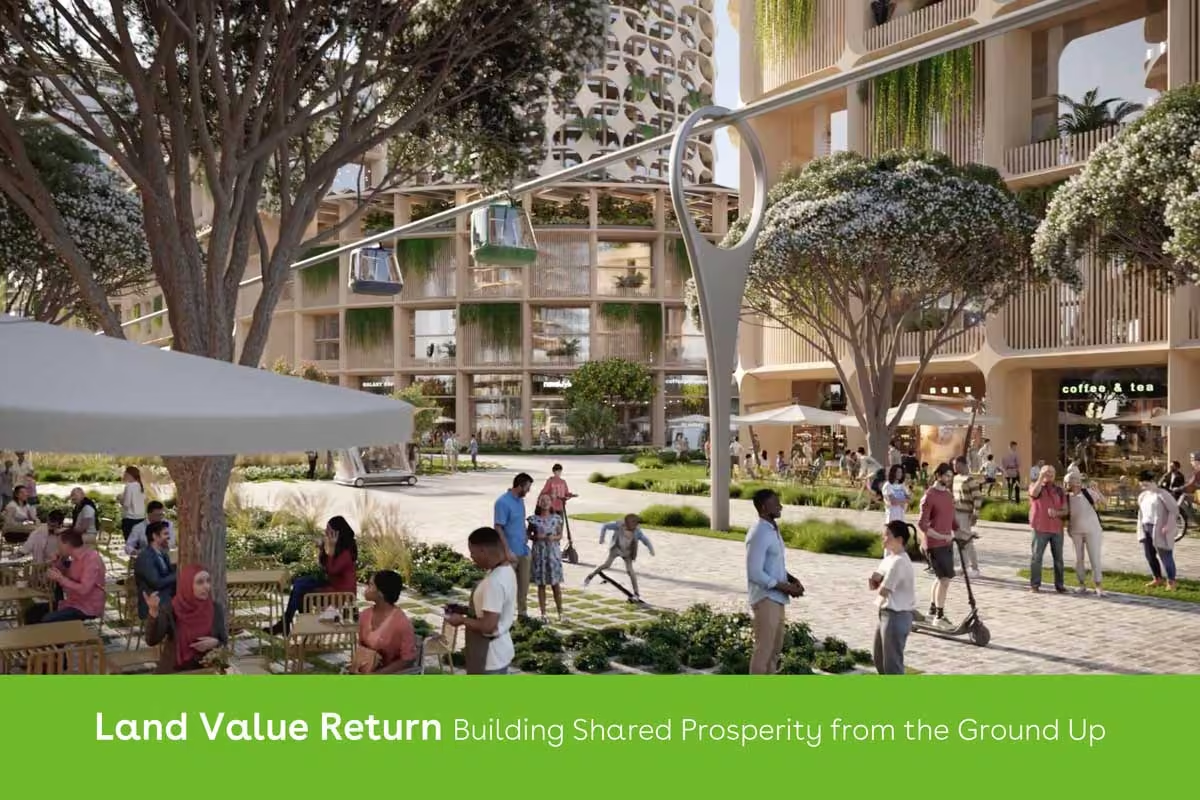
Jennifer Stumm, speaker and acclaimed violinist, has appeared on the world's great stages. At the Summit, we were fortunate to listen to her play and share in her insights on the importance of listening versus hearing. "The way you listen changes the future."
-
City of Telosa
@CityofTelosa
“Cities have the capability of providing something for everybody...only when they are created by everybody." The pioneering urban activist Jane Jacobs (1916-2006) helped redefine the physical landscape of modern American cities, while ceaselessly advocating for strong communities built through the co-creation of everyone.
www.centerforthelivingcity.org/janejacobs -
City of Telosa
@CityofTelosa
In 1962, John Glenn became the first American to orbit earth. Three black world-class female mathematicians at NASA, making complex computations by hand, were instrumental in the success of his and later Apollo missions. We spotlight Katherine Johnson.
www.nasa.gov/people-of-nasa/katherine-g-johnson/ -
City of Telosa
@CityofTelosa
Dr. Christyl Johnson leads a broad range of thought leaders at the 2024 PowerSource Global Summit. The conference is focused on how we expand human potential, bring new thinking, and work together to create our future on earth and beyond.
powersourcesummit.com/speaker/dr-christyl-johnson -
City of Telosa
@CityofTelosa
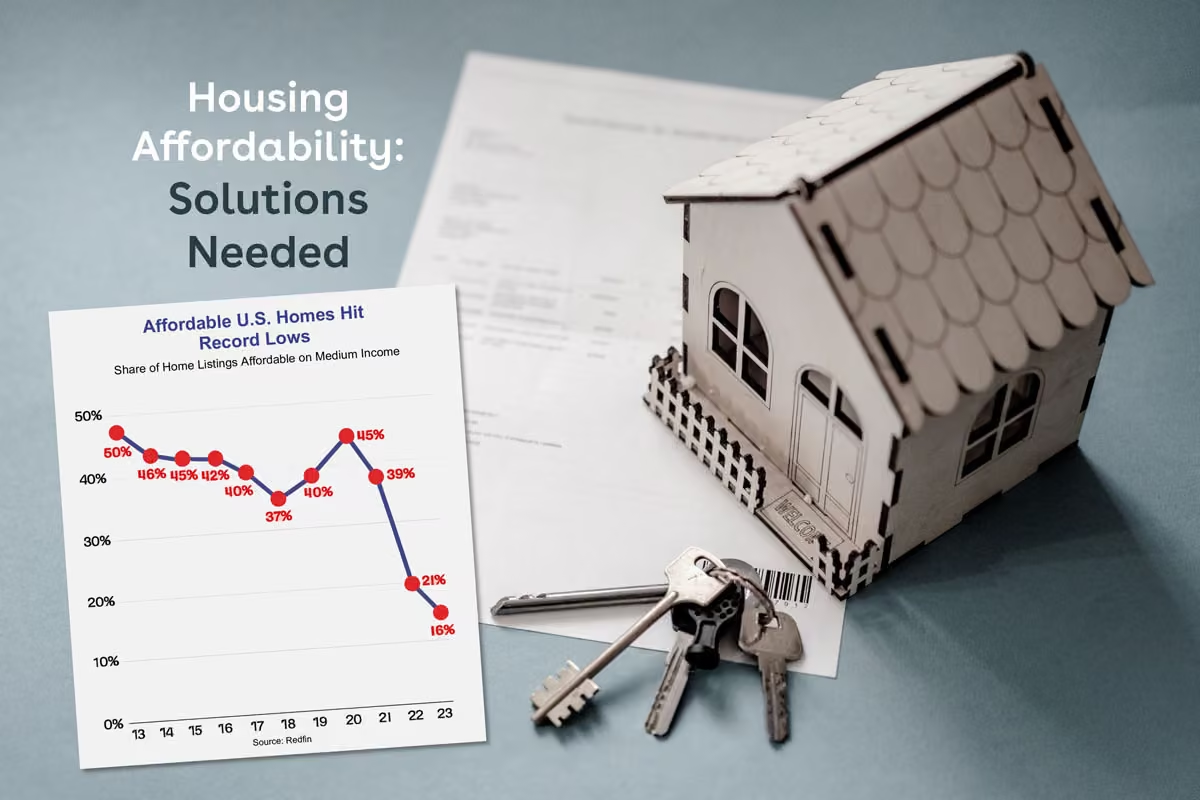
We are excited to attend the upcoming 2024 Power Source Global Summit & at NASA's invitation, participate in a group discussion for Smart Cities: Bridging Imagination & Innovation. We look forward to learning & exchanging ideas with other thought leaders.
powersourcesummit.com -
City of Telosa
@CityofTelosa
Telosa team member, Ray Brown's, desire to create a place that is open, fair & inclusive stems from his grandparents, Raymond & Sadie Alexander. The pioneering African-American lawyers won many landmark civil rights cases in Philadelphia from 1923 to 1974.
cityoftelosa.com/wp-content/uploads/2024/02/Raymond-Pace-… -
City of Telosa
@CityofTelosa
Norma Merrick Sklarek, one of the 1st African American U.S. women architects, overcame many challenges & displayed great perseverance/fearlessness, becoming a noted leader & architect in the field. Her life exemplifies Telosa's values: Open/Fair/Inclusive.
pioneeringwomen.bwaf.org/norma-merrick-sklarek/ -
City of Telosa
@CityofTelosa
In Telosa, we aim for the highest purpose & to incorporate best practices from around the world. A great embodiment of that ethos is Samuel J. Culler, the first Black professionally trained urban planner & a leader in the American Planning Association.
cleargov.com -
City of Telosa
@CityofTelosa
Population growth in cities is putting an enormous strain on our resources. Is a Zero Waste policy a solution to this problem & the challenge of climate change? Listen to 3 experts discuss this important issue in Antioch University's webinar recording.
www.youtube.com/watch?v=jHwtXW8MM_k -
City of Telosa
@CityofTelosa
Dr. Martin Luther King, Jr. said, "Even though we face the difficulties of today and tomorrow, I still have a dream." As we honor Dr. King, we are inspired to solve the challenges ahead & create a more equitable & sustainable future. Learn about his legacy
thekingcenter.org/about-tkc/martin-luther-king-jr/ -
City of Telosa
@CityofTelosa
Improving cities is a goal dating back centuries! Lessons & inspiration can be found in Leonardo da Vinci's innovative ideal city concept. He applied best practices to solve challenges, an approach we are also taking today for Telosa. Learn more!
www.da-vinci-inventions.com/ideal-city -
City of Telosa
@CityofTelosa
Happy New Year! Looking forward to an exciting 2024. We have lots planned, including spotlighting city officials from vibrant cities around the world. We continue to focus on community & learning best practices to help cities thrive. Follow us for updates!
cityoftelosa.com/we-hear-you/ -
City of Telosa
@CityofTelosa
As 2023 comes to a close, we are grateful for your interest & involvement in Telosa. It is clear that focusing on people’s quality of life is at the heart of a vibrant and thriving city. 2024 will expand on this work. Happy New Year!
Telosa Team
cityoftelosa.com/we-hear-you/ -
City of Telosa
@CityofTelosa
At the heart of thriving, vibrant cities, are strong community connections. For this reason, this topic is an important focus for us. As you celebrate this special season, may you feel strong connections to family, friends & your community.
Telosa Team
cityoftelosa.com/wp-content/uploads/2023/11/Telosa_Buildi… -
City of Telosa
@CityofTelosa
Knowing resident priorities for their community is essential to achieve a higher quality of life and greater opportunity. Read what U.S. residents ranked as their Top 10 community needs according to our community engagement & analytics partner, Polco. blog.polco.us/top-ten-things-residents-want-in-their-comm…
-
City of Telosa
@CityofTelosa
Robert Putnam & other scholars have empirically shown: strong community connections lead to safer, healthier, better governed & thriving cities. With our community engagement/analytics partner, Polco, we are creating a new tool for cities to measure & enhance those connections.
-
City of Telosa
@CityofTelosa
Strong community connections are at the heart of thriving & vibrant cities. We are excited to share our community findings report based on our research of best practices around the world, webinars & focus groups. Read our report.
cityoftelosa.com/wp-content/uploads/2023/11/Telosa_Buildi… -
City of Telosa
@CityofTelosa
Thanksgiving is a time to gather with family & friends, share a traditional meal, & express appreciation for all of the good in our lives. For some it is a time of community service. However you celebrate, may you feel gratitude & connection to those around you.
Telosa Team -
City of Telosa
@CityofTelosa
World-class city lessons: Portland has a strong, close-knit community emphasizing local engagement, shared experiences & a vibrant community offering a lively nightlife, diverse food & cultural scene & outdoor recreational opportunities. Read case study.
cityoftelosa.com/wp-content/uploads/2023/11/Telosa-Commun… -
City of Telosa
@CityofTelosa
Building World Class Cities: Raleigh is often called the “City of Innovation.” Its unique culture brings together academia, industry & other community leaders resulting in greater business opportunities, economic growth & a high quality of life. Case study
cityoftelosa.com/wp-content/uploads/2023/11/Telosa-Commun… -
City of Telosa
@CityofTelosa
World-class city lessons: Singapore is a model for high quality jobs & economic opportunity. They have created an environment that promotes business expansion while also focusing on providing social services & programs for its citizens. Read our case study
cityoftelosa.com/wp-content/uploads/2023/11/Telosa-Commun… -
City of Telosa
@CityofTelosa
World-class city lessons: Denmark's robust social programs contribute to a sense of security & inclusivity. Copenhagen residents feel a shared responsibility for each other's well-being, fostering a strong sense of community. Read our case study.
cityoftelosa.com/wp-content/uploads/2023/10/Telosa-Commun… -
City of Telosa
@CityofTelosa
World-class city lessons: Reston’s strong sense of community traces to its founding. Reston developers made long-term plans for physical facilities: social/cultural/educational programs & outdoor recreation - a place to “Live, Work, Play.” See case study.
cityoftelosa.com/wp-content/uploads/2023/10/Telosa-Commun… -
City of Telosa
@CityofTelosa
We can all learn from world-class cities. The strong sense of community in Milton Keynes traces to its design: mixed-use neighborhoods, community centers & local facilities within walking distance of residences. Read our case study.
cityoftelosa.com/wp-content/uploads/2023/10/Telosa-Commun… -
City of Telosa
@CityofTelosa
Strong cities are built on strong community connections. Please Watch last week's Telosa webinar & Read our initial draft community findings report. Thank you everyone who participated & shared ideas on how we can improve our cities!
cityoftelosa.com/we-hear-you/ -
City of Telosa
@CityofTelosa
Tonight, September 28 - 5:00-6:30 PM ET is our Telosa Webinar+ focus group discussion, a 90-minute online session to learn, share ideas & participate on the best practices around the world to build strong communities. Join us! See details. cityoftelosa.com/we-hear-you/
-
City of Telosa
@CityofTelosa
Leveraging Polco’s work with GPAL & Telosa’s research, together we are creating a new index that provides cities with enhanced decision-making data to create stronger and more connected communities. We will present initial findings at our upcoming Webinar+
info.polco.us/about/government-performance-action-lab -
City of Telosa
@CityofTelosa
Reflecting on history & studying best practices from around the world, we can learn what works to build strong community connections. See the introduction excerpt, "Building a World-Class City: The Power of Community Connection," from our findings report.
cityoftelosa.com/wp-content/uploads/2023/09/Telosa-Buildi… -
City of Telosa
@CityofTelosa
Our Telosa Webinar+ focus group discussion to learn, share ideas & participate on the best practices around the world to build strong communities is coming Thursday, September 28, 5:00-6:30 PM ET. Join us for this 90-minute online session! See details. cityoftelosa.com/we-hear-you/
-
City of Telosa
@CityofTelosa
Labor Day celebrates the contributions & achievements of American workers & is a day to gather with family, friends & neighbors. As the unofficial end of summer, many communities hold events & activities where people come together. We wish you a safe & happy Labor Day weekend!
-
City of Telosa
@CityofTelosa
Join us for our Telosa Webinar+ focus group discussion, a 90-minute online session to learn, share ideas & participate on the best practices around the world to build strong communities. Event on Thursday, September 28 from 5:00-6:30 PM ET. See details.
cityoftelosa.com/we-hear-you/ -
City of Telosa
@CityofTelosa
Bryant Park is a great example of bringing people together & creating community. As we study best practices from around the world, we can learn from what's working. See the excerpt from our report "Building a World-Class City: Community Connections." cityoftelosa.com/wp-content/uploads/2023/08/Telosa-Buildi…
-
City of Telosa
@CityofTelosa
Communities can leverage key indicators to address their needs: Community Health, Land Use, Infrastructure & More. Our partner, Polco, together with Government Performance Action & Learning (GPAL) collaborators have built a system to help community leaders info.polco.us/about/government-performance-action-lab
-
City of Telosa
@CityofTelosa
10 Strategies for Livable Communities that can be pivotal to the success of community initiatives nationwide - a report by the n4a (National Association of Area Agencies on Aging) & shared by the American Planning Association.
www.planning.org/planning/2015/dec/livabilityforall.htm -
City of Telosa
@CityofTelosa
We are learning best practices from around the world including Central Park, NYC; Milton Keynes, UK; & Reston, VA. Each city has used outdoor spaces to bring people together for activities & has strived to build community in other ways. Our findings will be shared this Fall.
-
City of Telosa
@CityofTelosa
For a community to function more effectively & flourish, opportunities for networks of relationships that form social capital are needed.
Join us in our upcoming discussions on how to develop a shared purpose & build strong communities in Telosa as well as your city. Stay tuned! -
City of Telosa
@CityofTelosa
To build a world class city, we are looking at some of the best practices from around the world on the most important aspects of city life! We are starting with Community. Our research and outreach in this area will help guide us as we develop Telosa with a focus on people.
-
City of Telosa
@CityofTelosa
We celebrate the core values this Nation was founded on: equality, fairness, justice, liberty & the belief that with hard work & bold action anything is possible. By putting people at the center, Telosa strives to offer a higher quality of life & greater opportunity.
-
City of Telosa
@CityofTelosa
Thank you for participating in our Future of Transportation Survey! Our Telosa Community values a walkable city & new transit options versus traditional ones. See what was shared to help shape design & key features of mobility in Telosa. cityoftelosa.com/wp-content/uploads/2023/06/Telosa-Future…
-
City of Telosa
@CityofTelosa
View answers to questions not covered during Webinar 5, The Future of Transportation. Coming soon - Summary & Data from our Future of Transportation survey. Thanks for participating in our webinar & survey, sharing questions & insights! cityoftelosa.com/wp-content/uploads/2023/06/Telosa-FAQ-We…
-
City of Telosa
@CityofTelosa
We want to hear from you! We are entering a new era of transportation where mobility is safer, more efficient, accessible & exciting. Please take our Transportation Survey & share your thoughts to help shape the design & key features. polco.us/n/res/vote/telosa/the-future-of-transportation
-
City of Telosa
@CityofTelosa
Watch Marc Lore & our other visionaries discuss The Future of Transportation where mobility is safer, more efficient, accessible & exciting. Watch now!
www.youtube.com/watch?v=dHJKLdGz86s -
City of Telosa
@CityofTelosa
Join us Tonight, May 31, 7-8pm ET for Webinar 5: The Future of Transportation! Marc Lore & our other visionaries will discuss a new era of transportation where mobility is safer, more efficient, accessible & exciting. See link to join!
cityoftelosa.com/we-hear-you/ -
City of Telosa
@CityofTelosa
Archer Aviation Founder & CEO, Adam Goldstein will speak at Webinar 5: The Future of Transportation, Wed., May 31, 7-8pm ET. He will discuss eVTOLs (electric vertical takeoff & landing aircraft) focused on improved mobility & our experience in cities.
cityoftelosa.com/we-hear-you/ -
City of Telosa
@CityofTelosa
Join our speakers for Webinar 5: The Future of Transportation, Wed., May 31, 7-8pm ET. We will discuss a new era of transportation where mobility is safer, more efficient, accessible & exciting - a topic affecting our lives on a daily basis. Link to join!
cityoftelosa.com/we-hear-you/ -
City of Telosa
@CityofTelosa
Join Webinar 5: The Future of Transportation, Wed May 31, 7-8pm ET for a conversation on 15-minute cities & other mobility topics affecting our lives. Link below to see Polco's chart on how our nation rates on 15-minute cities. More speakers announced soon cityoftelosa.com/15-min-city/
-
City of Telosa
@CityofTelosa
Marc Lore, Serial Entrepreneur + Founder & Chairman, Telosa Community Foundation, will share his thoughts on The Future of Transportation, Wed., May 31 from 7-8pm ET. Please join Webinar 5 for this important conversation affecting all our lives! More speaker details coming soon.
-
City of Telosa
@CityofTelosa
Carl Eppich is the Director, Municipal Planning Assistance Program, State of Maine and will host Webinar 5, The Future of Transportation - Wed., May 31. Other speaker details coming soon. Join us for this exciting topic that affects us all!
-
City of Telosa
@CityofTelosa
For Telosa, Earth Day is a mindset to follow every day. Adam Friedberg is a Partner at Buro Happold and leads their Cities team. He talks about energy & water sustainability for Telosa. What is your community is doing this Earth Day, April 22?
-
City of Telosa
@CityofTelosa
In keeping with our mission to create a more equitable & sustainable future, Martin Voelkle from BIG highlights how the Equitism Tower design reflects those goals. The three towers will draw people together with one tower housing energy storage.
-
City of Telosa
@CityofTelosa
How can we improve Housing and Education in our cities? Our community members, with varying perspectives & experiences, will collaborate in small groups online to discuss possible solutions for these important topics. Results coming in May!
-
City of Telosa
@CityofTelosa
Learn how your city can make better use of underutilized public real estate assets from this study for Atlanta, GA! The Telosa Community Foundation supported this project to help cities create new resources to reinvest back into the community. See link.
cityoftelosa.com/wp-content/uploads/2023/03/PAW-Atlanta-P… -
City of Telosa
@CityofTelosa
Survey results are in for viewing! Find out what our community values as we work to create an open, fair & inclusive city; a city for everyone. Thank you for your responses; they do matter! See link.
cityoftelosa.com/wp-content/uploads/2023/03/Telosa-Polco-… -
City of Telosa
@CityofTelosa
You have spoken! Your survey responses are guiding our upcoming online conversations. Join us to discuss Housing or Education in April! We are looking for people with knowledge, passion & ideas for in-depth, collaborative exploration Click link for details
www.eventbrite.com/e/telosatogether-a-conversation-series… -
City of Telosa
@CityofTelosa
Join our conversation on either Housing: Affordable, Accessible, Safe or Education & Lifelong Learning. We are looking for people with knowledge, passion & ideas for in-depth, collaborative exploration. Help shape the future! Click link for further details
www.eventbrite.com/e/telosatogether-a-conversation-series… -
City of Telosa
@CityofTelosa
Tune In Tonight!
A city where everyone has the opportunity to thrive.
Webinar 4 - Inclusive City: A city for everyone.
Thur, Mar 2, 2023 - 7:00-8:00 PM EST
Join our expert speakers & help shape the future!
cityoftelosa.com/we-hear-you/ -
City of Telosa
@CityofTelosa
A city where everyone has the opportunity to thrive.
Webinar 4 - Inclusive City: A city for everyone.
Thur, Mar 2, 2023 - 7:00-8:00 PM ET
Join expert speakers including Kenia Nunez. She will discuss the future of workforce development. Tune In!
cityoftelosa.com/we-hear-you/ -
City of Telosa
@CityofTelosa
A city where everyone has the opportunity to thrive
Webinar 4 - Inclusive City: A city for everyone
Thur, Mar 2, 2023 7:00-8:00 PM ET
Join expert speakers including Douglass Alligood, Partner, BIG - Bjarke Ingels Group, a renowned global architectural firm cityoftelosa.com/we-hear-you/ -
City of Telosa
@CityofTelosa
Webinar 4 - Inclusive City: A city for everyone
Thur, Mar 2, 2023 - 7:00-8:00 PM ET
Join speakers including Dr. Charles T. Moses on the future of education. He is Dean & Professor of Management at the Eberhardt School of Business, University of the Pacific
www.pacific.edu/campus-directory/charles-moses -
City of Telosa
@CityofTelosa
Putting people at the forefront means being intentional about inclusive conversations & applying ideas.
Webinar 4 - Inclusive City: A city for everyone
Thur, Mar 2, 2023 - 7:00-8:00 PM ET
DEI Executive Netta Jenkins moderates. Speaker details coming soon! www.nettajenkins.com/about -
City of Telosa
@CityofTelosa
Telosa featured in Tomorrow Build’s Jan 2023 video podcast including conversation with Marc Lore! “Putting people at the center...” reflects the importance of everyone, a key focus for Telosa & Webinar 4 - Inclusive City: A city for everyone. Details soon!
www.youtube.com/watch?v=5zzbv3t-C_Q -
City of Telosa
@CityofTelosa
Dr. Martin Luther King, Jr. said, “The time is always right to do what is right." Telosa honors his words as we build the most inclusive and equitable city in America. Let’s celebrate MLK Day and honor his legacy!
cityoftelosa.com/we-hear-you/ -
City of Telosa
@CityofTelosa
2023 is off & running! We are excited to continue the momentum with you to develop Telosa. Together with experts we can learn & share creative ideas for Telosa & existing cities. Stay tuned for announcements on webinars, focus groups & much more!
cityoftelosa.com/we-hear-you/ -
City of Telosa
@CityofTelosa
Thank you for helping make 2022 such a successful year. We value you, our community, and look forward to working together in 2023 to bring Telosa to life!
cityoftelosa.com/we-hear-you/ -
City of Telosa
@CityofTelosa
Putting people first in Telosa means listening to and engaging with you, our community. We have explored many innovative ideas together in 2022. See highlights of our activities and conversations!
cityoftelosa.com/we-hear-you/ -
City of Telosa
@CityofTelosa
Tune In Tonight!
A city leading with people; new ways to engage and realize innovative ideas together.
Webinar 3 - Innovation & Technology: Building Community
Tues, Dec 6, 2022 - 7:00-8:00 PM ET
Join our expert speakers & help shape the future!
cityoftelosa.com/we-hear-you/ -
City of Telosa
@CityofTelosa
A city leading with people; new ways to engage and realize innovative ideas together
Webinar 3 - Innovation & Technology: Building Community
Tune In: Tues, Dec 6, 2022 - 7:00-8:00 PM ET
Kelly Corsette is helping Scottsdale, AZ improve community. Learn how!
cityoftelosa.com/we-hear-you/ -
City of Telosa
@CityofTelosa
NEW DATE!
A city leading with people; new ways to engage and realize innovative ideas together.
Webinar 3 - Innovation & Technology: Building Community
Tues, Dec 6, 2022 - 7:00-8:00 PM ET
Join our expert speakers & help shape the future together!
cityoftelosa.com/we-hear-you/ -
City of Telosa
@CityofTelosa
Thanksgiving is a time to reflect on our blessings and express gratitude for the people and good things in our lives.
Telosa Team -
City of Telosa
@CityofTelosa
A city leading with people; new ways to engage and realize innovative ideas together
Webinar 3- Innovation & Technology: Building Community
Tune In Wed Dec. 7, 2022 - 7:00-8:00 PM ET
Learn & engage with our expert speakers as we focus on building community
cityoftelosa.com/we-hear-you/ -
City of Telosa
@CityofTelosa
A city leading with people; new ways to engage and realize innovative ideas together
Webinar 3-Innovation & Technology: Building Community
Coming early in December!
Joining: Polco, a firm providing community engagement & analytics solutions
cityoftelosa.com/we-hear-you/
🎥 @AxelArzola -
City of Telosa
@CityofTelosa
A city leading with people; new ways to engage and realize innovative ideas together.
Webinar 3 - Innovation & Technology: Building Community
Coming early in December!
Speakers to be announced shortly
cityoftelosa.com/we-hear-you/ -
City of Telosa
@CityofTelosa
A city built for people that preserves our natural resources & open spaces
Webinar 2 - Sustainability & Our Environment: A new city design
Tonight: Oct 27, 2022 7:00-8:00 PM ET
Michael Simpson shares his resource management & community resilience expertise
cityoftelosa.com/we-hear-you/ -
City of Telosa
@CityofTelosa
A city built for people that preserves our natural resources & open spaces
Webinar 2 – Sustainability & Our Environment: A new city design
Tune In: Thurs., Oct 27, 2022 - 7:00-8:00 PM EDT
Learn & engage with our expert speakers as we develop ideas together
cityoftelosa.com/we-hear-you/ -
City of Telosa
@CityofTelosa
A city co-created by the people.
Webinar 2–Sustainability & Our Environment: A New City Design
Thurs, Oct 27, 2022 - 7-8 PM ET
With her environmental/ land use background, Dr. Christa Daniels will guide the discussion with our expert speakers
cityoftelosa.com/we-hear-you/
🎥@AxelArzola -
City of Telosa
@CityofTelosa
A city built for people that preserves our natural resources & open spaces
Webinar 2–Sustainability & Our Environment: A New City Design
Thurs, Oct 27, 2022 - 7-8 PM ET
Hear Alana Goldweit from global architecture firm BIG-Bjarke Ingels Group
cityoftelosa.com/we-hear-you/
🎥@AxelArzola -
City of Telosa
@CityofTelosa
Tune In: Tonight, Sept. 29, 2022 - 7:00-8:00 PM EDT
Telosa webinar series topic - Equitism: Creating a Higher Quality of Life. Inclusive growth where everyone has unlimited opportunity.
Tom Rossman speaks about Equitism & guides our expert panel & Q&A.
us02web.zoom.us/j/84434991078 -
City of Telosa
@CityofTelosa
A great example of how to generate more revenue to put back into existing cities!
Tune in: Thur., Sept. 29 2022 - 7:00-8:00 PM EDT
Telosa webinar- Equitism: Creating a Higher Quality of Life. Inclusive growth where everyone has unlimited opportunity.
Featured speaker-Ben McAdams -
City of Telosa
@CityofTelosa
First #telosatogether Webinar
Equitism: Creating a Higher Quality of Life. Inclusive growth where everyone has unlimited opportunity.
Tune in: Thursday, September 29, 2022 - 7:00-8:00 PM EDT
cityoftelosa.com/we-hear-you/ -
City of Telosa
@CityofTelosa
Imagine living in a city where as the city does better the citizens do better. We call this Equitism.
Tune in: webinar series starts Thur., Sept. 29, 2022 7:00-8:00 PM EDT
Topic-Equitism: Creating a Higher Quality of Life. Inclusive growth where everyone has unlimited opportunity -
City of Telosa
@CityofTelosa
Introducing Bob Clark:
Bob is our most recent member of our Junto Group, people who are passionate about helping us achieve the vision and seeing a positive impact on the world for generations to come. Bob brings real world construction experience and a focus on community impact. -
City of Telosa
@CityofTelosa
Thank you to our community that joined for the 1st Telosa Town Hall. Your support is key and greatly appreciated. To stay in touch join the Telosa Community Network, take the Town Hall survey and share the video! Website links in bio.
-
City of Telosa
@CityofTelosa
TODAY IS THE DAY! - We’ll be live streaming the #telosatogether Town Hall tonight at 6pm EDT. Join us for this 1-hour conversation as we learn from, and grow with you–our community.
http:://youtu.be/kEWytbBLdVE -
City of Telosa
@CityofTelosa
1 day until #telosatogether - Tomorrow is the day we’re bringing our community together for the first time! Clear your calendar and make sure you’ve got good Wi-Fi because you won’t want to miss any details from this event.
-
City of Telosa
@CityofTelosa
2 days until #telosatogether - Join us to hear the findings from our “Heart and Soul of a City” survey regarding the needs of our community and have the opportunity to ask our panelists your questions.
What part of the Telosa Town Hall are you most excited about? -
City of Telosa
@CityofTelosa
3 days until #telosatogether - Our expert panelists will be answering your questions on topics such as public safety, trust in governance, diversity and inclusion, education and more at our Telosa Town Hall.
What questions you have for the panelists? -
City of Telosa
@CityofTelosa
4 days until #telosatogether - To fully understand the needs of our community, we are starting by listening. Join us to share what’s most important to you as we shape the future of Telosa, together.
Tag someone who you think would like to learn about the City of Telosa. -
City of Telosa
@CityofTelosa
5 days until #telosatogether - Join @marclore and our team for our first Telosa Town Hall on Monday, July 25, where you’ll hear the current status of Telosa. Ask our expert panelists your questions and help us shape a higher quality of life. Register with link in bio!
-
City of Telosa
@CityofTelosa
A personal invite from Marc Lore - Monday, July 25th is just days away! Mark the date on your calendar and join us for the live streaming of our first Telosa Town Hall. Listen in as Marc and our expert panelists discuss key topics and answer audience questions.#telosatogether
-
City of Telosa
@CityofTelosa
Alana will be representing BIG (Bjarke Ingels Group). As Telosa’s Lead Architectural Project Designer, she’s a key player in helping us achieve our vision of setting the global standard for urban living and creating innovative spaces that enhance your quality of life.
City of Telosa
@CityofTelosa
Click here to register for the live streaming town hall! www.eventbrite.com/e/telosatogether-a-town-hall-tickets-3…
#telosatogether -
City of Telosa
@CityofTelosa
Fourth of July is an important date in US history. While there's a great deal to celebrate this weekend and much has happened in our country's history, we have yet to see a new city founded in the US in over 100 years.
City of Telosa
@CityofTelosa
The City of Telosa is looking to change that with a city that works for all people.
This holiday weekend, we'll be celebrating the independence and opportunity we have in America to create a more equitable and sustainable future. -
City of Telosa
@CityofTelosa
@BjarkeIngels is a member of our Junto Group, who are passionate about helping to us achieve the vision and seeing a positive impact on the world for generations to come. For the opportunity to ask Bjarke a question directly, register for our Town Hall through the link below.
-
City of Telosa
@CityofTelosa
Netta is a member of our Junto Group, who are passionate about helping us to achieve the vision and seeing a positive impact on the world for generations to come. For the opportunity to ask Netta a question directly, register for our Town Hall through the link.
-
City of Telosa
@CityofTelosa
Introducing Preet Bharara:
Preet is a member of our Junto Group, who are passionate about helping us to achieve the vision and seeing a positive impact on the world. For the opportunity to ask Preet a question directly, register for our Town Hall through the link below: -
City of Telosa
@CityofTelosa
Juneteenth commemorates the day in 1865 when the last remaining enslaved people in Galveston, Texas finally learned of their freedom. We remain committed to ensuring full safety, liberty, opportunity and dignity for all people as we work to create an inclusive and equitable city.
-
City of Telosa
@CityofTelosa
Inclusivity is at the core of Telosa. This Pride Month, we are committed to building a city and community where all are welcomed and respected regardless of who you are, how you identify, or who you love.
-
City of Telosa
@CityofTelosa
Where you live impacts every aspect of your life. And you should have a say in what makes up your ideal community. We’ve identified 14 city sectors that a community is built upon, from mobility to education, housing, governance and more. Which is most important to you and why?
-
City of Telosa
@CityofTelosa
Want to play a bigger role in shaping the future of Telosa? Check out the new “We Hear You” section on our site. You can engage with others, apply to be an ambassador and be the first to know when our online Community Platform launches.
City of Telosa
@CityofTelosa
-
City of Telosa
@CityofTelosa
Join us as we bring #telosatogether for the first time!
Growth starts with your voice. Building Telosa’s equitable and sustainable future is rooted in learning from, and expanding with you–our community.
Live Streaming From the Brooklyn Museum on July 25, 2022
City of Telosa
@CityofTelosa
Click here to register!
www.eventbrite.com/e/telosatogether-a-town-hall-tickets-3… -
City of Telosa
@CityofTelosa
Your voice counts. We would like to hear what’s most important to you when building Telosa’s Open, Fair, and Inclusive community? Please share your thoughts by taking our online survey with Polco.
polco.us/n/res/vote/telosa/heart-and-soul-survey?pn-out=tsm -
City of Telosa
@CityofTelosa
Marc Lore talks at the Wall Street Journal’s “Future of Everything Festival” about building the first new city in America in over 100 years!
City of Telosa
@CityofTelosa
Check out the full video: www.wsj.com/video/events/marc-lore-plan-to-disrupt-how-we…
-
City of Telosa
@CityofTelosa
Although SpaceX is exploring the stars and we are exploring a new way to build cities, we’re inspired by their ability to drive innovation. Stay tuned for more updates and to learn how to get involved with Telosa.
-
City of Telosa reposted
Minnesota USA Expo 2027
@usaexpo2027
We’re excited to announce that we have elected @MarcLore and @bobclarkbeyond to co-chair the #expo2027usa board.
-
City of Telosa
@CityofTelosa
The Telosa Team will be presenting at the American Planning Association Conference on Sunday May 1st in San Diego, CA. This is another example of our continued community outreach to co-design and build a more equitable and sustainable future.
City of Telosa
@CityofTelosa
For more information visit: www.planning.org/conference/
-
City of Telosa
@CityofTelosa
Fantastic feature in @LesEchos
-
City of Telosa
@CityofTelosa
Want to be part of building Telosa? The first new American city in over 100 years! We’re bringing together some of our community representatives for our first Telosa Town Hall to continue the conversation. Stay tuned for more details on how to get involved!
-
City of Telosa
@CityofTelosa
Because we’re working with you to co-design & build Telosa, we’re hosting our first-ever Town Hall! This gathering will be held at the Brooklyn Museum of Art & live streamed on July 25. We’ll be discussing our vision, values & answering your questions. Stay tuned for details!
-
City of Telosa
@CityofTelosa
We are humbled by the incredible outreach and engagement. We will be addressing your major topics here - starting with Equitism. Imagine if a city was owned by a community endowment and could generate funds to enhance education, healthcare, housing & jobs. cityoftelosa.com
-
City of Telosa
@CityofTelosa
Jon & Julia joined by @bobclark, US Commissioner-General and our gracious host at the World Expo in Dubai. It was a great opportunity to collaborate and learn how to apply best practices in sustainability, mobility, governance, building community, and more to the City of Telosa.
-
City of Telosa
@CityofTelosa
A short clip from “Chasing Moonshots & Bringing the Future to Today” where Marc Lore and Nora Ali discussed Telosa the City of the Future. Why has the country become more divided and how can we solve it? To learn more, please visit our website cityoftelosa.com
-
City of Telosa reposted
-
City of Telosa
@CityofTelosa
Since September we've received nearly 10,000 emails, over 250,000 unique visits to cityoftelosa.com, and over 15,000 engaged followers across social media. Yours ideas, feedback, and open communication has been inspiring — the start of Telosa’s soul.
Post not available here, view on X
City of Telosa
@CityofTelosa
- What about the water?
- How do you decide on the location?
- How do you build political support? How will you ensure diversity — from the first 50,000 residents to the entire 5 million?
- Can you really master plan a city while still ensuring the city has soul?
City of Telosa
@CityofTelosa
And most importantly, Telosa will need to attract public interest from people who will want to ultimately visit and move there. This will take a dedicated team effort and we need your support.
Post not available here, view on X
City of Telosa
@CityofTelosa
- We are planning a virtual Town Hall for us to engage with you all even more.
Thank you again for your interest and contributions. If you would like to provide additional feedback, please visit our Contact Us page — cityoftelosa.com/contact-us/.
City of Telosa
@CityofTelosa
We look forward to building a strong community together.
#cityoftelosa #newcity #cityofthefuture -
City of Telosa
@CityofTelosa
The Telosa logo, a symbol of our city in many ways...
The star at the center represents the meaning behind the name Telosa — “highest purpose.” It is our North Star, a never-wavering guide on our mission to create a more equitable and sustainable future.
City of Telosa
@CityofTelosa
The four sections represent the pillars that will shape the direction of our city: people, government, business, and a community endowment.
The design is also rooted in our three core values…
City of Telosa
@CityofTelosa
….open, fair, and inclusive. The coming together of the sections signifies our commitment to an inclusive society. The openness of the circle speaks to our open culture. And each section is equal in size, representing our promise of fairness and access to opportunity.
-
City of Telosa reposted
Archer
@flyarcher
To build a brighter future for the next generation and beyond, we need big ideas that disrupt the status quo. One reason why Archer and @MarcLore's plans for @CityofTelosa are a perfect match.
Watch the full video: youtu.be/KK1Zw4A05e4 -
City of Telosa
@CityofTelosa
There have been many attempts to build new cities, but we’re taking a unique approach with Telosa...
Taking a page from the startup playbook, we’ve spent hundreds of hours identifying our mission and values for Telosa.
#cityoftelosa #newcity #cityofthefuturePost not available here, view on X
City of Telosa
@CityofTelosa
We’ve also aligned on three core values which support our mission and that we know Telosa can embody better than any other city — open, fair, inclusive. Together these values set the tone of the culture and community we’re building.
City of Telosa
@CityofTelosa
We know we have a long road ahead of us — so much time and effort will go into building a city from scratch. But, we’re confident that by identifying our mission and living by a set of core values, we now have a foundation in place to start building upon.
-
City of Telosa
@CityofTelosa
The name Telosa is derived from the Ancient Greek word used by Aristotle meaning “highest purpose.” For the Greeks, the highest purpose of a great city was to have the individual and society flourish together…
#telosa #newcity #cityofthefuture
City of Telosa
@CityofTelosa
They believed that no individual could reach their full potential unless they lived within a strong, cohesive society. This was achieved by both the individual and community working together to create new opportunities to prosper while ensuring that basic social needs were met.
-
City of Telosa reposted
Marc Lore
@MarcLore
Big day for @adcock_brett, @adamgoldstein13, and the entire @flyarcher team. Getting approved for the FAA’s G-1 Certification Basis is huge news — and can’t wait to see what’s next.
So proud of the team!
Archer
@flyarcher
We have some historic news about Archer to share -- the FAA has approved our G-1 Certification Basis -- enabling Archer to move further down the runway towards FAA Type Certification of our eVTOL aircraft. Learn more: archer.com/news/faa-approves-g-1-certification-basis-for-…
This media couldn't be displayed. See it on the original post. -
City of Telosa
@CityofTelosa
If you really want to go after a moonshot — you have to start with a big, bold vision, you need to raise the required capital, and surround yourself with the very best people in the world. If you get those three things right you can do incredible, magical things.
— @MarcLore -
City of Telosa
@CityofTelosa
.@BjarkeIngels is an architectural trailblazer who is quite literally shaping the world around us — so excited to be partnering with him and his team at @BIGstertweets.
#cityoftelosa #newcity #cityofthefuture -
City of Telosa
@CityofTelosa
We’re excited to share more about what we’re building.
Take a look and make sure to grab your copy when it hits newsstands later this week - and, then tell us what you think!
Businessweek
@BW
NEW COVER: Our Cities Issue
The guy behind diapers.com plans to build the world’s best city, save capitalism, and not raise your taxes www.bloomberg.com/news/features/2021-09-01/how-diapers-co… -
City of Telosa
@CityofTelosa
Our vision is to create a new city in America that sets a global standard for urban living, expands human potential, and becomes a blueprint for future generations.
#cityoftelosa #newcity #cityofthefuture
City of Telosa
@CityofTelosa
Learn more about Telosa here: cityoftelosa.com
This media couldn't be displayed. See it on the original post.