Politicians, athletes, journalists, NGOs, companies... They all use
corporation-owned social networks to communicate with us. Citizens
shouldn't have to hand over their data to companies to read content
published by public entities. Public Feeds changes that by making posts
of popular accounts freely available.
Read more.
Unmanned Systems Forces of Ukraine
The Unmanned Systems Forces (USF; Ukrainian: Сили безпілотних систем, СБС, romanized: Syly bezpilotnykh system, SBS, lit. '"Pilotless Systems Forces"') is a branch of the Armed Forces of Ukraine. More on Wikipedia
🔥 #deepstrike: Ukraine’s USF struck two strategic facilities in Nizhnekamsk, Russia.
On November 15, the 1st Separate Unmanned Systems Center (@1usc_army) and the 414th Separate Unmanned Systems Brigade “Magyar’s Birds” (@414magyarbirds),
💥 #deepstrike: USF hit one of Russia’s largest oil refineries again.
On Nov 13, @1usc_army and @414magyarbirds, alongside Ukraine’s Special Operations Forces (SOF), Defence Intelligence (HUR), State Border Guard Service (SBGS) and other Defense Forces,
⚡️ New all-time daily record — 801 Russian troops hit
Units of Ukraine’s Unmanned Systems Forces (USF) have once again set a new all-time daily record for enemy personnel strikes — 801 Russian troops hit, including 281 killed.
💥 They went in for an assault. They ended up in USF statistics.
Operators of the 414th Unmanned Systems Brigade “Magyar’s Birds” (@414magyarbirds) detect, track and strike Russian forces, primarily in the Donetsk sector.
Mom, I'm in Uganda! Or How Electronic Warfare Works 👀
In the latest episode of SBS DECODE, we break down what electronic warfare (EW) is, how jamming and spoofing work, and why electronic warfare has become an essential part of modern combat.
In October, Ukraine’s Unmanned Systems Forces struck 64,807 enemy targets, including 16,796 Russian troops, and broke their own daily personnel strike record four times.
👻 Costumes? Check. Horror stories? Check. But making it home? Not in the script.
The FPV crews of Ukraine’s Unmanned Systems Forces have prepared a special Halloween program for the monsters. And this year, Russian occupiers don’t get to opt out.
⚡️ New Daily Record for the Unmanned Systems Forces Grouping — 680 Russian Occupiers Hit
Since its establishment, the Unmanned Systems Forces (USF) grouping has set a new all-time daily record for enemy personnel casualties — 680 Russian occupiers, including 320 killed.
106 vehicles and units of specialized and engineering equipment; 9 artillery systems; 493 enemy UAVs, including copters, fixed-wing drones, Shaheds, and Gerberas.
🔥 In October, the USF Group surpassed its previous results three times The three highest daily figures for enemy personnel strikes ever recorded by the Unmanned Systems Forces USF: One step ahead!
On October 17, USF Group units set a new all-time record, exceeding the previous high by 20 strikes. And all of this happened within just the first 17 days of October. 📊 Follow the daily combat results of the USF Group on the online strike dashboard: sbs-group.army
Robotic systems are already changing the battlefield today. Delivering ammunition, evacuating the wounded, carrying out engineering tasks, dealing with mine hazards, and performing fire-support missions — UGVs take on work where human presence comes with a high level of risk.
In the first half of 2026 alone, Ukrainian UGVs carried out more than 66,000 missions. How do they work together with UAVs? Why doesn’t a robot replace a soldier, but instead becomes their tool?
A legend of Ukraine’s electronic music scene, DJ Tapolsky (Anatolii Tapolskyi), one of the leading pioneers of drum and bass in Ukraine, recorded a DJ set on Khortytsia Island in support of Ukrainian defenders.
When russia launched its full-scale invasion, Anatolii traded his DJ headphones and decks for a military uniform. Today, he defends Ukraine as a member of the 412th @usf_army Brigade, Nemesis.
Reconnaissance units identify targets, and strike drone crews finish the job. Enemy personnel and equipment that russian forces attempt to conceal and deploy in combat are coming under fire. @Raid_413
Operators of the 413th Separate Unmanned Systems Regiment "Raid" continue to systematically target enemy personnel and equipment. Every successful strike means fewer capabilities and fewer chances for the enemy to accomplish its mission.
In our first episode, we break down how strikes on the front line, the destruction of logistics in the enemy's rear, and long-range operations thousands of kilometers away all contribute to a common goal.
On October 8, operators of the 1st Separate Center of the Unmanned Systems Forces (@1usc_army) struck the Gazprom Neftekhim Salavat oil refining complex in Bashkortostan, russia.
Magyar update: Three-way fight in “MoLoChKa”: the predator hunts the Bird, the Bird hunts the beast that funds the predator. A clean 3:0 – a one-sided beatdown.
Maritime cyberpunk: a worm helicopter escorts a sanctioned shadow fleet oil tanker – the system’s bloody battery. Every oil-filled tub that makes it to the Bosphorus brings the system money that goes toward financing the war. So it won’t make it. The Freedom-Loving Ukrainian Bird will see to that.
The USF operation “MoLoChKa” has been running for ten weeks: 285⚓️ shadow fleet vessels hunted down in the Sea of Azov and the Black Sea. The Sea of Azov is locked down tight, along with the Kerch Strait. In the northern and northeastern Black Sea, it’s tense and done in quick dashes – smoking on the bridge is strictly prohibited. • July 2026 – 206+9 vessels • August 2026 – 54 vessels • September 1–11, 2026 – 16 vessels
MoLoChKa in action.
We will stand Moscow will fall Crimea will be fed back to health and rebuilt
On Sept. 9, Ukraine’s Defense Forces, with the 1st Separate Unmanned Systems Center, struck the Novorossiysk Naval Base.
According to USF Commander Robert “Madyar” Brovdi, Russia lost several military vessels, including missile carriers. USF operators also destroyed a Su-33, Mi-8 and two radar systems near Anapa and Gelendzhik.
“Achilles” disrupts enemy offensive operations in the Kharkiv sector.
The 429th Separate Unmanned Systems Brigade detects and strikes assault groups advancing toward Ukrainian positions, weakening the enemy’s offensive potential.
Головнокомандувач ЗСУ Михайло Драпатий оприлюднив Принципи, за якими керуватиме Збройними Силами України. Вони визначають його пріоритети, вимоги до командирів і штабів та підходи до розвитку війська під час війни. Повний текст Принципів: www.zsu.gov.ua/suchasni-zbroini-syly-ukrainy/pryntsypy-li…
Operators of YASTRUBY — the 411th Separate Unmanned Systems Brigade — intercept Russian attack drones directly in the air. The footage shows interceptor crews operating in the Zaporizhzhia and Donetsk regions.
Behind every interception is constant, relentless work. Every day, crews deploy to stop enemy FPV drones before they can reach their targets. And every drone taken down is one less threat to our positions, equipment, and people.
The 1st Separate Center of the Unmanned Systems Forces, alongside the Ukrainian Defense Forces, successfully hit the Slavneft-YANOS refinery—one of Russia's largest plants (15M tons/year capacity).
🔥 Weather forecast for Kstovo: smoky with a chance of Deep Strike
On the night of August 26, operators of the 1st Separate Unmanned Systems Center, together with other components of the Ukrainian Defense Forces, struck the LUKOIL-Nizhegorodnefteorgsintez oil refinery in Kstovo, Nizhny Novgorod region, russia. It is one of russia’s largest oil refineries, with a processing capacity of around 17 million tonnes of crude oil per year. The facility produces gasoline, diesel, and aviation fuel.
⚠️ The target is located approximately 800 km from Ukraine’s state border.
#deepstrike is systematic work against the facilities that underpin russia’s war economy.
✅ By Decree of the President of Ukraine No. 819/2026 dated August 24, 2026, the military rank of Brigadier General was awarded to Colonel Oleksii Anatoliiovych Khalabuda, Chief of Staff and Deputy Commander of the Unmanned Systems Forces of the Armed Forces of Ukraine.
✅ Указом Президента України № 819/2026 від 24 серпня 2026 року військове звання бригадного генерала присвоєно полковнику ХАЛАБУДІ Олексію Анатолійовичу – начальнику штабу – заступнику командувача Сил безпілотних систем Збройних Сил України.
3400 км. Сотні дронів на день. OSINT, балістика, удари вглиб росії — і досвід конкретних людей, який неможливо просто скопіювати.
Усе це поєдналося у спільному подкасті СБС та Української ради зброярів до Дня Незалежності України — «АРМОВАНО.SPECIAL».
Як перетворити накопичені знання на українську школу Deep Strike? Чому одного креслення далекобійного дрона недостатньо? І якою буде зброя наступного покоління? www.youtube.com/watch?v=Qc9zhWaJuYY
Behind this flag lies the right to remain oneself. To speak one's own language. To live on one's own land and determine one's own future. This flag belongs to the brave. To those who know the price of freedom and choose it every single day. This is precisely what we are defending today.
In the night of August 22, operators of the @1usc_army and the @Raid_413 together with other components of the Defense Forces of Ukraine, hit the Novokuybyshevsk Oil Refinery in the Samara Oblast of russia.
The enterprise processes about 8.8 million tons of oil per year and produces fuel, including supplies for the russian army.
The distance to the target is about 1,000 km from the line of combat engagement.
#deepstrike is systemic work targeting the facilities that sustain russia's war economy.
🔥Deep Strike is back in Perm and has reported to the Volgograd region
Operators of the @1usc_army of the Unmanned Systems Forces, together with other components of the Defense Forces of Ukraine, hit the "Lukoil-Permnefteorgsintez" oil refinery.This is one of the largest oil refining complexes in Russia, with a design capacity of about 13 million tons of oil per year. The enterprise produces gasoline, diesel, and jet fuel, in particular to supply the Russian army.
⚡️The distance to the target is over 1,500 km from the frontline.
⚠️ Another target is the "Marinovka" military airfield in the Volgograd region.
The goal remains unchanged: to reduce the resources that Russia can allocate for the war against Ukraine.
In the night of August 20, operators of the @1usc_army , together with other components of the Defense Forces of Ukraine (DFU), hit two important Russian oil infrastructure facilities at once.
⛽️ In the Krasnodar Krai — "Tamannyeftegaz", one of russia's key export terminals for the transshipment of oil, petroleum products, and liquefied hydrocarbon gases.
⛽️ In Nizhnekamsk, Republic of Tatarstan — the TANECO oil refinery, one of russia's largest refining complexes with a design capacity of up to 16 million tons of oil per year.
This work delivers a concrete result: fewer fuel, resources, and capabilities for the Russian war machine.
🔥 Operators of the USF Grouping Destroy Enemy Equipment in Zaporizhzhia Oblast
In Zaporizhzhia Oblast, enemy equipment has fewer and fewer safe routes and positions.
Operators of the USF Grouping’s Phoenix unit of the @DPSU_ua detect targets and deliver precise strikes. This time, enemy guns, ground robotic systems, and cargo vehicles were in their sights.
The result: less fire on our positions, disrupted supply, and lost battlefield capabilities for enemy forces.
Another enemy oil refinery hit at a distance of about 1,300 km 🔥
On the night of August 13, operators of the Unmanned Systems Forces, in cooperation with other components of the Defense Forces of Ukraine, struck the Gazprom Neftekhim Salavat oil refining complex in the city of Salavat, Republic of Bashkortostan, Russia.
The facility is one of Russia's largest oil refining and petrochemical complexes, with a hydrocarbon raw material processing capacity of up to 10 million tons per year. The complex produces motor gasoline, diesel fuel, fuel oil, bitumen, polyethylene, and other petroleum products and polymers.
As a result of the #deepstrike operation, a fire broke out on the premises of the facility. The exact extent of the damage is currently being assessed.
The Unmanned Systems Forces continue to target the enemy’s fuel and industrial infrastructure, reducing its capacity to sustain hostilities against Ukraine.
USF Today: Rubikon Leaves the Front, an Important Minus, and Why Choosing the USF Is Calmer
🌊 The USF maritime operation is forcing the enemy to redeploy Rubikon’s best crews from near Pokrovsk — hundreds of kilometers away from the front — to guard tankers.
📉 Ukraine’s Defense Forces are maintaining a negative balance of enemy manpower. Why is that still not enough, and why we need a “Standard 10”?
🔥 The Yaroslavl, Ufa, and Saratov oil refineries. Plus the strange love Wildberries warehouses have for spontaneous combustion.
🎯 @414magyarbirds shot down a rare russian Forpost-R worth around $7 million at an altitude of 4,300 meters.
🪖 And on why choosing the USF is calmer: clear service terms, guaranteed deferment, and the ability to choose your own unit and position.
Operators of the @1usc_army and the @Raid_413 , in cooperation with other components of the Defense Forces, struck the TANECO oil refinery located in Nizhnekamsk, Republic of Tatarstan.
The enterprise is one of Tatneft's key assets in the oil refining sector. It was established as a large-scale complex of oil refining and petrochemical production facilities and put into operation in 2011. The complex's design feedstock capacity is about 13 million tons of oil per year. TANECO produces more than 20 types of products, including AI-92, AI-95, AI-98, and AI-100 gasolines, Euro-5 diesel fuel, aviation fuel, base oils, and marine fuel.as a result of the #deepstrike, explosions and fires were recorded on the facility's territory. Detailed consequences of the strike are currently being verified. The Unmanned Systems Forces are consistently reducing the enemy's capability to continue armed aggression against Ukraine.
🔥 Another #deepstrike report for today. The Unmanned Systems Forces paid a visit to one of the largest oil refineries in northern russia
On the night of August 6, operators of the @1usc_army , the @Raid_413, and the 412th Nemesis Brigade, in coordination with the @SOF_UKR, the @DI_Ukraine, and the @ServiceSsu, struck the Yaroslavl Oil Refinery.
The Slavneft-YANOS enterprise, with a design capacity of 15 million tons of crude oil per year, is among russia’s five largest oil refineries.
The refinery specializes in deep oil refining and produces motor gasoline, diesel fuel, aviation kerosene, jet fuel, furnace fuel oil, and other petroleum products.
As a result of the #deepstrike, a fire broke out on the facility’s premises. Detailed information on the consequences of the strike is being clarified.
The Unmanned Systems Forces continue to systematically reduce the enemy’s ability to supply fuel and lubricants to the russian army and sustain its war against Ukraine.
The Unmanned Systems Forces Struck the Saratov Oil Refinery
On the night of August 2, operators of the @1usc_army and the 412th Nemesis Brigade, in coordination with the DIU and other components of Ukraine’s Defense Forces, successfully struck the Saratov Oil Refinery.
The facility is part of Rosneft’s structure and is an important producer of petroleum products for russia’s domestic market. The refinery’s capacities allow it to produce more than 20 types of products, including fuel used to meet the needs of russian forces.
The Unmanned Systems Forces continue to systematically reduce the enemy’s ability to continue its aggression against Ukraine.
⚓️⛽️ “MoLoCHKa” delivers results: Crimea remains without fuel 🇬🇧 Five steps for NATO: how to prepare for drone warfare in one year 🔥 Phoenix stopped a tank assault 💼 Choosing the USF is calmer: new contracts in the Unmanned Systems Forces
Protection against aerial threats is not only the work of interceptor drone operators. Electronic warfare operators also play an important role in countering enemy UAVs by depriving them of the ability to carry out combat missions.
A significant contribution to containing enemy attacks is made by EW operators of the @Raid_413
From July 1 to 19 alone, the unit’s operators suppressed 696 enemy UAVs, including:
646 FPV drones; 50 Molniya-type UAVs.
Thanks to the daily work of EW operators, the enemy is increasingly losing the ability to effectively use its own UAVs, while Ukrainian units receive additional protection.
Footage from the training of future operators at the Unmanned Systems Forces Training Center
The USF Training Center trains crews of the FLY EYE unmanned aerial system — a reconnaissance system whose work determines the quality of target detection, operation planning, and the effectiveness of strikes against the enemy.
Here, trainees are taught more than just how to operate the system. Instructors pass on their own combat experience, explaining the logic behind every decision and every action during missions.
As a result of the training, crews are ready to carry out combat missions, confidently operate the system, and effectively act in the conditions of the modern battlefield.
On July 21–22, as part of Operation “MoLoCHKa,” operators of the Unmanned Systems Forces continued inflicting losses on the russian fleet that supports military logistics and energy exports.
During the current period, the following targets were struck:
⚓️ 10 cargo ships in the Black Sea. The strikes were carried out by operators of the @1usc_army , the 412th Separate Nemesis Brigade, the @k_2army , and the @Raid_413 .
⚓️ 1 oil tanker in the Sea of Azov. The strike was carried out by operators of the 20th Separate K-2 Brigade.
⚓️ 2 tugboats in the Black Sea. The strikes were carried out by operators of the 1st Separate Center and the 413th Separate Raid Regiment.
In total, from July 6 to 22, as part of the USF Operation “MoLoCHKa,” 196 enemy watercraft have been struck: 126 in the Sea of Azov and 70 in the Black Sea.
How is Ukraine isolating occupied Crimea without a single boots-on-the-ground soldier? And why does NATO urgently need a 5-step drone defense blueprint?
In a groundbreaking interview for @CaolanReports , commander Madyar breaks down the future of warfare: ⚡️ Isolating Crimea: Systematically destroying Russia’s energy and fuel infrastructure to make their military presence intolerable—while leaving the bridge open for their retreat. 🛡 NATO's Blueprint: 5 urgent steps to secure European borders, including 5km drone buffer zones and fiber-optic command networks.
💥 Enemy Infantry Is a Priority Target for USF Operators
In the Pokrovsk sector, operators of the 59th Separate Steppe Predators Brigade methodically detect and eliminate enemy personnel. Infantry is the backbone of assault operations, so its systematic elimination reduces the occupiers’ offensive potential.
From July 1 to 21, the unit’s fighters struck 366 enemy servicemen, 211 of whom were eliminated.
The video once again confirms: once operators of the Unmanned Systems Forces identify a target, there is virtually no chance of avoiding a strike.
🔥 USF Continue Destroying Enemy Air Defense: Tor-M2 SAM System Destroyed, Buk-M1 SAM System and Five Radars Struck on russian Territory and Temporarily Occupied Ukrainian Territories
Operators of the Unmanned Systems Forces continue to reduce the enemy’s air defense and radar control capabilities.
Here are more details on the results of the operations on the night of July 20:
• In Yeysk, Krasnodar Krai, russia, a Tor-M2 SAM system was destroyed, and a Kasta-2E2 radar, a Gamma-S1M radar, and two Nebo-SV radars were struck.
• In Krasnodar Krai, russia, a Nebo-U radar was struck.
• In Zaporizhzhia Oblast, a Buk-M1 SAM system was struck.
• In Zaporizhzhia Oblast, an enemy radar station was struck.
All the listed targets were struck by operators of the @1usc_army
The operations were conducted in coordination with the Deep Strike Center of the Unmanned Systems Forces Grouping.
#adcide weakens the enemy’s ability to control the airspace, detect aerial targets in time, and cover its troops and critical military facilities.
In total, since the start of Operation “MoLoCHKa,” 183 vessels of russia’s shadow fleet have been struck. Of these, 119 were struck in the Sea of Azov and 64 in the Black Sea.
One of the results of the operation has been a significant reduction in the capacity of the Kerch ferry crossing. It has now lost around 75% of its throughput capacity: three of the five ferries have been destroyed, while two more have lost self-propulsion and now operate only as barges moved by tugboats.
⚓️ 176 vessels and watercraft struck by the Unmanned Systems Forces in two weeksOver the past day, operators of the Unmanned Systems Forces struck 4 more maritime targets: 2 tankers, 1 cargo ship, and 1 other watercraft.
In total, from July 6 to 19, 176 vessels and watercraft were struck, including: - 106 tankers; - 40 cargo ships; - 14 tugboats; - 7 ferries; - 5 gas tankers; - 4 other watercraft.
One of the results of Operation “MoLoCHKa” was a 75% reduction in the capacity of the Kerch ferry crossing. Before the start of the operation, transportation of vehicles and cargo between the ports of “Kavkaz” and “Crimea” was provided by four ferries: “Lavrentiy,” “Panagiya,” “Yeysk,” and “Mariya,” as well as the SKS-One motor vessel. One ferry can carry 8–15 vehicles. Four ferries provided transportation of up to 180–250 vehicles per day and carried out 80% of military-purpose transportation. As of July 19, all these vessels had been struck or taken out of full operation. The strikes were carried out by operators of the Unmanned Systems Forces independently or in coordination with the SSU and the DIU.
The Unmanned Systems Forces continue to strike the enemy’s maritime logistics and deprive it of the ability to use the civilian fleet for military purposes.
💥 Operation “MoLoCHKa” Continues. USF Operators Struck 13 More Vessels of russia’s Shadow Fleet
On July 18, operators of the Unmanned Systems Forces struck vessels of russia’s shadow fleet in the Black Sea and the Sea of Azov.
⚓️ 8 cargo ships in the Black Sea. The strikes were carried out by operators of the @k_2army , @RAROG427 , the @1usc_army , the 412th Separate Nemesis Brigade, and the @Raid_413 .
⚓️ 1 oil tanker in the Sea of Azov. The strike was carried out by operators of the 1st Separate Center.
⚓️ 1 gas tanker in the Black Sea. The strike was carried out by operators of the 412th Separate Nemesis Brigade.
⚓️ 2 floating cranes in the Black Sea. The strikes were carried out by operators of the 412th Separate Nemesis Brigade and the 1st Separate Center.
⚓️ 1 tugboat in the Black Sea. The strike was carried out by operators of the 1st Separate Center.
In total, from July 6 to 18, 172 vessels have been struck: 118 in the Sea of Azov and 54 in the Black Sea.
The goal of the operation is to disrupt the enemy’s maritime logistics, which support the transportation of oil, petroleum products, and other cargo in circumvention of international sanctions. To protect this component, russia is forced to redeploy up to 200 Rubikon UAV crews from the front and reinforce air defense in vessel basing areas. This reduces its capabilities in other sectors, while also complicating the operation of the shadow fleet and schemes for bypassing international sanctions.
Operators of the Unmanned Systems Forces Destroy Enemy Logistics in the South Slobozhanshchyna Sector
Operators of the @k_2army continue striking enemy logistics in the operational depth in the South Slobozhanshchyna sector.
The video shows strikes on armored personnel carriers, fuel trucks, cargo vehicles, and passenger cars used by the enemy to supply its units.
Every destroyed vehicle complicates the delivery of fuel, ammunition, and personnel, reduces the enemy’s mobility, and limits its ability to conduct combat operations.
💥 USF Operators Struck 12 More Enemy Vessels in the Black Sea.
On the night of July 17, USF units continued their operation against russia’s shadow fleet. This night, the following strikes were confirmed:
💥9 cargo ships. The strikes were carried out by operators of the 9th Kairos Battalion of the @414magyarbirds , @1usc_army , the 412th Separate Nemesis Brigade, and the @Raid_413 ; 💥1 oil tanker. The strike was carried out by operators of the 413th Raid Regiment; 💥1 gas tanker. The strike was carried out by operators of the 1st Separate Center; 💥1 tugboat. The strike was carried out by operators of the 1st Separate Center.
In total, over 12 days of the operation, 159 enemy vessels have already been struck in the waters of the Sea of Azov and the Black Sea.
The Unmanned Systems Forces continue to limit the capabilities of russia’s shadow fleet. Strikes on vessels and related infrastructure complicate the circumvention of international sanctions, disrupt logistics routes, and create additional pressure on russia’s war economy and military supply system.
Unmanned Systems Forces operators struck 11 more vessels from russia’s shadow fleet
On July 16, USF units continued Operation “MoLoChKa.” In total, 147 vessels belonging to russia’s shadow fleet were struck between July 6 and July 16.
Of these: • 117 vessels in the Sea of Azov; • 30 vessels in the Black Sea.
Targets struck on July 16 included:
⚓️ 5 oil tankers in the Black Sea and the Sea of Azov, struck by operators of the 9th “Kairos” Battalion of the @414magyarbirds, the @1usc_army , and the @k_2army
⚓️ 1 gas tanker in the Black Sea, struck by operators of the 1st Separate Center;
⚓️ 3 dry cargo vessels in the Black Sea, struck by operators of the 9th “Kairos” Battalion of the 414th Separate Brigade “Birds of Magyar”;
⚓️ 2 tugboats in the Black Sea, struck by operators of the 1st Separate Center.
“The objective is to paralyze the logistics of oil, fuel, and cargo transported in circumvention of sanctions. Every self-propelled vessel must be turned into a drifting barge, blind and deaf. Our objective is not to pollute the waters with oil spills, so there will be no hull breaches,” said USF Commander Robert “Magyar” Brovdi.
More details on the results of the USF task force: sbs-group.army
💥 USF Operators Struck a Mi-28 Helicopter in Belgorod Oblast
The strike was carried out by pilots of the @RAROG427 on July 15 on the territory of Belgorod Oblast, russia.
The Mi-28, also known as the “Night Hunter,” is an attack helicopter designed to strike armored vehicles, personnel, and low-speed aerial targets. Thanks to its armored crew cockpit, it can operate under intense fire. The estimated cost of such a helicopter is around $18 million.
Striking a helicopter with an FPV drone is a technically complex task, as the aerial target moves at high speed and changes its course and altitude. On enemy territory, this is even more difficult due to the need to operate under enemy countermeasures and with limited time to detect, track, and intercept the target. As seen in the video, operators of the 427th Separate Rarog Brigade successfully completed this task.
Commander of the Unmanned Systems Forces of the Armed Forces of Ukraine Robert “Magyar” Brovdi has been awarded the Order of Bohdan Khmelnytsky, 1st Class.
According to Decree of the President of Ukraine No. 603/2026, the state award was conferred for personal courage shown in defending Ukraine’s state sovereignty and territorial integrity, and for selfless performance of military duty.
With the awarding of the 1st Class order, Robert “Magyar” Brovdi became a full knight of the Order of Bohdan Khmelnytsky — one of Ukraine’s highest state military awards.
💥 russia’s Sanctioned Fleet in the Black Sea — Get Ready. USF Operators Struck 20 More Enemy Vessels.
On the night of July 15, operators of the Unmanned Systems Forces continued inflicting losses on the russian fleet that supports military logistics and energy exports.
The following targets were struck:
⚓ 17 oil tankers in the Black Sea. The operation involved operators of the 9th Kairos Battalion of the @414magyarbirds , the @1usc_army , the @k_2army , the 412th Separate Nemesis Brigade, the @RAROG427 , and the @Raid_413
⚓ 2 gas tankers in the Black Sea. The strikes were carried out by operators of the 412th Separate Nemesis Brigade and the 413th Raid Regiment.
⚓ A tugboat in the Black Sea. The strike was carried out by operators of the 1st Separate Center.
In total, from July 6 to 15, operators of the Unmanned Systems Forces struck 136 vessels of russia’s sanctioned fleet in the waters of the Sea of Azov and the Black Sea.
russia’s sanctioned fleet is used to bypass international sanctions, transport oil and petroleum products, and generate revenue for the russian budget, which is used to fund the war against Ukraine. Its systematic destruction disrupts the enemy’s logistics chains and complicates the operation of its shadow maritime infrastructure.
💥 USF Operators Struck a Mi-28 Helicopter in Belgorod Oblast
The strike was carried out by pilots of the @RAROG427 on July 15 on the territory of Belgorod Oblast, russia.
The Mi-28, also known as the “Night Hunter,” is an attack helicopter designed to strike armored vehicles, personnel, and low-speed aerial targets. Thanks to its armored crew cockpit, it can operate under intense fire. The estimated cost of such a helicopter is around $18 million.
Striking a helicopter with an FPV drone is a technically complex task, as the aerial target moves at high speed and changes its course and altitude. On enemy territory, this is even more difficult due to the need to operate under enemy countermeasures and with limited time to detect, track, and intercept the target. As seen in the video, operators of the 427th Separate Rarog Brigade successfully completed this task.
⚓ 1 tugboat in the Sea of Azov was struck by operators of the @Raid_413
Despite international sanctions, russia continues to export oil through its shadow fleet, using the revenues to finance its war against Ukraine.
The goal of the operation is to systematically disrupt the enemy’s logistics chain. Disabling tankers, cargo ships, and auxiliary vessels complicates the export of oil and petroleum products, limits maritime transport capabilities, and reduces the enemy’s ability to supply fuel to its forces and occupation grouping in temporarily occupied Crimea. In this way, operators of the Unmanned Systems Forces weaken one of the key elements of russia’s military logistics and sources of funding for its aggression.
About Crimea, “worm” suffering, and the lack of fuel in the gas station stateBritish journalist @CaolanReports interviewed the Commander of the Unmanned Systems Forces, Robert “Magyar” Brovdi
USF Today: “The Big Catch” and Crimea’s Oil Lockdown ⚓️🔥
🚢 90 shadow fleet vessels after a week of hunting in the Sea of Azov. 📉 Crimea’s fuel blockade: zeros on gas station boards. 🏭 The operations that make DeepStrike missions possible. 🇬🇧 USF experience in London: the British General Staff adopts USF methodology. @dim0kq reports 💼 The road home: why @k_2army leads in returns from AWOL through Army+
💥 Another Night. Another 15 Vessels of russia’s Shadow Fleet Struck by USF Operators.
On the night of July 13, the following targets were struck:
• 7 tankers in the Sea of Azov. The strikes were carried out by operators of the 9th Kairos Battalion of the @414magyarbirds , the @k_2army , the @Raid_413 , and the @RAROG427 .
• 5 cargo ships in the Sea of Azov. The strikes were carried out by operators of the 413th Separate Raid Regiment, the 427th Separate Rarog Brigade, the 1st Separate Center, and the 20th Separate K-2 Brigade.
• The SKS ONE ferry near Kerch, in temporarily occupied Crimea. The strike was carried out by operators of the @1usc_army .
• 2 tugboats in the Sea of Azov. The strikes were carried out by operators of the 412th Separate Nemesis Brigade and the 427th Separate Rarog Brigade.
In total, between July 6 and 13, operators of the Unmanned Systems Forces successfully struck 105 enemy vessels.
In addition, 4 enemy air defense assets were struck. An S-400 Triumf launcher, a Tor air defense system, and two radar systems were destroyed.
Operators of the Unmanned Systems Forces continue to systematically strike sanctioned vessels that support russia’s logistics and military potential.
On the night of July 12: • Operators of the 9th Kairos Battalion of the @414magyarbirds , @1usc_army and the 412th Nemesis Brigade struck 10 tankers in the Sea of Azov. • Operators of the 1st Separate Center struck a ferry in the Sea of Azov. • Operators of the @Raid_413 struck three ferries near Kerch, Autonomous Republic of crimea.in total, between July 6 and 13, units of the Unmanned Systems Forces struck 90 vessels of russia’s shadow fleet.
Strikes against tankers and ferries that support the operation of russia’s shadow fleet complicate the use of vessels to bypass international sanctions and gradually reduce russia’s ability to sustain its war economy and logistical support for its forces.
On the night of July 12, operators of the @1usc_army Separate Center and the @414magyarbirds in coordination with the @DI_Ukraine and the State Border Guard Service, struck an oil refinery in Samara Oblast, russia.
The Syzran Oil Refinery is one of Rosneft’s largest oil refineries and a key facility in the southern Volga region. Its annual capacity is approximately 8.5 million tons of crude oil, which amounts to around 3% of russia’s total oil refining capacity. The refinery produces gasoline, diesel fuel, aviation kerosene, fuel oil, and bitumen.
OSINT analysts localized the fire near the ELOU-AVT-5 unit at the Syzran Oil Refinery. Detailed information on the consequences of the strike is being clarified.
+28 more 🚢 💥 USF Operators Struck 28 More Enemy Vessels Overnight
Operators of the Unmanned Systems Forces continue destroying sanctioned vessels in the Sea of Azov. In total, 73 effective hits on enemy vessels were recorded overnight.
On the night of July 11, the following targets were struck:
🔥 4 tugboats — by operators of the 9th Kairos Battalion of the 414th Separate Magyar’s Birds Brigade, the 1st Separate Center, and the 412th Nemesis Brigade.
🔥 2 cargo ships — by operators of the 427th Rarog Brigade.
🔥 A floating dredger — by operators of the 1st Separate Center.
From July 6 to 11, units of the Unmanned Systems Forces struck a total of 76 enemy vessels in the Sea of Azov.
Strikes against sanctioned tankers of russia’s shadow fleet in the Sea of Azov hit not only individual vessels, but the entire sanctions-evasion scheme and the logistics of russian oil and petroleum product exports.
48 enemy vessels struck by USF operators in 120 hours Operators of the Unmanned Systems Forces continue to systematically strike military targets in the Sea of Azov.
Today, operators of the Kairos unit of the @414magyarbirds , the @1usc_army, the @k_2army, and the 412th Separate Nemesis Brigade struck 13 enemy vessels: 10 tankers, 1 cargo ship, 1 ferry, and 1 sea tug. The struck targets belong to russia’s shadow fleet and are under international sanctions.
In parallel with strikes on vessels in the Sea of Azov, USF operators continue combat operations in other sectors as well. Overnight, 41 military targets were struck in the enemy’s operational depth in Crimea and in the south of the temporarily occupied territories. Along the line of contact, USF operators struck 1,660 enemy targets over the past day, including 426 personnel.
On the night of July 10, operators of the @1usc_army , in coordination with the @DI_Ukraine, the State Border Guard Service, and other components of Ukraine’s Defense Forces, struck the Ilsky Oil Refinery.
It is one of the largest oil refining enterprises in southern russia. Its production capacity allows it to process approximately 6.6 million tons of crude oil annually, producing gasoline, diesel fuel, fuel oil, gas oil, bitumen, and other petroleum products.
The facility’s products play an important role in supplying fuel to russian forces, primarily the groupings operating in the southern sector and in the temporarily occupied territories of Ukraine.
As a result of the #deepstrike operation, a fire broke out on the facility’s premises. Damage assessment is ongoing.
The Unmanned Systems Forces continue to strike the enemy’s fuel and logistics infrastructure, reducing its ability to sustain combat operations against Ukraine.
USF Grouping Operators Destroy Enemy Assault Groups in Zaporizhzhia Oblast
The enemy is increasingly using motorcycles, ATVs, and other light vehicles to maneuver between positions and rapidly move personnel. This tactic is a result of armored vehicle shortages and an attempt to reduce the time spent under fire from Ukraine’s Defense Forces.
However, speed and maneuverability do not guarantee safety. Operators of the Phoenix border guard unit detect enemy movement routes in time and effectively strike personnel regardless of how they move.
12 More Tankers of russia’s Shadow Fleet Struck. USF Operators Continue to Disrupt Enemy Maritime Logistics
On the night of July 9, operators of the 1st Separate Center, the 20th Separate K-2 Brigade, the 412th Separate Nemesis Brigade, and the 413th Separate Regiment struck 12 more tankers of russia’s shadow fleet in the Sea of Azov.
Separately, operators of the 1st Separate Center struck a cargo ship, while operators of the 412th Separate Nemesis Brigade struck a tugboat.
In total, over the past 96 hours, units of the Unmanned Systems Forces have struck 35 enemy vessels.
Despite international sanctions, russia continues to export oil through its shadow fleet, using the revenues to finance its war against Ukraine.
Operators of the Unmanned Systems Forces are systematically disrupting this logistics network, increasing economic pressure on the aggressor state and reducing its military potential.
USF Struck the Saratov Oil Refinery and the Borisoglebsk Airfield
On the night of July 8, operators of the @1usc_army , in coordination with the @DI_Ukraine , the @ServiceSsu, the State Border Guard Service, and other components of Ukraine’s Defense Forces, struck the Saratov Oil Refinery and the Borisoglebsk military airfield in Voronezh Oblast, russia
The Saratov Oil Refinery is one of russia’s key refineries and is part of Rosneft. Its designed capacity is approximately 7 million tons of crude oil per year. The facility produces more than 20 types of products, including gasoline, diesel fuel, fuel oil, vacuum gas oil, and technical sulfur.
Separately, operators of the @1usc_army struck the Borisoglebsk military airfield. It serves as a base for Su-34, Su-35S, and Su-30SM aircraft, which russian forces regularly use to strike Ukrainian territory. The airfield is also used to train flight crews and operate combat training aircraft.
The #deepstrike caused explosions and fires at both facilities. Damage assessment is ongoing.
The Unmanned Systems Forces continue to systematically reduce the enemy’s ability to continue its armed aggression against Ukraine.
USF Operators Struck 9 Tankers of russia’s Shadow Fleet in the Sea of Azov Overnight
On the night of July 8, operators of the Kairos Battalion of the @414magyarbirds , the @Raid_413 , and the @1usc_army struck nine more tankers of russia’s shadow fleet in the Sea of Azov.
In total, over the past 72 hours, units of the Unmanned Systems Forces have struck 21 enemy vessels: 19 shadow fleet tankers, one cargo ship, and one ferry in Kerch.
russia’s shadow fleet is used to bypass international sanctions, export russian oil, and finance the war against Ukraine. Striking it complicates enemy logistics and limits the aggressor state’s ability to generate revenue for continuing its armed aggression.
Overnight, USF units struck 10 vessels involved in russian maritime logistics in the Sea of Azov and near occupied Crimea.
Pilots of “Kairos” from the @414magyarbirds hit 8 tankers of russia’s shadow fleet in the Sea of Azov. These tankers are part of the Azov–Crimea fuel route, transporting gasoline and petroleum products between russian ports, the Kerch Strait, and occupied Crimea. When fully loaded, 8 tankers of this class could carry approximately 40,000–50,000 tonnes of fuel.
Separately, operators of the @RAROG427 struck a cargo vessel in the Sea of Azov, while operators of the @1usc_army struck a ferry near temporarily occupied Crimea.
Strikes against enemy maritime logistics complicate the supply of fuel and lubricants needed to support the russian grouping of forces, primarily in occupied Crimea.
USF Struck Two Project 15781 Tankers, Two S-400 Systems, the Kerch Oil Depot, and a Nebo-U Radar
Operators of the Unmanned Systems Forces continue to systematically strike critical enemy military targets in the Sea of Azov, temporarily occupied Crimea, and on russian territory.
Operation highlights:
• In the Sea of Azov, operators of the 9th Kairos Battalion of the @414magyarbirds 's Birds Brigade struck two Project 15781 tankers of russia's shadow fleet.
• In Crimea, operators of the 9th Kairos Battalion of the 414th Separate Magyar's Birds Brigade struck the Kerch oil depot, which supports the storage and supply of fuel and lubricants for russian forces.
• In Crimea, operators of Detachment 13 of the 414th Separate Magyar's Birds Brigade struck and destroyed an S-400 Triumf air defense system, as well as a Nebo-U radar station.
• In Bryansk Oblast, operators of the @Raid destroyed an S-400 Triumf air defense system.
“During a missile attack on Ukraine, two launchers of the long-range S-400 Triumf air defense system were hunted down and destroyed: one at a firing position in Bryansk Oblast and another in a hideout in Crimea. These systems are used to launch ballistic missiles against ground targets.”
— Robert “Magyar” Brovdi, Commander of the Unmanned Systems Forces
The operations targeting the tankers were conducted in coordination with the Ukrainian Navy.
The strikes against these targets are part of a systematic campaign to reduce the enemy’s combat potential. Such operations weaken its defensive capabilities and create favorable conditions for further strikes by Ukraine’s Defense Forces against critical military targets.
Detailed statistics are available on the USF strike dashboard: sbs-group.army
As of yesterday, among the key refineries supplying Moscow, the Yaroslavl Refinery was basically the only one still operating fully or significantly.
The other three are either shut down or heavily damaged.
This has already caused fuel shortages in Moscow and Moscow Oblast.
So today, we’re in Yaroslavl.
Operators of the @1usc_army , the 412th Separate Nemesis Brigade, and the @Raid_413 , in coordination with the @DI_Ukraine , @ServiceSsu , the State Border Guard Service, and the Foreign Intelligence Service of Ukraine, successfully struck the Yaroslavl Oil Refinery.
🔥 During June 2026, units of the Unmanned Systems Forces Grouping struck 32 enemy air defense assets
In just one month, USF Grouping operators disabled 12 surface-to-air missile systems, as well as 20 radar stations and electronic warfare systems.
Thanks to June’s results, the total number of enemy air defense assets struck during the first six months of 2026 (January–June) reached 195 units:
120 SAM systems (including dozens of Tor, Buk-M3, Pantsir systems, as well as S-300 and S-400 systems); 75 radar stations and EW systems (including Nebo-U/-M/Box Spring, Zhitel, Palantin, 9S19 Imbir, and other key detection and suppression systems).
#adcide continues. Units of the Unmanned Systems Forces Grouping continue systematically striking enemy air defense assets, reducing their ability to control the airspace and creating a strategic advantage on the battlefield.
🔥 Operators of the Unmanned Systems Forces Struck the Saint Petersburg Oil Terminal and the Kronstadt Naval Base in Leningrad Oblast, russia
During the night of July 4, operators of the @1usc_army , in coordination with the @SOF_UKR , @ServiceSsu , @DI_Ukraine and other components of Ukraine’s Defense Forces, struck the Saint Petersburg Oil Terminal — one of the largest petroleum product transshipment complexes in the Baltic direction and a key logistics hub for russia’s fuel exports.
The terminal is used for receiving, storing, and transshipping crude oil, light and heavy petroleum products, fuel oil, diesel fuel, and other cargo. Its throughput capacity is approximately 10 million tons per year.
Operators of the 1st Separate Center also struck Kronstadt, the main base of the Leningrad Naval Base of russia’s Baltic Fleet. The facility supports the basing, repair, and maintenance of warships, as well as control of maritime approaches to Saint Petersburg.
Systematic #deepstrike operations against the enemy’s military and resource infrastructure will continue as long as russia continues its armed aggression against Ukraine.
USF Operators Increased the Number of Strikes in the Enemy’s Operational and Strategic Depth by 1 150% Since the Beginning of the Year
According to June results, units of the Unmanned Systems Forces significantly expanded the scale of combat operations in the enemy’s operational and strategic depth.
In June, USF operators conducted:
Deep Strike (500–2,000 km) — 2,359 combat missions, striking 172 facilities of the enemy’s military-industrial and fuel and energy sectors.
Middle Strike (150–300 km) — 3,406 combat missions, striking or destroying 1,682 targets.
Front Strike (25–150 km) — 2,747 combat missions, striking or destroying 1,265 targets.
Priority targets remain military-industrial facilities, fuel and energy infrastructure, logistics networks, fuel and ammunition depots, military equipment, command posts, and enemy personnel. Temporarily occupied Crimea remains a separate focus of systematic operations.
In June alone, units of the Unmanned Systems Forces, in coordination with other components of Ukraine’s Defense Forces, struck 172 facilities of the enemy’s military-industrial and fuel and energy sectors. These included oil refineries, oil depots, terminals, defense industry enterprises, naval bases, arsenals, space communication facilities, and other elements of military infrastructure.
Among the facilities struck were:
Astrakhan Gas Processing Plant.
Ilsky, Afipsky, Novokuibyshevsky, Moscow, Slavyansky, and LUKOIL-Nizhegorodnefteorgsintez oil refineries (the latter struck twice).
Surovikinskaya, Peterhofskaya, and Rossosh oil depots.
Saint Petersburg and TES-Terminal-1 oil terminals.
Grushovaya oil transshipment complex and Volodarskaya oil pumping station.
Port of Kavkaz.
Central Design Bureau of Apparatus Engineering.
Kaluga Aerated Concrete Plant.
Kronstadt Naval Base, the Navy basing point in Kronstadt, the 15th Arsenal of the russian Navy, and the Boikiy corvette.
Dubna, Skolkovo, and Medvezhyi Ozyora space communication centers.
“The fact is established: the bird of 2026 is bringing the painful special effects of war to the occupier’s territory — the worm no longer has a safe rear across the entire European part of muscovy,” said Commander of the Unmanned Systems Forces Robert “Magyar” Brovdi.
Systematic strikes against critical facilities reduce the enemy’s production, logistics, and military capabilities, complicating the supply of its forces and directly affecting russia’s ability to continue the war.
💥 During June, units of the USF Grouping struck an average of one target every 52 seconds, while the enemy lost one servicemember every four minutes.
On average, USF Grouping units struck 1,671 military targets per day, including 329 enemy personnel. In total, 50,147 military targets were struck or destroyed in the enemy's tactical and operational depth during June, including:
• 9,866 enemy personnel (4,720 eliminated, 5,146 wounded) • 32 air defense assets • 9,268 enemy UAVs • 952 Shahed and Gerbera UAVs • 449 artillery systems • 24 multiple launch rocket systems • 121 armored vehicles • 5,023 vehicles and logistics assets • 669 ammunition and supply depots • 9 watercraft • 1,698 UAV launch sites • 2,728 communications and UAV control antennas • 537 network devices and cameras • 111 enemy ground robotic systems • 1,572 enemy quadcopters • 15,219 shelters and dugouts
"Thank you for your dedicated service and heroic fight, Birds! Now back to work, Gentlemen! Moscow will fall." — Commander of the Unmanned Systems Forces, Robert "Magyar" Brovdi.
💥 USF Struck the LUKOIL-Nizhegorodnefteorgsintez Oil Refinery
Operators of the @1usc_army , the 412th Separate Nemesis Brigade, and the @Raid_413 , in coordination with the @SOF_UKR , DIU, SSU, the State Border Guard Service, and other components of Ukraine's Defense Forces, struck the oil refinery in Kstovo, Nizhny Novgorod Oblast.
With an annual processing capacity of up to 17 million tons of crude oil, LUKOIL-Nizhegorodnefteorgsintez is one of russia's largest oil refineries and plays a key role in gasoline production. The facility produces more than 50 types of petroleum products, including gasoline, jet fuel, diesel fuel, bitumen, paraffins, liquefied gases, and propylene for the petrochemical industry.
The #deepstrike caused explosions and a fire at the refinery.
The Unmanned Systems Forces continue to systematically reduce the enemy's ability to wage its war of aggression against Ukraine.
Operators of the @414magyarbirds continue to methodically eliminate enemy assault groups, preventing them from advancing toward Ukrainian positions.
The destruction of enemy infantry is one of the key factors in limiting the enemy's offensive potential. Systematic strikes against enemy personnel reduce the intensity of assaults, complicate offensive operations, and force the russian command to commit additional resources to replenish its units.
During June alone, operators of the 414th Magyar's Birds Brigade struck more than 2,892 enemy personnel, including 1,597 eliminated. On average, the brigade strikes around 100 occupiers every day, inflicting continuous losses and weakening the enemy's ability to conduct offensive operations.
💥 The Unmanned Systems Forces Continue Expanding Their Presence in the Enemy's Operational Depth Across Temporarily Occupied Territories
During June alone, units of the USF Grouping struck 31 enemy air defense assets.
Since the beginning of 2026, USF Grouping operators have struck 194 elements of the enemy's integrated air defense system. Since the formation of the USF Grouping on June 11, 2025, they have struck a total of 276 air defense assets, including:
• 169 SAM systems and SPAAGs; • 76 radar stations; • 31 electronic warfare systems.
In addition, operators have struck 426 mobile radar systems and 3,838 mobile electronic warfare systems that are not part of the enemy's integrated air defense network but provide local protection for military facilities.
Between June 27 and 29, USF units also conducted strikes against enemy air defense assets, fuel infrastructure, and military logistics.
Operation highlights:
• In temporarily occupied Crimea, operators of the @1usc_army struck a Pantsir-S1 SPAAG, an ST-68 radar, and a 48Ya6-K1 Podlyot radar.
• In temporarily occupied Crimea, operators of the 412th Nemesis Brigade struck fuel tank railcars. In Zaporizhzhia Oblast, they struck a fuel and lubricants storage facility.
• In Zaporizhzhia Oblast, operators of the 412th Nemesis Brigade struck two enemy fuel tankers. Operators of the 3rd Battalion of the @414magyarbirds struck another fuel tanker.
• In Bryansk Oblast, russia, operators of the @Raid_413 struck a locomotive used to support enemy military logistics.
• In Kherson Oblast, operators of the @k_2army struck an enemy harbor tug.
The operations were conducted in coordination with the USF Deep Strike Center.
Detailed statistics are available on the USF strike dashboard: sbs-group.army
💥 USF Struck an Oil Refinery in Krasnodar Krai, russia
During the night of June 28, operators of the @1usc_army, in coordination with the SSU, DIU, the State Border Guard Service, and other components of Ukraine's Defense Forces, successfully struck the Slavyansky Oil Refinery in Slavyansk-on-Kuban, Krasnodar Krai, russia.
The Slavyansky Oil Refinery processes crude oil and gas condensate with an annual capacity of approximately 5.2 million tons. Located more than 300 km from Ukraine's state border, the facility is involved in supplying fuel and lubricants to the russian armed forces.
The #deepstrike caused explosions and a large fire at the facility. Fires were confirmed in the crude oil tank farm, the petroleum products storage area, and the primary crude oil distillation unit. Damage assessment is ongoing.
The Unmanned Systems Forces continue to systematically reduce the enemy's ability to sustain its aggression against Ukraine.
🔥 USF Destroys Enemy Armored Vehicles in Zaporizhzhia Oblast
Despite an increasing shortage of armored vehicles, the enemy continues to use them to support assault operations along key sections of the frontline.
Operators of the 412th Separate Nemesis Brigade continuously detect and strike enemy vehicles near Huliaipole. Over the past several weeks, on a section of the front approximately 25 kilometers long, they have struck up to ten infantry fighting vehicles and one enemy tank.
The systematic destruction of armored vehicles reduces the enemy’s offensive capabilities and increasingly forces it to rely on infantry assaults without armored support.
During the week from 00:00 AM 15.During the week from 00:00 AM 15.06.2026 to 23:59 PM 21.06.2026, the Unmanned Systems Forces Group units struck 11 936 unique enemy targets.
2237 enemy personnel, 1021 of whom were eliminated 496 UAV pilot positions 815 vehicles 372 motorbikes/buggy 113 artillery systems 3 tanks 23 units of armored vehicles 2972 enemy unmanned aerial vehicles (of the "quadcopter", "shahed-type", and "wing-type" varieties)
🔥 USF Struck Orion UAVs, Air Defense Assets, and Other Key Enemy Targets
During the night of June 23, operators of the Unmanned Systems Forces struck enemy strike UAVs, air defense assets, energy infrastructure facilities, fuel supplies, and logistics transport in the operational depth of temporarily occupied territories of Ukraine.
“Moscow will fall in Crimea. USF birds will continue to help make it happen.” — Commander of the Unmanned Systems Forces Robert “Madyar” Brovdi.
Operation highlights:
In Crimea, operators of the @1usc_army struck three Orion deep-strike reconnaissance and attack UAVs near Kerch. These UAVs are used as carriers for guided aerial bombs and small cruise missiles.
In Crimea, operators of the 1st Separate Center struck oil storage tanks at the Kerch (Kamysh-Burun) Thermal Power Plant.
In Crimea, operators of the 1st Separate Center struck a Pantsir-S1 air defense missile and gun system near Baherove, an S-300 launcher and a ZU-23 anti-aircraft gun near Kurortne, as well as a Nebo-U radar system near Kerch.
In Crimea, operators of the 1st Separate Center struck the Simferopol gas distribution station near Trudove.
In Crimea, operators of the @RAROG427 , together with the @Raid_413 , struck the 330/110 kV West Crimea electrical substation.
In Donetsk Oblast, operators of the @k_2army struck an enemy UAV operator training ground near Debaltseve and a fuel tanker carrying petroleum products near Horlivka.
In Zaporizhzhia Oblast, operators of the 412th Nemesis Brigade struck enemy logistics transport near Pryazovske.
Across temporarily occupied Crimea and the occupied territories of Donetsk, Luhansk, Zaporizhzhia, and Kherson oblasts, operators of Detachment 13 of the @414magyarbirds , the 20th K-2 Brigade, the 412th Nemesis Brigade, and the 1st Separate Center struck enemy transport vehicles and fuel tankers.
Systematic strikes against air defense assets, strike UAVs, energy infrastructure, and logistics reduce the enemy’s ability to sustain combat operations and support its military groupings in temporarily occupied territories.
Logistics in Crimea are unraveling, and there's a major fire inside Moscow's ring road. Time for a quick situation update.
In the latest episode of USF Today:
🔥 Kapotnya Strike: breaking down the impact ⚡️ Crimea Blockade: fuel coupons no longer work. The three stages of a bold Defense Forces operation 🎯 Vostochny Training Ground and other high-value targets
Things are only getting hotter from here. USF — fighting smarter. Stay tuned! 🫡
🔥 USF Struck an Oil Terminal in Kerch and an Oil Depot at the Port of Kavkaz
• Operators of the @1usc_army of the Unmanned Systems Forces, in coordination with the @SOF_UKR , SSU, and DIU, struck an oil terminal in Kerch (temporarily occupied Autonomous Republic of Crimea).
The facility is located less than one kilometer from the so-called Kerch Bridge and is used for the storage and transshipment of liquefied gas and petroleum products through the Kerch Strait. The terminal also supports vessel refueling and the operation of the Crimea–Kavkaz ferry crossing.
• Operators of the 1st Separate Center of the Unmanned Systems Forces, in coordination with the DIU and SSU, also struck an oil depot at the Port of Kavkaz (Krasnodar Krai, russia).
The Port of Kavkaz is one of russia’s largest transport and logistics hubs. The oil depot located on its territory plays an important role in supplying fuel to temporarily occupied Crimea and russian military groupings in the occupied territories of southern and eastern Ukraine.
The #deepstrike caused explosions and fires at both facilities. Damage assessment is ongoing.
USF units continue to systematically reduce the enemy’s logistics and fuel capabilities, depriving it of resources needed to wage war against Ukraine.
🔥 USF Struck an Oil Depot, Gas Infrastructure, Radar Systems, and Enemy Logistics
During the night of June 21, operators of the Unmanned Systems Forces struck fuel infrastructure, radar assets, gas compressor stations, and enemy transport in the operational depth of temporarily occupied territories of Ukraine.
Operation highlights:
In Crimea, operators of the @1usc_army struck the oil depot of the Kerch oil terminal.
In Crimea, operators of the 1st Separate Center struck a Kasta-2E2 radar system near Kurortne and a Nebo-U radar system near Kerch.
In Crimea, operators of the 9th Kairos Battalion of the @414magyarbirds struck gas compressor stations near Aromatne, Zhuravlivka, and Kliuchi.
In Donetsk Oblast, operators of the @k_2army Brigade struck a fuel tanker carrying petroleum products near Horlivka.
In Zaporizhzhia Oblast, operators of the 412th Nemesis Brigade struck enemy logistics transport near Osypenko and Terpinnia.
Systematic strikes against fuel infrastructure, radar assets, and logistics reduce the enemy’s ability to sustain its forces, support movement, and protect facilities in temporarily occupied territories.
🔥 USF Struck Crimea’s Gas Infrastructure, a Bridge Across the Henichesk Strait, and Enemy Fuel and Military Logistics
During the night of June 20, units of the Unmanned Systems Forces struck a number of enemy military and infrastructure targets in temporarily occupied territories. Among the key targets were gas compressor stations in temporarily occupied Crimea that support the peninsula’s gas transportation infrastructure.
Operation highlights:
• In temporarily occupied Crimea, operators of the 9th Kairos Battalion of the @414magyarbirds struck three gas compressor stations.
• In temporarily occupied Crimea, operators of the @1usc_army struck an additional gas compressor station.
• In Kherson Oblast, operators of the @RAROG427 Brigade struck the road bridge across the Henichesk Strait, which was being used to support enemy logistics.
• In Kherson Oblast, operators of the @k_2army struck a harbor tugboat.
• Operators of Detachment 13 of the 414th Magyar's Birds Brigade and the 20th K-2 Brigade struck enemy fuel tankers in Donetsk and Kherson oblasts.
• In Donetsk Oblast, operators of Detachment 13 of the 414th Magyar's Birds Brigade struck a BAZ-6403 heavy tractor truck.
• In Luhansk Oblast, operators of the 20th K-2 Brigade struck armored vehicles, including a Typhoon-K armored vehicle.
• Operators of the 20th K-2 Brigade and Detachment 13 of the 414th Magyar's Birds Brigade struck enemy logistics transport in Crimea, as well as in Kherson, Luhansk, and Donetsk oblasts.
The operations were conducted in coordination with the USF Deep Strike Center.
Systematic strikes against gas infrastructure, bridges, fuel tankers, armored vehicles, and logistics transport reduce the enemy’s ability to sustain its forces, maneuver, and maintain combat operations.
🔥 USF Struck a Gas Storage Facility, Radar Systems, Air Defense Assets, and Enemy Rail and Transport Logistics in Crimea
One of the key targets was the Hlibivske Underground Gas Storage Facility in temporarily occupied Crimea. The site is used to regulate seasonal and daily gas consumption on the peninsula and to maintain pressure in the gas transmission system.
Operation highlights:
• In temporarily occupied Crimea, operators of the @Raid_413 struck the Hlibivske Underground Gas Storage Facility.
• In temporarily occupied Crimea, operators of the @414magyarbirds struck the Hlibivske UGS research center.
• In Zaporizhzhia Oblast, operators of the 5th Battalion of the @414magyarbirds struck a P-18 Terek radar system.
• In temporarily occupied Crimea, operators of the @1usc_army struck a Repeynik low-altitude radar system and a locomotive used to support enemy logistics.
• In Luhansk Oblast, operators of the @1usc_army and the @k_2army struck an MT-LB equipped with a ZU-23 anti-aircraft gun.
• Operators of Detachment 13 of the 414th Magyar's Birds Brigade, the 412th Nemesis Brigade, and the 1st Separate Center struck enemy fuel tankers in Donetsk, Zaporizhzhia, and Luhansk oblasts.
• In Luhansk Oblast, operators of the 20th K-2 Brigade struck a fuel tanker railcar.
• In Donetsk Oblast, operators of the 412th Nemesis Brigade struck a command and observation post of a unit from the enemy's 656th Motor Rifle Regiment of the 29th Army.
• Operators of the Phoenix UAV Unit of the State Border Guard Service, the 412th Nemesis Brigade, and the 20th K-2 Brigade struck enemy logistics transport in Luhansk and Zaporizhzhia oblasts.
The operations were conducted in coordination with the USF Deep Strike Center.
Systematic strikes against gas infrastructure, radar and air defense assets, fuel, rail, and transport logistics reduce the enemy’s ability to sustain its forces, maintain command and control, and conduct combat operations in temporarily occupied territories.
🔥 USF Struck the Moscow Oil Refinery for the Second Time
On June 18, operators of the @1usc_army , together with the 412th Nemesis Brigade, the @Raid_413 , and the @414magyarbirds , in coordination with the @SOF_UKR, DIU, SSU, and other components of Ukraine’s Defense Forces, struck the Moscow Oil Refinery.
The Moscow Oil Refinery is among the ten largest oil-processing facilities in russia, with an annual capacity of 11 million tons of crude oil. The plant produces fuel and other petroleum products used to support both the russian economy and the military logistics of the aggressor state.
The #deepstrike targeted a strategic element of the enemy’s fuel infrastructure. Damage assessment is ongoing.
USF units continue to apply sustained pressure on the enemy’s fuel infrastructure. Every successful strike against such facilities reduces the enemy’s ability to sustain its forces and wage war against Ukraine.
USF Targets Enemy Armored Vehicles and Transport in the Donetsk Sector
Russian forces use armored vehicles to support infantry during offensive operations. The destruction of tanks, armored vehicles, and heavy transport significantly reduces mobility, complicates logistics, and deprives assault groups of armored protection.
In just the first two weeks of June, operators of the @414magyarbirds struck:
• 8 tanks • 403 heavy transport vehicles • 9 AFVs, IFVs, and APCs • More than 1,600 enemy personnel
The continuous work of USF operators creates an attritional effect that limits the occupiers’ operational capabilities and reduces their ability to achieve objectives across sectors of the front.
🔥 USF Struck an Osa Air Defense System, Coastal Radar Stations, Basing Sites, Equipment Shelters, a UAV Workshop, and a Drone Depot
During the night of June 15–16, operators of the Unmanned Systems Forces struck a number of enemy military targets in the operational depth of temporarily occupied territories.
Operation highlights:
• In Donetsk Oblast, operators of the @1usc_army struck an Osa air defense system.
• In Donetsk, operators of the 9th Kairos Battalion of the @414magyarbirds struck a deployment site used by the Somalia and Rubicon units, as well as the command staff of the enemy's 9th Separate Motor Rifle Brigade of the 51st Army.
• In Donetsk Oblast, operators of the @1usc_army struck a shelter containing weapons and military equipment belonging to the enemy's 72nd Separate Motor Rifle Brigade of the 3rd Army Corps.
• In temporarily occupied Crimea, operators of the @1usc_army struck five enemy coastal radar stations.
• In Zaporizhzhia Oblast, operators of the @1usc_army struck a temporary deployment site of fixed-wing UAV pilots.
• In Luhansk Oblast, operators of the @k_2army struck an ammunition workshop producing munitions for heavy UAVs of the enemy's 14th DRShBr DK.
• In Donetsk Oblast, operators of the @Raid_413 struck a UAV storage facility belonging to a unit of the enemy's 60th Separate Motor Rifle Brigade of the 5th Army.
• Operators of the 20th K-2 Brigade and the 2nd Battalion Wormbusters of the 414th Magyar's Birds Brigade struck enemy logistics transport in Luhansk, Donetsk, and Kherson oblasts.
The operations were conducted in coordination with the USF Deep Strike Center.
Systematic strikes against air defense assets, radar systems, basing sites, weapons shelters, UAV units, and logistics transport reduce the enemy's ability to command its forces, sustain military operations, and maintain operational activity across multiple sectors.
Detailed statistics are available on the USF strike dashboard: sbs-group.army
🔥 The Unmanned Systems Forces struck the Moscow Oil Refinery
On June 16, operators of the @1usc_army , in coordination with Ukraine’s @SOF_UKR, DIU and SSU, carried out a strike on the Moscow Oil Refinery.
The Moscow Oil Refinery is one of russia’s ten largest oil refining facilities, with an installed capacity of 11 million tons of crude oil per year. It produces fuel and other petroleum products used to support the aggressor state’s economy and military logistics.
As a result of this #deepstrike, a strategic enemy fuel infrastructure facility was hit. The full consequences are being clarified.
USF units continue systematic pressure on the enemy’s fuel infrastructure. Every strike on such facilities reduces russia’s ability to supply its troops and wage war against Ukraine.
USF Eliminates Enemy Personnel in the Pokrovsk Sector
The enemy continues to employ small infantry groups in an attempt to move closer to Ukrainian positions, maintain constant pressure, and identify vulnerabilities in the defense.
Operators of the 59th Separate USF Brigade “Stepovi Khyzhaky” detect such movements in time and deliver precise strikes against enemy personnel.
Since the beginning of June, the brigade has struck more than 1,200 targets. Among them were 188 enemy personnel, including 121 eliminated.
Detailed statistics are available on the USF strike dashboard: sbs-group.army The systematic work of USF units reduces the enemy’s offensive potential and limits its ability to sustain assault operations.
On June 14, operators of the @1usc_army and the @414magyarbirds, in coordination with other components of Ukraine’s Defense Forces, struck the Azot chemical plant in Novomoskovsk, Tula Oblast, russia.
The facility plays an important role in the aggressor state's industrial sector. Its operation is directly linked to russia’s capabilities in the production of explosive materials.
The #deepstrike caused a fire on the plant’s premises. Damage assessment is ongoing.
The Unmanned Systems Forces continue to systematically reduce the enemy’s ability to sustain its military-industrial complex and support the war against Ukraine.
🔥 USF Struck the Afipsky Oil Refinery and the Tolyattikauchuk Industrial Plant
• On June 11, operators of the @1usc_army , in coordination with the DIU and other components of Ukraine’s Defense Forces, struck the Afipsky Oil Refinery in Krasnodar Krai, russia.
• On June 12, operators of the @1usc_army struck the Tolyattikauchuk industrial plant in Samara Oblast, russia.
The Unmanned Systems Forces continue to apply sustained pressure on the enemy’s fuel and industrial infrastructure. Strikes against these facilities reduce the enemy’s ability to sustain military logistics, industrial production, and its war effort against Ukraine.
USF Struck Tor and Buk-M3 Air Defense Systems, Command Posts, Deployment Sites, Logistics, and Other Key Enemy Targets
On the night of June 10, units of the Unmanned Systems Forces struck a number of military and infrastructure targets deep behind enemy lines in temporarily occupied territories.
Operation highlights:
• In Zaporizhzhia Oblast, operators of the @1usc_army , in coordination with the 131st Reconnaissance Battalion, struck a Tor air defense system.
• In Donetsk Oblast, operators of the @k_2army Brigade struck a Buk-M3 air defense system.
• In Zaporizhzhia Oblast, operators of the 412th Nemesis Brigade struck a tugboat used in support of enemy operations.
• In Donetsk Oblast, operators of Detachment 13 of the @414magyarbirds struck fuel storage tankers and an enemy military equipment storage site.
• In Luhansk Oblast, operators of the @k_2army Brigade struck a command post of the enemy’s 88th Separate Motor Rifle Brigade of the 3rd Army.
• In Luhansk Oblast, operators of the @1usc_army struck a temporary deployment site of personnel from the 4th Separate Air Assault Brigade "Nevsky."
• Operators of the 412th Nemesis Brigade and the @k_2army struck three electrical substations supporting enemy military infrastructure and operations.
• In Zaporizhzhia Oblast, operators of the 1st Separate Center struck a command post of the 429th Motor Rifle Regiment of the enemy’s 19th Motor Rifle Division, 58th Army.
The operations were conducted in coordination with the USF Deep Strike Center.
Detailed statistics are available on the USF strike dashboard: sbs-group.army The systematic targeting of air defense assets, command posts, troop deployment sites, and logistics infrastructure reduces the enemy’s ability to command forces, sustain operations, and maintain the tempo of combat activities.
Today, for the first time, we mark the Day of the Unmanned Systems Forces, and from now on, each year, June 11 will be a day of our gratitude to the warriors of the Unmanned Systems Forces.
Modern warfare can no longer be imagined without drones, and Ukrainian unmanned systems are operating successfully at different levels: from carrying out missions on the frontline to striking important enemy facilities hundreds of kilometers deep inside its territory. All of this is being documented, and it is thanks to the precision and skill of our operators that Russia’s losses have long exceeded 30,000 killed and wounded per month.
I thank each and every person serving in the Unmanned Systems Forces, developing Ukrainian technologies, and working for the sake of our advantage on the battlefield. Thank you to everyone who is working to reduce Russia’s capabilities and strengthen our security.
While they search — we already see. While they maneuver — we already predict their next move. While they look up — we're already above them. While they change position — we're already launching the next bird. While they adapt to threats from the sky — we've already added sea and land. While they count their losses — we're updating the scoreboard. While they are consumed by hate — we keep getting better. While they copy yesterday — we're already printing the future. While they adjust — we've already changed the algorithm. While they rely on mass — we rely on minds. And whatever works today becomes training tomorrow. While they adapt — we've already rewritten the rules!
But. Being a shitty person doesn't make someone a legitimate military target under international law. Climbing on a tank for internet clout isn't enough to become a combatant.
Do something that actually qualifies — then we can talk. Until then, we'll keep our drones for real military targets 😉
On June 10, operators of the @1usc_army and the @414magyarbirds, in coordination with the @SOF_UKR, DIU, and other components of Ukraine’s Defense Forces, struck one of the largest facilities of Rosneft’s Samara refining group.
The Kuibyshev Oil Refinery (Samara Oblast, russia) has an annual processing capacity of 7 million tons of crude oil, accounting for approximately 2.5% of the country’s total refining capacity. The facility produces more than 30 types of petroleum products, including gasoline, diesel fuel, and fuel oil. It is located more than 1,000 km from Ukraine’s state border.
The #deepstrike caused explosions and a fire at the refinery. Damage assessment is ongoing.
USF units continue to apply sustained pressure on the enemy’s fuel infrastructure. Every successful strike against strategic assets reduces russia’s ability to wage war against Ukraine.
🔥 USF Struck a Rubikon UAV Unit Command Post, Deployment Site, Radars, Logistics, and Other Key Enemy Targets
On the night of June 8–9, units of the Unmanned Systems Forces struck 36 military and infrastructure targets in the operational depth of temporarily occupied territories.
Operation highlights:
🎯In Zaporizhzhia Oblast, operators of the 9th Kairos Battalion of the @414magyarbirds struck a P-18 Terek radar.
🎯In Zaporizhzhia Oblast, operators of the @1usc_army struck a P-18 Terek radar.
🎯In Donetsk Oblast, operators of the 412th Nemesis Brigade struck a command-and-observation post of the Rubikon UAV unit.
🎯In Donetsk Oblast, operators of the @1usc_army struck a temporary deployment site of personnel from the enemy’s 228th Motor Rifle Regiment of the 90th Tank Division.
🎯Operators of the @1usc_army , the @k_2army , the @RAROG427 , the 9th Kairos Battalion of the @414magyarbirds , and the Phoenix Border Guard UAV Unit struck nine electrical substations supporting enemy military infrastructure and troop operations.
🎯In Luhansk Oblast, operators of the @k_2army struck fuel storage tankers.
🎯In Luhansk, operators of the @1usc_army struck gas infrastructure facilities used to support enemy operations.
🎯Operators of Detachment 13 of the @414magyarbirds, the @k_2army , and the Phoenix Border Guard UAV Unit struck enemy logistics facilities in temporarily occupied territories.
The operations were conducted in coordination with the USF Deep Strike Center.
Detailed statistics are available on the USF strike dashboard: sbs-group.army The systematic targeting of radar systems, command posts, troop deployment sites, logistics, and energy, gas, and fuel infrastructure reduces the enemy’s ability to sustain its forces, command its units, and maintain the tempo of combat operations.
☠️ Ukraine’s Defense Forces Continue to Disrupt Enemy Logistics in Occupied Territories
According to available information, since June 7, russian command has prohibited the use of the R-280 Novorossiya and A-291 Tavrida highways for transporting military supplies in support of its units and formations.
The decision follows sustained strikes against the logistics network of russian occupation forces in the southern theater.
Operations targeting enemy logistics in the operational depth involve units of the USF, Army Corps of the AFU, NGU, SOF, SSU, and other components of Ukraine’s Defense Forces.
Over the past two weeks, cargo traffic along the affected route has reportedly decreased by approximately 71% — from 3,800 to 1,100 vehicles per day.
While this does not amount to a complete blockade, it significantly constrains the enemy’s logistical capabilities and forces the use of alternative routes.
The Unmanned Systems Forces continue to reduce the enemy’s ability to maneuver, sustain its forces, and maintain the tempo of combat operations.
🔥 USF Operators Struck the Grushovaya Oil Transshipment Depot
Operators of the @1usc_army struck the Grushovaya oil depot in Novorossiysk, Krasnodar Krai, russia.
Owned by Chernomortransneft, a subsidiary of Transneft, the Grushovaya depot is one of the largest petroleum storage facilities in the Caucasus. The complex has a total storage capacity of approximately 1.2–1.4 million tons and serves as a key accumulation hub for the Port of Novorossiysk.
The facility is used to receive, store, and transship crude oil and petroleum products delivered via major pipeline networks for maritime export. Its operation generates significant revenue for the russian budget, helping finance the ongoing armed aggression against Ukraine.
Systematic #deepstrike operations against the enemy’s military and resource infrastructure will continue for as long as russia wages war against Ukraine.
🔥 USF Struck a Terek Brigade Deployment Site, Air Defense Systems, Logistics, and Infrastructure Targets
Operation highlights:
• In Luhansk Oblast, operators of the 1st Separate Center and the @k_2army struck a temporary deployment site of the 5th Terek Cossack Reconnaissance-Assault Brigade near Shchastia. Reported damage includes the brigade’s headquarters, medical facility, storage areas, and other military infrastructure.
• In temporarily occupied Crimea, operators of the @1usc_army struck an S-400 Triumf air defense system.
• In Zaporizhzhia Oblast, operators of the 9th Kairos Battalion of the @414magyarbirds struck a 9K33 Osa air defense system.
• In Luhansk, operators of the Phoenix UAV Group struck a mock-up Pantsir-S1 air defense system used to deceive reconnaissance and strike assets.
• Operators of the 9th Kairos Battalion of the 414th Magyar's Birds Brigade and the @Raid_413 struck enemy railway logistics, including locomotives and fuel tank cars in Donetsk and Luhansk oblasts, as well as on russian territory.
• Operators of the 1st Separate Center, the 20th K-2 Brigade, and the @RAROG427 struck multiple energy facilities in temporarily occupied areas of Donetsk and Luhansk oblasts used to support enemy military infrastructure.
• Operators of the 1st Separate Center and the 20th K-2 Brigade struck communication towers used by enemy electronic warfare systems in temporarily occupied areas of Donetsk and Luhansk oblasts.
• Operators of Detachment 13 of the 414th Magyar's Birds Brigade, the 20th K-2 Brigade, and the Phoenix UAV Group struck enemy logistics facilities in Donetsk Oblast.
The operations were conducted in coordination with the USF Deep Strike Center.
Detailed statistics are available on the USF strike dashboard: sbs-group.army
The systematic targeting of command posts, air defense assets, logistics, communications, and infrastructure reduces the enemy’s ability to sustain its forces and maintain combat operations.
USF Struck an Enemy Deployment Site, Logistics Facilities, Gas Storage, and Transport Assets
Operation highlights:
• In Donetsk Oblast, operators of the 9th Kairos Battalion of the @414magyarbirds , the @1usc_army , the 412th Nemesis Brigade, and the @Raid_413 struck a temporary deployment site of the 90th Separate Engineer-Sapper Regiment of russia’s 51st Army near Pionerske. The unit was involved in laying mines and constructing the so-called “Surovikin Line” in the Kherson and Zaporizhzhia sectors, conducted engineering operations in the Bakhmut and Avdiivka areas, and trained military engineering specialists.
• In Donetsk Oblast, operators of the @k_2army struck a parking area used by enemy cargo trucks.
• In Donetsk Oblast, operators of Detachment 13 of the 414th Magyar's Birds Brigade struck enemy logistics facilities.
• In Donetsk Oblast, operators of the 20th K-2 Brigade struck a gas storage facility used to support enemy operations.
The operations were conducted in coordination with the USF Deep Strike Center.
Strikes against deployment sites, logistics facilities, transport assets, and supporting infrastructure reduce the enemy’s ability to maneuver, sustain its forces, and maintain the intensity of combat operations. Responsibility for war crimes and participation in the aggression against Ukraine is inevitable.
“We will find every one of them.”
— Robert “Magyar” Brovdi, Commander of the Unmanned Systems Forces
🔥 USF Operators Struck Multiple Strategic Targets in russia’s Leningrad Oblast
💥 Operators of the @1usc_army and the @414magyarbirds, in coordination with the SSU, struck the Kronstadt naval base.
Kronstadt serves as the main base of the Leningrad Naval Base of russia’s Baltic Fleet. The facility hosts warships, supports fleet maintenance and repairs, and plays a key role in controlling maritime access to St. Petersburg.
💥 Operators of the 1st Separate Center, in coordination with the SSU, struck an arsenal of the 1060th Logistics Support Center in Bolshaya Izhora.
The facility is a strategic Baltic Fleet site used for the storage, maintenance, repair, and disposal of naval ammunition, torpedoes, and missile armaments.
💥 Operators of the 1st Separate Center and the 412th Nemesis Brigade, in coordination with the SSU, struck the Petergofskaya oil depot in Lomonosov.
The facility is an important component of Leningrad Oblast’s fuel infrastructure, supporting the storage and distribution of petroleum products for both civilian and military sectors.
💥 Operators of the 1st Separate Center and the @Raid_413, in coordination with the SSU, struck the Neste oil terminal in Lomonosov.
The terminal is a key fuel distribution hub in northwestern russia. Its storage capacity reaches up to 40,000 cubic meters of refined petroleum products.
Systematic #deepstrike operations against the military and logistics infrastructure of the aggressor state will continue until russia ends its armed aggression against Ukraine.
USF Struck a Svetlyak-Class Patrol Ship, a Pantsir-S1 Air Defense System, an RSBN-4N Navigation System, Logistics Assets, and Other Enemy Targets
Operation highlights:
🎯 In temporarily occupied Crimea, operators of the @1usc_army struck a Project 10410 Svetlyak-class border patrol ship used for coastal patrol and maritime surveillance missions.
• In Kherson Oblast, operators of the @1usc_army destroyed a Pantsir-S1 air defense missile and gun system, one of the key components of the enemy's air defense network.
• In temporarily occupied Crimea, operators of the @1usc_army struck an RSBN-4N short-range radio navigation system used to support enemy aviation.
• In temporarily occupied Crimea, operators of the @Raid_413 struck locomotives used to sustain enemy military logistics.
• In Donetsk Oblast, operators of the @k_2army Brigade struck transformers supporting enemy military infrastructure.
• Also in Donetsk Oblast, operators of the 1st Separate Center struck fuel storage tankers.
The operations were conducted in coordination with the USF Deep Strike Center.
The Unmanned Systems Forces continue to systematically degrade the enemy’s combat capabilities by targeting air defense assets, logistics infrastructure, and critical command-and-control systems.
The USF Grouping was established on June 11, 2025. Today, just 358 days into combat operations, its units have surpassed 100,000 confirmed enemy personnel casualties.
The figure includes both killed and wounded personnel. Every strike is verified through supporting evidence and recorded in the DELTA battlefield awareness system.
The milestone reflects the daily work of operators, reconnaissance teams, analysts, and all servicemembers of the grouping who systematically reduce the enemy’s combat potential.
Among the most significant enemy losses:
• 248 air defense systems • 817 tanks • 1,379 APCs, IFVs, and other armored combat vehicles • 4,890 artillery pieces • 342 self-propelled artillery systems • 281 MLRS • 26,430 logistics vehicles • 29,903 reconnaissance UAVs • 7,633 Shahed and Gerbera UAVs • 13 aircraft and helicopters • 10,848 UAV operator positions and launch sites
Detailed statistics are available on the USF strike dashboard: sbs-group.army
“Just yesterday we started, and a year has already passed. The grouping’s goal for the next year is 200,000 worms and 650,000 targets.
Gentlemen, congratulations and thank you for this outstanding result. Every third worm and every third enemy target was handled by the USF.”
— Robert “Magyar” Brovdi, Commander of the Unmanned Systems Forces
The Unmanned Systems Forces struck a range of key enemy targets, including a Pantsir-S1 air defense system, coastal radar stations, command posts, specialized vessels, concentrations of personnel and equipment, and facilities involved in UAV production.
Highlights of the operations:
🎯 In temporarily occupied Crimea, operators of the 9th Kairos Battalion of the @414magyarbirds destroyed a Pantsir-S1 air defense missile and gun system.
🎯In Mariupol, operators of the @1usc_army struck Neva-B and Neva-B2M coastal radar stations used for maritime surveillance and protection of critical facilities.
🎯In Donetsk Oblast, operators of the @414magyarbirds struck an enemy temporary deployment site and a concentration area of military equipment, destroying command-and-staff vehicles.
🎯In temporarily occupied Crimea, operators of the @1usc_army struck an enemy command post.
🎯 Also in Crimea, operators of the @1usc_army struck a specialized Project 1454 tugboat.
🎯 In Donetsk Oblast, operators of the 1st Separate Center struck an enemy temporary deployment site and a UAV workshop.
🎯 Also in Crimea, operators of the @414magyarbirds struck a mock-up Pantsir-S1 system used by the enemy to deceive reconnaissance and strike assets.
The operations were conducted in coordination with the USF Deep Strike Center.
The Unmanned Systems Forces continue to systematically degrade the enemy’s combat capabilities by targeting air defense assets, command posts, reconnaissance systems, logistics infrastructure, and facilities supporting military operations.
On the night of June 2, operators of the @1usc_army struck the Ilsky Oil Refinery, one of the largest oil-processing facilities in southern russia.
The refinery produces gasoline, diesel fuel, fuel oil, bitumen, and other petroleum products. With an annual processing capacity of approximately 6.6 million tons of crude oil, it plays an important role in sustaining the logistics of russian occupation forces due to its proximity to Black Sea ports.
The strike sparked a fire on the facility’s premises.
The Unmanned Systems Forces continue to systematically target the enemy’s strategic infrastructure, reducing its ability to sustain and wage war against Ukraine.
The USF Command emblem features a peregrine falcon — the world's fastest bird of prey — symbolizing vision, speed, and maneuverability. Pernachs represent command authority and Ukraine’s Cossack military heritage.
The USF insignia features a modified UPR trident on a hexagonal shield. The hexagon references both honeycombs and cellular networks, symbolizing an ideal system, network-centric coordination, and the synchronized operation of the Unmanned Systems Forces.
On the night of May 30, operators of the @1usc_army , in coordination with the @SOF_UKR, DIU, and other components of Ukraine’s Defense Forces, successfully struck the Saratov Oil Refinery.
The facility is part of Rosneft and is an important producer of petroleum products for the russian domestic market. The refinery is capable of producing more than 20 types of products, including fuel used to support the needs of the russian military.
The Unmanned Systems Forces continue to systematically reduce the enemy’s ability to sustain its aggression against Ukraine.
USF Conducted a Series of Deep Strikes Against Enemy Fuel Infrastructure
On the night of May 30, operators of the Unmanned Systems Forces carried out a series of deep strikes against the enemy’s fuel infrastructure.
🎯Operators of the @1usc_army struck a shadow fleet oil tanker at the Kurgannefteprodukt oil depot. The unit then followed up with strikes on the depot’s fuel storage tanks.
🎯At the same time, operators of the 412th Nemesis Brigade struck the Marine Oil Terminal in Feodosia. The terminal is one of the key hubs for supplying fuel and lubricants by sea to the Crimean Peninsula and the temporarily occupied territories of southern Ukraine. The strike caused a fire at the facility.
The operations were conducted in coordination with the USF Deep Strike Center.
The systematic targeting of fuel infrastructure by USF operators reduces the enemy’s logistical capabilities, complicates fuel supply to its forces, and creates additional constraints on combat operations.
USF Destroyed Tu-142 Aircraft and an Iskander Missile System Deep Behind Enemy Lines
Operators of the @1usc_army destroyed two Tu-142 aircraft at a military airfield in Taganrog, Rostov Oblast, russia. The Tu-142 is a long-range maritime patrol and anti-submarine aircraft used for reconnaissance, patrol missions, and submarine detection.
The unit also destroyed an Iskander operational-tactical missile system at a launch position near Taganrog. The system is designed to strike military and other critical targets at long range.
The operations were conducted in coordination with the USF Deep Strike Center.
The Unmanned Systems Forces continue to reduce the enemy’s ability to launch missile attacks and employ aviation assets in combat operations.
On the night of May 29, operators of the @1usc_army and the @414magyarbirds 's Birds Brigade, in coordination with the @SOF_UKR , DIU, @ServiceSsu and other components of Ukraine’s Defense Forces, struck the LUKOIL-Volgogradneftepererabotka refinery.
The Volgograd refinery is one of LUKOIL’s key oil refining assets in russia. With a processing capacity of up to 14–15 million tons of crude oil per year, it is among the ten largest refineries in the country and the largest producer of petroleum products in the Southern Federal District. The facility produces diesel fuel, gasoline, and jet fuel used to support military logistics and sustain the operations of the russian armed forces.
The strike sparked a fire on the facility’s premises.
The Unmanned Systems Forces continue to systematically target the enemy’s strategic infrastructure, reducing its ability to sustain and wage war against Ukraine.
Units of the Unmanned Systems Forces grouping carried out a series of strikes on key enemy targets, including an ST-68 radar, a "Pantsir-S1" anti-aircraft missile and gun system, logistical support and ammunition depots, railway tank cars with fuel and lubricants, mobile fire groups, and logistics facilities.
Here are more details about the operations:
🎯In temporarily occupied Feodosia, operators of the @1usc_army destroyed a radome inside which an ST-68 radar was located. Immediately after that, the unit's operators struck the radar itself, which was designed to detect and track air targets and was an important element of the enemy's air defense system.
🎯The @1usc_army struck a "Pantsir-S1" anti-aircraft missile and gun system in temporarily occupied Crimea. The estimated cost of the struck complex is about 15 million US dollars. The "Pantsir-S1" is one of the key elements of the enemy's air defense.
🎯The @414magyarbirds , the @k_2army , the "Phoenix" border guard unit, and the 412th "Nemesis" Brigade struck enemy logistics targets in the Donetsk, Zaporizhzhia, and Luhansk regions.
🎯The @1usc_army struck railway tank cars with fuel and lubricants in the Donetsk region.
🎯The 412th "Nemesis" Brigade struck a logistical support depot in Mariupol.
🎯The @1usc_army struck an ammunition depot in the Luhansk region.
🎯The "Phoenix" border guard unit struck an enemy mobile fire group in the Luhansk region.
The operations were conducted in coordination with the Deep Strike Center of the USF grouping.
The Unmanned Systems Forces consistently dismantle the enemy's defense: destroying air target detection means, eliminating air defense systems, and disrupting the supply of ammunition, fuel, and logistical support.
The Unmanned Systems Forces carried out a series of strikes on key enemy targets, including a "Nebo-SV" radar, a command and staff vehicle of the "Buk-M2" SAM system, a tractor from the S-350 "Vityaz" SAM system, logistical support depots, temporary deployment points, and logistics facilities.
Here are more details about the operations: The @1usc_army struck a "Nebo-SV" radar in the Luhansk region. This radar station is designed to detect and track air targets and is an important element of the enemy's air defense system.
The 9th "Kairos" Battalion of the @414magyarbirds destroyed a command and staff vehicle of the "Buk-M2" complex in the Luhansk region. Command and staff vehicles provide command and coordination for enemy air defense units.
The @1usc_army struck a tractor from the S-350 "Vityaz" SAM system in the Donetsk region. Such vehicles are used to transport and support the operation of elements of the enemy's modern anti-aircraft missile systems.
The 9th "Kairos" Battalion of the @414magyarbirds struck a logistical support depot in the Luhansk region and a logistical support depot and an enemy temporary deployment point in the Luhansk region.
The @1usc_army , in coordination with @Raid_413, struck an enemy temporary deployment point in the Donetsk region.
The @414magyarbirds and the 412th "Nemesis" Brigade struck enemy logistics targets in the Zaporizhzhia and Donetsk regions.
The operations were conducted in coordination with the Deep Strike Center of the USF grouping. The Unmanned Systems Forces continue to methodically reduce the enemy's capabilities to detect air targets, coordinate unit operations, and supply them with ammunition, fuel, and equipment.
The Unmanned Systems Forces carried out a series of deep strikes on key enemy targets, including an S-300 SAM system launcher, a 9S19 "Imbir" radar, ammunition and logistical support depots, railway tank cars with fuel and lubricants, and other facilities.
Here are more details about the operations:
🎯The @414magyarbirds struck a 9S19 "Imbir" radar in the Donetsk region. This is a specialized sector scanning radar station from the S-300V SAM system. It is designed to detect ballistic and aerodynamic targets at long ranges. It is a rare and high-value element of the enemy's air defense system. 🎯The @414magyarbirds struck an S-300 SAM system launcher in the Donetsk region. 🎯The @1usc_army struck railway tank cars with fuel and lubricants in the Donetsk region. 🎯The @414magyarbirds destroyed a "Merlin-VR" reconnaissance UAV — one of the largest UAVs in the russian army. 🎯The @Raid_413 struck an enemy logistical support depot in the Donetsk region. 🎯The @414magyarbirds struck an ammunition and logistical support depot of an enemy unit in the Donetsk region. 🎯The @414magyarbirds destroyed an enemy field artillery depot in the Donetsk region. 🎯The @1usc_army struck an enemy temporary deployment point and a maintenance point in the Donetsk region. 🎯The 412th "Nemesis" Brigade struck enemy logistics targets in the Zaporizhzhia region.
The operations were conducted in coordination with the Deep Strike Center of the USF grouping.
The Unmanned Systems Forces continue the #adcide. During May 1–24, 23 enemy air defense elements were struck, which directly reduces their capabilities to detect and intercept air targets. At the same time, the systematic impact on the enemy's logistics and command disrupts supply, unit coordination, and the pace of restoring their combat capabilities.
The Unmanned Systems Forces delivered deep strikes on key enemy targets: the frigate "Admiral Essen", a Project 1239 missile carrier, an "Osa" SAM system, command posts, bases, a logistics hub, and other important facilities.
The 9th "Kairos" Battalion of the @414magyarbirds delivered a deep strike on a Project 1239 hoverborne missile carrier in the area of the Novorossiysk Naval Base, Krasnodar Krai, russia. Ships of this type are designed to strike surface targets, cover landing units and convoys, as well as patrol and engage high-speed targets.
The @1usc_army delivered a deep strike on the Project 11356 frigate "Admiral Essen" in the area of the Novorossiysk Naval Base, Krasnodar Krai, russia. A multi-purpose ship of the far sea zone, it is capable of employing "Kalibr" cruise missiles, conducting anti-submarine warfare, covering ship groups from air threats, and providing convoy escorts.
Among other targets:
The 1st Separate Center destroyed an "Osa" SAM system in the city of Donetsk
The 9th "Kairos" Battalion of the 414th Brigade struck a rear base and a logistics hub
The 1st Separate Center struck a UAV control point in the Kherson region
Detachment "13" of the 414th "Ptakhy Magyara" Brigade, in coordination with the 412th "Nemesis" Brigade, struck fuel tankers, specialized equipment, and "Tigr" armored vehicles in the Zaporizhzhia region
The operations were conducted in coordination with the Deep Strike Center of the USF grouping.
The strikes once again demonstrate the ability of the Unmanned Systems Forces to operate against a wide range of targets deep within the enemy's battle formations. Asymmetric strikes on military facilities will continue until the complete cessation of russian aggression against Ukraine.
Operators of the Unmanned Systems Forces struck the "Grushovaya" oil depot and the "Sheskharis" oil terminal
Operators of the 1st Separate Center and the @414magyarbirds Brigade, in coordination with the @SOF_UKR, the Defence Intelligence of Ukraine (HUR), and other components of the Defense Forces, struck the "Sheskharis" oil terminal.
Also, operators of the @1usc_army , together with the SOF, HUR, and in coordination with other components of the Defense Forces, struck the "Grushovaya" oil depot in the Krasnodar Krai, russia. Both facilities are parts of a single transshipment complex that ensures the reception, storage, and sea shipment of russian oil.
The "Grushovaya" oil depot, owned by "Chernomortransneft" within the "Transneft" structure, is one of the largest oil product storage facilities in the Caucasus. The complex includes reservoirs with a total capacity of about 1.2 million tons and serves as a key accumulation hub for the Novorossiysk oil port. The "Sheskharis" terminal is considered the largest oil terminal on the Black Sea and in the south of russia. It is the end point of the "Transneft" main oil pipelines and one of the key export routes for russian Urals grade oil through the Black Sea. The functioning of this complex provides multi-billion dollar revenues to the russian budget, which are used to finance the armed aggression against Ukraine. Systematic #deepstrike attacks on the most important strategic targets of the aggressor country will continue until russia stops its armed aggression. USF: One step ahead!
A wide range of targets by the USF: S-300V radar, BM-27 "Uragan", "Tor" SAM system, Mobile Fire Groups, command posts, and others
The @414magyarbirds struck: 🔥a radar belonging to an S-300V SAM system and a fuel tanker in the settlement of Shyroka Balka, Donetsk region.
🔥a "Tor" SAM system and a truck tractor in the settlement of Berestove, Zaporizhzhia region.
The @1usc_army struck: 🔥a BM-27 "Uragan" MLRS in the settlement of Zelenyi Hai, Donetsk region.
🔥the command and observation post of a unit from the 6th Tank Regiment, 90th Tank Division in the settlement of Bohatyr, Donetsk region.
🔥an enemy mobile fire group in the settlement of Monakhove, Donetsk region.
🔥a port crane in the settlement of Berdiansk, Zaporizhzhia region.
The @k_2army struck: 🔥workshops producing UAV ammunition for the 150th Motorized Rifle Division, 8th Army of the russian federation in the settlement of Donetsk.
🔥a UAV unit command post of the reconnaissance company, 433rd Motorized Rifle Regiment, 27th Motorized Rifle Division, 2nd Army of the russian federation in the settlement of Selydove, Donetsk region.
The @414magyarbirds in coordination with the @1usc_army struck a meeting location of the 3rd Motorized Rifle Battalion, 38th Separate Motorized Rifle Brigade, 35th Army of the russian federation in the settlement of Novoukrainka, Zaporizhzhia region.
The @414magyarbirds and the 412th "Nemesis" Brigade struck enemy logistics targets in the Zaporizhzhia and Donetsk regions.
During the period of May 1–21, units of the Unmanned Systems Forces struck the 19th and 20th enemy air defense elements. The #adcide continues. The Unmanned Systems Forces are increasing steady pressure on the enemy's command and defense system and gradually reducing their overall combat potential at all levels.
a UAV unit command post of the reconnaissance company, 433rd Motorized Rifle Regiment, 27th Motorized Rifle Division, 2nd Army of the russian federation in the settlement of Selydove, Donetsk region.
Unmanned Systems Forces and Special Operations Forces struck the Syzran oil refinery
On the night of May 21, operators of the @1usc_army and the @Raid_413, in coordination with the @SOF_UKR, struck the Syzran oil refinery in the Samara region of russia. The "Syzran Oil Refinery" is part of the Samara oil refining hub of "Rosneft" and produces gasoline, diesel, and aviation fuel, as well as other petroleum products. The enterprise's annual processing volume ranges from 7 to 8.9 million tons of oil.
As a result of the #deepstrike, a large-scale fire broke out on the enterprise's territory. Detailed results of the strike are being clarified.
The Unmanned Systems Forces consistently reduce the enemy's capabilities to supply russian troops with fuel and lubricants and to support the waging of the aggressive war against Ukraine. USF: One step ahead!
🔥 The Unmanned Systems Forces (USF) destroyed a pilot training school of the "russian academy of missile and artillery sciences"!
Operators of the @1usc_army , in coordination with the USF Deep Strike Center, struck a facility used for pilot training and the production of ammo and UAV components. Operation "Akhmat's Snow" was prepared jointly by the 1st Separate Center's intel and the @ServiceSsu .
💥 The results: ✖️ Production and repair facilities destroyed. ✖️ 4 "Tigr" armored vehicles (brought in for repair) destroyed. ✖️ Head of the school, Lt. Col. "Buryi", eliminated. ✖️ At least 65 irrecoverable manpower losses (KIA). ✖️ Ammunition and UAV production components destroyed.
The enemy deployed three such training centers in the temporarily occupied territories. One is now gone. Striking these facilities directly degrades their ability to train drone crews, repair armor, and supply frontline units.
The Unmanned Systems Forces struck the Lukoil-Nizhegorodnefteorgsintez oil refinery
Operators of the @1usc_army and the @Raid_413 , in cooperation with the Security Service of Ukraine, carried out a series of strikes on the oil refinery in Kstovo, Nizhny Novgorod region.
Lukoil-Nizhegorodnefteorgsintez has a processing capacity of up to 17 million tons per year, making it one of the largest refineries in the country and one of its key gasoline producers.
The refinery produces more than 50 types of petroleum products, including motor gasoline, aviation fuel, diesel fuel, petroleum bitumen, paraffins, liquefied gases, and propylene for the petrochemical industry.
As a result of the #deepstrike, explosions were reported on the refinery’s territory, followed by a fire. According to open sources, the ELOU AVT-6 unit was hit, accounting for more than half of the refinery’s total primary processing capacity.
The Unmanned Systems Forces are systematically degrading the enemy’s ability to wage its aggressive war against Ukraine.
You can track the exact number of destroyed enemy vehicles in real time on the scoreboard, under the “Light, Heavy, Special-purpose vehicles” section sbs-group.army/en/subdivision/nemesis
While we were making the video, they hit four more
Operators of the Unmanned Systems Forces disrupted enemy offensive operations in the Zaporizhzhia, Kharkiv, and Donetsk regions
As practice shows, if the enemy has spotted a USF operators' drone, there is no point in running away anymore. We will catch up anyway. And what happens next is demonstrated in the video by the fighters of the @achilles_429
USF operators disrupt enemy assault operations, deplete their offensive potential, and inflict significant losses in manpower, thereby maintaining a negative balance between the replenishment and losses of russian troop personnel.
The Unmanned Systems Forces, in coordination with other components of the Defense Forces of Ukraine, continue to consistently reduce the enemy's capabilities to carry out aggression against Ukraine 🫡🇺🇦
⚡️Уражено підприємство з виробництва мікросхем для високоточної зброї, командні пункти та жива сила ворога
Для ураження цілей у Московській області використовувались українські розробки - RS-1 "Барс", FP-1 "Firepoint", БАРС-СМ "GLADIATOR" тощо. Докладніше www.facebook.com/share/p/18gP22wEzM/
During May 16–17, the Unmanned Systems Forces grouping delivered middle strikes on a "Tor-M2" SAM system, logistics infrastructure, command and communication nodes, UAV control points, a border patrol ship, and other enemy targets
Operators of the @1usc_army a strategic secure communication node of the russian Navy's Black Sea Fleet in Crimea, a gathering place of the enemy's command staff in the Donetsk region, port cranes in Berdiansk used to provide logistics for the occupying forces, and a Project 10410 border patrol ship in the city of Kaspiysk, Republic of Dagestan, russia.
Operators of the @414magyarbirds Brigade organized another #adcide and struck a "Tor-M2" SAM system in the Luhansk region. Separately, a train with fuel and lubricants was struck in the Donetsk region, along with telecommunication towers in the Zaporizhzhia region. In coordination with the "Phoenix" border guard unit, operators of the unit also delivered a strike on an enemy command post in the Donetsk region.
Operators of the 412th Separate "Nemesis" Brigade struck a UAV control point and a logistical support depot for enemy unmanned systems in the Donetsk region.
The @Raid_413 struck an enemy command post in the Pokrovsk area.
The operations were conducted in coordination with the Deep Strike Center of the Unmanned Systems Forces.
Striking the designated targets disorganizes the enemy's command and coordination system, disrupts logistical support, and reduces the effectiveness of their unmanned systems' employment.
Step by step, the Unmanned Systems Forces weaken the enemy's combat capabilities, complicating their command and control, logistics, and ability to conduct organized combat operations.
USF struck one of the largest oil refineries in russia
On the night of May 15, operators of the 1st Separate Center, the @414magyarbirds, and the @Raid_413 in coordination with the @SOF_UKR, the Defence Intelligence of Ukraine and other components of the Defense Forces, successfully struck the Ryazan oil refinery, owned by the "Rosneft" company. The plant is among the top 5 largest oil refining enterprises in the country. Its design capacity is 17.1 million tons of oil per year.
The enterprise produces A-92/95/98/100 gasoline, diesel fuel, jet fuel, liquefied gases, and other petroleum refining products. On average, the plant produces about 840,000 tons of TS-1 aviation kerosene annually, which is used, in particular, by the aerospace forces of the russian occupiers.
As a result of the #deepstrike, explosions occurred and a large-scale fire broke out on the enterprise's territory. Detailed consequences of the strike are being clarified. The Unmanned Systems Forces consistently reduce the enemy's capabilities to continue aggression against Ukraine.
Unmanned Systems Forces struck a Be-200 "Altair" aircraft, a Ka-27 helicopter, a "Tor-M2" SAM system, a "Pantsir-S1" air defense system, and a ship with ammunition
In coordination with the Deep Strike Center of the Unmanned Systems Forces, units carried out a series of targeted strikes on aviation, air defense assets, logistics facilities, and enemy personnel deployment locations.
Operators of the @1usc_army struck a Be-200 "Altair" amphibious aircraft and a Ka-27 helicopter in the city of Yeysk, russia. Also, fighters of the unit struck a "Pantsir-S1" air defense system in temporarily occupied Crimea and a dry cargo ship with ammunition in Berdiansk.
Operators of the @RAROG427 struck a "Tor-M2" SAM system in the Luhansk region.
At the same time, fighters of the @414magyarbirds , together with the @k_2army , delivered a strike on a training center and a temporary enemy deployment point in the Luhansk region.
The Unmanned Systems Forces continue the methodical striking of critically important elements of the enemy's military infrastructure, reducing their capability to conduct combat operations and supply their own groupings.
Operators of the Unmanned Systems Forces destroy enemy armored vehicles in Donbas
russian forces are not achieving the planned results by employing the tactic of small assault groups. In this regard, a return to the use of armored vehicles as a means of reinforcing offensive operations is being observed. Enemy infantry units are limited in their ability to quickly cross open areas of terrain, so armored vehicles provide them with cover and fire support.
At the same time, operators of the @414magyarbirds timely detect and strike tanks and other armored vehicles. This makes it possible to effectively disrupt the enemy's mechanized operations and limit their advance in key sectors of the front.
Unmanned Systems Forces struck a "Tor" SAM system, a "Redut-2US" communication complex, a command post, and a communication node In the Luhansk region, operators of the @RAROG427 Brigade struck an enemy "Tor" SAM system. In the Donetsk region, fighters of the @414magyarbirds struck a "Redut-2US" communication complex, designed to create secure, high-speed, and multi-channel communication lines and networks at the tactical and operational-strategic level. Also in the Donetsk direction, operators of the @1usc_army
struck a command post of the "Kaira" UAV unit. In the Zaporizhzhia region, pilots of the 412th "Nemesis" Brigade struck an enemy communication node. The operations were conducted in coordination with the USF Deep Strike Center. Every middle strike significantly weakens the enemy's combat capabilities in key directions of the front. The #adcide regularly carried out by USF units opens the airspace for further strikes by the Defense Forces, while striking command posts and communication nodes disorganizes unit command and control and complicates the coordination of the occupiers' actions.
Operators of the USF grouping destroyed one of the enemy's most expensive UAVs — the "Merlin-VR"
Operators of the "Phoenix" border guard unit destroyed a "Merlin-VR" reconnaissance drone in the eastern direction. It was introduced by the russian Scientific Research Institute of Modern Telecommunication Technologies in 2021. This is a rather rare target, and the cost of the complex, according to open data, can exceed 300,000 US dollars.
The "Merlin-VR" is designed for conducting aerial reconnaissance in automatic and semi-automatic modes, particularly for detecting positions, adjusting fire, and observing the movement of forces and assets. The hunt continues.
Unmanned Systems Forces struck the "Tamanneftegas" oil terminal
On the night of May 13, operators of the 1st Separate Center and the @Raid_413 , in coordination with the @SOF_UKR , the Defence Intelligence of Ukraine and other components of the Defense Forces, struck the "Tamanneftegas" oil and petroleum products export terminal.
"Tamanneftegas" is a large russian export terminal near the port of Taman in the Krasnodar Krai of russia.
It specializes in the transshipment of oil, petroleum products, and liquefied hydrocarbon gases from tank farms for subsequent loading onto sea vessels.
The terminal ensures the functioning of the export infrastructure for russian oil and supports the logistical capabilities of the russian Black Sea Fleet. Its proximity to the Crimean Bridge and temporarily occupied Crimea strengthens its role in the logistical support of the enemy grouping in the Black Sea waters. At the same time, significant volumes of crude oil and petroleum products export pass through it, providing foreign currency revenue for the russian economy and supporting military needs.
As a result of the #deepstrike, a series of explosions was recorded. Detailed results of the strike are being clarified.
The Unmanned Systems Forces consistently reduce the enemy's capabilities to wage war against Ukraine.
Unmanned Systems Forces struck a PRV-16 radar, a P-18 radar, enemy depots, and deployment points
Operators of the 1st Separate Center of the Unmanned Systems Forces struck a PRV-16 radar and a P-18 radar in the Donetsk region.
The PRV-16 is a radar altimeter used to determine the altitude of aerial targets and guide enemy air defense assets.
The P-18 radar is a meter-band radar station used for the early detection of aerial targets, including aircraft, cruise missiles, and drones.
In addition to the radars, the center's operators struck a fuel and lubricants depot, an ammunition depot, and temporary enemy deployment points.
The operations were conducted in coordination with the USF Deep Strike Center.
#adcide continues, and as a result, the enemy is losing the ability to control the airspace, protect critical facilities, and ensure the resilience of their groupings on the front.
"Standard-10". The mathematics of the turning point from USF Commander Robert "Magyar" Brovdi
According to verified loss data in Delta, in March and April, drones of the Defense Forces of Ukraine destroyed over 33,000 occupiers monthly. At the same time, the average monthly replenishment of the enemy is about 29,500 personnel. For the fifth consecutive month, russia is losing more personnel than it is able to mobilize.
Some of the highest efficiency indicators are demonstrated by USF strike crews:
on average — 15.2 strikes on enemy manpower per crew monthly; in the @414magyarbirds — over 30 strikes per crew.
The Commander emphasizes: for enemy losses to double the pace of mobilization and contracting, every strike crew of the Defense Forces of Ukraine must ensure at least 10 confirmed strikes on enemy manpower per month.
"Standard-10" is a goal attainable for every strike crew. The formula is simple: for a bomber, FPV, or other strike asset crew, this is approximately one confirmed strike every 2–3 days, given 15–20 combat days per month.
"Every controller, every crew, every drone. Pure mathematics goes into battle," — USF Commander Robert "Magyar" Brovdi.
80% of strikes are now carried out by drones. Commander of the USF Robert "Magyar" Brovdi in an extensive interview with @guardian about the new doctrine and russia's technological collapse.
In the new episode of USF Today: 🔥 Continuing #adcide. Rare targets of the week. ⚡️ DeepStrike – strikes on KINEF and 1,500 km to Perm. 🏗️ A message to NATO and a characterization of the russian dictator from Magyar.
Math instead of hype. We are working according to the plan. Stay tuned.
The USF grouping struck a "Tor-M2" SAM system, a "Tunguska" air defense system, an oil depot, communication nodes, and other key enemy targets
The tradition of #adcide is continued by the @1usc_army . In the Zaporizhzhia region, fighters of the unit destroyed a "Tor-M2" SAM system. In addition, operators struck railway tank cars with fuel and lubricants, an oil depot, and a temporary enemy deployment point in the Luhansk region.
Pilots of the "Phoenix" border guard unit also operated in the Luhansk region. They delivered strikes on enemy gas infrastructure facilities.
On enemy territory in the Bryansk region of russia, fighters of the @Raid_413 struck a "Tunguska" air defense system.
A communication tower and two communication nodes were struck by pilots of the 412th "Nemesis" Brigade in the Zaporizhzhia region. At the same time, pilots of the @414magyarbirds also struck a communication tower in the Donetsk region.
The operations were conducted in coordination with the Deep Strike Center.
USF grouping units strike key enemy military facilities and gradually knock out the technological and resource foundation of the russian troops, creating a strategic advantage for the Defense Forces on the battlefield.
Commander of the Unmanned Systems Forces Robert "Magyar" Brovdi in an interview with The Guardian
In an interview with the British publication, the Commander of the USF, Robert "Magyar" Brovdi, discussed the role of drones in modern warfare, the expediency of strikes on russia's fuel and energy infrastructure, and how unmanned systems are changing the very logic of combat operations.
According to him, striking oil refineries is not only about economic pressure but also has a direct impact on the enemy's ability to wage war. That is why the strategy of deep strikes on the fuel and energy infrastructure is one of the key elements in exhausting the terrorist country. "Smoldering infrastructure and dark, oil-soaked clouds point the way to Ukraine's victory," — USF Commander Robert "Magyar" Brovdi.
The article also separately touches upon the topic of the expediency of strikes on Moscow, as well as the scale of the use of the drone component in modern warfare. The full-scale war has already demonstrated that Ukraine has effectively become a pioneer of a new military doctrine, where unmanned systems determine the course of combat operations and change the very principle of waging war.
"Drones are already responsible for 80% of strikes on the battlefield, displacing assault rifles and armored vehicles," he emphasizes.
The commander also focuses on the enemy's manpower losses. For the fifth consecutive month, russia has been losing more personnel than it is able to mobilize.
"This affects the combat capability of the russian army, reducing its offensive potential. This is a fact," the commander notes. The situation on the front in April is also indicative in this context. According to data from the Institute for the Study of War, russian forces lost more territory than they were able to capture for the first time since 2024.
The Unmanned Systems Forces struck the Yaroslavl Oil Refinery
On the night of May 8, operators of the @1usc_army , in coordination with the Defence Intelligence of Ukraine, successfully hit one of the largest oil refineries in northern russia — the Yaroslavl Oil Refinery.
Slavneft-YANOS, with a design capacity of 15 million tonnes of oil per year, is among russia’s top five refineries.
The plant specializes in deep oil refining and produces gasoline, diesel fuel, aviation kerosene, jet fuel, fuel oil, and other petroleum products.
As a result of the #deepstrike, a fire broke out at the facility. The full extent of the damage is being clarified.
The Unmanned Systems Forces are systematically degrading the enemy’s ability to supply fuel and lubricants to the russian army and sustain its war against Ukraine.
May 8: Day of Remembrance and Victory over Nazism in World War II
Today, Ukraine and the free world honor the memory of the millions of victims of World War II and the heroism of those who destroyed the Nazi regime.
According to the Ukrainian Institute of National Remembrance, in this struggle, we lost over eight million Ukrainians and representatives of other nations who lived on our land. Despite the colossal price, we persevered then and are fighting now.
We will remain strong so that the enemy regime falls forever. Eternal memory to the fallen. Glory to the heroes!
Operators of the Unmanned Systems Forces grouping struck a "Buk-M3" SAM system, a "Strela-10" SAM system, an underground fuel and lubricants storage facility, and other key enemy targets
The @1usc_army struck two "Buk-M3" SAM systems in the Donetsk region, railway tank cars with fuel and lubricants, as well as an underground fuel and lubricants storage facility in the Luhansk region.
Fighters of the @414magyarbirds struck a "Strela-10" SAM system and enemy UAV control points in the Zaporizhzhia region.
Operators of the @k_2army struck a fuel and lubricants depot in the Luhansk region.
An ammunition depot, as well as a concentration of enemy personnel and equipment in the Luhansk region, were struck by pilots of the "Phoenix" border guard unit in coordination with fighters of the @Raid_413
The operations were conducted in coordination with the Deep Strike Center.
#adcide continues. During the first week of May, 9 elements of the enemy's air defense were struck.
Thanks to the coordinated work of the USF grouping, the enemy suffers multi-million dollar losses in equipment and resources, which directly undermines their military potential and reduces their offensive capabilities.
Fighters of the Unmanned Systems Forces destroyed a "Grad" MLRS in the Zaporizhzhia region
FPV drone operators of the "Asgard" Battalion of the 412th "Nemesis" Brigade of the Unmanned Systems Forces destroyed a BM-21 "Grad" multiple launch rocket system in the Huliaipole area. Target detection and objective control of the strike were provided by aerial reconnaissance personnel of the @414magyarbirds . Following the strike, a powerful secondary detonation of ammunition was recorded.
Such systems are capable of firing a full salvo of 40 rockets in approximately 20 seconds, covering an area of up to 20 hectares, after which they quickly change position. Due to the short time spent in position and high mobility, such targets are quite difficult to strike. Despite this, since the beginning of 2026, fighters of the 412th "Nemesis" Brigade have already destroyed 18 enemy MLRS.
Congratulations to the @CforCD on its anniversary!
Your systematic work in identifying destructive influences and strengthening the information resilience of society is an invaluable contribution to the security of Ukraine.
We wish the team new professional achievements, balanced decisions, and inexhaustible energy in your work.
Unmanned Systems Forces struck the "Lukoil-Permnefteorgsintez" oil refinery in the city of Perm
Operators of the @1usc_army struck the "Lukoil-Permnefteorgsintez" oil refinery. This is one of the largest oil refining enterprises in russia and a strategic facility of the enemy's fuel and energy complex.
The enterprise supplies fuel to the central regions of russia and fulfills orders for the defense sector, particularly to ensure the logistics of the russian armed forces. The plant's design capacity is 13.1 million tons of oil per year. The enterprise produces over 60 types of products, including gasoline, diesel fuel, lubricants, and sulfur.
As a result of the #deepstrike, explosions occurred and a fire broke out on the facility's territory. Detailed results of the strike are being clarified.
The Unmanned Systems Forces continue to reduce the enemy's capabilities to supply and support the waging of war against Ukraine.
USF delivered middle strikes on enemy personnel concentration areas and logistics facilities
In the Luhansk region, pilots of the 9th "Kairos" Battalion of the @414magyarbirds struck an enemy deployment point, namely a UAV operator training center. The operation was conducted jointly with the Special Operations Center "A" of the @ServiceSsu .
At the same time, the @Raid_413 struck logistics depots of a unit from the 5th army of russia in the Donetsk region, while the @1usc_army struck a command and observation post of a UAV unit.
The operations were conducted in coordination with the Deep Strike Center of the Unmanned Systems Forces.
The video also shows objective control footage from the enemy regarding the strike on the "Kasta" radar, which took place on May 4.
Systematic strikes on training, logistics, and command infrastructure reduce the enemy's capability to train personnel, disrupt the supply of units, and disorganize command and control, leading to a loss of combat effectiveness of groupings in designated directions.
Unmanned Systems Forces intercept strike UAVs in key directions
With better visibility and the absence of heavy snow, the use of UAVs becomes more effective, so the enemy is launching strike drones en masse. That is why increasing the capabilities to intercept enemy "Shaheds" remains critically important.
Fighters of the 411th "Yastruby" Brigade demonstrate high effectiveness in detecting and destroying these UAVs, systematically depriving the enemy of the opportunity to realize their combat potential. In April alone, the unit's fighters struck over 300 enemy wings.
The results are on the USF grouping's online strike scoreboard: sbs-group.army
USF struck a "Kasta" radar, personnel deployment points, a field artillery depot, as well as enemy depots and railway logistics elements
In coordination with the Deep Strike Center on May 3–5, USF units struck a number of important enemy targets. The @1usc_army struck a "Kasta" radar station (estimated cost is about $60 million) in the Zaporizhzhia region, as well as a temporary personnel deployment point and a locomotive in the Luhansk region, and an enemy logistics depot in Donetsk. Fighters of the @414magyarbirds struck a field artillery depot, logistics depots, and a temporary personnel deployment point in the Luhansk region. Separately, an ammunition depot in the Donetsk region was struck. Every key element of the enemy's military infrastructure is in the crosshairs of the USF.
Day by day, we are reducing their combat capabilities in designated directions. More to come.
Unmanned Systems Forces struck one of russia's largest oil refineries and an enterprise producing navigation equipment for Shaheds and "Kalibrs"
Operators of the @1usc_army , together with the @SOF_UKR and @ServiceSsu, in coordination with other components of the Defense Forces of Ukraine, struck the "Kirishsky" oil refinery (KINEF) in the Leningrad region. The enterprise's capacity is 20–21 million tons of oil per year, making it one of the three largest refineries in the aggressor country. The plant is part of the "Surgutneftegas" structure and specializes in deep oil refining, as well as the production of fuel, bitumens, and aromatic hydrocarbons. "KINEF" is an important element of russia's export logistics in the Baltic region.
Also, operators of the @1usc_army Separate Center, in coordination with the Defence Intelligence of Ukraine (HUR), missile troops, and other components of the Defense Forces, delivered a combined strike on the "VNIIR Progress" enterprise in the city of Cheboksary.
The enterprise produces GNSS receivers and antennas for GLONASS, GPS, and Galileo systems, including EW-resistant "Kometa" navigation modules. These modules are used in "Kalibr", Kh-69, "Iskander-M", and S8000 "Banderol" missiles, as well as in Shahed, "Orlan-10", and "Forpost" type UAVs. In addition, "Kometa" is a component of the gliding and correction modules that turn aerial bombs into guided ones.
Explosions and fires were recorded on the territory of both enterprises. The consequences of the strikes are being clarified.
The Unmanned Systems Forces consistently reduce the enemy's capabilities to wage aggression against Ukraine.
The strategy is working, and now is a turning point. Commander of the USF Robert "Magyar" Brovdi on the BBC explained everything about the logic of the "Drone Line" and the simple mathematics of war. For four months now, the Defense Forces have been destroying more invaders than they can mobilize, while DeepStrikes methodically burn down the economic base of the terrorist state.
Also in USF Today: 🏭 Fourth visit to Tuapse 🛩️ "Raid" obliterated the base of the "BARS-Sarmat" developers 🔥🚁✖️✌️
The system is working. We are using the most profitable "exchange rate" in history, where every precise drone saves the life of a Ukrainian warrior and reduces the aggressor's resources to zero. Stay tuned!
Commander of the Unmanned Systems Forces Robert "Magyar" Brovdi reported that for the fifth consecutive month, a negative ratio between the replenishment and losses of russian military personnel has been maintained
This is the result of the systematic work of unmanned units: enemy losses consistently exceed the pace of their replenishment, which directly reduces their ability to maintain the intensity of combat operations.
"For the fifth consecutive month, we have managed to keep that balance negative, and this is one of the most important tasks of the direct impact of the Defense Forces of Ukraine on the enemy's combat capability and pressure on the battlefield," - emphasized the Commander of the USF, Major Robert "Magyar" Brovdi.
According to the provided data, in the period from December 2025 to April 2026, the enemy mobilized and recruited by contract 148.4 thousand personnel:
33.0 thousand – December 20.2 thousand – January 25.4 thousand – February 34.6 thousand – March 35.2 thousand – April
At the same time, confirmed enemy losses from strikes exclusively by drones amount to 156,735 personnel (according to the Delta situational awareness system):
33,006 – December 29,572 – January 26,204 – February 33,989 – March 33,964 – April
Concurrently, the USF grouping has set a standard: at least 30% of strikes must target enemy personnel.
"The current cumulative result for the 11 months of the USF grouping's existence is 29.59%," - the commander noted.
In April 2026, USF units struck 10,581 enemy personnel, which accounts for 31.15% of the total enemy manpower losses inflicted by the drones of the Defense Forces of Ukraine. In fact, every third confirmed struck target is secured by USF units.
According to the commander, the cost of a confirmed strike on enemy personnel, in the ratio of drone expenses to the result, is $882.
"Exchanging enemy resources for the plastic and iron of a drone is one of the most effective exchange rates in modern warfare," - stated Robert Brovdi.
The commander also emphasized the need to scale the Drone Line along the entire front line.
"The Drone Line must close along the entire front line as soon as possible. To achieve this, we must make up 5% of the total personnel of the Ukrainian Armed Forces. Currently, it is 2.5%," the commander noted.
The Unmanned Systems Forces continue to scale their capabilities, reinforce units, and increase the systematic striking of the enemy.
The Unmanned Systems Forces grouping struck a "Pantsir-S1" air defense system, a "Tor" SAM system, a P-18 type radar, air space control systems, as well as enemy deployment points
In coordination with the Deep Strike Center, USF grouping units carried out a series of precision strikes on enemy air defense assets, radar systems, and command and control facilities. The @1usc_army struck a "Pantsir-S1" air defense system in the Donetsk region, a "Tor" SAM system in the Luhansk region, a P-18 type radar in the Zaporizhzhia region, and an enemy repair base and telecommunications center in the Luhansk and Donetsk regions, respectively. Meanwhile, operators of the "Phoenix" border guard unit struck a P-18 type radar in the Luhansk region. Fighters of the 412th "Nemesis" Brigade and the @1usc_army struck 6 air space control systems at once. Fighters of the @414magyarbirds struck a permanent deployment point of the "Storm" detachment, as well as a deployment point of the "Rubikon" unit in the Donetsk region. Separately, a personnel deployment point in the Zaporizhzhia region was struck. As a result of the strikes, the enemy suffered casualties in manpower, and the command and control system of the units was disrupted. The USF grouping continues to strike key elements of the enemy's military infrastructure, reducing their combat capabilities in designated directions.
A selection of the most effective Middle strikes by the USF grouping in April
Throughout the month, fighters of the USF grouping continued to carry out missions in key areas of the front. With the change in weather conditions, the execution of combat missions acquired a new dynamic. The results of the #adcide, which is systematically implemented by USF grouping units, are already having a tangible impact on the enemy's capabilities. Specifically, helicopters, aircraft, frigates, fuel and energy infrastructure facilities, depots, and enemy deployment points were struck. There is still a lot of work ahead. We continue to operate at maximum efficiency and inflict asymmetric losses on the enemy to further weaken their combat potential.
The results are on the USF grouping's online strike scoreboard: sbs-group.army
Unmanned Systems Forces struck Su-57 and Su-34 fighter jets
It has been confirmed that on April 25, at the Shagol airfield in the Chelyabinsk region of russia, operators of the 1st Separate Center struck two Su-57 fighter jets, an Su-34 fighter-bomber, and an SU of unknown modification. The strike was delivered at a distance of 1,700 km from the state border.
"Hunting for Su-34 multi-role fighter-bombers and Su-57 fifth-generation fighter jets is of critical importance for reducing the enemy's strike potential. The Su-34, as the main strike platform, is capable of carrying a wide range of guided bombs and missiles, delivering strikes on critical infrastructure, military facilities, and civilian targets at a distance of up to 1,000 km. Every destroyed Su-34 means a reduction in the number of airstrikes, saved civilian lives, and a decreased burden on air defense systems. The Su-57, as the most modern russian fighter jet with low-observable technologies, poses a special threat to aviation and air defense systems." — Commander of the USF Robert "Magyar" Brovdi.
The estimated cost of one Su-34 aircraft is approximately $35–50 million. The cost of an Su-57 fighter jet reaches $100–120 million per unit.
Unmanned Systems Forces struck the Tuapse oil refinery for the fourth time in two weeks
Operators of the @1usc_army , in coordination with the @ServiceSsu, Defence Intelligence of Ukraine (HUR), and other components of the Defense Forces, struck the Tuapse oil refinery. Previous strikes caused large-scale fires that took several days to extinguish. The destruction of 24 storage tanks, damage to four more, and to other infrastructure elements have been confirmed, and the plant's operation has been effectively suspended. As a result of the April 28 strike, a fire broke out again on the plant's territory in the tank farm area, which is confirmed by satellite imagery. The consequences of the latest attack are being clarified.
The systematic striking of russian oil refining industry facilities is a component of the strategy to reduce the enemy's capabilities to wage war against Ukraine.
"In this room is happening the most massive killing of the enemy in the history of mankind" — Robert "Magyar" Brovdi, Commander of the Unmanned Systems Forces
Operators of the Unmanned Systems Forces destroy enemy logistics in the Zaporizhzhia region
The video demonstrates the combat work of fighters from the 412th "Nemesis" Brigade. A pickup truck with EW systems, "bukhanka" vans, passenger cars, trucks, and vehicles with trailers were struck.
Strikes on enemy transport are of critical importance: they disrupt logistical support, thwart the supply of ammunition, fuel, and provisions, complicate the evacuation of the wounded, and limit the maneuvering of units in both offensive and defensive operations.
Operators of the Unmanned Systems Forces struck Mi-17 and Mi-28 helicopters in the Voronezh region
According to objective control data, at the time of the strike, the aircraft were on the ground and likely undergoing maintenance. Enemy personnel responsible for their operation were nearby. After clarifying the target coordinates, the operators delivered consecutive UAV strikes. As a result of the hits, both targets were struck. The strike was carried out by pilots of the consolidated crews of the @achilles_429 and the 43rd Separate Artillery Brigade in a jointly planned operation with the Special Operations Center "A" on April 29 in the territory of the Voronezh region, russia.
The Mi-17 is a multi-role helicopter used by the enemy for transporting personnel and cargo, as well as for providing fire support to units. The estimated cost of one aircraft is at least $6 million. The Mi-28 is an attack helicopter designed to engage armored vehicles and manpower. Its armored crew cabin allows it to operate under conditions of intense fire. The estimated cost is around $18 million.
USF operators strike enemy transport in the Zaporizhzhia and Kharkiv regions, disrupting their offensive operations
The enemy is attempting to carry out offensive operations, relying on the use of small-sized transport vehicles to increase unit mobility and maintain logistics. These attempts are being neutralized thanks to the technological advantage and the training of the operators from the @achilles_429
As a result of the coordinated work of the USF units, enemy vehicles are being disabled and destroyed.
The latest results of the USF grouping's combat operations are available on the online dashboard. Follow the work of the units in real time.
Commander of the Unmanned Systems Forces Robert "Madyar" Brovdi gave an extensive interview to the BBC
"1,500–2,000 km deep into russian territory is no longer a 'peaceful rear.' The freedom-loving Ukrainian 'bird' flies there whenever and wherever it wants."
In the article, the commander explains the logic of deep strikes on russia's energy infrastructure, the principles of eliminating enemy personnel, and the actual results of this work. The material also discusses the less obvious goal of every strike on russian territory: to bring the feeling of war to russian society and force it to ask uncomfortable questions to the authorities who started this war.
Unmanned Systems Forces struck the Tuapse oil refinery for the third time in a month
Operators of the @1usc_army and the @Raid_413, in coordination with the @SOF_UKR, @ServiceSsu, Defence Intelligence of Ukraine (HUR), and other components of the Defense Forces, struck one of the most modern plants of the "Rosneft" company.
The first attack on the facility took place on April 16: key technological units were struck, causing a large-scale fire that lasted for several days. Four days later, on April 20, Defense Forces units again targeted the port infrastructure area where finished products for export are stored. A fire broke out on the facility's territory once again.
As a result of the two previous strikes, 24 storage tanks were destroyed and 4 more were damaged. The consequences of tonight's attack are being clarified. The Unmanned Systems Forces consistently reduce the enemy's capabilities to wage war against Ukraine.
"Shaheds" will no longer feel at ease over the sea, and russian oil refineries will not profit from the global oil crisis.
Watch in the 40th episode of USF Today: 🛸 World's first downing of a Shahed by a maritime drone. 💼 Minus 15 FSB officers after a visit from our drones. 🏭 Tuapse, Novokuybyshevsk, and Syzran oil refineries — on pause. Exports are paralyzed. Yaroslavl — new hits.
The system is working. The enemy is calculating the losses. USF — fighting smart. Stay tuned! 🫡🇺🇦
USF strike the largest oil refinery in northern russia
On the night of April 26, operators of the @1usc_army and the @414magyarbirds, in coordination with the DPSU, @SOF_UKR and other components of the @DefenceU , successfully struck a strategic enemy facility — the Yaroslavl oil refinery.
The "Slavneft-YANOS" enterprise, with a design capacity of 15 million tons of oil per year, is among the top five largest refineries in russia. The plant specializes in deep oil refining and produces motor gasoline, diesel fuel, aviation kerosene, jet engine fuel, heating oil, and other petroleum products.
As a result of the #deepstrike, a fire broke out on the enterprise's territory. The detailed consequences of the attack are being clarified.
The Unmanned Systems Forces systematically strike the enemy's fuel and logistics infrastructure, reducing their capabilities to support combat operations against Ukraine.
Operators of the USF grouping strike enemy personnel
Pilots of the "Phoenix" border guard unit carry out missions of any complexity: striking enemy shelters, moving targets, including vehicles, as well as detecting and striking personnel attempting to camouflage themselves in the terrain in the Donetsk direction.
Thanks to the high level of training of the USF grouping operators, the systematic striking of targets is ensured, which, in turn, constrains the enemy's maneuvers and reduces their offensive capabilities.
Unmanned Systems Forces strike a command post and deployment location of an FSB special unit
On April 22, as part of a combat operation, operators of the @1usc_army struck a command post and deployment location of an operational unit of the russian FSB.
The UMD FSB RF is an operational unit of the russian special services that performs counterintelligence and special functions, including sabotage, agent networks in occupied territories, subversive activities against Ukraine, and coordination with illegal armed formations.
According to intelligence data, enemy losses as a result of the strike amount to 27 servicemen of the special purpose unit, including: 12 — killed in action (200), 15 — wounded in action (300).
The operation was planned by specialists of the USF Deep Strike Center in coordination with units of the @azov_media . During the execution of the operation, a series of 8 high-precision strikes were delivered on the designated target using FP-2 drones.
The Unmanned Systems Forces, in coordination with other components of the Defense Forces of Ukraine, continue systematic work against the enemy's most critical targets, degrading their capabilities to conduct special, sabotage, and intelligence operations against Ukraine.
USF continue to destroy enemy air defense systems. Three "Tor-M2" SAM systems, an "Osa" SAM system, and other targets struck
USF units continue to carry out combat missions in coordination with the Deep Strike Center. Today, a clear trend can be observed: the enemy realizes the shortage of air defense assets and tries to pull expensive systems further away from the contact line. However, concealment, camouflage, and additional layers of protection do not save them, as USF operators regularly stage an #adcide for the enemy's equipment.
The @414magyarbirds operated in key areas of the front. In the Zaporizhzhia region, the brigade's operators struck two "Tor-M2" SAM systems and a BREM-1M. In the Donetsk region — an "Osa" SAM system. In the Luhansk region, a locomotive and a fuel tank car came under strike.
The @Raid_413 proves that even in the rear, the enemy does not feel safe. In the Bryansk region, the regiment's operators struck a "Tor-M2" SAM system and a cargo truck with fuel.
The Unmanned Systems Forces continue to methodically reduce the enemy's capabilities to protect key facilities, logistics, and command posts. The cumulative effect of this work opens up more opportunities for the Defense Forces of Ukraine.
Lifting the veil on the combat work of Middle Strike crews
You are used to seeing the spectacular strikes of the @1usc_army, but today we will show you what usually remains behind the scenes: how the crews deploy and prepare their UAVs for combat missions.
Thanks to Ukrainian-made systems and the coordinated work of every soldier, the enemy suffers multi-million dollar losses, their plans are disrupted, and their system is disorganized at all levels.
From a bird's-eye view. USF operators destroy enemy equipment
"TOR-M2" SAM system, a tank, motor vehicles, UGVs, an MT-LB — everything that falls within the area of responsibility of the @414magyarbirds receives a fitting response. The results of the unit's work in the Donetsk direction are shown in the video.
Magyar's Birds have already achieved significant success in April. Their tally includes over: * 2,500 enemy personnel, * 14 tanks, * 75 artillery systems, * 380 units of automotive and special equipment, * 260 motorcycles and buggies, * 13 unmanned ground vehicles (UGVs).
And these are just interim results. We will tally the final numbers at the end of the month.
While the enemy is busy calculating the damage at their oil depots, we are summing up the week:
🎯 24,000+ targets in 10 months — the systematic result of the USF grouping 📊 DeepStrike — "sanctions" 1,500 kilometers from the border 🤝 Drone Deal: launching a strategic partnership with allies
We don't just destroy hardware — we are building a new army. USF — fighting smart. Stay tuned!
Unmanned Systems Forces struck the Tuapse oil refinery
Operators of the 1st Separate Center, in coordination with the @SOF_UKR and the Defence Intelligence of Ukraine , attacked the Tuapse oil refinery.
This is the most modern plant in the company's structure. It was modernized in 2013 with the installation of the ELOU-AVT-12 oil refining unit, which is capable of processing up to 12 million tons of oil per year.
After the latest strike on the refinery, which took place on April 16, a fire broke out that lasted for several days. Attempts to mitigate its consequences yielded no results: following a repeated strike, the fire flared up with renewed intensity. The detailed consequences are being clarified.
The Unmanned Systems Forces are consistently reducing the enemy's capabilities to continue their aggression against Ukraine.
Unmanned Systems Forces strike S-350 radar and "Tor-M2KM"
In the Zaporizhzhia direction, operators of the @414magyarbirds struck a 50N6E radar of the S-350 SAM system. The S-350 "Vityaz" is a new-generation russian medium-range SAM system. Its radar detects targets at a distance of up to 60 km and altitudes up to 25 km, simultaneously tracking dozens of objects. This is a valuable and extremely scarce element of the enemy's air defense.
In the Melitopol area, operators of the @1usc_army struck a "Tor-M2KM" SAM system — an autonomous combat module of the "Tor" anti-aircraft missile system family. It is designed to provide air defense for naval groupings and can be used as a mobile air defense element on various platforms.
The operations were conducted in coordination with the Deep Strike Center.
🛥️ For the first time in the world, a Unmanned Systems Forces interceptor drone launched from an unmanned surface platform has shot down a Shahed UAV.
Operators of the naval unmanned systems division within the 412th Nemesis Brigade are carrying out combat missions in the maritime operational zone. This unit achieved the successful interception of a Shahed-type attack drone using an interceptor UAV launched from an unmanned surface vessel.
This marks a new level of integration between naval and aerial unmanned capabilities. Using surface drone carriers to deploy interceptor drones expands air defense options and creates an additional layer of protection for Ukrainian cities.
Unmanned Systems Forces strike the Novokuybyshevsk oil refinery
On April 18, operators of the @1usc_army and the @414magyarbirds , in coordination with the @SOF_UKR , @ServiceSsu , and other components of the Defense Forces, struck one of the most powerful facilities of the Samara "Rosneft" group.
The Novokuybyshevsk refinery is a strategic asset for the russian defense complex, as it provides a significant portion of the russian army's needs. The enterprise produces a wide range of products (over 20 types), and its annual refining capacity reaches 8.8 million tons.
The plant is located in the deep rear, approximately 1,000 km from the border with Ukraine. As a result of the #deepstrike, explosions occurred and a fire broke out on the refinery's territory. The detailed consequences of the strike are being clarified.
USF units apply consistent pressure on the enemy's fuel infrastructure. Every strike on the aggressor's strategic facilities diminishes their ability to wage war against Ukraine.
$100 million in daily losses: the result of strikes by the USF and other Defense Forces components on the enemy's oil infrastructure
Unmanned Systems Forces operators continuously strike russia's oil infrastructure, leading to significant losses in the refining, export, and logistics of petroleum products. As noted by the USF Commander Robert "Magyar" Brovdi, following a series of strikes on oil logistics facilities along the Primorsk – Ust-Luga – Sheskharis – Tuapse route, the total daily oil shipment has been reduced by approximately 880,000 barrels. According to open-source data, at the current market price for Urals crude oil, this amounts to about $100 million in daily losses.
The attacks have led to: – disruption of oil transshipment stability in key ports – complication of logistical supply routes – forced redirection of flows, overloading alternative routes
In particular, after the infrastructure of the "Sheskharis" terminal near Novorossiysk was damaged, the enemy attempted to redirect flows to Tuapse. This was taken into account during the planning of the operation: on April 16, the Defense Forces struck the Tuapse oil refinery, resulting in a large-scale fire that is still ongoing.
Operators of the Unmanned Systems Forces units, in coordination with the @ServiceSsu, @SOF_UKR, DIU, and other components of the Defense Forces, continue the systematic targeting of the enemy's critical infrastructure. Step by step, the enemy's oil logistics system is losing its ability to ensure uninterrupted export. The result of this work is already palpable on the front today: fewer resources for the enemy means more opportunities for our units.
Mass assaults are a thing of the past. Today, the enemy continues attempts to infiltrate our positions individually or in groups of 2–3. This is done to create the effect of continuous pressure and to probe for weak spots in the defense. In reality, the russian army command uses its own infantry as "bait" to expose our firing positions.
That is why it is crucial to detect and eliminate such small groups in a timely manner. Pilots of the @achilles_429 effectively handle this task. They professionally identify and destroy targets, despite any camouflage attempts.
Unmanned Systems Forces strike the Tuapse Oil Refinery
Operators of the @1usc_army , in coordination with the @SOF_UKR , DIU, SSU, and other components of the Defense Forces, attacked the Tuapse Oil Refinery. The plant is part of the "Rosneft" structure. Its design capacity after modernization is 12 million tons of oil per year, which equals 4.4% of the total refining volume in russia.
The Tuapse Oil Refinery produces a wide range of Euro-5 standard petroleum products, primarily aimed at export through the marine terminal.
As a result of the strike, a fire broke out at the facility. Detailed consequences of the strike are being clarified.
The campaign to destroy the aggressor's energy rear continues and will persist until Ukraine's strategic goal is fully achieved.
"Tor", "Pantsir", and enemy arsenals: a compilation of strikes by the USF grouping
Units of the USF grouping continue to carry out combat missions in key directions of the front. On April 10, pilots of the 9th "Kairos" Battalion of the @414magyarbirds destroyed another "Tor-M1" SAM system in Mariupol. On the same day, the unit engaged a "Pantsir-S1" air defense system in the Donetsk region and struck a rear base of the Southern Military District units in the Donetsk region.
On April 10, @Raid_413 destroyed an enemy logistics hub in the Zaporizhzhia region. Meanwhile, in the Luhansk region on April 13, pilots of the 1st OC USF engaged a "Tor-M1" SAM system, while the "Phoenix" border guard unit struck an ammunition depot.
The operations were conducted in coordination with the Deep Strike Center.
In just two weeks of April: two anti-aircraft systems have been destroyed, the enemy's supply system is under attack along the entire frontline, and the elimination of personnel remains a separate priority for the USF grouping.
USF operators destroy enemy equipment parking areas in the deep rear
Even in the deep rear, the enemy cannot feel safe. Heavy bombers of the USF 412th Nemesis Brigade attack enemy equipment parking areas tens of kilometers from the line of contact.
As a result of a night operation in the Zaporizhzhia direction, the occupiers lost 3 AFVs, 6 heavy transport vehicles, engineering equipment, and personnel. One of the stages of the operation was carried out in coordination with the UAV unit of the @DI_Ukraine Department of Active Actions, which provided reconnaissance and objective control of the strikes.
The USF 412th Nemesis Brigade methodically destroys enemy logistics in key directions and consistently undermines the offensive potential of the russian army.
BMT modernization, damage assessment, and a frigate with "Kalibrs"! In the 37th episode of USF Today:
🔥 Refineries under review: a breakdown of the spring deep strikes — exports on pause, billions in losses. 👤 Demographic abyss. How the occupiers' "meat assaults" are becoming more expensive and less effective. 🎯 Number of the week — 21,000: that is how many enemy wings our crews have grounded in 10 months. 🕹 Uber for cadets: digitalization of training, instructor ratings, and hunting for "Gerberas" at the training center.
24,000+ units of equipment in 10 months: the result of the USF grouping
Since the creation of the USF grouping on June 11, 2025, USF operators have struck:
— 3,900+ artillery guns and howitzers — 12,000+ units of light, heavy, and special vehicles — 7,600+ motorcycles and buggies
Behind this result is ten months of daily work. Many tasks lie ahead. Without slowing the pace, we continue to do what we must. Results on the USF grouping's online strike dashboard: sbs-group.army
Since the creation of the Unmanned Systems Forces grouping on June 11, 2025, over 82,000 enemy personnel have been eliminated.
Enemy infantry is a priority target for the USF grouping. Our task for this year is to destroy personnel faster than the enemy can replenish their ranks. And thereby gradually, but inevitably, undermine their offensive potential.
Results on the USF grouping's online strike dashboard: sbs-group.army
No-fly zone: Unmanned Systems Forces successfully suppress enemy UAVs
The enemy is deploying FPV drones and "Molniya" UAVs en masse as a cheap tool to strike positions, civilian infrastructure, and energy facilities. They rely on numbers. EW operators of the @Raid_413 rely on professionalism, coordination, and the continuous adaptation of tactics.
In the video: the results of the "Raid" EW operators' work.
A one-way trip: USF grouping operators destroy enemy armored vehicles
Donetsk region. The enemy loves to drive along the exact same routes. However, this time the route turned out to be a one-way trip. Fighters of the "Phoenix" border guard unit were already waiting and ready to strike. As a result, everything that moved in the unit's area of responsibility was turned into scrap metal.
This is exactly how many enemy air defense and EW systems and self-propelled units the Unmanned Systems Forces took out during March.
A large part of our work today is implementing the Middle Strike concept. These are strikes on enemy targets at operational depth — the "middle link" between tactical FPV drones on the front line and strategic long-range assets that reach rear oil refineries.
The importance of Middle Strike lies in the ability to systematically disrupt russian plans by striking hidden or maneuvering targets the enemy considers protected. The core principles here are not situational responses, but meticulous planning and complex synchronization of assets.
Most often, our target is enemy air defense. Why? ⬇️
Oil depot, "Tor-M2", and UAV warehouse: a roundup of recent strikes by USF operators
In the Donetsk region, the @Raid_413 struck enemy UAV storage facilities. The hit caused a massive fire. Detonations and flames engulfed the drone stockpiles on site.
Meanwhile, "Raid" pilots remind us that the #adcide continues. In the Donetsk region, a "Tor-M2" SAM system was disabled. In addition, a BRDM (armored reconnaissance and patrol vehicle) was struck. Following a precise hit, the crew was forced to urgently abandon the vehicle.
The @414magyarbirds , also engaged targets with surgical precision. In Feodosiia, in temporarily occupied Crimea, pilots of the 9th "Kairos" Battalion struck the "Marine Oil Terminal" storage facility, which provided the enemy with fuel and lubricants. And in the Donetsk region, a pontoon crossing was struck, disrupting the transfer of equipment and personnel.
The operations were conducted in coordination with the Deep Strike Center. These strikes are the result of yesterday's and today's work. However, there is still time before the day ends, so the number of struck targets will grow. Stay tuned.
За 10 місяців угруповання СБС збило понад 21 000 БпЛА літакового типу
Загалом з моменту створення угруповання Сил безпілотних систем збито понад 5 300 «Шахедів» та «Гербер», а також 16 500+ ворожих розвідувальних та ударних БпЛА.
Це не просто статистика. За цим результатом стоять люди. Наші бійці, які щодня виконують колосальний обсяг роботи, захищаючи українське небо.
Результати на онлайн-табло уражень угруповання СБС: sbs-group.army
In 10 months, the USF grouping has downed over 21,000 fixed-wing UAVs In total, since the creation of the Unmanned Systems Forces grouping, over 5,300 "Shaheds" and "Gerberas" have been downed, as well as 16,500+ enemy reconnaissance and strike UAVs.
This is not just a statistic. Behind this result are people. Our fighters, who perform a colossal amount of work every day, protecting the Ukrainian sky. Results on the USF grouping's online strike dashboard: sbs-group.army
The new air cavalry is here: USF eliminate enemy infantry groups
Once — horses and sabers, now — UAVs and kilograms of explosives in the sky. Today, heavy bomber crews are one of the strike forces holding back the occupiers' assault operations in the Kramatorsk sector. Watch how operators of the 427th "Rarog" Brigade obliterate enemy personnel in the video.
Spring is gradually gaining momentum. As expected, with the warming weather, the enemy has intensified offensive operations. However, attempts to apply pressure in key directions are failing, as operators of the @k_2army detect and engage every attempted advance. How does it happen? Watch the video.
Shutting down enemy air defenses at operational depth and reaching unique targets in Crimea.
In the 36th episode of USF Today: 🛡 Middle Strike: knocking out air defense and MLRS at operational depth. How do "corridors" in the sky get wider? 📡 The Nemesis EW lab explains why constant testing is needed ⚔️ Legends in the USF: the SIGNUM unit — creators of the world's first FPV strike — are now on the team.
Watch how technology neutralizes the enemy's numerical advantage! Stay tuned!
Massive fire in Novorossiysk: USF strikes one of russia's largest oil terminals again 🔥
Operators of the @1usc_army and the 412th "Nemesis" USF Brigade, alongside other Defense Forces components, struck the "Sheskharis" oil terminal — the largest on the Black Sea and in southern russia.
Preliminary data: 6 out of 7 oil tanker loading arms damaged, along with a pipeline junction and an oil metering station. Massive fires broke out at the impact sites.
The terminal is already familiar with Ukrainian UAVs — a March 2 attack temporarily halted its operations. The detailed consequences of today's strike are being assessed.
"Sheskharis" is the endpoint of "Transneft" trunk pipelines and a key export route for Urals crude oil across the Black Sea. Billions of dollars from its operations annually replenish the budget that funds the war against Ukraine.
Systematic #deepstrike operations against the aggressor country's most critical strategic facilities will continue until russia stops its armed aggression.
USF strike a "Burevestnik" project frigate and an enemy drilling rig
According to updated information, during a complex operation by the SBU and the Defense Forces against the "Sheskharis" terminal, operators of the @1usc_army struck the "Admiral Makarov" frigate of the "Burevestnik" project of the russian Black Sea Fleet.
The ship is designed to destroy submarines and surface vessels, and to strike ground targets. Project 11356R "Burevestnik" frigates have been repeatedly used to launch "Kalibr" cruise missiles at Ukrainian cities. During the operation, air defense missiles were launched directly from the frigate during the final approach, but this did not prevent the strike.
Simultaneously, operators of the @Raid_413 struck the "Sivash" jack-up floating drilling rig, which russia uses as a mobile air defense/radar base in the Black Sea to cover strategically important facilities. The operation was carried out jointly with the deep strike forces of the Navy.
Every USF target is chosen deliberately: behind every strike is a strategy, the results of which the enemy is already feeling. And will continue to feel.
Pressure on oil infrastructure continues: USF strikes a key enemy oil refinery and oil terminal
Operators of the @1usc_army , the @414magyarbirds , and the @Raid_413 carried out a series of strikes on the "Lukoil-Nizhegorodnefteorgsintez" oil refinery in Kstovo, Nizhny Novgorod region. This is one of russia's largest oil refineries, with a refining capacity of up to 17 million tons per year. According to open-source data, more than 20 explosions, air defense activity, and a large-scale fire were recorded in the vicinity of the facility.
The second target for the operators of the 1st Separate USF Center was the "Transneft - Port Primorsk" oil terminal in the Leningrad region — a key hub for the export of petroleum products via the Baltic Sea. Both facilities are links in a single chain: the refinery processes the oil, and the terminal loads it for export.
Amidst the attacks, the enemy was forced to implement the "Kover" (Carpet) plan across a number of airports. The total duration of the restrictions exceeded 28 hours, and estimated economic losses amounted to over $6 million.
Every #deepstrike is a blow not only to an individual facility, but to the entire war logistics system. Such strikes will not stop until russia ceases its military aggression against Ukraine.
Unmanned Systems Forces strike an S-400 radar, a "Tor", an SKPP radar, and a ZU-23-2
In Feodosiia, operators of the 9th "Kairos" Battalion of the @414magyarbirds , "Madyar's Birds", struck a radar station belonging to an S-400 system — a station that tracks targets at a range of up to 600 km, monitors up to 100 objects simultaneously, and guides up to 72 missiles. It deploys in 5 minutes and typically changes position before it can be detected. A difficult target, yet attainable.
Operators of the @1usc_army struck a "Tor" SAM system in the Donetsk region. Separately, an SKPP radar was struck in the Luhansk region. The station detects UAVs at a range of up to 20 km and guides anti-aircraft drone operators positioned 2–5 km away from it. Without the radar, they are essentially "blind".
In the Luhansk region — a ZU-23-2 mounted on an MT-LB. The enemy uses this mount as a short-range air defense asset to combat Ukrainian UAVs. Struck.
All operations were conducted in coordination with the Deep Strike Center.
"Buk-M1" SAM system, oil depot, and fuel tanks: USF strikes enemy targets
Operators of the @414magyarbirds struck fuel and lubricant tanks and a "Buk-M1" surface-to-air missile system in the Luhansk region.
Simultaneously, operators of the 412th Separate USF Brigade "Nemesis" struck an oil depot in Molochansk, Zaporizhzhia region. The facility was used as a fuel storage point for the enemy grouping in the southern sector.
The operations were conducted in coordination with the Deep Strike Center. While we are building up our capabilities, the enemy's resources are depleting. We continue to undermine their offensive potential every single day.
Unmanned Systems Forces strike the "Bashneft-Novoil" oil refinery
The strike was carried out by operators of the @1usc_army
The refinery is located in the city of Ufa, Republic of Bashkortostan, and is part of the "Ufa refinery group". It has a designed primary oil refining capacity of approximately 7.1–7.3 million tons per year. It produces aviation fuel, diesel fuel, Euro-5/6 grade gasoline, and other petroleum products used to supply the russian army, military aviation, and logistics.
As a result of the #deepstrike, a fire broke out on the facility's premises. The detailed consequences of the strike are being assessed.
1,300 km from the state border is not the limit. The USF continues to degrade the enemy's ability to supply petroleum products for waging the war against Ukraine.
Ukraine’s Unmanned Systems Forces strike an enemy UAV depot, aircraft, and radar in Crimea
On April 2, operators of the 1st Separate Center of the Unmanned Systems Forces (@1usc_army ), jointly with Ukraine’s Defence Intelligence, carried out a series of operations against military targets in temporarily occupied Crimea. The strikes were conducted in coordination with the DeepStrike Center.
A storage facility for Orion-type UAVs was hit. The Orion is a reusable strike-reconnaissance drone worth over $5 million, capable of carrying missiles and aerial bombs and remaining airborne for up to 24 hours. The destruction of four Orion UAVs has been confirmed.
An An-72P aircraft was also hit. This maritime patrol aircraft is used to monitor coastal areas and detect violations of territorial waters.
The third target was a P-37 “Mech” radar station, designed to detect aerial targets, vector fighter aircraft, and provide target designation for surface-to-air missile systems.
The precision of USF operations and their carefully planned execution are degrading the enemy’s military potential faster than it can be restored.
Unmanned Systems Forces effectively engaged enemy targets in eastern Ukraine
What do russian radars, a "Tor", an MT-LB, and three cargo trucks have in common? That's right — March 31. Every single one of these targets was struck on this day by pilots of the @414magyarbirds In the Luhansk region, a radar station belonging to an S-300 SAM system was struck. In the Donetsk region — a "Tor" surface-to-air missile system and a multi-purpose MT-LB tracked vehicle. Separately, three supply trucks were engaged — one of them was completely destroyed. The operations were conducted in coordination with the Deep Strike Center. We are working methodically and have no plans to stop.
"The Birds" migrated north — now the Baltic is burning. 🚢🔥
In the 35th episode of USF Today:
🧊 Baltic paralysis: how the USF shut down russia's "export heart" 📉 The "Madyar Rate": eliminating an occupier for $878 🚜 G-Day in the Zaporizhzhia region: the epic burning of 130+ pieces of equipment by the 412th "Nemesis" Brigade. 🕹 Architects of chaos: the drone profession we haven't covered yet
Unmanned Systems Forces strike a "Buk-M3" SAM system in the Luhansk region
Operators of the @1usc_army struck a "Buk-M3" SAM system — one of the key elements of the russian army's layered air defense.
The enemy hides their equipment in tree lines, but there is no hiding. We find and destroy. The operation was conducted jointly with the Deep Strike Center.
🔴Red light: tactical stealth or a sitting duck for drones?
Turns out, even among the military, the debate is heating up. Some swear by it for night vision; others call it a dead giveaway that optics see for miles.
What’s your experience? Do you prefer green or blue instead?
USF strikes a "Tor" SAM system in the Luhansk region 🎯💥
Hitting a moving target is always a challenge. But striking a "Tor" on the move? That’s a whole different level of difficulty. Operators from the 9th Separate Unmanned Systems Brigade confidently nailed this task.
The operation was carried out in coordination with the Deep Strike Center.
The result: the "Tor" is damaged, enemy air defenses in the sector are weakened, and the Defense Forces gain more room to maneuver.
Twelve years of documenting truth, exposing disinformation, and rallying global support for Ukraine. All of it driven by volunteers and researchers who refuse to stay silent. The work is real, the impact is real, and it’s not stopping.
To everyone who’s part of this — thank you. Keep going.
Recently, the USF grouping crossed the mark of 900 russian army personnel eliminated in just a day and a half. This result comes from meticulous work and constant evolution
The enemy tries to shoot back, camouflage themselves, or flee in vehicles, but to no avail. Pilots from the "Phoenix" unit (State Border Guard Service), operating within the Unmanned Systems Forces grouping, are actively wiping out enemy personnel in the Donetsk sector.
Watch the video to see exactly how it’s done. And for those who stick around to the very end, we’ve prepared a bonus: the spectacular destruction of an enemy UAV control point.
USF creates the largest oil supply disruptions in russia's modern history 🛢️🔥
Let's pull back the curtain on our latest #deepstrike operations.
The Primorsk and Ust-Luga ports are critical export nodes, handling up to 50% of russian seaborne oil. Paired with the Kirishi and Yaroslavl refineries, they create a unified supply chain: refine some, export the rest.
With the "Druzhba" pipeline restricted, this northern route is more vital than ever. It handles nearly 30% of their total output. You simply cannot redirect volumes of that size overnight.
When we strike their refineries and port terminals, we break this chain. Lower refining capacity leads to logistical nightmares and overloads the remaining hubs.
The domino effect: oil piles up, storage capacity runs out, and the entire system buckles under pressure. Long-term? It forces the enemy to shut down extraction altogether.
The white nights are turning black. The USF is turning russia’s biggest asset into its most fatal weak point.
USF thwarts "Gerbera" UAV launch and strikes a "Tor" SAM system 🎯💥
In the Donetsk sector, operators from the @1usc_army hit enemy crews right as they were prepping and launching "Gerbera" drones.
Meanwhile, pilots from the @Raid_413 successfully took out a "Tor" surface-to-air missile system.
Both operations were carried out in tight coordination with the Deep Strike Center.
The impact speaks for itself. The 1st Separate USF Center stopped the enemy from launching these drones at our civilians, and the "Raid" pilots added a +1 "Tor" to their kill count.
Operators of the @414magyarbirds , struck an enemy "Tor" surface-to-air missile system in the Luhansk region. The operation was conducted in coordination with the Deep Strike Center.
Following a unified logic, the Unmanned Systems Forces are engaging enemy air defense assets across key directions. With each passing day, there are fewer high-value targets left, but they are still out there. And we will continue to destroy them. The #adcide continues.
USF continues to dismantle russia's Baltic strategic cluster 🎯🔥
Our focus: the enemy's interconnected energy infrastructure. The Kirishi Oil Refinery pumps petroleum products straight to the Ust-Luga and Primorsk ports for global export.
Every single one of these facilities has now been hit by the USF. We are systematically tearing down the russian oil refining and export supply chain—from crude, to processing, to final shipment.
Today’s target: the Kirishi Oil Refinery (KINEF) in the Leningrad region. Operators from the @1usc_army , alongside the broader Defense Forces, delivered the strike. This is russia's second-largest refinery, with a massive design capacity of 20–21 million tons of oil annually.
With every hit, the enemy loses production power, export stability, and the cash flow needed to fund their war machine.
Meanwhile, the port of Ust-Luga is still burning. Stay tuned. More good news to come.
They say lightning never strikes the same place twice. We haven't checked. But operators of the 411th "Hawks" Brigade work to ensure that the russian "Molniya" (Lightning) doesn't even get a first chance.
In this video: a compilation of hits on "Molniya" strike UAVs, which the enemy deploys en masse against Defense Forces positions.
Operating in the Leningrad region, the @1usc_army and the @Raid_413 —working alongside the broader Defense Forces—delivered a precision strike on the Ust-Luga marine terminal.
The target: "NOVATEK-Ust-Luga," a major facility processing gas condensate and loading oil products for global markets.
Ust-Luga is a massive energy export hub where russia uses its "shadow fleet" to dodge international sanctions. Not anymore. Despite active enemy air defenses, the strike hit home, sparking a massive fire.
Hitting these targets directly degrades russia’s export capabilities and cuts off the cash flow funding their war.
For USF operators, distance simply doesn't matter. These asymmetric #deepstrikes on russia's critical economic infrastructure will keep coming until they stop their war against Ukraine.
What do "significant losses" look like for the enemy? USF operators demonstrate it every single day. 💥
Pilots from the "Phoenix" unit (State Border Guard Service), operating within the Unmanned Systems Forces grouping, delivered a series of devastating strikes on Russian equipment in the Donetsk sector.
Thanks to flawless coordination and the high professionalism of every operator, the unit successfully took out:
A main battle tank
A BM-21 "Grad" MLRS
A UGV (Unmanned Ground Vehicle)
An AFV (Armored Fighting Vehicle) ...and several other targets. Want to see exactly how much enemy personnel USF units neutralize on a daily basis? Check out our live strike dashboard: 🔗 sbs-group.army
3 days of USF operations: "Buk", "Tor", "Nebo-U", and other key enemy targets struck
On March 21, operators of the @Raid_413 conducted a complex operation that resulted in the simultaneous destruction of two "Buk" systems with a single hit in the Bryansk region of the russian federation. The first was a "Buk-M3" SAM system, the latest model adopted in 2016, with a stated aerial target engagement range of up to 70 km. The second was a transporter-loader vehicle (TLV) for the "Buk-M2", which can function as a launcher when paired with the appropriate radar.
The very next day, the regiment's operators destroyed a rare target—the "Nebo-U" radar station.
On March 22, operators from the 9th "Kairos" Battalion of the @414magyarbirds struck a "Tor M-1" surface-to-air missile system in the Donetsk region.
On March 23, operators of the @1usc_army struck a POL (petroleum, oil, and lubricants) train carrying fuel tanks in the Luhansk region. Additionally, on March 22, a radar station belonging to an S-300/S-400 SAM complex was struck in the Donetsk region.
These operations were conducted in coordination with the Deep Strike Center.
The Unmanned Systems Forces not only deliver tactical results but also exert a systemic impact on the enemy's ability to control airspace, supply their troops, and restore combat capabilities. We operate proactively.
Unmanned Systems Forces operators strike one of russia's largest Baltic export oil terminals
On the night of March 23, operators from the 1st Separate USF Center, the @Raid_413 , and other components of the Defense Forces struck the oil terminal at the port of Primorsk in the Leningrad region of the russian federation.
The current throughput capacity of the Primorsk port is approximately 60 million tons of crude oil per year. The terminal is part of the "Transneft" network and serves as the endpoint of the Baltic Pipeline System—one of the key routes for Russian oil exports. It is used by the enemy to bypass international sanctions.
As a result of the strike, a large-scale fire broke out at the port facility, which is confirmed by NASA FIRMS satellite monitoring data. The results of the strike are currently being clarified.
Additionally, on the night of March 22, operators from the @1usc_army struck the "Bashneft-Ufaneftekhim" oil refinery in the city of Ufa. The facility is part of the "Bashneft" corporate structure and is one of the crucial oil refining and petrochemical assets of the Russian Federation. Its primary processing capacity is about 8.2 million tons of oil per year.
The enemy's economy translates directly into its military capabilities, which is why every #deepstrike directly impacts the adversary's ability to finance the war against Ukraine.
For analysts: please note that starting with this stat, we’ve slightly revised the categories for standardization. For example, motorcycles and buggies are now grouped into a single line, and Shaheds and Gerberas are combined as well.
Unmanned Systems Forces strike the Saratov oil refinery
On the night of March 21, operators of the @1usc_army , the @414magyarbirds and the @Raid_413 in coordination with other components of Ukraine’s Defense Forces, struck the Saratov oil refinery.
The facility is located in the city of Saratov and is part of the Rosneft structure. The plant produces over 20 types of products, including gasoline, diesel fuel, fuel oil, vacuum gasoil, and technical sulfur.
Each such facility is a resource base for waging war. The USF systematically target these assets, limiting the enemy’s ability to sustain combat operations against Ukraine.
Operators from the 'Predators of the Heights' Battalion (59th USF Assault Brigade) nailed it with an FPV drone in the Donetsk region. That makes two helis added to the 59th's tally. Outstanding work, fellas! 🦾
On the Belgorod axis and in the border areas of Kharkiv region, operators of the @achilles_429 struck a number of enemy targets, including a TOS-1A Solntsepyok, a 2S3 Akatsiya self-propelled artillery system, a tank, and other armored vehicles.
Disabling such assets limits the enemy’s ability to deliver sustained fire, while strikes on transport and armored vehicles reduce their mobility and complicate logistics and resupply.
At this range deep behind enemy lines, the @Raid_413 provided real-time correction and BDA (Battle Damage Assessment) for the strike on the "Kremniy El" plant in Bryansk. This joint operation with the Air Force demonstrated a level of skill that is currently setting new global standards for aerial reconnaissance🦾
Speeding fine: Unmanned Systems Forces operators hunt enemy transport
It doesn’t matter what the enemy is moving in: cars, motorcycles, buggies, or “bukhankas” (UAZ vans). Hiding or escaping won’t work. Fighters of the 59th Separate Assault Brigade “Steppe Predators” catch up with and strike transport at any speed.
Operators of the Unmanned Systems Forces strike a key enemy aircraft repair facility
Operators of the @1usc_army of the USF hit the 123rd Aircraft Repair Plant in Staraya Russa — a facility responsible for restoring enemy aviation assets.
This is a unique enterprise for russia, providing a full cycle of repair and modernization for heavy transport aircraft, including Il-76, Il-78, L-410, as well as aircraft engines such as D-30KP, AI-20, and other components. The plant operates its own airfield, runway, and infrastructure for both ground and flight testing, enabling fully autonomous operations.
The facility fulfills state defense orders for russian security forces and is also involved in export contracts and import substitution programs. Striking such targets directly reduces the enemy’s ability to restore and sustain combat-ready aircraft.
UGV is one of the areas that is currently developing rapidly right before our eyes.
These systems are constantly being improved and tested in real-world conditions. The military provides feedback to manufacturers, and sometimes they find new solutions themselves in unit workshops. Development is ongoing to ensure UGVs operate reliably under any conditions.
Photo: 59th Separate Assault Brigade of USF “Steppe Predators.”
Unmanned Systems Forces struck a Tor-M2U, two Tor-M2 systems, and a fuel depot
Pilots of the @Raid_413 struck a Tor-M2U surface-to-air missile system, as well as a Tor-M2 SAM system in the Zaporizhzhia region. At the same time, operators of the 9th “Kairos” Battalion of the @414magyarbirds struck another Tor-M2 SAM system in the Luhansk region. The strikes took place on March 15 and 16.
The enemy is feeling the effects of “air defense-ocide” (#adcide) and is trying to protect its systems: dispersing them, moving them deeper to the rear, using decoys, and employing other camouflage methods. However, this does not prevent Unmanned Systems Forces operators from delivering effective strikes. The deployment and attempts to conceal air defense systems do not save them from being hit.
At the same time, on March 16 in the Zaporizhzhia region, operators of the 412th Nemesis Brigade struck an enemy fuel and lubricants depot.
The operations were conducted in coordination with the Deep Strike Center. We are targeting everything that enables the enemy to wage war: from protection to logistics. We do not stop. The work continues.
🚂🔥 Hell on Tracks. Real-time correction deep behind enemy lines. Shaheds with FPV!
Highlights of the episode:
☔️❌ #adcide in full swing: Piercing the enemy’s air defense umbrella by @1usc_army , @414magyarbirds and @Raid_413 🦾 The Bryansk Record: Correction and BDA of the strike on the "Kremniy El" plant, 100 km deep into the rear. 🦅 Scaling the System: The 411th "Hawks" Separate Regiment has officially become a Brigade.
Unmanned Systems Forces (USF) strike key oil refinery in southern russia
On March 14, operators from the @1usc_army, in coordination with other branches of the Defense Forces, struck the Afipsky Oil Refinery in the Krasnodar region of the russian federation.
The Afipsky Refinery is one of the largest oil processing facilities in southern russia, with a design capacity of 6.25 million tons of oil per year. The plant produces gasoline and diesel fuel, which are critical for the logistics and supply chains of the russian military. Each #deepstrike targets the strategic infrastructure that fuels the russian war machine. The Unmanned Systems Forces consistently degrade such facilities, systematically reducing the enemy's capability to wage war against Ukraine.
Seek and Destroy: USF continues to tear down the enemy’s air defense shield 🎯
Over in Luhansk, the @414magyarbirds took out an S-300V SAM system. They didn't stop there—a russian fuel train was also neutralized, cutting off vital supplies.
At the same time, the @Raid_413 delivered a successful strike on a "Tor" missile system.
Working hand-in-hand with the Deep Strike Center, our operators are always one move ahead. We analyze their cover, pick the high-value targets, and hit them exactly where it hurts. #adcide means the enemy is never safe, not even in the deep rear.
Thanks to the coordinated work of aerial reconnaissance and strike UAV operators of the 1st Separate Center of the Unmanned Systems Forces (@1usc_army), a Buk-M1 surface-to-air missile system was struck in Zaporizhzhia Oblast. The operation was carried out in coordination with the DeepStrike Center.
This system is designed to destroy aircraft, helicopters, cruise missiles, and unmanned aerial vehicles, as well as to provide cover for troop groupings and critical facilities.
Every enemy air defense system struck means more opportunities for our operators to operate effectively. #adg continues.
Nowhere to hide: USF operators continue destroying enemy artillery
Despite significant losses, russian forces continue to actively use artillery to shell the positions of Ukraine’s Defense Forces. Realizing that such equipment is a priority target, the enemy is trying every possible way to conceal its guns.
But it does not help. Operators of the 424th “Svarog” Battalion of the Unmanned Systems Forces continue to locate, identify, and strike such targets. The result of their work is shown in the video.
The snow is melting in places, and spring is starting to truly be felt. For UAV operators, this means one thing: the intensity of combat operations is increasing. Ahead are more detected targets and more opportunities to strike them. We are already gaining momentum. More results to follow.
Unmanned Systems Forces operators hit a "Tor" SAM system and a BM-21 "Grad" MLRS
Over the past few days, Unmanned Systems Forces (USF) operators, in cooperation with the Deep Strike Center, have continued to degrade the enemy's combat potential.
Thanks to the coordinated work of the @1usc_army operators, a "Tor" surface-to-air missile system was destroyed in the Donetsk region. Additionally, operators from the @Raid_413 destroyed a BM-21 "Grad" multiple launch rocket system in the Zaporizhzhia region.
The enemy continues to lose critical equipment, personnel, and combat capabilities. The USF ensures this process remains continuous.
Winter is over, but the hunt doesn't stop for a single minute. The math of war is simple: we multiply enemy billions by zero.
💥 "AD-cide": 54 enemy air defense systems destroyed in a single winter. 🎯 March Targets: more burning "Tors," "Pantsirs," and "Solntsepyoks." 🧠 10 Questions: how "Klima" commands "Madyar's Birds."
We don't learn from textbooks — we write them. Let's fly!
At it again: Unmanned Systems Forces operators continue to destroy enemy air defense systems
Over the past 24 hours, pilots of the @414magyarbirds destroyed an enemy "S-300V" surface-to-air missile system in the Zaporizhzhia region.
At the same time, operators from the @1uas_army discovered an enemy air defense position during a reconnaissance mission. As a result of the strike, a "Tor" missile system was destroyed, and a "Pantsir" missile-cannon system was damaged.
Every destroyed or damaged air defense system weakens the enemy's anti-drone protection. This means more destroyed occupants, equipment, and military infrastructure of the russian forces. We continue our work.
Precision strike on the "Tor-M2" SAM system: the work of Unmanned Systems Forces operators
In the Donetsk region, pilots of the 412th "Nemesis" Unmanned Systems Brigade hit a "Tor-M2" surface-to-air missile system.
Striking the enemy's air defense assets weakens their anti-drone protection and opens opportunities for our operators to work deeper in the rear. This allows for more effective engagement of russian military equipment, manpower, and infrastructure.
Live results of USF units' combat operations: sbs-group.army
Unmanned Systems Forces Operators Strike Enemy Equipment in the Donetsk Direction
Pilots of the "Phoenix" border unit of the USF grouping carried out a series of strikes against russian military equipment. Tanks, ground robotic complexes (UGVs), military vehicles, and artillery pieces were struck. Every hit on enemy equipment results in a degradation of their fire and maneuver capabilities and provides direct support to infantry units on the line of contact.
The "Phoenix" unit of the State Border Guard Service of Ukraine (SBGS), part of the Unmanned Systems Forces grouping, demonstrates high efficiency in destroying enemy equipment and manpower. In February alone, the unit's operators struck over 3,400 targets.
Results are available on the USF Grouping Online Strike Dashboard: sbs-group.army
54 засоби ППО противника — результат бойової роботи Сил безпілотних систем за зимовий період
Протягом зими підрозділи угруповання Сил безпілотних систем виконували бойові завдання на ключових ділянках фронту, попри несприятливі погодні умови та високу напруженість обстановки.
Одним із визначених пріоритетів зимової кампанії стало систематичне ураження засобів протиповітряної оборони противника.
За результатами виконаних завдань знищено 54 одиниці засобів ППО противника, зокрема: 39 зенітних ракетних комплексів; 15 радіолокаційних станцій і зенітних систем.
Усі цілі верифіковані у військовій системі ситуаційної обізнаності Delta.
Досягнуті показники є результатом виваженої стратегії, чіткого планування та злагодженої роботи підрозділів і органів управління на всіх рівнях.
54 Enemy Air Defense Assets — Results of Unmanned Systems Forces Operations Over the Winter Period
Throughout the winter, units of the Unmanned Systems Forces Grouping executed combat missions in key sectors of the front, despite adverse weather conditions and high operational intensity. One of the designated priorities of the winter campaign was the systematic destruction of enemy air defense assets. Based on mission results, 54 enemy air defense units were destroyed, including:
All targets have been verified in the Delta military situational awareness system. The achieved metrics are the result of a deliberate strategy, precise planning, and the coordinated efforts of units and command and control (C2) bodies at all levels. More to come.
54 засоби ППО противника — результат бойової роботи Сил безпілотних систем за зимовий період
Протягом зими підрозділи угруповання Сил безпілотних систем виконували бойові завдання на ключових ділянках фронту, попри несприятливі погодні умови та високу напруженість обстановки.
Одним із визначених пріоритетів зимової кампанії стало систематичне ураження засобів протиповітряної оборони противника.
За результатами виконаних завдань знищено 54 одиниці засобів ППО противника, зокрема: 39 зенітних ракетних комплексів; 15 радіолокаційних станцій і зенітних систем.
Усі цілі верифіковані у військовій системі ситуаційної обізнаності Delta.
Досягнуті показники є результатом виваженої стратегії, чіткого планування та злагодженої роботи підрозділів і органів управління на всіх рівнях.
Unmanned Systems Forces Operators Strike "Tor-M2" SAM System
In the Donetsk region, soldiers of the @414magyarbirds detected and struck an enemy "Tor-M2" surface-to-air missile (SAM) system.
The "Tor-M2" is capable of simultaneously tracking dozens of targets, detecting them at significant distances, and engaging a wide spectrum of aerial objects. Russian forces actively utilize these systems to counter Ukrainian UAVs, intercept missiles, and provide cover for unit positions and critical rear facilities.
This is why the "AD-cide" systematically carried out by Unmanned Systems Forces units remains a key line of effort in combat operations. Degrading enemy air defense limits their ability to control the airspace while simultaneously opening additional opportunities for the employment of Ukrainian Defense Forces' strike assets.
Technology itself is merely metal and electronics.
Its true power is defined by people—those capable of processing information and making the right decisions at the critical moment. This is why, in the hands of a trained operator, even the most complex equipment becomes an effective weapon.
The combat statistics of USF Grouping operators confirm this.
We conclude February — one of the most challenging months of the year for our crews. Despite the fog and drizzle, the system continues to deliver results:
📉 30,000 occupiers — neutralized over the winter; 🎯 Middle Strike against "umbrellas" — a series of precision strikes on enemy air defense and MLRS; (by @1uas_army , @414magyarbirds , @Raid_413 ) 🎖️ Nemesis Battle Flag — official recognition of the brigade's valor. @vyhadana and other order recipients
Watch USF Today #31 for a summary of the toughest winter month, new Heroes of Ukraine, and the journey from the simulator to the ranks.
💥 Unmanned Systems Forces Strike Oil Terminal in the Port of "Novorossiysk"
On the night of March 2, operators of the @1uas_army and the @Raid_413 , in coordination with other components of the Defense Forces of Ukraine, struck a series of military and logistical facilities in the vicinity of the Novorossiysk seaport, specifically the "Sheskharis" oil terminal.
The "Sheskharis" terminal, located in the city of Novorossiysk, Krasnodar Krai, russian federation, is one of russia's key export oil terminals and a strategically vital facility for the transportation of oil and petroleum products, including the Urals grade.
The facility serves as the terminus for the Transneft main oil pipelines, generating billions of dollars in revenue for the aggressor state's budget and playing a crucial role in ensuring the export of russian oil through the Black Sea.
As a result of the #deepstrike, a fire was recorded on the territory of the terminal. Detailed results of the strike are being clarified.
The Unmanned Systems Forces consistently degrade the enemy's capabilities to continue its armed aggression against Ukraine.
USF: One step ahead!
upd: we’ve taken down the ai slop. Sorry about that — and big thanks to our followers for catching it
The USF Grouping concluded the winter period with the effective execution of combat missions in key sectors of the front.
During the winter, 30,090 enemy personnel were struck. * December: 12,037 units * January: 9,381 units * February: 8,672 units of manpower.
In addition to personnel, USF units struck a significant amount of enemy weaponry and military equipment, including russian army air defense assets. Detailed monthly report — on the USF Grouping Online Strike Dashboard: sbs-group.army
Every third target struck is the result of our operators' combat work.
"I thank every Bird and Warrior of the Defense Forces of Ukraine for their resilience, heroism, and struggle. Eternal memory to the fallen Defenders of Ukraine. Respect to the home front. Retribution continues." — Commander of the Unmanned Systems Forces, Major Robert "Magyar" Brovdi.
Unmanned Systems Forces Strike Enemy Air Defense Assets
Soldiers of the @1uas_army have once again demonstrated their professionalism during a combat mission. In the Donetsk direction, precision strikes hit a radar station and a launcher of the S-300 surface-to-air missile (SAM) system.
Disabling such components "blinds" the air defense system, complicating the detection of aerial targets and missile guidance, while significantly degrading the enemy's capability to control the airspace.
💥 "AD-cide" Continues: Unmanned Systems Forces Strike Enemy Air Defense Assets USF units continue their systematic work to degrade the enemy's air defense capabilities in key operational directions.
Soldiers of the 412th Separate Brigade "Nemesis" of the USF struck a radar station belonging to an S-300V surface-to-air missile (SAM) system. Simultaneously, operators of the @Raid_413 struck a "Strela" SAM system.
The Unmanned Systems Forces are systematically scaling their efforts to detect and destroy enemy air defense (AD) assets. The results of this work are directly felt by the units of the Defense Forces across all directions, as the neutralization of such targets restricts the enemy's control over airspace and creates opportunities for the effective employment of strike assets.
The destruction of enemy AD assets remains one of the primary mission sets for the Unmanned Systems Forces, although the spectrum of targets is significantly broader.
Up-to-date combat results are available on the USF Grouping Online Strike Dashboard: sbs-group.army/uk/
EW operators of the Unmanned Systems Forces protect Defense Forces equipment from enemy drones
The movement of Ukrainian equipment near the line of contact is constantly under threat of enemy UAV strikes. To minimize these risks, electronic warfare operators of the @Raid_413 conduct round-the-clock airspace monitoring and suppress russian drones attempting to attack transport vehicles and armored equipment of the Defense Forces units. Thanks to the high level of personnel training, the use of modern EW systems, and coordinated crew operations, since the beginning of February the regiment’s servicemembers have suppressed 240 enemy UAVs: 177 FPV drones and 63 strike drones of the “Molniya” type.
In the video: EW operators of the 413th Separate Unmanned Systems Regiment “Raid” suppress enemy UAVs that attempted to attack Defense Forces equipment.
On February 27, operators of the 1st Battalion, @Raid_413 struck an enemy "Pantsir-S1" self-propelled anti-aircraft gun-missile (SPAAGM) system using a Ukrainian-made middle-strike asset.
The strike took place in the Donetsk direction, near the settlement of Mariupol, on the territory of the "Azovstal" metallurgical plant.
The estimated cost of the destroyed system is approximately $15 million USD. The "Pantsir-S1" is one of the key elements of the enemy's air defense (AD).
The Unmanned Systems Forces systematically and regularly degrade the air defense capabilities of the Russian army. Each strike on such systems reduces the enemy's combat potential and creates opportunities for further strikes against equipment, logistics, and command posts.
Operators of the Unmanned Systems Forces reduce the enemy’s offensive potential on key directions
Despite challenging weather conditions and constant attempts to advance, pilots of the @k_2army unit promptly detect enemy movements and deliver precise strikes against personnel and equipment.
The unit’s effectiveness is reflected in the numbers: in February, approximately 83% of the enemy personnel struck were confirmed as irreversible losses. Over the month, more than 500 Russian servicemen were eliminated, along with enemy military equipment, artillery systems, ammunition depots, UAVs, and other targets.
Up-to-date strike statistics of the Unmanned Systems Forces units: sbs-group.army
The systematic work of the operators of the 20th Separate Brigade “K-2” of the Unmanned Systems Forces disrupts the enemy’s attempts to consolidate and advance, inflicts losses on assault units, and enables the Defense Forces to maintain control over the situation on designated sectors of the frontline.
Operators of the Unmanned Systems Forces grouping are destroying enemy assault infantry in the Donetsk region.
The occupiers may flee on foot or on quad bikes, freeze in fear, or try to counter the drones with small arms — but the result is the same: there is no hiding from the operators of the “Phoenix” unit.
Every month, hundreds of enemy servicemen are eliminated in the area of responsibility of the “Phoenix” unit. In February alone, “Phoenix” operators struck about 1,200 occupiers, more than half of whom were eliminated.
Online strike scoreboard of the USF grouping: sbs-group.army
Unmanned Systems Forces operators struck enemy air defense systems and MLRS In coordination with the Deep Strike Center of the USF grouping, units of the Unmanned Systems Forces continue to disable elements of the enemy’s air defense on key front-line directions using middle strike capabilities.
Operators of the 412th Separate Nemesis Brigade of the Unmanned Systems Forces struck an enemy Buk-M1 surface-to-air missile system in the temporarily occupied territory of Donetsk region. The estimated value of the destroyed system is around $10 million.
Operators of the @1uas_army struck a Pantsir-S1 air defense missile-gun system — one of the key components of russia’s air defense used to counter Ukrainian UAVs and cruise missiles at low altitudes — and also hit a P-18 radar station in the temporarily occupied territory of the Autonomous Republic of Crimea.
Operators of the @414magyarbirds struck a Uragan multiple launch rocket system in the temporarily occupied territory of Zaporizhzhia region. A salvo from this system is capable of covering an area of up to 42 hectares at ranges of up to 35 km.
The Unmanned Systems Forces strike elements of Russia’s air defense almost daily. USF operators systematically destroy critical enemy assets, creating corridors in its air defense and reducing coverage density in key areas. This enables further strikes by the Defense Forces against equipment, depots, and command posts.
Four years ago, a new reality began — one in which we continue to live and work today.
In this reality, the Unmanned Systems Forces have become one of the key components of a modern military: advanced technologies, strategic decisions, and daily operations across the entire depth of the battlespace. Distance to the enemy is not a limitation for us — what matters is the target’s significance to the russian army’s war machine.
We share the results of our work through video reports and on the online strike tally dashboard. FPV strike, bomber strike, middle strike, and deep strike — at every level, the USF systematically impact enemy forces and assets, reducing their ability to continue the war.
At the same time, large portions of the tasks carried out daily by USF personnel remain behind the scenes. The work continues. There is more to come. USF: One step ahead!
How much high-value enemy air defense has been destroyed by USF units over the past couple of weeks? Which oil refineries have been burning in recent days?
We demonstrate how the “impenetrable” defense of the russia disappears under the pressure of our drones in the 30th episode of USF Today.
Also:
🗺️we lift the curtain on the work of the command post — see how fateful decisions are made
🕹️the KILLZONE game from USF — try yourself in the role of a codebreaker
📔a new segment from Metaromantyka — What inspires Nemesis commander Anatolii Merkotun?
Technologies, drone couriers, and the cultural code of the USF.
The Unmanned Systems Forces destroyed two Tor air defense missile systems and also struck an oil depot in Luhansk. Units of the Unmanned Systems Forces continue to reduce the capabilities of the enemy’s layered air defense.
Over the past 24 hours, two Tor surface-to-air missile systems were destroyed, with a total estimated value exceeding $50 million.
In coordination with the Deep Strike Center of the USF grouping, operators of the @414magyarbirds destroyed a Tor air defense system near the settlement of Kyslyche in the Donetsk region.
At the same time, operators of the @1uas_army eliminated another Tor system near the village of Topolyne in the Donetsk region.
Additionally, operators of the 1st Separate USF Center struck an oil depot in temporarily occupied Luhansk, which the enemy had been using to supply its units with fuel. Disabling modern air defense systems reduces the density of the enemy’s air cover, complicates its maneuvering and logistical support, and creates conditions for further fire impact by the Defense Forces on the military infrastructure of the russian army at operational and strategic depth.
The main objective is to find camouflaged enemy equipment in real reconnaissance drone footage, “highlight” it for strike systems, and recreate missions previously carried out by USF soldiers. This is an interactive opportunity to try yourself in the role of an aerial reconnaissance operator or imagery analyst — those for whom searching for targets for further destruction is a daily job.
You will face tasks from various units of the Unmanned Systems Forces (USF), well-known commanders, and different types of enemy equipment. But instead of too many words, it’s better to play it once.
We would appreciate your feedback in the comments and sharing this post. The greater the reach of the USF simulator, the broader and more effective the real KillZone will become.
The game was created in cooperation with the marketing agency TWID Marketing & Tech Agency. Special thanks to the team.
Operators of the Unmanned Systems Forces carried out strikes against the enemy’s long-range capabilities.
Operators of the @1uas_army , in coordination with the Deep Strike Center of the USF Grouping, struck a 9K515 “Tornado-S” MLRS — a long-range 300 mm multiple launch rocket system capable of hitting targets at a depth of up to 120 km.
An oil depot in the settlement of Hvardiiske (Simferopol district, temporarily occupied Crimea) was also hit — a facility that supplies fuel to russian troops on the peninsula. Damage to the enterprise disrupts the supply of fuel and lubricants, reduces the mobility of the grouping, and complicates the use of Crimea as a rear base.
The Unmanned Systems Forces are systematically dismantling the military organizational system of the Russian army. Step by step, USF fighters are disrupting the enemy’s logistics, destroying long-range fire assets, and reducing its capability to conduct offensive operations.
🔥 Unmanned Systems Forces struck a number of key enemy military targets The past 24 hours have been particularly productive for units of the Unmanned Systems Forces.
In coordination with the Deep Strike Center of the USF grouping, middle strike assets were used to hit key enemy military targets across multiple directions.
Confirmed results: ▪️ Tor-M1 surface-to-air missile system Operators of the @1uas_army struck Tor-M1 air defense systems. Disabling such assets reduces the enemy’s ability to protect its troops and facilities from aerial strikes.
▪️ Temporary personnel deployment site Operators of the 412th Separate Brigade Nemesis struck a location hosting UAV operators of the enemy’s 76th Air Assault Division.
USF units continue operations across all directions: eliminating enemy personnel, taking out air defense elements, striking logistics and command posts, and systematically degrading the enemy’s combat capabilities.
Operators of the Unmanned Systems Forces eliminate enemy personnel
On key sections of the front, russian units continue attempting to advance in small assault groups. Pilots of the @achilles_429 promptly detect enemy movements and deliver precise strikes on personnel. The video captures the unit’s operations on the Kupiansk and Pokrovsk directions.
“Achilles” consistently demonstrates strong results in deterring enemy offensive attempts. In February alone, the unit struck 590 enemy personnel.
Unmanned Systems Forces destroy enemy armored vehicles
Within the area of responsibility of the 411th Separate Unmanned Systems Regiment “Hawks,” on one of the key axes, the enemy attempted to conduct mechanized assaults using tanks and armored vehicles. The coordinated work of the unit enabled timely detection, identification, and engagement of the occupiers’ equipment.
The systematic operations of the “Hawks” on critical sections of the front reduce the enemy’s offensive potential and ensure an advantage for the Defense Forces. In February alone, the regiment’s operators conducted 3,348 combat sorties and struck 1,170 targets.
While you are reading this text, the numbers are already growing.
He appeared on the coins of princes and on the seals of the state. Carved in stone, kept among family relics, worn as a memory and a sign of belonging.
Today, he is on sleeve patches and official documents, in quiet gestures of respect and in the daily work of the state. In remembrance of the past and in responsibility for the future.
💥 Operators of the Unmanned Systems Forces struck an Osa surface-to-air missile system on the Donetsk axis
Pilots of the 412th Nemesis Brigade delivered a precise strike on an enemy mobile air defense system used to cover russian units and critical assets from aircraft, cruise missiles, and UAV strikes.
The Osa SAM system is a short-range mobile air defense complex equipped with six missiles, capable of engaging aerial targets at distances of up to 10 km and altitudes of up to 5 km. It is one of the most widely used air defense systems operated by russian forces.
The Unmanned Systems Forces continue to systematically degrade the enemy’s air defense capabilities, opening the airspace for further operations by Ukraine’s Defense Forces.
During the first 48 days of 2026, units of the Unmanned Systems Forces struck over 240 enemy targets in strategic depth as well as in temporarily occupied territories.
Units of the USF grouping carry out daily combat missions to strike the enemy’s fuel and energy facilities, defense industrial infrastructure, air defense systems, surface-to-air missile systems, radar stations, and other key targets. A significant portion of this work is not reported оперативно due to the intensity of operations.
Throughout January–February 2026, units of the @1uas_army, the deep strike battalion “Kairos” of the @414magyarbirds Brigade, the 412th Nemesis Brigade, the @413_raid regiment “Raid,” and the “Graf” unit of the USF struck a number of sensitive enemy facilities in the rear. Some targets were engaged in coordination with other components of Ukraine’s Defense Forces.
“I no longer report this in daily posts as before — there’s simply no time for posts. However, the General Staff publishes some updates every day, and all available videos appear in Telegram channels. We are focused on the contact line and preparing for the occupiers’ summer offensive, which will likely begin as early as March,” — Commander of the Unmanned Systems Forces, Major Robert “Magyar” Brovdi
Strike indicators continue to grow: between 1–17 February alone, thousands of enemy targets were neutralized, and overall operational statistics are updated in real time. USF online strike dashboard: sbs-group.army�
The USF systematically strikes targets from the line of contact deep into the enemy’s rear, consistently degrading its combat capabilities.
The Unmanned Systems Forces struck high-priority targets worth over $120 million in less than a week
Operators of the @1uas_army of the Unmanned Systems Forces, in coordination with the Deep Strike Center, detected and struck enemy surface-to-air missile systems — key elements of the layered air defense of russian forces. An S-300VM was hit in the Donetsk direction, and a TOR SAM system in the Kherson direction.
The S-300VM and TOR are complex and high-priority targets. They constantly change positions, operate in radio silence modes, and use camouflage and engineered shelters. Detecting them requires prolonged surveillance, analysis of intelligence data, and precise work by the crews.
The estimated value of the systems struck amounts to tens of millions of dollars: one S-300VM system can be valued at over $120 million depending on the modification, while a TOR combat vehicle costs around $25–30 million.
The Unmanned Systems Forces systematically target the enemy’s air defense assets in key directions. Reducing air defense capabilities opens up more opportunities for Ukrainian aviation operations and deep strikes against the military infrastructure of the russian Federation.
💥 The Unmanned Systems Forces struck the Ilsky Oil Refinery
On the night of February 17, operators of the @1uas_army , in coordination with other components of the Defense Forces, carried out a strike on the Ilsky Oil Refinery. The Ilsky Oil Refinery is one of the key oil-processing enterprises in southern russia. The facility produces gasoline, diesel fuel, fuel oil, bitumen, gas oil, and other petroleum products, with an annual processing capacity of about 6.6 million tons of crude oil.
This refinery is of strategic importance to the enemy as a source of fuel for troop groupings in the southern direction and in the temporarily occupied territories of Ukraine.
As a result of #deepstrike, a large-scale fire broke out on the facility’s premises. The detailed consequences of the strike are being clarified.
The Unmanned Systems Forces are systematically targeting the enemy’s fuel and logistics infrastructure, reducing its ability to sustain combat operations against Ukraine.
Operators of the Unmanned Systems Forces struck a North Korean “Koksan” self-propelled artillery system
Operators of the @achilles_429 detected and identified a rare target — an enemy self-propelled artillery system in the Luhansk region.
The system was firing in the direction of Kupiansk. At the time of detection, a thermal signature from recent firing was recorded. After уточing the coordinates and tracking the target, the brigade’s pilots carried out three strikes.
The “Koksan” SPG is a North Korean 170-mm long-range self-propelled artillery system. It was transferred to Russian forces as external military aid to compensate for losses in their artillery.
Follow the results of the Unmanned Systems Forces live: sbs-group.army
💥 Unmanned Systems Forces Strike an Oil Terminal in Russia’s Krasnodar Krai
On the night of February 15, operators of the @1uas_army , in coordination with the Special Operations Forces and the Main Intelligence Directorate of the Ministry of Defense of Ukraine, struck a strategic enemy facility — the Tamanneftegaz oil and petroleum products export terminal.
Tamanneftegaz is a major russian export terminal located near the port of Taman (Krasnodar Krai, russia). The facility specializes in the transshipment of crude oil, petroleum products, and liquefied hydrocarbons from storage tank farms for subsequent loading onto seagoing vessels.
The terminal supports russia’s oil export infrastructure and sustains the logistical capabilities of the russian Black Sea Fleet. Its proximity to the Crimean Bridge and temporarily occupied Crimea further strengthens its role in providing rear support to enemy forces operating in the Black Sea area.
As a result of #deepstrike, a series of explosions was recorded. Detailed damage assessments are ongoing.
The Unmanned Systems Forces continue to systematically reduce the enemy’s ability to supply troops with fuel and lubricants and to sustain combat operations against Ukraine.
🔥 The Unmanned Systems Forces struck a number of enemy military facilities
Operators of the Unmanned Systems Forces carried out middle strike operations against enemy targets located in the temporarily occupied territories of Ukraine.
On February 11, near the settlement of Rozivka in Zaporizhzhia region, operators of the “Kairos” unit of the @414magyarbirds struck an ammunition depot.
On February 12, operators of the @1uas_army conducted middle strike operations against several facilities:
🔥 the “Kirova” electrical substation in occupied Luhansk; 🔥 the “Hvardiiske” military airfield in Crimea, annexed by the Russian Federation; 🔥 a data center in Primorsk.
The detailed consequences of the strikes are being clarified.
Each of the targeted facilities supports the energy, aviation, or communications resilience of enemy groupings in the temporarily occupied territories. Systematic strikes against such infrastructure disrupt command and logistics, reducing the russian army’s ability to sustain combat operations.
Operators of the Unmanned Systems Forces destroy enemy equipment in the Donetsk sector
The situation in this area remains highly intense. Russian forces continue to employ small assault groups supported by artillery, armored vehicles, and unmanned systems units.
Despite this, crews of the State Border Guard Service unit “Phoenix” systematically detect targets and deliver precise fire strikes, destroying enemy tanks, armored vehicles, ground robotic systems, and transport assets.
The “Phoenix” unit of the Unmanned Systems Forces grouping under the State Border Guard Service of Ukraine consistently demonstrates high effectiveness along key frontline sectors, delivering accurate strikes against enemy personnel, logistics, and firepower assets.
On the night of February 11, operators from the 1st Separate Center (@1uas_army ) of the Unmanned Systems Forces carried out a strike on the Volgograd Oil Refinery.
The Volgograd Refinery—one of russia’s key oil processing assets (owned by Lukoil)—has a capacity of 14–15 million tons of crude oil per year.
What this means in practice:
- After modernization, the plant produces large volumes of Euro-5 standard gasoline and diesel.
-It supplies fuel to southern regions of Russia and supports military logistics infrastructure.
-It is one of the largest taxpayers in the Volgograd region.
-It contributes to Russia’s oil product export potential (after 2022, redirected toward Asia and the Middle East).
This refinery is a critical component of the enemy’s fuel security, logistics, and foreign currency income. When such facilities are halted, supply chains break down, budgets fall short, and the system starts to fail.
Operators of the Unmanned Systems Forces destroyed two Tor-M2 air defense systems in a single night
On one of the key axes, pilots of the Asgard Battalion of the 412th Nemesis Brigade struck two enemy Tor-M2 surface-to-air missile systems with a total estimated value of around $50 million.
The strike was carried out using middle-strike assets at a significant distance from the line of contact.
Since the beginning of the year, operators of the 412th Nemesis Brigade have already destroyed 13 air defense systems and radar stations that are part of the enemy’s air defense network.
Eliminating Enemy Personnel – A Priority for Unmanned Systems Forces Operators
In the Oleksandrivka direction, this mission is being effectively carried out by the fighters of the 424th Battalion "Svarog." The operators are disrupting the enemy’s offensive actions by promptly identifying the location and movements of enemy personnel and delivering precise fire strikes on infantry.
As a result of the well-coordinated combat efforts of the 424th Battalion "Svarog," the enemy has suffered significant losses, lost its momentum, and been deprived of the ability to continue assault operations.
While deep in the swamps the enemy is urgently learning iambs and trochees due to communication shortages, we’re steadily advancing toward our objective—eliminating enemy personnel.
📊 Occupier’s Negative Balance: In January, we "wrote off" more invaders than they managed to recruit.
🧱 Starlink Bricks: How "whitelists" work and why the enemy suffered a communications collapse on February 4.
🐝 Faces of the System: 18-year-old @RAROG24 drone pilot "Zhuk," who’s already sent two enemy companies into the red, and the technological evolution of the EW platoon "Da Vinci’s Wolves."
💼 Opportunities for Veterans: Stay “unlimited fit for duty.”
The Unmanned Systems Forces deliver supplies by air to adjacent units
On the Oleksandrivka axis, ground logistics to certain positions are complicated—so aerial logistics takes over. Operators of the 413th Separate Unmanned Systems Regiment “Raid” (@413_raid ) deliver packages to adjacent units in areas that are not always accessible by vehicle.
The cargo includes ammunition, food, water, medical supplies, and other essentials required to carry out missions.
When every minute matters, delivery comes from the sky.
💥 Unmanned Systems Forces Hit Enemy Logistics Site
On Feb 5, operators from the @1uas_army , in coordination with operators of the @414magyarbirds and the @Raid_413 , together with Special Operations Forces, carried out a mid-range strike on enemy targets located in temporarily occupied Ukrainian territory. Specifically, a logistics supply depot was struck in the settlement of Rivne, Zaporizhzhia region.
Details of the strike’s aftermath are being clarified. The Unmanned Systems Forces continue to steadily degrade the enemy’s capability to carry out aggression against Ukraine.
💥 Unmanned Systems Forces struck an enemy logistics facility
Operators of the 1st Separate Center of the Unmanned Systems Forces (USF) conducted a deep strike against enemy targets located in the temporarily occupied territories of Ukraine. In particular, in Makiivka, Donetsk Oblast, an enemy logistics hub was hit.
The full extent of the damage is being уточнюється / is still being assessed.
The Unmanned Systems Forces consistently reduce the enemy’s ability to continue its aggression against Ukraine.
Operators of the Unmanned Systems Forces eliminate enemy infantry on the Lyman direction
Russian forces continue daily large-scale assault operations along key sections of the front. On the Lyman direction, they actively employ small infantry assault groups in attempts to infiltrate the outskirts of Lyman and advance along the line of contact.
These actions consistently fail due to heavy personnel losses and effective strikes by Ukraine’s Defense Forces. Continuous attacks by unmanned aerial systems significantly slow the enemy’s advance and disrupt their battle formations.
The Unmanned Systems Forces promptly detect enemy movements and strike their infantry and equipment. In particular, units of the 20th Separate Unmanned Systems Brigade “K-2” (@k_2army ) have eliminated more than 550 servicemen of the russian armed forces since the beginning of 2026
The photo shows recruits of the 412th Separate USF Brigade Nemesis during a comprehensive tactical exercise after completing Basic Combined Arms Training at the brigade’s base (БЗВП)
It focuses on practicing acquired skills in live-fire and tactical training, actions within a group, as well as operating while wearing chemical protection gear.
Basic training lays the foundation of military preparedness: discipline, endurance, and the ability to act decisively under challenging conditions. It is the first - and one of the most critical stages - in the formation of a warrior.
Photo: 412th Separate Unmanned Systems Brigade Nemesis
The system doesn’t have to please everyone - it has to work.
In the 28th issue of USF Today:
🎯 On the priority objectives of the UAS crews 🏆 Army of Drones 2025 🎸 Misha Krupin on how his experience as a musician helps counter enemy electronic warfare.
Watch, analyze, and choose your path in the Unmanned Systems Forces! USF: One Step Ahead!
The women’s unit of the 9th Separate Unmanned Systems Brigade “Harpyies” is preparing a heavy bomber UAV for a training sortie.
The full preparation cycle includes inspection of the UAV and mounting systems, checks of power supply and communications, as well as calibration and testing of flight control systems. Training ensures that in combat conditions operators can act quickly, cohesively, and without error.
🔥 Unmanned Systems Forces strike critical enemy logistics facilities
On January 29, operators of the 414th Separate Unmanned Systems Brigade “Birds of Magyar” (@414magyarbirds ) conducted a middle-strike operation against enemy logistics hubs.
Confirmed results:
🔥 Logistics depots supporting an artillery regiment of the 7th Air Assault Division (Okhrymivka, Zaporizhzhia region) 🔥 Logistics depots of a unit from the 76th Air Assault Division (Kyrylivka, Zaporizhzhia region)
The Unmanned Systems Forces are systematically disrupting enemy logistics, inflicting multimillion-dollar losses and weakening the adversary’s military potential.
This moment was filmed in Toronto at Nova Shkola Ukrainian School, where many students were forced to leave Ukraine because of russia's war.
When the kids began singing a song by Yarmak, who was visiting the school that day, he couldn't resist joining them.
Today, Oleksandr Yarmak is a Senior Lieutenant of the Armed Forces of Ukraine and Commander of the Darknode Unmanned Aerial Systems Battalion of the 412th Nemesis Brigade of the USF defending Ukraine on the frontlines.
He is currently in North America as part of the One United Fundraiser Tour, raising funds to protect Ukrainian cities and frontline defenders from russian drone attack
The Unmanned Systems Forces are systematically detecting, identifying, and neutralizing enemy strike and reconnaissance UAVs.
Fighters of the Achilles Unmanned Systems Brigade (@achilles_429 ) have destroyed over 100 aerial targets just this month.
The interception and destruction of enemy UAVs significantly reduce their ability to conduct aerial reconnaissance, adjust artillery fire, and limit their capacity to strike rear targets and Defense Forces positions.
📌 Follow USF results live: Online strike scoreboard of the SBS group — sbs-group.army
Unmanned Systems Forces strike enemy ammunition depot
On January 28, fighters of the 414th Separate Unmanned Systems Brigade (@414magyarbirds ) using “middle strike” assets, struck an enemy ammunition depot deep in the operational rear of the temporarily occupied territories, near the settlement of Nyzhnia Duvanka, Luhansk Oblast.
The Unmanned Systems Forces continue systematic operations to eliminate enemy assets, inflicting multi-million losses and weakening the adversary’s military potential.
Operators of the USF grouping thwarted an enemy attempt to advance toward the positions of Ukraine’s Defense Forces
Despite adverse weather conditions and the difficulty of detecting small infantry groups, crews of the Border Guard unit “Phoenix” consistently identify targets and engage them. In particular, in one of the key sectors, an enemy attempt to move toward the Defense Forces’ positions and conduct assault actions was thwarted. Small infantry groups, a UAV control point from which drones were launched to cover these groups, as well as logistical assets, were hit.
In January alone, the “Phoenix” unit of the USF grouping of the State Border Guard Service of Ukraine hit more than 1,500 enemy personnel.
As January squeezes the occupiers’ logistics, we’re auditing their rear-area shortages
🛢 Oil crunch: Russia’s refining hits a 15-year low after systematic strikes on refineries. 🎯 High-value targets: Second strike on the North Korean M-1991 MLRS. 💻 DELTA on steroids: Mission Control finishes off paper bureaucracy.
Operators of the Unmanned Systems Forces systematically neutralize enemy UAVs
The enemy continues to intensively employ strike unmanned aerial vehicles — both against units of the Ukrainian Defense Forces and to carry out terrorist attacks on civilians and critical infrastructure.
Within the Unmanned Systems Forces (USF), in addition to crews that intercept aerial targets using interceptor drones, units of electronic warfare (EW) also counter airborne threats. Since the beginning of January, EW specialists of the 413th “Raid” Regiment of the Unmanned Systems Forces have jammed more than 150 enemy FPV drones and “Molniya”-type UAVs, capable of carrying a warhead weighing up to 10 kg.
Thanks to effective electronic jamming, EW operators of the 413th Separate Unmanned Systems Regiment “Raid” (@413_raid ) reduce the intensity of enemy UAV operations, provide cover for units along mission directions, and help protect the civilian population.
The Unmanned Systems Forces conduct systematic fire strikes against enemy assault groups on key frontline axes
Operators of the 412th Nemesis Brigade of the Unmanned Systems Forces carry out fire strikes against Russian assault infantry along key sections of the line of contact. The enemy continues to intensify assault operations and commit additional units to the fight, yet the outcome remains unchanged — assault groups sustain significant losses under coordinated strikes by heavy strike UAVs (bombers) and FPV drones.
The areas around Huliaipole, Pokrovsk, and Lyman remain among the most intense sectors, where the enemy loses momentum due to the crews’ precise work, rapid target designation, and coordinated employment of unmanned systems.
Over the past three months alone, the 412th Separate Unmanned Systems Brigade Nemesis has struck more than 2,500 enemy personnel.
Online strike dashboard of the Unmanned Systems Forces grouping: sbs-group.army
USF Today #26: Air Defense annihilation & the MoD Strategy for 2026 ⚡️
📈 “Achilles” Brigade: 57,000 targets hit and 9 tons of payload delivered by drones. 🎯 Air Defense-cide: Nemesis and “Raid” units are switching off Russian SAM systems deep in the rear. 🏛 AI & jet-powered drones are priorities for the new Minister of Defense.
Operators of the @k_2army struck enemy infantry, armored vehicles, and a ground robotic system on a critical axis. The enemy attempts assaults with small infantry groups under FPV cover and by employing ground robotic systems. K-2 fighters detect these attempts in time and destroy the enemy on the approaches—pinning their maneuver and reducing offensive capability.
In January alone, the 20th Separate Unmanned Systems Brigade K-2 neutralized over 350 enemy personnel.
The Unmanned Systems Forces foiled an enemy offensive
The enemy is making significant efforts to preserve its armored vehicles—limiting their use on the front line, reinforcing them with additional metal structures, and employing camouflage.
Despite this, thanks to the coordinated efforts of the servicemembers from the 414th Separate Brigade of the USF, "Magyar’s Birds" (@414magyarbirds ), tanks and armored vehicles were struck in the Donetsk sector, disrupting the enemy’s plans to launch an assault on Defense Forces positions.
Analyzing the year's start and the strategy of the Unmanned Systems Forces.
📊 33,000 in a month: statistics on enemy losses and depletion of their mobilization resources.
🔥 DeepStrike: strikes on Syzran, Tatarstan, and Crimea. 🎯 Nemesis: elimination of 8 air defense systems worth $250 million in one month. 👾 New threats: interception of a Shahed drone equipped with a MANPADS on board.
USF successfully strikes enemy targets in operational depth
Despite the enemy’s active attempts to conceal, disperse, and withdraw equipment from the strike zone, as well as despite intensive use of electronic warfare systems, operators of the 413th Separate Unmanned Systems Regiment “Raid” ( @413_raid ) consistently engage enemy equipment and personnel on the designated directions.
Over a month of intensive combat operations in the unit’s area of responsibility, the following enemy targets were hit: - 90 enemy personnel; - 7 units of armored vehicles; - 9 artillery systems; - more than 60 vehicles; - over 60 motorcycles.
🔥 8 air defense systems hit by the 412th Nemesis Brigade (USF) over a month
Over the past month, on key фронт directions, operators of the Asgard Battalion within the 412th Nemesis Brigade of the Unmanned Systems Forces (USF) hit 8 enemy air defense systems: two Tor-M2, two Buk-M1, one Tor-M1, one Buk-M3, one Strela-10, and a rare, modern radar of the S-350 “Vityaz” surface-to-air missile system.
The 50N6E multifunction radar is a key element of the S-350 medium-range air defense system. It can automatically detect up to a hundred aerial targets at once and track up to 8 targets for engagement. The estimated cost of this air defense system is about $130 million. Therefore, the total value of the 8 enemy air defense systems hit and destroyed over the month by operators of the 412th Separate Unmanned Systems Brigade Nemesis (USF) exceeds $250 million.
The 412th Separate Unmanned Systems Brigade Nemesis systematically works to eliminate enemy air defense assets and inflicts multi-million-dollar losses, weakening the enemy’s military potential. Overall, the unit has more than fifty hit and destroyed launchers and radar systems of the occupiers’ air defense complexes.
2025 became the year when a $500 drone defeated the military theory of the last century.
📈 The mathematics of strikes: What indicators the USF focus on 🔥 DeepStrike: Why the enemy’s “deep rear” has become a myth 🤖 UGVs: Taking humans out of the line of fire 🤝 Intelligent recruitment: Betting on expertise paid off
Results of the Unmanned Systems Forces (USF) group’s performance over 7 months
Over 7 months since its formation, the USF group has effectively carried out its missions on key frontline directions.
During this period, it conducted more than 832,000 combat sorties. In total, more than 168,000 targets were hit, with an estimated value of $20 billion.
Targets hit include:
- 50,238 enemy personnel; - 532 tanks; - 7,697 vehicles; - 5,548 motorcycles/ATVs and other light motorized equipment; - around 2,500 guns and howitzers; - more than 350 targets on the territory of the russian federation, causing estimated losses to the enemy of about $3 billion per month.
On one of the key axes, USF operators destroyed enemy light vehicles.
In the Zaporizhia sector, the enemy активно uses buggies and quad bikes to rapidly advance toward the Defense Forces’ positions and conduct subsequent assault actions.
However, thanks to coordinated efforts between reconnaissance assets and strike UAV crews, operators of the 411th Unmanned Systems Regiment “Hawks” уничтожили these mobile groups on the approaches, thereby disrupting another enemy attack. Each hit/destroyed unit of the enemy’s light motorized vehicles reduces their maneuver capabilities, creating fewer threats to our infantry.
The strength of Ukraine’s Armed Forces lies in its people—and in technologies that provide an advantage on the battlefield.
A UAV sortie is more than just “practice flights.” It’s mathematics, endurance, and seamless teamwork. While some prepare the aircraft for launch, others adjust the flight mission.
In the photo: servicemen of the “Rarog” Brigade preparing an aircraft to carry out a combat mission.
Photo: 427th Separate Unmanned Systems Brigade “Rarog”
💥 Unmanned Systems Forces strike strategic targets on enemy territory
On the night of January 1, operators of the 1st Separate Center of the Unmanned Systems Forces (@1uas_army ), in coordination with the “Graf” USF unit, conducted a strike on the Ilsky Oil Refinery.
This is one of the key refineries in southern Russia. Its capacity is approximately 6.6 million tons of crude oil per year. The facility specializes in producing fuel, fuel oil, bitumen, gasoil, and other petroleum products. Its importance for the Russian army lies in supplying fuel for military equipment, especially in the southern region and in the temporarily occupied territories of Ukraine.
As a result of the strike, a large-scale fire was recorded on the refinery’s premises. The detailed effects of the strike are being clarified.
💥 In addition, in the city of Almetyevsk in Russia’s Republic of Tatarstan, operators of the 1st Separate Center of the USF struck the Northern Tank Farm.
This is a major industrial complex owned by PJSC Tatneft, whose core functions include the collection, separation, and preparation of marketable crude oil, as well as its storage prior to shipment to consumers.
As a result of the strike, a fire was recorded on the facility’s premises. The detailed effects of the strike are being clarified.
The Unmanned Systems Forces continue to systematically reduce the enemy’s ability to sustain aggression against Ukraine.
🔥Few things warm a Ukrainian’s heart like another burning oil refinery in russia.
Unless it’s a burning refinery set to a cozy New Year playlist from the Unmanned Systems Forces. Put it on in the background instead of the usual “holiday classics” — and set the right mood for yourself, your family, and your friends.
The “Birds” of the 1st Separate USF Center (@1uas_army ), the USF “Graf” group, and the 414th Separate Brigade “Magyar’s Birds”(@414magyarbirds ) are delivering deep strikes so that more of the aggressor’s fuel facilities keep burning through the Christmas and New Year season — bringing a little warmth to our hearts.
On weekdays and holidays alike, USF units systematically target the “Koshchei’s needle” of the country-gas-station, reducing its ability to wage war against Ukraine. The “Birds” of the 1st Separate USF Center, the “Graf” group, and the 414th Brigade “Magyar’s Birds” send their greetings to everyone who can’t wait for morning to read about new strikes deep in the enemy’s rear.
Enjoy the music — and the thoughts that come with it — with the New Year playlist from the Unmanned Systems Forces.
The 412th Nemesis Brigade of the Unmanned Systems Forces conducted thousands of strike sorties and engagements against the enemy in December
The brigade operates systematically in the enemy’s operational depth: it detects and strikes air-defense systems, reducing the adversary’s ability to protect troops and logistics. In addition, the unit’s operators regularly engage armored vehicles, artillery, and other firepower assets at varying distances from the line of contact.
In December alone, the 412th Nemesis Brigade carried out more than 3,600 strike sorties and hit or destroyed over 2,700 targets. The unit’s increasing operational tempo is the result of deep reconnaissance, precise analysis, and meticulous planning of each mission.
💥 USF operators hit two BM-21 “Grad” MLRS, tanks, and enemy armored vehicles
On one of the key фронt directions, operators of the 427th Separate Unmanned Systems Regiment “RAROG” (@RAROG24) delivered precise strikes against the enemy’s heavy equipment and MLRS.
Despite the fact that BM-21 “Grad” multiple launch rocket systems operate from a distance and quickly change positions after firing, RAROG’s aerial reconnaissance detected the launchers at the moment of salvo, and FPV crews ensured their engagement.
As a result of the regiment’s work, two enemy tanks and two armored fighting vehicles moving toward the positions of the Defense Forces were also hit.
Damaging and destroying the enemy’s MLRS and armored vehicles reduces the intensity of fire on Ukrainian defenders’ positions and directly impacts the Russian Armed Forces’ ability to conduct offensive operations.
💥 Unmanned Systems Forces hit the Syzran oil refinery
On the night of 28 December, operators of the 1st Separate Center of the Unmanned Systems Forces ( @1uas_army ), in coordination with other components of Ukraine’s Defense Forces, carried out a strike on the Syzran oil refinery in Samara oblast, russia, located more than 700 km from Ukraine’s state border. Syzran Refinery is one of the largest facilities within rosneft’s system and a key refinery in the southern Volga region. As of August 2025, its processing capacity amounted to 8.5 million tons of crude oil per year (around 3% of russia’s total). Its products include gasoline, diesel, aviation kerosene, fuel oil, and bitumen.
As a result of #deepstrike, a large-scale fire broke out on the plant’s premises. The full extent of the damage is being clarified.
The Unmanned Systems Forces consistently reduce the enemy’s ability to supply fuels and lubricants to the russian army and to continue its aggression against Ukraine.
💥 Unmanned Systems Forces inflicted significant damage on the enemy
Operators of the @1uas_army carried out a mid-range strike on enemy targets located in the temporarily occupied territory of Ukraine. In particular, in Donetsk Oblast, a command post and a deployment site of special forces from russia’s 14th GRU brigade, as well as warehouses and a military equipment repair base, were hit. In addition, a “Nebo” radar station and a deployment site of high-speed landing craft of russia’s Black Sea Fleet were struck in temporarily occupied Crimea.
The USF consistently reduce the enemy’s capacity to continue its aggression against Ukraine.
💥 Unmanned Systems Forces struck a rubber production plant in russia’s Tula Oblast
On the night of December 24, operators of the 1st Separate Center of the Unmanned Systems Forces (@1uas_army ) successfully struck the enemy’s strategic facility — PJSC “Yefremov Synthetic Rubber Plant.”
Located in Yefremov, Tula Oblast, Russia, PJSC “Yefremov Synthetic Rubber Plant” specializes in the production of synthetic rubbers and polymers, including polybutadienes and polyisobutylene. The plant’s products are used in the manufacture of plastic explosives and solid rocket propellant.
As a result of #deepstrike, a series of explosions and a large-scale fire were recorded. The detailed effects of the strike are being clarified.
The Unmanned Systems Forces consistently reduce the enemy’s ability to produce weapons and continue its aggression against Ukraine.
USF eliminate the enemy before they reach Ukraine’s defensive positions
In the Donetsk sector, russian forces continue assault operations using small infantry groups. However, operators of the 414th Separate Unmanned Strike Aviation System Brigade "Magyar's Birds" (@414magyarbirds) systematically disrupt these attempts.
Systematic engagement of enemy forces on their approach to Ukrainian positions directly reduces their ability to conduct offensive operations.
In December alone, the brigade’s operators struck more than 3,630 enemy servicemen, including over 2,200 killed.
USF is a component of Ukraine’s Armed Forces that provides a technological edge — not in theory, but in real combat operations.
We continuously improve: learning, testing, deploying new solutions, and working with the most advanced systems.
In the photo: “Kanoist,” a reconnaissance systems operator of the 424th Separate Battalion Svarog, launching a UAV during a combat mission on the Pokrovsk direction.
💥 Unmanned Systems Forces Strike Oil Terminal in russia’s Krasnodar Krai
On the night of December 22, operators of the @1uas_army of the USF, together with the “Graf” unit of the USF and in coordination with other components of the Defense Forces, successfully struck a strategic enemy facility — the Tamanneftegaz oil and petroleum products export terminal.
Tamanneftegaz is a large russian export terminal located near the port of Taman . It specializes in the transshipment of oil and petroleum products from tank farms for shipment by sea. Operating year-round, it has a high loading capacity (around 20 million tons per year) and can accommodate large-capacity tankers, making it a critical hub for russian oil exports.
As a result of the #deepstrike, a series of explosions was recorded. Damage has been reported to a pipeline, two berths, and two vessels, with a fire breaking out over an area of more than 1,000 square meters and affecting at least one vessel. In addition, a fire occurred within the tank farm area. The full extent of the damage is still being clarified.
The Unmanned Systems Forces are consistently reducing the enemy’s ability to supply fuel and lubricants to the russian army and to continue its aggression against Ukraine.
Unmanned Systems Forces operators are eliminating the enemy in the Kupiansk sector.
In the area of the city of Kupiansk, the situation is marked by high-intensity combat. The enemy continues to employ small assault groups under the cover of artillery, armored vehicles, and unmanned systems units.
Despite this, operators of the 429th Separate Regiment “Achilles” (@achilles_429 ) of the Unmanned Systems Forces not only monitor enemy movements around the clock and eliminate targets in advance, but also support Ukrainian counteroffensive actions — systematically degrading the capabilities of the russian army by destroying its personnel and equipment.
During their combat missions in the Kupiansk sector, the regiment’s operators have struck over 1,800 enemy personnel, more than 1,000 of whom have been eliminated.
💥 The Unmanned Systems Forces struck an oil refinery in russia’s Krasnodar Krai
On the night of December 17, operators from the @14reg_army of the Unmanned Systems Forces, in coordination with the @SOF_UKR and @DI_Ukraine , successfully targeted a strategic enemy facility — the Slavyansky Oil Refinery in the city of Slavyansk-on-Kuban, Krasnodar Krai, russia.
The Slavyansky Oil Refinery processes crude oil and condensate with an annual capacity of about 5.2 million tons. It is located over 400 km from Ukraine’s state border and is involved in supplying fuel and lubricants to the russian armed forces.
As a result of the #deepstrike, explosions occurred on the facility’s grounds, followed by a large-scale fire. The full extent of the damage is still being assessed.
The Unmanned Systems Forces are consistently degrading the enemy’s ability to continue its aggression against Ukraine.
In the 22nd issue, we share what our social media was up to this week and demonstrate that the effectiveness of the Unmanned Systems Forces is based on a clear military-economic formula.
In this issue:
🏭 KINETIC SANCTIONS: What happened to the Syzran Oil Refinery after our visit? And why did we shift our focus from oil to chemical plants? 🚀 SYSTEMATIC AIR DEFENSE REMOVER: Nemesis fighters played another round of "three in a row," taking out a TOR-M1 SAM system and the latest BUK-M3. 📈 A NEW STANDARD: The Commander of the Unmanned Systems Forces shared a forecast on the future pace of occupier neutralization. ✅ CAREERS: A fresh batch of hot job openings—from operators to developers. 🔬 R&D: Why the head of R&D at the Nemesis brigade says, “There’s no point in making a million identical drones.”
👉 Watch the full episode to see how our success formula works.
💥 The Unmanned Systems Forces, together with the Special Operations Forces, struck the Astrakhan Gas Processing Plant.
On the night of December 15, operators of the @14reg_army, together with the “Graf” USF unit, in coordination with the @SOF_UKR hit a strategic enemy facility — the Astrakhan Gas Processing Plant.
The Astrakhan GPP is one of the key enterprises of russia’s oil and gas industry. The plant processes up to 3.2 million tons of petroleum products and up to 3.5 million tons of sulfur annually. Sulfur is used, among other things, in the production of explosives for russia’s military-industrial complex.
As a result of the #deepstrike, explosions were reported on the plant’s premises, followed by a large-scale fire. The full extent of the damage is still being assessed.
The Unmanned Systems Forces continue to systematically reduce the enemy’s ability to sustain aggression against Ukraine.
💥 Unmanned Systems Forces Strike One of the Largest Oil Refineries in Southern russia
During the night of December 14, operators from the 1st Separate Center of the Unmanned Systems Forces (t.me/army_14reg ) carried out a strike on the Afipsky Oil Refinery in russia’s Krasnodar Krai, located approximately 380 km from the front line.
The Afipsky refinery is one of the key oil processing facilities in southern russia. Its design capacity is 6.25 million tons of oil per year (about 2.1% of russia’s total). The refinery primarily produces gasoline, diesel, and jet fuel, which are used to supply the russian army.
As a result of the #deepstrike, a large-scale fire broke out on the facility’s premises. The full extent of the damage is still being clarified.
The Unmanned Systems Forces are systematically degrading the enemy’s ability to continue its aggression against Ukraine.
💥 USF strike the largest oil refinery in northern russia
On the night of 12 December, operators of the 1st Separate USF Center (@14reg_army ) successfully hit a strategic enemy facility — the Yaroslavl Oil Refinery.
Slavneft–YANOS, with a design capacity of 15 million tonnes of oil per year, is located about 700 km from Ukraine’s state border and is among the top five largest refineries in russia. The plant produces automotive gasoline, diesel fuel, aviation kerosene, jet fuel, heavy fuel oil, and other petroleum products.
The refinery is considered a strategically important facility that supplies fuel and lubricants (POL), including aviation fuel, to russia’s Ministry of Defense, other security agencies, and defense enterprises of the Central Federal District.
As a result of #deepstrike, explosions were heard on the plant’s premises and a large-scale fire broke out. The full extent of the damage is being clarified.
The Unmanned Systems Forces consistently reduce the enemy’s ability to continue its aggression against Ukraine.
Operators of the Unmanned Systems Forces Destroyed Two Tor-M1 Air Defense Systems and One Buk-M3 System of the Enemy
Fighters of the 412th Nemesis Brigade of the Unmanned Systems Forces continue to inflict critical losses on the enemy within their area of responsibility. Operators of the Asgard Battalion, which is part of the brigade, successfully engaged and neutralized enemy air defense systems.
Among the confirmed targets:
2 units of the self-propelled Tor-M1 surface-to-air missile system;
1 unit of the latest Buk-M3 surface-to-air missile system.
Previously, within just three days, fighters of the same unit also destroyed three Russian air defense systems valued at approximately $60 million. The #adpocalypse continues!
The destruction of such systems is critically important, as the enemy is experiencing a severe shortage in the production of high-tech and expensive air defense systems required to replenish losses.
Throughout November 2025, the Unmanned Systems Forces Group (USFG) continued to carry out its assigned missions in key sectors of the front.
A total of 26,067 unique enemy targets were engaged, including:
• 8,473 enemy personnel, of which 4,868 were eliminated. This marks a +5% increase compared to October. USFG’s share in the total number of targets hit/destroyed by the Ukrainian Defense Forces stands at 32.4%. • Every 3.5th target hit was the result of the combat work of our operators.
In November:
• The 411th “Hawks” Regiment joined the Unmanned Systems Forces Group. • USFG units systematically disabled over 32% of the enemy’s oil refining capacity. • Over 113,692 combat sorties were carried out by USFG units.
Thank you to the Unmanned Systems Forces Team for your heroic fight, continuous growth, and excellent results 🫡🇺🇦
Eternal memory to the fallen Birds.
– Commander of the Unmanned Systems Forces, Major Robert “Magyar” Brovdi
This day honors those who hold the line. Those who move forward. Those who stand beside us — in battle, in the sky, at sea, in the rear, and on the communications front. The Armed Forces of Ukraine are the strength of the nation and the backbone of its future. Together, we forge victory.
We bow our heads to the brothers and sisters who gave their lives for Ukraine. We thank everyone who defends the country alongside us every day.
Glory to the Armed Forces of Ukraine! Glory to Ukraine!
💥 The Unmanned Systems Forces struck one of Russia’s largest oil refineries
On the night of December 6, operators of the 1st Separate Centre of the Unmanned Systems Forces (transformed from the @14reg_army ) and the @414magyarbirds — in coordination with other components of the Defence Forces — successfully hit a strategic enemy facility: the Ryazan Oil Refinery.
The refinery has a design capacity of 17.1 million tons of oil per year, is located more than 470 km from the Ukrainian border, and is among the four largest refineries in russia. It produces A‑92/95/98/100 gasolines, diesel fuel, jet fuel, liquefied gases, and other petroleum products. On average, it produces about 840,000 tons of TS-1 aviation kerosene annually — which, among other uses, supplies the aerospace forces of the Russian occupiers.
As a result of the #deepstrike, explosions were heard on the refinery’s territory and a large-scale fire broke out. The detailed consequences of the strike are still being clarified.
The Unmanned Systems Forces are consistently weakening the enemy’s ability to continue aggression against Ukraine.
Throughout November 2025, the Unmanned Systems Forces Group continued to carry out their assigned missions at key sections of the front.
In total, 23,450 unique enemy targets were struck, including 8,473 enemy personnel, of whom 4,868 were eliminated.
The Unmanned Systems Forces continue to systematically deliver deep strikes on energy, military, critical, and logistical infrastructure used by the enemy to sustain its war against Ukraine. The strikes spanned dozens of targets in both temporarily occupied territories and rear regions of the russian federation.
In November, the enemy suffered significant losses in its fuel and energy infrastructure: destroyed fuel depots, logistics hubs, and power grid elements severely limited its operational capabilities. As a result of these deep-strike operations, Russia's losses are estimated in the tens of billions of dollars.
The system is working. We are increasing our pace and expanding the depth of our strikes.
Operators of the Unmanned Systems Forces are effectively taking down enemy UAVs.
The russian kamikaze drone “Italmas” is a simplified version of the Shahed-136 attack UAV. In specialized circles, it’s often referred to as a hybrid between the Shahed and the Lancet. The enemy uses this UAV to target MLRS systems, artillery, vehicles, and logistics infrastructure. “Italmas” is also used in swarm tactics to overwhelm Ukrainian air defenses. Additionally, the drone is employed to terrorize civilian infrastructure.
Operators from the 427th Separate Unmanned Systems Regiment @RAROG24 are demonstrating high efficiency in detecting and destroying these UAVs, systematically depriving the enemy of their combat potential.
“Rarog” already has combat experience, the necessary strike capabilities, and proven results. But to scale the system, they need people. Join the 427th Unmanned Systems Regiment. “Raroh” also offers the “18–24. Drones” contract — an opportunity for young people to master modern technologies and contribute to combat operations. Join us.
💥 Unmanned Systems Forces struck one of the largest oil refineries in southern russia
During the night of November 29, operators of the 1st Separate Center of the Unmanned Systems Forces (formerly the @14reg_army ), in cooperation with the @SOF_UKR , carried out a strike on the Afipsky Oil Refinery in russia’s Krasnodar region, located approximately 380 km from the front line.
The Afipsky refinery is one of the key oil-processing facilities in southern russia. Its design capacity is 6.25 million tons of oil per year (about 2.1% of russia’s total). The refinery’s main products—gasoline, diesel fuel, and aviation kerosene—are used to supply the russian army.
As a result of the #deepstrike, a fire broke out on the refinery’s territory. The detailed consequences of the strike are being clarified.
The Unmanned Systems Forces are steadily reducing the enemy’s ability to continue its aggression against Ukraine.
Unmanned Systems Forces struck three air defense systems in three days
Operators from the Asgard battalion, part of the 412th Nemesis Brigade of the Unmanned Systems Forces (USF), in coordination with the 12th Special Purpose Center and the special unit of @DI_Ukraine , successfully hit three high-value enemy surface-to-air missile systems. The systems damaged were the Buk-M1, Buk-M2, and Tor-M2, with an estimated combined value of $60 million.
These systems are key components of the enemy’s air defense at the operational-tactical and operational depths. Their destruction significantly weakens the protection of critical areas and strategic assets.
Operators of the 412th Nemesis Brigade are consistently inflicting multi-million dollar losses on the enemy and providing a tactical and deep-rear advantage to Ukraine’s Defense Forces.
During the night of November 28, operators of the 1st Separate USF Center (the transformed @14reg_army ) hit the Saratov oil refinery.
The Saratov Refinery plays an important role in supplying russian occupation forces with fuel and lubricants. The enterprise is part of the Rosneft structure and produces more than 20 types of products.
A #deepstrike was carried out at a distance of about 600 km from the state border of Ukraine. As a result of the strike, a fire broke out on the territory of the facility. The detailed consequences of the strike are being clarified. This is the fourth strike on the facility by USF operators this month — the previous one took place on November 14.
The USF are consistently reducing the enemy’s ability to continue its aggression against Ukraine
💥 USF struck a plant producing navigation equipment for Shaheds and Kalibr missiles
On the night of November 26, operators of the 1st Separate USF Center (transformed @14reg_army ) of the Unmanned Systems Forces, in coordination with other components of the Defense Forces, struck the VNIIRE “Progress” enterprise in Cheboksary, Chuvash Republic, russia.
The enterprise specializes in producing “Kometa” navigation modules resistant to electronic warfare. The enemy installs these modules on Kalibr, Kh-69, Iskander-M, S8000 “Banderol” missiles, as well as on Shahed, Orlan-10 and Forpost UAVs. In addition, “Kometa” is integrated into unified gliding and correction modules (UMPK), which enable russia to convert conventional air-dropped bombs into precision-guided munitions.
The #deepstrike was delivered at a distance of over 1,000 km from Ukraine’s state border.
As a result of the strike, explosions and a fire were recorded on the territory of the enterprise. Further details of the damage are being clarified.
The Unmanned Systems Forces consistently degrade the enemy’s ability to continue its aggression against Ukraine.
The first 10,000 applications to the Unmanned Systems Forces were received within 25 days of recruitment.
Behind this seemingly optimistic number lies the real picture—so no rose-colored glasses here:
• Applications processed: 8,015 • In initial communication: 1,828 people • Forwarded to units: 1,449 people
Now, the reality: 35% of applications (3,493) came from civilians; the rest are from military personnel and those already in service. In other words, we’re operating two-thirds within our own circle. That’s all you need to grasp. Report over. For those who’ve suddenly realized they’re ready to join the military, all 15,000 USF vacancies are here: usforces.army
Call – 0 800 207 332 Stop running from the army. Fly! Track the results live here: USF “PIDRAKHUYKA” online dashboard sbs-group.army
(C) Commander of the USF Major Robert "Magyar" Brovdi 🇺🇦 11/25/25
💥 Unmanned Systems Forces struck a number of the enemy’s strategic facilities
On the night of 25 November, operators of the 1st Separate USF Center (transformed @14reg_army ), in cooperation with the @SOF_UKR and other components of the Defence Forces, conducted a strike on the Taganrog Aviation Scientific and Technical Complex named after G. M. Beriev. The plant specializes in the development and production of seaplanes and amphibious aircraft (Be-200, Be-12), as well as the modernization and testing of A-50, A-100 and Tu-95MSM aircraft.
As a result of the strike, fires and explosions were recorded on the territory of the complex. An experimental A-60 aircraft was likely damaged.
Also in Taganrog, operators of the @414magyarbirds struck the UAV-manufacturing enterprise “Atlant Aero”, which produces components for unmanned aviation complexes and control systems.
Both enterprises are tightly integrated into the structure of the russian armed forces.
In Novorossiysk, operators of the 1st Separate USF Center, together with the SOF and other components of the Defence Forces, struck a number of military and logistical facilities in the port of Novorossiysk. According to preliminary information, oil loading arms (marine loading/unloading units) and a launcher of the S-400 air-defense system were hit.
The detailed consequences of the strikes are being clarified.
The Unmanned Systems Forces consistently degrade the enemy’s ability to continue its aggression against Ukraine.
Fellas! Hot coffee in hand and a fresh issue of USF Today in your feed — just what you need to get an energy boost in any weather.
🔥 Well-done roast: deep strikes and their impact on the enemy 💪🏼 “Strike, don’t whine”: 10 questions for “Raid” commander Yevhen Karas 💥Nemesis takes down “jet-powered Shaheds” 📹 New episode of “On the Line”: interview with a heavy bomber operator
Stay warm with your coffee — we’ll take care of the hot news. See you in the new issue.
Operators of the Unmanned Systems Forces consistently destroy enemy aerial targets.
One of the key tasks of the 411th Separate USF Regiment “Yastryby” ("Hawks") is neutralizing enemy UAVs, including “Molniya”-type drones.
Their low-noise electric engine and primitive design make “Molniya” drones difficult for radar and air-defense systems to detect. The enemy uses them to strike military facilities, armored vehicles, Defense Forces positions, and civilian infrastructure.
Operators of the 411th Separate USF Regiment “Yastryby” demonstrate high effectiveness by destroying these drones in the air — stripping the enemy of both reconnaissance and strike capabilities.
💥 USF operators hit one of russia’s largest oil refineries
On the night of 20 November, operators of the 1st Separate USF Center (formerly the @14reg_army ), in cooperation with the @DI_Ukraine , conducted a repeated strike on the Ryazan Oil Refinery.
The refinery belongs to Rosneft and plays a key role in sustaining russia’s war effort. Its annual processing capacity is 17 million tonnes of crude oil -around 6.1% of russia’s total refining volume. The facility produces, among other fuels, diesel and TS-1 jet fuel.
The strike triggered explosions and a fire in the area of secondary oil-processing units. The exact consequences are being assessed. The #deepstrike was carried out more than 470 km from Ukraine’s state border.
Unmanned Systems Forces continue systematically degrading the enemy’s ability to wage war.
On the night of November 16, operators of the 1st Separate Center of the USF (transformed @14reg_army ) of the Unmanned Systems Forces, in coordination with the @SOF_UKR and other components of the Defense Forces, carried out a strike on the Novokuybyshevsk Oil Refinery, one of the largest oil refineries in russia.
The Novokuybyshevsk Refinery plays a key role in supporting the russian army, producing over 20 types of petroleum products. Its annual processing capacity amounts to 8.8 million tons. The facility is located approximately 1,000 km from Ukraine’s state border, in russia’s Samara region.
As a result of the #deepstrike, explosions occurred and a fire broke out at the refinery. The detailed consequences of the strike are still being clarified. This is the second strike on the facility by USF operators — the previous one took place on October 19, after which the plant shut down two main oil processing units.
The Unmanned Systems Forces are steadily degrading the enemy's ability to supply petroleum products for its war against Ukraine.
On the night of November 15, operators of the 1st Separate Center of the USF (formerly the @14reg_army ) of the Unmanned Systems Forces successfully struck a strategic enemy facility — the Ryazan Oil Refinery. This is one of the four largest oil refineries in russia.
The plant produces A-92/95/98/100 gasoline, diesel fuel, jet fuel, liquefied gases, and other petroleum products. On average, the enterprise annually produces about 840,000 tons of TS-1 aviation kerosene, which is used, in particular, by the aerospace forces of the russian occupiers.
As a result of the strike, explosions were heard at the facility and a large-scale fire broke out. Detailed consequences of the strike are still being clarified.
#deepstrike was carried out at a distance of over 470 km from Ukraine’s state border. The Unmanned Systems Forces are systematically degrading the enemy’s capability to continue its aggression against Ukraine.
На сайті та в додатку DeepStateMap з’явилася пряма можливість долучитися до Сил безпілотних систем. Дякуємо команді @Deepstate_UA за підтримку та якісну аналітику!
Долучитися до Сил безпілотних систем – це твоя можливість мати реальний вплив на перебіг бойових дій. Щодня наші оператори працюють на знищення сотень цілей противника та збереження життів українських воїнів.
СБС – це система, яка працює та доводить свою ефективність.
Ми масштабуємося та нарощуємо свій вплив на поле бою. І саме зараз маємо 15 000 вакансій для всіх: операторів дронів, аналітиків, механіків, водіїв, програмістів, інженерів і представників десятків інших спеціальностей, які потрібні тут і зараз. Обирай свою!
Переходь за посиланням на сайті usforces.army або на ресурсах DeepStateMap й приєднуйся до СБС.
During the night of 14 November, operators of the 1st SC of the Unmanned Systems Forces (transformed @14reg_army), in coordination with other components of the Defense Forces, struck the Saratov Oil Refinery - located approximately 600 km from the state border of Ukraine.
The Saratov refinery plays a significant role in supplying russian occupation forces with fuel and lubricants. The facility produces more than 20 types of products. As of 2023, its processing volume amounted to 4.8 million tons.
As a result of the #deepstrike, a fire broke out on the refinery’s premises. The full extent of the damage is being clarified.
The Unmanned Systems Forces continue to systematically degrade the enemy’s ability to sustain its aggression against Ukraine.
USF Operators Successfully Detect and Destroy Enemy Artillery
Throughout October, operators of the 59th Separate Unmanned Systems Brigade “Steppe Predators” destroyed more than 30 enemy artillery systems.
To ensure rapid detection and engagement of targets, crews operating different types of UAVs work in close coordination: reconnaissance teams identify artillery positions by visual indicators — including muzzle flashes — and relay coordinates to strike crews, who execute the engagement.
The video shows the most effective artillery strikes carried out by the 59th Separate Unmanned Systems Brigade “Steppe Predators” over the past month.
Unmanned Systems Forces struck the Feodosia maritime oil terminal and the “Orion” UAV storage and maintenance site.
During the night of November 13, operators of the 1st Separate USF Center (the transformed @14reg_army ) successfully hit a key russian facility — JSC “Morskoy Neftyanoi Terminal” in Feodosia, temporarily occupied Crimea.
The terminal is a critical hub for supplying fuel and lubricants by sea to the Crimean peninsula and the temporarily occupied territories of southern Ukraine.
The strike caused a fire at the facility. The exact consequences are being assessed.
USF operators also hit the storage and maintenance base for “Orion” strike-reconnaissance UAVs in Kirovske, Crimea. These drones are capable of carrying aerial bombs and air-to-surface missiles.
Unmanned Systems Forces continue to systematically degrade the enemy’s ability to wage war against Ukraine.
"Dead heroes are not what we need" - "Zhuk" is the commander of the 424th Separate Battalion of Unmanned Systems SVAROG, one of the newest units within the Unmanned Systems Forces.
How his experience in special operations units helps shape an effective battalion, why the principle "Live today – fight tomorrow" has become key, and which of the unit’s operations is the most effective to date — find out in the new episode of "10 Questions for the Commander."
«Жук» – командир 424-го окремого батальйону безпілотних систем SVAROG, одного з наймолодших підрозділів Сил безпілотних систем.
Як досвід служби у підрозділах спецпризначення допомагає формувати ефективний батальйон, чому принцип «Живи сьогодні – воюй завтра» став ключовим і яка операція підрозділу є найефективнішою станом на сьогодні – дивіться у новому епізоді «10 запитань командиру».
On the night of November 11, operators from the 1st Separate Center of the USF (the transformed @14reg_army) carried out a strike on the Saratov Oil Refinery, which holds strategic importance for supplying the russian army with fuel and lubricants.
The Saratov Refinery produces over 20 types of products, including gasoline, diesel fuel, and fuel oil. As of 2023, its processing capacity stood at 4.8 million tons.
Fellas, have you already made your wishlists for Black Friday? We decided not to wait - our “sale” is running 24/7 and only gaining momentum. The 17th ep. of USF Today is a report on how we’re checking off our own wishlist
What’s in the “cart” this week: 🔥 How many targets did the USF hit in the first 10 days of November? ⛽ TWO oil refineries: We “processed the order” on the Nizhny Novgorod and Volgograd facilities. 🚫 A Shahed base in Donetsk is down: a major operation involving the SOF, Magyar’s Birds, and rocket& artillery forces. 🚀 15,000 “offers” flying out—how many applications were submitted in the first week?
We keep working and steadily turning wishes into real results. USF: One Step Ahead!
During October 2025, the Unmanned Systems Forces grouping continued to carry out assigned missions on key sectors of the front.
In total, 26,067 unique enemy targets were struck, including: • 8,060 enemy personnel, of whom 4,729 were killed. The share of the Unmanned Systems Forces in the total volume of targets struck/destroyed by the Armed Forces of Ukraine is 33.5%;
• Every third struck target and every third enemy combatant was the result of the combat work of our operators;
• Over 25% of the enemy’s oil-refining capacity has been put out of action thanks to precise strikes by the Unmanned Systems Forces.
The effectiveness of employment is confirmed by economic indicators: • average cost to eliminate one russian serviceman — $784; • average cost to destroy one unit of military equipment — $949.
One dollar invested in drones yields $101 in damage to the enemy.
Recruitment for the Unmanned Systems Forces is ongoing: 15,000 vacancies are open. To become part of the USF — fill out the form at usforces.army or contact the USF recruitment hotline: 0-800-207-332.
💥 Unmanned Systems Forces, in coordination with @SOF_UKR and Missile Forces & Artillery, struck a storage, assembly, and launch base for Shahed-type UAVs in temporarily occupied Donetsk
“Developing this complex target turned into a months-long, meticulous intelligence operation pieced together like a puzzle. Last night, it was executed using appropriate strike assets of the SOF and the Missile Forces and Artillery of Ukraine’s Defense Forces,” - said Major Robert “Madyar” Brovdi, Commander of the Unmanned Systems Forces.
As a result of the joint operation by the reconnaissance unit of the @414magyarbirds of the USF “Madyar’s Birds,” SOF, and Missile Forces & Artillery, explosions and a powerful secondary detonation were recorded at the site. The detailed consequences of the strike are being clarified.
On the night of November 6, operators of the @14reg_army of the Unmanned Systems Forces (USF), in coordination with the @SOF_UKR and other components of the Defense Forces, carried out a strike on the Volgograd Oil Refinery.
The Volgograd Oil Refinery is the largest producer of fuel and lubricants in the Southern Federal District of the russian Federation. Its annual refining capacity is 15.7 million tons, which accounts for about 5.6% of the country's total oil refining. The plant is owned by Lukoil-Volgogradneftepererabotka LLC and is a key supplier of fuel for military needs in southern Russia.
As a result of the #deepstrike, explosions were heard and a fire broke out at the refinery. The full extent of the damage is currently being assessed.
The Unmanned Systems Forces continue to systematically reduce the enemy's capability to pursue aggression against Ukraine.
The Unmanned Systems Forces are destroying enemy armored vehicles and personnel
On a key direction, operators from the 414th Separate Unmanned Systems Brigade, known as "Magyar’s Birds" (@414magyarbirds ) continue to inflict significant losses on the enemy. In October alone, the unit struck 3,657 enemy personnel and over 90 armored vehicles.
The destruction of armored vehicles significantly reduces the enemy’s mobility and logistical capabilities. Without armored cover, infantry loses maneuverability and is forced to act improvisationally, sometimes resorting to non-specialized defensive means - as shown in the video.
Thanks to the coordinated efforts of "Magyar’s Birds," any enemy equipment, transport, or personnel is eliminated even before reaching the front line.
The Unmanned Systems Forces are one of the key branches of Ukraine’s future army – and, without doubt, a vital element of our modern troops. I am proud of what our warriors do every day. Thank you for defending Ukraine and for the large-scale destruction of the enemy. Today, at the main command post of the 414th Brigade “Magyar's Birds,” I presented the warriors with state awards.
I also heard a report on the structure, missions, results, and development strategy of the Unmanned Systems Forces. We spoke with the defenders about AWOL and ways to return servicemembers to duty. We also focused on domestic drone production and proposals for the further development of the Unmanned Systems Forces.
On the night of November 4, operators of the @14reg_army of the Unmanned Systems Forces, in coordination with the @SOF_UKR and other components of the Defense Forces of Ukraine, successfully hit one of russia’s largest and most strategically important oil refineries.
The Lukoil Nizhny Novgorod Refinery has a crude-oil processing capacity of about 18 million tons per year and produces over 50 types of petroleum products, including automotive, aviation, and diesel fuel, bitumen, paraffin, and other petrochemical derivatives.
As a result of the #deepstrike, explosions and a large fire were reported on the refinery’s territory. The extent of the damage is being clarified.
The Unmanned Systems Forces continue to systematically degrade the enemy’s capability to sustain its aggression against Ukraine.
System that proves its effectiveness must be scaled.
Ep. 16 of USF Today is more than just a digest - it's a report on the strategic reinforcement and expansion of the Unmanned Systems Forces.
Inside:
👀 "Stop running—time to fly!" We're launching recruitment for 15,000 positions and explaining why this decision is all about the future.
📹 The new "10 Questions for the Commander" format will help those choosing a unit get to know their future commanders' principles. We start with “Charlie”—the leader of the legendary 14th Regiment striking Russian oil refineries.
🦅 The "Hawks" (Yastruby) 411th Regiment have officially joined the USF.
And more news about growth. Technology is a tool. The real strength lies in people.
💥 The Unmanned Systems Forces strike the Saratov Oil Refinery
On the night of November 3, operators from the @14reg_army of the Unmanned Systems Forces successfully targeted a strategic enemy facility - the Saratov Oil Refinery.
The Saratov refinery produces over 20 types of products, including gasoline, diesel fuel, and fuel oil. As of 2023, its processing capacity stood at 4.8 million tons.
As a result of the strike, a fire broke out on the refinery’s grounds. A hit was recorded on the facility, with a fire reported in the area of the ELOU AVT-6 oil refining unit complex. The full extent of the damage is being clarified. The #deepstrike was carried out approximately 600 km from Ukraine’s state border.
The Unmanned Systems Forces continue to systematically degrade the enemy’s ability to sustain aggression against Ukraine.
"10 Questions for the Commander" is a new project by the USF, where we introduce you to the commanders of the units that form the backbone of the modern drone army.
This project offers a closer look at the commanders and helps you make an informed choice about which unit to join. You’ll learn about their principles, the culture within their combat teams, and the unique aspects of each unit’s work.
The guest of the first episode is "Charlie," legendary commander of the @14reg_army of the USF (ENG subs&voice)
-Why focus on unmanned systems? -What event during your service most profoundly changed your understanding and attitude toward the war, as well as your awareness of your own responsibility as a commander? -Which values guide you in your role as a commander? In what way is your unit unique? - Most successful operation? - What are the biggest challenges at the moment? - What values and mindset are you working to instill in your team? - Besides UAV operators, which roles or specialties are currently essential? - What technologies are likely to reshape the battlefield in the near future? - What is your personal motivation to keep fighting?
Results of the Unmanned Systems Forces (USF) Group for October:
26,067 enemy targets were struck, including 8,060 enemy personnel.
Throughout October, units of the Unmanned Systems Forces Group continued to carry out assigned missions along key defense sectors.
The total number of enemy targets neutralized: 26,067, including:
- 587 enemy UAV launch sites
- 2,253 enemy unmanned aerial vehicles (copters and fixed-wing types)
- 88 tanks
- 268 armored vehicles
- 367 artillery systems
- 32 ground robotic platforms
In October alone, 8,060 enemy personnel were eliminated. This represents a +20.2% increase compared to September (6,659).
“Thank you, brothers and sisters in arms, for following our concept and heroically fighting the occupier,” – Major Robert “Magyar” Brovdi, Commander of the USF.
All targets were verified through the Delta situational awareness system – USF effectiveness is confirmed by evidence.
Enough running from the army – it’s time to fly! I’m announcing recruitment to the ranks of the Unmanned Systems Forces (USF).
15,000+ vacancies, half of which are roles from civilian life.
‼️ You will serve where you choose and as who you personally choose – that’s a commander’s word. Just type three letters online: U S F or use the link: 👉 usforces.army
Twelve “Bird” units are waiting for you! Drone, munition, and all gear are waiting for the pilot – not the other way around. Leave that hassle to me. We’ll train you, get you airborne, and keep you safe.
In just 5 months, the USF group has delivered results: 30,000 sent off and permanently removed from the enemy’s “special military operation”, over 100,000 enemy targets destroyed or neutralized in 150 days.
That’s the equivalent of two full russian army assault corps down. Or, for those who prefer simpler math – 50 fully manned battalions.
We aim to become 5% of the total manpower of Ukraine’s Defense Forces. Without a doubt, we’ll achieve our mission: a continuous Drone Line from flag to flag along the entire current front line – at tactical, operational, and strategic depth. Join us – the war is in full swing.
(c) Commander of the USF Robert MAGYAR Brovdi 30.10.25
Operators of the Unmanned Systems Forces are destroying enemy equipment and personnel as part of the Dobropillia counteroffensive operation.
The situation in the Dobropillia sector is marked by high-intensity combat. The enemy continues to use the tactic of small assault groups under the cover of artillery and armored vehicles, attempting to bypass the fortified positions of Ukraine’s Defense Forces.
Despite this, operators of the @413_raid of the USF are monitoring enemy movements around the clock and neutralizing them on approach. In particular, they have struck a “Grad” multiple launch rocket system, armored combat vehicles, military transport vehicles, and enemy personnel.
We’ve got one more useful habit for you – starting the week with USF Today.
In today’s episode, we talk about: ⛽ Revisions to the energy capabilities of the aggressor state 🔥 1,000 destroyed "Shaheds" – explain what this means using real examples 📷 New selection of this week's strikes
Operators of the Unmanned Systems Forces are eliminating enemy infantry
Russian forces continue to carry out assault operations with small infantry groups. However, operators of the @achilles_429 are swiftly detecting and neutralizing enemy personnel.
Each month, within the unit’s area of responsibility, the "ACHILLES" fighters consistently destroy enemy manpower. In October alone, they eliminated 593 enemy personnel.
NATO 🇵🇱 🇺🇦 JATEC формалізував дорожню карту штучного інтелекту (ШІ) та рішень машинного навчання (МН) для прискорення технологічної інтеграції НАТО та України / JATEC formalized an AI & ML roadmap to accelerate NATO–Ukraine technological integration www.facebook.com/share/p/1AZNSHRqQr/
On the night of October 23, operators of the @14reg_army of the Unmanned Systems Forces, in coordination with other components of Ukraine’s Defense Forces, successfully struck a strategic enemy target — the Ryazan Oil Refinery.
This is one of russia’s four largest refineries, with an annual processing capacity of 17 million tons of crude oil. The facility is owned by Rosneft, a company that plays a key role in supporting russia’s military operations.
As a result of the strike, explosions occurred on the premises, followed by a large-scale fire. The full extent of the damage is still being assessed. The #deepstrike was carried out over 470 km from Ukraine’s state border.
The Unmanned Systems Forces are systematically degrading the enemy’s capability to continue its aggression against Ukraine.
Unmanned Systems Forces Destroyed Enemy Armored Vehicles and Personnel
In the Donetsk sector, operators of the Flying Skull battalion of the Unmanned Systems Forces struck tanks, MLRS, armored fighting vehicles, and eliminated enemy personnel.
Among the targets hit by the ☠️Flying Skull unit in October: • 153 enemy personnel; • 7 tanks; • 18 armored vehicles; • 69 motorcycles and military buggies.
💥 The Unmanned Systems Forces Struck the Saransk Mechanical Plant
On the night of October 22, operators of the @14reg_army of the Unmanned Systems Forces carried out a strike on the mechanical plant in the city of Saransk, a facility of key importance to the russian military-industrial complex.
The Saransk Mechanical Plant specializes in the production of mines, grenades, engineering munitions, detonators, and other military products. The plant is part of the Rostec structure and supplies components for Russian military equipment.
As a result of the #deepstrike, explosions occurred on the plant's premises, and a fire broke out. The full extent of the damage is still being clarified.
The Unmanned Systems Forces are systematically destroying facilities used by the enemy to sustain its war efforts in Ukraine.
The Unmanned Systems Forces have destroyed 1,000 Shaheds.
$70,000,000 is not the budget of a Hollywood blockbuster — it’s the cost of 1,000 Shaheds that never reached their targets. Each one could have made it to Paris, London, or Geneva. Together, they would cover an area the size of two football fields.
For that amount, russia could have built a modern hospital or paid a year’s salary to 17,500 teachers. Instead, this 3.5-kilometer-long chain was turned into scrap metal by operators of the 412th Nemesis Regiment.
We’ve broken down what this number really means for Ukraine — and how much terror costs the aggressor.
Roger roger, fellas! A new episode of USF Today has already intercepted your info-space.
This week - how the rules of the game in the sky are changing, a look at the tech race, and some impressive strategic coordination.
💥 What’s happening every two minutes this October? 🎙 “Armovano”: talking war economics with @sternenko 🕹 Drone rams, missile-equipped drones, and the successor to the “Shahed” – a review of the latest in UAV tech.
During the week from 00:00 AM 13.10 to 23:59 PM 19.10, the Unmanned Systems Forces Group units struck 7004 unique enemy targets. • 2009 enemy personnel, 1108 of whom were eliminated; • 196 UAV pilot positions • 260 vehicles • 325 motorbikes; • 141 artillery systems • 26 tanks • 63 units of armored vehicles. • 611 enemy unmanned aerial vehicles (of the "quadcopter" and "wing-type" varieties) USF: One step ahead!
💥 The Unmanned Systems Forces Struck the Novokuybyshevsk Oil Refinery
On the night of October 19, operators of the @14reg_army of the Unmanned Systems Forces, in coordination with other units of the Defense Forces, carried out a strike on the Novokuybyshevsk Oil Refinery, which holds strategic importance for supplying the russian army with fuel and lubricants.
The Novokuybyshevsk refinery produces a wide range of petroleum products, including gasoline, diesel fuel, and fuel oil. Its annual processing capacity is about 7 million tons of oil. The refinery is located approximately 1,000 kilometers from Ukraine’s state border, in russia’s Samara region.
As a result of the #deepstrike, explosions were heard on the refinery’s premises and a fire broke out. According to preliminary information, the primary oil processing units (ELU AT) were hit.
The Unmanned Systems Forces are steadily reducing the enemy’s ability to supply petroleum products for waging war against Ukraine.
Operators of the Unmanned Systems Forces Unit Strike Significant Enemy Armored Assets
In the Donetsk direction, the enemy continues active attempts to seize our positions. However, operators of the border unit "Phoenix" are disrupting offensive actions and systematically degrading the enemy’s combat capabilities. In particular, during October, the unit successfully struck 12 tanks, 46 armored vehicles, and 642 enemy personnel.
Thanks to the coordinated actions of the "Phoenix" border uni, enemy armored equipment was destroyed, significantly depriving the enemy of mobile cover and fire support. The lack of armored vehicles led to a critical reduction in the enemy’s offensive potential, making further advancement in the designated direction impossible.
Fellas, the new episode of our talent show ✨USF Today✨ is already on your screens.
Watch how the fighters of the Unmanned Systems Forces consistently showcase their talent in action.
In this episode: 💥 A fire show at the largest oil depot in occupied Crimea. 🎨 "I'm an artist – that's how I see it": how Nemesis operators struck the “Zhitel” 🙋🏼 Recruitment: last-wave volunteers are joining "Achilles." 📹 A movie director from USF
USF Today – amidst the chaos of trends, we share content you won't want to miss.
Every 2 minutes in October, an enemy target burns 🔥 Every 6 minutes in October, one enemy combatant is destroyed or incapacitated. 🎯
We’ve passed the mark of 3,000 verified eliminated/injured enemies and 10,000 enemy targets destroyed or hit by the USF Group forces in just twelve and a half days of October.
During the week from 00:00 AM 06.10 to 23:59 PM 12.10, the Unmanned Systems Forces Group units struck 6238 unique enemy targets. • 1858 enemy personnel, 1155 of whom were eliminated; • 153 UAV pilot positions • 201 vehicles • 199 motorbikes; • 105 artillery systems • 22 tanks • 86 units of armored vehicles. • 448 enemy unmanned aerial vehicles (of the "quadcopter" and "wing-type" varieties) USF: One step ahead!
Operators of the Unmanned Systems Forces struck enemy tanks and MLRS
💥A spectacular and effective strike was delivered against a BM-21 “Grad” multiple rocket launcher system just as the enemy was firing at our positions. Thanks to coordinated actions, the enemy's salvo was interrupted and the combat vehicle destroyed.
In the Donetsk sector, operators of the @RAROG24 halted enemy assault operations by striking tanks, thereby depriving infantry groups of cover and preventing further advances.
The systematic work of "RAROG" weakens the enemy’s offensive potential and provides the Defense Forces with a tactical advantage in designated areas of the front.
Operators of the @413_raid unit of the Unmanned Systems Forces conducts systematic detection, identification, and engagement of the enemy’s strike and reconnaissance UAVs.
Among targets struck in September: • 5 enemy UAVs • 14 drone launch sites • 10 artillery systems • 5 armored vehicles • 2 MLRS, SAM systems, and Anti-aircraft guns • 55 enemy personnel • 250 shelters
The interception and destruction of the enemy’s UAVs significantly reduces their ability to carry out aerial reconnaissance, adjust artillery fire, and also limits their capacity to strike rear-area targets and positions of Ukrainian forces.
Congrats to the 427th Separate UAV Regiment “RAROG” on officially joining the Unmanned Systems Forces.
RAROG is a highly effective combat unit that turns technology into battlefield results and ranks in DELTA’s Top 10. They operate in reconnaissance, FPV strikes, engineering, and EW. Follow them ⬇️
427 окрема бригада безпілотних систем РАРОГ@RAROG427
Рарог у новій формації.
Відтепер ми — у складі Сил безпілотних систем.
Але лишаємося тими ж — підрозділом, що здобув авторитет справою, без піару.
This is new USF Today - the business report of the world's most effective Swamp Defueling Corporation
In this issue: 🍁 September performance audit 🔝 Which Drone Systems unit became the most effective? ⛽ Breaking records: 38% of Russian oil refinery capacity has been shut down. 🎥 The Yakovlev brothers in the new episode of Armovano: on the realities of recruitment and media presence in the military.
USF Today – about the numbers that speak for themselves. (ENG SUBS)
💥 The USF struck the largest oil depot in the temporarily occupied Crimea.
During the night of October 6, operators of the @14reg_army of the Unmanned Systems Forces carried out a strike on the Feodosia Oil Transshipment Terminal. The facility has about 250,000 cubic meters of storage capacity and can pump over 1,500 tons of fuel per hour, making it a key infrastructure site for supplying fuel to the occupied territories. The terminal specializes in receiving, storing, and transferring a wide range of petroleum products: gasoline, diesel fuel, fuel oil, aviation fuel, and other types of fuel.
As a result of the DeepStrike, a large-scale fire broke out on the facility’s grounds, confirmed by NASA FIRMS satellite monitoring data. The detailed consequences of the strike are still being clarified.
The Unmanned Systems Forces continue to systematically reduce the enemy’s ability to supply fuel and lubricants to the russian army and sustain its aggression against Ukraine.
It’s been a tough month for the russian oil industry. Our goal is simple - to drain the fuel tanks of war. And we won’t stop until the occupier’s war machine comes to a halt. Bravo, @14reg_army 👏
The Unmanned Systems Forces Grouping is Gaining Strength and Momentum
• The 414th Separate USF Brigade “Madjar’s Birds” has been doubled in size, with the addition of a deep-strike component;
• The 14th Separate USF Regiment has been expanded into the 1st Separate USF Center;
• The 20th Separate K-2 Regiment has been transformed into the 20th Separate USF Brigade;
• The 412th Separate USF Regiment “Nemesis” has been transformed into the 412th Separate USF Brigade;
• The 413th Separate USF Battalion “Raid” has been transformed into the 413th Separate USF Regiment “Raid”;
*Amid a growing focus on deep strikes against the strategic oil, gas, chemical, energy, and other infrastructure of the enemy, aimed at weakening the aggressor state's combat capabilities and increasing the capabilities and deployment of unmanned systems (drones), this restructuring took place on Ukraine’s Defender Day, October 1, 2025.
**Recruitment is ahead. Enrollment will be strictly voluntary, including for those in the Security and Defense Sector and Army+. No forced conscription ("busification")—which has never been in our interest; transfers only by mutual agreement.
We are 2%. Will there be more of us? We need 5% of the total strength of the Ukrainian Defense Forces. We’ll see - recruitment starts October 17–18. More details to come. “Competent mobilization, provisioning, and deployment,” guarantees Madyar.
***To be continued - worms, get ready.
Worm fuel is becoming scarce, and their gas and oil - quick to burn.
USF Online Dashboard “PIDRAKHUIKA” sbs-group.army Madyar 🇺🇦 October 2, 2025
Unmanned Systems Forces Destroyed Enemy Equipment and Personnel
In the Kupiansk sector, operators of the @achilles_429 Regiment of the USF destroyed two tanks, two MT-LBs, struck an armored fighting vehicle, and eliminated enemy personnel.
The destruction of the armored vehicles left the enemy without cover - infantry groups lost the ability to advance. As a result, the USF operators reduced the enemy’s mobility and firepower, making further assault actions impossible and securing a tactical advantage for the Defense Forces in this area of the front.
"ACHILLES" Regiment once again demonstrates high effectiveness and continues to systematically weaken the enemy's offensive potential.
The Commander-in-Chief, @ZelenskyyUa, presented the Battle Flag to the @14reg_army of the Unmanned Systems Forces.
This distinction recognizes the unit’s combat valor, resilience, and cohesion, its outstanding merits in defending the national interests, and the high professionalism of its personnel, who demonstrate effectiveness in fulfilling combat missions every day.
From the hands of the Commander-in-Chief, the Battle Flag was received by the commander of the 14th Separate UAV Regiment “Charlie” - a modern and experienced leader who consistently proves that professionalism delivers results.
We thank every servicemember of the 14th Separate Regiment of the Unmanned Systems Forces. Your dedication and professionalism are the key to Ukraine’s victory.
Today, Ukrainians are writing themselves into the history of the world. With actions that make headlines. With innovations that redefine the rules of war. With decisions the world has never seen before. Our defenders are bravely repelling the enemy, choosing a life of freedom, and building a future worth living in.
Numbers that matter. September 2025: every third destroyed/struck target in this war was hit by the Eyes and Stings of the Unmanned Systems Forces.
+23.5% – increase in enemy personnel eliminated/struck by the Unmanned Systems Forces in September (6,628 enemy infantry) compared to August (5,366). All targets verified and confirmed in the Delta military system.
The leader in eliminating enemy manpower was the @414magyarbirds of the Unmanned Systems Forces – 3,019 enemy personnel (45.5% of the total result of the Unmanned Systems Forces in September). 🫡🇺🇦 +10.5% – increase in enemy targets destroyed/struck by the Unmanned Systems Forces in September (23,351 units) compared to August (21,136 units). All targets confirmed in the Delta military system.
Among the sensitive targets in September 2025: • 1,895 enemy drones of the Orlan, Zala, SuperCam, Lancet, Molniya kamikaze wing, Shahed, and Gerbera types. • 455 enemy pilot launch points and 738 enemy crew antenna units. • 150 mobile EW systems and 9 self-propelled EW systems. • 2,124 units of self-propelled equipment (armor, logistics, rocket artillery, vehicles, motorcycles, MLRS). • 394 cannons and howitzers. • and much more weaponry, equipment, depots, shelters, etc. A detailed real-time report is always available at: USF Online Dashboard “PIDRAKHUIKA” sbs-group.army
Throughout September, the online dashboard recorded more than 22 million visits from users in over 65 countries worldwide - including from the swamps.
Thanks to every Bird of the Unmanned Systems Forces. We make up just 2% of the total strength of Ukraine’s Defense Forces.
Operators of the Unmanned Systems Forces eliminated four North Korean “Koksan” self-propelled artillery systems.
Fighters from the 412th Nemesis Regiment of the USF identified and struck the Koksan self-propelled artillery units in Luhansk and Zaporizhzhia regions. One of the targets was destroyed in coordination with the aerial reconnaissance unit of the Active Operations Department of the Defense Intelligence of Ukraine.
The Koksan is a North Korean 170mm self-propelled artillery system, known as one of the longest-range tube artillery systems in the world. These systems were supplied to the russian army by North Korea as military aid to bolster artillery capabilities amid significant losses of russian artillery in Ukraine.
The National Bank of Ukraine has issued a commemorative coin titled "Unmanned Systems Forces of the Armed Forces of Ukraine" to mark the Day of Defenders of Ukraine.
The commemorative circulation coin has a face value of 10 hryvnias and continues the "Armed Forces of Ukraine" series, honoring the contribution of the Unmanned Systems Forces in defending the country’s territorial integrity. The reverse features a stylized steel swallow a symbol of technology, speed, and adaptability.
Today is Monday, which means it’s time for a new episode of USF Today.
We’ll tell you and break down: ⛽ In how many regions of Russia has a fuel shortage emerged? 🤝 Nemesis’s “Air Defense-cide” is back! 🔝 What did one of the most renowned generals of the 21st century say about the work of SBS? ⚡ How did the Defense Technology Summit go? 📝 What does the poetry of weapons sound like?
USF Today – keeping you up to date on the most important unmanned news (ENG SUBS)
Confirmed. Operators of the FPV Unmanned Systems Forces destroyed a russian Mi-8 helicopter (estimated value $6 million).
In the area of Kotliarivka, operators of the 59th Separate Assault Brigade’s “Steppe Predators” Unmanned Systems destroyed a Mi-8 transport and combat helicopter using an FPV drone.
The Mi-8 is a russian multipurpose helicopter used for transporting personnel and cargo, conducting medical evacuations, as well as serving as an aerial support platform for ground units. The cost of one such helicopter is at least 6 million U.S. dollars.
💥 Unmanned Systems Forces struck one of the largest refineries in southern russia
In the night of 26 September, operators of the @14reg_army of the Unmanned Systems Forces, in cooperation with other components of the Defence Forces, carried out a strike on the “Afipsky oil refinery” in Krasnodar Krai, russian Federation, located about 380 km from the front line.
The Afipsky refinery is one of the key oil-processing enterprises in southern russia. Its design capacity is 6.25 million tonnes of crude oil per year (about 2.2% of russia’s total). The plant’s main products are gasoline, diesel and aviation fuel, which are used to supply the Russian army.
As a result of the #deepstrike, the primary crude oil processing unit AT-22/4 was hit. In 2013 it was modernized, increasing its throughput to approximately 3 million tonnes/year. If it is put out of operation, crude oil processing will stop and fuel output will drop sharply. A fire broke out on the site of the enterprise. Representatives of local authorities have confirmed a hit on one of the technological units. Detailed consequences of the strike are being clarified.
The Unmanned Systems Forces are steadily degrading the enemy’s ability to supply fuel and lubricants to the russian army and to continue aggression against Ukraine.
Commander of the Unmanned Systems Forces, Robert Brovdi, published footage of the @14reg_army strikes on the night of Sept 25:
🔥 Shchastia gas distribution station (Luhansk region, temporarily occupied) — the main source for Luhansk TPP. ➡️ The plant was forced to switch to coal.
🔥 Sievierodonetsk GDS — critical for the chemical industry and supplying the “Azot” plant (and more).
🔥 Novopskov GDS (Luhansk region, TOT Ukraine).
“Worm fuel turns into scarce liquid, while gas and oil burn fast.” — Robert Brovdi, Commander of the USF
USF operators adjusted a HIMARS strike on enemy artillery positions
On a key directions, UAV scouts of the Flying Skull battalion of the USF detected an enemy column moving into an artillery firing position. Coordinates were promptly relayed to a friendly Airborne assault unit, whose fighters delivered a precise HIMARS strike - destroying a truck and an ammo depot, and heavily damaging a gun. Enemy personnel losses are being clarified.
Thanks to the close integration of USF recon-strike capabilities with artillery, a continuous kill chain is maintained - blocking enemy maneuvers and inflicting heavy losses.
Operators of the Unmanned Systems Forces struck two Tor-M2 SAM systems worth $50 million
On one of the active front sectors, operators of the 412th Nemesis Regiment of the USF detected and hit two enemy Tor-M2 surface-to-air missile systems. As a result of the attack, one launcher was destroyed and the other sustained severe damage.
The Tor-M2 is a short-range SAM system used by the enemy as part of layered air defense to cover troops and facilities from Ukrainian aircraft, missiles, and UAV strikes, as well as to protect medium- and long-range air defense systems such as the S-300 and S-400. Its interception radius for aerial targets is up to 15 km. The cost of a new launcher is about $25 million.
Operators of the 412th Regiment carried out another #airdefensecide against the enemy, using an innovative solution, the details of which are not being disclosed.
Let’s reveal some details about the destruction of two Tor-M2 SAM systems in a single night.
The success of this operation to thin out russia’s layered air defense is the result of coordinated efforts across multiple units of Ukraine’s Defense Forces.
The UAV unit Lasar’s Group initiated the operation, the 98th SOF Reconnaissance Center documented all the strikes with aerial reconnaissance assets, and the 412th Nemesis Regiment carried out the engagement and destruction.
Other participants in this complex operation against enemy air defenses included: the Defence Intelligence of Ukraine (HUR), CSO-A Typhoon, the Air Force Command, the 15th Separate Artillery Reconnaissance Brigade, and the 102nd Territorial Defense Brigade.
On the evening of September 23, operators from the @14reg_army of the Unmanned Systems Forces carried out a strike on enemy UAV production facilities near the railway station in the city of Valuyki, Belgorod region, russia. The strike caused a large fire, which was recorded by NASA's FIRMS satellite monitoring service. The extent of the damage is still being assessed.
Additionally, the strike on the Astrakhan Gas Processing Plant has been confirmed. This facility was attacked by the 14th Regiment of the Unmanned Systems Forces on the night of September 22. Owned by Gazprom, it is one of the largest gas chemical complexes in the world and Russia’s main producer of sulfur for explosives, supplying up to 66% of the country’s production. The plant processes up to 3.2 million tons of petroleum products annually.
The attack targeted a production line at the plant where gasoline (A-80, A-92, A-95), diesel fuel, fuel oil, and liquefied gas are produced. A building within the “Production-1” area, which is involved in the manufacturing process, was also hit. This led to a partial shutdown of operations. #deepstrike was carried out over 800 km from the front line.
The Unmanned Systems Forces continue targeting critical enemy infrastructure, stripping Russia of its ability to wage war against Ukraine.
Unmanned Systems Forces struck two fuel infrastructure facilities in russia.
On the night of September 23, operators of the @14reg_army of the USF, in coordination with other Defense Forces units, hit two linear production-dispatching stations (LPDS) on russian main oil pipelines.
• LPDS “8-N” in the Bryansk region is part of the “8-N – Steel Horse” main pipeline system. The site is strategically important for supplying the russian army with oil products. A confirmed hit on the pumping station caused a fire near the facility.
• LPDS “Samara” in the Samara region blends high- and low-sulfur crude from different fields to form the export grade Urals. A #deepstrike was delivered ~1000 km from Ukraine’s border. This is the second strike on this site by USF operators – the previous one occurred on September 20.
Unmanned Systems Forces continue targeting the energy infrastructure used by the enemy to sustain its war against Ukraine.
Fellas! A new episode of the weekly video digest USF Today is now on screen!
This time in our innovative “patch notes”: 📊 Major Update: The latest changelog of enemy army losses. 📈 100 days of Robert Brovdi as Commander of the USF - performance review. 🤫 Secret Innovations: Nemesis operators destroyed $90 million worth of enemy air defense. 👩🚀 Human Factor: The story of “Krykhitka” - her journey from a finance professional to a platoon commander in the @k_2army . 🦾 Systematic Approach: Why every FPV pilot in the Asgard Battalion can also be a technician, and vice versa. 🇵🇱🤝🇺🇦 International Partnership: Ukraine and Poland are creating a Joint Working Group on UAVs.
Watch to see how systematic innovations are changing the course of the war right now. USF: One Step Ahead
💥 USF Operators Hit Two Major Russian Oil Refineries
On the night of September 20, operators of the 14th Separate UAV Regiment of the Unmanned Systems Forces(@14reg_army ), in cooperation with other Defense Forces units, struck the Novokuybyshevsk and Saratov oil refineries. Both facilities are of strategic importance for supplying the Russian army with fuel and lubricants.
• Novokuybyshevsk Refinery produces a wide range of oil products, including gasoline, diesel fuel, and fuel oil. Its annual processing capacity is about 8.8 million tons of crude oil. The plant is located roughly 1,000 km from Ukraine’s state border, in Russia’s Samara region. • Saratov Refinery produces more than 20 types of products, including gasoline, diesel fuel, and fuel oil. Its annual capacity is about 7.2 million tons of crude oil, and it is located roughly 600 km from Ukraine’s state border.
As a result of the #deepstrike, explosions and fires were reported at both refineries. The exact consequences of the strike are being clarified.
The Unmanned Systems Forces are systematically degrading the enemy’s ability to supply fuel for waging war against Ukraine.
Operators of the Unmanned Systems Forces Destroyed an Enemy Crossing and Tanks
Operators of the 412th Nemesis Regiment of the Unmanned Systems Forces struck several enemy tanks and howitzers in one of the key sectors of the front, resulting in a decrease in the intensity of enemy attacks and an improvement in the tactical situation for the Defense Forces units.
Additionally, the regiment's operators destroyed a crossing and a fuel and lubricants depot, which limited the occupiers' ability to quickly redeploy reserves and supply them with fuel.
The systematic efforts of the Nemesis fighters are restricting enemy maneuvers and reducing their offensive capabilities. The 412th Regiment has once again confirmed its status as one of the most effective strike forces in this sector.
On June 11, 2025, 5 units from the Drone Line and 7 USF units were consolidated into the newly formed USF Grouping (Grouping of the Unmanned Systems Forces).
On July 1, 2025, the USF Grouping introduced a UNIFIED STANDARDIZED REPORTING SYSTEM and an electronic Combat Log (eCL).
The USF online results dashboard “PIDRAKHUIKA” was launched, displaying statistics for all USF units across timeframes: current day / previous day / month / historical data: 👉 sbs-group.army ALL RESULTS ARE NOW TRANSPARENT, without TikTok hype or fluff (excluding strategic infrastructure).
🔥 Results Over 100 Days:
76,859 unique enemy targets destroyed/damaged by the USF Grouping (+804.7% growth compared to the previous 100 days of 2025)
+49% growth in combat-ready (BG) crews over the 100 days of the Grouping’s existence
📊 USF Grouping Share of Verified Enemy Targets Among All Ukrainian Defense Forces:
35.4% in August 2025 (21,266 out of 60,032 total)
36.3% in July 2025 (23,433 out of 64,624)
31.6% in June 2025 (19,653 out of 62,247)
+71% increase in effectiveness compared to May:
Drone Line: 17.13% of total verified results
USF: 4.09% ➡️ Synergy Effect of the USF Grouping: from 21.22% to 36.3% of all verified results by the Defense Forces
🛠 Logistics & Supply Support:
Central warehouse for critical components (equipment and drone peripherals for 12 units of the USF Grouping, excluding drones): 1,600+ item types, 1,039,870+ total units - all non-government funded Includes: 335 ATVs 200+ pickups 460 logistics/freight vehicles 180 motorcycles 900 mobile EW systems Personal ELINT systems, workstations, radio gear, Starlinks, controllers, cables, masts, thousands of batteries, cables, radio modules, and more
‼️NO FUNDRAISERS SINCE MARCH‼️ The state provides drones in sufficient quantity. Customization is handled in-house. Many drones are acquired through earned e-bonus points.
⚙️ USF Ammunition Production:
The USF “Sugar Factory” launched domestic production of 51 munition types, totaling over 50,000 units
Scaling planned to 120,000 units/month to fully meet the needs of the USF Grouping
🧠 Organizational & Operational Efficiency:
Personnel of the USF Grouping = 2.2% of the total Ukrainian Defense Forces
Operating across 12 layers of influence: tactical, operational, and strategic depths
Fully automated planning system for: Drone requirements (types, models, specs, quantity) Equipment & ammunition ➡️ “Drones and ammo wait for the pilot — not the other way around.” Whether experts like that or not.
6 USF Grouping units in the Top 13 out of 500 BPS units (7 in the Top 20)
Strategic targets in russia are struck daily. We’re scaling up - quietly.
Some media outlets lack brevity. Let them speculate. I keep receiving complaints about your clickbait headlines like: “Madyar shocks,” “Madyar makes urgent statement,” etc. Let us work - leave the hype-selling to others.
🚫 NOT DONE:
Recruitment campaign not yet launched. Goal: reach 5% of the total personnel of the Defense Forces ➡️ Only then will we be able to cover 100% of the front line at all three depths: tactical, operational, strategic ➡️ And surpass 50% of all enemy targets destroyed/damaged Otherwise, I’ll resign and return to my brigade - even if just as the bathhouse operator.
Also NOT DONE and not planned: USF Grouping does NOT oversee all drones of the Defense Forces ➡️ We do not procure or distribute drones for the entire army Join the unified reporting system, and we will help shape your needs properly - Not by guessing. All command efforts of the USF Grouping are focused on expanding the capabilities of the Unmanned Systems Forces, which were significantly underdeveloped last year - regardless of the reasons. Now, USF is becoming a force that directly shapes the battlefield. That, too, is a fact.
Thank you to the great Team of Brothers- and Sisters-in-Arms for your dedicated and heroic fight during these first 100 days. To the people of Ukraine - thank you for your trust, your faith, and your moral support. It’s an honor to serve 🫡🇺🇦
Operators of the Unmanned Systems Forces hold one of the key frontline sectors.
Intense UAV activity by Ukraine’s Defense Forces in the Novopavlivka sector once again forces the enemy to rely on small assault groups under cover of artillery and armored vehicles. But the warriors of the 59th USF Brigade “Steppe Predators” continuously monitor enemy movements and destroy them at the approaches, thanks to the coordinated use of reconnaissance and strike drones.
As a result, the brigade’s defensive line has been held, and the enemy’s assault actions have been thwarted.
And now, about the weather! Watch the new episode of the USF Today weekly video digest, where we’ll talk about:
📊 “Temperature” indicators on the front line 🎯 the fight against “Uragans” and “Grads” 🔥 the fiery hearts of the “Phoenix” fighters 🛢 deep “precipitation” in the swamps 🏆 a tournament in honor of the USF 👾 and which USF unit has been at the top of the DELTA ranking for 3 months in a row
USF Today – together, we’re changing the enemy’s forecast!
💥 UAF Unmanned Systems Hit One of Russia’s Largest Oil Refineries
On the night of September 14, operators of the 14th Unmanned Aerial Vehicle Regiment of the Unmanned Systems Forces (@14reg_army) , together with Special Operations Forces units, carried out a successful strike on Russia’s second-largest oil refinery – “Kirishi Oil Refinery” in Leningrad Oblast. This #deepstrike was conducted over 800 km from Ukraine’s state border.
The Kirishi Oil Refinery is the main supplier of petroleum products for St. Petersburg, as well as Leningrad, Novgorod, and Pskov oblasts. Its processing capacity exceeds 20 million tons of oil per year, making it the second-largest refinery in the country after the Omsk refinery.
The plant produces about 80 types of petroleum products, including gasoline, diesel, fuel oil, and jet fuel, and is directly involved in supplying the Russian army with fuel.
As a result of the drone strike, a large fire broke out at the facility, confirmed by NASA FIRMS satellite monitoring data. Battle damage assessment is ongoing.
The Unmanned Systems Forces consistently work to degrade Russia’s ability to supply its troops with fuel and to continue its war against Ukraine.
A unit of the Unmanned Systems Forces grouping inflicted significant losses on enemy artillery and MLRS
Since the beginning of September, in the Pokrovsk direction, operators of the "Phoenix" border unit (@DPSU_ua ) of the Unmanned Systems Forces grouping have struck 14 enemy artillery systems, two "Uragan" MLRS, one "Grad", and disabled a "Grad-P" launcher.
BM-27 "Uragan" – a multiple launch rocket system (MLRS) whose salvo can cover an area of up to 42 hectares at a range of up to 35 km.
BM-21 "Grad" – the most widespread MLRS in the enemy's army, with a maximum effective range of 42 km.
"Grad-P" ("Partisan") – a man-portable rocket launcher developed in the USSR for partisan units. It can fire single shots at a range of up to 15 km.
The targeting and destruction of enemy artillery systems and MLRS reduce the intensity of fire on Ukrainian defenders’ positions and directly affect the ability of the russian Armed Forces to carry out offensive operations.
We also express our gratitude to @sternenkofund volunteer community for their consistent and timely support of Phoenix and many other UAV crews.
In August, operators of the @flyingskullua of the Unmanned Systems Forces struck over 450 enemy targets.
These included 56 personnel units, 9 artillery systems, 2 armored vehicles, and 3 tanks that were supporting infantry assaults. In addition, the unit inflicted significant losses on enemy logistics.
One of the most effective strikes took place in the Sumy direction: UAV operators hit a "Ural" cargo truck towing a cannon while it was attempting to cross a river via a pontoon bridge. The explosion caused the ammunition in the truck bed to detonate, destroying the vehicle along with its crew.
Operators of the battalion also halted enemy assaults in one of the key directions by striking 3 tanks. This deprived the infantry groups of cover and made further attacks impossible.
The systematic targeting of logistical assets greatly complicates the enemy's ability to deliver personnel and ammunition to frontline positions. This reduces their offensive capability and provides the Defense Forces with a tactical advantage in designated areas of the front.
Explaining the infographics, crunching the efficiency numbers, sparking and igniting... All in the new episode of USF Today! Here we go! 🛩️🛩️🛩️ 🔥🔥🔥 ⛽⛽⛽
Throughout August 2025, the Unmanned Systems Forces (USF) continued to carry out designated missions along key defense sectors.
A total of 21,266 unique enemy targets were struck, including: • 5,354 enemy personnel (of which 3,165 were eliminated). The share of USF in the overall number of enemy targets struck/destroyed by the Defense Forces of Ukraine amounts to 35.4%. • Every 2.8th destroyed enemy target is the result of combat work by our operators. • 24.2% of enemy oil refining capacity was disabled thanks to USF precision strikes. • 39.6% – the average efficiency of FPV employment by the Formation (11,538 successful strikes out of 29,172 FPVs used). • 60.3% – the average hit rate of night bombers (19,605 accurate strikes). • Over 75,000 munitions were employed.
The effectiveness of UAV employment is confirmed by economic indicators: • The average cost of eliminating one russian serviceman – $1,145. • The average cost of destroying one piece of equipment – $1,138.
One dollar invested in drones yields $111 in enemy losses.
"Thank you, Birds of the Unmanned Systems Forces, for your heroic fight, dedicated service, and hard painstaking work. It is an honor to defend our Motherland with you!" – Commander of the Unmanned Systems Forces, Major Robert “Magyar” Brovdi
On the night of September 5, operators from the @14reg_army of the Unmanned Systems Forces, in coordination with other components of the Defense Forces, successfully struck a strategic enemy energy facility — the Ryazan Oil Refinery.
This is one of russia’s four largest oil refineries, with an annual processing capacity of 17.1 million tons of crude oil (about 6.1% of russia’s total oil refining volume). A large-scale fire broke out at the facility, as confirmed by NASA FIRMS satellite monitoring data. The full extent of the damage is still being assessed. The #deepstrike was carried out over 470 km from Ukraine’s state border.
Operators from the 14th Regiment also carried out a strike on an oil depot in the city of Luhansk. The attack triggered explosions and a major fire at the site. The consequences of this strike are also being clarified.
Both facilities are involved in supplying fuel and lubricants to the russian military.
The USF are consistently taking measures aimed at reducing the enemy’s energy capabilities and its capacity to wage war against Ukraine.
September marks the back-to-school season! The Unmanned Systems Forces held their own open lessons for the enemy.
Check out the 7th issue of usf.today to learn about:
🧮 Mathematics: Fresh calculations of the occupiers’ losses. ⛽️ Chemistry: The results of refinery fires 1,000 km from the border. 🗺 Geography: Why Hungary banned entry to Mr. Madyar 📡 Physics: An interview with an EW operator about the war in the airwaves.
What other subjects we’ve added to the curriculum – watch in the new issue!
During the week from 6PM 24.08 to 6 PM 31.08, the Unmanned Systems Forces Group units struck 5270 unique enemy targets.
🔻 1265 enemy personnel, 699 of whom were eliminated; 🔻 208 vehicles and 184 motorbikes; 🔻 102 artillery systems and 28 tanks, and 33 units of armored vehicles.
Additionally, 591 enemy unmanned aerial vehicles (of the "quadcopter" and "wing-type" varieties) were damaged, and 97 enemy UAV launch sites were targeted.
On the night of August 30, operators of the @14reg_army of the Unmanned Systems Forces, in coordination with the SOF, struck the Krasnodar Oil Refinery. In cooperation with other components of the Defense Forces, they also struck the Syzran Oil Refinery. These facilities supply the Russian army with fuel and lubricants.
• Krasnodar Oil Refinery (Krasnodar Krai, russia) – one of the region’s leading oil refining enterprises with an annual capacity of 3.1 million tons (about 1% of russia’s total oil refining volume). The refinery is located roughly 400 km from the line of combat engagement.
• Syzran Oil Refinery (Samara Region, russia) – one of the largest in the Rosneft system and a key facility in the southern Volga region. As of August 2025, its processing volume was 8.5 million tons of oil per year (about 3% of the total in Russia). Its products include gasoline, diesel, aviation kerosene, fuel oil, and bitumen. The #deepstrike was carried out approximately 1,000 km from Ukraine’s state border.
As a result of the attack, explosions and large-scale fires were recorded at both sites. The extent of the damage is still being assessed.
The Unmanned Systems Forces continue to systematically reduce russia’s energy potential, depriving the enemy of resources to wage war against Ukraine.
A rare bird feigns injury, protecting its nest from an attacker. Only when it makes sense to do so.
Ukrainian Bird, in a moment of danger, prefers ACTIVE ACTIONS to repel the enemy.
Shove your sanctions and restrictions on visiting Hungary up in your ass, Mr. “dancer on bones.” I am Ukrainian, and I will come to the Homeland of my Father even after you. There are enough true Magyars in Hungary, and one day they will get sick and tired of you.
And about those Schengen restrictions – don’t bite off more than you can chew; your idea of humor is pathetic. As for your “special agents” , they don’t even crack the Top-10, so for now, wait your turn at the back of the line.
As for the populism around the so-called threats to Hungary’s sovereignty – keep selling that to the local lumpen, while it still exists in some numbers and still buys into that “bla-bla-bla”. But remember the black-and-white position of an ethnic Hungarian, a Ukrainian soldier, the commander of the Birds of the Armed Forces of Ukraine: by supporting “Druzhba” oil pipeline, you are not defending Hungary’s sovereignty but filling in your own dirty pockets with sanctioned cheap raw materials. By buying them, you are complicit in multiplying the bloody money that flies back as missiles and Shaheds against peaceful Ukrainian cities – and only today, August 28, 2025, it has been killed dozens of Ukrainians in Kyiv. Your hands are elbow-deep in Ukrainian blood. And we will remember that.
No claim to politics. This is purely the reaction of a serviceman, a citizen of Ukraine, to the published statement.
USF struck two critically important russian refineries
On the night of August 28, operators of the @14reg_army Regiment of the Unmanned Systems Forces, in coordination with other components of the Defense Forces, successfully struck two strategic facilities of the enemy’s oil refining industry — the Kuybyshev Refinery and the Afipsky Refinery, both of which play a key role in supplying the russian Armed Forces with fuel and lubricants.
Afipsky Refinery (Krasnodar Krai, russia) — one of the largest refineries in southern russia. Its annual processing volume is 6.25 million tons (about 2.2% of the total across russia). Its main products are gasoline and diesel fuel. The refinery is located about 380 km from the front line.
Kuybyshev Refinery (Samara Oblast, russia) — one of the leading refineries in the Volga region. Its processing capacity is 7 million tons of crude oil per year (about 2.5% of Russia’s total). The plant produces more than 30 types of products, including gasoline, diesel fuel, and fuel oil. The facility is located more than 1,000 km from Ukraine’s state border.
As a result of the strikes, large-scale fires broke out at the facilities. The detailed consequences of #deepstrike are being clarified.
💥 On the Novopavlivka direction, operators of the @413_raid Battalion of the Unmanned Systems Forces have struck over 100 units of enemy light and heavy vehicles since the beginning of August.
Among these hits was one in a million.
A pilot struck a camouflaged truck with an FPV drone carrying a shaped-charge warhead. The vehicle burst into flames instantly. However, by a stroke of luck, the drone’s camera, transmitter, and battery survived the explosion and continued to transmit video for a short time. As a result, the unit received objective control footage not only from the spotter UAV but also from the kamikaze drone that destroyed the target.
This strike is just one episode in the effective operations of the "Raid" Battalion, whose fighters are eliminating enemy logistics in the designated area.
Fellas! Check out the new, sixth edition of the weekly digest usf.today!
This time, on the menu of our “delivery service”:
🧾 Detailed ‘invoice’ of demilitarization: A fresh report on completed orders over the past week. ⛽️ Fuel crisis in russia: How our “deliveries” to refineries create long lines at enemy gas stations. 🕹️ FPV crash test: How many drones did Misha Krupin “kill” before he learned to fly? Honest footage from the FPV school run by the Raid unit. 🗣️ “The system can be changed”: A candid talk with USF recruiter Petro “Trava” Konoplia about the future of the Army. 🏆 Victory of the 429th Separate Battalion “ACHILLES” in the Tech Sports Championship – “Bomber” discipline. 💸 Donating just got easier: the new United24 app with exclusives and rankings. 👤 “Contract 18–24: Drones” – new opportunities for young people in the Unmanned Systems Forces.
Timely news, in-depth analysis, and stories from inside the Unmanned Systems Forces. Share your thoughts in the comments and help spread the word!
During the week from 6PM 18.08 to 6 PM 24.08, the Unmanned Systems Forces Group units struck 5179 unique enemy targets.
🔻 1163 enemy personnel, 676 of whom were eliminated; 🔻 191 vehicles and 150 motorbikes; 🔻 122 artillery systems and 3 tanks, and 10 units of armored vehicles.
Additionally, 454 enemy unmanned aerial vehicles (of the "quadcopter" and "wing-type" varieties) were damaged, and 144 enemy UAV launch sites were targeted.
Congratulations on Ukraine’s Independence Day! Our country is 34 years old!
We appeared on the map of the world because we chose freedom. We did not stray from the right path because we chose dignity. And we did not break when war came—because we chose unity.
Today, Ukraine’s fate is being discussed in different corners of the world. But only we determine who we are and what our future will be.
Independence is something that lives in the heart of each of us. It is the strength that allows us to create every day, to give life, and to stand our ground.
Exactly two years ago, the experimental battalion of unmanned aerial systems became a separate military unit, now known as the 14th UAS Regiment
During this time, the unit has not only become a platform for introducing cutting-edge drone technologies on the battlefield, but has also demonstrated the unprecedented effectiveness of this new type of weaponry.
The focus is on results, not process. Professionalism and creativity instead of excuses. Openness to new ideas and no fear of challenges. These very values have allowed the regiment to quickly grow into the largest unit in the Defense Forces specializing in deep strike operations — both in temporarily occupied territories and deep inside russia.
Today, the @14reg_army of the Unmanned Systems Forces is one of the pioneers in the field of deep strikes, where every operation helps shape future doctrines for the entire sector.
USF operators struck an oil refinery in the Rostov region
On the night of August 21, units of the Unmanned Systems Forces, in coordination with other components of the Defense Forces, carried out a strike on the “Novoshakhtinsk Oil Products Plant” in russia’s Rostov region.
This is one of the largest oil refineries in southern russia. Its design capacity reaches up to 7.5 million tons of oil per year, and the storage tank farm capacity exceeds 210,000 cubic meters. The facility produces gasoline, fuel oil, marine, furnace, and diesel fuels and directly supplies the needs of the Russian armed forces.
As a result of the strike, powerful explosions occurred on the refinery’s territory. Data from NASA FIRMS satellite service confirmed a large-scale fire in the area of the tank farm.
Operators of the USF group cleared the battlefield of enemy heavy equipment.
On one of the hottest sectors of the front, strike UAV operators of the border unit FENIX destroyed a BM-21 Grad MLRS, which was moving with a full load of ammunition toward a firing position. For this type of equipment, the enemy usually employs the tactic of a fire raid followed by an immediate change of position to avoid return fire. But the occupiers failed to outplay the FENIX operators—objective control confirmed the complete destruction of the launcher along with its crew.
Another successfully eliminated target was a 2S1 Gvozdika self-propelled howitzer, which the russians attempted to redeploy under cover of dusk to a neighboring sector of the front.
In addition, the unit’s fighters inflicted serious damage on three enemy tanks, a BMP-2, and an armored fighting vehicle, depriving the occupiers of tools for offensive actions.
Where the operators of the Unmanned Systems Forces group are at work, no enemy equipment survives!
Hi fellas! A new issue of the weekly digest USF Today is already on screen!
Inside you’ll find:
❗️ The contribution of USF fighters to victory over the past 7 days 🔥 Results of the 14th Regiment’s drone “negotiations” with russian oil refineries 🇺🇦 K-2 Regiment has officially joined the Unmanned Systems Forces 🎤 Who loads the munitions onto UAVs? On the Line: Spotter – a new podcast episode about professions within the USF 👤 Contract 18–24: Drones – everything about new opportunities for young people in USF units
News, analysis, and stories from professionals shaping the course of this war – in the latest issue of usf.today. Share your thoughts and spread the word!
During the week from 6PM 10.08 to 6 PM 17.08, the Unmanned Systems Forces Group units struck 5129 unique enemy targets.
🔻 1215 enemy personnel, 725 of whom were eliminated; 🔻 290 vehicles and 198 motorbikes; 🔻 120 artillery systems and 18 tanks, and 39 units of armored vehicles.
Additionally, 288 enemy unmanned aerial vehicles (of the "quadcopter" and "wing-type" varieties) were damaged, and 124 enemy UAV launch sites were targeted.
The USF struck the largest oil refinery in southern russia.
During the night of August 14, operators of the @14reg_army of the Unmanned Systems Forces hit another strategic enemy facility — the “LUKOIL-Volgogradneftepererabotka” oil refinery in Volgograd.
It is TOP-10 largest oil refineries in russia and the biggest producer of petroleum products in the Southern Federal District. Its processing capacity exceeds 15 million tonnes of crude oil per year (about 5.6% of all russian refining). It is involved in supplying russia’s occupying army.
As a result of the attack, a massive fire broke out on the refinery’s premises. Data from NASA’s FIRMS satellite service confirm the presence of numerous fire hotspots in areas where processing units and petroleum product storage tanks are located. The detailed consequences of the strike are being clarified.
#deepstrike was carried out over 500 km from the line of contact.
The Unmanned Systems Forces continue to target the enemy’s strategic infrastructure, reducing its ability to wage war against Ukraine.
USF once again disrupted an enemy infantry assault.
In the Pokrovsk sector, fighters of the 59th Brigade “Steppe Predators” of the USF repel Russian assaults daily. This time as well — the assault was completely thwarted with the help of bomber drones and FPVs. Enemy UAV operator positions, from which drones were launched to cover these assaults, were also destroyed.
The enemy bets on the quantity of manpower; we — on its systematic destruction.
In the video: the work of UAV operators from the “Predators of the Heights” unit of the 59th Brigade.
During the week from 6PM 03.08 to 6 PM 10.08, the Unmanned Systems Forces Group units struck 5005 unique enemy targets.
🔻 1147 enemy personnel, 691 of whom were eliminated; 🔻 311 vehicles and 195 motorbikes; 🔻 119 artillery systems and 19 tanks, and 21 units of armored vehicles.
Additionally, 266 enemy unmanned aerial vehicles (of the "quadcopter" and "wing-type" varieties) were damaged, and 121 enemy UAV launch sites were targeted.
On the night of August 10, operators of the @14reg_army of the Unmanned Systems Forces, in cooperation with units of the Defense Forces of Ukraine, struck the Saratov Oil Refinery — located about 600 km from the state border of Ukraine.
This strategic facility plays a key role in supplying russian occupation forces with fuel and lubricants. The plant is part of the Rosneft oil company and produces over 20 types of products. Its annual processing capacity is up to 7 million tons of crude oil.
During the attack, local residents reported numerous UAV strikes on the refinery’s territory via social media.
As a result of the #deepstrike, a large-scale fire broke out on the site, and production facilities sustained significant damage.
Congratulations to the Commander of the Unmanned Systems Forces of the Armed Forces of Ukraine, Robert Brovdi, on his 50th birthday! We wish you strong health, steadfast spirit, courage, and resilience in the face of new challenges. Thank you for your leadership and decisive actions!
USF Strike Strategic Petrochemical Facility of the Enemy
On the night of August 7, operators of the @14reg_army of the Unmanned Systems Forces, in coordination with other units of Ukraine’s Defense Forces, successfully struck multiple enemy targets — including the Afipsky Oil Refinery in russia’s Krasnodar Krai.
This refinery is one of the largest oil processing facilities in southern russia and plays a key role in fueling the enemy's military equipment. Its annual processing capacity is 6.25 million tonnes, accounting for 2.1% of russia’s total oil refining volume. In early 2025, the facility completed an upgrade of its technological infrastructure.
As a result of the strike, a fire broke out at the gas and gas condensate processing unit. The Unmanned Systems Forces continue to methodically destroy infrastructure involved in sustaining the occupier’s military. #deepstrike
Public Report on the Operations of the Unmanned Systems Forces Formation — July 2025
The Unmanned Systems Forces comprise only 2% of the Armed Forces of Ukraine; however, 36.3% of all confirmed enemy target neutralizations were conducted by our personnel.
In July, to destroy or damage 23,433 enemy targets (including 5,134 “worms”), the following UAV assets were expended: 29,172 FPV drones 1,051 Mavics 530 night bombers 655 winged fighters
$1 = $100 — expenditure-to-loss ratio in favor of our forces
Operational performance indicators: 31.8% — share of all verified enemy personnel eliminated (every third eliminated combatant was killed by the Unmanned Systems Forces Formation) 36.3% — share of all verified destroyed/damaged enemy assets (every 2.8th target was neutralized by the Formation) 731 enemy reconnaissance UAVs destroyed in 31 days of July +29.96% — increase in target neutralizations in July compared to May 1 : 604 — ratio of irrecoverable personnel losses of the Formation to those of the enemy 39.6% — average FPV efficiency rate (11,538 effective strikes out of 29,172 FPVs expended) 60.3% — average hit rate for night bombers (19,605 effective hits) Over 75,000 munitions expended
‼️ For the past month, all units of the Unmanned Systems Forces Formation have been operating within a unified electronic system for tracking the use of assets and munitions, recording results, planning, and conducting operational analysis, — the Commander of the Unmanned Systems Forces, Major Robert Brovdi.
💥 Nighttime Operation by USF Operators: Russian Tank and Howitzer Hit
On one of the key fronts, strike UAV crews of the 412th Separate Nemesis Regiment of the USF successfully delivered fire damage to a russian tank, a towed howitzer, and destroyed a truck transporting enemy personnel.
Additionally, the regiment’s fighters detected and destroyed the Murom — a russian surveillance system used for reconnaissance and long-range target acquisition.
On the night of August 3, operators of the @14reg_army of the USF successfully struck the fueling and refueling facility at Sochi Airport in russia’s Krasnodar Krai.
Sochi Airport is a dual-purpose facility: it accommodates and services russian military aircraft, playing a key role in logistics and support for the aggressor’s armed forces in the region.
As a result of the UAV strike, a large fire broke out at the site. Local authorities reported that two fuel tanks, each with a capacity of 2,000 cubic meters, were on fire.
The USF continues to strike enemy infrastructure in order to deprive it of the capability to wage war against Ukraine. #deepstrike
🚀 New USF Today Digest is Out! Catch up on everything hot from the front this week 👇
📊 Who’s topping the weekly strike stats among USF units? 🛩 New drone operator contract — “18–24” 🎯 Meet the 59th Brigade “Steppe Predators” in #usfunits 🎮 Fresh interview with FPV operator “Tykhyi” 🎤 The story of fighter Andrii Luzan — from laughs to the battlefield 🎥 Exclusive combat footage — from Raid to K-2 🔥 And… is the Achilles Regiment joining USF?
Real stories. Real results. Direct from the front lines. 📣 Drop your thoughts & share with your crew
During the week from 6PM 27.07 to 6 PM 03.08, the Unmanned Systems Forces Group units struck 4797 unique enemy targets.
🔻 1123 enemy personnel, 681 of whom were eliminated; 🔻 263 vehicles and 172 motorbikes; 🔻 82 artillery systems and 5 tanks, and 13 units of armored vehicles.
Additionally, 174 enemy unmanned aerial vehicles (of the "quadcopter" and "wing-type" varieties) were damaged, and 107 enemy UAV launch sites were targeted.
🔥 Ryazan Oil Refinery on Fire: USF Strikes Fuel Supplier for the russian army
During the night of August 2, operators of the @14reg_army of the Unmanned Systems Forces (USF) carried out a fire strike on a strategic target — the Ryazan Oil Refinery, which belongs to the russian state corporation "Rosneft."
This facility, located over 470 km from Ukraine’s state border, accounts for 6.1% of the total oil refining volume in russia (up to 17 million tons annually) and is among the four largest refineries in the country.
The plant produces a wide range of products, including gasoline (A-92, A-95, A-98, A-100), diesel fuel, liquefied gases, bitumen, and fuel oils.
Additionally, the refinery annually produces about 840,000 tons of TS-1 aviation kerosene, which makes up 8.4% of the total production of this product in russia. The loss of such a resource is a significant blow to the logistics and supply of russian military operations.
As a result of the strike, a large fire broke out on the refinery's premises, and its production facilities sustained significant damage. The effects of the strike are being clarified.
To conceal the consequences of the #deepstrike, russian authorities jammed mobile communications in the region, slowed internet access, and restricted social media platforms.
On the Novopavlivka direction, operators of the @413_raid Battalion of the Unmanned Systems Forces continue to operate successfully despite heavy enemy electronic warfare interference. Amid the ruins of an industrial facility, they detected a Buk-M1 SAM launcher. The first strike forced the occupiers to change position, while the second — hitting the radar antenna — disabled the launcher.
Russian EW systems also failed to prevent strikes on other targets, including a 2S1 Gvozdika self-propelled howitzer and a towed artillery piece.
In addition, the battalion's operators precisely struck a russian APC with crew riding on top, destroyed a Ural military truck, and disabled both a KAMAZ and a UAZ vehicle.
Friends! The second episode of our weekly USF news digest is here 🎥 This time, we're talking about: 🎯 a briefing by the Commander of the USF 🎮 gamifying reconnaissance – USF has launched a simulation game 🎤 is it appropriate to attend festivals during war? – a report from Atlas 👩✈️ an interview with the commander of the first all-female pilot unit 🔥 new videos from “Nemesis” and “Harpies”
As always – straight from the source. Let us know what you think and share it with your people.
During the week from 20.07 to 27.07, the Unmanned Systems Forces Group units struck 5283 unique enemy targets.
🔻 1282 enemy personnel, 762 of whom were eliminated; 🔻 351 vehicles and 185 motorbikes; 🔻 119 artillery systems and 21 tank, and 21 units of armored vehicles.
Additionally, 160 enemy unmanned aerial vehicles (of the "quadcopter" and "wing-type" varieties) were damaged, and 121 enemy UAV launch sites were targeted.
💥 USF fighters tracked down and destroyed an enemy artillery system and antenna complex
🔫 The enemy placed an Msta-B howitzer in a shelter and camouflaged it. However, this did not help them: aerial reconnaissance from the 424th “Svarog” Battalion of the Unmanned Systems Forces, having received coordinates from counter-battery specialists, quickly located the position, and UAV strike pilots destroyed the target with two precise hits.
📡 The fighters were equally effective against an antenna complex that provided the occupiers with radio relay communication and Wi-Fi signal transmission. Destroying such targets deals a blow to the enemy’s stable communications over medium and long distances.
🚚 Operators also tracked a truck towing a gun. As a result of a precise strike, the Russian vehicle was disabled.
✈️ High-quality aerial reconnaissance combined with the skill of UAV strike pilots is what gives “Svarog” warriors the edge over the enemy!
Fellas! Every day brings something new we'd love to share. But we understand: not everyone can keep up with every single piece of news.
That's why we're launching a weekly video digest – the most important updates from the Unmanned Systems Forces, short and accessible: 🎯 Top engagements 🗣️ Commander's statements 📍 Updates from units 🎥 Participation in major events
All first-hand, easy, and with eng subs. The first episode is already here. Let us know what you think about this format in the comments!
During the week from 13.07 to 20.07, the Unmanned Systems Forces Group units struck 5583 unique enemy targets.
🔻 1251 enemy personnel, 614 of whom were eliminated; 🔻 68 vehicles and 40 motorbikes; 🔻 56 artillery systems and 1 tank, and 5 units of armored vehicles.
Additionally, 28 enemy unmanned aerial vehicles (of the "quadcopter" and "wing-type" varieties) were damaged, and 14 enemy UAV launch sites were targeted.
USF warrior's destroy rare enemy electronic warfare system
On one of the directions, operators from the 424th Svarog Battalion of the Unmanned Systems Forces detected and destroyed an experimental russian electronic warfare system known as the "KOP-2" (Detection and Suppression Complex)
This piece of equipment represents yet another attempt by the enemy to find an effective countermeasure against Ukrainian drones. The "KOP-2" scans the airwaves across a wide frequency range, detects the frequency a drone is operating on, and tries to jam it with a powerful signal. It's an expensive and rare system, typically used by the occupiers to protect high-value targets — such as air defense installations.
However, in real combat, the "KOP-2" couldn’t withstand a confrontation with the Svarog Battalion operators. Their first precision strike disabled the equipment, and a subsequent hit completely destroyed the system.
❗️Robert Brovdi: NATO Countries' Security Doctrines Require Urgent Review
USF Commander Robert Brovdi took part in the leading international #landeuro conference in Wiesbaden, Germany, dedicated to land forces in Europe.
He reported that the 12 units of the USF Grouping, which make up only 2% of the total Ukrainian Defense Forces, are currently responsible for destroying every third enemy target.
“We see no end to the war – not tomorrow, and likely not this year. We are pragmatically calculating our future and see major threats that, if this war does not end, will concern a large number of countries that may be drawn into it later,” the commander stated.
The USF commander emphasized that Ukraine's experience in warfare using drone technologies will be invaluable for all its allies — as any country could find itself under attack by hundreds of drones.
“I don't know which NATO member country is capable of defending a specific city while receiving 200–300 Shaheds a day, seven days a week. Therefore, your national security strategies require urgent review,” he noted.
Ukraine and its partners share a common interest in continuing the fight against the aggressor. And Ukraine is ready to pass on its experience to those countries that support it, the commander stressed.
Оператори 14-го окремого полку БпАК Сил безпілотних систем продовжують полювати за пріоритетними цілями ворога.
Цього разу в результаті злагодженої роботи аеророзвідників групи “Сірко” та операторів ударних БпЛА на Курському напрямку було виявлено та уражено російський ЗРК “Тор”.
Ворожий комплекс двічі намагався збити ударний БпЛА полку, а після невдачі – покинути скомпрометовані позиції. Проте система захоплення цілі українського дрона спрацювала краще за ППО росіян вартістю в десятки мільйонів доларів.
У війні технологій зарозумілий мисливець дуже швидко сам стає здобиччю.
USF Operators Evaded Missile and Struck Enemy Air Defense System
In the Donetsk region, operators from the @413_raid Battalion of the Unmanned Systems Forces detected and struck a "Strela-10" surface-to-air missile system.
During a reconnaissance mission, the "Raid" UAV was spotted by the enemy, who immediately launched a missile. However, the pilot skillfully maneuvered and evaded the strike. After the failed attempt, the SAM crew hid the system in a forested area.
Thanks to the preservation of the drone and the operators' expertise, the "Strela" was tracked during a position change and was accurately struck. The air defense system was destroyed along with its crew.
USF operators destroyed enemy tanks, artillery and logistics
In one of the key frontline directions, operators of the 412th Nemesis Regiment of the USF are reducing the enemy's capability to attack the positions of the AFU. Among the targets are tanks, armored vehicles, trucks, and howitzers of the russian armed forces.
Thanks to thorough reconnaissance, precise planning, and effective combat operations, the unit inflicts significant losses on enemy units daily — and dictates its own rules on the battlefield.
During the week from 07.07 to 13.07, the Unmanned Systems Forces Group units struck 5148 unique enemy targets.
🔻 1039 enemy personnel, 614 of whom were destroyed; 🔻 259 vehicles and 128 motorbikes; 🔻 92 artillery systems and 21 tanks, and 22 units of armored vehicles.
Additionally, 263 enemy unmanned aerial vehicles (of the "quadcopter" and "wing-type" varieties) were damaged, and 117 enemy UAV launch sites were targeted.
💥 The UAVs destroyed priority targets behind enemy lines
On the border of Zaporizhzhia and Donetsk regions, operators of the 2nd Battalion of the 14th Separate Airborne Systems Regiment of the Unmanned Systems Forces( @14reg_army ), using means operating at operational-tactical depth, destroyed a Buk missile system of the Russian occupation forces. A precise hit on the system caused the missiles to detonate and destroy it completely. The operation was carried out in cooperation with the air reconnaissance of the 74th Airborne Brigade.
In the same area, the 14th Regiment's soldiers discovered and destroyed another “Strela-10” surface-to-air missile system, which the enemy was hiding in the landing. In addition, two more units of armored vehicles of an unidentified type were destroyed.
During the week from 29.06 to 06.07, the Unmanned Systems Forces Group units struck 5366 unique enemy targets.
🔻 1091 enemy personnel, 661 of whom were destroyed; 🔻 353 vehicles and 180 motorcycles; 🔻 120 artillery systems and 17 tanks, and 31 units of armored vehicles.
Additionally, 230 enemy unmanned aerial vehicles (of the "quadcopter" and "wing-type" varieties) were destroyed, and 115 enemy UAV launch sites were targeted.
💥 USF struck a plant producing navigation equipment for Shahed drones and Kalibr missiles
On the night of July 5, operators of the @14reg_army of the Unmanned Systems Forces carried out a strike on the “VNIIRE Progress” facility in the city of Cheboksary, Chuvash Republic, russia — approximately 1,000 km from Ukraine’s state border.
The enterprise specializes in the production of “Kometa” navigation modules, which are resistant to electronic warfare interference. These modules are installed by the enemy on Kalibr, Kh-69, Iskander-M, S8000 “Banderol” missiles, as well as on Shahed, Orlan-10, and Forpost drones. The “Kometa” module is also part of UMPK (Universal Gliding and Correction Modules) used by russian forces to convert conventional aerial bombs into high-precision guided munitions.
A UAV strike in the target area was recorded, resulting in a fire. The outcome of the #deepstrike is being clarified.
A plant producing navigation equipment for "Shaheds" has been hit.
Operators of the @14reg_army struck the enterprise "VNIIRE Progress," located in Cheboksary (Chuvash Republic, Russian Federation), approximately 1,000 km from Ukraine's state border.
This company manufactures navigation equipment, including "Kometa" adaptive antennas used in Shahed UAVs, standardized planning and correction modules (which enable conventional aerial bombs to become guided), and other high-precision weaponry.
At least two UAV strikes on the facility have been recorded, followed by a large-scale fire.
In an attempt to prevent #deepstrike, the enemy restricted airport operations in Kazan, Nizhny Novgorod, Saratov, and Tambov. The results of the strike are being clarified.
💥 USF struck a facility producing warheads for Shahed drones
Operators of the @14reg_army of the Unmanned Systems Forces carried out a strike on JSC "Federal Research and Production Center 'Research Institute of Applied Chemistry'" in the city of Sergiyev Posad, Moscow Oblast — more than 500 km from Ukraine’s state border.
The facility is part of the state-owned corporation Rostec and is under international sanctions due to its involvement in russian military programs. It specializes in the development and production of over 500 types of special pyrotechnic devices for missile, space, and artillery systems. Notably, it manufactures thermobaric warheads for Shahed-type kamikaze drones.
A UAV strike was recorded in the target area, causing a fire and heavy smoke. It is also known that an electrical substation supplying power to the facility was hit. The results of the #deepstrike are being clarified.
💥 USF struck a factory producing batteries for Iskander missiles and guided bombs (KABs)
Operators of the @14reg_army of the Unmanned Systems Forces (USF) carried out a #deepstrike on the "Energia" plant in Elets, Lipetsk Oblast — the largest enterprise in russia for the production of chemical power sources.
The plant mass-produces batteries and accumulators for the russian armed forces’ strike systems — including the Iskander-M tactical missile system, Kh-35U naval cruise missiles, as well as power modules for specialized systems.
A separate production line manufactures power sources for universal gliding and correction modules (UMPK), which the occupiers use to convert conventional unguided aerial bombs into guided bombs (KABs).
Explosions were recorded on the territory of the "Energia" plant. The results of the strike are being verified. 🇺🇦 USF: One step ahead!
Report of the Unmanned Systems Forces Group for June 2025
🔻 4,521 occupiers eliminated – accounting for one in four of the total enemy losses inflicted by the Ukrainian Defense Forces. 🔻 19,653 targets struck – representing one in five of the nearly 90,000 targets destroyed along the entire front line. Detailed statistics are available in the report.
The 14th Separate Regiment of Unmanned Aerial Complexes of the Unmanned Systems Forces carries out specific combat missions. For security reasons, its results are not published.
During the month of June, the Unmanned Systems Forces Group units struck 19653 unique enemy targets.
🔻 4521 enemy personnel, 2548 of whom were destroyed; 🔻 1435 vehicles and 533 motorcycles; 🔻 359 artillery systems and 88 tanks, and 129 units of armored vehicles.
Additionally, 728 enemy unmanned aerial vehicles (of the "quadcopter" and "wing-type" varieties) were destroyed, and 244 enemy UAV launch sites were targeted.
💥 Svarog operators destroying russian artillery and armored vehicles on the eastern direction
Striking russian artillery and logistics is one of the top priorities for UAV operators of the 424th Svarog Battalion of the USF, operating on one of the key front sectors.
During the day (28-29.06), the Unmanned Systems Forces Group units struck 580 unique enemy targets.
🔻 135 enemy personnel, 82 of whom were destroyed; 🔻 299 shelters and 34 dugouts; 🔻 11 artillery systems and 2 tanks.
Additionally, 24 enemy unmanned aerial vehicles (of the "quadcopter" and "wing-type" varieties) were destroyed, and 4 enemy UAV launch sites were targeted.
During the day (27-28.06), the Unmanned Systems Forces Group units struck 773 unique enemy targets.
🔻 177 enemy personnel, 105 of whom were destroyed; 🔻 46 military vehicles and 37 motorcycles; 🔻 9 artillery systems, 4 armored vehicles, and 6 tanks.
Additionally, 21 enemy unmanned aerial vehicles (of the "quadcopter" and "wing-type" varieties) were destroyed, and 8 enemy UAV launch sites were targeted.
During the day (25.06-26.06), the Unmanned Systems Forces Group units struck 615 unique enemy targets.
🔻 124 enemy personnel, 74 of whom were destroyed; 🔻 34 military vehicles and 25 motorcycles; 🔻 5 units each of artillery and armored vehicles, as well as 2 tanks.
Additionally, 24 enemy unmanned aerial vehicles (of the "quadcopter" and "wing-type" varieties) were destroyed, and 4 enemy UAV launch sites were targeted.
💥 Fighters from the "Raid" Battalion Destroy Rare North Korean MLRS
In the Novopavlivka direction, operators from the @413_raid Battalion of the Unmanned Systems Forces detected and destroyed an M1991 multiple launch rocket system (MLRS) produced by North Korea.
The pilot struck one of the rockets on the launcher rack with a strike drone. The munition detonated, tearing through the crew cabin, and then the entire ammunition load exploded.
The M1991 is a North Korean version of the Soviet 220 mm "Uragan" MLRS, but with an increased caliber of 240 mm and a strike range of up to 60 km. The presence of these systems in enemy hands was first confirmed on video in April 2025.
Впроваджуємо щоденну статистику роботи угруповання Сил безпілотних систем за добу: результати за 23.06-24.06
Впродовж доби бійці підрозділів угруповання СБС уразили 723 цілі противника.
Зокрема: 🔻 144 одиниці особового складу, з яких 93 – безповоротні втрати; 🔻 2 танки, 22 одиниці артилерії та 4 – важкоброньованої техніки; 🔻 80 одиниць автотехніки, в тому числі інженерної та паливозаправників.
Також оператори СБС збили 26 БПЛА противника коптерного типу та крил. Крім цього завдано уражень по 9 точках вильоту операторів БПЛА зс рф.
Disrupting logistics and destroying artillery of the russian armed forces: the 412th Nemesis Regiment of the Unmanned Systems Forces is at work.
The unit's operators strike russian occupiers around the clock. Their targets include artillery systems, ammunition depots, and crossings. The destruction of these assets significantly reduces the enemy's combat capabilities and prevents their advance.
Simultaneously, operations are being conducted against mobile targets—passenger vehicles and quad bikes used by the enemy to transport personnel. Striking such targets disrupts the logistics of the russian armed forces.
Operators of the @14reg_army of the Unmanned Systems Forces (USF) attacked the production facilities of the "Novokuybyshevsk Petrochemical Company" in russia's Samara region — a leading manufacturer of explosive components.
Explosions were heard near the local thermal power plant and the "NPK" site. Additionally, a fire was recorded in the industrial area of "NPK" The results of the strike are being clarified.
USF operators continue to eliminate the enemy in the Kursk region
The warriors of the 413th "Raid" Battalion of the Unmanned Systems Forces, operating in the Kursk region as part of the combined UAV unit of the 78th Air Assault Regiment “Dzhmil” detected and destroyed a stockpile of anti-tank mines. The enemy had left them in a tree line without proper concealment — and paid the price.
In addition, the unit’s fighters used a UAV to strike a Z-STS armored vehicle — known as "Akhmat" due to its development for Chechen security forces.
Among other enemy losses from "Raid" operators' strikes are trucks, pickups, and minibuses. Each destroyed target complicates the enemy’s logistics and reduces its frontline mobility.
From "Kyiv in three days" to losses exceeding 1 million: this is the price Russia has paid for its illusory idea of restoring an empire and its intention to destroy Ukrainians as a nation.
And with each passing day, this price grows. Ukraine did not break in February 2022 and continues to fight to this day. The Unmanned Systems Forces are part of this struggle. We destroy the occupiers in the sky and on the ground, halt them on the front lines, and strike deep behind enemy lines. We are creating a technological advantage that brings our victory closer.
A million is a lot. But we will not stop. We will repay everyone who came to us with war.
💥 A plant in the Moscow region that manufactures circuit boards for UAVs has been hit
On the night of June 12, operators of the @14reg_army of the Unmanned Systems Forces struck the "Rezonit" technopark in the village of Zubovo, Moscow region — over 500 km from Ukraine's state border.
This is one of the largest plants in russia for the serial production and assembly of printed circuit boards. "Rezonit" is a key supplier to the russian defense industry and is subject to Ukrainian and international sanctions. Its products are used in military equipment, including UAVs involved in the war against Ukraine.
As a result of the #deepstrike, damage to the facility has been confirmed. The outcome of the attack is being clarified.
Fighters of the @14reg_army of the Unmanned Systems Forces (USF) carried out a strike on the federal state enterprise "Tambov Gunpowder Plant," located in the city of Kotovsk, Tambov region of the Russian Federation — approximately 350 km from Ukraine's state border.
This is one of Russia's largest facilities for producing gunpowder for all types of weapons and artillery systems of various calibers used by enemy ground forces, navy, and air force.
A hit on the target followed by a fire has been confirmed. The final results of #deepstrike are being clarified. During the attack, the enemy implemented the "Kovor" plan and restricted airport operations in Kaluga and Saratov.
A plant producing navigation equipment for "Shaheds" has been hit.
Operators of the @14reg_army struck the enterprise "VNIIRE Progress," located in Cheboksary (Chuvash Republic, Russian Federation), approximately 1,000 km from Ukraine's state border.
This company manufactures navigation equipment, including "Kometa" adaptive antennas used in Shahed UAVs, standardized planning and correction modules (which enable conventional aerial bombs to become guided), and other high-precision weaponry.
At least two UAV strikes on the facility have been recorded, followed by a large-scale fire.
In an attempt to prevent #deepstrike, the enemy restricted airport operations in Kazan, Nizhny Novgorod, Saratov, and Tambov. The results of the strike are being clarified.
💥 USF operators destroyed a Russian "Buk-M3" along with its ammunition
Fighters of the @14reg_army in coordination with aerial reconnaissance from the 74th Reconnaissance Battalion, detected and destroyed a Buk-M3 surface-to-air missile launcher.
The operation was a model of coordinated teamwork between units. First, using UAVs, operators of the "Altair" group from the 14th Regiment immobilized the target, which was being "illuminated" by pilots from the 74th Reconnaissance Battalion. Then, fighters from the "Charlie" company of the 14th UAV Regiment delivered a precise strike that caused the detonation of the ammunition and complete destruction of the launcher.
The Buk-M3 SAM is a modern Russian air defense system capable of intercepting aerial targets at distances of up to 70 km. The destruction of such systems inflicts multimillion-dollar losses on the enemy and opens the airspace for further operations by Ukraine’s Defense Forces.
Operators of the Unmanned Systems Forces continue to degrade the enemy’s capability to use strategic aviation for strikes on Ukrainian cities.
For the third time since the beginning of 2025, they have carried out a precise strike on the “Kombinat Kristal” oil depot in Russia’s Saratov region. This facility supplies fuel to the “Engels-2” military airfield, which hosts Tu-95MS and Tu-160 strategic bombers. The attack triggered a large-scale fire at the site.
Almost a year has passed since the establishment of the Ukrainian Unmanned Systems Forces — a separate branch of the armed forces that we built under the conditions of full-scale war in an extremely short timeframe and circumstances demanding rapid, asymmetric decisions. Together with my comrades-in-arms, we have traveled the path from an idea to an effective Unmanned Systems Force that brings Victory closer every day.
This team was assembled not by order but by calling — people who believed in the idea as much as I did, who invested not only knowledge, experience, and time but also their hearts into the Unmanned Systems Forces. I am grateful to each person who became part of this journey — it is thanks to you that the Unmanned Systems Forces have both combat significance and a human face.
I am proud to have had the honor to lead the Unmanned Systems Forces during their first and most challenging year of formation. Although incomplete, this year was spent with purpose. We established and immediately put into practice the principles on which this unique, world-class branch of the armed forces operates. The portfolio of the Unmanned Systems Forces includes proprietary innovative developments, unique and successful combat operations, and a new model of responsible recruitment.
At the same time, at this stage, our visions for the further development of the Unmanned Systems Forces diverge from those of the leadership. I consider it an honest and professional decision, in this situation, to conclude my tenure as the Commander of the Unmanned Systems Forces. I leave this position with deep faith in everyone who continues to carry this idea forward.
My goal is Victory. And I believe that the Unmanned Systems Forces, as an innovative combat structure, have all the prerequisites to become a system that shapes a new paradigm of warfare — both for Ukraine and the world. The foundation has been laid correctly.
As a warrior and officer, I remain in the ranks and continue to serve in the Armed Forces of Ukraine. As a person, I remain devoted to the idea that it is greater than any position.
Мінстратегпром та @usf_army провели спільний демонстраційний захід щодо можливостей українських БПЛА-розвідників мультироторного типу, які застосовуються на фронті як альтернатива «мавікам». На експо були представлені 7 виробів. Польотні випробування відбувалися протягом трьох днів в умовах активної дії засобів РЕБ, сильного вітру та дощу💪Дякуємо виробникам та представникам Сил Оборони за участь та обмін для покращення виробів. Українська #ЗБРОЯ - розумна сила!🇺🇦
⚔️ Two USF Units Ranked Among Top 10 in the Defense Forces
Based on combat performance in April, two units from the Uncrewed Systems Forces (USF) made it into the TOP 10 of Ukraine's Defense Forces by verified combat points:
🔹 9th place – 412th Regiment "Nemesis" 🔹 10th place – 59th Brigade "Steppe Predators"
Combat points are a verified assessment system that accounts for confirmed enemy personnel and equipment destruction.
USF attacked microelectronics and chemical production plants in the russian Federation
During the night of May 28, units of the Unmanned Systems Forces (USF) carried out a #deepstrike on the production facilities of the Angstrem company in Zelenograd, Moscow Oblast. This is a key developer and manufacturer of a microelectronic component base that is widely used by russian military-industrial complex enterprises. In 2024, Angstrem supplied products to 18 critical military-industrial enterprises for a total of 2.2 billion rubles.
A UAV strike was recorded in the target area — on the territory of the Elma-Zelenograd technopark. Final results of the fire damage are being clarified.
Earlier, on May 26, USF units struck the Dmitrievsky Chemical Plant in the city of Kineshma, Ivanovo Oblast. This is a strategic enterprise producing organic chemical substances used in the manufacture of explosives, gunpowder, and rocket and aviation fuel. The plant also specializes in producing solvents for processing metal components of military equipment and electronics.
During the UAV attack on the plant's territory, explosions were recorded. russian media reported that a logistics warehouse was hit. The exact consequences of the strike are being clarified.
💥 Operators of the Flying Skull Battalion of the Unmanned Systems Forces continue to eliminate russian assault troops
Russian forces persist in launching infantry assault groups against Ukrainian positions. But they don't stand a chance wherever they encounter FPV drones from the Zahrava unit of the Flying Skull Battalion.
💥 Every month, Zahrava’s operators neutralise hundreds of invaders within their area of responsibility. In April alone, they struck and eliminated over 320 enemy fighters.
The Unmanned Systems Forces destroy the enemy’s layered air defence systems
In the Donetsk direction, operators of the “Charlie” company of the 14th UAV Regiment, in coordination with the 15th Artillery Reconnaissance Brigade “Black Forest” detected and struck three russian air defence missile systems (ADMS), as well as a command and control vehicle of a surface-to-air missile division.
Specifically: 🔹 The “Tor” system (modification unconfirmed) — with an interception radius of up to 15 km; 🔹 The “Buk-M3” — the most advanced modification, with an interception radius of up to 70 km; 🔹 The S-300 — designed to destroy aircraft and intercept cruise and ballistic missiles at distances up to 200 km.
The enemy employs ADMS with varying engagement ranges to build a layered defence against Ukrainian aircraft, missiles, and UAVs along this front sector.
❌ Disabling the command and control vehicle paralyses or significantly disrupts the enemy’s ability to manage the missile division and creates vulnerable zones in their airspace.
The Unmanned Systems Forces continue to dismantle the enemy’s air defence.
💥 Unmanned Systems Forces destroyed 100 Shahed-like drones using interceptor UAVs
The Darknode unit of the 412th Nemesis Regiment of the USF has intercepted 100 enemy strike UAVs, including:
🔻 76 Shahed‑136 units — Iranian-made kamikaze drones; 🔻 24 Gerbera units — simplified Shahed-136 variants manufactured in the russian federation.
For the first time in modern warfare, long-range strike drones are being systematically intercepted by other unmanned aerial systems.
This approach proves highly cost-effective: while a single air defense missile may cost up to $1 million, an interceptor drone costs approximately $5,000.
The Unmanned Systems Forces are actively scaling this capability to compensate for shortages in traditional air defense systems and to strengthen the protection of Ukrainian cities from russian terrorist attacks.
May 18 in Ukraine – Day of Remembrance for the Victims of the Crimean Tatar Genocide and the Day of Struggle for the Rights of the Crimean Tatar People
On this day in 1944, the Soviet regime began the forced deportation of the Crimean Tatar people from their historical homeland — Crimea. Over three days, more than 190,000 people were forcibly removed. In the early years of exile, nearly half of the deportees perished due to starvation, disease, and inhumane conditions.
This was a crime aimed at the destruction of an entire people — a crime we remember. Tragically, it is being repeated today, as the Russian occupier continues to persecute, discredit, and suppress the Crimean Tatar community on the temporarily occupied peninsula.
The Unmanned Systems Forces honor the memory of the victims of the genocide and express solidarity with the Crimean Tatar people. We fight for freedom and justice, and Crimea will undoubtedly be liberated.
The video shows the interception of enemy reconnaissance UAVs by operators of the 413th "Raid" Battalion of the USF in Donetsk region. ❌ Molniya-2 — a fixed-wing strike FPV drone with a communication range of up to 40 km. Estimated cost: $300. ❌ Zala Z-16 and Supercam S350 — operational-tactical reconnaissance UAVs with a communication range of up to 70 km and 100 km respectively. Estimated cost: $70,000 and $100,000. ❌ Orlan-10 — one of the main reconnaissance UAVs of the russian armed forces with a communication range of up to 120 km. Estimated cost: $90,000.
Intercepting enemy UAVs is one of the key areas being actively developed by the Unmanned Systems Forces. In addition to reconnaissance “wings,” we also intercept strike UAVs like the Shahed, which russian forces use to attack peaceful Ukrainian cities.
8 May — Day of Remembrance and Victory over Nazism in World War II 1939 – 1945
Today, we honor the memory of all those who stood against Nazism. Of those who gave their lives for the freedom of Europe and Ukraine. Of those who endured, triumphed, and rebuilt a shattered world.
Ukraine paid an enormous price in that war. And now, as then, we stand on the side of freedom. Today, the fight against totalitarian evil is carried on by our defenders — those who confront modern aggression and russian imperialism.
The Unmanned Systems Forces are part of that resistance—a part of the Armed Forces of Ukraine that defends our land, people, and future every day.
Operators of Unmanned Systems Forces Strike Rare russian Equipment
In Kursk Oblast, deep behind enemy lines, operators from the 413th “Raid” battalion—part of the joint UAV detachment “DZHMIL” of the 78th Air Assault Regiment—successfully struck and turned off a rare "Zaslon" radar system mounted on a wheeled chassis.
"Zaslon" is a naval-grade radar complex typically deployed on russia’s newest corvettes. It can detect targets at distances up to 300 km, provide targeting data for air defense missiles, and direct artillery and anti-aircraft fire. According to russian media, a single "Zaslon" unit is valued at approximately $46 million as of 2019.
Meanwhile, in the Donetsk region, “Raid” operators destroyed two of russia’s newest heavy flamethrower systems—TOS-2 "Tosochka", a deep modernization of the TOS-1A "Solntsepyok". TOS-2 entered russian service in 2021, and the first confirmed destruction of this system in Ukraine was recorded in February 2025.
In April, operators of the 413th "Raid" Battalion of the USF struck 11 enemy air defense systems.
Specifically, they disabled 5 Buk-M3 systems, two Buk-M2s, and one each of Buk-M1, Strela-10, Osa, and Tunguska.
🔫 The battalion's pilots also hit 5 tanks, 6 armored fighting vehicles, 12 artillery units, 79 vehicles, and 4 MLRS. Additionally, they destroyed 183 shelters with enemy personnel, 27 EW/ELINT systems, and 2 fuel depots.
Moreover, "Raid" warriors downed 6 UAVs of the Zala, Molniya-2, Orlan-10, and Supercam types, and eliminated one UAV crew each of Lancet and Zala.
💪 The increased pace of the unit's combat operations is the result of deep reconnaissance, precise analysis, and meticulous planning of every operation.
⚡️ USF units ranked among the top performers in March
Two units from the Unmanned Systems Forces were recognized among the top ten across all Defense Forces of Ukraine based on their combat performance and verified combat points:
🔹 4th place — 59th Assault Brigade of Unmanned Systems "Steppe Predators" 🔹 9th place — 412th Regiment of Unmanned Systems "Nemesis"
Combat points, or “ePoints,” utilize a verified scoring system that tracks confirmed destruction of enemy manpower and equipment.
💥 The Unmanned Systems Forces have destroyed over 50 Shahed-like UAVs
The Darknode unit of the 412th Nemesis Regiment recently targeted and destroyed 52 Shahed-136 strike UAVs using advanced technology.
Thanks to the operators' high skill level and the effective deployment of unmanned systems, the Unmanned Systems Forces continue to enhance the defense of Ukraine’s airspace.
While we cannot disclose all the specifics regarding the tools and tactics employed in these operations for security reasons, the unit is consistently improving its capabilities and expanding its existing solutions.
#deepstrike: Attack on "Kremniy EL" Microelectronics Plant in Bryansk
Operators of the Unmanned Systems Forces, in coordination with the @SOF_UKR, @DI_Ukraine, @ServiceSsu and other components of the Ukrainian Defence Forces, successfully struck a critical enemy asset: the "Kremniy EL" microelectronics plant in Bryansk.
This facility is one of russia's largest producers of military-grade microelectronics, supplying components for various military systems, including S-300 and S-400 air defense systems, Pantsir-S1 and S2 systems, Iskander missiles, intercontinental ballistic missiles, and fighter aircraft.
Although the enemy's air defense attempted to intercept the Ukrainian drones, they were unsuccessful. A fire was confirmed at the target site, and temporary power outages were reported across Bryansk.
In an effort to conceal the aftermath, local Telegram channel administrators restricted the ability to upload media files in comments overnight.
Previously, the Unmanned Systems Forces, along with other components of Ukraine's Defence Forces, had already targeted this facility, temporarily halting its operations.
#deepstrike: Shahed production facility damaged deep in russian territory
In coordination with other Defense Forces elements, Unmanned Systems Forces struck a Shahed UAV manufacturing site (including Shahed‑136, Geran‑2, etc.).
The target, capable of producing approximately 300 UAVs daily, is located in the Elabuga district, the Republic of Tatarstan (russian federation), 1,054 km from Ukraine’s border.
Despite Russian propaganda claims of effective air defenses, footage from local Telegram channels shows multiple failed interception attempts. Damage was confirmed at the final assembly workshop.
Unmanned Systems Forces continue neutralizing the military infrastructure, enabling the russian aggressive war against Ukraine.
💥 Operators of the 412th 'Nemesis' Regiment achieve 10,000 combat sorties
The Unmanned Systems Forces unit, which specializes in middle-strike operations, has significantly increased its activity. In the first 12 months since its formation in December 2023, the regiment's pilots flew approximately 6,000 combat sorties. In just the following three months, they completed an additional 4,000 sorties.
🧨 During one of these milestone missions, the regiment's operators successfully targeted an enemy truck transporting personnel. To date, the regiment has confirmed over 500 damages of heavy Russian military vehicles.
By disrupting logistics, we continue to thwart enemy plans.
Bakhmut 2025: Unmanned Systems Forces capture footage of the destroyed Ukrainian city
Once, Bakhmut was an important railway hub and center of salt production, home to 84,000 Ukrainians. Even before the declaration of Ukraine's Independence on July 24, 1990, the first blue-and-yellow flag was raised above the city council building in the Donetsk region.
Today, the streets of the city are covered with the ruins left by the russian occupying army. The defense of Bakhmut lasted nearly 10 months—from August 2022 to May 2023—becoming one of the fiercest battles of the Russo-Ukrainian War. As a result of the bloody fighting, the Russian armed forces suffered massive casualties—around 100,000 killed and wounded, over 80% of whom were members of the Wagner Group.
Unmanned Systems Forces continue the fight—our operators remain hunting for the enemy in the heart of the destroyed city.
📹 Footage: Pilots of the 412th Unmanned Systems Regiment "Nemesis," February 2025.
💥 FPV Drone dodged missiles and strikes SAM System
In the Kursk region, operators of the 413th "Raid" Battalion of the Unmanned Systems Forces, in coordination with the consolidated UAV unit "Dzhmil" of the 78th Air Assault Regiment, successfully struck a russian "Strela-10" surface-to-air missile system.
The enemy spotted a Ukrainian reconnaissance UAV and deployed the "Strela" system in an attempt to shoot it down. However, the launch of two missiles failed — the drone's pilots skillfully evaded the attack.
Russian forces attempted to retreat following the failed interception — but it was too late. An FPV drone struck the target precisely, inflicting severe damage to the air defense system.
The Unmanned Systems Forces continue their campaign of targeted destruction of russian air defense assets.
💥 In March, the 412th Nemesis USF regiment hit 17% of all russian artillery systems disabled by the AFU
The operators of the 412th Nemesis inflicted damage on 282 howitzers and cannons. In total, last month the AFU destroyed or disabled 1,644 enemy artillery systems.
Additionally, in March, the regiment's pilots hit 2 tanks, 3 armored vehicles, and 44 cars.
🔫 In March, the AFU dealt the heaviest artillery losses to the russian military since the start of the full-scale invasion.
The 59th Brigade of the Unmanned Systems Forces leads in the destruction of enemy personnel.
As per the results from March, the "Steppe Predators" eliminated a total of 2,623 enemy combatants, with 1,471 classified as irrecoverable losses and 1,147 as sanitary losses. This achievement has positioned the 59th Separate Special Forces Brigade at the top of the Delta rating among all Defense Forces units.
Furthermore, the unit's fighters have destroyed three tanks, eight armored personnel carriers, one armored vehicle, 21 artillery systems belonging to the invaders, and 121 various vehicles, including cars, ATVs, motorcycles, and buggies.
Additionally, soldiers from the 59th Brigade successfully shot down 176 enemy FPV drones, as well as one Mavic 3 and 25 UAVs, including Molniya, Orlan-10, and Zala models. Another 794 enemy drones were neutralized through electronic warfare.
The 59th "Steppe Predators" Brigade serves as the striking force of the Unmanned Systems Forces, operating under the philosophy of utilizing drones and robotic systems to minimize risks to personnel.
Another russian air defense system struck by USF operators
In the Luhansk region, operators of the 412th Nemesis Regiment of the Unmanned Systems Forces, in coordination with other elements of Ukraine’s Defense Forces, successfully struck a russian Buk-M3 surface-to-air missile system launch vehicle.
Aerial reconnaissance units from the regiment detected the enemy system's activity, tracked its movement to a concealed position in a forested area, and precisely identified its coordinates. The data was promptly passed to a partner unit, which delivered a precise and destructive strike on the air defense complex.
The Unmanned Systems Forces continue the systematic destruction of russian air defense systems.
Unmanned Systems Forces Destroyed Three SAM Systems in Kursk Region in Just 12 Hours
In the Kursk region, operators from the 413th 'Raid' Battalion of Unmanned Systems, along with the consolidated UAV unit "Zhmil" of the 78th Air Assault Regiment, detected and struck three enemy "Buk" air defense systems within just 12 hours.
Specifically, pilots executed a precise FPV drone strike on a Buk-M2 Transporter Erector Launcher and Loader (TELAR) that had been camouflaged among a tree line. The strike resulted in a detonation of the missiles, leading to the destruction of the unit.
Additionally, the operators damaged the radar systems of two Buk-M3 launchers. The radar is a vital part of an air defense system, as it illuminates aerial targets and guides missiles. Disabling it significantly reduces the system's combat effectiveness.
The Buk-M3 (9K37M3 / SA-17 Grizzly) is a modern mobile surface-to-air missile system used by the Russian Federation and is one of the crucial components of its air defense network. It can engage targets at altitudes of up to 35 km and track them from distances of up to 70 km. The entire system is estimated to be valued at around $45 million.
The Unmanned Systems Forces continued destroying russian air defenses.
Operators of the @14reg_army of the USF have detected and destroyed three enemy air defense systems over the past two weeks: two unidentified variants of Buk SAM systems and a Tor SAM system in the Donetsk direction.
These systems are critical components of the enemy's air defense network, and their combined estimated value is around $50 million. Precision strike drones equipped with target acquisition and automatic terminal guidance systems were used to eliminate them.
Well-coordinated efforts between aerial reconnaissance units and strike drone operators destroyed russian air defenses, resulting in multimillion-dollar losses to the enemy and clearing the skies for the Defense Forces' follow-up operations.
Unmanned Systems Forces struck a TOS-1A "Solntsepyok" in enemy rear positions.
Operators of the 413th "Raid" Battalion of the USF detected and targeted a TOS-1A "Solntsepyok" heavy flamethrower multiple launch rocket system, which the occupiers had attempted to conceal in a tree line 25 km behind the front line.
The TOS-1A "Solntsepyok" is a multiple launch rocket system that employs thermobaric munitions. Its powerful blast wave annihilates everything within the impact radius. The occupiers use it to strike Defense Forces' positions and civilian infrastructure.
The Unmanned Systems Forces continue to destroy enemy MLRS, depriving the adversary of fire superiority.
The volunteer organization @69thSB has delivered pickups and other stuff to 412th Nemesis USF Regiment. In just a few days, they’ll be heading out to tackle missions in the Donetsk direction.
Every convoy like this is a huge boost to our shared fight.
Big thanks for the support - we truly appreciate it! Together, we’re stronger!
💥 Night Safari by NEMESIS: USF Keeps Disrupting Enemy Logistics
On the Kharkiv front, operators of the 412th 'NEMESIS' Regiment of the Unmanned Systems Forces tracked and eliminated an enemy truck attempting to transport infantry under darkness. Precision strikes from a heavy bomber drone first immobilized and set the vehicle ablaze, then took out the personnel hiding by the roadside.
Since the beginning of 2025, NEMESIS crews have destroyed 249 enemy light and transport vehicles.
Disrupting the logistics that sustain russian forces remains one of the key objectives the Unmanned Systems Forces execute daily.
USF disable another North Korean Self-Propelled Gun
Operators of the 413th "Raid" Battalion of the Unmanned Systems Forces identified and struck an enemy M-1978 "Koksan" self-propelled gun on the Donetsk front. This marks the fifth such system disabled by the USF units in the past month.
Since the beginning of the full-scale invasion, AFU have destroyed over 25,000 enemy artillery systems. Due to a shortage of barrel artillery, the russian army is increasingly deploying "Koksans" supplied by North Korea.
For reference, the M-1978 "Koksan" is equipped with a 170mm gun capable of firing up to 60 km, making it one of the longest-range barrel artillery systems used by russian forces.
Unmanned Systems Forces Adjusted Strike on "Uragan" MLRS
Operators of the 14th Separate UAV Regiment of the Unmanned Systems Forces detected an enemy "Uragan" multiple launch rocket system (MLRS) moving toward a firing position. The enemy crew noticed the Ukrainian drone but failed to escape in time.
Thanks to the targeting adjustments by the USF, Ukrainian rocket artillery delivered a precise strike using a cluster warhead. The "Uragan"’s ammunition detonated, and according to preliminary reports, two occupiers from the system's crew were eliminated.
The BM-27 "Uragan" is a 220mm MLRS capable of striking targets with high-explosive fragmentation and cluster munitions at distances of up to 35 km.
Fire adjustment is one of the key tasks of the USF, enabling the precise destruction of enemy targets.
The operators of the "Darknode" unit from the 412th "NEMESIS" of the Unmanned Systems Forces (USF) have successfully destroyed over 10 enemy Shahed 136/131 strike drones using a groundbreaking invention.
The system costs around $5,000, while the enemy kamikaze drones are valued at over $150,000 each.
The Unmanned Systems Forces continue to implement innovative solutions that enhance the effectiveness of the Ukrainian Defense Forces in protecting Ukrainians' lives.
We anticipate further official updates regarding our activities and results in this area.
Operators of the 413th "Raid" USF Battalion continue to destroy the enemy’s heavy equipment.
In February, they struck four short-range surface-to-air missile systems—two "Strela-10s," an "Osa," and a "Tor." Encounters with "Raid" pilots also proved disastrous for the russians, resulting in the loss of four tanks, four armored vehicles, and four MLRS.
Among other enemy losses were six artillery guns and howitzers (including a 152mm 2S43 "Malva" self-propelled artillery system), 44 light and heavy vehicles, 11 electronic warfare and reconnaissance systems, two command posts, a checkpoint, and 193 fortified positions with personnel.
The effective use of unmanned systems in combat preserves the lives of Ukrainian soldiers and brings our victory closer.
Watch the most impressive strikes in the video! USF: One step ahead.
No NATO Army Is Ready to Face a Drone Swarm – the USF Commander Colonel Vadym Sukharevskyi
The Alliance must acknowledge the economic advantage of drones, which are often far cheaper to produce than the conventional weaponry required to destroy them.
'This is simple math. How much does a missile cost to take down a Shahid? And how much does it cost to deploy a ship, an aircraft, and an air defense system to engage it?' Sukharevskyi noted.
Over three years of full-scale war, Ukraine has mastered modern drone warfare. It strives for technological superiority over the enemy by integrating artificial intelligence, deploying more ground-based unmanned systems, and testing laser weapons to counter russian UAVs.
The USF units, in particular, use carrier drones capable of carrying two FPV drones up to 70 km and acting as relay stations for their strikes.
According to Sukharevskyi, thousands of unmanned ground vehicles operate on the front lines. It reduces the need for soldiers to enter dangerous areas for logistical operations or combat.
The USF attacked an oil refinery in Syzran and an oil pipeline in the Rostov region
On the night of March 4, units of the Unmanned Systems Forces, in coordination with other components of the AFU, carried out a #deepstrike on the Syzran oil refinery. Located 800 km from the Ukrainian border in the Samara region, it belongs to Rosneft.
The refinery, which has the capacity to process 8.9 million tons of oil per year, supplies fuel, among other recipients, to the Russian armed forces. However, due to regular strikes, the refinery's actual oil processing volume in 2024 was significantly lower—around 4.3 million tons. The plant last ceased operations after an attack on the night of February 19.
USF operators also targeted the Sokhranovskoye linear production management facility for main gas pipelines in the Rostov region. This facility is responsible for the transportation of natural gas. Another site that caught fire that night in the region was the "915 km" oil pumping station, near the village of Chertkovo. A local government representative reported a fire at an industrial facility's storage area in Sokhranovka and a hit on an oil pipeline, which led to ignition.
Meanwhile, in the temporarily occupied Rovenky, Luhansk region, a fuel and lubricants storage base was hit, from which petroleum products are supplied for the needs of the Russian army.
The Unmanned Systems Forces continue to strike the enemy's strategic enterprises, reducing their ability to wage war against Ukraine.
The Unmanned Systems Forces have tested Ukrainian fiber-optic modules "Shovkopryad" (Silkworm)
This advanced technology opens new possibilities for combat applications. "Shovkopryad" can be installed not only on FPV drones but also on Unmanned Ground Vehicles (UGVs) and can facilitate the control of surface and underwater unmanned systems.
The developers have streamlined the technological solution to make it as effective and convenient as possible for combat use. FPV drones equipped with "Shovkopryad" are lightweight, maneuverable, and capable of covering distances of over 20 km. This provides Ukrainian unmanned systems with an even greater advantage on the battlefield.
The USF continue to scale up the use of fiber-optic modules, integrating them into various combat platforms.
The USF attacked the most advanced oil refinery in Tuapse and a military airfield in occupied Crimea.
On the night of Feb 26, as Ukraine marked the Day of Resistance to the Occupation of Crimea, units of the Unmanned Systems Forces, in coordination with the DIU and other components of AFU, struck the occupiers' military infrastructure, including the "Saky" and "Kacha" airfields on the peninsula. Additionally, USF operators launched another attack on a strategically significant enterprise for the russian economy—the oil refinery in Tuapse (Krasnodar region, russia), owned by "Rosneft"
This is the most advanced refinery in the company's structure. It was modernized in 2013 with the installation of the ELOU-AVT-12 oil refining unit, capable of processing up to 12 million tons of oil per year.
Over 90% of the refinery’s oil products are exported, making it crucial for Russia’s energy sector and the financing of its war against Ukraine. This refinery is also one of the fuel suppliers for the russian army.
The enemy attempted to repel the attack with air defense systems but failed. Russian Telegram channels report that the strike damaged part of the ELOU-AVT-12 unit and a crude oil pipeline. Explosions were recorded in various areas of Tuapse for five hours.
The operation was carried out with the participation of operators from the 14th Separate UAV Regiment of the USF.
The Unmanned Systems Forces continue striking the enemy’s most vulnerable targets—military facilities, energy infrastructure, and transportation networks.
Operators of the 412th "NEMESIS" regiment in Luhansk region destroyed a "Strela-10M4" (9K35M4/SA-13 Gopher) surface-to-air missile system. This is one of the most advanced modernizations of the Soviet-era "Strela-10."
The SAM system was tasked with protecting the occupying army from Ukrainian aircraft, helicopters, cruise missiles, and drones. However, thanks to the skill of our drone operators, it turned from a hunter into prey!
This is a significant loss for the enemy. The destruction of each such system temporarily "opens the sky" for our aviation and UAVs.
This is the second "Strela" destroyed this month and the fifth air defense system hit by USF units in February.
💥 #deepstrike: Third anniversary of resistance. The enemy burns.
On the night of Feb 24, units of the Unmanned Systems Forces, in coordination with the Defence Intelligence of Ukraine (DIU) and other components of AFU, carried out a repeated strike on the Ryazan oil refinery.
Reminder: "Ryazan Oil Refining Company" is the largest refinery in the Central Federal District, capable of processing up to 18.8 million tons of oil annually. The strike resulted in a large-scale fire in the primary oil processing unit area.
Earlier, USF units also struck the "8 March" plant in the Tula region. This enterprise is part of the russian federal agency for state reserves and is involved in the storage and maintenance of strategic supplies, including petroleum products.
The Unmanned Systems Forces continue to target strategic Russian facilities that sustain the aggressive war against Ukraine.
At one of the training centers, operators of Unmanned Systems Forces have started training on the American-made reconnaissance-strike complex, V-Bat (MQ-35A)—a UAV system featuring a VTOL (Vertical Takeoff and Landing) system.
🔹 No runway required, just a 4x4 meter square 🔹 Deep reconnaissance up to 150 km, maximum flight altitude of 6 km 🔹 Flight time of up to 10 hours 🔹 Laser-guided camera, as well as a 320x optical zoom camera 🔹 Accurate positioning without GPS 🔹 The aircraft can carry a strike drone or even a missile
The Unmanned Systems Forces continue to implement cutting-edge technologies to maintain battlefield superiority!
💥 The first destroyed North Korean SPG on Ukrainian territory
Operators of the 412th "NEMESIS" Regiment of the Drone Forces delivered a precise strike on the M1978 "Koksan" SPG — a rare North Korean development equipped with a 170mm gun capable of firing up to 60 km.
This artillery system was originally designed at the request of the North Korean army, with its key requirement being the ability to strike Seoul from north of the demilitarized zone. Now, russian forces are using it in their war against Ukraine, attempting to compensate for their artillery losses.
Operators of the 413th Battalion "Raid" of the Drone Systems Forces detected and destroyed an enemy ground robotic system that was delivering anti-tank mines to enemy positions. But it never made it— a Ukrainian FPV drone turned it into a heap of scrap metal.
💘 The "Strela" (Arrow) that missed its mark… because the Unmanned Systems Forces paid it a visit.
Operators of the 413th "Raid" Battalion of the USF detected and delivered a precise strike on a Strela-10 (9K35 / SA-13 Gopher) short-range air defense system, designed to protect ground forces from helicopters and UAVs. But this time, the "Strela" couldn’t even defend itself—our bombers expertly took care of the target.
Operators of the Flying Skull Battalion of the USF continue to strike at the russian invaders. In addition to another batch of destroyed enemy vehicles—tanks, armored personnel carriers, and trucks—last week included the destruction of several rare targets.
🔥 2S43 Malva self-propelled artillery system – yet another attempt by the russian armed forces to create an analogue of the French CAESAR. As usual, it ended in flames.
🔥 15 Molniya-2 UAVs – detected and neutralized before they could complete their mission.
🔥 A wheeled evacuation tractor – now in need of evacuation.
The Unmanned Systems Forces continue systematically destroying the enemy, weakening its ability to conduct offensive operations.
On the night of Feb 11, units of the Unmanned Systems Forces, in coordination with the Special Operations Forces, the Defence Intelligence of Ukraine, and other components of Ukraine’s Defense Forces, struck a strategic facility that plays a crucial role in supplying fuel and lubricants to the russian Armed Forces.
The Saratov Oil Refinery is one of russia’s oldest enterprises, known as the "Kreking" plant. It is part of the Rosneft oil company and produces around 20 types of petroleum products. The refinery’s designed capacity is 7 million tons of oil per year.
As a result of the UAV attack, a fire broke out at the facility, and the governor of the Saratov region reported damage to the industrial site.
The Unmanned Systems Forces continue to deliver precise strikes on the enemy’s strategic targets, depriving them of resources for waging war.
Operators of the 412th "NEMESIS" Regiment of the USF deliver devastating strikes daily on russian military equipment, logistics, and personnel. Tanks, howitzers, self-propelled artillery, MT-LBs, ammunition depots, crossings, and UAV crews—these are just some of the enemy targets destroyed last week.
A complex system ensures that every strike hits its mark. Aerial reconnaissance gathers intelligence, decryption specialists process the data, analysts identify vulnerabilities, and planning experts develop the most effective operation scenario. Only after this does the ground team prepare the aircraft for deployment, and pilots set off to execute precise strikes on target.
Intelligence, technology, and meticulous planning allow us to stay ahead of the enemy and keep them under constant attack.
Operators of the 412th Regiment "NEMESIS," in coordination with other allied units, detected and destroyed a rare enemy 220mm heavy flamethrower system "Solntsepyok"
Operators of the 412th Regiment "NEMESIS" have once again proven their mastery by destroying a BM-21 "Grad" MLRS moving at high speed.
Hunting down an MLRS is no easy task, as the enemy typically employs a "hit-and-run" tactic: fire positions are set in one location, while the hiding spot is dozens of kilometers away. However, high-quality reconnaissance and meticulous planning enable our operators to carry out such operations with maximum efficiency.
Operators of the 412th "NEMESIS" regiment of the USF delivered a precise strike on a Buk-M3 launcher in the Zaporizhzhia direction
Buk-M3 (9K37M3/SA-17 Grizzly) — a mobile Russian SAM system equipped with advanced 9M317M missiles that reach speeds of over 3 km/s. It is capable of simultaneously engaging up to 36 aerial targets.
The operators of the 413th 'Raid' Battalion of the Unmanned Systems Forces detected and destroyed the "OSA" air defense system (9K33\SA-8 Gecko) with impeccable accuracy.
No matter how the russian occupation army hides its tanks, ammunition, or personnel—we will find and destroy them. The operators of the Unmanned Systems Forces are ruthless to the enemy and precise in every strike.
Operators of the Flying Skull Battalion of the Unmanned Systems Forces detected and destroyed an enemy BM-21 “Grad” multiple rocket launcher system in one of the key directions
The USF confirms the use of a long-range UAV carrying a 250 kg bomb with a 2,000 km range and return capability. Despite Russian claims of downing them, strikes on key military targets tell a different story.
Today, we honor the Heroes of Kruty, the young defenders of Ukraine who bravely fought against the enemy in 1918, choosing to resist rather than surrender. Their sacrifice serves as a potent reminder that freedom is achieved through bravery.
On the night of January 26, USF units, in cooperation with the DIU, carried out a repeat strike on the Ryazan Refinery—one of Russia's four largest oil refineries.
Operators of the 14th Regiment of Unmanned Aerial Systems successfully executed the operation.
On the night of Jan 24, units of the USF in cooperation with the @SOF_UKR and the @DI_Ukraine conducted precision strikes on one of the key enterprises in russia's microelectronic industry in Bryansk region
Units of the Unmanned Systems Forces, in cooperation with the SOF, carried out a deep strike on the Smolensk Aviation Plant, which produces modern military aircraft, including Su-25 attack aircraft.
🇺🇦 Commander of the Unmanned Systems Forces, colonel Vadym Sukharevskyi, on the purpose of creating a separate branch within the structure of the Armed Forces of Ukraine.
Last week's attack on the occupiers' oil depot ignited a fire that burned for over 5 days. Local authorities called it a “controlled fuel burn.” Our precise UAV strikes significantly accelerated the “burning out” process.
The Unmanned Systems Forces, in coordination with other AFU units, struck the Bryansk Chemical Plant in Seltso, a strategic facility producing explosives and rocket fuel for the russian army.
Deep strike by USF in Engels: Russian invaders' oil depot is damaged
The target of the attack was the federal facility "Kristall", a strategic facility used as a storage base for aviation fuel for the Engels-2 strategic bomber airfield.
Units of the Unmanned Systems Forces, including the 412th "NEMESIS" Regiment in coordination with the 14th UAS Regiment, successfully destroyed an enemy personnel concentration area in the Donetsk region.
The Unmanned System Forces hit a «TOR-M2» missile system in the Zaporizhzhia region. The system suffered critical damage and became unusable. A new one will cost about 25 million dollars.
Unmanned ground vehicles (UGV) are the future of the modern battlefield.
In the summer, UGV proved to be effective in the operations of one of the USF units, ensuring the fulfillment of combat missions and saving the lives of our soldiers.
"At the USF, we establish values based on respect for our people: to create maximum conditions, comfort, and a sense of need for them. Only in such a state can a person bring results and think creatively."
💬 Oleksandr Yarmak, R&D Company Commander of the USF of AFU
The Unmanned Systems Forces hit a TLAR 9A331M2 of the "Tor M-2" missile system—the cost of a unit is estimated at approximately $27,000,000. Weakening the enemy's air defense in key areas!
The USF opened a recruitment center in Kyiv. Here, people can get advice on current vacancies, choosing a military specialty and unit, and how to undergo military training.
In the Zaporizhzhia direction, USF units jointly destroyed an enemy "TOR-M2" air defense system: the 14th UAS Regiment immobilized the target, and the 412th "NEMESIS" Battalion delivered the final strike.
Over the past week, the 412th 'NEMESIS' Battalion of Unmanned Systems destroyed or damaged nearly 200 high-value enemy targets, including air defense, electronic warfare systems, artillery, armored vehicles, ammunition depots, remote mining systems, and personnel.
The Unmanned Systems Forces destroyed an enemy locomotive artillery system with an AI-powered loitering munition. It detected the target, initiated an attack vector, locked on in the final phase, and delivered a precise strike.
The Unmanned Systems Forces has detected and destroyed enemy air defense systems worth hundreds of millions of dollars, including the Buk-M3 SAM launcher and the radar of the Buk-M2 SAM system.
🎥 412th 'NEMESIS' Separate Battalion of Unmanned Systems



 🇺🇦 Unmanned Systems Forces
@usf_army



 414 Magyar's Birds


 Richard Woodruff 🇺🇦


 Army Media 🇺🇦


 K-2


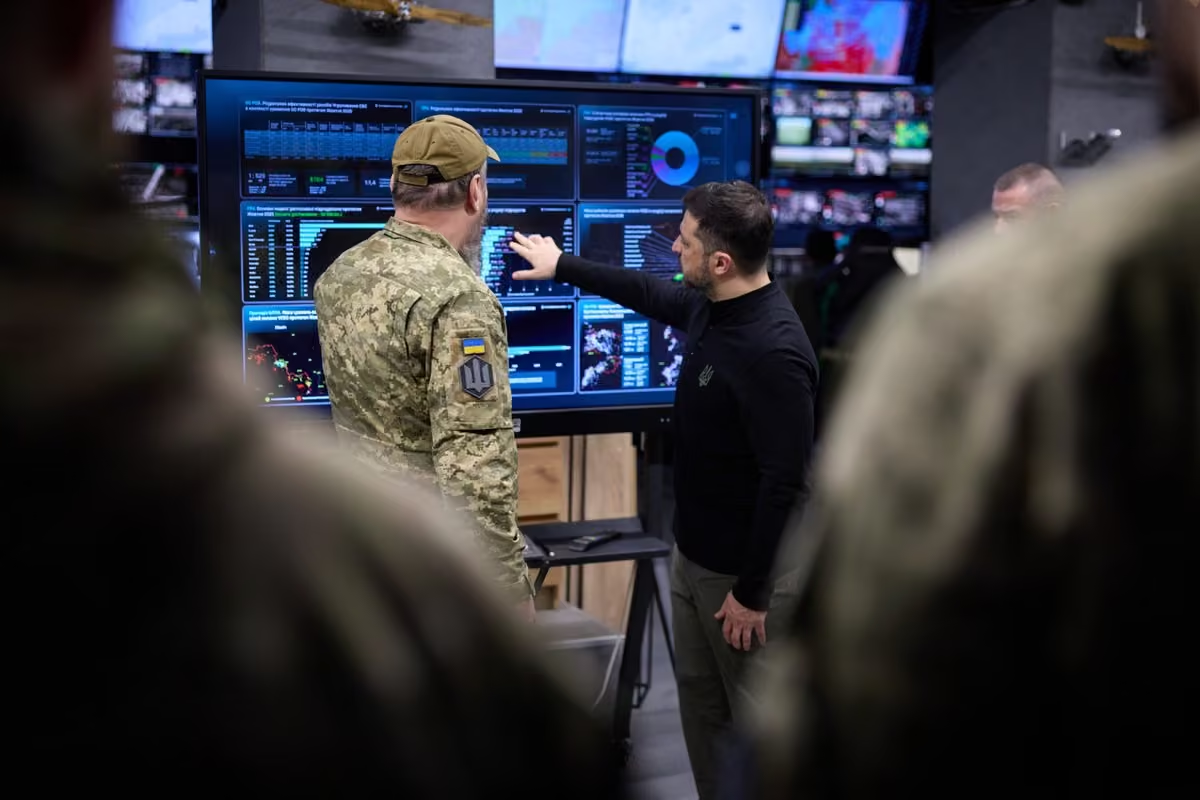

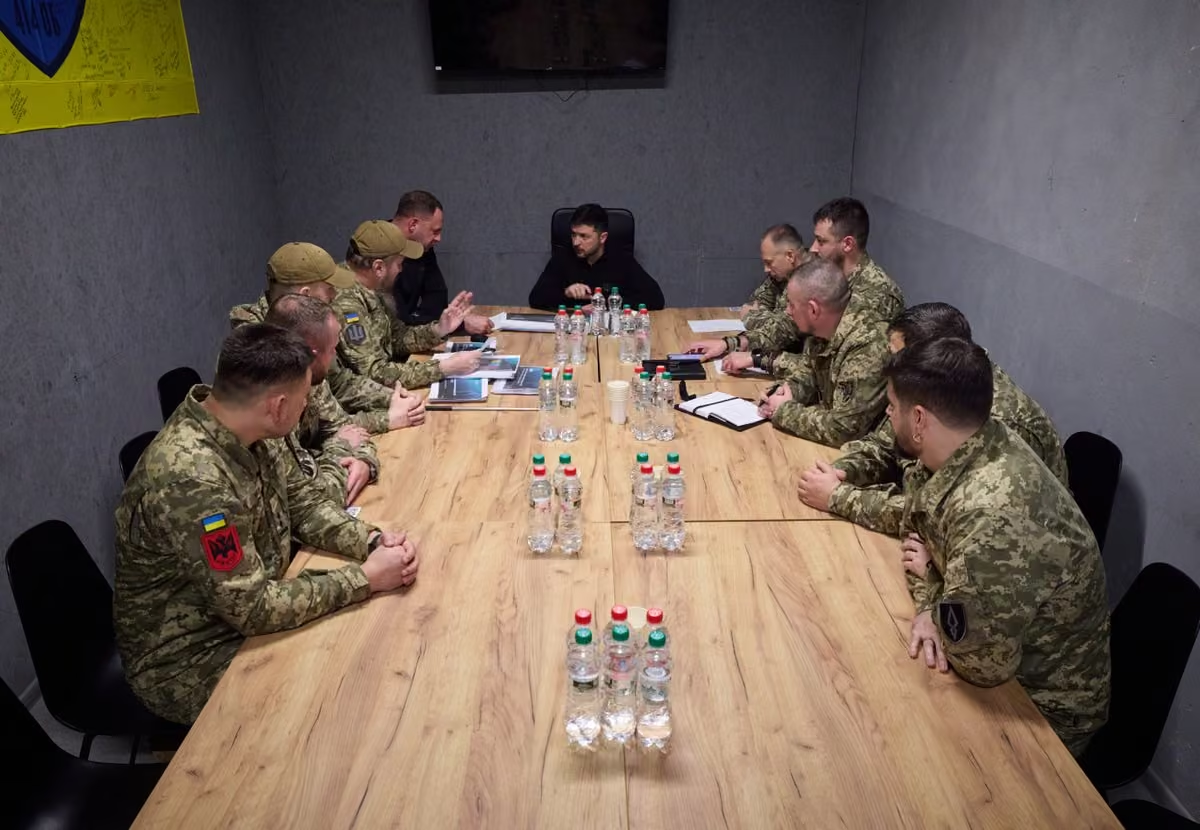


 427 окрема бригада безпілотних систем РАРОГ
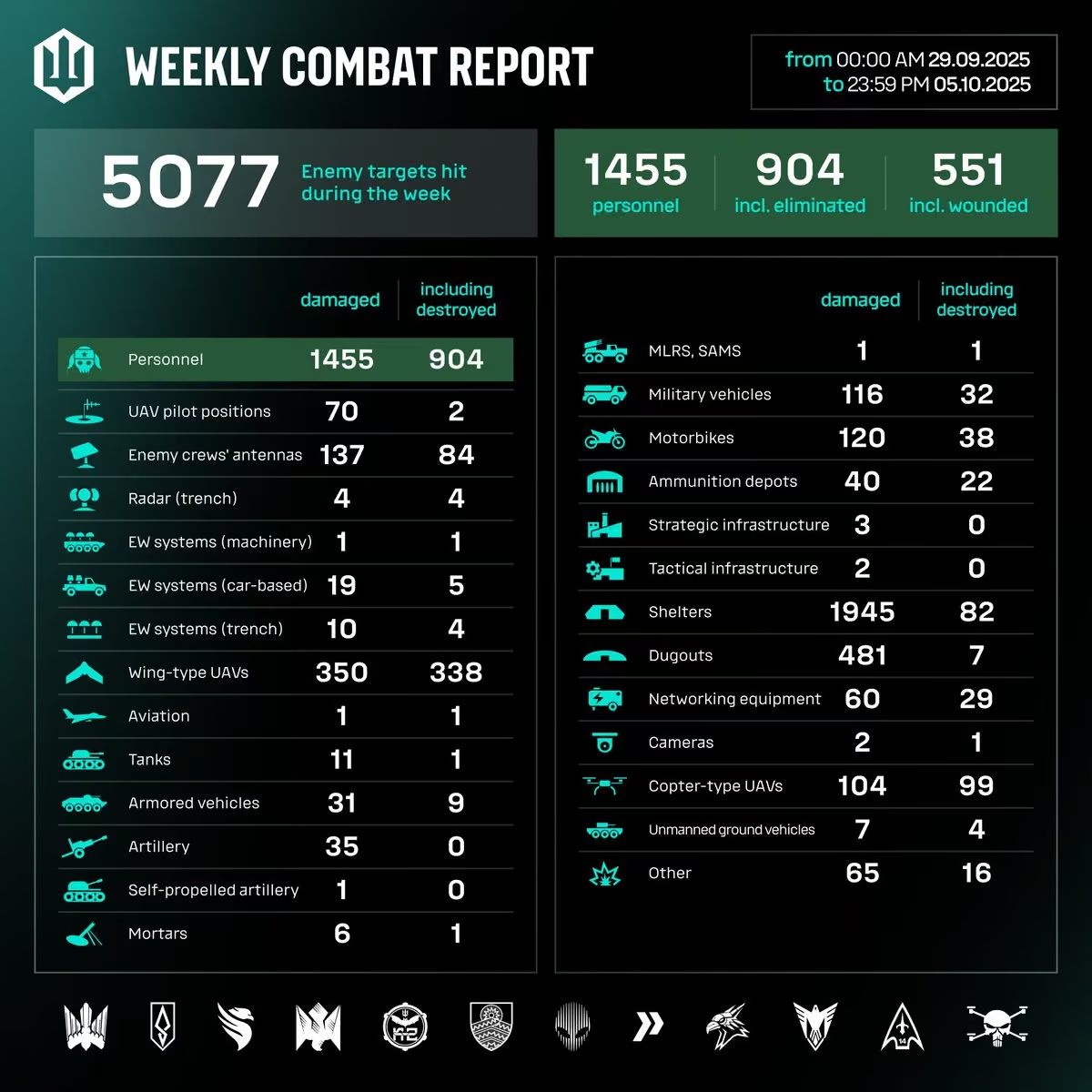
 1st Separate USC


 Victory Drones


 ZBROYA


