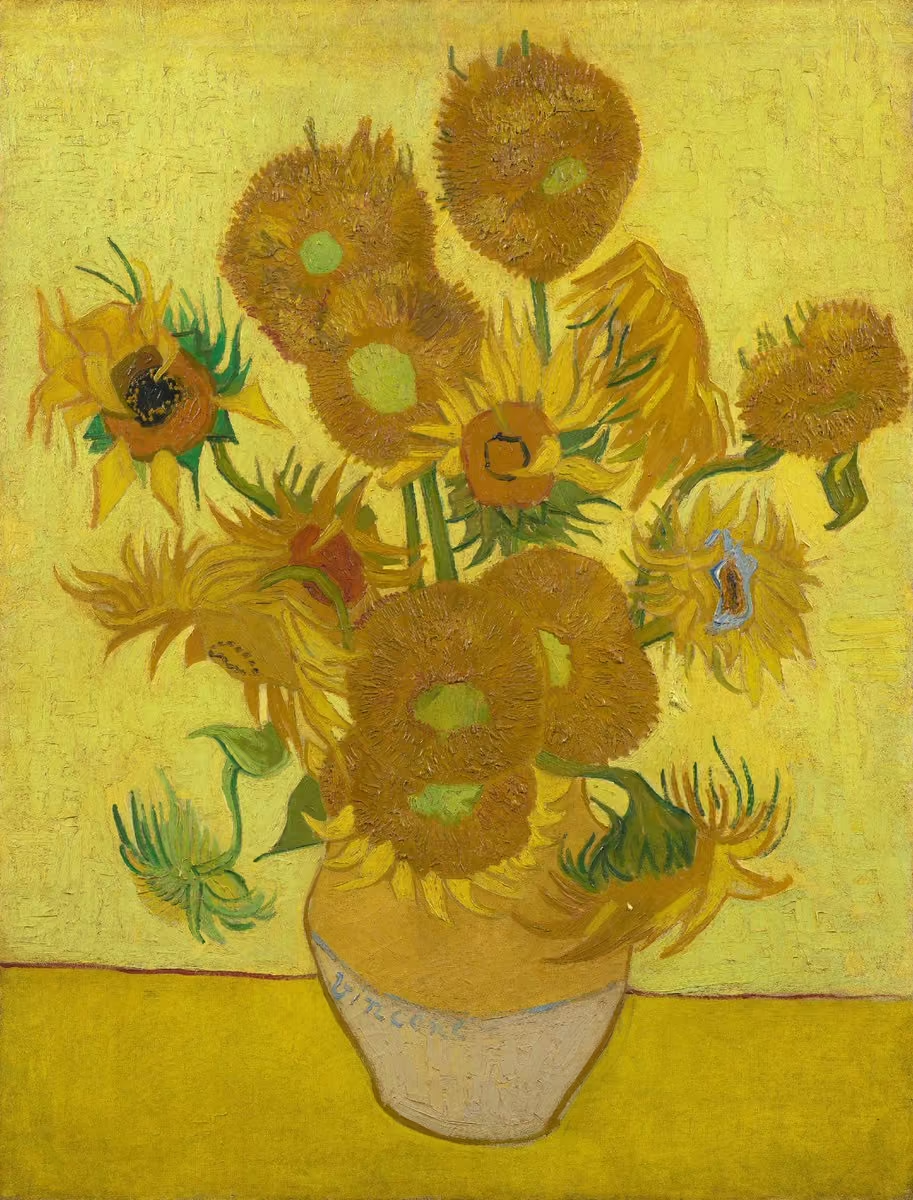
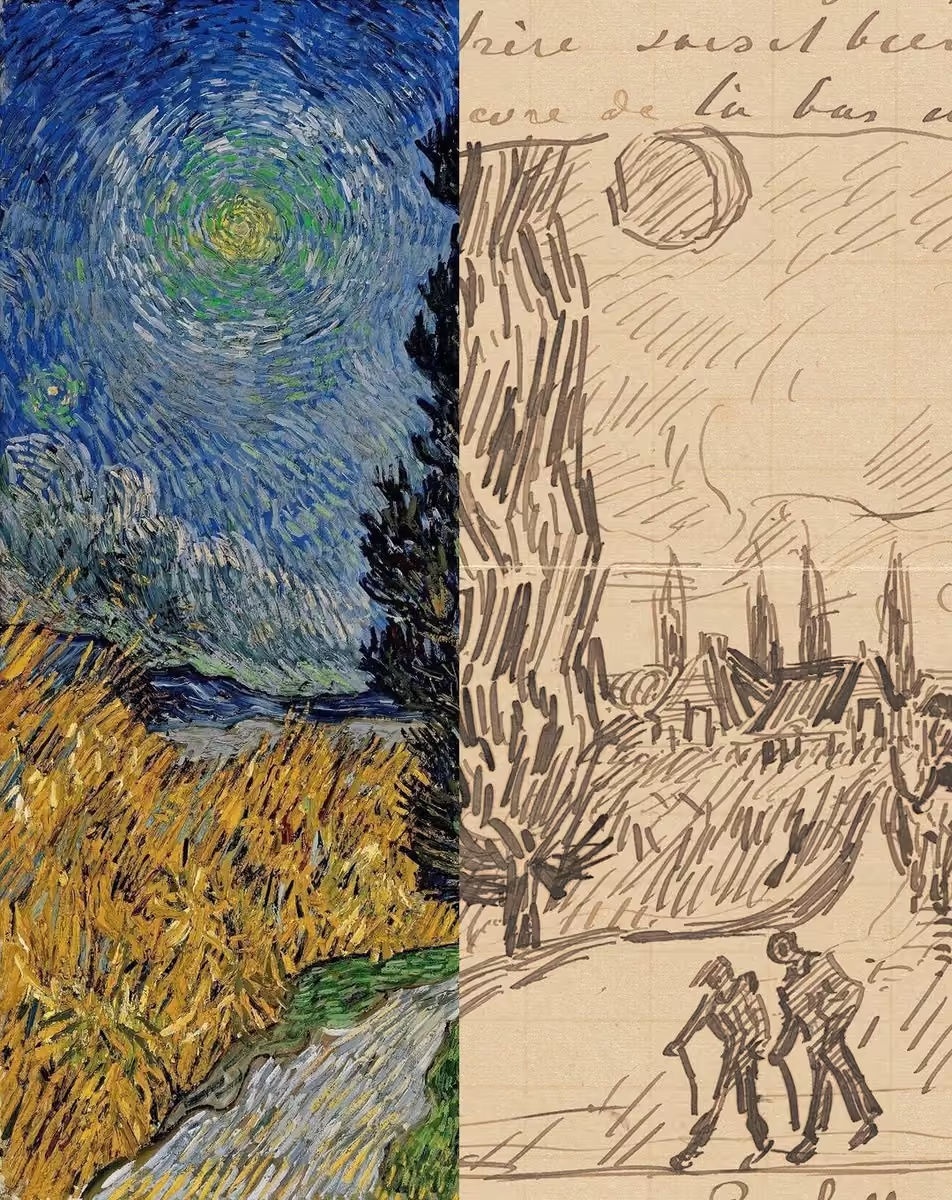
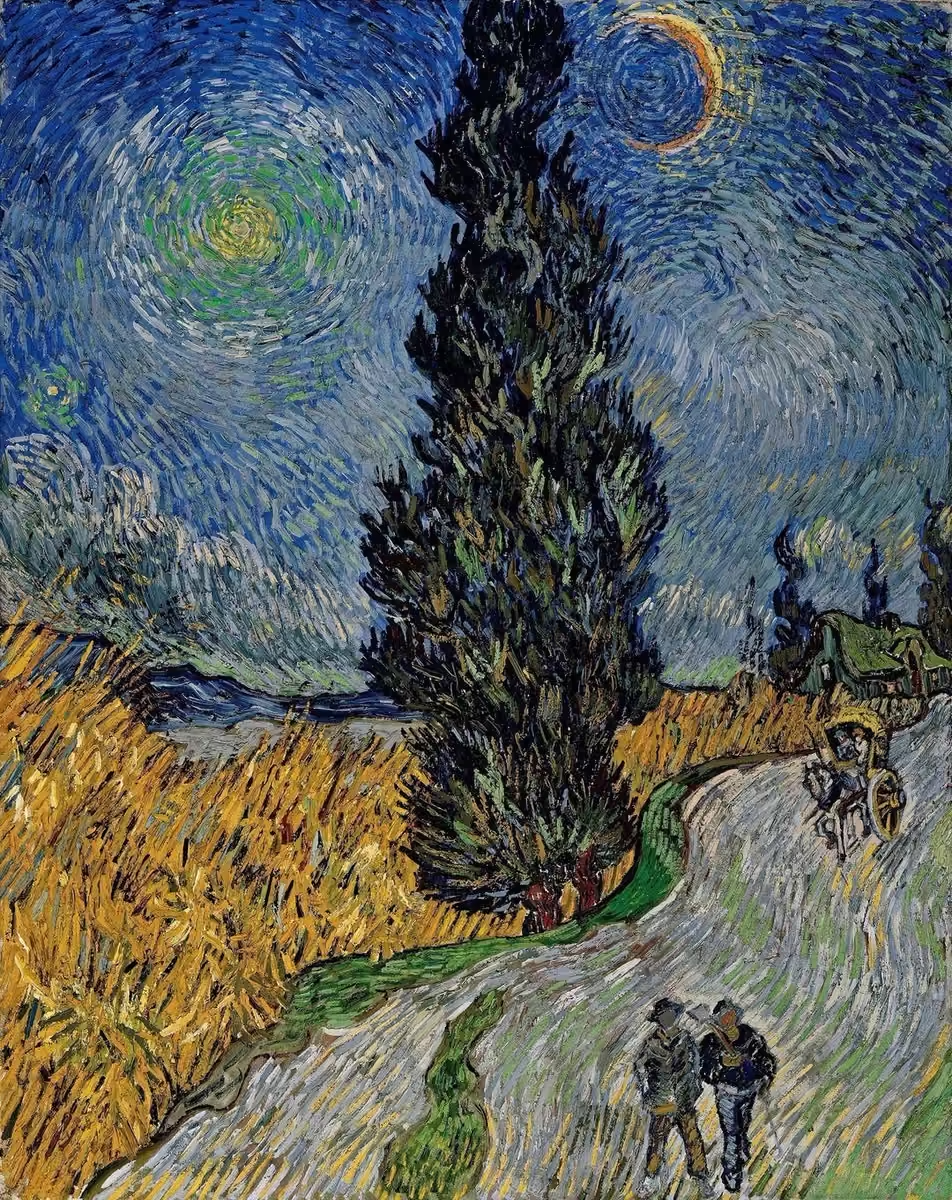
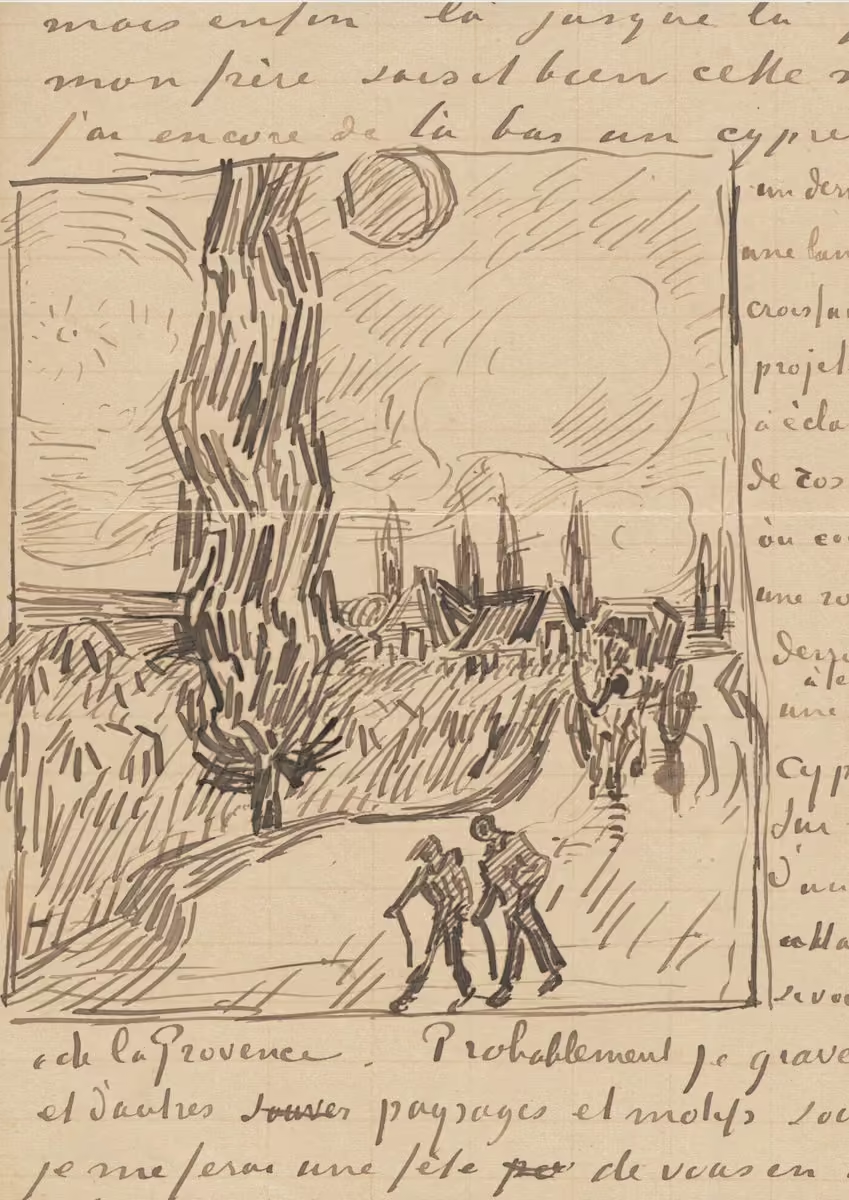
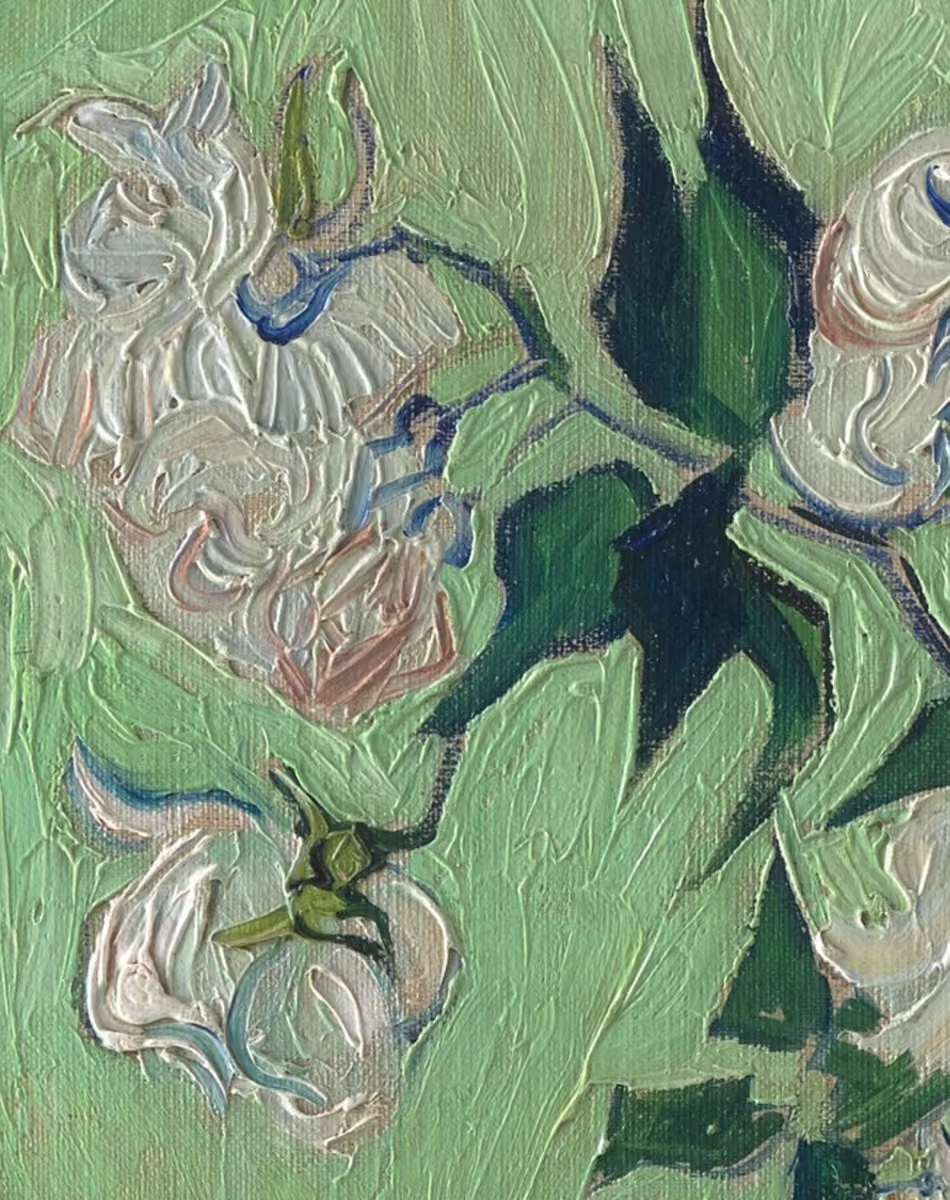
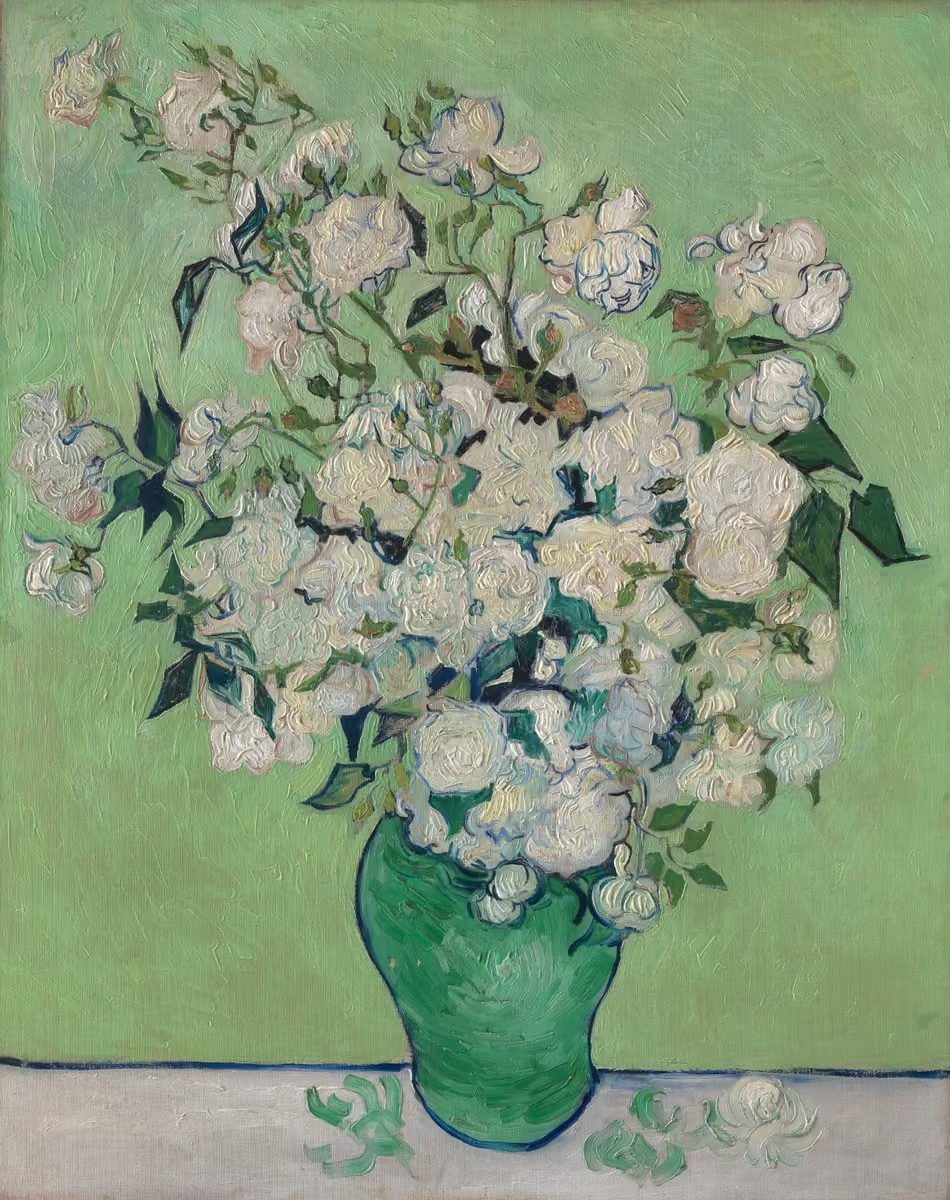
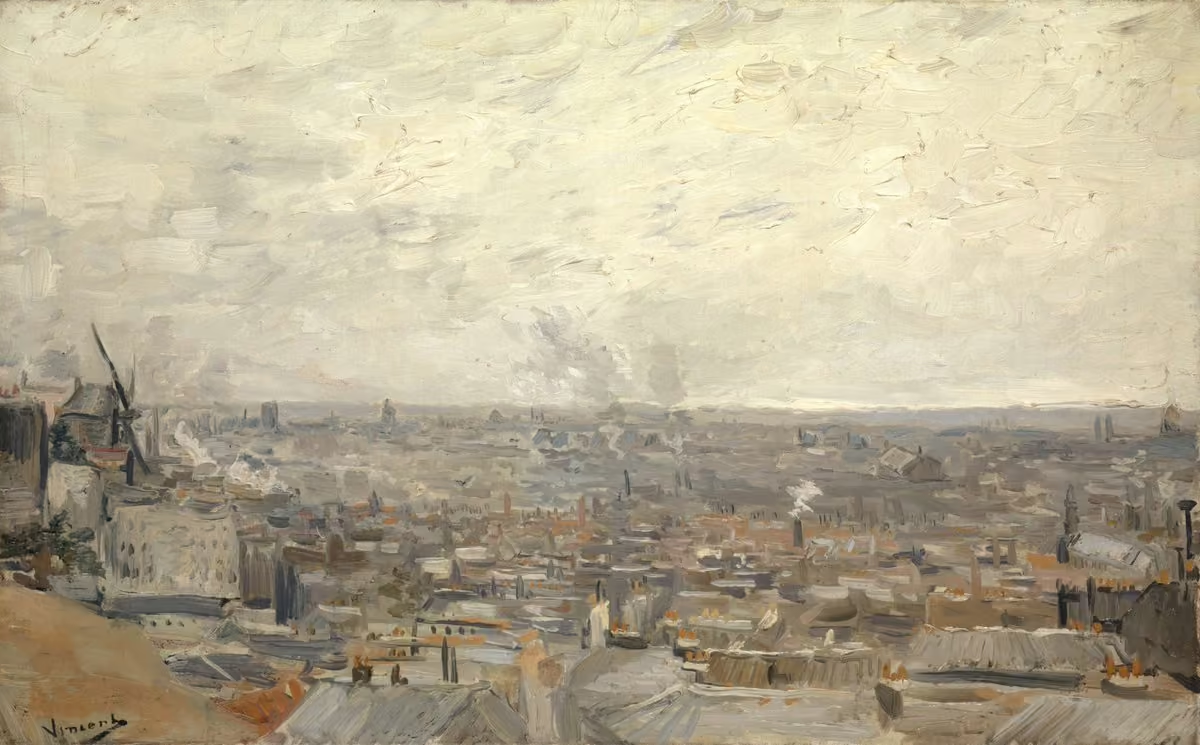
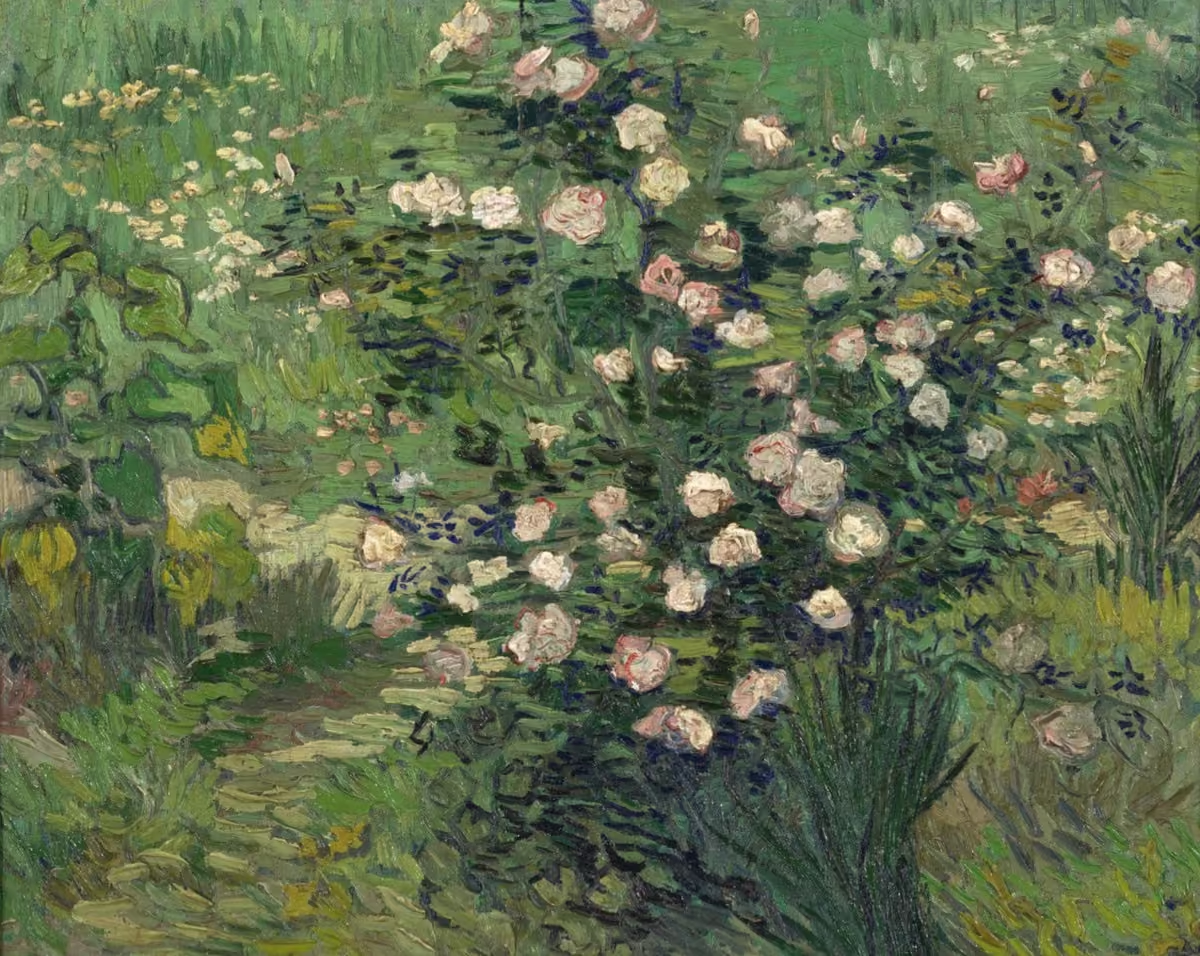
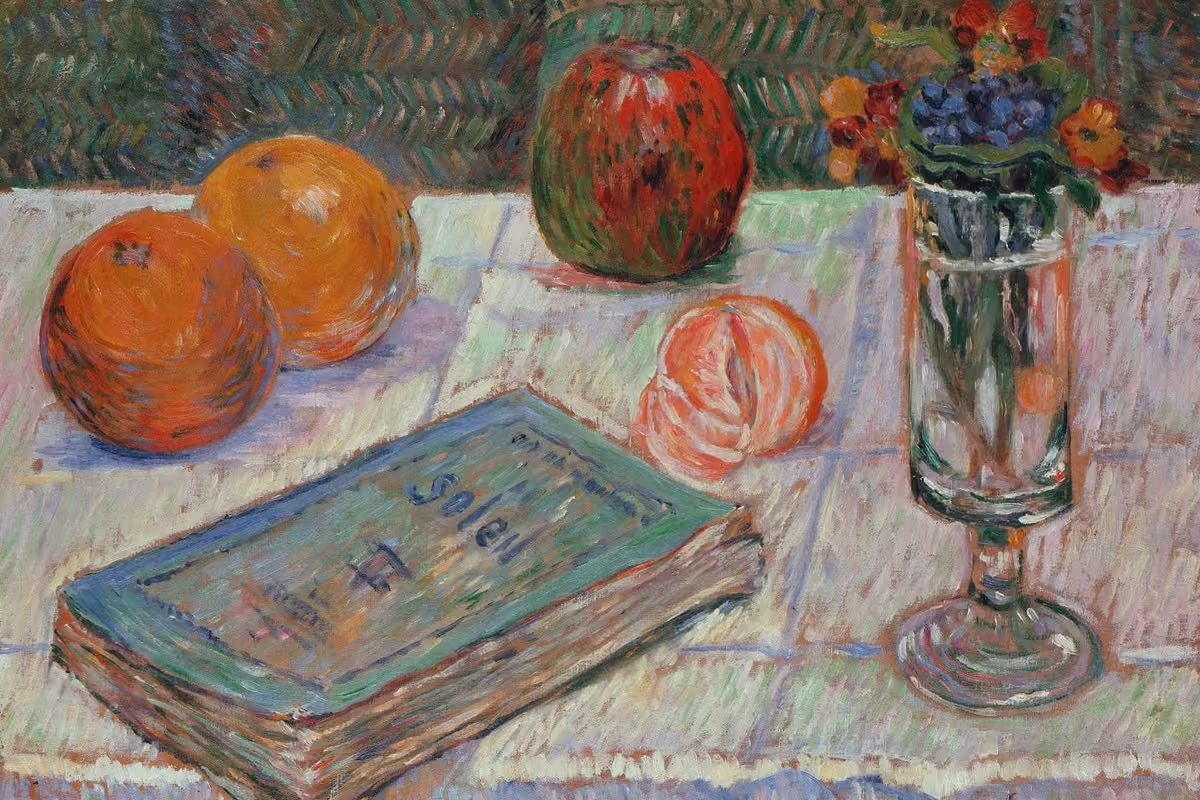
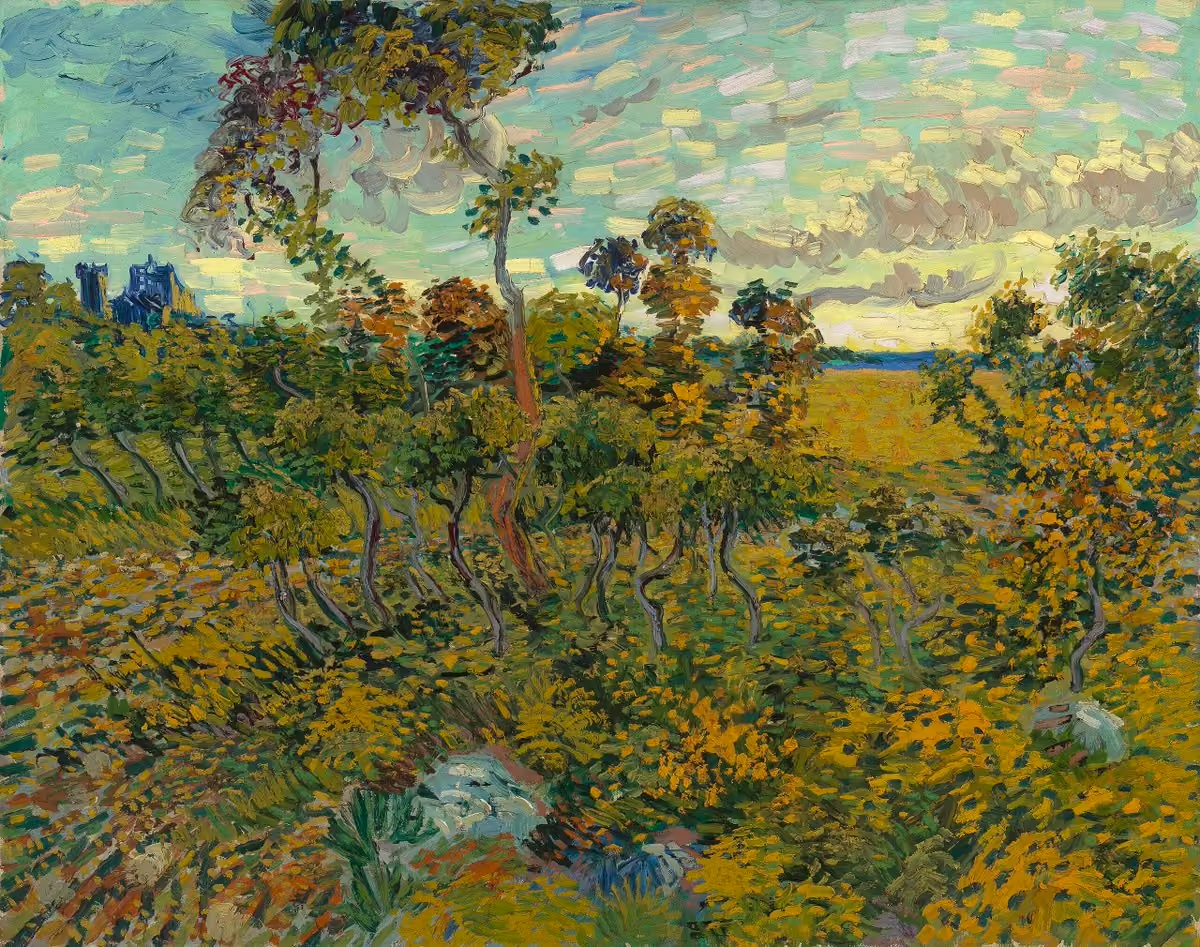
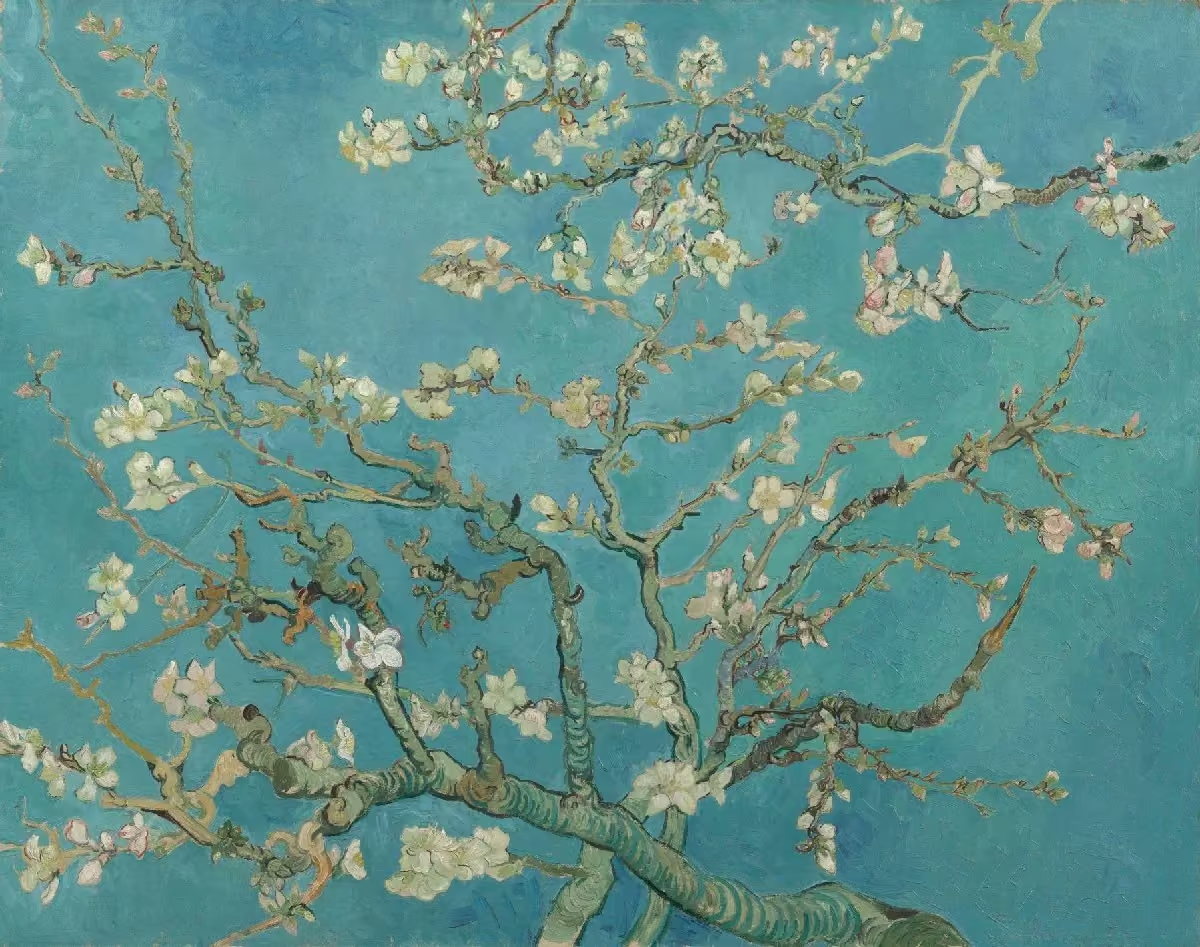
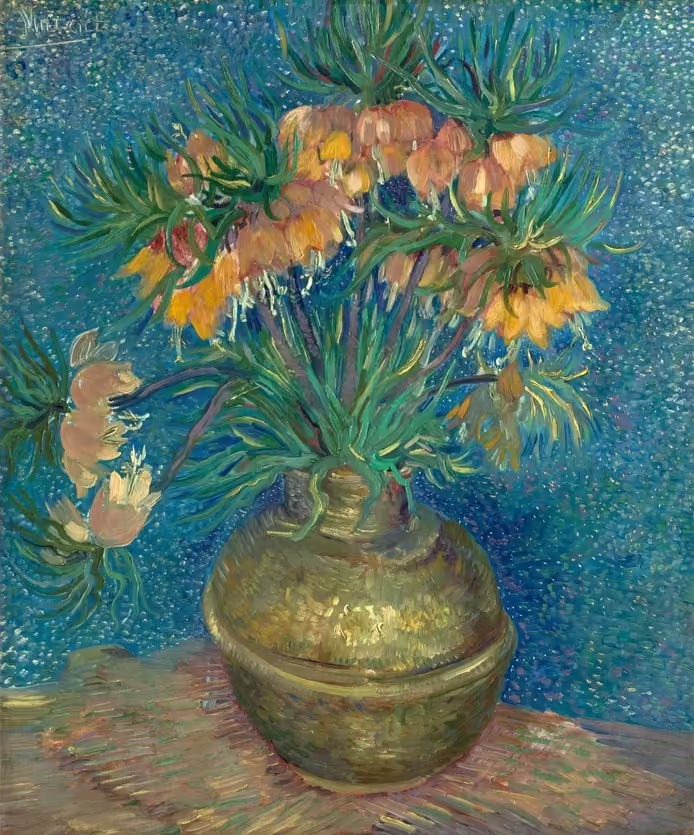
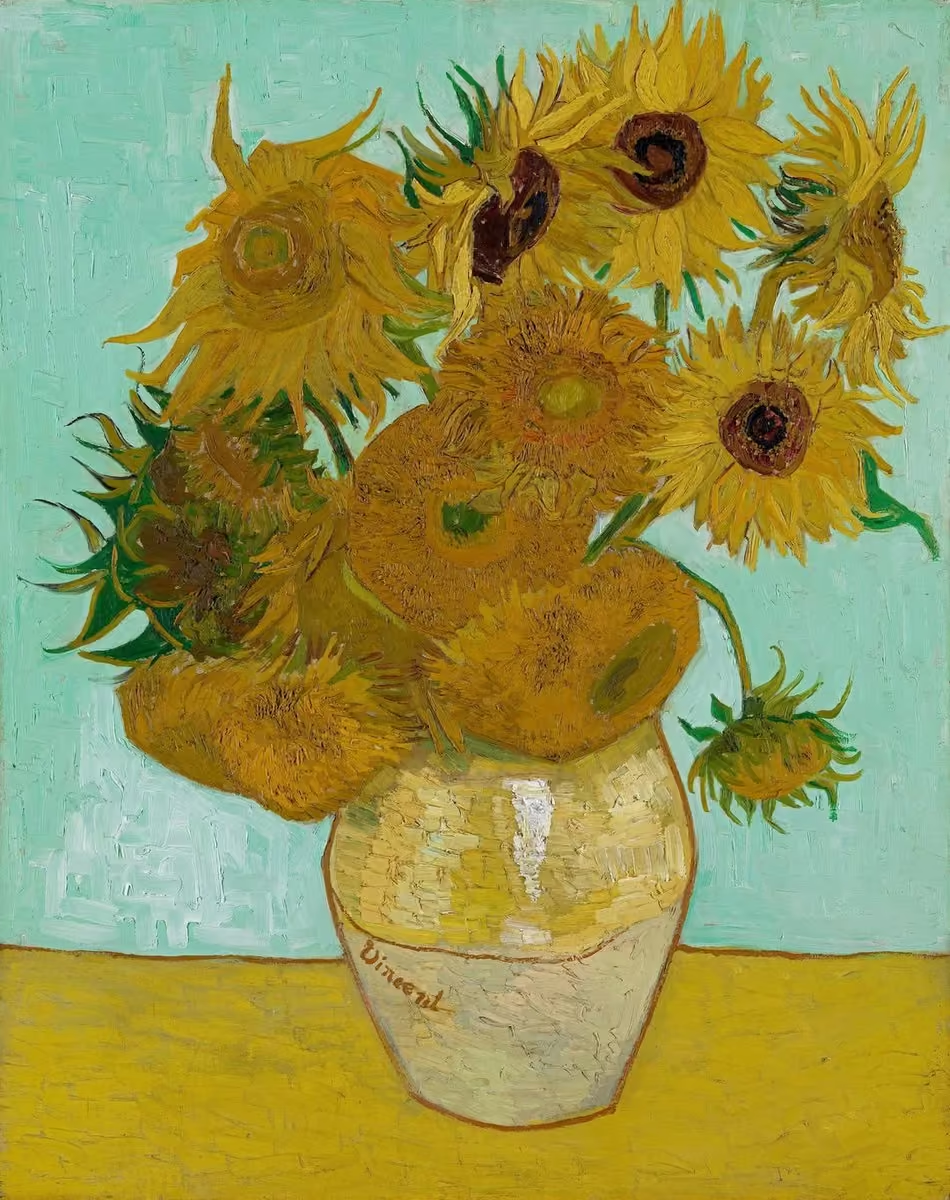
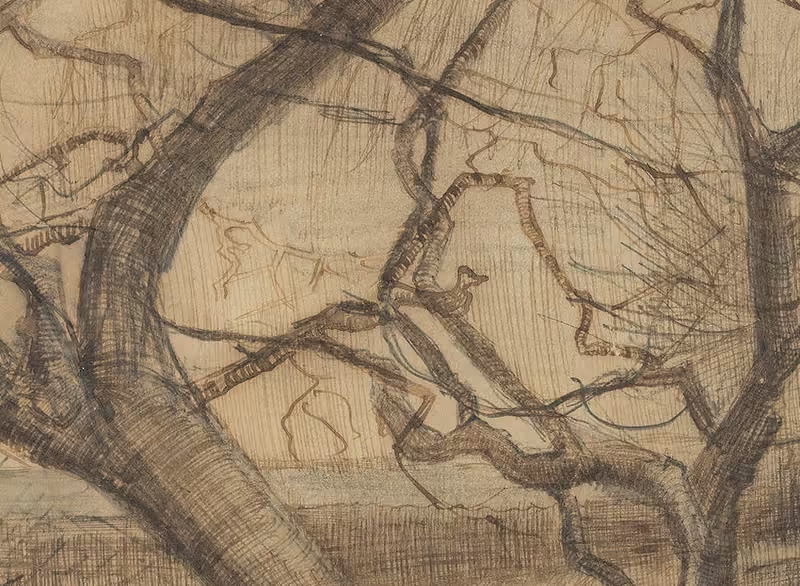
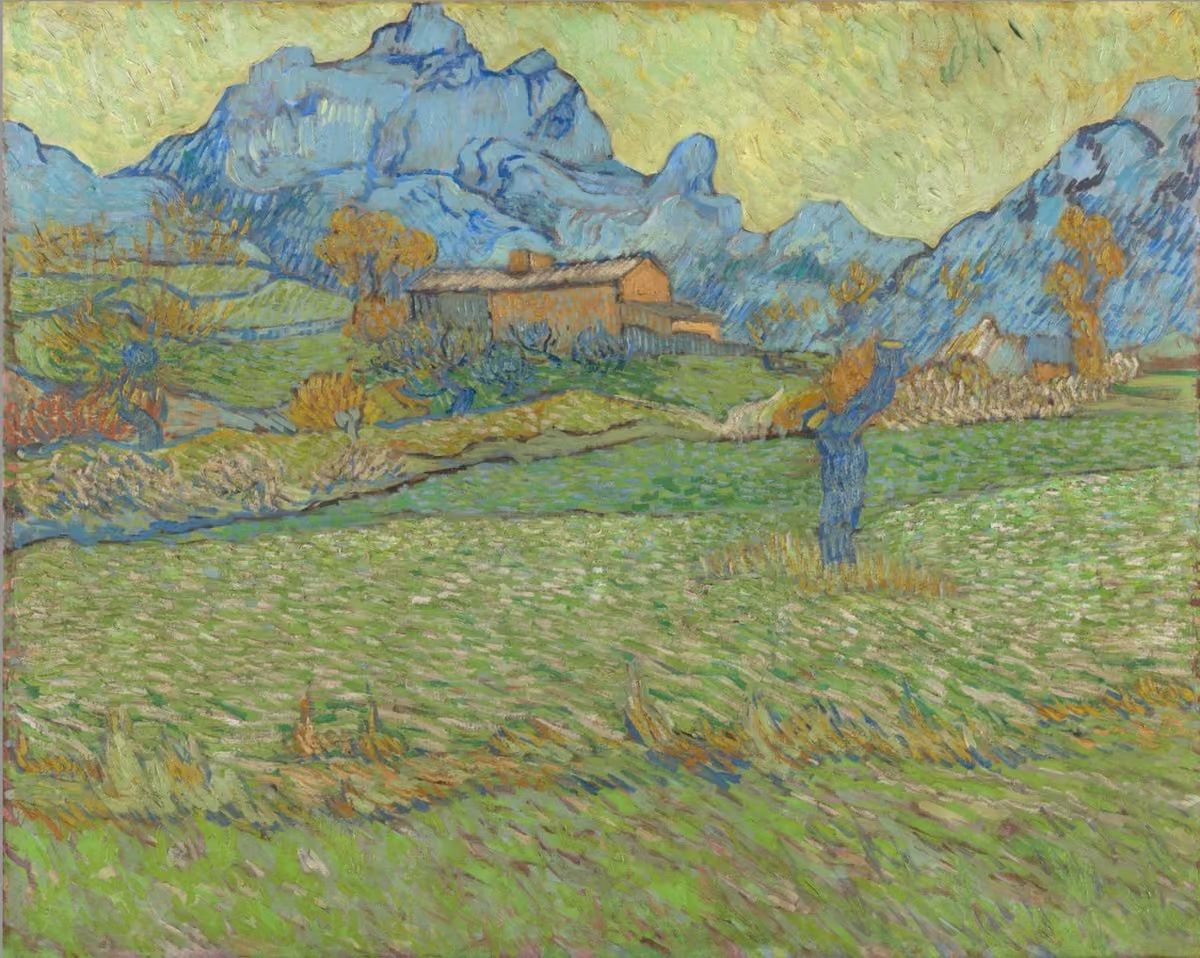
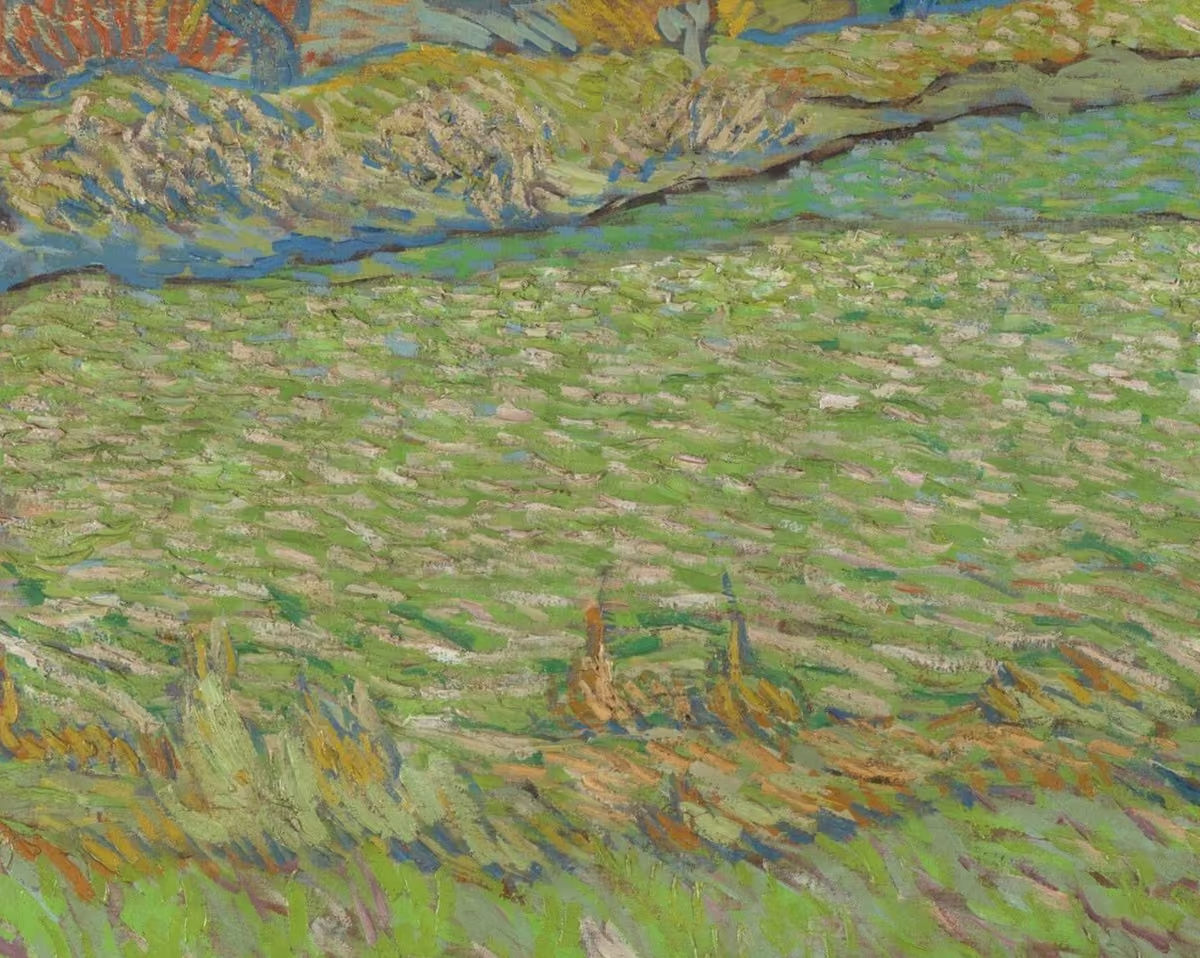
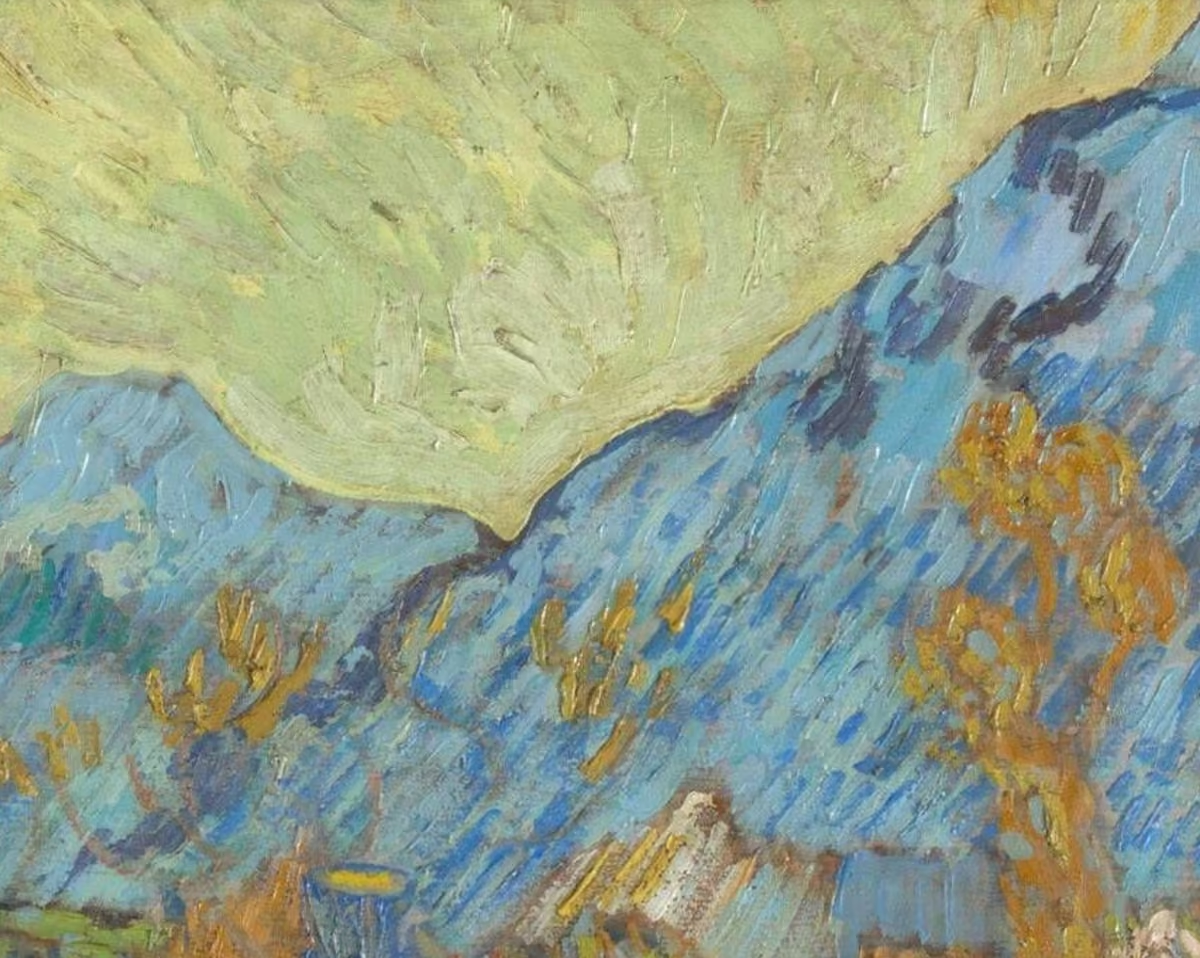
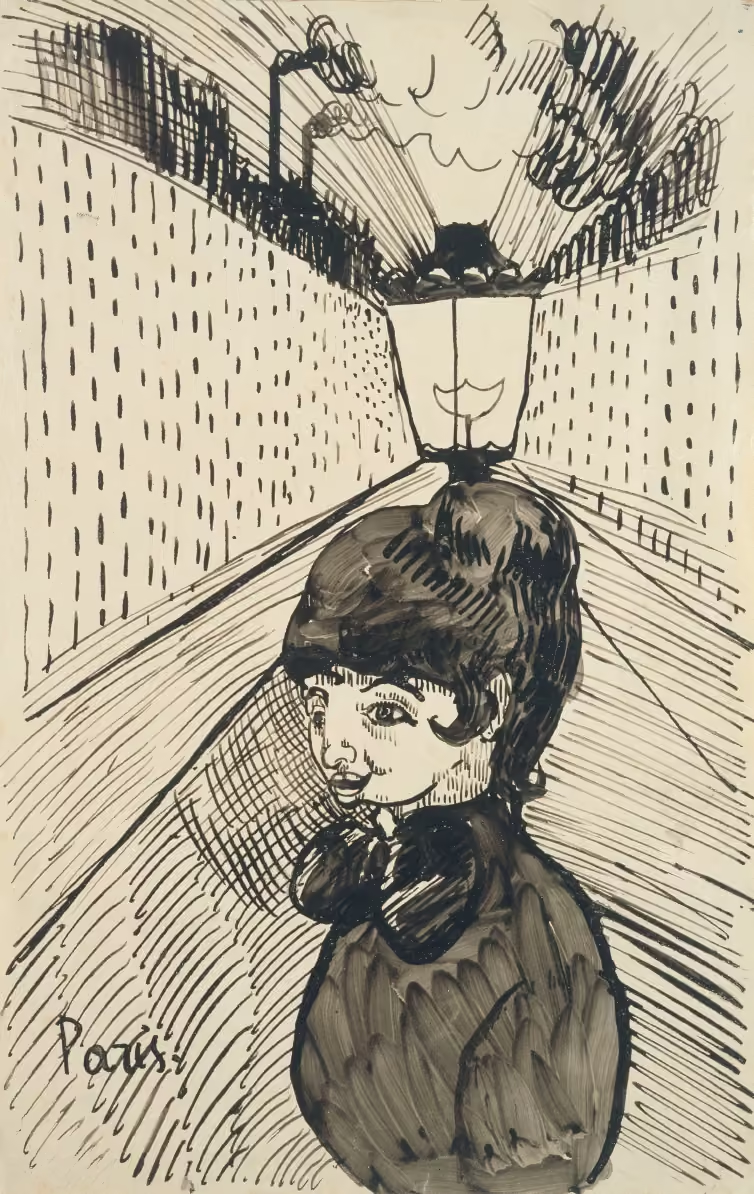
Vincent’s Sunflowers 🌻 ‘You know that Jeannin has the peony, Quost has the hollyhock, but I have the sunflower, in a way.’ Vincent wrote.
Paintings featured in this video:
‘Sunflowers’, 1889 © Van Gogh Museum
‘Allotment with Sunflower’, 1887 © Van Gogh Museum
‘Sunflowers Gone to Seed’ 1887 © Van Gogh Museum
‘Shed with Sunflowers’, 1887 © Van Gogh Museum
‘Sunflowers’, 1887 © The MET
‘Four Sunflowers Gone to Seed’, 1887 © Kröller-Müller Museum
‘Sunflowers’, 1889 © Philadelphia Museum of Art
Van Gogh Museum
The Van Gogh Museum (Dutch pronunciation: [vɑŋˈɣɔx mʏˌzeːjʏm]) is a Dutch art museum dedicated to the works of Vincent van Gogh and his contemporaries in the Museum Square in Amsterdam South, close to the Stedelijk Museum, the Rijksmuseum, and the Concertgebouw. The museum opened on 2 June 1973, and its buildings were designed by Gerrit Rietveld and Kisho Kurokawa. More on Wikipedia
-
Van Gogh Museum
@vangoghmuseum

-
Van Gogh Museum
@vangoghmuseum
How did Van Gogh portray sorrow without showing a single tear?
In ‘Sorrowing Old Man’ (1), the man hides his face in his hands. Van Gogh gives us no tears or facial expression, his posture communicates the emotion instead.
A different work from 1882, ‘Sorrow’ (2), uses a remarkably similar visual language: the woman turns inwards, lowers her head and hides her face.
The works aren’t directly connected, but together they reveal how Van Gogh could make the body speak when the face remained unseen. What do you think?
1 ‘Sorrowing Old Man ('At Eternity's Gate')’,1890 © Kröller-Müller Museum
2 ‘Sorrow’, 1882 © Van Gogh Museum -
Van Gogh Museum
@vangoghmuseum
Van Gogh’s ‘rage to paint orchards’ 👹
In Arles in the spring of 1888, Van Gogh painted at least ten blossoming orchards, working while the flowers were still in bloom – and becoming frustrated whenever bad weather kept him away.
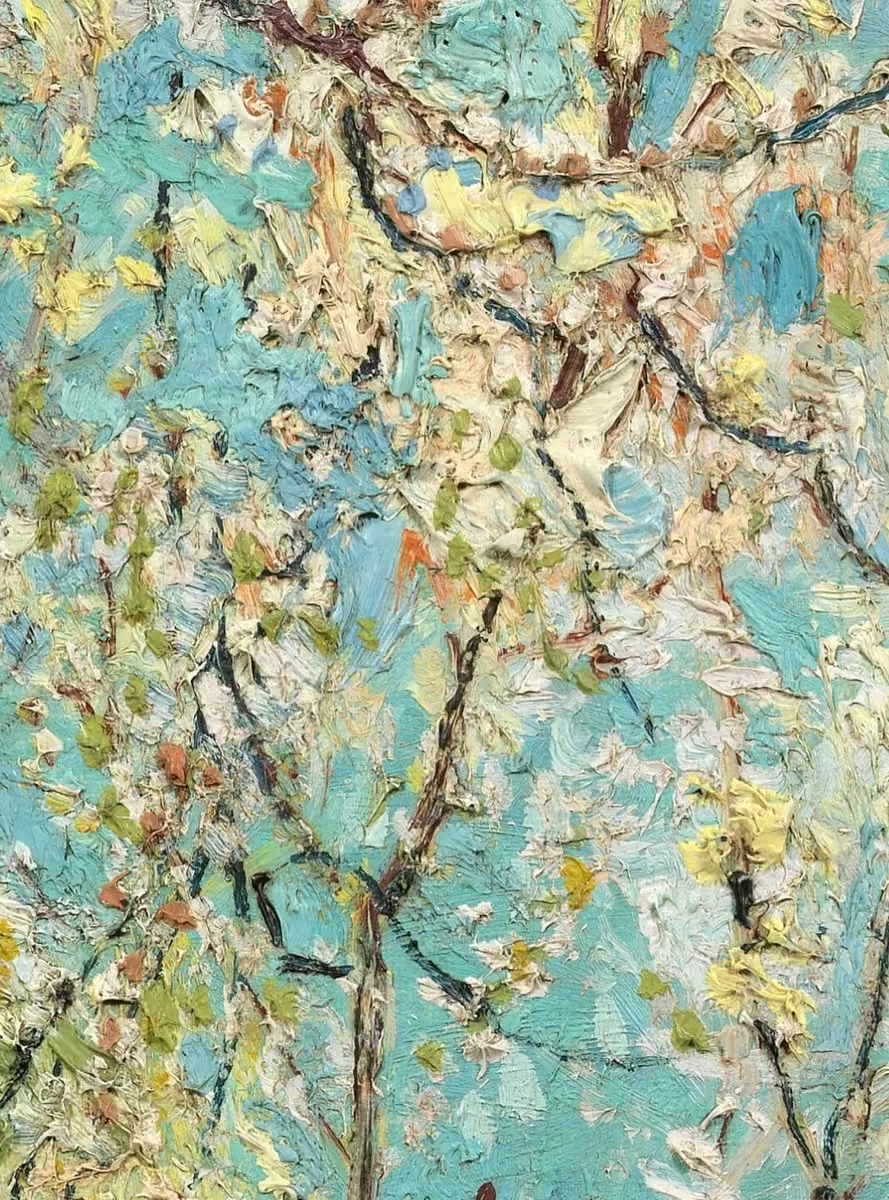
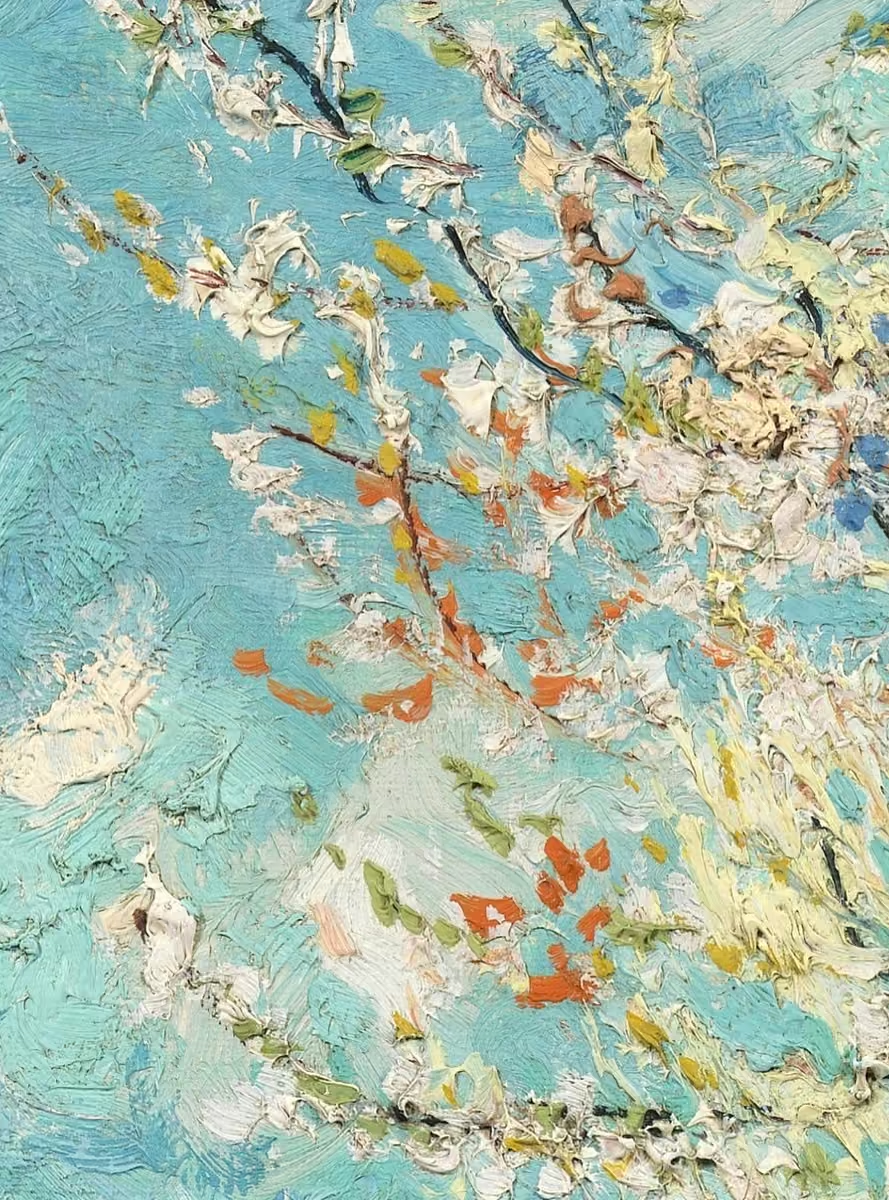
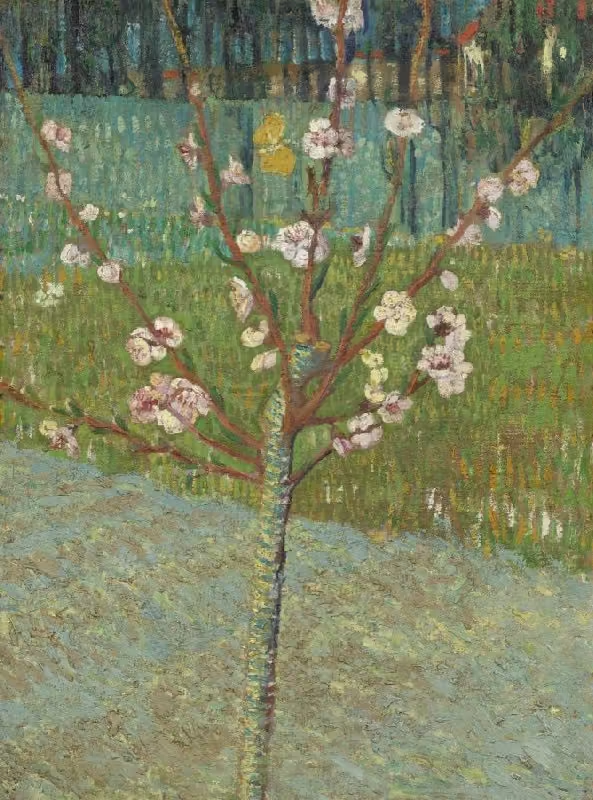
From a distance, this apricot orchard appears soft and delicate. Look closer, however, and its colours begin to unfold: pale pink and white blossom, fresh greens, strokes of blue and touches of warm yellow. Even beneath the flowers, the dark structure of the branches remains visible.
Which colour did you only notice after taking a closer look? -
Van Gogh Museum
@vangoghmuseum
🌿⛪ At the end of May 1888, Vincent travelled from Arles to the Mediterranean fishing village of Saintes-Maries-de-la-Mer. During his short stay, he created nine drawings, two seascapes and this colourful view of the village.
Rows of purple crops – possibly vines, flax or both – lead your eye towards the church at its centre. Look closely at the houses: Van Gogh used a clever colour technique, contrasting blues and purples with oranges and yellows to capture the Mediterranean sunlight.
🖼️ ‘View of Saintes-Maries-de-la-Mer’, 1888 © Kröller-Müller Museum -
Van Gogh Museum
@vangoghmuseum
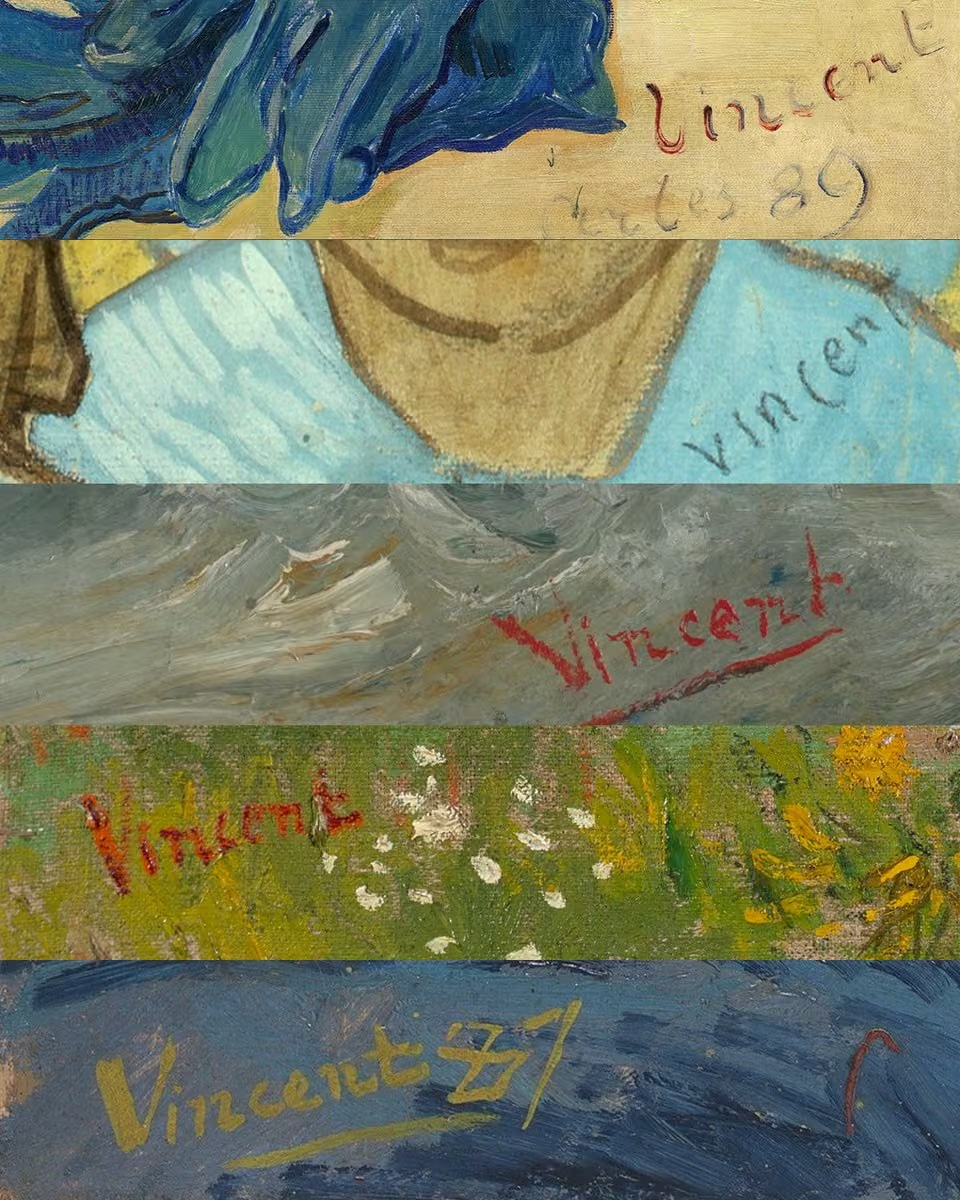
Can you guess which painting this signature by Vincent belongs to? We know we have some very knowledgeable followers, so we’ve made it just a little trickier than it might seem at first…
-
Van Gogh Museum
@vangoghmuseum
More than a century later, Van Gogh's words still resonate.
Is this a reminder you needed today?
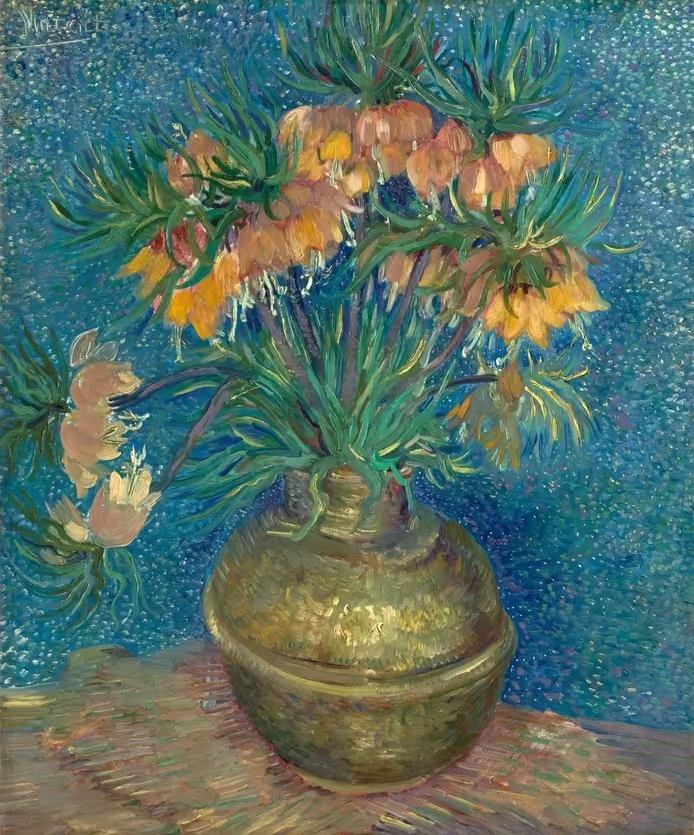
🖼️ detail of ‘Imperial Fritillaries in a Copper Vase’, 1887 © Musée d'Orsay -
Van Gogh Museum
@vangoghmuseum
Which of these 3 paintings blows you away the most? 😉 🌪️
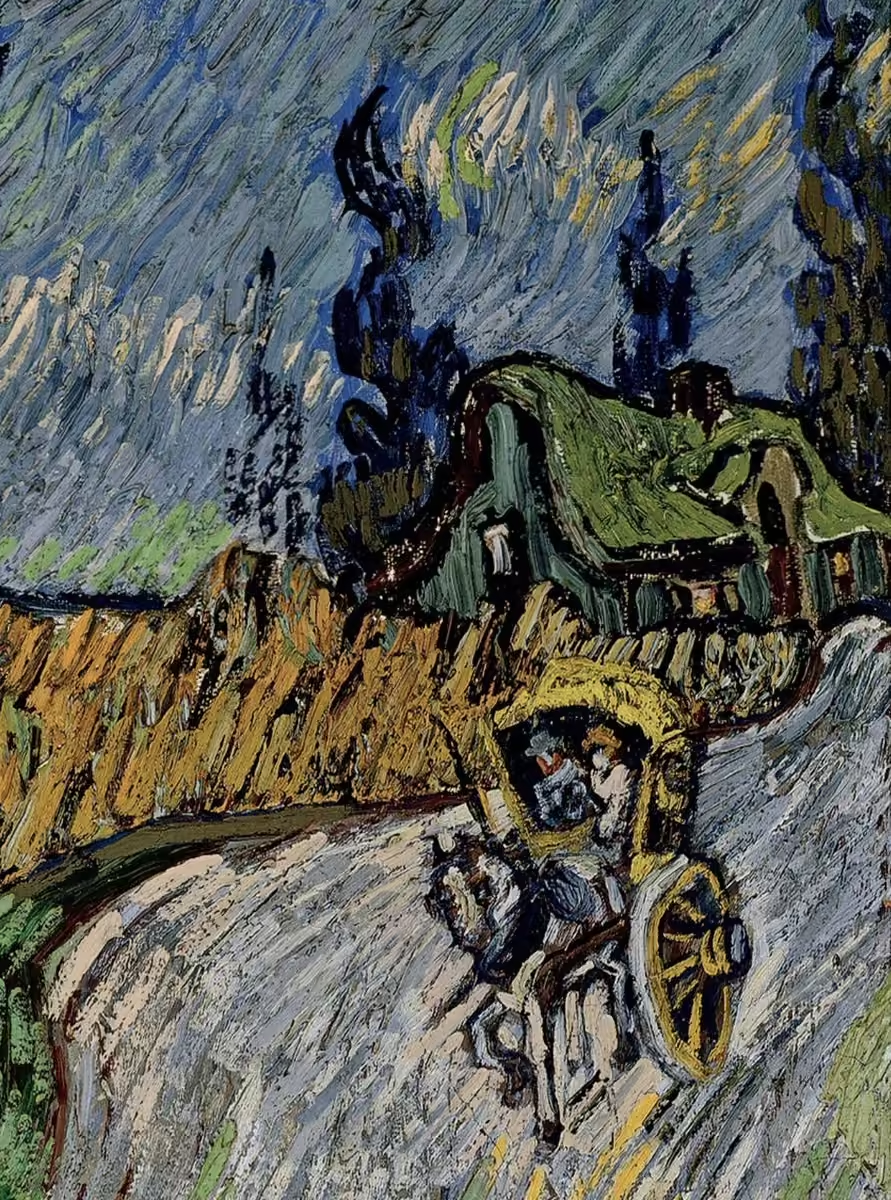
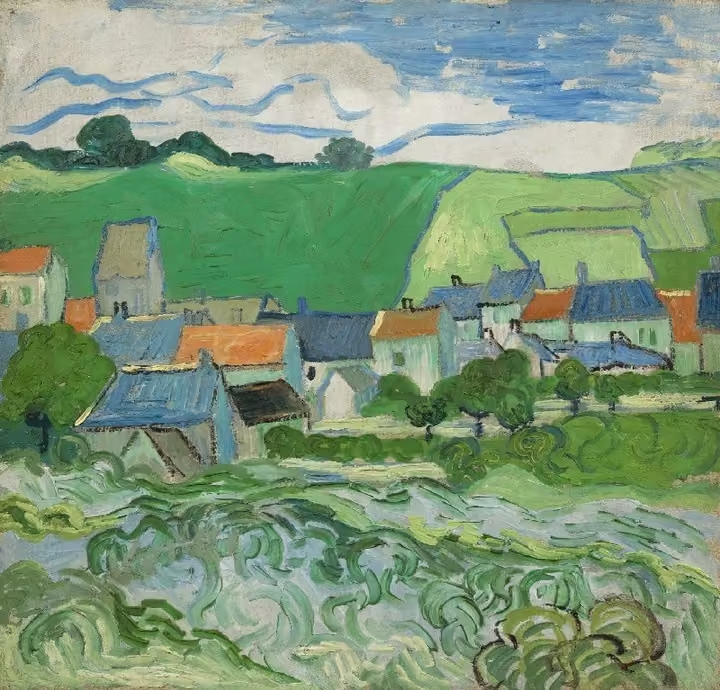
In Auvers-sur-Oise, Northern France, Vincent began each painting afresh, with no preconceived plan. He used a wide variety of techniques. Looking at his work from around 9 to 14 June 1890, we see Vincent’s incredible range of expression. These paintings show the pleasure with which he painted. He used curved, almost meandering brushstrokes that bring movement to buildings (1), country roads (2) and wheatfields (3). Vincent became skilled at capturing something we feel rather than see: the wind. Nothing moves on the canvas, but we can almost feel the breeze.
1 ‘Houses at Auvers-sur-Oise’, 1890 © Museum of Fine Arts Boston
2 ‘Landscape with Carriage and Train’, 1890 © The Pushkin State Museum
3 ‘House at Auvers-sur-Oise’, 1890 © The Phillips Collection -
Van Gogh Museum
@vangoghmuseum
Do you think these women overheard Vincent saying that his idea of a beautiful face was anything but conventional? Judging by their expressions… they might have. 👀
For his series of around 50 ‘study heads’, he sought out local farm workers with distinctive features: low foreheads, thick lips and weathered faces that he felt reflected a life spent working the land.
His choices were influenced by physiognomy, the – now-discredited – belief that character could be read from someone’s appearance. Such ideas were quite common at the time.
🖼️ 1 to 4: ‘Head of a Woman’, 1885 © Van Gogh Museum -
Van Gogh Museum
@vangoghmuseum
Food for thought 💬 do you agree with Van Gogh?
#vangogh #quote #inspiring #wisewords -
Van Gogh Museum
@vangoghmuseum
Think posing for a portrait takes a long time? Try posing for Whistler. 👀
Some of his sitters endured dozens of sessions, sometimes as many as 70. Whistler would scrape back the paint and start again, reworking the portrait until everything was just right.From the sitter’s pose and clothing to the space around them, nothing was accidental. Even the smallest details:
Spot Lady Archibald Campbell’s tiny yellow shoe peeking out from beneath her black dress. (1) Notice George W. Vanderbilt’s strikingly tall, narrow silhouette. (2) Or look at The Andalusian, her dark figure standing out against the pale background, fan in hand. (3)
Whistler didn’t simply show us what his sitters looked like. He turned them into carefully staged, striking images: elegant, elongated and unmistakably Whistler?
Which detail catches your eye first?
Now on view as part of the exhibition ‘Whistler. Dandy and Disruptor’:
1 ‘Portrait of Lady Archibald Campbell’, 1882-1885 by James McNeill Whistler.
2 ‘Portrait of George W. Vanderbilt’, 1897-1898 by James McNeill Whistler.
3 ‘The Andalusian’, 1891-1900 by James McNeill Whistler. -
Van Gogh Museum
@vangoghmuseum
Look closely at the prints here. Can you see what they have in common? 👀
Van Gogh collected hundreds of Japanese prints, including a few by Tsukioka Yoshitoshi. He studied their bold outlines, striking compositions and large areas of colour, bringing those ideas into his own paintings.
Explore Yoshitoshi’s series One Hundred Aspects of the Moon in ‘Yoshitoshi. Master of the Moon’, on display until 4 January. -
Van Gogh Museum
@vangoghmuseum
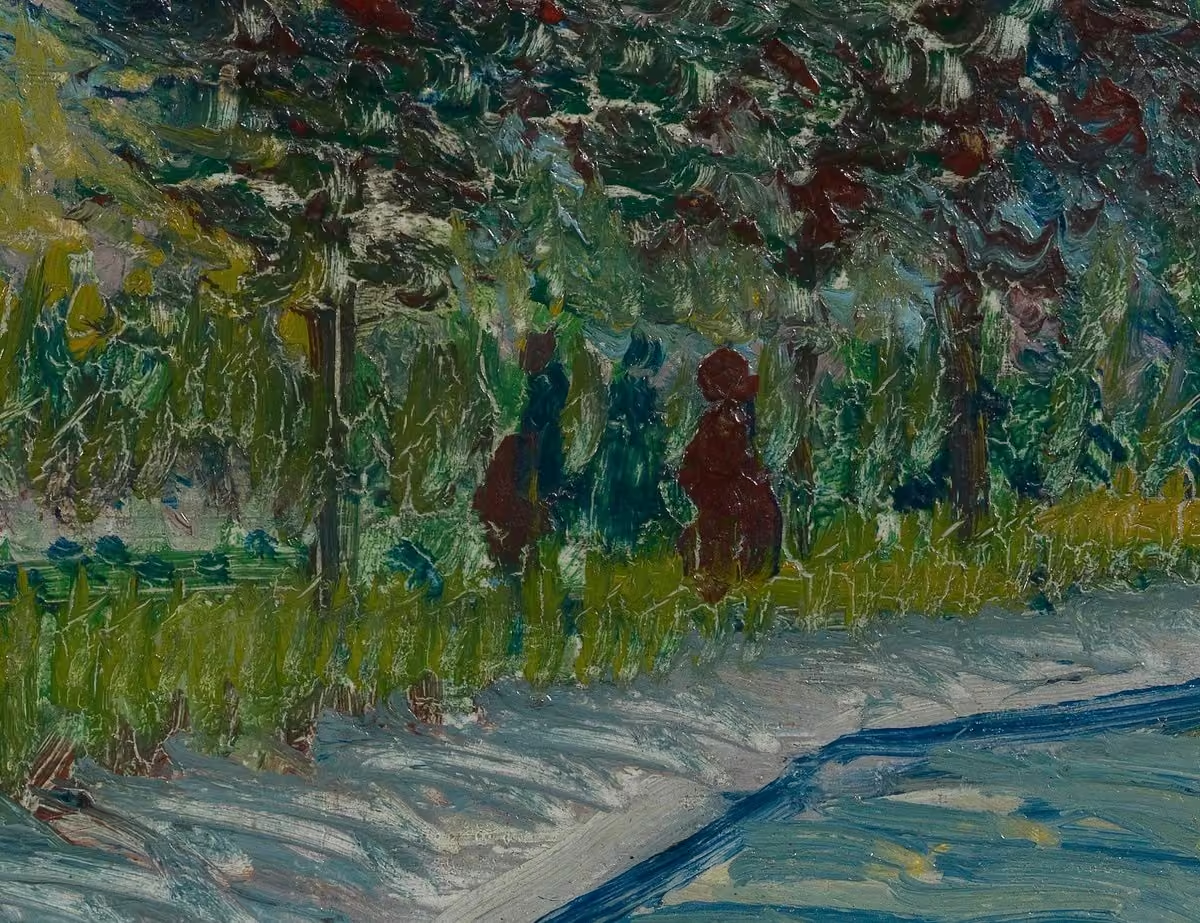
Can you see the people for the trees? 🌳🚶♀️
When Van Gogh painted the grounds of the hospital at Saint-Rémy in 1889, he placed the towering pine trees at the centre of the composition. Their twisting branches and Vincent’s flame-like brushstrokes immediately draw the eye upwards.
But while you’re looking at the trees, you might overlook the small figures tucked among the bushes and overgrown grass below. Once you notice them, they offer a striking sense of scale – making the trees appear to tower even higher.
Did you spot the figures before seeing them up close?
🖼️ ‘Hospital at Saint-Rémy’, 1889 © Hammer Museum -
Van Gogh Museum
@vangoghmuseum
Van Gogh was looking very closely. ✨
He painted ‘Café Terrace at Night’ on location in Arles after dark. In a letter to his sister Willemien, he wrote that he greatly enjoyed painting at night, right there on the spot.
Astronomical research revealed just how closely Van Gogh observed the night sky: the constellation matches its appearance on 16 or 17 September 1888.
🖼️ ‘Café Terrace at Night (Place du Forum)’, 1888 © Kröller-Müller Museum -
Van Gogh Museum
@vangoghmuseum
What was Vincent actually like?
More than 60 years after meeting him, the girl in the portrait, Adeline Ravoux, could still remember him clearly.
She recalled a man who spoke little, walked with his head slightly tilted and always seemed to have a half-smile on his lips.
This is how she described him: ‘So simple and kind […] he had a great deal of charm.’
And when she sat for him? Vincent barely spoke. He was completely absorbed in his painting, endlessly puffing on his pipe until he disappeared into what Adeline remembered as ‘a veritable cloud of smoke’.
🖼️ ‘Adeline Ravoux’, 1890 ©️ The Cleveland Museum of Art -
Van Gogh Museum
@vangoghmuseum
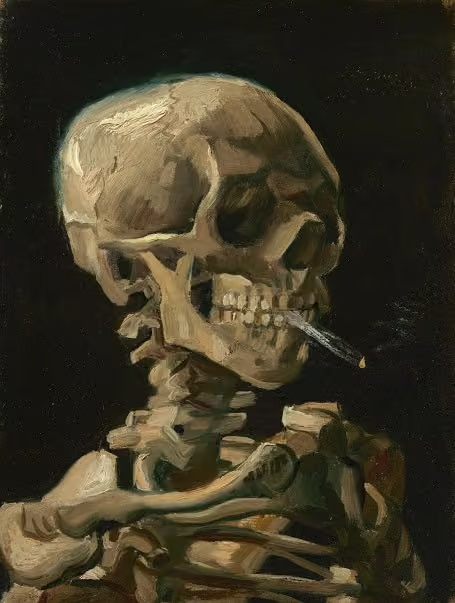
What scares you more: a trip to the dentist or a smoking skeleton? 💀
#skeleton #vangogh #halloween #art #vangoghmuseumThis media couldn't be displayed. See it on the original post. -
Van Gogh Museum
@vangoghmuseum
Case File 3/3 🔍 After following every lead, only one suspect remained.
The final piece of evidence revealed what had been hiding in plain sight all along.
Case closed?
#vangogh #truecrime #mystery #arthistory #thecolourheist
@ASMLcompany works with the Van Gogh Museum to preserve Van Gogh's heritage through technology.This media couldn't be displayed. See it on the original post. -
Van Gogh Museum
@vangoghmuseum
Unpacking an icon. Welcome, Mother 👑
Now on view 🖼️ James McNeill Whistler, ‘Arrangement in Grey and Black No. 1’, 1871.
Part of the exhibition ‘Whistler. Dandy and Disruptor’, on view from 16 October 2026 until 10 January 2027.
#whistler #mother #art #arthistory #vangoghmuseum -
Van Gogh Museum
@vangoghmuseum
143 years ago today, Vincent was uncertain about where his life was going. But he didn’t see that uncertainty as a lack of ambition.
Instead, he questioned why our ambitions have to be clearly defined in advance. As he put it, he ‘found it unspeakably priggish to want to force someone to define what is indefinable.’
What do you think? Is it OK not to have it all figured out?
🖼️ detail of ‘Adeline Ravoux’, 1890 ©️ The Cleveland Museum of Art -
Van Gogh Museum
@vangoghmuseum
Which is your favourite animal by Van Gogh? 🐦🐄🐕🐓🐰🐎🐟
Artworks featured in this video:
'Horse', 1890 © Van Gogh Museum
'Three Fish', 1890 © Van Gogh Museum
'Giant Peacock Moth', 1889 © Van Gogh Museum
‘Poultry’, 1890 © Van Gogh Museum
‘Flying Fox’, 1884 © Van Gogh Museum
‘Head of a Dog’, 1890 © Van Gogh Museum
‘Giant Peacock Moth and Beetle’, 1889 © Van Gogh Museum
‘A Crab on its Back’, 1887 © Van Gogh Museum
‘Wheatfield with Crows’, 1890 © Van Gogh Museum
‘Old Vineyard with Peasant Woman’, 1890 © Van Gogh Museum
‘Landscape with Rabbits’, 1889 © Van Gogh Museum
‘Studies of a Dead Sparrow’, 1889-1890 © Van Gogh Museum
‘Smoked Herrings’, 1886 © Kröller-Müller Museum
‘Oxcart’, 1884 © Kröller-Müller Museum -
Van Gogh Museum
@vangoghmuseum
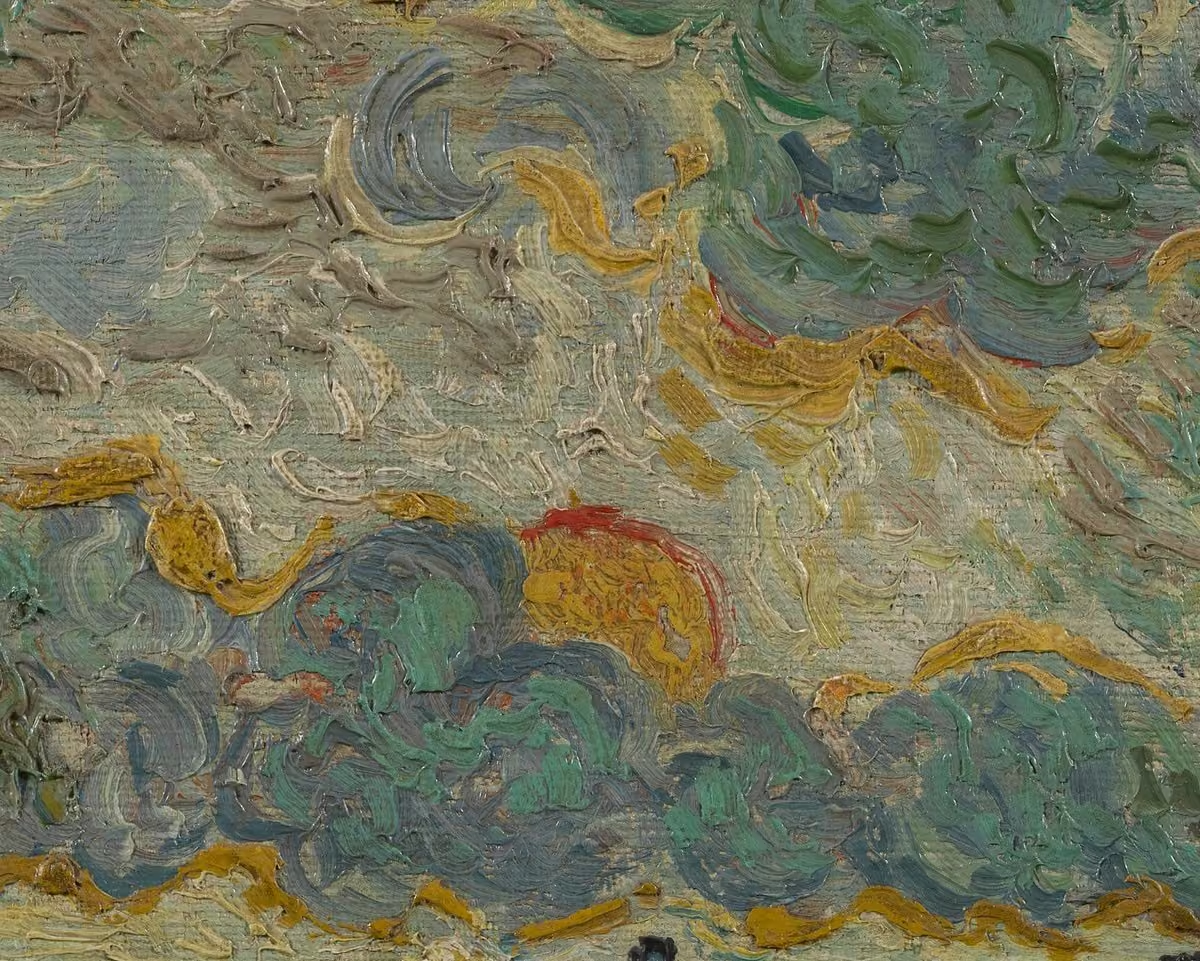
Calling all Van Gogh experts… 🔎
We’ve zoomed in. Way in. This tiny detail belongs to one of Vincent’s paintings, but can you figure out which one?
Let us know your thoughts in the comments. -
Van Gogh Museum
@vangoghmuseum
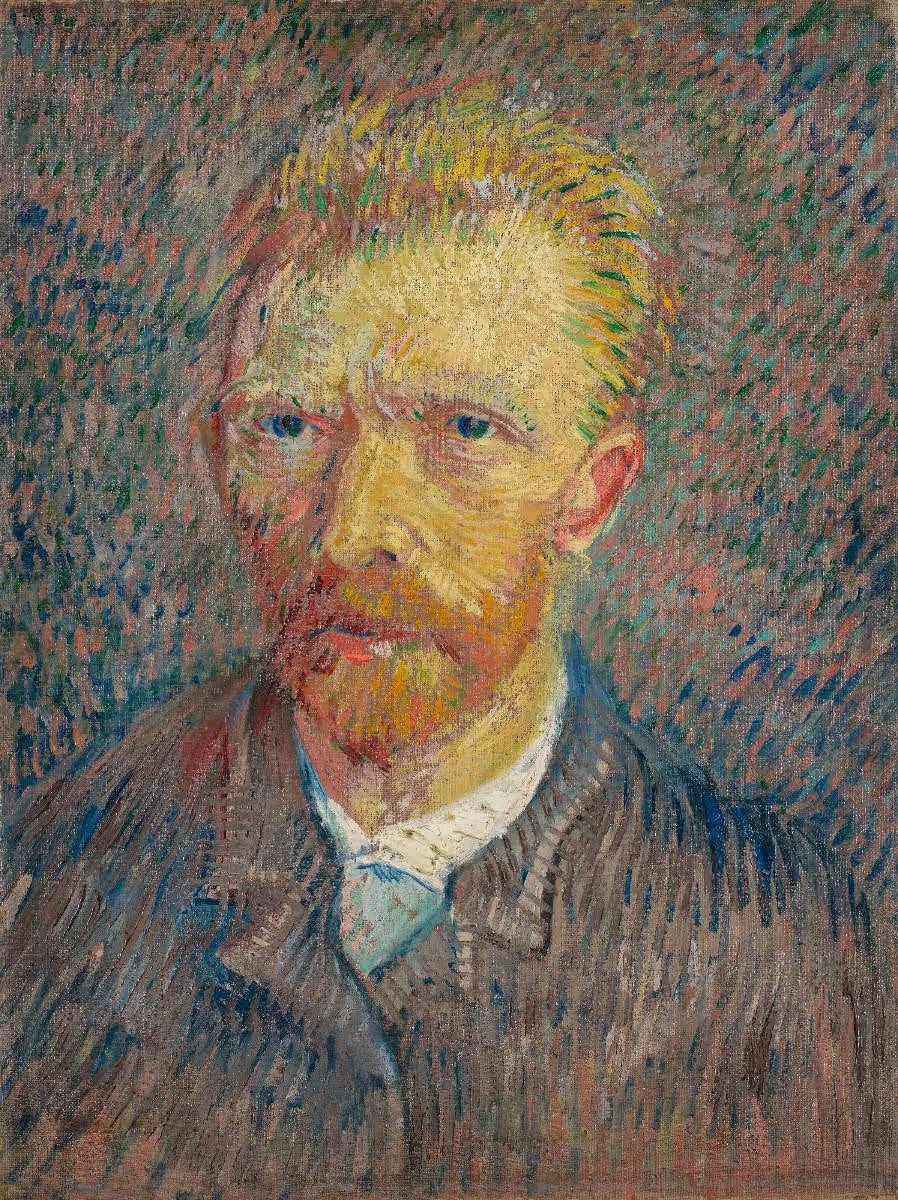
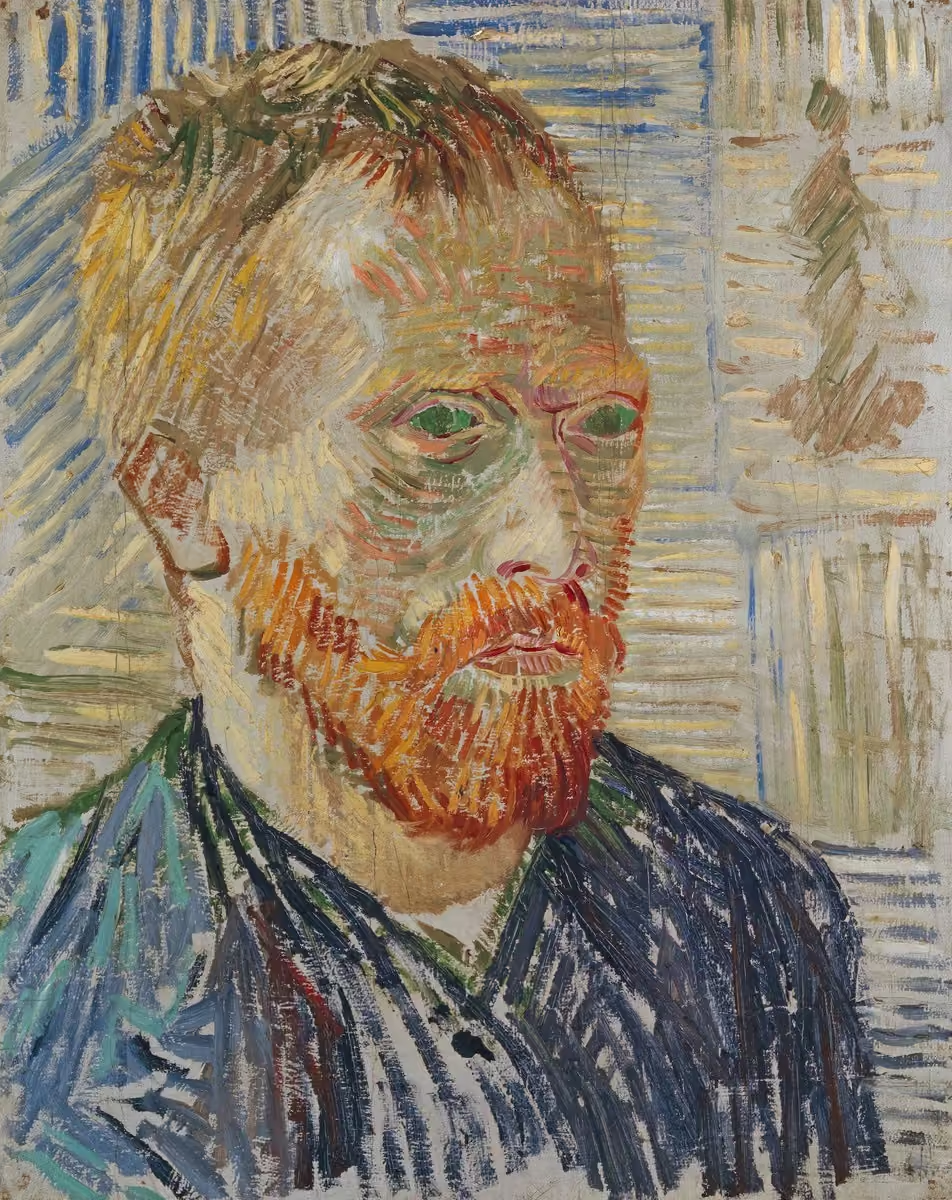
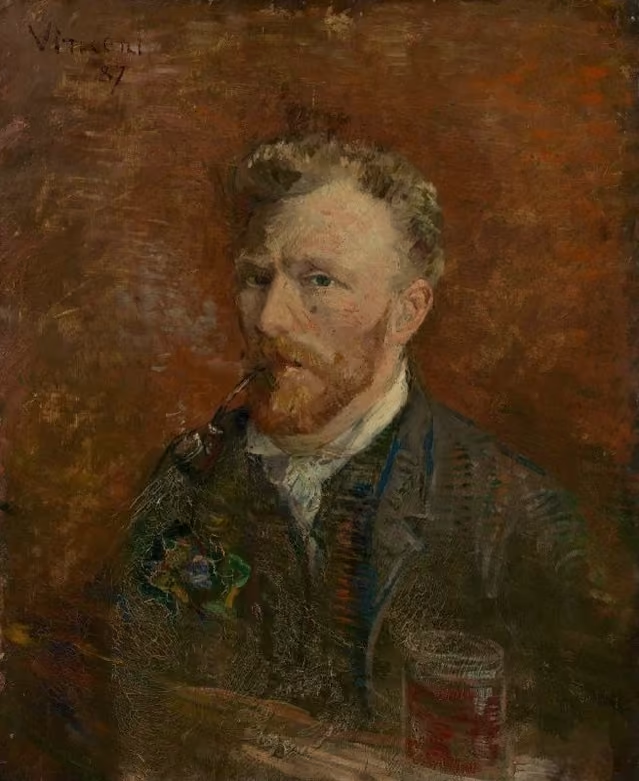
This self-portrait still holds evidence that even when Vincent was broke, he carried on painting.
To save money, Vincent reused canvases. He painted this self-portrait on the back of another work. And instead of paying for a model, he simply painted himself.
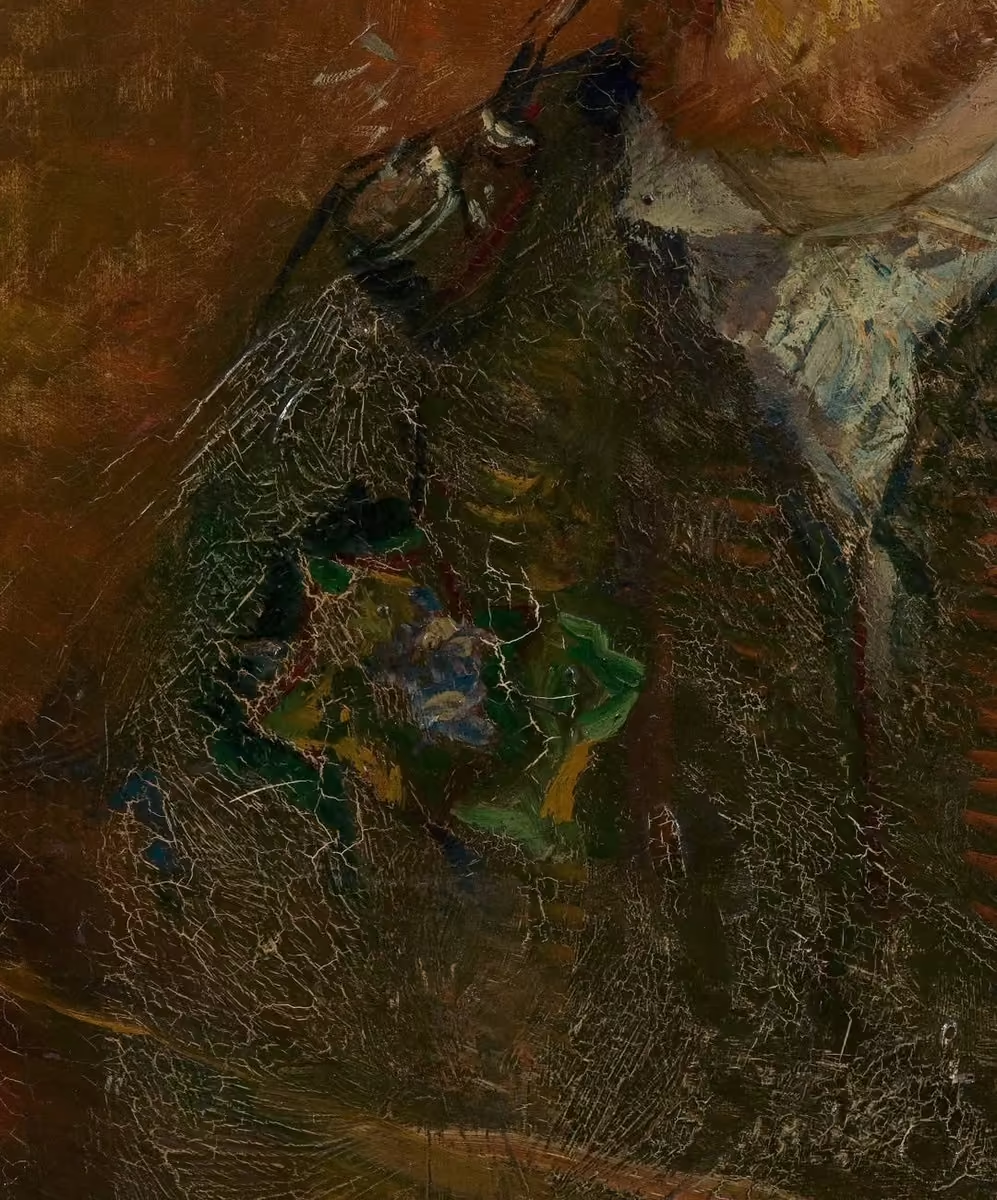
But there’s another telling detail you can’t see with the naked eye. Vincent was using a cheap paintbrush that was losing its hairs, and some of them are still embedded in the paint today.
A reused canvas, a free model and a cheap brush. Vincent made it work.
1. ‘Self-Portrait’, 1887 © Van Gogh Museum
2. ‘Head of a Woman’, 1885 © Van Gogh Museum -
Van Gogh Museum
@vangoghmuseum
Whatever the weather, Van Gogh packed up his painting supplies and headed to the beach, where he created ‘Seascape near Les Saintes-Maries-de-la-Mer’. 🌊
There are a few telling clues. -
Van Gogh Museum
@vangoghmuseum
‘A new brother’ 👬 When Vincent moved to Auvers-sur-Oise in 1890, Dr Paul Gachet was there to keep an eye on him. But their relationship quickly became more than doctor and patient.
Vincent felt they were remarkably alike, both physically and emotionally. He soon described Gachet as a ‘ready-made friend and something like a new brother’.
It wasn’t long before Vincent painted his portrait – and even included a small sketch of it in a letter.
2. 🖼️ ‘Portrait of Dr Gachet’, 1890 ©️ Private collection
3. Letter sketch from letter 877 -
Van Gogh Museum
@vangoghmuseum
A little perspective for the days when things don’t go to plan. 💛
Save this for one of those days. -
Van Gogh Museum
@vangoghmuseum
How many studies does it take to paint a masterpiece?
For Vincent, the answer was about 100.
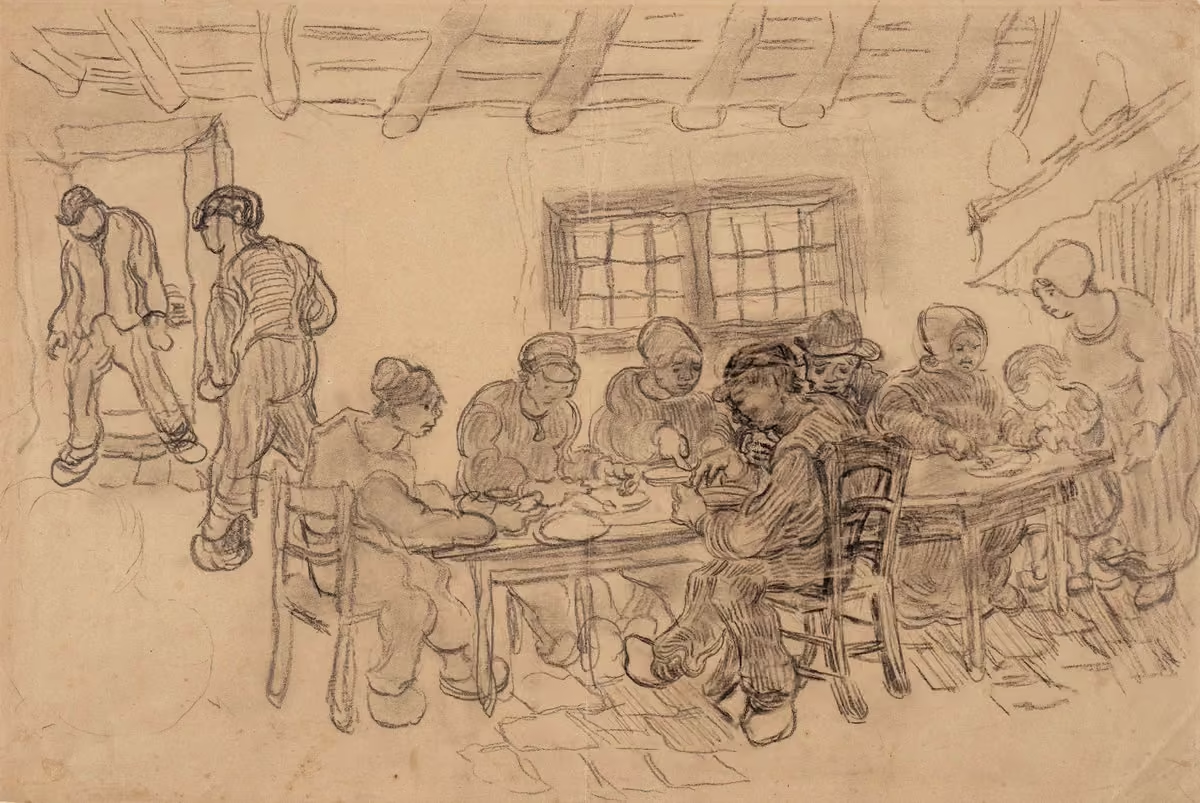
After months of drawing faces, hands and figures, Vincent painted this full-scale version of ‘The Potato Eaters’. Think of it as the final rehearsal before the definitive painting. The composition is virtually identical, but the brushwork and layout still feel a little looser and more sketch-like.
1. ‘The Potato Eaters’, 1885 © Kröller-Müller Museum
2. ‘The Potato Eaters’, 1885 © Van Gogh Museum -
Van Gogh Museum
@vangoghmuseum
Case File 2/3 🔍 Just when we thought we had an explanation, the evidence pointed elsewhere.
A closer look revealed something that had been hidden for decades. And suddenly, the case wasn’t so clear-cut.
#vangogh #truecrime #mystery #arthistory #thecolourheist
@ASMLcompany works with the Van Gogh Museum to preserve Van Gogh's heritage through technology. -
Van Gogh Museum
@vangoghmuseum
When we think of Jo van Gogh-Bonger, words like perseverance, family, and entrepreneurship come to mind.
Despite the limited recognition of Van Gogh’s work during her time, Jo tirelessly dedicated herself to sharing his art and letters with the world. She laid the foundation for Van Gogh’s global acclaim.
We’re surrounded by powerful women, just like Jo. Can you name a powerful woman in your life who deserves a little recognition?This media couldn't be displayed. See it on the original post. -
Van Gogh Museum
@vangoghmuseum
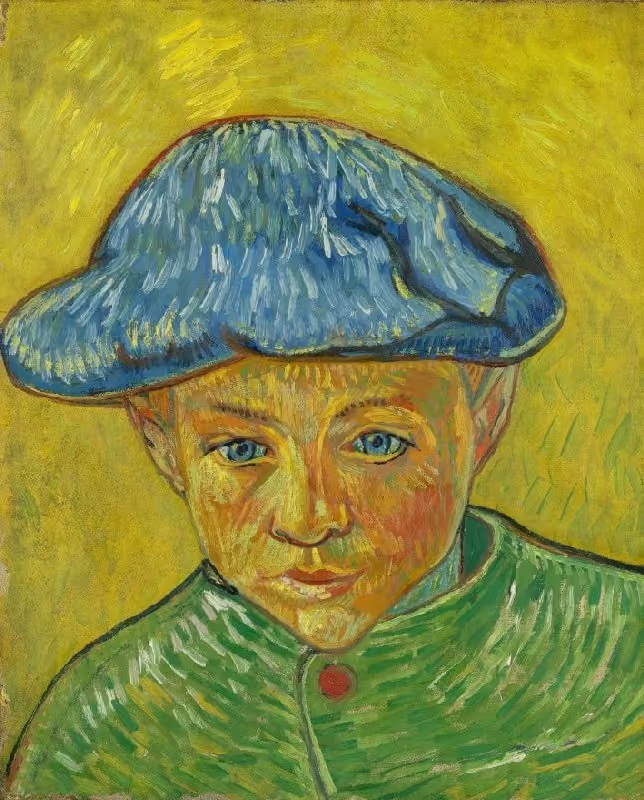
Think photographing kids is hard? Try painting one. 🎨😮💨
Meet Camille Roulin, the postman’s son. His father Joseph was one of Vincent’s closest friends in Arles, and Vincent went on to paint almost the entire Roulin family.
Art historians have suggested that the unusually loose technique in this portrait may have had a very practical explanation: Camille simply couldn’t keep still.
Who knew restlessness could become part of the artwork?
🖼️ ‘The Schoolboy (The Postman’s Son – Gamin au Képi)’, 1888 ©️ MASP -
Van Gogh Museum
@vangoghmuseum
Although Vincent never visited Japan, he was deeply inspired by Japanese woodblock prints. He admired their bold colours, unique compositions and close connection to nature. Vincent was particularly drawn to compositions without a visible horizon, in which a single detail – such as a bamboo branch – was brought close to the foreground.
When he arrived in Arles, the bright light, blossoming trees and colourful landscapes reminded him of the Japan he had imagined. He even wrote to his sister Willemien:
‘I'm always saying to myself that I'm in Japan here.’
💬 Were you familiar with this story? -
Van Gogh Museum
@vangoghmuseum
There’s a lot more to this portrait than we can fit in one caption. Let’s take a closer look. 👀
The exhibition ‘Whistler. Dandy and Disruptor’ is on view from 16 October 2026 until 10 January 2027.
Now on view 🖼️ ‘Arrangement in Grey and Black No. 1’ by James McNeill Whistler, 1871
#whistler #vangoghmuseum #museum #artlovers #arthistoryThis media couldn't be displayed. See it on the original post. -
Van Gogh Museum
@vangoghmuseum
Autumn colours. A little outside, a little inside, a lot to fall for. 🍁
#autumn #autumnvibes #museum #vangoghmuseum #vangogh -
Van Gogh Museum
@vangoghmuseum
Can you find Vincent? 👀
And no, we don't mean the artist himself.😉
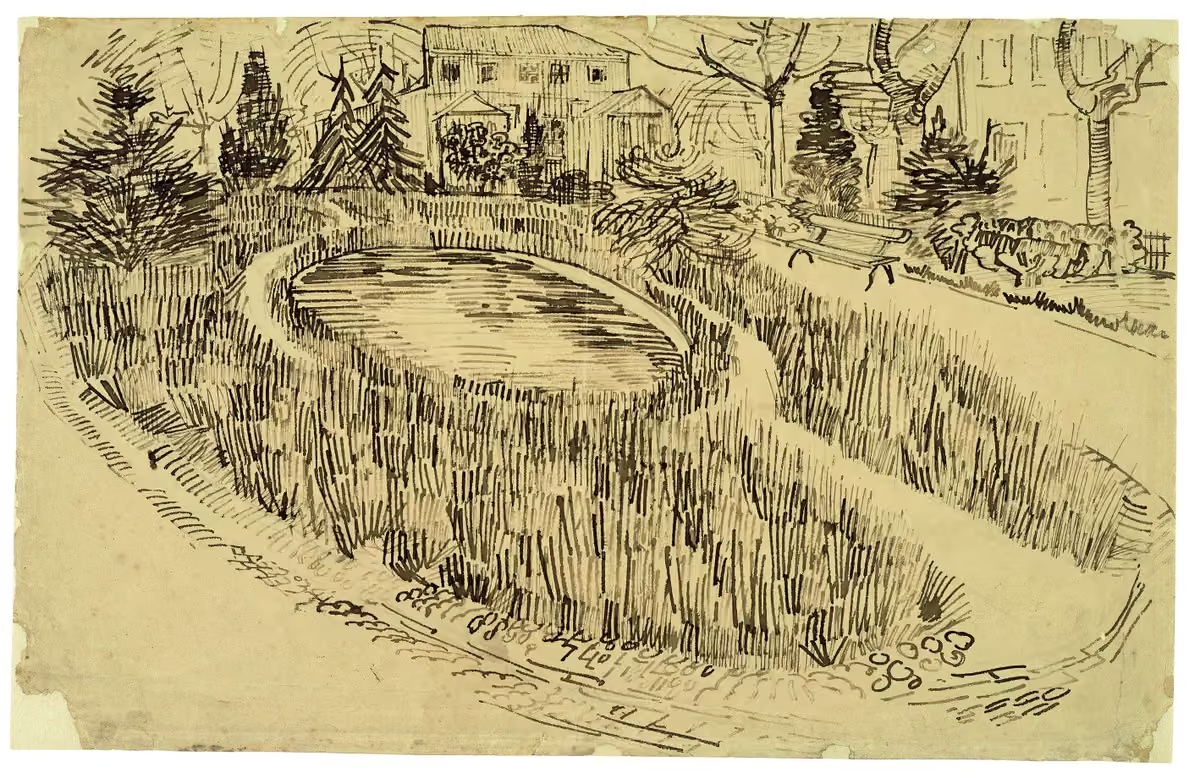
‘Hidden’ among the pencil and ink lines of these three drawings is Vincent's signature.
But he didn't exactly make it easy for us. In some drawings, the signature almost disappears into the work itself.
We've selected three to put your eyes to the test. 🔎 Would you have been able to find them if we hadn’t pointed them out?
1. ‘Avenue of Poplars’, 1884 © Van Gogh Museum
2. ‘Garden of the Hospital’, 1889 © Van Gogh Museum -
Van Gogh Museum
@vangoghmuseum
Case File 1/3 🔍 Our investigation got off to a rocky start.
Van Gogh left us a witness statement. The problem? It didn’t match the evidence. The colours he described are not the colours we see today.
So, what do we trust?
#vangogh #truecrime #mystery #arthistory #thecolourheist
@ASMLcompany works with the Van Gogh Museum to preserve Van Gogh's heritage through technology.This media couldn't be displayed. See it on the original post. -
Van Gogh Museum
@vangoghmuseum
For Vincent, the night was never simply black. 🌙
He explored it in various settings: a blue star-filled sky in ‘Terrace of a Café at Night’, or the yellow-green glow of gas lamps in ‘The Night Café’. Whether outside or indoors, he found the night to be full of colour. -
Van Gogh Museum
@vangoghmuseum
‘There’s a lot to draw here’, Vincent wrote a day after arriving in Auvers-sur-Oise. 📝 He immediately liked the rural village.
Vincent asked his brother Theo to send him twenty sheets of paper: ‘I would need these anyway so as not to waste any time’. In the meantime, he started work on this painting ‘Landscape with Houses' on paper. Van Gogh began by making a sketch, which he then filled in with watercolour and diluted oil paint. He added the light and dark areas to create a sense of depth.
Fun detail 🕵️♀️ Van Gogh did not follow the underdrawing precisely, so parts of it are still visible. (2+3)
🖼️ ‘Landscape with Houses’, 1890 © Van Gogh Museum -
Van Gogh Museum
@vangoghmuseum
Sharing these words by Van Gogh as a thought to pause on today 💛
#worldmentalhealthday #vangogh #museum #quote #foodforthought
📹 inspiration from @ collette_walters_author on TikTok -
Van Gogh Museum
@vangoghmuseum
What if we told you this patch of grass is hiding a woman?
For more than a century, nobody knew that there was another painting hiding beneath ‘Patch of Grass’. It wasn't until researchers examined the work with X-rays that the hidden portrait of a woman emerged.
Vincent occasionally reused canvases, painting over earlier work. In this case, one small painting preserves two very different moments in his artistic journey.
The hidden image offers a rare glimpse of his transition from the dark tones of his Dutch period to the brighter palette he developed in Paris.
1 ‘Patch of Grass’, 1887 © Kröller-Müller Museum
2 Image credit TU Delft -
Van Gogh Museum
@vangoghmuseum
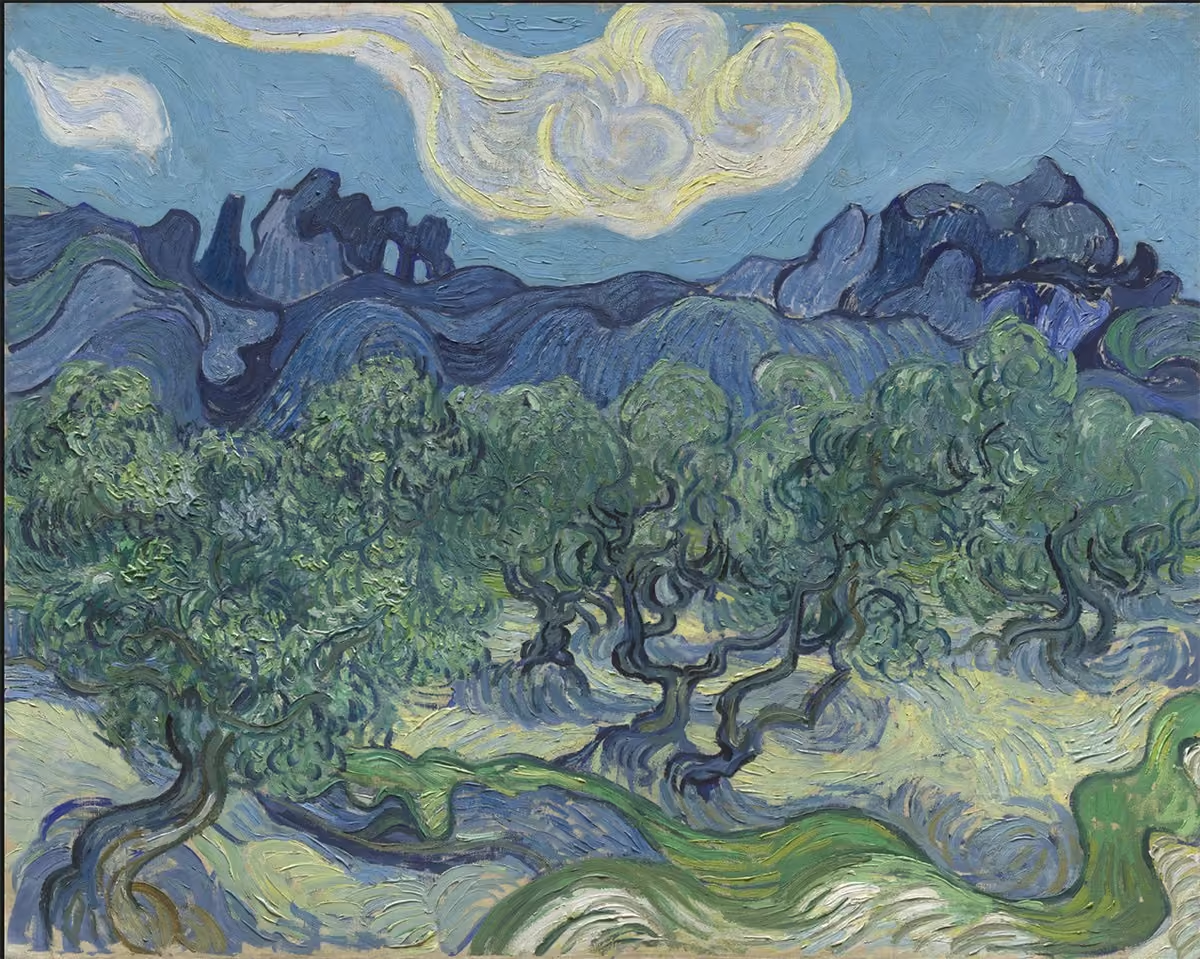
Why did Vincent paint so many olive groves? 🌿
Because to him, they were an endless source of inspiration.
No two days ever looked the same. The changing light and the colours of the sky transformed the olive trees from one moment to the next. The same grove could become an entirely new painting.
Vincent wrote to his brother Theo: ‘The olive tree is variable’, and later to critic and artist Joseph Isaäcson: ‘The effect of daylight, of the sky, means that there is an infinity of subjects to be drawn from the olive tree.’
🖼️ ‘Olive Grove with Two Olive Pickers’, 1889 © Kröller-Müller Museum -
Van Gogh Museum
@vangoghmuseum
When Van Gogh returned to his studio after some time away, he discovered that his painting ‘The Bedroom’ had suffered water damage. The paint had started to flake.
To protect the fragile surface, he wrapped the painting in newspaper before sending it to his brother Theo. Years later, conservators made a remarkable discovery under the microscope: tiny traces of that newspaper had become embedded in the paint. -
Van Gogh Museum
@vangoghmuseum
As a compassionate man, Van Gogh was inspired by modern writers like Zola and the Goncourts, whose ideas on society and human nature shaped his view of the world. He shifted from religious readings to their modern books, but his feelings of sympathy and compassion for people who had less, remained unchanged. He tried to express those feelings in his art.
🖼️ ‘Oleanders’, 1888 © Metropolitan Museum of Art -
Van Gogh Museum
@vangoghmuseum
What do this painting and a tablecloth have in common? Well…
When Vincent ran out of canvas in the autumn of 1889, he didn't stop painting. While waiting for new supplies from his brother Theo, he picked up a woven tablecloth and got back to work.
When you get very close to the painting you can still spot traces of the tablecloth's small red checked weave beneath the paint. (2-4)
🖼️ ‘Wheat Fields in a Mountainous Landscape’, 1889 © Kröller-Müller Museum -
Van Gogh Museum
@vangoghmuseum
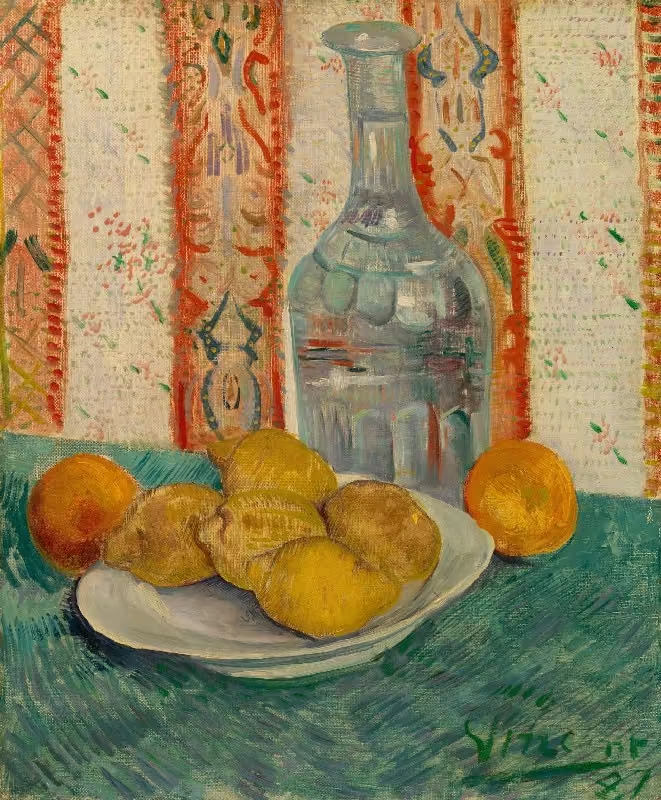
No challenge was too big for Van Gogh! 💪 Painting glass is tricky as it is… but Vincent went a step further. In ‘Carafe and Dish with Citrus Fruit’ (1887), he set a transparent carafe against patterned wallpaper – forcing himself to capture all the colourful reflections dancing through the glass. (2)
🖼️ © Van Gogh Museum -
Van Gogh Museum
@vangoghmuseum
Fun fact: Vincent often made drawings after painting a portrait. 👀
It may seem like this drawing came first, but it was actually made after the painting. Vincent rarely made sketches to prepare for a portrait. He sent drawings like these to his brother or artist friends to give them an idea of the work he just finished.
✏️ ‘Portrait of Patience Escalier’, 1888 © Private collection
🖼️ ‘Portrait of Patience Escalier’, 1888 © Private collection -
Van Gogh Museum
@vangoghmuseum
Vincent’s moons 🌚🌛🌜🌝 ‘It often seems to me that the night is much more alive and richly coloured than the day,’ Vincent wrote to his brother Theo,
1 detail of ‘A Walk at Twilight’, 1889/1890 © MASP
2 detail of ‘Cypresses’, 1889 © MET
3 detail of ‘Country Road in Provence by Night’ 1890 © Kröller-Müller Museum
4 detail of ‘The Starry Night’, 1889 © MoMa -
Van Gogh Museum
@vangoghmuseum
Who needs a little break? 🌿
Let's wander through these woods for a moment, as Vincent saw them.
'Sometimes it's precisely those spots where one no longer feels anything of what's known as the civilized world ... sometimes it's precisely those spots that one needs to achieve calm.' Can you relate to what Vincent wrote?
1 ‘Path in the Woods’, 1887 © Van Gogh Museum
2 ‘Trees’, 1887 © Van Gogh Museum
3 ‘Undergrowth’, 1887 © Van Gogh Museum
4 ‘Trees and Undergrowth’, 1887 © Van Gogh Museum -
Van Gogh Museum
@vangoghmuseum
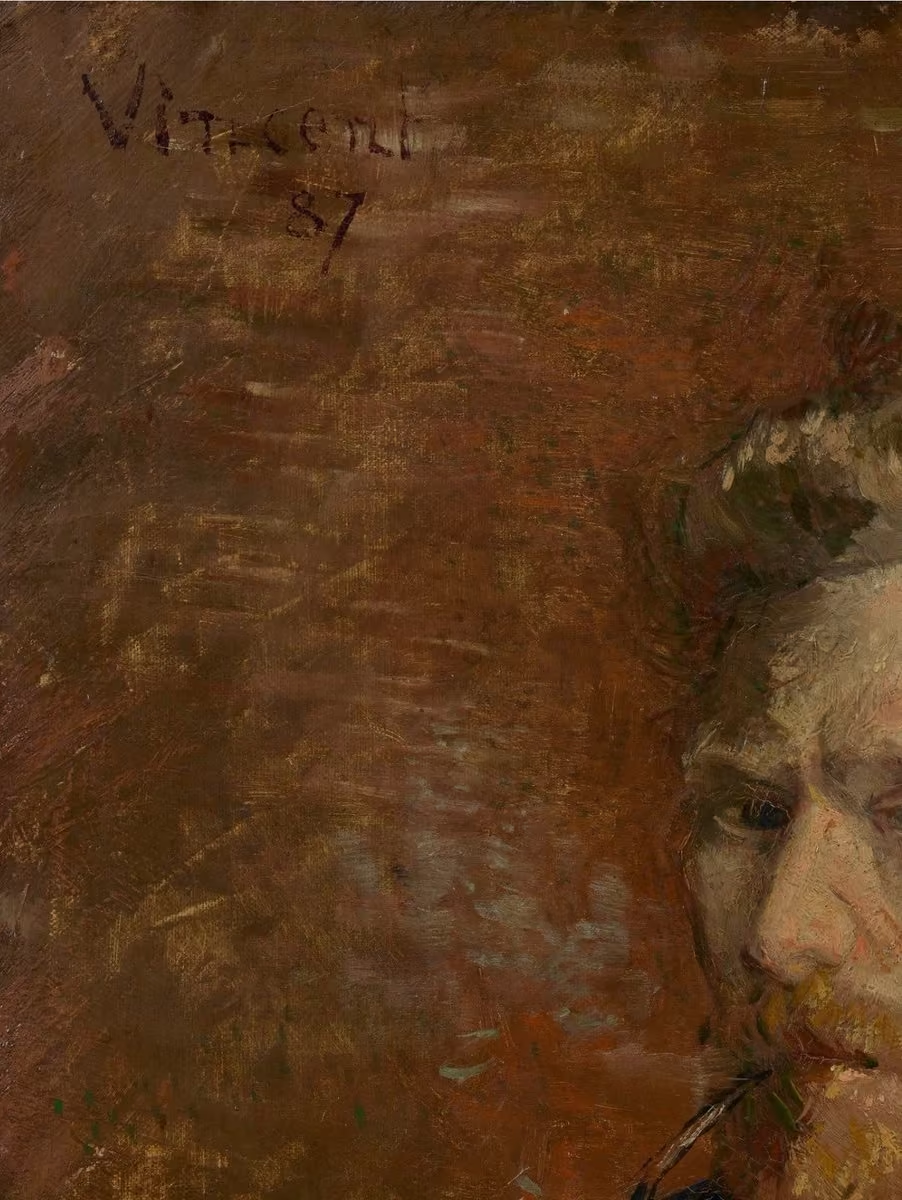
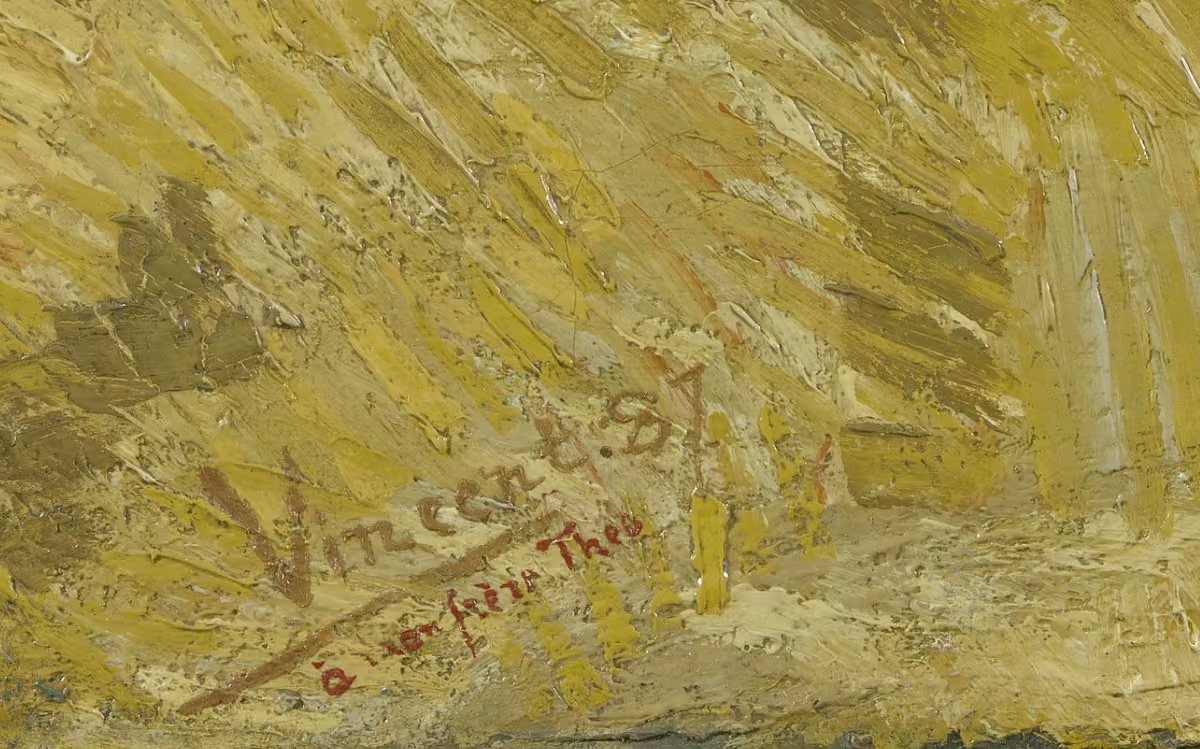
Ever wondered why Van Gogh didn't sign ‘Van Gogh’? Most paintings are simply signed ‘Vincent’. There was a practical reason.
Living in France, Vincent knew few people could pronounce his Dutch surname. He even asked Theo to make sure exhibitions listed him exactly as he signed his paintings: ‘Vincent’. -
Van Gogh Museum
@vangoghmuseum
After his mother broke her leg, Vincent painted ‘Congregation Leaving the Reformed Church in Nuenen’ to cheer her up. It was a thoughtful choice, as his father had once been the minister of that very church.
💛 What's the best cheer-up gift you've ever received? -
Van Gogh Museum
@vangoghmuseum
Sometimes a short note, a message can be the first step towards feeling heard or seen.
Vincent often found comfort in writing letters—a way to share his feelings when speaking wasn't easy. Writing, like talking, can be a powerful way to connect with others and find hope.
Share this with someone who deserves to feel seen today. 💌
#vangoghmuseum #vangogh #mentalhealthawareness #artandmentalhealth -
Van Gogh Museum
@vangoghmuseum
Never stop horsing around. 🐴
By drawing horses again and again, Van Gogh explored anatomy, movement and form. Every sketch taught him something new and brought him a little closer to the artist we know today.
Sometimes the joy isn't just in the finished work, it's in the process itself. What do you think? -
Van Gogh Museum
@vangoghmuseum
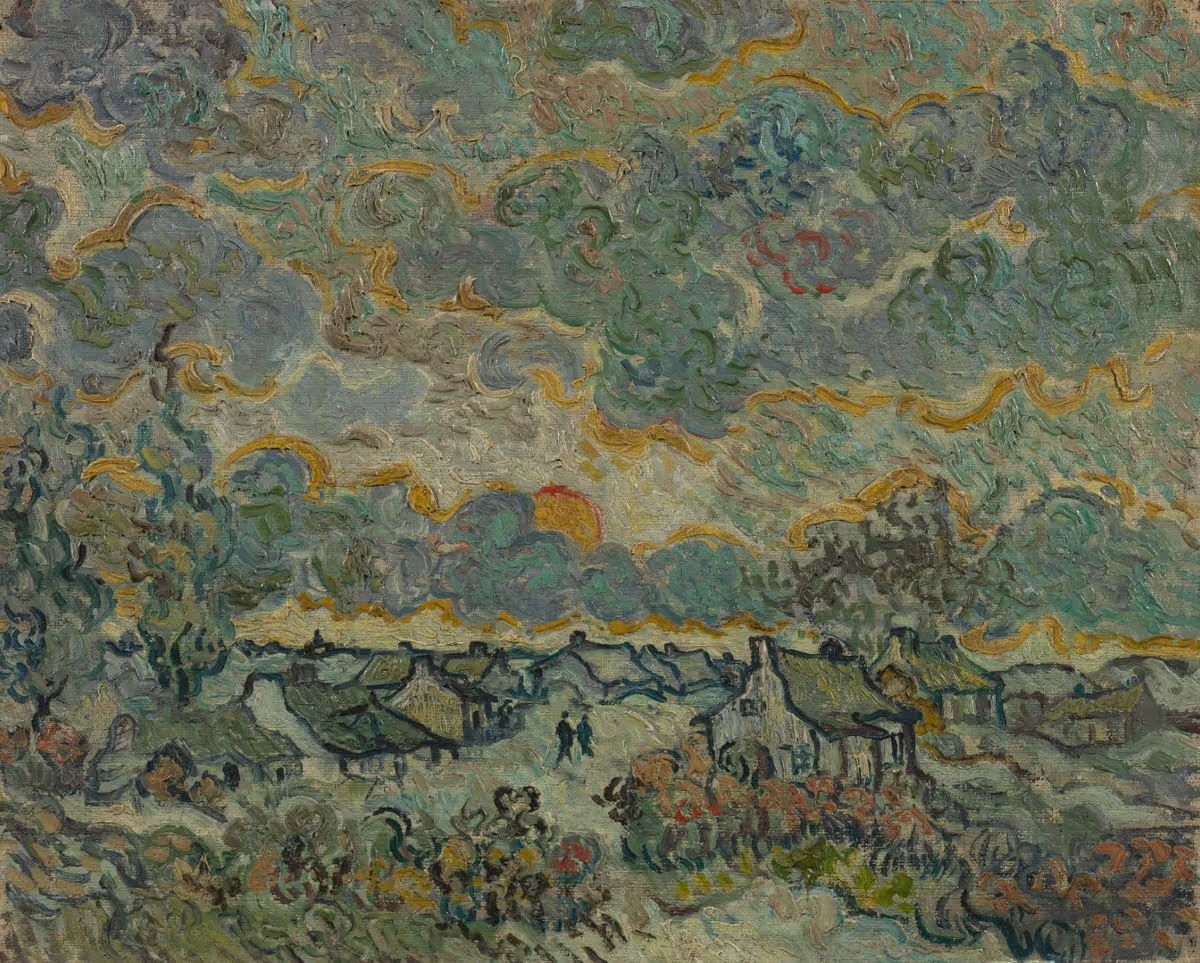
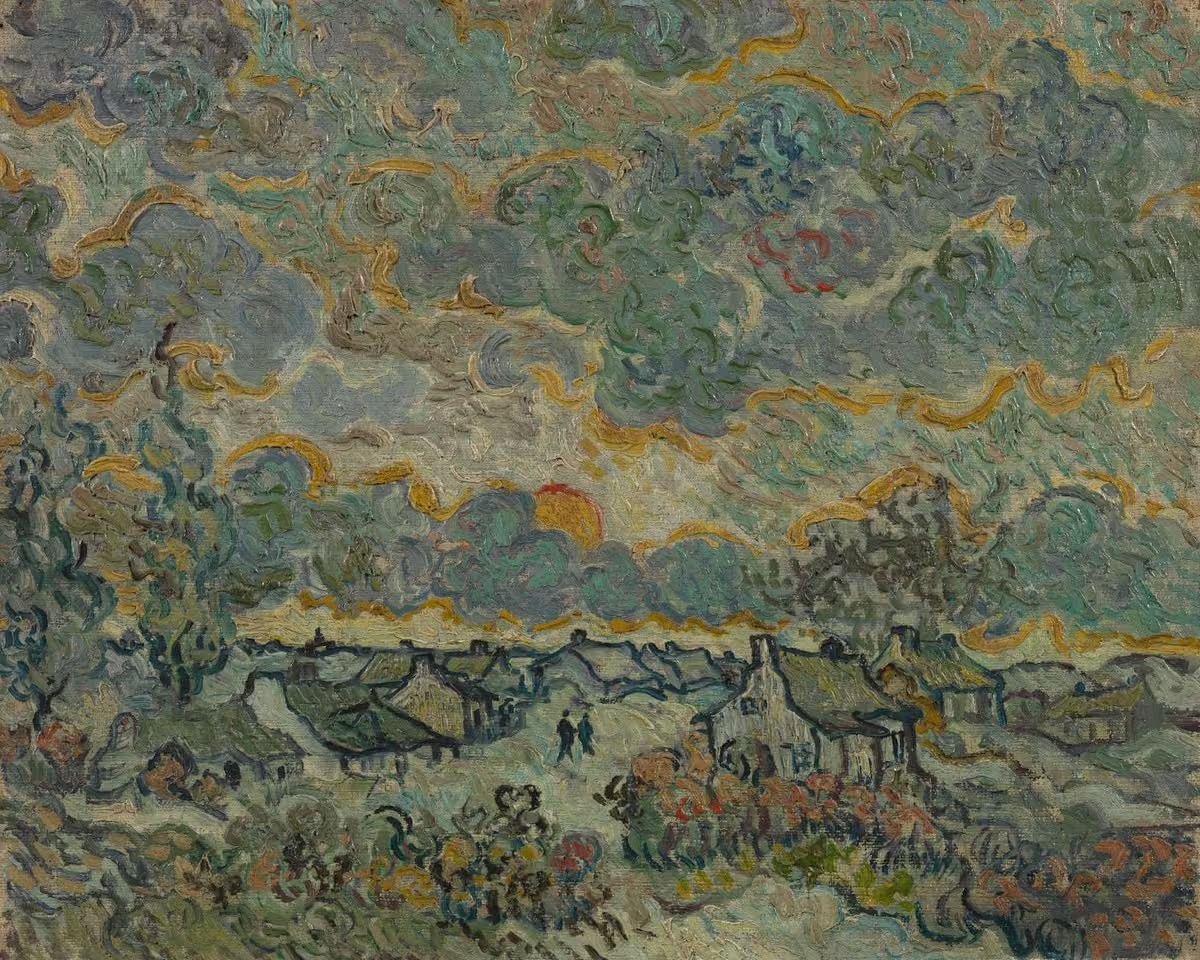
Fun fact: Vincent painted this landscape entirely from memory. 🧠🌅
While staying at the psychiatric institution in Saint-Rémy, Vincent couldn't return to Brabant. So instead, he returned there in his mind.
He painted memories of the countryside where he grew up, writing to his mother and sister that this was: 'a reminiscence of Brabant, cottages with mossy roofs and beech hedges on an autumn evening with a stormy sky, the sun setting red in reddish clouds.'
🖼️ 'Reminiscence of Brabant', 1890 © Van Gogh Museum -
Van Gogh Museum
@vangoghmuseum
Van Gogh borrowed this scene from Rembrandt—but made one unexpected change that shifted the entire story. 👀
This media couldn't be displayed. See it on the original post. -
Van Gogh Museum
@vangoghmuseum
Think you've got a good eye? 👀
Not all of Vincent's signatures stand out. Some are bold and impossible to miss, but others blend almost seamlessly into the painting. Like this one.
Can you spot where Vincent signed his work?
🔍 Let us know when you've found it. -
Van Gogh Museum
@vangoghmuseum
Sometimes a short note, a message can be the first step towards feeling heard or seen.
Vincent often found comfort in writing letters—a way to share his feelings when speaking wasn't easy. Writing, like talking, can be a powerful way to connect with others and find hope.
Share this with someone who deserves to feel seen today. 💌
#vangoghmuseum #vangogh #mentalhealthawareness #artandmentalhealth -
Van Gogh Museum
@vangoghmuseum
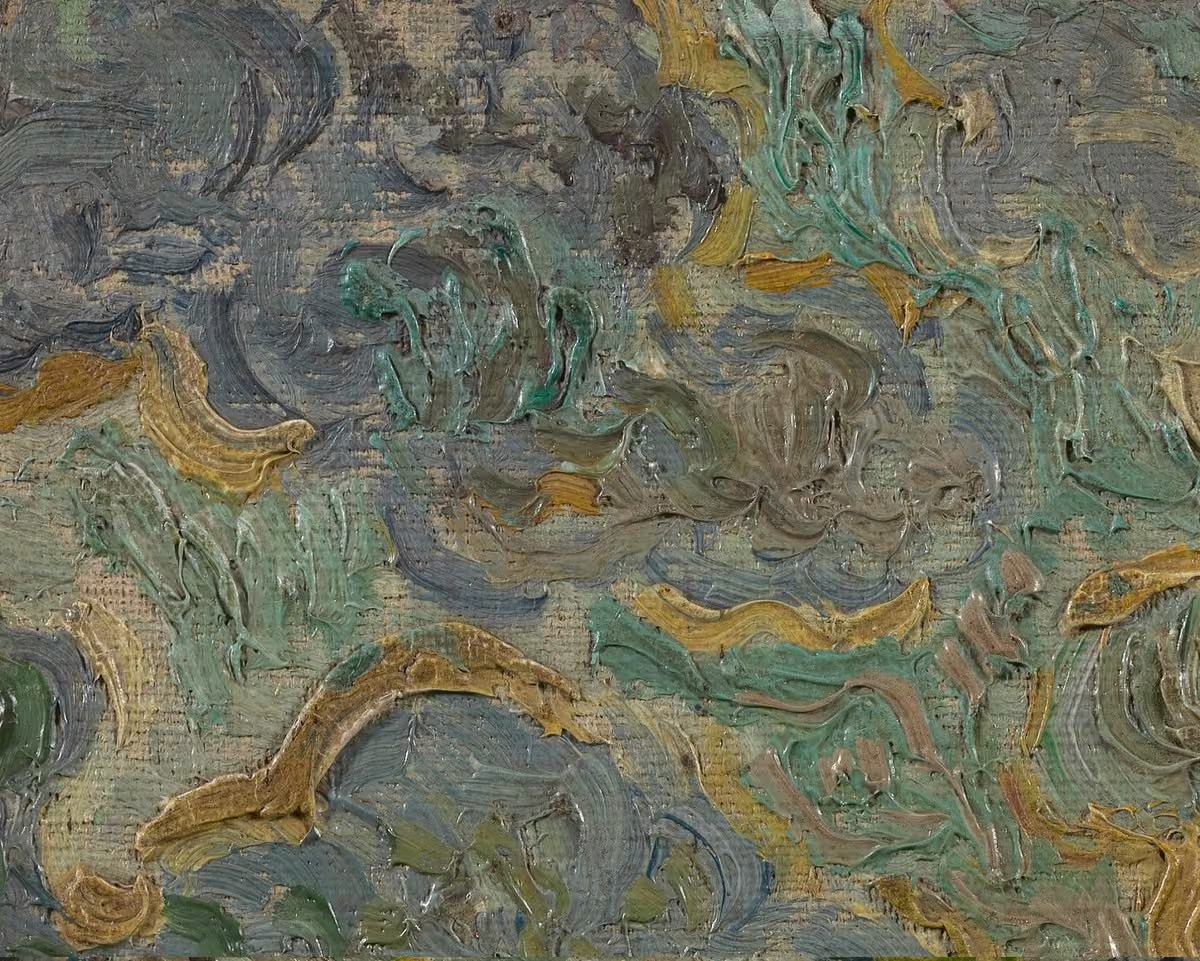
This might look like a painting in its own right... but it's actually just one tiny detail of a larger work. 👀
Can you guess which Van Gogh painting it belongs to? -
Van Gogh Museum
@vangoghmuseum
On 29 July 1888, Van Gogh wrote to his brother Theo about this painting of a young girl in Arles. He explained: ‘It took me my whole week (...). But in order to finish off my mousmé I had to save my mental powers.’
In the novel ‘Madame Chrysanthème’ by Pierre Loti, ‘mousmé’ refers to a young Japanese girl. Van Gogh had read the novel and, like many artists of his time, was fascinated by Japanese art and culture. This portrait was inspired by the character in the book.
🖼️ ‘La Mousmé Sitting’, 1888 © National Gallery of Art, Washington, D.C. -
Van Gogh Museum
@vangoghmuseum
Did Vincent only sign paintings he was proud of? Not always.
Vincent's signature wasn't simply a mark of pride. Sometimes, it reflected where a painting was going. Many of the works he gave to family and friends, or exchanged with fellow artists, carry his signature. -
Van Gogh Museum
@vangoghmuseum
👋 Time for a little art hibernation 💤
'Wheatfield with Crows' will be taking a year-long break while the painting is carefully studied and restored—so we can continue to enjoy it for many years to come. 🖼️💛
#vangogh #vincentvangogh #museum #painting #restoration -
Van Gogh Museum
@vangoghmuseum
Painting or drawing 🖼️✏️ which do you think came first?
Many artists use drawings as preparatory studies. But Vincent actually painted these cypresses first. Months later, he revisited the same scene with nothing but black chalk, pen and ink. Without colour, the swirling lines and towering trees take centre stage.
It shows something fascinating about the way Van Gogh worked: he didn't just use drawing to prepare for a painting, sometimes he used it to rediscover one.
🖼️ ‘Cypresses with Two Figures’, 1890 © Kröller-Müller Museum
✏️ ‘Cypresses with Two Women’, 1890 © Kröller-Müller Museum
#vangogh #explained #educational #museum #art -
Van Gogh Museum
@vangoghmuseum
Sometimes a short note, a message can be the first step towards feeling heard or seen.
Vincent often found comfort in writing letters—a way to share his feelings when speaking wasn't easy. Writing, like talking, can be a powerful way to connect with others and find hope.
Share this with someone who deserves to feel seen today. 💌
#vangoghmuseum #vangogh #mentalhealthawareness #artandmentalhealth -
Van Gogh Museum
@vangoghmuseum
Prints didn't fill Vincent’s stomach. 🍽️
But they did feed his imagination. 🧠
Vincent regularly spent money meant for food and rent on prints and illustrations. He believed visual inspiration was just as essential. Whenever he moved, the prints went too. He covered the walls of every room he lived in with them, creating his own ‘museum’.
By the end of his life, he'd collected more than 2,000 prints and illustrations, including over 600 Japanese woodblock prints. They didn't just fill his walls, they shaped the artist he became. Today, these prints are still part of the Van Gogh Museum collection.
1 ‘An Actor in the Role of the Maid Ohatsu’, left sheet of a triptych by Utagawa Kunisada, 1852 © Van Gogh Museum
2 ‘Studies (Labours of the fields) (Etudes (Travaux des champs))’ from the series Les traveaux des champs, by Camille Pissarro, 1895 © Van Gogh Museum
3 ‘View of the Saruwaka Street by Night’, from the series One Hundred Views of Famous Places in Edo by Utagawa Hiroshige, 1856 © Van Gogh Museum
4 ‘Child Blowing Bubbles’ (L'enfant aux bulles de savon) by Edouard Manet 1868-1869 © Van Gogh Museum
#prints #vangogh #vangoghmuseum #storytime #interestingfacts -
Van Gogh Museum
@vangoghmuseum
Can you spot Van Gogh’s signature in these three paintings? 🖌️
Most people look for his name in paint. But on a handful of paintings, he scratched it directly into the wet paint.
No contrasting colour. No bold brushstroke. Just a few lines incised into the fresh paint.
More than 130 years later, those tiny scratches are still there. (4)
1 ‘Imperial Fritillaries in a Copper Vase’ ©️ Musée d’Orsay
2 ‘La Guinguette à Montmartre’, 1886 © Musée d'Orsay
3 ‘Three Pairs of Shoes’, 1887 © Fogg Museum
#details #vincentvangogh #explained #funfact #artdetail -
Van Gogh Museum
@vangoghmuseum
In his paintings, Van Gogh aimed to capture the essence of each object and the overall scene. Here, he depicts the sky turning a bold blue due to the mistral, a strong wind in southern France, and leaves trembling in its gusts. To those unfamiliar with the mistral, his brushstrokes might seem like an imaginative interpretation of the landscape. However, they accurately capture the windy conditions of that day.
🖼️ ‘A Lane near Arles’, 1888 © Stiftung Pommersches Landesmuseum
#didyouknow #artexplained #vincentvangogh #hiddendetails -
Van Gogh Museum
@vangoghmuseum
Sometimes a short note, a message can be the first step towards feeling heard or seen.
Vincent often found comfort in writing letters—a way to share his feelings when speaking wasn't easy. Writing, like talking, can be a powerful way to connect with others and find hope.
If you are struggling, please remember: you are not alone.
Let's spread kindness to someone who needs it today. Openness, empathy and support can truly save lives. 💛
#worldsuicidepreventionday #vincentvangogh #vangoghmuseum #mentalhealth -
Van Gogh Museum
@vangoghmuseum
Is there something that stands out to you in these three paintings? 👀
Although we usually expect skies to be blue, Vincent painted them in different colours. Researchers once wondered whether he had witnessed unusual natural phenomena. But they now believe these skies reveal something about Vincent's artistic choices instead.
Rather than simply painting what he saw, Vincent increasingly used colour to create atmosphere and express his own vision of the landscape.
💬 Had you ever noticed Vincent's green skies before?
1 ‘Pine Trees at Sunset’, 1889 © Kröller-Müller Museum
2 ‘Wheatfield with a Reaper’, 1889 © Van Gogh Museum
3 ‘Wheat Fields in a Mountainous Landscape’, 1889 © Kröller-Müller Museum
#artdetail #vangogh #lookcloser #colorinspiration -
Van Gogh Museum
@vangoghmuseum
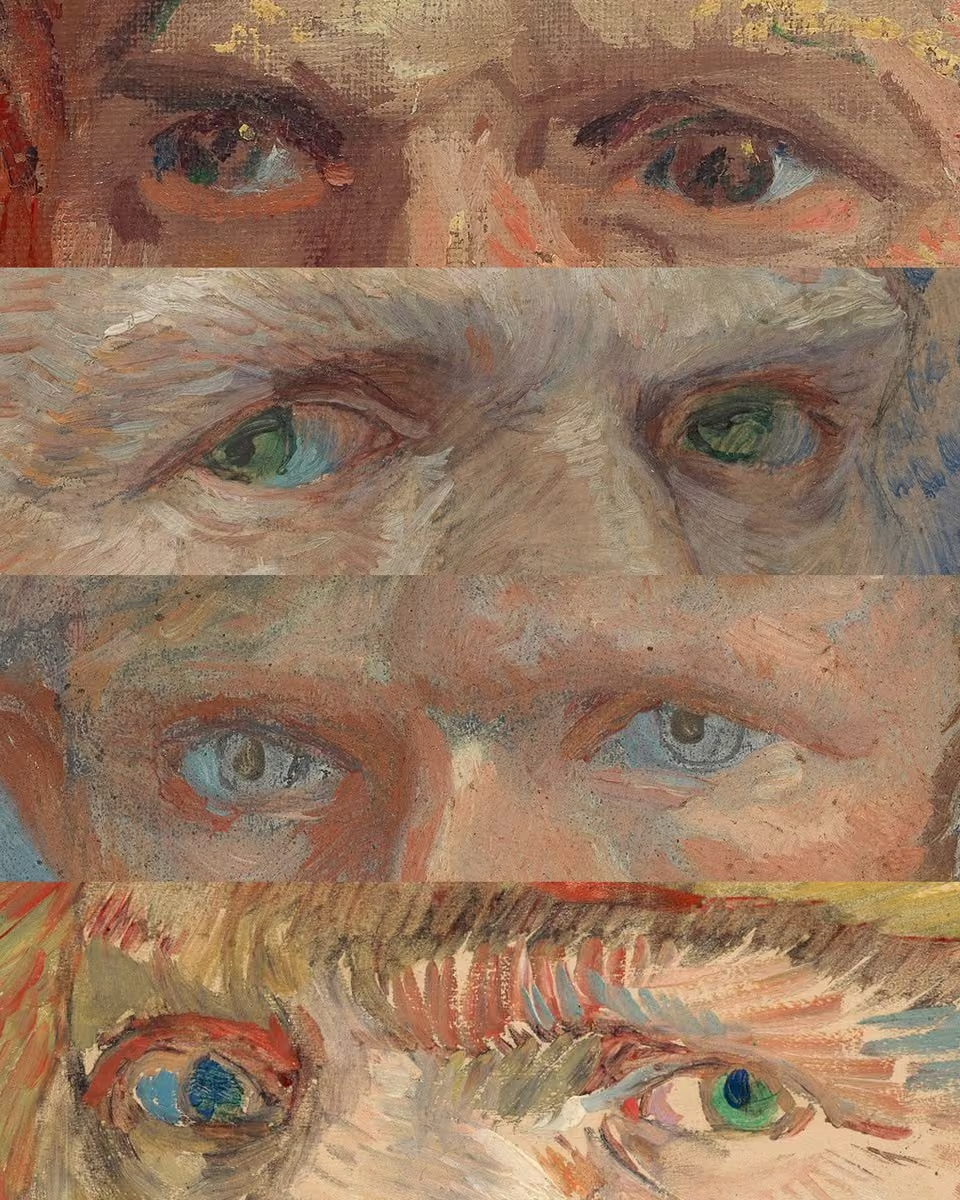
In his self-portraits, Vincent painted his eyes in many different colours. 👁️
But what colour were his eyes really?
#vangogh #vangoghmuseum #dailyart #inspiration -
Van Gogh Museum
@vangoghmuseum
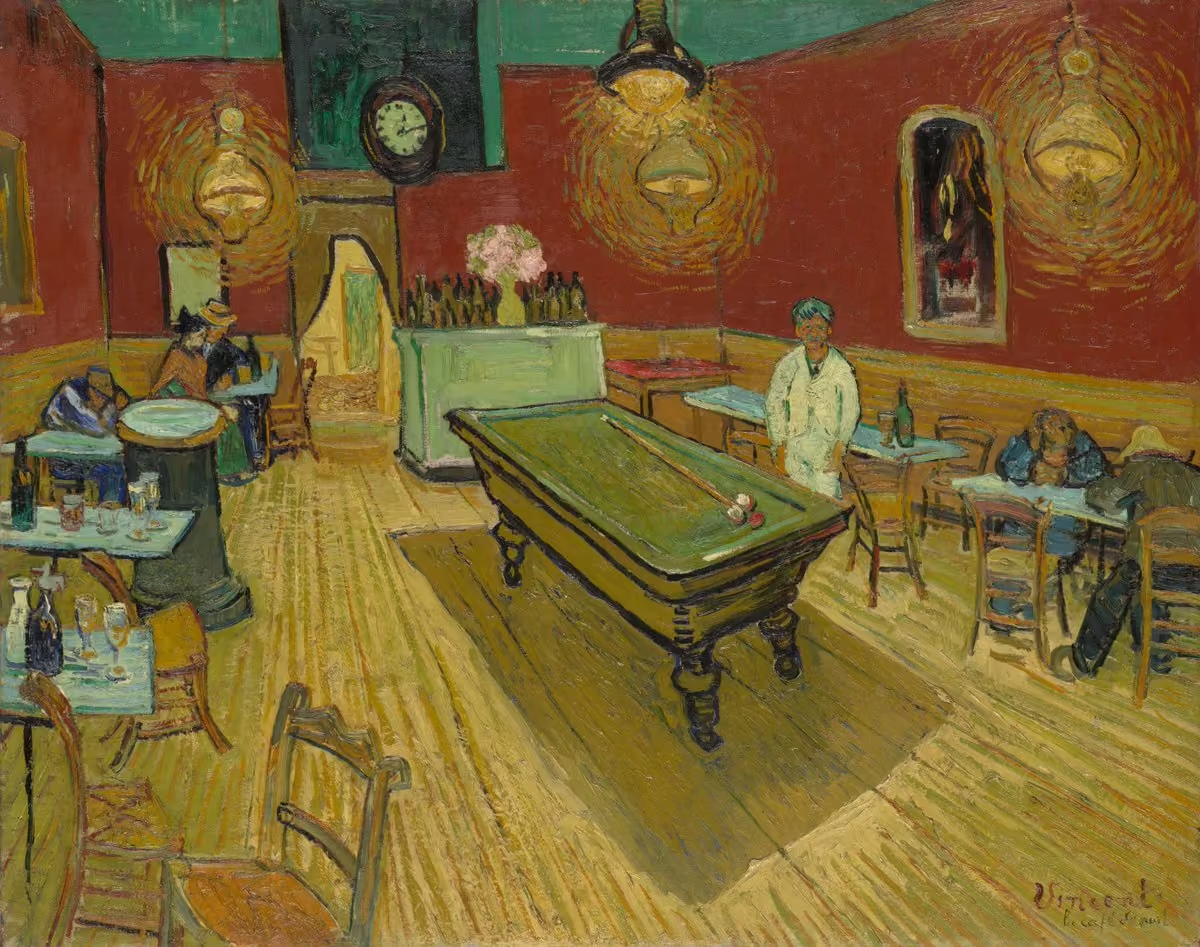
Can you spot the ‘poor night-prowlers’? 🌙 That's how Vincent described the people sleeping in the corner of ‘The Night Café’.
Vincent chose his colours carefully to capture the atmosphere of the café. To his sister Willemien, he wrote about the café's glowing red walls and the green billiard table.
Not long after finishing the painting, Vincent made a watercolour of the same scene and sent it to his brother Theo, writing that it was ‘like a Japanese print.’ By then, Japanese prints had become one of his greatest sources of inspiration. Compared to the richly textured painting, the watercolour feels flatter, lighter and more graphic.
🎨 Which do you think captures the atmosphere best: the watercolour or the painting?
1 ‘The Night Café’, 1888 © Yale University Art Gallery
2 ‘Interior of the Night Café in Arles’, 1888 © Private collection
#vangogh #museum #art #japan #vincentvangogh -
Van Gogh Museum
@vangoghmuseum
Vincent couldn't stop painting cypress trees. 🌲
Their distinctive shape and colour fascinated him. He compared their tall forms to Egyptian obelisks and believed no one had yet painted them as he saw them.
By then, Vincent had already painted his Sunflowers series. So when he wrote that he'd like to do ‘something with them like the canvases of the sunflowers,’ it revealed just how important cypress trees had become to him.
💬 Which one of Van Gogh's cypresses is your personal favourite?
1 ‘The Starry Night’, 1889 © MoMa
2 ‘Wheat Field with Cypresses’, 1889 © MET
3 ‘Cypresses with Two Figures’, 1890 © Van Gogh Museum
4 ‘Country Road in Provence by Night’, 1890 © Kröller-Müller Museum -
Van Gogh Museum
@vangoghmuseum
Van Gogh didn't paint summer by just painting the sun. ☀️
Instead, he captured it through:
🌾 Golden wheat fields
☀️ The dry summer heat
💙 Vivid blue skies and glowing yellows
🎨 The bright light of long summer days -
Van Gogh Museum
@vangoghmuseum
It might be hard to imagine, but this bright and colourful painting was created during a difficult period in Vincent's life.
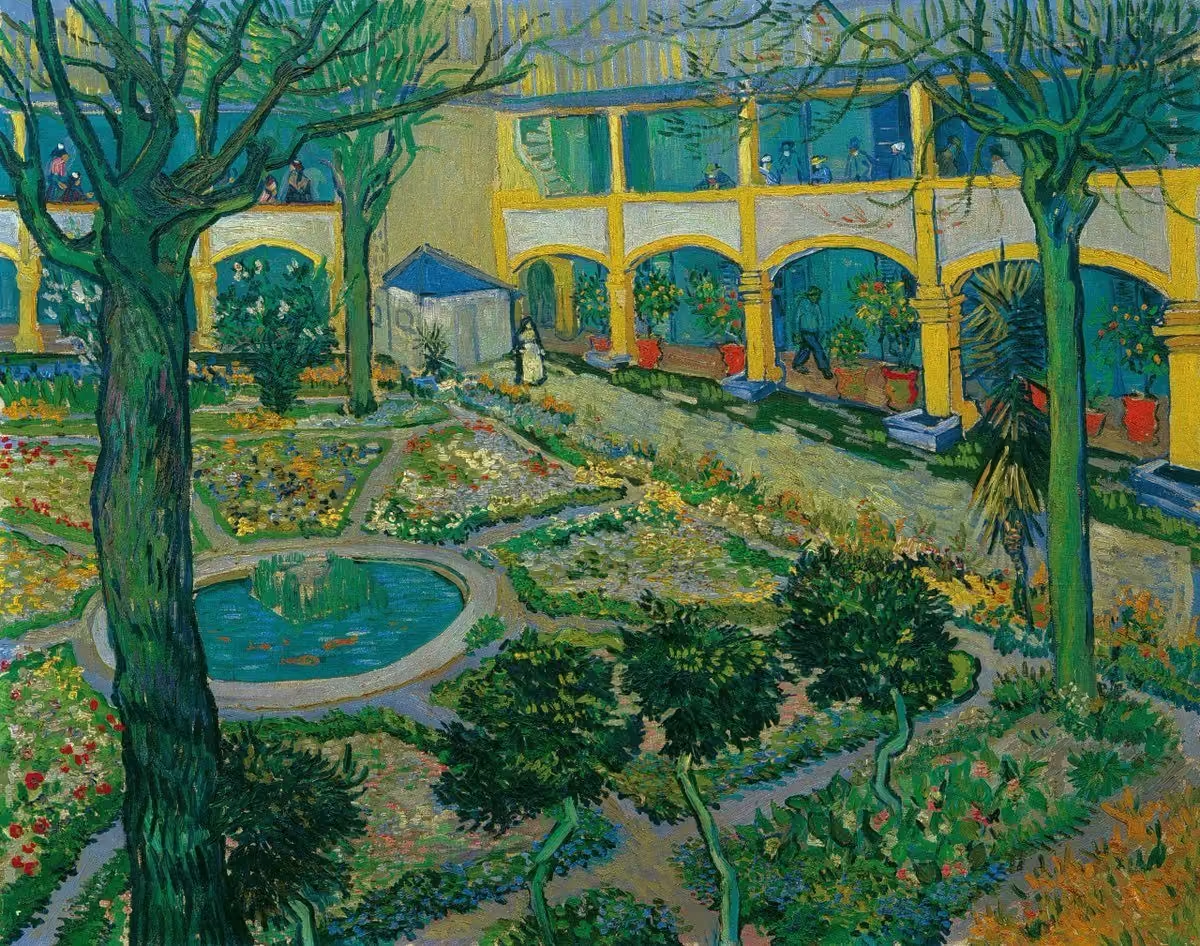
Vincent painted it while staying at the psychiatric institution in Saint-Rémy. During his first month there, he wasn't allowed to leave the grounds. Instead, he found inspiration in the overgrown garden.
For Vincent, colours had meaning. He wrote to his sister Willemien:
‘We need good cheer and happiness, hope and love. The uglier, older, meaner, iller, poorer I get, the more I wish to take my revenge by doing brilliant colour, well arranged, resplendent.’
🖼️ ‘The Garden of the Asylum at Saint-Rémy’, 1889 © Kröller-Müller Museum -
Van Gogh Museum
@vangoghmuseum
One of these paintings has a very special story: Vincent painted it to celebrate the arrival of a baby. Which one do you think it is?
-
Van Gogh Museum
@vangoghmuseum
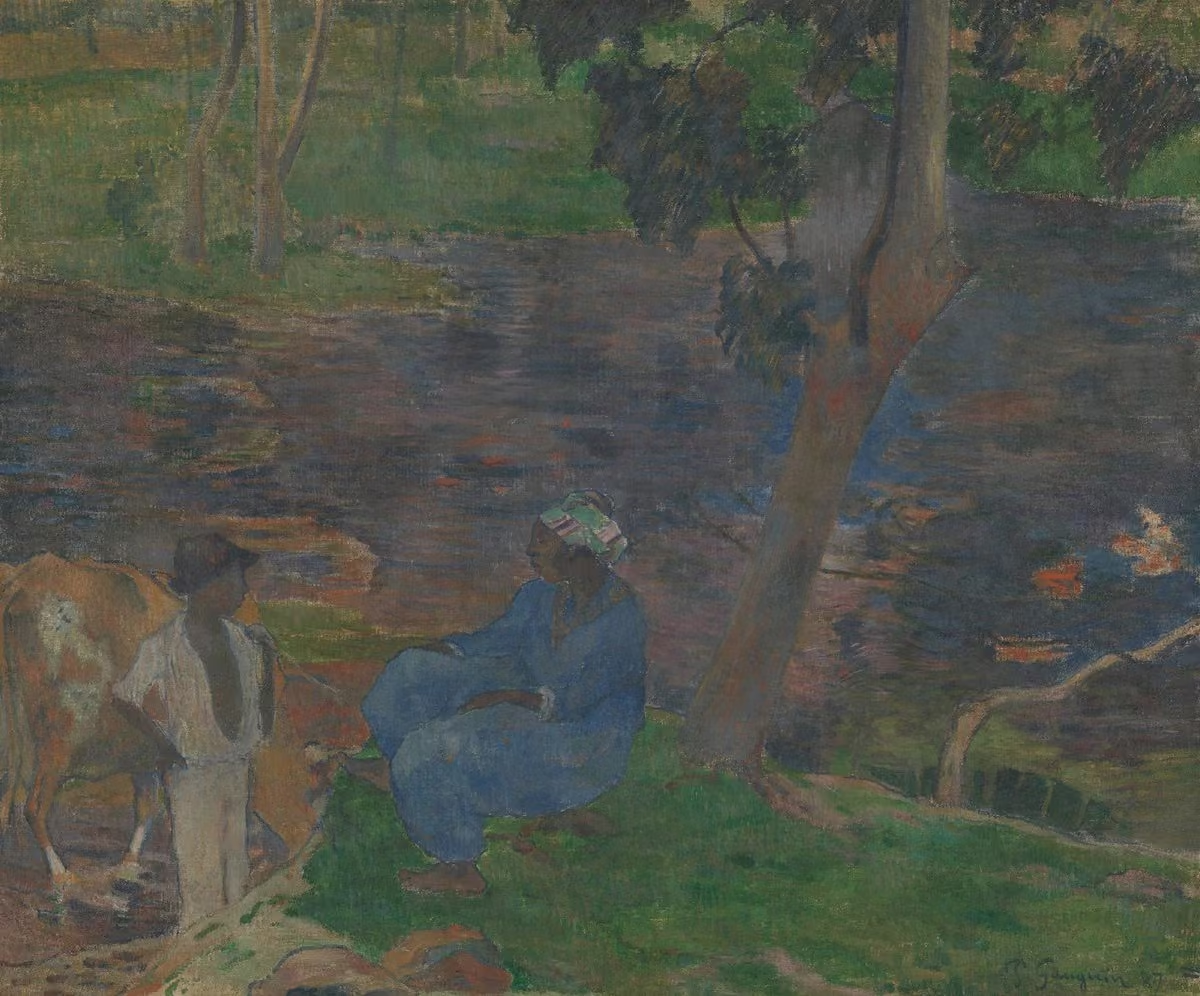
Would you trade these two versions of Van Gogh's ‘Sunflowers’ (1+2) for this painting (3)? Vincent did.
When Paul Gauguin returned from Martinique in 1887, Vincent was captivated by his ‘On the Banks of the River, Martinique’. Its bold colours and fresh approach to painting reflected exactly the kind of new art that fascinated Vincent and Theo.
Vincent admired Gauguin’s work so much that he traded it for two sunflower paintings and added it to the brothers’ growing collection.
And Gauguin? He clearly treasured the exchange. The two sunflower paintings were given pride of place above his bed.
1 ‘Two Cut Sunflowers’ by Vincent van Gogh, 1887 © Kunstmuseum Bern
2 ‘Sunflowers’, 1887 © MET
3 ‘On the Banks of the River, Martinique’ by Paul Gauguin, 1887 © Van Gogh Museum -
Van Gogh Museum
@vangoghmuseum
Did you know that the tree Van Gogh depicts in this painting was struck by lightning? 🌳
⚡While staying at the psychiatric institution in Saint-Rémy, Vincent wrote about the tree in a letter to his artist friend Emile Bernard:
‘You’ll understand that this combination of red ochre, of green saddened with grey, of black lines that define the outlines, this gives rise a little that feeling of anxiety from which some of my companions in misfortune often suffer and which is called “seeing red”. And what’s more, the motif of the great tree struck by lightning, the sickly pink and green smile of the last flower of autumn, confirms this idea.’
🖼️ 'Garden of the Asylum', 1889 © Van Gogh Museum -
Van Gogh Museum
@vangoghmuseum
After admitting himself to the psychiatric institution in Saint-Rémy-de-Provence, Vincent hoped to find peace. As soon as he was able, he ventured into the gardens to paint and draw, finding inspiration in nature around him. It was in these gardens that he found this scene.
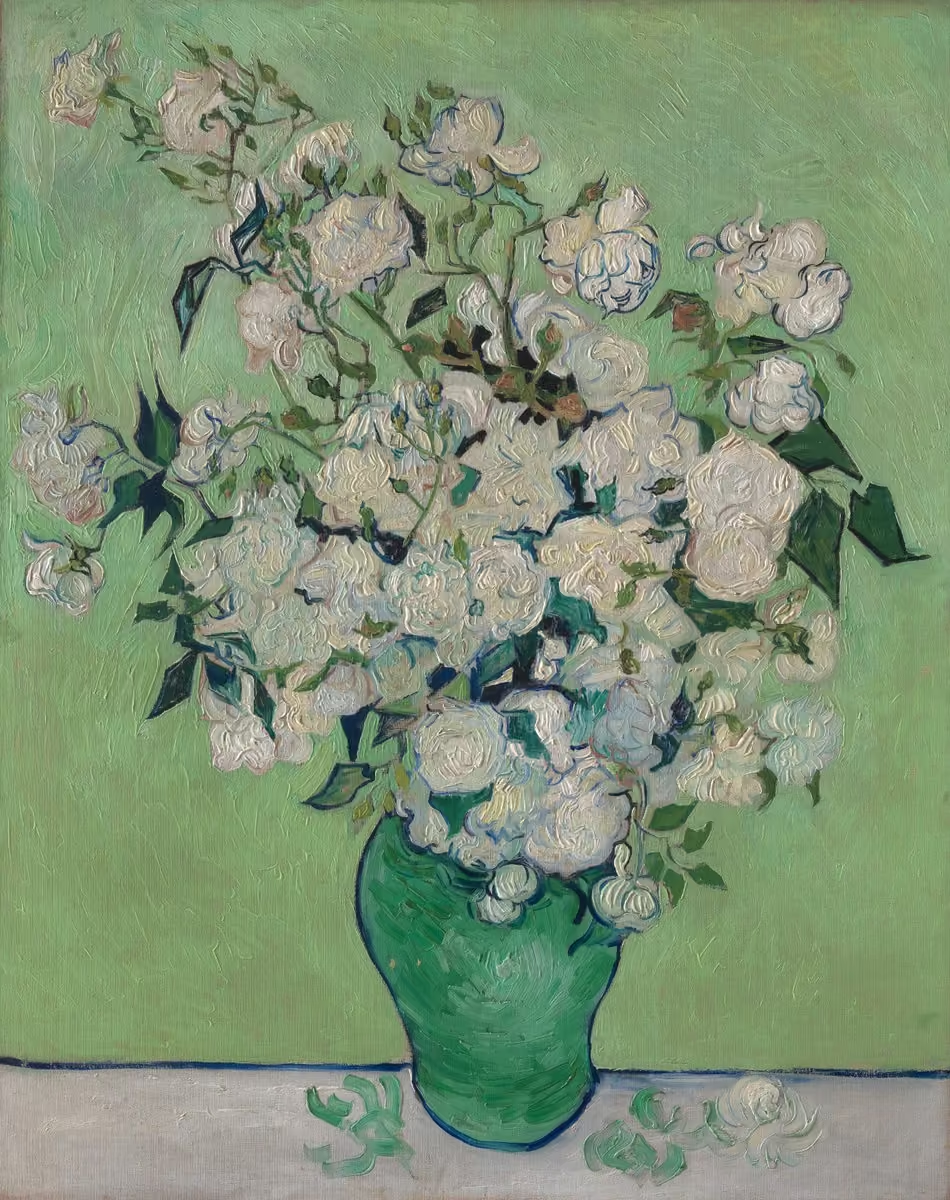
Look closely and you'll notice the contrast in his approach: the delicate blossoms are painted with remarkable naturalism, while the leaves are simplified into flat areas of green, outlined with bold blue strokes.
What detail catches your eye first, the blossoms or the leaves?
🖼️ ‘Wild Roses’, 1889 © Van Gogh Museum -
Van Gogh Museum
@vangoghmuseum
The story behind this painting. 🖼️
Long before Henri de Toulouse-Lautrec became one of the great names in modern art, Vincent and Theo were already collecting his work.
In 1888, Theo bought ‘Young Woman at a Table, 'Poudre de riz'’ directly from the artist, after getting to know him through Vincent. That's how it became part of our museum collection.
They saw something special in this young artist.
What do you think caught their eye?
🖼️ Now on view in the exhibition ‘Vincent's Path to Fame’, until 6 September. -
Van Gogh Museum
@vangoghmuseum
Let's see how observant you are... 👀 There’s quite a bit to unpack here!
At first glance, it looks like an ordinary evening scene. But Vincent unknowingly also documented the changing city of Paris. In the distance, the Sacré-Cœur Basilica is still under construction. While the young trees reveal that the park itself was relatively new. There are 3 tiny figures placed underneath, did you spot them?
Small details sometimes tell great stories.
🖼️ ‘Square Saint-Pierre at Sunset’, 1887 © Van Gogh Museum -
Van Gogh Museum
@vangoghmuseum
To Van Gogh, every tree called for a different brushstroke.
Each one inspired a different way of painting. Olive trees became expressive, with twisting trunks reflected in energetic, swirling brushstrokes.
Blossoming fruit trees in Arles (FR) were painted with a lighter palette and in an Impressionistic style. His later paintings of blossoming trees were even inspired by Japanese prints.
By changing his technique, Vincent wasn't just painting trees, he was capturing what made each one unique. -
Van Gogh Museum
@vangoghmuseum
Can you 'smell the soil'? 🌿 That's what Vincent hoped you would experience when looking at his painting of olive groves. He wrote: ‘What I've done is a rather harsh and coarse realism beside their abstractions, but it will nevertheless impart the rustic note, and will smell of the soil.’
Vincent wanted his olive groves to give a feeling of being deeply connected to nature. And, if you zoom in, you'll discover a surprising palette of bright colours hidden throughout the landscape. (2)
Van Gogh wasn't trying to copy nature exactly, he was trying to capture its atmosphere.
💬 Do these colours make the landscape feel more real to you, or less? -
Van Gogh Museum
@vangoghmuseum
Fun fact: When Vincent signed and dated his paintings, it usually meant that he was satisfied with his work.
Can you recognize the paintings these signatures belong to? -
Van Gogh Museum
@vangoghmuseum
Van Gogh only sold one work? Well… not quite.
This painting, ‘The Red Vineyard’, sold for 400 francs to Belgian painter and collector Anna Boch, the sister of Vincent’s artist friend Eugène Boch.
But Vincent also traded paintings, drawings and prints – another form of value and exchange.
He even felt awkward about not offering a friend ‘mates’ rates’. If only he knew what his work would be worth one day.
🖼️ © Pushkin State Museum of Fine Arts -
Van Gogh Museum
@vangoghmuseum
Did you expect ‘Sunflowers’ to look this bright? 🌻
Van Gogh painted ‘Sunflowers’ using three types of chrome yellow. Over the past 130 years, these pigments have gradually darkened – especially in the flowers and the lower background.
By recreating the pigments Vincent used, scientists tried to reconstruct how the colours originally looked. The result? A bouquet that glows with bright, vivid yellow hues.
🖼️ ‘Sunflowers’, 1888 © Van Gogh Museum
#vangogh #sunflowers #artfacts #vangoghmuseum #vincentvangogh -
Van Gogh Museum
@vangoghmuseum
This painting was made in a fragile moment. Painted soon after Van Gogh was discharged from hospital, this still life carries more than bright citrus 🍋🍊
In a letter to his brother Theo (23 January, 1889), he mentions creating this painting alongside several other matters, including the need to make money through picture sales. So while painting this work, he likely had the market in mind.
Look closer: the woven basket, prickly cypress branches, and even a pair of blue garden gloves. Van Gogh said it had ‘an almost chic little look to it.’ ✨
🖼️ ‘Still Life of Oranges and Lemons with Blue Gloves’, 1889 © National Gallery of Art, Washington -
Van Gogh Museum
@vangoghmuseum
This painting began with wonderful news.
'I started right away to make a painting for him, to hang in their bedroom. Large branches of white almond blossom against a blue sky.' Vincent wrote to his mother.
🖼️ Now on view as part of the exhibition ‘Vincent’s Path to Fame’, until 6 September.This media couldn't be displayed. See it on the original post. -
Van Gogh Museum
@vangoghmuseum
In these two paintings, there’s a figure some think could be Vincent himself. Can you spot him?
1 ‘Country Road in Provence by Night’, 1890 © Kröller-Müller Museum
2 ‘The Prisoners’ Courtyard (after Gustave Doré)’, 1890 © Pushkin Museum -
Van Gogh Museum
@vangoghmuseum
By painting prints that Theo had sent him, the outdoor life that Van Gogh loved remained close to him. However, it was mostly the act of painting itself that brought him comfort.
‘Since I’m above all ill at present, I’m trying to do something to console myself, for my own pleasure,’ Van Gogh wrote to his brother Theo.
What brings you comfort?
The exhibition 'In Search of an Anchor' is now on view until 20 September 2026. Brought to you by The ReFramers.
#millet #vangogh #vangoghmuseum #exhibition #museumThis media couldn't be displayed. See it on the original post. -
Van Gogh Museum
@vangoghmuseum
🧠 Van Gogh’s desire to learn runs like a golden thread through his letters. He consistently expresses his need for knowledge, his ambition to improve. Starting his artistic journey at 27, he stood out among his contemporaries, most of whom had formal training; Vincent was largely self-taught. Aware of his need for guidance, he actively sought it out.
Van Gogh connected with several teachers, but his most significant influences were his ‘paper tutors’ – artists he discovered through books and reproductions. Van Gogh passionately admired role models like Delacroix, Millet and Rembrandt.
1 'Pietà (after Delacroix)', 1889 ©️ Van Gogh Museum
2 'The Sheaf-Binder (after Millet)', 1889 ©️ Van Gogh Museum
3 'The Raising of Lazarus (after Rembrandt)', 1890 ©️ Van Gogh Museum -
Van Gogh Museum
@vangoghmuseum
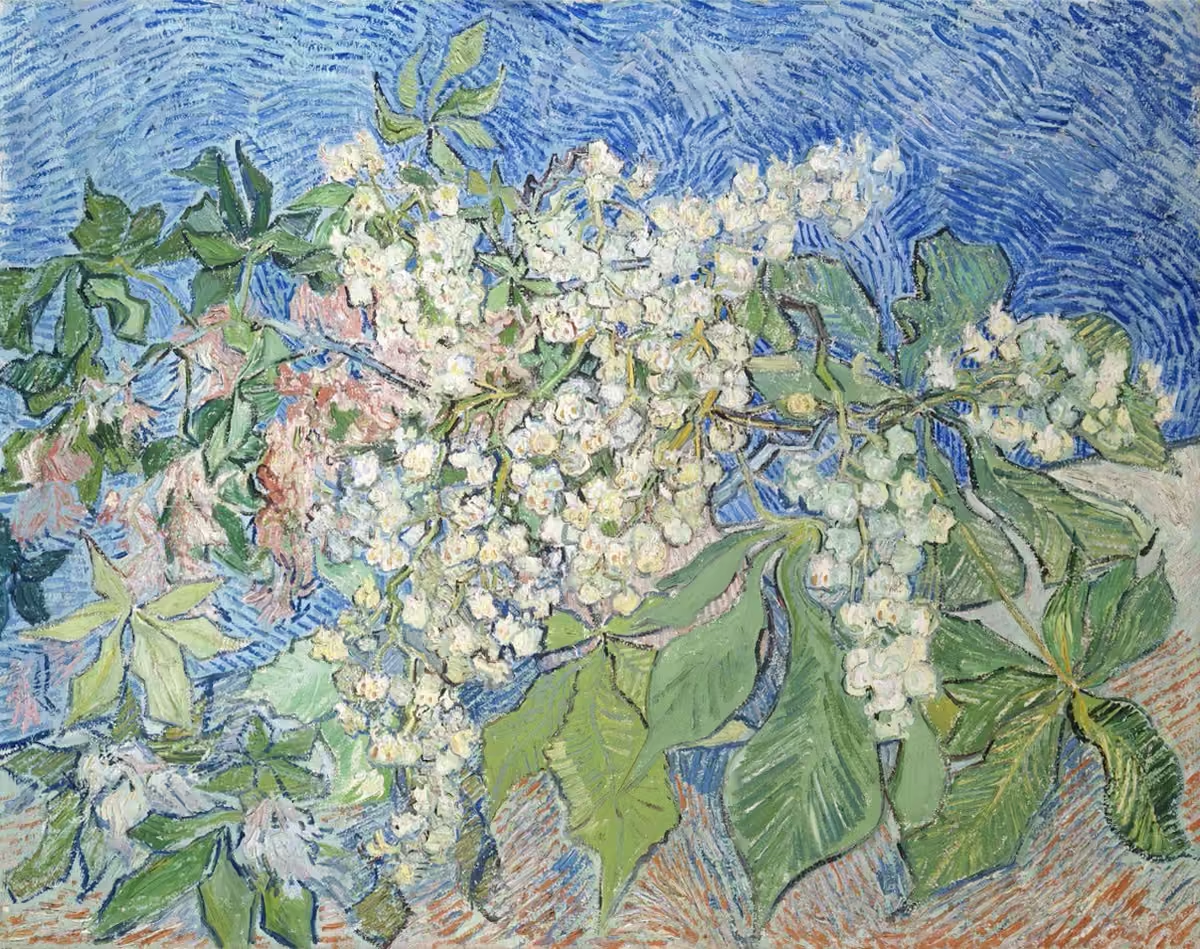
Starting in 1887, Van Gogh returned to the subject of blossoming trees every spring. And 1890 was no exception. Near Pontoise, he sketched a house almost hidden behind a chestnut tree, adding colour notes so he could later turn the drawing into a painting. Look for the strong path perspective and the tree set against a blue ‘halo’ of sky. 🌳✨
1 ‘The House of Père Pilon', 1890 © Private collection
2 ‘Dead-End Street with Houses’, 1890 © Van Gogh Museum -
Van Gogh Museum
@vangoghmuseum
Van Gogh didn't paint flowers just because they were beautiful. 🌸
For Vincent, they were the perfect way to experiment with colour and contrast. That's why many of his flower paintings are just as much about colour as they are about nature.
Which of Van Gogh's flower paintings is your favourite? -
Van Gogh Museum
@vangoghmuseum
Apparently, Vincent's paintings weren't everyone's idea of dinner décor. 🤢🍽️
Restaurant owner Étienne-Lucien Martin hosted an exhibition of Vincent's work, and Vincent painted his portrait as a thank you. But after Martin claimed the paintings were spoiling his customers' appetite, the exhibition closed early – and the portrait never made it to its intended owner.
🖼️ Now on view as part of the exhibition ‘Vincent’s Path to Fame’, until 6 September. -
Van Gogh Museum
@vangoghmuseum
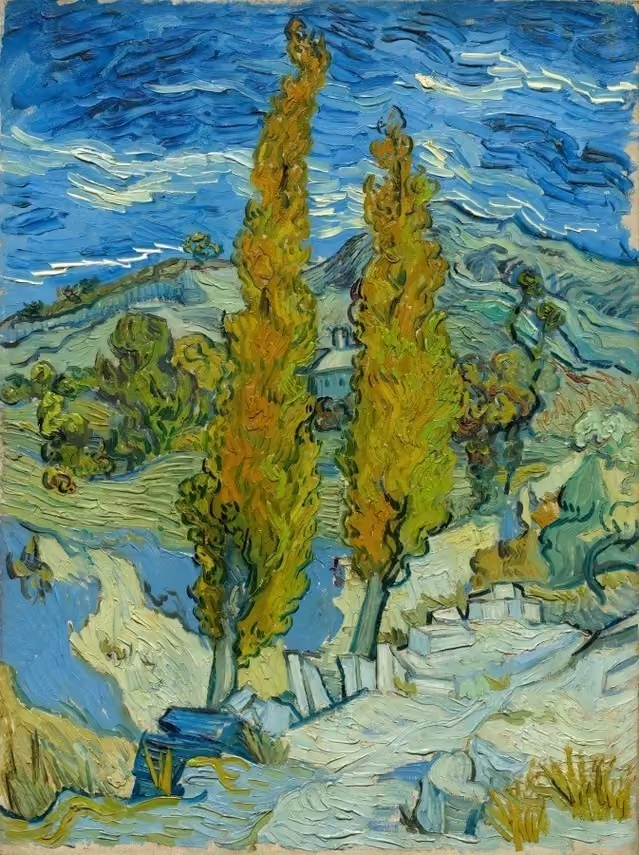
If you had to describe this painting in one word, what would it be?
🖼️ 'Two Poplars in the Alpilles near Saint-Rémy', 1889 © The Cleveland Museum of Art -
Van Gogh Museum
@vangoghmuseum
Every painting has details that are easy to miss if not pointed out. 👈👇☝️
In ‘Almond Blossom’, Vincent first painted the branches, then filled in the sky around them. It's a subtle detail, but one that tells us something about how he worked on this painting.
🖼️ ‘Almond Blossom’, 1890 © Van Gogh Museum -
Van Gogh Museum
@vangoghmuseum
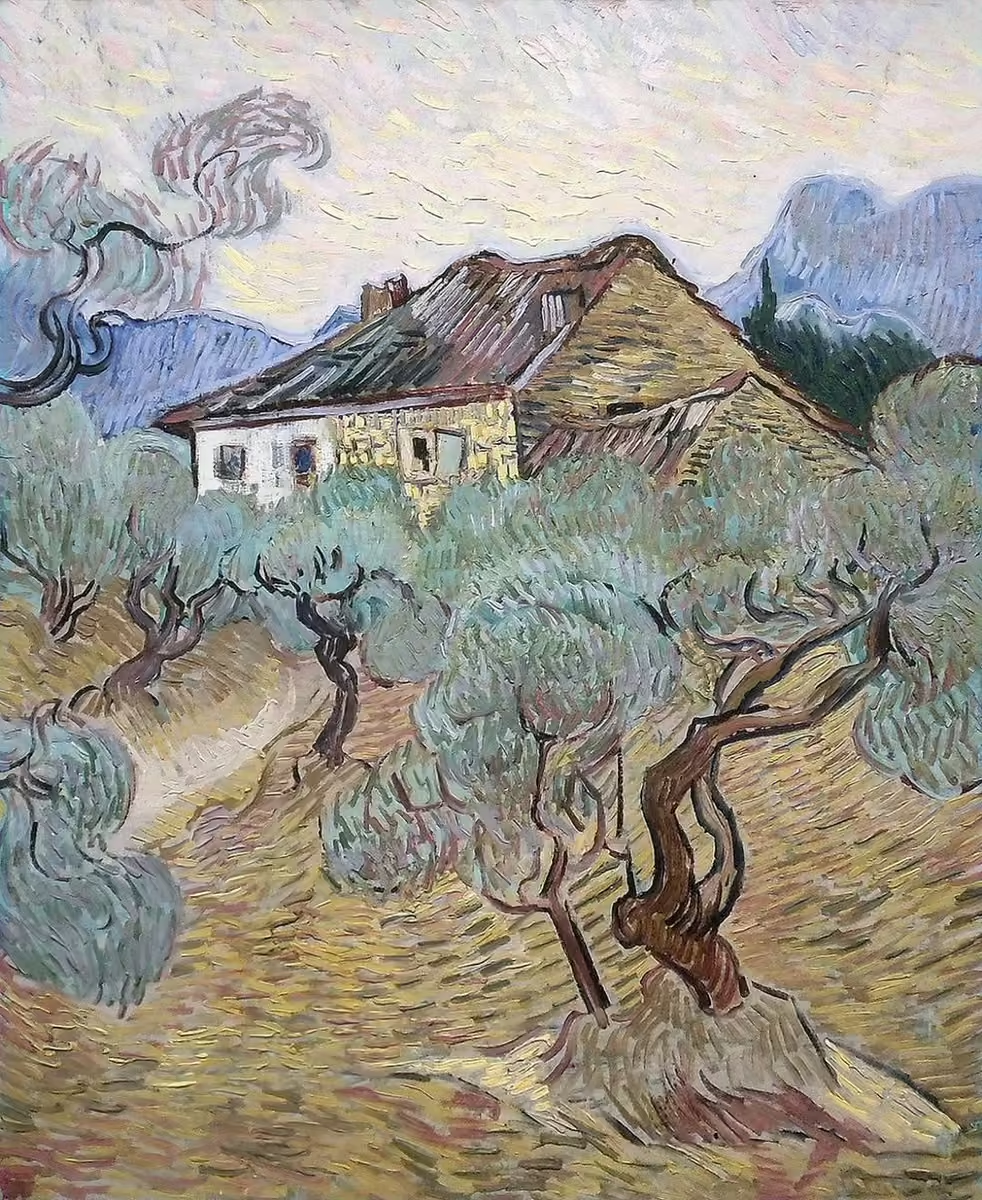
Van Gogh planned each painting carefully in advance, allowing him to work quickly, although he was sometimes criticised for this. To his brother Theo, he wrote, 'If people say they’re done too quickly, you can reply that they looked at them too quickly.'
🖼️ ‘The White Cottage Among the Olive Trees’, 1889 © Private collection -
Van Gogh Museum
@vangoghmuseum
Would you say Van Gogh’s clouds look imagined? 👀
From storm clouds to glowing sunsets. They may look dreamlike, but research found that many of them were based on real atmospheric phenomena. Vincent looked up, observed carefully, and painted what he saw in his own unique way.
Which Van Gogh sky is your favourite? 🌥️ -
Van Gogh Museum
@vangoghmuseum
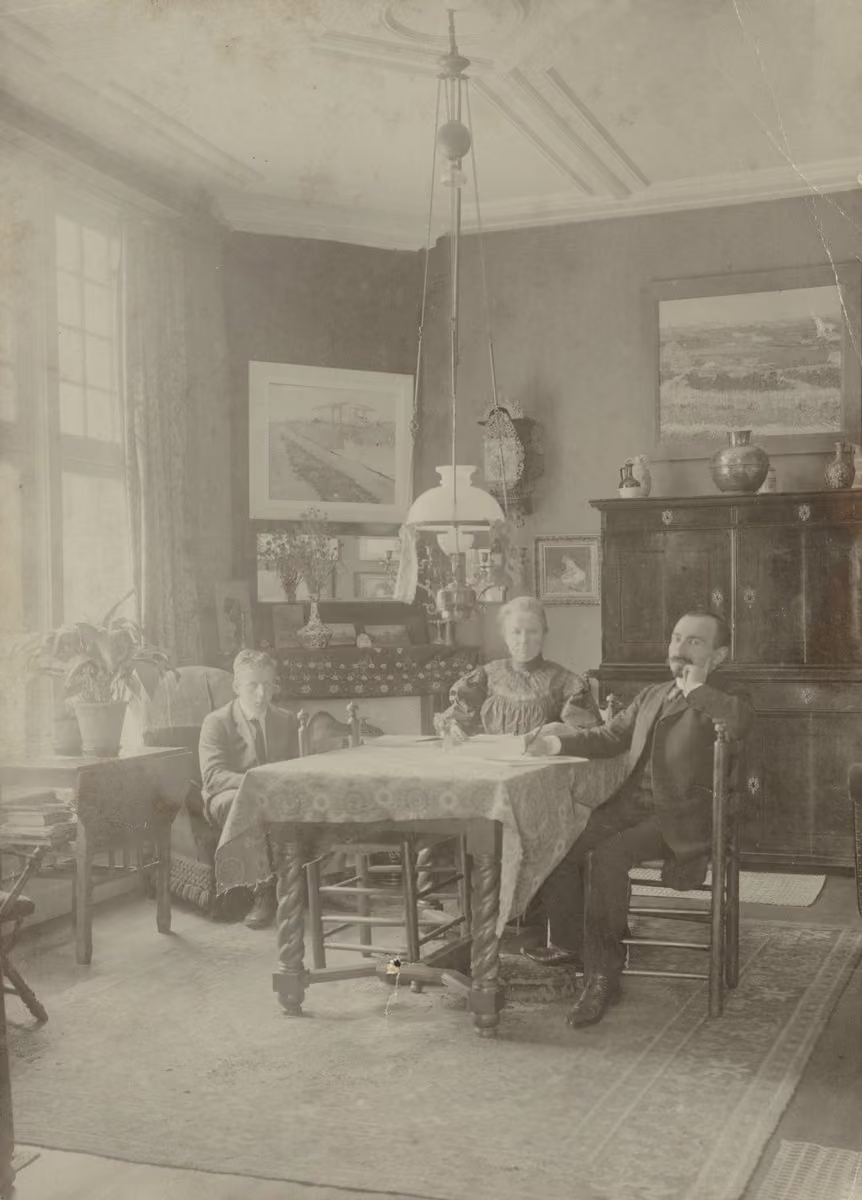
How many Van Goghs did you spot? 👀 At first glance, you might notice the two paintings. But technically, there are four Van Goghs in this photo.
The two people pictured are Jo van Gogh-Bonger (middle) and her son Vincent Willem van Gogh (left). Together, they played a vital role in preserving Vincent's legacy and sharing his art with the world.
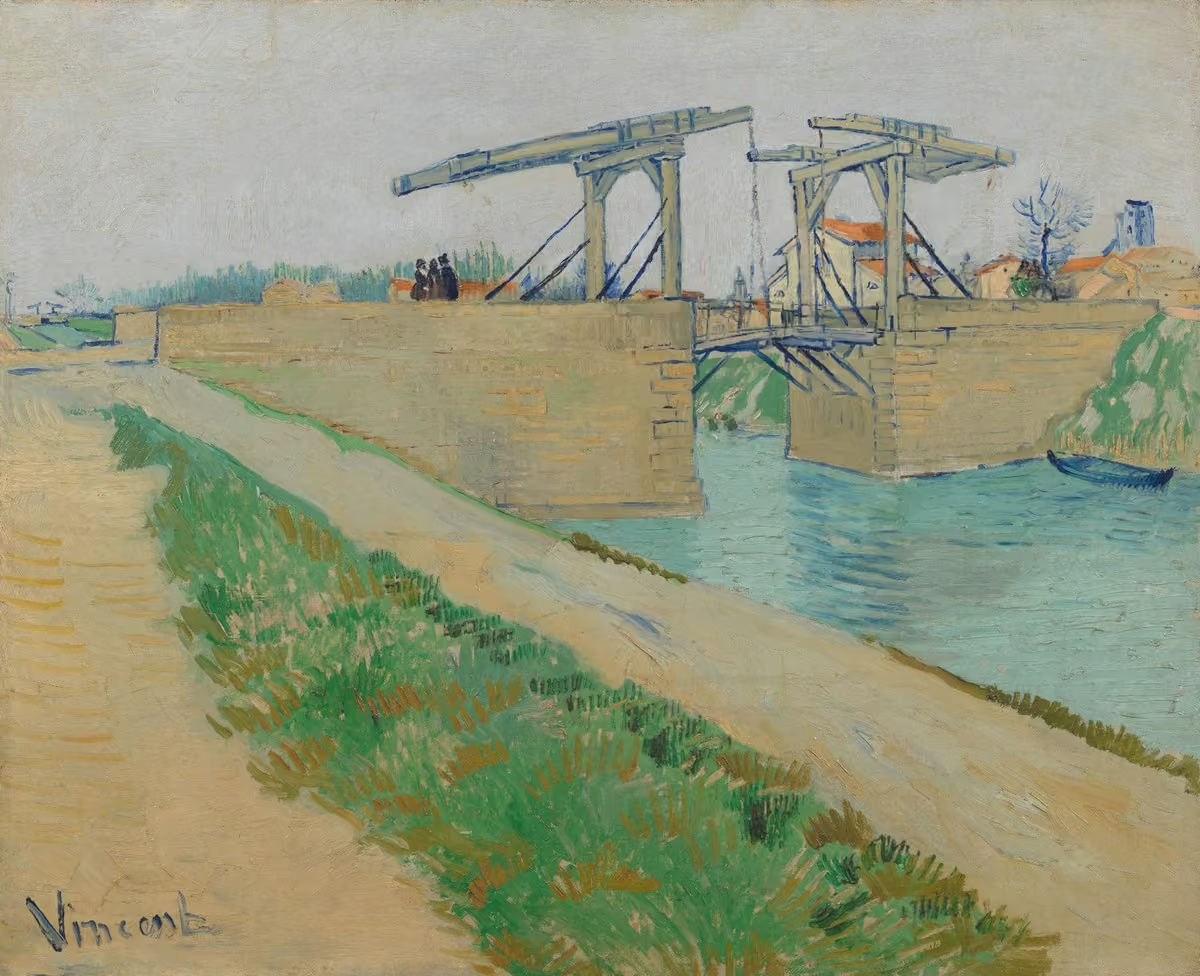
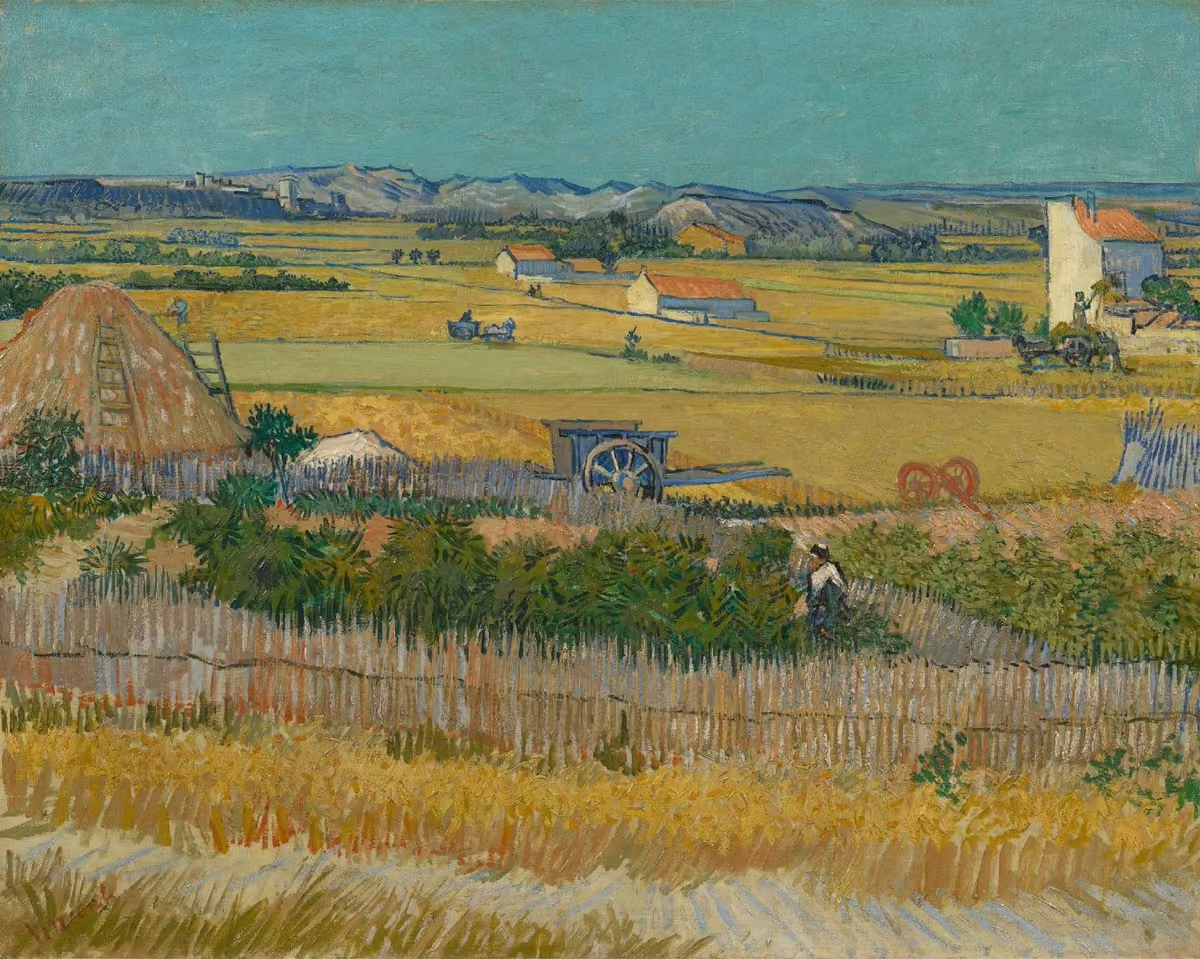
The paintings behind them, ‘The Langlois Bridge’ (3) and ‘The Harvest’, (4) were once simply part of everyday family life before becoming part of the Van Gogh Museum collection.
Want to learn more about the family history behind these paintings? Visit the exhibition ‘Vincent’s Path to Fame’, until 6 September. -
Van Gogh Museum
@vangoghmuseum
Not just plants… apparently 🌿
Van Gogh often painted close-up views of the forest floor, known as sous-bois (French for undergrowth). But he didn’t just see plants… he called them
‘eternal nests of greenery for lovers.’
So next time you look, you might see more than leaves. 👀
🖼️ ‘Undergrowth’, 1889 © Van Gogh Museum -
Van Gogh Museum
@vangoghmuseum
Something to think about… 🤔💭
-
Van Gogh Museum
@vangoghmuseum
‘People say – and I’m quite willing to believe it – that it’s difficult to know oneself – but it’s not easy to paint oneself either.’
In September 1889, Van Gogh wrote to his brother Theo about this self-portrait, painted in Saint-Rémy after a period of mental health struggles. He described himself as ‘thin, pale as a devil’, with ‘dark violet blue’ tones, a ‘whiteish’ head and orange hair. Long before selfies, Van Gogh was exploring self-image – not through a camera, but through paint, colour and a remarkably honest look at himself.
🖼️ ‘Self-Portrait’, 1889 © National Gallery of Art, Washington -
Van Gogh Museum
@vangoghmuseum
Van Gogh didn’t paint fruit just for the subject. 🍊
Still lifes allowed him to experiment with colour, light and composition.
What’s your favourite fruit?
1 ‘Basket of Oranges’, 1887 © Private collection
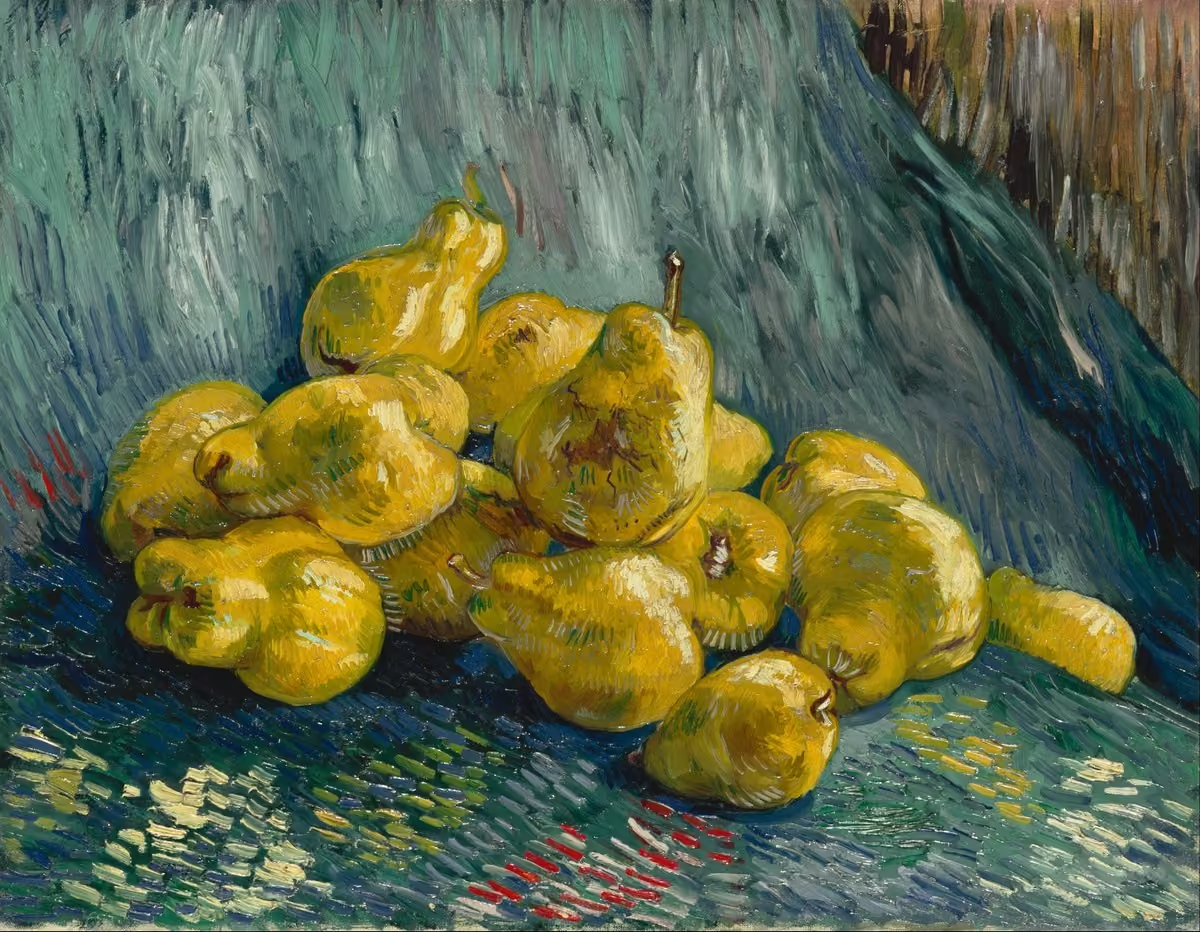
2 ‘Basket of Apples’, 1887 © Kröller-Müller Museum
3 ‘Still Life with Quince Pears’, 1887 © Galerie Neue Meister -
Van Gogh Museum
@vangoghmuseum
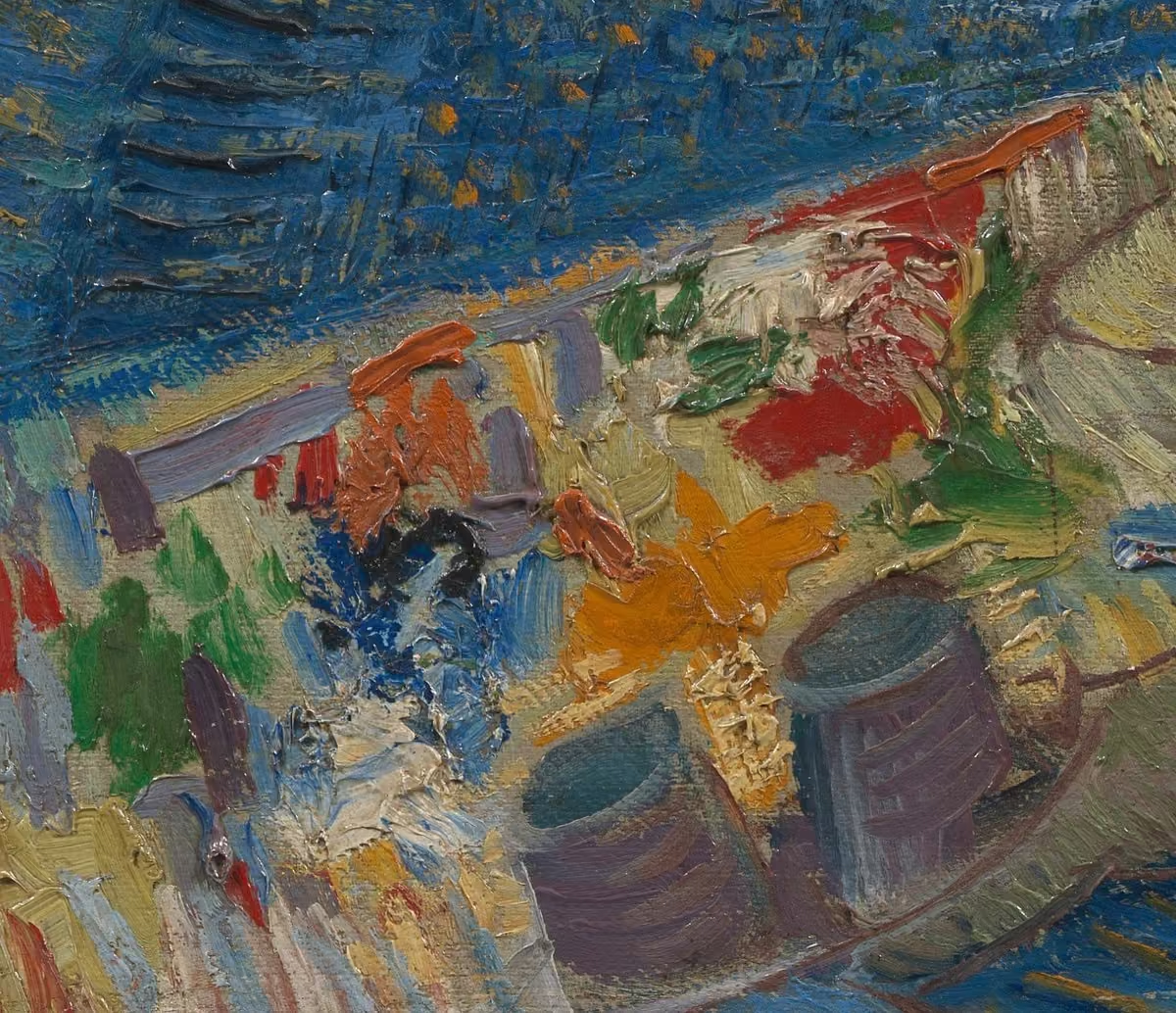
Look closely. You can almost feel the swirls 🌀 Van Gogh used impasto, applying paint thickly so each brushstroke remains visible. He began exploring this technique in Paris (1886–1888), influenced by the Impressionists.
By the time he painted ‘The Starry Night’ in Saint-Rémy, his impasto became more pronounced and expressive.
🖼️ details from ‘The Starry Night’ © MoMA -
Van Gogh Museum
@vangoghmuseum
In 1888, Van Gogh painted this glowing scene of a farmer sowing seeds. Take another look. That bright sun? It looks like a halo. 🌞
Vincent saw beauty in rural life and, with Gauguin’s encouragement, used colour and imagination to make the ordinary feel sacred.
🖼️ ‘The Sower’, 1888 © Van Gogh Museum -
Van Gogh Museum
@vangoghmuseum
For whoever needs to hear this right now.
detail of ‘Pink Roses’, 1890 © Ny Carlsberg Glyptotek -
Van Gogh Museum
@vangoghmuseum
Today, we remember Vincent van Gogh, who passed away 136 years ago.
Jo missed her husband Theo, Vincent's brother, who died six months after Vincent. She read their letters and recognized the feeling of feeling abandoned and alone.
Grief touches everyone at some point in life. It can feel isolating, like walking through a storm alone — just as Jo described. But grief is also a thread that connects us. A quiet language we all, at some point, come to understand.
💬 How do you carry grief? Or do you have tips for someone dealing with grief at the moment?
#vincentvangogh #vangogh -
Van Gogh Museum
@vangoghmuseum
‘I imagine it would disappoint you and appear ugly were you to see it.’ Vincent wrote this to his sister Willemien about this very painting...🤯
‘I know very well that not a single flower was drawn, that they're just little licks of colour.’ He wasn't being modest – he genuinely doubted anyone would understand his technique.
What do you think Vincent would say if he saw how we look at this painting today?
🖼️ ‘Garden at Arles’, 1888 © Kunstmuseum Den Haag -
Van Gogh Museum
@vangoghmuseum
Would you say it's a good deal?
🖼️ 'Portrait of Vincent van Gogh' by John Russell (1886) is now o'n view in Vincent's Path to Fame' until 6 September.This media couldn't be displayed. See it on the original post. -
Van Gogh Museum
@vangoghmuseum
The weight of words 🗣️ 'There are so many people [...] who imagine that words are nothing. On the contrary, don’t you think, it’s as interesting and as challenging to say a thing well as to paint a thing. There’s the art of lines and colours, but there’s the art of words that will last just the same.' ✍️ to Emile Bernard, 1888
🖼️ 'Vase with Carnations', 1886 © Stedelijk Museum Amsterdam -
Van Gogh Museum
@vangoghmuseum
💭 Vincent painted this work as a memory of Brabant, the place where he had grown up. The huts you see here belonged to the poor labourers, which he called 'peoples' nests'. These 'nests' represent the rural life of Brabant and the security of family life, both of which he missed while being a patient in the psychiatric institution in Saint-Rémy.
Can you tell that Vincent painted this from memory?
🖼️ Houses and figure, 1890 © The Barnes Foundation -
Van Gogh Museum
@vangoghmuseum
Both Van Gogh and his artist friend Paul Gaugin painted 'The Night Café’. In Gauguin's painting (2), the older woman is Madame Ginoux, who managed the Café de la Gare (Arles), a place both Vincent and Gauguin frequented.
Which one do you like best?
1 Vincent van Gogh, ‘The Night Café’, 1888 © Yale University Art Gallery.
2 Paul Gauguin ‘Night café’, 1888 © Pushkin Museum. -
Van Gogh Museum
@vangoghmuseum
‘What I’m most passionate about, much much more than all the rest in my profession – is the portrait, the modern portrait. I seek it by way of colour [...]’
In the final years of his life, portrait painting became increasingly important to Vincent. He didn’t want to paint people realistically, but instead believed colour could reveal something deeper about who they were.
So what do you think the colours in these portraits tell us about the sitter?
1 ‘L'Arlésienne, Madame Ginoux’, © 1890 Private collection
2 ‘Portrait of Joseph Roulin’, 1889 © MoMA
3 ‘The Italian Woman’, 1887. In the collection of Musée d’Orsay
4 ‘Portrait of Doctor Félix Rey’, 1889 © Pushkin Museum -
Van Gogh Museum
@vangoghmuseum
🧚 In late 19th-century Paris, absinthe was a familiar sight in artistic circles. Reflecting on his own alcohol consumption years later, Vincent wrote that he had let himself be carried away too much, 'while my strength was abandoning me.'
🖼️ 'Café Table with Absinthe' is now on view in the exhibition 'In Search of an Anchor', brought to you by The ReFramers. On view until 20 September 2026.This media couldn't be displayed. See it on the original post. -
Van Gogh Museum
@vangoghmuseum
The blurry top of the canvas could suggest a troubled mind. And that would fit the sitter’s story: he was one of Van Gogh’s fellow patients in the psychiatric institution in Saint-Rémy in France.
The hazy top corner, however, was no artistic choice, but the result of an accident shortly after the painting was made.
We may never know what caused the damage to the painting, but somehow, that clouded corner feels like an echo of the sitter’s story.
🖼️ ‘Portrait of a Man’, 1889 © Van Gogh Museum -
Van Gogh Museum
@vangoghmuseum
🕵️♀️ Ready to investigate?
Vincent’s ‘Sunflowers’ once looked quite different. Over time, some of the vibrant yellows have slowly changed, altering the way we see the painting today.
So what happened to Van Gogh’s original yellow?
That question sparked ‘The Colour Heist’, our investigation into the mystery behind Van Gogh’s changing colours. Watch here: www.youtube.com/watch?v=C3SiGSmfSs4
#vangogh #truecrime #mystery #arthistory #thecolourheist #asml
@ASMLcompany works with the Van Gogh Museum to preserve Van Gogh’s heritage through technology. -
Van Gogh Museum
@vangoghmuseum
Would you have given up on Vincent?
In the winter of 1887, Theo nearly did. Sharing a small Paris apartment with his brother Vincent had become overwhelming. Yet instead of closing the door on him, Theo chose to stay, and to keep believing in Vincent as an artist.
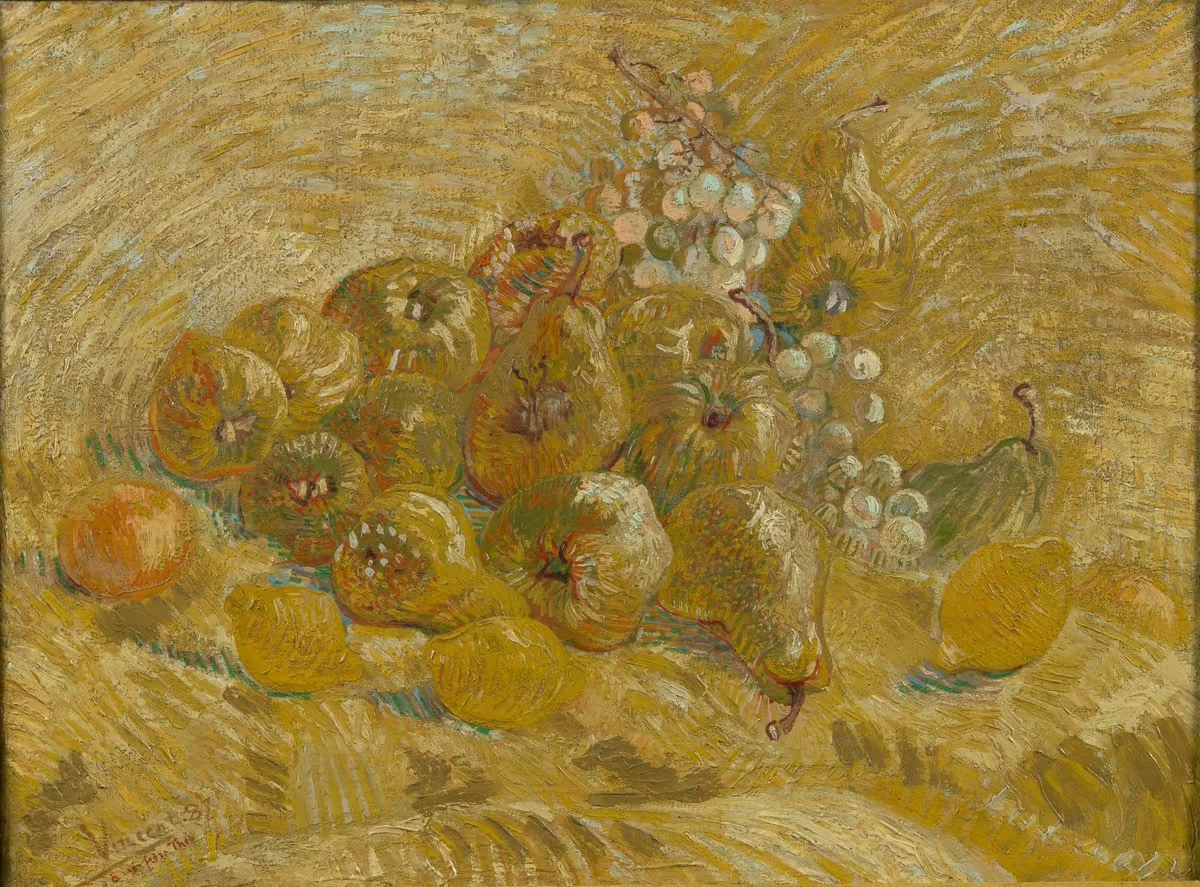
Vincent painted 'Quinces, Lemons, Pears and Grapes': a carefully composed still life that he dedicated to Theo. Beneath the fruit and colour lies something deeply personal: a gesture of gratitude to the brother who continued to stand by him even when their relationship was under strain. 🍇🍋
🖼️ now on view in ‘Vincent’s Path to Fame’, until 6 September. -
Van Gogh Museum
@vangoghmuseum
Fun Fact 💡We probably all know Van Gogh’s ‘Starry Night over the Rhône' (Musée d’Orsay) and the even more famous ‘Starry Night' (MoMa), but this painting is actually the last night painting Vincent made with stars and moonlight. ✨
Vincent didn't seem to assign much significance to the painting. In a letter to his brother Theo, written six weeks before his death, he described it as ‘a study'. 🌝
'The White House at Night', 1890 ©️ The Hermitage, St. Petersburg. -
Van Gogh Museum
@vangoghmuseum
Van Gogh’s flower of choice: Sunflowers. 🌻
While living in France, he came across sunflowers growing in Montmartre’s vegetable gardens. Their ‘rustic’ charm likely appealed to him.
In the 19th century, some painters became closely associated with a single bloom – and for Van Gogh, it was the sunflower. He wrote to his friend Paul Gauguin: ‘If Jeannin has the peony, Quost the hollyhock, I indeed, before others, have taken the sunflower.’ 🖼️ ‘Allotment with Sunflower’, 1887 © Van Gogh Museum -
Van Gogh Museum
@vangoghmuseum
A small painting with a remarkable family history. ❤️
Painted by Vincent van Gogh in 1886, ‘Path in Montmartre’ was cherished for generations by the Van Gogh family. Jo van Gogh-Bonger, Theo van Gogh’s widow, kept it on her mantelpiece. Later, her son Vincent Willem van Gogh hung it in his own home. Vincent Willem went on to play an important role in establishing the Van Gogh Museum, where the painting eventually found its permanent place.
Want to learn more about Van Gogh and his family? Visit ‘Vincent’s Path to Fame’, on view until 6 September.
🖼️ ‘Path in Montmartre’, 1886: now on view © Van Gogh Museum -
Van Gogh Museum
@vangoghmuseum
Parlez-vous français? 🇫🇷 Vincent was of course Dutch, but he wrote about a third of his letters in French – the international language at the time. Van Gogh could speak French from an early age, but it was only after he moved to Paris, in 1886, that he completely switched to writing in French. 🖋📜
-
Van Gogh Museum
@vangoghmuseum
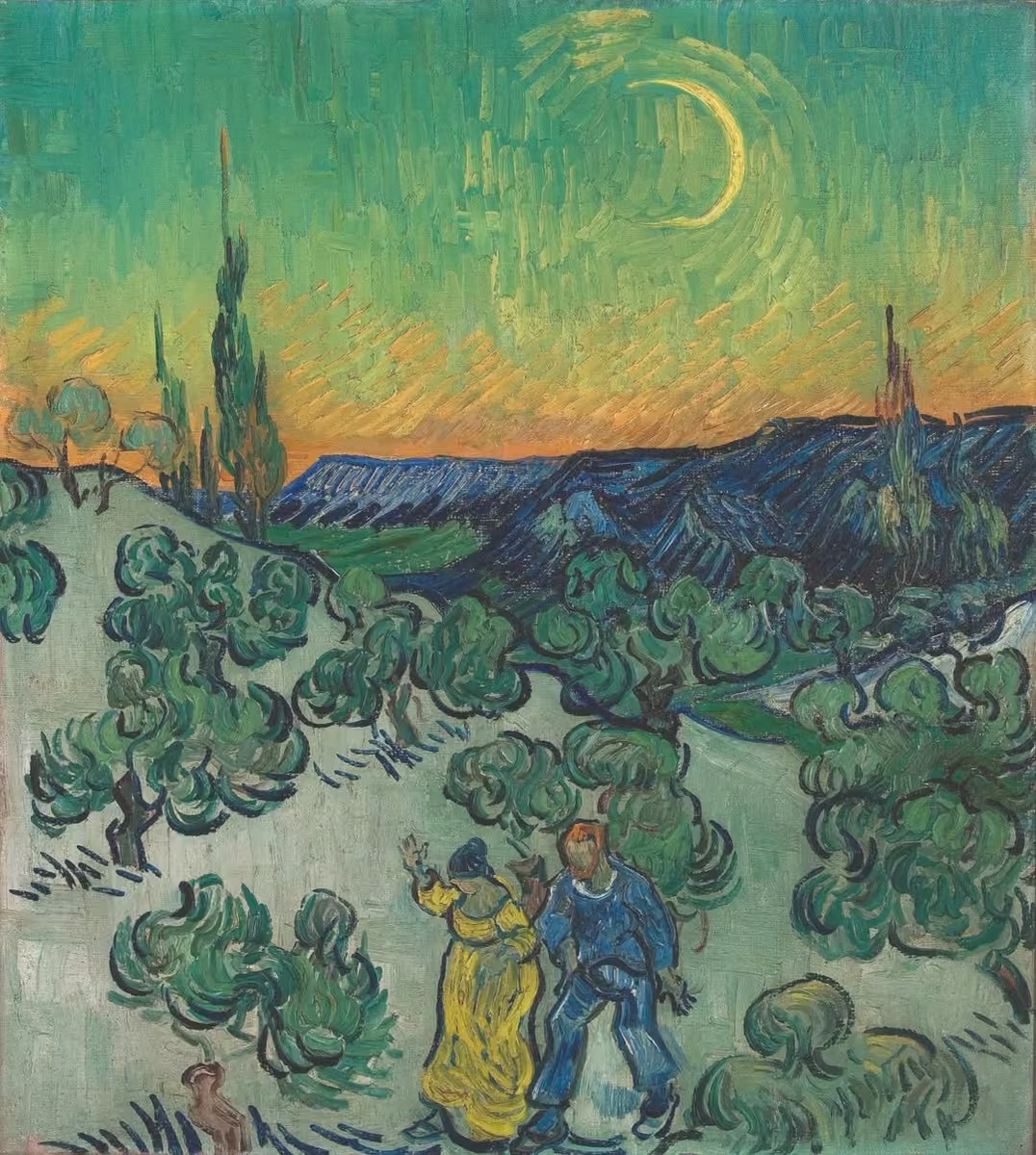
🌙 This painting depicts a captivating moonlit night. In a letter to his brother Theo, Vincent vividly described the night sky he viewed from the Saint-Rémy asylum window: 'a nocturnal sky with a stupefying moon' 🎨.
As we focus on the lower right corner, we can't help but wonder... is that Vincent himself? Some speculate the red-haired figure in this romantic scene is indeed the artist. What do you think?
‘A Walk at Twilight’, 1889-1890 © São Paulo Museum of Art. -
Van Gogh Museum
@vangoghmuseum
Hats off to Van Gogh 🎩
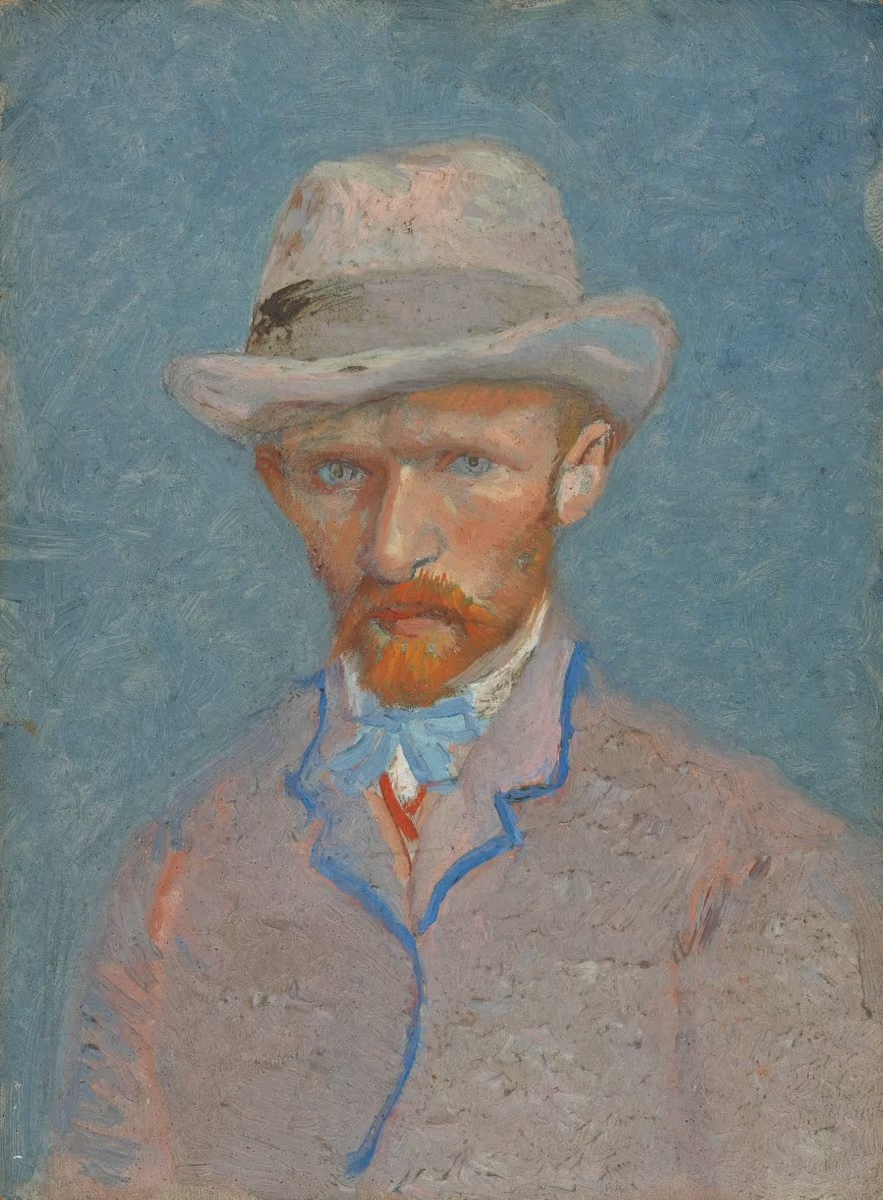
Vincent didn’t say much about his hats, but they show up in plenty of his self-portraits. The straw hat? Perfect for summer: light, airy, and ideal for painting outdoors in the southern sun. The grey felt hat? A neater, more urban look, worn during his Paris years – and pretty fashionable for the time.
💡 Fun fact: Back in Brabant (NL), Vincent’s parents made him wear a fur hat all year round, even in summer, much to his annoyance. 🥵
1 'Self-Portrait with Grey Felt Hat', 1887 © Van Gogh Museum
2 'Self-Portrait with Straw Hat', 1887 © Van Gogh Museum
3 'Self-Portrait', 1887 © Van Gogh Museum -
Van Gogh Museum
@vangoghmuseum
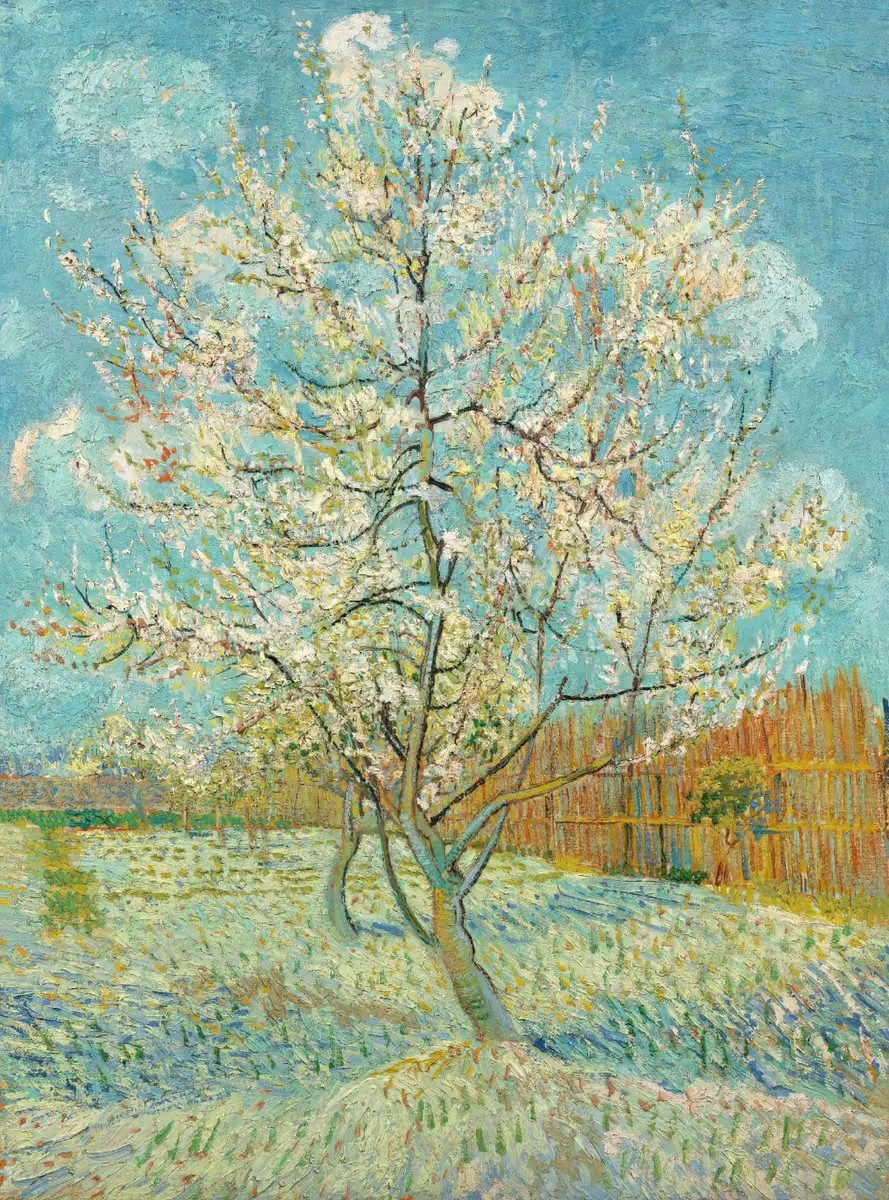
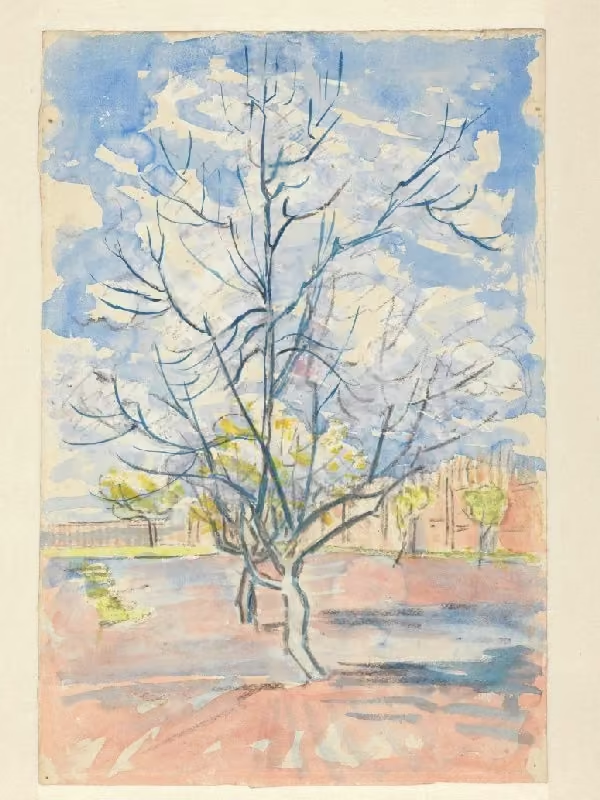
Van Gogh called this orchard scene ‘probably the best landscape I’ve done.' And you can see why, in every single detail. 🎨
🖼️ ‘The Pink Peach Tree’, 1888 © Van Gogh Museum -
Van Gogh Museum
@vangoghmuseum
Van Gogh was a realist: he always started from what he saw in reality, even when he exaggerated, changed, or simplified colours and forms. He wanted everyone to be able to understand his work, without having to explain much.
Vincent wrote to his brother Theo:
I’ve done my best, brother, to ensure that you can see (and not just you, but everyone with eyes in his head) that I strive and sometimes manage to tackle things practically.
🖼️ ‘Absinthe Glass with Wild Flowers’, 1890 © Private collection -
Van Gogh Museum
@vangoghmuseum
Before Vincent became an artist, his mother Anna van Gogh-Carbentus encouraged creativity, drawing and a close observation of nature. This floral still life is one of the few surviving artworks made by Vincent’s mother herself.
Years later, Vincent wrote to her:
‘Painting is something in itself. [...] it’s the only tie that links the past and the present for me.’
Want to learn more about Van Gogh and his family? Visit ‘Vincent’s Path to Fame’, on view until 6 September.
🖼️💐 Now on view: ‘Still Life with a Basket of Flowers’ by Anna Cornelia van Gogh-Carbentus -
Van Gogh Museum
@vangoghmuseum
Fun fact: this painting didn’t always look the way it does today 🎨 The background was once a rich purple – a mix of red and blue – but over time, the red pigment has discoloured and become almost completely transparent.
Vincent van Gogh painted around 35 self-portraits, many in Paris, as a way to practise. Here, he experiments with short, loose brushstrokes and brighter accents, like the orange in his beard. (2)
‘Self-Portrait’, 1887 © Van Gogh Museum -
Van Gogh Museum
@vangoghmuseum
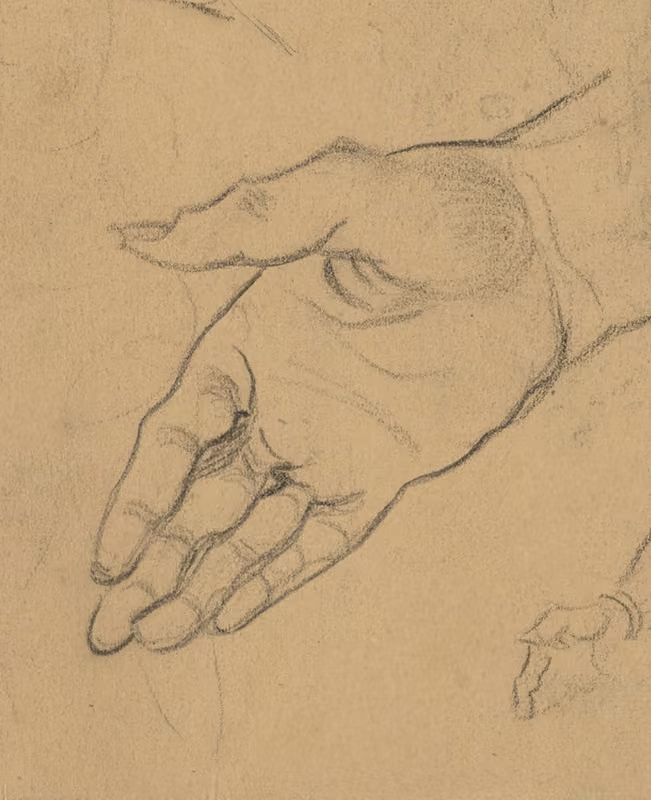
What’s your favourite detail? ✏️
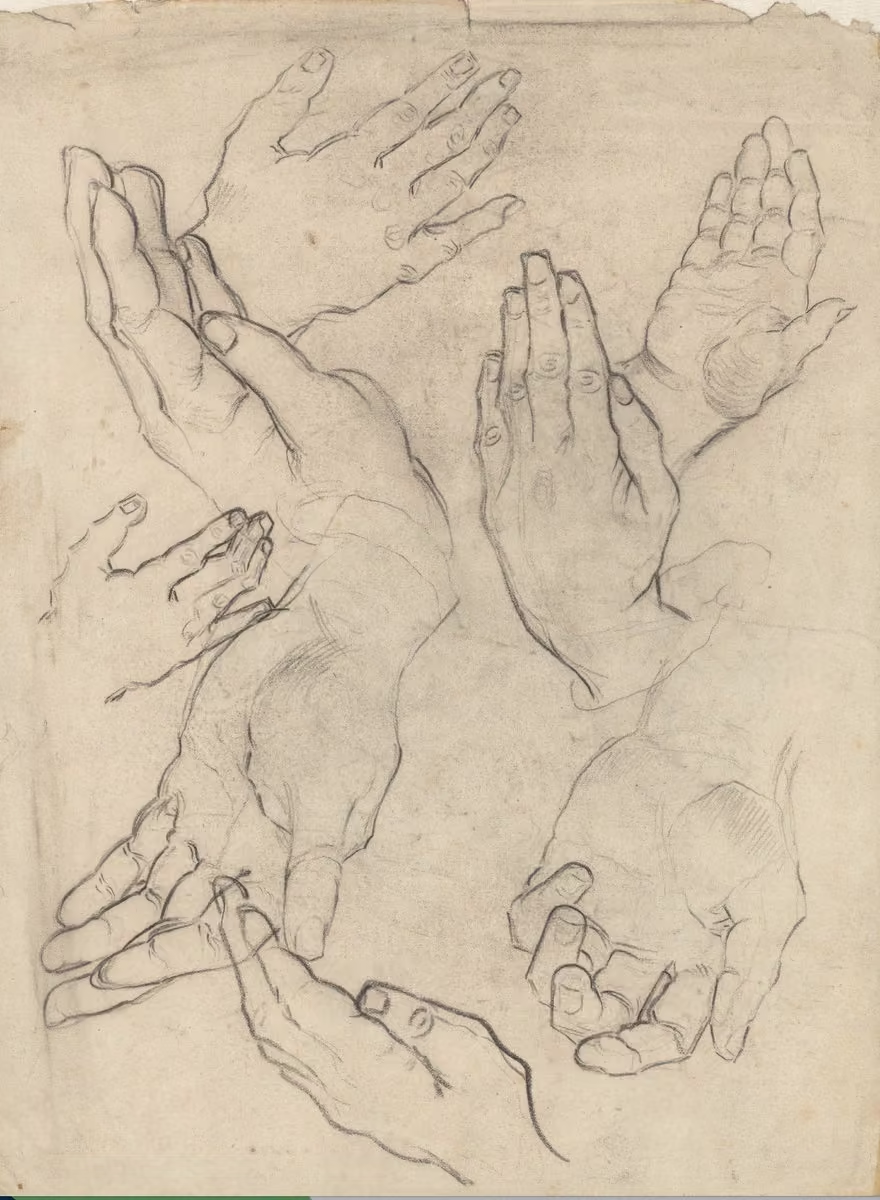
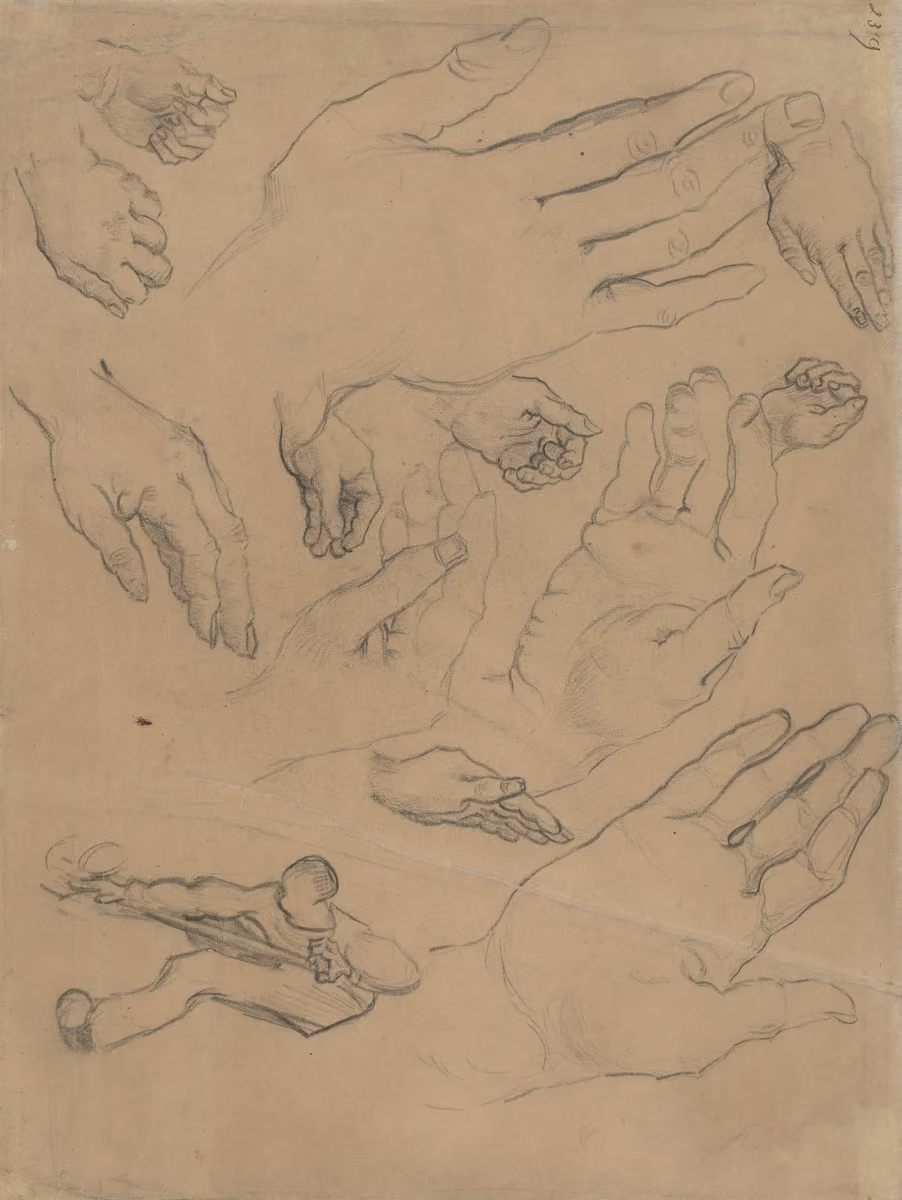
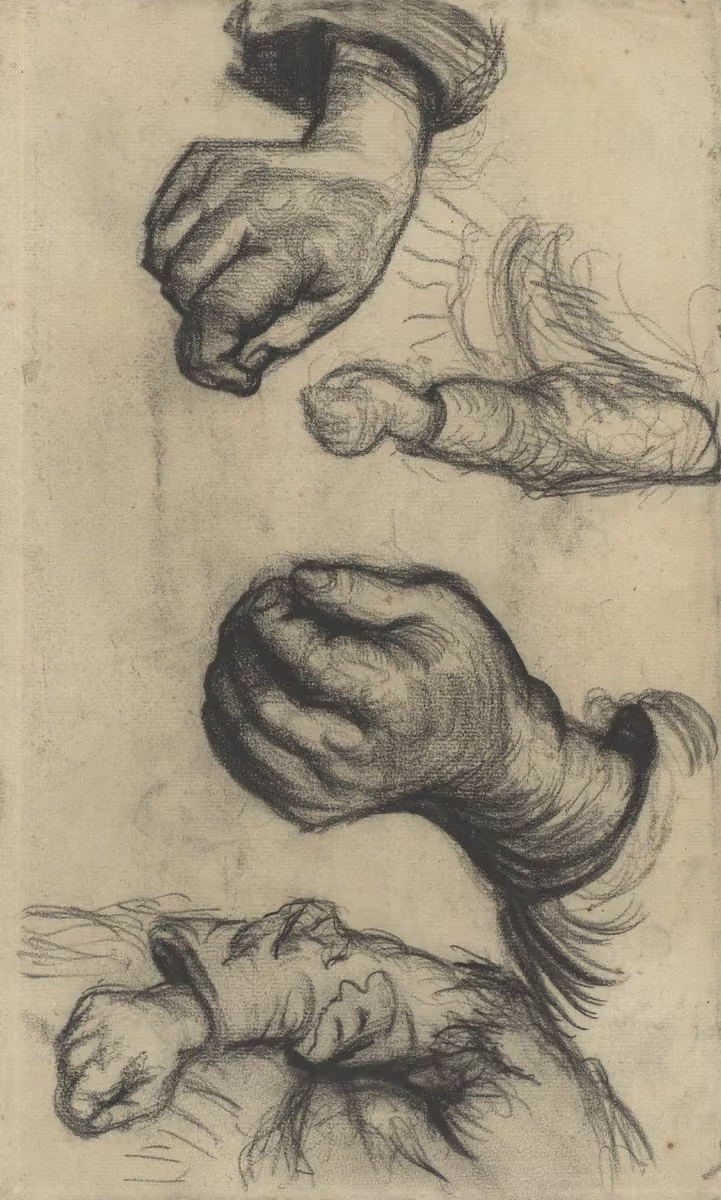
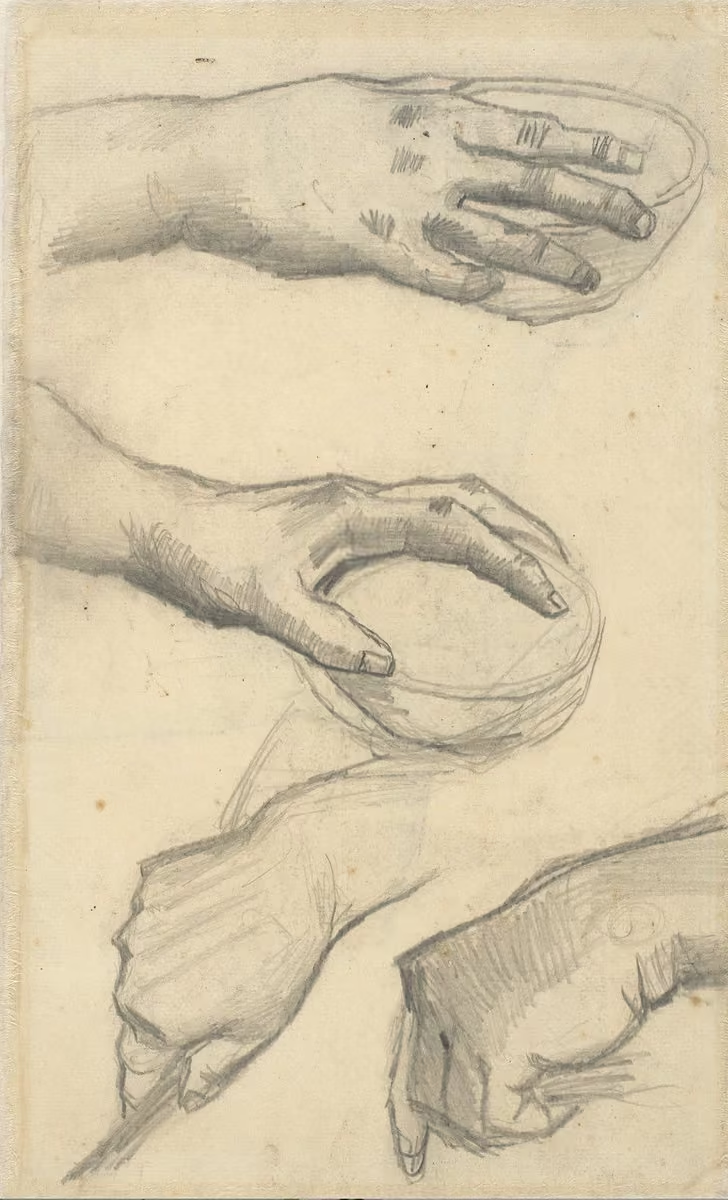
‘Sketches of Figures and Studies of a Hand’, 1890 © Van Gogh Museum -
Van Gogh Museum
@vangoghmuseum
Did you know Van Gogh once compared the South of France to Japan? 🇫🇷🔁🇯🇵 Inspired by Japanese prints, he saw the region as a place of spiritual simplicity – as his own version of Japan, where he could live a life devoted to art and nature.
🖼️ © Van Gogh Museum -
Van Gogh Museum
@vangoghmuseum
Not just a portrait…
When Vincent painted Patience Escalier, he wasn’t just capturing a face. He was searching for something more lasting. He wrote that he wanted to create figures with
‘something of the eternal… instead of the halo.’
Not through symbols, but through colour and expression. In Vincent’s eyes, this elderly gardener – once a cowherd – carried the weight of something timeless.
🖼️ ‘Portrait of Patience Escalier’, 1888 © Private collection -
Van Gogh Museum
@vangoghmuseum
You’re not seeing double 👀
Van Gogh painted this view twice, returning to the same subject to develop it further.
1 Studio: refined, deeper colour
2 Outdoors: quick, expressive, thick brushwork
1 ‘A Wheatfield, with Cypresses’, 1889 © The National Gallery, London
2 ‘A Wheatfield, with Cypresses’, 1889 © MET -
Van Gogh Museum
@vangoghmuseum
What the crab?! 🦀🦀
In January 1889, after leaving the hospital in Arles, Vincent van Gogh picked up his brushes again and turned to still-life painting, possibly starting with these crabs.
But these aren’t just quick studies. Van Gogh was inspired by Japanese woodblock prints, borrowing both the subject matter and the bold outlines. He also experimented with complementary colours, placing vivid reds against green to intensify both.
Shell we call them masterpieces?
1 ‘A Crab on its Back’, 1887 © Van Gogh Museum
2 ‘Two Crabs’, 1889 © The National Gallery, London -
Van Gogh Museum
@vangoghmuseum
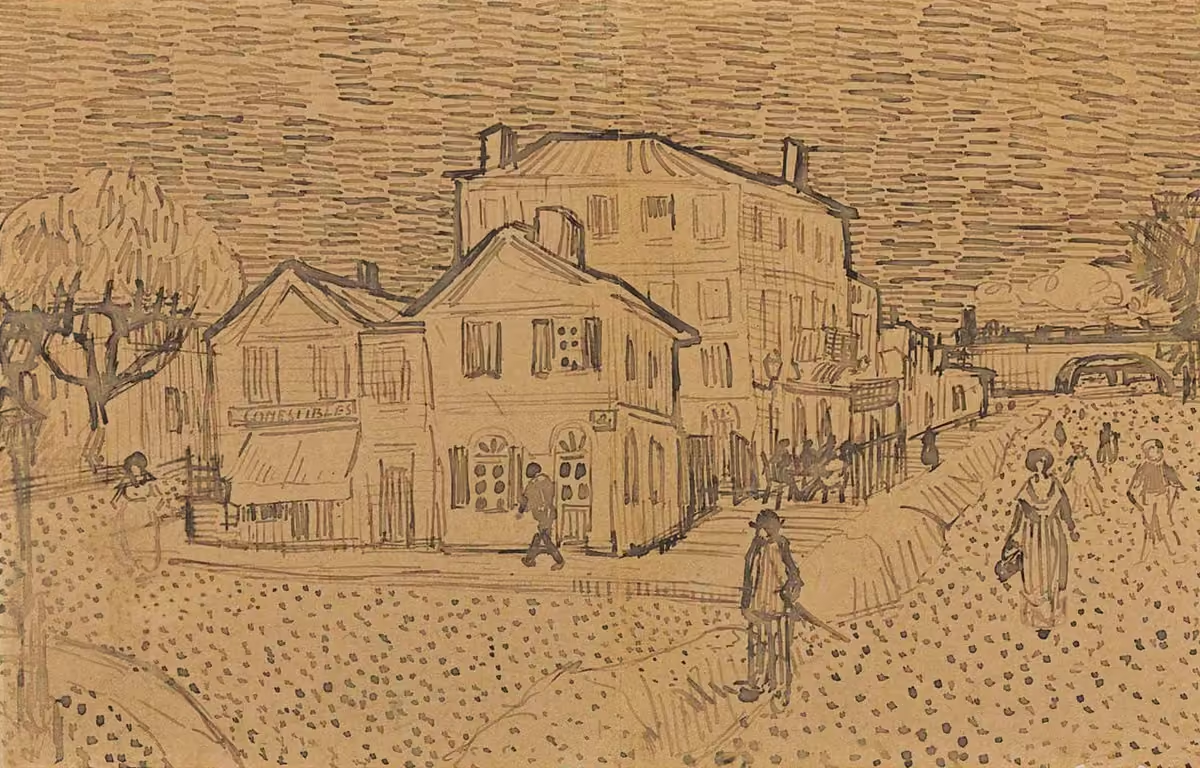
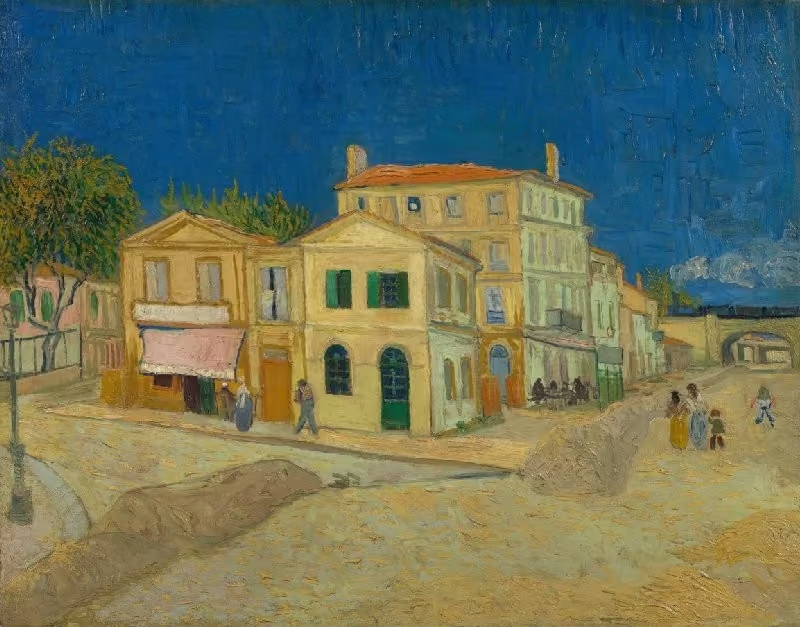
Van Gogh often made sketches in letters to his brother Theo, sharing what he was working on and bringing him closer to his world ✉️
He describes the Yellow House under a ‘sulphur sun’ and a ‘pure cobalt sky.’ Can you see it coming to ‘life’ in his painting?
🖼️ ‘The Yellow House (The Street)’, 1888 © Van Gogh Museum
✏️ (recto) page of a letter from Vincent to his brother Theo, September 1888 © Private collection -
Van Gogh Museum
@vangoghmuseum
A windy day at sea ⛵ As you may already know, Vincent loved to paint outdoors. For ‘Seascape near Les Saintes-Maries-de-la-Mer’, he took his easel to the beach. While researching the painting, a conservator found three clues that confirm this:
(2) Grains of sand were found in the paint.
(3) While Vincent was painting, the sand also made scratches in the paint.
(4) To secure the canvas to his easel, Vincent used two clips that left their marks in the paint.
🖼️ Now on view in the exhibition ‘Vincent's Path to Fame’, until 6 September. -
Van Gogh Museum
@vangoghmuseum
Fun fact: Van Gogh said he ‘knocked off’ this portrait in just one hour ⏱️
Meet Madame Ginoux, the Arlésienne, owner of the Café de la Gare and part of Vincent’s daily life. She even cared for him when he was hospitalised in 1888.
Painted quickly, yet full of presence; less about perfection, more about character.
🖼️ ‘The Arlesienne’, 1888 © Musée d’Orsay -
Van Gogh Museum
@vangoghmuseum
Vincent claiming his sunflower 🌻 In Paris, he didn’t only paint flowers as decorative subjects – they became a way to experiment and push colour further. Vincent set out to explore bold contrasts: blue against orange, red with green, yellow with violet.
And in these sunflowers, he seems to find it.
No bouquet, no setting – just flowers, life-sized, filling the canvas. Colour in full force, brushstrokes moving in all directions.
‘You know that Jeannin has the peony, Quost has the hollyhock, but I have the sunflower, in a way.’ Vincent wrote.
🖼️ ‘Four Sunflowers Gone to Seed’, 1887 © Kröller-Müller Museum -
Van Gogh Museum
@vangoghmuseum
Vincent writes about something that still might feel familiar: wanting to be sure of where things are going.
That kind of certainty is hard to come by. For him, as for many, it didn’t arrive all at once. Perhaps that’s why the line stays with us, not as a resolution, but as a recognition.
What helps you keep going when you’re not sure yet? -
Van Gogh Museum
@vangoghmuseum
A storm caught on canvas 🌪️ Van Gogh aimed to capture the essence of each object and the overall scene in his paintings. In this work Van Gogh depicted the sky turning a bold blue due to the Mistral, a strong wind in southern France, and showed leaves trembling in its gusts. To those who don't know the Mistral, his brushstrokes might seem like a visionary view of the landscape. However, he accurately depicts the strong winds of that day. (2)
‘A lane near Arles’, 1888 © Stiftung Pommersches Landesmuseum -
Van Gogh Museum
@vangoghmuseum
‘It’s a type of painting that changes… the more you look at it,’ Van Gogh wrote about his sunflowers.
What do you say, does it change the longer you look? Or the more you see it?
🖼️ ‘Sunflowers’, 1888 © Van Gogh Museum -
Van Gogh Museum
@vangoghmuseum
Vincent didn’t paint this work just because he loved nature. Almond trees bloom early in spring and symbolise new life. In 1890, that new life had just entered his own family.
His nephew, Vincent Willem, had been born. Overjoyed, Vincent wrote:
‘It gives me more pleasure than I could express in words.’
He began the painting almost immediately, as a gift.
‘Almond Blossom’ became one of the family’s most treasured works, kept by Theo, Jo, and later their son. It was never sold.
And that’s why, to this day, it can still be seen at the Van Gogh Museum.
🖼️ ‘Almond Blossom’ is now on view in the exhibition ‘Vincent's Path to Fame’, until 6 September. -
Van Gogh Museum
@vangoghmuseum
A few fun details you might overlook! 👀✨ Did you ever notice Vincent’s signature (and the date ‘88’) in this self-portrait, on the stretcher on the easel? 🖋️ (2) This orange-red signature was likely the last thing he added. 🎨 We can guess this from a clue in the painting. If you look closely at his palette, you’ll notice a patch of orange paint with a bit of red added. (3) The same colours appear in the brushstrokes he used for his signature. (4) A fun final detail that Vincent added in.
Did you notice the signature before? Let us know in the comments!
🖼️ © Van Gogh Museum -
Van Gogh Museum
@vangoghmuseum
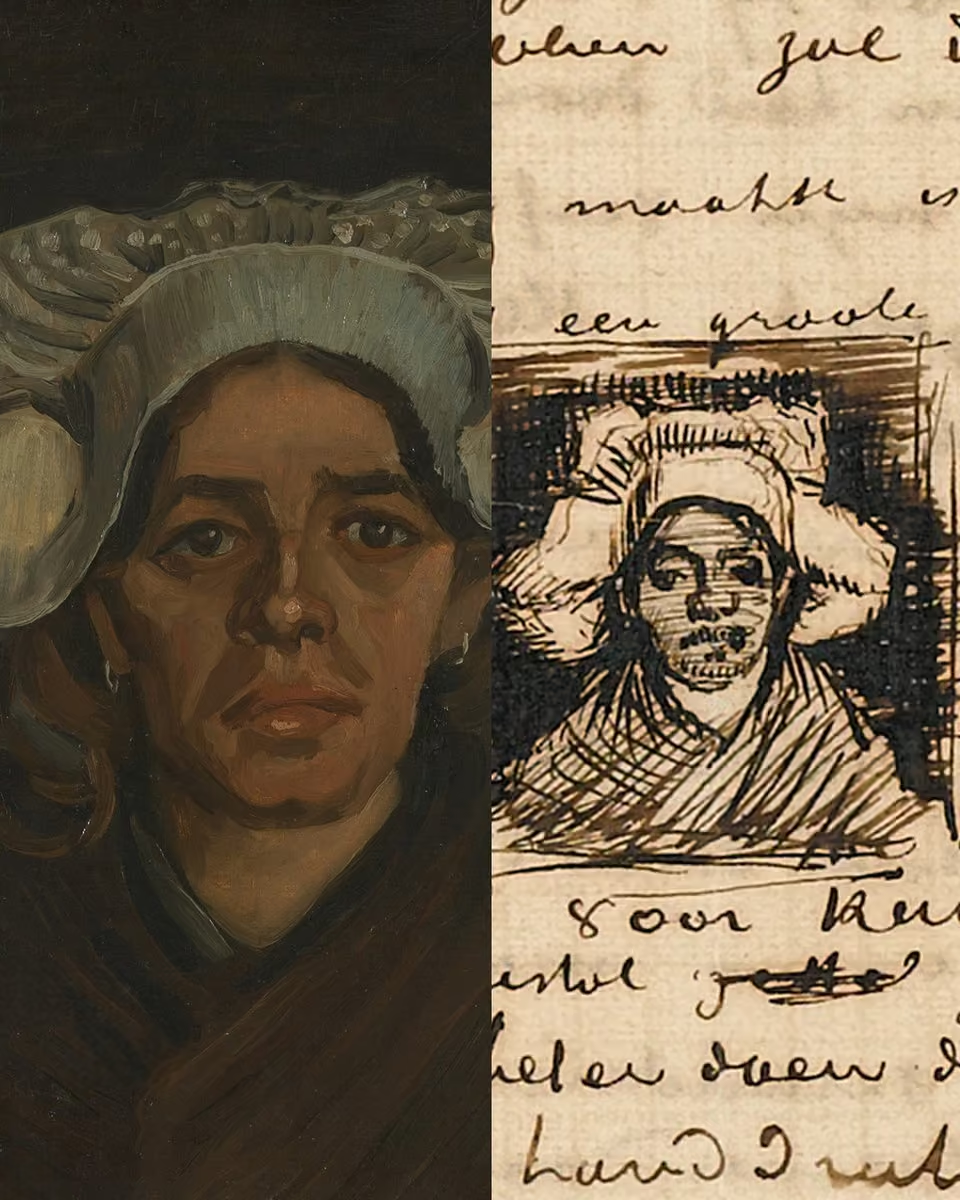
Tiny drawings, big intentions 🤏💥 In his letters to his brother Theo, Vincent added small sketches, quick, simple, but telling. These ‘postage stamp’ drawings refer to his studies of peasant heads from Nuenen.
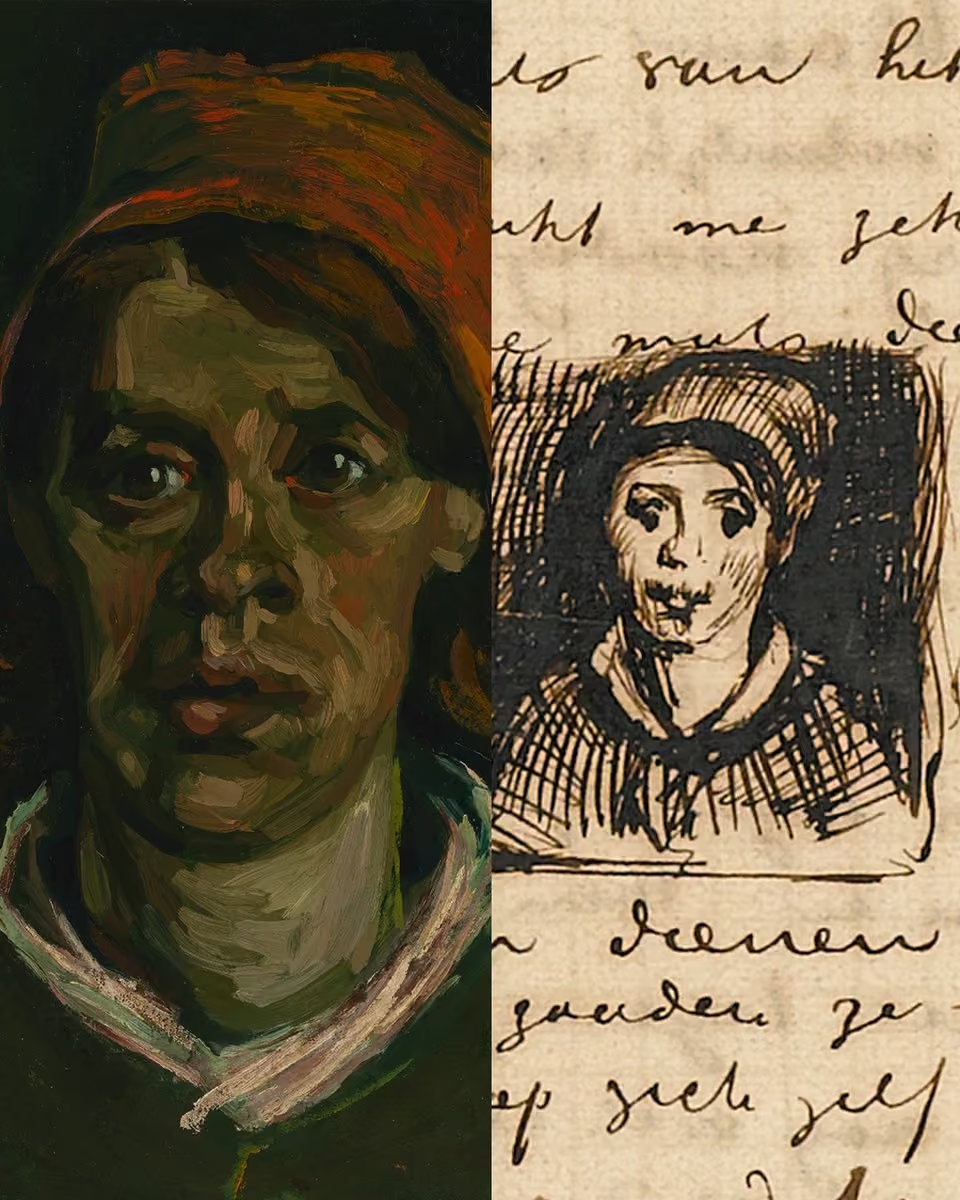
He returned to these faces to experiment with light, shadow, and colour. You might recognise this woman – it’s Gordina de Groot, later seen in ‘The Potato Eaters’.
1 ‘Head of a Woman (Gordina de Groot)’, 1885 + Letter sketch from letter 489
2 ‘Head of a Woman’, 1885 + Letter sketch from letter 489 -
Van Gogh Museum
@vangoghmuseum
Let’s sit with these thoughts for a moment 💬 ‘We know so little about life that we’re not really in a position to judge between good and bad, just or unjust, and to say that one is unhappy because one suffers hasn’t been proved. […] So take it as it is, wait with confidence and possess your soul with a long patience as an old saying has it, and with good will. Let nature take its course’, Vincent wrote this to his brother Theo in 1889. Theo had shared his concerns with Vincent: his wife Jo was pregnant and neither of them was in good health. Theo wondered whether it was the right time to have a child. Vincent gave him this sound advice.
In a world full of quick judgements and constant pressure to ‘fix’ everything, Vincent’s words remind us that life is full of mystery – and that’s okay. Maybe we don’t need all the answers right now. Be gentle with yourself. Have patience. Stay open-hearted.
‘Woman Sitting in the Grass’, 1887 © Private Collection -
Van Gogh Museum
@vangoghmuseum
‘This canvas absolutely kills all the rest.’ Van Gogh wrote about ‘The Harvest’.
Showing us ‘old gold, bronze, copper…’ under a ‘heated white-hot’ sky.
For Vincent ‘The Harvest’ marked a breakthrough, he felt he was finally ‘on the right track’. He felt this work was proof he was finally seeing – and painting – the landscape as he intended.🌾
🖼️ Now on view in the exhibition ‘Vincent’s Path to Fame’, until 6 September. -
Van Gogh Museum
@vangoghmuseum
A symbolic harvest 💀🌾 Van Gogh painted the wheat fields of Auvers-sur-Oise. To him, this painting symbolized the final harvest, death and resurrection. ‘Humanity would be the wheat being reaped,’ he wrote to Theo in 1889.
🖼️ © Toledo Museum of Art -
Van Gogh Museum
@vangoghmuseum
A 'small' difference 📐 Vincent created three versions of 'The Bedroom,' with a smaller one intended as a reproduction for his mother. He wanted to show her where he lived, and was proud of the room he had refurbished. The painting you see here is this smaller version, and it is part of the collection of Musée d'Orsay in Paris. It is 57.3 cm high and 73.5 cm wide.
In our museum, we have 'The Bedroom’, which measures 72.4 cm x 91.3 cm, while another version can be found at The Art Institute of Chicago, measuring 73.6 x 92.3 cm.
'The Bedroom' was meant to exude 'absolute tranquility’. Have you already seen any of the three paintings? If so, let us know which was your favourite in the comments!
🖼️ ‘Van Gogh's Bedroom in Arles’, 1889 © Musée d’Orsay
#vangogh #painting #artist #art #paris -
Van Gogh Museum
@vangoghmuseum
A cracked skull 💀 Canvas was expensive, so Van Gogh painted the skull over an earlier work. Look closely, and you’ll spot cracks below the skull. These formed because he used slow-drying zinc white to cover the first painting, causing the top layer to crack over time. (2)
-
Van Gogh Museum
@vangoghmuseum
Once you see it, you can’t really unsee it 👀 In Auvers, Van Gogh sketched an Egyptian-style sphinx above a gateway again and again, but with more life and expression each time.
He was fascinated by ancient Egypt’s ‘serene’ figures, and that look may have slipped into his portraits.
1 ‘Young Man with Cornflower’, 1890 © Private collection
2 ‘Egyptian Head and Figure Study’, 1890 © Van Gogh Museum
3 ‘Egyptian Head’, 1890 © Van Gogh Museum
4 ‘Egyptian Head’, 1890 © Van Gogh Museum -
Van Gogh Museum
@vangoghmuseum
In his final weeks in Auvers, Vincent van Gogh often returned to the wheatfields.
Under stormy skies, he painted vast stretches of land, in his words holding ‘sadness, extreme loneliness.’ So it’s not strange that these landscapes are often perceived as dark or foreboding. But in these same fields, Vincent also saw something ‘healthy and fortifying.’ As if the same fields could hold both weight and relief at once.
Perhaps that is what we’re seeing: not a single mood, but a moment where opposing feelings exist side by side. What do you see in them?
1 © Van Gogh Museum
2 © Van Gogh Museum
3 © Philadelphia Museum of Art -
Van Gogh Museum
@vangoghmuseum
Without family, no Van Gogh Museum. Theo supported his brother (1) Vincent throughout his life, helping him continue to paint. After their deaths, Theo’s wife Jo van Gogh-Bonger (2) brought Vincent’s work to the world by organising exhibitions and publishing his letters.
Their son, Vincent Willem (3), kept the collection together and founded the museum. A legacy built together.
Discover more about Van Gogh’s family, and how they shaped his legacy, in our exhibition ‘Vincent’s Path to Fame’, on view until 6 September. -
Van Gogh Museum
@vangoghmuseum
When Vincent wrote this, ‘modern life’ looked very different, yet the feeling is easy to recognise.
He probably experienced anxiety as something in the air: not owned, but absorbed, shaped by the pace and pressures of the time. Perhaps that’s why the line still resonates. Not because things are the same, but because living through change, and carrying some of its weight, is something we share.
And maybe there’s a quiet comfort in that: we’re not facing it alone. -
Van Gogh Museum
@vangoghmuseum
A room with a view… in this case, it’s from Vincent’s room in the psychiatric institution in Saint-Rémy. Perhaps not the most obvious place for inspiration, but Van Gogh still managed to turn it into something beautiful.
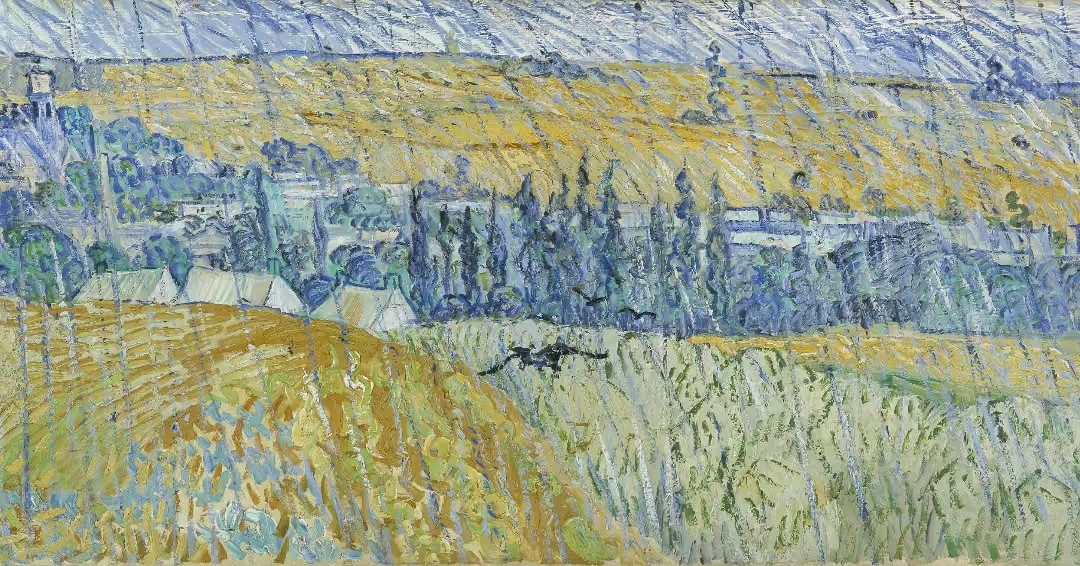
From his window, he painted the same view multiple times: sunny, rainy, with wheat being harvested, or left empty.
And there’s one detail that keeps coming back: the wall around the field. Did you notice it too? 👀
1 ‘Wheat Field with Reaper and Sun’, 1889 © Kröller-Müller Museum
2 ‘Enclosed Wheat Field with Rising Sun’, 1889 © Kröller-Müller Museum
3 ‘Landscape at Saint-Rémy (Enclosed Field with Peasant)’, 1889 © The Indianapolis Museum of Art
4 ‘Rain’, 1889 © Philadelphia Museum of Art -
Van Gogh Museum
@vangoghmuseum
Women and children appear again and again in Vincent’s works. During his time in Auvers-sur-Oise, Vincent repeatedly painted and drew them, perhaps reflecting a quiet longing.
At the time, he felt more alone than ever. Theo had just become a father, and life seemed to be moving forward with less room for him.
‘For me life might well remain solitary,’ he wrote to his mother. Painting became his way of holding on.
1 ‘Two Girls’, 1890 © Private collection
2 ‘Child with Orange’, 1890 © Private collection
3 ‘Young Man with Cornflower’, 1890 © Private collection -
Van Gogh Museum
@vangoghmuseum
A quiet garden, a few fluttering butterflies… and a big turning point for Van Gogh in Paris 🦋
Painted in 1887, this close-up view is seen from above – like he sat on a park bench and painted what was right at his feet. It shows a new way of looking: focusing on small details, light, colour, and movement, inspired by Impressionism.
The butterflies add a gentle touch, and may even be a metaphor for how fragile life can be.
Can you spot all 6 butterflies? 👀
‘Coin de jardin avec papillons’, 1887 © Private collection -
Van Gogh Museum
@vangoghmuseum
Van Gogh’s birds 🐦
Sometimes painted with just a few swift strokes, other times rendered with great care: birds often appear in Van Gogh’s drawings and paintings. Because he worked so much outdoors, Vincent was constantly surrounded by them: fluttering above fields, perched on trees, or darting across the sky. They weren’t just background details, but lively subjects he loved to ‘catch’ on paper or canvas.
Which one do you like most?
1 detail of ‘Kingfisher by the Waterside’, 1887 © Van Gogh Museum
2 detail of 'The Reaper (after Millet)’, 1889 © Van Gogh Museum
3 ‘Barn Owl Viewed from the Front’, 1887 © Van Gogh Museum
4 detail of ‘Wheatfield with Partridge’, 1887 © Van Gogh Museum -
Van Gogh Museum
@vangoghmuseum
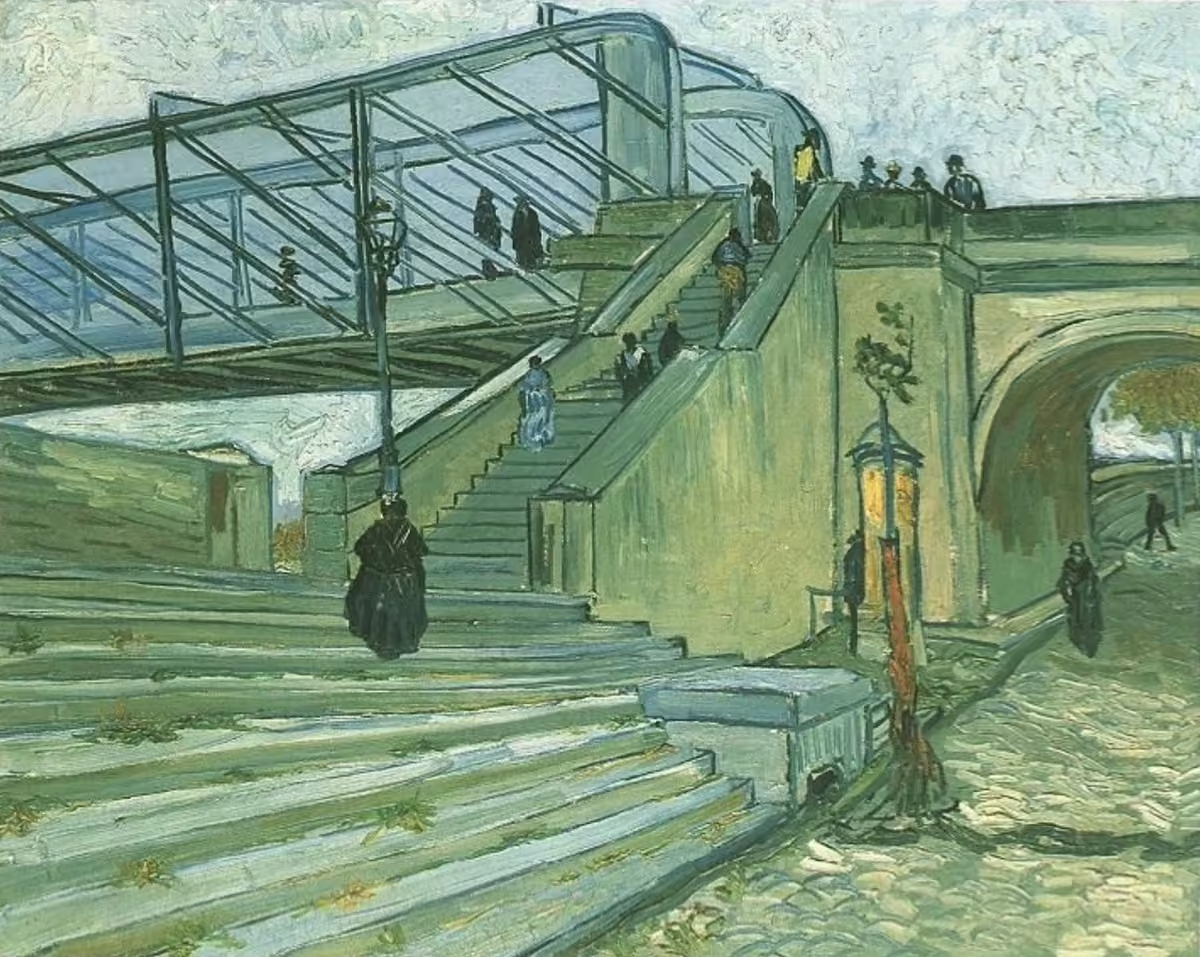
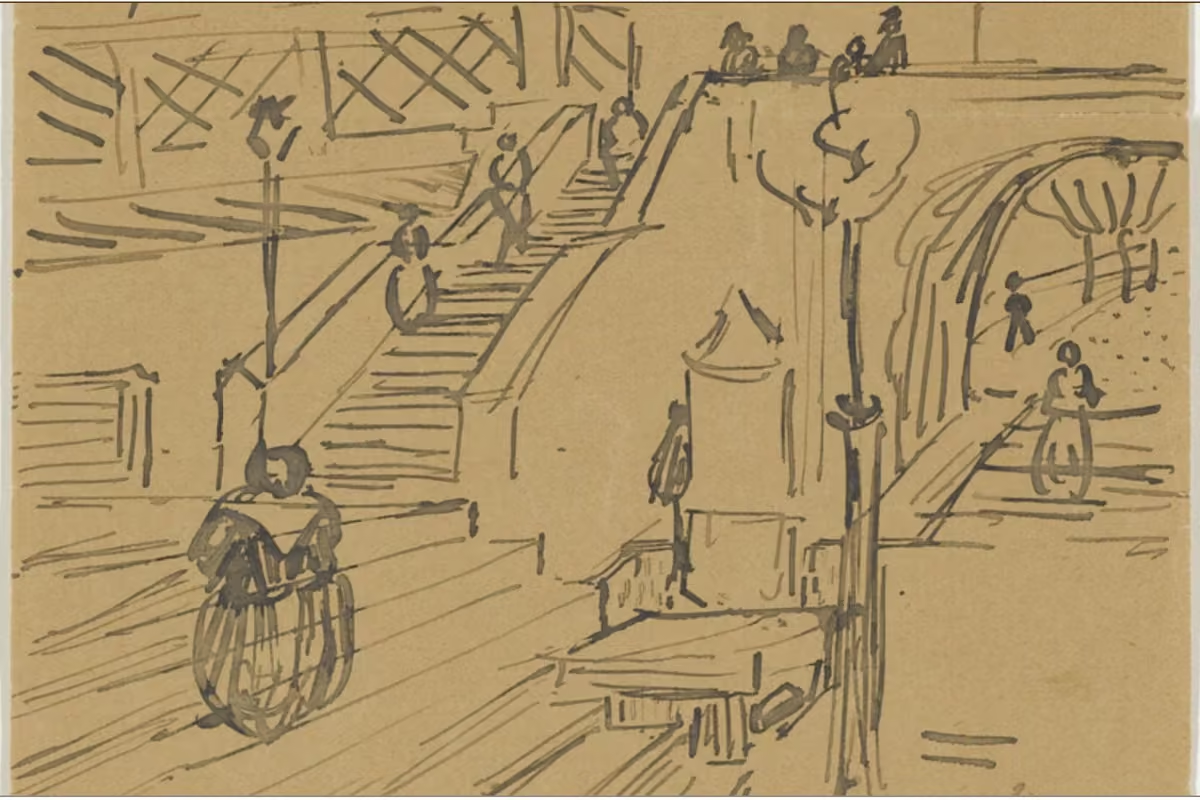
Vincent wrote to his brother Theo: ‘the Trinquetaille bridge with all its steps is a canvas done on a grey morning, the stones, the asphalt, the cobblestones are grey, the sky a pale blue, the small figures colourful […]’
Vincent captured one of those grey mornings perfectly in this painting, don’t you think? ☁️
🖌️ ‘The Iron Bridge at Trinquetaille’, 1888 © Private collection
✏️ Detail of Van Gogh’s letter to Theo, 1888 -
Van Gogh Museum
@vangoghmuseum
Van Gogh’s final self-portraits, painted in 1889, offer a rare glimpse into a pivotal moment in his life.
Created during his stay at the psychiatric institution in Saint-Rémy, these works move beyond likeness. They reflect a period of illness, recovery, and deep self-observation. Each portrait reveals subtle shifts in mood, technique, and self-perception.
What do you notice as you move from one to the next?
1 ‘Self-Portrait’, 1889 © Nasjonalmuseet
2 ‘Portrait of the Artist’, 1889 © Musée d'Orsay
3 ‘Self-Portrait’, 1889 © National Gallery of Art -
Van Gogh Museum
@vangoghmuseum
‘You can see that some hard work has been done.’ Vincent van Gogh, Arles, 1888.
Gardens, wheatfields, boats, portraits, listed one after another in a letter to Theo. This reveals not only quantity, but a period of intense productivity. Vincent worked rapidly, often finishing a painting in a single day, while experimenting with colour, light, and brushwork.
Which is your favourite?
1 ‘Garden at Arles’, 1888 © Kunstmuseum Den Haag
2 ‘Wheatfields’, 1888 © P. and N. de Boer Foundation
3 ‘Seascape at Saintes-Maries’, 1888 © Pushkin Museum
4 ‘Seated Zouave’, 1888 © Private collection -
Van Gogh Museum
@vangoghmuseum
Two chairs. Two artists.
Van Gogh turned personalities into objects. He painted himself and Gauguin without showing either of them in person.
Can you tell who is who? -
Van Gogh Museum
@vangoghmuseum
Theo’s support gave Vincent the chance to become an artist. While Vincent struggled to find his place in life, Theo believed in him, emotionally and financially. His encouragement and support allowed Vincent to fully focus on learning to draw and paint, long before anyone else recognised his talent.
‘I hope to do as much as I can to help you,’ Theo wrote to his brother.
#vangogh #vangoghmuseum #brothers -
Van Gogh Museum
@vangoghmuseum
Provence seen through Dutch eyes 👀 What do we mean by that?
Well, in ‘The Drawbridge’ (1888), Van Gogh paints a quiet canal near Arles. But when you look at it more closely, you’ll spot a distinctly Dutch drawbridge.
There might be a reason for that. Van Gogh had just left the chaos of Paris behind, searching for calm, light and inspiration in the South of France. And yet, this familiar type of bridge must have reminded him of home. So much so that he painted it not once, but about four times. This painting belongs to that series.
🖼️ © Wallraf-Richartz-Museum & Fondation Corboud -
Van Gogh Museum
@vangoghmuseum
What do these four paintings have in common? 👀
At first glance, perhaps just the flowers.
Van Gogh painted them in May 1890, just before leaving Saint-Rémy. He conceived them not as separate works, but as a set: two paintings of irises and two of roses.
The arrangements are similar: they all feature complementary colours, and share a search for balance and harmony. So they are more connected than it initially seems.
1 ‘Irises’, 1890 © Van Gogh Museum
2 ‘Roses’, 1890 © National Gallery of Art
3 ‘Roses’, 1890 © The Met
4 ‘Irises’, 1890 © The Met -
Van Gogh Museum
@vangoghmuseum
3 times Agostina Segatori, café owner, artist’s model, and, for a brief time, Vincent van Gogh’s partner.
Vincent painted her in Paris in 1887, during a pivotal moment in his life and work. He was experimenting with brighter colours and new styles, influenced by Impressionism and Japanese prints. All three capture a completely different mood.
Which portrait do you prefer?
1 © Musée d’Orsay
2–3 © Van Gogh Museum -
Van Gogh Museum
@vangoghmuseum
What do these works have in common? 👀
They’re two years apart, but share the same canvas. In 1885, Van Gogh painted a dark peasant study. In 1887 in Paris, he flipped it over and painted a vivid self-portrait, reusing the canvas and taking himself as a model. Van Gogh often reused canvases to save money. Smart, right?
1 ‘Self-Portrait with a Straw Hat (obverse: The Potato Peeler)’, 1887 © The Met
2 ‘The Potato Peeler (reverse: Self-Portrait with a Straw Hat)’, 1885 © The Met -
Van Gogh Museum
@vangoghmuseum
At first glance, it’s just a carafe and some lemons… right?
But the carafe in this painting is made out of glass, which makes it anything but simple to paint. You’re not just painting the object, you’re capturing reflections, distortions and everything seen through it at once. Like the reflections of the wallpaper… did you notice those?
🖼️ ‘Carafe and Dish with Citrus Fruit’, 1887 © Van Gogh Museum -
Van Gogh Museum
@vangoghmuseum
Parlez-vous français? 🇫🇷 Vincent was a Dutch artist, but he wrote about a third of his letters in French. At the time, French was the most important international language and children of the middle classes were expected to learn the language. Van Gogh could speak French from an early age, yet it was only after he moved to Paris, in 1886, that he completely switched to writing in French. ‘If you’ll let me write to you in French’, he writes to his sister Willemien, ‘that will really make my letter easier for me’.
Vincent came to see France as his second home. He wanted to make a name for himself as an artist there. Vincent usually ended his letters to his brother with ‘tout à toi, Vincent’ (ever yours, Vincent).
🖼️ 'The Blute-Fin Windmill', 1886 © Glasgow Museum -
Van Gogh Museum
@vangoghmuseum
Maybe we spend more time hoping things will get better, while waiting, overthinking, and scrolling.
But according to Van Gogh, hoping for better times isn’t just a feeling, it’s a doing.
What do you think? -
Van Gogh Museum
@vangoghmuseum
Need a hand? Well, there are plenty in these drawings made by Van Gogh. Not because it was easy, but because it wasn’t.
Van Gogh practised relentlessly, repeating hands, faces and figures again and again. He believed drawing was ‘the root of everything’, using it to train his eye and sharpen his skills.
So every line here shows us practice, persistence and progress. 💪 -
Van Gogh Museum
@vangoghmuseum
Shoes were an unusual subject to paint in Van Gogh’s time. 👞 Most artists painted elegant still lifes, often symbolising wealth. But Vincent was drawn to these objects that ‘bore the scars of life’. He even bought old work shoes at flea markets, walked through the mud in them, and only then considered them worthy of painting.
What do you see in this still life? Some see a disguised self-portrait. Others, a symbol of Van Gogh’s long journeys. Or perhaps he simply loved capturing their worn beauty.
🖼️ ‘A Pair of Shoes’, 1887 © Baltimore Museum of Art -
Van Gogh Museum
@vangoghmuseum
What a sunset this must have been. Van Gogh painted this while staying at the psychiatric clinic in Saint-Rémy, working in the garden when he wasn’t allowed off the grounds.
But the colours do more than simply depict a view. Vincent wrote that the red ochre, muted greens and dark outlines were meant to evoke the anxiety his fellow patients experienced: what he called ‘seeing red’.
🖼️ ‘Garden of the Asylum’, 1889 © Van Gogh Museum -
Van Gogh Museum
@vangoghmuseum
A somewhat arrogant-looking man… and an unusually green background.
A bold choice? Maybe. Or maybe not….
Around the time that he painted this work, Van Gogh had gas lighting installed in his studio so he and fellow artist Gauguin could work after dark. Gaslight gives off a yellow-green glow, subtly shifting the colours Vincent saw… and painted.
🖼️ ‘Portrait of Joseph-Michel Ginoux’, 1888 © Kröller-Müller Museum -
Van Gogh Museum
@vangoghmuseum
In 1889–1890, Van Gogh painted irises again and again.
From a single bloom to full bouquets, he explored endless variations of the same flower. While staying at the psychiatric institution in Saint-Rémy, the garden became one of his main sources of inspiration.
Which version is your favourite?
1. ‘Irises’, 1890 © The MET
2. 'Irises', 1890 © Van Gogh Museum
3. ‘Irises’, 1889 © Getty Museum
4. ‘Iris’, 1889, © National Gallery of Canada -
Van Gogh Museum
@vangoghmuseum
You might think: ‘I can’t see the forest for the trees’ with all these tiny dots...
But Van Gogh used those quick dabs of paint to build a scene full of detail, from lily of the valley in the foreground (the white dots) (2), to tree roots with surprising purple tones, shaped by the light and shadows falling from the right (3).
Further back, the forest opens up, with light breaking through in the distance. (4)
Which detail did you notice first? 👀 -
Van Gogh Museum
@vangoghmuseum
Fun fact about ‘Country Road in Provence by Night’ 👀 It could have been a realistic landscape, but it isn’t.
Van Gogh first sketched the composition in a letter to Theo, then painted it from memory, combining elements into something imagined. Painted just before leaving Saint-Rémy, it might be his personal ‘summary’ of Provence.
🖼️ ‘Country Road in Provence by Night’, 1890 © Kröller-Müller Museum
✏️ Detail of letter RM23 -
Van Gogh Museum
@vangoghmuseum
A study, at least, according to Van Gogh. 🌿 When Vincent arrived in Auvers in May 1890, flowers were everywhere. In just a few weeks, he painted nine floral still lifes.
This one was the last of the series. In a letter to Theo (17 June 1890), he described the bouquet as ‘wild plants, thistles, ears of wheat, leaves of different types of greenery.’
🖼️ ‘Vase with Wild Flowers’, 1890 © Private collection -
Van Gogh Museum
@vangoghmuseum
Small face. Bull neck. Tiger eyes. 🐅 Sounds less like a soldier and more like a zoo. But that’s exactly how Vincent van Gogh described his model in 1888:
‘I have a model at last – a Zouave – he’s a lad with a small face, the neck of a bull, the eye of a tiger.’
Looks like the tiger eyes worked in every medium, don’t you think?
1 ‘The Zouave’, 1888 © The MET
2 ‘The Zouave’, 1888 © Van Gogh Museum
3 ‘Seated Zouave’, 1888 © Van Gogh Museum -
Van Gogh Museum
@vangoghmuseum
To sell, or not to sell? 🌻 After Vincent and his brother Theo passed away, Jo van Gogh-Bonger became responsible for Vincent’s entire body of work. Hundreds of paintings, thousands of drawings and letters, and the task of bringing his art to the world.
For years, ‘Sunflowers’ was part of her daily life. When the National Gallery in London wanted to acquire it, Jo faced a difficult decision. In a letter, she wrote: ‘For two days I tried to harden my heart…’.
Letting the painting go was not just a sale to her, but a sacrifice for the sake of Vincent’s glory. Sometimes protecting a legacy means parting with something deeply personal. Would you have made the same choice?
🖼️ ‘Sunflowers’, 1888 © the National Gallery, London -
Van Gogh Museum
@vangoghmuseum
‘I’ve also just finished a canvas of pink roses against a yellow-green background in a green vase’, Vincent wrote to his brother Theo.
Yes, you read that correctly: pink roses. 🌹
The red pigment he used here has faded over time, and the blooms look much paler today than when Vincent painted them.
Fun fact: He painted this painting on this day, 136 years ago. (5)
🖼️ ‘Roses’, 1890 © The MET -
Van Gogh Museum
@vangoghmuseum
Van Gogh dreamed of creating a ‘symphony in yellow’: a painting built from many shades of that colour. But too much yellow could easily blur an image into a single mass. In this still life, he balances the lemons with greens, oranges and cool blue shadows.
Collector Helene Kröller-Müller wrote that seeing lemons interpreted this way ‘reminds us there is something in the world we are always seeking, and for which we should always have respect.’
🖼️ ‘Basket of Lemons and Bottle’, 1888 © Kröller-Müller Museum -
Van Gogh Museum
@vangoghmuseum
At first glance, you ‘simply’ see a woman in a yellow dress.
But the colour tells a more complex story…
Our educator Thijs Gerbrandy shares his favourite work from the exhibition ‘Yellow. Beyond Van Gogh’s Colour’: ‘Evening (The Ball)’ by James Tissot.
Yellow can be bold and attention-grabbing, but also warm and radiant.
Which side are you on? 💛
🖼️ On view until 17 May.This media couldn't be displayed. See it on the original post. -
Van Gogh Museum
@vangoghmuseum
Can you recognise who’s staring back at you? 👀 Eyes are often called the ‘windows to the soul’, revealing emotions and personality in ways words cannot. From joy to sadness, curiosity to determination, their depth has the power to captivate us.
What emotions do you see in the eyes Van Gogh painted? -
Van Gogh Museum
@vangoghmuseum
Can you spot the differences? 🌾
While staying at the psychiatric institution in Saint-Rémy, Vincent painted what he saw outside his window: yellow stubble fields being ploughed and hills in the distance. He later sketched the scene in a letter to Theo (2). Look closely – the windmills in the painting were imagined.
🖼️ ‘Enclosed Field with Ploughman’, 1889 © Museum of Fine Arts, Boston
✏️ Letter sketch to Theo, 2 September 1889 -
Van Gogh Museum
@vangoghmuseum
Van Gogh was out painting plum trees in bloom, caught between gusts of wind and bursts of sunlight.
He described it to his brother Theo: ‘This morning I worked on an orchard of plum trees in blossom – suddenly a tremendous wind began to blow, an effect I’d only ever seen here – and came back again at intervals. In the intervals, sunshine that made all the little white flowers sparkle. It was so beautiful!’
Does this scene feel calm to you, or full of energy? -
Van Gogh Museum
@vangoghmuseum
Did you know this frog 🐸 (1) and crane 🐦 (2) reveal a hidden meaning?
In 19th-century French slang, grenouille (frog) and grue (crane) referred to prostitutes. Van Gogh placed the animals around this elegant woman – based on a Japanese woodcut by Keisai Eisen – hinting at her identity as a courtesan.
🖼️ ‘Courtesan (after Eisen)’, 1887 © Van Gogh Museum -
Van Gogh Museum
@vangoghmuseum
Can colour speak to your soul? 🎨
Wassily Kandinsky believed it could. In his book ‘Concerning the Spiritual in Art’ (1912), he wrote that colour could make the viewer’s inner world ‘vibrate.’
For him, yellow and blue were opposites: one earthy and energetic, the other spiritual and profound.
What do these colours make you feel?
🖼️ On view in ‘Yellow. Beyond Van Gogh’s Colour’ until 17 May. -
Van Gogh Museum
@vangoghmuseum
Van Gogh wrote to his brother that he saw ‘with a Japanese eye’. He was living in the South of France at the time. In this seascape, he used bold colours, strong contours, and a diagonal coastline – all compositional elements he took from Japanese prints. Japanese art helped him simplify and intensify his style.
🖼️ ‘Fishing Boats on the Beach at Les Saintes-Maries-de-la-Mer’, 1888 © Van Gogh Museum -
Van Gogh Museum
@vangoghmuseum
‘It is wise to do that, for life is but short and time passes quickly. If one is competent in one thing and understands one thing well, one gains at the same time insight into and knowledge of many other things into the bargain’, wrote Vincent to Theo in 1878.
Is there something that you have always dreamed of doing, but are yet to do?
🖼️ 'Chestnut trees in bloom', 1890, Private collection -
Van Gogh Museum
@vangoghmuseum
Van Gogh once wrote that life will always bring difficulties, and perhaps the real skill is learning how to endure them.
What do you think? -
Van Gogh Museum
@vangoghmuseum
A race against time ⏱️ Van Gogh painted these zinnias as part of a whole series, working quickly from what was in bloom. Flowers like these gave him the perfect chance to experiment with colour and contrast.
So it is more than just a bouquet, it is an experiment in colour, in timing, and in capturing something that won’t last, made permanent in paint.
🖼️ ‘Zinnias in a Majolica Jug’, 1888 © Private collection -
Van Gogh Museum
@vangoghmuseum
Guess the painting 🎨
For all keen observers and Van Gogh aficionados: can you tell which painting this tiny detail is from? 👀 -
Van Gogh Museum
@vangoghmuseum
In Arles in 1888, Van Gogh waited for the full moon to paint an evening landscape, but the mistral (wind) had other plans. With the wind rising and a storm approaching, he painted quickly, capturing the fields, the distant city and that blazing yellow glow in one sweeping effort.
So what are we looking at: a setting sun or a rising moon?
🖼️ ‘Summer Evening’, 1888 © Kunst Museum Winterthur -
Van Gogh Museum
@vangoghmuseum
Bright yellow landscapes might feel unmistakably Van Gogh. 🌻
But he wasn’t the only artist bold enough to embrace this colour.
In 1903, Swiss artist Cuno Amiet painted nature using vibrant yellows and strikingly simplified forms, a daring choice at the time.
In this video, Ann Blokland, the curator of our exhibition ‘Yellow. Beyond Van Gogh’s Colour’, shares why this painting is one of her favourites.
🖼️ 'The Yellow Hill' by Cuno Amiet is on view until 17 May.This media couldn't be displayed. See it on the original post. -
Van Gogh Museum
@vangoghmuseum
Only a keen observer might notice: Van Gogh used an unusually muted palette for this self-portrait – soft shades of pastel grey-blue – and even altered the colour of his eyes to match! (2) Though his eyes were green in reality, here they appear grey-blue, blending seamlessly with the cool tones of the painting.
🖼️ ‘Self-Portrait’, 1887 © Van Gogh Museum -
Van Gogh Museum
@vangoghmuseum
You know what time it is! Or do you?
Can you guess the exact time the De Groot family sat down for their potatoes? Vincent left a clue in the painting. If you look closely enough, you might be able to tell.
When you’ve found it, let us know what time it is in the comments. -
Van Gogh Museum
@vangoghmuseum
Van Gogh saw love as a force of growth. Do you agree?
‘What the power to germinate is in wheat, so love is in us,’ he wrote to his sister Willemien in 1887.
🖼️ ‘The Sower’, 1888 © Kunst Museum Winterthur -
Van Gogh Museum
@vangoghmuseum
Let’s address the elephant in the room — or rather, the cow. 🐄
In ‘The Yellow Room’, Chagall fills the space with glowing yellows and greens. Painted shortly after he moved from Russia to Paris, the work reflects the bright lights and artistic energy that dazzled the young artist.
🖼️ On view in ‘Yellow. Beyond Van Gogh’s Colour’ until 17 May. -
Van Gogh Museum
@vangoghmuseum
A rewritten script 🎬
Van Gogh borrows a scene from Rembrandt, but leaves out the main character. Christ is gone. Instead, Lazarus takes centre stage, with a red beard some find familiar. The women by the grave are Mrs Roulin and Mrs Ginoux, two people Vincent knew in Arles.
Same story, different roles.
🖼️ ‘The Raising of Lazarus (after Rembrandt)’, 1890 © Van Gogh Museum -
Van Gogh Museum
@vangoghmuseum
Three views. One summer.
In Asnières, a Parisian suburb, Van Gogh painted the same riverside scene from different angles: you see boats, bridges and a lively restaurant along the water.
Together they form the Asnières triptych, three works meant to be seen as a group.
Which view is your favourite?
1 ‘Bridges Across the Seine at Asnières’, 1887 © Kunsthaus Zürich
2 ‘Restaurant de la Sirène, Asnières’, 1887 © The Ashmolean Museum
3 ‘View of the Seine with Rowboats’, 1887 © Private collection -
Van Gogh Museum
@vangoghmuseum
Did you know this painting wasn’t always this size?
When conservators examined the work more closely, they discovered that Van Gogh had added a small wooden strip on top of the canvas. (2) The paint continues seamlessly onto this added piece. This means the adjustment must have been done by Vincent himself.
Why? Probably to create more space above the bouquet. The extra height gives the flowers more ‘breathing space’ and changes the balance of the composition. What may seem like a small addition subtly transforms how the bouquet sits within the frame.
Does knowing this change how you see the painting? -
Van Gogh Museum
@vangoghmuseum
‘And now that I’ve found my bearings a little more, I’m beginning to see the advantages here… I even work in the wheatfields at midday, in the full heat of the sun… I revel in it like a cicada. My God, if only I’d known this country at 25… in those days I was enthusiastic about grey, or rather, absence of colour,’ Van Gogh wrote to his artist friend Emile Bernard from the South of France.
🖼️ ‘The Sower’, 1888 © Kröller-Müller Museum -
Van Gogh Museum
@vangoghmuseum
What do this painting and the weather have in common? Well... In this case, a red curtain!
Hanging in the top-right corner, the curtain likely wasn’t there for decoration. It was meant to keep the cold air out of the café. Even in Arles, in the South of France, winter still called for a bit of insulation.
🖼️ ‘The Smoker’, 1888 © The Barnes Foundation -
Van Gogh Museum
@vangoghmuseum
They say you can’t compare apples and oranges. Fair enough. Apples and quinces it is.
In the Netherlands, Van Gogh painted the apples in muted, earthy tones. A few years later in Paris, his quinces glow brighter under Impressionist influence. Same fruit family, different mood.
So… what will it be for you: apples or quinces?
1 ‘Quince Still Life’, 1887/88 © Staatlichen Kunstsammlungen Dresden
2 ‘Basket of Apples’, 1885 © Van Gogh Museum -
Van Gogh Museum
@vangoghmuseum
In the 1890s, a bright yellow cover could cause scandal before it was even opened. Van Gogh also read these ‘yellow books’, and even painted them. See both works in ‘Yellow. Beyond Van Gogh’s Colour’, on view until 17 May.
1 ‘Decadent Young Woman, After the Dance’, by Ramon Casas, 1899
2 ‘Piles of French Novels’, by Vincent van Gogh, 1887 -
Van Gogh Museum
@vangoghmuseum
Let’s dive into the whirlwind of Van Gogh’s brushstrokes. 💦
In ‘Bank of the Oise at Auvers’ (1890), Van Gogh’s brushstrokes whirl across the canvas, letting river, bank and sky emerge as if caught in a breeze.
Which detail catches your eye?
🖼️ © Detroit Institute of Arts -
Van Gogh Museum
@vangoghmuseum
Did you know this Van Gogh once belonged to Elizabeth Taylor? ⭐
The painting you see here, ‘View of the Asylum and Chapel of Saint-Paul-de Mausole’ (1889), was owned by the iconic actress, who kept it close throughout her life. It hung on the walls of her home, accompanied her during hospital stays, and even travelled with her on her yacht.
After Taylor passed away, the painting was sold. Its personal history – and the remarkable journey it shared with her – contributed to its value. In 2012, it sold for ten times the price her father had paid for it in 1963.
🖼️ ‘View of the Asylum and Chapel of Saint-Paul-de Mausole’, 1889 © Private collection -
Van Gogh Museum
@vangoghmuseum
And yet, Van Gogh kept finding them. Roughly 200 times over.
-
Van Gogh Museum
@vangoghmuseum
Zoom in on Van Gogh and a detail can feel like a painting in its own right.
Can you guess which artwork this detail comes from? -
Van Gogh Museum
@vangoghmuseum
A unique detail in this painting ‘Terrace of a café at night’ gives away the exact date on which Vincent painted it. ✨🔭
We know that Vincent was a great observer, and this was confirmed by later astronomical research. Vincent managed to paint the constellation of stars exactly as it looked on the night of 16 or 17 September 1888.
🖼️ ‘Terrace of a café at night’ (Place du Forum), 1888 © Kröller-Müller Museum -
Van Gogh Museum
@vangoghmuseum
💡 Vincent rented the Yellow House in Arles (FR), with a view over a small local park. It was right by what he casually called the ‘street of the good little ladies’ (yes, that’s a brothel reference).
Even though the park itself wasn’t anything special, he saw something in it – and painted it.
🎨 On 11 October 1888, Vincent wrote to his brother Theo: ‘I’ve done a new no. 30 canvas, and I plan to start another one this evening when they light the gas. The one I’ve just done is another garden.’
He was writing about these two paintings:
1‘The Public Garden with a Couple Strolling ('The Poet's Garden')’, 1888 © Private collection
2 ‘Entrance to the Public Gardens in Arles’, 1888 © The Phillips Collection -
Van Gogh Museum
@vangoghmuseum
Did you know that, on average, people spend less than 30 seconds looking at a painting in a museum? You may discover details you'd otherwise miss by taking the time to pause, observe, and truly connect. Let’s try it with Van Gogh’s Self-Portrait.
Did you notice…?
💐 A flower (or handkerchief) hidden in the dark area (2) This self-portrait was painted over an earlier portrait of a woman—Vincent often reused canvases to save materials and money.
✍️ His signature in the top left corner. (3)
🍷 A glass of what appears to be red wine in the foreground!
🖼️ Self-Portrait with Glass, 1887
#slowartday #slowartday2026 -
Van Gogh Museum
@vangoghmuseum
When Van Gogh wrote about the anxieties of modern life, he spoke from experience.
Reading it today, do you recognise something in his words?
🖼️ ‘Self-Portrait', 1889 © Musée d'Orsay -
Van Gogh Museum
@vangoghmuseum
'I see red, I see blue, but I experience yellow,' says Eliasson. Do you agree?
Experience it for yourself at 'Yellow. Beyond Van Gogh’s Colour', on view until 17 May.
Installations on view:
Olafur Eliasson (1967)
Colour experiment no. 78, 2015
Courtesy of the artist; neugerriemschneider, Berlin; Tanya Bonakdar Gallery, New York ©2015 Olafur Eliasson
Installations on view:
Olafur Eliasson (1967-)
'Colour experiment no. 78', 2015 & 'Who is afraid yellow flower ball', 2006
Courtesy of the artist; neugerriemschneider, Berlin; Tanya Bonakdar Gallery, New York. © Olafur Eliasson.This media couldn't be displayed. See it on the original post. -
Van Gogh Museum
@vangoghmuseum
🌹 This picture of wild roses may look very pleasant and peaceful, but Van Gogh was actually suffering a severe mental crisis at the time. He had admitted himself to the psychiatric institution in Saint-Rémy-de-Provence, hoping to find peace there. As soon as he could, he went out into the gardens to paint or draw.
Van Gogh painted the fragile blossoms naturalistically, but treated the green leaves differently. He has turned them into flat areas of plain colour surrounded by heavy blue outlines.
‘Wild Roses’, 1889 © Van Gogh Museum -
Van Gogh Museum
@vangoghmuseum
A part of a bigger picture 💑 ‘A Pair of Lovers’ is just under 13 inches high, which is about a sixth of the original canvas. Vincent wrote to his brother Theo: ‘As the bad weather prevented me from working on the spot, I completely worked this study to death trying to finish it at home.’
Vincent didn’t like the painting he had made, and decided to only keep the fragment of the couple. He threw the rest of the painting away.
In a letter to his friend Emile Bernard, Vincent sketched the original painting: a landscape view of the drawbridge over the canal that runs between Arles and the Mediterranean, with a large sun sinking on the horizon. (2)
(1) ‘A Pair of Lovers’, 1888 © Private collection
(2) Letter to Emile Bernard, 18 March 1888 -
Van Gogh Museum
@vangoghmuseum
1887: Van Gogh wanted less grey, more colour. He was inspired by Neo-Impressionists like Georges Seurat and Paul Signac, who created their paintings with tiny dots of pure colour. Van Gogh experimented with this technique in ‘Outskirts of Paris: Road with Peasant Shouldering a Spade’. Dotted sky, blossoming trees, bright field: colour becomes atmosphere.
🖼️ © Private collection -
Van Gogh Museum
@vangoghmuseum
🌾 ‘Something else: someone who can really play the violin or piano is, it seems to me, a mightily entertaining person. He picks up his violin and starts to play, and a whole gathering enjoys it all evening long. A painter has to be able to do that too.
And this sometimes gives me pleasure, to work outside when someone’s looking on. […] One is in the wheat, say. Well then, in the space of a few hours one has to be able to paint that wheat field and the sky above it and the prospect in the distance.’ Written to his sister Willemien (1888)
Step into Vincent's world: he thought wheat fields were 'comforting and soft.' Can you sense the breeze whispering through this painting? 🍃
'Green Wheat Fields', 1890 © National Gallery of Art -
Van Gogh Museum
@vangoghmuseum
Take it from Vincent: great things aren’t made in a single moment. They grow from many small steps. So here’s a kind reminder: if today feels tough, achieving one small thing may be enough.
🖼️ 'Self-portrait', 1887 © Rijksmuseum -
Van Gogh Museum
@vangoghmuseum
Even though this little detail looks like a painting in its own right, it’s actually part of a bigger picture.
Can you guess which painting it belongs to? Leave your guess in the comments. -
Van Gogh Museum
@vangoghmuseum
Something links these two paintings.
Can you see what it is? 👀
Let us know in the comments. -
Van Gogh Museum
@vangoghmuseum
What if you could hear every brushstroke? 👂
For ‘Yellow. Beyond Van Gogh’s Colour’, students from @ConsAmsterdam created compositions inspired by works in the exhibition. In this video, every dot in Paul Signac’s ‘Setting Sun’ becomes a note.
Curious to hear more paintings? Listen during your visit, or via the playlist: www.vangoghmuseum.nl/en/visit/whats-on/exhibitions/overvi…This media couldn't be displayed. See it on the original post. -
Van Gogh Museum
@vangoghmuseum
Today we celebrate Vincent 🎈🎂
173 years ago today, Vincent van Gogh was born. In his many self-portraits, Vincent returns to his own face time and time again. Seen together, they form a quiet passage of time.
Which one is your favourite?
1 ‘Self-Portrait’, 1889 © National Gallery of Art
2 ‘Self-Portrait’, 1887 © Van Gogh Museum
3 ‘Self-Portrait with Grey Felt Hat’, 1887 © Van Gogh Museum
4 ‘Self-Portrait’ 1886 © Van Gogh Museum -
Van Gogh Museum
@vangoghmuseum
🍽️ Vincent’s meals were as simple as his budget – bread, cheese, coffee, and sometimes tobacco. In Arles, he wrote: ‘Gauguin […] knows how to cook perfectly, I think I’ll learn that from him.’ Safe to say, Vincent’s art outshined his cooking skills! 😉
🖼️ © Kröller-Müller Museum -
Van Gogh Museum
@vangoghmuseum
In late June 1888, Van Gogh reminded Theo of a drawing he sent of ‘a wooden bridge with a washing place – a view of a town in the background.’ He mentioned he’d ‘just painted that subject in large format.’ See the results here!
✏️ © Kröller-Müller Museum
🖌️ © Private collection -
Van Gogh Museum
@vangoghmuseum
So much to give, but no one to give it to ✍️
-
Van Gogh Museum
@vangoghmuseum
50 shades of yellow 🌻 What do you see in Van Gogh’s ‘Sunflowers’?
In the exhibition ‘Yellow. Beyond Van Gogh’s Colour’, we explore how yellow can hold both life and decay. As our curator Edwin explains, Van Gogh built the painting with three types of chrome yellow, creating many different shades. He layered the paint so the colour becomes almost tangible. Here, yellow isn’t just a colour. It’s the subject.This media couldn't be displayed. See it on the original post. -
Van Gogh Museum
@vangoghmuseum
✍️ ‘It’s gravely beautiful, it’s the heart of the countryside, distinctive and picturesque.’ Vincent van Gogh (May 1890)
The countryside around Auvers-sur-Oise felt familiar to Vincent. It reminded him of his childhood in North Brabant and gave him a sense of security. The old houses with thatched roofs were especially appealing to him. He captured them frequently, painting them rapidly in fresh colours, like in this painting.
🖼️ Houses at Auvers-sur-Oise, 1890 © Toledo Museum of Art -
Van Gogh Museum
@vangoghmuseum
Portraiture fascinated Van Gogh 👩🦲 He aspired ‘to do portraits which would look like apparitions to people a century later.’ Did he succeed?
🖼️ ‘Portrait of Joseph-Michel Ginoux’, 1888 © Kröller-Müller Museum -
Van Gogh Museum
@vangoghmuseum
These two paintings contain something really personal to Vincent. It’s easy to miss if you don’t look carefully.
In the first painting, we see one of his favourite café drinks: absinthe, usually diluted with water. But the jar beside the glass holds more than you might expect…(2)
In the second painting, ‘Bank of the Seine’, Vincent did something unusual. He used his fingers while painting, leaving subtle traces in the soft white clouds of the sky. (4)
It’s fun to see that both paintings contain Vincent’s fingerprint, right?
1 ‘Café Table with Absinthe’, 1887 © Van Gogh Museum
2 ‘Bank of the Seine’, 1887 © Van Gogh Museum -
Van Gogh Museum
@vangoghmuseum
A tiny piece of Van Gogh. Of his painting, that is! Can you guess which larger painting this detail comes from? We’ll be impressed if you get it right.
-
Van Gogh Museum
@vangoghmuseum
Critics claimed Turner had ‘yellow fever’. Or that he was painting with mustard.
J.M.W. Turner was a British painter who pushed landscapes into light and atmosphere. Like Van Gogh later on, he used yellow to chase the sun’s fleeting glow. Too much for some. Revolutionary for others.
🖼️ Now on view in the exhibition 'Yellow. Beyond Van Gogh’s Colour', until 17 May. -
Van Gogh Museum
@vangoghmuseum
Just grape! 🍇😉 One of these Van Gogh paintings was part of the group of ‘violent still lifes’, as described by his friend and fellow painter Emile Bernard. Can you guess which one he was referring to?
1 © Van Gogh Museum
2 © The Art Institute of Chicago
3 © Van Gogh Museum -
Van Gogh Museum
@vangoghmuseum
💀or 🦚? In May 1889, Vincent wrote to his brother Theo: 'Yesterday I drew a very large, rather rare night moth there which is called the death’s head, its colouration astonishingly distinguished: black, grey, white, shaded, and with glints of carmine or vaguely tending towards olive green; it’s very big. To paint it I would have had to kill it, and that would have been a shame since the animal was so beautiful'.
Van Gogh later decided to paint the moth after all, based on his drawing. He called it a 'death's-head moth' and depicted a kind of skull on the back of its body. 💀 (2) It was actually a giant peacock moth, however – a species that has only stripes there. 🦚
‘Giant Peacock Moth’, 1889 -
Van Gogh Museum
@vangoghmuseum
'A very beautiful green-on-green undergrowth’, reviews said about this painting. It was on display at an exhibition organised by Vincent's brother Theo, after Vincent's death. What would your review say about this work?
🖼️ © Private collection -
Van Gogh Museum
@vangoghmuseum
Vincent had a special love for sunflowers. 🌻 He chose them for their rough, unrefined beauty, and even painted them when they had gone to seed. His fellow painters thought that sunflowers were perhaps somewhat coarse – but this is exactly what Vincent liked.
And while his 'Sunflowers' painting is famous worldwide, many don't realise he painted 7 different versions in total. The painting you see here, 'Still Life: Vase with Five Sunflowers', owned by Koyota Yamamoto, had a tragic fate during World War II. Due to bombing, Yamamoto's house burned down and the painting was destroyed. Possibly due to its heavy frame they weren’t able to bring the work to safety in time.
(2) Koyata Yamamoto (left) and Saneatsu Mushanokoji (c. 1935) -
Van Gogh Museum
@vangoghmuseum
Vincent didn’t always feel at home in the art world, or in society in general. Humour, especially self-irony, was his way of coping with loneliness and staying connected with others. Finding something to laugh about wasn’t trivial to him. It was necessary.
What helps you when you feel lonely? -
Van Gogh Museum
@vangoghmuseum
💐 Van Gogh's 'Vase with Thistles', painted in Auvers-sur-Oise (FR), captures the vibrancy of his friend Dr Gachet’s garden. We see purple thistles in an earthenware pot, accompanied by colourful green leaves.
The painting remained in Auvers after Van Gogh passed away in July 1890. It was possibly given to someone in the village. The work eventually ended up in the collection of a famous French art collector, at the beginning of the 20th century. Nowadays, ‘Vase with Thistles’ can be seen at The Pola Museum of Art in Hakone, Japan. -
Van Gogh Museum
@vangoghmuseum
Today, Vincent's paintings and drawings can be admired in museums on all of the world’s continents – except Antarctica. Vincent’s travels were limited to Europe: he journeyed from Zundert (Brabant, NL) to the village of Auvers-sur-Oise in France, taking in England and Belgium along the way. But his work travelled on much further!
Let us know in the comments where you are from and which of Vincent's works is close to you! 🌎
1 ‘Le Moulin de la Galette’, 1886 © Museo Nacional de Bellas Artes, Buenos Aires
2 ‘Head of a Peasant: Study for 'The Potato Eaters', 1884 © Art Gallery of New South Wales, Sydney
3 ‘Sunflowers’, 1888 © Sompo Museum, Tokyo, Japan.
4 ‘Houses at Auvers’, 1890 © The Museum of Fine Arts, Boston -
Van Gogh Museum
@vangoghmuseum
A week’s worth of work 🗓️ On 29 July 1888, Van Gogh wrote to his brother Theo about this painting of a young girl in Arles. He explained, ‘It took me my whole week (…). But in order to finish off my mousmé I had to save my mental powers.’ In the novel ‘Madame Chrysanthème’ by Pierre Loti, ‘mousmé’ refers to a young Japanese girl. Van Gogh read the novel and was fascinated with Japanese culture and art, as were many artists at the time. This portrait was inspired by the character in the novel.
🖼️ ‘La Mousmé Sitting’, 1888 © National Gallery of Art Washington D.C -
Van Gogh Museum
@vangoghmuseum
Is that Van Gogh? 🧐
Van Gogh often painted café life in Asnières, the industrial suburb north-west of Paris. Check out the small figure on the left: a white top, blue trousers, and what looks like a straw hat. He is even wearing a blue worker’s smock, like the one Vincent is known to have worn. What do you think, could this be him?
🖼️ ‘Restaurant Rispal at Asnières (Le restaurant Rispal à Asnières)’, 1887 © The Nelson-Atkins Museum of Art -
Van Gogh Museum
@vangoghmuseum
Why do you think people would consider this lady to be shocking?
Hint: it wasn’t her behaviour. It was the colour of her dress.
Yellow once carried judgement, power and controversy, yet still Van Gogh loved it.
Want to learn more about van Gogh’s favourite colour? Visit 'Yellow. Beyond Van Gogh’s Colour', on view until 17 May.
Now on view 🖼️ James Tissot, ‘Evening (The Ball)’, 1878 -
Van Gogh Museum
@vangoghmuseum
Van Gogh only sold one work? Well… not quite.
This painting, ‘The Red Vineyard’, sold for 400 francs to Belgian painter and collector Anna Boch, the sister of Vincent’s artist friend Eugène Boch.
But Vincent also traded paintings, drawings and prints – another form of value and exchange.
He even felt awkward about not offering a friend ‘mates’ rates’. If only he knew what his work would be worth one day.
🖼️ © Pushkin State Museum of Fine Arts -
Van Gogh Museum
@vangoghmuseum
Vincent’s little landscape makeover 👀
In ‘Farms near Auvers-sur-Oise’, he didn’t paint everything exactly as it was. Can you spot what he changed? (Guess first!)
Next to the painting, you see an old photo of the same farm. (2) The houses on the right were really there, even the shrubbery creeping across the façade. But Vincent tweaks the background and adds extra houses on the left that weren’t actually there. And the slightly odd perspective is a clue: he’s inventing, not just observing.
🖼️ © Tate
📸 Farmyard in Cordeville, Auvers-sur-Oise, c. 1887 © Bibliothèque Nationale de France, Paris -
Van Gogh Museum
@vangoghmuseum
A portrait with a clue! 💡This is a portrait of Père Tanguy, the art dealer who Van Gogh frequented during his time in Paris. There are many details in the background that are easy to overlook. In the upper left corner, you can spot part of the painting ‘Quinces, Lemons, Pears and Grapes’. (2) If you compare the portrait to the still life, you’ll notice that the red inner edge of the frame is missing in the still life as we know it today. 🤯 Van Gogh probably chose that colour for the landscape that he initially painted on the canvas. He later painted the fruit still life over it.
‘Portrait of Père Tanguy’, 1887 © Private collection -
Van Gogh Museum
@vangoghmuseum
Seeing a familiar subject from a different perspective.
Which one speaks most to you, the painting or the sketch? In his painting of ‘The Restaurant de la Sirène’, Van Gogh took an unusual approach: he focused on the restaurant’s exterior rather than the atmosphere inside. The painting is shown here alongside a drawing from a slightly different angle.
1 ‘Le Restaurant de la Sirène à Asnières’, 1887 © Musée d’Orsay
2 ‘Restaurant de la Sirène at Asnières’, 1887 © Van Gogh Museum -
Van Gogh Museum
@vangoghmuseum
Vincent loved nature and was often found outside painting or drawing. 🌳 Naturally, many animals appear in his work! 🐈🦉🦀 Which one is your favourite?
-
Van Gogh Museum
@vangoghmuseum
What does yellow mean to you? In our new exhibition ‘Yellow. Beyond Van Gogh’s Colour’, we explore the meaning of the colour yellow. Fashion manuals warned women to use yellow sparingly: too bright, and it could be read as garish, vulgar or improper. And yet yellow also signalled visibility, confidence and defiance.
In this video, we speak with fashion artist Denzel Veerkamp about the yellow dress on view and what the colour can signal, then and now.This media couldn't be displayed. See it on the original post. -
Van Gogh Museum
@vangoghmuseum
In these two paintings, there’s a figure some think could be Vincent himself. Can you spot him?
1 ‘The Prisoners’ Courtyard (after Gustave Doré)’, 1890 © Pushkin Museum
2 ‘Country Road in Provence by Night’, 1890 © Kröller-Müller Museum -
Van Gogh Museum
@vangoghmuseum
Do you recognise Paris in Van Gogh’s painting?
Painted in 1886, this panoramic view from Montmartre is one of Vincent’s first responses to life in the modern metropolis. From Rue Lepic, where he lived and worked, he captured the rooftops of Paris and incorporated the city skyline into the scene. One landmark stands out: the windmill Le Radet on the left. Van Gogh also included the towers of Notre-Dame, the domes of the Panthéon and Les Invalides, and the Opéra.
🖼️ ‘View from Montmartre’, 1886 © Kunstmuseum Basel -
Van Gogh Museum
@vangoghmuseum
Vincent enjoyed drinking absinthe, a spirit with an intense green colour. He used this specific colour to describe a painting. In a letter to his brother Theo, Vincent explained: 📝‘there’s a view of the Rhône, in which the sky and the water are the colour of absinthe, with a blue bridge and black figures of ruffians’.
Does Vincent’s description change the way you see this painting?
🖼️ The Bridge at Trinquetaille, 1888 © Private Collection -
Van Gogh Museum
@vangoghmuseum
Which sketch came first? ✏️👀 Yep, both are by Van Gogh. But can you guess which one came first? Use the clues provided by the technique: linework, shading, and structure.
Drop your guess: A or B 👇 (and tell us why!) -
Van Gogh Museum
@vangoghmuseum
Starting in 1887, Van Gogh returned to the subject of blossoming trees every spring. And 1890 was no exception. Near Pontoise, he sketched a house almost hidden behind a chestnut tree, adding colour notes so he could later turn the drawing into a painting. Look for the strong path perspective and the tree set against a blue ‘halo’ of sky. 🌳✨
1 ‘The House of Père Pilon', 1890 © Private collection
2 ‘Dead-End Street with Houses’, 1890 © Van Gogh Museum -
Van Gogh Museum
@vangoghmuseum
Step into Van Gogh’s world, one shoe at a time 👞 Shoes were an unusual subject in Van Gogh’s time. Most artists painted elegant still lifes, often symbolizing wealth. But Vincent was drawn to these objects that ‘bore the scars of life’. He even bought old work shoes at flea markets, walked through the mud in them, and only then considered them worthy of painting! (3)
What do the shoes mean? Some see them as disguised self-portraits, reflecting his struggles as an artist. Others believe they symbolize his long, exhausting journeys on foot. Or maybe he simply loved the challenge of capturing their worn, textured beauty.
What do you see in these paintings?
1 ‘A Pair of Shoes’, 1887 © Baltimore Museum of Art
2 ‘Three Pairs of Shoes’, 1887 © Fogg Museum
3 ‘Shoes’, 1886 © Van Gogh Museum
4 ‘Shoes’, 1887 © Van Gogh Museum -
Van Gogh Museum
@vangoghmuseum
Yellow can make some people feel overjoyed, and others feel almost sick. Van Gogh loved it: 'Sunshine, a light which [...] I can only call yellow [...]. How beautiful yellow is!' Our eyes work harder to process the colour yellow. Too bright can mean eye fatigue, irritation, even dizziness.
What does yellow do to you? Come find out at the exhibition ‘Yellow. Beyond Van Gogh’s Colour’, on view until 17 May. -
Van Gogh Museum
@vangoghmuseum
Van Gogh was a realist: he always started from what he saw in reality, even when he exaggerated, changed, or simplified colours and forms. He wanted everyone to be able to understand his work, without having to explain much.
Vincent wrote to his brother Theo:
I’ve done my best, brother, to ensure that you can see (and not just you, but everyone with eyes in his head) that I strive and sometimes manage to tackle things practically.
🖼️ ‘Absinthe Glass with Wild Flowers’, 1890 © Private collection -
Van Gogh Museum
@vangoghmuseum
Could this painting convince you to be Van Gogh's room-mate? 🏡🌳🌞
In this painting, Van Gogh captured the public garden in Arles across from the Yellow House. He called it ‘The Poet’s Garden’. The semicircle of trees and shrubs around the intimate and welcoming centre of the painting looks like a family gathered in their living room. They seem to be inviting us to join them in this happy place. This wasn't accidental; Van Gogh hoped that his friend, the painter Paul Gauguin (the ‘poet’ of the title), would join him at the Yellow House, and painted this work to decorate his room.
‘The Poet’s Garden’, 1888 © Art Institute Chicago -
Van Gogh Museum
@vangoghmuseum
This painting was made in a fragile moment. Painted soon after Van Gogh was discharged from hospital, this still life carries more than bright citrus 🍋🍊
In a letter to his brother Theo (23 January, 1889), he mentions creating this painting alongside several other matters, including the need to make money through picture sales. So while painting this work, he likely had the market in mind.
Look closer: the woven basket, prickly cypress branches, and even a pair of blue garden gloves. Van Gogh said it had ‘an almost chic little look to it.’ ✨
🖼️ ‘Still Life of Oranges and Lemons with Blue Gloves’, 1889 © National Gallery of Art, Washington -
Van Gogh Museum
@vangoghmuseum
Van Gogh, low on supplies, high on invention 🔮 In Saint-Rémy (FR) he had little paint left and was out of canvas too, so he painted the garden of the psychiatric institution with thinned oil paint on cardboard. At first he wasn’t allowed outside the garden.
Time has changed the work a bit: ink faded to brown, and the purple steps softened. (2)
🖼️ ‘Stairs in the Garden of the Asylum’, 1889 © Van Gogh Museum -
Van Gogh Museum
@vangoghmuseum
Need a little nature moment but you’re stuck inside? 🍃
Here’s a tiny escape: Vincent’s landscapes.
Which one would you 'step into'?
1 ‘Undergrowth’, 1889 © Van Gogh Museum
2 ‘Landscape with Snow’, 1888 © Solomon R. Guggenheim Museum
3 ‘Pollard Willows at Sunset’, 1888 © Kröller-Müller Museum
4 ‘Wheatfield with Partridge’, 1887 © Van Gogh Museum -
Van Gogh Museum
@vangoghmuseum
What do you think? Did Van Gogh succeed in making art that moves us?
-
Van Gogh Museum
@vangoghmuseum
🌻Yellow, yellow, yellow. It’s warming, exuberant and radiant. It is daring, intrusive, and sometimes even sickly. Yellow is also the colour of Vincent van Gogh. Discover why this fascinating colour represented courage and renewal in the 19th century, and what the colour means in the arts.
👀 “Yellow. Beyond Van Gogh’s Colour“
🕰️ From February 13th until May 17th
📍 Van Gogh Museum, Amsterdam
📹 by The Gaze ArtThis media couldn't be displayed. See it on the original post. -
Van Gogh Museum
@vangoghmuseum
‘for really it’s gravely beautiful, it’s the heart of the countryside, distinctive and picturesque’ That’s how Vincent van Gogh described Auvers-sur-Oise (FR) in one of his final letters. After months at the psychiatric institution in Saint-Rémy, he wasn’t looking for a miracle cure, but for breathing space. Auvers offered relief: close enough to Paris to be near Theo, yet rural enough to feel grounded again.
In just over two months, he painted at a pace that seems impossible – canvas after canvas – producing almost a painting a day. And this is one of them: ‘Stairway at Auvers’, 1890 © Saint Louis Art Museum -
Van Gogh Museum
@vangoghmuseum
Imagination vs. reality 🤲 Van Gogh’s artist friends, Emile Bernard and Paul Gauguin, challenged his views with their advocacy for painting from the imagination. During Gauguin’s two-month stay in Arles, starting in late October 1888, Van Gogh experimented: ‘Gauguin encourages me to work from my imagination, and things from the imagination do indeed take on a more mysterious character.’
However, after their tumultuous time together, Van Gogh realised that what he called ‘abstraction’ went against his instincts and his core beliefs as an artist.
Van Gogh liked to work from reality, although that didn't mean he painted everything exactly as it looked: ‘I can’t work without a model. I’m not saying that I don’t flatly turn my back on reality to turn a study into a painting – by arranging the colour, by enlarging, by simplifying – but I have such a fear of separating myself from what’s possible and what’s right as far as form is concerned.’
🖼️ ‘Portrait of a Peasant (Patience Escalier)’, © 1888 Norton Simon Museum -
Van Gogh Museum
@vangoghmuseum
In September 1889, Van Gogh made paintings based on 10 tiny prints. Those prints were wood engravings after paintings by Jean-François Millet. Vincent wasn’t copying a painting directly, but reimagining a ‘translation’ on paper and in black-and-white.
He called them free, colourful interpretations, like a musician rearranging someone else’s composition. 🎶🎨
1 ‘Peasant Woman Binding Sheaves (after Millet)’ by Vincent van Gogh, 1889
2 ‘Thresher (after Millet)’ by Vincent van Gogh 1889
3 ‘The Sheaf-Binder (after Millet)’ by Vincent van Gogh,1889
4 ‘The Labours of the Fields’, by Jean-François Millet c. 1865-1890 -
Van Gogh Museum
@vangoghmuseum
Roses are red, violets are blue. Vincent loved deeply… and so can you!
Who do you want to send a little love to on #valentinesday? -
Van Gogh Museum
@vangoghmuseum
New exhibition 💛 ‘Yellow. Beyond Van Gogh’s Colour’ (until 17 May). Yellow once symbolised sunlight, courage and modern life. It was a colour that dared to stand out. How does yellow translate for you? In this exhibition, yellow isn’t just seen… it’s sensed. Would you say it smells warm? Come find out.
This media couldn't be displayed. See it on the original post. -
Van Gogh Museum
@vangoghmuseum
Van Gogh’s Creative Ultrasound 👶
In the spring of 1888, Vincent was working on a series of orchards in blossom in Arles. Writing to his brother Theo, he described some of these paintings as still in the state of ‘embryos or foetuses’ – works not yet finished.
The three paintings shown here originated from those early ideas and sketches. In his letter, Vincent called them ‘embryos’. They later became fully realised orchard scenes, part of a spring series that would eventually grow to fourteen canvases.
1 ‘Orchard Bordered by Cypresses’, 1888 ©️ Kröller-Müller Museum
2 ‘Orchard with Peach Trees in Blossom’, 1888 © Private Collection
3 ‘The Flowering Orchard’, 1888 © The MET -
Van Gogh Museum
@vangoghmuseum
Painting sunflowers was not for the faint-hearted 😮💨 Writing to his brother Theo, Van Gogh described it as follows: ‘to be sufficiently heated up to melt those golds and those flower tones, not just anybody can do that, it takes an individual’s whole and entire energy and attention.’
Do these sunflowers make you feel calm, or do they give you energy?
‘Sunflowers’, 1888 © National Gallery, London -
Van Gogh Museum
@vangoghmuseum
🧠 Van Gogh’s desire to learn runs like a golden thread through his letters. He consistently expresses his need for knowledge, his ambition to improve. Starting his artistic journey at 27, he stood out among his contemporaries, most of whom had formal training; Vincent was largely self-taught. Aware of his need for guidance, he actively sought it out.
Van Gogh connected with several teachers, but his most significant influences were his ‘paper tutors’ – artists he discovered through books and reproductions. Van Gogh passionately admired role models like Delacroix, Millet and Rembrandt.
1 'The Raising of Lazarus (after Rembrandt)', 1890 ©️ Van Gogh Museum
2 'The Sheaf-Binder (after Millet)', 1889 ©️ Van Gogh Museum
3 'Pietà (after Delacroix)', 1889 ©️ Van Gogh Museum -
Van Gogh Museum
@vangoghmuseum
Are you an adventurer like Van Gogh? In his life and in his art, Van Gogh always tried to better himself, even if it meant venturing into unknown territory. Despite lacking formal training, he relentlessly pursued his artistic vision.
✍️ ‘Anyone who has a solid position elsewhere, let him stay where he is but for adventurers as myself I think they lose nothing in risking more.’
Van Gogh’s journey reminds us that taking risks and embracing challenges can lead to growth and discovery. Perhaps, like him, we can find meaning in stepping into the unknown.
🖼️ ‘Seascape at Saintes-Maries’, 1888 © Pushkin Museum -
Van Gogh Museum
@vangoghmuseum
Sculpting with paint 🖌️ Van Gogh’s depiction of the muscles of this plaster model isn’t just about anatomy; it’s an exercise in creating volume. In traditional painting, volume is created through the play of light and shadow. Here, Vincent also used the thickness of his paint and the dynamic direction of his brushstrokes to bring the figure to life. (2+3)
This small model is an écorché, a figure shown without skin, exposing all the muscles and tendons beneath. These models were commonly used when studying anatomy, and Van Gogh had one during his time at the Antwerp art academy.
🖼️ ‘Kneeling Ecorché’, 1886 © Van Gogh Museum -
Van Gogh Museum
@vangoghmuseum
Van Gogh planned each painting carefully in advance, allowing him to work quickly, although he was sometimes criticised for this. To his brother Theo, he wrote, 'If people say they’re done too quickly, you can reply that they looked at them too quickly.'
What’s your best tip to deal with criticism?
‘The White Cottage Among the Olive Trees’, 1889 © Private collection -
Van Gogh Museum
@vangoghmuseum
Vincent painted around 200 works featuring flowers, and he created 35 of them in one summer alone!
According to his brother Theo, friends often brought Vincent small bouquets. That suited him well, because he loved flowers and often chose them as his subject.
In his floral still lifes, Vincent was able to experiment with brushwork and colour, exploring how one hue could make another come alive.
1 ‘Irises’, 1890 © Van Gogh Museum
2 ‘Vase with Poppies’, 1886 © The Wadsworth Atheneum Museum of Art
3 ‘Bouquet of Flowers in a Vase’, 1890 © The Met Museum
4 ‘Vase with Cornflowers and Poppies’, 1887 © Virginia Museum of Fine Arts -
Van Gogh Museum
@vangoghmuseum
Prints as art, not merchandise. In 1893, Paris publisher André Marty set out to change how prints were seen by launching 'L’Estampe originale': albums of original, limited-edition prints made in close collaboration with avant-garde artists. At a time when colour lithography was associated with posters and advertising, these artists used it to experiment boldly and prove it could be a serious, modern art form. Rarely shown because of their fragility, a selection of these works can now be seen in the exhibition 'An Ode to Printmaking', on view until 17 May.
1 ‘Tiger in the Jungle (Tigre dans les jungles)’ by Paul Elie Ranson, 1893
2 ‘The Acid Thrower (Vitrioleuse)’ by Eugène Grasset, 1894
3 ‘Saint-Tropez’ by Paul Signac, 1894 -
Van Gogh Museum
@vangoghmuseum
‘It is wise to do that, for life is but short and time passes quickly. If one is competent in one thing and understands one thing well, one gains at the same time insight into and knowledge of many other things into the bargain’, wrote Vincent to Theo in 1878.
Is there something that you have always dreamed of doing, but are yet to do?
🖼️ 'Chestnut trees in bloom', 1890, Private collection -
Van Gogh Museum
@vangoghmuseum
🌼 These fritillaries are spring bulbs. The flowers were cut and captured on canvas, resulting in a lasting bouquet. Emile Bernard (Vincent’s painter-friend) recalled Vincent courting Agostina Segatori, the Italian owner of Café du Tambourin on Paris’ Boulevard de Clichy, with flower paintings that ‘would last for ever.’
🖼️ ‘Imperial Fritillaries in a Copper Vase’ ©️ Musée d’Orsay -
Van Gogh Museum
@vangoghmuseum
👫 Vincent didn’t give all of his paintings to his brother Theo. His other siblings also received paintings from him. Willemien owned more than five paintings by Vincent. One of these was ‘Iris’, which Vincent painted in 1889. The painting is now on the other side of the Atlantic, at the National Gallery of Canada in Ottawa.
Who is following our account from Canada?
'Iris', 1889 © the National Gallery of Canada -
Van Gogh Museum
@vangoghmuseum
136 years ago today, Theo wrote to Vincent with news that might still melt your heart. After telling him how worried he is about Vincent’s health, he shares their joy: Jo has given birth to a baby boy, and Theo writes, ‘we’ll name him after you’, adding a wish that feels like a hug across time: ‘I’m making the wish that he may be as determined and as courageous as you.’
A brother’s love, written on this day in 1889 and shared again today, 136 years later. 💛
1 recto: Theo van Gogh to Vincent van Gogh. Paris, Friday, 31 January 1890.
2 verso: Theo van Gogh to Vincent van Gogh. Paris, Friday, 31 January 1890. -
Van Gogh Museum
@vangoghmuseum
These three paintings are connected by a single detail. Can you find it? 👀
1 ‘Still Life’ (Nature morte), 1888 © The Barnes Foundation
2 ‘Oleanders’, 1888 © MET
3 ‘Still Life with Coffee Pot’, 1888 © Basil & Elise Goulandris Foundation -
Van Gogh Museum
@vangoghmuseum
A feast for the eyes 🎉 Did you ever notice how many colours Vincent used in his painting ‘Garden of the Asylum’ (1889)? Van Gogh had discovered that he could use colours to express a feeling. He intensified the emotional charge of his works by combining colours to create harmony on the one hand, or bold clashing contrast on the other.
🖼️ © Van Gogh Museum -
Van Gogh Museum
@vangoghmuseum
Time and again, you impress us with your knowledge of Vincent van Gogh.
But can you spot the odd one out?
Which of these four paintings was NOT painted by Van Gogh? 👀 -
Van Gogh Museum
@vangoghmuseum
Can you see the black dot above this woman’s left eye (on the right of the painting)? Van Gogh painted this as her pupil. This bit of paint shifted after the painting was done, and ended up on her eyelid. Oops!
'Head of a Woman', 1885 © Van Gogh Museum -
Van Gogh Museum
@vangoghmuseum
Fiction with a reputation 📚 These yellow paperbacks may look like quiet props, but in Van Gogh’s Paris they signalled the newest, boldest French novels: cheap, modern reads known for their raw take on city life and taboo subjects. By painting them here, Van Gogh is sharing his taste for modern page-turners with us.
🖼️ ‘Piles de romans parisiens et roses dans une verre (Romans parisiens)’, 1887 © Private collection -
Van Gogh Museum
@vangoghmuseum
Vincent was a true flower lover! 🌻🌸🌼🌹 Theo wrote that friends and acquaintances often sent him bouquets, and Vincent happily turned many of them into paintings. Floral still lifes gave him space to experiment with colour and technique, and to pour feeling into something simple and alive. Over time, he made roughly 200 flower paintings and drawings.
Which flower is your favourite?
1 ‘Sunflowers’, 1889 © Van Gogh Museum
2 ‘Vase with Chinese Asters and Gladioli’, 1886 © Van Gogh Museum
3 ‘Almond Blossom’, 1890 © Van Gogh Museum
4 ‘Small Bottle with Peonies and Blue Delphiniums’, 1886 © Van Gogh Museum -
Van Gogh Museum
@vangoghmuseum
A golden landscape 💛 Van Gogh wrote to his brother Theo about the scene that inspired this work:
‘Yesterday, at sunset, I was on a stony heath where very small, twisted oaks grow, in the background a ruin on the hill, and wheatfields in the valley. It was romantic, it couldn’t be more so, à la Monticelli, the sun was pouring its very yellow rays over the bushes and the ground, absolutely a shower of gold. And all the lines were beautiful, the whole scene had a charming nobility. You wouldn’t have been at all surprised to see knights and ladies suddenly appear, returning from hunting with hawks, or to hear the voice of an old Provençal troubadour. The fields seemed purple, the distances blue.’
🖼️ ‘Sunset at Montmajour’,1888 © Private collection -
Van Gogh Museum
@vangoghmuseum
You’ve been so good at spotting Van Gogh’s details, we’re starting to wonder if you have his catalogue memorised. 📚😉 But we think this one might surprise you.
These little flowers often go unnoticed in the painting they are part of.
Where do they bloom, do you think? -
Van Gogh Museum
@vangoghmuseum
📚 After two years in Paris, Van Gogh longed for the countryside. This still life might be a farewell to the city, and to Theo. The Venus torso might nod to his early studies, the rose to Theo’s love life, and the books to Vincent’s favourite novels.
🖼️ © Kröller-Müller Museum -
Van Gogh Museum
@vangoghmuseum
‘Almond Blossom’ 🌸 isn’t just a beautiful spring scene, it’s one of Van Gogh’s most personal works. Vincent painted it in 1890 to celebrate the birth of his nephew, Theo and Jo’s baby, who was named Vincent after him. Almond trees bloom early in spring, so for Vincent the blossoms stood for new life and hope.
The work was cherished by the family from the start, kept by Jo van Gogh-Bonger and later her son Vincent Willem, which is why it ended up in our collection. -
Van Gogh Museum
@vangoghmuseum
Feeling blue? 💙 If there’s a day for it, it might be today: #bluemonday, often described as one of the most depressing days of the year. Let’s get through it together with some blue Van Gogh artworks.
Which one is your favourite?
1 'Self-Portrait', 1887 © Wadsworth Atheneum Museum of Art
2 'The Starry Night', 1889 © MoMa
3 'Almond Blossom', 1890 © Van Gogh Museum
4 ‘Imperial Fritillaries in a Copper Vase’, 1887 ©️ Musée d’Orsay -
Van Gogh Museum
@vangoghmuseum
Van Gogh painted the hospital courtyard in spring, full of flowers. He called it an ‘ancient garden’ with a pond and beds of blooms, contrasted by dark trees and bushes. He also made a reed pen drawing from another angle, in which the trees seem less dominant.
Which one is your favourite?
1 ‘The Courtyard of the Hospital at Arles’, 1889 © Oskar Reinhart Collection “Am Römerholz”, Winterthur
2 ‘Garden of the Hospital’, 1889 © Van Gogh Museum -
Van Gogh Museum
@vangoghmuseum
One very wriggly little model! 👶 Meet Marcelle, daughter of postman Roulin. Van Gogh painted the first portrait as a study and gifted it to the family as a thank you for posing. He later created an ‘improved’ version with more details, which he sent to his brother Theo. Both paintings are the result of the playful challenge that comes with painting a moving child.
1 Marcelle Roulin, 1888 © private collection
2 Marcelle Roulin, 1888 © Van Gogh Museum
3 Marcelle Roulin, 1888 © National Gallery of Art, Washington -
Van Gogh Museum
@vangoghmuseum
It is remarkable to see how Van Gogh painted the most colourful paintings in his ‘darker times’.
During his stay at a psychiatric institution near Saint-Rémy, in the South of France, Van Gogh painted this autumnal landscape. Although initially restricted to painting in his room, he soon resumed working outdoors.
'Two Poplars in the Alpilles near Saint-Rémy', 1889 © The Cleveland Museum of Art -
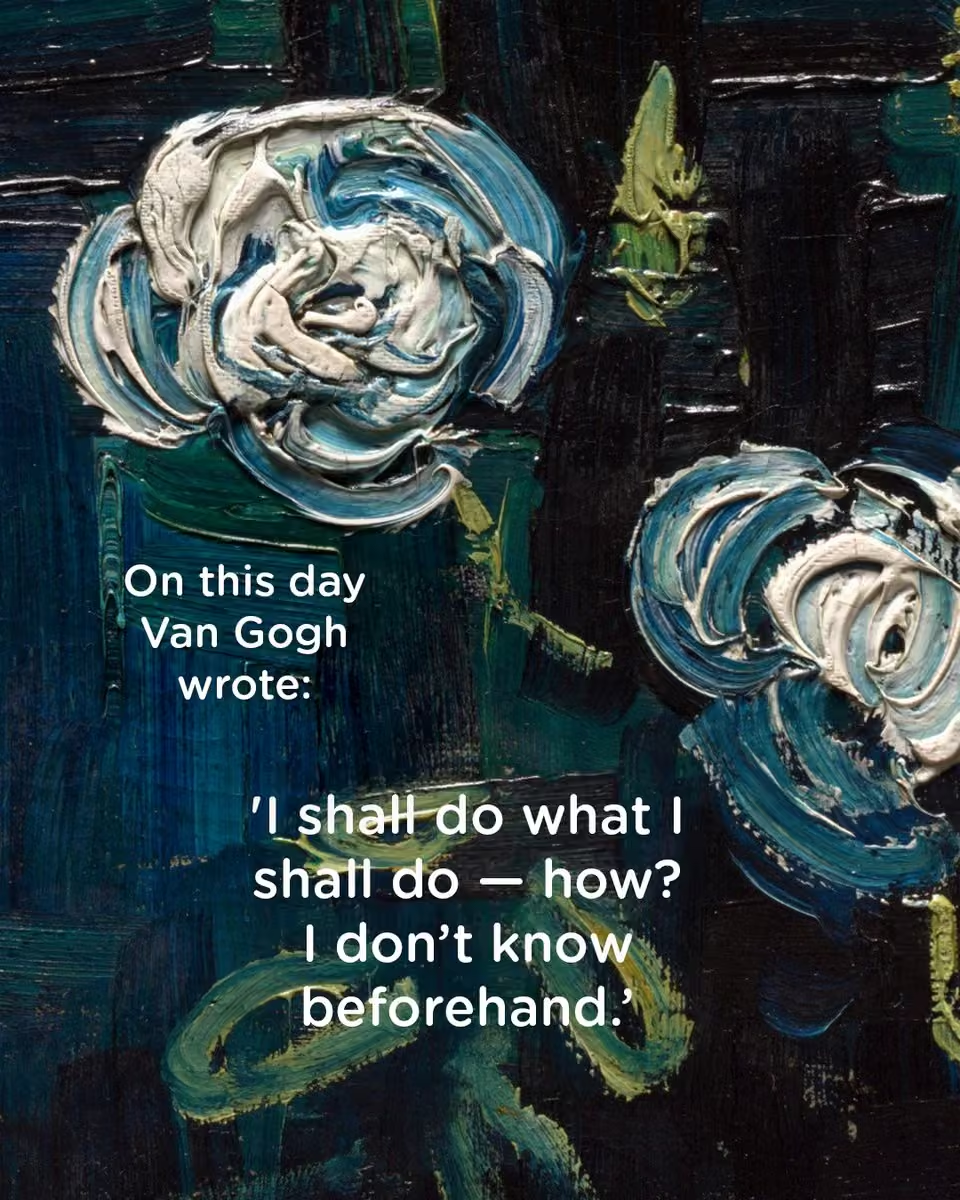
Van Gogh Museum
@vangoghmuseum
Did you know Van Gogh wrote over 2,000 letters?
For Vincent, writing was perhaps as essential as painting. He wrote to his family and friends about art, worries, ideas, and hopes.
Only a portion of those letters remains, thanks mostly to his brother Theo, who kept them safe. Vincent himself wasn’t as careful – many of the letters he received ended up in the fire or the bin.
From little clues he left behind – like ‘I wrote today…’ – we know he wrote far more than the pages that survived. -
Van Gogh Museum
@vangoghmuseum
When Vincent moved to Paris, a lot changed. ✨ He became inspired by the Impressionists, using lighter colours & quick brushstrokes. And he swapped farmers for cafés, flowers and city streets. 🤳
We’re highlighting four works from his Paris years:
1 ‘Vase with Gladioli and Chinese Asters’, 1886 © Van Gogh Museum
2 ‘Café Table with Absinthe’, 1887 © Van Gogh Museum
3 ‘Self-Portrait with Pipe and Straw Hat’, 1887 © Van Gogh Museum
4 ‘Boulevard de Clichy’, 1887 © Van Gogh Museum -
Van Gogh Museum
@vangoghmuseum
Which mood speaks to you most? ⛪ Same subject, two very different visions.
In Auvers (1890), Vincent painted the church in vibrant purples and deep cobalt blue, monumental and alive. Five years earlier in Nuenen (1885), he used dark, earthy tones and included a graveyard, reflecting on life and death.
Quite a difference, right?
1. ‘The Church at Auvers-sur-Oise’, 1890, © Musée d’Orsay
2. ‘The Old Church Tower at Nuenen (‘The Peasants' Churchyard’)’, 1885 © Van Gogh Museum -
Van Gogh Museum
@vangoghmuseum
Let’s take a dip into Van Gogh’s brushstrokes 🎨
Ever noticed how thickly he painted ‘Landscape at Twilight’ (1890)? 🌅 Van Gogh captured the all-encompassing character of nature – not only its beauty and vitality, but also the unease and loneliness of those empty, desolate landscapes.
What do you see in Van Gogh’s brushstrokes? -
Van Gogh Museum
@vangoghmuseum
The healing power of painting 💛 Vincent did not portray himself as a sick, broken man for the sake of effect or to arouse pity. He was convinced that painting would help him heal.
‘I retain all good hope’, he wrote to his brother Theo.
🖼️ ‘Self-Portrait’, 1889 © Nasjonalmuseet -
Van Gogh Museum
@vangoghmuseum
Ever felt like you’re ‘too emotional’ in a dispute? Van Gogh would probably say – good! 💛
Vincent saw conflict and mistakes as a strength, not a flaw – a sign that we’re learning, feeling, growing.
Would you agree? -
Van Gogh Museum
@vangoghmuseum
'How much there is in art that is beautiful, if only one can remember what one has seen, one is never empty or truly lonely, and never alone,’ Vincent wrote to his brother Theo (1878).
What's the most beautiful thing you've seen lately that stuck in your memory?
1/3 details of 'The Green Vineyard' (1888) © Kröller-Müller Museum
4 'The Green Vineyard' (1888) © Kröller-Müller Museum -
Van Gogh Museum
@vangoghmuseum
Did you ever notice? 🕵️ For ‘Head of a Woman’, Vincent primarily used the colour pair red and green, colours that intensify each other. Rather than placing them in bright, almost unmixed hues next to each other, he mixed them. As a result, the colour contrast is less intense.
-
Van Gogh Museum
@vangoghmuseum
Before there were photo attachments, there were Van Gogh’s ‘scratches’.
Vincent often added little sketches to his letters, to show his brother Theo or a fellow artist what he was working on. Over 240 of these ‘scratches’ survive. Some are loose, spontaneous lines; others are miniature artworks.
Do you recognise the paintings?
1 Letter from Vincent van Gogh to Theo van Gogh with sketch of ‘The Potato Eaters’ (recto), 9 April 1885.
2 Sketch of ‘Starry Night Over the Rhône’, enclosed in a letter from Vincent van Gogh to Eugène Boch (recto), 2 October 1888.
3 Letter from Vincent van Gogh to Theo van Gogh with sketch of ‘Sower with Setting Sun’, 21 November 1888.
4 Sheet 1 of a letter from Vincent van Gogh to Theo van Gogh with sketch of ‘Field with a Ploughman’ (recto), 2 September 1889. -
Van Gogh Museum
@vangoghmuseum
‘I’d rather paint people’s eyes than cathedrals, for there’s something in the eyes that isn’t in the cathedral – although it’s solemn and although it’s impressive. To my mind, the soul of a person [...] is more interesting.’ Vincent wrote to his brother Theo.
-
Van Gogh Museum
@vangoghmuseum
Van Gogh made this painting using only a black-and-white print and his memory. ‘I improvise colour on it but, being me, not completely of course, but seeking memories of their paintings – but the memory, the vague consonance of colours that are in the same sentiment, if not right – that’s my own interpretation.’
How do you think the colours turned out compared to the original?
1 ‘The Good Samaritan (after Delacroix)’, 1890 by Vincent van Gogh © Kröller-Müller Museum
2 ‘The Good Samaritan’, 1849 by Eugène Delacroix © Private collection -
Van Gogh Museum
@vangoghmuseum
No nets needed – Van Gogh caught butterflies with his brush.
Van Gogh loved to paint outside. His fascination with nature wasn’t just because it provided him with subjects to paint; Vincent's love for nature was deeply ingrained. While painting outdoors, insects often found their way into his work – sometimes quite literally.
This time, we’re focusing on the butterflies he captured.
Can you spot them?
1 ‘Butterflies and Poppies’, 1889 © Van Gogh Museum
2 ‘Long Grass with Butterflies’, 1890 © The National Gallery, London
3 ‘Garden with Butterflies’, 1890 © Van Gogh Museum
4 ‘Corner of a Garden with Butterflies’, 1889 © Private collection -
Van Gogh Museum
@vangoghmuseum
Let’s zoom in! In ‘The Bridge at Courbevoie’, Van Gogh captured a lively scene along the Seine in just one sitting. Instead of perfect perspective or precise figures, he focused on shimmering reflections and playful details.
Look closely: those colourful dashes of paint are Van Gogh’s own twist on Pointillism. He was inspired by artists like Seurat and Signac, who were among the first to use the technique of painting with dots in various colours. Side by side, layer upon layer – they make the water sparkle ✨🌊 -
Van Gogh Museum
@vangoghmuseum
Van Gogh’s olive groves 🌳❤️🩹 ‘... in all of nature, in trees for instance, I see expression and a soul, as it were.’
After his infamous breakdown in Arles, Vincent admitted himself to the Saint-Paul psychiatric institution in Saint-Rémy-de-Provence. When he was finally allowed to paint outdoors, he found himself drawn to the nearby olive groves. They fed both his creativity and his spirit.
The olive groves became his sanctuary, where art and healing intertwined:
‘... it seems to me that nature sees to it that illness is a means of getting us back on our feet, of healing us’.
🖼️ ‘Olive Grove, Saint-Rémy’, 1889 © Gothenburg Museum of Art -
Van Gogh Museum
@vangoghmuseum
More than just a postman, a friend in need 💌 'While Roulin isn't exactly old enough to be like a father to me, all the same he has silent solemnities and tendernesses for me like an old soldier would have for a young one.' – Vincent van Gogh to his brother Theo, Arles, c. 4 April 1889
Discover the extraordinary bond between Vincent and Joseph in 'Van Gogh and the Roulins', on view until 11 January. -
Van Gogh Museum
@vangoghmuseum
✨ Tonight, many of us will be looking skywards — some to catch the fireworks, some to think of a loved one, some to send a wish out into the universe. Whatever your reason, we wish you a peaceful night and an even brighter, more wonderful New Year!
🖼️ detail of ‘Starry Night over the Rhône’, 1888 © Musée d’Orsay -
Van Gogh Museum
@vangoghmuseum
No place like home 🏡 In 1890, while in Auvers-sur-Oise (FR), Vincent longed for the warmth of his childhood home in Nuenen (Brabant, NL). He reminisced about the past and searched for that same sense of comfort in the peaceful rural landscape of Northern France. Vincent probably felt comforted when looking at these homes. He called them ‘human nests’, and this theme remained a favourite motif throughout his time in the village. We’re highlighting three of these homes here.
What makes your own ‘human nest’ feel like home?
🖼️ 'Farmhouse’, 1890 © Van Gogh Museum ‘Cottages in Chaponval’, 1890 © Kunsthaus Zürich -
Van Gogh Museum
@vangoghmuseum
Sometimes the back of a painting tells just as much of a story as the front! 🎨 Take a look at all the labels on this one – they reveal the journey it’s been on. From the Guggenheim to the Los Angeles County Museum and the Stedelijk Museum, each sticker marks a stop along the way… and hints at the exhibitions it appeared in.
🖼️ ‘Cypresses and Two Women’, 1890 © Van Gogh Museum -
Van Gogh Museum
@vangoghmuseum
One chair, two sitters. 🪑
La Mousmé (1) leaves plenty of room… Joseph Roulin (2), not so much! 😉
Van Gogh bought this armchair for his Yellow House. When he left Arles in 1889, he stored it with the Ginoux family at Café de la Gare, where he'd previously lodged.
In the exhibition 'Van Gogh and the Roulins' you get a rare chance to see something Van Gogh actually owned, alongside Roulin's portrait. On view until 11 January. -
Van Gogh Museum
@vangoghmuseum
Jealousy isn’t a good look ❤️🔥 ‘The joy of others may embitter jealous hearts, but it fortifies submissive hearts; it is the ray of sunshine that opens up those two lovely flowers called “confidence” and “hope”,’ Vincent wrote to his brother Theo in 1876.
🖼️ ‘Small Bottle with Peonies and Blue Delphiniums’, 1886 © Van Gogh Museum -
Van Gogh Museum
@vangoghmuseum
Intimidatingly beautiful 😱😬💛 ‘... the murmur of an olive grove has something very intimate, immensely old about it. It’s too beautiful for me to dare paint it...’, Vincent wrote this to his brother Theo from Arles.
🖼️ ‘Olive Trees’, 1889 © National Galleries Scotland -
Van Gogh Museum
@vangoghmuseum
Merry Quizmas! 🎄 Waiting between dinners? Perfect time for a little art sleuthing 👀
Spot these details from Van Gogh’s iconic paintings hidden in the image:
👢 A pair of boots
🦋 A peacock moth
🌊 ‘Seascape near Les Saintes-Maries-de-la-Mer’
🎨 Camille
💂♂️ A Zouave
👀 And of course… Vincent himself.
How many did you spot?
This illustration was made by Chloe Jasmine Harris
for ‘Find Vincent van Gogh, a spotting book’. -
Van Gogh Museum
@vangoghmuseum
Happy holidays! 🎄
Vincent didn’t receive many presents, but he never forgot small acts of care and kindness.
Wishing you warmth, light, and the kind of gifts that can’t be wrapped. 💛 -
Van Gogh Museum
@vangoghmuseum
Can you feel the intensity of Vincent’s gaze? 🧑🎨 Vincent’s 'Self-Portrait without Beard' was painted as a gift for his mother, Anna Cornelia van Gogh-Carbentus. In it, he looks directly at the viewer with piercing green eyes, capturing both his likeness and his inner turmoil.
‘Self-Portrait without Beard’, 1889 © Private collection -
Van Gogh Museum
@vangoghmuseum
On a scale of 1 to 10, how happy were you when your alarm went off for work this morning? ⏰ Hopefully as cheerful as Vincent sounded when he wrote this. 💛
-
Van Gogh Museum
@vangoghmuseum
🌿 Enjoy this little art break with Van Gogh’s cypresses…
During his time in Saint-Rémy (1889–1890), Vincent became fascinated by these tall, slender trees. He even likened their shapes to Egyptian obelisks. The real challenge for him when painting the trees was the colour – that ‘difficult shade of bottle green,’ as he once put it.
1 ‘Country Road in Provence by Night’, 1890 © Kröller-Müller Museum
2 ‘Wheat Field with Cypresses’, 1889 © MET
3 ‘Cypresses and Two Women’, 1890 © Van Gogh Museum
4 ‘Cypresses with Two Figures’, 1890 © Kröller-Müller Museum -
Van Gogh Museum
@vangoghmuseum
It turns out Van Gogh and his contemporaries aren’t the only artists in our museum! 🎨
Our visitors have been leaving their own masterpieces at the drawing table in the ‘Van Gogh and the Roulins’ exhibition.
Want to give it a try? You can still visit (and draw!) until 11 January. -
Van Gogh Museum
@vangoghmuseum
One of the biggest compliments Van Gogh could get 👨🎨
Van Gogh admired Monet's use of colour and light, as well as his innovative approach to capturing the effects of nature. He especially appreciated Monet's ability to convey atmosphere and emotion through brushwork, particularly in landscapes.
When Van Gogh presented his work at the Salon des Indépendants in 1890, Theo could not have reported higher praise: Monet considered Vincent’s works ‘the best in the exhibition.’
In this post we show a selection of the works that were presented in that exhibition (3/14). Which one is your favourite?
1 ‘Mulberry Tree’, 1889 © Norton Simon Art Foundation
2 ‘Cypresses with Two Figures’, 1889–1890 © Kröller-Müller Museum
3 ‘Sunflowers’, 1888 © Neue Pinakothek -
Van Gogh Museum
@vangoghmuseum
How do you show someone a place is beautiful? If you’re Van Gogh, you paint it. 🎨 He made these three canvases to show his brother Theo what words couldn’t express: ‘I’d almost believe these canvases will tell you what I can’t say in words – what I consider healthy and fortifying about the countryside.’
Do these canvases capture what words could not?
1 ‘Daubigny’s Garden’, 1890 © Hiroshima Museum of Art
2 ‘Wheatfield with Crows’, 1890 © Van Gogh Museum
3 ‘Wheatfield under Thunderclouds’, 1890 © Van Gogh Museum -
Van Gogh Museum
@vangoghmuseum
👂 Why did Vincent cut off his ear?
It’s a question that’s often asked. Vincent’s illness revealed itself as he began to hallucinate and suffer from attacks in which he lost consciousness.
In the late evening of 23 December 1888, Vincent got into yet another argument with Paul Gauguin, the artist with whom he had been working in Arles. During this argument he got one of these attacks and later used a knife to cut off his left ear.
Police found Vincent the next morning at his house and took him to the hospital. Meanwhile Gauguin sent a telegram to Vincent’s brother Theo, who made his way to Arles that same evening to be by his brothers’ bedside. 🚂
Vincent could later not recall anything about the event.
'Ward in the Hospital in Arles', 1889, The Oskar Reinhart Collection "Am Römerholz", Winterthur, Switzerland -
Van Gogh Museum
@vangoghmuseum
Vincent felt a deep love and appreciation for nature, which is reflected in his artworks ‘... in all of nature, in trees for instance, I see expression and a soul, as it were.’
What do you see in nature?
🖼️ ‘Path in the Woods’, 1887 © Van Gogh Museum -
Van Gogh Museum
@vangoghmuseum
🔍 A little piece of Van Gogh… but from which painting? ✨
Look closely at the brushstrokes, and colours – every detail is a clue. Drop your best guess in the comments and see what others think! -
Van Gogh Museum
@vangoghmuseum
Van Gogh’s blossoms 🌸 When Van Gogh arrived in Auvers on 20 May, the town was ‘sunny and covered with flowers,’ with greenery everywhere 🌿. Inspired, he painted gardens, vineyards, and flowering chestnut trees. Some branches had blown off in a storm – for the first painting, Van Gogh placed them in a pale pink vase, which is hard to spot! But it’s there.
A few months earlier, he also painted his famous Almond Blossom, set against a similarly bright blue sky. In both paintings, the blossoms capture the energy and vitality of spring.
1 ‘Blossoming Chestnut Branches’, 1890 © Kunsthaus Zurich.
2 ‘Almond Blossom’, 1890 © Van Gogh Museum -
Van Gogh Museum
@vangoghmuseum
‘My house here is painted outside in the yellow of fresh butter, with garish green shutters, and it’s in the full sun on the square […]. And the intense blue sky above. Inside, I can live and breathe, and think and paint,’ Van Gogh wrote to his sister Willemien in 1888.
The Yellow House was a place where Vincent could not only paint, but also where his artist friends could come to stay. His plan was to turn it into an artists’ house where like-minded painters could live and work together.
🖼️ ‘The Yellow House (The Street)’, 1888 is now on view in the exhibition ‘Van Gogh and the Roulins. Together Again at Last’, until 11 January. -
Van Gogh Museum
@vangoghmuseum
Do you agree with Van Gogh? ‘If one truly loves nature one finds beauty everywhere.’
🖼️ ‘Landscape with Trees and Figures’, 1889 © Baltimore Museum of Art -
Van Gogh Museum
@vangoghmuseum
‘The appeal that these vast landscapes have for me is very intense’, Van Gogh wrote. ⛰️ Vincent really couldn’t get enough of this hill near Arles (FR) – he visited Montmajour more than 50 times! From its heights, he admired the vast landscapes below.
Let’s explore some details together.
🖼️ ‘La Crau Seen from Montmajour’, 1888 © Van Gogh Museum -
Van Gogh Museum
@vangoghmuseum
Can beauty be found everywhere? If we took more time to notice the ordinary, could it transform into something extraordinary? What do you think?
🖼️ ‘Vase with Zinnias and Geraniums’, 1886 © National Gallery of Canada -
Van Gogh Museum
@vangoghmuseum
🎨 Isaac Israëls painted and drew Jo van Gogh-Bonger – Vincent’s sister-in-law – many times. Beyond the portraits, over 100 letters reveal a friendship full of affection, humour & reflections on art and life. 💌
Though it never became official – ‘He is not a man for marriage’, Jo admitted in her diary – the portraits and letters testify to their deep affection.
The small-scale exhibition ‘Captivated by Vincent’ is on view until 25 January. -
Van Gogh Museum
@vangoghmuseum
🌻 Does the bright yellow make you squint a little? Believe it or not, the dazzling colours you see in Van Gogh’s Sunflowers today aren’t quite what they once were.
Van Gogh painted the work with three types of chrome yellow. In the more than 130 years since it was painted, those pigments darkened – especially in the flowers and the lower background. Scientists recreated the paints he used and applied them in a reconstruction: instead of today’s deeper tones, the flowers once glowed a vivid, almost orange hue!
It’s a reminder that colours live, change, and age. -
Van Gogh Museum
@vangoghmuseum
Van Gogh’s ‘La Berceuse’ wasn’t just a portrait, it was a tribute to motherhood. 🌼 Depicting Augustine Roulin as ‘she who rocks the cradle’, he used colour like a lullaby: soothing, rhythmic, and full of comfort.
🖼️ ‘Augustine Roulin (La Berceuse)’ is now on view as part of the exhibition ‘Van Gogh and the Roulins’, until 11 January. -
Van Gogh Museum
@vangoghmuseum
A glimpse into what might have been 🥔🧑🎨
Van Gogh once planned to create a new version of 'The Potato Eaters', and this sketch –'Interior with Ten Figures' — was part of that idea.
Van Gogh had just emerged from a serious mental crisis. Hoping to revisit one of his earlier masterpieces, he asked his brother Theo to send back his old sketches of 'The Potato Eaters' as reference material. In the end, the new version was never painted, but this drawing offers a rare glimpse into what might have been. -
Van Gogh Museum
@vangoghmuseum
In a letter to his brother Theo, Vincent reflects on a painful falling-out with Anton Mauve, one of his early mentors. In contrast to what Mauve thought, Van Gogh felt that calling himself an artist wasn’t about claiming mastery; it was about admitting he was still searching, still learning, and always striving.
What do you think – aren’t we all works in progress, always learning, never fully ‘done’? 🌱
🖼️ ‘Self-Portrait with Pipe and Straw Hat’, 1887 © Van Gogh Museum -
Van Gogh Museum
@vangoghmuseum
What seemed like a simple Van Gogh still life hid a secret X-rays revealed two wrestlers beneath the blooms – the very figures he once described painting in a letter to his brother. In 2012, researchers confirmed it: wrestlers first, flowers later.
🖼️ © Kröller-Müller Museum -
Van Gogh Museum
@vangoghmuseum
🎨 Watercolours, drawings and paintings… Van Gogh did them all!
Which version of ‘The Harvest’ is your favourite? 🌾
1️⃣ ‘Harvest in Provence, at the Left Montmajour’ (1888)
2️⃣ ‘The Harvest (for Émile Bernard)’ – drawing, 1888 🖋️ © Kupferstichkabinett, Berlin
3️⃣ ‘The Harvest’ – painting, 1888 🎨 © Van Gogh Museum -
Van Gogh Museum
@vangoghmuseum
🖼️ Vincent's painting 'The Bedroom', in our collection, reveals how he used his own art to decorate his room. The portraits are of Eugène Boch (left) and Lieutenant Milliet (right). It's a beautiful display of how Vincent incorporated his own art into his paintings. 🎨
1 ‘The Bedroom’, 1888 © Van Gogh Museum
2 detail of ‘The Bedroom’, 1888 © Van Gogh Museum
3 (left portrait) ‘Eugène Boch’ © Musée d’Orsay
4 (right portrait)‘The Lover (Portrait of Lieutenant Milliet)’ © Kröller-Müller Museum -
Van Gogh Museum
@vangoghmuseum
See those white spots? Van Gogh used white and pink opaque watercolour to add a touch of colour to the blossoms, and in the lower left corner he even painted over parts of the ground to adjust his composition. Over time, the paper darkened, which is why those light-coloured touches now stand out so clearly.
🖼️ ‘Provençal Orchard’, 1888 © Van Gogh Museum -
Van Gogh Museum
@vangoghmuseum
How well do you know the Roulin Family? They were close friends of Van Gogh during his time in Arles, in the South of France. Postman Joseph, his wife Augustine and their children often posed for Vincent, becoming symbols of warmth and everyday life.
Can you match the photos to the portraits? 👀 Leave your guess in the comments!
🖼️ Now on view: ‘Van Gogh and the Roulins’, until 11 January. -
Van Gogh Museum
@vangoghmuseum
🌸🦋 Van Gogh left parts of the canvas bare in ‘Butterflies and Poppies’ (1889). He captured tangled stems, heavy buds, and fluttering butterflies – nothing embellished, yet perfectly balanced.
‘Butterflies and Poppies’, 1889 © Van Gogh Museum -
Van Gogh Museum
@vangoghmuseum
💡 Vincent rented the Yellow House in Arles (FR), with a view over a small local park. It was right by what he casually called the ‘street of the good little ladies’ (yes, that’s a brothel reference).
Even though the park itself wasn’t anything special, he saw something in it – and painted it.
🎨 On 11 October 1888, Vincent wrote to his brother Theo: ‘I’ve done a new no. 30 canvas, and I plan to start another one this evening when they light the gas. The one I’ve just done is another garden.’
He was writing about these two paintings:
1 ‘Entrance to the Public Gardens in Arles’, 1888 © The Phillips Collection
2 ‘The Public Garden with a Couple Strolling ('The Poet's Garden')’, 1888 © Private collection -
Van Gogh Museum
@vangoghmuseum
Why did Van Gogh paint skulls? 💀 In 1887, Van Gogh painted two vividly coloured skulls, experimenting with palette and technique. (1+2) But his fascination with skulls began earlier.
While studying at the Antwerp art academy in 1886, he practised anatomy by drawing skeletons — painting them wasn’t part of the curriculum. His now-famous smoking skeleton likely started as an academic study, but it also reveals a touch of his rebellious humour. (3)
1 Skull, 1887 © Van Gogh Museum
2 Skull, 1887 © Van Gogh Museum
3 Head of a Skeleton with a Burning Cigarette, 1886 © Van Gogh Museum -
Van Gogh Museum
@vangoghmuseum
Did you know that, on average, people spend less than 30 seconds looking at a painting in a museum? You may discover details you'd otherwise miss by taking the time to pause, observe, and truly connect. Let’s try it with Van Gogh’s Self-Portrait.
Did you notice…?
💐 A flower (or handkerchief) hidden in the dark area (2) This self-portrait was painted over an earlier portrait of a woman—Vincent often reused canvases to save materials and money.
✍️ His signature in the top left corner. (3)
🍷 A glass of what appears to be red wine in the foreground!
🖼️ Self-Portrait with Glass, 1887 -
Van Gogh Museum
@vangoghmuseum
Van Gogh was fascinated with the labour and life of peasants. He often portrayed working men and women, believing that this was how he could capture ‘the heart of the people’.
🖼️ ‘Two Peasant Women’, 1890 © Kunsthaus Zürich -
Van Gogh Museum
@vangoghmuseum
🌸 These lovely flowers are part of a bigger ‘picture’.
Any idea which painting they belong to? 🤔🔍 Leave your guess in the comments!
#artlovers #guessthepainting #flowerdetail #vangogh #museum -
Van Gogh Museum
@vangoghmuseum
Vincent wrote to his brother Theo: ‘the Trinquetaille bridge with all its steps is a canvas done on a grey morning, the stones, the asphalt, the cobblestones are grey, the sky a pale blue, the small figures colourful […]’
Vincent captured one of those grey mornings perfectly in this painting, don’t you think? ☁️
🖌️ ‘The Iron Bridge at Trinquetaille’, 1888 © Private collection
✏️ Detail of Van Gogh’s letter to Theo, 1888 -
Van Gogh Museum
@vangoghmuseum
✍️ ‘My dear fellow – let’s not forget that small emotions are the great captains of our lives, and that these we obey without knowing it’. Is Van Gogh right? Have you ever noticed how they quietly steer your course?
🖼️ ‘Sailing Boats Coming Ashore’, 1888
#vangogh #vangoghmuseum #artquote #artinspiration #everydaybeauty -
Van Gogh Museum
@vangoghmuseum
Visiting our museum from the comfort of your own home! 🍿
Can’t—or can’t wait—to visit us in person? 😉 Let us take you through the exhibition 'Van Gogh and The Roulins' with our 4K tour. Watch the full tour here: www.youtube.com/watch?v=Dah9dM_jIFg
Now on view: ‘Van Gogh and The Roulins. Together Again at Last’ until 11 January. -
Van Gogh Museum
@vangoghmuseum
Parlez-vous français? 🇫🇷 Vincent was of course Dutch, but he wrote about a third of his letters in French – the international language at the time. Van Gogh could speak French from an early age, but it was only after he moved to Paris, in 1886, that he completely switched to writing in French. 🖋📜
-
Van Gogh Museum
@vangoghmuseum
No challenge was too big for Van Gogh! 💪 Painting glass is tricky as it is… but Vincent went a step further. In ‘Carafe and Dish with Citrus Fruit’ (1887), he set a transparent carafe against patterned wallpaper – forcing himself to capture all the colourful reflections dancing through the glass. (2)
🖼️ © Van Gogh Museum -
Van Gogh Museum
@vangoghmuseum
What is the first thing that catches your eye in this painting?
'I've had a week of concentrated hard work in the wheatfields right out in the sun’, Vincent wrote to his brother Theo. He was busy experimenting with brushwork and colour – like in this painting. Here he juxtaposes the golden yellow of the ripe wheat with a swirl of many different colours for the plants in the foreground. (2)
And did you notice the high horizon? The field takes up almost the entire painting.
🖼️ ‘Wheatfield’, 1888 © Van Gogh Museum -
Van Gogh Museum
@vangoghmuseum
Like father, like son? 👨👦
Van Gogh painted Armand and Joseph Roulin (2) with a uniform, bright background, and also painted their facial hair with the same 'smudges'. Was he showing a family resemblance, or just evolving his style? 💛
See both portraits in the exhibition ‘Van Gogh and the Roulins’, on view until 11 January. -
Van Gogh Museum
@vangoghmuseum
🌹 Though this painting appears peaceful, Van Gogh was enduring a severe mental crisis at the time. While at a psychiatric clinic in Saint-Rémy, he sought solace in nature. He painted the fragile blossoms naturalistically, but used bold outlines and flat colours for the leaves.
‘Wild Roses’, 1889 © Van Gogh Museum -
Van Gogh Museum
@vangoghmuseum
✨ ‘I draw not to annoy people but to amuse them, or to draw their attention to things that are worth looking at and which not everyone knows.’ – Vincent van Gogh to his brother Theo 💌
Van Gogh had a gift for finding beauty in everyday life. Which scene is your favourite?
1 'The Seamstress', 1881–82 © Museum Boijmans Van Beuningen
2 'Boy with a Sickle', 1881 © Kröller-Müller Museum
3 ’Road behind the parsonage garden in Nuenen’, 1884 © Rijksmuseum Amsterdam
4 ’ 'Weaver in Front of His Loom', 1884 © Kröller-Müller Museum -
Van Gogh Museum
@vangoghmuseum
Vincent on the rocks 🪨
In the summer of 1888, Van Gogh was exploring the rocky hills of Montmajour near Arles. He found himself surrounded by buzzing mosquitoes and mistral winds. But as he wrote to his brother Theo, ‘If a view makes one forget those little vexations, there must be something in it.’ 🦟 And clearly, there was.
That same July, he captured the rugged beauty of the landscape not just once, but twice – first in ink, then in paint.
🖌️ ‘The Rocks’, 1888 © The Museum of Fine Arts, Houston
✏️ ‘The Rock of Montmajour with Pine Trees’, 1888 © Van Gogh Museum -
Van Gogh Museum
@vangoghmuseum
Take a little art break with us 🎨💦
Van Gogh’s seascape brushstrokes feel so immersive, it’s almost like you’re stepping right into the waves. 🌊 -
Van Gogh Museum
@vangoghmuseum
🤏 Look closely and you’ll see brushstrokes measuring less than half a millimetre wide.
In early 1887, Van Gogh used his finest brushes while experimenting with thinned oil paint on an absorbent ground. This gave the surface a matte, translucent effect – a method known as peinture à l’essence.
In this work, ‘Dish with Citrus Fruit’, the fruit and background are built up with parallel lines and hatching. (2) Those almost hair-thin strokes show both Vincent’s precision and his willingness to try new approaches with paint.
#vangoghmuseum #art #painttechnique #lemon #vincentvangogh -
Van Gogh Museum
@vangoghmuseum
Spending time in nature isn’t only for artists, it can be meaningful for all of us. 🌿 Taking a walk, noticing small details, or simply being outside can offer moments of calm and clarity, the kind Van Gogh himself found inspiring. ✨
-
Van Gogh Museum
@vangoghmuseum
Van Gogh’s birds 🐦
Sometimes painted with just a few swift strokes, other times rendered with great care: birds often appear in Van Gogh’s drawings and paintings. Because he worked so much outdoors, Vincent was constantly surrounded by them: fluttering above fields, perched on trees, or darting across the sky. They weren’t just background details, but lively subjects he loved to ‘catch’ on paper or canvas.
Which one do you like most?
1 detail of ‘Kingfisher by the Waterside’, 1887 © Van Gogh Museum
2 detail of 'The Reaper (after Millet)’, 1889 © Van Gogh Museum
3 ‘Barn Owl Viewed from the Front’, 1887 © Van Gogh Museum
4 detail of ‘Wheatfield with Partridge’, 1887 © Van Gogh Museum -
Van Gogh Museum
@vangoghmuseum
Even a great artist like Van Gogh had to practise – again and again and again… 🔂 ‘What once felt desperately impossible is now becoming possible’, he wrote to his brother Theo.
In 1881, Vincent began with Bargue’s drawing lessons – a book with series of exercises designed to teach aspiring artists how to see and accurately measure proportions. Van Gogh copied the examples relentlessly, training his eye and hand. At first, he sketched people working in the fields, rough and searching. But over time, his practice gave him the confidence and skill to create portraits as striking and meticulous as these.
1’Head of a Young Man with a Pipe’, 1884–85 © Van Gogh Museum
2 ‘Old Man with a Top Hat’,1883 © Van Gogh Museum
3 ‘Head of a Woman’, 1883 © Van Gogh Museum
4 ‘Head of a Fisherman with a Fringe of Beard and a Sou'wester’, 1883 © Van Gogh Museum -
Van Gogh Museum
@vangoghmuseum
A Shitty Story 💩 Ever wondered what ‘The Yellow House’ and… poop have in common? One of our researchers recently uncovered the answer! 👀 Thanks to a postcard (3) from 1902–03, we now know the sand mounds in Van Gogh’s painting were used to absorb horse urine and cover poop in the Arles of 1888. 🐴 So these sand heaps were part of efforts to keep the streets of Arles a little cleaner – a glimpse of everyday life hidden in art!
‘The Yellow House (The Street)’, 1888, is now on view as part of the exhibition ‘Van Gogh and the Roulins. Together Again at Last’ – on view until 11 January. -
Van Gogh Museum
@vangoghmuseum
🌾 Have you ever thought about how wheat mirrors our own lives?
As Vincent wrote to his sister Willemien in 1889:
‘… are we not ourselves wheat to a considerable extent, at least ought we not to submit to growing, powerless to move, like a plant, relative to what our imagination sometimes desires, and to be reaped when we are ripe, as it is?’
🖼️ ‘Landscape at Saint-Rémy (Enclosed Field with Peasant)’ © Indianapolis Museum of Art -
Van Gogh Museum
@vangoghmuseum
Fun fact: When Vincent signed and dated his paintings, it usually meant that he was satisfied with his work.
Can you recognize the paintings these signatures belong to? -
Van Gogh Museum
@vangoghmuseum
From teenage shyness to budding confidence ✨ With just a few subtle changes, Van Gogh captured that universal moment of a boy standing on the threshold of adulthood. In November 1888, Van Gogh painted 17-year-old Armand Roulin twice. First quiet and withdrawn, in profile, then more upright, with eyes that meet ours in growing confidence.
See both portraits in the exhibition 'Van Gogh and the Roulins', on view until 11 January. -
Van Gogh Museum
@vangoghmuseum
‘[…] if only I could rid myself of this uncertainty and have the firm conviction that I will eventually overcome and succeed’, Vincent wrote to his brother Theo (1878).
While a moment can sometimes feel defeating, you never know what the future holds.
🖼️ ©️ Musée d’Orsay -
Van Gogh Museum
@vangoghmuseum
Happy Halloween! 💀🦇🕷️🎃
🎥 This video shows Van Gogh’s painting ‘Skull’ (1887) under raking light – a low-angled light that’s used to reveal textures, thick brushstrokes, or specific details in the paint that aren’t visible under normal lighting.
#halloween #vangogh #happyhalloweenThis media couldn't be displayed. See it on the original post. -
Van Gogh Museum
@vangoghmuseum
Van Gogh is expressing the idea that life is a constant struggle – a battle that requires not just strength, but also resilience, awareness, and a positive mindset. 💪
He added a poem to this letter, to his brother Theo, called ‘Up-hill’ by Christina Georgina Rossetti:
Does the road go up-hill then all the way?
‘Yes to the very end’
And will the journey take all day long?
‘From morn till night, my friend.’ -
Van Gogh Museum
@vangoghmuseum
Enjoy this little art break 😮💨
🖼️ ‘Avenue with Plane Trees’, 1888 © Musée Rodin -
Van Gogh Museum
@vangoghmuseum
Notice the closed shutters in the courtyard of the inn in Arles, behind the coach? They hint at siesta time. 😴 Just like the short shadows suggest it’s early afternoon.
In a letter to his brother Theo, Van Gogh described the colours he planned to use when turning ‘this hasty croquis’* into a painting: ‘Simple foreground of grey sand. Background very simple too, pink and yellow walls with windows with green louvred shutters, corner of blue sky. The two carriages very colourful: green, red, wheels yellow, black, blue, orange.’ 🎨
🖌️ ‘Tarascon Stagecoach’, 1888 © Princeton University Art Museum
✏️ Sketch from Van Gogh’s letter to Theo, 1888
* croquis is another word for sketch -
Van Gogh Museum
@vangoghmuseum
The Odd One Out 🛏️
Vincent painted his bedroom in Arles three times, but one of these close-up details doesn’t belong to the version hanging here with us in the Van Gogh Museum in Amsterdam. 👀
Think you can tell which detail is from another version?
It’s a tricky one, even for Van Gogh aficionados. 🔍 -
Van Gogh Museum
@vangoghmuseum
Painting a baby? Easier said than done! 👶🎨 In his portrait of baby Marcelle, Van Gogh focused on her chubby cheeks and curious eyes, while her mother Augustine held her up. The mother’s fingers look sketchy and her face blends into the background – perhaps because babies don’t sit still?
Now on view: ‘Van Gogh and the Roulins’, until 11 January. ✨ -
Van Gogh Museum
@vangoghmuseum
In this painting of an overgrown plot of land, Van Gogh tightly cropped his composition, using patches of colour for the ground cover and long stripes for the tree trunks. The spot where he painted ‘Tree Roots’ (1890) was identified using a postcard from 1900 (2)🌳.
-
Van Gogh Museum
@vangoghmuseum
Happy hour, but make it 19th century 🍷 Some things never change – who or what are you toasting to this weekend?
🔍 Can you guess the Van Gogh masterpiece from just this detail? -
Van Gogh Museum
@vangoghmuseum
Van Gogh’s flower of choice: Sunflowers. 🌻
While living in France, he came across sunflowers growing in Montmartre’s vegetable gardens. Their ‘rustic’ charm likely appealed to him.
In the 19th century, some painters became closely associated with a single bloom – and for Van Gogh, it was the sunflower. He wrote to his friend Paul Gauguin: ‘If Jeannin has the peony, Quost the hollyhock, I indeed, before others, have taken the sunflower.’ 🖼️ ‘Allotment with Sunflower’, 1887 © Van Gogh Museum -
Van Gogh Museum
@vangoghmuseum
To truly appreciate Van Gogh’s art, it helps to see it alongside that of his contemporaries — the artists who inspired him, and those he later inspired, like Matisse for instance. (1)
Placing these works alongside Van Gogh’s paintings reveals not only how innovative his style was, but also the ongoing exchange of inspiration between him and other artists.
These four works were added to our collection in recent years — which one’s your favourite? 💛
1.‘Olive Grove in Collioure’, Henri Matisse, 1905 © Van Gogh Museum
2.‘Clovis Sleeping’, Paul Gauguin, 1884 © Van Gogh Museum
3.‘Peasant Spreading Manure (Paysan répandant du fumier)’, Jean-François Millet, 1851 © Van Gogh Museum
4. ‘Portrait of Eugène Benon’, Pierre Puvis de Chavannes, 1882 © Van Gogh Museum
Made possible thanks to one of our contributing partners @VriendenLoterij, and others. -
Van Gogh Museum
@vangoghmuseum
Did you ever notice? Vincent presents himself here as a respectable bourgeois, dressed in an elegant suit and felt hat. The subdued colours lend the portrait a refined, almost reserved character, making his bright red beard all the more striking against the surrounding greys.
🖼️ ‘Self-Portrait’, 1887 © Van Gogh Museum -
Van Gogh Museum
@vangoghmuseum
We probably all know Van Gogh’s ‘Starry Night over the Rhône' (©️ Musée d’Orsay) and the even more famous ‘Starry Night' (MoMa), but this painting is actually the last night painting Vincent made with stars and moonlight. ✨
Vincent didn't seem to assign much significance to the painting. In a letter to his brother Theo, written six weeks before his death, he described it as ‘a study'. 🌝
'The White House at Night', 1890 ©️ The Hermitage, St. Petersburg. -
Van Gogh Museum
@vangoghmuseum
A golden summer 🌞 'Old gold yellow landscapes – done quick quick quick and in a hurry, like the reaper who is silent under the blazing sun, concentrating on getting the job done’, Vincent wrote to his artist friend Emile Bernard.
Can you feel the blazing heat just by looking at this painting?
🖼️ ‘The Mowers, Arles in the Background’, 1888 © Musée Rodin -
Van Gogh Museum
@vangoghmuseum
❤️ Discover the remarkable friendship between Vincent van Gogh and postman Joseph Roulin and his family.
🎨 Thanks to the close connection with the Roulins, Van Gogh was able to pursue his ambitions as a portrait painter. He made many portraits of the family. And now they are reunited. A large number of these works are on view together for the first time.
🖼️ Exhibition: Van Gogh and the Roulins, Together Again at At Last
📍 Van Gogh Museum, Amsterdam
📅 From 3 October through January 11
📹 by The GazeThis media couldn't be displayed. See it on the original post. -
Van Gogh Museum
@vangoghmuseum
‘I imagine it would disappoint you and appear ugly were you to see it.’ Vincent wrote this to his sister Willemien about this very painting...🤯
‘I know very well that not a single flower was drawn, that they're just little licks of colour.’ He wasn't being modest – he genuinely doubted anyone would understand his technique.
🖼️ ‘Garden at Arles’, 1888 © Kunstmuseum Den Haag -
Van Gogh Museum
@vangoghmuseum
🌙 This painting depicts a captivating moonlit night. In a letter to his brother Theo, Vincent vividly described the night sky he viewed from the Saint-Rémy asylum window: 'a nocturnal sky with a stupefying moon' 🎨. As we focus on the lower right corner, we can't help but wonder – is that Vincent himself? Some speculate the red-haired figure in this romantic scene is indeed the artist. What do you think?
‘A Walk at Twilight’, 1889-1890, in the collection of the São Paulo Museum of Art. -
Van Gogh Museum
@vangoghmuseum
Which Van Gogh masterpiece made in Arles speaks to you most? 🌻💫
In 1888, Van Gogh moved to the sunny south of France hoping it would spark his creativity – and it absolutely did. ☀️🎨
During his time in Arles, he created some of his most iconic works:
1 ‘Starry Night over the Rhône’, 1888 © Musée d’Orsay
2 ‘The Bedroom’, 1888 © Van Gogh Museum
3 ‘The Night Café’, 1888 © Yale University Art Gallery
4 ‘Sunflowers’, 1888 © Van Gogh Museum -
Van Gogh Museum
@vangoghmuseum
👀 Something’s not quite right…
Most of these images are taken from a single painting, but there’s an intruder.
Can you spot the odd one out? Share your guess in the comments! -
Van Gogh Museum
@vangoghmuseum
‘I was writing to you... and instead of continuing the letter I began to draw on the very paper the head of a dirty little girl I saw this afternoon...’, Vincent wrote.
He couldn’t help himself – even mid-letter, he started sketching. These two drawings of a local girl were made spontaneously in a letter to his friend John Russell.
During harvest season in Arles, Van Gogh was constantly outside painting, and people he encountered often made their way onto the page.
The ‘dirty little girl’ reference? Vincent meant it literally.
Mudlarks were among the very poorest in society – often children – who scavenged along riverbanks for scraps they could sell or trade: bones, coal, or bits of metal.
🖼️ ‘Head of a Girl’, 1888 © Solomon R. Guggenheim Museum -
Van Gogh Museum
@vangoghmuseum
Fragments of a Paris street 🔍👀 These details come from Van Gogh’s ‘Boulevard de Clichy’, painted near his home in Montmartre.
In Paris, Van Gogh discovered Impressionism and Pointillism. Inspired, he brightened his palette and experimented with short, rhythmic brushstrokes – which can be seen in these details. -
Van Gogh Museum
@vangoghmuseum
🎨 ‘I am still very busy Vincenting’, painter Isaac Israëls wrote to his friend Jo van Gogh-Bonger.
Between 1915 and 1920, Jo (Theo’s wife and Vincent’s sister-in-law) lent him several of Van Gogh’s masterpieces, which he used as backdrops in at least 17 of his own works. Isaac called this ‘Vincenting’. What do you think? Is it copying or creating something new? 👀
See more in the exhibition ‘Captivated by Vincent’, on view until 25 January. -
Van Gogh Museum
@vangoghmuseum
💭 Which of Vincent’s quotes speaks to you most today?
Van Gogh faced many struggles with his own mental health, yet in his letters he often wrote about hope, comfort, and encouragement.
Hopefully his words bring you a little relief on #worldmentalhealthday 💌 Save them, share them, or send one to a friend who could use some encouragement today. -
Van Gogh Museum
@vangoghmuseum
Wondering what the weather was like when Van Gogh made these sketches? In a word: wet!
Those diagonal pencil lines aren’t just decoration – they’re raindrops. So while Van Gogh was busy drawing the landscape, the sky was busy ‘soaking it’. 😉🌧️
1 ‘Couple with Child, Walking in the Rain’, 1890 © Van Gogh Museum
2 ‘Three Men Shouldering Spades on a Road in the Rain’, 1890 © Van Gogh Museum
3 ‘Sower in the Rain’, 1890 © Van Gogh Museum -
Van Gogh Museum
@vangoghmuseum
🌾 A ‘bizarre’ watercolour…
Vincent wrote to his brother Theo: ‘I’ve sent you 3 drawings by post today. The one with the wheat stacks in a farmyard will seem too bizarre to you, but it was done in great haste as a project for a painting, and it’s to show you what it’s like.’ (1888)
How do you think the painting turned out?
1 ‘Wheat Stacks’, © Private collection
2 ‘Wheat Stacks in Provence’, 1888 © Kröller-Müller Museum -
Van Gogh Museum
@vangoghmuseum
Meet the Roulins! 👫🧑🤝🧑👶
In 1888, Van Gogh’s friendship with postman Joseph Roulin 📮 in Arles grew into a bond with the whole Roulin family – and the chance to fulfil his dream of painting portraits.
For the first time in decades, their portraits are reunited in ‘Van Gogh and the Roulins. Together Again at Last’, on view until 11 January:
1 ‘Joseph Roulin’, 1888
2 ‘Madame Augustine Roulin and Baby Marcelle', 1888
3 ‘Portrait of Armand Roulin’, 1888
4 ‘Portrait of Camille Roulin’, 1888 -
Van Gogh Museum
@vangoghmuseum
🌍 ‘I hope the day will come when I’ll be able to show you this beautiful part of the world,’ Vincent wrote to his sister Willemien in 1888.
He may have written it to her, but in the end, the whole world got to see it – through his art. Vincent showed us the beauty of the places he lived and visited. Like, for instance, the golden light of Arles.
🖼️ ‘The Stevedores in Arles’, 1888 © Museo Nacional Thyssen-Bornemisza -
Van Gogh Museum
@vangoghmuseum
What’s your favourite detail? ✏️
‘Sketches of Figures and Studies of a Hand’, 1890 © Van Gogh Museum -
Van Gogh Museum
@vangoghmuseum
'In the end, I understood: it's not about the final work, but about everything we leave inside it when we create it, and it's remarkable how everything is somehow transmitted. That's what Vincent's paintings taught me.' @Galletitaa told us.
Little Sunflowers 🌻 Made on a 1 x 0.8 cm canvas
Technique: Close one eye and paint with a needle
#vangoghinspires -
Van Gogh Museum
@vangoghmuseum
🛠️ 🧰 The past few months we worked with great dedication to build a life-size Yellow House, as part of our new exhibition 'Van Gogh and the Roulins. Together Again at Last'. Opening today!
Experience a little piece of Van Gogh’s world as he described it to his sister Willemien in 1888:
“My house here is painted outside in the colour of fresh butter, with garish green shutters, and it’s in the full sun on the square (…). And the intense blue sky above. Inside, I can live and breathe and think and paint.” ✍️ – Vincent van Gogh
You can visit 'Van Gogh and the Roulins. Together Again at Last' until 11 January.This media couldn't be displayed. See it on the original post. -
Van Gogh Museum
@vangoghmuseum
Hats off to Van Gogh 🎩
Vincent didn’t say much about his hats, but they show up in plenty of his self-portraits. The straw hat? Perfect for summer: light, airy, and ideal for painting outdoors in the southern sun. The grey felt hat? A neater, more urban look, worn during his Paris years – and pretty fashionable for the time.
💡 Fun fact: Back in Brabant (NL), Vincent’s parents made him wear a fur hat all year round, even in summer – much to his annoyance. 🥵
Can you remember something your parents made you wear as a child?
#vangogh #fashion #artfacts #history #artdetail -
Van Gogh Museum
@vangoghmuseum
Paint Confetti 🎉 At first glance, ‘Garden at Arles’ appears as a jumble of dots and stripes. Green, blue, red, purple, and yellow dance before your eyes. Neo-Impressionist artists similarly use dots and stripes in bright, unmixed, and often contrasting colours, rather than the smooth transitions favoured by academic painters of their time. Seen from a distance, the individual colours merge into a unified whole.
🖼️ © Kunstmuseum Den Haag -
Van Gogh Museum
@vangoghmuseum
Can you guess which painting this is? 👀 It looks like a finished Van Gogh painting as it is, but it is actually just a detail from a larger work. 🧐
Van Gogh’s paintings are full of small scenes like this one. His works come to life when you zoom in. -
Van Gogh Museum
@vangoghmuseum
Do you have a favourite Van Gogh quote? ✒️
🖼️ detail of 'Flowers in a Blue Vase', 1887 © Kröller-Müller Museum -
Van Gogh Museum
@vangoghmuseum
From notes to flowers 🌻 – here’s how Van Gogh’s sketch became a colourful painting.
‘I don’t know if I’ll ever do tranquil and calmly worked paintings’, he admitted. And indeed, the final work bursts with vibrant colour.
Which detail do you think you would you notice first if you were standing in front of this garden?
🖼️ ‘Garden with Flowers’, 1888 ©️ Private collection
✏️ Detail from a letter to Theo van Gogh, 1888 -
Van Gogh Museum
@vangoghmuseum
While walking near his house in The Hague, Vincent spotted a dead pollard willow. He wrote to his brother Theo: “I’m going to attack it tomorrow morning.”
Don’t worry — no one (and nothing!) was harmed. 😜 He meant with his sketchbook and watercolours. 😮💨
'Pollard Willow', 1882 © Van Gogh Museum -
Van Gogh Museum
@vangoghmuseum
Exactly Vincent 🪞 ‘Vincent. J.P. Russell, pictor. Amitié. Paris 1886’ – these red letters, now faded, were once boldly inscribed on the portrait of Van Gogh by his friend John Peter Russell.
Russell was an Australian artist who spent much of his life in France. He was admired by Monet and Matisse, but remained relatively unknown to the wider world. Russell asked Vincent to pose for him, and this portrait – which Van Gogh treasured – was the result. A friend of Russell’s called it the most accurate likeness of Vincent. -
Van Gogh Museum
@vangoghmuseum
😫 ‘I feel like I am an art dealer. Never before have I had so many ideas about art in my head, and now I am forced to paint flowers’, the French artist Fantin-Latour, now known for his dreamy figure paintings, once said.
In Van Gogh’s time, flower paintings sold very well. This sometimes pushed artists to paint them just to make a living. 💐
🖼️ ‘Flowers’, 1877, Henri Fantin-Latour © Van Gogh Museum -
Van Gogh Museum
@vangoghmuseum
‘It is no easier, I’m convinced, to make a good painting than to find a diamond or a pearl.’ Vincent van Gogh, September 1888
‘Landscape Under a Stormy Sky’, 1888 © Private collection -
Van Gogh Museum
@vangoghmuseum
🎨 'Millet is the painter of mankind', wrote Van Gogh in March 1883. He greatly admired the emotional depth and sincerity in Millet's portrayals of rural life and labourers.
🖼️ ‘The Reaper’ (after Millet), 1889 © Private collection -
Van Gogh Museum
@vangoghmuseum
Van Gogh called this orchard scene ‘probably the best landscape I’ve done. And you can see why, in every single detail. 🎨
🖼️ ‘The Pink Peach Tree’, 1888 © Van Gogh Museum -
Van Gogh Museum
@vangoghmuseum
What do you collect? 🎟️🕷️🧩🪙
While living in Paris with his brother Theo, Vincent became obsessed with Japanese prints. He collected hundreds of them! He studied them closely, and believed that the art of the future had to be just like these prints: colourful, expressive, and full of life.
1 ‘Three Actors as Tattooed Women’, 1869, Toyohara Kunichika © Van Gogh Museum
2 ‘Illustration of the Ōigawa River’, 1849–1853, Utagawa Kunimasa © Van Gogh Museum
3 ‘Girl Attendant on Bridge and Two Women on a Boat’, 1865, unknown © Van Gogh Museum
4 ‘An Actor in the Role of the Maid Ohatsu’, 1852, Utagawa Kunisada © Van Gogh Museum -
Van Gogh Museum
@vangoghmuseum
On this day 📆 20 Sept 1889, Vincent wrote to his brother:
‘Do you know what I think about quite often – what I used to say to you back in the old days, that if I didn’t succeed I still thought that what I had worked on would be continued.’
🖼️ ‘Olive Grove with Two Olive Pickers’, 1889 © Kröller-Müller Museum -
Van Gogh Museum
@vangoghmuseum
This Van Gogh painting had a ‘gap’ in its story. 🧩
But thanks to careful restoration – and a custom-made mould – we gave it a fitting new chapter. Click here to find out how: ontrafel.vangogh.nl/en/story/169/conservation-treatment-u… -
Van Gogh Museum
@vangoghmuseum
Van Gogh called them ‘enormous plane trees’, but they were elms. 🌳 A 1992 discovery revealed he’d misidentified the trees. The bark's deep grooves – typical for elms – gave it away. Even Vincent was mistaken sometimes! 😉
1 🖼️ © Cleveland Museum of Art
2 📸 Frédéric George, 1920–30 -
Van Gogh Museum
@vangoghmuseum
In 1888, Van Gogh painted this glowing scene of a farmer sowing seeds. Take another look. That bright sun? It looks like a halo. 🌞
Vincent saw beauty in rural life and, with Gauguin’s encouragement, used colour and imagination to make the ordinary feel sacred.
🖼️ ‘The Sower’, 1888 © Van Gogh Museum -
Van Gogh Museum
@vangoghmuseum
The weight of words 🗣️ 'There are so many people [...] who imagine that words are nothing. On the contrary, don’t you think, it’s as interesting and as challenging to say a thing well as to paint a thing. There’s the art of lines and colours, but there’s the art of words that will last just the same.' ✍️ to Emile Bernard, 1888
🖼️ ‘Vase with Red Poppies, Cornflowers and Daisies’, 1890 © Private collection. -
Van Gogh Museum
@vangoghmuseum
Vincent & friends 👬👬 Vincent came up with the idea to exchange artworks with his friends as they were living in other parts of France at the time. Here, you see the portraits of Vincent (1), Gaugin (2), Bernard (3) and Laval (4).
(1) Vincent van Gogh, ‘Self-Portrait as a Bonze’, 1888 © Fogg Art Museum, Harvard University Art Museums
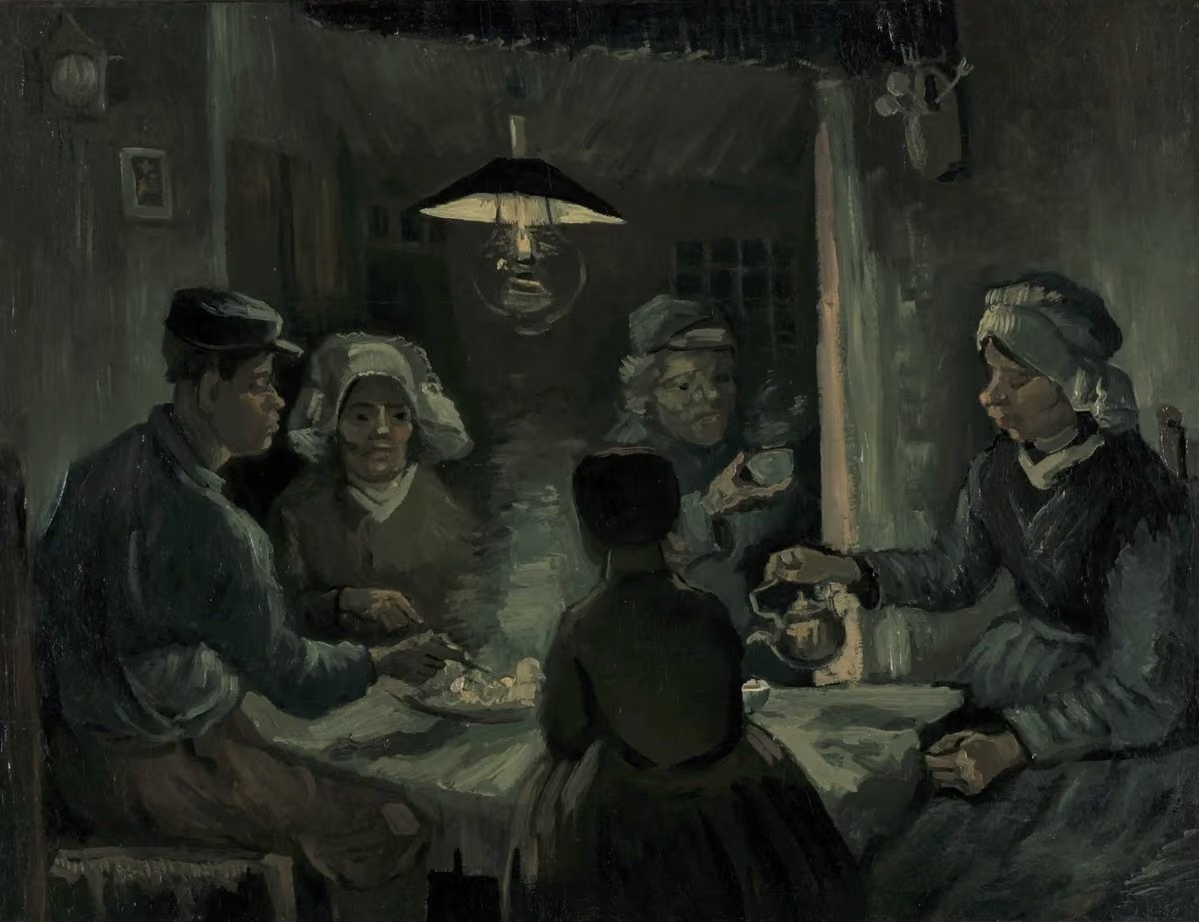
(2) Paul Gauguin, ‘Self-Portrait with Portrait of Emile Bernard (Les Misérables)’, 1888 © Van Gogh Museum
(3) Emile Bernard, ‘Self-Portrait with Portrait of Gauguin’, 1888 © Van Gogh Museum
(4) Charles Laval, ‘Self-Portrait’, 1888 © Van Gogh Museum -
Van Gogh Museum
@vangoghmuseum
✨Can you guess which Van Gogh painting this riverside scene is from? 👀
Let us know your thoughts in the comments! -
Van Gogh Museum
@vangoghmuseum
Vincent van Dough? 🥧
It took food artist Devoney Scarfe days to craft this incredible blueberry pie — and only minutes to eat it! 🤤
“I’ve always loved that grey area where food meets art. I wanted to pay homage to Vincent, so I made him into a blueberry pie. The crust is sculpted from shortcrust pastry and painted with edible food paints,” she says.
Thank you Devoney for this tasty tribute to Van Gogh!
If you could turn any famous artwork into dessert, what would it be? 🍰
#foodart #vangoghinspires #artyoucaneat #baking -
Van Gogh Museum
@vangoghmuseum
Did you know Van Gogh once compared the South of France to Japan? 🇫🇷🔁🇯🇵 Inspired by Japanese prints, he saw the region as a place of spiritual simplicity – as his own version of Japan, where he could live a life devoted to art and nature.
🖼️ © Van Gogh Museum -
Van Gogh Museum
@vangoghmuseum
Both Van Gogh and his artist friend Paul Gaugin painted 'The Night Café’. In Gauguin's painting (2), the older woman is Madame Ginoux, who managed the Café de la Gare (Arles), a place both Vincent and Gauguin frequented.
1 Vincent van Gogh, ‘The Night Café’, 1888 © Yale University Art Gallery.
2 Paul Gauguin ‘Night café’, 1888 © Pushkin Museum.
#vangogh #artist #painting #nightcafe #friends -
Van Gogh Museum
@vangoghmuseum
Today is World Suicide Prevention Day.
Vincent often turned to letters when words were hard to say. Writing, talking, or simply sharing can be a first step towards connection and hope. 💛 If you are struggling, you are not alone — openness and compassion can save lives.
This post is made in partnership with 113 Zelfmoordpreventie
#worldsuicidepreventionday -
Van Gogh Museum
@vangoghmuseum
Only a keen observer might notice: Van Gogh used an unusually muted palette for this self-portrait – soft shades of pastel grey-blue – and even altered the colour of his eyes to match! (2) Though his eyes were green in reality, here they appear grey-blue, blending seamlessly with the cool tones of the painting.
🖼️ ‘Self-Portrait’, 1887 © Van Gogh Museum -
Van Gogh Museum
@vangoghmuseum
Van Gogh wrote to his brother that he saw ‘with a Japanese eye’. He was living in the South of France at the time. In this seascape, he used bold colours, strong contours, and a diagonal coastline – all compositional elements he took from Japanese prints. Japanese art helped him simplify and intensify his style.
🖼️ ‘Fishing Boats on the Beach at Les Saintes-Maries-de-la-Mer’, 1888 © Van Gogh Museum -
Van Gogh Museum
@vangoghmuseum
Unfinished? 🤔
Many presumed this painting was unfinished, but Vincent deliberately applied the ‘empty’ white layer first. He later added the touches of blue: an illusionistic ‘trick’, because our brain accepts this as a blue sky with white clouds.
🖼️ ‘Farmhouses in Auvers-sur-Oise’, 1890 © Atheneum Art Museum -
Van Gogh Museum
@vangoghmuseum
A fun little detail that you might overlook. 💐 Vincent made three different paintings, with three different bouquets. But did you notice the vase is the same in all three?
1 © Musée d’art et d’histoire, Geneva
2 © Virginia Museum of Fine Arts
3 © Kröller-Müller Museum -
Van Gogh Museum
@vangoghmuseum
🚦 Do you truly observe your surroundings? When you look closely, you often discover subtleties in the mundane. In today's fast-paced world, we rush, capturing fleeting moments with quick snapshots and overlooking beautiful details.
While painting, Vincent meticulously studied every blade of grass, capturing the evolving colours under changing sunlight. It reminds us to pause and embrace the art of observation. There’s beauty in every passing moment.
Let us know which detail catches your eye in this painting.
🖼️ ‘Landscape at Saint-Rémy (enclosed field with peasant)’, 1889 © The Indianapolis Museum of Art -
Van Gogh Museum
@vangoghmuseum
Food for thought 💭 In a world that rushes, there’s strength in slow, steady effort. Not all progress is visible – and that’s okay.
-
Van Gogh Museum
@vangoghmuseum
A balancing act ⚖️ When you look closely, you’ll see that the Zouave’s eyes are drawn a bit off balance. And as for the hat – it’s tilted at a rather daring angle. Van Gogh’s drawing certainly has a few… quirky details – but that’s part of its charm!
🖼️ ‘Seated Zouave’, 1888 © Van Gogh Museum -
Van Gogh Museum
@vangoghmuseum
Did Van Gogh paint himself as Christ? 👀 Some have speculated he did – and when you see Pietà (after Delacroix), you might see why. He made his own version after spilling oil on his print of Delacroix’s painting. Look at the beard: it has the same colour as Van Gogh’s.
-
Van Gogh Museum
@vangoghmuseum
Van Gogh planned each painting carefully in advance, allowing him to work quickly, although he was sometimes criticised for this. To his brother Theo, he wrote, 'If people say they’re done too quickly, you can reply that they looked at them too quickly.'
🖼️ © Private collection -
Van Gogh Museum
@vangoghmuseum
Time for a little art break! 😮💨 Let’s zoom in and explore the beauty of each bloom in Van Gogh’s vibrant bouquet of flowers.
🖼️ ‘Still Life with Meadow Flowers and Roses’, 1886–1887 © Kröller-Müller Museum -
Van Gogh Museum
@vangoghmuseum
After being hospitalised in Saint-Rémy, Van Gogh described himself as a ‘broken pitcher’ that could never be mended. Yet he painted with perseverance. One of the first works that Vincent made there was ‘Irises’, which he painted in the garden. 🖼️ © Getty Museum
-
Van Gogh Museum
@vangoghmuseum
Bringing black-and-white prints to life with bold colours! Van Gogh painted this woman shearing sheep ‘in a colour scale ranging from lilac to yellow’ while at a psychiatric institution (FR). It’s based on a wood engraving by Millet: Vincent kept the form but chose his own vibrant palette.
1 ‘The Sheepshearer (after Millet)’, 1889 © Van Gogh Museum
2 ‘Sheepshearing’, 1855, after Jean-François Millet, engraver Jacques-Adrien Lavieille © MET -
Van Gogh Museum
@vangoghmuseum
Van Gogh’s yellows 🌻💛 For Van Gogh, yellow wasn’t just a colour – it was light, life, and hope. How does the colour yellow make you feel, or what do you associate with it?
1 © Museum Folkwang
2 © Musée d'Orsay
3 © Van Gogh Museum
4 © Van Gogh Museum -
Van Gogh Museum
@vangoghmuseum
The future of the iconic Van Gogh Museum in Amsterdam is in doubt, because the Dutch government is not sticking to the historic 1962 founding agreement it made with V.W. van Gogh, nephew of the artist, who was the owner of the whole collection. If the Dutch government does not honour its agreement, a scheduled €104 million major maintenance project cannot be financed, and the museum faces closure.
Read the full press release on our website: www.vangoghmuseum.nl/en/about/news-and-press/news/2025082…
The New York Times article: www.nytimes.com/2025/08/27/arts/design/van-gogh-museum-re…
#savevangoghmuseum #keepvangoghmuseumopen #afspraakisafspraak -
Van Gogh Museum
@vangoghmuseum
Ever wondered what Van Gogh actually saw while painting in the Parisian suburb of Asnières? A team of experts used old photos and postcards to trace the exact spots! (2)
‘Riverbank in Spring’, 1887 © Dallas Museum of Art -
Van Gogh Museum
@vangoghmuseum
“Revisiting Van Gogh’s works and reinterpreting his visuals in a West African context allows me to create a bridge between local narratives and a global audience,” says John Madu.
Madu created ten works inspired by Van Gogh for the exhibition Van Gogh x John Madu: Paint Your Path.
Became curious? The exhibition will be on view until 7 September.
🖼️ John Madu, Table no. 2 (Studio on University Road), 2025. -
Van Gogh Museum
@vangoghmuseum
Catching fire on canvas 🔥 In August 1888, Van Gogh painted a vase of sunflowers. He knew he was onto something special. With almost entirely yellow tones, he created a shimmering harmony that his brother Theo compared to ‘a piece of fabric embroidered with satin and gold’.
-
Van Gogh Museum
@vangoghmuseum
Two brothers. One vision. 💛 Through over 600 letters, Vincent and Theo shared a bond of art, love, and deep understanding. Discover their story in the exhibition ‘Choosing Vincent’, on view until 31 Aug.
🎥 Highlights a quote from the first letter Theo kept from Vincent (1872) -
Van Gogh Museum
@vangoghmuseum
Can you recognize who’s staring back at you? 👀
Eyes are often called the ‘windows to the soul’, revealing emotions and personality in ways words cannot. From joy to sadness, curiosity to determination, their depth has the power to captivate us.
What emotions do you see in these eyes that Van Gogh painted? -
Van Gogh Museum
@vangoghmuseum
The making of The LEGO Yellow House 🌻 It took 738 hours and 182,109 LEGO bricks to build five rooms that tell the story of Vincent and his sunflowers!
Curious? The LEGO Yellow House is on view until 28 September, exclusively at our museum.
#lego #legoart #vangogh #vangoghmuseumThis media couldn't be displayed. See it on the original post. -
Van Gogh Museum
@vangoghmuseum
Feeling blue? 💙 Enjoy this little art break with Vincent’s blues. He used blue not just as a colour, but sometimes also to express a mood. Which one speaks to you the most, and why?
1 'The Church at Auvers-sur-Oise', 1890 © Musée d'Orsay
2 'Café Terrace at Night', 1888 © Kröller-Müller Museum
3 ‘Country Road in Provence by Night’, 1890 © Kröller-Müller Museum
4 'Still Life: Vase with Five Sunflowers', 1888. Destroyed by fire in World War II
#relax #art #vangogh #dailyart -
Van Gogh Museum
@vangoghmuseum
Ever wondered what a perfect spring day in 1880s Paris looked like? 🌸
Van Gogh captured it right here, on the lively hill of Montmartre. The pops of red, blue, and green echo the cheerful vibe of a spring outing.
🖼️ © Van Gogh Museum -
Van Gogh Museum
@vangoghmuseum
Just a reminder: your brain deserves a break now and then. 🧠 Let Vincent’s brushwork lead you outside… if only for a moment. 🍃
1 'Garden at Arles’, 1888 © Kunstmuseum Den Haag
2 ‘Trees and Undergrowth’, 1887 © Van Gogh Museum
3 ‘The Poet's Garden', 1888 © The Art Institute of Chicago
4 ‘Path in the Park’, 1888 © Kröller-Müller Museum
Did these paintings take your mind off things for a moment? -
Van Gogh Museum
@vangoghmuseum
Do you know which painting this detail belongs to? ✨👀 Drop your guess in the comments!
-
Van Gogh Museum
@vangoghmuseum
Not your average canvas... 🟤 These two still lifes have an unusual shape (2+3). It’s because Van Gogh painted them on the lids of small Japanese boxes! 🥡 Both nature and literature were vital to Vincent. 🌱📚 He found strength in nature’s growth, and in his novels, he discovered honesty in the raw stories of everyday life.
Which one would you pick to hang on your wall?
1 detail of ‘Three Novels’, 1887 © Van Gogh Museum
2 ‘Three Novels’, 1887 © Van Gogh Museum
3 ‘Basket of Hyacinth Bulbs’, 1887 © Van Gogh Museum
#vangogh #vangoghmuseum #japan #amsterdam -
Van Gogh Museum
@vangoghmuseum
Who could use a little moral support today? 💛 ‘When times are difficult, we must give each other moral courage at the least, so that we don’t give up when trials come.’ – Vincent van Gogh to his brother Theo, 1883
Tag someone who needs a reminder they’re not alone. 🌻
‘Glass with Roses’, 1886 © Van Gogh Museum -
Van Gogh Museum
@vangoghmuseum
Van Gogh painted ‘The Peasant’ in 1889, while at the psychiatric institution in Saint-Rémy. He saw the peasant as a symbol of harmony with nature, in contrast with hectic city life. His bold colours and brushwork make the figure feel almost part of the landscape.
🖼️ © GNMC, Rome -
Van Gogh Museum
@vangoghmuseum
Ruined appetite? 🤢 In 1887, Van Gogh showed his art in this very Parisian restaurant – until the owner said the art spoiled his customers’ appetite. This painting of that spot will remain on display (appetite or not 😉) in the exhibition ‘Choosing Vincent’, on view until 31 Aug.
-
Van Gogh Museum
@vangoghmuseum
From sketch to painting ✏️🖌️Did you know the embroidery on the Zouave’s jacket reveals he was a musician, likely playing the horn 🎺 or drum 🥁 during the war?
✏️ © Solomon R. Guggenheim Museum
🖼️ © Van Gogh Museum -
Van Gogh Museum
@vangoghmuseum
Van Gogh painted this work, ‘Quay with Men Unloading Sand Barges’, for his artist friend Emile Bernard. It’s now very difficult to read, but the dedication is in the lower right corner: Vincent à Emile Bernard (2)
🖼️ © Museum Folkwang -
Van Gogh Museum
@vangoghmuseum
‘Many of the subjects here are just – in character – the same as in Holland – the difference is in the colour’, wrote Vincent to his brother Theo in 1888. It’s hardly surprising that the Langlois Bridge reminded him of the Netherlands – there were plenty of drawbridges like this. 🇳🇱
🖼️ The Langlois Bridge, 1888 © Kröller Müller Museum -
Van Gogh Museum
@vangoghmuseum
Recognise these flowers? 🌸 They’re in the background of one of Van Gogh’s portraits. Can you guess which one?
If you know, we’re impressed! If not, just enjoy this little detail from Vincent’s oeuvre. -
Van Gogh Museum
@vangoghmuseum
It’s #internationalcatday — and a few cats made their way into Van Gogh's works 🐱🎨
Which one is your favourite?
1. Garden of a Bathhouse (1888) © Van Gogh Museum
2. Hand with Bowl and a Cat (1885) © Van Gogh Museum
3. Daubigny’s Garden (1890) © Fondation Beyeler -
Van Gogh Museum
@vangoghmuseum
How does this painting make you feel?
🖼️ ‘Pollard Willows at Sunset’, 1888 © Kröller-Müller Museum -
Van Gogh Museum
@vangoghmuseum
A hopeful thought from a difficult time ❤️🩹 'I very much like to believe that illnesses sometimes cure us, i.e. that when the illness comes to a crisis it's a thing necessary to the recovery of a normal state of body.' ✍️ to Theo van Gogh, 1889
🖼️ © Kunsthaus Zürich -
Van Gogh Museum
@vangoghmuseum
After Theo’s death, his widow Jo van Gogh-Bonger took on his mission:
📝 ‘He has left me another task – Vincent’s work – getting it seen and appreciated…’ – 1891.
Discover how Jo brought Van Gogh to the world in the exhibition 'Choosing Vincent', on view until 31 Aug. -
Van Gogh Museum
@vangoghmuseum
Who knew cardboard could look this good!? 🤯 Joe Faria reimagined Vincent’s iconic paintings using nothing but strips of cardboard and coloured paper—no paint involved! The level of detail in each piece is incredible. 👏
-
Van Gogh Museum
@vangoghmuseum
💔 When Vincent confessed his love to his cousin Kee, her reply was firm: ‘No, nay, never.’ Yet he wrote: ‘I regard that “no, nay, never” as a piece of ice that I press to my heart to thaw.’ He had been rejected, but still hoped for connection.
🖼️ © Museum of Fine Arts Bern -
Van Gogh Museum
@vangoghmuseum
What do you meme? 😏🖼️ A meme is basically a funny caption + image = instant laughs. So let’s have some fun – come up with a witty tagline for this painting and drop it in the comments!
🖼️ 'Two Girls', 1890 © Musée d'Orsay -
Van Gogh Museum
@vangoghmuseum
‘These canvases will take a good month to dry, but the man who works here will take care of sending them after my departure’, Vincent wrote before leaving Saint-Rémy😉
His impasto style meant thick paint, and a long wait. He was referring to these 3 paintings.
1 ‘Irises’, 1890 © The MET
2 ‘Roses’,1890 © National Gallery of Art, Washington
3 ‘Irises’, 1890 © Van Gogh Museum -
Van Gogh Museum
@vangoghmuseum
Please do touch! (Yes, really.) 😉 But only in the exhibition Choosing Vincent, where you're invited to step into the curator’s shoes and choose the perfect frame for Van Gogh’s paintings in an interactive installation. Got your heart racing there, didn’t we?
-
Van Gogh Museum
@vangoghmuseum
🌪️Van Gogh aimed to capture the essence of each overall scene in his works. He depicted the sky turning blue due to the Mistral, a strong wind in southern France. His brushstrokes might seem visionary, but they accurately show the turbulent skies of that day.
-
Van Gogh Museum
@vangoghmuseum
In loving memory 🤍 After losing her husband Theo, just 6 months after Vincent’s passing, Jo van Gogh-Bonger wrote: ‘It was just as stormy inside as outside... I felt so dreadfully lonely.’
Grief can feel isolating, but it’s something we all share.
💬 How do you carry grief? What helps you through it? -
Van Gogh Museum
@vangoghmuseum
Lost in translation🌳Van Gogh used the French word ‘if’ (yew tree), but he meant elm! In Belgium, ‘iep’ (elm) and ‘if’ (yew) sound alike – easy to mix up. Still, in his art and letters, Vincent clearly meant elm trees.
🖼️ ‘The Public Garden’, 1888 © private collection -
Van Gogh Museum
@vangoghmuseum
Staff Stories with Tyas Leeuwerink – Museum Guide 🗣️
Vincent’s art and life story continue to inspire Tyas. On every guided tour, he sees how Van Gogh’s work resonates with people — how it moves them and sparks emotion. -
Van Gogh Museum
@vangoghmuseum
When Vincent stayed in the Yellow House in Arles, he immortalised a few of his belongings in this still life. 🫖 Van Gogh called his still lifes ‘colour studies’, by exploring new colour combinations through arranging objects against vivid backgrounds. 🖼️ © The Barnes Foundation
-
Van Gogh Museum
@vangoghmuseum
❤️🩹 Next to his father’s Bible, Vincent painted ‘La joie de vivre’ – a modern novel about embracing life. This still life reflects Vincent and his father’s clashing worldviews.
🖼️ ‘Still Life with Bible’ is on view in ‘Choosing Vincent’, until 31 August.
🎥by Andrey Zakirzyanov -
Van Gogh Museum
@vangoghmuseum
🧼😉 In 1889, Van Gogh explored the Les Alpilles mountain range, near the psychiatric institution where he was staying. He admired the eroded rock formations and painted the brook as 'white and foaming like soapsuds'.
🖼️ © Kröller-Müller Museum -
Van Gogh Museum
@vangoghmuseum
Van Gogh called this ‘the painting of the garden with lovers’. 🌳☀️ Inspired by the Pointillists, he used lively brushstrokes – short, varied, and full of movement – to create the effect of a radiant spring day.
-
Van Gogh Museum
@vangoghmuseum
⚖️ During the 70 days Vincent stayed in Auvers-sur-Oise, he painted 9 flower still lifes. Quite a lot! ‘Glass with carnations’ was among them. Vincent placed the vase off-centre, but rebalanced the composition by leaning the flowers to the left. 🖼️ ©️ Private collection.
-
Van Gogh Museum
@vangoghmuseum
Did you know? This is the largest painting that Vincent made during his excursions to the suburbs to the north-west of Paris. It measures 73.33 x 60.02 cm. The lively figures on the street really bring the painting to life, don’t you think?🚶♂️
🖼️ © The Nelson-Atkins Museum of Art -
Van Gogh Museum
@vangoghmuseum
Van Gogh was inspired when he arrived in Auvers-sur-Oise. He saw these houses and set to work. 🏡 Vincent started with a sketch on paper, and added watercolour and diluted oil. Due to his loose and spontaneous approach, parts of the underdrawing are still visible.
-
Van Gogh Museum
@vangoghmuseum
Just like Jo van Gogh-Bonger, we’re surrounded by powerful women. With the project ‘Ik ben Jo!’ we invited 100+ women from Amsterdam to tap into their strength, express themselves creatively, and see the difference they can make — inspired by Jo’s legacy.
This media couldn't be displayed. See it on the original post. -
Van Gogh Museum
@vangoghmuseum
A keen observer might discover hidden details. 🕵️♂️ Before painting this horse chestnut tree, Van Gogh made a rough charcoal sketch of it on the canvas. If you zoom in, you can still see the black lines between the brushstrokes, especially below the foot of the tree. (2)
-
Van Gogh Museum
@vangoghmuseum
What would you do if you inherited Van Gogh’s oeuvre? 🤯 Vincent Willem van Gogh helped safeguard it during WWII, when part of the collection was hidden in a bunker. His dedication led to the Van Gogh Museum. Discover more in ‘Choosing Vincent’, on view until 31 August.
-
Van Gogh Museum
@vangoghmuseum
During his stay at a psychiatric institution near Saint-Rémy, in the South of France, Van Gogh painted this autumnal landscape. Although initially restricted to painting in his room, he soon resumed working outdoors. 🖌️
🖼️ © The Cleveland Museum of Art -
Van Gogh Museum
@vangoghmuseum
🥔 ‘I had finished all the heads and even finished them with great care – but I quickly repainted them without mercy, and the colour they’re painted now is something like the colour of a really dusty potato, unpeeled of course’, wrote Vincent about ‘The Potato Eaters’.
-
Van Gogh Museum
@vangoghmuseum
Vincent van Gogh enjoyed drinking absinthe — he used its intense green colour to describe a painting. In a letter to Theo, he wrote: "the sky and the water are the colour of absinthe."
🖼️ The Bridge at Trinquetaille, 1888 © Private Collection -
Van Gogh Museum
@vangoghmuseum
Vincent and Theo’s close bond 👨🎨🙎♂️ Theo supported Vincent with care, encouragement and financial help. Vincent dedicated this painting to him – look for the inscription: ‘à mon frère Theo’.
🖼️ See it now in the exhibition 'Choosing Vincent', on view until 31 August. -
Van Gogh Museum
@vangoghmuseum
Between the pencil lines, you can spot Vincent’s little scribbles. He made this drawing, ‘Mountain Landscape Behind the Walled Cornfield’, in 1890. Vincent often added colour names to remind himself which to use if he later turned the drawing into a painting.
-
Van Gogh Museum
@vangoghmuseum
A Call for Confidence 💪 'So there has to be more life, it seems to me, and we have to throw out all sorts of doubts and a certain lack of confidence.' Vincent wrote to his brother Theo in 1886.
Blossoming Peach Trees, 1888 © Van Gogh Museum -
Van Gogh Museum
@vangoghmuseum
In this painting, "The Sower" (1888), Van Gogh uses contrasting bold colours to convey emotion. Which colour stands out most to you?
🎥 This animation is made by Andrey Zakirzyanov in celebration of our 10-year partnership with @TakiiEurope -
Van Gogh Museum
@vangoghmuseum
A good trade, right? 🧔♂️🔁👞 Vincent posed for his friend John Russell, who painted this portrait of him. Vincent probably got it in exchange for a still life with shoes. What would you trade for a portrait of Van Gogh? 😉
1 © Van Gogh Museum
2 © Fogg Art Museum -
Van Gogh Museum
@vangoghmuseum
A feast for the eyes 🎉 Did you notice how many colours Vincent used in ‘Garden of the Asylum’ (1889)? He used colour to express emotion, creating harmony or clashing contrast to give his work extra feeling and depth.
🖼️ © Van Gogh Museum -
Van Gogh Museum
@vangoghmuseum
A painting made with love 🌸 When Vincent van Gogh’s nephew was born in 1890, he was named after the artist. As a gift, Vincent painted ‘Almond Blossom’ – a symbol of new life and hope.
🖼️ Now on view in the exhibition ‘Choosing Vincent’, until 31 August. -
Van Gogh Museum
@vangoghmuseum
Vincent loved to paint outdoors, but it wasn’t without problems. As you can see in these photos, branches, sand, and even insects left their marks on his canvases. 🔭 Want to discover more about Vincent's paintings? Click here: ontrafel.vangogh.nl/en
-
Van Gogh Museum
@vangoghmuseum
🌸 When Vincent arrived in Arles (FR), it was spring. He painted blossoming trees, envisioning them as triptychs. He sketched a layout for his brother Theo. Today, they hang in our museum just as he intended:
1. ‘The Pink Orchard’
2. ‘The Pink Peach Tree’
3. ‘The White Orchard’ -
Van Gogh Museum
@vangoghmuseum
🌻 Vincent described this vibrant garden to his brother Theo, saying the flowers vibrated ‘like the bouquet by Monticelli’, referring to a painting Theo owned. Vincent loved the colourful flower gardens of Arles and enjoyed painting them.
🖼️ ©️ Private collection. -
Van Gogh Museum
@vangoghmuseum
Staff Stories with Nina Bos – Events Team Leader 🗣️
Nina always carries the ‘Sunflowers’ with her! Over the years, sunflowers have developed a special meaning for her. 🌻This media couldn't be displayed. See it on the original post. -
Van Gogh Museum
@vangoghmuseum
Van Gogh avoided painting shadows in his 'Bedroom' painting, inspired by Japanese prints. The ‘shadow’ under the chair? That is the result of faded red pigment. The organic paint Vincent used for this area lost its colour over time, creating this accidental ‘stain’. 🎨
-
Van Gogh Museum
@vangoghmuseum
Did you know Vincent painted this from memory? 🎨✨ As a child, he wandered the fields and forests around Zundert (NL), collecting flowers and bird’s nests. Years later, during a difficult time in France, he painted the landscape of his youth from memory.
🖼️ © Van Gogh Museum -
Van Gogh Museum
@vangoghmuseum
You can’t get this close in the museum... But what strikes you when you are this close to Vincent’s work? Which detail catches your eye? Or what would you like to find out more about?
View of Auvers-sur-Oise, 1890 © Van Gogh Museum -
Van Gogh Museum
@vangoghmuseum
🎨 From sunflowers to strife: Van Gogh admired Gauguin and filled the Yellow House with sunflowers to impress him. But after 8 intense weeks of creating and clashing, tensions peaked—triggering Vincent’s mental breakdown. Gauguin left. They never met again.
-
Van Gogh Museum
@vangoghmuseum
On view until 31 August: the exhibition ‘Choosing Vincent’, a tribute to the extraordinary Van Gogh family. Discover how their private collection became a world-renowned treasure, and how their choices continue to inspire generations.
-
Van Gogh Museum
@vangoghmuseum
What do you meme? 😏🖼️ A meme is basically a funny caption + image = instant laughs. So let’s have some fun – come up with a witty tagline for this painting and drop it in the comments!
🖼️ ‘Young Man with Cornflower’ 1890 © Private Collection -
Van Gogh Museum
@vangoghmuseum
A cube for a nose? 👃🤯 Van Gogh proudly sent a litho after ‘The Potato Eaters’ to his friend Anton van Rappard, who replied harshly: ‘You’ll agree this isn’t serious […]. Why must the woman on the left have a sort of little pipe stem with a cube on it for a nose?'
-
Van Gogh Museum
@vangoghmuseum
Van Gogh’s Yellow House as LEGO bricks! Explore The LEGO Yellow House, a celebration of van Gogh’s Sunflowers journey, told through an impressive LEGO brick exhibit. Exclusively at our Museum until 28 September.
More info: www.vangoghmuseum.nl/en/visit/whats-on/lego-yellow-house -
Van Gogh Museum
@vangoghmuseum
[…] if only I could rid myself of this uncertainty and have the firm conviction that I will eventually overcome and succeed’, Vincent wrote to his brother Theo (1878). Can you relate to this quote from Vincent?
🖼️ © The Wadsworth Atheneum Museum of Art -
Van Gogh Museum
@vangoghmuseum
The reveal to yesterday’s post!👀 How many of the 4 hidden signatures did you spot? We slipped in a tough one – ‘Vincent’ in ‘The Potato Eaters’ has faded over time. It’s not visible to the naked eye; we just wanted you to really explore every detail of these incredible works. 😜
-
Van Gogh Museum
@vangoghmuseum
Vincent’s ‘hidden’ signatures 🔍🎨 Van Gogh signed his work when he was truly satisfied. In these 4 paintings, his signature is tucked away in tricky spots. Can you find them all without help? Answers revealed tomorrow! 😜
1 © MFA Boston
2–4. © Van Gogh Museum -
Van Gogh Museum
@vangoghmuseum
A gift from afar 🕊️ When Van Gogh moved to France, he kept in touch with his mother through letters. But sometimes words weren't enough, so he turned to painting. Vincent made this painting of their village church for his mother to cheer her up after she broke her leg.
-
Van Gogh Museum
@vangoghmuseum
Vincent aimed for visual harmony in his art, experimenting with complementary colours like blue and orange, red and green, or purple and yellow. Before applying expensive paint, he extensively explored these contrasts using coloured threads of wool 🎨🧶
-
Van Gogh Museum
@vangoghmuseum
Discover artist John Madu 🎨 The exhibition 'Van Gogh x John Madu: Paint Your Path' — co-curated by the ReFramers — is on view until 7 September.
See you soon? 👀This media couldn't be displayed. See it on the original post. -
Van Gogh Museum
@vangoghmuseum
A pricey muse 🍷 Vincent was eager to paint postman Joseph Roulin, with his big beard and striking blue uniform. Roulin posed for food and drinks instead of cash, which became costly. Vincent wrote: ‘My friend the postman lives a great deal in cafés […]’
© Kröller-Müller Museum -
Van Gogh Museum
@vangoghmuseum
⚡ See how the blue sky intensifies the yellow wheat, while reddish earth makes green pop? These colour contrasts create tension, reflecting Van Gogh’s aim to express both sadness and the uplifting power of nature in ‘Wheatfield with Crows’.
-
Van Gogh Museum
@vangoghmuseum
Staff Stories with Wicky Singh – Security Supervisor 🗣️
Wicky has been working at our museum for eight years. As a Security Supervisor, he’s witnessed many special moments — including visitors proposing in front of Sunflowers. 💍 -
Van Gogh Museum
@vangoghmuseum
Thoughts… 💬 ‘We know so little about life. […] So take it as it is, wait with confidence. […] Let nature take its course’, Vincent wrote to Theo, who was concerned about Jo’s pregnancy, as both of them were in poor health.
– Vincent to Theo, 1889
🖼️ © Private Collection -
Van Gogh Museum
@vangoghmuseum
Vincent adored flowers! 🌻 According to Theo, he often got bouquets, which were the inspiration for his vibrant flower paintings - over 200 in total. He often experimented with new techniques and colour effects in these works. 🌸🌼🌹
‘Roses’, 1890 © The Met Museum -
Van Gogh Museum
@vangoghmuseum
Did you know?💡This stormy sea view at Scheveningen is one of the first works that Vincent executed on his own. Before this, he had spent two years drawing and had little painting experience, apart from a few still lifes under Anton Mauve’s guidance. Not bad, don’t you think?
-
Van Gogh Museum
@vangoghmuseum
🎨 In 1890, Van Gogh reimagined his 1882 sketch as a painting. It is interesting to see how his style has evolved. But it's not merely a copy, Vincent modified the composition with elements from the asylum: the chair and stove.
1 © Kröller-Müller Museum
2 © Van Gogh Museum -
Van Gogh Museum
@vangoghmuseum
🌸What do you give a newborn as a gift? If you're Vincent van Gogh: a canvas filled with blossoms, life, and love.
📸 Engineer Vincent van Gogh and his second wife Nel van Gogh-van der Groot © the Art Institute of Chicago
All other photos: copyright Vincent van Gogh FoundationThis media couldn't be displayed. See it on the original post. -
Van Gogh Museum
@vangoghmuseum
From dots to Japan 🇯🇵🎨 Vincent van Gogh and Emile Bernard quickly connected over Pointillism’s colourful dots and a shared love of Japanese prints. Despite a 15-year age gap, their artistic passions sparked an instant friendship.
1 © Rijksmuseum
2 © Van Gogh Museum -
Van Gogh Museum
@vangoghmuseum
Painted inside or outside? 🤔 Van Gogh’s brushstrokes reveal the answer! Indoors, they are more systematic and follow a pattern, while outdoors they are varied in shape and direction, full of movement and energy. Can you spot the difference?
1 🖼️© MoMA
2 🖼️© Kröller-Müller Museum -
Van Gogh Museum
@vangoghmuseum
Siesta time! 😴 'The Siesta' by Van Gogh (after Millet) shows a serene scene of two people resting after working hard in the fields. Let’s follow suit! Taking breaks is vital for well-being and productivity. 💆♀️💆♂️ 🖼️ 1890 © Musèe d’Orsay
-
Van Gogh Museum
@vangoghmuseum
See the dark blue outlines in Vincent's ‘Field with Irises near Arles’? (1) He added these fine brushstrokes last, almost as if he were drawing. 🖌️Vincent was inspired by the bold outlining technique used in Japanese woodblock art.
-
Van Gogh Museum
@vangoghmuseum
Paint everywhere 🎨 Paul Signac told Van Gogh’s biographer Gustave Coquiot: ‘He stuck right by me, shouting, gesticulating, and brandishing his large size-30 canvas, so that he spread wet paint onto himself and the passers-by’.
‘By the Seine’, 1887 © Van Gogh Museum -
Van Gogh Museum
@vangoghmuseum
New exhibition 🖼️ “I see parallels between Van Gogh’s journey and my own, especially in how we deal with loneliness,” says John Madu.
In 'Van Gogh x John Madu: Paint Your Path', he reimagines Van Gogh’s work through a West African lens. On view until 7 September. -
Van Gogh Museum
@vangoghmuseum
'I’m an artist – which I won’t take back, because those words naturally imply always seeking without ever fully finding.' Written to Theo, Sunday, 7 May 1882
🖼️ © Kröller-Müller Museum -
Van Gogh Museum
@vangoghmuseum
Amidst mental health struggles, Vincent was remarkably creative in Saint-Rémy. 🏥 ‘Hospital at Saint-Rémy’ shows his enduring fascination with nature; he found beauty even in difficult times.
🖼️ © Hammer Museum -
Van Gogh Museum
@vangoghmuseum
Did you know Van Gogh added orange to his blue jacket to make it pop? 🎨 This is colour theory in practice – using complementary colours to enhance contrast. He often paired opposite hues, like blue & orange, for depth and vibrancy. Have you spotted this in his other works? 👀
-
Van Gogh Museum
@vangoghmuseum
Vincent loved nature, so it’s only natural he included insects and animals in his paintings and drawings from time to time:
1🐱 detail of Hand with a Bowl, and a Cat, 1885
2🦅 detail of Wheatfield with Crows, 1890,
3 🐦 Detail of Winter Garden, 1884
6 🐔 Hen, 1890 -
Van Gogh Museum
@vangoghmuseum
A fun little detail that you might overlook. 💐 Vincent made three different paintings, with three different bouquets. But did you notice the vase is the same in all three?
1 © Virginia Museum of Fine Arts
2 © Musée d’art et d’histoire, Geneva
3 © Kröller-Müller Museum -
Van Gogh Museum
@vangoghmuseum
A powerful success 🌟 Already hundreds of thousands of visitors from around the world have experienced “Anselm Kiefer – Sag mir wo die Blumen sind,” featuring several works created especially for this exhibition
You can still visit until 9 June.
See you soon? -
Van Gogh Museum
@vangoghmuseum
Exciting news! 🥳 We’ve acquired our first work by Henri Matisse, ‘Olive Grove in Collioure’ (1905), fulfilling a long-held ambition to expand our collection of artists inspired by Van Gogh. Read more about it here: www.vangoghmuseum.nl/en/about/news-and-press/news/2025052…
-
Van Gogh Museum
@vangoghmuseum
When you plan to have a productive weekend, but this is how you actually end up spending it.
🖼️ detail of 'Old Drenthe Woman', Anthon van Rappard, 1882-1883 © Van Gogh Museum -
Van Gogh Museum
@vangoghmuseum
Fun fact: While Van Gogh painted this work, ‘Field with Irises near Arles’ (1), another of his subjects – ‘The Langlois Bridge’ – was right behind him! (2) 🎨✨
-
Van Gogh Museum
@vangoghmuseum
Step into Van Gogh’s world 👞 Shoes were an unusual subject in Van Gogh’s time; most artists painted elegant still lifes symbolizing wealth. Vincent bought these shoes at flea markets, deliberately walked through the mud in them, and only then considered them worthy subjects!
-
Van Gogh Museum
@vangoghmuseum
Finding beauty everywhere ✨ ‘In the poorest little house, in the filthiest corner, I see paintings or drawings. And my mind turns in that direction as if with an irresistible urge.’ Vincent to his brother Theo, 1882
🖼️ © Norton Simon Art Foundation -
Van Gogh Museum
@vangoghmuseum
Some artworks ask you to lean in 🧐 Anselm Kiefer’s invite you to step back and take it all in. The scale is part of the experience—just look at ‘Under der Linden an der Heiden’!
Now on view: Sag mir wo die Blumen sind 🌻 until June 9. -
Van Gogh Museum
@vangoghmuseum
Vincent was not a fan of tulips 🙅♂️🌷 The tulip mania was the first recorded economic bubble in history! 💸 In 1637, some tulip bulbs were sold for 10x the annual salary of a craftsman. Although Vincent didn't like tulips, he painted them anyway.
🖼️© The National Gallery of Art -
Van Gogh Museum
@vangoghmuseum
A portrayed passion 🎨 ‘I’d rather paint people’s eyes than cathedrals, for there’s something in the eyes that isn’t in the cathedral – although it’s solemn and although it’s impressive. To my mind, the soul of a person [...] is more interesting.’ (Vincent to his brother Theo).
-
Van Gogh Museum
@vangoghmuseum
Van Gogh saw the 'Starry Night' as a mere study?! 🤯 Paintings were chapters in his artistic quest. In 1889, he explored swirling brushstrokes, bold outlines & simplified forms in the works he made around the psychiatric institution. Critics thought his style was unique✨
🖼️©MoMA -
Van Gogh Museum
@vangoghmuseum
💀or 🦚 Van Gogh called this large moth a 'death's-head moth' and depicted a kind of skull on the back of its body. 💀 (2) It was actually a giant peacock moth, however – a species that has only stripes there. 🦚
-
Van Gogh Museum
@vangoghmuseum
Embroidery with significance🧵When in Arles (FR), Vincent painted a portrait of ‘The Zouave’, a soldier in a special French regiment. The embroidery on his jacket wasn't just decorative; it revealed his role as a musician within the regiment, likely playing the horn 🎺 or drum 🥁
-
Van Gogh Museum
@vangoghmuseum
🦅 Kiefer titled this painting after Edgar Allan Poe’s poem, “Nevermore,” a lament on loss. Engravings, ravens, and raw materials echo history's scars—yet beauty and new life emerge. Now on view: Sag mir wo die Blumen sind 🌻 until June 9
-
Van Gogh Museum
@vangoghmuseum
🌳 Vincent loved nature. He often captured its beauty in expressive paintings of trees –twisted olives, towering cypresses, and delicate blossoms. Which of Van Gogh’s trees do you love most?
1 ‘Olive Grove’ © VGM
2 ‘Wheat Field with Cypresses’ © MET
3 ‘Almond Blossom’ © VGM -
Van Gogh Museum
@vangoghmuseum
🌞 ‘I’m in better health here than in the north – I even work in the wheat fields at midday, in the full heat of the sun, without any shade whatever, and there you are, I revel in it like a cicada.‘🦗
‘Wheat Field with Cypresses’, 1889 © The MET -
Van Gogh Museum
@vangoghmuseum
A personal touch 👆 The jar standing next to the glass contains more than just water. 💦 It has something very personal: Vincent’s fingerprint! (2+3).
-
Van Gogh Museum
@vangoghmuseum
Vincent's floral journey started in Paris (1886-88). Inspired by French artists, he painted vibrant flower still lifes for sale. The subject was ideal for experiments with new colours and painting techniques. Vincent created over 35 flower still lifes in the summer of 1886. 💐
-
Van Gogh Museum
@vangoghmuseum
💦 Let’s dive into Van Gogh’s brushstrokes with this animation by Andrey Zakirzyanov.
#vangogh #animation #artindetail #vangoghmuseumThis media couldn't be displayed. See it on the original post. -
Van Gogh Museum
@vangoghmuseum
‘One must work long and hard to arrive at the truthful. What I want and set as my goal is damned difficult, and yet I don’t believe I’m aiming too high. I want to make drawings that move some people’, Vincent wrote to his brother Theo van Gogh in 1882.
🖼️ © Van Gogh Museum -
Van Gogh Museum
@vangoghmuseum
🪞👨 'People say – and I'm quite willing to believe it – that it's difficult to know oneself – but it's not easy to paint oneself either’, Van Gogh once wrote to his brother Theo (1889).
-
Van Gogh Museum
@vangoghmuseum
Kiefer is captivated by the night sky—a mysterious universe at the core of our origins. His The Starry Night reflects the deep connection between heaven and earth.
Now on view: Anselm Kiefer - Sag mir wo die Blumen sind until June 9.This media couldn't be displayed. See it on the original post. -
Van Gogh Museum
@vangoghmuseum
#vangoghinspires🧵"Transforming threads into art is magical—especially when inspired by Vincent. Each stitch reflects his vibrant brushstrokes and deep emotions." It took up to 100 hours to make this piece, but it’s "a slow, rewarding tribute to his genius," says Mauren Oltramari
-
Van Gogh Museum
@vangoghmuseum
✍️ ‘Even if one sometimes feels a sort of decline, the point is nevertheless to revive and have courage, even though things don’t turn out as one first thought’, Vincent wrote to his brother Theo (1882).
💪✨ The key is to keep going, adapt, and find the courage to start again. -
Van Gogh Museum
@vangoghmuseum
Did you ever notice Vincent signed his canvas in this self-portrait? (1) 🖋️✨ His signature was likely the last touch! 🎨 His palette tells this story: the bright orange paint on his palette (2) matches the paint he used to sign the frame. (3)
🖼️ © Van Gogh Museum -
Van Gogh Museum
@vangoghmuseum
Can we tell if Van Gogh painted this canvas indoors or outdoors? Yes! He painted it outside. 🌿 Notice the spontaneous, loose brushstrokes that vary in length, shape and direction. (2+3) In the sky, the short, swirling strokes capture nature’s movement. (4)🎨✨
-
Van Gogh Museum
@vangoghmuseum
Flagging this! 🇳🇱👀 Vincent captured the Moulin de la Galette, a hotspot in Montmartre in Paris. But look closely… shouldn’t that be a French flag? Instead, a Dutch flag waves in the breeze. A mistake, or a nod to his homeland? 😉 On view in ‘The Power of Pigments’ until 18 May.
-
Van Gogh Museum
@vangoghmuseum
Why did Van Gogh paint skulls? 💀 While studying in Antwerp (1886), he practised anatomy by drawing skeletons – painting them wasn’t required. His smoking skull was likely a rebellious joke. In 1887, Vincent painted two more, experimenting with colour. 🎨
-
Van Gogh Museum
@vangoghmuseum
Van Gogh’s ‘Berceuse’ represents the archetypal mother. Kiefer’s installation with a single sunflower refers to the descent of Goethe’s Faust to the realm of ‘the mothers’ - primal female forces.
Now on view: Anselm Kiefer - Sag mir wo die Blumen sindThis media couldn't be displayed. See it on the original post. -
Van Gogh Museum
@vangoghmuseum
Keep going ❣️ ‘Even if I fall down 99 times, the hundredth time, too, I’ll get up! [...] What artist hasn’t struggled and toiled, and what other way is there than struggling and toiling to find firm ground beneath one’s feet?’ Vincent to Theo van Gogh, 1881
🖼️ © Van Gogh Museum -
Van Gogh Museum
@vangoghmuseum
Windy paintings🌪️ In Auvers-sur-Oise (FR), Vincent painted freely, embracing a variety of techniques. In his works from 9 to 14 June 1890, he uses swirling brushstrokes to capture movement, making buildings (1), roads (2) and wheatfields (3) ‘feel alive’. 🎨
Van Gogh Museum
@vangoghmuseum
1️⃣ © Museum of Fine Arts Boston 2️⃣ © The Pushkin State Museum 3️⃣ © The Phillips Collection
-
Van Gogh Museum
@vangoghmuseum
🌸 From Vincent’s canvas to a thoughtful present 🎁 — share a moment of beauty with your mom this Mother’s Day.
Explore our handpicked Mother’s Day collection here: www.vangogh.shop/en/mothersday -
Van Gogh Museum
@vangoghmuseum
Like Vincent, let’s find our way by trial and error ✨ In 1881, he wrote to his brother Theo about life’s hardships, saying, ‘wandering we find our way,’ not by sitting still. In the end, isn’t experience our best teacher?
🖼️ © Kunstmuseum Basel -
Van Gogh Museum
@vangoghmuseum
Vincent painted this wheat field with poppies from his asylum window in Saint-Rémy. Look closely at the shifting perspective: the eye-level foreground meets a higher viewpoint in the middle. The diagonal wall adds dynamic tension to this glimpse from Vincent's room.
-
Van Gogh Museum
@vangoghmuseum
The mystery of the bandaged ear 🩹 Van Gogh made two self-portraits with a bandaged ear. But which ear was injured? Some say the right, but since he painted using a mirror, the portrait is in reverse. In reality, it was his left ear. 🪞
1 © Private collection
2 © Van Gogh Museum -
Van Gogh Museum
@vangoghmuseum
How do you like them apples? 🍏 In Vincent's still-life paintings, humble fruits transform into studies of colour and texture. Did you notice the artist used mainly yellow tones for this work? 🖼️ © Saint Louis Art Museum
-
Van Gogh Museum
@vangoghmuseum
#vangoghinspires 🎨 "I often find myself identifying with the artists I depict," says @morsims1 Van Gogh’s bold colours and fusion of materiality with image inspire his work. Experimenting since grad school, Sims refines techniques to create expressive distortions. 🎨✨
This media couldn't be displayed. See it on the original post. -
Van Gogh Museum
@vangoghmuseum
No place like home🏡 While staying in Auvers-sur-Oise (FR) in 1890, Vincent reminisced about his childhood home in Nuenen (NL). He depicted these French village houses in multiple paintings and called them 'human nests'.
1 © Kunsthaus Zürich
2 © Musée d'Orsay
3 © Van Gogh Museum -
Van Gogh Museum
@vangoghmuseum
Important women in Van Gogh’s life 👩 His mother, Anna van Gogh-Carbentus, nurtured his creativity early on. (1) Agostina Segatori gave his art a platform at her café. (2) Jo Bonger-Van Gogh, his sister-in-law, strategically promoted his work, making him world famous! (3)
-
Van Gogh Museum
@vangoghmuseum
Touches of Gold 🟨 Anselm Kiefer often uses gold in his recent works. The artist is fascinated by alchemy, where transforming lead into gold is also a metaphor for spiritual purification.
Now on view: Anselm Kiefer – Sag mir wo die Blumen sind until June 9. -
Van Gogh Museum
@vangoghmuseum
Did you know? 🎨 ‘Landscape at Twilight’ was one of Jo van Gogh-Bonger’s favourites. Jo was Theo’s wife, and was key to promoting Vincent’s work after his death. She treasured this painting, and hung it above her desk in Amsterdam. What’s your favourite Van Gogh painting?
-
Van Gogh Museum
@vangoghmuseum
What your friend sees when they tell you to fix your posture:
🖼️ The Reaper (after Millet), 1889 © Van Gogh Museum -
Van Gogh Museum
@vangoghmuseum
Jealousy isn’t a good look ❤️🔥 ‘The joy of others may embitter jealous hearts, but it fortifies submissive hearts; it is the ray of sunshine that opens up those two lovely flowers called “confidence” and “hope”,’ Vincent wrote to his brother Theo in 1876.
🖼️ © Van Gogh Museum -
Van Gogh Museum
@vangoghmuseum
In Saint-Rémy (1889–1890), Van Gogh was fascinated by the cypress trees, he compared their tall forms to Egyptian obelisks. Capturing their colour was a challenge, he called it ‘that difficult shade of bottle green.’
🖼️ © Van Gogh Museum
✏️ © Kröller-Müller Museum -
Van Gogh Museum
@vangoghmuseum
“Van Gogh defies every setback; he does the impossible; he does not give up.” says Anselm Kiefer. He admires Van Gogh’s perseverance, believing this persistence led to masterpieces. Now on view: Sag mir wo die Blumen sind.
-
Van Gogh Museum
@vangoghmuseum
🔮 In 1883, Vincent wrote: ‘It’s a matter of relative indifference to me whether I live a long or a short time.’ He believed that because of his intense life, he wouldn’t last more than a decade. Vincent’s willpower ultimately kept him going… if only for a little longer.
-
Van Gogh Museum
@vangoghmuseum
A sketch becomes a painting ✏️🎨 Vincent started by sketching this scene (2), though the boat’s outline is faint (3). Not all of Vincent’s sketches became paintings, but this one did! What do you think of the end result?
🖼️ © Private Collection
✏️ © Van Gogh Museum -
Van Gogh Museum
@vangoghmuseum
Van Gogh invites us to see beauty in the everyday world. As he wrote to Theo in 1882, his drawings were meant 'to amuse’ people, or to ‘draw their attention to things that are worth looking at and which not everyone knows.'
🖼️ © Van Gogh Museum -
Van Gogh Museum
@vangoghmuseum
🎨 'Cobalt — is a divine colour, and there’s nothing so fine as that for putting space around things. Carmine is the red of wine, and it’s warm, spirited as wine. So too is emerald green. It’s false economy to do without them, those colours.’ Vincent van Gogh. (1885)
🖼️ © The Met -
Van Gogh Museum
@vangoghmuseum
A photo or video can’t capture the scale of Anselm Kiefer’s work—you have to see it in person. 'Schierlingsbecher', for instance, is 760 cm wide and 280 cm high, making you feel small when standing before it. 🤏
Now on view: Sag mir wo die Blumen sind 🌻This media couldn't be displayed. See it on the original post. -
Van Gogh Museum
@vangoghmuseum
After nearly two years in Paris, Van Gogh feared he would always live on society’s fringes. He felt ‘old and broken’ at just 35, but still believed art could help him endure. He headed to Southern France, where he painted in ‘brilliant colour’.🖼️© Kunsthaus Zürich
-
Van Gogh Museum
@vangoghmuseum
While in Arles, Van Gogh befriended the local postal clerk Joseph Roulin. Vincent painted Joseph and his family, including his son Armand, seen here. Can you still recognise the young Armand in the photo of him in later life? (2)
🖼️ © Museum Folkwang -
Van Gogh Museum
@vangoghmuseum
A cracked skull 💀 Canvas was expensive, so Van Gogh painted the skull over an earlier work. Look closely, and you’ll spot cracks below the skull. These formed because he used slow-drying zinc white to cover the first painting, causing the top layer to crack over time. (2)
-
Van Gogh Museum
@vangoghmuseum
Vincent wrote to Theo about a painting he made at the beach ✏️ ‘I've put a lot of work into drawing [...] it's the backbone of painting, the skeleton supporting everything else.’ (1882). Do you recognise the final painting in it?
🖼️ © Private collection -
Van Gogh Museum
@vangoghmuseum
Timeline trivia ⏲️ Think you’ve got what it takes for this Van Gogh challenge? Whether you’re a lifelong fan or just discovering his work, give it a try:
Can you put these paintings in chronological order based on the year they were created? -
Van Gogh Museum
@vangoghmuseum
Overlooked 👀 It was only 15 years after Van Gogh's death that his work gained relevance. Initially, his realistic style didn't quite fit with the late 19th-century Symbolism. Later, artists rediscovered Van Gogh as a modern art pioneer.
🖼️ © Van Gogh Museum -
Van Gogh Museum
@vangoghmuseum
#slowartday 🖼️ Did you know that, on average, people spend less than 30 seconds looking at a painting in a museum? Let's pause and observe. What details stand out to you in Van Gogh’s Self-Portrait? 🤔✨
-
Van Gogh Museum
@vangoghmuseum
Materials are crucial in Anselm Kiefer’s work. His works are made of layers of materials such as paint, straw, sand, charred wood, dried flowers, and lead—seen by him as the only medium heavy enough to carry the weight of human history.
Now on view: ‘Sag mir wo die Blumen sind’ -
Van Gogh Museum
@vangoghmuseum
💰This portrait of Dr Paul Gachet remains one of Van Gogh's most valuable works, as it sold in 1990 for $83M (around $180M today). Its worth lies in both its artistic value and in its subject – this doctor cared for Van Gogh in his final days. 🖼️ © Private Collection
-
Van Gogh Museum
@vangoghmuseum
Which of these two paintings do you think shows the colours Van Gogh chose for his painting ‘The Bedroom’: 1 or 2? 🛏️ Drop your guess in the comments!
-
Van Gogh Museum
@vangoghmuseum
🚬🔥 We regret to inform you that the museum will be closed today. Van Gogh’s pipe actually started smoking, and we’re still figuring out how to explain this to the fire department. 😜 #aprilfools
-
Van Gogh Museum
@vangoghmuseum
Step into Vincent's world: he thought wheat fields were 'comforting and soft.' Can you sense the breeze whispering through this painting?
🖼️ © National Gallery of Art -
Van Gogh Museum
@vangoghmuseum
Celebrating Vincent! ❤️
📹 by The GazeThis media couldn't be displayed. See it on the original post. -
Van Gogh Museum
@vangoghmuseum
Louis Anquetin’s 'Intimate Conversation' 🤫 captures a private moment between two women. He depicted a lesbian relationship as he saw it in nocturnal Paris. Anquetin joined 3 sheets of paper, creating a unique size (84 x 60.5 cm). On view in ‘The Power of Pigments’ until 18 May.
-
Van Gogh Museum
@vangoghmuseum
A symbolic harvest 💀🌾 Van Gogh painted the wheat fields of Auvers-sur-Oise. To him, this painting symbolized the final harvest, death and resurrection. ‘Humanity would be the wheat being reaped,’ he wrote to Theo in 1889. 🖼️ © Toledo Museum of Art
-
Van Gogh Museum
@vangoghmuseum
Guess the painting! 🖼️ This detail comes from a painting that Van Gogh made in Auvers-sur-Oise. Look at the tiny house... Van Gogh painted yellow rays of sunshine on it. Can you identify this painting just by this detail? We’ll be impressed if you can!
-
Van Gogh Museum
@vangoghmuseum
Sunflowers 🌻 In Anselm Kiefer’s work, they symbolize life, transformation, and renewal. He links them to the cosmos, echoing Robert Fludd’s idea that every plant has a corresponding star.
'Sag mir wo die Blumen sind', now on view at Stedelijk Museum Amsterdam & Van Gogh Museum. -
Van Gogh Museum
@vangoghmuseum
Where would you run to first? 🌻🌸🛏️💀🥔
#vangoghmuseum #amsterdam #exhibition -
Van Gogh Museum
@vangoghmuseum
📚 After two years in Paris, Van Gogh longed for the countryside. This still life might be a farewell to the city, and to Theo. The Venus torso might nod to his early studies, the rose to Theo’s love life, and the books to Vincent’s favourite novels.
🖼️ © Kröller-Müller Museum -
Van Gogh Museum
@vangoghmuseum
'… if I felt no love for nature and my work, then I would be unhappy’. Written by Vincent to his brother Theo in 1882.
🖼️ View on Arles, 1889 © Neue Pinakothek -
Van Gogh Museum
@vangoghmuseum
Van Gogh wrote that his painting of his bedroom in Arles was inspired by Japanese prints. But why, you might wonder? 🤔 In a letter to Theo, he explained how he ‘flattened’ the interior and excluded shadows to mimic their style.💡
-
Van Gogh Museum
@vangoghmuseum
Happy Springtime! Flowers are blooming, pollen is flying - so don’t forget your tissues 🤧😂
📹 by @origiful -
Van Gogh Museum
@vangoghmuseum
Wheat as a symbol 🌾 Like Van Gogh, Kiefer often incorporates wheat in his work, using it as a powerful symbol of the cycle of life.
Now on view: Anselm Kiefer - Sag mir wo die Blumen sind 🌻 at the Stedelijk Museum and Van Gogh Museum until June 9. -
Van Gogh Museum
@vangoghmuseum
📢 ‘You don’t know how paralyzing it is, that stare from a blank canvas that says to the painter you can’t do anything. [...] Many painters are afraid of the blank canvas, but the blank canvas is afraid of the truly passionate painter who dares’.
✍️ Vincent to his brother Theo -
Van Gogh Museum
@vangoghmuseum
When you tell your kid 'no,' but this is what you see when you walk in 10 seconds later.
🖼️ Still Life with Profile of Mimi, Meijer de Haan, 1889 © Van Gogh Museum -
Van Gogh Museum
@vangoghmuseum
Hidden wrestlers 💐🥊 Was this a real Van Gogh? The canvas size was unusual, the flowers excessive, and the style didn’t fit. X-rays revealed two wrestlers beneath the blooms. In 2012, with new research techniques, experts confirmed Van Gogh painted it. 🖼️ © Kröller-Müller Museum
-
Van Gogh Museum
@vangoghmuseum
From sketch to painting 🖌️ See how Vincent’s sketch, sent in a letter to Theo in 1888, turned into a colourful painting.
1. ‘The Seine with the Pont de Clichy’, 1887, private collection
2. Detail of a letter to Theo with sketch of ‘The Seine with the Pont de Clichy’, 1888 -
Van Gogh Museum
@vangoghmuseum
Now on view: Anselm Kiefer - Sag mir wo die Blumen sind 🌻 On view until 9 June at both the Stedelijk Museum Amsterdam and the Van Gogh Museum.
More info here: www.vangoghmuseum.nl/en/visit/whats-on/exhibitions/overvi… -
Van Gogh Museum
@vangoghmuseum
🌳 Vincent painted this tree trunk in Arles in autumn 1888. He was inspired by the vibrant colours of Japanese prints. Vincent later asked Theo to have it framed.
🖼️ Ploughed Field with a Tree Trunk (The Furrows), 1888 © Private Collection -
Van Gogh Museum
@vangoghmuseum
When you check the time, thinking your shift is almost over, only to realize just 30 minutes have passed...
🖼️ This painting by Jean-François Millet is now on view, as part of the small-scale exhibition ‘The Power of Pigments’, until May 25. -
Van Gogh Museum
@vangoghmuseum
If you don’t search, you will not find… 🔎 ✍️ ‘… on the road that I’m on I must continue; if I do nothing, if I don’t study, if I don’t keep on trying, then I’m lost, then woe betide me.’
🖼️ ‘Digger’, 1881 © Van Gogh Museum -
Van Gogh Museum
@vangoghmuseum
Guess the painting! 🖼️ It might seem easy at first, but take a closer look at the little details. Here’s a hint: this is from a painting that Van Gogh created in Arles. We’ll be impressed if you can guess which painting it is!
-
Van Gogh Museum
@vangoghmuseum
"Many subjects here are just – in character – the same as in Holland – the difference is in the colour," wrote Vincent to Theo. It's no surprise the Langlois Bridge reminded him of the Netherlands—there were many drawbridges like this. 🇳🇱
🖼️ © Kröller Müller Museum -
Van Gogh Museum
@vangoghmuseum
#vangoghinspires @Galletitaa 💡 "Visiting the Van Gogh Museum inspired me to reimagine Van Gogh’s works as miniatures. At first, I wasn’t sure I could do it, but studying how he sculpted with his brush made me think: maybe I can sculpt too—with a needle and a drop of paint."
-
Van Gogh Museum
@vangoghmuseum
Celebrating Jo Bonger ✨🌍 On this #internationalwomensday, we honour Jo Van Gogh-Bonger, the woman who ensured the world would come to know and love Vincent van Gogh’s art. Who will you be celebrating today?
🖼️ 'Portrait of Jo Cohen Gosschalk-Bonger', by Johan Cohen Gosschalk -
Van Gogh Museum
@vangoghmuseum
Two Museums, One ticket! 🎟️ The Van Gogh Museum and Stedelijk Museum Amsterdam present: Anselm Kiefer - 'Sag mir wo die Blumen sind'
On view until June 9 at both the Stedelijk Museum Amsterdam and the Van Gogh Museum. Will we see you soon?This media couldn't be displayed. See it on the original post. -
Van Gogh Museum
@vangoghmuseum
Eyes are often called the ‘windows to the soul’, revealing emotions and personality in ways words cannot. From joy to sadness, curiosity to determination, their depth has the power to captivate us.
What emotions do you see in these eyes that Van Gogh painted? -
Van Gogh Museum
@vangoghmuseum
Van Gogh was fascinated with the labour and life of peasants. He often portrayed working men and women, believing that this was how he could capture ‘the heart of the people’.
✏️ Studies of Figures, 1890 © Van Gogh Museum -
Van Gogh Museum
@vangoghmuseum
✍️ ‘It’s gravely beautiful, it’s the heart of the countryside, distinctive and picturesque.’ Vincent van Gogh (May 1890)
Houses at Auvers-sur-Oise, 1890 © Toledo Museum of Art -
Van Gogh Museum
@vangoghmuseum
The bold, diagonal brushstrokes and vibrant colours of this painting capture the landscape’s motion and energy. Can you spot the curved road disappearing and reappearing in this painting? It cuts through golden wheat, green alfalfa and brown verges.
🖼️ © Van Gogh Museum -
Van Gogh Museum
@vangoghmuseum
Van Gogh’s tools 🖌️In ‘Seascape at Les Saintes-Maries-de-la-Mer’, Van Gogh used a palette knife to create glossy layers and capture sunlight on the waves. A photo in reflected light shows how he reworked brushstrokes and smoothed their textures. Vincent rarely used this tool.
-
Van Gogh Museum
@vangoghmuseum
Build your own masterpiece 🌻 The LEGO® Art Vincent van Gogh – Sunflowers is now available!
Click here for more info: www.vangogh.shop/en/lego-canvas/721645/lego/708812/lego(R… -
Van Gogh Museum
@vangoghmuseum
Let’s take a closer look! 🔎 This wintry scene of the backyard at Vincent’s childhood home in Nuenen (NL) is full of detail. Like the fruit trees, with their twisted, angular branches. Did you spot the little bird perched on one of the branches? 🐦 (2)
-
Van Gogh Museum
@vangoghmuseum
Stedelijk Museum Amsterdam 🤝 Van Gogh Museum 👀 Something special is in the making! Opening March 7.
-
Van Gogh Museum
@vangoghmuseum
✍️ ‘My dear fellow – let’s not forget that small emotions are the great captains of our lives, and that these we obey without knowing it.’ Is Van Gogh right? Have you ever noticed how they quietly steer your course?
‘Vase with Carnations’, 1886 © Stedelijk Museum Amsterdam -
Van Gogh Museum
@vangoghmuseum
An unusual perspective, or is it? 📐🤔 Compare the painting to the bedroom’s floor plan (2*) and you’ll see that Van Gogh captured the room’s skewed angles exactly as they were.
* Floor plan of Van Gogh’s bedroom, the Yellow House in Arles (the white line highlights his room) -
Van Gogh Museum
@vangoghmuseum
Calling all photographers! 📸 Want to join the 2025 Vincent van Gogh Photo Award? The theme for this 5th edition, organised by #rotarynuenen, is En Route 🚶♂️✨.
Find out more here: www.vincentvangoghphotoaward.com -
Van Gogh Museum
@vangoghmuseum
The person behind the portrait. Vincent painted this portrait of his mother, based on a photo his sister sent him. He wanted to capture her as he remembered her. That is why he chose harmonious colours.
🖼️ © Norton Simon Museum
📸 Photograph of Anna Carbentus -
Van Gogh Museum
@vangoghmuseum
This painting isn’t just about anatomy; it’s an exercise in volume. In addition to light and shadow, Van Gogh used thick paint and dynamic brushstrokes to bring the figure to life.
🖼️ ‘Kneeling Écorché’, 1886 © Van Gogh Museum -
Van Gogh Museum
@vangoghmuseum
A Portrait in Words ✍🏼 @jayce_hall created this piece by writing “Vincent van Gogh” over 8,370 times. #vangoghinspires
-
Van Gogh Museum
@vangoghmuseum
Choo-Choooo 🚂 ‘Ideas for work are coming to me in abundance, and that means that even though isolated I don’t have time to think or to feel. I’m going like a painting-locomotive,’ Van Gogh wrote to his brother Theo (1888).
🖼️ ‘The Rocks’, 1888 © MFAH -
Van Gogh Museum
@vangoghmuseum
A drawing makes you feel close to Vincent, don’t you think? His notes on the drawing give us a glimpse into his process. We don’t know if he made a painting based on this sketch, yet we can imagine what it might have looked like, based on the colour names he added.
-
Van Gogh Museum
@vangoghmuseum
In Les Arènes, a bullfight unfolds 🐮 Look closely, and you’ll see that Vincent added a delicately painted bull in the second image. He created this painting from memory in Arles, in Nov–Dec 1888, as the bullfighting season ended in October. 🖼️ © Hermitage Museum
-
Van Gogh Museum
@vangoghmuseum
A reminder for anyone pursuing a passion ❤️🔥 Vincent knew the struggles of being an artist – financial hardships and little recognition. Yet, he believed: ‘One shouldn't count on selling, but on making work of value.’
🖼️ © Art Institute of Chicago -
Van Gogh Museum
@vangoghmuseum
It’s always a good idea to visit us! How do you prefer to explore museums, solo, or with someone by your side?
-
Van Gogh Museum
@vangoghmuseum
Which flower is your favourite?
1 Detail of ‘Irises’, 1890 © Van Gogh Museum
2 Detail of ‘Basket of Pansies’, 1887 © Van Gogh Museum
3 Detail of ‘Still Life with Meadow Flowers and Roses’, 1886–1887 © Kröller-Müller Museum
4 Detail of ‘Sunflowers’, 1889 © Van Gogh Museum -
Van Gogh Museum
@vangoghmuseum
🪲 The painting ‘The Little Cat (Le petit chat)’ (1888) by Paul Gauguin (1848-1903) is currently at the Van Gogh Museum on long-term loan. During in-depth material and technical research, a 19th-century beetle was found! Read more: www.vangoghmuseum.nl/en/about/news-and-press/press-releas…
-
Van Gogh Museum
@vangoghmuseum
Let’s share some love today❣️ Valentine’s Day isn’t just for couples, it’s a chance to celebrate all kinds of love. Show appreciation for your best friend, kind neighbour, or even a stranger who could use a smile. Love is for everyone, every day.❤️
🖼️ © São Paulo Museum of Art -
Van Gogh Museum
@vangoghmuseum
How you feel when you haven’t checked your phone for 30 minutes:
🖼️ The Grape Harvest, Jules Bastien-Lepage (1848 - 1884), Damvillers, 1880 © Van Gogh Museum -
Van Gogh Museum
@vangoghmuseum
Vincent created detailed drawings like this while living in Paris (1886–1888) 🏙️ This view of Montmartre shows quarries in the foreground and the thriving city beyond. What caught your eye first – the serene foreground or the bustling city? 🖼️ © Stedelijk Museum Amsterdam
-
Van Gogh Museum
@vangoghmuseum
In this drawing, Vincent captured two figures, each playing an instrument. Can you guess which ones? One starts with a C………. And the other with a P…… 🎵
We’ll be impressed if you can figure it out! But even if you can’t, it’s still a fun drawing.
🖼️ Van Gogh Museum -
Van Gogh Museum
@vangoghmuseum
During his stay at the psychiatric institution in Saint-Rémy in France, Vincent was allowed to paint in the garden. This is where he made this painting. Did you notice the irises in the bottom right corner? 🎨🌿
‘Lilacs’, 1889. © The Hermitage, St. Petersburg -
Van Gogh Museum
@vangoghmuseum
‘What I’m most passionate about, much much more than all the rest in my profession
– is the portrait, the modern portrait. I seek it by way of colour [...]’ ✍️ to his sister Willemien van Gogh
🖼️ © 1888 Norton Simon Museum -
Van Gogh Museum
@vangoghmuseum
Can you feel the heat? 🌞 The sun 'floods everything with a light of fine gold', which gives the scene something light-hearted. Van Gogh captures this feeling using warm shades of yellow for the waving wheat.
🖼️ Wheatfield with a Reaper, 1889 © Van Gogh Museum -
Van Gogh Museum
@vangoghmuseum
💔 When Vincent confessed his love to his cousin Kee, her reply was firm: ‘No, nay, never.’ Yet he wrote: ‘I regard that “no, nay, never” as a piece of ice that I press to my heart to thaw.’ He had been rejected, but still hoped for connection.
🖼️ © Museum of Fine Arts Bern -
Van Gogh Museum
@vangoghmuseum
Did you know that the tree Van Gogh depicts in this painting was struck by lightning? 🌳⚡While staying at the psychiatric institution in Saint-Rémy, Vincent wrote about the tree in a letter to his artist friend Emile Bernard: vangoghletters.org/detail/urn:mace:huc.knaw.nl:vangogh:le…
-
Van Gogh Museum
@vangoghmuseum
Flipping through Van Gogh’s sketchbook 📖 ‘The murmur of an olive grove has something very intimate, immensely old about it.’ ✍️ to Theo from Arles, April 1889
PS: don’t worry! The sketchbook in this video is a replica of the original -
Van Gogh Museum
@vangoghmuseum
🍽️ Vincent’s meals were as simple as his budget – bread, cheese, coffee, and sometimes tobacco. In Arles, he wrote: ‘Gauguin […] knows how to cook perfectly, I think I’ll learn that from him.’ Safe to say, Vincent’s art outshined his cooking skills! 😉🖼️ © Kröller-Müller Museum
-
Van Gogh Museum
@vangoghmuseum
🗓️This painting was once thought to be from late 1888, but Van Gogh Museum Senior researcher Teio Meedendorp recently identified it as one of the studies from Van Gogh’s first weeks in Arles, in early 1888. Read more: www.vangoghmuseum.nl/nl/over/kennis-en-onderzoek/van-gogh…
🖼️The Smoker © The Barnes Foundation -
Van Gogh Museum
@vangoghmuseum
🚦 Pause and observe. In our fast-paced world, we often miss hidden beauty. Vincent's art teaches us to appreciate every detail. He had to take in every tiny detail to create his paintings. © Neue Pinakothek
-
Van Gogh Museum
@vangoghmuseum
Vincent wrote in 1882: ✍️ ‘Life is the same as drawing: sometimes one has to act quickly and resolutely, tackle things with willpower, [...]. It’s no use hesitating or doubting, and the hand may not tremble and the eye may not wander but must remain fixed on one’s purpose’.
-
Van Gogh Museum
@vangoghmuseum
🌳🐈 Vincent loved nature and was often found outside painting or drawing. Naturally, many animals appear in his work! Which one is your favourite?
1 detail of ‘Old Vineyard with Peasant Woman’
2 detail of ‘Garden of a Bathhouse’
3 detail of ‘Landscape with Rabbits' -
Van Gogh Museum
@vangoghmuseum
One is not enough 🌳🌳🌳 Whenever Vincent was satisfied with a painting, he often made multiple versions: one to keep, one for his brother to sell, and one to give as a gift.
1 © The Metropolitan Museum of Art
2 © The National Gallery of Art
3© Basil & Elise Goulandris Foundation -
Van Gogh Museum
@vangoghmuseum
👬 Vincent valued his friendship with Parisian paint dealer Père Tanguy. Even after moving to Arles, he continued his business with Tanguy, placing orders via his brother Theo. He painted three portraits of Tanguy.
1© Ny Carlsberg Glyptotek
2© Private collection
3© Musée Rodin -
Van Gogh Museum
@vangoghmuseum
Imagine yourself as a painter in front of a blank canvas🌻 The LEGO Art Vincent van Gogh - Sunflowers set is now available for pre-order. Find more information here: www.vangoghmuseum.nl/en/about/collaborate/van-gogh-museum…
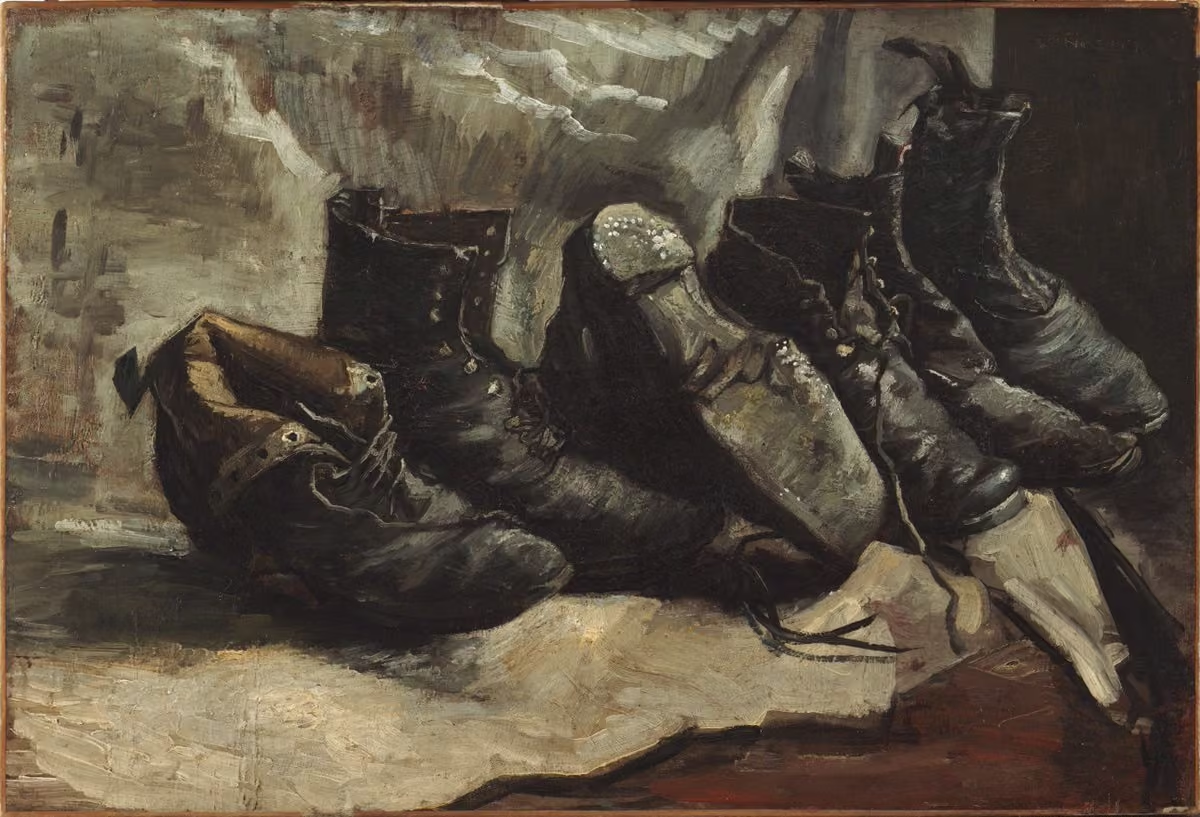
@LEGO_Group -
Van Gogh Museum
@vangoghmuseum
✍️ ‘Find things beautiful as much as you can, most people find too little beautiful’ - Vincent van Gogh ❤️
🖼️ Vase with Zinnias and Geraniums, 1886 © National Gallery of Canada -
Van Gogh Museum
@vangoghmuseum
Vincent’s fire within! 🔥 As a self-taught artist, he relied on practice, observation and advice. He wrote to his artist friend Anthon van Rappard: ‘I keep on making what I can’t do yet to learn to do it.’ Despite doubts, his eagerness to experiment drove his remarkable growth.
-
Van Gogh Museum
@vangoghmuseum
Did you know that this is not an actual landscape? Vincent painted it from his imagination. 🌟 Vincent painted this beautiful work ‘Country Road in Provence by Night’ shortly before leaving the psychiatric institution in Saint-Rémy.
🖼️ © Kröller-Müller Museum -
Van Gogh Museum
@vangoghmuseum
A painting from memory ⛅ Vincent painted this work as a nostalgic tribute to the place where he grew up, Brabant. The humble huts symbolize the rural life and sense of familial security he longed for while in the mental institution.
🖼️ © The Barnes Foundation -
Van Gogh Museum
@vangoghmuseum
Van Gogh sketched peasant women working in a field, adding details like stripes, dots and blue chalk for their clothing. On the farmstead roof, he wrote ‘rouge’ (red), indicating he planned to paint the subject. But no oil version of this scene was ever found. ✏️© Van Gogh Museum
-
Van Gogh Museum
@vangoghmuseum
Are you an adventurer like Van Gogh? ‘Anyone who has a solid position elsewhere, let him stay where he is but for adventurers as myself I think they lose nothing in risking more.’ 🖼️ © Pushkin Museum
-
Van Gogh Museum
@vangoghmuseum
As Vive l’Impressionnisme! enters its final week, let’s highlight one last masterpiece: In the Café by Renoir. Renoir is known for capturing everyday life, and uses light, colour and movement to bring his subjects to life. What’s your favourite detail in this piece? 🧐
-
Van Gogh Museum
@vangoghmuseum
In the deepest blues, Van Gogh found beauty and hope 💙 #bluemonday
🖼️ © MoMA -
Van Gogh Museum
@vangoghmuseum
Small reminder 😉 ‘What would life be if we didn’t dare to take things in hand?’ - Vincent van Gogh.
Do you have a challenge today?
🖼️ ‘White Vase with Roses and Other Flowers’, 1886 © Private collection
#vangogh #inspiration #motivation #art #quote -
Van Gogh Museum
@vangoghmuseum
This painting is from the winter of 1887, not long after Vincent moved to Paris to live with his brother Theo. It shows Butte Montmartre, a hill near their flat on Rue Lepic. The colours Vincent chose help you feel the winter chill, right? 🥶
🖼️ © Art Institute Chicago -
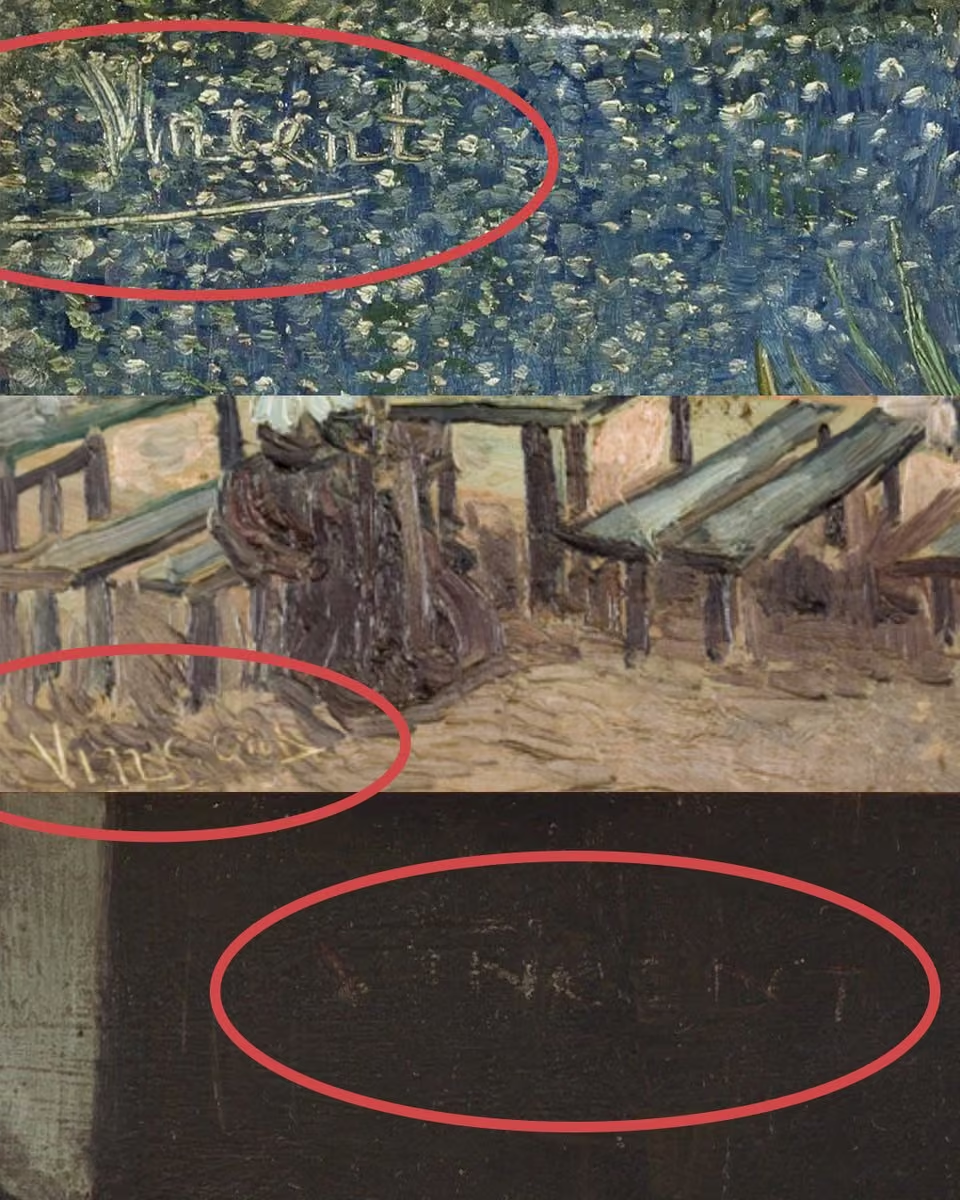
Van Gogh Museum
@vangoghmuseum
A man with a plan! 🖼️ In 1889, Vincent was invited to exhibit with Belgian group Les XX (The Twenty). From France, he sent Theo detailed instructions and a sketch explaining how to arrange six paintings, in order to create a ‘rather varied colour effect’ on the seasons.
-
Van Gogh Museum
@vangoghmuseum
So much to give, but no one to give it to ✍️ ‘Someone has a great fire in his soul and nobody ever comes to warm themselves at it, and passers-by see nothing but a little smoke at the top of the chimney and then go on their way.’ 😫
🖼️ © Rijksmuseum -
Van Gogh Museum
@vangoghmuseum
🖼️ Now on view: 'The Power of Pigments' until 25 May 2025
The invention of synthetic pigments in the 19th century let artists quickly and easily create drawings in colour. This small-scale exhibition shows works by artists such as Van Gogh, Redon, and Gauguin. -
Van Gogh Museum
@vangoghmuseum
A Monet or not? 🤔 ‘La maison à travers les roses’ is one of Monet’s last paintings of his Giverny home. As he aged, his style became more abstract. His declining eyesight may have played a role in this transformation. 🖼️ Now on view in the exhibition 'Vive l’Impressionnisme!'
-
Van Gogh Museum
@vangoghmuseum
Just grape! 🍇😉 One of these Van Gogh paintings was part of the group of ‘violent still lifes’, as described by his friend and fellow painter Émile Bernard. Can you guess which one he was referring to?
1 © Van Gogh Museum
2 © The Art Institute of Chicago
3 © Van Gogh Museum -
Van Gogh Museum
@vangoghmuseum
A painting in detail 🎨 Look at the striking green-yellow sky (1) in Vincent’s ‘Wheat Fields in a Mountainous Landscape’ (1889). Its bold hues complement the deep blue-purple mountains, creating depth in this landscape. 🖼️ © Kröller-Müller Museum
-
Van Gogh Museum
@vangoghmuseum
❣️ ‘It is good to love as much as one can, for therein lies true strength, and he who loves much does much and is capable of much, and that which is done with love is well done.’ ✍️ Vincent van Gogh (1878)
-
Van Gogh Museum
@vangoghmuseum
You might get a joyful feeling when you first look at the bright yellow colours. But when you look a little longer, we can see the sunflowers are painted in different stages of life. Vincent wanted his paintings to convey a feeling or express emotions.
🖼️ Neue © Pinakothek -
Van Gogh Museum
@vangoghmuseum
A Van Gogh painting for each season!
1 ☀️ Summer: The Harvest, 1888 © Van Gogh Museum
2 🌸 Spring: The Pink Orchard, 1888 © Van Gogh Museum
3 🍁 Autumn: Avenue of Poplars in Autumn, 1884 © Van Gogh Museum
4 ❄️ Winter: Landscape with Snow, 1888 © Solomon R. Guggenheim Museum -
Van Gogh Museum
@vangoghmuseum
Bold choices🚀 Theo van Gogh and his friend Andries Bonger both lived in Paris, where Theo showed Andries the most modern art of the 1880s. In 1895, Andries boldly purchased Cézanne’s ‘Road Leading to the Lake’, when the artist was still largely unknown. On view until 26 Jan!
-
Van Gogh Museum
@vangoghmuseum
A portrait with a clue! 💡 In Van Gogh's portrait of Père Tanguy, you see the painting 'Quinces, Lemons, Pears and Grapes' in the upper left corner. (2)Compare the portrait to the still life (3), and you’ll see the red edge of the frame is missing today! 🤯Van Gogh repainted it!
-
Van Gogh Museum
@vangoghmuseum
POV: It's day 2 in the office after the holidays, and you’re staring at the clock like it owes you something.
‘Pensive Figure with Butterfly Wings’ by Odilon Redon, 1871 © Van Gogh Museum -
Van Gogh Museum
@vangoghmuseum
Life is expensive 💸 'I would have to give up if I didn’t have you,’ Vincent wrote to his brother Theo. He’d just bought art supplies with the money Theo had sent him. ‘I regard myself as privileged above a thousand others in that you remove so many barriers in my way.'
-
Van Gogh Museum
@vangoghmuseum
👨🎨 In March 1888, Vincent debuted at the Salon des Indépendants: his first professionally organized group exhibition. He had previously only exhibited in restaurants and theatres. He and Theo chose these works: 1 © Van Gogh Museum, 2 © Stedelijk Museum, 3 © Private collection.
-
Van Gogh Museum
@vangoghmuseum
Flipping through Van Gogh’s sketchbook 📖 The observant viewer may notice an element Vincent added that was not in the drawing! Oh, and rest assured: the sketchbook in this video is a replica of the original. 😉
🖼️ © Van Gogh Museum
📖 © Van Gogh Museum -
Van Gogh Museum
@vangoghmuseum
⛵ Claude Monet worked quickly to capture the sea and boats in motion. The spontaneity of the painting made it modern, but critics disapproved of its sketch-like quality. Monet thought the first impression of the motif was the truest. ‘Fishing Boats’ is on view now, until 26 Jan
-
Van Gogh Museum
@vangoghmuseum
Claude Monet called Vincent’s works ‘the best in the exhibition’ at the 1890 Salon des Indépendants. It couldn’t have been a bigger compliment. Van Gogh admired Monet’s mastery of colour, light and atmosphere. Here, you see one of the paintings Vincent presented there. 🖼️ © MET
-
Van Gogh Museum
@vangoghmuseum
‘It is no easier, I’m convinced, to make a good painting than to find a diamond or a pearl.’ ✍️ Vincent van Gogh (1888)
🖼️ Oleanders, 1888 © Metropolitan Museum of Art -
Van Gogh Museum
@vangoghmuseum
The end of the year is the perfect time to reflect on what we're grateful for. For us, that’s all of you who support this account! Here’s to another year full of inspiration and art. Happy New Year! 🎇 This animation is by Andrey Zakirzyanov. 👏
🖼️ © Musée d’OrsayThis media couldn't be displayed. See it on the original post. -
Van Gogh Museum
@vangoghmuseum
👶 Vincent wrote to his brother Theo: 'I’m now working on the portrait of a postman [...] His wife gave birth today and so he’s in really fine feather and glowing with satisfaction.’ The baby Van Gogh writes about is Marcelle (2).
1 © Boston MFA
2 © Van Gogh Museum -
Van Gogh Museum
@vangoghmuseum
Explore Van Gogh’s brushstrokes in ‘Wheat Field with Cypresses’ 🖌️💦 By June 1889, cypresses were central to his work. His dynamic, thick brushstrokes shine in this painting. See the colours up close in the 2nd, 3rd and 4th photos.
🖼️ & 📸 © The MET -
Van Gogh Museum
@vangoghmuseum
Monet, Morisot, Sisley & others defied Salon rules and organized the 1st Impressionist show. Mocked as an ‘exhibition of the Impressionists’, it birthed a movement that transformed art forever. Now on view: Vive l’Impressionnisme! until 26 Jan.
(1) Monet, (2) Morisot, (3)Sisley -
Van Gogh Museum
@vangoghmuseum
👨🏫 After his death, Van Gogh influenced a new generation of artists who admired his style and dedication. Though he doubted ‘the future life of artists through their works’, he did pass on ‘the torch’ through his work.
🖼️ © Wadsworth Atheneum Museum -
Van Gogh Museum
@vangoghmuseum
‘… from the people, for the people’ ❣️ Van Gogh identified with artisans, farmworkers and common people in the rapidly mechanising society of his time. Through his art, he wanted to convey what he saw as their ‘simplicity’ and ‘unspoiled nature’.
🖼️ © Van Gogh Museum -
Van Gogh Museum
@vangoghmuseum
These two paintings are somewhat connected! 🔗 Van Gogh compared the colour and simplicity of his work 'The Tarascon Stagecoach' (1) with Monet’s 'Boats on the Beach’. (2) To Van Gogh, Monet was a 'colourist landscape painter'. He saw him as a benchmark for his achievements.
-
Van Gogh Museum
@vangoghmuseum
Van Gogh wrote to his brother Theo ✍️ 'It will surely be winter soon, how fortunate that Christmas is in the winter, that’s why I like winter better than any other season, Christmas and New Year’s Eve are even better than the autumn.' (1876)
🎄Happy Holidays everyone! ☃️ -
Van Gogh Museum
@vangoghmuseum
Flowers as models! 💐👨 Vincent wrote: ‘And now for what regards what I myself have been doing. I have lacked money for paying models, else I had entirely given myself to figure painting, but I have made a series of colour studies in painting simply flowers.'🖼️ © Van Gogh Museum
-
Van Gogh Museum
@vangoghmuseum
Portraiture fascinated Van Gogh 👩🦲 He aspired ‘to do portraits which would look like apparitions to people a century later.’ Did he succeed?
🖼️ ‘Portrait of Joseph-Michel Ginoux’, 1888 © Kröller-Müller Museum -
Van Gogh Museum
@vangoghmuseum
Art for nature lovers 🖼️🌳 Colour became Van Gogh’s main tool for capturing the essence of a landscape. He believed a ‘feeling for and love of nature always strike a chord sooner or later with people who take an interest in art’ – was he right?
-
Van Gogh Museum
@vangoghmuseum
An Impressionist masterpiece 🖼️ This painting was for sale in The Hague in 1888. But back then, the Dutch weren’t interested in it. Today, you’ll find it at the MET. Nick Verstand’s light installation in ‘Vive l’Impressionnisme!’ features ‘missed opportunities’ like this one.
-
Van Gogh Museum
@vangoghmuseum
Imagine being this close to Vincent’s work! 🤩 Thanks to @KikkomanKitchen, we’re restoring Van Gogh’s ‘Olive Grove’. Our conservator Kathrin is removing a yellowed and glossy varnish layer, added in the past, which changed the appearance of the originally cool, matt paint.
This media couldn't be displayed. See it on the original post. -
Van Gogh Museum
@vangoghmuseum
In ‘Garden of the Asylum’ (1), Van Gogh conveyed intense anxiety, calling it ‘voir rouge’ (seeing red). It contrasts with ‘Wheat Field at Sunrise’ (2), where he sought to capture ‘something consoling and sweet’. Can you feel the shift?
-
Van Gogh Museum
@vangoghmuseum
Reading is fundamental! 📚 Van Gogh once told his brother Theo of his ‘irresistible passion for books’, saying he needed them as much as daily bread. His friend, Paul Gauguin, described him as a man possessed by literature. 😦
🖼️ ‘Piles of French Novels’, 1887 © Van Gogh Museum -
Van Gogh Museum
@vangoghmuseum
Did you know that Van Gogh considered ‘Irises’ as merely a study? 🤯 Luckily, his brother Theo saw its brilliance and submitted it to the Salon des Indépendants in 1889, writing: ‘[It] strikes you from a long way off. It’s a fine study, full of air and life.’
🖼️ © Getty Museum -
Van Gogh Museum
@vangoghmuseum
Two details you might overlook 👀 In this drawing of 'the little garden of a bathhouse', overgrown with flowering creepers, you'll spot Van Gogh's tiny signature on the bucket – and a little cat too! (2+3)
🖼️ © Van Gogh Museum -
Van Gogh Museum
@vangoghmuseum
🧠 Van Gogh’s eagerness to learn shines through in his letters. He was largely self-taught, but he did seek guidance from teachers. He found inspiration in ‘paper tutors’: artists like Delacroix, Millet and Rembrandt.
‘The Shepherdess’ (after Millet), 1889 © Private collection -
Van Gogh Museum
@vangoghmuseum
Vincent was impressed by how Rembrandt depicted himself so directly and with so much simplicity, ‘as an old man, toothless, wrinkled’. Vincent painted his own ‘Self-Portrait as a Painter’ (1) in the same spirit as that of his idol(2)
1 © Van Gogh Museum
2 © The National Gallery -
Van Gogh Museum
@vangoghmuseum
⛏️ Impressionist sculptures capture fleeting moments of light and atmosphere, just like Impressionist paintings. Sculptors used rough, textured surfaces that often appear ‘unfinished’ or sketch-like, creating a sense of immediacy.
Visit ‘Vive l’Impressionnisme!’ until 26 Jan -
Van Gogh Museum
@vangoghmuseum
During his stay at a psychiatric institution near Saint-Rémy, in the South of France, Van Gogh painted this autumnal landscape. Although initially restricted to painting in his room, he soon resumed working outdoors. 🖌️
🖼️ © The Cleveland Museum of Art -
Van Gogh Museum
@vangoghmuseum
A two-sided painting 👥 Early on, Van Gogh aimed to capture the hard life of peasants in Nuenen (1). In Paris, his ambition changed (1886), influenced by contemporaries working with bright unmixed colours. This canvas symbolises this transformation.
-
Van Gogh Museum
@vangoghmuseum
Anton Mauve, a leading Dutch landscape painter and Vincent's cousin by marriage, played a key role in Vincent's early artistic development. After Mauve died, Vincent commemorated him by painting ‘Pink Peach Trees’ ('Souvenir de Mauve') for his widow. 🖼️ © Kröller-Müller Museum
-
Van Gogh Museum
@vangoghmuseum
📚Van Gogh wasn't a fan of the teaching style at the academy, but he still wanted to learn more about figure studies to improve his skills. He soon noticed the lack of colour in the studies and hated that they all looked the same. He called them 'flat' and 'lifeless’. 😖
-
Van Gogh Museum
@vangoghmuseum
Van Gogh was fascinated with the labour and life of peasants. He often portrayed working men and women, believing that this was how he could capture ‘the heart of the people’.
🖼️ ‘Two Peasant Women’, 1890 © Kunsthaus Zürich -
Van Gogh Museum
@vangoghmuseum
‘At the moment I’m getting more and more accustomed to talking to the models while I’m painting, so as to keep the liveliness in their faces’, wrote Vincent to his brother Theo (1885)
-
Van Gogh Museum
@vangoghmuseum
Comfort in sunflowers 🌻 Separated from his friends Gauguin and Bernard, Van Gogh found solace in painting his iconic ‘Sunflowers’. ‘How I’d like to spend these present days in Pont-Aven, but anyway, I console myself by considering the sunflowers’, he wrote.
-
Van Gogh Museum
@vangoghmuseum
Can’t—or can’t wait—to visit us in person? 😉 Let us take you through the exhibition 'Vive l’Impressionnisme!' with our 4K tour. Watch the full tour here: www.youtube.com/watch?v=OhqWF4PgLa0
Now on view: Vive l’Impressionnisme! Masterpieces from Dutch Collections, until 26 Jan.This media couldn't be displayed. See it on the original post. -
Van Gogh Museum
@vangoghmuseum
Trial and error 📈 While in Nuenen (1883–1885), Van Gogh used dark colours and struggled to keep his palette balanced. In Paris (1886), he saw how the Impressionists used brighter colours and loose strokes, leading him to evolve his style.
1 © Museo Soumaya
2 © Van Gogh Museum -
Van Gogh Museum
@vangoghmuseum
Did you know that Van Gogh painted a study for ‘The Potato Eaters’ on the reverse of this self-portrait (1)? Vincent sometimes cleverly cut costs by using his canvas twice.
1 ‘Self-Portrait’, 1887 © Van Gogh Museum
2 Study for 'The Potato Eaters', 1885 © Van Gogh Museum -
Van Gogh Museum
@vangoghmuseum
Van Gogh called most of his paintings ‘studies'🧑🎓 He saw them as part of his quest to find a style. In Saint-Rémy (1889), he used circular brushstrokes and exaggerated forms, creating works like ‘Starry Night’. He had his doubts, but critics praised his unique style.
🖼️ © MoMA -
Van Gogh Museum
@vangoghmuseum
Potato heads? 🥔 ‘The colour they’re painted now is something like the colour of a really dusty potato, unpeeled of course’, Vincent wrote to his brother Theo about the farmers he depicted in this painting (1885).
-
Van Gogh Museum
@vangoghmuseum
👀 Renoir painted this large work early in his career, to decorate a café near the Cirque Napoléon in Paris. He captured the fashionable crowd with great detail, setting the scene in his modern era. (2)
‘The Clown’: now in the exhibition ‘Vive l’Impressionnisme!’, until 26 Jan. -
Van Gogh Museum
@vangoghmuseum
🍂 Have you seen Van Gogh's ‘The Road Menders at Saint-Rémy’? The second version of the subject is more subdued, balancing explosive yellows with cool colours. Which one speaks to you most?
1 Cleveland Museum of Art
2 The Philips Collection -
Van Gogh Museum
@vangoghmuseum
The person behind the portrait 👵 Meet Madame Roulin (2), born Augustine-Alix Pellicot! She was the wife of Joseph Roulin, the local postman and one of Van Gogh’s close friends during his time in Arles (FR). Can you spot the similarities?
1🖼️ © The MET
2📸 Madame Roulin, 70 y/o -
Van Gogh Museum
@vangoghmuseum
From Masterpieces to Must-Haves? 😉 With the holidays fast approaching, you might be searching for the perfect gift. 🎁🎄 Let Vincent help you find it! www.vangogh.shop/en/holiday-gift-tips
-
Van Gogh Museum
@vangoghmuseum
How many primary colours can you spot?🧐 Van Gogh aimed for powerful visual harmony, studying colour theory to master complementary pairs like blue & orange or red & green. In Irises, he used purple & yellow, though the purple has faded to blue over time.
📹 by Andrey ZakirzyanovThis media couldn't be displayed. See it on the original post. -
Van Gogh Museum
@vangoghmuseum
In a letter to Emile Bernard, Vincent called this drawing ‘really pretty’. Though it depicts a serious subject. In the 19th century, a woman under a streetlight symbolised a streetwalker. 🖼️ Emile Bernard's ‘Paris’ is on view as part of the exhibition ‘For Vincent’s Eyes Only’.
-
Van Gogh Museum
@vangoghmuseum
Vincent painted this path in Paris on a piece of cardboard. The small painting later became a family favourite. Vincent’s sister-in-law Jo van Gogh-Bonger kept it on her mantelpiece. Her son Vincent Willem, who founded the Van Gogh Museum, later had it in his home.
-
Van Gogh Museum
@vangoghmuseum
It took 149 years for a painting by Berthe Morisot, a key Impressionist, to enter the Collectie Nederland. Museums are now finally recognizing the importance of female artists.
🖼️ Come see her work ‘Peonies’ in the exhibition ‘Vive l’Impressionnisme!’, until 26 Jan. -
Van Gogh Museum
@vangoghmuseum
POV: Waiting for that friend who said they’d leave the house in 5 minutes... an hour ago.
🖼️ ‘Portrait of Hermine Bonger’ by Johan Henri Gustaaf Cohen Gosschalk, 1907 © Van Gogh Museum -
Van Gogh Museum
@vangoghmuseum
🌊 A windy day at sea ⛵ Vincent loved to paint outdoors. For his ‘Seascape near Les Saintes-Maries-de-la-Mer’, he took his easel to the beach. Fun fact: a conservator found grains of sand in the paint while researching it!
-
Van Gogh Museum
@vangoghmuseum
🐕🪲🐈🦋 Vincent loved nature, so it’s only natural he included insects and animals in his paintings and drawings from time to time.
1 Detail from ‘Courtesan’ (after Eisen), 1887
2 ‘Giant Peacock Moth’, 1889
3 Detail from 'Roses', 1889
4 ‘Butterflies and Poppies’, 1889 -
Van Gogh Museum
@vangoghmuseum
🤍🕊️ On 27 July 1890, Vincent shot himself in the chest, from which he consequently died two days later. In his last letter to his artist friend Gauguin, he seems to have written that it was better to die in full consciousness than in a humiliating condition. 🖼️ © Musée d’Orsay
-
Van Gogh Museum
@vangoghmuseum
Bold colours 🎊 This painting was created in June 1888, when Van Gogh lived in Arles. He made it after a brief stay in Saintes-Maries-de-la-Mer. He used vibrant colours with exaggerated contrasts: see the blue/orange, red/green, white/black combinations.
🖼️ © Kunsthaus Zürich -
Van Gogh Museum
@vangoghmuseum
A personal touch!☝️ An interesting fact about this painting, ‘Bank of the Seine’(3), is that Van Gogh also used his fingers while painting it, which he rarely did. The fingerprints are clearly visible in the thin white clouds in the blue sky. (1+2)
-
Van Gogh Museum
@vangoghmuseum
It’s amazing to see Van Gogh come to life through this beautiful work created by Dương Nguyễn. Thank you for using Vincent's art to inspire your creativity! 👏🤩
#vangoghinspires -
Van Gogh Museum
@vangoghmuseum
When you’re a dog mom (or dad), and someone asks what you are doing this weekend, and you say ‘I already made plans’. You and your plans: 🖼️⬇️
🖼️ ‘Spanish Woman with Dog’, by A.L. Prevost, in or before 1888 © Van Gogh Museum -
Van Gogh Museum
@vangoghmuseum
A special loan 🖼️ Girl in the Grass (1882) by Camille Pissarro will be on display in our museum until 9 March 2025. We’re the only museum in the Netherlands to exhibit this work, usually housed at @Kunsthalle_HB
Want to learn more? Click here: www.vangoghmuseum.nl/en/about/news-and-press/press-releas… -
Van Gogh Museum
@vangoghmuseum
This masterpiece is usually on view at the @Rijksmuseum, but it crossed the Museumplein in Amsterdam to join the exhibition ‘Vive l’Impressionnisme! Masterpieces from Dutch Collections’ at the Van Gogh Museum, on view until 26 January.
This media couldn't be displayed. See it on the original post. -
Van Gogh Museum
@vangoghmuseum
🌹 Though this painting appears peaceful, Van Gogh was enduring a severe mental crisis at the time. While at a psychiatric clinic in Saint-Rémy, he sought solace in nature. He painted the fragile blossoms naturalistically, but used bold outlines and flat colours for the leaves.
-
Van Gogh Museum
@vangoghmuseum
✍️ 'I’d rather paint people’s eyes than cathedrals, for there’s something in the eyes that isn’t in the cathedral – although it’s solemn and although it’s impressive – to my mind the soul of a person [...] is more interesting’.
🖼️ © National Gallery of Art Washington D.C -
Van Gogh Museum
@vangoghmuseum
Vincent encourages Theo to become a painter, comparing it to the hard work of a farmer. He shows this with a sketch of a figure dragging a harrow across a vast landscape. It represents the artist's dedication despite challenges, which must ultimately lead to success. 🎨🌾
-
Van Gogh Museum
@vangoghmuseum
Vincent found solace in his work and in the beauty of nature 🌳🌻 His greatest aim was to offer a comforting experience through his art, a goal he certainly achieved. Many regard his landscapes as some of his most impressive and moving creations.
🖼️ © MoMA -
Van Gogh Museum
@vangoghmuseum
Meet Adeline Ravoux 🙍♀️, daughter of Arthur-Gustave Ravoux, the innkeeper who rented a room to Van Gogh in Auvers-sur-Oise in 1890. Adeline didn't recognize herself, but Vincent believed in capturing essence over exact likeness, as long as it expressed someone's being.
-
Van Gogh Museum
@vangoghmuseum
What a difference! These paintings were made just 3 years apart. The 1st was made in the Netherlands (1884), while the 2nd is from Paris (1887), painted after Vincent embraced Impressionism. Now on view: ‘Vive l’Impressionnisme! Masterpieces from Dutch Collections’ until 26 Jan.
-
Van Gogh Museum
@vangoghmuseum
‘I feel that my work lies in the heart of the people, that I must keep close to the ground, that
I must delve deeply into life and must get ahead by coping with great cares and difficulties’. ✍️ to Theo van Gogh, 1882
🖼️ ‘Vase with Red Gladioli’, 1886 © Private collection -
Van Gogh Museum
@vangoghmuseum
It is believed that Van Gogh was kneeling when he made this painting. This idea is supported by the low perspective, as well as research showing that bits of oak leaves from the forest floor became embedded in the wet paint (2).
🖼️ ‘Girl in a Wood’, 1882 © Kröller-Müller Museum -
Van Gogh Museum
@vangoghmuseum
🌸 This animation of the painting ‘Almond Blossom’ is made by Andrey Zakirzyanov. Thank you for using Vincent’s work to inspire your creativity 👏
This media couldn't be displayed. See it on the original post. -
Van Gogh Museum
@vangoghmuseum
Van Gogh aimed to create ‘art for the people’ by depicting the hard life of common folk. He lived in the countryside so that he could know and understand the locals intimately. In Nuenen (NL), he captured the peasant’s universal traits in nearly 50 portraits.
-
Van Gogh Museum
@vangoghmuseum
Van Gogh believed art should convey deep feelings and set a mood. He used subject matter and colour to express his vision. How does this painting make you feel?
🖼️ © Kröller-Müller Museum -
Van Gogh Museum
@vangoghmuseum
Visit ‘Vive l’Impressionnisme! Masterpieces from Dutch Collections’ until 26 January. And explore 'The Gallery of Missed Chances,' featuring an installation by light artist.
-
Van Gogh Museum
@vangoghmuseum
Van Gogh’s style combined bold lines and clear contours. He could apply this style just as deftly with pen and ink as with a paintbrush and oils. He first drew this landscape, and later painted this work.
1 'The Harvest', 1888
2 'The Blue Cart', 1888, Harvard Art Museums -
Van Gogh Museum
@vangoghmuseum
This portrait painting of Madame Ginoux was based on a drawing by Vincent’s artist friend Paul Gauguin. (2) Gauguin wrote about Vincent’s painting; ‘Very fine and very curious, I like it better than my drawing.’
1 🖼️ © Museu de Arte de São Paulo
2 ✏️ © de Young Museum -
Van Gogh Museum
@vangoghmuseum
👀 Brothels often appear in Van Gogh's letters with his artist friend Emile Bernard as an artistic theme. In 1888, Bernard made about 20 drawings of prostitutes for Vincent, including this one.
This work is now on view in the small-scale exhibition 'For Vincent’s Eyes Only.' -
Van Gogh Museum
@vangoghmuseum
Vincent in search of Van Gogh 🎨In 1880, Vincent took his brother Theo’s advice and started painting. He was 27 years old and had no prior art experience. No one could have imagined he would later become a world-famous artist! His ‘Vincent’ signature is now widely recognised.
-
Van Gogh Museum
@vangoghmuseum
19th-century art academies 🏫 In the beginning, Van Gogh lacked the skills to attend. He instead created his own programme, practising obsessively. He copied prints sent by Theo, especially those by one of his greatest idols, Jean-François Millet.
🖼️ © Kröller-Müller Museum -
Van Gogh Museum
@vangoghmuseum
Did you know that this is not an actual landscape? Vincent painted it from his imagination.💭 This painting was presumably a final reminder of Saint-Rémy and a summary of the many impressions he acquired during his stay in Provence.
🖼️ © Kröller-Müller Museum -
Van Gogh Museum
@vangoghmuseum
It’s hard to imagine that Paris is so close by! 🇫🇷 Van Gogh painted this wheatfield while living in Paris and discovered the rural scene just outside the crowded city. Did you spot the partridge flying away? Perhaps because of Vincent? 😉
'Wheatfield with Partridge,' 1887 -
Van Gogh Museum
@vangoghmuseum
Vincent pushed himself in all he did. In 1882, he wrote to his brother Theo: 'For the great doesn't happen through impulse alone and is a succession of little things’. Though talented, he felt that true artistry ripens through hard work.
🖼️© National Gallery of Art, Washington -
Van Gogh Museum
@vangoghmuseum
In an 1874 review, critic Louis Leroy dismissed paintings like these as mere ‘impressions’. He ironically coined the movement's name, which is now celebrated worldwide. ‘Vive l’impressionnisme! Masterpieces from Dutch Collections’, now on view.
-
Van Gogh Museum
@vangoghmuseum
🌾 Vincent: ‘Are we not ourselves wheat to a considerable extent, at least ought we not to submit to growing, powerless to move, like a plant, relative to what our imagination sometimes desires, and to be reaped when we are ripe, as it is?’ (1889)
🖼️ © Israel Museum, Jerusalem -
Van Gogh Museum
@vangoghmuseum
Can you spot Mrs Roulin? 🧐 Augustine Roulin was the wife of Joseph Roulin, the postmaster in Arles, whom Van Gogh befriended. Van Gogh painted over 20 portraits of the Roulin's. In this painting you can also spot Mrs Roulin. She's depicted on the right side.
🖼️© Musée d’Orsay -
Van Gogh Museum
@vangoghmuseum
‘How short life is, and how like smoke. Which isn’t a reason to despise the living — on the contrary. So we’re right to attach ourselves more to artists than to paintings.' Vincent wrote to his brother Theo, trying to comfort him after the passing of their uncle.
-
Van Gogh Museum
@vangoghmuseum
Stay curious 📚 Van Gogh was a self-taught artist. He relied on handbooks, advice from colleagues, and observation. Despite initial inexperience, he quickly mastered new skills. His willingness to experiment kept him learning and growing throughout his life.
-
Van Gogh Museum
@vangoghmuseum
🎨 Van Gogh painted around twenty-one copies of Millet's works during his stay at the psychiatric institution in Saint-Rémy (fall and winter 1889-90), including this one based on Millet's ‘First Steps.’
🖼️ © MET museum -
Van Gogh Museum
@vangoghmuseum
In late June 1888, Van Gogh reminded Theo of a drawing he sent: ‘a wooden bridge with wash-house and a view of the city.’ He mentioned he'd ‘recently painted this in a large format.’ See the results here!
✏️ © Kröller-Müller Museum
🖌️ © Private collection -
Van Gogh Museum
@vangoghmuseum
Let there be light! 🔦 Guided by his brother Theo, Van Gogh explored Impressionism from afar. This painting reflects his early efforts to embrace light and colour, like the French Impressionists. But it was only after Van Gogh arrived in Paris that he truly grasped the movement.
-
Van Gogh Museum
@vangoghmuseum
A masterpiece of patience and skill! 🌌💫 It took @pam9081 nearly 4 years and over 310,000 stitches to create this beautiful cross-stitched version of ‘The Starry Night’ 🌙✨
#vangoghinspires -
Van Gogh Museum
@vangoghmuseum
🦀 Early in his career, Vincent explored colour theory, studying books like Charles Blanc’s colour wheel. Complementary colours, opposite on the wheel, create a striking contrast and look more vibrant together. This painting, 'A Crab on its Back,' is a great example.
-
Van Gogh Museum
@vangoghmuseum
The person behind the portrait 🖼️🧔♂️ 'Now I’m working with another model, a postman in a blue uniform with gold trimmings, a big, bearded face'. Have a good look at the photo; do you think Van Gogh did justice to his friend's features? (2)
🖼️ © Museum of Fine Arts Boston -
Van Gogh Museum
@vangoghmuseum
‘I think you will like it, especially after you look at it for a while,’ Vincent wrote to Emile Bernard, suggesting he could return the painting if he didn’t. Bernard kept the work and exhibited it in 1892, in memory of Vincent, who had died two years earlier.🖼️ Museum Folkwang
-
Van Gogh Museum
@vangoghmuseum
🌪️Van Gogh aimed to capture the essence of each overall scene in his works. He depicted the sky turning blue due to the Mistral, a strong wind in southern France. His brushstrokes might seem visionary, but they accurately show the turbulent skies of that day.
-
Van Gogh Museum
@vangoghmuseum
🎉 Celebrate 150 years of Impressionism! 🎨 Join us until 26 January as we partner with top Dutch museums and private collections for an unforgettable exhibition featuring the best of the French impressionist artworks in Dutch collections.
-
Van Gogh Museum
@vangoghmuseum
Today is #worldmentalhealthday ️❤️🩹 Vincent was very aware of how mental instability can take hold of your life. He shared his feelings in letters to his beloved brother Theo. Throughout his life, Vincent could be himself with Theo. Who can you be yourself with?
-
Van Gogh Museum
@vangoghmuseum
🌻 In the week of 19−26 August 1888, Van Gogh concentrated on painting sunflowers. He told his brother Theo that he had already started three versions, including this study on canvas of: '3 large flowers in a green vase, light background.’
🖼️ © Private collection -
Van Gogh Museum
@vangoghmuseum
"...to keep on, keep on, that’s needed.’ Vincent wrote to his brother Theo: ‘But on the road I’m on, I must continue; if I do nothing, if I don’t study, if I don’t keep trying, I’m lost, then woe betide me.’ He had just decided to become an artist and was determined to succeed."
-
Van Gogh Museum
@vangoghmuseum
Empowering words 💪 ‘Comparing people with grains of wheat — in every person who’s healthy and natural there’s the power to germinate as in a grain of wheat. […]’. Continue reading here: vangoghletters.org/vg/letters/let574/letter.html
🖼️ © National Gallery of Canada -
Van Gogh Museum
@vangoghmuseum
Van Gogh planned each painting carefully in advance, allowing him to work quickly, although he was sometimes criticised for this. To his brother Theo, he wrote, 'If people say they’re done too quickly, you can reply that they looked at them too quickly.'
-
Van Gogh Museum
@vangoghmuseum
This vibrant pastel scene exudes a modern and festive atmosphere, don’t you think? Emile Bernard created this brothel scene and 19 others for Van Gogh. ✏️ Visiting brothels was quite common in the 19th century.
-
Van Gogh Museum
@vangoghmuseum
Van Gogh directs our gaze towards the horizon through paths and gardens. The canvas’s unusual (panoramic) size creates a wide-angle lens effect. Did you spot the third figure near the shed? (2)
-
Van Gogh Museum
@vangoghmuseum
Not for sale ❌💰 After Vincent and Theo van Gogh's deaths, Theo’s wife Johanna inherited Vincent’s works. She promoted his name, selling some pieces to museums. However, these three portraits were not for sale, though frequently loaned for exhibitions she supported.
-
Van Gogh Museum
@vangoghmuseum
When Vincent stayed in the Yellow House in Arles, he immortalised a few of his belongings in this still life. 🫖 Van Gogh called his still lifes ‘colour studies’, by exploring new colour combinations through arranging objects against vivid backgrounds. 🖼️ © The Barnes Foundation
-
Van Gogh Museum
@vangoghmuseum
💪 ‘Come on, old chap, come and paint with me on the heath, in the potato field […] just let the storm that blows across the heath blow through you. Break out.’ Vincent tried to convince his brother Theo in 1883 to become a painter as well.
‘Peasant Burning Weeds’, 1883 -
Van Gogh Museum
@vangoghmuseum
From sketch to painting ✏️🖌️
✏️ ‘Café Terrace on the Place du Forum’, 1888 ©️ Dallas Museum of Art
🖼️ ’Terrace of a Café at Night (Place du Forum), 1888 ©️ Kröller-Müller Museum -
Van Gogh Museum
@vangoghmuseum
Vincent's passion for portraits was rekindled in Auvers-sur-Oise (FR). 👩 He painted mostly landscapes, but also did 'a little figure work'. Vincent aimed to capture his subject’s thoughts and soul, mainly through his choice of colour.
🖼️ ©️ National Gallery of Art, Washington -
Van Gogh Museum
@vangoghmuseum
Fun fact: Van Gogh created this painting, ‘Peach Tree in Blossom’, during his stay in Arles, France. He was so inspired by the vibrant spring landscapes that he produced 14 paintings of orchards in just one month! 🌸
-
Van Gogh Museum
@vangoghmuseum
For Vincent’s Eyes Only 👀 This small exhibition presents 27 drawings sent by Emile Bernard to Van Gogh between 1886 and 1888, intended for Vincent’s eyes only—now, you can see them together for the first time! On view until 12 January 2025.
-
Van Gogh Museum
@vangoghmuseum
In February 1888, Vincent left Paris for Arles. Inspired by the vibrant light of southern France, he created about 200 paintings in 15 months, including this mill which he depicted with thick paint and exaggerated angles. 🖼️ © Buffalo AKG Art Museum
-
Van Gogh Museum
@vangoghmuseum
Van Gogh wrestled with capturing the unique beauty of olive trees, focusing on their intricate colours and tones. He found it ‘very difficult, very difficult’ but was determined to ‘do a personal impression of it, the way the sunflowers are for yellows.’ 🖼️ © Private collection
-
Van Gogh Museum
@vangoghmuseum
📱 Lost in Translation: "You say, 'I don’t understand you.' Well, I believe that because writing is actually an awful way to explain things." Vincent’s words still resonate: texting often fails to convey our true thoughts, highlighting the limits of digital communication.
-
Van Gogh Museum
@vangoghmuseum
Paint Confetti 🎉 ‘Garden at Arles’ appears as a jumble of dots and stripes. Inspired by Neo-Impressionists in Paris, Van Gogh used dots and stripes to paint, optically blending colours when looking at it from a distance. He found it ‘a real discovery.’ 🖼️ © Kunstmuseum Den Haag
-
Van Gogh Museum
@vangoghmuseum
In loving memory 🕊️🤍 The print you see here was made by Vincent's artist friend Emile Bernard. It was published in a magazine called ‘Les Hommes d'aujourd'hui’ not long after Vincent passed away. Bernard based his print on this self-portrait of Vincent. (2)
-
Van Gogh Museum
@vangoghmuseum
From painting to sketch ✏️🖌️ ‘Sunshine, a light which, for want of a better word I can only call yellow — pale sulphur yellow, pale lemon, gold. How beautiful yellow is!’ Written to his brother Theo, 1888
-
Van Gogh Museum
@vangoghmuseum
Portrait vs. photo 🖼️ 📸 Van Gogh saw a kindred spirit in Dr Gachet, a fellow sufferer of 'melancholia' (similar to today's 'depression'). With his hand under his head, leaning on the table, his pose symbolises melancholy. Van Gogh saw him as a 'new brother'.
🖼️ ©️Musée d’Orsay -
Van Gogh Museum
@vangoghmuseum
Maximising minimal resources! 🎨 Shortly after arriving at the Saint-Rémy psychiatric institution, Vincent made this drawing using the – heavily diluted – last scraps of the oil paints that he brought with him from Arles. Did you spot the figure walking in the background?
-
Van Gogh Museum
@vangoghmuseum
Van Gogh the painter, or the actor? 🤔😉 Van Gogh saw himself working ‘like an actor on the stage in a difficult role — where you have to think of a thousand things at the same time in a single half hour.’
🖼️ © Die Staatlichen Kunstsammlungen Dresden -
Van Gogh Museum reposted
NOC*NSF
@nocnsf
Een gezamenlijke stunt tegen de btw-verhoging op Prinsjesdag. Olympisch kampioen Marit Bouwmeester (zeilen) en schrijver Splinter Chabot rollen in Den Haag een 20 meter lange ‘kassabon voor de samenleving’ uit #geenhogerebtw #sportgaatnietvanzelf (Fotografie: Jitske Nap)
-
Van Gogh Museum
@vangoghmuseum
🌧️ Notice the slashing diagonal strokes? Not only do they depict the rain shower that kept Van Gogh indoors, but they also pay homage to the Japanese woodblock prints Van Gogh so admired, particularly the Japanese artist Hiroshige.
🖼️ © National Museum Wales, Cardiff -
Van Gogh Museum
@vangoghmuseum
Friendship's Solace 👬👭👫 ‘My word, these anxieties... who can live in modern life without catching his share of them? The best consolation, if not the only remedy, is, it still seems to me, profound friendships.' Vincent to his artist friend Paul Signac, 1889.
-
Van Gogh Museum
@vangoghmuseum
‘The portrait of Laval is very self-assured and distinguished. It will be one of those paintings recognized for its talent before others notice’, Vincent wrote to his brother Theo. He was thrilled with Charles Laval’s self-portrait, and added a little sketch of it in his letter.
-
Van Gogh Museum
@vangoghmuseum
Van Gogh admired 'The Sower' by François Millet. He created many works that Millet inspired. In Arles, he painted a modern version of ‘The Sower’, with vibrant colours. For Van Gogh, the painting symbolized the eternal cycle of life.
1 ©️ Kröller-Müller Museum
2 ©️ MFABoston -
Van Gogh Museum
@vangoghmuseum
‘[…] if only I could rid myself of this uncertainty and have the firm conviction that I will eventually overcome and succeed’, Vincent wrote to his brother Theo (1878).
While a moment can sometimes feel defeating, you never know what the future holds.
🖼️ ©️ Musée d’Orsay -
Van Gogh Museum
@vangoghmuseum
The person behind the portrait 🖼️🧔♂️ 'Now I’m working with another model, a postman in a blue uniform with gold trimmings, a big, bearded face'. Have a good look at the photo; do you think Van Gogh did justice to his friend's features? (2)
🖼️ © Museum of Fine Arts Boston -
Van Gogh Museum
@vangoghmuseum
Van Gogh painted what he saw, hoping everyone would understand his work. He wrote to his brother Theo he wanted to paint so that ‘anyone with eyes in their head can understand it.’ 🖼️ © Baltimore Museum of Art
-
Van Gogh Museum
@vangoghmuseum
Overlooked 👀 It was only 15 years after Van Gogh's death that his work gained relevance. Initially, his realistic style didn't quite fit with the late 19th-century Symbolism. Later, artists rediscovered Van Gogh as a modern art pioneer.
🖼️ © Van Gogh Museum -
Van Gogh Museum
@vangoghmuseum
During Vincent's stay at the psychiatric hospital in Saint Remy, he was allowed to work in the neglected garden of the institution, with its tall pines and weeds. Amongst the wild vegetation, he also noticed this bush of blooming roses.
🖼️ ©️ National Museum of Western Art -
Van Gogh Museum
@vangoghmuseum
The subject may seem simple: trees and bushes behind a fence. But it's intriguing how Van Gogh handles it. Note the distinctive ways he depicts what he sees: dots for gravel and heart-shaped leaves for the tree on the left. What's your favourite detail?
-
Van Gogh Museum
@vangoghmuseum
‘People say – and I’m quite willing to believe it – that it’s difficult to know oneself – but it’s not easy to paint oneself either’. 1889
🎥 shows a selection of 21 portraits from various museum collections -
Van Gogh Museum
@vangoghmuseum
Together with @DHLexpress, we hope Vincent's work continues to inspire future generations. The "Heart for Art" programme has reached 94 U.S. schools and recently expanded to Argentina. See here the endearing results made by students, inspired by Vincent's 'Sunflowers'.
-
Van Gogh Museum
@vangoghmuseum
That face you make when everybody starts singing “Happy Birthday”
Is it someone's birthday today? 👀🥳🎉
🖼️ ‘Woman with a Green Vase’ by Antonio Mancini, 1895 © Van Gogh Museum -
Van Gogh Museum
@vangoghmuseum
🌳 In 'The Poet’s Garden', Vincent captured the public garden near his house in Arles. The trees and shrubs form a welcoming semicircle, like a family scene. Vincent painted it hoping his artist friend Paul Gauguin would join him at the Yellow House.
🖼️ © Art Institute Chicago -
Van Gogh Museum
@vangoghmuseum
From ‘sketch’ to painting ✏️🖌️
✏️ ‘The Yellow House (The Street)’, October 1888
🖌️ ‘The Yellow House (The Street)’, September 1888This media couldn't be displayed. See it on the original post. -
Van Gogh Museum
@vangoghmuseum
A unique canvas 🖼️ Van Gogh created 13 unconventionally sized paintings: 'only' 50 cm high and 1 metre wide. He was proud of their unusual size. Vincent made 1 portrait and 12 landscapes using this format, incl. this one: 'Undergrowth with Two Figures' ©️ Cincinnati Art Museum.
-
Van Gogh Museum
@vangoghmuseum
Van Gogh inspires Kees van Dongen 👨🎨 Guusje van Dongen-Preitinger, portrayed here, could have easily been mistaken for an actress, but she was a painter. Kees met her at the academy and they later married in Paris. He painted her in colour combos that he borrowed from Van Gogh.
-
Van Gogh Museum
@vangoghmuseum
A keen observer might discover hidden details. 🕵️♂️ Before painting this horse chestnut tree, Van Gogh made a rough charcoal sketch of it on the canvas. If you zoom in, you can still see the black lines between the brushstrokes, especially below the foot of the tree. (2)
-
Van Gogh Museum
@vangoghmuseum
It was tricky to draw people while they were moving, but Vincent wanted his subjects to look alive. He learned anatomy from books, but preferred to draw real-life, hard-working people. They got used to him always being around, thinking he was crazy for working in the rain. 🧹🌦️
-
Van Gogh Museum
@vangoghmuseum
Museum at home 🍿 For those unable to visit in person, we're bringing the museum experience to you! Enjoy our 4K tour of the exhibition 'Painting as a Last Resort’, with works by Matthew Wong. 🏠 Want to see the full tour? Click here: www.youtube.com/watch?v=iopMzFz2il0&list=PLp9bGKxyieV2dOl…
This media couldn't be displayed. See it on the original post. -
Van Gogh Museum
@vangoghmuseum
🇫🇷 ‘Paris is Paris, there is but one Paris and however hard living may be here... the French air clears up the brain and does one good’.
‘Le Moulin de la Galette’, 1886-1887 ©️ Carnegie Museum of Art -
Van Gogh Museum
@vangoghmuseum
👂 Why did Vincent cut off his ear? It’s a question that’s often asked. Learn more about Vincent's mental struggles and the dramatic events leading up to it here: www.vangoghmuseum.nl/en/art-and-stories/vincent-van-gogh-…
🖼️ ©️ The Courtauld -
Van Gogh Museum
@vangoghmuseum
Keep practising! Just like Vincent did. 💪 ‘I keep on making what I can’t do yet in order to learn to be able to do it’, he wrote to his artist friend Anthon van Rappard in 1885.
🎥 Drawings from his Paris sketchbook, Feb–Jun 1886 -
Van Gogh Museum
@vangoghmuseum
19th-century novels 📚 'Germinie Lacerteux' & 'Manette Salomon' delve into neuroses, modern life's harshness, and the Bohemian Parisian painter lifestyle. By depicting these books, Van Gogh portrayed Dr Gachet as compassionate towards struggling artists, like Vincent himself.
-
Van Gogh Museum
@vangoghmuseum
Before reading further, can you guess the weather in this painting?.... Van Gogh made this watercolour on a hot summer’s day! There are two clues: the figures with parasols ☀️ and the people laying in the shade taking a midday nap 😴.
-
Van Gogh Museum
@vangoghmuseum
Starry Night ✨ Wong's version of Van Gogh's 'Starry Night' pays homage to this iconic work. Van Gogh let his imagination run wild in the original, while Wong simplified it into basic shapes and added a dark lake. Now on view 🖼️ 'Starry Nights' by Matthew Wong until 1 Sept.
-
Van Gogh Museum
@vangoghmuseum
🌻 Vincent described this vibrant garden to his brother Theo, saying the flowers vibrated ‘like the bouquet by Monticelli’, referring to a painting Theo owned. Vincent loved the colourful flower gardens of Arles and enjoyed painting them.
🖼️ ©️ Private collection. -
Van Gogh Museum
@vangoghmuseum
A fruitful change! 🍎🍏 Vincent's palette wasn’t always as vivid. In just two years, he progressed from the muted tones of his Dutch period to vibrant colours in Paris. See the result in these fresh looking apples!
-
Van Gogh Museum
@vangoghmuseum
Van Gogh made 74 paintings during his 2 months in Auvers. This piece captures the twilight, with a deep yellow sky and the landscape bathed in golden light. Standing on the path and looking towards the sun, Vincent depicted the fields and the château of Auvers on the horizon. 🌞
-
Van Gogh Museum
@vangoghmuseum
A kind reminder ❤️🩹 ‘this doesn’t last. And it’s a good thing that it doesn’t. It’s good, too, that we’re able to see and experience it and not forget it. But it doesn’t last, in the sense that this distress [...] is replaced by a more normal state of affairs.’ ✍️ to Theo 1883.
-
Van Gogh Museum
@vangoghmuseum
🐎 When Vincent was studying at the Antwerp Art Academy, drawing was taught using models like these (2), but students had to practise painting at home. Fun fact: Vincent chose to paint this little horse on cardboard instead of canvas because it was much cheaper.
-
Van Gogh Museum
@vangoghmuseum
Van Gogh painted his bedroom in autumn 1888 to convey 'absolute tranquillity' using real-life subjects. (2) In contrast, Matthew Wong's interior captures tranquillity from imagination with diverse decorations and a harmonious palette.
On view: 'Night Moods', 2018, until 1 Sept. -
Van Gogh Museum
@vangoghmuseum
Van Gogh inspires: Jan Sluijters 👨🎨 The green hair... ‘What a nerve!’ an art critic wrote at the time. Sluijters was inspired by Van Gogh's colour experiments for this portrait of art collector Salomon Beffie. Beffie, a fervent Sluijters collector, probably knew what to expect.
-
Van Gogh Museum
@vangoghmuseum
From sketch to painting ✏️🖌️
✍️ Sketch of Starry Night Over the Rhône, enclosed in a letter from Vincent van Gogh to Eugène Boch (1888) transitioning to 🖼️ 'Starry Night over the Rhône’ © Musée d’OrsayThis media couldn't be displayed. See it on the original post. -
Van Gogh Museum
@vangoghmuseum
POV: You and your team during the Monday morning meeting. 😒😴😮💨🥱
🖼️ © Kröller-Müller Museum -
Van Gogh Museum
@vangoghmuseum
⚖️ During the 70 days Vincent stayed in Auvers-sur-Oise, he painted 9 flower still lifes. Quite a lot! ‘Glass with carnations’ was among them. Vincent placed the vase off-centre, but rebalanced the composition by leaning the flowers to the left. 🖼️ ©️ Private collection.
-
Van Gogh Museum
@vangoghmuseum
A birch forest like this is typical of Edmonton, Canada, where Matthew Wong spent the last three years of his life. He had a studio there, and viewed the city as a safe haven and his kingdom. Did you notice the little figure? 🖼️ ‘The Kingdom’, 2017 on view until 1 Sept.
-
Van Gogh Museum
@vangoghmuseum
Vincent worked as an assistant for an art dealer, as a bookseller and as a lay preacher, but only drawing made him feel better. When his brother Theo asked him why he didn’t make that his focus, Vincent’s life changed forever. 🎥 Drawings from his Nuenen sketchbook.
-
Van Gogh Museum
@vangoghmuseum
Van Gogh admired the French landscape painter Charles-François Daubigny (1817–1878). Daubigny’s widow allowed him to work in her garden, but Vincent didn’t have any canvas. So he improvised! He used an old tea towel instead. 🖼️
-
Van Gogh Museum
@vangoghmuseum
Behind the portrait 🖼️ 🙍♀️ is Marguerite Gachet (2), daughter of Doctor Paul Gachet, who treated Van Gogh during his time in Auvers-sur-Oise (FR). The painting hung in Marguerite’s room for 40+ years before it was sold to the Kunstmuseum in Basel in 1934.
-
Van Gogh Museum
@vangoghmuseum
Van Gogh's first cypress tree encounter in Arles led to a lasting fascination with their shape and colour. 🌳💚 Later, during his time in Saint-Rémy, cypresses became an important motif in many of his works.
🖼️ © Kröller-Müller Museum -
Van Gogh Museum
@vangoghmuseum
Vincent fled the cold, grey February in Paris for Arles, hoping for warmth. Little did he know, Arles faced its coldest February in 28 years, with 60 cm of snow. Vincent couldn't paint outdoors. In the warmth of his hotel, he created 'Sprig of Flowering Almond in a Glass’. 🌸❄️
-
Van Gogh Museum
@vangoghmuseum
Vincent writes about his ‘good fortune’ in Provence (FR) in 1888: ‘Nature here is extraordinarily beautiful’. He describes it as a paradise of vivid blues and soft sunsets. The monochrome photo doesn't do the landscape justice, but his painting does! 🖼️ ©️ Kröller-Müller Museum
-
Van Gogh Museum
@vangoghmuseum
Spotted! 🤩 Our visitors are becoming part of the art themselves, unintentionally matching the vibrant works of Matthew Wong.
📸 Captured at the 'Painting as a Last Resort' exhibition by Matthew Wong, on view until September 1st. -
Van Gogh Museum
@vangoghmuseum
Vincent felt immediately at home in Auvers-sur-Oise, roughly thirty kilometres to the north-west of Paris. ‘[...] no factories, but beautiful greenery in abundance’, he wrote to Theo, ‘[...] as work is proceeding a little, serenity will come’. 🏡
-
Van Gogh Museum
@vangoghmuseum
From baby to adult! 👶→👩 This plump baby was the youngest child of postman Joseph Roulin. Van Gogh sent the portrait to Theo, whose wife Jo was pregnant at the time. Jo wrote that she hoped that their baby would be 'as strong, as healthy and as beautiful as that one'.
-
Van Gogh Museum
@vangoghmuseum
Vincent's love for nature 🦅🎨 In 1885, he sent his friend Anthon van Rappard birds' nests. Vincent admired their artistry and painted still lifes of them. In this painting, he experimented with green and red, contrasting colours that produce a vibrant effect.
-
Van Gogh Museum
@vangoghmuseum
Did you know? This is the largest painting that Vincent made during his excursions to the suburbs to the north-west of Paris. It measures 73.33 x 60.02 cm. The lively figures on the street really bring the painting to life, don’t you think?🚶♂️
🖼️ © The Nelson-Atkins Museum of Art -
Van Gogh Museum
@vangoghmuseum
In loving memory 🕊️🤍 Today, 134 years ago, Vincent passed away. ‘The day will come, though, when people will see that they’re worth more than the cost of the paint and my subsistence, very meagre in fact, that we put into them’. ✍️ to his brother Theo van Gogh, 1888.
-
Van Gogh Museum
@vangoghmuseum
Van Gogh was inspired when he arrived in Auvers-sur-Oise. He saw these houses and set to work. 🏡 Vincent started with a sketch on paper, and added watercolour and diluted oil. Due to his loose and spontaneous approach, parts of the underdrawing are still visible.
-
Van Gogh Museum
@vangoghmuseum
Van Gogh's Scheveningen (NL) painting depicts a stormy sea. The waves had ‘the colour of dirty dishwater’, he wrote. 🍽️ 🌊 Even though this painting was made at the spot and in a rush, Vincent paid great attention to detail, like the reflection of the boat in the water.
-
Van Gogh Museum
@vangoghmuseum
Van Gogh found inspiration in the time-worn faces of the residents of The Hague's old people’s homes. He used different shades of black and simple techniques to add life to his drawings. Just look at the details, such as the sheen on the hat. 🎩
This media couldn't be displayed. See it on the original post. -
Van Gogh Museum
@vangoghmuseum
Notice the tiny figure? (2) Matthew Wong often painted lone figures in an overwhelming landscape. They symbolise Wong’s own feelings of loneliness and melancholy. His imaginative landscapes also serve as a refuge – a realm into which he could escape.
-
Van Gogh Museum
@vangoghmuseum
Japan 🇯🇵 or Paris 🇫🇷? In 1887, Van Gogh sketched Paris' defences. He had looked closely at his collection of Japanese prints, as we see in the diagonal composition and the many small and detailed figures in this drawing. Can you spot the Japanese influence?
-
Van Gogh Museum
@vangoghmuseum
‘Many painters are afraid of the blank canvas, but the blank canvas is afraid of the truly passionate painter who dares’. In other words: When challenged, conquer the fear, you can do it! 💪
✍️ Vincent to his brother Theo, 1884
🖼️ © The Wadsworth Atheneum Museum of Art -
Van Gogh Museum
@vangoghmuseum
Van Gogh inspires: Henri de Toulouse-Lautrec. Embracing Montmartre's nightlife, Toulouse-Lautrec gained world fame for his posters. This work showcases Cha-u-ka-o, a Moulin Rouge dancer-clown. 🤡 Like Van Gogh, Toulouse-Lautrec admired Japanese art, as seen in this work.
-
Van Gogh Museum
@vangoghmuseum
🌳 In September 1888, Vincent began a series of garden and park scenes with figures in love. The park scene you see here was located close to an area known for brothels. Vincent called it 'the street of the good little ladies.' ✍️
🖼️ © Kröller-Müller Museum -
Van Gogh Museum
@vangoghmuseum
👞 Van Gogh's famous worn-out shoes spark speculation. Are they a symbol of his artistic journey? Reminders of tiring travels? Or simply interesting to paint? He bought them at a flea market. When painting them, he focused on their shades of brown in the shifting light.
-
Van Gogh Museum
@vangoghmuseum
Sketch to painting ✏️🖌️ In May 1888, Vincent visited the Mediterranean coast. He wanted to paint the boats but they left ‘very early'. With no time to paint them, he made a drawing and added the names of the colours, so he knew how to fill everything in back at his studio.
-
Van Gogh Museum
@vangoghmuseum
Vincent, with patience ⏳, created this Montmartre painting after moving in with Theo. He is experimenting with Pointillism, carefully dotting the colours on his canvas. However, this clashed with his fluid style, which explains why he did not often use this technique. 🎨
-
Van Gogh Museum
@vangoghmuseum
Beyond the jovial facade of the 'Drinkers' lies a poignant message. Vincent made this painting based on a wood engraving by Honoré Daumier. It shows the four ages of man, and is a sobering warning about alcoholism.
🖼️ Vincent van Gogh © Art Institute Chicago
✏️ Honoré Daumier -
Van Gogh Museum
@vangoghmuseum
Two figures that might go unnoticed! 👫 Van Gogh included two figures in the centre of this factory panorama. Would you have noticed them in this painting if we hadn’t pointed them out? 🔍
🖼️ © Saint Louis Art Museum -
Van Gogh Museum
@vangoghmuseum
Did you know? 🎨🦋 Van Gogh painted the flowers and butterflies in this painting first. He then added the blue background, evidently, as the broad blue strokes occasionally cover the green stems.
-
Van Gogh Museum
@vangoghmuseum
Emotions through colour 💛🎨 With his imaginary landscapes, Matthew Wong aimed to evoke a sense of longing and melancholy for a place that no longer exists, or never did.
Wong's choices of colour enable him to create that dream world, in which viewers can lose themselves. -
Van Gogh Museum
@vangoghmuseum
Vincent saw something human in pollard trees, with their gnarled trunks. From a clever vantage point, he drew a vast landscape that allows your gaze to wander. This drawing shows Vincent’s progress during his Dutch period: he has confidently applied pencil and ink to the paper.
-
Van Gogh Museum
@vangoghmuseum
🧼😉 In 1889, Van Gogh explored the Les Alpilles mountain range, near the psychiatric institution where he was staying. He admired the eroded rock formations and painted the brook as 'white and foaming like soapsuds'.
🖼️ © Kröller-Müller Museum -
Van Gogh Museum
@vangoghmuseum
The first painting Vincent gave to his parents was a painting of the church in Nuenen, where his father preached. After his father's death, Vincent altered the scene, possibly alluding to mourning. He shared the original idea with Theo in a letter. ✏️ © Kröller-Müller Museum
-
Van Gogh Museum
@vangoghmuseum
Guess what is being made here! 🏭 We've shared a close-up to help. (2) In 1887, Van Gogh and his friend Émile Bernard painted the industrial landscape in Asnières, near Paris. This factory made glass that was used in homes and for gas street lights. 💡
🖼️ © The Barnes Foundation -
Van Gogh Museum
@vangoghmuseum
🪞 Did you notice that Van Gogh depicted himself with one blue and one green eye? He emphasised certain colour effects in his self-portrait. The background originally had a vibrant purple hue that set off the yellow hat, but this colour has faded over time.
-
Van Gogh Museum
@vangoghmuseum
Van Gogh's outdoor canvases were so large that passers-by mistook him for a delivery man! 📮 In 1887, he often painted by the Seine with Paul Signac, a Pointillist painter who used brightly coloured dots. Inspired, Van Gogh tried stripes for water and dots for the riverbank.
-
Van Gogh Museum
@vangoghmuseum
One colour, boring? Think again! 😉 Matthew Wong and Van Gogh both experimented with monochrome paintings. This can be seen in Wong’s 'Path to the Sea', with varying shades of blue. (1) And in Van Gogh’s , 'Sunflowers', where he tried out different tones of yellow. (2)
-
Van Gogh Museum
@vangoghmuseum
Van Gogh liked to capture the effect of the shifting light on the leaves. 🌿✨ To achieve this in 'Olive Grove', he painted the leaves in different shades of green, blue and black. You can almost hear them rustling in the wind, right? 👂
-
Van Gogh Museum
@vangoghmuseum
Did you notice? 🕵️ The orange-red in the wallpaper decoration can be seen, here and there, between the green blades. For good reason though! It intensifies the green.
-
Van Gogh Museum
@vangoghmuseum
🦗Chirp, Chirp 🦗 Vincent worked in the olive groves accompanied by the sound of chirping cicadas. He made a sketch of them, which he then sent to his brother Theo. The insects reminded him of home in the Netherlands.
-
Van Gogh Museum
@vangoghmuseum
Dit is een oproep aan het nieuwe kabinet Schoof: Stop de voorgenomen btw-verhoging op cultuur, sport, media, boeken, evenementen en overnachtingen! Dit raakt miljoenen Nederlanders in hun vrije tijd en welzijn.
geenhogerebtw.nl -
Van Gogh Museum
@vangoghmuseum
🚘 Each year, in partnership with @Hyundainl, we organize Connection Day to make the museum more accessible to seniors who are less likely to experience art independently and to combat loneliness.
Click here for more info: www.vangoghmuseum.nl/en/about/news-and-press/news/2024070… -
Van Gogh Museum
@vangoghmuseum
[...] there are colours that make each other shine, that make a couple, complete each other like man and wife’, Vincent wrote to his sister Willemien (1888).
‘Garden with Courting Couples: Square Saint-Pierre’, 1887 -
Van Gogh Museum
@vangoghmuseum
More is more! 🎨💦 'Roses' was so thickly painted that it stayed in Saint-Rémy (FR) to dry when Van Gogh left in May 1890. He wrote to his brother Theo, ‘these canvases will take a good month to dry, but the man who works here will take care of sending them after my departure'.
-
Van Gogh Museum
@vangoghmuseum
This painting is from the winter of 1887, not long after Vincent moved to Paris to live with his brother Theo. It shows Butte Montmartre, a hill near their flat on Rue Lepic. The colours Vincent chose help you feel the winter chill, right? 🥶
🖼️ © Art Institute Chicago -
Van Gogh Museum
@vangoghmuseum
From wool to paint! 🧶 Van Gogh stored 16 coloured balls of wool in a lacquered box. He used them to test colour combos before applying expensive paint to his canvas. Some combinations like purple-yellow and orange-blue can be found in this painting, 'Red Cabbages and Garlic'. 🖌️
-
Van Gogh Museum
@vangoghmuseum
🖌️John Russell painted the most lifelike portrait of Van Gogh, more realistic than those by other artists or Vincent's self-portraits. Van Gogh cherished it, writing to Theo years later, 'take good care of my portrait by Russell, which means a lot to me'.
-
Van Gogh Museum
@vangoghmuseum
Fun fact: The painting was created after a heavy downpour. 🌧️ Can you spot the crows' reflection in the large puddle in the foreground? 🦅
🖼️ © Kröller-Müller Museum -
Van Gogh Museum
@vangoghmuseum
☁️ Van Gogh thought that this pollard willow was melancholic. In his watercolour, the scene unfolds with picturesque charm. Note the details: a railway station, a locomotive, a signalman, and a windmill. The lead-coloured sky intensifies the sombre mood, don’t you think?
-
Van Gogh Museum
@vangoghmuseum
'A very beautiful green-on-green undergrowth’, reviews said about this painting. It was on display at an exhibition organised by Vincent's brother Theo, after Vincent's death. What would your review say about this work?
🖼️ © Private collection -
Van Gogh Museum
@vangoghmuseum
Matthew Wong's art is inspired by Chinese tradition, but also movies, poetry and music. Echoing traditional Chinese painting, he uses ink and rice paper. See the solitary traveller in a boat? It echoes a theme from Shitao's work.
-
Van Gogh Museum
@vangoghmuseum
Until October 13, visit the small-scale exhibition "Provence Works" by Jeff Cowen 🖼️ featuring recent pieces inspired by Provence, where Van Gogh lived for 2 years. Both artists highlight the beauty of nature.
For more info, click here: www.vangoghmuseum.nl/en/visit/whats-on/exhibitions/overvi… -
Van Gogh Museum
@vangoghmuseum
Maximising minimal resources! 🎨 Shortly after arriving at the Saint-Rémy psychiatric institution, Vincent made this drawing using the – heavily diluted – last scraps of the oil paints that he brought with him from Arles. Did you spot the figure walking in the background?
-
Van Gogh Museum
@vangoghmuseum
Van Gogh's life journey was challenging. 💪 As an artist apprentice, he had to master drawing and earn his teacher’s approval before he could progress to paint. Van Gogh practised every day to improve quickly! ✏️ ‘Digger’, 1885
-
Van Gogh Museum
@vangoghmuseum
📖 Vincent responded to Theo's encouragement to use more colour by sending him a still life featuring an off-white Bible against a black backdrop, with a vibrant yellow-brown foreground and lemon-yellow highlights. He made this painting in a single day!
-
Van Gogh Museum
@vangoghmuseum
💀or 🦚 Van Gogh called this large moth a 'death's-head moth' and depicted a kind of skull on the back of its body. 💀 (2) It was actually a giant peacock moth, however – a species that has only stripes there. 🦚
-
Van Gogh Museum
@vangoghmuseum
The start of summer! ☀️🌻 A perfect time to celebrate Vincent’s love for sunflowers as it’s also sunflower season.
Did you know? Van Gogh’s ‘Sunflowers’ inspired @takiieurope. They developed sunflower seeds to bloom sunflowers identical to the painting! -
Van Gogh Museum
@vangoghmuseum
🌳🎨 Van Gogh's landscape appears green from afar but bursts with colour up close. He used red, yellow and blue dots to convey light falling through the trees. Vincent learnt this technique from the Pointillists, but added his own twist by also using short and long brushstrokes.
-
Van Gogh Museum
@vangoghmuseum
Matthew Wong's work (1) and Van Gogh's 'Wheatfield with Reaper' (2) both radiate heat 🌞 Wong saw how his style had matured in this painting, and so he fittingly called it 'Coming of Age Landscape': on view until 1 Sept, as part of the exhibition ‘Painting as a Last Resort’.
-
Van Gogh Museum
@vangoghmuseum
Did you know? Researchers believe Van Gogh added lighter colours to this painting over 18 months after finishing the work. Before 1885, he rarely used combinations like blue tree branches against yellowy-orange leaves. 🍁
-
Van Gogh Museum
@vangoghmuseum
Debunking a myth ❌ It was long believed that this painting, ‘Wheatfield with Crows’, (1) was Van Gogh’s last painting. People thought it symbolised a life coming to a dead end. But Vincent made more works afterwards, and 'Tree Roots' is actually his last known painting. (2)
-
Van Gogh Museum
@vangoghmuseum
The importance of practice ⏱️ 3 intimate sketches Van Gogh made of Sien Hoornik, Vincent's most patient and devoted model during their time together in The Hague. Her patience allowed Vincent to practice more often, improving his drawing significantly.
© Kröller-Müller Museum -
Van Gogh Museum
@vangoghmuseum
🌙 At night, Van Gogh had to work by the light of a gas lantern. This changed the colours and made them look greener. Academic rules therefore encouraged artists to paint by day and draw by night.
🖼️ in the collection of the Kröller-Müller Museum -
Van Gogh Museum
@vangoghmuseum
See the red letters on the left, below Vincent’s signature? (2) They say ‘à mon frère Theo’ (to my brother Theo). 🎁 Vincent gave this painting ‘Quinces, Lemons, Pears and Grapes’, to his brother, who had encouraged him to use more colour.
-
Van Gogh Museum
@vangoghmuseum
Feel the melancholy? 🥺 Van Gogh portrayed the church in Nuenen (NL) as a ruin. It was a tribute to the peasants buried around it, including his father. He depicted their graves simply, amid growing grass and flowers.
-
Van Gogh Museum
@vangoghmuseum
Now on view! 🖼️ New Acquisition: ‘Clovis Sleeping’, 1884 by Paul Gauguin.
With support from: @VriendenLoterij, Rembrandt Association, Dorodarte Kunst Fonds, @Cultuurfonds & Yellow House Circle. -
Van Gogh Museum
@vangoghmuseum
🚦 Pause and observe. In our fast-paced world, we often miss hidden beauty. Vincent's art teaches us to appreciate every detail. He had to take in every tiny detail to create his paintings.
-
Van Gogh Museum
@vangoghmuseum
Chirp, chirp 🦗 The sound of the cicadas in France reminded Vincent of his hometown. He included sketches of the cicadas in a letter to his brother Theo. (2)
‘Their song in times of great heat holds the same charm for me as the cricket in the peasant’s hearth at home’ (1889). -
Van Gogh Museum
@vangoghmuseum
Both Matthew Wong and Vincent van Gogh used vibrant colours to express emotion. Wong intuitively selects a shade, while Van Gogh adopts a more studied approach, informed by colour theory. Despite their different methods, both believed colours convey specific emotions to viewers.
-
Van Gogh Museum
@vangoghmuseum
During his stay at the psychiatric institution in Saint-Rémy in France, Vincent was allowed to paint in the garden. This is where he made this painting. Did you notice the irises in the bottom right corner? 🎨🌿
‘Lilacs’, 1889. © The Hermitage, St. Petersburg -
Van Gogh Museum
@vangoghmuseum
Breaking free from 'the greys' 🎨🌷 Van Gogh's Paris flower studies, made in the summer of 1886, burst with vibrant hues. His paintings of gladioli and chrysanthemums were bold experiments with colour. They show that Van Gogh had mastered the new colour theory.
-
Van Gogh Museum
@vangoghmuseum
Fun fact! 🌊 'Starry Night over the Rhône', painted during the dry summer of 1888, reveals Van Gogh’s attention to detail. A letter sketch he made of the subject depicts more sand than water. In the painting, he probably wanted to show more of the reflections of the lanterns.
-
Van Gogh Museum
@vangoghmuseum
❤️🩹 In his lithograph ‘Sorrow’, Van Gogh wanted to convey just how empty and unredeemable a heart can be. For this image of desperate human grief, he was inspired by a quote from the work of French historian Jules Michelet.
'Sorrow', (1882) -
Van Gogh Museum
@vangoghmuseum
Amidst mental health struggles, Vincent was remarkably creative in Saint-Rémy. 🏥 ‘Hospital at Saint-Rémy’ shows his enduring fascination with nature; he found beauty even in difficult times.
🖼️ © Hammer Museum -
Van Gogh Museum
@vangoghmuseum
#geenhogerebtw. Je belast er heel Nederland mee!
Het Van Gogh Museum wil dat musea en cultuur, sport, horeca, media en boeken toegankelijk blijven voor iedereen en steunt daarom deze gezamenlijke actie. Spreek je ook uit: geenhogerebtw.nl -
Van Gogh Museum
@vangoghmuseum
‘Self-Portrait with Grey Felt Hat’ is a canvas full of complementary colour pairings. It shows Van Gogh's bold version of the Impressionist style. 🖌️🎨 Think of red next to green, blue next to orange or yellow next to purple.
-
Van Gogh Museum
@vangoghmuseum
📱 Due to his mental health issues, Matthew Wong struggled with real-life social contact, but thrived socially online. In this masked portrait, he appears to express how he was locked in his own world.
Now on view: ‘Untitled’, 2015 © Matthew Wong Foundation c/o Pictoright 23' -
Van Gogh Museum
@vangoghmuseum
🌾 Vincent had been trying for some time to convince his brother Theo that it would be better for his and his family’s health if they left Paris and joined him in Auvers (FR). The countryside was sure to do them good. In his paintings, he gave them an idea of what it was like.
-
Van Gogh Museum
@vangoghmuseum
🌎 Van Gogh's works are displayed at museums on every continent except Antarctica. Vincent himself only travelled within Europe, but his art's influence knows no bounds. ‘Le Moulin de la Galette’, 1886 © Museo Nacional de Bellas Artes, Buenos Aires
-
Van Gogh Museum
@vangoghmuseum
Van Gogh found beauty in simple things in nature, like these poppies. 🌺 Notice how Vincent left much of the background unpainted, leaving the bare canvas visible? This choice adds a delicate touch, mirroring the fragility of the poppies.
-
Van Gogh Museum
@vangoghmuseum
Let’s search this painting, ‘Landscape with Carriage and Train’, to find all the details that Vincent mentions in a letter to his sister Willemien: vangoghletters.org/detail/urn:mace:huc.knaw.nl:vangogh:le… (1st paragraph)
🖼️ © Pushkin Museum -
Van Gogh Museum
@vangoghmuseum
📸 When Vincent was 19, he had this picture taken for his father's 51st birthday. It's the only known portrait photo of him. For an idea of what he looked like in later life, we have to turn to his self-portraits (1886-1890), and portraits made by artist friends.
-
Van Gogh Museum
@vangoghmuseum
Appearances can be deceiving 📐 At first glance, nothing seems remarkable here. But research revealed that Vincent's vase was actually a small liqueur jug, only 22cm high. The flowers would never have fitted in its narrow opening, yet Vincent's imagination made it work! 🔧
-
Van Gogh Museum
@vangoghmuseum
‘I hope the day will come when I’ll be able to show you this beautiful part of the world’. ✍️ to his sister Willemien (1888). Vincent took us to many places in his works. Based on his paintings, which destination do you find most beautiful?
🖼️ © The Courtauld -
Van Gogh Museum
@vangoghmuseum
Inspired by music 🎵 Matthew Wong's eclectic taste spans hip-hop to jazz. He sometimes names works after songs or poems, like this work 'Unknown Pleasures', named after Joy Division's album. Get to know Wong by subscribing to our newsletter special: www.vangoghmuseum.nl/en/sign-up-wong-special
-
Van Gogh Museum
@vangoghmuseum
A personal touch 👆 The jar standing next to the glass contains more than just water. 💦 It has something very personal: Vincent’s fingerprint! (2+3).
-
Van Gogh Museum
@vangoghmuseum
Painting against the wind! 💨👨🎨 Vincent used iron pegs to secure his easel during windy days in Arles (France). He wanted nothing to stand in the way of painting, ‘it’s too beautiful’ he wrote to his brother Theo.
📜 © The Morgan Library & Museum Thaw Collection -
Van Gogh Museum
@vangoghmuseum
Did you notice? 🔎 Vincent painted the sides of the houses facing the sun in warm and light tints, and the shadow sides in blue.
‘View of Saintes-Maries-de-la-Mer’, 1888. © Kröller-Müller Museum -
Van Gogh Museum
@vangoghmuseum
Vincent's story touches many. Together with @DHLexpress, we launched the Heart for Art programme, reaching kids with limited access to art education. Recognising art's impact, we discuss themes like identity and resilience with children. Learn more here: www.vangoghmuseum.nl/en/about/news-and-press/news/2024011…
-
Van Gogh Museum
@vangoghmuseum
A grasshopper, invisible to the naked eye, was found entombed in Vincent's paint. 🔍 The wind likely blew the grasshopper onto his canvas.🦗 Despite the wind and the insects buzzing in the summer air, Vincent persevered and continued to paint.🖼️ © The Nelson-Atkins Museum of Art
-
Van Gogh Museum
@vangoghmuseum
Some people believe Vincent depicted himself in the foreground of this painting, ‘The Prisoners' Courtyard’ (after Gustave Doré), as the blonde person looking at us in the middle. Look a little closer… Vincent can be found further back, with a ginger beard. 😉 (2)
-
Van Gogh Museum
@vangoghmuseum
Van Goghs always tried to capture the essence of what he saw. In ‘Pine Trees and Dandelions’, he focused on the beauty of the forest floor, using thick strokes and delicate details. As he once wrote to Emile Bernard, 'I find it [the painting] ready-made in the real world’.
-
Van Gogh Museum
@vangoghmuseum
💐 Vincent painted 'Vase with Thistles' in Auvers-sur-Oise (FR). It captures the vibrancy of his friend Dr Gachet’s garden. Purple thistles and green leaves fill the earthenware pot. The outlines of the table and the leaves are reminiscent of the Japanese prints Vincent admired.
-
Van Gogh Museum
@vangoghmuseum
Matthew Wong’s paintings – mostly imagined landscapes – are portals to luminous, vibrant, moody places. Trees take on the shape of leaves and a forest resembles folkloric embroidery. Discover Wong's work at the exhibition ‘Painting as a Last Resort’, until 1 Sept.
-
Van Gogh Museum
@vangoghmuseum
Restoration 🔬 'Ploughed Fields (‘The Furrows’)’ had a glossy varnish that had yellowed over time. It was not applied by Van Gogh, who preferred a matt finish. (1) Micrographics reveal colour and texture before (2) and after restoration (3).
-
Van Gogh Museum
@vangoghmuseum
Edited reality 🔍 This sketch from Vincent's time at Goupil & Cie depicts the Binnenhof in The Hague. A daily scene altered by Vincent's creative touch; the corner building lacks a storey, and the lanterns as Vincent drew them never existed, at least not in The Hague. 💡
-
Van Gogh Museum
@vangoghmuseum
Lacking motivation? 📝 ‘Always continue walking a lot and loving nature, for that’s the real way to learn to understand art better and better. Painters understand nature and love it, and teach us to see’. ✍️ to Theo (1874).
‘Mountains at Saint-Rémy’, 1889. © Guggenheim Museum -
Van Gogh Museum
@vangoghmuseum
Happy Mother’s Day! 💗 Vincent painted this portrait of his mother, based on a photo his sister sent him. He wanted to capture her in harmonious colours, the way he remembered her.
‘Portrait of the Artist’s Mother’ © Norton Simon Museum -
Van Gogh Museum
@vangoghmuseum
🌊 Van Gogh sought a really ‘blue sea’ and ‘blue sky’ at the French coast. He travelled from Arles to Les Saintes-Maries-de-la-Mer, a fishing village on the Mediterranean. He observed that the sea had ‘a colour like mackerel', its colours continually changing.
-
Van Gogh Museum
@vangoghmuseum
Van Gogh found beauty in everyday life. Commissioned to draw views of The Hague (NL) by his uncle, he chose this humble view from his window. Do you see the little scratched tree detail? (2) Vincent added them with his pen. 🖋️
🖼️ © Kröller Müller Museum -
Van Gogh Museum
@vangoghmuseum
Vincent wrote to Theo 📝 ‘In my view I’m often very rich, not in money, but rich [...] because I’ve found my work — have something which I live for heart and soul and which gives inspiration and meaning to life.’
🖼️ © Detroit Institute of Arts -
Van Gogh Museum
@vangoghmuseum
🇲🇫 Vincent revisited Montmartre in Paris at the age of 32. His first visit was when he was 20, when he worked at an art dealership. Vincent’s artist friends preferred painting urban scenes, but Vincent remained devoted to rural landscapes like the Moulin de Galette district.
-
Van Gogh Museum
@vangoghmuseum
Art supplies 🎨🖌️🖼️ Vincent's go-to paint store in Paris was Père Tanguy's. Tanguy regularly showcased Vincent's paintings in his shop window and even swapped supplies for artworks. Fun fact: Père Tanguy, always portrayed in his apron, filled the paint tubes himself.
-
Van Gogh Museum
@vangoghmuseum
🐟 During his time in The Hague, Van Gogh was fascinated by a fish drying and smoking shop. Despite being made during his French period, this work is painted with mostly muted tones. However, he used more vibrant yellow and blue for the fish and drapery. What stands out to you?
-
Van Gogh Museum
@vangoghmuseum
When Vincent’s room in Hotel-Restaurant Carrel (Arles, FR) became too small for his paintings and art supplies, he sought a place of his own. He found 'The Yellow House', which had beautiful views of public gardens. The rising sun bathed everything in ‘pale sulphur yellow’.
-
Van Gogh Museum
@vangoghmuseum
Matthew Wong and Van Gogh leave tangible traces in their art, with bold, expressive brushstrokes revealing their inner selves. Wong’s lonely figures echo his melancholy, deepening the connection. Explore Wong’s art in the exhibition ‘Painting as a Last Resort’, until 1 Sept.
-
Van Gogh Museum
@vangoghmuseum
👨🎨 Van Gogh's irises, each unique, showcase his mastery of form and movement. Theo recognised the quality of this painting. In September 1889, he wrote to Vincent: ‘[The painting] strikes the eye from afar. It is a beautiful study full of air and life’. ✍️
-
Van Gogh Museum
@vangoghmuseum
This scene depicts a public sale. The old tower in Nuenen, Brabant (NL), was being demolished. There was a public sale of scrap materials like woodwork, slates and old iron, including a cross. ‘I’ve finished a watercolour of it’, Vincent wrote to Theo. 🖼️ ‘Sale of Building Scrap’
-
Van Gogh Museum
@vangoghmuseum
Sacrifices for the greater good 🌻 Jo Bonger, the wife of Vincent's brother Theo, did just that to contribute to Vincent's fame. She sold one of her two beloved 'Sunflower' paintings to the National Gallery in London to contribute to his international recognition.
-
Van Gogh Museum
@vangoghmuseum
Vincent exhibited his friends' art at Grand Bouillon Restaurant du Chalet in Paris. 🍽️However, the exhibition ended abruptly due to customer complaints and the owner's criticism. Vincent swiftly removed the paintings. 👋 😠
-
Van Gogh Museum
@vangoghmuseum
Inside the Van Gogh family home 🏡 When Vincent returned to his parent’s house the atmosphere was often tense. Vincent easily took offense at his father's comments. He had the feeling his family consisted mainly of 'people who keep up a position', he wrote. He didn't fit in.
-
Van Gogh Museum
@vangoghmuseum
Trying to get a grip on time. ⏱️ ‘Lately I’ve been working a lot and quickly; by doing so I’m trying to express the desperately swift passage of things in modern life’, Vincent wrote to his sister Willemien (1890).
-
Van Gogh Museum
@vangoghmuseum
Peek-a-boo! 🔦 UV light: a friend and foe to paintings. Overexposure can cause discolouration, but it can reveal previous restorations. (2) With the support of our partner @ASMLcompany we can continue extensive research to better understand the condition of Vincent’s artworks.
-
Van Gogh Museum
@vangoghmuseum
Matthew Wong’s ‘See You on the Other Side’ depicts a lone figure gazing across a white expanse resembling a frozen lake. Wong’s interest in otherworldly landscapes is evident as he hints at an intention to disappear, offering a glimpse into his mind and perspective on life.
-
Van Gogh Museum
@vangoghmuseum
Caution: paint levels reach new heights! 🏔️😉 Van Gogh's abundant use of paint increased after he was inspired by Adolphe Monticelli's vibrant bouquets, crafted with thick paint and bold brushstrokes. This is evident in 'Vase with Chinese Asters and Gladioli', 1886.
-
Van Gogh Museum
@vangoghmuseum
✍️ Vincent wrote about the profound impact of big and small emotions on our lives, and how shared experiences bind us together. He said that we are all 'companions in fate in many respects'. Read more here: www.vangoghletters.org/vg/letters/let790/letter.html
-
Van Gogh Museum
@vangoghmuseum
Siesta time! 😴 'The Siesta' by Van Gogh (after Millet) shows a serene scene of two people resting after working hard in the fields. Let’s follow suit! Taking breaks is vital for well-being and productivity. 💆♀️💆♂️ 🖼️ 1890 © Musèe d’Orsay
-
Van Gogh Museum
@vangoghmuseum
✏️ Van Gogh's 'A Guinguette' sketch depicts a Parisian outdoor café with benches, trees, and customers. The brownish-yellow paper was originally blue-grey, see edges (2), which creates a unique atmosphere, enhanced by Vincent's use of bright white chalk accents (3).
-
Van Gogh Museum
@vangoghmuseum
Vincent's small studio in the psychiatric hospital in Saint-Remy (FR). 🪟 With over 30 vacant rooms, Vincent was allowed to use one as a workspace overlooking the garden. The second photo, taken in 1950, shows the window of the little room where Vincent had his studio. 📸
-
Van Gogh Museum
@vangoghmuseum
The oldest surviving letter from Vincent to Theo, written on 29 September 1872 📜 Thanks to Theo, around 820 of Vincent's letters have been preserved, with 658 of them being addressed to Theo himself.
-
Van Gogh Museum
@vangoghmuseum
Did you know? ⛰️ Van Gogh used the thick paint in the foreground to capture the overturned clods of earth!
1. Detail of 'Ploughed Fields (‘The Furrows’)', 1888.
2. 'Ploughed Fields (‘The Furrows’)', 1888. -
Van Gogh Museum
@vangoghmuseum
In The Hague, Vincent studied with his cousin-in-law Anton Mauve, an artist. Assigned a still life, he impressed Mauve, who admitted, 'I always thought you were a bore, but now I see that this isn’t so’. Vincent cherished this unconventional compliment. 🖼️ © Kröller-Müller Museum
-
Van Gogh Museum
@vangoghmuseum
A fun little detail that you might overlook. 💐 Vincent made three different paintings, with three different bouquets. But did you notice the vase is the same in all three?
1 © Virginia Museum of Fine Arts
2 © Musée d’art et d’histoire, Geneva
3 © Kröller-Müller Museum -
Van Gogh Museum
@vangoghmuseum
🔄 Van Gogh did not have much experience with lithography and made a beginner's mistake. The image is mirrored when you make a print, and he forget to take that into account. Oops!
-
Van Gogh Museum
@vangoghmuseum
Today marks 150 years of Impressionism! 🎉 Critic Louis Leroy once dismissed such paintings as mere ‘impressions’. He ironically coined the movement's name, which is now celebrated worldwide.
‘Vive l’impressionnisme! Masterpieces from Dutch Collections’, on view from 11 Oct. -
Van Gogh Museum
@vangoghmuseum
I believe that at present we must paint nature’s rich and magnificent aspects; we need good cheer and happiness, hope and love. ✍️ to his sister Willemien, 1888.
🖼️ ‘Vase with Red Poppies, Cornflowers and Daisies’, 1890 © Private collection. -
Van Gogh Museum
@vangoghmuseum
Good advice from Vincent? ‘But you must love with a high, serious intimate sympathy, with a will, with intelligence, and you must always seek to know more thoroughly, better, and more’, wrote Vincent to his brother Theo in 1880.
🌻 'Self-Portrait', (1887) -
Van Gogh Museum
@vangoghmuseum
✍️ ‘I’ll tell you that we’re having some superb autumn days, and that I’m taking advantage of them. I have a few studies, among others a mulberry tree, all yellow on stony ground standing out against the blue of the sky’. Written to Theo (1889).
-
Van Gogh Museum
@vangoghmuseum
🔎 Compare Van Gogh's Thatched Cottages in Cordeville Auvers-sur-Oise' (1) and 'Farmhouse in Auvers-sur-Oise' (2) to admire his artistic versatility. Notice the contrasting brushwork and construction, and don't forget his unique skies! 🎨
1 © Musèe d'Orsay
2 © Ateneum Art Museum -
Van Gogh Museum
@vangoghmuseum
We had a special guest during the @pokemon launch event yesterday...Pikachu! Come visit our museum to discover the Pokémon themed artworks and participate in the art hunt until 7 January 2024! For more information or to book your tickets visit: www.vangoghmuseum.nl/en/about/collaborate/van-gogh-museum…
-
Van Gogh Museum
@vangoghmuseum
Exciting news! 🎁 Our collaboration with @Pokémon starts tomorrow and runs until 7 Jan 2024. Come and visit the presentation or complete the art-hunt to receive a Pokémon TCG promo card 🕵️♂️🕵️♀️ (subject to availability). See you soon?
-
Van Gogh Museum
@vangoghmuseum
🎈 Hurray! Today is the birthday of Vincent. He was born 170 years ago, in 1853. In honor of his birthday, we call on all creatives to make flowers for Vincent in any way, shape or form.
Don’t forget to add #flowersforvincent and you might get featured on our socials! 💐 -
Van Gogh Museum
@vangoghmuseum
Van Gogh swapped one of his own self-portraits (2) for this painting by Emile Bernard. He was full of praise for this portrait of Bernard's grandmother.
1. 🖼 Emile Bernard, Portrait of Bernard's Grandmother (1887)
2. 🌻 Vincent van Gogh, Self-Portrait (1887) @DIADetroit -
Van Gogh Museum
@vangoghmuseum
After arriving in Paris, Vincent found himself in the Valhalla of modern art. For a while, Vincent experimented with Pointillism, painting using little dots of unmixed paint. Do you like this technique?
Vincent van Gogh, Bank of the Seine (1887) -
Van Gogh Museum
@vangoghmuseum
‘…to keep on, keep on, that’s what’s needed’. While writing to his brother Theo, Vincent encouraged himself: ‘But on the road that I’m on I must continue; if I do nothing, if I don’t study, if I don’t keep on trying, then I’m lost, then woe betide me’. 🌸
-
Van Gogh Museum
@vangoghmuseum
#vangoghinspires Edoardo🌸
-
Van Gogh Museum
@vangoghmuseum
People often associate Van Gogh with drinking absinthe. But he also very much enjoyed a cup of coffee. ☕ In his time, the second half of the 19th century, drinking coffee became fashionable, and it also became more affordable.
🌻 Vincent van Gogh, Old Man Drinking Coffee (1882) -
Van Gogh Museum
@vangoghmuseum
Poppies and cornflowers peek out through the waving wheat. See the partridge flying away? Van Gogh painted this rural wheatfield in June or July 1887, while living in Paris. He was taking a break from the busy city. 🌻 Vincent van Gogh, Wheatfield with Partridge (1887)
-
Van Gogh Museum
@vangoghmuseum
🌻Nothing but yellow! Vincent painted a total of 5 large canvases with sunflowers, with 3 shades of yellow ‘and nothing else’. He demonstrated that it was possible to create an image with numerous variations of a single colour, without any loss of eloquence.🎨 Sunflowers (1889)
-
Van Gogh Museum
@vangoghmuseum
#vangoghinspires @jessewoolston : 'Inspired by how Van Gogh understood & depicted turbulence in The Starry Night, the piece articulates what he imagined through a physics simulation. This exercise also re-defines how we experience this natural law of turbulent flow through art.'
-
Van Gogh Museum
@vangoghmuseum
Discover the story behind Van Gogh’s world famous #potatoeaters painting! Bregje Gerritse, researcher & curator of the exhibition 'The Potato Eaters. Mistake or Masterpiece?', takes celebrity TV-chef @hugokennis on a private tour. Watch the complete tour: vangogh.nl/gMUy50GvVaB
-
Van Gogh Museum
@vangoghmuseum
Happy Birthday Vincent van Gogh! 🎈
Great cake made by: Aulga. Galletas y Tortas #vangoghinspires #happybirthdayvincent -
Van Gogh Museum
@vangoghmuseum
📝 ‘He who lives uprightly and experiences true difficulty and disappointment and is nonetheless undefeated by it is worth more than someone who prospers and knows nothing but relative good fortune’. wrote Vincent van Gogh to his brother Theo.
-
Van Gogh Museum
@vangoghmuseum
Van Gogh Museum News!💥 Discovery of the place where Van Gogh painted his last masterpiece Tree Roots. Today in Auvers-sur-Oise a ceremony took place to reveal the location. After 130 years, the site can be viewed by the public. Read more: vangogh.nl/AZOD50AJXeJ
-
Van Gogh Museum
@vangoghmuseum
With the news of Kirk Douglas’s passing this morning we want to take a moment to thank this iconic actor for his beautiful portrayal of Vincent in Lust for Life. What is your favorite moment from this film? #kirkdouglas #lustforlife #vincentvangogh
-
Van Gogh Museum
@vangoghmuseum
Loie Fuller was the star dancer in fin-de-siècle Paris. She never failed to impress visitors with her spectacular routines. Her long fluttering skirt and multi-coloured lighting effects meant her shape was constantly changing. 💃
-
Van Gogh Museum
@vangoghmuseum
Happy #halloween! What do you thing? Did Vincent make the best scary Halloween painting? 💀
-
Van Gogh Museum
@vangoghmuseum
Today we've welcomed @ASMLcompany as new main partner! High-tech company ASML is entering into a long-term partnership with the museum, in which state-of-the-art technology and Van Gogh’s search for colour and light will play the lead role. Read more: vangoghmuseum.nl/en/news-and-press/press-releases/van-gog…
-
Van Gogh Museum
@vangoghmuseum
A week into the new year, Van Gogh wrote to his mother & sister: 'For a couple of weeks now it has been my firm intention to drop you a line to wish you a prosperous and happy New Year.' Vincent van Gogh, Portrait of the Artist's Mother (1888) @nortonsimon
-
Van Gogh Museum
@vangoghmuseum
Vincent: ‘Yesterday I drew a very large, rather rare night moth there which is called the death’s head, its colouration astonishingly distinguished: black, grey, white, shaded, and with glints of carmine or vaguely tending towards olive green; it’s very big’. #vangoghjapan
-
Van Gogh Museum
@vangoghmuseum
Van Gogh Museum director @AxelRuger at the #oscars90 with @LovingVincent directors @hughwelchman and @DorotaKobiela. #vincentdeservesthis
-
Van Gogh Museum
@vangoghmuseum
‘Van Gogh painted because he had to, he believed in himself. (..) @LovingVincent was realised against all odds. This nomination is an homage to creativity and the need to follow your dreams. If you ask me, it’s a timeless message: believe in yourself!’, @AxelRuger #oscars2018
-
Van Gogh Museum
@vangoghmuseum
The @VanGoghMuseum congratulates @LovingVincent, Academy Award © nominee for Best Animated Feature. #vincentdeservesthis Read more: vangogh.com/eeNa30iynRB
-
Van Gogh Museum
@vangoghmuseum
-
Van Gogh Museum
@vangoghmuseum
Amazing news! The @vangoghmuseum congratulates the @LovingVincent team with their Oscar nomination.
#oscarnoms #oscars2018 #academyawards -
Van Gogh Museum
@vangoghmuseum
NEWS - A new drawing by Vincent van Gogh has been discovered: The Hill of Montmartre with Stone Quarry, dating to March 1886. Read more: vangogh.com/Hl6s30hNLSV
-
Van Gogh Museum
@vangoghmuseum
The influence Picasso had on Mondrian is visible in this painting. Do you see how?
Piet Mondrian, Landscape with Trees (1912) @gemeentemuseum
Pablo Picasso, The Sacré-Coeur (1909-1910) @MuseePicasso -
Van Gogh Museum
@vangoghmuseum
Marguerite Gachet, the daughter of dr Gachet. An amateur painter who advised Van Gogh to devote himself completely to his art. He did precisely that, painting the gardens around the doctor's house. One of the subjects being Marguerite Gachet. See Marguerite in @LovingVincent.
-
Van Gogh Museum
@vangoghmuseum
It's #halloween! An eerie painting by Van Gogh today 👻💀 and a Halloween surprise gift for you in our online shop: vangogh.com/LQc030gdzoN
-
Van Gogh Museum
@vangoghmuseum
Yesterday it was finally time for the Loving Vincent premiere in The Netherlands!
We were honored to host 🎬🌻 youtu.be/WSNVEF7zpdI -
Van Gogh Museum
@vangoghmuseum
.@LovingVincent premiere-week! Stay tuned for an exclusive Facebook Live and behind-the-scenes footage from the premiere! #lovingvincent
-
Van Gogh Museum
@vangoghmuseum
The first letter Vincent wrote to his brother Theo: The Hague, 29 september 1872
-
Van Gogh Museum
@vangoghmuseum
It’s finally time for the global Facebook Live, today from 6:50 pm (CET). Tune in: www.facebook.com/vangoghmuseum #sunflowerslive
-
Van Gogh Museum
@vangoghmuseum
The influence of the Impressionists is clear from the bright colours and loose painting technique. Also in the #vangoghsky Montmartre (1887)
-
Van Gogh Museum
@vangoghmuseum
.@AxelRuger:We applaud innovative approaches to reaching Vincent’s fans all over the world, and are therefore very happy with #lovingvincent
-
Van Gogh Museum
@vangoghmuseum
A message from #lovingvincent director @hughwelchman! Send us your questions for the Facebook Live Q&A tomorrow 2:40 PM! #annecy2017
-
Van Gogh Museum
@vangoghmuseum
.@LovingVincent the first painted feature film! We will be at the long-awaited premiere next week @annecyfestival. Stay tuned!#lovingvincent
-
Van Gogh Museum
@vangoghmuseum
Read the #vangoghreturns press release: 'Home at last: after 14 years the stolen Van Goghs are back in the museum' www.vangoghmuseum.nl/en/news-and-press/press-releases/hom…
-
Van Gogh Museum
@vangoghmuseum
'The children are home!' Discover how the Italian police recovered the two stolen paintings. #vangoghreturns www.vangoghmuseum.nl/en/whats-on/exhibitions/van-gogh-ret…
-
Van Gogh Museum
@vangoghmuseum
#vangoghfacts This is the only group-portrait Van Gogh ever made. www.vangoghmuseum.nl/en/125-questions/questions-and-answe…
-
Van Gogh Museum
@vangoghmuseum
Great news: the two recovered Van Gogh paintings are released from attachment in Naples. vangoghmuseum.nl/en/news-and-press/press-releases/two-rec…
-
Van Gogh Museum
@vangoghmuseum
Our two stolen Van Gogh paintings are found after 14 years! www.vangoghmuseum.nl/en
-
Van Gogh Museum
@vangoghmuseum
‘Better to die of passion than to die of boredom’ Vincent van Gogh, 2 June 1885
-
Van Gogh Museum
@vangoghmuseum
Vincent considered this drawing a finished, independent work of art, and so placed a signature. Can you spot it?
-
Van Gogh Museum
@vangoghmuseum
Today it’s #museumselfie day! Enjoy a museum visit, share your photo & don't forget to use the hashtag #museumselfie
-
Van Gogh Museum
@vangoghmuseum
Today ‘The world of Van Gogh: Photographs by Emmy Andriesse from the print collection’ opened: www.vangoghmuseum.nl/nl?page=351123&lang=en
-
Van Gogh Museum
@vangoghmuseum
What is your favourite Selfie Before Smartphones? #selfiebeforesmartphones
-
Van Gogh Museum
@vangoghmuseum
Starry night in Paris! Source: www.facebook.com/lovingvincentmovie @breakthrufilms
-
Van Gogh Museum
@vangoghmuseum
Are you ready for the final round of our Facebook contest? This week's theme: The wealth of nature www.facebook.com/VanGoghMuseum/app_325041670912265
-
BreakThru Films
@breakthrufilms
Film explores the shady death of Van Gogh using 54,000 hand-painted frames @vangoghmuseum www.wired.co.uk/magazine/archive/2012/09/play/van-gogh’s-…
Van Gogh Museum
@vangoghmuseum
@breakthrufilms Thanks for sharing!
-
Van Gogh Museum
@vangoghmuseum
Most favourite Van Gogh of theme 2 in our #facebook #voting #contest: The bedroom! Join in: www.facebook.com/VanGoghMuseum/app_325041670912265 twitpic.com/ar0hlc
-
Post not available here, view on X
Van Gogh Museum
@vangoghmuseum
Nice! RT @breakthrufilms Loving Vincent - a revolutionary new animation, like nothing you'll have seen before! www.youtube.com/watch?v=r3LSfvcmrf0