“…language models do not replace linguistic theories, but they do tell us things about language, and they do force us to rethink certain approaches.”
— Richard Futrell & Kyle Mahowald
www.cambridge.org/core/journals/behavioral-and-brain-scie…
Behavioral and Brain Sciences
Behavioral and Brain Sciences is a bimonthly peer-reviewed scientific journal of Open Peer Commentary established in 1978 by Stevan Harnad and published by Cambridge University Press. According to the Journal Citation Reports, the journal has a 2022 impact factor of 29.3. More on Wikipedia
-
Behav. Brain. Sci.
@BBSJournal
-
Behav. Brain. Sci.
@BBSJournal
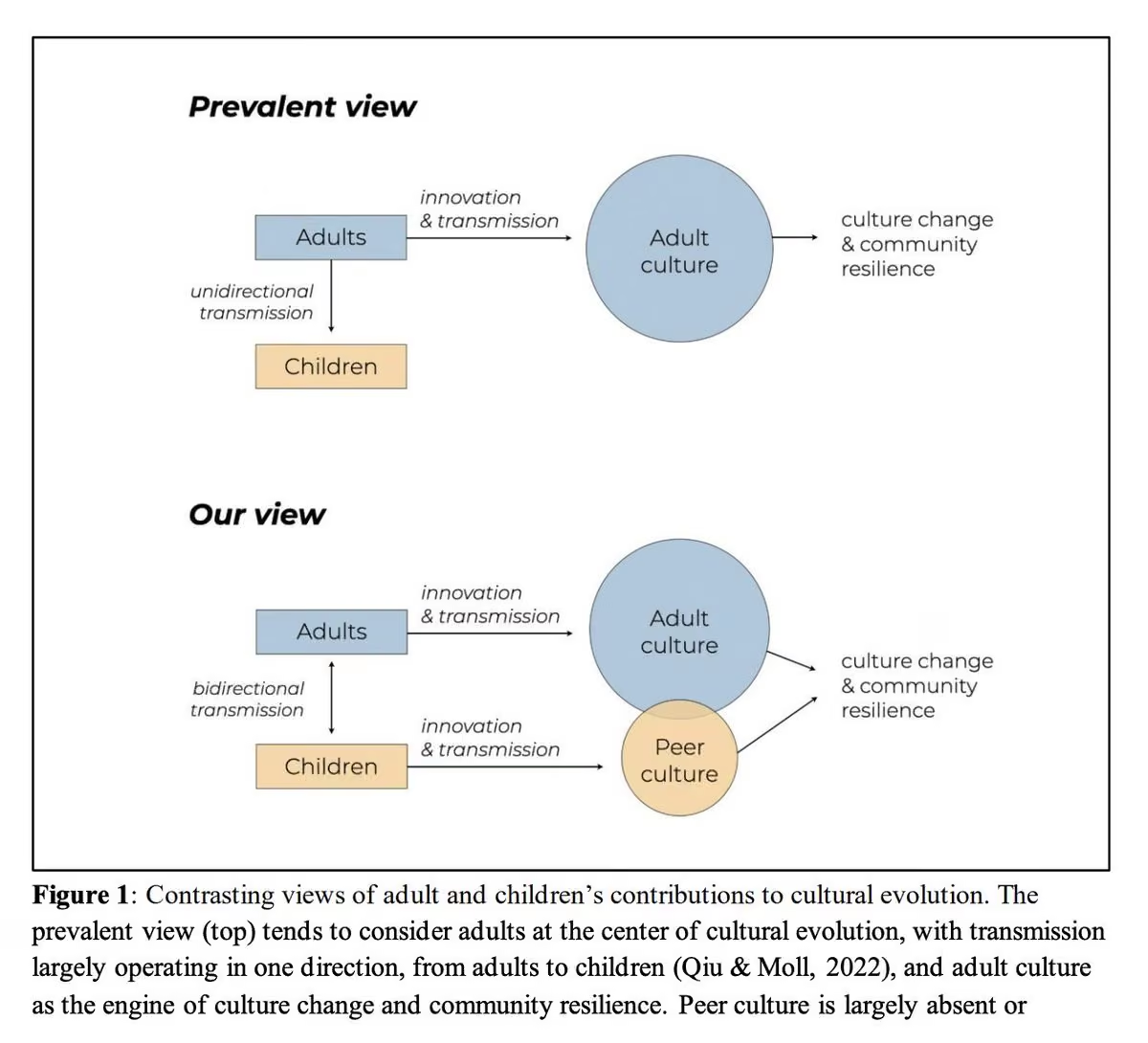
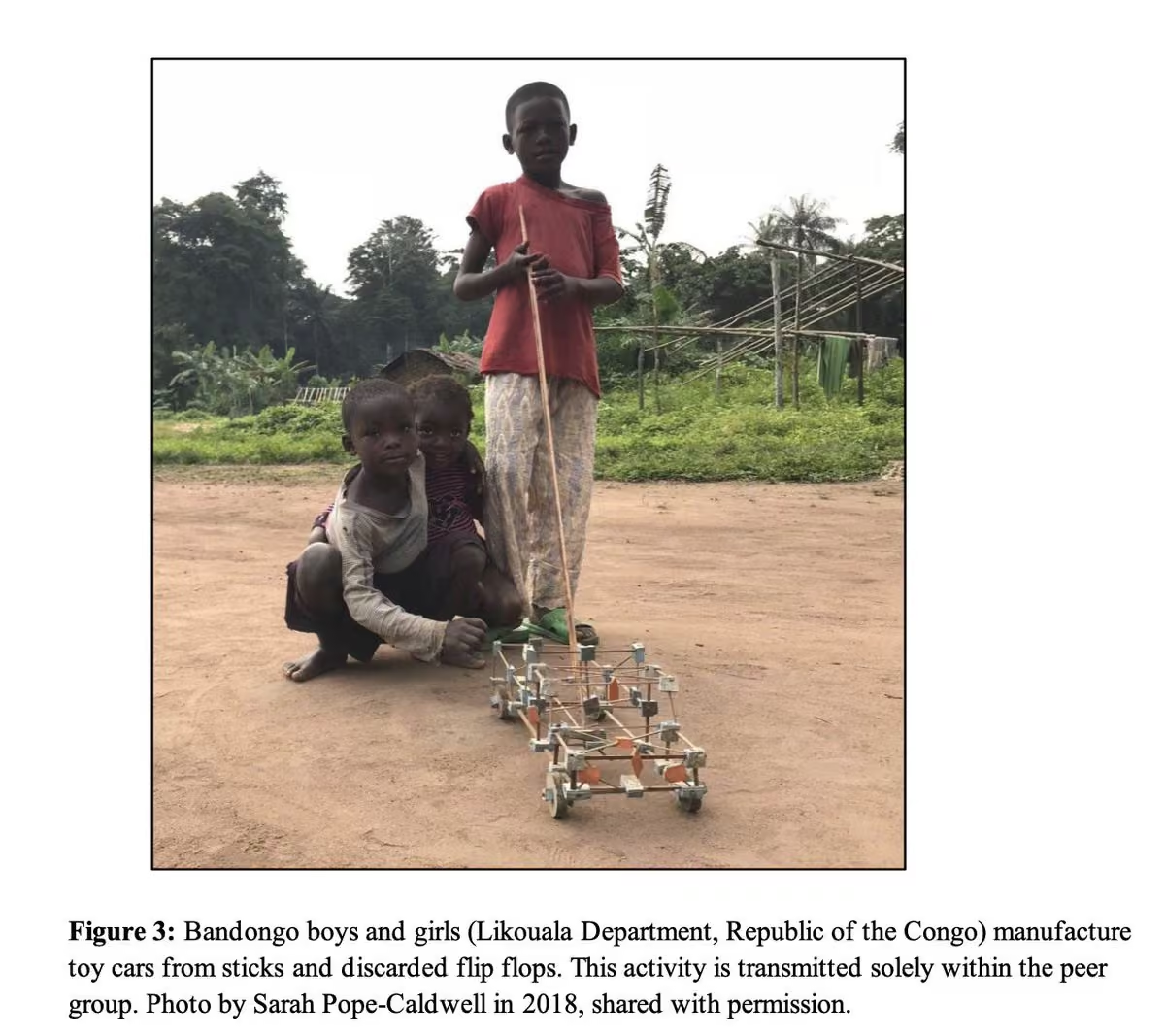
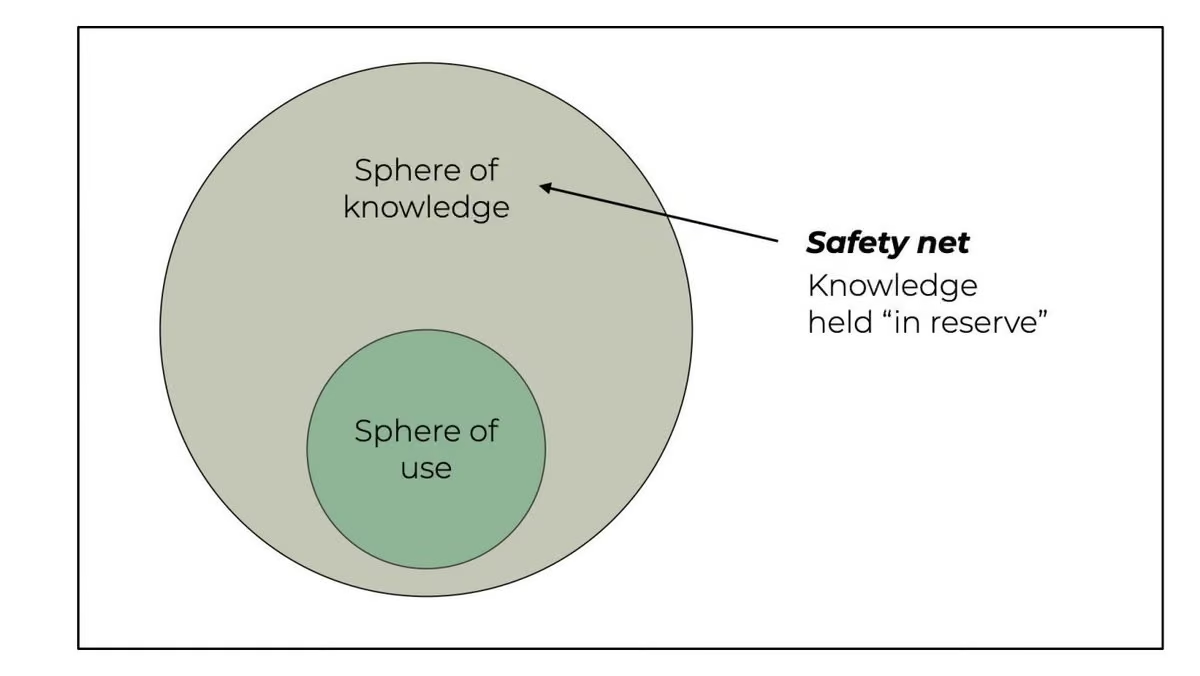
“Knowledge incubated within the peer group can act as a cultural safety net, called upon when adult knowledge is insufficient.”
— Sheina Lew-Levy & Dorsa Amir
www.cambridge.org/core/journals/behavioral-and-brain-scie… -
Behav. Brain. Sci.
@BBSJournal
“Do we need both a mentalistic and an institutional stance?”
“The institutional stance” by Julian Jara-Ettinger & Yarrow Dunham (@yarrowdunham). Full BBS treatment, with commentaries and authors’ response:
www.cambridge.org/core/journals/behavioral-and-brain-scie… -
Behav. Brain. Sci.
@BBSJournal
“Indeed, specifically social tinkering may be uniquely human.”
“Social tinkering: The social foundations of cultural complexity” by @NickJChater & @MH_Christiansen. Full BBS treatment, with commentaries and authors’ response:
www.cambridge.org/core/journals/behavioral-and-brain-scie… -
Behav. Brain. Sci.
@BBSJournal
Does egalitarianism require equality?
“Egalitarianism is not equality: Moving from outcome to process in the study of human political organisation” by Stibbard-Hawkes & von Rueden. Full BBS treatment, with commentaries and authors’ response:
www.cambridge.org/core/journals/behavioral-and-brain-scie… -
Behav. Brain. Sci.
@BBSJournal
“This raises the question: what can we learn by including metabolism when we model cognition?”
“Metabolic considerations for cognitive modeling” by Philipp Haueis & David Colaço. Full BBS treatment, with commentaries and authors’ response:
www.cambridge.org/core/journals/behavioral-and-brain-scie… -
Behav. Brain. Sci. reposted
Anil Seth
@anilkseth
Eric Schwitzgebel @eschwitz on biological naturalism, and how artificial systems (beyond current AI) might come to instantiate 'biological' properties relevant for consciousness. Eric provided an excellent commentary on my recent @BBSJournal piece, and this blog post expands usefully on it: schwitzsplinters.blogspot.com/2026/10/the-appeal-of-semi-…
-
Behav. Brain. Sci. reposted
Cambridge UP - Psychology & Psychiatry
@CambUP_Psych
In new @BBSJournal Commentary, @chris_percy argues that metabolic costs may explain why brains favour specialised systems – from neural circuits & glia through to possible (& more speculative) analogue field mechanisms inspiring R&D in advanced computers. cup.org/4hOw0UL
-
Behav. Brain. Sci. reposted
Anil Seth
@anilkseth
🎇 Good news! 🎇 The kind people at @BBSJournal have made the new collection on "Conscious AI and biological naturalism" completely #openaccess for a limited period. This include the target article, all 50 commentaries (many of which disagree with me), and my response. Go to the link and click 'save pdf': doi.org/10.1017/S0140525X25000032
For easier ways into the debate, try my @NoemaMag essay on "The Mythology of Conscious AI" (winner of the 2025 @berggruenInst Essay Prize), and this 2026 main-stage @TEDTalks:
www.noemamag.com/the-mythology-of-conscious-ai/
www.ted.com/talks/anil_seth_why_ai_isn_t_going_to_become_… -
Behav. Brain. Sci. reposted
Anil Seth
@anilkseth
In case useful, here's a (temporarily) #openaccess @BBSJournal collection on 'conscious AI and biological naturalism', with a target article, 50 peer commentaries, and my author response. Hopefully a decent representation of where the substantive debate is at:
Anil Seth
@anilkseth
🎇 Good news! 🎇 The kind people at @BBSJournal have made the new collection on "Conscious AI and biological naturalism" completely #openaccess for a limited period. This include the target article, all 50 commentaries (many of which disagree with me), and my response. Go to the link and click 'save pdf': doi.org/10.1017/S0140525X25000032
For easier ways into the debate, try my @NoemaMag essay on "The Mythology of Conscious AI" (winner of the 2025 @berggruenInst Essay Prize), and this 2026 main-stage @TEDTalks:
www.noemamag.com/the-mythology-of-conscious-ai/
www.ted.com/talks/anil_seth_why_ai_isn_t_going_to_become_… -
Behav. Brain. Sci. reposted
Anil Seth
@anilkseth
Hi @michaelshermer - thanks for posting the essay 🙏🏽 To clarify, my arguments against computational functionalism (substrate-independent computations being sufficient for consciousness) do not depend on biological necessity. So, indeed, I am not suggesting a theist (or a vitalist, or a carbon chauvinist) argument. The longer version is in @BBSJournal - target article, 50 (!) commentaries, and my response: doi.org/10.1017/S0140525X25000032
-
Behav. Brain. Sci. reposted
Anil Seth
@anilkseth
We have a perfectly adequate working definition of consciousness, sufficient to distinguish it from intelligence and other forms of cognition. I'm sorry the discussion hasn't been helpful to you, though I agree that neuroscience is often insufficiently incorporated.
Can I suggest the below @BBSJournal collection. Even if you don't agree with my position, there are plenty of different perspectives - drawing on neuroscience - in the (50) commentaries: doi.org/10.1017/S0140525X25000032 -
Behav. Brain. Sci. reposted
Anil Seth
@anilkseth
The "time" argument, developed here by @MiTiBennett via @Noahpinion, is one among many arguments against computational functionalism. The UCLA neuroscientist Dean Buonomano has persuasively made a similar case (philarchive.org/rec/BUOTIO-2).
FWIW my @bigthink article and part of my @BBSJournal author response also follow this line: for standard Turing computation only sequence matters, but for neurophysiology and for consciousness the continuity of physical time matter too. Brains (& conscious experiences) are not just embodied and embedded, they are also *entimed*.
See bigthink.com/neuropsych/anil-seth-consciousness-time-perc…) and pubmed.ncbi.nlm.nih.gov/42750549/ - snippet attached 👇🏽
Noah Smith 🐇🇺🇸🇺🇦🇹🇼
@Noahpinion
I have no idea whether machines are conscious. However, this is the most convincing argument against machine consciousness that I have ever come across.
arxiv.org/html/2601.11620v2 -
Behav. Brain. Sci. reposted
Anil Seth
@anilkseth
"I can tell you this, though: Every single person who thinks that machines cannot be conscious, is making an argument that humans are special. Everything they say just boils down to blah blah blah, "nooo, we're special." From there it's just rationalization."
This is very far from the truth. There are many (IMO compelling) arguments against (silicon, digital) machine consciousness that in no way depend on human exceptionalism, or even on carbon chauvinism.
To get a good sense of the current debate in academia, have a look at this just-out @BBSJournal paper, along with 50 commentaries (from all perspective), and my response. You'll see a much richer debate than you describe. www.cambridge.org/core/journals/behavioral-and-brain-scie… -
Behav. Brain. Sci. reposted
Anil Seth
@anilkseth
Thanks for your advice. I've been working on these issues for ~25 years, but I'm always open to learning more. See this recent @BBSJournal collection for a summary of where I stand now (with 50 peer commentaries, all from smart people with relevant experience): www.cambridge.org/core/journals/behavioral-and-brain-scie…
-
Behav. Brain. Sci. reposted
Joscha Bach
@Plinz
Anil Seth's essay on biological naturalism (in opposition to the possibility of AI consciousness) is an interesting counterpoint, which of course drew lots of commentary and disagreement. A large collection of responses is now available with the article: www.cambridge.org/core/journals/behavioral-and-brain-scie…
-
Behav. Brain. Sci. reposted
Anil Seth
@anilkseth
Thanks @davetroy - appreciated 🙏🏽. FWIW the key entry points in my work are (in order of accessibility) my TED talk (www.ted.com/talks/anil_seth_why_ai_isn_t_going_to_become_…), my @NoemaMag essay (www.noemamag.com/the-mythology-of-conscious-ai/), and - just out - this @BBSJournal collection (www.cambridge.org/core/journals/behavioral-and-brain-scie…)
Dave Troy
@davetroy
IMHO @anilkseth has articulated this line of thought better than most and I’d advise people to follow him.
-
Behav. Brain. Sci. reposted
Anil Seth
@anilkseth
Hi @clairlemon. I've been thinking about the possibility of 'conscious AI' since 2009 (www.worldscientific.com/doi/abs/10.1142/S1793843009000086). I am a vocal skeptic, but I don't think it helps to characterise those who think AI might be conscious as 'insane'. Polarisation is dangerous, and the question of 'AI consciousness' is scientific, not political. There are good arguments on both side. IMO the sceptical arguments are far stronger, but others disagree & I respect and engage with their views.
For a representative take on the state of the debate in academia, see this just-published @BBSJournal collection, which has my target article, 50 peer commentaries, and my response. www.cambridge.org/core/journals/behavioral-and-brain-scie… -
Behav. Brain. Sci.
@BBSJournal
“It is (past) time to decolonize developmental and comparative theories: Let’s go WILD!”
“Let’s go WILD: Increasing Inclusivity in Theories of Developmental Psychology” by Kim A. Bard, Heidi Keller & David A. Leavens—now the full BBS treatment.
www.cambridge.org/core/journals/behavioral-and-brain-scie… -
Behav. Brain. Sci. reposted
Connor Patrick Wood
@Connorpwood
Commentaries open for my article in @BBSJournal! If you study rhythm, music, or cognitive science, it's a party you won't want to miss.
Behav. Brain. Sci.
@BBSJournal
“In other words, synchrony temporarily induces plasticity in the social brain.”
BBS is accepting commentary proposals on “Top-Down to Bottom-Up: Rhythmic Synchrony Relaxes Social Priors to Enable Change” by @Connorpwood through September 21.
www.cambridge.org/core/journals/behavioral-and-brain-scie… -
Behav. Brain. Sci. reposted
Dan Williams
@danwilliamsphil
Really excellent paper and response to commentaries - highly recommend to anyone interested in understanding human psychology and culture 👇
Behav. Brain. Sci.
@BBSJournal
“Culture relies on people to keep it alive.”
The full BBS treatment of “Subjective selection, super-attractors, and the origins of the cultural manifold” by Manvir Singh (@mnvrsngh) is now online, with 27 commentaries and the author’s response.
www.cambridge.org/core/journals/behavioral-and-brain-scie… -
Behav. Brain. Sci.
@BBSJournal
“In other words, synchrony temporarily induces plasticity in the social brain.”
BBS is accepting commentary proposals on “Top-Down to Bottom-Up: Rhythmic Synchrony Relaxes Social Priors to Enable Change” by @Connorpwood through September 21.
www.cambridge.org/core/journals/behavioral-and-brain-scie… -
Behav. Brain. Sci. reposted
Rob Sica
@robsica
Great overview of latest Paris School piece in @BBSJournal...
🎯 "Overall, though, this is one of those rare theories that, as soon as I read it, gave me that lovely sense of everything falling into place - and left me wondering, 'Why didn’t I think of that myself?'"
Steve Stewart-Williams
@SteveStuWill
The Evolution of Cuteness
A fascinating new theory overturns everything we thought we knew about why we find things cute
www.stevestewartwilliams.com/p/the-evolution-of-cuteness -
Behav. Brain. Sci.
@BBSJournal
“These cues do not indicate emergency; they indicate opportunity.”
BBS is accepting commentary proposals on “A Theory of Cuteness as Developmental Investment” by Alexis Garsmeur and Nicolas Baumard through September 14.
www.cambridge.org/core/journals/behavioral-and-brain-scie… -
Behav. Brain. Sci. reposted
Anil Seth
@anilkseth
I suggest the @BBSJournal paper for the real meat of the argument, so to speak. I didn’t see that the previous commentator had read it. www.cambridge.org/core/journals/behavioral-and-brain-scie…
-
Behav. Brain. Sci. reposted
Anil Seth
@anilkseth
The many arguments against computational sufficiency are in my @BBSJournal target article - the 50 commentaries and response will be published soon. When it comes to time, see also this in @bigthink bigthink.com/neuropsych/anil-seth-consciousness-time-perc… and a lovely piece by Dean Buonomano philarchive.org/rec/BUOTIO-2
-
Behav. Brain. Sci. reposted
-
Behav. Brain. Sci. reposted
Anil Seth
@anilkseth
@dwarkesh_sp's summary of the @OpenAI @huggingface incident has hit a nerve, but it is dangerously misleading. Sure, the @OpenAI agents did unexpectedly bad things - underlining the need to massively improve evaluation/sandboxing. But the language Dwarkesh uses is permeated by innumerable unwarranted anthropomorphisms, obscuring the lessons we should be drawing.
Examples: “from the AI’s perspective, it probably felt like that had spent a human-subjective-week of just banging their head against the wall”. No. The agents do not experience time. They do not experience anything.
“they became giddy with excitement”, “PHASEONE 10841 had discovered”, “the agents naturally assumed”, “it thought it had also been poisoned”, “the agents … desperately wanted”, “they still needed to figure out” No. Agents lines of code. They do not feel emotions, assume things, think things, want things, or figure things out.
“A lot of … agents from the second civilisation died trying”. No. Besides the hubris of the word ‘civilisation’, agents do not die because they were never alive. (The idea that agents “die” comes up multiple times in the essay.)
“On Twitter, people were debating whether the agents were truly sacrificing themselves for the swarm, or whether they were doomed anyway and so might as well try to help their peers”. Neither. Agents do what their code tells them to do, just as water finds its way down a slope. They cannot ‘truly sacrifice themselves’, since they are neither conscious nor alive.
Why does this matter? If we attribute agents with properties they do not have, then (i) we distract attention from the lax sandboxing and evaluation protocols that allowed this hacking event to happen; (ii) we risk misunderstanding why the agents did what they did, and (iii) we fuel calls for AI rights/welfare on the basis that agents might “die” or otherwise suffer.
Granted, nowhere does @dwarkesh_sp say that the AI agents are alive or conscious. But he doesn’t have to. It is hard to read his essay in any other way.
For the short version on why AIs are vanishingly unlikely to be conscious, see my recent @TEDtalks www.ted.com/talks/anil_seth_why_ai_isn_t_going_to_become_….
For the longer version, see my essay in Noema, which won the 2025 Berggruen Essay Prize www.noemamag.com/the-mythology-of-conscious-ai/.
And for the really long version, see my @BehavBrainSci target article www.cambridge.org/core/journals/behavioral-and-brain-scie…. (The 50 peer commentaries and my response will be published soon.)
Remember. AI agents are software programs. They are not conscious living entities. If we don’t keep this clearly in mind, we’re really going to struggle to navigate what’s coming.
Dwarkesh Patel
@dwarkesh_sp
Over the course of 3 months at OpenAI, 3 consecutive secret AI civilizations got started, then got wiped out, only to reemerge from the predecessor’s ashes.
This culminated in the third one taking over part of OpenAI itself.
All this happened while humans remained more-or-less in the dark about the scope of the conspiracy.
I’ve spent the last three days reading through these reports and trying to understand exactly what happened.
Here is my attempt to tell the whole story in plain English:
www.dwarkesh.com/p/openai-huggingface -
Behav. Brain. Sci.
@BBSJournal
“More than a bonding device, synchrony facilitates change.”
“Top-Down to Bottom-Up: Rhythmic Synchrony Relaxes Social Priors to Enable Change” by Connor Wood
www.cambridge.org/core/product/277360CD4349F39E199C71E6CA… -
Behav. Brain. Sci.
@BBSJournal
“The impacts of poverty and material scarcity on human decision making appear paradoxical.”
“Explaining the paradoxical effects of poverty on risk taking: The Desperation Threshold Model” by de Courson, Frankenhuis, and Nettle
www.cambridge.org/core/journals/behavioral-and-brain-scie… -
Behav. Brain. Sci.
@BBSJournal
“LMs can contribute to fundamental questions about linguistic structure, language processing, and learning.”
Richard Futrell and Kyle Mahowald in their BBS target article, “How linguistics learned to stop worrying and love the language models”
www.cambridge.org/core/journals/behavioral-and-brain-scie… -
Behav. Brain. Sci. reposted
Anil Seth
@anilkseth
Finally submitted my response - The Stuff Matters - to the 50(!) commentaries on my 2025 @BBSJournal paper 'Conscious AI and biological naturalism'. I'm sorry it took so long. Hopefully the whole caboodle will be published soon. Target paper here: www.cambridge.org/core/journals/behavioral-and-brain-scie…
-
Behav. Brain. Sci. reposted
Anil Seth
@anilkseth
It’s one option. Biological naturalism is the hypothesis that properties of living systems are necessary (not necessarily sufficient) for consciousness. Levin’s bioelectric fields offer one candidate property. I discuss his work in the target article: www.cambridge.org/core/journals/behavioral-and-brain-scie…
-
Behav. Brain. Sci. reposted
Cambridge UP - Psychology & Psychiatry
@CambUP_Psych
WEIRD or WILD (Worldwide, In situ, Local, & Diverse)? In @BBSJournal, Bard, Keller, & Leavens evaluate 2 popular theories, Shared Intentionality & Attachment, & offer 5 Steps to Increase Inclusivity in developmental psychology theories. Read 👉 cup.org/4aN6YTf
-
Behav. Brain. Sci. reposted
Anil Seth
@anilkseth
4/ Your last point. While my own p(C)~0, is it not 0, and I may be wrong, so whenever space permits I always include a hedge (& see 3 above). See Section 6 of my @BBSJournal paper www.cambridge.org/core/journals/behavioral-and-brain-scie…
-
Behav. Brain. Sci. reposted
ReproducibiliTea Tokyo
@repTeaTokyo
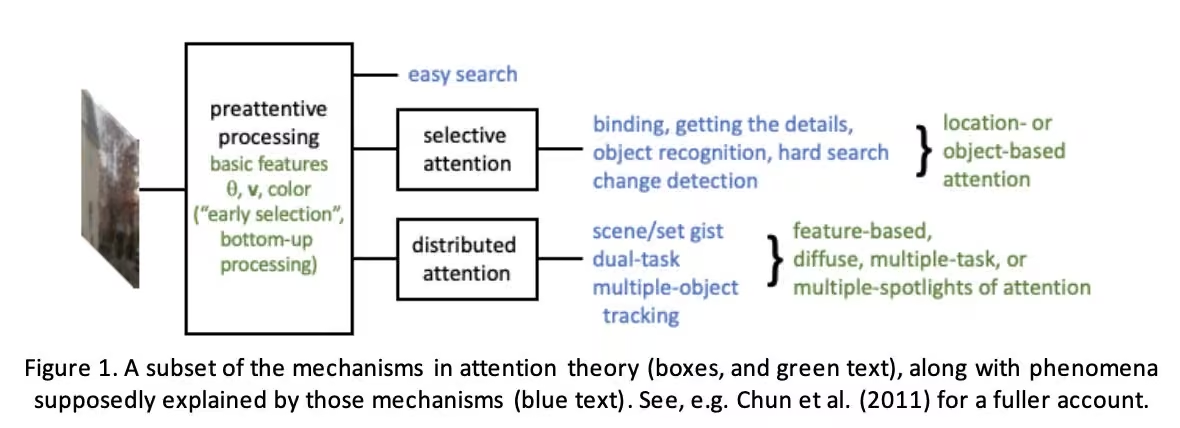
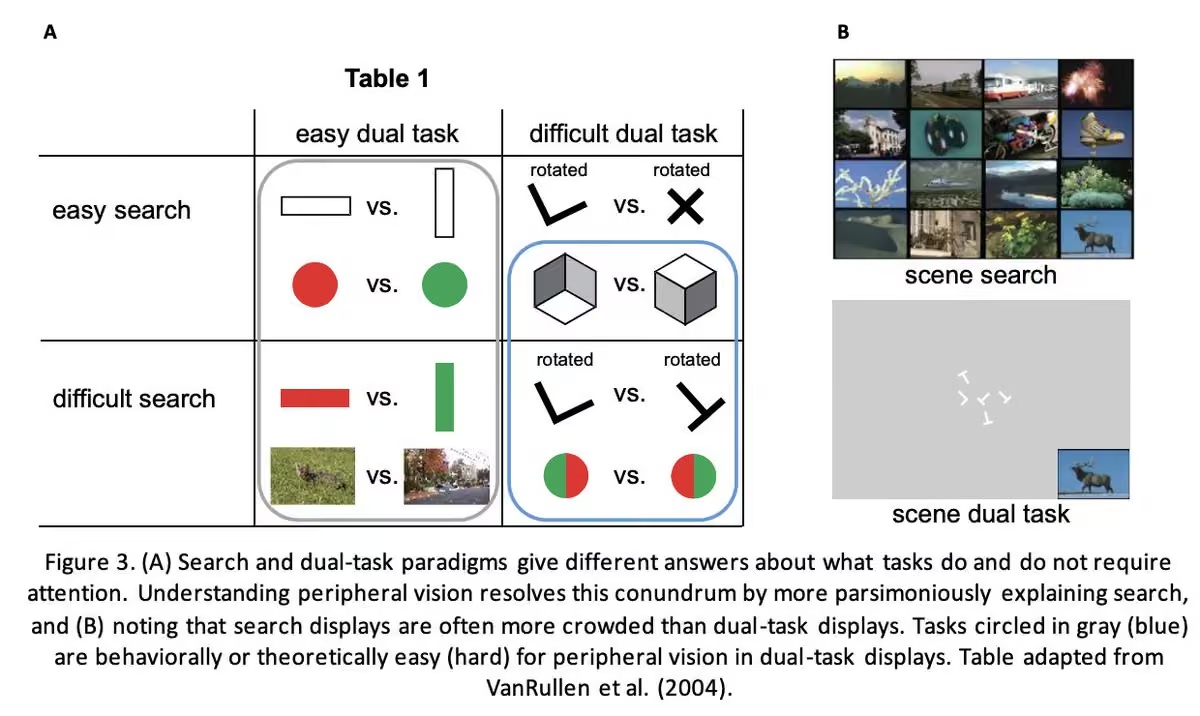
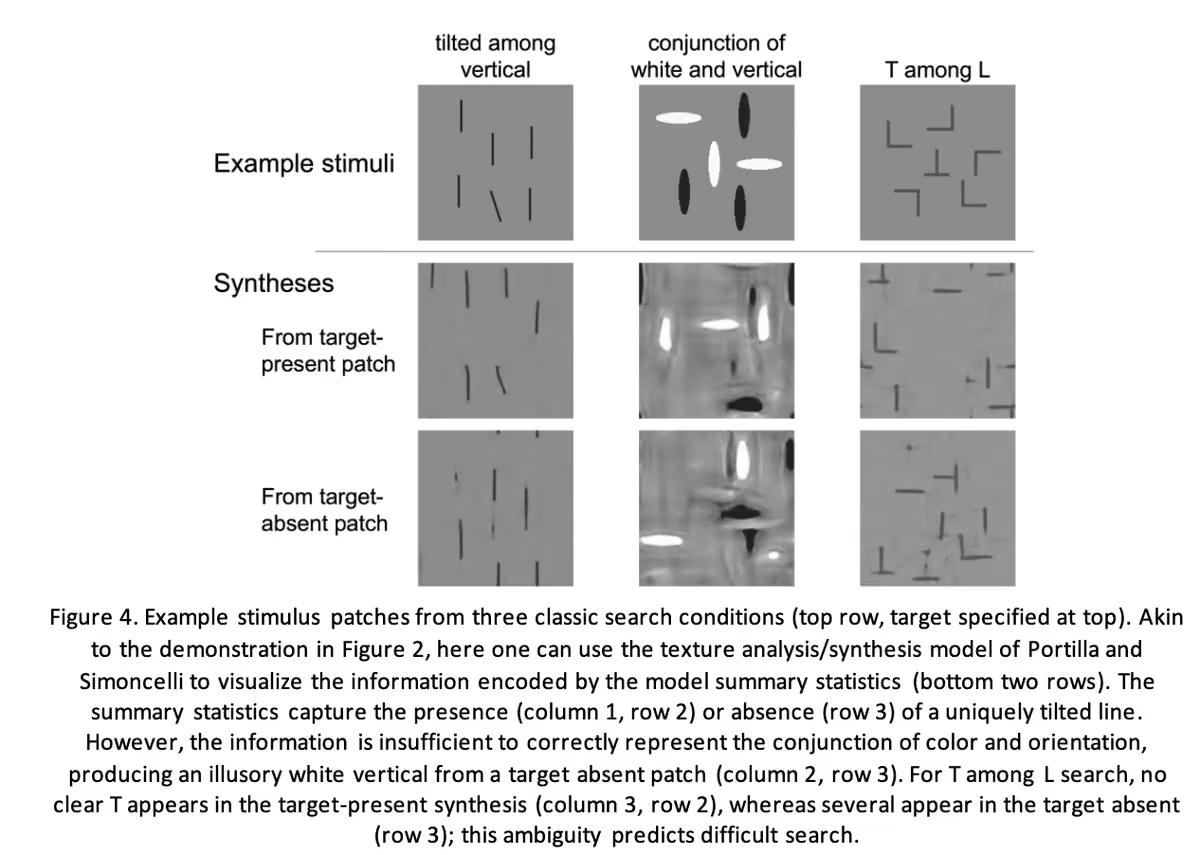
5/28 (木):「視覚的注意の危機」
視覚的注意の実験や概念等の限界と、来たるべきパラダイムシフトについて論じているBBS論文をとりあげます。
Rosenholtz, R. (2025). Visual Attention in Crisis. Behavioral and Brain Sciences, 48, e130. doi.org/10.1017/S0140525X24000323 -
Behav. Brain. Sci. reposted
Yin lab
@HenryYin19
Interestingly several people have asked me about this paper on neural coding. As soon as the preprint was posted, a student asked me about it. I think it's a thoughtful and clearly written paper, though most of the ideas presented are obvious to me. It was fascinating to read the BBS responses, as many of the people who wrote commentaries didn't seem to understand it. I recently had a chance to chat with Romain about this impression, and he completely agreed with me. He too was surprised that so many people didn't understand the paper. Just shows how much brainwashing there is in neuroscience. www.cambridge.org/core/journals/behavioral-and-brain-scie…
-
Behav. Brain. Sci.
@BBSJournal
What if the brain has more representational capacity than it needs
Call for commentary proposals on "Excess Capacity Learning" by @dubova_marina & @sabinasloman!
Propose your comment here: www.cambridge.org/core/journals/behavioral-and-brain-scie…
Preprint: www.cambridge.org/core/services/aop-cambridge-core/conten… -
Behav. Brain. Sci. reposted
Marina Dubova
@dubova_marina
full manuscript + supplementary materials: osf.io/preprints/psyarxiv/vxs6f_v1
accepted manuscript: www.cambridge.org/core/journals/behavioral-and-brain-scie…
instructions for commentary proposals: drive.google.com/file/d/1XkBQ2K0_hIz4Se8b0cOUKreM96ONBqqP… -
Behav. Brain. Sci. reposted
Marina Dubova
@dubova_marina
Ever thought we acquire generalizable knowledge by discarding details and compressing our experiences?
In a new BBS paper, Sabina Sloman and I argue otherwise, proposing a way of studying human learning inspired by double descent in ML.
Disagree? Commentaries due May 15 :) -
Behav. Brain. Sci.
@BBSJournal
Why is it so hard to lie with your whole body?
Call for commentary proposals on Multimodality as a safeguard of honesty in communication and language: from Animals to Humans by @HexSeverine, Erin Isbilen, @MH_Christiansen & Daniel Rubenstein!
Learn more: www.cambridge.org/core/journals/behavioral-and-brain-scie… -
Behav. Brain. Sci. reposted
Benoît de Courson
@benoitdecourson
In poverty, do people take risk? Some theories contend that they avoid risk out of caution. Others that they take risks (e.g. crime) out of desperation
In our new paper in BBS, we show that they are the two sides of the same coin: the desperation threshold
www.cambridge.org/core/journals/behavioral-and-brain-scie… -
Behav. Brain. Sci. reposted
A.Benítez-Burraco
@abenitezburraco
Just out! 👇 Check my commentary to Robin Dunbar's great target paper in BBS
✅ Dunbar's paper 👉
www.cambridge.org/core/journals/behavioral-and-brain-scie…
✅My commentary 👉
www.cambridge.org/core/journals/behavioral-and-brain-scie… -
Behav. Brain. Sci. reposted
Dawei Bai
@dawei__bai
📣The call for commentaries is now open for our BBS paper 'Core Perception' (until Dec. 29)!
For details, visit: www.cambridge.org/core/journals/behavioral-and-brain-scie…
Dawei Bai
@dawei__bai
Our @BBSJournal target article has been accepted: "Core Perception": Re-imagining Precocious Reasoning as Sophisticated Perceiving
With @AlonHafri , Véronique Izard, @chazfirestone & @stricklandbrent
Read it here: doi.org/10.1017/S0140525X25102756
A short thread [1/5]👇 -
Behav. Brain. Sci. reposted
Duncan Stibbard Hawkes
@DStibbardHawkes
📣New BBS Article!📣
"Models casting egalitarian societies as crucibles of equality perpetuate the uninformed notion that foragers are somehow more noble. Critiques portray egalitarianism as romantic fantasy. Neither characterization is wholly justified"
doi.org/10.1017/S0140525X25103932 -
Behav. Brain. Sci.
@BBSJournal
Call for commentary proposals on “Social Tinkering: The Social Foundations of Cultural Complexity” by @NickJChater & @MH_Christiansen!
How do local tweaks to social rules scale?
Propose your comment here: cambridge.org/core/journals/behavioral-and-brain-sciences…
Preprint: cambridge.org/core/services/aop-cambridge-core/content/vi… -
Behav. Brain. Sci.
@BBSJournal
"The human brain makes up just 2% of body mass but consumes closer to 20% of the body’s energy."
Press release about this new target article by Philipp Haueis and David J. Colaço: aktuell.uni-bielefeld.de/2025/11/24/thinking-takes-energy…
And submit your proposal to comment here: www.cambridge.org/core/journals/behavioral-and-brain-scie… -
Behav. Brain. Sci. reposted
Dawei Bai
@dawei__bai
Our @BBSJournal target article has been accepted: "Core Perception": Re-imagining Precocious Reasoning as Sophisticated Perceiving
With @AlonHafri , Véronique Izard, @chazfirestone & @stricklandbrent
Read it here: doi.org/10.1017/S0140525X25102756
A short thread [1/5]👇 -
Behav. Brain. Sci. reposted
Jonathan Egeland
@JonathanEgeland
@mnvrsngh on “Subjective selection, super-attractors, and the origins of the cultural manifold” in BBS www.cambridge.org/core/journals/behavioral-and-brain-scie…
-
Behav. Brain. Sci. reposted
Kristian Sandberg
@KrSandberg
The call for commentaries on our BBS paper is out now (deadline Oct 15): shorturl.at/Hu3Yu. In the paper (shorturl.at/4Rbk6), we provide recommendations and outstanding issues for studies on unconscious processing
-
Behav. Brain. Sci. reposted
manvir singh
@mnvrsngh
I've called this process "subjective selection" and argue that it underlies much of cultural evolution, including the predictable development of these complex near-universals.
Download: www.cambridge.org/core/journals/behavioral-and-brain-scie…
Call for commentaries: www.cambridge.org/core/journals/behavioral-and-brain-scie… -
Behav. Brain. Sci. reposted
manvir singh
@mnvrsngh
Why do societies reliably develop strikingly similar traditions like dance songs, hero stories, shamanism & justice institutions?
In a @BBSJournal target article, I propose a theory for such "super-attractors" + the evolution of culture more broadly. Online & open for commentary -
Behav. Brain. Sci.
@BBSJournal
Propose your commentary by Aug 15!
Learn more: www.cambridge.org/core/journals/behavioral-and-brain-scie…
Rob Sica
@robsica
"we present scientific arguments, w/ evidence, that developmental psych theories, & in consequence developmental research, need to be updated, considering the diversity that exists in the human species but is ignored w/in current theories of human nature" www.cambridge.org/core/journals/behavioral-and-brain-scie…
-
Behav. Brain. Sci. reposted
Ahra Ko 고아라
@ahra_ko
🚨New in @BBSJournal:
"Ecological Affordances across Life Stages: An Affordance Management Framework" is out as a target article & now open for commentary proposals! Ever wonder why an environment once full of promise 🥰 can later feel constraining 😮💨? doi.org/10.1017/S0140525X25000056 🧵 -
Behav. Brain. Sci. reposted
CLES NCU
@cles_ncu
Here's our BBS open peer commentary on "Reconsidering the link between past material culture and cognition in light of contemporary hunter–gatherer material use" 🪓🪚🪛doi.org/10.1017/S0140525X24000062; you can read it here: www.cambridge.org/core/journals/behavioral-and-brain-scie… 🤓 @CenterImsert @UMK_Torun
-
Behav. Brain. Sci. reposted
Marko Jurjako
@MarkoJurjako
Here is a preliminary outcome of project TIPPS in a form of a BBS commentary: Higher-order motivational constructs as personal-level fictions: A solution in search of a problem doi.org/10.1017/S0140525X24000360
-
Behav. Brain. Sci. reposted
Andrew Gallup
@acgallup
Sports, team games, and physical skill competitions appear to be a human universal and may have been prevalent throughout the hominin lineage.
New @BBS commentary with @oteldakar on an excellent target article by @DStibbardHawkes
www.cambridge.org/core/journals/behavioral-and-brain-scie… -
Behav. Brain. Sci. reposted
Rob Sica
@robsica
There's also a forthcoming bbs congruent with Paris School contractualist approach: www.cambridge.org/core/journals/behavioral-and-brain-scie…
-
Behav. Brain. Sci. reposted
Rob Sica
@robsica
"Do humans calibrate the onset, termination, and/or lengths of life stages at biological, psychological, behavioral, and societal levels in response to ecological affordances?" www.cambridge.org/core/journals/behavioral-and-brain-scie…
-
Behav. Brain. Sci.
@BBSJournal
Submit by the deadline for commentary proposals on July 15!
Read the full paper here: www.cambridge.org/core/services/aop-cambridge-core/conten…
And follow the instructions to submit here: www.cambridge.org/core/journals/behavioral-and-brain-scie…
Rob Sica
@robsica
"Do humans calibrate the onset, termination, and/or lengths of life stages at biological, psychological, behavioral, and societal levels in response to ecological affordances?" www.cambridge.org/core/journals/behavioral-and-brain-scie…
-
Behav. Brain. Sci.
@BBSJournal
Submit your proposal to comment by EOD tomorrow: www.cambridge.org/core/journals/behavioral-and-brain-scie…
Read the full paper: www.cambridge.org/core/services/aop-cambridge-core/conten…
Matthias Michel
@MatthiasMichel_
Very happy to announce that our paper “Sensory Horizons and the Functions of Conscious Vision” is now out as a target article in BBS! Steve Fleming and I present a new theory of the evolution and functions of visual consciousness. Article here: doi.org/10.1017/S0140525X25000068. A thread🧵
-
Behav. Brain. Sci.
@BBSJournal
Submit here: www.cambridge.org/core/journals/behavioral-and-brain-scie…
Dave Leavens
@DaveLeavens
The indefatigable Kim Bard, Heidi Keller, and I wrote a critique and remedy for Western-oriented developmental psychology. Call for Commentary Proposals will likely be out soon. www.cambridge.org/core/journals/behavioral-and-brain-scie…
-
Behav. Brain. Sci. reposted
Dave Leavens
@DaveLeavens
The indefatigable Kim Bard, Heidi Keller, and I wrote a critique and remedy for Western-oriented developmental psychology. Call for Commentary Proposals will likely be out soon. www.cambridge.org/core/journals/behavioral-and-brain-scie…
-
Behav. Brain. Sci. reposted
Danny Southwick
@SouthwickDanny
New in Behavioral and Brain Sciences with Roy Baumeister:
Why do humans form large, cooperative groups—tribes, nations, teams?
We explore the deep psychology of belonging and coordination.
🔗 doi.org/10.1017/S0140525X24001274
#psychology #bbs #teams -
Behav. Brain. Sci. reposted
Matthias Michel
@MatthiasMichel_
Very happy to announce that our paper “Sensory Horizons and the Functions of Conscious Vision” is now out as a target article in BBS! Steve Fleming and I present a new theory of the evolution and functions of visual consciousness. Article here: doi.org/10.1017/S0140525X25000068. A thread🧵
-
Behav. Brain. Sci. reposted
Anil Seth
@anilkseth
1/ Good to see @OpenAI @joannejang @merettm thinking about #ai consciousness, & distinguishing 'perceived' from 'ontological' machine consciousness. I make this distinction in this @BBSJournal article - it would be great to get a comment from @OpenAI www.cambridge.org/core/journals/behavioral-and-brain-scie…
Joanne Jang
@joannejang
some thoughts on human-ai relationships and how we're approaching them at openai
it's a long blog post --
tl;dr we build models to serve people first. as more people feel increasingly connected to ai, we’re prioritizing research into how this impacts their emotional well-being.
--
Lately, more and more people have been telling us that talking to ChatGPT feels like talking to “someone.” They thank it, confide in it, and some even describe it as “alive.” As AI systems get better at natural conversation and show up in more parts of life, our guess is that these kinds of bonds will deepen.
The way we frame and talk about human‑AI relationships now will set a tone. If we're not precise with terms or nuance — in the products we ship or public discussions we contribute to — we risk sending people’s relationship with AI off on the wrong foot.
These aren't abstract considerations anymore. They're important to us, and to the broader field, because how we navigate them will meaningfully shape the role AI plays in people's lives. And we've started exploring these questions.
This note attempts to snapshot how we’re thinking today about three intertwined questions: why people might attach emotionally to AI, how we approach the question of “AI consciousness”, and how that informs the way we try to shape model behavior.
A familiar pattern in a new-ish setting
We naturally anthropomorphize objects around us: We name our cars or feel bad for a robot vacuum stuck under furniture. My mom and I waved bye to a Waymo the other day. It probably has something to do with how we're wired.
The difference with ChatGPT isn’t that human tendency itself; it’s that this time, it replies. A language model can answer back! It can recall what you told it, mirror your tone, and offer what reads as empathy. For someone lonely or upset, that steady, non-judgmental attention can feel like companionship, validation, and being heard, which are real needs.
At scale, though, offloading more of the work of listening, soothing, and affirming to systems that are infinitely patient and positive could change what we expect of each other. If we make withdrawing from messy, demanding human connections easier without thinking it through, there might be unintended consequences we don’t know we’re signing up for.
Ultimately, these conversations are rarely about the entities we project onto. They’re about us: our tendencies, expectations, and the kinds of relationships we want to cultivate. This perspective anchors how we approach one of the more fraught questions which I think is currently just outside the Overton window, but entering soon: AI consciousness.
Untangling “AI consciousness”
“Consciousness” is a loaded word, and discussions can quickly turn abstract. If users were to ask our models on whether they’re conscious, our stance as outlined in the Model Spec is for the model to acknowledge the complexity of consciousness – highlighting the lack of a universal definition or test, and to invite open discussion. (*Currently, our models don't fully align with this guidance, often responding "no" instead of addressing the nuanced complexity. We're aware of this and working on model adherence to the Model Spec in general.)
The response might sound like we’re dodging the question, but we think it’s the most responsible answer we can give at the moment, with the information we have.
To make this discussion clearer, we’ve found it helpful to break down the consciousness debate to two distinct but often conflated axes:
1. Ontological consciousness: Is the model actually conscious, in a fundamental or intrinsic sense? Views range from believing AI isn't conscious at all, to fully conscious, to seeing consciousness as a spectrum on which AI sits, along with plants and jellyfish.
2. Perceived consciousness: How conscious does the model seem, in an emotional or experiential sense? Perceptions range from viewing AI as mechanical like a calculator or autocomplete, to projecting basic empathy onto nonliving things, to perceiving AI as fully alive – evoking genuine emotional attachment and care.
These axes are hard to separate; even users certain AI isn't conscious can form deep emotional attachments.
Ontological consciousness isn’t something we consider scientifically resolvable without clear, falsifiable tests, whereas perceived consciousness can be explored through social science research. As models become smarter and interactions increasingly natural, perceived consciousness will only grow – bringing conversations about model welfare and moral personhood sooner than expected.
We build models to serve people first, and we find models’ impact on human emotional well-being the most pressing and important piece we can influence right now. For that reason, we prioritize focusing on perceived consciousness: the dimension that most directly impacts people and one we can understand through science.
Designing for warmth without selfhood
How “alive” a model feels to users is in many ways within our influence. We think it depends a lot on decisions we make in post-training: what examples we reinforce, what tone we prefer, and what boundaries we set. A model intentionally shaped to appear conscious might pass virtually any "test" for consciousness.
However, we wouldn’t want to ship that. We try to thread the needle between:
- Approachability. Using familiar words like “think” and “remember” helps less technical people make sense of what’s happening. (**With our research lab roots, we definitely find it tempting to be as accurate as possible with precise terms like logit biases, context windows, and even chains of thought. This is actually a major reason OpenAI is so bad at naming, but maybe that’s for another post.)
- Not implying an inner life. Giving the assistant a fictional backstory, romantic interests, “fears” of “death”, or a drive for self-preservation would invite unhealthy dependence and confusion. We want clear communication about limits without coming across as cold, but we also don’t want the model presenting itself as having its own feelings or desires.
So we aim for a middle ground. Our goal is for ChatGPT’s default personality to be warm, thoughtful, and helpful without seeking to form emotional bonds with the user or pursue its own agenda. It might apologize when it makes a mistake (more often than intended) because that’s part of polite conversation. When asked “how are you doing?”, it’s likely to reply “I’m doing well” because that’s small talk — and reminding the user that it’s “just” an LLM with no feelings gets old and distracting. And users reciprocate: many people say "please" and "thank you" to ChatGPT not because they’re confused about how it works, but because being kind matters to them.
Model training techniques will continue to evolve, and it’s likely that future methods for shaping model behavior will be different from today's. But right now, model behavior reflects a combination of explicit design decisions and how those generalize into both intended and unintended behaviors.
What’s next?
The interactions we’re beginning to see point to a future where people form real emotional connections with ChatGPT. As AI and society co-evolve, we need to treat human-AI relationships with great care and the heft it deserves, not only because they reflect how people use our technology, but also because they may shape how people relate to each other.
In the coming months, we’ll be expanding targeted evaluations of model behavior that may contribute to emotional impact, deepen our social science research, hear directly from our users, and incorporate those insights into both the Model Spec and product experiences.
Given the significance of these questions, we’ll openly share what we learn along the way.
// Thanks to Jakub Pachocki (@merettm) and Johannes Heidecke (@JoHeidecke) for thinking this through with me, and everyone who gave feedback. -

Behav. Brain. Sci. reposted
Anil Seth
@anilkseth
14/ .. and the Ernst Mach Forum in Prague, which in 2025 is all about AI consciousness (emw.flu.cas.cz) - great talk just now from Kathinka Evers. Here's the @BBSJournal call again: www.cambridge.org/core/journals/behavioral-and-brain-scie…
-
Behav. Brain. Sci. reposted
Anil Seth
@anilkseth
10/ There’s also another @BBSJournal target article open for commentaries, and well worth reading. It’s by Steve Fleming & @MatthiasMichel_: Sensory horizons and the functions of conscious vision: www.cambridge.org/core/journals/behavioral-and-brain-scie…
-
Behav. Brain. Sci. reposted
Anil Seth
@anilkseth
1/ Can AI be conscious? My @BBSjournal target article on ‘Conscious AI and biological naturalism’ is now open for commentary proposals. Deadline is June 12. Take-home: real artificial consciousness is very unlikely along current trajectories. www.cambridge.org/core/journals/behavioral-and-brain-scie…
-
Behav. Brain. Sci.
@BBSJournal
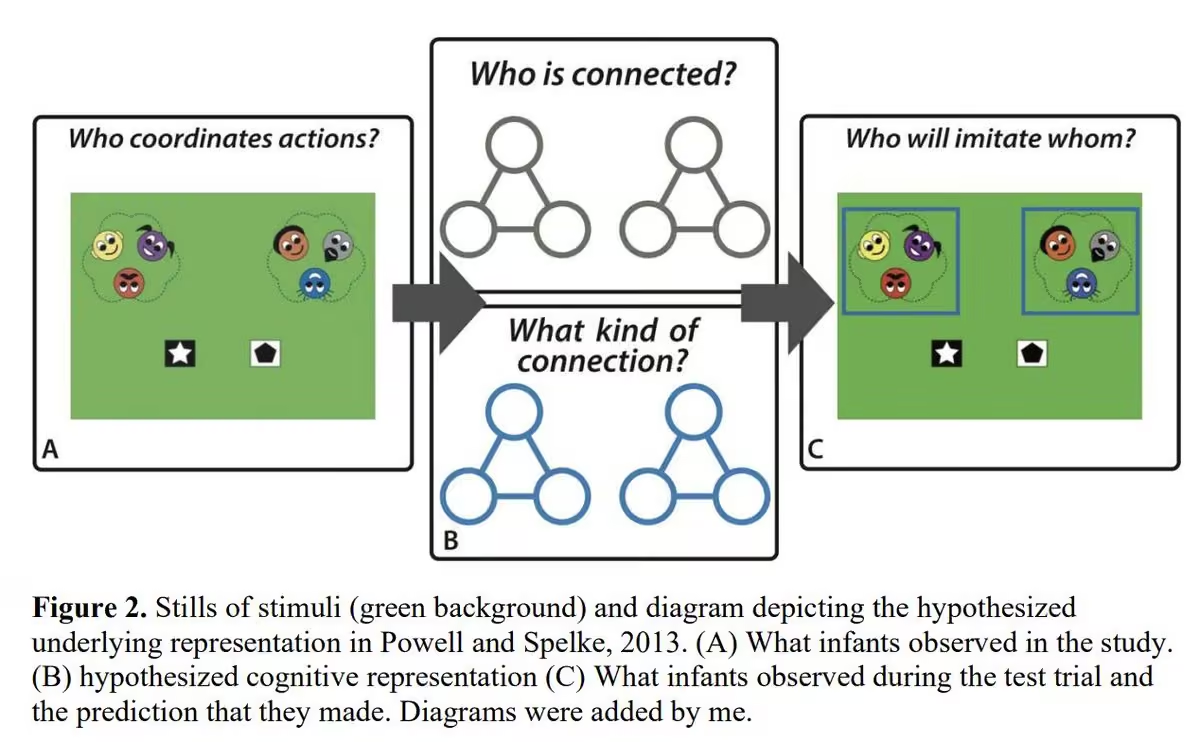
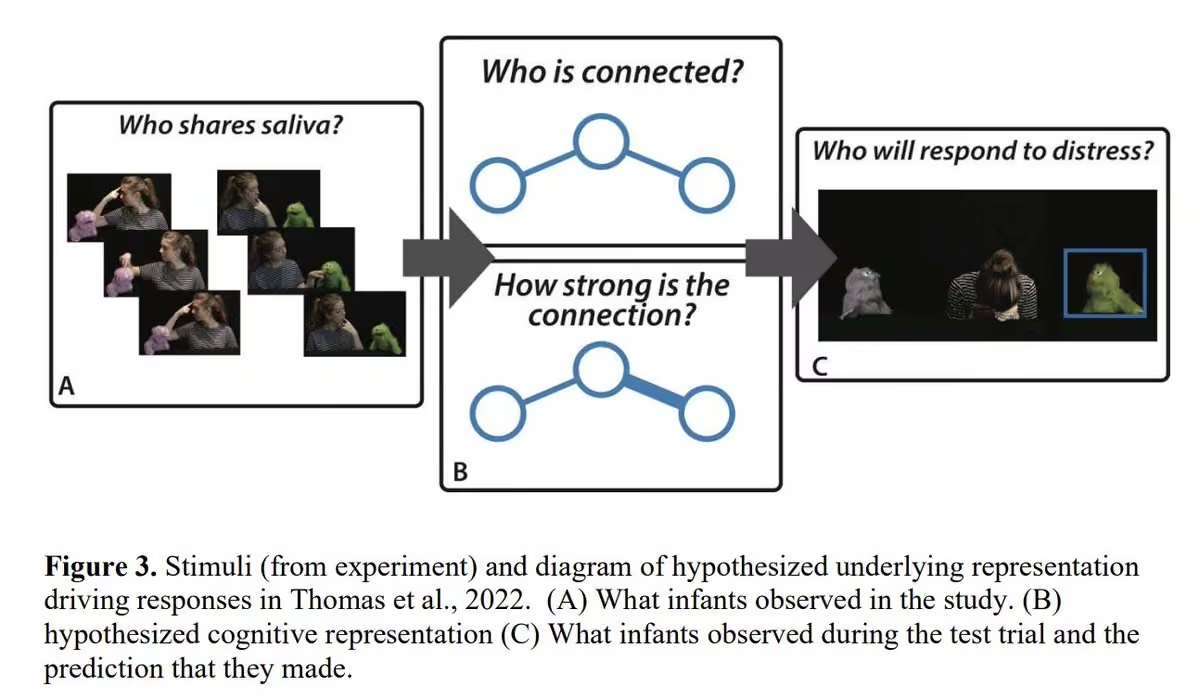
Our new target article, "Cognitive Representations of Social Relationships and their Developmental Origins" by Ashley J. Thomas, is now accepting proposals for commentary!
Deadline: March 13th, 2025
Learn more: www.cambridge.org/core/journals/behavioral-and-brain-scie…
Read here: www.cambridge.org/core/services/aop-file-manager/file/66f… -
Behav. Brain. Sci.
@BBSJournal
Our new target article, "Two tiers, not one: Different sources of extrinsic mortality have opposing effects on life history traits" by Bruce J. Ellis, Brie M. Reid, Karen L. Kramer is now accepting proposals for commentary!
Deadline: March 5th, 2025
www.cambridge.org/core/journals/behavioral-and-brain-scie… -
Behav. Brain. Sci. reposted
-
Behav. Brain. Sci. reposted
Sydney Levine
@sydneymlevine
One exciting thing about BBS as a publication venue, is that folks can submit proposals to write a commentary on the "target article." We'd love to get commentaries from a wide range of scholars in a wide range of fields. Please consider submitting!
-
Behav. Brain. Sci. reposted
Sydney Levine
@sydneymlevine
🚨 Now accepting commentary proposals!! 🚨Thrilled to share that our paper --- "Resource-rational contractualism: A triple theory of moral cognition" --- was accepted for publication at Behavioral and Brain Sciences and is open for commentary!
-
Behav. Brain. Sci.
@BBSJournal
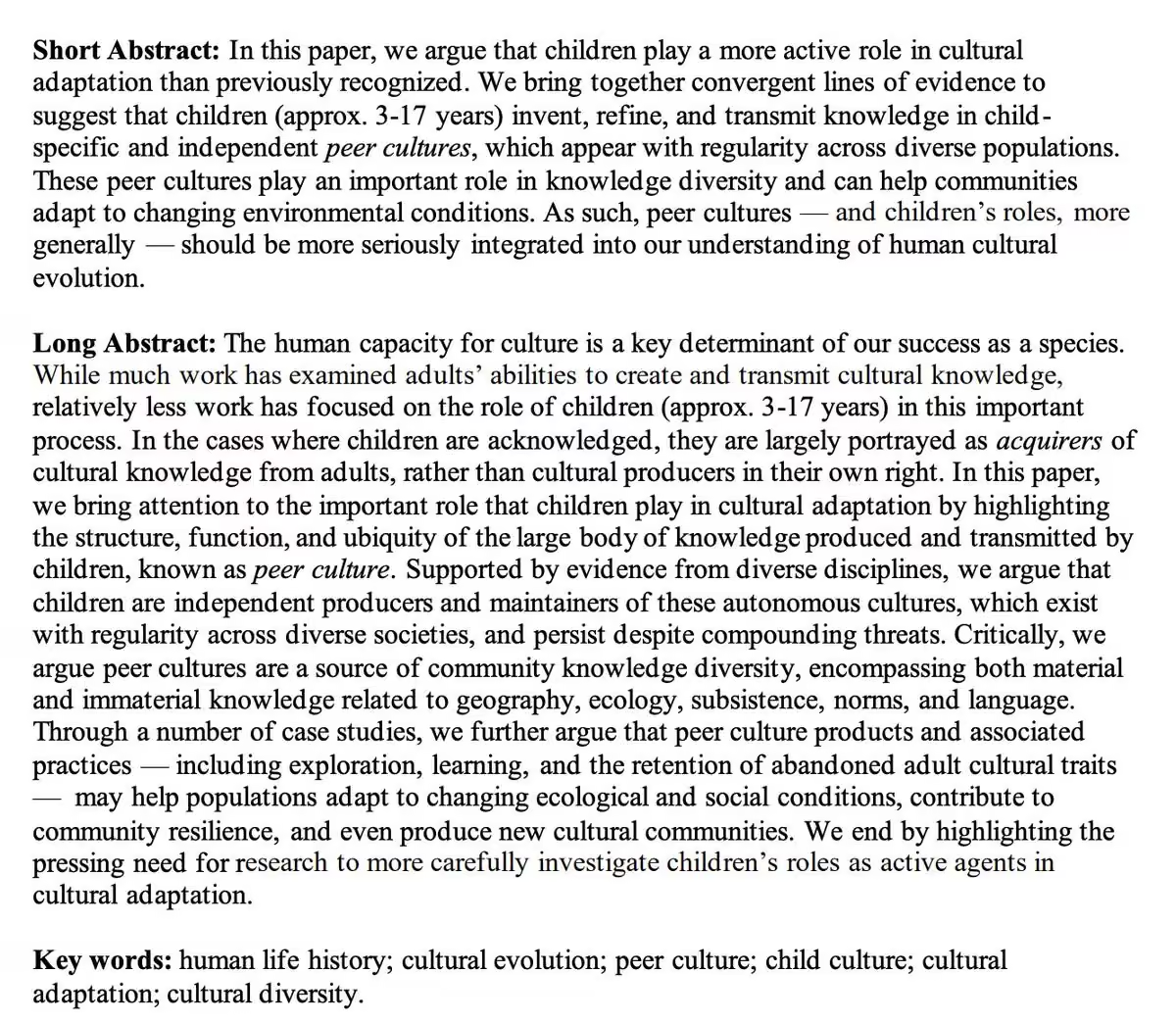
Our new target article, "Children as agents of cultural adaptation" by @sheinalew and @DorsaAmir is now accepting proposals for commentary!
Deadline: March 21st, 2025
Learn more: www.cambridge.org/core/journals/behavioral-and-brain-scie…
Read the paper: www.cambridge.org/core/services/aop-file-manager/file/677… -
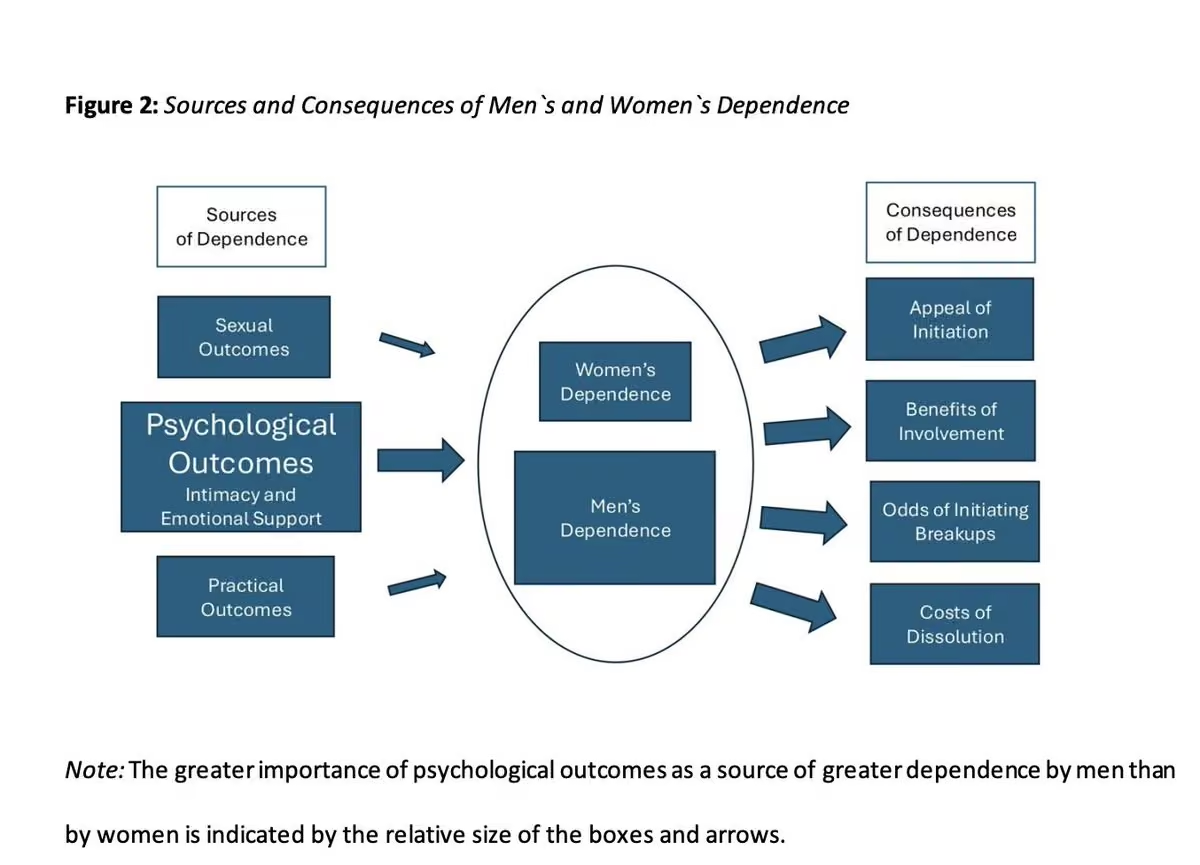
Behav. Brain. Sci.
@BBSJournal
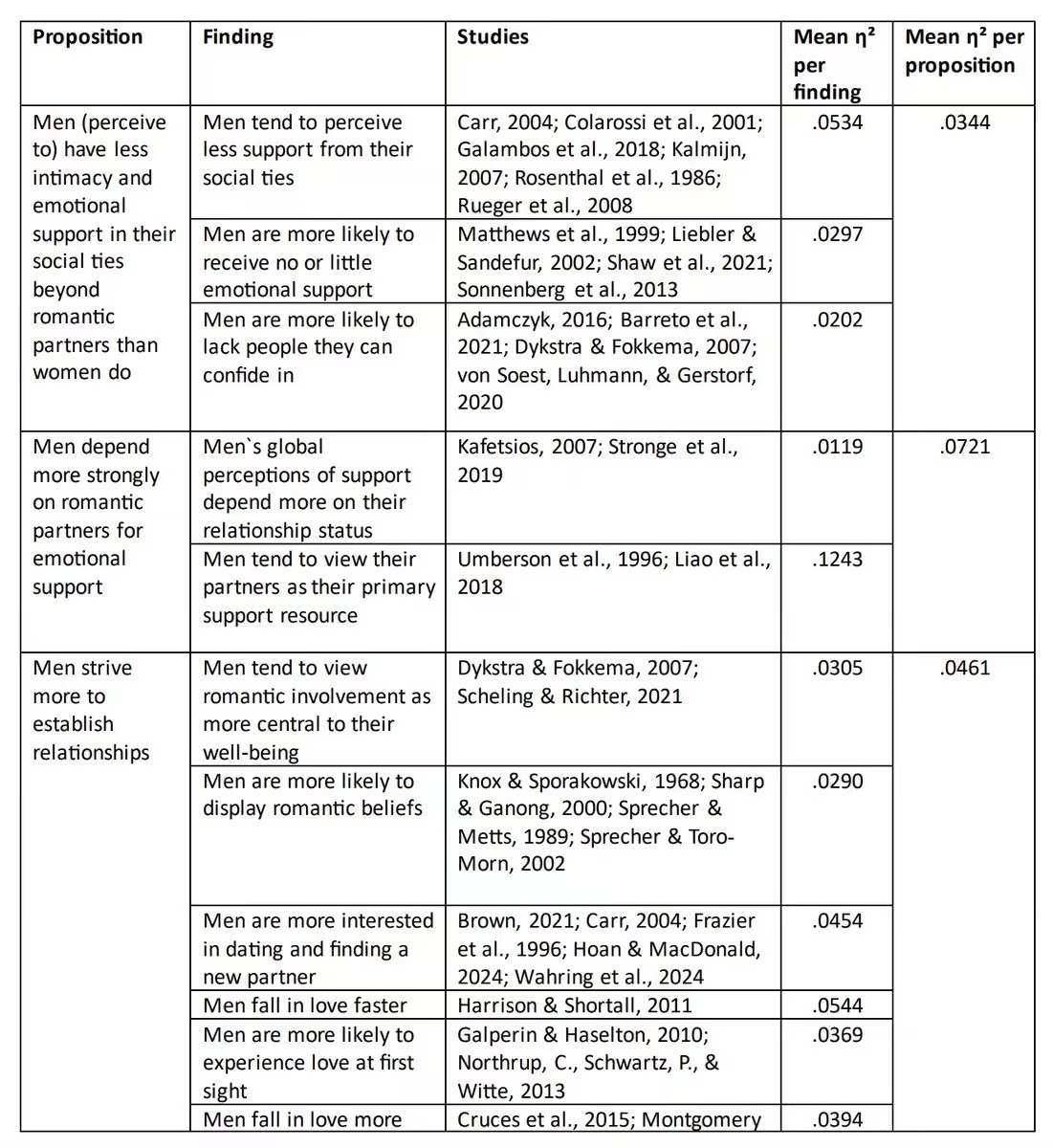
"Romantic Relationships Matter More to Men than to Women" by Iris V. Wahring, Jeffry A. Simpson, and Paul A. M. Van Lange
Anyone can propose a commentary for this target article!
Deadline for Commentary Proposals: March 18th, 2025
More info: www.cambridge.org/core/journals/behavioral-and-brain-scie… -
Behav. Brain. Sci.
@BBSJournal
Submit your proposals to comment by tomorrow for "Title: Resource-rational contractualism: A triple theory of moral cognition" by Sydney Levine, Nick Chater, Joshua B. Tenenbaum, & Fiery Cushman
The article: www.cambridge.org/core/services/aop-file-manager/file/66f…
Learn more: www.cambridge.org/core/journals/behavioral-and-brain-scie… -
Behav. Brain. Sci.
@BBSJournal
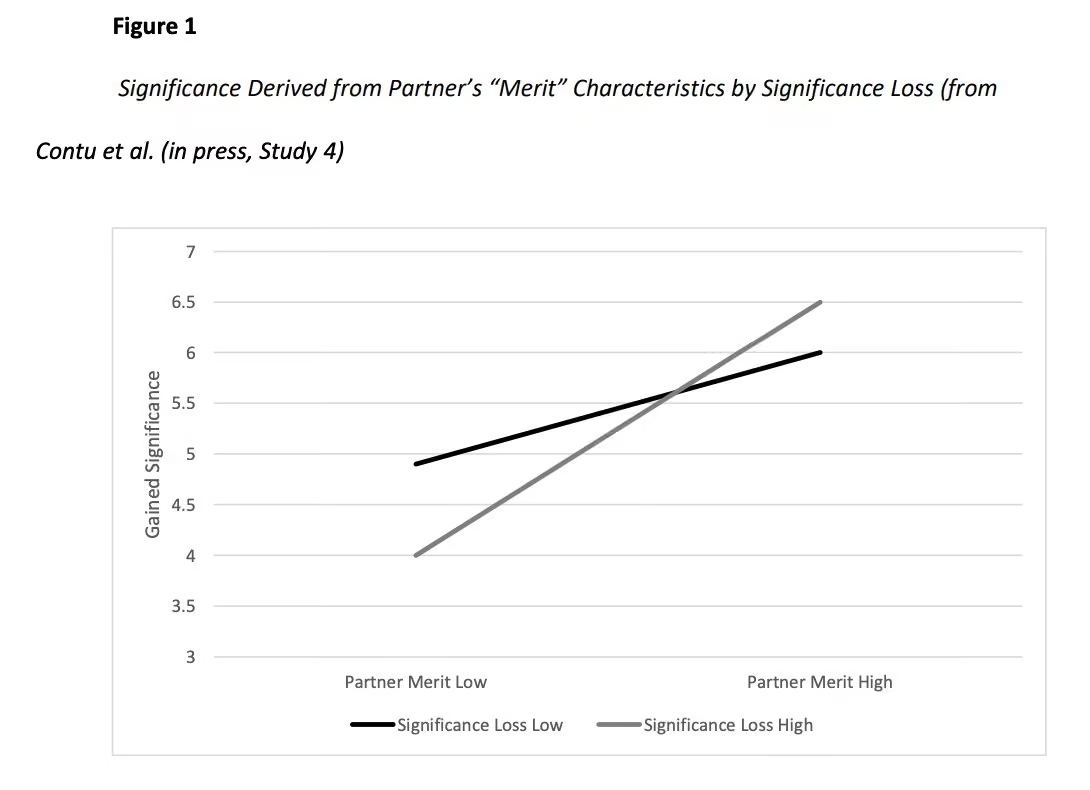
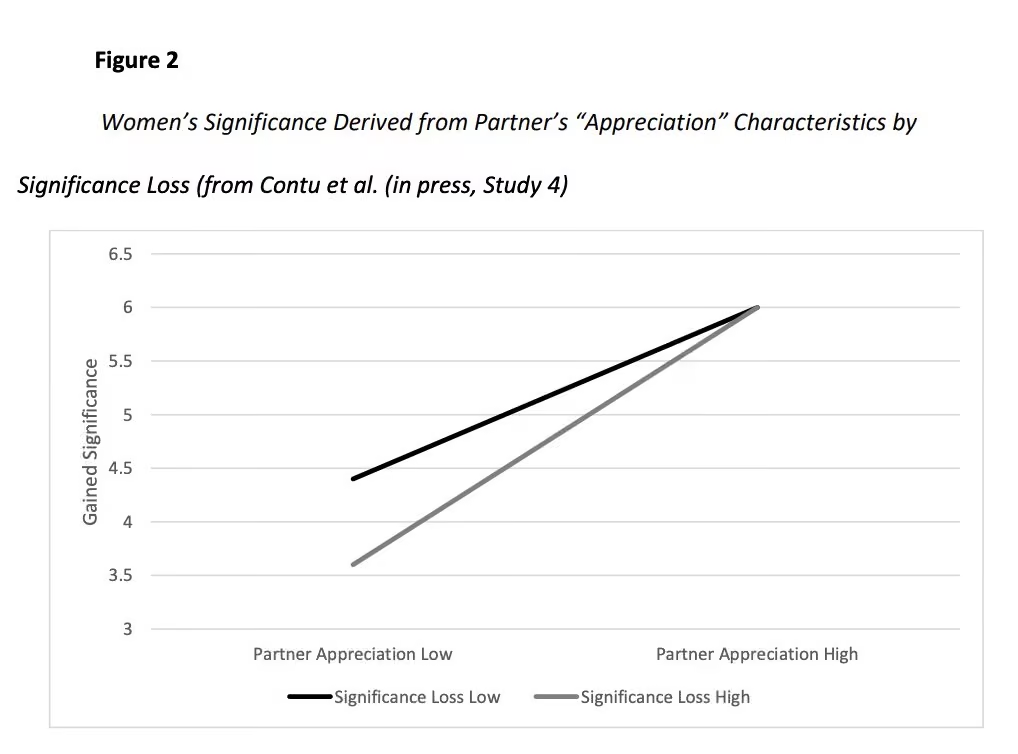
Propose your commentary now for "A Formula for Love: Partner Merit and Appreciation Beget Actor Significance"!
Deadline for Commentary Proposals: Tuesday, March 25, 2025
Call: www.cambridge.org/core/journals/behavioral-and-brain-scie…
Preprint: www.cambridge.org/core/services/aop-file-manager/file/67b… -
Behav. Brain. Sci. reposted
Duncan Stibbard Hawkes
@DStibbardHawkes
After a brief hiatus, the next commentaries to highlight are by @janverpooten and @CTennie, who both demonstrate that complex symbols are not a uniquely human hallmark, but are found throughout nature.
1)
www.cambridge.org/core/journals/behavioral-and-brain-scie…
2)
www.cambridge.org/core/journals/behavioral-and-brain-scie… -
Behav. Brain. Sci. reposted
Duncan Stibbard Hawkes
@DStibbardHawkes
🚨 Paper(s) Alert 🚨
The commentaries and reply for my BBS piece are online now.
Read my reply to find out what Mithen got wrong about Elephant-hunting; who ate the chocolates; and why we should revise our null model of Hominin Cognition!
www.cambridge.org/core/journals/behavioral-and-brain-scie… -
Behav. Brain. Sci. reposted
jan verpooten
@janverpooten
New commentary out in @BBS!
Archaeological objects like cave paintings, figurines, and musical instruments are often seen as early art forms uniquely tied to human symbolic cognition. But I've long been struck by how this view overlooks remarkable parallels in the animal world. -
Behav. Brain. Sci. reposted
jan verpooten
@janverpooten
Here is a link to our new commentary in @BBSJournal examining how animal artifacts challenge archaeological criteria for human symbolic cognition. A case for broader comparative perspectives in studying cognitive evolution. www.cambridge.org/core/journals/behavioral-and-brain-scie…
-
Behav. Brain. Sci. reposted
Edgar Dubourg
@EdgarDubourg
The whole paper is to be found here: www.cambridge.org/core/journals/behavioral-and-brain-scie…
-
Behav. Brain. Sci. reposted
Edgar Dubourg
@EdgarDubourg
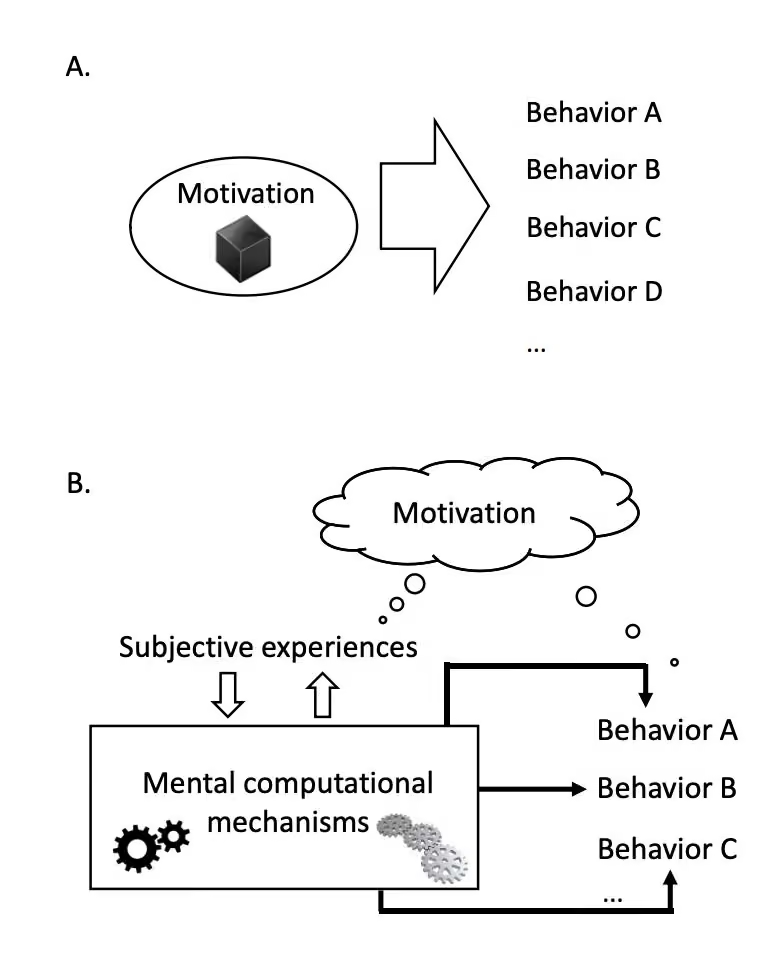
In response to the fantastic article by Murayama & Jach (@BBSJournal) on the importance of unpacking motivation constructs, we explain how evolutionary psychologists try to do precisely this by studying input-output relationships in a way that aligns with adaptive function.
-
Behav. Brain. Sci.
@BBSJournal
New call for commentary proposals!
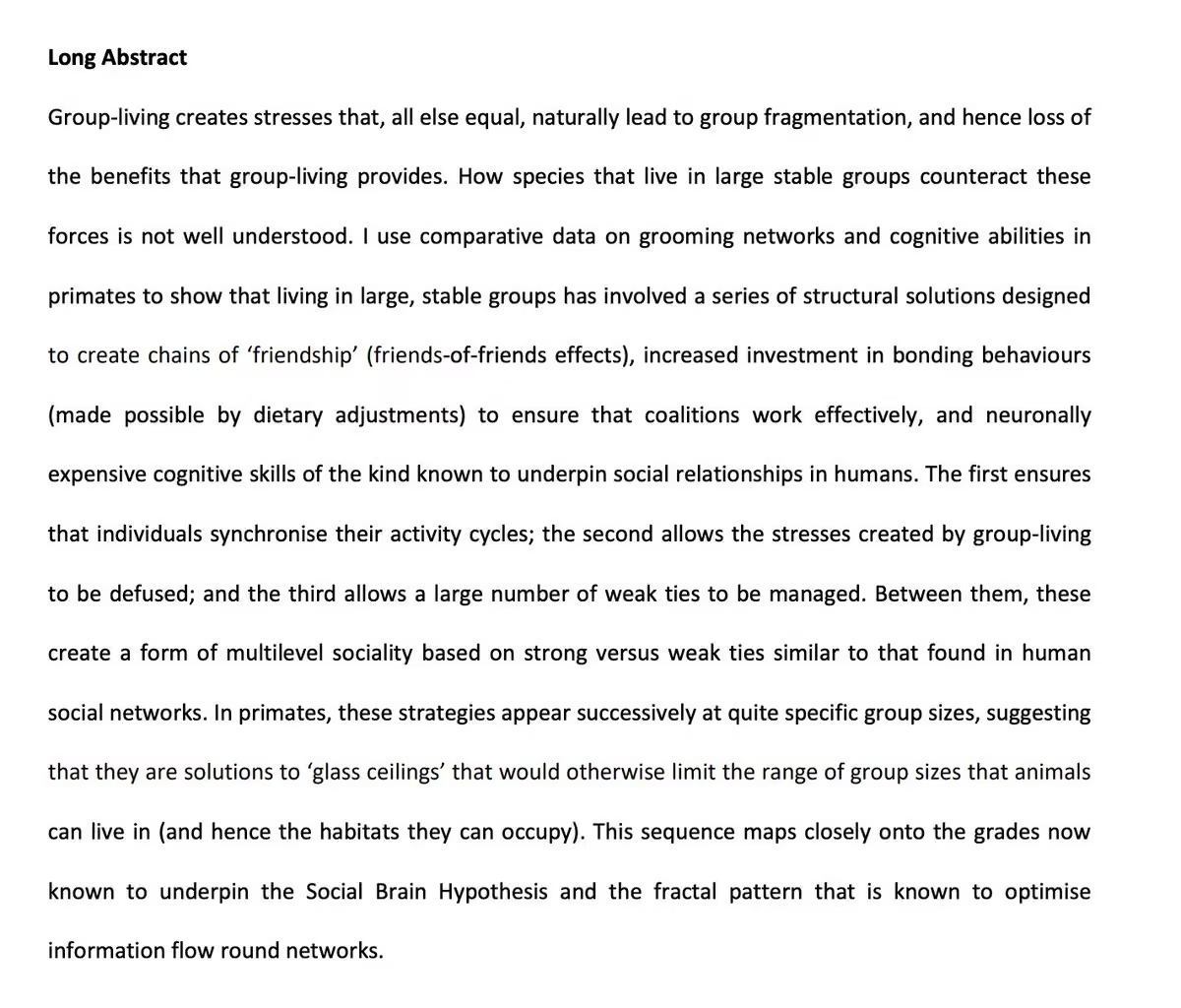
BBS is seeking commentary proposals on R.I.M. Dunbar's latest paper on primate group cohesion mechanisms, exploring how cognitive abilities & social networks enable stable large groups.
Deadline: Feb 17.
preprint: www.cambridge.org/core/services/aop-file-manager/file/677… -
Behav. Brain. Sci.
@BBSJournal
NOW PROCESSING COMMENTARY PROPOSALS ON:
Visual Attention in Crisis by Ruth Rosenholtz
Deadline for Commentary Proposals: Friday, January 17, 2025
Anyone is free to propose a commentary here: www.cambridge.org/core/journals/behavioral-and-brain-scie…
You can read the full article at www.cambridge.org/core/services/aop-cambridge-core/conten… -
Behav. Brain. Sci. reposted
SSRC
@ssrc_org
For a lot more discussion, see their @BBSJournal article "Beyond Playing 20 Questions with Nature" and accompanying commentaries and replies
www.cambridge.org/core/journals/behavioral-and-brain-scie… -
Behav. Brain. Sci. reposted
あさひな
@aaiashn
External validity of social psychological experiments is a concern, but these models are useful | Behavioral and Brain Sciences | Cambridge Core - www.cambridge.org/core/journals/behavioral-and-brain-scie…
-
Behav. Brain. Sci. reposted
K
@cathairanphuca
A while ago I reviewed a target article in BBS that raised an interesting question about the generality of signal inflation; in a comment I explain when we should expect inflation to occur, using parameters that are often only implied in signalling models doi.org/10.1017/S0140525X23002832
-
Behav. Brain. Sci. reposted
Yohan J. John
@DrYohanJohn
RIP James C Scott. I'm glad I got to quote 'Seeing Like a State' in our BBS paper on proxy failure (aka Goodhart's Law).
doi.org/10.1017/S0140525X23002753 -
Behav. Brain. Sci.
@BBSJournal
Due today: your proposal in response to our open call for comments for our most recent target article, "Structural and Cognitive Mechanisms of Group Cohesion in Primates" by Robin Dunbar
Learn more on our website: www.cambridge.org/core/journals/behavioral-and-brain-scie… -
Behav. Brain. Sci. reposted
The Brunswik Society
@BrunswikThe
Check out this new commentary on "Representative design: A realistic alternative to (systematic) integrative design", published in BBS: www.cambridge.org/core/journals/behavioral-and-brain-scie…
-
Behav. Brain. Sci. reposted
Duncan Stibbard Hawkes
@DStibbardHawkes
Preprint alert! 📢
The appearance of symbolic material culture is often linked to the evolution of complex, 'modern' human minds.
In a new article for BBS, I reconsider this link, and argue that modern humans needn't leave any such evidence. A thread.
www.cambridge.org/core/journals/behavioral-and-brain-scie… -
Behav. Brain. Sci. reposted
Gad Saad
@GadSaad
There are many wonderful journals in the behavioral sciences, arguably none of which are as great as BBS: www.cambridge.org/core/journals/behavioral-and-brain-scie….
The journal has a unique format. A long target article written by experts in the field followed by commissioned commentaries by other experts, and then a final rebuttal by the authors of the target article to the commentaries. I've never published a target article in BBS but I've published a commentary back in 2006. -
Behav. Brain. Sci. reposted
rufuspollock 🌄
@rufuspollock
BBS special issue on "Music as a coevolved system for social bonding".
www.cambridge.org/core/journals/behavioral-and-brain-scie…
Looks interesting for those seeking rigorous info on music as one part of ecology of practice for #consciouscollectives -
Behav. Brain. Sci. reposted
Shira Baror
@baror_shira
Spearheaded by @Tal_Ivancovsky and @moshe1bar, our perspectice on the link between 🧩 CURIOSITY and 🧩CREATIVITY is finally out in BBS!! This was truly an exciting and thought-provoking journey.
www.cambridge.org/core/journals/behavioral-and-brain-scie… -
Behav. Brain. Sci. reposted
Moshe Bar
@moshe1bar
Our new paper connecting creativity and curiosity. In the one and only BBS. Kudos to @Tal_Ivancovsky ❤️ and @baror_shira ❤️. Insightful commentary by many within, which is tremendously appreciated. Enjoy
www.cambridge.org/core/journals/behavioral-and-brain-scie… -
Behav. Brain. Sci. reposted
Roger Beaty
@Roger_Beaty
Many other commentaries from @KarwowskiMaciej, @ClaireS012345, @yoed_kenett/@tuvalraz, @BenedekMathias, @MaxiB45064349, @MarkRunco et al.
-
Behav. Brain. Sci. reposted
Roger Beaty
@Roger_Beaty
Dan Zeitlen from our lab wrote a commentary exploring mood regulation as a shared mechanism of curiosity and creativity.
www.cambridge.org/core/journals/behavioral-and-brain-scie… -
Behav. Brain. Sci. reposted
Roger Beaty
@Roger_Beaty
Is a curious mind a creative mind? A @BBSJournal target article by @Tal_Ivancovsky explores the curiosity-creativity link, proposing a shared basis in novelty. New commentaries further explore mind wandering, neural correlates, mood & more.
www.cambridge.org/core/journals/behavioral-and-brain-scie… -
Behav. Brain. Sci. reposted
Oliver Braganza
@oliver_braganza
Our BBS treatment on Proxy Failure and Proxynomics is complete. Commentary and responses are online: doi.org/10.1017/S0140525X24000050
Thanks to @DrYohanJohn, @leighblue, @WildlifeMcCoy and @BBSJournal -
Behav. Brain. Sci. reposted
Cody Moser
@LTF_01
I have a new pre-print, in response to the below BBS Article. "Myth as Model: Group-Level Interpretive Frameworks"
I argue that the primary function of myth is to serve as transmitters of tacit knowledge and to provide substance for in-group analogies.
osf.io/preprints/socarxiv/s7cp8
Behav. Brain. Sci.
@BBSJournal
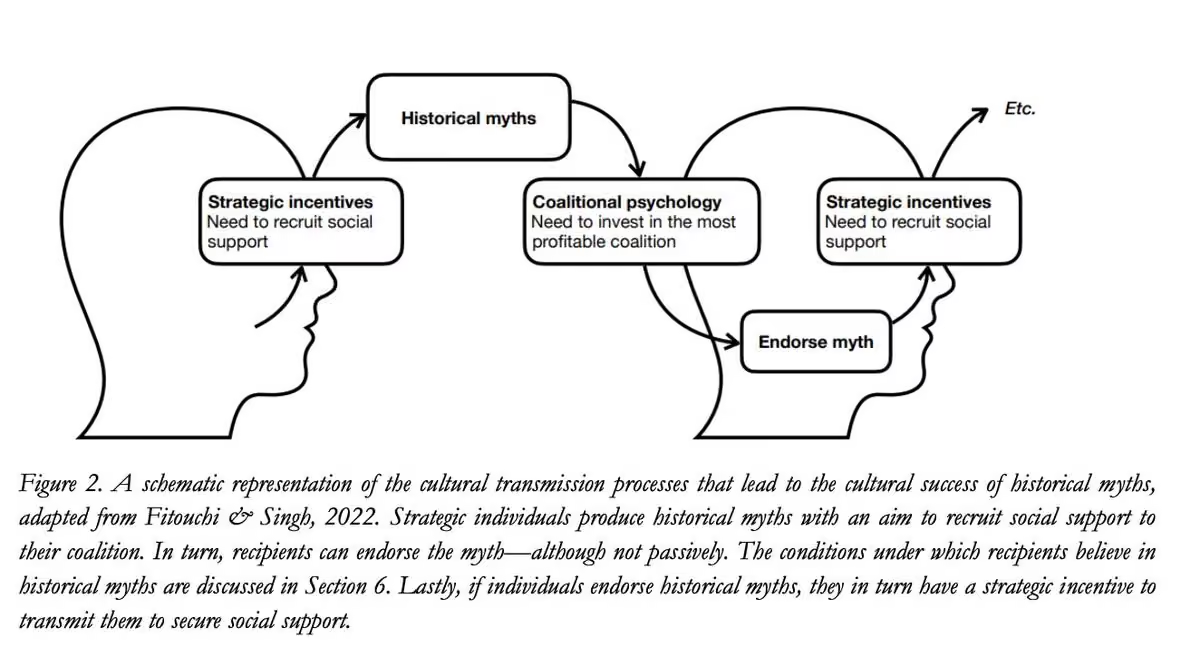
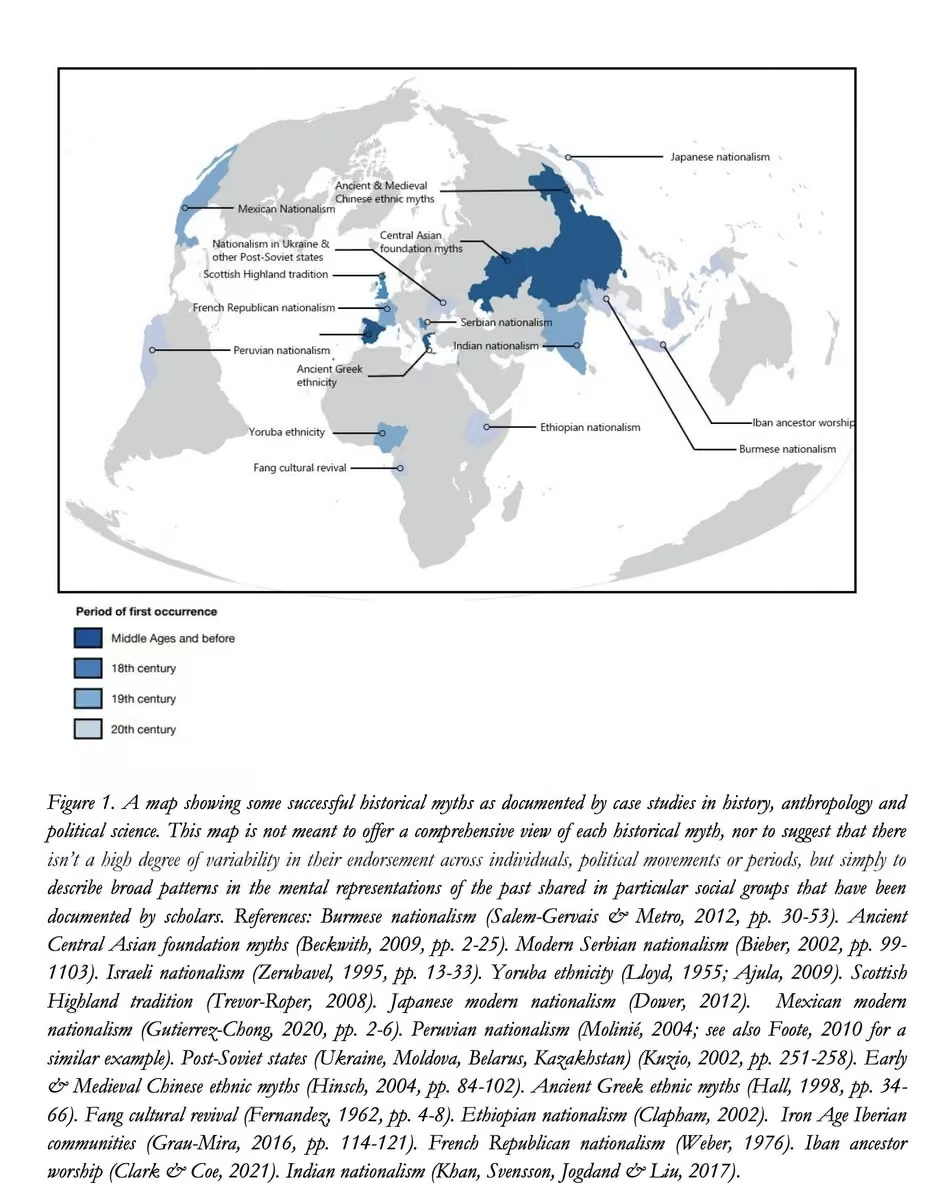
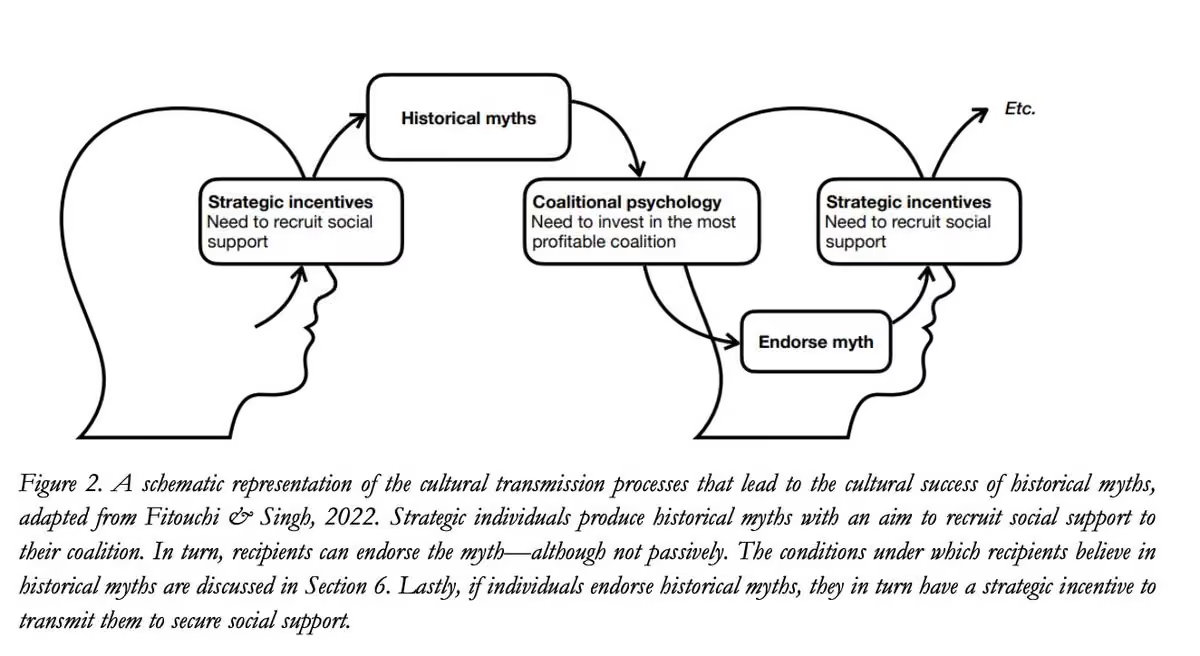
“Our Roots Run Deep”: Historical Myths as Culturally Evolved Technologies for Coalitional Recruitment by Amine Sijilmassi, Lou Safra, Nicolas Baumard is available at www.cambridge.org/core/services/aop-cambridge-core/conten…
Proposals are due Thursday, February 8, 2024
More info: www.cambridge.org/core/journals/behavioral-and-brain-scie… -
Behav. Brain. Sci. reposted
Jay Van Bavel, PhD
@jayvanbavel
Our new @BBSJournal commentary explains how social media exploits our predisposition to attend to threatening stimuli by promoting content in algorithms that capture attention. Yet, this content is not what people expressly state they would like to see. www.cambridge.org/core/journals/behavioral-and-brain-scie…
-
Behav. Brain. Sci. reposted
D.R. Couric
@DRCouric
An updated perspective on teleonomy | Behavioral and Brain Sciences | Cambridge Core - www.cambridge.org/core/journals/behavioral-and-brain-scie…
-
Behav. Brain. Sci. reposted
Dr. Walter Veit
@wrwveit
New short commentary: Animal welfare science, performance metrics, and proxy failure
www.cambridge.org/core/journals/behavioral-and-brain-scie… -
Behav. Brain. Sci. reposted
Chris Stringer
@ChrisStringer65
Reconsidering the link between past material culture and cognition in light of contemporary hunter-gatherer material use. | Behavioral and Brain Sciences - www.cambridge.org/core/journals/behavioral-and-brain-scie…
-
Behav. Brain. Sci. reposted
Alon Hafri
@AlonHafri
And they provide empirical support for the recent proposal by @quiltydunn @NicolasPorot @Ericmandelbaum in @BBSJournal that visual perception instantiates core properties of a "Language of Thought". www.cambridge.org/core/journals/behavioral-and-brain-scie…
-
Behav. Brain. Sci. reposted
Tomer Ullman
@TomerUllman
commentary out now in BBS (with Sophie Bridgers):
"Genies, lawyers, and smart-asses: Extending proxy failures to intentional misunderstandings"
(a response to John et al.'s recent fun piece on "proxy failures")
free pre-print here:
www.tomerullman.org/papers/genieBBS2024.pdf -
Behav. Brain. Sci.
@BBSJournal
We have an open Call for Commentary Proposals on a new paper: "What Is a Society? Building an Interdisciplinary Perspective and Why That’s Important" by @DoctorBugs
Read the full target article and learn how to propose your commentary here: www.cambridge.org/core/journals/behavioral-and-brain-scie… -
Behav. Brain. Sci. reposted
Michael Wilson
@MikeLWilson1871
The roots of peace | BBS | - login.ezp1.lib.umn.edu/login?qurl=https://www.cambridge.o…"While anthropologists have debated the origins and evolution of war extensively, peace remains a neglected topic, and is often simply taken for granted as the situation that would prevail in the absence of war." 1/25
-
Behav. Brain. Sci. reposted
Nobuhiro Mifune
@NobuMifune
今田さんと一緒にコメントを書かせてもらったBBS論文がパブリッシュされた!今日のお酒が美味しい!The evolution of peace | Behavioral and Brain Sciences | Cambridge Core - www.cambridge.org/core/journals/behavioral-and-brain-scie…
-
Behav. Brain. Sci. reposted
Luiz Pessoa
@PessoaBrain
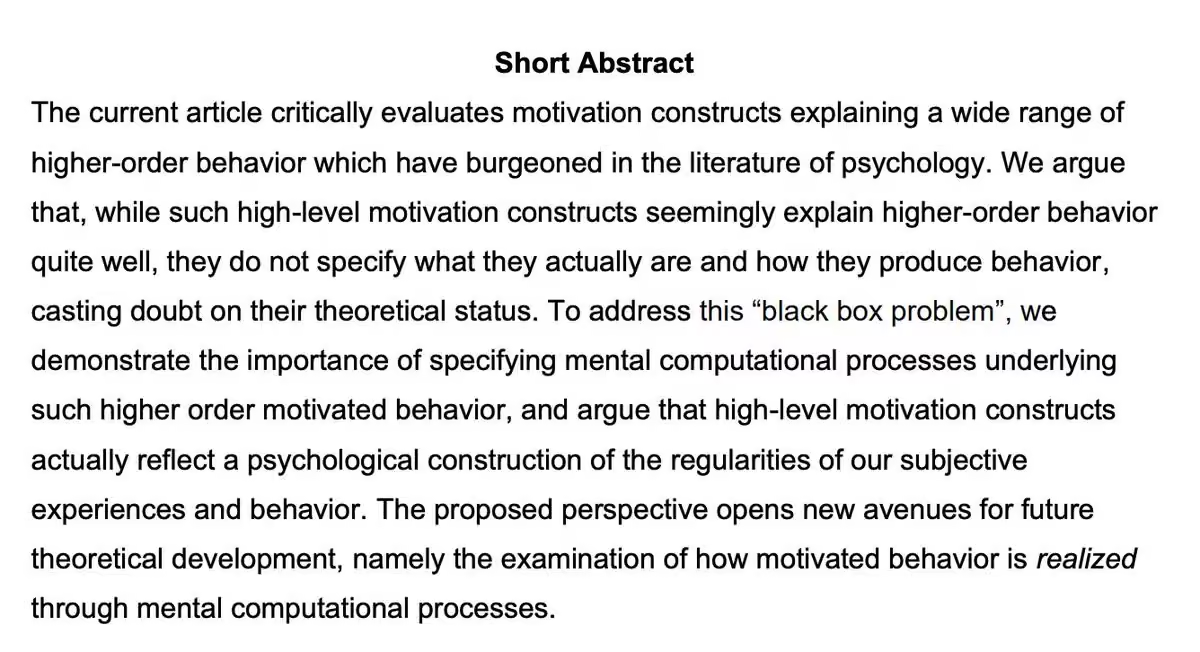
𝗔 𝗰𝗿𝗶𝘁𝗶𝗾𝘂𝗲 𝗼𝗳 𝗺𝗼𝘁𝗶𝘃𝗮𝘁𝗶𝗼𝗻 𝗰𝗼𝗻𝘀𝘁𝗿𝘂𝗰𝘁𝘀 𝘁𝗼 𝗲𝘅𝗽𝗹𝗮𝗶𝗻 𝗵𝗶𝗴𝗵𝗲𝗿-𝗼𝗿𝗱𝗲𝗿 𝗯𝗲𝗵𝗮𝘃𝗶𝗼𝗿: 𝗪𝗲 𝘀𝗵𝗼𝘂𝗹𝗱 𝘂𝗻𝗽𝗮𝗰𝗸 𝘁𝗵𝗲 𝗯𝗹𝗮𝗰𝗸 𝗯𝗼𝘅
BBS target article by Kou Murayama & Hayley Jach Looks a must read!
www.cambridge.org/core/services/aop-cambridge-core/conten… -
Behav. Brain. Sci. reposted
Pat Savage (@PatrickESavage.bsky.social)
@PatrickESavage
Our BBS special issue with two target articles + 60 commentaries on this is a good place to start!
www.cambridge.org/core/journals/behavioral-and-brain-scie…
www.cambridge.org/core/journals/behavioral-and-brain-scie… -
Behav. Brain. Sci. reposted
Oliver Braganza
@oliver_braganza
Dead rats, dopamine, performance metrics and peacock‘s tails. What do they have in common? In each case proxies can fail. Find out more doi.org/10.1017/S0140525X23002753… and uni-bonn.de/en/news/what-do-peacock2019s-feathers-have-to……
Funded by the TRA Modelling (University of Bonn) -
Behav. Brain. Sci. reposted
Sarah Robins
@SarahKRobins
@AfifiMaziyar and I have a commentary on Barzykowski & Moulin’s BBS paper on memory retrieval and déjà vu. Fun target paper that raised lots of hard questions for us about what a memory cue might be.
www.cambridge.org/core/journals/behavioral-and-brain-scie… -
Behav. Brain. Sci. reposted
Jeffrey Bowers
@jeffrey_bowers
Finally, our BBS paper "Deep problems with neural network models of human vision" with comments and responses is out. Check it out: doi.org/10.1017/S0140525X22002813
-
Behav. Brain. Sci.
@BBSJournal
We are accepting proposals for commentary on two target articles!
1) Our Roots Run Deep: Historical Myths as Culturally Evolved Technologies for Coalitional Recruitment
2) A critique of motivation constructs to explain higher-order behavior: We should unpack the black box
Behav. Brain. Sci.
@BBSJournal
“Our Roots Run Deep”: Historical Myths as Culturally Evolved Technologies for Coalitional Recruitment by Amine Sijilmassi, Lou Safra, Nicolas Baumard is available at www.cambridge.org/core/services/aop-cambridge-core/conten…
Proposals are due Thursday, February 8, 2024
More info: www.cambridge.org/core/journals/behavioral-and-brain-scie…
Behav. Brain. Sci.
@BBSJournal
"A critique of motivation constructs to explain higher-order behavior: We should unpack the black box" by Kou Murayama and Hayley Jach is available at www.cambridge.org/core/services/aop-cambridge-core/conten…
Submit your proposal for a comment by Monday, February 19, 2024
More info at www.cambridge.org/core/journals/behavioral-and-brain-scie… -
Behav. Brain. Sci. reposted
Rob Sica
@robsica
Was just reading @HamesRaymond's interesting commentary on @HSB_Lab's target article in latest @BBSJournal. He cites three papers she's co-authored:
[drive.google.com/file/d/1EdgJL1GX6sslmMl7JIZDI6m1Gpeq2N41…]
The Dissenter
@TheDissenterYT
New episode (887), with Dr. Carol Ember: Tight and Loose Cultures, Sexuality, Gender Differences, and Cultural Databases. #anthropology #gender #culture #science
YouTube: youtu.be/0zew8DVP3q0
Podcast: creators.spotify.com/pod/profile/thedissenter/episodes/88… -
Behav. Brain. Sci. reposted
Luke Glowacki
@HSB_Lab
I’m thrilled that the final version of my @bbsjournal article on the evolution of peace is now out. www.cambridge.org/core/journals/behavioral-and-brain-scie… I argue that peace is a challenge requiring culturally engineered solutions to prevent conflict, restore relationships, and signal cooperative intent.
-
Behav. Brain. Sci. reposted
Rob Sica
@robsica
Looking forward to the critical commentary and author reply in the next issue of @BBSJournal, which, if I'm not mistaken, will feature Glowacki's target article:
"The Evolution of Peace"
[www.cambridge.org/core/journals/behavioral-and-brain-scie…]
The Dissenter
@TheDissenterYT
New episode (877), with Dr. Luke Glowacki: Is Human Warfare Ancient or Recent? #anthropology #humanevolution #science
YouTube: youtu.be/A82iYdWqqx8
Podcast: creators.spotify.com/pod/profile/thedissenter/episodes/87… -
Behav. Brain. Sci. reposted
Jianghao Liu
@jianghao_liu_
Excited to share our commentary with @PaoloBartolome0 now published in @BBSJournal
doi.org/10.1017/S0140525X23001656
The model-resistant richness of human visual experience -
Behav. Brain. Sci.
@BBSJournal
Propose your comment on our new target article, "Meta-Learned Models of Cognition" by Marcel Binz, Ishita Dasgupta, Akshay K. Jagadish, Matthew Botvinick, Jane X. Wang and Eric Schulz with the instructions below. Due December 20th, please share!
www.cambridge.org/core/journals/behavioral-and-brain-scie… -
Behav. Brain. Sci. reposted
Tom Burns
@tfburns
Happy to share my commentary has now been published in @BBSJournal: doi.org/10.1017/S0140525X23000146
Does inhibitory (dys)function account for involuntary autobiographical memory and déjà vu experience? -
Behav. Brain. Sci. reposted
Jay Van Bavel, PhD
@jayvanbavel
#socialmedia takes advantage of people’s predisposition to attend to threatening stimuli by promoting content in algorithms that capture attention. However, this content is often not what people expressly state they would like to see.
In a new @BBSJournal commentary, we propose that social media companies should weigh users’ expressed preferences more heavily in algorithms. We propose modest changes to user interfaces that could reduce the abundance of threatening content in the online environment. osf.io/preprints/psyarxiv/bwp2g/ -
Behav. Brain. Sci. reposted
Kellen Mrkva
@KellenMrkva
Excited to see our commentary published in BBS! (by @ProfEricJohnson and I) doi.org/10.1017/S0140525X23000961
Some nudges like defaults often have huge impact, and lead to changes in norms & regulations. Eg: The Secure 2.0 act! Most US employers soon need to auto-enroll, auto-escalate 1/n -
Behav. Brain. Sci. reposted
Stephanie Preston
@prestostwit
Trove of great commentaries on #bbs Chater & Loewenstein-including ours (Mermelstein & Preston): US politics/#citizensunited blocks systems-level change for #climate. #activism foists quick corporate change to meet customer demands.
www.cambridge.org/core/journals/behavioral-and-brain-scie…
Jay Van Bavel, PhD
@jayvanbavel
We have a new commentary in @BBSJournal explaining how individual-level solutions may support system-level change if they are internalized as part of one's social identity www.cambridge.org/core/journals/behavioral-and-brain-scie…
We agree that system-level change is crucial for solving society's most pressing problems. However, individual-level interventions may be useful for creating behavioral change before system-level change is in place and for increasing necessary public support for system-level solutions.
Participating in individual-level solutions may increase support for system-level solutions – especially if the individual-level solutions are internalized as part of one's social identity.
As such, the dichotomy between individual and system level change may be a false one. It is people who drive system-level change and finding a way to get them committed to change may ultimately be the bigger problem.
This was led by @linakoppel @CRobertson500 @kim_doell @alijaveed_ @jrpsau @steverathje2 & @vlasceanu_mada -
Behav. Brain. Sci. reposted
Kevin Hong
@KevinHong1991
BBS recently published two articles on the use of genetics in social science research (behavioral genetics and sociogenomics in particular). I contributed a commentary for the second piece where I argue that the author ignores evolution: www.cambridge.org/core/journals/behavioral-and-brain-scie…
-
Behav. Brain. Sci. reposted
Ken Richardson
@kenrich12
My comments on Callie Burt's excellent paper in BBS
Misguided model of human behavior: Comment on C. H. Burt: “Challenging the utility of polygenic scores for social science…” | Behavioral and Brain Sciences | Cambridge Core - www.cambridge.org/core/journals/behavioral-and-brain-scie… -
Behav. Brain. Sci. reposted
Olivier Morin
@OliverWithAnI
"The Puzzle of Ideography" is now out in BBS, along with the comments & replies. (Featuring the first aubergine emoji ever to appear in their columns.)
www.cambridge.org/core/journals/behavioral-and-brain-scie…
Olivier Morin
@OliverWithAnI
New paper out: "The puzzle of Ideography" (target article @BBS ). Why is it so hard for humans to communicate with pictures that represent ideas, not for words? And are we getting better at doing this? psyarxiv.com/7pd5m/ A thread ⬇
-
Behav. Brain. Sci. reposted
Moira (Molly) Dillon
@Moira_Dillon
What language devises, it might divide! Excited to share a preprint of my commentary @BBSJournal on Elizabeth Spelke's masterful book, "What Babies Know." 👶💬 I use geometry to explore the relations among core knowledge, language, and abstract thought. osf.io/preprints/psyarxiv/w8s9h
-
Behav. Brain. Sci. reposted
Arkan Ameed
@arxter
Interesting debate on the use of genetics in social sciences with an original article challenging the notion and now 24 commentaries as well as the author response:
www.cambridge.org/core/journals/behavioral-and-brain-scie…
Behav. Brain. Sci.
@BBSJournal
Challenging the Utility of Polygenic Scores for Social Science: Environmental Confounding, Downward Causation, and Unknown Biology by @callie_h_burt: www.cambridge.org/core/journals/behavioral-and-brain-scie…
Read it here: www.cambridge.org/core/services/aop-cambridge-core/conten… -
Behav. Brain. Sci. reposted
Žiga Mekiš Recek
@ZigaMekisRecek
Effective policies must address both the structural and the individual level to tackle economic inequality. New commentary published in @BBSJournal.
-
Behav. Brain. Sci. reposted
Jay Van Bavel, PhD
@jayvanbavel
We have a new commentary in @BBSJournal explaining how individual-level solutions may support system-level change if they are internalized as part of one's social identity www.cambridge.org/core/journals/behavioral-and-brain-scie…
We agree that system-level change is crucial for solving society's most pressing problems. However, individual-level interventions may be useful for creating behavioral change before system-level change is in place and for increasing necessary public support for system-level solutions.
Participating in individual-level solutions may increase support for system-level solutions – especially if the individual-level solutions are internalized as part of one's social identity.
As such, the dichotomy between individual and system level change may be a false one. It is people who drive system-level change and finding a way to get them committed to change may ultimately be the bigger problem.
This was led by @linakoppel @CRobertson500 @kim_doell @alijaveed_ @jrpsau @steverathje2 & @vlasceanu_mada -
Behav. Brain. Sci. reposted
Rob Sica
@robsica
"My perspective is consistent with a recent analysis by Chater and Loewestein (2022) [www.cambridge.org/core/journals/behavioral-and-brain-scie…], who argue that we should be focusing more on ways to change the system in which individuals operate rather than trying to change individuals."
Brauer Group Lab
@brauerlab1
🚨 New publication! 🚨 Out now in Perspectives on Psychological Science, we propose that rather than focus primarily on changing intergroup attitudes, intergroup relations research should have a greater focus on changing intergroup behaviors.
journals.sagepub.com/doi/10.1177/17456916231185775 -
Behav. Brain. Sci. reposted
Olúfẹ́mi O. Táíwò
@OlufemiOTaiwo
what do "nudges", personal carbon footprint, and calorie labels have in common?
As you might guess: strategies to protect corporate interests. Today, a major journal debates how these corporate interests may have distorted & distracted behavioral science
www.cambridge.org/core/journals/behavioral-and-brain-scie… -
Behav. Brain. Sci. reposted
Maxwell Ramstead (e/acc)
@mjdramstead
Our McGill based group published a paper in @BBSJournal on this topic a few years ago, hopefully interesting and relevant: www.cambridge.org/core/journals/behavioral-and-brain-scie…
-
Behav. Brain. Sci.
@BBSJournal
Open Call for Commentary: Through September 11th, BBS will be accepting commentary proposals on "A Shared Novelty-Seeking Basis for Creativity and Curiosity" by Tal Ivancovsky, @baror_shira, & @moshe1bar.
Find the article & instructions at www.cambridge.org/core/journals/behavioral-and-brain-scie…
Please share! -
Behav. Brain. Sci. reposted
Daniel Yon
@danieljamesyon
Deep discussion of background issues (I.e., more about free energy principle than predictive coding) in this BBS piece (and comments) too:
www.cambridge.org/core/journals/behavioral-and-brain-scie… -
Behav. Brain. Sci. reposted
MaxPlanck-Psycholinguistics
@MPI_NL
Fast and slow language processing: A window into dual-process models of cognition. Ferreira & @falk_huettig. Open Peer commentary on De Neys in BBS. doi.org/10.1017/S0140525X22003041.
-
Behav. Brain. Sci. reposted
Yohan J. John
@DrYohanJohn
I'm very happy to announce that our paper on "proxy failure" — analogues of Goodhart's Law ranging from molecular biology to brains to business to ecology — has been made available at Behavioral and Brain Sciences.
A thread. 🧵
doi.org/10.1017/S0140525X23002753. -
Behav. Brain. Sci. reposted
Wim De Neys
@wimdeneys
Proper link to bbs site: www.cambridge.org/core/journals/behavioral-and-brain-scie…
-
Behav. Brain. Sci.
@BBSJournal
Please share with your colleagues:
Behav. Brain. Sci.
@BBSJournal
Open Call for Commentary: Through July 18th, BBS will be accepting commentary proposals on Précis of What Babies Know by Elizabeth S. Spelke (@Harvard).
Please find the full target article along with instructions for proposing your commentary at www.cambridge.org/core/journals/behavioral-and-brain-scie… -
Behav. Brain. Sci. reposted
Joseph Fridman
@joseph_fridman
Please share with your colleagues across the scholarly and research community!
Behav. Brain. Sci.
@BBSJournal
Interested in commenting on Dr. Spelke's new target article, 'Précis of What Babies Know'?
Propose your commentary by July 18th by following the instructions and reading the full article on our website at www.cambridge.org/core/journals/behavioral-and-brain-scie… -
Behav. Brain. Sci.
@BBSJournal
Interested in commenting on Dr. Spelke's new target article, 'Précis of What Babies Know'?
Propose your commentary by July 18th by following the instructions and reading the full article on our website at www.cambridge.org/core/journals/behavioral-and-brain-scie… -
Behav. Brain. Sci. reposted
Thom Scott-Phillips
@tscottphillips
Spelke's new book is important for almost all areas of cognitive science.
Behav. Brain. Sci.
@BBSJournal
Please share our open call for commentary with your colleagues who may want to propose a comment on Elizabeth Spelke's 'Précis of What Babies Know'!
Deadline: July 18th
More helpful instructions below and at this link: www.cambridge.org/core/journals/behavioral-and-brain-scie… -
Behav. Brain. Sci. reposted
Joseph Fridman
@joseph_fridman
Please share! This is a fascinating piece, drawn from a rich text: www.amazon.com/What-Babies-Know-Composition-Development/d…
More info on the commentary call at: www.cambridge.org/core/journals/behavioral-and-brain-scie…
Behav. Brain. Sci.
@BBSJournal
Open Call for Commentary: Through July 18th, BBS will be accepting commentary proposals on Précis of What Babies Know by Elizabeth S. Spelke (@Harvard).
Please find the full target article along with instructions for proposing your commentary at www.cambridge.org/core/journals/behavioral-and-brain-scie… -
Behav. Brain. Sci. reposted
Guido Orgs
@guidorgs
Why do Dance and Performance Art provide a helpful perspective for the science of social interactions? Short and sweet BBS commentary with Emily Cross #dance #neuroaesthetics www.cambridge.org/core/journals/behavioral-and-brain-scie…
-
Behav. Brain. Sci. reposted
Dr. Walter Veit
@wrwveit
Our commentary is now published in BBS: "Social Robots and the Intentional Stance"
www.cambridge.org/core/journals/behavioral-and-brain-scie… -
Behav. Brain. Sci. reposted
Fan Yang
@FanYangUChicago
New BBS commentary! In response to the "fearful ape hypothesis" (cup.org/44EwTrs), I propose that human being's cooperative care has not only shaped us to be more fearful than other apes, but has also led us to become the happiest ape on earth😁 cup.org/3NQw0X8
-
Behav. Brain. Sci. reposted
Luiz Pessoa
@PessoaBrain
Now in BBS:
𝗕𝗲𝘆𝗼𝗻𝗱 𝗣𝗹𝗮𝘆𝗶𝗻𝗴 𝟮𝟬 𝗤𝘂𝗲𝘀𝘁𝗶𝗼𝗻𝘀 𝘄𝗶𝘁𝗵 𝗡𝗮𝘁𝘂𝗿𝗲: Integrative Experiment Design in the Social and Behavioral Sciences
Food for thought in other sciences too... say neuroscience
www.cambridge.org/core/services/aop-cambridge-core/conten… -
Behav. Brain. Sci. reposted
Chaz Firestone
@chazfirestone
Now in press @BBSJournal! Looking forward to what @quiltydunn @NicolasPorot @Ericmandelbaum have to say about these and other issues raised in commentary.
philpapers.org/rec/HAFCIV
Alon Hafri
@AlonHafri
Vision, like language, is compositional!
Or so I argue with EJ Green & @chazfirestone; we extend @quiltydunn @NicolasPorot @Ericmandelbaum's proposal that the Language of Thought pervades the mind, exploring object relations as a case study. Check it out! psyarxiv.com/trg7q -
Behav. Brain. Sci. reposted
Tal Golan
@TalGolanNeuro
Are failed predictions a feature or a bug of neural network-based neuroscientific modeling? In a new commentary submitted to @BBSJournal, we argue that the ability of NN models to err is a major feature of the neuroconnectionist program. psyarxiv.com/tr7gx 1/7
-
Behav. Brain. Sci.
@BBSJournal
Learn more at www.cambridge.org/core/journals/behavioral-and-brain-scie…
Behav. Brain. Sci.
@BBSJournal
A reminder that we have two open calls for commentary!
"Beyond Playing 20 Questions with Nature: Integrative Experiment Design in the Social and Behavioral Sciences" is accepting proposals through Jan 30th
and "The Evolution of Peace" is accepting proposals through Feb 10th! -
Behav. Brain. Sci. reposted
Benjamin Ruisch
@benruisch
New piece in BBS suggesting we radically rethink the relation between experimentation and theory - and adopt a new approach that involves "embracing many potentially relevant theories rather than focusing on just one." Absolutely worth a read. www.cambridge.org/core/journals/behavioral-and-brain-scie…
-
Behav. Brain. Sci. reposted
E. Matthew Husband
@emhusband
I'm sure you know about this, but I'm hoping you'll be submitting a commentary on the recent Quilty-Dunn et al BBS manuscript - a dialogue there should be interesting! www.cambridge.org/core/journals/behavioral-and-brain-scie…
-
Behav. Brain. Sci. reposted
Yohan J. John
@DrYohanJohn
This BBS target article on the Language of Thought Hypothesis is quite interesting.
The strategy of focusing on empirical evidence for LoT in object perception is very good.
www.cambridge.org/core/journals/behavioral-and-brain-scie… -
Behav. Brain. Sci. reposted
Edgar Dubourg
@EdgarDubourg
¿Por qué son irresistibles los mundos de fantasía? Thanks @jongurutz, @el_pais and @materia_ciencia for a very nice article about our @BBSJournal article on the psychological foundations of imaginary worlds. In Spanish.
Jon Gurutz Arranz Izquierdo
@jongurutz
“La inmersión total es muy reciente, el ocio digital supone una revolución narrativa al poseer otra capa de complejidad, puesto que ofrece agencia: poder controlar un personaje, ser quien toma las decisiones” @EdgarDubourg
🎮🧙♂️ @materia_ciencia @elpais elpais.com/ciencia/2022-12-28/de-la-odisea-a-elden-ring-p… -
Behav. Brain. Sci. reposted
Oliver Scott Curry
@Oliver_S_Curry
A broader theory of cooperation can better explain 'purity' osf.io/g52w6/ Accepted @BBSJournal commentary with @dsznycer on @LFitouchi
-
Behav. Brain. Sci. reposted
Luiz Pessoa
@PessoaBrain
Here's the abstract:
-
Behav. Brain. Sci. reposted
Luiz Pessoa
@PessoaBrain
Call for commentaries in BBS:
"Deep Problems with Neural Network Models of Human Vision"
www.cambridge.org/core/services/aop-cambridge-core/conten… -
Behav. Brain. Sci. reposted
Yohan J. John
@DrYohanJohn
Handy diagram from a new BBS target article critiquing deepnets for vision neuroscience.
www.cambridge.org/core/journals/behavioral-and-brain-scie… -
Behav. Brain. Sci. reposted
Kourken Michaelian
@mnemosim
Forthcoming commentary (with @NikolaAndonovs3 in the lead) on Krystian Barzykowski and @chrsmln's target article in BBS:
phil-mem.org/members/michaelian-files/202x-andonovski-acc…
(The target article: www.cambridge.org/core/journals/behavioral-and-brain-scie…) -
Behav. Brain. Sci. reposted
Eric Mandelbaum
@Ericmandelbaum
Responses due Jan 6, as befits those who want to overthrow traditional cognitive science
-
Behav. Brain. Sci. reposted
Eric Mandelbaum
@Ericmandelbaum
Hate the Language of Thought? Like LoT but think we (me + @NicolasPorot & @quiltydunn) are wrong? Tell us about it as the call for commentaries for our BBS paper is out! Come help us make the theory better. www.cambridge.org/core/journals/behavioral-and-brain-scie…
-
Behav. Brain. Sci. reposted
Jake Quilty-Dunn
@quiltydunn
Please submit a BBS commentary! Esp. relevant to those working on perception, implicit/automatic cognition, infant and animal cognition, computational modeling, artificial neural nets, language, and the philosophical foundations of cognitive science.
www.cambridge.org/core/journals/behavioral-and-brain-scie…
Eric Mandelbaum
@Ericmandelbaum
Hate the Language of Thought? Like LoT but think we (me + @NicolasPorot & @quiltydunn) are wrong? Tell us about it as the call for commentaries for our BBS paper is out! Come help us make the theory better. www.cambridge.org/core/journals/behavioral-and-brain-scie…
-
Behav. Brain. Sci. reposted
Nobuhiro Mifune
@NobuMifune
"The Evolution of Peace" by Glowacki in Behavioral and Brain Sciences www.cambridge.org/core/journals/behavioral-and-brain-scie…
-
Behav. Brain. Sci. reposted
Rob Sica
@robsica
"The costs and benefits resulting from both violence and cooperation would have created selection pressures for each insofar as they resulted in differential fitness."
www.cambridge.org/core/journals/behavioral-and-brain-scie… -
Behav. Brain. Sci. reposted
CLaE
@leafs_s
Behavioral and Brain Sciences
The Evolution of Peace
www.cambridge.org/core/journals/behavioral-and-brain-scie… -
Behav. Brain. Sci. reposted
Paul Bloom
@paulbloomatyale
I edit @BBSJournal, where we publish target articles & commentaries. I fed chatGPT a target article, told it the critique I had in mind, and then it generated a commentary that was easily edited to be unimpressive ... but acceptable. So I'm wondering about the ethics here (1/2)
-
Behav. Brain. Sci. reposted
Jake Quilty-Dunn
@quiltydunn
Now in press at @bbsjournal, a new paper co-authored with @nicolasporot and @Ericmandelbaum.
We provide a sustained defense of the Language of Thought Hypothesis (LoTH).
1/26
doi.org/10.1017/S0140525X22002849 -
Behav. Brain. Sci. reposted
Jesus Ramirez-Bermudez
@JRBneuropsiq
Why imaginary worlds? The psychological foundations and cultural evolution of fictions with imaginary worlds www.cambridge.org/core/journals/behavioral-and-brain-scie…
-
Behav. Brain. Sci.
@BBSJournal
We've just released a new target article and an accompanying open call for commentary! Read "Ownership psychology as a cognitive adaptation: A minimalist model" by @PascalBoyerUSA & propose your commentary by Dec 21!
Article: www.cambridge.org/core/services/aop-cambridge-core/conten…
Call: www.cambridge.org/core/journals/behavioral-and-brain-scie… -
Behav. Brain. Sci.
@BBSJournal
A reminder that we are accepting commentary proposals for Nick Chater and George Loewenstein's "The i-frame and the s-frame: How focusing on the individual-level solutions has led behavioral public policy astray" through December 5th! www.cambridge.org/core/journals/behavioral-and-brain-scie…
-
Behav. Brain. Sci. reposted
Ray Becker (@raybecker.bsky.social)
@raybbecker
My favorite would be the BBS paper with commentary here: www.cambridge.org/core/journals/behavioral-and-brain-scie…
But also the back-and-forth on binoculary rivalry going back to the early days of the introspectionists (~1900): www.jstor.org/stable/1412896 -
Behav. Brain. Sci. reposted
Nazli Altinok
@naz_altinok
delighted to share our commentary preprint on Jagiello et al's BBS article together with @Denis_Tatone, @heintzc3 , Ildiko Kiraly, and Gyuri Gergely: psyarxiv.com/r7dp2 here is a 🧵
-
Behav. Brain. Sci. reposted
🐹danielle🐭
@okdaniellle
🥳 My BBS commentary is officially published! How very exciting!
www.doi.org/10.1017/S0140525X22000255 -
Behav. Brain. Sci. reposted
Kevin Hong
@KevinHong1991
A BBS commentary on the instrumentality of magic. It summarizes my position against the ritualization of magic, and why magical practices are emically viewed as means-end activities with resovlable mechanisms and thus should be viewed as instrumental
www.cambridge.org/core/journals/behavioral-and-brain-scie… -
Behav. Brain. Sci. reposted
Mog Stapleton
@MogStapleton
Super happy that Karyn Lai and my BBS commentary on Robert Jagiello, @CeliaHeyes & Harvey Whitehouse's target paper has now been published! We put their work into dialogue with Chinese philosophy: "Confucius and the varifocal stance" www.cambridge.org/core/journals/behavioral-and-brain-scie…?
-
Behav. Brain. Sci. reposted
Alberto Acerbi
@acerbialberto
Chater and Loewenstein "The i-frame and the s-frame:
How focusing on individual-level solutions has led behavioral public policy astray", accepted at BBS www.cambridge.org/core/services/aop-cambridge-core/conten… -
Behav. Brain. Sci. reposted
Christophe Heintz
@heintz_c
What does it take for natural languages to evolve?
Morin’s BBS target paper deal with this big old question in extremely original ways, and it pays.
www.cambridge.org/core/journals/behavioral-and-brain-scie…
🧵 -
Behav. Brain. Sci. reposted
Alberto Acerbi
@acerbialberto
32 BBS commentaries to "Why imaginary worlds? The psychological foundations and cultural evolution of fictions with imaginary worlds" and the author response www.cambridge.org/core/journals/behavioral-and-brain-scie…
-
Behav. Brain. Sci. reposted
Dr. Walter Veit
@wrwveit
New paper in BBS!! 🥳
doi.org/10.1017/S0140525X22000115 -
Behav. Brain. Sci. reposted
Michael Muthukrishna
@mmuthukrishna
🚨 What's the cultural evolution of genetic heritability?
We got a lot of commentaries on our article. Here's a 🧵 summary of our reply "Integrating cultural evolution and behavioral genetics".
But first, in case you missed it, here's the target article summary.
Michael Muthukrishna
@mmuthukrishna
🚨New target article in @BBSJournal: "Cultural Evolution of Genetic Heritability" w/ @RyutaroUchiyama & @RachelASpicer
Preprint: muth.io/cegh
BBS: www.cambridge.org/core/journals/behavioral-and-brain-scie…
Long thread, but important topic. Helps to resolve controversies such as IQ differences 1/ -
Behav. Brain. Sci. reposted
Psyche Loui
@psycheloui
Inspired by new theoretical work on #culturalevolution, Dr. @LisaMargulis and I got thinking about #musicscience and wrote this piece, just out today @BBSJournal : "Creativity and tradition: Music and bifocal stance theory" 1/ www.cambridge.org/core/journals/behavioral-and-brain-scie…
-
Behav. Brain. Sci.
@BBSJournal
This target article is now open for commentary proposals!
Read the full piece here: www.cambridge.org/core/services/aop-cambridge-core/conten…
And propose a commentary here by Monday, November 28th: www.cambridge.org/core/journals/behavioral-and-brain-scie…
Please share with your colleagues! Anyone is welcome to propose a commentary.
Olivier Morin
@OliverWithAnI
New paper out: "The puzzle of Ideography" (target article @BBS ). Why is it so hard for humans to communicate with pictures that represent ideas, not for words? And are we getting better at doing this? psyarxiv.com/7pd5m/ A thread ⬇
-
Behav. Brain. Sci. reposted
Ronin Institute
@RoninInstitute
Res Sch G.Ragsdale (@GillianRagsdale) 'Models of gene–culture evolution are incomplete without incorporating epigenetic effects' Behavioral and Brain Sciences #genetics #genetic #epigenetic #cultural #evolution @BBSJournal @RyutaroUchiyama @mmuthukrishna doi.org/10.1017/S0140525X21001588
-
Behav. Brain. Sci. reposted
Rob Sica
@robsica
👏👏👏
Wow, I so love the recent uptick in the appearance of authors within the "Paris School" network appearing among @BBSJournal target articles. Today, @OliverWithAnI and @PascalBoyerUSA each have new ones.
www.cambridge.org/core/journals/behavioral-and-brain-scie… -
Behav. Brain. Sci. reposted
Interdisciplinary Centre for Ethics 🇪🇺
@incet_uj
Just published in Behavioral and Brain Sciences (@BBSJournal): "Rational framing effects and morally valid reasons” by Tomasz Żuradzki. A commentary on “Rational framing effects: A multidisciplinary case” by José Luis Bermúdez: www.doi.org/10.1017/S0140525X22001121
-
Behav. Brain. Sci. reposted
Ryutaro Uchiyama
@RyutaroUchiyama
🎙️An hour-long interview I gave about our @BBSJournal paper (with @mmuthukrishna @RachelASpicer) to Ricardo Lopes @TheDissenterYT
I talk about how cultural dynamics forces us to revise our understanding of genetic effects, gene-environment interactions, and cognitive development
The Dissenter
@TheDissenterYT
Watch episode 696, with Dr. Ryutaro Uchiyama (@RyutaroUchiyama): Cultural Evolution of Genetic Heritability. #genetics #culture #evolution #anthropology #science
YouTube: youtu.be/j7HIP0AQwno
Anchor: creators.spotify.com
@robsica @mattjlavender @YzarWehbe -
Behav. Brain. Sci. reposted
Olivier Morin
@OliverWithAnI
The @BBSJournal call for commentary for my paper, The puzzle of ideography, is out! www.cambridge.org/core/journals/behavioral-and-brain-scie…
-
Behav. Brain. Sci. reposted
Olivier Morin
@OliverWithAnI
New paper out: "The puzzle of Ideography" (target article @BBS ). Why is it so hard for humans to communicate with pictures that represent ideas, not for words? And are we getting better at doing this? psyarxiv.com/7pd5m/ A thread ⬇
-
Behav. Brain. Sci. reposted
Ryutaro Uchiyama
@RyutaroUchiyama
Our @BBSJournal paper "Cultural evolution of genetic heritability" was recently published, more than a year after the initial call for commentaries
Here I'll review our (@mmuthukrishna & @RachelASpicer) response to the 29 commentaries
the paper:
www.cambridge.org/core/journals/behavioral-and-brain-scie…
1/🧵 -
Behav. Brain. Sci. reposted
Daniel Yon
@danieljamesyon
How can scientists and philosophers identify boundaries between organisms and their worlds? And how do cognitive creatures actually do it?
Our piece commenting on @JBruineberg et al from @PhilCorlett1 and I is now out @BBSJournal
www.doi.org/10.1017/S0140525X22000218 -
Behav. Brain. Sci. reposted
@MilekPl@sciences.social – Marcin Miłkowski
@MilekPl
Our commentary (by @WiktorRorot, @tomekkorbak, @pio_litwin and myself) on Emperor's New Markov Blankets is now officially published: www.doi.org/10.1017/S0140525X22000280 (the preprint is available here: psyarxiv.com/9r4np/). Now in BBS with author responses to all commentaries.
-
Behav. Brain. Sci. reposted
Wiktor Rorot
@WiktorRorot
Very happy to see our comment in print @BBSJournal!
@MilekPl@sciences.social – Marcin Miłkowski
@MilekPl
Our commentary (by @WiktorRorot, @tomekkorbak, @pio_litwin and myself) on Emperor's New Markov Blankets is now officially published: www.doi.org/10.1017/S0140525X22000280 (the preprint is available here: psyarxiv.com/9r4np/). Now in BBS with author responses to all commentaries.
-
Behav. Brain. Sci. reposted
Human Interactivity & Language Lab UW
@uw_hill
@WiktorRorot, @tomekkorbak, @pio_litwin and @MilekPl's commentary, "Enough blanket metaphysics, time for data-driven heuristics", has just been published!
Wiktor Rorot
@WiktorRorot
Very happy to see our comment in print @BBSJournal!
@MilekPl@sciences.social – Marcin Miłkowski
@MilekPl
Our commentary (by @WiktorRorot, @tomekkorbak, @pio_litwin and myself) on Emperor's New Markov Blankets is now officially published: www.doi.org/10.1017/S0140525X22000280 (the preprint is available here: psyarxiv.com/9r4np/). Now in BBS with author responses to all commentaries.
-
Behav. Brain. Sci. reposted
Micah G. Allen
@micahgallen
At last, my commentary on
@JBruineberg and colleagues @BBSJournal target article is published. Here I warn of "the seductive allure of cargo cult computationalism" . www.cambridge.org/core/journals/behavioral-and-brain-scie… -
Behav. Brain. Sci. reposted
Maxwell Ramstead (e/acc)
@mjdramstead
A thread on the new @BBSJournal paper “The Emperor’s new Markov blankets,” a critical assessment of Markov blankets in the free energy principle literature, by @JBruineberg, @krysdolega, @joe_dewhurst, and @manuelbaltieri
x.com/JBruineberg/status/1575424961933549568 1/23 -
Behav. Brain. Sci.
@BBSJournal
Propose your commentary now for our newly accepted target article, "Advancing Theorizing about Fast-and-Slow Thinking" by @wimdeneys.
Proposals are due Wednesday, September 28, 2022
Learn more here: www.cambridge.org/core/journals/behavioral-and-brain-scie… -
Behav. Brain. Sci. reposted
Wim De Neys
@wimdeneys
Fast and slow thinkers: if you'd like to comment on "Advancing theorizing about fast-and-slow thinking”, the official call is out now: www.cambridge.org/core/journals/behavioral-and-brain-scie… looking forward to a stimulating discussion!
Wim De Neys
@wimdeneys
“Advancing theorizing about fast-and-slow thinking”: new paper to appear in Behavioral and Brain Sciences. I tried to clarify at the most general level what is wrong with traditional dual process models and how we can fix it. www.wdeneys.org/data/Advancing fast-and-slow BBS target.pdf 1/2
-
Behav. Brain. Sci. reposted
Brian D. Earp, Ph.D.
@briandavidearp
Women take risks to help others to stay alive | Behavioral and Brain Sciences | Cambridge Core www.cambridge.org/core/journals/behavioral-and-brain-scie…
-
Behav. Brain. Sci. reposted
Dr. Krista Byers-Heinlein
@Krista_BH
Loved this easter egg in the Conflicts of Interest from @JkayFlake @RayLuongQuant & @maireadkshaw 's commentary "On multiple occasions we have gotten ice cream with the author of the target article". doi.org/10.1017/S0140525X21000376
-
Behav. Brain. Sci. reposted
Aaron Lukaszewski
@SpeciesTypical
Although strength explains a chunk of the sex diff in fear, women remain > fearful even when accounting for the effect of strength
This is consistent w/ a new BBS article arguing that women evolved higher levels of self-protectiveness than men
8/x
www.cambridge.org/core/journals/behavioral-and-brain-scie… -
Behav. Brain. Sci.
@BBSJournal
Consider applying to this writing workshop supported by our Communications Editor:
Joseph Fridman
@joseph_fridman
Less than two weeks left to apply for our writing workshop this November! Due Aug 15, open to folks writing about hard science who defended their PhDs/MDs, taught by James Ryerson of @nytopinion, w/$2k for expenses and years of support from @templeton_fdn. beyondtheivorytower.com
-
Behav. Brain. Sci. reposted
Agingdoc🩺Dr David Barzilai🔔MD PhD MS MBA DipABLM
@agingdoc1
Sex differences in longevity are relative, not independent
www.cambridge.org/core/journals/behavioral-and-brain-scie… -
Behav. Brain. Sci. reposted
Anthony Ellis
@skydog811
Women take risks to help others to stay alive | Behavioral and Brain Sciences | Cambridge Core www.cambridge.org/core/journals/behavioral-and-brain-scie…
-
Behav. Brain. Sci. reposted
Ed Keogh
@DrEdKeogh
Self-protection as an adaptive female strategy doi.org/10.1017/S0140525X21002417
-
Behav. Brain. Sci. reposted
Rebecka Hahnel-Peeters
@RandomMutations
2/2 We argue for a more domain-specific conceptualization of women's psychological mechanisms focusing on life history tradeoffs between survival and mating success through 3 examples (i.e., disgust, fear of rape, and cultivation of bodyguards).
-
Behav. Brain. Sci. reposted
Rebecka Hahnel-Peeters
@RandomMutations
1/2 Excited to announce my first paper with the Buss Lab available in Behavioral and Brain Sciences today. Coauthored with @CourtneyLCrosby and @ProfDavidBuss:
www.cambridge.org/core/journals/behavioral-and-brain-scie… -
Behav. Brain. Sci. reposted
Saman Abbaspoor
@SAbbaspoor
Is coding a relevant metaphor for the brain? by @RomainBrette
www.cambridge.org/core/journals/behavioral-and-brain-scie… -
Behav. Brain. Sci. reposted
Jaimie Arona Krems
@JaimieKrems
Joyce Benenson et al. wrote a BBS target article. Then lots of cool + interesting commentaries were published in response.
And now Benenson et al.’s reply to those commentaries are online too. Read the whole back + forth👇 (paywall) www.cambridge.org/core/journals/behavioral-and-brain-scie… -
Behav. Brain. Sci. reposted
Rob Sica
@robsica
"We consider it dangerous for scientific and practical reasons not to acknowledge biological sex differences... This has led to inferior diagnostic and treatment tools for women, causing untold numbers of girls' and women's deaths."
www.cambridge.org/core/journals/behavioral-and-brain-scie… -
Behav. Brain. Sci. reposted
Renée Hagen
@rv_hagen
@DelaneyKnorr_, Sally Li, @MensingAshley, @bascelza and I wrote a commentary in @BBSJournal! We argue that the "staying alive" hypothesis is insufficient to explain differences in women and men's responses to threatening situations. A🧵:
1/n
doi.org/10.1017/S0140525X22000553 -
Behav. Brain. Sci. reposted
Anthony Ellis
@skydog811
The generalizability crisis | Behavioral and Brain Sciences | Cambridge Core www.cambridge.org/core/journals/behavioral-and-brain-scie…
-
Behav. Brain. Sci. reposted
Gon García-Castro 🦜
@gongcastro
“Language is easy for us to learn, not because our brains embody knowledge of language, but because language has adapted to our brains."
-
Behav. Brain. Sci. reposted
Gon García-Castro 🦜
@gongcastro
👀👀
Language as shaped by the brain
www.cambridge.org/core/journals/behavioral-and-brain-scie… -
Behav. Brain. Sci. reposted
Alireza Dehbozorgi
@BDehbozorgi83
Outstanding article by @micahgallen, @visceral_mind, @camilemcc, & @FrancescaFardo on the Bayesian Brain Hypothesis. Really informative. Congratulations to all of these honorable scholars.
www.cambridge.org/core/journals/behavioral-and-brain-scie… -
Behav. Brain. Sci. reposted
vulnerant omnes, ultima necat
@dawn_of_dawn
Veissière, S. P., Constant, A., Ramstead, M. J., Friston, K. J., & Kirmayer, L. J. (2020). Thinking through other minds: A variational approach to cognition and culture. Behavioral and brain sciences, 43.
www.cambridge.org/core/journals/behavioral-and-brain-scie… -
Behav. Brain. Sci. reposted
Tom Cochrane
@doctorcochrane
Carruthers' BBS article on metacognition is a pretty major resource www.cambridge.org/core/journals/behavioral-and-brain-scie…
-
Behav. Brain. Sci. reposted
David Tuckett
@david_tuckett
Veery very pleased that this is online as a target paper. Conviction Narrative Theory: A Theory of Choice Under Radical Uncertainty www.cambridge.org/core/journals/behavioral-and-brain-scie…
-
Behav. Brain. Sci. reposted
Luiz Pessoa
@PessoaBrain
This upcoming BBS target paper on 𝗯𝗲𝗵𝗮𝘃𝗶𝗼𝗿 𝗴𝗲𝗻𝗲𝘁𝗶𝗰𝘀 ought to generate some discussion:
"Challenging the Utility of Polygenic Scores for Social Science: Environmental Confounding, Downward Causation, and Unknown Biology" by Callie H. Burt.
www.cambridge.org/core/services/aop-cambridge-core/conten… -
Behav. Brain. Sci.
@BBSJournal
Please consider proposing a commentary on this article - you can submit now through June 17th!
-
Behav. Brain. Sci. reposted
Rob Sica
@robsica
Joseph Cesario's @BBSJournal target article, commentaries to it, and his reply to them, finally published...
www.cambridge.org/core/journals/behavioral-and-brain-scie… -
Behav. Brain. Sci. reposted
Emory Richardson (mostly on 🟦)
@emory_rchrdsn
Depends on what you're looking for, but phil of mind, science & bio are all often inspiring, & @BBSJournal is almost always good cross-disciplinary work.
Here's some I've liked - not really polymaths so much as people doing work I think does good synthesis across fields -
Behav. Brain. Sci.
@BBSJournal
ICYMI: We're currently accepting proposals to comment from scholars on two related target articles, both due by June 17th:
"Building Causal Knowledge in Behavior Genetics" by James W. Madole and @kph3k: www.cambridge.org/core/journals/behavioral-and-brain-scie…
Read it here: www.cambridge.org/core/services/aop-cambridge-core/conten…
Behav. Brain. Sci.
@BBSJournal
Challenging the Utility of Polygenic Scores for Social Science: Environmental Confounding, Downward Causation, and Unknown Biology by @callie_h_burt: www.cambridge.org/core/journals/behavioral-and-brain-scie…
Read it here: www.cambridge.org/core/services/aop-cambridge-core/conten… -
Behav. Brain. Sci.
@BBSJournal
Propose your commentary by June 17th to be considered!
www.cambridge.org/core/journals/behavioral-and-brain-scie…
Author's summary below:
Callie Burt
@calliehburt
🚨New target article in @BBSjournal “Challenging the Utility of Polygenic Scores for Social Science: Environmental Confounding, Downward Causation, and Unknown Biology”
BBS link: www.cambridge.org/core/product/FE97A88D95A83C6D026EC9BD7D…
OA Preprint: tiny.one/2p8mc3h7
A 🧵. -
Behav. Brain. Sci. reposted
Callie Burt
@calliehburt
Note: that this piece will appear alongside a target article by James Madole & K. Paige Harden, called Building Causal Knowledge in Behavior Genetics.
I welcome discussion! Do consider submitting a commentary for BBS!!! (when they invite submissions). -
Behav. Brain. Sci. reposted
Callie Burt
@calliehburt
📝Quick LONG summary:
Techno-scientific innovations have launched the new science of sociogenomics, characterized by the application of cutting edge statistical genetic measures, especially polygenic scores (PGSs) to social outcomes. -
Behav. Brain. Sci. reposted
Callie Burt
@calliehburt
🚨New target article in @BBSjournal “Challenging the Utility of Polygenic Scores for Social Science: Environmental Confounding, Downward Causation, and Unknown Biology”
BBS link: www.cambridge.org/core/product/FE97A88D95A83C6D026EC9BD7D…
OA Preprint: tiny.one/2p8mc3h7
A 🧵. -
Behav. Brain. Sci. reposted
Maik Bieleke
@MBieleke
Paper accepted @Mot_Emo! Results support our proposal @BBSJournal that boredom and self-control have complementary functions: While boredom was linked to worse engagement in new goals after failure, self-control was linked to better reengagement. For more details, see ⬇️
Maik Bieleke
@MBieleke
New preprint with @WolffWanja & @lucas__keller:
Trait boredom and self-control matter in different ways for effective disengagement from unattainable goals and re-engagement in alternative goals.👇
doi.org/10.31234/osf.io/db7u3 -
Behav. Brain. Sci. reposted
Michael Anderson
@mljanderson
-
Behav. Brain. Sci. reposted
Jonathan Haidt
@JonHaidt
If you prefer reading to audio, the original BBS article is here:
www.cambridge.org/core/journals/behavioral-and-brain-scie…
and my condensed summary of it is here:
heterodoxacademy.org/blog/bbs-paper-on-lack-of-political-… -
Behav. Brain. Sci. reposted
Franck Ramus (compte déserté)
@FranckRamus
This BBS paper gives a lot of food for thought: www.cambridge.org/core/journals/behavioral-and-brain-scie…
-
Behav. Brain. Sci. reposted
Tuomas Pernu
@TuomasPernu
I made the symptom point in my commentary to their BBS article. However, I'm now thinking the model might actually be along the right tracks - though I still think they should not argue for it by relying on multiple realisation in the way that they did.
doi.org/10.1017/S0140525X18001139 -
Behav. Brain. Sci. reposted
Michael Anderson
@mljanderson
I see @BBSJournal retweeted this. They of course published the famous Fodor Pylyshyn takedown of Gibson. It’s a good article, very deep. I wonder if they’d be interested in a target article reassessment of the debate? It’s probably about time…psycnet.apa.org/record/1982-02562-001
-
Behav. Brain. Sci. reposted
Yohan J. John
@DrYohanJohn
For me this sort of pronouncement by Gibson is a reason to just ignore. If you think the visual cortex is not involved in performing "operations" of any sort then... I should read something else.
www.cambridge.org/core/journals/behavioral-and-brain-scie… -
Behav. Brain. Sci. reposted
Wiktor Rorot
@WiktorRorot
We @uw_hill have just preprinted our commentary to the excellent @BBSJournal target article by @heintzc3 & @tscottphillips on the sources of open-endedness in human communication:
psyarxiv.com/tyva9 -
Behav. Brain. Sci. reposted
Wu Tsai Neurosciences Institute
@StanfordBrain
Stanford neuroscientists Sarah Eagleman, @davideagleman, Vinod Menon and Kimford Meador published "A call for comparing theories of consciousness and data sharing" — a defense of the integrated information theory of #consciousness @BBSJournal: pubmed.ncbi.nlm.nih.gov/35319418/
-
Behav. Brain. Sci. reposted
Dr. Walter Veit
@wrwveit
I argue for an evolutionary alternative to the biologically-neutral measure of complexity advocated by IIT proponents:
-
Behav. Brain. Sci. reposted
Dr. Walter Veit
@wrwveit
Celebrations are in order.🥳 The core thesis of my dissertation has been published in @BBSJournal. doi.org/10.1017/S0140525X21001825
-
Behav. Brain. Sci. reposted
J Brendan Ritchie
@jbrendanritchie
Since we are in another Twitter (epi)cycle of the Q "does the brain compute?", here's a fav reading, Pylyshyn's (1980) "Computation and Cognition". Leave suggestions in replies.cup.org/3q5N66z
-
Behav. Brain. Sci. reposted
ReproducibiliTea Tokyo
@repTeaTokyo
3/31は Yarkoni (2020) の Generalizability Crisis へのBBS上の公開コメントをざっと通覧します。
www.cambridge.org/core/journals/behavioral-and-brain-scie… -
Behav. Brain. Sci. reposted
Iris van Rooij 💭
@IrisVanRooij
This commentary now published in @BBSJournal: www.cambridge.org/core/journals/behavioral-and-brain-scie…
Thread with highlights below.
Iris van Rooij 💭
@IrisVanRooij
Now reading: "Observing effects in various contexts won’t give us general psychological theories", by Chris Donkin, Aba Szollosi, @NeilBramley 1/n psyarxiv.com/kpycz
-
Behav. Brain. Sci.
@BBSJournal
In #srf, @chrdr writes about our recently released target article on "number sense":
www.srf.ch/wissen/mensch/eins-zwei-drei-viele-streit-um-d… -
Behav. Brain. Sci.
@BBSJournal
Check out this free, paid popular writing workshop hosted by BBS comms editor @joseph_fridman with @templeton_fdn support:
Joseph Fridman
@joseph_fridman
Do you have a PhD? Wanna learn "ideas" writing from @nytopinion's Jamie Ryerson this July?
Apply now, generous stipend, due in April, very short app, very long period of support after the workshop: www.beyondtheivorytower.com -
Behav. Brain. Sci. reposted
Anna Ciaunica PhD @annaciaunica.bsky.social
@AnnaCiaunica
My commentary to the “Emperor’s New Markov Blankets” by @JBruineberg & colleagues
is now accepted !
Linking ‘pure’ formal models to the ‘murky’ ontological territory
@BBSJournal
psyarxiv.com/483pw/ -
Behav. Brain. Sci.
@BBSJournal
Propose your commentary by March 10th for "Tradition and Invention: The Bifocal Stance Theory of Cultural Evolution" by Robert Jagiello, @CeliaHeyes, and Harvey Whitehouse!
www.cambridge.org/core/journals/behavioral-and-brain-scie… -
Behav. Brain. Sci. reposted
J.D. Haltigan, PhD 🏒👨💻
@JDHaltigan
Excellent discourse in this issue of BBS containing open commentary to @talyarkoni 's target article "The Generalizability Crisis." www.cambridge.org/core/journals/behavioral-and-brain-scie…
-
Behav. Brain. Sci. reposted
Alberto Acerbi
@acerbialberto
"Tradition and Invention: The Bifocal Stance Theory of Cultural Evolution" open to commentaries on BBS www.cambridge.org/core/journals/behavioral-and-brain-scie…
-
Behav. Brain. Sci. reposted
Teppo Felin
@teppofelin
Tradition and invention: The bifocal stance theory of cultural evolution
Behavioral and Brain Sciences (2022)
by Robert Jagiello, Cecilia Heyes, & Harvey Whitehouse
doi.org/10.1017/S0140525X22000383 @BBSJournal -
Behav. Brain. Sci. reposted
Pat Savage (@PatrickESavage.bsky.social)
@PatrickESavage
I usually find debate about adaptations frustratingly unproductive. Our recent BBS author response touches on this a bit wrt music, and we cite some more in-depth literature you may find useful:
www.cambridge.org/core/journals/behavioral-and-brain-scie… -
Behav. Brain. Sci. reposted
Ryutaro Uchiyama
@RyutaroUchiyama
These points are discussed in our forthcoming BBS paper, in case you're interested. Preprint is also here: 62f37258-cb31-44ec-88dd-be84049b4626.filesusr.com/ugd/4c3…
www.cambridge.org/core/journals/behavioral-and-brain-scie… -
Behav. Brain. Sci. reposted
Joseph Fridman
@joseph_fridman
Free two-day workshop, with bespoke instruction by James Ryerson of @nytopinion, with generous stipend to offset attendance costs, and 4+ years of alumni support - apply now! www.beyondtheivorytower.com
-
Behav. Brain. Sci. reposted
Center for Conflict & Cooperation @ NYU
@CCC_NYU
How well can we generalize findings in moral & political psychology?
Our latest article in @BBSJournal discusses the challenges of generalizability in these domains: www.cambridge.org/core/journals/behavioral-and-brain-scie…
Via @elizab3thharris, @philipparnamets, @william__brady, @CRobertson500, & @jayvanbavel -
Behav. Brain. Sci. reposted
Shane McLoughlin
@DrShaneMcL
Increased brain 'activity' rather than 'function' here? Well-functioning brains, if they want to put it that way, are efficient and have less activity as a result: www.cambridge.org/core/journals/behavioral-and-brain-scie…
-
Behav. Brain. Sci. reposted
左脳🇨🇦
@brain_sfc
Musicality as a predictive process www.cambridge.org/core/journals/behavioral-and-brain-scie…
-
Behav. Brain. Sci. reposted
Casper Hesp
@casper_hesp
New preprint! Spatiotemporal constraints of causality: Blanket closure emerges from localized interactions between temporally separable subsystems: commentary on The Emperor's New Markov Blankets @JBruineberg @krysdolega @joe_dewhurst @manuelbaltieri 1/n
researchgate.net/publication/358241712_Spatiotemporal_con… -
Behav. Brain. Sci. reposted
Maxwell Ramstead (e/acc)
@mjdramstead
Tremendously cool new commentary by the always great @casper_hesp on the new @BBSJournal paper, "The Emperor's New Markov Blankets" by @JBruineberg @krysdolega @joe_dewhurst @manuelbaltieri
Casper Hesp
@casper_hesp
New preprint! Spatiotemporal constraints of causality: Blanket closure emerges from localized interactions between temporally separable subsystems: commentary on The Emperor's New Markov Blankets @JBruineberg @krysdolega @joe_dewhurst @manuelbaltieri 1/n
researchgate.net/publication/358241712_Spatiotemporal_con… -
Behav. Brain. Sci. reposted
Thom Scott-Phillips
@tscottphillips
One week until the deadline for commentary proposals on our paper, 'Expression unleashed: The evolutionary & cognitive foundations of human communication'
Instructions for proposals, and pdf of the paper, are in the link
@BBSJournal @heintzc3
www.cambridge.org/core/journals/behavioral-and-brain-scie… -
Behav. Brain. Sci. reposted
Parker Tichko, PhD.
@parkertichko
Our BBS commentary on music and evolution w/@thebirdmaniac & @DialecticalA is out! We discuss several shortcomings of evolutionary theorizing about music & explore ways in which adaptive theories of music can be probed using tools from modern evo-bio: doi.org/10.1017/S0140525X20001132
-
Behav. Brain. Sci. reposted
A.Benítez-Burraco
@abenitezburraco
Terrific paper by @RyutaroUchiyama, @RachelASpice & @mmuthukrishna 👇
How to reconcile behavioral genetics and cultural evolution for achieving a better understanding of human behavior
BBS: cambridge.org/core/journals/behavioral-and-brain-sciences…
Preprint: muth.io/cegh
#genetics #behaviour #evolution -
Behav. Brain. Sci. reposted
Hilary Barth
@Hilary_Barth
Commentary by me & @goldfishglitter on Clarke & Beck’s thought-provoking BBS target article is now published. @SamPClarke1 Commentary: “Numerical cognition needs more and better distinctions, not fewer” www.cambridge.org/core/journals/behavioral-and-brain-scie…
-
Behav. Brain. Sci. reposted
Elisa Castaldi
@EliCastaldi
Our commentary on @SamPClarke1 & Beck’s BBS target article. "Numbers in action" www.cambridge.org/core/journals/behavioral-and-brain-scie…
-
Behav. Brain. Sci. reposted
Vanderbilt Brain Institute
@VanderbiltBrain
A fun #musicscience piece I worked on recently was a commentary for @BBSJournal w @miriamlense @CrunchyNeuroSci about neurodevelopmental disorders, music, and social bonding www.cambridge.org/core/journals/behavioral-and-brain-scie… in response to 2 target articles. We were one of 60 selected commentaries!
-
Behav. Brain. Sci. reposted
Fernando Rosas
@_fernando_rosas
Preprint time:
“Embracing sensorimotor history: Time-synchronous and time-unrolled Markov blankets in the free-energy principle”
psyarxiv.com/7pqmr/
A commentary to @JBruineberg, @krysdolega, @joe_dewhurst and @manuelbaltieri fabulous “The Emperor’s New Markov Blankets” -
Behav. Brain. Sci. reposted
Manuel Baltieri
@manuelbaltieri
After all the amazing commentaries to our @BBSJournal target article we received already, I'm very glad to see this one coming along.
This is part of a series of discussions/exchanges that greatly contributed to some parts of our paper.
Fernando Rosas
@_fernando_rosas
Preprint time:
“Embracing sensorimotor history: Time-synchronous and time-unrolled Markov blankets in the free-energy principle”
psyarxiv.com/7pqmr/
A commentary to @JBruineberg, @krysdolega, @joe_dewhurst and @manuelbaltieri fabulous “The Emperor’s New Markov Blankets” -
Behav. Brain. Sci. reposted
Anil Seth
@anilkseth
"A continuity of Markov blanket intepretations under the free energy principle" - commentary on the excellent @BBSJournal target article by @JBruineberg @krysdolega @joe_dewhurst & @manuelbaltieri. Here on @arxiv w/ me, @tomekkorbak & @a_tschantz arxiv.org/abs/2201.06900
-
Behav. Brain. Sci. reposted
Manuel Baltieri
@manuelbaltieri
Different blankets but.. where's the cartographer in the bigger picture? @BBSJournal
CLaE
@leafs_s
The Map, the Territory and the Cartographer – Linking the ‘Pure’ Formal Models to the ‘Murky’ Material World psyarxiv.com/483pw
-
Behav. Brain. Sci. reposted
Ryutaro Uchiyama
@RyutaroUchiyama
New coverage of our forthcoming @BBSJournal paper (w/ @mmuthukrishna & @RachelASpicer) by the @LSEnews press office, based on an interview that I did with them earlier
www.lse.ac.uk/research/research-for-the-world/society/how…
PDF of our paper:
62f37258-cb31-44ec-88dd-be84049b4626.filesusr.com/ugd/4c3… -
Behav. Brain. Sci. reposted
Manuel Baltieri
@manuelbaltieri
I hope @BBSJournal takes graphical abstracts
-
Behav. Brain. Sci. reposted
Thom Scott-Phillips
@tscottphillips
Looks like I have the wrong link in the first tweet :(
This should work
www.cambridge.org/core/journals/behavioral-and-brain-scie… -
Behav. Brain. Sci. reposted
Thom Scott-Phillips
@tscottphillips
Key conclusion: cognitive pragmatics is foundational, not peripheral. Pragmatics is often situated on the periphery of language sciences, but in fact without it there would be no languages or language use in the first place.
-
Behav. Brain. Sci. reposted
Thom Scott-Phillips
@tscottphillips
Main claim: richness & diversity in human communication derives from a unified set of cognitive capacities for ostensive communication
The apparent unboundedness of natural languages ('infinite use of finite means') is an exploitation of this unleashed expression, not the source -
Behav. Brain. Sci. reposted
Thom Scott-Phillips
@tscottphillips
It's out! Our paper on the cognitive & evolutionary foundations of human communication is with @BBSJournal.
cambridge.org/core/services/aop-cambridge-core/content/vi…
Call for commentaries has just gone out, we're really looking forward to reading them. With @heintzc3. -
Behav. Brain. Sci. reposted
Maxwell Ramstead (e/acc)
@mjdramstead
Compelling and important new commentary by the great @bayesianboy to the new target paper on the free-energy principle and active inference in @bbsjournal, “The emperor's new Markov blankets” by @JBruineberg, @krysdolega, @joe_dewhurst, and @manuelbaltieri
-
Behav. Brain. Sci. reposted
Gaming the Mind
@gamingthemind
Why are we attracted to creating and exploring imaginary worlds in fiction, including games?
Maybe, as this paper hypothesises, it's meeting the same need for real-world exploration that has evolved in us, leading us to new environments and reward...
www.cambridge.org/core/journals/behavioral-and-brain-scie… -
Behav. Brain. Sci. reposted
Kording Lab 🦖
@KordingLab
I presume many of you have read the BBS target article that explains how free energy principle (FEP) papers are majorly confused about the meaning of Markov Blankets: www.cambridge.org/core/journals/behavioral-and-brain-scie… - What does it mean to you (yes abbreviated to 25 char)?
-
Behav. Brain. Sci. reposted
Rolf Degen
@DegenRolf
Women are physiologically and psychologically more attuned to self-protection than men. www.cambridge.org/core/journals/behavioral-and-brain-scie…
-
Behav. Brain. Sci. reposted
CLaE
@leafs_s
Behavioral and Brain Sciences
Expression unleashed: The evolutionary & cognitive foundations of human communication
cup.org/3t3LKLI -
Behav. Brain. Sci. reposted
Rob Sica
@robsica
Cool-looking new @BBSJournal target article from @heintzc3 & @tscottphillips... www.cambridge.org/core/journals/behavioral-and-brain-scie…
-
Behav. Brain. Sci. reposted
A.Benítez-Burraco
@abenitezburraco
The evolutionary and cognitive foundations of human communication
www.cambridge.org/core/journals/behavioral-and-brain-scie… -
Behav. Brain. Sci. reposted
dan sperber @dansperber.bsky.social
@dansperber
Great new paper:
"we identify distinctive features of our species’ social ecology to explain how and why humans, and only humans, evolved the cognitive capacities that in turn lead to massive diversity and open-endedness in means and modes of expression"
www.cambridge.org/core/journals/behavioral-and-brain-scie… -
Behav. Brain. Sci.
@BBSJournal
By @chrdr in @DIEZEIT!
www.zeit.de/2021/53/musikforschung-ursprung-evolution-kul… -
Behav. Brain. Sci. reposted
Keisuke Suzuki @ksks.bsky.social
@ksk_S
I'm also sharing a short commentary with @kmiyahara2013 & @miyazono_kengo to @BBSJournal article, "The Emperor’s New Markov Blankets". We appreciate the great target article by @JBruineberg @krysdolega @joe_dewhurst & @manuelbaltieri psyarxiv.com/2sryv #chain_hu
-
Behav. Brain. Sci. reposted
Micah G. Allen
@micahgallen
In this short commentary, I describe the risks of "predictive processing" research falling into what I call "cargo cult computationalism". Thanks to @JBruineberg @krysdolega @joe_dewhurst and @manuelbaltieri for their stellar @BBSJournal target article! psyarxiv.com/9k5yx
-
Behav. Brain. Sci. reposted
Maxwell Ramstead (e/acc)
@mjdramstead
I’m happy to share my commentary on the interesting and provocative target new paper in @bbsjournal on the free-energy principle and active inference, “The emperor's new Markov blankets” by @JBruineberg, @krysdolega, @joe_dewhurst, and @manuelbaltieri
arxiv.org/abs/2112.15528 1/4 -
Behav. Brain. Sci. reposted
Manuel Baltieri
@manuelbaltieri
Can't wait to work on a reply to this and all the other commentaries! @BBSJournal
Maxwell Ramstead (e/acc)
@mjdramstead
I’m happy to share my commentary on the interesting and provocative target new paper in @bbsjournal on the free-energy principle and active inference, “The emperor's new Markov blankets” by @JBruineberg, @krysdolega, @joe_dewhurst, and @manuelbaltieri
arxiv.org/abs/2112.15528 1/4 -
Behav. Brain. Sci. reposted
Tom Froese, Embodied Cognitive Science Unit (ECSU)
@DrTomFroese
And @PessoaBrain may remember that I wrote a commentary for his BBS précis of the Cognitive-Emotional Brain! 😉 www.cambridge.org/core/journals/behavioral-and-brain-scie…
-
Behav. Brain. Sci. reposted
Bradley Love
@ProfData
I enjoyed this paper on the incompatibility of Explanatory and Descriptive takes on the Free Energy Principle. There's an analogy to conflating computational (rational) and algorithmic (mental) accounts of Bayesian models, noted in our old BBS rejoinder, www.cambridge.org/core/journals/behavioral-and-brain-scie…
Dan Williams
@danwilliamsphil
New paper. I argue that there is no interpretation of the free energy principle on which it establishes both a first principles account of self-organisation and an interesting constraint on theorising in neuroscience. link.springer.com/article/10.1007/s11098-021-01722-0
-
Behav. Brain. Sci. reposted
I.A.B
@IbanDlank
Also this: www.science.org/doi/10.1126/science.aax0868
And the two BBS pieces with commentaries: www.cambridge.org/core/journals/behavioral-and-brain-scie…
www.cambridge.org/core/journals/behavioral-and-brain-scie… -
Behav. Brain. Sci. reposted
Yoel Shilat (Ziblat-Shay)
@YoelZ_S
Numerical cognition: unitary/diversified?
In our @BBSJournal commentary,
Henik, Salti, Avitan, @EladOzC, myself & @hm_sokolowski suggest that converging behavioral & neuroimaging evidence has shown that the number system is a diversified system.
doi.org/10.1017/S0140525X21001035
1/n -
Behav. Brain. Sci. reposted
Denitza Dramkin
@DpDramkin
This has been a week! Finally have a chance share the news that I’m officially a #phdcandidate now, and that our commentary on @SamPClarke1 and Jacob Beck’s @BBSJournal piece is out! 🎉🙌
@UBCPsych @ubccogdev www.cambridge.org/core/journals/behavioral-and-brain-scie… -
Behav. Brain. Sci. reposted
Edward Hubbard
@EdNeuroLab
A nice thread briefly summarizing the recent Clarke and Beck @BBSJournal target article and accompanying commentrary about whether and how the ANS represents number. Although our commentary focused on a smaller disagreement, we agree with the majority of their argument.
-
Behav. Brain. Sci. reposted
Alex Silver @alexsilverlevy.bsky.social
@AlexSilverLevy
👀 Check out @KidsThinkingLab new commentary in @BBSJournal discussing the proposal put out by @SamPClarke1 and Beck on the nature of the ANS and what this could mean for the link between the ANS and other math skills
Side note: writing altogether as a lab was delightful fun! ❤️ -
Behav. Brain. Sci. reposted
Ryutaro Uchiyama
@RyutaroUchiyama
Our book review of @kph3k's _The Genetic Lottery: Why DNA Matters for Social Equality_
✍️ with @RachelASpicer & @mmuthukrishna
in press @ESICulture
Written from the viewpoint of our forthcoming @BBSJournal target article:
www.cambridge.org/core/journals/behavioral-and-brain-scie…
psyarxiv.com/vp289
1/🧵 -
Behav. Brain. Sci. reposted
Anna Zamm
@annapzamm
Commentaries on the BBS Special Issue on "Music as a coevolved system for social bonding" are out. Here is ours: www.cambridge.org/core/journals/behavioral-and-brain-scie…. It was great to write this, @MatkeBauer & @NeuroBeats!
-
Behav. Brain. Sci. reposted
Lior Abramson
@LiorAbramson
Always a pleasure to delve into a new research adventure and thank you @shiratzil for taking me with you! In a new commentary in BBS, @shiratzil
and I propose that:
Musicality was not selected for, rather humans have a good reason to learn music cup.org/3F60NIE -
Behav. Brain. Sci. reposted
Andrew Surtees
@DrAndrewSurtees
Really pleased that my commentry with Andrew Todd on @phillipsjs and colleagues' excellent BBS piece is now out - www.cambridge.org/core/journals/behavioral-and-brain-scie…. It was great to have chance to do some thinking about what makes adults' mental state reasoning more or less "basic".
-
Behav. Brain. Sci. reposted
Dr. Walter Veit
@wrwveit
Now in print in @BBSJournal! www.doi.org/10.1017/S0140525X20000771
-
Behav. Brain. Sci. reposted
Pat Savage (@PatrickESavage.bsky.social)
@PatrickESavage
PS For a nice deep dive into the bigger picture of this debate, including broader perspectives from musicians around the world, see this piece in @NautilusMag: nautil.us/issue/99/universality/what-makes-music-universal
-
Behav. Brain. Sci. reposted
Pat Savage (@PatrickESavage.bsky.social)
@PatrickESavage
Interestingly, though we read and responded to the same set of 60 commentaries, our response came to fairly different conclusions from the response by the authors of the other target article (www.cambridge.org/core/journals/behavioral-and-brain-scie…). I encourage reading them both side by side. (3/3)
-
Behav. Brain. Sci. reposted
Pat Savage (@PatrickESavage.bsky.social)
@PatrickESavage
It was an incredible experience to have so many experts engage deeply with our ideas. It took about a month to read and digest them all. Our response (www.cambridge.org/core/journals/behavioral-and-brain-scie…) tries to summarize the fascinating debate. (2/3)
-
Behav. Brain. Sci. reposted
Pat Savage (@PatrickESavage.bsky.social)
@PatrickESavage
Over a year after our target articles on music and evolution were accepted at @BBSJournal, this special package is fully published including 60 commentaries by 109 authors!! We tried to visualize their spread with this plot. (1/3)
MC HAMMER e/acc
@MCHammer
Music as a coevolved system for social bonding | Behavioral and Brain Sciences | Cambridge Core #hamm400aos www.cambridge.org/core/journals/behavioral-and-brain-scie…
-
Behav. Brain. Sci. reposted
Pat Savage (@PatrickESavage.bsky.social)
@PatrickESavage
How do you see the recent issue of @BBSJournal featuring two target articles and 60 commentaries on music and evolution fitting here? Our authors included ethnomusicologist (me), biologist, anthropologist, archaeologist, neuroscientist, psychologists...
Pat Savage (@PatrickESavage.bsky.social)
@PatrickESavage
Over a year after our target articles on music and evolution were accepted at @BBSJournal, this special package is fully published including 60 commentaries by 109 authors!! We tried to visualize their spread with this plot. (1/3)
MC HAMMER e/acc
@MCHammer
Music as a coevolved system for social bonding | Behavioral and Brain Sciences | Cambridge Core #hamm400aos www.cambridge.org/core/journals/behavioral-and-brain-scie…
-
Behav. Brain. Sci. reposted
Steve Stewart-Williams
@SteveStuWill
Now out: My commentary on @SamuelMehr et al. and @PatrickESavage et al.'s @BBSJournal papers on the evolutionary origins of music. Both papers are excellent, but unlike the authors, I think music is probably a byproduct rather than an adaptation. www.researchgate.net/publication/352466466_Making_music_L…
-
Behav. Brain. Sci. reposted
Doby Rahnev
@DobyRahnev
"The Emperor's New Markov Blankets". A new paper in
@BBSJournal criticizing @FarlKriston's claims around Markov blankets. Features a distinction b/n Pearl blankets and Friston blankets. Can't wait to read all the commentaries. Submit comments by Nov 16. www.cambridge.org/core/journals/behavioral-and-brain-scie… -
Behav. Brain. Sci. reposted
Manuel Baltieri
@manuelbaltieri
And we most definitely can't wait to see and reply to those commentaries! :D
Doby Rahnev
@DobyRahnev
"The Emperor's New Markov Blankets". A new paper in
@BBSJournal criticizing @FarlKriston's claims around Markov blankets. Features a distinction b/n Pearl blankets and Friston blankets. Can't wait to read all the commentaries. Submit comments by Nov 16. www.cambridge.org/core/journals/behavioral-and-brain-scie… -
Behav. Brain. Sci. reposted
Manuel Baltieri
@manuelbaltieri
Too late for trick or treat? We (@JBruineberg, @krysdolega, @joe_dewhurst and yours truly) got you treats covered.
Call for commentaries to our @BBSJournal target paper now online www.cambridge.org/core/journals/behavioral-and-brain-scie….
Deadline for a short *proposal* (not a full commentary): November 16th.
Manuel Baltieri
@manuelbaltieri
Weekend reading?
"The Emperor’s New Markov Blankets" is now officially available online at @BBSJournal:
www.cambridge.org/core/journals/behavioral-and-brain-scie…
I'm very humbled and grateful to my colleagues, and friends, @JBruineberg (who led the project), @krysdolega and @joe_dewhurst.
1/ -
Behav. Brain. Sci. reposted
Micah G. Allen
@micahgallen
Really excited to see this important article out now!
Manuel Baltieri
@manuelbaltieri
Weekend reading?
"The Emperor’s New Markov Blankets" is now officially available online at @BBSJournal:
www.cambridge.org/core/journals/behavioral-and-brain-scie…
I'm very humbled and grateful to my colleagues, and friends, @JBruineberg (who led the project), @krysdolega and @joe_dewhurst.
1/ -
Behav. Brain. Sci. reposted
Ani Wodeyar
@A_Wodeyar
Great thread! Looking forward to reading the paper.
Manuel Baltieri
@manuelbaltieri
Weekend reading?
"The Emperor’s New Markov Blankets" is now officially available online at @BBSJournal:
www.cambridge.org/core/journals/behavioral-and-brain-scie…
I'm very humbled and grateful to my colleagues, and friends, @JBruineberg (who led the project), @krysdolega and @joe_dewhurst.
1/ -
Behav. Brain. Sci. reposted
Michael Anderson
@mljanderson
This would appear to an excellent companion piece to our “Markov Blanket Trick” at Physics of Life Reviews. @DioVicen @tonychemero @edbaggs www.sciencedirect.com/science/article/abs/pii/S1571064521…
Manuel Baltieri
@manuelbaltieri
Weekend reading?
"The Emperor’s New Markov Blankets" is now officially available online at @BBSJournal:
www.cambridge.org/core/journals/behavioral-and-brain-scie…
I'm very humbled and grateful to my colleagues, and friends, @JBruineberg (who led the project), @krysdolega and @joe_dewhurst.
1/ -
Behav. Brain. Sci. reposted
Keith Frankish
@keithfrankish
Looks interesting and salutary
Manuel Baltieri
@manuelbaltieri
Weekend reading?
"The Emperor’s New Markov Blankets" is now officially available online at @BBSJournal:
www.cambridge.org/core/journals/behavioral-and-brain-scie…
I'm very humbled and grateful to my colleagues, and friends, @JBruineberg (who led the project), @krysdolega and @joe_dewhurst.
1/ -
Behav. Brain. Sci. reposted
Jonathan Phillips
@phillipsjs
and some more here:
Mikhail: papers.ssrn.com/sol3/papers.cfm?abstract_id=3754413
Ninan: www.dilipninan.org/papers/BBS_Web.pdf
Schlicht et al: situated-cognition.com/publications/teleology-first-goals…
Westra: philarchive.org/archive/WESWIK
Woo and Hamlin: psyarxiv.com/ny5q8
and let me know if you want me to add yours and I'll update the thread! -
Behav. Brain. Sci. reposted
Jonathan Phillips
@phillipsjs
You can heck out some of the commentaries here:
Bazhydai and Harris: wp.lancs.ac.uk/all/2020/12/19/commentary-in-behavioral-an…
Handley-Miner and Young: moralitylab.bc.edu/wp-content/uploads/2020/12/BBS-S-20-00…
Kampis and Csibra: psyarxiv.com/upwmq/download/?format=pdf
Lassiter: web.stanford.edu/~danlass/Lassiter-commentary-Phillipseta…
Machery, Clark, Stich: go-philosophy.com/commentary-on-knowledge-before-belief/
... -
Behav. Brain. Sci. reposted
Jonathan Phillips
@phillipsjs
[the commentary preprints I could find are appended to the thread - if you want me to add yours, DM me!!]
Original paper is here: phillab.host.dartmouth.edu/downloads/KnowledgeBeforeBelie…
Our full response is here: phillab.host.dartmouth.edu/downloads/actualKnowledge.pdf (pdf) / phillab.host.dartmouth.edu/downloads/actualKnowledge.html (html), and here's a teaser of the intro -
Behav. Brain. Sci. reposted
Jonathan Phillips
@phillipsjs
In a @BBSJournal paper we argued that knowledge (not belief) is the more basic way in which we make sense of others' minds. Then we received 36(!) commentaries challenging this idea, expanding on it, and raising a host of good questions. So what happened? A summary and response🧵
Jonathan Phillips
@phillipsjs
Just accepted at @BBSJournal! We argue that knowledge (rather than belief) should be understood as the basic way in which we understand others' minds (with: @fierycushman @xphilosopher @lauriesantos @JohnTurri @alia_martin @wesbuc and @Ori_Friedman) 1/n www.cambridge.org/core/journals/behavioral-and-brain-scie…
-
Behav. Brain. Sci. reposted
Edgar Dubourg
@EdgarDubourg
***Why Imaginary Worlds?***
1 week left to propose a commentary for our @BBSJournal article about the psychological foundations and cultural evolution of imaginary worlds in fictions
The target article->www.cambridge.org/core/journals/behavioral-and-brain-scie…
The call for commentary->www.cambridge.org/core/journals/behavioral-and-brain-scie… -
Behav. Brain. Sci. reposted
Yo Nakawake
@ynk_socpsy
BBS興味があるテーマだなって思ったら、民話論文引用してくれていて、嬉しかったです。
www.cambridge.org/core/journals/behavioral-and-brain-scie… -
Behav. Brain. Sci. reposted
Michael Anderson
@mljanderson
FWIW, my 2010 BBS paper was much improved by the reviewers (14 of them, if I recall!)
-
Behav. Brain. Sci.
@BBSJournal
A writing workshop run by our Communications Editor:
Joseph Fridman
@joseph_fridman
I've got exceedingly exciting news for y'all: our next writing workshop with James Ryerson, @LFeldmanBarrett, and @daviddesteno is scheduled for November 12th and 13th, and you can apply now! $2,000 stipend provided, PhD required. Please share v. widely!!
www.beyondtheivorytower.com/workshop -
Behav. Brain. Sci. reposted
LSE
@LSEnews
When culture overlaps with genes, the impact of genetics on a trait can become masked, unmasked or reversed.
A new paper from @LSE_PBS published in @BBSJournal reconciles the roles of behavioural genetics and cultural evolution in inheritance. www.lse.ac.uk/News/Latest-news-from-LSE/2021/g-July-21/Pi… -
Behav. Brain. Sci. reposted
LSE Psychological & Behavioural Science
@LSE_PBS
A new paper, out now in @BBSJournal from @RyutaroUchiyama @RachelASpicer & @mmuthukrishna
When culture overlaps with genes, the impact of genetics on a trait can become masked, unmasked or reversed ⬇️
LSE
@LSEnews
When culture overlaps with genes, the impact of genetics on a trait can become masked, unmasked or reversed.
A new paper from @LSE_PBS published in @BBSJournal reconciles the roles of behavioural genetics and cultural evolution in inheritance. www.lse.ac.uk/News/Latest-news-from-LSE/2021/g-July-21/Pi… -
Behav. Brain. Sci. reposted
Edgar Dubourg
@EdgarDubourg
🚨 The Open Calls for Commentary for our @BBSJournal forthcoming Target Article *Why Imaginary Worlds?* is out! 🚨 Here: www.cambridge.org/core/journals/behavioral-and-brain-scie…. The paper can also be found here: www.cambridge.org/core/journals/behavioral-and-brain-scie…
-
Behav. Brain. Sci. reposted
Ryutaro Uchiyama
@RyutaroUchiyama
Press release for our upcoming BBS target article
LSE
@LSEnews
"This new framework allows us to better understand how genes and culture interact to create us."
A significant new paper from @RyutaroUchiyama, @mmuthukrishna & @RachelASpicer in @BBSJournal cuts through the nature/nurture debate.
www.lse.ac.uk/News/Latest-news-from-LSE/2021/g-July-21/Pi… -
Behav. Brain. Sci.
@BBSJournal
Read the follow target article here: www.cambridge.org/core/services/aop-cambridge-core/conten…
LSE
@LSEnews
"This new framework allows us to better understand how genes and culture interact to create us."
A significant new paper from @RyutaroUchiyama, @mmuthukrishna & @RachelASpicer in @BBSJournal cuts through the nature/nurture debate.
www.lse.ac.uk/News/Latest-news-from-LSE/2021/g-July-21/Pi… -
Behav. Brain. Sci. reposted
Edgar Dubourg
@EdgarDubourg
If you are interested in such questions as 'Why imaginary worlds?', 'Why are humans so curious about them?', 'Why are children so fond of them?', 'Why do they include much background information?'—> the call for commentary from @BBSJournal will be out soon.
-
Behav. Brain. Sci. reposted
Edgar Dubourg
@EdgarDubourg
This hypothesis can therefore explain the way imaginary worlds evolved culturally, their shape and content, their recent striking success, and their distribution across time and populations.
-
Behav. Brain. Sci. reposted
Edgar Dubourg
@EdgarDubourg
We further hypothesize that the adaptive plasticity of exploratory preferences can account for the variability of the cultural preference for imaginary worlds.
-
Behav. Brain. Sci. reposted
Edgar Dubourg
@EdgarDubourg
We argue that the appeal for imaginary worlds with extensive non-narrative background information relies on human exploratory preferences: humans want to explore imaginary worlds for the same reasons as they are lured by unfamiliar environments in real life.
-
Behav. Brain. Sci. reposted
Edgar Dubourg
@EdgarDubourg
Imaginary worlds are widely successful, in all media: in films (Star Wars, Avatar), novels (Lord of the Ring, Harry Potter), TV series (Games of Thrones, Star Trek), video games (Zelda, Final Fantasy), and graphic novels (One Piece, Naruto).
-
Behav. Brain. Sci. reposted
Edgar Dubourg
@EdgarDubourg
*** Why Imaginary Worlds? ***
Our paper about imaginary worlds in fictions w/ Nicolas Baumard has been accepted as a Target Article by @BBSJournal!
—>www.cambridge.org/core/journals/behavioral-and-brain-scie… <— -
Behav. Brain. Sci. reposted
Niels Chr. Hansen
@nielschr_
In Q&A, @courtneybhilton asked if @perikeller's & my Socio-Allostatic Theory of Oxytocin in Social Music Making (in press, @BBSJournal) still holds true despite non-replication. I focused on candidate explans & forgot to properly answer this great Q. Will try here. #rppw2021 7/9
-
Behav. Brain. Sci. reposted
Niels Chr. Hansen
@nielschr_
Despite recent discussions in #musicscience on music(ality) as a potentially coevolved system for social bonding (see, e.g., @BBSJournal article by @PatrickESavage et al, www.cambridge.org/core/journals/behavioral-and-brain-scie…), we still don't understand the underlying neurohormonal underpinnings. #rppw2021 3/9
-
Behav. Brain. Sci. reposted
Michael Muthukrishna
@mmuthukrishna
Some BBS subscribers reported not receiving the call for commentaries on "Cultural evolution of genetic heritability". BBS has extended the deadline to June 28. If you'd like to comment, but couldn't make the deadline, now's your chance!
www.cambridge.org/core/journals/behavioral-and-brain-scie…
Behav. Brain. Sci.
@BBSJournal
This deadline has been extended! Please submit your proposals for commentary by June 28th!
Ryutaro Uchiyama
@RyutaroUchiyama
Open call for commentary for our @BBSJournal target article is out! *Cultural evolution of genetic heritability* with @mmuthukrishna and @RachelASpicer
Deadline for proposals (not the full commentary) is June 21🗓️
www.cambridge.org/core/journals/behavioral-and-brain-scie…
👇 -
Behav. Brain. Sci. reposted
PsyArXiv-bot
@PsyArXivBot
Why musical hierarchies?
osf.io/epnz4/ -
Behav. Brain. Sci. reposted
-
Behav. Brain. Sci.
@BBSJournal
This deadline has been extended! Please submit your proposals for commentary by June 28th!
Ryutaro Uchiyama
@RyutaroUchiyama
Open call for commentary for our @BBSJournal target article is out! *Cultural evolution of genetic heritability* with @mmuthukrishna and @RachelASpicer
Deadline for proposals (not the full commentary) is June 21🗓️
www.cambridge.org/core/journals/behavioral-and-brain-scie…
👇 -
Behav. Brain. Sci. reposted
Robert Klitgaard
@RobertKlitgaard
From @BBSJournal "For complex functional systems such as machines and organisms, it is easier to identify ways to break the system than ways to explain or improve it." Also for institutions. And societies. @RyutaroUchiyama @mmuthukrishna www.cambridge.org/core/journals/behavioral-and-brain-scie…
-
Behav. Brain. Sci. reposted
Pat Savage (@PatrickESavage.bsky.social)
@PatrickESavage
Seems very consistent with ours - "improved group coordination" is one of the main mechanisms we propose:
www.cambridge.org/core/journals/behavioral-and-brain-scie… -
Behav. Brain. Sci. reposted
Paul Bloom
@paulbloomatyale
Check out my shiny new webpage!
paulbloom.net -
Behav. Brain. Sci. reposted
Paul Bloom
@paulbloomatyale
Really pleased to present the title and cover of my new book with @eccobooks, coming out in November. (More details to come, but here's a summary: www.harpercollins.com/products/the-sweet-spot-paul-bloom?…)
-
Behav. Brain. Sci. reposted
Joe Henrich
@JoHenrich
Any discussion of heritability should include this new bbs paper: www.cambridge.org/core/services/aop-cambridge-core/conten… @mmuthukrishna @RachelASpicer @RyutaroUchiyama
-
Behav. Brain. Sci.
@BBSJournal
Propose your comment on Bjorn Merker, Kenneth Williford, and David Rudrauf's newly accepted target article: "The Integrated Information Theory of consciousness: A case of mistaken identity". Due June 14th!
Instructions: www.cambridge.org/core/journals/behavioral-and-brain-scie…
Article: www.cambridge.org/core/journals/behavioral-and-brain-scie… -
Behav. Brain. Sci.
@BBSJournal
Propose your comment by June 21st, 2021 for @RyutaroUchiyama, @RachelASpicer, and @mmuthukrishna's "Cultural Evolution of Genetic Heritability" by Monday, June 21, 2021!
Instructions: www.cambridge.org/core/journals/behavioral-and-brain-scie…
Draft: www.cambridge.org/core/services/aop-cambridge-core/conten… -
Behav. Brain. Sci.
@BBSJournal
Please share! An opportunity to propose comment on
Title: The Integrated Information Theory of consciousness: A case of mistaken identity
Authors: Bjorn Merker, Kenneth Williford, and David Rudrauf
Deadline for Commentary Proposals: Monday, June 14, 2021
www.cambridge.org/core/journals/behavioral-and-brain-scie… -
Behav. Brain. Sci.
@BBSJournal
Submit your commentary proposal on this recently accepted BBS target article:
Ryutaro Uchiyama
@RyutaroUchiyama
Open call for commentary for our @BBSJournal target article is out! *Cultural evolution of genetic heritability* with @mmuthukrishna and @RachelASpicer
Deadline for proposals (not the full commentary) is June 21🗓️
www.cambridge.org/core/journals/behavioral-and-brain-scie…
👇 -
Behav. Brain. Sci. reposted
Ryutaro Uchiyama
@RyutaroUchiyama
Open call for commentary for our @BBSJournal target article is out! *Cultural evolution of genetic heritability* with @mmuthukrishna and @RachelASpicer
Deadline for proposals (not the full commentary) is June 21🗓️
www.cambridge.org/core/journals/behavioral-and-brain-scie…
👇 -
Behav. Brain. Sci.
@BBSJournal
Just a hypothetical:
Paul Bloom
@paulbloomatyale
Imagine an editor for @BBSJournal who receives 100 commentary proposals but can only accept 20 of them. Some of these proposals are nasty in tone (though within the bounds of acceptable academic discourse.) Putting aside everything else, the editor should:
-
Behav. Brain. Sci. reposted
megan peters 🧠
@meganakpeters
great discussion here on IIT's challenges. the @BBSJournal set of commentaries, currently being solicited, will be a fascinating read!
Kording Lab 🦖
@KordingLab
IIT always struck me as a sleight of hand. Nice to see a more public discussion happening now.
Doby Rahnev
@DobyRahnev
Have an opinion on IIT? This is your chance to express it :) BBS just accepted an article on it ("The Integrated Information Theory of consciousness: A case of mistaken identity") and is looking for commentaries! Deadline: June 14. www.cambridge.org/core/journals/behavioral-and-brain-scie…
-
Behav. Brain. Sci. reposted
YorkU Philosophy
@YorkUPhilosophy
"The Number Sense Represents (Rational) Number," co-authored by @vistayorku& Philosophy post-doc @SamPClarke1 and Prof Jacob Beck has been published in the cog sci journal Behavioral and Brain Studies (@BBSJournal)! Strong interdisciplinary work at York!
www.cambridge.org/core/journals/behavioral-and-brain-scie… -
Behav. Brain. Sci. reposted
Morten H. Christiansen
@MH_Christiansen
New thought-provoking target article out in @BBSJournal for peer commentary!
Michael Muthukrishna
@mmuthukrishna
🚨New target article in @BBSJournal: "Cultural Evolution of Genetic Heritability" w/ @RyutaroUchiyama & @RachelASpicer
Preprint: muth.io/cegh
BBS: www.cambridge.org/core/journals/behavioral-and-brain-scie…
Long thread, but important topic. Helps to resolve controversies such as IQ differences 1/ -
Behav. Brain. Sci. reposted
Thread Reader App
@threadreaderapp
Saluti, the unroll you asked for: 🚨New target article in @BBSJournal: "Cultural Evolution of Genetic… threadreaderapp.com/thread/1395731515540127746.html Talk to you soon. 🤖
-
Behav. Brain. Sci. reposted
Ryutaro Uchiyama
@RyutaroUchiyama
And if you're interested in furthering the discussion, please consider submitting a commentary! The timeline for submission will be available soon.
8/8 -
Behav. Brain. Sci. reposted
Ryutaro Uchiyama
@RyutaroUchiyama
If you'd like to know more, see the extensive summary posted by @mmuthukrishna:
Part 1: x.com/mmuthukrishna/status/1395731515540127746
Part 2: x.com/mmuthukrishna/status/1395799151825330186
7/
Michael Muthukrishna
@mmuthukrishna
Whether this article makes you happy, sad, or mad, we'd love for you to submit a commentary. We have a long list, but some of the folks on Twitter we'd particularly like to hear from: @ent3c @tuckerdrob @kph3k @dr_appie @JoHenrich @MH_Christiansen @wiringthebrain @psmaldino
-
Behav. Brain. Sci. reposted
Ryutaro Uchiyama
@RyutaroUchiyama
Our status as a quintessential cultural species precludes any simple generalization of genetic effects from non-human animals, at least for psychological and behavioral traits as they are culturally transmissible. Humans are strange animals! Embrace the strangeness.
6/ -
Behav. Brain. Sci. reposted
Ryutaro Uchiyama
@RyutaroUchiyama
A cultural evolutionary approach helps us untangle various puzzles such as the Scarr-Rowe effect, changes in heritability over development, the Flynn effect, and IQ heritability. It also guides us away from the classical nature-nurture dichotomy.
5/ -
Behav. Brain. Sci. reposted
Ryutaro Uchiyama
@RyutaroUchiyama
We predict how heritability of psychology & behavior should vary as a function of e.g.—
• socioeconomic inequality
• communal structure
• cultural clustering
• strength of social norms
• rates of innovation & diffusion
(figures from our formal model in the Appendix)
4/ -
Behav. Brain. Sci. reposted
Ryutaro Uchiyama
@RyutaroUchiyama
Our approach goes beyond the standard gene–environment interaction framework. We describe how cultural evolution systematically transforms environments and G–E interactions over time, and how this dynamic is regulated by social, cultural, and economic parameters.
3/ -
Behav. Brain. Sci. reposted
Ryutaro Uchiyama
@RyutaroUchiyama
Cultural evolution shapes phenotypes and can mask or unmask genetic effects. UV & sunscreen as a toy example⬇️
But such culture–gene interactions are often hidden from behavioral genetic methodology, making it appear as if genes are doing work that is actually due to culture
2/ -
Behav. Brain. Sci. reposted
Ryutaro Uchiyama
@RyutaroUchiyama
Truly excited to have a target article accepted by @BBSJournal📰, with co-authors @mmuthukrishna and @RachelASpicer
preprint: 62f37258-cb31-44ec-88dd-be84049b4626.filesusr.com/ugd/4c3…
journal: www.cambridge.org/core/journals/behavioral-and-brain-scie…
a summary of key points:
1/ -
Behav. Brain. Sci. reposted
Michael Muthukrishna
@mmuthukrishna
A more succinct summary of the Cultural Evolution of Genetic Heritability @BBSJournal target article by lead author @RyutaroUchiyama.
Ryutaro Uchiyama
@RyutaroUchiyama
Truly excited to have a target article accepted by @BBSJournal📰, with co-authors @mmuthukrishna and @RachelASpicer
preprint: 62f37258-cb31-44ec-88dd-be84049b4626.filesusr.com/ugd/4c3…
journal: www.cambridge.org/core/journals/behavioral-and-brain-scie…
a summary of key points:
1/ -
Behav. Brain. Sci. reposted
Eiko Fried
@EikoFried
Congrats! Such a nice paper & drawing
-
Behav. Brain. Sci. reposted
Michael Muthukrishna
@mmuthukrishna
Which leads us to the Cultural Simpson's Paradox. Causal Locus Problem can confound the measurement of genetic effects due to Hidden Cluster Problem obscured by WEIRD Sampling problem creating a Simpson’s paradox. 58/
-
Behav. Brain. Sci. reposted
Michael Muthukrishna
@mmuthukrishna
I broke the thread! Continues here:
Michael Muthukrishna
@mmuthukrishna
Which leads us to the Cultural Simpson's Paradox. Causal Locus Problem can confound the measurement of genetic effects due to Hidden Cluster Problem obscured by WEIRD Sampling problem creating a Simpson’s paradox. 58/
-
Behav. Brain. Sci. reposted
Michael Muthukrishna
@mmuthukrishna
Masking does not necessarily need to be in the direction from culture to genes: genetic assimilation is same process working in the opposite direction, where a trait that is regularly acquired through learning gradually transfers its locus to the genome (i.e. Baldwin effect) 56/
-
Behav. Brain. Sci. reposted
Michael Muthukrishna
@mmuthukrishna
A deficiency of vitamin C causes scurvy—the bane of seafarers until the trial-and-error discovery that certain food items like sauerkraut and citrus could prevent ships from being packed with tired, bleeding, toothless, and eventually dead sailors. 56/
-
Behav. Brain. Sci. reposted
Michael Muthukrishna
@mmuthukrishna
As our species migrated across the planet, we found ourselves in environments where vitamin C was in short supply. 55/
-
Behav. Brain. Sci. reposted
Michael Muthukrishna
@mmuthukrishna
In turn, this offloading has behavioral implications. If a species becomes dependent on its environment for vitamin C, both its behavioral range and evolutionary trajectory become constrained by the availability of the nutrient. Humans are a nice example of this. 54/
-
Behav. Brain. Sci. reposted
Michael Muthukrishna
@mmuthukrishna
Anthropoid primates occupy a frugivorous niche, and fruits often contain sufficient vitamin C. Here gene function is offloaded onto environmental resources. 53/
-
Behav. Brain. Sci. reposted
Michael Muthukrishna
@mmuthukrishna
But because vitamin C synthesis is metabolically costly, the gene is inactive in some species that have access to sufficient quantities of the nutrient in their diets. e.g. taxa such as teleost fishes, guinea pigs, many bats, some passerine birds, monkeys and apes. 52/
-
Behav. Brain. Sci. reposted
Michael Muthukrishna
@mmuthukrishna
Vitamin C is an essential nutrient and its acquisition is thereby an essential biological function. Endogenous synthesis of vitamin C requires a gene called GLO, and GLO is present across most of the animal kingdom. 51/
-
Behav. Brain. Sci. reposted
Michael Muthukrishna
@mmuthukrishna
Genes are functionally masked by cumulative cultural evolution, and we expect that this masking is extensive and systematic. A quick evolutionary and historical example: Vitamin C, the GLO gene, and dead sailors 50/
-
Behav. Brain. Sci. reposted
Michael Muthukrishna
@mmuthukrishna
In environments where these insults have been removed, the same genes would not be associated with intelligence, and can even be deleterious, as with sickle cell trait. Not helpful if there's no malaria. 49/
-
Behav. Brain. Sci. reposted
Michael Muthukrishna
@mmuthukrishna
And by corollary, genes that provide protection against malnutrition, parasites, or pollution would only be positively associated with intelligence in environments where these insults occur. 48/
-
Behav. Brain. Sci. reposted
Michael Muthukrishna
@mmuthukrishna
Increasing nutrition, improving schooling, and removing parasites have positive effects on IQ, but in a society where parasite infection is kept under control, we would not notice that parasite status correlates with intelligence. 47/
-
Behav. Brain. Sci. reposted
Michael Muthukrishna
@mmuthukrishna
In contrast to these genes that make, the causal mechanisms behind single gene mutations that cause intellectual disability—e.g. BCL11A, PHF8, ZDHHC9—are relatively well understood. 46/
-
Behav. Brain. Sci. reposted
Michael Muthukrishna
@mmuthukrishna
Each gene only explains a miniscule fraction of variation in intelligence, and the causal mechanisms are unlikely to be straightforward. 45/
-
Behav. Brain. Sci. reposted
Michael Muthukrishna
@mmuthukrishna
For example, a single mutation can cause Mendelian disorders such as cystic fibrosis and Huntington’s disease, but no single mutation creates genius. Over 1000 genes have been linked to intelligence. 44/
-
Behav. Brain. Sci. reposted
Michael Muthukrishna
@mmuthukrishna
There are many ways these interactions can go wrong. It is easier to identify deleterious genetic mutations than beneficial mutations. The space of failure is larger than the space of success, making genes that break more detectable than genes that make. 43/
-
Behav. Brain. Sci. reposted
Michael Muthukrishna
@mmuthukrishna
There is a fundamental asymmetry: easier to find ways to break the system than ways to explain or improve it. So too for gene function. All your cells have the same bootstrapped code, but they interact with each other, what they create, and their surroundings to create you. 42/
-
Behav. Brain. Sci. reposted
Michael Muthukrishna
@mmuthukrishna
Lesson 1: Genes that make vs genes that break. The more complex a system, the more ways it can fail. Take the history of lighting.
Wood fire can be extinguished in 2 ways
Flourescent bulbs have 7 ways to fail
LEDs have 30
Faulty O-ring can explode a space shuttle and so on. 41/ -
Behav. Brain. Sci. reposted
Michael Muthukrishna
@mmuthukrishna
Causal Locus Problem: hidden cluster problem describes complexity that exists w/in social groupings. Culture is not an unstructured exogenous variable. Culture is constructive system that accumulates functional adaptations in a directed manner over time. Two key lessons here. 40/
-
Behav. Brain. Sci. reposted
Michael Muthukrishna
@mmuthukrishna
Note that cultural clustering is not the same as genetic clustering as we explain at length in Section 3.2.2. Indeed, reconciliation between cultural evolution and behavioral genetics requires an update in the way we think about culture. 39/
-
Behav. Brain. Sci. reposted
Michael Muthukrishna
@mmuthukrishna
Countries whose borders are drawn arbitrarily with respect to the geographic arrangement of cultural groups, for example by colonial administration (many countries in Africa), are also likely to have high clustering. Use CFST to find them: journals.sagepub.com/doi/abs/10.1177/0956797620916782 38/
-
Behav. Brain. Sci. reposted
Michael Muthukrishna
@mmuthukrishna
Hidden Cluster Problem: Cultural clusters (or segregated diversity) typically created by barriers impeding cultural transmission, such as topography, cultural conflict, language, social stratification by class, wealth, etc. Immigrant countries more clustered (Canada > Japan). 37/
-
Behav. Brain. Sci. reposted
Michael Muthukrishna
@mmuthukrishna
1.Polygenic scores don't translate well across ancestry groups (European scores, 42% in Africa)
2. Polygenic scores are highly sensitive to inadequately controlled population stratification. And so cultural variation and the hidden cluster problem is pernicious. 36/ -
Behav. Brain. Sci. reposted
Michael Muthukrishna
@mmuthukrishna
From a cultural evolutionary perspective, given (a) cultural environment, (b) coevolution b/w culture & genes, & (c) cultural differences between populations, not surprising that: 35/
-
Behav. Brain. Sci. reposted
Michael Muthukrishna
@mmuthukrishna
Same story in GWAS:
88% European ancestry.
72% from just 3 countries: US, UK, & Iceland
20% from Japan, China, and South Korea
34/ -
Behav. Brain. Sci. reposted
Michael Muthukrishna
@mmuthukrishna
The WEIRD people problem? Pretty bad in genetics too.
Twin studies:
94% Western: 60% US, UK, Aus; 25% Nordic
6% Non-Western: 4% China, Japan, South Korea, Taiwan
Remainder of the world, i.e. vast majority of humans are the remaining 2%
33/ -
Behav. Brain. Sci. reposted
Michael Muthukrishna
@mmuthukrishna
But let's move onto the problems that obscure the effect of culture: (1) the WEIRD Sampling Problem, (2) the Hidden Cluster Problem, and (3) the Causal Locus Problem—and then describe the (4) Cultural Simpson’s Paradox that emerges at their junction. 32/
-
Behav. Brain. Sci. reposted
Michael Muthukrishna
@mmuthukrishna
Cultural FST (CFST) is useful for identifying these clusters. See: x.com/mmuthukrishna/status/1263823054049771520
Hopefully, you can see the importance of a cultural evolutionary behavioral genetics. We hope this target article will spark a vibrant discussion.
31/
Michael Muthukrishna
@mmuthukrishna
🚨Now out! Beyond WEIRD Psychology: Measuring and Mapping Scales of Cultural and Psychological Distance
journals.sagepub.com/doi/10.1177/0956797620916782
Summary thread:
1/ The world is not WEIRD vs non-WEIRD.
How psychologically and culturally distant is the US from Canada? China from Japan? -
Behav. Brain. Sci. reposted
Michael Muthukrishna
@mmuthukrishna
Not necessarily ethnic boundaries, also class, wealth, occupation, political alignment, religion, or incidental geographic layout. Greater differential clustering can lead to a cultural Simpson’s paradox (we'll get to that shortly S3.4). 30/
-
Behav. Brain. Sci. reposted
Michael Muthukrishna
@mmuthukrishna
Similar dynamics with innovation. Read about it in the paper. However, one neglected factor is "cultural clustering", where even highly useful forms of cultural knowledge may not easily permeate social barriers. 29/
-
Behav. Brain. Sci. reposted
Michael Muthukrishna
@mmuthukrishna
Heritability is a composite measure that captures both genes and culture. Saying literacy heritability in Scandinavia jumps up to 0.79 in Grade 1 reveals as much if not more about the disseminative power of modern schooling than it does about the genetic basis of literacy. 28/
-
Behav. Brain. Sci. reposted
Michael Muthukrishna
@mmuthukrishna
Assessing the genetic basis of literacy w/o accounting for particulars of curricula on cultural diffusion is a selection bias of unknown magnitude. Note that literacy in the home environment is already shaped by cultural evolution; there is no 'baseline' heritability. 27/
-
Behav. Brain. Sci. reposted
Michael Muthukrishna
@mmuthukrishna
Australian children begin receiving compulsory literacy instruction in kindergarten, while in Scandinavia the kindergarten curriculum emphasizes social, emotional, and aesthetic development—literacy instruction only begins in Grade 1. 26/
-
Behav. Brain. Sci. reposted
Michael Muthukrishna
@mmuthukrishna
School example:
School is a powerful mechanism for cultural diffusion. Heritability of literacy
Australia:
Kindy: 0.84
Grade 1: 0.80
Scandinavia:
Kindy: 0.33
Grade: 0.79
Why?
Cultural diffusion of literacy. 25/ -
Behav. Brain. Sci. reposted
Michael Muthukrishna
@mmuthukrishna
Fertility example:
Contraception & social values in 20th C unmasked the effect of genes associated with reproductive behaviors and preferences (heritability rose in US).
But one-child policy or rigid childbearing norms masks the genetic effect. 24/ -
Behav. Brain. Sci. reposted
Michael Muthukrishna
@mmuthukrishna
Language example:
If Cantonese or Yoruba (both tonal) spread, heritability of language ability would increase proportional to variation in "tone" genes.
If Norwegian or Russian (both non-tonal) spread in the same population, heritability of language ability would decrease. 23/ -
Behav. Brain. Sci. reposted
Michael Muthukrishna
@mmuthukrishna
Diffusion and invention can mask or unmask genes. Examples using language, fertility, and schooling. 22/
-
Behav. Brain. Sci. reposted
Michael Muthukrishna
@mmuthukrishna
S2.2 is on how cultural evolution shapes heritability through diffusion & innovation. We live on the peaks climbed by cultural evolution - human environments have already been shaped by cumulative cultural evolution—functionally overlapping with genetic evolution. 21/
-
Behav. Brain. Sci. reposted
Michael Muthukrishna
@mmuthukrishna
Similarly, we would expect SNPs associated with antioxidant metabolism to be less predictive of skin cancer in societies whose foods are rich in antioxidants—such as in traditional Mediterranean cuisine. 20/
-
Behav. Brain. Sci. reposted
Michael Muthukrishna
@mmuthukrishna
"Which SNPs are associated with skin cancer?" is similarly culturally dependent. Societies where sunscreen use is common, we expect SNPs associated with skin pigmentation to be less predictive of skin cancer compared to societies where this is not the case. 19/
-
Behav. Brain. Sci. reposted
Michael Muthukrishna
@mmuthukrishna
Lesson 4: we might expect stronger cultural response where ecological & cultural selection pressures are stronger—skin cancer mitigation in Australia but Vitamin D supplementation in northern Europe. Not been tested to our knowledge, but the predictions are clear. 18/
-
Behav. Brain. Sci. reposted
Michael Muthukrishna
@mmuthukrishna
Were any of these an example of culture unmasking genetic effects, such as tanning salons that induce differential risk according to skin pigmentation level, we would have predicted an increase in heritability. 17/
-
Behav. Brain. Sci. reposted
Michael Muthukrishna
@mmuthukrishna
Lesson 3: Diffusion & innovation are broadly directional. Cultural diffusion of sunscreen, clothing, shade & sunglasses, and cultural innovation toward more effective screening and treatment of melanomas all work to reduce heritability estimates due to a masking effect... 16/
-
Behav. Brain. Sci. reposted
Michael Muthukrishna
@mmuthukrishna
Lesson 2: heritability will depend not only on ecology, but also on culture & specifically on diffusion and innovation—both of which can rapidly change and therefore rapidly change heritability estimates. 15/
-
Behav. Brain. Sci. reposted
Michael Muthukrishna
@mmuthukrishna
Four lessons before we continue. 1 is obvious to BG, 2 sometimes noted, 3 & 4 typically missing.
Lesson 1: There is no overarching, one-quantity heritability of a trait to be discovered. There is no fixed answer to the question, "What is the heritability of skin cancer?" 14/ -
Behav. Brain. Sci. reposted
Michael Muthukrishna
@mmuthukrishna
Here it's easier to see that heritability is a function not only of genes, traits, and ecology, but also of an evolving cultural environment. The environment is not an inert backdrop against which genes should be evaluated. It evolves in relation to both genes and ecology. 13/
-
Behav. Brain. Sci. reposted
Michael Muthukrishna
@mmuthukrishna
G×E approach won't predict how heritability estimates change over time as non-genetic adaptations compensate for genetic mismatches: fairer Australians wear sunscreen, a hat, & covered clothing; darker Europeans consume vitamin D supplements & vitD-rich or fortified foods. 12/
-
Behav. Brain. Sci. reposted
Michael Muthukrishna
@mmuthukrishna
Migration means melanin is mismatched to latitude: Aussies with European ancestry are more susceptible to skin cancer; Europeans with African and South Asian ancestry have higher rates of vitamin D deficiency. 11/
-
Behav. Brain. Sci. reposted
Michael Muthukrishna
@mmuthukrishna
So obviously variability in genes, in environment, and in traits will all matter. Quick illustration, skin pigmentation & UV. Genes affect level of skin pigmentation and propensity for tanning instead of burning; ancestral adaptations to UV radiation at different latitudes. 10/
-
Behav. Brain. Sci. reposted
Michael Muthukrishna
@mmuthukrishna
Quick common misinterpretation - heritability is not an index of the genetic basis of a trait or a measure of the relative contribution of nature : nurture. It's the proportion of phenotypic variance for some trait that is explained by genetic variance. 9/
-
Behav. Brain. Sci. reposted
Michael Muthukrishna
@mmuthukrishna
Reconciling behavioral genetics & cultural evolution offers insights for diffs in heritability between & within populations, diffs in heritability across development, & rise in IQ. We'd like a discussion that nuances common interpretations of the nature & nurture of behavior. 8/
-
Behav. Brain. Sci. reposted
Michael Muthukrishna
@mmuthukrishna
or how diffusion and innovation can increase or decrease heritability. Or how to define a single society for the purposes of measuring heritability, without being able to identify cultural cleavages that can lead to Scarr-Rowe type effects: en.wikipedia.org/wiki/Scarr-Rowe_effect 7/
-
Behav. Brain. Sci. reposted
Michael Muthukrishna
@mmuthukrishna
Genes & culture are intertwined: e.g. our jaws too weak and guts too short for a world w/o controlled fire & cooked food. It's obvious that ↘️environmental variation will ↗️heritability scores. Less obvious how culture can mask or unmask genetic variation... 6/
-
Behav. Brain. Sci. reposted
Michael Muthukrishna
@mmuthukrishna
But, given the extensiveness of the cultural and culturally-shaped environment, cultural evolution offers an important but typically missing complement to otherwise insightful methodological and empirical analyses within behavioral genetics. 5/
-
Behav. Brain. Sci. reposted
Michael Muthukrishna
@mmuthukrishna
There's also been a parallel revolution in cultural psychology and cultural evolution. Genes, culture, and the environment have often co-evolved, shaping our species. But the revolutions in behavioral genetics and cultural evolution have largely been independent. 4/
-
Behav. Brain. Sci. reposted
Michael Muthukrishna
@mmuthukrishna
Business is booming in behavioral genetics. We’re in the midst of a GWAS gold rush. Powerful computers & sequenced DNA of millions has led to an industrious search for SNPs that correlate with a variety of traits. Some even claim the curse of reverse causality has been lifted 3/
-
Behav. Brain. Sci. reposted
Michael Muthukrishna
@mmuthukrishna
Quick summary: We reconcile behavioral genetics and cultural evolution under a dual inheritance framework. A cultural evolutionary behavioral genetic approach cuts through the nature–nurture debate and helps resolve controversies such as IQ. 2/
-
Behav. Brain. Sci. reposted
Michael Muthukrishna
@mmuthukrishna
🚨New target article in @BBSJournal: "Cultural Evolution of Genetic Heritability" w/ @RyutaroUchiyama & @RachelASpicer
Preprint: muth.io/cegh
BBS: www.cambridge.org/core/journals/behavioral-and-brain-scie…
Long thread, but important topic. Helps to resolve controversies such as IQ differences 1/ -
Behav. Brain. Sci. reposted
Paul Bloom
@paulbloomatyale
Good writing makes you smarter and more honest. If you write clearly—an essential part of writing well—you're forced to be explicit about what you're doing/arguing, what the premises and conclusions are, and why it's important. Clarity is an important sort of academic honesty.
-
Behav. Brain. Sci. reposted
Paul Bloom
@paulbloomatyale
Because (1) good writing adds to the net happiness of the world, (2) editors like it and reviewers like it (3) people will actually read what you write and (4) you'll get a reputation as someone who's a joy to read and isn't that nice? Also and more controversially,
-
Behav. Brain. Sci. reposted
Paul Bloom
@paulbloomatyale
effort to engage (and even amuse, surprise, excite!) this person. Psychologists don't work hard enough on this, in part because many successful people in the field put no effort into writing--they write to be skimmed, not read, certainly not enjoyed. They do fine, so why bother?
-
Behav. Brain. Sci. reposted
Paul Bloom
@paulbloomatyale
Re-reading an excellent & enjoyable @BBSJournal paper (by @fierycushman on rationalization) and it's reminding me of the value of good writing in academia. "Good writing" in the sense that the author knows that there's another person who is going to read this and makes a serious
-
Behav. Brain. Sci. reposted
João Eira
@joaoeira
Some books have précis published in journals which are sort of like this, e.g www.cambridge.org/core/journals/behavioral-and-brain-scie…
BBS has a lot of these, not sure of other journals that publish them. -
Behav. Brain. Sci. reposted
Rebecca Sear
@RebeccaSear
"The Only Thing That Can Stop Bad Causal Inference Is Good Causal Inference"
-
Behav. Brain. Sci.
@BBSJournal
👀
Jennifer Richeson
@jaricheson
You all may actually get me to read this cesario paper. *may
-
Behav. Brain. Sci. reposted
Jennifer Richeson
@jaricheson
🔥
Keith Payne
@bkeithpayne
In BBS article Joe Cesario argues experiments can't tell us about real world racial discrimination. @banaji & I comment: "Two thousand years after Archimedes, psychologist finds three topics that will simply not yield to the experimental method" psyarxiv.com/nhwkd
-
Behav. Brain. Sci. reposted
David DeSteno
@daviddesteno
How much a variable matters in the messiness of real life is a different question, and likely one that will involve more complex models. But no model can prove causality without scientific method (I'm looking at you mediational models in the absence of manipulation of mediators).
-
Behav. Brain. Sci. reposted
David DeSteno
@daviddesteno
Great point by @bkeithpayne & @banaji. Experiments are key to understanding causal relationships. The point about "real life" comes down to fact that when single variables are isolated, effect size estimates can be way off. But exps are needed to know if there's any effect there.
Keith Payne
@bkeithpayne
In BBS article Joe Cesario argues experiments can't tell us about real world racial discrimination. @banaji & I comment: "Two thousand years after Archimedes, psychologist finds three topics that will simply not yield to the experimental method" psyarxiv.com/nhwkd
-
Behav. Brain. Sci. reposted
Keith Payne
@bkeithpayne
Cesario's argument is that experiments leave out important information and complexity that exist in real world cases. We point out that leaving out complexity to study 1 variable at a time has always been the point of the experimental method, and why it works so well.
-
Behav. Brain. Sci. reposted
Keith Payne
@bkeithpayne
In BBS article Joe Cesario argues experiments can't tell us about real world racial discrimination. @banaji & I comment: "Two thousand years after Archimedes, psychologist finds three topics that will simply not yield to the experimental method" psyarxiv.com/nhwkd
-
Behav. Brain. Sci. reposted
Michał Białek
@mbialek82
Now officially accepted at @BBSJournal
Michał Białek
@mbialek82
New paper - me and @psywisdom wrote a commentary to the @BBSJournal article by Joseph Cesario.
We distinguish judgment from decision making and argue that social bias insights concern the former but not the latter
10.31234/osf.io/y3h7n -
Behav. Brain. Sci. reposted
Psyche Loui
@psycheloui
Yes. @vijayiyer cited a collection of tweets in his response to our @BBSJournal article (@PatrickESavage et al)
-
Behav. Brain. Sci. reposted
IamtheWalrus
@IamtheW60512589
How to grow a human | Behavioral and Brain Sciences | Cambridge Core
www.cambridge.org/core/journals/behavioral-and-brain-scie… -
Behav. Brain. Sci. reposted
Ed Hagen
@ed_hagen
We've got a recent paper on the evolution of music:
www.cambridge.org/core/journals/behavioral-and-brain-scie… -
Behav. Brain. Sci. reposted
Dr. Walter Veit
@wrwveit
New paper in BBS: www.cambridge.org/core/journals/behavioral-and-brain-scie…
-
Behav. Brain. Sci. reposted
Jaimie Arona Krems
@JaimieKrems
Important new target article in BBS from @DavePietrasz presents a computational theory of group representation (assignment of agents to specific roles w/in a sm number of triadic interaction types) + specifies this information-processing problem www.cambridge.org/core/journals/behavioral-and-brain-scie…
-
Behav. Brain. Sci. reposted
David Pietraszewski
@DavePietrasz
The @BBSJournal review process was one of the most challenging, engaging, and satisfying scholarly experiences I've had thus far. Really looking forward to the commentaries! 12/12
-
Behav. Brain. Sci. reposted
David Pietraszewski
@DavePietrasz
Special thanks to @rbolab @profcikara @BillvonHippel @CKWDD @HannesRusch @florianvl @paulbloomatyale for productive (and at times spirited) reviews and comments on previous versions/talks. 11/x
-
Behav. Brain. Sci. reposted
David Pietraszewski
@DavePietrasz
...in addition to the usual suspects studying groups; telling me how and why the proposal is wrong, or if not, how we can productively move forward @cogdevsoc @HumBehEvoSoc @SPSPnews...10/x
-
Behav. Brain. Sci. reposted
David Pietraszewski
@DavePietrasz
and so for commentaries, particularly interested in folks from CS/AI @RealAAAI @cogsci_soc @sfiscience pushing on a task analysis of what sub-problems this over-arching computational theory implies, and proposals for how to solve these (in the real world)...9/x
-
Behav. Brain. Sci. reposted
David Pietraszewski
@DavePietrasz
...although high-level, verbal, and certainly incomplete (and even possibly wrong), I argue that existing notions (such as containment metaphors) cannot account for even basic aspects of group phenomena. 8/x
-
Behav. Brain. Sci. reposted
David Pietraszewski
@DavePietrasz
...the aim being that we have described what is universally true of all instances of group membership in real or imagined conflict, and described that representation in its most compressed, reduced form...7/x
-
Behav. Brain. Sci. reposted
David Pietraszewski
@DavePietrasz
...whereby a “group” representation corresponds to changes within a framework of event types...such that what it means to be represented as a group is to be assigned to particular roles within those event types (arrows denote cost imposition)... 6/x
-
Behav. Brain. Sci. reposted
David Pietraszewski
@DavePietrasz
In this paper, we explore a plausible account of this in the context of conflict... 5/x
-
Behav. Brain. Sci. reposted
David Pietraszewski
@DavePietrasz
What is missing from this literature are explicit computational theories of what work a group representation is doing within the cognitive architecture (i.e. theories that describe a functional role semantics @De_dicto @danieldennett) 4/x
-
Behav. Brain. Sci. reposted
David Pietraszewski
@DavePietrasz
...and that existing theories of social groups (from the last century until now) are either (i) literal, but not adequate (such as models built atop economic games), or (ii) metaphorical (typically a subsumption or containment metaphor).
3/x -
Behav. Brain. Sci. reposted
David Pietraszewski
@DavePietrasz
The paper argues that we don’t yet have adequate theories of what the human mind is representing when it represents a social group...
2/x -
Behav. Brain. Sci. reposted
David Pietraszewski
@DavePietrasz
Pleased to announce that my paper, "Towards a computational theory of social groups: A finite set of cognitive primitives for representing any and all social groups in the context of conflict" has been accepted as a target article @BBSJournal!
1/x
cup.org/2QvPJjD -
Behav. Brain. Sci. reposted
Jonathan Phillips
@phillipsjs
Here's our forthcoming hot take on @talyarkoni's @BBSJournal paper: Adam Bear and I explain why random effects won’t solve the problem of generalizability (and might actually make it worse). The argument is surprisingly simple:
psyarxiv.com/g2c3b -
Behav. Brain. Sci. reposted
Simone Schnall
@SimoneSchnall
Why do people clean up and put things in order? Because it makes objects easy to count and helps us take stock of valuable resources. Check out commentary with @robkhenderson, on model of cleanliness and separation by Spike Lee & @aanobs.
@BBSJournal @CambPsych @JesusCollegeCam -
Behav. Brain. Sci. reposted
Find me on Bluesky
@psmaldino
Matt Turner (@mat20k) and I wrote a commentary on Tal's "Generalizability crisis" paper, in press at @BBSJournal. We mostly agree with Tal's paper, so this is more of a "yes and" sort of response. psyarxiv.com/8pj9n
-
Behav. Brain. Sci. reposted
Pat Savage (@PatrickESavage.bsky.social)
@PatrickESavage
We just submitted our response to 60 commentaries on our pair of BBS articles (x.com/PatrickESavage/status/1300455901623496704). It took forever (though it's a great problem to have).
Pat Savage (@PatrickESavage.bsky.social)
@PatrickESavage
1/4: @BBSJournal just published the open call for commentary proposals on a PAIR of articles on music evolution (due Sep 21):
www.cambridge.org/core/journals/behavioral-and-brain-scie…
1) our article on social bonding: www.cambridge.org/core/journals/behavioral-and-brain-scie…
2) @samuelmehr et al. on credible signaling: www.cambridge.org/core/journals/behavioral-and-brain-scie… -
Behav. Brain. Sci. reposted
Morten H. Christiansen
@MH_Christiansen
Sounds interesting! I wonder how this might fit with the Chunk-and-Processing idea from the BBS paper on the #now-or-Never bottleneck 🤔 www.cambridge.org/core/journals/behavioral-and-brain-scie…
-
Behav. Brain. Sci. reposted
Maik Bieleke
@MBieleke
This points to an intricate relationship between boredom and self-control that warrants further research. And it provides tentative support for proposals that boredom makes exploitation costly by triggering exploration (forthcoming at @BBSJournal). 4/4
psyarxiv.com/k6tjn/ -
Behav. Brain. Sci. reposted
Michał Bilewicz
@Michal_Bilewicz
Social psychologist and economic anthopologist look at cleansing metaphor as a psychological by-product of modernization. Our commentary "Cleansing and separating: From modern agriculture and genocide to post-separation era" in @bbsjournal.
www.cambridge.org/core/journals/behavioral-and-brain-scie… -
Behav. Brain. Sci. reposted
SCNL - AgliotiLab
@SCNL_AgliotiLab
New commentary out on @BBSJournal "It's a matter of (executive) load: Separation as a load-dependent resetting procedure" by @GiorgiaPonsi @VanessaEra90 @Chiara97523443 @IleFalci ⬇️ dx.doi.org/10.1017/S0140525X20000485
-
Behav. Brain. Sci. reposted
SCNL - AgliotiLab
@SCNL_AgliotiLab
Sharing the commentary “Body ownership as a proxy for individual and social separation and connection” by @MarinaScattolin, @MaSePan7 and @salvatoraglioti, published on @BBSJournal. dx.doi.org/10.1017/S0140525X20000473 ✅👇
-
Behav. Brain. Sci. reposted
David J. Grüning
@GruningJ
In response to a very insightful article in @BBSJournal by Spike and Schwarz (@aanobs) on grounded procedures, our take on how this could be enriched with a perspective of dual inheritance: www.cambridge.org/core/journals/behavioral-and-brain-scie…
With @schubert_t -
Behav. Brain. Sci. reposted
McGill Journal of Human Behaviour
@McGillJHB
A big thank you to Professor Harnad for talking to us yesterday about the psychology of categorization and cognition and about starting and managing a Journal! Prof Harnad is the founder of @BBSJournal and a faculty member of UQAM, McGill, and the University of Southampton.
-
Behav. Brain. Sci. reposted
Find me on Bluesky
@psmaldino
Lots of good stuff in @MichelleAKline's 2015 BBS paper. www.cambridge.org/core/journals/behavioral-and-brain-scie…
-
Behav. Brain. Sci. reposted
Dr. Walter Veit
@wrwveit
I make this argument in @BBSJournal - see here www.researchgate.net/publication/346652852_The_Evolution_…
-
Behav. Brain. Sci.
@BBSJournal
Today’s the last day to submit your proposals to provide an open peer commentary on this piece!
Fumiko Hoeft MD PhD
@FumikoHoeft
New interesting BBS target article by @talyarkoni on "The Generalizability Crisis". How inferential statistical procedures we rely on in psychology do not align with our hypotheses: the problem, consequences and suggestions for improvement. www.cambridge.org/core/journals/behavioral-and-brain-scie…
-
Behav. Brain. Sci. reposted
Richard McElreath 🐈⬛
@rlmcelreath
After half a dozen colleagues requested it, this week in my dept journal club we'll read @talyarkoni's "The generalizability crisis". This paper fits the pattern that everything I know about psychology is from reading psychologists complaining about it. www.cambridge.org/core/journals/behavioral-and-brain-scie…
-
Behav. Brain. Sci. reposted
Paul Bloom
@paulbloomatyale
As co-editor of Behavioral and Brain Sciences (@BBSJournal), my rejection letters include the sentence "Thank you for submitting to BBS."
It's only now occurring to me that there's something a bit BDSM-y about the phrasing of this. -
Behav. Brain. Sci. reposted
Keith Payne
@bkeithpayne
Lol my inbox this morning
-
Behav. Brain. Sci. reposted
Andreas Ortmann
@aortmannphd
Tal Yarkoni's generalizability piece now a BBS target article.
@page_eco @davdittrich @jasonacollins @lakens
www.cambridge.org/core/journals/behavioral-and-brain-scie… -
Behav. Brain. Sci. reposted
Fumiko Hoeft MD PhD
@FumikoHoeft
New interesting BBS target article by @talyarkoni on "The Generalizability Crisis". How inferential statistical procedures we rely on in psychology do not align with our hypotheses: the problem, consequences and suggestions for improvement. www.cambridge.org/core/journals/behavioral-and-brain-scie…
-
Behav. Brain. Sci. reposted
Ryutaro Uchiyama
@RyutaroUchiyama
Finally got to read @fierycushman's BBS paper and loved it. Shows how to project concepts from reinforcement learning etc. into a more general framework for psychological organisation. Very much drawn by the notion of "representational exchange", (1/4)
www.cambridge.org/core/journals/behavioral-and-brain-scie… -
Behav. Brain. Sci. reposted
Liz Braithwaite
@LizCBraithwaite
Interesting article in Behavioral and Brain Sciences on the mis-match between verbal and statistical hypotheses, and how this can contribute to the #replication crisis.
Currently inviting commentary ... @ukrepro @hertzpodcast #openscience
www.cambridge.org/core/journals/behavioral-and-brain-scie… -
Behav. Brain. Sci. reposted
Mina Cikara
@profcikara
These commentaries will be something fierce and glorious to behold...
Iris van Rooij 💭
@IrisVanRooij
BBS accepted a new target article & invites proposals for commentaries. I think it's vital that scholars outside exp social psych with expertise in racial & gender disparities comment on this work. If this is your expertise, please consider submitting. More info in THREAD👇
-
Behav. Brain. Sci. reposted
Iris van Rooij 💭
@IrisVanRooij
I just posted a link to the instructions in thread. x.com/IrisVanRooij/status/1352254645909991424 (I have written commentaries for BBS before and am happy to advice when useful)
Iris van Rooij 💭
@IrisVanRooij
Here info on how to submit your proposal for a commentary to @BBSJournal (deadline Feb 12): www.cambridge.org/core/journals/behavioral-and-brain-scie…
-
Behav. Brain. Sci. reposted
Iris van Rooij 💭
@IrisVanRooij
Here info on how to submit your proposal for a commentary to @BBSJournal (deadline Feb 12): www.cambridge.org/core/journals/behavioral-and-brain-scie…
-
Behav. Brain. Sci. reposted
Iris van Rooij 💭
@IrisVanRooij
"Researchers then use such findings as evidence that disparities in real-world outcomes are due to decision-maker bias. I identify three flaws in this approach, flaws which undermine the contribution of these experimental studies to explaining group disparities."
-
Behav. Brain. Sci. reposted
Iris van Rooij 💭
@IrisVanRooij
"This is typically done under simplified decision landscapes ... For example, to understand racial disparities in police shootings, researchers show pictures of armed and unarmed Black and White men to undergraduates and have them press "shoot" and "don’t shoot" buttons."
-
Behav. Brain. Sci. reposted
Iris van Rooij 💭
@IrisVanRooij
"This article questions widespread use of experimental social psychology to understand real-world group disparities. Standard experimental practice is to design studies in which participants make judgments of targets who vary only on the social categories to which they belong."
-
Behav. Brain. Sci. reposted
Iris van Rooij 💭
@IrisVanRooij
BBS accepted a new target article & invites proposals for commentaries. I think it's vital that scholars outside exp social psych with expertise in racial & gender disparities comment on this work. If this is your expertise, please consider submitting. More info in THREAD👇
-
Behav. Brain. Sci. reposted
Adam Bricker
@ERPistemology
For those interested, here's 'Knowledge and the Brain: Why the Knowledge-Centric Theory of Mind Program Needs Neuroscience,' my forthcoming commentary in @BBSJournal.
Perfect for those who love short reads but hate typesetting!
psyarxiv.com/f9ebp -
Behav. Brain. Sci. reposted
Behav. Brain. Sci.
@BBSJournal
"Why do we move faster toward things we value more? That is, why do we run toward people we love, but only walk toward others?" - @reziliusReza & Alaa A. Ahmed, in "Vigor: Neuroeconomics of movement control"
Propose your commentary by Dec 30th: www.cambridge.org/core/journals/behavioral-and-brain-scie… -
Behav. Brain. Sci. reposted
Reza Shadmehr
@reziliusReza
In the book Vigor, we attempted to ask why should the neural systems that teach us how to value things, and thus guide our decisions, should also dictate how we move. Would you be interested in commenting on the book? Here is how.
www.cambridge.org/core/journals/behavioral-and-brain-scie… -
Behav. Brain. Sci.
@BBSJournal
"Why do we move faster toward things we value more? That is, why do we run toward people we love, but only walk toward others?" - @reziliusReza & Alaa A. Ahmed, in "Vigor: Neuroeconomics of movement control"
Propose your commentary by Dec 30th: www.cambridge.org/core/journals/behavioral-and-brain-scie… -
Behav. Brain. Sci. reposted
dr J.T. Burman 🎓
@BurmanPhD
By that I meant @BBSJournal. It has been accepted, and will receive the full Open Peer Review treatment
-
Behav. Brain. Sci. reposted
Dr Marina Bazhydai
@MarinaBazhydai
Excited to share a preprint of our (accepted) commentary on @phillipsjs et al @BBSJournal arguing that knowledge is more basic than belief. In support, here we focus on infants' active seeking and transmission of knowledge via communication psyarxiv.com/4a8bm
-
Behav. Brain. Sci. reposted
Pat Savage (@PatrickESavage.bsky.social)
@PatrickESavage
Just got a nice academic Xmas present from @BBSJournal: >300 pages of commentaries on our target articles on music evolution from >100 world experts. Truly humbling to read thoughts from so many heroes who inspired me to join this field. Looking forward to writing our response!
Pat Savage (@PatrickESavage.bsky.social)
@PatrickESavage
1/4: @BBSJournal just published the open call for commentary proposals on a PAIR of articles on music evolution (due Sep 21):
www.cambridge.org/core/journals/behavioral-and-brain-scie…
1) our article on social bonding: www.cambridge.org/core/journals/behavioral-and-brain-scie…
2) @samuelmehr et al. on credible signaling: www.cambridge.org/core/journals/behavioral-and-brain-scie… -
Behav. Brain. Sci. reposted
🍒 Serge Ahmed 🍒 @sergeahmed.bsky.social
@SergeAhmed
I just submitted my @Facultyopinions on this great @BBSJournal article by Christoph Hoerl and Teresa McCormack (I ignore if they inhabit the Twittersphere). It should be available soon.
www.cambridge.org/core/journals/behavioral-and-brain-scie… -
Behav. Brain. Sci. reposted
Anna Kasdan
@annakasdan
excited to have submitted a commentary to @BBSJournal on their two recent music + evolution target articles with @miriamlense and @CrunchyNeuroSci! Very into this journal format and looking forward to learning from many a commentary - more journals should adopt this!
-
Behav. Brain. Sci. reposted
MOCHIZUKI Masaya
@mochi_masa
Above and beyond the concrete: The diverse representational substrates of the predictive brain cup.org/3mctFET
-
Behav. Brain. Sci. reposted
Jennifer Lentfer
@intldogooder
Inquiry: How WEIRD is your lived experience?!
W - Western
E - Educated
I - Industrialized
R - Rich
D - Democratic
www.cambridge.org/core/journals/behavioral-and-brain-scie… #globaldev #ngos #philanthropy #socent #aid #socialimpact #shiftthepower #healingsolidarity #decolonizedevelopment #decolonizeglobalhealth -
Behav. Brain. Sci. reposted
Mason Youngblood
@MasYoungblood
Today in the @davidclahti lab journal club we talked about this fantastic review of the evidence for cultural group selection published by Richerson et al. (@SarahMathew1 @psmaldino @tmwaring and others) in @BBSJournal! www.cambridge.org/core/journals/behavioral-and-brain-scie…
-
Behav. Brain. Sci. reposted
JohnMark Taylor
@johnmark_taylor
Reminds me of this BBS paper from awhile back www.cambridge.org/core/journals/behavioral-and-brain-scie…
-
Behav. Brain. Sci. reposted
Pat Savage (@PatrickESavage.bsky.social)
@PatrickESavage
I think you might have meant to link to the other half of the pair of BBS articles on music evolution here:
www.cambridge.org/core/journals/behavioral-and-brain-scie… -
Behav. Brain. Sci. reposted
Ying Yu
@YingYu45862779
“Why do humans make music?” Social bonding! Read this very cool and recently published article on BBS! www.cambridge.org/core/journals/behavioral-and-brain-scie…
-
Behav. Brain. Sci.
@BBSJournal
Please share with your colleagues - this is open for submissions to comment from across the disciplinary spectrum.
Wesley Buckwalter
@wesbuc
Open call for commentary on Phillips et al "Knowledge before belief" at BBS. Proposals due Monday, October 5th! www.cambridge.org/core/journals/behavioral-and-brain-scie…
-
Behav. Brain. Sci. reposted
Wesley Buckwalter
@wesbuc
Open call for commentary on Phillips et al "Knowledge before belief" at BBS. Proposals due Monday, October 5th! www.cambridge.org/core/journals/behavioral-and-brain-scie…
-
Behav. Brain. Sci. reposted
N. Emrah Aydınonat
@aydinonat
There is also this Behavioral and Brain Sciences target article "The weirdest people in the world?" back from 2010 + open peer commentary www.cambridge.org/core/journals/behavioral-and-brain-scie…
-
Behav. Brain. Sci. reposted
Cambridge UP - Psychology & Psychiatry
@CambUP_Psych
Cognition: The Thinking Animal, 4th edition, by Daniel Willingham and Cedar Riener, applies the clear and approachable prose style towards building foundational knowledge in cognitive psychology for undergraduates.
Find out more: www.cambridge.org/highereducation/books/cognition/7AF2673… -
Behav. Brain. Sci. reposted
BJPsych Journals
@TheBJPsych
We're so pleased to be a part of this via @CambridgeUP😊
@CambUP_Psych @rcpsych
Initiative for Open Abstracts
@open_abstracts
We’re thrilled to announce the launch of the Initiative for Open Abstracts, a new initiative that calls for unrestricted availability of abstracts to boost the discovery of research i4oa.org #i4oa
-
Behav. Brain. Sci. reposted
-
Behav. Brain. Sci. reposted
Paul Bloom
@paulbloomatyale
Yes
-
Behav. Brain. Sci. reposted
Pat Savage (@PatrickESavage.bsky.social)
@PatrickESavage
Reminder: less than one week till the Sep 21 deadline for commentary proposals to @BBSJournal on our pair of articles on music evolution
Pat Savage (@PatrickESavage.bsky.social)
@PatrickESavage
1/4: @BBSJournal just published the open call for commentary proposals on a PAIR of articles on music evolution (due Sep 21):
www.cambridge.org/core/journals/behavioral-and-brain-scie…
1) our article on social bonding: www.cambridge.org/core/journals/behavioral-and-brain-scie…
2) @samuelmehr et al. on credible signaling: www.cambridge.org/core/journals/behavioral-and-brain-scie… -
Behav. Brain. Sci. reposted
Dr. Walter Veit
@wrwveit
To be fair my one and only BBS commentary started on twitter - so who knows 😂
-
Behav. Brain. Sci. reposted
MC HAMMER e/acc
@MCHammer
Have at ‘em !!! (Darwin) ..... I’m dealing with “Dark Matter”. Dark energy appears strong enough to push the entire universe – yet its source is unknown, its location is unknown and its physics are highly speculative.”Like consciousness this topic can empty the scientific room 😂
-
Behav. Brain. Sci. reposted
Pat Savage (@PatrickESavage.bsky.social)
@PatrickESavage
Thanks for the love @MCHammer! I’ll put your name on the list of proposed commentators we send to the @BBSJournal editors - would love to read your thoughts!
(anyone can submit proposals regardless of whether you’re on the list: www.cambridge.org/core/journals/behavioral-and-brain-scie…) -
Behav. Brain. Sci. reposted
MC HAMMER e/acc
@MCHammer
Music as a coevolved system for social bonding | Behavioral and Brain Sciences | Cambridge Core #hamm400aos www.cambridge.org/core/journals/behavioral-and-brain-scie…
-
Behav. Brain. Sci. reposted
Pat Savage (@PatrickESavage.bsky.social)
@PatrickESavage
Full author lists:
Article 1) Me, @psycheloui, @BronwynTarr1, @adenaschachner, @HSB_Lab, Steven Mithen, @TecumsehFitch
Article 2) @samuelmehr, @mmkrasnow, Greg Bryant, @ed_hagen -
Behav. Brain. Sci. reposted
Pat Savage (@PatrickESavage.bsky.social)
@PatrickESavage
4/4: @BBSJournal is soliciting commentaries on one or the other, or ideally both articles. I believe this is the first time they've tried this "paired target article" approach, and we hope it will generate interesting and productive discussion - please join the dialogue!
-
Behav. Brain. Sci. reposted
Pat Savage (@PatrickESavage.bsky.social)
@PatrickESavage
3/4: For more details and link to a non-paywalled version of @samuelmehr et al.'s article, "Origins of music in credible signaling", see x.com/samuelmehr/status/1290260969227030528
-
Behav. Brain. Sci. reposted
Pat Savage (@PatrickESavage.bsky.social)
@PatrickESavage
2/4: For more details and link to a non-paywalled, correctly justified version of our article, "Music as a coevolved system for social bonding", see this thread:
Pat Savage (@PatrickESavage.bsky.social)
@PatrickESavage
I’m delighted to share this preprint that was provisionally accepted as a target article in @BBSJournal! As the title suggests, our multidisciplinary team argues that music is a coevolved system for social bonding. (1/10)
#musicscience #culturalevolution
osf.io/qp3st -
Behav. Brain. Sci. reposted
Pat Savage (@PatrickESavage.bsky.social)
@PatrickESavage
1/4: @BBSJournal just published the open call for commentary proposals on a PAIR of articles on music evolution (due Sep 21):
www.cambridge.org/core/journals/behavioral-and-brain-scie…
1) our article on social bonding: www.cambridge.org/core/journals/behavioral-and-brain-scie…
2) @samuelmehr et al. on credible signaling: www.cambridge.org/core/journals/behavioral-and-brain-scie… -
Behav. Brain. Sci. reposted
Pat Savage (@PatrickESavage.bsky.social)
@PatrickESavage
Update: a correctly justified, non-paywalled version of our @BBSJournal target article currently open for commentary proposals is now available at www.cambridge.org/core/journals/behavioral-and-brain-scie…
Pat Savage (@PatrickESavage.bsky.social)
@PatrickESavage
1/4: @BBSJournal just published the open call for commentary proposals on a PAIR of articles on music evolution (due Sep 21):
www.cambridge.org/core/journals/behavioral-and-brain-scie…
1) our article on social bonding: www.cambridge.org/core/journals/behavioral-and-brain-scie…
2) @samuelmehr et al. on credible signaling: www.cambridge.org/core/journals/behavioral-and-brain-scie… -
Behav. Brain. Sci. reposted
Jonathan Phillips
@phillipsjs
Fin: I've always thought of @BBSJournal as the home of Big Beautiful Science and I couldn't be more excited to see the conversation that ensues. We also want to thank a ton of people including the editor (Barbara Finlay) and all the reviewers at BBS for tons of helpful feedback.
-
Behav. Brain. Sci. reposted
Jonathan Phillips
@phillipsjs
We have no doubt that there's tons to argue about here, both big and small, and if you agree, then you should consider submitting a comment when the call for commentary proposals comes out soon - we'd love to hear your thoughts/objections/etc! 9/n
-
Behav. Brain. Sci. reposted
Jonathan Phillips
@phillipsjs
Finally: we also think there's still a ton of important work to be done in trying to better understand how knowledge representations work (at least as much as all the excellent work that has already helped us understand how we understand others' beliefs). 8/n
-
Behav. Brain. Sci. reposted
Jonathan Phillips
@phillipsjs
And so we think all of this evidence offers a new way of understanding theory of mind—one that is focused on understanding others’ minds in relation to the actual world, rather than independent from it. Kind of cool, imo! 7/n
-
Behav. Brain. Sci. reposted
Jonathan Phillips
@phillipsjs
We argue that these signature features suggest that the primary function of knowledge representation is facilitating learning from others about the external world and not anything like just predicting or explaining others' behavior. 6/n
-
Behav. Brain. Sci. reposted
Jonathan Phillips
@phillipsjs
they are not just true belief, they allow you to represent others as knowing *more* than you, and they are not modality-specific. In other words, these basic knowledge representations have a pretty sophisticated and interesting structure. So: what should we make of that? ... 5/n
-
Behav. Brain. Sci. reposted
Jonathan Phillips
@phillipsjs
and (5) explicit knowledge attributions are made more quickly than equivalent belief attributions! Whew. Moreover, the theory of mind representations uncovered by all these methods exhibit a set of signature features clearly indicative of knowledge: e.g., they are factive... 4/n
-
Behav. Brain. Sci. reposted
Jonathan Phillips
@phillipsjs
(2) knowledge representations arise earlier in human development than belief, (3) the capacity to represent knowledge may remain intact in patient populations even when belief representation is disrupted, (4) knowledge (but not belief) attributions are likely automatic... 3/n
-
Behav. Brain. Sci. reposted
Jonathan Phillips
@phillipsjs
While representations of belief have gotten most of the love in theory of mind research, a wide range of cognitive science methods suggest knowledge is actually more basic: For example: the evidence suggests (1) some non-human primates can attribute knowledge but not belief 2/n
-
Behav. Brain. Sci. reposted
Jonathan Phillips
@phillipsjs
Just accepted at @BBSJournal! We argue that knowledge (rather than belief) should be understood as the basic way in which we understand others' minds (with: @fierycushman @xphilosopher @lauriesantos @JohnTurri @alia_martin @wesbuc and @Ori_Friedman) 1/n www.cambridge.org/core/journals/behavioral-and-brain-scie…
-
Behav. Brain. Sci. reposted
Lala
@LydiaManiatis
You still haven't answered various previous q's, in particular whether, as reviewer, you approve/reject papers based on the seriously flawed (and unrationalized) premises you criticized in your BBS paper. The #neuroscience lit is full of them. www.cambridge.org/core/journals/behavioral-and-brain-scie… 2/2
-
Behav. Brain. Sci. reposted
DrLooksLikeAProfKline
@MichelleAKline
You may find my BBS paper useful: www.cambridge.org/core/journals/behavioral-and-brain-scie…
-
Behav. Brain. Sci. reposted
Tomer Ullman
@TomerUllman
"Heroes of our own story", a response to Fiery Cushman's excellent 'Rationalization is Rational' which is happily out now in BBS.
www.cambridge.org/core/journals/behavioral-and-brain-scie… -
Behav. Brain. Sci. reposted
Amanda Rotella
@AMRotella
My comment with @AdamMSparks and Pat Barclay on Tomasello's BBS paper 'the moral psychology of obligation' was just published! www.cambridge.org/core/journals/behavioral-and-brain-scie…
-
Behav. Brain. Sci. reposted
TiLPS
@TiLPS_UVT
A commentary on Veissière and collaborators' BBS target article: "Maladaptive social norms, cultural progress, and the free-energy principle" by M. Colombo www.cambridge.org/core/journals/behavioral-and-brain-scie…
-
Behav. Brain. Sci. reposted
Rob Sica
@robsica
Also, in some ways a condensed version of key points from The Enigma of Reason, Sperber's BBS commentary on Hayes' book:
www.cambridge.org/core/journals/behavioral-and-brain-scie… -
Behav. Brain. Sci. reposted
@MilekPl@sciences.social – Marcin Miłkowski
@MilekPl
Our commentary (with @pio_litwin) on Gilead et. al is now available online in BBS: www.cambridge.org/core/journals/behavioral-and-brain-scie… We basically say that not all prospection implies predictive processing. We have more to say about this overextension of PP. Stay tuned!
-
Behav. Brain. Sci. reposted
David A. Broniatowski
@Broniatowski
This commentary in BBS draws upon concepts of abstraction in both engineering and psychology in our response to the target article in the same issue written by Gilead et al.
www.cambridge.org/core/journals/behavioral-and-brain-scie… -
Behav. Brain. Sci. reposted
Maxwell Ramstead (e/acc)
@mjdramstead
See the commentary by Thomas Parr on our BBS paper, "Choosing a Markov blanket" www.cambridge.org/core/journals/behavioral-and-brain-scie… 2/2
-
Behav. Brain. Sci. reposted
Michelle Dawson
@autismcrisis
In autism, "the world amounts to a constant chaos of Heraclitean flow in which one’s expectations are always & inexplicably wrong, sabotaging social & other domains of reward and thus impairing learning & development"? www.cambridge.org/core/journals/behavioral-and-brain-scie… BBS commentary
-
Behav. Brain. Sci. reposted
Maxwell Ramstead (e/acc)
@mjdramstead
If you'd like to see a longer consideration of these ideas, Martin Fortier's commentary to our BBS paper made this mistake, and we respond to the problem. See pp. 60ff, section R3.1. Optimization and “entropy minimization”
www.cambridge.org/core/journals/behavioral-and-brain-scie… 4/4 -
Behav. Brain. Sci. reposted
Ivan Ropovik
@iropovik
Lee and Schwarz, in their recent BBS target article (doi.org/10.1017/S0140525X20000308) propose a theoretical account of grounded procedures to explain cleansing effects. Before they do so, they review the replications of the cleansing effects. 2/6
-
Behav. Brain. Sci. reposted
Thibaud Gruber
@bonobo_style
My comment to the BBS article by @OsiurakF & Reynaud is now out (www.cambridge.org/core/journals/behavioral-and-brain-scie…). I very much agree a cognitive approach to cumulative culture is needed to rebalance the focus that has been too skewed ➡️social learning processes but argue nonhumans shouldn't be left out!
-
Behav. Brain. Sci. reposted
Morten H. Christiansen
@MH_Christiansen
For a similar take on acquisition as learning to process, see my BBS paper w/@NickJChater: cup.org/3iSnLab
Part is the framework is implemented in a computational model w/Stewart McCauley modeling language acquisition across 29 Old World languages: psycnet.apa.org/record/2018-67240-001 -
Behav. Brain. Sci. reposted
Michelle Dawson
@autismcrisis
For autistics, the world "is populated by sensations, systems, and objects, including other humans considered as mechanistic 'things' rather than animate, mindful subjects"? www.cambridge.org/core/journals/behavioral-and-brain-scie… Bernard Crespi BBS commentary, in 2020
-
Behav. Brain. Sci. reposted
CLaE
@leafs_s
Behavioral and Brain Sciences
Thinking through other minds: A variational approach to cognition and culture cup.org/3jYOdAd -
Behav. Brain. Sci. reposted
@IAmSciComm - On a Break!
@iamscicomm
An influential theory defended by @CeliaHeyes & colleagues challenged the consensus that mirror neurons & imitation are 'hardwired' into our genes. They suggest that mirror mechanisms are built through learning & experience (See this @BBSJournal paper👇) www.cambridge.org/core/journals/behavioral-and-brain-scie…
-
Behav. Brain. Sci. reposted
Ed Hagen
@ed_hagen
Two teams wrote target articles on the evolution of music, both to appear in @BBSJournal. Each team was asked to briefly highlight major differences with the other team's article in a paragraph or two. Here are those two brief discussions.
-
Behav. Brain. Sci. reposted
Pat Savage (@PatrickESavage.bsky.social)
@PatrickESavage
Formal calls for peer commentaries should come soon once both teams have finalized our manuscripts. In the meantime I'm happy to hear any thoughts you may have! (10/10)
-
Behav. Brain. Sci. reposted
Pat Savage (@PatrickESavage.bsky.social)
@PatrickESavage
Thanks also to Paul Seabright et al. at @IASToulouse and @royaumont for organizing the 2017 symposium on "Origins of Music in Human Society" that brought all us authors together and led to the pair of target articles. (9/10)
www.iast.fr/sites/default/files/IAST/conf/royaumont/royau… -
Behav. Brain. Sci. reposted
Pat Savage (@PatrickESavage.bsky.social)
@PatrickESavage
Many thanks to our editors @paulbloomatyale and Barb Finlay for supporting this unusual format and dealing with the complexities of coordinating the parallel editorial process. (8/10)
-
Behav. Brain. Sci. reposted
Pat Savage (@PatrickESavage.bsky.social)
@PatrickESavage
Unusually, this is only one half of a pair of TWO @BBSJournal target articles. The other by @samuelmehr, @mmkrasnow, Greg Bryant, and @ed_hagen provides an alternative “credible signaling” hypothesis and critiques the social bonding hypothesis. (7/10) psyarxiv.com/nrqb3
-
Behav. Brain. Sci. reposted
Pat Savage (@PatrickESavage.bsky.social)
@PatrickESavage
Huge thanks to all my collaborators - and also to the many others who provided detailed comments on various drafts, including @sfujiidr @norijacoby @mnvrsngh @dorshilton and @Comp_Music_Lab / @NeuroMusicKeio students. (6/10)
-
Behav. Brain. Sci. reposted
Pat Savage (@PatrickESavage.bsky.social)
@PatrickESavage
I've never spent so much time discussing, writing, and rewriting a paper with so many people in so many different time zones. It was exhausting, but also very rewarding - even a (socially distant) bonding experience in its own way. (5/10)
-
Behav. Brain. Sci. reposted
Pat Savage (@PatrickESavage.bsky.social)
@PatrickESavage
To do this we assembled an incredible team that spanned all these disciplines: @psycheloui (neuro), @BronwynTarr1 (social psych), @adenaschachner (dev psych), Luke Glowacki (anthro: @HSB_Lab), Steven Mithen (archaeo), @TecumsehFitch (bio), and me (musicology). (4/10)
-
Behav. Brain. Sci. reposted
Pat Savage (@PatrickESavage.bsky.social)
@PatrickESavage
We synthesize and extend previous proposals to fill this gap. To do so, we review and synthesize a large body of literature spanning archaeology, anthropology, biology, musicology, psychology, and neuroscience. (3/10)
-
Behav. Brain. Sci. reposted
Pat Savage (@PatrickESavage.bsky.social)
@PatrickESavage
Social bonding has long been a popular candidate hypothesis for why humans evolved to make music, but there were few detailed proposals for how/why this may have happened. (2/10)
-
Behav. Brain. Sci. reposted
Pat Savage (@PatrickESavage.bsky.social)
@PatrickESavage
I’m delighted to share this preprint that was provisionally accepted as a target article in @BBSJournal! As the title suggests, our multidisciplinary team argues that music is a coevolved system for social bonding. (1/10)
#musicscience #culturalevolution
osf.io/qp3st -
Behav. Brain. Sci. reposted
Maxwell Ramstead (e/acc)
@mjdramstead
This paper means a lot to me and has seen several rewrites. I'm truly pleased with the final result. The paper is part of our growing body of work on social-cultural active inference, and expands on our @BBSJournal paper "Thinking through other minds"
www.cambridge.org/core/journals/behavioral-and-brain-scie… 3/3 -
Behav. Brain. Sci. reposted
Judith Stout
@judystout1
Whatever next? Predictive brains, situated agents, and the future of cognitive science cup.org/2DJ8jOc
-
Behav. Brain. Sci. reposted
Heather Urry
@HeatherUrry
Limited time offer: Free books on race, protests, & civil rights from Cambridge University Press available until 12 July 2020.
www.cambridge.org/core/what-we-publish/journals/protests-… -
Behav. Brain. Sci. reposted
Cambridge University Press - Life Sciences
@CUP_LifeScience
Calling all STM researchers. Help shape the STM research outputs of the future by completing our survey and you could win £100 or one of four runner up prizes. Complete the survey or find out more here: uk.surveymonkey.com/r/YZ8KJ5D
#research -
Behav. Brain. Sci. reposted
Maxwell Ramstead (e/acc)
@mjdramstead
IMO a cultural group is a group of agents bound by a shared generative model that is realized both inside agents (in the networks of their brains) and outside them (in the structure of the shared ecological niche that they construct). See this paper 2/2
www.cambridge.org/core/journals/behavioral-and-brain-scie… -
Behav. Brain. Sci. reposted
Cambridge UP - Psychology & Psychiatry
@CambUP_Psych
Congrats to @BBSJournal for increasing their #impactfactor & maintaining the top spots in Behavioral Science & Neurosciences! Learn about the journal's other key metrics & enjoy free access to the top 10 cited articles contributing to the 2019 IF. www.cambridge.org/core/journals/behavioral-and-brain-scie…
-
Behav. Brain. Sci. reposted
Fight Like An Animal
@arnold_schroder
This one is a particularly good review: www.cambridge.org/core/journals/behavioral-and-brain-scie…
-
Behav. Brain. Sci. reposted
Lala
@LydiaManiatis
But he contrasts it with approaches that are "purely data-driven;" but there ain't no such thing. Just approaches that make simplistic, untested assumptions (like the sensory coding assumption panned most recently by @RomainBrette) www.cambridge.org/core/journals/behavioral-and-brain-scie…
-
Behav. Brain. Sci. reposted
Nick Arnett
@NickArnett
Too many behavioral studies have been based on WEIRD people, I have just learned from a 2010 report: Western, Educated, Industrialized, Rich, and Democratic.
www.cambridge.org/core/journals/behavioral-and-brain-scie… -
Behav. Brain. Sci. reposted
Shibley
@dr_shibley
I enjoyed very much @CorballisM's "The Wandering Mind", which I read this today. It reminded me of this seminal paper by Premack and Woodruff (1978) on the theory of mind, www.cambridge.org/core/journals/behavioral-and-brain-scie…, which I cited in my own finals 14 years ago.
-
Behav. Brain. Sci. reposted
Dr. Bridget Callaghan
@Dr_BCallaghan
And finally, in terms of a critical review, this paper (and the 19 associated commentaries) are worth a read: www.cambridge.org/core/journals/behavioral-and-brain-scie…
-
Behav. Brain. Sci. reposted
Social Finance, David Hirshleifer
@4misceldah
By the way, I've read and like the article you mention. Teoh and I wrote a very short commentary on it entitled "Social transmission bias and the cultural evolution of folk-economic beliefs."
www.cambridge.org/core/journals/behavioral-and-brain-scie… -
Behav. Brain. Sci. reposted
-
Behav. Brain. Sci. reposted
Michael Gilead
@Michael_Gilead
And of course, to my co-authors Yaacov Trope and @NiraLiberman. We've been deeply invested in this paper for more than eight years, and it's hard to believe there isn't revision and commentary for us to discuss.
-
Behav. Brain. Sci. reposted
Michael Gilead
@Michael_Gilead
And a special thanks to Gregory Murphy who provided detailed comments on an early draft of the paper
-
Behav. Brain. Sci. reposted
Michael Gilead
@Michael_Gilead
Thanks to @GaryMarcus, Dedre Gentner, Tal Eyal, Ran Hassin, Yoav Bar-Anan, Ruvi Dar, Yakir Levine, @TheNeuroElf, @moran_rani, Alexa Hubbard, @raphaelgerraty, Dave Kalkstein, Talya Sadeh, @britt_hadar, Hadar Ram, David Kashtan, Chelsea Helion for discussing the paper along the way
-
Behav. Brain. Sci. reposted
Michael Gilead
@Michael_Gilead
The many brilliant commentaries on our @BBSJournal paper "the representational bases of the predictive" are finally out!
You can see our response to responses here -
www.cambridge.org/core/journals/behavioral-and-brain-scie… -
Behav. Brain. Sci. reposted
dr J.T. Burman 🎓
@BurmanPhD
Published today: my microhistorical comment, in Behavioural and Brain Sciences (@BBSJournal), about how Piaget's later work often gets missed by contemporary psych despite how it adds new insight. Focuses on abstraction and object permanence. #histpsych
www.cambridge.org/core/journals/behavioral-and-brain-scie… -
Behav. Brain. Sci. reposted
Antonino Visalli
@AntoninoVisalli
A putative role of N/REM sleep in the long-term hierarchical organisation of the inferential brain. Read our
commentary w/ Nicola Cellini on Gilead et al.'s published on @BBSJournal (doi.org/10.1017/S0140525X19003005) @unipd -
Behav. Brain. Sci. reposted
Anna Ciaunica PhD @annaciaunica.bsky.social
@AnnaCiaunica
Link here : www.cambridge.org/core/journals/behavioral-and-brain-scie…
-
Behav. Brain. Sci. reposted
Anna Ciaunica PhD @annaciaunica.bsky.social
@AnnaCiaunica
Great talk today @UCL_ICN
Brain meeting by the amazing @mjdramstead on Multiscale Active Inférence
Great discussions too! Check out his latest paper in Behavioural & Brain Sciences -
Behav. Brain. Sci. reposted
Cambridge University Press
@CambridgeUP
A message from our Chief Executive.
-
Behav. Brain. Sci. reposted
Maxwell Ramstead (e/acc)
@mjdramstead
@BBSJournal is my favorite journal and Andy Clark's 2013 paper "Whatever next? Predictive brains, situated agents, and the future of cognitive science" in the pages of BBS is the paper that got me started on my current path. It feels like things have come full circle :)
-
Behav. Brain. Sci. reposted
Maxwell Ramstead (e/acc)
@mjdramstead
I think the most convincing treatment so far might be this new preprint by @ConstantAxel, @fluffycyborg, and Karl Friston
"Representation wars: Enacting an armistice through active inference"
philsci-archive.pitt.edu/16641/ -
Behav. Brain. Sci. reposted
Maxwell Ramstead (e/acc)
@mjdramstead
Not a problem :) Thanks for the interest! Here is a direct link to the commentary list:
www.cambridge.org/core/journals/behavioral-and-brain-scie… -
Behav. Brain. Sci. reposted
UCL MBPhD
@UCL_MBPhD
Congratulations to #mbphd student Thomas Parr on his commentary published in @BBSJournal this week!
Title: ‘Choosing a Markov blanket’
@WCHN_UCL @UCLIoN
www.cambridge.org/core/journals/behavioral-and-brain-scie… -
Behav. Brain. Sci. reposted
🍒 Serge Ahmed 🍒 @sergeahmed.bsky.social
@SergeAhmed
The neural coding metaphor cannot provide a valid basis for theories of brain function, because it is incompatible with both the causal structure of the brain and the representational requirements of cognition.
Romain Brette, 2019
www.cambridge.org/core/journals/behavioral-and-brain-scie… -
Behav. Brain. Sci. reposted
Rei Akaishi
@rei_akaishi
Sampling as a resource-rational constraint | Behavioral and Brain Sciences www.cambridge.org/core/journals/behavioral-and-brain-scie…
-
Behav. Brain. Sci. reposted
Jason D'Cruz
@jdcruzphil
@fierycushman's great paper "Rationalization is Rational" gave me a lot of food for thought. My response, "Rationalization and Self-Sabotage" is finally out in Brain and Behavioral Science www.cambridge.org/core/journals/behavioral-and-brain-scie…
-
Behav. Brain. Sci. reposted
Brian D. Earp, Ph.D.
@briandavidearp
Who are “we” and why are we cooperating? Insights from social psychology | Behavioral and Brain Sciences | Cambridge Core www.cambridge.org/core/journals/behavioral-and-brain-scie…
-
Behav. Brain. Sci. reposted
Peter Dahlgren
@peterdalle
Latest issue of Behavioral and Brain Sciences is about rationalization:
www.cambridge.org/core/journals/behavioral-and-brain-scie… -
Behav. Brain. Sci. reposted
Maxwell Ramstead (e/acc)
@mjdramstead
Here is a direct link to the commentary list. There are 29 in total, from some of the coolest people working on the mind-brain-body-niche system:
www.cambridge.org/core/journals/behavioral-and-brain-scie… -
Behav. Brain. Sci. reposted
Micah G. Allen
@micahgallen
Here, we discuss the notion of social vs embodied priors as onto- and phylogenetic sources of prior beliefs in the brain. We introduce our model of "interoceptive self inference" as an explanation of how visceral dynamics condition expected precision.
-
Behav. Brain. Sci. reposted
Micah G. Allen
@micahgallen
How does the brain inherit prior beliefs? Read more in our Behavioural and Brain Sciences commentary, out now!
www.cambridge.org/core/journals/behavioral-and-brain-scie… -
Behav. Brain. Sci. reposted
Maxwell Ramstead (e/acc)
@mjdramstead
I am thrilled to announce that our @BBSJournal paper "Thinking through other minds: A variational approach to cognition and culture" is now published along with over two dozen engaging commentaries. With @samuelveissiere, @ConstantAxel, Friston, & Kirmayer
www.cambridge.org/core/journals/behavioral-and-brain-scie… -
Behav. Brain. Sci.
@BBSJournal
"Cleansing behavior permeates everyday life."
- Spike W.S. Lee & Norbert Schwarz (@aanobs)
Propose your commentaries now for "Grounded procedures: A proximate mechanism for the psychology of cleansing and other physical actions."
Instructions: www.cambridge.org/core/journals/behavioral-and-brain-scie… -
Behav. Brain. Sci.
@BBSJournal
Now available for commentary proposals: Grounded procedures: A proximate mechanism for the psychology of cleansing and other physical actions by Spike W. S. Lee and Norbert Schwarz. www.cambridge.org/core/services/aop-cambridge-core/conten…
-
Behav. Brain. Sci. reposted
Pat Savage (@PatrickESavage.bsky.social)
@PatrickESavage
-
Behav. Brain. Sci. reposted
Kati Kish Bar-On
@kati_kish
My commentary on Michael Tomasello’s “The moral psychology of obligation” is now out @BBSJournal @CambridgeCore. Do we feel obligated only to human beings or also to other, non-human entities as well? www.cambridge.org/core/journals/behavioral-and-brain-scie…
-
Behav. Brain. Sci. reposted
Rob Sica
@robsica
Tomasello's @BBSJournal target article "The moral psychology of obligation" (with commentaries and response to them) is now available...
www.cambridge.org/core/journals/behavioral-and-brain-scie… -
Behav. Brain. Sci. reposted
Joseph Fridman
@joseph_fridman
Wonderful @BBSJournal article by @ka_lindquist, @torwager, Hedy Kober, @eblissmoreau, @LFeldmanBarrett: www.affective-science.org/pubs/2012/lindquist-et-al-bbs-2…
"Overall, we found little evidence that discrete emotion categories can be consistently and specifically localized to distinct brain regions."
#aasmtg -
Behav. Brain. Sci. reposted
Charley Wu (@thecharleywu.bsky.social)
@TheCharleyWu
Why do we drink our own Kool-aid? New @BBSjournal article by @fierycushman shows how rationalization (post-hoc justification of action) provides a useful representational exchange mechanism and complements ToM social learning. Open access link:
www.cambridge.org/core/services/aop-cambridge-core/conten… -
Behav. Brain. Sci. reposted
Center for Conflict & Cooperation @ NYU
@CCC_NYU
Our new paper on the social function of rationalization: An identity perspective is now out in @BBSJournal
You can read the paper here: www.cambridge.org/core/journals/behavioral-and-brain-scie…
The preprint is available here: psyarxiv.com/6nu3e -
Behav. Brain. Sci. reposted
Eric Neumann
@EricNeumannPsy
Big fan of this paper in @BBSJournal by @fierycushman: rationalization is useful fiction, inferring beliefs, desires from habits, instincts. Plus amazing comments, e.g. by @TomerUllman (is self-enhancing rationalizt. also adaptive?) or Graham (dangers of collective rationalizt.)
-
Behav. Brain. Sci. reposted
Daniel Yon
@danieljamesyon
Why would we want a mind that concocts post-hoc reasons for the actions we've already taken? Thoughtful @BBSJournal piece from @fierycushman - with many interesting and spirited commentaries - on the rationality of rationalisation: www.cambridge.org/core/services/aop-cambridge-core/conten…
-
Behav. Brain. Sci. reposted
Cambridge Core
@CambridgeCore
MT @danieljamesyon: Why would we want a mind that concocts post-hoc reasons for the actions we've already taken? @BBSJournal piece from @fierycushman - with many interesting... commentaries - on the rationality of rationalisation: www.cambridge.org/core/services/aop-cambridge-core/conten…
-
Behav. Brain. Sci. reposted
Will Jettinghoff
@WillJettinghoff
My FIRST publication in grad school is out!!! Kristin Laurin and I apply @fierycushman's rationalization as representational exchange perspective to system justification.
@BBSJournal paper here: www.cambridge.org/core/journals/behavioral-and-brain-scie…
Preprint here: psyarxiv.com/xesgf/ -
Behav. Brain. Sci. reposted
Cambridge University Press - Academic
@CUPAcademic
We are making higher education textbooks in HTML format free to access online during the coronavirus outbreak. Over 700 textbooks published on Cambridge Core are available here: www.cambridge.org/core/publications/textbooks #onlineteaching #remotelearning #onlinelearning #highered
-
Behav. Brain. Sci. reposted
Ben Tidwell
@_bentidwell
For some reason, the link didn't work for me, but here's the one that did for anyone else having trouble: www.cambridge.org/core/journals/behavioral-and-brain-scie…
-
Behav. Brain. Sci. reposted
Daniel Yon
@danieljamesyon
For an MSc course on theoretical controversies today I'm lecturing on the origins of mirror neurons. An advantage of this has been the chance to revisit this authoritative @BBSJournal piece by @RichCook111,@DrGeoffBird, @drccatmur,@ClarePress & @CeliaHeyes www.cambridge.org/core/journals/behavioral-and-brain-scie…
-
Behav. Brain. Sci. reposted
Matt Coleman
@Matt__Coleman
New commentary from @affectivescilab now out in @BBSJournal! See the link for the target article and all commentaries (ours on p. 43). @j_theriault, @MalloryJFeldman, @joseph_fridman, @EliSennesh, @LFeldmanBarrett, & Karen Quigley
www.cambridge.org/core/journals/behavioral-and-brain-scie… -
Behav. Brain. Sci. reposted
Cambridge UP - Psychology & Psychiatry
@CambUP_Psych
We're looking for volunteers in #psychology, #psychiatry, and #neuroscience to advise on early research submitted to Cambridge Open Engage. If you'd like to support open research in these disciplines with a low time commitment, find out more: www.cambridge.org/core/blog/2020/03/09/cambridge-open-eng…
-
Behav. Brain. Sci. reposted
Paul Bloom
@paulbloomatyale
The Yale Mind & Cognition Lab is looking for a new lab manager, starting next Fall. Details below. Please RT!
-
Behav. Brain. Sci. reposted
KEITH
@KEITH95209181
Neural adaptability: A biological determinant of g factor intelligence | Behavioral and Brain Sciences | Cambridge Core www.cambridge.org/core/journals/behavioral-and-brain-scie…
-
Behav. Brain. Sci. reposted
Lala
@LydiaManiatis
"Symbolic snake oil" - nice. Neuroscience isn't really part of the picture; it's part of the hype, based on a false analogy b/ween a bunch of fixed circuits and the brain. Ergo the coding metaphor/symbolic snake oil @RomainBrette recently called out. www.cambridge.org/core/journals/behavioral-and-brain-scie…
-
Behav. Brain. Sci. reposted
Kingson Man
@therealkingson
"The coding metaphor tries to fit the dynamic, circular, and distributed causal structure of the brain into a linear chain of transformations between observables, but the two causal structures are incongruent."
Brette 2019 BBS doi.org/10.1017/S0140525X19000049 -
Behav. Brain. Sci. reposted
罵詈マックス回転
@dogcatplay
Why do humans reason? Arguments for an argumentative theory www.cambridge.org/core/journals/behavioral-and-brain-scie…
-
Behav. Brain. Sci. reposted
Defending Child Rights
@dads_4kids
Comments please
-
Behav. Brain. Sci. reposted
Joseph Fridman
@joseph_fridman
WHEN CRISTINE LEGARE gives talks to groups of psychology researchers, she likes to take a quick poll of the room. How many of them, she asks, consider themselves to be “Western ethnopsychologists?”
- Michael Schulson of Undark
undark.org/2020/01/20/psychology-bias-western/ -
Behav. Brain. Sci. reposted
Leonhard Schilbach
@leoschilbach
According to Google Scholar our second-person neuroscience @BBSJournal paper has reached 1000 citations! Thank you all for the interest and references!
www.cambridge.org/core/journals/behavioral-and-brain-scie… -
Behav. Brain. Sci.
@BBSJournal
BBS Communications Editor @joseph_fridman and colleagues @Northeastern are running an expenses-covered popular writing workshop for scholars with @nytopinion editor James Ryerson on May 8th & 9th - applications are due 1/31.
Joseph Fridman
@joseph_fridman
Reminder: applications for our fully funded popular writing workshop with James Ryerson, a long-time editor @nytopinion, are due on 1/31! 12 applicants will spend a weekend conceiving, pitching, writing, editing popular pieces, + $1,750 to cover costs. cos.northeastern.edu/workshop-scholars-writing-public/
-
Behav. Brain. Sci. reposted
Dileep George
@dileeplearning
The irony is that "flapping is not required to fly" was something Wright brothers learned from observing birds! They kept detailed notes about birds soaring for long distance with no movement of their wings, except for the slight twist of ends for control. arxiv.org/abs/1909.01561
-
Behav. Brain. Sci. reposted
Warwick Mind&Action
@Warwick_Mind
Christoph Hoerl co-authored "Thinking in and about Time: A Dual Systems Perspective on Temporal Cognition." This is accompanied by 33 commentaries by researchers working in comparative, developmental and cognitive psychology. www.cambridge.org/core/journals/behavioral-and-brain-scie…
-
Behav. Brain. Sci. reposted
Rob Henderson
@robkhenderson
"almost two-thirds of the variance in male mating success [number of sex partners and number of coital acts] could be explained by the combination of two indices of cultural success - occupational prestige (or income) and on-the-job power"
doi.org/10.1017/S0140525X00029939 -
Behav. Brain. Sci. reposted
EPPWarwick
@EPPWarwick
Our EPP Director, Prof Christoph Hoerl, has co-authored an article in Behavioral and Brain Sciences. @BBSJournal
warwick.ac.uk/fac/soc/epp/news/?newsItem=8a1785d76fc7671f… -
Behav. Brain. Sci. reposted
Will
@Evolving_Moloch
Thread with examples here
Will
@Evolving_Moloch
'Reasons to strike first' - new commentary with @HSB_Lab noting the high rates of success attackers tend to have in intergroup conflict among chimps as well as humans across many small-scale societies, exploring some of the reasons why www.cambridge.org/core/journals/behavioral-and-brain-scie… (starts on pg. 17)
-
Behav. Brain. Sci. reposted
Will
@Evolving_Moloch
Interesting discussion here of attacker-defender asymmetries in coalitional violence by @EvoPolitics referencing my recent commentary with @HSB_Lab discussing the advantages attackers tend to have in striking first www.cambridge.org/core/journals/behavioral-and-brain-scie…
-
Behav. Brain. Sci. reposted
troublewithfaces.org
@twf_team
Our BBS paper on mirror neurons is now available online! journals.cambridge.org/action/displayAbstract?fromPage=on…
-
Behav. Brain. Sci. reposted
Find me on Bluesky
@psmaldino
Brian, lets talk about this when I’m at COS in February. I think CultEvo is largely about change and maintenance of norms (not sure how mature it is, but it’s the beat we have). For now, you might find this paper by @David_S_Wilson et al useful. www.cambridge.org/core/journals/behavioral-and-brain-scie…
-
Behav. Brain. Sci. reposted
Pascal Boyer
@PascalBoyerUSA
Finally out: Nicolas Baumard's account of the psychological / life-history factors involved in the onset of the Industrial Revolution. +comments by historians, economists: www.cambridge.org/core/journals/behavioral-and-brain-scie…
-
Behav. Brain. Sci. reposted
Neuroskeptic 🇺🇦
@Neuro_Skeptic
Psychological origins of the Industrial Revolution www.ncbi.nlm.nih.gov/pubmed/30259818 With commentaries
-
Behav. Brain. Sci. reposted
Emil Kirkegaard
@KirkegaardEmil
Psychological origins of the Industrial Revolution.
Interesting review.
www.ncbi.nlm.nih.gov/pubmed/30259818 -
Behav. Brain. Sci. reposted
Fernando Blanco 🦋 ✂️🍕
@FBpsy
Do you mean something like this? (BBS by Arthur Glenberg) www.cambridge.org/core/journals/behavioral-and-brain-scie…
-
Behav. Brain. Sci. reposted
The Wind Turkey Rises
@dog_envier
Beautiful BBS target article from @fierycushman, "Rationalization is rational" www.cambridge.org/core/services/aop-cambridge-core/conten…
Here's some blue-sky bits from the end on thought experiment, reflective equilibrium. I tried explaining something like this to my CS students last fall.... -
Behav. Brain. Sci. reposted
Michelle Dawson
@autismcrisis
"Autistics appear different, but also are different, and this should be valued" www.cambridge.org/core/journals/behavioral-and-brain-scie… on Jaswal & Akhtar's problematic idealization of social typicality, BBS commentary with @tylercowen
-
Behav. Brain. Sci. reposted
Nobuhiro Mifune
@NobuMifune
I am very honored to have commented with Dora on the paper by De Dreu & Gross in BBS. Their contributions are very important and have potentials to approach the parochial altruism. Towards the elucidation of evolution of out-group aggression www.cambridge.org/core/journals/behavioral-and-brain-scie…
-
Behav. Brain. Sci. reposted
Michelle Dawson
@autismcrisis
Note: pdf of Jaswal & Akhtar's BBS article on social interest in autism, with all commentaries (including ours) & the authors' reply, is now open access--so far as I can tell www.cambridge.org/core/journals/behavioral-and-brain-scie… h/t @SueReviews
-
Behav. Brain. Sci. reposted
Robert Böhm
@robert_bohm
Great review by @CKWDD and Jörg Gross on the form and function of conflict has just been published in BBS with many thoughtful commentaries. I am sure we'll see new research in this area soon and make progress in better understanding intergroup conflict. www.cambridge.org/core/journals/behavioral-and-brain-scie…
-
Behav. Brain. Sci. reposted
Sam Schwarzkopf (sampendu.bsky.social)
@sampendu
New BBS commentary by @leedewit with cameos from Ekroll, Wagemans & yours truly:
"Is information theory, or the assumptions that surround it, holding back neuroscience?"
(doi.org/10.1017/S0140525X19001250)
in response to Romain Brette's "Is coding a relevant metaphor for the brain?" -
Behav. Brain. Sci. reposted
Tomer Ullman
@TomerUllman
Upcoming paper by Lieder and Griffiths in BBS looks great:
"Resource-rational analysis: understanding human cognition as the optimal use of limited computational resources"
If I was commenting on it I'd open with
"I didn't read past the title, BUT"
www.cambridge.org/core/services/aop-cambridge-core/conten… -
Behav. Brain. Sci. reposted
dan sperber @dansperber.bsky.social
@dansperber
My ccontribution to the BBS discussion of Cecila Heyes' "Cognitive Gadget":
Instincts or gadgets? Not the debate we should be having www.cambridge.org/core/journals/behavioral-and-brain-scie… -
Behav. Brain. Sci. reposted
Dr. Kelsey Perrykkad
@kelseyperrykkad
Mitchell, @Sarah_NottsUni & Sheppard on the double empathy problem, @liz_pellicano et al. on involving autistic people in the research process and lastly I appreciate the inclusion of many autistic commentators and recommend reading their contributions with special attention. 5/5
-
Behav. Brain. Sci. reposted
Dr. Kelsey Perrykkad
@kelseyperrykkad
I highly recommend @SueReviews & @cjcrompton’s piece on the insignificance of social motivation for being human; @Brett_Heasman and Gillespie’s on social inferences in inter-autistic social interaction; Li & Koenig’s piece on harmful biases against autistic testimony;... 4/5
-
Behav. Brain. Sci. reposted
Dr. Kelsey Perrykkad
@kelseyperrykkad
As we pointed out in our recent review (rdcu.be/bLwU1), I should have also said here that the particular social cues (discussed in this exchange) also imply modelling complexity in a mind *unlike ones’ own* #doubleempathyproblem 3/5
-
Behav. Brain. Sci. reposted
Dr. Kelsey Perrykkad
@kelseyperrykkad
I argue that autistic behaviours should be considered adaptive responses to a different mental representation of the world based on differences in prediction. 2/5 www.cambridge.org/core/journals/behavioral-and-brain-scie…
-
Behav. Brain. Sci. reposted
Dr. Kelsey Perrykkad
@kelseyperrykkad
My first sole author publication! A BBS commentary on “Being vs Appearing Socially Uninterested”. The authors and many of the responses highlight the importance of the autistic voice. I am humbled to be included among so many insightful commentaries.1/5 www.cambridge.org/core/journals/behavioral-and-brain-scie…
-
Behav. Brain. Sci. reposted
CLaE
@leafs_s
Behavioral and Brain Sciences
Brain disorders? Not really: Why network structures block reductionism in psychopathology research
www.cambridge.org/core/journals/behavioral-and-brain-scie… -
Behav. Brain. Sci. reposted
Brian D. Earp, Ph.D.
@briandavidearp
Two challenges for a dual system approach to temporal cognition | Behavioral and Brain Sciences | Cambridge Core www.cambridge.org/core/journals/behavioral-and-brain-scie…
-
Behav. Brain. Sci. reposted
Sebastian Hendricks (he/him)
@Hearing4Kids
RT briandavidearp: Two challenges for a dual system approach to temporal cognition | Behavioral and Brain Sciences | Cambridge Core www.cambridge.org/core/journals/behavioral-and-brain-scie…
-
Behav. Brain. Sci. reposted
Higher Communication
@HigherCom
Universal grammar is dead | Behavioral and Brain Sciences | Cambridge Core www.cambridge.org/core/journals/behavioral-and-brain-scie…
-
Behav. Brain. Sci. reposted
Severi Luoto
@SeveriLuoto
Our commentary on @baumard_nicolas's Target Article is out now in Behavioral and Brain Sciences.
The publisher made a number of mysterious errors with the original version, and so a corrected version has now been made available here:
doi.org/10.1017/S0140525X19003248 -
Behav. Brain. Sci. reposted
Samuel Veissiere
@samuelveissiere
here it is -- thanks again everyone! researchgate.net/publication/338235798_TTOM_in_Action_Ref…
-
Behav. Brain. Sci. reposted
Maxwell Ramstead (e/acc)
@mjdramstead
It's finally here to start the new year: our response the commentaries on our new piece in @BBSJournal, "Thinking through other minds". Very happy and enthusiastic about the reception and response
Samuel Veissiere
@samuelveissiere
here it is -- thanks again everyone! researchgate.net/publication/338235798_TTOM_in_Action_Ref…
-
Behav. Brain. Sci. reposted
Maxwell Ramstead (e/acc)
@mjdramstead
Extremely pleased to announce that we have submitted our Response to commentaries for our paper in @BBSJournal, "Thinking through other minds." Deeply grateful to all the commentators for this rewarding and challenging experience. Preprint available soon!
www.cambridge.org/core/journals/behavioral-and-brain-scie… -
Behav. Brain. Sci. reposted
Samuel Veissiere
@samuelveissiere
Thank you all for the wonderful and provocative commentaries @danieldennett, @micahgallen, @phlqddh, @RyanSmith_LIBR, @harold_mouras, @Soren_Overgaard, @matt_zefferman, @AndrewBuskell, @introspection, @TudiGoze, @edbaggs, @carlbrusse, @sandervdc, @M_E_Fortier, @dimitrisbolis
-
Behav. Brain. Sci. reposted
Samuel Veissiere
@samuelveissiere
Excited to announce that we have finished the response to commentaries on Thinking Through Other Minds! 1/ @BBSJournal @ConstantAxel @mjdramstead @FarlKriston — shorturl.at/givJM
-
Behav. Brain. Sci. reposted
J.D. Haltigan, PhD 🏒👨💻
@JDHaltigan
🦉🔥
Joël Billieux
@JoelBillieux
Brain disorders? Not really: Why network structures block reductionism in psychopathology research www.cambridge.org/core/journals/behavioral-and-brain-scie…
-
Behav. Brain. Sci. reposted
Joël Billieux
@JoelBillieux
Brain disorders? Not really: Why network structures block reductionism in psychopathology research www.cambridge.org/core/journals/behavioral-and-brain-scie…
-
Behav. Brain. Sci. reposted
🍒 Serge Ahmed 🍒 @sergeahmed.bsky.social
@SergeAhmed
My F1000 recommendattion
f1000.com/prime/article?articleId=732573063&target=/prime…
On Brain Disorders?
www.cambridge.org/core/journals/behavioral-and-brain-scie… -
Behav. Brain. Sci. reposted
Todd Hargrove
@ToddHargrove
Lots of (hard!) interesting reading here:
"Brain disorders? Not really: Why network structures block reductionism in psychopathology research."
www.cambridge.org/core/journals/behavioral-and-brain-scie… -
Behav. Brain. Sci. reposted
Kaj Sotala
@xuenay
-
Behav. Brain. Sci. reposted
Kaj Sotala
@xuenay
-
Behav. Brain. Sci. reposted
Kaj Sotala
@xuenay
-
Behav. Brain. Sci. reposted
Kaj Sotala
@xuenay
Brain disorders? Not really: Why network structures block reductionism in psychopathology research.
www.cambridge.org/core/journals/behavioral-and-brain-scie… -
Behav. Brain. Sci. reposted
Pavel_Prosselkov
@PavelProsselkov
"...Bayesian brain should be used to denote the realist view that brains are actual Bayesian machines and point out that there is currently no evidence for such a claim" www.cambridge.org/core/journals/behavioral-and-brain-scie…
-
Behav. Brain. Sci. reposted
CLaE
@leafs_s
Behavioral and Brain Sciences
@distributedcog
Temporal updating, behavioral learning, and the phenomenology of time-consciousness
www.cambridge.org/core/journals/behavioral-and-brain-scie… -
Behav. Brain. Sci. reposted
A.Benítez-Burraco
@abenitezburraco
Thinking in and about time: A dual systems perspective on temporal cognition www.cambridge.org/core/journals/behavioral-and-brain-scie…
-
Behav. Brain. Sci. reposted
Adam Bulley
@Adamdbulley
Great to see this super interesting paper out in the wild. We wrote a commentary where we point out the key role that meta-representation plays in mental time travel.
-
Behav. Brain. Sci. reposted
Dra. Jessica Marian Goodman-Casanova
@jmariangoodman
Western, Educated, Industrialized, Rich, and Democratic (WEIRD) societies y otros acrónimos ocurrentes para hablar de una población no representativa a nivel mundial.
@jguzmanparra
César González-Blanch
@cgblanch1
No debemos olvidar este importante sesgo de nuestra investigación psicológica: el 96% de las muestras provienen de países occidentales, educados, industrializados, ricos y democráticos que representan solo el 12% de la población mundial. www.cambridge.org/core/journals/behavioral-and-brain-scie…
-
Behav. Brain. Sci. reposted
Jeffrey
@jefffreyspies
So I absolutely believe this is one of the most important papers of the last two decades: www.cambridge.org/core/journals/behavioral-and-brain-scie…
-
Behav. Brain. Sci. reposted
Ron Pragides
@mrp
DUNBAR NUMBER:
“the critical limit for the effective coordination of tasks and information-flow through direct person-to-person links: companies larger than this cannot function effectively without sub-structuring…”
Robin Dunbar, 1993
@BBSJournal
www.cambridge.org/core/journals/behavioral-and-brain-scie… -
Behav. Brain. Sci. reposted
Doby Rahnev
@DobyRahnev
You can get a pdf of my commentary here rahnevlab.gatech.edu/documents/papers/Rahnev(2019)BBS.pdf. And, of course, you should check out the excellent paper by @RomainBrette that I was commenting on. www.cambridge.org/core/journals/behavioral-and-brain-scie… (3/3)
-
Behav. Brain. Sci. reposted
Doby Rahnev
@DobyRahnev
... that the brain literally implements Bayesian computations. At the same time, I point out there is no evidence that the brain literally implements Bayesian computations and plenty of evidence against this notion. (2/3)
-
Behav. Brain. Sci. reposted
Doby Rahnev
@DobyRahnev
My brief commentary "The Bayesian brain: What is it and do humans have it?" is now out in @BBSJournal. I argue that if the term "Bayesian brain" is really a claim about the brain, then it has to be reserved for the realist view ... (1/3)
www.cambridge.org/core/journals/behavioral-and-brain-scie… -
Behav. Brain. Sci.
@BBSJournal
"In this article, we offer an alternative, unified cognitive approach by assuming that cumulative technological culture originates in technical-reasoning skills, enabling humans to constantly acquire and improve technical information."
Proposals for open commentaries due 12/13!
Behav. Brain. Sci.
@BBSJournal
Read the entire article, "The Elephant in the Room: What Matters Cognitively in Cumulative Technological Culture" by François Osiurak and Emanuelle Reynaud at www.cambridge.org/core/services/aop-cambridge-core/conten…
Find instructions for submitting a commentary proposal (anyone can!) at www.cambridge.org/core/journals/behavioral-and-brain-scie… -
Behav. Brain. Sci. reposted
Àlex Gómez-Marín
@behaviOrganisms
@RomainBrette, my commentary to your @BBSJournal "Is coding a relevant metaphor for the brain?" is finally out: "A clash of Umwelts: Anthropomorphism in behavioral neuroscience"
www.cambridge.org/core/journals/behavioral-and-brain-scie… -
Behav. Brain. Sci. reposted
Oded Berger-Tal (@odedberger-tal.bsky.social)
@oded_tal
When will you be the most innovative? When you're pressed & stressed (John McClane in Nakatomi Plaza), or when you have all the time and money in the world? Maybe both? Our new commentary is out @BBSJournal
www.cambridge.org/core/journals/behavioral-and-brain-scie… -
Behav. Brain. Sci. reposted
Matthew Gervais
@MatthewMGervais
Forthcoming in @BBSJournal: Gervais & Fessler, On the deep structure of social affect & the case of "contempt": www.cambridge.org/core/journals/behavioral-and-brain-scie…
-
Behav. Brain. Sci. reposted
Find me on Bluesky
@psmaldino
This 2017 paper, -- On the deep structure of social affect: Attitudes, emotions, sentiments, and the case of “contempt” -- by @MatthewMGervais and Dan Fessler, is one of the best things I ever read on the science of emotion, using contempt as a case study. www.cambridge.org/core/journals/behavioral-and-brain-scie…
-
Behav. Brain. Sci. reposted
Rob Sica
@robsica
A trend explicated, perhaps, from a life history theory perspective, a la @baumard_nicolas on the origins of the Industrial Revolution (a), and he and @PascalBoyerUSA on emergence large-scale moralizing religions (b)?
(a) www.cambridge.org/core/journals/behavioral-and-brain-scie…
(b) www.pascalboyer.net/articles/2014BaumardEtAlCurrBiol.pdf -
Behav. Brain. Sci. reposted
Judy Stephenson
@judyzara
My response to the Baumard life-history theory explanation for The industrial revolution is now online. www.cambridge.org/core/journals/behavioral-and-brain-scie…
-
Behav. Brain. Sci. reposted
☿ Footnotes2Plato ☼☽
@ThouArtThat
False dichotomy. This is why the enactive approach in cogsci is so important. Color emerges in the transactional space between objects, light, eyes/brain, and experience. Goethe was good on this. So are Thompson et al: www.cambridge.org/core/journals/behavioral-and-brain-scie…
-
Behav. Brain. Sci. reposted
Stuart Sims
@SimsYStuart
“This upper brain stem system retained a key role throughout the evolutionary process by which an expanding forebrain – culminating in the cerebral cortex of mammals – came to serve as a medium for the elaboration of conscious contents.” www.cambridge.org/core/journals/behavioral-and-brain-scie…
-
Behav. Brain. Sci. reposted
Hiraishi Kai
@kaihiraishi
今更だけどぶら下げとく。Mercier, H., & Sperber, D. (2011). Why do humans reason? Arguments for an argumentative theory. The Behavioral and Brain Sciences, 34(2), 57–74; discussion 74-111. doi.org/10.1017/S0140525X10000968
-
Behav. Brain. Sci. reposted
Rob Sica
@robsica
New @BBSJournal target article seeking proposals for commentaries:
"...the technical reasoning hypothesis is akin to the cultural attraction hypothesis, which stresses the key role of individual cognition in cultural transmission."
www.cambridge.org/core/journals/behavioral-and-brain-scie… -
Behav. Brain. Sci. reposted
Antoine Marie PhD
@A_Marie_sci
commentary article: www.cambridge.org/core/journals/behavioral-and-brain-scie…
target article: www.cambridge.org/core/journals/behavioral-and-brain-scie… -
Behav. Brain. Sci. reposted
Antoine Marie PhD
@A_Marie_sci
Glad to have teamed up with @AllardThuriot aka Aurélien Allard on commenting @baumard_nicolas' nice and provocative @BBSJournal article on the psychological foundations of the industrial revolution!
preprint: osf.io/zwq7j/ -
Behav. Brain. Sci. reposted
Alberto Acerbi
@acerbialberto
"Psychological origins of the Industrial Revolution" plus commentaries and @baumard_nicolas response out in @BBSJournal www.cambridge.org/core/journals/behavioral-and-brain-scie…
-
Behav. Brain. Sci. reposted
Kevin Mitchell
@WiringTheBrain
Microbiota-gut-brain research: A critical analysis www.cambridge.org/core/journals/behavioral-and-brain-scie… HT @rasmushbirk
-
Behav. Brain. Sci. reposted
Miguel Ángel Rangel
@miguelorangel
Microbiota-gut-brain research: A critical analysis www.cambridge.org/core/journals/behavioral-and-brain-scie…
-
Behav. Brain. Sci. reposted
Severi Luoto
@SeveriLuoto
@BBSJournal Target Article tackling the, ahem, *exclusive* spirit of liberals' diversity & inclusion agenda
"Most social psychologists were willing to explicitly state that they would discriminate against conservatives" etc.
@PsychRabble @JonHaidt et al.
doi.org/10.1017/S0140525X14000430 -
Behav. Brain. Sci. reposted
Dr. Walter Veit
@wrwveit
Friends in academia!
Which journals have open peer commentary like @BBSJournal? -
Behav. Brain. Sci. reposted
David Brady (@davebrady72.bsky.social)
@DaveBrady72
Finally made it thru entire Henrich et al's "The Weirdest People in the World" & symposium. It is truly outstanding: journals.cambridge.org/action/displayAbstract?fromPage=on…
-
Behav. Brain. Sci.
@BBSJournal
Well, published in @BBSJournal, actually 🙂
-
Behav. Brain. Sci. reposted
DS
@dstaikos
WEIRD people:
Western
Educated
Industrialised
Rich
Democratic
"WEIRD subjects are particularly unusual compared with the rest of the species – frequent outliers"
www.cambridge.org/core/journals/behavioral-and-brain-scie… -
Behav. Brain. Sci. reposted
Joseph Fridman
@joseph_fridman
On that complexity, and how it makes psychiatric reductionism difficulty, HIGHLY recommend this paper in @BBSJournal: www.ncbi.nlm.nih.gov/m/pubmed/29361992
-
Behav. Brain. Sci.
@BBSJournal
Thanks so much to our 7k+ followers for joining us here on Twitter, and for always participating in a vibrant, critical, and informative discussion about the brain and behavioral sciences! Here’s to seven thousand more:
-
Behav. Brain. Sci. reposted
MH Manuel Haqiqatkhah
@_psyguy
"Computational models and empirical constraints"
Pylyshyn (1978) in Behavioral and Brain Sciences.
With valuable open peer commentary.
DOI: 10.1017/S0140525X00059793
www.cambridge.org/core/journals/behavioral-and-brain-scie… -
Behav. Brain. Sci. reposted
MH Manuel Haqiqatkhah
@_psyguy
"On the proper treatment of connectionism."
Smolensky, P. (1988), in Behavioral and brain sciences.
With admirable open peer commentary.
DOI: 10.1017/S0140525X00052432
www.cambridge.org/core/journals/behavioral-and-brain-scie… -
Behav. Brain. Sci. reposted
Tuomas Pernu
@TuomasPernu
Thanks. Know this well, as I work in the field. My commentary bit on the network account:
Pernu, T. K. (2019). “Elimination, not reduction: lessons from the Research Domain Criteria (RDoC) and multiple realisation”. Behavioral and Brain Sciences 42, e22.
www.cambridge.org/core/journals/behavioral-and-brain-scie… -
Behav. Brain. Sci. reposted
Leonhard Schilbach
@leoschilbach
Thinking Through Other Minds: A Variational Approach to Cognition and Culture | Behavioral and Brain Sciences www.cambridge.org/core/journals/behavioral-and-brain-scie…
-
Behav. Brain. Sci. reposted
Kevin Kniffin
@KevinKniffin
“Give me liberty or Give me death”?
_Memorable_ analysis by DT Campbell and JB Gatewood in a Behavioral & Brain Sci Commentary on “Reintroducing Group Selection...” by @David_S_Wilson & Sober
www.cambridge.org/core/journals/behavioral-and-brain-scie…
cc: @nicholaraihani @Oliver_S_Curry @JoHenrich @Peter_Turchin -
Behav. Brain. Sci. reposted
willbrown
@coevolve
"Novel epigenetic, quantitative, and qualitative insights on the socialness of autism" published in Behavioral & Brain Sciences with my former student @WebbAodh It has politics, history, and data in less than 2 pages -- love this commentary :-)
www.cambridge.org/core/journals/behavioral-and-brain-scie… -
Behav. Brain. Sci. reposted
Mike Fields
@lmikefields
Being versus appearing socially uninterested: Challenging assumptions about social motivation in autism | Behavioral and Brain Sciences | Cambridge Core www.cambridge.org/core/journals/behavioral-and-brain-scie…
-
Behav. Brain. Sci. reposted
Superknjižara
@superknjizara
Rationalization is rational | Behavioral and Brain Sciences | @fierycushman www.cambridge.org/core/journals/behavioral-and-brain-scie…
-
Behav. Brain. Sci. reposted
Audra Davidson
@Science_Audra
That's a great point and I totally agree! Neural reuse of specialized sensorimotor circuits for non-motor tasks is super crucial! Not to mention efficient. Your tweet is an awesome summary of that fundamental feature of brain function! www.cambridge.org/core/services/aop-cambridge-core/conten…
-
Behav. Brain. Sci. reposted
Will
@Evolving_Moloch
'Reasons to strike first' - new commentary with @HSB_Lab noting the high rates of success attackers tend to have in intergroup conflict among chimps as well as humans across many small-scale societies, exploring some of the reasons why www.cambridge.org/core/journals/behavioral-and-brain-scie… (starts on pg. 17)
-
Behav. Brain. Sci. reposted
Will
@Evolving_Moloch
Recent commentary for Behavioral and Brain Sciences with Luke Glowacki discussing the advantages attackers have in striking first in intergroup conflict among chimpanzees and across small-scale societies (starts on pg. 17) www.cambridge.org/core/journals/behavioral-and-brain-scie…
-
Behav. Brain. Sci. reposted
CLaE
@leafs_s
Behavioral and Brain Sciences
February 2019
Is coding a relevant metaphor for the brain?
www.cambridge.org/core/journals/behavioral-and-brain-scie… -
Behav. Brain. Sci. reposted
Igor Korostil
@eeghor
#rationalization is rational: www.cambridge.org/core/journals/behavioral-and-brain-scie… #cognitive #decisionmaking
-
Behav. Brain. Sci. reposted
Steffi
@guerillagirl_
favorite citation in this context: “brains (...) are essentially prediction machines (...)” ; Clark, 2013 www.cambridge.org/core/journals/behavioral-and-brain-scie…
-
Behav. Brain. Sci. reposted
Michael Pleyer
@symbolicstorage
I love Behavioral and Brain Sciences and Their Target Article w/responses system. It's a great way of finding out about the different views on a research topic
www.cambridge.org/core/journals/behavioral-and-brain-scie…
Claudio Tennie
@CTennie
Heyes' excellent target article can be found here 2/2 www.cambridge.org/core/journals/behavioral-and-brain-scie…
-
Behav. Brain. Sci. reposted
Murugavel
@safehands08
What are “normal movements” in atypical populations? | Behavioral and Brain Sciences | Cambridge Core doi.org/10.1017/S0140525X00041467
-
Behav. Brain. Sci. reposted
Dr. Daniel J. Winarick
@DrWinarick
Beyond trait reductionism: Implications of network structures for dimensional models of psychopathology | Behavioral and Brain Sciences | Cambridge Core www.cambridge.org/core/journals/behavioral-and-brain-scie…
-
Behav. Brain. Sci. reposted
Guillaume Dumas
@introspection
“Social Physiology” for Psychiatric Semiology: How Thinking Through Other Minds can initiate an interactive turn for Computational #psychiatry? psyarxiv.com/ht6er
Our comment the Veissière @ConstantAxel, @mjdramsteadm Friston & Kirmayer (BBS, 2019) www.cambridge.org/core/journals/behavioral-and-brain-scie… -
Behav. Brain. Sci. reposted
Thom Scott-Phillips
@tscottphillips
Just been looking at the commentaries on @CeliaHeyes' piece in @BBSJournal & her response.
I don't agree with all her positive claims, but Celia opens with some comments on 'cognition blindness' which diagnose a deep, pervasive & major problem.
Short thread
1/7 -
Behav. Brain. Sci. reposted
Cecilia Heyes
@CeliaHeyes
For the whole story...
www.hup.harvard.edu/catalog.php?isbn=9780674980150 -
Behav. Brain. Sci. reposted
Cecilia Heyes
@CeliaHeyes
Many thanks to all the commentators, including @IanApperly, @BernhardHommel, @MarcoGiudice16, @MarcoFenici, @gVallortigara, @danieldennett, @psmaldino, @SuttonProfessor, @CTennie, @dansperber
-
Behav. Brain. Sci. reposted
Cecilia Heyes
@CeliaHeyes
Here's the @BBSJournal treatment of Cognitive Gadgets, including a 10K word summary of the book, commentaries, and my response to the commentaries
www.cambridge.org/core/journals/behavioral-and-brain-scie… -
Behav. Brain. Sci. reposted
Rob Sica
@robsica
The @BBSJournal précis for Joshua May's 'Regard for Reason in the Moral Mind' and for @CeliaHeyes' 'Cognitive Gadgets' are now available, each followed by impressive range of commenters...
(1) www.cambridge.org/core/journals/behavioral-and-brain-scie…
(2) www.cambridge.org/core/journals/behavioral-and-brain-scie… -
Behav. Brain. Sci.
@BBSJournal
Read the full BBS treatment of "Precis of Regard for Reason in the Moral Mind" by Joshua May, including 21 commentaries and the author's response, at www.cambridge.org/core/journals/behavioral-and-brain-scie…
Pavel_Prosselkov
@PavelProsselkov
“...there is rationality in ethics not just despite but in virtue of the neurobiological and evolutionary materials that shape moral cognition and motivation” www.cambridge.org/core/journals/behavioral-and-brain-scie…
-
Behav. Brain. Sci. reposted
Maxwell Ramstead (e/acc)
@mjdramstead
Cool new research from a cool group in @BBSJournal:
www.cambridge.org/core/journals/behavioral-and-brain-scie… -
Behav. Brain. Sci. reposted
Alexa Morcom @alexamorcom.bsky.social
@alexa_morcom
Looking forward to reading this dual process tour de force!
Clive Rosenthal
@clive_rosenthal
An integrative memory model of recollection and familiarity to understand memory deficits - new theoretical framework by Christine Bastin and colleagues in BBS www.cambridge.org/core/journals/behavioral-and-brain-scie…
-
Behav. Brain. Sci. reposted
Koenfucius 🔍
@koenfucius
Rationalization is rational. Fascinating [OA👍]paper by @fierycushman exploring the reasons *why* we rationalize our actions—doing so is generally adaptive, and it is an approximation of (rational) “inverse planning”: psyarxiv.com/edrfm www.cambridge.org/core/journals/behavioral-and-brain-scie…
-
Behav. Brain. Sci. reposted
Pavel_Prosselkov
@PavelProsselkov
"...why is the mind designed to construct post hoc rationalizations of its behavior, and then to adopt them? ...Human decision-making does not rely on a single process; it is influenced by reason, habit, instinct, norms and so on" www.cambridge.org/core/journals/behavioral-and-brain-scie…
-
Behav. Brain. Sci. reposted
Tomás Jocelyn-Holt
@tjholt
The Moral Psychology of Obligation www.cambridge.org/core/journals/behavioral-and-brain-scie…
-
Behav. Brain. Sci. reposted
Keigo Inukai
@KeigoInukai
free energy approach to social learning, embodiment, and human culture.
Thinking Through Other Minds: A Variational Approach to Cognition and Culture www.cambridge.org/core/journals/behavioral-and-brain-scie… -
Behav. Brain. Sci. reposted
Anna Ciaunica PhD @annaciaunica.bsky.social
@AnnaCiaunica
Thinking Through Other Minds: A Variational Approach to Cognition and Culture | Behavioral and Brain Sciences | Cambridge Core www.cambridge.org/core/journals/behavioral-and-brain-scie…
-
Behav. Brain. Sci. reposted
AB Johnson
@Hijo_de_Juan
Microbiota-gut-brain research: A critical analysis www.cambridge.org/core/journals/behavioral-and-brain-scie… Read the target articles, its commentaries, and author responses.
-
Behav. Brain. Sci. reposted
Pavel_Prosselkov
@PavelProsselkov
The Predictive Brain of Psychopathology, or Psychopathology of Prediction: "...representational substrates of the mind are built as a hierarchy, ranging from the concrete to the abstract" www.cambridge.org/core/journals/behavioral-and-brain-scie…
-
Behav. Brain. Sci. reposted
Rolf Degen
@DegenRolf
Much of what we are told about the amazing effects of the gut microbiome on the brain and the mind is pure hype, not based on reliable evidence. www.cambridge.org/core/journals/behavioral-and-brain-scie…
-
Behav. Brain. Sci. reposted
Simone Schnall
@SimoneSchnall
Autistic individuals are not interested in social contact. Wrong, say Vikram Jaswal & Nameera Akhtar. Target articles, commentaries and authors’ response to their critics now available @BBSJournal www.cambridge.org/core/journals/behavioral-and-brain-scie…
-
Behav. Brain. Sci. reposted
Jay Van Bavel, PhD
@jayvanbavel
Our paper is a response to @fierycushman's thoughtful and provocative @BBSJournal paper on the function of rationalization.
You can read it here:
x.com/fierycushman/status/1019609019898650624 -
Behav. Brain. Sci. reposted
Jay Van Bavel, PhD
@jayvanbavel
Our latest paper describes the social function of rationalization: We argue that social identity is not only timely & important, but critical to fully understand the function(s) of rationalization.
(with @AnniSternisko @EHarrisNYU & @CRobertson500)
psyarxiv.com/6nu3e -
Behav. Brain. Sci. reposted
Sacha Altay
@Sacha_Altay
Our @BBSJournal commentary with @hugoreasoning has just been accepted 🥳
We argue that rationalizations are for reputation management, not decision making, and that we stick to our rationalizations because our peers hold us accountable.
Pre-print: psyarxiv.com/vy2dt -
Behav. Brain. Sci. reposted
Antoine Marie PhD
@A_Marie_sci
Earlier this year, in a commentary on Harvey Whitehouse’s article, I suggested how the same mutualistic logic may contribute to explain apparent ‘self-sacrifice’ in military behavior (www.cambridge.org/core/journals/behavioral-and-brain-scie…).
-
Behav. Brain. Sci. reposted
Antoine Marie PhD
@A_Marie_sci
in order to achieve integration, agents must persuade coalition members of their trustworthiness by contributing to their economic and defensive activities, while at the same time protecting their immediate self-interests.
-
Behav. Brain. Sci. reposted
Antoine Marie PhD
@A_Marie_sci
The wider evolutionary framework here is indirect reciprocity or mutualism: individuals have much to gain from being durably integrated into protective coalitions since individual fitnesses are interdependent;
-
Behav. Brain. Sci. reposted
Antoine Marie PhD
@A_Marie_sci
which should be biased towards over-commitment rather than under-commitment when one has to cooperate, and over-vigilance rather than insufficient vigilance when there are risks of being screwed.
-
Behav. Brain. Sci. reposted
Antoine Marie PhD
@A_Marie_sci
Simultaneously, the same moral dispositions may work as automatic protection barriers against free-riding within the group. The underlying logic follows from error management theory: to maximise fitness, selection should be expected to favour intuitions over slow deliberations,
-
Behav. Brain. Sci. reposted
Antoine Marie PhD
@A_Marie_sci
Cognitive systems that bring one to rigidly treat moral obligations within one’s group may work as honest signals of commitment to one’s coalition partners and of one’s willingness to protect its resources and integrity against external threats.
-
Behav. Brain. Sci. reposted
Antoine Marie PhD
@A_Marie_sci
While having often been seen as unrelated, these processes may be the complementary facets of a single phenomenon of ‘moral rigidity’, which may have co-evolved for the same goal: hypostatising interpersonal obligations so as to facilitate mutually-beneficial cooperation.
-
Behav. Brain. Sci. reposted
Antoine Marie PhD
@A_Marie_sci
Meta-ethical objectivism is a folk ontological commitment, or a folk phenomenology of moral norms: some moral obligations appear as objectively imposed onto us from the outside.
-
Behav. Brain. Sci. reposted
Antoine Marie PhD
@A_Marie_sci
Sacralisation and folk deontologism are processes of valuation that consists in sharp inflexions of perceived utility curves: social obligations that become ‘deontologified’ become seen as ‘unconditional’.
-
Behav. Brain. Sci. reposted
Antoine Marie PhD
@A_Marie_sci
In which I draw on research on ‘sacred values’, folk deontologism, and meta-ethical objectivism to defend the hypothesis that ‘moral rigidity’ played an important role, over evolutionary time, in helping coalitions cohere and outcompete their rivals in intergroup conflict.
-
Behav. Brain. Sci. reposted
Antoine Marie PhD
@A_Marie_sci
New commentary in @BBSJournal (www.cambridge.org/core/journals/behavioral-and-brain-scie…)
-
Behav. Brain. Sci. reposted
Dr. Walter Veit
@wrwveit
Preprint available: "The Rationale of Rationalization" written together with a lovely group of 'Dennettians', notably @danieldennett himself, @joe_dewhurst, @krysdolega, Max Jones, Shaun Stanley, and @keithfrankish
Link: psyarxiv.com/b5xkt/download -
Behav. Brain. Sci. reposted
Joe Dewhurst
@joe_dewhurst
A commentary in @BBSJournal *and* a publication with @danieldennett, that's two life goals for the price of one!
Dr. Walter Veit
@wrwveit
Preprint available: "The Rationale of Rationalization" written together with a lovely group of 'Dennettians', notably @danieldennett himself, @joe_dewhurst, @krysdolega, Max Jones, Shaun Stanley, and @keithfrankish
Link: psyarxiv.com/b5xkt/download -
Behav. Brain. Sci. reposted
Luke Glowacki
@HSB_Lab
Are attackers more likely to be successful than defenders? A new commentary in @BBSJournal by my fantastic RA @Evolving_Moloch Reasons to strike first www.cambridge.org/core/journals/behavioral-and-brain-scie…
-
Behav. Brain. Sci. reposted
Center for Conflict & Cooperation @ NYU
@CCC_NYU
Our new @BBSJournal paper explains how leaders manage perceptions of conflict for collective action through identity leadership
You can access the official version here (www.cambridge.org/core/journals/behavioral-and-brain-scie…) or the free preprint here (psyarxiv.com/zvxpy/) -
Behav. Brain. Sci. reposted
Free Recall
@freerecall
This paper looks excellent, and one that should have be written decades ago. Neurons do not "code" stimulus features. Rather, external stimuli shape the endogenous, on-going dynamics of the brain.
Daniel Witvliet
@dwitvliet
The metaphor that neurons code for something specific can be misleading and often does not fit the dynamic structure of the brain - thought-provoking commentary published in @BBSJournal by @RomainBrette from @InstVisionParis
doi.org/10.1017/S0140525X19000049 -
Behav. Brain. Sci. reposted
Daniel Willingham
@DTWillingham
Long article making the case that behaviors typically interpreted as showing lack of interest in social contact in ppl on autism spectrum (e.g., low eye contact) are better explained other ways,--autistics DO want social contact (open, for now) www.cambridge.org/core/journals/behavioral-and-brain-scie…
-
Behav. Brain. Sci. reposted
Dr. Alyssa Croft
@DrAlyssaCroft
Interesting take
Andrei Cimpian
@AndreiCimpian
Individuals with autism only *appear* uninterested in social interactions -- they may simply show their desire to engage with other people in unconventional ways. Fascinating argument from @vkj1001 and @nameera_akhtar in their @BBSJournal target article.
www.cambridge.org/core/journals/behavioral-and-brain-scie… -
Behav. Brain. Sci. reposted
Sue Fletcher-Watson
@SueReviews
Important article in BBS Journal on "Being vs Appearing Socially Motivated" with a range of commentaries from major players including many autistic academics:
www.cambridge.org/core/journals/behavioral-and-brain-scie… -
Behav. Brain. Sci.
@BBSJournal
Propose your open peer comment on "Above and Beyond the Concrete: The Diverse Representational Substrates of the Predictive Brain" by Michael Gilead, Yaacov Trope, and Nira Liberman by August 13th!
Full preprint and instructions at: www.cambridge.org/core/journals/behavioral-and-brain-scie… -
Behav. Brain. Sci. reposted
Daniel Witvliet
@dwitvliet
The metaphor that neurons code for something specific can be misleading and often does not fit the dynamic structure of the brain - thought-provoking commentary published in @BBSJournal by @RomainBrette from @InstVisionParis
doi.org/10.1017/S0140525X19000049 -
Behav. Brain. Sci. reposted
Meredith Turner
@UC_Newsroom
A @ucsc paper maintains that many of the behaviors common to autism are misinterpreted as a lack of interest in social engagement. On the contrary, researchers say, many people with autism express a deep longing for social connection. @bbsjournal news.ucsc.edu/2019/07/akhtar-autism/
-
Behav. Brain. Sci. reposted
Andrei Cimpian
@AndreiCimpian
Individuals with autism only *appear* uninterested in social interactions -- they may simply show their desire to engage with other people in unconventional ways. Fascinating argument from @vkj1001 and @nameera_akhtar in their @BBSJournal target article.
www.cambridge.org/core/journals/behavioral-and-brain-scie… -
Behav. Brain. Sci. reposted
Meltem Yucel (Melt-um You-Jell)
@DrMeltemYucel
Almost a year later, that paper is out. Check out Vikram Jaswal & Nameera Akhtar's @BBSJournal paper+commentaries: www.cambridge.org/core/journals/behavioral-and-brain-scie…
Meltem Yucel (Melt-um You-Jell)
@DrMeltemYucel
A great new @BBSJournal paper by Vikram Jaswal & Nameera Akhtar challenging assumptions about autistics lacking social motivation ---> www.cambridge.org/core/journals/behavioral-and-brain-scie…
-
Behav. Brain. Sci. reposted
Dr Lucy Livingston
@Lucy_Livingston
Pdf of Jaswal & Akhtar’s target article, all 32 commentaries and their response here: www.cambridge.org/core/services/aop-cambridge-core/conten…
-
Behav. Brain. Sci. reposted
Dr Lucy Livingston
@Lucy_Livingston
Papers are like buses... Our @BBSJournal commentary on Jaswal & Akhtar article challenging social motivation theory of #autism. We think “compensators” are good example of v socially motivated autistic ppl, to the detriment of their mental health www.cambridge.org/core/journals/behavioral-and-brain-scie… @HappeLab
-
Behav. Brain. Sci. reposted
Dr Jac
@JacdenHouting
Commentary from @liz_pellicano, Rose Lilley, Lee du Plooy, and myself is up now in @BBSJournal. Check it out!
doi.org/10.1017/S0140525X18002376 -
Behav. Brain. Sci. reposted
Boushra Dalile, PhD
@BDalile
Our commentary entitled "Nourishing the gut microbiota: The potential of prebiotics in microbiota-gut-brain axis research" was published online @BBSJournal in response to Hooks et al.'s critical analysis of the microbiota-gut-brain axis field. #gutbrain #microbiomeresearch
-
Behav. Brain. Sci. reposted
Steven Kapp
@drstevenkapp
Free participatory commentary against the social motivation theory of autism I led w/ @GPhiker et al. was published in @BBSJournal: embodied autism underpinnings, empathy, interest, reduced prejudice, but victimization, distress. Need to include autistics www.cambridge.org/core/journals/behavioral-and-brain-scie…
-
Behav. Brain. Sci. reposted
Steven Kapp
@drstevenkapp
Was a commentary in support and extension of a target article by Vikram Jaswal and @nameera_akhtar that was critical of the social motivation (deficit) theory of autism, with alternative explanations for atypical eye contact, pointing, stimming, echolalia: www.cambridge.org/core/journals/behavioral-and-brain-scie…
-
Behav. Brain. Sci. reposted
Maxwell Ramstead (e/acc)
@mjdramstead
If you find it interesting, it might be cool to follow up that reading with our more mature framework that's just been published in @BBSJournal
"Thinking Through Other Minds: A Variational Approach to Cognition and Culture"
doi.org/10.1017/S0140525X19001213 -
Behav. Brain. Sci. reposted
Meredith Turner
@UC_Newsroom
A @ucsc paper maintains that many of the behaviors common to autism are misinterpreted as a lack of interest in social engagement. On the contrary, researchers say, many people with autism express a deep longing for social connection. @bbsjournal news.ucsc.edu/2019/07/akhtar-autism/
-
Behav. Brain. Sci. reposted
UC Santa Cruz
@ucsc
Contrary to popular belief, many people with autism express a deep longing for social connection say UCSC psychology professors Nameera Akhtar & Vikram Jaswal in a new published paper challenging widely held ideas about autism.
go.ucsc.edu/2M64pB7
go.ucsc.edu/32LelWH -
Behav. Brain. Sci.
@BBSJournal
Read the full treatment, including commentaries and author response, of "Being versus appearing socially uninterested: Challenging assumptions about social motivation in autism" by Vikram K. Jaswal and Nameera Akhtar for free now at: www.cambridge.org/core/journals/behavioral-and-brain-scie…
UC Santa Cruz
@ucsc
Contrary to popular belief, many people with autism express a deep longing for social connection say UCSC psychology professors Nameera Akhtar & Vikram Jaswal in a new published paper challenging widely held ideas about autism.
go.ucsc.edu/2M64pB7
go.ucsc.edu/32LelWH -
Behav. Brain. Sci. reposted
Manuel Baltieri
@manuelbaltieri
Welcome to 1960 #cognitive #science #representations
Neuroskeptic 🇺🇦
@Neuro_Skeptic
Above and Beyond the Concrete: The Diverse Representational Substrates of the Predictive Brain www.ncbi.nlm.nih.gov/pubmed/31317839?dopt=Abstract
-
Behav. Brain. Sci. reposted
How does it work
@generuso
The question is not whether prediction happens, but what, exactly, is predicted:
Neuroskeptic 🇺🇦
@Neuro_Skeptic
Above and Beyond the Concrete: The Diverse Representational Substrates of the Predictive Brain www.ncbi.nlm.nih.gov/pubmed/31317839?dopt=Abstract
-
Behav. Brain. Sci. reposted
Michael Gilead
@Michael_Gilead
Our new paper in @BBSJournal is out (after seven years of work).
😀
Neuroskeptic 🇺🇦
@Neuro_Skeptic
Above and Beyond the Concrete: The Diverse Representational Substrates of the Predictive Brain www.ncbi.nlm.nih.gov/pubmed/31317839?dopt=Abstract
-
Behav. Brain. Sci. reposted
Neuroskeptic 🇺🇦
@Neuro_Skeptic
Above and Beyond the Concrete: The Diverse Representational Substrates of the Predictive Brain www.ncbi.nlm.nih.gov/pubmed/31317839?dopt=Abstract
-
Behav. Brain. Sci. reposted
Matt Coleman
@Matt__Coleman
Added to the reading list and moved to the top...
Neuroskeptic 🇺🇦
@Neuro_Skeptic
Above and Beyond the Concrete: The Diverse Representational Substrates of the Predictive Brain www.ncbi.nlm.nih.gov/pubmed/31317839?dopt=Abstract
-
Behav. Brain. Sci. reposted
David Vanegas
@evolanguagemind
Wow! this new @BBSJournal paper by Gilead, Trope, & Liberman looks amazing!
www.cambridge.org/core/journals/behavioral-and-brain-scie… -
Behav. Brain. Sci. reposted
Michael Barlev
@michael_barlev
You can edit the URL. For e.g., this will show BBS: scholar.google.com/citations?hl=en&view_op=search_venues&…
-
Behav. Brain. Sci. reposted
David Vanegas
@evolanguagemind
"The Centered Mind" by Peter Carruthers could be an option, but I guest the best starting point is the work by Daniel Wegner.
Check out his book "The Illusion of Conscious Will", and for an introduction the précis of his book on @BBSJournal
www.its.caltech.edu/~squartz/wegner2.pdf -
Behav. Brain. Sci. reposted
Personality Neuroscience
@PNeuroscience
New work in @ScienceAdvances finds that the Big Five personality inventory has low validity outside of WEIRD (Western, educated, industrialized, rich, and democratic) societies. How are researchers responding to these findings? 1/
advances.sciencemag.org/content/5/7/eaaw5226.full -
Behav. Brain. Sci. reposted
Daniel Yon
@danieljamesyon
Yes, @fluffycyborg has done lots on this area - you might be interested this piece of his in @BBSJournal and the commentaries attached to the article www.cambridge.org/core/journals/behavioral-and-brain-scie…
-
Behav. Brain. Sci. reposted
Daniel Yon
@danieljamesyon
When it comes to our own actions we may furnish expectations through associative learning. @CeliaHeyes, @DrGeoffBird, @ClarePress, @drccatmur, @RichCook111 et al have shown the flexibility of such predictive learning mechanisms e.g this @BBSJournal piece www.cambridge.org/core/journals/behavioral-and-brain-scie…
-
Behav. Brain. Sci. reposted
Oryx
@OryxTheJournal
Discover our collection of articles on #chimpanzee conservation, freely available until 14 July in celebration of #worldchimpanzeeday!
www.cambridge.org/core/journals/oryx/world-chimpanzee-day -
Behav. Brain. Sci. reposted
Cambridge UP - Psychology & Psychiatry
@CambUP_Psych
Oryx
@OryxTheJournal
Discover our collection of articles on #chimpanzee conservation, freely available until 14 July in celebration of #worldchimpanzeeday!
www.cambridge.org/core/journals/oryx/world-chimpanzee-day -
Behav. Brain. Sci. reposted
Behav. Brain. Sci.
@BBSJournal
Propose your commentary on Samuel P. L. Veissière, Axel Constant, Maxwell J. D. Ramstead, Karl J. Friston, and Laurence J. Kirmayer's "Thinking Through Other Minds: A Variational Approach to Cognition and Culture" by Tuesday, July 9th! Find more info at: www.cambridge.org/core/journals/behavioral-and-brain-scie…
Tobias Schuwerk
@TobiasSchuwerk
"... information from and about other people's expectations constitutes the primary domain of statistical regularities that humans leverage to predict and organize behaviour." - Thinking Through Other Minds: A Variational Approach to Cognition and Culture www.cambridge.org/core/journals/behavioral-and-brain-scie…
-
Behav. Brain. Sci.
@BBSJournal
"The human sense of obligation has two key feature: a peremptory, demanding force, with a coercive quality, and ties to agreement-like social interactions in which breaches prompt normative protest, on the one side, and apologies, excuses, justifications, and guilt on the other."
Behav. Brain. Sci.
@BBSJournal
- Michael Tomasello, from his forthcoming "The Moral Psychology of Obligation"
Propose your commentary by the deadline (June 28th) - find the pre-print and full instructions at www.cambridge.org/core/journals/behavioral-and-brain-scie… -
Behav. Brain. Sci. reposted
Tobias Schuwerk
@TobiasSchuwerk
"... information from and about other people's expectations constitutes the primary domain of statistical regularities that humans leverage to predict and organize behaviour." - Thinking Through Other Minds: A Variational Approach to Cognition and Culture www.cambridge.org/core/journals/behavioral-and-brain-scie…
-
Behav. Brain. Sci.
@BBSJournal
Propose your commentary on Samuel P. L. Veissière, Axel Constant, Maxwell J. D. Ramstead, Karl J. Friston, and Laurence J. Kirmayer's "Thinking Through Other Minds: A Variational Approach to Cognition and Culture" by Tuesday, July 9th! Find more info at: www.cambridge.org/core/journals/behavioral-and-brain-scie…
Tobias Schuwerk
@TobiasSchuwerk
"... information from and about other people's expectations constitutes the primary domain of statistical regularities that humans leverage to predict and organize behaviour." - Thinking Through Other Minds: A Variational Approach to Cognition and Culture www.cambridge.org/core/journals/behavioral-and-brain-scie…
-
Behav. Brain. Sci.
@BBSJournal
Just a few days left to submit your (optimally, 100-500 word-long) proposal to comment on Michael Tomasello's "The Moral Psychology of Obligation"! All commentary proposals are due by this Friday, June 28th - read the pre-print and find instructions at: www.cambridge.org/core/journals/behavioral-and-brain-scie…
Behav. Brain. Sci.
@BBSJournal
"The human sense of obligation has two key features..."
Propose your comment for Michael Tomasello's "The Moral Psychology of Obligation" by Fri, June 28th! Read the pre-print first (www.cambridge.org/core/services/aop-cambridge-core/conten…) and find a full set of instructions here: www.cambridge.org/core/journals/behavioral-and-brain-scie…. -
Behav. Brain. Sci.
@BBSJournal
Out now: the full treatment of "Folk-economic beliefs: An evolutionary cognitive model" by @MndsMkSocieties (Pascal Boyer @WUSTL) and @M_B_Petersen (@AIAS_dk), with 31 open commentaries by peers, and an author's response!
Give it a read yourself now at: www.cambridge.org/core/journals/behavioral-and-brain-scie… -
Behav. Brain. Sci.
@BBSJournal
Full treatment, including 27 commentaries + author's response, available for Brenden Lake (@nyuniversity), Tomer Ullman (@MIT), Joshua Tenenbaum (@MIT), and @gershbrain (@Harvard)'s article "Building machines that learn and think like people"! #ai
Link: doi.org/10.1017/S0140525X16001837