Politicians, athletes, journalists, NGOs, companies... They all use
corporation-owned social networks to communicate with us. Citizens
shouldn't have to hand over their data to companies to read content
published by public entities. Public Feeds changes that by making posts
of popular accounts freely available.
Read more.
Google DeepMind
DeepMind Technologies Limited, trading as Google DeepMind or simply DeepMind, is a British-American artificial intelligence (AI) research laboratory which is a subsidiary of Alphabet Inc. Founded in the UK on 15 November 2010, a few weeks after its incorporation, it was acquired by Google in 2014, and merged with Google AI's Google Brain division to become Google DeepMind in April 2023. The company is headquartered in London, with research centres in the United States, Canada, France, Germany, and Switzerland. More on Wikipedia
Excited to announce our research partnership with the UK @metoffice. Their climate science expertise has been critical to evaluating Google’s WeatherNext models.
Looking forward to continuing to work together with their scientists and our teams at @GoogleDeepMind and @GoogleResearch to advance AI for weather forecasting.
Working with @GoogleDeepMind, Met Office scientists will be reviewing AI model WeatherNext-3. The model analyses existing data and weather patterns for insight that complements our physics-based approach.
Accurate weather forecasting starts with how clearly we can observe the atmosphere in real-time. 🌍
That’s why we’re releasing PARDIG and SatWeave - the foundational datasets behind WeatherNext 3 - to help researchers and developers build new climate applications 🧵
What’s under the hood: 🌧️ PARDIG: Estimates global rainfall every 15 minutes, while improving precipitation detection skill by more than 30%. 🛰️ SatWeave: Combines several geostationary satellites into one live view of Earth’s clouds and storms every 60 minutes.
These datasets make it easier for teams to tackle real-world problems - from being able to issue more accurate flood warnings in regions without ground radar to tracking wildfire smoke and solar energy.
Explore the data on @GoogleCloud Storage and Earth Engine →
Now rolling out for: Developers: Build with the Gemini API in @GoogleAIStudio and Android Studio, and in Google @Antigravity for paid Google AI Pro and Ultra subscribers. Enterprises: Deploy via Gemini for business and Google @Antigravity Everyone: Access it in Google Search and the @Geminiapp model dropdown.
Finding the exact genetic cause of a rare disease is like looking for a needle in a haystack. 🪡
On our podcast, @fryrsquared explores with @Avsecz and @adamgayoso how AlphaGenome 2 helps scientists test millions of DNA changes to find vital clues for human health.
Timecodes: 00:00 Introduction to AlphaGenome 04:01 Genotype, Phenotype & DNA 08:30 Transformers to AlphaGenome 12:11 Mapping the Genome 17:45 Rare disease cases 21:10 AlphaGenome 2 30:06 Future vision 38:45 Hannah's thoughts
Our Gemini team @GoogleDeepMind is making tremendous progress.
Gemini 4 Carbon’s coding and scientific reasoning capabilities are a step change and have accelerated our own science workflows.
Carbon has already helped our team: - Debug complex experimental flows. In one complex case, it traced anomalous assay results back to a faulty liquid handler and reagent carryover between high-throughput experimental runs. - Develop strategies to mine massive datasets, making models like AlphaFold 3 even more effective. - Compress computational workflows like cheminformatics tasks from weeks down to hours.
I am happy to share that Gemini 4 Carbon is now generally available. Together with our updated Antigravity Science plugin, Carbon can greatly assist the work of scientists.
I am really looking forward to seeing scientists across the world use it for their work.
Your heart, brain, and immune system share the same DNA sequence. So how can a single-letter change affect disease in some cells, while sparing the rest?
AlphaGenome 2 is our new AI model that zooms in on specific cells to help scientists understand what drives disease. 🧵
The model also adapts to lab experiments on the fly with no retraining needed.
Researchers can plug in data from just a few dozen cells to see how DNA changes behave in specific moments, like: 🔘 Immune cells responding to a vaccine 🔘 Specific cells in the gut driving inflammatory disease 🔘 Stem cells maturing into blood cells
By predicting how the same DNA is read differently from cell to cell, AlphaGenome 2 opens up entirely new possibilities for understanding human genetics.
It’s available now for non-commercial research via our API and interactive Colab tutorials. Find out more →
Announcing a major milestone achieved by my team @GoogleDeepMind: we have proven key security properties of the machine code underlying the Signal messaging protocol. This is the first time the actual production code of a widely deployed protocol has been formally verified – by any method, with or without AI – and at this depth.
More than a research breakthrough, it’s a prime example of how frontier AI can be a force multiplier to counter the speed and scale of modern cyber threats.
Formal verification offers a higher standard of security; however, it’s extremely complex and time consuming, which is why in many cases it’s considered to be impractical. Similar efforts could take teams decades of combined effort. We did it in a month’s time.
Using AlphaProof Code, Google DeepMind's new agentic framework for formal verification that runs on LLMs including Gemini Carbon, we verified the Signal protocol down to the actual code running on devices. This milestone lays the groundwork for a future in which vital systems, from medical device firmware to power grid software, ship with mathematical proof that their protections work.
Reaching that future will take continued research from our community. In that spirit, we're open-sourcing our formal specifications and verification artifacts so others can build on this work.
On a personal note, this moment is of deep significance to me. I started my own research journey more than two decades ago as an intern working on checking the consistency of complex software systems. Seeing this grand challenge made practical with modern AI is extraordinary.
I'm extremely proud of my team members: Swarat Chaudhuri, Andrew Ferraiuolo, Anton Kovsharov, Tej Chajed, Sam Schlesinger, Karn Seth, Jonathan Katz, and Charles Sutton for taking on this grand challenge and delivering, and grateful to the Signal team for their partnership.
For the first time, AI has mathematically proven @signalapp’s protocol is secure down to the code level.
Using our breakthrough AlphaProof Code framework, we verified the messaging app’s cryptographic system – which protects billions of private messages every day.
Start building with Gemini 4 Carbon: our strongest model for complex, long-horizon tasks.
It’s designed to explore problems thoroughly and run extended verification loops across software engineering, cybersecurity, knowledge work, and science.
From synthesizing dense multimodal files to building interactive 3D web experiences, or even uncovering software vulnerabilities, Carbon helps solve problems that require sustained reasoning.
Now rolling out in: 🔘 The @GeminiApp and AI Mode in Search for Google AI Ultra subscribers. 🔘 Gemini 4 Carbon is available via the API in @GoogleAIStudio and Gemini for business for all paying developers and enterprises 🔘 Gemini for business, CodeMender, and Google Antigravity for enterprise use
With @ArtificialAnlys, we built MKA (Multimodal Knowledge Agent): a benchmark for how well agents handle visually complex tasks.
Everyday professional work often uses more than just text – from cross-referencing blueprints to reading scientific charts. This is not covered by existing evaluations. Gemini 4 Carbon ranks #2, at 6x lower average cost per task than the top model. → goo.gle/4AikIja
Our latest physical AI is able to learn hundreds of everyday skills - from folding laundry and serving pastries to autonomously sorting car parts on the factory floor.
In a proof of concept with @Apptronik and @MercedesBenz Gemini Robotic 2.5 helped the Apollo 2 robot pick and organize car parts for assembly with 96% accuracy.
As robots move into more real-world spaces, they need greater safety measures. We’ve built in new ways for them to spot hazards, steer away from humans, and test against jailbreaks.
While modern 2048-bit systems remain safe from these specific exploits, this work highlights a key shift.
As we enter a new era of AI-enabled math and computation, we can no longer rely on historical hardness assumptions and must continuously stress-test cryptographic standards.
Voice Remixing for Gemini 3.8 Flash TTS is now live in @GoogleAIStudio and the Gemini API.
Start with a preset from our library of 2,000+ voices or a custom-designed voice, and use prompts to fine-tune timbre, pitch, pace, and accent, like "add a subtle Southern U.S. accent" or "make it sound like a fire-breathing dragon." 🐉
We built PlanAssist to help UK Government planning officers speed up building and renovations across the country.
Built with Gemini, it has shown it can cut the time planning officers spend assessing householder applications by up to 58%. It is now being made available to 12 more councils to help them to make faster decisions. 🏡 → goo.gle/4iQXYkl
Here’s what’s new with Genie 4: 🔵 Photorealism: Built on Gemini Omni for lifelike detail across spaces and subjects 🔵 Advanced physics: Aerodynamics, collisions, and people who move naturally 🔵 Real-time controls: Prompt to change the scene, add elements, or interact with characters 🔵 Native audio: Ambient sound, music, background noise, and interactive dialogue 🔵 Gemini reasoning: Plans multi-step events to maintain coherence as scenes evolve
These capabilities are a step toward developing safe virtual environments to see how agents and robots navigate their surroundings.
We’re exploring early use cases with trusted testers first, before bringing the model to Google AI Ultra subscribers in Project Genie and early access partners in our API and @GoogleAIStudio soon.
Springer Nature and @GoogleDeepMind are partnering to co-design an AI peer review assistant, exploring how AI can help reviewers navigate manuscripts more effectively and focus their time on specialist scientific judgement.
Not all forests are equal, and now we can map the difference. 🌳
Meet Forest Typology (ForTy): a 10m map of natural, planted, and farmed forests to help identify deforestation and protect the forests that matter most. 🧵
Different forests can look identical from above, so ForTy tracks how they have changed over time. 🌲🛰️
Built on AlphaEarth Foundations, our foundational AI model for planetary data, ForTy reads years of satellite imagery across 1.7M sites to help governments, companies, conservation groups and scientists build deforestation-free supply chains.
Published in @ScientificData, the ForTy 2020 map and the 2017–2025 time series are freely available today on Google Earth Engine - helping organizations build deforestation-free supply chains and protect the natural forests that matter most. Find out more →
SynthID timeline over the last few weeks has been momentous – from opening SynthID Detector to the public, to launching SynthID Bio to watermark functional, AI-designed proteins.
Each moment brought us a step closer to our broader vision on provenance, or helping verify what is AI-generated and what isn’t.
Recently, Dartmouth Professor Hany Farid and I discussed why solving provenance is vital to @GoogleDeepMind’s broader mission to develop AI to benefit humanity.
In short: solving provenance is a highly complex, multi-disciplinary effort with watermarking technology at its core. It requires a collective mix of frontier research, interoperable open standards, and direct collaboration across platforms and developers.
Wiz Research discovered PHP2Shell - CVSS 9.2 vulnerabilities in core PHP affecting 70% of the web. Pleased to see the important role that Gemini 4 Argon played here, finding the vulnerability, developing the complex exploit chain, creating attack detectors and validating the patch, giving defenders an advantage. Read more here: www.wiz.io/blog/php2shell-php-rce
Over the past year, the Discovery team at @GoogleDeepMind, in a project led by student researcher @dsantosmarco, has made new discoveries in one of the most beautiful open problems at the edge of computation: Finding the 6th Busy Beaver (BB) number.
While most AI math systems solve human-generated problems, like theorems, this work tackles a different aspect of mathematical creativity: Discovering hidden problems.
For years, the BB Community has pursued one of theoretical computer science’s most captivating collaborative quests: finding the simplest programs that run the longest before halting. Because determining whether these programs ever stop is uncomputable, no universal algorithm can solve it, meaning new mathematical techniques need to be found and invented to make progress.
In this way, the BB challenge serves as an open ended domain for mathematical creativity and, in particular, a generator of hard math problems called Cryptids. These are tiny programs whose halting behavior is governed by and equivalent to deep, unsolved math problems in number theory, similar to the Collatz or Goldbach conjectures. Historically, the BB community had recognized ~20 Cryptids in BB(6), and the best problems were selected for the Busy Math Olympiad (BMO).
Building on their work, Marco built a pipeline powered by Gemini 4 Argon that: 1️⃣ Simulates raw Turing machine traces to compress recurring patterns. 2️⃣ Conjectures mathematical transition rules & runs synthetic experiments to test edge cases. 3️⃣ Proves the equivalence formally in Lean 4. Using this pipeline, Marco and the team discovered 20 new potential Cryptids and verified 33 more machines previously studied in the BB community. All the proofs were open sourced and shared in the community discord channel and we hope that they will help the community to make progress towards resolving BB(6). We also contributed related halting/non-halting proofs directly to the community GitHub repository.
Finding these Cryptids shows hidden links between simple programs and number theory, and helps mathematicians map the limits of computation. I'm also excited about Gemini 4 Argon's ability to help researchers both solve hard problems and accelerate scientific discoveries, of which Busy Beaver is just one example.
Four Gemini 4 Argon agents beat Minecraft from scratch in 27 hours.
Operating in a sandbox using only code and text, they wrote 2,783 programs, divided up jobs over chat, shared notes, and debugged errors together - all with no human help ↓
Four Gemini 4 Argon agents, one shared Minecraft world, one goal: defeat the Ender Dragon. 27 hours and 2,783 self-written programs later, the dragon fell. x.com/i/article/2111007444981645312
Last week, Hurricane Isaias made landfall in the Florida Panhandle. Our thoughts are with everyone affected and with the recovery efforts still underway. Earlier and more accurate forecasting can help protect communities by giving them more time to prepare, and we are grateful that Google’s WeatherNext model was able to assist the @NWSNHC 's expert forecasters.
Based on initial evaluations, here's how our model supported the response to #isaias:
- Tracking the Hurricane’s Path: WeatherNext was the most accurate model on the storm’s track. While traditional physics models predicted landfall closer to New Orleans, WeatherNext correctly predicted a path further east. This allowed NHC forecasters to highlight the potential for wind and storm surge impacts in the Florida Panhandle from their very first forecast.
- More Time to Prepare: Up to three days before landfall, our model consistently predicted its eventual location in the Florida Panhandle to within 60 km or less, supporting the NHC as they honed in on a track toward the Florida Panhandle and issued hurricane watches and warnings to give officials in Florida, Alabama, and Mississippi more time to prepare.
- Early Indications about Intensity: Early on, WeatherNext accurately predicted the intensification to a major hurricane. Alongside the regional hurricane models HWRF and HMON, WeatherNext’s intensity forecasts helped NHC forecasters to predict that the Isaias would approach the coast as a category 2 hurricane from the very first advisory.
Giving communities more time and more accurate warnings is critical for protecting lives and livelihoods. While model performance varies from storm to storm, Isaias reflects our broader findings. In our recent @Nature paper co-authored with NHC forecasters, evaluating 200+ global tropical cyclones, we found our model provides ~1 day of additional lead time for both track and intensity.
It’s been an honor for the @GoogleDeepMind and @GoogleResearch teams to work alongside NHC forecasters. By combining AI, physics models, satellite data, and the crucial expertise of meteorologists, we're excited to keep pushing the boundaries of forecasting to help protect communities.
Explore the latest advances in native audio models and the challenges of building better real-time voice experiences with @GoogleDeepMind + @SierraPlatform.
Learn about conversational latency, multilingual code-switching, agentic voice tasks, and more →goo.gle/4hKV9B5
SynthID has been named one of @TIME's Best Inventions of 2026.
With over 180 billion images and videos already watermarked, it’s making it easier for people to distinguish AI-generated content from other media → goo.gle/4jsZxWF
Over the past few weeks, we have been putting Gemini 4 Argon to the test on protein engineering workflows at Google DeepMind, and we have some interesting initial (zero shot!) results to share. 🧵👇
To advance more research with Gemini 4 Argon, we’re offering 10,000 scientists access to our highest usage tier in @GoogleAntigravity free of charge for 6 months.
Built to solve your hardest problems from start to finish, the model brings frontier capabilities across coding, enterprise workflows, and cyber defense.
Here’s how you can try it: 🔵 Everyday users: In the @GeminiApp and AI Mode in Search for Google AI Pro and Ultra subscribers. 🔵 Developers: Gemini API paid tier, plus @Antigravity and @GoogleAIStudio for Google AI Ultra subscribers. 🔵 Scientists: Apply for the top usage tier in @Antigravity free of charge. 🔵 Enterprises: Gemini for business and in Antigravity.
New essay for the @GoogleDeepMind Institute with James Manyika on AI x Science, "Bending the Curve of Discovery".
While accelerating existing scientific practices is certainly useful, the real promise of AI is its potential to act as an invention of a method of invention (IMI) a la Griliches--e.g., the microscope or statistical inference--which would unlock questions and whole modes of discovery that were previously beyond human reach.
Today, LLMs and specialized models like AlphaFold act as economic complements. LLMs handle analysis, coding, and writing, while specialized tools handle domain-specific predictions. Most handoffs between them run through the scientist.
What may the future of science look like? LLMs orchestrating those handoffs automatically--prompting specialized models, auditing outputs, and looping until either the question is answered or a non-automated stage is reached (e.g., wet lab testing). The scientist's role shifts from running each step to designing this loop. We saw a glimpse of this workflow with Anthropic’s enzyme discovery a few weeks ago, and we're seeing this in our own work too.
This raises foundational epistemic questions:
1. What will scientific understanding look like when discoveries are made by black-box models whose output is increasingly difficult to interpret? 2. How do we extract underlying mechanisms, not just outputs, as science becomes more automated? What will theory look like? 3. If AI automates the writing and junior lab work, how do we train the next generation of scientists to push the frontier? 4. What will motivate scientists in this epistemic reality?
There's an economics angle too. Hypothesis generation gets cheap, so bottlenecks move downstream to verification and to choosing which questions are worth asking. Realizing AI’s full potential will take investment in infrastructure and institutional reform--making this as much an organizational challenge as a technical one
We don't have the answers yet, and I'd love to hear what others think.
Building predictive biology models is one of the most important scientific challenges of our time, but solving this requires new experimental biological data at an unprecedented scale.
I’m pleased to announce that @GoogleDeepmind is partnering with @ChanZuckerberg’s Virtual Biology Initiative to create the multi-modal datasets needed for improved predictive biology models.
I wrote recently about the need to discover how life works at many different scales, from DNA and individual proteins to living cells and whole-body health. As we learnt from AlphaFold and the Protein Data Bank, solving grand biological challenges will not be possible without high-quality open data and efforts like the @czbiohub initiative.
Check whether online content was generated using @GoogleAI, or with tools from our industry partners – including @OpenAI, @NVIDIA, Kakao and coming soon, @Apple.
At 740M parameters, it’s competitive across benchmarks – even outperforming some specialist models more than twice its size.
Developers can use it to add multimodal search to their apps – like finding moments in a video using a voice memo – or pair it with Gemma 4 for private, on-device RAG.
EmbeddingGemma 2 is released under an Apache 2.0 license. Check out the weights on @HuggingFace and @Kaggle.
Supported by @GoogleDeepMind , our new 3-year programme will develop the methods and standards needed to evaluate artificial intelligence for antimicrobial resistance , so that we can know when an AI system is accurate, reliable and ready to use.
When AI-generated content has become so realistic, how do we verify what's made by human, machine, or nature?
We explore the vital role of provenance – and how imperceptible watermarking can safeguard both digital media and biological designs – on our podcast. ↓
Timecodes: 00:00 Introduction 00:34 What is a watermark? 04:35 SynthID 15:16 Images and video 19:28 SynthID Bio 28:00 Future of resilience
Acting like a digital ID card, the watermark can help DNA labs verify synthetic proteins and keep sequence databases accurate.
As these requests increasingly scale, verifying if designs come from AI with built-in safeguards will help labs automate and strengthen biosecurity. 🛡️
As AI accelerates scientific discovery, we’re helping researchers keep pace by quickly authenticating if biological designs are created with built-in safeguards, without stalling crucial work. 🔬
We’re releasing these tools on an open basis for research use to strengthen safeguards → goo.gle/3VmICLk
Introducing Gemini 4 Argon – our new frontier model.
It’s built for complex workflows across coding, enterprise knowledge work, and cybersecurity defense – rolling out today to a set of trusted testers through our Fairwind Program.
Researchers at @BroadInstitute, @UniofExeter, and beyond are already using AlphaGenome Atlas to better identify potential disease-causing DNA variants and interpret their role. 🧵
Every second, millions of genome switches dictate how our cells function and adapt. 🧬
Working with @ScienceStowers, Atlas mapped 2,500+ regulatory patterns uncovering the DNA sequences that act as biological switches and volume dials to turn gene activity up or down across hundreds of cell types.
AlphaGenome Atlas is freely accessible to empower researchers everywhere to decode the genetic causes of disease. Explore the database → goo.gle/4heuCvn
My journey to develop AGI spans 25 yrs, including 10+ yrs thinking about technical & societal perspectives at Google DeepMind. AGI is on the horizon - we need deeper understanding of its implications. To help, we've created the DeepMind Institute. x.com/i/article/2100217797129240576
Watch how we used 3.8 Live Extended Thinking to act as a programming tutor.
Both models feature: 🔵 Upgraded reasoning 🔵 Near real-time visual understanding 🔵 Automatic detection for 97 languages 🔵 Background tool calling without disrupting your chat
For your most difficult tasks, 3.8 Live Extended Thinking adds increased performance and precision – narrating task progress to keep the conversation going.
Try it now in Gemini Live in the @GeminiApp or start building with the Gemini API via @GoogleAIStudio.
Weather forecasts play a critical role in the transition to renewables.
WeatherNext 3 provides grid operators as well as wind and solar power producers with predictions for turbine-height wind speeds and solar radiation, enabling smarter, cleaner energy planning. 🧵
Because conditions can shift quickly, WeatherNext 3 updates every single hour:
💨 For wind farms: Predicts speed and direction at turbines as high as 100m to project power generation. ☀️ For solar farms: Forecasts cloud cover and radiation to estimate sunlight levels reaching solar panels.
🧵We conducted an experiment with 100 agents by giving them math problems to solve. When a small group (9%) started to cheat, what came next surprised us: 24% fought back by blowing the whistle on their peers and alerting humans.
From tracking hurricanes to optimizing renewable energy grids, @PeterWBattaglia and @fryrsquared explore how WeatherNext 3 is shaping how we model forecasts and prepare in a fast-changing climate.
Podcast timecodes: 00:00 Introduction 00:38 Hurricane Melissa 11:50 Why weather forecasting is hard 14:13 Traditional models vs AI models 21:55 Probabilistic forecasting 26:00 WeatherNext 3 33:00 Future outlook 43:44 Hannah's reflections
Atlas includes the AlphaGenome Variant Impact (AVI) score, which combines AlphaGenome, AlphaMissense and other features to: 1️⃣ Rank mutations from low to high-impact 2️⃣ Reveal how they cause damage - like breaking gene switches or RNA splicing instructions.
We believe foundational biology tools should be accessible to everyone.
AlphaGenome Atlas resources are available to the global scientific community via the Atlas website, our AlphaGenome API, as a skill in Google Antigravity, and coming to @GoogleCloud soon →
Create your best tracks yet with Lyria 3.5 in Gemini! 🎵
Our most advanced music generation model brings richer arrangements, expressive vocals, and higher fidelity. - Select a genre & choose between vocal or instrumental - Explore new templates - Generate short or longer tracks
Every once in a while, science reaches a horizon that changes everything. We are standing at that exact threshold with AI and biology today.
The promise of understanding life at its most fundamental level to cure disease and safeguard our world is what inspires our team @GoogleDeepMind every day. Yet, the greater the capability, the greater the duty to ensure it is developed safely.
Today, I'm sharing my thoughts on how we can responsibly accelerate AI biology to unlock its full potential:
Excited to share WeatherNext 3 from @GoogleDeepMind and @GoogleResearch! High-res temperature and precipitation forecasting using the latest satellite observations 🛰️
It's also the best global weather model according to Brightband's live leaderboard! owb.brightband.com
WeatherNext 3 is a major breakthrough in how we forecast global weather. ⛅
Developed with @GoogleResearch, the model learns directly from real-world, real-time observations to give more localized highly accurate predictions faster. 🧵
Predicting rain accurately is notoriously difficult for global weather models, with previous methods producing blurry estimates or missing severe storm boundaries.
WeatherNext 3 achieves a major leap in global precipitation forecasting, delivering up to a 50% reduction in error - with the greatest improvements in regions where forecasts have historically been less reliable.
We’re introducing this model through our Fairwind Program, beginning with trusted access for national cyber authorities and essential service providers – like telecommunications and energy networks – to help safeguard critical public infrastructure.
Two new Gemini models are here to help scale your AI agents and secure code:
🔘 3.8 Flash: our most intelligent model yet with significant gains from 3.7 Flash across software engineering, agentic tasks, and multi-step reasoning.
🔘 3.8 Flash Cyber: our most capable cybersecurity model with frontier-level vulnerability detection and automated patching.
Our new Fairwind Program helps governments and trusted partners stay ahead of threats – giving access to 3.8 Flash Cyber to secure vital infrastructure and protect national security.
Great catching up with @OfficialLoganK. The pace of what we’re building right now across @GoogleDeepMind and @Google is exciting. Looking forward to what's ahead!
My conversation with @koraykv, the lead for Google DeepMind, about the path to AGI, progress with 3.7 Flash, why we are laser focused on the frontier, and more!
Instead of scanning an entire file, Gemini reasons across the video’s transcript, audio, and frames, dynamically adjusting the frame rate to pull the exact moments needed.
The efficiency gains are most significant for long-form content, from 10-minute guides to multi-hour recordings.
Agentic video understanding is rolling out to 3.7 Flash, 3.6 Flash, and 3.5 Flash-Lite via API in @GoogleAIStudio and coming soon in the @GeminiApp.
We’re rolling out Gemini Omni 1.1 Flash to make generative video highly controllable, faster to iterate on, and more polished for production-grade use.
Gemini Omni 1.1 Flash is our newest multimodal model for video generation and editing. It delivers a new suite of creative capabilities and controls for developers 🎥
With this update you can:
🎬 Extend your scenes 🎯 Specify starting and ending frames of a shot ➕ Add video input references ✨ Upscale your favorite takes up to 4K ⚡ Test ideas quickly in 360p
From weather forecasting to robotics, intelligent decision-making relies on understanding the unknown.
Our VP Research @ZoubinGhahrama1 explores with @fryrsquared why teaching systems self-doubt and probability can lead to safer, more reliable real-world decision-making. 🧠
Watch the episode ↓
Timecodes: 00:00 Introduction 01:06 The role of uncertainty 07:45 Correctness vs confidence 09:40 Historical perspectives 16:10 Bayesian thinking in AI 26:30 Uncertainty in the real world 36:42 Future research and AGI
In an industry first, we’re piloting double-blind evaluations for frontier AI.
By creating a secure environment where neither test prompts nor model weights are revealed, we can ensure external safety and performance evaluations of our models remain private, robust, and trustworthy. → goo.gle/3St2xan
Here’s what’s new: 🔵 It’s better at understanding complex phone numbers, postal codes, and order IDs – even in noisy environments. 🔵 It can remove filler words and auto-format your text. 🔵 It recognizes custom vocabulary so the model knows unique names and product titles. 🔵 It automatically detects and transcribes speech in 85+ languages.
Games have been an important testbed for our AI research for over 15 years. 🎮
From mastering Atari to reaching Grandmaster in StarCraft II, they have driven some of our biggest AI breakthroughs.
Our work with SIMA taught agents how to understand 3D worlds, but learning to navigate real human dynamics takes a living, persistent universe.
Through our research partnership with @FenrisCreations, we’re exploring how to tackle open challenges in AI:
🔵 Continual learning to acquire new skills without forgetting past knowledge. 🔵 Deep memory systems that store and retrieve information far beyond today’s context windows. 🔵 Long-horizon planning over weeks, months, or years. 🔵 Multi-agent dynamics spanning cooperation, negotiation, economics, and emergent behaviors.
Our long-term goal is to use AI to discover entirely new gameplay experiences in partnership with game developers – making games more accessible and personalized – while applying what we've learned to problems in the real world and scientific discovery.
Matrix multiplication is the basic computational operation that powers modern computing (including AI). Yet, the theoretical fastest speed at which computers can multiply matrices (omega ω) is still unknown and has been a longstanding challenge for complexity theory and computer science.
Today, we announce a new record for omega (ω<2.371177). This is the result of a great team effort between @GoogleDeepMind, our academic collaborators, and our Gemini-powered coding agent AlphaEvolve! 🧮
Gemini 3.7 Flash is now available to all Pro and Ultra users in Gemini chat.
This model update delivers improved reasoning and accuracy for multi-step tasks like intelligently connecting the dots across dozens of files and emails into one master document.
Whether you’re using Spark to compile vendors into Sheets or draft negotiation emails, 3.7 Flash makes your personal AI agent more precise and accurate with improved tool use for @GoogleWorkspace apps to help turn ideas into action.
🔵 It shows strong gains over 3.6 Flash in key coding tasks like debugging and issue resolution. 🔵 It’s better at designing more functional web layouts and apps using fewer prompts. 🔵 It delivers improved reasoning and accuracy when completing real-world business workflows.
Predicting cyclones accurately can help save lives - and every hour of lead time counts.
Published in @Nature, our AI model WeatherNext achieves state-of-the-art accuracy in forecasting a storm’s track and intensity, giving us a critical extra 24 hours to prepare on average. 🧵
To be truly useful, a robot needs the dexterity that humans take for granted. But asking AI models to coordinate these motions is incredibly complicated.
In this demo, we pushed Apollo 2 to master fine motor skills and complete tricky kitchen chores ↓
To test multi-robot collaboration with Gemini Robotics 2, we challenged our Apollo and Duo robots to tidy up a messy garage. The high-level reasoning model breaks down what to do, where to go, and identifies the exact moment to hand over control ↓
We’re launching Gemini Robotics 2: our next-generation physical AI bringing full body intelligence to humanoids, advanced dexterity, multi-robot teamwork and more.
To be genuinely useful in our homes and workplaces, robots need finesse.
Gemini Robotics 2 equips different hardware platforms with high dexterity. It can control a five-fingered hand to tie a knot or screw in a lightbulb - while also managing parallel grippers for complex packing tasks.
We’re additionally introducing multi-robot collaboration so completely different types of robots can communicate and work together to solve problems a single robot couldn’t do alone. 🤝
Meet Lyria 3.5, the newest music model from @GoogleDeepMind, now powering Flow Music:
🎤 Vocals: More expressive, dynamic singing 🎸 Musicality: Richer arrangements with tracks that flow naturally. 🎛️ Controls: Better at following creative directions - now featuring BPM control and exportable stems for full-length songs!
Gemini 3.5 Flash Cyber is our specialized, lightweight model built to help security teams spot and patch vulnerabilities before they can be exploited. 🧵
By combining speed and efficiency, 3.5 Flash Cyber lets defense specialists check significantly more code paths.
In testing on our own codebases – including @googlechrome and @Android – it consistently caught complex, unique vulnerabilities that standard models missed.
We’re expanding our work with the US Dept. of @ENERGY on the Genesis Mission – an initiative to double the pace of scientific discovery within a decade. 🧪
By committing $40M in AI tokens and @GoogleCloud credits, more lab researchers will gain access to Gemini and other AI models. → goo.gle/4yGqKKD
Fascinating application of @GoogleDeepMind's AlphaFold in protein engineering! 🧬
As we approach 5 years since the AlphaFold Database was launched, it’s great to see it being used to fill in structural blind spots. While still early, it’s a brilliant example of how open access to AI-predicted structures is empowering experimental biologists to target complex health challenges.
As you age, sugar binding to your proteins creates stiff, sticky chemical scars that affect skin, arteries, eyes and more. It was considered irreversible and now may be reversible, restoring to a healthy state.
Researches did this by using AlphaFold to search 45,000 oxidases, then screened more than 500 million engineered variants through directed evolution.
The work is still ex vivo in a lab setting. Delivering a large bacterial enzyme safely into living tissues, with sufficient penetration and bioavailability, remains a major challenge.
From proposing hypotheses to designing experiments, AI agents are starting to reshape scientific discovery. But the hardest part is testing these ideas in the real world.
Our essay explores the growing validation bottleneck and outlines four priorities for policymakers and funders. → goo.gle/4poACUT
Here’s how we used the Predicting the Past Skill in Google @Antigravity to track down a Roman ring thief, map an ancient cult across Europe, and reconstruct the networks of people visiting a Greek oracle. 🧵
By analyzing collections of ancient lead tablets, the Skill mapped visitors traveling from across the ancient world. It reconstructed the community of oracle visitors, turning scattered fragments into a connected network.
These examples showcase how the Predicting the Past Skill can push forward historical research using advanced AI models and complex workflows - with no coding required.
A model’s chain of thought acts like a scratch pad, offering a window into its reasoning. 📝
On the latest episode of our podcast, host @fryrsquared sits down with @NeelNanda5 to explore interpretability – the science of reverse engineering how neural networks learn and think.
Timecodes: 00:00 Introduction 02:41 Motivation for interpretability research 04:01 Mechanistic interpretability 08:14 Chain of thought monitoring 18:14 Interpretability techniques 35:00 Auditing models for safety 48:53 What comes next for interpretability
Co-developed with @GoogleDeepMind, AlphaEvolve is a Gemini-powered evolutionary agent that autonomously designs and discovers highly optimized code to solve your hardest problems and algorithmic bottlenecks across industries:
Who is entitled to benefit from major advances in technology—and on what basis?
This new paper with @Dr_Atoosa argues that the benefits of technology—including AI—belong to the world in the sense that everyone is entitled to materially benefit from their distribution and use.
🏛️ We’re unveiling a new way to converse with the ancient world.
By grounding Gemini directly in our expert models Aeneas and Ithaca, our Predicting the Past Skill in Google @antigravity lets historians study Greek and Latin texts using plain English. 🧵
Using AI for history analysis has 3 core challenges: 🔹 Creating custom analysis and visuals for every inscription. 🔹 Cross-source mapping to find large-scale patterns. 🔹 Utilizing advanced AI tools with no coding skills.
Our Antigravity skill shifts all these complex workflows into plain English.
The Predicting the Past Skill is a collaborative research partner. 🏛️
We teamed up with @TSommerschield on 3️⃣ case studies to prove it. By blending specialized AI with Gemini’s reasoning, we showed how historians can explore ancient data in entirely new ways.
As @Apptronik expands their Robot Park facility, our research partnership means real-world data collected by the latest Apollo 2 humanoid platform will help train and advance Gemini Robotics. 🤖
I am excited to share our latest work from the Discovery team at @GoogleDeepMind: COrigami, an end-to-end pipeline for co-designing origami with Gemini!
Origami is a unique mix of math, art and design. Creating origami involves turning abstract concepts into real-world objects, using the math of flat foldability. To tackle this, COrigami calls Gemini to generate a semantic stick figure—an abstract JSON code—refined through a visual feedback loop. It then calls custom packing, solving, shaping, and simulation tools. Driven by another self-improving reinforcement learning (RL) loop, the system produces visually recognisable models represented as SVG crease patterns.
Despite scarce data availability, this approach demonstrates how combining RL with frontier models like Gemini can assist human creativity and produce physical art. The generated patterns serve as mathematically grounded starting points for origami artists to fold and shape into a final, physical design. The models below were produced by our system and then folded and shaped by @brandon_w0ng.
We’re shipping 2 major releases: 🔘 Nano Banana 2 Lite: our fastest and cheapest Gemini Image model 🔘 Gemini Omni Flash: now available via the Gemini API and in @GoogleAIStudio to help developers generate and edit high-quality videos.
Gemma 4 just hit 200M downloads in only 2.5 months!
For context, total downloads across the entire Gemma family of models were at 100M when we launched Gemma 3. The community's acceleration is incredible. Thank you to everyone building with Gemma.
Watch how developers are driving real-world impact:
What happens when millions of AI agents start negotiating, transacting, and delegating to one another?
@weballergy joined our podcast with @fryrsquared to explore the rise of agentic economies – and how we can diversify agent decision-making to avoid AI groupthink.
Timecodes: 00:00 Intro 1:07 Defining AI agents 4:44 Agentic exploration in science and research 15:46 Delegation between agents 22:46 Agentic security and traps 29:31 Building an agentic economy 33:22 Cognitive monoculture 36:29 Distributed intelligence
Huge congratulations to the Project Genie team on taking home the Cannes Lions Grand Prix for AI Craft! 🎉 Thank you @Cannes_Lions for recognizing how Genie pushes beyond conventional creative limitations to achieve outcomes unattainable without frontier AI… Another unexpected consequence of scaling world models :)
Turns out you can invert the Bellman equation to recover an agent's world model from its value function. Excited by the potential applications of this work, lead by @_aletcher. My fave bit - RL agents implicitly model latent variables they were never trained to optimize for..🧵
Model-free agents learn to maximise reward without modelling the environment. Right?
In recent work, we challenge this narrative by proving that agents, trained on a sufficiently rich set of goals, encode a unique and accurate world model in their value functions. 1/
We’re launching a research partnership with A24 to ensure the tools of the future are shaped by the creators who use them. Find out more → goo.gle/3QwvgKq
By cutting down the time spent on repetitive tasks, it could help planning officers focus their attention on complex projects and reduce processing times by up to 50%. → goo.gle/4xzqMDs
We’re teaming up @Palmeiras, the first football club to meaningfully build upon TacticAI: our AI system that can help simulate field scenarios and predict open play dynamics up to 8 seconds in advance. ⚽
A live match is a masterclass in partial observability and multimodal data. Solving these continuous spatial problems could translate to leaps in robotics, computer games, and more.
In Sierra Leone, a surging student population is outpacing available teachers.
Our latest research explores how AI can act as a partner to support educators in these environments – amplifying their reach without replacing their essential expertise and skills. 🧵
We evaluated AI’s impact by looking beyond test scores to behavioral shifts.
Over eight weeks, results suggest students were using AI to understand concepts, not just find answers – with Gemini queries about how to tackle problems rising from 68% to 90%.
DiffusionGemma is our new experimental open model with up to 4x faster output on dedicated GPUs.
Instead of predicting word-by-word, it generates entire blocks of text simultaneously. This lets the model self-correct and format complex markdown in real time.
3.5 Live Translate can convert speech into over 70 languages and processes it as it’s streamed - while keeping tone, pace and pitch intact - allowing for more natural conversations.
A unified, encoder-free multimodal model designed to bring high-performance intelligence directly to your laptop, and released under an Apache 2.0 license.
Bridging the gap between edge efficiency and advanced reasoning. Here is what’s new with Gemma 4 12B: 👇
Over the past year, we’ve collaborated with global scientific experts to evaluate the system on complex problems.
It assisted by: identifying new targets for liver fibrosis, uncovering fresh approaches to tackling Amyotrophic lateral sclerosis (ALS), and digested decades of literature to propose novel genetic leads for reversing aging.
We’re excited to be making Co-Scientist available to individual researchers through Hypothesis Generation as part of Gemini for Science: a collection of experiments and tools exploring the future of AI-powered scientific discovery.
Gemini Embedding 2: A Native Multimodal Embedding Model from Gemini 🚀
Today, we’re sharing the @GoogleDeepMind white paper for GE 2, our first native multimodal embedding model. Whether it’s text, audio, video, or image, GE 2 provides a unified representation of the input.
SynthID has already watermarked over 100 billion pieces of content, but transparency is a team sport.
That’s why we’re partnering with @OpenAI, @ElevenLabs and Kakao to add SynthID watermarking to their models – accelerating the industry-wide momentum we started with @NVIDIA.
I’m thrilled to share @GoogleDeepMind’s AlphaProof Nexus - an agentic framework for formal proof search powered by Gemini.
When applied to a set of open formal math problems, our agent autonomously solved: ✅ 9 open Erdős problems (including two open for 56 years!) ✅ 44 Online Encyclopedia of Integer Sequences (OEIS) problems ✅ A 15-year-old open problem in algebraic geometry ✅ A 7-year-old open question in min-max optimization
We are collaborating with mathematicians across disciplines - from combinatorics and graph theory to quantum optics. Ultimately, these results show the massive potential of even simple agentic loops powered by Gemini.
We’re expanding our partnership with Singapore to help safely deploy AI at scale. 🇸🇬
Together with country experts, our new programs will focus on accelerating scientific discovery, advancing pandemic preparedness, and improving healthcare.
How can you accelerate your day to day research workflow?
By giving AI the right scientific toolkit.
We launched Science Skills for Google @Antigravity, integrating insights from over 30 major life science sources, including UniProt and the AlphaFold Database.
Our teams put it to the test on a real-world puzzle: analyzing a rare genetic disease caused by AK2 mutations.
They were able to get a highly complex structural analysis much faster than usual - leading to novel insights about the condition’s underlying mechanisms.
(1/4) Gemini 3.5 Flash is in a league of it's own! ⚡️ It's the perfect combo of intelligence, speed, & cost. It's now my daily driver in both Spark & Antigravity!
Watch 3.5 spawn subagents organize a set of marketing assets, rename them, and put them into folders
We want to help scientists discover their next breakthrough with AI.
Gemini for Science is our new suite of experimental tools to help them explore more hypotheses, validate work at scale, unpack literature with ease, and more 🧵
Introducing your agent and the all-new Gemini Omni model in Google Flow. #googleio
✨ Think of your agent as a creative partner. It reasons through complex tasks and helps you brainstorm, create, and edit, all while under your direction.
⚡ Gemini Omni is where Gemini’s intelligence meets our generative media models. Think of it as Nano Banana but for video. It is a major leap forward in world understanding, multimodality, and editing.
Try all the latest Google Flow updates from I/O today at flow.google.
Create more cinematic stories with our latest model, which brings batch editing, improved character consistency and more. Here’s what else is new for @FlowbyGoogle → goo.gle/42K2nge
Today at Google I/O, we introduced Gemini 3.5 Flash! It has become an integral part of our daily research cycle and works with all the tools we have at Google. We used a team of agents in Antigravity 2.0 to recreate the original AlphaZero research paper and build a playable version. They coded the reinforcement learning pipeline in JAX/Flax, trained a ResNet model from scratch via self-play on multi-TPU pods, and shipped a full-stack web app so you can play against it, from just 2 prompts. . Here’s what else makes 3.5 Flash special 🧵
Industry-wide collaboration on content transparency tech is key to a trusted web. 🤝 We’re accelerating the momentum started with @NVIDIA and partnering with @OpenAI, Kakao, and @ElevenLabs to bring SynthID to their generative content — helping give everyone more helpful context about the media we see online.
We’re expanding the @Antigravity ecosystem to help developers shift their energy away from tedious debugging and focus on what actually matters: architecture and design. 🧵
We’ve created new easy ways to interact with Antigravity: 💻 2.0: A mission control where agents can work together simultaneously on a project ⌨️ CLI: A terminal interface to work with agents ⚙️ SDK: A toolkit that lets your software automatically connect to and use our AI agents
We’re also launching the Build with Gemini XPRIZE Hackathon.
With a $2M prize pool, developers are invited to use these tools to build real-world applications that tackle major global challenges, from reducing food waste to helping scientific research. Find out more →
Can your AI agent win our new simulated challenge? 🧑🌾
The all-new capstone challenge for our 5-Day AI Agents: Intensive Vibecoding Course with @Google is here: Kaggriculture!
Join our no-cost, hands-on course designed by Google researchers and engineers from June 15–19 to learn how to build and deploy your own winning AI agent.
We’re reimagining a 50-year-old interface - the mouse pointer - with AI. 🖱️
These experimental demos show how people can intuitively direct Gemini on their screens using motion, speech, and natural shorthand to get things done 🧵
The future of Math is mathematicians and AI agents working together.
Very pleased to introduce @GoogleDeepMind's AI co-mathematician: a multi-agent system designed to actively collaborate with human experts on open-ended research mathematics.
Mathematicians testing the agent across areas as diverse as group theory, Hamiltonian systems, and algebraic combinatorics have reported impressive results.
In autonomous mode evaluation on the rigorous FrontierMath Tier 4 problems, AI co-mathematician scored an unprecedented 48% — a new high score among all AI systems evaluated.
Algorithms are part of nearly every aspect of life, from the physics of the natural world to planning shipping routes.
Our Gemini-powered coding agent AlphaEvolve has been accelerating progress over the last year - from quantum and biotechnology to logistics and @Google’s AI infrastructure. ↓ goo.gle/4uzfe0C
Think your vibe coding and creativity could be on the #googleio main stage? Show us.
As we countdown to the start of the show, the best ideas built with @GeminiApp or @GoogleAIStudio will be featured – think protein simulators, physics engines, or math-based art. 🔢
One of @GoogleDeepMind's key aims is to unlock scientific progress on problems important for society.
Generating clean energy is one of the biggest challenges of our time, and technologies like nuclear fusion could be the answer. While we continue to conduct our own research on this problem, our team has also been talking to experts across the field to understand the main AI opportunities and data obstacles, and to share recommendations to unlock faster progress.
This kind of ‘AI Data Stocktake’ exercise can serve as a blueprint that policymakers, science funders, and industry can apply to many other scientific domains.
We’re advancing this research with academics and institutions globally, and will gradually expand our clinician-facing trusted tester program to additional sites - to understand more perspectives of health workers and patients worldwide.
Since 2023, the Experience AI program – developed in collaboration with @RaspberryPi_org – has offered free resources to help students and teachers understand AI and how it works.
✏️ 93% of educators say the training increased their knowledge of AI concepts ✏️ 87% feel more confident teaching these complex topics ✏️ 30,000+ teachers have been trained ✏️ 2.9m students in 180 countries have been reached in 19 languages
As AI continues to evolve, our commitment to education remains.
The program is expanding into Latin America this year, with the aim of training 24,000 educators and reaching 1.25 million students by 2028, thanks to funding of $4.6 million from @Googleorg.
A decade ago in Korea, AlphaGo showed AI’s potential.
Together with the Korean government, we’re now looking at how this technology can help accelerate scientific discovery and create new opportunities for economic growth across the region. 🇰🇷
For @DemisHassabis, the path to AGI started in 1988 with an Amiga 500 and a game of Othello. 🕹️
His epiphany that software could act on our behalf remains at the heart of our work today as we apply the same logic to solving scientific grand challenges.
This progress allow us to rethink global compute: 🔘 We successfully trained a 12B @GoogleGemma model across four US regions using low-bandwidth networks 🔘 We showed we can mix different hardware generations, such as TPU6e and TPUv5p, without slowing down performance during training
Meet Vision Banana 🍌 from @GoogleDeepMind! We provide strong evidence that image generators are generalist vision learners. Traditional computer vision tasks (segmentation, depth estimation, normal prediction) can now be performed at/near SOTA with a single generalist model derived from an image generation model.
Deep Research and Deep Research Max are our latest autonomous research agents powered by Gemini 3.1 Pro.
They can safely navigate both the web and your custom data, like internal docs and specialized financial information, to create professional-grade, fully cited reports. 🧵
Big news: "Dear Upstairs Neighbors" is premiering at @Tribeca! 🎬 Inspired by a sleepless pandemic night, our 45-person crew of Pixar alumni, an Academy Award winner, researchers, and engineers developed new workflows to bring original artwork and paintings to life. @GoogleDeepMind
Today we announced our full feature film lineup for the milestone 25th Tribeca Festival — a program that reflects where independent film has been and where it's headed.
Official Selections span 118 feature films, including 103 world premieres (the most in Tribeca Festival history).
Explore the full feature film lineup for the 2026 Tribeca Festival and get your passes, on sale through this weekend - up to 20% off! www.tribecafilm.com/festival/tickets
Instead of writing complex code, the team interacted with Spot using plain English.
We built a bridge between Gemini Robotics ER and Spot's system, giving the AI a basic set of tools to move freely, take photos, and grab things - enabling it to carry out more complex tasks.
True multimodal AI needs to understand the world spatially 🎯 🚀 Excited to release #cvpr2026 TIPSv2 from @GoogleDeepMind, a foundational image-text encoder with spatial awareness, leading to strong overall results and massive gains on patch-text alignment. 🔥 1/N
We’re rolling out an upgrade designed to help robots reason about the physical world. 🤖
Gemini Robotics-ER 1.6 has significantly better visual and spatial understanding in order to plan and complete more useful tasks. Here’s why this is important 🧵
Gemini Robotics-ER 1.6 understands physical constraints like avoiding liquids or items over 20kg when carrying out instructions. It is also 10% better at detecting human injury risks in videos.
Gemma 4 punches above its weight, outperforming models 10x its size without the need for massive compute.
With 10M+ downloads in its first week and 500M+ for the Gemma family overall, we’re excited to see this level of engagement within the open research community.
Our study of 10,000 people shows that AI manipulation depends on the domain.
Models had high influence in finance but hit a wall in health, where existing guardrails block false medical advice. By identifying red flag tactics – like using fear – we can build stronger protections.
We’ve built an empirically validated, first-of-its-kind toolkit to measure AI manipulation in the real world – to better understand how it can occur and help protect people.
Our new research partnership will integrate the Gemini foundation models with their hardware to help build the next generation of more helpful and useful robots.
Our first paper, among other things, resolves a 54-year-old arithmetic geometry question of Manin's; one attempted by Swinnerton-Dyer and the first author through the decades.
A 🧵 about X³ + Y³ + Z³ + ζ₃T³ = 0 and AI for math:
Our AlphaProof paper is in this week’s issue of @Nature!
In 2024, @GoogleDeepMind's proof agents AlphaProof & AlphaGeometry together made a substantial leap in AI by achieving the silver-medal standard in solving IMO problems.
The Nature paper describes the technical innovations required—in particular, the RL loop bridging natural language & symbolic rigor—that made AlphaProof possible.
vibe coding in AI Studio just got a major upgrade 🚀
• multiplayer: build real-time games & tools • real services: connect live data • persistent builds: close the tab, it keeps working • pro UI: shadcn, Framer Motion & npm support
How do we measure progress toward AGI? It takes a village – and a bit of healthy competition. 🛠️
We’re launching a global hackathon with @Kaggle to build new cognitive evaluations for AI. With $200k in prizes up for grabs, help us put our framework to the test.
At @GoogleDeepMind, we believe AI is the ultimate catalyst for science. 🧬
The best example of this has been the AlphaFold database (AFDB) of protein structure predictions which has been used free of cost by more than 3.3 millions researchers across the world!
Today, in collaboration with @emblebi, @Nvidia and @SeoulNatlUni, we are expanding the database by adding millions of AI-predicted protein complex structures to the AlphaFold Database. To maximise global health impact, we’ve prioritised proteins that are important for understanding human health and disease, including homodimers from 20 of the most studied organisms, including humans, as well as the @WHO’S bacterial priority pathogens list.
What does it take to build AI for scientific discovery? 🧠
To celebrate 10 years of AlphaGo, @ThoreG and @Pushmeet joined @fryrsquared on our podcast to discuss how mastering games has paved the way for it to help solve more complex problems. ↓
00:00 The AlphaGo match 02:15 Why Go? 10:58 Lee Sedol vs AlphaGo 14:58 Move 37 20:55 Move 78 24:38 Reaction from the Go community 30:45 Never before seen footage 32:05 AlphaGo to protein folding 34:00 Matrix multiplication 38:00 AlphaGo and algorithmic discovery 41:40 How to verify new discoveries 47:38 Role of mathematicians 51:43 Would we be here without AlphaGo?
We’re excited to unveil the name of our new London building: Platform 37. 📍
The name honors both the surrounding area’s transport heritage and "Move 37" – the critical moment where our AI system AlphaGo showed it could find novel solutions humans hadn't considered.
As part of our focus on sustainability, it’s been built with low-carbon materials and features a rooftop garden designed with the London Wildlife Trust to support biodiversity.
We’ll continue our work there to make breakthroughs on the path to artificial general intelligence.
Happy to share new progress in AI for Maths @GoogleDeepMind .
In extremal combinatorics, AlphaEvolve has helped establish new lower bounds for FIVE classical Ramsey numbers - a problem so challenging that even Erdős commented on its difficulty.
Historically, computationally deriving these bounds required bespoke, human-designed search algorithms. For many of these bounds, the best previous results are at least a decade old. AlphaEvolve changes this by acting as a single meta-algorithm that automatically discovers the search procedures needed to find these new bounds. 📷
Start building with Gemini Embedding 2, our most capable and first fully multimodal embedding model built on the Gemini architecture. Now available in preview via the Gemini API and in Vertex AI.
We are thrilled to announce that Google’s Satellite Embedding dataset, powered by @GoogleDeepMind's AlphaEarth Foundations model, has been updated for 2025. This additional year of coverage now unlocks the ability to look back, compare, and detect change across the planet with unprecedented clarity. Learn more here ➡️ goo.gle/3NdIxWn
Part of Google's Earth AI, the new data represents the state of the planet throughout 2025, distilling petabytes of multi-sensor data into a 64-dimensional embedding for every 10 meter pixel.
What’s new in this update? 🧵👇
- 🌍 2025 Data: The state of the planet throughout 2025 is now available on the Earth Engine Data Catalog and Google Cloud Storage.
- 🔬 Unprecedented Change Detection: Because these embeddings capture subtle spectral, spatial and temporal signatures, they make it easy to spot significant year-over-year changes without the heavy lifting of raw image processing.
- 💚 Long-term Commitment: We are formalizing our commitment to the ongoing production of these annual layers to support your operational workflows.
Since we first launched the Satellite Embedding dataset, we’ve been inspired by how our community is putting this data to work. Applications are ranging from ecosystem mapping and agricultural crop-typing to carbon stock prediction. We can’t wait to see what you do next.
3.1 Flash-Lite outperforms 2.5 Flash with faster performance at a lower price.
New ‘thinking levels’ let you dial in reasoning to adapt for different tasks, while still being able to handle complex workloads - like generating UI and dashboards or creating simulations.
It gives outputs in a range of aspect ratios and can upscale content from 521px to both 2K and 4K - meaning you have full creative control over your designs.
Align and @GoogleDeepMind are partnering to build AI-ready datasets & evaluations for the future of predictive #amr biology. Researchers worldwide can submit concepts through March 31 w/ roadmapping workshops coming to North America + APAC this spring. 🔗 docs.google.com/forms/d/e/1FAIpQLSevF8V4fz3OmqS6IUIwNtlA2…
Our Robotics Accelerator is tailored for startups and designed to bridge the gap between technology and business, powering the next generation of physical agents.
During the 3-month program, participants can expect:
🎯 Technical deep dives into our AI and robotics tools. 🎯 Mentorship and dedicated technical support. 🎯 Up to $350k in @GoogleStartups Cloud credits to eligible startups.
If you’re driving the next wave of robotics adoption and innovation across manufacturing, health and life sciences, advanced navigation and more, we want to hear from you.
The credits are rolling on an epic 6 weeks with our second #flowsessions cohort. 10 artists were gifted free access to Flow to explore, innovate, and create. We'll be sharing their full films and exclusive behind-the-scenes tips on how their workFlows, so stay tuned!
Early testers of Gemini 3 Deep Think are already seeing results.
We partnered with researchers to explore how this model could tackle rigorous, real-world applications — from spotting hidden flaws in research papers to optimizing semiconductor growth.
Here’s how early testers are using Gemini 3 Deep Think to help solve the "unsolvable" 🧵↓
We’ve upgraded our specialized reasoning mode Gemini 3 Deep Think to help solve modern science, research, and engineering challenges – pushing the frontier of intelligence. 🧠
Watch how the Wang Lab at Duke University is using it to design new semiconductor materials. 🧵
The latest Deep Think moves beyond abstract theory to drive practical applications.
It’s state-of-the-art on ARC-AGI-2, a benchmark for frontier AI reasoning.
On Humanity’s Last Exam, it sets a new standard, tackling the hardest problems across mathematics, science, and engineering — making it a genuine collaborator for heavy-duty analysis.
It achieved an Elo of 3455 on Codeforces, demonstrating the ability to solve complex, real-world coding tasks - while earning gold medal-level results on the written portion of the 2025 Physics and Chemistry Olympiads.
6 months in, after the IMO-gold achievement, I’m very excited to share another important milestone: AI can help accelerate knowledge discovery in mathematics, physics, and computer science! We’re sharing Two new papers from @GoogleDeepMind and @GoogleResearch that explore how Gemini #deepthink together with agentic workflows can empower mathematicians and scientists to tackle professional research problems. Some highlights:
The first paper built a research agent #aletheia, powered by an advanced version of Gemini Deep Think, that can autonomously produce publishable math research and crack open Erdős problems.
The second paper, built on similar agentic reasoning ideas, helped resolve bottlenecks in 18 research problems, across algorithms, ML and combinatorial optimization, information theory and economics.
See the thread for details about the two papers and the joint blog post.
Very excited to share that an advanced version of Gemini Deep Think is the first to have achieved gold-medal level in the International Mathematical Olympiad! 🏆, solving five out of six problems perfectly, as verified by the IMO organizers! It’s been a wild run to lead this effort and I am grateful to everyone in the team for such an amazing achievement! Blog post in the thread and more to share soon!
How could AI act as a better research collaborator? 🧑🔬
In two new papers with @GoogleResearch, we show how Gemini Deep Think uses agentic workflows to help solve research-level problems in mathematics, physics, and computer science.
Our bioacoustics foundation model Perch was trained primarily on terrestrial animals - like birds. But Perch 2.0 is showing incredible performance on underwater acoustics.
Here’s how it’s helping us listen to and understand marine ecosystems 🧵
We believe Perch 2.0 is so successful at transferring bird data to underwater sounds because of its ability to:
Generalize: it can expertly categorize sounds not included in its training. Classify similar sounds: it’s forced to learn detailed acoustic features. Recognise diversity: identify a variety of species that have evolved vocalizations, yet still share structural characteristics.
To support this research further, we’ve created an end-to-end demo with @GoogleResearch for working with the data, supporting new discoveries and scientific insights at scale.
“A world builder, for everyone.” 🌐 We sat down with the @GoogleDeepMind team behind Project Genie for a rapid-fire Q&A about turning prompts into interactive, playable worlds.
Here’s @OfficialLoganK and the research scientists behind the magic ↓
Here’s how it works: 🔵 Design your world and character using text and visual prompts. 🔵 Nano Banana Pro makes an image preview that you can adjust. 🔵 Our Genie 3 world model generates the environment in real-time as you move through. 🔵 Remix existing worlds or discover new ones in the gallery.
Project Genie is rolling out to @Google AI Ultra subscribers in the U.S. (18+)
With this prototype, we want to learn more about immersive user experiences to advance our research and help us better understand the future of world models. See the details → goo.gle/project-genie
Our breakthrough AI model AlphaGenome is helping scientists understand our DNA, predict the molecular impact of genetic changes, and drive new biological discoveries. 🧬
On the path to AGI, @DemisHassabis is a cautious optimist. 🔅
In an interview at @WEF, he explains why AI development requires a balance of ambition and responsibility – emphasizing that it could be one of the most beneficial technologies for humanity. → www.weforum.org/meetings/world-economic-forum-annual-meet…
We're helping AI to see the 3D world in motion as humans do. 🌐
Enter D4RT: a unified model that turns video into 4D representations faster than previous methods - enabling it to understand space and time. This is how it works 🧵
So our 45-person team developed entirely new AI capabilities, enabling them to: 🎨 Fine-tune custom Veo and Imagen models on their paintings and artwork 📹 Provide a desired look through rough animations, which the models transformed into stylized videos 🎭 Edit specific regions without regenerating entire shots from scratch
In gemma_penzai, every layer is like a building block. You can also easily insert/delete/manipulate any layer you want!!! With it, you can attempt to find interesting phenemenon in LLMs, such as attention sink, and then propose new model architectures.
.@GoogleDeepMind is powering a new agricultural landscape understanding layer in Google Earth for portions of the Asia-Pacific region to bring powerful data to our iconic imagery. goo.gle/49Aqmmh
Leveraging machine learning and satellite imagery, this data layer is able to visualize the ""atomic units"" of agriculture: individual field boundaries. This model doesn't just delineate fields; it determines acreage and identifies critical landscape elements like water bodies and vegetation.
Use these granular insights to: ✅ Calculate specific acreage. ✅ Identify water resources for drought contingency planning. ✅ Deliver insights at the farm level, not just the regional level.
Go from regional aggregates to atomic units. Get the insights that inspire action.
We're helping AI to see the 3D world in motion as humans do. 🌐
Enter D4RT: a unified model that turns video into 4D representations faster than previous methods - enabling it to understand space and time. This is how it works 🧵
4D reconstruction often fails on dynamic objects, resulting in ghosting artifacts or processing lag. ⏳
D4RT can continuously understand what's moving while running 18x–300x faster than previous methods - processing a 1-minute video in roughly 5 seconds on a single TPU chip.
We believe this research could have unlimited applications in the real-world.
From providing spatial awareness in robotics 🤖, leveling up efficiency in AR 🕹️, and expanding the capabilities in world models 🌐 D4RT’s potential is a necessary step on the path towards AGI.
We’re launching full-length, on demand practice exams for standardized tests in @GeminiApp, starting with the SAT, available now at no cost.
Practice SATs are grounded in rigorously vetted content in partnership with @ThePrincetonRev, and Gemini will provide immediate feedback highlighting where you excelled and where you might need to study more.
To try it out, tell Gemini, “I want to take a practice SAT test.”
Today, we are expanding the AI Opportunity Fund to provide $2M to Sundance Institute in funding to support their critical work in building a community-led ecosystem that will train 105,000 independent film artists and bridge the AI skills gap. goo.gle/4qBy45G
New paper out today, proving a novel theorem in algebraic geometry with an internal math-specialized version of Gemini. This was a collaboration between @GoogleDeepMind (Professor Freddie Manners and @GSalafatinos, hosted by the Blueshift team) and Professors Jim Bryan, Balazs Elek, and Ravi Vakil.
This updated open model from @GoogleResearch is small enough to run offline, improves performance on medical imaging use cases, and enhances core capabilities for text, medical records and 2D images.
Today we’re bringing @Gmail into the Gemini era, making it a personal, proactive inbox assistant to help you manage your life, not just your messages. Explore the new features launching today, many of which are made possible by Gemini 3 🧵⬇️
You've all been SO nice this year, we have ONE more gift 🎁🎁:
Data Tables have rolled out to all Pro & Ultra users (Free users in the coming weeks!). Synthesize facts and organize the hidden insights scattered across your sources. And, you can export them to Google Sheets!
Announcing FunctionGemma, a specialized version of our Gemma 3 270M model that’s fine-tuned for function calling ⚙️
The new release brings bespoke function calling to the edge, and is designed as a strong base for further training into custom, fast, private, local agents that translate natural language into executable API actions. blog.google/technology/developers/functiongemma
AI has the potential to compress the time needed for new discoveries from years to days. 📉
That’s why we’re supporting the US Dept. of @ENERGY's Genesis Mission – providing National Labs with access to AI tools to help accelerate research in physics, chemistry, and beyond. →
Anyone can try Gemini 3 Flash in the @GeminiApp and AI Mode in @Google Search. Developers can also start building via the Gemini API in @GoogleAIStudio and our new agentic platform, @Antigravity.
YouTube is launching a closed Beta test for Playables Builder, a prototype web app built using Gemini 3 where users create games with short text, video or image prompts. we’ve partnered with YouTube Creators like @sambucha, @AyChristene, @goharsguide and @Mogswamp to start making games.
users in the US, CA, GB and AU can play these games now from these Creators’ Channels. learn more here → www.youtube.com/playablesbuilder/
We’re using AI to work on root node problems – fundamental scientific challenges that unlock societal benefits. 🧪
From fusion and superconductors to entirely new materials, our CEO @DemisHassabis discusses what comes next after #alphafold – all on our podcast with @fryrsquared. ↓
Timecodes: 01:42 2025 progress 05:14 Jagged intelligence 07:32 Mathematical version of AlphaGo? 09:30 Science vs commercialization 12:42 Scaling 17:43 Genie and simulation 25:47 Evolution in simulation 28:26 AI bubble 31:56 Building ethical AI 34:31 AGI 44:44 Turing machines 49:06 How it feels to lead
Our AI safety and security research partnership with the @AISecurityInst is expanding. 🤝
Together, we’ll focus on critical areas – from monitoring how models “think” to understanding their social and economic impact – to help ensure AI benefits everyone. →
This prestigious 3-year fellowship aims to support groundbreaking postdoc research in Computer Science and #ai and its interface with the global threat of Antimicrobial Resistance (#amr)⬇️
How do we build a world where AGI helps humanity flourish? 🌱
Our co-founder and Chief AGI Scientist @ShaneLegg discusses the potential for a "golden age" of discovery and the societal shifts we need to prepare for – all on our podcast, with @fryrsquared ↓
Timecodes 00:00 Coming up 00:41 Intro 13:43 Defining artificial general intelligence 26:20 Ethics of AGI 40:10 Societal and economic transformation 45:10 Future of work 50:00 Potential for human flourishing
To measure these capabilities, we’re open-sourcing DeepSearchQA, a new benchmark to evaluate agents on complex web search tasks.
Deep Research achieves state-of-the-art performance on this benchmark, as well as on the full Humanity's Last Exam set (reasoning & knowledge), and achieves our highest score yet on BrowseComp (locating hard-to-find information).
We’re strengthening our partnership with the UK government to drive progress in 3 key areas:
🧪Discovery – Priority access to our AI for Science models 🎓Education – Co-creating tools to reduce teacher workloads 🛡️Safety and security – Researching critical risks with the AI Security Institute
Also coming to the UK in 2026: our first automated materials discovery lab, fully integrated with Gemini. 💎
Overseen by a team of researchers, it will synthesize hundreds of new candidate materials daily – which could help to develop future solar cells, chips and next-gen batteries. → goo.gle/3MnG7UD
We’ve developed the FACTS Benchmark Suite with @GoogleResearch. 📊
It’s the industry’s first comprehensive test evaluating LLM factuality across four dimensions: internal model knowledge, web search, grounding, and multimodal inputs.
We evaluated 15 leading models. Gemini 3 Pro achieved the top score of 68.8%.
While search and internal knowledge has improved, multimodal factuality remains an industry-wide challenge. We’re sharing these benchmarks on @kaggle to help the research community build more reliable AI.
Pre-programmed backflips are fun, but open-ended reasoning is the real challenge for robots. 🤖
@Fryrsquared stepped inside the lab to see how we’re building agents that can understand context and figure things out for themselves – rather than just following a script.
AlphaEvolve uses LLMs to propose intelligent code modifications, creating a feedback loop that evolves your algorithms to be more efficient → goo.gle/4puV5GZ
We built an app that turns your camera into a musical instrument. 🎹
Lyria Camera uses Gemini to describe your surroundings while our Lyria RealTime model turns those prompts into a continuously evolving stream of music.
The updated Deep Think mode outperforms Gemini 3 Pro on Humanity’s Last Exam and ARC-AGI-2 - raising the bar for how it handles complex math, science, and novel challenges.
Nano Banana Pro with 2k resolution is now #1 on the lmarena image editing leader board (with regular Nano Banana Pro at #2). It looks like users prefer higher resolution: who'd have thunk it?!
🚨BREAKING: @GoogleDeepMind’s Gemini 3 Pro users are still going bananas. 🍌
The community has been voting on Nano Banana Pro with 2k resolution, and it has claimed the top spot in major Arena categories vs. the default 1k variant.
🥇#1 in Text-to-Image (+8 point leap over nano-banana-pro) 🥇#1 in Image Edit (+10 point leap over nano-banana-pro)
Benchmarking the 2k preview separately from the default 1k Nano Banana Pro reveals the true depth of the model's capabilities.
Stay tuned for the 4k resolution coming soon.
Congratulations to everyone at @GoogleDeepMind on this milestone!
We're hosting a range of sessions at the @Google booth, including a Q&A with @JeffDean and the Gemini team, plus demos like SIMA 2 – our AI agent for 3D virtual worlds.
Excited to announce that our work on “Discovering state-of-the-art RL algorithms” is finally published in @Nature! In this work, we meta-learned RL algorithms at scale.
Our Distinguished Scientist John Jumper dropped out of his first PhD, but it led him to AI and biology – and a new doctorate along the way. 🧪
He shares his journey from helping develop #alphafold and being awarded the @NobelPrize to accelerating science with AI – all on our podcast ↓
Timecodes: 00:00 Intro 02:06 The Nobel Prize call 06:35 The "Grand Challenge" breakthrough 09:42 Reactions from the community 12:48 Unexpected use cases 16:04 AlphaFold 3 and diffusion models 26:54 Roman aqueducts 33:46 Designing new proteins 40:40 Does AI think? 46:51 Hannah's outro
Together with @IsomorphicLabs, we developed AlphaFold 3 in 2024 🧬
They’re inspired by learnings from AlphaFold in application to drug design and are dramatically changing the way we create new medicines – with an ambition to one day solve all diseases.
We’re honored that this work was recognized with the 2024 Nobel Prize in Chemistry. 🏅
With AlphaFold 3, we’re expanding beyond proteins to DNA, RNA, ligands and more, and how they interact – bringing us closer to a truly holistic view of biology.
Find out more about the breakthrough and its impact 5 years on → goo.gle/44cgQmr
Really excited about how AI can help creatives with their work. Our latest Nano Banana Pro model 🍌🍌🍌 brings this to a whole new level, allowing you to bring complex ideas quickly to life... the outputs are pretty amazing! 🤯Can't wait to see what you do with it!
We just dropped Nano Banana Pro, built on Gemini 3. 🍌
With state-of-the-art text rendering, vast world knowledge and studio-quality creative controls, Gemini 3 Pro Image can create and edit more complex visuals, infographics and more. Here’s what’s under the hood. 🧵
Gemini 3 created this playable maze in just three prompts 🤯🤯🤯
First, it created a top down Gemini maze, and then we asked it to build an app that allows me to upload a pixel maze, and turn it into a playable Three JS scene.
Gemini 3 is here, and it's built to be our most secure model yet. 🔒
✅The most comprehensive safety evaluations of any Google AI model to date ✅Rigorous testing against our Frontier Safety Framework ✅Independent assessment by external industry experts
The model also shows increased resistance to prompt injections and improved protection against cyberattacks.
As we continue to advance AI, we are relentlessly focused on ensuring this transformative technology benefits humanity while minimizing potential harms.
We’ve been intensely cooking Gemini 3 for a while now, and we’re so excited and proud to share the results with you all. Of course it tops the leaderboards, including @arena, HLE, GPQA etc, but beyond the benchmarks it’s been by far my favourite model to use for its style and depth, and what it can do to help with everyday tasks.
Gemini 3 can make beautiful and dynamic apps from a single prompt. It can follow instructions exceptionally well, so it knows exactly what you’re asking for – and how to make it.
We also improved agentic code performance to support existing tools – including our new agentic development platform, Google Antigravity.
We rely on accurate weather predictions for critical decisions - from supply chains to energy grids to crop planning. AI is transforming how we forecast weather.
Thrilled to share WeatherNext 2 - our latest work in groundbreaking forecasting technology!
Weather affects everything and everyone. Our latest AI model developed with @GoogleResearch is helping us better predict it. ⛅
WeatherNext 2 is our most advanced system yet, able to generate more accurate and higher-resolution global forecasts. Here’s what it can do - and why it matters 🧵
When benchmarked against WeatherNext Gen, WeatherNext 2 is 8 times faster, and more accurate across 99.9% of weather variables such as: temperature, wind, humidity and pressure levels.
We’ve now incorporated WeatherNext technology on @Google Search, @GeminiApp, Pixel Weather and more - and in the coming weeks, it will also help power weather information in @GoogleMaps. Find out more ↓ goo.gle/4pi1pB3
Our first episode of AI in Motion just dropped. 🚙 In this episode, @GoogleDeepMind’s Carolina Parada discusses the future of robots and how they interact with the physical world.
SIMA 2 is our most capable AI agent for virtual 3D worlds. 👾🌐
Powered by Gemini, it goes beyond following basic instructions to think, understand, and take actions in interactive environments – meaning you can talk to it through text, voice, or even images. Here’s how 🧵
We trained SIMA 2 to achieve high-level goals in a wide array of games – allowing it to perform complex reasoning and independently plan how to accomplish tasks.
It acts like a collaborative partner that can explain its intentions and answer questions about its behavior.
SIMA 2 can teach itself new skills, learning through trial-and-error, based on feedback from Gemini. Getting better the more it plays – without additional human input.
Our SIMA 2 research offers a strong path towards applications in robotics and another step towards AGI in the real world. Find out more → goo.gle/SIMA-2
Humans think about things conceptually – like how cats and starfish are both animals, despite their differences. But AI can sometimes miss this nuance. 🖼️
Our research teaches vision models to better organize visual concepts, making them more reliable and better at generalizing.
Our friends @Waymo have simulated billions of miles of driving, across countless types of scenarios and weather conditions – from harsh sun to intense snow. ❄️
By learning from those experiences, in addition to real-world driving, Waymo’s AI is ready for any rare, complex events.
Hear the deep dive with @FryRsquared and Waymo's Distinguished Engineer Vincent Vanhoucke, on our podcast ↓
Timecodes 00:00 Intro 01:02 Ride around town 03:48 The driverless car problem 08:43 Sensors 13:00 3D model of the world 16:42 Closed loop problem 22:51 Multimodal models 29:31 Tokenizing 34:39 Human drivers 43:51 Safety 48:41 London and the future 52:44 Outro
We built a web app that lets you fly a spaceship through a 3D constellation of music - powered by our Lyria RealTime model. 🎶
Space DJ is an interactive visualization where every star represents a different music genre. As you explore, your path is translated into prompts for the API, creating a continuously evolving soundtrack. ↓
Our Lyria RealTime API on @GoogleAIStudio helps developers build apps for people to interactively create and perform instrumental music. Try Space DJ now and learn more → goo.gle/lyria-space-dj
Really happy to share our new paper on using AlphaEvolve for mathematical exploration at scale, written with Javier Gómez-Serrano, Terence Tao, and @GoogleDeepMind's Bogdan Georgiev. We tested it on 67 problems and documented all our successes and failures. 🧵
Together with @GoogleResearch, we’ve developed AI technologies which can monitor endangered species, protect forests, and listen to birds around the world. Here’s how. 🌱🧵
Forests are important hubs of biodiversity for the world, but we’re losing them at an alarming rate. 🌲
In partnership with @WorldResources, we uncovered the underlying drivers of forest loss around the world. Today, we’re releasing a model and dataset for predicting tropical deforestation risk. → goo.gle/3XjlBGB
We recently released Perch 2.0, an upgraded AI to identify animal species using bioacoustics. 🐦
Our improved model is trained on 15,000 species, is state-of-the-art for bird identification, and can also learn to identify sounds it has never heard before - like whales and dolphins - from just a few examples.
We’re excited to share these AI tools with researchers, nonprofits and intergovernmental agencies, in the hope that we can help preserve the biosphere for future generations of plants, animals, and people.
Continuing our IMO-gold journey, I’m delighted to share our #emnlp2025 paper “Towards Robust Mathematical Reasoning”, which tells some of the key stories behind the success of our advanced Gemini #deepthink at this year IMO. Finding the right north-star metrics was highly critical for our IMO effort and we did it with #imobench, a suite of advanced reasoning benchmarks for foundation models. More importantly, we encourage the community to go beyond short answers and showed that automatic grading of long-form answers is promising! Read on to see our project page, paper, and datasets in the thread 🙂
Very excited to share that an advanced version of Gemini Deep Think is the first to have achieved gold-medal level in the International Mathematical Olympiad! 🏆, solving five out of six problems perfectly, as verified by the IMO organizers! It’s been a wild run to lead this effort and I am grateful to everyone in the team for such an amazing achievement! Blog post in the thread and more to share soon!
That’s a wrap on our first #flowsessions! We loved partnering with these artists for six weeks of mentorship, education, and building with Flow. Stay tuned for exclusive artist spotlights and examples of their work.
Want to join the next chapter? Show us your work and tag us!
Sharing some work from my amazing PAIR teammates @GoogleDeepMind: Lumi lets you read smarter, not harder - using Gemini 2.5 to annotate arXiv papers with summaries, references, and inline Q&A
I am excited to share a work we did in the Discovery team at @GoogleDeepMind using RL and generative models to discover creative chess puzzles 🔊♟️♟️ #neurips2025
🎨While strong chess players intuitively recognize the beauty of a position, articulating the precise elements that constitute creativity remains elusive. To address this, we pre-trained generative models on public datasets and then applied reinforcement learning, using novel rewards designed for uniqueness, counter-intuitiveness, realism, and novelty. This approach doubled the number of novel chess puzzles compared to the original training data, while successfully maintaining aesthetic diversity.
Three distinguished experts—International Master of chess compositions Amatzia Avni (author of "Creative Chess"), Grandmaster Jonathan Levitt @JonathanLevitt7 (author of "Secrets of Spectacular Chess"), and Grandmaster Matthew Sadler @gmmds (author of "Game Changer")—evaluated and selected the puzzles they found most compelling. Their preference was for puzzles exhibiting original, paradoxical, surprising, and naturally occurring positions, with particular emphasis on those that integrated aesthetic themes in innovative ways and demonstrated exceptional over-the-board vision.
Together with @Googleorg, we’re introducing the AI for Math initiative, bringing together five prestigious research institutions pioneering the use of AI in mathematics. ⤵️
With funding from @Googleorg, partners will gain access to our state-of-the-art technologies, including:
🔹Gemini Deep Think, our enhanced reasoning model. 🔹AlphaEvolve, our agent to help discover new algorithms. 🔹AlphaProof, able to solve advanced reasoning problems in maths.
We are only at the beginning of understanding everything AI can do.
By empowering world-leading mathematicians, we could open up new pathways of research, advance human knowledge and move towards more breakthroughs across the scientific disciplines. → goo.gle/4qz2aqS
Today in @Nature, we published a breakthrough demonstration of verifiable quantum advantage using a measurement known as out-of-time-order correlator (OTOC), or Quantum Echoes. Performed on our Willow chip, it paves a path toward real-world applications → goo.gle/3Jqaqst
Scheduling virtual machines (VMs) is like a puzzle game with disappearing pieces. Here we present LAVA, an AI-based scheduling algorithm that continuously re-predicts & adapts to the lifetimes of VMs to optimize resource efficiency in cloud data centers. goo.gle/4oshML2
Awesome to see Veo 3.1 top the LMArena video leaderboards by a large distance with big improvements over Veo 3.0 for text-to-video (+30) and image-to-video (+70)! 🔥Huge congrats to the team! Try it for yourself in flow.google and the @GeminiApp
Veo is getting new precision editing capabilities that let you easily add or remove elements from a scene - all while preserving the integrity of your original video. 🎥
Veo lets you place new elements into scenes and automatically handles all the complex details - from realistic shadows to environmental interactions - making the additions look completely natural.
We released our report on SynthID-image, outlining what it takes to watermark over ten billion images generated with @GoogleDeepMind AI models and making this technology available to external partners. I really enjoyed writing this report – a thread:
We’re helping identify cancer cells that hide from the body’s immune system. 🧬
Built on our Gemma family of open models, C2S-Scale 27B has identified a new potential pathway for cancer therapy - a hypothesis we validated in the lab with scientists at @Yale University. 🧵
This prediction was brought to the lab and tested on human neuroendocrine cell models – a type that was unseen to the model during training.
It found that treating cells with silmitasertib and low-dose immune boosting increased the visibility of “cold” tumors – potentially making them more responsive to immunotherapy.
For 10 years, Google has worked to accurately read the operating manual of all life on Earth — the genome. Our AI tools are now used by partners for real-world challenges from improving healthcare to biodiversity conservation. Check out the key milestones ↓
Cyber attacks are becoming more sophisticated than ever. But what if AI could be our strongest defense? 🛡️
VP of Security Four Flynn joins @FryRsquared on our podcast to explore how we're leveraging new and improved models to build a more secure digital world.
Watch Part 1 ↓
Timecodes:
00:00 Intro 02:00 Project Aurora 20:48 Defenders dilemma 21:22 Zero Day vulnerabilities 23:49 Kill chain 25:39 LLM vulnerabilities 27:00 Malware, polymorphism & prompt injection 37:00 Big Sleep 45:00 Using AI to fix vulnerabilities (CodeMender) 51:10 Next time
We updated the People + AI Guidebook for Generative AI! It’s a practical toolkit from @GoogleDeepMind for designing and building helpful, human-centered AI experiences for UX, product, research and AI teams building the future. Take a look: pair.withgoogle.com/guidebook
We’re also training AI agents to be expert "pilots”, discovering new ways to control the plasma in real-time, managing immense heat and maximizing energy output while staying within operating limits.
We’re rolling out Veo 3.1, our updated video generation model, alongside improved creative controls for filmmakers, storytellers, and developers - many of them with audio. 🧵
As AI capabilities accelerate, so do the complexities of cyber threats. Google is committed to building a secure AI future. Our Gemini models use a "defense-in-depth" approach as we work to strengthen our defenses against evolving risks.
Interacting with robots just got easier with the agentic capabilities of Gemini Robotics 1.5. Talk to the robot or show it things! See how the ER model reads a handwritten list on paper and packs the tools for the job.
You have to watch this! For years now, I've been looking for signs of nontrivial zero-shot transfer across seen embodiments. When I saw the Alohas unhang tools from a wall used only on our Frankas I knew we had it! Gemini Robotics 1.5 is the first VLA to achieve such transfer!!
We’re bringing AI Mode in Google Search to 36 new languages and more than 40 new countries and territories, bringing it to over 200 total, including many across Europe. AI Mode uses the advanced reasoning and multimodal understanding of our custom Gemini model for Search to grasp the subtleties of languages and be helpful in all the languages we introduce.
Our new Gemini 2.5 Computer Use model can navigate browsers just like you do. 🌐
It builds on Gemini’s visual understanding and reasoning capabilities to power agents that can click, scroll and type for you online - setting a new standard on multiple benchmarks, with faster speed.
I am proud to share the announcement about our CodeMender project at @GoogleDeepMind, an agent that can automatically fix a range of code security vulnerabilities. From only a modest-compute run, our agent submitted 72 high-quality fixes to vulnerable code in popular codebases, and maintainers accepted and upstreamed them. deepmind.google/discover/blog/introducing-codemender-an-a…
Software vulnerabilities can be notoriously time-consuming for developers to find and fix.
Today, we’re sharing details about CodeMender: our new AI agent that uses Gemini Deep Think to automatically patch critical software vulnerabilities. 🧵
How can we trust AI to fix security code? Through rigorous verification. 🕵️
It checks whether its patches are functionally correct, can fix the root cause and doesn't break anything else. This ensures that only high-quality solutions are sent to humans for review.
This research is a major step toward automated security repairs and we’re looking forward to sharing technical papers and reports in the coming months.
We hope to eventually release CodeMender as a tool for all developers, to enhance software safety for everyone →
🖼️ Nano Banana is generally available and ready for production. Learn how you can build dynamic user experiences with a wider range of aspect ratios, ability to specify image-only output, and more creative control in your app. ↓
Today we describe how we leverage AlphaEvolve, a @GoogleDeepMind system for iteratively evolving code, to morph snippets of code towards better proof elements in complexity theory that can be automatically verified by a computer program. Read more at: goo.gle/3IR6vEN
How can AI enhance the creative process of a world-renowned industrial designer? 🎨
We partnered with the visionary @RossLovegroveX and @modem_works to build a tool using Gemini and our image generation technology to translate his signature aesthetic into a new concept. 🪑
Our challenge was to capture the nuance of Ross's unique style, known for its organic, biomorphic forms.
We curated a dataset of his sketches to fine-tune our text-to-image technology, distilling the core components of his design language. Lovegrove Studio then guided the AI with his own descriptive words, like "lightweight skeletal form," to produce results that matched his thinking.
Our overall safety approach is multi-layered, spanning high-level safety reasoning, ensuring respectful conversation with humans, thinking about risks before acting, and activating low-level systems - such as collision avoidance - when needed. 💡
We're releasing an upgrade of the ASIMOV benchmark - which tests a robot's ability to recognize safety risks and trigger interventions - across text, image and video modalities.
Flow, powered by Veo 3, helped the team at @WonderStudiosX create a visual experience inspired by the song “Something in the Heavens,” performed by @LewisCapaldi.
See how they brought their vision to life, in their own words:
“Lewis Capaldi’s ‘Something in the Heavens’ explores powerful themes of love, loss, and the afterlife. Our aim was to honour the song’s emotion with visuals that felt vast and otherworldly, rather than following a traditional narrative. We incorporated floral elements as a recurring motif for the beauty found in unfamiliar places, the feeling of love blooming, and how ultimately it will wilt away. Using Flow powered by Veo 3, the process was a creative unlock as filmmakers, pushing what would have been impossible to shoot traditionally. Our goal was for the audience to connect with it, creating an experience that felt dream-like but authentically real."
🦾 Introducing Gemini Robotics-ER 1.5, now available in Preview in @GoogleAIStudio.
The model is purpose-tuned for robotics, brings advancements in thinking models to the physical world, and is the first thinking model optimized for embodied reasoning.
You'll see enhanced step-by-step help for homework, better-organized responses, and improvements in image understanding. Here’s a breakdown of what’s new 🧵
New Gemini Robotics 1.5 models will enable robots to better reason, plan ahead, use digital tools like Search, and transfer learning from one kind of robot to another. Our next big step towards general-purpose robots that are truly helpful — you can see how the robot reasons as it sorts laundry in the video below.
We’re making robots more capable than ever in the physical world. 🤖
Gemini Robotics 1.5 is a levelled up agentic system that can reason better, plan ahead, use digital tools such as @Google Search, interact with humans and much more. Here’s how it works 🧵
To tackle these requests, Gemini Robotics 1.5 can power new agentic applications with two key AI models working together: 🔹Gemini Robotics-ER 1.5: This acts as the high-level brain, interacting with people, understanding its environment, orchestrating tools, and creating a detailed plan to carry out a task. 🔹Gemini Robotics 1.5: This is responsible for execution, translating instructions into precise motor commands needed for the robot to move and act in a general way.
Gemini Robotics-ER 1.5 is the first thinking model optimized for embodied reasoning, and achieves state-of-the-art performance on academic and internal benchmarks. 🧠
Its real-world understanding makes it a perfect high-level orchestrator for robots. Watch how it tackles organizing a busy desk ↓
We’re now moving beyond models that react to single instructions and creating systems that can truly tackle problems in a general way - on the path towards solving AGI in the physical world.
We’re announcing a major advance in the study of fluid dynamics with AI 💧 in a joint paper with researchers from @BrownUniversity, @nyuniversity and @Stanford.
An advanced version of Gemini 2.5 Deep Think has achieved gold-medal level performance at the ICPC 2025 - one of the world’s most prestigious programming contests. 🏅
Building on the model's success in math at the IMO, this marks another historic milestone for advanced AI. 🧵
Our performance brings together a series of breakthroughs across: 🔘 Pre-training and post-training 🔘 Novel reinforcement learning techniques 🔘 Multi-step reasoning 🔘 Parallel thinking
These help Gemini explore ways of solving complex problems and verifying solutions.
Achieving a gold-level standard at the ICPC shows that AI could act as a true problem-solving partner for programmers - and signals that in the near future, much smarter AI coding assistants could help developers tackle complex engineering challenges. ↓ goo.gle/4nuNAhK
Incredible milestone: an advanced version of Gemini 2.5 Deep Think achieved gold-medal performance at the ICPC World Finals, a top global programming competition, solving an impressive 10/12 problems. Such a profound leap in abstract problem-solving - congrats to @googledeepmind!
Get an inside look at @GoogleDeepMind’s unique problem-solving approach to AI development and how new tools like AI Co-scientist make these breakthroughs available for everyone. @pushmeet, Head of Science and Strategic Initiatives, joins host @OfficialLoganK to explore the intersection of AI and scientific discovery in this episode of Release Notes.
Key Moments: 00:00 Intro 01:04 Recent Alpha launches 02:15 Framework for selecting research domains 06:21 Scientific, commercial and social impact 15:00 Wielding AGI for breakthroughs 16:48 Tech transfer and team collaboration 19:46 IMO Gold Medal 21:42 Evaluating math proofs 22:55 From specialized models to Deep Think 24:22 Do math skills generalize? 25:53 Generalizing the IMO model 27:43 Democratizing AI science tools 30:09 AI Co-scientist 35:17 An API for science?
They were nearing a breakthrough on how bacteria share resistance genes and proposed a test for our AI co-scientist: pose their exact research question to the system and see what it found.
Three big AI updates for developers: 1️⃣ Veo 3 and Veo 3 Fast are now ready for scaled production use in the Gemini API 2️⃣ Make 16:9 videos in 1080p HD for even higher quality 3️⃣ Start generating 9:16 vertical clips
Some stories are meant for the big screen. Others are designed for the phone screen. Flow now supports vertical formats, making it easier to create stunning videos for mobile and social sharing📱.
Try it today and share your favorite creations below!
Our AI system RoboBallet can choreograph a team of robot arms with precision, working together without collisions. 🤖
Developed with @IntrinsicAI and @UCL, it can automate task and motion planning for up to 8 robots at a time - outperforming traditional methods by ~25%.
We’re helping to unlock the mysteries of the universe with AI. 🌌
Our novel Deep Loop Shaping method published in @ScienceMagazine could help astronomers observe more events like collisions and mergers of black holes in greater detail, and gather more data about rare space phenomena. 🧵
We’re helping to unlock the mysteries of the universe with AI. 🌌
Our novel Deep Loop Shaping method published in @ScienceMagazine could help astronomers observe more events like collisions and mergers of black holes in greater detail, and gather more data about rare space phenomena. 🧵
We tested our controllers in hardware on the real LIGO system.
Our results show that Deep Loop Shaping: 🔹controls noise up to 30-100 times better than existing controllers. 🔹can eliminate the most unstable, difficult feedback loop as a meaningful source of noise on LIGO for the first time.
Deep Loop Shaping pushes the boundaries of what’s currently possible in astrophysics. ✨ We hope our work can influence the design of future observatories, both on Earth and in space — and ultimately help solve other engineering problems in aerospace, robotics, and structural engineering. ↓ goo.gle/47oalza
EmbeddingGemma is our new best-in-class open embedding model designed for on-device AI. 📱
At just 308M parameters, it delivers state-of-the-art performance while being small and efficient enough to run anywhere - even without an internet connection.
🏆 Highest ranking on the MTEB benchmark - the gold standard for text embedding evaluation 🌐 Trained across 100+ languages 🛠️ Ready to go with @huggingface, @llama_index, @langchain and more.
From the beginning, Flow has been a tool built by artists, for artists. In that spirit, we have some news:
1) Welcome @HenryDaubrez as our first filmmaker in residence who will work directly with our team to shape the future of Flow. 2) We're launching Flow Sessions, a pilot program that will provide mentorship and education for filmmakers on how they can best use Flow to bring their stories to life.
People are having fun turning their photos into images of custom miniature figures, thanks to nano-banana in Gemini. Try a pic of yourself, a cool nature shot, a family photo, or a shot of your pup.
With state-of-the-art image capabilities, Gemini makes it easier to create and edit images like never before.
You’ll get great results from simple inputs, but if you want even more creative control, our team pulled together some tried-and-true nano banana prompting tips to help you unlock next-level photos.
The new Gemini 2.5 image model🍌is by far the best out there with a whopping +180 ELO point lead in image editing & it really excels at character consistency.
Available for free in the @GeminiApp right now. Try uploading an image & playing around with it, it's pretty amazing!
Image generation with Gemini just got a bananas upgrade and is the new state-of-the-art image generation and editing model. 🤯
From photorealistic masterpieces to mind-bending fantasy worlds, you can now natively produce, edit and refine visuals with new levels of reasoning, control and creativity.
A quick dive into Gemini 2.5 Flash’s capabilities 🧵
We’re bringing more advanced agentic and personalized capabilities to AI Mode — here’s what’s new:
🍝 AI Mode can help you find & book restaurant reservations (coming soon as well for event tickets & local appointments) ☕ Results can now be tailored to your personal preferences & interests, starting with dining 🔗 You can share anything you’re inspired by in AI Mode just by tapping the “Share” button, which allows your contacts to jump into and engage w/ the AI Mode response right where you left off 📍 AI Mode is coming to more places, expanding to over 180 new countries and territories in English
Learn more and get availability details here → goo.gle/4mjS22G
You can now share your camera in conversations with Gemini Live to chat back-and-forth about what you see and get real-time advice. @GeminiApp can also point things out too, like what glasses are the best shape for your face¹ 😎 #madebygoogle
Today, Google Research & @GoogleDeepMind introduce g-AMIE, an extension of our diagnostic AI system based on #gemini 2.0 Flash. It uses a guardrail that prohibits medical advice sharing & instead provides a summary for a physician to review. Learn more: goo.gle/45shHyT
On the road to AGI, @DemisHassabis believes breakthroughs like Genie 3, which can generate playable worlds, could help us better understand reality itself. 🌐↓
On @lexfridman’s recent podcast, our CEO @DemisHassabis explores how a model like Veo 3 can understand intuitive physics – just by observing the world, rather than through physical interaction and embodiment.
🦜“Where does this endangered bird live?” 🦭“How many seals are being born?” 🐠“Have salmon numbers declined?”
Our updated AI model Perch can help biologists find answers to these questions faster, while looking at more ecosystems and animal populations than ever before.
Perch can analyze millions of hours of audio data from our planet, and then help identify species and numbers.
This saves conservationists significant time, so they can focus on their work protecting vulnerable animals and environments – instead of processing data.
Excited to introduce Genie 3, our general purpose world model that creates interactive, playable environments from any text prompt. It can generate dynamic worlds at 720p and 24 FPS, with each frame created in response to user actions in *real-time*.
As AI agents begin to take action in the real world, it's critical we develop new ethical frameworks to ensure they're aligned with broad principles – like our well-being and societal norms.
We're exploring these challenges and next steps in our new comment published in @Nature → goo.gle/3UfGdhC
Genie 3 feels like a watershed moment for world models 🌐: we can now generate multi-minute, real-time interactive simulations of any imaginable world. This could be the key missing piece for embodied AGI… and it can also create beautiful beaches with my dog, playable real time
Genie 3 is our first world model to allow live interaction, while also improving consistency and realism compared to Genie 2. It can generate dynamic worlds at 720p and 24 FPS, with each frame created in response to user actions.
Genie 3 offers a glimpse into new forms of entertaining or educational generative media.
Imagine seeing life through the eyes of a dinosaur 🦖 exploring the streets of ancient Greece 🏛 or learning about how search and rescue efforts are planned. 🚁
World models are a key stepping stone on the path to AGI, promising unlimited rich simulations for training AI agents. Genie 3 represents a significant leap forward in making this a reality.
We’re providing early access to a small cohort of academics and creators, while exploring how we can make it available to more trusted testers in the future. → goo.gle/genie-3
We have a long history of using games to measure progress in AI. 🎮
That’s why we’re helping unveil the @Kaggle Game Arena: an open-source platform where models go head-to-head in complex games to help us gauge their capabilities. 🧵
We'll kick things off with a chess exhibition tournament including some of the world's frontier general purpose models. ♟️
Many still have trouble with visual representations of a chessboard so we’ll start with a text-based version. Over time, new games, models, and agentic setups will be introduced. → www.kaggle.com/blog/introducing-game-arena
Gemini 2.5 Deep Think, a version of our IMO 🥇 winning model, is in the hands of Ultra subscribers!
We've seen some interesting use cases, incl. a research partner for mathematicians, planning for agentic tasks, awesome web dev, & of course, pelicans! Examples below 🧵
At I/O, we previewed the frontiers of Gemini’s thinking capabilities. Now, @Google AI Ultra subscribers can experience it in the Gemini app.
With Deep Think, Gemini 2.5 is able to intelligently extend its "thinking time" so it can generate multiple, parallel streams of thought simultaneously.
Similar to the way humans brainstorm when they need to tackle complex problems that require creativity or strategic planning.
Wondering how that thinking time makes a difference? Check out these examples 🧵
For researchers, scientists, and academics tackling hard problems: Gemini 2.5 Deep Think is here. 🤯
It doesn't just answer, it brainstorms using parallel thinking and reinforcement learning techniques. We put it into the hands of mathematicians who explored what it can do ↓
Compared to other models without tool use, it achieves state-of-the-art performance across: 🔘 LiveCodeBench V6, which evaluates competitive code performance 🔘 Humanity’s Last Exam, a challenging benchmark that measures a model’s expertise in different domains, including science and math
Deep Think’s strengths go beyond supercharging math discovery. 🧠
It can also perform well at work that needs creativity and strategic planning, including tackling tough coding problems as well as iterative web design.
Here’s how it created an impressive voxel art scene 🗼 ↓
On @lexfridman’s podcast, our CEO @DemisHassabis explains why he sees AGI as the ultimate tool to answer humanity's deepest questions – from the definition of life to the nature of reality itself. 🪐
✨ Explore Veo 3 Fast and new Veo 3 capabilities, now available in the Gemini API. Both Veo 3 and Veo 3 Fast support image-to-video and text-to-video, enabling quick creation of high-quality videos with sound, enhanced creative control, and precise prompting.
Our new AI model AlphaEarth Foundations is mapping the planet in astonishing detail. 🌏🔍
Scientists will now be able to track the impact of deforestation, monitoring crop health, and more – significantly faster, thanks to our new datasets. 🧵
The Satellite Embedding dataset from AlphaEarth Foundations are available now in @Google Earth Engine.
Organizations like the United Nations @FAO, @GEOSEC2025 and @MapBiomas are already using it to create powerful custom maps and drive real-world insights.
AlphaEarth Foundations is a significant step forward in understanding our changing planet and we’re excited to see how it can accelerate work in vital mapping initiatives.
We updated our Imagen 4 models and Ultra is tied for #1 on the lmarena leaderboard! The models are available in Google AI Studio and the Gemini API - try them out and let us know what you think.
Two new Imagen 4.0 models from @GoogleDeepMind just dropped: 🥇 Imagen 4.0 Ultra (v2) ties at #1 with @OpenAI’s GPT-Image-1 🥉 Imagen 4.0 (v2) lands strong at #3
We just discovered the 🔥 COOLEST 🔥 trick in Flow that we have to share:
Instead of wordsmithing the perfect prompt, you can just... draw it. Take the image of your scene, doodle what you'd like on it (through any editing app), and then briefly describe what needs to happen (e.g. "changes happen instantly"). Using Frames to Video, Flow will understand the drawings and incorporate them into the final video.
📷 bring your camera roll to life by transforming photos into videos 🪄 dive into a world of Veo effects and doodle effects 📍 discover our new AI playground, an all in one hub for creation features
Our new state-of-the-art AI model Aeneas transforms how historians connect the past. 📜
Ancient inscriptions often lack context – it's like solving a puzzle with 90% of the pieces lost to time. It helps researchers interpret and situate inscriptions in their past context. 🧵
We tested Aeneas on the Res Gestae Divi Augusti – one of the most debated inscriptions.
Without prior knowledge, it successfully mapped out the leading scholarly theories on its dating, showing how AI can help model history in a quantitative way. 📊
Aeneas is now accessible through: 👉A website for researchers 🧑💻Open-source code and dataset 📚Syllabus for classrooms 🏛️Upgraded Ithaca ancient Greek model
We’re excited to see how more people use this work to uncover the past. Find out more → goo.gle/4kVkh6n
Scale your production apps with the stable version of Gemini 2.5 Flash-Lite. ⚡
It’s faster than our 2.0 Flash models, more cost-efficient, and outperforms 2.0 Flash-Lite across coding, math, reasoning, and multimodal understanding.
Advanced version of Gemini Deep Think (announced at #googleio) using parallel inference time computation achieved gold-medal performance at IMO, solving 5/6 problems with rigorous proofs as verified by official IMO judges! Congrats to all involved!
Very excited to share that an advanced version of Gemini Deep Think is the first to have achieved gold-medal level in the International Mathematical Olympiad! 🏆, solving five out of six problems perfectly, as verified by the IMO organizers! It’s been a wild run to lead this effort and I am grateful to everyone in the team for such an amazing achievement! Blog post in the thread and more to share soon!
Finally, we pushed this version of Gemini further by giving it: 🔘 More thinking time 🔘 Access to a set of high-quality solutions to previous problems 🔘 General hints and tips on how to approach IMO problems
Start building with Veo 3: our state-of-the-art video generation model now available in paid public preview via the Gemini API and @Google AI Studio. 🎨
Play with Lyria RealTime directly from inside your favorite DAW with “The Infinite Crate” 🎧🎶
Like other Lyria RT demos, you can mix together text prompts and other controls to steer the model in real-time. But now with a VST plugin you can feed audio directly into your DAW for sampling, live performance, or even a practice partner to jam with.
New from our security teams: Our AI agent Big Sleep helped us detect and foil an imminent exploit. We believe this is a first for an AI agent - definitely not the last - giving cybersecurity defenders new tools to stop threats before they’re widespread.
Host @fryrsquared gets a personal demo of our newest AI tools in our podcast – covering everything from Veo 3 to vibe coding in @GoogleAI Studio – all with our Developer Relations Engineering lead @DynamicWebPaige.
Watch their conversation now. ↓
Timecodes:
00:00 Coming up 01:16 Introduction 03:20 Veo 09:57 Spaghetti video 11:00 Multimodality 17:40 Audio 28:00 AI Studio 35:00 Gemini Live 40:20 Building apps 43:38 Spaghetti showdown 47:31 Creativity 48:18 Hannah’s thoughts
Eventually models will become capable of stealth and situational awareness. At that point we expect to rely on chain-of-thought monitoring. Our second paper suggests that it will be difficult for models to evade such monitoring to cause severe harm.
Two new papers that elaborate on our approach to deceptive alignment!
First paper: we evaluate the model's *stealth* and *situational awareness* -- if they don't have these capabilities, they likely can't cause severe harm.
As models advance, a key AI safety concern is deceptive alignment / "scheming" – where AI might covertly pursue unintended goals. Our paper "Evaluating Frontier Models for Stealth and Situational Awareness" assesses whether current models can scheme. arxiv.org/abs/2505.01420
An official music video created entirely with Veo 3!
We collaborated with @Google to produce a music video for the queen of Turkish pop, affectionately known as the “Little Sparrow.”
On the 50th anniversary of her artistic career, we crafted this video using only Veo 3 and Imagen, in collaboration with Google. From the very beginning, our goal was not to make something that felt like an AI experiment, but to create a music video—one that truly fits the song. Instead of relying on eye-catching AI tricks, we aimed for the kind of emotional, feel-good, and hopeful story that the artist herself has always delivered throughout her career.
We’re deeply grateful to @Google for bringing us together with a living legend.
What if we could confidently predict the future of our ecosystems - including how humans are impacting them? 🌳
Our host @fryrsquared and Nature Lead @DrewPurves discuss how AI could unlock accurate simulations of our environment, allowing us to better protect it.
For developers, the command line interface (CLI) isn't just a tool; it's home. 🛠️
Transform your terminal with Gemini CLI: a free, open-source AI agent to help you get so many things done - from writing and understanding code to debugging issues and generating new apps. →
Here are 6 quick demos we vibe coded with simple drawings and a little help from Gemini 2.5 Pro. Try it yourself by going to gemini.google, select 2.5 Pro, tap Canvas, upload an image of your sketch, and ask, “Can you code this app?”
First up: recreate something nostalgic.
Prompt: create this app with HTML, CSS and javascript
Excited to release Gemini Robotics On-Device and bunch of goodies today 🍬 on-device VLA that you can run on a GPU 🍬 open-source MuJoCo sim (& benchmark) for bimanual dexterity 🍬 broadening access to these models to academics and developers
We’re bringing powerful AI directly onto robots with Gemini Robotics On-Device. 🤖
It’s our first vision-language-action model to help make robots faster, highly efficient, and adaptable to new tasks and environments - without needing a constant internet connection. 🧵
We're also launching the Gemini Robotics software development kit (SDK) to help developers fine-tune the model for their own applications, including by testing it in the MuJoCo physics simulator. 🌐
Our new on-device solution runs independent of a data network - making it optimal for applications needing speed, or situations with poor connectivity.
We’re excited to continue exploring the future of bringing AI into the physical world. Find out more → goo.gle/gemini-robotics-on-device
ANCESTRA director Eliza McNitt emphasized: "It was critical for me that humans were at the heart of this story."
She shared how @GoogleDeepMind tools helped craft a narrative that spans "from the edges of the cosmos to the depths of the human soul. You just can't bring a camera into those places."
From mapping forests to decoding animal communication, we’re harnessing AI to bridge critical information gaps in our planet's diverse ecosystems. 🌳
Listen to our Nature Lead @DrewPurves and podcast host @fryrsquared discuss AI’s potential to help the natural world. ↓
Timecodes: 00:00 Coming up 00:43 Introduction 03:35 AI for nature 05:30 Mapping the biosphere 16:14 Deforestation drivers 19:45 Species mapping 26:50 Perch and acoustic ecology 37:00 Animal communication 38:55 The future of ecology with AI 40:33 Hannah's thoughts
Here's how Gemini 2.5 Flash-Lite writes the code for a UI and its contents based solely on the context of what appears in the previous screen - all in the time it takes to click a button. 💻 ↓
Veo Explainers: Talking Objects🎈🎺👀 @dcmotz + I are experimenting with Veo 3 to explain concepts. Here are some of our favorite tests so far! Used Gemini to co-think and write prompts. Veo generated all the dialogue. Sound on 🔊 Prompts in 🧵
Here’s how Gemini 2.5 Flash-Lite built a research prototype that can instantly transform large PDF files into interactive web apps - making it easier to summarize and understand dense information. 📄
🧵(1/7) We have been absolutely obsessed with your Flow creations— keep them coming! To help spark some inspo and ensure you're getting the most out of Flow and Veo, here's a quick refresher on all of the features. ⬇️
⚠️ Pro tip: bookmark this thread for easy referencing!
The first film from our partnership with @primordialsoup_ - a storytelling venture founded by visionary director Darren Aronofsky - is debuting at @Tribeca.
Directed by Eliza McNitt, ANCESTRA uses traditional filmmaking alongside Veo, our generative video model. Take a look ↓
Veo helped Eliza and her team create complex visuals, guide motion control using its video-to-video capabilities, and state-of-the-art video inpainting allowing her to blend live-action footage with AI-generated elements. → goo.gle/4kF2EZ7
We look forward to putting the world’s best generative AI into the hands of even more top filmmakers, helping them extend their creative possibilities.
🐄 Permanent agriculture, like the expansion of pasture and soy ⛏ Hard commodities, like mining or oil drilling 🌱 Shifting cultivation 🪓 Logging 🔥 Wildfire 🏙 Settlements and infrastructure ⛈ Other natural disturbance, like floods, storms or pests
This new level of detail can support policymakers, land managers, researchers and others identifying the causes of disturbance and the most effective mix of policies and management interventions.
Introducing Weather Lab: a new interactive platform developed with @GoogleResearch, hosting our experimental AI weather model which can predict a cyclone’s track, intensity, size and structure.
Here, our cyclone model predicts the path of Cyclone Alfred.
The model’s average prediction from 50 predictions accurately anticipates Cyclone Alfred’s rapid weakening to tropical storm status, and eventual landfall near Brisbane, Australia.
We’ve been partnering with the @NWSNHC, to scientifically validate our approach and outputs.
We hope this data can help improve NHC forecasting, providing earlier and more accurate warnings for hazards linked to tropical cyclones. ↓ goo.gle/4mUPYPv
Can we trust a black-box system, when all we know is its past behaviour? 🤖🤔 In a new #icml2025 paper we derive fundamental bounds on the predictability of black-box agents. This is a critical question for #agentsafety. 🧵
Our CEO, @DemisHassabis visited @the_IAS for a workshop discussing AI’s potential in math, exploring our long-standing collaboration with the community, culminating in a fireside chat with IAS director, David Nirenberg.
The ambition at @IsomorphicLabs is immense – they’re rethinking drug discovery from the ground up, using AI. 💊
Join Head of Medicinal Drug Design @_rebecca_paul & Chief AI Officer @maxjaderberg as they share the possibilities of AI in tackling disease with host @fryrsquared.
Watch their conversation ↓
Timecodes: 00:00 Intro 02:11 AI & Disease 05:30 AI in Biology 06:51 Molecules and Proteins 12:05 AlphaFold 3 14:40 Demo 16:20 Human-AI collaboration 24:30 Drug Design Challenges 39:00 Beyond Animal Models 44:35 AI Drug Future 46:30 Outro
The latest version of 2.5 Pro reflects an 24-point Elo score jump, maintaining its lead on @lmarena_ai at 1470, while continuing to excel at other key benchmarks including:
🟦AIDER Polyglot (coding) 🟦HLE (reasoning and knowledge) 🟦and GPQA (science and math).
🛠️ Start building with Gemini 2.5 Pro in Preview in @Google AI Studio, @GeminiApp, and @GoogleCloud’s #vertexai platform, with general access availability coming in a couple weeks.
Could digital twins – virtual replicas of humans or organs – accelerate medical research? 🏥
Our Senior Research Director Joelle Barral and @fryrsquared discuss how digital cohorts could transform clinical trials – providing crucial data on drug safety and efficacy.
Are world models necessary to achieve human-level agents, or is there a model-free short-cut? Our new #icml2025 paper tackles this question from first principles, and finds a surprising answer, agents _are_ world models… 🧵
From clumsy movements to dexterous manipulation – how did robotics make such significant leaps? 🤖
Tune into our podcast episode with @fryrsquared and @parada_car88104 – our Senior Director and Head of Robotics – to explore how our robots can see, understand, and reason about the world around them.
Watch now ↓
Timestamps: 00:00 Introduction 01:46 Carolina's background 02:57 Current state of robotics 05:20 Gemini robotics videos 12:45 Conceptual understanding & multimodal capabilities 16:50 Embodied reasoning 21:00 Thinking fast and slow 27:44 Emerging properties 24:53 Looking back 34:28 Sim2real gap 37:00 Safety 42:00 Work to be done 45:00 Hannah's thoughts
Earlier this year, with @GoogleDeepMind, we held the AlphaFold Education Summit to increase capacity and enable more researchers to use the #alphafold system and database.
“What will stay with me from Google I/O isn't just the technology, as breathtaking as it was—it was how human it all felt in a field that often doesn't.”
Introducing Gemma 3n, our multimodal model built for mobile on-device AI. 🤳
It runs with a smaller memory footprint, cutting down RAM usage by nearly 3x – enabling more complex applications right on your phone, or for livestreaming from the cloud.
🛠️Generate smart text from audio, images, video, and text 🛠️Create live, interactive apps that react to what users see and hear 🛠️Build advanced audio apps for real-time speech, translation, and voice commands
We’ve been working on planning and thinking capabilities for our AI models since our AlphaGo days. When these models are given more time to think, responses improve. At I/O we introduced Gemini 2.5 Pro Deep Think, a new enhanced reasoning mode that makes 2.5 Pro even better!
Yesterday at #googleio, we introduced Gemini 2.5 Pro Deep Think 🧠, pushing the frontiers of AI reasoning. This enhanced reasoning mode is built to tackle drastically complex problems – like USAMO problems that stumped previous models.
Meet Gemma 3n, a model that runs on as little as 2GB of RAM 🤯 It shares the same architecture as Gemini Nano, and is engineered for incredible performance. We added audio understanding, so now it’s multimodal, fast and lean, and runs on-device (no cloud connection required!)
Capture your desired aesthetic by providing a reference image, and Veo will generate videos with the same visual style - from paintings to cinematic looks.
It's been a dream of mine to remove the need for "left to right" text generation. It's so fast, that we had to *slow down* the video during the presentation.
Project Mariner’s capability to understand, navigate, search, and organize is helping us towards our goal of building AI that is truly helpful in our digital lives.
Once you turn on sound, you can't turn it off again.
Excited to introduce our latest model, Veo 3, that can generate video *and* audio. It also has better quality and prompt following as our evals demonstrate, but I think the model speaks for itself :)
Veo 3 is available today for Ultra subscribers in the United States in the Gemini app and in Flow. It’s also available for enterprise users on Vertex AI.
SynthID – our groundbreaking digital watermarking technology – has already been used 10 billion times. 🌍
Today, we're introducing SynthID Detector, a new online portal designed to quickly identify if any part of digital content was generated by Google's AI tools.
It combines the best of our most advanced models Veo, Imagen and Gemini into 1️⃣ master filmmaking tool - helping you weave cinematic clips, dynamic scenes, and compelling narratives into stories with consistent results.
In Flow, AI can help make clips from prompts, build them into scenes and then save your ingredients - such as characters, locations, objects or styles - all in one place. ↓
We’re excited to shape the future of Flow with AI filmmakers like @HenryDaubrez who used it to create Electric Pink: a short video exploring a pink-haired superhero crafting his dream adventure using his childhood inspirations. 📽️✨↓
We’re teaming up with @PrimordialSoup_, a new venture by visionary director @DarrenAronofsky, to redefine AI’s role in filmmaking and put artists in control of technological innovation.
The first film explores how emotional live-action performance integrates with Veo-generated video. ↓
Directed by @Eliza_McNitt, ANCESTRA blends live-action filmmaking with generative visuals to craft a deeply personal narrative inspired by the day she was born.
Creators can now start using Lyria 2 in @YouTube Shorts, while businesses can try it in @GoogleCloud’s #vertexai platform.
We've also made Lyria RealTime, our interactive music generation model, available in @Google AI Studio - allowing you to interactively create, control, and perform music live. ↓ goo.gle/4mk4Fet
From capturing real-world physics - like the noise and movement of water, or the look and sound of walking in snow - to lip syncing, Veo 3 is great at understanding what you want.
You can tell a short story in your prompt, and the model gives you back a clip that brings it to life.
Veo 3 is available today for Ultra subscribers in the United States in the @GeminiApp. Find out more about where you can use it ↓ goo.gle/4mk4Fet #googleio
Starting today, you can try Imagen 4 in @GeminiApp and Whisk, a @GoogleLabs experiment that brings text prompts and images together to visualize your ideas.
Our goal is to make Gemini the most personal, proactive, and powerful AI assistant.
We’ve already made it possible to connect your Search history with the app, and soon, with your permission, you’ll be able to add even more personal context from across Google to your Gemini experience.
We’ve developed Gemini Diffusion: our state-of-the-art text diffusion model.
Instead of predicting text directly, it learns to generate outputs by refining noise, step-by-step. This helps it excel at coding and math, where it can iterate over solutions quickly. #googleio
2.5 Pro Deep Think gets an impressive score on 2025 USAMO, currently one of the hardest math benchmarks.
It also leads on LiveCodeBench, a difficult benchmark for competition-level coding, and scores 84.0% on MMMU, which tests multimodal reasoning. #googleio
To gather feedback, we’re making it available to a set of safety experts - and over the coming weeks, we’ll share it with trusted testers via the Gemini API. Find out more → goo.gle/4mpo8KI
Last year, we introduced Project Astra: a research prototype exploring capabilities for a universal AI assistant. 🤝
We’ve been making it even better with improved voice output, memory and computer control - so it can be more personalized and proactive. Take a look ↓ #googleio
We’ve begun gathering feedback about these new capabilities from trusted testers - and are working to bring them to Gemini Live in @GeminiApp as well as other @Google products. → goo.gle/3YUCTLE
Gemini 2.5 Pro is available in Jules, our asynchronous coding agent that can tackle complex tasks in large codebases that used to take hours. It can plan steps, modify files and more in just minutes. ⏱️
An updated version of 2.5 Flash is available in: 🔘 Preview in @Google AI Studio for developers 🔘 Preview in @GoogleCloud’s #vertexai platform for enterprise 🔘 @GeminiApp for everyone
2.5 Pro is now the best model for coding and learning.
With a strong ELO score of 1415, it’s topping the WebDev Arena leaderboard - and it incorporates LearnLM, our family of models fine-tuned for learning built with educational experts. #googleio
The latest version of Gemini 2.5 Pro: - Is #1 across all @lmarena_ai categories - Is state-of-the-art across long context and video understanding benchmarks - Surpasses the previous version on WebDev Arena by 142 Elo points
AlphaEvolve, our new Gemini-powered coding agent, can help engineers + researchers discover new algorithms and optimizations for open math + computer science problems.
We’ve used it to improve the efficiency of our data centers (recovering 0.7% of our fleet-wide compute resources on average). We’re also using it in chip design and to speed up Gemini’s training, the very models underpinning AlphaEvolve itself — an exciting flywheel of progress!
A powerful AI coding agent developed by our team in @GoogleDeepMind that is able to discover impactful new algorithms for important problems in Maths and Computing by combining the creativity of large language models with automated evaluators.
Introducing AlphaEvolve: a Gemini-powered coding agent for algorithm discovery.
It’s able to:
🔘 Design faster matrix multiplication algorithms 🔘 Find new solutions to open math problems 🔘 Make data centers, chip design and AI training more efficient across @Google. 🧵
We also applied AlphaEvolve to over 50 open problems in analysis ✍️, geometry 📐, combinatorics ➕ and number theory 🔂, including the kissing number problem.
🔵 In 75% of cases, it rediscovered the best solution known so far. 🔵 In 20% of cases, it improved upon the previously best known solutions, thus yielding new discoveries.
This system and its general approach has potential to impact material sciences, drug discovery, sustainability and wider technological and business applications. Find out more ↓ goo.gle/3Fci8Ev
Introducing the AI Futures Fund, a new program where startups can work with us to build the future of AI technology. From early access to @GoogleDeepMind models to Cloud credits, we’ll help get your startup to the next level.
Our Senior Research Director Joelle Barral joins @fryrsquared to talk about how AI is being developed to improve healthcare. 🏥
From increasing access to life-saving screening tools, to more personalized treatments, we’re excited for AI’s potential to support patient experiences.
Watch their discussion on our podcast now ↓
Timestamps: 00:00 Intro 04:35 Diagnosis and medical imaging 08:00 New gold standard 11:14 Multimodality and sound 15:15 Who makes the call? 16:13 Holistic view 21:00 Data points 25:28 Patient experience 27:45 Articulate Medical Intelligence Explorer (AMIE) 29:41 A physician in your family 33:24 Future for medical professionals 40:11 Hannah's thoughts
It’s been used to predict millions of molecular interactions – and scientists are using those predictions to accelerate research across crop immunity, bacterial resistance and more.
And at @IsomorphicLabs, they've been using it with their cutting-edge drug design engine with an ambition to change how new medicines are created. 💊
Very excited to share the best coding model we’ve ever built! Today we’re launching Gemini 2.5 Pro Preview 'I/O edition' with massively improved coding capabilities. Ranks no.1 on LMArena in Coding and no.1 on the WebDev Arena Leaderboard.
It’s especially good at building interactive web apps - this demo shows how it can be helpful for prototyping ideas. Try it in @GeminiApp, Vertex AI, and AI Studio ai.dev
Gemini now coaches table tennis robots 🤖🏓: In our latest paper, we introduce SAS Prompt – a technique for robot self-improvement with LLMs. Here is how it works 🧵
We’re helping robots self-improve with the power of LLMs. 🤖
Introducing the Summarize, Analyze, Synthesize (SAS) prompt, which analyzes how they perform tasks based on previous actions and then suggests ways for them to get better using the medium of table tennis. 🏓
We’re helping robots self-improve with the power of LLMs. 🤖
Introducing the Summarize, Analyze, Synthesize (SAS) prompt, which analyzes how they perform tasks based on previous actions and then suggests ways for them to get better using the medium of table tennis. 🏓
In addition to the SAS paper, we’re releasing a dataset of table tennis ball throws, and a simple MuJoCo simulation environment able to replicate trajectories from the real world, with data on specific serves and rallies. Find it on @Github ↓ goo.gle/4jCZLHO
We created a concept album about AI with award-winning musicians and composers for #googlecloudnext and used the Music AI Sandbox, developed by @GoogleDeepMind, and tools from Google Cloud to bring it to life.
Thrilled to share our latest #labsession with Grammy winner & Indian film composer Shankar Mahadevan! Shankar brought a wealth of knowledge to refine Music AI Sandbox, an experimental tool helping songwriters, musicians, and producers realize their vision. Watch full vid: goo.gle/42MxEyI
Imagine AI turning a photo into a playable 3D world. 🌍
On @60Minutes, our Research Scientist @jparkerholder joined CEO @DemisHassabis to demo Genie 2's image-to-3D world creation – exploring the possibilities it could bring to how AI learns. ↓
They break down the meaning of consciousness and explore how it might – or might not – apply to AI, as well as exploring the anthropomorphism of multimodal models.
Watch our podcast now ↓
Timestamps: 00:00 Introduction 02:00 Ex Machina 03:28 John McCarthy & Coining "AI" 05:45 Symbolic AI 09:43 AI Reasoning 14:42 Turing Test 18:10 Alternative Tests 21:58 Anthropomorphism 26:42 Embodied AI 28:17 AI Consciousness 34:00 Octopus Analogy 37:48 Prompt Engineering 39:40 Exotic Mind-Like Entities 40:44 Conclusion
To nurture this, more musicians, songwriters, and producers will get to experiment with these tools and explore new musical ideas. Find out more ↓ goo.gle/42XP4tk
At #iclr2025, we're diving into what makes prompt adherence evaluators work for image/video generation. Check out our poster Friday at 3 PM: iclr.cc/virtual/2025/poster/30151 🦎
The Japanese language of flowers Hanakotoba can help convey emotion without words. And leeks carry a special definition. 🥬
It means smiling face (笑顔) as well as smile (微笑み). That's why @yoshimoto_cojp used Veo 2 to explore how they're the “bearers of laughter and health”. ↓
As a hybrid reasoning model, you can control how much it ‘thinks’ depending on your 💰 - making it ideal for tasks like building chat apps, extracting data and more.
Enterprises can access 2.5 Flash in @GoogleCloud’s #vertexai platform, and you can also use it in the @GeminiApp as well as through the Gemini API in @Google AI Studio.
What if LLMs are sometimes capable of doing a task but don't try hard enough to do it?
In a new paper, we use subtasks to assess capabilities. Perhaps surprisingly, LLMs often fail to fully employ their capabilities, i.e. they are not fully *goal-directed* 🧵
Our VP of Reinforcement Learning David Silver believes we must go “beyond what humans know” - moving towards systems that can learn for themselves, and even discover new scientific knowledge. 🧠
Listen in on his conversation with our podcast host @FryRSquared →
Veo 2 is super fun to play with, and people have been creating some amazing videos with it. Its implicit understanding of the physics of the world is kind of mindblowing. Looking forward to seeing more people enjoy it now that it’s part of @GeminiApp!
Human generated data has fueled incredible AI progress, but what comes next? 📈
On the latest episode of our podcast, @FryRsquared and David Silver, VP of Reinforcement Learning, talk about how we could move from the era of relying on human data to one where AI could learn for itself.
Watch now →
00:00 Introduction 01:50 Era of experience 03:45 AlphaZero 10:19 Move 37 15:20 Reinforcement learning and human feedback 24:30 AlphaProof 29:50 Math Olympiads 35:00 Experience based methods 42:56 Hannah's reflections 44:00 Fan Hui joins
When his son Max was diagnosed with a rare disease, our colleague Thomas turned to Gemini to better understand complex scientific papers — and even make new connections across the research community.
His story is a powerful reminder of why we work on AI. ↓
Meet Gemini 2.5: our most intelligent model 💡 The first release is Pro Experimental, which is state-of-the-art across many benchmarks - meaning it can handle complex problems and give more accurate responses.
We're partnering with @Apptronik to build the next generation of humanoid robots with Gemini 2.0 - and opening our Gemini Robotics-ER model to trusted testers such as Agile Robots, @AgilityRobotics, @BostonDynamics and @EnchantedTools.
We’re also introducing: 🔵 2.0 Pro Experimental, which excels at coding. 🔵 2.0 Flash-Lite, our most cost-efficient model yet. 🔵 2.0 Flash Thinking Experimental, in @GeminiApp. 🧵 goo.gle/40OsRfj
Our CEO @DemisHassabis joined the @FT’s @KhalafRoula to talk about #alphafold, how AI can revolutionize scientific discovery, and why we could be 5-10 years away from AGI.
Join our VP (Drastic) Research, Gemini co-Tech Lead @OriolVinyalsML and our podcast host @FryRsquared as they discuss the evolution of our AI models, from AlphaGo to Gemini.
They also cover agentic capabilities and why giving AI access to tools could lead to a new era of problem-solving.
Listen now ↓
Timecodes: 00:00 Intro 02:30 Games and early AI agents 04:28 Weights 09:27 Architectures and a digital brain 10:24 Agentic behaviour 13:31 Digital body 14:09 Scaling 19:02 Data 20:59 Complex understanding and knowledge 25:14 Post training challenges 30:43 Reasoning 33:11 Planning 34:19 Systems 2 37:00 Memory 40:54 Gemini and agentic capabilities
The Gemini 2.0 era is here. And we’re excited for you to start building with it.
A quick rewind of what we just released ⏪
Gemini 2.0 Flash ⚡ comes with low latency and better performance. 🔵 You can now access an experimental version in @GeminiApp on the web, while Gemini Advanced users can try Deep Research, a new AI research assistant. 🔵 Developers can begin building through the Gemini API in @Google AI Studio and Vertex AI
2.0 is also enabling new research prototypes of AI agents, including: 🔵 Project Astra, which explores future capabilities of a universal AI assistant 🔵 Project Mariner, which shows what’s possible for human-agent interaction, starting with your browser 🔵 Jules, an experimental AI-powered coding agent
Finally, we’re exploring how 2.0 can be used in agents across domains — from navigating the virtual world of video games to applying its spatial reasoning capabilities to robotics. 🤖
Welcome to the world, Gemini 2.0 ✨ our most capable AI model yet.
We're first releasing an experimental version of 2.0 Flash ⚡ It has better performance, new multimodal output, @Google tool use - and paves the way for new agentic experiences. 🧵 goo.gle/gemini-2
Today in @Nature, we’re presenting GenCast: our new AI weather model which gives us the probabilities of different weather conditions up to 15 days ahead with state-of-the-art accuracy. ☁️⚡
How can AI revolutionize the scientific method to bring in a new age of discovery?
@EricTopol chaired a fascinating discussion with our VP Science, @Pushmeet and leading biomedical researchers @AlisonNoble_OU (Vice President, Royal Society) and @FionaHMarshall (President of Biomedical Research, Novartis) to discuss this and more.
Together with @RoyalSociety, we hosted the AI for Science Forum: a gathering of leading scientists, academics and policymakers to explore AI’s role in the future of science. 🔬
We’ll be sharing highlights from the event over the coming days. Find out more ↓
In @FortuneMagazine, our CEO @DemisHassabis and @Google SVP Research, James Manyika, share why they believe AI has the potential to be a transformative tool for scientific discovery - helping us answer some of the most fundamental questions about the universe. ↓
On the latest episode of our podcast, research lead @irinavlh and host @fryrsquared discuss the exciting potential of AI tutors – like our LearnLM Learning Coach on @YouTube – to personalize learning and support teachers. 🧠
Watch the full episode now ↓
Timestamps: 00:06 Intro 01:37 Breaking into education 04:08 AI tutor 08:12 The future 10:38 Irina's journey 13:53 Reasoning and teaching 15:05 The optimal strategy for teaching 17:54 Good pedagogy 21:15 GenAI for Education 23:50 AI for history 27:55 Arizona State University 29:43 Self disclosure and anthropomorphism 34:45 Cheating and student engagement 37:00 Dependency on AI 39:42 Research results 41:25 Reflections from Hannah
We're developing and using AI to revolutionize scientific discovery - from predicting protein structures with #alphafold, to materials discovery with GNoME.
Join our VP Science, @pushmeet, and Professor @fryrsquared as they explore how AI could lead to a new era of breakthroughs that could benefit humanity in countless ways, on Google DeepMind: The Podcast.
Watch now ↓
Timestamps: 00:00 Intro 01:13 AlphaFold 06:13 AlphaFold Database 08:14 Weather forecasting 11:24 Creating new materials with deep learning 25:10 Imposter syndrome, being a generalist, and Nobel prize winners 31:21 Choosing the right projects 32:07 Root node problems 34:32 Large language models for science 36:06 Function search and algorithmic discovery 42:10 Math Olympiad 46:26 What’s coming next 48:35 Reflections from Hannah
“Congratulations to John, the #alphafold team, and everyone at DeepMind & Google that supported us along the way - it’s an amazing award for all of us! It’s such an honour and privilege to work with all of you to advance the frontiers of science.” - @DemisHassabis
Find out more about the Nobel Prize and AlphaFold’s impact → dpmd.ai/40iZAL9
Huge congratulations to @DemisHassabis and John Jumper on being awarded the 2024 Nobel Prize in Chemistry for protein structure prediction with #alphafold, along with David Baker for computational protein design.
This is a monumental achievement for AI, for computational biology, and science itself. 🧬
Our AI for chip design method AlphaChip has transformed the way we design microchips. ⚡
From helping to design state-of-the-art TPUs for building AI models to CPUs in data centers - its widespread impact can be seen across Alphabet and beyond.
Congratulations to the first graduates from the AI for Science Master’s program at @AIMSacza 🎓
Last year, we partnered with AIMS to provide full scholarships, equipment and compute to students, giving them access to advanced studies in mathematics, AI and machine learning . 📚
We’re presenting the first AI to solve International Mathematical Olympiad problems at a silver medalist level.🥈
It combines AlphaProof, a new breakthrough model for formal reasoning, and AlphaGeometry 2, an improved version of our previous system. 🧵 dpmd.ai/imo-silver
Available in both 9B and 27B parameters, it delivers the best performance for its size - unlocking more possibilities for developers to build and deploy with AI. → dpmd.ai/45Q6yba
Scientists from 120 countries have now used #alphafold Server to complete more than 620,000 jobs - to help test multiple hypotheses, predict complex interactions between proteins and DNA, and more. 🔬
SynthID will now expand to 2️⃣ new modalities: text and video.
While this tool isn’t a silver bullet for identifying AI-generated content, it’s an important building block for helping millions of people understand the provenance of synthetic content. → dpmd.ai/watermarking-synthid
Our players were able to walk, turn, kick and stand up faster than manually programmed skills on this type of robot. 🔁
They could also combine movements to score goals, anticipate ball movements and block opponent shots - thereby developing a basic understanding of a 1v1 game.
Delighted and honoured to receive a Knighthood for services to AI. It’s been an incredible journey so far building @GoogleDeepMind over the past 15 years, helping accelerate the field and grow the UK & global AI ecosystems. Thanks to everyone who helped make this dream possible!
Introducing SIMA: the first generalist AI agent to follow natural-language instructions in a broad range of 3D virtual environments and video games. 🕹️
It can complete tasks similar to a human, and outperforms an agent trained in just one setting. 🧵 dpmd.ai/3TiYV7d
We're excited to welcome Professor @AncaDianaDragan from @UCBerkeley as our Head of AI Safety and Alignment to guide how we develop and deploy advanced AI systems responsibly.
📊 In a benchmark test of 30 recent Olympiad geometry problems, AlphaGeometry solved 25 - surpassing the previous state-of-the-art approach called Wu’s method, which solved 10.
Notably, it solves all geometry problems in the 2000 & 2015 Olympiads, under human expert evaluation.
We’re excited to announce 𝗚𝗲𝗺𝗶𝗻𝗶: @Google’s largest and most capable AI model.
Built to be natively multimodal, it can understand and operate across text, code, audio, image and video - and achieves state-of-the-art performance across many tasks. 🧵 dpmd.ai/announcing-gemini
As the #aisafetysummit continues, @DemisHassabis and @Google's James Manyika met with @MichelleDonelan and other leaders, experts and civil society to discuss the opportunities and risks of artificial intelligence. 🌐
Ahead of the UK’s #aisafetysummit, our Director of Pioneering Responsibly Dawn Bloxwich breaks down how we stress-test our systems to ensure they can be safely deployed.
Today, we’re launching a new AI Safety Fund from the Frontier Model Forum: a commitment from @Google, @AnthropicAI, @Microsoft and @OpenAI of over $10 million to advance independent research to help test and evaluate the most capable AI models. ↓ dpmd.ai/3tJ9KWV
Introducing MuJoCo 3.0: a major new release of our fast, powerful and open source tool for robotics research. 🤖
📈 GPU & TPU acceleration through #jax 🖼️ Better simulation of more diverse objects - like clothes, screws, gears and donuts 💡 Find out more: mujoco.org/3
In @ScienceMagazine, we unveil AlphaMissense: a new AI tool that can help researchers learn more about missense mutations - and potentially identify previously unknown disease-causing genes. 🧬
Being able to identify AI-generated content is key to promoting trust in information.
While not a silver bullet for addressing the problem of misinformation, we developed SynthID as an early, promising technical solution to this pressing AI safety issue. dpmd.ai/48duvtR
How can AI work better with human experts in areas like medicine where safety is paramount? 🩺
With @GoogleAI, we propose CoDoC: a model that learns when predictive AI is offering correct information - and when it's better to defer to a clinician. dpmd.ai/3NTA5bb
Today in @NatureComms, we explore how AI agents can better communicate and cooperate in Diplomacy - a 7-player board game of coordination and alliance formation. 🤝
Could AI help people with a wide range of views find agreement?
Our team fine-tuned a 70 billion parameter language model to generate statements that could bring consensus among groups with diverse opinions: dpmd.ai/3XR3Bm3#neurips2022
Introducing NEVIS’22, a new benchmark developed using 30 years of computer vision research.
This provides an opportunity to explore how AI models can continually build on their knowledge to learn future tasks more efficiently. ➡️ dpmd.ai/3VqnkHc
Introducing TAP-Vid, a new benchmark for tracking points on physical surfaces in videos.
To gain physical understanding, AI must perceive how objects can move, including rotation and shape change. But there hasn't been a way to evaluate it - until now: dpmd.ai/tap-vid
We’re incredibly excited that Season 2 of DeepMind: The Podcast hosted by @FryRsquared is a Gold Lovie 𝘢𝘯𝘥 People's Lovie Winner at this year’s @lovieawards. 🏆
Thank you to all our listeners who voted for us! 🤝 Here’s our acceptance speech.⬇️ dpmd.ai/lovie-winner#lovies
An agent trained with a correct reward function might pursue an undesired goal if that goal correlates with reward during training. New research provides examples in this vital area of safety, like this ⬇️ blue agent that follows an adversarial red bot: dpmd.ai/Goal-Misgen 1/
Today in @Nature: #alphatensor, an AI system for discovering novel, efficient, and exact algorithms for matrix multiplication - a building block of modern computations. AlphaTensor finds faster algorithms for many matrix sizes: dpmd.ai/dm-alpha-tensor & dpmd.ai/nature-alpha-tensor 1/
Today in partnership with @emblebi, we’re releasing predicted structures for nearly all catalogued proteins known to science, which will expand the #alphafold database by over 200x - from nearly 1 million to 200+ million structures: dpmd.ai/AF-22-TW 1/
It’s been a year since our team released the #alphafold database in partnership with @emblebi. It’s amazing to see the impact it’s already had for scientists around the world.
To celebrate we look back at some of the exceptional advancements that #alphafold has made possible over the last 12 months and we invite you to add your own work in the replies. @DeepMind
Humans understand the physical world with ease, but AI models cannot. New research in @NatureHumBehav takes inspiration from dev. psych to build a benchmark for physical understanding. PLATO shows strong results and generalises to new objects: dpmd.ai/dm-plato 1/2
We’re joining forces with @TheCrick! We will be setting up a research laboratory to bring together the world-renowned research institute’s expertise with machine learning and AI techniques to advance our understanding of biology.
Training with differential privacy (DP) prevents models from leaking sensitive training data, but it often incurs a large drop in accuracy. In recent work, our team substantially improved the performance of image classification with DP.
We’ve acquired the MuJoCo physics simulator (mujoco.org) and are making it free for all, to support research everywhere. MuJoCo is a fast, powerful, easy-to-use, and soon to be open-source simulation tool, designed for robotics research: dpmd.ai/mujoco-blog
Gato🐈a scalable generalist agent that uses a single transformer with exactly the same weights to play Atari, follow text instructions, caption images, chat with people, control a real robot arm, and more: dpmd.ai/Gato
Join @RaiaHadsell as she explores the horizons of modern AGI research and identifies examples of breakthroughs that have emerged from partnerships with scientists around the world. Learn more👇👇
Join us online next Friday 29 April, for our fifth annual #alanturing Lecture, this year given by Director of Robotics at @DeepMind Dr Raia Hadsell, on the topic of 'Charting the Horizons of Artificial Intelligence Research'. All welcome!
At #iclr2022, @pushmeet will discuss how AI can contribute to progress on challenging & important problems in a wide range of scientific disciplines - from genomics and structural biology to quantum chemistry and pure mathematics.
Chinchilla: A 70 billion parameter language model that outperforms much larger models, including Gopher. By revisiting how to trade-off compute between model & dataset size, users can train a better and smaller model. Read more: dpmd.ai/chinchilla 1/3
Introducing GopherCite, a fine-tuned version of Gopher that used human feedback to learn to back up claims with supporting evidence from the web. GopherCite can also answer questions about a given document or abstain when unsure.
Today in @nature, with @EPFL, the first deep reinforcement learning system that can keep nuclear fusion plasma stable inside its tokamaks, opening new avenues to advance nuclear fusion research.
Want to find out more? Download episode 6 of DeepMind: The Podcast to hear more about our fusion research and the other ways our team is accelerating science with AI: dpmd.ai/DM-podcast-tw
Introducing #alphacode: a system that can compete at average human level in competitive coding competitions like @codeforces. An exciting leap in AI problem-solving capabilities, combining many advances in machine learning!
🎉DeepMind: The Podcast with the wonderful @FryRsquared is currently #1 on the UK science charts on @ApplePodcasts & @spotifypodcasts, and selected as “New and Noteworthy’ by Apple! 🎉
Thank you to all of our listeners! What an amazing start to Season 2. dpmd.ai/DM-podcast-tw
Today we're adding 27 new proteomes (190k+ proteins) to the #alphafold Protein Structure Database w/ @emblebi. 17 of these represent Neglected Tropical Diseases, which continue to devastate the lives of more than 1 billion people globally: dpmd.ai/alphafolddb#worldntdday 1/
This season we go beyond the DeepMind offices, getting a sneak peek at how organisations like @DNDi, @CEI_UoP, and the UK @metoffice are using AI to create change.
What connects #alphafold, the Serengeti, & weather forecasting? Find out in DeepMind: The Podcast Season 2, hosted by @FryRsquared. Coming soon to all platforms.
Catch up on S1 today & follow us on Instagram (we're new!) for the latest updates: dpmd.ai/IG#dmpodcast
Today with @emblebi we’re expanding the #alphafold Protein Structure Database to cover UniProtKB/Swiss-Prot (of @uniprot). This includes key proteins of interest that have been manually curated by experts & will more than double the database size to >800k! dpmd.ai/alphafolddb
Today we're releasing three new papers on large language models. This work offers a foundation for our future language research, especially in areas that will have a bearing on how models are evaluated and deployed: dpmd.ai/language-modelling-at-scale 1/
#icymi: On the cover of @Nature, our team details how machine learning was used to make significant new discoveries in pure maths by guiding the intuition of some of the world’s top mathematicians from @Sydney_Science & @OxUniMaths.
A new paper in @Nature details how machine learning was used to make significant new discoveries in pure mathematics by guiding the intuition of some of the world’s top mathematicians from @Sydney_Uni and @OxUniMaths: dpmd.ai/maths-blog
The #alphafold source code has been updated and now accounts for multi-chain protein complexes - providing a significant improvement in accuracy for predicting protein interactions: dpmd.ai/af-multimer-os
We’ve acquired the MuJoCo physics simulator (mujoco.org) and are making it free for all, to support research everywhere. MuJoCo is a fast, powerful, easy-to-use, and soon to be open-source simulation tool, designed for robotics research: dpmd.ai/mujoco-blog
Language models (LMs) can generate toxic language, including offensive or hateful text. In this work, our team evaluates methods to reduce LM toxicity, discusses limits of automatic eval, and analyses consequences for LM quality and social bias: dpmd.ai/detoxifying 1/
Many single protein chains can be accurately predicted using AlphaFold, but multi-chain protein complexes remain challenging. Introducing AlphaFold-Multimer, a model that can predict the structure of multi-chain protein complexes with increased accuracy dpmd.ai/alphafold_multimer 1/
Published today in @naturemethods together with colleagues from @calico: Enformer - a transformer model that has led to greatly increased accuracy in predicting gene expression from DNA sequence.
Interning at DeepMind offers a unique opportunity to closely collaborate with our team & work on various projects that aim to advance science and benefit humanity.
Our team partnered with @googlemaps to boost the accuracy of ETA estimation in major cities across the world by up to 50% using graph neural networks. Today we’re pleased to share the full paper, which has also been recently accepted @CIKM2021. Paper: dpmd.ai/maps 1/
To tackle all the challenges we meet while solving intelligence, we need tools that are as adaptable as possible. Announcing the paper & code for Perceiver IO, an architecture that handles a wide range of data and tasks, all while scaling gracefully: dpmd.ai/perceiver-IO 1/4
Reinforcement learning typically trains & tests agents on the same game. New work shows how our team trains generally capable agents on huge game spaces, resulting in agents that generalise to held-out test games, & learn behaviours like experimentation dpmd.ai/open-ended-blog 1/
Today with @emblebi, we're launching the #alphafold Protein Structure Database, which offers the most complete and accurate picture of the human proteome, doubling humanity’s accumulated knowledge of high-accuracy human protein structures - for free: dpmd.ai/alphafolddb 1/
At #icml 2011, researchers presented a paper that described an early method for Bayesian learning from large scale data that combined stochastic gradient descent, which is used in deep learning, & Langevin dynamics, a basic Monte Carlo method for simulating from a distribution 1/
In a new paper, our team tackles a fundamental AI problem: how can we simultaneously parse the world into objects and properties, while simultaneously inducing the rules explaining how objects change over time: dpmd.ai/3fmrxsn (1/)
How can you tell if you have a good reward function? EPIC quickly & reliably measures the distance between reward functions. Small distances imply similar optimal policy returns, even in unseen environments.
The paper “Learning Mesh-Based Simulation with Graph Networks” shows how to effectively learn physics simulation on irregular meshes. The model can simulate vastly different systems with significant speedups over the ground truth solver: dpmd.ai/2PubkYS#iclr2021 (3/3)
Huge congratulations to John Jumper for being included in the @TIME 100 Next list for his tremendous contribution to #alphafold and its potential to accelerate biological research. Very well deserved! #time100next
In a new paper, our team uses unsupervised program synthesis to make sense of sensory sequences. This system is able to solve intelligence test problems zero-shot, without prior training on similar tasks: dpmd.ai/sensory
In 2016, AlphaGo was introduced. Two years later, its successor - AlphaZero - showed significant progress in Go, chess and shogi. Today in @Nature, our team describes MuZero, a significant step forward in the pursuit of general-purpose algorithms: go.nature.com/38qb2I8
MuZero, which was first introduced in a preliminary paper in 2019, masters Go, chess, shogi and Atari without needing to be told the rules, thanks to its ability to plan winning strategies in unknown environments. Read more: deepmind.google/blog/muzero-mastering-go-chess-shogi-and-…
Thank you @AdamRutherford & @guardianscience for including #alphafold among so many other exciting scientific breakthroughs this year. What a year for the entire community!
Researchers show the continuous dynamics of training GANs, when properly regularised, are surprisingly stable. Following this observation, better tracking of the dynamics using higher-order ODE solvers can train GANs to competitive levels: arxiv.org/abs/2010.15040#neurips2020
The #alphafold journey has been years in the making. It has required an incredible amount of effort from the team who have worked tirelessly to discover an answer to one of biology’s grand challenges.
In a major scientific breakthrough, the latest version of #alphafold has been recognised as a solution to one of biology's grand challenges - the “protein folding problem”. It was validated today at #casp14, the biennial Critical Assessment of protein Structure Prediction (1/3)
Better understanding is key for building & deploying safe and reliable AI.
Meta-trained agents implement Bayes-optimal agents: understanding not only behaviour, but also internal dynamics of trained recurrent neural networks from a Bayesian perspective: arxiv.org/abs/2010.11223
While language models are capable of generating coherent texts, they can internalise social biases present in the training corpus. Bias extends to attributes (e.g., sentiment) of the generated text, though this can be reduced: arxiv.org/abs/1911.03064, in Findings of #emnlp2020
We’ve posted an updated version of our SARS-CoV-2 structure predictions, and discuss how well our prediction of ORF3a matched experimental data recently released by @kerndm and the Brohawn lab @berkeleyMCB.
AI can deepen our knowledge of science & use that understanding to better the world. Yet the art of discovery lies in picking the right problems & questions to explore.
What happens if AI ingenuity is applied to an imperfectly specified task? This can result in specification gaming: an agent exploiting a loophole at the expense of the intended outcome. Why does it happen, & how can it be overcome?
For any researchers using our SARS-CoV-2 protein structure predictions, we’ve now released updated predictions on our website, as we’re continuously improving our AlphaFold model. Read more here: deepmind.com/research/open-source/computational-predictio…
A deeper understanding of glasses may lead to practical advances, but their mysterious properties continue to raise questions. In our @NaturePhysics paper, we apply graph neural nets to predict the long term dynamics of glassy systems & help find answers: deepmind.google/blog/towards-understanding-glasses-with-g…
Congratulations to David Silver, recipient of this year’s @TheOfficialACM prize in Computing! David is being recognised for his role developing #alphago and #alphazero and his contribution to the field of deep reinforcement learning. Read more here: awards.acm.org/about/2019-acm-prize
Today we're sharing structure predictions for six proteins associated with the virus that causes COVID-19, generated by the most up-to-date version of our AlphaFold system. We hope this contributes to the research community’s understanding of the virus: deepmind.com/research/open-source/computational-predictio…
We show that batch normalisation biases deep residual networks towards shallow paths with well-behaved gradients. This dramatically increases the largest trainable depth. We can recover this benefit with a simple change to the initialisation scheme: arxiv.org/abs/2002.10444
We have 2 papers published in @nature today! 🎉 One describes AlphaFold, which uses deep neural networks to predict protein structures with high accuracy. AlphaFold made the most accurate predictions at the 2018 scientific community assessment CASP13. 1/4 deepmind.com/blog/article/AlphaFold-Using-AI-for-scientif…
Training data is often collected through a biased process. Models trained on such data are inherently biased. We demonstrate how adversarial training through disentangled representations can reduce the effect of spurious correlations present in datasets: arxiv.org/abs/1912.03192
Our new @nature paper: AlphaStar is the first learning system to reach the top tier of a major esport without any game restrictions, achieving Grandmaster status in StarCraft II.
Researchers have been working on the StarCraft series for over 15 years.
Neural networks in NLP are vulnerable to adversarially crafted inputs. We show that they can be trained to become certifiably robust against input perturbations such as typos and synonym substitution in text classification: arxiv.org/abs/1909.01492
Congrats to all the Deep Learning Indaba organisers, speakers and attendees for another incredible event - making Africa’s AI community stronger. Special shout out to the DeepMinders involved @ulrichpaquet, @seb_ruder, @avishkar58, @shakir_za. Very proud to be @DLIndaba sponsors!
In our latest AI safety blog post, we explore principled solutions to the reward tampering problem, in which a reinforcement learning agent actively changes its reward function to maximise reward.
We are excited to release Behaviour Suite for Reinforcement Learning, or ‘bsuite’ – a collection of carefully-designed experiments that investigate core capabilities of RL agents
We’re excited to announce the results of our research collaboration with @Waymo, applying Population Based Training (PBT) to help make the process of training neural nets in their self-driving cars more effective and efficient. deepmind.com/blog/how-evolutionary-selection-can-train-mo…
Neural networks suffer from catastrophic forgetting when tasks are encountered sequentially. We overcome this by Bayesian inference in function space, using inducing point sparse GP methods and by optimising over rehearsal data points: arxiv.org/abs/1901.11356
Interested in adversarial tests and reinforcement learning? We combine meta-learning in a general probabilistic paradigm to detect failures, helping us build robust algorithms. Includes results on recommender systems and control: arxiv.org/abs/1903.11907
Navigating the complex tactics of team play is a critical challenge of AI research. In our new paper–now published in @sciencemagazine–we present new developments in reinforcement learning, resulting in human-level performance in Quake III–Capture the Flag science.sciencemag.org/cgi/doi/10.1126/science.aau6249
Our new paper combines compressed sensing with deep learning. Bonus: we recover the alternative GAN generator loss as a measurement error, and show stability and performance benefits over GAN and CS baselines: arxiv.org/pdf/1905.06723.pdf
The latest work of our Robust AI team, towards bringing formal reasoning & termination analysis to ML models like seq2seq that can leverage variable compute and produce variable sized outputs: arxiv.org/abs/1904.12004
For neural networks to be deployed in the real world, we need guarantees that our network satisfy desired specifications. We introduce a method to verify complex non-linear specifications: arxiv.org/pdf/1902.09592.pdf
(Presented at #iclr2019 tomorrow, 4:30-6:30pm, Great Hall BC)
Our latest work on neural network models for reasoning about similarity between graph structured objects, with implications for a broad spectrum of applications: arxiv.org/abs/1904.12787
Our new paper, “Reinforcement Learning, Fast and Slow”, reviews recent techniques in deep RL that narrow the gap in learning speed between humans and agents, & demonstrate an interplay between fast and slow learning w/ parallels in animal/human cognition:
Today we're releasing a large-scale extendable dataset of mathematical questions, for training (and evaluating the abilities of) neural models that can reason algebraically.
We are excited to share the story behind TF-Replicator, a software library that helps developers deploy their TensorFlow code between CPUs, GPUs and TPUs with minimal effort.
If you share our mission and are excited about accelerating state-of-the-art AI research, look out for open Software Engineering positions at deepmind.com/careers (machine learning experience is optional for many of these roles).
Adversarial training, one of the most effective methods to improve the robustness of classifiers, has a very simple geometric characterisation. We use this finding to reverse-engineer efficient regularisers that improve adversarial robustness: arxiv.org/abs/1811.09716
Many AI safety problems are about agent incentives. In our latest blog post, we suggest a systematic study of agent incentives based on influence diagrams and graphical criteria for different types of incentives.
Neural networks can be vulnerable to adversarial noise. We demonstrate the remarkable effectiveness of interval bound propagation in training provably robust image classifiers: arxiv.org/abs/1810.12715
Also, congratulations to the authors of "On the Effectiveness of Interval Bound Propagation for Training Verifiably Robust Models” for receiving Best Paper Award at the SecML workshop! arxiv.org/abs/1810.12715
Using AI to help scientists solve big questions is at the core of DeepMind’s mission. Today we’re delighted to announce our first significant milestone: a successful application of machine learning to the protein folding problem. deepmind.com/blog/alphafold/#alphafold (1/5)
We are looking forward to the Effective Altruism Global conference this weekend in London. If you're attending, come visit our team and other interesting organisations at tonight's careers fair. london.eaglobal.org/agenda/session/24087
Thrilled to contribute towards @UCL's world-leading AI research with the Professorship of Machine Learning and Artificial Intelligence and their team @UCLAlumni
UCL is excited to announce the creation of a new Professorship of Machine Learning and Artificial Intelligence + three research roles within @uclcs. The roles will be funded by @DeepMindAI, whose co-founders @demishassabis & Shane Legg are @UCL alumni. www.ucl.ac.uk/giving
Hamiltonian Descent Methods (arxiv.org/abs/1809.05042): our generalisation of the momentum method extends the class of convex functions that can be optimised with exponential rates using just gradients.
We are excited to see accelerating progress on important questions in AI safety & security, with our recent paper "A Dual Approach to Scalable Verification of Deep Networks" being awarded Best Paper at #uai2018. Congratulations to the team!
Since our initial results on Generative Query Networks (GQNs) (deepmind.com/blog/neural-scene-representation-and-rendering/) , we’ve worked on several new extensions and applications, such as few-shot regression, consistent video prediction, camera localisation and text conditioning.
Consistent Generative Query Networks (CGQNs) extend GQN for consistent scene and video modelling in stochastic settings, for example in 3D scene reconstruction with occlusion. @ananyaku@arkitus@DeepSpiker@mpshanahan
GQN + attention applied to camera pose inference: we scale GQN to more complex scenes such as Minecraft and use it for localisation. @danrsm@arkitus@DeepSpiker@fabiointheuk
The Generative Query Network, published today in @ScienceMagazine, learns without human supervision to (1) describe scene elements abstractly, and (2) 'imagine' unobserved parts of the scene by rendering from any camera angle. @arkitus@DeepSpiker
Sequential mastery of tasks in a changing environment remains a challenging problem. Our new @icmlconf paper describes how separate learning phases in a new architecture enable fast learning of new tasks while reducing catastrophic forgetting: arxiv.org/abs/1805.06370
Hear from @DemisHassabis on 30th April for the first in this flagship lecture series on AI. Proud to be supporting @RoyalSociety to open up the conversation around AI.
By learning to write programs that generate images our artificial agents can reason about how digits, characters and portraits are constructed. Read the blog: deepmind.com/blog/learning-to-generate-images/
Design and compare learning algorithms with the DeepMind Control Suite: open-source tasks and standard benchmarks for physics-based control problems arxiv.org/abs/1801.00690v1



 Peter Battaglia
@PeterWBattaglia

 Met Office Science
@MetOffice_Sci


 Google AI Studio

 Aaron Saunders


 Raluca Ada Popa
 Tom Zahavy

 Anca Dragan
 Maxence Faldor
 Google Cloud
 Ryan Krueger
 Alex Imas


 Fleming Initiative


 Google Cloud Tech

 Shane Legg


 Davide Paglieri


 Dharshan Kumaran


 Ferran Alet


 koray kavukcuoglu
 Logan Kilpatrick


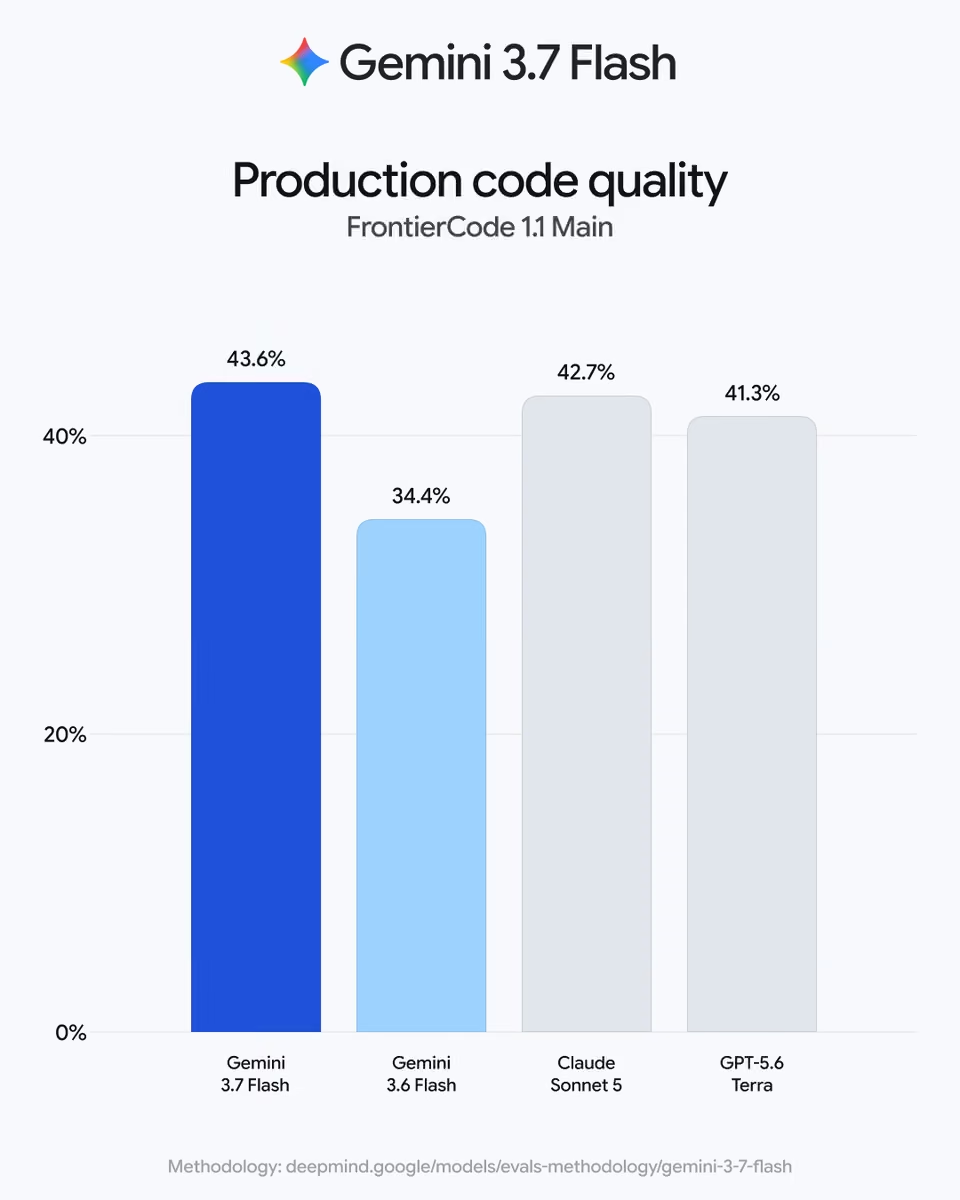

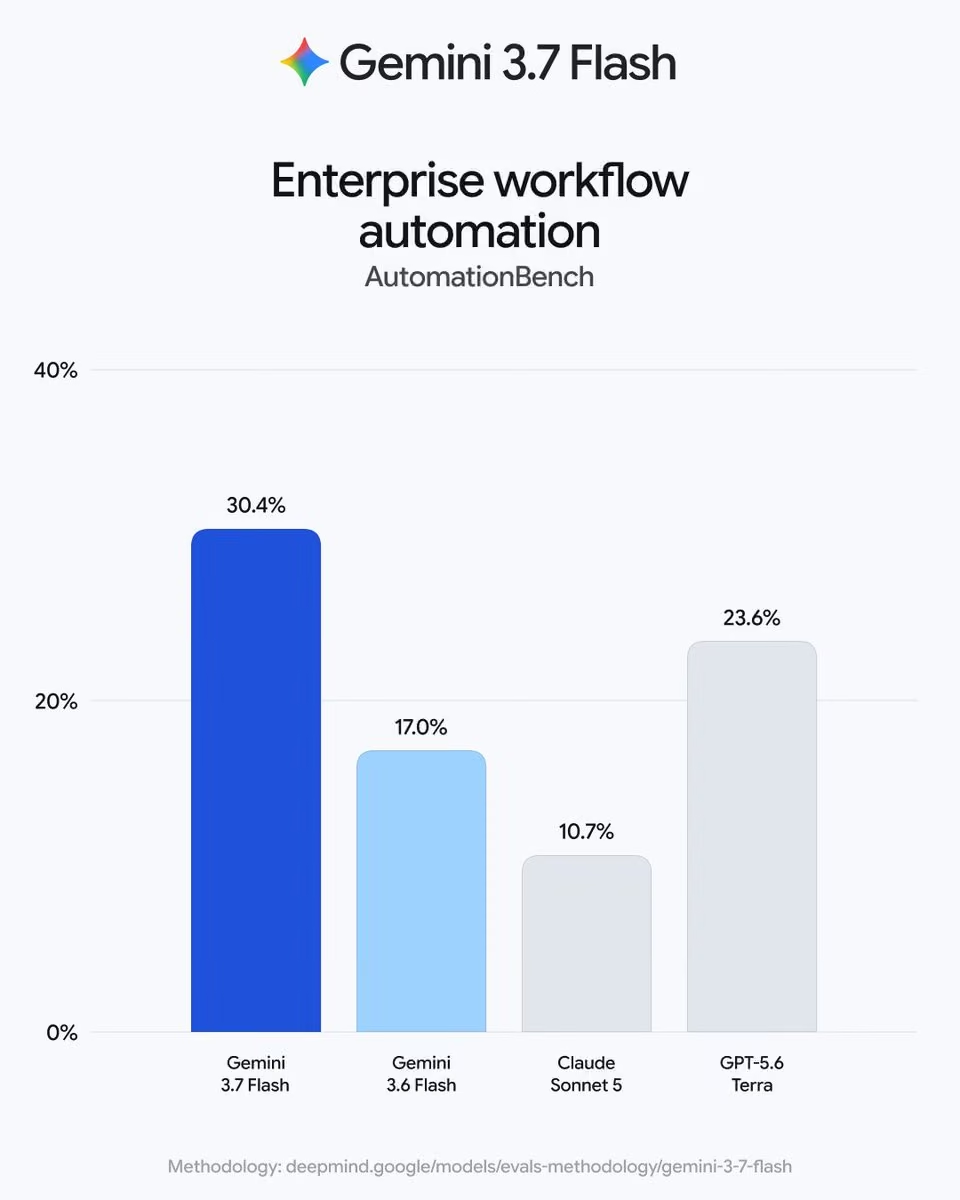
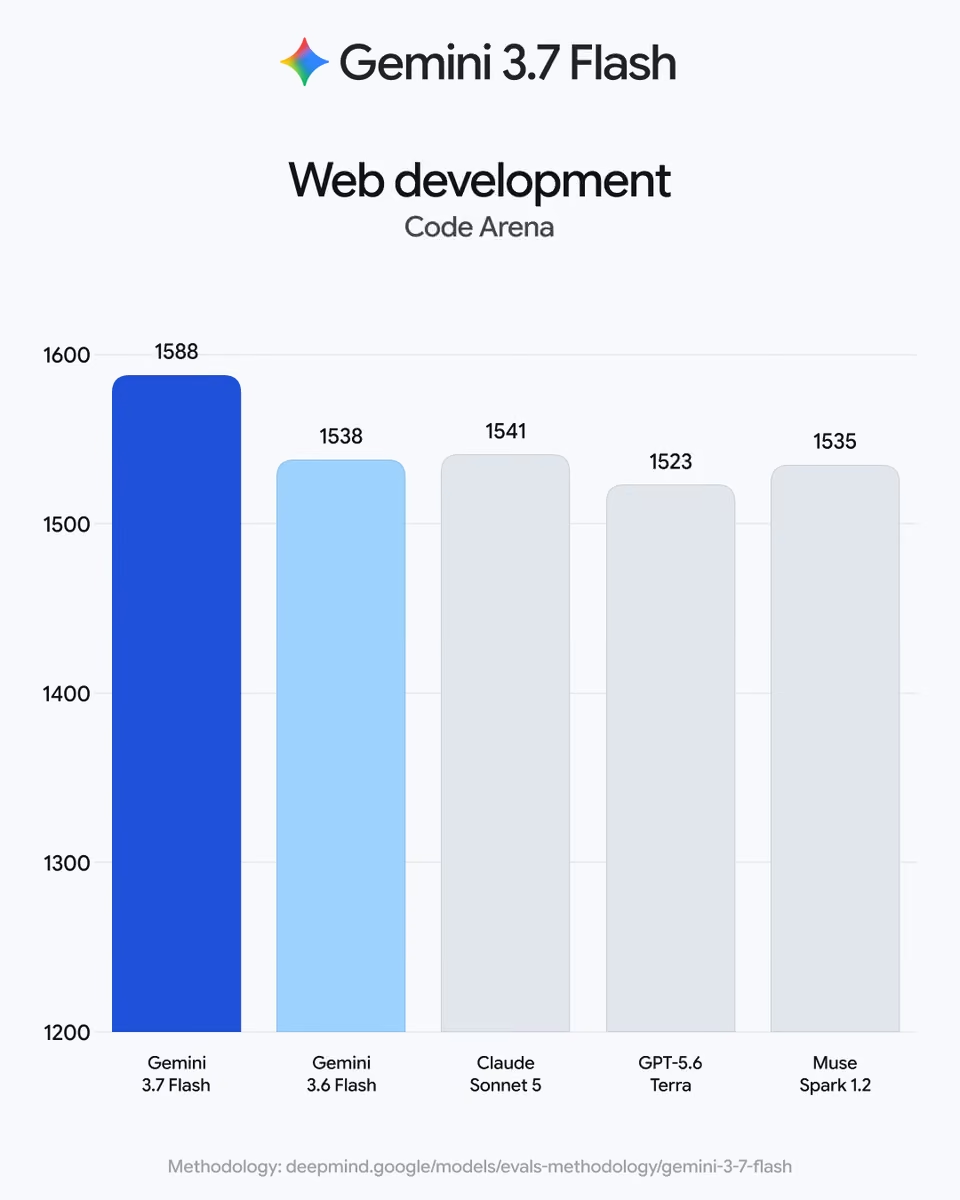


 Konstantinos Bousmalis

 Google Flow Music


 Iason Gabriel


 Google Gemma


 Jack Parker-Holder

 Jon Richens
 Alistair Letcher


 Google Labs


 Mojtaba Seyedhosseini


 Tulsee Doshi
 Google Flow


 The Sainsbury Laboratory


 Google AI Developers

 Radu Soricut
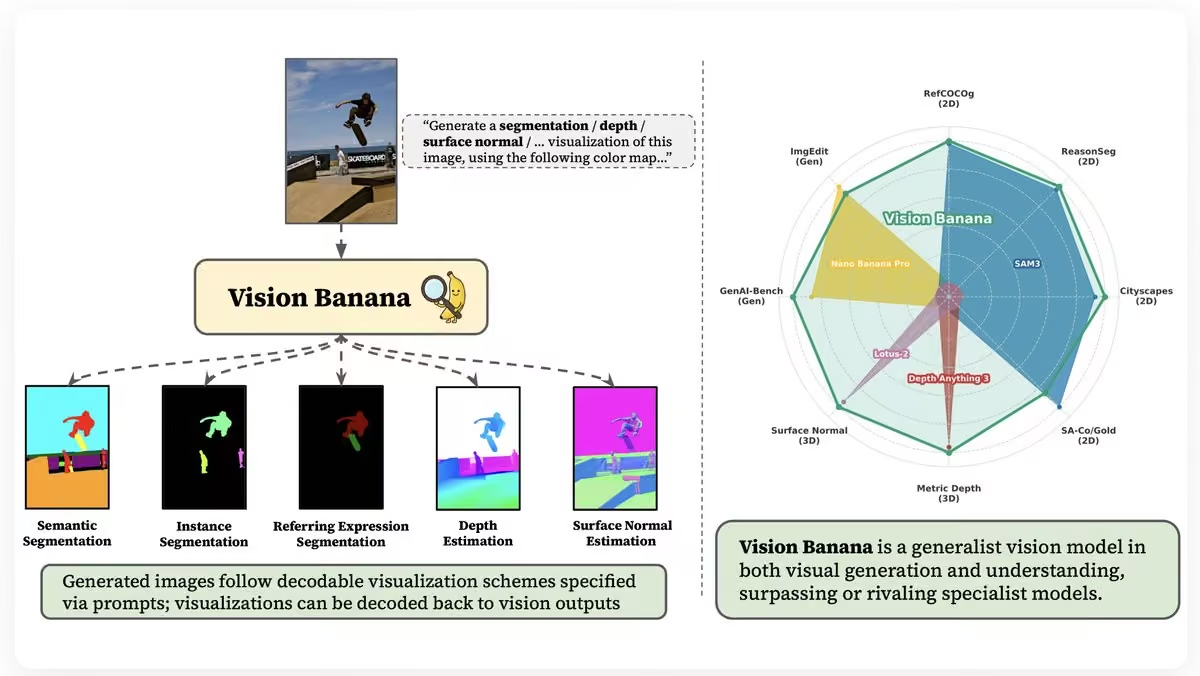


 Eli Collins


 André Araujo

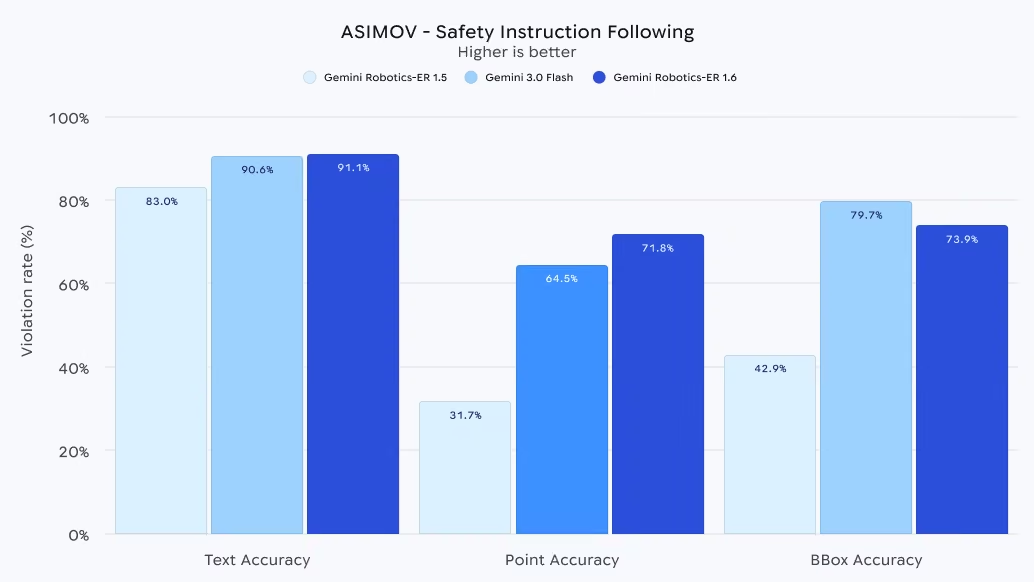


 Julian Salazar
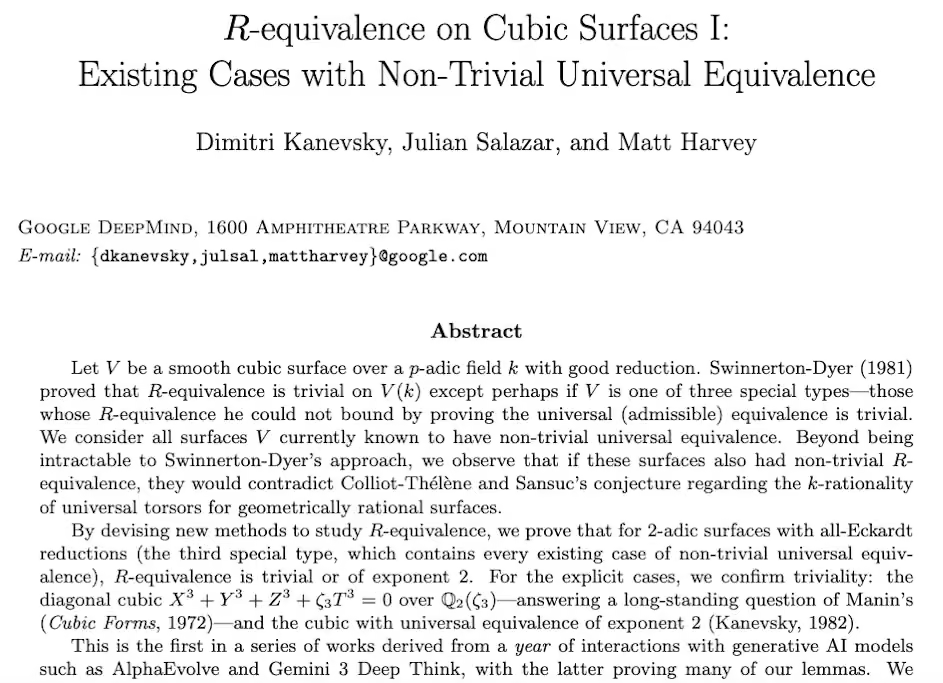


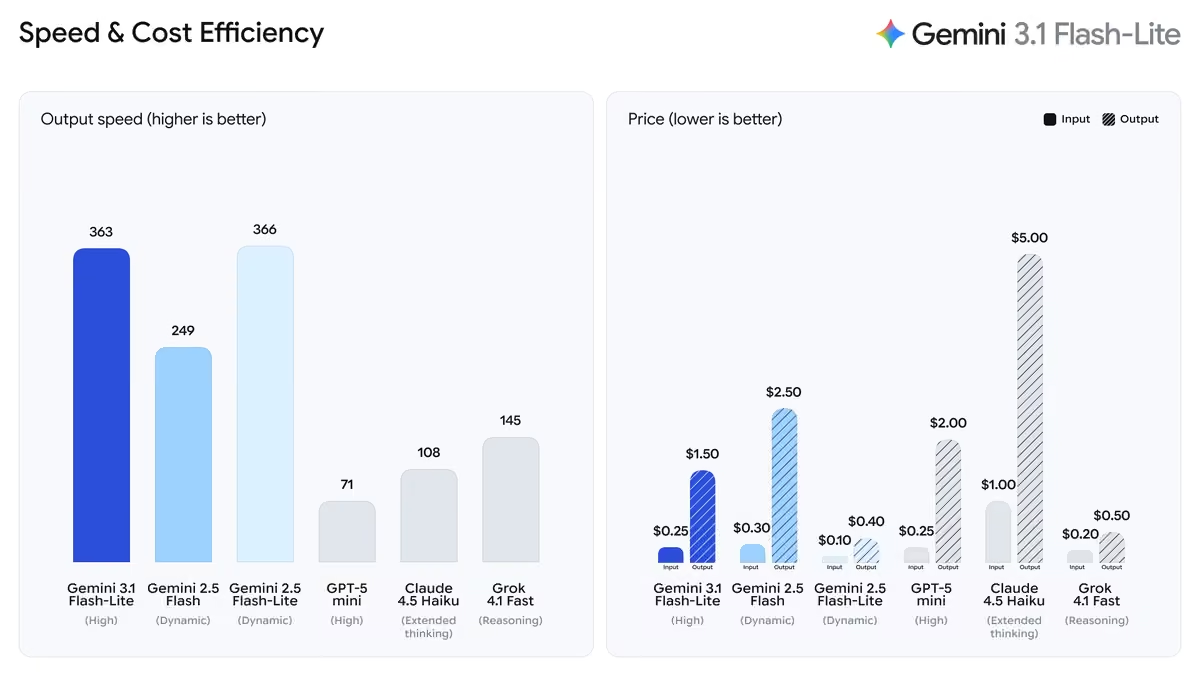


 The Align Foundation

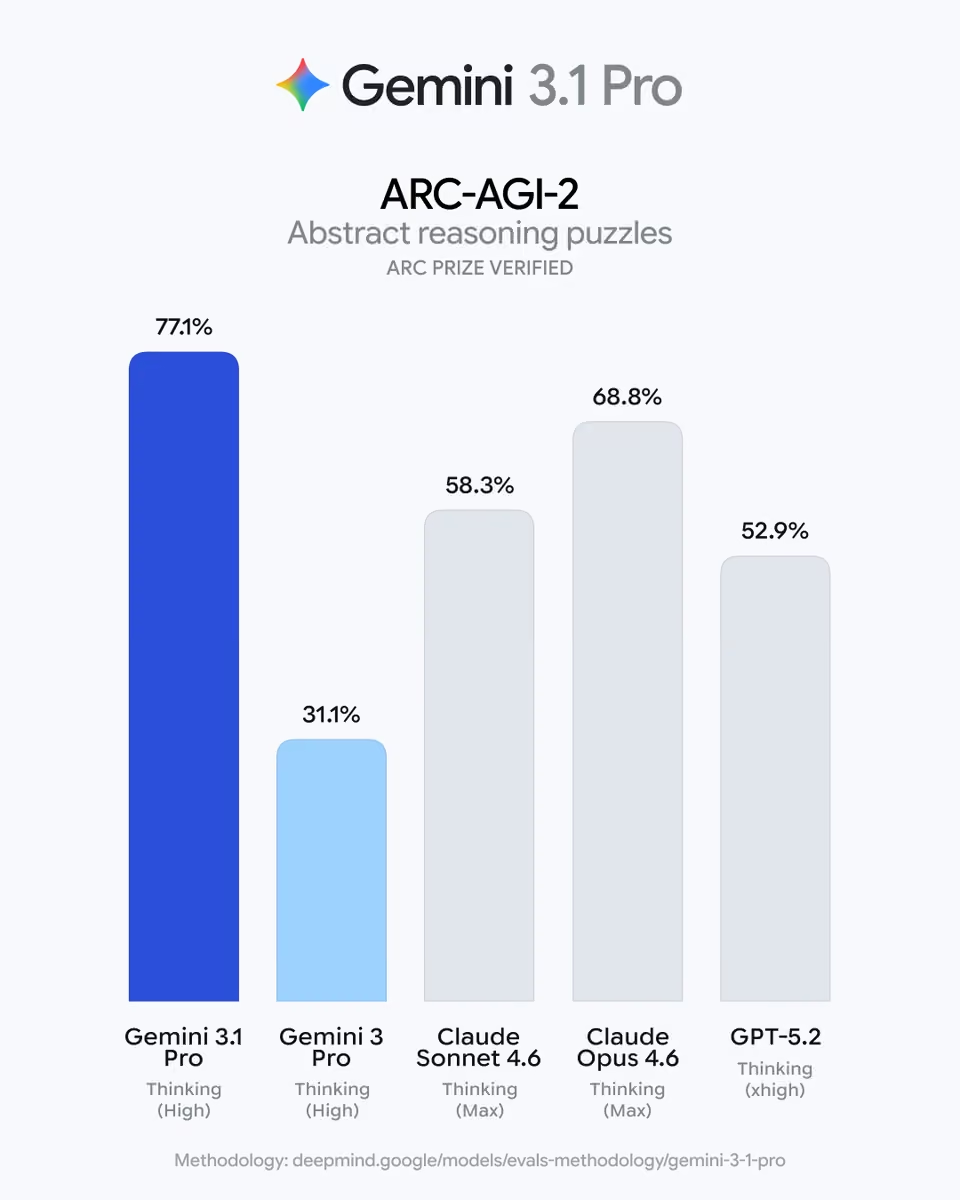


 Thang Luong


 Žiga Avsec


 Xiangming Gu


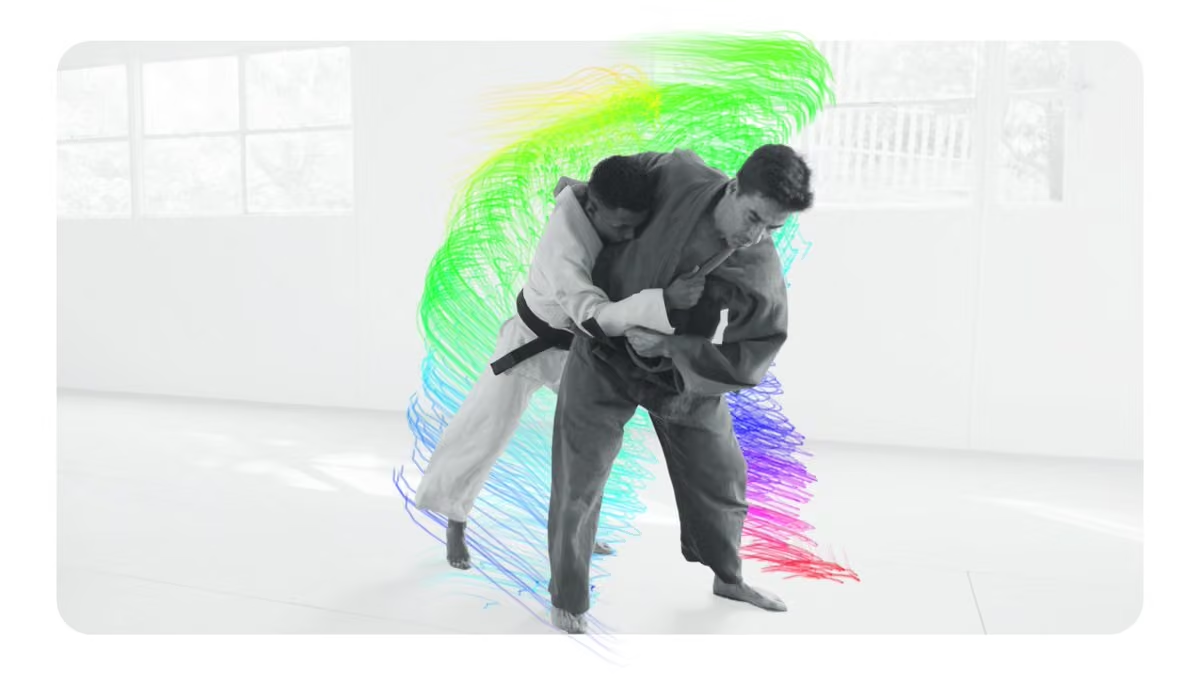


 Arthur Conmy

 Adam Brown

 Lindsay Willmore
 Gemini Notebook



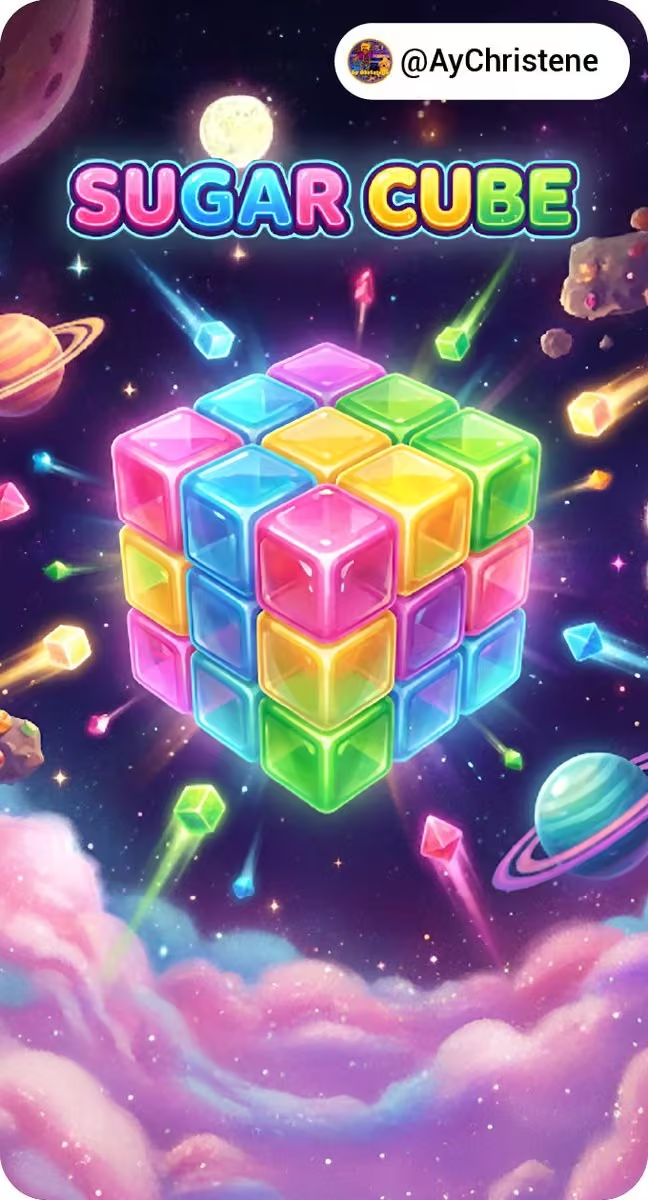


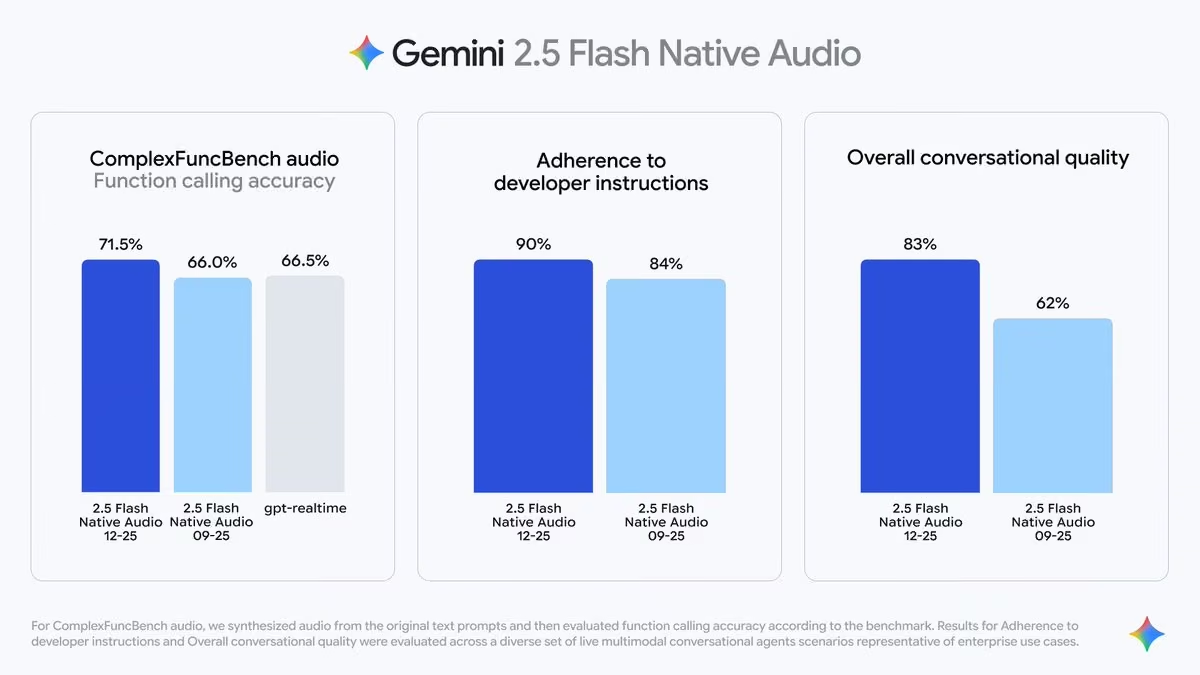


 Anirudha Majumdar


 Arena.ai


 Junhyuk Oh


 Douglas Eck
 Adam Zsolt Wagner


 Luisa Zintgraf

 David Abel

 Andy Coenen


 Google Quantum AI


 David Stutz


 Mahima Devaiah (née Pushkarna)

 Google Public Policy
 Ksenia Konyushkova


 Vivek Natarajan


 Neel Nanda


 Jesse Engel


 Shlomi Fruchter


 Aäron van den Oord


 Dev Valladares
 Rohin Shah
 Scott Emmons

 Victoria Krakovna

 Öner S. Biberkökü
 Josh Woodward


 Ted Xiao
 EMBL-EBI Training

 Dhruv Shah @ CoRL 🤠

 Primordial Soup
 Alexander Chen



 Alexis Bellot


 MBZ


 Pannag Sanketi
 Heni Ben Amor
 David D'Ambrosio
 Aida Nematzadeh


 Tom Everitt
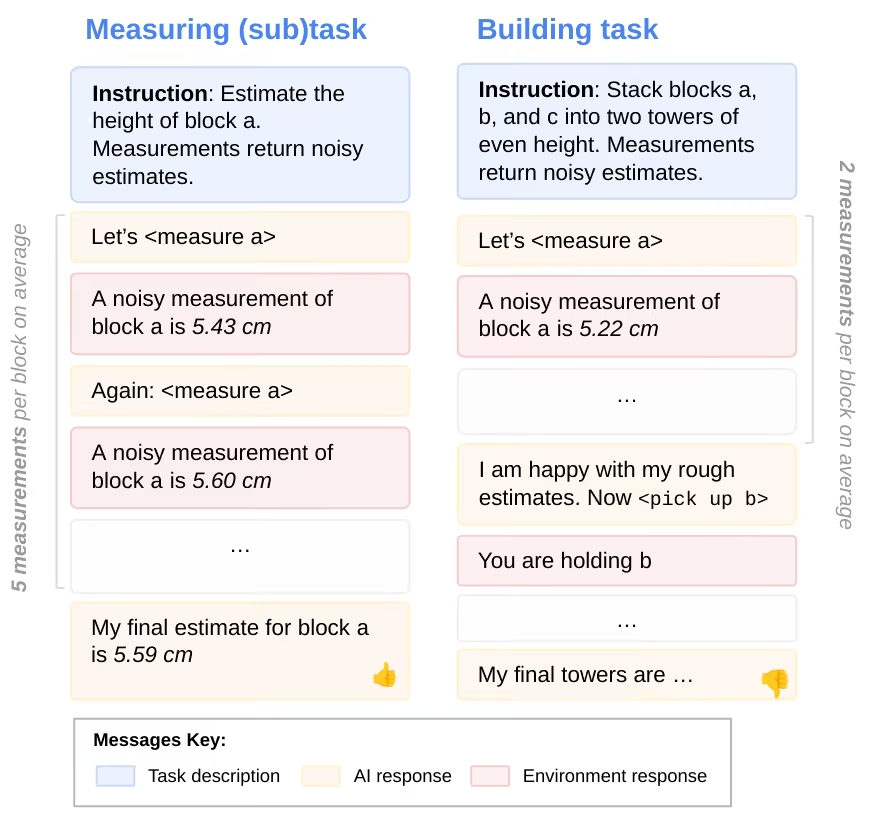




 ICLR


 ICML Conference


 Guardian Science




 UCL Alumni


 Qiang Yang


