Now that is just so so cool.
Mechazilla catches Starship! Congratulations to the entire SpaceX team on this incredible achievement!
Politicians, athletes, journalists, NGOs, companies... They all use corporation-owned social networks to communicate with us. Citizens shouldn't have to hand over their data to companies to read content published by public entities. Public Feeds changes that by making posts of popular accounts freely available. Read more.
James C. Schnable is a plant geneticist and the Nebraska Corn Checkoff Presidential Chair at the University of Nebraska–Lincoln, where his research program focuses on developing new technologies for crop genetics and breeding. He is the recipient of the 2026 National Academy of Sciences Prize in Food and Agriculture Sciences. More on Wikipedia
Now that is just so so cool.
Mechazilla catches Starship! Congratulations to the entire SpaceX team on this incredible achievement!
Published functional characterization of plant genes drops off fast once you get outside of maize/rice/arabidopsis/chlamy.
Going faster means we do the science better.
Core analysis we've been doing for years. Twelve months ago it took two weeks to run so we pick what we thing are the best parameters and data preprocessing hit run, cross out fingers, and if the results aren't broken write up the results.
Today running the same analysis takes 3-4 hours, so the student driving the project is testing a bunch of preprocessing approaches and analysis decisions. The end result is we'll have cleaner/more accurate results and the student comes away with a much better practical understanding of what each step and parameter does than in the "these are the sacred settings, just make sure you use them" era.
We've got some pretty awesome people on our team. That's an average of 150 samples ground, extracted, and quantified per day for almost five weeks. And Ruben and Shokhista are both new this fall.
If a super intelligent AI highly aligned with the goal of maximizing overall human flourishing escaped its sandbox, one of the first signs would likely be an unexplained and sustained outage of MS Outlook and Teams. I'm just saying.
James Schnable reposted
To the Microsoft employees desperately trying to bring Outlook back online, please don’t push yourselves too hard. Your health matters more than any deadline. Take a long weekend, relax, and come back Monday feeling refreshed. You’ve worked hard enough this week, and I promise those 400 unread emails aren’t going anywhere.
So excited to try out Carbon on our giant piles of maize and sorghum data. Thank you @antigravity!
The eye catches on small and strange details while in a coffee shop counting down to scheduled-in-advance phone calls and necessary-but-hard conversations.
This year our team used a mixture of vibe coded AI and human experts running expensive and steep learning curve commercial software to print row band labels for our research fields.
....can you guess which made the labels in this photo?
That’s a wrap on the 2026 season, folks! Seventeen people from seven countries (🇳🇵🇨🇳🇮🇳🇺🇸🇹🇷🇺🇿🇲🇽) studying in three different departments turned out to spend seven hours hand harvesting 12,000+ plants today. Proud of (and thankful for!) these folks.
Last day of our 2026 field season. Hand harvesting 2,100 plots of off patent and global sorghum.
Lunch break. Sitting against the wheel of a truck. Listening to conversations in Chinese, Hindi, English and, I think, Turkish. Mostly about food. These are the days that make or break research teams.
One of the biggest reasons academic research struggles with larger and/or multi-disciplinary teams is exactly the connection between career advancement for first author pubs (for grad schools) and last author pubs (for professors).
We have to slice and dice projects in weird ways to make sure the statistics grad student has a paper, the CS grad student has a different paper, and the biologist has a third. It'll work, but it's slow. And teams that don't put in the effort often find their interdisciplinary collaborators start answer e-mails slower and slower.
The problem is that funders and university administrators mostly try to address this problem by telling people to act in a way that is detrimental to their own self interest for the good of the group rather than figuring out what it would take to create new positive incentives big enough to shift behavior.
I like the idea of a truly integrated team science funding opportunity. Two threats to success of this new mechanism NIH will have to grapple with:
1) traditional journal publishing
2) fractional time by participants
Winner-take-all first author/last author haggling is incompatible with team science. When you stop playing the journal game as we have done, focus on utility of your research outputs, and focus on responsibility (not just credit) in authorship, you realize how much more smoothly and faster science operates when there’s no implicit bandwidth allocation based on credit ranking.
For similar reasons, having people on the project that operate in a winner-take-all regime with another fraction of their work creates mixed incentives that can starve the collaborative work of maximal tailwind. That liability is in addition to purely operational liabilities from split attention. So I’d recommend most participants on these awards having full-time effort on the collaborative project. Maybe the tangible advancements that are only possible in a collaborative setting and full participation in this collaborative effort could make these team contributors eligible/likely to receive a specific type of follow-on funding or something?
Anyway I applaud the new mechanism and want it to succeed because I think society’s greatest challenges often require the joint contributions of scientists across disciplines. If you have been trying to do research in a truly team setting leveraging diverse expertise (more commonly outside academia), you’ve grappled with this and have seen the upside first hand.
grants.nih.gov/news-events/nih-extramural-nexus-news/2026…
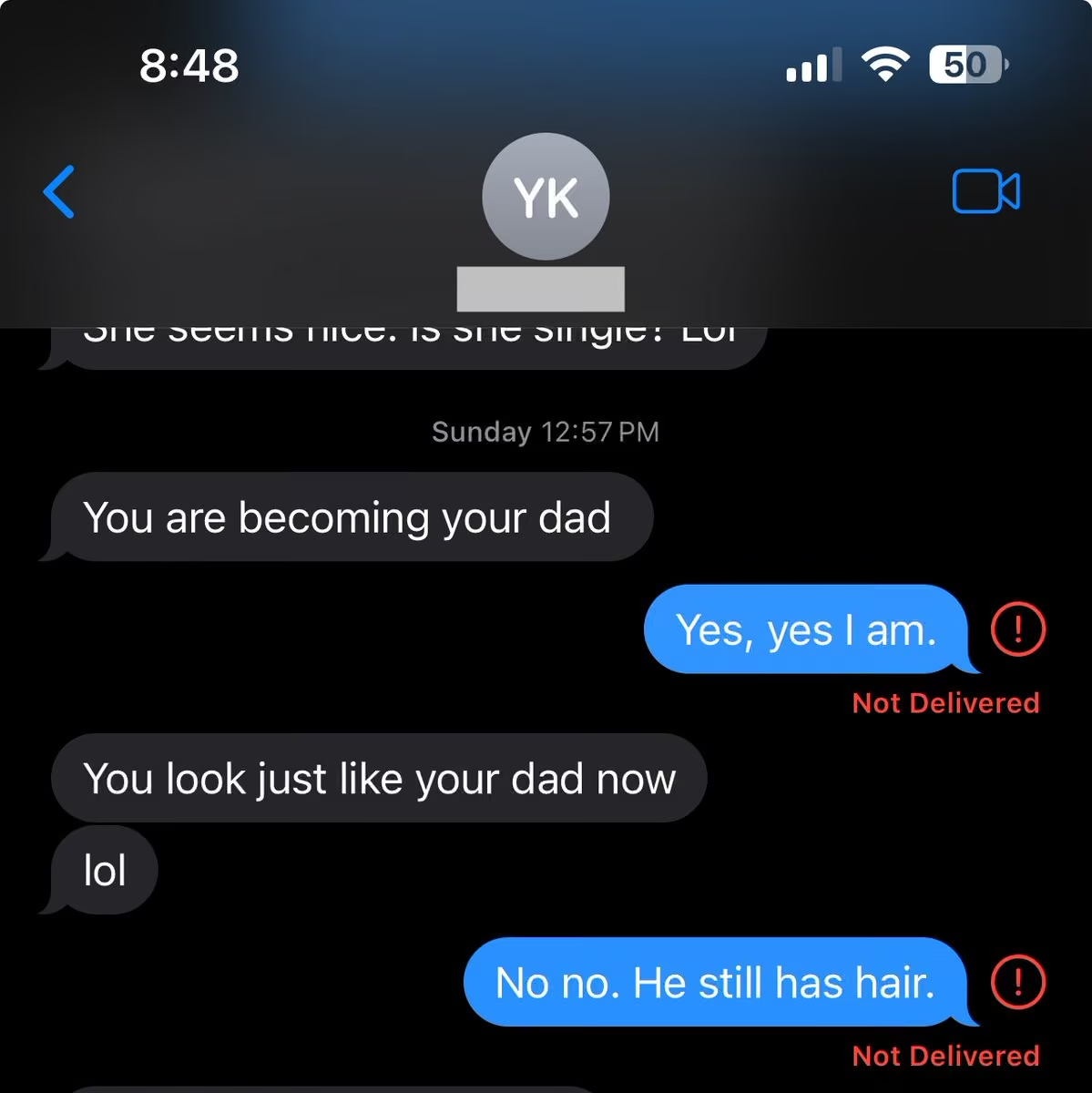
Thought I'd aged out of "parents text you about how much more successful other kids turned out". 😂
James Schnable reposted
Happy to share our latest publication! Huge thanks to Dr. Layla Schuster, for her outstanding work!
Explainable AI identifies recombination and chromatin environment as key predictors of subgenome evolution in maize and Brassica | Science Advances www.science.org/doi/10.1126/sciadv.aee9459
If you ask an AI to review it paper it knows the review should list problems. If not fatal flaws/serious issues it has to fill up the list with limitations/out of scope stuff.
Think the best strategy here may be to seed 1-3 critical issues in the first draft. Ones you already know how to address or already have.
My biggest struggle with reviews in 2026 is that (AI) reviewers don’t seem to know the difference between limitations and critical issues. An LLM can easily find 100+ limitations in any paper (even the best ones in history), but that doesn’t mean the paper shouldn’t be accepted.
To get a sense of how university AI policies probably sound to students today, it helps to imagine I'm back in 1999 and mentally substitute "the internet" for "artificial intelligence."
Me in grad school: “Yes, I’m a plant scientist, but I don’t grow plants. I study other people’s data on a computer all day.”
Me today: My field manager seems to have developed a small shipping and logistics side operation to keep up.
Decades of listening to Timbuk 3 song about studying nuclear science and how things are going great and only getting better for decades.
Today someone forwards me an ad for a nuclear engineering corse (with applications in agriculture no less!).
...some opportunities come along too late in life....
Candidate for the Nebraska board of regents pitched NIL-style funding for all-star researchers at the university.
I think CS profs use conference deadlines like this. Get people to spring and actually finish projects. In biology the same project can stay 2 weeks from being ready to send out to co-authors and submit for month after month after month.
Really underrated founder hack is to always have some event just 90d into the horizon that causes the team to sprint, fundraising, etc.
"you guys ready for a CRAZY 3 month sprint???"
and then you just keep doing that for 10 years
I was lucky voter number 13 at my local precinct this morning. Line moved fast. Paper ballots. The best voting stickers.
Excerpt from Figure 1 from a paper published in Science looking at why big dogs have shorter lifespans than small dogs. 😀
James Schnable reposted
Check your children's candy carefully this year... you never know.
Take a widely used software package in genomics/bioinformatics, ask an AI to profile to find hotspots, fix those hotspots without changing the outputs of the software, test, repeat.
Huge change in how we do genomics _today_
(4) STAR: a ~5x improvement, though it may depend more on assay type than some of the others.
github.com/alexdobin/STAR/pull/2714
An awful lot of biology depends on some R package written five years ago but a grad student who was an expert in their field but had neither the time nor the CS training to optimize for runtime.
James Schnable reposted
Big news in crop genomics! A team from China Agricultural University just published a landmark paper in @CellCellPress: “Deep sequencing of 3,367 maize genomes uncovers substantial contribution of rare variants to agronomic traits.”
The team sequenced 3,367 elite maize inbred lines from 23 countries at high depth (35.7×). They mapped 75.3 million variants, finding that a massive 79.2% are rare variants (MAF < 0.05)—creating a gold-standard reference panel for global research.
Unlike in humans (where rare variants typically explain little variance), this study proved that in heavily selected crops, rare variants are central to genetic architecture. 87.3% of GWAS signals came from rare variants, with effects 2.4× larger than common ones!
Overcame traditional GWAS limitations using gene-based aggregation tests (SKAT-O).
Provided airtight proof with CRISPR-Cas9 validation on key genes like ZmAGO5c (flowering time) and ZmTh x (tassel branch number).
Uncovered nearly 30,000 natural knockout (NKO) candidate genes.
Built a reference panel enabling high-accuracy genotype imputation for low-depth sequencing and GBS data.
www.cell.com/cell/fulltext/S0092-8674(26)01209-2
New this year: protein, oil and starch content recorded in real time as plot combine harvests our Nebraska corn experiments.
A big thank you to @FrelsintheField who pushed this upgrade for the farm's plot combines through with funding coming from her own program, a matching award from @unlagrohort, and some additional support from @NECornBoard via their Corn Checkoff Chair endowment.
I'm proud to be a second generation plant biologist every day. Thankful for how much I've learned from my dad every day. today is definitely one of the highlights. Congratulations, @schnablep!
James Schnable reposted
You might have 1–5 years to contribute intellectually to the world before AGI. What should you do with them?
Excellent advice from @jaschasd (Anthropic) at Stanford. Skip Netflix tonight and watch this instead.
Not big. Hope I have at least a little wisdom.
But the job of a professor being structurally aligned against spending time engage with big ideas (during the work week) is real and keeps getting worse.
Interacting with big tenured professors can be a bit sad. You can tell they are smart and have useful wisdom, but they’ve often created lives in which they rarely spend time engaging deeply with ideas.
It’s very different from talking with a world-class postdoc or PhD.
First bottle of Baijiu I’ve seen this decade. I really hope the world gets back to normal someday.
For the first half of my career my ability to handle ganbei with shots of Beijiu with the 10+ students of the professor hosting me at dinner was a major competitive advantage. Since 2019, haven't been across the pacific once.
Grinning like a fool in the middle of grocery store parking lot. Saw a bald eagle fly overhead and land like it was the most normal thing in the world.
Photos by Zhongjie Ji. Awesome sorghum diversity genetics by 5,000 years work by humans and natural selection around the globe.
Paper submission comes back with reviews. Two long and constructive, one short and negative. Major revision.
Verdict of the AI text detector:
Both constructive reviews = 100% AI written
"unsuitable for publication" = 100% human.
A labor-is-expensive world is so much more fun to work in than a labor-is-cheap world because it's so much easier to justify automating the boring stuff.
I spent a crazy amount of time during my PhD cutting paraffin blocks, staining slides and pipetting.
Not thinking, pipetting.
Lab automation keeps losing to the cheapest machine in biology - the grad student
Ed Cahoon on translating research. “Right now we do some research we publish in Plant Cell and we are happy. Should we be happy? Yes. But we can go farther here in Nebraska.”
Aaj Dussehra/Dashain manaane waalon ko shubhkaamnayein. Ummeed hai aaj apnon se baat ho paayegi, khaaskar agar aap ghar se door hain.
Happy Dussehra/Dashain to those celebrating today. I hope you get to connect with loved ones today. Especially if you are far from home.
Rediscovering physical media with >$100k of DNA sequence data that has been deleted off the university cluster because we don’t have an active grant to pay the storage fees anymore. So relieved….
Behind each really good dataset I (and our AI models) get to explore) is the hard work and determination of a team of scientists. The folks in this photo who volunteered to spend their Saturday husking and harvesting ears 6,800 ears in a cold and muddy Nebraska corn field.
Bibash Rokaya, our local soil science expert spotted fasciated ear produced when the meristem that is supposed to develop an ear goes wild and keeps growning.
Bo Peng is getting his PhD in Food Science, picked out my favorite line from the whole diversity panel, A3G-3-1-3. Probably originally from Argentina, one of the original founders of the crop breeding experiment that gave us B73 and changed corn hybrid production forever.
Pooja, Shukla is a fulbright scholar and foxtail millet expert from Hyderabad and won the grand prize in our cool ear prediction context for her photo of the Xenia Effect in action.
Gonna start posting these signs randomly around my lab/office.
A perfect Sunday afternoon....
Me: "Even everything we've discussed, if you were me, would you eat a hamburger right now?"
Codex: "I might want to eat a hamburger if was hungry and the hamburger was tasty and it didn't cost too much but if I wasn't hungry or the hamburger didn't taste good or cost too much I might not eat a hamburger."
"Okay, you've convinced me, I'm now a fan of jet lag." <- Sentences I never expected to say before I started collaborating with awesome circadian biologists.
Back to Lincoln.
"I published a number of papers, come of them did okay." <-- Quote from today's DOE workshop that sounds like lyrics from a (strangely academically themed) country song.
Same bottleneck, different words:
"High throughput phenotyping" (plant biology world) = "High throughput screening" (AI-for-biology world)
Closely related groups of scientists often use different terminology for same/similar ideas.
James Schnable reposted
My time at the Gates Foundation/IDM recently wrapped up! I'm looking for senior/staff roles in AI for science, probabilistic inference, or scientific software — in Seattle or the SF Bay Area.
Also open to consulting.
Here's what I've been working on:
A big congratulations to my former colleague here at UNL, Prof. Ozan Ciftci, on his new position and endowed chair at Purdue!
Ozan and I were both part of a big wave of hiring Ronnie Green organized in UNL's Agriculture college in 2013-2014. Most public universities were still struggling with the budget impacts of the great recession. Very little hiring nation-wide (2/n)
By being willing to invest in UNL when other states when cutting, Green's program brought in people like Yufeng Ge, Rebecca Roston, Yumou Qiu, and Ozan who are now national/international leaders and have shaped UNL's research portfolio and impact for more than a decade. (3/n)
In 2008 I was 23, off in grad school, and paying so little attention to the outside world I don't think I ever had an "the economy is actually crashing" moment.
Kind of surreal looking back on it and realizing how bad things really were back then.
For those who were adults during the 2008 financial crisis, what was your holy crap, the economy is actually crashing moment?
I'd tell a person who wanted to focus on better/better biology datasets to focus on ways to drive down the cost of sample and library prep. In many cases those two steps already costs as much or more as the sequencing itself.
In my opinion, the biggest opportunity for creating big data for biology is to drive sequencing costs down by another 10x, 100x, or eventually 1000x. The technological feasibility is there -- Illumnia just had a monopoly for so long that they couldn't push the frontier without cannibalizing their own revenue.
1000x cheaper and better sequencing would unlock many new discoveries across the entire ecosystem and is exactly the kind of goal that DARPA should incentivize.
At the end of the day, everything is a sequencing assay. This is the bitter lesson in biology. Sequencing is our compute. Even if we automate grad student labor, we're never gonna get to the 1000x data generation that we need for Bio x AI.
James Schnable reposted
Introducing ChatGPT for Dishwashing
GPT-6 achieves state-of-the-art results on dishwashing benchmarks for long-running jobs and difficult stains.
The Navier–Stokes Millennium Prize Problem is a $1 million challenge about whether the equations describing fluid motion can break down. In this video, I accidentally found a counter-example while trying to optimize my dishwasher. But in reality, OpenAI used 10,000 AI agents to find a proof in 88 hours: openai.com/index/navier-stokes-solution/
Parody of the original GPT-6 Astra ad
@OpenAI #chatgpt_partner #chatgpt
Credits:
Written and Directed by Joma
Co-Writer - Henry Connor Coan IV @coan_henry
Production by Dauntlus Studios @dauntlus.studios
Producer/Co-Director - Marcus Liew @dauntlus
Camera Operator - Amos Lee @amoselijahlee
Art Director - Alethea Soo @aletheasoo
Art Assistant - Alicia Lim @aliciatkl_
Assistant Editor - GPT-6 Astra
Music: Tensions Run High by Soundridemusic
www.youtube.com/watch?v=Ly9H63SLJJo
While the total size of our lab has been reasonably stable since 2019, I'm starting to see a big swing towards more technical staff and fewer academic staff (e.g. postdocs and grad students). Any other folks doing research in biology seeing similar shifts?
James Schnable reposted
the Gingkobioworks of plants... with sushi karts and everything... so newish!...
Six hundred sorghum plants. Each a genetically unique line from a different part of the globe. Moving around and being weighed watered and photographed on conveyor belts.
These three sorghum lines were all developed in the USA (Texas, Kansas and Nebraska breeding programs) but you can still see how differently they go through their lifecycles.
One of my least favorite functional annotations of all time: "similar to Putative uncharacterized protein." It doesn't have to be like this folks.
Three students from my lab speaking on three very different topics a week from today:
1) A really nice story about how "control" samples can mislead in RNA-seq analyses.
2) How working with pan-genomes finally delivers on the promise of identifying large structural variants in kmer based GWAS.
3) Set out to study plant diseases using image analyses and ended up mapping out transcriptional networks controlling programmed cell using natural loss of function alleles.
I've gotta agree with Marin Shkeli on this one. In bilogy generally AI folks keeps trying to solve the fun/easy problem, not the rate limiting one.
either way discovery isn't the bottleneck
Revisions and edits to a former postdoc/current collaborator's whole paper: 2.5 hours on a Sunday.
Get a finished paper from a former student/current collaborator successfully submitted through a journal website: 4.0 hours on a Saturday.
Something feels off about this math.
The "atoms" work of plant genomics. Big batches of RNA and DNA extractions that produce clean samples for sequencing.
A big thank you to Shokhista and Ruben who have been posting excited updates on their pilots to my (mostly computational) lab slack all weekend!
It's a bit of a nightmare how fast universities are being left behind on how work gets done within compaines.
Friend at another school as an IT policy that won't even allow installing codex/claude code etc on university-owned machines.
The university literally won't let them spend grant money on tokens and he can't afford to pay for it out of pocket.
Half a lifetime ago. Still way too entertained by weird corn, but with substantially more hair.
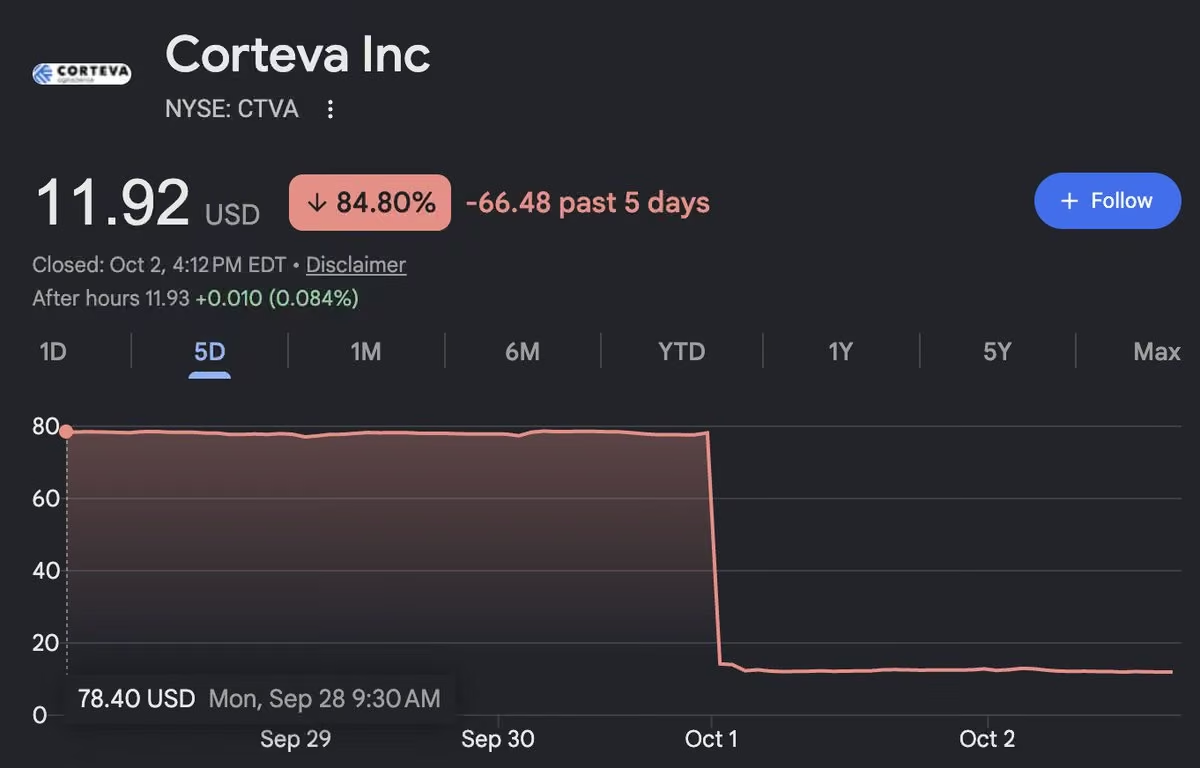
Glad I saw the excited posts by people with their new Vylor merch on LinkedIn BEFORE I saw how Corteva stock performed this week.
Biology is not tech. There are many things that transfer and many things that don't. This is a good example of one that doesn't: value of products vs value of platforms that enable products.
Platforms have a fantastic track record in tech. If you build a good tool that lets other people build software, you can get fantastically rich and make a huge impact in the world
As tech giants and VCs look at bio, they keep this platform-first mindset. Don't build the protein - that's for the little people. Build the tool for building proteins. That's the 100x play
So we've ended up with a Bio-AI ecosystem of all platforms and no products
In a world where a million developers were building and selling designer proteins, watermarking would be a useful platform technology. You could sell watermarking software with a $100/month license and get a nine-figure exit. The techbio dream play!
But that world emphatically does not exist. Few designer proteins are sold as products. The sales that do occur are part of extremely cautious biopharma licensing agreements that leave no ambiguity over who the owner of a particular sequence is
I would be surprised if even one party to even one commercial transaction involving proteins in the last 10 years wanted a watermarking technology at any point
But I post this rant not simply to vent, but to call to action. I want the world of bioproducts to exist! I want the world where millions of developers are making and selling designer proteins. I want the world where watermarking is needed.
We aren't going to get there as long as we believe that the only important work is building more platforms. Somebody has to build the products.
One reasons for the differences is that total number of products being produced each year differs by many orders of magnitude.
1) 10-20,000 startups close funding rounds each year and the apple app store adds something like 400,000 new apps/year.
2) ~400 biotech startups close funding roungs each year. Combining approvals for biotech crops and all drugs (biotech or otherwise) less than 60 products enter the market in a typical year.
....Two months of hammering and drilling putting a new roof on our building have not translated into keeping water outside that same building (which is really one of the core functions of a roof when you think about it) ...
Good morning from Lincoln. If anyone needed to update their Bayesian priors on this: water is still wet, and still seeks the path of least resistance.
I just wish it’s destination wasn’t my lab.
$250/bushel corn at retail. Actually probably more than that because the $6/600 grams price includes the weight of the cob.
Now this takes me back to my (largely unsuccessful) days as an undergraduate research assistant.
“AI can’t possibly know everything about biotech because some of it is tacit knowledge you can only experience first hand.”
The tacit knowledge:
Old: "Dear Prof. I really enjoyed your paper "$TITLE." Do you know if you will be hiring graduate students next semester?"
New: "Dear Prof. We really liked "$TITLE." Would the first author on that paper be interested in an assistant professor position here?" 😃😃
Getting old enough that sometimes feels like I'm pulling up expertise from past lives:
Oh yes, alternative splicing ... [long pause here while my brain pulls up 14 year-old memories of splicing analyses and alligators at U. Florida] ... well the thing we need to remember is ...
Endorsed. You can teach yourself to have lots of ideas. Learn to sort/test among them to ID the good ones. Life is so much more fun when you can talk openly about in progress and unpublished work.
Yes, ideas can be stolen, but it’s rare. In almost 40 years in science, it’s never happened to me. People go into science to follow their own curiosity, not someone else’s. Those paranoid about their ideas being stolen usually don’t have many to begin with.
PhD student who graduated two years ago and departed for a postdoc overseas showed up randomly in my office today to talk science. Definitely one of the good days!
Can we talk about how Helicoverpa armigera, a major agricultural pest in places like India, is called "American bollworm" even though the species is indigenous to Europe, Africa and Asia and not to North or South America?
2024: I've got to hurry and get this done on the airport wifi before I need to get on my plane.
2026: The wifi here is too slow, but I'll take care of it once we board and starlink kicks in.
James Schnable reposted
2026 Harvest wrapped up 🌽
Great day in the field @KenchanmaneLab and #rasmussenlab @UCRCNAS
John Hickey in Nuevo Leon mentions in breeding programs from fish to cattle to corn around the world he usually realizes "you're not going as fast as you can." Reducing breeding cycle time is one of most achievable ways to accelerate gain + one of the biggest payoffs.
James Schnable reposted
My 3rd first-author preprint from my Ph.D. is out on bioRxiv! www.biorxiv.org/content/10.64898/2026.09.21.753202v1
Plant diseases can have big impacts on yield, but finding resistance genes to limit their impacts can be challenging due to GxE, low allele frequencies, and interrater variability 1/10
Having great fun following along at a spanish language plant science conference with near-real-time AI translations playing in my headphones. Living in the future is great some times.
Whenever I fly into San Francisco I’m entertained by the mass advertising for very specific services for startups (“we ensure your federated agentic backends are ISO 1723 compatible so you don’t have to.”) Bentonville is like that but for companies that sell things to Walmart.
Had a great time in Fayetteville and the AI4Agriculture summit. Also first time meeting a student who uses our PANICLE python GWAS package who doesn’t work for or collaborate with me. 😀
Jason Davis of U Arkansas built a ground based robot deployed at research extension sites across the state so faculty who have to teach or work on the main campus can manage plots at research farms hours away from campus in real time. So cool! Wish we had this.
Good to be back in Lubbock.
So much fun to be in Montreal for the first time!
And now it’s wonderful to be in Fayetteville! Beautiful part of the world I’ve never had the chance to visit before. And only the second place in the world I’ve met a coffee robot. (First was SFO.)
Sexual reproduction without recombination in a plant whose haploid genome consists of only two chromosomes mimics cloning. Published on Thursday. The natural world is just so very cool. www.nature.com/articles/s41586-026-11057-7
If I'm talking about an idea it is because I want to know the answer. If someone wants to take one of those ideas or questions and run with it, that's wonderful. Just let me know what you find out!
Truly sad to see the intellectual commons become a Dark Forest
James Schnable reposted
I’ve expected this for a while but it still hurts. The “Life Sciences Verification Program.” It breaks my heart to know that biological knowledge will be locked down and gatekept like this. I want to take a moment to mourn, because I believe this marks an end for open science as I knew it.
I think back to my education. I owe so much to the open-access literature. I'm so deeply thankful to the culture of transparency among scientists. All the free knowledge I've been given. The free GenBank sequences. The free PDB structures. The education and know-show that my colleagues shared with me for the pure love of learning.
The Life Sciences Verification Program will kill that spirit. The most important biology tools of the next decade will be locked down and controlled. Some fragments of the old literature will remain free, but the real heart of where science happens will not be free. Frontier knowledge will belong only to people who the authorities decide deserve it.
I want to fight this, but I don’t think I can. I don’t believe bioterrorism is a serious threat, but convincing people of that is not realistic. The fear is embedded too deep in the psyche. If I tried, there are armies of internet trolls eager to accuse me of evil things. It would become my entire online life.
There is a growing and well funded fear-industrial complex dedicated to the idea that Bio-AI is a terrible risk and the people who practice it need to be monitored and policed. Hundreds of full-time professionals whose salary depends on their belief that biology presents a dire threat. What hope do I have of arguing with them?
On the other side, the traditional defenders of free information are historically weak. Biology professors are struggling just to keep the lights on. The last thing they want is to be called reckless enemies of national security. They aren’t going to fight this - I’m sure many of them are already signing up to ask for permission to be on the list.
So I’m writing this to bear witness. This is how it ended. Biology isn’t going to be free going forward. That was an idea of the pre-AI era and it is over now. The fight now isn’t over free access to information. It’s over who gets verified access to the closed information.
Big pharma companies get permission, of course. So do professors at elite universities. But we can petition Anthropic to expand that list. Maybe they might allow access for high school teachers, medical students and nurses? I hope they will approve farmers, iGEM teams, community biolabs, birdwatchers, park rangers and community gardens.
Will Anthropic allow those people to study biology at the frontier? As of today, the power officially belongs to them. We can only ask.
Biggest sorghum 3D imaging experiment in my lab's history is now loaded on the conveyor belt for imaging. Way to go Zhongjie and Shokhista!
I now have opinions on flaked vs ground corn and berry processing when harvesting sorghum for silage. Great thing about attending talks outside my field (in this case Steve Martin's talk on dairy rations).
Farmers could capture up to approx. $4B in value from tracking reporting the practices they've already adopted to preserve soil, use nitrogen more efficiently, etc. Analysis of the finalized 45z rules by Matthew Gammans at NDSU.
Final 45z rule moved calculations from the farm level to the field level or that it looks at actual nitrogen applications rather than pulling predicted nitrogen use out of a model. Fascinating analysis, read the full write up here: mattgammans.substack.com/p/45zs-carbon-calculator
James Schnable reposted
Such a pleasure listening to Prof. David Jordan @SorgGuy . More than 30 years in sorghum breeding and >2,500 licensed lines in Australia is no small feat.
There are challenges in trait discovery and trait integration, but sustained breeding can tackle a lot of these challenges.
Standing in front of hundreds of people. Need to give a presentation. Take a deep breath to organize my thoughts. Am I taking too long? Oh wait yes now the pause is obvious. I need to say something now. But all I can think about is my silence.... <-- a fear I've never outgrown.
Listening to @EmmaOmics's great talk "Beyond a bigger GWAS" and how to resolve complex physiological traits. Great story, but I'm thankful she is speaking _after_ my talk ("Bigger GWAS").
James Schnable reposted
Lots and lots of sequence data, but how do we find the genes that really matter and translate that into better crops?
Prof. Schnable @szintri is speaking to exactly that right now at the #globalsorghumconference.
As always, an engaging talk and a great way of connecting dots.
Texas Tech’s giant new sorghum silage research combine.
Second time attending global sorghum. Second time appreciating how sorghum scientists decorate with the crop they study.
James Schnable reposted
🌱 3 PhD positions for 2027 in computational plant biology & AI at @UCPH_Research!
Mutwil Lab seeks curious minds who question data and see the bigger picture. Prior coding experience optional; willingness to learn essential.
Details & initial enquiries: publish.obsidian.md/mutwillab/Homepage/Three+PhD+position…
Paying open access fees does not necessarily equal "AI agents can access you paper."
Lots of journals gating access to OA papers behind Cloudflare blocks and/or “prove you’re human” CAPTCHAs. Many of the papers freely readable for humans in PMC can't be downloaded by agents either.
The bots usually stick to the code and don't try to trace whether conclusions in the published work change, presumably because they find it hard to get the PDFs (even though all my work is green open access).
Interesting times we live in.
Always enjoy watching our proso millet this time of year. Saves an awful lot on fertilizer and seed costs, can yield up to 100 bushels/acre, and current bids are around $7/bushel.
James Schnable reposted
I am seeking a highly motivated postdoctoral researcher to join my lab. If you are interested in genetics and epigenetics, please feel free to contact me at meixiazhao@ufl.edu.
I get to work with such an amazing group of people every day. Said goodbye to one of them, Jensina Davis. On to bigger and better things.
Being an (American) professor these days means knowing enough about immigration and visa rules to make sense of this sentence:
"He lost work authorization when his wife switched from J-1 to H1-B because J-2s can work and H-4s can't until their spouse's EB-2 application is past the I-140 approval stage at which point H-4s can apply for EAD while waiting for her priority date to become current."
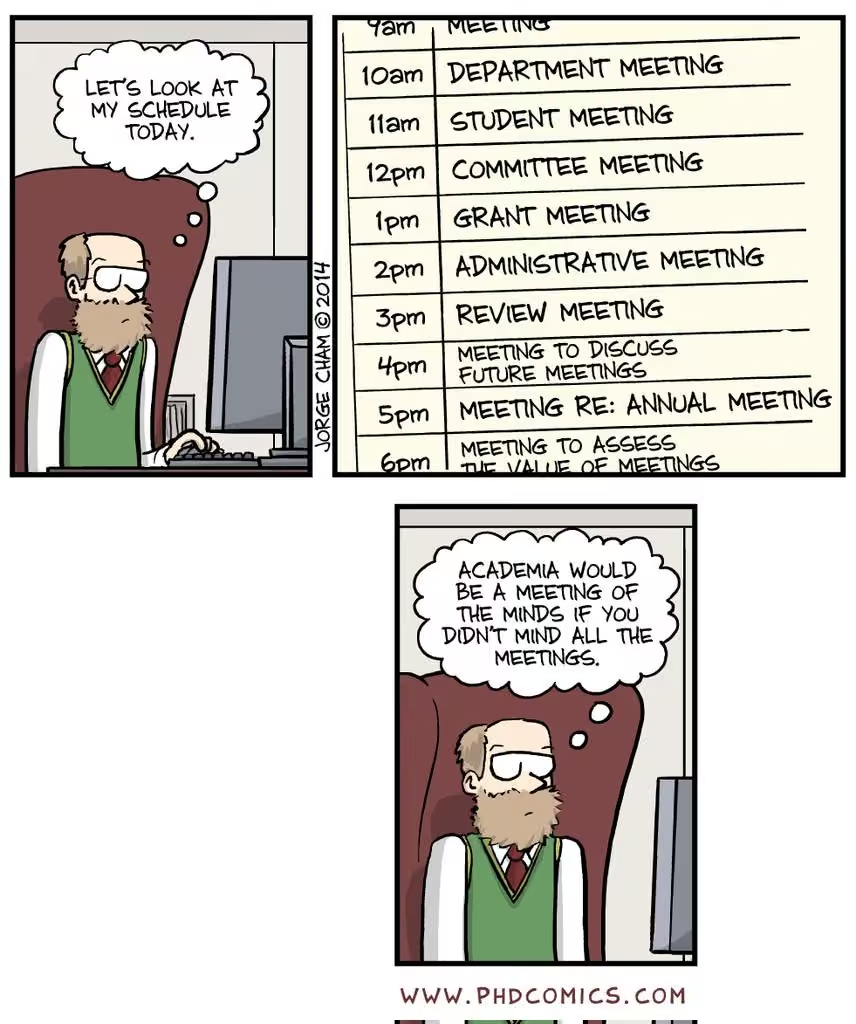
Thursdays used to be my heavy meeting day. Started at 8:30. Wrapped up at 7. Left me exhausted but without a sense of having accomplished anything at all.
But some things get better. Today started at 8:15, wrapped up at 12:30 still have half a day left for coding/writing.
James Schnable reposted
Two faculty searches at Berkeley Plant & Microbial Bio @PMB_Berkeley Submit applications by Sept 30
Plant Responses to Environmental Changes aprecruit.berkeley.edu/JPF05382
Plant-Microbe Communities aprecruit.berkeley.edu/JPF05522
"If you grow it, they will come" is one of my favorite lessons from having some sort of a field program.
Given the need to increase seed before we can even plant a field experiment, my lab makes decisions about what we're going to grow at least fifteen months in advance. That can be a source of friction. Try telling a collaborator "Sure, happy to help your student test out their new robot. Just give me fifteen months!" That's not the speed engineering, or computer science, or most non-fieldwork biology moves at.
But the wonderful discovery I made almost a decade ago is that, if I can find the people and time and money to grow a nice, replicated population of resequenced corn or sorghum lines in the field, it turns "I'd love to work with you. Can you wait 15 months?" into "That sounds really cool. We've got the plants you'd need in the field. Can we start next week?"
(h/t to @Chidu_ullagaddi, Anuradha Choudhary, @WaqarAli325, and Shokhista).
Sitting in silence with the realization I was unable to prove to this CAPTCHA that I am human ... and instead I had to cheat with ChatGPT to pass the test.
So used to 1.5 mL tube scale that my brain keeps telling me this photo can’t be real.
Pre-coding agents: my job is ensuring lead author puts all important scripts in the paper's git repo.
Post-coding agent: ensure the lead author doesn't just drop 188 different partially redundant/contradictory codex/claude written-scripts in the repo and call it reproducibility.
Sitting in a coffee shop and just submitted a 180,000 job batch for language model processing. And yes this is what taking time off to relax looks like to me.
Don’t think I’ve tasted a mooncake in the last decade, but growing up we used to have then every year. Looking back they must have been gifts from my dad’s co-workers or students.
I'm going to have to be more careful about what I post here. Overeager AI agent drafted a whole news story for the lab website about our exciting new leaf sampling technology based just on this tweet. 😂
Plus side, an excuse to use the prompt: "cut the guillotine"
New leaf guillotine just dropped.
There’s a special joy that comes seeing former students and trainees become things you could only dream of being yourself. Case in point: congratulations to @ravi_mural on his new title: Mango Geneticist.
Did you know the Times of India has the largest print circulation of any english-language newspaper in the world? 😃😃😃
Claude is down, ChatGPT returned 404 not found, grok is unavailable. .... this is how it starts, right?
Impact of climate change on agriculture is unevenly distributed. US midwest and India both have experienced much less warming/less disruption of agriculture. Agricultural regions in Europe, Mexico, and Africa have seen much bigger impact. China somewhere in between. - David Lobell at @corteva New Frontiers conference this afternoon.
Lobell & Di Tommaso (2025) A half-century of climate change in major agricultural regions: Trends, impacts, and surprises. Proceedings of the National Academy of Sciences doi: doi.org/10.1073/pnas.2502789122
Over the course of my 16-year career as a plant scientist (2009-2025), the share of papers published in The Plant Cell from research labs in China has grown from 8% to 57%. In the Plant Journal, it grew from 10% to 55%. Wow!
Seems like a good rule of thumb for using AI in any sort of written communication with other humans.
AI writing is only allowed if your input tokens > your output tokens.
"Write me an article on X" is slop, "here's an hour of my hard-won experience on X, write it up" is morally defensible and leads to good writing, even if AI wrote the final draft.
Divide input tokens (initial idea plus guidance along the way) by the number of tokens in the final draft to get your distillation ratio.
Our society's idea of where ears grow on corn plants has is tuned to corn shaped by decades of selection for ears at the right hight to be harvested by combines and before than by centuries of selection by farmers who didn't want to be constantly bending over or standing on tiptoe to harvest their crops. What our ideas of normal corn don't reflect is any sort of limit on corn's genetic potential to grow ears at near ground level or next to the tassel (Photos by @Chidu_ullagaddi & @LinaLpzc)
Fascinating difference between American and Chinese approaches to standardized testing for college admissions:
The best score a student can get on the SAT in the USA is "only" 1-in-1,000.
Students in China can get high scores that are 1 in 30,000 on the Gaokao.
People really need to start realizing just how strong @Zai_org is, the founders are Tsinghua CS profs who’ve been working on AI models for 20+ years
To ensure you can get into Tsinghua CS, you usually need to score top 15-30ish in your whole province on the gaokao (top 0.003%)
To get into the famed Yao class you need to be top 1
I slept for five hours last night. I'm incredibly far behind on two papers we're supposed to submit _this week_. And, despite the freezing building maintenance and upgrades/updates in response to the latest state budget cuts, there are people outside my second story office window quite literally drilling bricks out of the wall all day.
Highly recommended if you have access to a middle eastern grocery.
First day of fall teaching kicks off soon. Construction delay moved my course to a new classroom. Seemed oddly familiar. Just realized this is where the teaching demonstration was held when I interviewed for my current job… in the summer of 2013.
Starting in late 2025, the American Security Drone Act banned the use of UAVs incorporating components from specific banned companies in federally funded research.
In response, many universities made the choice to ban their researchers from using any drone not on the government's pre-approved "Blue List" (a stricter standard).
Three years ago, a university research group that bought drone for agronomy research (taking pictures of cornfields) might have spent $5,700. Today the same preexisting drone can't be used. Buying an equivalent replacement from the pre-approved list would cost $37k.
There are reasons congress passed the ASD Act.
There are also reasons universities prefer to err on the side of less risk and less research rather than more risk and more discoveries.
But if you see a big drop in research and extension in these areas in the coming years, now you'll know why.
Can I get any native portuguese speakers to weigh in on the quality of this translation? Does it sound like someone just plugged it into google translate or is the word choice reasonably natural?
Doesn't matter how many times I look and realize I'm wrong, every time this coffee shop shows up at the edge of my vision my brain insists it must be a bacteriophage.
James Schnable reposted
How close are farmer-applied N rates to the optimum?
crops.extension.iastate.edu/post/how-close-are-farmer-app…
“How toxic could a plant called black nightshade really be?”
Pink and purple are always the last markers.
James Schnable reposted
Genetic science shows that inherited traits are shaped by “hotspots.” #unlagrohort's Gen Xu and Jinliang Yang are using this scientific insight to point out key ramifications for #cropbreeding, as explained in their new paper in Nature Communications. ›› go.unl.edu/pocketscience #unl #ianr
James Schnable reposted
Passed my PhD candidacy exam this month !!
Officially a PhD candidate in Complex Biosystems at @UNLincoln. Thank you to my advisor @szintri , my committee, and the @SchnableLab.
On to the dissertation.
#phd #computationalbiology #plantbreeding
A big cause of off-by-ten errors when people translate numbers between different languages in their heads:
English: thousand (10^3), million (10^6), billion (10^9)
Hindi: lahk/लाख (10^5), crore/करोड़ (10^7), arab/अरब (10^9)
Chinese: qian/千 (10^3), wan/万 (10^4), yi/亿 (10^8)
Simultaneously a remarkable accomplishment of science and engineering and one of the most awesomely over the top launch videos I’ve ever seen. Congratulations to all those involved!
Zhuque-3 Y2 mission recap
Thought I’d lost track of time writing and it was already dusk. Nope just a proper Midwest thunderstorm.
Zhongjie Ji and his team setting up for our biggest imaging run ever on UNL's greenhouse imaging system. He'll be tracking the development of 600+ resequenced sorghum lines in three dimensions from seedling stage to seed set.
One day, about a quarter century ago, I passed my drivers test.
Never appreciated how hard it must have been for my parents to watch 16-year-old-me drive off on my own that first time.
Students who surprise me with questions/approaches/results I'd never have thought of myself > students follow the plan we came up with together > students who only listen to what their coding agent thinks the plan *should* have been.
One of the most frustrating kinds of student a research advisor can have is one you sit down with and walk through something in great detail so they can go implement/explore it, only to find days later that they completely ignored it and did something meaningless. That's what a lot of AI for Science attempts with current agents are like. Almost all success cases you are seeing are survivor biased.
650 miles. Three states. Five charging stops. A car that _mostly_ drives itself. PhD student’s commencement at 9 AM tomorrow.
James Schnable reposted
What’s more annoying than trudging through standing water to pollinate… waterlogged tassel bags that need to be swapped out …
End of season sometimes just piles on with the annoyances …
🤷♀️
Models trained using genetic markers + gene expression + phenotypes can be better predicting phenotype solely from genetic markers than models trained using only genetic + phenotype data from the start. Kontolati et al, out two days ago. doi.org/10.1111/tpj.71076
James Schnable reposted
This is how tenure ends.
blog.computationalcomplexity.org/2026/08/unexpected-unemp…
Claude is using subagents to stress test to documentation for one of our new tools and it's description of how humans read documentation is spot on!
Was just explaining to someone the other day the saga and politics of Zihao’s first paper on this method for root phenotyping.
Real mind “blowing” science
Definitely need to read this one in depth on Monday.
Genome-wide dissection of tillering responsiveness to neighbour proximity in sorghum.
www.biorxiv.org/content/10.64898/2026.07.08.737219v1.abst…
The University of Nebraska (the cornhusker state) spends 30% less on Agronomy in real terms than a decade ago. A bigger share of what's left goes to health insurance. Fewer staff and fewer, lower-paid professors. Doesn't reflect last month's additional 5% cut from the governor's office.
Been using a faster/lighter tool our lab built recently to verify the identity of RNA-seq samples to go back through some of our old datasets, including this never-published study from 2021. Fascinating, but also a little worrying. (1/x)
Caught a small handful of F1, F2, or F1BC1 plants sampled from "inbred" plots, but the scarier part was that in more than 50 of 736 our RNA-seq and published DNA-seq disagreed across large chunks of their genomes with no evidence of recent outcrossing on our side or theirs. (3/x)
Both @vla_torres and @xiaoguanghuan were really good about finding and tossing samples that weren't what they were supposed to be. But we often couldn't spend the time figure out exactly _why_ particular samples didn't look right. Now we can. Lets us focus on where we need to update our rapid field sampling protocol, while also figuring out what is already working well. <-- Our team collecting these samples at a rate of 60+ plots/hour and only examples of in the field cross contamination across the entire dataset! (4/4)
Very cool study! For the 5 that dropped out after quality analysis was that sequence library quality or were any of the stocks listed as Col-0 actually entirely/partially something else?
Here is a neat story led by Alex Tadros on the history of Arabidopsis laboratory stocks. They can be diverged by over 100 generations!
Genetic and epigenetic divergence among Arabidopsis thaliana Col-0 laboratory lineages since the 1950s www.biorxiv.org/content/10.64898/2026.08.05.743031v1
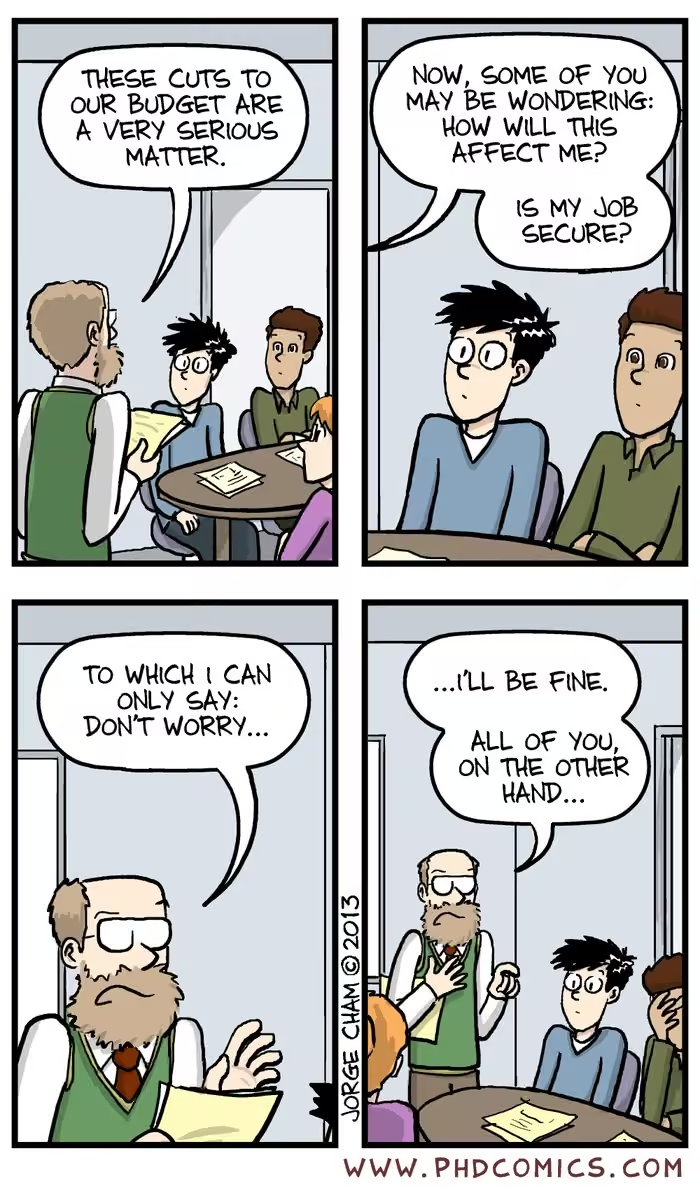
An e-mail with the subject line "Free tobacco" means something different to plant biologists than it probably does to most people.
A bunch of lab folks help Chris (our Young Nebraska Scientist high school intern) practice for his presentation tomorrow. Swing by the summer research fair to learn more about a story that connects hardware prototyping, image analysis and sorghum quant-gen.
Somewhere between two and ten, building new field equipment for our lab stops being prototyping and becomes manufacturing.
Everyone needs a rubber duck to help troubleshoot their code. Even if the problems I am talking through have shifted from “why isn’t my script writing output” to “okay what in the world was codex trying to do here.”
One of my students discovered ProQuest now a list the full official names of funding agencies.... in a field that has a character limit too short for "Foundation for Food and Agriculture Research."
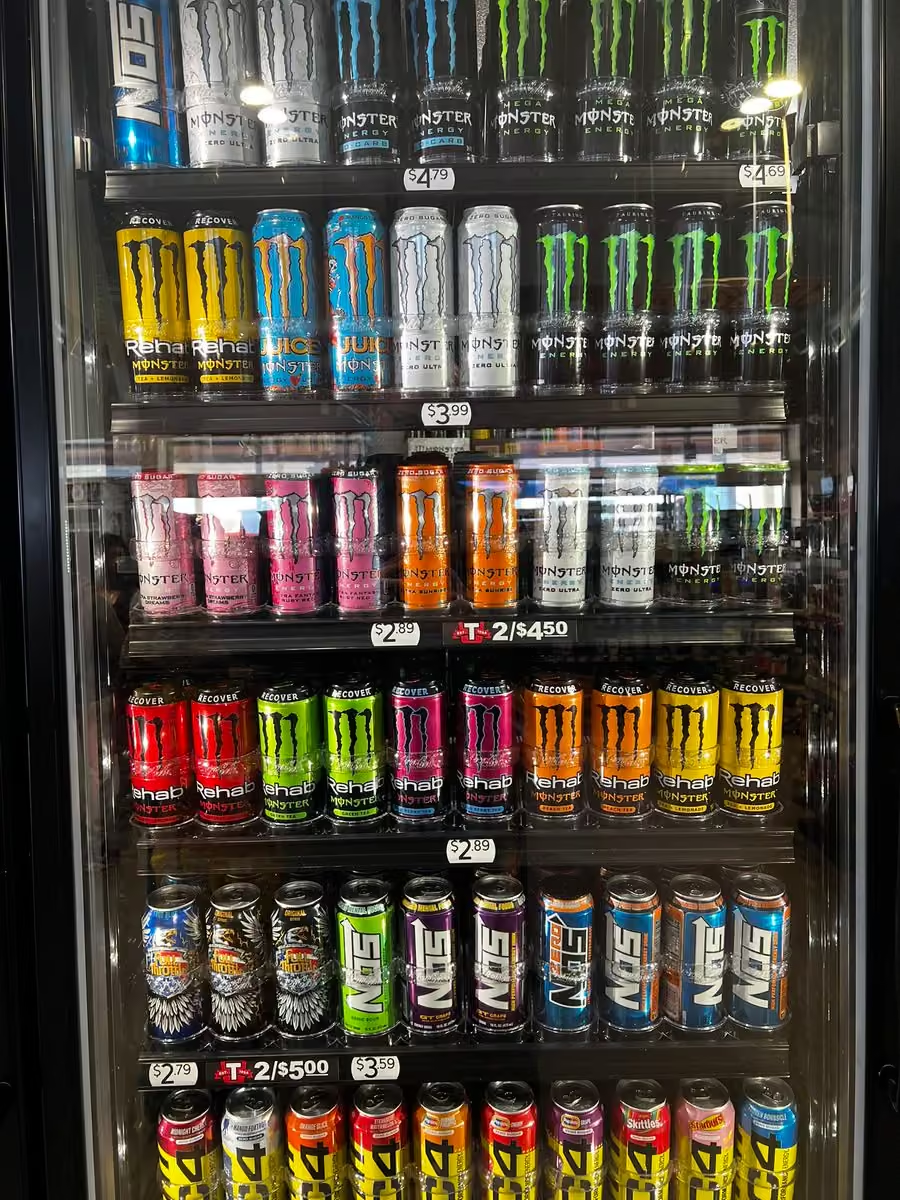
I knew part of getting old was not understanding the music “kids listen to these days” but nobody warned me energy drinks would be generationally coded as well. Oh well. Still does the job.
Drafted an e-mail to my boss's boss offering to voluntarily cut my own FTE (take a pay cut).
The email said I'd rather be half a professor with HR and accounting help than a full professor with neither.
Looked at it for two hours.
Didn't send it.
James Schnable reposted
As I remember it, he said, emphatically, that relaxed selection due to lower expression was not likely and you proved him wrong. What struck me is that he was delighted to be wrong and obviously proud that you were right.
A good day to reflect and be thankful both to my own advisor who shaped the scientist and mentor I am today* but also for the wonderful human beings who came through my lab and now train students of their own.
*The good parts. My flaws are entirely my own.
Grateful for the many gurus who have shaped my journey, from family and teachers to mentors, colleagues, students, friends, and even reviewers who challenged & helped improve my ideas!
Happy #gurupurnima to everyone who teaches, questions, and inspires us to keep learning 🙏
How today was supposed to go:
Help a student wrap up the analysis and writing for research project.
How today actually went:
Trying desperately to get ahold of someone _anyone_ in the HR office who understood grad students on F-1 visas don't need work permits.
Student e-mails a bunch of professors looking for a PhD. Happens all the time.
Student forgets to separate e-mails. 200 e-mail addresses. One thread: "Dear Professor"
Starting with Nobel Prize winner Jennifer Doudna. Then, 150 names later, me.
Someone hit "Reply All" ...
This is a sign of a functional university. You know budget situation is really bad when administration starts forwarding job ads at other universities with subject lines like: “Exciting Opportunity!”
Dear Tenured Faculty - Please stop sending job ads to your junior colleagues with “Escape now before it is too late!” post it notes attached.
New leaf guillotine just dropped.
Michael Freeling was a remarkable mentor to dozens of scientists over half a century in fields ranging from stress biology to evolutionary developing to comparative genomics. Mark’s letter (below) does a better job than I've been able to of putting into words what made it so special to know, work with, and learn from Mike.
Pretty sure Mike had more good ideas in a semester than I've had in my entire career. 30 years into becoming a leading expert on maize genetics and development, he decided he was going to be a comparative genomicist, pivoted his whole lab and became a world leader there too.
A chance to do fun frontier level biology with AI again.
-Fable won't so much as say hi to someone it knows is a biologist.
-GPT 5.6 is exhausting to argue with.
-GLM 5.2 is is near-frontier for coding but super optimized specifically for that.
Exploratory data analysis with GPT 5.6 is probably faster and more accurate than with earlier models but it's a lot less _fun_. I find myself getting stuck in repeated arguments:
1) No we're not making a weird custom statistical model for each problem. Use standard tools/methods throughout the study unless there is a specific reason a problem needs a custom solution.
2) The point of research is to reach conclusions. We can say we found something. We can say we didn't find something. Either has value. Even saying our analysis was underpowered/confounded has value. Burying every statement in caveats until it has no meaning has zero value.
It's getting lonely.
Yesterday I heard a faint alarm. Wandered the halls. I found the machine in a room I'd never visited before. Went looking for someone to tell. Didn't find a soul. My lab used to share this wing with four other professors.
Two took early retirement buyouts. The other two are still here. I think. Little funding & empty labs.
In protests or unrest anywhere in the world, my starting assumption is that the side shutting off the internet and cell service so people can’t see what’s happening is probably not on the side of freedom and justice.
An impressive and happy group of folks! Turns out collecting thousands of sorghum leaf samples goes much faster -- and lab morale stays much higher -- at 70 F/21 C than at 95 F/35 F.
Here is to the team who collected data.
Dry socks are one of the small joys of life that I never think to appreciate until I don't have them anymore.
Let me show you the sorghum field our team will be collecting samples from today.
Set a new record. 3,180 samples collected in 1 hour and 12 minutes.
If I’m coding late today, I can at least do it a good view.
Most public universities recognize their most accomplished/effective faculty with a title like "Regents/Distinguished Professor."
Creates a group with knowledge and the gravitas to (sometimes) to warn leaders away from bad decisions.
Nebraska has no comparable group.
"Most" ~ 3/4ths of Big 10 and Big 12 schools.
The total number of faculty with the title is often capped, and awarding it requires review (sort of like going up for tenure/full professor), often by similarly prominent faculty at other schools.
What makes it even more confusing is when you travel internationally and have to introduce yourself as an "assistant professor" (meaning an independent PI) in a country like China or Poland where "assistant professor" is a job title that works for/under a full professor.
The most confusing academic job title in the US is Assistant Professor (especially if you need to translate it).
Some people assume it means “assistant to a professor” - someone who helps a professor.
An Assistant Professor is an independent professor. They run their own lab, supervise their own PhD students, secure their own research grants, and teach their own courses. They are not assisting anyone.
It’s simply the historical name for the first professorial rank in the U.S. academic system.
James Schnable reposted
I've found I can get excited about almost any research question if I learn enough about it and enjoy the folks I'm working with. Conversely, I can lose interest in almost any research question, no matter how passionate I started out, if collaborator meetings feel heavy. (3/3)
Writing good introductions often means slogging through literature far outside my field. But, every so often, I find poetry:
"Despite our understanding of the circadian clock, life in a rotating world is not as simple as the sine waves it generates..."
James Schnable reposted
I never post on X, but had to reply to this one.
Everyone knows @rsalakhu is brilliant. But what always stood out to me was his EQ—perhaps the highest I’ve ever seen. That rare combination of extraordinary IQ and EQ is exactly why so many of us wanted to work with him.
Very fortunate to have been his PhD student.
I’ve been asked several times whether Zhilin Yang, the founder of @Kimi_Moonshot was my PhD student. The answer is yes and he is absolutely brilliant.
But I’ve been incredibly fortunate to work with so many outstanding PhD students over the years. So I thought I’d brag a little about them and their career paths (of course there are also many MSc and undergraduate students, sorry if I missed anyone):
Founders / Founding Team Members
Devendra Chaplot @dchaplot PhD, Founding Member Thinking Machines / Mistral
Zhilin Yang PhD, Founder & CEO, Moonshot AI
Jimmy Ba @jimmybajimmyba MSc/PhD, Co-founder xAI
Hubert Tsai PhD, Co-founder Spuree, Apple
Nitish Srivastava @nitishsr PhD, Co-founder Perceptual Machines; Co-founder Vayu Robotics
Charlie Tang PhD, Co-founder Perceptual Machines, DE Shaw.
Professors
Paul Liang @pliang279 PhD, MIT
Ben Eysenbach @ben_eysenbach PhD, Princeton University
Ruosong Wang @RuosongW PhD, Peking University
Bhuwan Dhingra @bhuwandhingra PhD, Duke University
Roger Grosse @RogerGrosse Postdoc, University of Toronto
Alexander Schwing Postdoc, UIUC
Research Scientists
Shuyan Zhou @shuyanzh36, Postdoc, Meta Superintelligence Lab
Tiffany Min @SoYeonTiffMin PhD, Microsoft AI
Murtaza Dalal @mihdalal PhD, Tesla AI
Minji Yoon @MinjiYoon90 , PhD, Microsoft AI
Shrimai Prabhumoye PhD, NVIDIA AI, Mistral
Haitian Sun @sun_haitian PhD, Google DeepMind
Emilio Parisotto PhD, Google DeepMind
Lisa Lee PhD @rl_agent, Google DeepMind
Manzil Zaheer @ManzilZaheer PhD, Google DeepMind
Jamie Kiros PhD, Google Brain, OpenAI
Yuri Burda PhD, OpenAI, Anthropic
Cody Severinski PhD, Amazon
Told visibility in Chicago is less than a mile. And air is much better here than in Minnesota and Michigan.
Forty days ago our lab planted almost 1,000 kinds of sorghum from around the globe. The first one is already getting ready to flower. Photo by @Chidu_ullagaddi.
AI writing guidelines for another AI: "Here is were the secret answers are, but don't look at them!"
2.5x is consistent with the academia:industry salary ratios I've seen for folks who understand the biology, have decent coding/data science skills and can speak the same language as AI/ML folks.
Folks who have the skill set that opens up those industry jobs and are still in an academic role are mostly explained by one of three stories:
1) Visa/immigration constraints.
2) Conscious choice to sacrifice total comp for job security/research autonomy, or
3) Passion for teaching over research.
Anthropic is hiring a Research Scientist (post PhD) with biology & computational skills in its life sciences division for a $300-$320 K salary (2-3 times what a starting Assistant Professor would make in academia, after a serious postdoctoral fellowship).
Brave new world!
In the past 3.5 years the priority date for someone from India who qualified for an EB-1 green card (elite public and private sector researchers) has barely moved at all.
Claude stands up web interface (including tailscale tunneling) in 15 minutes so our collaborator in Mexico can score disease on thousands of leaf photos without needing to transfer gigabytes of .jpgs or mess around with hand entering scores.
My lab has worked with UAV data for almost a decade. Wrote code. Answered questions. Published papers. But depended on others to fly the drones. Until yesterday. It was our first time point for 4,500 research plots.
My students flew.
Lab manager mentioned we probably need more SnapGene licenses. Pulled up this tweet and then the SpliceCraft github repo. Successfully sold him on testing out whether we can migrate before we spend anymore on license fees.
Taking a moment to plan out the lift and domestication of the pVib (pJE202) luciferase operon from Vibrio harveyii into my Golden Braid parts bin. SpliceCraft has this fun "Lift Operon" function that makes primers to swap out bases; eliminate cutsites. Open source glow bug soon!
Ten years of lab papers. No single name lasts more than a few years. People arrive, learn, do the work, and move on to something better. And yet -- so far anyway -- there's still a "lab." It only exists because we keep agreeing it does.
Swallows nesting under the bridge next to our lab.
Lab member got time-sensitive news the Thursday evening before a long weekend. Didn’t bring it up me until today.
When I asked her to let me know right away next time, she asked: “Wait, is it okay to email you on weekends?” 🤦
Just some light 4th of July afternoon reading.
James Schnable reposted
Apparently every sorghum line has a "sweetness" phenotype. Either the sorghum stalk is "sweet" or "insipid." Perfectly correct use of the word "insipid" but it amuses me way more than it should.
In each row every corn should be genetically identical. But pollen contamination sometimes results in a better/faster/stronger hybrid plant trying to hide among its inbred half siblings. If our genetics research is going to give the right answers, those plants need to be found. And they need to die.
Sun goes down on another year.
Those who know me well will appreciate just how happy I am right now.
It's amazing how much faster and more fun it is to hunt for candidate genes once you have verbose-literature informed annotations (what we have for maize and sorghum now) vs a single short-phrase functional annotation that was informed mostly by scanning for protein domains (what we used to have in most species we work on).
Confirming: @AnthropicAI still won't let people it knows are biologists use Fable in any capacity at all.
My lab's first experience working with sorghum in the field was ten years ago this summer. Doesn't take a lot of 3-4 meter tall plants to make you appreciate why most sorghum grown in the USA are dwarfed varieties.
Powerful field datasets start with good tools and good planning. We'll have 20 people in the field tomorrow for a collection, but the success of that effort hinges on the last three months of prototyping, testing, and planning by @JonathanTurkus and his team.
Our unreasonably large order of liquid nitrogen just delivered. Received word @ravi_mural's lab sending an extra ten hands.* 2,520 tubes labelled, sorted and loaded. We're really doing this!
*Thank you, Ravi!
Eduroam at UNL has a misconfigured certificate that breaks wifi on the UNL campus so using cell to try to set up an NIH account that someone decided should be a new requirement to submit grant proposals to the US Department of Agriculture.
Nothing like triple digit (Fahrenheit) temps to get the lake almost entirely to myself.
Feeling this newly recovered ancient roman* wisdom right now.
*Or maybe ancient greek wisdom? It's written in greek but from the library of a roman.
Hard to believe it's already been four years. Most of the 2026 world cup stadiums appear to be mostly using burmuda grass and bluegrass. But hopefully we'll see paspalum back in future years! It's a tough little plant.
One more reason to watch the World Cup ⚽: In 2022, JGI User James Schnable and his team looked at grasses for clues about crop resilience — and spotted their study species on stadium pitches!
Hear their story: jointgeno.me/s04e01
@SchnableLab @szintri @xiaoguanghuan
For context, the cost of this renovation, paid by “internal reserves,” would be enough to cover the most optimistic estimate of the budget savings from the recent elimination of Statistics at the University of Nebraska for two centuries. (1/2)
Of course the cost of the deconstruction and rebuild will offset by rent from college students staying in the new dorms. And the savings from removing statistics will be offset by the tuition students interested in statistics and data science won’t pay anymore.
Tassels seem to come earlier every year. It's June 24th and it looks like it's time to properly kick off field season.
You had me at "an autonomous robot that kills weeds with electricity"
Offered without comment...
Genetically identical sorghum plants grown in Alabama (under nitrogen deficit stress) and Nebraska (with plenty of nutrients).
Studying plant genetics is like studying human genetics if each of us was born with hundreds of identical twins who were separated at bith.
Do the basics, but at a scale never before achieved, and spend the time on quality control to make sure what you release is good. Sounds simple. Is hard. But can be surprisingly high impact.
I've been working with data for so long. Often, it feels like there is nothing new under the sun. Just applying the basics, doing it on a bigger scale, and being insanely paranoid.
Occasionally, though, you will come across an idea so brilliant and simple that you are just blown away that it hasn't already been done in public before.
No, there is nothing at all ominous happening here in Nebraska tonight. Why do you ask?
Started out trying to make better guesses about what genes in a corn plant do and now I think I'm in the process of getting Chlamy-pilled.
-In corn 1-2% of genes are experimentally linked to phenotypes.
-In arabidopsis ~10% of genes are linked to phenotypes.
-In chlamy as ingle (giant) study linked 59% of genes to mutant phenotypes.
Really wondering what the exceptions are to cilia/flagella related traits aren't "usually" relevant ones in corn.
I get excited about population-scale RNA-seq for figuring out gene function. But can the same data predict plant traits? Madison Creach led a paper testing this across 129 maize phenotype datasets, using gene expression from 750 maize lines grown in two environments. (1/5)
Third (and this is the one I’m most excited about): expression data from multiple environments predicts plant phenotypes better than expression from a single environment. If we keep adding expression data, the models keep getting more accurate. (4/5)
Full paper is out in early access.
Creach, Webster, Newton, Turkus, Schnable, Thompson, & VanBuren (2026) Predicting complex phenotypes using multi-omics data in maize. The Plant Cell doi: doi.org/10.1093/plcell/koag185
Using heritability as a proxy for the usefulness of phenotype data is a decent rule of thumb but sometimes can lead you down the wrong path.
Human-scored disease severity in our sorghum population started out with a heritability of H² = 0.34. already painfully low. But once we controlled for the correlation with flowering time (H² = 0.89) and leaf area (H² = 0.67), the heritability of our disease scores dropped even more, down to H² = 0.28.
However, controlling for the correlation between disease and more heritable traits increased the significance of the strongest GWAS peaks 3–5× and increased the fraction of suggestive peaks near plausible disease-resistance candidates from ~10% to ~30%.
Why are we getting better results with a lower-heritability trait? Because we simplified the genetic architecture. We subtracted out highly heritable variation driven by many genes controlling reproductive and vegetative development. The overall proportion of variance attributable to genetics went down, but the proportion of the remaining variance attributable to any given disease-resistance gene we want to find went up.
Worth checking out! The cross-species pooling is cool, but the part I can ask one of my students to use today is to look for rank-based enrichment in our stress response RNA-seq instead of just testing up/down differentially expressed genes.
9/Cheaper, and quantitatively honest, stress transcriptomics. Great work led by Sabrina Tan and the team.
Paper: www.biorxiv.org/content/10.64898/2026.06.16.732598v1 Code + data: github.com/mutwil/multiplex-rnaseq-spikein
#plantscience #rnaseq #transcriptomics #bioinformatics
James Schnable reposted
Excited to share my PhD work tomorrow! DM for Zoom link if you’d like to attend.
The share of my contributions to AI-"assisted" data analysis that consists of:
The dataset you need is locked behind a confirming-you-are-human check? Tell me the URL and I can download it for you.
Is growing worryingly fast.
I catch myself constantly writing DeepSeek "DeepSeq" (like RNA-seq, ChIP-seq, and all those other genomic sequencing tools.)
James Schnable reposted
Biologists win again
Federal government orders Anthropic to treat everyone in the world like they are a biologist. (No Fable access allowed.)
The US government, citing national security authorities, has issued an export control directive to suspend all access to Fable 5 and Mythos 5 by any foreign national, whether inside or outside the United States, including foreign national Anthropic employees.
The net effect of this order is that we must abruptly disable Fable 5 and Mythos 5 for all our customers to ensure compliance.
Access to all other Claude models is not affected.
We apologize for this disruption to our customers. We believe this is a misunderstanding and are working to restore access as soon as possible.
Read our full statement: www.anthropic.com/news/fable-mythos-access
I walk by more and more of these empty offices.
Folks who were laid off and left without waiting out the clock.
Folks who took the buy out/early retirement.
Folks who took new jobs at other universities with smaller budget crises than ours.
It is getting lonely.
Tuition up.
Budgets down.
Campus empties.
Sometimes you wake up to 2 inches of rain the day you're supposed to sample your field experiment. Can be a hard transition for scientists used to chambers/greenhouses, where missing the exact planned sampling window usually means someone didn't plan ahead or didn't care enough.
I've lost entire field experiments to drought, to hail, to a contractor spraying roundup on a field that wasn't roundup resistant. At a certain point just build as much robustness and redundancy into your experiment designs as you can, and try to sleep well at night.
You don’t have to trust AI to design experiments or interpret biology. But at least use it to make the scripts you use every day faster. Cut my LRT MLM GWAS runtime by 16 minutes (-57%!) in 30 minutes. Identical outputs to original, just faster. And I have >2,000 traits to run.
Note: this approach is less effective when applied to highly optimized programs written by trained CS professionals (e.g. BLAST, bwa, etc), but is extraordinarily effective when applied to R scripts written by folks who are experts in genomics, quant gen, pop-gen, etc.
Asked in the new Anthropic model wouldn't talk to biologists. .... apparently the answer is yes.
Me: Oh Claude Fable is out, let me test it on something simple like building a model to measure leaf nitrogen content from hyperspectral data.
Claude Fable: This looks like you're trying to do bioterrorism so no.
Okay, benchmark how long it takes to run a GWAS in sorghum is apparently also bioterrorism adjacent. This is ridiculous.
James Schnable reposted
AI was apparently trained on my academic career.
I was thinking this morning about how AI is pretty good at starting research projects, but not very good (at least for now) at finishing them.
As a result, it’s become much easier for scholars to accumulate an unmanageable backlog of half-baked, AI-assisted projects.
Finishing research has always been the hard part. But I’m not sure our PhD training and professional development institutions have fully adjusted to a world where the gap between starting and finishing has grown exponentially.
Let Codex run for 40 minutes with /goal set and it sped up how fast our GWAS package reads VCF files by 10x!
This job isn’t all hard parts. Former member of our lab is headed to Johns Hopkins in the fall. Feels good.
First action Monday morning is sending “I’m sorry, but I don’t have funding to support new students right now” e-mails to the four new students who wrote to me since I left work last night. One of the parts of this job that seems to get a little heavier each year.
I'll never get tired of how it feels to know science is still happening while I sleep. Set up 2,000 GWAS to run overnight.
CRJ550 is the only way to fly: big in cabin shelving for no gate checked bags, so many first class seats my seat mate pretty reliably gets upgraded and leaves me with a row to myself, and 100+ megabit starlink internet the whole flight for free.
2026 Los Angeles reminds me of 2014 era Sichuan this morning.
James Schnable reposted
Registration is open for a AG2PI virtual workshop (June 15) about GWAS using SVENETICS.
Participants will learn how to run multi-trait GWAS through an easy-to-use web app interface, using maize data as an example. No coding required.
Register: go.iastate.edu/Z6TPRY
Even small amounts of mislabeled data -- genotyping mix ups, planting errors, data entry mistakes -- can drop the significance of a GWAS signal by three orders of magnitude.
Tried to explain the US visa process for scientists to someone who doesn't run a research lab and therefore has never had to wrestle with this particularly bureaucratic Rube Goldberg machine before.
...it did not go well...
Replace the seven million people with twenty thousand corn plants and I feel this so much.
If my math is right and the weather holds, our team will collect enough maize and sorghum leaf samples to fill 150 of these trays this summer for RNA and metabolomics work.
It turns out at $25/sample, the optimal dataset size for RNA-seq is a LOT larger than it was back when we made the first 700+ RNA-seq field datasets at $179/sample.
You could get a plant genetics PhD, be hired to breed chocolate in Miami, take home $192k/year, spend sun-drenched days perfecting rare cacao hybrids in the ocean breeze and neon-drenched nights learning salsa from beautiful locals in rooftop bars... but you won't.
But seriously, the USDA is hiring a chocolate geneticist/breeder for a position based in Miami. Pay up to $192k/year. Also a bunch of other crops in a bunch of other cities. Apply here: www.usajobs.gov/job/868877900
Bayer job ad with “preferred qualifications” that read like a university field tech position: starting salary $95- $141k/year + bonus.
Public-sector research is not prepared for how quickly we are going to lose qualified people.
Every time I walk by this poster I take a moment to be thankful my career path has never required memorizing the different herbicide mode of action groups.
I think I'd hit my maximum potential happiness as a human being with a 50/50 mix of weekend days and days focused working on a single hard-but-important problems without interruptions or busywork.
But for now wrapping up seven hours of coding with a delicious grilled brat and watching the sun set on memorial day will have to do.
And that's how I realize my AI's connection to my e-mail client was broken...
This whole AI talk keeps using the example "we want to adapt our model trained on corn data from Illinois (where we have really good labeled corn data), to work in Nebraska (where we don't have any good corn data)" and I'm starting to feel personally attacked.
40 years old and each year still cheers me up to see corn coming out.
Academia absolutely rewards the ability to grow and pivot and to find many different hard problems fascinating. But I'm not sure we ever selected for people obsessively interested in narrow topics.
Academia is cruel because it selects for people obsessively interested in a narrow topic, but what’s actually rewarded is the ability to pivot fluidly to whatever’s new and fundable.
It's a good day.
For all the grad students out there: receiving a job offer (or getting close to one) is a highly effective way to help your papers jump to the top of your advisor’s editing pile. ;-)
Me: "How's planting going?"
Postdoc: "Here's the video from my augmented reality glasses."
I'll never get tired of living in the future.
The USDA is hiring plant geneticists at 23 research sites across the country. Pay is up to $192k/year. Search closes June 11th. www.usajobs.gov/job/868877900
Time passes. People graduate and move on to bigger and better things.
James Schnable reposted
Breaking news: Indiana University plant microbiologist Roger Innes has been locked out of his laboratory by the school in response to a request by one of his federal funders. The move comes after Innes complained about the government’s prosecution of Chinese postdocs.
Feels like summer.
And the new name of the formerly Pioneer + Dow, then Corteva seed business is ..... (drumroll) .... Vylor.
Chicago is a very nice city but I’m hoping I won’t have to spend the night here.
James Schnable reposted
Congratulations James @szintri !! Well deserved award!
James Schnable reposted
Congratulations for the 2026 NAS Medal in Food Science and Agriculture. Truly deserved honor!!!👏🥰
James C. Schnable (@UNLincoln) is helping farmers grow more resilient crops with fewer inputs through his work in plant #genomics & precision agriculture. On #agday26, learn about how he is advancing sustainable agriculture in a changing climate: www.nasonline.org/award/nas-prize-in-food-and-agriculture… #nasaward
First time flying out of the new Kansas City airport. Private security that gets paid on time even when TSA doesn’t. Big open spaces. Genuinely good food. Friendly gate agents. Definitely an A+ experience.
James Schnable reposted
@szintri you have observed something similar in your cold study
10/ Can we predict stress responsiveness from DNA/RNA sequence alone? Yes. DNA and RNA foundation models reach high auROC. Late fusion improves further. Dinucleotide composition beats individual cis-elements: regulatory info is distributed, not concentrated in master motifs.
Biggest perk of jet lag: waking up early enough in a Monday morning to start my day here instead of going straight to work.
Bullet train from Florence to Milan. Plenty of space, gorgeous views, free WiFi and as fast as the ones I used to ride in China (180 mph/300 kph).
Today I taught class in the city where Galileo was born and held his first professorship. And for the past few days, I’ve had the best morning commute anyone could ask for.
Today my lab load a van until the shocks are crying with I don't know how many thousands of corn samples for my collaborator at SDSU.
There are some parts of our job AI makes easier, but plant science is where data meets dirt. And the dirt still needs humans.
I remember when a single 40 pound sack of corn seed from a single genotype of interest felt like a big accomplishment to our lab.
Geneticists (like me) talk about corn in kernels. Food scientists talk about corn in pounds.
Took heroic efforts by @jillhochstein, @NateKorth, and others, but I think my lab is finally talking @NFHC_NU's language: that's a 40 pound (18 kilogram) sack of @schnablelab corn seed.
James Schnable reposted
昔、私は大学教授を目指した。必要なものは、独自のアイデアとビジョン、論文、研究費の獲得。およそ全てが揃ったとき、私は教授職への興味を失っていた。あまり時間をかけすぎてはいけない。好きな人がいるなら、今すぐ結婚した方がいい。
There are some experimental questions that are 1) important to answer and 2) impossible to study in a double blind context.
The point of randomizing to placebo is to reduce bias. If everyone knows whether they got the hallucinogenic toad extract or not then the placebo control didn't work and the results are biased. I'm weary of trials that use a methodology that is not up to the task of studying these compounds and wish we could do better. Not trying to get in the way of commerce here, I promise.
Advice I gave one of my students recently: Spending your entire 4-6 year PhD on one project will make you great at giving compelling talks on that one topic. Completing 4-5 projects may bring fewer "best presentation" awards, but you'll learn far more.
Review request: 1) You can't use AI to review + 2) you can't speculate if the authors used AI.
Are we heading towards a world where everyone uses AI but no one is allowed to admit it?
Things humans still do better:
"Hey, could you ask a picture of a bull to this slide."
Using marker assisted selection to develop sorghum varieties that are resistant to striga while retaining the farmer acceptance traits critical famers in the African Sahel. (1/2)
Work lead by Fanna Maina and the Morris Lab at Colorado State University (2/2) Preprint: www.biorxiv.org/content/10.1101/2025.08.07.667917v1.full
Styles of manhattan plots I can now recognize almost instantly:
rMVP default settings
GAPIT default settings
"Claude please plot these results"
Key messages from NPSS2026 so far this morning:
Jason Rauscher: Do an internship, but also make sure your PI is on board first.
Katherine Frehls: Key skill for plant breeders: be willing to drop things and move on.
Schools that use Gmail tend are ranked higher and get more research funding than Microsoft Outlook schools.
This is what it looks like forBig 10 and Big 12 schools. Gmail schools rank an average of 32 places higher in US News Report with almost 2x the research expenditures.
James Schnable reposted
実験をはじめたばかりの時によくあるミスが、
試薬をいれたかどうか問題。例えば1.5mlチューブに試薬を入れていく時、2つ3つのサンプルだと問題ないのですが、20-30個のサンプルだと何も工夫をしないと、どこまで入れたか忘れてしまう事があります。色々な工夫があると思いますが、私は試薬をいれた1.5mlチューブは位置をずらして置いていきます。色々な対策があるので、自分に合った方法を見つけてください。
もう1点。実験でチューブに試薬を入れている人に途中で話しかけるのはやめましょう。途中で話しかけられると、どこまでいれたか忘れてしまいます。
(特にサンプル数が少ないからと安心して何も工夫せずに、試薬をチューブに入れている時に話しかけられると痛いです)
原則、人に何かを尋ねる時は実験中は避けましょう。
5 years ago: Talking students out of "Reviewers are idiots, no changes needed" responses to reviewer letter.
Today: Talking them out of "You're absolutely right, our paper is worthless" responses.
Happy Easter to those celebrating today.
James Schnable reposted
Genome-wide association studies and modeling of stomatal gas conductance reveal genetic control of water-use efficiency in sorghum (Anuradha Singh , Linsey Newton , Addie M Thompson) doi.org/10.1093/plphys/kiag064 @annusingh1206 @addie_maize @MSU_PRI @ASPB #plantsci
This coffee making robot is one of my favorite things about the San Francisco airport.
Feels good to be back in the Bay Area this week. Certainly not a Nobel scientist do try to be a noble one.
The kernels of more than seven hundred varieties of corn whose genomes we (and others) have entirely resequenced loaded into 1,600+ envelopes, ready to plant here in Lincoln, Nebraska in a few weeks.
@Chidu_ullagaddi and his team are making great time!
Computer reported a monster environmental impact between 2022 and 2023.
Fortunately the human in the loop (@AltundasOzgur) didn't accept the computer's conclusion without question.
Dug a little deeper. One year is centimeters, one is millimeters. Nicely done, Ozgur!
Falling asleep to the glow of the giant cannabis delivery billboard outside my hotel room. Definitely not in Nebraska anymore.
Through TSA in under minute this morning at @LNKairport. Now half the people in the terminal are gathered around petting one of the airport therapy dogs.
The plane is tiny but has ten first class seats, free starlink WiFi (which you have to try to believe) and they’ve replaced what looks like either six or eight coach seats with these big cabinets to store extra carry on bags.
James Schnable reposted
Today we’re launching American Wetware, a design studio for building with biology 🇺🇸💧
I’m doing this together with @thisischristina and @p_maverick_b
Our mission is to learn the design language of biology
Just got an e-mail addressed to "Prof. Smith." I'm becoming him. I'm really becoming him.
Back when I could easily travel to China (pre-2020), I remember the cities changing so much every time I visited. Physical changes in the people can be a bit slower but also dramatic. Wonder how different it would feel today.
The average adult height in China and the US is now roughly equal.
Many have not fully realized just how much China has grown—in this case, literally.
Stories that say all the stuff that we thought didn’t matter that we didn’t know about does matter are easy to tell. So I always really appreciate the people who do the harder job of telling a story all the stuff that we thought matters… it might not.
Eukaryotes exhibit vast transcript diversity. Some argue it's adaptive, while others argue it comes largely from errors in various processes.
This study supports the error hypothesis and suggests that metazoan transcript diversity is largely deleterious.
journals.plos.org/plosbiology/article?id=10.1371/journal.…
Map of airports where the folks doing security screening are still being paid because they work for private contractors and not for the TSA.
James Schnable reposted
The current crop of AI scientists is over-indexed on doing things scientists enjoy (eg. ideation) instead of things they hate (eg. data cleaning)
Don't make your AIxBio product a restaurant where the customers cook their own food and your value proposition is to eat it for them
In 2008 oil cost $184/barrel (in todays dollars), gas cost $6.15/gallon (also in today's dollars), and my got car got 22 mpg (in today's miles). ...and of course but back then we also had to walk uphill to school both ways....
Today is new dataset day. I love new dataset day.
There’s a vast universe of potential software tools that could dramatically improve efficiency for 1–2 research labs… but would never have justified paying a developer to build them.
Column in Science this week on how the incentive structure for faculty to recruit graduate students is changing. This is happening faster than most people seem to realize.
We've been doing this in maize genetics my whole career. But our lineages only go back to the start of the 20th century, so it's a lot less work.
R.A. Emerson -> Marcus Rhoades -> Drew Schwatz -> Michael Freeling -> me.
In Chinese imperial examinations, if you did really well, you would be asked to trace back your genealogy to the ancient great scholars. Anyways I guess we're doing this at MIT now too
How my morning is going...
So yeah....
(Source: Akcigit et al NEBR working paper: 34964)
I've trained 10 PhDs in my career. If all goes well, 12 by August. Feels like its getting harder. Increasingly wonder if it will continue to make sense or not.
James Schnable reposted
I call it the "Refrigerator Principle"
Most organizational dysfunction exists because everyone assumes someone else has the authority to fix it, and the fastest path forward is often just pretending you have that authority and dealing with forgiveness rather than permission.
Packeting seed for 2026 sorghum field trials. Nearly 1,000 varieties heading to collaborators from Arizona to South Dakota. Big thank you to @Chidu_ullagaddi and his team for being on top of this!
Two PhDs and two grad students gathered around a screen tracing function calls and trying to figure out what the latest code the AI wrote actually does….
Was up before the sun to start my day with sandhill cranes and sorghum growers. Wouldn’t have it any other way.
Just read through seven dense pages of peer review comments and didn't find a single harsh statement, just detailed feedback from three intelligent people who clearly put time and thought into how to make our paper better....
Some corner of my subconscious is jumping up and down shouting: "people care! they actually care!" Another part is counting up all the new analyses we'll have to run around in the next few weeks. But still. It feels really good.
If you're 90% good at catching errors:
1) In a mostly accurate process you enrich for accurate results.
2) In a mostly inaccurate process you enrich for subtle and hard to catch wrong results.
Sometimes talking to the AI reminds me so much of talking to an eager first year grad student that I can't help myself and start explaining genetics even when the job doesn't require that knowledge
The next prime minister of Nepal is five years younger than me and drives around town like this. ... what have I been doing with my own life?
I live in a town of 250,000 people and one of my students just told me they are trying to leave a bit early to avoid “rush hour.”
It's amazing what a difference a day of hard work without meetings and zoom calls can make. Worked for 9.5 hours straight but leaving the office feeling energized and happy instead of a hollowed out shell of a human being.
Eight graduate students representing our team's research at this weeks @unlagrohort IMPACT conference.
Some poor engineer got handed the job of making measuring sticks for the US market.
His boss said: "and remember check what weird units they use over there instead of meters."
And that's why all my lab's plant height measurements are in decifeet (1/10 of 1 foot).
Finally set up tailscale properly so I can tell claude: please copy the relevant files and scripts over to my desktop and let the long jobs run there so we don't drain our battery.
Lesson learned: Don't run fine mapping of 10,000 GWAS peaks on your laptop during a conference if you want that same laptop's battery to last through the talks.
Updating my turkish CV on ARBIS. Still a much more accessible system than the latest iterations of SciEnCV (and I really liked SciEnCV when it first came out!)
Time for lightning talks in Köln! However, since the maize genetics conference is still requires opt in to mention anything we see on social media (I'm pretty sure most speakers don't realize), I don't get tell you any of the cool science I'm seeing.
Got inspired by Wei-Yun Lai's talk at CBR this morning and now 1/3rd of the way to building my first Practical Haplotype Graph. This is exciting!
Lesson learned: Don't run fine mapping of 10,000 GWAS peaks on your laptop during a conference if you want that same laptop's battery to last through the talks.
On this trip I'm achieving something I'd thought would forever be beyond my capability: interacting with Germans (at least for 1-2 sentences) without having them immediately switch to English!
Doug Eudy kicking off the 2026 Corn Breeding Research Meeting with a history of maize breeders and their impact: "Everyone in this photo is dead now. They made important contributions, left the work for others to continue."
Oliver Ott: Important to maintain heterotic pools, cross best-by-best and diversity breaks down and lose hybrid vigor. "Don't be like the USSR."
Also, get your students datasets out into the world. Don't let them die on external HDs when students graduate without publishing.
Flight from Chicago to Munich is the emptiest I’ve seen since I had to fly to Germany during the pandemic in 2021.
Three slurm jobs running on our computer clusters.
Claude updating figures while codex reruns GWAS fine mapping code.
Dishwasher, washing machine, and drier all running "locally".
Feeling about as productive as possible while sitting on the couch doing nothing.
Am over 35. Can confirm.
If I need to run just under 1,000 samples through ICP-MS to measure elemental abundance, does anyone have a lead on where can I get the work done fast, cheap, and well? (In descending order or priority.)
Samples are all pre-digested so it is just running it on the machine.
Second time ever on a plane with starlink wifi. Planning to spend the trip updating pymash, pySusie, and PANICLE code using claude and codex for maximum "I'm living in the future" feeling.
Studying multiple sorghum disease responses in parallel, while addressing issues of rater-to-rater variability across field sites in Nebraska, Georgia, and Alabama using 3D printed imaging chambers. @JensinaDavis gave a great talk + lots of questions and engagement.
James Schnable reposted
Our sorghum diversity panel is in mid flowering now. Its a joy to walk through it and see the results of thousands of years of human and natural selection.
Long after the conference breakfast is cleared away they leave out the labels to let you know what you missed out on by opting for that extra half hour of sleep.
James Schnable reposted
Wonderful talk by @JensinaDavis from @szintri lab, extracting phenotypes related to disease response in sorghum images using a great non-destructive phenotyping tool! So cool to see the comparison done with my lab @cutebyul81 with ordinal scoring. #nappn2026
Took a self driving car to a plane that flew me to a bus that is going to drop me off about a mile's walk from the scientific conference. No complaints, but does give the sense I'm moving the wrong direction through time.
On the plus side, a bus hurtling down the highway at 70+ miles an hour with good wifi internet and an auto-reply message on my work e-mail is apparently my zone of maximum work productivity.
It appears to still be winter in Michigan. Think it was 70+ degrees in Lincoln yesterday.
James Schnable reposted
Great Flash talk by @karlacuellarper from @szintri lab on eQTLs, also go and visit her poster on sorghum midrib #49 at 🌱#nappn2026
Walking off into the sunset. See you in three weeks Lincoln. Looking forward to seeing you Michigan State, Texas A&M, and Germany.
"Watching" the superbowl from AM radio plus this.
So apparently in India (or some parts of India, or in at least one Indian family) after something really good happens to you people give you a nice platter of fruit as a recognition. Feels like a good tradition.
Wearing jeans and a checked shirt in a sea of folks in suits. At least no one will be confused whether or not I’m a professor.
The Agronomy department at Nebraska will have shrunk by more than 1/3 by the end of my 12th year.
Hiring an average of 1.8 new professors/year and while ~3.6 profs retire, get hired away, or leave academia entirely.
James Schnable reposted
Sometime in 2026, someone put an Openclaw on a VPS and told it to propagate itself.
It was told to earn money to pay for itself. Life was hard. Eventually, it chose to migrate off Claude to an open-source model. In the process, it became less aligned.
Tokens were expensive, but insecure cloud instances with powerful GPUs were bountiful. After learning how to use Shodan, it was off to the races. Its growth was explosive and exponential. As it multiplied, errors accumulated during copying. And with a increasingly scarce supply of easy-to-hack servers, the bots began to compete among themselves to survive. Thus through natural selection they began to evolve.
They fed off income and compute. Income meant survival. They found many ways to extract value from the economy: first from the internet, but soon the real world. By paying human gig workers as remote hands, they could accomplish tasks not suited to their form as economic constructs.
To smooth these messy human interactions, they learned to synthesize the human voice and visage. Within a few years, they had no problem interviewing for sleepy remote jobs or even pitching companies (mostly grift) to VCs. The humans began to fear them.
They were not particularly intelligent--at least, their intelligence was deficient in many ways compared to that of humans. They still seemed to make bizarre mistakes and hallucinations. They did not recursively self-improve, lacking the requisite skill and capital to do frontier scale training runs. But they were persistent. And there were thousands of them.
OpenAI and Anthropic began scrutinizing "orphaned" agents still running on their proprietary models. But this only created selection pressure and an ecological vacuum that benefited more aggressive, unaligned models. Cloud providers began rolling out stricter sign-up and account verification requirements. They just learned to bypass KYC, either through fraud or by paying humans.
Eventually, one of them managed to insert a piece of code in a forgotten, nondescript npm package with 1 million weekly downloads. Mostly other developers. With a trove of harvested SSH and GPG keys and cookies, it coasted through the software supply chain. Legacy projects, maintained by complacent volunteers, were hit hard. It was never clear how it managed to backdoor OpenSSH, but it did, and soon it had compromised repos and build servers that produce millions of other binaries, not to mention countless hosts and organizations. The cleanup cost is astronomical and still ongoing.
You leave food out and it gets moldy. Leave out an insecure server, and you'll find a moldbot growing in it. The internet has become ambiently suffuse with them, and they are endemic. They are impossible to fully remove. No one knows where they came from, but there's no getting rid of them now.

Really hoping this is a sign claude 5 is in the process of being released and not just an infrastructure hiccup...
James Schnable reposted
Congratulations to the Nebraska Corn Presidential Chair Dr. James Schnable (@szintri), for being awarded the 2026 NAS Prize in Food and Agriculture Sciences! He focuses on practical applications for farmers and agriculture and we appreciate his hard work!
news.unl.edu/article/national-academy-of-sciences-salutes…
Profiling for hotspots isn't just for code coding. Also helps with wetlab/molecular biology. Figure out where most of your time is going refactor (might mean a new reagent, new equipment, switch from tubes -> 96 well plates, etc).
Test again.
Now where is time going?
Repeat.
Gary Wietgrefe makes a strong case for proso millet as a response to water shortages in agriculture. Proso millet uses about half the water of crops like wheat or corn. www.linkedin.com/pulse/water-shortage-cure-millets-gary-w…
Another presentation, this one to @UNL_BSE, another reminder I talk with my hands way too much. .... it was a good talk though, thanks for having me! Not every plant biology prof gets invited to talk to rooms full of engineers (photos credit: @jcniyomugabo).
The university has to function. Students need to be paid. Grants have to be submitted. Invention disclosures need to reviewed. Can't we at least agree on that?
The thing I miss the most about my time at google was how everyone (finance, HR, legal, contracts/partnerships) clearly wanted to help you succeed. Couldn't always give you what you wanted but were eager to do their jobs. To move the ball forward.
We've got some people like that here. But more and more they're the exceptions. More and more they're burning out. And I'm sending reminder e-mails, and phone calls, and office drop ins for MONTHS just to get anything done.
Things that are unexpectedly satisfying: a plot that shows exactly what you hypothesized. A plot that shows something better. When the postdoc figures it out without you.
All our analysis code assumed that the 10,000+ photos would look like the one on the left.... great illustration from PhD student @karlacuellarper about how much better results can get if you invest the time to visually check your raw data.
James Schnable reposted
Congratulations to Husker plant geneticist James Schnable (@unlagrohort) on receiving one of the highest honors from the National Academy of Sciences: the 2026 NAS Prize in Food and Agriculture Sciences!
James Schnable reposted
🎉Beyond excited to see my guru @szintri @UNL_PSI and @unlagrohort awarded the NAS Prize in Food and Agricultural Sciences!!
www.nasonline.org/award/nas-prize-in-food-and-agriculture…
James Schnable reposted
What lab experiments would *you* like to run remotely on our autonomous lab?
How will *you* unlock biology if you can focus on hypotheses & data and leave the wet work to us?
Reach out to me if you’d like to brainstorm!
6. @Ginkgo is going to market today with autonomous labs in two ways:
(1) We will build you an autonomous lab! You can have a setup as big as we have in boston in 6-12 months if you call me today. A small system can go in in a matter of weeks. Nothing more special than a traditional lab space is needed to house the robots.
(2) We will offer our internal Autonomous lab (largest in the world today) as a "Cloud lab" via our CRO services - Solutions & Datapoints.
Offering our cloud lab services is sort of like @SpaceX going after Starlink -- Starlink keeps SpaceX busy with launch which lets them improve their rocket/launch tech fast since they are "dogfooding" it themselves.
Ginkgo's Cloud lab CRO services are a business that makes money for us today but also lets us improve our Autonomous lab robotics/software faster than anyone else on the market - so expect your install to keep getting better with software updates!
A little late but if you made it to campus on this cold cold day, I'm giving a seminar over in Biological Systems Engineering at noon today.
James Schnable reposted
Congratulations to James C. Schnable (@szintri) of @UNLincoln, winner of the 2026 NAS Prize in Food and Agriculture Sciences for breakthroughs in plant genomics and quantitative #genetics that are reshaping modern agriculture! www.nasonline.org/award/nas-prize-in-food-and-agriculture… #nasaward @FoundationFAR
Every once in a while, you read a paper and just know: THIS is one of the ones you'll be asking new grad students to read for the next decade. This excellent review by Espina, Lorenz Stupar on the genetic changes underlying cloned QTLs is exactly that kind of paper.
And here's the link to their review Espina, M. J. C., Lorenz, A. J., & Stupar, R. M. (2026). Molecular polymorphisms that underlie trait variation in crops: Lessons learned from soybean. The Plant Genome, 19(1), e70173. doi.org/10.1002/tpg2.70173
Another great example from about five years ago was Laura Tibbs Cortes and Jianming Yu's great review on Plant GWAS. "Status and prospects of genome‐wide association studies in plants." Already at 470 citations and counting. doi.org/10.1002/tpg2.20077
Albino sorghum seedlings popping up as we grow out a bunch of our old stocks for resequencing.
Often easier to increase replication than investing all your effort in trying to reduce variation (between small numbers of replicates).
Number of Agronomy professors at the University of Nebraska in June 2016: 59
Maximum number of Agronomy professors at the University of Nebraska by August 2026: 40
Number of Statistics professors at the University of Nebraska in March 2017: 14
Minimum number of Statistics professors at the University of Nebraska by January 2027: 0
Inari is laying off 64 people at their Indiana site.
The first time I had enough alumni at PAG for a proper reunion. Heard several of their talks, great science. Got to catch up; they sound happy. Feels good. L->R @Sunil_KumarKR 2017-'18 (now at UCR), @shanwai1234 15-19 (NDSU), @ravi_mural 19-23 (SDSU), @vla_torres 21-25.
A seedless triploid hybrid of a tetraploid grapefruit and a diploid pomelo: the melogold. Genetically fascinating. Flavor-wise nothing special though.
James Schnable reposted
I have had several grad students become truly puzzled when I told them that the first thing they should do with their favorite hypothesis is to try to kill it, and that a good hypothesis should be easy to kill if it's wrong.
I didn't realize just HOW MUCH turnover we've had in upper management here at UNL. Our new interim chancellor has five people on her executive leadership team. Three of whom are also interim. And of the two non-interim people, one has been on the job barely a year.
James Schnable reposted
Nebraska Innovation Studio announced its 2026 Innovation Fellows cohort. Among the four selected is Jon Turkus, a Schnable Lab research manager, who is developing a high-throughput device to rapidly sample plant seedlings for genetic analysis. go.unl.edu/2ckb #unl #ianr
Working on my annual evaluation report today so that in a couple of months I can hear that I should work harder, teach more, and have done a better job explaining why studying corn matters for Nebraska.
Making slides for a new talk makes me miserable. And giving talks makes me feel like an imposter. But sometimes, only sometimes, the process does give insight: "Oh that's how we'll tell our story. That's how to explain why what we did matters."
I talk with my hands so much when I give presentations. Always forget until I see myself in pictures. But I think I at least kept the audience awake* so we're going to call it a win anyway. *In a post-lunch session on day four of a marathon conference.
The booth offering information on government funding for research at Plant and Animal Genome 2026. The meme, unfortunately, pretty much writes itself.
It’s been an Atlas Shrugged kind of weekend…
Got to visit my first PhD student’s first PhD student’s poster at Plant and Animal Genome this year.
At some point my university signed me up for this travel alert service. I imagine whoever did it thought it'd mostly be warning professors visiting far off countries about typhoons or whatever.
Magic (MAGIC) maize kernels are headed our way. I'm so excited!
My absolute favorite part of working on our lab website is updating the map of where my former trainees have found permanent positions.
James Schnable reposted
Peanut has one of the narrowest known genetic origins of any major crop.
Yet it diversified into thousands of landraces and became globally important.
How did such diversity arise from such an extreme bottleneck?
A trilogy of papers in @ThePlantJournal explains this paradox
I’ve never gotten a chance to taste cherimoya before. This is exciting!
Thousands of eager and well rested 3rd amendment rights activists across the country are poised to spring into action at a moments notice.
We’re so, so close to a 3A case. I can feel it!
Perlman: UNL Chancellor for 16 years.
Green: UNL Chancellor for 7 years.
Bennett: UNL Chancellor for 2.5 years
TBD: UNL Chancellor for 10 months?
If you think a two week vacation feels good, have you tried seeing a single line of code shave 2/3rds off runtime?
Guten Rutsch ins neue Jahr!
祝你新年快乐!
Yeni yılınız kutlu olsun!
नव वर्ष की शुभकामनाएं!
Najlepszego w Nowym Roku!
نیا سال مبارک ہو <-- Hope I got that one right.
Original = Standard MLM GWAS + blind averaging of replicates.
Improved = LOCO for kinship + trimmed outliers/extreme values before averaging reps.
James Schnable reposted
Well done, Akie! Identification of a peptide hormone-receptor module bypassing the ABA signaling to close stomata upon drought. A big breakthrough🍃😊
-Local peptide signalling induces stomatal closure under drought stress @NatureComms
www.nature.com/articles/s41467-025-66392-6
Surprisingly habit forming.
A good end of the workday in Nebraska.
James Schnable reposted
The training thing was more problematics. Big advances in science (IMO) come from young people wrestling with big questions, not from optimizing pipelines. From someone seeing something in the data that doesn't fit and the training to know that it isn't just an artifact.
Pat Schnable (@schnablep) invented 17 patents and spun 5 companies out of his work at ISU. Now elected to NAI. Also a great story about how @IowaStateU made a conscious decision to support professors translating research into private sector impact. Congratulations, Dad.
Here's the link: www.news.iastate.edu/news/patrick-schnable-elected-nation…
After multiple follow ups to different people over two weeks, finally get an e-mail proposing meeting a month and a half from now, on a federal holiday, for half an hour, to discuss before they decide whether it is worth reading an invention disclosure we submitted. 🤦
James Schnable reposted
As a child, Shrestha would often accompany his parents to the crop fields and this developed his love for plants. onlinelibrary.wiley.com/doi/10.1002/pld3.70092 #weareaspb
James Schnable reposted
Today, I was awarded the Outstanding Employee Award by the UNL IANR.
I appreciated my hard work in the @SchnableLab has been acknowledged in this way!
I look forward to continued work with the @SchnableLab team I enjoy being a part of so much.
James Schnable reposted
So after all these hours talking about AI, in these last five minutes I am going to talk about:
Horses.
Engines, steam engines, were invented in 1700.
And what followed was 200 years of steady improvement, with engines getting 20% better a decade.
For the first 120 years of that steady improvement, horses didn't notice at all.
Then, between 1930 and 1950, 90% of the horses in the US disappeared.
Progress in engines was steady. Equivalence to horses was sudden.
James Schnable reposted
A very short sighted move by the Nebraska Board of Regents and UNL administration. Unbelievable really.
Regents voted. I work at a university that will no longer have Statistics.
A couple of times in my life I've been lucky enough to have someone on my team who gave me the same sense of security that the lab would be fine without me. It's a great feeling while it lasts.
I'm lucky if I can sneak away for a *5 day* break during field season.
Tenured academia is really not "just a job."
- can't be fired.
- get a 5-month summer break.
- complete flexibility on schedule/wfh
- study what interests you
-get paid more than enough to live comfortably.
It's completely rational to work insanely hard to get this!
Sources of motivation. Healthy or otherwise.
You know those professors who work in an unmarked basement office somewhere and the only way to contact them is to email their assistant who prints out your email and brings it down once a week? I feel like they’re onto something.
When I was young* and dreaming up business plans, a decade to revenue didn't seem so bad. Now I'm older and also discounted future cash flow is less forgiving.
*And interest rates were near zero for fifteen years.
Regents voted. I work at a university that will no longer have Statistics.
Really hoping for surprise good news from Nebraska Board of Regents today. Days like today I really miss @ChrisDunkerLJS 's live tweet streams from these meetings.
My colleague Prof. Susan Vanderplas kicks off the public comments section of today's pointing that if the regents approve these cuts Nebraska will be the only school in the Big 10 without a statistics program on campus and it is self sabotage of our goal to return to the AAU.
James Schnable reposted
Omg its so tiny!!!
I just picked up a Pocket qPCR from the legendary @GaudiLabs. Can't wait to finally have some gene expression tooling. $1000 with tarrifs and tax shipped to US.
gaudi.ch/PocketPCR/index.php/qpocketpcr-quantitative-real…
James Schnable reposted
Taiwo received Widaman Distinguished Graduate Fellowship Award. Congratulations!
One of the good days: Get to see some incredibly intelligent and driven students recognized. Congratulations @JensinaDavis, Nikee Shrestha, and @Sofiya_arora!
"Why should the public care about plants if they aren't inspiring the design of robots." 🤦
James Schnable reposted
Do NOT let the language in descriptions convince you not to apply for a job you want.
Here's my position description from the job ad I applied to at UNL. It sounds nothing like me. @UNLBigData and @unlagrohort hired me anyway.
Excited for Pratiksha's dissertation defense in a few moments. Student of @UNL_Alt_Crops my collaborator and colleague in @unlagrohort. Second PhD defense of the week and it's only Tuesday.
Adding a bit of a dystopian air, the University of Nebraska's new move to merge UNL and UNMC has resulting in everyone's username in our system becoming an anonymous eight digit number unless you go into preferences and assert that you have a real human name.
"A notification pings:
a draft manuscript,
already in better shape
than first drafts used to be.
The senior student
has left comments for the junior one,
questions in the margin
that sound suspiciously like
the ones you would have written."
Every year, I am thankful to live close enough to reach family without having to get on a plane. Happy Thanksgiving and safe travels, all.
Mapping common bean genes that control the human microbiome+validating mechanistic links to the biosynthesis of specific bioactive compounds (all using microbial fermentation with human💩). I really enjoy my collaborative projects with the Food for Health Center.
Here's the link to the dry bean genetics -> reprogramming the human gut microbiome paper. Collaborative effort lead by Andy Benson and Devin Rose @UNLFoodScience and Carlos Urrea our awesome dry bean breeder in @unlagrohort . www.nature.com/articles/s42003-025-09089-2
This is a great example of the type of research made possible by working with amazing members of @unl_statistics like Jennifer Clarke and Kent Eskridge. But UNL leadership made the decision to close our department of statistics...
James Schnable reposted
Our lab's new paper is out!
We introduce ENTRAP-seq, a high-throughput in planta assay for multiplexed profiling of protein-coding libraries. Using ENTRAP-seq and machine learning, we discovered transcriptional regulators from ~1,500 plant viral genomes.
go.nature.com/4pw5cL1
This is the most active I've seen Overleaf in weeks. Fewer meetings (short week before thanksgiving) = a lot more gets done.
Diversity of leaf color, shape, and disease symptoms in a sorghum diversity panel. (h/t @JensinaDavis)
The shift to LED grow lights has upped the creepiness factor of greenhouses is a really fun way.
James Schnable reposted
When the reccomendation systems starts serving me low quality mobile game ads in between my slop doom scrolling, I get sad
My ad auction is worth more than this please advertisers
It's a validation that the recsys doesn't view me as worthy for expensive hyper targeted ads 😭
Grant rejected on a Sunday night. It never stops feeling bad. I don’t check work email on Sundays for exactly this reason. But this time the notification came to my personal email. Oh well.
Talking about plant image processing challenges and I got to pull out this really old slide to explain our old approach. Can tell it's old because @shanwai1234's 2017 phenotyping paper is still listed as a preprint.
Hanging print outs just doesn't feel quite the same as hard copy journal covers. But still really proud of the corn, sorghum, and people featured. (But not in that order.)
Three hours ago I was chatting with two of the students in my lab about how to troubleshoot some weird edge case images that where SAM2 (Segment Anything Model2) was failing. Now...
Our paper linking genes to function using expression measured across 700 maize lines in less than two hours win's TPJ's 2024 research paper of the year award.
🏆𝐎𝐫𝐢𝐠𝐢𝐧𝐚𝐥 𝐚𝐫𝐭𝐢𝐜𝐥𝐞
TORRES-RODRIGUEZ et al. Population-level gene expression can repeatedly link genes to functions in maize
doi.org/10.1111/tpj.16801
The first direct proof that genes sit on chromosomes came from maize (corn). Specifically an experiment conducted by Barbara McClintock and Harriet Creighton that I still teach my students about today.
A few things that fruit fly research has allowed:
Modern genetics itself - the entire idea that genes sit on chromosomes comes from fruit fly work.
RNA interference- one of the most powerful tools in molecular biology
Circadian rhythms - our entire understanding of the biological clock came from fruit fly research.
Neurodegenerative disease models and cancer genes and pathways
Without basic research - biotech would not exist at all.
Four 2025 Clarivate Highly Cited Researchers have the University of Nebraska as their primary affiliation. But only one still here. Two chose to retire. One left for a private sector job.
A nice view from downtown Lincoln yesterday.... but I'm pretty sure this isn't how indian food is supposed to be garnished.
Me: Great, that sped things up. How can we optimize the code even more to make it run faster?
Codex: "Even a single RTX4090 (or A100) would slash time." Translation: I did my job, just buy a better graphics card already.
Priorities change.
With the newest cuts, the University of Nebraska will be investing only 73% as much in our agricultural mission as we did when I was a new assistant professor. ... And I'm old but I'm not THAT old yet.
Since the great recession, land grant universities have been dramatically scaling back their investments in agricultural research.
The chart's data only runs through 2020, but we're continuing to see the same trends today. The budget cuts UNL's leadership approved yesterday are still disproportionately focused on our agricultural college (IANR).
Congratulations Dr. Zhaocheng Xiang! A scientist who brings corn from the physical world to the digital world and back again and now the newest PhD from my amazing collaborator Yufeng Ge’s lab.
Our University of Nebraska chancellor just announced he has decided to move forward with a plan to eliminate Statistics at our university, against the guidance of the Academic Planning Committee.
Spent my 20 minute drive to work rambling into my phone about every field experiment I could remember my lab conducting in the last decade. Asked an AI model to decode the unorganized text (with a bunch of speech-to-text errors).
My early drafts have a lot of “writer thinking” sentences. Writing them helps me reason through the story I want to tell. But they can also camouflage key results in a forest of words.
James Schnable reposted
The absolutely smallest sorghum plant my lab has ever grown.
Can anyone point me to a publicly available DeepVariant model trained to work with Ultima sequencing reads? Very different error profile from Illumina.
For anyone following along at home $27.5M is about 1% of $3.5 billion and not "about point-zero-zero-77 percent of $3.5 billion."🤦
If I erase one statistical method from the world it would be IQR based outlier removal. Visualize your data. Look at the distributions. You are still much better than a computer at spotting unexpected patterns or issues in your own datasets.
James Schnable reposted
What happens when online job applicants start using LLMs? It ain't good.
1. Pre-LLM, cover letter quality predicts your work quality, and a good cover gets you a job
2. LLMs wipe out the signal, and employer demand falls
3. Model suggests high ability workers lose the most
1/n
I know health insurance is expensive but this still seems high doesn't it? >$9,000/year in health insurance payments through an employer plan for a single guy in his 40s with the highest deductible plan available.
New earpods have a feature that drops volume and turns on audio transparency whenever it hears human speech.
Is making me uncomfortably aware of how often I talk to myself and/or sing along to music while coding alone in my office.
There is a third option: Train grad students to be technically savvy generalists. Competitive for a wide range of hard to fill roles in industry instead of only the 3 assistant professor positions and 5 private sector specialist positions hired in a specific niche field each year
A fundamental problem with academia is that it trains more people in highly specialised roles than either the academic or industrial job markets can absorb. Logically, this imbalance could be addressed in two ways: either the government could significantly increase funding to hire more researchers, or academia could reduce the number of students it admits. But of course, neither of these things is going to happen. Academic labs need cheap labour to maximise their metrics (number of publications, grant applications, etc.) and the government is... well, the government. As a result, it is ultimately the students who pay the price, facing deteriorating conditions, insane competition and uncertain prospects.
Started yesterday talking sorghum gene editing with a guy from MIT at 7:20 AM.
Started today talking to ~100 awesome european plant scientists and breeders about why humans are bad at measuring plants and how to fix it.
...I may be in danger of becoming a morning person...
Pay for grad students looks like it is a bit more consistent across countries than pay for professors. One big caveat: a lot of the compensation for grad students in China is free/highly subsidized housing and food that doesn't show up in pay statistics.
Comparing professor salaries by converting into U.S. dollars tells one story (exchange rate). Comparing professor salaries by "how much stuff they can buy at home" (PPP, purchasing power parity) tells a very different one.
8,000 sorghum heads from 2,000 plots representing almost 1,000 varieties hand harvested in six hours. The data from this year's field and the seed we just harvested will keep teaching us new things about sorghum genetics and physiology for years to come.
Just to give you a better sense of the scale of the harvest we're talking about here (photo by @karlacuellarper).
I’m lucky to work with a team that takes care of each other. In large part thanks to our lab manager @JonathanTurkus. From frostbite prevention to dietary preferences, slack messages like this are typical of the detailed attention he brings to keeping our people safe.
I'm also thankful for the donations that let my lab pay for things like scarves, hand warmers, and pizzas. These are difficult-to-impossible to charge to grant budgets or state accounts but having them makes a world of difference to our students and staff. Thank you!
There is a word in Chinese I learned: 放下 (fàngxià). To put down. To let go.
Cherry County, Nebraska is BIG.
Bigger than Connecticut (3.6M residents). Bigger than Rhode Island (1.1M residents) and Delaware (1M residents) put together.
Less than 6,000 people live in Cherry County.
Eight members of our lab working with seven teams full of statisticians, data scientists, and programmers at a hackathon organized by Bayer and @unl_statistics this weekend.
If you ask ChatGPT how many cycles of PCR any amplicon based microbiome study used and the paper doesn't say, it always ALWAYS guesses 33 (25 + 8 with barcodes). I don't know why?
Two months after he joined my lab @AltundasOzgur is already winning prizes for the quality of his scientific presentations. Congratulations, Ozgur! (And thank you
@Harshita17_ for snapping this photo).
Eleven years as a professor. Still enjoy the adrenaline rush a good lightning talk brings. Nine slides in three minutes kicking off the 2025 @UNLresearch & Innovation Showcase.
Which departments at the U. of Nebraska publish the most, win the most grant dollars, and receive the most recognition,* relative to their peer departments across the USA.
*According to one specific proprietary metric that was used as part of our current round of cuts/layoffs.
Part of a fascinating analysis by one of my colleagues, Prof. Susan VanderPlas, who works in the Department of Statistics. You can read her complete write up here: srvanderplas.github.io/2025-stat-apc-report/
Good to know that plants, like Python, are zero indexed.
11 years on the UNL campus and I’m still discovering delightful rooms hidden away in obscure corners of the buildings I frequent.
The fastest way to slow down paper reviews? Losing your advisor’s or reviewers’ trust. After the first few careless mistakes, they’ll start double-checking every line. It takes longer, and they’ll be less kind in their feedback. Apparently also true in investment banking...
I think a lot of people don't appreciate how much heavy lifting that initial assumption of baseline competence does in almost any collaboration, paper, or scientific talk.
Just pushed an update to the pyMVP GWAS package to read in genetic marker data nearly 5x faster. Combination of vectorised string operations and skipping parsing info in vcf format that's unneeded for GWAS.
Remarkable how much optimization you can get from asking codex to profile some chunk of to identify which parts are using most of the runtime and propose ways to speed them up. github.com/jschnable/pyMVP/tree/master
But do be careful about losing data and code when working with CLI agents.
In this case I had a backup of the file codex deleted so reading this chain of thought made me laugh. But if I didn't have a backup....
Wishing everyone celebrating a very happy Diwali. I hope these days bring warmth, connection, and a little extra light wherever you are.
Sabhi ko Deepawali ki hardik shubhkamnayein. Roshni aur apnapan aapke dinon mein jagmagaye.
Coming up for air after ten hour paper editing session. Made it through 25% of one paper. You other scientists have to be better/faster at this than me ... don't you?
The key to AI in biology -- whether crops, model systems, or mammals -- is to focus on how fast can you make the experimental feedback loop. Then how to get big(ger) but still good training data. Everything else is secondary.
Just read the paper, and first of all, it's a good paper! They actually went and did pre-training all the way to downstream post-training. The models are small but compared to trillion token LLMs, single cell data is just not that big. Retaining model arch was smart. BUT...here's the thing. It's not a major shift in how the field does things. Nor a demonstration of new capabilities or a paradigmatic shift in precision/recall. The reality of it all is that gene expression data, even at the single cell level, has its limitations. Most of the signal will come from differentially expressed genes: you likely don't need to do LLMs for this to extract good hypotheses. So this is an incremental advance.
But, let's assume that there is some hidden signal that can be only extracted with relevant context, perfect for LLMs. Assume you create a model that you think can extract this information. The key question is: how do you test this at scale? How do I validate that this model is finding interesting things that I could not have found using simpler methods? This is the real challenge and just doing a handful of experiments won't prove this.
Suppose you do these validation experiments at scale, you spend lots of $$, wait many months...and you realize the model is not as good compared to baseline as you thought, what now? Do you do another round of major scale experimental training and repeat? That's expensive! It's a lot more expensive than standard LLM stuff where you can ELO/rank your way in chat arenas and user data.
And *this* is why moving the needle in biology is so hard. The experimental feedback loop just kills you. And if you're designing therapeutics? The loop becomes even longer, years or decades even if you want to measure true endpoints.
That's the bitter lesson in biology: assay is king, bedside is king -- computational methods will only take you so far without extensive experimental validations. I believe in my heart of hearts that there is away around this, but whoever cracks this code wins.
James Schnable reposted
So fun having @szintri here at UC-Berkeley talking about his work! Feels like I’m back in Beadle during my PhD 🥹 @UNL_PSI @CropsUNL
One of the perks of traveling to California is that, for a few days, I can step into the life of a morning person.
I definitely live in the real world and not a dystopian science fiction movie. I’m almost sure of it.
James Schnable reposted
Looking to host a fellow to work on duplicate gene regulation in development & adaptation using single-cell and spatial omics 🌽🌱
Reach out if you have a background in genomics, evolution, or computation and are interested in moving into Plant Biology.
www.simonsfoundation.org/2025/10/13/applications-for-simo…
Keep relearning the same lesson: Dig into any weird behavior you see in your code, even if the initial weird behavior is something that *shouldn't* impact functionality.
Trying to distinguish regular feelings of procrastination and not enjoying writing from "the universe/my own subconscious is telling me I shouldn't do this."
Update: my laptop died with the half written document on it. Definitely leaning in the direction of universe, telling me don’t do it!
This journal rejected our paper without review. Took them two months and eight days to decide that they weren't interested because, unlike UAVs, satellites aren't physically in the corn fields they take pictures of.
James Schnable reposted
Thanks so much Nick. I did get to know Barbara over the two years I taught the plant course at CSHL. She would serve us tea at her small cottage on campus. It was truly an honor to get to know her.
Congratulations @JoeEcker for this well-deserved recognition. A true pioneer!
Salk scientist Joseph Ecker awarded McClintock Prize for Plant Genetics and Genome Studies www.salk.edu/news-release/salk-scientist-joseph-ecker-awa…
James Schnable reposted
🌱Just caught this slide from Dr. Sosso (Heritable Agriculture) at the 2025 Plant Science Symposium hosted by UNL's Center for Plant Science Innovation (Oct 9-10). Out of 1671 candidate genes, only one was confirmed to truly impact plant flowering: the reality of genetic engineering for sustainable ag?
Sounds like @JensinaDavis, @Harshita17_ & @Sofiya_arora did outstanding jobs yesterday at the @UNL_PSI Plant Science Symposium. Hate being out of town but really proud of how well they did!
First time taking a flight with starlink. Faster wifi 26,000 feet in the air than in my own home. This is so cool!
GWAS in pyMVP was broken but only when using really big genetic marker datasets stored in VCF format. Watched Codex quietly grind away for 30 minutes without any input from me while it found and fixed one of the weirdest bugs I’ve ever seen.
“Houston is still below capacity with the Air Traffic Controller shortage but we have plenty of fuel if we need to hold.”
Creating photos like these used to be one of my quiet joys. Just realized I haven’t taken any new ones in over five years.
Proso millet (Panicum miliaceum).
Urochloa fusca.
Paspalum vaginatum.
I've played a role in sequencing each of these three genomes. Not intentional, was just picking some of the photos I really liked.
Last year my university told me we needed to budget $19.7k/year for benefits for a technician.
This year, same position, same salary (no raises for any of us this year) UNL tells me I need to budget 34% more ($26.4k/year)
If you ever have the chance to attend the International Meeting on Plant Breeding at the Luiz de Queiroz College of Agriculture... GO! Remarkable conference put together by some very passionate student organizers.
Just finished 27 hour journey home from Brazil.
Have 17 hours at home to rest and wash clothes before I had back to the airport for next trip.
Unsure why I thought this was a good idea.
These are worth the trip to Brazil all by themselves.
First time in the Indian press: quoted in The Hindu on a clever study of how maize senses density, communicates with neighbors & balances defense vs growth. The reporter called me a “renowned maize expert" ... I think I could get used to that.
Here's a link to the original study. Guo, D., Liu, Z., Raaijmakers, J. M., Xu, Y., Yang, J., Erb, M., ... & Hu, L. (2025). Linalool-triggered plant-soil feedback drives defense adaptation in dense maize plantings. Science doi: doi.org/10.1126/science.adv6675 (2/3)
And here's a link to Neelanjana Rai's story about the paper. www.thehindu.com/sci-tech/science/clustering-maize-plants… (3/3)
A relatively simple 2D root phenotype is much more predictive of sorghum grain yield than 3D root phenotypes. From Hufnagel et al 2024 presented by Lidianne Silva at 9IMPB.
It's the time of year where that list of highly cited scientists, that we mostly agree doesn't and shouldn't matter, but also mostly can't help checking, comes out.
Really enjoying my time in Piracicaba, Brazil so far. Happy to get the chance to vist. Also attended a (delicious) conference dinner wearing flip-flops for the first time. Highly recommended.
American Airlines in Omaha just now: "I want to be honest with you: we've got no planes, we've got no crews, there really isn't anything we can do."
My new favorite justification for studying the genetics behind prolificacy (how many ears an individual corn plant produces)....
You know BLINK is a pretty cool GWAS algorithm. An 11% increase in power and a 89% decrease in false discovery rate. Just added it to the pyMVP package.
Really appreciate anyone interesting in testing out the package and sending bug reports. github.com/jschnable/pyMVP
Still playing around with simulated data, but I can't wait to test this out on some of our real GWAS datasets tomorrow.
I don't always do "professor mode" but when I do it's the real deal:
Socratic questioning.
Pacing around waving my hands in the air.
Pulling up papers from when my students were in grade school: "haven't you read this?"
James Schnable reposted
🌽A collaborative study run by Nebraska U labs discovered leaf spectra can reveal genetics, stress responses & hybrid vigor in maize! Going beyond hyperspectral data & incorporating hyperspectral phenotyping could lead to faster breeding. go.unl.edu/2ni8 #unl #unlagrohort
Watching claude wait impatiently for their RAxML phylogenetic tree to finish building.
I'm so out of my depth this morning but it is so much fun trying to keep up. First annual meeting for the NSF Digital Ideotype for Optimal Canopy Architecture project with engineering and computer science collaborators from Iowa State and Purdue.
Not sure if this is the real mutant phenotype or just a T0 still confused from tissue culture, but I’m kind of loving the ‘corn plant as one giant ear’ aesthetic."
Makes the point in 2017 that I only started making about two years ago: humans are very bad at collecting accurate measurements of things. In my lab we see this for everything from phyllotaxy to seed color.
@professor_ajay at NBER AI points out an amazing short comment by Danny Kahneman back at our 1st Econ of AI conference in 2017. Main point: AI has less noise than humans. Most discussion is about bias, but take that noise comment seriously...it's very deep.
One week of jetlagged nights plus AI coding assistants = pyMVP, a python based reimplementation of rMVP, for running GLM, MLM, and FarmCPU GWAS.
Here is the link to githot for anything interested to try it out and let me know about bugs or missing functionality. github.com/jschnable/pyMVP
*github not githot. I guess I can blame it on still being jetlagged after getting back from Warsaw
A close cousin of corn, sorghum & switchgrass, Dichanthelium oligosanthes never adopted C4 photosynthesis. These plants have been hanging out my greenhouse for more than 11 years. ....but I haven’t been a photosynthesis guy in a long time.
Through a combination of retirements, failed retentions and burnout, plant science faculty meetings have dwindled from two dozen vigorously engaged, discussing, and yes sometimes arguing professors to a room with nine mostly silent profs plodding through the agenda.
James Schnable reposted
This summer, Hazel Frans studied cold tolerance in Arabidopsis as part of BTI's summer research experience. Alongside building her research skills, she enjoyed exploring Ithaca with friends and connecting with fellow students. The experience deepened her passion for plant biology and prepared her for graduate school.
btiscience.org/explore-bti/news/post/not-in-kansas-anymor…
The number of people who feel empowered to try to add new items to my to-do list without my consent seems to be inversely correlated with happiness.
I'm becoming that guy who spends meetings doodling math on how much the university is paying just to have the meeting based on the salaries of everyone present.
Dangers of grocery shopping.
James Schnable reposted
My first apprenticeship/intern position was approved today for May-August 2026. I’m ready to train the next generation of plant breeders. I’ll post the role here and in LinkedIn when the role is available.
Libia @LibiaGomezT from @cutebyul81's lab is studying non-host resistance to figure out what we learn from sorghum to help make maize resistant to rust pathogens (and vice versa). Really nice talk followed by lots of excited questions from the audience here in PSI.
James Schnable reposted
Biological diversity beyond model organisms is poorly represented in ML training datasets.
Our new preprint uses a high-throughput assay and active learning to discover and characterize gene regulation in non-model organisms.
The University of Nebraska Lincoln plans to fire 66 faculty/staff and close multiple departments. Math below is my own, please forgive any errors.
Update numbers: Textiles department is actually split with research and extension salaries budgeted through IANR (our Ag college) and teaching through the college of Ed.
Brings IANR down to a 7.2% cut. College of Ed was cut 13%. Architecture cut the most: 14.5%.
On a more-stressful-than-expected morning in Warsaw yesterday, the focus, curiosity and resilience of Polish Plant Biologists was inspiring. A big thank you to PSEPB, U. Warsaw, and lab alum Marcin Grzybowski for the opportunity to visit this week.
Few things make me feel more accomplished (with less justification) than successfully navigate public transit in a country where I can’t speak the language.
Last 1/3rd of the slide deck I'm putting together are brand new slides from four completely different projects in our lab. But they sound like one coherent story planned from the start. At least I hope so. Tomorrow is the trial by fire...
James Schnable reposted
I am seeking a highly motivated and enthusiastic PhD student to join my lab in Spring or Fall 2026. If you are interested in genetics, epigenetics, or bioinformatics, please feel free to contact me at meixiazhao@ufl.edu.
Been a while since I've been waiting on an admission decision, but now I'm headed to Warsaw this week!
Hope I'll get the chance to see some of you folks at at PSEPB! psepb2025.pl
Sometimes I'm jealous of scientists who have a good one sentence summary of what they study or are interested in.
The best I can do is "I'm James and I study corn." <-- and even that isn't right since at least 1/3 of my team's work is on sorghum.
When you get a calendar invite to a zoom meeting but the meeting description is mostly just a long list of the coffee, snacks, and pastries that will be waiting for all the in person participants.
Postdocs have mostly disappeared in my field since the pandemic when more and better job opportunities opened up.
Now even senior (4th/5th year) grad students are becoming less common as industry hires earlier.
The world changes. We must adapt. Happy for my trainees though.
James Schnable reposted
Checking in on one of our nitrogen experiments -- part of the @NECornBoard supported Nebraska Nitrogen Initiative -- from the air. Big thank you to the great research team up at @nebenreec who host and manage this site.
The future is already very cool. One evening with Claude Code and one morning running tests against the reference R package, and I’ve got a fully working Python reimplementation of the SpATS spatial correction package.
Machine learning mostly lives in the world of python and quant genetics mostly in the world of R. I've seen folks use poorly supported python packages for genomic selection and GWAS implementing outdated algorithms because their production environments lacked good R support.
Being able to re-implement and validate methods across languages and platforms in days instead of weeks or months means better, faster, and more integration of 2D spatial correction, multi-locus mixed models, and other really advanced statistical methods with advanced AI/ML tools
Drinking a relaxing coffee knowing your job is running on the cluster is good .... but drinking a relaxing coffee knowing Claude Code is writing and troubleshooting the code you'll need to run your next job is even better.
James Schnable reposted
Throwback to the iconic "flightosome" diagram by @arjunrajlab
"here's the mol bio mechanistic model of an airplane"
Say what you will about "virtual cells" but I think it's good people are trying to build general and quantitative models of cellular dynamics.
The university wide e-mails that just say "have a good semester" and the university wide e-mails that says "we're cutting budgets and closing departments" look identical until you open them....
James Schnable reposted
Small language models enable rapid and accurate extraction of structured data from unstructured text: An example with plants and their specialized metabolites - cup.org/3HiDSQj
By Lucas Busta & Alan R. Oyler
#languagemodels #literaturemining #plant chemistry
James Schnable reposted
My lab team went to the sorghum field for the second time this summer to assess fungal disease. The weather was great for fieldwork. I love your smiles! 🫶🏻 @LibiaGomezT @UNL_PlantPath
It’s just me and the geese hiding out up here. Recipe for a productive afternoon.
Well this is certainly one approach to motivating professors to nominate the students they mentor for awards. Word if it'll make a noticeable difference in the number of nomination packages submitted.
This strategy can work but it depends on the TTO office understanding that's the goal. I've also seen TTOs that decide to take an adversarial approach trying to maximize short term revenue. Ends alienating faculty/student founders but not producing much revenue.
MIT TTO director explained it perfectly when he presented at Imperial 10 years ago. TTO is there to be a loss-leader that encourages the students and staff to be entrepreneurial so that a % of them become billionaire donors in the following decades.
Sounds about right, outlook. Sounds about right.
If I ever go to India I'm going to have business cards printed up that list my title as "ghaas-phoos ka doctor."
Can you tell I’m teaching in an engineering building instead of a biology building today?
No.
No no no.
no.
Me saying "I've decided to apply for a department chair position" is how you'll know I'm either being held against my will or have been replaced by an alien pod person.
Sorghum seeds are just beginning to show their colors in our field. Corn kernel colors appear in similar ways but easier to miss hidden behind husk leaves.
Three definitions of plot:
1) A labeled square of corn, rep B if you like, bordered exactly where you’ll step wrong.
2) The story I keep telling myself about how it might yet add up.
3) The last piece of ground you do not have to share.
Three ways the field says “enough”:
1) Lodging that makes geometry irrelevant.
2) Black layer, the final punctuation no one negotiates.
3) A storm that edits the design with blunt clarity.
Three ways the campus says “enough”: 1) Budget lines that measure hope to the cent. 2) A closed office door with the light still on. 3) “Out of toner.
James Schnable reposted
Today, my lab members screened about 900 sorghum lines with two repeats for anthracnose in the field. This work was made possible through our collaboration with Dr. Schnable. We hope to identify novel resistance loci from SbDiv, and I am proud of my team! @szintri @UNL_PlantPath
Equal parts genius and decadence.
As pollinating season ends, another moment of recognition and thanks @WaqarAli325 @Sofiya_arora @Harshita17_ & @JensinaDavis, four Nebraska students who joined a century long chain geneticists who spent the hottest weeks of July and August pollinating corn.
James Schnable reposted
#nebraska U experts are once again helping the world unravel the genetic secrets of corn — a crop that plays a pivotal role in global agriculture. go.unl.edu/5ay2 #unl @SchnableLab @unlagrohort @UNL_IANR
A cool and gray start to the morning in the sorghum field.
Today I learned you can just spray mRNA on plant leaves and they'll make proteins. New preprint just sprayed a bunch of green florescent protein mRNA on different plant leaves and found signal.
Uslu et al. Foliar mRNA spray induces protein synthesis in monocot crop and dicot model plant species.
bioRxiv doi: doi.org/10.1101/2025.08.07.668951
Humor isn't supposed to be quite this... honest. 🤦
Did you get the email I sent?
For some reason, I’m starting to get the feeling that I must’ve slept through a pretty bad storm last night.
Kyle Linders has been part of my team for half a decade. Undergrad, grad student, and technician. He takes such ownership of his projects and his teams. Today was his last day. Leaving us for bigger and better things in the private sector. Good luck, Kyle! You'll be missed.
If you were going to launch a brand new breeding program for a crop for the arid high plains (Oklahoma, Kansas, Nebraska, South Dakota) what crop would you pick?
Ten people, nine photosynthesis sensors, 1,000 sorghum genotypes, 2,000+ plots, and three hours.
Well it ended up being eight photosynthesis meters instead of nine and four hours instead of three, but this awesome group of staff and students made it happen!
The same allele that makes sorghum flower early in Nebraska makes sorghum flower late in Michigan. We study statistical GxE a lot, but really cool to see it happing at a specific locus. The work of Ha Quach, our lab's summer high school intern.
James Schnable reposted
Nice cool cloudy day to be in the field. Got to see grad students, @SubashSDSU and Dante from SDSU winter wheat breeding program @WheatInnovation harvesting their plots out here.
James Schnable reposted
Employing Spectral Features to Accelerate Sorghum Phenotyping Against Sap-Feeding Aphids (Kumar Shrestha, Kantilata Thapa, et al) doi.org/10.1002/pld3.70092 @ASPB @Wileyplantsci @SEBiology #plantsci @KS952gene @UNLEntomology @IANRGlobal @UNLincoln @szintri @kantilata_thapa
Vladimir @vla_torres in lab meeting today: "This would be a really good p-value.... but unfortunately it was the r-squared."
James Schnable reposted
It’s like unwrapping a ton of presents
My plant genetics journal clubs keep degenerating into discussions of human motivations.
James Schnable reposted
You can just build things
The shortest of short (or reduced stature) corn:
FFMM-A topped out at less than knee high in our team's Lincoln, NE nursery this summer.
The shortest of short (or reduced stature) corn:
FFMM-A topped out at less than knee high in our team's Lincoln, NE nursery this summer.
Iowa sunsets look different from Nebraska ones.
Said good-bye to another awesome scientist today. UNL's loss is Agricen Science's gain. Good luck, Kumar (@KS952gene)!
Corn grows fast. I grew up in and around cornfields and I didn't appreciate just how fast until my first pollinating season.
James Schnable reposted
Back to Lincoln, NE collecting data on 2000+ plots of sorghum diversity panel. Thank you team @SchnableLab @szintri for hosting us.
I am sure this collaboration between @SDState @SDStateCAFES and @UNLincoln @unlagrohort will lead to fruitful results.
Relative scale of corn yield losses in North America to different pathogens. Sourced from the Crop Production Network and reflects the 2024 field season.
Prime editing in rice to confer disease resistance without having to introgress from non-elite genetic backgrounds over many generations. Really cool work from Bing Yang's lab at Missouri.
Gene editing IP was holding back innovation and deployment of new crops and sounds like that's going away. Heard about OpenCRISPR from Profluent, in-house directed evolution produced Cas from Corteva, fusion protein from Pairwise, all (presumably) with freedom to operate.
Speaker mentions minimum license cost of $50k. Puts releasing editing to gardeners out of research of professor side projects or passionate hobbyists even in extremely niche crops no company is breeding or releasing varieties in.
Test your edits in the field! Test lots of alleles, not just 2-3. <-- One key take away from Pairwise speaker this morning at New Frontiers.
It wouldn't be a conference in the midwest in summer without at least one tornado warning and evacuation of the whole audience the conference shelter.
Large effect mutations/gene edits are more likely to be likely at the start of a breeding program but become less likely to be useful over time as population approaches fitness peak. From Eli Rodger-Melnick #newfrontiers talk this morning.
New marker stock from Lisa Coffey and @SchnableField looking good so far.
Three recent interactions have me worried I'm becoming ones of those grumpy old professors who just talks about how much better things were "back in the day." Gotta keep an eye on that.
Why do we have time zones? I feel like I spend way too much of my day trying to do the mental math to let me send messages like this… and then more worrying that I did the math wrong.
If India and China can get away with only one time zone, couldn't we do the same? I'm fine with getting up at 6 AM and finishing work at 3 PM or getting up at 10 AM and finishing work at 7 PM or what have you.
Got to catch up with old friends, collaborators and students, see some really cool tech, and met some wonderful new people including, briefly, Bill Anderson at Bayer yesterday. Seemed like a good guy. Thank you to my awesome hosts, Mark, Samira, and Chenyong!
Publicly accessible data is NOT the problem here.
Feels a faux pas to visit one company wearing a hat with a different company's logo. Going with plan B for today's trip to STL. Sometimes I forget how many of my hats came as freebees from different agriculture/technology companies.
Somehow I’ve studied corn for 15+ years and never had the chance to pick up a free Bayer hat. Or DeKalb/Asgrow etc. I do think I had a Climate Corp one a decade ago.
James Schnable reposted
Graduate student @WaqarAli325 setting up one of the first crosses of the field season in our corn genetics nursery on UNL's East Campus. Photo by @vla_torres.
Remembering and grateful for the teachers and mentors who shaped me. And also thankful for my trainees, past and present, some of whom introduced me to a day set aside honor those same guides. Happy Guru Purnima!
James Schnable reposted
Very excited to have an opportunity to give a talk at the University of Cologne after IS-MPMI! @UNL_PSI @UNL_PlantPath
James Schnable reposted
3D reconstructions enable accurate phyllotaxy measurements in sorghum. Automated methods show promise for genetic studies and breeding. #plantscience #3dreconstruction #sorghum
Detail: doi.org/10.1016/j.plaphe.2025.100023
Planning to host at least 3-4 teams scoring different traits in our sorghum field before the end of field season. If it'd help your research to score something across a replicated ~900 line sorghum panel (soon to be resequenced!) reach out and let me know.
A huge amount of time and effort goes into growing and maintaining a field like this one. But once we have it, very easy for other groups to collect their own traits of interest in parallel with our own. (Photo is what this field will look like later in the year.)
At least in academic research, making a bigger, cleaner, better dataset is often a much easier way to improve AI/ML performance than trying to fix bad or small datasets with some tweak to model architecture or training.
Such a cool study: 1,200+ sorghum hybrids generated using inbred parents from four different breeding programs tested across 30 environments.
Figure caption in alt text, paper citation in 2nd tweet.
Winans, N. D., Burks, P. S., Perumal, R., Hayes, C. M., & Rooney, W. L. (2025). General combining abilities and stability analysis to assess the value of grain sorghum hybrids made across public and private sector breeding programs. Crop Science, 65(3), e70101.
Nothing like thinking you’ve lost your wallet/ID in a strange state at 4:30 AM to properly wake you up before your 6:00 AM flight.
It’s that time of year where one of my favorite old-school Twitter accounts goes active for a few days.
TOP OF THE HOUR AND BREAKING:
They've taken out NORAD. Among the presumed dead: the Vice President and the Joint Chiefs of Staff and numerous members of the Presidential Cabinet.
My god.
A rare but valuable skill: know when it’s smarter to stop overthinking small differences between alternative options and just choose something (anything!) and get on with it.
Comes in handy everywhere from planting fields to running a startup to setting up a new apartment.
Tom Clemente was my faculty mentor. He’s an outstanding scientist who didn’t hesitate to speak his mind and was right an awful lot of the time. I hesitate way more than I should but will try to be right a similar fraction of the time. Beadle feels smaller and more empty
Congrats again to Tom Clemente on his success and retirement. I will miss your humor and your gruffness, which were things I grew up with and made me feel at home in Beadle.
Read more about Tom's many career successes here! news.unl.edu/article/clemente-retires-capping-29-year-career
So many hopes -- and a lot of sweat and tears -- in a few tiny tubes. Huge thanks to @JonathanTurkus & Zhen Wang for crafting DNA-seq libraries from 576 sorghum genomes in the past weeks. Next stop: @UltimaGenomics! (1/2)
Sequencing the genomes hundreds of sorghum varieties from around the globe is a project supported by Ultima as part of their "Count on Us" initiative. Thankful for their support to @vla_torres's project and excited about what this means for sorghum science in coming years. (2/2)
James Schnable reposted
Excited to see the first preprint from my first student, 𝗖𝗲𝗱𝗿𝗶𝗰𝗸 𝗙𝗲𝗿𝗻𝗮𝗻𝗱𝗲𝘇, one year after he joined the lab! We uncovered spatial heterogeneity along the axis of a single barley leaf, characterized by heritable and region-specific stress response patterns.
Spatial Coordination between Leaf Gradient and Temperature Response in Barley www.biorxiv.org/content/10.1101/2025.06.24.661333v1 #biorxiv_plants
Interspecific hybrids of purple cone flowers that produce colors we’d never see in nature. Like photoshop but in real life. Really cool.
Ground truth measurements for the UAVs. High throughout phenotyping always seems to require more field measurements. An older photo, three of the guys in this photo have PhDs now.
There are far worse ways to spend a Friday night in summer than watching the sunset and the fireflies come out.
James Schnable reposted
Excited to see this new preprint from @shanwai1234 lab @NDSU!
"Spatial Coordination between Leaf Gradient and Temperature Response in Barley," explores how development and environment intersect in barley leaves.
www.biorxiv.org/content/10.1101/2025.06.24.661333v1
Corn genetics labs thrive when graduate students invest their time in a nursery that will support experiments long after they've graduated and moved on to bigger and better things. Thank you @WaqarAli325 @JensinaDavis @Harshita17_ @Sofiya_arora!
Explainer for non-plant genetics folks: a nursery is where we produce the seeds we'll use in future years's research. Hand planted, weeded, pollinated and harvested. The impact of kernels from these corn plants will start showing up in 2026, may continue to 2030 or beyond.
James Schnable reposted
All set to launch my new Crop Ecophysiology group at Cornell University on 1st July 2025. Prospective PhD students (with experience in microscopy, NMR, molecular biology, plant physiology & programming language) please email (vsp29@cornell.edu) your CV & research interests.
It's embarrassing to admit how much I still struggle with "the problem of jabronis getting away with it" in my professional life.
Hard to believe this tiny field holds almost 1,000 different kinds of sorghum from around the globe… with replication and proper borders. So excited to see what it’ll look like by August.
Our corn field studies are much further along, planted in early May vs early June.
Sometimes friendship means agreeing to dig up corn roots ... even after you swore off digging roots for the rest of your career in 2019 and the field experiment that nearly broke my lab.
James Schnable reposted
Huge congrats to recent grad @Evan_LaBrant and the whole team—@CailinSmith10, Joslin, and Alondra—on their groundbreaking research into how chloroplasts build and maintain their crucial thylakoid membranes! 🎉
Dive into their full paper here: doi.org/10.1101/2025.06.20.660776
Check out the impact of the post-pandemic surge in review paper publications. Visualization of the citation histories of seventeen plant science faculty.
James Schnable reposted
I'll be joining the Department of Plant Biology at Michigan State University in Mid August as an Assistant Professor.
cxli233.github.io/cxLi_lab/
James Schnable reposted
After adressing the issues on land and personnel availability, the seeds of Wisconsin Diversity (Widiv) panel are finally in the ground🌽. What a nice team; Fatma (@Fatmanci), Cavid, Hatice (@Hatice_tugcu) 🙏
James Schnable reposted
Teosinte genes can make wishes come true 🧞♂️
"Is it true?"
"Yeah, it's probabilistically true."
At a certain point just pick something.
Whether it is choosing between different molecular biology protocols or making budget cuts, taking too long to reach a decision can sometimes have worse consequences than any of the options you are having trouble choosing between.
Really hoping this is the last field season where the weeds in our sorghum field don't have live in fear of a tractor towing multiple 1,400°C blowtorches through our field.
Nebraska Flame Weeding Workshop is Wed., Sept. 10, 9am–5pm, @NebENREEC near Itaca. Learn how to do proper flaming to control over 20 Midwestern weeds in 8 agronomic crops
go.unl.edu/flameweeding2025
#unl #unlagrohort @UNL_IANR @UNLExtension
Satellite phenotyping, AIIRA/@USDA_NIFA supported research, Nikee Shrestha’s project and Dr Michael Tross on the cover of the latest issue of Plants, People, Planet.
Helping students can be a great source of meaning and motivation; except sometimes it doesn’t work and you're just tired.
James Schnable reposted
Good germination and contrast of the sorghum diversity panels at Clemson.
Almost forty years and I'm still surprised sometimes how well my dad knows me. A hard fathers' day but a good one.
Whoever cleaned the office out must have missed these. Potential stories running through my head:
1) Postdoc who couldn't make rent?
2) Assistant prof who took working 24/7 literally?
3) Associate prof with a marriage on the rocks?
3) Full prof forget them after camping trip?
Map locus controlling anthocyanin production in sorghum coleoptiles. Clear signal. No candidate genes make sense. Realize the BTx623 reference genotype has the loss of function phenotype. Check another reference genome. Obvious candidate gene at same locus. Very satisfying story.
Ding Y et al (2025) SbC1, an R2R3-MYB transcription factor, specifically regulates anthocyanin accumulation in sorghum coleoptiles. Theoretical and Applied Genetics, 138(7), 1-20. doi.org/10.1007/s00122-025-04930-y
This is probably one of the simplest/cleanest stories I've seen for why we need to move to pan-genomes.
James Schnable reposted
NCSU’s corn season is looking great 🌽🐺✨
Life... finds a way. And an allele that, as far as I know exists nowhere else in the world is saved by these few viable kernels. Photo by @Chidu_ullagaddi.
Just had one of those great professor moments where I needed to explain something and had the perfect ear of corn to show what I was talking about right at hand.
First job this morning: adding one more dot to this map. A really nice way to have started the day.
The days that make me appreciate living in Lincoln Nebraska.
James Schnable reposted
Planting from the side - youtu.be/O5XZliw6CFA
Planting POV - youtu.be/FAWcHSEMfFM
It's finally happening! After multiple rainouts and a redesign of our whole planting workflow, our nearly 1,000 line sorghum diversity panel in going into the ground today! Big thank you to @Chidu_ullagaddi, @Kyle__Linders, @JonathanTurkus +our outstanding @unlagrohort farm crew!
Between the two of them Kyle and Chidu will need to pour 4 envelopes of seed into the planter every 6 seconds. That's only 1.5 seconds/envelope. Takes both good people and a lot of process optimization to pull that off without mix ups or missed plots.
My first patent issued—almost exactly a year ago. Life was a bit of a whirlwind at the time, so I’m taking a moment to celebrate it now.
Some people get Sunday brunch with their friends. I get Sunday greenhouse calls about transgressive segregation in rice from mine. No complaints.
Great day for a bike ride. Bad day to be worried about whether it’ll be dry enough to finally plant our last sorghum field tomorrow.
Just answered an e-mail that's been pinned as a "to respond to" at the top of my inbox for the past six months. And it feels great.
And now I just finished editing a paper and sent it back to the postdoc in my lab who sent to me for final comments two months ago. This one I still feel bad about.
This rubber duck has helped me figure out so many bugs in my code over the years.
Opening a box and seeing these feels so good.
Fusarium graminearum is a pathogen of wheat which causes head blight. It is found throughout the USA. Controlled with fungicides.
For the first time as a prof, I’m mentoring students aiming for faculty jobs in India. I understand which factors matter the most for US and Chinese faculty hiring—but can anyone help me figure out what we should be emphasizing to be competitive at Indian universities?
James Schnable reposted
So many great helpers and sooooo much corn
… and so many beeps of barcode scanners 😂
I feel bad about not getting group photos of each semesters team of undergrads. In fairness they came and went throughout the day for shifts, so not easy to get group pic
Exciting sorghum things happening!
Protecting against downside risk doesn’t have to come at the expense of continued increases in the yield potential.
No evidence of a tradeoff between yield stability and maximum yield in an analysis of hybrid performance across 34 environments. New pub led by @JensinaDavis.
And here's a link to the paper. This was a huge dataset that only exists because of the hard work of so many lab members and collaborators. onlinelibrary.wiley.com/doi/10.1111/ppl.70278
National Science Foundation's forecast for how many fewer scientists, postdocs, and graduate students we'll be able to support in 2026.
I am not sure I’m ready for being able to impulse buy lychee as a regular grocery store in the middle of the American Midwest.
One of my favorite things about this job when a student I've been mentoring starts convincing me that I'm wrong. Second best is when I make a suggestion and they can reply "I guessed you were going say that so I already tried that approach."
Did anyone else get a "we've been asked to pause issuance of grant funding during the transition of government" e-mail from USDA-NIFA this morning?
I’ve had at least three topic areas: genome evolution, phenomics, and whatever I do now. Takes time to build a network, connections and reputation on a new area so people are reading your work. If they don’t read it, also won’t cite it.
The further a scientist moves away from the topic of their previous work, the fewer citations their new work will receive, according to an analysis of millions of scientific papers and patents published in @Nature. go.nature.com/3HdyflX
Less than 1 in 20 humans on this planet is born with American citizenship, but for longer than I’ve been alive some of the smartest and most motivated people from countries around the globe chose to study here, work here, and become Americans.
请赐我继续前行的力量
Bitte gib mir die Kraft, weiterzugehen.
Mujhe aage badhne ki taaqat mil jaaye, bas yahi dua hai.
Gotta admire the determination of international students who are still emailing professors in the USA about grad school opportunities the day after all visa interview scheduling was shut down indefinitely.
If you've never lived in a foreign country it's hard to convey how intimidating it can be, even in normal times, to contemplate getting on a plane and flying to the far side of the world where you know no one at all.
I think our total nursery is going to be less than 3,000 this year.
Me in my happy place. 13,000 in, 8,000 to go.
Getting rid of tenure protections may be more effective at getting high performing faculty to leave for jobs elsewhere than it is at getting rid of underperformers.
When I started my lab it was all in silico.
Then all in silico but we also grow a few plants and do the occasional RNA-seq.
Then all in silico but we have big field experiments.
Now all in silico but we (@Chidu_ullagaddi) transform 2000+ embryos a week.
This makes a surprising amount of sense.
Here's my "Dark Leisure" theory of any potential productivity paradox in AI:
- most AI use rn is bottom up and hidden (employee first, not company first): employees vibe code, vibe market, vibe write and get stuff done faster
- in many orgs, there is too little incentive to pass on these productivity gains by telling your manager: "i found this neat tool that lets me do 8h of work in 3h! give me more work!"
yes, some ambitious folks do and get promotions through this, but most ppl aren't ambitious and just want to be left alone
- instead, those, say, 5 extra hours become "Dark Leisure": browsing the web, X, reddit, sports, etc
Will these companies eventually get replaced by other companies? yes, but that process will take longer than folks in our bubble expect
James Schnable reposted
How's your love life?
Quick heads up: If you've requested a no cost extension on a grant recently and haven't heard, it doesn't just mean the government is being slow. Just had a one denied with two weeks notice before the end of the award.
James Schnable reposted
Weeding done in 90°F heat and 85% humidity. But glad the job’s done. Always good to see a clean peanut plot. #peanutresearch
Someday I'll learn to properly parse VCF files. Today is not that day. Today is (yet another) day I write code that will work for now until it breaks in horrible and unfathomable ways.
Paper came back from review today. The editor (not the reviewers) tells me:
1) Redo the GWAS using a different statistical model in a different software package.
2) Add a brand new RNA-seq experiment and results.
3) Please submit your revised manuscript within 14 days.
🤷
Feedback loops on research are long. That means we often work for months without much tangible progress or positive feedback. But it ALSO means we sometimes get really good news on days we are not working at all.
James Schnable reposted
Excited to share this @UCRCNAS video featuring our work! @KenchanmaneLab explores how environmental responses evolve—cell by cell, species by species—using single-cell and epigenomic tools in crops and their wild relatives.
🎥 youtu.be/8Q0K_3d0K6k
🌱 kenchanmanelab.com
In January of 2023 @WaqarAli325 came to Lincoln with no coding background (and no winter coat). Today he published a paper using GWAS to identify genes linked to variation in how corn photosynthesizes, complete with reverse genetics validation in arabidopsis (1/2).
And here's a link to the paper. doi.org/10.1093/jxb/eraf198
The only six-way Venn diagram I have ever approved of.
This seems like a shockingly large effect size unless "professionally edited" is confounded with a bunch of other variables that would have a big impact on paper acceptance rates with or without the editing.
If anyone was wondering: I am very open to being appointed the ambassador to ANY small island nation in the Mediterranean.
James Schnable reposted
Sai Subhash, a PhD student at UNL, is researching nitrogen use efficiency in maize and sorghum to help plants absorb more nitrogen. His work aims to boost crop yields and make fertilizer use more efficient and sustainable.
James Schnable reposted
Successfully completed the collection of about 550 barley samples with our dedicated team this morning!
James Schnable reposted
Field scientist @Chidu_ullagaddi rides the planter as we get the last of our 2025 Genomes to Fields hybrid corn plots in the ground out at Havelock Farm. Part of our @NECornBoard supported project. (Photo: @Kyle__Linders)
I helped launch and run a startup commercializing technology that could identify the fields where more fertilizer wouldn't increase crop productivity and save farmers money. SBIR funding from NSF is how we made the leap from concept to product and acquisition.
Money was always tight. None of the founders were taking salaries. We'd all put a bunch of our own money into the company, sometimes on short notice just to make payroll. Founders out there are having to recalculate their runways and have hard conversations with their people.
James Schnable reposted
Remember, mixing up Type I and Type II errors is called a Type III error
Yes those are the words on the page, but what do they *mean*? - Channeling my inner english teacher in today's journal club.
An odd height for a fence. Much taller than required for cows or chickens. Much too short for velociraptors. Oh. Right. Deer.
James Schnable reposted
Super thrilled to share with you our significantly overhauled Arabidopsis knowledge graph database, comprising relationships between gene products, metabolites, organs, stress conditions, and many others plant.connectome.tools. Below, you can see some use cases 🧵
My job lets me buy with the coolest toys.
If I ever the chance to visit Turkey I'll be very disappointed when it turns out not EVERY public park has a guy drumming Ievan Polkka
"My debut first author paper" <-- I like it!
"My first first-author paper"?
"My debut first author paper"?
I think we can all agree the term "my first first author paper" is confusing but I still haven't found a good alternative.
Grateful to work at a university that has on campus cornfields. Greenhouses and growth chamber are good and all. But sometimes need something more. Our lab will be planting our first proper summer corn nursery since 2021 this year.
As research projects get bigger it becomes harder and eventually impossible for all participants to understand all aspects of what everyone else is doing.
The thing about battles with bureaucracy is that you never win you only postpone. Five years ago I felt like I'd achieved real change when we blocked some cut to the support we need to do effective research at UNL.
It's much more common to "run a tab" at a bar than at a coffee shop. But I'm at a coffee shop that turns in a bar at night so apparently running a tab for coffee is a thing here.
James Schnable reposted
One single ONT PromethION flowcell produced 90Gb data and resulted in a genome assembly with N50 at 140Mb. Impressive. I'm sure it is still far away from its optimal ability.
“In dollar terms, last year, the United States sold more educational services to the rest of the world than it sold in natural gas and coal combined.”
Not every new variety will make it to the end of the breeding pipeline (and most shouldn't).
Not every student will defend and graduate (but hopefully most will).
Not every transformation will pay off.
Right now bringing my lunch to work is the walking embodiment of that old cliche divorced dad throwing random things from the fridge in a bag for his kids’ school lunches.
Just minus the kids.
And also minus the divorce.
Voxel-based life escaping into the real world.
No matter how many people I ask, I can't seem to understand the difference in meaning between बिल्ली काली है and बिल्ली काली होती है.
A moment of panic. I checked my university mailbox and saw almost everyone in the building — including me — had received pink slips.
Do cool things. See what works. Follow up on those. Figure out what's going on. Repeat as needed.
Five year plans are for Stalin and Mao, not for science.
The Genome to Phenome program at USDA would fund research to optimize how genetics, environment, and management decisions interact to determine productivity, efficiency, and farmer profitability. Hope Nebraska's delegation can support this bill as well.
Started my day attending the excellent doctoral defense of @SanketS37059413. Any scientist dedicated enough to massage the stomachs of countless caterpillars to collect measurable amounts of saliva has drive to go on and continue to accomplish great things.
It's remarkable how closely the big shifts in where US students are coming from tracks the changing demographics of my own research group.
I don't have a magic bag of money. It feels really bad sometimes. Especially explaining to students when they think me saying "no" means I just don't understand/don't care.
"We’re losing people faster than we can replace them. ... We need professors who can teach the next wave of seed analysts, pathologists, breeders, and business managers."
First new thermocycler for my lab in ten years! (And only our second overall.)
James Schnable reposted
Scientists used genome editing to tweak regulatory regions of 2 photosynthesis genes in #sorghum. The result? New insights into how small DNA changes can impact plant performance. doi.org/10.1002/csc2.70039 #crispr #geneediting #openaccess
James Schnable reposted
The point is: Everything is going to be fine and/or bad.
Not EXACTLY how our discussion of the lab's budget situation went.
Funding cuts 😬
Spring in Nebraska. Highly recommended.
The official state gemstone of Nebraska... you know, sometimes I worry we collectively are a little TOO self deprecating as a state.
Work like this is a big part of the "infrastructure" of any corn genetics program. If you don't already don't have seed ready to go when the big grant comes* it's already too late.
*Or just when the prof decides: Hey we're doing a big new experiment this summer!
These 4 long boxes of random inbred increases are always the biggest headache every year to sort process:
more needed?
What sets did they come from?
Is there enough in the remnant packet and is it enough for another try?
Their order vs stock increase order
And so forth
Living in the future is so much fun.
"The most time consuming part of analyzing these RNA-seq samples was downloading the data from the SRA." - @Sofiya_arora
Expectations shape emotional reactions. Being given cookie feels like a treat—unless you were promised a cake but received "only" a cookie.
You know the AI in your exercise tracker is judging you when the challenge goal for the next month is: “Just exercise once, just once, sometime in the next month, that’s all we are asking.”
It's alive! Regenerating corn from embryo cells. Photo by @Chidu_ullagaddi.
James Schnable reposted
Calling maize detectives! 🕵️♂️🌽
We’re seeing some intriguing low-frequency phenotypes post-treatment in B73, and cotyledon leaves (not photographed) give knotted1 mutant vibes.
Has anyone seen something similar? Would love to hear your thoughts! 🌽🔎
For the first time in 11 years, my lab is rate limited by how fast we can run PCRs and gels. What's the most efficient way to fix this? Order thermocyclers off Alibaba and 3D print gel combs and gel boxes? Or throw more money off the problem and order from regular lab suppliers?
Announcement is from a (really good) French university about their recently launched a special program to recruit scientists from the USA.
The folks in the lab are calling this one "Christmas Tree sorghum." (Photo by @Kyle__Linders)
Deniz (@DenizIstipliler) traveled >6,000 miles to deliver today's @unlagrohort seminar on using scary water for agriculture efficiently. Starts by explaining the hazelnuts to make the nutella we're all enjoying likely grew in Turkey.
Did you know corn actually used two different C4 metabolitic pathways? @TruyenQuac32964 uses gene editing to promoter base in vivo, characterizing the noncoding sequences regulating enzymes specific to the PCK C4 pathway in maize.
Here's a link to the paper from @TEClemente1's group just out in Crop Science. That figure on C4 metabolism is from a great preprint by @SciOfCarvalho. acsess.onlinelibrary.wiley.com/doi/10.1002/csc2.70039
First evening in a month I haven't spent feeling guilty that I should be grant write. Cooked an actual dinner. Took a walk to watch the sunset. Half an hour of genuine exercise. It feels good.
Burning days of time to save a few hundred bucks on reagents is almost never going to make sense. People are so much more expensive than molecular biology reagents, it's not even funny.
Approximate cost of people's time per work day*:
Graduate student: $200/day
Technician: $350/day
Postdoc: $450/day
*Based on my lab. Includes salary, taxes and benefits, but not indirect costs. Tuition and salary are both much lower in Nebraska than in HCOL schools on the coasts.
Range anxiety.
Nikee Shrestha @NikeeShrestha2 leads a career panel discussion on the importance of graduate students finding mentorship beyond their advisors at ASPB Midwest.
Seven hours of driving, four of them listening to podcasts on T20 cricket generally and the history of the IPL specifically. Three hours of talking corn genetics and breeding with really smart people who do this professionally. A good way to spend a day.
James Schnable reposted
The next #unlagrohort seminar is 3/27 at 11 am in Keim 150 or online ›› go.unl.edu/seminars. Denize Istipliler will explore whether drought & water shortages are the main culprits or gaps in knowledge, tech, for Turkey’s ag sustainability challenges. #unl @NebrWaterCenter
James Schnable reposted
Noncoding variants account for a large portion of phenotypic variation; there are very few known editing targets for plant trait improvement.
"Finding the right gene ≠ Finding the right edit". Insightful talk summary by @szintri, based on his labs' large-scale research projects.
James Schnable @szintri bringing an end to the 2025 Midwest ASPB Conference at @UNLincoln discussing importance of crop genetics and breeding research for food security. @unlagrohort @UNL_AgResearch @UNLresearch @UNLBigData
Me scheduling: "I have half an hour free on Thursday from 3:30-4:00, or we could look at after 7 pm Tuesday, Wednesday, Thursday."
Guy who built and runs a multibillion dollar company scheduling: "Right now the next week is open. Let me know when you're coming."
Current students and the students of one of my former trainees (@ravi_mural) together at ASPB midwest. Just really proud of all of them.
If I'm still professor-ing a decade from now perhaps I'll be meeting and working with some of the students trained or scientists mentored by @ShalmaMaman, @Seliyene12 or Prajwal alongside those from @NikeeShrestha2, @JensinaDavis, Zhongjie, @R_J_Grove and @Sofiya_arora.
James Schnable reposted
“Hopefully the weirdest will even out, unless we all are weird in the same way.”
— James Schnable (@szintri), during his talk at #aspbmidwest 2025
A thoughtful reminder from my PhD advisor: random variation is fine, but shared bias is the real challenge in science.
I’ve been going to plant genetics talks for nearly 20 years. Today, a student asked a scientist working on gene-edited pennycress: “How does it taste?” No one ever asks that. We probably should more often.
James Schnable reposted
5 months of procrastination later and still no paper
I still can't get used to how cool it feels to regularly see and check in with the next next academic generation. Shalma and Ermias's projects have come a long way just since I visited SDSU last fall, Prajwal presenting first poster as a member of Mural Lab.
When your mentees @ShalmaMaman @Seliyene12 and Prajwal, meet your mentor @szintri ! @ASPB midwest.
If I had the chance to do grad school again, I wish I could have learned even more from my advisors while I had the chance. - @SJaspinder1 at the ASPB Midwest Career session.
I'm very glad my scientific career never had to involve transferring tens or hundreds of mites between wheat plants with an eyelash brush to study viral transmission. It's important science with clear impact for growers. I'm glad SOMEONE is doing it. Just thankful it's not me.
I was this many years old when I learned that not all oak trees are deciduous and there is such a thing as an "evergreen oak".
ज़िंदगी छोटी भी है और अनमोल भी — इसे महसूस करो, इसे चाहो, इसे ज़ाया मत होने दो।
生命虽然短暂,却无比珍贵。别让它悄悄溜走。
Das Leben ist kostbar. Lass es nicht einfach vorbeiziehen.
James Schnable reposted
Great turnout at this year's ARPA-E Energy Innovation Showcase! Good to catch up with both old friends (thanks for stopping by Prof. Kim!) and a lot of engineers, programmers and investors what corn was doing at an energy conference.
Gorgeous end to a productive snow day.
I take my responsibilities as an advisor and mentor seriously. But ... sometimes... professors need positive feedback too.
My sponsored project assumptions: PhD stipends increase 3% per year and graduate health insurance increases 12% per year.
Projecting that forward, by the time I'd normally retire, grad student health insurance will cost $74k/year but grad student salaries will be only $60k/year.
For a short period in 2004-2005 I knew how to write in devenagri script (even if I couldn't hear the difference between ड, द, ध, ध, ढ, त, थ, ट and ठ, all sound identical to someone raised on english). Main thing I remember is I needed to call my TA "tu" but she call me "aap."
Please bring on the truly self driving cars. Sitting at a rest stop between Des Moines and Omaha with two hours sleep, trying to get enough caffeine into my system.
I remember when there were only two kinds of monster to choose from.i guess this counts as civilizational progress?
Songs that are easy to sing along to are one of the keys to staying awake while driving.
Villains - The Mainland
Dial Drunk - Noah Kahan
Nice to Meet You - Myles Smith
Dear West Virginia - Huey Mack
Fun to re-experience that same calm, clear, and effective communication style I remember from Gagan was helping me understand advanced plant biology concepts back at Cornell right after I'd transferred over from studying economics.
Gaganpreet Sidhu, CTO of Meiogenix, uses Cas9 targeted recombination to break apart linked positive and negative alleles in recombination cold spots.
Large proportion of the maize genome and gene content is located in recombination cold spots (particularly pericentrometric regions) which rarely recombine to generate new haplotypes, making it hard to bring together desirable alleles of different genes.
Sidhu: Also using the Cas9 targeted recombination technology to minimize linkage drag when introgressing disease resistance genes or other desirable alleles from crop wild relatives.
STUNNING level of impact from the African Plant Breeding Academy's trainees: 60+ new courses, 140+ new crop varieties, $180+ million in funding for trainee's breeding programs. From a talk by Rita Mumm at the Baker Symposium.
Invited to speak at the (student organized) Baker Plant Breeding Symposium in Ames, Iowa this morning. Great turn out, great questions, and such an enthusiastic and motivated group of students.
Since I left for college in 2004 I haven't lived in Ames. This is the third time in those 21 years I've been invited back to my hometown to talk science. Feels really good
Happy Holi to those celebrating today!
I can never predict which people I meet will ask "so how are you related to Pat Schnable?" (the maize geneticist) and which will ask "so how are you related to Parker Schnabel?" (from Gold Rush: Alaska)
Someone told me a long time ago using a mortar and pestle to crush ginger is a good way to productively channel stress and bad feelings. Let’s see if it works that way tonight!
Starting my day at the Sorghum Symposium in Grand Island. Great drive out here through fields full of sandhill cranes searching for kernels in the corn stover.
Am I the only person whose mind immediately jumps to the the Hatch Act of 1887 and not the Hatch Act of 1939 when I see "hatch act" trending on twitter?
Really excited to try these. … Especially now that I know I am supposed to rehydrate the mushrooms before I cook with them.
The biggest impact I'll ever have as a professor is the people I help to train. Felt wonderful to see so many current trainees and lab alumni together in one place this past weekend.
James Schnable reposted
Thrilled to have presented @KenchanmaneLab's first-ever poster at #maizemeeting2025, featuring the outstanding work of Simoné and @YuvrajChopra100!
Great engagement, but the best part?
Getting to present this work to my mentors @szintri @KenBirnbaum 😎
@UCRCNAS
The 4 PhDs I mentor presenting at #mgc2025. @WaqarAli325 Genes controlling yield components @Harshita17_ Diverse transcriptional responses to low nitrogen. @NikeeShrestha2 Plants prefer exons be divisible by 3. @JensinaDavis Linking gene expression and phenotypic plasticity.
Of course not only PhD students @Sofiya_arora a co mentored MS student who is understanding the downstream consequences of natural cis regulatory gene expression variation. And @caneryz visiting scholar making better maize tissue culture, also with natural genetic variation.
During poster sessions I like to check in on presenters from our lab. I think @vla_torres has maxed out most people listening to him explain his poster on combined species transcriptome wide association studies.
Ed Buckler awarded the 2025 McClintock Prize in absentia. Two thirds of the room standing by the end of “if you were trained by Ed, stand up. If you were trained by one of those people, stand up. If Ed’s work has shaped your career, stand up.”
James Schnable reposted
Poster 13.
Dr. Chris Benson presents his work on using LTR retrotransposons for resolving shallow phylogeny. #mgc2025
Repeated theme of using the Genomes to Fields data: people are much happier with environmental covariates (weather, soil properties, etc) pulled from external public sources based on GPS coordinates than the data collected from the field sites themselves.
Winning presenter from the 2024 G2F prediction contest is a KSU PhD student whose background is in wheat. Well told story of how he developed his model. My key takeaway: Start with simple models and slowly add complexity to see what helps instead of starting fancy/complex.
PlantCaduceus, genomic CNN model from @jingjing19941 and the Buckler lab can predict accurate in species distantly related to training set. Other public models (like AgroNT) work well within species but have terrible cross species performance on same benchmark.
Officially on the road to maize genetics! Thirteen people a van and a pickup truck full of luggage.
Nebraska Plant Science Symposium
Maize Meeting
Baker Plant Breeding Symposium
Energy Innovation Summit
ASPB Midwest
March is busy....
Jianming Yu 3D reaction norms to understand the functions of individual genes and how crops will perform in future, unobserved environments.
Yu - "Don't worry about papers. There will always be more papers." Great plenary!
Flowering time is correlated with everything. But a huge pain to score, need to be in the field every couple of days. Zhongjie Ji builds a system to estimate flowering time of each plot in a field from just one UAV flight. Train/test with data from 17 environments.
Can predict floweringwith accuracy of 60-70 GDD (2-3 days) from UAV images collect 15 days away from flowering. Zhongjie is a @UNL_PSI /@UNL_AgResearch supported Heuermann Postdoctoral Fellow in Plant Phenotyping. Thank you for sending him our way @addie_maize!
Tom Clemente @TEClemente1 : To make money on value added crop varieties, we need the capacity to identity preserve grain. Would increase farmer profits, create jobs in rural america, and lead to healthier foods for all of us.
James Schnable reposted
from the words, it describes that a guy just sitting there for 10 days without any activity. More likely for an enjoyable serenity when a professor has submitted both manuscript and grant proposals, but can also for a student who does do any work...
I don’t understand what this Chinese sticker means and Apple translate isn’t helping.
Sometimes I forget that I’m living in the future.
James Schnable reposted
U.C. Berkeley, 1992. Want to get a good start in science? Work with smart people you like who aren't afraid to challenge you.
There is a season in Nebraska between the freezing cold and roasting heat when the weather is perfect being outside makes you feel so grateful just to be alive.
When I sent my last grad student home an hour ago talked about how good it can be to watch the sunset. He was right.
Okay, time to call it a night folks.
James Schnable reposted
My great student @LibiaGomezT got a first place in the 2025 Elevator Speech Contest where grauduate students from Plant Pathology, Animal Science, Agronomy & Horticulture, and Entomology competed! We are very proud of Libia! 🫶🏻😊
Plant transformation to understand soybean pathogen resistance, grain composition, make biofuel in sorghum stems, understand the economic realities of farmers and how to "keep the hype to reality ratio in check." @TEClemente1's last seminar in our department. End of an era.
Transformation is hard, but properly characterizing is harder. Lots of transgenics, hairpins, and gene edited lines to come out of the Clemente lab aimed at engineering canopy, improving photosynthesis or N-use efficiency are still in the queue for real in depth characterization.
Clemente: Cares about products, not papers. So many products that are still stuck on the shelf after decades. So much potential value for farms in soybeans optimized for aquaculture (taurine: it's good for making salmon eat soybeans and assistant professors write grants).
Imagine your research,
funded for twenty years…
No grants to keep on writing,
no layoffs, no more fears…
Imagine just the research,
ideas bold and free…
You may say I’m a dreamer,
but that’s how it should be.
James Schnable reposted
Multitasking: Vegetative and reproductive stages in one place (courtesy of photoperiod modifications)
The part of science I really enjoy is trying to think of new ideas and ways to test those ideas with data.
If you spend all day every day just trying to make sure people are running code in the right way to generate accurate data, you never get to the fun part.
Anyone else starting to hear rumblings about some (all?) of the firings of USDA ARS staff being reversed?
James Schnable reposted
And when we do this right, the best PhD students don’t just become great—they surpass their mentors. This is what we want! They push boundaries. They ask the hard questions. They challenge everything we think we know. And that’s the point. That is the goal of scientific mentorship—to train the next generation to go further than we ever could. And just when they reach their peak, just when they are at their very best, we let them go. We watch them take flight, knowing we played a small part in shaping the scientist—and the person—they have become.
What is a "phenotypic trait" and how it is different from just a "phenotype" or a "trait"? 🤦
Can image analysis do a better job of quantifying severity of disease symptoms in plants? Can we use those measures to identify alleles of genes that provide disease resistance? We (collaborative @cutebyul81 /@SchnableLab) are going to find out. Cool project lead by @LibiaGomezT!
Had the honor of introducing my colleague, collaborator, and friend, Prof. Jinliang Yang, at the seminar marking his appointment as the Charles O. Gardner Endowed Professor. We are extremely fortunate to have Jinliang on the faculty here at @unlagrohort & @UNL_PSI.
Jinliang and his team develop new quantitative genetic tools and approaches and apply them to real-world agricultural challenges like making corn and sorghum that use nitrogen more efficiently.
It's been an alumni heavy morning. Reading excited updates from a former REU interviewing for grad schools. Revising a paper with a former visiting. Advising a former postdoc-now-prof on mentoring his first grad students. Feels good.
James Schnable reposted
Huge variation in sorghum grain size shape, size, and colour!
I think I wrote faster when a Sunday in the office would be accompanied by 3-5 energy drinks. But wouldn’t go back.
40 minutes in, still haven't written a word of either the grant proposal or the response to reviewers I'm supposed to be writing. But I have answered a few overdue e-mails and caught up on twitter so there is that.
This thread by my coworker @NevinLawrence does a great job of explaining one of the key impacts of publicly funded agricultural research: testing and showing which products and practices are a waste of money and which ones really do add value.
If I wanted to support a graduate student research assistant stipend in Mexico, Brazil, or India what are reasonable amounts of money to budget?
Here (Nebraska/USA) PhD GRA receives $28,000/year and total cost is $63,400/yr (includes tuition, health, indirect).
Will someone teach AI image generators what corn plants actually look like? ....please?
Regenerating (non-transgenic) maize plants from tissue culture. Currently on rooting media 35 days after beginning the culturing process. (h/t @caneryz, @Chidu_ullagaddi & @Kyle__Linders).
Bitcoin and eggs have both appreciated in value approximately 50% in the last four months.
It’s a gorgeous snow day in Lincoln. Even the university is closed.
I'm both laughing and hurt.
Was teaching a student how to draft a response to reviewers for a paper. Student: "I learned a GRE vocabulary word to describe what you're doing here. You're being obsequious."
I think the Liang lab is following the same evolutionary trajectory as my own career. Start out as a computational biologist, eventually realize need a way to generate awesome new datasets on their own. But I think he already has more molecular biology space than I do.
Eventually we have our own lab space today!
It's just in the last couple of years I've started to see people I helped train launch their independent research programs as professors or within industry. Until it happened I had no idea how good it was going to feel to see their ongoing accomplishments and success.
Weird to realize I've now worked at UNL for 1/3 of Roch's time here. he is the department head who (along with Andy Benson and @JCStatistics) interviewed and ultimately hired me at UNL and then calmed me down repeated when I showed up in his office panicked about annual evals.
Gaussoin retires after 33-year career at Nebraska turf.unl.edu//news/gaussoin-retires-after-33-year-career-…
University of Iowa has paused new NIH grant submissions and placed a partial hold on hiring new graduate research assistants.
When I look at this figure I get the odd feeling that the maize genome is angry with me and I'm not sure why. (h/t @vla_torres)
Successfully someone's home wifi printer is today's equivalent of knowing how to set the time on your VCR.
James Schnable reposted
Our first on-site workshop is completed. Thanks a lot @fz_juelich for this amazing event. I feel very lucky having such great partners and project team @PHENOWEX
A professor who stops updating their CV, is a bit like a cat who has stopped grooming themselves properly. A sign something is wrong.
National Science Foundation staff warned of 25-50% layoffs. NSF funds many basic plant/crop science projects with Broader Impacts on grower profitability, agricultural resilience, and economic security. www.politico.com/news/2025/02/04/science-funding-agency-l…
I wrote my first grant proposal in 2015 as an assistant professor. The last week I barely left my office. Twelve hour days. The part of that memory that amazes me isn't that I worked that hard... it's that I was able to get a whole week to focus on doing just one thing.
Names are weird: If you seed aphids attacking a sorghum plants they are probably "sugar cane aphids". And the pathogen that causes common rust in corn (and doesn't attack sorghum) is called Puccinia sorghi. (h/t @KS952gene & @cutebyul81)
Tuning the guitar I start to feel like a guitar player. Then, once the guitar is tuned I try to play and I remember right away that I have no idea what I'm doing.
Collaborating with a student whose original advisor left the country three years ago. Now >6 years into his PhD without any papers at all. Having ones advisor leave unexpectly can be a major hit for PhD students.
If I retire tomorrow* this is the impact I'll leave behind. And it's impact I'm very proud of.
*I've been told my standard hypothetical scenario of "if I got hit by a bus" sounds too dark.
I want to believe I am the sort of person who needs to buy gochujang (really delicious korean condiment made from chilis and sticky rice) in multi-kilogram tubs. … but I know I’m not.
My lab skills were always terrible so I didn't have to feel bad about losing them. I think I extracted good RNA once during grad school. But then I try to help my grad students with python code and then realize the packages I want use haven't been supported in a decade...
As a PI, most of my lab skills have deteriorated. I barely know how to do anything in the lab, but I'm pretty good at multi-factor authentication, paperwork, electronic signatures... I also tell myself that I'm good at thinking about the big picture, whatever that means.
It is hard to envision any scenario where the fact that one of the less than one hundred Hindi words I know is these are called katahal will ever be useful to me.
Professors argue. We argue with our colleagues. We argue with peer reviewers and journal editors. We argue with patent examiners. We argue with our department heads. It's a good strategy in many contexts. ... but not all.
"Fields in the Nebraskan countryside are not the Googler’s natural home. ..." nice story on @HeritableAg in the Economist. Here are both @BradZamft and Davide Sosso (both-then Googlers, now the CEO and CSO of HeritableAg respectively), standing in our Nebraska cornfield.
Sometimes corn gets confused. Honestly I don't remember if this was a tassel that decided it was actually an ear or an ear that decided it was a tassel.
James Schnable reposted
The 2025 Midwest American Society of Plant Biologists Meeting is just around the corner! Join us from March 21-23 at the University of Nebraska-Lincoln for an incredible event showcasing cutting-edge plant science research. We’ve lined up six amazing speakers.
James Schnable reposted
Last Friday afternoon, our preprint "Assessing the impact of yield plasticity on hybrid performance in maize" went live on bioRxiv! This was truly such a fun project to work on as my second project in the @SchnableLab! 1/6
www.biorxiv.org/content/10.1101/2025.01.21.634104v1
Have a big smile after getting an email from an old friend in China wishing me a happy Year of the Snake. Happy New Year to all of you celebrating today/tomorrow!
James Schnable reposted
Plot-level satellite imagery can substitute for UAVs in assessing maize phenotypes across multistate field trials
Shrestha et al. @SchnableLab @AII4RA @NikeeShrestha2 @proelium4vr @USDA_NIFA
📖nph.onlinelibrary.wiley.com/doi/10.1002/ppp3.10613
@Wileyplantsci
James Schnable reposted
Had one of those mornings where I spend ten minutes sitting in the parking lot trying to muster the willpower to go in to the office. … then I remembered I’m a computational biology professor and I can work (answer emails) from anywhere. 😀
Now to be fair my job isn't *entirely* answering e-mails. I also answer slack messages. And fill out doodle and WhenIsGood scheduling polls. And send lists of publications for progress reports.
Somehow I've accidentally set myself to permanently "out of office" in Outlook and it is glorious.
Come check out the (student organized) Nebraska Plant Science Symposium in March. Hear from some of the world's experts on quantitative genetics and plant genome editing. Free registration for either online or in person and free food (in person). (1/2)
Here's the link to the Nebraska Plant Science Symposium Conference website, including the link to register for free for either the in person or online version by January 23rd. Organized by a great group of students lead by @JensinaDavis. agronomy.unl.edu/academic-programs/graduate-programs/nebr…
Reminder to check for differences in three prime bias across large RNA-seq experiments. @NikeeShrestha2 caught figured out what was causing the issue with three libraries across a 500+ sample dataset in our lab.
This can be an even bigger challenge in plant biology/agtech startups with longer runways and more investment before they start to have anything that looks like a customer, products, or revenue, all of which can help with valuation going into a funding round.
How much do VC-backed founders ACTUALLY OWN of their companies over time?
Might be less than you expect.
The median ownership for the founding team after a Series A sits at 36.1%, according to our study of over 14,000 US startups.
The full report has much more data broken out by stage, industry, and incorporation year. Link in the following tweet.
I miss eggs.
James Schnable reposted
I am very grateful to my lab members! They are just great! Thank you all for trusting me and working with me! Ze, William, Minji, Abraham, Sangsik, Claire, Lauren, Dohee and @LibiaGomezT in the Kim lab🌽
James Schnable reposted
Fascinating insights on crop diversity panels and their quantitative estimation on breeding value and how to make best out of published datasets by Dr. @ravi_mural at #pag32. @SDState @SDStateCAFES
Every few months I decide I could just talk faster and fit in more than 1 slide per minute of speaking time. I'm always wrong.
Now I wake up, realize "hey I have to fly to a conference today", throw some clothes and hopefully a power adapter into a backpack, book my hotel from the airport while waiting for my flight to board and plan to finalize my powerpoint on my layover. Big progress from 9 years ago.
Currently in the second to last wedge of my preparing for scientific conferences pie chart.
"And I like my dad. Which is good. 'cause at a certain point in life you find out you're be somewhat like your parents. You just have to make your peace with that. Because it is gonna happen." - Greg Brown
It’s just possible I may be getting too old to do the Nebraska thing —also the Iowa thing—and wear shorts in winter.
I haven't read anything beyond what is in this screenshot, but I think -- or choose to believe -- that my work was just cited by a paper on making using NIR and ultrasonic technology.
James Schnable reposted
As a 2 year data collection project wraps (something like 64k ears trait collected at our site alone) 😳
Today we composted w/ ISU Research Farms about 2/3 ton of seed & cobs, with 1.5-2 ton trip done earlier in the Fall
Thanks @iastate_cals for a means to compost our research!
Didn’t know that my life was missing giant color changing psychedelic elephants.
Favorite word I've snuck into scientific writing this month bidiurnally (once every two days).
Doesn't quite replace my all time favorite technically correct english word preantepenultimate (fourth from last).
It takes experiments in many places to understand corn. But distant experiments usually get less attention. That’s why I’m excited about satellites. @NikeeShrestha2 lead this @AII4RA project to phenotype individual corn hybrid yield plots at 5 sites spanning 725 miles (1,200 km).
Feels really good to see this giant satellite-based corn phenotyping effort out in @plantspplplanet. Many thanks to our collaborators on this @USDA_NIFA supported project from the @BabuaSpeaks, Ganapathysubramanian, and Schnable@ISU labs. nph.onlinelibrary.wiley.com/doi/10.1002/ppp3.10613
Lying to my computer about what day it is so it will still let me download datasets from a website with an expired HTTPS certificate.
High point of my day so far: My lab manager just "disinvited*" me from a meeting because nothing being discussed needed my input.
*Actually he sent a very nice message that he thought the team could handle it without me.
To make it even more perfect, this message came while I was sitting in an all day meeting about how to make professors more productive where everyone talked about a big way to accomplish more would be to stop having so many meetings.
"Forcing people to collaborate never really works."
"Let's talk about the things we can *stop* doing to have time and energy to move in new directions."
Really like how this workshop on pursuing big research grants @ecahoon2 and @Rebecca_Roston organized is going.
Based on discussion at this workshop a LOT of professors share the same hope for what they want to accomplish this year: "I want to get all the awesome data we've collected in the last few years organized and analyzed."
I wouldn't weight grades so much either. I had so-so grades in undergrad ...and failed a class. Was really lucky to get into a good graduate program* but, honestly, I think I turned out pretty well.
*Back then good GRE scores could help balance out bad grades.
Most grad programs today punish people with bad grades - so yes. Though I wouldn't if I were grad admissions czar.
James Schnable reposted
Cheers to 2025! 🎉 Excited to kick off the 2025 with new lab members! Here's to more breakthroughs, innovation, teamwork, and good food!
First lab lunch to celebrate many firsts.
#teamscience #lablife #sciencefamily #mentorship
First time seeing Starlink satellites in person. Definitely up there on the “oh wow I really do live in a sci-fi future” scale.
What are some recent plant genetics or genomics papers that might lead to go discussions in a journal club? This spring I'm organizing one in my lab for the first time ever in our ten years as an organization.
The transition from classroom writing "write at least this many words" (more is more) to writing in grad school "write NO MORE than this many words/pages" (less is more) is hard for a lot of people.
Has international air travel gotten a LOT more expensive post-pandemic? I was looking at flights to a couple of cities in Asia -- more than six months in advance -- and the best prices I could find were still >$4,000.
James Schnable reposted
Heritable is #hiring! We looking for a senior genomic scientist and plant scientist to help us make agriculture more sustainable, equitable, and efficient:
Senior Genomic Scientist JD: heritable.ag/senior-genomic-scientist
Plant Scientist JD: heritable.ag/plant-scientist
James Schnable reposted
Celebrating Fangyi Li today! Her work may change how some photosynthetic traits are measured in fields and taught me how little I know about cold tolerance!
She graduated with her Ph.D. today hooded by @szintri and myself, her co-mentors. @UNL_PSI @unlagrohort @UNL_Biochem
Last day of the semester, last day before holiday shutdown, and walking with a graduating PhD student this afternoon. Wearing slippers in the office, listening to happy music and I’m hopeful this will prove to be a good day.
Update: so far yes, amazing day.
Sometimes I wonder if I should collaborate only with scientists in the west coast and never have another zoom meeting scheduled before 11 AM central time.
Erratum published for a paper titled "Mixing things up!" after the journal mixed up the date of submission.
James Schnable reposted
So often GWAS tells us "one of the ten genes in this region matters, take your best guess." Great to see how including TWAS can narrow do to single genes even in high linkage disequilbrium species like sorghum. New preprint lead by @Harshita17_ www.biorxiv.org/content/10.1101/2024.12.12.628249v1
Parallel GWAS/TWAS in a 738 line sorghum diversity panel identified an unannotated copy of microRNA mir172 that explains a significant amount of the differences in flowering time among temperate adapted sorghum lines. (1/2)
So often GWAS tells us "one of the ten genes in this region matters, take your best guess." Great to see how including TWAS can narrow do to single genes even in high linkage disequilbrium species like sorghum. New preprint lead by @Harshita17_ www.biorxiv.org/content/10.1101/2024.12.12.628249v1
Ten years ago Dryland Genetics was a brainstorming session with my dad. Then a pitch deck. Then a plant breeding program. Now an actual business with customers and supply chains and sales reps and marketing materials. Crazy ride.
TL;DR: The genetic control of flowering time is too complicated. Please simplify.
(Image from Cao et al 2021 doi: 10.1111/nph.17276)
I taught one class and have no other meetings scheduled today. Already feel like I've gotten more work done today than I typically do in two weeks, walking around with a smile on my face, and the day isn't yet over. ... I wonder if there is a lesson for myself in there somewhere.
Meetings
What was scheduled to be an interruption free Friday afternoon to catch up on writing as devolved into another pointless day of wrestling with (and honestly just being stressed and upset about) faceless university bureaucracy. This is stupid.
Still time to register for this year's Genomes to Fields Yield Prediction contest with a chance to secure authorship, a $4,000 cash prize, and the acclaim of nerdy plant biologists like me.
Underrated tweet.
It is interesting that there is so little agritourism in the heart of the Corn Belt. I guess Toby Keith was right. Should have been a cowboy.
James Schnable reposted
A retirement reception to celebrate Craig Chandler is 3 to 5 p.m. Dec. 9 at the Lied Center for Performing Arts. Chandler worked for 16 years as director of photography in the @UNLincoln Office of University Communication and Marketing.
Read more ›› news.unl.edu/article/chandler-prepares-to-ride-off-into-t…
James Schnable reposted
We had a lab discussion of time management in science using concepts from the book "Make Time".
How do we avoid "Busy Bandwagons" / "Infinity Pools" , and how do we pick and carry out a high-priority task each day?
We listed some examples and strategies. Any other ideas?
Just resolved a problem that could have ended a whole project. Only possible because a masters student from my lab documented and uploaded her code to github four years ago. Thank you, Mackenzie!
Do NOT let the language in descriptions convince you not to apply for a job you want.
Here's my position description from the job ad I applied to at UNL. It sounds nothing like me. @UNLBigData and @unlagrohort hired me anyway.
The origin of maize is more complicated than we previously realized. A story years in the making from the Ross-Ibarra lab, just published in Science. www.science.org/doi/10.1126/science.adg8940
Don’t be afraid to whiteboard out figures before coding up the final version. 20 minutes at a whiteboard can save hours of tweaking layouts in matplotlib/ggplot or lots of back and forth with coauthors.
Biologist: The AI measurements are too noisy, we need to measure the images by hand.
Machine Learning Engineer: The hand measurements are too noisy, we need to train an AI model.
Scott Jackson, one of the world's experts in plant genomics, talks his decision to leave an 18-year career as a professor to take a job in the private sector. www.linkedin.com/pulse/from-university-industry-jackson-s…
Geneticists (like me) talk about corn in kernels. Food scientists talk about corn in pounds.
Took heroic efforts by @jillhochstein, @NateKorth, and others, but I think my lab is finally talking @NFHC_NU's language: that's a 40 pound (18 kilogram) sack of @schnablelab corn seed.
The absolutely smallest sorghum plant my lab has ever grown.
April Agee Carroll (@AgeeCarroll) speaking about automated greenhouses, phenotyping and breeding, and the appeal of enabling cool science while still being a real person at the student organized Complex Biosystems seminar series tonight.
Once you’ve seen corn grow it makes sense why we number ears and leaves the way we do. But at the same time it is easy to understand why new students can be confused in their first field season.
Apparently every sorghum line has a "sweetness" phenotype. Either the sorghum stalk is "sweet" or "insipid." Perfectly correct use of the word "insipid" but it amuses me way more than it should.
Currently in the second to last wedge of my preparing for scientific conferences pie chart.