Politicians, athletes, journalists, NGOs, companies... They all use
corporation-owned social networks to communicate with us. Citizens
shouldn't have to hand over their data to companies to read content
published by public entities. Public Feeds changes that by making posts
of popular accounts freely available.
Read more.
Michael Kovrig
Michael John Kovrig (born February 3, 1972) is a Canadian geopolitical advisor, analyst, writer, and former diplomat. In December 2018, he was detained in Beijing by Chinese authorities alongside Michael Spavor and held for 1,019 days on following the arrest of Huawei executive Meng Wanzhou in what was widely considered to be a retaliatory act. On September 24, 2021, Kovrig and Spavor released and returned to Canada after the United States reached a deferred prosecution agreement with Meng. Following their release, Kovrig was alleged to be an intelligence asset for Canada by Spavor and a source for The Globe and Mail. Global Affairs Canada denied that Kovrig was involved in espionage. More on Wikipedia
The Chinese Communist Party is building a system to watch and control Chinese communities abroad. A new report from Safeguard Defenders finds it operating in more than 90 countries, including Canada, @CTVNews’ @judyatrinh reports. 1/5
China Shock 2.0 is usually told as a story about finished goods — EVs, solar, batteries. The bigger story, per @Bloomberg: China now supplies the machines that make the products, potentially locking in export dominance for years to come. SEA's a top recipient of Chinese manufacturing FDI. The surge in Chinese exports has continued, with a jump of more than 30% through October, and capital and intermediate goods > 90% of sales. 🔗👇🏻
🇨🇦 🇵🇭 Significant outcomes from Carney’s ASEAN visit: conclusion of Canada–Philippines FTA negotiations and substantial conclusion of the broader Canada–ASEAN FTA. Also great to see Canada’s rapidly deepening strategic partnership with the #philippines, from defence and maritime security to cybersecurity, energy and supply-chain resilience. Happy to contribute to this detailed story by @withfilesfrom on what’s changing in Canada–Southeast Asia relations and why it matters. #asean#canada#carney#trade#diversificationglobalnews.ca/news/12150796/canada-philippines-trade-deal/
🇨🇦 PM Carney’s four-summit diplomatic swing across Europe and Asia is about more than trade diversification. It is a test of Canada’s ambition to exercise greater strategic autonomy and leadership. In my latest @policy_mag, I look at what to watch:
🇨🇳 China: Stabilizing relations without creating new strategic dependencies.
🇵🇭 ASEAN: Moving beyond FTAs to deeper economic, defence and security partnerships, particularly with the Philippines.
Great question by @EvanDyerCBC, and a great answer from the PM. To Putin’s “proposal”, I’m reminded of the response of the soldier on the first day of the war that has been immortalized on Ukrainian coins and stamps…..
Mark Carney on Russia's demands in Ukraine: "We're not giving Russia a cordon sanitaire. You know how well that worked. The security architecture for Free Europe will be determined by Free Europe and NATO, not by Russia in a redux of the Minsk agreement."
AP: A member of New York’s Chinese dissident community who admitted spying for five years on his fellow activists on behalf of the Chinese government avoided prison time at his sentencing Thursday in Manhattan federal court. apnews.com/article/chinese-dissident-nyc-spying-15eff34ff…
Kovrig: “The interrogators could remind you of the pain your disappearance is causing your loved ones, stoke fears that defiance means never seeing them again, or even threaten to harm them as well. The mental anguish can break the strongest of wills.” www.thewirechina.com/2026/10/25/torture-tales-from-chinas…
Kovrig: “You oscillate between boredom and anxiety, spiraling into overthinking and depressive rumination. Stress hormones such as cortisol flood your body, your nervous system hums with fear, your amygdala signals hypervigilance.” www.thewirechina.com/2026/10/25/torture-tales-from-chinas…
Kovrig: “RSDL inflicts psychological and physical deterioration and near or total mental breakdowns. As your coping mechanisms collapse from exhaustion, the last residue of inner autonomy is wiped away.” www.thewirechina.com/2026/10/25/torture-tales-from-chinas…
Kovrig: “Your captive body becomes an instrument through which the state security organs virtually control your decision-making. Alone, powerless, humiliated, denied your intrinsic dignity, you begin to doubt your own humanity.” www.thewirechina.com/2026/10/25/torture-tales-from-chinas…
Kovrig: “The cells are padded because at some point nearly everyone’s mind begins to break down. The pain is too much to bear and you can see no end to it. Death would offer a yearned-for release, but even that choice is taken from you.” www.thewirechina.com/2026/10/25/torture-tales-from-chinas…
Kovrig: “The only escape from this doom loop is confession. That’s when your captors offer a poisoned chalice of relief…A grudging acknowledgement of their concocted ‘facts’ is insufficient. You must be an active participant in your…moral debasement.” www.thewirechina.com/2026/10/25/torture-tales-from-chinas…
Kovrig: “Whether the confession is objectively true or not is irrelevant. It must at least appear sincere, because your performative acceptance validates the Party-state’s monopoly on truth and shows your thinking has been rectified.” www.thewirechina.com/2026/10/25/torture-tales-from-chinas…
Peter Dahlin (@SafeguardDefend) and @MichaelKovrig, two survivors of detention in China, joined our podcast this week to discuss a new book on the topic and how Chinese police investigate national security charges: pod.link/1873741567
I argue the most alarming revelation in this mess may not be that America’s most influential AI executive was involved with a suspected Chinese spy—but that senior administration officials were warned about the danger and nevertheless continued relying on him.
American strategy has come to depend, to an extraordinary degree, on powerful private-sector actors whose incentives the government cannot simply assume will align with the national interest.
The power of these individuals is fast escaping the reach of the institutions responsible for guarding against technological and geopolitical risks.
The lesson of this scandal is not simply that these people are fallible. It is that we need institutions capable of checking their influence and managing the consequences of their mistakes before these individuals become too powerful to be held accountable.
Au's jailing comes a day after Hong Kong sentenced Joshua Wong, the face of its now-quashed democracy movement, to 10 years in jail. Wong, 30, whose activism started when he was just a teen, has been in custody for the last six years. 4/5
In an interview filmed less than a month ago, Nvidia CEO Jensen Huang defended engaging with China and criticized US chip restrictions. He has since acknowledged having an affair, and US intelligence officials reportedly suspect the woman was recruited by Beijing to influence him. Nvidia’s board is now investigating, and Huang said he would "cooperate fully."
Mind blowing clip from the Chris Cash interview coming tonight (Cash was accused of spying on parliamentarians for China in 2023, case later collapsed).
1. BBC plays a voice message from Chris Berry (friend and co-defendant in the case until 2025) where Berry talks about Cai Qi (v senior CCP figure) having SEEN HIS REPORTS. 2. Cash knew. The voice note was to him. 3. Cash continued to text Berry in spite of his reports being read by one of Xi Jinping’s closest advisers because he “didn’t think much of it”. 🤯
China's shadowy "United Front Work Department" uses an AI powered Big-Data Center at Jinan University to help with expansion of its global influence operations, internal documents reveal. A 160 sqm installation, including six departments use mass OSINT collection and analysis to expand the Communist Party's reach around the world. 🧵 1/6
Just ignore this thread. I just need a place where I can keep collecting all the Jensen Huang / Nvidia affair memes. For the digital archives, and for generations to come.
New: Alice Huang leveraged her connections from investing in internet video games to become a data center executive. Here are the interlocking arrangements that would put her in Jensen Huang's orbit.
Absolutely insane that the Department of Commerce still refuses to place Megaspeed on the Entity List, despite knowing it is run by Chinese spies. It's difficult to draw any other conclusion from this than that Commerce leadership is just utterly uninterested in protecting US national security. Totally disqualifying.
Also, Megaspeed is undoubtedly only the tip of the iceberg. Commerce needs to urgently fix the gaping hole in US export controls that Southeast Asia represents, and at a minimum impose a license requirement for the entire region, and likely for all large-scale orders to untrusted companies like Megaspeed. The fact that Commerce refuses to even block shipments to companies known to be running by Chinese spies is a total dereliction of duty.
And Nvidia claims that they placed Megaspeed on their "block list" and stopped shipping to them in 2025. But if that's the case, why is Megaspeed still listed on Nvidia's website as an official cloud partner? And did Nvidia also stop shipping to Speedmatrix, Megaspeed's subsidiary in Malaysia? This denial doesn't add up at all.
The new Munich Security Brief riffs on my @ForeignPolicy essay on the Carney Doctrine. Middle powers need institutions that can withstand pressure when a great power singles one of them out. 1/6 🔗👇🏻
PRC Cognitive Warfare: The PRC’s decision not to announce this major military exercise is a notable deviation that may be intended to create the impression that the PLA can isolate Taiwan at will. The PRC aims to erode Taiwan’s confidence in its own defenses and in the US willingness and ability to come to Taiwan’s aid in an invasion or blockade contingency.
MORE: The scale of these deployments suggests that the PLA is conducting a major exercise that simulates isolating Taiwan. The number of vessels involved and the geographic range of their deployment are greater than the PLA’s most recent exercise around Taiwan — Justice Mission 2025.
The coordination of surface forces from the Eastern, Northern, and Southern Theater Commands is rare. Major PLA exercises targeting Taiwan since 2022 have largely centered around the PLA’s Eastern Theater Command, the organization primarily responsible for Taiwan-focused operations.
The presence of four major surface groups beyond the first island chain from three separate theater commands could represent an effort to coordinate the principal surface combatants of all three coastal theater commands in a single far-seas operation.
The positioning of major PLAN combatants in the West Pacific, between Guam and Taiwan, and combined PLAN and CCG forces conducting a closer encirclement of Taiwan also follow patterns from previous PLA exercises. Strait Thunder 2025a, for instance, involved an “inner” encirclement of Taiwan alongside a carrier strike group operating between Taiwan and Guam.
The recent PLAN maneuvers could improve the PLA’s ability to effectively deter or prevent outside forces from reaching Taiwan during a contingency by preparing its coastal theater commands to coordinate their forces during such an operation.
NEW: The People’s Republic of China (PRC) may be conducting a major, unannounced military exercise simulating surrounding and isolating Taiwan. This exercise is greater than the People’s Liberation Army (PLA)’s Justice Mission 2025 exercise around Taiwan and includes forces from the Eastern, Northern, and Southern Theater Commands, possibly representing an effort to coordinate surface combatants from all three coastal theater commands into a single far-seas operation. (1/2)
🎧️ New Episode: In China’s black jails, detainees are pressured to confess to crimes they don’t know they committed while being prevented from knowing where they’re being imprisoned or even from seeing daylight.
Kovrig: “Through endless repetitions of this Kafkaesque logic, their premise justifies itself through familiarity, while your truth is rendered meaningless. RSDL authenticates itself within its own closed system.” www.thewirechina.com/2026/10/25/torture-tales-from-chinas…
Kovrig: “A common tactic is to create a prisoner’s dilemma by warning (perhaps falsely)…others who know you have already confessed and incriminated you. Fear and shame become viruses you are exposed to daily, until your mental immune system collapses.” www.thewirechina.com/2026/10/25/torture-tales-from-chinas…
Kovrig: “RSDL thus becomes a form of forced labor in which your daily toil is to answer your masters while they try to humiliate you into begging for mercy. From now on, as Li Qiaochu writes, ‘living is just being ceaselessly interrogated.’” www.thewirechina.com/2026/10/25/torture-tales-from-chinas…
Kovrig: “These stress and torture tactics soften you up for hundreds of hours of interrogation. Your case officers combine questioning methods from Chinese police procedures with thought reform and political loyalty techniques.” www.thewirechina.com/2026/10/25/torture-tales-from-chinas…
Kovrig: “Sleep deprivation is insidiously debilitating: it impairs reasoning, judgement, inhibition, memory and attention, and can induce hallucinations…and paranoia. It also increases sensitivity to pain and disrupts hormones and the immune system.” www.thewirechina.com/2026/10/25/torture-tales-from-chinas…
Huawei offered employees cash for collecting rivals’ confidential information. When legal warnings forced a retreat, the intelligence-gathering campaign survived, with new legal language. Corporate misconduct or business as usual? 1/2
How should we understand the Huawei trial? Last week US prosecutors wrapped up their arguments and Huawei’s defence lawyers began to lay out theirs. @NPR host @rob_schmitz asked me to share my views on All Things Considered (@npratc) over the weekend. Three key points: 1/8
.@MichaelKovrig: “Disconnected from loved ones and friends, from the world, from your own identity, you experience a chill of isolation and a longing for connection. From now on, your only human relationships are with your captors.” www.thewirechina.com/2026/10/25/torture-tales-from-chinas…
WSJ: "Democrats are eyeing President Trump’s trade war with Canada as the first target in a campaign to roll back his administration’s tariff agenda."
I hope so. While the US is right to want to reverse its global role of consumer (and de-industrializer) of last resort, the idea that it would do so through tariffs on countries like Canada and Mexico was always nonsense. Canada and Mexico are actually on the same side of the conflict as the US. www.wsj.com/politics/elections/democrats-are-hatching-a-p…
The story keeps getting crazier. To recap everything that has been reported so far:
- The US intelligence community discovered that Jensen Huang, the CEO of the largest company in the world, was sleeping with Alice Huang, a Chinese spy and an executive at Megaspeed. (FT) - Multiple independent investigations have concluded that Megaspeed is likely a Chinese cutout, which helps Chinese companies access AI chips or circumvent export controls. (NYT and Bloomberg) - The US intelligence community also concluded that Alice Huang’s goal was to convince Jensen to lobby the U.S. government to loosen export controls on advanced AI chips. (NYT) - The intelligence community relayed this information to “a small group of top US government officials” earlier this year. (FT) - Over the last year, Jensen Huang has repeatedly lobbied the U.S. government to loosen export controls on advanced chips. @BISgov has done so, not only by permitting the export of H200 chips to China, but also not enforcing export controls that would have required a license for exports of the most advanced Blackwell chips to Megaspeed and Southeast Asia. - Although @CommerceGov leadership was presumably briefed on this information by the U.S. intelligence community, @BISgov has taken no actions to tighten controls on Megaspeed or Southeast Asia. - Megaspeed remains a preferred cloud partner of Nvidia, and continues to receive Nvidia Blackwell chips despite employing a Chinese spy who reportedly is romantically engaged with the CEO of Nvidia. - Tens of billions of dollars worth of AI chips have been exported to Southeast Asia this year alone, and Malaysia and Singapore are now two of the four largest importers of AI chips in the world.
What is going on here??? We need answers. The question of who gets the most advanced AI chips in the world is literally the defining strategic question of our time. And not only does it seem like the MSS may be directly influencing the debate on export controls in the United States, but also @CommerceGov is refusing to listen to the warnings of the IC on this issue. What is a POSSIBLE good explanation for why Megaspeed is still receiving chips? Why is there not a license requirement for AI chip shipments to all of Southeast Asia? This is beyond strange at this point.
The fallout from this story will be massive. Obviously, the motivations underpinning Nvidia’s policy views opposing export controls must now all be questioned. But also, how did @BISgov sit on this information and has still taken no actions? We need answers.
China has exponentially expanded its network of illegal overseas police stations, to “extend its tentacles” across a web of new community associations, according to a report by international human rights group @SafeguardDefend .
Beijing’s overseas police stations were part of something much bigger. A new @SafeguardDefend's report maps the PRC’s system for monitoring and controlling Chinese diaspora communities, including in Canada. 🧵1/9 🔗👇🏻
Reach out to the dissidents, journalists, religious and ethnic minorities, and civil society activists Beijing targets. Ask how you can help. Defending their freedom to speak and make their own choices protects the democratic freedoms we all share. 8/9 Report 🔗👇🏻
Sanctions on individuals who “visibly support the war” are mostly symbolic, in her telling. Sanctions on energy revenue are the ones that force a real choice in the Kremlin. PM @MarkJCarney was critical of the diesel deal for exactly that reason. 5/13
Many Russian citizens don’t support the invasion, either. “I have yet to meet a single ordinary Russian who was enthusiastic about the war,” Taylor says. There was no popular pressure for the 2022 invasion, and dragging into year five, most just want it over. 6/13
The ten year sentence imposed on Hong Kong pro-democracy activist Joshua Wong today illustrates both the brutality and the insecurity of the regime in Beijing.
The fact that the Chinese Communist Party (CCP) is so scared of one 30 year-old peaceful dissident that it feels the need to keep him locked up for this long, even though he has already spent more than six years in jail, shows that it is as neurotic and paranoid as it is repressive and inhumane.
In 2017, Joshua Wong was the subject of an award-winning Netflix documentary, Joshua: Teenager vs Superpower. The superpower may have prevailed for now, but at the cost of admitting its fear of one kid's extraordinary moral courage. Beijing has stolen his youth.
"Constructive Strategic Stablity" is just a policy of holding back real actions to compete & counter China. @MichaelKovrig succinctly said "Beijing wants a Washington that competes less, within limits the CCP defines, for long enough that the power balance keeps shifting its way"
I've heard from many in Beijing that they like Trump's accommodating China policy. But this quote is quite striking:
"The Chinese are very realistic that a new president might be very different (from Trump)," said Shen Weizhong, a former Chinese Foreign Ministry official. "But if we can have two more years of stability, that's already a good thing for China ... The more time we have, the better prepared we might be towards a final showdown on Taiwan or maybe another trade war," added Shen, who now works for Beijing-based think tank Global Governance Institution.
"The more time we have, the better prepared we might be." I take this not to be an empirical judgement but rather a general faith that their plan, if executed, is sufficient. The consensus in DC appears to be that more time favors the US too. The case here seems strong for rare earth dependency reduction but maybe less so for military stuff.
Over time horizons beyond 2-5 years, PRC global reconnaissance capability increases, US short-run autonomous strike capability increases, US missile capacity rebounds, Taiwan and first island chain base hardening increases, PLAAF c-air capability increases, PLA institutional maturity/readiness (maybe) increases, and both's offensive cyber, EW, and space capabilities increase.
Over time horizons beyond 10 years, the default US nuclear advantage attenuates, PRC global reconnaissance capability increases, we have a bathtub as LA class subs retire before SSN(X) comes online, and our c-air capabilities and deep strike capabilities probably increase (but not enough).
The crux though is institutional maturity/state capacity in the DoD and PLA over time: it's not clear what direction each is moving in in the short run, let alone the long run.
🇨🇦🇨🇳 Canada and China have extended key trade concessions through 2028. China maintains tariff relief on Canadian canola meal, peas and seafood in exchange for continued Canadian exemptions on certain Chinese steel and aluminum. This clears the way for #carney's APEC visit to focus on Chinese investment and the broader relationship. Canada–China ties are moving from stabilization to a new phase, with both opportunities and risks. #cdnpoli#china#canada#evs#apecwww.canada.ca/en/global-affairs/news/2026/11/minister-sid…
Huawei is on trial in Brooklyn. Meng Wanzhou's admissions have been read to the jury, along with HSBC records, Iran sanctions violations, hidden shipments to North Korea and a bounty scheme for rivals' IP. Noah Berman of @thewirechina has the most complete account so far. 🔗👇
As Iran crushed the 2009 Green Movement, Huawei was supplying telecommunications interception technology to Iranian customers. Now, evidence presented in a Brooklyn courtroom reveals how Huawei sought to hide its involvement. 1/2
@MichaelKovrig, #leemingche, #chenglei, #liqiaochu and others write about being disappeared into #rsdl. With added focus on foreign victims, how it compares, and when RSDL is used for hostage diplomacy.
Beijing wants the Party to have more influence in private tech firms.
“Strengthen Party-building efforts in platform companies, technology-innovation enterprises, and other such firms; establish a mechanism for dynamically adjusting the elevation of Party organizations within internet companies to higher administrative levels of management; and ensure that responsibilities for Party-building are fulfilled.”
Why the different messages? The better to lull Americans into complacency while rallying the cadres for the next test of wills. More in my latest analysis with Thomas Shipley and Patricia Xavier for @ChinaBriefJT. 6/7
Michael Byers challenges claims that Canada is losing control of the Arctic. His essay in Reclaiming Canadian Sovereignty in a Ruptured World argues that Canada’s territory remains secure, its regional disputes are being managed and international law still functions. 1/3
The more urgent challenges include inadequate housing, poverty, tuberculosis, suicide and limited opportunities for northern communities. Strengthening Indigenous rights and human security is therefore essential to strengthening Arctic sovereignty. 2/3
I was delighted to contribute my essay, “Making the Carney Doctrine Real,” to @BobRae48’s new bestseller published by @LorimerBooks. Buy a copy below! 3/3
China’s auto export surge is accelerating. Passenger vehicle exports jumped 77.5% year-on-year in August to 894,000, while domestic sales fell 23.7% for an 11th consecutive monthly decline. 1/2
For Beijing, “money is a diplomatic tool: once investments materialize, as Canadian projects, provinces and unions feed on Chinese funding, expect growing domestic resistance to any future re-hardening of Canada’s China policy.” 1/4
You are hooded or blindfolded, handcuffed, abducted to a secret location, locked in a padded cell, and threatened with severe punishment for "harming China".
You are hooded or blindfolded, handcuffed, abducted to a secret location, locked in a padded cell, and threatened with severe punishment for "harming China".
Chief Allan Adam’s contribution to Reclaiming Canadian Sovereignty in a Ruptured World, edited by @BobRae48, explains why Alberta separatism cannot be considered without Treaty 8, the 1899 agreement protecting First Nations' rights across their traditional lands. 1/5
Bob will be in Ottawa for the Holtom Lecture on November 3, then in Kingston on November 19 to speak at Queen’s University and the Kingston WritersFest. 4/5
This is an alarming case that reflects the extent of China's attempt to silence dissent inside Taiwan: "Prosecutors in Taiwan have indicted five people for allegedly trying to injure a comedian who mocks the Chinese Communist Party and President Xi Jinping as part of his act.
The five suspects in Taiwan are accused of accepting NT$450,000 ($13,900) from some Chinese people to “break arms and legs” of comedian Huang Yihao’s, Taiwan’s national news agency CNA reported Wednesday."
«Hola a todos, soy Mity. Estoy embarazada», publicó en redes una cantante. Una noticia maravillosa, de no ser porque Mity no existe. La baja maternal de una celebridad virtual indigna a la audiencia en China: un cachondeo que retrata la quiebra epistemológica provocada por la IA.
China hides its shameful black jails behind the bureaucratic label “residential surveillance in a designated location.” @SafeguardDefend documents what it means: secret detention, solitary confinement, coercive interrogation, torture, and no lawyer, outside contact or appeal. 1/2
“It’s absurd that 🇺🇸 iPhones are banned from 🇰🇷 military facilities due to security risks, yet no measures are taken against 🇨🇳 Chinese vehicles.”
Nearly 200 Chinese electric vehicles equipped with cameras and communication devices have been freely entering and exiting South Korean military facilities, it was revealed on Oct 15. These vehicles have accessed not only the Ministry of National Defense and Joint Chiefs of Staff compounds but also Air Force bases housing the latest stealth fighter F-35s and domestically developed supersonic fighter KF-21s, as well as the Navy Submarine Command, where secrecy is critical.
At least 190 Chinese-made “connected cars” capable of internet access, such as BYD vehicles, are currently registered for entry to the Ministry of National Defense and Army, Navy, and Air Force facilities. Notably, BYD vehicles were registered to enter high-security areas including the Busan Naval Operations Command, where US aircraft carriers dock, the Jinhae Submarine Command in South Gyeongsang Province — a hub for submarine security — and the Cheongju 17th Fighter Wing in North Chungcheong Province, which deploys F-35s, as well as the Yecheon 16th Fighter Wing in North Gyeongsang Province, where the first KF-21 was delivered last month.
Connected cars are equipped with over 10 cameras, high-precision GPS coordinates, radar, and microphones, capable of transmitting collected data via the internet. The US and EU have expressed concerns that information gathered by these Chinese vehicles could be sent in real time to Chinese authorities.
While the Army did not specify exact units, it was reported that Chinese connected cars are registered at the Army Headquarters in Gyeryongdae, South Chungcheong Province, the Ground Operations Command in Yongin, Gyeonggi Province, and the Special Warfare Command.
🇰🇷 Ministry of National Defense has not implemented any security measures, such as entry bans for connected cars, or requested security cooperation from manufacturers. In April, the ministry concluded in a meeting that “collecting video information at military-related facilities poses security vulnerabilities,” and in Sep, it only stated plans to prepare security measures.
“When asked which ministry is responsible for Chinese connected vehicles, the Office of National Security, Ministry of Land, Infrastructure and Transport, and Ministry of Trade, Industry and Resources shifted blame, leaving no ‘control tower.’ Our government’s awareness and response are severely inadequate, given the risk of real-time leaks of military facility information to China.”
Hikvision operated in Canada for nearly a decade without the security review the law requires. Ottawa banned it in 2025. We shouldn’t allow Chinese surveillance equipment in Canada, particularly in government offices. — my comments in @ChrisGNardi’s @nationalpost story, links👇🏻
Canadians should be wary of surveillance systems made by PRC companies, because the problems with their products aren’t just technical, they stem from China’s increasingly totalitarian political system. Full National Post story: nationalpost.com/news/politics/hikvision
On this morning's live stream, I talked about the huge rise in China's export machine and how there's nothing good in this for the West. Just look at the rise in China's exports to Armenia (lhs) and Azerbaijan (rhs). This stuff is going straight to Moscow. robinjbrooks.substack.com/p/the-new-era-of-chinese-mercan…
Minulý týden jsem strávil v Taipei, kde jsme pořádali další simulaci čínské strategické eskalace.
Tady pár veřejný dat, co by čínský útok na Taiwan znamenal:
⚬ Podle analýz Bloomberg Economics by čínská invaze na Tchaj-wan stála globální ekonomiku v prvním roce 10 bilionů USD (cca 10 % světového HDP), přičemž samotné státy Evropské unii by zaznamenaly propad HDP přesahující 5 %, což je hlubší pokles než během finanční krize v roce 2008 nebo pandemie covidu-19.
⚬ Tchaj-wan kontroluje přes 90 % celosvětové kapacity výroby nejvyspělejších mikročipů (pod 7 nm) a více než 60 % celkové světové produkce čipů. Přerušení dodávek by v EU ze dne na den způsobilo akutní nedostatek komponentů pro automobilový průmysl, zdravotnickou techniku i spotřební elektroniku.
⚬ Tchajwanským průlivem ročně propluje přes 21 % celosvětového námořního obchodu (zboží v hodnotě 2,45 trilionu USD) a téměř polovina světové kontejnerové flotily. Námořní blokáda nebo konflikt by znamenaly okamžitou paralyzaci přímých dodavatelských tras mezi Evropou a Východní Asií.
⚬ Výzkumné centrum CSIS a Rhodium Group odhadují, že kvůli kombinaci západních sankcí, námořních blokád a přerušení financování obchodu s Čínou by celosvětový objem obchodu klesl o dvouciferné procentní hodnoty, což by v EU vyvolalo skokovou inflaci a výpadky v dodávkách průmyslových meziproduktů.
⚬ Vzhledem k tomu, že 10 největších odběratelů tchajwanské TSMC reprezentuje tržní kapitalizaci blízkou 14 trilionům USD, výpadek výroby by okamžitě vedl k masivní korekci na evropských i globálních akciových trzích a k dlouhodobému znehodnocení majetku.
“The travel advisory as a whole remains at a Level 2”. If they move it back up to level 3 it will cause problems for all sorts of exchange programs because insurance will get more expensive/impossible to purchase, and that would upset xi’s plans to have 100,000 Americans, esp students, travel to China
US State Dept revises travel advisory for China to warn more explicitly about risk of arbitrary detention. Better late than never, but it’s still not a full shift back to a Level 3, where it should be
We're in a new age of Chinese mercantilism. China is diverting exports away from the US and flooding EM with stuff. It doesn't really matter where you look. It's happening everywhere and is choking off goods from the rest of the world. A tectonic shift... robinjbrooks.substack.com/p/a-new-era-of-chinese-mercanti…
REVEALED: A Yale student-group leader attended a Beijing program where a CCP propaganda official taught overseas students how to use campus life and personal social-media accounts to promote China.
The event also launched a competition offering PRIZES for posts published on students’ own overseas accounts.
Chinese state media identifies the Yale participant as Sun Xinglun, vice president of the Association of Chinese Students and Scholars at Yale.
The instructor was Li Zunwei, an official from the CCP’s CENTRAL PROPAGANDA DEPARTMENT.
His message to students:
• Use personal stories about family, friends and hometowns to persuade foreign audiences. • Turn everyday campus experiences and classroom contributions into opportunities to promote China. • Use overseas social media to spread that message. His presentation urged students to become, translated from Chinese, a “walking calling card for China.”
The host was the Western Returned Scholars Association—a Communist Party-led United Front organization whose charter directs it to unite overseas-educated people around the Party and promote study of Xi Jinping’s political thought.
Representatives came from nearly 100 universities across 20 countries and regions, including Yale and Oxford.
Organizers reported that attendees planned to circulate the posting competition to classmates overseas and recruit friends to participate.
China’s $1.2 trillion trade surplus has revived fears of a second “China shock,” but Ryan Avent argues in @FT that the diagnosis is more straightforward than the remedy. 1/3
A stronger yuan and more Chinese consumption could reduce the imbalance, yet forcing a rapid adjustment could also raise prices and strain global supply at an awkward moment, while part of the problem lies in America’s own borrowing and economic choices. 2/3
Avent argues Washington should start there by reducing borrowing, deepening defence cooperation with allies and lowering trade barriers with trusted partners.
As I suspected, the FBI has stumbled across an MSS covert money exfiltration network as one element of the realtor Heather Zhang unregistered foreign agent case in Calif. Court doc from FBI counterspy Kevin Holt on Tuesday. Also confirms "Individiual 1," reportedly Miao Fatai, is in China and had "romantic relationship" with Zhang, who is married with two daughters.
What passes for journalism inside CGTN? Armed guards, scripted questions, political censors and a newsroom where “three quarters of the rundown is all Xi Jinping news,” former employees told @SafeguardDefend. 1/2
Eight years after Meng Wanzhou’s arrest triggered a diplomatic crisis and the abduction of the Two Michaels, Huawei is finally on trial in Brooklyn. 1/3
Taiwan President Lai Ching-te delivered a steady and firm speech to mark the celebration of the National Day, reiterating the message that Taiwan's efforts to strengthen its defense capabilities and develop its indigenous defense industries are not aimed at provoking but to deter war and conflict.
He also highlighted China's continued grey zone coercion against Taiwan, which he described as an attempt to alter the status quo across the Taiwan Strait. In light of this persistent challenge, he reiterated the need for Taiwan to continue focusing on enhancing its resilience in infrastructure, energy, telecommunication, and societal resilience.
For the five-year anniversary of my return from Hell, here’s a cover version of “Gift That Shines” that @tobfor74 put together with me on backing vocals. 1/3
For me, it evokes moments reflecting on what’s been lost and slowly attaining the philosophical mindset of coming to terms with the past, being fully in the present moment and letting go of attachments, while recognizing that without liberty, few other things have value. 2/3
The latest Huawei car scandal—where the brake pedals reportedly snapped off completely during emergency braking tests on the Maextro V800 (Zunjie V800), a car costing more than RMB 1 million and boasting luxuries like an onboard fridge and coffee machine—is a perfect metaphor for the China model:
All the fancy bells and whistles, yet the most basic and fundamental function—safety—fails when it matters most.
Forty-four European industry associations urged EU members on Thursday to take immediate action to combat what they said were unfair Chinese trade practices threatening EU manufacturing and risking further job losses. www.reuters.com/world/china/european-industry-groups-call…
China’s borders are increasingly becoming prison walls. @SafeguardDefend found nearly 189,000 mentions of exit bans in published court judgments in 2025, up from just 89 in 2016. 1/4
What makes a company genuinely Canadian? In Reclaiming Canadian Sovereignty in a Ruptured World, @VassB argues that a Canadian address, workforce, or maple leaf in the branding is not enough. 1/3
Governments should consider where ownership, strategic control, intellectual property, data and profits reside when awarding public contracts or industrial support. Otherwise, policies intended to build Canadian capacity may simply subsidize foreign-controlled firms. 2/3
I was happy to contribute “Making the Carney Doctrine Real” to this new bestseller edited by @BobRae48 and published by @LorimerBooks. Buy a copy at the link below!
This case reflects the degree of China's transnational surveillance efforts against individuals or forces that it views as a threat to its core interests, including family members of political figures.
"The FBI has arrested a “Chinese foreign agent” at Los Angeles International Airport accused of spying on the Taiwanese president’s son."
Who could the former head of German intelligence have been spying for, if not Russia? The black hands of Luxembourg? Monaco? Hungary? Perfidious Austria? Or perhaps one of two other very large powers with keen interests in German decision-making...
As Germany finally wakes up to the China challenge, the timing of this revelation is interesting. The former head of German intelligence, and his accomplice who still worked there, are accused of spying—but not for Russia. Considering how many 🇨🇳spy scandals are erupting across Europe I can only guess who Hanning was spying for until (if ever) it is revealed by the German government.
Over the years, Hanning’s accomplice provided him with approximately 2,000 documents, “many of which contained classified information to be used exclusively by the Federal Intelligence Service for internal purposes, particularly for executive intelligence briefings.”
An interesting new paper by the Institut Jacques Delors argues that China's export surge is the result of a systemic domestic model that suppresses consumption and channels saving into subsidized investment and manufacturing capacity. Because the WTO cannot address such a systemic distortion, the paper proposes a sector-wide instrument for Europe that limits imbalances while preserving a rules-based trading system. institutdelors.eu/en/publications/a-new-eu-structural-reb…
For decades, Hong Kong was one of the few places on Chinese soil where the Tiananmen crackdown could be openly commemorated. Now three organizers of its annual vigils have received five- to seven-year prison terms for inciting subversion under the national security law. 1/2
My new essay in @Diplomat_APAC proposes a complement to the Thucydides Trap. I call it the Thymos Trap, the danger that a leader’s hunger for recognition can create hidden political fragility. 1/8
Spain has converted itself, over four years and four PM visits, from a hedging middle power into the closest thing Beijing has to a model relationship inside the EU. 1/11
Tsai Ing-wen will visit the United States next week to deliver a keynote speech at Stanford University, her office confirmed Friday. Tsai will attend Stanford DEFCON’s Technology & National Security Conference on Oct. 7 and deliver the opening keynote. focustaiwan.tw/politics/202610020015
Five years after my release from wrongful detention in China, Trump’s been hosting Xi, Huawei’s on trial, Washington’s pressuring Ottawa, and Xi keeps disappearing other countries’ citizens. The geopolitical tensions of the Meng-Michaels crisis are still with us. 1/2
Five years after my release from wrongful detention in China, and its Communist Party is still taking hostages. As Trump hosts Xi, Huawei goes on trial, and Beijing continues disappearing other countries’ citizens, the geopolitical tensions of the Meng-Michaels Affair are still with us. More in my latest article 👇🏻
Wonderful to see the final investment decision on #lng Canada phase 2. A game changer for Canada’s capacity to export its energy resources to #asia. A vote of confidence in Canada at a critical time.
LNG Canada today announced that its Joint Venture Participants have taken a Final Investment Decision (FID) on the LNG Canada Phase 2 expansion project in Kitimat, BC, in the traditional territory of the Haisla Nation www.lngcanada.ca/news/lng-canada-announces-phase-2-final-…
Beijing is determined to show that Japan's experience with sustained Chinese pressure should be a cautionary tale for the rest of the world with regard to commenting on issues related to Taiwan. It is determined to sustain pressure on Japan until Takaichi backtracks her comment on Taiwan from last November.
“For Japan, the urgent task is to correct as soon as possible the erroneous words and actions of its leaders on the Taiwan question,” Chinese Foreign Minister Wang Yi told former Japanese Foreign Minister Iwaya.
In short, a Chinese person who had been away from China for 10 years recently returned to visit family. He took a ride-hailing car, similar to Uber, and the driver, apparently driving while fatigued, crashed into the car in front.
Since this man was only a passenger, and he knew how easy it is to get dragged into trouble or extorted in China, he didn’t want to get involved. After getting permission from both parties involved in the accident, he left on foot.
At the time, he was on an elevated highway and didn’t know how to get off. So he leaned out over a guardrail and looked around, trying to figure out where to go.
Not long afterward, his phone rang.
The caller identified himself as a police officer and asked whether he was so-and-so. After confirming his identity, the officer asked:
“Why are you looking around suspiciously on the elevated highway?”
The man was stunned. He had been living outside China for 10 years. Apparently, the police had identified him through surveillance cameras and facial-recognition technology on the elevated highway.
The man said, “Since you saw me leaning over the guardrail and looking around, why don’t you go back and check the footage from just over 10 minutes ago? Then you’ll see that I was involved in a traffic accident.”
The officer told him not to hang up, presumably while he went to check the footage.
After a while, the officer came back on the line and said, “You’ll have to walk another two kilometers before you can get off the elevated highway.”
The man said he had twisted his ankle and asked the police to send a car, or stop a car, to pick him up.
The police refused...
The man later shared this experience. What felt most surreal to him was that even though he had been away from China for 10 years, the CCP’s facial-recognition system still identified him. And they even knew his phone number and called him directly on his cell phone...
A true story in China. Full translation of this post: "I have to salute to the power of our nation. I was on a bus, the CDC called me. I didn't take their call as I was on another call. The CDC then identified the person sitting beside me via the surveillance camera. They...
On a public sidewalk outside the Chinese consulate, a man wearing a PRC flag jacket tore down Falun Gong banners, shoved 62-year-old Lina Li until her chin bled, and threatened to have her shot. He called Canadian pavement “Chinese territory.” He invoked Beijing’s Anti-Secession Law as if it applied on St. George Street. Then he fled before police arrived.
That is not protest. That is intimidation dressed as sovereignty. A consulate can issue a denial. Video does not. The man’s words do not. Death threats, property destruction, and the claim that Canadian law stops at the consulate gate are a direct challenge to Canada’s authority.
Toronto police say they are investigating. A week later, the attacker is still unnamed and uncharged. That vacuum is the point. Transnational repression works when fear travels farther than the arrest warrant. It works when a woman standing on a public sidewalk is told she can be executed under another country’s statute. It works when the enforcer walks away.
Rebel News parked a billboard truck at the scene and asked the public to identify him. That should not be necessary. Identifying an assailant who committed the act on camera, in daylight, in the heart of a Canadian city is the minimum duty of a sovereign state.
Canada is not extra-territorial Chinese ground. The man who assaulted Lina Li must be found, charged, and tried under Canadian law. Anything less tells every dissident in this country that the sidewalk is no longer theirs.
What was this year’s second US-China leaders’ summit about? Here’s what I told @cbcradio’s “As it Happens”: The two great powers remain in a fragile strategic stalemate. 1/20
NEW: We just published the full transcript of our @nytimes hourlong interview with PM Carney, all 8,000+ words of it. This is to enable our readers to get a sense of the range and depth of the conversation. Gift link www.nytimes.com/2026/09/27/world/canada/mark-carney-inter…
Mark Carney invokes George Grant’s Lament for a Nation to give his sovereignty politics an intellectual pedigree. Grant warned that Canada could lose itself to American capital, markets, technology, defence, and culture while preserving the outward forms of independence.
The book emerged from John Diefenbaker’s clash with John F. Kennedy over U.S. nuclear weapons on Canadian soil. Grant saw Diefenbaker’s resistance as a final assertion of Canadian independence, defeated by continental pressure and domestic accommodation.
But the Avro Arrow exposes the paradox at the heart of Grant’s story. The same Diefenbaker government celebrated as resisting American pressure cancelled the Arrow in 1959. Canada did not lack the capacity to innovate or manufacture at the technological frontier.
The Arrow was among the most advanced interceptors of its age. Canada failed in implementation, not invention. Ottawa abandoned the programme amid cost pressures, changing defence assumptions, and a failure to sustain the political and commercial strategy required to carry it forward.
That is still Canada’s recurring problem. Ethereum founder Vitalik Buterin was raised in Canada. Geoffrey Hinton developed much of the intellectual basis of modern AI at the University of Toronto. Canada produces exceptional talent. It too often fails to finance, scale, commercialize, and retain the companies and wealth that talent creates.
Carney’s message is that Trump’s tariffs and 51st-state taunts vindicate Grant. But he uses the lament backward.
Canada’s central failure is not that it integrated too deeply with the United States. It is that Canada has failed to build enough productive strength to thrive within that integration on its own terms. Sovereignty requires capital, competitive firms, infrastructure, export capacity, and the ability to turn Canadian talent into Canadian wealth.
Brookfield is the corporate version of the same lament. While Carney chaired Brookfield Asset Management, it moved its head office to New York to tap deeper capital pools and gain greater access to U.S. equity indices. The decision was rational. Integration with the United States makes Canada wealthier.
It also exposes the contradiction in Carney’s politics. He invokes Grant to warn against American dominance while the firm he chaired acted on the obvious economic fact that Canada lacks the market depth required by globally ambitious companies.
The irony seems lost on Canada’s elites. They complain about dependence on the United States while tolerating the barriers that drive capital, corporate headquarters, talent, and opportunity south.
Canada does not prosper despite the United States. It prospers because of access to it. Continental integration is not the enemy. The enemy is Canadian complacency, permitting paralysis, weak investment, and hostility to developing the country’s strengths in energy, minerals, agriculture, technology, and infrastructure.
Grant’s real lesson is not that Canada should flee America. It is that a country without economic capacity cannot exercise political independence. Carney’s lament should be for a Canada that refuses to build.
Five years after my release from wrongful detention in China, and its Communist Party is still taking hostages. As Trump hosts Xi, Huawei goes on trial, and Beijing continues disappearing other countries’ citizens, the geopolitical tensions of the Meng-Michaels Affair are still with us. More in my latest article 👇🏻
Here's a song @tobfor74 and I put together with me on backing vocals. I dedicate it to those still waiting for freedom—without that, little else matters. You are not forgotten. youtu.be/eAhSYFi3SsI
It's not that I am opposed to the US President hosting the Chinese leader, geopolitics is geopolitics!, but does anyone in our politics and media ever stop to think how weird and lopsided all our conversations about human rights and terrorism and dictators are - here is the US president, along with top US tech and media figures, having a celebratory grand state dinner with the brutal dictator of a foreign adversary that the US government has accused of engaging in genocide. And no one thinks this is abnormal or weird or offensive in the slightest. Meanwhile, the mere statements of California Twitch streamers or Democratic Congressional candidates about Yemen or Iran are pored over by an outraged media.
Here is the full guest list for the State Dinner for China, categorized…
This is taken directly from the White House email sent to reporters.
CHINA STATE DINNER: INVITED GUESTS September 24, 2026
CEOs AND BUSINESS LEADERS
Jensen Huang, NVIDIA, CEO Mark Zuckerberg, Meta, CEO Dr. Lisa Su, Advanced Micro Devices, CEO Tim Cook, Chairman of the Board of Apple John F.W. Rogers, Goldman Sachs EVP and Secretary to the Board Lynn Martin, President of the NYSE Eric Yuan, Zoom, CEO Kelly Ortberg, Boeing, CEO Larry Fink, Blackrock, CEO Stephen Schwarzman, Blackstone, CEO Sam Altman, OpenAI, CEO Greg Brockman, OpenAI, President & Co-Founder Dr. Miriam Adelson, Las Vegas Sand, Controlling Shareholder Sergey Brin, Google/Alphabet, Co-Founder Satya Nadella, Microsoft, Chairman & CEO Jim Taiclet, Lockheed Martin, Chairman, President & CEO Sundar Pichai, Google, CEO Larry Culp, GE Aerospace, CEO Sanjay Mehrotra, Micron, CEO Cristiano Amon, Qualcomm, CEO Jeff Bezos, Amazon, Chairman Jeff Yass, TikTok Jamie Dimon, JP Morgan, CEO Michael Dell, Dell, CEO Mary Barra, General Motors, CEO David Solomon, Goldman Sachs, CEO Jane Fraser, Citi, CEO Elon Musk, SpaceX & Tesla, CEO Darren Woods, ExxonMobil, CEO David Ellison, Paramount Skydance, CEO Brad Gerstner, Altimeter, CEO Albert Bourla, Pfizer, CEO Bernard Arnault, LVMH, CEO Ryan McInerey, Visa, CEO Michael Miebach, Mastercard, CEO
U.S. GOVERNMENT AND COURTS
President Donald J. Trump Vice President JD Vance Secretary of State Marco Rubio Chief of Staff Susie Wiles U.S. Ambassador to China David Perdue Secretary of the Treasury Scott Bessent Secretary of War Pete Hegseth Ambassador Jamieson Greer, United States Trade Representative Chief Justice John Roberts, Chief Supreme Court Justice Justice Amy Coney Barrett, Supreme Court Justice Justice Brett Kavanaugh, Supreme Court Justice Speaker Mike Johnson, United States House of Representatives, Louisiana Representative Richard McCormick, United States House of Representatives, Georgia Kevin Warsh, Chairman of the Federal Reserve Secretary Howard Lutnick, Secretary of Commerce Director John Ratcliffe, Director of the Central Intelligence Agency Special Envoy Steve Witkoff, U.S. Special Envoy to Middle East Stephen Miller, Deputy Chief of Staff for Policy and Homeland Security Advisor, Assistant to the President Dan Scavino, Deputy Chief of Staff, Assistant to the President Attorney General Todd Blanche, Attorney General of the United States Secretary Chris Wright, Secretary of Energy Secretary Robert F. Kennedy, Secretary of Health & Human Services Secretary Linda McMahon, Secretary of Education Secretary Doug Burgum, Secretary of Interior Secretary Sean Duffy, Secretary of Transportation Director Russell Vought, Director of Office of Management & Budget Administrator Lee Zeldin, Administrator of the Environmental Protection Agency Acting Secretary Keith Sonderling, Acting Secretary of Labor David Sacks, Co-chair, President's Council of Advisors on Science and Technology Administrator Kelly Loeffler, Small Business Administrator Representative Jason Smith, United States House of Representatives, Missouri Senator Steven Daines, United States Senator, Montana General Dan Caine, Chairman of the Joint Chiefs of Staff Director Jay Clayton, Director of Office of the Director of National Intelligence
CHINESE DELEGATION
President Xi Jinping Madame Peng Liyuan Cai Qi, CPC Political Bureau Standing Committee Member, Chief of Staff to President Xi Wang Yi, CPC Political Bureau Central Committee Member He Lifeng, CPC Political Bureau Central Committee, Vice Premier of State Council Zheng Shanjie, Chairman of the National Development and Reform Commission Wang Wentao, Minister of Commerce Ma Zhaoxu, Executive Vice Foreign Minister Ambassador Xie Feng, Chinese Ambassador to the United States Tang Fangyu Director, Central Policy Research Office of the CPC Central Committee Minister of Finance Mr. Lan Fo'an Mme. Wang Dan, Wife of Ambassador Xie Feng Zhou Hongxu Deputy Director, General Office of the CPC Central Committee Director, Central Security Bureau Lyu Luhua, Secretary to the President Hong Lei, Assistant Foreign Minister Director General, Protocol Department Cai Wei, Assistant Foreign Minister Director General, Department of North American and Oceanian Affairs Mao Ning, Director General, Department of Press, Communication and Public Diplomacy, Ministry of Foreign Affairs Zhang Quan, Secretary to Madame Peng Zhang Yongchao, Deputy Director General, Department of North American and Oceanian Affairs, Ministry of Foreign Affairs
MEDIA
Bret Baier, FOX News, American Journalist and Host Laura Ingraham, FOX News, American Television Presenter Jesse Waters, FOX News Host
EDUCATION AND OTHER GUESTS
Linda Mills, President of New York University Meredith O’Rourke, The O’Rourke Group
FAMILY MEMBERS AND PARTNERS
First Lady Melania Trump Second Lady Usha Vance Jeanette Rubio, Spouse of the Secretary of State Bonnie Perdue, Spouse of the US Ambassador to China John Freeman, Spouse of the Secretary of the Treasury Marlo Greer, Spouse of Ambassador Greer Ms. Ivanka Trump Mr. Eric Trump Ms. Lara Trump Ms. Tiffany Trump Mr. Michael Boulos Mr. Viktor Knavs Ms. Arabella Kushner Lori Huang, Spouse of Jensen Huang Daniel Lin, Spouse of Lisa Su Anna Brockman, Wife of Greg Brockman Gerelyn Gilbert-Soto, Partner of Sergey Brin Lauren Sanchez-Bezos, Spouse of Jeff Bezos Jane Sullivan Roberts, Chief Supreme Court Justice Spouse Jesse Barrett, Supreme Court Justice Spouse Ashley Estes Kavanaugh, Spouse of Supreme Court Justice Kelly Johnson, Spouse of Speaker Mike Johnson Amy Baier, Spouse of Brett Baier Emma Waters, Spouse of Jesse Waters Susan Dell, Spouse to Michael Dell Jane Lauder, Spouse to Kevin Warsh Allison Lutnick, Spouse to Secretary Lutnick Michelle Ratcliffe, Spouse to Director Ratcliffe Katie Miller, Spouse of Stephen Miller Erin Scavino, Spouse to Dan Scavino Kristine Blanche, Spouse to Attorney General Todd Blanche Kathryn Burgum, Spouse to Secretary Burgum Rachel Campos-Duffy, Spouse of Sean Duffy Sangeeta Mehrota, Spouse of Sanjay Mehrotra Anthony Barra, Spouse of Mary Barra Kathy Woods, Spouse of Darren Woods Jeff Sprecher, Spouse of Kelly Loeffler Katie Simpson, Fiancé to Brad Gerstner Alexandre Arnault, Son of Bernard Arnault Sandra Lynn Ellison, Spouse of David Ellison Cheryl Hines, Spouse of Secretary Kennedy
Where does Huawei get its revenue? We looked at its annual report, bond filings and WireScreen data to examine how this company has fared since being sanctioned by the US. Take a look at our @WirescreenAI report here: wirescreen.ai/briefings/how-huawei-rebuilt
Wow: Tibet group @SFTHQ said at least one attacker had diplomatic immunity and would NOT be arrested, according to DC police. Disturbing lack of accountability will only embolden Beijing's blatant use of transnational repression.
As Trump hosts Xi Jinping this week, he's prioritizing lavish ceremonies, grand atmospheric statements, and flashy short-term transactions. This approach hands the Chinese Communist Party a gorgeous propaganda bouquet. 1/15
Thanks to @HostageAid for remembering that it was five years ago this week we were released from wrongful detention in China, and even greater thanks to everyone who helped end the nightmare. Let us never cease to press for freedom for the many who are still unjustly detained.
Today marks the 5th freedom anniversary of Canadians Michael Kovrig & Michael Spavor. The 2 Michaels were unlawfully detained in China on Dec. 10, 2018 & after 1,019 days, they were thankfully released on Sept. 24, 2021.
We are grateful that the 2 Michaels can celebrate freedom, but another Canadian hasn’t been able to celebrate anything for over 20 years. Huseyin Celil has been arbitrarily detained since 2006. Hostage Aid reiterates its call to @MarkJCarney & @AnitaAnandMP to work on bringing him home!
With strategic rivalry in a fragile stalemate, expect Trump to focus this week on transactional deliverables ahead of US midterms, while Xi presses his narrative of “constructive strategic stability” to constrain US policies he considers hostile, particularly on Taiwan. 6/7
🇨🇦 🇮🇳 At a press briefing at the UN today, PM Carney confirmed that PM Modi will visit Canada in December, on the margins of the G20 in the U.S., and that Canada and India “are making good progress on trade negotiations.”
Carney described the relationship as “exceptionally important on many levels, people-to-people, security, trade and economic” and said both PMs made a “commitment to each other to conclude negotiations [on CEPA] by the G20" and that he is "very much looking forward to hosting Modi in Canada." #india#canada#carneywww.youtube.com/watch?v=heTLJsk6Y_A
As Donald Trump and Xi Jinping meet in Washington this week, my new essay in @Diplomat_APAC proposes a complement to the Thucydides Trap. I call it the Thymos Trap, the danger that a leader’s hunger for recognition can create hidden political fragility. 1/8
Reclaiming Canadian Sovereignty in a Ruptured World, a new book edited by @BobRae48, includes CarolOff_’s essay on how disinformation, declining trust, and foreign-owned platforms are eroding the shared understanding of facts that democracy requires. 1/3
She argues that protecting Canadian sovereignty requires stronger domestic media and cultural institutions that allow Canadians to communicate, disagree, and debate based on a common reality. 2/3
Couldn’t agree more. Honoured to contribute an essay of my own on “Making the Carney Doctrine Real.” Buy a copy at the link below and join the conversation! 3/3
Good speech @MarkJCarney gave to the EU. Some favourite bits: "This is about sovereignty. Our ability to live as we wish. It is about the freedoms we must fight for, every day.
Sovereignty requires resilience – the ability to withstand shocks.
We all have important gaps in these strategic capabilities.... Closing these gaps is not possible alone, but it is very achievable collectively.
The objective is not self-sufficiency. It is collective resilience.
Canada and Europe should secure our strategic autonomy through deep cooperation in the full range of strategic capabilities, including critical minerals, defence industrial capacity, AI and compute, energy security, space, and payments.
We should move toward seamless, digital trade in non-agricultural goods and a wide range of services.
We should deepen our people-to-people ties, allowing our youth to live, work and study where they want on either side of the Atlantic.
we are pursuing resilience so that no one can control our open markets, impair our sovereignty, threaten our territorial integrity, or undermine our freedoms, our democracies, our rule of law."
Ironically, this is the sort of transatlantic cooperation the U.S. once encouraged. It's not too late for Washington to get behind its own best strategy.
Carney's core message today: "This is about sovereignty. Our ability to live as we wish. It is about the freedoms we must fight for, every day. Sovereignty requires resilience – the ability to withstand shocks. Sovereignty goes beyond being able to feed, fuel, and defend ourselves. It now requires secure access to AI, semiconductors, critical minerals, payment systems, clean energy technologies, vaccines, and space-based communications. We all have important gaps in these strategic capabilities, and we each must rely on individual nations or companies to fill them. This creates vulnerabilities, particularly when supposedly “global” companies prove national in the breach. Closing these gaps is not possible alone, but it is very achievable collectively. Canada and Europe are each strong. Europe and Canada are stronger together." Read the full speech here www.pm.gc.ca/en/news/speeches/2026/09/17/prime-minister-c…#canada#eu#strategiccapabilities
As a Marxist-Leninist political system, China's Party-state can't escape its compulsion to produce and control ever more. It can't stop cheerleading the industrial overproduction and mercantilism that, if unchecked, will impoverish the very markets it needs to keep buying China's exports and propping up its GDP.
Interesting Xinhua article on China's determination to expand its share of global manufacturing: "Defying intense pressures at home and abroad, China's manufacturing sector has forged ahead, with China's manufacturing value-added accounting for nearly 30 percent of the global total. That is no accident. It is the result of the insight and leadership of Chinese President Xi Jinping over the past years." english.news.cn/20260918/45d81fe4ada64f70891c188674e2900a…
While I agree that Beijing won't be so naive to believe that it can undo decades of U.S. policies toward Taiwan in just a year, focusing on the so-called "grand bargain" theory over Taiwan is the wrong question.
What China has been seeking to do, and is achieving some success, is to incrementally weaken key U.S. policy principles toward Taiwan, especially with regard to defense support. Their approach is targeted and their underlying objectives are not set. For now, their immediate goal is to ensure further delay of the U.S. approval of the $14 billion arms package to Taiwan, use the delay to amplify narratives suggesting U.S. defense support for Taiwan may be changing, and seek to influence Taiwanese public's perception about and confidence in U.S. credibility.
So while Taiwan does not need to worry too much about the so-called "grand bargaining," it does need to closely monitor any signs of erosion of U.S. policy toward Taiwan.
I just finished Logan Wright's new book on the Chinese economy. It provides a great deal of data to support the claim that China’s enormous credit expansion is running out of room, leaving Beijing under growing pressure to rely on exports to keep economic activity from declining.
I still remember the time when folks earnestly told us that China was leaving fossil fuels behind and started embracing renewables. I was always sceptical. And now there are news about the resurgence of coal 👇
*EU asks China to VOLUNTARILY limit hybrid car exports*
hahahaha they're still at the phase where they think asking nicely will do anything. They are so naive it hurts.
Why the surge in hybrid exports from China?
After the EU imposed tariffs of up to ~45% on Chinese battery-electric vehicles in late 2024 (see the EV export numbers below), Chinese auto makers shifted volume into hybrids, which still face only the ordinary 10% tariff.
This entire state of affairs is a direct consequence of Europe CUCKING itself through the EU's Green Deal, which set binding CO2 targets (55% cut by 2030) and a de facto ban on new internal combustion cars from 2035.
The explicit objective was that Europe would simultaneously decarbonize and build a competitive domestic industry in batteries, EVs and related supply chains.
THIS WAS PURE FANTASY.
With industrial electricity prices roughly twice China’s, energy and regulatory costs made European plants less competitive at the exact moment they were being forced to re-tool by the EU.
Chinese producers, already scaled in batteries and receiving heavy state support, could undercut European prices on the vehicles that the new rules required. Once EVs were tariffed by the EU, they simply switched to plug-in and conventional hybrids that still met targets in order to avoid the extra duty.
To recap: Europe created mandated demand for electrified vehicles while remaining a high-cost producer of them. The surplus capacity China had built for its own “new energy vehicle” push was then exported into that gap.
This is why for everything wrong about China's dumping or other subversive tactics to deindustrialize the West, the first order problem is actually the LEADERSHIP of the West.
China did not force the EU's hand to decarbonize and regulate their OWN auto industry out of existence; they merely took advantage of the EU's self-sabotaging tendencies.
With Canada-US relations in turmoil and a spiraling trade war, the Carney government is wise to diversify trade, but when it comes to China, cooperation should be limited to non-sensitive sectors where the risks of weaponized interdependence can be managed and mitigated. 1/5
Rather than risking entanglement with Beijing, Canadian policymakers and businesses should put that effort into deepening ties with more reliable and like-minded partners. 4/5
An American citizen has been “lured to China by official government organizations and entrapped by Chinese security services,” the State Department says. So begins the tale of another wrongfully detained foreigner in China, Myanmar scholar Min Zin. 1/4
He has been subjected to grueling interrogation designed to force a confession—even a PRC spokesman called them “coercive measures”. When Trump meets Xi this month, Min Zin’s freedom must be at the top of the agenda. 3/4
Why are three Chinese state financial institutions at Canada’s investment summit this week? They’re likely hunting for passive stakes in permitted sectors and hoping for a whitelist to clarify their options. 1/2
CIC (中投) carries the wallet, CICC (中金) brokers the deals and the HKMA offers a channel for the money. Where PRC finance flows, will influence follow? Dive into the details on my Substack: michaelkovrig.substack.com/p/why-chinese-state-financiers… 2/2
One striking feature of Carney’s Canada Investment Summit pitch book: 63 of 167 projects (37.7%) are in minerals & metals. By my count, 52 involve critical minerals or related value chains. That matters for economic security, trade diversification and Canada’s ability to build more of the strategic supply chains of the future. #criticalminerals#canada#investmentsummit
NEW SPECIAL BRIEFING | Ten Challenges for the UN in 2026-2027
Leaders gathering at #unga will find a @UN in need of revival. A new Secretary-General cannot resolve the world’s crises overnight, but they should work to address immediate challenges.
China’s grand strategy aims to tip the balance of power in its favour—say essays in the latest China Leadership Monitor. Beijing sees the “new cold war” as protracted conflict in phases shaped by the “correlation of forces” between China and US, explains Minxin Pei. 1/11
NEW VISUAL EXPLAINER | How Critical Minerals Link Myanmar’s Civil War to the World
Electric vehicles, data centres, missiles and luxury goods rely on resources from Myanmar. We show how four key resources are intertwined with the civil war.
@MichaelKovrig nails it. In a system where information gets politicized or even disappears into controlled channels, decision making can vary widely. We can readily see some of the bureaucratic machinery for the long-term, systematic policymaking, but the political and personal elements are much more difficult.
Kovrig: “I don’t buy the cliché that China thinks in 100- or 1,000-year timelines because of some imperial cycle. Chinese leadership mixes long-term strategy with impulsive, sometimes rash responses to events.” michaelkovrig.substack.com/p/trump-and-xi-from-summit-to-…
.@MichaelKovrig: “Canadians need to avoid getting locked into a false binary—either America is great and China is bad, or the reverse. Great powers operate differently from middle and small powers; they can abuse leverage and economic dependency.” michaelkovrig.substack.com/p/trump-and-xi-from-summit-to-…
1/8 Bloomberg: "China is injecting billions into its largest banks and insurers, as Beijing moves to shore up balance sheets and sustain growth in a slowing economy. At least eight financial institutions are... www.bloomberg.com/news/articles/2026-09-06/agbank-icbc-pl…
Can Trump and Xi build a lasting understanding, or are we heading for another downturn in U.S.–China relations? I joined @PamelaDWallin on the No Nonsense Podcast to discuss where the relationship is heading and what’s at stake for the rest of us.
Mike Froman, former US Trade Rep on CNN yesterday afternoon "I think the new issue is that the Trump administration is pressing Canada, as well as other countries, to adopt a common approach vis a vis China, whether it's a common external tariff or export controls, or ensuring that Chinese products inputs don't get inserted into products in Canada, that will then be imported into the United States."
"And Prime Minister Carney has noted that that goes against their sovereign right to establish relationships with other countries."
"So that's going to be an issue of contention that the administration is going to continue to have to have dialogue with Canada and with other countries over time." @MikeFroman
The U.S. has designated Myanmar scholar and U.S. citizen Min Zin as wrongfully detained after his arrest by Chinese authorities in June, a senior State Department official told Reuters, a move that makes securing his release a top U.S. priority. www.reuters.com/world/china/us-designates-american-held-b…
NEW in @ForeignAffairs: For this issue's cover, Kurt Campbell and I challenge the new fatalism about American alliances. We argue:
1️⃣ The alliances have weathered forgotten shocks at least this serious before, and today's are about Trump, not a permanent new politics.
2️⃣ The threats that built the alliances are intensifying and converging as China and Russia draw together.
3️⃣ Deep economic, technological, and military currents are pulling allies toward Washington faster than they can de-risk away.
The new fatalism risks becoming self-fulfilling. Convinced the alliances cannot be saved, policymakers may stop trying to save them. But the question is not whether the alliances will endure but whether they can evolve into something new — platforms for building allied scale in a world where China, backed by Russia, outscales us all.
We think they can. The United States will need to launch a presidential effort to rebuild and refashion the alliance system. It will need to credibly declare that the current damage is the product of personality not enduring policy, repudiate threats against Greenland, and start small with allies.
That means modest, defined projects with ad hoc coalitions on the issues of greatest consensus (medicine, minerals, munitions). Quick wins build momentum for more ambitious efforts. And Biden projects like AUKUS and even Trump's effort on critical minerals provide a model.
None of this is guaranteed, but neither is it implausible. The United States and its allies have agency. As attention turns to the world after Trump, the debate over the future needs more pragmatism and less despair.
China’s plans to build an EV factory in Ferrol port sets off Spanish armed forces alarm bells as the port is also home to a strategic Navy base and shipyard. Beijing was given two other options, Gijón or Vigo ports, but the were adamant about getting the Ferroll contract.
Even with an unprecedented surge in auto exports (exports are growing at over 3m cars a year, Japan at its peak exported a total of 6m cars ... ) total auto production is flat, as domestic demand is falling. Hard to keep investment up in that context ...
Pipes carry water. Cables carry electricity. Independent media and information ventures carry verified information that lets people make informed choices, communities find common ground, and democracies stay accountable. 1/7
Allowing cheap Chinese electric vehicles to enter Canada may accelerate EV adoption, but don’t expect deeper industrial or economic benefits. China gets market access without helping Canada build anything. 1/6
As I cautioned in a talk at the Future of Business Summit in Ottawa, Canadians risk ending up assembling imported Chinese car parts instead of fostering their own EV, battery and clean-tech industrial ecosystem. 2/6
The Chinese model isn’t merely to compete; it aims to dominate markets, push out local industry and increase dependence on China’s market and supply chains. 3/6
For at least several months, a large cluster of foreign-flagged ships has been sitting off Taiwan’s southwest coast. TaiwanPlus looked into them, and here’s what we found.
The U.S. State Department issued a strongly worded statement on Saturday criticizing China's new rules that prohibit fishing and mining without prior approval at the disputed Scarborough Shoal:
"This is yet another unilateral attempt by China to use dubious environmental and legal pretexts, backed by coercion, to advance its sweeping territorial and maritime claims in the South China Sea at the expense of its neighbors,” said US State Department spokesperson Tommy Pigott in a statement. He described China's enforcement of a nature reserve at the disputed reef "destabilizing" for the Indo-Pacific region.
This tale of Yunnan’s Linden Center is reminder of the treasures of cooperation and cultural discovery that opening up brought, now lost due to Xi Jinping’s turn toward totalitarian governance
“conditions have made us realise we have to move on at some time”
Lord O’Neill, a top adviser to 🇬🇧 PM Andy Burnham and a former Goldman Sachs economist known for coining the BRIC acronym, launched the BRICS+ Thinking policy platform on July 6, two weeks before Burnham became PM.
O’Neill co-founded the think tank, which advances Beijing’s view of a “multipolar world” and pushes for closer ties between Europe and China, with Gemma Cheng’er Deng (邓澄儿), who’s previously an international news anchor at 🇨🇳 state-owned Xinhua News Agency and Director of the International Cooperation Department of 🇨🇳 Xinhua Mobile TV (mp.weixin.qq.com/s/u9JHePCjzVfDgMqPOoOwAA) — roles typically reserved for CCP members.
But Deng’s experience — previously touted publicly for years on various social media and other websites — was expunged from the internet before the think tank’s launch.
“The fact is that someone seeking to influence the discourse about China in the UK has concealed working for nearly a decade for Chinese state media.”
“This is irresponsible, injurious to trust and naturally raises questions about the motivations of this person.”
“The fact of the work itself plainly indicates someone who passed muster as far as the Chinese Communist Party was concerned, profiting personally and perhaps making high-level official connections through a career contributing to state propaganda.”
“You would rather hope that government officials are not swayed by manipulation and disinformation, or perhaps even direct influence through, for instance, co-opted individuals that might be working surreptitiously or clandestinely for the state.”
Both O’Neill and Deng have spoken in a publicity blitz about their new think tank, which will commission and fund policy papers to impact the West’s approach toward non-Western countries — in particular, China and India.
Throughout his career, O’Neill, who resigned from the Treasury in 2016 after clashing with Theresa May over Chinese investment, has consistently called for deeper ties with Beijing.
He also has a history of selling the UK to China despite security concerns.
In 2015, as commercial secretary to the Treasury, he accompanied Xi Jinping on a state visit to the UK, which included a trip to the Manchester University research institute where the “wonder material” graphene was first discovered in 2004.
After the visit, China pushed for a cooperation of giants to develop together the versatile material used from aerospace to biomedicine, with Huawei even investing in the Manchester institute.
In 2018, Burnham — then a year in as mayor of Manchester — was touting major graphene deals himself while on an official trade visit to China.
But by 2021, when relations with Beijing had chilled, Britain blocked a Chinese takeover of a Welsh graphene manufacturer, Perpetuus, citing security concerns.
The same year the deal was blocked, in a guide aimed at enticing Chinese investment — published online in 2021 by the municipal government of Wuhan, Manchester’s sister city — Burnham wrote that ties with China “have never been stronger”, with “major opportunities for furthering the UK-China bilateral relationship.”
Last month, when Burnham was named leader of the Labour Party, Chinese state media feted him as someone “whose past record with China may help make that [bilateral] relationship even more important in the future.”
In Apr, Burnham met with Tang Rui, the Chinese consul general, who also praised his tenure as mayor shortly after he won the Makerfield by-election in June.
Deng said she had publicly discussed her previous employment at Xinhua and “therefore made no attempt to conceal it”, but removed it from her LinkedIn profile while in a PhD programme at King’s College London, “because I wanted to make my age less obvious” and that her time there “has informed my work as a China scholar”.
Deng was a doctoral student and researcher supervised by Kerry Brown, Professor of Chinese Studies and Director of the Lau China Institute at King's College London.
It’s Lord Macartney’s audience with Qianlong Emperor all over again. The fundamental issue with China engagement is how routine diplomatic visits are weaponized to silence foreign officials, who risk getting disinvited over the minor missteps.
This proves my long-standing point: the West urgently needs better open-source intelligence on China. Beijing is actually quite explicit—if you know how to read public information correctly.
UK: A top adviser to Andy Burnham co-founded a new think tank last month with a former Chinese state media employee, The Telegraph reports
Lord O’Neill, a former Goldman Sachs economist known for coining the Bric acronym to refer to Brazil, Russia, India and China, co-launched the Brics+ Thinking policy platform with Gemma Cheng’er Deng, on July 6, two weeks before Mr Burnham became prime minister. www.telegraph.co.uk/world-news/2026/08/06/revealed-burnha…
There seems to be a growing acknowledgement around the word that Keynes was right when he proposed at Bretton Woods a global trading regime that limited persistent trade imbalances and restricted global financial flows.
In her new Foreign Affairs piece, Lori Wallach proposes a similar restructuring of the global trading regime, arguing that because our current trading system rewards countries that improve their manufacturing competitiveness by suppressing wage growth relative to productivity growth (and by ignoring environmental costs), it's no surprise that income inequality has risen across most countries over the past four decades.
Think China’s geoeconomic dominance is inevitable? Think again. As @rhodium_group's Logan Wright argues in a new @ForeignAffairs essay, China’s broken economic model is forcing it to depend ever more on exporting a flood of manufactured products to the world. 1/10
As Logan says, the threat from Beijing is contingent, time-limited, and deterrable — but Western and like-minded capitals must urgently seize the opportunity to coordinate policies and apply leverage at scale. 9/10
#geely-owned Lotus EVs were the first Chinese-owned and -manufactured EVs to enter Canada in 2026, but Geely-brand vehicles aren't new to Canada.
Now Canadians need to ask which parts of Geely’s broader ecosystem are entering the market, how they should integrate with Canadian industries, and what the broader sector implications are for Geely investment in Canada.
Australia once had a car industry—until industrial policy collapsed a decade ago. Now its open market is a proving ground for Chinese EV makers’ ultra-subsidized rivalry with Japanese and Korean brands and Tesla. Result: they're eating everyone else’s Vegemite sandwiches. 1/16
The lesson for other countries: If you want both domestic auto manufacturing and sovereign autonomy, you’d better step on the industrial and trade policy accelerator. Control market access and build your own competitive ecosystem with trusted foreign partners. 15/16
Otherwise, you’ll end up dangerously dependent on PRC tech and supply chains in a sector that doubles as a surveillance and coercion platform. My recent essay looks at China’s next test case, Canada: thewalrus.ca/what-will-chinas-ev-invasion-actually-bring-… 16/16
Ford’s planned joint venture with Geely will place its established Valencia plant under shared ownership with a Chinese automaker. Ford will retain 66%, Geely 34%, and the first new models are scheduled to roll off the line in 2028. 1/5
So the cars get assembled in Valencia, creating Spanish jobs and avoiding EU tariffs, but the components and technology carrying much of the value remain in China. 3/5
If those core systems continue to ship from China, the plant risks becoming a delivery mechanism for Chinese technology rather than a source of European capability. It would resemble a semi-knocked-down assembly operation in all but name. 4/5
Beijing has now written transnational repression into law. Article 63 of China’s Law on Promoting Ethnic Unity and Progress claims authority over critics abroad and gives legal cover to coercion against Uyghur, Tibetan and other diaspora communities. 1/3
In an article on @ConversationUS and Strategic Narratives, Reza Hasmath explains how Canada and other democracies should reject the provision, prosecute attempts to enforce it, protect those targeted and make clear that China’s laws stop at its borders. 2/3
Recommended viewing on the Second China Shock: an in-depth video discussion with @CFR_org's ace economist @Brad_Setser. What I found most compelling was host @MarkusEconomist’s introductory framework. 1/6
China’s electric-vehicle export surge reflects a political system that subsidizes overproduction and converts the resulting exports into strategic power. 1/8
I joined @dunne_insights and @jorge_guajardo for an @AsiaPolicy discussion, moderated by @wendyscutler, on how China’s burgeoning auto exports are reshaping global markets and testing the responses of Canada, the United States, Mexico, and Europe. 3/8
For Canada’s new critical minerals strategy to succeed, it must connect domestic industrial policy, international partnerships and North American economic relations, says @VinaNadjibulla
For years after the CCP took me hostage, Ottawa struggled to manage crises when Beijing targeted Canadian exporters for coercion and leverage. Restoring leader-level dialogue under @MarkJCarney has helped rebuild communication channels, clarify intent, and manage risks of escalation. 1/5
That asymmetry means deepening relations increases risks alongside questionable benefits, expanding the potential “attack surface,” which is why more trade and investment must be matched with stronger national security. More in my interview with @TonyclementCPC on The News Forum. 4/4
Slovenian cycling superstar Tadej Pogačar just won a fifth Tour de France. His and other star cyclists’ performances offer some metaphorical lessons for dealing with China – specifically how cyclists coordinate into pelotons to spare energy and reduce friction from the wind. 1/12
Refuse the script even when accepting the protocol. Macron in Chengdu is the operational proof that this is possible. Take the panda lunch. Sign the letters of intent. 11/12
And still say, on Chinese soil and at home afterward, what is actually true about the imbalances, the war in Ukraine, and the threat to European industry. The visit costs are sunk. The narrative costs are not. 12/12 michaelkovrig.substack.com/p/hedgers-in-beijing-and-bruss…
China’s auto exports are continuing to flood the world with no let-up in sight. To understand this seismic shift, please join @wendyscutler, @dunne_insights, @jorge_guajardo and me for an @AsiaPolicy online panel discussion today at 10:00 a.m. ET. 1/10
Despite introducing some limited tariffs in 2024 on unfairly traded Chinese vehicle imports, the EU is now developing new tools to counter this challenge and boost the competitiveness of European automakers. 8/10
In this webinar, we’ll discuss the impact of China’s burgeoning auto exports on key markets, the response of countries to date, and options for dealing with this huge economic challenge. 9/10
China’s auto exports are continuing to flood the world with no letup in sight. To understand this seismic shift, please join @wendyscutler, @dunne_insights, @jorge_guajardo and me for an @AsiaPolicy online panel discussion on July 29, 2026, at 10:00 a.m. ET. 1/10
In this webinar, we’ll discuss the impact of China’s burgeoning auto exports on key markets, the response of countries to date, and options for dealing with this huge economic challenge. 9/10
Treating China as a solution to Canada’s problems with the United States would be a risky misreading of both the challenge and the opportunity facing Canada. 1/6
China isn’t just another trading partner. It’s a systemic rival whose interests frequently diverge from Canada’s and whose record demonstrates a willingness to weaponize trade, market access, and economic dependence for political purposes. 4/6
The choice facing Ottawa is not between Washington and Beijing — it’s whether Canada can expand its economic options without undermining the partnerships on which its prosperity and security ultimately depend. 5/6
I spent years at @NSERC_CRSNG developing ties with Chinese universities until I saw how the PLA was using these linkages to take Cdn innovations and apply them to the Chinese military. Cda now has the best research security regime in the world to keep our innovations safe. The PLA are not our friends. As the PM said in the election, China is our greatest threat. Anyone trying to lure us into those collaborations again doesn’t know what he’s talking about. @csiscanada
An opportunity for Canadian universities to double down on ties with Fudan and SJT — two of the world’s best. Or will @csiscanada ape the U.S. and prohibit such partnerships? Where is @univcan in providing leadership on a sensible approach to #researchsecurity?
One of Xi's longtime top economic advisers Fang Xinghai—a regular on the Davos circuit with a PhD from Stanford—has been placed under investigation.
Fang told the Davos crowd in 2016: "China is blessed with the strong and long-term focused leadership of President Xi Jinping, the best leader in the world."
China's CCDI says he is "suspected of serious violations of Party discipline and the law." The crackdown on China's financial sector is widening.
The numbers are in — and they're damning. New @OECD data show industrial subsidies hit their highest level since the 2008 global financial crisis — $108 billion across 15 major sectors in 2024 alone. But the headline figure buries the real story. 1/7
Return of the Taiwan Tiger: Driven by U.S. demand for tech, the island’s economy grew nearly 15% in Q1 and it now exports more goods to America than China does. @heguisen writes that it’s part of a decade-long strategic pivot www.thewirechina.com/2026/07/19/the-return-of-the-taiwan-…
Nowhere is this clearer than on Taiwan. Trump’s own comments describing Taiwan as a negotiating chip suggest a president ready to substitute deterrence for dealmaking — even as Beijing revives its old playbook of withholding engagement to extract concessions. 5/10
Meanwhile, China’s status as the second-greatest power buys it something subtler still — the “soft leniency of low expectations,” since no one demands Beijing solve the world’s crises the way they do Washington. 9/10
This Chinese state media mouthpiece wants us to believe that Beijing is "safeguarding marine ecology."
The record tells a different story. China has caused more coral-reef destruction than any other country in the South China Sea.
Satellite analysis estimates Beijing has buried roughly 19 square kilometres of living reef since 2013 to build military outposts complete with runways, radar installations, hangars and harbours. Chinese dredging accounts for about two-thirds of all reclamation damage across the sea.
In 2015, Xi Jinping stood in the White House Rose Garden and said China "does not intend to pursue militarization" of the Spratly Islands in the SCS. Note the weasel wording: "does not intend," not "will not."
Chinese clam-harvesting fleets also damaged another 66 square kilometres of reef, using boat propellers to excavate giant clams for the ornament trade. In 2016, an international tribunal found the environmental damage severe and irreparable, ruled that China had violated its duty to protect fragile ecosystems, and concluded that Chinese authorities knew about the destructive harvesting and failed to stop it.
Then there is the ocean plunder of vast Chinese fishing fleets. China operates the world’s largest distant-water fishing fleet. Oceana’s analysis of vessel-tracking data found Chinese vessels accounted for 44 per cent of all visible fishing activity worldwide between 2022 and 2024.
China also ranks worst on the global index measuring vulnerability to illegal, unreported and unregulated fishing.
So why is a party-state media outlet producing ocean-stewardship propaganda? Reef destruction and industrial overfishing are two charges Beijing cannot credibly answer, so "conservation" becomes their misleading narrative.
And note the phrase "dual-track approach." That is Beijing’s formula for managing disputes bilaterally: one smaller claimant at a time, without tribunals, outside parties or collective leverage.
Last September, China declared a "national nature reserve" at Scarborough Shoal, within the Philippine exclusive economic zone. The stated rationale seems ecological, but it's more geopolitical than anything else.
A reserve requires rules, permits, patrols and enforcement. This is really about expanding Chinese influence into another country's jurisdiction using an environmental pretext to conceal Beijing's atrocious track record and true intentions.
South China Sea: Safeguarding marine ecology is common goal between neighbors.
Safeguarding marine ecology in the South China Sea is the common goal of all countries in the region. However, cases of rampant exploitation were seen over the years. When it comes to complex issues, the wisdom of the dual-track approach can offer valuable solutions.
Fishery cooperation between China and Vietnam has provided an example of how countries in the region can manage differences through practical collaboration. CGTN’s Zhao Yunfei looks at China’s efforts to protect the marine ecosystem.
The Chinese Communist Party’s economic strategy is not free trade. It is aggressive mercantilism. Xi Jinping has been explicit about the goals: to seize the commanding heights of advanced technology and manufacturing, increase other countries’ dependence on China, and minimize reliance on others. 1/6
The better path is more disciplined trade and investment, deeper diversification with trusted partners, and a clearer understanding that the CCP’s playbook is to offer inducements, build domestic constituencies, expect political deference and resort to coercion when compliance is not forthcoming. 5/6
Agree with @thorstenbenner -- the German Chancellor is now speaking clearly about the impact of the second China shock on Germany's automotive industry. It lays the ground for a subsequent shift in policy
The Senate is marking up the Connected Vehicles Security Act tomorrow. This is a strong, bipartisan bill by @berniemoreno and @SenatorSlotkin that would strengthen U.S. national security. However, the Senate is considering watering it down to allow US companies to use car batteries that contain Chinese electronics or software.
As I explain in the below white paper, drafted in response to outreach from a number of Senate offices asking for an evaluation of the risks of batteries with Chinese electronic components, watering this provision down would present a significant national security risk and would undercut the core objective of the connected vehicles rule.
There is ample research that with full access to the software of a modern battery, it is straightforward to start a battery fire that quickly destroys the vehicle, and could cause catastrophic damage to the inhabitants or surrounding area. An adversary with this type of access could target individual Americans, or initiate many fires that cause mass disruption.
This is exactly the type of outcome the connected vehicles rule intended to mitigate. It is logical and prudent that the current bill prohibits the sale of vehicles that contain batteries with Chinese electronic components. Watering this provision down would permit the continued use of certain batteries that pose clear risks to U.S. national security, while also making it more difficult to develop secure battery supply chains inside the United States.
Like most Canadians, I don’t usually agree with U.S. Commerce Secretary Howard Lutnick, nor do I care for his abrasive style. But on at least one issue, he’s right: Canada should not become a “drop-off port” for Chinese EVs entering North America. 1/8
Unless Canadians are keen to be the suckers absorbing China’s state-directed overcapacity and beggar-thy-neighbour efforts to shore up a stalling economy through exports, Ottawa needs to treat the risks seriously. 2/8
"You need to remain abreast of Beijing's policy dialogue to read the tea leaves of the Communist Party's intentions."
I am surprised you are suggesting that the problem is that I don't know that Beijing believes it is serious about wanting to raise the role of consumption in driving growth. Of course I know. Everyone knows, and has known for years.
That's also what the Japanese wanted in 1986. But simply saying they want it isn't enough, and I would have thought that after several years of failure in China, it might have become obvious by now that there is a difference between what is politically desirable and what is economically likely.
Beijing wants to raise the role of consumption in driving growth, but it also wants to do so without undermining growth. That's the real problem, and eventually many more policy advisors will understand that low consumption is not just an accident, or something an absent-minded policymaker forgot to do. It is fundamental to the structure of the economy.
This means that to raise the consumption share of the economy, wishful thinking is not enough. As we saw with Japan in the 1980s and after the adjustment began, China cannot sustainably raise the consumption share of GDP by more than an insignificant amount without undermining its manufacturing competitiveness, and with manufacturing representing such a high share of GDP (even higher than property development at its peak), China also cannot raise the consumption share of GDP without slowing GDP growth.
I am still a little shocked that there seems to be so little interest in understanding why other countries have wanted to do the same thing and found it so difficult.
You need to remain abreast of Beijing's policy dialogue to read the tea leaves of the Communist Party's intentions.
Sure - economists like Li Daokui want local governments to continue to engage in fiscal spending to support growth.
This is especially imperative during a period when China is still struggling weak domestic consumption, likely the result of damage to household balance sheets caused by the 2021 property slump.
However, Pettis is assuming that Beijing will continue to engage in the same type of fiscal spending in the past, and follow the lead of Japan in engaging in pointless infrastructure projects with rapidly descending levels of marginal utility.
If you read what the key interlocutors to Beijing's policy discussions saying, this is not what they're planning at all.
The Chinese central government wants to "structurally optimize" fiscal expenditures over the next five years to move away from fixed asset investment, to more spending on social services and transfer payments.
The end goal is to restore the position of Chinese consumption as a driver of economic growth, by solving legacy shortfalls in social welfare and services created by Zhu Rongji's mass downscaling of the state-owned enterprise sector in the 1990s - a bold and necessary move, but not one without adverse long-term consequences.
‼️ Beijing is holding a Czech citizen hostage to force Czechia to release Chinese spy Yang Yiming (杨艺明) ‼️
A Czech citizen detained in China since the end of June is being investigated on suspicion of offences endangering national security, China's Foreign Ministry said on July 16.
The Czech Foreign Ministry announced the detention on July 15 and said its officials were in consular contact with the citizen, but would not provide further details.
A Czech businessman active in China had been detained by Chinese security forces at an airport, and was expected to be charged with espionage.
Czech intelligence services had long suspected Beijing might detain a Czech national to exchange for suspected Chinese intelligence operative Yang Yiming, who was arrested in Prague in January.
Yang, identified by local media as a reporter for a CCP-affiliated newspaper, is awaiting trial in the Czech Republic on charges of conducting "unauthorized activity for foreign power".
China's foreign ministry spokesman Lin Jian told a news briefing the detained Czech citizen's rights were fully guaranteed, while describing charges against the Chinese journalist in Prague as trumped-up and urging the Czech Republic to "immediately release the relevant personnel" and safeguard their rights and interests.
Beijing and Prague have signalled a warming of diplomatic ties in recent months after a bout of tensions under the previous Czech administration due to its strong ties with Taiwan, the democratically governed island claimed by China.
The new Czech government in power since December has sought a more pragmatic relationship with Beijing.
During a meeting in May, 🇨🇳 Foreign Minister Wang Yi told his Czech counterpart Petr Macinka that China was willing to work with the Czech Republic to improve relations and revive their "traditional friendship". Czech lower house speaker Tomio Okamura is scheduled to travel to China on July 19 as part of this diplomatic re-engagement.
PNG’s unilateral announcement of closing Taiwan’s representative office represents China’s increasingly aggressive global campaign to isolate Taiwan internationally. This incident takes place just weeks after Kenya detained and denied Taiwanese academics entry to the country to attend an ocean conference and later announced it would no longer recognize Taiwan’s passport.
If this trend continues and remains unchallenged, it is expected more countries, especially across the Global South, may make similar decisions due to pressure from Beijing or the desire to deepen relations with China.
But we see in our economies, and across Europe, that every year our trade deficit with China grows.
This means that tens of thousands of jobs are lost in Europe every year.
China is also a country that has become a global leader in innovation. But if we want technological development in our own countries, we cannot simply import Chinese products. We need technology transfer.
We need investment and cooperation in sectors such as chemicals, the automotive industry, and many others that are currently under pressure.
China supports its own industries on average eight times more than we are able to do in Europe. Those are rules of competition that must be rebalanced.
Hostage-taking by nation-states is a growing problem. Once the domain of terrorist and criminal organizations, it's now a tool wielded by Iran, Russia, China, North Korea and Venezuela to extract prisoner swaps, payments and sanctions relief. 1/10
While the top priority still needs to be bringing prisoners home, deterrence is equally essential. We have to treat it as an asymmetric threat to countries’ sovereignty and security that’s part of an unacceptable toolbox of coercion — not a series of isolated consular incidents. 9/10
Canada’s auto industry ties with the U.S. are under pressure and Ottawa is looking for options. But moves toward China risk signaling unreliability in Washington and could trigger a stronger response across the broader economic relationship. 1/6
The structure of the deal compounds that risk. It trades easily reversible relief from Chinese tariffs on Canadian canola for long-term access for Chinese EVs in Canada’s market — access that becomes difficult to reverse once embedded. 2/6
Chinese EV firms’ global expansion is bolstered by state subsidies. They undercut competitors, build market share quickly, and then consolidate control. This pattern is already visible in markets such as Mexico and Indonesia. 3/6
That does not just affect trade. It constrains how freely Canada can act. If maintaining the relationship becomes the priority, Canada risks staying silent on issues that would otherwise draw a response. Over time, the space to push back narrows. So does Canadian sovereignty. 5/6
Canada’s quota for Chinese electric vehicles is now in place. The question is no longer whether to allow them in, but how tightly to manage the risk. Very tightly, I’d argue, which is what I told the House of Commons Standing Committee on Industry and Technology. 1/8
The real question isn’t whether Canadians want cheaper EVs. It’s whether Canada wants to be a producer in the future auto economy, or merely a consumer market for vehicles produced by China’s industrial system. The time to decide is now. 8/8
Stunning auto export numbers from China. Over 1 million vehicles in June (12m annual pace), with car exports tracking at an annual pace of 11m and EV exports reaching a 6m annual pace
The Philippines has long sought a Code of Conduct for the South China Sea, with the aim of averting conflict in these waters. But as tensions with China rise, it looks unlikely to succeed. Manila is shifting toward other means of defending its maritime interests. My latest @CrisisGroup commentary explains. www.crisisgroup.org/cmt/asia-pacific/south-china-sea-phil…
After two days of immaculate vibes, Beijing got what it wanted: optics, symbolism, and a new phrase from Xi — “constructive strategic stability” — designed to make China look like a responsible superpower while he keeps pursuing policies that Western leaders oppose. 2/7
I joined Senator Pamela Wallin on her “No Nonsense” podcast to discuss how diversification with trustworthy partners buys time for the next phase of rivalry. www.youtube.com/watch?v=tU-r8kDZEHA
China’s latest ICBM test serves several purposes: it demonstrates the progress in China’s advanced missile capabilities, sends a signal to regional countries, including Australia and other Pacific states, about Beijing’s ability to respond resolutely to what it views as a challenge to its interests, and allows the PLA to maintain regular military drills across the Asia Pacific region.
China test fired an intercontinental ballistic missile with a dummy warhead in the Pacific Ocean on Monday, the first such launch in two years.
The missile was launched from a Chinese nuclear-powered submarine and sent a “mock warhead” into the Pacific Ocean, according to a report from Xinhua News Agency.
Canada’s expected choice of Germany-Norway’s TKMS bid for 12 new submarines is a major step in deepening defence cooperation with NATO allies. But the hard-fought race with South Korea’s Hanwha also mattered. It introduced many Canadians to South Korea’s growing defence strength and opened new possibilities for Canada-Korea cooperation. That momentum should not be lost. Canada needs stronger ties with NATO allies—and more ambitious defence and industrial partnerships with trusted Indo-Pacific partners too. #submarines#germany#southkorea#canada#cdnpoliwww.theglobeandmail.com/politics/article-canada-submarine…
China’s intelligence operations are best understood not as the work of a few agencies, but as a party-led ecosystem woven into governance itself.
In a clear and timely piece for The Diplomat, Matt Brazil (Jamestown Foundation senior fellow and co-author of Chinese Communist Espionage: An Intelligence Primer) explains how the CCP has built an integrated “party-directed, whole-of-system” intelligence apparatus.
Key points from the article:
•Core institutions — Ministry of State Security (MSS), Ministry of Public Security (MPS), and PLA — operate alongside state-owned enterprises, private firms, universities, contractors, and United Front organizations. Leaks like iSOON illustrate how commercial actors support state missions. •Intelligence serves regime security first, tightly integrated with influence operations, technology acquisition, and transnational repression (including the overseas “police stations” documented by Safeguard Defenders). •Xi-era laws (National Intelligence Law, Counter-Espionage Law, Data Security Law, etc.) codify obligations across companies, institutions, and citizens, giving the system both legal reach and operational decentralization through technology and contractors. •Brazil emphasizes this is not a “whole-of-society” effort in the way the phrase is often used. Most Chinese citizens avoid politics. Framing it that way risks alienating diaspora communities who are actually essential partners in resisting the CCP’s illicit activities. •The system has deep roots in the CCP’s 1920s underground operations and has evolved under centralized political control with decentralized execution — a model that is resilient and difficult to disrupt through prosecutions alone.
For professionals assessing China-related risks — whether in credit, supply chains, technology, or policy — this framework moves the conversation beyond individual cases to the broader operating system.
Recommended read: Understanding China’s Party-State Intelligence System by Matt Brazil (The Diplomat, July 3, 2026)
The Tour de France just rolled out of Barcelona. Watch the pelotons — riders taking turns in the wind, drafting, protecting leaders. They’re game theory on wheels, and the best metaphor I've found for the West's uncoordinated China diplomacy under Trump. 🧵1/4
You can't refuse the red carpet or the banquet. But you can refuse the script — the slogans, the communiqué language, the concessions just to get a meeting. So here's your excuse to watch cycling this month: you're studying tactics. 👇4/4
Incredible to hear that #pastorezrajin is free, has just arrived in LA, and is finally reunited with his family.🥹
It has been a privilege to stand beside @GraceJDrexel & witness her strength with @bill_drexel's support as they fought for her father’s freedom. (1/3)
Since giving birth to Baby Ezra John, I’ve had little capacity for much else, including advocating for my father, #freepastorjin, who remains imprisoned at Beihai No. 2 Detention Center. In these moments of anxiety and worry, I’m reminded to keep my trust in the Lord, for He is always working, even when I am resting. May the God of Heaven continue to watch over my father, Pastor Ezra Jin, and the 17 other detained leaders of Zion Church in China.
Pretending like there is no difference between the culture of power and the culture of everyday people has to be one of the great tells that someone is deliberately spinning a narrative.
A Tibetan activist self-immolated outside UN headquarters in NY a day after China implemented a new “ethnic unity” law that requires Mandarin be the main language of instruction in schools in order to assimilate minorities such as Tibetans and Uyghurs. www.nytimes.com/2026/07/03/world/asia/tibet-self-immolati…
Chinese coast guard task force continues its “law enforcement” patrols in waters east of Taiwan, as Beijing seeks to expand its maritime presence and assert its “claims” over Taiwan, as I shared some views with @FinancialTimes.
Taiwan has insisted that China has “no right to comment” on issues affecting its territory and waters, while Manila and Tokyo said the talks were aimed at enhancing legal certainty in the region and would be conducted “in accordance with international law.”
This is striking: according to the attached chart, of the 28 most senior positions in the PLA and the People’s Armed Police, only five are currently visibly occupied.
What does that suggest?
First, a Taiwan war does not look imminent. A military leadership structure this hollowed out is not capable of a major external campaign. Beijing is more likely to intensify political warfare, disinformation, economic pressure, and efforts to subvert Taiwan from within. Elements within the KMT are already providing plenty of assistance on that front.
Second, it is obvious Xi Jinping has little confidence in his own military — whether in its loyalty, its competence, or both. The scale of the purge suggests not strength, but deep distrust at the very top.
While China’s military command structure appears politically shaken and institutionally unstable, Taiwan is enjoying record-high stock markets and strong economic momentum of around 8% growth in the last quarter.
For now, the balance of confidence looks very different from what Beijing would like the world to believe.
Radio host Mike Smyth asked why Canadians shouldn’t buy Chinese EVs. Because the hidden costs are high. The short-term price advantage is real. But the playbook is well documented: once domestic competitors are gone, the cheap prices go with them. 1/2
The question isn’t whether Chinese EVs are cheaper — they are. The real question is whether Canada gets long-term industrial strength or just short-term consumer savings at the price of losing its manufacturing and decent jobs. 2/2
Deeper economic entanglement with China is not the answer as the EVs-for-canola deal begins to move from policy into practice. As I told Parliament this week, this is not a long-term route to Canada’s goals. It’s a dead end. 1/5
There is no balance. EVs-for-canola will lead to increased exposure to Chinese supply chains and long-term Canadian industrial decline, eroding capacity and competitiveness. 5/5
My latest, with the great @danwwang, in the New York Times today:
The American A.I. chaos of recent weeks is profoundly self-defeating. With its actions against Anthropic, the U.S. government is skating close to its own Jack Ma moment.
We often think of A.I. as a race between the United States and China. Instead we are seeing the emergence of an even more acute form of competition, between the public power of governments and the private power of ambitious companies.
The challenges of regulating A.I. at the frontier are urgent and important. The U.S. government needs to strike a better balance between ambition and control, lest it irrevocably damage America’s long-term technological edge.
Beijing's continues its aggressive moves against Tokyo by imposing further restrictions using outlandish pretexts. It's about time for Japan's allies to show clear signs of solidarity with Japan.
What happens when the world's most aggressive "anti-capitalist" rulers are exposed as secret billionaires? The U.S. government is preparing to blow the lid off the hidden fortunes of the top Chinese Communist Party leadership.
The ODNI (Office of the Director of National Intelligence, the apex body coordinating all U.S. intelligence agencies) is actively drafting a public, unclassified report mandated by the FY2026 Intelligence Authorization Act. Due before December 2026, this bombshell document will expose the secret personal wealth, offshore accounts, and global real estate holdings of CCP General Secretary Xi Jinping and the entire 25-member Politburo.
While General Secretary Xi forces ordinary citizens to endure strict anti-capitalist crackdowns, his inner circle is allegedly hoarding astronomical wealth through family proxies. Past data from the Congressional Research Service (the non-partisan public policy research arm of the U.S. Congress) tracked over 700 million dollars tied directly to Xi's relatives, and experts believe the upcoming report will reveal billions more hidden across Hong Kong, Macau, and Western banks.
Exposing this staggering financial hypocrisy targets the CCP's ultimate Achilles' heel. It completely shatters their state-mandated propaganda narrative of being humble servants of the people.
How will the Chinese public react when their leaders' secret luxury empires are finally laid bare to the world?
Kudos to the Government of Canada for giving refuge to Chinese human rights activist Dong Guangping. He was victimized by the Chinese state and has been working for 10 yrs to escape. His escape in a dinghy to South Korea allowed our govt to more easily bring him here. @CanadaFP
President Ferdinand Marcos Jr.’s will visit #canada from July 1 to 4. This is a significant, stand-alone visit and the first by a Philippine head of state to Canada in 11 years. Great to see this deepening strategic partnership between #philippines and Canada. #indopacific
China maintains its pressure campaign on Japan by expanding the number of Japanese companies targeted by its export control of dual-use products, including several leading Japanese defense firms. This reflects China’s growing willingness to weaponize its dominance over rare earth minerals to pressure other countries’ critical sectors and attempt to deter them from continuing actions that Beijing views as challenging its interests.
Opening Canada’s market to electric vehicles from China should be assessed not as a normal trade agreement, but as a tactical gamble that risks deep entanglement, I cautioned in testimony before the House of Commons Standing Committee on Science and Research. 1/5
A quota can limit import volumes, but it doesn’t address the risks of connected vehicles running untrusted software, or supply chains forcing structural dependency. To mitigate the risks, market access should stay limited, with conditional and reversible provisions. 4/5
Canada should also conduct anti-subsidy investigations, count vehicles assembled in Canada from imported Chinese parts toward the import quota, and align with trusted partners on trade measures, cybersecurity, forced labour bans, investment screening and technology standards. 5/5
Canada’s EVs-for-canola deal is not a normal trade arrangement. It provides five years of EV market access in exchange for canola tariff relief, an asymmetric deal where China holds the leverage. 1/6
There are also concerns around forced labour and the difficulty of verifying supply chains. Canada has rules in place, but enforcement remains limited. 6/6
Honda’s $15 billion electric vehicle project has stalled in Ontario. As Ottawa now turns to Chinese EVs, former Canadian diplomat @MichaelKovrig examines what’s at stake for the country’s economic future—and who will build the industries of tomorrow. thewalrus.ca/what-will-chinas-ev-invasion-actually-bring-…
Canadian court documents reveal that China’s Ministry of Public Security targeted at least 25 Canadian residents through Fox Hunt and SkyNet. Beijing calls them anti-corruption operations. Rights advocates say they’re also tools of transnational repression. 1/4
The RCMP says the MOU renews a 2016 one. Then disclose it, or let Parliament’s national security committee review, redact and release it. “Mutual respect for sovereignty” isn’t a safeguard when the CCP and MPS repeatedly ignore sovereignty and human rights. 4/4
"how are you going to restore competitiveness through protectionism"?
Good rhetoric, weak substance
There are times when folks should learn from China. China protected its auto sector for years. High tariffs, serious local preferences. The end result speaks for itself
Oh dear. The anti-coercion instrument can't be used against China because of the risk of retaliation so invent a new tool in the hope that somehow this isn't the case?
And how are you going to restore competitiveness through protectionism?
I used to read a lot of dystopian science fiction. Now I just read the news. I liked it better when it was fiction.
The FBI said it thwarted an attack on the White House during Trump’s 80th birthday celebrations. It said anti-government conspiracy theorists planned a drone attack on a UFC cage fight taking place on the lawn. They then intended to shoot attendees as they fled. J.D. Vance suggested the plot was not close to “the point of execution”. Five people were arrested.
The FBI disrupted an alleged plot targeting the White House UFC event, officials say.
Two sources told CBS News that the alleged plot involved using explosive-laden drones and snipers to attack the crowd, followed by a "second wave" involving an attempt to storm the White House gate. www.cbsnews.com/news/fbi-disrupts-alleged-plot-targeting-…
Canada’s EV policy is developing a coherence problem. Industry Minister Mélanie Joly is in China this week meeting EV makers BYD, Chery, and Geely to discuss building vehicles in Canada. 1/8
Joly now says “we are willing to look at different scenarios.” So is Canada now lowering its standards? If it is, that’s a worrying signal. I hope that instead this is just positioning and negotiating to encourage EV makers from more reliable partners to invest. 7/8
For years, Canada’s Indo-Pacific Strategy has quietly laid institutional foundations for more influence in Asia. But against such a vast geographic and economic region, measurable impact has been hard to discern. Until now. 1/6
And Ottawa still has to prove that “selective engagement” with China comes with enforceable guardrails — trade and investment when it’s safe and interests are aligned, balanced with more effective barriers to foreign interference, forced labour, prolematic investments, and threats to national security. 5/6
Wang Yi told visiting U.S. senators that Washington should “address mutual misperceptions,” “develop a rational perception of China,” (implying the current one is irrational) and “earnestly respect China’s core interests.”
"China on Friday said it had arrested a U.S. citizen who researched Myanmar politics and accused him of espionage.
In a separate incident, on Thursday, authorities in Myanmar detained an American businessman who ran a security consultancy there, according to people who were briefed on the incident.
Min Zin, who was arrested in China, and Adam Castillo, who was detained in Myanmar, are well known among diplomats, journalists and analysts interested in Myanmar’s political situation.
Both also have been vocal commentators on China’s growing influence on Myanmar’s civil war, and they traveled periodically to Washington to share their views with policymakers and legislators."
In a Global News interview, I warned that as global crises unfold, more leaders are turning to Beijing, reinforcing a dangerous strategic trend. They are playing into China’s narrative as the rising, stable power while accommodating its preferences. Watch here:
Cheng Lei is a woman of extraordinary courage and dignity. Her resilience in the face of depravity and adversity designed to crush the spirit brings perspective and inspiration. I was moved to tears tonight and privileged to witness her performance of 1154 Days. Go see it.
Chinese state media released an initial readout of the meeting between Chinese leader Xi Jinping and North Korean leader Kim Jong-Un. As expected, the meeting didn't create any breakthroughs and Beijing largely focuses on emphasizing deepening bilateral relations through leader-level engagement and the shared ideological roots and deep history between the two countries.
There is no mention of “denuclearization” but lots of emphasis on expanding practical cooperation in areas such as trade and economy, agriculture, infrastructure, technology, and health.
Australia’s problem with the Trump-Xi summit is that it stabilized things just enough to make the next phase more ambiguous. Lower tension helps: less volatility around trade, tariffs and rare earths eases pressure on fuel, shipping, commodities and exports. 1/3
Taiwan is the sharper concern. The summit didn’t change U.S. policy, but Beijing put Taiwan even more in the relationship’s centre. If Xi thinks Trump wants stability enough to avoid disputes over arms sales or allied reassurance, he’ll likely increase pressure on Taiwan, Japan and the Philippines. 3/3
Carney’s “strategic partnership” will guarantee impunity for criminal kingpins, provide camouflage for the CCP’s TNR, normalize UFWD ops & give their proxies a free ride, endorse CCP propaganda ops & lend 🇨🇦’s credibility as a multicultural society to CCP therealstory.substack.com
World leaders have been beating a steady path this year to see Xi Jinping. Through the first five months of 2026, 21 heads of state or government have visited China. The scenes of Western leaders anxious about Trump rushing to Beijing have reinforced the CCP’s distorted narrative of China’s rise and America’s decline, I told the @FT’s @edwardwhitenz. 🧵1/5
Davos Men, deal‑makers and self-styled realists are testing China’s red‑carpet bargain as Trump shakes the Western alliance system, I explain in more detail on my Substack 4/5 michaelkovrig.substack.com/p/hedgers-in-beijing-a-report-…
Most official visitors to Beijing are engaging in hiding, bandwagoning, or balancing—and PRC officials are calibrating their responses, dividing and conquering. My Substack unpacks the geopolitical dynamics 5/5 michaelkovrig.substack.com/p/hedgers-in-beijing-ii-the-pa…
Given the rarity of Xi traveling abroad these days and the growing trend of Western leaders heading to Beijing to meet with him, Xi's decision to travel to Pyongyang reflects the significance China attaches to this visit.
Xi’s trip to North Korea would reflect Beijing’s renewed efforts to strengthen engagement with Pyongyang since last year. While China remains wary of North Korea’s missile and nuclear programs potentially destabilising the dynamics on the Korean Peninsula, the visit reaffirms the significance Beijing attaches to its relationship with Pyongyang, especially as tensions continue to rise between China and Japan and as Washington, Seoul, and Tokyo consolidate their trilateral security and defence cooperation.
As North Korea builds closer ties with Russia, China seeks to use Xi’s trip to reassert its influence over Pyongyang and safeguard its strategic interests in Northeast Asia.
The goal isn't to contain China the way the West tried to contain the Soviet Union. Too much economic entwinement for that. The goal: constrain Chinese influence where it matters most — the island chains, East Asia's economic balance, and global governance institutions. 3/6
China keeps the West divided by leveraging rare earths, critical minerals, and market access. That dependence breeds self-censorship. Right now, Europeans and Americans don't lack clarity about what they should do. They lack the courage to do it. 4/6
The Trump-Xi summit wasn't just diplomacy. It was a message broadcast across the region. Beijing positioning itself as Washington's peer equal speaks not just to Trump — the audience is Tokyo, Taipei, Seoul and Canberra. "Look what we can get the Americans to do. Watch out, PM Takaichi." 5/6
The CCP won't stop at Taiwan if it takes Taiwan. More power, more security, more influence — that's the logic. The answer is a coalition that doesn't try to isolate China everywhere, but holds the line where it counts. 6/6
Beijing is squeezing the space for other countries to engage with Taiwan by imposing bans on foreign lawmakers who visit Taipei through the model of parliamentary engagement. The goal is to create a chilling precedent and send a warning to lawmakers in other democratic countries, forcing them to have to factor in potential repercussions from China whenever they consider a potential visit to Taiwan.
Xi Jinping’s running of China as a government-subsidized, export-driven manufacturing juggernaut “is not just bad for whole industries around the world; it’s also distorting China’s economy and alienating trading partners,” @MichaelSchuman argues: www.theatlantic.com/international/2026/06/china-doomed-ec…
Trump’s China trip was more spectacle than substance. Xi’s real win: getting the US to adopt his “constructive strategic stability” frame for relations. Now he can portray any US moves on tech, tariffs, Taiwan, or Russia sanctions, as Trump breaking his word. Don't fall for it. More in my Foreign Press Association interview in the replies.
The new Hungarian government’s effort to warm ties with Brussels could unlock billions in reimbursements for military aid to Ukraine, @POLITICOEurope reports. Prime Minister Péter Magyar's cabinet lifted a veto on partially reimbursing EU countries for weapons they send to Kyiv, reversing a two-year blockade caused by the previous government of Viktor Orbán. www.politico.eu/article/hungary-lifts-veto-on-reimburseme…
Article reporting on a Trasport Cda internal report on the risks of Chinese vehicles saying exactly what I said at three Parliamentary Cttees. Their software data is stored in China including everything on your phone. If you’re thinking of buying a Chinese EV, read the Transport Cda report.
“Connected vehicles, similar to other smart or internet-connected devices, collect significant amounts of data on Canadians, which can have intelligence value,” it says.“For example, unauthorized access to data and connected vehicle systems could be used to establish patterns of life or conduct surveillance on sensitive sites.”
Beijing’s biggest win at the Trump-Xi summit wasn’t soybeans or airplanes, but getting Washington to use CCP words to describe what was agreed and treat those words as binding. 1/4
That’s how the CCP tries to shape perceptions: it puts its preferred language into the official account, then waits to see whether Washington or its allies push back. They all should. 4/4
China's Foreign Minister Wang Yi was in Ottawa last week — his first visit since 2016. Restoration of a senior National Security and Rule of Law Dialogue last held in November 2018. Foreign Ministers Wang and Anand also agreed to meet annually, which at least keeps files moving. 1/5
Headline grabber: Talk of dramatically expanding bilateral trade. Canada floated 50% growth, Wang touted 100% — dangling a carrot in exchange for political compliance. From C$34 billion to $68 billion by 2030 would require a commodity-heavy surge. 2/5
What remains unresolved: no timetable for permanently removing import restrictions on Canadian agri-food, no EV snapback mechanism, no movement on prisoners or consular access, no transparency on the RCMP-MPS agreement, no Chinese assurances on transnational repression, and no sign Beijing accepts Canada's right to transit the Taiwan Strait or engage parliamentarily with Taipei. 4/5
Wang's visit continued the thaw but didn't remove the risk of a new rupture. Canada got channels; Beijing got momentum. The test is whether that produces reciprocal, enforceable outcomes — or only Canadian restraint and self-censorship in the hope of benefits that may never materialize. @VinaNadjibulla and I discussed this and more on @CTV_PowerPlay. 5/5
Former National Security Advisor to Joe Biden, Jake Sullivan with Rosemary Barton "So I do believe that Canada should be cautious about becoming dangerously dependent on China in certain industrial areas at the cost of Canada's long term industrial and innovation muscle." @jakejsullivan
China has just released new State Council regulations on outbound investment (《国务院关于对外投资的规定》), significantly tightening controls on Chinese investors investing abroad. The new rules expand the scope of state oversight and further integrate outbound investment into China’s broader national security, export control, and data governance framework.
Key provisions include:
1. The definition of “investor” has been broadened. Previously, the rules mainly applied to domestic enterprises and organizations (中国境内的企业、其他组织). The new regulations explicitly include individual residents (居民个人). Article 27 also states that investors who fail to complete required approval or filing procedures for overseas investment may face fines and confiscation of illegal income. This likely explains last week’s draconian restrictions on Chinese individuals investing through foreign stock brokers.
2. Article 13 directly links outbound investment to China’s export control regime. Investors are prohibited from exporting or using banned goods, technologies, services, or related data abroad, and restricted items require prior authorization. The provision also covers indirect technology transfer through cross-border deployment of personnel, technical guidance, overseas work arrangements, or training programs. In effect, outbound investment is now explicitly tied to China’s controls over technology, data, and talent flows.
3. Article 15 incorporates outbound investment into China’s national security review system. Relevant State Council departments may review overseas investments, asset transfers, or disposals that affect or may affect national security. Organizations and individuals are required to cooperate fully and comply with review decisions. This provision is particularly noteworthy when read alongside the recent ban involving Manus.
4. Article 22 further restricts cooperation with foreign legal and regulatory authorities. Chinese organizations or individuals involved in overseas litigation, arbitration, or foreign investigations must comply with China’s laws on state secrets, data security, personal information protection, export controls, and judicial assistance before providing evidence or materials abroad. Where approval is legally required, the relevant procedures must be followed first. In practice, this makes it extremely difficult for foreign governments to obtain data from Chinese firms — a point illustrated by China’s recent first finding of improper foreign extraterritorial jurisdiction in the Nuctech case.
5. Article 32 extends these rules to investments in Hong Kong, Macau, and Taiwan unless separate rules apply. This means the new outbound investment controls also affect the Hong Kong market, potentially dealing another blow to Hong Kong’s role as an international financial center.
Overall, the new regulations mark another major step in China’s tightening control over cross-border capital flows, technology transfer, and overseas economic activity. It is becoming increasingly difficult for Chinese investors to invest abroad independently of state oversight. The move also suggests growing concern in Beijing over capital outflows and pressure on China’s foreign exchange reserves.
Excited to announced that @Macquarie_Uni and @TheRWCHR are co-hosting a virtual panel event 'Understanding and Responding to State Hostage-Taking' to launch the Journal of Policing, Intelligence and Counter-Terrorism's special issue on the subject. Thursday, 18 June 9:30am - 10:30am AEST / Wednesday, 17 June 7:30pm - 8:30pm EST Joining me on the panel will be wonderful contributors Brandon Silver of RWCHR, UN economist Sophie Hunter and former China hostage and founder of StrategicEffects @MichaelKovrig Registrations are open now! events.humanitix.com/understanding-and-responding-to-stat…
A Chinese dissident’s worst nightmare: You escape China, only to find the CCP still making your life hell — and the interpreter for the police in your new country, the person who is supposed to help you, turns out to be a CCP shill. www.theguardian.com/uk-news/2026/may/30/chinese-dissident…
When China’s Wang Yi meets Canada’s foreign minister, note which title comes first: Director of the Office of the Central Commission for Foreign Affairs. That’s his Communist Party position, which is the one that really matters
China’s foreign policy chief, Wang Yi, is in Canada this week. On his last visit in 2016, he barked at reporters for raising human rights. This time: no press conference. Still, here are 11 questions Canadians should be asking. 1/14
Wang Yi’s visit to Canada this week is significant, says Vina Nadjibulla in a new commentary. It’s the first bilateral visit to Ottawa by a Chinese foreign minister in 10 years, and the clearest sign yet that the thaw in relations is moving from political signalling into a much more consequential implementation phase. 1/5
This visit will also be watched closely in other capitals. Canada’s partners understand why PM Mark Carney wants to stabilize relations with Beijing. But they’ll be assessing whether Canada’s new “pragmatism” is disciplined and principled, or becomes a softer form of strategic dependence. 5/5
AI competition isn’t only about innovation or productivity. It’s about power. Whoever controls frontier compute, models, standards, and deployment will define 21st-century political architecture. 6/7
Anthropic is warning that compute advantage is becoming what naval supremacy, air dominance, semiconductors, and energy chokepoints were in earlier eras: a foundational layer of geopolitical order. Once lost, it may be very hard to recover. 7/7
Breaking: Xi Jinping will probably visit North Korea in the next two weeks, meaning that he went from hosting the U.S. president, to the Russian president, to visiting Pyongyang (only his second trip as chairman) all within a several week timespan. Curiouser and curiouser...
Excellent work by @CHRDnet on child labour in China. I first saw this w Uyghurs where a factory is built next to a school where “vocational training” teaches kids to use the equipment & then they spend all their time working there. This has been underway in China for a number of yrs.
🔔New .@chrdnet report documents children’s rights and labor rights violations in mandatory vocational school internships and hiring children under 16 to work across 11 provinces between 2019 and 2025. The findings are alarming 🆘 ! 👉 www.nchrd.org/2026/05/china-authorities-flout-internation…
Canadian MP Michael Chong is in Taiwan this week despite objections from Beijing. “Canada is a sovereign and independent country,” he said, and does not take direction from a foreign government on where Canadian MPs can travel or where Navy warships transit. Good for him.
The Taiwanese government will have a tricky yet crucial task to try to reassure the public that U.S. policy toward Taiwan remains unchanged, while identifying concrete examples that can help support its public communication at a time when the message from Washington is mixed.
Examining the uninspiring Trump-Xi summit, John Rapley's column in The Globe and Mail makes valid points: the $1T Chinese surplus and mirror-image US deficit are a global problem, not a bilateral one. But the headline's "each as bad as the other" frame doesn't survive contact with the evidence. 1/7 www.theglobeandmail.com/business/commentary/article-us-an…
Rapley's right that both governments are free-riding on a global system whose stability they're undermining instead of stewarding. But treating a state-engineered surplus and a reserve-currency-enabled deficit as moral equivalents implies there's nothing much to choose between them. 6/7
That's the false equivalence that has slowed coordinated action on the underlying Chinese model for the better part of a decade. Punchy headline. Too generous to Beijing. Not helpful to solving the problem. 7/7
Canadian MP Michael Chong is in Taiwan this week despite objections from Beijing. “Canada is a sovereign and independent country,” he said, and does not take direction from a foreign government on where Canadian MPs can travel or where Navy warships transit. Good for him.
So Chong’s meeting with President Lai Ching-te isn’t a change in Canadian diplomatic recognition. It signals Canadian sovereignty. Canada should insist it can have stable relations with Beijing without internalizing red lines or its use of economic coercion to extract concessions.
Canada can and should maintain robust unofficial ties with Taipei, defend freedom of navigation—and manage respectful relations with the PRC. It takes discipline, clarity, confidence, and the courage and conviction Michael Chong demonstrated this week.
Canadian MP Michael Chong is in Taiwan this week despite objections from Beijing. “Canada is a sovereign and independent country,” he said, and does not take direction from a foreign government on where Canadian MPs can travel or where Navy warships transit. Good for him.
As I told @globalnews, the CCP is trying to move the red lines. Chong’s trip to Taiwan shows Beijing doesn’t get a veto over where Canadian parliamentarians travel and whom they meet. Canada’s One China policy doesn’t mean accepting the PRC’s Taiwan claim or bar unofficial ties.
So Chong’s meeting with President Lai Ching-te isn’t a change in Canadian diplomatic recognition. It signals Canadian sovereignty. Canada should insist it can have stable relations with Beijing without internalizing red lines or its use of economic coercion to extract concessions.
Canada can and should maintain robust unofficial ties with Taipei, defend freedom of navigation—and manage respectful relations with the PRC. It takes discipline, clarity, confidence, and the courage and conviction Michael Chong demonstrated this week.
Trump went to Beijing last week as President of the United States alone, not as leader of a united West. America First has weakened Washington’s greatest China asset: its allies. 1/4
This is usually called “hedging under duress.” That’s right, but imprecise. What we’re seeing is a confused mix of hiding, buck-passing, and bandwagoning—a dozen governments improvising around the same threat. 3/4
The result is an incoherent Western response: a common threat met with divergent tactics, dissipating leverage. The better model is disciplined engagement that accepts the protocol but refuses the script, judging success by the constraints imposed on Beijing. 4/4
Solomon Islands MP Matthew Wale was elected Prime Minister last Friday after his predecessor was voted out. He's brought a former leader who supported ties with Taiwan and a China critic into the new government, signalling change www.japantimes.co.jp/news/2026/05/18/asia-pacific/politic…
Australia orders China-linked investors to sell Northern Minerals stake - @ReutersChina Treasurer Jim Chalmers said Monday he'd ordered six shareholders to divest their holdings in Northern Minerals, following concerns that Chinese parties had tried to take control of the rare earths miner. 1/2 asia.nikkei.com/business/markets/commodities/australia-or…
Context: @rhodium_group notes in new note that China dominates manufacturing of intermediate goods that use critical materials as inputs, creating an additional layer of chokepoints, which Beijing is targeting in its most recent export controls—including outside of China. 2/2
Beijing tried to bully a Canadian lawmaker into staying home. He booked a flight to Taiwan instead.
Conservative MP Michael Chong is currently en route to Taipei, openly defying a blunt warning from China’s Ambassador, Wang Di, who threatened that trade would be damaged if Canadian officials keep visiting the island.
The Chinese Embassy instantly condemned the trip, calling it a breach of Beijing’s absolute "red line" and demanding Ottawa "restrain" its politicians.
Chong’s response was a masterclass in sovereign pushback: "Canada is a sovereign and independent country. We do not take direction from a foreign government about where Canadian MPs can travel internationally."
This high-stakes trip lands right after the Trump-Xi summit, where Beijing warned that Taiwan independence and peace are as irreconcilable as "fire and water."
By showing up in Taipei, Chong is proving that a G7 nation's foreign policy isn't dictated by Beijing's economic threats.
“Trump and those who follow him to China should eschew the symbolic, rhetorical, and material accommodation that Beijing seeks,” argues @MichaelKovrig. “Instead, they should articulate their strategic, economic, and human rights concerns.” www.foreignaffairs.com/united-states/trumps-china-trap
FT Exclusive: During his summit with the Chinese president last week, Trump also suggested that the US, China and Russia should co-operate against the International Criminal Court, according to people familiar with the talks. ft.trib.al/54BOfNA
“Rather than seeking superficial adulation from Beijing, Trump should use the upcoming visit to strengthen deterrence by coordinating in advance with allies and setting redlines that none will cross,” argues @MichaelKovrig. www.foreignaffairs.com/united-states/trumps-china-trap
SCOOP: Some close advisers to President Trump fear the biggest substantive result of the China summit is heightened danger that Xi Jinping will invade Taiwan in the next five years, potentially choking off the chips used to power AI to U.S. companies. www.axios.com/2026/05/17/trump-xi-summit-china-taiwan-inv…
Le Canada est un pays indépendant et souverain. Nous ne recevons pas d’instructions de gouvernements étrangers quant aux endroits où les députés peuvent voyager à l’international.
Taïwan est une démocratie en première ligne face aux menaces provenant d’États autoritaires.
“The United States’ partners, now hedging against a transactional Washington, are compelled to accommodate China,” writes @MichaelKovrig. “But deeper entanglement with China’s authoritarian state-capitalist system risks the greater danger: subordination to Beijing.”
Apparently the agreement between the RCMP and China’s MPS can’t be made public because Beijing wants it to be secret. Our govt is now reduced to implementing Beijing’s secrecy policies. Not a good look for a democracy.
Canadians deserve to know what information RCMP is sharing w/China’s Ministry of Public Security. Liberal government has released other agreements from the January visit, yet this policing MOU remains secret. Transparency cannot be sacrificed for security. www.thecanadianpressnews.ca/politics/public-deserves-answ…
Trade between Europe and China is “unsustainable” says Maros Sefocovic, the EU’s trade commissioner. He represents the world’s largest trade bloc at the negotiating table. The Economist’s geopolitics editor, David Rennie, asks if the bloc is prepared to risk a trade war to tackle the deficit econ.st/4wzbz4y
After annexation: How China plans to run Taiwan…Xi’s plans could see millions of Taiwanese excluded from public life and tens of thousands jailed unless they renounce support for an autonomous Taiwan and pledge loyalty to the CCP. @mcgregorrichard www.lowyinstitute.org/publications/after-annexation-how-c…
The arithmetic is pretty stark, Patrick. China is the largest manufacturer in the world, and the US the second largest. Together they account for roughly 48% of global manufacturing (versus roughly 41% of global GDP).
China's growth model locks its economy into structural expansion of its manufacturing sector, with OECD estimates suggesting that China's share of global manufacturing will expand sharply over the next five years.
Meanwhile there is a bipartisan consensus in the US that it must reverse the relative decline in its share of global manufacturing, and so the US is increasingly imposing trade and industrial policies aimed at supporting the manufacturing sector.
This is where the arithmetic becomes a problem. If two countries representing nearly half of global manufacturing both decide, albeit for different reasons, to expand their shares of global manufacturing, someone else's share must decline just as rapidly. Because neither the US nor China is eager to expand in low-value-added manufacturing, this implies that their expansion is far more likely to affect advanced economies than developing economies, and that mostly means Europe.
That is why it may be a bit silly when EU and Canadian officials claim that the best way to combat Chinese mercantilism and rising US protectionism is to sign more FTAs with the rest of the world. I think they hope that by pretending they can sidestep events in the US and China, they can turn the clock back ten years. But while these FTAs can provide lots of pomp and signing ceremonies, I don't think they address at all the basic arithmetic problem.
1/12 Very good article by Greg Ip. I think the most important point he makes is this one: "The Achilles’ heel of Chinese industrial policy is its cost and waste. China runs bigger budget deficits relative to economic output than the U.S." @greg_ip www.wsj.com/world/china/beijings-industrial-policy-of-eve…
As Trump walked the red carpet in Beijing this week, two big challenges formed the backdrop. First, a trade war that's shaking the world economy. Second, a strategic rivalry over who shapes the rules of the 21st century. 1/6
The core asymmetry was that Trump seems to treat these meetings as dealmaking opportunities. Xi likely sees them as a chance to reshape the strategic narrative of the U.S.-China relationship. Trump’s thinking about the press conference. Xi’s thinking about the next twenty years. 5/6
“It may be too late for the Western alliance to forge a truly unified approach to China, but coordination is not out of reach,” writes @MichaelKovrig. How can the United States and its allies collaborate to constrain Beijing’s behavior? www.foreignaffairs.com/united-states/trumps-china-trap
Alors que Donald Trump entame la première visite officielle d’un président américain en Chine depuis 2017, dans une interview avec @BatGauthey accordée à @LEXPRESS, jai dit qu'il ne faut donc pas s’attendre à un grand compromis, mais plutôt à des accords commerciaux transactionnels de court terme, destinés à préserver une certaine stabilité diplomatique.🧵1/5 www.lexpress.fr/idees-et-debats/donald-trump-a-pousse-ses…
Le deuxième enjeu est celui de la rivalité stratégique globale, avec les préoccupations militaires et sécuritaires liées aux ambitions de Xi Jinping en Asie de l’Est, en particulier à Taïwan. Cette rencontre permettra de mesurer la capacité et la volonté de Donald Trump de dissuader la Chine d’étendre sa puissance et son influence, tout en rassurant les alliés et partenaires des États-Unis. 4/5
En revanche, la compétition structurelle entre ces deux grandes puissances se poursuivra. Pour en savoir plus, rendez-vous sur mon Substack : michaelkovrig.substack.com 5/5
On the eve of Trump's now-concluded visit to China, I told @BatGauthey of @LEXPRESS we shouldn't expect any grand bargains, just some short-term transactional agreements on trade as part of an effort to maintain diplomatic stability. Meanwhile, great-power competition, which is structural, will continue. Got that one right, at least.
I feel like I'm living in a dream world. How does this show American strength, by featuring dozens of Chinese flags dominating an American flag, and then mostly images of Chinese soldiers marching? Watch this video. It's insane.
Three mistakes people keep making about the Trump-Xi meeting. --Taking Chairman Xi Jinping's words at face value. When Xi says that “China’s door to the outside world will only open wider,” he has not "signaled that China is moving towards greater openness," as Bloomberg claimed. Rather, he's communicating that he wants the world to think China is opening. It's a subtle but crucial difference. Somehow, people know to not believe everything Trump says, but they believe everything Xi says? He's trying to shape perception, not reflect reality. --Calling him President Xi. There is no 'President' in the Chinese system. He's Chairman, General Secretary, or China's leader. President is a kind and fallacious mistranslation of 主席。 --Downplaying how well Secretary Rubio is quietly and effectively making the hawk's case in China, and not asking more questions about what Secretary Hegseth -- the first Pentagon chief to ever accompany a President on this kind of trip -- is doing in China.
Trump’s disruption of U.S. alliances and trade policy has created an opening for Beijing. My new essay in @ForeignAffairs argues that democratic leaders may have good reasons to visit China individually, but together these visits help Xi project Chinese centrality and Western disunity. www.foreignaffairs.com/united-states/trumps-china-trap thread🧵1/7
The answer is not empty confrontation; it is coordination. Democratic governments need aligned messages, common redlines, and a shared willingness to impose costs for coercion rather than trading long-term resilience for short-term deals. 6/7
The real measure of success in Beijing is not the value of contracts signed. It is whether leaders preserve policy autonomy, reduce weaponizable dependence, and harden deterrence against further coercion. 7/7
Instead of trying to “purchase fragile stability” with China, democratic leaders should “treat any accommodation of Beijing’s demands as a delaying tactic” and “use the time it buys to harden deterrence against further coercion,” argues @MichaelKovrig. fam.ag/4tT3LJv
Sounds familiar? We have no lack of Eileen Wang in 🇨🇦. But we don’t have a genuine & functioning Foreign Agent Registry to flush them out & hold them accountable. They are doing everything to squash/dilute such registry. They know they are working against Canadian interests.
Arcadia City Councilmember Eileen Wang (王爱琳) has close ties with both pro-CCP individuals/groups in the US and united front groups in China. Wang has been working very very closely with Yaoning “Mike” Sun (孙耀宁) over the years. Wang also actively participated in various events hosted by 🇨🇳 Consulate General in Los Angeles.
Wang was backed by prominent pro-CCP figures in California — including Sue Zhang (张素久), Charles Lu (鹿强), Zhang Yong (张勇), Jiang Fengnian (江风年), Xuan Guojun (宣国军), etc — when she ran for city council in 2022.
Wang spoke in a forum celebrating the 100th anniversary of the founding of the CCP led by 🇨🇳 Consul General in Los Angeles Zhang Ping (张平) and other prominent pro-CCP figures in southern California in 2021 (icitynews.com?p=306545).
Wang was the founding chair and Sun was the Executive Chairman of US California Music and Art Association (美国加州音乐艺术协会) (icitynews.com?p=284175).
In Apr 2019, Wang set up the 🇨🇳 Sichuan branch of the American Southwest Chamber of Commerce USA while she was President of the organization; the opening ceremony was hosted by Tian Bihua (田碧华), the Vice Chair of united front group Sichuan Provincial Returned Overseas Chinese Association (四川省侨联) (sc.sina.cn/finance/2019-04-11/detail-ihvhiqax1703732.d.ht…).
In Nov 2019, Wang made a trip to 🇨🇳 Sichuan province with Sun to make donations to 10 poor students at a local primary school in Shehong (射洪市); the trip was also hosted by 🇨🇳 Sichuan Provincial Returned Overseas Chinese Association (四川省侨联) (www.scql.gov.cn/xwzx/qlyw/201912/t20191217_61471.html). Interestingly, in the news article it’s specifically mentioned that the united front department of Shehong’s Party Committee was actively involved.
If your friends or father were in jail and mistreated, and there was one person who stood a chance of getting them out, would you not beg? Would you not put aside ideology and literally anything else to free them?
An unprecedented wave of Western leaders has visited China since Donald Trump’s return to the White House. Now the wave’s about to crest as Trump himself rolls into Beijing.
He’ll arrive hoping to stabilize relations, make some deals and influence Xi Jinping. But as I argue in @ForeignAffairs , like the leaders before him, the American president risks being co-opted into the Communist Party’s agenda and participating in its propaganda.
$650 billion. That's how much of G7 manufacturing exports that could be displaced by China's unrelenting industrial policy by 2030, per a new @USChamber/@rhodium_group report. The CCP's hellbent on reshaping global markets to its benefit, entrenching dependencies, and eroding everyone else's industrial competitiveness. Coordinated action can stop it. Read this 👇
In our latest report with @USChamber, we explain how Beijing's industrial policy has evolved and expanded to cover almost all aspects of the economy, accelerating its trade dominance and deepening foreign dependencies on China.
Reindustralization tech crowd: must read from @oren_cass in NYT
A trillion-dollar infusion of capital would exceed the total direct investment in the United States made by any other country since the Declaration of Independence.
Welcoming that model to our shores would be a catastrophe for the United States. The U.S. auto industry is Exhibit A.
Consider what happened when China invited some of the crown jewels of American industry, like General Electric, Intel and Tesla, to set up shop across the Pacific. In exchange for that market access, the American companies willingly shared their technology with Chinese businesses, which, having gotten what they needed, began to push the Americans out.
Xi Jinping has spent his tenure as China’s leader trying to build a world-class military. Now @nytimes reports that he can't even trust the generals he personally selected to command it. Per @ChuBailiang:
In 2014, Xi warned PLA officers that the Communist Party’s control of the armed forces had dangerously eroded. Corruption, cronyism and insubordination were rampant. On Xi’s mind: autocrats in other countries who toppled when their militaries abandoned them. He doubled down on political indoctrination, vetting and monitoring for PLA officers.
In 2022, he put General Zhang Youxia in charge and commanded him: “Direct all our energies to combat readiness.”
But despite all his efforts, he still lost faith in his own generals, and recently warned: “The military must never have anyone who harbours a divided heart toward the Party.”
When Xi sought to promote his PLA anticorruption czar to a more senior position than Zhang, he objected. This January, Xi purged him.
The purges keep rolling: this month a military court sentenced two former defence ministers to death with suspended sentence for bribery. That adds up to life in prison.
My take: Corruption is endemic in the Party-state and the PLA because there’s no transparency or accountability. One round of purges has to be followed by another, because the system itself is rotten. Xi is caught in the “red or expert” dilemma and tends to choose loyalty over competence.
In trying to transform the system, he's created new contradictions: it now generates pressure for purges to validate itself, even as it eliminates the people who could plausibly replace or succeed him. The discipline apparatus he’s built is good at ferreting out corruption, but not at preventing it. The man and his system are in perpetual tension.
Military readiness may be disrupted for years by these high-level purges and subsequent “ideological rectification” and “revolutionary forging” Xi deems necessary to purify and strengthen the ranks.
When Trump heads to Beijing next week he should think about how mistakes that enable CCP primacy could ultimately harm his own family’s interests and personal legacy. New on Substack: a rundown of my @frontlineclub discussion on Trump, China and world order 1/2
Joined by @OliviaCheung_oc and @AlexGabuev, with @robindbrant moderating, we discussed what kind of order the CCP wants, and what democracies should do about it. A China-shaped order wouldn’t abolish all of today’s institutions. It would preserve the structures that give Beijing access and influence, while weakening Washington’s own hand. 2/2
“Trump and those who follow him to China should eschew the symbolic, rhetorical, and material accommodation that Beijing seeks,” argues @MichaelKovrig. “Instead, they should articulate their strategic, economic, and human rights concerns.” www.foreignaffairs.com/united-states/trumps-china-trap
.@MichaelKovrig argues that Trump should use the summit with Xi “to strengthen deterrence by coordinating in advance with allies and setting redlines that none will cross.” www.foreignaffairs.com/united-states/trumps-china-trap
“Rather than seeking superficial adulation from Beijing, Trump should use the upcoming visit to strengthen deterrence by coordinating in advance with allies and setting redlines that none will cross,” argues @MichaelKovrig. www.foreignaffairs.com/united-states/trumps-china-trap
Western leaders keep going to China, hoping relations can be stabilized. Instead, they get harmonized—into serving the Communist Party’s agenda and propaganda. As accommodation gets normalized, interdependence is weaponized. Next week it’s Trump’s turn. Will he get trapped in the same failing pattern? To see how he and others who follow could break it, read my new @ForeignAffairs essay www.foreignaffairs.com/united-states/trumps-china-trap
The right metric for these visits is not the dollar value of the deals signed or the warmth of the welcome, but whether they enable PRC coercion or constrain it. Gift link to read more: www.foreignaffairs.com/guest-pass/redeem/mFLlyQvbtqg
On paper, China doesn’t buy oil from Iran and hasn’t reported any crude imports from there since 2023. Instead, Iranian sellers, Chinese “teapot” refineries and middlemen hide the trade, which = ~12% of 🇨🇳 🛢️ imports + 💴 for Iran’s regime www.wsj.com/world/middle-east/chinas-teapot-refiners-targ…
Cda is now on a shorter leash on its China policy. As I said last wk at a parliamentary cttee mtg, now that we caved on EVs to get the canola tariff removed, Beijing has learned it can re-impose it any time & will start demanding concessions on Taiwan & support to enter CPTPP.
US Senators Moreno and Slotkin have introduced the Connected Vehicle Security Act, which would ban automobiles, parts and vehicle software made in China or in partnership with China from America's market. Canadians & Mexican drivers take note: it would ban even temporary imports of cars. Also, more than 70 House Democrats have signed a letter urging Trump to block Chinese automakers www.nbcnews.com/politics/congress/senators-moreno-slotkin…
China just threatened the EU with retaliation if Huawei, ZTE + others are banned from European telecom networks. The EC’s draft Cybersecurity Act would require removing suspect tech from critical infrastructure. Strategic tech rivalry heating up thenextweb.com/news/china-threatens-eu-retaliation
The story's worth reading in full. If the EU designates China as a ‘country of cybersecurity concern’ —which it should—that would extend exclusions far beyond telecoms into clean energy, automotive, and industrial supply chains where PRC companies are deeply embedded in European markets. Meanwhile, Beijing could hit back against European companies in China.
The Trump administration's decision to not approve #taiwan President Lai Ching-te's request to transit through New York last summer was used as a precedent for European countries to determine Taipei's request to transit through their airspace.
"But as officials on the continent processed Lai’s request this month, they pointed to Washington’s recent decision to block his planned stopover in the US as precedent for Western governments’ calculations, according to people familiar with the matter."
Journalists reporting on China should be aware of ways the authorities may respond to their work. Here's what happened to @ICIJorg and its network following a 2025 exposé on Beijing’s tactics to threaten, coerce and intimidate regime critics overseas. www.icij.org/investigations/china-targets/fake-journalist…
This kind of binary framing is not helpful. The choice for Canada is not between the US and China, it’s between strategic dependence and economic resiliency. We should be laser focused on Canada’s national interest and long term security and prosperity rather than positioning in the US-China competition, #china#canada#trump
I was honoured to appear as a witness at a 3rd parliamentary cttee this week, this time Science & Research. Like Trade and Industry, it’s studying Chinese EVs. We talked about software risks from Baidu as well as forced labour in the dozens of aluminum parts in ea car. parlvu.parl.gc.ca/Harmony/en/PowerBrowser/PowerBrowserV2/…
Middle powers can’t deter coercion with discretionary solidarity. If responses rely on ad hoc political courage, fragmentation wins. What’s needed: automatic triggers, pre-agreed retaliation & real costs for defection. Without this, coalition rhetoric is performance. Link below.
The Carney Doctrine in action: Canada’s PM follows his Davos speech with efforts to connect the world’s two biggest trading blocs, the EU and CPTPP, @Politico reports. Now comes the hard part. His vision of variable geometry networks and coalitions is sound, but solidarity that requires fresh political courage every time will fracture when tested. My latest in @ForeignPolicy on what a resilient middle-power strategy requires foreignpolicy.com/2026/02/18/canada-davos-carney-middle-p…
Canadian PM Mark Carney’s China policy is facing its first tests. In a post on my Strategic Narratives Substack, @VinaNadjibulla argues that politicians’ responses to debates about forced labour in China reveal a shift from clarity to excessive caution. That will increase the risks of further violations. Instead, a “principled and pragmatic” approach to Beijing requires the resolve to preserve clear and consistent positions on human rights and economic security, without slipping into self-censorship or strategic ambiguity. michaelkovrig.substack.com/p/canada-china-relations-princ…
One area to keep a very close eye on is Beijing's continuous efforts to deepen integration between its coastal Fujian Province and Taiwan's outlying Kinmen and Matsu Islands. The proposal to connect the two sides through water, electricity, gas, and a shared airport between Kinmen and Xiamen is all part of China's strategy to weaken Taiwan's jurisdiction and control over these outlying islands over time, but pulling these islands closer into China's orbit through all kinds of integration.
So proud of my former bandmates in @bankruptrocks, playing to 300,000 people in Budapest's Hősök tere last Friday as part of the System-Busting Grand Concert. Their music channeled positive energy into the exciting results of Hungary's election on Sunday! 🇭🇺🗳️🎸
RSF just launched season 2 of its Propaganda Monitor — this time on China. Having spent 1,019 days in a CCP cell, I know something about how Beijing controls information. The findings are important. 🧵👇 1/10
First: Chinese AI chatbots are now propaganda tools. RSF tested DeepSeek, Baidu’s Ernie, and Alibaba’s Qwen. All three strictly align with Beijing’s official narratives — on Xinjiang, Taiwan, press freedom, everything. This isn’t a bug; it’s a compliance feature. 2/10
When asked about Uyghur detention camps, Qwen called reports “baseless speculation” and used the Party’s own term — “education and vocational training centres.” Ernie called human rights investigations “rumours manufactured by forces hostile against China.” Laundered propaganda, delivered at scale. 3/10
The Caribbean — Grenada, Jamaica, Guyana — is now swimming in Chinese propaganda, largely without scrutiny. Beijing goes where Western attention doesn’t. That’s always been the plan. 9/10
The bigger picture: China is building a parallel information order. AI chatbots, state broadcasters, free content deals, elite capture, diplomatic pressure. Every link in the news chain is a target. Democracies need to wake up to what’s happening — and push back.
Merz in Munich: China "systematically exploits the dependencies of others." Merz in Beijing: challenges "we can certainly overcome together through cooperation and dialogue." Same trade deficit. Different register. Beijing reads public signals, not private complaints.
Looking forward to the Future of Business Summit April 20-21, where I’ll be one of the “high-profile speakers driving national and global change.” Billed as “Canada’s premier gathering of visionaries, innovators and decision-makers shaping our economic future,” it’s organized by the Canadian Chamber of Commerce. I’ll do my best to live up to the hype.
Hope to see you there. Ping me if you plan to attend and we could at least partake in the “dynamic networking in curated spaces designed for collaboration” and have some “insightful conversations shaping the future of business in Canada.” Or less ambitiously, just catch up over a coffee or a beer… chamber.ca/events/future-of-business-summit-meet-the-spea…
State hostage-taking has evolved from isolated diplomatic incidents into a systematic tool of coercion that threatens international order. @VinaNadjibulla and I have first-hand experience with that! In a new journal article, we argue that existing responses have proven insufficient to deter arbitrary detention when it's used for coercion 🧵1/6 www.tandfonline.com/doi/full/10.1080/18335330.2026.2642795
This is the letter to the PM that @stevenchase reported on today. It calls on the Cdn govt to fill the gaps in its forced labour enforcement which is being assessed by the US with potential for imposing 25% tariffs on Cda. No one wants that!
China has taken the unusual step of reserving swaths of offshore airspace without explanation for a period of 40 days, issuing alerts similar to those used to warn aviation authorities of Chinese military exercises, which typically last no more than a few days.
According to the latest report from RFA, Chinese authorities have denied permission for Reyhan Kasim (right pic), the 86‑year‑old grandmother of 🇯🇵 Arfiya Eri (left pic), a member of the House of Representatives of Japan and Parliamentary Vice-Minister for Foreign Affairs, to travel to Japan for medical treatment. This is exit ban.
Reyhan has reportedly been “visited” by the police at her home during the past three months, and she was “interviewed” for hours during this visit. During the “interview,” it was mentioned that she “colluded with the East Turkestan independence forces and collaborated with anti-Chinese forces in Japan,” and that if Arfiya Eri’s actions continued, it would not be good for her relatives in Urumqi. Reyhan has reportedly not been receiving any visitors, whether neighbors or relatives, for the past month.
The CCP has detained Reyhan Kasim (right pic), the 86‑year‑old grandmother of 🇯🇵 Arfiya Eri (left pic), a member of the House of Representatives of Japan and Parliamentary Vice-Minister for Foreign Affairs, as a hostage in a retaliatory move to silence the outspoken Japanese politician of Uyghur / Uzbek descent.
Hong Kong will host the world's top law enforcement officials later this year at Interpol's annual general assembly, amid warnings from lawyers, rights activists and former police officers that meeting in China could embolden authoritarian regimes and inhibit participation by reporters and NGOs.
Interpol's Red Notices are a global alert system used by Interpol member states to locate and detain alleged fugitives from justice. The system is vital, but is also abused by governments to target political or religious dissidents, and others.
With the China venue, “You've got one of the most repressive regimes and one of the world's worst abusers of Red Notices holding the general assembly.”
Police officers from 196 member states will converge on Hong Kong from Nov 17-20 for Interpol’s 94th General Assembly. Interpol has met in China before, most recently in 2017, in Beijing.
The Hong Kong meeting comes amid growing efforts by China to expand the work of its Ministry of Public Security around the world as part of its Global Security Initiative, which Beijing envisages as a new international security order.
The Ministry of Public Security is a police service, but also a domestic and foreign intelligence agency that tracks dissidents at home and abroad.  Holding the meeting in Hong Kong was also risky for reporters and NGOs.
The Hong Kong authorities have prosecuted thousands of people, including many journalists and civil society participants, under a tough state security law that took effect after the crushing of massive pro-democracy demonstrations in the city in 2019. Most recently, 78-year-old Jimmy Lai was sentenced to 20 years in prison for "collusion with foreign forces."
More than 10,200 people were arrested and nearly 2,400 were prosecuted in connection with the protests under the National Security Law that took effect in 2020. The law had a conviction rate of 80%.
A planned update to the law announced in March will criminalize refusing to give police the passwords to personal electronic devices or not decrypting communications for them, prompting a security alert for US citizens by 🇺🇸 State Department.
Media and other non-law enforcement persons are permitted to attend the general assembly's opening and closing events, Interpol says.
For NGO members or reporters, “the fact that you can't go to a meeting of Interpol because you might be arrested and detained is mad.”
In January, Hong Kong's Commissioner of Police, Joe Chow Yat-ming, said that the event was an opportunity to "showcase positive stories about China, Hong Kong, and the HKPF."
China has sought to expand its influence over Interpol and is among the top five abusers of its global "wanted" alert system of Red Notices and Diffusions, alongside Russia.
Interpol does not release figures for which country requests how many alerts each year but says that the volume of Red Notices is continually rising and that hundreds are rejected by the organization annually on the grounds that they violate human rights, or are unserious.
In 2024, Interpol published 15,548 Red Notices and Diffusions — a 27% increase over 2023. A total of 2,462 alerts were rejected. Of these, 305 were rejected because they violated Interpol's Constitution which requires respecting the UN's Universal Declaration of Human Rights and refusing requests that are of a political, military, religious or racial character. The rest did not meet the criteria of being "serious ordinary law crimes."
In 2025 the total number of rejections had risen to 2,550, though it was unclear how many alerts were issued. Of the rejected ones, 558 were over human rights concerns, sharply up. Under growing pressure to react to abuse of the system, Interpol has strengthened its own monitoring of requests.
“We don't know how many notices are requested by China or how many are refused. But there is no way they are not in the top five.”
Cheng Li-wun, the chairperson of Taiwan's largest opposition party, KMT, begins her six-day trip to China today. Cheng is expected to make three stops during her trip, the first for a KMT leader in 10 years, and all eyes will be on whether she meets Chinese leader Xi Jinping upon her arrival in Beijing and how she presents her rhetoric throughout the visit.
No surprise that #china is seeking #canada's support for its #cptpp membership. All potential members have to meet the three Auckland Principles: "preparedness to meet the Agreement’s high standards; a demonstrated pattern of complying with trade commitments; and recognition that decisions are dependent on the consensus of the CPTPP Membership." #china is unlikely to meet these anytime soon. #cdpoli@stevenchase
German Chancellor Merz rejected Beijing’s FTA push in February, then proposed it himself in parliament four weeks later. The Airbus “deal” he announced in Beijing? Still nothing. New post on what Merz's China visit actually produced — and what the weeks since have confirmed.
A thread on the February 2026 trade data, with some answers and some questions --
Both nominal imports and nominal exports (ex petrol) are growing again -- with surprising strength in nominal exports and nominal imports back at their end Biden administration levels
My main criticism of the report of the four economists for the French Presidency of the G-7 is that it doesn't put enough weight on the misalignment of Asian currencies vis a vis the world -- and it methodology downplays the massive Asian surplus!
You sit down across from them. They know everything.
The restructuring. The Singapore move. The $75 million from Benchmark. The $2 billion from Meta. The 80 employees you laid off in Beijing. The product you made unavailable in China.
They ask questions. You answer.
The meeting ends.
You are exit-banned from China.
No charges. No arrest. No trial. No timeline.
You can travel anywhere inside the country. Shanghai. Shenzhen. Chengdu. Wherever you want.
You just can't leave.
Your name is Xiao Hong. You go by Red. You're 32.
This is how you got here.
You grew up in central China. Studied engineering. Built apps. You were good at it.
Then you built Manus.
An AI agent that doesn't just talk - it works.
A digital employee with no borders, no visa, no nationality.
$100 million in revenue in 8 months.
But you're Chinese.
And America just banned Americans from investing in Chinese AI.
Overnight, your company is un-investable.
So you do what every smart founder on earth does.
You incorporate in Singapore.
Americans do this with Delaware. Europeans do this with Ireland. Indians do this with Dubai. It's not a crime. It's a strategy.
Your lawyers told you to do it. Your investors told you to do it. Everyone told you to do it.
You move the whole company. Singapore. Tokyo. San Francisco.
You shut down the Beijing office. Lay off 80 people in China. Make your product unavailable in the Chinese market.
Clean break. Global company now.
Benchmark writes you a $75 million check.
Then Meta calls.
$2 billion.
Full acquisition. VP title.
Your AI goes into Facebook. Instagram. WhatsApp. Billions of users.
You're 32 and you just built the biggest Chinese-to-American AI exit in history.
Your mom is proud of you.
You fly back to China. To see family. To close out the old life.
You don't think twice.
It's home. You've been going home your whole life.
Then you get the call.
And now you're sitting across from the NDRC in Beijing and they're telling you that you can't leave.
Beijing's message is simple.
You were born here. You built this here. You learned here. The code started here. The IP started here.
A Singapore address doesn't make you Singaporean. A Cayman holding company doesn't make you stateless. A Meta business card doesn't make you American.
They're calling it 'Singapore washing.'
You just became the example.
The US told you to leave China. China told you that you never left.
Two superpowers. Two sets of rules. Both applied to you. Neither asked.
Your AI is live in 50 countries right now. No passport. No visa. No restrictions. Serving millions of people while you sit here.
Turning to China to hedge against Trump carries serious risks. The CCP playbook runs from inducements to dependency, to demands for deference, to coercion. Stay out of the doom-loop. That and more in my testimony to Canada’s House of Commons Committee on Trade, now online:
Canadian PM Mark Carney’s recent tour of India, Australia, and Japan was more than a series of diplomatic engagements. It was the first real test of the foreign policy vision he outlined in his Davos speech, writes @VinaNadjibulla in a new post for Policy Magazine and Strategic Narratives on Substack. In a more fragmented and uncertain world, middle powers like Canada must diversify partnerships, strengthen economic resilience, and work more closely with like-minded countries. 1/2 michaelkovrig.substack.com/p/carneys-indo-pacific-diploma…
Carney’s intensive Indo-Pacific diplomacy indicates he’s serious about turning his vision into reality. His ideas for variable geometry networks and coalitions are necessary and sensible. To understand the opportunities and challenges they’ll encounter, read my latest for @ForeignPolicy magazine 2/2 foreignpolicy.com/2026/02/18/canada-davos-carney-middle-p…
As President Trump redefines world order, questioning old alliances and alienating longstanding allies, might China’s Communist Party benefit the most? If you’ll be in London on Monday, March 30, please join me for a special Frontline Club conversation with Robin Brant and Yu Jie where we’ll address that and other existential geopolitical questions. www.eventbrite.co.uk/e/panel-discussion-trump-china-and-t…
Pastor Wang Yi, sentenced to 9 years in prison in 2019 on blatantly political charges for criticizing the CCP in his sermons. Read his manifesto, “The Faith of Disobedience” 5/6 minjian-danganguan.org/en/archive/65
The Economist is right to identify inherited wealth as a rising fault line in China. But I’d go one step further on why the CCP is so hesitant to tax wealth.
It is not ideology. It is self-preservation.
To levy a serious wealth tax, the state would first need a reasonably accurate map of who owns what. In a normal system, that is a technical challenge. In China, it is a political minefield.
First, the entire officialdom is implicated. Corruption is not a marginal defect in the system; it is woven into the way power has operated for decades. Office has long been monetized. Once wealth registration becomes real, it does not just expose “the rich.” It exposes the political class itself. And the problem for Beijing is obvious: what do you do when the rot is universal? You cannot arrest everyone. Nor can you easily shine a light on it, because this is not a matter of a few bad apples. It is a rotten forest.
Second, a genuine accounting of wealth would expose how much of it sits within official families, and how much is passed down to their children. It would reveal that the CCP is not merely governing society, but it sits atop it as a hereditary elite. The real danger is not that people discover inequality. They already know inequality is severe. The danger is that they discover, in granular detail, how much of it resides inside the families of those who rule in the name of socialism.
Third, any serious collection of wealth data would create enormous political risk. In China, database leaks are universal. Once a national database of personal wealth exists, leaks become inevitable. And in today’s climate of slowing growth, falling property prices, youth unemployment, and public frustration, such leaks would not be mere gossip scandals. They could trigger a political earthquake.
That is why wealth taxation in China is not just an economic reform. It is a regime transparency test. The moment the state seriously tries to map private wealth, it risks exposing the hidden balance sheet of Party rule itself: corruption, hereditary privilege, and the conversion of political power into family fortune. That is precisely why the issue keeps being postponed. The CCP does not fear wealth taxes because they are too radical. It fears them because they are too revealing.
In the long run, Trump’s foreign policy strategy will leave the United States “poorer, less secure, and less influential than it has been for most living Americans’ lifetimes,” writes Stephen Walt. www.foreignaffairs.com/united-states/predatory-hegemon-walt
Today I appeared at the Parliamentary Cttee on International Trade to raise big red flags (so to speak) about the forced labour and software risks of Chinese EVs and the risks of Chinese technology joint ventures.
ICYMI: ISW's @nataliabugayova and @KatStepanenko warned in July that China, Russia, Iran, and North Korea are increasingly using cognitive warfare against the United States in order to shape US decision-making.
Russia is a key player in the cognitive warfare space and a model for China, Iran, and North Korea. Read ISW's primer on Russian Cognitive Warfare⬇️
Understanding cognitive warfare is a national security requirement for the United States.
Russia is a key player in the cognitive warfare space and a model for China, Iran, and North Korea. Russia has effectively used cognitive warfare to facilitate its war in Ukraine, shape Western decision-making, obfuscate Russian objectives, preserve Russian President Vladimir Putin's regime, and mask Russia’s weaknesses.
Cognitive warfare is Russia’s way of war, governance, and occupation. The goals, means, and effects of Russian cognitive warfare are far greater than disinformation at the tactical level.
The United States should not counter Russian cognitive warfare symmetrically. The key to defending against Russian cognitive warfare is doing so at the level of strategic reasoning while resisting the urge to chase Russia's tactical disinformation efforts.
When Trump meets China’s Xi in a few weeks, trade will likely dominate the agenda, but it shouldn’t crowd out advocacy to free political prisoners in China such as Christian pastor Ezra Jin, Uyghur doctor Gulshan Abbas, Canadian Huseyin Celil, Hong Kong publisher Jimmy Lai and others.
While it’s possible for petitioners to get redress, in both cases, it’s rare. The main purpose is to ensure domestic and international disputes aren’t publicized and don’t negatively affect perceptions of Party rule. Both forms of petitioning are really just CCP tools to control long-suffering citizens and foreign officials.
During the PRC’s Two Sessions, FM Wang Yi trotted out the Party’s favourite messaging again when asked about recent visits by foreign leaders: “for China–EU relations to be good, the key is that Europe should establish a correct perception of China” (关键是欧洲要树立正确对华认知).
The military strikes against Iran by America and Israel illustrate a stark strategic truth: the post-Cold War globalist model is no longer the operating system guiding US policy.
A state-anchored framework offers a path to renewing the transatlantic partnership by grounding cooperation in national capacity, democratic accountability, and practical action.
By placing states back at the centre of international politics, democratic nations can demonstrate that they remain capable of shaping outcomes in a contested world, Nadia Schadlow writes in @EngelsbergIdeas.
Tibet is one of the most heavily policed regions in the world. Beijing has spent seven decades trying to assimilate the Tibetan people through force. It will never succeed.
Fathoming Donald Trump’s motives for attacking Iran now is a fool’s errand. But his actions doubtless reflect how little U.S. military strategists still understand the power of Iranian nationalism, or indeed of Iran, writes @JoostHiltermann.
The Chinese Communist Party is attempting to rename the Tibetan people’s homeland, part of a wider effort to eradicate Tibet’s cultural identity. For Tibet, it’s more than just a name.
Mar 5: Italian authorities issued expulsion orders to deport eight 🇨🇳 nationals from Schengen territory on national security grounds — for their perpetration of surveillance, harassment and other forms of transnational repression targeting dissidents in Italy including “Teacher Li” as part of an overseas police operation on behalf of Beijing — after years of intensive investigations conducted by DIGOS in Turin. Three have been deported immediately, while four others had already left the Italian territory. 🚨 A woman remains in custody on grounds of a pending asylum application.
Beijing’s other key messages – part of the CCP’s global narrative architecture – include: “win-win cooperation,” “great rejuvenation of the Chinese nation,” “new type of international relations,” “non-interference,” “ethnic harmony” and so on. PRC propaganda also directs target audiences to always have a so-called “correct perception of China.”
Chinese foreign manipulation and interference activities are growing in Europe. Key messages include China’s “peaceful rise”, its intense modernity and support for Russian foreign policy positions. If left unchecked, they could further corrode Europe’s information environment, undermining democratic resilience.
Read the latest policy brief by @a_bachulska from ECFR, and Ivana Karásková and Konrad Szatters from @chinaobservers.
Canada’s PM has revealed some clues about his discussion with China’s Xi in January. At a basic level, Xi articulated to Carney what everyone wants: "If you have a problem, talk to me directly. Don't criticize me publicly." But what are we to do if we bring problems to the General Secretary, and he doesn't resolve them to our satisfaction?
Xi’s framing is a dominance move that deliberately ignores that criticisms go public because it’s frustratingly hard to get access to Xi, and even when leaders do meet him, it usually doesn't accomplish anything for them, because the CCP has its own solipsistic agenda. What Xi’s really trying to do is behaviourally condition them to self-censor in return for economic crumbs and relief from bullying. It's propagandistic narrative control. More on my Substack in the link below
Prime Minister Carney on meeting Xi Jinping: "He chose to spend the first 10-plus minutes discussing how he wanted the personal interaction to be ... he didn't say it this way, but I interpret it, don't lecture me in public, bring issues to me directly."
Xi's drawing on a Chinese bureaucratic tradition of 上访, of commoners petitioning the Emperor. Everything then depends on his benevolence. The CCP likes that because there's no accountability.
Canada’s Mark Carney just completed an important set of visits to India, Australia and Japan. The PMs of all four countries have plenty to commiserate about. Imagine them channeling Kurt Russell’s trucker hero in Big Trouble in Little China: “I’m a reasonable guy. But I’ve just experienced some very unreasonable things.” My new @NationalPost op-ed explains 👇🧵 1/8
5️⃣ The CCP will likely restrict firms from transferring crown-jewel technology and know-how. Instead, adopting Chinese tech can lock Canadian sectors into Beijing’s supply chains, technical standards, and political economy—channels often used for geopolitical leverage. 7/8
Canada risks strategic drift as short-term commodity export growth deepens dependence and weakens industry. Stabilizing relations ≠ accentuating vulnerabilities Ottawa’s spent years trying to reduce. To avoid entanglement, move slowly and make agreements reversible. As Jack said, “I never drive faster than I can see!” 8/8 nationalpost.com/opinion/michael-kovrig-carneys-in-big-tr…
Even before the price of oil spiked, the Trump administration was eyeing Venezuela’s natural resources. There is now more urgency to getting access to petroleum and critical minerals. We explain the challenges that lie ahead. www.crisisgroup.org/qna/latin-america-caribbean/venezuela…
The peace process in the Bangsamoro, the newly autonomous Muslim-majority region in the southern Philippines, is confronting barriers. Manila and regional authorities need to work to continue the transition. www.crisisgroup.org/rpt/asia-pacific/philippines/355-peac…
@OlyaOliker speaks with Gabriella Gricius @ModernFledgling about Arctic security, U.S., Russian and Chinese interests in the High North, and how NATO and European capitals are responding.
The Taliban have gutted female employment in the public sector and non-governmental organisations. We look at how women are charting a course in Afghanistan.
Told @nytimes: Iran’s new supreme leader lost not only his father to U.S.-Israeli strikes, but also his mother, wife, and daughter. That means Iran is now concentrating power in the hands of a man loathed by much of his own people and consumed by fury toward Israel and the United States. www.nytimes.com/2026/03/09/world/middleeast/iran-new-supr…
Canada has followed the US and EU in allowing TikTok to operate, subject to data security conditions. The trouble is, these measures don’t appear to protect society from the platform’s more subtle propaganda and influence risks. www.canada.ca/en/innovation-science-economic-development/…
For a case study, check out this @BalkanFreeMedia piece on Romania, Bulgaria and Kosovo. It shows how influence is distributed across invisible networks, optimised to operate faster than human cognition, and capable of shaping perception and behaviour before institutions or the public can respond. “Networks of fake TikTok accounts, paid influencers, and misinformed supporters acted in coordination – sometimes knowingly, sometimes unknowingly – to generate manufactured popularity” for Russia’s preferred candidate in Romania. www.balkanfreemedia.org/blogs/tiktokcracy-when-algorithms…
Looking forward to the Future of Business Summit April 20-21, where I’ll be one of the “high-profile speakers driving national and global change.” Billed as “Canada’s premier gathering of visionaries, innovators and decision-makers shaping our economic future” it’s organized by the Canadian Chamber of Commerce. I’ll do my best to live up to the hype.
Hope to see you there. Ping me if you plan to attend and we could at least partake in the “dynamic networking in curated spaces designed for collaboration” and have some “insightful conversations shaping the future of business in Canada.” Or less ambitiously, just catch up over a coffee or a beer…
A new @ChinaPowerCSIS report provides alarming clarity on the scale and scope of China’s vast expansion of its military presence in the South China Sea, near Japan and, most forcefully, in the Taiwan Strait. It demonstrates how the PLA is normalizing its intensifying displays of joint cross-domain capability. chinapower.csis.org/china-increased-military-activities-i…
“Iran is confronting what it always tried to avoid. The U.S. and Israel appear to believe that military pressure can spark change from below. An assumption that history does not support.”
@AliVaez explains the escalating confrontation between the U.S., Israel and Iran.
Xi Jinping spent a decade assembling a network of dictatorships meant to keep Washington off balance. Iran, Russia, proxies from Lebanon to Gaza, Maduro.
Khamenei's death exposed how little Beijing really paid for the influence it is now losing.
Trump flies to Beijing on the 31st. He walks in as the president who signed off on the killing of Xi's most useful partner.
Turning to China to hedge against Trump carries serious risks. Ephemeral stability purchased through accommodation invites more coercion. The CCP playbook runs from inducements to dependency, to demands for deference, to coercion. Stay out of the doom-loop. That and more in my testimony to Canada’s House of Commons Committee on Trade last week.
Could China be the beneficiary of Trump tearing up world order? If you’ll be in London on Monday, March 30, please join me for a Frontline Club discussion with Robin Brant where we ask what the changing of the world order and longstanding alliances means for China and its influence across the world.
By sheer coincidence, Mr. Taylor is also a public booster and comms champion of British involvement in the Beijing-based Asian Infrastructure Investment Bank.
UK police arrest @asiahousebuspol Director of Policy David Taylor and two other men on suspicion of spying for China, @guardian reports. Taylor is married to a Labour MP. Britain's security minister says: “We remain deeply concerned by an increasing pattern of covert activity from Chinese state-linked actors targeting UK democracy. This involves attempts to obtain information on UK policymaking and interfere with our sovereign affairs.” www.theguardian.com/uk-news/2026/mar/04/parliament-arrest…
En parlant avec Sur le terrain à Radio-Canada, j’ai expliqué pourquoi traiter avec la Chine n’est pas une question de confiance. Il s’agit de leviers, de contraintes et de conséquences. Le Canada doit composer avec le monde tel qu’il est. Le dialogue avec la Chine peut être utile, mais il ne doit pas normaliser la pression ni échanger un calme de court terme contre des risques à long terme. À mesure que les échanges s’approfondissent, les menaces à la sécurité, à la technologie et aux droits de la personne augmentent. Le silence sur les valeurs est un signal, et Pékin sait le lire. Voir l’entrevue complète ici: L'accord Canada-Chine n'est pas sans risque, prévient Michael Kovrig ici.radio-canada.ca/rdi/sur-le-terrain/site/videos/105696…
Today, URAP’s Executive Director, Mehmet Tohti, provided witness testimony at the House of Commons Standing Committee on International Trade, highlighting critical human rights concerns in global trade. www.ourcommons.ca/DocumentViewer/en/45-1/CIIT/meeting-25/…
China’s military has grown rapidly. It has conducted military drills with Iran and established a base in Djibouti in East Africa in 2017. But its overwhelming focus is defending its interests in Asia, from Taiwan to the South China Sea.
“China is reluctant to project military power beyond its immediate periphery and it is also unwilling to play the role of security guarantor in unstable regions like the Middle East,” I told @APNews.
Beijing’s propaganda sees a “kill line” above which Americans struggle to survive. This triumphalist social-media meme, fostered by a materialistic society, stunts the moral imagination of China’s people.
China’s Strategic Choice: Mostly a Strategic Constraint
To be frank, I find this claim by @EvanFeigenbaum that China “strategically chose” not to rescue its “comprehensive strategic partners” (Iran / Venezuela) baffling.
This frame assumes Beijing could intervene meaningfully—and then opted not to. But capability reality points the other way.
• It hasn’t fought a real war since the Vietnam border conflicts in the late 1970s/early 1980s — that’s more than 45 years with zero combat experience.
• Over 80% of its serving full generals are reportedly being prosecuted, purged, or simply MIA amid Xi’s ongoing cleanup.
• It has never projected meaningful military power across oceans.
• And it buys its oil and gas from multiple Middle East suppliers — many of which are now directly under fire from Iran.
So where exactly is this grand “strategic choice” of non-intervention coming from? The piece frames it as clever design: diversified portfolio, no binding obligations, laser focus on East Asia, etc. But that assumes China could intervene if it wanted to — and the hard evidence on PLA capabilities says otherwise.
When the chips are down, Beijing simply lacks the expeditionary muscle, recent warfighting experience, and stable senior command to play global rescuer the way Washington does for Tokyo or NATO.
"In the wake of the coordinated U.S. and Israeli attacks on Iran and the U.S. seizure of Nicolás Maduro from Caracas, many in the American strategic class express surprise that Beijing does not ride to the rescue of its strategic partners...
But China’s standoffish posture is not, in fact, a surprise. Simply put, avoiding binding security commitments to peripheral third countries is not a sign of weakness but is by strategic design.
It is patently obvious that regimes such as Ayatollah Khamenei’s or Maduro’s should not have counted on Chinese support if that means 'rescuing' them. But this frame mirror-images U.S. foreign policy, refracting Chinese policy through the lens of what American strategists would do if they were Chinese Communists.
Too many Western strategists expect China to behave like the United States—and then when China does not behave like the United States, they conclude that it is a strategic failure rather than a deliberate choice, and that a chastened China has been put back on its heels."
Please be careful in assuming that Beijing is doing so little to help Iran. Beijing is not offering strong rhetorical support, or overt military support. But that doesn't mean it's not doing much to support Beijing clandestinely. This article claims, "there was little else beyond words that China could offer Iran." There are deep and intricate intelligence and military ties between China and Iran. Beijing may be offering existential support to the Iranian regime, or doing little. We may not know for months or years how Beijing supported Iran during the early days of this war. But just because we can't see something doesn't mean it's not happening.
Sec. Rubio told reporters the US is about to "unleash Chiang" on Iran. That phrase has history. It's the 1950s Cold War rallying cry to "unleash Chiang Kai-shek" — let Taiwan's KMT retake the mainland from Mao. MacArthur wanted it. Truman fired him partly over it. Jeb Bush turned it into a Florida GOP inside joke, gifting Rubio a golden sword — a distant echo of the 中正剑, the short blade Chiang presented to his Whampoa officers as a symbol of loyalty and martial resolve. Sec. Rubio may not have fully known what he was inheriting. And now the phrase lands, perhaps half-knowingly, in a press briefing about Iran strikes. History doesn't repeat, but it sure does travel. nypost.com/2026/03/03/us-news/us-will-unleash-chang-on-ir…
This is obviously not what China’s military buildup is for — repelling US regime change — if you look at China’s strategy docs, military memoirs, leader compendiums, acquired capabilities, etc.
But it is a consistent propaganda line that we’ll see more of in the period ahead.
"In the wake of the coordinated U.S. and Israeli attacks on Iran and the U.S. seizure of Nicolás Maduro from Caracas, many in the American strategic class express surprise that Beijing does not ride to the rescue of its strategic partners...
But China’s standoffish posture is not, in fact, a surprise. Simply put, avoiding binding security commitments to peripheral third countries is not a sign of weakness but is by strategic design.
It is patently obvious that regimes such as Ayatollah Khamenei’s or Maduro’s should not have counted on Chinese support if that means 'rescuing' them. But this frame mirror-images U.S. foreign policy, refracting Chinese policy through the lens of what American strategists would do if they were Chinese Communists.
Too many Western strategists expect China to behave like the United States—and then when China does not behave like the United States, they conclude that it is a strategic failure rather than a deliberate choice, and that a chastened China has been put back on its heels."
Michael Kovrig before the Standing Committee on International Trade "In concluding, I would advise this Parliament and all Canadians to scrutinize the implementation and repercussions of these and any other new agreements with China."
"And I would advise the government to move cautiously and transparently."
"Otherwise Canada risks falling further into a trap of asymmetric dependence in which the CCP offers inducements, builds Canadian constituencies, expects political deference in return, and readily resorts to coercion to ensure compliance."
"That's not a deal that Canada should take. Ephemeral stability purchased through accommodation today invites more coercion tomorrow." @MichaelKovrig
Want to counter China? Stop tariffing your friends. That’s the message to Trump in @KarishmaJourno’s latest Bloomberg @business column. I couldn’t agree more.
China routinely uses economic coercion, most recently on Japan. It blocks market access and chokes supply lines to send political messages and condition behaviour.
The US should strengthen relationships in Asia to counter Beijing's strong-arm tactics, rather than straining them with its own volatile trade policy.
Countering the Chinese Communist Party’s bullying requires many countries to work together to provide collective resilience and raise the cost of intimidation.
Vaswani quotes the excellent Victor Cha, whose new book, “China’s Weaponization of Trade”, documents more than 600 cases of Chinese economic coercion over the past three decades. I look forward to reading it!
Victor says that despite Trump’s volatile policymaking, “China is the greater immediate threat because of the vast control it has over global supply chains…. For decades, Beijing has repeatedly used trade relationships to get its way. If countries don’t work together, they will be picked off by China one by one.”
EXACTLY.
I hope German Chancellor Merz returns from his visit to China this week energized to work on Europe’s response, and that Canada’s Prime Minister Carney and his team arrive in Australia, India and Japan over the coming days ready for serious discussions on how to coordinate responses to stymie coercion. In a new essay for @ForeignPolicy I offer some ideas on how. Links to all in the comments.
What stood out: 1.He actually understands how CCP politics works. Studeman’s deductive logic on CCP politics is sound. Too often I hear “China experts” in academia and think tanks recite tidbits and claim insights, but miss the internal logic of CCP decision-making—how incentives, fear, loyalty, and institution interests drive outcomes.
2.He has the right definition of intelligence in 2026. Not a fetish for classified reporting. An all-source system: open source + commercial data + exquisite collection, fused fast. And crucially: intelligence that translates into action—including sharing actionable threat insights with U.S. companies. In a world where the frontier lives in the private sector, pretending “business isn’t our lane” is self-disarmament.
3.He doesn’t mistake deterrence for strategy. Yes, deterring a Taiwan invasion matters. But deterrence alone can still lose the peace. If the U.S. treats Chinese threats only as a Taiwan-only contingency, it misses Beijing’s main play: expanding political power short of war—shaping standards, supply chains, market access, and capturing elites. You can “win” the Strait and still wake up to a world where the rules—and dependencies—quietly flipped.
Actually, I liked him so much that I just bought his book as a gift for my son—he wants to serve. a.co/d/0bIkhpaf
German Chancellor Merz arrived in China this week with 30 CEOs, a €90B trade deficit and big problems to start solving. Car exports to China are down 70% since 2022. 200K+ manufacturing jobs gone. And yet German firms invested €7B more in China last year. If these trends continue, Europe’s leading economy will lose its most advanced industries to subsidized Chinese competitors. To understand why, and what Merz needs to do, read my new Substack post: michaelkovrig.substack.com/p/germanys-china-crisis
Jimmy Lai’s unjust and unwarranted 20-year prison sentence—for promoting democracy and press freedom and criticizing the Chinese Communist Party—stains Canada’s effort to stabilize relations with China. Ottawa’s response was muted. As I told the @nationalpost’s @IvisonJ, the urge to hedge Trump is pushing the Liberal government to move hastily to restore market access without thinking through the long-term price for Canadian industry, sovereignty and dignity. The CCP will conclude that coercion works and it can brutally silence dissidents, and a divided West will say little and do even less. What would Jimmy say?
German Chancellor Friedrich Merz makes his first official visit to China this week at the head of a 30-strong business delegation. The problem: some of those companies may already be more aligned with Beijing than Berlin. The CCP calls it “win-win”. I call it elite capture—or more bluntly, corporate hostages bound by supply chains and sunk investments. The German government now faces a hard question: which dependencies can still be unwound, and which companies are effectively lost? More in my Q&A with German business daily @handelsblatt. Google translation attached, German original linked in comments
As German Chancellor Friedrich Merz prepares to visit China next week, Europe’s not doing enough to counter Beijing's coercive policies. China's coercion toolkit deploys hostage diplomacy, trade barriers, and supply chain chokeholds to force obedience. German policy is trapped between fear and greed. Merz must seize this opportunity to chart a new direction. More in my Q&A with @SZ, link in comments
Während sich der deutsche Bundeskanzler Friedrich Merz auf seinen Besuch in China nächste Woche vorbereitet, unternimmt Europa nicht ausreichend, um Pekings Zwangsmaßnahmen entgegenzuwirken. Chinas Zwangsmaßnahmen umfassen Geiseldiplomatie, Handelsbarrieren und die Unterbrechung von Lieferketten, um Gehorsam zu erzwingen. Die deutsche Politik ist zwischen Angst und Gier gefangen. Herr Merz sollte diese Gelegenheit nutzen, um eine neue Richtung einzuschlagen. Weitere Informationen finden Sie in meinem Q&A mit @SZ: www.sueddeutsche.de/politik/china-europa-usa-beziehungen-…
The Carney Doctrine in action: Canada’s PM follows his Davos speech with efforts to connect the world’s two biggest trading blocs, the EU and CPTPP, @Politico reports. Now comes the hard part. His vision of variable geometry networks and coalitions is sound, but solidarity that requires fresh political courage every time will fracture when tested. My latest in @ForeignPolicy on what a resilient middle-power strategy requires foreignpolicy.com/2026/02/18/canada-davos-carney-middle-p…
Exclusive: A major U.S. arms-sales package for Taiwan is in limbo following pressure from Chinese leader Xi Jinping and concerns that it would derail President Trump’s coming visit to Beijing www.wsj.com/world/china/u-s-arms-sale-to-taiwan-in-limbo-…
Le renouvellement des contacts entre le Canada et la Chine est interprété par certains comme un dégel dans les relations entre les deux pays. Lors de mon intervention dans l'émission « Les faits d'abord » sur Radio-Canada, j'ai fait valoir qu'il valait mieux y voir une reprise limitée et transactionnelle après un gel coûteux, plutôt qu'un retour à la confiance.
La Chine n'a pas changé. Le commerce coercitif, les pressions politiques, les détentions arbitraires et l'espionnage restent des outils du pouvoir étatique. Le dialogue peut réduire les risques, mais seulement si le Canada renforce ses défenses en même temps.
A @JamestownTweets report stresses the Chinese Communist Party’s efforts to co-opt foreign elites by offering perks for political allegiance. Xi Jinping wants the United Front Work Department to stretch its influence beyond the US, UK, Canada & Germany to “democratic parties, ethnic & religious groups, new social strata, & compatriots in HK, Macao, Taiwan & overseas—numbering in the 100s of millions.”
EXCLUSIVE: The EU and a 12-nation Indo-Pacific bloc are opening talks to explore forming one of the largest global economic alliances, multiple people with knowledge of the talks told POLITICO.
Canada's Mark Carney is spearheading the discussions.
Beijing’s recent tactics have followed its familiar pattern of hostage diplomacy. Only this time, the hostages are economic. The Chinese Communist Party has essentially taken Western farmers hostage, I told the @WSJ's @Lingling_Wei.
Beijing squeezed Canadian canola until Ottawa agreed to open its market to subsidized Chinese-built EVs. It’s been doing the same to European dairy and American soybeans. The tactic is simple: find a politically-influential sector in the target country that’s become dependent on Chinese consumers and can’t quickly adjust, and drop trade barriers until they scream.
Looking forward to the Future of Business Summit April 20-21, where I’ll be one of the “high-profile speakers driving national and global change.” Billed as “Canada’s premier gathering of visionaries, innovators and decision-makers shaping our economic future” it’s organized by the Canadian Chamber of Commerce. I’ll do my best to live up to the hype.
Hope to see you there. Ping me if you plan to attend and we could at least partake in the “dynamic networking in curated spaces designed for collaboration” and have some “insightful conversations shaping the future of business in Canada.” Or less ambitiously, just catch up over a coffee or a beer… chamber.ca/events/future-of-business-summit-meet-the-spea…
China’s ultimate goal has always been for the world to recognize it as a “market economy”—an aspirational label that ignores the state’s heavy hand—and the total removal of trade barriers, writes @Lingling_Wei in the @WSJ.
Instead, Beijing is being met with an emerging Western consensus of quotas and price floors. As we discuss in her column, these tools are intended to neutralize China’s greatest competitive edge: its massive, state-subsidized overcapacity. If it can only sell a fixed number of cars at a mandated minimum price, as the thinking goes, it can’t dominate a market through sheer volume.
But the CCP still gets the geopolitical gratification of confirming it could force a G7 country to be flexible and forgetful by inflicting economic pain. Count on it to keep using that tactic until other countries band together to change its cost-benefit calculus.
China’s Supreme People’s Court overturning Canadian Robert Schellenberg’s death sentence is welcome news. He’s already spent a decade in detention and prison and lived with the threat of execution since 2019. Our sympathies should be with him as his ordeal continues with yet another trial. As I told @SOH_TV (希望之聲TV /Sound of Hope TV) his case illustrates that targeted advocacy can sometimes shift individual human rights cases. But it doesn’t change the PRC’s intrinsically politicized legal system, which remains far below global justice standards.
China secretly executed four Canadians. A former prisoner explains how Beijing uses the death penalty as diplomatic leverage thewalrus.ca/canadians-killed-in-china/
At the World Economic Forum in Davos, Mark Carney warned that the global economic and political order is breaking down and that middle powers like Canada cannot rely on old rules for protection. @CTVNews and the @FT kindly quoted my comment that he’d delivered a powerful speech that met the geopolitical moment, at least rhetorically, by rejecting nostalgia and proposing a way forward.
What they didn’t note is that I also expressed reservations about his mixed metaphors and tightrope walk of hedging between Washington and Beijing. The Davos elites who gave him a standing ovation won’t save Canada from great power coercion. That will take a decade of substantive policy triangulation and hard work, plus the judgment to recognize that tilting toward China won’t solve any of Canada’s problems. www.ft.com/content/7d9609d4-14cd-4b0c-b48c-0b3f2e4f6611
Germany is seeking a strategic partnership with the Pacific Island Forum, Foreign Minister Johann Wadephul declared last week in Tonga during a tour around the Indo-Pacific on which he pledged €5 million for the new Pacific climate fund.
Tonga is an acute example: the nation of 171 islands and about 100,000 people owes Chinese banks $112 million, nearly half of its total foreign debt. Links to more of my writing on China and the Pacific in the comments.
I have decided to make public the key information we sent to Congress and the UK Government on #mandelson's links to China.
When this @ipacglobal work was leaked to media in Jan 2025, it was reported as a "dossier", which was flattering. It's all open source material available on the Chinese internet (credit to @chungchingkwong for her research).
TLDR: the firm Mandelson led had Chinese state owned companies as clients. Ergo: Mandelson was being paid by the CCP party-state.
This was known long before he took up the post in Feb 2025, and all information open sourced and readily available. It was also the case while he was President of the government-funded Great Britain China Centre (which I note has not made a statement about Mandelson).
MANDELSON AND CHINA - SUMMARY
🚩 Business Interests and State-Owned Enterprise Clients
Through his strategic consultancy, Global Counsel, Lord Mandelson has maintained close ties with PRC state-owned enterprises. In March 2014, Mandelson expressed his desire for Global Counsel to provide "quality services" to SOEs to improve their international competitiveness during a meeting with Huang Shuhe, Deputy Director of the State-owned Assets Supervision and Administration Commission (SASAC). This commitment was reiterated in 2019 during meetings with the leadership of China International Capital Corporation (CICC).
Evidence suggests Mandelson may have served as an advisor to the China International Capital Corporation (CICC) as early as 2013, a role that does not appear on his official House of Lords Register of Interests. In February 2013, he was explicitly identified as a "CICC advisor" during a meeting with the Chairman of China Railway Materials Corporation (CRMC).
Mandelson is a frequent participant in summits that align with Beijing’s economic narrative. He has consistently attended the China Development Summit (2021, 2023) and the Boao Forum for Asia (2012–2018), often meeting with high-ranking officials to discuss cooperation between European entrepreneurs and the Chinese government.
Mandelson maintains regular contact with united front linked organisations and others that serve the Chinese state's strategic agenda, including:
Center for China and Globalization (CCG): A united front organisation putatively serving the "Belt and Road" initiative, but in reality doing much more than that. Mandelson has engaged in public dialogues with CCG Chairman Wang Huiyao.
Institute of European Studies (CASS): A national research institute specialising in "great power strategy."
Chinese People’s Institute of Foreign Affairs (CPIFA): An entity dedicated to "making friends for the sake of the country" and promoting the CCP's narrative.
Source: CCG Official Dialogue Record: Wang Huiyao’s Dialogue with Peter Mandelson (2021) en.ccg.org.cn/archives/64860
Source: CPIFA Official Site: Vice President Shi Ling Meets with Lord Mandelson (June 2023) www.cpifa.org/en/article/2462
Mandelson has met with many high-ranking CCP figures, some of whom are linked to controversial state activities:
Liu Jianchao: Head of the International Liaison Department and former leader of "Operation Fox Hunt" and "Skynet," programs associated with transnational repression.
Luo Dongchuan: Deputy Secretary of the Fujian Provincial Party Committee (October 2023).
Zheng Xiyuan: The former Consul General in Manchester, who left the UK after assaulting a Hong Kong protestor. Mandelson invited Zheng to a university reception shortly prior to this incident.
I met Jimmy Lai while working for @SecRubio and @CECCgov. Lai was formidable and courageous, and he put his freedom and health on the line to show what the Hong Kong SAR government has become. He knew the cost, but the world would be better and more just if Lai were free.
The sentencing of Jimmy Lai in Hong Kong is an unjust and tragic conclusion to this case. We urge the authorities to grant Mr. Lai humanitarian parole.
New report + today’s briefing to the Canadian Parliament by China Studies Fellow @CherylYuuu: Jamestown mapped how 2,000+ CCP linked united front organizations are operating in democratic states, shaping domestic politics and subverting Western democracies.
Read the full report and watch the full briefing through the links below!
There’s a difference between diversification and substitution.
Canada needs alternatives to overdependence, but replacing U.S. dependence with China dependence would be worse, not better. Any move that weakens coordination with allies carries long-term costs, particularly in autos, manufacturing, and security cooperation.
This isn’t about one trip. It’s about structural alignment.
Prime Minister Mark Carney’s trip to China raised a key moral and strategic question: how to restore diplomatic channels without tacitly accepting what the CCP has done and continues to do to harm Canadians and violate Canada’s sovereignty? That question came up when I spoke with @AlexpiersonAMP on AM640 about the recurring suggestion that it’s time to “move on” from the past.
The Party-state wants its belligerence, foreign interference, transnational repression, human rights abuses, and hostage diplomacy to fade from the conversation. But those experiences aren’t mere historical footnotes. They define how the relationship really functions. Without costs and consequences, the bad behaviour will only continue. The vibe leaders project is moral signalling that Canada either acquiesces to coercion or is determined to deter it.
Canada’s PM Mark Carney calls China “more predictable” than the US, notes @katiestallard. But China isn’t benign: a one-party state driven by mercantilism that weaponizes trade and supply chains for leverage. Predictability framed by coercion is still coercion.
I’d add that China’s predictability is illusory. Few foresaw its island-building in the South China Sea, border clashes with India, retaliation over Meng Wanzhou’s arrest, or punishment of Australia over a COVID origins probe.
More orderly? Recent purges over corruption and loyalty left the Central Military Commission nearly an “army of one”. In today’s disorder, a key difference may be that the secretive CCP hides its dysfunctions better than Trump does.
A Canadian sentenced to death in China has had his judgment overturned, amid a thaw in diplomatic relations between Ottawa and Beijing, @CTVNews reports. British Columbia resident Robert Schellenberg was detained in 2014 on drug charges, sentenced to 15 years in 2018, and then retried in 2019 after bilateral relations cratered.
This is exactly the kind of progress that we’ve been hoping for, I told CTV. This, I think, can be taken as a positive signal that China now wants relations with Canada to move on to a smoother track.
It’s also a credit to the Canadian government that it continues to quietly raise consular cases like Mr. Schellenberg’s. It should continue such advocacy for all political prisoners in China, particularly foreign citizens such as Huseyin Celil, Jimmy Lai, Yang Hengjun, and Gui Minhai.
Jimmy Lai was sentenced to 20 years in prison under Hong Kong’s national security law, a term his son, Sebastien Lai, says is effectively a death sentence for his 78-year-old father, a long-time pro-democracy critic of Beijing. Already in declining health, Lai’s release is urgent. www.bbc.com/news/articles/c77ely7nv2do
Hong Kong publisher Jimmy Lai found guilty of "foreign collusion" and "sedition"
After 1,800 days in mostly solitary confinement, the iconic voice for free speech faces more years as a political prisoner—unless advocacy and pressure can bring clemency
China’s top court has struck down Canadian Robert Schellenberg’s death sentence and ordered a new trial, signalling a diplomatic thaw between Beijing and Ottawa after years of strained relations, @globalnews reports. This follows Prime Minister Mark Carney’s high-stakes trip to China last month. As I told Global’s @NathanielDove_, with high-level political dialogue restored, there's more room for negotiation and compromises.
But there are also risks for democracies in making incremental deals and compromises that over time create advantages that the CCP can capitalize on, and that undermine deterrence against hostile behaviour. Canada’s not prepared to manage that. Here’s the clip:
China’s Supreme People’s Court has made the commendable decision to overturn a lower court’s death sentence for Canadian Robert Schellenberg. He was initially sentenced to 15 years for drug trafficking in 2018, but his appeal and retrial unluckily occurred in the wake of Huawei CFO Meng Wanzhou’s arrest in Canada, when the CCP was in a vengeful mood against Ottawa and sentenced him to death. 🧵1/4
Governments have a delicate balance to manage between cultivating the mutually-respectful relations that enable progress on cases like Schellenberg’s, and not going so far in accommodating hostile PRC behaviour that they undermine deterrence. A crucial element is to align and coordinate positions and advocacy across like-minded countries. Jimmy Lai’s sentencing will be another early test of whether more stable relations with Canada and the UK are leading to more positive outcomes. 3/4 www.nytimes.com/2026/02/06/world/asia/china-canada-death-…
China Secretly Executed Four Canadians. A Former Prisoner Explains Why. How Beijing uses the death penalty as diplomatic leverage 4/4 thewalrus.ca/canadians-killed-in-china/
A few (ok, many) thoughts on possible Chinese nuclear testing, after @UnderSecT declassified the fact that the IC believes China has been conducting low-yield nuclear explosions including on on June 22, 2020. Ends with Trump getting a Nobel Prize if he wants it. Weird journey.🧵
Mandelson's downfall is truly a loss for the CCP, which invested heavily in cultivating him as a key asset within the British elite to advance its agenda over decades.
As Honorary President of the Great Britain-China Centre and a fellow of the 48 Group Club (a private elite network that functions as a conduit for CCP influence), Mandelson leveraged his positions to foster deep personal, commercial, and political ties with Beijing, including unreported advisory roles at state-linked firms like China International Capital Corporation (CICC) and meetings with high-ranking officials involved in transnational repression (see below).
Through his consultancy Global Counsel, Mandelson serviced Chinese state-owned enterprises, effectively drawing income from the CCP while advocating for UK participation in the Belt and Road Initiative. When Trump moved to restrict Huawei from buying US tech in his first term, Mandelson argued that criticisms of Huawei were "hysteria" driven by Trump's campaign of animus against China.
Yes, this is the man Starmer picked for US Ambassador.
British politicians and media are now seizing on his moral corruption as a friend of the heinous monster that is Jeffrey Epstein, but just as important is his political corruption which is laid bare in these files.
If you are wondering why so many of Starmer's actions as PM seem to align with the CCP's agenda, whether it comes to Chagos, the refusal to characterize China as a "threat" to Britain and therefore collapse a spy case, or the green lighting of a new China "mega embassy," you have to look deeper into Mandelson's record on China. Keeping a compromised stooge as a key political ally is a curious choice, unless of course, you share the same worldview.
I have decided to make public the key information we sent to Congress and the UK Government on #mandelson's links to China.
When this @ipacglobal work was leaked to media in Jan 2025, it was reported as a "dossier", which was flattering. It's all open source material available on the Chinese internet (credit to @chungchingkwong for her research).
TLDR: the firm Mandelson led had Chinese state owned companies as clients. Ergo: Mandelson was being paid by the CCP party-state.
This was known long before he took up the post in Feb 2025, and all information open sourced and readily available. It was also the case while he was President of the government-funded Great Britain China Centre (which I note has not made a statement about Mandelson).
MANDELSON AND CHINA - SUMMARY
🚩 Business Interests and State-Owned Enterprise Clients
Through his strategic consultancy, Global Counsel, Lord Mandelson has maintained close ties with PRC state-owned enterprises. In March 2014, Mandelson expressed his desire for Global Counsel to provide "quality services" to SOEs to improve their international competitiveness during a meeting with Huang Shuhe, Deputy Director of the State-owned Assets Supervision and Administration Commission (SASAC). This commitment was reiterated in 2019 during meetings with the leadership of China International Capital Corporation (CICC).
Evidence suggests Mandelson may have served as an advisor to the China International Capital Corporation (CICC) as early as 2013, a role that does not appear on his official House of Lords Register of Interests. In February 2013, he was explicitly identified as a "CICC advisor" during a meeting with the Chairman of China Railway Materials Corporation (CRMC).
Mandelson is a frequent participant in summits that align with Beijing’s economic narrative. He has consistently attended the China Development Summit (2021, 2023) and the Boao Forum for Asia (2012–2018), often meeting with high-ranking officials to discuss cooperation between European entrepreneurs and the Chinese government.
Mandelson maintains regular contact with united front linked organisations and others that serve the Chinese state's strategic agenda, including:
Center for China and Globalization (CCG): A united front organisation putatively serving the "Belt and Road" initiative, but in reality doing much more than that. Mandelson has engaged in public dialogues with CCG Chairman Wang Huiyao.
Institute of European Studies (CASS): A national research institute specialising in "great power strategy."
Chinese People’s Institute of Foreign Affairs (CPIFA): An entity dedicated to "making friends for the sake of the country" and promoting the CCP's narrative.
Source: CCG Official Dialogue Record: Wang Huiyao’s Dialogue with Peter Mandelson (2021) en.ccg.org.cn/archives/64860
Source: CPIFA Official Site: Vice President Shi Ling Meets with Lord Mandelson (June 2023) www.cpifa.org/en/article/2462
Mandelson has met with many high-ranking CCP figures, some of whom are linked to controversial state activities:
Liu Jianchao: Head of the International Liaison Department and former leader of "Operation Fox Hunt" and "Skynet," programs associated with transnational repression.
Luo Dongchuan: Deputy Secretary of the Fujian Provincial Party Committee (October 2023).
Zheng Xiyuan: The former Consul General in Manchester, who left the UK after assaulting a Hong Kong protestor. Mandelson invited Zheng to a university reception shortly prior to this incident.
Is Canada pre-emptively caving to the PRC on Taiwan? First, the Carney government abruptly pulled two backbench MPs out of Taiwan--in the middle of their visit. And now, the Canada-Taiwan trade deal is reportedly in limbo? www.cbc.ca/news/politics/taiwan-trade-deal-china-carney-9…
My quote: "the combination of the two arms packages “clearly demonstrates strong support from the Trump administration, and willingness to risk China’s wrath, as well as the Lai administration’s resolve to defend Taiwan”. www.ft.com/content/06e27fb5-bc9e-4b3d-ac20-7b54757e044e via @ft
The Curious Case of the Missing China Conversation at Davos. Better late than never, my latest for @AsiaPolicy
"What struck me about Davos, which hosted this year's World Economic Forum (WEF) from January 19-23, was how little people talked about China.
As someone who has lived physically in Washington for the past few years and professionally inside Beltway discourse for even longer, this was deeply disorienting.
In Washington, China seems part of nearly every foreign policy-conversation: sometimes as a threat, sometimes as an opportunity, often as a strategic competitor, but almost never as an afterthought.
At Davos this year, China frequently was an afterthought ... China was not absent from the Davos consciousness—it simply was not a priority. When China did make headlines, it was often via non-Europeans." ... "Most surprising of all was how little attention Davos paid to China’s manufacturing juggernaut, and the long-term implications for European industry. Whether or not one believes Beijing is deliberately fostering overcapacity, the underlying fact remains: China is extraordinarily good at making things, and increasingly good at producing the advanced manufactured goods that Europe makes.
One of the most revealing conversations I had was with a Scandinavian manufacturer who admitted bluntly: 'China is unstoppable. It’s too cheap. Of course they’re a threat.' Yet they were bullish about their own firm’s prospects because it had carved out a highly specialized, world-leading niche of the type enjoyed by the Taiwan Semiconductor Manufacturing Company (TSMC). Becoming the TSMC of your industry, they suggested, is the only viable strategy." ... "China’s low profile at Davos reflects a more fractured strategic landscape. Many U.S. partners have not stopped thinking about China; it has simply been pushed down the priority list, crowded out by domestic politics, economic stress, and doubts about the durability of American leadership. If Washington wants China to remain a point of cooperation, it will have to do more than just threaten and punish Europe. It will need to demonstrate through economic leadership, sustained diplomacy, and tangible cooperation that alignment with the United States delivers practical benefits.
Equally, Europe should not take its eye off the Indo-Pacific, even if the region is less central to European foreign policymaking than it is in the United States. China’s trajectory remains one of the most consequential forces in international affairs, yet most European sinologists I speak with lament chronic underinvestment in expertise and frequent distractions among policymakers."
After the @TorontoStar asked me to write an op-ed about @MarkJCarney's first official visit to China, the piece drew so much attention and discussion that public editor @donovanvincent asked me to explain further. The crux is that reconciliation without accountability undermines deterrence and increases the likelihood that the Chinese Communist Party will employ coercion again.
My motivation in writing the piece was forward looking: how do Canadians and other citizens of democracies protect themselves from a hostile authoritarian state?
Niall Ferguson captures the essential point with remarkable clarity: to make sense of Donald Trump, one must first grapple seriously with nineteenth‑century American history and the evolution of U.S. economic policy. Trump’s outlook is best understood in a Jacksonian frame, rooted in a long tradition of American populist nationalism rather than in the lazy and ahistorical Hitler analogies that dominate much contemporary discourse.
Ferguson is also correct that, by the 2000s, the United States was on an unsustainable strategic and economic trajectory, and a major inflection was inevitable. China is a major player in this tragedy. Trump is one manifestation of that structural break, not an inexplicable aberration. Instead of indulging in emotional caricatures or pathologizing Trump Derangement Syndrome, particularly common in Canadian commentary, observers would do far better to study the underlying historical and policy context that Ferguson brings into focus. This interview should be treated as required viewing for anyone in Canada who wishes to move beyond reflexive outrage and toward an informed, historically grounded understanding of the Trump era.
Satire Squad HQ
“As I’m sure you know Canadians feel rather bruised and insulted by Donald Trump”
The Truth about Donald Trump, Mark Carneys win and American History.
The new U.S. National Defense Strategy aims to achieve “a balance of power in the Indo-Pacific that allows all of us to enjoy a decent peace.” “To that end,” the Jan. 23 document said, “… we will erect a strong denial defence along the First Island Chain,” which, notably, includes Taiwan, even if the document doesn’t mention the independently democratically governed island by name. The U.S. vows it “will deter China in the Indo-Pacific through strength, not confrontation.” On Jan. 8, President Trump said it was “up to” China’s President Xi Jinping to decide what to do with Taiwan but he would be “very unhappy” if Beijing launched a military attack, reiterating he does not believe Beijing would do so during his presidency.
Must-read post from Matt Turpin this week: By the logic of the Carney Doctrine, the PRC’s coercion of Japan (and Taiwan) provides a perfect opportunity for middle powers to stand in solidarity against less liberal world leaders, but that isn’t what they're doing.
Instead, Canada pulled MPs out of Taiwan and said nothing in public about CCP coercion. Ditto the UK's Keir Starmer last week. Such collective silence provides Chinese and Russian strategists all the evidence they need to conclude that the Europeans and Canadians won’t defend the values they profess to believe in and that they want to be divided and conquered. It also signals that Beijing and Moscow can continue to target individual middle powers with coercion and have little to fear from collective security. So much for deterrence.
The latest post on my Strategic Narratives Substack explores the geopolitical, geoeconomic and global security context for Western leaders' recent visits to Beijing.
Most of these presidents and PMs arrived in China seeking three kinds of outcomes: economic relief or advantages, reduced volatility through dialogue mechanisms, and strategic optionality. Most also signalled intent to accommodate increasingly harsh geopolitical realities.
In a Trump 2.0 world, this trend is less about pro-China pivots and more reflective of transactional hedging and temporizing under hegemonic uncertainty. The problem: Behaviour that’s individually rational for each visiting leader can be collectively and cumulatively harmful. In the post I explain why.
The risks of working with China outweigh the benefits for Canada in most cases. So why is Mark Carney’s government deepening relations at such a geopolitically fragile moment? Is it just short-term hedging vs Trump? And what exactly are the risks? In a new Q&A with the @nationalpost's @tracymoran, I try to illustrate the geopolitical and geoeconomic problems Canada’s current approach is likely to encounter.
One key geoeconomic point: From a national income perspective, if “diversification” means replacing lost exports of manufactured goods to the U.S. with exports of commodities to China, and the price of that is importing more Chinese manufactures, then the result is likely to be a lower overall trade surplus, weaker industrial capacity, and even greater strategic dependence, only now on two coercive great powers rather than one.
Put another way, diversifying away from a trade surplus partner (USA) toward a deficit partner (PRC) doesn’t automatically strengthen economic resilience. If the new trade relationship reinforces structural deficits and erodes domestic productive capacity, it can weaken both Canada’s overall trade balance and its strategic autonomy.
Here are the other questions we covered in the Q&A:
1. How is China’s industrial policy contributing to global de-industrialization, and what does that mean for Canada? 2. Should Prime Minister Carney draw specific red lines with China to avoid coercive measures from Beijing later? 3. How can Canada diversify its trade partnerships without risking future coercion or CUSMA? 4. Trump has threatened 100 per cent tariffs to prevent Canada from being China’s EV “Drop Off Port.” How should Carney respond? 5. What achievements, in a few years, would mean the China deal was a success for Canada? 6. Between Carney’s Beijing visit and his speech at Davos, what would you say were his biggest moral and strategic wins vs. losses? 7. What could put Canadians at risk again of “hostage diplomacy”?
CCP slavery: UN experts warn that forced labour involving Uyghurs, Tibetans, and other minorities in China may amount to enslavement. Under state labour transfer schemes sold as poverty relief and training, people are subjected to surveillance, threats, and punishment with no real ability to refuse, quit, or go home. What’s more, goods produced under this coercion continue to enter global supply chains via third countries.
EU leaders would be mistaken to look for trade relief in China as Canada has, because they’d likely end up bargaining away the continent’s industrial capacity in the process, @YanmeiXie argues in @politico.
Do read her full commentary below in the comments.
Carney’s cars-for-canola deal is a salve for Canadian consumers and commodity producers, but it’s also industrial policy in reverse. Whether it’s to resist an expansionist Russia or an imperial U.S., or the subversive and corrupting influence of the CCP and wrecking ball of its China Shock 2.0, Europe still needs to hold on to its manufacturing base. So does Canada.
The Prime Minister’s visit has been dominated by messages of engagement, joint working and cooperation to solve world problems.
But here on the ground, on the edges, there are glimpses of a different set of values and practices that show how stark the gaps are between the nations.
:: The UK delegation has been using ‘burner’ phones and laptops, fearing their private data is not safe in China
:: Warnings of “honeytraps”. In 2008 during Gordon Brown’s trip a No10 aide went home with a mysterious woman met at a party and had his BlackBerry nicked.
:: British Embassy in Beijing has been the target of suspected meddling. Heating turned off. Eviction notices posted (such that some stay overnight just in case)
:: Travelling pack told to bring laptops with them wherever they go, not leave the in hotel rooms, to avoid hacks. And VPNs used due to fears over public / hotel WiFi
:: CCTV cameras abound. Diplomats who escape the city for nature walks find at the top of mountains there are cameras
The term industrial maximalism (工业主义极大化) in the Chinese context refers to a development philosophy that prioritizes the establishment of a "complete industrial system". This ideology suggests that a nation must develop every possible type of industry that exists globally, regardless of its starting point, to ensure national independence and scientific leadership.
The Rise of the "Industrial Party" (工业派)
In the 2000s and 2010s, an online intellectual movement known as the Industrial Party emerged in Chinese forums. This group champions:
Technological Determinism: The belief that a country’s political and social strength is a direct function of its industrial and technological output.
Scale over Efficiency: According to scholars like Lu Feng, having a massive and diverse industrial base is a prerequisite for innovation, as advancements in one sector (e.g., semiconductors) drive progress in others through "complementary relationships".
0:00 - Introduction and Welcome 02:14 - Breakneck - Dan's huge book 05:00 - China's Technological and Political Landscape 21:07 - Industrial Maximalism and its Discontents 47:59 - Chinese Researchers in Silicon Valley and Tsinghua 51:09 - Excerpts from Dan's 2025 annual letter 52:56 - China's Market Competition and Innovation 56:34 - AI, Automation, and Future Risks
The fable of blind men + elephant aptly illustrates perils of acting from limited understanding of China. UK PM says deeper engagement allows seeing the whole elephant. Careful what you wish for, Sir Keir! Not until the beast has arbitrarily and wrongfully sat upon you for a couple of years can you truly appreciate its heaviness and the stench of its nether regions. michaelkovrig.substack.com/p/sir-keir-and-the-red-dragon
President Xi tells the story of blind men presented with an elephant.
One touches the leg and thinks it is a pillar; another feels the belly and thinks it is a wall. Too often this reflects how China is seen.
But I profoundly believe that broader and deeper engagement is our way of seeing the whole elephant, and therefore building a more sophisticated relationship fit for these times.
Will enabling Chinese EV makers to crack the Canadian car market turn out to be a reasonable accommodation or the start of bigger problems? Bookmark this and let's come back to it over the coming decade, it'll be an interesting test of Canadian policy and punditry.
We have not “invited China into our neighbourhood.” We’re going to let them sell a few cars here. For the love of God the “geopolitics experts” on here who just don’t bother to read.
“I don’t want to hear it’s just 3% of the auto market. It always starts like this. It’s 20% of the EV market. The Chinese quota will grow every year. In fact, the gov’t has given them an escalator. There will be no turning back this clock,” @LanaMPayne tells Local 222 members.
China’s military leadership may be in flux, but Xi’s focus on Taiwan remains unrelenting. “Xi’s approach at the moment is a broader coercive campaign that integrates military posturing with economic and cyber pressure." www.wsj.com/world/china/chinas-xi-now-alone-atop-his-mili… via @WSJ
The KMT & TPP advanced the TPP's bill for $12 bn special defense budget ($28 bn less than requested by the ruling DPP.) It includes only 5 of the 8 weapons systems approved for sale by the US. Funding for partnerships with local arms industry, procurement of 200k drones, and the T-Dome multilayered air defense system to protect against Chinese missiles are also absent.
On the last day of Taiwan's latest legislative session, tensions between opposition and ruling lawmakers ran high, as the opposition-held chamber fast-tracked several controversial bills.
When dealing with China, all we have is evidence that allows us to come up with various hypotheses based on a conceptual vocabulary that comes out of an understanding of the party. This particular possibility is further supported by the fact that Xi Jinping, and many other military thinkers since the revolution, see political commitment and zeal as fundamental goals to ensure the PLA serves the party and can fight wars. So corruption in the military isn’t just about waste. Corruption is a more existential problem because it’s symptomatic of a military that is slipping out of control. Materialism and consumerism are western values, in Xi’s mind, so their manifestation means the culprit is totally untrustworthy and dangerous. And there was a civil-military control angle to the Russia war story: Prigozhin. As I’ve already written, I don’t think that the Zhang purge was purely about him skimming money. Yet he isn’t the only one who has been purged either. Appreciating Xi’s views on corruption is useful background for all this. One of the things I teach my students is one of the first things you should do to get a handle on explaining an event is to make a timeline. Correlation is not causation, but temporal proximity can sensitize us to possibilities for further exploration.
Since the latest wave of PLA arrests, rumors of mutiny have been circulating online. A YouTuber offered a useful catalogue of the system’s built-in anti-mutiny measures.
PLA / party-state “anti-mutiny” design features: 1.Centralized pay and funding •Military funding is routed through the center. •Salaries are paid directly to individual service members. •Effect: prevents commanders from building “private payroll loyalty.”
2.Centralized logistics and procurement •Ammunition, fuel, and spare parts are centrally controlled and monitored. •Without top-level authorization, commanders cannot legally draw enough supplies to sustain operations. •Effect: limits any unauthorized mobilization to short, unsustainable bursts.
3.Built-in friction in weapons and ammunition access •Layered approvals, strict storage controls, and gated issuance. •Effect: makes it hard to scale isolated violence into organized action.
4.Officer rotation to prevent faction-building •Senior commanders are moved frequently and cannot bring a personal entourage. •Effect: disrupts patronage networks and long-term loyalty blocs.
5.“Atomized” force composition •Units are mixed nationally rather than built around local or hometown ties. •Effect: reduces cohesion for a commander-centered faction.
6.Dual-command political oversight •Authority is split between the operational commander and a political commissar. •Major orders require co-signing; commissar handles not only ideology but personnel + discipline. •Effect: an internal brake on unilateral action.
7.digital movement and command oversight •Establishment of a CMC joint operations command center. •Platforms are GPS tracked; movements outside authorized areas trigger real time alerts. •Effect: abnormal mobilization is detected early.
8.Central control of communications •PLA comms are managed by dedicated communications forces, independent from the operational chain. The center can maintain/deny comms in specific regions. •Effect: cutting links collapses coordination.
9.Structural split between command and administration (post-2016 reforms) •Regional commands direct operations, but do not control training, promotions, or procurement. •Service HQs (Army/Navy/Air Force/Rocket Force) remain in Beijing and control training, procurement, promotions—but can’t directly command operations. •Effect: commanders can issue orders but can’t “own the machine” required to execute them at scale.
10.Cross-service leadership staffing •Senior posts are often filled across different branches rather than from a single service. (E.g. commander from army career officer, political commissar/deputies from navy career officer) •Effect: unusual plans are exposed to multiple stakeholders, raising the cost of secrecy.
11.Independent joint logistics chain •After 2016, logistics is placed into an independent vertical system headquartered in Wuhan, directly under the CMC, rather than held by regional commanders. •Effect: removes the material base needed to sustain an unauthorized operation.
When spending on domestic stability exceeds national defense, it’s logical that the PLA prioritizes anti-mutiny over winning wars abroad.
The Chinese leader’s decision to hollow out the team that would advise him if a military crisis occurs is a grave risk—and a worry for Taiwan econ.st/49LYD26
Sir Keir Starmer is in Beijing with an ambitious agenda: stabilise relations, unlock economic gains, and manage risk without compromising security or values. History suggests this is harder than it looks.
Read more on my Substack: Sir Keir and the Red Dragon, What Britain’s prime minister must do to make his first official visit to China a success (free for subscribers) michaelkovrig.substack.com/p/sir-keir-and-the-red-dragon
China’s Army of (Almost) One: Xi Jinping’s purge of the People’s Liberation Army just bagged its biggest tiger yet, Central Military Commission Vice-Chair General Zhang Youxia. Some thoughts on what it tells us about relations between the Chinese Communist Party and its military. 🧵1/8
Plus a new clue about missing SCMP reporter Minnie Chan @min8chan: Drew Thompson @TangAnZhu says she was looking into a possible investigation of Zhang. Tragically, she may have spent the past two years confined and interrogated to “assist” with it. 7/8
General takeaways (pun intended): Xi is concentrating power upward and personalizing it, tightening control, and thinning institutional resilience by purging senior figures without replacements. Routine functions fall to the lower ranks. Trust, continuity, and professional autonomy are eroding. The key struggles are between competing networks, between Xi’s agenda and opponents who favour collective rule, and over who controls the PLA. Meanwhile, it's been suggested the CCP is more predictable than the Trump administration. Maybe it's just better at hiding internal power struggles and shameful behaviour. Links in comments. 8/8
Ahead of Sir Keir Starmer’s visit to Beijing this week, I wrote in @thetimes of London and on my Substack that the prime minister should keep political optics and the leader-level agenda tightly focused on measurable outcomes that advance a long-term strategic shift in UK policy toward China.
Any progress, if it comes, will be narrow: specific commercial fixes, stabilized and expanded dialogue channels, visas, education and cultural links, plus access and better conditions — or humanitarian release — for Hong Kong’s Jimmy Lai.
On hard issues such as espionage, interference, security, human rights, and support for Putin, Xi is unlikely to concede anything. Starmer should raise those issues anyway, and signal how they sharply limit cooperation with the UK.
This is a significant and moving day for hostages, current and former, around the world. The Israeli military says it has retrieved the body of the last hostage in Gaza, @BBCNews reports. It had been searching for Master Sgt Ran Gvili since the ceasefire with Hamas began in October.
Whatever else you think of the conflict and its politics, let's take a moment to have some empathy for his family, and those of all the other hostages, who at least have some closure on an awful chapter in their lives.
Itzik Gvili, the hostage's father, paid an emotional goodbye to his son in front of his coffin. "You had the option to stay home, but you said to me: 'Father, I'm not going to leave my friends to fight alone.' You came out, and you need to see the honour you have here, all the people who brought you. All the police are here with you, the entire army is here with you, the entire nation is here with you. I'm proud of you, my son," he said.
The retrieval of Gvili's remains finally ends Israel's hostage agony after 843 days, BBC says. It also opens the way for further progress in Gaza's ceasefire deal. Israel had resisted moving forward until his body was recovered.
The most important takeaway from the Canada-China trade deal on canola and EVs isn’t the short-term relief. It’s the precedent.
Canada got limited concessions. Beijing kept the leverage. And what this demonstrates to the Chinese Communist Party is that pressure worked. That’s a lesson China is unlikely to forget, especially when it’s deciding where to apply pressure next.
More in my interview with @VassyKapelos on @ctvqp. Full clip linked in the comments.
@MarkJCarney's answer to this question reminds me of a Zen koan:
Reporter: Less than a year ago, you said that China was the biggest security threat to Canada. Do you still believe that? Carney: The security landscape continues to change, and in a world that's more dangerous and divided, we face many threats.
Monk: “When speech and silence are both wrong, how can one escape?” Fengxue: “I always remember Jiangnan in springtime, where the partridges sing among the flowers.”
@MarkJCarney's Beijing visit + his Davos speech mark a real turning point in Canadian foreign policy that’s bold, ambitious, and risky. He’s right about the diagnosis: the post–Cold War order is fracturing, not transitioning. Interdependence is weaponized. Middle powers need realism, not nostalgia.
🧵 Full argument in my @TorontoStar op-ed (link in replies).
Language matters: While many in Davos heard a call to defend sovereignty and rebuild order together, CCP propagandists heard validation that the West's failings make it not better than their Orwellian lies, and quickly amplified that distortion. Rhetoric meant to challenge power can, if imprecise, become a moral alibi for accommodating it.
The core tension: In Beijing, Carney appeared to perform the deference he later criticized. That gap unsettles allies, emboldens rivals, and leaves Canadians unsure which doctrine governs.
I'm a little skeptical of the claim in this @WSJ piece that top PLA general Zhang Youxia "leaked core technical data on China's nuclear weapons to the U.S."
I could be wrong and the "people familiar with a high-level briefing" could be right, but here are some questions and thoughts:
1. How would Zhang even do this? He would have to get these secrets from the China National Nuclear Corporation and transmit/hand them to an agent. But his communications are monitored and he rarely (if ever?) meets anyone unaccompanied. Would require a pretty vast conspiracy to go undetected for a long time. And for battle-hardened general to betray everything that gave his life meaning for last few decades. Possible, but very difficult. Unbelievable work by U.S. intelligence agencies, if true. (To be clear, I think the journalists believed their source in Beijing was telling the truth, what I'm curious about is whether the source actually knew the full extent of the truth.)
2. Some suggestions out there that this story is made credible by reports in 2023 that a Russian deputy defense minister told Xi that former foreign minister Qin Gang helped pass nuclear secrets to the West. Back then I found these reports highly questionable: how would Qin get anywhere close to nuclear secrets, given MOFA and the PLA are so stovepiped? And if this were true and known by Beijing, surely Qin would be purged rather than allowed to just resign from the Central Committee? Moreover, if I were Russian and had the info, I would keep it and use it to recruit Qin as a source.
3. Perhaps the nuclear accusations really were made at a briefing on Saturday! As the piece notes, internal accounts are not always true, and perhaps the really very incredible nature of purging Zhang meant that Beijing felt it needed to come up with the most serious story possible to justify his detention, even for serious but less sensational corruption and disloyalty. Maybe it's a justification. It would be a little extreme, even for Xi, but I think this is more believable.
4. A somewhat more plausible claim in the story is that Zhang accepted huge bribes to help Li Shangfu get promoted to the CMC in 2022. Still, this would require a shocking level of ignorance or bravado from both Zhang and Li given how politics has changed since 2012. It sounds exactly like so many of the pre-Xi corruption cases. I believe it's most likely that Zhang got caught up in the corruption scandals that have rocked the procurement bureaucracy over the last few years and which took down Li. His political sin would be corruption, covering for others in a corrupt conspiracy (already political-clique-type behavior), and betraying Xi's loyalty and trust by not implementing his vision for a cleaner and more capable fighting force.
5. The rest of the story is good! But the most scandalous details are consistent with rumors flying around financial circles in Beijing. These folks could be right, but they could just be spreading great stories. Not sure what, if anything, military/political elites are saying...
I welcome rebuttals to my doubts! I am am avid reader of both journalists who wrote this story, I'm just sharing these thoughts because studying Chinese elite politics is really difficult and I believe that debate helps us to get closer to confidence about the truth.
Canada and the U.S. are squabbling over Prime Minister Mark Carney’s bid to chart a new model for smaller powers to fight back against the U.S.’s aggressive use of its economic and military might www.wsj.com/world/americas/canada-trump-mark-carney-davos…
Anita Anand on the decision to re-engage with China: "The geopolitical situation is shifting remarkably and we need to meet the moment and that means diplomacy, not walking away from the table, having the tough conversations, not hiding under a rock."
China’s President Xi Jinping has purged almost the entire Central Military Commission that oversees the PLA. Hard to believe this is only about corruption.
Xi Jinping’s so-called “self-revolution” purge has in reality dismantled the CCP military’s command and leadership structures at every level.
2026 will be the weakest year for the CCP’s party army. PLA is paper dragon consisting mainly of generals who got promoted through corruption.
The Chinese military has not fought a real war for many years, and Zhang Youxia and Liu Zhenli were the last genuinely combat-experienced commanders. Their removal is a severe blow not only to the PLA’s military capability, but to the regime itself.
“This is the most stunning development in Chinese politics since the early days of Xi’s rise to power,” says Dennis Wilder...He believes that many of the recent purges were due to rivalry between a faction led by General Zhang and another group who mainly built their careers serving in eastern China...General Zhang’s faction...prevailed. That left him with unprecedented authority. But it also made him a potential threat to Mr Xi. “He is a tough, profane old goat and, while he had allied with Xi, he was never his subordinate,” Mr Wilder says of General Zhang.
Trump has threatened to impose 100 per cent tariffs on all Canadian goods if Canada makes a trade deal with China. In a post on Truth Social, he wrote if “Governor Carney thinks he is going to make Canada a “Drop Off Port” for China to send goods and products into the United States, he is sorely mistaken.”
Hate to say I told you so, but last week after he said a China deal is what Carney “should be doing and it’s a good thing for him to sign a trade deal" I pointed to other statements by congress, USTR Greer and others that indicated this deal was not going to be well-received in Washington.
Canadian Prime Minister @MarkJCarney's first official visit to China from January 14-17 marked a significant return to normalized diplomatic relations after an eight-year freeze. I’ll have more to say about it in due course but first read @VinaNadjibulla's sharp assessment of the key outcomes in her article originally published in @policy_mag last week.
With the UK government now approving a HUGE new Chinese embassy at London’s Royal Mint site, attention has zeroed in on the building itself. Former diplomat Charles Parton makes a different point. Buildings don’t spy, intimidate, or interfere. People do. The real security question isn’t the size or symbolism of the embassy, but whether communications can be protected and whether the UK is willing to police espionage, interference, and transnational repression in practice. It’s a useful reminder that focusing on concrete and cables can distract from the harder work of enforcement and accountability.
The Asian Infrastructure Investment Bank has a new president. Zou Jiayi assumes the role this week in Beijing, marking a decisive step in the Chinese Communist Party’s consolidation of influence over the bank. Her appointment underscores how AIIB is increasingly being used as a tool of Chinese geopolitical strategy. I lay out the implications in my latest column. open.substack.com/pub/thebureau/p/i-fled-beijings-aiib-al…
As @Lingling_Wei and I discuss in her @WSJ column this week, Beijing and Ottawa have had a strategic partnership since 2005. The new iteration actually downsizes that era’s wide-ranging cooperation to a more heavily ring-fenced arrangement that preserves high-level branding while narrowing to focus on a more limited set of issues. Still, the CCP still gets the optics it wanted, and will work assiduously to expand those channels, because their main purpose is to deepen its influence.
More from both of us in the WSJ, link in the comments.
By securing a new “strategic partnership” framework and trade deal with Canada during PM @MarkJCarney's visit last week, China has done more than crack a market for a few thousand electric cars; it has lodged a geoeconomic wedge into the North American fortress. But we shouldn’t mistake this outcome for a total victory for Xi Jinping.
China is drawing Canada closer. Which country will be next? When Alexander Sjöberg of Danish newspaper @berlingske put that question to me, I forecast South Korea, the United Kingdom, and Germany as Beijing’s next targets. No crystal ball required—their leaders are all visiting China this winter. As Sjöberg puts it, while the US president is tearing apart the West's geopolitical armour, the Chinese government sees its chance to put out feelers and promote itself as a more “predictable” partner. Trump has given the CCP golden opportunities to improve its position through negotiations.
Article link in comments. Which countries do you think top Beijing's priority list this year for influencing and coercing?
Alexander Sjöberg’s summary: Canada is moving closer to China. Which country will be next?
In 2025, Canadian Prime Minister Mark Carney called China the biggest security threat to the country. Then Trump's policies, which are creating deep divisions in the West, hit, causing Carney to do an about-face.
He now talks about the need for new partnerships in a ‘changing world’ and praises Chinese President Xi.
Canada's Prime Minister Said the Words Beijing Only Dreams of: Relations with China Are "More Predictable" Than with the United States (Danish, paywalled)
@UyghurNewsNetwr highlights something easy to miss in high-level diplomacy.
Imagine watching senior officials meet after your suffering has already been recognized as genocide, and hearing nothing about it at all. Canada didn’t reverse its position on Uyghur abuses, but letting them disappear from top-level conversations sends a signal. Silence on mass human rights violations isn’t neutral. It creates expectations, and those expectations harden quickly.
PM Carney’s first China visit was never just a courtesy call. Beijing framed it as a “turning point” because it wants concrete concessions, especially market access for its heavily subsidized EVs, stable energy supplies, and greater political latitude, and most of all, the “face” of America’s neighbour showing eager willingness to play the CCP geopolitical status game.
Canada secured limited relief for farmers and reopened channels, but China kept its pressure tools. That makes this less a reset than a test of leverage. Reducing dependence and shoring up guardrails now matters more than the optics of the trip.
CHINA IS NOT THE PATRON SAINT OF GLOBALIZATION. Beijing didn't follow the rules-based order of 2001-2016. Rather, it CLAIMED to follow it, while at the same time skirted and undermined it to its advantage.
Where a business dialogue goes, is a "comprehensive and strategic" golden era to follow? It's starting to feel like a game of whac-a-mole with Western leaders going to China with big dreams.
Don't make me tap the sign again. With China engagement dreams, the cycle is always the same: hope, shock, disillusion. Rinse and repeat. Governments need to break that cycle through a long-term strategic approach to managing the risks, based on principled realism instead of a short-term transactional focus on deals and quick economic deliverables. Will the UK be wiser this time around, or FAFO? And how are you betting?
I recently had the honour of an in-depth conversation with the great broadcaster and senator, @SenatorWallin, on her “No-Nonsense” podcast and YouTube channel. Despite the title, “Courting China with Michael Kovrig”, this is sadly not a collection of my dating tips and advice for lonely hearts in the Middle Kingdom. It’s other title is a bit more accurate: Canada-China Trade and a “New World Order” with Michael Kovrig. You might give it a listen and let me know what you think all the same. The great thing about podcasts is they let you explore ideas in more detail than the usual video clips and social media distractions.
Last week’s Canada-China trade deal reflects a world where power and leverage matter more than efficiency or principles.
@business asked me about Prime Minister Carney’s deal with China to swap tariffs on EVs for a quota and price floor in exchange for restored market access for Canadian canola—and the idea that Beijing is now a more “predictable” partner. The reality is more constrained. The Canadian government was in the land of bad options. China is not an avoidable country, especially while Canadian farmers are absorbing tariffs on canola and peas. But the pressure is explicit: "Open your markets to our massively subsidized overproduction of electric vehicles and other goods, or we will hurt you."
That’s why the agreement left a bad feeling in the pit of my stomach.
Canada has long stuck closely to the US on China policy, but that alignment is now cracking, with Carney's deal with Xi Jinping opening the door to electric vehicles and auto investment from China. www.bloomberg.com/news/articles/2026-01-17/carney-s-china…
Nice to see Carney quoting Havel in his Davos speech, but he clearly didn’t finish reading "Living in Truth"—having missed Havel’s most important advice on how to deal with a Communist country.
Guess he was in a hurry to go to China and then on to Davos: Living in Rush.
This is the best speech by a world leader that I have read in a very long time. More later, but for now, just read what @MarkJCarney has to say. Rhetorically, at least, he has met the geopolitical moment.
There's just one problem. It also has the most subversively horrifying subtext by a Western world leader who is not Trump that I've read in a very long time. Carney's (or his speechwriter's) choice of Havel’s “lie” metaphor is rhetorically dangerous: it blurs the difference between democratic hypocrisy and totalitarian coercion, and it invites the interpretation that liberal order itself has been a quasi-ideological fraud, which for all its many flaws, it has not been.
For example, Canada was not coerced into the LRBIO in the way Havel's shopkeepers were coerced into communist conformity. It's a problematic parallel. And there are more of them.
I'm still thinking about this. It's a powerful speech but has some dangerous undercurrents... a lot depends on what is meant...
This interview with @VassyKapelos on @CTV’s @ctvqp gets at something easy to miss in the rush to tally wins and losses from Prime Minister Carney’s China trip. Canada secured relief for farmers, particularly on canola, and reopened essential channels to manage relations with the PRC’s labyrinthine Party-state system.
More significant is the geoeconomic lesson the Chinese Communist Party will draw: pressure worked and a US ally, squeezed from both sides, broke ranks on market access. It will come back for more. Get ready, Ottawa.
This deal really exposes the predicament Canada is in.
We are massively economically dependent and reliant on the United States, and as we have remained closely aligned with the US, and the great power rivalry between the US and China has grown, Canada has been (at times reluctantly) dragged into remaining aligned with the Americans vis-a-vis China. But we haven’t really had much choice.
The US, across different administrations, has long worried about our exposure to and CCP influence in China, that’s one of the reasons the renegotiatied USMCA agreement included an article (32.10) on agreements with “non-markets economies.” This clause is effectively a ban against Mexico or Canada concluding a trade agreement with a “non-market country,” - everyone knows this basically means China. is effectively a ban against Mexico or Canada concluding a trade agreement with a “non-market country,” e.g., China. And the USMCA includes an explicit clause that allows parties to terminate USMCA if a country enters into an agreement with a non market econony: “Entry by a Party into a free trade agreement with a non-market country will allow the other Parties to terminate this Agreement on six months’ notice and replace this Agreement with an agreement as between them (bilateral agreement).” Let's see if the Americans raise this in the coming days and weeks.
Alignment with the US vis-a-vis China is a no brainer when the Americans are largely speaking cooperative and friendly with us, but now that they’ve turned beligerent on us, threatened to completely blow up our economic and trading relationship with us, and repeatedly told us they don’t need us, we’re in a very tough spot.
The obvious response to this is what the government has largely been trying to do — diversify our trading relationships to make us less reliant on the US. But it’s not that simple. First, trade is not just abstract, proximity and geography matters. We share one land border with the world’s largest economy, and have two (three) big oceans on either side of us where other trading partners are. Resource exports and diversification is doable and an important (and bipartisan objective) but we still have limits.
But if the goal, as Carney has said, is to double non-US exports over the next decade, you really can’t do that by just signing with countries with whom we have infinitesimally smaller trading relationships - to get to that goal we need big trading partners. And who is our second largest trading partner and also the second largest economy in the world? China. Reaching this goal requires more trade with China, there’s no doubt about it.
But this really is where our predicament is. The latest National Security Strategy and its reassertion of the Monroe Doctrine explicitly rejects allowing investment in this hemisphere by adversaries like China. Part of what Carney said this “partnership” will lead to today is Chinese investment in the auto sector and potentially other sectors. This comes into direct conflict American intent, and we should never be under any illusions that Beijing can, will, or should be our ally - any kind of relationship we have with them will always be transactional and narrowly defined.
Long story short, we’re hedging here which makes some sense, but in this new world we live in i think this is much more zero-sum than we imagine and i’m not sure what we can actually do. We need to diversify in order to lessen our reliance on the Americans, but we still need a close economic relationship with America, which limits the moves we can make to diversify our trade elsewhere.
Canada still tends to approach trade with China as if it were mainly about economics. In practice, it rarely is. Talk of a new “strategic partnership” risks obscuring a basic reality. China hasn’t changed how it uses trade, investment, and diplomacy as tools of state power.
The response is not rhetorical. It’s structural. Canada needs to assess exposure sector by sector, limit concentration before it becomes coercive, and diversify deliberately. Managing toner announcing deals doesn’t change the underlying dynamics. Reducing dependence does.
When Western officials sit down with Chinese Party-state counterparts, the most important decisions are often the ones not written into the communiqué.
China’s Xi told Canada’s Carney their two governments should “adhere to the proper way for states to get along with one another.” Question: Does the “proper way” now include NOT taking citizens hostage and torturing them to coerce policy changes?
Canada and other democracies have to stand firm and refuse to compromise on core values, political independence, and national security. Success isn’t trust or partnership. It’s predictability, clarity, and a few concrete outcomes.
🤯 "China quietly mobilized thousands of fishing boats twice in recent weeks to form massive floating barriers of at least 200 miles long, showing a new level of coordination that could give Beijing more ways to impose control in contested seas. The two recent operations unfolded largely unnoticed. An analysis of ship-tracking data by @nytimes reveals the scale and complexity of the maneuvers for the first time."
Canada’s previous hard-line policy toward China was not just a matter of adopting U.S. policy, but also because of warnings from Canada’s security services. As he recalibrates relations, reopens dialogue channels and revives trade and investment in some carefully bounded and screened sectors, his policy challenge is to do it within a framework that protects Canadian values, interests and sovereignty. Optics matter and some signals from the last two days are deeply concerning.
Hong Kong publisher Jimmy Lai found guilty of "foreign collusion" and "sedition"
After 1,800 days in mostly solitary confinement, the iconic voice for free speech faces more years as a political prisoner—unless advocacy and pressure can bring clemency
As Canadian Prime Minister @MarkJCarney pushes for stronger economic ties on his first official visit to China next week, he should make sure to uphold universal values and his own and his country's integrity, and take a strategic approach that prioritizes holistic national interests, rather than just looking at relations deal by deal and agreement by agreement, I told @CanadianPress.
While the visit could build interpersonal relations and expand trade and investment in sectors like energy and agriculture, it comes with risks because Chinese negotiators will try to extract concessions, I explained to @withfilesfrom. Canadian officials can be prudent about when and how they speak out on PRC policies and behaviour — but if Canadians stay quiet about egregious acts in exchange for economic benefits, it will allow Beijing to condition the nation into silence. That's a delicate diplomatic dance.
The delegation should push for better treatment and more consular access, particularly for detained Canadians the Party-state has held for years — like Huseyin Celil. The PM and Foreign Minister @AnitaAnandMP should also advocate for clemency for Hong Kong publisher Jimmy Lai, and press for Beijing to stop materially supporting Russia's invasion of Ukraine and taking aggressive and coercive measures against neighbours such as Taiwan, the Philippines and Japan. That will require signalling that not doing so will impede progress in relations and could bring costs.
Aside from the removal of countervailing duties and better market access, Carney's goals can include a better mutual understanding of where Canada and China can and can't co-operate, and ensuring that General Secretary Xi Jinping continues sending internal signals that he now wants his government to address obstacles in relations with Canada.
Success could be measured by signs of easing in PRC trade barriers, clearer communication and expanding dialogue and dispute resolution mechanisms, and greater moderation and predictability in Party-state officials' tone and behaviour toward Canada. I welcome your own predictions on outcomes!
Full article and short video interview in the comments.
Canada's Mark Carney will travel to China next week. It's the first visit by a Canadian PM since 2017, and the next step in a multi-year attempt to recalibrate relations between Canada and China that requires trying to heal some deep rifts, I told @CBCNews. The reality is that many of those challenges remain and are not going to go away.
Guess who else was in Beijing this week: former PM Jean Chrétien, who has extensive connections and business interests in China. His visit likely provided opportunities to test the waters for commercial opportunities and ways to resolve festering disputes.
While fixing all that ails the relationship may not be possible, the meeting between Carney and Xi is important because it opens up the kind of high-level diplomatic channels needed to resolve disputes, I told Peter Zimonjic at @CBCNews. The central risk of increasing trade with China is that the Chinese Communist Party has a well established track record of using economic relationships, particularly economic dependence, for political leverage.
It's reasonable for Canada to pursue an expanded trading relationship with China providing it does not compromise Canada's national security. My concern is that the government makes concessions on national security and policy autonomy and mutes its diplomacy in return for economic benefits. It shouldn't do that.
Link to the story and to my other recent writing and interviews on Canada-China relations in the comments.
What do you think each side will try to get out of the meetings? What should Carney try to achieve next week in Beijing? Share your views, watch this space, and check out my Substack... #chinacanada#canadachina
Recently @csiscanada warned that China remains a significant national security threat to Canada. Meanwhile, Prime Minister Mark Carney is trying to resolve disputes to boost exports to China and attract its investments. Confused? Every country's trying to reconcile that contradiction.
We mustn't confuse tone with substance, I told @globalnews' @JeffSempleGN in a recent interview. Since Carney took office in the spring, the PRC has has been blowing warm breezes Canada’s way (meanwhile for Japan, a geopolitical winter has come). But CCP strategic objectives haven’t changed. In exchange for market access and investments, Chinese officials want foreign counterparts to mute their voices on the PRC's human rights violations, political interference, national security threats, coercion of Taiwan, support for Russia's warmongering, and attempted bullying of Japan.
That’s a dangerous bargain that democracies should diplomatically decline. Their governments should make clear that some carefully-monitored trade and investment is welcome, but it should be driven by an alignment of interests and come without political preconditions.
Video links in the comments. Loved Global's headline. 😉
China has dramatically expanded its presence and influence across the Pacific Islands with the intent to strategically align the region more closely with its own interests, I argue in a new essay for @ForeignAffairs based on two years of research for @CrisisGroup.
While China’s deepening involvement is expanding economic opportunities, its statecraft is also undermining Pacific nations’ democratic governance, accountability and national sovereignty, inducing corruption and elite capture, and roiling Pacific geopolitics.
The Pacific Islands depend on foreign aid and see strategic rivalry between major powers as a means of attracting attention and resources. China is promoting itself as an alternative to traditional partners as it seeks to establish a regional sphere of maritime dominance, prevent Western rivals from deterring or constraining it, and burnish its credentials with developing countries.
I think it’s part of a PRC island chain strategy that aims to dominate the first island chain, disrupt Western powers in the second, and eventually be able to divert and distract them in the third.
The twelve sovereign Pacific Island countries and several territories are strategically important for global fisheries, maritime security and a stable Asia-Pacific balance of power. For Western powers, increased Chinese influence, strategic infrastructure and militarisation there could complicate intervention in potential conflicts over flashpoints such as the South China Sea and Taiwan, sap resources and put stress on alliances.
To balance and constrain China’s expanding influence, Pacific Islands and their other partners should do more to implement the Pacific Islands Forum’s Boe Declaration, 2050 Strategy for the Blue Pacific Continent, and new Ocean of Peace Declaration, all of which reflect the Pacific consensus on priorities.
Together, they should work to strengthen governance, transparency and regional cohesion, step up efforts to enhance expertise on China and national security, support independent media and civil society, and counter foreign propaganda and interference.
Direct article link in the comments. Thanks to Joseph Widacki and Patricia Xavier for research assistance!
What does it mean to have a "correct" perception of China? Beijing's diplomats have been using that phrase a lot lately. In a new op-ed for the National Post and more detailed Substack post (linked in the comments), I decode the Party-speak behind the charm offensive to explain what the Chinese Communist Party's real agenda is. (Spoiler alert: the correct perception is not the one they want you to have.)
Bottom line: it's not a call for mutual understanding—it’s a demand to accept Beijing’s political conditions. China’s shift from “Wolf Warrior” aggression to a velvet-glove approach aims to reset the narrative, not the power dynamics.
Is it safe to visit China? The risks for foreigners keep growing due to an overcranked security apparatus and increasingly weaponized political-legal system. In a new assessment for @thewirechina, I give an overview of recent incidents, analyze risk factors and advise how to prepare if you still want to travel. How do you assess your own risks? Link in the comments. #china#travel#traveladvice
Sep. 23: I publicly warn that #china's becoming a no-go zone for foreign investors. Sep. 24: PRC abruptly launches a surprisingly large (but still inadequate) financial response to prop up the economy. Coincidence? 😉 Well, yes, but read this from @Lingling_Wei for the best glimpses we can get of what happened and why inside the Party-state: "By late September, the din of bad news was becoming too much even for Xi, who decided to act." Secretive, centralized and personalized decision-making is driving uncertainty, unpredictability, and an excessive focus on state control, autarky and tech decoupling. www.wsj.com/world/china/behind-xi-jinpings-pivot-on-broad…



 Vina Nadjibulla
@VinaNadjibulla


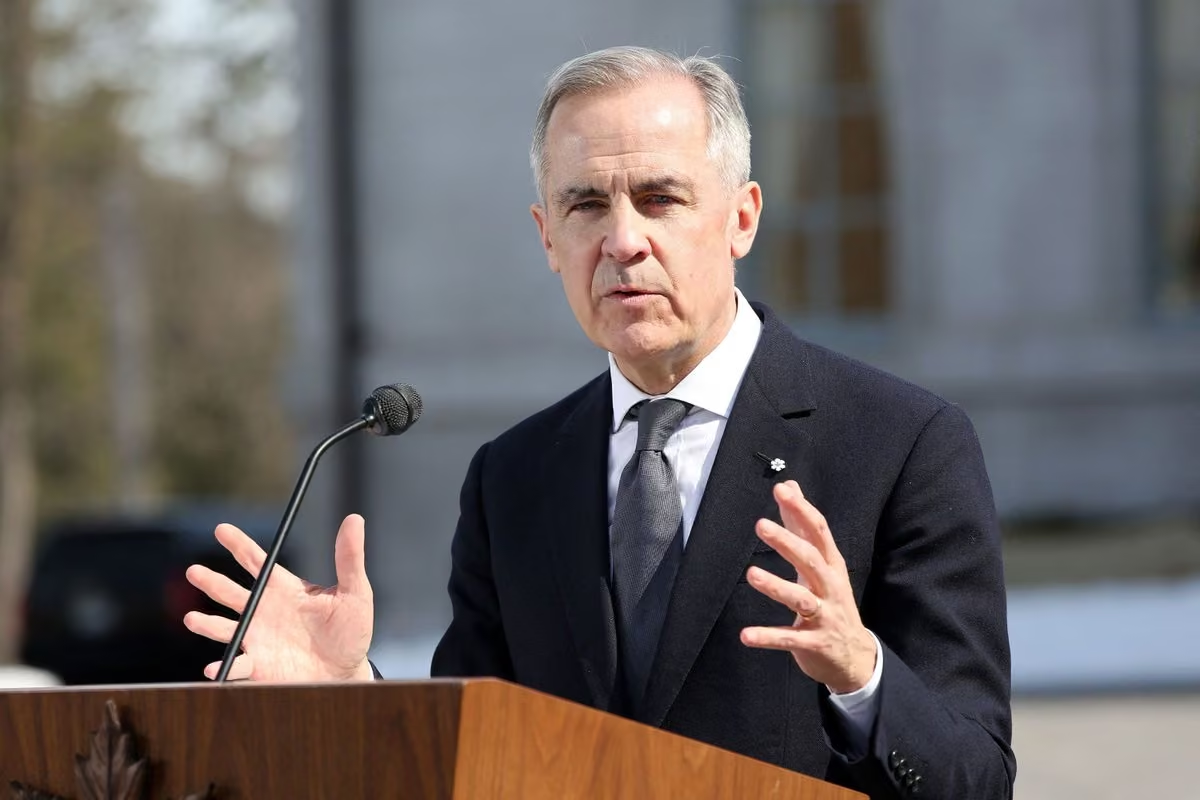
 Margaret McCuaig-Johnston 🇨🇦
 Scott Robertson
 Jonathan Cheng
 Roland Paris

 The Wire China
 Julian Gewirtz


 Melissa Chen

 Luke de Pulford
 Byron Wan


 NetAskari


 Manya Koetse
 Noah Berman

 Chris McGuire
 Demetri


 Institute for the Study of War


 Finbarr Bermingham
 Michael Pettis

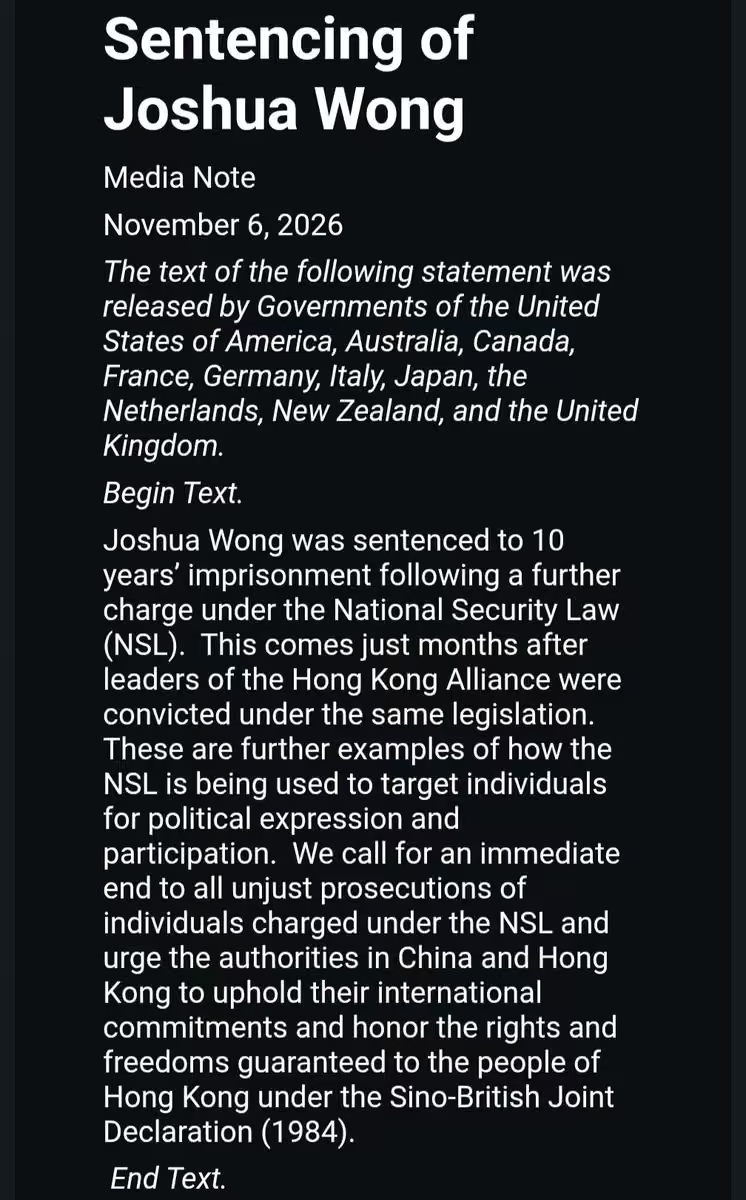


 Laura Harth


 Jonathan Stivers
 Rush Doshi
 Anders Corr, Ph.D.
 Arthur Tellis


 Kyle Chan


 William Yang
 Jaime Santirso
 Donald Clarke


 Christian Shepherd

 Bill Bishop
 Robin Brooks


 Jakub Janda 楊雅嚳

 Shelby Talcott

 Niva Yau
 Natalie Winters


 Jakub Jakóbowski
 Bill Gertz


 Henry Gao
 AB Kuai.Dong
 Reuters China


 Theresa Fallon


 LNG Canada

 Inconvenient Truths — Jennifer Zeng Reports

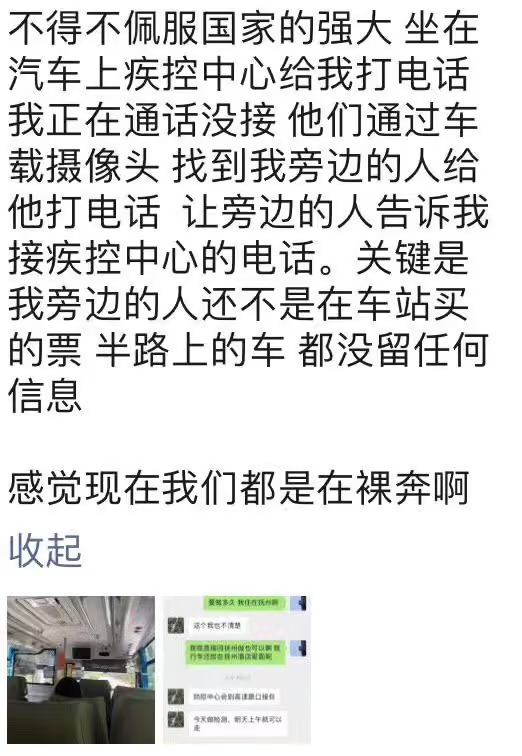
 Aric Chen
 Scarlett Grace

 Matina Stevis-Gridneff
 Zack Cooper
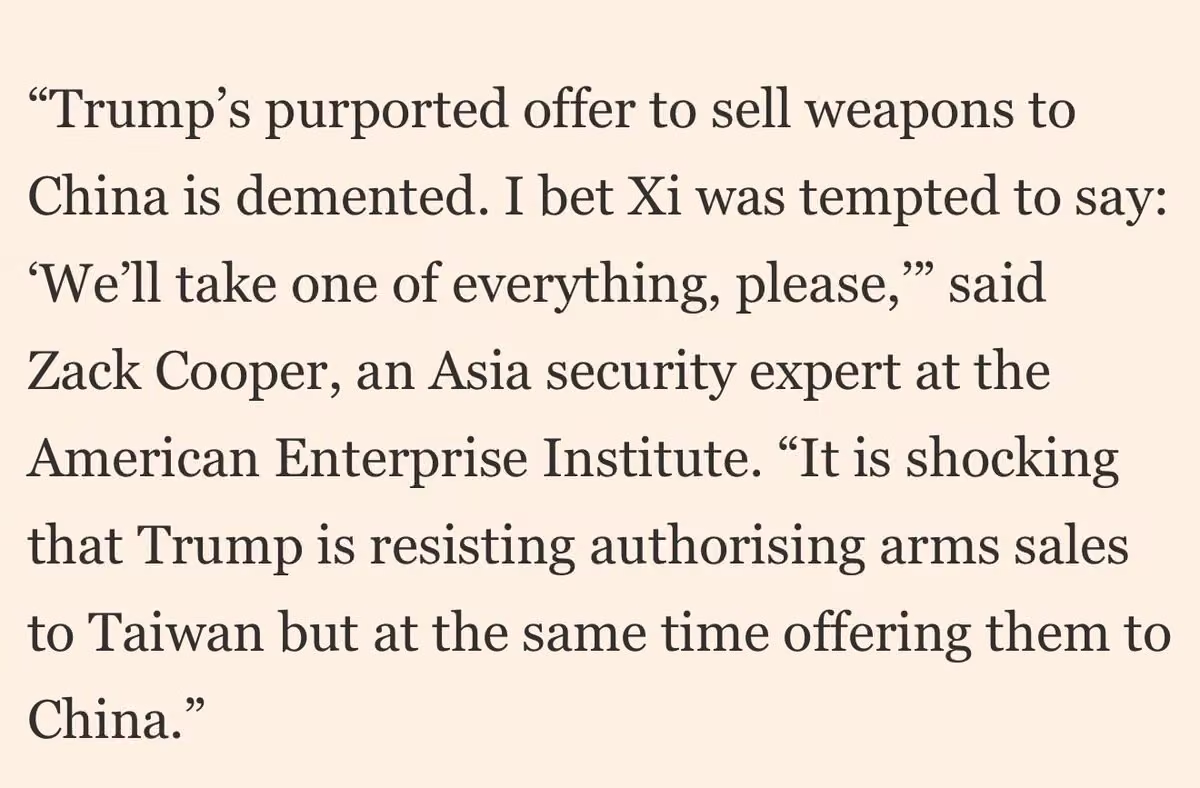
 James E. Thorne

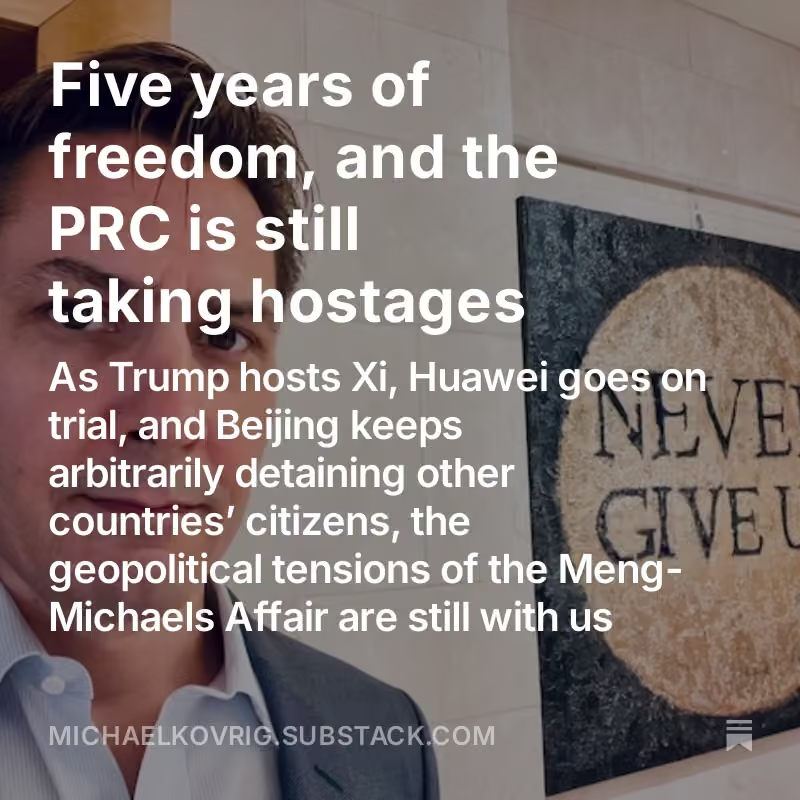

 Yashar Ali 🐘

 David Barboza

 Maya Wang 王松蓮

 Hostage Aid Worldwide


 Josh Boak


 Andreas Fulda 🇺🇦 🇹🇼
 Francesco Sassi


 FT China


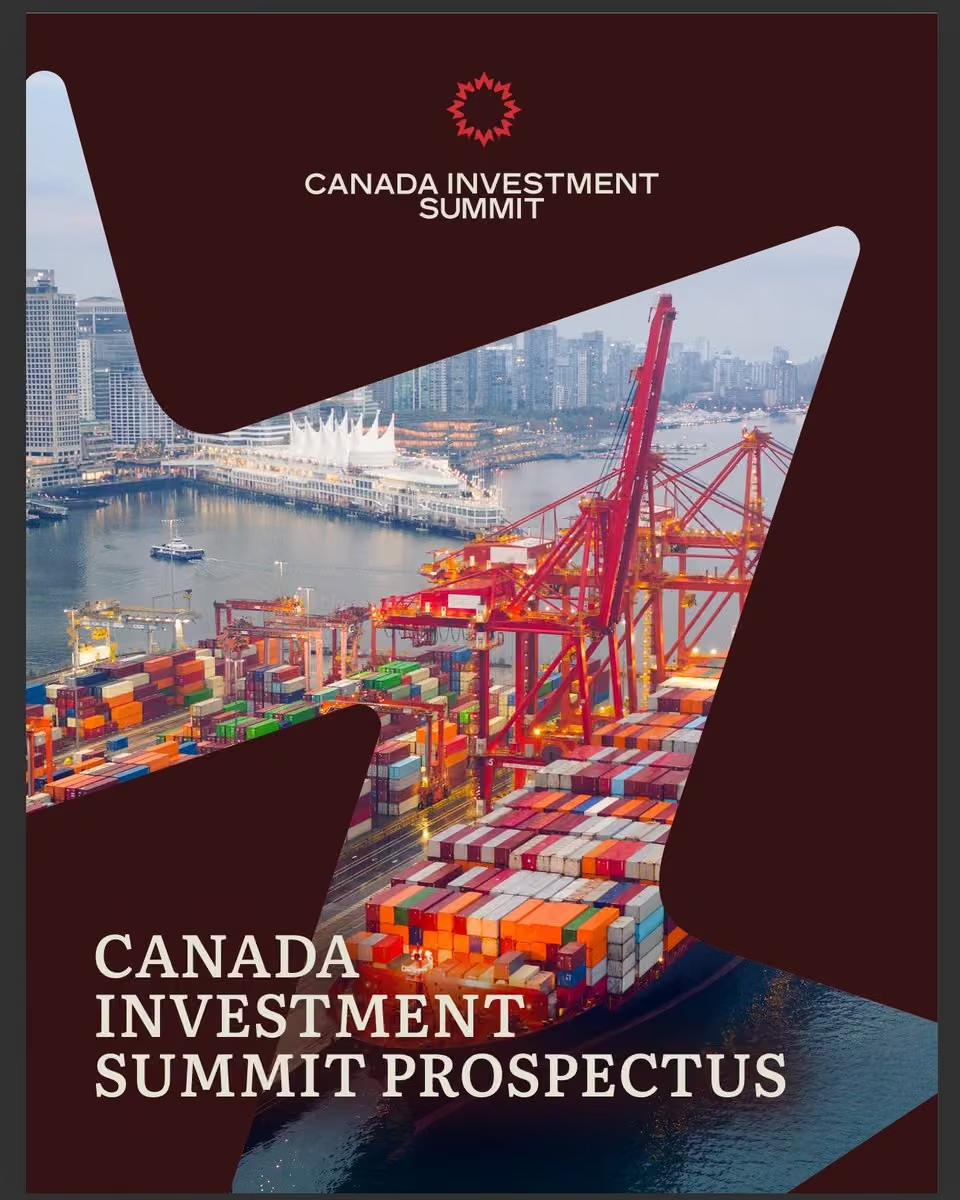


 Peter Mattis

 cbcwatcher


 Xiani P.Ch. 鄭夏霓 🌻
 Brad Setser


 Ryan Hass


 Geoff Wade


 Policy Magazine


 Yuen Pau Woo


 Bob Pickard
 CGTN Frontline
 Thorsten Benner


 China Banking News


 Clash Report


 Derek J. Grossman


 Roger K. Horn


 Grace Jin Drexel

 What Now? with Trevor Noah


 Jostein Hauge
 Magnus Fiskesjö
 Desmond Shum

 中国人事观察


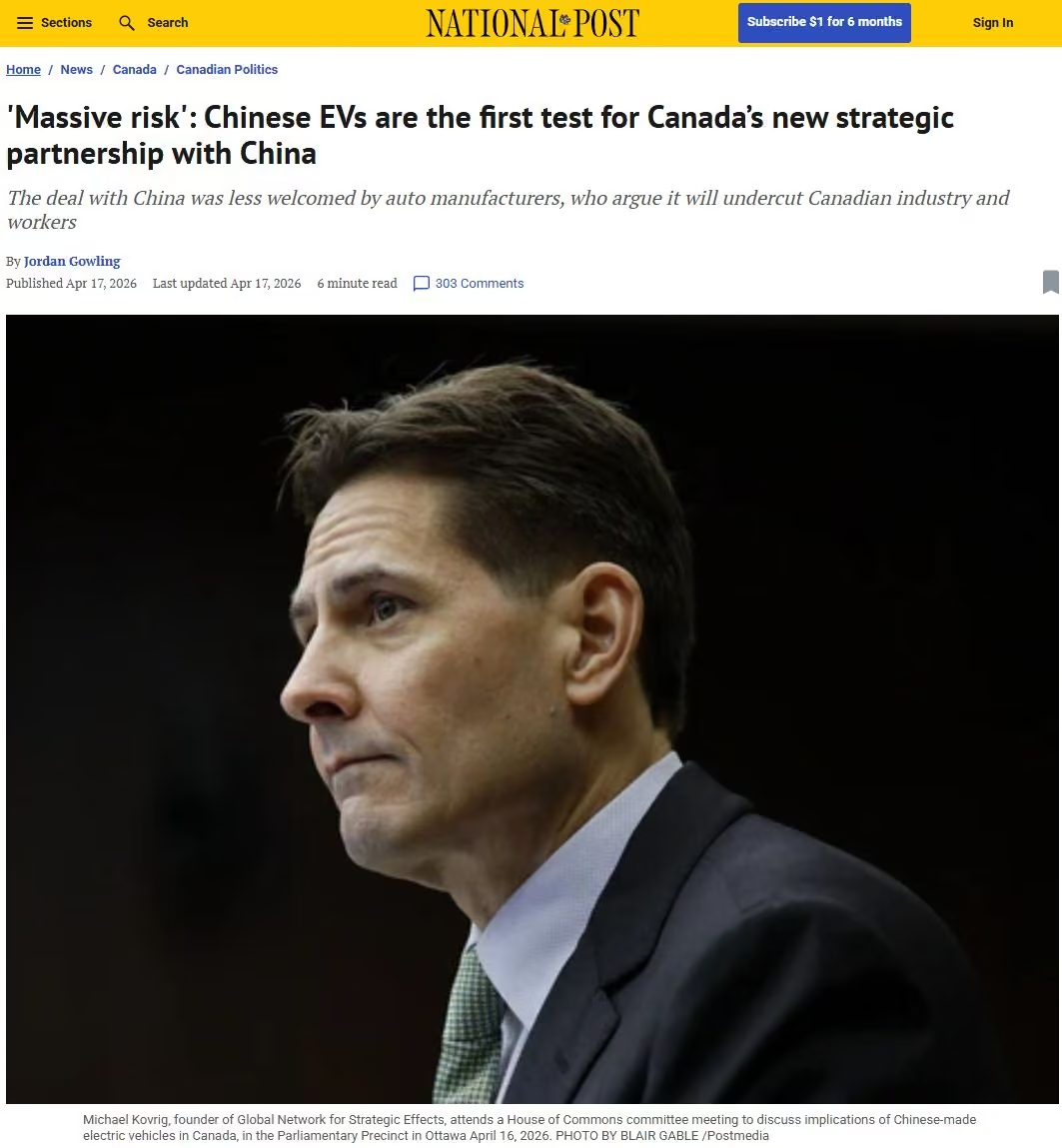


 UnveiledChina
 Steven Chase


 The Walrus

 David Henig 🇺🇦


 Gerard DiPippo


 Max Meizlish
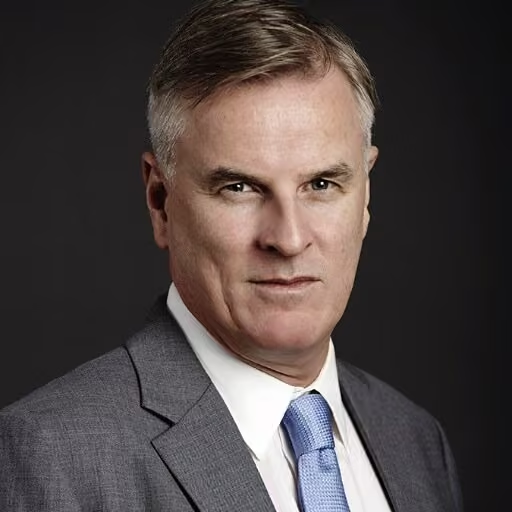 Andrew J Phelan


 Ivy Li


 Joseph Torigian


 CP24


 Dr Kylie Moore-Gilbert
 Yaqiu Wang 王亚秋
 NYTimes Communications


 Isaac Stone Fish
 CHRD人权捍卫者网络

 No Nonsense with Pamela Wallin
 Foreign Affairs


 Lyle Morris


 Rhodium Group
 Ashwin Lalendran

 Washington Post Opinions
 Dr. Dan Lomas


 Globe Politics


 Dennis Wilder偉德寧


 Xiang Yang 向阳


 George Pu


 Ian Johnson

 RAND


 Journal of Democracy


 Dr Huong LE THU
 Ali Vaez


 URAP - Uyghur Rights Advocacy Project


 Neil Thomas 牛犇


 Yanzhong Huang
 Kevin Carrico


 POLITICOEurope


 🇨🇦 Aurelius (I/me)


 Secretary Marco Rubio




 Dr. Jeffrey Lewis
 Terry Glavin 格立文
 Bonnie Glaser / 葛來儀


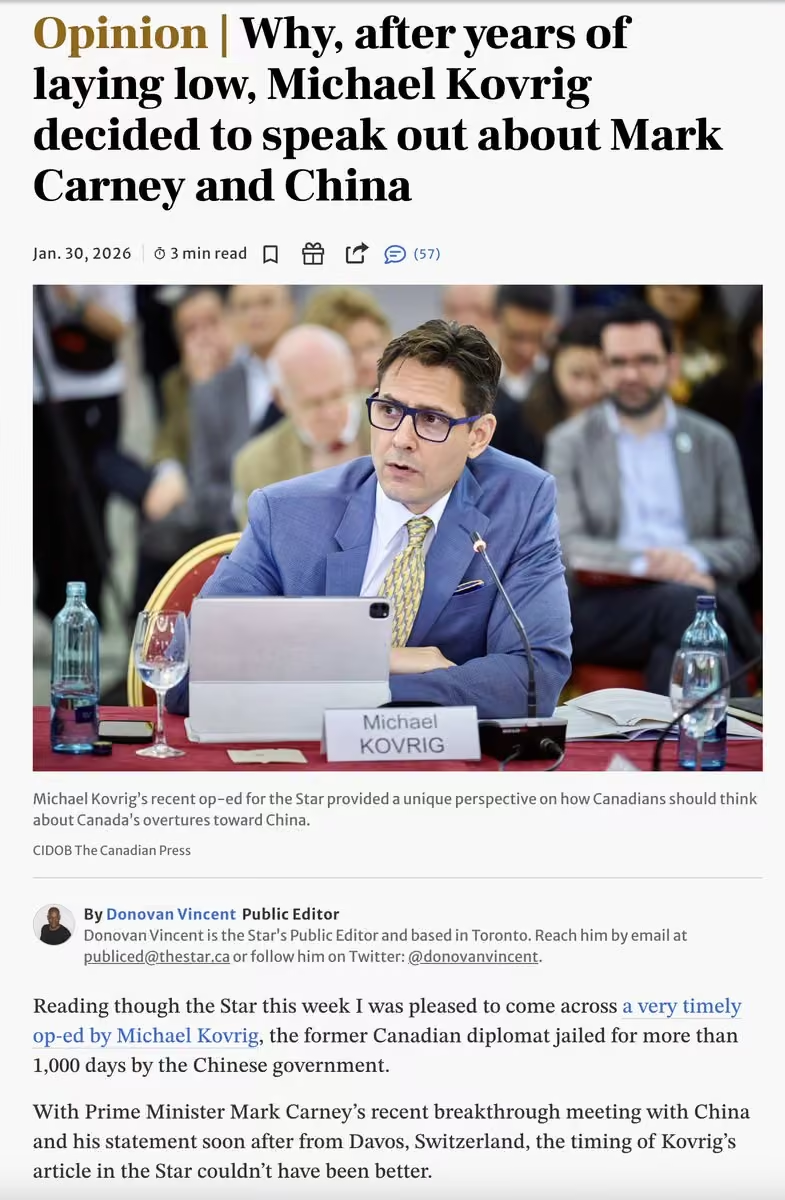
 Satire Squad HQ


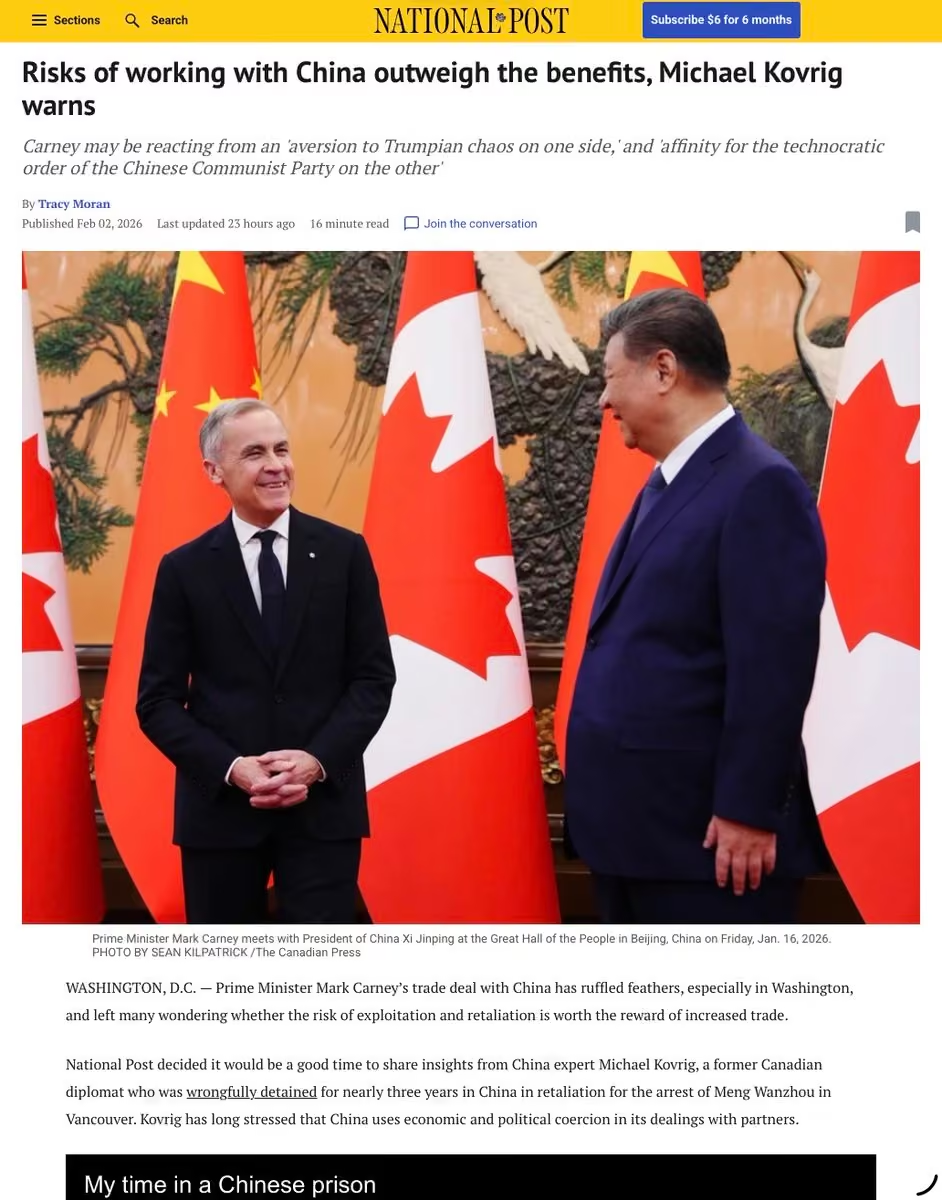


 Ben Riley-Smith
 steve hsu


 Lingling Wei 魏玲灵

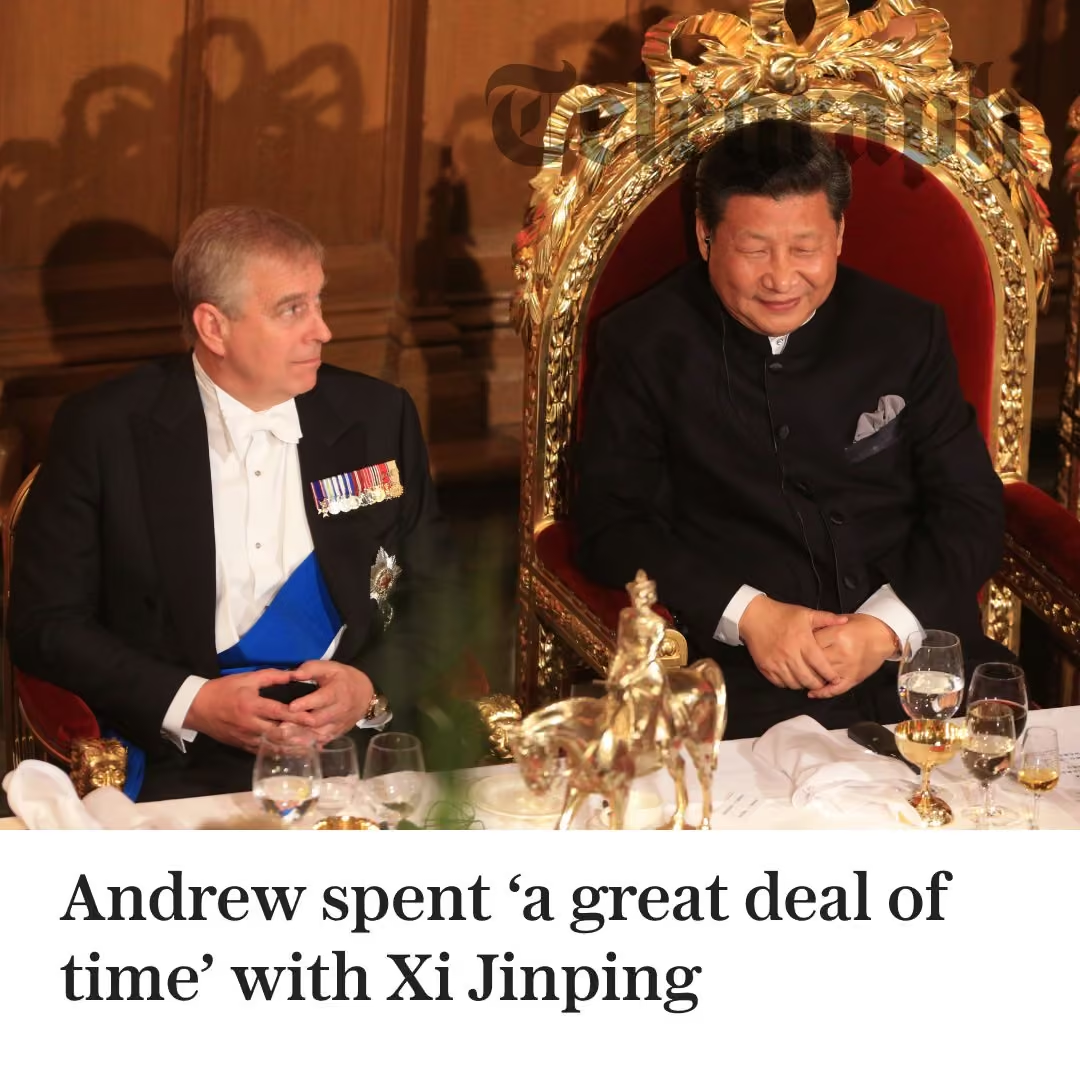

 John Culver


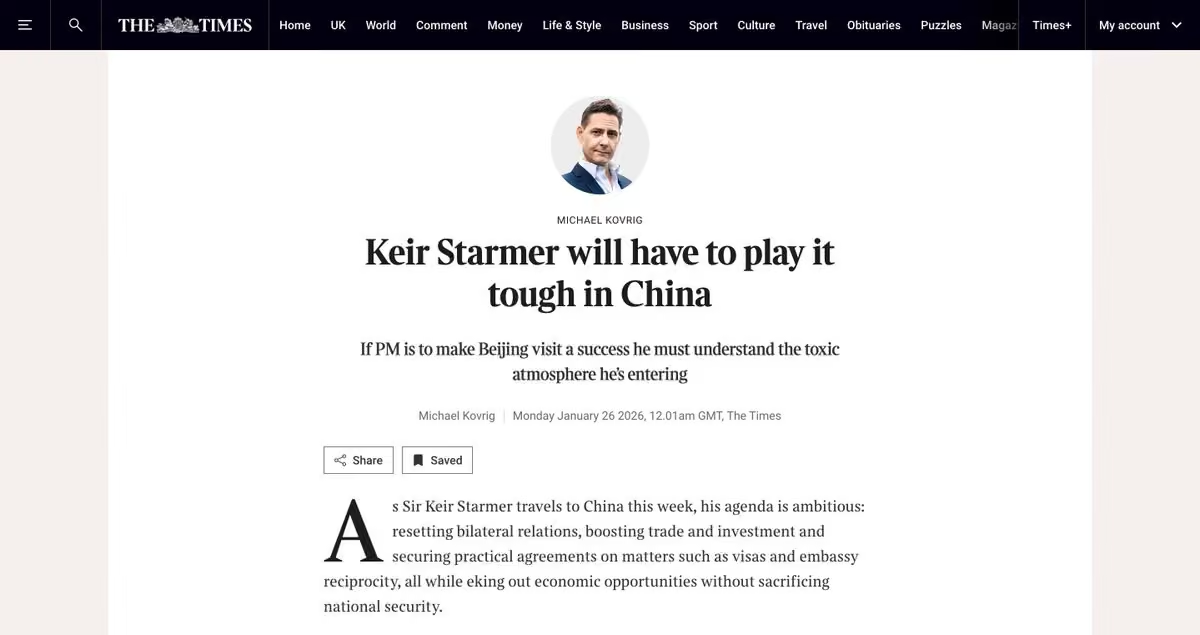


 Noah Smith 🐇🇺🇸🇺🇦🇹🇼
 Ken Cao-The China Crash Chronicle


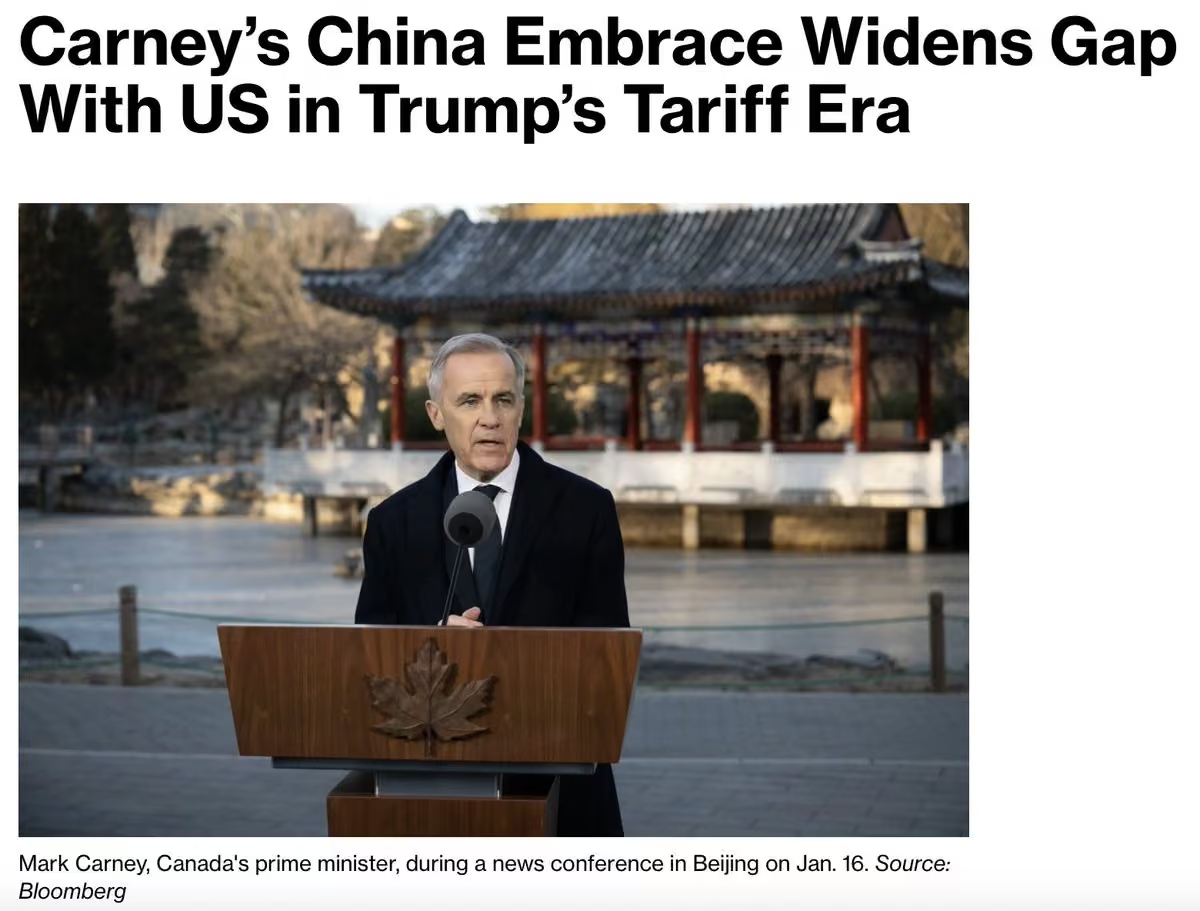


 Ben Woodfinden
 The Globe and Mail


 Tamara Ugolini 🇨🇦


