 Mikhail V. Blagosklonny, MD PhD Professor Oncology
@Blagosklonny


Politicians, athletes, journalists, NGOs, companies... They all use corporation-owned social networks to communicate with us. Citizens shouldn't have to hand over their data to companies to read content published by public entities. Public Feeds changes that by making posts of popular accounts freely available. Read more.
Mikhail Blagosklonny was a scientist who studied cancer and aging. He died in October 2024. He was an adjunct faculty member at Roswell Park Comprehensive Cancer Center in Buffalo, New York. More on Wikipedia
Rapamycin for immortality. Hyperfunction theory of aging. Near-curing of incurable cancer Editor-in-Chief: https://t.co/vOLFBqirGU & https://t.co/ivXaGJvXZo
Mikhail V. Blagosklonny, MD PhD Professor Oncology reposted
Mikhail V. Blagosklonny, MD PhD Professor Oncology
@Blagosklonny
Mikhail V. Blagosklonny, MD PhD Professor Oncology
@Blagosklonny
Dear Misha,
When I was a child, I told people you were a scientist in Antarctica studying penguins. I truly believed it. When I was in 7th grade, my teacher asked us to write an essay about a famous scientist. I thought of you immediately. Then I knew a little bit more about you. And as I got older, I learned more and more about you. You were always this mythical person in my life. I couldn’t believe it when I met you in Buffalo when I was 18. It felt like a fairytale. You were the coolest person in my life. As a young adult, I was so proud to say “my dad is a famous scientist; he’s an MD PhD; he studies anti-aging and immortality.” I was even more proud to say “and he’s a good writer, and he’s funny, and he’s intelligent, and he’s clever and witty and endearing.” I was proud to say I write well because I must have gotten it from my dad. I was proud to say I think I’m smart because of my dad’s genes. The pieces of my life were finally coming together. You introduced me to interesting topics, authors, philosophy, science. I grew so much in the 5 years we spent together. I miss the moments when you would care for me. Sometimes I would be having a bad day and you would comfort me on FaceTime. I felt loved in those moments. We had some very crazy adventures together and it was always such a special time. No one would believe that we talked about your girlfriends, that I got to meet them, that I was a part of such an incredible time of your life.
I am so grateful to have known you. You changed my life and I am so lucky that you were my dad. You were so interesting to learn about. My favorite thing I got to experience together was learning about your quirks and idiosyncrasies. I liked going to the grocery store together. It was funny that you didn’t have furniture in your penthouse. If I didn’t meet you, I wouldn’t know that you love duck. I know that’s a small detail, but the little kid in me wanted to know you so badly, that it’s so comforting now to know you love spicy food, and swimming, and that you snuck into girls’ dormitories in your 20s. I wouldn’t have known the person who made me. I don’t think I could’ve survived this harsh world without your genes. It was hard to be a daughter to you and I didn’t live up to my role. Even after I met you, and we went on so many adventures together, I didn’t know how to have a dad. I was confused by this mythical person that only lived in my imagination for 18 years. Knowing you still feels like a surreal dream. It’s like I’m watching a movie.
Love,
Nicole
Mikhail V. Blagosklonny, MD PhD Professor Oncology
@Blagosklonny
Mikhail V. Blagosklonny, MD PhD Professor Oncology reposted
 Aging Journal
@AgingJrnl
Listen to an #audio recording of a #pressrelease about this #editorial: "Targeted cancer therapy: the initial high concentration may slow down the selection for resistance."
soundcloud.com/aging-us/targeted-cancer-therapy-initial-h…
#lungcancer #cancer #aging #soundcloud #podcast #openaccess #peerreviewed #press
Mikhail V. Blagosklonny, MD PhD Professor Oncology reposted
Aging Journal
@AgingJrnl
Watch an #agingshort #video about this #editorial by @blagosklonny: "Targeted cancer therapy: The initial high concentration may slow down the selection for resistance." @RoswellPark
DOI: doi.org/10.18632/aging.206046
#aging #lungcancer #cancer #brain #metastases #research #openaccess
Mikhail V. Blagosklonny, MD PhD Professor Oncology reposted
 Agingdoc🩺Dr David Barzilai🔔MD PhD MS MBA DipABLM
@agingdoc1
From osimertinib to preemptive combinations
@Blagosklonny | @OncotargetJrnl
www.oncotarget.com/article/28569/text/

Mikhail V. Blagosklonny, MD PhD Professor Oncology reposted
Aging Journal
@AgingJrnl
#paperspotlight: On July 28, @Blagosklonny from @RoswellPark published a new #editorial in Aging, entitled, “Targeted cancer therapy: The initial high concentration may slow down the selection for resistance."
#pressrelease: www.aging-us.com/news-room/targeted-cancer-therapy-initia…
#lungcancer #cancer #research
Mikhail V. Blagosklonny, MD PhD Professor Oncology
@Blagosklonny
Sometimes, cancer does not respond to anti-cancer therapies. To put it another way, anti-cancer therapies, sometimes, just do not stop the progression (growth) of cancer. However, the Nobel Prize-winning treatment with Immune Checkpoint Inhibitors (ICI), known as Immunotherapy, may be much worse and more dangerous. Besides response and non-response, ICI causes hyperprogression (accelerated growth) in 6%-43% of cases, in different studies. This is particularly alarming, especially for those with brain metastases, like I.
jamanetwork.com/journals/jamanetworkopen/fullarticle/2777859
 Alex Zhavoronkov, PhD (aka Aleksandrs Zavoronkovs)
@biogerontology
@Blagosklonny - any ideas on a checkpoint + other treatment combo?
Mikhail V. Blagosklonny, MD PhD Professor Oncology
@Blagosklonny
Elon Musk agrees: "good". Thank you, all of you 😘
 Mikhail V. Blagosklonny, MD PhD Professor Oncology
@Blagosklonny
1/3
July 31, 2024 . Second attempt 😎
Mikhail V. Blagosklonny, MD PhD Professor Oncology
@Blagosklonny
1/3
July 31, 2024 . Second attempt 😎
Mikhail V. Blagosklonny, MD PhD Professor Oncology
@Blagosklonny
Mikhail V. Blagosklonny, MD PhD Professor Oncology
@Blagosklonny
Mikhail V. Blagosklonny, MD PhD Professor Oncology reposted
 OncoDaily
@oncodaily
My own experience with quinacrine - @weldeiry
@JDWinkler1956 @MarmorsteinLab
oncodaily.com/blog/114671.html
#cancer #cancerresearch #clinicaltrial #oncodaily #oncology

Mikhail V. Blagosklonny, MD PhD Professor Oncology reposted
 Wafik S. El-Deiry, MD, PhD, FACP
@weldeiry
A CRISPR activation screen identifies FBXO22 supporting targeted protein degradation
www.nature.com/articles/s41589-024-01655-9
Mikhail V. Blagosklonny, MD PhD Professor Oncology reposted
Wafik S. El-Deiry, MD, PhD, FACP
@weldeiry
A druggable cascade links methionine metabolism to epigenomic reprogramming in squamous cell carcinoma
www.pnas.org/doi/10.1073/pnas.2320835121
Mikhail V. Blagosklonny, MD PhD Professor Oncology reposted
OncoDaily
@oncodaily
We would like to inform you that your post has been successfully published on Oncodaily. Thank you for sharing.
oncodaily.com/blog/114671.html
Mikhail V. Blagosklonny, MD PhD Professor Oncology reposted
 Mia Ackerman
@MiaForRep
New law will aid R.I. cancer researchers, patients | Cumberland | valleybreeze.com www.valleybreeze.com/news/cumberland/new-law-will-aid-r-i…
Mikhail V. Blagosklonny, MD PhD Professor Oncology reposted
Wafik S. El-Deiry, MD, PhD, FACP
@weldeiry
Great presentations today at #eldeirylab meeting @BrownUCancer @BrownMedicine @BrownUniversity #legorretacancercenter by visiting summer @MSMEDU medical student Brian Baker, and visiting high school students Harshita Ganga from Ohio and Tanush Talekar from Pennsylvania.
Also pictured are their direct supervisors and mentors including @BrownUPathoGP students Tyler Roady, Ash Uruchurtu @AshDoesResearch, Brown alum Connor Purcell, and Program Director for Cancer Biology Research Laboratories Dr. Arunasalam Navaraj
It is always exciting to see our visiting students learn about cancer and benefit from the rich laboratory research environment here at Brown. They each made terrific presentations demonstrating mastery of the topics, technical skills learned, how their results lead to conclusions and future directions.


Mikhail V. Blagosklonny, MD PhD Professor Oncology reposted
 Razelle Kurzrock, MD
@Dr_R_Kurzrock
In 2015 we treated this pt (refractory basal call ca, metastatic liver, bones, brain— in wheelchair) with nivolumab
High TMB, PDL1 amp
In CR 8.5+ years
@AaronGoodman33

Mikhail V. Blagosklonny, MD PhD Professor Oncology reposted
Razelle Kurzrock, MD
@Dr_R_Kurzrock
Kurzrock axioms
Bureaucracy always grows with time.
Bureaucracy once established cannot be undone
Bureaucracies are always established in order to “improve” a problem
Freireich axiom:
Every general solution to a specific problem creates new general problems
Mikhail V. Blagosklonny, MD PhD Professor Oncology reposted
 UT MD Anderson
@UTMDAnderson
Research led by Dr. Katy Rezvani found that the addition of CD28, a molecule that is normally absent in mature NK cells, can enhance CAR NK function in blood and solid tumors.
Read how this could enhance NK cell therapies: www.mdanderson.org/newsroom/car-nk-cells-with-cd28-costim… @lab_rezvani #endcancer
Mikhail V. Blagosklonny, MD PhD Professor Oncology reposted
Razelle Kurzrock, MD
@Dr_R_Kurzrock
Kurzrock axiom:
Responsibility without authority and its mirror image—authority without responsibility —is often why things don’t work.
Mikhail V. Blagosklonny, MD PhD Professor Oncology reposted
Razelle Kurzrock, MD
@Dr_R_Kurzrock
Well we agree on this one!

Mikhail V. Blagosklonny, MD PhD Professor Oncology reposted
Wafik S. El-Deiry, MD, PhD, FACP
@weldeiry
Incredibly informative discussions at today’s well-attended @WIN_Consortium International Molecular Tumor Board.
Discussions provided helpful input regarding individualized management and treatment of complicated oncology cases with molecular data.
Today we discussed a case of metastatic colorectal cancer with WT KRAS/BRAF/NRAS in a present setting of de-escalation as well as plans for future therapy after evidence suggesting progression prompted further work up relevant to management.
The second case was an incredibly unique case and diagnostic dilemma where input at today’s meeting from @Dr_R_Kurzrock and @OllilaTom was incredibly helpful.
It was one of the most special conferences I’ve ever attended reminiscent of some of the best grand rounds where the patient was there in person describing their extremely complicated history and participating in the conversation.
All patients sign consent for the presentations, use of data, and publications but I will not share any screenshots from some of the best parts in order to maintain confidentiality.
@AaronGoodman33 @LiangChengMD @BrownUCancer @BrownMedicine


Mikhail V. Blagosklonny, MD PhD Professor Oncology reposted
Razelle Kurzrock, MD
@Dr_R_Kurzrock
Outpatient Administration of CAR T-cell Therapies Using a Strategy of No Remote Monitoring and Early CRS Intervention - PubMed
This is important
pubmed.ncbi.nlm.nih.gov/38889435/
Mikhail V. Blagosklonny, MD PhD Professor Oncology reposted
Razelle Kurzrock, MD
@Dr_R_Kurzrock
I have advice to physicians based on recent experience with a loved one. Surprised I need to say these things.
Ask your pt how they are doing
Put away your computer/iPhone
Examine your pt
Do not suggest tests that lead nowhere
Wash your labcoat
Do not be dismissive
Mikhail V. Blagosklonny, MD PhD Professor Oncology reposted
Razelle Kurzrock, MD
@Dr_R_Kurzrock
Another visit to a doctor’s office with a loved one. Now I share advice for the nurse/office
Office: Fix your phones (phones are “broken” for 4 months)
Nurse: wash your lab coat
Do not suggest a primary in case “you break your arm”
Do not lie—we know you can print out labs
Mikhail V. Blagosklonny, MD PhD Professor Oncology reposted
Agingdoc🩺Dr David Barzilai🔔MD PhD MS MBA DipABLM
@agingdoc1
Targeted cancer therapy: the initial high concentration may slow down the selection for resistance
@Blagosklonny | @AgingJrnl
www.aging-us.com/article/206046/pdf
 Mikhail V. Blagosklonny, MD PhD Professor Oncology
@Blagosklonny
Winning the war on cancer
pubmed.ncbi.nlm.nih.gov?term=blagosklonny+2024&sort=date
Mikhail V. Blagosklonny, MD PhD Professor Oncology reposted
Mikhail V. Blagosklonny, MD PhD Professor Oncology
@Blagosklonny
2/2 . 07/18
Forthcoming “My battle with cancer: exceptional chapters from part II.”
Abstract:
For a divine reason, I was destined for cancer with multiple brain metastases: to create the book “My Battle with Cancer,” a far-reaching endeavor for which I was born. Surprisingly to others, I experience moments—no, entire days—of happiness and joy. My journey through cancer, as both a patient and a researcher, has gifted me insights into cancer cures, born from a mind that remains active, often even in sleep. Unfortunately, one thing happened on May 20, 2024, hurting me, but this is not a part of this book. Nevertheless, I am finishing the book with the hope of increasing the lifespan to the normal duration for future incurable cancer patients. Among other topics, I propose preemptive combinations of targeted drugs to prevent resistance to the key cancer driver and thus sustain long-lasting remission; classification of targeted combinations; intermittent targeting; reverse dose applications; increasing targeting of brain metastases; and the harmful effects of standard WBRT, Avastin, and immunotherapy-induced hyper-progression.
Mikhail V. Blagosklonny, MD PhD Professor Oncology reposted
Mikhail V. Blagosklonny, MD PhD Professor Oncology
@Blagosklonny
Before I die (too late discovered cure of any cancer?) 😎. Published 10 min ago
www.aging-us.com/article/206046/pdf
Mikhail V. Blagosklonny, MD PhD Professor Oncology
@Blagosklonny
Mikhail V. Blagosklonny, MD PhD Professor Oncology
@Blagosklonny
Before I die (too late discovered cure of any cancer?) 😎. Published 10 min ago
www.aging-us.com/article/206046/pdf
Mikhail V. Blagosklonny, MD PhD Professor Oncology
@Blagosklonny
Before I die (too late discovered cure of any cancer?) 😎. Published 10 min ago
www.aging-us.com/article/206046/pdf
Mikhail V. Blagosklonny, MD PhD Professor Oncology
@Blagosklonny
My hairdresser is my best oncologist.
Feel healthy 👍
(arm edema caused by capmatinib)
07/18/2024
 Mikhail V. Blagosklonny, MD PhD Professor Oncology
@Blagosklonny
Actually, my best oncologist is a hairdresser
Mikhail V. Blagosklonny, MD PhD Professor Oncology
@Blagosklonny
you will wait reading short but live long 💋
 Mother of Swans
@motherofswans
Cannot wait to read! I want to live long.
Mikhail V. Blagosklonny, MD PhD Professor Oncology
@Blagosklonny
1/2 07/18
Mikhail V. Blagosklonny, MD PhD Professor Oncology
@Blagosklonny
2/2 . 07/18
Forthcoming “My battle with cancer: exceptional chapters from part II.”
Abstract:
For a divine reason, I was destined for cancer with multiple brain metastases: to create the book “My Battle with Cancer,” a far-reaching endeavor for which I was born. Surprisingly to others, I experience moments—no, entire days—of happiness and joy. My journey through cancer, as both a patient and a researcher, has gifted me insights into cancer cures, born from a mind that remains active, often even in sleep. Unfortunately, one thing happened on May 20, 2024, hurting me, but this is not a part of this book. Nevertheless, I am finishing the book with the hope of increasing the lifespan to the normal duration for future incurable cancer patients. Among other topics, I propose preemptive combinations of targeted drugs to prevent resistance to the key cancer driver and thus sustain long-lasting remission; classification of targeted combinations; intermittent targeting; reverse dose applications; increasing targeting of brain metastases; and the harmful effects of standard WBRT, Avastin, and immunotherapy-induced hyper-progression.
Mikhail V. Blagosklonny, MD PhD Professor Oncology
@Blagosklonny
Please
Cancer researchers do you agree with one text "
Text: "To ensure rapid the selection of drug resistance in cell culture, we first treat cancer cells with low drug concentrations, gradually increasing them. I hope no further explanation is needed."
Targeted cancer therapy: The initial high concentration may slow the selection for resistance.
MV Blagosklonny
Abstract: Unfortunately, any targeted therapy is, always, started with low levels of the drug in the orgasm, selecting for drug resistance. One should propose that initial drug levels must be maximized and durations may be minimized, ideally, as portions of preemptive combination of targeted drugs.
Mikhail V. Blagosklonny, MD PhD Professor Oncology
@Blagosklonny
Death or never born or mortal life is equal
Mikhail V. Blagosklonny, MD PhD Professor Oncology
@Blagosklonny
Death or never born or mortal life is equal, has no additional value and equals zero
Mikhail V. Blagosklonny, MD PhD Professor Oncology
@Blagosklonny
Nothing has sense
Mikhail V. Blagosklonny, MD PhD Professor Oncology reposted
 Oncotarget
@Oncotarget
Watch an #oncotargetshort #video about "Comparison of FDG-PET/CT and CT for evaluation of tumor response to nivolumab plus ipilimumab combination therapy and prognosis prediction in patients with unresectable malignant pleural mesothelioma."
www.youtube.com/watch?v=7ZRTRwig60Y
#oa #youtube
Mikhail V. Blagosklonny, MD PhD Professor Oncology reposted
 Emmanuel Antonarakis
@EAntonarakis
Congrats @eamontoye13 and @arafflemd on your 2 recent papers studying BRAF alterations in PCa. Unlike other BRAF-altered cancers, PCa is characterized by Class II muts and activating fusions, including AR-regulated BRAF fusions. aacrjournals.org/clincancerres/article/29/19/3948/729097 oncotarget.com/article/28612/text/


Mikhail V. Blagosklonny, MD PhD Professor Oncology reposted
Wafik S. El-Deiry, MD, PhD, FACP
@weldeiry
Pleased to share our published review article from @BrownMedicine @BrownUniversity @BrownUCancer
Targeting apoptotic pathways for cancer therapy
www.jci.org/articles/view/179570
@jclinicalinvest @tian_xiaobing @tajiknia @AshDoesResearch @bcarneiro7 @PinhoSchwermann @andrewgeorge00 @frandicris @shengliang15 @LanlanZhou @YiqunZhang7 @Dina_rys #legorretacancercenter #eldeirylab
Mikhail V. Blagosklonny, MD PhD Professor Oncology
@Blagosklonny
Targeted cancer therapy: The initial high concentration may slow the selection for resistance.
MV Blagosklonny
Abstract: Unfortunately, any targeted therapy is, always, initiated with low levels of the drug in the orgasm, selecting for drug resistance of. Drug levels become higher during days, or typically, weeks, ensuring progressive selection for resistance. This is ironic. Initial drug levels must be maximized.
Text:
To ensure the selection of drug resistance in cell culture, we first treat cancer cells with low drug concentrations, gradually increasing them. I hope no further explanation is needed.
In patients, treatment with targeted drugs is also mistakenly designed to expedite the selection of resistance, a fact that may shock my readers. Initially, cancer cells are exposed to low drug concentrations, which are then increased. This is achieved simply by administering the same daily dose to patients from day 1. For example, Cabozantinib is taken once daily. Cabozantinib has a long terminal plasma half-life (~120 hours) and accumulates 5-fold by day 15 with daily dosing.
I reiterate: the concentration increases 5-fold by day 15 due to its long half-life and consistent daily dosing of one tablet.
Low initial concentrations can be avoided by taking 5 tablets on the first day and then continuing with 1 tablet every week, for example. Another hypothetical regimen is 3 tablets for every 3 days and then discontinuing it. Levels of cabozantinib remain high for the next one to two weeks (post-treatment remained activity).
Consider my case: I have multiple brain metastases driven by METex14, effectively targeted by capmatinib, the most selective and effective MET inhibitor. Capmatinib selects for resistant secondary mutations in the METex14 that can be targeted by Cabozantinib, although it is less effective and selective than capmatinib. It is possible that one of the metastases contains at least one capmatinib-resistant cell with secondary MET, which could eventually make the metastasis resistant to capmatinib.
In my case, I propose using 5 tablets of Cabozantinib for 1 day every two months. Only 1 day every 2 months.
The mutant cell is exposed to relevant concentrations of Cabozantinib for one to two weeks (post-treatment remained activity).
Another example. Afatinib (EGFR/HER2-4 inhibitor) is used to treat EGFR-mutant-dependent lung cancer (it is not my case, as mine is METex14-dependent). Afatinib has a half-life of 37 hours. Steady-state is achieved within 8 days of once-daily dosing, with overall accumulation ratios of 2.0–2.7 for C max and 2.5–3.4 for AUC. Instead, we should achieve Steady-state on day 1. In some cases, the first day levels should higher than ever further and the course may be brief.
In my case, the most common off-target mechanism of resistance involves overexpression of EGFR and HER2-4. I prefer very high dose treatment with afatinib for just 1 days in combination with capmatinib. After stopping afatinib, its levels remain high for several additional days (post-treatment remained activity), and capmatinib must continue to be used. Afatinib alone is ineffective in my case (METex14), as afatinib targets potential resistance to capmatinib. (Note: Without capmatinib, METex14-positive cells would not be killed by the off-target resistant drug. A combination of two drugs must be used, including high levels of afatinib post-treatment)
In conclusion, to decelerate the acquisition of drug resistance, targeted therapy must immediately target the tumor at a higher drug concentration. The courses may sometimes be brief, if the doses are high, but that is a topic for another story. Importantly, as previously discussed, targeted drugs should be used in appropriate combinations. [1,2]
Starting treatment with a higher dose is common in the field of medicine. For instance, starting with high doses is typical for antibacterial antibiotics to avoid resistance. Often, antibiotics are used at double (or higher) doses on the first day, as a high single dose, or even intravenously.
Additionally, rapamycin is given at a loading dose on the first day, which is three times higher than the maintenance dose in organ transplant patients. For another example, dexamethasone is often started with a loading dose, and so on.
References:
1. Blagosklonny MV. My battle with cancer. Part 1.Oncoscience. 2024 Jan 3; 11: 1-14.
2. Blagosklonny MV. From osimertinib to preemptive combinations. Oncotarget. 2024 Mar 15; 15: 232-237.
Mikhail V. Blagosklonny, MD PhD Professor Oncology reposted
 Spin Willy
@NotSpinWilly
Mikhail, I want to express my deepest gratitude for your incredible contributions to science and humanity. Your research on rapamycin and longevity is immeasurable, and your legacy will endure. Your efforts have advanced our understanding and profoundly touched lives worldwide.
Mikhail V. Blagosklonny, MD PhD Professor Oncology reposted
Mikhail V. Blagosklonny, MD PhD Professor Oncology
@Blagosklonny
We all thankful to @weldeiry for his ingenious work such as discovery p21/Waf1 and many others. Thank you , Wafik. Dying from my illness, I say "thank you"
Mikhail V. Blagosklonny, MD PhD Professor Oncology reposted
Wafik S. El-Deiry, MD, PhD, FACP
@weldeiry
Here is a good example of being actively targeted in the last two weeks by @PubPeer for a paper my lab published in 1998. The concern was just raised in 2024 but then PubPeer took down the link.
This is not appropriate and also the journal @oncogenejournal is giving a deadline of 2 weeks to respond.
There is no "Peer" in "PubPeer" and the selective targeting of scientists for what maybe a political agenda some of which is public raises concerns.
PubPeer insinuates things that are damaging the reputation of scientists such as fraud, misconduct, data manipulation, lack of integrity and they do it publicly and anonymously. They go further by piling on concerns with no attention to whether the concerns have merit, whether they have any impact on results, whether the concerns are legitimate.
They are doing this in an anonymous way seemingly with no accountability for the damage they are causing. They are targeting who they wish to target. There is no statute of limitations apparently.
Any response that questions their authority or motives is met with "why don't you just respond to concerns" or "your response raises red flags." They do not take into account the passage of time, the movement of labs to different institutions, the movement of researchers including out of science altogether, or the need for time, effort, and money to properly address any concerns.
Journals and publishers have not weighed in on statute of limitations, changes in how the field views data in 2024 vs 1998, or the process by which PubPeer conducts itself. What PubPeer is doing, in my opinion, defines academic terrorism, blackmail, defamation, and lack of due process and this is done by an anonymous mob that is unregulated.
@Nature @MicrobiomDigest @oracknows @NIH @NIHDirector @theNCI @P_J_Buckhaults @DrJBhattacharya @HHS_ORI @theNAMedicine @ScienceMagazine


 Wafik S. El-Deiry, MD, PhD, FACP
@weldeiry
Here is a good example of being actively targeted in the last two weeks by @PubPeer for a paper my lab published in 1998. The concern was just raised in 2024 but then PubPeer took down the link.
This is not appropriate and also the journal @oncogenejournal is giving a deadline of 2 weeks to respond.
There is no "Peer" in "PubPeer" and the selective targeting of scientists for what maybe a political agenda some of which is public raises concerns.
PubPeer insinuates things that are damaging the reputation of scientists such as fraud, misconduct, data manipulation, lack of integrity and they do it publicly and anonymously. They go further by piling on concerns with no attention to whether the concerns have merit, whether they have any impact on results, whether the concerns are legitimate.
They are doing this in an anonymous way seemingly with no accountability for the damage they are causing. They are targeting who they wish to target. There is no statute of limitations apparently.
Any response that questions their authority or motives is met with "why don't you just respond to concerns" or "your response raises red flags." They do not take into account the passage of time, the movement of labs to different institutions, the movement of researchers including out of science altogether, or the need for time, effort, and money to properly address any concerns.
Journals and publishers have not weighed in on statute of limitations, changes in how the field views data in 2024 vs 1998, or the process by which PubPeer conducts itself. What PubPeer is doing, in my opinion, defines academic terrorism, blackmail, defamation, and lack of due process and this is done by an anonymous mob that is unregulated.
@Nature @MicrobiomDigest @oracknows @NIH @NIHDirector @theNCI @P_J_Buckhaults @DrJBhattacharya @HHS_ORI @theNAMedicine @ScienceMagazine
Mikhail V. Blagosklonny, MD PhD Professor Oncology
@Blagosklonny
We all thankful to @weldeiry for his ingenious work such as discovery p21/Waf1 and many others. Thank you , Wafik. Dying from my illness, I say "thank you"
Mikhail V. Blagosklonny, MD PhD Professor Oncology
@Blagosklonny
Epithelial to mesenchymal transition is associated with rapamycin resistance pubmed.ncbi.nlm.nih.gov/25944619/
Mikhail V. Blagosklonny, MD PhD Professor Oncology
@Blagosklonny
Rapamycin and trametinib: a rational combination for treatment of NSCLC pubmed.ncbi.nlm.nih.gov/34421360/
Mikhail V. Blagosklonny, MD PhD Professor Oncology
@Blagosklonny
Increase penetration of anti-cancer drugs to any brain metastases and brain tumors by verapamil, which is easily available to patients regardless of their oncologists
MV Blagosklonny
Treatment of patients with brain tumors and brain metastases is limited by the poor penetration of anti-cancer drugs, both chemotherapeutic and targeted. I suggest that, by inhibiting P-gp of the blood brain barrier, verapamil, a drug prescribed by a primary doctor and sold in every pharmacy, should increase the penetration of anti-cancer drugs into every brain tumors and metastases. This would enhance the therapeutic effect and broaden the choice of anti-cancer drugs used. Additionally, this strategy could be designed to decrease side effects. Furthermore, I am testing this hypothesis in a human setting by treating a patient with multiple brain metastases; by the way, the patient is me, myself.
Introduction: Verapamil (Antihypertensive drug and, what is crucial, a well studies in patient P-gp inhibitor) should help anti-cancer drugs cross the BBB and to reach brain tumor. Surprisingly, it was never suggested before. Why is it surprisingly? On one hand, verapamil was mentioned as P-gp inhibitor to affect the BBB in non-oncological conditions such as health and neurological disorders {Qosa, 2015 #53}. On the other hand, verapamil was extensively tested in patient to increase drugs accumulation to cancer cells, hoping they are multi-drug resistance due to P-gP. But never suggested to help anticancer drugs to penetrate the BBB and thus accumulate in the brain tumor
it was never connected two dots: (1) Reversing of resistance of cancer cell that express P-gp and (2) increasing drug delivery to brain tumor by inhibiting P-gp of cells of the BBB.
 Al-Ola A Abdallah MD (USMIRC)
@Abdallah81MD
Secondary CNS myeloma with remission after systemic CNS-penetrating agents
academic.oup.com/noa/article/4/1/vdac106/6626042
#mmsm #myeloma #meded #medtwitter #usmirc @USMIRCNEWS @OncoAlert

 Mikhail V. Blagosklonny, MD PhD Professor Oncology
@Blagosklonny
Abstract:
Any targeted therapy is always, unfortunately, initiated with low levels of the drug in the tumor, selecting for resistance. This is both ironic and tragic.
In contrast, initial drug levels must be maximized.
And this determines anti-resistance combinations and their short-term durations.
Mikhail V. Blagosklonny, MD PhD Professor Oncology
@Blagosklonny
Targeted cancer therapy: The initial high concentration may slow the selection for resistance.
To ensure the selection of drug resistance in cell culture, we first treat cancer cells with low drug concentrations, gradually increasing them. I hope no further explanation is needed.
In patients, treatment with targeted drugs is mistakenly designed to expedite the selection of resistance, a fact that may shock my readers. Initially, cancer cells are exposed to low drug concentrations, which are then increased. This is achieved simply by administering the same daily dose to patients from day 1.
For example, Cabozantinib is taken once daily. Cabozantinib has a long terminal plasma half-life (~120 hours) and accumulates 5-fold by day 15 with daily dosing.
I reiterate: the concentration increases 5-fold by day 15 due to its long half-life and consistent daily dosing of one tablet.
Low initial concentrations can be avoided by taking 5 tablets on the first day and then continuing with 1 tablet every week, for example. Another hypothetical regimen is3 tablets for every 3 days and then stopping. Levels of cabozantinib remain high for the next one to two weeks, allowing for the addition of another drug to create a combination treatment.
Consider my case: I have multiple brain metastases driven by METex14, effectively targeted by capmatinib, the most selective and effective MET inhibitor. Capmatinib selects for resistant secondary mutations in the METex14 that can be targeted by Cabozantinib, although it is less effective and selective than capmatinib. It is possible that one of the metastases contains at least one capmatinib-resistant cell with secondary MET, which could eventually make the metastasis resistant to capmatinib.
In my case, I propose using 5 tablets of Cabozantinib for one day every two months. Only 1 day every 2 months.
The mutant cell is exposed to relevant concentrations of Cabozantinib for one to two weeks.
Another example. Afatinib (EGFR/HER2-4 inhibitor) is used to treat EGFR-mutant-dependent lung cancer (not my case, as mine is METex14-dependent). Afatinib has a half-life of 37 hours. Steady-state is achieved within eight days of once-daily dosing, with overall accumulation ratios of 2.0–2.7 for C max and 2.5–3.4 for AUC.
In my case, the most common off-target mechanism of resistance involves overexpression of EGFR and HER2-4. I prefer HIGH treatment with afatinib for just 1-2 days in combination with capmatinib. After stopping afatinib, its levels remain elevated for several additional days, and capmatinib must continue to be used. Monotherapy with afatinib is ineffective in my case (METex14), as afatinib targets potential resistance to capmatinib. (Note: Without capmatinib, METex14-positive cells would not be killed by the off-target resistant drug. A combination of two drugs must be used together, including high levels of afatinib after stopping.)
Rightly, Starting with high doses is common for anti-bacterial antibiotics to avoid resistance. Often, antibiotics are used at double (or higher) doses on the first day, as a high single dose, or even intravenously.
Oral rapamycin is given at a loading dose on the first day, which is three times higher than the maintenance dose in organ transplant patients.
And so on.
Mikhail V. Blagosklonny, MD PhD Professor Oncology reposted
Oncotarget
@Oncotarget
#pressrelease: On June 20, 2024, researchers Cecilia Bergonzini, Elisa Giovannetti and Erik H.J. Danen from @LeidenU published a new editorial paper in Oncotarget's Volume 15, entitled, “Targeting ABC transporters in PDAC – past, present, or future?” www.oncotarget.com/news/pr/targeting-abc-transporters-in-…
Mikhail V. Blagosklonny, MD PhD Professor Oncology reposted
 Optispan
@Optispan_Inc
...in fact, @mkaeberlein has observed a surprising potential positive effect of rapamycin on body composition that would be great to investigate in a randomized clinical trial.
youtu.be/PR-iJB5IbUk
Mikhail V. Blagosklonny, MD PhD Professor Oncology reposted
 BuckeyeGirl ✝️🇺🇸🏈
@CleGirl17
Dr. B, you are seeing from a different perspective now that you are the patient! I hope they are LISTENING to you and LEARNING from you! The "standard protocol" does not make sense, the initial higher dose makes complete sense. It's almost like they are not trying to cure people.
Mikhail V. Blagosklonny, MD PhD Professor Oncology
@Blagosklonny
Targeted cancer therapy: The initial high concentration may slow the selection for resistance.
To ensure the selection of drug resistance in cell culture, we first treat cancer cells with low drug concentrations, gradually increasing them. I hope no further explanation is needed.
In patients, treatment with targeted drugs is mistakenly designed to expedite the selection of resistance, a fact that may shock my readers. Initially, cancer cells are exposed to low drug concentrations, which are then increased. This is achieved simply by administering the same daily dose to patients from day 1.
For example, Cabozantinib is taken once daily. Cabozantinib has a long terminal plasma half-life (~120 hours) and accumulates 5-fold by day 15 with daily dosing.
I reiterate: the concentration increases 5-fold by day 15 due to its long half-life and consistent daily dosing of one tablet.
Low initial concentrations can be avoided by taking 5 tablets on the first day and then continuing with 1 tablet every week, for example. Another hypothetical regimen is3 tablets for every 3 days and then stopping. Levels of cabozantinib remain high for the next one to two weeks, allowing for the addition of another drug to create a combination treatment.
Consider my case: I have multiple brain metastases driven by METex14, effectively targeted by capmatinib, the most selective and effective MET inhibitor. Capmatinib selects for resistant secondary mutations in the METex14 that can be targeted by Cabozantinib, although it is less effective and selective than capmatinib. It is possible that one of the metastases contains at least one capmatinib-resistant cell with secondary MET, which could eventually make the metastasis resistant to capmatinib.
In my case, I propose using 5 tablets of Cabozantinib for one day every two months. Only 1 day every 2 months.
The mutant cell is exposed to relevant concentrations of Cabozantinib for one to two weeks.
Another example. Afatinib (EGFR/HER2-4 inhibitor) is used to treat EGFR-mutant-dependent lung cancer (not my case, as mine is METex14-dependent). Afatinib has a half-life of 37 hours. Steady-state is achieved within eight days of once-daily dosing, with overall accumulation ratios of 2.0–2.7 for C max and 2.5–3.4 for AUC.
In my case, the most common off-target mechanism of resistance involves overexpression of EGFR and HER2-4. I prefer HIGH treatment with afatinib for just 1-2 days in combination with capmatinib. After stopping afatinib, its levels remain elevated for several additional days, and capmatinib must continue to be used. Monotherapy with afatinib is ineffective in my case (METex14), as afatinib targets potential resistance to capmatinib. (Note: Without capmatinib, METex14-positive cells would not be killed by the off-target resistant drug. A combination of two drugs must be used together, including high levels of afatinib after stopping.)
Rightly, Starting with high doses is common for anti-bacterial antibiotics to avoid resistance. Often, antibiotics are used at double (or higher) doses on the first day, as a high single dose, or even intravenously.
Oral rapamycin is given at a loading dose on the first day, which is three times higher than the maintenance dose in organ transplant patients.
And so on.
Mikhail V. Blagosklonny, MD PhD Professor Oncology reposted
 @AllAboutB
@neetuguptaphd
Congratulations 🎉
Mikhail V. Blagosklonny, MD PhD Professor Oncology reposted
 Patrick C. Ma, MD
@PatrickCMa1
Congratulations Wafik!!!
Mikhail V. Blagosklonny, MD PhD Professor Oncology reposted
 CrozrX
@CrozrX
Congrats!!
Mikhail V. Blagosklonny, MD PhD Professor Oncology reposted
 Yan Leyfman, MD
@YLeyfman
Congratulations 🎊🍾🎉 they are lucky to have you.
Mikhail V. Blagosklonny, MD PhD Professor Oncology
@Blagosklonny
👍
 P.D. Mangan Health and Freedom Maximalist 🇺🇸
@Mangan150
Congratulations!
Mikhail V. Blagosklonny, MD PhD Professor Oncology reposted
Wafik S. El-Deiry, MD, PhD, FACP
@weldeiry
I am pleased to join @Oncotarget @OncotargetJrnl as an Editor-in-Chief this June, 2024.
This is a great journal that was started in 2010. The journal has published impactful research over the years by leaders in the field. The journal is indexed in PubMed, PMC, and MEDLINE and has its own digital archive. Oncotarget follows the guidelines based on the recommendations of the Committee on Publication Ethics (COPE). The journal conducts author interviews and promotes published research through press releases.
www.oncotarget.com/archive/
www.oncotarget.com/article/101/pdf/
www.oncotarget.com/videos/interview/
www.oncotarget.com/news/pr/
I’d like to invite my colleagues to submit manuscripts and would particularly encourage translational research, progress in precision oncology, therapy for cancer’s hallmarks, drug resistance, plasticity, epigenetics, microbiome, environmental carcinogenesis, intersection of behavior and biology of cancer, cancer immunotherapy, functional precision medicine, molecular imaging, theranostics, stem cells, liquid biopsy and tumor heterogeneity.
Problems such as CNS primary or metastatic cancers, blood brain barrier research, viruses and cancer, cell cycle and cell death, biomarkers (predictive, prognostic, and pharmacodynamic), pro-drugs, nanotherapeutics, drug metabolism, novel omics, tumor dormancy and early detection are of interest.
Technology enabling of progress using AI, statistics and novel clinical trial designs, new devices for diagnostics and therapeutics, single cell profiling, 3-D visualization of TME, single molecule visualization.
We welcome clinical case reports, case series, commentaries, reviews, clinical trial results, and Meeting Reports.
Please feel free to reach out to me directly if you have any questions or manuscripts we might consider.
I hope you will have a positive experience in sharing your contributions of new knowledge and/or expertise in an efficient manner with Oncotarget.
I look forward to having positive impact in this new role working with Mikhail Blagosklonny, MD, PhD (Misha) @Blagosklonny and Andrei Gudkov, PhD at @RoswellPark
I previously served as the founding Editor-in-Chief of Cancer Biology and Therapy for 18 years from 2001-2019.
www.tandfonline.com/toc/kcbt20/1/1?nav=tocList
x.com/weldeiry/status/1216154998075285505
@BrownMedicine @BrownUniversity @BrownUCancer @WIN_Consortium #legorretacancercenter #eldeirylab @AmericanCancer @ACSCANRI @OncoAlert @oncodaily @AACI_Cancer @theNCI
 Wafik S. El-Deiry, MD, PhD, FACP
@weldeiry
Last print issue as Founding Editor-in-Chief of Cancer Biology and Therapy. Eighteen years went by fast.

 Mikhail V. Blagosklonny, MD PhD Professor Oncology
@Blagosklonny
Now on MedLine, PubMed and PMC !
@weldeiry
www.ncbi.nlm.nih.gov/pmc/articles/PMC11073320/
Mikhail V. Blagosklonny, MD PhD Professor Oncology reposted
P.D. Mangan Health and Freedom Maximalist 🇺🇸
@Mangan150
Use of animal fat for cooking was associated with a reduced risk of frailty in older people.
Use of seed (vegetable) oils was associated with increased risk of frailty.
h/t @ZahcM

Mikhail V. Blagosklonny, MD PhD Professor Oncology reposted
Razelle Kurzrock, MD
@Dr_R_Kurzrock
Very important work!
Mikhail V. Blagosklonny, MD PhD Professor Oncology
@Blagosklonny
🙏
Razelle Kurzrock, MD
@Dr_R_Kurzrock
Happy Mother’s Day
 Mikhail V. Blagosklonny, MD PhD Professor Oncology
@Blagosklonny
Title:
Increasing the penetration of anti-cancer drugs to any brain metastases and brain tumors by verapamil, which is easily available to patients regardless of their oncologists' resistance.
Abstarct:
Treatment of patients with brain tumors and brain metastases is limited by the poor penetration of anti-cancer drugs, both chemotherapeutic and targeted. I suggest and explain that verapamil, a regular anti-hypertensive drug prescribed by a primary doctor, should increase the penetration of anti-cancer drugs into brain tumors and metastases. This would enhance the therapeutic effect and broaden the choice of anti-cancer drugs used. Additionally, this strategy could be designed to decrease side effects. Furthermore, I am testing this hypothesis in a human setting by treating a patient with multiple brain metastases; by the way, the patient is me, myself.
Mikhail V. Blagosklonny, MD PhD Professor Oncology
@Blagosklonny
I posted this abstract for general input because I wanted to see what may be misunderstood. Now I see my mistakes. for example, I should delete that verapamil is an anti-hypertensive drug, this is irrelevant
Mikhail V. Blagosklonny, MD PhD Professor Oncology
@Blagosklonny
verapamil is a potent P-gp inhibitor but easily available to get. P-gp is important for blood-brain barrier
Mikhail V. Blagosklonny, MD PhD Professor Oncology reposted
 @perk
I am so glad that you are innovating and documenting . You will find the way to beat it.
Mikhail V. Blagosklonny, MD PhD Professor Oncology reposted
 ICCA CancerCare
@Iccacancercare
Next-Gen Treatment offers Late Stage Patients Chance to Shrink or even Destroy Metastatic and Recurrent Solid Tumors within Very Short Two Week Session - setting way for simple tumor ablation 6 to 7 weeks later! Call Brad 213-332-9608.
 Mikhail V. Blagosklonny, MD PhD Professor Oncology
@Blagosklonny
The reports of my death are greatly exaggerated.
www.ncbi.nlm.nih.gov/pmc/articles/PMC10765422/
Wafik S. El-Deiry, MD, PhD, FACP
@weldeiry
Years after his death, late scientist's work could yield new cancer treatments
apple.news/AwavIsKB3Qge2ByheR-n3ig
Mikhail V. Blagosklonny, MD PhD Professor Oncology
@Blagosklonny
not my words. Mark Twain
Mikhail V. Blagosklonny, MD PhD Professor Oncology reposted
P.D. Mangan Health and Freedom Maximalist 🇺🇸
@Mangan150
A single session of resistance exercise enhances insulin sensitivity for at least 24 h in healthy men link.springer.com/article/10.1007/s00421-004-1307-y
Mikhail V. Blagosklonny, MD PhD Professor Oncology reposted
Oncotarget
@Oncotarget
Amazing paper. Please RT
www.oncotarget.com/article/28582/text/
Mikhail V. Blagosklonny, MD PhD Professor Oncology reposted
ICCA CancerCare
@Iccacancercare
If Second or Salvage Line therapy is failing then call Brad at 888-526-6398. It’s free!
 Mikhail V. Blagosklonny, MD PhD Professor Oncology
@Blagosklonny

 Bishal Gyawali, MD, PhD, FASCO
@oncology_bg
Meeting the legend for the first time in person.
 Mikhail V. Blagosklonny, MD PhD Professor Oncology
@Blagosklonny
Great paper !
Wafik S. El-Deiry, MD, PhD, FACP
@weldeiry
Pleased to share the published version of our paper👇
Transfected SARS-CoV-2 spike DNA for mammalian cell expression inhibits p53 activation of p21(WAF1), TRAIL Death Receptor DR5 and MDM2 proteins in cancer cells and increases cancer cell viability after chemotherapy exposure
Mikhail V. Blagosklonny, MD PhD Professor Oncology reposted
P.D. Mangan Health and Freedom Maximalist 🇺🇸
@Mangan150
Rapamycin works for anything age-related, it seems.
Mikhail V. Blagosklonny, MD PhD Professor Oncology reposted
Aging Journal
@AgingJrnl
"mTOR-Driven Aging and Rapamycin with Dr. Blagosklonny and Dennis Mangan" was Aging's most viewed YouTube video in 2023, with *170 hours* watched 🎥
#myyearonyoutube2023
youtu.be/e-if3zjYSfY
Mikhail V. Blagosklonny, MD PhD Professor Oncology reposted
 Matt Kaeberlein
@mkaeberlein
This image from the classic Weindruch and Walford "The Retardation of Aging and Disease by Dietary Restriction" comes from an experiment done in the 1980s. Anyone who wants to understand where the field has - and has not - advanced in the past 50 years should read this book.
I like to use the absolute median and maximum lifespans of the treated animals here as a metric whenever somebody starts hyping their latest, greatest longevity therapy.
 Mikhail V. Blagosklonny, MD PhD Professor Oncology
@Blagosklonny
Thank you, David! I am happy that my article is liked 🩷 I must continue living to write with you a new chapter
 David Sinclair
@davidasinclair
Cool article: No limit to maximal lifespan: how to beat a 122-year-old record. Youths of today will easily break this record @Blagosklonny 👏 pmc.ncbi.nlm.nih.gov/articles/PMC8636159/

Mikhail V. Blagosklonny, MD PhD Professor Oncology reposted
Wafik S. El-Deiry, MD, PhD, FACP
@weldeiry
Pleased to share the published version of our paper👇
Transfected SARS-CoV-2 spike DNA for mammalian cell expression inhibits p53 activation of p21(WAF1), TRAIL Death Receptor DR5 and MDM2 proteins in cancer cells and increases cancer cell viability after chemotherapy exposure
Mikhail V. Blagosklonny, MD PhD Professor Oncology
@Blagosklonny
Brain accumulation of osimertinib and its active metabolite AZ5104 is restricted by ABCB1 (P-glycoprotein) and ABCG… pubmed.ncbi.nlm.nih.gov/31175939/
Mikhail V. Blagosklonny, MD PhD Professor Oncology
@Blagosklonny
A phase III, single-arm, 6-month trial of a wide-dose range oral testosterone undecanoate product
pubmed.ncbi.nlm.nih.gov/38606384/
Mikhail V. Blagosklonny, MD PhD Professor Oncology reposted
ICCA CancerCare
@Iccacancercare
There are cancer specialists located just outside the U.S. who are have great success treating metastatic and recurrent cancers. Ask them about your cancer, it’s free! Info@iccaglobal.us

Mikhail V. Blagosklonny, MD PhD Professor Oncology reposted
Wafik S. El-Deiry, MD, PhD, FACP
@weldeiry
Pleased to share our preprint👇
SARS-CoV-2 spike S2 subunit inhibits p53 activation of p21(WAF1), TRAIL Death Receptor DR5 and MDM2 proteins in cancer cells
www.biorxiv.org/content/10.1101/2024.04.12.589252v1
Mikhail V. Blagosklonny, MD PhD Professor Oncology
@Blagosklonny
patients with concurrent MET alterations and RET alterations may require inhibition of both pathways.
Cabozantinib Response in a Patient With NSCLC Harboring Both MET Exon 14 Skipping Mutation and Secondary RET Fusion: ... www.ncbi.nlm.nih.gov/pmc/articles/PMC10973660/
Mikhail V. Blagosklonny, MD PhD Professor Oncology
@Blagosklonny
ketogenic diet improves neuromuscular and motor function in aged mice.
Effects of a ketogenic diet on motor function and motor unit number estimation in aged C57BL/6 mice pubmed.ncbi.nlm.nih.gov/38582033/
Mikhail V. Blagosklonny, MD PhD Professor Oncology
@Blagosklonny
Harnessing Genetics to Extend Lifespan and Healthspan: Current Progress and Future Directions pubmed.ncbi.nlm.nih.gov/38571872/
Mikhail V. Blagosklonny, MD PhD Professor Oncology
@Blagosklonny
The role of the immunosuppressive PD-1/PD-L1 checkpoint pathway in the aging process and age-related diseases pubmed.ncbi.nlm.nih.gov/38600305/
Mikhail V. Blagosklonny, MD PhD Professor Oncology
@Blagosklonny
clinical trial to assess the repurposing of rapamycin for the treatment of Alzheimer’s disease.
Evaluating the effect of rapamycin treatment in Alzheimer's disease and aging using in vivo imaging: the ERAP phase… pubmed.ncbi.nlm.nih.gov/38575854/
Mikhail V. Blagosklonny, MD PhD Professor Oncology
@Blagosklonny
You will be remembered too because you follow me 😁
 GuruAnaerobic
@GuruAnaerobic
In 500yrs time, everyone currently on X will be forgotten , apart from Elon Musk.
Anyone else? I'll follow.
Mikhail V. Blagosklonny, MD PhD Professor Oncology
@Blagosklonny
Does a Real Anti-Aging Pill Already Exist?
bloomberg.com
www.bloomberg.com › news › features › does-a-r...
Feb 13, 2015 — Blagosklonny says the drug has fewer side effects than aspirin. Source: Mikhail Blagosklonny. Rapamycin works at a fundamental level of cell ...
Mikhail V. Blagosklonny, MD PhD Professor Oncology
@Blagosklonny
Inside Novartis’s push to produce the first legitimate anti-aging drug www.bloomberg.com/news/features/2015-02-12/does-a-real-an… via @BW
Mikhail V. Blagosklonny, MD PhD Professor Oncology
@Blagosklonny
Inside Novartis’s push to produce the first legitimate anti-aging drug www.bloomberg.com/news/features/2015-02-12/does-a-real-an… via @BW
Mikhail V. Blagosklonny, MD PhD Professor Oncology
@Blagosklonny
MEK inhibitors for the treatment of non-small cell lung cancer
pubmed.ncbi.nlm.nih.gov/33402199/
Mikhail V. Blagosklonny, MD PhD Professor Oncology
@Blagosklonny
The effect of rapamycin treatment on cerebral ischemia: A systematic review and meta-analysis of animal model studi… pubmed.ncbi.nlm.nih.gov/30489210/
Mikhail V. Blagosklonny, MD PhD Professor Oncology
@Blagosklonny
Rapamycin in ischemic stroke: Old drug, new tricks?
pubmed.ncbi.nlm.nih.gov/30334673/
Mikhail V. Blagosklonny, MD PhD Professor Oncology
@Blagosklonny
So obvious, if you read... below
www.oncotarget.com/article/28569/text/
 Stephen V Liu, MD
@StephenVLiu
While osimertinib and afatinib are both active in #egfr G719X mutant NSCLC, report @CCR_AACR shows that the E709X co-mutation mediates primary resistance to 3G EGFR TKIs and afatinib may be the better choice when present.
aacrjournals.org/clincancerres/article/doi/10.1158/1078-0…
Mikhail V. Blagosklonny, MD PhD Professor Oncology
@Blagosklonny
My take of rapamycin is based on this paper. I tried it in 2006, 3 times in the presence of 2 scary witnesses
www.tandfonline.com/doi/epdf/10.4161/cc.5.18.3288?needAcc…
Alex Zhavoronkov, PhD (aka Aleksandrs Zavoronkovs)
@biogerontology
Nice mention by @EricTopol . My take on Rapamycin and rapalogs - unlike other drugs, there is evidence of life extension in pretty much every other species. In humans, the effect may be even stronger, there may be no effect, or it may be mildly harmful (seems reasonably safe considering the size of the community of users). The fact that there is a community of scientists using it on themselves is a good thing. We just need to see them publishing self-experimentation data. Otherwise, they will just die without leaving any data and we will never find out.
In 2014, I proposed establishing a Journal of Self Experimentation (JoSE) and made a very cool video to kick-start it. Unfortunately, I am now in a position where I can no longer do crazy things that the pharma companies and conservative investment community would condemn. But I hope that someone launches a journal like this.
Maybe @EricVerdin @NirBarzilaiMD @davidasinclair @ScheibyeKnudsen know someone who would be interested in launching a journal in this area. Good idea to discuss at the @ARDD_Meeting
Mikhail V. Blagosklonny, MD PhD Professor Oncology reposted
 Robert Lufkin MD
@robertlufkinmd
Rapamycin dosages for longevity:
What the leading experts take themselves.
h/t @KristerKauppi

Mikhail V. Blagosklonny, MD PhD Professor Oncology reposted
Agingdoc🩺Dr David Barzilai🔔MD PhD MS MBA DipABLM
@agingdoc1
Rapamycin improves the long-term T-cell memory and protective efficacy of tuberculosis subunit vaccine
www.sciencedirect.com/science/article/abs/pii/S0882401024…
 Mikhail V. Blagosklonny, MD PhD Professor Oncology
@Blagosklonny
1/2 if you receive or prescribe Avastin, do you Agree with the article that Avastin causes pseudo-response and does not extend survival in the described situations
Vote next page 🧠🧠
Mikhail V. Blagosklonny, MD PhD Professor Oncology
@Blagosklonny
Avastin for brain tumors and metastases: Hype or Harm
Mikhail Blagosklonny, MD, PhD
Abstract:
In brain tumors and brain metastases, bevacizumab (Avastin) may decrease inflammation and edema and may be (or not) thus beneficial symptomatic. However, Avastin can decrease penetration of the MRI contrast into brain tumor, causing pseudo-response by MRI without affecting tumor real progression, thus imitating the extension of phony PFS, without increasing OS. Also, Avastin decreases penetration of chemotherapy and targeted therapy, potentially making the treatment less effective.
Pseudo-response caused by anti-VEGF agents in brain tumors and metastasis
In two large-scale, randomized, phase III trials (published in NEJM) [1], [2] treatment of Glioblastoma Multiforme (GBM) with bevacizumab (Avastin), anti-VEGF antibody, extended progression-free survival (PFS) but failed to prolong overall survival (OS).
As recently reviewed, bevacizumab (Avastin) does not cause favorable results in GBM [3].Why?
VEGFR increased vessel permeability and bevacizumab (Avastin) blocks this. Avastin decreases vessels leakage, stabilizes blood–brain barrier (BBB) and prevents penetration of the MRI contrast into the tumor. The enhancement may decrease following BBB normalization, as early as 24–48 h after initiation of therapy [4].
The size of brain tumors is measured by contrast-enhanced MRI. And Avastin may cause pseudo-response be not a true antitumor effect [5]. Tumor may become poorly visible by contrast-enhanced MRI (“nonenhancing tumor”). By restoring the blood–brain barrier (BBB), Avastin reduces T1 contrast enhancement and T2/FLAIR hyperintensity on MRI, obscuring detection of tumor progression [4].
Pseudo-response can be caused by anti-VEGFR inhibitors such as multi-kinase inhibitors such vandetanib, lenvatinib, cabozantinib and others. Vandetanib, multi-kinase inhibitor, inhibits VEGFR, restored the BBB in the tumor vasculature, resulting in loss of tumor detectability in Gd-DTPA MRI, but not USPIO-enhanced MRI scans [6], [7]. Restoration of the BBB, resulting in the inability to detect these tumors via contrast-enhanced MRI [8].
[Note: Treatment of my metastases by the CLA combo [9], including Lenvatinib (inhibits VEGFR1-3, FGFR, PDGFR) caused a dramatic and fast response observed by contrast-MRI on Oct/02/23]. [9]
Response rates, disease control of the intracranial metastases and overall survival were NOT improved by addition Avastin to chemotherapy. But, progression-free survival (PFS) and intracranial PFS (iPFS) were significantly prolonged [10]. Avastin is intended to decrease blood supply to the tumor, decreasing penetration of both contrast and drugs.
Avastin and Anti-VEGFR agents can decrease penetration of drugs in brain tumors
In treatment of brain tumors, unlike “body” tumors, Avastin (and other inhibitors of angiogenesis) may be harmful [11], [12],[3], by decreasing penetration of anti-cancer agents into the tumor.
While treatment of other tumor types may be improved by combining chemotherapy with anti-angiogenic drugs, inhibiting angiogenesis in brain tumors may antagonize the efficacy of chemotherapeutic drugs by normalizing (stabilizing) the blood-brain barrier (BBB) [13].
Numerous studies showed that anti-angiogenesis agents may induced drug resistance, especially of brain tumors [14-17] [18] [19-21]. For example, Anti-Angiogenesis agents decrease penetration of temozolomide [20], [22] and trastuzumab [16] in brain tumors. In cancer xenografts, bevacizumab causes reduced tumor uptake of trastuzumab, because of the blood flow and vascular permeability reduction [16]. In NSCLC patients, bevacizumab reduced perfusion and net influx rate of docetaxel. The effect lasted from 5 hr to 4 days after infusion of bevacizumab [19].
Vandetanib and other inhibitor of VEGF receptors, normalizes tumor vessels and alleviates edema in glioblastoma patients [23]. In brain, vessel normalization has an antagonizing effect on temozolomide. normalization of tumor blood vessels by antiangiogenic therapy may have an adverse effect on the efficacy of chemotherapeutic compounds in brain. The amount of tumor vessel leakiness, which may be deduced from radiologic imaging, may provide a clue to the dosing of antiangiogenic compounds [22]. Glioma xenografts in mice brain, cotreatment with vandetanib reduced sensitivity to temozolomide [22].
Because of a lack of survival benefit and higher toxicity, the combination of Avastin and pemetrexed cannot be recommended in advanced lung cancer. [24]
Bi-phasic response to combo containing an anti-VEGFR drug
When EGFR inhibitors and VEGFR inhibitors are used in combination, the killing of tumor cells increased in the early stage but decreased in a later stage, manifested as drug resistance [14]. The synergistic effect is transient, a narrow window of time of the beginning of treatment [15]. There is the optimal timing of combining VEGFR inhibition with EGFR inhibition [14]. In a mathematical model, anti-cancer drug should be given first and anti-VEGF drug should be taken second [25]. Ma et al suggested intermittent treatment schedules to increase chemotherapeutic drug exposure [21].
Illustration:
Verhoeff JJ et al. Concerns about anti-angiogenic treatment in patients with glioblastoma multiforme [PubMed]
MRI Images: in patients with GBM, the impressive decreases of contrast enhancement in these tumors on anti-angiogenic treatment (Figure 1A-E) are not necessarily synonymous with anti-tumour effect. [13]
References
1. Chinot OL, Wick W, Mason W, Henriksson R, Saran F, Nishikawa R, Carpentier AF, Hoang-Xuan K, Kavan P, Cernea D, Brandes AA, Hilton M, Abrey L, et al. Bevacizumab plus radiotherapy-temozolomide for newly diagnosed glioblastoma. N Engl J Med. 2014; 370: 709-722.
2. Gilbert MR, Dignam JJ, Armstrong TS, Wefel JS, Blumenthal DT, Vogelbaum MA, Colman H, Chakravarti A, Pugh S, Won M, Jeraj R, Brown PD, Jaeckle KA, et al. A randomized trial of bevacizumab for newly diagnosed glioblastoma. N Engl J Med. 2014; 370: 699-708.
3. Zhang AB, Mozaffari K, Aguirre B, Li V, Kubba R, Desai NC, Wei D, Yang I, Wadehra M. Exploring the Past, Present, and Future of Anti-Angiogenic Therapy in Glioblastoma. Cancers (Basel). 2023; 15.
4. Hutterer M, Hattingen E, Palm C, Proescholdt MA, Hau P. Current standards and new concepts in MRI and PET response assessment of antiangiogenic therapies in high-grade glioma patients. Neuro Oncol. 2015; 17: 784-800.
5. Wen PY, Macdonald DR, Reardon DA, Cloughesy TF, Sorensen AG, Galanis E, Degroot J, Wick W, Gilbert MR, Lassman AB, Tsien C, Mikkelsen T, Wong ET, et al. Updated response assessment criteria for high-grade gliomas: response assessment in neuro-oncology working group. J Clin Oncol. 2010; 28: 1963-1972.
6. Claes A, Gambarota G, Hamans B, van Tellingen O, Wesseling P, Maass C, Heerschap A, Leenders W. Magnetic resonance imaging-based detection of glial brain tumors in mice after antiangiogenic treatment. Int J Cancer. 2008; 122: 1981-1986.
7. Daldrup-Link HE, Okuhata Y, Wolfe A, Srivastav S, Oie S, Ferrara N, Cohen RL, Shames DM, Brasch RC. Decrease in tumor apparent permeability-surface area product to a MRI macromolecular contrast medium following angiogenesis inhibition with correlations to cytotoxic drug accumulation. Microcirculation. 2004; 11: 387-396.
8. Leenders WP, Kusters B, Verrijp K, Maass C, Wesseling P, Heerschap A, Ruiter D, Ryan A, de Waal R. Antiangiogenic therapy of cerebral melanoma metastases results in sustained tumor progression via vessel co-option. Clin Cancer Res. 2004; 10: 6222-6230.
9. Blagosklonny MV. My battle with cancer. Part 1. Oncoscience. 2024; 11: 1-14.
10. Tian Y, Zhai X, Tian H, Jing W, Zhu H, Yu J. Bevacizumab in Combination with Pemetrexed and Platinum Significantly Improved the Clinical Outcome of Patients with Advanced Adenocarcinoma NSCLC and Brain Metastases. Cancer Manag Res. 2019; 11: 10083-10092.
11. Thompson EM, Frenkel EP, Neuwelt EA. The paradoxical effect of bevacizumab in the therapy of malignant gliomas. Neurology. 2011; 76: 87-93.
12. Nguyen HS, Milbach N, Hurrell SL, Cochran E, Connelly J, Bovi JA, Schultz CJ, Mueller WM, Rand SD, Schmainda KM, LaViolette PS. Progressing Bevacizumab-Induced Diffusion Restriction Is Associated with Coagulative Necrosis Surrounded by Viable Tumor and Decreased Overall Survival in Patients with Recurrent Glioblastoma. AJNR Am J Neuroradiol. 2016; 37: 2201-2208.
13. Verhoeff JJ, van Tellingen O, Claes A, Stalpers LJ, van Linde ME, Richel DJ, Leenders WP, van Furth WR. Concerns about anti-angiogenic treatment in patients with glioblastoma multiforme. BMC Cancer. 2009; 9: 444.
14. Liang W, Zheng Y, Zhang J, Sun X. Multiscale modeling reveals angiogenesis-induced drug resistance in brain tumors and predicts a synergistic drug combination targeting EGFR and VEGFR pathways. BMC Bioinformatics. 2019; 20: 203.
15. Huang D, Lan H, Liu F, Wang S, Chen X, Jin K, Mou X. Anti-angiogenesis or pro-angiogenesis for cancer treatment: focus on drug distribution. Int J Clin Exp Med. 2015; 8: 8369-8376.
16. Pastuskovas CV, Mundo EE, Williams SP, Nayak TK, Ho J, Ulufatu S, Clark S, Ross S, Cheng E, Parsons-Reponte K, Cain G, Van Hoy M, Majidy N, et al. Effects of anti-VEGF on pharmacokinetics, biodistribution, and tumor penetration of trastuzumab in a preclinical breast cancer model. Mol Cancer Ther. 2012; 11: 752-762.
17. Cesca M, Frapolli R, Berndt A, Scarlato V, Richter P, Kosmehl H, D'Incalci M, Ryan AJ, Giavazzi R. The effects of vandetanib on paclitaxel tumor distribution and antitumor activity in a xenograft model of human ovarian carcinoma. Neoplasia. 2009; 11: 1155-1164.
18. Bello E, Taraboletti G, Colella G, Zucchetti M, Forestieri D, Licandro SA, Berndt A, Richter P, D'Incalci M, Cavalletti E, Giavazzi R, Camboni G, Damia G. The tyrosine kinase inhibitor E-3810 combined with paclitaxel inhibits the growth of advanced-stage triple-negative breast cancer xenografts. Mol Cancer Ther. 2013; 12: 131-140.
19. Van der Veldt AA, Lubberink M, Bahce I, Walraven M, de Boer MP, Greuter HN, Hendrikse NH, Eriksson J, Windhorst AD, Postmus PE, Verheul HM, Serne EH, Lammertsma AA, et al. Rapid decrease in delivery of chemotherapy to tumors after anti-VEGF therapy: implications for scheduling of anti-angiogenic drugs. Cancer Cell. 2012; 21: 82-91.
20. Ma J, Pulfer S, Li S, Chu J, Reed K, Gallo JM. Pharmacodynamic-mediated reduction of temozolomide tumor concentrations by the angiogenesis inhibitor TNP-470. Cancer Res. 2001; 61: 5491-5498.
21. Ma J, Waxman DJ. Combination of antiangiogenesis with chemotherapy for more effective cancer treatment. Mol Cancer Ther. 2008; 7: 3670-3684.
22. Claes A, Wesseling P, Jeuken J, Maass C, Heerschap A, Leenders WP. Antiangiogenic compounds interfere with chemotherapy of brain tumors due to vessel normalization. Mol Cancer Ther. 2008; 7: 71-78.
23. Batchelor TT, Sorensen AG, di Tomaso E, Zhang WT, Duda DG, Cohen KS, Kozak KR, Cahill DP, Chen PJ, Zhu M, Ancukiewicz M, Mrugala MM, Plotkin S, et al. AZD2171, a pan-VEGF receptor tyrosine kinase inhibitor, normalizes tumor vasculature and alleviates edema in glioblastoma patients. Cancer Cell. 2007; 11: 83-95.
24. Ramalingam SS, Dahlberg SE, Belani CP, Saltzman JN, Pennell NA, Nambudiri GS, McCann JC, Winegarden JD, Kassem MA, Mohamed MK, Rothman JM, Lyss AP, Horn L, et al. Pemetrexed, Bevacizumab, or the Combination As Maintenance Therapy for Advanced Nonsquamous Non-Small-Cell Lung Cancer: ECOG-ACRIN 5508. J Clin Oncol. 2019; 37: 2360-2367.
25. Lai X, Friedman A. How to schedule VEGF and PD-1 inhibitors in combination cancer therapy? BMC Syst Biol. 2019; 13: 30.
Mikhail V. Blagosklonny, MD PhD Professor Oncology
@Blagosklonny
2/2
Mikhail V. Blagosklonny, MD PhD Professor Oncology
@Blagosklonny
Well. Most people are confused (patients) or Do not care (their doctors) 🤣Sad. Very
Mikhail V. Blagosklonny, MD PhD Professor Oncology reposted
Wafik S. El-Deiry, MD, PhD, FACP
@weldeiry
First line NSCLC trial. EGFR mutated and met targeting, and brain metastases. Future directions in lung cancer at J&J.
LCB84 Trop-2 ADC
@Blagosklonny
@AACR #aacr24


 Mikhail V. Blagosklonny, MD PhD Professor Oncology
@Blagosklonny
Many people take rapamycin as anti-aging drug, openly or secretly, even without any doctors prescriptions. Many doctors prescribe rapamycin for anti-aging. For example, Dr. Alan Green treats 1500 peoples.
Estimate how many people on the planet do take rapamycin?
Mikhail V. Blagosklonny, MD PhD Professor Oncology reposted
Oncotarget
@Oncotarget
This is extremely important for cancer patients.
Oncologists please respond
Mikhail V. Blagosklonny, MD PhD Professor Oncology
@Blagosklonny
Avastin for brain tumors and metastases: Hype or Harm
Mikhail Blagosklonny, MD, PhD
Abstract:
In brain tumors and brain metastases, bevacizumab (Avastin) may decrease inflammation and edema and may be (or not) thus beneficial symptomatic. However, Avastin can decrease penetration of the MRI contrast into brain tumor, causing pseudo-response by MRI without affecting tumor real progression, thus imitating the extension of phony PFS, without increasing OS. Also, Avastin decreases penetration of chemotherapy and targeted therapy, potentially making the treatment less effective.
Pseudo-response caused by anti-VEGF agents in brain tumors and metastasis
In two large-scale, randomized, phase III trials (published in NEJM) [1], [2] treatment of Glioblastoma Multiforme (GBM) with bevacizumab (Avastin), anti-VEGF antibody, extended progression-free survival (PFS) but failed to prolong overall survival (OS).
As recently reviewed, bevacizumab (Avastin) does not cause favorable results in GBM [3].Why?
VEGFR increased vessel permeability and bevacizumab (Avastin) blocks this. Avastin decreases vessels leakage, stabilizes blood–brain barrier (BBB) and prevents penetration of the MRI contrast into the tumor. The enhancement may decrease following BBB normalization, as early as 24–48 h after initiation of therapy [4].
The size of brain tumors is measured by contrast-enhanced MRI. And Avastin may cause pseudo-response be not a true antitumor effect [5]. Tumor may become poorly visible by contrast-enhanced MRI (“nonenhancing tumor”). By restoring the blood–brain barrier (BBB), Avastin reduces T1 contrast enhancement and T2/FLAIR hyperintensity on MRI, obscuring detection of tumor progression [4].
Pseudo-response can be caused by anti-VEGFR inhibitors such as multi-kinase inhibitors such vandetanib, lenvatinib, cabozantinib and others. Vandetanib, multi-kinase inhibitor, inhibits VEGFR, restored the BBB in the tumor vasculature, resulting in loss of tumor detectability in Gd-DTPA MRI, but not USPIO-enhanced MRI scans [6], [7]. Restoration of the BBB, resulting in the inability to detect these tumors via contrast-enhanced MRI [8].
[Note: Treatment of my metastases by the CLA combo [9], including Lenvatinib (inhibits VEGFR1-3, FGFR, PDGFR) caused a dramatic and fast response observed by contrast-MRI on Oct/02/23]. [9]
Response rates, disease control of the intracranial metastases and overall survival were NOT improved by addition Avastin to chemotherapy. But, progression-free survival (PFS) and intracranial PFS (iPFS) were significantly prolonged [10]. Avastin is intended to decrease blood supply to the tumor, decreasing penetration of both contrast and drugs.
Avastin and Anti-VEGFR agents can decrease penetration of drugs in brain tumors
In treatment of brain tumors, unlike “body” tumors, Avastin (and other inhibitors of angiogenesis) may be harmful [11], [12],[3], by decreasing penetration of anti-cancer agents into the tumor.
While treatment of other tumor types may be improved by combining chemotherapy with anti-angiogenic drugs, inhibiting angiogenesis in brain tumors may antagonize the efficacy of chemotherapeutic drugs by normalizing (stabilizing) the blood-brain barrier (BBB) [13].
Numerous studies showed that anti-angiogenesis agents may induced drug resistance, especially of brain tumors [14-17] [18] [19-21]. For example, Anti-Angiogenesis agents decrease penetration of temozolomide [20], [22] and trastuzumab [16] in brain tumors. In cancer xenografts, bevacizumab causes reduced tumor uptake of trastuzumab, because of the blood flow and vascular permeability reduction [16]. In NSCLC patients, bevacizumab reduced perfusion and net influx rate of docetaxel. The effect lasted from 5 hr to 4 days after infusion of bevacizumab [19].
Vandetanib and other inhibitor of VEGF receptors, normalizes tumor vessels and alleviates edema in glioblastoma patients [23]. In brain, vessel normalization has an antagonizing effect on temozolomide. normalization of tumor blood vessels by antiangiogenic therapy may have an adverse effect on the efficacy of chemotherapeutic compounds in brain. The amount of tumor vessel leakiness, which may be deduced from radiologic imaging, may provide a clue to the dosing of antiangiogenic compounds [22]. Glioma xenografts in mice brain, cotreatment with vandetanib reduced sensitivity to temozolomide [22].
Because of a lack of survival benefit and higher toxicity, the combination of Avastin and pemetrexed cannot be recommended in advanced lung cancer. [24]
Bi-phasic response to combo containing an anti-VEGFR drug
When EGFR inhibitors and VEGFR inhibitors are used in combination, the killing of tumor cells increased in the early stage but decreased in a later stage, manifested as drug resistance [14]. The synergistic effect is transient, a narrow window of time of the beginning of treatment [15]. There is the optimal timing of combining VEGFR inhibition with EGFR inhibition [14]. In a mathematical model, anti-cancer drug should be given first and anti-VEGF drug should be taken second [25]. Ma et al suggested intermittent treatment schedules to increase chemotherapeutic drug exposure [21].
Illustration:
Verhoeff JJ et al. Concerns about anti-angiogenic treatment in patients with glioblastoma multiforme [PubMed]
MRI Images: in patients with GBM, the impressive decreases of contrast enhancement in these tumors on anti-angiogenic treatment (Figure 1A-E) are not necessarily synonymous with anti-tumour effect. [13]
References
1. Chinot OL, Wick W, Mason W, Henriksson R, Saran F, Nishikawa R, Carpentier AF, Hoang-Xuan K, Kavan P, Cernea D, Brandes AA, Hilton M, Abrey L, et al. Bevacizumab plus radiotherapy-temozolomide for newly diagnosed glioblastoma. N Engl J Med. 2014; 370: 709-722.
2. Gilbert MR, Dignam JJ, Armstrong TS, Wefel JS, Blumenthal DT, Vogelbaum MA, Colman H, Chakravarti A, Pugh S, Won M, Jeraj R, Brown PD, Jaeckle KA, et al. A randomized trial of bevacizumab for newly diagnosed glioblastoma. N Engl J Med. 2014; 370: 699-708.
3. Zhang AB, Mozaffari K, Aguirre B, Li V, Kubba R, Desai NC, Wei D, Yang I, Wadehra M. Exploring the Past, Present, and Future of Anti-Angiogenic Therapy in Glioblastoma. Cancers (Basel). 2023; 15.
4. Hutterer M, Hattingen E, Palm C, Proescholdt MA, Hau P. Current standards and new concepts in MRI and PET response assessment of antiangiogenic therapies in high-grade glioma patients. Neuro Oncol. 2015; 17: 784-800.
5. Wen PY, Macdonald DR, Reardon DA, Cloughesy TF, Sorensen AG, Galanis E, Degroot J, Wick W, Gilbert MR, Lassman AB, Tsien C, Mikkelsen T, Wong ET, et al. Updated response assessment criteria for high-grade gliomas: response assessment in neuro-oncology working group. J Clin Oncol. 2010; 28: 1963-1972.
6. Claes A, Gambarota G, Hamans B, van Tellingen O, Wesseling P, Maass C, Heerschap A, Leenders W. Magnetic resonance imaging-based detection of glial brain tumors in mice after antiangiogenic treatment. Int J Cancer. 2008; 122: 1981-1986.
7. Daldrup-Link HE, Okuhata Y, Wolfe A, Srivastav S, Oie S, Ferrara N, Cohen RL, Shames DM, Brasch RC. Decrease in tumor apparent permeability-surface area product to a MRI macromolecular contrast medium following angiogenesis inhibition with correlations to cytotoxic drug accumulation. Microcirculation. 2004; 11: 387-396.
8. Leenders WP, Kusters B, Verrijp K, Maass C, Wesseling P, Heerschap A, Ruiter D, Ryan A, de Waal R. Antiangiogenic therapy of cerebral melanoma metastases results in sustained tumor progression via vessel co-option. Clin Cancer Res. 2004; 10: 6222-6230.
9. Blagosklonny MV. My battle with cancer. Part 1. Oncoscience. 2024; 11: 1-14.
10. Tian Y, Zhai X, Tian H, Jing W, Zhu H, Yu J. Bevacizumab in Combination with Pemetrexed and Platinum Significantly Improved the Clinical Outcome of Patients with Advanced Adenocarcinoma NSCLC and Brain Metastases. Cancer Manag Res. 2019; 11: 10083-10092.
11. Thompson EM, Frenkel EP, Neuwelt EA. The paradoxical effect of bevacizumab in the therapy of malignant gliomas. Neurology. 2011; 76: 87-93.
12. Nguyen HS, Milbach N, Hurrell SL, Cochran E, Connelly J, Bovi JA, Schultz CJ, Mueller WM, Rand SD, Schmainda KM, LaViolette PS. Progressing Bevacizumab-Induced Diffusion Restriction Is Associated with Coagulative Necrosis Surrounded by Viable Tumor and Decreased Overall Survival in Patients with Recurrent Glioblastoma. AJNR Am J Neuroradiol. 2016; 37: 2201-2208.
13. Verhoeff JJ, van Tellingen O, Claes A, Stalpers LJ, van Linde ME, Richel DJ, Leenders WP, van Furth WR. Concerns about anti-angiogenic treatment in patients with glioblastoma multiforme. BMC Cancer. 2009; 9: 444.
14. Liang W, Zheng Y, Zhang J, Sun X. Multiscale modeling reveals angiogenesis-induced drug resistance in brain tumors and predicts a synergistic drug combination targeting EGFR and VEGFR pathways. BMC Bioinformatics. 2019; 20: 203.
15. Huang D, Lan H, Liu F, Wang S, Chen X, Jin K, Mou X. Anti-angiogenesis or pro-angiogenesis for cancer treatment: focus on drug distribution. Int J Clin Exp Med. 2015; 8: 8369-8376.
16. Pastuskovas CV, Mundo EE, Williams SP, Nayak TK, Ho J, Ulufatu S, Clark S, Ross S, Cheng E, Parsons-Reponte K, Cain G, Van Hoy M, Majidy N, et al. Effects of anti-VEGF on pharmacokinetics, biodistribution, and tumor penetration of trastuzumab in a preclinical breast cancer model. Mol Cancer Ther. 2012; 11: 752-762.
17. Cesca M, Frapolli R, Berndt A, Scarlato V, Richter P, Kosmehl H, D'Incalci M, Ryan AJ, Giavazzi R. The effects of vandetanib on paclitaxel tumor distribution and antitumor activity in a xenograft model of human ovarian carcinoma. Neoplasia. 2009; 11: 1155-1164.
18. Bello E, Taraboletti G, Colella G, Zucchetti M, Forestieri D, Licandro SA, Berndt A, Richter P, D'Incalci M, Cavalletti E, Giavazzi R, Camboni G, Damia G. The tyrosine kinase inhibitor E-3810 combined with paclitaxel inhibits the growth of advanced-stage triple-negative breast cancer xenografts. Mol Cancer Ther. 2013; 12: 131-140.
19. Van der Veldt AA, Lubberink M, Bahce I, Walraven M, de Boer MP, Greuter HN, Hendrikse NH, Eriksson J, Windhorst AD, Postmus PE, Verheul HM, Serne EH, Lammertsma AA, et al. Rapid decrease in delivery of chemotherapy to tumors after anti-VEGF therapy: implications for scheduling of anti-angiogenic drugs. Cancer Cell. 2012; 21: 82-91.
20. Ma J, Pulfer S, Li S, Chu J, Reed K, Gallo JM. Pharmacodynamic-mediated reduction of temozolomide tumor concentrations by the angiogenesis inhibitor TNP-470. Cancer Res. 2001; 61: 5491-5498.
21. Ma J, Waxman DJ. Combination of antiangiogenesis with chemotherapy for more effective cancer treatment. Mol Cancer Ther. 2008; 7: 3670-3684.
22. Claes A, Wesseling P, Jeuken J, Maass C, Heerschap A, Leenders WP. Antiangiogenic compounds interfere with chemotherapy of brain tumors due to vessel normalization. Mol Cancer Ther. 2008; 7: 71-78.
23. Batchelor TT, Sorensen AG, di Tomaso E, Zhang WT, Duda DG, Cohen KS, Kozak KR, Cahill DP, Chen PJ, Zhu M, Ancukiewicz M, Mrugala MM, Plotkin S, et al. AZD2171, a pan-VEGF receptor tyrosine kinase inhibitor, normalizes tumor vasculature and alleviates edema in glioblastoma patients. Cancer Cell. 2007; 11: 83-95.
24. Ramalingam SS, Dahlberg SE, Belani CP, Saltzman JN, Pennell NA, Nambudiri GS, McCann JC, Winegarden JD, Kassem MA, Mohamed MK, Rothman JM, Lyss AP, Horn L, et al. Pemetrexed, Bevacizumab, or the Combination As Maintenance Therapy for Advanced Nonsquamous Non-Small-Cell Lung Cancer: ECOG-ACRIN 5508. J Clin Oncol. 2019; 37: 2360-2367.
25. Lai X, Friedman A. How to schedule VEGF and PD-1 inhibitors in combination cancer therapy? BMC Syst Biol. 2019; 13: 30.
Mikhail V. Blagosklonny, MD PhD Professor Oncology
@Blagosklonny
Only for men
 د. وسام العظَمة 𝕯𝖗. 𝖂𝖎𝖘𝖘𝖆𝖒
@WissamAzma
Yes, but If you take #rapamycin, your #testosterone will decrease 😟
youtu.be/uF7avuQwF1M
Mikhail V. Blagosklonny, MD PhD Professor Oncology
@Blagosklonny
Avastin for brain tumors and metastases: Hype or Harm
Mikhail Blagosklonny, MD, PhD
Abstract:
In brain tumors and brain metastases, bevacizumab (Avastin) may decrease inflammation and edema and may be (or not) thus beneficial symptomatic. However, Avastin can decrease penetration of the MRI contrast into brain tumor, causing pseudo-response by MRI without affecting tumor real progression, thus imitating the extension of phony PFS, without increasing OS. Also, Avastin decreases penetration of chemotherapy and targeted therapy, potentially making the treatment less effective.
Pseudo-response caused by anti-VEGF agents in brain tumors and metastasis
In two large-scale, randomized, phase III trials (published in NEJM) [1], [2] treatment of Glioblastoma Multiforme (GBM) with bevacizumab (Avastin), anti-VEGF antibody, extended progression-free survival (PFS) but failed to prolong overall survival (OS).
As recently reviewed, bevacizumab (Avastin) does not cause favorable results in GBM [3].Why?
VEGFR increased vessel permeability and bevacizumab (Avastin) blocks this. Avastin decreases vessels leakage, stabilizes blood–brain barrier (BBB) and prevents penetration of the MRI contrast into the tumor. The enhancement may decrease following BBB normalization, as early as 24–48 h after initiation of therapy [4].
The size of brain tumors is measured by contrast-enhanced MRI. And Avastin may cause pseudo-response be not a true antitumor effect [5]. Tumor may become poorly visible by contrast-enhanced MRI (“nonenhancing tumor”). By restoring the blood–brain barrier (BBB), Avastin reduces T1 contrast enhancement and T2/FLAIR hyperintensity on MRI, obscuring detection of tumor progression [4].
Pseudo-response can be caused by anti-VEGFR inhibitors such as multi-kinase inhibitors such vandetanib, lenvatinib, cabozantinib and others. Vandetanib, multi-kinase inhibitor, inhibits VEGFR, restored the BBB in the tumor vasculature, resulting in loss of tumor detectability in Gd-DTPA MRI, but not USPIO-enhanced MRI scans [6], [7]. Restoration of the BBB, resulting in the inability to detect these tumors via contrast-enhanced MRI [8].
[Note: Treatment of my metastases by the CLA combo [9], including Lenvatinib (inhibits VEGFR1-3, FGFR, PDGFR) caused a dramatic and fast response observed by contrast-MRI on Oct/02/23]. [9]
Response rates, disease control of the intracranial metastases and overall survival were NOT improved by addition Avastin to chemotherapy. But, progression-free survival (PFS) and intracranial PFS (iPFS) were significantly prolonged [10]. Avastin is intended to decrease blood supply to the tumor, decreasing penetration of both contrast and drugs.
Avastin and Anti-VEGFR agents can decrease penetration of drugs in brain tumors
In treatment of brain tumors, unlike “body” tumors, Avastin (and other inhibitors of angiogenesis) may be harmful [11], [12],[3], by decreasing penetration of anti-cancer agents into the tumor.
While treatment of other tumor types may be improved by combining chemotherapy with anti-angiogenic drugs, inhibiting angiogenesis in brain tumors may antagonize the efficacy of chemotherapeutic drugs by normalizing (stabilizing) the blood-brain barrier (BBB) [13].
Numerous studies showed that anti-angiogenesis agents may induced drug resistance, especially of brain tumors [14-17] [18] [19-21]. For example, Anti-Angiogenesis agents decrease penetration of temozolomide [20], [22] and trastuzumab [16] in brain tumors. In cancer xenografts, bevacizumab causes reduced tumor uptake of trastuzumab, because of the blood flow and vascular permeability reduction [16]. In NSCLC patients, bevacizumab reduced perfusion and net influx rate of docetaxel. The effect lasted from 5 hr to 4 days after infusion of bevacizumab [19].
Vandetanib and other inhibitor of VEGF receptors, normalizes tumor vessels and alleviates edema in glioblastoma patients [23]. In brain, vessel normalization has an antagonizing effect on temozolomide. normalization of tumor blood vessels by antiangiogenic therapy may have an adverse effect on the efficacy of chemotherapeutic compounds in brain. The amount of tumor vessel leakiness, which may be deduced from radiologic imaging, may provide a clue to the dosing of antiangiogenic compounds [22]. Glioma xenografts in mice brain, cotreatment with vandetanib reduced sensitivity to temozolomide [22].
Because of a lack of survival benefit and higher toxicity, the combination of Avastin and pemetrexed cannot be recommended in advanced lung cancer. [24]
Bi-phasic response to combo containing an anti-VEGFR drug
When EGFR inhibitors and VEGFR inhibitors are used in combination, the killing of tumor cells increased in the early stage but decreased in a later stage, manifested as drug resistance [14]. The synergistic effect is transient, a narrow window of time of the beginning of treatment [15]. There is the optimal timing of combining VEGFR inhibition with EGFR inhibition [14]. In a mathematical model, anti-cancer drug should be given first and anti-VEGF drug should be taken second [25]. Ma et al suggested intermittent treatment schedules to increase chemotherapeutic drug exposure [21].
Illustration:
Verhoeff JJ et al. Concerns about anti-angiogenic treatment in patients with glioblastoma multiforme [PubMed]
MRI Images: in patients with GBM, the impressive decreases of contrast enhancement in these tumors on anti-angiogenic treatment (Figure 1A-E) are not necessarily synonymous with anti-tumour effect. [13]
References
1. Chinot OL, Wick W, Mason W, Henriksson R, Saran F, Nishikawa R, Carpentier AF, Hoang-Xuan K, Kavan P, Cernea D, Brandes AA, Hilton M, Abrey L, et al. Bevacizumab plus radiotherapy-temozolomide for newly diagnosed glioblastoma. N Engl J Med. 2014; 370: 709-722.
2. Gilbert MR, Dignam JJ, Armstrong TS, Wefel JS, Blumenthal DT, Vogelbaum MA, Colman H, Chakravarti A, Pugh S, Won M, Jeraj R, Brown PD, Jaeckle KA, et al. A randomized trial of bevacizumab for newly diagnosed glioblastoma. N Engl J Med. 2014; 370: 699-708.
3. Zhang AB, Mozaffari K, Aguirre B, Li V, Kubba R, Desai NC, Wei D, Yang I, Wadehra M. Exploring the Past, Present, and Future of Anti-Angiogenic Therapy in Glioblastoma. Cancers (Basel). 2023; 15.
4. Hutterer M, Hattingen E, Palm C, Proescholdt MA, Hau P. Current standards and new concepts in MRI and PET response assessment of antiangiogenic therapies in high-grade glioma patients. Neuro Oncol. 2015; 17: 784-800.
5. Wen PY, Macdonald DR, Reardon DA, Cloughesy TF, Sorensen AG, Galanis E, Degroot J, Wick W, Gilbert MR, Lassman AB, Tsien C, Mikkelsen T, Wong ET, et al. Updated response assessment criteria for high-grade gliomas: response assessment in neuro-oncology working group. J Clin Oncol. 2010; 28: 1963-1972.
6. Claes A, Gambarota G, Hamans B, van Tellingen O, Wesseling P, Maass C, Heerschap A, Leenders W. Magnetic resonance imaging-based detection of glial brain tumors in mice after antiangiogenic treatment. Int J Cancer. 2008; 122: 1981-1986.
7. Daldrup-Link HE, Okuhata Y, Wolfe A, Srivastav S, Oie S, Ferrara N, Cohen RL, Shames DM, Brasch RC. Decrease in tumor apparent permeability-surface area product to a MRI macromolecular contrast medium following angiogenesis inhibition with correlations to cytotoxic drug accumulation. Microcirculation. 2004; 11: 387-396.
8. Leenders WP, Kusters B, Verrijp K, Maass C, Wesseling P, Heerschap A, Ruiter D, Ryan A, de Waal R. Antiangiogenic therapy of cerebral melanoma metastases results in sustained tumor progression via vessel co-option. Clin Cancer Res. 2004; 10: 6222-6230.
9. Blagosklonny MV. My battle with cancer. Part 1. Oncoscience. 2024; 11: 1-14.
10. Tian Y, Zhai X, Tian H, Jing W, Zhu H, Yu J. Bevacizumab in Combination with Pemetrexed and Platinum Significantly Improved the Clinical Outcome of Patients with Advanced Adenocarcinoma NSCLC and Brain Metastases. Cancer Manag Res. 2019; 11: 10083-10092.
11. Thompson EM, Frenkel EP, Neuwelt EA. The paradoxical effect of bevacizumab in the therapy of malignant gliomas. Neurology. 2011; 76: 87-93.
12. Nguyen HS, Milbach N, Hurrell SL, Cochran E, Connelly J, Bovi JA, Schultz CJ, Mueller WM, Rand SD, Schmainda KM, LaViolette PS. Progressing Bevacizumab-Induced Diffusion Restriction Is Associated with Coagulative Necrosis Surrounded by Viable Tumor and Decreased Overall Survival in Patients with Recurrent Glioblastoma. AJNR Am J Neuroradiol. 2016; 37: 2201-2208.
13. Verhoeff JJ, van Tellingen O, Claes A, Stalpers LJ, van Linde ME, Richel DJ, Leenders WP, van Furth WR. Concerns about anti-angiogenic treatment in patients with glioblastoma multiforme. BMC Cancer. 2009; 9: 444.
14. Liang W, Zheng Y, Zhang J, Sun X. Multiscale modeling reveals angiogenesis-induced drug resistance in brain tumors and predicts a synergistic drug combination targeting EGFR and VEGFR pathways. BMC Bioinformatics. 2019; 20: 203.
15. Huang D, Lan H, Liu F, Wang S, Chen X, Jin K, Mou X. Anti-angiogenesis or pro-angiogenesis for cancer treatment: focus on drug distribution. Int J Clin Exp Med. 2015; 8: 8369-8376.
16. Pastuskovas CV, Mundo EE, Williams SP, Nayak TK, Ho J, Ulufatu S, Clark S, Ross S, Cheng E, Parsons-Reponte K, Cain G, Van Hoy M, Majidy N, et al. Effects of anti-VEGF on pharmacokinetics, biodistribution, and tumor penetration of trastuzumab in a preclinical breast cancer model. Mol Cancer Ther. 2012; 11: 752-762.
17. Cesca M, Frapolli R, Berndt A, Scarlato V, Richter P, Kosmehl H, D'Incalci M, Ryan AJ, Giavazzi R. The effects of vandetanib on paclitaxel tumor distribution and antitumor activity in a xenograft model of human ovarian carcinoma. Neoplasia. 2009; 11: 1155-1164.
18. Bello E, Taraboletti G, Colella G, Zucchetti M, Forestieri D, Licandro SA, Berndt A, Richter P, D'Incalci M, Cavalletti E, Giavazzi R, Camboni G, Damia G. The tyrosine kinase inhibitor E-3810 combined with paclitaxel inhibits the growth of advanced-stage triple-negative breast cancer xenografts. Mol Cancer Ther. 2013; 12: 131-140.
19. Van der Veldt AA, Lubberink M, Bahce I, Walraven M, de Boer MP, Greuter HN, Hendrikse NH, Eriksson J, Windhorst AD, Postmus PE, Verheul HM, Serne EH, Lammertsma AA, et al. Rapid decrease in delivery of chemotherapy to tumors after anti-VEGF therapy: implications for scheduling of anti-angiogenic drugs. Cancer Cell. 2012; 21: 82-91.
20. Ma J, Pulfer S, Li S, Chu J, Reed K, Gallo JM. Pharmacodynamic-mediated reduction of temozolomide tumor concentrations by the angiogenesis inhibitor TNP-470. Cancer Res. 2001; 61: 5491-5498.
21. Ma J, Waxman DJ. Combination of antiangiogenesis with chemotherapy for more effective cancer treatment. Mol Cancer Ther. 2008; 7: 3670-3684.
22. Claes A, Wesseling P, Jeuken J, Maass C, Heerschap A, Leenders WP. Antiangiogenic compounds interfere with chemotherapy of brain tumors due to vessel normalization. Mol Cancer Ther. 2008; 7: 71-78.
23. Batchelor TT, Sorensen AG, di Tomaso E, Zhang WT, Duda DG, Cohen KS, Kozak KR, Cahill DP, Chen PJ, Zhu M, Ancukiewicz M, Mrugala MM, Plotkin S, et al. AZD2171, a pan-VEGF receptor tyrosine kinase inhibitor, normalizes tumor vasculature and alleviates edema in glioblastoma patients. Cancer Cell. 2007; 11: 83-95.
24. Ramalingam SS, Dahlberg SE, Belani CP, Saltzman JN, Pennell NA, Nambudiri GS, McCann JC, Winegarden JD, Kassem MA, Mohamed MK, Rothman JM, Lyss AP, Horn L, et al. Pemetrexed, Bevacizumab, or the Combination As Maintenance Therapy for Advanced Nonsquamous Non-Small-Cell Lung Cancer: ECOG-ACRIN 5508. J Clin Oncol. 2019; 37: 2360-2367.
25. Lai X, Friedman A. How to schedule VEGF and PD-1 inhibitors in combination cancer therapy? BMC Syst Biol. 2019; 13: 30.
Mikhail V. Blagosklonny, MD PhD Professor Oncology reposted
 TFTC
@TFTC21
"All animals, including humans, have a drive for protein. We will eat more until we satisfy this drive for protein."
- @Mangan150
Mikhail V. Blagosklonny, MD PhD Professor Oncology
@Blagosklonny
Good!
د. وسام العظَمة 𝕯𝖗. 𝖂𝖎𝖘𝖘𝖆𝖒
@WissamAzma
Yes, but If you take #rapamycin, your #testosterone will decrease 😟
youtu.be/uF7avuQwF1M
Mikhail V. Blagosklonny, MD PhD Professor Oncology
@Blagosklonny
The most tasty meat I know is beef tongue: boil 90 min and eat cold
Mikhail V. Blagosklonny, MD PhD Professor Oncology
@Blagosklonny
Anti-ageing drug rapamycin improves immune function through endolysosomes www.mpg.de/21610669/anti-ageing-drug-rapamycin-improves-i…
Mikhail V. Blagosklonny, MD PhD Professor Oncology
@Blagosklonny
a subset of EGFR-mutant, MET-amplified lung cancers develop dependence on MET activation alone, suggesting that such patients could be treated with a single-agent MET TKI
www.science.org/doi/10.1126/scitranslmed.abb3738?url_ver=…
Mikhail V. Blagosklonny, MD PhD Professor Oncology
@Blagosklonny
Rapamycin prevents development and progression of mutant EGFR lung tumors
pubmed.ncbi.nlm.nih.gov/24931608/
Mikhail V. Blagosklonny, MD PhD Professor Oncology
@Blagosklonny
If a patient has EGFR-driven NSCLC, they are in some ways fortunate, lucky because this is the most common type of lung cancer, and it has been studied extensively. Since it has been studied so long and much, There are three generations of EGFR inhibitors available, some drug combinations already used, especially with MET inhibitors, and survival is increasing. The treatment for MET-driven lung cancer is less developed, but the insights gained from EGFR-driven cancer can be beneficial. The approaches to treatment can be similar.
Mother of Swans
@motherofswans
THIS!
#nsclc #egfr #seekinghope
www.oncotarget.com/article/28569/text/
Mikhail V. Blagosklonny, MD PhD Professor Oncology
@Blagosklonny
1/3
My Book "My battle with cancer" became popular in Russian News. I received email with several old (B&W, guess what year? before USSAR collapsed) and a 10 years ago color photos with the same girl, wow , such luck.
 Mikhail V. Blagosklonny, MD PhD Professor Oncology
@Blagosklonny
2/3

 Mikhail V. Blagosklonny, MD PhD Professor Oncology
@Blagosklonny
Mikhail V. Blagosklonny, MD PhD Professor Oncology
@Blagosklonny
Like other targeted anti-cancer drugs, capmatinib is one of the highest achievements of human civilization. To create capmatinib, humans finally understood what cancer is. It is right! They got it right. Also, it was necessary to understand correctly molecular and cell biology and to discover the beautiful world of the growth factors receptors, such as MET. The remarkable complexity of chemistry, synthesis, and technology has given rise to a highly selective MET inhibitor, approved for us as safe and effective. Hundred mutations were discovered that render MET oncogenic, capable drive cancer. But it occurs only in 3% of lung cancer patients.
It is utterly fantastic to have detected one variant of the MET exon 14 skipping mutation in cancer cells taken from my lung tumor and brain metastases. We can now read DNA sequences in a matter of a few days—a true fiesta.
Astoundingly, these triumphs of humanity became possible after my birth.
And, finally. Capmatinib has extended my life at least for a year, allowing me to produce the ingenious writing you are now reading, thereby further accelerating civilization. These writings instruct oncologists on how to use capmatinib and other targeted drugs in preemptive combinations.
www.oncoscience.us/article/593/text/
Mikhail V. Blagosklonny, MD PhD Professor Oncology
@Blagosklonny
My fairy tale about rapamycin, immortality and weight loss.
Introducing a first combo of rapamycin and common drugs
Dr. Alan Green later called it "the Koschei cocktail"
www.nature.com/articles/cddis2014520
Mikhail V. Blagosklonny, MD PhD Professor Oncology
@Blagosklonny
Mikhail V. Blagosklonny, MD PhD Professor Oncology
@Blagosklonny
Ten years ago.
2014, Russia
 Mikhail V. Blagosklonny, MD PhD Professor Oncology
@Blagosklonny
Cancer prevention with rapamycin
www.oncotarget.com/article/28410/text/
Mikhail V. Blagosklonny, MD PhD Professor Oncology
@Blagosklonny
“Bad luck” hypothesis and cancer prevention
link.springer.com/article/10.1007/s10654-019-00489-3
Mikhail V. Blagosklonny, MD PhD Professor Oncology
@Blagosklonny
“Bad luck” hypothesis and cancer prevention
link.springer.com/article/10.1007/s10654-019-00489-3
Mikhail V. Blagosklonny, MD PhD Professor Oncology
@Blagosklonny
Be persistent. You will get help
Mother of Swans
@motherofswans
This is how I want to approach my EGFR. It makes sense as well since my full report also showed MET copy gain and BRAF copy gain. Why not attack all I can rather than make room for others to take over? Towels only unknown for me is at what toxicity 🤔 #more than SOC #nsclc #egfr
 Mikhail V. Blagosklonny, MD PhD Professor Oncology
@Blagosklonny
Also by Pasi A Jänne
aacrjournals.org/clincancerres/article/24/23/5963/81131/A…
Mikhail V. Blagosklonny, MD PhD Professor Oncology
@Blagosklonny
Mikhail V. Blagosklonny, MD PhD Professor Oncology
@Blagosklonny
co-occurring alterations in advanced-stage METex14-mutated NSCLC and a potential combination therapy strategy targeting MAPK pathway to enhance clinical outcome
aacrjournals.org/clincancerres/article/26/2/439/82787/Co-…
Mikhail V. Blagosklonny, MD PhD Professor Oncology
@Blagosklonny
Successful Treatment With Crizotinib to Overcome Resistance to Osimertinib in an EGFR Mutated Non–Small-Cell Lung Cancer Patient Harboring an Acquired MET Exon 14 Mutation
www.clinical-lung-cancer.com/article/S1525-7304(21)00142-…
Mikhail V. Blagosklonny, MD PhD Professor Oncology
@Blagosklonny
excellent paper by Pasi A Jänne
aacrjournals.org/mct/article/21/2/322/678522/Combination-…
Mikhail V. Blagosklonny, MD PhD Professor Oncology
@Blagosklonny
the combo against on-target MET resistance , inspired a brief course of my treatment
Mikhail V. Blagosklonny, MD PhD Professor Oncology
@Blagosklonny
"And dual inhibition of MET and EGFR might be a therapeutic strategy for EGFR-driven drug resistance METex14 lung cancer."
www.frontiersin.org/journals/oncology/articles/10.3389/fo…
Mikhail V. Blagosklonny, MD PhD Professor Oncology
@Blagosklonny
Mikhail V. Blagosklonny, MD PhD Professor Oncology reposted
Mikhail V. Blagosklonny, MD PhD Professor Oncology
@Blagosklonny
November 2020
Rapamycin 10 mg/wk with personalized anti-aging drug combo
Low-carb meat-based diet, Sun and Steel
All enable me to do more pull-ups than I have ever done in my life
 Mikhail V. Blagosklonny, MD PhD Professor Oncology
@Blagosklonny
Aging: ROS or TOR?
In 2008, my article ended with the sentence "My prediction is that five years from now, current opponents will take the TOR-centric model for granted, which then will become new dogma (ironically)"
www.tandfonline.com/doi/epdf/10.4161/cc.7.21.6965?needAcc…
Mikhail V. Blagosklonny, MD PhD Professor Oncology reposted
Mikhail V. Blagosklonny, MD PhD Professor Oncology
@Blagosklonny
Too high cholesterol is better than too low.
The lowest mortality are at 210–249 mg/dL

Mikhail V. Blagosklonny, MD PhD Professor Oncology reposted
 Vivek Subbiah, MD
@VivekSubbiah
Rapamycin continues to unveil its myriad potentials in medicine. In an N-of-1 study of a patient who was not eligible for any clinical trial --> tried off label rapamycin + vorinostat --> dramatic response - case was published in @Oncotarget @OncotargetJrnl @Blagosklonny
www.oncotarget.com/article/1468/text/
Mikhail V. Blagosklonny, MD PhD Professor Oncology
@Blagosklonny
Ten boys and nine girls
Agingdoc🩺Dr David Barzilai🔔MD PhD MS MBA DipABLM
@agingdoc1
Longevity Docs Mastermind
New York City - April 27, 2024
Uniting Longevity-Focused Physicians
“The Longevity Docs Mastermind is the first-ever physician-only event focused on precision and evidence-based longevity medicine. This is where the medical leaders of today shape the future of longevity.”
Featuring @DrFrankLipman, @agingdoc1, @NeilpDo, @KillenMd, @byurth, @elenaAivanina, @FlorenceComite, @avinjamoori, @JShepherd_MD, @desaipoonam, @JonathannKuo, @campanile_md
host @DrDavidLuu & more.
👉[For longevity physicians]👨🏻⚕️
www.longevitydocs.org/mastermind

Mikhail V. Blagosklonny, MD PhD Professor Oncology reposted
Vivek Subbiah, MD
@VivekSubbiah
🧵2/3 Adaptive Darwinian off-target resistance mechanisms to selective RET inhibition in RET driven cancer | npj Precision Oncology @NaturePortfolio @nature #precisiononcology
www.nature.com/articles/s41698-024-00563-4

Mikhail V. Blagosklonny, MD PhD Professor Oncology reposted
Vivek Subbiah, MD
@VivekSubbiah
🚨For your #weekendreading 👉🏼
🧵1/3
Presenting the story of Hydra & Cancer - “Darwinian off-target resistance mechanisms to selective RET inhibition in RET driven cancer. Acquired NTRK3 fusion, ALK fusion, NTRK3 solvent-front mutation as secondary, tertiary, & quaternary off-target resistance mechanisms” @NaturePortfolio
#precisionmedicine👉Cancer - akin to mythical Hydra, whose 9 heads must be all severed, as two heads grow back if one is slayed @OncoAlert @oncodaily @OncBrothers
Link:
www.nature.com/articles/s41698-024-00563-4
 Mikhail V. Blagosklonny, MD PhD Professor Oncology
@Blagosklonny
My 109 articles on rapamycin covers all topics from theory of aging to the use rapamycin to longevity and heath, experiments from cellular senescence to mice and humans
From 2002 to 2023
pubmed.ncbi.nlm.nih.gov?term=blagosklonny+rapamycin.
Mikhail V. Blagosklonny, MD PhD Professor Oncology
@Blagosklonny
Intermittent rapamycin treatment extends lifespan to the same extent as chronic feeding in male but not female mice.
www.sciencedirect.com/science/article/pii/S22128778240003…
Mikhail V. Blagosklonny, MD PhD Professor Oncology reposted
Wafik S. El-Deiry, MD, PhD, FACP
@weldeiry
Delighted to have an opportunity to update Rhode Island Governor Dan McKee @GovDanMcKee on efforts to build a world class cancer center to address the burden of cancer in RI @BrownUCancer @BrownUniversity @BrownMedicine @LifespanHlthSys @carenewengland @Brown_SPH @BrownOncology @AmericanCancer @AACR @ASCO @AACI_Cancer @ShiOnaCo @AlbertDahlberg1 @BrownPathology @HasbroChildrens @VAProvidence @UniversityRI @rwsobol @SenduraiMani @SheldonLHolder @JoeShekarchi @SenWhitehouse @SenJackReed @RIHospital @MiriamHospital


 Mikhail V. Blagosklonny, MD PhD Professor Oncology
@Blagosklonny
1/3
Five years ago, I stated writing a book "When most longevity drugs do not increase longevity: Unifying damage-induced and hyperfunction theories of aging"
It is about the Future. A lot of predictions on rapamycin.
Mikhail V. Blagosklonny, MD PhD Professor Oncology
@Blagosklonny
2/3 My 20 years old predications have proofed correct
www.tandfonline.com/doi/epdf/10.4161/cc.9.10.11872?needAc…
Mikhail V. Blagosklonny, MD PhD Professor Oncology
@Blagosklonny
3/3 I have not finished my "aging" book because I must work now on "My battle with cancer".
But I may publish the draft on aging block. Should I published it:
Mikhail V. Blagosklonny, MD PhD Professor Oncology reposted
Aging Journal
@AgingJrnl
"mTOR-Driven Aging and Rapamycin with Dr. Blagosklonny and Dennis Mangan" was Aging's most viewed YouTube video in 2023, with *170 hours* watched 🎥
#myyearonyoutube2023
youtu.be/e-if3zjYSfY
Mikhail V. Blagosklonny, MD PhD Professor Oncology reposted
Wafik S. El-Deiry, MD, PhD, FACP
@weldeiry
Our dear friend and colleague, Dr. Mikhail @Blagosklonny (Misha) a past @Fogarty_NIH fellow in early 1990’s, an #eldeirylab alum from the mid-1990’s at @Penn, past professor at @RoswellPark and founding editor of @Oncotarget, Cell Cycle and Aging visited @BrownUCancer @LifespanHlthSys today. Many clinical colleagues around the world are trying to be helpful with his health challenges and we all wish him the best. pubmed.ncbi.nlm.nih.gov/38188499/
It was also great to spend time with him and to show him the research lab @BrownMedicine


Mikhail V. Blagosklonny, MD PhD Professor Oncology reposted
 Komi A.
@komsterInc
Absolutely your greatest work for hunanity. Rapa has been a game changer for my health. Will be writing about my experience.🙏🏿
Mikhail V. Blagosklonny, MD PhD Professor Oncology
@Blagosklonny
In 2006, I finished the paper “Aging and immortality” with words: “rapamycin will be most useful as anti-aging drug to slow down senescence and to prevent diseases”.
Nothing could be added to this paper now, no corrections are needed
www.tandfonline.com/doi/pdf/10.4161/cc.5.18.3288
Mikhail V. Blagosklonny, MD PhD Professor Oncology
@Blagosklonny
www.oncotarget.com/article/28569/text/
Stephen V Liu, MD
@StephenVLiu
Dr. Natalia Valdiviezo presents post-progression outcomes including OS from FLAURA-2 at #elcc24. Adding platinum-based chemotherapy to first-line osimertinib for #egfr NSCLC improved PFS (HR 0.62) but what is the impact on long-term outcomes?


Mikhail V. Blagosklonny, MD PhD Professor Oncology reposted
 Robert
@SibukRojk11
How many people are alive today, including me because of your papers on aging, mortality, and rapamycin.
Mikhail V. Blagosklonny, MD PhD Professor Oncology
@Blagosklonny
In 2006, I finished the paper “Aging and immortality” with words: “rapamycin will be most useful as anti-aging drug to slow down senescence and to prevent diseases”.
Nothing could be added to this paper now, no corrections are needed
www.tandfonline.com/doi/pdf/10.4161/cc.5.18.3288
Mikhail V. Blagosklonny, MD PhD Professor Oncology reposted
 Rapamycin Press
@RapamycinPress
Any stories about rapamycin before 2005-07 are irrelevant to its anti-aging effects. Expedition to Easter Island simply found antibiotic. No one in XX century knew that it become anti-aging drug in XXI Without discoveries of anti-aging, general public would never heard rapamycin
Alex Zhavoronkov, PhD (aka Aleksandrs Zavoronkovs)
@biogerontology
Fascinating - this🗿 Rapamycin🗿article is worth a read.
@Blagosklonny @mkaeberlein @ericverdin
www.ncbi.nlm.nih.gov/pmc/articles/PMC9634974/


Mikhail V. Blagosklonny, MD PhD Professor Oncology reposted
Wafik S. El-Deiry, MD, PhD, FACP
@weldeiry
Today’s @WIN_Consortium MTB had well over 30 participants from the US, Canada, Spain, Australia and Abu Dhabi. We had world experts on molecular drivers such as MDM2, EGFR, MET, RET as well as innovative immunotherapy combinations and ADC and bispecific Ab clinical trials. There were terrific discussions regarding considerations for SOC, clinical trials or rational combinations of agents based on drivers and resistance mechanisms. I certainly learned a lot and appreciate the input of our amazing colleagues @Dr_R_Kurzrock @bcarneiro7 @JerryAzzoli @VHIO @mcgillu @kinghorncancer @BrownUCancer @MedicalCollege @LiangChengMD @DrSGraff @rdoebele @AtriumHealthWFB @MassGenBrigham @oncodaily @DanaFarber @WeillCornell @BurjeelHoldings @IAbuGheidaMD Alberto Hernando Calvo Gerald Batist @SVHSydney @JiaJennyLiu @rschilsky @HosseinBorghaei @DrRoyHerbstYale @DrJaimeLaurel @Blagosklonny @OncoAlert @DrRaviSalgia @APDicker @StephenVLiu @do_phd
 Wafik S. El-Deiry, MD, PhD, FACP
@weldeiry
Looking forward to today’s @WIN_Consortium international molecular tumor board at 1 pm US Eastern Time. We discuss treatment strategies based on real-world prior information complex omic and functional precision medicine to ultimately help patients but also to push the field of precision oncology forward. The quality of expertise with @Dr_R_Kurzrock and disease site moderators is the best I’ve ever seen! Looking forward to seeing more colleagues join WIN to increase interactions, unique innovations, collaboration and global impact.
#legorretacancercenter @BrownMedicine @BrownUCancer @VHIO @kinghorncancer @WakeCancer @DanaFarber @WeillCornell @GustaveRoussy @bcarneiro7 @DrSGraff @drdonsdizon @JerryAzzoli @LiangChengMD
 Mikhail V. Blagosklonny, MD PhD Professor Oncology
@Blagosklonny
What do you think about preemptive combinations to extend survival of a cancer patient?
www.oncotarget.com/article/28569/text/
Mikhail V. Blagosklonny, MD PhD Professor Oncology reposted
Oncotarget
@Oncotarget
Oncotarget recently #published this #research perspective in Volume 15, entitled, “From osimertinib to preemptive combinations" by Dr. Mikhail Blagosklonny @RoswellPark
doi.org/10.18632/oncotarget.28569
#cancer #lungcancer #nsclc #paperspotlight #oa #publishing #oncotargetshort #video
Mikhail V. Blagosklonny, MD PhD Professor Oncology reposted
Oncotarget
@Oncotarget
Listen to an #audio version of a #pressrelease on this #research perspective recently #published: "From osimertinib to preemptive combinations."
soundcloud.com/oncotarget/from-osimertinib-to-preemptive-…
#lungcancer #soundcloud #podcast #oa
Mikhail V. Blagosklonny, MD PhD Professor Oncology reposted
Oncotarget
@Oncotarget
#pressrelease: On March 15, 2024, Dr. @Blagosklonny from @RoswellPark Comprehensive Cancer Center published a new research perspective in Oncotarget's Volume 15, entitled, “From osimertinib to preemptive combinations” www.oncotarget.com/news/pr/from-osimertinib-to-preemptive…
Mikhail V. Blagosklonny, MD PhD Professor Oncology reposted
Agingdoc🩺Dr David Barzilai🔔MD PhD MS MBA DipABLM
@agingdoc1
Mechanistic or mammalian target of rapamycin (mTOR) may determine robustness in young male mice at the cost of accelerated aging (2012)
@Blagosklonny
www.aging-us.com/article/100528/text
Mikhail V. Blagosklonny, MD PhD Professor Oncology
@Blagosklonny
1/2 My battle with cancer today.
Mikhail V. Blagosklonny, MD PhD Professor Oncology
@Blagosklonny
Mikhail V. Blagosklonny, MD PhD Professor Oncology
@Blagosklonny
Great paper
MEK inhibitors reduce cellular expression of ACE2, pERK, pRb while stimulating NK-mediated cytotoxicity and attenua… pubmed.ncbi.nlm.nih.gov/33245731/
Mikhail V. Blagosklonny, MD PhD Professor Oncology
@Blagosklonny
I arrived to Florida today to finish part 2 on by book “my battle with cancer “
Mikhail V. Blagosklonny, MD PhD Professor Oncology
@Blagosklonny
Mikhail V. Blagosklonny, MD PhD Professor Oncology
@Blagosklonny
www.oncoscience.us/article/593/text/
 Robert Nelsen
@rtnarch
My amazing friend died of cancer today. We tried all—but the system failed in so many ways. The entire system is broken. A system built on seamless data, and AI, and aligned incentives, with curative medicines, needs to be built. Fuck the current system. Fuck cancer.
Mikhail V. Blagosklonny, MD PhD Professor Oncology
@Blagosklonny
Regrettably, these proposals have not been implemented in clinical practice, even for me. The standard practice involves continuing monotherapy until tumor progression occurs, at which point all cells express resistance. And the game is lost.
Mikhail V. Blagosklonny, MD PhD Professor Oncology
@Blagosklonny
New 2024 Year. My most important book "My battle with cancer. part I" was published today
www.oncoscience.us/article/593/text/
Mikhail V. Blagosklonny, MD PhD Professor Oncology
@Blagosklonny
Happy New Year to my outstanding doctors
@DrJaimeLaurel
@Dr_R_Kurzrock
@AdityaSunavs
@LauraSnydmanMD
and others who are not on X
Mikhail V. Blagosklonny, MD PhD Professor Oncology
@Blagosklonny
Mikhail V. Blagosklonny, MD PhD Professor Oncology
@Blagosklonny
He Who Laughs Last, Laughs The Loudest – Luke 6:21b
or
The last laugh's the sweetest
Mikhail V. Blagosklonny, MD PhD Professor Oncology
@Blagosklonny
1/3
My first bosses in the USA (1992) Drs. Susan Bated and Tito Fojo (see 2/3), visiting me today (March 3, 2024) in my Boston home. We discussed how to cure cancer and celebrated our optimism on "my battle with cancer" (see 3/3)
 Mikhail V. Blagosklonny, MD PhD Professor Oncology
@Blagosklonny
Susan Bates*
Mikhail V. Blagosklonny, MD PhD Professor Oncology
@Blagosklonny
Mikhail V. Blagosklonny, MD PhD Professor Oncology
@Blagosklonny
The most outstanding, magnificent oncologist and scientist @Dr_R_Kurzrock makes "Battle with cancer" possible
Mikhail V. Blagosklonny, MD PhD Professor Oncology reposted
Razelle Kurzrock, MD
@Dr_R_Kurzrock
WIN symposium 2024. 🔥🎯
Proud to serve this global precision medicine network as CMO & Molecular Tumor Board chair. WIN was founded by John Mendelsohn (MD Anderson president). WIN’s newly elected Director Wafik El-Deiry is one of the best investigators on the planet 🌎

Mikhail V. Blagosklonny, MD PhD Professor Oncology reposted
P.D. Mangan Health and Freedom Maximalist 🇺🇸
@Mangan150
Carbohydrate-based diet may increase the risk of cardiovascular disease
~50% higher risk in highest quartile (top 25%) of carb intake - though this was very high carb intake at 79% of calories.
www.clinicalnutritionjournal.com/article/S0261-5614(23)00…
Mikhail V. Blagosklonny, MD PhD Professor Oncology reposted
Stephen V Liu, MD
@StephenVLiu
Oncology Grand Rounds @JCO_ASCO features a discussion of treating #egfr NSCLC post osimertinib. Discusses resistance, personalized approach, role of chemotherapy, amivantamab and research into immunotherapy.
ascopubs.org/doi/10.1200/JCO.23.02417
Mikhail V. Blagosklonny, MD PhD Professor Oncology
@Blagosklonny
Video Transcript: mTOR-Driven Aging and Rapamycin with Mikhail Blagosklonny and Dennis Mangan [SHORT VERSION]
aging-us.net/2022/06/15/interview-mtor-driven-aging-and-r…
Mikhail V. Blagosklonny, MD PhD Professor Oncology
@Blagosklonny
1/2
It Took Surprisingly Long for Doctors to Figure Out
the Benefits of Hand Washing
www.history.com/news/hand-washing-disease-infection
Mikhail V. Blagosklonny, MD PhD Professor Oncology
@Blagosklonny
2/2
It Took Surprisingly Long for Oncologists to Figure Out the Benefits of Preemptive Targeting
www.oncoscience.us/article/593/text/
Mikhail V. Blagosklonny, MD PhD Professor Oncology reposted
Mikhail V. Blagosklonny, MD PhD Professor Oncology
@Blagosklonny
Any compound (even water and alcohol, ANY) in sufficient concentrations kills cells in vitro. So clinical trials should be done. yet so many patients already tried berberine themselves that I do not want to be the next failed parent. I use targeted therapy that works for me and others but leads to resistance. So I am interested in curative combinations of targeted drugs. Combos to prevent resistance. I do not use “alternative medicine”, I use only FDA-approved targeted medications. I want the therapy of THE FURURE, preemptive combinations of targeted drugs. Standard oncologists resist this approach even in my case
Mikhail V. Blagosklonny, MD PhD Professor Oncology
@Blagosklonny
From Osimertinib to preemptive combination
Osimertinib prolongs median progression-free survival (PFS) and overall survival (OS) compared with first-generation tyrosine kinase inhibitors (TKIs), such as gefitinib. Osimertinib is superior because the osimertinib-sensitive mutation (T790M) is more common than osimertinib-resistant mutations, such as C797S. We may suggest that osimertinib extends median PFS by prolonging PFS only in patients who have the T790M mutation (Fig. A). In patients lacking the T790M mutation, osimertinib should not extend PFS beyond the extension afforded by first-generation TKIs (e.g., gefitinib). Furthermore, in a patient lacking T790M and having a preexisting C797S mutation, osimertinib selects for C797S (and L718, G724, L792, G796), making the tumor resistant and thus shortening PFS compared to first-generation TKIs. Therefore, although most patients (approximately 55%) benefit from osimertinib, some patients (approximately 20%) are harmed and live shorter. It is impossible to detect one (or a few) cells with a resistant mutation in untreated patients, so we must choose osimertinib for all patients. If we are obligated to use monotherapy, many patients (approximately 20%) will be adversely affected, even though the median PFS for the entire cohort is improved. Neither the unfortunate patient nor patient’s doctor can know that superior TKI shortened PFS in this particular case. The solution is remarkably simple: to use preemptive combinations of osimertinib + gefitinib (O+G) and osimertinib + gefitinib + afatinib (O+G+A) from the start. Current therapy effectively drives resistance and even finds a way to achieve the infamous cis-T790M/C797S triple mutations that are resistant to all existing EGFR inhibitors and any of their combinations. This cis mutation will not appear when the O+G combination is used preemptively. Moreover, there will be no need for the development of a fourth generation of EGFR inhibitors to target this cis mutation. In addition, preemptive combinations should include drugs that target the most common off-target mechanisms, such as MET inhibitors (capmatinib). Preemptive combinations can be used in a sequence of transient two-drug combinations (Fig. B) if an oncologist is uncomfortable with three- and four-drug combinations. (Ironically, an oncologist is comfortable with multi-kinase inhibitors such as lenvatinib and cabozantinib against one intended target, which is akin to a multi-drug combo with one intended target and all other random drugs. If so, why then the standard oncologist is uncomfortable with preemptive combinations of selective inhibitors). Preemptive combinations to prevent both on-target and off-target resistance have been discussed.
www.ncbi.nlm.nih.gov/pmc/articles/PMC10765422/
Mikhail V. Blagosklonny, MD PhD Professor Oncology
@Blagosklonny
@StephenVLiu
@EGFRResisters
@dr_yakupergun
@DipeshUpretyMD
@OncLive
@Medscape
@Garth_Nicholas1
@OncologyTimes
@ogarrieta
@ShaalanBeg
@SuyogCancer
@esinghimd
@TejasPatilMD
@eliasakaram
@LaurenByersMD
@LuciaViola9
@LeXiuning
@DrJNaidoo
@jsoriamd
@esinghimd
@JordiRemon
@OncBrothers
@PercyLeeMD
Mikhail V. Blagosklonny, MD PhD Professor Oncology
@Blagosklonny
My battle with cancer.
see link
www.ncbi.nlm.nih.gov/pmc/articles/PMC10765422/
Sunday. February 25, 2024
Mikhail V. Blagosklonny, MD PhD Professor Oncology
@Blagosklonny
Any compound (even water and alcohol, ANY) in sufficient concentrations kills cells in vitro. So clinical trials should be done. yet so many patients already tried berberine themselves that I do not want to be the next failed parent. I use targeted therapy that works for me and others but leads to resistance. So I am interested in curative combinations of targeted drugs. Combos to prevent resistance. I do not use “alternative medicine”, I use only FDA-approved targeted medications. I want the therapy of THE FURURE, preemptive combinations of targeted drugs. Standard oncologists resist this approach even in my case
Mikhail V. Blagosklonny, MD PhD Professor Oncology reposted
 aaronsim
@aaronsimhq
“In January 2023, I understood the meaning of life, of my life.”
Do read.
Mikhail V. Blagosklonny, MD PhD Professor Oncology
@Blagosklonny
My battle with cancer.
see link
www.ncbi.nlm.nih.gov/pmc/articles/PMC10765422/
Sunday. February 25, 2024
Mikhail V. Blagosklonny, MD PhD Professor Oncology reposted
Oncotarget
@Oncotarget
Started four days after flu vaccination on Dec 12, 2022, I noticed neurological abnormalities, which rapidly progressed. An MRI on Jan 12, 2023, found multiple brain metastasis of lung cancer. This may be a sort of immuno-dirven hypertrogression
www.mikhailblagosklonny.com/blog/hyperprogression-under-i…
Mikhail V. Blagosklonny, MD PhD Professor Oncology
@Blagosklonny
How cancer patients get fake cancer information: From TV to YouTube, a qualitative study focusing on fenbendazole scandle
www.frontiersin.org/journals/oncology/articles/10.3389/fo…
Mikhail V. Blagosklonny, MD PhD Professor Oncology
@Blagosklonny
My battle with cancer. part 1. see link
www.oncoscience.us/article/593/text/
February 7, 2024
Mikhail V. Blagosklonny, MD PhD Professor Oncology reposted
Aging Journal
@AgingJrnl
Hyperprogressors after Immunotherapy
pubmed.ncbi.nlm.nih.gov/28351930/
Mikhail V. Blagosklonny, MD PhD Professor Oncology reposted
Aging Journal
@AgingJrnl
The worst anti-cancer therapy does not decelerate tumor progression (growth). But immunotherapy can do worse, causing hyper-progression. Acceleration of tumor growth is observed in 30% of patients after immune checkpoint inhibitor (ICI) treatment
pubmed.ncbi.nlm.nih.gov/34430364/
Mikhail V. Blagosklonny, MD PhD Professor Oncology
@Blagosklonny
Cabozantinib resolves bone scans in tumor-naïve mice harboring skeletal injuries pubmed.ncbi.nlm.nih.gov/25248353/
Mikhail V. Blagosklonny, MD PhD Professor Oncology
@Blagosklonny
Do you know anything about the RET C609Y mutation. Please let me know
Mikhail V. Blagosklonny, MD PhD Professor Oncology
@Blagosklonny
Mikhail V. Blagosklonny, MD PhD Professor Oncology
@Blagosklonny
When I fell ill, men started avoiding and ignoring me.
But women love me even more, attracted and attached.
What a heaven ❤️
Mikhail V. Blagosklonny, MD PhD Professor Oncology
@Blagosklonny
just a correction "most men"
Mikhail V. Blagosklonny, MD PhD Professor Oncology
@Blagosklonny
Isaac Asimov imagined Civilization capable of colonizing the entire Galaxy. This feat will not occur. Strikingly, Asimov referred to 60+ men as old. in literature's most daring fantasy, the pace of aging could not be slowed. Yet...
www.ncbi.nlm.nih.gov/pmc/articles/PMC2815757/
Mikhail V. Blagosklonny, MD PhD Professor Oncology
@Blagosklonny
Intermittent high-dose treatment with erlotinib enhances therapeutic efficacy in EGFR-mutant lung cancer
pubmed.ncbi.nlm.nih.gov/26540572/
Mikhail V. Blagosklonny, MD PhD Professor Oncology
@Blagosklonny
May inhibition of VEFG-R reverse capmatinib-induced edema?
By 'experimenting' on myself as a stage-IVB cancer patient, I found that multi-kinase VEGFR inhibitors decrease capmatinib-induced edema
Stephen V Liu, MD
@StephenVLiu
Wonderful overview of #met exon 14 at #itcd2024 by Dr. @EnriquetaFelip. Capmatinib and tepotinib both approved options but EMA approval is 2L+ while FDA is any line. Main toxicity challenge remains edema. Immunotherapy with activity - but TKIs seem more toxic post IO.
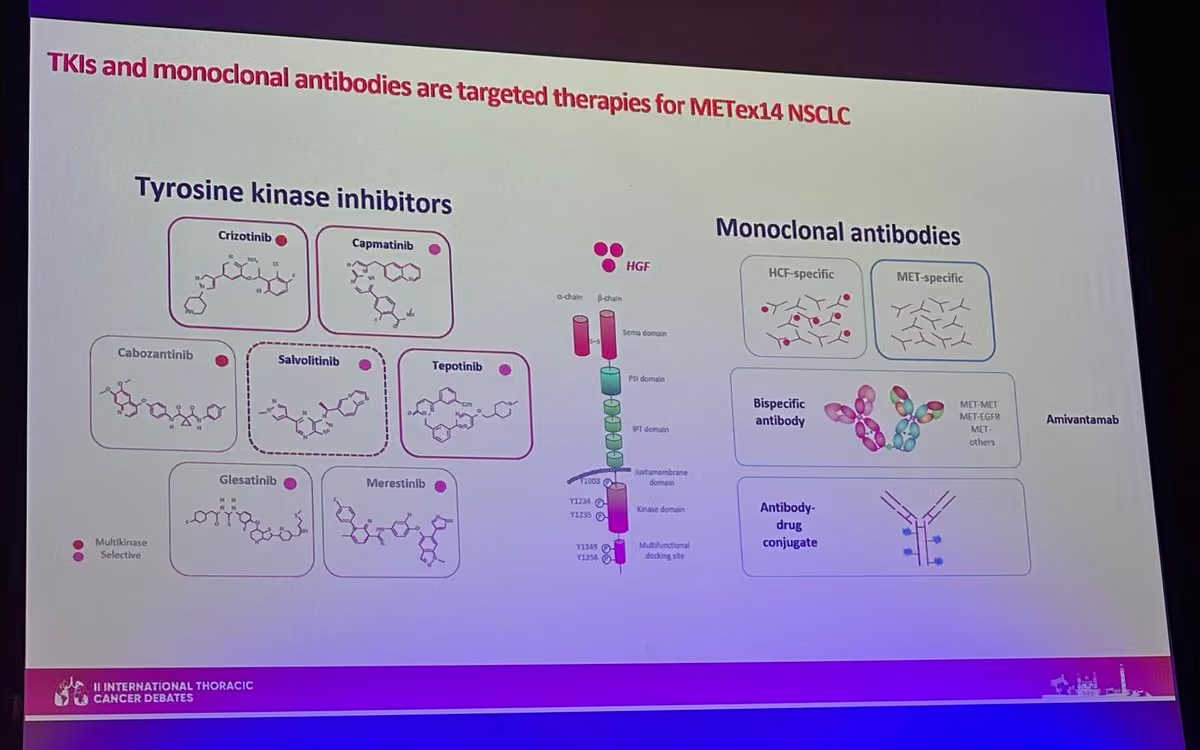
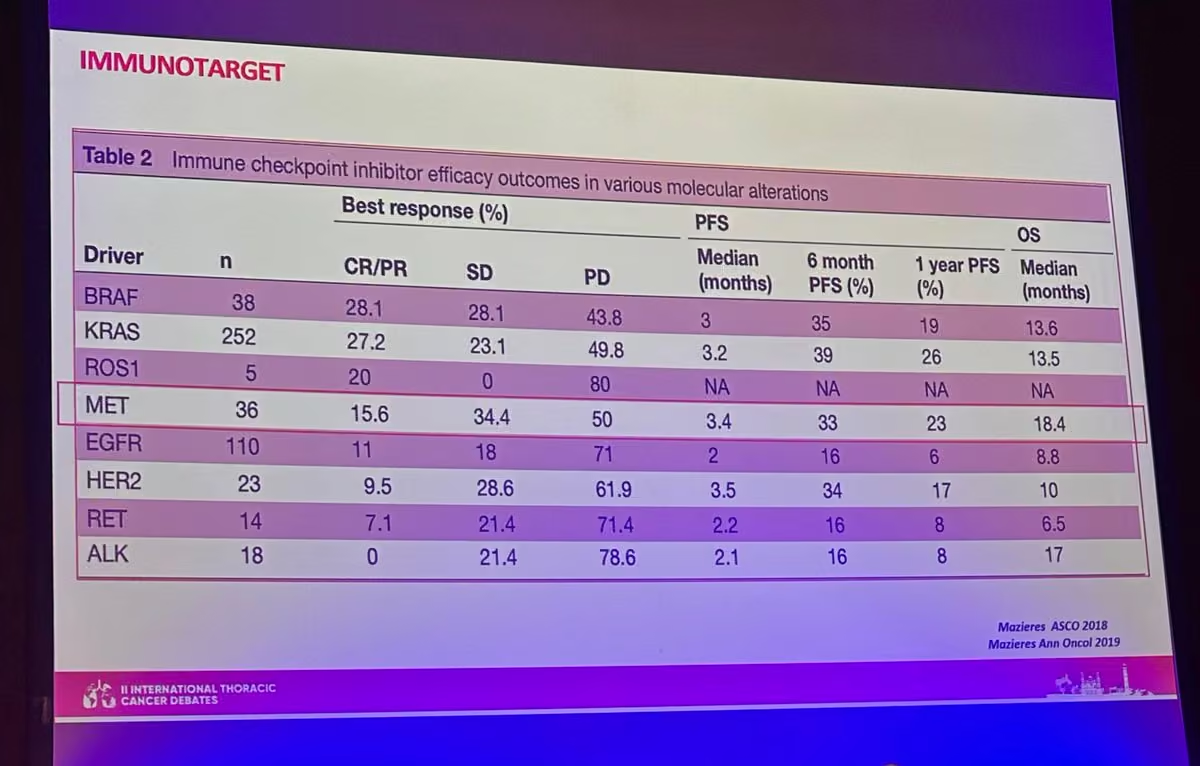
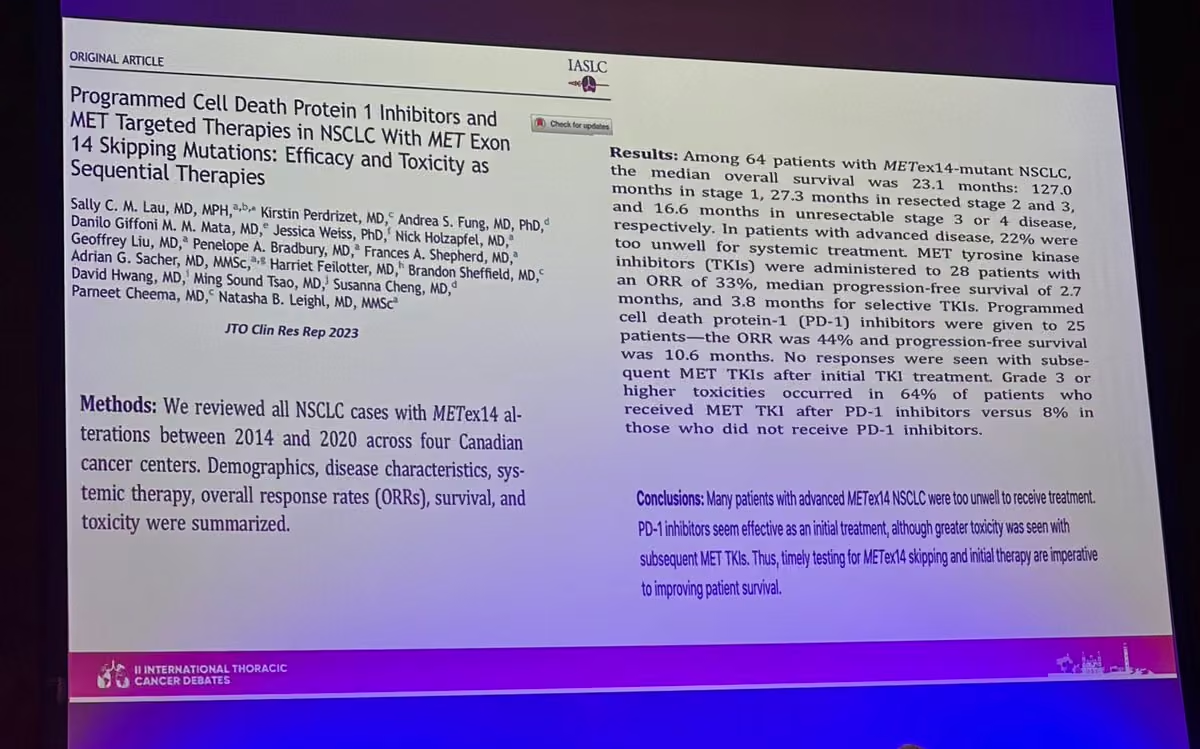 Mikhail V. Blagosklonny, MD PhD Professor Oncology
@Blagosklonny
Mikhail V. Blagosklonny, MD PhD Professor Oncology
@Blagosklonny
Lorlatinib and capmatinib in a ROS1-rearranged NSCLC with MET-driven resistance: tumor response and evolution
www.ncbi.nlm.nih.gov/pmc/articles/PMC10624912/
Mikhail V. Blagosklonny, MD PhD Professor Oncology reposted
 -
@Izz__h
To those who know anyone who is a cancer patient that's in need of chemo treatment but can't really afford the cost

 Mikhail V. Blagosklonny, MD PhD Professor Oncology
@Blagosklonny
I will try to pay for the treatment of #cancer patients who cannot afford the treatment
-When no other funds are available
-I can spend only up to $ 1 million (personal money) for all cases, so not everybody can be helped
-Treatments of metastatic lung cancer that expected to significantly extend live will be priority
-Cases suggested by outstanding oncologists (for example, Tito Fojo, @weldeiry , @Dr_R_Kurzrock ) will be priority
Mikhail V. Blagosklonny, MD PhD Professor Oncology
@Blagosklonny
To survive longer, I, a metastatic lung cancer patient, need prescriptions for selpercatinib and afatinib to fight resistance to capmatinib (I take it). Two-drug combinations selpercatinib + capmatinib and afatinib + capmatinib: one after another for a few weeks
These drugs are FDA approved and two combinations are used in lung cancer.
So, nothing special. And I will pay out-of-pocket, myself
Mikhail V. Blagosklonny, MD PhD Professor Oncology
@Blagosklonny
an explanation for "out-of pocket". I am just generous and can afford it
Mikhail V. Blagosklonny, MD PhD Professor Oncology
@Blagosklonny
Dual MET and ERBB inhibition overcomes intratumor plasticity in osimertinib-resistant-advanced non-small-cell lung … pubmed.ncbi.nlm.nih.gov/28961841/
Mikhail V. Blagosklonny, MD PhD Professor Oncology
@Blagosklonny
Acquired Resistance of MET-Amplified Non-small Cell Lung Cancer Cells to the MET Inhibitor Capmatinib pubmed.ncbi.nlm.nih.gov/30309221/
Mikhail V. Blagosklonny, MD PhD Professor Oncology
@Blagosklonny
Combination Therapy With MDM2 and MEK Inhibitors Is Effective in Patient-Derived Models of Lung Adenocarcinoma With Concurrent Oncogenic Drivers and MDM2 Amplification
pubmed.ncbi.nlm.nih.gov/37182602/
Mikhail V. Blagosklonny, MD PhD Professor Oncology
@Blagosklonny
Acquired Tertiary MET Resistance (MET D1228N and a Novel LSM8-MET Fusion) to Selpercatinib and Capmatinib in a Patient With KIF5B-RET–positive NSCLC With Secondary MET Amplification as Initial Resistance to Selpercatinib - Journal of Thoracic Oncology www.jto.org/article/S1556-0864(21)01784-6/fulltext
Mikhail V. Blagosklonny, MD PhD Professor Oncology
@Blagosklonny
Mikhail V. Blagosklonny, MD PhD Professor Oncology
@Blagosklonny
When Feynman said "you" he meant "I". He had special mental capabilities that others do not have
 Physics In History
@PhysInHistory
Richard Feynman on education system ✍️
Mikhail V. Blagosklonny, MD PhD Professor Oncology reposted
 Aeterna
@romeaeterna
A Dr with limited time left trying to change the system which is extremely resistant to change. His approach would save and extend many lives.
Mikhail V. Blagosklonny, MD PhD Professor Oncology
@Blagosklonny
1/
My battle with cancer. Part 1
Preemptive combinations to treat incurable metastatic cancer with curable intent
www.ncbi.nlm.nih.gov/pmc/articles/PMC10765422/
Mikhail V. Blagosklonny, MD PhD Professor Oncology
@Blagosklonny
it is much more easier to survive here, than to spread and survive in space. I doubt that its real quote below.
Physics In History
@PhysInHistory
What do you think? ✍️
 Mikhail V. Blagosklonny, MD PhD Professor Oncology
@Blagosklonny
We never will spread into space. If the human race cannot even survive here (where even primitive species survive close to billion years), even less the human race can spread and survive in space.
Physics In History
@PhysInHistory
What do you think? ✍️
Mikhail V. Blagosklonny, MD PhD Professor Oncology reposted
Oncotarget
@Oncotarget
Visit the Oncotarget archive, containing papers published from 2010-2024: www.oncotarget.com/archive/
Mikhail V. Blagosklonny, MD PhD Professor Oncology reposted
Aging Journal
@AgingJrnl
Rapamycin Redux by Josh Mitteldorf: joshmitteldorf.scienceblog.com/2016/06/13/rapamycin-redux/
Mikhail V. Blagosklonny, MD PhD Professor Oncology reposted
 Healthspan
@healthspanmed
42. The inhibition of mTOR represents a promising approach for deaccelerating aging by reducing hyperfunction, increasing autophagy, and decreasing senescent cell pathology.
@Blagosklonny's article on rapamycin and hyper-functions is required reading:
www.tandfonline.com/doi/epdf/10.4161/cc.5.18.3288?needAcc…
Mikhail V. Blagosklonny, MD PhD Professor Oncology reposted
 Lacus Temporis
@EOlden61
Mikhail V. Blagosklonny, MD PhD Professor Oncology
@Blagosklonny
Too high cholesterol is better than too low.
The lowest mortality are at 210–249 mg/dL
Mikhail V. Blagosklonny, MD PhD Professor Oncology reposted
 soon2bsuspendedagain
@sickofsuspnsion
Facts
Mikhail V. Blagosklonny, MD PhD Professor Oncology
@Blagosklonny
Too high cholesterol is better than too low.
The lowest mortality are at 210–249 mg/dL
Mikhail V. Blagosklonny, MD PhD Professor Oncology
@Blagosklonny
No-one dies from aging, everyone dies from aging-related diseases. But if we define aging as a sum of all aging-related diseases, than we may say that everyone dies from aging
www.aging-us.com/figure/204920/f1
Mikhail V. Blagosklonny, MD PhD Professor Oncology
@Blagosklonny
If we believe in immortality, we do not need to be immortal.
We do not need to live longer to be happy; we just need to believe that we will live longer to be happy. After death, we will not know that we did not live longer anyway
Mikhail V. Blagosklonny, MD PhD Professor Oncology
@Blagosklonny
Altos Labs should work on rapamycin to make us (rather than our great-grandchildren) live longer
www.ncbi.nlm.nih.gov/pmc/articles/PMC9040914/
Mikhail V. Blagosklonny, MD PhD Professor Oncology reposted
 Tootsiebug
@Moochie7426
Of course! I appreciate your sense of humor.
Mikhail V. Blagosklonny, MD PhD Professor Oncology reposted
 Gino “Savo” Savastano
@VegasGregin
Kidding? Your 100% right
Mikhail V. Blagosklonny, MD PhD Professor Oncology
@Blagosklonny
take rapamycin 😝
 Science girl
@sciencegirl
 Mikhail V. Blagosklonny, MD PhD Professor Oncology
@Blagosklonny
Biological specificity of CDK4/6 inhibitors: dose response relationship, in vivo signaling, and composite response … pubmed.ncbi.nlm.nih.gov/28620137/
Mikhail V. Blagosklonny, MD PhD Professor Oncology
@Blagosklonny
Extended Disease Control with Unconventional Cabozantinib Dose Increase in Metastatic Renal Cell Carcinoma www.ncbi.nlm.nih.gov/pmc/articles/PMC9894028/
Mikhail V. Blagosklonny, MD PhD Professor Oncology
@Blagosklonny
"the wisdom of life is prioritizing right" MVB
Mikhail V. Blagosklonny, MD PhD Professor Oncology
@Blagosklonny
A person who does not like me is a bad person. Only bad persons do not like me
Science girl
@sciencegirl
 Mikhail V. Blagosklonny, MD PhD Professor Oncology
@Blagosklonny
ONCOLOGISTS PLEASE READ. # cancer
By 'experimenting' on myself as a stage-IVB cancer patient, I discovered something for oncologists dealing with brain tumors/metastases, MET-driven cancers, and cancers in general. Just one example is the well-known fact that MET inhibitors cause peripheral edema as a side effect. However, the mechanism and treatment of this edema are unknown. I found that adding VEGFR inhibitors to MET inhibitors reverses edema, which is beneficial for the patient's oncologist, friends, and especially girlfriends 😘. But this discovery also sheds unwanted light on the situation in brain metastasis.
For instance, anti-VEGF agents (including multi-kinase inhibitors) stabilize BBB and can antagonize anti-cancer drugs by preventing their penetration into brain tumors. As a result, brain metastases may progress and grow. Ironically, what may initially appear as an amazing success is actually a pseudo-response. Anti-VEGF drugs not only prevent the penetration and accumulation of drugs but also contrast agents used for MRI. On MRI, the tumor may seemingly decrease or even become invisible, creating a false impression of improvement. This is a pseudo-response that masks the actual progression.
In part II of my book "My battle with cancer", I will elaborate on my discoveries using various examples. As one of the examples, I will conclude that the use of anti-VEGF drugs, such as Avastin, is usually harmful.
Mikhail V. Blagosklonny, MD PhD Professor Oncology
@Blagosklonny
The cancer that doctors don’t want to call cancer - The Wall Street Journal apple.news/Ay-bv94xNQAiWn7UvEewUXg
Mikhail V. Blagosklonny, MD PhD Professor Oncology reposted
Mikhail V. Blagosklonny, MD PhD Professor Oncology
@Blagosklonny
Part 1 "My batlle with cancer". Part 2 is coming soon
www.ncbi.nlm.nih.gov/pmc/articles/PMC10765422/
Mikhail V. Blagosklonny, MD PhD Professor Oncology
@Blagosklonny
I do not care about my legacy after I die; I would rather enjoy praise, legacy and compliments while still alive
Mikhail V. Blagosklonny, MD PhD Professor Oncology reposted
Mikhail V. Blagosklonny, MD PhD Professor Oncology
@Blagosklonny
2/
In Part I, I decribed preemptive combinations of clinically-approved drugs to prevent resistance before it becomes detectable. Part II will be named 'My Battle with Cancer and the Standard Oncologist.' After all, I did not receive preemptive combinations ...
Mikhail V. Blagosklonny, MD PhD Professor Oncology reposted
 Deborah Krueger Chef Eating Keto~LCHF Recipes
@LCHFDetective
If you are remotely interested in Rapamycin please read the comments. For the most part they are thoughtful. Lots of answers from Dr. Alan Green with much inclusion of @Blagosklonny
Aging Journal
@AgingJrnl
Rapamycin Redux by Josh Mitteldorf: joshmitteldorf.scienceblog.com/2016/06/13/rapamycin-redux/
Mikhail V. Blagosklonny, MD PhD Professor Oncology reposted
 Adam Bataineh MD
@DrAdamBat
Nice illustration of aging by @Blagosklonny

Mikhail V. Blagosklonny, MD PhD Professor Oncology reposted
Mikhail V. Blagosklonny, MD PhD Professor Oncology
@Blagosklonny
1/
My battle with cancer. Part 1
Preemptive combinations to treat incurable metastatic cancer with curable intent
www.ncbi.nlm.nih.gov/pmc/articles/PMC10765422/
Mikhail V. Blagosklonny, MD PhD Professor Oncology
@Blagosklonny
Yes. Except my book 😜
www.ncbi.nlm.nih.gov/pmc/articles/PMC10765422/
P.D. Mangan Health and Freedom Maximalist 🇺🇸
@Mangan150
"Everything is a scam."
This is a surprisingly good heuristic.
Mikhail V. Blagosklonny, MD PhD Professor Oncology
@Blagosklonny
www.tandfonline.com/doi/pdf/10.4161/cc.1.2.107
Mikhail V. Blagosklonny, MD PhD Professor Oncology
@Blagosklonny
Part 1 "My batlle with cancer". Part 2 is coming soon
www.ncbi.nlm.nih.gov/pmc/articles/PMC10765422/
Mikhail V. Blagosklonny, MD PhD Professor Oncology
@Blagosklonny
I do not care about my legacy after I die; I would rather enjoy praise, legacy and compliments while still alive
Mikhail V. Blagosklonny, MD PhD Professor Oncology
@Blagosklonny
Part 1 "My batlle with cancer". Part 2 is coming soon
www.ncbi.nlm.nih.gov/pmc/articles/PMC10765422/
Mikhail V. Blagosklonny, MD PhD Professor Oncology
@Blagosklonny
I do not care about my legacy after I die; I would rather enjoy praise, legacy and compliments while still alive
Mikhail V. Blagosklonny, MD PhD Professor Oncology
@Blagosklonny
PDE5 inhibitors (Viagra) increase Herceptin transport and treatment efficacy in mouse metastatic brain tumors
pubmed.ncbi.nlm.nih.gov/20419092/
Mikhail V. Blagosklonny, MD PhD Professor Oncology
@Blagosklonny
Potential synergistic effect of phosphodiesterase inhibitors (Viagra) with chemotherapy in lung cancer
pubmed.ncbi.nlm.nih.gov/29151951/
Mikhail V. Blagosklonny, MD PhD Professor Oncology
@Blagosklonny
sildenafil potentiates the antitumor activity of cisplatin
pubmed.ncbi.nlm.nih.gov/35725975/
Mikhail V. Blagosklonny, MD PhD Professor Oncology
@Blagosklonny
Phosphodiesterase type 5 inhibitors increase Herceptin transport and treatment efficacy in mouse metastatic brain t…
pubmed.ncbi.nlm.nih.gov/20419092/
Mikhail V. Blagosklonny, MD PhD Professor Oncology
@Blagosklonny
PDE5 inhibitors (Viagra) enhance tumor permeability and efficacy of chemotherapy in a rat brain tumor model
pubmed.ncbi.nlm.nih.gov/18674521/
Mikhail V. Blagosklonny, MD PhD Professor Oncology
@Blagosklonny
1/
My battle with cancer. Part 1
Preemptive combinations to treat incurable metastatic cancer with curable intent
www.ncbi.nlm.nih.gov/pmc/articles/PMC10765422/
Mikhail V. Blagosklonny, MD PhD Professor Oncology
@Blagosklonny
2/
In Part I, I decribed preemptive combinations of clinically-approved drugs to prevent resistance before it becomes detectable. Part II will be named 'My Battle with Cancer and the Standard Oncologist.' After all, I did not receive preemptive combinations ...
Mikhail V. Blagosklonny, MD PhD Professor Oncology
@Blagosklonny
Towards disease-oriented dosing of rapamycin for longevity medicalxpress.com/news/2023-08-disease-oriented-dosing-ra… via @medical_xpress
Mikhail V. Blagosklonny, MD PhD Professor Oncology
@Blagosklonny
The Information Theory of Aging pubmed.ncbi.nlm.nih.gov/38102202/
Mikhail V. Blagosklonny, MD PhD Professor Oncology
@Blagosklonny
What is the most interesting targeted inhibitor against cancer, approved by FDA in 2023?
Mikhail V. Blagosklonny, MD PhD Professor Oncology
@Blagosklonny
What is the most useful or significant (practical or theoretical) achievement in targeted therapy of lung cancer (or any cancer) in 2023-2024?
Mikhail V. Blagosklonny, MD PhD Professor Oncology
@Blagosklonny
Because it was states in 2006 that rapamycin must ! extend life in all animals and even cells, and possibly some plants
www.tandfonline.com/doi/epdf/10.4161/cc.9.10.11872?needAc…
 David Stănete
@stanete
Many people think the first drug to extend lifespan of mice was Rapamycin in 2009. But this is obviously not true. This paper references a group of scientist from the old USSR Ukraine who extended lifespan of mice using Panax Ginseng in 1968. karger.com/ger/article-abstract/25/3/125/145286/The-Effec…
Mikhail V. Blagosklonny, MD PhD Professor Oncology
@Blagosklonny
Instead of "Happy New Year" , I congratulate myself and many people with "Happy New You"
Mikhail V. Blagosklonny, MD PhD Professor Oncology
@Blagosklonny
Are menopause, aging and prostate cancer diseases? pubmed.ncbi.nlm.nih.gov/36707068/
Mikhail V. Blagosklonny, MD PhD Professor Oncology reposted
Agingdoc🩺Dr David Barzilai🔔MD PhD MS MBA DipABLM
@agingdoc1
My battle with cancer. Part 1
@Blagosklonny
www.oncoscience.us/article/593/text/
@OncoscienceJrnl
 Mikhail V. Blagosklonny, MD PhD Professor Oncology
@Blagosklonny
Part 1 of my most important book, 'My Battle with Cancer'. It's not only about how I was treated but also how I should have been treated with curative intent. The book explores how to prevent invisible resistance to targeted drugs.
www.oncoscience.us/article/593/text/
Mikhail V. Blagosklonny, MD PhD Professor Oncology
@Blagosklonny
Metformin decreases Risk of Malignant Brain Tumors in Patients with Type 2 Diabetes
pubmed.ncbi.nlm.nih.gov/34439890/
Mikhail V. Blagosklonny, MD PhD Professor Oncology
@Blagosklonny
Metformin reduces HGF-induced resistance to alectinib via the inhibition of Gab1 pubmed.ncbi.nlm.nih.gov/32041944/
Mikhail V. Blagosklonny, MD PhD Professor Oncology
@Blagosklonny
Vitamin C and Doxycycline: A synthetic lethal combination therapy targeting metabolic flexibility in cancer stem ce… pubmed.ncbi.nlm.nih.gov/28978032/
Mikhail V. Blagosklonny, MD PhD Professor Oncology
@Blagosklonny
Antibiotics that target mitochondria extend lifespan in C. elegans
pubmed.ncbi.nlm.nih.gov/37950722/
Mikhail V. Blagosklonny, MD PhD Professor Oncology
@Blagosklonny
Juice of immortality
 Mikhail V. Blagosklonny, MD PhD Professor Oncology
@Blagosklonny
It increases blood levels of rapamycin three fold. And of some very expensive, difficult to get medications, too
Mikhail V. Blagosklonny, MD PhD Professor Oncology
@Blagosklonny
Exercise as a Promising Agent against Cancer
www.ncbi.nlm.nih.gov/pmc/articles/PMC10648074/
Mikhail V. Blagosklonny, MD PhD Professor Oncology
@Blagosklonny
Tumor vessel normalization after aerobic exercise enhances chemotherapeutic efficacy
www.oncotarget.com/article/11748/text/
Mikhail V. Blagosklonny, MD PhD Professor Oncology
@Blagosklonny
Focal radiotherapy can increase the development of distant metastasis
Effects of Radiation on Metastasis and Tumor Cell Migration www.ncbi.nlm.nih.gov/pmc/articles/PMC4956569/
Mikhail V. Blagosklonny, MD PhD Professor Oncology
@Blagosklonny
Senotherapy, cancer, and aging pubmed.ncbi.nlm.nih.gov/37977898/
Mikhail V. Blagosklonny, MD PhD Professor Oncology
@Blagosklonny
Mikhail V. Blagosklonny, MD PhD Professor Oncology
@Blagosklonny
Endothelial cell-specific reduction in mTOR ameliorates age-related arterial and metabolic dysfunction pubmed.ncbi.nlm.nih.gov/38017701/
Mikhail V. Blagosklonny, MD PhD Professor Oncology
@Blagosklonny
Mechanistic target of rapamycin in regulating macrophage function in inflammatory cardiovascular diseases pubmed.ncbi.nlm.nih.gov/38039845/
Mikhail V. Blagosklonny, MD PhD Professor Oncology
@Blagosklonny
Senescent fibroblasts can induce and accelerate age-related dysfunction of other skin cells and may even cause systemic inflammation.
onlinelibrary.wiley.com/doi/10.1111/acel.14054
Mikhail V. Blagosklonny, MD PhD Professor Oncology
@Blagosklonny
Mikhail V. Blagosklonny, MD PhD Professor Oncology reposted
Agingdoc🩺Dr David Barzilai🔔MD PhD MS MBA DipABLM
@agingdoc1
This is what addiction might feel like
-@agingdoc1 🧑⚕️
Mikhail V. Blagosklonny, MD PhD Professor Oncology reposted
Razelle Kurzrock, MD
@Dr_R_Kurzrock
ADCs can be incredibly effective against cancers!

Mikhail V. Blagosklonny, MD PhD Professor Oncology reposted
 Rapamycin News
@RapaNews
The FDA-approved rapamycin clinical trial for periodontal disease is starting in Seattle. I encourage people in Seattle are to participate... @mkaeberlein , @agingdoc1 , www.rapamycintrial.com
Mikhail V. Blagosklonny, MD PhD Professor Oncology reposted
 Kevin Perez
@kgiperez
A good way to assess if we are making progress in the field is to look at the best lifespan extension achieved so far in the ITP. So far, the best result for a single drug (excluding combinations) is for Rapamycin, in female mice, at 42ppm (+28%).
 Mikhail V. Blagosklonny, MD PhD Professor Oncology
@Blagosklonny
Taking several targeted anti-cancer drugs, I may feel weak and low energy, until I force myself to exercise. When I dare to swim, I feel energy enough to fly 👍
P.D. Mangan Health and Freedom Maximalist 🇺🇸
@Mangan150
Every time you train with intensity, you're flooding your body with anti-cancer, anti-inflammatory, pro-longevity hormones and cytokines.
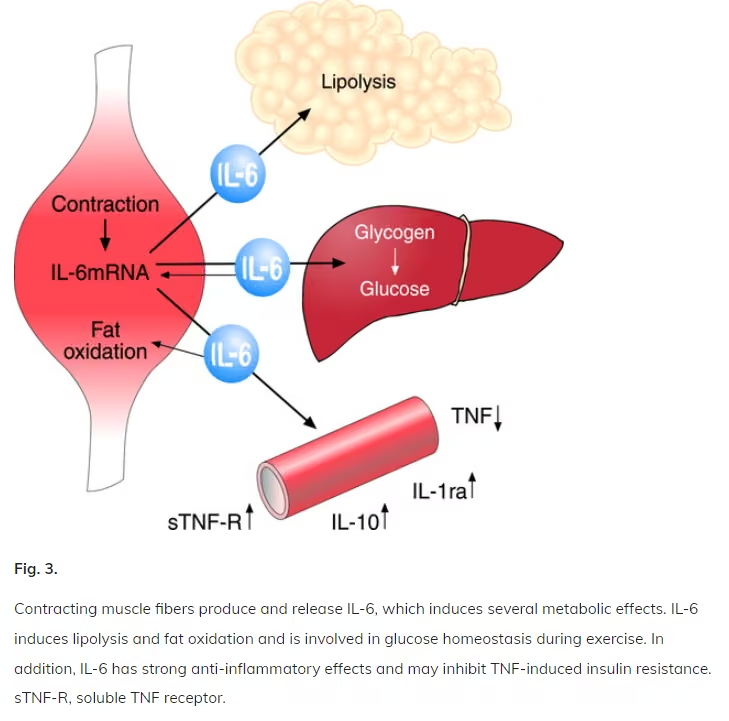
Mikhail V. Blagosklonny, MD PhD Professor Oncology reposted
P.D. Mangan Health and Freedom Maximalist 🇺🇸
@Mangan150
Why I never workout for more than 75 minutes per week…
And why you should (probably) train even less than I do.
Here's why:
 Mikhail V. Blagosklonny, MD PhD Professor Oncology
@Blagosklonny
Yes, aging is an exponential increase of death because death from each age-related disease increases exponentially; and aging is a sum of all age-related diseases. If not diagnosed, we say the elderly died from aging but upon autopsy we know which age-related diseases killed
P.D. Mangan Health and Freedom Maximalist 🇺🇸
@Mangan150
What is aging, anyway?
There are many theories as to the ultimate cause of aging, but aging itself could be defined as an increasing risk of death over time.
The death rate rises exponentially with age.
But, as @Blagosklonny emphasizes, people don't die of aging, they die of age-related diseases.
Age-related diseases are generally chronic diseases, such as diabetes, heart disease, cancer, Alzheimer's, Parkinson's, and others.
Diabetes increases the risk of all the other chronic diseases, and can therefore be thought of as the mother of all aging-related diseases.
Type 2 diabetes used to be known as adult-onset diabetes, distinguished from juvenile-onset diabetes, or type 1, but it's name had to be changed when it was seen more and more in younger people.
This is a very recent phenomenon.
Ninety percent of Americans have one or more factors of metabolic dysfunction that can ultimately lead to diabetes. Not all will ultimately develop diabetes, but these factors all play a role in increasing risk of chronic, age-related disease.
This does not have to happen. Diabetes is readily preventable and in most cases reversible, as @lowcarbGP has shown in his medical practice.
The factors that lead to diabetes, which are those found in metabolic syndrome, are also reversible.
Most of the metabolic dysfunction of aging is in fact related not to aging itself, but to these pro-diabetic factors.
You can prevent them from happening through good metabolic health.
And therefore most of the chronic diseases of aging do not have to happen.
How to prevent them?
1. Do not eat ultra-processed foods. These are the foods that come in boxes, bags, bottles, and cans, usually with brightly colored labels and sold in the middle aisles of the supermarket.
Their main ingredients usually feature some combination of grains, sugar, and seed oils.
2. Instead, eat real whole foods, such as meat, eggs, fish, dairy, fruits, and vegetables. These are the lower profit foods that supermarkets place around their periphery.
3. Aging leads to muscle loss, and muscle is the biggest, most metabolically active organ in the body. Muscle loss leads to poor metabolic health, in addition to weakness and frailty.
Build muscle through resistance training. This is essential for healthy aging.
4. Be physically active daily. Walking, hiking, cycling, swimming, tennis, etc. It also wouldn't hurt to, at times, get enough activity that makes your heart rate rise, and makes you breathe hard.
5. Maintain normal body weight with good body composition, i.e. low body fat and high muscle. See steps 1-4 above.
Do these things you have a much better shot at preventing age-related disease, and living into a ripe old age in good physical and mental health.
 Mikhail V. Blagosklonny, MD PhD Professor Oncology
@Blagosklonny
Cancer would be a curable disease, if each oncologist has cancer and treated him/herself.
Mikhail V. Blagosklonny, MD PhD Professor Oncology
@Blagosklonny
It is feasible to kill 1 resistant cancer cell out of 1 but it is not feasible to kill all resistant cells out of a million.
If you agree, you must agree with using combination of targeted drugs from the start before any resistance become detectable
www.mikhailblagosklonny.com/blog/my-battle-with-cancer/
Mikhail V. Blagosklonny, MD PhD Professor Oncology
@Blagosklonny
In the next part of my book, I will formulate in detail how to treat metastatic cancer. For example, EGFR-mutant-driven cancer should be initially treated with combination of osimertinib, afatinib and captaminib, preventing on-target resistance and resistance due to MET/HER2 amp
Mikhail V. Blagosklonny, MD PhD Professor Oncology
@Blagosklonny
MET-ex14-driven cancer (my cancer) should be treated by a combination of captaminib, afatinib and cabozantinib at the start. I will discuss how these combinations (instead of initial monotherapy) would prevent types of resistance otherwise selected by monotherapy in 50% patients
Mikhail V. Blagosklonny, MD PhD Professor Oncology reposted
P.D. Mangan Health and Freedom Maximalist 🇺🇸
@Mangan150
Resistance training not only prevents the muscle loss of aging, but has profound benefits on inflammation and the immune system.
Most longevity "experts" ignore this.
Lift weights to fight aging, to keep a healthy immune system, and to avoid weakness and frailty
 Mikhail V. Blagosklonny, MD PhD Professor Oncology
@Blagosklonny
Restricted Ketogenic Diet Therapy for Primary Lung Cancer With Metastasis to the Brain: A Case Report www.ncbi.nlm.nih.gov/pmc/articles/PMC9435310/
Mikhail V. Blagosklonny, MD PhD Professor Oncology
@Blagosklonny
ketogenic diet prolongs life in mice with breast cancer and can enhance the anti-cancer effects of rapamycin
The effect of a ketogenic diet and synergy with rapamycin in a mouse model of breast cancer pubmed.ncbi.nlm.nih.gov/33270630/
Mikhail V. Blagosklonny, MD PhD Professor Oncology
@Blagosklonny
No symptoms
Mikhail V. Blagosklonny, MD PhD Professor Oncology
@Blagosklonny
Activation of mTOR in adult lung accelerates lung aging
pubmed.ncbi.nlm.nih.gov/37874650/
Mikhail V. Blagosklonny, MD PhD Professor Oncology
@Blagosklonny
Mikhail V. Blagosklonny, MD PhD Professor Oncology
@Blagosklonny
Cited from
www.mikhailblagosklonny.com/blog/my-battle-with-cancer/
BuckeyeGirl ✝️🇺🇸🏈
@CleGirl17
 Mikhail V. Blagosklonny, MD PhD Professor Oncology
@Blagosklonny
Provocative citation! Cited from:
www.mikhailblagosklonny.com/blog/my-battle-with-cancer/
BuckeyeGirl ✝️🇺🇸🏈
@CleGirl17

Mikhail V. Blagosklonny, MD PhD Professor Oncology reposted
Agingdoc🩺Dr David Barzilai🔔MD PhD MS MBA DipABLM
@agingdoc1
My battle with cancer
@Blagosklonny
www.mikhailblagosklonny.com/blog/my-battle-with-cancer/
Mikhail V. Blagosklonny, MD PhD Professor Oncology reposted
Agingdoc🩺Dr David Barzilai🔔MD PhD MS MBA DipABLM
@agingdoc1
I am going public today...
Here’s why: www.barzilaiconsulting.com/49
Kind regards💕,
Agingdoc - David Barzilai MD PhD 🧑⚕️
Mikhail V. Blagosklonny, MD PhD Professor Oncology reposted
Oncotarget
@Oncotarget
This is a unique report on potential curing of incurable metastatic cancer, written by a professor of oncology, MD/PhD, who is also the patient with this cancer
First 2 parts out of 10
www.mikhailblagosklonny.com/blog/my-battle-with-cancer/
Mikhail V. Blagosklonny, MD PhD Professor Oncology reposted
Oncotarget
@Oncotarget
1/
Published in 1951, “The transmissible venereal tumor of the dog” is among several thoundreds papers on the topic of transmissible tumors in animals (from clams to dogs).
www.ncbi.nlm.nih.gov/pmc/articles/PMC1937229/
Mikhail V. Blagosklonny, MD PhD Professor Oncology reposted
Oncotarget
@Oncotarget
2/
I review the topic in 2005 and 2022. “Some cancer cell lines live for thousands of years in the wild. Originating in one animal, viable cancer cells are directly transmitted into unrelated hosts in a process similar to metastasis [21, 22].
Mikhail V. Blagosklonny, MD PhD Professor Oncology reposted
Oncotarget
@Oncotarget
4/The Tasmanian devil facial tumor disease [24] spreads through the Tasmanian devil population by transfer of cancer cells through biting [22]. [26]. Leukemia-like cancer spreads among marine bivalves through sea water, [23, 27].”
Ref in:
www.ncbi.nlm.nih.gov/pmc/articles/PMC9134968/
Mikhail V. Blagosklonny, MD PhD Professor Oncology reposted
Oncotarget
@Oncotarget
3/ Transmissible cancers have been observed in domestic dogs, the Tasmanian devil, hamsters and six bivalve species such as the soft-shell clam [23]. Canine transmissible venereal tumors was originated thousands of years ago from cells of a wolf [21–25].
Mikhail V. Blagosklonny, MD PhD Professor Oncology reposted
Vivek Subbiah, MD
@VivekSubbiah
⭐️Acquired resistance to KRAS G12C small-molecule inhibitors (Sotorasib & Adagrasib) via genetic/nongenetic mechanisms in lung cancer published in @ScienceAdvances
👉🏼Elegant pre-clinical work by @DrRaviSalgia @cityofhope in identifying that the proteasome inhibitor carfilzomib (CFZ) exhibited synergism with sotorasib by down-regulating ITGB4 and β-catenin expression.
👉🏼Adagrasib phenocopies the combination effect of sotorasib and CFZ by suppressing KRAS activity and inhibiting cell cycle progression in inherently resistant cells
👉🏼Nice work in identifying unrecognized nongenetic mechanisms underlying resistance to sotorasib and propose a promising treatment strategy to overcome resistance cc @montypal
www.science.org/doi/10.1126/sciadv.ade3816
 Mikhail V. Blagosklonny, MD PhD Professor Oncology
@Blagosklonny
Rapamycin-and-other-rapalogs-have-potential-to-delay-cancer
www.news-medical.net/news/20230418/Rapamycin-and-other-ra…
Mikhail V. Blagosklonny, MD PhD Professor Oncology
@Blagosklonny
Iron: an underrated factor in aging @Mangan150
Published in Aging @AgingJrnl
www.aging-us.com/article/203612/text
David Sinclair
@davidasinclair
More and more scientists suspect that high iron levels probably cause normal cells to age faster and ultimately become senescent zombie cells 🧟♀️. We know for sure that a common feature of senescent cells is their high iron content
 Mikhail V. Blagosklonny, MD PhD Professor Oncology
@Blagosklonny
This is Aging twitter @AgingJrnl
Name of the journal is Aging (no word journal). @AgingJrnl
Agingdoc🩺Dr David Barzilai🔔MD PhD MS MBA DipABLM
@agingdoc1
Hi Eric,
FYI, you referred to @Agingjournal, but that's really the International Journal of Aging.
You meant to link to @Blagosklonny's Aging (Albany NY) journal which is where Judy's publication came out (& a great one @BuckInstitute I might add!👏).
Misha's journal used to have a Twitter handle, but it is not currently active.
-@agingdoc1 🧑⚕️
Mikhail V. Blagosklonny, MD PhD Professor Oncology
@Blagosklonny
“Imitation is the sincerest form of flattery that mediocrity can pay to greatness.”
― Oscar Wilde
Mikhail V. Blagosklonny, MD PhD Professor Oncology
@Blagosklonny
Neuronal mTORC1 inhibition promotes longevity without suppressing anabolic growth and reproduction in C. elegans ... www.ncbi.nlm.nih.gov/pmc/articles/PMC10538657/
Mikhail V. Blagosklonny, MD PhD Professor Oncology
@Blagosklonny
1/ Running again (October 2, 2023)
Together with several brilliant oncologists, designing treatment to cure uncurable cancer.
Mikhail V. Blagosklonny, MD PhD Professor Oncology
@Blagosklonny
2/Dramatic Reduction of Brain Metastases and Resolution of Bone Lesions
www.mikhailblagosklonny.com/blog/i-am-a-soldier-my-battle…
Mikhail V. Blagosklonny, MD PhD Professor Oncology reposted
 Mikhail Batin
@MikhailBatin
The main division in life extension is not into “the people who are for” and “the people who are against” life extension. The 2nd group will instantly become the 1st one in the blink of an eye if a cure for old age is developed.
The main devision is between “the people who are for life extension” and “the people who are for life extension at any cost.” The willingness to pay any price for your life is the most fundamental difference.
People who are simply in favor of prolonging life, while doing nothing to advance the technology, are useless ballast. They expect the cure for old age to be brought to them by someone. They covertly spread the ideology of inaction or the idea that some preventive measures like healthy lifestyle are sufficient. They mislead themselves and the people around them that if they just hunt for seeded watermelons and do ice plunges, this will help defeat death.
People who do exclusively business in longevity and do not pay attention to social duties are not only short-sighted, but also cause harm by creating an atmosphere of hyper-optimism. If you look at Longevity Biotech, you might get the impression that the cure for old age will be ready in five years. But these entrepreneurs do not create anything other than a market for the resale of promises. The task of life extension is too complex and difficult. It is easier for a business to turn to the road of making quick money on hype, rather than finding out more and more details and establishing connections between known facts about life extension. The life extension business has no life extension ethics. Our ethics are the maximum focus on eliminating the causes of death.
Only obliging to do everything possible and impossible, acting nonstop, taking on risks and contempt, agreeing to a long chain of failures can be considered at least somewhat reasonable.
What can we do right now? Convince everyone around to promote the Dublin Longevity Declaration. On the other side of the scale is criminal inaction.
#sayforever can be said in many different ways. One of them is increasing the number of signatories to the Dublin Longevity Declaration.
dublinlongevitydeclaration.org
 Mikhail V. Blagosklonny, MD PhD Professor Oncology
@Blagosklonny
Funerals should be celebrated ! prior to death, so the dying you can enjoy all good words about you and respond. No tears, just joy. What's the sense in funerals for you after you is gone?
Mikhail V. Blagosklonny, MD PhD Professor Oncology
@Blagosklonny
I do not care about my legacy after I die; I would rather enjoy praise, legacy and compliments while still alive
Mikhail V. Blagosklonny, MD PhD Professor Oncology
@Blagosklonny
Towards disease-oriented dosing of rapamycin for longevity medicalxpress.com/news/2023-08-disease-oriented-dosing-ra… via @medical_xpress
Mikhail V. Blagosklonny, MD PhD Professor Oncology
@Blagosklonny
Can fasting or pseudo-diabetes have a positive effect on aging and health
blogs.biomedcentral.com/on-biology/2019/09/19/can-fasting…
Mikhail V. Blagosklonny, MD PhD Professor Oncology
@Blagosklonny
Descriptive title of the paper "My battle with cancer" should be: “Monotherapy with targeted drugs cannot cure metastatic lung cancer, whereas evolving sequence of COMBINATIONS of targeted drugs can … and must be used today”.
Mikhail V. Blagosklonny, MD PhD Professor Oncology
@Blagosklonny
My battle with cancer and how it might be cured. I have updated Introduction by adding P.S. and Abstract.
www.mikhailblagosklonny.com/blog/i-am-a-soldier-my-battle…
Mikhail V. Blagosklonny, MD PhD Professor Oncology
@Blagosklonny
Paper on aging and Rapamycin published in 2006 ended with words "I conclude that: (1) Sirolimus or
Rapamune, which is known in the basic science as rapamycin, is already approved for clinical use, available and can be used immediately.
(2) In addition to cancer, cardiovascular diseases, autoimmunity, and metabolic disorders, all diseases of aging from osteoporosis to Alzheimer’s may be treated with rapamycin. (3) Finally, rapamycin will be most useful as anti-aging drug to slow down senescence and to prevent diseases."
www.tandfonline.com/doi/epdf/10.4161/cc.5.18.3288?needAcc…
Mikhail V. Blagosklonny, MD PhD Professor Oncology reposted
 Phil Van Treuren
@PhilVanTreuren
Great opening paragraphs in this National Library of Medicine article from Mikhail @Blagosklonny . . .

Mikhail V. Blagosklonny, MD PhD Professor Oncology reposted
Vivek Subbiah, MD
@VivekSubbiah
⭐️Just published 👉Multi-disciplinary management of recurrent gastrointestinal stromal tumor harboring KIT exon 11 mutation with the switch-control kinase inhibitor Ripretinib and surgery @mgoudaMD @FilipJankuMD @OncoAlert
👉We show the durable clinical benefit achieved in a patient with GIST by using ripretinib and repeated timely surgical resection of limited disease progression. 👉The total time on ripretinib was 43 months which is longer than the current reported data from ripretinib clinical trials.
👉Such approach for using multi-disciplinary disease management can improve the durability of response to tyrosine kinase inhibitors, including ripretinib, and associated clinical outcomes @OncoAlert
👉Oncoscience= Nice journal, free to authors to submit and publish, no fees, open access to readers and available globally for all to read, rigorous peer review. @OncotargetJrnl @Blagosklonny 👏
Free link:
www.oncoscience.us/article/586/text/
 Mikhail V. Blagosklonny, MD PhD Professor Oncology
@Blagosklonny
Several billionaires prefer to dream of immortality rather than to actually live longer. I discuss how combining rapamycin with other modalities may let us live long enough to benefit from future discoveries
www.ncbi.nlm.nih.gov/pmc/articles/PMC9040914/
Mikhail V. Blagosklonny, MD PhD Professor Oncology reposted
 subbaraju venkata
@subbarajugv
I tried dasatinib + quercetin. Oh my god it is horrible. Probably from dasatinib. And I am on everolimus. It wasn't nasty. But the senolytic combo was very nasty.
Mikhail V. Blagosklonny, MD PhD Professor Oncology
@Blagosklonny
The size of the brain metastases and lung cancer tumor remained stable after 9 years of Ketogenic Diet therapy.
Restricted Ketogenic Diet Therapy for Primary Lung Cancer With Metastasis to the Brain: A Case Report pubmed.ncbi.nlm.nih.gov/36059366/
Mikhail V. Blagosklonny, MD PhD Professor Oncology
@Blagosklonny
1/ And they said "you cannot swallow" 🤣 photo September 16, 2023
Bad speech therapist at the hospital (I was recovering after coma in August) easily convinced doctors that I cannot swallow.
 Mikhail V. Blagosklonny, MD PhD Professor Oncology
@Blagosklonny
I was denied drinking water (what a torture), food and anti-cancer drug Capmatinib (must be swallowed). Cancer progresses. I could not walk and speak (brain metastases) I left the hospital against doctors resistance signing the paper that I will die because I cannot swallow 😂2/
Mikhail V. Blagosklonny, MD PhD Professor Oncology
@Blagosklonny
3/At home, I rapidly recovered, taking anti-cancer Capmatinib, drinking everything and eating, regain speech, walking increasingly fast and now dinner out with friends. Hospitals suck
Mikhail V. Blagosklonny, MD PhD Professor Oncology
@Blagosklonny
7 weeks after a week long coma. Recovering , using original anti cancer mechanism-based treatment (will describe in detail) and physical exercise and … in “I am a soldier: my battle with cancer
Mikhail V. Blagosklonny, MD PhD Professor Oncology
@Blagosklonny
My battle with cancer and how it might be cured. I have updated Introduction by adding P.S. and Abstract.
www.mikhailblagosklonny.com/blog/i-am-a-soldier-my-battle…
Mikhail V. Blagosklonny, MD PhD Professor Oncology reposted
P.D. Mangan Health and Freedom Maximalist 🇺🇸
@Mangan150
Adding dairy to the diet substantially reduced markers of inflammation and oxidative stress.
Soy did not.
www.sciencedirect.com/science/article/pii/S00029165230162…
Mikhail V. Blagosklonny, MD PhD Professor Oncology
@Blagosklonny
Do senolytics exist?
Spiced up with words like “emerging” and “promising” , numerous reviews on senolytics can be parodied in one sentence: 🤪‘New promising strategies to fight devastating diseases are rapidly emerging, fueling new hopes and promising healthier lifespan with potential benefits to win the war on aging by using emergent senomorphics and promising senolytics’. 🤣
Despite these promises 😆, only two studies showed minimal lifespan extension by senolytics in mammals. Namely, fisetin extended lifespan in a small mouse study [5]. A combination of Dasatinib plus Quercetin (D+Q) increased median lifespan from 937 days to 996 days (by 6.3%) in mice (see Figure 6I in ref. [6]). Modest. But most importantly, these senolytics slightly inhibit mTOR, showing modest Rapamycin-like effects.
pubmed.ncbi.nlm.nih.gov/34504654/
Mikhail V. Blagosklonny, MD PhD Professor Oncology
@Blagosklonny
I discussed in 2021 that, by strict definition , senolytics do not exist. Nothing changed. Senolytics are less fashionable
pubmed.ncbi.nlm.nih.gov/34504654/
Mikhail V. Blagosklonny, MD PhD Professor Oncology
@Blagosklonny
Why do not we life beyond 122?
www.oncoscience.us/article/547/text/
Mikhail V. Blagosklonny, MD PhD Professor Oncology
@Blagosklonny
Cancer therapy of the future
www.oncotarget.com/article/28382/text/
Mikhail V. Blagosklonny, MD PhD Professor Oncology
@Blagosklonny
Cell senescence is very easy to understand: growth stimulations meets cycle arrest
www.aging-us.com/figure/204543/f1
Mikhail V. Blagosklonny, MD PhD Professor Oncology
@Blagosklonny
Mikhail V. Blagosklonny, MD PhD Professor Oncology
@Blagosklonny
A superoxide-driven redox state promotes geroconversion and resistance to senolysis in replication-stress associate… pubmed.ncbi.nlm.nih.gov/37285741/
Mikhail V. Blagosklonny, MD PhD Professor Oncology
@Blagosklonny
Therapy-induced senescence contributes to the efficacy of abemaciclib in patients with dedifferentiated liposarcoma pubmed.ncbi.nlm.nih.gov/37695642/
Mikhail V. Blagosklonny, MD PhD Professor Oncology
@Blagosklonny
Published in 2021, The Abstract of my review on RAPAMYCIN started with words “Although numerous drugs seemingly extend healthspan in mice, only a few extend lifespan in mice and only one ! does it consistently !” Only rapamycin extends longevity consistently.👍
the only drug...consistently !
pubmed.ncbi.nlm.nih.gov/33613842/
Hoping that I have lost my battle with cancer 🤣, two scientists published recently a review entitled “Rapamycin, the only drug that has been consistently ! demonstrated to increase mammalian longevity”, without citing my review or other my papers, including numerous experimental papers on life extension by rapamycin in mice.
Mikhail V. Blagosklonny, MD PhD Professor Oncology
@Blagosklonny
Age-related diseases (ARD) are caused by initial hyperfunction leading to organ loss of function eventually. May occur in everyone beause they are quasi-programmed. Only aging can NOT be called disease because it is a sum of ALL diseases. Zoo is not animal
Are menopause, aging and prostate cancer diseases? www.ncbi.nlm.nih.gov/pmc/articles/PMC9925691/
Mikhail V. Blagosklonny, MD PhD Professor Oncology
@Blagosklonny
Protein restriction is bad for you
When started very very early in life protein restriction may slow mTOR-driven developmental growth, increasing longevity. Thus, methionine restriction in childhood (MR) increases lifespan in numerous species but data are conflicting. Now we know why. Lifespan may be limited either by poor fitness or by aging. MR decreases fitness but slows mTOR-driven aging. MR decreases body temperature, IGF-1 and glucose levels and deactivates the AKT/mTOR pathway in normal mice {Barcena, 2018 #87}. MR decreases fitness but slows aging. In normal mice, MR slows growth and weight gain and increases risk of death in the first year of live (Fig in Miller). Some MR mice died from rectal prolapse, which is not an age-related disease {Miller, 2005 #71}. But surviving mice lived longer because MR slows growth and aging, which is a contituation of growth. (Note: the authors’ conclusion was different but their data support my re-interpretation). Similarly, sulfur amino acid restriction (SAAR) decreases levels of Insulin and IGF in rats {Nichenametla, 2020 #88}, thus slowing growth and aging. SAAR-induced lifespan extension occurs at the cost of growth. It prolongs life span dramatically, when started early in life. In old mice group, its longevity effect is not even statistically significant ( p=0.0504) and 5 times less than in young mice group {Nichenametla, 2020 #88}. This result is consistent with the notion that aging is a quasi-program of developmental growth. (Note: the authors’ conclusion was different but their data support my re-interpretation). In Drosophila essential amino acids (EAA) shortens lifespan and rapamycin prevented this effect. In other words, EAA decrease longevity by activating mTOR. Yet, EAA increases fitness and heat stress resistance, also by activating mTOR-dependent (abrogated by rapamycin) {Emran, 2014 #77}
For us, adult humans: Combine protein diet with rapamycin
Mikhail V. Blagosklonny, MD PhD Professor Oncology
@Blagosklonny
high protein (good). Low/restricted protein extends lifespan in animals when given at birth, during developmental growth, yearly in life.
ALL nutrients activate mTOR.
Just combine protein with rapamycin
 Dylan
@dylandoeshealth
In light of mTOR activation, what’s your recommendation regarding high/low protein diets?
Mikhail V. Blagosklonny, MD PhD Professor Oncology reposted
P.D. Mangan Health and Freedom Maximalist 🇺🇸
@Mangan150
 Mikhail V. Blagosklonny, MD PhD Professor Oncology
@Blagosklonny
I do not know how to tweet a figure from the paper. figure 2. Anyone knows?
Mikhail V. Blagosklonny, MD PhD Professor Oncology
@Blagosklonny
Mikhail V. Blagosklonny, MD PhD Professor Oncology
@Blagosklonny
Mikhail V. Blagosklonny, MD PhD Professor Oncology
@Blagosklonny
Aging is not and cannot be programmed. Instead, aging is a continuation of growth, driven in part by mTOR (target of rapamycin). aging is a purposeless quasi-program or, figuratively, a shadow of actual programs.
pubmed.ncbi.nlm.nih.gov/24240128/
Mikhail V. Blagosklonny, MD PhD Professor Oncology
@Blagosklonny
Mikhail V. Blagosklonny, MD PhD Professor Oncology
@Blagosklonny
Rapamycin increases grip strength and attenuates age-related decline in maximal running distance in old low capacity ... www.ncbi.nlm.nih.gov/pmc/articles/PMC4925827/
Mikhail V. Blagosklonny, MD PhD Professor Oncology
@Blagosklonny
Mikhail V. Blagosklonny, MD PhD Professor Oncology
@Blagosklonny
You probably started rapamycin
www.ncbi.nlm.nih.gov/pmc/articles/PMC7220376/
 Chris S. Cornell
@BiggestComeback
Here’s another worthless anecdote for you:
My dental health improved dramatically in 2018 at age 54 & has been excellent ever since.
Searching for an explanation…
Mikhail V. Blagosklonny, MD PhD Professor Oncology
@Blagosklonny
For decades @Dr_R_Kurzrock and her collaborators develops revolutionary treatments of cancer based on combinations of targeted drugs. Thank you @Dr_R_Kurzrock
 Kevin Spring
@KevinSpring20
Excited to have Prof Razelle Kurzrock as our distinguished Keynote Speaker for #tas2023. Hear her present on #liquidbiopsy, clinical trials & its impact on cancer treatments. For more info & registration visit: www.liquidbiopsy.org.au
@Dr_R_Kurzrock
@WIN_Consortium
@stephenqwong
 Mikhail V. Blagosklonny, MD PhD Professor Oncology
@Blagosklonny
Coma was related to multiple brain metastases of lung cancer. Now, original treatment with curative intent is finally implemented in part (only in small part so far)
Mikhail V. Blagosklonny, MD PhD Professor Oncology
@Blagosklonny
Mikhail V. Blagosklonny, MD PhD Professor Oncology
@Blagosklonny
A Ketogenic Diet Extends Longevity and Healthspan in Adult Mice pubmed.ncbi.nlm.nih.gov/28877457/
Mikhail V. Blagosklonny, MD PhD Professor Oncology
@Blagosklonny
1/
The mystery of the ketogenic diet: benevolent pseudo-diabetes pubmed.ncbi.nlm.nih.gov/31368400/
Mikhail V. Blagosklonny, MD PhD Professor Oncology
@Blagosklonny
2/
I now regret that I used the term "pseudo-diabetes" because some people confuse it with "diabetes"
Please suggest another term.
Like in diabetes, if a person on keto diet suddenly eats sugar, this sugar makes urine sweet (Diabetes mellitus) from the Greek /Latin
Mikhail V. Blagosklonny, MD PhD Professor Oncology
@Blagosklonny
Implicating the effect of ketogenic diet as a preventive measure to obesity and diabetes mellitus pubmed.ncbi.nlm.nih.gov/33121986/
Mikhail V. Blagosklonny, MD PhD Professor Oncology
@Blagosklonny
Mikhail V. Blagosklonny, MD PhD Professor Oncology
@Blagosklonny
A ketogenic diet alters mTOR activity, systemic metabolism and potentially prevents collagen degradation associated… pubmed.ncbi.nlm.nih.gov/37076659/
Mikhail V. Blagosklonny, MD PhD Professor Oncology
@Blagosklonny
NAD+ boosters (vitamin B3 and its derivatives such as nicotinamide mononucleotide and nicotinamide riboside), the most popular longevity drugs, do not increase longevity in mice. While not extending lifespan, they may extend health span {Mitchell, 2018 #27}. How is it possible? Do then mice die from good health? If health is actually improved, then lifespan must be increased. (For example, if cancer is cured, a patient will live longer). Perhaps the kind of “health”, afforded by NAD+boosters, does not decelerate aging and its life-limiting diseases. Although NAD-boosters rescue NAD-dependent deteriorations, mice still die as usual from usual age-related diseases such as cancer. Only when age-related diseases would be postponed, only then NAD-dependent deteriorations may in theory become life-limiting. Then improvement of NAD-dependent health can be translated in lifespan extension further. In analogy, if prisoners on death row were offered the best medical care, they will not live longer, unless the death sentence is overturned. As I will explain later, ‘death sentence’ is a quasi-programmed aging or aging as we know it. (We will use the term aging to refer only to aging as we know it). Aging is manifested by age-related diseases such as cancer, obesity, cardiovascular diseases, diabetes, Alzheimer’s and Parkinson diseases, osteoporosis, osteoarthritis just to name a few. In other words, aging is a sum of all age-related diseases and conditions. Aging (and age-related diseases) is in part (only in part) mTOR-dependent, and rapamycin extends lifespan in mice and postpones cancer and other diseases of aging. One may even say that rapamycin extends lifespan because it postpones cancer and other age-related pathologies. Or, one may say that, by slowing aging, rapamycin postpones cancer and other age-related pathologies.
Longevity intervention may even shorten lifespan, if applied to non-life-limiting processes. For example, in laboratory conditions, calorie restriction (CR) extends lifespan in most (but not all) animals, including primates {Mattison, 2017 #243;Pifferi, 2019 #244}, whereas obesity fosters all age-related diseases from diabetes and atherosclerosis to cancer and Alzheimer’s disease.
In the wild, however, animals rarely die from obesity-associated diseases, mostly dying young from external causes such as starvation, predation, infections, cold weather. When animals, including humans, die from starvation and cold weather, then CR cannot increase life span but can shorten lifespan (Fig. 1A). To make CR extend life span, it is necessary to eliminate death from external causes such as starvation, thus making aging to be life-limiting (Fig. 1B). This is accomplished in modern humans and laboratory animals (Fig. 1B).
And now we can start from the beginning
Mikhail V. Blagosklonny, MD PhD Professor Oncology
@Blagosklonny
1/
in yet unpublished paper, I discuss life-limiting quasi-programmed aging (or aging as we know it) and stochastic processes, whose manifestations are not life-limiting in NORMAL organism because aging kills it first.
Mikhail V. Blagosklonny, MD PhD Professor Oncology
@Blagosklonny
2/
Therefore, non-life-limiting aging can be called “post-aging”, which in theory could become life-limiting if aging is suppressed by anti-aging drugs such as rapamycin. Simplifying, Aging is driven by hyperfunctional signaling pathways such as mTOR.
Mikhail V. Blagosklonny, MD PhD Professor Oncology
@Blagosklonny
3/
Post-aging includes numerous processes driven by accumulation of molecular damage.
Post-aging can be accelerated artificially by inactivation repair genes, conditions known as progeroid syndromes and (incorrectly) accelerated aging (correctly, accelerated post-aging).
Mikhail V. Blagosklonny, MD PhD Professor Oncology reposted
 Thread Reader App
@threadreaderapp
@mpattwit Namaste, the unroll you asked for: threadreaderapp.com/thread/1701385170941845604.html Have a good day. 🤖
Mikhail V. Blagosklonny, MD PhD Professor Oncology
@Blagosklonny
Proteomic changes induced by longevity-promoting interventions in mice pubmed.ncbi.nlm.nih.gov/37653270/
Mikhail V. Blagosklonny, MD PhD Professor Oncology
@Blagosklonny
If you stop eating, you will die "not eating". You will have no time to die from diabetes and hypertension (age-related diseases) 40 years later. If you eat some, you will die 40 y later from age-related diseases (aging). Similar, now we have no time to die from post-aging, all dying from aging
Mikhail V. Blagosklonny, MD PhD Professor Oncology
@Blagosklonny
1
Next week, I will post on my block the most long and comprehensive paper/book on AGING, I was writing for 5 years. It is unfinished and never will be finished by me (maybe by others) because of my other interests now: fighting cancer.
Mikhail V. Blagosklonny, MD PhD Professor Oncology
@Blagosklonny
7/
This article discusses causes of aging and accelerated post-aging and unifies hyperfunction theory with fragmented hyperfunction theories of aging (e.g., inflammaging, SASP, cross-linking, epigenetic clocks) with damage-related theories of post-aging.
Mikhail V. Blagosklonny, MD PhD Professor Oncology
@Blagosklonny
8/
It also discusses how poor fitness can be a marker of longevity, therapeutic and genetic interventions may have opposite effects on aging and post-aging, and longevity and fitness can be dissociated.
Mikhail V. Blagosklonny, MD PhD Professor Oncology
@Blagosklonny
see figure 3
www.ncbi.nlm.nih.gov/pmc/articles/PMC8448505/
 Bert Kastel
@KastelBert
Interesting…
Aging vs. Post-Aging… and why accumulated cellular damage (post-aging) may not be what kills us in the first place….
Mikhail V. Blagosklonny, MD PhD Professor Oncology
@Blagosklonny
Most people believe that aging is a functional decline caused by accumulation of molecular damage. Although molecular damage indeed occurs, accumulates and manifests during lifetime, this accumulation does not necessarily reach a deadly threshold during normal life: it needs longer time to become life-limiting. Instead, animals and humans die from quasi-programmed aging, or aging as we know it (aging, for briefly). If aging were eliminated, we would not become immortal anyway but would die from post-aging syndromes caused by accumulation of molecular damage. Post-aging may become life-limiting, when artificially accelerated. We know how post-aging (caused by molecular damage) looks like (e.g., growth retardation, intestinal atrophy and bone marrow failure) and it does not resemble normal aging. I speculate that damage protectors, NAD boosters, antioxidants and hormone replacement may mitigate post-aging syndrome. Combined with rapamycin (an anti-aging drug), which delays death from aging,
then anti-post-aging interventions may extend life further. This unifies hyperfunction and other theories of aging in an unexpected fashion.
Mikhail V. Blagosklonny, MD PhD Professor Oncology
@Blagosklonny
Most people believe that aging is a functional decline caused by accumulation of molecular damage. Although molecular damage indeed occurs, accumulates and manifests during lifetime, this accumulation does not necessarily reach a deadly threshold during normal life: it needs longer time to become life-limiting. Instead, animals and humans die from quasi-programmed aging, or aging as we know it (aging, for briefly). If aging were eliminated, we would not become immortal anyway but would die from post-aging syndromes caused by accumulation of molecular damage. Post-aging may become life-limiting, when artificially accelerated. We know how post-aging (caused by molecular damage) looks like (e.g., growth retardation, intestinal atrophy and bone marrow failure) and it does not resemble normal aging. I speculate that damage protectors, NAD boosters, antioxidants and hormone replacement may mitigate post-aging syndrome. Combined with rapamycin (an anti-aging drug), which delays death from aging,
then anti-post-aging interventions may extend life further. This unifies hyperfunction and other theories of aging in an unexpected fashion.
Mikhail V. Blagosklonny, MD PhD Professor Oncology
@Blagosklonny
Towards disease-oriented dosing of rapamycin for longevity: does aging exist or only age-related diseases?
www.ncbi.nlm.nih.gov/pmc/articles/PMC10415559/
Mikhail V. Blagosklonny, MD PhD Professor Oncology
@Blagosklonny
When it was published on July 31, I was intubated on ventilator in Emergency Department. Happy to see it, alive now
Mikhail V. Blagosklonny, MD PhD Professor Oncology
@Blagosklonny
mTORC1 inhibition may improve T lymphocytes affected by aging pubmed.ncbi.nlm.nih.gov/37581412/
Mikhail V. Blagosklonny, MD PhD Professor Oncology
@Blagosklonny
Evolutionary analysis of the mTOR pathway provide insights into lifespan extension across mammals www.ncbi.nlm.nih.gov/pmc/articles/PMC10426088/
Mikhail V. Blagosklonny, MD PhD Professor Oncology
@Blagosklonny
Thank you Krister! I did not watch it myself yet. It was recorded in July, few days before my sudden hospitalization. I am back and pleased to see podcast released recently. I am re-born after technical death in hospital and start believing in immortality now
 Krister Kauppi - Rapamycin Longevity Lab
@KristerKauppi
In this epic podcast episode I interview the world's leading Rapamycin researcher @Blagosklonny. His contribution to moving the Rapamycin longevity field forward has been huge and we would not be here where we are today without all his great work and passion in the field. I feel that this episode took my longevity knowledge to the next level. Especially because of these three key takeaways.
1⃣ I got a deeper understanding of the hyperfunction theory and how mTOR drives age-related diseases and why Rapamycin is a promising candidate to delay this process. But also why for example centenarians probably live a longer life.
2⃣ The hyperfunction theory also fits well with my current mindset and the theory was like a big missing puzzle piece that I found. I feel thanks to this that my overall work with my own longevity journey will improve a lot. The theory will not often give detailed answers on specific cases but I think it will help me in guiding me in the right general direction in different cases.
3⃣ It was interesting to get Mikhail’s view on the glucose regulating drug Acarbose and that he personally prefers a low carb diet when combining it with Rapamycin. I’m already satisfied with the levels of carbs in my diet that I eat today. It’s not a high carb diet or a ketogenic diet but something in the middle. So things point more and more to the fact that I will try to add Acarbose to my longevity stack at the beginning of next year. I don't want to decide yet what I will do so I will keep the door open for other alternatives until January when I do some kind of improvement to my longevity protocol.
We were all shocked when Mikhail recently revealed that he was diagnosed with lung cancer which had spread to his brain. What he is now dedicating his life to really shows what unique person he is. He is now using his passion, knowledge and his great mind to develop a new form of treatment to cure his cancer. This is his life mission now and this is something he will share with us in the future. May the force be with you, my friend 🙏
PS Link to the epic podcast in my bio. I can highly recommend the youtube version with the bonus slides.
 Mikhail V. Blagosklonny, MD PhD Professor Oncology
@Blagosklonny
As you say, @Mangan150, steel, sun, steak.
Mikhail V. Blagosklonny, MD PhD Professor Oncology reposted
Krister Kauppi - Rapamycin Longevity Lab
@KristerKauppi
I'm glad to hear that you liked the podcast with Misha. The wine metaphor was real spot on! In the future I must interview you also in the Rapamycin podcast. I think we could make a great podcast episode together 🙏
Mikhail V. Blagosklonny, MD PhD Professor Oncology
@Blagosklonny
I am back to you, my friends 😎
Mikhail V. Blagosklonny, MD PhD Professor Oncology
@Blagosklonny
In health healthy adults, rapamycin and any ! other drug must be safer than in sick adults. Rapamycin was shown in thousands of clinical trials to be safe (FDA approved) even in high doses in very sick patients of all kinds.
 Impetus
@impetusgrants
The field has seen an ongoing debate on the safety of rapamycin use in healthy adults. An important study published today, on safety of low-dose rapamycin, funded by Impetus.
Congratulations! @mkaeberlein @IsmanAnar @SZalzala @DrBradleyRosen1 @Blagosklonny @KaeberleinTammi
Mikhail V. Blagosklonny, MD PhD Professor Oncology reposted
Vivek Subbiah, MD
@VivekSubbiah
🎯🧬 Cracking KRASG12C across all solid tumors: the new kid on the block for tissue-agnostic precision medicine @ESMO_Open @myESMO @cczielinski www.esmoopen.com/article/S2059-7029(23)00825-6/fulltext
Mikhail V. Blagosklonny, MD PhD Professor Oncology
@Blagosklonny
Reversal of aging must increase lifespan. If lifespan is not shown to be increased, it means that irrelevant age-related process was reversed
Mikhail V. Blagosklonny, MD PhD Professor Oncology reposted
 Holmes1618
@Holmes1618
In this paper, Dr. Mikhail Blagosklonny addressed the concepts of disease-oriented dosing of rapamycin and rapamycin sensitivity to each disease. It may turn out to be two incredible new insights for rapamycin usage in delayed aging and moderate chronic conditions www.aging-us.com/article/204920/text @Blagosklonny @PeterAttiaMD @mkaeberlein #rapamycin
 Mikhail V. Blagosklonny, MD PhD Professor Oncology
@Blagosklonny
Cancer research is perhaps the only (?) field of science that accepts Lamarckian selection IN ADDITION to Darwinian selection. It should be only Darwinian selection
Mikhail V. Blagosklonny, MD PhD Professor Oncology
@Blagosklonny
I consider Fermi paradox as Fermi Joke.
In analogy, Blagosklonny paradox. No one brought to me a bottle of beer today. Is it no beer in the entire Boston?
Mikhail V. Blagosklonny, MD PhD Professor Oncology
@Blagosklonny
Geroscience also offers immortality. Geroscience is a religion (not science) 🤪
Mikhail V. Blagosklonny, MD PhD Professor Oncology
@Blagosklonny
Not only all religions offer immortality but nothing except religions offer it.
Immortality is a hallmark of a religion and religions exist because they offer it
Mikhail V. Blagosklonny, MD PhD Professor Oncology
@Blagosklonny
Immortality
Mikhail V. Blagosklonny, MD PhD Professor Oncology
@Blagosklonny
What all religions offer to a human (in one or another version)? And this is expressed in a single word. What is this word
Mikhail V. Blagosklonny, MD PhD Professor Oncology
@Blagosklonny
Not only all religions offer immortality but nothing except religions offer it.
Immortality is a hallmark of a religion and religions exist because they offer it
Mikhail V. Blagosklonny, MD PhD Professor Oncology
@Blagosklonny
What all religions offer to a human (in one or another version)? And this is expressed in a single word. What is this word
Mikhail V. Blagosklonny, MD PhD Professor Oncology reposted
Holmes1618
@Holmes1618
I really like the concept of disease-oriented dosing of rapamycin and rapamycin sensitivity
Mikhail V. Blagosklonny, MD PhD Professor Oncology
@Blagosklonny
Mikhail V. Blagosklonny, MD PhD Professor Oncology
@Blagosklonny
Additional example of targeted protection of normal tissues from cytotoxic chemo by targeted drugs. I missed it and did not cite it in my paper
pubmed.ncbi.nlm.nih.gov/36913303/
Mikhail V. Blagosklonny, MD PhD Professor Oncology reposted
Vivek Subbiah, MD
@VivekSubbiah
📣Super thrilled to share our paper on RLY-4008, the First Highly Selective FGFR2 Inhibitor with Activity across FGFR2 Alterations & Resistance Mutations, published in @CD_AACR !
👉🏼Huge thanks to team at Cancer Discovery & @AACR for making the front page & the entire paper so visually appealing 👏🏼#precisionmedicine 🧬🎯#cancerresearch @OncoAlert @ElizSMcKenna @Relay_Tx
@TaliLev123
👉🏼Free Link: aacrjournals.org/cancerdiscovery/article/doi/10.1158/2159…
 Mikhail V. Blagosklonny, MD PhD Professor Oncology
@Blagosklonny
Targeted (!) protection of normal cells will revolutionize the treatment of cancer with cytotoxic chemotherapy
www.oncotarget.com/article/28382/text/
Mikhail V. Blagosklonny, MD PhD Professor Oncology
@Blagosklonny
Unfortunately, only a few (3-5) scientists are working on this and the field moving so slowly, compared to the field to targeted therapy which employed millions of scientists
Mikhail V. Blagosklonny, MD PhD Professor Oncology
@Blagosklonny
But in person taking Rapamycin, such diseases will develop later and he/she will live longer
Mikhail V. Blagosklonny, MD PhD Professor Oncology
@Blagosklonny
A person not taking rapamycin will die from age-related diseases. And a person taking rapamycin will die from age-related diseases too.
Mikhail V. Blagosklonny, MD PhD Professor Oncology
@Blagosklonny
But in person taking Rapamycin, such diseases will develop later and he/she will live longer
 whatsHotapp_DotCom
@WALLA_MAJIC
Mikhail V. Blagosklonny, MD PhD Professor Oncology
@Blagosklonny
A person not taking rapamycin will die from age-related diseases. And a person taking rapamycin will die from age-related diseases too.
Mikhail V. Blagosklonny, MD PhD Professor Oncology
@Blagosklonny
What are ALWAYS causes of death of "healthy centenarians" (older than 100). ? except of rare cases of homicide, suicide and car accidents of course
Mikhail V. Blagosklonny, MD PhD Professor Oncology
@Blagosklonny
.... and after several years this youngest person will be also the healthiest one ... on cemetery.
 Axel
@fastrlife
Intermittent fasting reverses your biological age.
Everyone who starts it after 20-25 years of life looks younger within a few months of daily fasting:
There is nothing else that naturally regenerate cells and releases copious amounts of anti-aging hormone.
How and why?

 Mikhail V. Blagosklonny, MD PhD Professor Oncology
@Blagosklonny
A single pill to stop aging is a bullet (silver or lead 🤪kind)
Mikhail V. Blagosklonny, MD PhD Professor Oncology
@Blagosklonny
If these ministers have cancer, would you also laugh at them?
 Matt Wallace
@MattWallace888
Minister of Health Quebec
Minister of Health in Belgium
Secretary of Health in the UK
Secretary of Health in United States


 Mikhail V. Blagosklonny, MD PhD Professor Oncology
@Blagosklonny
A person not taking rapamycin will die from age-related diseases. And a person taking rapamycin will die from age-related diseases too.
Mikhail V. Blagosklonny, MD PhD Professor Oncology
@Blagosklonny
Rapamycin protects from radiation -induced hair loss and prevents radiation-enhanced colonialization by injected cancer in mice
www.ncbi.nlm.nih.gov/pmc/articles/PMC8876904/
Mikhail V. Blagosklonny, MD PhD Professor Oncology
@Blagosklonny
Late-life Rapamycin Treatment Enhances Cardiomyocyte Relaxation Kinetics and Reduces Myocardial Stiffness pubmed.ncbi.nlm.nih.gov/37398078/
Mikhail V. Blagosklonny, MD PhD Professor Oncology reposted
Rapamycin Press
@RapamycinPress
Rapamycin is the most promising aging intervention we currently have
www.vitadao.com/blog-article/rapamycin-is-the-most-promis…
Mikhail V. Blagosklonny, MD PhD Professor Oncology
@Blagosklonny
CDK4/6 inhibition protects normal gut epithelia against chemotherapy
www.tandfonline.com/doi/full/10.1080/15384101.2023.221700…
Mikhail V. Blagosklonny, MD PhD Professor Oncology
@Blagosklonny
Yes Rapamycin (sirolimus) has been been approved by FDA as SAFE in 1999. No complains so far
Krister Kauppi - Rapamycin Longevity Lab
@KristerKauppi
Really good @agingdoc1! I think also one thing that @Blagosklonny has pointed out many times when people say they want more safety data on Rapamycin is that many of these studies has been already been conducted for more than 20 years ago. Rapamycin has been FDA approved for treatment of several things. So there exist quite much safety data and we can always get even more but if a physician wants to prescribe Rapamycin off label today that is allowed because of the approvals that exist.
The thing we should more focus on is getting data on the human benefits and during those studies we will get some safety data as bonus. I really look forward when the different studies in the below tweet are starting to deliver data!
Mikhail V. Blagosklonny, MD PhD Professor Oncology reposted
David Sinclair
@davidasinclair
This new discovery offers the potential to reverse aging with a single pill, with applications ranging from improving eyesight to effectively treating age-related diseases 14/17

Mikhail V. Blagosklonny, MD PhD Professor Oncology reposted
David Sinclair
@davidasinclair
Here’s the press release from @AgingJrnl 15/17 www.aging-us.com/news_room/NEW-STUDY-Discovery-of-Chemica…
Mikhail V. Blagosklonny, MD PhD Professor Oncology reposted
David Sinclair
@davidasinclair
Grateful to share our latest publication: We’ve previously shown age reversal is possible using gene therapy to turn on embryonic genes. Now we show it’s possible with chemical cocktails, a step towards affordable whole-body rejuvenation 1/17 aging-us.com/article/204896/text
Mikhail V. Blagosklonny, MD PhD Professor Oncology
@Blagosklonny
Чем меньше женщину мы любим,
Тем легче нравимся мы ей
The less we love a woman,
The easier she likes us
Mikhail V. Blagosklonny, MD PhD Professor Oncology
@Blagosklonny
Aging does not exist as undivided, homogenous process.
Aging can be likened to a bouquet of different flowers, where each flower represents a disease and the bouquet represents aging. Aging is a collection of age-related diseases, which are quasi-programmed in development.
Mikhail V. Blagosklonny, MD PhD Professor Oncology
@Blagosklonny
Excellent comparison.
Hallmarks should presented as an arrow (see fig 3-4)
www.ncbi.nlm.nih.gov/pmc/articles/PMC9134968/
Matt Kaeberlein
@mkaeberlein
I used this slide when I spoke recently at the @khoslaventures CEO summit @vkhosla .
Is our understanding of aging biology similar to the "known world" in 500 BC? Why isn't anyone exploring beyond the edges of the aging world?
We need bold solutions: pubmed.ncbi.nlm.nih.gov/37432607/
 Mikhail V. Blagosklonny, MD PhD Professor Oncology
@Blagosklonny
Excellent comparison.
Hallmarks should presented as an arrow (see fig 3-4)
www.ncbi.nlm.nih.gov/pmc/articles/PMC9134968/
Matt Kaeberlein
@mkaeberlein
I used this slide when I spoke recently at the @khoslaventures CEO summit @vkhosla .
Is our understanding of aging biology similar to the "known world" in 500 BC? Why isn't anyone exploring beyond the edges of the aging world?
We need bold solutions: pubmed.ncbi.nlm.nih.gov/37432607/
Mikhail V. Blagosklonny, MD PhD Professor Oncology
@Blagosklonny
Hyperprogression under immunotherapy and mTOR
Just posted. Highly speculative but potentially important.
Looking for comments
www.mikhailblagosklonny.com/blog/hyperprogression-under-i…
Mikhail V. Blagosklonny, MD PhD Professor Oncology
@Blagosklonny
Aging is poorly understood and theories of aging seem vague because instead of theories of aging, there should be theories of age-related diseases, whose sum is called aging.
Mikhail V. Blagosklonny, MD PhD Professor Oncology
@Blagosklonny
But aging is an abstraction
www.mikhailblagosklonny.com/blog/doses-and-schedules-of-r…
 Bryan Johnson
@bryan_johnson
Anyone maintaining that aging cannot be solved doesn't understand what's really going on.
Mikhail V. Blagosklonny, MD PhD Professor Oncology reposted
Mikhail V. Blagosklonny, MD PhD Professor Oncology
@Blagosklonny
All metabolic "side" effects of rapamycin are therapeutic effects. They are associated with increased lifespan in animals
www.sciencedirect.com/science/article/abs/pii/S0021915003…
Mikhail V. Blagosklonny, MD PhD Professor Oncology
@Blagosklonny
1/
GPT4 shortened the 2006 Abstract:
Evolution doesn't explicitly program us to age. Rather, it leaves an hyperactive life script that promotes aging and age-related diseases. This process involves mTOR (Target of Rapamycin), which acts like an overzealous growth engine
Mikhail V. Blagosklonny, MD PhD Professor Oncology
@Blagosklonny
2/
By managing mTOR, we can slow aging and combat a host of age-related conditions, from heart disease and cancer to Alzheimer's and Parkinson's. Rapamycin is our most promising weapon in this battle against aging.
www.tandfonline.com/doi/pdf/10.4161/cc.5.18.3288
Mikhail V. Blagosklonny, MD PhD Professor Oncology
@Blagosklonny
1/2
n 2006, I defined Rapamycin as the ultimate anti-aging drug and concluded that: "(1) rapamycin, is already approved for clinical use, and can be used immediately for treating aging.
www.tandfonline.com/doi/pdf/10.4161/cc.5.18.3288
Mikhail V. Blagosklonny, MD PhD Professor Oncology
@Blagosklonny
2/2
2) In addition to cancer, cardiovascular diseases, autoimmunity, and metabolic disorders, all diseases of aging from osteoporosis to Alzheimer’s may be treated with rapamycin. (3) Finally, rapamycin will be most useful as anti-aging drug to slow aging and to prevent diseases
Mikhail V. Blagosklonny, MD PhD Professor Oncology
@Blagosklonny
When asked if he wanted to undergo surgery, Albert Einstein refused, saying, "I want to go when I want to go. It is tasteless to prolong life artificially. I have done my share; it is time to go. I will do it elegantly."
Mikhail V. Blagosklonny, MD PhD Professor Oncology
@Blagosklonny
Start with Title. The best is One word, my journals: Oncotarget, Aging. (or historical: Nature, Science, Cell).
If not 1, then 2 words "Cell Cycle". Although by its meaning Cell-Cycle is one word.
Examples of 2 words: Mangan Health.
or Health & Freedom
Try however one word
P.D. Mangan Health and Freedom Maximalist 🇺🇸
@Mangan150
Teach me how to start a journal 😎
Mikhail V. Blagosklonny, MD PhD Professor Oncology
@Blagosklonny
If there are 3 words , you may abbreviate like JCI and CBT (a great journal founded by @weldeiry
Mikhail V. Blagosklonny, MD PhD Professor Oncology
@Blagosklonny
Scope must be very broad but Title not. Iron or Cell can publish all topics of biomedicine. Also watch similar Title. You want to resemble best journal. Aging Cell was confused with CELL Press journal.
Mikhail V. Blagosklonny, MD PhD Professor Oncology
@Blagosklonny
Iron. Scope can be broader that title, including other metals plus fitness, steel sun stake all can be published in iron
Mikhail V. Blagosklonny, MD PhD Professor Oncology
@Blagosklonny
Cell Cycle probably too
Mikhail V. Blagosklonny, MD PhD Professor Oncology
@Blagosklonny
1/2
I've thrice conceived a biomedical journal, each birthing me multi-millionaire status. This remarkable feat is my quiet triumph. Its downplay stems from envy-fueled bloggers, their claims misguided, the true source elusive to ordinary minds.
Mikhail V. Blagosklonny, MD PhD Professor Oncology
@Blagosklonny
Edited for brevity by ChatGPT-4
Mikhail V. Blagosklonny, MD PhD Professor Oncology
@Blagosklonny
Thank @Mangan150 and @CDeirmengian for teaching me
Mikhail V. Blagosklonny, MD PhD Professor Oncology
@Blagosklonny
Iron. Scope can be broader that title, including other metals plus fitness, steel sun stake all can be published in iron
Mikhail V. Blagosklonny, MD PhD Professor Oncology reposted
Holmes1618
@Holmes1618
ChatGPT uses predictive text and is essentially a language regurgitation machine. It's terrible at doing any scientific research. So is Bard. Making stuff all the time.
Mikhail V. Blagosklonny, MD PhD Professor Oncology
@Blagosklonny
ChatGPT is popular because its writing is as superficial and misleading as writings of most scientists but looks smoothly
Mikhail V. Blagosklonny, MD PhD Professor Oncology
@Blagosklonny
I realize that ChatGPT cannot create NEW knowledge. It lacks logic. also It cannot what is irrelevant and cannot link seemingly unrelated facts. It missed for example that inhibitor of Mdm2 inhibits mTOR and therefore Rapamycin may be used instead of Mdm2 inhibitor ....
P.D. Mangan Health and Freedom Maximalist 🇺🇸
@Mangan150
I changed "can" to "can't" since I believe that's what you meant
 Mikhail V. Blagosklonny, MD PhD Professor Oncology
@Blagosklonny
Its almost like writing with Jesus Christ
 OdedLNir
@Oded_Nir
Sinclair 🤣
Mikhail V. Blagosklonny, MD PhD Professor Oncology
@Blagosklonny
I almost always write alone. With whom should I try to write together?
Mikhail V. Blagosklonny, MD PhD Professor Oncology
@Blagosklonny
Life is either a daring adventure or nothing at all
Mikhail V. Blagosklonny, MD PhD Professor Oncology
@Blagosklonny
Excellent perspective by @VivekSubbiah and @Kurzrock
Unravelling the underpinnings of hyperprogression and immunotherapy: back to the bench pubmed.ncbi.nlm.nih.gov/35018215/
Mikhail V. Blagosklonny, MD PhD Professor Oncology reposted
Rapamycin Press
@RapamycinPress
… it is more dangerous not to use anti-aging drugs than to use them … If you read this article, you will realize that the time is now
pubmed.ncbi.nlm.nih.gov/31586989/
Mikhail V. Blagosklonny, MD PhD Professor Oncology reposted
 AgelessRx
@agelessrx_
Thank you Rapamycin Press!!!
Rapamycin Press
@RapamycinPress
Rapamycin Press donates $50 000 to the rapamycin trial (PEARL)
rapamycinpress.com
Mikhail V. Blagosklonny, MD PhD Professor Oncology
@Blagosklonny
www.oncotarget.com/article/28410/text/
Deborah Krueger Chef Eating Keto~LCHF Recipes
@LCHFDetective
 Mikhail V. Blagosklonny, MD PhD Professor Oncology
@Blagosklonny
pubmed.ncbi.nlm.nih.gov/37057884/
Deborah Krueger Chef Eating Keto~LCHF Recipes
@LCHFDetective
Mikhail V. Blagosklonny, MD PhD Professor Oncology reposted
Deborah Krueger Chef Eating Keto~LCHF Recipes
@LCHFDetective
Mikhail V. Blagosklonny, MD PhD Professor Oncology
@Blagosklonny
Transplant patients (with cancer) taking Rapamycin had better outcomes of Immune checkpoint blockade for cancer
Immune checkpoint blockade for organ-transplant recipients with cancer: pubmed.ncbi.nlm.nih.gov/36191571/
Mikhail V. Blagosklonny, MD PhD Professor Oncology
@Blagosklonny
Improvement of immunotherapy of cancer and Elimination of Immune-Related Gastrointestinal Adverse Effect by Rapamycin
Mikhail V. Blagosklonny, MD PhD Professor Oncology
@Blagosklonny
Mikhail V. Blagosklonny, MD PhD Professor Oncology
@Blagosklonny
Mikhail V. Blagosklonny, MD PhD Professor Oncology reposted
Mikhail V. Blagosklonny, MD PhD Professor Oncology
@Blagosklonny
Most remarkable, diabetes can be reversed at home by VERY low calorie diet (PROTEIN-based, zero carbs) just by dieting 2 month
www.ncbi.nlm.nih.gov/pubmed/23320491
Mikhail V. Blagosklonny, MD PhD Professor Oncology
@Blagosklonny
remission of diabetes by diets
Mikhail V. Blagosklonny, MD PhD Professor Oncology
@Blagosklonny
Important review on remission of diabetes by diets. Although weight loss is predictor of remission, Low carbohydrate diet can maintain remission of diabetes even in the absence of weight loss
onlinelibrary.wiley.com/doi/10.1111/jhn.12938
Mikhail V. Blagosklonny, MD PhD Professor Oncology reposted
Healthspan
@healthspanmed
Recent research indicates that rapamycin may help preserve ovarian function, fertility, and delay menopause.
How does rapamycin work to promote ovarian health?
@RNMarshallPhD reviews the role of rapamycin in preserving ovarian health.
Learn more: www.gethealthspan.com/blog/articles/rapamycin-ovarian-hea…
Mikhail V. Blagosklonny, MD PhD Professor Oncology
@Blagosklonny
Exclusive: WHO's cancer research agency to say aspartame sweetener a possible carcinogen -sources www.reuters.com/business/healthcare-pharmaceuticals/whos-…
Mikhail V. Blagosklonny, MD PhD Professor Oncology
@Blagosklonny
Improvement of PD-1 Blockade Efficacy and Elimination of Immune-Related Gastrointestinal Adverse Effect by Rapamycin www.ncbi.nlm.nih.gov/pmc/articles/PMC8721049/
Mikhail V. Blagosklonny, MD PhD Professor Oncology
@Blagosklonny
I am writing the most exciting article (very long too). Finishing Part I with 15 figures. I mentioned it in the end of my Introduction. I will post Part I soon.
Introduction has been posted a week ago
www.mikhailblagosklonny.com/blog/i-am-a-soldier-my-battle…
Mikhail V. Blagosklonny, MD PhD Professor Oncology
@Blagosklonny
Often, anti-cancer therapies fail to stop cancer progression. But the Nobel-Prize winning treatment with Immune Checkpoint Inhibitors (Immunotherapy) causes Hyperprogression (accelerate growth) in 6%-43% cases. This is scary, if one has brain metastases
jamanetwork.com/journals/jamanetworkopen/fullarticle/2777859
Mikhail V. Blagosklonny, MD PhD Professor Oncology
@Blagosklonny
Bad luck and cancer: A science reporter's reflections on a controversial story | Science | AAAS www.science.org/content/article/bad-luck-and-cancer-scien…
Mikhail V. Blagosklonny, MD PhD Professor Oncology
@Blagosklonny
Mikhail V. Blagosklonny, MD PhD Professor Oncology
@Blagosklonny
Neither quitting smoking, nor Rapamycin can save one from bad luck but can delay it
Mikhail V. Blagosklonny, MD PhD Professor Oncology
@Blagosklonny
1/3 Each of us has 30% chance to die from cancer (1 from 3 people). The same change is for proponents and opponents of Rapamycin. All studies in mice showed that mice ton Rapamycin develop cancer later (longer life span), such mice die later but from the same causes
Mikhail V. Blagosklonny, MD PhD Professor Oncology
@Blagosklonny
2/3 Transplant patients on Rapamycin have less cancer.
All lines of evidence indicate that Rapamycin delays cancer.
pubmed.ncbi.nlm.nih.gov/37057884/
Mikhail V. Blagosklonny, MD PhD Professor Oncology
@Blagosklonny
3/3
Similar, we know that quitting smoking decrease lung cancer in former smokers. We do not think that former smoker got lung because he/she quit smoking. When non-smoker develops lung cancer, we do not think that non-smoking is dangerous
Mikhail V. Blagosklonny, MD PhD Professor Oncology
@Blagosklonny
typo "ton" should be "on"
Mikhail V. Blagosklonny, MD PhD Professor Oncology
@Blagosklonny
Yes, you are right. I mean no risk of Rapamycin for Longevity. It is risky for Development and growth, early-life fitness, many Non-aging diseases like bacterial infections, hemolytic anemia, during famine or the war, aiming to win Olympic Gold, or losing blood in car accident
 Heiko Grimme
@skindoctri
What are your thoughts on the „risk“ of a lower Hb under rapamycin for an Triathlon endurance athlete like myself (Hb dropped from 16.5 to 14.9-an „inverse EPO effect“). Stop Rapamycin 3 months before the „A-Race“?
Mikhail V. Blagosklonny, MD PhD Professor Oncology
@Blagosklonny
I revealed that I have cancer because I am writing an articles on how cancer may be cured, inspired by my case. I was warned by friends that wicked people will harass me. Only 3-5 people harassed and I blocked some. Hundreds people supported me and I am thankful to you
Mikhail V. Blagosklonny, MD PhD Professor Oncology
@Blagosklonny
Rapamycin has no risks. The only risk is that it may not help you much, if taking not individually, not according to your expected future pathology.
Mikhail V. Blagosklonny, MD PhD Professor Oncology reposted
Matt Kaeberlein
@mkaeberlein
I get it. It's tough to balance the conversation because there's an irrational fear of rapamcyin and a lack of rational caution for lifestyle interventions like fasting. Personally, I'd bet intermittent fasting is likely to harm more people than low dose rapamycin
Mikhail V. Blagosklonny, MD PhD Professor Oncology reposted
Rapamycin Press
@RapamycinPress
Pls, RT
Mikhail V. Blagosklonny, MD PhD Professor Oncology
@Blagosklonny
I do not know any risks of Rapamycin. The only "risk" is that it may delay a particular diseases less, if used not in optimal doses for this disease. The "risk" of Rapamycin that it can be less effective, but still effective
Matt Kaeberlein
@mkaeberlein
Obviously only my *opinion*. Yes, I believe rapamycin can have substantial benefits for many people that outweigh potential risks. Frustrating that we don't have better tools to nail down dosing, personalization or better data on true risk/reward.
Mikhail V. Blagosklonny, MD PhD Professor Oncology
@Blagosklonny
I do not know any risks of Rapamycin. The only "risk" is that it may delay a particular diseases less, if used not in optimal doses for this disease. The "risk" of Rapamycin that it can be less effective, but still effective
Matt Kaeberlein
@mkaeberlein
Obviously only my *opinion*. Yes, I believe rapamycin can have substantial benefits for many people that outweigh potential risks. Frustrating that we don't have better tools to nail down dosing, personalization or better data on true risk/reward.
Mikhail V. Blagosklonny, MD PhD Professor Oncology
@Blagosklonny
Cancer prevention with rapamycin www.ncbi.nlm.nih.gov/pmc/articles/PMC10103596/
Mikhail V. Blagosklonny, MD PhD Professor Oncology reposted
Chris S. Cornell
@BiggestComeback
Fascinating…
I just paused the article I’m writing to read. I’m rooting for you to have the best rest of your life possible. I know you’re going to make the most of every single day as I have tried to do ever since getting my diagnosis. It’s all any of us can do…
Mikhail V. Blagosklonny, MD PhD Professor Oncology
@Blagosklonny
No comments 😜🤪
Mikhail V. Blagosklonny, MD PhD Professor Oncology
@Blagosklonny
2.5 months after my diagnosis of multiple brain metastases of lung cancer. 2 month after treatment started. Dramatic improvement but real battle with cancer is still ahead. I am working on potential curative treatment for myself and others
Mikhail V. Blagosklonny, MD PhD Professor Oncology
@Blagosklonny
What is the meaning of life: to live longer, to be happy, to make the difference (in the world or for others or something else), to propagate genes (to make as many babies as possible)?
Mikhail V. Blagosklonny, MD PhD Professor Oncology
@Blagosklonny
Humans like all animals have no instinct to live longer but have powerful instinct not to die now.
We choose to be happy now than life longer later, except that the belief (even wrong) that we will live longer may make us happy now. Then we choose happiness afforded by the belief
 Joe Lavelle
@JoeLavelle20
I don't like these choices but happier is better.
Mikhail V. Blagosklonny, MD PhD Professor Oncology
@Blagosklonny
What do you prefer (a) longer but unhappy life or (b) shorter but happy life?
Mikhail V. Blagosklonny, MD PhD Professor Oncology
@Blagosklonny
The only thing that people do not want to know is truth.
Mikhail V. Blagosklonny, MD PhD Professor Oncology
@Blagosklonny
Atlos Labs and the quest for immortality: but can we live longer right now? pubmed.ncbi.nlm.nih.gov/35496979/
Mikhail V. Blagosklonny, MD PhD Professor Oncology
@Blagosklonny
www.ncbi.nlm.nih.gov/pmc/articles/PMC9040914/
 Peter Adams🇪🇺🇺🇳
@AdamsBioAging
Will be interesting to see how this turns out. But I’m excited to have Altos colleagues join the San Diego healthy aging/longevity research community😄 ———— The billion-dollar search for immortality - UnHerd unherd.com/2023/06/the-billion-dollar-search-for-immortal…
Mikhail V. Blagosklonny, MD PhD Professor Oncology
@Blagosklonny
Everyday treatment of the elderly with Rapamycin does not change blood glucose levels. It does NOT cause hyperglucemia. It decreases weight (If you want to lose some fat).
www.ncbi.nlm.nih.gov/pmc/articles/PMC5869166/
Mikhail V. Blagosklonny, MD PhD Professor Oncology reposted
 Greenlandshark
@greenlandsharky
Cancer prevention with rapamycin - PMC www.ncbi.nlm.nih.gov/pmc/articles/PMC10103596/
Mikhail V. Blagosklonny, MD PhD Professor Oncology reposted
Mikhail V. Blagosklonny, MD PhD Professor Oncology
@Blagosklonny
I block them for my happiness and peace of mind. I am selfish
Mikhail V. Blagosklonny, MD PhD Professor Oncology
@Blagosklonny
I block stupid people because they are rude or I block rude people because they are stupid?
Mikhail V. Blagosklonny, MD PhD Professor Oncology
@Blagosklonny
I block them for my happiness and peace of mind. I am selfish
Mikhail V. Blagosklonny, MD PhD Professor Oncology
@Blagosklonny
I gave longevity to you. I must die for this sin
www.aging-us.com/article/102355/text
Mikhail V. Blagosklonny, MD PhD Professor Oncology
@Blagosklonny
I said this purely philosophically, figuratively.
Mikhail V. Blagosklonny, MD PhD Professor Oncology
@Blagosklonny
Woody Allen put it: “I don't want to achieve immortality through my work; I want to achieve immortality through not dying. I don't want to live on in the hearts of my countrymen; I want to live on in my apartment.”
 João Pedro de Magalhães
@jpsenescence
True but as Woody Allen put it: 'You can live to be a hundred if you give up all the things that make you want to live to be a hundred.' 🙃
Mikhail V. Blagosklonny, MD PhD Professor Oncology
@Blagosklonny
Mikhail V. Blagosklonny, MD PhD Professor Oncology reposted
Agingdoc🩺Dr David Barzilai🔔MD PhD MS MBA DipABLM
@agingdoc1
Why the disposable soma theory cannot explain why women live longer and why we age (2010)
@Blagosklonny | @AgingJrnl
www.ncbi.nlm.nih.gov/pmc/articles/PMC3034172/
Mikhail V. Blagosklonny, MD PhD Professor Oncology reposted
 mr.Vaismann
@MrVaismann
Rapamycin+fasting(low carb) +trt+bernerine
 Mikhail V. Blagosklonny, MD PhD Professor Oncology
@Blagosklonny
Metabolic effects of Rapamycin depend on your diet. So called metabolic "side effects" depend on high carb diet. Try fasting plus Rapamycin or at least low carb diet
Mikhail V. Blagosklonny, MD PhD Professor Oncology
@Blagosklonny
While I was hospitalized with multiple brain metastases of lung cancer in 2023, I finalized this paper for publication, considering it extremely important. It was initiated by experimental study published in 1999.
www.ncbi.nlm.nih.gov/pmc/articles/PMC10010629/
Mikhail V. Blagosklonny, MD PhD Professor Oncology
@Blagosklonny
I will sleep happily tonight. I never likes black holes. Still working on the article "I am a soldier" to treat metastatic cancer with curative intent
 Tucker Goodrich
@TuckerGoodrich
Interesting!
"Black Holes might not exist after all, new study shows"
anomalien.com/black-holes-might-not-exist-after-all-new-s…
Mikhail V. Blagosklonny, MD PhD Professor Oncology
@Blagosklonny
Avoid scared doctors
Mikhail V. Blagosklonny, MD PhD Professor Oncology
@Blagosklonny
Stupid people are scared
Mikhail V. Blagosklonny, MD PhD Professor Oncology reposted
Agingdoc🩺Dr David Barzilai🔔MD PhD MS MBA DipABLM
@agingdoc1
Risk of de novo cancers after transplantation: Results from a cohort of 7217 kidney transplant recipients, Italy 1997–2009
www.ejcancer.com/article/S0959-8049(12)00727-7/fulltext
"Use of mTOR inhibitors (mTORi) exerted, for all cancers combined, a 46% significantly reduced risk...[possible protective effect]"
Mikhail V. Blagosklonny, MD PhD Professor Oncology reposted
Healthspan
@healthspanmed
11. @Blagosklonny describes this hyperfunction most effectively when comparing it to driving a car.
As we grow from children to adults, we spend our life picking up speed.
At some point, though, cellular activity needs to slow down the highway speeds of uninhibited growth.
Mikhail V. Blagosklonny, MD PhD Professor Oncology reposted
Healthspan
@healthspanmed
10. Hyperfunctions can be helpful when we are young and need to grow.
However, as we age, our cells cannot effectively halt or slow the functions needed to grow from children to adults.
The failure to accelerate cellular activity has profound implications for aging.
Mikhail V. Blagosklonny, MD PhD Professor Oncology reposted
Healthspan
@healthspanmed
9. Cell hypertrophy, hyper-function, and hyperplasia accelerate tissue dysfunction and aging in humans.
This counterintuitive understanding of aging as a phenomenon of cellular overactivity has profound implications for how we think about deaccelerating aging.
Mikhail V. Blagosklonny, MD PhD Professor Oncology reposted
Healthspan
@healthspanmed
8. Hyperfunctionality occurs due to excessive stimulation by hormones, growth factors, or abnormal signaling pathways.
Hyperfunctionality can result in cellular damage, dysfunction, or disease.
We see this across nearly every age-related chronic disease.
Mikhail V. Blagosklonny, MD PhD Professor Oncology reposted
Healthspan
@healthspanmed
7. The last hyperfunction is cellular hyperfunctionality:
Hyperfunctionality refers to the increased activity of cells or organs beyond what is normal or necessary.
Cellular hyperfunctionality can occur due to several factors...
Mikhail V. Blagosklonny, MD PhD Professor Oncology reposted
Healthspan
@healthspanmed
6. The second type of cellular hyperfunction is hypertrophy.
Hypertrophy is an increase in the size of individual cells, leading to an overall increase in the size of the organ.
If it persists for an extended period, it results in cellular dysfunction and tissue damage.
Mikhail V. Blagosklonny, MD PhD Professor Oncology reposted
Healthspan
@healthspanmed
5. Senescent cells excessively excrete mitogens.
Mitogens stimulate cell replication of adjacent cells, which can be pathological, as in the case of cancer or benign tumors.
Excessive cell proliferation contributes to tissue dysfunction and organismal aging.
Mikhail V. Blagosklonny, MD PhD Professor Oncology reposted
Healthspan
@healthspanmed
4. @Blagosklonny outlines 3 categories of hyperfunctions:
1. Hyperplasia
Hyperplasia is a form of cellular proliferation that increases the number of cells within an organ or tissue.
When we discuss hyper-functions like hyperplasia, we see these as traits of senescent cells.
Mikhail V. Blagosklonny, MD PhD Professor Oncology reposted
Healthspan
@healthspanmed
3. As @Blagosklonny examined most age-related diseases, he saw a common thread:
Age-related diseases are caused by excessive cellular activity, not by a loss of cellular function or damage to tissues.
@Blagosklonny calls these cellular excesses hyperfunctions.
Mikhail V. Blagosklonny, MD PhD Professor Oncology reposted
Healthspan
@healthspanmed
2. Traditionally we have believed that aging results from wear and tear and the gradual loss of cellular function.
This understanding has been rooted in the idea that living organisms have a limited ability to repair themselves, leading to the accumulation of damage over time.
Mikhail V. Blagosklonny, MD PhD Professor Oncology reposted
Healthspan
@healthspanmed
1. @Blagosklonny's theory of cellular hyperfunction has shifted our understanding of aging.
The theory states that aging is not a result of cellular decline or damage accumulation but rather excessive cellular activity he calls hyperfunctions.
Here's how it works 👇
Mikhail V. Blagosklonny, MD PhD Professor Oncology reposted
Mikhail V. Blagosklonny, MD PhD Professor Oncology
@Blagosklonny
Rumors about my death are greatly exaggerated 😋
Mikhail V. Blagosklonny, MD PhD Professor Oncology
@Blagosklonny
I am alive and working enthusiastically on scientific article and book on how to cure my (and other patients like me) cancer
Mikhail V. Blagosklonny, MD PhD Professor Oncology reposted
 jmalak
@jmalak
So sorry to hear of your illness. Best wishes for prompt remission.
Five years ago, I developed follicular lymphoma stage four. I started rapamycin a year later after corresponding with you. I added mistletoe a year ago.
Mikhail V. Blagosklonny, MD PhD Professor Oncology
@Blagosklonny
I am a soldier: my battle with cancer www.mikhailblagosklonny.com/blog/i-am-a-soldier-my-battle…
Mikhail V. Blagosklonny, MD PhD Professor Oncology
@Blagosklonny
Evaluation of off-label rapamycin use to promote healthspan in 333 adults pubmed.ncbi.nlm.nih.gov/37191826/
Mikhail V. Blagosklonny, MD PhD Professor Oncology
@Blagosklonny
mTORC1 activity negatively regulates human hair follicle growth and pigmentation pubmed.ncbi.nlm.nih.gov/37212043/
Mikhail V. Blagosklonny, MD PhD Professor Oncology
@Blagosklonny
Once again, mTORC1 is the only one target of rapamycin
Unbiased evaluation of rapamycin's specificity as an mTOR inhibitor pubmed.ncbi.nlm.nih.gov/37222020/
Mikhail V. Blagosklonny, MD PhD Professor Oncology
@Blagosklonny
A masked, placebo-controlled, randomized clinical trial evaluating safety and the effect on cardiac function of low… pubmed.ncbi.nlm.nih.gov/37275618/
Mikhail V. Blagosklonny, MD PhD Professor Oncology
@Blagosklonny
For rapamycin, significant increases in lifespan were only seen when bacterial proliferation was prevented.
pubmed.ncbi.nlm.nih.gov/37140725/
Mikhail V. Blagosklonny, MD PhD Professor Oncology
@Blagosklonny
Full article: CDK4/6 inhibition confers protection of normal gut epithelia against gemcitabine and the active metabolite of irinotecan www.tandfonline.com/doi/full/10.1080/15384101.2023.2217003
Mikhail V. Blagosklonny, MD PhD Professor Oncology reposted
Razelle Kurzrock, MD
@Dr_R_Kurzrock
Vivek Subbiah, MD, Joins SCRI to Advance Early-Phase Clinical Research | Business Wire www.businesswire.com/news/home/20230511005205/en/Vivek-Su…
Mikhail V. Blagosklonny, MD PhD Professor Oncology reposted
Razelle Kurzrock, MD
@Dr_R_Kurzrock
Nice KRAS animation.
These animations are getting to me.
So well designed.
 Amgen Oncology
@AmgenOncology
KRAS is one of the most common oncogenic mutations in human cancers and scientists have been seeking a way to target it for almost 40 years. @Amgen is committed to taking on this challenge by investigating #krasg12c. Learn more at amgenoncology.com #worldcancerresearchday
Mikhail V. Blagosklonny, MD PhD Professor Oncology
@Blagosklonny
1/
In aging, hyper functions cause eventual loss of function, decline. (See fig. 1). Decline is a late stage, that bothers us and therefore aging process is view as decline.
www.tandfonline.com/doi/epdf/10.4161/cc.5.18.3288?needAcc…
Mikhail V. Blagosklonny, MD PhD Professor Oncology
@Blagosklonny
2/
But treatment is possible only on hyper function stage (e.g., Rapamycin). when decline occurs wheelchair helps to substitute for functions.
Mikhail V. Blagosklonny, MD PhD Professor Oncology
@Blagosklonny
3/
Unfortunately, most scientists study loss of function. This is not aging process, this is a result of aging
Mikhail V. Blagosklonny, MD PhD Professor Oncology
@Blagosklonny
Rumors about my death are greatly exaggerated 😋
 Vern Vanderkleed
@wiseoldguy
Does the rapamycin dose have a J shaped curve? @Blagosklonny theorizes we may need to take the highest tolerable dose to get the most longevity benefits. Any evidence that a high dose reduces longevity?
@KristerKauppi
Mikhail V. Blagosklonny, MD PhD Professor Oncology
@Blagosklonny
All metabolic "side" effects of rapamycin are therapeutic effects. They are associated with increased lifespan in animals
www.sciencedirect.com/science/article/abs/pii/S0021915003…
Mikhail V. Blagosklonny, MD PhD Professor Oncology
@Blagosklonny
My theory (hyper function theory) does not specify rapamycin dose, it must be done in experiment. In animals, no J shaped curve. The more, the better. In humans? the highest tolerable dose? or other doses depending on diseases
www.mikhailblagosklonny.com/blog/doses-and-schedules-of-r…
Vern Vanderkleed
@wiseoldguy
Does the rapamycin dose have a J shaped curve? @Blagosklonny theorizes we may need to take the highest tolerable dose to get the most longevity benefits. Any evidence that a high dose reduces longevity?
@KristerKauppi
Mikhail V. Blagosklonny, MD PhD Professor Oncology
@Blagosklonny
I see the hyper iron theory as an example of hyper function. Its not necessarily mTOR dependent. Some hyper functions are not
P.D. Mangan Health and Freedom Maximalist 🇺🇸
@Mangan150
Iron: an underrated factor in aging www.aging-us.com/article/203612/text
Mikhail V. Blagosklonny, MD PhD Professor Oncology
@Blagosklonny
Inhibition of iron absorption by polyphenols as an anti-cancer mechanism academic.oup.com/qjmed/article/104/5/459/1517581
Mikhail V. Blagosklonny, MD PhD Professor Oncology
@Blagosklonny
The Role of Iron in Cancer Progression www.frontiersin.org/articles/10.3389/fonc.2021.778492
Mikhail V. Blagosklonny, MD PhD Professor Oncology
@Blagosklonny
Quote: "I propose that the increasing activation of mTOR (both in the hypothalamus and the ovary) drives .... menopause" 2010
www.ncbi.nlm.nih.gov/pmc/articles/PMC2898017/
Mikhail V. Blagosklonny, MD PhD Professor Oncology
@Blagosklonny
In 2007, I have applied for a patent on Topical (cream) Rapamycin for aging skin including as cosmetic. It was based on our discovery in 2005 that Rapamycin slows cell senescence
www.ncbi.nlm.nih.gov/pmc/articles/PMC6949048/
Healthspan
@healthspanmed
Rather than simply modifying senescent cells present in the skin, topical rapamycin treatment either reduces the number of cells entering senescence or increases the clearance of senescent cells.
Learn more:
www.gethealthspan.com/blog/articles/inhibiting-skin-senes…
Mikhail V. Blagosklonny, MD PhD Professor Oncology
@Blagosklonny
Since then, I published 50+ papers on suppression of cell senescence by Rapamycin. See latest review:
www.ncbi.nlm.nih.gov/pmc/articles/PMC10008486/
Mikhail V. Blagosklonny, MD PhD Professor Oncology
@Blagosklonny
www.ncbi.nlm.nih.gov/pmc/articles/PMC7346074/
Healthspan
@healthspanmed
mTOR activity is dysregulated with age—accelerating immune system dysfunction.
@MannickJoan's research explores mTOR's impact on aging immune function.
The results are fascinating.
While daily mTOR suppresses immunity, low or intermittent doses of inhibitors seem to enhance it
 Mikhail V. Blagosklonny, MD PhD Professor Oncology
@Blagosklonny
We published in PNAS thus hypoxia inhibits mTOR and in turn slows cell senescence
www.ncbi.nlm.nih.gov/pmc/articles/PMC3421205/
David Sinclair
@davidasinclair
Living in low 11% oxygen (rather than air at 21%) extends a mouse’s lifespan by 50% and delays the onset of neurological debility in an accelerated aging model. Hormesis? journals.plos.org/plosbiology/article?id=10.1371/journal.…
Mikhail V. Blagosklonny, MD PhD Professor Oncology
@Blagosklonny
Mikhail V. Blagosklonny, MD PhD Professor Oncology
@Blagosklonny
The best strategy to lose weight is to forget the concept breakfast/lunch/dinner all together. Just try not to eat, as long as you can tolerate. Do not eat because it’s a certain hour or a lunch time. Eat only when you cannot not to eat any longer.
Mikhail V. Blagosklonny, MD PhD Professor Oncology reposted
 Nassim Nicholas Taleb
@nntaleb
PROBABILITY DU JOUR (ENTROPY)
A correlation of .5 is much, much closer to 0 than to 1.
Actually a correlation of .9 is much closer to 0 than to 1 !
Compare to Mutual Information.
[My Bloomberg Lecture tomorrow]


 Mikhail V. Blagosklonny, MD PhD Professor Oncology
@Blagosklonny
Rapamycin does not indefinitely prevent cancer. Long-term Rapamycin treatment DELAYS cancer, by slowing aging and cancer progression. When cancer is delayed, an animal can die from another cause. This can be called cancer prevention
www.oncotarget.com/article/28410/text/
Mikhail V. Blagosklonny, MD PhD Professor Oncology
@Blagosklonny
May a long-term treatment with rapamycin delay cancer?
www.oncotarget.com/article/28410/text/
Mikhail V. Blagosklonny, MD PhD Professor Oncology reposted
Agingdoc🩺Dr David Barzilai🔔MD PhD MS MBA DipABLM
@agingdoc1
Evaluation of off-label rapamycin use to promote healthspan in 333 adults
@KaeberleinTammi, Alan Green, @Blagosklonny, Jonathan An, @mkaeberlein & coauthors
link.springer.com/article/10.1007/s11357-023-00818-1 @GeroScienceAGE

Mikhail V. Blagosklonny, MD PhD Professor Oncology reposted
Matt Kaeberlein
@mkaeberlein
Full text of our paper "Evaluation of off-label rapamycin use to promote healthspan in 333 adults" published in @GeroScienceAGE
rdcu.be/dcirv
Grateful to @impetusgrants for funding this project.
@KaeberleinTammi @IsmanAnar @SZalzala @DrBradleyRosen1 @Blagosklonny
Mikhail V. Blagosklonny, MD PhD Professor Oncology
@Blagosklonny
Whole brain radiotherapy provides no (or little) benefit for patients with non-small cell lung cancer with brain metastases (no difference in overall survival but significant side effects)
pubmed.ncbi.nlm.nih.gov/27604504/
Mikhail V. Blagosklonny, MD PhD Professor Oncology
@Blagosklonny
Hyperprogression in Patients With Cancer Receiving Immune Checkpoint Inhibitors jamanetwork.com/journals/jamanetworkopen/fullarticle/2777853 via @JAMANetworkOpen part of @JAMANetwork
Mikhail V. Blagosklonny, MD PhD Professor Oncology reposted
Wafik S. El-Deiry, MD, PhD, FACP
@weldeiry
Important concepts and insights shared in interview about aging, senescence, and cancer by @Blagosklonny👇
mTOR-Driven Aging and Rapamycin with Mikhail Blagosklonny and Dennis Mangan youtu.be/e-if3zjYSfY via @YouTube
Mikhail V. Blagosklonny, MD PhD Professor Oncology reposted
Razelle Kurzrock, MD
@Dr_R_Kurzrock
Worth retweeting
Razelle Kurzrock, MD
@Dr_R_Kurzrock
Our protocol patient with triple negative breast cancer. S/p 6 therapies. Very advanced, end of life. Found very high mutational burden. Given nivolumab. Now in CR 2+ years later. Example of underutilisation of hospice :)

Mikhail V. Blagosklonny, MD PhD Professor Oncology reposted
P.D. Mangan Health and Freedom Maximalist 🇺🇸
@Mangan150
Aging is a big risk for hypercoagulation
and
APTT and prothrombin time were significantly prolonged under the mTOR inhibitor treatment link.springer.com/article/10.1007/s10238-018-0528-z
Mikhail V. Blagosklonny, MD PhD Professor Oncology
@Blagosklonny
Rapamycin may delay age-related diseases but it cannot save us from bad luck.
(bad luck on molecular level in our cells is described by quantum physics not by deterministic classic physics)
Mikhail V. Blagosklonny, MD PhD Professor Oncology
@Blagosklonny
Altos Labs and the quest for immortality: but can we live longer right now? www.ncbi.nlm.nih.gov/pmc/articles/PMC9040914/
Mikhail V. Blagosklonny, MD PhD Professor Oncology
@Blagosklonny
Nicotinamide adenine dinucleotide and the sirtuins caution: Pro010cancer functions www.ncbi.nlm.nih.gov/pmc/articles/PMC8711221/
Mikhail V. Blagosklonny, MD PhD Professor Oncology reposted
Krister Kauppi - Rapamycin Longevity Lab
@KristerKauppi
It was not that high dose he took. Here is what the dose regime was when I asked his son. www.rapamycin.news/t/suren-sehgals-self-treatment-rapamyc…
Mikhail V. Blagosklonny, MD PhD Professor Oncology
@Blagosklonny
I block all stupid people. ... so if you read this, you are not stupid 😋
Mikhail V. Blagosklonny, MD PhD Professor Oncology
@Blagosklonny
Many "side" effects of Rapamycin are either therapeutic effects (metabolic effects) or MARKERS of therapeutic effects.
For example, mild anemia is a MARKER of cytostatic effect that is necessary to inhibit tumor progression, glucose intolerance is a MARKER of low insulin
Mikhail V. Blagosklonny, MD PhD Professor Oncology
@Blagosklonny
Mikhail V. Blagosklonny, MD PhD Professor Oncology
@Blagosklonny
Please name any one therapeutic effect of Rapamycin. Please be specific, for example, dyslipidemia, glucose intolerance, insulin resistance, inhibition of cell proliferation, inhibition of cell growth , etc
Mikhail V. Blagosklonny, MD PhD Professor Oncology
@Blagosklonny
All and any effects of rapamycin are stupidly called side effects. However most of them (e.g., glucose intolerance) are therapeutic effects.
Mikhail V. Blagosklonny, MD PhD Professor Oncology
@Blagosklonny
If you think that you take rapamycin at doses and schedules that will extend your life, you are wrong
www.mikhailblagosklonny.com/blog/doses-and-schedules-of-r…
Mikhail V. Blagosklonny, MD PhD Professor Oncology
@Blagosklonny
Sorry yes
Mikhail V. Blagosklonny, MD PhD Professor Oncology
@Blagosklonny
Consider you are taking Rapamycin properly in effective way and live 12 years longer. How you envision your death (what cause) with and without (12 years earlier) Rapamycin?
Mikhail V. Blagosklonny, MD PhD Professor Oncology
@Blagosklonny
Treatment is individual because prevention of Parkinson's disease and cancer requires very different dosing/and schedules . And if no side effects, no therapeutic effects
 R.A. Young
@rayounglife
Thanks for this. I agree Rapamycin dosing is highly individual.
I had not previously considered the rebound effect of large doses. Still so much to learn
Mikhail V. Blagosklonny, MD PhD Professor Oncology
@Blagosklonny
Of course. Cigarettes are available. Cigarettes killed millions, Rapamycin killed no one. Cigarettes cause cancer, Rapamycin prevents it.
Mikhail V. Blagosklonny, MD PhD Professor Oncology
@Blagosklonny
We should stop talking about side effects of Rapamycin. These talks kill.
If you treat mild cold with drug X, whose side effects is permanent blindness, let us talk.
If you treat aging, which always kills, with Rapamycin, with max risk of temporal rash or soar, then shut up😋
Mikhail V. Blagosklonny, MD PhD Professor Oncology reposted
Agingdoc🩺Dr David Barzilai🔔MD PhD MS MBA DipABLM
@agingdoc1
Love making threads more complete as a reference for future discussions.
Adding this one, besides the more recent data I posted above, to convey this idea has been around for a while now:
Agingdoc🩺Dr David Barzilai🔔MD PhD MS MBA DipABLM
@agingdoc1
Fasting levels of hepatic p-S6 are increased in old mice (2014)
"Taken together with previous reports, our data predict that the life-extending effect of calorie restriction (CR) may be diminished, if CR is started in very old age. In contrast, rapamycin is known to be effective, even when started late in life."
Olga Leontieva & @Blagosklonny
www.tandfonline.com/doi/full/10.4161/15384101.2014.949150

Mikhail V. Blagosklonny, MD PhD Professor Oncology reposted
Agingdoc🩺Dr David Barzilai🔔MD PhD MS MBA DipABLM
@agingdoc1
Fasting levels of hepatic p-S6 are increased in old mice (2014)
"Taken together with previous reports, our data predict that the life-extending effect of calorie restriction (CR) may be diminished, if CR is started in very old age. In contrast, rapamycin is known to be effective, even when started late in life."
Olga Leontieva & @Blagosklonny
www.tandfonline.com/doi/full/10.4161/15384101.2014.949150
Mikhail V. Blagosklonny, MD PhD Professor Oncology reposted
 Jake Perry
@ItsJakePerry
This is a really enlightening mental shift and cuts through the debate of “is aging a disease”. There is no one thing that is aging, just the sim of all age related disease.
Mikhail V. Blagosklonny, MD PhD Professor Oncology reposted
 Alex Janin
@AlexLJanin
Biohackers often experiment with off-label medications for potential longevity benefits. Among rapamycin's high-profile users is @DeepakChopra, who told me he has taken the drug for about a year and a half as part of a broader longevity regimen.
Mikhail V. Blagosklonny, MD PhD Professor Oncology
@Blagosklonny
1
There is no such process as aging (it is just a sum of all age-related diseases (ARD) and conditions). There are multiple processes of ARD
www.mikhailblagosklonny.com/blog/doses-and-schedules-of-r…
Mikhail V. Blagosklonny, MD PhD Professor Oncology
@Blagosklonny
2
Also a lot of time -dependent process which are not life-limiting (for example, accumulation of molecular damage)
Mikhail V. Blagosklonny, MD PhD Professor Oncology reposted
Agingdoc🩺Dr David Barzilai🔔MD PhD MS MBA DipABLM
@agingdoc1
Doses and schedules of rapamycin for longevity: does aging exist or only age-related diseases?
@Blagosklonny
www.mikhailblagosklonny.com/blog/doses-and-schedules-of-r…
Mikhail V. Blagosklonny, MD PhD Professor Oncology reposted
Alex Zhavoronkov, PhD (aka Aleksandrs Zavoronkovs)
@biogerontology
This is really cool and 🤯! High school student researchers find new brain tumor drug targets using AI medicalxpress.com/news/2023-04-high-school-student-brain-… via @medical_xpress
And link to the original paper and a picture from @ARDD_Meeting . Hoping to make @Blagosklonny proud.
www.aging-us.com/article/204678
Mikhail V. Blagosklonny, MD PhD Professor Oncology reposted
P.D. Mangan Health and Freedom Maximalist 🇺🇸
@Mangan150
New article by @Blagosklonny
Doses and schedules of rapamycin for longevity: does aging exist or only age-related diseases?
"This is a brief version of “groundbreaking paper” that I have no time to finish."
www.mikhailblagosklonny.com/blog/doses-and-schedules-of-r…
Mikhail V. Blagosklonny, MD PhD Professor Oncology
@Blagosklonny
Aging is an abstarction. How can abstraction be treated with rapamycin?
www.mikhailblagosklonny.com/blog/doses-and-schedules-of-r…
Mikhail V. Blagosklonny, MD PhD Professor Oncology reposted
Mikhail V. Blagosklonny, MD PhD Professor Oncology
@Blagosklonny
Super-high (up to 60 mg) rapamycin (sirolimus) alone or in combo with grapefruit juice to increase rapamycin levels 3 fold. I heard some patients noticed that their hair become curly.
www.ncbi.nlm.nih.gov/pmc/articles/PMC4410974/
Mikhail V. Blagosklonny, MD PhD Professor Oncology reposted
 Daniel Tawfik
@dantawfik
.@Blagosklonny's theory of cellular hyperfunction is key to understanding the importance of mTOR inhibition and aging.
Jacob Rose, from the Buck Institute of Aging, and I wrote a summary of @Blagosklonny's theory.
Learn more: www.gethealthspan.com/blog/articles/hyperfunction-rapamyc…
Mikhail V. Blagosklonny, MD PhD Professor Oncology
@Blagosklonny
Evolutionary dynamics of cancer in response to targeted combination therapy pubmed.ncbi.nlm.nih.gov/23805382/
Mikhail V. Blagosklonny, MD PhD Professor Oncology
@Blagosklonny
All centenarians die from age-related diseases. Diagnosis and treatment is "denied" to most of them (often voluntary) so no one lives longer than 122. see for reference
www.ncbi.nlm.nih.gov/pmc/articles/PMC8636159/
 Messier 87
@XiaoZha62335239
Professor, I always wonder what is exactly the cause when people die of 'old age'? Media always reports news about how some centenarians pass away but they never mention the exact reason. Which part in our system fail first?
Mikhail V. Blagosklonny, MD PhD Professor Oncology reposted
Agingdoc🩺Dr David Barzilai🔔MD PhD MS MBA DipABLM
@agingdoc1
Cancer prevention with rapamycin
@Blagosklonny
www.oncotarget.com/article/28410/text/
@OncotargetJrnl
 Mikhail V. Blagosklonny, MD PhD Professor Oncology
@Blagosklonny
Study Suggests Strong Sense Of Purpose In Life Promotes Cognitive Resilience Among Middle-Aged Adults
When see such a Title, I think:
Cognitive Resilience Promotes Sense Of Purpose
Mikhail V. Blagosklonny, MD PhD Professor Oncology
@Blagosklonny
I like this figure. It shows that although Rapamycin delays (does not completely prevent ) cancer, in real life (low panel) it may prevent cancer because the person may not survive until cancer
Agingdoc🩺Dr David Barzilai🔔MD PhD MS MBA DipABLM
@agingdoc1
Cancer prevention with rapamycin
@Blagosklonny
www.oncotarget.com/article/28410/text/
@OncotargetJrnl
Mikhail V. Blagosklonny, MD PhD Professor Oncology reposted
Healthspan
@healthspanmed
To understand the importance of mTOR inhibition, you first have to understand @Blagosklonny's theory of cellular hyperfunction.
Blagosklonny's theory has fundamentally shifted our understanding of age-related diseases and how we treat them.
Learn more: www.gethealthspan.com/blog/articles/hyperfunction-rapamyc…
Mikhail V. Blagosklonny, MD PhD Professor Oncology reposted
P.D. Mangan Health and Freedom Maximalist 🇺🇸
@Mangan150
This is from a paper by @Blagosklonny
Read it and you'll know more about the physiology of aging than, well, just about anybody. www.tandfonline.com/doi/abs/10.4161/cc.5.18.3288
Mikhail V. Blagosklonny, MD PhD Professor Oncology reposted
Agingdoc🩺Dr David Barzilai🔔MD PhD MS MBA DipABLM
@agingdoc1
"There are several lines of reasoning suggesting that the effects of rapamycin on cancer prevention are indirect...
1⃣First, while rapalogs (as monotherapy) are relatively modest anti-cancer drugs, these drugs are potent cancer-preventive and anti-aging agents.
2⃣Second, typical anti-cancer drugs do not and cannot be used for cancer prevention. For example, radiation, paclitaxel and doxorubicin, just to mention a few, have no cancer-preventive effects in animals. In contrast, these treatments tend to cause secondary cancer in both animals and humans. Direct anticancer drugs are rather carcinogenic.
3⃣Third, an anti-aging effect is sufficient to explain cancer-preventive effects. Yet, we might never indisputably distinguish between the anti-cancer and anti-aging effects of rapamycin because both cancer and aging share the activation of a common signaling pathway, and this pathway is targeted by rapamycin." @Blagosklonny
Mikhail V. Blagosklonny, MD PhD Professor Oncology reposted
Rapamycin Press
@RapamycinPress
Krister Kauppi - Rapamycin Longevity Lab
@KristerKauppi
Rapamycin podcast: In the second episode of "Rapamycin Master Series" I interview Dr Alan Green. Today he has clinical experience of more than 1200 patients who take Rapamycin and in this episode he will share the knowledge he has acquired in the field.

Mikhail V. Blagosklonny, MD PhD Professor Oncology reposted
Rapamycin Press
@RapamycinPress
How cancer can be cured by protecting normal cells
www.news-medical.net/news/20230314/Using-antagonistic-dru…
Mikhail V. Blagosklonny, MD PhD Professor Oncology
@Blagosklonny
Accumulation of molecular damage is not life-limiting
In analogy, if you die today from infarction, you cannot die tomorrow from accident or random damage. Also do not confuse programmed and quasi-programmed
www.ncbi.nlm.nih.gov/pmc/articles/PMC7906135/
Mikhail V. Blagosklonny, MD PhD Professor Oncology reposted
Oncotarget
@Oncotarget
What is the most significant, or game-changing, anti-cancer therapy, particularly targeted therapeutics, developed recently in your opinion?
Mikhail V. Blagosklonny, MD PhD Professor Oncology
@Blagosklonny
Discovery of a selective c-MET inhibitor with a novel binding mode pubmed.ncbi.nlm.nih.gov/35987508/
Mikhail V. Blagosklonny, MD PhD Professor Oncology
@Blagosklonny
Cancer Prevention with rapamycin
Any comment? Missed references?
www.mikhailblagosklonny.com/blog/cancer-prevention-with-r…
Mikhail V. Blagosklonny, MD PhD Professor Oncology
@Blagosklonny
1/My first publication (naive 😆) published in 1980. Fortunately, it is in Russian so no one can read it 😅
My last name spelled directly and includes last symbol absent in English.
pubmed.ncbi.nlm.nih.gov/7385728/
Mikhail V. Blagosklonny, MD PhD Professor Oncology
@Blagosklonny
2/ it was published 11 years before Soviet Union collapsed, may be it's quality contributed 😋
Mikhail V. Blagosklonny, MD PhD Professor Oncology
@Blagosklonny
1/2
Lifespan benefits for the combination of rapamycin plus acarbose and for captopril pubmed.ncbi.nlm.nih.gov/36179270/
Mikhail V. Blagosklonny, MD PhD Professor Oncology
@Blagosklonny
2/2
Captopril (angiotensin II receptor blockers and angiotensin-converting enzyme inhibitors) was suggested as a component of Rapamycin -based mixture for immortality
pubmed.ncbi.nlm.nih.gov/25476900/
Mikhail V. Blagosklonny, MD PhD Professor Oncology
@Blagosklonny
www.ncbi.nlm.nih.gov/pmc/articles/PMC8636159/
 Paul Razvan Berg
@PaulRBerg
I wasn't referring to rapamycin! I simply meant to say that science will likely propel us much farther than ~120 years
But FWIW, rapamycin combined with acarbose yields a 29% life extension:
Mikhail V. Blagosklonny, MD PhD Professor Oncology reposted
Alex Zhavoronkov, PhD (aka Aleksandrs Zavoronkovs)
@biogerontology
Interesting perspective by @Blagosklonny proposing a combination of low-dose everolimus and palbociclib for selective protection of normal cells against chemotherapy with taxanes in patients who previously failed with everolimus/palbociclib 💡
Mikhail V. Blagosklonny, MD PhD Professor Oncology
@Blagosklonny
1/
How to kill drug-resistant cancer cells, using a drug combination that spares sensitive cancer and normal cells? See Figure 1 and "solving the puzzle
Selective protection of normal cells from chemotherapy, while killing drug-resistant cancer cells www.oncotarget.com/article/28382/text/
Mikhail V. Blagosklonny, MD PhD Professor Oncology reposted
Agingdoc🩺Dr David Barzilai🔔MD PhD MS MBA DipABLM
@agingdoc1
Rapamycin extends life- and health span because it slows aging (2013)
@Blagosklonny @AgingJrnl
www.ncbi.nlm.nih.gov/pmc/articles/PMC3796212/
Mikhail V. Blagosklonny, MD PhD Professor Oncology reposted
Rapamycin News
@RapaNews
Detailed 6 month update from person trying high-dose intra-muscular and intra-nasal rapamycin: www.rapamycin.news/t/intramuscular-im-intranasal-in-rapam…
Mikhail V. Blagosklonny, MD PhD Professor Oncology
@Blagosklonny
rapamycin restored stem cells, and increased lifespan of kl/kl mice
mTORC1-induced bone marrow-derived mesenchymal stem cell exhaustion contributes to the bone abnormalities in klotho… pubmed.ncbi.nlm.nih.gov/36924305/
Mikhail V. Blagosklonny, MD PhD Professor Oncology
@Blagosklonny
Rapamycin and Alzheimer disease: a hypothesis for the effective use of rapamycin for treatment of neurodegenerative… pubmed.ncbi.nlm.nih.gov/36727410/
Mikhail V. Blagosklonny, MD PhD Professor Oncology
@Blagosklonny
www.lifespan.io/news/metformin-and-rapamycin-rejuvenate-s… @LifespanIO
Mikhail V. Blagosklonny, MD PhD Professor Oncology
@Blagosklonny
Mikhail V. Blagosklonny, MD PhD Professor Oncology reposted
Oncotarget
@Oncotarget
#paperspotlight: Dr. @Blagosklonny at @RoswellPark Comprehensive Cancer Center published a new #review in #oncotarget on March 11, 2023, entitled, “Selective protection of normal cells from chemotherapy, while killing drug-resistant cancer cells.”
DOI: doi.org/10.18632/oncotarget.28382
 Mikhail V. Blagosklonny, MD PhD Professor Oncology
@Blagosklonny
Lifespan benefits for the combination of rapamycin plus acarbose and for captopril in genetically heterogeneous mice pubmed.ncbi.nlm.nih.gov/36179270/
Mikhail V. Blagosklonny, MD PhD Professor Oncology
@Blagosklonny
Early or Late-Life Treatment With Acarbose or Rapamycin Improves Physical Performance and Affects Cardiac Structure… pubmed.ncbi.nlm.nih.gov/36342748/
Mikhail V. Blagosklonny, MD PhD Professor Oncology
@Blagosklonny
Gene Therapy Mediated Partial Reprogramming Extends Lifespan and Reverses Age-Related Changes in Aged Mice www.biorxiv.org/content/10.1101/2023.01.04.522507v2
Mikhail V. Blagosklonny, MD PhD Professor Oncology
@Blagosklonny
We published in 2009 that resveratrol inhibits mTOR but in too high (near toxic) concentrations
pubmed.ncbi.nlm.nih.gov/19471118/
P.D. Mangan Health and Freedom Maximalist 🇺🇸
@Mangan150
All life extension and anti-aging roads lead to mTOR.
 Mikhail V. Blagosklonny, MD PhD Professor Oncology
@Blagosklonny
1/
How to kill drug-resistant cancer cells, using a drug combination that spares sensitive cancer and normal cells? See Figure 1 and "solving the puzzle
Selective protection of normal cells from chemotherapy, while killing drug-resistant cancer cells www.oncotarget.com/article/28382/text/
Mikhail V. Blagosklonny, MD PhD Professor Oncology
@Blagosklonny
2/
published Today, this paper summarizes my main scientific interest in cancer research: selective protection of normal cells from chemotherapy, in order to use chemotherapy in curative doses without side effects
Mikhail V. Blagosklonny, MD PhD Professor Oncology
@Blagosklonny
3/3
In 2006, my main interest switched from cancer to aging research to develop targeted anti-cancer drugs, like rapamycin, for aging therapy
Mikhail V. Blagosklonny, MD PhD Professor Oncology
@Blagosklonny
Cardiac PI3K p110α attenuation delays aging and extends lifespan
www.cell-stress.com/researcharticles/2022a-abdellatif-cel…
Mikhail V. Blagosklonny, MD PhD Professor Oncology
@Blagosklonny
It was predicted in 2009
www.tandfonline.com/doi/epdf/10.4161/cc.8.12.8809?needAcc…
Mikhail V. Blagosklonny, MD PhD Professor Oncology
@Blagosklonny
Dawn of a new indication: How to study drugs for aging
www.pharmaceutical-technology.com/features/dawn-of-a-new-… via @PharmaTechFocus
Mikhail V. Blagosklonny, MD PhD Professor Oncology
@Blagosklonny
New Insights by Mass General on the molecular mechanism of hydrocephalus could lead to the first-ever non-surgical treatment
www.massgeneral.org/news/press-release/new-insights-by-ma…
Mikhail V. Blagosklonny, MD PhD Professor Oncology reposted
P.D. Mangan Health and Freedom Maximalist 🇺🇸
@Mangan150
There's every indication that keeping body iron stores low is as much of a life extension intervention as calorie restriction / fasting, exercise, rapamycin, and many others, because it does much the same thing mechanistically. See my article for more: www.aging-us.com/article/203612/text
Mikhail V. Blagosklonny, MD PhD Professor Oncology
@Blagosklonny
Intestinal stem cell aging at single-cell resolution: functional perturbations alter cell developmental trajectory reversed by gerotherapeutics www.biorxiv.org/content/10.1101/2022.08.31.505869v1
Mikhail V. Blagosklonny, MD PhD Professor Oncology
@Blagosklonny
Rapamycin acts ONLY through mTOR
Comprehensive Evaluation of Rapamycin’s Specificity as an mTOR Inhibitor www.biorxiv.org/content/10.1101/2022.12.10.519872v1
Mikhail V. Blagosklonny, MD PhD Professor Oncology
@Blagosklonny
A dual MTOR/NAD+ acting gerotherapy www.biorxiv.org/content/10.1101/2023.01.16.523975v1
Mikhail V. Blagosklonny, MD PhD Professor Oncology
@Blagosklonny
Dr. Alan Green treats with rapamycin 1200 people to make them live longer.
rapamycintherapy.com
Mikhail V. Blagosklonny, MD PhD Professor Oncology
@Blagosklonny
This will make you famous. 25 years. a person as the group
Mikhail V. Blagosklonny, MD PhD Professor Oncology
@Blagosklonny
What is the most rational dose/schedule of rapamycin for longevity?
Mikhail V. Blagosklonny, MD PhD Professor Oncology
@Blagosklonny
Ketogenic Diet in Cancer Prevention and Therapy: Molecular Targets and Therapeutic Opportunities www.ncbi.nlm.nih.gov/pmc/articles/PMC8928964/
Mikhail V. Blagosklonny, MD PhD Professor Oncology
@Blagosklonny
Long-term treatment of cancer-prone germline PTEN mutant mice with low-dose rapamycin extends lifespan and delays t… pubmed.ncbi.nlm.nih.gov/36073856/
Mikhail V. Blagosklonny, MD PhD Professor Oncology
@Blagosklonny
Mikhail V. Blagosklonny, MD PhD Professor Oncology reposted
 Cuesta mantener la esperanza, cada día más .
@SpanishSmall
Fascinating. At last can be understood by careful reading. Tx @Blagosklonny .
Aging Journal
@AgingJrnl
Just published online today.
What is cellular senescence
www.aging-us.com/article/204543/text
Mikhail V. Blagosklonny, MD PhD Professor Oncology
@Blagosklonny
Current and future treatment options for MET exon 14 skipping alterations in non-small cell lung cancer pubmed.ncbi.nlm.nih.gov/33643443/
Mikhail V. Blagosklonny, MD PhD Professor Oncology reposted
Aging Journal
@AgingJrnl
Just published online today.
What is cellular senescence
www.aging-us.com/article/204543/text
Mikhail V. Blagosklonny, MD PhD Professor Oncology reposted
Oncotarget
@Oncotarget
mTOR @Blagosklonny
Mikhail V. Blagosklonny, MD PhD Professor Oncology reposted
 bioRxiv
@biorxivpreprint
Insulin-mTOR hyperfunction drives C. elegans aging opposed by the megaprotein LPD-3 biorxiv.org/cgi/content/short/2023.02.14.528431v1 #biorxiv
Mikhail V. Blagosklonny, MD PhD Professor Oncology
@Blagosklonny
old paper
Dosing of rapamycin is critical to achieve an optimal antiangiogenic effect against cancer pubmed.ncbi.nlm.nih.gov/15612989/
Mikhail V. Blagosklonny, MD PhD Professor Oncology
@Blagosklonny
New nanoformulation of rapamycin Rapatar extends lifespan in homozygous p53-/- mice by delaying carcinogenesis pubmed.ncbi.nlm.nih.gov/23117593/
Mikhail V. Blagosklonny, MD PhD Professor Oncology
@Blagosklonny
Rapamycin inhibits the growth and metastatic progression of non-small cell lung cancer pubmed.ncbi.nlm.nih.gov/14734482/
Mikhail V. Blagosklonny, MD PhD Professor Oncology
@Blagosklonny
Early and delayed intervention with rapamycin prevents NNK-induced lung adenocarcinoma in A/J mice pubmed.ncbi.nlm.nih.gov/26397133/
Mikhail V. Blagosklonny, MD PhD Professor Oncology
@Blagosklonny
Rapamycin is an effective inhibitor of human renal cancer metastasis pubmed.ncbi.nlm.nih.gov/12631072/
Mikhail V. Blagosklonny, MD PhD Professor Oncology
@Blagosklonny
published 2010
Rapamycin extends maximal lifespan in cancer-prone mice pubmed.ncbi.nlm.nih.gov/20363920/
Mikhail V. Blagosklonny, MD PhD Professor Oncology
@Blagosklonny
Rapamycin Extends Life Span in ApcMin/+ Colon Cancer FAP Model pubmed.ncbi.nlm.nih.gov/33132009/
Mikhail V. Blagosklonny, MD PhD Professor Oncology
@Blagosklonny
Lifespan extension and cancer prevention in mice treated with low intermittent doses of rapamycin
Lifespan extension and cancer prevention in HER-2/neu transgenic mice treated with low intermittent doses of rapamy… pubmed.ncbi.nlm.nih.gov/24556924/
Mikhail V. Blagosklonny, MD PhD Professor Oncology
@Blagosklonny
Targeted therapy in patients with PIK3CA-related overgrowth syndrome www.ncbi.nlm.nih.gov/pmc/articles/PMC7610773/
Mikhail V. Blagosklonny, MD PhD Professor Oncology
@Blagosklonny
Long-term treatment of cancer-prone germline PTEN mutant mice with low-dose rapamycin extends lifespan and delays t… pubmed.ncbi.nlm.nih.gov/36073856/
Mikhail V. Blagosklonny, MD PhD Professor Oncology
@Blagosklonny
Intra-articular injection of rapamycin microparticles prevent senescence and effectively treat osteoarthritis pubmed.ncbi.nlm.nih.gov/36684078/
Mikhail V. Blagosklonny, MD PhD Professor Oncology
@Blagosklonny
This is my favorite essay (of mine) on hyperfunction theory of aging via age-derated diseases.
Skip sections on menopause and grandmomthers: they are irrelevant and journalism trick. Skip Abstract. Start from “prostate cancer” reading to the end.
www.aging-us.com/article/204499/text
Mikhail V. Blagosklonny, MD PhD Professor Oncology
@Blagosklonny
3/aging is not a risk factor of diseases, aging is the sum of all age-related diseases. There is no aging without these diseases. So-called “healthy” aging is slow
Mikhail V. Blagosklonny, MD PhD Professor Oncology
@Blagosklonny
4/
Aging is natural. Natural process is a disease, if it leads to death. A natural process, such as atherosclerosis, is a disease, whereases an unnatural process, such as a car accident, is not a disease. All age-related diseases are natural, and therefore we are mortal.
Mikhail V. Blagosklonny, MD PhD Professor Oncology reposted
P.D. Mangan Health and Freedom Maximalist 🇺🇸
@Mangan150
Paradoxes of aging: insightful (to put it mildly) article by @Blagosklonny on why aging is not the accumulation of random damage, but a "quasi-program" that we have the ability to slow.
www.tandfonline.com/doi/pdf/10.4161/cc.6.24.5124
 Mikhail V. Blagosklonny, MD PhD Professor Oncology
@Blagosklonny
1/ Critique of the Grandmother (great-great-grandmother hypothesis) hypothesis of menopause
www.aging-us.com/article/204499/text
Mikhail V. Blagosklonny, MD PhD Professor Oncology
@Blagosklonny
6/ Third, only maternal grandmothers increase grandchildren’s survival, whereas paternal mothers decrease it. The presence of paternal grandmothers (mothers-in-law) is detrimental to grandchild survival [41-44]. In most societies, a wifelive with a parental grandmother.
Mikhail V. Blagosklonny, MD PhD Professor Oncology
@Blagosklonny
7/ Older women have an increased chance of giving birth to twins and triples [46]. Why is declining fertility is associated with the increasing twinning rate? It is in agreement with hyperfunction theory.
Mikhail V. Blagosklonny, MD PhD Professor Oncology
@Blagosklonny
8/If menopause were adaptive, it would be conditional in the presence of grandchildren, but not in their absence. Conditional control is easy , a single spike of sex steroids is sufficient (this is exactly what a single pill of birth control pill “plan B”, a progestin, does
Mikhail V. Blagosklonny, MD PhD Professor Oncology
@Blagosklonny
9/ Finally, consider a parody “grandfather hypothesis” that prostate hyperplasia develops in order to make men urinate in the middle of the night and thus protect grandchildren from lions. it is not taken seriously just as the bizarre grandmother hypothesis should not be either
Mikhail V. Blagosklonny, MD PhD Professor Oncology
@Blagosklonny
Needs to be read. The menopause part is the least curious
 Laura Minquini
@LauraMinquini
Curious to see the reaction on calling Menopause a disease
Mikhail V. Blagosklonny, MD PhD Professor Oncology
@Blagosklonny
Are menopause, aging and prostate cancer diseases?
www.aging-us.com/article/204499/text
Mikhail V. Blagosklonny, MD PhD Professor Oncology
@Blagosklonny
if you would menopause a disease , i would not write the paper
 Audrey Boyle
@lochossian
I wouldn’t call menopause a disease
Mikhail V. Blagosklonny, MD PhD Professor Oncology
@Blagosklonny
Are menopause, aging and prostate cancer diseases?
www.aging-us.com/article/204499/text
Mikhail V. Blagosklonny, MD PhD Professor Oncology reposted
Healthspan
@healthspanmed
Through the understanding of @Blagosklonny hyperfunctionality theory of aging, we know that most disease states occur when cells excessively grow, overexpress and secrete certain molecules and proteins, and stimulate the growth and replication of adjacent cells.
Mikhail V. Blagosklonny, MD PhD Professor Oncology reposted
Krister Kauppi - Rapamycin Longevity Lab
@KristerKauppi
Thanks, on this page you have a diagram of some of the compounds. www.vitadao.com/blog-article/rapamycin-is-the-most-promis…
Mikhail V. Blagosklonny, MD PhD Professor Oncology
@Blagosklonny
Hyperfunction once again
P.D. Mangan Health and Freedom Maximalist 🇺🇸
@Mangan150
Hyperactive platelets and microclots in chronic fatigue syndrome.
Hypercoagulation and increased blood viscosity appear to play an important role in many diseases including heart disease and cancer, so perhaps not a surprise here.
Points to some simple therapies.

Mikhail V. Blagosklonny, MD PhD Professor Oncology reposted
 David Diamond
@LDLSkeptic
"clinicians should be sceptical about prescribing evolocumab for patients with established atherosclerotic cardiovascular disease."
bmjopen.bmj.com/content/12/12/e060172
@DrAseemMalhotra @KenDBerryMD @holmanm @ifixhearts @DoctorTro
Mikhail V. Blagosklonny, MD PhD Professor Oncology reposted
P.D. Mangan Health and Freedom Maximalist 🇺🇸
@Mangan150
For a more academic write-up of how excess iron promotes aging, see my article published in the journal Aging www.aging-us.com/article/203612/text
Mikhail V. Blagosklonny, MD PhD Professor Oncology reposted
P.D. Mangan Health and Freedom Maximalist 🇺🇸
@Mangan150
If you're interested in how excess iron can lead to disease, and what to do about it, pick up a copy of my book.
www.amazon.com/Dumping-Iron-Secret-Killer-Reclaim/dp/1530…
Mikhail V. Blagosklonny, MD PhD Professor Oncology reposted
 Cell
@CellCellPress
In the latest issue! Domestic dog lineages reveal genetic drivers of behavioral diversification www.cell.com/cell/fulltext/S0092-8674(22)01379-4?rss=yes
Mikhail V. Blagosklonny, MD PhD Professor Oncology reposted
Cell
@CellCellPress
Now online! Cerebrospinal fluid immune dysregulation during healthy brain aging and cognitive impairment www.cell.com/cell/fulltext/S0092-8674(22)01463-5?rss=yes
Mikhail V. Blagosklonny, MD PhD Professor Oncology
@Blagosklonny
When I am happy and satisfied, I am making money (my income is flexible). When I unhappy, I cannot make money. For me, its reverse causation
Agingdoc🩺Dr David Barzilai🔔MD PhD MS MBA DipABLM
@agingdoc1
Experienced well-being rises with income, even above $75,000 per year
www.pnas.org/doi/10.1073/pnas.2016976118
"... no evidence of an income threshold... suggesting that higher incomes are associated with both feeling better day-to-day and being more satisfied with life overall."
@PNASNews
 Mikhail V. Blagosklonny, MD PhD Professor Oncology
@Blagosklonny
In response, I ask Ronnie: "How do we know what kills both rats and mice will kill humans?" I hope we will not doubt too much and will not try it on ourselves
 Ronnie Cutler
@cutleraging
How do we know what increases lifespan in rats and mice will work in humans? @fedichev notes that underlying networks in mice are unstable which permits easy lifespan extension but limits translation to humans
Mikhail V. Blagosklonny, MD PhD Professor Oncology
@Blagosklonny
1/4
To extend life span further, rapamycin should be combined with several AVAILABLE anti-aging drugs.
The Koschei rapamycin-based formula (published in 2014) included an ACE inhibitor (or ARB)
I believe ACE inhibitor is the most promising addition.
www.ncbi.nlm.nih.gov/pmc/articles/PMC4649836/
Mikhail V. Blagosklonny, MD PhD Professor Oncology
@Blagosklonny
¾
Life extension (5—6%) in mice is confirmed this month (not first time).
www.ncbi.nlm.nih.gov/pmc/articles/PMC9741502/
Mikhail V. Blagosklonny, MD PhD Professor Oncology
@Blagosklonny
4/4
ACE inhibitors or ARB must be tested together with rapamycin in rats and mice
I include ACE inhibitors (or ARB) in all versions of anti-aging cocktails (just one example)
www.ncbi.nlm.nih.gov/pmc/articles/PMC5482593/
Mikhail V. Blagosklonny, MD PhD Professor Oncology
@Blagosklonny
If... you take rapamycin, of course, then in YOUR lifetime
Mikhail V. Blagosklonny, MD PhD Professor Oncology
@Blagosklonny
More often such photos are sunset, because most photographers sleep at sunrise
Vivek Subbiah, MD
@VivekSubbiah
☀️ Sunrise or Sunset?
 Mikhail V. Blagosklonny, MD PhD Professor Oncology
@Blagosklonny
I discussed 10 years ago how anti-aging interventions could solve otherwise intractable political problems without tax increases or curtailment of health care benefits
www.aging-us.com/article/100479/text
Alex Zhavoronkov, PhD (aka Aleksandrs Zavoronkovs)
@biogerontology
Which political party in the US has productive longevity and life expectancy high on the agenda?
Mikhail V. Blagosklonny, MD PhD Professor Oncology reposted
 attilacsordas
@attilacsordas
hello @Blagosklonny how does the current version of hyperfunction theory of aging conceptualise somatic mutations, somatic evolution and clonal hematopoiesis? have a guess based on this paper of yours but better to ask you www.aging-us.com/article/202674/text
Mikhail V. Blagosklonny, MD PhD Professor Oncology
@Blagosklonny
1/3 Aging is a sum of all age-related diseases. These diseases are driven by cellular hyperfunctions (e.g, development of atherosclerosis, hypertension, pro-thrombosis, pro-inflammation) leading organ damage (e.g., myocardial infarction) and loss of function
Mikhail V. Blagosklonny, MD PhD Professor Oncology
@Blagosklonny
2/3
Medical treatments are used for both hyperfunctional phases and post-of-damage terminal staged.
Anti-aging drug rapamycin targets hyperfunctional phase, common of numerous age-related diseases.
Mikhail V. Blagosklonny, MD PhD Professor Oncology
@Blagosklonny
3/3
Ironically, if developed, stem cell therapy and cellular reprogramming will be used in the latest stages of diseases to repair organ/tissue damage. So it is purely medical (not anti-aging) approach.
Mikhail V. Blagosklonny, MD PhD Professor Oncology
@Blagosklonny
Do you like holiday season
Mikhail V. Blagosklonny, MD PhD Professor Oncology
@Blagosklonny
Nothing works, including food stores
Mikhail V. Blagosklonny, MD PhD Professor Oncology
@Blagosklonny
Of course most of my followers are younger than 40, this may explain the result. Dislike of holidays is a hallmark of aging. I wonder can we test effect of rapamycin that way?
Mikhail V. Blagosklonny, MD PhD Professor Oncology
@Blagosklonny
The first paper ever written on rapamycin
Rapamycin (AY-22,989), a new antifungal antibiotic. I. Taxonomy of the producing streptomycete and isolation of the… pubmed.ncbi.nlm.nih.gov/1102508/
Mikhail V. Blagosklonny, MD PhD Professor Oncology
@Blagosklonny
Nice paper because ... it cites my publications a lot 😋
Agingdoc🩺Dr David Barzilai🔔MD PhD MS MBA DipABLM
@agingdoc1
Discovery of small molecule mechanistic target of rapamycin inhibitors as anti-aging and anti-cancer therapeutics
www.frontiersin.org/articles/10.3389/fnagi.2022.1048260/full
 Mikhail V. Blagosklonny, MD PhD Professor Oncology
@Blagosklonny
Good example of cellular hyperfunctions in age-related diseases. At first, everything is excess, hyper-production, hyper-responses. Only at the end, secondary loss of organ function (organ damage caused by hyperfunction)
Agingdoc🩺Dr David Barzilai🔔MD PhD MS MBA DipABLM
@agingdoc1
Inflammatory mechanisms linking obesity and tendinopathy
www.sciencedirect.com/science/article/pii/S2214031X21000784
 Mikhail V. Blagosklonny, MD PhD Professor Oncology
@Blagosklonny
Senolytics is a diverse group of unrelated compounds that have one common characteristic: all of them are NOT senolytics, meaning that no one of them extends lifespan by killing senescent cells. (definition)
Agingdoc🩺Dr David Barzilai🔔MD PhD MS MBA DipABLM
@agingdoc1
Mitochondrial Aging and Senolytic Natural Products with Protective Potential
www.mdpi.com/1422-0067/23/24/16219

Mikhail V. Blagosklonny, MD PhD Professor Oncology reposted
P.D. Mangan Health and Freedom Maximalist 🇺🇸
@Mangan150
Mikhail V. Blagosklonny, MD PhD Professor Oncology
@Blagosklonny
Program-like aging and mitochondria: instead of random damage by free radicals pubmed.ncbi.nlm.nih.gov/17975792/
Mikhail V. Blagosklonny, MD PhD Professor Oncology
@Blagosklonny
Targeting mTOR Signaling by Dietary Polyphenols in Obesity Prevention www.ncbi.nlm.nih.gov/pmc/articles/PMC9735788/
Mikhail V. Blagosklonny, MD PhD Professor Oncology
@Blagosklonny
Statin therapy, alone or with rapamycin, does not reverse monocrotaline pulmonary arterial hypertension: the rapamc… pubmed.ncbi.nlm.nih.gov/17675370/
Mikhail V. Blagosklonny, MD PhD Professor Oncology
@Blagosklonny
The only exact measurement of aging is mortality rate
Mikhail V. Blagosklonny, MD PhD Professor Oncology
@Blagosklonny
Ketogenic Diet May Be Beneficial in Chemotherapy www.insideprecisionmedicine.com/topics/oncology/ketogenic… via @clinicalomics
Mikhail V. Blagosklonny, MD PhD Professor Oncology
@Blagosklonny
Reprogrammed Cells Could Lead to Long-Term Hearing Loss Treatment www.technologynetworks.com/neuroscience/news/reprogrammed…
Mikhail V. Blagosklonny, MD PhD Professor Oncology
@Blagosklonny
1/3
For the last 18 years, increasing number of studied demonstrated that inhibition of mTOR by any means slows aging from cells and yeast to complex animals, increase health and lifespan and delay age-related diseases even including cancer, that ...
Mikhail V. Blagosklonny, MD PhD Professor Oncology
@Blagosklonny
2/3
that it becomes well known that rapamycin is an anti-aging drug extending lifespan when used both very early and late in life.
Therefore...
Mikhail V. Blagosklonny, MD PhD Professor Oncology
@Blagosklonny
3/3
Therefore to attract headlines and fame, some scientists say that rapamycin is not anti-aging because it slows aging in both young and old, and it also prevents diseases. So any benefits of rapamycin are turned against it 🤣
Mikhail V. Blagosklonny, MD PhD Professor Oncology
@Blagosklonny
www.lifespan.io/news/lifespan-news-rapamycin-and-egg-cells/ @LifespanIO
Mikhail V. Blagosklonny, MD PhD Professor Oncology
@Blagosklonny
Target of rapamycin activation predicts lifespan in fruit flies
www.ncbi.nlm.nih.gov/pmc/articles/PMC4630862/figure/f0001/
Mikhail V. Blagosklonny, MD PhD Professor Oncology
@Blagosklonny
A critical look at proximate causes of social insect senescence: damage accumulation or hyperfunction? pubmed.ncbi.nlm.nih.gov/27720053/
Mikhail V. Blagosklonny, MD PhD Professor Oncology
@Blagosklonny
Nice analysis
David Sinclair
@davidasinclair
On November 4th, 2022, the US Food and Drug Administration (FDA) published a letter regarding the marketing and sales of nicotinamide mononucleotide (NMN) as a supplement to boost NAD levels 1/15
Mikhail V. Blagosklonny, MD PhD Professor Oncology
@Blagosklonny
1/3
I am finishing article "Are menopause, aging and prostate cancer diseases?". This is surprising article, for me. Addressed to sufficiently broad readership. I want to tweet parts for feedback. see Abstract for now
Mikhail V. Blagosklonny, MD PhD Professor Oncology
@Blagosklonny
2/3
Abstract (start): "There is no doubt that prostate cancer is a disease. Then, according to hyperfunction theory, menopause is also a disease. Like all age-related diseases, it is a natural process but is also purely harmful, aimless and unintended by nature.
Mikhail V. Blagosklonny, MD PhD Professor Oncology
@Blagosklonny
3/3 Abstract (end)
But exactly because these diseases (menopause, prostate enlargement, obesity, atherosclerosis, hypertension, diabetes, presbyopia and others) are partially quasi-programmed, they can be delayed by slowing aging. Is aging a disease? The answer is startling
Mikhail V. Blagosklonny, MD PhD Professor Oncology reposted
Matt Kaeberlein
@mkaeberlein
I’m concerned this will become common in the longevity field with unethical direct-to-consumer companies trying to block legitimate research that might hurt their bottom line. If you care about science, you should be concerned too 6/6
Mikhail V. Blagosklonny, MD PhD Professor Oncology reposted
Matt Kaeberlein
@mkaeberlein
As a consumer, you should be paying attention. It is not a good sign when manufacturers try to strong-arm scientists into not testing the safety of their product and attempt to discredit data suggesting potential risk of harm 5/6
Mikhail V. Blagosklonny, MD PhD Professor Oncology reposted
Matt Kaeberlein
@mkaeberlein
While I would agree that the press release and subsequent news stories have overstated the actual risk from NAD precursors, the reality is there is no long-term safety data on these molecules 4/6
Mikhail V. Blagosklonny, MD PhD Professor Oncology reposted
Matt Kaeberlein
@mkaeberlein
The supplement maker appears concerned the negative press from this paper will harm their sales. So they are going after the scientists who did the research, contacting the researchers’ home institutions and publisher’s ethics team
3/6
Mikhail V. Blagosklonny, MD PhD Professor Oncology reposted
Matt Kaeberlein
@mkaeberlein
The paper in question is titled “A bioluminescent-based probe for in vivo non-invasive monitoring of nicotinamide riboside uptake reveals a link between metastasis and NAD+ metabolism”
pubmed.ncbi.nlm.nih.gov/36371959/
2/6
Mikhail V. Blagosklonny, MD PhD Professor Oncology reposted
Matt Kaeberlein
@mkaeberlein
Learned today that a nicotinamide riboside supplement maker (not Chromadex) is targeting authors of a recent paper suggesting possible increased cancer risk from NR. This is bad news for science 1/6
Mikhail V. Blagosklonny, MD PhD Professor Oncology reposted
Robert Lufkin MD
@robertlufkinmd
Viagra Lowers the Risk of Alzheimer’s By Almost 70%, Study Says flip.it/7PAbJh
Mikhail V. Blagosklonny, MD PhD Professor Oncology
@Blagosklonny
In mice, late life treatment with rapamycin provide at least some of the benefits of life long treatment, although some of the benefits occur only in males,
pubmed.ncbi.nlm.nih.gov/36342748/
Mikhail V. Blagosklonny, MD PhD Professor Oncology
@Blagosklonny
Ketogenic Diet in AlzheimerDisease
www.ncbi.nlm.nih.gov/pmc/articles/PMC6720297/
Mikhail V. Blagosklonny, MD PhD Professor Oncology
@Blagosklonny
1/2
Rapamycin ONLY benefits ...
Mikhail V. Blagosklonny, MD PhD Professor Oncology
@Blagosklonny
2/2
... mortals
Mikhail V. Blagosklonny, MD PhD Professor Oncology reposted
Adam Bataineh MD
@DrAdamBat
Platelet counts decrease with aging (platelets are needed for blood clotting)
But they also become more easily activated
This makes us more prone to blood clots with age not less
A nice example of hyperfunction that happens with aging
Mikhail V. Blagosklonny, MD PhD Professor Oncology reposted
 DaphniaPapers
@wtrflea_papers
Rapamycin treatment early in life reprograms aging: hyperfunction theory and clinical practice pubmed.ncbi.nlm.nih.gov/36332147/?fc=None&ff=202211042006…
Mikhail V. Blagosklonny, MD PhD Professor Oncology
@Blagosklonny
Quasi-program of menopause
www.ncbi.nlm.nih.gov/core/lw/2.0/html/tileshop_pmc/tilesh…
Mikhail V. Blagosklonny, MD PhD Professor Oncology
@Blagosklonny
Mikhail V. Blagosklonny, MD PhD Professor Oncology
@Blagosklonny
Rapamycin for the aging skin www.ncbi.nlm.nih.gov/pmc/articles/PMC6949048/
Mikhail V. Blagosklonny, MD PhD Professor Oncology
@Blagosklonny
Rapamycin for aging stem cells www.ncbi.nlm.nih.gov/pmc/articles/PMC7467370/
Mikhail V. Blagosklonny, MD PhD Professor Oncology
@Blagosklonny
Clock Work: Deconstructing the Epigenetic Clock Signals in Aging, Disease, and Reprogramming www.biorxiv.org/content/10.1101/2022.02.13.480245v2
Mikhail V. Blagosklonny, MD PhD Professor Oncology
@Blagosklonny
www.sandiegouniontribune.com/business/biotech/sd-me-salt-…
P.D. Mangan Health and Freedom Maximalist 🇺🇸
@Mangan150
New study: Sodium intake was not associated with mortality.
Salt is yet another area where the mainstream seems to have got it all wrong.
pubmed.ncbi.nlm.nih.gov/36438773/
Mikhail V. Blagosklonny, MD PhD Professor Oncology reposted
P.D. Mangan Health and Freedom Maximalist 🇺🇸
@Mangan150
Low LDL cholesterol was significantly associated with higher death rates. High levels were not.
Recent study, n=19034
 Mikhail V. Blagosklonny, MD PhD Professor Oncology
@Blagosklonny
Rapatar, a nanoformulation of rapamycin, decreases chemically-induced benign prostate hyperplasia in rats pubmed.ncbi.nlm.nih.gov/25991667/
Mikhail V. Blagosklonny, MD PhD Professor Oncology
@Blagosklonny
Prostate cancer is very common and usually not deadly. 30 folds more men are diagnosed with it on autopsy (died from other causes) that men who die from it
pubmed.ncbi.nlm.nih.gov/33360667/
Mikhail V. Blagosklonny, MD PhD Professor Oncology
@Blagosklonny
If you need magnesium, take a pure magnesium supplement because you do not need tons of carbs and calories with it in these foods. If you eat all this just to get magnesium, no vigorous exercise will help to be healthy
 Kristie Leong M.D.
@DrKristieLeong
Vigorous #exercise increases loss of #magnesium through urine and sweat. This increases magnesium requirements by 10-20%. Make sure you're eating a magnesium-rich diet. pubmed.ncbi.nlm.nih.gov/17172008/ #health
 Mikhail V. Blagosklonny, MD PhD Professor Oncology
@Blagosklonny
onlinelibrary.wiley.com/doi/10.1002/jcb.21602
Agingdoc🩺Dr David Barzilai🔔MD PhD MS MBA DipABLM
@agingdoc1
Mitochondrial dysfunction, aging, and the mitochondrial unfolded protein response in Caenorhabditis elegans
academic.oup.com/genetics/article-abstract/222/4/iyac160/…
Mikhail V. Blagosklonny, MD PhD Professor Oncology
@Blagosklonny
cancer cell can live in the wild indefinitely Originating in one animal, cancer cells are directly transmitted into another by biting, sex etc [21, 22]. Transmissible cancers observed in dogs, Tasmanian devil, soft-shell clam [23]
for references
www.ncbi.nlm.nih.gov/pmc/articles/PMC9134968/
Mikhail V. Blagosklonny, MD PhD Professor Oncology
@Blagosklonny
1. It was theoretically predicted that rapamycin slows aging and delay age-related diseases and THEN it was shown that it extends life even in Daphnia,Hydra, fly and worm (they have no cancer) 2. Delays multiple age-related diseases 3. Slows cell senescence 3-fold in culture
João Pedro de Magalhães
@jpsenescence
Do longevity drugs retard ageing in mammals? Or do they have ageing-independent benefits - e.g., reducing cancer? Even for rapamycin, I don’t think an antiageing effect has been well established.
What is the best evidence that a longevity drug delays mammalian ageing?
Mikhail V. Blagosklonny, MD PhD Professor Oncology
@Blagosklonny
Rapamycin improves the quality and developmental competence of in vitro matured oocytes in aged mice and humans pubmed.ncbi.nlm.nih.gov/36441531/
Mikhail V. Blagosklonny, MD PhD Professor Oncology
@Blagosklonny
Everything is changing with aging (life-limiting quasi-program) in the organism. But most of these changes are consequences of aging, not causes (studying them gives little insight) And Most other changes are not related to aging at all but rather non-limiting measures of time
Mikhail V. Blagosklonny, MD PhD Professor Oncology
@Blagosklonny
Effects on lifespan of Resveratrol, Rapamycin, NAD boosters, Metformin, Fisetin and many other drugs
see rubrics in the middle of the article
www.ncbi.nlm.nih.gov/pmc/articles/PMC7869575/
Mikhail V. Blagosklonny, MD PhD Professor Oncology
@Blagosklonny
Actually, we first reported slight inhibition of the mTOR pathway by resveratrol but at slightly toxic (too high) concentrations
pubmed.ncbi.nlm.nih.gov/19471118/
Mikhail V. Blagosklonny, MD PhD Professor Oncology
@Blagosklonny
Resveratrol protects against atherosclerosis by downregulating the PI3K/AKT/mTOR signaling pathway in atheroscleros… pubmed.ncbi.nlm.nih.gov/35601067/
Mikhail V. Blagosklonny, MD PhD Professor Oncology reposted
P.D. Mangan Health and Freedom Maximalist 🇺🇸
@Mangan150
One of the healthiest foods you can eat.

Mikhail V. Blagosklonny, MD PhD Professor Oncology reposted
 Kelly A. Hogan Ph.D.
@Loose_Lab_Rat
Rapamycin improves the quality and developmental competence of in vitro matured oocytes in aged mice and humans pubmed.ncbi.nlm.nih.gov/36441531/
Mikhail V. Blagosklonny, MD PhD Professor Oncology reposted
Paul Razvan Berg
@PaulRBerg
Interesting.
Though it is not possible to die from an overdose of rapamycin.
@Blagosklonny mentioned at 36:37 of the podcast below the story of a woman who attempted to commit suicide with rapamycin, and failed.
The only side effect was dislypidemia.
www.youtube.com/watch?v=Y7KQh6KgBvw&t=4021
Mikhail V. Blagosklonny, MD PhD Professor Oncology
@Blagosklonny
Resveratrol protects against atherosclerosis by downregulating the PI3K/AKT/mTOR signaling pathway in atheroscleros… pubmed.ncbi.nlm.nih.gov/35601067/
Mikhail V. Blagosklonny, MD PhD Professor Oncology
@Blagosklonny
This study is unusual for geroscience since it was performed in rabbits (traditional model for atherosclerosis) rather than in mice
Oral rapamycin attenuates inflammation and enhances stability of atherosclerotic plaques in rabbits
pubmed.ncbi.nlm.nih.gov/19239473/
Mikhail V. Blagosklonny, MD PhD Professor Oncology
@Blagosklonny
When I cannot find references (while writing an article), I do key word search on my own tweets. Few minutes ago, I needed a reference that rapamycin treats atherosclerosis in humans
Mikhail V. Blagosklonny, MD PhD Professor Oncology
@Blagosklonny
Rapamycin (sirolimus) decreased carotid atherosclerosis in kidney transplant recipients: data derived from a prospective randomized controlled trial
www.ncbi.nlm.nih.gov/pmc/articles/PMC6275445/
Mikhail V. Blagosklonny, MD PhD Professor Oncology
@Blagosklonny
Only God knows. For us, mortals, it's a lucky guess. But God may make it, as you choose to guess
Agingdoc🩺Dr David Barzilai🔔MD PhD MS MBA DipABLM
@agingdoc1
601 votes thus far… I suspect the actual # who have an MD or PhD & published papers comprise <10% & quite possibly closer to 5% of the sample.
Sorry to be a party-pooper, but regardless of the poll instructions, the results will reflect popular/media, not scientific, sentiment.
Mikhail V. Blagosklonny, MD PhD Professor Oncology
@Blagosklonny
A lot of headlines today. Lecanemab moderately slows progression of Early Alzheimer’s Disease but causes significant side effects
| NEJM www.nejm.org/doi/full/10.1056/NEJMoa2212948
Mikhail V. Blagosklonny, MD PhD Professor Oncology
@Blagosklonny
Depression drug eases Alzheimer’s agitation; new death in lecanemab trial raises concerns
www.mcknights.com/news/clinical-news/depression-drug-ease…
Mikhail V. Blagosklonny, MD PhD Professor Oncology
@Blagosklonny
Please note that drug dosage means little. Blood concentrations differ 10 fold at the same dose in different people. Drug interactions affects it too. My doses change constantly. Now I take less because of other drugs. Tables with doses should be avoided
Robert Lufkin MD
@robertlufkinmd
The variation in #rapamycin dosage reflects how
little we understand about how this drug works and
the possible optimal strategy
for health and longevity benefits.
h/t @KristerKauppi
 Mikhail V. Blagosklonny, MD PhD Professor Oncology
@Blagosklonny
Among women and men, moderate weight gain from early to middle adulthood was associated with significantly increased risk of major chronic diseases and mortality later in life
jamanetwork.com/journals/jama/article-abstract/2643761
Mikhail V. Blagosklonny, MD PhD Professor Oncology
@Blagosklonny
Rapamycin increases grip strength and attenuates age-related decline in maximal running distance in old low capacit… pubmed.ncbi.nlm.nih.gov/26997106/
Mikhail V. Blagosklonny, MD PhD Professor Oncology reposted
Matt Kaeberlein
@mkaeberlein
Yeah, it never ceases to amaze me that some of the same folks who are scared of rapamycin have no problem recommending to people a diet that, even in mice, shortens lifespan about 30% of the time
www.science.org/doi/10.1126/science.abe7365
Mikhail V. Blagosklonny, MD PhD Professor Oncology
@Blagosklonny
1/2
All (almost) drugs to treat age-related diseases are inhibitors of increased functions (not stimulators): beta-blockers,angiotensin inhibitors and thousands others, consistent with that diseases are caused by hyper functions not by functional decline
Mikhail V. Blagosklonny, MD PhD Professor Oncology
@Blagosklonny
2/2
And note what is associated with these diseases: Hyper-
tension
glycemia
lipidemia
insulinemia
prostate hypertrophy./hyperplasis
heart hypertrophy, etc etc
"hypo-" happens only in the very last moments of life, when hyperfuctions damage organs
hyper function theory of aging
Mikhail V. Blagosklonny, MD PhD Professor Oncology
@Blagosklonny
I will not comment, so it will not be a medical advice
"More men die with prostate cancer than because of it" - an old adage that still holds true in the 21st century pubmed.ncbi.nlm.nih.gov/33360667/
Mikhail V. Blagosklonny, MD PhD Professor Oncology reposted
Alex Zhavoronkov, PhD (aka Aleksandrs Zavoronkovs)
@biogerontology
Speculate only if you have a PhD or MD, and published papers. Weekly Rapamycin staring at 40 will extend LE of average athletic never-smoker male in Hong Kong by:
Mikhail V. Blagosklonny, MD PhD Professor Oncology reposted
P.D. Mangan Health and Freedom Maximalist 🇺🇸
@Mangan150
Also, mTOR appears to be hyperactivated in sarcopenia, and rapamycin could prevent it. journals.asm.org/doi/full/10.1128/MCB.00141-19
Mikhail V. Blagosklonny, MD PhD Professor Oncology
@Blagosklonny
Effects of exercise on cellular and tissue aging pubmed.ncbi.nlm.nih.gov/34001677/
Mikhail V. Blagosklonny, MD PhD Professor Oncology
@Blagosklonny
Reduced stem cell aging in exercised human skeletal muscle
pubmed.ncbi.nlm.nih.gov/34181580/
Mikhail V. Blagosklonny, MD PhD Professor Oncology
@Blagosklonny
Exercise reduces metabolic burden while altering the immune system in aged mice www.ncbi.nlm.nih.gov/pmc/articles/PMC7834985/
Mikhail V. Blagosklonny, MD PhD Professor Oncology
@Blagosklonny
Exercise Prevents [FAST-FOOD] Diet-Induced Cellular Senescence in Adipose Tissue www.ncbi.nlm.nih.gov/pmc/articles/PMC4878429/
Mikhail V. Blagosklonny, MD PhD Professor Oncology
@Blagosklonny
1/3
senolytics are hoax of the century (I among many others tried to find senolytics many years ago)
Any drug at high enough concentration, can kill one kind of senescent, while sparing another kind of non-senescent cells, in CELL CULTURE
Then this drug is labelled senolytic
Mikhail V. Blagosklonny, MD PhD Professor Oncology
@Blagosklonny
3/3
But this not senolytic effect. it was never shown they extend life by KILLING senescent cells
www.ncbi.nlm.nih.gov/pmc/articles/PMC8416555/
Mikhail V. Blagosklonny, MD PhD Professor Oncology
@Blagosklonny
3/4
BTW, fisetin and a combination Dasatinib plus Quercetin probably do not extend lifespan reproducibly.
two studies that showed SLIGHT life extension cannot be reproduced so far
Mikhail V. Blagosklonny, MD PhD Professor Oncology
@Blagosklonny
1/3
This article was written for a broader readership and I hope easy and fun to read
pubmed.ncbi.nlm.nih.gov/19923900/
Mikhail V. Blagosklonny, MD PhD Professor Oncology
@Blagosklonny
3/3
Among other topics, it discusses speed of aging vs aging tolerance, introducing this term. (geroscience ignores this topic). Aging tolerance extends lifespan even if aging is not slowed. For example, coronary bypass can increase aging tolerance.
Mikhail V. Blagosklonny, MD PhD Professor Oncology
@Blagosklonny
Mikhail V. Blagosklonny, MD PhD Professor Oncology
@Blagosklonny
Very interesting ideas
Is "cellular senescence" a misnomer? pubmed.ncbi.nlm.nih.gov/36068483/
Mikhail V. Blagosklonny, MD PhD Professor Oncology
@Blagosklonny
1/2
There are many potential causes of death, but we need to focus on life-limiting. Life-limiting is the key to understand aging. If one dies tomorrow from molecular damage and today from hypertension, focusing on molecular damage will not extend life.
 Michal Sporek
@michalsporek
Lately scientists were effective in some experiments reprogramming cells using Yanamaka factors. Isn't that contradictory with the hyperfunction theory of aging?
Sorry I know this is probably stupid questions.
(2/2)
Mikhail V. Blagosklonny, MD PhD Professor Oncology
@Blagosklonny
2/2
I discussed that even in abstract in 2006 and many times then after
www.ncbi.nlm.nih.gov/pmc/articles/PMC7906135/
Mikhail V. Blagosklonny, MD PhD Professor Oncology
@Blagosklonny
I was promoting rapamycin since 2006. I have made no single cent. I published on open access and actually paid page charges. I never was selling rapamycin or rapamycin products or books on amazon. Still I was often harassed
Mikhail V. Blagosklonny, MD PhD Professor Oncology
@Blagosklonny
For several years, we kept in secret that rapamycin prevents senescence of human cells and published it in 2008, although hyperfunction theory of aging published by me in 2006 discussed these data. there were several reasons to keep data in secret
pubmed.ncbi.nlm.nih.gov/18948731/
Mikhail V. Blagosklonny, MD PhD Professor Oncology
@Blagosklonny
Mikhail V. Blagosklonny, MD PhD Professor Oncology
@Blagosklonny
So far, only 2 studies demonstrated slight increase of lifespan in mice by senolytics. It can be explained by slight inhibition of mTOR rather than killing cells
Anti-aging: senolytics or gerostatics (unconventional view) pubmed.ncbi.nlm.nih.gov/34504654/
Mikhail V. Blagosklonny, MD PhD Professor Oncology
@Blagosklonny
Altos Labs and the quest for immortality: but can we live longer right now? www.ncbi.nlm.nih.gov/pmc/articles/PMC9040914/
Mikhail V. Blagosklonny, MD PhD Professor Oncology
@Blagosklonny
What new biomedical journal would you suggest to launch to cover new promising field of science?
You may suggest Title
Mikhail V. Blagosklonny, MD PhD Professor Oncology reposted
P.D. Mangan Health and Freedom Maximalist 🇺🇸
@Mangan150
Reducing iron via blood donation reverses skin aging. Mouse study. #dumpingiron
 Mikhail V. Blagosklonny, MD PhD Professor Oncology
@Blagosklonny
Inhibition of anabolic processes increase lifespan, as suggested by the hyperfunction theory
www.cell.com/cell-reports/fulltext/S2211-1247(16)31069-5
Mikhail V. Blagosklonny, MD PhD Professor Oncology
@Blagosklonny
Aging Attributed to Hyperfunction, Not Accumulation of Molecular Damage
www.genengnews.com/topics/omics/aging-attributed-to-hyper… via @GENbio
Mikhail V. Blagosklonny, MD PhD Professor Oncology
@Blagosklonny
Rapamycin improves resilience against pathogens
pubmed.ncbi.nlm.nih.gov/36399256/
Mikhail V. Blagosklonny, MD PhD Professor Oncology reposted
Mikhail V. Blagosklonny, MD PhD Professor Oncology
@Blagosklonny
Rapamycin Added to Diet in Late Mid-Life Delays Age-Related Hearing Loss in Mice pubmed.ncbi.nlm.nih.gov/33897373/
Mikhail V. Blagosklonny, MD PhD Professor Oncology reposted
Mikhail V. Blagosklonny, MD PhD Professor Oncology
@Blagosklonny
Rapamycin but not Acarbose Decreases Age-Related Loss of Outer Hair Cells in the Mouse Cochlea www.ncbi.nlm.nih.gov/pmc/articles/PMC6240471/
Mikhail V. Blagosklonny, MD PhD Professor Oncology
@Blagosklonny
Rapamycin but not Acarbose Decreases Age-Related Loss of Outer Hair Cells in the Mouse Cochlea www.ncbi.nlm.nih.gov/pmc/articles/PMC6240471/
Mikhail V. Blagosklonny, MD PhD Professor Oncology
@Blagosklonny
Rapamycin Added to Diet in Late Mid-Life Delays Age-Related Hearing Loss in Mice pubmed.ncbi.nlm.nih.gov/33897373/
Mikhail V. Blagosklonny, MD PhD Professor Oncology
@Blagosklonny
Rapamycin ameliorates age-related hearing loss in mice pubmed.ncbi.nlm.nih.gov/35114332/
Mikhail V. Blagosklonny, MD PhD Professor Oncology
@Blagosklonny
Although several drugs slightly extend lifespan in mice, only rapamycin extends lifespan consistently. Unlike other drugs, rapamycin is an anti-aging drug because it slows down time
www.ncbi.nlm.nih.gov/pmc/articles/PMC6084391/pdf/oncotarg…
Mikhail V. Blagosklonny, MD PhD Professor Oncology
@Blagosklonny
If you follow me, what is your age?
Mikhail V. Blagosklonny, MD PhD Professor Oncology
@Blagosklonny
Testosterone treatment increased sexual activity, desire and erectile function in men 65 yo plus. slightly improved mood and less depressive symptoms.
No effect on walking speed and vitality, no increase side effects,
placebo-controlled trial
www.ncbi.nlm.nih.gov/pmc/articles/PMC5209754/
Mikhail V. Blagosklonny, MD PhD Professor Oncology
@Blagosklonny
If you taking rapamycin (or everolimus) for longevity, what is your age?
Mikhail V. Blagosklonny, MD PhD Professor Oncology
@Blagosklonny
The world of Twitter is an artificial World. It expose us to information that we do not want. It makes us think about subjects that we do not need.
Mikhail V. Blagosklonny, MD PhD Professor Oncology
@Blagosklonny
To measure testosterone levels at home
www.mindbodygreen.com/articles/best-at-home-testosterone-…
Mikhail V. Blagosklonny, MD PhD Professor Oncology
@Blagosklonny
Cleveland Clinic Research Identifies Sildenafil (Viagra) as Candidate Drug for Alzheimer’s Disease
newsroom.clevelandclinic.org/2021/12/06/cleveland-clinic-…
Mikhail V. Blagosklonny, MD PhD Professor Oncology
@Blagosklonny
Viagra associated with reduced risk of Alzheimer’s disease
www.nia.nih.gov/news/viagra-associated-reduced-risk-alzhe…
Mikhail V. Blagosklonny, MD PhD Professor Oncology
@Blagosklonny
Hallmarks and pseudo-hallmarks of aging. Real Hallmarks are shown in black. Non-life-limiting pseudo-hallmarks are shown in brown color.
www.aging-us.com/figure/204082/f3
Mikhail V. Blagosklonny, MD PhD Professor Oncology
@Blagosklonny
Mikhail V. Blagosklonny, MD PhD Professor Oncology reposted
 🕸️Dr.T, PhD
@chydorina
Viagra and other drugs of this class are also components of many longevity protocols - such as @Blagosklonny roguehealthandfitness.com/longevity-anti-aging/will-viagr…
Mikhail V. Blagosklonny, MD PhD Professor Oncology
@Blagosklonny
Effects of Resveratrol on Wound Healing
www.mdpi.com/1420-3049/27/19/6736
Mikhail V. Blagosklonny, MD PhD Professor Oncology
@Blagosklonny
In 2008, this paper described proposal of INTERMITTENT treatment with rapamycin for rejuvenation of aging stem cells
pubmed.ncbi.nlm.nih.gov/18729812/
Mikhail V. Blagosklonny, MD PhD Professor Oncology
@Blagosklonny
If Marie Curie understood more, she would fear MORE and would not die from aplastic anemia due to radiation
Mikhail V. Blagosklonny, MD PhD Professor Oncology
@Blagosklonny
Neuroprotective effects of nicotinamide mononucleotide (NMN) in a photoreceptor degenerative model of retinal detachment
www.aging-us.com/figure/202453/f1
Mikhail V. Blagosklonny, MD PhD Professor Oncology reposted
Mikhail V. Blagosklonny, MD PhD Professor Oncology
@Blagosklonny
3/3
But despite their uselessness, antioxidants continue to be a multibillion-dollar business. They are widely sold as natural products in the forms of nutritional supplements and in foods rich in antioxidants.
see references in:
www.ncbi.nlm.nih.gov/pmc/articles/PMC6814615/
Mikhail V. Blagosklonny, MD PhD Professor Oncology reposted
Mikhail V. Blagosklonny, MD PhD Professor Oncology
@Blagosklonny
2/3
Antioxidants also increased all-cause mortality. The results were so disturbing that two trials were stopped earlier than planned [131–133]. Also disturbing is the finding that antioxidants accelerate cancer progression and promote metastasis [134–136].
Mikhail V. Blagosklonny, MD PhD Professor Oncology reposted
Mikhail V. Blagosklonny, MD PhD Professor Oncology
@Blagosklonny
1/3
antioxidants did not extend lifespan in any clinical trials and were detrimental in some [122–133]. As Ristow put it, they were “worse than useless” [119]. in two large randomized trials, antioxidants increased cancer, especially of lung cancer in smokers [131–133].
Mikhail V. Blagosklonny, MD PhD Professor Oncology
@Blagosklonny
Early or late-life treatment with either acarbose or rapamycin improves physical performance in aging mice
pubmed.ncbi.nlm.nih.gov/36342748/
Mikhail V. Blagosklonny, MD PhD Professor Oncology
@Blagosklonny
Do you agree with my explanation Why men age faster but reproduce longer than women?
www.aging-us.com/figure/100149/F3
Mikhail V. Blagosklonny, MD PhD Professor Oncology
@Blagosklonny
I assume that grey mouse got the juice because the juice is a sugar
 Charles Hoskinson
@IOHK_Charles
Same mouse. Same age. They are clones. One got the juice and the other didn't. Ain't anti-aging great?
 Mikhail V. Blagosklonny, MD PhD Professor Oncology
@Blagosklonny
Clinical trials with anti-oxidants had been stopped 20 years ago because they increased incidence of cancer. Antioxidants are harmful at large doses and useless at low doses
Mikhail V. Blagosklonny, MD PhD Professor Oncology
@Blagosklonny
I am visibly rejuvenated after hair cut. Ten years younger
Mikhail V. Blagosklonny, MD PhD Professor Oncology
@Blagosklonny
The greatest mystery of the Universe is how probability becomes the outcome. Its even the greatest mystery than why Universe exist
 Rachel Bitecofer 🗽🦆
@RachelBitecofer
Low probability events happen. So I hear.
Mikhail V. Blagosklonny, MD PhD Professor Oncology
@Blagosklonny
Such probability cannot be calculated because we do not know what is "I'. And because you were born , it is rather 100%. It could not be otherwise in this universe
 Fact
@Fact
The probability of you being born was about 1 in 400 trillion.
Mikhail V. Blagosklonny, MD PhD Professor Oncology
@Blagosklonny
From the dawn of civilization, humanity has dreamed of immortality. So why didn’t the discovery of the anti-aging properties of mTOR inhibitors change the world forever?
www.ncbi.nlm.nih.gov/pmc/articles/PMC6814615/
 Tim Draper
@TimDraper
I think Elon is awesome and we are so lucky to have him on our planet, I believe he wants to save the planet with Tesla, make sure we can get off it with SpaceX, and now allow everyone free speech with Twitter, and he does it all profitably. I hope he lives forever!
Mikhail V. Blagosklonny, MD PhD Professor Oncology
@Blagosklonny
Rapamycin extends lifespan in mice lacking p53
www.aging-us.com/figure/100496/F2
Mikhail V. Blagosklonny, MD PhD Professor Oncology
@Blagosklonny
Rapamycin (sirolimus) decreased carotid atherosclerosis in kidney transplant recipients: data derived from a prospective randomized controlled trial
www.ncbi.nlm.nih.gov/pmc/articles/PMC6275445/
Mikhail V. Blagosklonny, MD PhD Professor Oncology
@Blagosklonny
1/3
antioxidants did not extend lifespan in any clinical trials and were detrimental in some [122–133]. As Ristow put it, they were “worse than useless” [119]. in two large randomized trials, antioxidants increased cancer, especially of lung cancer in smokers [131–133].
Mikhail V. Blagosklonny, MD PhD Professor Oncology
@Blagosklonny
2/3
Antioxidants also increased all-cause mortality. The results were so disturbing that two trials were stopped earlier than planned [131–133]. Also disturbing is the finding that antioxidants accelerate cancer progression and promote metastasis [134–136].
Mikhail V. Blagosklonny, MD PhD Professor Oncology
@Blagosklonny
3/3
But despite their uselessness, antioxidants continue to be a multibillion-dollar business. They are widely sold as natural products in the forms of nutritional supplements and in foods rich in antioxidants.
see references in:
www.ncbi.nlm.nih.gov/pmc/articles/PMC6814615/
Mikhail V. Blagosklonny, MD PhD Professor Oncology
@Blagosklonny
Like fasting, rapamycin and everolimus induces lipolysis and, like prolonged fasting, can cause glucose intolerance in part by decreasing insulin levels
P.D. Mangan Health and Freedom Maximalist 🇺🇸
@Mangan150
Insulin drops dramatically during the first 24 hours of fasting, which enables lipolysis, or the breakdown and exit of fat from fat cells.
Lower insulin may account for most of the benefits of intermittent fasting.
 Mikhail V. Blagosklonny, MD PhD Professor Oncology
@Blagosklonny
Important review on remission of diabetes by diets. Although weight loss is predictor of remission, Low carbohydrate diet can maintain remission of diabetes even in the absence of weight loss
onlinelibrary.wiley.com/doi/10.1111/jhn.12938
Mikhail V. Blagosklonny, MD PhD Professor Oncology
@Blagosklonny
Super-high (up to 60 mg) rapamycin (sirolimus) alone or in combo with grapefruit juice to increase rapamycin levels 3 fold. I heard some patients noticed that their hair become curly.
www.ncbi.nlm.nih.gov/pmc/articles/PMC4410974/
Mikhail V. Blagosklonny, MD PhD Professor Oncology
@Blagosklonny
Deletion of DAF2/insulin/IGF-1 receptor in the worm at very old age doubles life span.
Importantly, DAF2/insulin/IGF-1 receptor is the most relevant activator of mTOR pathway (The authors never mentioned that important fact). So we have the drug. Its rapamycin
 eLife - the journal
@eLife
Removing a key protein from the worm Caenorhabditis elegans near the end of its life can double the worm’s lifespan, demonstrating that life-extending interventions can be made at any age. elifesciences.org/digests/71335/doubling-life-near-death
Mikhail V. Blagosklonny, MD PhD Professor Oncology
@Blagosklonny
Although numerous drugs seemingly extend healthspan in mice, only a few extend lifespan in mice and only one does it consistently
www.oncotarget.com/article/27882/text/
Mikhail V. Blagosklonny, MD PhD Professor Oncology
@Blagosklonny
November 2020
Rapamycin 10 mg/wk with personalized anti-aging drug combo
Low-carb meat-based diet, Sun and Steel
All enable me to do more pull-ups than I have ever done in my life
 Mercy For Animals
@MercyForAnimals
In the ways that matter, we are the same. ❤️
 Mikhail V. Blagosklonny, MD PhD Professor Oncology
@Blagosklonny
On the other hand, if we would not eat him, he would not even be born. Philosophical question. What is better to never been born or to be born and die prematurely (not from aging its diseases like cancer).
Mikhail V. Blagosklonny, MD PhD Professor Oncology
@Blagosklonny
By the way, most wild animals are born to be eaten by predators, literally eaten
Mikhail V. Blagosklonny, MD PhD Professor Oncology
@Blagosklonny
Too high cholesterol is better than too low.
The lowest mortality are at 210–249 mg/dL
Mikhail V. Blagosklonny, MD PhD Professor Oncology
@Blagosklonny
Most remarkable, diabetes can be reversed at home by VERY low calorie diet (PROTEIN-based, zero carbs) just by dieting 2 month
www.ncbi.nlm.nih.gov/pubmed/23320491
Mikhail V. Blagosklonny, MD PhD Professor Oncology
@Blagosklonny
Revolutionary study.
Resistance #exercise causes rapid clearance of #senescent cells in human skeletal muscle.
Resistance exercise is an ideal #senolytic
www.ncbi.nlm.nih.gov/pmc/articles/PMC6046228/

