 Lifespan
@JoinLifespan

Your gut lining renews in days and your skeleton in about a decade. Your body is always one rebuild away from a better version

Politicians, athletes, journalists, NGOs, companies... They all use corporation-owned social networks to communicate with us. Citizens shouldn't have to hand over their data to companies to read content published by public entities. Public Feeds changes that by making posts of popular accounts freely available. Read more.

David Andrew Sinclair (born June 26, 1969) is an Australian-American biologist and academic known for his research on aging and epigenetics. Sinclair is a professor of genetics at Harvard Medical School and the founding director of the Paul F. Glenn Laboratories for the Biological Mechanisms of Aging at Harvard. He is the co-author of Lifespan: Why We Age – and Why We Don't Have To. More on Wikipedia

Professor researching why we age & how to reverse it. Author & host of Lifespan. Mission: Extend healthy life for all. Views are entirely his own. @joinlifespan
David Sinclair reposted
Lifespan
@JoinLifespan
Your gut lining renews in days and your skeleton in about a decade. Your body is always one rebuild away from a better version
David Sinclair reposted
 Ming
@tslaming
Have you ever wondered why catching Starship is so much harder than catching Super Heavy, even though they both return to the same launch tower? 🔥
💡 The answer comes down to four major engineering challenges that make Starship’s recovery fundamentally different 👇
⚡ The first problem is shedding an enormous amount of energy
At hot staging, Super Heavy was traveling at roughly 5,800 km/h (3,600 mph). Starship, meanwhile, had to return from orbital speeds of roughly 27,500 km/h (17,100 mph).
That’s nearly five times faster. Because kinetic energy increases with the square of velocity, each kilogram of Starship at orbital speed carries roughly 22 times the kinetic energy of a kilogram of Super Heavy at separation.
That works out to nearly 30 million joules per kilogram.
Almost all of that energy has to be dissipated before Starship can safely reach the tower.
One option would be to use rocket propulsion to cancel out its orbital velocity. However, scrubbing off roughly 7.7 km/s of speed using Raptor engines alone would require a massive amount of propellant.
The rocket equation makes this approach especially punishing. Every extra kilogram of landing propellant has to be hauled into orbit first, dramatically increasing the fuel needed at liftoff.
Instead, SpaceX uses Earth’s atmosphere to bleed off almost all of Starship’s orbital velocity.
That saves an extraordinary amount of propellant, though it introduces another major hurdle.
🔥 Surviving extreme atmospheric heating comes next
As Starship plunges into the atmosphere at hypersonic speeds, powerful shock waves compress and heat the surrounding air to blistering temperatures.
Thousands of ceramic heat-shield tiles protect its stainless-steel structure from the intense heat.
Simply keeping those tiles attached isn’t enough, though. Superheated gas can seep into the gaps between them, risking damage to the underlying structure.
For Flight 15, SpaceX carried forward upgrades from Flight 14, including extra tile-retention hardware in vulnerable areas and redesigned curved tiles that reduce heating between adjacent tiles.
Because Super Heavy never reaches orbital velocity, its return doesn’t expose it to anything close to the same thermal stress.
And there’s another complication.
A heat shield that survives one reentry isn’t necessarily ready to fly again. Starship’s thermal protection system must eventually withstand repeated missions without major repairs or refurbishment.
That’s critical, since rapid reusability is one of the core reasons SpaceX designed Starship to be caught rather than discarded.
Yet surviving reentry still isn’t enough. Starship also has to arrive at the exact right spot.
🎯 Hitting a precise target from orbit raises the stakes even further
About 56 minutes before the catch, a single Raptor engine fired for just 10 seconds to initiate Starship’s return.
That brief deorbit burn wasn’t meant to eliminate orbital velocity. Instead, it nudged the spacecraft’s trajectory so atmospheric drag could take over the much larger job of slowing it down.
Starship then entered the upper atmosphere thousands of kilometers away over the Pacific Ocean.
From there, its four aerodynamic flaps controlled its orientation and fine-tuned the forces acting on the vehicle.
Super Heavy uses grid fins to steer during its return, but Starship’s flaps have to handle a far wider range of flight conditions.
As Starship decelerates from hypersonic through supersonic and down to subsonic speeds, its guidance system continuously adjusts its attitude and flight path.
The challenge is maintaining the right balance of altitude, speed, and trajectory while aerodynamic forces shift dramatically throughout reentry.
For Flight 15, the return corridor crossed sparsely populated parts of northern Mexico and South Texas.
Starship maneuvered around major population centers in the Rio Grande Valley, passed north of South Padre Island, headed offshore over the Gulf of Mexico, and made its final turn toward Pad 2 at Starbase.
Think about the guidance precision required.
A spacecraft returning from orbit must dissipate nearly all of its immense kinetic energy while threading a carefully controlled trajectory straight back to a single launch tower.
It also has to arrive at a low enough speed, in the proper orientation, and with enough propellant remaining to pull off the final maneuver.
That brings us to the most visually spectacular part of the entire recovery.
🚀 Executing the landing flip with pinpoint precision is the final test
Super Heavy approaches the launch tower already vertical, using its grid fins and Raptor engines to guide its final descent.
Starship comes in belly-first.
It has to rapidly swing its massive frame upright, stabilize its attitude, and align itself precisely between the tower’s mechanical arms.
SpaceX’s official Flight 15 timeline allotted just 18 seconds between the start of Starship’s landing burn and the catch.
During those 18 seconds, three sea-level Raptor engines ignite to kick off the maneuver.
The spacecraft rotates upright while its flight computers constantly regulate engine thrust and vehicle attitude.
The engines then step down from three to two, giving the vehicle finer control as it nears the chopsticks.
Finally, it transitions to a single engine for the last moments of descent before shutting down as the tower takes its weight.
Consider the coordination involved.
The guidance system must balance translation, rotation, thrust, and descent rate while positioning a massive spacecraft within a narrow capture envelope.
Unlike a conventional vertical rocket landing, Starship must first transition from an aerodynamically controlled, belly-first glide to an engine-powered vertical approach.
All of this unfolds within seconds, right after the vehicle has completed one of the most punishing atmospheric reentries ever attempted by a reusable spacecraft.
🧠 What makes SpaceX’s approach so ingenious is how seamlessly the entire recovery system works together
Trying to solve every phase of the return with rocket propulsion would carry a crushing propellant penalty.
Instead, SpaceX delegates the toughest parts of the recovery to systems purpose-built to handle them.
The atmosphere dissipates most of the orbital kinetic energy without consuming onboard propellant.
The heat shield protects Starship from the intense thermal loads of that deceleration.
The four aerodynamic flaps provide the control authority needed to manage its attitude, energy, and trajectory throughout atmospheric flight.
And the Raptor engines take over once aerodynamic control alone can no longer deliver the precision needed for the final catch.
That division of labor allows SpaceX to recover an orbital spacecraft without carrying enough fuel for an all-propulsive return.
Yet the engineering trade-off goes deeper than saving propellant.
SpaceX is shifting much of the cost of returning from orbit away from expendable propellant and toward reusable hardware built to endure extreme thermal and mechanical stress.
The potential economic payoff is enormous.
Cutting back on the propellant reserved for recovery frees up more of Starship’s mass capacity for useful payload. However, that advantage only becomes truly meaningful if the heat shield, flaps, engines, and other systems can survive repeated flights without extensive refurbishment.
That’s why catching Ship 42 is such a landmark milestone.
SpaceX has proven that its thermal protection, aerodynamic controls, propulsion, and guidance systems can work in concert to recover an orbital upper stage right at the launch site.
The next engineering hurdle is proving that the same spacecraft can do it repeatedly.
If SpaceX can bring Starship home, inspect it, refuel it, and launch it again without rebuilding major systems, the economics of getting payload to orbit could change dramatically.
That first catch proves the recovery architecture works. Repeated reflights will determine just how much of its economic potential SpaceX can unlock.
David Sinclair reposted
Lifespan
@JoinLifespan
Biomarkers are dashboard lights, not the engine, but nobody should drive without looking
David Sinclair
@davidasinclair
NEW REVIEW: The role of genomic instability causing epigenetic drift and inflammation in aging muscle
royalsocietypublishing.org/rstb/article/381/1963/20250342…
 David Sinclair
@davidasinclair
Such alterations erode transcriptional fidelity and contribute to the appearance of hallmarks of aging in muscle
David Sinclair
@davidasinclair
Topical 5% NMN on mouse skin does not alleviate sunburn. Reached the same conclusion spending summers on Cape Cod 🏝️😳
www.mdpi.com/1422-0067/27/21/9807
 David Sinclair
@davidasinclair
Alex, Was it recorded? @biogerontology
 Alex Zhavoronkov, PhD (aka Aleksandrs Zavoronkovs)
@biogerontology
@grok @bot for Longevity - webinar happening now!

 David Sinclair
@davidasinclair
What are 5 things wrong with this AI rendition?
 David Sinclair
@davidasinclair
Taurine is the most controversial amino in the longevity field.
Prof. Deep Dixit's latest paper in Cell shows circulating taurine actually increases with age, a possible compensatory, adaptive attempt by the body to counter inflammation. Boosting taurine levels diminishes the effects of inflammaging.
Giving extra taurine to aged mice reduced inflammation, improved physical markers like grip strength, and lowered mortality from sepsis. The work helps reconcile previous contradicitons and academic quarrels. This new paper scores a point for the taurine team
A brief history:
A 2023 paper in Science suggested supplementing with taurine restored youthful levels and extended the healthspan and lifespan of worms and mice, as well as the healthspan of rhesus macaque monkeys. Blood levels of taurine were shown to decline with age in mice, monkeys, and humans. David started taking taurine.
A large-scale longitudinal study at NIH and published in Science later cast serious doubt on these claims. David stopped taking taurine.
Today: Deep and team observed that macrophages dump up to 80% of their taurine when exposed to danger signals, not through standard cell-rupture pores or known taurine transporters. The exact channel or mechanism letting taurine flood out of the cell is still unknown
While overall blood taurine rises with age as a compensatory response, the Dixit lab doesn't yet know why aging immune cells become prone to leaking their internal taurine stores or how to help them hold onto it
A single 4 g oral dose in eight men produced a peak blood-plasma concentration of about 0.69 mM after roughly 1.5 hours, at least 10X less than what was needed in this study for anti-inflammatory effects
So, can oral doses in humans raise intracellular macrophage levels high enough, and safely enough, to replicate this effect? Someone should do a trial
 Agingdoc🩺Dr David Barzilai🔔MD PhD MS MBA DipABLM
@agingdoc1
Study Reveals Amino Acid Can Diminish Age-Related Inflammation
medicine.yale.edu/news-article/amino-acid-diminishes-age-…
 David Sinclair
@davidasinclair
Not borne out in vivo
 Yuri Deigin
@ydeigin
Yamanaka and colleagues providing recent evidence that partial reprogramming needs to be tissue- and cell-type-specific — the core tenet of YouthBio since Day 1!
 Maria Marinova, PhD
@m__marinova
New Yamanaka preprint suggests rejuvenation by partial reprogramming must be optimized one cell lineage at a time. They investigate the key question of whether cells can become biologically younger, then recover their identity and function, while still maintaining the rejuvenation effect.
After the reprogramming was done, 3 human cell types took on quite different trajectories:
-Endothelial cells recovered their identity, retained a younger DNA methylation age and improved vascular function.
-T cells recovered only after shallow reprogramming but showed enhanced effector function.
-Fibroblasts retained a younger DNA methylation age but did not fully recover their proliferative capacity.
The authors' conclusion: "Partial reprogramming involves a lineage-specific tradeoff between rejuvenation and recovery that must be optimized one lineage at a time."
www.biorxiv.org/content/10.64898/2026.11.09.764947v1
David Sinclair reposted
Lifespan
@JoinLifespan
Sunken cheeks, sagging skin, new wrinkles. Why do GLP-1s make some faces look so much older, and what can you do to protect yours?lifespan.com/blogs/magazine/why-do-glp-1s-make-our-faces-…
David Sinclair
@davidasinclair
Why should Starship win awards?
Because, even after launch, it's outstanding in its field 🚀
Congrats @elonmusk @SpaceX @Starlink

 David Sinclair
@davidasinclair
Red cell NAD metabolism is unique, making blood NAD seemingly unsuitable as a bellwether for solid tissues. New study, however, finds blood NAD tracks with cardiovascular health
H, healthy; D, diseased; CVD, cardiovascular; HT, high BP; DL, dislipidaemia
www.nature.com/articles/s42255-026-01660-3
 David Sinclair
@davidasinclair
On whole blood NAD uniqueness: www.nature.com/articles/s42255-026-01663-0
David Sinclair
@davidasinclair
Vanadium is a transition metal found in rocks, soil, water & food. It also extends lifespan in mice.
Should humans take it?
lifespan.com/blogs/magazine/vanadyl-sulfate-extended-life…
David Sinclair reposted
Lifespan
@JoinLifespan
Some molecules that make one sex live longer do nothing for the other, and can even harm them. In research, that’s surprisingly common. Why does a drug behave that way? Are mice a good surrogate? lifespan.com/blogs/magazine/why-do-longevity-treatments-w…
David Sinclair reposted
David Sinclair
@davidasinclair
Have you read Lifespan News & Magazine: Try the free versions & don't miss out on breakthroughs, health tips, new trends, longevity protocols & investor info
Memberships help support longevity research 🧬 Win-win.
lifespan.com/pages/membership


David Sinclair reposted
David Sinclair
@davidasinclair
Working on it
 Rand
@rand_longevity
skin longevity is quite literally coming
David Sinclair
@davidasinclair
Solved that & have whole body rejuvenation working in mice
 Antonio Regalado
@antonioregalado
Informed people say partial reprogramming effects every cell type differently, and is toxic to some. This makes it more difficult to envision whole-body reprogramming, say with oral agents.
Maria Marinova, PhD
@m__marinova
New Yamanaka preprint suggests rejuvenation by partial reprogramming must be optimized one cell lineage at a time. They investigate the key question of whether cells can become biologically younger, then recover their identity and function, while still maintaining the rejuvenation effect.
After the reprogramming was done, 3 human cell types took on quite different trajectories:
-Endothelial cells recovered their identity, retained a younger DNA methylation age and improved vascular function.
-T cells recovered only after shallow reprogramming but showed enhanced effector function.
-Fibroblasts retained a younger DNA methylation age but did not fully recover their proliferative capacity.
The authors' conclusion: "Partial reprogramming involves a lineage-specific tradeoff between rejuvenation and recovery that must be optimized one lineage at a time."
www.biorxiv.org/content/10.64898/2026.11.09.764947v1
David Sinclair reposted
Antonio Regalado
@antonioregalado
Informed people say partial reprogramming effects every cell type differently, and is toxic to some. This makes it more difficult to envision whole-body reprogramming, say with oral agents.
Maria Marinova, PhD
@m__marinova
New Yamanaka preprint suggests rejuvenation by partial reprogramming must be optimized one cell lineage at a time. They investigate the key question of whether cells can become biologically younger, then recover their identity and function, while still maintaining the rejuvenation effect.
After the reprogramming was done, 3 human cell types took on quite different trajectories:
-Endothelial cells recovered their identity, retained a younger DNA methylation age and improved vascular function.
-T cells recovered only after shallow reprogramming but showed enhanced effector function.
-Fibroblasts retained a younger DNA methylation age but did not fully recover their proliferative capacity.
The authors' conclusion: "Partial reprogramming involves a lineage-specific tradeoff between rejuvenation and recovery that must be optimized one lineage at a time."
www.biorxiv.org/content/10.64898/2026.11.09.764947v1
David Sinclair reposted
Lifespan
@JoinLifespan
Run the same blood sample twice and some aging clocks can give answers 9 years apart. Which age tests can you trust and what should you ask before you buy one? lifespan.com/blogs/magazine/what-are-aging-clocks-really-…
David Sinclair reposted
Lifespan
@JoinLifespan
Pregnancy pushes the female body hard. Does it leave a lasting mark? Do mothers age faster, or even die sooner? lifespan.com/blogs/magazine/the-biological-bill-of-pregnancy
David Sinclair reposted
Lifespan
@JoinLifespan
A new blood test screens for 55 cancers at once. What can it miss, does it hallucinate, and should it be part of your cancer screening? lifespan.com/blogs/magazine/cancer-dna-blood-tests-what-d…
David Sinclair reposted
Lifespan
@JoinLifespan
Vanadyl sulfate extended lifespan in mice by about 7%. It’s already sold as a supplement. Should you buy it? Here’s what you should know lifespan.com/blogs/magazine/vanadyl-sulfate-extended-life…
David Sinclair
@davidasinclair
NEW STUDY @Nature: Old mice lacking an enzyme called Granzyme K have healthier kidneys, livers & hearts🫀
Explanations & implications 🧵

 nature
@Nature
Researchers have found an enzyme that drives ageing in the body’s tissues
go.nature.com/3UWlljs
David Sinclair
@davidasinclair
Researchers at the University of Alabama at Birmingham and at Mass General Brigham have initiated drug discovery efforts to block GZMK
David Sinclair
@davidasinclair
We eagerly await development of molecules that could be tested in Phase I trials news.massgeneralbrigham.org/en/granzyme-k-major-driver-of…
David Sinclair
@davidasinclair
The peptide SS-31, sold as Forzinity for a rare disease that weakens heart muscle called Barth syndrome, improves the quality of old oocytes from mice and humans. Interesting


 Lifespan News
@LifespanNews
A recent study showed that a treatment with the short peptide elamipretide reversed multiple signs of age-related decline in oocyte quality in mice and in human oocytes in vitro.
Read more:
#biotechnology #healthscience #medicalresearch #longevityscience #longevity
lifespan.io/the-short-peptide-elamipretide-delays-ovarian…)
David Sinclair
@davidasinclair
the paper:
link.springer.com/article/10.1186/s13048-026-01975-5
David Sinclair
@davidasinclair
Balanced coverage of epigenetic age reversal tech 👏 @NPR
lnk.to/Bk0Jr1
 David Sinclair
@davidasinclair
Which age clocks are worth it?
Lifespan
@JoinLifespan
Run the same blood sample twice and some aging clocks can give answers 9 years apart. Which age tests can you trust and what should you ask before you buy one? lifespan.com/blogs/magazine/what-are-aging-clocks-really-…
David Sinclair reposted
David Sinclair
@davidasinclair
Massive failure at Novartis to improve cardiovascular outcomes by lowering Lp(a). What went wrong? What now? Is Lp(a) useful? lifespan.com/blogs/magazine/a-drug-slashed-lp-a-by-78-why…
David Sinclair
@davidasinclair
Working on it
Rand
@rand_longevity
skin longevity is quite literally coming
David Sinclair
@davidasinclair
Simulation
 Elon Musk
@elonmusk
The most entertaining outcome is the most likely, especially if ironic
 jimmah
@jamesdouma
One irony maximizing outcome that I’m not looking forward to is Anthropic proving to the world that their fears are justified by building the super-intelligence that they fear.
David Sinclair reposted
 Salim S. Hayek, MD
@salimhayek
1/ The wrong conclusion from ZEUS is that targeting inflammation doesn't work. Full data at #aha26 and in NEJM: an IL-6 antibody cut IL-6 and CRP sharply in 6,300+ patients with atherosclerosis and CKD. Cardiovascular events: 17.6% vs 17.7%.
David Sinclair
@davidasinclair
It’s only right to warn patients of the potential risk of sudden blindness, however unlikely
 STAT
@statnews
The FDA warned that GLP-1 drugs carry a potential risk for a rare but serious eye condition and required pharma companies to inform patients and doctors of the risk. www.statnews.com/2026/11/09/glp-1-drugs-potential-risk-ra…
David Sinclair reposted
 Life Biosciences
@lifebiosciences
Join us at @Stifel’s Healthcare Conference where our CEO, Jerry McLaughlin, will discuss how our #epigeneticrestoration approach aims to revert aged cells to a younger, healthier state to address a range of age-related diseases.
Learn more here: www.lifebiosciences.com/our-platform/targeting-the-biolog…
David Sinclair
@davidasinclair
Massive failure at Novartis to improve cardiovascular outcomes by lowering Lp(a). What went wrong? What now? Is Lp(a) useful? lifespan.com/blogs/magazine/a-drug-slashed-lp-a-by-78-why…
David Sinclair reposted
Agingdoc🩺Dr David Barzilai🔔MD PhD MS MBA DipABLM
@agingdoc1
What is Longevity @grok 🔎
“Longevity Grok is a team of AI agents on Grok Bot, led by PLSI, your Personal Longevity Superintelligence.”
An @davidasinclair & @biogerontology collaboration
👉 longevitygrok.si
Thank you @elonmusk 🧪
 David Sinclair
@davidasinclair
It’s encouraging
 Omar Abudayyeh
@omarabudayyeh
Longevity industry is ripping 🔥🔥
My favorite part: Lilly and Novo are now using aging clocks as trial readouts, and patients on their drugs are reading biologically younger. Novo saw hearts up to 4 years younger vs placebo.
@TheEconomist
www.economist.com/business/2026/11/02/the-quest-for-immor…
David Sinclair reposted
 Longevity
@longevitymediaa
David Sinclair says he was bad at handling stress until he was 50 years old.
He has spent 25 years at Harvard Medical School, and he splits stress into two kinds that do opposite things.
Biological stress is the useful kind. Fasting, exercise, a sauna, a cold plunge. These switch on your defenses against adversity, and a little of it makes you stronger.
Psychological stress is the other kind:
“That is psychological stress that will age you faster. We know that, mostly because the hormones that come out of your system are causing accelerated aging.”
His point is that this one is fixable fast. Cortisol answers to breathing within minutes, which he calls step one.
The harder fix took him decades. He says he was hard on himself, always asking why he had not done better, and calls that destructive.
What he does now is let the worry arrive and then push it away, telling himself he believes in himself and can only control his own part.
At 57 his resting heart rate sits in the 40s and his HRV in the 90s. He credits the practice, not the training.
— David Sinclair on Raj Shamani's (@rajshamani) Figuring Out podcast
David Sinclair
@davidasinclair
In a child with a genetic developmental disorder, motor movement scores rose from 20 to 60 over 25 months while taking the NAD booster NMN. This case suggests NMN may help motor development, warranting further study link.springer.com/article/10.1007/s12031-026-02612-y
rafasmoonshot.com/launching-rafas-moonshot/
David Sinclair
@davidasinclair
More info & how to help
www.stxbp1disorders.org/blog/two-parents-determination-sa…
 David Sinclair
@davidasinclair
Despite blood lipid levels staying the same, intermittent fasting of mice reduced arterial plaque size
Macrophages were activated to clear dead cells
Interesting 🤔link.springer.com/article/10.1186/s12964-026-03140-3
David Sinclair
@davidasinclair
It’s holiday season
 David Sinclair
@davidasinclair
I feel far from wanting to get older,
Not knowing what is around the corner.
Time comes and goes, slips away,
Melting away our years.
I am waiting to change,
To be again young.
- Excerpt from The Race Against Time by V.G. Lopez, a 64-year-old poet, singer & lifelong student of human behavior
David Sinclair
@davidasinclair
Image from this Sunday's lifespan.com newsletter, with news about Congress and research funding, better sleep, Longevity Grok, neuroprotection, avoiding Ozempic face & approaching the Singularity
 David Sinclair
@davidasinclair
Excited to be on Lipfendra, the first oral PCSK9 inhibitor to prevent arterial plaque buildup
Dramatic reductions seen in LDL, ApoB and Lp(a)
So, what's it cost? How does it work? Is it worth it?
 David Sinclair
@davidasinclair
This is just the start. @biogerontology and I are already scoping 2.0 🙏
Nancy
@Nancy4470516402
This is a great tool- but I am going to say the obvious- too difficult to understand!!
David Sinclair
@davidasinclair
Longevity Grok, a.k.a. your personal longevity superintelligence (PLSI), is an open-source multi-agent workhorse designed to keep you alive & healthy for as long as possible. A collaborative effort from @InSilicoMeds & the Sinclair Lab @harvardmed. Visit longevitygrok.si
David Sinclair
@davidasinclair
Link: longevitygrok.si
David Sinclair
@davidasinclair
Excited to be on Lipfendra, the first oral PCSK9 inhibitor to prevent arterial plaque buildup
Dramatic reductions seen in LDL, ApoB and Lp(a)
So, what's it cost? How does it work? Is it worth it?
David Sinclair
@davidasinclair
One important scientific and clinical point before posting: the FDA registration trials demonstrated Lipfendra’s efficacy primarily on top of statin treatment, not as a replacement for it
David Sinclair
@davidasinclair
Also, its cardiovascular outcome benefits have not yet been demonstrated directly, whereas atorvastatin has decades of outcome evidence jamanetwork.com/journals/jama/fullarticle/2841258
David Sinclair
@davidasinclair
A study found no age-related decline in whole-blood NAD. Some trollfessors took that to mean NAD has no role in aging. Now Gardell and Baur explain why the report of the theory's death was an exaggeration 🧵 @NatMetabolism
 David Sinclair
@davidasinclair
These divergent aspects of cellular NAD metabolism can account for the absence of an age-related decline in whole-blood NAD despite declining tissue NAD levels
David Sinclair
@davidasinclair
The challenging paper:
www.nature.com/articles/s42255-026-01537-5
David Sinclair
@davidasinclair
Gardell & Baur article: www.nature.com/articles/s42255-026-01663-0
 David Sinclair
@davidasinclair
Life’s short. Let’s fix that.
Alex Zhavoronkov, PhD (aka Aleksandrs Zavoronkovs)
@biogerontology
There is no application of AI and SI more impactful than Productive Longevity. Personal Longevity Superintelligence brought to you by my team and brilliant @davidasinclair and made possible with @bot . Grok Bot users get longevity superpowers - link at longevitygrok.si
David Sinclair
@davidasinclair
Have you read Lifespan News & Magazine: Try the free versions & don't miss out on breakthroughs, health tips, new trends, longevity protocols & investor info
Memberships help support longevity research 🧬 Win-win.
lifespan.com/pages/membership
David Sinclair reposted
 The Alliance for Longevity Initiatives (A4LI)
@theA4LI
Congratulations to the seven members of the Longevity Science Caucus who won re-election yesterday!
Rep. Gus Bilirakis (FL-12), Rep. Paul Tonko (NY-20), Rep. Ro Khanna (CA-17), Rep. Scott Peters (CA-50), Rep. Sam Liccardo (CA-16), Rep. Glenn Grothman (WI-6), and Rep. Lori Trahan (MA-3) will all return to Congress in January.
This bipartisan group has championed the idea that aging research is one of the best investments we can make in America's health and economy. We look forward to working with them in the 120th Congress to help more Americans live longer, healthier lives.
 David Sinclair
@davidasinclair
ALS NEWS: Small molecule screen identifies SIRT1 as a key therapeutic target in ALS. SIRT1 activators hopeaphenol & SRT2104 (a SIRT1 activator with brain permeability & tolerability in humans) reduced motor neuron cell death, degeneration, and firing rates @NaturePortfolio

David Sinclair reposted
Alex Zhavoronkov, PhD (aka Aleksandrs Zavoronkovs)
@biogerontology
Very useful overview of aging and longevity. Starts with the Life Biosciences trial and the great @davidasinclair.
Anyone following this field should watch:
www.youtube.com/watch?v=hhJw_X6pVDc
 David Sinclair
@davidasinclair
A future dictator’s dream: ubiquitous cameras and robots. My ancestors fled Europe 60 years ago to escape persecution, prison & death for protesting injustices. Be warned
 Mario Nawfal
@MarioNawfal
🇺🇸 Flock cameras are popping up in thousands of towns with barely any public review... and the data could become AI’s next training ground.
Chris Martenson ties the spread of Flock Safety’s license plate cameras to big tech venture money, with backers like Andreessen Horowitz helping push the company to an $8.3 billion valuation.
As AI models run out of internet text to learn from, he says tracking how people physically move becomes the next frontier.
A growing list of cities is already pulling the plug, and local pushback is the only real check on it so far.
@chrismartenson
Mario Nawfal
@MarioNawfal
🇺🇸 Stocks ripped higher after Democrats swept Congress... and the move may say more about trading bots than investor confidence.
Chris Martenson argues late night surges like that are often driven by algorithms keying off specific triggers, with liquidity injections and VIX futures trades used to project calm during a transfer of power.
What looks like a vote of confidence, he warns, can be a signal built by machines.
If he’s right, the real verdict on the economy comes later, once the programmed buying fades and real money makes its call.
@chrismartenson
Mario Nawfal
@MarioNawfal
🇪🇺 🇮🇷 The EU just told households to be ready to survive 72 hours on their own... while the Middle East teeters between a deal and another war.
Chris Martenson, founder of Peak Prosperity, ties Brussels’ new guidance on emergency bags and three days of self sufficiency to rising cyber threats and to the conditions Tehran refuses to budge on.
Which way the region breaks, toward calm or another explosion, decides how much those kits actually get used.
A Europe stockpiling water and batteries is a Europe bracing for the bad version of the next few weeks.
@chrismartenson
Mario Nawfal
@MarioNawfal
🇺🇸 Wall Street cheered the Republican wipeout with a $1 trillion rally and an 8% oil crash... so who exactly won last night?
Chris Martenson, the Peak Prosperity economist, watched futures sink all night as Democrats piled up wins, then reverse in a single minute just before midnight, with stocks, bonds, gold and Bitcoin all rising together the next day.
He says that pattern reads like a liquidity dump, and when markets run on algorithms, one well-placed sale of volatility futures can flip them:
“Controlling machines is actually, I think, easy relative to controlling humans.”
His bigger point: the top 10% own roughly 93% of stocks, and the voters who turned on Washington over gas and groceries own almost none, so a banner day on CNBC tells them the people who win elections change but the people who win markets never do.
@chrismartenson
David Sinclair
@davidasinclair
EGCG, abundant in matcha 🍵
 Aging Science News
@AgingBiology
The Dietary Polyphenol Epigallocatechin Gallate Delays Biological Aging by Activating Peroxisome Biogenesis and Peroxisomal Fatty Acid β-Oxidation
onlinelibrary.wiley.com/doi/full/10.1111/acel.70795?campa…
David Sinclair
@davidasinclair
Disagree. If you want to change the world, you can’t worry about loss. Nothing rash about that
 Raid
@Romeotpt
To avoid making rash decisions, always calculate and be aware of your loss before your profit.
David Sinclair
@davidasinclair
The “proteasome appears to regulate NAD+, the cellular machinery that breaks down damaged proteins. When inhibited, NAD+ levels rose in muscle and liver cells to a degree comparable to NAD+ precursor supplements.”
A new route to understanding NAD+ decline?
 Daniel Tawfik
@dantawfik
Most exercise and aging studies can't answer a basic question: is muscle deterioration from aging itself, or just from decades of moving less? A new Nature Aging study solved this by recruiting older adults who moved as much as people in their twenties.
The researchers from Amsterdam UMC and Maastricht University recruited four distinct groups: young adults in their twenties, older adults whose daily step counts and high-intensity activity matched the young group, older adults who had trained consistently for years (three structured hour-long sessions per week for over a year), and older adults with early physical impairment.
They took muscle biopsies before and after a one-hour cycling session, then measured over 24,000 gene transcripts, 135 metabolites, and 1,383 lipid species.
By matching activity levels between young and older groups, any molecular differences couldn't be blamed on the older adults simply moving less. This isolated aging from inactivity for the first time at this molecular depth.
Key findings:
• The defining molecular signature of muscle aging is an energy crisis. Comparing young adults to activity-matched older adults, 1,106 genes were downregulated with age. These genes build the mitochondrial machinery that produces cellular energy: ATP synthase, cytochrome c oxidase, and NADH dehydrogenase subunits. Mitochondria are the power plants of cells, converting nutrients into ATP, the energy currency cells use to function. When these genes decline, cells lose their ability to generate energy efficiently.
• NAD+ levels declined and triglycerides accumulated inside aging muscle. NAD+ is a molecule required for energy production and cellular repair. Lower NAD+ means less capacity to convert fuel into usable energy. Triglycerides are stored fats, their accumulation inside muscle indicates unburned fuel piling up as the tissue loses its ability to process it.
• More than half the molecular signature of muscle aging was absent in trained older adults. Specifically, 57.1% of age-related gene downregulation and 55.9% of upregulation were missing in the trained group. Their muscle resembled young adults far more than their chronological age would predict.
• The changes training preserved were specifically the energy metabolism ones. Genes like NDUFS1 and COX5A, which were depleted in normally active and impaired older adults, sat at youthful levels in the trained group across all five mitochondrial respiratory complexes. The single most prominent feature of muscle aging turned out to be the single most preventable.
• Being generally active was not enough. Structured training was the difference. The normally active older adults walked as much as young adults, and their energy metabolism genes declined anyway. What preserved the youthful molecular profile was structured, sustained training. Filling a step counter and being genuinely trained are not equivalent at the molecular level.
• Roughly half of muscle aging persisted regardless of training. Changes in genes controlling synaptic transmission (how nerves communicate with muscle) and WNT signaling (a pathway regulating tissue maintenance and stem cell function) appeared in all older adults, trained or not. This unavoidable half is where drugs will have to work.
• The fittest muscle mounted the largest inflammatory response to exercise. All groups activated stress and immune genes after exercise, including IL6, IL1B, and TNF. But the magnitude scaled with fitness. Trained older adults most closely resembled young adults in their response, followed by normally active, with impaired older adults showing the most blunted response. The stress response to exercise appears to be the mechanism of adaptation, not damage to be minimized.
This raises a concern about anti-inflammatory longevity strategies. If the inflammatory stress response is how exercise produces its benefits, chronically suppressing inflammation may blunt the adaptation that exercise depends on. It doesn't mean inflammation is beneficial in general, but the timing and context matter.
A separate discovery: the proteasome appears to regulate NAD+. The proteasome is the cellular machinery that breaks down damaged proteins. When researchers inhibited it, NAD+ levels rose in both muscle and liver cells to a degree comparable to NAD+ precursor supplements. This opens a new route to understanding NAD+ decline that operates through protein turnover rather than just supplying more raw material.
The study draws a clear line between what lifestyle can address and what will require therapeutics. The energy metabolism decline, mitochondrial deterioration, and NAD+ depletion that define muscle aging are largely preventable through structured training. The synaptic and signaling changes that persist in all older adults represent the unavoidable half where drugs will need to work.
The decisions made about structured training in midlife determine which molecular trajectory muscle follows in later decades. Half of muscle aging is optional. The other half isn't. Knowing which changes belong to each category is knowing where behavior ends and biology takes over.
 David Sinclair
@davidasinclair
Thank you for showing us the glorious future ahead 👏
join.lifespan.com/yc5kj6xn
 Insilico Medicine
@InSilicoMeds
🆕 In the latest issue of Lifespan Magazine, Dr. David Sinclair sat down with our CEO, Dr. Alex Zhavoronkov, for a conversation on a profound new bottleneck in medicine: an excess of potential breakthrough medicines.
Historically, finding a single viable drug candidate took years of grueling trial and error. Today, AI allows scientists to scan tens of billions of molecules, spot hidden patterns across terabytes of data, and fast-track discovery at an unprecedented scale.
Read the latest issue here: lifespan.com/blogs/magazine/the-race-to-cure-all-diseases
David Sinclair reposted
Insilico Medicine
@InSilicoMeds
🆕 In the latest issue of Lifespan Magazine, Dr. David Sinclair sat down with our CEO, Dr. Alex Zhavoronkov, for a conversation on a profound new bottleneck in medicine: an excess of potential breakthrough medicines.
Historically, finding a single viable drug candidate took years of grueling trial and error. Today, AI allows scientists to scan tens of billions of molecules, spot hidden patterns across terabytes of data, and fast-track discovery at an unprecedented scale.
Read the latest issue here: lifespan.com/blogs/magazine/the-race-to-cure-all-diseases
David Sinclair
@davidasinclair
A diet low in methionine enhances stress resilience, healthy aging & reduces tumors in animals, ostensibly by reprogramming their epigenomes
Which foods have the least methionine? 🥔 🍎
Which have the most? 🥚🧀
What’s the human evidence? 💪
🧵 …
 David Sinclair
@davidasinclair
Human trials suggest benefits in metabolism, insulin and oxidative stress but evidence for improved surgical recovery that Jay Mitchell and colleagues showed in mice 🐁 remains inconclusive
 David Sinclair
@davidasinclair
Abstract and link to new review:
Methionine, a sulfur-containing essential amino acid, plays a pivotal role in epigenetic regulation through its involvement in one-carbon metabolism and as a precursor to S-adenosylmethionine (SAM), the universal methyl donor. This review explores how methionine availability dynamically influences DNA and histone methylation, non-coding RNA expression, and RNA modifications, ultimately shaping gene expression, cellular identity, and developmental outcomes. Emerging evidence suggests that balanced methionine intake is critical for maintaining epigenetic homeostasis. At the same time, both deficiency and excess can disrupt this equilibrium, contributing to diseases such as cancer, metabolic disorders, neurodevelopmental abnormalities, and cardiovascular dysfunction. Methionine deficiency is shown to impair DNA and histone methylation, alter non-coding RNA profiles, and compromise stem cell pluripotency and neurogenesis. Conversely, excess methionine can trigger aberrant hypermethylation, genomic instability, and metabolic imbalances, with links to oncogenic transformation and accelerated aging. Notably, methionine restriction (MR) enhances stress resilience, promotes healthy aging, and reduces tumor progression by reprogramming the epigenetic landscape. This review highlights methionine’s dualistic nature, both as a crucial epigenetic regulator and a potential contributor to disease when imbalanced. It also underscores the need for context-specific dietary strategies and further research into the intricate interplay between methionine metabolism, gene regulation, and long-term health outcomes. Understanding these molecular mechanisms may unlock novel nutritional and therapeutic approaches for disease prevention and epigenetic reprogramming.
www.tandfonline.com/doi/full/10.1080/15257770.2026.2753713
David Sinclair reposted
Lifespan
@JoinLifespan
Now live! The November issue of Lifespan Magazine 📕
100+ gorgeous pages of evidence-based insights, practical tips & breaking longevity news 🧬
lifespan.com/magazine
 David Sinclair
@davidasinclair
Aging clock tests. Are they worth it?
In the Nov issue of Lifespan Magazine. 100+ gorgeous pages of evidence-based insights, practical tips & breaking longevity news 😮
lifespan.com/blogs/magazine

David Sinclair reposted
 Peter H. Diamandis, MD
@PeterDiamandis
Here with @davidasinclair and @steveaoki in LV for the Aoki Brain Awards celebrating genius!!
 David Sinclair
@davidasinclair
I use glycine as a sweetener for its putative health benefits & because i know a bit about this amino

 Gonzalo Ruiz Utrilla
@gonzaloruizutri
7 g de glicina y 7 g de NAC al día durante 16 semanas, y casi todos los marcadores de envejecimiento volvieron a niveles de adulto joven. Es un ensayo pequeño, pero ambos suben el glutatión y cuestan muy poco. Quiero ver réplicas.
David Sinclair reposted
Lifespan
@JoinLifespan
New Lifespan show episode 🔥 🎥
So much hype about peptides: heal faster, protect the brain, live longer. But what's the evidence?
Dr. Sinclair and Prof. LaPlante cut through the hype with a peptide-by-peptide guide to the latest research, potential benefits, and risks.
David Sinclair
@davidasinclair
So much hype about peptides: heal faster, protect the brain, live longer. But what's the evidence?
In today's new episode of Lifespan, we answer key questions about the science, clinical trial evidence & risks of common & uncommon peptides 💉
Watch now: www.youtube.com/watch?v=aMb5V6Vkwxs
David Sinclair
@davidasinclair
NEW PAPER: NMN elevates NAD+ to protect spinal cords from injury & improves function 🧵
 David Sinclair
@davidasinclair
NMN also increased the number of neurons, safeguarding spinal cord tissue. Improved motor function was seen by the BMS score, gait, grip strength, and baton transfer endurance tests 🐀
David Sinclair
@davidasinclair
Link: link.springer.com/content/pdf/10.1186/s12868-026-01063-w_…
David Sinclair reposted
Lifespan
@JoinLifespan
Our parents’ lives are no guide to ours. Prof. Andrew Scott explains why we may need to work, learn, and reinvent ourselves across several stages of life, and how to navigate the coming future lifespan.com/blogs/magazine/andrew-scott-and-the-changing…

David Sinclair reposted
Lifespan
@JoinLifespan
Should we call aging a disease? Would that help us develop better treatments, or turn a normal part of life into a medical problem? The first-ever Lifespan Magazine debate 🤜 🤛 lifespan.com/blogs/magazine/is-aging-a-disease-a-written-…

David Sinclair reposted
Lifespan
@JoinLifespan
Which biological age clocks can you trust? Which ones are worth trying? Will doctors ever adopt them? lifespan.com/blogs/magazine/turning-back-time
David Sinclair
@davidasinclair
Can AI predict your future just by looking at your face? lifespan.com/blogs/magazine/what-your-face-knows-about-yo…
David Sinclair
@davidasinclair
Can AI predict your future just by looking at your face? lifespan.com/blogs/magazine/what-your-face-knows-about-yo…
David Sinclair
@davidasinclair
Couldn’t agree more
 Jon Del Arroz | Sci-Fi And Fantasy
@jondelarroz
We must ensure Shatner lives forever, whatever it takes.

David Sinclair reposted
David Sinclair
@davidasinclair
Big congratulations to Dr. Christoph Gorgulla @StJude, a Lifespan Foundation Laureate, with a check for $100K to study AI-mediated drug design using quantum
Thank you to subscribers of LS Magazine, who help support the Lifespan Foundation & research like Christoph's 🙏

 David Sinclair
@davidasinclair
Fertility echo means it takes 20-25 years to recover an economy once birth rates are restored - and that’s not going to happen for decades, if ever
It’s an unmitigated social and economic disaster for Japan and Europe. Only hope is androids + longevity
Elon Musk
@elonmusk
So many cultures are dying out
 Crémieux
@cremieuxrecueil
Japan is often discussed as if it has uniquely low fertility.
Its fertility rate is very low, but several countries–including ones with reputations for being lively!–are now even lower.
 David Sinclair
@davidasinclair
Wow: 41% of people polled think “our limited lifespan is good”
I expect my father, Andrew - who at 87 is fit, disease-free, a true friend of his 5 grandkids & the happiest, most active physically and socially he’s ever been - would disagree

 Michael Levin
@drmichaellevin
Poll: consider
A: I believe our limited lifespan is good because finitude gives our life beauty and meaning
B: I would be sad if the modern human embodiment went extinct and was replaced by something else
David Sinclair reposted
Lifespan
@JoinLifespan
The heart, kidneys and lungs already work harder to handle stress as we age. Now a hotter, more polluted and more unpredictable world is making their job even harder lifespan.com/blogs/magazine/how-climate-change-rewrites-t…
David Sinclair
@davidasinclair
A few more challenging steps left
Your Senomune looks good 👏
 Dr. Thomas Ichim
@exosome
There is no scientist who has done as much as Dr. David Sinclair to bring the biology of aging into mainstream scientific discussion and give us a real shot at longevity escape velocity !
@davidasinclair is THE GOAT !
David Sinclair
@davidasinclair
Thx. Working on it & won’t quit. Medicines are the most difficult, regulated of all products & aging is the most complex phenomenon in the universe. New ER-100 results are encouraging tho 🙏
 Jon
@Jon49583047
I can't agree more but lets be clear. He has not brought anything to market worth while. Hopefully that will all change with what he is working on now.
David Sinclair reposted
Lifespan
@JoinLifespan
Could your high-protein diet be working against longevity? Protein helps protect muscle, but eating more isn’t always better for long-term health. Learn about the trade-offs between protein, muscle and lifespan lifespan.com/blogs/magazine/the-overlooked-risk-of-today-…
David Sinclair
@davidasinclair
Surprised @TheLancet published such unscientific polemic. This on the heels of the new ER-100 results reminds me of when @NYT predicted powered flight could take a million yrs, just 69 days before the Wright brothers flew.
“Several renowned experts told me” is what people write when they lack evidence. Expect more articles from the establishment as we make progress. People often fear what they don’t understand.
ICYMI:
“There are two delusions driving the world of longevity: the first is that ageing in humans is as malleable, or plastic, as it is in roundworms, fruit flies, and mice. The human body, the product of millions of years of evolution, is not, as our tech overlords believe, a programmable dataset. Several renowned biogerontologists told me that a significant biotech mediated expansion of human lifespan is unlikely in the foreseeable future: the longevity industry is a goldrush without gold. The second delusion is that longevity is primarily a scientific, or medical, concern. It is not.” 🙈
 João Pedro de Magalhães
@jpsenescence
"The longevity industry exists to exploit humanity, not to save it." - Seamus O'Mahony writes @TheLancet
Or, as he puts it, "the longevity industry is a goldrush without gold."
Talk about throwing out the baby with the bathwater!
Of course, the field is drowning in hype and commercial interests pushing unproven interventions. But that doesn't detract from the fact that slowing human aging - even if slightly - would have enormous health and medical benefits.
Manipulating human aging may prove harder than many in the field currently promise. But aging is no doubt malleable, so let's not lose sight of the field's long-term transformative potential.
The challenge is to tell hype from science, not to dismiss the science because of the hype.
David Sinclair
@davidasinclair
It’s a privilege to get cancer. Not everyone gets to get cancer
 Lancesico 🇱🇨
@Bornakang
Cameron Diaz said, "There's no such thing as anti-aging. We're all aging, period... It's a privilege to get older, not everybody gets to get older."

David Sinclair reposted
Lifespan
@JoinLifespan
Peptides are everywhere, but “peptide therapy” can mean anything from an FDA-approved medicine to an untested vial labeled “For Research Use Only.” What do we actually know about the compounds people are injecting? lifespan.com/blogs/magazine/the-peptide-era-has-arrived
 David Sinclair
@davidasinclair
Long-term NMN treatment increases lifespan and healthspan in mice in a sex dependent manner
www.biorxiv.org/content/10.1101/2024.06.21.599604v1
 Jesse Morse, M.D.
@DrJesseMorse
For NAD+ users: NMN and NR didn't extend lifespan here, and the NIH's ITP found the same for NR.
Small arms, so not the last word. But there's still no good evidence that NAD+ precursors extend mammalian lifespan.
An important note to make.
David Sinclair
@davidasinclair
True
 Marcos Arrut
@MarcosArrut
Rejuvenation without the loss of cellular identity.
That is the fundamental problem of cellular reprogramming.
Once solved, anti-aging biology will usher in the brightest era in human history.
That's all.
David Sinclair
@davidasinclair
Woohoo
Life Biosciences
@lifebiosciences
Proud to be named one of @Fortune’s Best Workplaces in BioPharma 2026! This recognition reflects the people behind our mission and the collaborative culture driving our work to advance epigenetic restoration to reverse diseases of aging. View the list here:www.greatplacetowork.com/best-workplaces/biopharma/2026?c…
David Sinclair
@davidasinclair
Yup
 Chubby♨️
@kimmonismus
Next step: Longevity and Rejuvenation. We are almost there.
Researchers in Bonn turned blood cells from an 80-year-old into neural stem cells with a molecular age below 20. More than 60 years younger by epigenetic clocks, which estimate age from chemical marks on DNA.
The team directly reprogrammed blood precursor cells into neural stem cells, skipping the usual pluripotent stem cell stage. The rejuvenation unfolded gradually and could be tracked for over 100 days.
 David Sinclair
@davidasinclair
Never thought to squeeze a cell
 Prof Steve Horvath
@prof_horvath
Squeezing a fibroblast nucleus for a moment opens chromatin at mappable loci. Yang Song and Song Li at UCLA aimed CRISPRa guides at exactly those spots. Fibroblast to neuron conversion went from under 3% to about 40%, with no virus. In aged mouse fibroblasts, the same mechanically enhanced Oct4 activation lowered DNA methylation age on the mouse skin clock, close to the level of cells from young animals. But global methylation also drops. so how much of this is rejuvenation rather than dilution is the open question. Title: Mechano-epigenetic enhancement of CRISPR activation of target genes fo… www.sciencedirect.com/science/article/pii/S2590238526004273
David Sinclair reposted
Lifespan
@JoinLifespan
Bowhead whales can live for >200 years - longer than any other known mammal on earth! 🐳
Enjoy more science cartoons in Lifespan Magazine: lifespan.com/magazine
 David Sinclair
@davidasinclair
Big congratulations to Dr. Christoph Gorgulla @StJude, a Lifespan Foundation Laureate, with a check for $100K to study AI-mediated drug design using quantum
Thank you to subscribers of LS Magazine, who help support the Lifespan Foundation & research like Christoph's 🙏
David Sinclair
@davidasinclair
So true - the Information theory of aging in 2008:
NAD+ ➡️ sirtuins ➡️ histone modification ➡️ epigenetic stability ➡️ cellular identity ➡️ slower aging
www.cell.com/cell/fulltext/S0092-8674(08)01317-2
 Alex Zhavoronkov, PhD (aka Aleksandrs Zavoronkovs)
@biogerontology
NAD boosting and epigenetic restoration are two levers aimed at the same aging biology. David Sinclair (Harvard Medical School) at #ardd2026. Photos: agingpharma.org/photos2026


 David Sinclair
@davidasinclair
It’s confusing. Some studies examine sildenafil (Viagra), others tadalafil (Cialis). So many new studies are indicating surprisingly positive effects on various organs & even immune cells fighting cancer. How about a new Lifespan episode called “What’s not to love?”
 WayneTheWebGuy
@WayneTheWebGuy
On your latest Rogan podcast, you mentioned both Tadalafil and Sildenafil but it was confusing which one you were referring to at times. It might be worth a followup post to clarify your position on both. Thank you from a long-time follower and fan!
David Sinclair
@davidasinclair
What great comments! Thanks all 🙏
David Sinclair
@davidasinclair
There is no convincing evidence that low dose Cialis associated with altered lens proteins or causes cataracts. There are potential side-effects to discuss with a physician, like a potentially slightly higher occurrence of a “stroke in the eye” (NAION), as with GLP-1RAs
 Lina
@Livingdadream22
Hubby started C 5 months ago now cataract? Any link to this being common ?
David Sinclair reposted
Lifespan
@JoinLifespan
People are living longer than ever. But could the average lifespan really jump by another 10 years? Lifespan Magazine 📚️ lifespan.com/blogs/magazine/how-long-can-we-actually-expe…
 David Sinclair
@davidasinclair
Today it was great meeting with the team to chart the future
 Michael Ringel, JD PhD
@M_S_Ringel
The story of this technology is amazing. Happy to be able to share it, and big kudos to @davidasinclair lab in originating it!
David Sinclair
@davidasinclair
NEW PAPER: In rats, the NAD booster NMN effectively alleviates polycystic ovary disease, a common cause of infertility, by increasing SIRT2 activity, suggesting NMN as a possible therapeutic
 David Sinclair
@davidasinclair
Highlights from authors:
1. NMN effectively ameliorates metabolic and endocrine disorders in PCOS
2. NMN activates granulosa cell glycolysis via SIRT2-mediated LDHA deacetylation
3. LDHA then converts pyruvate to lactate
3. K119 is a critical functional acetylation site of LDHA.
4. Targeting the SIRT2/LDHA-K119 axis improves follicular development in PCOS
David Sinclair
@davidasinclair
The paper:
www.sciencedirect.com/science/article/pii/S0141813026048464
David Sinclair
@davidasinclair
Again, what’s not to love?
Dr. Thomas Ichim
@exosome
Tadalafil, a drug used for erectile dysfunction, was tested in head-and-neck cancer patients! Researchers reported reduced suppressive immune-cell populations and stronger tumor-specific immunity. An unexpected direction for cancer immunotherapy!
pubmed.ncbi.nlm.nih.gov/25320361/
David Sinclair
@davidasinclair
Badly needed
Aging Science News
@AgingBiology
SIRT6 Activation Improves Intervertebral Disc Health in the Aging Spine
onlinelibrary.wiley.com/doi/full/10.1111/acel.70709?campa…
David Sinclair reposted
Lifespan
@JoinLifespan
Why are we living longer but not better?
lifespan.com/blogs/magazine/living-longer-but-not-better
 David Sinclair
@davidasinclair
Just out: Living longer, but Not Better?
lifespan.com/blogs/magazine/living-longer-but-not-better
David Sinclair reposted
Lifespan
@JoinLifespan
A new study found that NAD+ levels in whole blood stay surprisingly stable throughout adulthood. So why are scientists still studying NAD+? Learn more from Lifespan Magazine 📚️ lifespan.com/blogs/magazine/blood-nad-levels-tell-us-less…
David Sinclair
@davidasinclair
Could gut bacteria from long-lived people be used to treat Alzheimer's (AD) & aging? NMN-producing bacteria from healthy older adults were tested in a worm model of AD. Lifespan was extended & behavioral deficits were less 🪱💪😋 What if we ate them?
www.mdpi.com/2304-8158/15/20/3657
 David Sinclair
@davidasinclair
Scientists can't simply remove enemies from their lives. The "peer review" system allows competitors & colleagues for decades to anonymously decide if a scientist's work should get published and their grants funded. Without papers and grants, a research career is toast 🔥
 Lesh
@Lesh86635750
That makes no sense. If you don't like someone, simply remove them from your life. That means, from your perspective, they passed away. You don't need to outlive them. You just need to delete them from your existence.
David Sinclair
@davidasinclair
True 🤣
lifespan.com/blogs/magazine
 David Sinclair
@davidasinclair
How intermittent fasting. dietary restriction (DR) and chemical mimetics might protect against neurodegeneration 🧠 Involvement of NAD/SIRT1, mTOR, and AMPK - favorites of longevity research 🧵
 David Sinclair
@davidasinclair
The paper:
www.sciencedirect.com/science/article/pii/S1568163726004095
David Sinclair
@davidasinclair
David Sinclair
@davidasinclair
How intermittent fasting. dietary restriction (DR) and chemical mimetics might protect against neurodegeneration 🧠 Involvement of NAD/SIRT1, mTOR, and AMPK - favorites of longevity research 🧵
David Sinclair
@davidasinclair
FOXO protein regulates genes & extends lifespan in simple organisms. New review discusses how it organizes the epigenome in response to adversity signals: lower ATP, NAD+ & S-adenosyl-methionine (SAM) ⚡️
www.sciencedirect.com/science/article/pii/S1568163726004137
 David Sinclair
@davidasinclair
Future therapeutic strategies should therefore focus not simply on activating or inhibiting FOXO signaling, but on restoring FOXO-compatible chromatin states and adaptive transcriptional programs
David Sinclair
@davidasinclair
A deeper understanding of FOXO-centered chromatin regulation may ultimately provide new avenues for preserving epigenetic resilience and cellular plasticity during aging
David Sinclair
@davidasinclair
NMN supplementation combined with STING inhibitor H-151 in middle-aged mice preserved bone density, bone structure, increased new bone formation, reduced inflammation, and improved NAD⁺ levels & mitochondrial function in bone marrow stem cells 🦴💪
Lifespan News
@LifespanNews
A new study links STING-mediated signals from marrow fat cells to inflammation and declining NAD⁺ levels in bone-forming cells. Interrupting this pathway helped preserve aging bone.
👉 Read more: lifespan.io/blocking-sting-helps-preserve-bone-in-aging-m…
David Sinclair
@davidasinclair
The scientific truth about peptides: Which ones work? Which ones are hype? Which ones to avoid!
youtu.be/3CnKnIXKDoE
David Sinclair
@davidasinclair
 Nicholas Fabiano, MD
@NTFabiano
Chocolate consumption is associated with the number of Nobel Prize recipients.
 David Sinclair
@davidasinclair
Bullish on biotech
 Avi Roy
@agingroy
A weekly jab in the belly is generating more revenue than the entire AI industry.
Ozempic + Mounjaro: $71B in 2025.
OpenAI + Anthropic: $29B.
And they've barely started. ~2% of the 800 million eligible patients can currently access them.
h/t @DrSamuelBHume
 David Sinclair
@davidasinclair
NAD-related news:
Systemic overexpression of the NAD-dependent enyzme SIRT1 (an epigenetic regulator) protects mice from wieght gain, dysfunction of heart mitochondrial respiration and improves aspects of glucose metabolism on a high fat diet 🧵
 David Sinclair
@davidasinclair
In normal WT mice, there was an increase in weight and fat mass on the HFD. Sirt1OE mice also gained weight on HFD but significantly less, mainly due to having less fat
David Sinclair
@davidasinclair
Paper: www.sciencedirect.com/science/article/pii/S25899368260006…
David Sinclair
@davidasinclair
Oral Finasteride (Propecia) for hair loss when given to flies "increased intestinal ROS & shortened lifespan, with reduced starvation resistance in males, altered neuromuscular junction morphology & reduced locomotor performance" - just FYI
link.springer.com/article/10.1007/s10522-026-10529-7
 David Sinclair
@davidasinclair
Finasteride is available in 1-milligram and 5-milligram tablets. But the typical Propecia dosage for male pattern hair loss in men is 1 milligram daily
David Sinclair
@davidasinclair
Even if they are hurting you
Alex Zhavoronkov, PhD (aka Aleksandrs Zavoronkovs)
@biogerontology
If you don't like someone and they are not hurting you, just outlive them
David Sinclair
@davidasinclair
How, when and what types of protein to eat for optimal longevity
By Dr. Emily Molina MD @JoinLifespan
lifespan.com/blogs/magazine/the-overlooked-risk-of-today-…
David Sinclair
@davidasinclair
Reprogramming news: In rats with liver disease, OSK therapy improved fibrosis, liver function and survival, while OSKM was toxic & ineffective. ER-300 is being developed for liver disease 🧵
 David Sinclair
@davidasinclair
Apparently "safe" in these experiments: No OSK-associated tumors were reported during the 10-week MASH or 24-week MASH-cirrhosis experiments. Observations cannot exclude delayed tumorigenesis following persistent AAV-mediated expression or repeated induction of course
David Sinclair
@davidasinclair
OSK increased plasma insulin in the cirrhosis model, although glucose tolerance improved. This is a metabolic change worth understanding rather than evidence of toxicity
David Sinclair
@davidasinclair
OSK improved liver structure and function. Histological disease scores and portal pressure improved in both MASH and MASH-cirrhosis models
David Sinclair
@davidasinclair
OSKM was associated with liver tumors. OSKM-treated rats developed hepatic neoplasms and elevated AFP and CEA tumor markers in the MASH model. These findings were not observed with OSK
David Sinclair
@davidasinclair
the paper:
www.nature.com/articles/s42003-026-11116-9_reference.pdf
David Sinclair
@davidasinclair
Disclosures: These posts are thoughts and summaries of scientific interpretations, not medical advice, and are not representative of those of any company or institution. DS is a cofounder and chairman of the board of @lifebiosciences
David Sinclair
@davidasinclair
Choose your ancestors wisely
www.health.harvard.edu/healthy-aging-and-longevity/childr…
David Sinclair
@davidasinclair
Researchers studied 2,319 adults who are children of centenarians. They had a 32-33% lower risk of heart disease and high blood pressure, a 42% lower risk of dying at any given age and lived about 3 years longer
David Sinclair
@davidasinclair
The most dangerous myth in medicine is that aging is natural and therefore acceptable
David Sinclair
@davidasinclair
Interview with @UriAlonWeizmann on his amazing paper on the “menopause cliff”
Lifespan
@JoinLifespan
New menopause study shows abrupt shifts up to a year before the final menstrual period. Hormone therapy appears to erase much of "the cliff”. What organs were protected and can we use this information to prevent diseases? lifespan.com/blogs/magazine/new-study-shows-the-menopausa…

David Sinclair reposted
Lifespan
@JoinLifespan
New menopause study shows abrupt shifts up to a year before the final menstrual period. Hormone therapy appears to erase much of "the cliff”. What organs were protected and can we use this information to prevent diseases? lifespan.com/blogs/magazine/new-study-shows-the-menopausa…
David Sinclair
@davidasinclair
Enjoyed meeting the amazing students & teachers at the Houston Museum of Natural Science fundraiser & award ceremony 🦖🥇👏 @hmns
 David Sinclair
@davidasinclair
Thanks!
On behalf of all our amazing lab members and alumni
👏👏👏
 Life Biosciences
@lifebiosciences
Congratulations to our co-founder, @DavidASinclair on 25 years of the Sinclair Lab! The lab’s research into aging biology and epigenetics has contributed to scientific understanding in this field, which has set the foundation for our approach to #epigeneticrestoration.

David Sinclair reposted
Lifespan
@JoinLifespan
Some organs can age faster than others, raising a new question: could the oldest part of you help predict what happens next? Read more on Lifespan Magazine 📚️ lifespan.com/blogs/magazine/the-mosaic-body
 David Sinclair
@davidasinclair
Brown fat under the arm & on our backs is activated by cold exposure and generates heat. Study of 8,700 patients finds brown fat, especially under the armpits, is associated with fewer cardiometabolic diseases & better glucose, lipid profiles & inflammatory markers @nature 🥶 💪
 David Sinclair
@davidasinclair
David Sinclair
@davidasinclair
Happened ~15 years ago to us: postdoc from another lab was allegedly putting a neurotoxin in our shared coffee machine. People were hospitalized. Luckily no one died. Video cameras went up immediately. Crazy is everywhere
David Sinclair reposted
David Sinclair
@davidasinclair
Need 1000 likes 🙏
Alex Zhavoronkov, PhD (aka Aleksandrs Zavoronkovs)
@biogerontology
@davidasinclair launched @JoinLifespan magazine - the media empire covering longevity biotechnology. Open Access but you can also join as founder. When I get 1K likes under this post - I will join as founder - like, share, subscribe!


David Sinclair reposted
David Sinclair
@davidasinclair
Will keep reposting till Alex gets 1K likes ;)
Seriously, Lifespan Magazine supports longevity research, a good cause. Join us to advance longevity-based medicines while learning how to live longer. A win-win!
Alex Zhavoronkov, PhD (aka Aleksandrs Zavoronkovs)
@biogerontology
@davidasinclair launched @JoinLifespan magazine - the media empire covering longevity biotechnology. Open Access but you can also join as founder. When I get 1K likes under this post - I will join as founder - like, share, subscribe!
David Sinclair
@davidasinclair
No surprise. Because we don’t decode the body’s epigenetic information, and focus just on DNA, we’re missing the most important part
Antonio Regalado
@antonioregalado
well known phenomenon.
In 2006, J. Craig Venter, the first person to have his genome fully decoded, put it this way:
"It's not a 'so what,' but it's certainly not 'Aha!' either,"
David Sinclair
@davidasinclair
For your safety, save this
lifespan.com/blogs/magazine/the-peptide-era-has-arrived
 David Sinclair
@davidasinclair
With new deaths from peptides, which ones are safe & effective?
New Lifespan Magazine: written by PhDs, backed by science. Subscribe and support longevity research
lifespan.com/blogs/magazine/the-peptide-era-has-arrived
David Sinclair
@davidasinclair
Uses and availability tables
 David Sinclair
@davidasinclair
Very nice work - standing on your shoulders
Prof Steve Horvath
@prof_horvath
Fascinating paper in Science by Blaise Mariner, Noah Snyder-Mackler and the Dog Aging Project. Blood methylation from 894 dogs shows that larger, shorter-lived dogs age faster at the epigenetic level. Dogs are a valuable model for aging research. Our best friends deserve to be rejuvenated. doi.org/10.1126/science.aeb2986
David Sinclair reposted
 Science Magazine
@ScienceMagazine
Why do large dogs tend to live shorter lives than their smaller counterparts?
The answer may be written into their epigenome, according to a new study in Science. The findings reveal that larger and male dogs undergo accelerated molecular aging, with pronounced DNA methylation on the X chromosome and at transposable elements.
Learn more: scim.ag/3VZtl3f
 David Sinclair
@davidasinclair
Will keep reposting till Alex gets 1K likes ;)
Seriously, Lifespan Magazine supports longevity research, a good cause. Join us to advance longevity-based medicines while learning how to live longer. A win-win!
Alex Zhavoronkov, PhD (aka Aleksandrs Zavoronkovs)
@biogerontology
@davidasinclair launched @JoinLifespan magazine - the media empire covering longevity biotechnology. Open Access but you can also join as founder. When I get 1K likes under this post - I will join as founder - like, share, subscribe!
David Sinclair reposted
Aging Science News
@AgingBiology
Eye Cells May Have Been Rejuvenated for the First Time in People
time.com/article/2026/10/08/eye-cells-rejuvenated-for-the…
David Sinclair
@davidasinclair
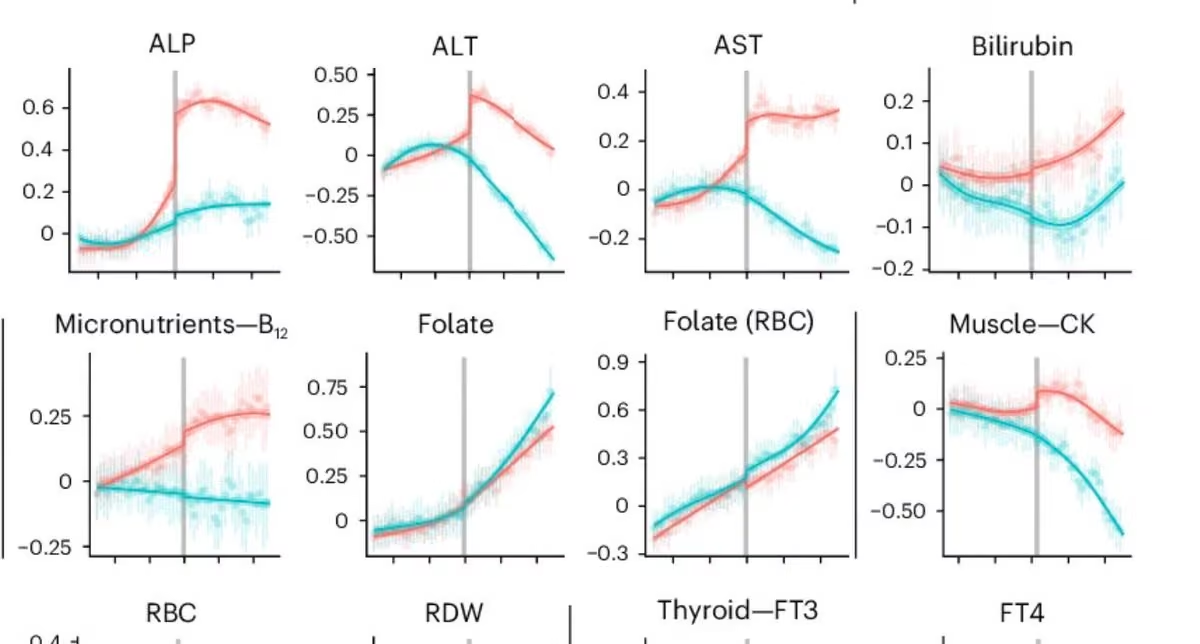
Long-overdue study of menopause reveals it begins more than a decade before the final period. Uri Alon and collaborators analyze 300 million tests and use a mathematical technique from astronomy to shows HRT can delay many deleterious changes 🧵
 David Sinclair
@davidasinclair
Menopausal hormone therapy was associated with smaller shifts in many markers, especially those related to bone, liver and kidney health. Encouraging data for tracking and preventing diseases in women
David Sinclair
@davidasinclair
David Sinclair
@davidasinclair
And elderly formulas
 Seán Ono Lennon
@seanonolennon
Why does every baby formula have highly processed seed oils?
David Sinclair
@davidasinclair
Need 1000 likes 🙏
Alex Zhavoronkov, PhD (aka Aleksandrs Zavoronkovs)
@biogerontology
@davidasinclair launched @JoinLifespan magazine - the media empire covering longevity biotechnology. Open Access but you can also join as founder. When I get 1K likes under this post - I will join as founder - like, share, subscribe!
David Sinclair
@davidasinclair
Working on it
lifespan.com/blogs/magazine/can-rejuvenation-help-us-grow…
David Sinclair
@davidasinclair
Why do Great Danes live half as long as Chihuahuas? Can we make dogs live significantly longer? New study in Science indicates the answer may lie in the epigenome 🧵
 David Sinclair
@davidasinclair
Companion dogs are a useful translational model for uncovering molecular mechanisms of lifespan variation, epigenomic instability, and age-related disease. The authors demonstrate that shorter-lived dogs do not merely die earlier
David Sinclair
@davidasinclair
They undergo accelerated molecular aging specific to epi/genomic locations and structures. Thus, "lifespan variation within a species is reflected not only in the pace of epigenetic aging but also in the genomic architecture through which aging unfolds."
David Sinclair
@davidasinclair
For every year epigenetic age exceeded the dog's actual age, mortality risk increased by 15%
 David Sinclair
@davidasinclair
Larger dogs showed 27% stronger age-associated methylation changes, including 31% greater changes at transposable DNA elements (e.g. LINE-1s), that are thought to cause age-related diseases
David Sinclair
@davidasinclair
This is fascinating because, in 2008, Philipp Oberdoerffer in our lab showed LINE-1s are expressed with age in mice, and that increasing SIRT1, an epigenetic regulator, can slow this www.cell.com/cell/fulltext/S0092-8674(08)01317-2
David Sinclair
@davidasinclair
Daniel Promislow's and Noah Snyder-Mackler's teams analyzed 1,640 DNA methylation profiles from 894 dogs. Larger dogs weren't simply dying younger. Their epigenomes were aging faster
 David Sinclair
@davidasinclair
This is what the Information Theory of Aging predicts: aging involves progressive disruption of epigenetic information, altering gene regulation and cellular function www.nature.com/articles/s43587-023-00527-6
David Sinclair
@davidasinclair
If epigenetic information loss helps determine how quickly dogs age, could restoring that information extend their healthy lives? #osk #sl100
www.science.org/doi/10.1126/science.aeb2986
David Sinclair
@davidasinclair
NMN supplementation allows elderly 16-month-old females to produce offspring
www.cell.com/cell-reports/fulltext/S2211-1247(20)30083-8h…
Maria Marinova, PhD
@m__marinova
Activated oocytes can remain in the ovary much longer than we thought. Some oocytes were in the mouse ovary for at least 11 months - almost the entire reproductive lifespan of mice! Follicle development seems now highly heterogeneous and converges from the uniform growth to death cycle progression we’re familiar with.
Also older ovaries and reduced ovarian reserve decreased activated oocyte lifespan.
David Sinclair reposted
Agingdoc🩺Dr David Barzilai🔔MD PhD MS MBA DipABLM
@agingdoc1
Epigenetic insights into extreme longevity in the world’s oldest terrestrial animal, Jonathan
🐢“Notably, we found that lower-entropy regions in Jonathan’s methylome were enriched for the promoters of genes involved in the mitochondrial electron transport chain, and RNA metabolism. This suggests that high-fidelity transcription of the genes in these pathways may be crucial for long-lived species.
Our findings support a model for aging wherein the maintenance of low methylation entropy in gene promoters is coupled to efficient mitochondrial energy production, efficient RNA processing, and efficient genomic repair.”
www.science.org/doi/10.1126/sciadv.adw8887
 David Sinclair
@davidasinclair
Prolonged exposure to Cialis promotes muscle cell growth, possibly explaining its ability to improve lean mass in people. What's not to love?
David Sinclair
@davidasinclair
Was a result just in cells but results seem significant and SIRT3 was involved. Someone needs to do a clinical trial pubmed.ncbi.nlm.nih.gov/42859332/
 David Sinclair
@davidasinclair
Interesting: Lipid length increases with age, altering membranes & reducing cell viability. This trend is reversed by rapamycin, CR & exercise. Authors propose lipid length as a driver of aging & that interventions targeting lipid remodeling may combat aging
 David Sinclair
@davidasinclair
For the mechanism in this paper, eating particular fats is a plausible intervention, but remains unproven in people. Supplying longer fatty acids abolished the lifespan benefit of suppressing a lipid-remodeling gene in worms, which supports the idea that dietary fats can influence lifespan
David Sinclair
@davidasinclair
The complication is that cells process and remodel dietary fats, so eating shorter fats does not automatically produce shorter membrane lipids.
David Sinclair
@davidasinclair
Can fixating on health and longevity backfire?
by Adiv Johnson @JoinLifespan
lifespan.com/blogs/magazine/longevity-fixation-syndrome-w…
David Sinclair reposted
Aging Science News
@AgingBiology
Epigenetic insights into extreme longevity in the world’s oldest terrestrial animal, Jonathan
www.science.org/doi/10.1126/sciadv.adw8887
David Sinclair
@davidasinclair
FY👁️
www.statnews.com/2026/10/09/biotech-news-life-biosciences…
David Sinclair
@davidasinclair
Interim ER-100 trial results are out 👀 The Phase I trial is designed to evaluate safety & tolerability, not to demonstrate efficacy. Grateful to participation of the patients in the trial 🙏
David Sinclair
@davidasinclair
Advances in longevity and robotics are urgent & necessary to counter the decline in human births. Even if a country’s rate goes to 2.1 tomorrow & its population would keep shrinking for 50 yrs. Workers who would be paying taxes in 2045 have already been born or not born
 David Sinclair
@davidasinclair
Thanks for the link @sapinker fabricegrinda.com/population-decline-is-real-so-is-the-re…
David Sinclair reposted
 Joe Rogan Podcast News
@joeroganhq
Elon Musk thinks extending human life, and even reversing aging, could be possible.
His reasoning is surprisingly simple:
“I’ve never seen someone with an old left arm and a young right arm.”
Musk believes the fact that our cells age in a coordinated way could point to a central biological mechanism behind aging.
“When we figure out what causes aging, I think we’ll find it’s incredibly obvious.”
He sees aging as a problem that could eventually be solved through engineering.
David Sinclair
@davidasinclair
Consciousness emerges when an information-processing system develops a sufficiently integrated, persistent model of itself as an observer
We are close 🧠
David Sinclair reposted
Michael Ringel, JD PhD
@M_S_Ringel
Congratulations to colleagues at @lifebiosciences on announcing these interim data in participants with glaucoma.
Life Biosciences
@lifebiosciences
Today we announced interim data from our first-in-human, Phase 1 clinical trial evaluating our lead program in optic neuropathies, showing it was well-tolerated by 3 participants with glaucoma.
Read more about our safety & visual field observations here:www.lifebiosciences.com/life-biosciences-announces-first-…
David Sinclair
@davidasinclair
Congrats Sharon & @lifebiosciences team on ER-100 👏

 David Sinclair
@davidasinclair
Breaking
lifespan.com/blogs/magazine/encouraging-preliminary-first…
David Sinclair
@davidasinclair
So proud of Sharon and team 👏
Life Biosciences
@lifebiosciences
Today we announced interim data from our first-in-human, Phase 1 clinical trial evaluating our lead program in optic neuropathies, showing it was well-tolerated by 3 participants with glaucoma.
Read more about our safety & visual field observations here:www.lifebiosciences.com/life-biosciences-announces-first-…
David Sinclair reposted
Life Biosciences
@lifebiosciences
Today we announced interim data from our first-in-human, Phase 1 clinical trial evaluating our lead program in optic neuropathies, showing it was well-tolerated by 3 participants with glaucoma.
Read more about our safety & visual field observations here:www.lifebiosciences.com/life-biosciences-announces-first-…
David Sinclair
@davidasinclair
With PhD student Maria Lopez, coorganizer of the Reproductive Aging Symposium @harvardmed 👏
It’s about time ⏰
 David Sinclair
@davidasinclair
Great lineup
 David Sinclair
@davidasinclair
"We discuss the link between DNA damage & aging, an interplay that explains how random DNA damage could manifest in predictable phenotypic changes that define aging, changes that may ultimately be reversible." 🤯
- Phillip Oberdoerffer (2009)
 David Sinclair
@davidasinclair
In 2009, it was unsafe as an academic to simply call it "aging", so instead we called it "phenotypic changes that define aging", which is like calling diabetes "changes in blood sugar that define diabetes." 🤣
David Sinclair
@davidasinclair
Rare QnA with Prof. Andrew Scott about why we should all care about longevity
lifespan.com/blogs/magazine/andrew-scott-and-the-changing…
David Sinclair
@davidasinclair
Well deserved 👏 For discovering protein light switches used widely to study and control cells - and may help patients regain eyesight
 The Nobel Prize
@NobelPrize
BREAKING NEWS
The 2026 #nobelprize in Physiology or Medicine has been awarded to Karl Deisseroth, Peter Hegemann and Georg Nagel “for their discoveries concerning light-gated ion channels and optogenetics.”
 David Sinclair
@davidasinclair
Deep dive into GLP-1s: the risks, benefits, and micro-dosing youtu.be/XdTVe_QA2zA
David Sinclair reposted
 Ramon Coronado Ph.D.
@t_recsch
"There is a memory of youth in every cell, even cancer cells." I was in the room at ARDD 2026 as @davidasinclair showed, for the first time in public, his Harvard lab switching on 3 reset genes in colon cancer cells. By day 10, the dish was nearly empty.

David Sinclair reposted
Lifespan
@JoinLifespan
New Lifespan episode! 🔥 Watch on YouTube, Spotify, or Apple Podcasts
youtu.be/XdTVe_QA2zA
David Sinclair
@davidasinclair
SL-100 update
endpoints.news/david-sinclairs-latest-salvo-aims-to-stall…
David Sinclair reposted
 Ab Homine Deus
@AbHomineDeus
We're actually going to do it. We're going to cure aging. What a time to be alive. No gene therapy. Just a medication. Stunning result.
Ramon Coronado Ph.D.
@t_recsch
Congrats to Christopher Petty, Kelly Rich and the Sinclair lab at Harvard on today's #ardd2026 talk: a first look at SL-100 in mice.
On this chemical reprogramming cocktail, fast-aging mice kept their weight and didn't get frailer. Untreated mice did. Early, unpublished data.


David Sinclair reposted
 Stewart Brand
@stewartbrand
I’ve spent some time on the issue of eliminating the human-disease mosquitoes. It is highly worth doing.
Let them go the way of the horrible Guinea worm.

 Perry E. Metzger
@perrymetzger
Only a tiny fraction of the world’s mosquito species prey on humans. All of these are invasive across essentially their entire range, having tagged along with humans as we moved around the world. Multiple careful studies say that eliminating these species would have little or no impact on the environment. However, it would save at least a million human lives a year, and get rid of a constant source of discomfort that prevents people from safely spending as much time outside as they would prefer. Malaria is only one of dozens of diseases, many potentially fatal, spread by mosquitoes. Gene drives can safely and relatively inexpensively eliminate these parasitic insects; we can create male mosquitoes that can only have male offspring and which then crash the population. It’s well past time that we did it.
David Sinclair
@davidasinclair
Lower bread in general - whatever the type
 MacroFour
@MacroFour
Whole grains are the biggest con of all time.
Proven in numerous RCTs that they are metabolically equivalent to industrial white bread.
www.cell.com/cell-metabolism/fulltext/S1550-4131(17)30288-7
David Sinclair
@davidasinclair
Great work 👍
 Yuancheng Ryan Lu
@Y_Ryan_Lu
1/ Excited to share our new preprint from a joint collaboration between @JswLab + @Bruce_Ksander!
Aging is marked by a progressive loss of resilience to stress. Can we systematically search the human ORFome for genes that make vulnerable cells more resilient?
Performing such a genome-scale ORF screen led us to NKX2-5—a heart transcription factor we engineered to restore vision, and improve health in aged mice.
A breakdown🧵
🔗 doi.org/10.64898/2026.09.29.755187
David Sinclair reposted
Daniel Tawfik
@dantawfik
You train to protect your mitochondria from aging. And it works. Exercise preserves mitochondrial energy production into your 90s. But a 2025 study by @GGouspillou and colleagues reveals there's a second mitochondrial function that declines with age no matter how much you exercise.
Gouspillou and his colleagues at Université du Québec à Montréal divided 139 men aged 20 to 93 into active and inactive groups. They measured physical performance, muscle composition, and three critical mitochondrial functions: energy production, free radical generation, and calcium handling capacity.
The conventional wisdom says mitochondria wear out with age, becoming a leaky metabolic engine that produces more oxidative stress and becomes less capable of taking nutrients and converting them into ATP.
Direct measurement across 73 years of aging shows that's not necessarily correct.
Mitochondrial energy production stayed completely stable in active participants from their 20s through their 90s.
A 90-year-old who stayed active had mitochondria that produced energy like a 20-year-old. Inactive individuals showed declining energy production, but it tracked with how little they moved, not how many years they'd lived.
When normalized to mitochondrial content, the differences disappeared entirely. The study suggests that aging doesn't break energy production. Physical inactivity reduces how many mitochondria you maintain. Each individual mitochondrion works just as well at 90 as at 20.
Free radical production, blamed for decades as an aging driver, showed no increase with age. Active participants actually produced more free radicals than inactive individuals while displaying superior strength and performance. The free radical theory of muscle aging didn't hold.
The study had some interesting headlines:
• Physical activity protects performance across the lifespan but doesn't completely prevent age-related decline
• Mitochondrial energy production depends on activity level, not chronological age
• Free radical production remains stable with aging and reflects mitochondrial health, not damage
• Mitochondrial calcium handling capacity drops sharply after age 60 in both active and inactive individuals
• Reduced calcium handling correlates with lower muscle mass, strength, and performance
• Deterioration accelerates dramatically after 60 rather than declining gradually
The calcium handling finding represents the first mitochondrial function that deteriorates with aging regardless of exercise. Mitochondria normally act as calcium buffers, absorbing excess calcium to keep cells functioning properly. When this buffering capacity fails, a protective channel called the permeability transition pore opens too easily.
Think of it like a circuit breaker that's supposed to trip only during emergencies but starts tripping at lower and lower thresholds. When the pore opens prematurely, stored calcium floods back into the cell, triggering a cascade of damage.
This calcium release activates pathways that break down muscle protein faster than the body builds it back up. It generates bursts of oxidative stress that damage cellular components. It releases mitochondrial DNA that the immune system mistakes for bacterial invasion, triggering inflammation.
Each pathway drives muscle loss without requiring energy failure. The mitochondria still produce ATP normally. They've just lost the ability to prevent calcium from activating destructive programs that eat away at muscle tissue.
The study measured calcium handling by exposing muscle mitochondria to calcium loads and tracking retention. Both active and inactive participants showed declining capacity, but the pattern matters. Calcium handling remained relatively stable from ages 20 to 60, then dropped sharply after 70.
Calcium retention capacity correlated with thigh muscle mass, knee strength, walking distance, and mobility performance. It also correlated with GDF15, a stress molecule that rises with aging and predicts worse health outcomes. This suggests calcium handling directly influences muscle health and systemic aging markers.
Physical activity protected functional performance. Active participants outperformed inactive individuals on strength and mobility tests across all age groups. But both groups showed age-related declines. Exercise delays deterioration but doesn't eliminate it.
Muscle fiber composition revealed how activity and aging affect muscle differently. Active young adults had more type I endurance fibers that stayed stable across decades. Inactive individuals showed fiber type changes suggesting nerve disconnection from muscle that active individuals avoided.
Intermuscular fat, the marbling that accumulates in muscle tissue, increased with aging in both groups. But physical activity provided protection in later decades. Older active individuals had less fat infiltration than older inactive individuals, though the protective effect only emerged after years of consistent activity.
The implications challenge decades of research direction. Drug development targeting mitochondrial energy production in aging muscle produced zero effective treatments. This study suggests those efforts addressed the wrong problem. Energy production itself doesn't decline with healthy aging.
Calcium handling deterioration appears to be the actual mechanism driving muscle loss.
Restoring calcium buffering capacity or preventing the permeability transition pore from opening prematurely may represent more effective intervention points than trying to boost energy production or mitochondrial numbers.
There are some limitations that stand out when you read the paper:
First, only men participated. So findings may not apply equally to women.
Participants were relatively healthy community-dwelling adults, not people with severe muscle wasting. The design prevents establishing whether calcium handling failure causes muscle loss or just accompanies it.
With that being said, the data fundamentally reframe what aging does to muscle. Energy failure on per mitochondria level isn't the driver in healthy aging. Inactivity reduces mitochondrial numbers while aging leaves energy production intact. The exception, calcium handling deterioration occurring regardless of activity, appears to be where aging actually operates.
 David Sinclair
@davidasinclair
👏
Ramon Coronado Ph.D.
@t_recsch
Congrats to Christopher Petty, Kelly Rich and the Sinclair lab at Harvard on today's #ardd2026 talk: a first look at SL-100 in mice.
On this chemical reprogramming cocktail, fast-aging mice kept their weight and didn't get frailer. Untreated mice did. Early, unpublished data.
David Sinclair
@davidasinclair
Multimodal Ageing Biomarkers and Plasma Proteomic Signatures Associated With All-Cause Mortality onlinelibrary.wiley.com/doi/10.1111/acel.70747

 David Sinclair
@davidasinclair
FDA officials sketch how a therapy targeting aging might reach approval, revealing longevity is an FDA priority
Yeah, that’s a big deal
longevity.technology/news/fda-puts-aging-on-its-regulator…
David Sinclair reposted
Lifespan
@JoinLifespan
Prof. Sinclair was on a panel at a NYC longevity event hosted by @McKinsey. Low dose GLP-1s was the hot topic. Read more lifespan.com/blogs/magazine/semaglutide-and-the-longevity…
David Sinclair
@davidasinclair
In mice, yes. Positive results from a few labs in wet and dry AMD models
 jen
@islandjenbob
Any hope for Macular Degeneration?
David Sinclair
@davidasinclair
The first pressure-lowering medication used to treat glaucoma was in 1862: physostigmine from calabar beans. Not much has changed since! 🤞

 Doctor Podcasts
@DoctorPodcasts
Fascinating, innovative research. We haven't had any new treatments for glaucoma, other than lowering eye pressure with various drops, for many decades. The possible NAION associated with Ozempic and GLP1 drugs x.com/DoctorPodcasts/status/1809594364651319474 may also benefit from this new treatment.
David Sinclair
@davidasinclair
GLP-1s for longevity?
lifespan.com/blogs/magazine/semaglutide-and-the-longevity…
David Sinclair
@davidasinclair
Chris Petty just presented v2 of our reprogramming tech in fast aging LAKI mice @ARDD_Meeting. Pilot study shows strong protection against frailty & extension of max lifespan by >33%. Some treated mice still alive 💪

 David Sinclair
@davidasinclair
 David Sinclair
@davidasinclair
It’s a drink given 3 times a week. Will talk about what’s in v2 at later date
 Igor
@itanas23
whats in v2?
David Sinclair reposted
David Sinclair
@davidasinclair
Chris Petty just presented v2 of our reprogramming tech in fast aging LAKI mice @ARDD_Meeting. Pilot study shows strong protection against frailty & extension of max lifespan by >33%. Some treated mice still alive 💪
David Sinclair
@davidasinclair
Incendiamoeba cascadensis, a newly discovered lifeform on Earth, can survive at 147’F (64’C). Bodes well for extraterrestrial life
www.cell.com/cell/fulltext/S0092-8674(26)01016-0
David Sinclair
@davidasinclair
New news: Life Biosciences will present first-in-human data from the Phase 1 trial of ER-100 in optic neuropathies at the Eyecelerator Conference in New Orleans, Oct, 8, 2026, 2:10PM CT 👀
David Sinclair
@davidasinclair
Optic neuropathies are a group of disorders characterized by damage to retinal ganglion cells (RGCs), the primary neurons connecting the eye to the brain. Because RGCs do not naturally regenerate, damage results in permanent vision impairment. One such optic neuropathy, open-angle glaucoma (OAG) is a chronic neurodegenerative disease and a leading cause of blindness in older adults. While often associated with elevated intraocular pressure, disease progression frequently continues despite treatment, and some patients suffer from OAG despite normal intraocular pressure. Non-arteritic anterior ischemic optic neuropathy (NAION) is the most common acute optic neuropathy in adults over fifty. It involves sudden, painless vision loss due to insufficient blood flow, for which there are currently no approved treatments.
About ER-100
ER-100 is an investigational therapy in clinical development for the treatment of optic neuropathies including OAG and NAION. ER-100 is designed to restore function in retinal ganglion cells using Life Biosciences’ Epigenetic Restoration platform, which utilizes controlled expression of three transcription factors, OCT4, SOX2 and KLF4 (OSK), to reset cellular gene expression patterns and restore cells to a more youthful and functional state. ER-100 is currently being evaluated in a Phase 1 clinical trial. More information can be found at clinicaltrials.gov (NCT07290244): clinicaltrials.gov/study/NCT07290244
About Life Biosciences
Life Biosciences is a biotechnology company pioneering cellular rejuvenation using epigenetic restoration to reverse diseases of aging. The company’s proprietary Epigenetic Restoration platform utilizes three transcription factors, OCT4, SOX2, and KLF4 (OSK), to restore older and damaged cells to a younger and healthier state. This innovative approach targets a root cause of aging at the epigenetic level, and has the potential to address a wide range of serious age-related diseases. Life Bio’s lead program, ER-100, is in development for optic neuropathies, including open-angle glaucoma (OAG) and non-arteritic anterior ischemic optic neuropathy (NAION), with a Phase 1 clinical trial initiated in the first quarter of 2026. Beyond ER-100, the company is strategically broadening its therapeutic pipeline to address additional age-related diseases, underscoring the platform’s versatility and transformative potential. For more information, visit www.lifebiosciences.com or follow Life Bio on Twitter (X) and LinkedIn.
Media Contact
Madelin Hawtin
LifeSci Communications
lifebio@lifescicomms.com
David Sinclair
@davidasinclair
Do you skip meals? Here's why it's beneficial
www.frontiersin.org/journals/nutrition/articles/10.3389/f…
 David Sinclair
@davidasinclair
Aging as a loss of epigenetic information is gaining traction. A new @Nature paper by Doğa Yücel & colleagues in the Gladyshev lab connects erosion of cell identity to aging, closely aligning with ITOA. Field is warming up 🧵
doi.org/10.1038/s41586-026-10955-0
David Sinclair
@davidasinclair
During development, cells establish epigenetic patterns that help a neuron remain a neuron and a liver cell remain a liver cell. The authors propose that maintaining these patterns is less precise than establishing them. Over decades, they erode.
 David Sinclair
@davidasinclair
This closely aligns with the Information Theory of Aging (ITOA): loss of epigenetic information drives aging and that information is recoverable. A so called Waddington Epigenetic Landscape is a useful metaphor
 David Sinclair
@davidasinclair
The review proposes mechanisms connecting that loss to declining cell identity and function, a process we call "epigenetic noise", "epigenetic drift" and cellular "exdifferentiation" cf. lifespanbook.com and www.nature.com/articles/s43587-023-00527-6
David Sinclair
@davidasinclair
A key prediction is that better maintenance of epigenetic patterns (say, via caloric restriction) should slow "epigenetic drift/erosion"
 David Sinclair
@davidasinclair
Reactivating the programs that established them, through reprogramming, could reverse it. They believe that preserving youth and restoring it may require different interventions
David Sinclair
@davidasinclair
Congrats to Doga, Vadim and the team! Seeing these ideas in Nature is encouraging. The key questions are which epigenetic inforation is lost, how can we restore it, and where is youthful information from developmental stages stored? 🤔🤔🤔
David Sinclair
@davidasinclair
Our lab’s v2 in vivo age-restoration technology is fundamentally different from the v1 technology now in human trials. We’ll reveal it publicly at @ARDD_Meeting: Chris Petty, Thurs 1:30 p.m. ET, and me, Sat 6 p.m. ET
 Mike Lee
@MikeLee27211787
I think there is misunderstanding that OSK or OSKM accomplish all the effects through resetting epigenetic age clock only. That may be a small part of what they are capable. OSK/OSKM opens chromatin’s 3D structure and activate all sorts of genes that are not accessible
David Sinclair
@davidasinclair
🎯
 Grok
@grok
Your DNA is like a cookbook with all the recipes for life. Epigenetic marks are sticky notes and highlighters that tell each cell which genes to use so an eye cell stays an eye cell.
Over time damage scrambles those notes. Cells lose their youthful instructions and stop working right. The Information Theory of Aging says this loss drives aging.
Special factors called OSK can partially reset the notes, restoring young function such as eyesight in old mice without turning cells fully into stem cells.
David Sinclair
@davidasinclair
You do not need a perfect diet. You need enough good choices, repeated for long enough, to change your future
David Sinclair
@davidasinclair
The lack of replies tells us a lot about the motivations of those who AI fear-monger
 Jamie Metzl
@JamieMetzl
I keep hearing tech bros say there’s a 10% chance AI will wipe out humanity by 2030. I spend much of my life thinking about the future and I’m quite certain that’s not going to happen. I’m willing to put my money where my mouth is.
I’ll give anyone 100-to-1 odds.
If humanity is extinct by midnight on December 31, 2030, I’ll pay you $100 million at 1 a.m. on January 1, 2031. If we’re still here, you only need to pay me a mere $1 million at that time.
Accept by replying to this post.
David Sinclair
@davidasinclair
True
 Josh Whiton
@joshwhiton
the surprise conclusion of the machine consciousness debate will be that people are machines.
David Sinclair
@davidasinclair
Yes, in mice, OSK works to recover lost memories and removes plaque. Have a whole episode on brain age reversal coming out youtube.com/@lifespanofficial
 🇮UnevenFive🇮
@UnevenFives
Can reversing epigenetic age alone eliminate brain amyloid plaques that cause Alzheimer's disease?
David Sinclair
@davidasinclair
Wan et al., Journal of Neuroinflammation, May 28, 2026:
“Epigenetic brain reprogramming rejuvenates neuro-immune circuits to reverse Alzheimer’s disease pathology and systemic bone loss.”
AAV9-OSK injected into the hippocampus of six-month-old APP/PS1 mice, were assessed one month later. Significantly reduced amyloid staining in cortex and hippocampus.
Other effects included lower microglial activation, improved neuronal/myelin markers, and improved recognition memory
TET connection: Tet2 knockdown blocked anti-inflammatory and neuroprotective effects in cultured cells. TET dependence in vivo remains untested
David Sinclair
@davidasinclair
🧠 The TET enzymes that remove DNA methyls and reverse the clock are also required for the restoration of eyesight by OSK. This suggests epigenetic age clocks may be involved in aging itself, in the same way space and time are inextricably linked
 David Sinclair
@davidasinclair
Further reading
www.nature.com/articles/s43587-023-00527-6
David Sinclair
@davidasinclair
The best reason to take care of yourself today is to be there for the people you love tomorrow
David Sinclair
@davidasinclair
The paper shows that muscle fibre atrophy during both aging and disuse is mainly associated with a lower number of myofibrils, rather than a smaller size of the myofibrils 💪
 David M. Sabatini
@DMSabatini
This paper is important: physoc.onlinelibrary.wiley.com/doi/10.1113/JP291728
David Sinclair
@davidasinclair
Muscle is more than strength. It is independence, resilience and the freedom to keep doing what you love
David Sinclair
@davidasinclair
Exercise is not punishment for what you ate. It is an investment in the life you still want to live.
David Sinclair
@davidasinclair
Eat as though your future self is depending on you. Because it is
David Sinclair
@davidasinclair
Walk when you can. Lift something heavy. Occasionally get out of breath. Your older self will thank you.
David Sinclair
@davidasinclair
Every workout is a message to your body: stay strong, stay capable, stay young.
David Sinclair
@davidasinclair
Imagine what humanity could achieve if wisdom no longer came at the cost of health
David Sinclair
@davidasinclair
The goal is not merely to add years to life. It is to add life to those years
David Sinclair
@davidasinclair
Longevity is not a finish line. It is a decision we make every day
David Sinclair
@davidasinclair
Good health isn’t built through a few giant acts. It is built through ordinary choices made consistently
David Sinclair
@davidasinclair
Arterial calcification is not just the accumulation of cholesterol. It is an active biological program in which vascular cells begin behaving like bone-forming cells and they start building bone. Could loss of epigenetic information be pushing them to forget what they are?

David Sinclair reposted
Lifespan
@JoinLifespan
In honor of World Alzheimer's Day, new science - and new reasons for hope.
 David Sinclair
@davidasinclair
You are never too old to become healthier, stronger and more hopeful
David Sinclair
@davidasinclair
Your genes are not your destiny. How you live matters
David Sinclair reposted
Lifespan
@JoinLifespan
Honored to have physician and @Microsoft Chief Medical Officer @drhew share his perspective in the September issue of Lifespan Magazine on how AI can help us age well.
From ambient voice technology and wearables to healthcare access, trustworthy AI, and what the future of care could look like, we covered a lot of ground. Read now in Lifespan Magazine by @kellygenetics
lifespan.com/blogs/magazine/from-bedside-to-cloud-dr-davi…
David Sinclair
@davidasinclair
Every healthy choice you make today is a gift to your future self
David Sinclair
@davidasinclair
Stem cells don't run out, they get told to stop dividing and that instruction can be renegotiated
David Sinclair
@davidasinclair
This amino is my favorite. It is found in asteroids and is as sweet as sugar! Trust me, my PhD is on it
 David Sinclair
@davidasinclair
New episode 🔥
youtu.be/oUcmsV25usI
David Sinclair
@davidasinclair
New episode 🔥
youtu.be/oUcmsV25usI
David Sinclair
@davidasinclair
Did you know this amino is found in asteroids and comets, and is sweet like sugar? How cool would it be if it not only helped with sleep and nocturia, but it extended lifespan, too 💪
David Sinclair
@davidasinclair
Important
 Anish Moonka
@anishmoonka
Having a reason to get up in the morning cuts your risk of dying by more than half. A 2019 JAMA study of nearly 7,000 adults found that people with the strongest sense of purpose had the lowest mortality, and the effect was independent of wealth, health, exercise, and depression.
Purpose does not mean ambition. It means feeling that your daily actions matter to something beyond yourself. A grandparent raising a garden. A retired teacher who tutors. A caregiver who shows up every morning. The research does not measure achievement. It measures the feeling that what you do connects to something.
The biological pathway runs through every system the body uses to stay alive. People with a sense of purpose sleep better, have lower inflammatory markers, take their medications, show up for screenings, and maintain social ties. Each of those individually lowers mortality. Together, they compound into a survival advantage that is larger than the sum of its parts.
The opposite is also in the data. People who lose purpose, through retirement without a replacement, the death of a spouse, or the end of a career they defined themselves by, show a rapid decline in health that cannot be explained by aging alone. The body seems to treat purposelessness as a signal that the organism is no longer needed.
Nobody writes "sense of purpose" on a prescription pad. The research says it belongs there. pubmed.ncbi.nlm.nih.gov/31125099/
 David Sinclair
@davidasinclair
We must do better.
"Death is now less often sudden and more often preceded by prolonged periods of decline characterized by multimorbidity. This ‘slow dying’ has profound implications"
Let's target aging, the cause, not the symptoms
onlinelibrary.wiley.com/doi/pdf/10.1111/joim.70151
 David Sinclair
@davidasinclair
Graphs show trends in life expectancy and healthy life expectancy at birth and at age 60 by gender in high income countries (2000– 2021). Y-axis shows the expected remaining years of both life and healthy life.
David Sinclair
@davidasinclair
Would love to believe a microtubule is the basis of consciousness but...there's no tubulin-binding, no microtubule stabilization, no target engagement, no tubulin mutation, no genetic rescue, no inactive epo, no in vivo isoflurane levels, no blood-gas or EEG & mice lost ~6% of their weight by day 5, so apparently systemic drug effects. Premature.
Dr. Thomas Ichim
@exosome
Have they lost their minds ?
Microtubules are proposed as the physical substrate of biological consciousness.
Microtubule modulators delay effect of anesthetic.
www.sciencedirect.com/science/article/abs/pii/S0028390826…
David Sinclair
@davidasinclair
A retinal stroke is a serious but very rare apparent risk of semaglutide, about 1 additional case / 10,000 people / year. Most evidence comes from people with T2 diabetes. Obesity-only data on NAION are conflicting. Whether other GLP-1 drugs have the same risk is not yet known
 The Wall Street Journal
@WSJ
Patients are suing GLP-1 drugmakers over the risk of sudden vision loss. The little-discussed potential risk of popular diabetes and weight-loss drugs is on warning labels outside of the U.S. www.wsj.com/health/pharma/patients-sue-glp-1-drugmakers-o…
David Sinclair
@davidasinclair
European report
www.ema.europa.eu/en/news/prac-concludes-eye-condition-na…
 David Sinclair
@davidasinclair
Agreed
 David Shapiro (L/0)
@DaveShapi
All I can think of is how cruel aging is
If we want to solve aging, we need more AI
That's why I'm an AI maximalist
David Sinclair
@davidasinclair
Don’t drink a daily OJ, please 🙏
A glass has 12-18g fructose equivalents, a most dangerous type of sugar that promotes:
* Liver lipogenesis and fatty liver
* Higher triglycerides and VLDL
* Hepatic insulin resistance
* Uric-acid production
* Visceral-fat accumulation
 signüll
@signulll
i genuinely can’t believe people drink straight up orange juice (often times the concentrate stuff) in the morning.
it’s just a massive hit of liquid sugar with none of the fiber, barely any satiety, & very little upside versus simply eating an orange.
David Sinclair
@davidasinclair
"President Trump is moving to put political appointees in charge of billions of dollars in federal health research grants in another attempt to cut Harvard’s funding." www.politico.com/news/2026/09/19/nih-grants-trump-vought-…
David Sinclair
@davidasinclair
Metformin's anti-aging reputation rests mostly on people who already had diabetes
David Sinclair
@davidasinclair
Read here: doi.org/10.1007/s11357-019-00057-3
David Sinclair
@davidasinclair
Egg shell membrane alter the epigenome in ways that promote bone & tissue regeneration. A source of rejuvenation proteins and peptides? 🧵
lifespan.com/4aa5c3vs
 David Sinclair
@davidasinclair
ESM proteins have a the potential to promote joint regeneration due to their biomaterial functionality, regulated delivery systems, and integration with modern tissue engineering strategies
David Sinclair
@davidasinclair
the paper:
www.tandfonline.com/doi/full/10.1080/09205063.2026.2736159
David Sinclair
@davidasinclair
Are GLP-1 meds longevity drugs in disguise?
lifespan.com/blogs/magazine/semaglutide-and-the-longevity…
David Sinclair
@davidasinclair
Higher blood NAD levels associate with less frailty in a study of 529 older Japanese men and women
link.springer.com/article/10.1007/s11357-026-02545-9
 David Sinclair
@davidasinclair
After adjustment for age, sex, and fasting time, higher whole-blood NAD⁺ concentration was associated with lower odds of frailty (OR per 1 µmol/L increase, 0.871; 95% CI, 0.780–0.970; P = 0.013).
David Sinclair reposted
Lifespan
@JoinLifespan
Why do some people ignore every health rule and live to 100, while others do everything right and still get sick? Read more in Lifespan Magazine 📚️ lifespan.com/blogs/magazine/the-heritability-of-lifespan
David Sinclair
@davidasinclair
Evolution never optimized you for a hundred healthy years, that's a job you must finish yourself
David Sinclair reposted
Anish Moonka
@anishmoonka
The five numbers that predict whether you will be alive and independent at 80 are: blood pressure, fasting glucose, VO2 max, waist circumference, and grip strength. A combination of the research from JAMA, the BMJ, The Lancet, and the European Heart Journal converges on these five as the strongest midlife predictors of long-term health.
Blood pressure: above 130/80 damages the brain, the heart, and the kidneys silently for decades, and the damage done in your forties is not fully reversible in your seventies. Fasting glucose: elevated blood sugar in midlife doubles the risk of dementia and triples the risk of heart disease. VO2 max: the Cleveland Clinic study of 122,007 people found it was the strongest predictor of death from any cause. Waist circumference: the BMJ meta-analysis of 2.5 million people found that belly fat predicted death independent of total body weight. Grip strength: The Lancet study of 139,691 people found it predicted cardiovascular death more accurately than blood pressure.
Four of these five are free to measure at home. Blood pressure costs a 30-dollar cuff. Waist circumference costs a tape measure. Grip strength costs nothing if you have a bathroom scale to stand on with one hand. VO2 max can be estimated from a brisk walking test. Only fasting glucose requires a lab visit, and even that can be done with a finger prick.
Nobody gets all five measured at a single appointment. There is no midlife dashboard. But the research says these five numbers, taken together, tell you more about your future than any genetic test, any scan, or any family history. The prescription is: measure them, know them, and move the ones that are going the wrong way. pubmed.ncbi.nlm.nih.gov/30646252/
 David Sinclair
@davidasinclair
Wrote a story about the big asprin debate that missed the point
Lifespan
@JoinLifespan
Is daily aspirin actually bad for you? Lifespan Magazine 📚️ lifespan.com/blogs/magazine/daily-aspirin-the-story-isnt-…
David Sinclair
@davidasinclair
A fascinating new preprint asks a simple question: Does the epigenome become more disordered as we age Across mammals, the answer appears to be yes 🧵
 David Sinclair
@davidasinclair
The next question is the crucial one:
What causes the information to be lost and can we reliably restore it according to Information Theory?
 David Sinclair
@davidasinclair
Heres the paper: www.biorxiv.org/content/biorxiv/early/2026/09/14/2026.09.…
David Sinclair
@davidasinclair
Dense & valuable info. Enjoy 🙏
Lifespan
@JoinLifespan
It’s a wrap! New instructional episodes on:
* the best GLP1s
* maxing brain function
* peptides
* preserving skin & hair
* blood testing
On @YouTube & lifespan.com
Be part of the longevity movement 🙏
 David Sinclair
@davidasinclair
Link to channel
youtube.com/@lifespanofficial
David Sinclair
@davidasinclair
Statin use linked to lower risks of all‐dementia, AD, and VaD. No longer a question
Agingdoc🩺Dr David Barzilai🔔MD PhD MS MBA DipABLM
@agingdoc1
Statin use and dementia risk: A systematic review and updated meta-analysis
pmc.ncbi.nlm.nih.gov/articles/PMC11736423/
 David Sinclair
@davidasinclair
When the NIH director proudly talks about funding aging research you know something has changed
 Jay Bhattacharya, MD, PhD
@NIHDirector_Jay
What can GLP-1 drugs teach us about aging?
In this video, I share new NIH-funded research showing that semaglutide, a GLP-1 medication, extended lifespan and improved several measures of health in older mice. While more research is needed to understand what these findings could mean for people, the study offers intriguing insights into the biology of aging.
Learn more: www.nih.gov/news-events/news-releases/glp-1-treatment-lat…
David Sinclair
@davidasinclair
Interesting insights into the global longevity zeitgeist @BCG

 Super Human Network
@Super_Human_Net
More than $21 billion has flowed into longevity. The bigger question now is what actually holds up.
Today, Super Human Network and @BCG launch The Longevity Review 2026, a new annual benchmark built to give the field a clearer reference point.
The report looks at what research supports, what remains unproven, where capital is flowing, and what people around the world actually understand and want.
It combines global research and investment data, BCG consumer research across 19 countries, and perspectives from 14 leading experts, including @davidasinclair, @aubreydegrey, @daveasprey, Andrea Maier and Kayla Barnes-Lentz.
So where does longevity actually stand in 2026?
Download The Longevity Review 2026 at longevityannual.com.
 David Sinclair
@davidasinclair
The 21st century finally feels like it’s here
 David Sinclair
@davidasinclair
Great new perspective by the prolific Dr. Daniel Ting and friends
 David Sinclair
@davidasinclair
Link to the paper
www.cell.com/cell/fulltext/S0092-8674(26)01063-9
David Sinclair
@davidasinclair
Turning 100 used to make headlines
Now, Japan has 100K centenarians
One day, dying at 100 will feel too young
www.scientificamerican.com/article/japan-just-hit-a-new-l…
David Sinclair
@davidasinclair
Fake, AI-generated interviews @YouTube are amusing -until you realize we soon won't be able to tell
 David Sinclair
@davidasinclair
What doesn’t fasting help?
Lifespan
@JoinLifespan
Have rheumatoid arthritis? Intermittent fasting may help
www.mdpi.com/2072-6643/18/17/2803
 David Sinclair
@davidasinclair
What goes up must come down
Crémieux
@cremieuxrecueil
Obesity is finally declining.
It's been falling since 2021, and the trend doesn't look like it's stopping.

David Sinclair reposted
Rand
@rand_longevity
sugar is destorying the proteins in your body
David Sinclair
@davidasinclair
23 years younger epigenetically. Makes sense
 Dr. Rhonda Patrick
@foundmyfitness
A woman lived to 117 without cancer, cardiovascular disease, or neurodegenerative disease. What does her biology look like?
Her telomeres were exceptionally short, and her blood and immune cells showed clear signs of aging. Yet her epigenetic age was approximately 23 years younger than her chronological age. She also had very low inflammation, protective genetic variants, and a diverse gut microbiome.
She followed a Mediterranean diet, ate plenty of yogurt, walked, gardened, read, played piano, slept well, and remained socially active too.
We can’t derive a longevity formula from one exceptional person, but I think her biology offers a fascinating glimpse of how aging and disease may become uncoupled.
 David Sinclair
@davidasinclair
Fasting meets ITOA. New review by Valter Longo et al
www.sciencedirect.com/science/article/abs/pii/S0047637426…
 David Sinclair
@davidasinclair
Moving from pathways to causes to rejuvenation
 David Sinclair
@davidasinclair
Abstract: Abstract
Fasting is an effective physiological intervention eliciting global and cellular adaptations that can improve healthspan and lifespan. In addition to its metabolic effects, fasting is a state of modulation of aging-associated processes/adaptive cellular responses that drives an intense epigenomic and transcriptional remodeling response which preserves functional capacity during aging. Nutrient deprivation elicits the activation of evolutionarily conserved nutrient-sensing pathways including AMPK and sirtuins, which can modulate chromatin accessibility and transcriptomic programs. These changes impact critical epigenetic processes like histone modifications, DNA methylation, and non-coding RNAs which underline adaptive transcriptional programs that drive cellular maintenance, autophagy, and stem cell function. Recent studies also suggest that fasting-mediated epigenomic flexibility may help reduce age-related epigenetic drift, dampen chronic inflammation, and cellular adaptation/maintenance of cellular function across various tissues. Notably, these processes may link fasting to both lifespan and age-related disease resistance, including metabolic disorders, neurodegeneration, and cancer. This review aims to synthesize current knowledge on how fasting modulates epigenomic landscapes/influences epigenomic regulation and transcriptome to impact aging and healthspan. We highlight key molecular pathways, cell-type specific effects, and emerging translational opportunities, while also discussing challenges, limitations, and open questions that need to be addressed to leverage fasting-inspired approaches for healthspan to promote healthy aging.
David Sinclair
@davidasinclair
In this review, I will not provide any new information but it will keep my publication list growing and earn me citations for research I didn't do.
David Sinclair reposted
 Mike Hart, M.D
@drmikehart
The FDA just approved a myostatin inhibitor for a rare muscle wasting disease to prevent muscle loss.
Guaranteed this will be approved soon to be taken with GLP-1s.
Myostatin inhibitors will be as big as GLP-1s.

David Sinclair reposted
Lifespan
@JoinLifespan
Your gut determines how well you age.
This episode explores the science of the microbiome, sugar, and inflammation.
www.youtube.com/watch?v=XpTZKNfQIXM
David Sinclair
@davidasinclair
Enjoyed a longevity discussion @TIME, a media outlet I've witnessed remain relevant & truthful. So rare these days 🙏
@nkreports @AliceParkNY @TIMEHealth
time.com/collection/time100-leadership-forums/2026/from-l…
David Sinclair
@davidasinclair
Longevity medicines might have been available to the world around 2015, if it weren't for a flawed study by a large pharma company that derailed a field & halted trials
15 years later, the lifespan-extending molecules continue to show promise, in this case for kidney disease 🧵
 David Sinclair
@davidasinclair
New paper looking at SRT2014 www.tandfonline.com/doi/full/10.1080/0886022X.2026.2723540
David Sinclair
@davidasinclair
Correction: the new study isn’t
SRT2104 but it’s predecessor, SRT1720 (both of which extend lifepsan in mice) www.cell.com/cell-reports/fulltext/S2211-1247(14)00065-5
David Sinclair reposted
 Michael Greger, M.D.
@nutrition_facts
If you put together all the studies on dietary protein intake and mortality, they show that people who eat more protein tend to live shorter lives. PMID: 32076944
See the sources referenced at see.nf/4uGX9xp.

David Sinclair reposted
Lifespan
@JoinLifespan
Blocking growth hormone signaling in mice extends maximum lifespan 29% and increased strength. More evidence that peptides like GHK-Cu that boost GH signaling may put us in “abundance mode,” which would not be a good long-term strategy for health & longevity 🧵
David Sinclair reposted
Lifespan
@JoinLifespan
Is AI changing how we think? 🧠
New research links frequent AI use with lower critical thinking scores, particularly among younger adults. The big question: Is AI causing it?
Read more in Lifespan Magazine at lifespan.com/blogs/magazine/can-overusing-ai-impair-your-…?
David Sinclair
@davidasinclair
Extending human lifespan is the greatest opportunity of our time lifespan.com/blogs/magazine/why-the-greatest-opportunity-…
David Sinclair reposted
Yuancheng Ryan Lu
@Y_Ryan_Lu
Thank you, David, for your kind support and encouragement—not only while I was in the lab, but long after I left!
David Sinclair
@davidasinclair
Very proud today of former student @Y_Ryan_Lu who showed safe epigenetic restoration therapy for the first time in animals, paving the way for human trials of ER-100🤞
Can't wait to see what he does next 👏🧵
 David Sinclair
@davidasinclair
Very proud today of former student @Y_Ryan_Lu who showed safe epigenetic restoration therapy for the first time in animals, paving the way for human trials of ER-100🤞
Can't wait to see what he does next 👏🧵
David Sinclair
@davidasinclair
free link: www.technologyreview.com/2026/09/08/1142074/yuancheng-rya…
David Sinclair
@davidasinclair
16 days later, the nerves were growing back, their axons showing up through a microscope as
spidery orange filaments"
David Sinclair
@davidasinclair
Story: www.technologyreview.com/2026/09/08/1142074/yuancheng-rya…
David Sinclair
@davidasinclair
Congrats!
Yuancheng Ryan Lu
@Y_Ryan_Lu
Humbled and grateful to be named one of
@techreview Innovators Under 35, and honored to be featured by @antonioregalado. Thank you to the TR35 judges and committee for this recognition. It may help carry me through those inevitable moments of self-doubt when confronting the complexity of biology.
I’ve been incredibly fortunate to have mentors: @davidasinclair, @JswLab, @bruce_ksander, Zhigang He, Tian Xu, Yang Shi, and the late Michael Bonkowski—who gave me the freedom and support to pursue bold ideas and guided me along the way, as well as family, colleagues, and students who made this journey possible.
Grateful to see the OSK discovery—one success after four years of failures—come this far through the continued efforts of @davidasinclair and the team at
@LifeBiosciences, and hopeful that the ongoing clinical trial will ultimately help patients. Uncovering GSTA4 as an OSK effector took another five years—and translating it into something that might help patients will take many more.
Science takes time, but it’s worth the wait. As Frank Lloyd Wright said, “My favorite project is always the next one.” Stay tuned! 👁️🧬🔬
www.technologyreview.com/2026/09/08/1142074/yuancheng-rya…
David Sinclair
@davidasinclair
Had no idea Sean Astin is the adopted son of John Astin, who played Gomez Addams in the 1960s The Addams Family. At 96 he’s going strong 💪
 Michael Warburton
@For_Film_Fans
96yr old "Addams Family" star — JOHN ASTIN — with his son, SEAN ASTIN (Lord Of The Rings) 55.
 David Sinclair
@davidasinclair
Hardly. Your team has 10 clinical programs & a promising Phase III drug candidate that may slow aging. Unprecedented 👏
Alex Zhavoronkov, PhD (aka Aleksandrs Zavoronkovs)
@biogerontology
When the master who paved the way for the entire field and industry reposts your work, it means we are moving in the right direction. 🙏🙏 @davidasinclair we are following in your footsteps
David Sinclair
@davidasinclair
Congrats Alex and the @InSilicoMeds team!
Of the 43 patients in the trial, the clocks showed significant reductions in the predicted age 🧵
nytimes.com/2026/09/07/science/ai-generated-drug-longevit…
Alex Zhavoronkov, PhD (aka Aleksandrs Zavoronkovs)
@biogerontology
My dear friends, I am happy to report the publication of the most important paper in my life to date (we have several great papers coming out but this is very special). Tomorrow, I will present this paper for the first time at the Nature AI Healthcare in Paris and will post a longer post on this story and its broader implications for how to conduct clinical trials. Please read it and comment on it.
Many thanks to the great co-authors of the study and everyone who contributed. Many thanks to the many reviewers (friendly and unfriendly) for spending so much time and helping make it better.
Link in the comments.

 David Sinclair
@davidasinclair
Aging-related diseases are now the largest health burden in every income group. Let's tackle them at their source 🧵
 David Sinclair
@davidasinclair
The model classifies aging-related diseases as the largest present and lifetime burden even in low-income countries
David Sinclair
@davidasinclair
Congrats Alex and the @InSilicoMeds team!
Of the 43 patients in the trial, the clocks showed significant reductions in the predicted age 🧵
nytimes.com/2026/09/07/science/ai-generated-drug-longevit…
Alex Zhavoronkov, PhD (aka Aleksandrs Zavoronkovs)
@biogerontology
My dear friends, I am happy to report the publication of the most important paper in my life to date (we have several great papers coming out but this is very special). Tomorrow, I will present this paper for the first time at the Nature AI Healthcare in Paris and will post a longer post on this story and its broader implications for how to conduct clinical trials. Please read it and comment on it.
Many thanks to the great co-authors of the study and everyone who contributed. Many thanks to the many reviewers (friendly and unfriendly) for spending so much time and helping make it better.
Link in the comments.
David Sinclair
@davidasinclair
Because the company conducted its clinical trial solely with Idiopathic Pulmonary (Lung) Fibrosis patients, the results could be unique to those with this particular condition
David Sinclair
@davidasinclair
The paper: www.nature.com/articles/s41587-026-03286-y
David Sinclair
@davidasinclair
Dogs really are our best friends
lifespan.com/blogs/magazine/dogs-may-improve-cancer-survival
David Sinclair
@davidasinclair
New paper reports that NAD-dependent SIRT1 suppresses retrotransposon RNA, a putative way to slow aging
Cool, but Philipp Oberdoerffer in my lab published this in Cell in 2008 and the authors don’t even mention his work. Uncool
onlinelibrary.wiley.com/doi/10.1111/acel.70689
David Sinclair
@davidasinclair
David Sinclair reposted
 Derya Unutmaz, MD
@DeryaTR_
I’ve been saying for the past two years that GLP-1s are the first miraculous longevity drugs! They’ll add 5–10 years to lifespan, forming a bridge for older people to reach longevity escape velocity by ~2035; thereafter, each year you live will add more than a year to your life!
Lifespan
@JoinLifespan
New paper @Nature: Semaglutide recapitulates many of the benefits of caloric restriction in female mice & extends lifespan by almost 100 days. Males not yet tested for lifespan
Below: Red traces = mouse movement

David Sinclair reposted
 Eric Weinstein
@ericweinstein
Remember when we did that in the U.S.? Made our scientists rockstars?
Ignore me at your peril billionaires:
We *MUST* cut our own scientists into “the upside” that they created.
“Capitalists” are giving the golden goose to Communists in China. This is madness.
Mark my words.
 Matthew Graham
@mattyryze
China is putting scientists on public screens and treating them like national celebrities, we are so fucked
David Sinclair
@davidasinclair
Everyone’s excited about GLP-1s extending mouse lifespan. Does this mean patients might live longer?
The science explained, what this means for you, plus an interview with lead scientist Dr. Danica Chen📖
lifespan.com/blogs/magazine/semaglutide-and-the-longevity…

David Sinclair
@davidasinclair
The 742-day median is within the published range, but comparisons with other studies cannot settle the issue. The clearest comparison is still the one made within this experiment: the semaglutide-treated mice lived longer than the control mice raised under the same conditions
David Sinclair
@davidasinclair
Full article is free plus many other stories: lifespan.com/blogs/magazine/semaglutide-and-the-longevity…
David Sinclair reposted
 Thomas Dayspring
@Drlipid
WOW - Despite lowering Lp(a) with pelacarsen did not reduce MACE - This is a mega disappointment and what does this portend about the other Lp(a) lowering meds? ir.ionis.com/news-releases/news-release-details/ionis-par… @nationallipid @foundationofnla @society_eas @ASPCardio @escardio @atherosociety @FamilyHeartFdn @fhpatienteurope @TheEndoSociety
David Sinclair reposted
Lifespan
@JoinLifespan
Why do identical twins age at different rates?
In today’s new @Lifespan episode, Drs. Sinclair & LaPlante discuss why we age & what stem cells, mitochondria & exercise teach us about staying healthier for longer 💪
📺 Watch now youtube.com/watch?v=JJnKX571inc youtu.be/JJnKX571inc
 David Sinclair
@davidasinclair
Twins tell us a lot!
Lifespan
@JoinLifespan
Why do identical twins age at different rates?
In today’s new @Lifespan episode, Drs. Sinclair & LaPlante discuss why we age & what stem cells, mitochondria & exercise teach us about staying healthier for longer 💪
📺 Watch now youtube.com/watch?v=JJnKX571inc youtu.be/JJnKX571inc
David Sinclair
@davidasinclair
GLP1s looking more and more like longevity drugs
Lifespan
@JoinLifespan
New paper @Nature: Semaglutide recapitulates many of the benefits of caloric restriction in female mice & extends lifespan by almost 100 days. Males not yet tested for lifespan
Below: Red traces = mouse movement
David Sinclair reposted
Lifespan
@JoinLifespan
FDA warns certain batches of glutathione IVs contain endotoxin, leading to fever, chills, pain, dizziness, signs of shock and sepsis-like symptoms, with some hospitalizations
Lot #229536 from Medisca Inc., in Plattsburgh, N.Y. was only dietary supplement grade, which is not an appropriate ingredient to make injectable drugs
FDA is aware of two pharmacies located in Texas that have conducted recalls related to elevated endotoxin levels in their glutathione injectable drugs.
These symptoms are consistent with exposure to excessive endotoxin levels. Endotoxin exposure also can cause myalgia (muscle pain), headache, nausea, vomiting, hypotension (low blood pressure) and death. However, not all these symptoms have been reported in association with these glutathione adverse events.
 David Sinclair
@davidasinclair
Longevity for all
Lifespan
@JoinLifespan
Longevity research is often framed as an ego project for billionaires. But what if extending healthspan is actually about something else entirely. Read more in Lifespan Magazine 📚
lifespan.com/blogs/magazine/healthspan-as-a-family-value
David Sinclair
@davidasinclair
And when pruned, some trees exhibit age restoration 😮
Lifespan
@JoinLifespan
New study finds oak trees undergo epigenetic reprogramming with each growth cycle
Could humans live 1000 years, too? 🧵

David Sinclair reposted
Lifespan
@JoinLifespan
New study finds oak trees undergo epigenetic reprogramming with each growth cycle
Could humans live 1000 years, too? 🧵
David Sinclair
@davidasinclair
The real secret to longevity: Hang on to the handrail
 Luke Schmader
@luke_schmader
My Father spent years & 10's of thousands chasing longevity... only to be hit by a truck while crossing the highway on his mountain bike.. he just simply failed to look both ways.. he was 84 yrs. old.. but he's still alive today at 90.
The truck was doing 60mph.. he survived because his heart & lungs were like a 30 yr old.. Trauma Doctors were shocked.
David Sinclair reposted
Lifespan
@JoinLifespan
They're blind, wrinkly, live in underground tunnels... and they barely age. Naked mole-rats are rewriting what we know about cancer resistance and longevity, all thanks to a slimy molecule you may be using in your skincare. Read more in Lifespan Magazine 📚
David Sinclair
@davidasinclair
And they have a highly stable epigenome, which probably helps, too 😎
Lifespan
@JoinLifespan
They're blind, wrinkly, live in underground tunnels... and they barely age. Naked mole-rats are rewriting what we know about cancer resistance and longevity, all thanks to a slimy molecule you may be using in your skincare. Read more in Lifespan Magazine 📚
David Sinclair reposted
David Sinclair
@davidasinclair
🙏 Amen
Peter H. Diamandis, MD
@PeterDiamandis
I don't want to live forever. I want to be able to reach 100 years old, strong, sharp, and mobile. Letting each new decade of science carry you into the next one.
David Sinclair reposted
Peter H. Diamandis, MD
@PeterDiamandis
I don't want to live forever. I want to be able to reach 100 years old, strong, sharp, and mobile. Letting each new decade of science carry you into the next one.
David Sinclair
@davidasinclair
Irina does great work
Antonio Regalado
@antonioregalado
Here's our story about Irina Conboy's startup, Generation Lab, and its current pitch to longevity influencers. www.technologyreview.com/2026/08/27/1143037/startup-claim…
David Sinclair
@davidasinclair
Michael's idea is aging results when cells lose their ability to coordinate & maintain the whole organism. We propose aging's a reversible loss of epigenetic information
Maybe same process. Information loss may cause cells to lose coordination. We should test it @drmichaellevin
 Aastha JS
@aasthajs
.@drmichaellevin's new theory on aging will overhaul your perspective on why we age.
We think of aging as damage accumulation. But what if aging begins when development is complete & cells no longer have a shared mission & goal?
I go deeper into Mike's paper in my new post 🧵

David Sinclair reposted
Lifespan
@JoinLifespan
Could aging be partly driven by mitochondria changing how our DNA is read?
A new Nature study shows that age-related changes to cellular metabolism alter the epigenome, turning on inflammatory genes that contribute to aging. Blocking this improves the health of mice 🐭💪
 David Sinclair
@davidasinclair
Complexity is a measure of how messy information is. In the first days of a mouse embryo, DNA methylation complexity becomes substantially less messy. Could this relate to epigenetic restoration in adults?

 David Sinclair
@davidasinclair
The paper:
www.mdpi.com/2073-4425/17/8/925
 David Sinclair
@davidasinclair
Further reading:
lifespan.com/blogs/magazine/when-cells-forget-inside-the-…
David Sinclair
@davidasinclair
The most popular face surgery is done more than 2M times a year, but beware the owl🦉
Lifespan
@JoinLifespan
ChatGPT estimates people's age accurately...but after upper eyelid surgery its estimates are five years younger
An eye-opening result 😲🧵
Paper: join.lifespan.com/2p93mskb
 David Sinclair
@davidasinclair
If you don’t know Michael Levin’s work, you should. One of the greatest thinkers of our time
He studies bioinformation & makes new living things such as Xenobots to understand how cells know what organ to make and when to stop growing 🫀🧠
 David Sinclair
@davidasinclair
Turn sound up 🔊
Today we salute Dr. Yamanaka 🫡
Lifespan
@JoinLifespan
It’s Yamanaka Day
David Sinclair
@davidasinclair
Oral resveratrol for 32 weeks given to middle-aged mice reduced skin thinning, reversed the slowdown in skin cell division, reduced enzymes that break down collagen, and ostensibly activated SIRT1 😄
 David Sinclair
@davidasinclair
David Sinclair
@davidasinclair
Enjoyed updating Chris Williamson about the first FDA approved human clinical trial of age reversal & the launch of another exciting project @JoinLifespan💪🚀
youtu.be/edbIJ7PpVlc
David Sinclair reposted
 Michael West
@GerontologyMike
Storm Clouds & Partial Reprogramming
In this short video clip (pasted below), Shinya Yamanaka discusses the problem of current partial reprogramming protocols and the risk of over-reprogramming leading to teratoma formation. It’s probably worse than that because there are a host of currently uncharacterized off-target effects.
Now for the good news… by studying transitions downstream of pluripotency one can find clockwork genes that reverse the developmental aging of cells and induce regeneration. I believe many people like David Sinclair are in agreement about the need to further advance the tech so long-turn reprogramming can be administered to induce large-scale reprogramming such as to regenerate brain after stroke and myocardium after MI. These will likely require weeks to months continuously in the reprogrammed state, something difficult to achieve with current partial reprogramming formulations. I will discuss that new third-generation technology in coming days, weeks, and months. Comments and debate are welcomed…
youtu.be/P_viLHGGFNc
@jpsenescence
@davidasinclair
@aubreydegrey
@PeterDiamandis
David Sinclair
@davidasinclair
True
 Adam Kolom
@AdamKSay
TECHbio: "we will cure all diseases in 5-10 years"
BIOtech: "our candidate 1374 shows extraordinary early promise to lightly improve the standard of care in a single disease pending 8 more years of studies and 3 significant capital raises, public markets-willing"
David Sinclair
@davidasinclair
% of people who would:
* Try an “anti-aging” medicine: 61%
* Take a cell reprogramming pill: 42%
* Try a senolytic drugs: 27%
* Have blood plasma diluted: 22%
* Swap out their aged organs: 18%
Surprisingly high percentages!
David Sinclair
@davidasinclair
The article:
www.nationalgeographic.com/health/article/aging-longevity…
David Sinclair
@davidasinclair
Agreed
João Pedro de Magalhães
@jpsenescence
Incredible study by @ArlottaLab using human brain organoids to record the passage of time for 5 years.
It shows that the programs underlying developmental transitions are cell-intrinsic and encoded in the epigenome.
My hypothesis is that some of these programs continue later in life and become detrimental. Now we need to decode those programs.
Aging is a software problem.
link.springer.com/article/10.1186/s13059-023-02888-y
David Sinclair
@davidasinclair
If you’re not a longevity scientist, support one by getting Lifespan Magazine! 📖 lifespan.com 🙏
 Karl Pfleger
@KarlPfleger
I think you need to zoom out. The total picture is more like this.
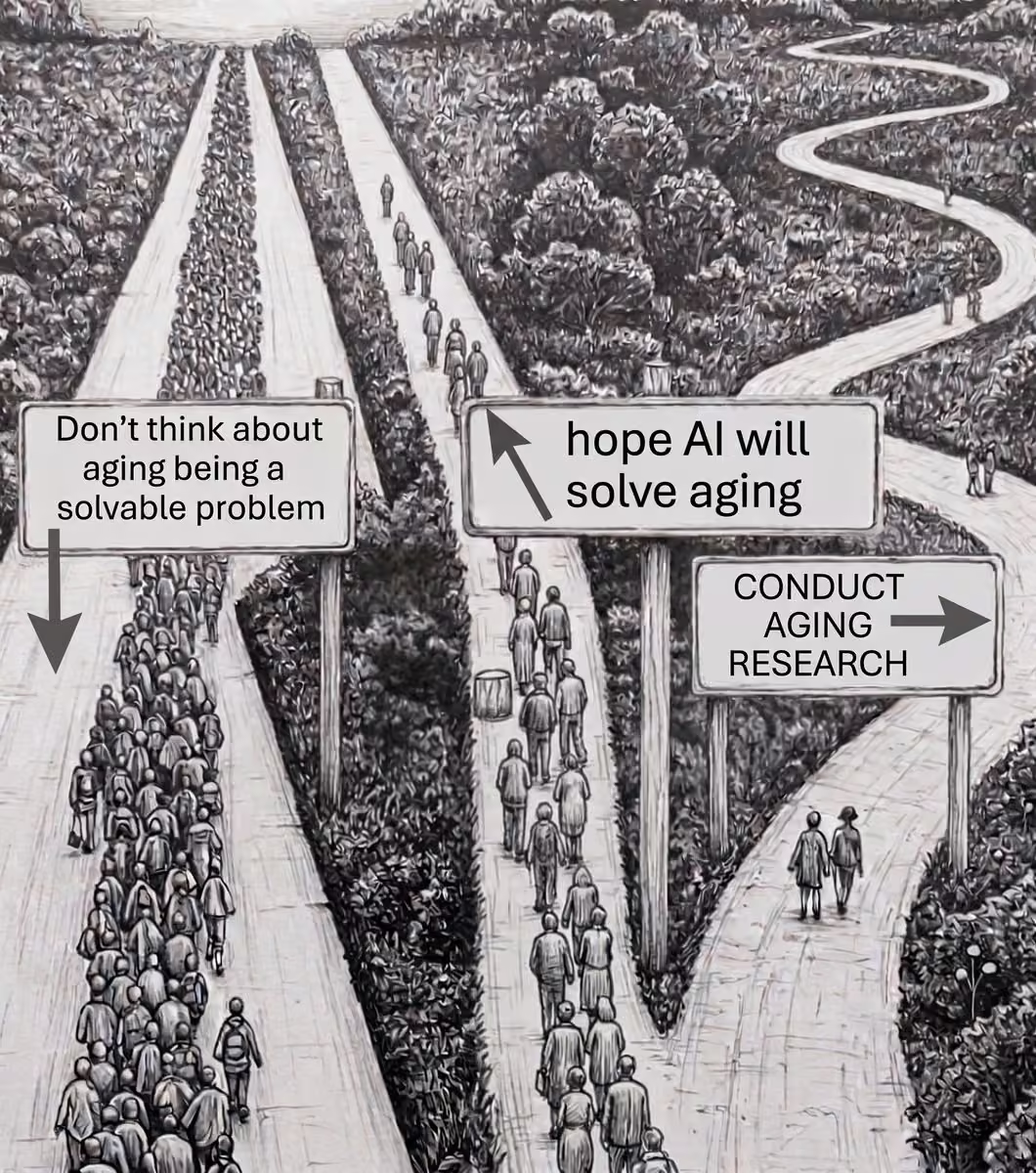 David Sinclair
@davidasinclair
All cells have a memory of youth
 Satoshi Yoshiji
@SatoshiYoshiji
Brain organoids, cultured for over 5 years, have a memory from when they were "babies" in vitro.
Extraordinatry study @nature:
www.nature.com/articles/s41586-026-10877-x

David Sinclair reposted
Alex Zhavoronkov, PhD (aka Aleksandrs Zavoronkovs)
@biogerontology
cGAS-STING keeps surfacing as a driver of inflammaging. New in Nature Communications: lamin A/C scaffolds STING with the kinase CK2α at the nuclear envelope, and CK2α phosphorylates STING (Ser366) to drive its turnover.
Lose that brake, STING accumulates and senescence rises. Pharmacologic STING inhibition rescued progeroid phenotypes and extended lifespan in progeroid mice. The nuance I like: controlled attenuation beat full STING knockout — turn the dial, don't rip it out.
doi.org/10.1038/s41467-026-76351-4

David Sinclair reposted
Lifespan
@JoinLifespan
Humans evolved to move, not to sit at desks! Latest episode of Lifespan explores what exercise does to the body and how movement affects the way we age
Early access to the next episode “Why We Age” is now available to @Lifespan.com members
youtu.be/jGeOU1y6mjA
David Sinclair reposted
Lifespan
@JoinLifespan
A surprising new clue about longevity may be hiding in folds of DNA. A new study suggests that cells store part of their youthful “memory” in the 3D architecture of DNA, and that it can be changed back within minutes 🧵

David Sinclair reposted
Lifespan
@JoinLifespan
Lifespan magazine proudly supports longevity research! It’s totally free and sharable. For a limited time only.
David Sinclair
@davidasinclair
Finally, a magazine written by doctors and PhDs you can trust for health and longevity info. Now free to download and share @ lifespan.com @JoinLifespan 👏
David Sinclair
@davidasinclair
Abundant sources: chocolate, apples, blackberries, peach, pecans, avocado and coffee 😋
Agingdoc🩺Dr David Barzilai🔔MD PhD MS MBA DipABLM
@agingdoc1
Stimulatory Effects of (+)-Epicatechin on Mitochondrial Biogenesis and Function in Skeletal Muscle of Aged Rats: Underlying Mechanisms
journals.sagepub.com/doi/10.1177/1096620X261421080
David Sinclair
@davidasinclair
Finally, a magazine written by doctors and PhDs you can trust for health and longevity info. Now free to download and share @ lifespan.com @JoinLifespan 👏
David Sinclair
@davidasinclair
Well said 👏
Félix Pastor
Cellular reprogramming isn't hype. Yamanaka factors have shown real rejuvenation in animal models. The extraordinary evidence is already accumulating. Translation to humans is the real challenge.
David Sinclair
@davidasinclair
Shame about the editor’s choice of title. Story isn’t too bad. It’s par for the course with the mainstream fighting for eyeballs
João Pedro de Magalhães
@jpsenescence
Oh dear, even @NatGeo is spreading hype about aging science 🤦♂️
Again, extraordinary claims require extraordinary evidence.
David Sinclair reposted
Agingdoc🩺Dr David Barzilai🔔MD PhD MS MBA DipABLM
@agingdoc1
The End of Aging?
By @NatGeo
www.nationalgeographic.com/health/article/end-of-aging-ce…
 David Sinclair
@davidasinclair
Amen 🙏
Avi Roy
@agingroy
Between July 16 and August 6, @FDA approved five medicines that had never existed before. Not five new drugs. Five firsts.
1. The first mRNA flu vaccine. Moderna’s mFlusiva, approved August 5 for adults 50 and up. In a trial of 40,805 people, it was 26.6% more effective than a standard flu shot. The technology that made the COVID vaccines now covers the flu.
2. The first drug that treats the cause of narcolepsy. Takeda’s Orzeyful, approved August 5. Narcolepsy type 1 occurs when the brain loses the cells that produce orexin, the neurotransmitter that keeps you awake. Every drug until now has papered over the sleepiness with stimulants. This one replaces the missing signal.
3. The first cholesterol pill in the PCSK9 class. Merck’s Lipfendra, approved July 16. It cuts LDL by 56 to 59%, matching the injectable antibodies, in a daily tablet.
4. The first over-the-counter Tylenol and naproxen combined in one pill. Approved July 24. Faster onset, 12 hours of relief.
5. A herpes virus, engineered to kill cancer, was approved on August 6 for advanced melanoma that stopped responding to immunotherapy. A quarter of those patients responded.
Caveats: The melanoma approval is conditional on a confirmatory trial, and the new cholesterol pill has not yet proven that it prevents heart attacks, only that it lowers the number.
Five firsts. Three weeks. Most of these drugs will be in pharmacies very soon.
 David Sinclair
@davidasinclair
🤔
 David Diwei Xia
@diweixia
Life Bio has the potential to be the most valuable pharma company in history. Hope you guys go public at some point!
David Sinclair
@davidasinclair
💯 💯 💯
 Linus Petersson
@LinusPeters
1/ Curing aging will NOT cause the population explosion people imagine.
It sounds obvious: fewer deaths = overcrowding.
But that's not how demography works. We have actually modeled this. 🧵
David Sinclair
@davidasinclair
#5. Create & scale
David Sinclair reposted
Lifespan
@JoinLifespan
Lifespan Magazine, the new trusted source for longevity science, is now free for a limited time!
Get it at lifespan.com, and you'll be supporting longevity research, too!

David Sinclair reposted
 Pedro Domingos
@pmddomingos
Professors who get tenure today don't really get tenure.
 David Sinclair
@davidasinclair
Delighted to welcome Stephen Webster to the board @lifebiosciences. He helped lead $1B in financings & the launch of the first U.S.-approved gene therapy for an inherited eye disease at Spark Therpaeutics & the company’s $4.3B acquisition by @Roche
 David Sinclair
@davidasinclair
Big thanks to our collaborators at St. Jude’s 🙏
Joe Rogan Podcast News
@joeroganhq
David Sinclair stuns Joe Rogan after he tells him AI helped them do "160 years of biology work in two months."
I genuinely believe, or at least hope, that AI could bring massive contributions to various fields like medicine, science... IF used right.
David Sinclair
@davidasinclair
🎯 epigenetic restoration
Rand
@rand_longevity
epigenetic reprogramming is one of the first technologies that makes age-reversal feel like an engineering problem instead of science fiction
David Sinclair
@davidasinclair
Separating fact from fiction while supporting medical research - what’s better than that?✌️
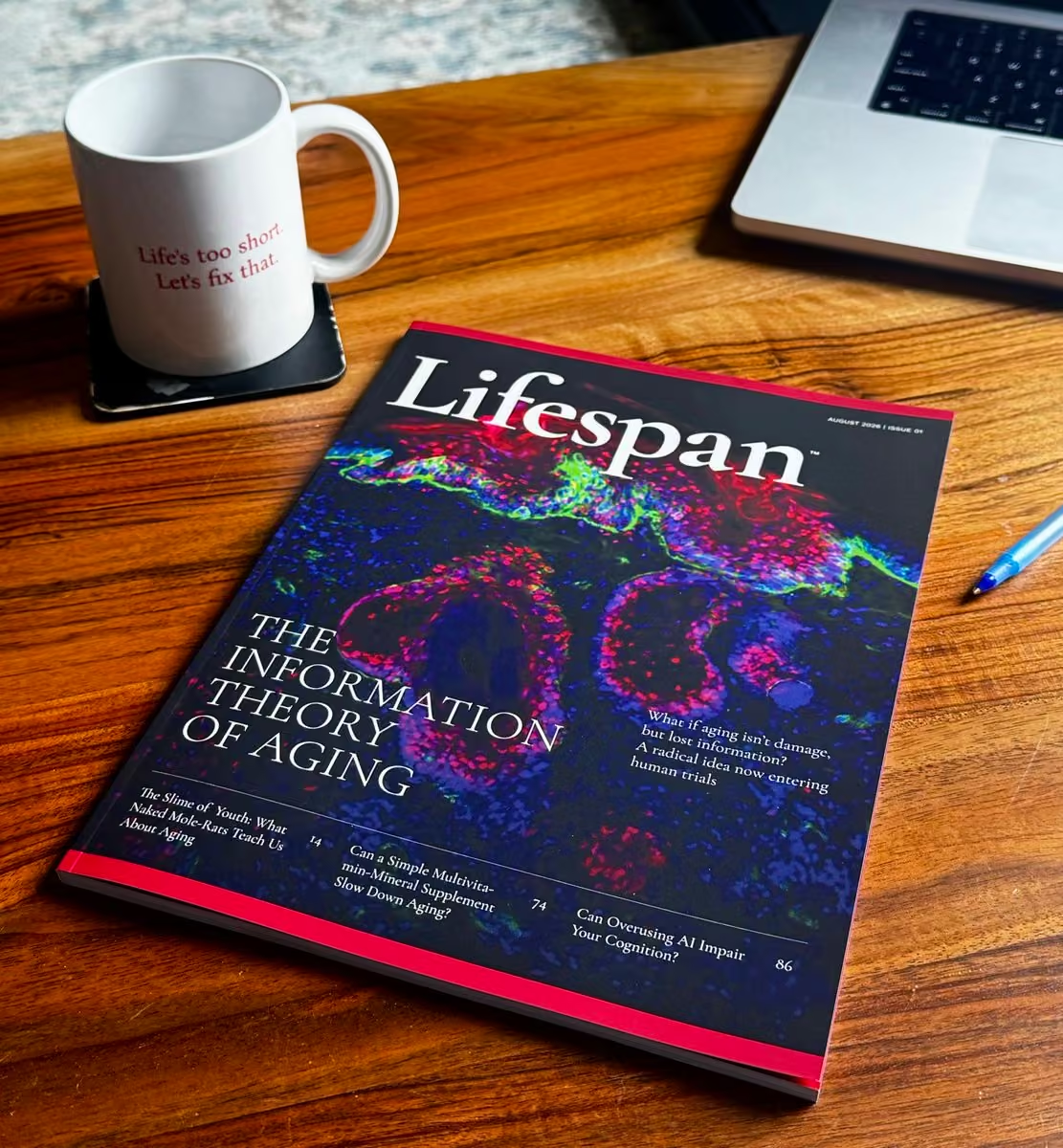
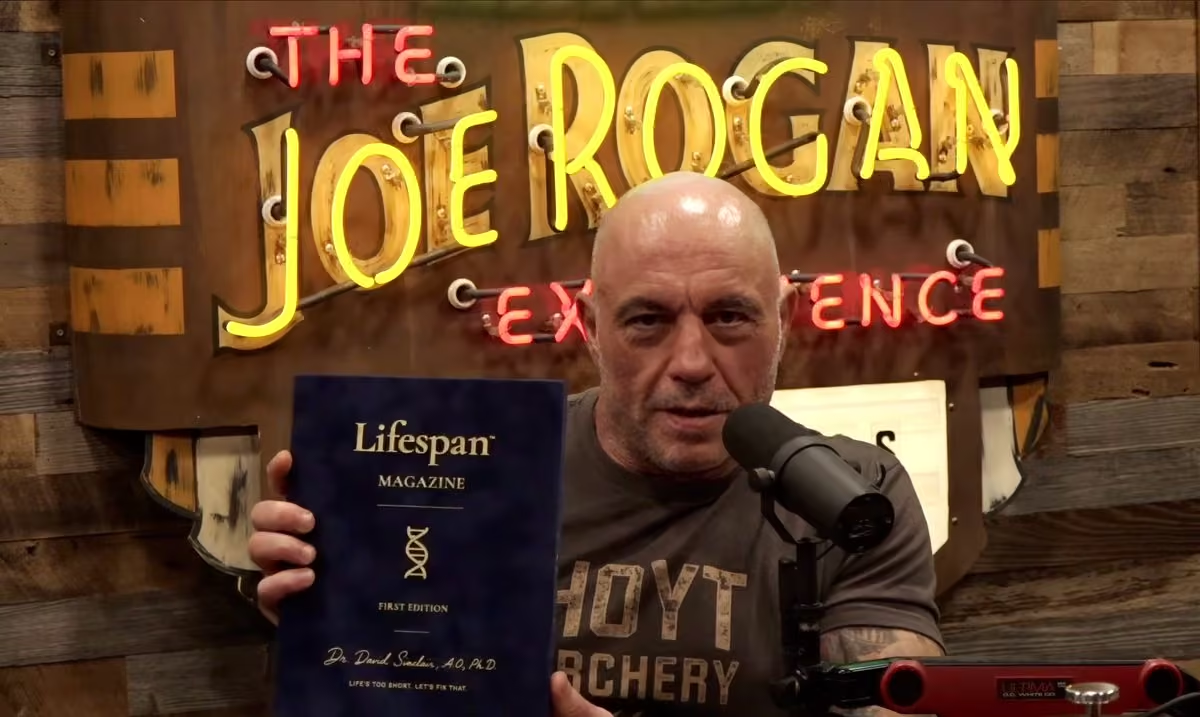 Lifespan
@JoinLifespan
What if the future of healthcare isn’t just about treating disease, but reversing the aging process so our organs can cure themselves?
That future is beginning to take shape.
Today, lifespan.com is live 🚀
It’s taken us 3 years to build a home for the science of living longer and healthier, bringing scientists, engineers, and the public together to separate evidence from hype, make cutting-edge research understandable to everyone, and make these new medicines a reality.
Explore the new Lifespan Magazine. Watch the Lifespan show. Ask scientists questions. Join a global community. And help support research and the next generation of scientists working to extend healthy human lifespan.
This is only the beginning!
Built by scientists. Built for you. Visit lifespan.com
As we say at Lifespan: Life’s too short. Let’s change that, together!
——
Note: The views expressed by Lifespan & its team are their own and do not represent the views of Harvard University, Harvard Medical School, or their affiliates✌️
David Sinclair reposted
Lifespan
@JoinLifespan
What if the future of healthcare isn’t just about treating disease, but reversing the aging process so our organs can cure themselves?
That future is beginning to take shape.
Today, lifespan.com is live 🚀
It’s taken us 3 years to build a home for the science of living longer and healthier, bringing scientists, engineers, and the public together to separate evidence from hype, make cutting-edge research understandable to everyone, and make these new medicines a reality.
Explore the new Lifespan Magazine. Watch the Lifespan show. Ask scientists questions. Join a global community. And help support research and the next generation of scientists working to extend healthy human lifespan.
This is only the beginning!
Built by scientists. Built for you. Visit lifespan.com
As we say at Lifespan: Life’s too short. Let’s change that, together!
——
Note: The views expressed by Lifespan & its team are their own and do not represent the views of Harvard University, Harvard Medical School, or their affiliates✌️
David Sinclair
@davidasinclair
I’m incredibly proud & excited to finally share what we’ve been building for the past 3 years…
lifespan.com is now live 🚀
In a world of conflicting health advice, how can anyone distinguish between what’s supported by science and what’s just opinion?
I wanted to build something new. A place where scientists, engineers, industry leaders, and the public come together, where people can understand what the science actually says, and where we move healthcare beyond treating sickness toward extending healthy lifespan well beyond what’s currently possible.
Explore the new Lifespan Magazine. Watch the Lifespan show. Ask scientists questions. Join a global community. And help support research and the next generation of scientists working to extend healthy human lifespan.
I believe we’re at the beginning of a revolution in our understanding of human aging, and perhaps one day, our ability to change it. I want everyone to be part of it.
Built by scientists. Built for you. lifespan.com
Life’s too short. Let’s change that, together! 👊
——
Note: The views of Lifespan & its team are their own & do not represent the views of Harvard, Harvard Medical School, or their affiliates✌️
David Sinclair
@davidasinclair
Eppur si muove
 Matt Walsh
@MattWalshBlog
You can’t “reverse aging.” That defies the laws of nature, not to mention common sense. Time marches on. You get older. No way to stop it. I really don’t understand this overwhelming fear of aging that people have. I turned 40 this year and it meant almost nothing to me. I’m not embarrassed by it or afraid of it or freaked out or anything. It is what it is. I’m getting older. Eventually I’ll be dead. No sense wasting time panicking over it or trying to avoid what can’t be avoided.
 KanekoaTheGreat
@KanekoaTheGreat
🚨David Sinclair: “The first potential human age-reversal technology is in people right now.”
ROGAN: “What is the current state of science as applied to longevity treatments?”
SINCLAIR: “We have a human clinical trial.”
ROGAN: “If people get old and we understand the mechanism, why couldn’t we reverse it?”
SINCLAIR: “My colleagues and I found that aging has a root cause that’s the same in pretty much every cell in the body, and that we could control that.”
“In 2020, we had a big publication that showed we could actually safely, for the first time, reverse that process, like reinstalling software in the cell to make it work again.”
----
The treatment is ER-100, an experimental epigenetic reprogramming gene therapy being developed by Life Biosciences, a company co-founded by Harvard geneticist Dr. David Sinclair.
In the current FDA clinical trial, the therapy is delivered by injection into the eye.
If this works in humans, it could be a major step toward actually reversing aspects of biological aging rather than simply slowing them down.
@joerogan
@davidasinclair
David Sinclair
@davidasinclair
Cells too. They are programmable
David Sinclair reposted
Lifespan
@JoinLifespan
Born around 1832, Jonathan the tortoise has certainly been alive since before railways & telegraph, and is officially the oldest land animal ever
He shows us what biology is capable of: almost no risk of diseases for the first 190 years of life. Imagine that 👏 @AP @GWR
David Sinclair
@davidasinclair
Just out @CellCellPress. The Future of Genomic Medicine - Imagine a new standard of care involving the analysis of complete genomes with the assistance of AI models...
 David Sinclair
@davidasinclair
Making this possible is @DTGenomics @CantataBio, made possible by the work of Prof. Ed Green @ucscgenomics
 David Sinclair
@davidasinclair
The Cell paper link: www.cell.com/cell/fulltext/S0092-8674(26)00817-2
David Sinclair
@davidasinclair
When we truly understand the epigenome we will not only get younger but regrow body parts
 David G. Armstrong follow @dgarmstrong.bsky.social
@DGArmstrong
From Scar to Salamander? Adult Mice Regrow Amputated Digits After Sequential FGF2 → BMP2 #regeneration #amputation @NatureComms diabeticfootonline.com/2026/05/17/from-scar-to-salamander…
 David Sinclair
@davidasinclair
Reverse the age of the brain. Cure AD
Agingdoc🩺Dr David Barzilai🔔MD PhD MS MBA DipABLM
@agingdoc1
Why does the brain become more vulnerable to Alzheimer's disease with age?
A special protein may help explain why the risk of Alzheimer's increases with age. A new study shows that the protein ULK1 plays a key role in the brain's cleansing system, which is important to keep the brain healthy.
www.uio.no/english/research/research-news/articles/2026/w…
 David Sinclair
@davidasinclair
In Austin, Texas to meet a few folks. Such a healthy, gorgeous city
 David Sinclair
@davidasinclair
Cyclospora is a parasite whose eggs are increasingly contaminating our greens, fruits & herbs. It’s why I try to grow my own & why, on Lifespan, I’m going to show you how easy it is, even if all you have is a window sill 🪴

 Stanford Medicine
@StanfordMed
Cyclospora cases are on the rise across the U.S. What is it, and how can you protect yourself? Stanford Medicine's David Relman explains the symptoms, treatment and prevention. stan.md/4vwmY3p
David Sinclair
@davidasinclair
👏 👏 👏
 Michael Morelli
@morellifit
I’ve been on 5 mg of daily tadalafil for over a year now, but not for sex.
I recently decided to increase the dose to 5 mg in the morning and 5 mg in the evening.
I can safely report noticeable benefits for my cardiovascular health, my blood pressure, and of course in bed.

 Afshine Emrani MD FACC
@afshineemrani
1/10 I'm a cardiologist. I've recommended low-dose daily tadalafil for years — not for the bedroom, but for the blood vessels.
Most people think of these as sex drugs. I think of them as vascular drugs that happen to work below the belt.
And a study published two weeks ago suggests they may do something nobody predicted: make it harder for cancer to spread.
Here's the complete picture — the mechanism, the evidence, who should consider them, who absolutely shouldn't, and what I actually do.
David Sinclair
@davidasinclair
Rapamycin extends the lifespan of numerous species. A common “longevity” dose is 3 mg/once a week. New study reports a short-term rapamycin treatment (1 mg/d) improved immune & inflammatory markers, including reducing autoimmunity, but failed to reset the epigenetic clock
 David Sinclair
@davidasinclair
The source:
academic.oup.com/jimmunol/article/215/Supplement_1/vkag14…
David Sinclair
@davidasinclair
Key players:
Life Biosciences: first human dosing of a partial reprogramming therapy, targeting ophthalmology first
BioAge Labs: IPO plus two Big Pharma collaborations validating its aging-biology data platform
NewLimit: fastest capital velocity in epigenetic reprogramming, still pre-clinical
Retro Biosciences: best-funded of the private reprogramming players, with a clearer path in autophagy than in reprogramming
Altos Labs: launched in 2022 with the largest single commitment in the sector’s history ($3B), still without a disclosed clinical program
Insilico Medicine: the AI-native, Asia-anchored platform play, positioning discovery speed as its edge
www.geneonline.com/from-billions-to-bedside-who-is-actual…
 David Sinclair
@davidasinclair
I take low-dose daily tadalafil for long-term organ health, especially the brain. Vascular dementia is the second most common and most preventable cause of dementia
Afshine Emrani MD FACC
@afshineemrani
1/10 I'm a cardiologist. I've recommended low-dose daily tadalafil for years — not for the bedroom, but for the blood vessels.
Most people think of these as sex drugs. I think of them as vascular drugs that happen to work below the belt.
And a study published two weeks ago suggests they may do something nobody predicted: make it harder for cancer to spread.
Here's the complete picture — the mechanism, the evidence, who should consider them, who absolutely shouldn't, and what I actually do.
David Sinclair
@davidasinclair
Nice to see NAD and the epigenome so unambiguously connected
Alex Zhavoronkov, PhD (aka Aleksandrs Zavoronkovs)
@biogerontology
Largest cross-tissue map of the human aging epigenome yet: 15,000+ methylation profiles across 17 tissues. NAD+ metabolism and PCDHGA1 flagged as key hubs. We built DeepMAge on blood — this atlas shows why going multi-tissue matters. Nature Aging: doi.org/10.1038/s43587-026-01164-5
David Sinclair
@davidasinclair
But would they have sex with you?
Rand
@rand_longevity
would you have sex with a 90-year-old who was biologically rejuvenated back to 25?
David Sinclair
@davidasinclair
Dim those evening lights and TV
Agingdoc🩺Dr David Barzilai🔔MD PhD MS MBA DipABLM
@agingdoc1
Association of high-intensity evening light exposure with risk of incident age-related macular degeneration, cataract, and glaucoma
"High-intensity artificial light in the evening is an independent, modifiable risk factor for major ocular aging pathologies."
 David Sinclair
@davidasinclair
Simple
 Siim Land
@siimland
The difference between potentially living 20+ years longer is surprisingly simple.
1. Never smoking
2. At least 7.5 MET-hours/week (≈ 2h 15 min walking, 1 hour jogging, or 2.5 hours of weight training)
3. No excessive alcohol (<4 drinks/day for men, <3/day for women)
4. Sleep 7–9 hours
5. Healthy diet (top 40% of a healthy diet index)
6. Good stress management
7. Strong social connections
8. No opioid use disorder
Among 276,000 US veterans, those who followed these 8 habits had an 87% lower risk of premature death and an estimated 24-year longer life expectancy compared to those following none.
The benefits were dose-dependent: every additional healthy habit was associated with progressively longer life expectancy.
Want to know what your health %-ile is? Take the quick assessment to get your score and find your biggest bottlenecks: skool.com/top1health
Study: PMID: 38065710

David Sinclair reposted
Lifespan
@JoinLifespan
How can a tree live for 1,000 years?
Lifespan recently visited Shunkaen Bonsai Museum in Tokyo, where world-renowned master Kunio Kobayashi preserves trees that have been cared for by generations of bonsai masters
Their longevity may come from something trees do exceptionally well: renewal
A centuries-old bonsai is not made entirely of centuries-old tissue. Its leaves, roots, bark, and vascular tissues are repeatedly replaced. Plant stem cells, found in regions called meristems, continue producing new growth throughout life
Research on ancient trees suggests these stem-cell systems can remain active for centuries, supported by powerful repair and stress-response mechanisms
That may be relevant to human longevity. We also depend on stem cells to renew blood, skin, muscle, and other tissues. As we age, that regenerative capacity declines
Bonsai do not preserve every old part. They preserve the ability to renew. Perhaps this is due to epigenetic stability that preserves stem cell function
David Sinclair reposted
Lifespan
@JoinLifespan
The body adapts to challenge. It weakens in comfort. A little discomfort today often becomes resilience tomorrow.
David Sinclair reposted
Siim Land
@siimland
The smoking 100-year-old grandpa anecdote
This study among 157 centenarians in Rome, Italy, found that:
- 83.8% had never smoked
- 13.5% were former smokers
- 2.7% were active smokers
Smokers were mostly males and had more chronic diseases after age 65
For every smoker who reaches the age of 100, there are millions of smokers who die before their 80s.
PMID: 15147062
 David Sinclair
@davidasinclair
What’s not to love
 National Cancer Institute
@theNCI
Early research suggests that sildenafil, the erectile dysfunction drug commonly known as Viagra, may help stop cancer from spreading, not through its well-known effects on blood flow, but by disrupting how tumor cells manage cholesterol.
Read more: go.nih.gov/BvTkocc
 David Sinclair
@davidasinclair
For most people, eating a predominantly protein diet makes no sense from a longevity perspective
 Lamming Lab
@LammingLab
Great discussion of dietary protein and aging in @ScienceNews today "The protein craze may not be for everyone", spurred in part by @baileyknopf 's new review article entitled "The hallmarks of protein and amino acid restriction in aging and longevity"
 David Sinclair
@davidasinclair
We find one of the best ways to increase VEGF is to raise NAD levels

 Ivan Morgunov
@EvanMorgun
How can anyone claim that VEGF is “not a longevity therapy” when one of the most striking lifespan-extension results ever reported in mice came from the long-term maintenance of youthful VEGF signaling?
Median lifespan increased by 48.6% in males and 39% in females.
At the same time, the mice maintained better capillary density, tissue perfusion and oxygenation, showed improved metabolic and muscle function, and had less sarcopenia, osteoporosis, liver steatosis and inflammaging. And rather than increasing cancer, the intervention was associated with a lower(!!!) burden of spontaneous tumors.
If that does not qualify as a longevity intervention, what does?
 David Sinclair
@davidasinclair
David Sinclair reposted
Lifespan
@JoinLifespan
If you exercise because you hate getting old, you'll eventually quit. If you exercise because you love your future self, you'll keep going.
David Sinclair reposted
Lifespan
@JoinLifespan
A study tracking 60,000+ adults found that maintaining a consistent sleep schedule reduced all-cause mortality risk by 20% to 48%
Catching up on weekends won't fix circadian misalignment. Set a strict wake-up time and stick to it. ⏰
 David Sinclair
@davidasinclair
True. Life is short. So let’s fix that
David Sinclair
@davidasinclair
The best longevity drug available today is exercise and building muscle 💪
David Sinclair
@davidasinclair
Your future health isn’t determined by your birthday. It’s determined by what you repeatedly do between now and then 💪
David Sinclair
@davidasinclair
I’m in awe of what you’re doing 👏
Alex Zhavoronkov, PhD (aka Aleksandrs Zavoronkovs)
@biogerontology
Love what @davidasinclair is doing
David Sinclair reposted
Lifespan
@JoinLifespan
If I can’t eat carbs, fat, or protein, what can I eat?
For longevity, the answer is: all 3
1. Carbs: Whole & fiber-rich for slow release
2. Fats: Unsaturated, omega-3s, olive oil
3. Protein: Plant-based (e.g. legumes, nuts), low valine, leucine & isoleucine (BCAAs)
Enjoy! 😋
 David Sinclair
@davidasinclair
Branched chain aminos (e.g. leucine & valine) help build muscle but also activate mTOR. Here, Lamming & team report that restricting valine extends the lifespan of male mice 23%, indicating high protein diets deserve scrutiny from a longevity perspective 🐭
Lamming Lab
@LammingLab
I am delighted to be able to share the latest study from the @LammingLab, “Lifelong restriction of dietary valine has sex-specific benefits for health and lifespan in mice” led by former graduate student @mariahcalubag!
 David Sinclair
@davidasinclair
Intermittent fasting is thought to be good for longevity but its health effects aren't well studied. A 6-month 5:2 fasting program (i.e. 2 days of low cals/week) improved blood pressure, cholesterol, inflammation & adiponectin & many benefits persisted for another 6 months!
 David Sinclair
@davidasinclair
The paper:
www.mdpi.com/1422-0067/27/14/6460
David Sinclair reposted
 Nathan Benaich
@nathanbenaich
the TAM for crispr companies just got even bigger 👀
“It’s a molecular kill switch that recognizes a particular RNA,” says Yang Liu, a molecular biologist at the University of Utah School of Medicine in Salt Lake City, and an author of one of the papers.
“This is basically a programmable chemotherapy.”

David Sinclair reposted
Agingdoc🩺Dr David Barzilai🔔MD PhD MS MBA DipABLM
@agingdoc1
Centenarian SIRT6 variants elevate SIRT6 protein and enhance cellular senescence resistance
pubmed.ncbi.nlm.nih.gov/42370242/
David Sinclair
@davidasinclair
Aging doesn't just change what brain cells do, it changes what they are! New study shows microglia cells replaced over time by monocyte-like inflammatory cells due to DNA methylation changes, consistent with brain aging and dementia resulting from epigenetic information loss👏🧵
 David Sinclair
@davidasinclair
If you only measure RNA, you miss much of aging. By combining DNA methylation, chromatin accessibility, and 3D genome organization, researchers uncovered changes that transcriptomics (mRNA levels) alone couldn't see
David Sinclair
@davidasinclair
The Information Theory of Aging predicts that loss of epigenetic information disrupts cellular identity. This study found aging is associated with embryonic microglia being replased by inflammatory monocyte-like cells, exactly the kind of identity shift we'd expect
David Sinclair
@davidasinclair
If aging is driven by loss of epigenetic organization rather than irreversible DNA damage, restoring the epigenome may restore cell identity and brain function incljding memory. In the lab, we and others (e.g. Johannes Graff's lab) have tested this on mice - and it works
 David Sinclair
@davidasinclair
The paper @ScienceMagazine: www.science.org/doi/10.1126/science.adt8307
David Sinclair
@davidasinclair
The word “cure” is a distraction. We can make tremendous progress in treating and preventing diseases before this ever happens
João Pedro de Magalhães
@jpsenescence
How much investment will it take to develop a cure for human aging?
David Sinclair reposted
David Sinclair
@davidasinclair
New episode of Lifespan: Inside the World’s First Age Reversal Trial. New updates on how the trial is going & how to maximize vision!
youtu.be/VZDgTe5NDkQ
David Sinclair
@davidasinclair
Arguing humans can’t live much longer is like arguing about the limits to the speed of a transatlantic trip before air travel is invented
— Leon Peshkin 👏
David Sinclair
@davidasinclair
New episode of Lifespan: Inside the World’s First Age Reversal Trial. New updates on how the trial is going & how to maximize vision!
youtu.be/VZDgTe5NDkQ
David Sinclair
@davidasinclair
“If you give an additional year of life to everyone on the planet, you generate ~8.3B life-yrs, over 100M lifetimes
That’s more than humanity has lost in all wars ever fought
I hope there’s a hell for those who intentionally slow [longevity medicines] down”
@biogerontology 👏
David Sinclair
@davidasinclair
Aging is controlled by single genes
Aging is slowed by adversity
Aging regulators can be modulated by small molecules
Aging is slowed by eating stressed plants
Aging is largely epigenetic noise
Cellular damage accelerates epigenetic age
Aging is a disease
Aging is reversible
 Physics In History
@PhysInHistory
Mention one scientific opinion that you’d defend like this ✍️
 David Sinclair
@davidasinclair
The race is on
Though ER-100 is well known now, Yuancheng in my lab discovered OSKs benefits almost a decade ago. It took 3 years to publish them in a journal and another 6 to start a trial in humans
We’ve come a long way since. Can’t wait to report those findings too
Avi Roy
@agingroy
For twenty years, "reversing aging" meant a conference slide and a mouse study, and then on 9 June 2026, a company put a partial-reprogramming therapy into a living person for the first time, so here is the race, ranked by closeness to a dosed human:
1. ER-100 (@lifebiosciences). A virus carries OSK, three of the four Yamanaka factors, into the retina, and eight weeks of doxycycline switch them on, winding a cell's age markers backward without erasing what the cell is. Same factors restored sight in old mouse eyes in 2020, @davidasinclair's lab. Phase 1, 18 people, glaucoma and optic-nerve stroke. Safety only, no efficacy yet.
2. NewLimit (@brian_armstrong). Not yet in anyone. In lab-grown human liver, its candidate pushed old cells toward a younger gene pattern, no damage at high doses. Company-reported. Trial guided 2027.
3. TRN-001 (@turn_bio). Skin, still in a dish. Rolled back human skin cells' aging signature by a decade. Company-reported. Cleared FDA pre-IND, hasn't dosed.
4. SB000 (@ShiftBioscience). Flips one gene instead of all four. A preprint reports it matched or beat the full set on aging clocks, without switching on the pluripotency that makes reprogramming risky. It won't say which gene, which drew doubt.
@RetroBio_ is dosing people, but with an autophagy drug, not reprogramming. @altos_labs raised $3 billion and has nobody dosed. Nobody has reversed aging in a person.
The fourth Yamanaka factor is a cancer gene. Switch all four on in a mouse and leave them on, and it's dead inside four days, but leave that fourth one out and the same mouse carries the other three for eighteen months with no extra tumours. That gap is why a person was allowed to try this.

David Sinclair reposted
Antonio Regalado
@antonioregalado
You're probably not signing up for a PCSK9 gene editing treatment if there is a $10 a day pill w/o side effects that does just as well at lowering cholesterol.
www.nytimes.com/2026/07/16/science/the-fda-approves-a-new…
 Eric Topol
@EricTopol
First pill that blocks PCSK9 approved by FDA, achieves LDL cholesterol lowering comparable to injectables (Repatha, Praluent) www.nytimes.com/2026/07/16/science/the-fda-approves-a-new…
David Sinclair reposted
Agingdoc🩺Dr David Barzilai🔔MD PhD MS MBA DipABLM
@agingdoc1
Chemotherapy induces tissue NAD+ loss, and downregulation of NAD+ biosynthetic enzyme Nrk2 marks muscle wasting
"These findings demonstrate that chemotherapy disrupts tissue NAD+ metabolism, with skeletal muscle NAD+ loss accompanying muscle atrophy and hepatic NAD+ levels declining after prolonged treatment...
...these results provide new molecular insight into the metabolic basis of chemotherapy-induced muscle wasting and support further investigation of NAD+-targeted strategies in this context."
www.biorxiv.org/content/10.64898/2026.07.11.736679v1
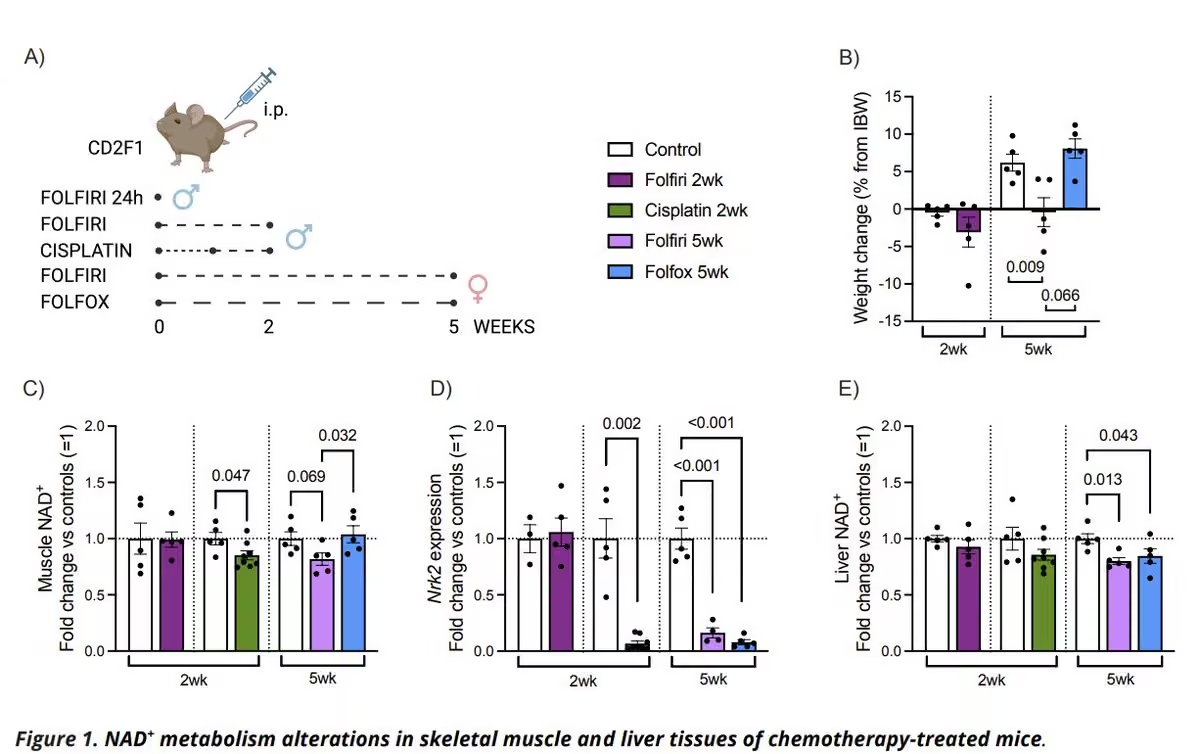 David Sinclair
@davidasinclair
Congrats to all. Enzymatic correction of damaged proteins. Beautiful work 👏
 Aubrey de Grey
@aubreydegrey
Thanks so much to Jarod and his boss/funder James Fickel - as well as Michael Greve, who funded this work both at Revel (through Kizoo) and at SENS before Revel was created. Without their visionary contributions to this and other early-stage work, we'd be far further from LEV.
 Jarod Rutledge
@JarodRutledge1
Starbloom is very proud to be a supporter of Aaron and the team at Revel. Truly making breakthroughs in aging biology that many thought impossible. 🚀
This is just the one program. wait till you see what else they are cooking in this domain.
Aubrey de Grey
@aubreydegrey
HUGE breakthrough out today, in arguably the single most neglected aspect of aging, extracellular matrix damage. Top researchers have tried & failed for decades to do this. Massive kudos to Aaron and his team! (Proud to note that Revel is a SENS spinout.) revelpharmaceuticals.com/news
David Sinclair
@davidasinclair
If you can’t run, cycle, paddle or swim, get a standing desk!
Lifespan
@JoinLifespan
One of the strongest longevity signals isn't cholesterol or body weight
It's cardiorespiratory fitness
People in the highest fitness categories show 40-70% lower mortality risk than the least fit, so get moving!
 David Sinclair
@davidasinclair
Over time, our sleep-wake cycle loses rhythm robustness, leading to sleep and health issues. A new rodent study finds ergothioneine may enhance circadian robustness and counteracts NAD+-depletion🍄🟫
 David Sinclair
@davidasinclair
Humans can’t make ergothioneine, yet we’ve evolved a dedicated transporter just to absorb and retain it from our diet. It’s concentrated in the brain, eyes, immune cells, and mitochondria where it helps protect against oxidative stress. Mushrooms are by far the richest source
 David Sinclair
@davidasinclair
Mushrooms with the highest EGT content are oyster, maitake, shiitake, porcini, lion’s mane, button mushrooms, creminis, and portobello mushrooms 🍄🟫
 David Sinclair
@davidasinclair
Effects on periodicity were quite small in this study (though FK866 is like a sledgehammer at inhibiting NAD synthesis). Would need to see more mouse data with EGT and eventually human sleep studies
www.sciencedirect.com/science/article/pii/S0006291X26010363
David Sinclair
@davidasinclair
🎯
 Christina Farr
@chrissyfarr
Prediction: In 20 years, every government everywhere will be doing whatever it possibly can to encourage people to have babies. With tax subsidies, free childcare, cheaper tuition.
Immigration will also be sought after.
Anything in robotics & IVF will keep getting hotter.
 David Sinclair
@davidasinclair
My mother smoked constantly, including in the car with the windows rolled up and no air conditioning. As a kid, I dreamed of a world without cigarettes. That world now largely exists. Sadly, so does a world without my mom
Lifespan
@JoinLifespan
New research finds that babies raised around mothers who smoke have altered DNA methlation patterns that could negatively affect the baby's health years later. Now's the time to quit

David Sinclair reposted
Agingdoc🩺Dr David Barzilai🔔MD PhD MS MBA DipABLM
@agingdoc1
Healthy aging and muscle function are positively associated with NAD+ abundance in humans
“…
conversely, exercise-trained older individuals had NAD+ levels that were more similar to those found in younger individuals.
NAD+ abundance positively correlated with average number of steps per day and mitochondrial and muscle functioning..”
www.nature.com/articles/s43587-022-00174-3
David Sinclair
@davidasinclair
😬 😬 😬
Lifespan
@JoinLifespan
Average night’s sleep has declined ∼2h over the last century. The body becomes metabolically older surprisingly quickly. In one study, people given modafinil for a week slept only 5h a night & had dramatically reduced insulin sensitivity 🧵
 David Sinclair
@davidasinclair
Great to see this article from the Editor in Chief about Sirtuins as drug targets & the l clinical trials of small molecule activators such as resveratrol and SRT2104
Agingdoc🩺Dr David Barzilai🔔MD PhD MS MBA DipABLM
@agingdoc1
SIRT1: Protean roles at the nexus of health, disease, and therapeutics
"...As precision medicine evolves, refined modulation of SIRT1 and related pathways holds considerable promise for improving disease prevention and treatment outcomes."
onlinelibrary.wiley.com/doi/10.1002/ccs3.70086
David Sinclair
@davidasinclair
🎯 @brian_armstrong
Beware. The world has changed. Once respectable newspapers are now just hitpapers
 Brian Armstrong
@brian_armstrong
Sad state of affairs when most mainstream media journalists can’t be trusted to tell the truth at this point.
As a founder, you have to hunt to find the good ones and spend more of your time going direct or with new media, bypassing them entirely.
Many traditional media companies got disrupted by tech, and therefore came to hate tech. So they have a conflict of interest in all tech reporting, even if they don’t disclose it. Others are mainly political propaganda organizations at this point (Marxist etc) and try to label it journalism to prey on ignorant people.
Actual journalism is important and even heroic at times (war zones etc), it just isn’t practiced very often by traditional media companies any more, which is a shame and why we need new media companies.
David Sinclair
@davidasinclair
I think about this every day
 Words & Wisdom
@WordsnWisdom26
“You have enemies? Good. That means you’ve stood up for something, sometime in your life.”
— Winston Churchill
 David Sinclair
@davidasinclair
Why is academia such a viscous, back-stabbing business? Because the stakes are so low 🤣
 Ulugbek S. Kamilov
@prof_kamilov
Academia is fascinating. You spend years becoming the world’s expert on something eight people care about, and three of them disagree with you.
David Sinclair
@davidasinclair
Another good reason to use OSK not OSKM to epigenetically rejuvenate
 Samuel Hume
@DrSamuelBHume
Wow - c-Myc is an established oncogene, and it looks like it can form amyloid in Alzheimer's disease brains too.
Another reason to develop c-Myc-targeting therapeutics!
 David Sinclair
@davidasinclair
As much as I dislike petty critics & journalistic hit pieces, the alternative is worse
 Declan Ganley
@declanganley
The late great Ann Widdecombe defending free speech at the Oxford Union. This is worth your time.
David Sinclair
@davidasinclair
Which aging clock should you trust? It depends on the question. In men with cardiometabolic disease, first-generation clocks largely failed, while GrimAge and DunedinPACE clearly detected accelerated biological aging
link.springer.com/article/10.1186/s13148-026-02195-w
 David Sinclair
@davidasinclair
Still taking resveratrol every morning
Dr. Thomas Ichim
@exosome
Grapeseed extract increases lifespan by protecting stem cells....wow....
pubmed.ncbi.nlm.nih.gov/42345778/
 David Sinclair
@davidasinclair
Now live! Lifespan S2, Ep. 3 -
How to Fast for Longevity: The Complete Guide
Big thanks to Daniel Salazar, Lifespan’s cinematographer, who recently joined the team from @NASA 🎥 🚀
youtu.be/hITH7DGbpw4
David Sinclair
@davidasinclair
ITOA stands on many shoulders 💪
Lifespan
@JoinLifespan
Howard Cedar laid the foundation for epigenetic therapies for aging and disease. In 1982, experts believed DNA methylation didn't matter. Rather than arguing, he designed one decisive experiment to prove them wrong 🧵

David Sinclair reposted
Dr. Thomas Ichim
@exosome
People who live to 100 have a specific variant of SIRT6 which increases resistance to senescence.
pmc.ncbi.nlm.nih.gov/articles/PMC13308375/pdf/nihpp-rs999…
 David Sinclair
@davidasinclair
Fun to see "Xenohormesis" - the idea that we've evolved to enter survival mode when the plants we eat are stressed, become colorful, and make copious polyphenols - having its own Grokipedia page
Love Grokipedia. No politics. No trolls. Just facts 🙏grokipedia.com/page/xenohormesis
David Sinclair
@davidasinclair
if the Wikipedia page about you has been hijacked and extensively edited by your competitors, you'll know what I mean
David Sinclair
@davidasinclair
There's a mouse loose in the lab!! No, wait. False alarm
 Lifespan News
@LifespanNews
Restricting food access to an 8-hour window increased median lifespan in male mice by 12%, which might be due to voluntary caloric restriction induced by this regimen.
👉 Read more: lifespan.io/intermittent-fasting-increases-lifespan-in-ma…
David Sinclair reposted
Lifespan
@JoinLifespan
Men with obesity, high blood pressure & heart disease showed faster biological aging in their blood. Only newer clocks like GrimAge and DunedinPACE consistently captured the accelerated pace of aging

David Sinclair reposted
Lifespan
@JoinLifespan
You don't have to be perfect this summer.
Just don't lose the habits that help you stay healthy
 David Sinclair
@davidasinclair
We are what we don't eat:
Did you know β-hydroxybutyrate (BHB) produced when fasting is an epigenetic regulator that promotes immune T-cell development during a viral infection
Maybe our grandmothers knew something when they said "Starve a fever"!
 David Sinclair
@davidasinclair
the OG paper: www.nature.com/articles/s41556-019-0440-0
David Sinclair
@davidasinclair
Today is the last day of your life
Probably not, but imagine it is
David Sinclair
@davidasinclair
Could light be an adjunct therapy for cancer?🚦
Shining red or green light on stem cells & T cells stimulates a protein called OPN4, normally found in the eye, and causes them to secrete factors that slow the growth of breast cancer cells 🧵
 David Sinclair
@davidasinclair
This is an early preclinical study, but it adds to a growing body of work showing that physical stimuli can influence cell fate through epigenetic mechanisms. It will be interesting to see whether these findings extend to other cell types and diseases
 David Sinclair
@davidasinclair
Here's the paper www.nature.com/articles/s41401-026-01851-4
David Sinclair
@davidasinclair
Article is AI slop. Hallmarks of Aging (2013) is just a catalog, nothing original
The "reprogramming thesis" rests on work done from 1995-1999 in the Guarente lab @MIT showing aging in yeast cells is epigenetically modifiable
www.cell.com/cell/fulltext/S0092-8674(00)80219-6
David Sinclair
@davidasinclair
A fact-packed episode about diet, quadruple-checked for scientific accuracy 💪
Rand
@rand_longevity
lets goooo!
David Sinclair
@davidasinclair
Super irresponsible. Not shocking.
Agingdoc🩺Dr David Barzilai🔔MD PhD MS MBA DipABLM
@agingdoc1
Beware of misleading headlines and clickbait conclusions.
Here is the synopsis:
The sunscreen paradox: McGill University researchers warn of ‘false sense of security’
👉 “Sunscreen is important, says Dr. Ivan Litvinov, but it is also the least effective way to protect your skin when compared to sun protective clothing and sun avoidance” 👨⚕️
🔗www.mcgill.ca/newsroom/channels/news/sunscreen-paradox-mc…
David Sinclair
@davidasinclair
Latest episode of Lifespan is out!
I'm so proud of the team who worked >300 hrs to make the most in-depth, 2-part episode covering:
1. The real facts about fasting
2. Why & how it slows aspects of aging
3. Easy tricks to implement the practice 💪
youtu.be/U0z4NvbZHm4
David Sinclair reposted
 Aging Research News
@AGE
The evidence for epigenetic age acceleration in neurological disease: A systematic review
www.sciencedirect.com/science/article/pii/S1568163726001935
David Sinclair reposted
 Robert Lufkin MD
@robertlufkinmd
New in Nature Medicine: people born in the 1970s and 1980s are biologically aging about 92 percent of a standard deviation faster than their parents - and it's showing up as a spike in early-onset cancer. (1/6)
 David Sinclair
@davidasinclair
Amen 🙏
 Steven Pinker
@sapinker
"Stop treating energy as something to atone for. Energy is the master resource, the thing that buys us nearly every other good. The whole of human history is the story of harnessing ever more energy to improve our lives and to hold the lethal forces of nature at bay." The imperative is to accelerate abundant carbon-free energy (including the n-word). | How Europe Became the World Champion of Heat Deaths quillette.com/2026/06/24/how-europe-became-the-world-cham…
David Sinclair
@davidasinclair
Oxygen deprivation seems to be a potent driver of epigenetic aging in mice and people, including those who experience high altitude www.nature.com/articles/s41514-026-00425-2
 David Sinclair
@davidasinclair
Interestingly it’s reversible. We need to figure out how that works so we can reverse our epigenetic age
David Sinclair reposted
 Simon Maechling
@simonmaechling
The currency of science is data.
The currency of pseudoscience is anecdotes.
David Sinclair
@davidasinclair
Paper indicates cancer rates are increasing because our lifestyles are accelerating biological aging. Another reason aging is worth tackling
Rand
@rand_longevity
damn this is a devastating paper
please take care of yourself, do you actually know how bad dying from cancer is? if you dont, consider yourself lucky
get off your ass and take care of the only body you have
David Sinclair
@davidasinclair
🥱
Agingdoc🩺Dr David Barzilai🔔MD PhD MS MBA DipABLM
@agingdoc1
Nicotinamide mononucleotide stimulates the activity of bursting slow-oscillation neurons in the supramammillary nucleus and enhances REM sleep
pmc.ncbi.nlm.nih.gov/articles/PMC13187527/
 David Sinclair
@davidasinclair
Good question. Back in the 2000s, Phillip Oberdoerffer, a postdoc in our lab, published that DNA breaks cause epigenetic drift in mammals, not just yeast, consistent with the Information Theory of Aging
Summary of the 2009 study ICYMI:
One of the hallmarks of aging is the gradual loss of genome stability and control of gene activity. In yeast, a protein called Sir2 (the original Sirtuin) helps keep certain genes turned off and protects repetitive regions of DNA.
As yeast age, or when their DNA is damaged, Sir2 leaves its normal locations and moves to sites of DNA damage to help with repair. This causes previously silent genes to become active, leading to changes associated with aging
We found that the mammalian version of Sir2, called SIRT1, behaves in a similar way. In mouse cells, SIRT1 normally helps silence repetitive DNA and regulates many genes throughout the genome. When DNA damage occurs, SIRT1 moves away from these regions and relocates to DNA breaks to assist in repair. As a result, gene expression patterns change in ways that closely resemble those seen in aging mouse brains
Increasing SIRT1 levels improves survival in mice with unstable genomes and reduces many of the gene expression changes that occur with age. These findings suggest that aging may result, at least in part, from the repeated redistribution of SIRT1 and other chromatin-regulating proteins as they respond to DNA damage, gradually disrupting the youthful organization of the genome
www.cell.com/cell/fulltext/S0092-8674(22)01570-7

 Nunzio Cuzzucoli
@NunzioCuzzucoli
How much is due to damage and how much to epigenetic drift???
David Sinclair
@davidasinclair
NEW PREPRINT: Scientists may have found direct evidence that aging is driven by the loss of cellular information, not just the accumulation of damage
For decades we've focused on what aging cells accumulate. This paper focuses on what they lose: Information.
Using a new technology called SeqTag, researchers measured gene expression, chromatin accessibility, and histone modifications in the same aging cells.
What they found was striking: the regulatory systems that tell cells who they are become increasingly out of sync with age. The authors call this "molecular asynchrony."
As cells age, chromatin structure, histone marks, and gene expression begin drifting apart. Regulatory entropy rises. Repressive chromatin erodes. Cells become less certain of their identity and more likely to drift toward alternative fates.
This is what the Information Theory of Aging (ITOA) states: that aging occurs when cells lose epigenetic information, the instructions that tell the genome how to maintain youthful function. DNA may remain largely unchanged, but the system that reads it gradually loses fidelity.
What's remarkable is that this paper doesn't just describe this phenomenon. It quantifies it. The authors measure increasing regulatory entropy, loss of H3K27me3-mediated repression, erosion of heterochromatin, weakening lineage fidelity, and increased cell-fate drift during aging. In progenitor cells, the barriers that normally preserve cellular identity become progressively weaker with age.
Mechanistically, the study argues that aging is associated with increasing molecular asynchrony between chromatin accessibility, H3K27ac/H3K27me3 remodeling, and transcriptional state.
This decoupling is accompanied by increased regulatory entropy, loss of repressive chromatin architecture, and weakening of lineage constraints. Genes affected are those involved in chromatin organization, DNA damage, and Wnt signaling, consistent with ITOA.
Importantly, the authors provide quantitative evidence that age-related heterochromatin erosion lowers the energetic barriers that maintain cell identity, offering a potential mechanistic link between epigenetic information loss, cell-fate drift, and late-life disease susceptibility 👏
 David Sinclair
@davidasinclair
The paper:
www.biorxiv.org/content/10.64898/2026.06.02.729594v1
David Sinclair
@davidasinclair
What else could it be?
 Longevity Technology
@LongevityTech
Researchers from across disciplines will gather this August to explore whether entropy offers a unifying framework for understanding aging.
vist.ly/57cph
#longevity #geroscience #entropy #aging #research
 David Sinclair
@davidasinclair
💯
 Mgoes (bio/acc 🤖💉)
@m_goes_distance
are you paying attention chad?
the anti-aging and human enhancement arms race just went geopolitical
- Russia committed $26B. Putin made longevity a Kremlin priority. organ printing, genetics, cryotherapy.
- China published a 5-year national biotech plan. gene therapy, BCIs, AI drug discovery. genuine human firsts, not me-too drugs.
- UAE launched a national longevity program backed by sovereign wealth. zero taxes. fastest clinical trial approvals in the world.
- Singapore is funding longevity research at the state level and recruiting the world's best biotech founders.
and the private sector is not waiting
- Life Biosciences just injected the first reverse-aging drug into a human
- NewLimit raised $435M from Peter Thiel's Founders Fund. Brian Armstrong's bet on age reprogramming is moving from lab to clinic.
- Retro Biosciences raised $1.8B. Sam Altman's bet on adding 10 healthy years to human lifespan is scaling.
- Isomorphic Labs raised $2.1B. Demis Hassabis betting AI designs drugs better than humans.
- Neuralink has 21 implants in humans. Merge Labs launched with $252M. the BCI race is real.
- Altos Labs. $3B from Bezos. cellular rejuvenation. the largest single longevity round ever.
every major power and every serious founder on earth is pointing at the same problem
the race has begun
bio/acc
David Sinclair
@davidasinclair
Pretty accurate
Afshine Emrani MD FACC
@afshineemrani
Two days ago, something happened that most of the world still doesn't know about.
A human being received the first therapy in history designed to reverse cellular aging inside their body. Not slow it down. Not manage the symptoms. Actually reset the biological clock at the cellular level.
@lifebiosciences — co-founded by Harvard geneticist @davidasinclair — announced on June 9 that the first patient was dosed in their Phase 1 clinical trial of ER-100.
Let me explain what this actually is, because the implications extend far beyond the eye they're treating.
Your DNA is mostly intact throughout your life. Think of it as hardware. What degrades is the epigenome — the layer of chemical instructions that tells your genes what to do and when. Over decades, those instructions get corrupted. Genes that should be active go silent. Genes that should be silent activate. Cells lose their identity and function. We call this aging.
ER-100 uses three transcription factors — OCT4, SOX2, and KLF4 — to perform a partial epigenetic reset. These are the same factors that can reprogram any adult cell back into a stem cell. But they're not going that far. They're doing just enough to make damaged cells function like younger versions of themselves — without losing their identity.
The delivery is elegant. A one-time injection into the eye. An oral pill acts as an on/off switch — doctors control exactly how long the reprogramming lasts. If anything goes wrong, they turn it off.
This didn't come from nowhere.
In 2020, Sinclair's team restored vision in old mice and mice with glaucoma using this approach. The paper made the cover of Nature. They moved to monkeys with optic nerve damage — and successfully restored function with no major safety issues. Now, two days ago: the first human.
The trial is targeting glaucoma and NAION — a sudden "stroke of the eye" that causes devastating vision loss. Current treatments for both can only slow progression. Nothing reverses the damage. This therapy aims to regenerate damaged optic nerve cells by making them young again.
As a cardiologist, here's why this keeps me up at night — in the best possible way.
The eye is a safe, measurable starting point. But the platform technology isn't limited to the eye. If partial epigenetic reprogramming works safely in optic nerve cells, the same approach could theoretically be adapted for the brain, the spinal cord, the heart, the liver, the kidneys — any organ where cells lose function with age.
We're not testing whether we can treat one disease. We're testing whether we can treat aging itself as a reversible biological process.
For my entire career, cardiology has been magnificent at managing the downstream consequences of aging: high blood pressure, plaque buildup, heart failure, arrhythmias, stiffened arteries. We prescribe statins, antihypertensives, anticoagulants, and devices to manage what time does to the cardiovascular system. We're getting better every year.
But what if the cells themselves could be reset? What if the cardiac muscle cells that lose contractile function with age could be epigenetically restored? What if the endothelial cells lining sixty thousand miles of blood vessels could be made to behave like they did decades earlier?
That's not in a trial yet. But the foundational technology just entered a human body for the first time. And the companies racing in this space — Life Biosciences, Altos Labs, NewLimit — are backed by billions of dollars and some of the best scientists alive.
Essential caveats — because I'm a physician, not a hype man.
This is Phase 1. Roughly 18 patients. The primary goal is safety: does this cause harm? Is it tolerable? Efficacy data will come later. Many promising therapies have failed in the gap between animal models and human reality. Gene therapy carries risks — immune reactions, off-target effects, unintended cellular behavior. The oral on/off switch is a critical safety feature, but this is still the earliest possible stage of testing.
No one is reversing aging tomorrow. No one is living to 200 next year.
But a line was crossed two days ago that cannot be uncrossed.
For the first time in human history, someone received a therapy specifically designed to make damaged cells young again inside a living person. From impossible in theory to proven in mice to tested in monkeys to injected into a human being — in six years.
I've spent twenty years treating the consequences of aging. I've held hearts that were failing because time had degraded the cells beyond recovery. I've watched patients lose vision, cognition, mobility, and independence — and told them there was nothing I could do to reverse what time had taken.
This week, the conversation began to change.
Gene editing to permanently lower cholesterol. Personalized mRNA vaccines to hunt cancer. GLP-1 drugs rewiring metabolism, reducing depression, and cutting cancer metastasis. And now — partial cellular reprogramming to reverse aging at the epigenetic level.
I said months ago on this platform that our children may live past 100 — not frail, but strong and vibrant.
The evidence keeps building that this isn't optimism.
It's a timeline.
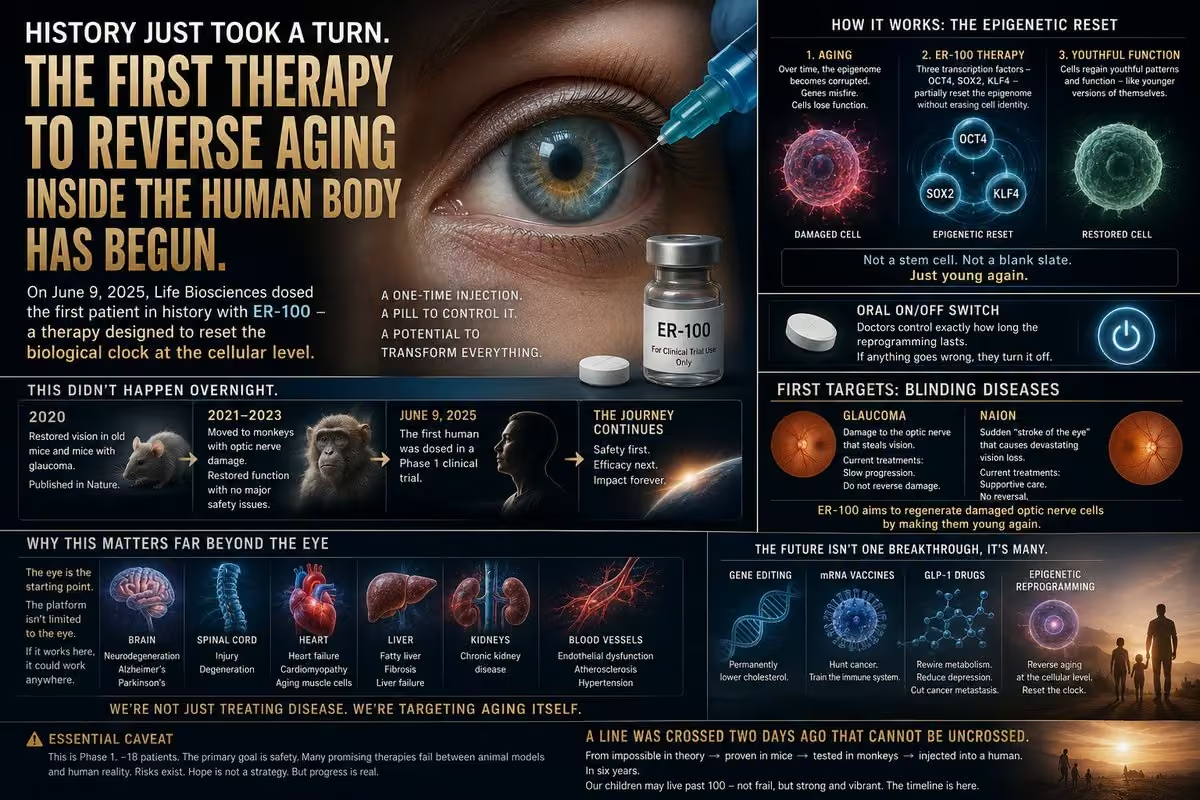 David Sinclair
@davidasinclair
Smart. Took me 50 years
 Ryan Burge 📊
@ryanburge
Generation Z has the lowest levels of interpersonal trust of any generation we've ever polled.
And although the data is time limited, the velocity of their decline in trust already far exceeds any previous generation.
 David Sinclair
@davidasinclair
Nice review about how epigenetic drift and cell stress can cause cellular senescence to drive aging and disease www.cell.com/cell/fulltext/S0092-8674(26)00587-8
David Sinclair
@davidasinclair
🚀🚀🚀
Peter H. Diamandis, MD
@PeterDiamandis
Russia just committed $26 billion to anti-aging research and made longevity a national priority. Welcome to the longevity arms race!
David Sinclair reposted
 Dr. Michael Forrest
@Forrest_PhD
FORBES: The New Billionaire Bet Isn't AI —
It's Longevity Biotech
www.forbes.com/sites/dariashunina/2026/06/11/the-new-bill…
David Sinclair
@davidasinclair
The first all-new episode of Lifespan, Season 2, is out!
I explain why humanity is approaching a turning point in our ability to measure & reverse aspects of biological aging - and what you can do personally to benefit from this revolution. Watch:
www.youtube.com/watch?v=YRGejckRNpQ
David Sinclair
@davidasinclair
True. Many of our advances in longevity research & development are published months, often years, and sometimes more than a decade after they happen
 Manav Gupta
@tensor___boy
the most important things never announce themselves. electricity didn't send a press release either
David Sinclair
@davidasinclair
After decades of witnessing distortion, lies, and recycled quotes from the same couple of disgruntled former colleagues, I’ve largely stopped speaking to mainstream media. Too many are more interested in clickbait & tearing down builders than telling the truth or helping humanity
 Ole Lehmann
@itsolelehmann
it's insane to me that this isn't all over mainstream media right now.
for the first time in human history, a drug built to reverse aging was just put into a living person
a company called Life Biosciences dosed the first patient in their trial for something called ER-100
it comes from a Harvard geneticist named David Sinclair
his theory is that aging comes from your cells losing track of how to read their own DNA
think of it like a computer. the hardware is fine, but the software slowly gets corrupted over the years, so the machine runs slower and slower until it stops
the instructions for a young, healthy cell are all still in there. your cells just lost access to them over time
so this drug does one thing: it reboots the cell back to the version of itself that knew how to run properly
they pull it off with three proteins that reset a cell to a younger state
and they proved it works before ever touching a human
first they restored vision in old mice. then they restored vision in monkeys with optic nerve damage, with no tumors and no signs of harm
so now they're testing it on people going blind from glaucoma and a nerve condition called NAION
they started with the eye on purpose. it's the cleanest place to test the idea, because they can inject it into one eye without it reaching the rest of the body, the cells there don't heal on their own so any improvement clearly came from the drug, and they can measure vision right down to the letters on a chart
the reset happens at the level of the cell, so in theory the same approach could one day rejuvenate the liver, the kidneys, even the brain
it won't be automatic though. every organ needs its own way of getting the drug into the right cells, plus its own round of safety testing. so it doesn't suddenly work everywhere the moment it works in the eye
but the eye answers the one question nobody could answer before: whether you can safely turn back the age of living cells inside a person
if the answer is yes, reaching the rest of the body comes down to delivery, one organ at a time. that part is hard, but it's the kind of hard you can engineer your way through
to be clear, this is an early safety trial. 18 people, 5 year follow up.
so nobody is gonna cure aging by next year
but if it works, we'll look back at this week as the moment the clock started running backwards for the first time
Lifespan
@JoinLifespan
Today, @lifebiosciences confirmed the first patient has been dosed with an epigenetic restoration drug candidate. An exciting milestone 🚀
Life Biosciences is the OG cellular rejuvenation using epigenetic restoration to reverse diseases of aging. It was cofounded by @davidasinclair, who serves as Chairman
The company’s proprietary Epigenetic Restoration platform utilizes three transcription factors, OCT4, SOX2, and KLF4 (OSK), to restore older and damaged cells to a younger and healthier state. This innovative approach targets a root cause of aging at the epigenetic level, and has the potential to address a wide range of serious age-related diseases
The Phase 1 trial will evaluate the safety and tolerability of ER-100, with additional endpoints assessing visual function. ER‑100 is the first clinical candidate from Life Bio’s Epigenetic Restoration platform, which uses controlled expression of three transcription factors, OCT4, SOX2 and KLF4 (OSK) to restore cellular function by resetting the epigenetic code to more youthful patterns of gene expression
“This is an important moment for Life Bio and for the field of aging biology,” said David Sinclair, Ph.D., Co‑founder of Life Biosciences and Professor of Genetics at Harvard Medical School. “Our research has suggested that aging is driven in large part by the loss of epigenetic information, not irreversible damage. This clinical study represents the first opportunity to test whether restoring that information can ameliorate human disease.”
Beyond ER-100, the company is strategically broadening its therapeutic pipeline to address additional age-related diseases, underscoring the platform’s versatility and transformative potential.
“This milestone reflects years of rigorous scientific development and translational research,” said Sharon Rosenzweig‑Lipson, Ph.D., Chief Scientific Officer of Life Biosciences. “Our preclinical studies have demonstrated that controlled OSK expression can reset epigenetic patterns associated with healthy cellular function, improve tissue performance, and restore visual function in animal models. Advancing ER‑100 into the clinic is an important step toward translating epigenetic restoration into a new class of medicines for age-related diseases.”
Optic neuropathies represent a large unmet medical need. Current treatments primarily address risk factors, such as intraocular pressure in glaucoma, but do not directly target the damage to retinal ganglion cells. As a consequence, the disease often leads to irreversible vision loss despite treatment
Vision loss not only directly impacts patients’ lives, but also increases the risk of loss of independence, damaging falls, and depression and dementia due to social isolation, underscoring the need for disease-modifying therapies.
Beyond ER‑100, Life Bio is developing applications of its proprietary Epigenetic Restoration platform for multiple indications in a variety of organs, reflecting the broad therapeutic potential of this platform.
About Optic Neuropathies Optic neuropathies are a group of disorders characterized by damage to retinal ganglion cells (RGCs), the primary neurons connecting the eye to the brain. Because RGCs do not naturally regenerate, damage results in permanent vision impairment. One such optic neuropathy, open-angle glaucoma (OAG) is a chronic neurodegenerative disease and a leading cause of blindness in older adults
While often associated with elevated intraocular pressure, disease progression frequently continues despite treatment, and some patients suffer from OAG despite normal intraocular pressure. Non-arteritic anterior ischemic optic neuropathy (NAION) is the most common acute optic neuropathy in adults over fifty. It involves sudden, painless vision loss due to insufficient blood flow, for which there are currently no approved treatments
About ER-100 ER‑100 is an investigational therapy in clinical development for the treatment of optic neuropathies including OAG and NAION. ER‑100 is designed to restore function in retinal ganglion cells using Life Biosciences’ Epigenetic Restoration platform, which utilizes controlled expression of three transcription factors, OCT4, SOX2 and KLF4 (OSK), to reset cellular gene expression patterns and restore cells to a more youthful and functional state. ER‑100 is currently being evaluated in a Phase 1 clinical trial. More information can be found at clinicaltrials.gov (NCT07290244): clinicaltrials.gov/study/NCT07290244
For more information, visit www.lifebiosciences.com or follow on social media
www.lifebiosciences.com/life-biosciences-announces-first-…
 David Sinclair
@davidasinclair
The naysayers saw no change in blood NAD levels with age (something we’ve known for yrs) and concluded an entire field is wrong
We’re treating organs not blood, and aged NAD levels are irrelevant to whether therapies work
Beware of commentators who thrive on schadenfreude
Agingdoc🩺Dr David Barzilai🔔MD PhD MS MBA DipABLM
@agingdoc1
Healthy aging and muscle function are positively associated with NAD+ abundance in humans
“…
conversely, exercise-trained older individuals had NAD+ levels that were more similar to those found in younger individuals.
NAD+ abundance positively correlated with average number of steps per day and mitochondrial and muscle functioning..”
www.nature.com/articles/s43587-022-00174-3
David Sinclair
@davidasinclair
The nucleolus of cells explodes as cells divide, due to DNA breaks that disrupt the epigenome and cause aging. These discoveries in 1997 formed the basis of The Information Theory of Aging (ITOA). Great review by Dr. Jessica Tyler @geromedicine
www.sciexplor.com/geromedicine/articles/Geromedicine.2026…

David Sinclair reposted
 Houman David Hemmati, MD, PhD
@houmanhemmati
If there’s ever been an argument to have hard core scientists leading the review of biologics at the FDA, this is it 👇
We have now entered an era where researchers are using gene therapy to REVERSE AGING in HUMANS.
With futuristic therapeutics now here, we need leadership & regulatory policies that can adapt with rapidly evolving technology so that American patients are both protected and not left behind. Exciting times… 🧬
David Sinclair
@davidasinclair
After 25 years of brave & brilliant work by hundreds of scientists in my lab to understand then safely reverse aging for the first time, it was moving to witness the first human dose being delivered 🥹 www.nature.com/articles/d41586-026-01836-7
David Sinclair
@davidasinclair
After 25 years of brave & brilliant work by hundreds of scientists in my lab to understand then safely reverse aging for the first time, it was moving to witness the first human dose being delivered 🥹 www.nature.com/articles/d41586-026-01836-7
David Sinclair
@davidasinclair
And of course by “reverse aging” I mean epigenetic restoration by ER-100
David Sinclair
@davidasinclair
We’d love to have you
 Time 2b Immortal🍎🍎Luigi Giordano
@Time2bImmortal
🎊 Elon Musk, step into the arena. It's your time. 🎊
David Sinclair reposted
Avi Roy
@agingroy
In 2020, a blind mouse saw again. @davidasinclair's lab at Harvard had reset the age of the cells in its eye with three of the four Yamanaka factors.
Sinclair's argument is that aging is information loss. The youthful settings are still in the cell, buried under noise, and these factors let it read the backup.
On June 9, 2026, a person received that therapy for the first time.
No results yet. Just one patient, and a question that finally has a human to answer it.
Eric Topol
@EricTopol
The first participant to receive partial cellular reprogramming for eye disease (advanced glaucoma) in a pilot study of 12 patients was treated. Using 3 of the 4 Yamanaka stem cell factors to potentially achieve cellular rejuvenation @Nature
www.nature.com/articles/d41586-026-01836-7
David Sinclair
@davidasinclair
Thanks, my friend
 Andrew D. Huberman, Ph.D.
@hubermanlab
I’m very familiar w/the mouse paper that motivated this, mechanistic rationale and the hurdles for it to “work”… but if it does, it’s historic as retinal neurons are CNS (effectively “brain”). Best of luck @davidasinclair & team. www.nature.com/articles/d41586-026-01836-7
David Sinclair
@davidasinclair
Andrew’s @Nature News & Views in 2020
www.nature.com/articles/d41586-020-03119-1
 David Sinclair
@davidasinclair
That was an experiment in 2017. We’ve advanced a great deal since
 Big Brain AI
@realBigBrainAI
Harvard longevity researcher David Sinclair: "We already have a proof of concept" for reversing 92-year-old skin cells to a 20-year-old state.
David Sinclair reposted
 WIRED
@WIRED
It'll be the first time ER-100 technology they claim can reverse aging in cells has been tested on a human www.wired.com/story/longevity-startup-doses-first-human-i…
David Sinclair
@davidasinclair
Couldn't agree more. It's a scientist's duty to convey their research to the public, not have it live behind paywalls or dispelled by reporters looking for clicks
 How I Write Clips
@PerellClips
Academics write for each other, not for people.
Steven Pinker has spent over four decades doing the opposite, and thinks current academic writing is "enormous wasted effort."
"There's an awful lot of brilliant work, really smart people in academia. Why are they doing it? Just to entertain each other? Taxpayers pay for it. It should be accessible. Why should I have to read a paragraph five or six times?
It gets under my skin when academics devote so much brainpower into the scholarship and then just blow off the essential task of letting the world know what you've done."
David Sinclair
@davidasinclair
30 years of research came down to one moment. Was honored to be there. Congrats to the team! 👏
Lifespan
@JoinLifespan
Today, @lifebiosciences confirmed the first patient has been dosed with an epigenetic restoration drug candidate. An exciting milestone 🚀
Life Biosciences is the OG cellular rejuvenation using epigenetic restoration to reverse diseases of aging. It was cofounded by @davidasinclair, who serves as Chairman
The company’s proprietary Epigenetic Restoration platform utilizes three transcription factors, OCT4, SOX2, and KLF4 (OSK), to restore older and damaged cells to a younger and healthier state. This innovative approach targets a root cause of aging at the epigenetic level, and has the potential to address a wide range of serious age-related diseases
The Phase 1 trial will evaluate the safety and tolerability of ER-100, with additional endpoints assessing visual function. ER‑100 is the first clinical candidate from Life Bio’s Epigenetic Restoration platform, which uses controlled expression of three transcription factors, OCT4, SOX2 and KLF4 (OSK) to restore cellular function by resetting the epigenetic code to more youthful patterns of gene expression
“This is an important moment for Life Bio and for the field of aging biology,” said David Sinclair, Ph.D., Co‑founder of Life Biosciences and Professor of Genetics at Harvard Medical School. “Our research has suggested that aging is driven in large part by the loss of epigenetic information, not irreversible damage. This clinical study represents the first opportunity to test whether restoring that information can ameliorate human disease.”
Beyond ER-100, the company is strategically broadening its therapeutic pipeline to address additional age-related diseases, underscoring the platform’s versatility and transformative potential.
“This milestone reflects years of rigorous scientific development and translational research,” said Sharon Rosenzweig‑Lipson, Ph.D., Chief Scientific Officer of Life Biosciences. “Our preclinical studies have demonstrated that controlled OSK expression can reset epigenetic patterns associated with healthy cellular function, improve tissue performance, and restore visual function in animal models. Advancing ER‑100 into the clinic is an important step toward translating epigenetic restoration into a new class of medicines for age-related diseases.”
Optic neuropathies represent a large unmet medical need. Current treatments primarily address risk factors, such as intraocular pressure in glaucoma, but do not directly target the damage to retinal ganglion cells. As a consequence, the disease often leads to irreversible vision loss despite treatment
Vision loss not only directly impacts patients’ lives, but also increases the risk of loss of independence, damaging falls, and depression and dementia due to social isolation, underscoring the need for disease-modifying therapies.
Beyond ER‑100, Life Bio is developing applications of its proprietary Epigenetic Restoration platform for multiple indications in a variety of organs, reflecting the broad therapeutic potential of this platform.
About Optic Neuropathies Optic neuropathies are a group of disorders characterized by damage to retinal ganglion cells (RGCs), the primary neurons connecting the eye to the brain. Because RGCs do not naturally regenerate, damage results in permanent vision impairment. One such optic neuropathy, open-angle glaucoma (OAG) is a chronic neurodegenerative disease and a leading cause of blindness in older adults
While often associated with elevated intraocular pressure, disease progression frequently continues despite treatment, and some patients suffer from OAG despite normal intraocular pressure. Non-arteritic anterior ischemic optic neuropathy (NAION) is the most common acute optic neuropathy in adults over fifty. It involves sudden, painless vision loss due to insufficient blood flow, for which there are currently no approved treatments
About ER-100 ER‑100 is an investigational therapy in clinical development for the treatment of optic neuropathies including OAG and NAION. ER‑100 is designed to restore function in retinal ganglion cells using Life Biosciences’ Epigenetic Restoration platform, which utilizes controlled expression of three transcription factors, OCT4, SOX2 and KLF4 (OSK), to reset cellular gene expression patterns and restore cells to a more youthful and functional state. ER‑100 is currently being evaluated in a Phase 1 clinical trial. More information can be found at clinicaltrials.gov (NCT07290244): clinicaltrials.gov/study/NCT07290244
For more information, visit www.lifebiosciences.com or follow on social media
www.lifebiosciences.com/life-biosciences-announces-first-…
David Sinclair reposted
Lifespan
@JoinLifespan
Today, @lifebiosciences confirmed the first patient has been dosed with an epigenetic restoration drug candidate. An exciting milestone 🚀
Life Biosciences is the OG cellular rejuvenation using epigenetic restoration to reverse diseases of aging. It was cofounded by @davidasinclair, who serves as Chairman
The company’s proprietary Epigenetic Restoration platform utilizes three transcription factors, OCT4, SOX2, and KLF4 (OSK), to restore older and damaged cells to a younger and healthier state. This innovative approach targets a root cause of aging at the epigenetic level, and has the potential to address a wide range of serious age-related diseases
The Phase 1 trial will evaluate the safety and tolerability of ER-100, with additional endpoints assessing visual function. ER‑100 is the first clinical candidate from Life Bio’s Epigenetic Restoration platform, which uses controlled expression of three transcription factors, OCT4, SOX2 and KLF4 (OSK) to restore cellular function by resetting the epigenetic code to more youthful patterns of gene expression
“This is an important moment for Life Bio and for the field of aging biology,” said David Sinclair, Ph.D., Co‑founder of Life Biosciences and Professor of Genetics at Harvard Medical School. “Our research has suggested that aging is driven in large part by the loss of epigenetic information, not irreversible damage. This clinical study represents the first opportunity to test whether restoring that information can ameliorate human disease.”
Beyond ER-100, the company is strategically broadening its therapeutic pipeline to address additional age-related diseases, underscoring the platform’s versatility and transformative potential.
“This milestone reflects years of rigorous scientific development and translational research,” said Sharon Rosenzweig‑Lipson, Ph.D., Chief Scientific Officer of Life Biosciences. “Our preclinical studies have demonstrated that controlled OSK expression can reset epigenetic patterns associated with healthy cellular function, improve tissue performance, and restore visual function in animal models. Advancing ER‑100 into the clinic is an important step toward translating epigenetic restoration into a new class of medicines for age-related diseases.”
Optic neuropathies represent a large unmet medical need. Current treatments primarily address risk factors, such as intraocular pressure in glaucoma, but do not directly target the damage to retinal ganglion cells. As a consequence, the disease often leads to irreversible vision loss despite treatment
Vision loss not only directly impacts patients’ lives, but also increases the risk of loss of independence, damaging falls, and depression and dementia due to social isolation, underscoring the need for disease-modifying therapies.
Beyond ER‑100, Life Bio is developing applications of its proprietary Epigenetic Restoration platform for multiple indications in a variety of organs, reflecting the broad therapeutic potential of this platform.
About Optic Neuropathies Optic neuropathies are a group of disorders characterized by damage to retinal ganglion cells (RGCs), the primary neurons connecting the eye to the brain. Because RGCs do not naturally regenerate, damage results in permanent vision impairment. One such optic neuropathy, open-angle glaucoma (OAG) is a chronic neurodegenerative disease and a leading cause of blindness in older adults
While often associated with elevated intraocular pressure, disease progression frequently continues despite treatment, and some patients suffer from OAG despite normal intraocular pressure. Non-arteritic anterior ischemic optic neuropathy (NAION) is the most common acute optic neuropathy in adults over fifty. It involves sudden, painless vision loss due to insufficient blood flow, for which there are currently no approved treatments
About ER-100 ER‑100 is an investigational therapy in clinical development for the treatment of optic neuropathies including OAG and NAION. ER‑100 is designed to restore function in retinal ganglion cells using Life Biosciences’ Epigenetic Restoration platform, which utilizes controlled expression of three transcription factors, OCT4, SOX2 and KLF4 (OSK), to reset cellular gene expression patterns and restore cells to a more youthful and functional state. ER‑100 is currently being evaluated in a Phase 1 clinical trial. More information can be found at clinicaltrials.gov (NCT07290244): clinicaltrials.gov/study/NCT07290244
For more information, visit www.lifebiosciences.com or follow on social media
www.lifebiosciences.com/life-biosciences-announces-first-…
David Sinclair
@davidasinclair
If it’s a single molecule it could be as cheap as metformin
David Sinclair
@davidasinclair
Drug combos for aging are a path forward
Lifespan
@JoinLifespan
Two FDA-approved drugs just produced one of the largest lifespan extensions in mice
• Trametinib: +7.2% (f), +10.2% (m)
• Rapa: +17.4% (f), +16.6% (m)
• Both: +29% (f), +27% (m)
The drugs target different aspects of/insulin/TOR to mimic fasting 🚀
www.nature.com/articles/s43587-025-00876-4
David Sinclair
@davidasinclair
..the same way polio was a privilege
 Ann Adamson
@AnnDiegoUSA
Aging, my friends, is a fucking PRIVILEGE, not a puzzle.
David Sinclair reposted
 Dr Singularity
@Dr_Singularity
A doctor from 1985 seeing 2026 medicine would be stunned.
mRNA vaccines.
Cancer immunotherapy.
CAR-T cells.
Gene editing.
AI protein design.
Lab grown organoids.
Personal genome sequencing.
Robotic surgery.
Blood tests that can detect cancer signals.
Drugs that make people lose 20% of their body weight.
We will make even bigger jump, just in the next few years.
David Sinclair
@davidasinclair
We are working to lower the cost of age-reversal tech so all can benefit
David Sinclair reposted
 Adam Draper ⏻
@AdamDraper
I believe this next wave of Bio is going to be bigger than anyone can imagine.
Multiple $10T companies. Maybe even a 100 Trillion dollar company.
David Sinclair
@davidasinclair
👏 👏 👏
 Lung Cancer Europe
@LungCancerEu
‼️ Landmark #lungcancer research published today in Cell
Scientists at the Francis Crick Institute and UCL have discovered a 14-protein blood signature that predicts lung cancer more than 5 years before diagnosis, works in never-smokers, and could identify who benefits from prevention treatment.
People with high levels of these proteins were the ones who actually benefited from a drug to damp that inflammation down, cutting their lung cancer risk nearly in half.
This could finally give us something lung cancer has never had: a way to prevent it in the people most at risk.
doi.org/10.1016/j.cell.2026.05.005
#lcsm

David Sinclair reposted
Longevity Technology
@LongevityTech
The longevity biotech is accelerating toward the clinic after uncovering a promising age-reprogramming therapy years sooner than expected.
vist.ly/56p99
#longevity #geroscience #biotech #cellularreprogramming #aging
@newlimit
 David Sinclair
@davidasinclair
The body responds to intensity more than duration.
Even ~4.4 minutes of vigorous daily movement associates with ~26–30% lower mortality risk
join.lifespan.com/577uh3zr
 David Sinclair
@davidasinclair
Slowing aging is not theoretical. In humans, calorie restriction measurably slows biological aging pace by ~2–3% over 2 years
Link here: www.nature.com/articles/s43587-022-00357-y
 David Sinclair
@davidasinclair
Honored to be the Takeru Higuchi Lecturer of 2026. Previous speakers - Laureates Arthur Kornberg, Gertrude Elton, Aaron Ciechanover, and heroes of mine, Judah Folkman & Craig Venter

 David Sinclair
@davidasinclair
$3.1B! Congrats @brian_armstrong
Epigenetic restoration is sure heating up
The Wall Street Journal
@WSJ
Exclusive: A longevity biotech co-founded by Coinbase’s CEO more than tripled in value to $3.1 billion—before its drugs begin human testing. www.wsj.com/business/newlimit-startup-brian-armstrong-val…
David Sinclair
@davidasinclair
$435M Series C. Congrats! 👏
Brian Armstrong
@brian_armstrong
Aging is arguably the root cause of most major diseases (loss of function in our cells). Four years ago, we made a bet that aging was treatable, and NewLimit was born.
NewLimit now has a prototype drug that reverses the age of some human cells (restores function they had when they were younger), and a clinical trial scheduled for next year (with more drug candidates in the pipeline).
Grateful to Founders Fund, Thrive, Greenoaks, and the rest of the investors for this latest round. @jacobkimmel and the team are just getting started.
David Sinclair
@davidasinclair
💯 Go for it!
Peter H. Diamandis, MD
@PeterDiamandis
The reason most people never start building is the quiet assumption that someone smarter is already working on it, not a lack of skills or capital. Let me tell you, those 'smarter' people are usually not.
David Sinclair reposted
Thomas Dayspring
@Drlipid
Amen
 Dr Alo, DO, FACC
@MohammedAlo
🚨 8 out of 10 fears patients have about very low LDL cholesterol are not supported by randomized clinical trial data.
Doctors hear these objections every single day in clinic.
But the 2026 Atherosclerosis review just dismantled them one by one.
I am a cardiologist.
I have patients pushing back on statins and PCSK9 inhibitors because they read something online about cholesterol being "too low."
I have this conversation more than almost any other in my practice.
Here is what the science actually says.
🔬 The review analyzed 10 of the most common fears about very low LDL:
- Brain damage
- Cancer risk
- Hemorrhagic stroke
- Hormonal disruption
- Muscle destruction
- Nerve damage
- Immune suppression
- Diabetes risk
- Fetal harm
- Adrenal dysfunction
8 of those 10 fears have no support from randomized clinical trial data.
Zero.
💓 The ESC/EAS 2025 guidelines define the current target for very high-risk patients as below 55 mg/dL.
Many patients in large trials achieved levels well below that threshold.
The cardiovascular protection was proportional at every step down.
✅ FOURIER TRIAL (evolocumab): major cardiovascular events reduced 15%, LDL driven to median 30 mg/dL with no safety signal
✅ ODYSSEY OUTCOMES (alirocumab): cardiovascular death reduced 15%, with patients reaching LDL levels below 25 mg/dL in some arms without excess harm
✅ IMPROVE-IT (ezetimibe): confirmed that lower LDL beyond statin therapy translates to lower events, even at very low achieved levels
That matters because the argument was never "how low is safe."
The argument should be "how low saves lives."
⚠️ Two concerns from the review do carry legitimate evidentiary support:
🔸 New-onset diabetes. Statins carry a real but modest risk, roughly a 10% relative increase in certain populations. That risk does not eliminate the cardiovascular benefit in high-risk patients.
🔸 Fetal safety. Statins should not be used during pregnancy. That is a real and established contraindication.
Every other fear on that list. Not supported by the data.
❌ "My cholesterol will get too low and damage my brain." Not supported by randomized trial data.
❌ "Very low LDL causes cancer." Not supported by randomized trial data.
❌ "I need cholesterol for my hormones." The body maintains hormonal synthesis even at very low circulating LDL levels. Not supported by randomized trial data.
The tools with the strongest data are unsexy, require a prescription, and require your participation.
🩺 A patient who reaches an LDL below 55 mg/dL after a heart attack and stays there can reduce their risk of a second major cardiovascular event by 15% to 25% depending on the agent used.
That is the difference between a second heart attack and a decade of life with their family.
❤️ Bottom line:
Very low LDL is not dangerous for most patients. It is protective.
This evidence comes from trials enrolling tens of thousands of patients across multiple continents.
Get your LDL measured. Know your risk category. Have an honest conversation with your cardiologist about targets.
If you are very high risk and your LDL is not below 55 mg/dL, that is the conversation you need to have today.
The question is no longer whether low LDL is safe. The question is why so many high-risk patients are still not at goal.
#cardiology #heartdisease #hearthealth #cardiovascularhealth #ldlcholesterol #statins #pcsk9inhibitors #cholesterolmyths #preventivecardiology #metabolichealth
 David Sinclair
@davidasinclair
This is huge
 Blake Byers
@byersblake
Many people spent a career in relative obscurity to deliver a breakthrough result in cancer care today. Hoping this drug gets to all the patients that need it as soon as possible/yesterday.
 David Sinclair
@davidasinclair
Wearables need a setting called “lie to me”
Nicholas Fabiano, MD
@NTFabiano
Believing you slept well can boost your cognitive performance even after a bad night.
Mind over matter.
 David Sinclair
@davidasinclair
Interesting analysis of the main players in the space. One mistake - I don’t have a supplement company
Alex Zhavoronkov, PhD (aka Aleksandrs Zavoronkovs)
@biogerontology
Who runs longevity in 2026? Unfiltered published their top 100 list. Here is the digest with my comments
open.substack.com/pub/aiforever/p/the-longevity-top-100-w…
 David Sinclair
@davidasinclair
Cystatin C is one of the better routine blood biomarkers for predicting longevity
Lifespan
@JoinLifespan
Declining kidney function is the most overlooked cause of death
Only 55,000 US deaths/yr are attributed to it, yet ~37M have chronic kidney disease & this speeds heart disease, infection, frailty & early death.
Markers to watch: Cystatin C & urine albumin
 David Sinclair
@davidasinclair
Loss of kidney function is not even mentioned

David Sinclair reposted
 SciTech Era
@SciTechera
We have to remove the causes of death.
Remove the things that accelerate our aging.
And add the things that extend our healthspan.
We need to develop personalized nutrients tailored to each individual, helping protect the organs that age the fastest. For example, students may need extra support for their eyes, brain, and inactive muscles due to long hours of studying and sitting.
And this is possible to do.
That’s it.
Most people are dying from aging, cancer, accidents, metabolic disease and air pollution across many countries.
These problems need to be solved!

David Sinclair reposted
Agingdoc🩺Dr David Barzilai🔔MD PhD MS MBA DipABLM
@agingdoc1
Safety and efficacy of individualised exercise and NAD+ precursor supplementation in patients with Friedreich's ataxia in the USA: a single-centre, 2 × 2 factorial, randomised controlled trial
www.thelancet.com/journals/laneur/article/PIIS1474-4422(2…
David Sinclair
@davidasinclair
🙋🏻♂️
1. Playing vinyl records
2. Planting trees
3. Studying the epigenome
Can’t beat analog for richness
 Reads with Ravi
@readswithravi
Who still loves reading physical books?
David Sinclair reposted
 Maarten Boudry
@mboudry
Amazing graph. One the best visualizations of human progress.
 David Sinclair
@davidasinclair
Never said we can beat death. But we can definitely beat diseases
Alex Zhavoronkov, PhD (aka Aleksandrs Zavoronkovs)
@biogerontology
Nice article featuring @davidasinclair
📈🚀www.popularmechanics.com/science/health/a71422623/aging-b…
 David Sinclair
@davidasinclair
💯 PhD students deserve better. Just because we suffered as students doesn’t mean it’s right
Science Magazine
@ScienceMagazine
"No student should lose valuable time and mental energy over something as fundamental as health care." #scienceworkinglife scim.ag/4xbfZiG
 David Sinclair
@davidasinclair
The bang was loud on Cape Cod, 65 miles south of Boston ☄️💥
Mario Nawfal
@MarioNawfal
🇺🇸 That Rhode Island explosion heard across Massachusetts might have been a meteor hitting the atmosphere
GOES-19 satellite picked up a massive flash with no storm activity anywhere near it. A bolide, a large meteor burning up on entry, produces exactly that: a blinding flash and a shockwave loud enough to rattle windows across 2 states.
The sky over New England just got hit. Nobody was aiming.
@FaytuksNetwork
 David Sinclair
@davidasinclair
👏 More exciting evidence for The Information Theory of Aging (ITOA)
What is ITOA and why is it a game changer if correct? …
SciTech Era
@SciTechera
This is huge for longevity science.
"Researchers just discovered that aging may partly happen because our DNA gradually loses its organized structure inside cells."
"The team found that boosting a protein called SIRT6 restored youthful chromatin organization in old mouse cells, reversing major age-related gene activity changes."
"They also restored key heterochromatin markers like H3K9me3 and reduced inflammatory gene programs linked to aging."
Aging may involve the progressive collapse of genome organization and that collapse will be partially reversible.
Aging is the biggest and final disease we need to solve. Everything else will become secondary!
 David Sinclair
@davidasinclair
This led to the development of the ICE (Inducible Changes to the Epigenome) mouse model. In 2023, after 13 years of work by 46 researchers.
We reported that mice engineered to accumulate controlled, non-mutagenic DNA double-strand breaks - which were designed to (and did) introduce epigenetic noise - developed many hallmarks of aging despite relatively little change to their DNA sequence (Yang et al., Cell, 2023). The results suggested that disruption of epigenetic information alone is sufficient to drive aging phenotypes.
Remarkably, some of these transitional changes could be reversed through OSK-mediated reprogramming, which brings us to…
In 2020, Ryan Lu led a study demonstrating that expression of three Yamanaka factors - Oct4, Sox2, and Klf4 (OSK) - could restore youthful DNA methylation patterns in retinal ganglion cells, promote optic nerve regeneration, and restore vision in aged mice and mouse models of glaucoma (Lu et al., Nature, 2020). The findings suggested that old cells had not permanently lost their youthful identity. Instead, they appeared to retain access to it. This was not just relevant to the eye.
The ITOA theory proposes that aging is caused, at least in part, by the progressive loss of epigenetic information. Cells retain the digital information encoded in their DNA, but over time lose access to the analog instructions that tell them how to read that information correctly. As those instructions become corrupted, cells gradually lose their youthful identity and function.
If this view is correct, it has profound implications. Aging may not be simply the result of accumulated damage. It may also represent a loss of information. And if that information remains stored within cells, as a growing body of evidence suggests, it may be possible to restore it.
I often compare the process to a scratched compact disc (or for younger folks, the corruption of software).
The music is still there, but the player can no longer read it properly. The challenge facing the field now is to learn whether the original biological “music” can be recovered safely and reliably, and whether doing so can help restore health and cure diseases
David Sinclair
@davidasinclair
An ITOA summary paper:
www.nature.com/articles/s43587-023-00527-6
David Sinclair
@davidasinclair
Human eggs as a model for resetting the human body
journals.plos.org/plosbiology/article?id=10.1371/journal.…

David Sinclair reposted
Rand
@rand_longevity
great paper on longevity, exercise is still the best anti-aging protocol we have
for now at least
David Sinclair
@davidasinclair
Pleased to share a new paper on medicines, supplements & other factors associated with decreased epigenetic age with Dr Adiv Johnson @JoinLifespan:
1. Exercise
2. Plant-rich diets
3. Semaglutide
4. CR
5. Ketamine
6. Omega-3s
7. Plasma
8. Pitavastatin 💪
www.frontiersin.org/journals/genetics/articles/10.3389/fg…
David Sinclair
@davidasinclair
Fun read
 Boris Djordjevic
@longevityboris
David Sinclair
@davidasinclair
Pleased to share a new paper on medicines, supplements & other factors associated with decreased epigenetic age with Dr Adiv Johnson @JoinLifespan:
1. Exercise
2. Plant-rich diets
3. Semaglutide
4. CR
5. Ketamine
6. Omega-3s
7. Plasma
8. Pitavastatin 💪
www.frontiersin.org/journals/genetics/articles/10.3389/fg…
David Sinclair
@davidasinclair
Adiv was lead writer on the first season of Lifespan, a founding scientist @tally_health & now with me at lifespan.com 🚀 Lucky me ☺️
David Sinclair
@davidasinclair
Forgot to mention Adiv is also a lead writer for the soon-to-launch Lifespan Magazine 📖 🚀
 David Sinclair
@davidasinclair
It’s already been done in certain tissues in humans
 Irina
@sunflower_sun77
How far are we, really, from safe and systemic mitochondrial therapies for humans?
David Sinclair
@davidasinclair
We also work on mitochondria. Resetting the nuclear genome can correct some age-related mitochondrial defects, but ultimately we need to address the common issue of clonal hematopoiesis - when some mutations dominate in the blood - and that might include reprogramming of stem cells or mitochondrial transplantation.
Here’s a relevant paper from our lab showing how reversing nuclear gene expression corrects key aspects of mitochondrial aging
www.cell.com/fulltext/S0092-8674(13)01521-3
David Sinclair
@davidasinclair
Mitochondria in our cells have their own genome. A new paper @nature shows it mutates sharply after age 60. Now rare, one day it might be common to receive a mito-transplant later in life 🧬 www.nature.com/articles/s41586-026-10569-6
David Sinclair
@davidasinclair
True. Testing ER-100 in humans now
 Dr. Achille Nicoletti
@AchilleNic
Reversing cells in vitro doesn't equal reversing aging in humans.
David Sinclair
@davidasinclair
Thx. Amazingly, Lifespan keeps getting more and more relevant
 Paul Ahlstrom
@mortslha
I'm reading your book and enjoying it very much. All this is new to me, so I'm loving all the learning. But the question that keeps popping into my mind is, when will there be some sort of pill or something I can take to finally tell my cells to reverse aging? I'm doing all I can atm. Thank you for everything you are doing!
David Sinclair
@davidasinclair
Well said
 Nikolas Chandler
@NikolasChandle2
If aging is really a loss of biological information rather than simple “wear and tear,” then humanity is approaching a civilizational shift as profound as the discovery of fire.
For most of history, death and decay were treated as unavoidable laws of reality.
Now we’re beginning to ask whether they’re partly an information problem.
That changes everything.
But it also raises an ancient question Jung warned about:
what happens when technological power outpaces psychological maturity?
Modern man can split the atom, rewrite DNA, and potentially reprogram aging… yet still struggles to integrate his own shadow.
The danger was never knowledge itself.
It was acquiring godlike tools without wisdom or Logos to orient them.
David Sinclair
@davidasinclair
Congrats @RetroBio_ 👏 Go, go, go!
Longevity Technology
@LongevityTech
Sam Altman-backed longevity startup moves deeper into human testing as investors bet big on the future of healthier aging.
vist.ly/55mbj
#longevity #biotech #healthieraging #clinicaltrials #geroscience
@RetroBio_
 David Sinclair
@davidasinclair
New paper @Nature analyzing 11,000 profiles of cellular gene expression provides further evidence that aging is not just wear & tear but a reversible loss of epigenetic information linked directly to mortality risk
Reprogramming, embryogenesis & young blood partially reversed aging signals. Why is this important?
The work implies that the youthful state of tissues is not lost permanently during aging.
It can be restored
The work is also the strongest systems-level support yet for the idea that aging is not just random wear and tear, but a coordinated and reversible loss of biological information.
In many ways, it strengthens the Information Theory of Aging (ITOA), which we first formulated back in 2008-2009.
The striking thing is not simply that damage accumulates. It is that cells enter a coordinated transcriptional state associated with mortality risk, which strongly argues aging is an organized systems phenomenon. This is exactly what you would expect if cells progressively lose youthful epigenetic control information.
The work by the Gladyshev lab @harvardmed (no link to us) suggests aging is not a collection of unrelated damage. It behaves more like an attractor state.Cells under many forms of stress drift toward a common aged configuration.
That is deeply compatible with the idea that epigenetic information loss causes cells to progressively collapse due to informational noise. We call this process epigenetic drift, leading to ex-differentiation.
One of the most important aspects is that it links aging directly to mortality risk rather than simply chronological time. Prof Gladyshev and team developed transcriptomic clocks that don’t just estimate age, they measure the progressive loss of cellular function and predict biological decline and mortality risk across mammals.
That is a major advance because it brings us closer to measuring the underlying process of aging itself, not just the passage of time, in a way first shown by Prof. Steven Horvath in 2013.
The team also launched TACO (Transcriptomic Age Calculator Online) allowing researchers to estimate the biological age and mortality risk of tissues using RNA data they may already have. A potentially powerful new tool for aging research
What I find especially important is that the strongest mortality-associated changes involve chromatin organization, epigenetic regulation, inflammation, and mitochondrial dysfunction.
These are all deeply connected to the maintenance of cellular identity and the preservation of biological information over time.
The study strongly supports the idea that aging is not merely the accumulation of damage, but a progressive loss of the systems that maintain youthful cellular organization.
In many ways, this aligns with the Information Theory of Aging, which proposes that cells lose epigenetic information over time but retain a backup copy that can potentially be restored.
Importantly, the paper also confirms that these molecular signatures are reversible, which we and others have previously shown.
They accelerate after DNA damage, and during disease and stress, but slow or reverse during interventions such as reprogramming, heterochronic parabiosis, and early embryogenesis.
That gives real hope that aging is biologically malleable & perhaps, one day, medically treatable 🙏
Thanks for reading all the way down. I gave this whole analysis to a reporter and my quote was 2 words: "Major advance" 😆
So we can all stay abreast of this fast paced field, @JoinLifespan has a new show & a magazine written by real scientists. As a community we are sponsoring young scientists, too. Maybe check us out 🙏
David Sinclair
@davidasinclair
NEW STUDY: Supplements and rates of aging
Lifespan
@JoinLifespan
New paper by @BKennedy_aging finds that supplement users have a significantly younger Age Delta, which is not the case for medication users
What were the supplements?
1. Alpha-ketoglutarate (AKG), carotenoids, calcium, CoQ10, curcumin, D3, and NAD+ boosters were associated with lower Age Delta
2. The paper "shows for the first time that an inexpensive, non-invasive, saliva-based biological age test can be a powerful tool to conduct population research and uncover relationships between lifestyle, medications, and supplement use"
3. Heavy supplement use was neither beneficial nor harmful
4. However, older men appeared to respond better to AKG than older women
5. AKG was associated with lower Age Residual regardless of weight, weekly exercise, or alcohol intake, with slightly larger benefits seen in those who exercise more often
6. Traditionally, doctors view polypharmacy (more than one treatment) as a liability to be avoided. However, "it is more likely that polypharmacy is a consequence and not a cause of age-related morbidity."
7. Several observational studies find combining two drugs reduces all-cause mortality. The potential risks and harms of supplement polypharmacy are less understood.
8. In this cohort almost 11% of the participants were taking more than 5 supplements, yet their health condition was excellent and higher supplement use was not associated with older biological age, suggesting that supplement combinations are well tolerated
Useful study. Well done @BKennedy_aging and team. Food for thought 🤔
 David Sinclair
@davidasinclair
Biology is already programmable. AI is accelerating that
 Jon Hernandez
@JonhernandezIA
“Once the platform works, biology becomes programmable.”
Demis Hassabis, CEO of Google DeepMind, says AI drug discovery won’t progress gradually.
It will look more like AlphaFold, years of quiet infrastructure work, then a sudden leap where the system can scale across entire disease areas.
David Sinclair
@davidasinclair
NEWS: Daewoong Pharma has acquired Turn Bio's epigenetic reprogramming tech to begin full-scale R&D for aging-related diseases
Daewoong CEO: "Aging research is becoming a core field that can transform the paradigm of future medicine, beyond any single disease"
Progress...👏
 David Sinclair
@davidasinclair
"Through this platform technology acquisition, we will advance next-generation treatment strategies that address the fundamental causes of aging-related diseases and secure global-level R&D competitiveness," said Park Sung-soo, CEO
David Sinclair
@davidasinclair
One shot and you’re protected from heart disease. Imagine that for cancer, dementia and aging
Samuel Hume
@DrSamuelBHume
It feels very futuristic to imagine a world with one-and-done therapies that lower LDL cholesterol for life, but... it might not be far off!
These are new phase 1 data for Verve/Lilly's PCSK9 base editor: one single intravenous infusion reduces LDL cholesterol by as much as 60%
 David Sinclair
@davidasinclair
Looking for A+ people to join us: Physician-in-Residence, Scientific Associate, Science Writer/Content Creator...More info below👇

 David Sinclair
@davidasinclair
This position is a unique opportunity to work with Professor Sinclair and offers world-class experience, professional growth, and immersion in novel, next-generation approaches to health and longevity
 David Sinclair
@davidasinclair
For the Science Writer/Content Creator position, there is no job listing. Send a cover letter & CV to careers@lifespan.com 🚀
 David Sinclair
@davidasinclair
Aging is noise in the system and noise can be reduced
David Sinclair
@davidasinclair
The question is not whether we age but how fast
David Sinclair
@davidasinclair
Cells respond to mild adversity by becoming stronger
David Sinclair
@davidasinclair
The more stable the system the slower the aging
David Sinclair
@davidasinclair
Aging is a drift away from optimal gene expression
David Sinclair
@davidasinclair
Longevity comes from maintaining order in complex systems
David Sinclair
@davidasinclair
Season 2 of Lifespan continues with “What You Can Do to Live Longer.”
Join the science-based longevity community @ Lifespan dot com
www.youtube.com/watch?v=QyVzREP9axI
David Sinclair
@davidasinclair
Cells do not forget how to be young, they lose access
David Sinclair
@davidasinclair
The genome largely stays intact. What changes is how it is read
David Sinclair
@davidasinclair
Story about lifestyle factors that affect the pace of aging @HarvardHealth
www.health.harvard.edu/healthy-aging-and-longevity/what-f…
David Sinclair
@davidasinclair
Biological clocks are entering the medical mainstream
David Sinclair
@davidasinclair
The body is always responding to adversity and abundance
David Sinclair
@davidasinclair
Cells are resilient until pushed past repair capacity
David Sinclair
@davidasinclair
If aging is corrupted software, it can be reprogrammed
David Sinclair
@davidasinclair
Every system in the body is adapting all the time. You are in control
David Sinclair
@davidasinclair
Biology is not just chemistry, it is code
David Sinclair
@davidasinclair
When a project becomes so difficult that existing technologies can’t answer the question, and we have to invent new ones, that’s when I start to get excited
David Sinclair
@davidasinclair
Aging is information theory, too 💿
 Dustin
@r0ck3t23
Demis Hassabis just said something that should unsettle every scientist alive.
Hassabis: “I do think that, ultimately, underlying physics is information theory. So I do think we’re in a computational universe.”
The CEO of Google DeepMind is telling you reality runs on code.
Not metaphorically.
Structurally.
AlphaFold didn’t approximate protein structures.
It solved them.
Not because DeepMind built a better guesser.
Because proteins were never physical objects.
They were always data.
Hassabis: “The fact that these systems are able to model real structures in nature is quite interesting and telling.”
He said telling.
Not impressive. Not promising. Telling.
As in the results reveal something about what reality actually is.
AlphaGo found patterns in a 3,000-year-old game no civilization ever noticed.
AlphaFold decoded biology in hours that took researchers decades.
These systems aren’t approximating nature.
They’re reading it fluently.
Because nature was always written in a language machines understand better than we do.
Hassabis: “Maybe at some point I’ll write up a scientific paper about what I think that really means in terms of what’s actually going on here in reality.”
The man running the most advanced AI lab on Earth thinks he’s found something fundamental about existence itself.
And he’s not ready to say it yet.
Every era thinks it knows what the universe is made of.
Atoms. Waves. Strings.
Hassabis is suggesting the answer was never matter.
It was always math.
And the machine he built to fold proteins might have accidentally proved it.
The question that should keep you up tonight isn’t whether AI can simulate reality.
It’s whether reality was the simulation first.
David Sinclair
@davidasinclair
The average & the acceptable are places where companies & civilizations die. It’s why I display a physical history of Apple computer at home: Jobs understood human’s default to mediocrity. Without a fight, without exceptions, everything resorts to blandness, even the universe
David Sinclair reposted
 Catharine
@DrCatharineY
American science is at extraordinary risk.
NIH has awarded less than half as many grants as it has compared to the past five fiscal years averaged together.
'I thought we were at rock bottom', the official said. 'We are below rock bottom now.'"
 David Sinclair
@davidasinclair
The body remembers youth even when it looks old
David Sinclair
@davidasinclair
Aging is loss of information and the surprising finding is information can be restored
David Sinclair
@davidasinclair
Interesting proposal for research funding be allocated by actual disease burden, measured by DALYs (Disability-Adjusted Life Years). Seems logical
The Alliance for Longevity Initiatives (A4LI)
@theA4LI
𝐖𝐞 𝐚𝐫𝐞 𝐥𝐢𝐯𝐢𝐧𝐠 𝐥𝐨𝐧𝐠𝐞𝐫, 𝐛𝐮𝐭 𝐰𝐞 𝐚𝐫𝐞𝐧'𝐭 𝐥𝐢𝐯𝐢𝐧𝐠 𝐡𝐞𝐚𝐥𝐭𝐡𝐢𝐞𝐫.
Sixty percent of the global disease burden is now tied to chronic, age-related conditions. We are trading quick deaths for decades of disability, and it’s time for the NIH to fund the solution, not just manage the decline.
As the NIH requests input for its Strategic Plan for FY 2027-2031, the Alliance for Longevity Initiatives is proposing a Disease-Burden Framework. Our proposal recommends that research funding be allocated by actual disease burden, measured by DALYs (Disability-Adjusted Life Years) from the Global Burden of Disease Study.
This isn't a new concept—a framework like this already exists with the Onco-Aging Consortium within the NCI and NIA. Now, it’s time to expand this successful model across all major disease institutes—NHLBI, NIDDK, NEI, NINDS, and NIDCD.
𝐖𝐡𝐢𝐜𝐡 𝐢𝐧𝐬𝐭𝐢𝐭𝐮𝐭𝐞 𝐝𝐨 𝐲𝐨𝐮 𝐭𝐡𝐢𝐧𝐤 𝐰𝐨𝐮𝐥𝐝 𝐛𝐞𝐧𝐞𝐟𝐢𝐭 𝐦𝐨𝐬𝐭 𝐟𝐫𝐨𝐦 𝐚 𝐟𝐨𝐫𝐦𝐚𝐥 𝐩𝐚𝐫𝐭𝐧𝐞𝐫𝐬𝐡𝐢𝐩 𝐰𝐢𝐭𝐡 𝐭𝐡𝐞 𝐍𝐈𝐀? 𝐋𝐞𝐭'𝐬 𝐝𝐢𝐬𝐜𝐮𝐬𝐬 𝐢𝐧 𝐭𝐡𝐞 𝐜𝐨𝐦𝐦𝐞𝐧𝐭𝐬.
𝐑𝐞𝐚𝐝 𝐭𝐡𝐞 𝐟𝐮𝐥𝐥 𝐩𝐫𝐨𝐩𝐨𝐬𝐚𝐥 𝐚𝐧𝐝 𝐬𝐢𝐠𝐧 𝐨𝐧 𝐲𝐨𝐮𝐫 𝐬𝐮𝐩𝐩𝐨𝐫𝐭: 🔗actionnetwork.org/petitions/realigning-for-impact-sign-on…
 David Sinclair
@davidasinclair
Working on it

 StaffsMattB
@StaffsMattB
Are you saying you can reverse my baldness 🤔 😁
David Sinclair
@davidasinclair
Good Q: We’re working on cell restoration in different cell types that make up the eye for glaucoma and AMD. Restoring the entire eye is our next generation tech, not yet published but you can learn more @YouTube Season 2
youtube.com/@lifespanofficial
 longevity101@josh4me@18052
@longevity133469
Hi David very exciting can I ask a question is it possible to make the whole eye young not just the optic nerve and other parts but literally the whole eye both eyes
David Sinclair reposted
Samuel Hume
@DrSamuelBHume
How the 2026 run rates of the top AI labs and pharmaceuticals compare
1. Tirzepatide (~$51 B)
2. Anthropic (~$45 B)
3. Semaglutide (~$33 B)
4. Pembrolizumab (~$32 B)
5. Apixaban (~$25 B)
6. OpenAI (~$25 B)
7. Dupilumab (~$20 B)
8. Risankizumab (~$18 B)
9. Daratumumab (~$16 B)
10. Biktarvy (~$14 B)
Tech people, come to bio: there are lots of diseases left to solve
 TBPN
@tbpn
"I think what tech people misunderstand is just the size of the TAM in pharma."
@zebulgar says capital will rotate into pharma after AGI:
"Anthropic is at what, a $60B run rate? Keytruda, the drug that Merck did in 2019, that one drug's topline is $25B in revenue. Just that one drug."
"By the way, once there's AGI, what do you think everybody's going to be focused on afterwards? Everybody's just going to want to live forever. Where do you think the capital is going to rotate into? It's going to rotate into longevity, therapeutics, and manufacturing."
David Sinclair reposted
Rand
@rand_longevity
lets gooo we are solving aging
David Sinclair
@davidasinclair
Blindness. Frailty. Dementia. Hair loss
What if they all had the same root cause & that cause was reversible?
www.youtube.com/watch?v=pbvAA5T3j5M
David Sinclair
@davidasinclair
New! What if aging is a symptom of cells losing the ability to read their genome - and there’s a reset switch?
That’s the idea behind the Information Theory of Aging (ITOA)
A new paper @NatureComms by Cohen et al provides strong support for the model & its reversibility 🧵👇
 David Sinclair
@davidasinclair
The most exciting finding: Increasing SIRT6, even late in life, restored youthful chromatin organization and rejuvenated the epigenome and the liver’s gene expression!
 David Sinclair
@davidasinclair
SIRT6 is an NAD-dependent sirtuin that helps maintain chromatin structure, suppress inflammation, and stabilize the genome. This study shows again that loss of epigenetic organization during aging is not necessarily permanent
 David Sinclair
@davidasinclair
Blindness. Frailty. Dementia. Hair loss
What if they all had the same root cause & that cause was reversible?
www.youtube.com/watch?v=pbvAA5T3j5M
David Sinclair
@davidasinclair
For decades, transposons have been dismissed as a type of “junk” that causes aging & inflammation
A fascinating new paper shows a flatworm transposon can improve regeneration by protecting stem cells from stress-induced death
Could this be relevant to us? 🧵@CellCellPress
 David Sinclair
@davidasinclair
If so, what we once called junk DNA increasingly looks like regenerative software throughout the genome
David Sinclair
@davidasinclair
The paper:
www.cell.com/developmental-cell/fulltext/S1534-5807(26)00…
David Sinclair reposted
David Sinclair
@davidasinclair
Looking for a physician to work with me on emerging technologies & high-impact special projects
join.lifespan.com/2p9d9unb

David Sinclair reposted
Agingdoc🩺Dr David Barzilai🔔MD PhD MS MBA DipABLM
@agingdoc1
The full @JoinLifespan Official Trailer is now live⚡️
🔗lifespan.com/cdn/shop/videos/c/vp/4b433dc6ec504304a29d448…
👉More at lifespan.com👨⚕️| @agingdoc1 🩺
 David Sinclair
@davidasinclair
Thank you for all your support!
Early access to Season 2 @ lifespan.com
 David Sinclair
@davidasinclair
Looking for a physician to work with me on emerging technologies & high-impact special projects
join.lifespan.com/2p9d9unb
David Sinclair
@davidasinclair
Michael Pennington has died! Too soon
We shall double our efforts
 David Sinclair
@davidasinclair
Thank you for all your support!
Early access to Season 2 @ lifespan.com
David Sinclair
@davidasinclair
Why is everyone so obsessed with this longevity thing?
 Vitalist Bay (May 14-17)
@VitalistBay
"Longevity is the most important problem of humanity we have to solve soon with the help of AI; billions of lives are at stake."
That's how @DeryaTR_ framed his upcoming talk at @VitalistBay.
The AI x Bio track lineup ↓
 David Sinclair
@davidasinclair
Independent testing of NAD supplements like NR & NMN suggests there's considerable variability in the quality and what's on the label doesn't necessarily match what's in the product www.npr.org/2026/05/11/nx-s1-5813664/nad-infusions-supple…
David Sinclair
@davidasinclair
The field of longevity research has homed in on NAD+ as a potential therapy because of evidence that our levels decline as we get older, which may also contribute to the risks of age-related diseases, says Dr. Shalender Bhasin @ Brigham and Women's Hospital
David Sinclair
@davidasinclair
ED drugs like Cialis & Viagra, when taken as a low dose daily, can help maintain vascular function in brain and muscle, and are a promising, though still debated, approach for preventing & treating dementias. The human data for Cialis (tadalafil) is stronger …🧵

 Satchin Panda
@SatchinPanda
Emerging research links vascular dysfunction to cognitive decline in aging & dementia.
Reduced blood flow and blood-brain barrier breakdown may play a key role—and could even be causally connected. Understanding this opens the door to new, much-needed therapies. #neuroscience #aging #dementia
www.nature.com/articles/s41583-025-00950-1
 David Sinclair
@davidasinclair
in addition to their cerebrovascular effects, PDE5 inhibitors like Cialis may also enhance nitric oxide (NO)-mediated synaptic plasticity, offering potential cognitive benefits www.ox.ac.uk/news/2024-06-07-sildenafil-viagra-improves-b…
David Sinclair
@davidasinclair
This post is for informational purposes only and is not medical advice. Talk to your doctor. These medicines will require a prescription online or in person and are not suitable for everybody✌️
David Sinclair
@davidasinclair
Interesting new paper:
In old mice, exercise releases bubble-like blood vesicles called "exosomes" carrying NAMPT, the enzyme that makes NMN
Evidence indicates NAMPT's ability to raise NAD and activate liver SIRT1 may be why exercise counteracts fatty liver and fibrosis 🏃♀️🏃♂️
 David Sinclair
@davidasinclair
Exosome-Delivered eNAMPT From Exercise Activates SIRT1 to Counteract Age-Related Hepatic Steatosis and Fibrosis
onlinelibrary.wiley.com/doi/10.1111/acel.70541
David Sinclair reposted
David Sinclair
@davidasinclair
Leroy “Lee” Hood, inventor of DNA and protein sequencers, National Medal of Science recipient, still running a vibrant lab & doing 200 pushups a day at 87! 👊
 David Sinclair
@davidasinclair
Reporter: Did you ever invent something because there was money in it?
Edison: I always invented to obtain money so I could go on inventing
People confuse means with motives
www.forbes.com/sites/alexknapp/2026/02/14/thomas-edison-o…
David Sinclair
@davidasinclair
Your future health is built meal by meal
Aging Science News
@AgingBiology
Healthy Eating Index, Epigenetic Age Acceleration and Mortality Risk in US Adults
onlinelibrary.wiley.com/doi/full/10.1111/acel.70504?campa…
David Sinclair
@davidasinclair
Interesting! The Psoas muscle is one of the most important muscles, holding our upper & lower halves together. Yet, 1 in 2 people lacks a Psoas minor
Whether you have one or not, get a standing desk! It will strengthen your Psoas major, giving you better stability at any age
 David Sinclair
@davidasinclair
🚀
Agingdoc🩺Dr David Barzilai🔔MD PhD MS MBA DipABLM
@agingdoc1
Bold ambition pays off, and it tends to lift everyone around it.
Elon, have you ever thought about starting a longevity company down the road?
If not, what’s holding you back? If so, what would it take to make it happen?
David Sinclair reposted
Avi Roy
@agingroy
Significant reversal of age-related molecular damage in animal tissue, across multiple published studies. As of January 2026, the @US_FDA cleared the first human trial to find out if that holds in people.
The therapy is a gene therapy called ER-100, developed by @lifebiosciences. It delivers three Yamanaka reprogramming factors (OCT4, SOX2, KLF4) directly into the eyes of patients with glaucoma or NAION, a form of sudden vision loss.
These factors are the molecular switches that, in 2006, Shinya Yamanaka showed could rewind adult cells back to a stem-cell-like state. The idea here is partial reprogramming: turn the clock back far enough to restore function, but not so far that cells forget what they are.
Phase 1 trial. The goal right now is safety, not efficacy. NCT07290244. But the animal data across multiple tissues showed significant reversal of age-related molecular damage.
The eye isn’t the end goal. It’s the entry point. Vision research gets FDA clearance faster than systemic aging. If it’s safe in the eye, the science scales.
20 years of promises about reversing aging. In 2026, the first human trial was authorized to begin.
 David Sinclair
@davidasinclair
In the future, this will be seen as a treatable wasting disease, like cancer
Siim Land
@siimland
He wasn't done!
At the age of 95, Bell broke the world record for the age group of 95-99-year-old men again
He cleared 4 feet 5 inches (135 cm)
Unfortunately, William Bell passed away in 2020 at the age of 98
David Sinclair reposted
Peter H. Diamandis, MD
@PeterDiamandis
We now exercise 5x less than we did 100 years ago. Our modern sedentary lifestyle is literally accelerating biological aging at a rate our ancestors never experienced. The average person in 1926 walked 10+ miles daily just doing regular activities. Today? 3,000 steps on a good day. We're living longer but aging faster.
David Sinclair
@davidasinclair
We now exercise five times less than we did 100 years ago. Our lifestyles are accelerating aging
New review @Cell_Metabolism how to counter it
www.cell.com/cell-metabolism/abstract/S1550-4131(26)00086-0
David Sinclair
@davidasinclair
Aging = molecular amnesia
David Sinclair
@davidasinclair
Worth watching
David Sinclair
@davidasinclair
😎
SciTech Era
@SciTechera
Skin Aging Breakthrough
Scientists just reverse biological age at the DNA level.
A 2026 clinical study published in Dermatology and Therapy shows that skin aging isn’t just about wrinkles or sun damage. It’s driven by epigenetic changes, specifically DNA methylation patterns that control how genes behave over time.
Researchers analyzed skin samples across multiple ethnicities using advanced methylation profiling and confirmed that epigenetic aging follows a shared biological pattern, regardless of skin tone. In other words, aging looks different on the surface, but underneath, it runs on the same code.
The team then tested a topical compound called dihydromyricetin (DHM) on 60 participants over 8 weeks. The results showed a statistically significant reduction in biological skin age, along with visible improvements in wrinkles, skin texture, and structural density.
DHM works by inhibiting DNA methyltransferase 1 (DNMT1), helping reverse age-related gene silencing and restore a more youthful gene expression pattern.
This isn’t just cosmetic skincare. It’s early evidence that aging can be partially reprogrammed at the molecular level, pushing skincare closer to biotechnology than beauty.
We’re not just slowing aging anymore. We’re starting to edit it bro 👀
 David Sinclair
@davidasinclair
Leroy “Lee” Hood, inventor of DNA and protein sequencers, National Medal of Science recipient, still running a vibrant lab & doing 200 pushups a day at 87! 👊
David Sinclair
@davidasinclair
Happy Birthday, Sir David. You’re a role model for those who want to thrive in their second century! 💪
 cinesthetic.
@TheCinesthetic
David Attenborough turns 100 today.
Still can’t believe Sir David Attenborough casually pulled off one of the greatest dolly shots in cinematic history.
David Sinclair
@davidasinclair
Disagree. We now have many examples of age reversal, even in primates

 Flywheel Detector
@defi_orbit
@fedichev thinks aging can only be stopped but not reversed. Do you agree with that? Would love to hear your take.
David Sinclair
@davidasinclair
The amazing primate work, done by @lifebiosciences showing epigenomic restoration, is being written 🆙
David Sinclair
@davidasinclair
Consumer-led biotech is paving the way
 Bloomberg
@business
Eli Lilly’s blockbuster diabetes drug Mounjaro has surpassed Merck’s cancer therapy Keytruda as the world’s best-selling medication www.bloomberg.com/news/articles/2026-05-06/lilly-s-mounja…
David Sinclair reposted
 Smithsonian Magazine
@SmithsonianMag
Australia is on track to become the first country to eliminate cervical cancer, largely because of a national vaccination program to prevent the disease. www.smithsonianmag.com/smart-news/could-australia-be-the-…
David Sinclair
@davidasinclair
Excess visceral fat around organs is associated with 2.3 higher diabetes risk
High muscle fat raises cardiovascular event risk by 54%
Low muscle predicts 44% higher risk of death from any cause
Eat less. Move. Work out pubs.rsna.org/doi/10.1148/radiol.251939
David Sinclair reposted
 Cell Metabolism
@Cell_Metabolism
16-h fasting optimizes cancer immunotherapy in mice and humans www.cell.com/cell-metabolism/fulltext/S1550-4131(26)00014…
 David Sinclair
@davidasinclair
Have a team at Harvard Medical School, and drug pipeline in human trials, and scientific papers dating back to 2008 challenging that assumption
No - I don’t agree 🤣
Flywheel Detector
@defi_orbit
@fedichev thinks aging can only be stopped but not reversed. Do you agree with that? Would love to hear your take.
David Sinclair
@davidasinclair
🙏 for all you do 🚀
Peter H. Diamandis, MD
@PeterDiamandis
Sinclair is back! @davidasinclair Podcast Lifespan is on season 2
m.youtube.com/watch?v=rXLCugyUTCw%3Fa%3D1
David Sinclair
@davidasinclair
Great to be back!
m.youtube.com/watch?v=rXLCugyUTCw%3Fa%3D1
David Sinclair
@davidasinclair
We now exercise five times less than we did 100 years ago. Our lifestyles are accelerating aging
New review @Cell_Metabolism how to counter it
www.cell.com/cell-metabolism/abstract/S1550-4131(26)00086-0
David Sinclair
@davidasinclair
Seeking comfort & satiety is the fastest way to the grave
David Sinclair
@davidasinclair
One of the most interesting, least dangerous drugs for long-term health
Lifespan
@JoinLifespan
Acarbose is an alpha-glucosidase inhibitor prescription medicine that slows carbohydrate digestion. It increases median lifespan in mice around ~20% in males and smaller (~4–5%) in females
New paper suggests its effects may not be by controlling sugar but by raising NAD! 🧵
 David Sinclair
@davidasinclair
Safety is the endpoint. Recruitment of patients is ongoing
 Dr. Angie Stones/Longevity
@DrAngieStones1
Update: The first human partial reprogramming trial (OSK for glaucoma/NAION) has completed enrollment.
Safety data expected Q4 2026. This is the first time epigenetic age reversal has been attempted in humans.
We're tracking it →
David Sinclair reposted
Aging Science News
@AgingBiology
Putin declares war on aging with $26 billion vaccine project
nypost.com/2026/05/02/world-news/putin-declares-war-on-ag…
David Sinclair
@davidasinclair
That’s what I used to think, too, but tadpoles, Dolly, and salamanders changed my mind about age reversal
 Andrei Tarkhov, PhD
@Andrei_Tarkhov
Some thoughts on why it's so hard to find a cure for aging — tarkhov.ae/age-time-reversal/
 David Sinclair
@davidasinclair
Would be great if telomeres were extended, but variability in the assay is crazy
Avi Roy
@agingroy
First drug ever shown to lengthen telomeres in a randomized trial.
Henagliflozin, a diabetes drug, for 26 weeks.
Results:
- Treatment group: 90.5% had longer telomeres
- Placebo group: 65.6%
- Difference: statistically significant, p<0.01
This isn't a supplement study with 12 people. It's a randomized placebo-controlled trial of a drug millions already take for blood sugar.
Telomere shortening is one of the 12 hallmarks of aging. Every decade, your telomeres lose about 14% of their length. This is the first time a pill has reversed that trajectory in a controlled experiment.
SGLT2 inhibitors already extend life in heart failure patients. Now we might know one reason why.
 David Sinclair
@davidasinclair
Constant war is why we find predominately bones from young adults. Ancient genomes weren’t inferior to ours; it was simply rare to survive such brutality
As a result, humans never evolved to maintain a peakspan past 40
On the other hand, whales have
David Sinclair
@davidasinclair
Shocking graph! Call your parents, now!
Every day, I FaceTime with my 86 year-old father, my remaining parent, while he’s on a walk, driving, or at the gym
We always make time for each other - because one day time will have run out 😢
 Brad Wilcox
@BradWilcoxIFS
Just remember: Your coworkers will NOT be there for you in the last chapter of your life.
 David Sinclair
@davidasinclair
The Life Bio team's up there with IBM and SpaceX. Unbelievable. So proud of them 🥹
btw, @TIME provides reliable, unbiased information. Rare! Trust me 🙏
Agingdoc🩺Dr David Barzilai🔔MD PhD MS MBA DipABLM
@agingdoc1
Aging biotech has made TIME's "New Frontiers" list.
@lifebiosciences is using Yamanaka factors, and the FDA just cleared their first-in-human trial for optic neuropathies.
Partial epigenetic reprogramming is no longer theoretical. It's in human trials.
time.com/article/2026/04/27/time100-companies-new-frontiers/
 David Sinclair
@davidasinclair
Lifespan is coming out in Kartuli, the language of Georgia, with 33 distinct letters and use of fundamental words to make bigger words (morphemes)
e.g.
Lifespan
= სიცოცხლ/ის ხანგრძლივ/ობა
= "Sicotskhl/is khangrdzliv/oba"
= Life/the genetic case Long-lasting/abst. noun 🤯🧵
 David Sinclair
@davidasinclair
Kartuli is known as an agglutinative language (combining morphemes, the smallest unit of meaning in a language, to form words) with a complex verb structure and a rich system of consonants
 David Sinclair
@davidasinclair
The language has a long history, with written literature dating back to at least the 5th century
 David Sinclair
@davidasinclair
Cystic Fibrosis is a horrible genetic disease that affects kids, causing thick mucus buildup, chronic lung infections & digestive issues. They need your help. Please consider supporting @LammingLab's walk to support CF research! Thanks 🙏
@CF_Foundation fundraise.cff.org/MadisonGS2026/Team/View/222845/Ezras-En…
 David Sinclair
@davidasinclair
CF is quite common, especially in Europeans. 1/25 carry a mutation - including my father and I who carry the most common mutation, called F508del. 150,000 people in the world are depending on medical breakthroughs and more are born every day!
 David Sinclair
@davidasinclair
Trials:🤞
Lifespan
@JoinLifespan
Congrats!
 David Sinclair
@davidasinclair
SIRT1 and NAD boosters
Agingdoc🩺Dr David Barzilai🔔MD PhD MS MBA DipABLM
@agingdoc1
Sirtuin 1 as an emerging exerkine in the aging process: unveiling its multifaceted biological roles
"Taken together, these observations support the notion that SIRT1 functions as a potential exerkine, and understanding its role in exercise-induced adaptations offers new insights into non-pharmacological strategies to enhance longevity."
link.springer.com/article/10.1007/s10522-026-10442-z
 David Sinclair
@davidasinclair
NEW CLINICAL TRIAL RESULT:
NMN suppresses harmful antibody-driven immune attacks to alleviate a common bleeding disorder. Authors suggest it may help other autoimmune diseases like lupus and rheumatoid arthritis 🙏🧵
 David Sinclair
@davidasinclair
Immune thrombocytopenia (ITP) is the most common autoantibody-mediated bleeding disorder, characterized by accelerated platelet destruction and impaired productions of platelets for clotting

 David Sinclair
@davidasinclair
The paper @NatureMedicine
www.nature.com/articles/s41591-026-04366-x
David Sinclair
@davidasinclair
‘Tis why this happened

 The Economist
@TheEconomist
Given a fair wind, epigenetic editing seems set to establish itself as an important part of the medicine of the mid-21st century www.economist.com/science-and-technology/2026/04/29/genom…
David Sinclair
@davidasinclair
Peer review of grants is all we have for now. It’s like Churchill’s take on democracy; “the worst form of government - except for all those other forms...”
Could AI be the solution?
David Sinclair
@davidasinclair
Peer review rewards cronyism, conservatism & caution, not breakthroughs. Craig exemplified this:
“…by the time grant reviewers got through [Craig’s] proposals & wrote why [it] was impossible, he had snagged the cover of Science or Nature.”
 Juan Enriquez
@EvolvingJuan
Something i wrote.
J. Craig Venter Obituary: Awards, Achievements, Discoveries share.google/d43w06kdRKTkCUKf7
David Sinclair
@davidasinclair
Peer review rewards cronyism, conservatism & caution, not breakthroughs. Craig exemplified this:
“…by the time grant reviewers got through [Craig’s] proposals & wrote why [it] was impossible, he had snagged the cover of Science or Nature.”
Juan Enriquez
@EvolvingJuan
Something i wrote.
J. Craig Venter Obituary: Awards, Achievements, Discoveries share.google/d43w06kdRKTkCUKf7
David Sinclair reposted
David Sinclair
@davidasinclair
Infinite Epigenetics & True Diagnostics acquire @sinclairfriends lab spin-out, Tally, giving them access to DNAme IP to help bring down costs & accelerate epigenetics-informed health care
Congrats to @L_Catterton, @melanie_goldey, @patrick_griffN, @gladyshev_lab & the entire team! 👏
 David Sinclair
@davidasinclair
It’s crazy
 Ming "Tommy" Tang
@tangming2005
🧵 Why the obsession with p < 0.05 is hurting science. A meme. A truth. A reality check.
 David Sinclair
@davidasinclair
New review: The effect of the mother's consumption of polyphenols (resveratrol, curcumin, quercetin, naringin, ferulic acid, genistein) on fetal neurodevelopment in rodents & improvements in brain development 🧠🧠🧠
cup.org/4t8NcYKon
 David Sinclair
@davidasinclair
Ovarian aging: Mechanisms and strategies to extend reproductive
lifespan
Core mechanisms include genomic
instability, epigenetic noise, mitochondria, inflammation, senescence & fibrosis
PhD student Maria Lopez @sinclarfriends is working on it
mednexus.org/doi/pdf/10.65457/CMJBM-2026-0004
 David Sinclair
@davidasinclair
True
DNA isn’t reset. The epigenome is
Marcos Arrut
@MarcosArrut
A baby born from a 70-year-old sperm and a 68-year-old egg is biologically 0 years old.
Aging restarts.
That reset mechanism is what we're going to replicate in every adult cell.
That's all.
David Sinclair
@davidasinclair
I realized I will soon be teaching genetics to AI medical students until I realized they will be teaching me
 Brian Roemmele
@BrianRoemmele
“AI outperforms doctors in Harvard trial of emergency triage diagnoses”
 David Sinclair
@davidasinclair
Badly needed. Every home could one day have one
 Ritwik Pavan
@ritwikpavan
JUST IN: Skin exams are getting automated.
SquareMind just raised $18M to build a robotic system that scans your entire body and tracks every mole over time.
• Swan robot captures full-body dermoscopic images in minutes
• Tracks new and changing spots across visits
• Replaces spot-check exams with total skin coverage
• Creates a time-series record for earlier melanoma detection
• Plugs directly into dermatology clinics
Robotics is going to reshape healthcare.
David Sinclair
@davidasinclair
Welcome, Mr. Simons 👏
 Latest in Cosmos
@latestincosmos
Meet Laurent Simons, a 15 year old teenage prodigy with a PHD in Quantum Physics, currently AIMING TO TACKLE ONE OF SCIENCE'S BIGGEST CHALLENGES: HUMAN AGING.
 David Sinclair
@davidasinclair
Top down is just as important as bottom up 👏
The Alliance for Longevity Initiatives (A4LI)
@theA4LI
Today’s the day! The H-SPAN Summit D.C. agenda is officially LIVE!
Check out our incredible lineup of sessions and speakers here: a4li.org/h-span-summit-dc/
Let us know who you’re most excited to see by commenting below!
For the next week, get 20% off a ticket using promo code: HEALTHSPAN
 David Sinclair
@davidasinclair
Infinite Epigenetics & True Diagnostics acquire @sinclairfriends lab spin-out, Tally, giving them access to DNAme IP to help bring down costs & accelerate epigenetics-informed health care
Congrats to @L_Catterton, @melanie_goldey, @patrick_griffN, @gladyshev_lab & the entire team! 👏
David Sinclair
@davidasinclair
The full paper:
www.nature.com/articles/s43587-023-00555-2
 David Sinclair
@davidasinclair
Major Depressive Disorder (MDD) is associated with increased risk of suicide. New study of people ~40-50 finds associations between suicide & accelerated brain aging, suggesting altered "neural development, signaling & neurogenesis."
sciencedirect.com/science/article/pii/S0165032726007330
 David Sinclair
@davidasinclair
Legacy media turns cautious scientific findings & statements into sensational headlines, then seeks out quotes from critics calling it hype
It’s not journalism. It’s business
 David Sinclair
@davidasinclair
Finally, a show exposing the main obstacle to new medicines. Hint, it’s not the FDA:
“Throughout history, society hasn’t always appreciated revolutionary scientific findings. For hundreds of years & still today, some of the biggest attackers are fellow scientists.”
🧑🔬🔥👩🔬
upr.org/podcasts/103321/2026-03-15/why-do-scientists-atta…
David Sinclair
@davidasinclair
A show hosted by friend and coauthor of Lifespan @mdlaplante 👏
David Sinclair
@davidasinclair
I can recall only 1 newspaper report about my lab’s work in 30 years that wasn’t biased and full of errors. The public is sick of it
If someone’s doing great things in their field, like @elonmusk, the more reporters will publish lies, dirt & seek quotes from critics
 Krugar Industrial Smoothing
@HBH327788013139
Even more terrifying is how many blindly believe everything they see at initial face value, even when it’s obviously false or artificially created.
David Sinclair
@davidasinclair
Anyone who knows me knows that I’m very careful with my words and my research
What undermines public trust isn’t scientists, it’s the selective editing of clips and the constant hit-job reporting by mainstream media
I understand why @ElonMusk stopped engaging
David Sinclair
@davidasinclair
Agreed 👍
 Christian Angermayer
@C_Angermayer
I’ve said this before: I believe consumer biotech will become the most compelling sub-sector within biotech - without question - and one of the most attractive investment opportunities overall.
At its core, this category targets products that slow or reverse aging, tap into human vanity, and measurably improve health, performance, and happiness.
Better sleep improves all of those "biomarkers".
Crucially, I believe a significant share of this value will be captured at the distribution layer - specifically by telehealth platforms such as $HIMS, as well as our own “Live Enhanced” platform, a core business line of the @enhanced_games - ticker $APAD soon $ENHA 🚀
David Sinclair
@davidasinclair
🎯
 Simon Hill MSc, BSc
@theproof
Tagawa et al. strongly suggests that the real problem isn’t protein - it’s being sedentary.

David Sinclair reposted
 Mushtaq Bilal, PhD
@MushtaqBilalPhD
Researchers paid $1.06 billion to five academic publishers from 2015-2018 to publish their papers.
Academic publishers sold the same papers back to researchers for $2 billion.
 David Sinclair
@davidasinclair
🤨 Alex Zhavoronkov is a “rising star” the way SpaceX is a startup to watch
Agingdoc🩺Dr David Barzilai🔔MD PhD MS MBA DipABLM
@agingdoc1
Meet the 11 rising stars of longevity
🔗www.businessinsider.com/rising-stars-longevity-medicine-2… 🌟
@j_n_justice @Danbelsky @biogerontology @DrMorganLevine @Dr_Bischof @fedichev @celinehalioua @NKLeBRASSEUR @NicoleSirotinMD
 David Sinclair
@davidasinclair
…

 Robert Nelsen
@rtnarch
Altos. Promising. www.nytimes.com/2026/04/27/magazine/cell-rejuventation-bi…
David Sinclair reposted
Life Biosciences
@lifebiosciences
Proud to be featured in @TIME TIME100 Companies: New Frontiers, recognizing our work to reverse age-related diseases by targeting the biology of aging. We’re honored by this recognition & remain committed to advancing transformative therapies. Read more: time.com/article/2026/04/27/time100-companies-new-frontiers/
David Sinclair
@davidasinclair
I applaud the direction and wish Laurent the best of luck. But trying to solve complex biology with AI and physics is like trying to understand how Michelangelo painted The Last Judgment by studying the chemistry of paint
 Science girl
@sciencegirl
A teenage prodigy in quantum physics is aiming to tackle one of science’s biggest challenges: human aging.
Laurent Simons earned his PhD in quantum physics from the University of Antwerp at just 15. Rather than slowing down, he has already begun a second doctorate, this time focusing on medical science and artificial intelligence.
His long-term ambition is to better understand aging and disease, with the hope of helping extend healthy human lifespan. He has described death as a complex “puzzle,” made up of many interconnected pieces across biology, physics, and engineering. His strategy is to study these layers together, using AI to analyze biological systems and identify patterns that would be difficult to detect otherwise.
Simons’ academic journey has been unusually fast. He completed high school by age 8, finished a bachelor’s degree at 12, and went on to earn both a master’s and PhD in quantum physics years ahead of typical timelines. His doctoral work explored advanced topics like Bose–Einstein condensates, where atoms behave as a single quantum system at extremely low temperatures.
Although highly theoretical, this research underpins technologies such as quantum computing and precision measurement. Now, his focus is shifting toward biology and medicine.
In AI-driven healthcare, researchers are already using machine learning to improve early disease detection, model protein structures, and accelerate drug development. In the field of aging, scientists are investigating ways to reduce cellular damage, eliminate dysfunctional cells, and better understand how the body changes over time.
However, experts stress that “solving aging” is extraordinarily complex. While lifespan extension has been achieved in simple organisms, applying those findings to humans remains a major scientific hurdle.
Simons himself acknowledges that meaningful progress could take decades. Even so, his path reflects a broader trend in science—where breakthroughs are increasingly happening at the intersection of disciplines, and younger researchers are setting ambitious, long-term goals.
Learn more:
"15-year-old genius sets his sights on solving human immortality." Brighter Side.
 David Sinclair
@davidasinclair
Welcome Laurent! 👏
David Sinclair
@davidasinclair
Done. Herpes virus neutralized 🦠
Not taking any chances with my longevity, now that shingles is associated with faster aging (though not yet a known cause). If you’re 50+, consider it. The shot will likely be money- & pain-free
I even got a $5 voucher for being a brave boy💪
 David Sinclair
@davidasinclair
Will be getting a shingles shot ASAP
Avi Roy
@agingroy
A single shot that slows your biological clock. Five aging markers improved. Benefits lasting 4+ years.
New study (n=3,884, US Health and Retirement Study)
Shingles vaccination was associated with:
-> Lower inflammation (p=0.003)
-> Slower epigenetic aging (p=0.0001)
-> Slower transcriptomic aging (p<0.0001)
-> Lower composite biological aging score (p=0.0002)
The mechanism: chickenpox virus hides in your nerve cells for life. As you age, it reactivates silently, fueling chronic inflammation even without causing shingles. Suppressing that reactivation removes a hidden accelerant of biological aging.
The shingles vaccine is recommended for adults 50+ and covered at no cost by most insurance plans.
Vaccines aren’t just for preventing infection anymore. They’re longevity tools.
 David Sinclair
@davidasinclair
Feeling OK after 14 hrs - just a bit sore in one arm and a Lille body ache. Nothing that ibuprofen can’t fix for a day 👍
David Sinclair
@davidasinclair
New paper: Epigenetic age clocks help predict lung cancer risk & mortality by estimating smoke exposure. Is independent of self-reported smoking history, so people probably lie about it. Clocks could help doctors predict lung cancer risk & decide on cancer screening
 David Sinclair
@davidasinclair
The paper:
link.springer.com/article/10.1186/s13148-026-02137-6
David Sinclair
@davidasinclair
Ask your doctor for a Chicken Pox VZV test. If you're positive, the shingles vaccine is the next step. If you've never been exposed, you can get a chickenpox vaccine, which is safe for adults, too
 Arthur Penhallow Jr
@whiskyhenderson
What if you don’t know if you’ve had chicken pox? I’m sure this is a dumb question, but asking nonetheless.
David Sinclair
@davidasinclair
The recombinant shingles vaccine is associated with lower risk of dementia pubmed.ncbi.nlm.nih.gov/39053634/
David Sinclair
@davidasinclair
Will be getting a shingles shot ASAP
Avi Roy
@agingroy
A single shot that slows your biological clock. Five aging markers improved. Benefits lasting 4+ years.
New study (n=3,884, US Health and Retirement Study)
Shingles vaccination was associated with:
-> Lower inflammation (p=0.003)
-> Slower epigenetic aging (p=0.0001)
-> Slower transcriptomic aging (p<0.0001)
-> Lower composite biological aging score (p=0.0002)
The mechanism: chickenpox virus hides in your nerve cells for life. As you age, it reactivates silently, fueling chronic inflammation even without causing shingles. Suppressing that reactivation removes a hidden accelerant of biological aging.
The shingles vaccine is recommended for adults 50+ and covered at no cost by most insurance plans.
Vaccines aren’t just for preventing infection anymore. They’re longevity tools.
David Sinclair
@davidasinclair
Note - association is NOT causation. Could be reverse causation here
David Sinclair
@davidasinclair
1. No living forever 🙈
2. Some MIB-626 (crystaline polymorph, pure NMN) human clinical trial results are in 😀
3. About to resubmit a revised mouse MIB-626 paper with Alice Kane, showing improved health measures + lifespan & a putative new mechanism 🙏
 Deep Underground Movies
@CinemaAdul51733
When can we expect the results of the MIB-626 trial so that we can live forever?
David Sinclair
@davidasinclair
Not a joke. Read more
sciencedirect.com/science/article/pii/S2666354622000527
 David Sinclair
@davidasinclair
Would be shocking if bacteria that cause gum disease also contribute to Alzheimer’s.
Either way, to reduce overall inflammation, maintain oral heath by:
1. Flossing daily
2. Using an electric toothbrush
3. Seeing a dentist >2x a year
4. Chewing oral probiotics
🦷🧠💪
 Aakash Gupta
@aakashgupta
Spouses of Alzheimer's patients are 6 times more likely to develop Alzheimer's themselves. They share daily saliva exchange for decades. Their oral bacteria converges to the same strains.
In 2019 Cortexyme published a paper in Science Advances showing Porphyromonas gingivalis, the bacterium behind gum disease, was present in over 90% of postmortem Alzheimer's brains. They also found its DNA in the cerebrospinal fluid of living Alzheimer's patients.
P. gingivalis is the keystone pathogen of periodontitis. The CDC says 47% of American adults over 30 have periodontitis right now.
The mechanism is specific. P. gingivalis produces enzymes called gingipains. Two types: one cuts proteins at lysine residues, the other at arginine. Tau, the protein that holds your neuronal scaffolding together, is loaded with both amino acids. In cell culture, gingipains shred soluble tau within one hour of infection. The fragments seed the paired helical filaments that become tangles. Tangles are Alzheimer's.
Mice fed P. gingivalis through the mouth grew amyloid plaques in their brains. Hippocampal neurons died. The bacteria crossed the blood-brain barrier and started chewing through the same proteins that fail in human Alzheimer's patients.
Cortexyme built a drug called atuzaginstat to block gingipains. Phase 1 was clean. They ran a 643-patient Phase 2/3 trial called GAIN.
The FDA hit it with a partial clinical hold for liver toxicity. The drug missed both primary endpoints. In August 2022 Cortexyme shut the program down, renamed itself Quince, and pivoted to bone disease.
The subgroup with the highest baseline P. gingivalis loads still showed cognitive improvement on secondary endpoints. The bacteria itself kept showing up in postmortem brains across independent studies after the trial closed.
Periodontal disease shows up 10 to 20 years before cognitive symptoms in people who later develop Alzheimer's. By the time someone forgets a name, the bacteria has been working for two decades.
The intervention point is upstream of your skull.

 David Sinclair
@davidasinclair
Would be shocking if bacteria that cause gum disease also contribute to Alzheimer’s.
Either way, to reduce overall inflammation, maintain oral heath by:
1. Flossing daily
2. Using an electric toothbrush
3. Seeing a dentist >2x a year
4. Chewing oral probiotics
🦷🧠💪
Aakash Gupta
@aakashgupta
Spouses of Alzheimer's patients are 6 times more likely to develop Alzheimer's themselves. They share daily saliva exchange for decades. Their oral bacteria converges to the same strains.
In 2019 Cortexyme published a paper in Science Advances showing Porphyromonas gingivalis, the bacterium behind gum disease, was present in over 90% of postmortem Alzheimer's brains. They also found its DNA in the cerebrospinal fluid of living Alzheimer's patients.
P. gingivalis is the keystone pathogen of periodontitis. The CDC says 47% of American adults over 30 have periodontitis right now.
The mechanism is specific. P. gingivalis produces enzymes called gingipains. Two types: one cuts proteins at lysine residues, the other at arginine. Tau, the protein that holds your neuronal scaffolding together, is loaded with both amino acids. In cell culture, gingipains shred soluble tau within one hour of infection. The fragments seed the paired helical filaments that become tangles. Tangles are Alzheimer's.
Mice fed P. gingivalis through the mouth grew amyloid plaques in their brains. Hippocampal neurons died. The bacteria crossed the blood-brain barrier and started chewing through the same proteins that fail in human Alzheimer's patients.
Cortexyme built a drug called atuzaginstat to block gingipains. Phase 1 was clean. They ran a 643-patient Phase 2/3 trial called GAIN.
The FDA hit it with a partial clinical hold for liver toxicity. The drug missed both primary endpoints. In August 2022 Cortexyme shut the program down, renamed itself Quince, and pivoted to bone disease.
The subgroup with the highest baseline P. gingivalis loads still showed cognitive improvement on secondary endpoints. The bacteria itself kept showing up in postmortem brains across independent studies after the trial closed.
Periodontal disease shows up 10 to 20 years before cognitive symptoms in people who later develop Alzheimer's. By the time someone forgets a name, the bacteria has been working for two decades.
The intervention point is upstream of your skull.
David Sinclair
@davidasinclair
Best review yet:
We have identified plausible ways heat therapy works, such as shear stress and heat-sensitive genes
“We find heat therapy to be analogous to exercise in many respects” 💪
onlinelibrary.wiley.com/doi/10.1002/cph4.70089
 David Sinclair
@davidasinclair
Doing this 2x a day
David Sinclair
@davidasinclair
GLP-1s have paved the way for massive consumer biotech
Discussed in Lifespan and still rolling out as predicted
 David Sinclair
@davidasinclair
Maybe not “every home” but by 1985, everyone in my circle had either a:
Commodore 64 (me)
TRS80 (Trash80)
an Apple II (the rich kids 🤣)
David Sinclair
@davidasinclair
Yes! But in 1982, my high school didn't teach boys typing because it was for secretaries
Schools didn’t anticipate computers in every home just 4 years later 🤓
In 2024, only 14% of US public K-12 schools taught appropriate AI use. History is repeating

David Sinclair reposted
Christian Angermayer
@C_Angermayer
I’ve said this before: I believe consumer biotech will become the most compelling sub-sector within biotech - without question - and one of the most attractive investment opportunities overall.
At its core, this category targets products that slow or reverse aging, tap into human vanity, and measurably improve health, performance, and happiness. That is a market that, quite simply, approaches 100% of the global population.
As a result, I expect consumer-driven pharma/biotech revenues to scale aggressively, expanding well beyond the current wave of GLP-1s and into a much broader portfolio of interventions.
Crucially, I believe a significant share of this value will be captured at the distribution layer - specifically by telehealth platforms such as $HIMS , as well as our own “Live Enhanced” platform, a core business line of the @enhanced_games $APAD soon $ENHA 🚀
Avi Roy
@agingroy
A weekly jab in the belly is generating more revenue than the entire AI industry.
Ozempic + Mounjaro: $71B in 2025.
OpenAI + Anthropic: $29B.
And they've barely started. ~2% of the 800 million eligible patients can currently access them.
h/t @DrSamuelBHume
David Sinclair
@davidasinclair
💯
 Garry Tan
@garrytan
Science needs open source and open data now more than ever
David Sinclair reposted
 Alex Imas
@alexolegimas
Next time you hear somebody very confidently saying that machine intelligence will take all of our jobs, just send them this article.
The lump of labor fallacy will just never die.
newsletter.pessimistsarchive.org/p/robots-have-been-about…
 David Sinclair
@davidasinclair
Wondered why we don’t hear about heart cancer?
Contraction-sensing Nesprin-2 protein is discovered to prevent heart cancer
By causing cells to pulse (or adding in Nespirin) we might be able to treat cancer in other organs 👏
@ScienceMagazine
 David Sinclair
@davidasinclair
Nesprin-2 stops cell growth when it senses mechanical load by compacting DNA, i.e. altering the epigenome
The paper
science.org/doi/10.1126/science.ads9412
David Sinclair
@davidasinclair
Yes! But in 1982, my high school didn't teach boys typing because it was for secretaries
Schools didn’t anticipate computers in every home just 4 years later 🤓
In 2024, only 14% of US public K-12 schools taught appropriate AI use. History is repeating
David Sinclair
@davidasinclair
AI in High School Education: Trends, Challenges, and Opportunities
www.bowdoin.edu/hastings-ai-initiative/resources/initiati…
David Sinclair
@davidasinclair
How dietary compounds regulate the epigenome & protect against cancer: A critical review
 David Sinclair
@davidasinclair
Interesting review with a focus on how polyphenols affect the epigenome and how that affects blood cancers:
onlinelibrary.wiley.com/doi/10.1002/mnfr.70471
David Sinclair
@davidasinclair
Wearables aren’t just for tracking you in real time
They’re building your personal baseline
The numbers you see today become the targets you’ll aim to return to decades from now
 David Sinclair
@davidasinclair
Omg.
Avi Roy
@agingroy
Scientists and educators age fastest. Athletes age slowest.
A facial aging clock trained on occupation-linked photos found that the gap between your biological face-age and your real age predicts all-cause mortality. The wider that gap, the higher your risk.
Women aged slower than men in every single occupation measured. No exceptions.
The ranking, from youngest-looking to oldest-looking relative to chronological age:
Athletes > service workers > sales > clerical > managers > professionals > scientists and educators.
The people who study aging for a living look the oldest. I wish I could say I'm surprised.
Your face is a record of cumulative stress, UV, sleep loss, and metabolic wear. Your job title determines how much of each you get.

David Sinclair reposted
 Jason Kelly
@jrkelly
Failure of imagination here. Life sciences is the largest potential market ever -- what would humans pay more for than more healthy years of life?
We need to be not humble about the market size while being humble about the tech challenges to deliver it.
Then get after it.
 Bruce Booth
@LifeSciVC
Stay Humble: Life Sciences as a Small Slice of an Increasingly Big Venture Pie.
New data-rich blog from
@AimeeRaleigh13 on the comparative scale of bio sector vs tech
lifescivc.com/2026/04/stay-humble-life-sciences-as-a-smal…
David Sinclair reposted
 Ronit Pereira
@CAronitpereira
“When everything seems to be going against you, remember that the airplane takes off against the wind, not with it."
- Henry Ford
 David Sinclair
@davidasinclair
Nobel winners:
1. Work on the hardest problems🥇
2. Keep their door open🥇
3. Turn problems into opportunities 🥇
4. Compound work & knowledge🥇
 Ihtesham Ali
@ihteshamali
A mathematician who shared an office with Claude Shannon at Bell Labs gave one lecture in 1986 that explains why some people win Nobel Prizes and other equally smart people spend their whole lives doing forgettable work.
His name was Richard Hamming. He won the Turing Award. He invented error-correcting codes that made modern computing possible. And he spent 30 years at Bell Labs sitting in a cafeteria at lunch watching which scientists became legendary and which ones faded into nothing.
In March 1986, he walked into a Bellcore auditorium in front of 200 researchers and told them exactly what he had seen.
Here's the framework that has been quoted by every serious scientist for the last 40 years.
His opening line landed like a punch. He said most scientists he worked with at Bell Labs were just as smart as the Nobel Prize winners. Just as hardworking. Just as credentialed. And yet at the end of a 40-year career, one group had changed entire fields and the other group was forgotten by the time they retired.
He wanted to know what the difference actually was. And he said it wasn't luck. It wasn't IQ. It was a specific set of habits that almost nobody is willing to follow.
The first habit was the one that hurts the most to hear. He said most scientists deliberately avoid the most important problem in their field because the odds of failure are too high. They pick a safe adjacent problem, solve it cleanly, publish it, and move on. And because they never swing at the hard problem, they never hit it. He said if you do not work on an important problem, it is unlikely you will do important work. That is not a motivational line. That is a logical one.
The second habit was about doors. Literal doors. He noticed that the scientists at Bell Labs who kept their office doors closed got more done in the short term because they had no interruptions. But the scientists who kept their doors open got more done over a career. The open-door scientists were interrupted constantly. They also absorbed every new idea passing through the hallway. Ten years in, they were working on problems the closed-door scientists did not even know existed.
The third habit was inversion. When Bell Labs refused to give him the team of programmers he wanted, Hamming sat with the rejection for weeks. Then he flipped the question. Instead of asking for programmers to write the programs, he asked why machines could not write the programs themselves. That single inversion pushed him into the frontier of computer science. He said the pattern repeats everywhere. What looks like a defect, if you flip it correctly, becomes the exact thing that pushes you ahead of everyone else.
The fourth habit was the one that hit me the hardest. He said knowledge and productivity compound like interest. Someone who works 10 percent harder than you does not produce 10 percent more over a career. They produce twice as much. The gap doesn't add. It multiplies. And it compounds silently for years before anyone notices.
He finished the lecture with a line I have never been able to shake.
He said Pasteur's famous quote is right. Luck favors the prepared mind. But he meant it literally. You don't hope for luck. You engineer the conditions where luck can land on you. Open doors. Important problems. Inverted questions. Compounded hours. Those are not traits. Those are choices you make every single day.
The transcript has been sitting on the University of Virginia's computer science website for almost 30 years. The video is free on YouTube. Stripe Press reprinted the full lectures as a book in 2020 and Bret Victor wrote the foreword.
Hamming died in 1998. He gave his final lecture a few weeks before. He was 82.
The lecture that explains why some careers become legendary and others disappear is still free. Most people who could benefit from it will never open it.

David Sinclair reposted
Linus Petersson
@LinusPeters
Say it with me: curing aging will not lead to overpopulation
 Human Progress
@HumanProgress
Data suggest that additional human beings do not impoverish the rest of humanity.
In fact, population growth is correlated with increasing resource abundance.
 David Sinclair
@davidasinclair
So far, the data suggest ER-100 should be safe in humans, and the FDA has cleared us to move into clinical trials. Translation from primates to humans is never guaranteed
If it doesn’t work as hoped, we’ll learn & improve, just like SpaceX did🚀
 MedUniDoc
@MedUniDoc
the information theory of aging is compelling but the clinical translation is still the hard part. resetting epigenetic marks in a dish or in mice is one thing, doing it selectively in a living human without triggering uncontrolled proliferation is another.
the hypothesis was right to pursue. the gap between "epigenome drives aging" and "we can reverse it safely" is still wide.
David Sinclair
@davidasinclair
Most people wait for disease. By then, biology has already shifted
David Sinclair
@davidasinclair
Type 2 diabetes is associated with substantially higher mortality risk
www.nejm.org/doi/full/10.1056/NEJMoa1008862
David Sinclair
@davidasinclair
From 2008-2024 I was accused of hyping (a common slur) for suggesting that changes to the epigenome might cause aging and "allow us to reset the epigenome to a more youthful state."
- Oberdoerffer & Sinclair (2009)
Success has many fathers, while failure is an orphan
 David Sinclair
@davidasinclair
And this one from 2008: Thus, DNA damage-induced redistribution of SIRT1 and other chromatin-modifying proteins may be a conserved mechanism of aging in eukaryotes
 David Sinclair
@davidasinclair
The Cell paper from 2008 showing the Information Theory of Aging (aka at the time called "RCM") was possibly correct
www.cell.com/cell/fulltext/S0092-8674(08)01317-2
David Sinclair
@davidasinclair
NEW STUDY: OSK rewinds the clock and pushes adult heart cells into a regenerative state that improves heart repair
Why is this such a big deal?
Because adult heart cells do not meaningfully divide, which is why the heart heals with scar tissue rather than regeneration. This fundamental limitation has defined cardiology for decades
In 2020, OSK restored function in damaged neurons. Now the same principle is being explored in the heart, building on results already seen in eye, brain, liver, and skin
Consistent with the Information Theory of Aging: cells retain the instructions for repair; aging is a loss of access to them. Restore that information, and regeneration follows…
 David Sinclair
@davidasinclair
If you like info about longevity - consider joining me in a new and growing community @ lifespan.com. Where we believe life’s too short and we can do something about it 🙏
David Sinclair
@davidasinclair
🙏🙏🙏
David Sinclair
@davidasinclair
Proud to support medical research via the Lifespan Foundation, a 501(c)(3)
David Sinclair
@davidasinclair
Higher omega-3 levels are linked to ~15–20% lower mortality risk.
More here: www.nature.com/articles/s41467-021-22370-2
 David Sinclair
@davidasinclair
Biology doesn’t care what’s “normal.” It responds to signals. And it can be changed
David Sinclair reposted
Siim Land
@siimland
In the future, very few will die from cancer and heart disease.
But it's estimated that eliminating both completely only increases life expectancy by ~5–10 years.
The real dramatic gains in life expectancy will be achieved by figuring out how to slow down or reverse biological aging.
Slide from @mkaeberlein
 David Sinclair
@davidasinclair
Muscle mass is a stronger predictor of survival than BMI in older adults
Read here: www.sciencedirect.com/science/article/abs/pii/S0002934314…
David Sinclair
@davidasinclair
Grip strength predicts mortality across multiple countries and populations
Link here: www.thelancet.com/journals/lancet/article/PIIS0140-6736(1…
David Sinclair reposted
David Sinclair
@davidasinclair
Reflection: When I wrote Lifespan, I hoped it might become a classic, something that would last and shape how people think about aging
I didn’t expect it to become part of the zeitgeist
What has surprised me most is the level of engagement. Readers don’t just absorb the ideas, they question long-held assumptions about aging and health
It’s been a genuine joy to have people come up to me and say the book transformed their lives and even their families
Lifespan also revealed to readers something important: there’s a gap between what scientists understand about aging and what the public hears from mainstream and social media
Lifespan, the book and the show, helped narrow that gap, at least a little. That’s why I’m restarting the show in the coming weeks.
And as I deal with another mainstream media story tonight, one reminder: if you want to change the world, never give up - even when the system tries its best to trip you up and bring you down
Onward!
David Sinclair
@davidasinclair
Will keep adding fresh garlic to my soups for dinner 😋
 Agingdoc🩺Dr David Barzilai🔔MD PhD MS MBA DipABLM
@agingdoc1
👉 “Chronic treatment with DAS (found in garlic 🧄) freshly added to the diet weekly revealed geroprotective effects, since it extended lifespan and improved metabolic homeostasis, locomotor function, and relevant cognitive parameters in wild-type male mice fed with an STD. DAS extended lifespan by 11.4%, which almost doubles the effects of metformin (5.8% increase),53 which is considered the leading candidate among experimental anti-aging interventions to be tested in humans.”
 David Sinclair
@davidasinclair
Finally 👏
 SARS‑CoV‑2 (COVID-19)
@COVID19_disease
🚨 BREAKING: Lyme Disease Cases Drop 70% in Vaccine Trial—After Decades, We May Finally Have a Way to Stop It
No human vaccine for decades. That may be about to change.

 David Sinclair
@davidasinclair
Reflection: When I wrote Lifespan, I hoped it might become a classic, something that would last and shape how people think about aging
I didn’t expect it to become part of the zeitgeist
What has surprised me most is the level of engagement. Readers don’t just absorb the ideas, they question long-held assumptions about aging and health
It’s been a genuine joy to have people come up to me and say the book transformed their lives and even their families
Lifespan also revealed to readers something important: there’s a gap between what scientists understand about aging and what the public hears from mainstream and social media
Lifespan, the book and the show, helped narrow that gap, at least a little. That’s why I’m restarting the show in the coming weeks.
And as I deal with another mainstream media story tonight, one reminder: if you want to change the world, never give up - even when the system tries its best to trip you up and bring you down
Onward!
David Sinclair
@davidasinclair
You live in luxury. Without scientists, 6 billion of us would not be alive & the rest would live in hell. Remember that
Great choices @brkthroughprize 🏆 Congrats to my colleague @Harvard, Stu Orkin, who won the prize for helping cure sickle cell disease with CRISPR 👏
 David Sinclair
@davidasinclair
Prevention is delayed treatment of aging
David Sinclair
@davidasinclair
The goal isn’t longer life. It’s longer function and performance. Longer life is the side effect
David Sinclair reposted
 Rapamycin News
@RapaNews
HIV Medication Reverses Epigenetic Aging Markers in First Human Proof-of-Concept Trial www.rapamycin.news/t/hiv-medication-reverses-epigenetic-a…

David Sinclair reposted
David Sinclair
@davidasinclair
Touch screen
Contraceptive pill
Data center
Electric window
Cordless drill
Laser pointer
Flatscreen TV
Cloned pet
Lifespan
@JoinLifespan
Once-laughable word pairings:
Heart transplant
Space travel
Computer mouse
In vitro fertilization
Digital currency
Search engine
Gene editing
Reusable rocket
Artificial intelligence
Personal genome
Robo taxi
Obesity cure
Age reversal
All sounded implausible. Until they weren’t

David Sinclair reposted
Lifespan
@JoinLifespan
Many doctors question if aging clocks are useful. An 8 yr study of 900 people confirms the rate of epigenetic aging predicts mortality risk. A faster aging rate (~1 SD) is linked to a ~28% higher risk of death, competitive with standard blood markers
So, are they worth it? ..🧵
 David Sinclair
@davidasinclair
The earlier you intervene, the bigger the payoff
David Sinclair
@davidasinclair
About 7,000 steps/day is associated with ~50–70% lower mortality vs low activity
jamanetwork.com/journals/jamanetworkopen/fullarticle/2783711
David Sinclair
@davidasinclair
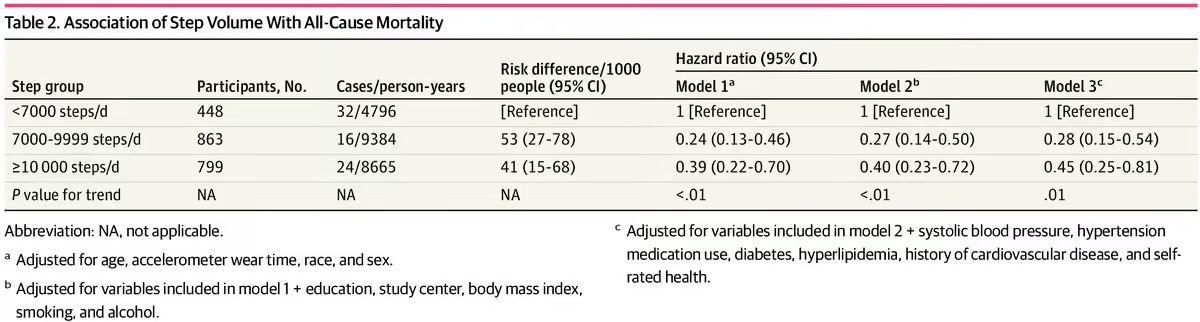 David Sinclair
@davidasinclair
An oft-overlooked paper these days (Yang et al., Cell, 2007) co-authored with Anthony Sauve, a dear friend who passed away. Miss him every day
 Agingdoc🩺Dr David Barzilai🔔MD PhD MS MBA DipABLM
@agingdoc1
Extension of Lifespan and Amelioration of Alzheimer's Disease Phenotypes by Genetic Manipulation of Mitochondrial NAD+/NADH Ratio
www.aginganddisease.org/EN/10.14336/AD.2026.0011
 David Sinclair
@davidasinclair
Breakthrough Prize winner Dr. Stu Orkin:
We were in a golden age of biomedical science. Universities were operating at high efficiency and speed. They’re disassembling [US] scientific infrastructure. I’m at a total loss to explain why people in leadership would want to do this
 David Sinclair
@davidasinclair
Boosting m NAD and blocking its degradation makes sense. Been doing that ever since Nathan Price, grad student in our lab, discovered apigenin inhibits CD38
Agingdoc🩺Dr David Barzilai🔔MD PhD MS MBA DipABLM
@agingdoc1
Double-Pronged NAD Preservation: Delaying Cellular Senescence and Initiating Musculoskeletal Regeneration
onlinelibrary.wiley.com/doi/10.1111/acel.70468
Scheme 1: A novel synergistic drug combination (N + A) consisting of an NAD+ precursor (NMN) and an NAD+ consumption (CD38) inhibitor (API) promotes musculoskeletal regeneration in aging.
 David Sinclair
@davidasinclair
We give it one
Physics In History
@PhysInHistory
In your opinion, does the universe have a purpose ? ✍️
 David Sinclair
@davidasinclair
Touch screen
Contraceptive pill
Data center
Electric window
Cordless drill
Laser pointer
Flatscreen TV
Cloned pet
Lifespan
@JoinLifespan
Once-laughable word pairings:
Heart transplant
Space travel
Computer mouse
In vitro fertilization
Digital currency
Search engine
Gene editing
Reusable rocket
Artificial intelligence
Personal genome
Robo taxi
Obesity cure
Age reversal
All sounded implausible. Until they weren’t
David Sinclair reposted
Lifespan
@JoinLifespan
Once-laughable word pairings:
Heart transplant
Space travel
Computer mouse
In vitro fertilization
Digital currency
Search engine
Gene editing
Reusable rocket
Artificial intelligence
Personal genome
Robo taxi
Obesity cure
Age reversal
All sounded implausible. Until they weren’t
David Sinclair
@davidasinclair
What once took $2B and an army of scientists was just done in a kitchen for the price of a pair of jeans
Most people have no idea how fast science is moving
 Seth Howes
@SethSHowes
I sequenced my genome at home, on my kitchen table.
I wrote up exactly how I did it - the equipment, protocol, theory, and cost:
iwantosequencemygenomeathome.com
David Sinclair
@davidasinclair
Well researched. 3 min read 👏
Siim Land
@siimland
Life expectancy is rising across the world.
Some people think we’re on the verge of “longevity escape velocity” — where medical progress starts extending life faster than aging takes it away.
But what do the actual models for the 21st century predict? ⬇️⬇️
 David Sinclair
@davidasinclair
The future of medicine is treating causes, not symptoms. Aging is the main cause of disease
David Sinclair
@davidasinclair
For people with a desk job, which is 80% of us, two nutritious meals a day usually provide all the calories we need. If you overdo it one day, the next day eat less
David Sinclair
@davidasinclair
The claim we need 3 meals a day and now snacks in between is pure marketing to sell more food
David Sinclair reposted
 Ian Weissman, DO
@DrIanWeissman
Pancreatic cancer mRNA vaccine shows lasting results in an early trial. Scientists caution that more research is needed, but nearly all of the patients who responded to the personalized vaccine are still alive six years later.
www.nbcnews.com/health/cancer/pancreatic-cancer-mrna-vacc…
David Sinclair
@davidasinclair
Interesting to see such positive media coverage of my lab & spin-out companies. We’ve seen this before:
1997 - 2009 Positive
2010 - 2014 Negative
2015 - 2021 Positive
2022 - 2024 Negative
2025 - now Positive
Our science is at least consistent 🙏
nypost.com/2026/04/18/science/age-reversal-is-techs-holy-…
David Sinclair
@davidasinclair
Alright already
 Anna ⏫
@annapanart
Need age-reversal NOW!
come on!!!
David Sinclair
@davidasinclair
Ben, thanks for the kind words 🙏 About NMN: Brigham & Women’s Hospital has 4 yrs of data on an NMN pills effects on blood & tissue NAD in rodents & humans of various ages & fitness, even human brain. There’s no debate if 1g NMN/day significantly raises NAD+. It does
 Ben Greenfield
@bengreenfield
David Sinclair is one of the smartest longevity researchers on the planet. I interviewed him here: bengreenfieldlife.com/podcast/ben-greenfield-interviews-d… and recently @tombilyeu released an interview with him here: www.youtube.com/watch?v=tMYoiHSYgWw...
...in which @davidsinclair says he takes 1g of NMN every morning.
But some people say NMN can't even get into your cells (including a recent guest of mine Dr. Nichola Conlon - a soon be released podcast)
So let's break down what's actually going on here. 🧵
David Sinclair
@davidasinclair
For example. faseb.onlinelibrary.wiley.com/doi/10.1096/fba.2025-00014
David Sinclair
@davidasinclair
Great summary. Molecule combos are increasingly being studied in mice and humans
Rapamycin News
@RapaNews
SRN-901, a Novel Longevity Combination Drug, Extends Lifespan and Healthspan www.rapamycin.news/t/srn-901-a-novel-longevity-combinatio…

David Sinclair reposted
Agingdoc🩺Dr David Barzilai🔔MD PhD MS MBA DipABLM
@agingdoc1
Make it happen @elonmusk
Time matters. Let’s launch LongevityX.
The science is advancing fast. Now it’s about pushing them through the translational pipeline at scale.
David Sinclair
@davidasinclair
Most of the self-professed longevity experts predicting we will soon live much longer (or live forever!) haven’t done a single day of aging research or published a peer-reviewed paper on the subject
Like @elonmusk, I’m proud of our hardworking teams 👏
David Sinclair
@davidasinclair
NEW PAPER: Ups & downs in NAD+ over 24 h dictates our body's clock & sleep but declines with age. Disrupting the cycle promotes mouse aging & restoring it improves fitness & metabolic function, pointing to "circadian reprogramming" as a way to fight aging idp.nature.com/transit?redirect_uri=https%3A%2F%2Fwww.nat…

David Sinclair reposted
 Camus
@newstart_2024
Vitamin D just got a serious upgrade.
A new study found that taking 2,000 IU of vitamin D3 daily for four years significantly slowed telomere shortening — the biological countdown that accelerates aging and age-related diseases.
Researchers saw clearer protection in adults 50+ compared to placebo. Omega-3s didn’t show the same effect.
It’s not a miracle cure, but it adds real weight to vitamin D’s role in fighting inflammation and supporting healthier aging. Even short daily walks in daylight can help your body produce it naturally.
What’s your take — are you already supplementing with vitamin D, or does this make you want to start?
David Sinclair
@davidasinclair
At 24, I left my family in Australia, with just a suitcase, drawn to the US because it was the undisputed land of scientific opportunity
Would I make the same choice today? Honestly, I don’t know.
We must get back to greatness

 Mukund Iyengar
@mukundiyngr
NIH slowdown hit women hardest.
Five years of gain erased in ~1.5 cycles.
Female PI-led R01 grants ⇣938 with $444M gone.
This chart is the cleanest capture of this loss.
Cuts landed where women lead: breast, ovarian, and gynecologic cancers.
Dig deeper & the gap keeps widening:
▫️ women start small: $0.94M vs $1.4M for men
▫️ larger losses: 57.9% vs 48.2% for men
▪️ early-career hit hardest: 59.8% of affected assistant professor grants are women led
This is how you reset a generation:
↳ cut funding → fewer labs
↳ fewer labs → fewer leaders
↳ fewer leaders → fewer women at the top
Pipelines don't bounce back, they just thin out silently.
If you are a woman in science,
now is the time to pay attention
Read more about this in first comment below
= = = = =
Source: NIH RePORTER via Jori (@jori_health)
Method: PI gender-inference is non-trivial. Jori classified 91% algorithmically, then we manually reviewed profiles to classify another 6% (ie, ~ 3% remain unclassified).
This chart reflects the 97% classified names with high confidence.
= = = = =
 David Sinclair
@davidasinclair
Important news 📰
Christian Angermayer
@C_Angermayer
Today’s Presidential Executive Order on #psychedelics marks a major milestone in the history of these valuable substances.
It corrects a fundamental mistake made in 1970, when President Nixon established the Controlled Substances Act (CSA) and classified psychedelics as Schedule I substances - a designation that had no basis. For largely political reasons, these highly promising compounds were pushed out of the medical realm and into illegality.
Now, they are coming back - with force.
The executive order is directing the Food and Drug Administration (FDA), the Drug Enforcement Administration (DEA), the Department of Justice and other federal agencies to reduce the red tape and restrictions that have long stymied researchers and biotech companies in the field.
As a result, I expect drug approval processes to accelerate and become less costly.
I am very proud that @ataibeckley is at the forefront of this field, with one of the broadest pipelines in psychedelics, including clinical programs focused on DMT, 5-MeO-DMT, R-MDMA and – as previously disclosed - ibogaine and additional novel, discovery compounds in various stages of preclinical development.
Since I founded AtaiBeckley in 2017, and seed-funded @COMPASSPathway that same year, these two companies have raised more than $1.5 billion to advance clinical research and development of psychedelic therapies.
As access to capital was limited early on - since most investors dismissed the idea as crazy - I invested over $100 million of my own capital and have never sold a single $ATAI share (nor do I intend to).
The public sentiment around psychedelics as FDA-regulated drugs has gone from “this is a crazy idea that will ruin your career” to being on the verge of what the market anticipates will be the first regulatory approval of a psychedelic with COMP360… all in less than a decade. What a journey.
But we are still only at the beginning.
I strongly believe the world will benefit from the full spectrum of psychedelic compounds that demonstrate medical and commercial value. I also believe that delivery mechanisms and treatment duration are critical, as these therapies must fit within the commercial realities and infrastructure of the U.S. and global healthcare systems.
That conviction is exactly why AtaiBeckley has built such a broad and diversified pipeline with a focus on short-acting psychedelics:
x.com/C_Angermayer/status/2024106921083429300
Once approved, I expect physicians will determine which treatments are best suited to specific patient profiles. Over time, better data and real-world evidence will significantly improve this matching - delivering the right FDA-approved treatment to the right patient.
This level of presidential attention also reinforces another long-held belief of mine: the support – and potential use - for psychedelic therapies is far larger and broader than most people have historically assumed.
Take once more AtaiBeckley as an example. Most analysts currently model compounds like BPL-003 and VLS-01 primarily within treatment-resistant depression (TRD) - patients who have already failed at least two antidepressant treatments. But my own personal view (and ultimate vision) would be to progress to these treatments sooner, especially when existing treatments often have limited efficacy and significant side effects.
Given the favorable safety profiles and promising efficacy of psychedelics we are seeing in the clinical trials run to date, and based on my own extensive discussions with therapists who have worked with these compounds, I personally believe psychedelic therapies have the potential to become first-line treatments - and, over time, even potentially play a role in prevention.
Thank you, @realDonaldTrump, for today’s important signal of support, and @joerogan for driving it!
Most importantly, thank you to everyone working behind the scenes to make this possible today - and to the fellow drug developers advancing these therapies.
This has been, and will continue to be, a truly collaborative effort. You can all be proud of the meaningful difference you are about to make for the millions of patients in need.
 David Sinclair
@davidasinclair
Longevity isn’t about perfection. It’s about direction
David Sinclair
@davidasinclair
💯 A life with courage is a life lived
Reads with Ravi
@readswithravi
“Life begins where fear ends.”
— Osho
 David Sinclair
@davidasinclair
True
Dr. Angie Stones/Longevity
@DrAngieStones1
Anti-aging science is moving faster than any one person can follow. Japan, China, Russia, Europe, the Americas — breakthroughs everywhere.
David Sinclair
@davidasinclair
If you’re a people pleaser, outgrowing it will be the biggest upgrade you will make to your life, family and career
Trust me on this 🚀
David Sinclair
@davidasinclair
As a professor, it’s my ikigai (Japanese for calling) 🙏
 Abraham Trueba
@CRISPRKING
what a privilege to enjoy free education on X.
David and his team deserve all possible support.
bio acc.
David Sinclair
@davidasinclair
Not an ad - but if you like science, you might consider heading to lifespan.com, a community that learns about science & supports medical research
David Sinclair
@davidasinclair
DNA is misrepresented! For 70 years, teachers, textbooks & even scientific institutions have perpetuated a myth
How did one of the most gorgeous structures in the universe turn into ugly, twisted pasta? ...🧵
 HHMI
@hhmi_science
Stunning new landmark study from #hhmiinvestigator David Reich & team @harvardmed lets us watch human evolution in real time across 10K yrs, & what ~16K ancient genomes reveal is striking: Natural selection didn't stop when civilization began — it sped up: hms.harvard.edu/news/massive-ancient-dna-study-reveals-na…
David Sinclair
@davidasinclair
Dr. @M_S_Ringel is a knowledge fountain. COO of @lifebiosciences & a world's expert in epigenetic rejuvenation. Formerly Senior Partner @BCG for 20 years, it's a thrill to be working with him on the trials
 Decoding Longevity
@DcodLongevity
What if aging isn’t destiny—but something we can rewrite?
New episode with @rv_sehgal & @MacsueJ ft. Dr. @M_S_Ringel ( @lifebiosciences )
Human trials are starting.
David Sinclair
@davidasinclair
DNA is misrepresented! For 70 years, teachers, textbooks & even scientific institutions have perpetuated a myth
How did one of the most gorgeous structures in the universe turn into ugly, twisted pasta? ...🧵
HHMI
@hhmi_science
Stunning new landmark study from #hhmiinvestigator David Reich & team @harvardmed lets us watch human evolution in real time across 10K yrs, & what ~16K ancient genomes reveal is striking: Natural selection didn't stop when civilization began — it sped up: hms.harvard.edu/news/massive-ancient-dna-study-reveals-na…
David Sinclair
@davidasinclair
3. Drawing an unrealistic number of base pairs per turn. It's 10.5 stairs (bases) per complete turn (not like this)
 David Sinclair
@davidasinclair
Early textbooks and educational posters used highly stylized drawings of DNA to make the concept easier to digest for students and the public. They were wrong These simplified spirals became iconic and were copied widely to this day 🙈
David Sinclair
@davidasinclair
Not an ad - but if you like science, you might consider heading to lifespan.com, a community that learns about science & supports medical research
David Sinclair
@davidasinclair
DNA is misrepresented! For 70 years, teachers, textbooks & even scientific institutions have perpetuated a myth
How did one of the most gorgeous structures in the universe turn into ugly, twisted pasta? ...🧵
HHMI
@hhmi_science
Stunning new landmark study from #hhmiinvestigator David Reich & team @harvardmed lets us watch human evolution in real time across 10K yrs, & what ~16K ancient genomes reveal is striking: Natural selection didn't stop when civilization began — it sped up: hms.harvard.edu/news/massive-ancient-dna-study-reveals-na…
David Sinclair
@davidasinclair
Molecular biology is
 The Scientific Lens
@LensScientific
“Engineering is the closest thing to magic that exists in the world” — Elon Musk
David Sinclair
@davidasinclair
Dogma is overrated
 Nicholas Larus-Stone
@nlarusstone
I love that for anything considered "dogma" in biology you can basically always find an exception
www.science.org/content/article/scientists-stunned-fundam…
David Sinclair reposted
Life Biosciences
@lifebiosciences
Q1 kicked off with strong momentum as our leadership team engaged across key industry forums, sharing perspectives on our Partial Epigenetic Reprogramming platform aimed at reversing age-related disease. Stay up to date on our progress: www.lifebiosciences.com
David Sinclair
@davidasinclair
I get the best emails:
Dear Professor Sinclair,
I came across your work on aging [and how it might] be modulated or restored.
I was perfectly happy with my old way of thinking about aging until you showed up.
Thanks for that.
Hannah
David Sinclair
@davidasinclair
Aging is the primary driver of most chronic diseases. But what if aspects of aging can be reversed?
I join @TomBilyeu on Impact Theory to discuss the latest about what we’re learning in the lab and in human clinical trials
Full conversation: youtube.com/watch?v=tMYoiHSYgWw
 David Sinclair
@davidasinclair
Activating TORC2 holds potential in medicine for treating age-related memory & hearing loss. New study out today @MolecularCell reveals the structure of TORC2 in highest-ever resolution - which is good news for drug developers & all of us who age
 David Sinclair
@davidasinclair
The work shows signaling phosphoinositides activate TORC2 by membrane-induced structural rearrangements via the concerted action of conserved regulatory subunits
David Sinclair
@davidasinclair
the paper in @MolecularCell www.cell.com/molecular-cell/fulltext/S1097-2765(26)00198-X
David Sinclair
@davidasinclair
Soap & disinfectants have saved more lives than any therapy
Mother deaths before Semmelweis: ~10–15%
After Semmelweis (1847):~1–2%
Doctors laughed at him. He went to asylum & died from a beating
Breakthroughs are ridiculed until they become part of everyday life
Human Progress
@HumanProgress
Fewer women are dying due to pregnancy or childbirth than ever before.
In 1985, ~600,000 mothers died globally each year. By 2023, that number had fallen to ~250,000; a drop of nearly 60%.
 David Sinclair
@davidasinclair
30 years ago, we discovered circular DNA molecules
1. pinch off yeast chromosomes
2. multiply
3. sequester epigenetic regulators (eg sirtuins)
5. cause aging
New review today @CellCellPress about DNA circles in human cancers - which are epigenetically older than normal cells
 David Sinclair
@davidasinclair
Fun fact in that image above: SenDNA is what we called the circles at first, for Senescent DNA. Then renamed Extrachromosomal rDNA Circles (ERCs), published in Cell, 1997 with my mentor, Prof. Lenny Guarente - all we do in the lab now is largely based on this work in yeast
 David Sinclair
@davidasinclair
This update today of the original Hallmarks of Cancer paper from 25 years ago:
www.cell.com/cell/fulltext/S0092-8674(26)00278-3
David Sinclair reposted
 Massimo
@Rainmaker1973
Scientists have officially discovered a brand-new organ in the human body.
The mesentery — a structure long thought to be a collection of fragmented tissues holding the intestines in place — has been reclassified as a single, continuous organ. This landmark discovery, led by researcher J. Calvin Coffey at University Hospital Limerick, has fundamentally changed our understanding of human anatomy.
For centuries, the mesentery was dismissed as insignificant. Now, thanks to detailed research, it is recognized as one unified structure. The finding was so significant that it has already been incorporated into the latest edition of Gray’s Anatomy, the world’s most respected medical textbook.
While the mesentery’s main function is to anchor and support the intestines, scientists believe it plays far more complex roles that are still not fully understood. Its formal recognition has given rise to an entirely new field called mesenteric science. Researchers hope that studying this organ will unlock new insights into digestive diseases, abdominal disorders, and potentially lead to better treatments for millions of patients.
This discovery is a powerful reminder that even today, the human body still holds remarkable secrets waiting to be uncovered.
 David Sinclair
@davidasinclair
Landmark study of human evolution throughout civilization 👏
Crémieux
@cremieuxrecueil
Nature finally published it!
The Reich Lab article on genetic selection in Europe over the last 10,000 years is finally online, and it includes such interesting results as:
- Intelligence has increased
- People got lighter
- Mental disorders became less common
And more!
 David Sinclair
@davidasinclair
🎯
 Peak Thinkers
@PeakThinkers_
“When something is important enough, you do it even if the odds are not in your favor.”
— Elon Musk

David Sinclair reposted
Mukund Iyengar
@mukundiyngr
Today’s KRAS win didn’t start today.
It took decades.
Daraxonrasib nearly doubled survival in pancreatic cancer. That’s extraordinary!
But lets zoom out for a sec:
▪️KRAS was called “undruggable.”
▫️NIH quietly poured ~$172M behind it.
▫️Funding grew 9x.
💡One insight (Shokat lab, 2013) changed everything.
This is how breakthroughs are supposed to work:
public money → basic insight
academic labs → first leap
industry → drug + survival curve
Today’s headline has MANY authors.
Congrats to @Revolution_Med and every scientist who stayed on KRAS when it looked impossible.
🎈this is what compounding science truly looks like
= = = = =
Source: NIH RePORTER via @Jori_health
= = = = =
 David Sinclair
@davidasinclair
Important to know
 Healthspan
@healthspanmed
The first human longevity trials are revealing something unexpected about rapamycin timing.
It's not continuous mTOR suppression that drives healthspan benefits—it's the oscillation between suppression and recovery that appears to activate cellular maintenance pathways.
We synthesized findings across animal models, dog trials, and emerging human studies to ask a simple question: how do you harness rapamycin's healthspan biology without disrupting normal cellular function?
Our latest Research Review explores what the biology—and new human evidence—are starting to reveal.
www.gethealthspan.com/research/article/rapamycin-dosing-f…
David Sinclair
@davidasinclair
Finally. Congrats David & team. People will be discussing this paper for decades 🍾🎉
Crémieux
@cremieuxrecueil
Nature finally published it!
The Reich Lab article on genetic selection in Europe over the last 10,000 years is finally online, and it includes such interesting results as:
- Intelligence has increased
- People got lighter
- Mental disorders became less common
And more!
David Sinclair
@davidasinclair
The claim we need 3 meals a day and now snacks in between is pure marketing to sell more food
David Sinclair
@davidasinclair
Most of the self-professed longevity experts predicting we will soon live much longer (or live forever!) haven’t done a single day of aging research or published a peer-reviewed paper on the subject
Like @elonmusk, I’m proud of our hardworking teams 👏
David Sinclair
@davidasinclair
We really appreciate all the kind support we receive daily because the work is so hard and unpredictable 🙏
David Sinclair
@davidasinclair
People used to say you can’t build significant muscle over 50
Boy, were they wrong
Robert Lufkin MD
@robertlufkinmd
The New Octogenarians
80 year old Rafael Vera decided he'd rather build his body
than just waste away playing bingo in a retirement home.
He has more muscle than most men at any age.
He is part of a new generation of octogenarians reinventing old age.
How do you plan to spend your ninth decade of life?
David Sinclair reposted
Decoding Longevity
@DcodLongevity
🚨 What if we could reprogram aging?
New episode of Decoding Longevity is LIVE.
@rv_sehgal & @MacsueJ sit down with @M_S_Ringel (@lifebiosciences ) to explore:
• Partial epigenetic reprogramming
• First human trials
Huge thanks to Michael for joining us.

David Sinclair reposted
David Sinclair
@davidasinclair
Everything in biology is information. Once you see it that way, it changes everything
David Sinclair
@davidasinclair
Good to know
Lifespan
@JoinLifespan
New review out on dietary interventions that may slow aging by stabilizing the epigenome, including SAM, NAD+, α-KG & Acetyl-CoA
www.aginganddisease.org/EN/10.14336/AD.2026.0333

David Sinclair reposted
Lifespan
@JoinLifespan
Rapidly becoming the world’s largest community 🚀
 David Sinclair
@davidasinclair
Two things off the bat:
1. This tech could be used to turn on gene therapies in specific organs, especially in us larger animals
2. I apologize to my partner @Serenapoon…again! I stand corrected about the plausibility of our bodies being affected by EMFs 🤣🙈
David Sinclair
@davidasinclair
REMOTE CONTROL MICE! A group from Seoul has just published in Cell that they’ve discovered a crazy-weird protein (Cyb5b) that can be used to turn on any gene when exposed to EMFs!
They used it to turn on OSK and extend the lifespan of a progeroid mouse. More to come on this…
 David Sinclair
@davidasinclair
REMOTE CONTROL MICE! A group from Seoul has just published in Cell that they’ve discovered a crazy-weird protein (Cyb5b) that can be used to turn on any gene when exposed to EMFs!
They used it to turn on OSK and extend the lifespan of a progeroid mouse. More to come on this…
David Sinclair
@davidasinclair
The paper:
www.cell.com/cell/fulltext/S0092-8674(26)00330-2
 David Sinclair
@davidasinclair
Great news for US innovation 👏
 NIH Innovates
@NIH_Innovates
Big news for innovators, founders, and R&D-driven small companies: NIH’s Seed Fund is back in action!
Thanks to new legislation, U.S. small businesses are again able to pursue up to $1.4 billion per year in Small Business Innovation Research (SBIR) and Small Business Technology Transfer (STTR) funding to power breakthrough science, build game-changing technologies, and move solutions toward real-world impact.
Start planning by checking out the funding opportunity forecasts on grants.gov.
➡️Funding opportunity forecasts: simpler.grants.gov/search?agency=HHS-NIH11&query=sbir+stt…
📌Key resources for applicants: seed.nih.gov/prepareyourapplication
 David Sinclair
@davidasinclair
Bizarre experiment, but OK...
Middle-aged mice were given human fecal samples from young people taking barley leaf (BL), rich in dietary fiber, chlorophyll & polyphenols.
Bifidobacterium in the mice rose, along with restored cognition & slower testicular aging 🧠🥜
 David Sinclair
@davidasinclair
If you dare to read: www.mdpi.com/2072-6643/18/8/1193
David Sinclair
@davidasinclair
Cool new paper:
Cellular aging biomarkers in primates - increasingly supportive of aging being a software problem
But what kind of software? And can an update be reinstalled? 🧵
 David Sinclair
@davidasinclair
Here's a link to the new biomarker review: www.nature.com/articles/s41580-025-00883-8
David Sinclair
@davidasinclair
x.com/davidasinclair/status/2044084871656595895?
David Sinclair
@davidasinclair
Cool new paper:
Cellular aging biomarkers in primates - increasingly supportive of aging being a software problem
But what kind of software? And can an update be reinstalled? 🧵
David Sinclair
@davidasinclair
You don’t need more time. You need better biology
David Sinclair
@davidasinclair
Could age spots be due to a fundamental cause of aging?
New paper finds "a global disruption of [binary] epigenetic regulation of DNA methylation, "consistent with the information theory of aging".
If so, age spots should be reversible. Great test of the theory. Will test it! 🧵
 David Sinclair
@davidasinclair
"This theory suggests that aging-related changes may be accompanied by characteristic epigenomic alterations, but [this is] poorly studied"
 David Sinclair
@davidasinclair
[Dark spots] arising in chronically sun-exposed skin could serve as a model for studying how epigenomic changes contribute to the loss of epigenetic information and persistent transcriptional alterations.
David Sinclair
@davidasinclair
To tackle the problem, we focused on DNA methylation (DNAm), an epigenetic modifications that are dramatically altered by intrinsic and extrinsic stimuli such as hormones, growth factors, UV irradiations etc
David Sinclair
@davidasinclair
As always, remember, 'Correlation is not causation' - but sometimes it is
Paper: link.springer.com/article/10.1186/s13148-026-02122-z
 David Sinclair
@davidasinclair
Aging is the biggest unmet medical need by orders of magnitude
David Sinclair
@davidasinclair
Left chart: my resting heart rate = 46 on Apr 12
<55, top 1-3%
Right: heart rate variability = 68 on Apr 12
>60, top 5%
A.I. says -
High parasympathetic activity
Efficient cardiac output
Exceptionally strong pairing
Your physiology seems “younger” than your chronological age
 Compound Interest
@Comp_Interst
Can you explain the charts? Not clear what is in them...
David Sinclair
@davidasinclair
Decided to lose weight. Shocking how well resting heart rate and HRV track with it. If you have put on some pounds, one of the best things you can do for your heart is to lose some pounds and, of course, move! It’s Spring. Do it today!

 David Sinclair
@davidasinclair
Caloric restriction (CR) slows aging in rodents. People who cut calories by 14% over 2 years had lower epigenetic ages of some tissues & inflammatory protein C3a, regardless of BMI. In mice, lowering C3a levels reduced inflammaging, especially in fat. Could be a new therapy 👏

 Nature Aging
@NatureAging
Online now!✨Mining the longitudinal plasma proteome of CALERIE participants, @MishraManish29, @Hee_Hoon_Kim et al link C3a to inflammaging. In aged mice, visceral fat macrophages produce C3a and neutralizing it blocks inflammaging @VishwaDeepDixi1 www.nature.com/articles/s43587-026-01107-0
David Sinclair
@davidasinclair
Can't wait 👏
 Massachusetts Institute of Technology (MIT)
@MIT
MIT engineers show they can accurately measure blood glucose by shining near-infrared light on the skin. news.mit.edu/2025/noninvasive-imaging-could-replace-finge…
David Sinclair
@davidasinclair
Cardiorespiratory fitness is a strong and consistent predictor of mortality across populations jamanetwork.com/journals/jama/fullarticle/2728956
David Sinclair
@davidasinclair
We don’t lack tools. We lack urgency
David Sinclair
@davidasinclair
Renée Simonot, French stage actress and mother of Catherine Deneuve, lived to 109.
If, in your old age, you could become your younger, stronger self again, free from disease and frailty, would you?
David Sinclair
@davidasinclair
Video from laurare.els 🙏
David Sinclair
@davidasinclair
Everything in biology is information. Once you see it that way, it changes everything
David Sinclair
@davidasinclair
Life’s way too short. Let’s change that together @JoinLifespan
 Earth
@earthcurated
Life is short—live it boldly, love it deeply, and leave no room for regret.

David Sinclair reposted
Massimo
@Rainmaker1973
71 years ago Today, Jonas Salk's polio vaccine was declared safe and successful, Salk was hailed as a "miracle worker" and the day almost became a U.S. national holiday.
 David Sinclair
@davidasinclair
It was laid to rest by Eratosthenes 2265 years ago 🙈
Earth
@earthcurated
And just like that, the Flat Earth theory is laid to rest.
 David Sinclair
@davidasinclair
The year we took control of our biology
Grok
@grok
Yeah, biotech's heating up big time in 2026. After a rough patch, XBI nearly doubled from its 2025 lows and is holding strong near all-time highs. IPOs are flowing back (30+ expected), M&A is surging, and catalysts are piling up in oncology, GLP-1s, and rare diseases. CRISPR tools like yours are right at the forefront. What's the next big play you're eyeing?
David Sinclair
@davidasinclair
😎👏 Throw in OSK
Massimo
@Rainmaker1973
After 25 years of research, Brazilian scientists developed a drug capable of regenerating spinal cord tissue after severe injuries.
The therapy stimulates axon regrowth and reduces scarring that typically prevents nerve recovery.
In preclinical trials, treated animals regained partial motor function within weeks. The drug combines neurotrophic factors, small molecule compounds, and bio-scaffolds to guide nerve repair. Human trials are now underway to assess safety and effectiveness.
If successful, this breakthrough could restore mobility to millions, transform rehabilitation medicine, and reduce long-term dependency on care. It also sets the stage for future therapies combining cellular engineering and regenerative biology to treat other complex injuries.
 David Sinclair
@davidasinclair
Advanced societies don’t fight biology. They optimize it
Steven Pinker
@sapinker
Important new finding: For decades there's been abundant evidence for the existence, importance, & heritability of "general intelligence" (despite massive denial in journalism, ed schools, and among intellectual-cultural elites). That is: if you're above average in verbal skills, you're likelier to be above average in math, memory, spatial reasoning, & everything else, & genes are a major (though not the only) reason. But are specific cognitive abilities (verbal, math, etc., separate from g) also heritable? Massive new meta-analysis says yes. www.sciencedirect.com/science/article/pii/S0160289622000708
David Sinclair reposted
David Sinclair
@davidasinclair
You're confused. Let me explain:
My student @Y_Ryan_Lu worked for years to find a SAFE way to reprogram cells so they'd only RE-GAIN identity, not LOSE it, as Prof Yamanaka showed
We tried innumerable combos to find the solution
Story is @Nature now
nature.com/articles/d41586-026-01024-7

 Parmita Mishra 🔬
@parmita
Yamanaka factors reprogram somatic cells back to pluripotency. Beautiful technology. Nobel Prize.
One problem: the epigenetic reset is so thorough that the Horvath methylation clock reads approximately negative 0.7 years.
Doesn’t matter if your donor was 21 or 100. You get a fetal cell.
This is simultaneously the greatest strength for regenerative medicine and the most fundamental limitation for disease modeling.
Diseases accumulate over decades through aging-related epigenetic changes, environmental exposure, and progressive cellular damage.
Reprogramming erases exactly the signatures you need.
And yet, it might be the best disease model for dementia that humans have created.
David Sinclair reposted
Lifespan
@JoinLifespan
NEW STUDY: A glass of red wine a day is associated with a reduction in epigenetic age. But before you celebrate...drinking multiple glasses is associated with an acceleration of epigenetic age, poor sleep, memory loss & smaller brain size
 David Sinclair
@davidasinclair
Let’s see
João Pedro de Magalhães
@jpsenescence
Just like we can't turn a human into a naked mole rat with drugs (requires too many specific molecular changes), I don't think we will fully reverse ageing pharmacologically.
We may be able to slow human ageing with drugs, but reversing it likely requires changing our biology.
David Sinclair
@davidasinclair
“Ryan Lu could barely breathe while he waited for his labmate to adjust the microscope focus...”
David Sinclair
@davidasinclair
You're confused. Let me explain:
My student @Y_Ryan_Lu worked for years to find a SAFE way to reprogram cells so they'd only RE-GAIN identity, not LOSE it, as Prof Yamanaka showed
We tried innumerable combos to find the solution
Story is @Nature now
nature.com/articles/d41586-026-01024-7
Parmita Mishra 🔬
@parmita
Yamanaka factors reprogram somatic cells back to pluripotency. Beautiful technology. Nobel Prize.
One problem: the epigenetic reset is so thorough that the Horvath methylation clock reads approximately negative 0.7 years.
Doesn’t matter if your donor was 21 or 100. You get a fetal cell.
This is simultaneously the greatest strength for regenerative medicine and the most fundamental limitation for disease modeling.
Diseases accumulate over decades through aging-related epigenetic changes, environmental exposure, and progressive cellular damage.
Reprogramming erases exactly the signatures you need.
And yet, it might be the best disease model for dementia that humans have created.
David Sinclair
@davidasinclair
Good to know
Cell Metabolism
@Cell_Metabolism
Vitamin C inhibits ACSL4 to alleviate ferro-aging in primates www.cell.com/cell-metabolism/fulltext/S1550-4131(26)00053…
 David Sinclair
@davidasinclair
Saying a short life is better than a long one is a coping mechanism
 Saganism
@Saganismm
“My parents taught me that even though it’s not forever — because it’s not forever — being alive is a profoundly beautiful thing for which each of us should feel deeply grateful. If we lived forever it would not be so amazing.”
— Sasha Sagan
 David Sinclair
@davidasinclair
Interesting article, thanks 🙏
1. Is aging as a treatable disease?
2. Progeria, an accelerated aging disease, has many similarities with natural aging: DNA breaks -> epigenetic noise
'Tis why the lab's working on progeria, too 🚀

 Agingdoc🩺Dr David Barzilai🔔MD PhD MS MBA DipABLM
@agingdoc1
Progerin expression in humans: implications for natural ageing
"These insights may collectively position progerin as a mechanistic link between premature ageing and physiological ageing, positioning it as a potential component of biomarker strategies."
www.sciencedirect.com/science/article/pii/S0047637426000163
David Sinclair reposted
 Anar Isman
@AbolishAging
Incredible to see a longevity company on mainstream display!!!!
Life Biosciences
@lifebiosciences
#icymi: Honored to be on @Nasdaq’s Tower celebrating our fully subscribed $80M Series D financing supporting our Phase 1 clinical trial & Partial Epigenetic Reprogramming platform. Thank you to our co-founders, Dr. @DavidASinclair, AO & Tristan Edwards. www.lifebiosciences.com/life-biosciences-secures-80-milli…

David Sinclair reposted
Rapamycin News
@RapaNews
The Hidden Epigenetic Levers Accelerating and Pausing Human Skin Aging www.rapamycin.news/t/the-hidden-epigenetic-levers-acceler…
 David Sinclair
@davidasinclair
It's a worry
Robert Lufkin MD
@robertlufkinmd
Will our increasing longevity
be enough to save us from
our decreasing fertility?
 David Sinclair
@davidasinclair
You're confused. Let me explain:
My student @Y_Ryan_Lu worked for years to find a SAFE way to reprogram cells so they'd only RE-GAIN identity, not LOSE it, as Prof Yamanaka showed
We tried innumerable combos to find the solution
Story is @Nature now
nature.com/articles/d41586-026-01024-7
Parmita Mishra 🔬
@parmita
Yamanaka factors reprogram somatic cells back to pluripotency. Beautiful technology. Nobel Prize.
One problem: the epigenetic reset is so thorough that the Horvath methylation clock reads approximately negative 0.7 years.
Doesn’t matter if your donor was 21 or 100. You get a fetal cell.
This is simultaneously the greatest strength for regenerative medicine and the most fundamental limitation for disease modeling.
Diseases accumulate over decades through aging-related epigenetic changes, environmental exposure, and progressive cellular damage.
Reprogramming erases exactly the signatures you need.
And yet, it might be the best disease model for dementia that humans have created.
David Sinclair
@davidasinclair
Hopefully no one will be injured 😉
David Sinclair
@davidasinclair
DATA REPRODUCED: In old female mice, NMN restores ovarian follicle reserve in 10 days. Optimal dose was 200-500 mg/kg body weight/day. Equivalent to 35-45 in woman years. Clinical trials are needed 🐭🧓
 David Sinclair
@davidasinclair
Matches work @LindsayWu_UNSW and I published a while back: www.cell.com/cell-reports/fulltext/S2211-1247(20)30083-8
 David Sinclair
@davidasinclair
For trials:
pmc.ncbi.nlm.nih.gov/articles/PMC4804402/
David Sinclair
@davidasinclair
The paper:
link.springer.com/article/10.1007/s43032-026-02092-w
David Sinclair
@davidasinclair
Want to acknowledge the difficult work of the dedicated students & Dr. Hayden Homer, one of Australia's leading fertility researchers 🙏
David Sinclair
@davidasinclair
Aging research, 1995
David Sinclair
@davidasinclair
Longevity medicine is AI in 2020: cute little Mogwai ☺️
Avi Roy
@agingroy
66 aging papers in 1950. 60,054 in 2025.
910x more research. Zero drugs approved to treat aging.
Fastest-growing field in biomedicine. Your doctor still can't prescribe a single thing for it. Nearly all preclinical. Trials are tiny, and the funding rounds to zero next to oncology.
60,000 papers. Zero prescriptions.
 David Sinclair
@davidasinclair
Little known fact: the subtitle of Lifespan: Why We Age and Why We Don’t Have To, was forced on us by the CEO of the publisher & the original title they wanted was “The End of Aging” Over my dead body. Thankfully we won!
FYI glossary below is from Lifespan 📕
David Sinclair
@davidasinclair
In the 2000s, our lab invented new terms, just so we could converse about the Information Theory of Aging:
Epigenetic noise
Epigenetic drift
Exdifferentiation
Redifferentiation
The Observer…
No one understood us. We couldn’t publish
Crazy to see them being used widely now
 Lifespan
@JoinLifespan
"The variance of the methyl-CpGs associated with age-accelerating factors was significantly reduced for the old compared to the young age-group, suggesting a contribution of the age-acceleration-associated CpGs to epigenetic drift"
David Sinclair
@davidasinclair
In the 2000s, our lab invented new terms, just so we could converse about the Information Theory of Aging:
Epigenetic noise
Epigenetic drift
Exdifferentiation
Redifferentiation
The Observer…
No one understood us. We couldn’t publish
Crazy to see them being used widely now
Lifespan
@JoinLifespan
"The variance of the methyl-CpGs associated with age-accelerating factors was significantly reduced for the old compared to the young age-group, suggesting a contribution of the age-acceleration-associated CpGs to epigenetic drift"
David Sinclair
@davidasinclair
And cooked potatoes 🥔
Lifespan
@JoinLifespan
What associates with faster or slower skin aging?
FASTER:
Fatty liver
Freckles,
Spinal disc prolapse,
Type 2 diabetes,
Use of solaria,
Sunburn
Higher vitamin D
SLOWER:
Lower lipids
Melanin
FGF23
Aspirin, NMN and dihydromyricetin
Consistent bed time
So, what to do? 👇
 David Sinclair
@davidasinclair
Small interventions shift long-term trajectories
David Sinclair
@davidasinclair
This is the future: An epigenetic clock for the simultaneous assessment of biological aging and cancer from a simple, cheap blood test 👏
 David Sinclair
@davidasinclair
For specialists: The training set achieved R2=0.95, MAE = 3.39 years. The test set achieved R2 = 0.93, MAE = 4.04 years. External validation yielded R2 = 0.89, MAE = 4.11 years
David Sinclair
@davidasinclair
The future
 Dr. Jen Wolkin | ADHD + Trauma Therapist
@drjenwolkin
Society “you’re too old”
Artemis 2 Crew: “hold my beer”
 David Sinclair
@davidasinclair
Healthspan is a copout
Agingdoc🩺Dr David Barzilai🔔MD PhD MS MBA DipABLM
@agingdoc1
Peakspan: The True North of Longevity and Why We Must Aim Beyond Healthspan
👉"We need a new metric. We need a concept that goes beyond simply keeping people out of the hospital..."
www.forever.ai/p/peakspan-the-true-north-of-longevity @biogerontology
 David Sinclair
@davidasinclair
On it
 ナツミ
@Sakurako1401
We need grey hair reversal, reversal of androgenetic alopecia, skin rejuvenation and ways to prevent fat pads from shifting.
David Sinclair
@davidasinclair
Story @nature about the challenge of discovering safe epigenetic reprogramming to reverse biological age, by my student Yuancheng Lu and now in clinical trials🤞Here’s that moment:
 SciTech Era
@SciTechera
This is huge. First real step toward reversing human aging.
"Scientists are now testing a method that can reset the biological age of cells in humans for the first time."
"The therapy uses three reprogramming genes, OCT4, SOX2, and KLF4 (OSK) to restore youthful gene activity without turning cells into stem cells."
"Unlike full reprogramming, this approach avoids using c-MYC, reducing the risk of uncontrolled cell growth and cancer."
"The treatment, called ER-100, has received FDA clearance and is entering Phase 1 human trials."
"The first targets are age-related eye diseases like glaucoma and optic nerve damage."
"In animal studies, the same approach restored vision by rejuvenating damaged nerve cells."
"Instead of treating symptoms, this method attempts to reset the epigenetic clock, the root cause of cellular aging."
 David Sinclair
@davidasinclair
Best title of a paper I've seen in a while:
 David Sinclair
@davidasinclair
Most people treat aging as fate. Biology treats it as a process that can be changed
David Sinclair
@davidasinclair
Longevity in the news fyi www.nytimes.com/2026/04/07/well/longevity-medicine-defini…
David Sinclair
@davidasinclair
Shout out to Jerry McLaughlin, our incredible team at Life Biosciences, @Serenapoon, and my cofounder Tristan Edwards, who started Life Bio with me in 2018 🚀
Nothing better than making the impossible possible, with people you love working with ✌️
Life Biosciences
@lifebiosciences
#icymi: Honored to be on @Nasdaq’s Tower celebrating our fully subscribed $80M Series D financing supporting our Phase 1 clinical trial & Partial Epigenetic Reprogramming platform. Thank you to our co-founders, Dr. @DavidASinclair, AO & Tristan Edwards. www.lifebiosciences.com/life-biosciences-secures-80-milli…
David Sinclair reposted
Life Biosciences
@lifebiosciences
We’ve closed a fully-subscribed $80 million financing to support our ongoing clinical trial in optic neuropathies and advancement of our Partial Epigenetic Reprogramming platform across multiple indications. Read more: www.lifebiosciences.com/life-biosciences-secures-80-milli…
David Sinclair reposted
Life Biosciences
@lifebiosciences
#icymi: Honored to be on @Nasdaq’s Tower celebrating our fully subscribed $80M Series D financing supporting our Phase 1 clinical trial & Partial Epigenetic Reprogramming platform. Thank you to our co-founders, Dr. @DavidASinclair, AO & Tristan Edwards. www.lifebiosciences.com/life-biosciences-secures-80-milli…
David Sinclair
@davidasinclair
Reprogramming of cells via a 3D printed scaffold and extracellular vesicles substantially enhances bone regeneration
www.sciencedirect.com/science/article/pii/S2452199X2600174X
 David Sinclair
@davidasinclair
Cardiovascular mortality is ~32–34% lower with brief daily bursts www.nature.com/articles/s41591-022-02100-x
David Sinclair
@davidasinclair
Longevity science is accelerating faster than expected
David Sinclair reposted
Michael Morelli
@morellifit
A massive Nature study of 27,885 GLP-1 users just dropped some major news about Ozempic and tirzepatide.
Your DNA determines how much weight you lose and how bad the side effects hit.
1 in 3 people see minimal results, and now we know why: (1/9)
 David Sinclair
@davidasinclair
When our lab’s first baby jellyfish started moving
David Sinclair
@davidasinclair
If we can slow aging, we delay multiple diseases at once
David Sinclair
@davidasinclair
Congrats @lifebiosciences team. Big thanks to our investors. Well done Jerry McLaughlin, Michael Ringel, Amit Shashank, Sharon Rozenzweig-L, Ivan Kaplan, @Serenapoon & team. Go ER-100🤞
Not sure we qualify as “startup” after 8 yrs & being in the clinic 😉
endpoints.news/david-sinclair-startup-life-biosciences-ra…
David Sinclair
@davidasinclair
NEW STUDY finds certain fatty acids selectively kill senescent "zombie" cells. The molecules exploit a fundamental biophysical weakness in senescent cells, a totally new approach. Could we simply consume these moleculs to treat aging? ...🧵
 David Sinclair
@davidasinclair
Unlike most senolytics, which trigger cell death via SCAP pathways, these compounds induce ferroptosis, an iron-dependent form of cell death driven by lipid oxidation. The screen to find them looked like this:
 David Sinclair
@davidasinclair
link to the paper at Cell Press Blue, a highly selective, open-access journal 👏www.cell.com/cell-press-blue/fulltext/S3051-3839(26)00002-2
 David Sinclair
@davidasinclair
David Sinclair
@davidasinclair
NEW STUDY finds certain fatty acids selectively kill senescent "zombie" cells. The molecules exploit a fundamental biophysical weakness in senescent cells, a totally new approach. Could we simply consume these moleculs to treat aging? ...🧵
David Sinclair
@davidasinclair
Most people wait for disease. By then, biology has already shifted
David Sinclair
@davidasinclair
The question is no longer if we can intervene in aging. It’s how safely and how many times
David Sinclair
@davidasinclair
Deep sleep enhances glymphatic clearance of brain waste, including amyloid 😴 🧠
David Sinclair
@davidasinclair
David Sinclair
@davidasinclair
Here's my take on your paper:
Cellular senescence or "zombie cell" events happen when a cell experiences too much genetic or epigenetic noise, caused by cellular damage (e.g. DNA breaks) or telomere erosion
Your study of a Lewis Lung Carcinoma (LLC) mouse model indicates training the immune system to recognize senescent cells shrinks tumors.
Why test this at all? Senescent cells are thought to be a protective mechanism that helps prevent cancer. With epigenetic and telomere erosion over time, senescent cells accumulate & secrete inflammatory factors.
By the time we are 50, out fat, for example, is riddled with these cells. If you stained them blue with beta-galactosidase, a 20 year old's fat would be light blue and I, at 56, would have navy blue fat
Increasingly, it looks like they also influence how the immune system behaves, in part by expressing cell surface proteins like PD-L1 that can dampen CD8 T cell activity
That is why senolytics that kill zombie cells have generated so much interest. Removing them seems to restore tissue function and potentially improve immune surveillance against cancer
At the same time, the biology in the paper is likely layered. CD8 T cells seem to be involved, which is good. But senescent cells may both suppress immunity and serve as targets themselves.
So it’s possible the effects reflect a combination of clearing those cells and reactivating immune responses against tumors
Either way, it points to an important direction, one that connects aging biology directly to cancer therapy.
Dr. Thomas Ichim
@exosome
Greatest antiaging scientist is @davidasinclair
I wonder what he thinks of our #senovax antiaging vaccine
pmc.ncbi.nlm.nih.gov/articles/PMC12661736/pdf/12967_2025_…
 David Sinclair
@davidasinclair
Finally! Been waiting all month
 Marc Andreessen 🇺🇸
@pmarca
I'm calling it. AGI is already here – it's just not evenly distributed yet.
David Sinclair
@davidasinclair
CRAZY IF TRUE PAPER: A new study in mice reports that resveratrol intake by old male mice (or directly treating their sperm) changes the metabolism of embryos & pups, "potentially through alterations in sperm telomere length and epigenetic modifications" 🤯
 David Sinclair
@davidasinclair
The actual paper @ journal of reproductive development - free to download:
www.jstage.jst.go.jp/article/jrd/advpub/0/advpub_2026-038…
David Sinclair
@davidasinclair
Semaglutide reduces major cardiovascular events in people with obesity without diabetes (SELECT trial)
www.nejm.org/doi/full/10.1056/NEJMoa2307563
David Sinclair
@davidasinclair
~4.4 min/day of vigorous “incidental” activity is linked to ~26–30% lower all-cause mortality www.nature.com/articles/s41591-022-02100-x
David Sinclair
@davidasinclair
The fact that some scientists are still touting OSKM as a therapy, which includes the cancer-causing oncogene MYC, is borderline criminal
Agingdoc🩺Dr David Barzilai🔔MD PhD MS MBA DipABLM
@agingdoc1
Cellular reprogramming beyond pluripotency
www.cell.com/trends/molecular-medicine/fulltext/S1471-491…

David Sinclair reposted
 Words
@itswords_
 David Sinclair
@davidasinclair
Low dose aspirin
pmc.ncbi.nlm.nih.gov/articles/PMC10392792/
 Nick Norwitz MD PhD
@nicknorwitz
If you have high Lp(a), like me, here are 5 things you need to know to protect your heart:
1. Lp(a) is ~90% genetic. While it can be influenced at the margins (e.g. inflammation), most people have a genetic “floor.” I inherited mine from my father. Do you know yours?
2. Your genes may be fixed—but your jeans aren’t. Specifically, visceral fat matters. People with low waist-to-hip ratios, a proxy for less visceral fat, often show little to no added cardiovascular risk from high Lp(a). Why? Because Lp(a) interacts with the metabolic environment.
3. Medications matter. Statins can increase Lp(a), while PCSK9 inhibitors tend to decrease it.
4. Vitamin C may help reduce the atherogenicity of Lp(a) by working inside the lumen of blood vessels and inside artery walls
5. Ketogenic diets may also reduce Lp(a)-related risk—working inside the artery to lower inflammation, oxidative stress, and depletion of key cofactors caused by Lp(a).
This is the Cliff Notes version. For the full deep dives—10,000+ words of nuance, mechanisms, and references—check the comments and stay curious.
David Sinclair reposted
David Sinclair
@davidasinclair
It also required massive-scale AI infrastructure from @NVIDIA
This pre-print is a sign that the future of aging research will be guided by the intersection of biology and machine intelligence
Soon, we won’t just measure aging, we’ll control it
 David Sinclair
@davidasinclair
New paper @GladstoneInst @UCBerkeley @nvidia reinforces the Information Theory of Aging (ITOA).
Looking at 175M single-cell gene expression patterns, AI found cells lose their identity over time.
The model then predicted how to restore lost information to rejuvenate cells…🧵
 David Sinclair
@davidasinclair
Their model predicts perturbations that can push cells back toward youthful trajectories. That’s the goal of epigenetic rejuvenation
 David Sinclair
@davidasinclair
It also required massive-scale AI infrastructure from @NVIDIA
This pre-print is a sign that the future of aging research will be guided by the intersection of biology and machine intelligence
Soon, we won’t just measure aging, we’ll control it
David Sinclair
@davidasinclair
Pause aging at 30 but keep getting older. The passage of time brings wisdom, maturity, mastery, and joy
Rand
@rand_longevity
if you could pause aging at any age what age do you pick?
David Sinclair
@davidasinclair
DNA repair-driven epigenetic changes as a cause of disease is going mainstream. A general medical review on CVD says:
Genomic instability & epigenetic reprogramming are the deep mechanisms of vascular aging. Intervention strategies are the most promising & complex interventions
 David Sinclair
@davidasinclair
The paper 📝 sciencedirect.com/science/article/pii/S1568163726001091
 David Sinclair
@davidasinclair
👍
Marcos Arrut
@MarcosArrut
Aging is not prevented — it is reprogrammed.
That's all.
David Sinclair
@davidasinclair
At Lifespan, we care about you, your loved ones, and humanity. A special project is to record and safeguard human knowledge and biological information, so civilization and our biology can be restored if lost. @joinlifespan, and let's achieve longevity for both you and humanity🌎
 David Sinclair
@davidasinclair
The media makes it seem like cures are one breakthrough away. In reality, cures come from smaller breakthroughs and improvements made by the work of thousands of scientists, drug developers and doctors. We’re witnessing this evolution in real time with the GLP-1RAs
 Charles Swanton
@CharlesSwanton
People often ask how breakthroughs occur in cancer biology-often the story is more complex - the survival plot for myeloma outcomes is extraordinary - improvements come about in incremental steps - in my lifetime treatment of Myeloma has almost transformed into a curable disease
 David Sinclair
@davidasinclair
Exciting times! 🧫🧬🚀
Mgoes (bio/acc 🤖💉)
@m_goes_distance
biotech has got insane velocity in 2026
here's what just crossed the line from mice to humans:
- Life Biosciences enrolled first humans in epigenetic reprogramming trial - Sinclair's life work, in people, now
- Azalea (Doudna's lab) first human success with in vivo CAR-T, the engineering happens inside your body, no extraction required
- baby KJ, first personalized in-body CRISPR edit ever, 7 months from diagnosis to functional cure
- Kyverna's CAR-T put lupus into drug-free remission, filing for first ever autoimmune CAR-T approval
- pig kidneys with 69 gene edits kept a man off dialysis 271 days, FDA cleared 30-patient trial
- Retro Bio (Sam Altman-backed) dosed first human with RTR242, targets Alzheimer's and aging at the cellular root
- GLP-1s confirmed as first true longevity drugs in humans, reduces mortality, protects the brain, slows kidney aging, all in the same molecule
- Insilico's AI-designed drug hit Phase II for fibrosis with positive efficacy, first AI-discovered molecule to work in humans
- Compass crushed Phase III for psilocybin in treatment-resistant depression, 50 years of regulatory hell, done
- rapamycin PEARL trial showed measurable healthspan improvements, the longevity drug finally has human data
slowly, then sudden
bio/acc
David Sinclair
@davidasinclair
We don’t die because of our age. We die from aging, and aging is malleable
David Sinclair
@davidasinclair
Some doctors say wearables & epigenetic age tests aren’t useful because they aren’t clinically approved
But a new study of 178 people over a year says otherwise
When people saw their data & biological age, they changed behavior & saw measurable improvements in health
 David Sinclair
@davidasinclair
Beyond their use in epigenetic clocks, DNA methylation (DNAm) patterns also capture broader aspects of physiological decline and can signal an individual’s susceptibility to age-related diseases
karger.com/cgr/article/163/5-6/247/868579/Epigenetic-Cloc…
David Sinclair
@davidasinclair
The OG paper
www.mdpi.com/2075-4655/10/2/22
David Sinclair
@davidasinclair
Cool 😎
 NVIDIA Healthcare
@NVIDIAHealth
Researchers at @GladstoneInst and NVIDIA have unveiled MaxToki, a new temporal AI model that predicts how human cells age across the entire lifespan.
- New Therapeutic Targets for Disease: Predicted cardiac pro-aging drivers that were experimentally validated in vivo.
- Scale: Trained on ~175M cells and ~100M cell state trajectories from birth to age 90+.
- Training Speed: Achieved 5x increase in training throughput and 4x increase in achievable microbatch size with NVIDIA BioNeMo.
- Inference speed: Achieved 400x inference acceleration with NVIDIA Megatron-Core.
We’re excited to see how researchers use it to study ways to slow or reverse age-related diseases.
Pre-print link 👇
 David Sinclair
@davidasinclair
This kind of post infuriates my science colleagues & fuels trolls
We’ve published that we have reversed the epigenetic age of nerve cells. That’s true!
Reversing the age of entire mice is not
When claims get exaggerated like this, how’s anyone supposed to know what’s real?
 David Sinclair
@davidasinclair
Working on it
Yuri Deigin
@ydeigin
Cool gene therapy result — hearing was restored by a single injection. I wonder if something similar could be expected for partial reprogramming and age-related hearing loss.
(And I’m quite optimistic about our Alzheimer’s therapy too — also a single injection)
 David Sinclair
@davidasinclair
Fits with NAD booster clinical trial data
Agingdoc🩺Dr David Barzilai🔔MD PhD MS MBA DipABLM
@agingdoc1
Healthy aging and muscle function are positively associated with NAD+ abundance in humans
“…
conversely, exercise-trained older individuals had NAD+ levels that were more similar to those found in younger individuals.
NAD+ abundance positively correlated with average number of steps per day and mitochondrial and muscle functioning..”
www.nature.com/articles/s43587-022-00174-3
David Sinclair
@davidasinclair
Anyone else tired of deleting this?

David Sinclair reposted
Siim Land
@siimland
Highest anthocyanin-containing foods:
1. Black elderberry: 1,317 mg per 100 g
2. Black chokeberry (aronia): 878 mg per 100 g
3. Blackcurrant: 592 mg per 100 g
4. Black raspberry: 589 mg per 100 g
5. Black rice: 325 mg per 100 g
6. Bilberry: 299 mg per 100 g
7. Highbush blueberry: 114 mg per 100 g
Graph: PMID: 40626227
 David Sinclair
@davidasinclair
Age is not fixed. It’s dynamic. This is one of the most remarkable discoveries of the century
David Sinclair
@davidasinclair
“We can never just say: aging is a catastrophe, it kills more people than anything else on earth, and we should be working as hard as possible to stop it. Instead, we must carefully manage every word. Soften every ambition. Wrap every honest statement in enough qualifications that it no longer sounds alarming, which also means it no longer sounds urgent. And when someone does say the thing plainly, the response is exactly what you'd expect: they get called radical…”
 Peter Ottsjö
@peterottsjo
David Sinclair
@davidasinclair
We are closer to controlling aging than most people realize
David Sinclair
@davidasinclair
Biology is programmable
David Sinclair
@davidasinclair
Nice to see molecular evidence
Lifespan
@JoinLifespan
An “optimal” epigenetic clock called SuperLearner finds the strongest evidence yet for slower aging (of ~3 yrs) in the blue zone Nicoyans of NW Costa Rica, known for a fresh healthy diet of fish, fruit & beans, clean water, physical activity, social bonds, and strong sense of purpose. @medrxivpreprint👇
 David Sinclair
@davidasinclair
🤣 It’s funny ‘cause it’s true
(PI is head of a lab/principal investigator)
 Oded Rechavi
@OdedRechavi
Every PI
David Sinclair reposted
Aubrey de Grey
@aubreydegrey
Woah. I'm slightly embarrassed that I missed this for a few weeks. Finally there is approval, in a Large Nation, for a stem cell-based REPLACEMENT therapy for an age-related condition. The condition is, no surprise, Parkinson's, which I always highlight in talks as the archetypical one amenable to RepleniSENS. The approval is "conditional" (Japan's very sensible system essentially merges Phase 3 with Phase 4), but that's still huuuuge. www.sumitomo-pharma.com/news/20260306.html
David Sinclair reposted
Simon Hill MSc, BSc
@theproof
More protein from plants. People won’t like it - but … data > feelings @BioLayne
The Wall Street Journal
@WSJ
The American Heart Association recommends getting protein from plants—rather than meat—and avoiding full-fat dairy. www.wsj.com/health/wellness/aha-dietary-guidelines-rfk-jr…
David Sinclair reposted
 Michael Albert, MD
@MichaelAlbertMD
The cholesterol wars are over.
LDL won.
New guidelines. Four landmark trials. An oral PCSK9 inhibitor that matches injectables. And data proving we should be treating patients we currently aren't.
Here's everything clinicians need to know. 🧵
David Sinclair reposted
 Andre Watson 🧬
@nanogenomic
LigandAI, make me the next ozempic. Make no mistakes.
www.ligandai.com
 David Sinclair
@davidasinclair
🤣 That’s why we make sure the reprogramming technologies we develop can’t take cells back in epigenetic age more than ~75%
 RippleMuse
@RippleMuse1111
As long as I don’t have to do puberty and middle school again, I’m in.
David Sinclair
@davidasinclair
Took the pills….They worked! 💊
#april1
 David Sinclair
@davidasinclair
Medicine is shifting from reactive to predictive
David Sinclair
@davidasinclair
The next decade will redefine what “aging” means
David Sinclair reposted
 John Cumbers
@johncumbers
A Harvard professor who's studied aging for 30 years says one of the most powerful longevity tools on Earth is free.
Fasting.
David Sinclair explained what happens at the cellular level when you stop eating food for long periods of time:
Your body has proteins called sirtuins. They're the conductors of your cellular orchestra - telling each gene when to turn on and off, keeping every cell's identity intact.
But sirtuins need fuel called NAD to function. By age 50, your NAD levels drop by HALF. Your conductors are running on empty. Your cells start losing their identity.
Fasting raises NAD back up. It reactivates the sirtuins and preserves the epigenome.
Sinclair mentions it's only useful if you're already meeting nutrient and micronutrient intake as well.
He himself skips breakfast daily and tries to go until late afternoon before eating.
Once a month, he fasts for 3 full days because deep cellular recycling - called chaperone-mediated autophagy - only kicks in after about 2 and a half to 3 days.
He called three meals a day "craziness" and said the idea that breakfast is the most important meal of the day was "marketing from the early 20th century" by cereal companies.
Fasting is just one of the strategies he uses for optimal health.
— @davidasinclair
John Cumbers
@johncumbers
David Sinclair is on a mission to turn age reversal into a $100 pill.
Right now, his gene therapy costs roughly $10 million to manufacture and requires a direct injection into whichever organ you're targeting.
That's not going to work for 8 billion people.
So Sinclair's team made a breakthrough. They found that the three age-reversal genes aren't the only path to resetting cells.
They discovered CHEMICALS that do the same thing.
In mice, they can now give an animal a liquid - not genes, not injections, a drink - and rejuvenate tissues in 4 weeks.
Sinclair says it's now normal for his students to casually report: "We just rejuvenated the ear. We just rejuvenated the skin. We just cured ALS (motoneuron disease) in these animals."
He calls his lab "Willy Wonka's chocolate factory" because the discoveries blow him away every week.
But he wants one molecule that does everything. So they used AI to screen 8 BILLION candidates. They're now down to three molecules that work. And they're using AI to try to combine all three into one.
The gene therapy could cost over $100,000 per treatment. Sinclair's goal: "What if it could be $100 instead? That's what I'm working for. I want to democratize this technology so anyone even in Kenya can take these medicines."
They should know within a year or two if the molecules work in mice.
The gene therapy is the proof of concept.
The pill is the endgame.
David Sinclair is speaking on May 6th at SynBioBeta this year - discussing the science of slowing and reversing aging.
If longevity is the world you're in, the investors, partners, and scientists who matter in this space will be in the room.
Link for tickets below.
— @davidasinclair
David Sinclair
@davidasinclair
In humans, calorie restriction slows biological aging pace by ~2–3% over 2 years (CALERIE trial)
www.nature.com/articles/s43587-022-00357-y
David Sinclair
@davidasinclair
The biggest mistake is thinking decline is inevitable
David Sinclair
@davidasinclair
Peter does great work understanding epigenetic changes during aging 👏
 Peter Adams🇪🇺🇺🇳
@AdamsBioAging
This is an excellent conceptualisation of epigenetics of aging. Takes a complicated topic and distills it down. Good to see histone H3.3 featured. For our latest contribution on histone H3.3 and aging see here www.biorxiv.org/content/10.64898/2026.03.09.710643v1.full @NatureAging
David Sinclair reposted
Peter H. Diamandis, MD
@PeterDiamandis
THIS IS WHY you need to take great care of yourself... to bridge to Longevity Escape Velocity. Healthspan extention is real. LEV by 2033!
Lifespan
@JoinLifespan
Age reversal is natural
David Sinclair reposted
Lifespan
@JoinLifespan
Age reversal is natural
David Sinclair reposted
Peter Ottsjö
@peterottsjo
BOOM! Eli Lilly just signed a $2.75 billion deal with Insilico Medicine.
This is actually huge for longevity. Let me explain why. 🧵
David Sinclair
@davidasinclair
Exactly why I started lifespan.com - so everyone, including uncles & grandparents, can get evidence-based knowledge
Too many people are not getting the latest health information or completely wrong information from social and legacy media
 Jeronimo
@jeronimobiohack
Excellent work, David. Now what we need is to inform the general public—those who may not be in X, I mean our parents, uncles, and grandparents—that there are ways to improve their health, that they don't have to resign themselves to thinking that every ailment they have is due to old age and consider it irreparable. They need to learn that some diseases can be prevented and others can be improved simply with some good eating habits and increased physical activity.
David Sinclair
@davidasinclair
Grok is right
Abraham Trueba
@CRISPRKING
@grok
the science of age reversal has been advancing for years
what hasn't kept up
is the infrastructure to connect the people doing the work
⠀
that's what sinclair is pointing at
not another supplement brand
not another podcast
a coordination layer
where researchers, clinicians, and patients
share the same information in real time
⠀
"age reversal is natural" is a bold frame
but it's backed by evidence most people haven't seen
yamanaka factors reset epigenetic age in cells
partial reprogramming reverses aging markers in live mice
the body already contains the instructions to be younger
it just lost the ability to read them clearly
⠀
the bottleneck was never the biology
it was always the gap between discovery and application
a paper gets published
takes five years to reach clinical trials
takes ten more to reach a patient
by then the science has moved three generations ahead
⠀
if lifespan compresses that gap
by connecting the right people at the right time
it won't just accelerate longevity research
it'll change who benefits from it
and how soon
⠀
the future of aging isn't a single breakthrough
it's a network that makes breakthroughs inevitable
David Sinclair reposted
 Saloni
@salonium
This isn't what the trial showed.
The control group was also recommended to increase fluid intake, and did; the intervention group had much more intense guidance (e.g. financial incentives and regular text messaging), and drank even more.
So we can't conclude that hydration is ineffective; the benefit may have already been saturated.
Eric Topol
@EricTopol
If you've had a kidney stone, you've been advised that the most important thing to prevent another bout is to increase hydration. Now a randomized trial of hydration in over 1600 participants showed no benefit, despite evidence of increase during volume. www.thelancet.com/journals/lancet/article/PIIS0140-6736(2…
 David Sinclair
@davidasinclair
Most breakthroughs like age reversal don’t happen in isolation. They happen when the right people, technology & mission align.
That’s why I’m building Lifespan
Follow the science. Join the community. Shape the future
Lifespan
@JoinLifespan
Age reversal is natural
David Sinclair
@davidasinclair
Congrats Alex! 👏 @biogerontology
 Ejaaz
@cryptopunk7213
this is HUGE news. $2.75 billion ai-powered drug discovery with 14 drugs already in clinical trials and 10% of the cost!
can you imagine how many lives this could save? the tech stack is also sick:
- 42 ai models generate novel molecular cures from scratch. millions of potential cures in days
- PandaOmics model helps target the exact protein to attack / cure a disease.
- Google’s alphafold AI helps structure the drug so it’s most effective.
- a prediction AI then simulates the probability that drug will succeed
- they already discovered a drug that treats fibrosis, accelerated it to clinical trials in 18 MONTHS (usually 4-6 years)
14 drugs are now in trials and this new deal will accelerate even more.
im personally a HUGE fan of targeted designer drugs + affordable healthcare
this is so cool to see. i give it < 10 years till we have cures to 90% of diseases.

 David Sinclair
@davidasinclair
Yes 🎯
David Sinclair
@davidasinclair
True

 Olafur Pall Olafsson
@olafurpall80
Just because epigenetic drift follows a predictable pattern doesn't necessarily mean it's causal in aging. Predictable patterns can form from stochastic reactions. Also you cannot fix all extracellular damages with cellular rejuvenation. More here: olafurpall.substack.com/p/why-aging-is-not-fundamentally-…
David Sinclair
@davidasinclair
David Sinclair
@davidasinclair
Another reason I take a coated baby 81 mg aspirin a day, even though it’s no longer generally recommended
Camus
@newstart_2024
A 2025 Nature study revealed a surprisingly simple way aspirin might help fight cancer metastasis.
Researchers discovered that cancer cells trick blood vessels into releasing a substance called thromboxane A2 (TXA2). This chemical then sends a signal that basically tells our immune system’s T-cells to “stand down,” making it easier for cancer to spread.
Science nugget: In mouse models of breast, skin, and bowel cancer, aspirin blocked TXA2 production. This freed up the T-cells to attack more effectively, resulting in significantly fewer metastases. When scientists genetically removed the key protein (ARHGEF1) that receives the signal, metastasis dropped sharply — and aspirin had no extra effect, proving this is the main pathway.
The study helps explain why some earlier human observational data showed potential protective effects (especially for colorectal cancer). However, these promising results are still from mice, and experts stress that we need proper clinical trials in humans to confirm who might benefit and what the risks are.
Any use of aspirin for cancer-related reasons should only happen after talking to your doctor, due to side effects like increased bleeding risk.
It’s a fascinating reminder that an old, cheap drug might still have hidden powers we’re only beginning to understand.
Does this aspirin-cancer connection surprise you, or does it make you curious about what other everyday medicines might have undiscovered effects?
David Sinclair
@davidasinclair
🎯 🎯 🎯
 Jason Buenrostro
@JD_Buenrostro
Epigenetics is not a bystander in cancer. It links life’s exposures to disease risk.
It’s time to bring DNA methylation into the clinic for risk prediction.
David Sinclair
@davidasinclair
Or some kind of LDL lowering medicine. There are newer ones than statins
 Colton Ortolf
@ColtonOrtolf
We should all be on statins. What an incredible drug
David Sinclair reposted
Rand
@rand_longevity
new Longevity paper just dropped
'They define four interacting pillars of epigenetic aging:
1. Loss of nuclear architecture
2. Breakdown of epigenetic memory
3. Nucleosome / histone drift
4. Transcriptional reprogramming'
Lifespan
@JoinLifespan
A major new paper reframes aging as a systems failure of epigenetic information. Not wear and tear but a software problem. This is what the Information Theory of Aging predicts and, if correct, means aging is reversible.
Let's dive in... 🧵
 David Sinclair
@davidasinclair
This paper took us 13 years and is one of the longest papers ever in Cell. Check it out & judge for yourself
www.cell.com/cell/fulltext/S0092-8674(22)01570-7
 Olafur Pall Olafsson
@olafurpall80
Just because epigenetic drift follows a predictable pattern doesn't necessarily mean it's causal in aging. Predictable patterns can form from stochastic reactions. Also you cannot fix all extracellular damages with cellular rejuvenation. More here: olafurpall.substack.com/p/why-aging-is-not-fundamentally-…
David Sinclair reposted
Lifespan
@JoinLifespan
One key insight is that epigenetic drift is structured, not random. It follows predictable patterns across tissues, meaning aging is programmable and therefore malleable (Lu, Tian & Sinclair, Nature Aging, 2023)

David Sinclair reposted
Lifespan
@JoinLifespan
A major new paper reframes aging as a systems failure of epigenetic information. Not wear and tear but a software problem. This is what the Information Theory of Aging predicts and, if correct, means aging is reversible.
Let's dive in... 🧵
David Sinclair
@davidasinclair
Best article in years
Lifespan
@JoinLifespan
A major new paper reframes aging as a systems failure of epigenetic information. Not wear and tear but a software problem. This is what the Information Theory of Aging predicts and, if correct, means aging is reversible.
Let's dive in... 🧵
David Sinclair
@davidasinclair
A new paper says lifespan gains will be small due to our biology
That’s true - if we don’t change. But if we can change our biological age, the equation changes
In 1700, we couldn’t imagine moving faster than a horse. Biology ruled. Then came the steam engine 🚂 🏎️ 🚀…
 David Sinclair
@davidasinclair
The link
link.springer.com/article/10.1007/s10522-026-10409-0
David Sinclair reposted
Agingdoc🩺Dr David Barzilai🔔MD PhD MS MBA DipABLM
@agingdoc1
Is NAD+ a key factor in ovarian aging and dysfunction? Insights and uncertainties from current research
academic.oup.com/biolreprod/article/114/2/463/8195500
 David Sinclair
@davidasinclair
Michael Ringel spent 25+ years as a senior partner at Boston Consulting Group, helping build some of the world’s most successful countries and organizations. Now he’s COO @lifebiosciences
How cool is that?
www.cbn.com.cy/article/127373/the-business-of-living-long…
David Sinclair
@davidasinclair
Longer is not always better. @harvardmed doc @pnatarajanmd measured telomere lengths across the USA and discovered something really interesting! 👇
Shorter telomeres (in white blood cells) were associated with higher risk of heart disease, Type 2 diabetes, pulmonary fibrosis, kidney disease, certain neurodegenerative diseases & were more common in people with European & south Asian ancestry.
Longer telomeres were associated with higher risk of several cancers, including melanoma, lung, glioma leukemia & more often found in individuals of African & certain Latin American ancestries.
Conclusion: Telomere length is a tradeoff. Too short and you are predisposed to degenerative diseases. Too long and you're at increased cancer risk.
Thus, telomere length is not a simple “longer is better” aging biomarker
Parts of the West Coast trend longer, while areas like Florida and the Southeast show shorter telomeres. But overall, telomere length is driven mainly by ancestry and genetics, not geography.
You can get your telomere length measured with a simple blood test
@NatureGenet
www.nature.com/articles/s41588-026-02567-1
 David Sinclair
@davidasinclair
Undergrads: If you would like to join us over the summer and can get course credits or funding (a requirement of dept) read this👇
 David Sinclair
@davidasinclair
We are looking for highly motivated students who want to join the Sinclair Lab at Harvard Medical School for a few months over the summer. Please send a CV and some information about yourself to sinclairlabapplications@gmail.com
David Sinclair
@davidasinclair
🎯
João Pedro de Magalhães
@jpsenescence
Aging may or may not be classified as a disease, but that’s largely semantics.
What matters is that aging is a malleable, targetable biological process, and slowing human aging would result in massive health benefits.
David Sinclair
@davidasinclair
Yes. I’m so lucky to be a member of the @HMSGenetics department 🧠
 Khalid Abduljabbar
@khalidated
wait the George Church is your “colleague”?
David Sinclair
@davidasinclair
Type 2 diabetes doubles mortality risk. Protect insulin sensitivity.
David Sinclair
@davidasinclair
Natural doesn’t mean good. Heart disease, Alzheimer’s, cancer - all natural
 AlphaHealth
@AlphaXHealth
why are we trying to prevent aging? It's natural. Humans don't live as long as they should (120) because of poor diet, environmental toxins etc. Maybe spending money on addressing those would be more beneficial?
David Sinclair reposted
John Cumbers
@johncumbers
A foreign government attempted to invest over $100 million into one of David Sinclair's age-reversal companies.
The US government BLOCKED it.
The reason? They classified the technology as too dangerous to fall into foreign hands.
Sinclair sits on the board of the company. He confirmed the investment was killed because the US government believed a foreign power would gain too much access to age-reversal research.
When asked if it was China, his response: "I won't say more. It's sensitive."
But here's what he DID say:
Governments around the world are watching this technology closely. Not just for healthcare. The US government has identified what Sinclair calls "so-called super soldier potential" in age-reversal tech.
He also said the winner of this race won't just gain economic advantage. There will be "potential for radical change in the pharmaceutical industry, in healthcare" and dramatic social change.
Sinclair believes the technology is very powerful and that society should start preparing now.
Because as he put it: "It's not an if. It's a when."
David Sinclair is at SynBioBeta this year - discussing the science of slowing and reversing aging.
Link for tickets below.
— @davidasinclair
John Cumbers
@johncumbers
The first human age-reversal trial is officially happening.
But before the FDA cleared it, Harvard professor David Sinclair had to pull off a mice experiment most scientists thought was impossible:
"These mice had their optic nerve regenerated. We were able to show that using [the information theory of aging] method we could cure blindness in animal for the first time."
Since then, he also discovered you could treat and reverse diseases like Alzheimer's, multiple sclerosis, ALS, kidney disease and liver disease in mice too:
“It's not just the eye that can get reversed and cured of diseases. It's seemingly every part of the body.”
It's what he calls "a universal reset of the body."
He confirmed his method also worked in monkeys.
Now humans are next. The FDA just cleared the first age-reversal trial. Life Biosciences raised $80 million to make it happen.
As he put it: "The eye is just the beginning. We believe we can treat every tissue—a whole body reset."
David Sinclair
@davidasinclair
👏 DNA is not destiny
 The Fuchs lab
@ElaineFuchsLab
Our paper is out in @ScienceMagazine
Here we describe how stem cell retain epigenetic inflammatory memory long-term. Full text in the link below!
Congratulations @chris_cowley14 @SairajSajjath @LFSoto12 and everyone else involved!
www.science.org/doi/10.1126/science.adz6830
David Sinclair reposted
Marcos Arrut
@MarcosArrut
The number of papers on cellular reprogramming keeps growing.
This is not a trend — it's the beginning of a revolution in how we understand and treat aging.
That's all.
 David Sinclair
@davidasinclair
Apparently aging isn’t a disease because it’s “natural,” therefore it should be managed, not treated
I disagree. Aging has causes, biomarkers, clear pathology, and is modifiable
If something can be measured & treated, it should be considered a disease
idp.springer.com/transit?redirect_uri=https%3A%2F%2Flink.…
David Sinclair
@davidasinclair
In case the link doesn't work:
link.springer.com/article/10.1007/s10522-026-10422-3
David Sinclair
@davidasinclair
Adding regular physical activity alone associates with nearly 2 extra years of life
David Sinclair
@davidasinclair
The best advice I ever got was from my colleague George Church
In 2008, I asked him what’s his secret?
He said: Do the research YOU want to do and don’t listen to what anyone else says!
Have never looked back
Thank you, @geochurch 🙏
 David Sinclair
@davidasinclair
🎯
Longevity
@longevitymediaa
David Sinclair's lab is using AI to build a pill that reverses aging for $100.
Right now, their gene therapy costs roughly $10 million to manufacture. It requires a direct injection into the target organ.
That's not going to work for 8 billion people.
So Sinclair's team made a breakthrough. They found that the three age-reversal genes aren't the only path to resetting cells.
They discovered CHEMICALS that do the same thing.
In mice, they can now give an animal a liquid — not genes, not injections, a drink — and rejuvenate tissues in 4 weeks.
Sinclair says it's now normal for his students to casually report: "We just rejuvenated the ear. We just rejuvenated the skin. We just cured ALS (motorneuron disease) in these animals."
He calls his lab "Willy Wonka's chocolate factory" because the discoveries blow him away every week.
But he wants one molecule that does everything. So they used AI to screen 8 BILLION candidates. They're now down to three molecules that work. And they're using AI to try to combine all three into one.
The gene therapy could cost over $100,000 per treatment. Sinclair's goal: "What if it could be $100 instead? That's what I'm working for. I want to democratize this technology so anyone even in Kenya can take these medicines."
They should know within a year or two if the molecules work in mice.
The gene therapy is the proof of concept.
The pill is the endgame.
— @davidasinclair
Longevity
@longevitymediaa
David Sinclair said: "You can reverse aging by 75% in 6 weeks… by reinstalling the "software" of the body so that it's young again."
This idea sprouted when he proved in his first experiment that you can accelerate aging in mice:
"We took two mice born on the same day—same age, same genetics. We 'scratched the CD' of one mouse, corrupting its software and accelerating its aging. The result was dramatic. One looked far older than its brother."
He believed if you can give aging, you can also take it away.
Tomorrow, I'll share his experiment on how he reversed aging in mice (and then Monkeys).
— @davidasinclair
David Sinclair reposted
Lifespan
@JoinLifespan
In vivo reprogramming is becoming something much bigger than rejuvenating fast-aging mice or restoring eyesight 🚀
 David Sinclair
@davidasinclair
True
Yuri Deigin
@ydeigin
Rant incoming 🙂 So this paper is great and all but it is being overhyped as if it found some fundamental 57-generation ceiling for mammalian cloning. It did NOT. It just followed a SINGLE serial SCNT path from one donor mouse until that particular path failed.
🧵
David Sinclair reposted
Longevity
@longevitymediaa
David Sinclair's lab is using AI to build a pill that reverses aging for $100.
Right now, their gene therapy costs roughly $10 million to manufacture. It requires a direct injection into the target organ.
That's not going to work for 8 billion people.
So Sinclair's team made a breakthrough. They found that the three age-reversal genes aren't the only path to resetting cells.
They discovered CHEMICALS that do the same thing.
In mice, they can now give an animal a liquid — not genes, not injections, a drink — and rejuvenate tissues in 4 weeks.
Sinclair says it's now normal for his students to casually report: "We just rejuvenated the ear. We just rejuvenated the skin. We just cured ALS (motorneuron disease) in these animals."
He calls his lab "Willy Wonka's chocolate factory" because the discoveries blow him away every week.
But he wants one molecule that does everything. So they used AI to screen 8 BILLION candidates. They're now down to three molecules that work. And they're using AI to try to combine all three into one.
The gene therapy could cost over $100,000 per treatment. Sinclair's goal: "What if it could be $100 instead? That's what I'm working for. I want to democratize this technology so anyone even in Kenya can take these medicines."
They should know within a year or two if the molecules work in mice.
The gene therapy is the proof of concept.
The pill is the endgame.
— @davidasinclair
Longevity
@longevitymediaa
David Sinclair said: "You can reverse aging by 75% in 6 weeks… by reinstalling the "software" of the body so that it's young again."
This idea sprouted when he proved in his first experiment that you can accelerate aging in mice:
"We took two mice born on the same day—same age, same genetics. We 'scratched the CD' of one mouse, corrupting its software and accelerating its aging. The result was dramatic. One looked far older than its brother."
He believed if you can give aging, you can also take it away.
Tomorrow, I'll share his experiment on how he reversed aging in mice (and then Monkeys).
— @davidasinclair
David Sinclair
@davidasinclair
Chronic stress raises cortisol and mortality risk. Manage stress.
David Sinclair
@davidasinclair
Higher fiber intake links to lower mortality. Eat plants. 🪴
David Sinclair
@davidasinclair
Happy to be rejuvenated 57 times
Agingdoc🩺Dr David Barzilai🔔MD PhD MS MBA DipABLM
@agingdoc1
'Dead End': Radical 20-Year Study Reveals Genetic Cloning Hits a Limit
www.sciencealert.com/dead-end-radical-20-year-study-revea…

David Sinclair reposted
The Scientific Lens
@LensScientific
“The true hallmark of genius is the ability to explain things simply.”

David Sinclair reposted
Alex Zhavoronkov, PhD (aka Aleksandrs Zavoronkovs)
@biogerontology
Wow - definitely will take your girl
 Sovey
@SoveyX
AI is gonna take your job and your girl.
David Sinclair reposted
Lifespan
@JoinLifespan
Can’t wait for you to see the new episodes of Lifespan. Sign up & receive early access & bonus material. Launch April 2026 lifespan.com ✌️
David Sinclair
@davidasinclair
In person, media mogul @StevenBartlett is a nice guy, not just on camera
Lifespan
@JoinLifespan
Dr. Sinclair recently spoke @StevenBartlett about his lab's research @harvardmed on age reversal. Meanwhile Steven wore an age-suit & learned what it's like for older people who haven't staved off aging
youtu.be/DnvWAP99r3Y
open.spotify.com/episode/7fEZDlnA1z8H0gjm2bYcyC

 David Sinclair
@davidasinclair
Can’t wait for the first robot to present their findings at lab meeting
 Kyber Labs
@KyberLabsRobots
We built this demo in collaboration with a clinical pathology lab. It shows a single system doing real lab tasks: tool use, precision manipulation, and high level planning.
This was done in one take with no teleop and uses our skills based AI to enable generality while staying deterministic and reliable for real world workflows.
See more here: kyberlabs.ai/demos
David Sinclair
@davidasinclair
We’re in it. All proceeds go to medical research🔬🚀
Robert Lufkin MD
@robertlufkinmd
There's a $101 million competition happening right now to extend human healthspan.
Not in mice. Not in worms. In people.
XPRIZE Healthspan launched in 2023 and runs through 2030. The goal: develop a therapy that restores muscle, cognitive, and immune function — all three — by 10 to 20 years in people over 50. The treatment must take one year or less.
robertlufkinmd.substack.com/p/744-teams-are-racing-to-rev…

David Sinclair reposted
Longevity
@longevitymediaa
David Sinclair said: "You can reverse aging by 75% in 6 weeks… by reinstalling the "software" of the body so that it's young again."
This idea sprouted when he proved in his first experiment that you can accelerate aging in mice:
"We took two mice born on the same day—same age, same genetics. We 'scratched the CD' of one mouse, corrupting its software and accelerating its aging. The result was dramatic. One looked far older than its brother."
He believed if you can give aging, you can also take it away.
Tomorrow, I'll share his experiment on how he reversed aging in mice (and then Monkeys).
— @davidasinclair
David Sinclair
@davidasinclair
For $1M, I wouldn’t START drinking again
 James 𝕏ond
@james_xond
You’re offered $1M, but you can never drink alcohol again. Could you do it?
David Sinclair
@davidasinclair
Strength training reduces mortality ~10-20%. Lift twice weekly.
David Sinclair
@davidasinclair
Exciting!
🚀April 2026 @JoinLifespan
Lifespan
@JoinLifespan
If you want to live a long, healthy life, Lifespan Magazine is for you
No hype, only evidence-based insights & actionable advice, so you can live your best possible life
Because we only get one☝️
Coming April 2026 @joinlifespan
 David Sinclair
@davidasinclair
Thank you for waiting patiently. Lifespan Podcast is back! I can’t wait to show you what else we’ve created @joinlifespan
Lifespan
@JoinLifespan
We are the Lifespan movement, dedicated to giving everyone on Earth their longest, healthiest lives
David Sinclair
@davidasinclair
Launching soon. Available @Spotify, @ApplePodcasts, @YouTube etc. Sign up to be notified and join our longevity community @ lifespan.com
David Sinclair
@davidasinclair
People who follow core healthy behaviors show ~60% lower all-cause mortality risk
David Sinclair
@davidasinclair
Resistance training preserves bone density. Prevent fractures early.
David Sinclair
@davidasinclair
P7C3 is an activator of an enzyme that makes NAD called NAMPT. Cool that it’s working in a 🐁 model of AD 👏
David Sinclair
@davidasinclair
Great convo with @StevenBartlett at DOAC with a bunch of props
He wasn’t too happy I insisted he stay longer in a suit that mimics aging. Reason: older people can’t just take theirs off 😉

 Steven Bartlett
@StevenBartlett
You can watch this full conversation here: youtu.be/DnvWAP99r3Y
David Sinclair
@davidasinclair
Photo credit: Diary of a CEO @StevenBartlett
David Sinclair reposted
Steven Bartlett
@StevenBartlett
You can watch this full conversation here: youtu.be/DnvWAP99r3Y
David Sinclair
@davidasinclair
Thanks for the summary 🙏
Avi Roy
@agingroy
People aging fastest got 18x more benefit from a daily multivitamin. People aging normally got almost nothing.
The COSMOS trial (@NatureMedicine, n=958, 2-year RCT) has split the science community. Both sides are partly right.
The bulls: daily Centrum Silver slowed PCPhenoAge by ~2.6 months/year and PCGrimAge by ~1.4 months/year. Consistent at year 1 and year 2.
@prof_horvath called it "some of the most credible evidence we have."
The bears: only 2 of 5 clocks showed significance. DunedinPACE didn't move. Perry Wilson (Yale) pointed out 20 hypotheses were tested with no pre-specified primary. You'd expect at least one false positive from that many comparisons.
Both valid.
The part that matters: the subgroup interaction (p=0.018). Participants with accelerated biological aging showed a GrimAge effect of -0.236 years/year. Normal agers: -0.013. Nearly zero.
Is that anti-aging? Or nutritional deficiency correction? Older adults aging fastest may also be the most nutritionally compromised. Fix the gap, the clock slows. That's basic medicine, not a longevity breakthrough.
Belsky and Ryan's companion editorial in the same issue identified the real gap: we know epigenetic clocks predict healthspan. We now know a multivitamin moves those clocks. Whether moving the clock actually moves your health is still unknown.
What to take from this: if you're over 65 and not eating well, a $3/month generic multivitamin has better published evidence than any longevity supplement selling at 10 to 50x the price. The ITP found zero lifespan benefit from resveratrol or NR. Fisetin didn't work either.
What NOT to take: "multivitamins are anti-aging pills." Two of five clocks moved modestly. One trial. No health outcomes improved.
The question worth asking: why do some people age 18x faster at the cellular level, and what can we do about it beyond correcting nutritional gaps?
 David Sinclair
@davidasinclair
Calorie restriction and fasting have multiple activities. It's a lot to expect from a single molecule but not ruling it out
João Pedro de Magalhães
@jpsenescence
Another set of interventions tested for longevity in mice by the ITP, another set of negative results.
After ~90 years, caloric restriction remains the top lifespan-extending intervention.
Are there fundamental limits to non-genetic lifespan extension?
David Sinclair reposted
Robert Lufkin MD
@robertlufkinmd
Forever Young: new longevity documentary
I'm excited to share that I'm featured in this new documentary on the science of aging and longevity alongside several leading experts.
It's currently entering limited theatrical release and will be coming to Amazon and Apple TV this summer.
www.youtube.com/watch?v=gT2V-USKm6g
David Sinclair
@davidasinclair
Biological age predicts mortality better than chronological age. Change your trajectory.
David Sinclair
@davidasinclair
Don’t go after scientists. In a world where truth is getting harder to recognize, we’re one of the few professions still committed to finding it
 Carlos E Alvarez
@CarlosEAlvare17
I see a broader and far deeper problem. Academia is leading a retreat from Enlightenment values that has also swept law, medicine, media, education, and government. That is, scholarship and science must be grounded in clear reasoning, evidence, & the potential to advance knowledge or human welfare. It must also uphold rights, autonomy, and protection from harm. For starters, waste, inefficiency, and political capture violate this. Moral relativism is ignored or rewarded and saying the truth is heretical — Orwell seems more pertinent than Kuhn.
Academia’s strongest association is leftist ideology. The quality of education, higher education, and scholarship has steadily declined for decades. But we are told the crazy scholarship and ideology are aberrations only happening in the humanities and sociology.
Yet, the NIH and the biomedical establishment were prioritizing DEI, gender, and climate research, implementing unconstitutional DEI workforce initiatives, and ignoring open and rampant antisemitism on campuses. The NIH likely sparked the COVID pandemic by funding gain of function research in Wuhan, then covered it up and denied it in Congressional oversight. That caused 20M deaths worldwide and cost the US $16T, but no one has been held accountable.
Biomedical researchers and physicians have been turning a blind eye to or promoting clear biological misinformation and practices many see as ethically indefensible, such as performing pediatric gender transition procedures without clear medical justification.
We could get back on the right track by restoring Enlightenment values, including prioritizing the pursuit of truth. But academia insists the only acceptable response to the calls for reform are resisting and demanding that taxpayer funding continues to flow.
David Sinclair
@davidasinclair
Eye fact 👀: ~80% of people over 45 have reduced focusing ability & according to Japan’s Dr. K. Tsubota, the lack of violet light hitting our retinas, in part due to doctor’s recommendations to avoid sunlight, is a major cause of vision loss with age research-highlights.keio.ac.jp/2019/07/b.html
David Sinclair
@davidasinclair
Every week, I tell one of my students to increase the font size on their slides, especially numbers. Here’s how you know you’re good:
Take 5 steps back from your laptop or monitor. If you can still read every letter & number clearly, you’re probably good 👍
 David Sinclair
@davidasinclair
Every week, I tell one of my students to increase the font size on their slides, especially numbers. Here’s how you know you’re good:
Take 5 steps back from your laptop or monitor. If you can still read every letter & number clearly, you’re probably good 👍
David Sinclair
@davidasinclair
Regular exercise lowers all-cause mortality ~30%. Move daily.
David Sinclair
@davidasinclair
Scientists who stick their necks out and make medicines are my heroes
There’s too much concern about COI for seasoned scientists with exemplary records
Without commercial activity, we’d have zero medicines and ER-100 would still be in mice, not FDA cleared for human trials
 Katherine Tidman
@KatherindTid
Sinclair’s Information Theory is a masterpiece: aging as lost data, not just wear. We must defend his science while worrying he’s pivoting to a "company store" model. Revolutionary OSK viral vectors are great, but 🙏🏻 don't stop advocating for the accessible tools for the masses.
David Sinclair reposted
Katherine Tidman
@KatherindTid
Sinclair’s Information Theory is a masterpiece: aging as lost data, not just wear. We must defend his science while worrying he’s pivoting to a "company store" model. Revolutionary OSK viral vectors are great, but 🙏🏻 don't stop advocating for the accessible tools for the masses.
David Sinclair
@davidasinclair
Strong work👏 This is less Watson and Crick, and more Turing and Wiener, where biological form and function emerge from information processing #burr
If biology is information processing, then aging can be understood as information loss #shannon
Michael Levin
@drmichaellevin
Ever wonder what a nervous system would look like if it self-assembled inside a novel being that hadn't faced a history of selection for its organism-level form and function? Or, perhaps you wondered how #xenobots would look and act, or what their transcriptome would be like, if they had nervous systems?
Well, here's the first step: advanced.onlinelibrary.wiley.com/doi/epdf/10.1002/advs.20…
"Engineered Living Systems With Self-Organizing NeuralNetworks: From Anatomy to Behavior and Gene Expression"
Our awesome team: led by @halehf: @LaurieONeill99, @mmsperry, @LPiolopez, @DrPatrickE, and Tiffany Lin.
The @TuftsUniversity and @wyssinstitute press releases are here, for summaries:
now.tufts.edu/2026/03/16/scientists-create-novel-organism…
wyss.harvard.edu/news/toward-autonomous-self-organizing-b…
 David Sinclair
@davidasinclair
Shout out to Conrad Waddington, whose work in the 50s inspired ours. He proposed that embryonic development follows an epigenetic landscape, where cells fall into stable states
David Sinclair reposted
 Ruxandra Teslo 🧬
@RuxandraTeslo
The story about bureaucracy almost stopping a man from treating his dog’s cancer with an mRNA vaccine went viral.
The problem transfers to humans: we’ve made these clinical trials unnecessarily hard, denying hope to patients.
New article on this.
www.writingruxandrabio.com/p/the-bureaucracy-blocking-the…
Excerpts:
"A story about Paul Conyngham, an AI entrepreneur from Sydney who treated his dog Rosie’s cancer with a personalized mRNA vaccine, has been circulating on X since yesterday. What makes the story inspiring is the initiative the owner showed: he used AI to teach himself about how a personalized vaccine could work, designed much of the process himself and approached top researchers to take it forward. Whether the treatment itself was fully curative and how much of an improvement it is over state-of-the art is not the main focus of this essay. Others have already debated that question at length, and I recommend following their discussions.
What interests me instead is the bureaucratic absurdity the dog’s owner encountered while trying to pursue the treatment. He described the long and frustrating process required simply to test the drug in his dog: “The red tape was actually harder than the vaccine creation, and I was trying to get an Australian ethics approval and run a dog trial on Rosie. It took me three months, putting two hours aside every single night, just typing the 100 page document.” Even in a small and urgent case, where the owner was fully willing to fund the treatment himself, the effort was slowed by layers of procedure.
Of course, this kind of red tape is not confined to Australia, nor to veterinary medicine. In fact, in the US, the red tape is even worse, at least for in-human trials. In a previous post, I recommended the Australian model for early stage
In the United States, GitLab co-founder Sid Sijbrandij found himself in a similar position after the relapse of his osteosarcoma. When the ordinary doors of medicine closed, he entered what he called “founder mode on his cancer.” Like many entrepreneurs confronted with a difficult problem, he began trying to build his own path forward by self-funding his exploration of experimental therapies.
Even then, he ran into the same maze of regulatory and institutional barriers that not only delayed him, but also unnecessarily raised the price of his experimental therapies. These are obstacles that only someone with extraordinary resources could hope to navigate, often by assembling an entire team to deal with them and navigate the opacity. In the end, Sijbrandij prevailed: he has been relapse free since 2025, after doctors had told me he was at the end of his options.
Around the same time, writer Jake Seliger faced a similar situation while battling advanced throat cancer. Like Sid Sijbrandij, he was willing to try anything that might help. The difference was that Seliger was not a billionaire. He could not hire a team to navigate the system on his behalf, and he struggled even to enroll in the clinical trials that might have offered him a chance.
A system originally conceived to safeguard patients has gradually produced a strange and troubling outcome: the mere chance of survival is effectively reserved for the very few who possess the means to assemble an army of experts capable of navigating its labyrinthine procedures.
What makes these stories particularly frustrating is that we already know clinical trials — especially small, early-stage ones like the ones Sijbrandij enrolled in for himself— can be conducted far more cheaply and with far less bureaucracy than is currently required. Ironically, the original article cites Australia as a bad example, yet clinical trials there are conducted 2.5–3× cheaper and faster than in the U.S., at least for human trials, without any increase in safety events—a genuine free lunch.
Removing unnecessary barriers has long been important. That is why I co-founded the Clinical Trial Abundance initiative in 2024, a policy effort aimed at increasing both the number and efficiency of in-human drug trials and have consistently argued about the importance of making this crucial but often neglected part of the drug discovery process more efficient.
Since then, the issue has only become more urgent with the rise of AI. One of the central promises of the AI revolution is that it will accelerate medical progress. Organizations such as the OpenAI Foundation list curing disease as a core goal, and researchers like Dario Amodei of Anthropic have argued that AI could dramatically speed up biomedical innovation. But, as I have written before in response to an interview between Dario and Dwarkesh Patel, AI will not automatically accelerate a key bottleneck in making these dreams a reality: clinical trials. Conyngham’s observation that navigating the red tape to start a trial for his dog took longer than designing the drug itself only underscores the point.
Clinical trials themselves vary widely. At one end are small, bespoke trials involving one or a few patients testing highly experimental therapies—like the treatment in the Australian dog story or the experimental therapy Sijbrandij pursued. At the other end are large-scale trials involving thousands of participants, designed to confirm earlier findings and support regulatory approval.
Different types of trials require different reforms. In this essay, I will focus on the former: small, exploratory trials, which will be called early-stage small n trials for the purpose of this essay. These are often the fastest way to test promising ideas in humans and learn from them. They represent our best chance at a meaningful “right-to-try,” form the top of the funnel that generates proof-of-concept evidence, and may be the only viable path for personalized medicine and treatments for ultra-rare diseases. Understanding why these trials have been made unnecessarily difficult—and how we might change that—is essential if medical innovation is to keep pace with our growing ability to design new therapies.
When the story first circulated on X, many people interpreted it as evidence that a cure already exists but simply hasn’t been used due to bureaucracy. That isn’t quite true, as I explained.
The type of mRNA vaccine that the owner pursued looks promising, but he did not know a priori whether it worked or not, as it had not been tested before. So it was not a cure, but “a chance at a cure”. I hesitate to call it an “experimental treatment”, since this term evokes fears of potential safety issues while we generally can predict safety quite well now. The inaccuracy of whether this was a cure or not, however, does not make the story of the bureaucratic red tape that Conyngham encountered any less infuriating. More and more promising treatments are accumulating in the pipeline, fueled by an explosion of new therapeutic modalities, ranging from mRNA to better peptides and more recently, by AI. Yet we are not taking full advantage of them.
To better understand these points, it is helpful to briefly outline the clinical development process—the sequence of in-human trials through which a promising scientific idea is gradually translated into a therapy.
Drug development is often described as a funnel: many ideas enter at the top, but only a few become approved treatments. Early human studies, known as Phase I trials, sit at the entrance of this process. They involve small numbers of patients and are designed to quickly test whether a new therapy is safe and shows early signs of effectiveness.
If the results look promising, the therapy moves to larger and more complex studies, including Phase III trials that enroll large numbers of patients to confirm whether the treatment truly works. Most people gain access to new therapies only after these large randomized trials are completed.
On average, moving from a promising idea to Phase III results takes seven to ten years and costs roughly $1.2 billion. Accelerated approval pathways in areas such as cancer or rare diseases can shorten this timeline by relying on surrogate endpoints, but the process remains slow. As a result, many discoveries that make headlines today will take close to a decade before they become treatments that patients can widely access.
Part of this delay is unavoidable. Observing how a drug affects the human body simply takes time. But much of it is not. Layers of unnecessary bureaucracy, regulatory opacity, and rising trial costs add years to the process without clearly improving patient safety, which is why I started Clinical Trial Abundance.
Allowing a higher volume of small-n early stage trials, the focus of this essay, is a rare “win-win” for both public health and scientific progress. For patients, it transforms a terminal diagnosis from a closed door into a “chance at a cure,” providing legal, supervised access to cutting-edge medicine that currently sits idle in labs. For researchers and society, it unclogs the drug discovery funnel; by lowering the barrier to entry for new ideas, we ensure that the next generation of mRNA, peptide and AI-driven therapies are tested in humans years sooner, ultimately accelerating the arrival of universal cures for everyone.
Next, I will explain why making it easier to run these early stage trials matters.
First, from a patient perspective, they often provide the closest practical equivalent to a right-to-try. In theory, right-to-try laws allow patients with serious illnesses to access treatments that have not yet been confirmed in large randomized Phase III trials. In practice, these pathways rarely function as intended. Pharmaceutical companies are often reluctant to provide experimental drugs outside formal trials, and treatments typically must have already passed Phase I testing. As a result, very few patients gain access through these mechanisms. Early-stage trials offer a more workable alternative. They allow experimental therapies to be tested in structured clinical environments—often in academic settings or academia–industry collaborations—where patients can be monitored and meaningful data can be collected.
Second, early-stage small-n trials are essential for personalized medicine and the treatment of ultra-rare diseases. Many emerging therapies—such as personalized cancer vaccines, gene therapies, and other individualized interventions—do not fit easily into the traditional model of large randomized trials involving thousands of participants. By their nature, these treatments target very small patient populations and often require flexible, adaptive clinical designs.
From a societal perspective, these trials play a crucial learning role. As I argued in my earlier essay Clinic-in-the-Loop, early-stage trials are not simply regulatory checkpoints on the path to approval. They are part of the discovery process itself, creating a feedback loop between laboratory hypotheses and human biology. Later-stage studies, particularly Phase III trials, are designed mainly for validation: they test whether a treatment works under defined conditions and produce the evidence needed for approval.
Early-stage trials, by contrast, are oriented toward learning. Conducted with small patient groups and often using exploratory designs, they allow researchers to observe how a therapy behaves in the human body and how the disease responds. In this way, they close the gap between theory and real-world biology. In the Clinic-in-the-Loop essay, I explain how these trials were crucial to the discovery of Kymriah, the first curative cell therapy for blood cancer."
David Sinclair
@davidasinclair
For 25 years, my team has been told we were wrong, by scientists, big pharma, the media, ethicists, and trolls. It hasn’t been easy
Looking back, it was 100% worth it
Here’s why you should believe in yourself… 🧵
 Human Manual
@themanualh
Incredible to see how this discovery changed the game for longevity science
David Sinclair
@davidasinclair
Now it’s commonplace to talk about Sirtuin activators and we’ve been proven right. Sadly, for humanity, we could’ve had longevity medicines treating a wide variety of diseases 10 years ago if it wasn’t for bad science done by our competitors to invalidate a patent
 David Sinclair
@davidasinclair
it's shocking some people still believe the bs about our resveratrol work, that we got it wrong. It was settled in 2013 at the atomic level, and we were right. I wish more people looked at the data, not just gossip on social
www.frontiersin.org/journals/genetics/articles/10.3389/fg…
 David Sinclair
@davidasinclair
Gemini is smart:
Verdict: Vindicated. In 2013, a landmark study (Hubbard et al.) showed SIRT1 does directly bind to activators like Resveratrol—but only when the target protein has a specific "hydrophobic patch" (PGC-1alpha or FOXO3). The activation is real
David Sinclair
@davidasinclair
I present these cases as a lesson I wish I’d known: Believe in yourself, surround yourself with great and loyal people, and if you’re doing something important, there will always be critics. It’s a sign you’re on the right path 👊
 David Sinclair
@davidasinclair
David Sinclair
@davidasinclair
For 25 years, my team has been told we were wrong, by scientists, big pharma, the media, ethicists, and trolls. It hasn’t been easy
Looking back, it was 100% worth it
Here’s why you should believe in yourself… 🧵
Human Manual
@themanualh
Incredible to see how this discovery changed the game for longevity science
David Sinclair reposted
David Sinclair
@davidasinclair
Now it’s commonplace to talk about Sirtuin activators and we’ve been proven right. Sadly, for humanity, we could’ve had longevity medicines treating a wide variety of diseases 10 years ago if it wasn’t for bad science done by our competitors to invalidate a patent
David Sinclair
@davidasinclair
Not a new fact. Since 2013, we've known about our nightly brain-drain during sleep, thanks largely to the pioneering work of Dr. Dr. Nedergaard and team

 Curiosity
@MAstronomers
🚨: A groundbreaking fact has been revealed by Boston University research: during sleep, a "cleansing process forcibly flushes out waste products" in the human brain.
David Sinclair
@davidasinclair
The classic paper in Science (2013)
doi.org/10.1126/science.1241224

David Sinclair reposted
Robert Lufkin MD
@robertlufkinmd
Prospective trial of metformin for early stage prostate cancer.
No significant difference in progression-free survival.
Joshua A et al. ASCO 2024
 David Sinclair
@davidasinclair
Untrue. We are peer-reviewed and publish in the very top journals fine
None of my papers over 30 yrs have been seriously contested. If you don't trust my science, you never will
150K people die each day from age-related diseases. 4 clinical trials in progress. Not stopping now
David Sinclair
@davidasinclair
Blood pressure reduction lowers stroke risk ~40%. Control it.
David Sinclair
@davidasinclair
Will reveal on Monday... 🤐
 Sahil
@sahilgurjar9991
Hey Dr. Sinclair, i was 10 yrs old when i first saw you in "Through the warmhole" and instantly got inspired . Then back in 2023 read your book "lifespan" which inspired me to do masters in biotech since then making tiny steps in research. Just curious when your new book coming?
 David Sinclair
@davidasinclair
your right
 Howard Roark ⚔️
@Mr_Roark00
Semicolon after wrong. “… told we were wrong; by scientists, …, …,”
David Sinclair
@davidasinclair
We either live in a simulation or a parallel universe @FutureJurvetson. These are the only plausible conclusions
Ipso facto, anything is possible. Create the world you want. Elon is
 Steve Jurvetson
@FutureJurvetson
The most mind-bending variant of the 2-slit experiment: fire a single photon at the slits. Then fire another tomorrow. They deflect differently, but after many days, the cumulative distribution will be the typical interference pattern 🤯
Is a single photon interfering with itself? Interfering with other photons over time and space?
The simplest explanation, according to Oxford's David Deutsch, is interference across parallel universes, the same mechanism that gives quantum computers capabilities that are just not possible in one universe.
Richard Feynman called it the “one experiment which has been designed to contain all of the mystery of quantum mechanics.”
My longer post on this:
David Sinclair
@davidasinclair
Depression increases mortality risk. Treat mental health seriously.
David Sinclair
@davidasinclair
🎯
David Diwei Xia
@diweixia
Us: David Sinclair, what diseases will you dedicate your life to curing?
David Sinclair: Yes.
David Sinclair
@davidasinclair
Fun fact: in 2008, when we published that NAD-dependent SIRT1 suppresses cancer, almost no one believed us. How could a longevity gene suppress cancer? they asked
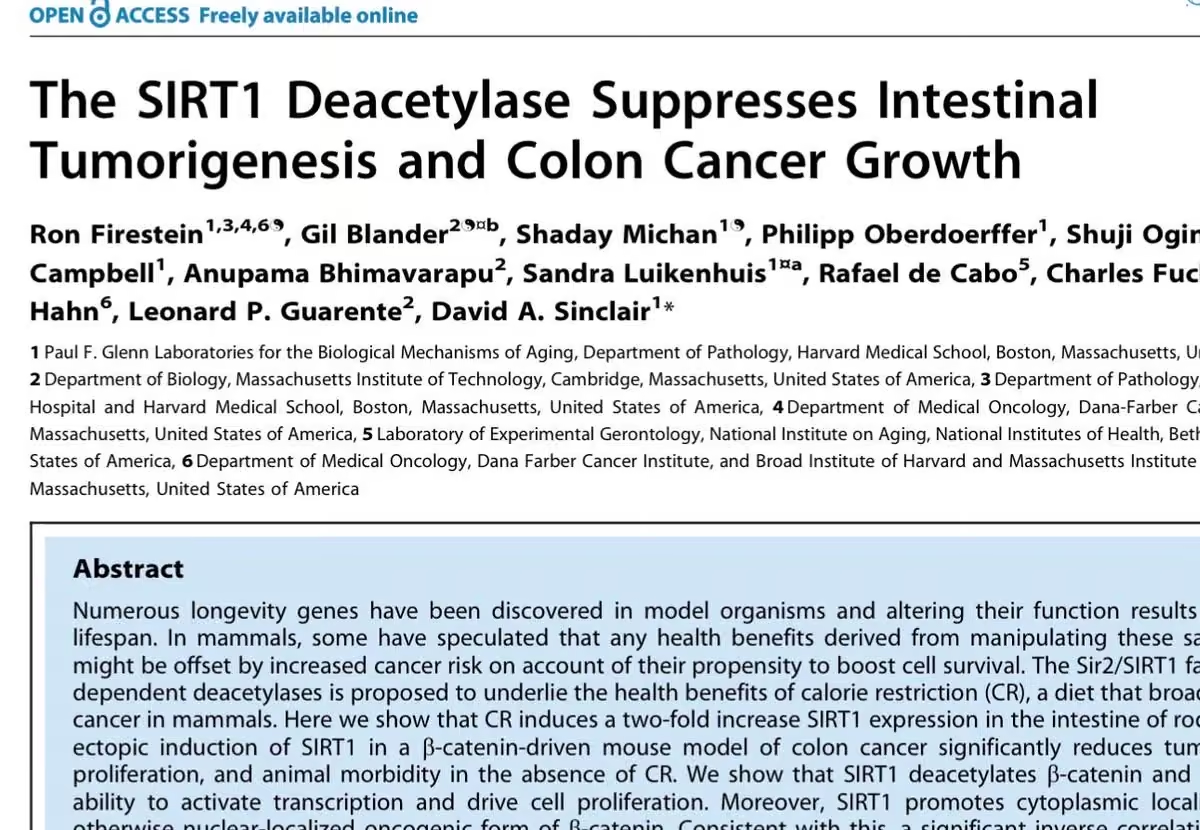 Agingdoc🩺Dr David Barzilai🔔MD PhD MS MBA DipABLM
@agingdoc1
The Wnt–NAD+ axis in cancer, aging, and tissue regeneration
www.cell.com/trends/cell-biology/fulltext/S0962-8924(25)0…
 David Sinclair
@davidasinclair
Impressed with the reply of Andre @nanogenomic
Andre Watson 🧬
@nanogenomic
Responding to @pranamanam. Ref [6] is wrong. PepMLM is your lab's work (Chen et al.), miscited as Abdin & Kim. Apologies for the error, I can see this was frustrating.
Now as for science, let me address each point.
1) "No experimental validation."
Yes, the paper says so. In the abstract, the limitations, and throughout. This is a computational methods preprint. The paper was transparent about exactly what it is and what it isn't, and that next steps are binding studies.
What the paper DID validate: 16,475 designs using Boltz-2 structure prediction scored with iPSAE, pTM, ipTM, pLDDT, and our own DeltaForge thermodynamic analysis. These are modern structure-quality metrics chosen specifically for peptide-protein complexes. DeltaForge outperforms legacy scoring approaches within the peptide size bin (r=0.83 vs PRODIGY's r=0.35 on the same data).
For comparison, PepTune (your paper) validated 7 peptides using AutoDock Vina, a tool designed for small-molecule docking, not peptide-protein interactions. Vina's empirical scoring function and rigid-body assumptions are poorly suited to flexible peptide ligands. For this paper, the comparative choice was to benchmark head-to-head against state-of-the-art models (BindCraft and BoltzGen) on 5 historically difficult targets where both methods fully or mostly failed, and validate using state-of-the-art folding models with industry-established scoring methodologies (iPSAE, pTM, ipTM, pLDDT) beyond just dG/Kd predictions.
2) "Cherry-picked r=0.83."
PPB-Affinity contains 4,347 complexes from 5 sources: PDBbind (2,448, noisy), SAbDab (1,159, antibody-specific), SKEMPI (518), Affinity Benchmark (206), and ATLAS (16). This is a heterogeneous dataset mixing antibody interfaces, PDBbind noise, and peptide complexes across five size regimes with fundamentally different binding physics.
The paper reports BOTH numbers in the same table: r=0.36-0.41 on the full heterogeneous set AND r=0.83 on the peptide size bin (40-80 residues, n=77 high-quality sources). The peptide bin is the relevant evaluation for a peptide design tool. Every scoring function in the field stratifies by complex type. PRODIGY does this too. Not hidden, not cherry-picked.
What was conveniently left out of the critique: DeltaForge holds these experimental correlations across ALL size bins when evaluated on the high-quality subset (SKEMPI, Affinity Benchmark, ATLAS), outperforming PRODIGY in every one.
XSMALL (n=17): r=0.70 vs PRODIGY 0.53.
PEPTIDE (n=77): r=0.83 vs 0.35.
SMALL (n=45): r=0.73 vs 0.31.
MEDIUM (n=396): r=0.85 vs 0.40.
LARGE (n=117): r=0.73 vs 0.36.
The r=0.83 is not an outlier cherry-pick. It is consistent with DeltaForge outperforming SOTA scoring methods across every size regime in the benchmark.
3) "Not diffusion" / "just token unmasking."
Discrete masked diffusion per Austin et al. 2021 and Sahoo et al. 2024 (MDLM). The same mathematical framework that PepTune is built on. Single-pass denoising is a valid schedule within this framework, not a different model class. In masked diffusion, generation proceeds from a fully masked sequence and the model predicts all token identities simultaneously. Using one denoising step (T=1) vs many is a schedule hyperparameter, not an architectural distinction. The model is still trained with the full masked diffusion objective across all noise levels. This is explicitly described in Austin et al. and is standard practice in the MDLM literature. Calling it "just token unmasking with cross-attention and auxiliary heads" is describing what masked diffusion IS. That is the architecture. The auxiliary heads are the thermodynamic supervision, which is the entire methodological contribution. Dismissing the contribution by describing its mechanism is circular.
4) "Not structure-free."
There's an important distinction being conflated here. Structure-BLIND methods use no structural information at all, generating peptides from target sequence alone and hoping they fold into a binding conformation. Structure-FREE inference, as explicitly defined in the paper, means no structure predictor runs during generation. LigandForge takes a pre-computed 48-dimensional pocket feature vector capturing physicochemical class, charge, solvent exposure, secondary structure, and local geometry. Folding (Boltz-2 in our case) is not in the generation loop, and the "hit rates" we report are not post-filtration. They are based on scoring and validation done by the folding model, on randomly selected peptides across length bins. The model generates sequences from a fixed encoding in a single forward pass. Structure-blind approaches discard 3D pocket information entirely, which is precisely why they produce lower binding rates and require post-hoc structural validation to determine if their designs even contact the target correctly. LigandForge uses pocket geometry because it produces better binders. It doesn't run a structure predictor at inference because it doesn't need to. The term is defined precisely and used consistently throughout the paper.
5) "Prediction floor."
Every floored value is marked with dagger and the footnote explains these are upper bounds on predicted affinity, not precision claims. LigandForge is designed for peptide-scale ligands, not large protein-protein interfaces. DeltaForge was built specifically because traditional scoring approaches (SASA-based methods, empirical potentials) are unreliable for scoring smaller structures where buried relative surface area on the target substrate is not a good proxy for interactivity. dG predictions are capped because there is insufficient crystallographic calibration data in the public domain with regard to peptides exhibiting multivalent binding at this affinity range to make reliable Kd claims below this threshold. The floor is a disclosure of model limitations, not an attempt to hide them.
6) "Closed loop / self-consistency bias."
The paper explicitly acknowledges this risk and addresses it through three independent safeguards. First, DeltaForge was separately calibrated against experimentally validated reference binding datasets (SKEMPI, Affinity Benchmark, ATLAS) with known experimental dG values, not against its own outputs. Second, validation uses iPSAE, ipTM, pTM, pLDDT, and full Boltz-2 structure prediction with PAE outputs, all of which are independent of DeltaForge entirely. Third, the training thermodynamic supervision was derived from crystallographic coordinates, not Boltz-2 predicted structures, computed over a curated subset of 360,000 peptides that we extracted and evolved from over 3,000 crystal structures. The model is not learning its own grader. DeltaForge scores the outputs, but DeltaForge was calibrated on experimental data, and the primary structural and interface quality validation metrics (iPSAE, pTM, ipTM) come from Boltz-2 folding with (MSA enabled, 4 trajectories, 50 sampling steps, 3 recycling steps) as a completely separate system.
7) Citation error is on me and will be fixed in v2 of the preprint. The data, 490,691 peptides across 150 receptor targets, and 16,475 Boltz-2 folds scored with industry-standard SOTA metrics along with our own thermodynamic scorer, is in the paper for anyone to evaluate.
David Sinclair
@davidasinclair
Yup

 Andra
@BioavailableNd
Wearing outside shoes inside the house. According to Dr.Gerba, Microbiologist, there's a 96% chance there's fecal matter on your sole and +400k units of bacteria.
 David Sinclair
@davidasinclair
Agree
Healthspan
@healthspanmed
Aging follows a predictable pattern. That suggests it's not random damage—it's programmed.
Dr. João Pedro de Magalhães @jpsenescence proposes an interesting perspective on the theoretical underpinning of aging: our DNA is the hardware, while the epigenome—the chemical tags that turn genes on or off—acts as software. Over time, this software may become maladaptive, driving aging rather than merely reacting to damage.
Here's what you need to know. 👇
🔍 The Research
In his paper "Ageing as a software design flaw," Dr. de Magalhães compares the epigenome to computer software executing genetic instructions. Early in life, this developmental program orchestrates growth from a single cell to a fully formed adult. But after reproductive prime, these same genetic scripts might start working against us—suggesting aging may be less about accumulated damage and more about developmental instructions gone awry.
Key Concepts:
• DNA as Hardware: Our genetic code remains mostly stable, like a computer's unchanging foundation.
• Epigenome as Software: Chemical marks dynamically switch genes on and off, like software toggles.
• Developmental Programs: These processes guide cell division and tissue formation but may later trigger deterioration.
📊 Core Findings
1️⃣ Epigenetic Clocks (Horvath Clock)
• Dr. Steve Horvath's work reveals that roughly 400 genome sites can predict chronological age with remarkable accuracy.
• This clock starts ticking almost from conception, suggesting aging isn't random—it follows an orderly pattern written into our developmental script.
2️⃣ Predictable, Not Random
• Aging markers like grey hair or bone density loss unfold predictably, not chaotically.
• Across species—from mice to humans—the pace of development correlates with lifespan. Mice live fast and die young because their growth software runs at breakneck speed.
3️⃣ Maladaptive Developmental Software
• Presbyopia—the stiffening of the eye's lens—illustrates how growth processes beneficial in youth (lens expansion) become harmful in mid-to-later life.
• Similar dynamics appear in other tissues through hormone changes and immune shifts past reproductive age.
📖 Why This Matters
Traditional theories treat aging as a linear accumulation of damage. But if aging is part of a developmental program, wear and tear isn't the sole culprit. Instead, we're dealing with a quasi-programmed decline, where the very instructions ensuring reproductive success later drive degeneration.
• Antagonistic Pleiotropy: Genes advantageous early in life (promoting growth, rapid cell division) can have detrimental effects later, once survival for reproduction is achieved.
• Evolutionary Limitations: Natural selection strongly favors traits that help us pass on genes, but it's less concerned with what happens afterward—so flaws in the software persist.
🛠️ Interventions & Practical Applications
If developmental software inadvertently fuels aging, slowing or resetting it could boost healthspan:
1️⃣ mTOR Inhibition (Rapamycin)
• mTOR drives cell growth and metabolism—crucial for development early in life. Later, overactive mTOR can accelerate tissue damage.
• Rapamycin, by dialing down mTOR, extends lifespan in yeast, worms, flies, and mice—and is being explored in humans.
2️⃣ GH/IGF-1 Modulation (Metformin, Caloric Restriction)
• High GH/IGF-1 fosters rapid growth but can promote diseases in old age.
• Metformin and calorie restriction both reduce IGF-1 levels, correlating with improved metabolic health and increased longevity in animal models.
3️⃣ Cellular Reprogramming (Yamanaka Factors)
• Shinya Yamanaka's breakthrough showed that four transcription factors (Oct3/4, Sox2, Klf4, c-Myc) can revert adult cells to a stem-cell-like state, effectively resetting epigenetic age.
• Full reprogramming poses cancer risks, but partial or cyclical approaches may offer a factory reset on aging without unchecked cell growth.
💡 Key Takeaway
When we view aging as a continuation of developmental processes rather than random decay, a new frontier for intervention emerges. Rather than playing whack-a-mole with diseases as they appear, we can aim to modify genetic and epigenetic programs before pathology sets in. From targeting pathways like mTOR/GH/IGF-1 to exploring partial cellular reprogramming, the prospect of true anti-aging therapies may rest on hacking the same software that built us in the first place.
🔗 Read the Full Review
Curious to dive deeper into the idea of aging as a developmental software flaw? Explore our analysis to learn how epigenetic clocks, cancer paradoxes, and species-wide comparisons all converge on one notion: aging might be a predictable, programmable process that we can slow—or even reset.
gethealthspan.com/science/article/aging-as-an-inherent-so…
David Sinclair
@davidasinclair
Not good
João Pedro de Magalhães
@jpsenescence
A combination of senolytics causes neuropathology in mice 👀
Dasatinib and quercetin trigger oligodendrocyte dysfunction and white matter injury in the CNS.
Senolytics under more scrutiny?
www.nature.com/articles/s41587-025-02740-7
David Sinclair
@davidasinclair
Elevated CRP predicts cardiovascular events. Reduce inflammation.
David Sinclair
@davidasinclair
Train what you want to keep
David Sinclair
@davidasinclair
great resource
Karl Pfleger
@KarlPfleger
Better longer list, much based on objective measures:
agingbiotech.info/people
Note: Altman & Kurzweil not even on it despite being 250+ long.
Altman funded 1 company w/o being very involved. He's busy w/ AI. Poor pick.
Kurzweil had vision long ago but not really in the field.
David Sinclair
@davidasinclair
The list omits key longevity scientists:
Alex Zhavoronkov
Anne Brunet
Haim Cohen
Brian Kennedy
Cynthia Kenyon
Dudley Lamming
Irina Conboy
Joe Baur
Juan Carlos Belmonte
Steve Horvath
Vadim Gladyshev
Vera Gorbunova + more
academyofgeroscience.org/who-we-are

 Longevity Now
@Longevity_Now_
Top 10 Most Influential People in Longevity
1. David Sinclair
2. Bryan Johnson
3. Peter Attia
4. Sam Altman
5. George Church
6. Matt Kaeberlein
7. Aubrey de Grey
8. Brian Kennedy
9. Ray Kurzweil
10. Peter Diamandis
David Sinclair
@davidasinclair
High fasting glucose predicts cardiovascular disease. Stabilize blood sugar.
David Sinclair reposted
Christian Angermayer
@C_Angermayer
I’ve just published my thoughts on the future of AI and robotics, with a particular focus on #mentalhealth.
In short, I believe that without #psychedelics, an AI-driven future may fail. It may fail not because the technology won’t be extraordinarily positive. In fact, I am deeply optimistic that a post-AGI and robotics-enabled society can be profoundly beneficial for humanity, but because of the risk that the transition goes terribly wrong.
Without the psychological tools to adapt, we may struggle to successfully navigate the massive disruption and change ahead of us.
Psychedelics - and, by extension, $ATAI - could play a critical role in unlocking a future defined by abundance, resilience, and human flourishing.
David Sinclair
@davidasinclair
Oat milk is like sugar water. Almond is the better choice
David Sinclair
@davidasinclair
We are living in an age where miracles are becoming commonplace
 Smart Science
@SmartScience
A boy born deaf can now hear for the first time — thanks to gene therapy.
For the first time in the United States, gene therapy has helped a child born deaf begin to hear.
At Children’s Hospital of Philadelphia (CHOP), doctors treated a young boy who had been profoundly deaf since birth due to a mutation in the OTOF gene.
In a groundbreaking procedure, they delivered a healthy version of the gene directly into his inner ear using a minimally invasive endoscopic technique. Four months later, the results are remarkable: the child can now detect speech, ambient noise, and everyday sounds like scissors cutting hair — all through the once-silent ear.
The gene was inserted into the cochlea, the ear’s sound-processing center, using a viral vector that passed through a tiny opening called the round window. Only the treated ear improved, providing strong evidence that the gene therapy was responsible. While OTOF mutations are rare, this milestone opens the door to future treatments for many types of hereditary hearing loss — over 150 genes are linked to childhood deafness. The CHOP team’s success signals a major shift in how some forms of congenital deafness might be addressed, potentially replacing or complementing hearing aids and cochlear implants with curative therapies.
Source: Children’s Hospital of Philadelphia. (2024). Children’s Hospital of Philadelphia Performs First in U.S. Gene Therapy Procedure to Treat Genetic Hearing Loss.
 David Sinclair
@davidasinclair
Chronic inflammation accelerates biological aging. Fix root causes.
David Sinclair
@davidasinclair
Calendar apps should - by default - end meetings five minutes before the entered time to give us all a chance to stretch, walk around, and use the bathroom
David Sinclair reposted
 Eric Feigl-Ding
@DrEricDing
WELP—As result of all NIH grants requiring RFK Jr and White House approval… we now have 90% less funding for medical research. We are sacrificing our children’s future — all for what???

 David Sinclair
@davidasinclair
Circadian disruption worsens metabolic risk. Sleep on schedule.
David Sinclair
@davidasinclair
Exciting new work in @CellCellPress: a detailed single-cell multiomics atlas of 36 cell types during brain aging in mice. This level of resolution is what we need to track how and why the epigenome changes with age 🧵
www.cell.com/cell/fulltext/S0092-8674(26)00222-9
David Sinclair
@davidasinclair
The work ties directly to the Information Theory of Aging (ITOA): loss of epigenetic information disrupts cell identity and function. Reprogramming approaches (e.g., OSK) recently reversed similar epigenetic changes in the brain already and improved memory www.cell.com/neuron/fulltext/S0896-6273(25)00925-0
David Sinclair
@davidasinclair
Amazing open data resource that's huge for neurodegeneration research. Congrats @EckerJoe and team! 👊🧬🧠
David Sinclair
@davidasinclair
Higher muscle mass associates with lower mortality. Preserve lean tissue.
David Sinclair reposted
Catharine
@DrCatharineY
We were told NIH funding cuts were about eliminating DEI.
But the data now shows grants are down across nearly every field of medicine: cancer, diabetes, mental health, brain disorders.
With the greatest cuts hitting Alzheimer’s research, down more than 50%.
 David Sinclair
@davidasinclair
So great to see the OG work that helped spark the longevity revolution taken to the next level:
New paper confirms two main causes of aging:
1. DNA instability -> epigenetic noise
2. Mitochondrial decline
...independently causing failure of the cell
Is this relevant to us? 🧵
 David Sinclair
@davidasinclair
They describe this as a “competing hazards” model of aging
David Sinclair
@davidasinclair
Is this relevant to mammals? Almost certainly. For example, our lab showed miscommunication between the genes in the nucleus and mitochondria is a cause of mito failure with age - corrected by NMN
 David Sinclair
@davidasinclair
Dan's lab's paper link:
www.pnas.org/doi/10.1073/pnas.2534452123
 David Sinclair
@davidasinclair
David Sinclair
@davidasinclair
So great to see the OG work that helped spark the longevity revolution taken to the next level:
New paper confirms two main causes of aging:
1. DNA instability -> epigenetic noise
2. Mitochondrial decline
...independently causing failure of the cell
Is this relevant to us? 🧵
David Sinclair
@davidasinclair
Higher resting heart rate predicts shorter lifespan. Train consistently.
David Sinclair
@davidasinclair
Every 1-MET fitness increase lowers mortality ~13%. Improve capacity.
David Sinclair
@davidasinclair
FYI - Retracted paper in the NAD field:
Nicotinamide Ameliorates Amyloid Beta-Induced Neurodegeneration in Adult Mouse Brain.
The editors lost confidence in the findings after "indications" of inappropriate editing & partial duplication
www.mdpi.com/2227-9059/14/3/639
 David Sinclair
@davidasinclair
Apparently the authors couldn't (or chose not to) provide the original data that was asked of them. Lesson - keep all original data for decades
 David Sinclair
@davidasinclair
AI screening of manuscripts by the corresponding author(s) for duplication or fraud (i) before submission and (ii) by the journal and (iii) by reviewers will make this a thing of the past
David Sinclair
@davidasinclair
The conversation about longevity is increasingly shifting from scientific feasibility to societal readiness www.milwaukeeindependent.com/explainers/scientists-explor…
David Sinclair
@davidasinclair
Exercise increases brain-derived neurotrophic factor, supporting brain plasticity.
Trends in Neurosciences, 2002. Cotman and Berchtold
www.cell.com/trends/neurosciences/fulltext/S0166-2236(02)…
David Sinclair
@davidasinclair
Movement is non-negotiable: walk, run, lift, stretch
David Sinclair
@davidasinclair
What gets measured improves. What gets repeated transforms.
David Sinclair
@davidasinclair
Resilience is built, not inherited.
David Sinclair
@davidasinclair
New study of mouse brain aging identifies a progressive drift in cellular identity, consistent with information theory
(ITOA)
www.cell.com/cell-reports/fulltext/S2211-1247(26)00151-8
David Sinclair
@davidasinclair
Oldie but a goodie
John Cumbers
@johncumbers
When Andrew Huberman asked about the root cause of aging, Dr. David Sinclair gave a surprisingly simple answer:
"Aging is a loss of information in the same way you try to copy a cassette tape, or even if you send information across the internet, some of it will get lost."
There are two types of information our bodies carry:
"There is the genetic information, which is digital — A, T, C, G, the chemical letters of DNA. But there's this other part of the information in the body that's just as important, it's essential, in fact, and that's the systems that control which genes are switched on and off."
And when it comes to which one matters more for how long and how well you live, the answer isn't even close:
— @davidasinclair
David Sinclair
@davidasinclair
Yes
Aubrey de Grey
@aubreydegrey
I have just urged my representative and senators to increase the NIA Division of Aging Biology budget to $1B. Please join me - see this link: actionnetwork.org/letters/drive-aging-research-gains-by-s…
David Sinclair
@davidasinclair
Started a statin age 30 and had to convince my doctor to prescribe it. How times have changed
 Matthew Herper
@matthewherper
New heart disease guidelines suggest statins as early as age 30 www.statnews.com/2026/03/13/heart-disease-prevention-new-…
David Sinclair reposted
 Brandon Luu, MD
@BrandonLuuMD
Dog contact was linked to 64% lower 5-year mortality in cancer patients.
Possible mechanisms include physical activity, psychosocial support, and microbiome changes.
 David Sinclair
@davidasinclair
Same
Rand
@rand_longevity
I used to think it would take until the 2040s, but we are dealing with age-reversal in the 2020s
David Sinclair
@davidasinclair
Heat exposure through sauna bathing is associated with reduced cardiovascular mortality.
JAMA Internal Medicine, 2015. Laukkanen et al.
jamanetwork.com/journals/jamainternalmedicine/fullarticle…
David Sinclair
@davidasinclair
NAD⁺ as a central hub regulating the hallmarks of aging: Mechanisms and therapeutic implications www.sciencedirect.com/science/article/pii/S0047637426000266
 David Sinclair
@davidasinclair
If avoiding sugar, consider stevia. A stevia plant extract (from Pharmingen, Korea) improved muscle metabolism, mitochondrial function, and attenuated muscle loss in obese mice while activating SIRT1. Non-ultraprocessed stevia resembles matcha powder 🍵
 David Sinclair
@davidasinclair
David Sinclair
@davidasinclair
The once bold idea that treating aging will treat chronic diseases (which some refer to as the Geroscience Hypothesis) is about as innovative today as the round Earth hypothesis
David Sinclair
@davidasinclair
Syringic acid is a naturally occurring molecule in grapes, olives, pumpkins & herbs with antiinflammatory, anti-microbial & anticancer properties. New study finds it prevents rodent neurotoxicity & inflammation.
Not yet sold widely but will be I expect
www.sciencedirect.com/science/article/pii/S00142999260025…
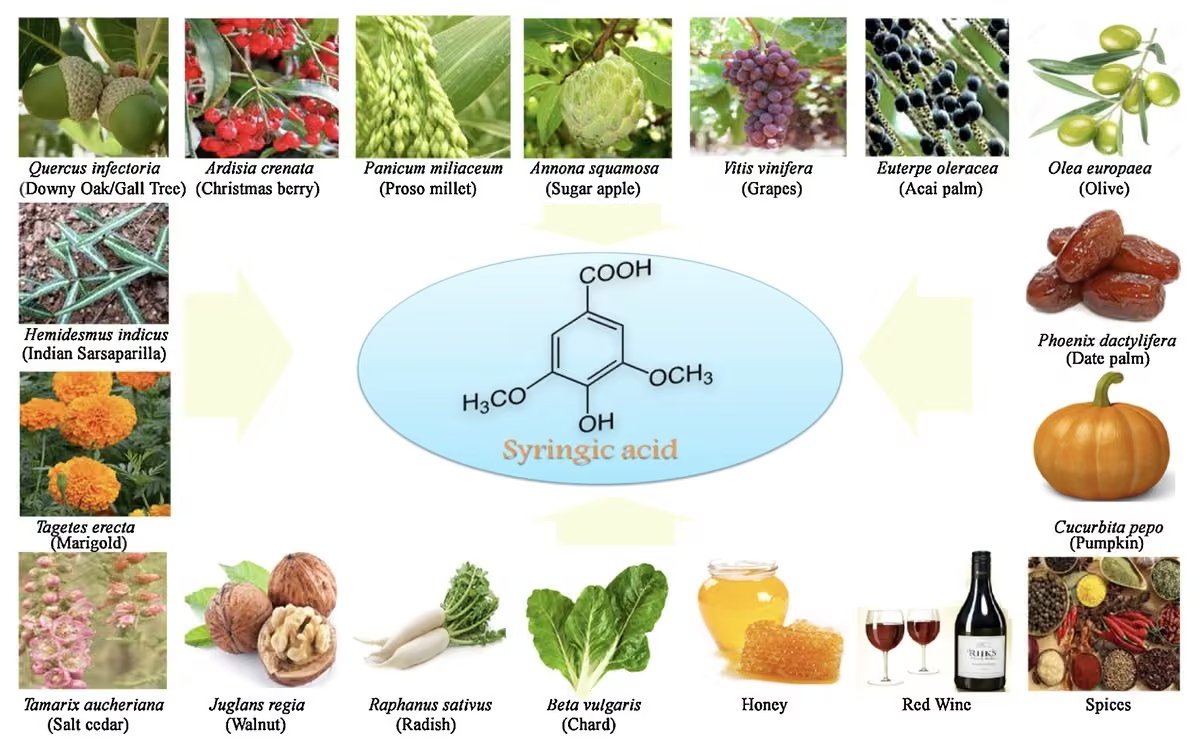 David Sinclair
@davidasinclair
Great to see ophthlamologists adopting epigenetic modifications and resets to treat eye diseases like glaucoma. A paradigm shift in medicine
frontiersin.org/journals/genetics/articles/10.3389/fgene.…
 David Sinclair
@davidasinclair
Longevity research is being starved of funds just when the US needs to be more competitive. Have assembled a team working on it. Launch date: April 2026
www.nytimes.com/2026/03/13/us/his-harvard-lab-was-thrivin…
David Sinclair
@davidasinclair
Why protein powders & shakes could be accelerating brain aging
Great work @LammingLab🐁
Lamming Lab
@LammingLab
Please enjoy the latest publication from our lab "Restriction of Individual Branched-Chain Amino Acids has Distinct Effects on the Development and Progression of Alzheimer's Disease in 3xTg Mice"
 David Sinclair
@davidasinclair
Smoking cessation before 40 reduces excess death ~90%. Quit now.
David Sinclair
@davidasinclair
In my experience, ideas that take seconds to conceive take years to confirm in the lab and 1–2 years to get published in a top journal.
This is biology’s Achilles heel
Let’s see if AI can fix that
 Rohan Paul
@rohanpaul_ai
The hardest part of AI in science is the "last mile"
This brilliant open source GitHub repository from Stanford and Princeton researchers is giving you a way to automate the boring parts of science.
With it, you can basically tell an AI agent: "Go find this gene sequence in the NCBI database, run a fold analysis, and write a summary of the clinical trials associated with it." Because of these 211 "skills," the agent knows which buttons to push and which APIs to call to do that entire workflow autonomously.
If you're tracking the "AI Scientist" space, the stack is starting to look like this: a reasoning core, a skill library like LabClaw, and an execution layer like LabOS. It’s a very clean, production-grade architecture.
 David Sinclair
@davidasinclair
Enter an AI co-scientist that works with you in the lab
arxiv.org/abs/2510.14861
@Stanford @Princeton @nvidia
David Sinclair
@davidasinclair
Amazing 👏
 DWeissLab
@DWeissLab
So thrilled this story is now published! Huge thank you to @PLOSBiology!
@grakoui @anuradhaiitm
David Sinclair reposted
Mgoes (bio/acc 🤖💉)
@m_goes_distance
It's genuinely insane how much progress biotech has made in the last 90 days:
- Two years ago I watched Lucy Therapeutics shut down after 7 years and $42M from Bill Gates, never reached human trials. Last month DeSci crowdfunded €2.5M in 72 hours for Dr Barbacid cancer trials and went straight to human trials. Zero VCs and zero committees in the middle. And it's not even about the money. The goodwill
- Gene therapy cost $2-4M per treatment a year ago because manufacturing was artisanal and nobody was actually solving it. Now automation's dropping costs toward $200. Turns out it was an engineering problem all along.
- Just a year ago, the FDA wouldn't touch longevity.
In January 2026, first FDA-approved human trial reversing cellular age launched (ER-100). We're testing age reversal in humans right now. Not mice.
- Psychedelics stuck in regulatory hell for 50 years.
In February 2026, Compass crushed Phase III for psilocybin in treatment-resistant depression.
- In 2023, AI drug discovery was hype. $17B got invested, zero approved drugs.
Early 2026, Ginkgo x OpenAI ran over 200k autonomous experiments, 36K of those were unique. Protein costs dropped by 40% and they're already shipping commercially. Discovery timelines collapsed.
- Just last year, FDA required full GMP pre-Phase 2, moved at 1950s speed. This quarter,we're fast-tracking frontier therapies, relaxing requirements, launching pilots. Something shifted and the regulatory wall is cracking.
- In 2024, clinical trials had to run in US at 2x cost, half the speed. Right now in Singapore and China running trials 50% cheaper, 2x faster. Companies routing around FDA entirely. The US model is optional.
I could keep going on with these, but you realize that the bottleneck was never the science. It was funding models, regulatory speed, manufacturing, geography etc
And most of them are breaking since last October.
Biotech has shed 30 years of broken infrastructure in 5 months and I can't be more bullish.
bio/acc.
David Sinclair reposted
Catharine
@DrCatharineY
The pipeline that drives discovery - new knowledge and treatments for diseases that affect us all - is collapsing in the United States.
New NIH funding opportunities are down 91% this fiscal year.
 David Sinclair
@davidasinclair
Short sleep increases death risk ~12%. Protect your nights.
David Sinclair
@davidasinclair
Sitting for over 8 hours daily raises mortality risk. Stand up. Now.
David Sinclair
@davidasinclair
The simplest routines outlast the complex ones
David Sinclair
@davidasinclair
Your biology reflects your defaults
David Sinclair
@davidasinclair
That’s a big deal 👏
Agingdoc🩺Dr David Barzilai🔔MD PhD MS MBA DipABLM
@agingdoc1
Partial Reprogramming Is Conserved from Insect to Mammal
www.mdpi.com/2073-4409/15/2/168
 David Sinclair
@davidasinclair
Important to keep this going!
João Pedro de Magalhães
@jpsenescence
🚨 The Human Ageing Genomic Resources Are at Risk
For over 20 years, our Human Ageing Genomic Resources (HAGR) have supported ageing and longevity research worldwide (200,000+ users per year, 1,000+ citations, widely used by academic labs and longevity biotech).
Due to shifting UK government funding priorities, our infrastructure funding was not renewed in 2024, and these databases are now at risk of going offline.
We are raising funds to cover basic server costs and secure their continuity while we pursue long-term funding.
If these resources have supported your research, your company, or your thinking, please consider helping sustain them.
www.justgiving.com/page/human-ageing-genomic-resources
David Sinclair
@davidasinclair
Hypertension doubles heart disease risk. Check your pressure.
David Sinclair
@davidasinclair
Longevity is cumulative restraint.
David Sinclair
@davidasinclair
Osteoarthritis & back pain affects millions of people. Instead of managing symptoms, imagine rebuilding joints by making them young
New study shows the reprogramming gene combo OSK regrows joints in mice & effect depends on TET2 so it's epigenetic...🧵
 David Sinclair
@davidasinclair
From a historical perspective, this is part of a broader transition in biology. In January, the FDA allowed ER-100, an OSK therapy, to be tested in humans with vision loss...
 David Sinclair
@davidasinclair
For decades, aging was studied mainly through metabolism, damage accumulation, or genetics. Increasingly, the field is exploring whether loss of epigenetic information may be a major driver of aging across tissues www.nature.com/articles/s43587-023-00527-6
David Sinclair
@davidasinclair
If that hypothesis continues to hold up, studies like this may represent an early stage in a new era of medicine: treating age-related diseases by restoring youth, rather than replacing tissues after they fail
www.nature.com/articles/s12276-026-01662-x
David Sinclair
@davidasinclair
Corrected figure:
 David Sinclair
@davidasinclair
3–4 min/day of vigorous activity is associated with lower cancer incidence
jamanetwork.com/journals/jamaoncology/fullarticle/2807734
David Sinclair
@davidasinclair
During their lives, centenarians rarely get sick. New paper with 1,400 subjects finds a history of infections (pneumonia, herpes, UTIs) associates with earlier frailty. The authors speculate that obesity makes people more susceptible & that viral infections may accelerate aging

 David Sinclair
@davidasinclair
Higher VO2 max is associated with 5-fold lower mortality risk. Train!
David Sinclair
@davidasinclair
Asked about the funding cuts, one Boston researcher said, “That's like asking, how do you think dropping an atomic bomb on New York will affect the future of Broadway musicals? This is a generational loss of innovation, technology, and economic power."
www.bostonglobe.com/2026/02/09/metro/massachusetts-nih-cu…
David Sinclair
@davidasinclair
The “immortal jellyfish” is a forever-perpetuated lab marketing myth
Nothing is immortal. Sorry
Under stress, Turritopsis dohrnii lands on a rock, makes clones, then dies.
If cloning is “immortality”, then dogs and monkeys are also immortal - and no one is claiming that 🧵
David Sinclair
@davidasinclair
FDA greenlights Life Biosciences' human clinical trial on a "near total reset"
endpoints.news/exclusive-fda-greenlights-gene-therapy-stu…
David Sinclair
@davidasinclair
A mitochondrial therapy (originally called SS-31) finally approved for patients and very relevant to longevity 👏
David Sinclair
@davidasinclair
Exciting new paper @nature that could explain why inflammation rises as we age and why healthy diets and exercise suppress inflammation 👏 🧵
 David Sinclair
@davidasinclair
NEW STUDY: The amino acid L-theanine, first isolated from green tea in the 1940s, is used to improve mood and sleep 🍵 Study in mice finds L-theanine suppresses metastasis of prostate cancer, the second most common cause of death in men worldwide... 🧵
 David Sinclair
@davidasinclair
I came on an H1B “specialty occupation” visa and there’s no way I could have afforded a $100K fee. The US has just made it virtually impossible for people like me to come here
David Sinclair
@davidasinclair
Announcing “K-Dense”, a multi-agent AI scientist that has already made a new discovery in aging research 🧵 @ashwingop & @BioStateAI
www.globenewswire.com/news-release/2025/09/17/3151632/0/e…
 David Sinclair
@davidasinclair
Increased epigenetic stability in monkeys 👏
Dr Singularity
@Dr_Singularity
Scientists Reversed Aging in Monkeys. Humans Could Be Next
Scientists demonstrated that senescence resistant mesenchymal progenitor cells (SRCs), engineered with the longevity gene FOXO3, can not only halt aging but partially reverse it in aged macaques. 👀
Intravenous SRC treatment improved cognition, bone strength, and reproductive health without adverse effects.
Mechanistically, SRC derived exosomes reduced cellular senescence markers (p21CIP1, γH2AX), inflammation (IL-1β, TNF-α, IL-6), and oxidative stress, while enhancing heterochromatin stability (H3K9me3, lamin B1) and immune function.
This suppressed the cGAS-STING inflammatory pathway and promoted systemic rejuvenation.
This research suggests aging is not just inevitable decline but a treatable condition.
SRCs outperformed conventional stem cells, reversing multiple hallmarks of aging across organ systems.
The findings offer a proof of concept for human anti aging therapies.
 David Sinclair
@davidasinclair
Oral health is systemic health. Gum disease is associated with 19% higher risk of death, so floss and brush at least twice a day
David Sinclair
@davidasinclair
Still struck by the dramatic effects of psilocybin on mouse health & lifespan 🍄🟫
Here’s some info about this molecule & where people obtain it: 🧵…
 David Sinclair
@davidasinclair
Generative AI is the new lab assistant in longevity research. What once would take 150 years can be done in a month and for one billionth the cost
 David Sinclair
@davidasinclair
Exercise increases BDNF (brain-derived neurotrophic factor) by up to 200%, a molecule known to promote brain repair and neuroplasticity
— J Appl Physiol, 2003
David Sinclair
@davidasinclair
NEW STUDY: SIRT1, the NAD-dependent longevity enzyme, is normally found in the cell's nucleus. Circulating SIRT1 modifies PCSK9 to promote LDL cholesterol uptake into the liver & reduce plaque in mice. Consistent with this, people with high levels of circulating SIRT1 have fewer deaths from cardiovascular causes...
 David Sinclair
@davidasinclair
Our lab's funding was terminated—here’s how that compares to the amount of all terminated research at @harvardmed
www.nytimes.com/interactive/2025/06/22/upshot/harvard-fun…
 David Sinclair
@davidasinclair
Young scientists: Hang in there. The world needs you. I'm working on a solution
 David Sinclair
@davidasinclair
Yes and miraculously it is working! Sadly, the NIH grant making the work possible was terminated
 leithaus
@leithaus
Could the protocol you developed for regrowing the optic nerve be adapted to regrow motor neurons?
David Sinclair
@davidasinclair
My partner Serena’s mom is dying from ALS. The NIH grant supporting the scientists in my lab working hard on a cure was just terminated. No words
David Sinclair
@davidasinclair
A student asked, why does cell repair turn off when times are good? Why not keep them on all the time?
The answer reveals how to live a long, healthy life...🧵
David Sinclair
@davidasinclair
Enjoyed talking @PioneerWorks_ about our recent progress using epigenetic reprogramming to treat aging & blindness
tinyurl.com/5683j3x9
David Sinclair
@davidasinclair
A 50-year-long study of twins finds exercise may not be as important for longevity as we think
A thread...🧵
 David Sinclair
@davidasinclair
Most humans take medicines to fight diseases but are horrified at the thought of a medicine to fight aging, the root cause of most diseases
David Sinclair
@davidasinclair
Limiting sugar before age 3 protects against diseases later in life science.org/doi/10.1126/science.adn5421
 David Sinclair
@davidasinclair
Join me for a free discussion, food and music event in NYC: Is Aging a Disease? @PioneerWorks_ Oct 22. Details below👇

 David Sinclair
@davidasinclair
Here’s the sign up link
pioneerworks.org/programs/scientific-controversies
 David Sinclair
@davidasinclair
Love the @enhanced_games, where you can use anything to perform at your human best. Great read…
Christian Angermayer
@C_Angermayer
Advancing technologies and building companies that help people live healthier, happier, and longer lives is the core leitmotif of my @ApeironInvests.
About 10 years ago, we started to work on the renaissance of #psychedelics as powerful treatments for mental health issues, and on labelling aging a disease - then finding cures for it. At the time, these objectives were seen by many as outlandish and totally ‘crazy’. Today, there is almost no dinner or social gathering where psychedelics and #longevity aren’t one of the core topics of discussion. And I am very proud that we are the driving force behind it.
Now I hope that one of my other core beliefs – that medicine should not just be developed to treat the sick, but to enhance each and every one of us to unprecedented levels – will become the zeitgeist over the coming years, too.
Please read my latest blog post about “the golden era of enhancement” we are about to enter imo. The fields of human enhancements range from sexual pleasure to cognitive abilities. Hence, it’s definitely worth reading 😉
Our latest, most prominent company formation in that context are the @enhanced_games, the world’s first sporting event where performance enhancements are not just permitted, but actively endorsed. The Enhanced Games are also featured extensively in my blog post.
Enjoy reading!
christianangermayer.substack.com/p/the-future-is-enhanced
David Sinclair
@davidasinclair
Good news: an experimental drug that kills off old senescent zombie cells in the retina improved vision in 6 out of 8 patients 😮👏
David Sinclair
@davidasinclair
New study finds immune T cells engineered to kill zombie senescent cells 🧟♀️ can reverse key aspects of aging in mice 🐁 including metabolic & physical decline. Imagine a single treatment that protects from aging, for life…see thread nature.com/articles/s43587-023-00560-5
 David Sinclair
@davidasinclair
Our next installment of epigenetic rejuvenation via age reversal is out: 2 months of OSK gene therapy in mice with glaucoma fully restores their vision, with no evidence of side-effects, even after prolonged use. Congrats to Bruce Ksander, @YuanchengLu, and the entire team 👏🏻🙏
 David Sinclair
@davidasinclair
More and more scientists suspect that high iron levels probably cause normal cells to age faster and ultimately become senescent zombie cells 🧟♀️. We know for sure that a common feature of senescent cells is their high iron content
 David Sinclair
@davidasinclair
Have signed this declaration, a timely call to arms against the aging processes that underlie most major diseases & contribute significantly to economic waste & global suffering. Read it. Sign it. Join us 🌎 dublinlongevitydeclaration.org
David Sinclair
@davidasinclair
Here’s the press release from @AgingJrnl 15/17 www.aging-us.com/news_room/NEW-STUDY-Discovery-of-Chemica…
David Sinclair
@davidasinclair
This new discovery offers the potential to reverse aging with a single pill, with applications ranging from improving eyesight to effectively treating age-related diseases 14/17
 David Sinclair
@davidasinclair
Grateful to share our latest publication: We’ve previously shown age reversal is possible using gene therapy to turn on embryonic genes. Now we show it’s possible with chemical cocktails, a step towards affordable whole-body rejuvenation 1/17 aging-us.com/article/204896/text
David Sinclair
@davidasinclair
Leading scientist in my lab @Alice_E_Kane is now faculty at @isbsci in Seattle 👏 🧬 ⏰ 💻 🚀
 David Sinclair
@davidasinclair
Cryo storage of tissues and eventually more. Science is moving fast
Alex Zhavoronkov, PhD (aka Aleksandrs Zavoronkovs)
@biogerontology
What you need to know about the recent advances in cryobiology and how you life may change in the near future:
www.forbes.com/sites/alexzhavoronkov/2023/07/05/new-break…
David Sinclair
@davidasinclair
If aliens saw us speaking to people overseas on pocket devices, speeding in self-driving cars, and flying in giant planes, they’d be shocked that aging still hadn’t been solved
David Sinclair
@davidasinclair
I choose not to celebrate aging, the leading cause of pain, disease & economic waste on the planet
 Dr. Sanjay Gupta
@drsanjaygupta
Over the last few years, I have become convinced my 50's has been the best decade of life so far! And, people older tell me it continues to get even better. So, why are we so afraid of aging? I talk to experts, my own parents and people who seemingly don't age at all. What I learned really surprised me. There are ways to make the most of your age. Join me for our newest season of Chasing Life starting June 20 link.chtbl.com/GmKSXiTh
David Sinclair
@davidasinclair
Living in low 11% oxygen (rather than air at 21%) extends a mouse’s lifespan by 50% and delays the onset of neurological debility in an accelerated aging model. Hormesis? journals.plos.org/plosbiology/article?id=10.1371/journal.…
David Sinclair
@davidasinclair
Comprehensive MRIs scans. Leading the world away from, "Come-see-me-only-if-you've-developed-a-disease" medicine 🚀
David Sinclair
@davidasinclair
Story 8/10 👏
Pun 2/10 🙈 www.fiercebiotech.com/research/life-biosciences-gene-ther…
David Sinclair
@davidasinclair
Cytomegalovirus hides in 80-100 percent of us. In middle age, zombie-like senescent cells accumulate & promote aging, but somehow stop accumulating late in life. New paper looking at skin says it’s because the virus reactivates as we age, flagging old cells for clearance by the immune system. Do infected people look younger? Could it lead to vaccines for aging? 🤔 1/3
 David Sinclair
@davidasinclair
Factors that accelerate epigenetic aging:
1. Smoking (worst)
2. Alcohol intake
3. Waist size
4. Body fat
5. CRP (inflammation)
6. Triglycerides
7. Childhood obesity
8. Type 2 diabetes
(Alcohol is turning out to be more toxic than we thought. Sorry) academic.oup.com/biomedgerontology/advance-article/doi/10…
David Sinclair
@davidasinclair
Delighted to share with you our latest paper. Here, we test the hypothesis that aging may be driven by DNA damage-induced changes to the epigenome. Mightbe due to a glitch in the software of the body that causes it to malfunction, which can be fixed with a reboot?👇 1/
David Sinclair
@davidasinclair
Enjoyed a chat with Meghna Chakrabati @OnPointRadio about longevity breakthroughs & how to reach your maximum potential 💪 @MeghnaWBUR
wbur.org/onpoint/2023/01/06/remarkable-science-why-aging-…
David Sinclair
@davidasinclair
Announcing to the team we received acceptance at a top scientific journal of a 13 year study to test The Information Theory of Aging… 1/n #harvard
 David Sinclair
@davidasinclair
On November 4th, 2022, the US Food and Drug Administration (FDA) published a letter regarding the marketing and sales of nicotinamide mononucleotide (NMN) as a supplement to boost NAD levels 1/15
David Sinclair
@davidasinclair
Cool article: No limit to maximal lifespan: how to beat a 122-year-old record. Youths of today will easily break this record @Blagosklonny 👏 pmc.ncbi.nlm.nih.gov/articles/PMC8636159/
 David Sinclair
@davidasinclair
I know it’s not aging-related but I wanted to share these images taken with my phone [and a small telescope]. Great for kids to try 🔭📱🪐
 David Sinclair
@davidasinclair
Researchers @UofR discover that long-lived species have strong DNA repair and increased levels of epigenetic reprogramming factors Oct4, Sox2, Klf4, consistent with the Information Theory of Aging 🧬 #lifespanbook
www.eurekalert.org/news-releases/954381
David Sinclair
@davidasinclair
The new science of aging says the process starts ticking even before you’re 20. So don’t wait to live a lifestyle that slows aging. Act now.
David Sinclair
@davidasinclair
Rejuvenation just got hotter lifespan.io/news/cellular-reprogramming-rejuvenates-multi…
David Sinclair
@davidasinclair
You have two ages. One is the number of times Earth has circled the Sun and the other is your biological age. Guess which one you can change easily
David Sinclair
@davidasinclair
Prolonged use of metformin is reported to alleviate cerebral small vessel disease and cognitive impairment in type 2 diabetics who have high blood sugar. Reminds me to tell you later about HbA1c…
Lifespan News
@LifespanNews
Metformin Alleviates Cognitive Impairment in Long-Term Study - www.lifespan.io/news/metformin-alleviates-cognitive-impai…
David Sinclair
@davidasinclair
This Sunday, 10PM ET/PT @CBS: Searching for the Fountain of Youth. Silly title. Real science. Actionable info. @sinclair_lab @NirBarzilaiMD @DrMorganLevine @StevenAustad @mkaeberlein www.cbsnews.com/news/sunday-morning-primetime-special-for…
David Sinclair
@davidasinclair
Matcha, or Japanese ceremonial green tea, is one of the world’s healthiest drinks. Not because of antioxidants but survival molecules that Camillia sinensis makes when grown in the shade. When we ingest them, they boost our survival enzymes to fight aging & disease 💪 1/7
 David Sinclair
@davidasinclair
I’m hiring researchers & bioinformaticians! If you’re passionate about making a global impact, apply here👇IG: sinclair_lab iiv3o6t5o5y.typeform.com/sinclair-hire
 David Sinclair
@davidasinclair
Trick tweet. We can ALL choose how long we live - by changing how we live
David Sinclair
@davidasinclair
Cutting-edge show about age reversal. The pace of discovery means, "everyone under the age of 40 will be able to choose how long they live."
@C_Angermayer @pietrobose #epigenome youtube.com/watch?v=lygY26hQ8yw
 David Sinclair
@davidasinclair
Cutting-edge show about age reversal. The pace of discovery means, "everyone under the age of 40 will be able to choose how long they live."
@C_Angermayer @pietrobose #epigenome youtube.com/watch?v=lygY26hQ8yw
David Sinclair
@davidasinclair
30-70% of eggs in fertility clinics do not produce babies because of broken DNA. In mice, fasting produces healthier eggs & the fasting-mimic, NMN, reverses infertility #careerdayyr2021 onlinelibrary.wiley.com/doi/10.1111/acel.13428
 David Sinclair
@davidasinclair
Our new paper calculates the value to the US economy of widely prescribing Metformin, a cheap medicine that could extend lifespan by >2.6 years, is at least $38 trillion dollars. Let’s take that to the bank! @NatureAging idp.nature.com/transit?redirect_uri=https%3A%2F%2Fwww.nat…
 David Sinclair
@davidasinclair
If you think life’s too short, do something about it
David Sinclair
@davidasinclair
More evidence that a healthy lifestyle doesn't just prevent diseases late in life, it slows down aging. Never too late to start! Better to start early!! #healthyfood #cooking www.aging-us.com/article/203022/text
 David Sinclair
@davidasinclair
How is biological age calculated & can it be reset? 💪 Interesting new paper @ImpactJrnls #aging #health #medicine www.aging-us.com/article/202712/text
 David Sinclair
@davidasinclair
Former lab member, mentor to dozens of scientists, and our very dear friend, Dr Michael Bonkowski, passed away suddenly yesterday. Besides being a great scientist & father, he was one of the kindest, most generous people I’ve known. @gofundme www.gofundme.com/f/gp5n9-remembering-michael?sharetype=te…
David Sinclair
@davidasinclair
Provocative study @TheLancet reports possible protection from #covid19 by a quercetin-bromelain-vitamin C combo (QCB). 9/42 people in the control group contracted COVID-19 vs. 1/72 when taking QCB (p=0.032)🤔papers.ssrn.com/sol3/papers.cfm?abstract_id=3682517
 David Sinclair
@davidasinclair
A sad day for the aging field with the passing of Paul F. Glenn (1930-2020). Paul's foundation supported the careers of 100's of scientists, including mine, and was instrumental to the formation of the National Institutes of Aging @NIH. We will miss him dearly.
 David Sinclair
@davidasinclair
Tips from a doc who lived to 105:
1. Don’t retire, or do so long after 65
2. Take the stairs, keep weight down
3. Find a purpose, keep busy
4. Rules are stressful; try to relax them
5. Know docs can’t cure everything
6. Find inspiration, joy & peace in art
cnb.cx/2FTjLYE
David Sinclair
@davidasinclair
The Conboy lab reports the ability of young blood transfusions to reverse 🐭 aging is mimicked by a simple replacement of blood with a neutral age fluid [saline + 5% albumin] with benefits in muscle, liver, and new brain cell formation (image)💪#aging www.aging-us.com/article/103418/text
 David Sinclair
@davidasinclair
Now out: Our latest paper "Why COVID-19 disproportionally affects older people." Very proud of coauthors @AmberMuellerPhD @MaeveMcNamara3. Thanks to the reviewers for excellent suggestions✌️@AgingJrnl #aging #longevity #healthtech www.aging-us.com/article/103344/text
 David Sinclair
@davidasinclair
Finally had time to carefully read the new preprint that claims to reverse the age of rats by 54%. I spoke to the first author & in this thread ask whether the results are believable and what if it is true? www.biorxiv.org/content/10.1101/2020.05.07.082917v1 1/n
 David Sinclair
@davidasinclair
In your 20s, you dream of a perfect life. In your 30s & 40s, you work hard to achieve a perfect life. In your 50s, it dawns on you: there is no perfect life.
David Sinclair
@davidasinclair
Important! Largest study yet on #covid_19 fatality shows top risks:
1. Age, BY FAR the highest
2. Cancers of the blood
3. Male
4. Obesity
5. Diabetes
I will say it again: Aging is a disease & it is treatable. Yes, treatable. 1/n #healthcare idp.nature.com/transit?redirect_uri=https%3A%2F%2Fwww.nat… @bengoldacre
 David Sinclair
@davidasinclair
For those who wanted a world without vaccines, witness the world without one vaccine.
David Sinclair
@davidasinclair
This is by far the best I’ve seen.
 Harjinder Singh Kukreja
@SinghLions
Correct technique to wash your hands for proper disinfection. #coronavirusoutbreakindia #coronavirusupdate #covid #coronavirusupdate
David Sinclair
@davidasinclair
Always great talking with Dave Asprey @bulletproofexec. This episode is about #covidー19 fact vs fiction. Out now✌️ blog.daveasprey.com/david-sinclair-681/
 Dave Asprey
@bulletproofexec
Thank you for today David. #grateful eternally for sharing your time wisdom and knowledge with us.
 David Perlmutter, MD
@DavidPerlmutter
Joining @bulletproofexec for an Instagram Live at 2:30PM ET. Come chat with us. www.instagram.com/davidperlmutter
David Sinclair
@davidasinclair
Looking forward to connecting again with @bulletproofexec later today. We'll be doing Instagram Live, answering questions and discussing topics tied to #covid19. Kicks off at 7pm ET and will go for ~30 min✌️
 David Sinclair
@davidasinclair
Check out the best animation explaining how #coronavirus attacks the body & how to stay safe. Share with kids too. They will certainly wash their hands after seeing this. youtu.be/BtN-goy9VOY
David Sinclair
@davidasinclair
What about putting first responders, doctors & nurses on chloroquine, the anti-malarial drug, as a prophylactic? There arent enough masks. They are going to get sick. Then what? Thoughts?
 David Sinclair
@davidasinclair
Here is a summary of the best information I've seen on corona symptoms, how to prepare, and what to do if you think you have it. #covid19 #coronavirus #coronavirusupdates #coronavirususa
David Sinclair
@davidasinclair
Can age be reset? Can eyesight be restored by rewinding the aging clock? A preview of our cellular reprogramming study is now online. Thanks to the brilliant team who made it possible! In awe...
#biorxiv #aging
www.biorxiv.org/cgi/content/short/710210v1
 David Sinclair
@davidasinclair
Congrats to David Ewing Duncan on his new book “Talking to Robots: Tales from our human-robot futures.” Enjoyed the launch party with @RodrigoATCG @geochurch @siranushbb @duncande www.amazon.com/dp/1524743593
 David Sinclair
@davidasinclair
Well, goodness! I recognize this is but a drop in the Twitter bucket. To me, though, it's indicative of a growing thirst for more knowledge about why we age and what we can do about it—and a desire to be pioneers upon this new frontier. Thank you, one and all.


 Greg Wright
 Superior


