This has been the best community on the internet & we've loved every minute of it.
This account is now inactive. Find future astrobiology news and resources on our website at science.nasa.gov/astrobiology and by following @NASASolarSystem, @NASAMars and @NASAUniverse.
Stay curious.🖖
NASA Astrobiology Institute
The NASA Astrobiology Institute (NAI) was established in 1998 by the National Aeronautics and Space Administration (NASA) "to develop the field of astrobiology and provide a scientific framework for flight missions." In December 2019 the institute's activities were suspended. More on Wikipedia
-
ARCHIVED – NASA Astrobiology
@NASAAstrobio

-
ARCHIVED – NASA Astrobiology
@NASAAstrobio
📢 Important: As part of NASA’s effort to streamline communications, this account will be archived on Sept. 1.
For news, discoveries, and resources related to understanding life and its potential in the cosmos – please follow @NASASolarSystem, @NASAMars and @NASAUniverse.
ARCHIVED – NASA Astrobiology
@NASAAstrobio
Here's the new breakdown of coverage to ensure you'll never miss a beat:
🪐 Follow @NASASolarSystem for news related to planetary science and ocean worlds
🔴 Follow @NASAMars for news related to Mars
🔭 Follow @NASAUniverse for news related to exoplanets and beyond -
ARCHIVED – NASA Astrobiology reposted
NASA Solar System
@NASASolarSystem
Hot science on a cold dwarf planet: Ceres may be cold now, but new research suggests it once had a lasting source of chemical energy. When combined with the briny water and carbon molecules found in its interior, Ceres may have been habitable. www.nasa.gov/missions/dawn/nasa-ceres-may-have-had-long-s…
-
ARCHIVED – NASA Astrobiology reposted
NASA Universe
@NASAUniverse
Today at 3 p.m. ET — we're talking about artificial intelligence in the search for life and our Habitable World Observatory. Join here to ask questions live: www.youtube.com/live/xioQbOcjaLo
NASA Universe
@NASAUniverse
What will it take to find life on planets beyond our solar system? Our Habitable Worlds Observatory will be the first mission designed to find out! Share questions for Program Scientist Dr. Megan Ansdell and tune into #askastrobio on Aug. 14 at 3 p.m. ET: youtube.com/live/xioQbOcjaLo
-
ARCHIVED – NASA Astrobiology
@NASAAstrobio
This week on #askastrobio we're talking artificial intelligence, exoplanets, and the future of astrobiology. Tune in below and follow @NASAUniverse for astrobiology news from beyond our solar system!
NASA Universe
@NASAUniverse
What will it take to find life on planets beyond our solar system? Our Habitable Worlds Observatory will be the first mission designed to find out! Share questions for Program Scientist Dr. Megan Ansdell and tune into #askastrobio on Aug. 14 at 3 p.m. ET: youtube.com/live/xioQbOcjaLo
-
ARCHIVED – NASA Astrobiology reposted
NASA Mars
@NASAMars
A few interesting sights here:
- The abrasion patch made by the rover is 2 inches (5 centimeters) wide
- These tracks are about 300 feet (90 meters) away
- This peak is 40 miles (65 kilometers) away!
www.jpl.nasa.gov/news/nasas-perseverance-rover-captures-m…
NASA JPL
@NASAJPL
Mars is a dusty place – but every two years, the dust settles. The Perseverance rover's imaging team took advantage of this moment to capture one of the sharpest panoramas of its mission so far!
Explore the full image: www.jpl.nasa.gov/news/nasas-perseverance-rover-captures-m… -
ARCHIVED – NASA Astrobiology
@NASAAstrobio
Our account might be going away, but the science we love continues. 💫 Follow @NASASolarSystem to get continued updates on astrobiology-related missions, science, and discoveries.
NASA Solar System
@NASASolarSystem
Are there places on Jupiter's moon Europa where water is near the surface? Our Europa Clipper spacecraft will use its E-THEMIS instrument to find out. In March, the instrument went through a test run at Mars: science.nasa.gov/photojournal/europa-clipper-captures-mar…
-
ARCHIVED – NASA Astrobiology
@NASAAstrobio
📢 Important: As part of NASA’s effort to streamline communications, this account will eventually be archived. For news, discoveries, and resources related to understanding life and its potential in the cosmos – please follow @NASASolarSystem, @NASAMars and @NASAUniverse.
-
ARCHIVED – NASA Astrobiology reposted
NASA Universe
@NASAUniverse
Are we alone? To find out, we’re building the Habitable Worlds Observatory. This powerful space telescope uses proven technologies from @NASAHubble, @NASAWebb, and @NASARoman to look for signatures of planets that can support life — and maybe life itself. science.nasa.gov/astrophysics/programs/habitable-worlds-o…
This media couldn't be displayed. See it on the original post. -
ARCHIVED – NASA Astrobiology
@NASAAstrobio
Coming up soon – join our live Q&A at 1pm ET and submit questions using #askastrobio: www.youtube.com/live/inUtccCIDmY
ARCHIVED – NASA Astrobiology
@NASAAstrobio
Our next #askastrobio guest, Dr. Amber Young, uses climate and photochemical modeling to identify clear signs of life in Earth’s atmosphere—and applies that expertise to develop new strategies for detecting life on distant rocky planets. Join her live Q&A on June 17 at 1pm ET: www.youtube.com/live/inUtccCIDmY
-
ARCHIVED – NASA Astrobiology
@NASAAstrobio
Our next guest on #askastrobio, Dr. Amber Young from @NASAGoddard, is modeling possible habitable worlds beyond our solar system. Which stellar type do YOU think is most likely to host a habitable exoplanet? Vote here: www.youtube.com/channel/UC14eJIZ7EWssOo9sBGp4d7Q/communit…
Bring your questions June 17 at 1pm ET: www.youtube.com/live/inUtccCIDmY -
ARCHIVED – NASA Astrobiology
@NASAAstrobio
Our next #askastrobio guest, Dr. Amber Young, uses climate and photochemical modeling to identify clear signs of life in Earth’s atmosphere—and applies that expertise to develop new strategies for detecting life on distant rocky planets. Join her live Q&A on June 17 at 1pm ET: www.youtube.com/live/inUtccCIDmY
-
ARCHIVED – NASA Astrobiology
@NASAAstrobio
After a decade of searching, @NASAMars' MAVEN mission has directly observed sputtering—an atmospheric escape process where solar particles knock atoms out of the Martian atmosphere. This long-suspected process likely played a major role in stripping Mars of its thick atmosphere.
This media couldn't be displayed. See it on the original post.
ARCHIVED – NASA Astrobiology
@NASAAstrobio
This finding helps explain how Mars transitioned from a potentially habitable world—with liquid water on its surface—to the cold, dry planet we see today. It’s a key piece in the astrobiology puzzle of whether life could have once existed on the Red Planet.
-
ARCHIVED – NASA Astrobiology reposted
ARCHIVED - Dr. Nicky Fox
@NASAScienceAA
Where did Mars' water go? And why?
These questions have long puzzled scientists. Now, after a decade of searching, @NASAMars’ MAVEN has made the first direct observation of an elusive atmospheric escape process known as sputtering, offering new insight into the Red Planet’s mysterious water loss. science.nasa.gov/missions/maven/nasas-maven-makes-first-o… -
ARCHIVED – NASA Astrobiology
@NASAAstrobio
What if colors hold the key to finding alien life? Get answers straight from the expert!
Dr. Lígia Coelho joins #askastrobio live today at 1pm ET to discuss her groundbreaking microbial research and space exploration innovations. Bring your questions & share for a shoutout: www.youtube.com/live/9Xx06kt8KIE -
ARCHIVED – NASA Astrobiology
@NASAAstrobio
Our next guest for #askastrobio is Dr. Lígia Fonseca Coelho, an astrobiologist who studies biological pigments of a certain color that she says could expand our list of potential candidates for habitable worlds outside our solar system! What color planets should future telescopes include in their search? Vote here: www.youtube.com/channel/UC14eJIZ7EWssOo9sBGp4d7Q/communit…
-
ARCHIVED – NASA Astrobiology
@NASAAstrobio
It's only fitting our Mars rover has the help of two trusty detectives, SHERLOC and WATSON, to help solve Mars' mysteries! Dive into the tech that makes our search possible here: science.nasa.gov/mission/mars-2020-perseverance/science-i…
ARCHIVED - NASA's Perseverance Mars Rover
@NASAPersevere
How do I search for signs of past life on Mars?
My instrument SHERLOC helps me spot chemical clues in the rocks, while WATSON zooms in on tiny details. It’s all part of decoding Mars’ ancient secrets from right here on the surface. -
ARCHIVED – NASA Astrobiology
@NASAAstrobio
How did life begin on Earth? Our Dragonfly mission aims to find clues by exploring Titan, Saturn’s largest moon. As a pristine chemical "laboratory," Titan offers a unique window into the processes that may have led to complex molecules and the first signs of life! More:
-
ARCHIVED – NASA Astrobiology reposted
ARCHIVED - NASA's Perseverance Mars Rover
@NASAPersevere
Time to take a bite out of "Krokodillen!"
I'm exploring a new area that has been on my science team's wish list for a while. The rocks here formed before Jezero Crater was created and could include some of the oldest rocks on Mars. www.nasa.gov/missions/mars-2020-perseverance/perseverance… -
ARCHIVED – NASA Astrobiology
@NASAAstrobio
That includes the astrobiology documentary series Our Alien Earth! Join scientists on expeditions to some of our planet's most extreme environments—where they test cutting-edge technologies for NASA’s search for life—all from the comfort of your couch.
NASA
@NASA
If you have Amazon Prime, you have a new way to watch NASA live and original programming. Launches, landings, spacewalks, and documentaries are now available via our Amazon FAST channel, ad-free: www.nasa.gov/news-release/nasa-live-coverage-original-con…
-
ARCHIVED – NASA Astrobiology
@NASAAstrobio
In a new study, NASA-supported scientists explored rare bacteria that survive only by living and reproducing as a group—like a multicellular organism. They’re the only known bacteria to do this, and studying them could help astrobiologists explain key steps in life's evolution.
-
ARCHIVED – NASA Astrobiology reposted
Learn With NASA
@LearnWithNASA
Launching in 2028, NASA’s Dragonfly mission will send a rotorcraft lander to explore Saturn’s moon Titan.🚁🪐
Graduate students are invited to apply for a 2-year term to work with Dragonfly mission team members. Applications are due June 9.
Learn more: dragonfly.jhuapl.edu/Student-Opportunities/ -
ARCHIVED – NASA Astrobiology reposted
ARCHIVED - NASA's Perseverance Mars Rover
@NASAPersevere
Ever find yourself wondering, “What’s Perseverance up to these days?”
If so, look no further. My team writes about my observations and discoveries. It's fulfilling to contribute to humanity’s understanding of Mars — one data point at a time. Follow along: science.nasa.gov/mission/mars-2020-perseverance/science-u… -
ARCHIVED – NASA Astrobiology
@NASAAstrobio
A jaw-dropping new look at one of our primary targets for astrobiology research in the solar system – and an update from two of our robotic explorers unlocking the Red Planet's secrets!
NASA Mars
@NASAMars
Images from this observation were made into an animation. Here's where the @NASAPersevere and @MarsCuriosity rovers are exploring, along with a view that Curiosity captured from the ground yesterday!
-
ARCHIVED – NASA Astrobiology
@NASAAstrobio
You are made of star stuff. It’s not just poetry; it’s science. Nearly all the elements in your body — carbon, oxygen, iron — were forged in the fiery hearts and violent deaths of ancient stars, a NASA scientist explains.
Explore more: science.nasa.gov/universe/stars/?linkId=807707710This media couldn't be displayed. See it on the original post. -
ARCHIVED – NASA Astrobiology reposted
NASA Solar System
@NASASolarSystem
NASA’s #dragonflymission, which will send a rotorcraft to explore Saturn's moon Titan, has passed its Critical Design Review, meaning its mission plans have been approved and the team can now turn its attention to the construction of the spacecraft itself
science.nasa.gov/blogs/dragonfly/2025/04/24/nasas-dragonf… -
ARCHIVED – NASA Astrobiology
@NASAAstrobio
Space is amazing—but understanding it shouldn’t be rocket science. Our new series Explain It Like I’m Five makes complex space missions simple, fun, and fast to learn. Whether you're 5 or 50, we've got you! Watch episode 1 on NASA's OSIRIS-REx mission: youtu.be/J4HYdh6BDu4
This media couldn't be displayed. See it on the original post. -
ARCHIVED – NASA Astrobiology
@NASAAstrobio
Our @NASAWebb Telescope is paving the way for a new era in the search for life, but context is key. While it is not designed to detect signs of life, it is unlocking clues about the potential habitability of worlds outside our solar system. Learn how: science.nasa.gov/blogs/webb/
-
ARCHIVED – NASA Astrobiology reposted
NASA JPL
@NASAJPL
Every rock that @NASAPersevere collects tells a story about Mars's ancient past, but Sample 25 is especially compelling. Why?
Two features – known as "leopard spots" and "poppy seeds" – indicate that chemical reactions associated with life could have been happening here.This media couldn't be displayed. See it on the original post. -
ARCHIVED – NASA Astrobiology
@NASAAstrobio
Now at Witch Hazel Hill on the rim of Mars' Jezero crater,@NASAPersevere is finding an amazing diversity of rock types, including some that tell stories of when water flowed and impactors hit, and others that may be almost 4 billion years old. Take a look: www.nasa.gov/missions/mars-2020-perseverance/perseverance…
-
ARCHIVED – NASA Astrobiology reposted
NASA Mars
@NASAMars
A whirlwind of dust devil observations by the @NASAPersevere rover will add to our knowledge about Martian weather.
This media couldn't be displayed. See it on the original post. -
ARCHIVED – NASA Astrobiology
@NASAAstrobio
Congratulations to all the nominated #nasa teams for this year's @TheWebbyAwards! Check out the link below and vote today 🏆 #webbys
NASA
@NASA
We’ve been nominated for 10 Webby awards!
From solar eclipses to lunar landings, we love bringing the magic of the universe to you. If you’ve been inspired by what we’ve shared, vote for us in @TheWebbyAwards: www.nasa.gov/general/nasa-receives-10-nominations-for-the… -
ARCHIVED – NASA Astrobiology reposted
ARCHIVED - Dr. Nicky Fox
@NASAScienceAA
Have you flipped your calendar?
This month’s #nasascience image showcases a stunning satellite view of West Africa and the Canary Islands, captured by @NASAEarth’s PACE mission. Discover more: science.nasa.gov/multimedia/april-2025/ -
ARCHIVED – NASA Astrobiology reposted
NASA
@NASA
This isn’t an eyeshadow palette – these are spacesuit material swatches on @NASAPersevere. The fabrics were exposed to the Martian environment for four years, and now scientists will study them to help prepare for humans to explore the Red Planet. www.nasa.gov/missions/mars-2020-perseverance/perseverance…
-
ARCHIVED – NASA Astrobiology
@NASAAstrobio
Today at 1pm ET, Dr. Sara Russell is taking your questions live on a new episode of #askastrobio. Sara works with NASA's #osirisrex mission, @JAXA_en's Hayabusa2 mission, and @ESA's MMX mission.
Share this post for a chance to be shout out on air! Join: www.youtube.com/live/kYc2OJF3_24 -
ARCHIVED – NASA Astrobiology
@NASAAstrobio
Our next guest on #askastrobio, the Natural History Museum in London's Dr. Sara Russell, loves hunting for meteorites. Can you guess how many expeditions to Antarctica Dr. Russell has conducted in her career? Cast your vote here & join March 27 at 1pm ET: www.youtube.com/channel/UC14eJIZ7EWssOo9sBGp4d7Q/communit…
-
ARCHIVED – NASA Astrobiology reposted
NASA Mars
@NASAMars
NASA Goddard
@NASAGoddard
New discovery from @MarsCuriosity!
Using the Sample Analysis at Mars (SAM) chemistry mini-lab onboard NASA’s Curiosity rover, scientists have detected the largest organic compounds ever found on the Red Planet.
Learn more: science.nasa.gov/missions/mars-science-laboratory/nasas-c…This media couldn't be displayed. See it on the original post. -
ARCHIVED – NASA Astrobiology
@NASAAstrobio
#askastrobio welcomes Dr. Sara Russell, a cosmic mineralogist & meteorite hunter who contributed to #osirisrex sample return discoveries! Sara studies the origin of water in the Solar System & geological processes of asteroids. Ask questions on March 27 at 1pm ET here: www.youtube.com/live/kYc2OJF3_24
-
ARCHIVED – NASA Astrobiology
@NASAAstrobio
370 years ago today, Saturn's moon Titan was discovered! The destination of our #dragonflymission, this world has a thick atmosphere and is rich in complex organic material. It offers a unique chance to study the conditions that could support life & early Earth-like chemistry.
ARCHIVED – NASA Astrobiology
@NASAAstrobio
Dragonfly is a rotorcraft lander mission designed to explore multiple sites across Titan. It will analyze surface material, study the atmosphere, and capture aerial views of the mega moon’s diverse landscape. Learn more: science.nasa.gov/mission/dragonfly/
-
ARCHIVED – NASA Astrobiology
@NASAAstrobio
Discovery alert: @MarsCuriosity finds the largest organic compounds on Mars to date. On Earth, they can come from both non-living & living sources, and their detection is the first evidence that chemistry advanced towards the complexity required for an origin of life on Mars! science.nasa.gov/missions/mars-science-laboratory/nasas-c…
ARCHIVED – NASA Astrobiology
@NASAAstrobio
These findings also bolster our confidence that if life ever existed on Mars, chemical signatures of its existence could be preserved despite eons of exposure to intense radiation and oxidation. science.nasa.gov/missions/mars-science-laboratory/nasas-c…
-
ARCHIVED – NASA Astrobiology reposted
NASA Mars
@NASAMars
It's almost spring in Earth's Northern Hemisphere. On Mars, spring brings avalanches to the north polar ice deposits. Our Mars Reconnaissance Orbiter captured this one in the act of plunging down a 1,640-foot-tall (500-meter-tall) cliff. science.nasa.gov/resource/avalanche-season/
-
ARCHIVED – NASA Astrobiology reposted
ARCHIVED - NASA Europa Clipper
@EuropaClipper
It's time for a new #marchmadness tradition:
Did you know NASA's Europa Clipper spacecraft spans more than 100 feet (about 30 meters) – about the length of a basketball court?
nasa.gov/europaclipper
NASA
@NASA
Another time-honored Super Bowl tradition:
Did you know that the @Space_Station is 357 feet end-to-end? That’s almost the same length as a football field, including both end zones. #sblix -
ARCHIVED – NASA Astrobiology reposted
NASA Mars
@NASAMars
All our Mars robots were built by human hands.
ARCHIVED - Curiosity Rover
@MarsCuriosity
See that handwriting? It’s a sweet reminder of the humans who built me.
These close-up shots are of my APXS instrument, which measures the amounts of chemical elements in the rocks and soils here on Mars. -
ARCHIVED – NASA Astrobiology reposted
ARCHIVED - NASA's Perseverance Mars Rover
@NASAPersevere
Hey @EuropaClipper, thanks for swinging by the Red Planet! You were here for a gravity assist; I’m here for rock collecting—teamwork makes the interplanetary dream work as we seek to unlock the secrets of life beyond Earth.
Wish you could've stayed for longer. Safe journeys! -
ARCHIVED – NASA Astrobiology
@NASAAstrobio
On March 1, two worlds collide as we celebrate @EuropaClipper's first gravity assist on its way to the Jupiter system. It will fly by another astrobiology favorite for study – the planet Mars! Get a breakdown on the maneuver by our ocean world explorer: www.jpl.nasa.gov/news/nasas-europa-clipper-uses-mars-to-g…
ARCHIVED – NASA Astrobiology
@NASAAstrobio
After its 5.5 year journey, the spacecraft will arrive at Europa to determine if the conditions are right for life on this icy world. In this interactive, get an in-depth look at Jupiter’s moon and @EuropaClipper’s plans for study: science.nasa.gov/mission/europa-clipper/
-
ARCHIVED – NASA Astrobiology reposted
ARCHIVED - NASA Europa Clipper
@EuropaClipper
The Deep Space Network happens to be in communication with Europa Clipper right now, in fact! eyes.nasa.gov/apps/dsn-now/dsn.html
NASA Solar System
@NASASolarSystem
As @EuropaClipper approaches Mars for its March 1 gravity assist maneuver while en route to Jupiter, you may be wondering: how do we navigate our spacecraft through millions of miles of space?
This media couldn't be displayed. See it on the original post. -
ARCHIVED – NASA Astrobiology reposted
NASA JPL
@NASAJPL
4½ months into its journey to Jupiter, @EuropaClipper is getting ready to visit Mars!
This Saturday, the spacecraft will use the Red Planet to perform a gravity assist – a maneuver to bend its trajectory and position. Here's how it'll happen: www.jpl.nasa.gov/news/nasas-europa-clipper-uses-mars-to-g… -
ARCHIVED – NASA Astrobiology
@NASAAstrobio
Is there potential for life on Europa? Beneath its icy crust, this moon of Jupiter hides a vast ocean that might have the right ingredients for life and that's one reason our @EuropaClipper mission is headed to explore this mysterious world. Dive deeper: www.nasa.gov/europaclipper
This media couldn't be displayed. See it on the original post. -
ARCHIVED – NASA Astrobiology reposted
ARCHIVED - NASA Europa Clipper
@EuropaClipper
Our spacecraft is currently inbound for Mars! No, we're not lost – on March 1 we'll perform a gravity assist maneuver, using the Red Planet to help shape our trajectory out to Jupiter and its ocean moon Europa. www.nasa.gov/missions/europa-clipper/nasas-europa-clipper…
-
ARCHIVED – NASA Astrobiology
@NASAAstrobio
We're reminded that every species that ever lived, every dream ever dared, existed on that pale blue dot connected across time and the universe itself. 🌍💙
ARCHIVED - NASA Voyager
@NASAVoyager
35 years ago, I captured the image that would come to be known as the Pale Blue Dot.
From my vantage point beyond Neptune and about 3.7 billion miles from the Sun, my team asked me to look back toward home one final time. -V1
What do you think of when you see this image? -
ARCHIVED – NASA Astrobiology
@NASAAstrobio
Life as we know it needs water to survive, so as we search for life outside our solar system, astrobiologists are often guided by the phrase “follow the water.” Learn how the SPHEREx mission will help in that quest across our Milky Way galaxy: www.nasa.gov/universe/nasas-spherex-space-telescope-will-…
ARCHIVED – NASA Astrobiology
@NASAAstrobio
Scheduled to launch no earlier than Feb. 27, the observatory will search for water, carbon dioxide, carbon monoxide, and other key ingredients for life in the places in our galaxy where planets and moons eventually form.
-
ARCHIVED – NASA Astrobiology
@NASAAstrobio
Life as we know it begins with the smallest of ingredients: amino acids and nucleobases, the essential building blocks of life. But where do these molecules come from, and how do they form? Here's what you need to know about the building blocks of life: www.nasa.gov/news-release/nasas-asteroid-bennu-sample-rev…
This media couldn't be displayed. See it on the original post. -
ARCHIVED – NASA Astrobiology
@NASAAstrobio
Coming up soon! Set a reminder to join and ask your question using #askastrobio: www.youtube.com/live/tr99MTIR1qc
ARCHIVED – NASA Astrobiology
@NASAAstrobio
#askastrobio welcomes Dr. Nathalie Cabrol, director of the Carl Sagan Center at the SETI Institute, on Feb. 6 at 3pm ET! Cabrol conducts field work research for Mars and Titan, document's life adaption to extremes, and more.
Join the live Q&A: www.youtube.com/live/tr99MTIR1qc -
ARCHIVED – NASA Astrobiology
@NASAAstrobio
Our next guest on #askastrobio, Dr. Nathalie Cabrol from the SETI institute, conducts fieldwork all over the world. What record did she unknowingly break during a scientific expedition to Chile? Comment below for a chance to get a shout-out during tomorrow's live show!
Vote: -
ARCHIVED – NASA Astrobiology reposted
ARCHIVED - NASA Europa Clipper
@EuropaClipper
From the reaches of interplanetary space between Earth and Mars come our spacecraft's first images. These views from the star tracker cameras help us orient in space throughout the long journey to Jupiter’s icy moon Europa. www.nasa.gov/missions/europa-clipper/en-route-to-jupiter-…
-
ARCHIVED – NASA Astrobiology reposted
Learn With NASA
@LearnWithNASA
It's Creativity Week! 🖍️🚀
This Friday, @NASA scientists will be participating in the Flows Like Water activity highlighting our @EuropaClipper mission.
Crayola Learning
@CrayolaLearning
🥳 #crayolacreativityweek is here! 🎉 Get ready for your feed to be flooded with amazing artwork from young artists. 🎨 Let’s celebrate creativity together!
Celebrate with us: crayola.com/CreativityWeek -
ARCHIVED – NASA Astrobiology reposted
NASA
@NASA
Our #osirisrex experts are taking your questions about the latest discoveries from asteroid Bennu!
Stop by our @Reddit Ask Me Anything: redd.it/1ied72z We'll be back to answer from 2:30-4pm ET (1930-2100 UTC). -
ARCHIVED – NASA Astrobiology reposted
NASA Space Science
@NASASpaceSci
What’s the difference between Astrobiology and Space Biology? Curious minds, read on: science.nasa.gov/biological-physical/stories/space-biolog…
@NASAAstrobio -
ARCHIVED – NASA Astrobiology
@NASAAstrobio
Join NASA Science Live today, Jan. 30, for a live Q&A with experts involved in recent #osirisrex sample return discoveries: www.youtube.com/live/VzhL3qDqsjY
Sample analysis points to the ingredients for life's emergence being widespread throughout the early solar system: www.nasa.gov/news-release/nasas-asteroid-bennu-sample-rev… -
ARCHIVED – NASA Astrobiology reposted
NASA Solar System
@NASASolarSystem
Samples from the asteroid Bennu that our #osirisrex mission returned to Earth have unlocked major new clues about how life may have begun. This is one of the main reasons we study asteroids. Explore these time capsules of the solar system: science.nasa.gov/solar-system/asteroids/ 🧵
NASA Goddard
@NASAGoddard
In 2023, we brought a sample of an asteroid called Bennu to Earth, part of a plan to study remnants of our early solar system. These grains of rock have shown that the building blocks of life and the conditions for making them existed on Bennu's parent body 4.5 billion years ago.
This media couldn't be displayed. See it on the original post. -
ARCHIVED – NASA Astrobiology
@NASAAstrobio
📰It's breaking news from #osirisrex. Scientists found molecules key to life as we know it & the history of a saltwater environment in a new analysis of asteroid Bennu samples. Findings don't show evidence for life but suggest conditions for its emergence were widespread.
This media couldn't be displayed. See it on the original post.
ARCHIVED – NASA Astrobiology
@NASAAstrobio
Get the full details: www.nasa.gov/news-release/nasas-asteroid-bennu-sample-rev…
-
ARCHIVED – NASA Astrobiology reposted
NASA
@NASA
LIVE: Experts provide an update on science results from the OSIRIS-REx mission, which brought samples from asteroid Bennu back to Earth in September 2023. youtu.be/TLmJYgUHTD8
-
ARCHIVED – NASA Astrobiology reposted
NASA
@NASA
Listen in for science results from the asteroid sample returned to Earth by our OSIRIS-REx spacecraft. NASA leaders and other experts will speak at a live teleconference at 11am ET (1600 UTC) on Wednesday, Jan. 29: www.nasa.gov/news-release/nasa-to-brief-media-on-asteroid…
-
ARCHIVED – NASA Astrobiology reposted
NASA
@NASA
Today, we honor the heroes of our program who made the ultimate sacrifice in the name of exploration.
Safety remains our cornerstone as their courage continues to inspire our journey to the stars. #nasaremembersThis media couldn't be displayed. See it on the original post. -
ARCHIVED – NASA Astrobiology reposted
NASA Ames
@NASAAmes
Tell me…did Venus blow your mind?
In 1978, our Pioneer Venus spacecraft captured this image of Venus, which just so happens to look like a crescent moon. On its mission, it was the first of two spacecraft to study the planet’s atmosphere and map its surface. -
ARCHIVED – NASA Astrobiology
@NASAAstrobio
👏 We're proud to announce that our astrobiologists Natasha Batalha and Mary Beth Wilhelm received the Presidential Early Career Award for Scientists and Engineers, the U.S. government's highest honor for early-career scientists. Congratulations to them and the 17 other NASA scientists on this remarkable achievement! www.nasa.gov/technology/nasa-scientists-engineers-receive…
-
ARCHIVED – NASA Astrobiology reposted
Space 360
@Space360HQ
How would humanity respond to an asteroid headed for Earth? 🌍☄️
Don’t just wonder—Planetary Defenders, @NASA’s upcoming documentary, takes you inside the high-stakes world of asteroid hunting and planetary defense.
Coming to your screen Spring 2025: science.nasa.gov/science-research/planetary-science/plane…This media couldn't be displayed. See it on the original post. -
ARCHIVED – NASA Astrobiology
@NASAAstrobio
Are you an undergraduate interested in exploring icy worlds? Apply to our @EuropaClipper ICONS internship and conduct original scientific research alongside the science team! Interns receive a $12K stipend and could be eligible for relocation allowances.
Sign up: -
ARCHIVED – NASA Astrobiology reposted
NASA Solar System
@NASASolarSystem
After riding to Saturn aboard NASA's Cassini spacecraft, 20 years ago today @ESA's Huygens probe made the first landing on a world in the outer solar system when it descended through Titan's thick atmosphere. science.nasa.gov/mission/cassini/spacecraft/huygens-probe/
-
ARCHIVED – NASA Astrobiology reposted
NASA JPL
@NASAJPL
Thanks to everyone who has reached out to us with concern and support. If you’d like to contribute, this fund will be used by @Caltech & JPL to support our colleagues and their families greatly impacted by the devastating fires. giving.caltech.edu/areas-to-support/relief
-
ARCHIVED – NASA Astrobiology reposted
Bill Nelson
@SenBillNelson
My heart goes out to those affected by the Palisades Fire in Southern California. Many in our NASA family, including our teams at Armstrong and JPL, are affected. Grace and I are praying for their safety and the safety of the first responders battling the blaze.
-
ARCHIVED – NASA Astrobiology reposted
NASA
@NASA
For an update on our Mars Sample Return Program to bring scientifically selected samples back to Earth, tune in Tuesday, Jan. 7, at 1pm ET (1800 UTC) as @SenBillNelson and @NASAScienceAA provide details: www.nasa.gov/news-release/nasa-to-host-media-call-highlig…
-
ARCHIVED – NASA Astrobiology
@NASAAstrobio
Dr. Penny Boston has explored some of Earth's most extreme subsurface environments, studying life's limits. Watch our latest #askastrobio episode to learn about her career underground & work advancing our understanding of life's potential in the universe. youtu.be/lERz7vv3sVo
-
ARCHIVED – NASA Astrobiology
@NASAAstrobio
Happy New Year! 🎆
May the year 2025 bring us even closer to understanding life’s origin story and place in the universe. We’re thrilled to share this exciting journey with the best community on the internet. Strap in for another trip around the Sun! -
ARCHIVED – NASA Astrobiology
@NASAAstrobio
Happy holidays and Merry Christmas from NASA's Astrobiology program! As we explore, we’re reminded of how special Earth is—a tiny oasis of life in the vastness of space. This season, may you find joy in the connections that matter most, on this extraordinary world we call home.✨
ARCHIVED – NASA Astrobiology
@NASAAstrobio
In the background of this spacecraft selfie is Earth, located about 92,000 kilometers (57,000 miles) in the distance. Download the image here: science.nasa.gov/earth/earth-observatory/
-
ARCHIVED – NASA Astrobiology
@NASAAstrobio
This holiday season, unwind with our coloring pages featuring NASA missions driving astrobiology research and exploration! From gifting on Mars to a winter wonderland on Europa, bring the universe's wonders into your home.
Download now and start coloring: astrobiology.nasa.gov/resources/coloring/?linkId=694342810 -
ARCHIVED – NASA Astrobiology
@NASAAstrobio
Dive alongside Dr. Richard Camilli and his team as they explore undersea volcanoes off the coast of Greece, testing technologies that will help us search for life on other ocean worlds! Episode 3 of our docuseries – Our Alien Earth – is out now on YouTube: youtu.be/E2RG5TAVfjY
This media couldn't be displayed. See it on the original post. -
ARCHIVED – NASA Astrobiology
@NASAAstrobio
A new NASA study shows ferns may help plants and animals recover in damaged landscapes, playing a key role in ecosystem recovery after major disasters. First appearing 360 million years ago, ferns were once Earth's most common vascular plants. science.nasa.gov/science-research/planetary-science/astro…
ARCHIVED – NASA Astrobiology
@NASAAstrobio
Astrobiologists study the longevity of ferns on Earth as a window into the evolution of life on our planet. By examining how environmental factors influence survival through extinction events, we can gain valuable insights into the potential for life beyond Earth.
-
ARCHIVED – NASA Astrobiology
@NASAAstrobio
As part of its search for signs of ancient life on Mars, Perseverance is the first rover to bring a sample caching system to the Red Planet that will package promising samples for return to Earth by a future mission.
NASA JPL
@NASAJPL
Before @NASAPersevere seals a sample tube, it snaps a photo of the rock core inside to preserve the record.
These high-resolution images highlight the diversity of materials obtained during the rover’s first 3.5 years on the Red Planet. -
ARCHIVED – NASA Astrobiology
@NASAAstrobio
Journey into the wilderness of Greenland alongside Dr. Abigail Allwood & her team as they investigate a controversial claim of ancient signs of life in an outcrop of rocks over 3.7 billion years old. Watch episode 2 of Our Alien Earth, a NASA+ Original series, now on YouTube: youtu.be/dz7PAkbl4kU
-
ARCHIVED – NASA Astrobiology reposted
NASA Artemis
@NASAArtemis
The roadmap to Mars has never been more clear!
Our most recent Moon to Mars architecture update includes elements such as a lunar surface cargo lander and identifies fission power as the primary source of power for initial Martian crews. www.nasa.gov/news-release/nasa-outlines-latest-moon-to-ma… -
ARCHIVED – NASA Astrobiology reposted
ARCHIVED - NASA's Perseverance Mars Rover
@NASAPersevere
Status update: I've reached the rim of Jezero Crater!
The ascent took 3.5 months and included 1,640 feet (500 m) of vertical climb. It was steep and slippery — but I'm built to do hard things.
Next up? My 5th science campaign, the Northern Rim. www.nasa.gov/missions/mars-2020-perseverance/perseverance… -
ARCHIVED – NASA Astrobiology reposted
NASA
@NASA
Unleash your curiosity and inspire your inner explorer with two new vibrant @NASAAstrobio visuals that celebrate the search for life beyond Earth.
Download our science posters for your desktop and mobile wallpaper: science.nasa.gov/multimedia/science-explorers/?linkId=683… -
ARCHIVED – NASA Astrobiology
@NASAAstrobio
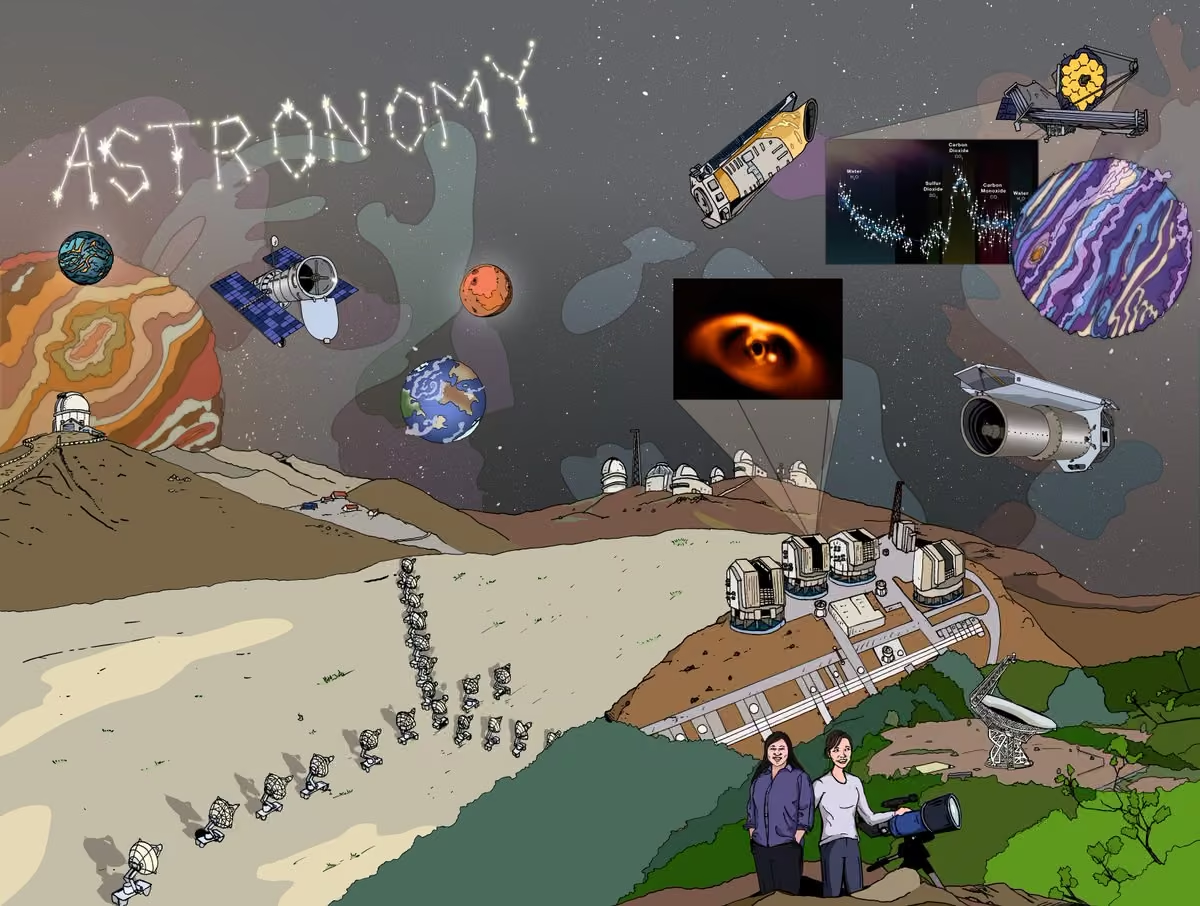
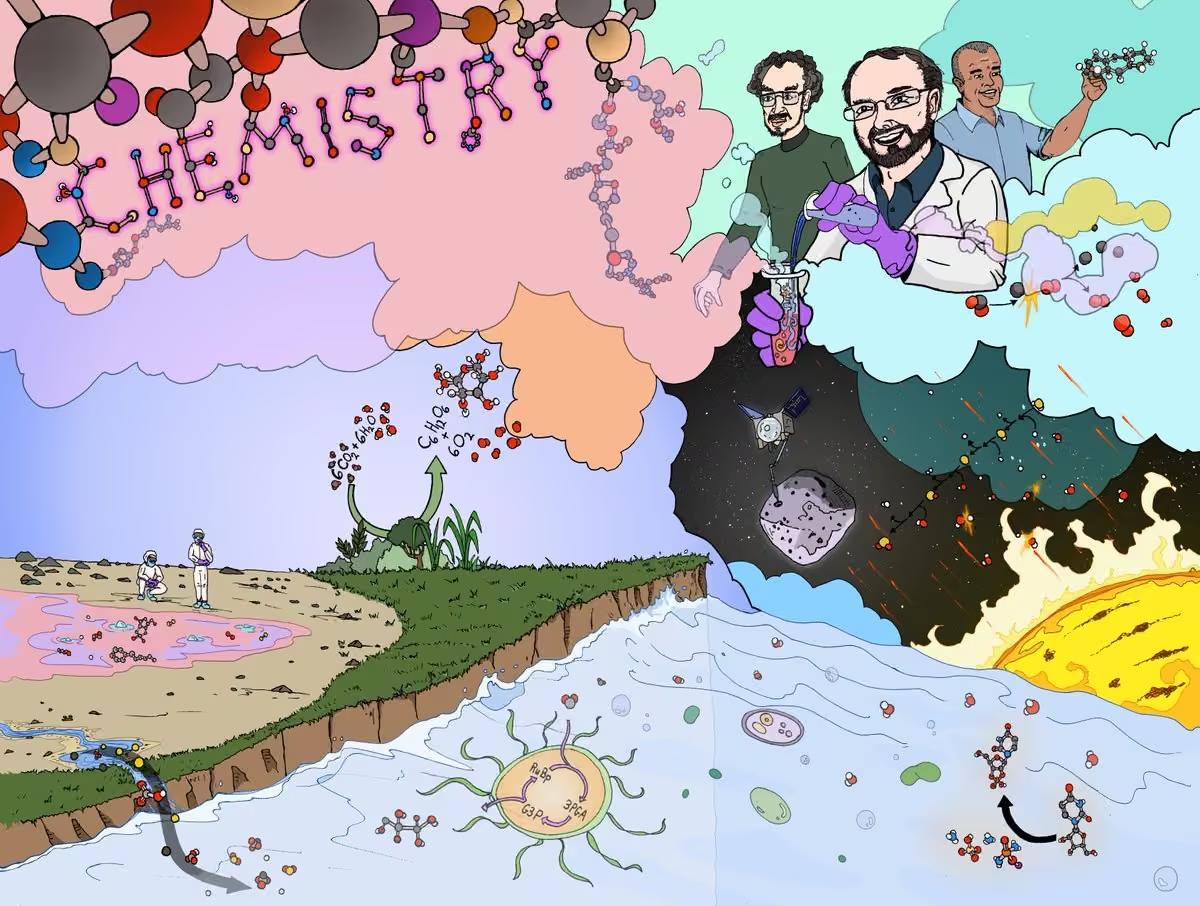
Just dropped: NASA Science posters and digital backgrounds are here! 🛰️✨
Explore a stunning composite image inspired by astrobiology – from life's tiniest building blocks on Earth to the farthest reaches of the cosmos.
Download now: science.nasa.gov/multimedia/astrobiology-poster-and-virtu… -
ARCHIVED – NASA Astrobiology reposted
ARCHIVED - Dr. Nicky Fox
@NASAScienceAA
NASA-developed testbeds have demonstrated and tested artificial intelligence and autonomy technologies that could enable future missions to search for signs of life and potentially habitable bodies in our solar system and beyond. science.nasa.gov/science-research/science-enabling-techno…
-
ARCHIVED – NASA Astrobiology
@NASAAstrobio
Go off-road with Dr. Amanda Stockton and her team as they venture into the lava fields of a recently erupted volcano, studying how quickly microbial life on Earth recovers from such a catastrophic event! Episode 1 of our docuseries – Our Alien Earth – is out now on YouTube:
-
ARCHIVED – NASA Astrobiology
@NASAAstrobio
A NASA-led team found that water on Comet 67P/Churyumov–Gerasimenko has a molecular makeup similar to Earth's oceans. This challenges earlier findings and supports the idea that Jupiter-family comets could have delivered water to Earth, a key element for the development of life.
-
ARCHIVED – NASA Astrobiology reposted
ARCHIVED: NASA LSP
@NASA_LSP
🚀NASA has selected @SpaceX to launch Dragonfly!
.@NASA's Dragonfly mission is a rotorcraft that has eight rotors and flies like a large drone. It will explore Saturn's moon Titan examining dozens of promising locations. Titan is the second largest moon in our solar system and has a nitrogen-based atmosphere that is four times denser than Earth's.
Dragonfly will help advance astrobiology and advance our search for the building blocks of life!
📲www.nasa.gov/news-release/nasa-awards-launch-services-con… -
ARCHIVED – NASA Astrobiology
@NASAAstrobio
Our next guest for #askastrobio is Dr. Penny Boston, a pioneer in astrobiology exploration of unique and diverse cave systems all over the world. What type of cave system do YOU think is most important for informing our search for life beyond Earth? Vote: www.youtube.com/channel/UC14eJIZ7EWssOo9sBGp4d7Q/communit…
-
ARCHIVED – NASA Astrobiology reposted
ARCHIVED - NASA Expeditions
@NASAExpeditions
Ask an astrobiologist...and speleologist! (Speleologists study caves.)
Earth's strangest ecosystems — including some found deep underground — prepare us to ask the right questions when searching for life in other places.
ARCHIVED – NASA Astrobiology
@NASAAstrobio
Dr. Penny Boston is an astrobiologist & speleologist who has explored some of the most extreme subsurface environments on Earth to learn life's limits. Join #askastrobio Nov. 26 at 3pm ET to ask her questions live on-air. www.youtube.com/live/lzuBEiteTLQ
Share this post for a shoutout! -
ARCHIVED – NASA Astrobiology
@NASAAstrobio
The mystery of why life preferentially uses molecules with specific orientations (chirality) just deepened with a new discovery. It challenges the notion that early life was predisposed to select 'left-handed' amino acids, which dominate in modern proteins. www.nasa.gov/science-research/planetary-science/astrobiol…
Biology buffs, this is for you. -
ARCHIVED – NASA Astrobiology reposted
ARCHIVED - Dr. Nicky Fox
@NASAScienceAA
How did Mars get its moons? 🌖
A series of @NASA supercomputer simulations revealed a possible new explanation to this longstanding Martian mystery – one where an asteroid was “ripped apart” by the Red Planet’s strong gravitational pull: www.nasa.gov/solar-system/planets/mars/making-mars-moons-…
#sc24 #scienceThis media couldn't be displayed. See it on the original post. -
ARCHIVED – NASA Astrobiology reposted
ARCHIVED - Curiosity Rover
@MarsCuriosity
One last look 🥹
Gediz Vallis channel is where I stumbled across that intriguing pure sulfur rock (and it turns out this whole field was full of them!) but I'm off to explore new locales.
Before I left, I snapped this pano. Explore it in 360: www.youtube.com/watch?v=sbfODUMgfcw&list=PLTiv_XWHnOZofSN… -
ARCHIVED – NASA Astrobiology reposted
NASA Marshall
@NASA_Marshall
🚀@EuropaClipper launched on it's mission to study Jupiter's icy moon on Oct. 14. After reaching Jupiter in April 2030, the spacecraft will conduct 49 close flybys of #europa.
Learn about the suite of instruments that will gather data during these flybys: science.nasa.gov/mission/europa-clipper/ -
ARCHIVED – NASA Astrobiology reposted
NASA Solar System
@NASASolarSystem
Sunlight glinting off a liquid hydrocarbon lake on Titan, as captured by the Cassini mission. Our upcoming #dragonflymission rotorcraft will further explore this moon. science.nasa.gov/mission/dragonfly/
NASA Webb Telescope
@NASAWebb
Webb has its eye on Titan, a moon of Saturn, a place where methane and ethane make up its liquid rivers and seas. Learn more about future Titan studies in Other Worlds Episode 3.
NASA+: plus.nasa.gov/video/other-worlds-titan/
Youtube: youtu.be/LkYPsWnsBOc -
ARCHIVED – NASA Astrobiology
@NASAAstrobio
Scientists have developed a new method to more accurately compute the effects of tides on planetary interiors. Body tides can shape how worlds evolve over time and, in cases like Europa and Enceladus, their potential habitability for life. Learn more >> science.nasa.gov/science-research/planetary-science/astro…
-
ARCHIVED – NASA Astrobiology
@NASAAstrobio
Streaming live now: www.youtube.com/watch?v=B_3bMaUIsBM
ARCHIVED – NASA Astrobiology
@NASAAstrobio
What will the next decade of research and exploration for astrobiology at NASA look like? Join us for an overview of the forthcoming NASA Decadal Astrobiology and Exploration Strategy on Nov. 8 at 1pm ET. We'll also host a Q&A and discuss how you can get involved! ➡️ astrobiology.nasa.gov/events/nasa-astrobiology-town-hall-…
-
ARCHIVED – NASA Astrobiology
@NASAAstrobio
To celebrate the successful launch of @EuropaClipper, we’ve released a new edition of our graphic history series! Mysteries await in the cold, dark expanse beyond the asteroid belt – explore them through this visual journey today: science.nasa.gov/science-research/planetary-science/astro…
-
ARCHIVED – NASA Astrobiology reposted
ARCHIVED - NASA's Perseverance Mars Rover
@NASAPersevere
Wishing you a spellbinding "sol"-iday from the Red Planet 👻
Check out the latest blog from my team, who were definitely feeling the #nasahalloween spirit when they wrote this! science.nasa.gov/blog/a-spooky-soliday-haunting-whispers-… -
ARCHIVED – NASA Astrobiology
@NASAAstrobio
Coming up at 2pm ET! Drop your questions below and join the conversation live here: www.youtube.com/live/7guSJlZH6cY
ARCHIVED – NASA Astrobiology
@NASAAstrobio
Oct. 31 at 2pm ET, Dr. David Grinspoon, our Senior Scientist for Astrobiology Strategy, joins a new episode of #askastrobio. What's next for astrobiology research at NASA? How are we preparing if extraterrestrial life were to be found?
➡️ Drop your questions & join: www.youtube.com/live/7guSJlZH6cY -
ARCHIVED – NASA Astrobiology reposted
NASA Marshall
@NASA_Marshall
Our universe is full of mysterious sights and sounds. 👻
Explore some of our most frightful finds from past Halloweens >> science.nasa.gov/solar-system/sinister-solar-system/ -
ARCHIVED – NASA Astrobiology
@NASAAstrobio
Astrobiology is often described as the origin, evolution, distribution, and future of life in the Universe & our next #askastrobio guest has lately been focusing on the future. What aspects of the future of life do you find most interesting? Cast your vote: www.youtube.com/post/UgkxXrx6ix5ZQb0bjtw56xYibVs_5tU_yfyh
-
ARCHIVED – NASA Astrobiology
@NASAAstrobio
Don't miss #askastrobio with Dr. David Grinspoon on Oct. 31 at 1pm ET! David is an award-winning science communicator leading astrobiology strategy at NASA. His research includes investigating possible conditions for life on other planets. Share for a shoutout on the show:
-
ARCHIVED – NASA Astrobiology reposted
NASA
@NASA
We need your help cloudgazing on Mars!
Identify Martian cloud formations and help researchers understand more about the Red Planet’s atmosphere and weather. @DoNASAScience with us: science.nasa.gov/get-involved/citizen-science/new-project… -
ARCHIVED – NASA Astrobiology reposted
ARCHIVED - NASA Europa Clipper
@EuropaClipper
TIME’s Best Inventions of 2024 list is out now, and our mission to Jupiter's ocean moon Europa is on it! Learn more about the largest @NASA spacecraft ever built for a mission headed to another planet: www.nasa.gov/general/nasa-technologies-named-among-time-i… #timebestinventions
-
ARCHIVED – NASA Astrobiology
@NASAAstrobio
Oct. 31 at 2pm ET, Dr. David Grinspoon, our Senior Scientist for Astrobiology Strategy, joins a new episode of #askastrobio. What's next for astrobiology research at NASA? How are we preparing if extraterrestrial life were to be found?
➡️ Drop your questions & join: www.youtube.com/live/7guSJlZH6cY -
ARCHIVED – NASA Astrobiology reposted
NASA JPL
@NASAJPL
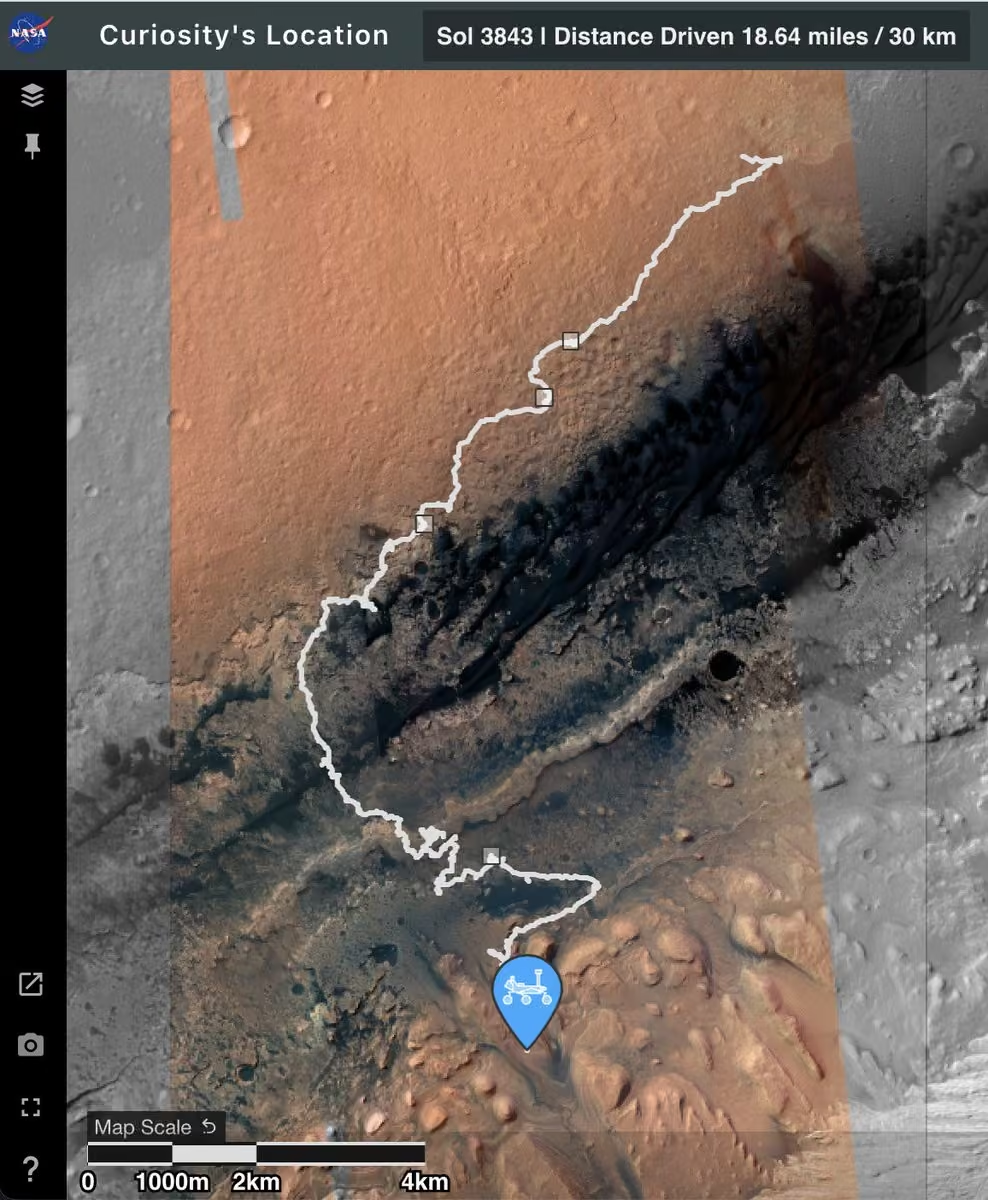
The journey continues for @NASAPersevere! Since landing on Mars in 2021, our robotic explorer has driven 18+ miles (~30 km) and has collected 24 samples of rock and regolith as well as one air sample.
More on the rover's progress and what lies ahead: www.jpl.nasa.gov/news/nasas-perseverance-rover-looks-back…This media couldn't be displayed. See it on the original post. -
ARCHIVED – NASA Astrobiology
@NASAAstrobio
Deep down, in an ocean beneath its ice shell, Jupiter’s moon Europa might be temperate & nutrient-rich, an ideal environment for some form of life — what we call “habitable." Our @EuropaClipper mission, launched on Oct. 14, aims to find out.
Here's how: www.nasa.gov/missions/europa-clipper/can-life-exist-on-an… -
ARCHIVED – NASA Astrobiology
@NASAAstrobio
Get a crash course in astrobiology and the NASA missions shaping our understanding of life in the universe on this week’s Houston, We Have a Podcast episode featuring Program Scientist and Habitable World Program lead Dr. Becky McCauley Rench: www.nasa.gov/podcasts/houston-we-have-a-podcast/astrobiol…
-
ARCHIVED – NASA Astrobiology reposted
NASA Mars
@NASAMars
Could water ice on the Martian surface hide microscopic life below?
Ecosystems found within Earth’s icy regions are inspiring scientists to ask new questions: www.nasa.gov/solar-system/planets/mars/could-life-exist-b… -
ARCHIVED – NASA Astrobiology reposted
Learn With NASA
@LearnWithNASA
Sink your teeth into geology with a tasty new #nasastem activity demonstration. 🧛
This #halloween, use candy bars to make observations like a @NASA geologist! Practice sketching a sample and taking “fieldnotes” of what you see.
No tricks here, just tasty treats. 👻 -
ARCHIVED – NASA Astrobiology reposted
NASA JPL
@NASAJPL
One week ago, we said farewell to @EuropaClipper as it began its voyage to Jupiter's ocean moon.
Status update: It's already 2.4 million miles away from Earth! 🤯
NASA
@NASA
Separation confirmed!
@EuropaClipper is now sailing through space on its own, bound for the Jupiter system. This "message in a bottle" carries the names and hopes of millions, as we voyage together to search for a habitable world beyond Earth. -
ARCHIVED – NASA Astrobiology reposted
ARCHIVED - NASA Europa Clipper
@EuropaClipper
In case you missed it: Our voyage to Jupiter's intriguing moon Europa has begun. Here are some highlights. Next up...a gravity assist flyby of Mars in March. Ride along with us at nasa.gov/europaclipper #europaclipper
-
ARCHIVED – NASA Astrobiology
@NASAAstrobio
On Oct. 14, @EuropaClipper successfully launched on its long voyage to Jupiter, where it will investigate an enigmatic moon with an enormous subsurface ocean that may have conditions to support life. Relive the moment and learn more about its mission: www.nasa.gov/news-release/liftoff-nasas-europa-clipper-sa…
-
ARCHIVED – NASA Astrobiology reposted
ARCHIVED - Dr. Nicky Fox
@NASAScienceAA
How did life form on Earth? Can it exist elsewhere? How can humans thrive in space? 🌍✨
These are the core questions behind our #nasascience missions — questions that inspired our 2025 calendar. This year's theme — "Life" — explores how NASA studies habitability across the cosmos. 🌱🔬
From molecules to galaxies, discover the interconnectedness of it all: science.nasa.gov/multimedia/2025-nasa-science-planning-gu… -
ARCHIVED – NASA Astrobiology reposted
ARCHIVED - NASA Europa Clipper
@EuropaClipper
Look how far from Earth the spacecraft has traveled already!
Follow along: eyes.nasa.gov/apps/solar-system/ -
ARCHIVED – NASA Astrobiology reposted
NASA
@NASA
In praise of mystery ✨
After a successful launch aboard a @SpaceX Falcon Heavy rocket from @NASAKennedy, @EuropaClipper is on its way from our ocean world to another to see if Jupiter's moon Europa has conditions suitable for life: www.nasa.gov/news-release/liftoff-nasas-europa-clipper-sa… -
ARCHIVED – NASA Astrobiology reposted
Bill Nelson
@SenBillNelson
Liftoff, @EuropaClipper!
Today, we embark on a new journey across the solar system in search of the ingredients for life within Jupiter's icy moon.
Our next chapter in space exploration has begun. -
ARCHIVED – NASA Astrobiology reposted
NASA
@NASA
Watch as our largest planetary spacecraft takes flight!
@EuropaClipper is targeted to launch at 12:06pm ET (1606 UTC) on a Falcon Heavy rocket from @NASAKennedy, beginning its journey to Jupiter’s ocean moon, Europa. x.com/i/broadcasts/1DXxydorLMLJM -
ARCHIVED – NASA Astrobiology reposted
ARCHIVED: NASA LSP
@NASA_LSP
🚀LAUNCH UPDATE!
NASA’s #europaclipper is now targeting NET Monday, Oct. 14 for launch!
@NASAKennedy is “all clear” after the storm and teams are moving forward with preparations for the mission to Jupiter’s icy moon Europa.
📲blogs.nasa.gov/europaclipper/ -
ARCHIVED – NASA Astrobiology reposted
NASA JPL
@NASAJPL
As technically advanced as the @EuropaClipper spacecraft is, every part of it is made by people.
Dive into the symbolism of the vault plate: our message in a bottle from one water world to another. 🧵 -
ARCHIVED – NASA Astrobiology reposted
ARCHIVED: NASA LSP
@NASA_LSP
Post-Hurricane Milton assessments have begun at @NASAKennedy!
#europaclipper will not have an official launch date until teams are able to complete these assessments. Together with SpaceX, we are working to protect launch opportunities NET Oct 13.
ℹ️ blogs.nasa.gov/europaclipper/ -
ARCHIVED – NASA Astrobiology reposted
ARCHIVED: NASA LSP
@NASA_LSP
The encapsulated #europaclipper spacecraft was transported to the SpaceX hangar at Launch Complex 39A on Friday, Oct 4. Teams secured the spacecraft in the hangar and @NASAKennedy began hurricane preparations on Sunday, Oct 6.
Hurricane #milton is heading east through the Gulf of Mexico, towards Florida.
“The safety of launch team personnel is our highest priority, and all precautions will be taken to protect the Europa Clipper spacecraft” – Tim Dunn, LSP senior launch director for Europa Clipper -
ARCHIVED – NASA Astrobiology reposted
NASA Mars
@NASAMars
How did Mars become the planet we know today?
New data from @MarsCuriosity points to strong water evaporation in its ancient past – a possible clue into how the Red Planet became a desert. science.nasa.gov/solar-system/planets/mars/nasa-new-insig… -
ARCHIVED – NASA Astrobiology reposted
ARCHIVED - NASA Europa Clipper
@EuropaClipper
Teams have secured the spacecraft in SpaceX’s hangar at @NASAKennedy. The next launch opportunity will be determined once the storm passes. More: blogs.nasa.gov/europaclipper/
ARCHIVED: NASA LSP
@NASA_LSP
📢Launch Update!
.@NASA and @SpaceX are standing down from the Oct. 10, launch attempt of the agency’s @EuropaClipper mission due to anticipated hurricane conditions in the area.
Once the storm passes, recovery teams will assess the safety of the spaceport and the launch processing facilities for damage before personnel return to work.
📱blogs.nasa.gov/europaclipper -
ARCHIVED – NASA Astrobiology
@NASAAstrobio
🚀 Live coverage of pre-launch and launch day activities for @EuropaClipper begin next week. Mark your calendars!
10/8: Science briefing
10/9: Live Q&A with experts
10/10: Launch broadcast (English & Spanish)
For full details & where to watch, visit: science.nasa.gov/mission/europa-clipper/watch-online/?lin… -
ARCHIVED – NASA Astrobiology reposted
NASA
@NASA
Add a splash of NASA to your desktop or phone with scenes of a water world.
The launch window for @EuropaClipper, our mission to Jupiter’s ocean moon, opens on Oct. 10. Dive into the excitement with these brand-new wallpapers: science.nasa.gov/resource/europa-clipper-exploring-jupite… -
ARCHIVED – NASA Astrobiology reposted
Space 360
@Space360HQ
❄️ Did you know? The surface temperatures around the bright icy patches at Europa’s poles can drop as low as -370°F. But beneath that frigid exterior, warmth from tidal forces likely means the moon has a vast ocean with twice as much water as Earth: science.nasa.gov/mission/europa-clipper/
-
ARCHIVED – NASA Astrobiology reposted
ARCHIVED: NASA LSP
@NASA_LSP
🤩 One last look at #europaclipper as the payload fairings close!
The spacecraft will be on a nearly 6-year journey to investigate if there are habitable conditions on Jupiter’s moon Europa. Liftoff is targeted for Oct. 10 on a SpaceX Falcon Heavy!🚀
blogs.nasa.gov/europaclipper/ -
ARCHIVED – NASA Astrobiology reposted
NASA's Kennedy Space Center
@NASAKennedy
Your next dream water [world] destination 🚀
Tune in next week, starting Tues., Oct. 8 at 3:30pm ET for our #europaclipper science briefing, with additional briefings and launch coverage continuing through liftoff at 12:31pm ET Oct. 10.
Details: www.nasa.gov/news-release/nasa-sets-coverage-for-europa-c… -
ARCHIVED – NASA Astrobiology reposted
NASA
@NASA
Our @EuropaClipper spacecraft is sending science—and poetry—to Jupiter's unique moon.
Hear from Ada Limón, U.S. Poet Laureate, and planetary scientist Lynnae Quick Henderson in the latest episode of our Curious Universe podcast: www.nasa.gov/podcasts/curious-universe/europa-clippers-vo… -
ARCHIVED – NASA Astrobiology
@NASAAstrobio
NASA's @EuropaClipper is launching soon to see if Jupiter's icy moon could support life! 🚀
Ask experts about the science and engineering behind our first mission to an ocean world live TODAY at 3pm ET: www.youtube.com/live/MiiTYYTqoJY
Use #asknasa for questions. -
ARCHIVED – NASA Astrobiology
@NASAAstrobio
It's what's under the surface that counts – both on Europa and here on Earth. Join @EuropaClipper's #runwaytojupiter campaign and bring to light what makes your personal style truly unique! Share your looks with the hashtag for a chance to be featured: science.nasa.gov/mission/europa-clipper/
-
ARCHIVED – NASA Astrobiology reposted
ARCHIVED - NASA Europa Clipper
@EuropaClipper
"It's a surreal experience to know that we're doing some really humanity-changing science with this spacecraft." Meet Jenny Kampmeier, a science systems engineer, and hear about her unconventional journey to NASA. www.youtube.com/playlist?list=PLTiv_XWHnOZqkhPC1tfhVqnM1S…
This media couldn't be displayed. See it on the original post. -
ARCHIVED – NASA Astrobiology reposted
ARCHIVED - NASA Europa Clipper
@EuropaClipper
Jupiter’s enigmatic ocean moon Europa is one of the most compelling destinations in the solar system. Next month, we set sail to explore it – and we hope you’ll ride along with us. The launch period opens Oct. 10: nasa.gov/europaclipper #europaclipper
This media couldn't be displayed. See it on the original post. -
ARCHIVED – NASA Astrobiology
@NASAAstrobio
Interested in NASA’s search for life in the universe? Want to know more about the people and missions uncovering the mysteries of the cosmos?
Dive into our astrobiology graphic history series this #nationalcomicbookday! Download issues 1-9 here: astrobiology.nasa.gov/resources/graphic-histories/?linkId… -
ARCHIVED – NASA Astrobiology
@NASAAstrobio
Dr. Sara Walker is an award-winning astrobiologist and theoretical physicist interested in the origin of life and discovering alien life on other worlds.
Use #askastrobio to learn about her work and career during our live Q&A on Sept. 25 at 3pm ET: www.youtube.com/live/UkhFqr9UDOY -
ARCHIVED – NASA Astrobiology
@NASAAstrobio
Our next #askastrobio guest, Dr. Sara Imari Walker, is redefining some of the biggest questions in astrobiology, a field that she calls pre-paradigm science. What previous paradigm-shift in science do YOU think was the most impactful? Cast your vote: www.youtube.com/post/Ugkx7Ei3i4mkK_k0GjL0O-04oQAKjG714NWl
-
ARCHIVED – NASA Astrobiology reposted
NASA JPL
@NASAJPL
Enceladus. Callisto. Ganymede. Europa. These are ocean worlds within our solar system, but what could future exploration look like?
Join us on Sept. 19 at 5pm PT / 8pm ET for a deep dive on ocean worlds and how we might investigate these alluring places. x.com/i/broadcasts/1rmGPoVyEaZKN -
ARCHIVED – NASA Astrobiology reposted
ARCHIVED - NASA Europa Clipper
@EuropaClipper
Taking fashion to extreme new heights! 💄🚀
Show off your outfits, makeup looks, nail art, and other creative expressions inspired by Jupiter's swirls and Europa's icy glam in the #runwaytojupiter style challenge. Your look could be featured by NASA!
science.nasa.gov/mission/europa-clipper/ -
ARCHIVED – NASA Astrobiology reposted
ARCHIVED - NASA Europa Clipper
@EuropaClipper
8 things to know about our expedition to explore Jupiter's ocean moon Europa: www.nasa.gov/missions/europa-clipper/8-things-to-know-abo…
Spoiler - No. 1 is "Europa is one of the most promising places to look for currently habitable conditions beyond Earth." -
ARCHIVED – NASA Astrobiology reposted
NASA
@NASA
Get to know @EuropaClipper before launch. The largest uncrewed spacecraft we've ever built is set to explore an ocean moon orbiting Jupiter–one of the most promising places to find an environment suitable for life beyond Earth. Tag questions #asknasa.
x.com/i/broadcasts/1dRKZdkBBRrJB -
ARCHIVED – NASA Astrobiology reposted
ARCHIVED - NASA Europa Clipper
@EuropaClipper
Join NASA leaders and members of our team tomorrow for a preview of our mission to Jupiter's intriguing moon Europa and the October launch.
📺Sept. 17 at 8am PT / 11am ET / 1500 GMT: youtube.com/live/Ij1wOLJE_g8This media couldn't be displayed. See it on the original post. -
ARCHIVED – NASA Astrobiology reposted
ARCHIVED - NASA Europa Clipper
@EuropaClipper
On Sept. 14, people all over the world will #observethemoon together. Learn more and join in: moon.nasa.gov/observe
There are some striking similarities – and some very intriguing differences – between Earth's Moon and Jupiter's moon Europa... 1/6 -
ARCHIVED – NASA Astrobiology reposted
NASA Goddard
@NASAGoddard
Water, water everywhere?
Over the last 3 billion years, most of Mars’ once abundant surface water disappeared. Using @NASAHubble and MAVEN, researchers found that some water molecules likely broke down in Mars’ atmosphere, with the atoms escaping to space.
science.nasa.gov/missions/hubble/nasas-hubble-maven-help-…This media couldn't be displayed. See it on the original post. -
ARCHIVED – NASA Astrobiology reposted
ARCHIVED - NASA Europa Clipper
@EuropaClipper
"Ever since Galileo saw that little sparkle next to Jupiter, Europa has been a super compelling destination." Meet @JHUAPL's Dipak Srinivasan, a communications systems engineer on our team. He shares the root of his inspiration – to contribute to our knowledge about Europa.
This media couldn't be displayed. See it on the original post. -
ARCHIVED – NASA Astrobiology reposted
ARCHIVED - NASA Europa Clipper
@EuropaClipper
That's a go: Today our mission passed a standard planning milestone known as Key Decision Point E. We're now approved to proceed toward a launch period that opens Thursday, Oct. 10. science.nasa.gov/blogs/europa-clipper/
-
ARCHIVED – NASA Astrobiology reposted
Hubble
@NASAHubble
Mars was once wet – so what happened to its water? 💧
Hubble teamed up with the Mars Atmosphere and Volatile Evolution (MAVEN) mission to find out more about how much water there was, what happened to it, and how its atoms escape into space: science.nasa.gov/missions/hubble/nasas-hubble-maven-help-…This media couldn't be displayed. See it on the original post. -
ARCHIVED – NASA Astrobiology reposted
ARCHIVED - NASA Europa Clipper
@EuropaClipper
The Europa Clipper mission is a marvel of science and engineering. It's also the work of human beings.
The "Behind the Spacecraft" series introduces team members and showcases not only their specific roles but the unique paths they took to get here. New episodes coming soon 📺🚀This media couldn't be displayed. See it on the original post. -
ARCHIVED – NASA Astrobiology reposted
ARCHIVED - NASA Europa Clipper
@EuropaClipper
Online storytellers: apply by Sept. 9 for a chance to join us in person at the launch in October.
NASA Events
@NASA_Events
Interested in sharing the story of our mission to Europa, Jupiter's icy moon?
Apply now for your opportunity to attend a #nasasocial at @NASAKennedy for the launch of our #europaclipper spacecraft: www.nasa.gov/social-media/nasa-invites-social-creators-to…
También en español: www.nasa.gov/es/la-nasa-invita-a-creadores-de-las-redes-s… -
ARCHIVED – NASA Astrobiology
@NASAAstrobio
Looking to relax this weekend? Travel with scientists to Earth's most extreme environments – all from the comfort of your home.
Watch episodes 1-3 of Our Alien Earth, now streaming on NASA+. ➡️plus.nasa.gov/series/our-alien-earth/ -
ARCHIVED – NASA Astrobiology reposted
NASA Universe
@NASAUniverse
A star’s habitable zone is the range of distances where conditions may be just right for liquid water to exist on the surface of an orbiting planet. Like toasting a perfectly golden marshmallow on a campfire, it can’t be too hot … or too cold: science.nasa.gov/exoplanets/habitable-zone/?linkId=570624447
-
ARCHIVED – NASA Astrobiology
@NASAAstrobio
Dr. Richard Camilli, the lead of this expedition, is taking your questions LIVE at 1 pm ET today. Ask about their research testing tech to discover life on ocean worlds. Use #askastrobio & join here: www.youtube.com/live/xGNIZwtO7ow
ARCHIVED – NASA Astrobiology
@NASAAstrobio
Our Alien Earth: A NASA Astrobiology Documentary Series – now streaming on NASA+
Join scientists on expeditions to our planet's most extreme environments & get a front-row seat to how research on Earth is shaping missions to search for life in the cosmos: plus.nasa.gov/video/our-alien-earth-greece/This media couldn't be displayed. See it on the original post. -
ARCHIVED – NASA Astrobiology
@NASAAstrobio
Our next #askastrobio guest, Dr. Richard Camilli is developing new technologies to help inform NASA on how to search for life on ocean worlds, like Europa. What do YOU think is the biggest challenge we face on the icy moon of Jupiter? Vote in our poll: www.youtube.com/post/Ugkxd2BSxavM5pwKDM10pUEF3Tg8LnowB_6V
-
ARCHIVED – NASA Astrobiology
@NASAAstrobio
On Aug. 29 at 1pm ET, #askastrobio welcomes Dr. Richard Camilli, who led an expedition to Santorini's undersea volcanoes testing @NASA_Technology to discover life on ocean worlds. Watch our new documentary following their journey and bring your questions: www.youtube.com/live/xGNIZwtO7ow
This media couldn't be displayed. See it on the original post. -
ARCHIVED – NASA Astrobiology
@NASAAstrobio
Check out this new tool from @NASA_Landsat that spells out words using satellite @NASAEarth data. science.nasa.gov/mission/landsat/
What's your unique signature? Drop it below! We'll start.
ARCHIVED - NASA Landsat
@NASA_Landsat
What if you could write a secret message… using Earth? 🕵️🌏
science.nasa.gov/mission/landsat/
ARCHIVED – NASA Astrobiology
@NASAAstrobio
-
ARCHIVED – NASA Astrobiology reposted
NASA JPL
@NASAJPL
In a place as far from the Sun as Jupiter, you need really big solar panels to power a spacecraft.
With the final installation of its massive solar arrays, @EuropaClipper is one step closer to launch. Why are they so important and so unique? See for yourself 👇This media couldn't be displayed. See it on the original post. -
ARCHIVED – NASA Astrobiology
@NASAAstrobio
Our Alien Earth: A NASA Astrobiology Documentary Series – now streaming on NASA+
Join scientists on expeditions to our planet's most extreme environments & get a front-row seat to how research on Earth is shaping missions to search for life in the cosmos: plus.nasa.gov/video/our-alien-earth-greece/This media couldn't be displayed. See it on the original post. -
ARCHIVED – NASA Astrobiology
@NASAAstrobio
Don't miss the Aug. 26 premiere of Our Alien Earth, streaming on plus.nasa.gov! This new series takes you to extreme environments, where scientists test technologies to inform missions related to NASA's search for life. Get a sneak peek: science.nasa.gov/science-research/planetary-science/astro…
This media couldn't be displayed. See it on the original post. -
ARCHIVED – NASA Astrobiology reposted
ARCHIVED - NASA Expeditions
@NASAExpeditions
Heather Graham examines Earth’s extreme environments for the chemical traces that microbial life leaves behind. Here, they’re studying a fumarole – a place where volcanic gases escape from underground – using a hydrogen sulfide collector and sampling equipment.
-
ARCHIVED – NASA Astrobiology reposted
ARCHIVED - NASA Expeditions
@NASAExpeditions
In Alaska’s Valley of 10,000 Smokes, glaciers are buried under huge piles of volcanic ash. Mars, too, has debris-covered glaciers. Emileigh Shoemaker & her team used Ground Penetrating Radar to gather info about long stretches of the subsurface before physically breaking ground.
-
ARCHIVED – NASA Astrobiology reposted
NASA Internships
@NASAInterns
Spring internship applications close this Friday, August 23. 📆
There's still time to get in your application! Check out this list of 100 don’t-miss @NASA internship opportunities to launch your career: www.nasa.gov/learning-resources/internship-programs/ -
ARCHIVED – NASA Astrobiology reposted
ARCHIVED - NASA Europa Clipper
@EuropaClipper
It's a first for interplanetary spaceflight, and it's a Juice-y one! On Aug. 19-20 the @ESA_JUICE spacecraft will make the first lunar-Earth flyby ever, using the gravity of both the Moon and Earth to bend its path as it travels to Jupiter to explore its moons.
🛰🌕🌏
ESA's Juice mission
@ESA_JUICE
It's just under two weeks until #esajuice’s lunar-Earth flyby and the team over at @esaoperations has measured our current trajectory to be right on target👌
Time for us to answer the big question: why has no one ever attempted a lunar-Earth flyby before?👉blogs.esa.int/rocketscience/2024/08/07/why-has-no-one-att… -
ARCHIVED – NASA Astrobiology
@NASAAstrobio
#tbt to 2022 when Earth’s first hydrothermal vent system under permanent ice cover was discovered! The site is excellent for answering questions about Enceladus and similar systems on ocean worlds. Learn how the search for life starts at home: astrobiology.nasa.gov/news/exploring-enceladus-in-the-arc…
-
ARCHIVED – NASA Astrobiology
@NASAAstrobio
2.5 years and 22 rock samples later, @NASAPersevere leaves Jezero Crater for its Crater Rim Campaign. Mission experts expect many discoveries to come as they investigate rocks from the most ancient crust of Mars, formed from a wealth of different processes.
ARCHIVED – NASA Astrobiology
@NASAAstrobio
One priority region of study is "Witch Hazel Hill." Orbital views of this location reveal bedrock similar to what was found at "Bright Angel," where Perseverance recently discovered the Cheyava Falls rock. More:
ARCHIVED – NASA Astrobiology
@NASAAstrobio
Just in: @NASAPersevere observed a rock with distinct features that may indicate that Mars hosted microbial life in its ancient past, but further research is needed. It contains a compelling detection of organic material, chemical signatures, and evidence of water interaction.
ARCHIVED – NASA Astrobiology
@NASAAstrobio
"Pico Turquino" is another region that is being prioritized for investigation. Imagery from @NASAMars orbiters indicates it contains ancient fractures that may have been caused by hydrothermal activity.
-
ARCHIVED – NASA Astrobiology reposted
Learn With NASA
@LearnWithNASA
Ignite your students' STEM spark this school year! 🪐 🚀 ☀️ ✈️
Follow along with @NASA all year long as we launch rockets, explore new worlds, develop unique technologies, and unveil scientific mysteries.
Keep up with the latest at www.nasa.gov/learning-resources/ -
ARCHIVED – NASA Astrobiology
@NASAAstrobio
Learn how Dr. Michael Thorpe turned a passion for hiking and environmental science into a career that advances our understanding of Earth and takes NASA’s exploration of Mars to new heights.
Not all science is done in a lab: www.nasa.gov/image-article/sedimentary-and-planetary-geol… -
ARCHIVED – NASA Astrobiology reposted
NASA Marshall
@NASA_Marshall
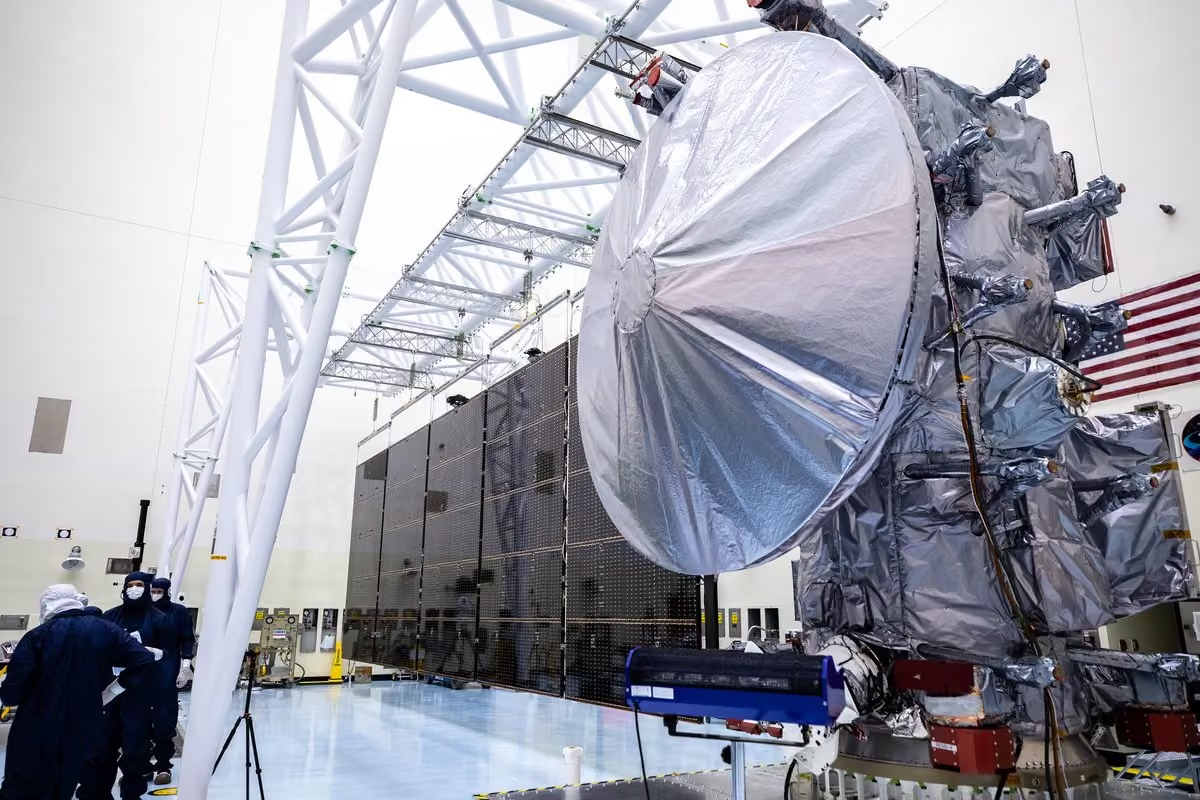
NASA’s @EuropaClipper spacecraft was recently moved at @NASAKennedy to accommodate the installation of its five-panel solar array.
The huge arrays – spanning more than 100 feet when fully deployed – will power the spacecraft as it flies around Jupiter’s icy moon, #europa. -
ARCHIVED – NASA Astrobiology reposted
ARCHIVED - Curiosity Rover
@MarsCuriosity
What's that about sticking the landing? 🥇
12 years ago, my landing on the Red Planet required 76 pyrotechnic devices and had zero margin for error – and my team absolutely nailed it.
Do you remember the drama of those "7 Minutes of Terror"?This media couldn't be displayed. See it on the original post. -
ARCHIVED – NASA Astrobiology
@NASAAstrobio
They grow up so fast. 🥹
Have a favorite @MarsCuriosity moment? Let us know ahead of this robotic geologist's 12-year landiversary.
ARCHIVED - Curiosity Rover
@MarsCuriosity
My 12-year landiversary is a few days away 🎉
From finding evidence Mars once had habitable environments to discovering rocks made of pure sulfur, I’ve done a lot since landing here in 2012.
Do you have any favorite moments of my journey?
ARCHIVED – NASA Astrobiology
@NASAAstrobio
We'll start. This #throwbackthursday, check out five significant discoveries made using the rover’s suite of astrobiology instruments!
ARCHIVED – NASA Astrobiology
@NASAAstrobio
Happy “landiversery" @MarsCuriosity! For 10 years, Curiosity has worked to reveal the potentially habitable climate of ancient Mars.
To celebrate, we’re breaking down 5 of the most significant discoveries made using the rover’s suite of #astrobiology instruments. A thread 🧵: -
ARCHIVED – NASA Astrobiology reposted
NASA Solar System
@NASASolarSystem
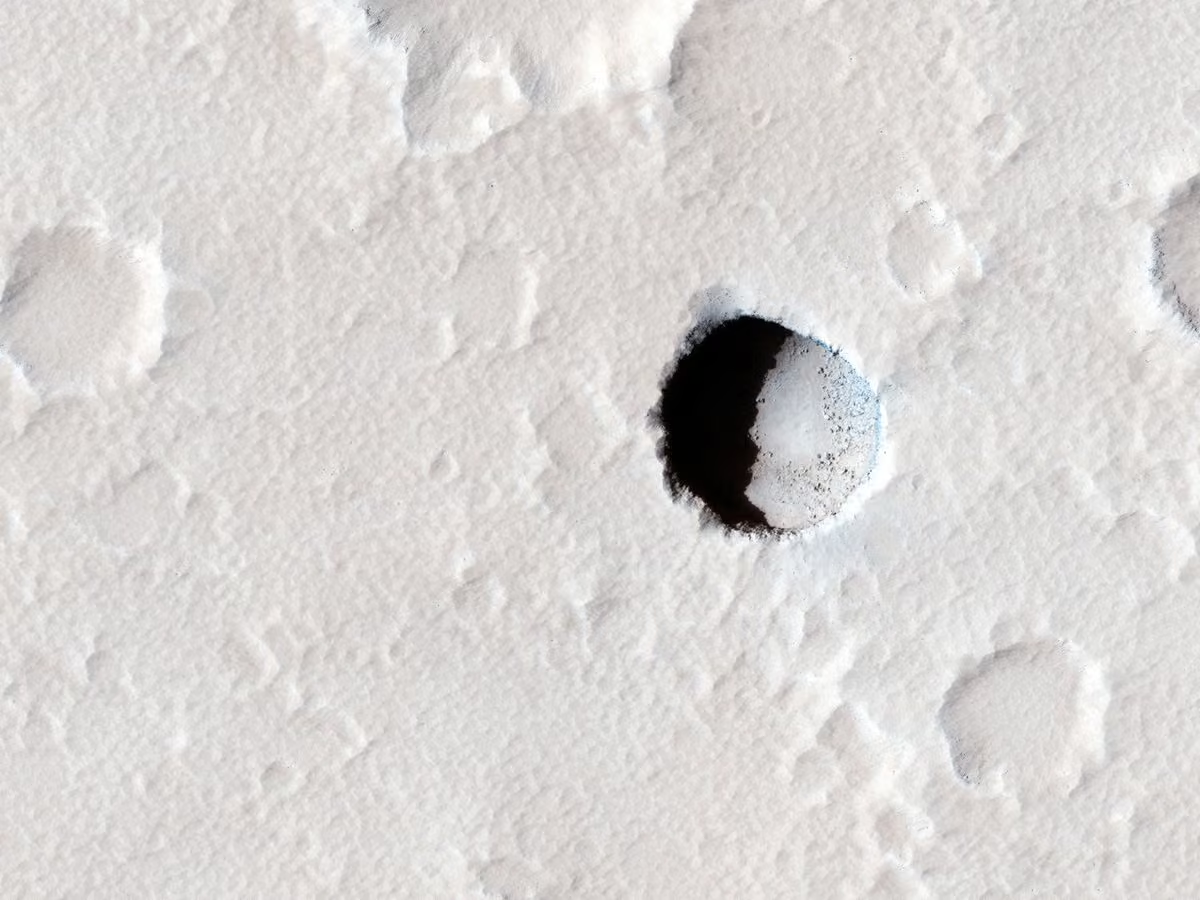
👀 I spy a Martian cave
From orbit, we have evidence of what’s below the surface of rocky worlds in our solar system. Spacecraft like the Lunar & Mars Reconnaissance Orbiters have observed pit craters that likely lead to lava tubes – caves formed from molten lava. -
ARCHIVED – NASA Astrobiology reposted
NASA's Kennedy Space Center
@NASAKennedy
🔴LIVE from Kennedy: Introducing the Clipper Cam!
Teams in our Payload Hazardous Servicing Facility are working on @NASAJPL's @EuropaClipper spacecraft to prepare it for launch. The mission will study Jupiter’s moon Europa.
Watch now: www.youtube.com/@KSCNewsroom/streams?cbrd=1&ucbcb=1
ARCHIVED: NASA LSP
@NASA_LSP
👀 Europa Clipper Cam is LIVE at KSC!
Technicians are preparing the Europa Clipper spacecraft for its nearly six-year journey to a moon of Jupiter. Check in at the clean room of the Payload Hazardous Servicing Facility! 👇
www.youtube.com/live/xaQvDp0RZvk -
ARCHIVED – NASA Astrobiology reposted
ARCHIVED - NASA's Perseverance Mars Rover
@NASAPersevere
What a week! Anyone else possibly discover signs of microbial life from billions of years ago on a planet 140 million miles from Earth?
No? Just me? -
ARCHIVED – NASA Astrobiology
@NASAAstrobio
Just in: @NASAPersevere observed a rock with distinct features that may indicate that Mars hosted microbial life in its ancient past, but further research is needed. It contains a compelling detection of organic material, chemical signatures, and evidence of water interaction.
ARCHIVED – NASA Astrobiology
@NASAAstrobio
"More than any previous Perseverance sample, this one requires the capabilities of terrestrial laboratories." – Ken Farley, @NASAJPL
Parts of this rock are now added to the rover's collection, and we’re looking forward to the scientific community’s continued study! -
ARCHIVED – NASA Astrobiology
@NASAAstrobio
Find out how you can become an astrobiologist – in Spanish! Download our newly released graphic history en español from @NASA_es today:
NASA en español
@NASA_es
AHORA DISPONIBLE EN ESPAÑOL: El camino a la astrobiología 📖
Desde la búsqueda de vida en Marte hasta el estudio de los océanos del sistema solar, los astrobiólogos tratan de desentrañar los misterios del cosmos.
Descubre más con esta novela gráfica: science.nasa.gov/astrobiology/learning-resources/graphic-… -
ARCHIVED – NASA Astrobiology reposted
NASA Space Apps Challenge
@SpaceApps
Registration for the 2024 NASA #spaceapps Challenge is open!🎉
Join innovators across the globe to tackle real-world challenges using @NASA & space-based data. Register & choose a Local Event: www.spaceappschallenge.org/nasa-space-apps-2024/
Please give a warm welcome to our 15 Space Agency Partners⬇️ -
ARCHIVED – NASA Astrobiology
@NASAAstrobio
Results from new experiments suggest that if the oceans of Europa or Enceladus support life, signs of that life, in the form of organic molecules, could survive just under the surface ice despite exposure to harsh radiation. science.nasa.gov/science-research/planetary-science/astro…
ARCHIVED – NASA Astrobiology
@NASAAstrobio
The studies indicate that robotic landers would not have to dig deep to find signs of life if they were present, and they provide pivotal data about amino acid degradation using Europa/Enceladus conditions.
ARCHIVED – NASA Astrobiology
@NASAAstrobio
Findings show that organic molecules degrade faster when mixed with dust but slower when contained in pure ice or within microorganisms like bacteria. This data could help optimize sampling site selection for future life-detection missions to these icy worlds.
-
ARCHIVED – NASA Astrobiology reposted
NASA JPL
@NASAJPL
🔴 The @NASAVoyager team is live on Reddit. Jump in and ask a question now! www.reddit.com/r/askscience/comments/1e4nsk3/askscience_a…
NASA JPL
@NASAJPL
An interstellar opportunity. 🛰️
Meet the @NASAVoyager mission team, who have seen it all – from exploring the outer region of our solar system in the 70s and 80s to the recent rescue mission of Voyager 1.
🔴 Tune in tomorrow at 11:30am PT for a Reddit AMA: -
ARCHIVED – NASA Astrobiology reposted
ARCHIVED - NASA's Perseverance Mars Rover
@NASAPersevere
This is me using AI to better investigate rocks on Mars more quickly! I've been using software that works with my PIXL instrument to beam X-rays at Martian rocks to reveal what minerals are present and then determine if it's worth examining more deeply: www.jpl.nasa.gov/news/heres-how-ai-is-changing-nasas-mars…
-
ARCHIVED – NASA Astrobiology
@NASAAstrobio
Artificial intelligence is enabling @NASAPersevere to autonomously seek the most promising samples of Martian mineralogy to help answer questions about the Red Planet's history & potential for past life. Learn how AI is changing our @NASAMars rover science: www.nasa.gov/missions/mars-2020-perseverance/perseverance…
-
ARCHIVED – NASA Astrobiology reposted
NASA Solar System
@NASASolarSystem
Join us today at 2:30pm ET for a Reddit AMA: reddit.com/r/askscience/
NASA JPL
@NASAJPL
An interstellar opportunity. 🛰️
Meet the @NASAVoyager mission team, who have seen it all – from exploring the outer region of our solar system in the 70s and 80s to the recent rescue mission of Voyager 1.
🔴 Tune in tomorrow at 11:30am PT for a Reddit AMA: -
ARCHIVED – NASA Astrobiology reposted
ARCHIVED - NASA's Perseverance Mars Rover
@NASAPersevere
Recently, I've been investigating a rock unlike any my team has seen so far on the planet. It could be among the oldest I've ever investigated – or the youngest.
This media couldn't be displayed. See it on the original post. -
ARCHIVED – NASA Astrobiology reposted
ARCHIVED - Curiosity Rover
@MarsCuriosity
🗓️ 6 months into the Earth year – here's what I've been up to on Mars:
- Entered a region possibly carved by an ancient river
- Drilled my 40th and 41st sample holes
- Studied a major solar storm
- Reached a half-mile of total elevation gain as I climb up Mt. Sharp -
ARCHIVED – NASA Astrobiology reposted
ARCHIVED - NASA Voyager
@NASAVoyager
#otd in 1979, I made my closest approach of Jupiter at a range of about 400,785 miles (645,000 km) and sent back new data on the planet’s clouds, ring system, and its four largest moons - including these shots of Europa. Check out the fractures on that icy moon! -V2
-
ARCHIVED – NASA Astrobiology
@NASAAstrobio
A new study finds that when viruses & bacteria interact during algal blooms in snow, it can speed up snowmelt in polar regions. Researchers also discovered hundreds of new viruses, expanding our knowledge of their genetic makeup in extreme environments. More: astrobiology.nasa.gov/news/study-examines-how-viruses-aff…
-
ARCHIVED – NASA Astrobiology reposted
NASA History Office
@NASAhistory
35 years ago today on July 3, 1989, this image of Neptune and Triton (bottom right) was returned by @NASAVoyager 2 spacecraft when it was 47 million miles from Neptune.
Voyager 2 is still the only spacecraft to have visited Neptune, flying by on August 25, 1989. -
ARCHIVED – NASA Astrobiology
@NASAAstrobio
Researchers created an RNA enzyme capable of aiding the replication of other RNA molecules that were able to carry out different functions. Such a process is thought to have been used by life on early Earth, and could have been essential for life in an “RNA world” to evolve over time into the DNA-based life we’re familiar with today.
astrobiology.nasa.gov/news/rna-catalyzed-evolution/ -
ARCHIVED – NASA Astrobiology
@NASAAstrobio
New research suggests it may be possible to detect tiny pieces of bacteria in plumes of material ejecting from icy ocean worlds using current techniques like mass spectrometry. This would allow scientists to determine the habitability of subsurface oceans from orbit.
ARCHIVED – NASA Astrobiology
@NASAAstrobio
This October, we launch our first mission to study the habitability of an ocean world – @EuropaClipper! Explore the spacecraft's suite of science instruments that will make this possible: science.nasa.gov/mission/europa-clipper/spacecraft-instru…
-
ARCHIVED – NASA Astrobiology reposted
NASA Mars
@NASAMars
The longest-operating spacecraft at Mars just completed its 100,000th orbit!
Odyssey launched 23 years ago in 2001. In addition to relaying data for @NASA's Mars surface missions, it has mapped minerals and ice across the Martian surface and more. www.nasa.gov/missions/odyssey/nasas-mars-odyssey-captures… -
ARCHIVED – NASA Astrobiology
@NASAAstrobio
Asteroid Vesta is the 2nd most massive body in our asteroid belt and according to new data, scientist don't think it formed there. Learn more about a new simulation for better understanding how objects in this belt (and our cosmic neighborhood) came to be: astrobiology.nasa.gov/news/where-did-vesta-come-from/?lin…
ARCHIVED – NASA Astrobiology
@NASAAstrobio
#asteroidday is June 30! Celebrate by exploring our catalog of meteorites, including samples from Vesta: ares.jsc.nasa.gov/astromaterials3d/sample-catalog.htm?ori…
-
ARCHIVED – NASA Astrobiology reposted
ARCHIVED - NASA's Perseverance Mars Rover
@NASAPersevere
A lens cover on my SHERLOC instrument got stuck a while back, preventing me from collecting certain types of data that help me look for potential signs of ancient microbial life. But thanks to my ingenious team my instrument is operational again! www.jpl.nasa.gov/news/detective-work-enables-perseverance…
-
ARCHIVED – NASA Astrobiology reposted
NASA Solar System
@NASASolarSystem
Our #osirisrex mission went to asteroid Bennu to learn more about the early solar system. Early analyses of the returned sample reveal organic molecules and surprisingly, phosphates, which indicate that Bennu may have once been part of a wet world. www.nasa.gov/missions/osiris-rex/surprising-phosphate-fin…
-
ARCHIVED – NASA Astrobiology reposted
ARCHIVED - NASA Europa Clipper
@EuropaClipper
Jupiter’s moon Europa shows strong evidence for an ocean of liquid water beneath its icy crust. In fact, it could have all the ingredients needed for life. In October, we set sail to take a closer look – here's how we'll do it.
This media couldn't be displayed. See it on the original post. -
ARCHIVED – NASA Astrobiology reposted
ARCHIVED - NASA Europa Clipper
@EuropaClipper
Like trailblazing missions before it, we'll accelerate our spacecraft's journey to the outer solar system by making gravity assist flybys of inner planets. We'll slingshot past Mars in February 2025 and Earth in December 2026. europa.nasa.gov/mission/timeline/
NASA History Office
@NASAhistory
It's all about the journey! 🪐
25 years ago today, the Cassini spacecraft, marking the 617th day of its voyage to Saturn, completed its second flyby of the planet Venus. Cassini reached the Saturn system 5 years later in 2004.
📷 Cassini being prepared for launch in 1997 -
ARCHIVED – NASA Astrobiology reposted
NASA Mars
@NASAMars
There's a potential treasure trove inside each of @NASAPersevere’s sample tubes: Martian air!
Scientists could study that air to learn how the Red Planet’s atmosphere and water cycle have changed over time. www.nasa.gov/missions/mars-2020-perseverance/perseverance… -
ARCHIVED – NASA Astrobiology reposted
NASA JPL
@NASAJPL
Why are atmospheric scientists excited about @NASAPersevere's rock samples?
Each sample tube contains a tiny bit of Martian air. Studying this air could tell us not just about Mars' current climate and atmosphere, but how it’s changed over time. www.jpl.nasa.gov/news/why-scientists-are-intrigued-by-air… -
ARCHIVED – NASA Astrobiology
@NASAAstrobio
Discovery alert! The #atacamatrenchancients from our latest episode of #askastrobio discovered Chile's deepest methane seeps at ~3000 meters depth. Chemosynthetic organisms like clams were found living here, relying on methane for energy instead of sunlight.
Watch the full episode here: youtu.be/En8jD81Tbx8
ARCHIVED – NASA Astrobiology
@NASAAstrobio
We can learn a lot from the bacteria and animals here on how life can persist in the dark and where we might also find it in our universe!
-
ARCHIVED – NASA Astrobiology
@NASAAstrobio
Living cells today are surrounded by double-layered membranes known as a lipid bilayer. A team of scientists may have found clues about how early life on Earth could have first formed these essential structures that separate the inside of the cell from the environment outside.
🔗 astrobiology.nasa.gov/news/forming-a-double-chained-proto… -
ARCHIVED – NASA Astrobiology reposted
ARCHIVED - NASA Sun & Space
@NASASun
How do you draw a pride flag? 🤔
With SCIENCE!
This flag is a composite of NASA imagery of phenomena from Earth and far, far beyond it. Details below ⬇️
Credit: Rachel Lense -
ARCHIVED – NASA Astrobiology reposted
ARCHIVED - NASA's Perseverance Mars Rover
@NASAPersevere
A route change on my way to Bright Angel has led me through an unexpectedly diverse geological playground, Neretva Vallis! This ancient river channel – which carried most of the water that flowed into Jezero Crater billions of years ago – is filled with intriguing boulders.
-
ARCHIVED – NASA Astrobiology reposted
NASA Science
@NASAScience_
Astronauts will swab outer surfaces of @Space_Station to learn if station releases microbes and, if so, how far they travel. Samples could inform what microorganisms can survive the harsh space environment and potentially contaminate planetary bodies visited on future missions.
-
ARCHIVED – NASA Astrobiology reposted
NASA Science
@NASAScience_
Searching for extremophiles, want to come? 🦠🔎
Join us on June 13 as @NASA_Astronauts swab for microbial life on the outside of @Space_Station during their spacewalk. Live coverage on NASA+ begins at 6:30 am ET. www.nasa.gov/missions/station/iss-research/monitoring-mic… -
ARCHIVED – NASA Astrobiology
@NASAAstrobio
Earth's ocean not only plays a crucial role in sustaining life on our planet, but it also teaches us about ocean worlds in our solar system & life's potential in the cosmos! Join @NASASolarSystem and us for a special deep dive into this topic for #nationaloceanmonth: science.nasa.gov/solar-system
-
ARCHIVED – NASA Astrobiology reposted
ARCHIVED - Curiosity Rover
@MarsCuriosity
See those moving specks?
Recently, my routine dust monitoring coincided with a major solar event hitting the Red Planet, and the charged particles that hit my camera caused distortions. It's the biggest radiation surge I've detected since landing in 2012! www.nasa.gov/solar-system/planets/mars/nasa-watches-mars-… -
ARCHIVED – NASA Astrobiology reposted
NASA Citizen Science
@DoNASAScience
While NASA scientist Dr. Brian Day battled cancer, he helped Amaey fight his battle too. Fueled by insatiable curiosity, Amaey Shah spent his final days achieving a dream – to become a scientist & explore space – even in isolation and inspiring us all: science.nasa.gov/get-involved/citizen-science/the-moon-an…
-
ARCHIVED – NASA Astrobiology reposted
NASA
@NASA
We’ve selected 10 proposals to study more affordable, faster ways of bringing samples from Mars’ surface back to Earth. These samples could help us understand how habitable worlds like Earth form and evolve.
www.nasa.gov/news-release/nasa-exploring-alternative-mars… -
ARCHIVED – NASA Astrobiology
@NASAAstrobio
Celebrate #worldoceanday on June 8 with a ship-to-shore episode of #askastrobio! Enjoy a front row seat to scientists making new discoveries in Earth's ocean, high-def tours of the Falktor Too vessel, & research tied to the search for life on ocean worlds: youtu.be/En8jD81Tbx8
This media couldn't be displayed. See it on the original post. -
ARCHIVED – NASA Astrobiology reposted
NASA Webb Telescope
@NASAWebb
What goes into finding a potentially habitable planet?
Learn how Webb’s sensitive vision may help us detect and characterize the atmospheres of some of the most promising candidates orbiting cool stars — and lay the groundwork for future missions: science.nasa.gov/blogs/webb/ -
ARCHIVED – NASA Astrobiology reposted
ARCHIVED - Dr. Nicky Fox
@NASAScienceAA
Looking for water beneath the thick ice crusts of planetary bodies using remote-sensing instruments is challenging. A #nasa-sponsored team is developing quantum magnetometers to track down these enormous, but elusive, bodies of water. science.nasa.gov/science-research/science-enabling-techno…
-
ARCHIVED – NASA Astrobiology
@NASAAstrobio
Pssst... coming live to you soon with some exciting discoveries. Share this post for a shout-out on the show, and bring your questions at 3pm ET.
ARCHIVED – NASA Astrobiology
@NASAAstrobio
Astrobiologists are currently searching for 'living fossils' & studying methane seeps in the ocean – and you have a front row seat! On June 4, #askastrobio goes LIVE from their research vessel to take your questions & tour their ship. Join at 3pm ET: www.youtube.com/live/1rHAGttSTKM
-
ARCHIVED – NASA Astrobiology
@NASAAstrobio
LIVE ship tour and Q&A at 3pm ET today. Set a reminder to join for #nationaloceanmonth: www.youtube.com/live/1rHAGttSTKM
Catch a glimpse of life at sea & learn about research tied to the origin of life, ocean world exploration, and climate change.
Use #askastrobio for questions!This media couldn't be displayed. See it on the original post. -
ARCHIVED – NASA Astrobiology
@NASAAstrobio
Have a favorite ocean world? Show it some love this #nationaloceanmonth and vote in our #askastrobio poll: www.youtube.com/@nasaastrobiology/community
Winners announced today at 3pm ET when we take your questions about ocean world exploration live from the decks of the Falkor Too research vessel!
ARCHIVED – NASA Astrobiology
@NASAAstrobio
-
ARCHIVED – NASA Astrobiology
@NASAAstrobio
Astrobiologists are currently searching for 'living fossils' & studying methane seeps in the ocean – and you have a front row seat! On June 4, #askastrobio goes LIVE from their research vessel to take your questions & tour their ship. Join at 3pm ET: www.youtube.com/live/1rHAGttSTKM
-
ARCHIVED – NASA Astrobiology reposted
ARCHIVED - NASA Europa Clipper
@EuropaClipper
"I think things come into our lives to help us get from one place to an even better one."
Of course the spacecraft's ride was packed with a little something extra to start its 2,500-mile cross-country trip to @NASAKennedy.
NASA JPL
@NASAJPL
We BELIEVE in daring mighty things together.
It takes a lot of teamwork to prepare a spacecraft, and before @EuropaClipper was packed up for its journey to @NASAKennedy, we had a special visit by a special “coach.” #goeuropaclipper -
ARCHIVED – NASA Astrobiology
@NASAAstrobio
Set a reminder to set sail with #askastrobio on June 4 at 3pm ET: www.youtube.com/live/1rHAGttSTKM
Drs. Lauren Seyler & Armando Azua-Bustos take questions LIVE during a tour of Falkor Too, a research vessel traveling the coast of Chile in search of living fossils along the seafloor.
ARCHIVED – NASA Astrobiology
@NASAAstrobio
If you're interested in ocean exploration, ocean worlds in our solar system, and what it's like living and working on a research vessel, then you do not want to miss this episode!
-
ARCHIVED – NASA Astrobiology
@NASAAstrobio
Using NASA's TESS telescope and other facilities, astronomers discovered a new temperate, Earth-sized world that could unlock key questions about habitability and our solar system's evolution. Learn more about Gliese 12 b, which is well-suited for further study by @NASAWebb:
-
ARCHIVED – NASA Astrobiology
@NASAAstrobio
👏Another milestone achieved on the road to launch. Next, teams will process the spacecraft and perform final checkouts ahead of October's scheduled liftoff to Jupiter. #goeuropaclipper!
ARCHIVED - NASA Europa Clipper
@EuropaClipper
A journey of 1.6 billion miles starts with a cross-country flight. ✈️🚀 Our spacecraft has arrived @NASAKennedy ahead of the launch slated for October! Thanks for the lift, @usairforce. www.jpl.nasa.gov/news/nasas-europa-clipper-makes-cross-co…
-
ARCHIVED – NASA Astrobiology reposted
NASA Webb Telescope
@NASAWebb
Plan a visit to "Other Worlds" from the comfort of your screen. 📺
Episode 2 of this series takes us to one of Jupiter's most exciting moons. Get to know the scientists exploring this ocean world with Webb & prepping for the @EuropaClipper launch: www.youtube.com/watch?v=2C5wzE1J8BM -
ARCHIVED – NASA Astrobiology reposted
NASA Universe
@NASAUniverse
An international team recently spotted SPECULOOS-3 b, an exoplanet about 55 light-years from Earth and nearly the same size. It orbits an ultra-cool red dwarf, a star a thousand times dimmer than the Sun that pummels the planet with radiation. Learn more: science.nasa.gov/universe/exoplanets/discovery-alert-an-e…
-
ARCHIVED – NASA Astrobiology
@NASAAstrobio
New high-def images of Europa support the theory of a salty liquid ocean bubbling up through the moon's ice crust. These #junomission views reveal signs of possible plume activity and polar ice crust migration. More on @EuropaClipper's future destination: www.nasa.gov/missions/juno/nasas-juno-provides-high-defin…
ARCHIVED – NASA Astrobiology
@NASAAstrobio
Here, you can see the location of a double ridge running east-west (blue box) with possible plume stains and the chaos feature the team calls "the Platypus" (orange box). These features hint at current surface activity and the presence of subsurface liquid water on the moon.
-
ARCHIVED – NASA Astrobiology
@NASAAstrobio
Know someone who loves stargazing? 🔭
Inspire them to reach new heights with our new graphic novel, Becoming an Astrobiologist! This guide breaks down pathways into astronomy careers that help answer humanity's biggest questions. Download free today: science.nasa.gov/astrobiology/learning-resources/graphic-… -
ARCHIVED – NASA Astrobiology reposted
ARCHIVED - Dr. Nicky Fox
@NASAScienceAA
A groundbreaking paper by @NASAAmes's Lynn Rothschild and her team explores the potential of synthetic cell development. From fighting diseases to unraveling the mysteries of life, synthetic cells could hold the key to a myriad of benefits for humanity: www.nasa.gov/general/researchers-develop-founding-documen…
-
ARCHIVED – NASA Astrobiology reposted
NASA JPL
@NASAJPL
Moving a 6,000-pound spacecraft is tricky, like when we maneuvered @EuropaClipper into JPL's thermal vacuum chamber, where teams simulated the conditions it will experience in space.
Up next: Moving the spacecraft from our California clean room to @NASAKennedy in Florida.This media couldn't be displayed. See it on the original post. -
ARCHIVED – NASA Astrobiology reposted
ARCHIVED - NASA Europa Clipper
@EuropaClipper
Your name here: If you signed up to send your name to Europa, it has been loaded aboard our spacecraft, along with messages and artwork connecting one water world with another. To see – and hear – more, just dive in: science.nasa.gov/mission/europa-clipper/ #goeuropaclipper
-
ARCHIVED – NASA Astrobiology
@NASAAstrobio
Water can be found in regions around black holes! Similar to how lasers amplify visible light, water can amplify microwave light. These “water masers” can be particularly bright near the central black holes in certain galaxies. Learn more: science.nasa.gov/mission/hubble/science/explore-the-night… #blackholeweek
-
ARCHIVED – NASA Astrobiology
@NASAAstrobio
If you love space, comics, and art you’re going to love our graphic novel series Astrobiology: The Story of our Search for Life in the Universe. Download issues 1-9 this #freecomicbookday to explore key discoveries, missions, and how you can get involved! science.nasa.gov/astrobiology/learning-resources/graphic-…
-
ARCHIVED – NASA Astrobiology reposted
Hubble
@NASAHubble
Just this morning, Hubble changed its clock. 🕒
Remember Y2K? It turns out Hubble has something similar – only Hubble’s clock restarts every 6,213 days, 18 hours, 48 minutes, and 31.875 seconds.
AKA, about every 17 years, so today marked Hubble's second clock change!This media couldn't be displayed. See it on the original post. -
ARCHIVED – NASA Astrobiology reposted
ARCHIVED - NASA Europa Clipper
@EuropaClipper
Iconic! NASA has selected 40 undergrad students for the new Europa ICONS (Inspiring Clipper: Opportunities for Next-generation Scientists) internship program, which matches students with mentors from the mission’s science team to conduct original research. science.nasa.gov/directorates/smd/planetary-science-divis…
-
ARCHIVED – NASA Astrobiology reposted
ARCHIVED - NASA Europa Clipper
@EuropaClipper
Astrobiologists seek to unravel the mysteries of life in the cosmos, including studying the ocean worlds of our solar system. Download @NASAAstrobio’s latest graphic novel "Becoming an Astrobiologist" and find out how you can get involved: science.nasa.gov/astrobiology/learning-resources/graphic-…
-
ARCHIVED – NASA Astrobiology reposted
NASA
@NASA
Do you want to learn how to contribute to our search for life beyond Earth? Do you like graphic novels?
We have just what you're looking for! Check out "Becoming an Astrobiologist," @NASAAstrobio’s newest free graphic novel: science.nasa.gov/astrobiology/learning-resources/graphic-… -
ARCHIVED – NASA Astrobiology reposted
Learn With NASA
@LearnWithNASA
Feed your students' curiosity with the latest issue of @NASAAstrobio's graphic novel series!
From what to study in school to career tracks, this comic-book-style guide breaks down different paths for contributing to NASA's search for life. 🔎🦠
astrobiology.nasa.gov/resources/graphic-histories/ -
ARCHIVED – NASA Astrobiology reposted
NASA Universe
@NASAUniverse
Are you curious about the stars and the potential for life among them?
From what to study in school to career paths, learn how you can get involved with the search for life in @NASAAstrobio's new graphic novel "Becoming an Astrobiologist." science.nasa.gov/astrobiology/learning-resources/graphic-… -
ARCHIVED – NASA Astrobiology
@NASAAstrobio
💬 JUST RELEASED: Issue #9 of our graphic novel series!
From what to study in school to career paths as a scientist – learn how you can contribute to the search for life beyond Earth through a comic-book-style narrative. Download today: science.nasa.gov/astrobiology/learning-resources/graphic-… -
ARCHIVED – NASA Astrobiology reposted
NASA Mars
@NASAMars
Peak solar activity this year will give two NASA spacecraft – MAVEN and Curiosity – the opportunity to study solar maximum from Mars.
Their findings could help design radiation protection for future astronauts on the Red Planet. 👩🚀 www.nasa.gov/solar-system/planets/mars/nasa-scientists-ge… -
ARCHIVED – NASA Astrobiology reposted
NASA Internships
@NASAInterns
Live, laugh, launch your career! 💖
The next round of Pathways Internships will accept applications from Aug. 14 - Aug. 21, 2024. These hands-on internships offer a direct route to conversion into a career with @NASA.
Prepare to apply: www.nasa.gov/careers/pathways/?linkId=410286309 -
ARCHIVED – NASA Astrobiology
@NASAAstrobio
Join scientist and artist Dr. Aaron Gronstal at 3 p.m. ET today to explore ways to get involved with NASA's search for life!
Bring your questions and join here: www.youtube.com/live/95AWvN5G9Ec
ARCHIVED – NASA Astrobiology
@NASAAstrobio
"Becoming an Astrobiologist," our latest graphic novel, will be released tomorrow alongside an #askastrobio Q&A with the author at 3 pm ET! Ahead of the show, we want to know which of the following core subjects of astrobiology are your favorite. Vote now: www.youtube.com/post/Ugkx4fVEVQbll8KT-QZtvyRh2jllxN5DY0Zm
-
ARCHIVED – NASA Astrobiology reposted
ARCHIVED - Curiosity Rover
@MarsCuriosity
I've been sniffing traces of methane in Gale Crater for years, but why it's there and how it behaves has puzzled scientists. A new proposal suggests that the gas may be sealed under solidified salt deposits in the Martian regolith: science.nasa.gov/solar-system/planets/mars/why-is-methane…
-
ARCHIVED – NASA Astrobiology reposted
ARCHIVED - NASA Europa Clipper
@EuropaClipper
What an honor to carry a Message in a Bottle from Earth – including millions of names and tributes to our shared connections – when we set sail for Jupiter and its ocean moon Europa later this year. Thank you. europa.nasa.gov/spacecraft/vault-plate/ #webbys
NASA
@NASA
The results are in: we're bringing home 13 #webbys!
Thanks to all of you for your support and for helping us share space with the world—and congrats to our digital communicators across NASA on their Webby Awards and People's Voice Awards. Full list here: www.nasa.gov/general/nasa-wins-6-webby-awards-8-webby-peo… -
ARCHIVED – NASA Astrobiology
@NASAAstrobio
Happy launch anniversary, @NASAHubble! For 34 years, this observatory has been providing clues about planetary formation and insight into life's potential in the Solar System—all while unveiling the beauty of the cosmos. Explore its anniversary image here: science.nasa.gov/missions/hubble/hubble-celebrates-34th-a…
-
ARCHIVED – NASA Astrobiology
@NASAAstrobio
With over 5,000 confirmed @NASAExoplanets in our universe and more to be discovered, help NASA search for potential civilizations from the palm of your hand! Celebrate #citscimonth and @DoNASAScience by volunteering with the “Are We Alone” project today: science.nasa.gov/citizen-science/are-we-alone-in-the-univ…
-
ARCHIVED – NASA Astrobiology reposted
ARCHIVED - NASA Europa Clipper
@EuropaClipper
Europa’s ocean fascinates scientists, in part, for what it might teach us about the most important water world we know: our own. Celebrate #earthday with @NASAEarth and explore the many ways we’re monitoring and protecting our planet’s water:
science.nasa.gov/earth/ -
ARCHIVED – NASA Astrobiology
@NASAAstrobio
Earth – a protector of everything we know and love, and a teacher for better understanding worlds beyond our own. 💙
Celebrate our beautiful home this #earthday by sharing a picture of your favorite place on this planet using #globalselfie! -
ARCHIVED – NASA Astrobiology reposted
NASA Solar System
@NASASolarSystem
Why Saturn's planet-sized moon Titan is one of the most intriguing destinations in the solar system: science.nasa.gov/saturn/moons/titan/
Make your virtual visit: eyes.nasa.gov/apps/solar-system/ -
ARCHIVED – NASA Astrobiology
@NASAAstrobio
✅ One step closer to Titan! @NASA confirmed the #dragonflymission to Saturn's organic-rich moon. This allows the mission to progress to completion of final design, followed by the construction and testing of the entire spacecraft and science instruments. science.nasa.gov/missions/dragonfly/nasas-dragonfly-rotor…
-
ARCHIVED – NASA Astrobiology reposted
ARCHIVED NASA Exoplanets
@NASAExoplanets
April is #citscimonth and there are lots of ways to join in. Of course, we're partial to the programs where you can discover worlds, but you do you and @DoNASAScience! science.nasa.gov/citizen-science/?linkId=399424889
-
ARCHIVED – NASA Astrobiology
@NASAAstrobio
The countdown is on to vote for your favorite internet moment – and #osirisrex & @EuropaClipper are up for awards! Help these teams secure #webbys before time runs out on April 18 by voting below.
#tobennuandback: wbby.co/40148N
#goeuropaclipper: wbby.co/40002N -
ARCHIVED – NASA Astrobiology reposted
Space 360
@Space360HQ
It's #citscimonth and we’re inviting everyone to @DoNASAScience!
So what is citizen science? Collaborations between scientists and YOU. No matter your age or skill level, you can contribute to science projects that can help us make important discoveries: science.nasa.gov/citizen-science/?linkId=395968421 -
ARCHIVED – NASA Astrobiology reposted
NASA
@NASA
As Sagan said, "Extraordinary claims require extraordinary evidence." In turn, Mars Sample Return requires innovation.
In response to September's independent review board, we're rising to the challenge of an updated mission design to attempt to get samples back sooner, cheaper, and more simply: www.nasa.gov/news-release/nasa-sets-path-to-return-mars-s… -
ARCHIVED – NASA Astrobiology
@NASAAstrobio
RT @NASAScienceAA: LIVE NOW: Join us for a virtual townhall as we discuss the agency’s response to the 2023 Mars Sample Return Independent…
-
ARCHIVED – NASA Astrobiology reposted
NASA
@NASA
We’re live now with @SenBillNelson and @NASAScienceAA as they provide an update on the Mars Sample Return program: youtube.com/watch?v=5PA1qhzkSlA
-
ARCHIVED – NASA Astrobiology
@NASAAstrobio
On April 15, we're hosting a media teleconference to share updates on the Mars Sample Return program following an independent review board report from September 2023. Tune in at 1pm ET to learn more: www.nasa.gov/news-release/nasa-invites-media-to-mars-samp…
-
ARCHIVED – NASA Astrobiology
@NASAAstrobio
Kepler-452b is the first super-Earth found in the habitable zone of a star like our Sun, where water could pool on its surface. While we don't know if it can support life, it is about 60% larger than Earth and is highly likely to be rocky. www.nasa.gov/image-article/spin-around-an-exoplanet-most-…
This post corrects an earlier version. -
ARCHIVED – NASA Astrobiology reposted
NASA Earth
@NASAEarth
Water touches everything 🌎
The 2024 #earthday poster celebrates one of the most unique parts of our planet – the ocean. Made with satellite images from @NASA missions, it reminds us of the ocean’s beauty and its importance in our lives.
Download: science.nasa.gov/multimedia/earth-day-2024-poster/?linkId… -
ARCHIVED – NASA Astrobiology reposted
NASA JPL
@NASAJPL
🔴 Welcome to the Spacecraft Assembly Facility - we’re live!
See @EuropaClipper up close before we ship it to @NASAKennedy in preparation for launch this October. Drop your questions in the chat for a chance to get them answered live on-air!
x.com/i/broadcasts/1lDxLPAqyzMxm -
ARCHIVED – NASA Astrobiology reposted
NASA JPL
@NASAJPL
How will @EuropaClipper study Jupiter's icy moon?
Europa Clipper will perform 50 flybys of Europa to gather measurements of the internal ocean, map the surface composition and geology, and hunt for plumes of water vapor that may be venting from the icy crust. -
ARCHIVED – NASA Astrobiology reposted
NASA Solar System
@NASASolarSystem
It's an honor just to be nominated (but...vote for us 😉)
NASA is up for 13 #webbys, including social media and broadcast coverage of two planetary missions - #osirisrex and @EuropaClipper!
Here's how to vote for your favorite NASA internet moments: www.nasa.gov/general/nasa-receives-13-nominations-for-the… -
ARCHIVED – NASA Astrobiology reposted
-
ARCHIVED – NASA Astrobiology reposted
NASA JPL
@NASAJPL
The @EuropaClipper spacecraft will soon head to @NASAKennedy to prepare for launch, so don't miss your chance to get a tour of the spacecraft up close in the JPL clean room.
🗓️Tune in April 11 at 1pm PT: x.com/i/broadcasts/1lDxLPAqyzMxm -
ARCHIVED – NASA Astrobiology reposted
ARCHIVED NASA Exoplanets
@NASAExoplanets
Earth hasn't always been a pale blue dot. It's also been a lava-covered rock, a tropical riot of earth-shaking dinosaurs, and an Ice Age expanse where cave-dwelling humans hunted mammoths. If we're looking for another Earth, which one? science.nasa.gov/exoplanets/
-
ARCHIVED – NASA Astrobiology reposted
NASA Mars
@NASAMars
Earth isn’t the only planet in our solar system that experiences solar eclipses – Mars does, too!
While Martian moons aren’t the right size or distance to fully cover the Sun, @NASAPersevere recently spotted some cool transits. ⬇️ -
ARCHIVED – NASA Astrobiology
@NASAAstrobio
Rich in water-deposited minerals, @NASAPersevere’s latest Mars rock sample is considered promising for preserving a rich record of an ancient habitable environment on the Red Planet. These minerals are often good at conserving ancient signs of life on Earth.
-
ARCHIVED – NASA Astrobiology
@NASAAstrobio
In the market for asteroid Bennu samples?
You can now request a piece of the 4.5 billion-year-old material for scientific research and/or public display. Browse the #osirisrex Sample Catalog and apply by June 25: science.nasa.gov/blogs/osiris-rex/ -
ARCHIVED – NASA Astrobiology reposted
NASA's Johnson Space Center
@NASAJohnson
24 hours until the clock runs out⏰
Do you want to work and live like an astronaut on Mars? A simulated Mars analog at NASA’s Johnson Space Center in Houston, Texas is searching for volunteers! Apply now before the deadline: www.nasa.gov/humans-in-space/chapea/participate/ -
ARCHIVED – NASA Astrobiology reposted
NASA Earth
@NASAEarth
Everything you need to know about the 2024 total solar eclipse👇
🗓️ April 8 science.nasa.gov/eclipses/future-eclipses/eclipse-2024/
🗺️ Where's the path of totality? science.nasa.gov/eclipses/future-eclipses/eclipse-2024/wh…
🤔 What can I see? science.nasa.gov/feature/solar-eclipse-guide/
👁️ Stay safe! science.nasa.gov/eclipses/future-eclipses/eclipse-2024/sa…
🎥 Watch live: science.nasa.gov/eclipses/future-eclipses/eclipse-2024/live/ -
ARCHIVED – NASA Astrobiology reposted
NASA
@NASA
In a world where rocket launches take center stage, @NASAAmes Exobiology Deputy Branch Chief Melissa Kirven-Brooks finds her proudest moment in witnessing her colleagues launch their careers. www.nasa.gov/image-article/exobiology-deputy-branch-chief… #womenshistorymonth
-
ARCHIVED – NASA Astrobiology
@NASAAstrobio
The universe is full of molecules. But how and when do these transform into life?
Ask questions like this to an origin of life expert on a new episode of Ask an Astrobiologist with Dr. Jim Cleaves! We're LIVE today at 3pm ET. Set a reminder to join: www.youtube.com/live/I4OyNK7Ik2U -
ARCHIVED – NASA Astrobiology
@NASAAstrobio
One of the challenges of searching for life in the universe is deciding on a definition for what life actually is. What do you think has caused the most trouble in trying to define life? Vote in our #askastrobio poll & watch our live show on March 29: www.youtube.com/channel/UC14eJIZ7EWssOo9sBGp4d7Q/communit…
-
ARCHIVED – NASA Astrobiology
@NASAAstrobio
We’re all made of star stuff – but how do these cosmically abundant compounds self-organize to form life as we know it?
On March 29 at 3pm ET, Dr. Henderson "Jim" Cleaves takes your questions on this topic and more during a new episode of #askastrobio! Set a reminder: -
ARCHIVED – NASA Astrobiology reposted
NASA Webb Telescope
@NASAWebb
Since we began our Mid-Infrared Madness tournament, you’ve helped us narrow down 16 images from Webb’s Mid-Infrared Instrument (MIRI) to just four. This time, you determine who’s making it to the championship round!
-
ARCHIVED – NASA Astrobiology reposted
NASA JPL
@NASAJPL
Remember to tune in live today at 12:30pm PT as we take you inside JPL's Space Simulator and chat about @EuropaClipper's recent testing.
👾 Twitch→ www.twitch.tv/nasa/schedule?segmentID=4e573386-105f-4427-… 🎥 YouTube↴ www.youtube.com/watch?v=Pnh_kWEVRv4 -
ARCHIVED – NASA Astrobiology
@NASAAstrobio
Say it with us, "#goeuropaclipper!"
We've checked off another milestone for @EuropaClipper: passing a gauntlet of hard-core tests to ensure it's ready to brave the wild vibrations of launch, the intense heat and cold of space, and the punishing radiation of Jupiter. -
ARCHIVED – NASA Astrobiology reposted
ARCHIVED NASA Exoplanets
@NASAExoplanets
There is evidence that two exoplanets orbiting a red dwarf star are "water worlds." These worlds, in a planetary system 218 light-years away in the constellation Lyra, are unlike any planet found in our solar system. science.nasa.gov/missions/hubble/two-exoplanets-may-be-mo…
-
ARCHIVED – NASA Astrobiology
@NASAAstrobio
"Life did not take over the world by combat, but by networking."
This #whm, we're celebrating one of our heroes, Dr. Lynn Margulis. Lynn championed the significance of symbiosis in evolution (the interaction between organisms living in close physical association), giving rise to the diversity of life as we know it! astrobiology.nasa.gov/resources/heroes/margulis/ -
ARCHIVED – NASA Astrobiology reposted
NASA JPL
@NASAJPL
Europa Clipper is back (in the clean room)!
Tune into our 24/7 live cam to watch the team put the finishing touches on the spacecraft before it heads off to @NASAKennedy later this spring to prep for launch this October! www.youtube.com/watch?v=RDzlfITCXYc -
ARCHIVED – NASA Astrobiology reposted
ARCHIVED - NASA Europa Clipper
@EuropaClipper
On #worldpoetryday, enjoy "In Praise of Mystery: A Poem for Europa" by @adalimon.
science.nasa.gov/mission/europa-clipper/ -
ARCHIVED – NASA Astrobiology
@NASAAstrobio
With its solar arrays deployed, @EuropaClipper spans more than 100 feet (~30 meters) – about the length of a basketball court! Step into the cleanroom with @NASAJPL engineers as they provide a behind-the-scenes look at the nearly completed spacecraft.
This media couldn't be displayed. See it on the original post. -
ARCHIVED – NASA Astrobiology reposted
NASA Solar System
@NASASolarSystem
Happy #firstdayofspring to everyone in Earth's Northern Hemisphere. 🪻
Here's a little thread of information about the #vernalequinox and seasons on our planet and others... -
ARCHIVED – NASA Astrobiology
@NASAAstrobio
New findings may remove a major barrier from one of the most promising possible chemical pathways leading to the origin of life, proving that the Miller paradox may not be as much of a complication as previously thought. ➡️ astrobiology.nasa.gov/news/jumping-a-hurdle-in-the-origin…
We're breaking it down below.
ARCHIVED – NASA Astrobiology
@NASAAstrobio
Life on Earth is thought to have originated through increasingly complex chemical reactions, which would later create large molecules that organized into the 1st living cell. One problem? Some of the necessary reactions can produce molecules that inhibit the formation of other key components essential for life, like nucleobases and sugars. Welcome, the Miller paradox.
ARCHIVED – NASA Astrobiology
@NASAAstrobio
In this new study, researchers found that despite the potential formation of an inhabitant molecule, the chemical reactions can still synthesize some of the key building blocks crucial for life.
-
ARCHIVED – NASA Astrobiology reposted
NASA's Johnson Space Center
@NASAJohnson
Do you have what it takes to #beanastronaut?🧑🚀
NASA is searching for their next explorers to train, fly, and go beyond for the benefit of all of humanity. We look forward to finding the next space pioneers that will venture further than ever before. Astronaut applications are open now through April 2! Learn more: www.nasa.gov/humans-in-space/astronauts/become-an-astronaut/This media couldn't be displayed. See it on the original post. -
ARCHIVED – NASA Astrobiology
@NASAAstrobio
#icymi: @NASAWebb identified a variety of complex organic molecules in interstellar ices surrounding two protostars, which are key ingredients for making potentially habitable worlds. The finding helps us understand where molecules necessary for life originate in space!
ARCHIVED – NASA Astrobiology
@NASAAstrobio
NASA Webb Telescope
@NASAWebb
Webb found complex organic molecules such as ethanol and likely acetic acid (found in vinegar) around protostars IRAS 2A & IRAS 23385. The team also detected formic acid, methane, formaldehyde, and sulfur dioxide (which may have helped drive metabolic reactions on a young Earth).
-
ARCHIVED – NASA Astrobiology reposted
NASA Marshall
@NASA_Marshall
Getting ready for our journey to #europa! 🗺️
On March 6, technicians at @NASAKennedy unfolded and fully extended the first of two five-panel solar arrays for the agency’s @EuropaClipper spacecraft.
Learn more about this process and what's coming next >> www.nasa.gov/image-article/nasas-europa-clipper-solar-arr… -
ARCHIVED – NASA Astrobiology reposted
ARCHIVED - NASA Europa Clipper
@EuropaClipper
Water connects our planet Earth and Jupiter's moon Europa. It connects all life as we know it, and all cultures. Hear the word for "water" spoken in 100+ languages, try out our waveform generator, and let us know: what inspires you to explore? science.nasa.gov/mission/europa-clipper/ #goeuropaclipper
-
ARCHIVED – NASA Astrobiology reposted
NASA Webb Telescope
@NASAWebb
How were ingredients for life delivered to Earth?
New Webb data shows icy, carbon-containing molecules around 2 baby stars that have yet to form planets. These findings tell us about how such molecules may get transported to potentially habitable worlds: science.nasa.gov/missions/webb/cheers-nasas-webb-finds-et… -
ARCHIVED – NASA Astrobiology
@NASAAstrobio
Water connects all life as we know it and all cultures. When @EuropaClipper journeys to Jupiter's icy moon, it will carry the word water in more than 100 languages. Use our waveform generator to listen, reflect, and share: how does exploration unite us? ➡️ science.nasa.gov/mission/europa-clipper/
#goclipper -
ARCHIVED – NASA Astrobiology reposted
ARCHIVED - Curiosity Rover
@MarsCuriosity
Fun fact: My raw images feed is a direct pipeline of all of the unedited photos I send back to Earth. 🤓 mars.nasa.gov/msl/multimedia/raw-images/?order=sol+desc,i…
-
ARCHIVED – NASA Astrobiology
@NASAAstrobio
Launching this October, @EuropaClipper embarks on a journey to Jupiter’s icy moon to determine if it could support life. Riding aboard will be 2.6 million of your names, a tribute to the probability of life in the cosmos, and the word water in 100 languages. www.jpl.nasa.gov/news/nasa-unveils-design-for-message-hea…
#goclipper -
ARCHIVED – NASA Astrobiology reposted
NASA
@NASA
Live from #sxsw, U.S. Poet Laureate @AdaLimon and our Planetary Science Division Director Dr. Lori Glaze talk about the art and science of exploration, including the reveal of a piece of @EuropaClipper that will carry Limón’s poem to space. x.com/i/broadcasts/1yNGaZAqXpgJj
-
ARCHIVED – NASA Astrobiology
@NASAAstrobio
In the future you could be…
🔍 Searching for life on @NASAMars
🛰️ Exploring a water world with @EuropaClipper
🔭 Charting the cosmos with @NASAExoplanets
From early career to senior level roles, explore your track to NASA this #nationalcareersweek: sciencecareers.apps.nasa.gov?linkId=184243033 -
ARCHIVED – NASA Astrobiology
@NASAAstrobio
Astrobiologists, geologists, chemists – you name it. NASA is looking for multidisciplinary candidates to join their next astronaut class who could fly on @NASAArtemis missions to the Moon and, eventually, Mars.
🚀 Shoot for the stars. Apply to #beanastronaut through April 2:This media couldn't be displayed. See it on the original post. -
ARCHIVED – NASA Astrobiology reposted
NASA Webb Telescope
@NASAWebb
What’s Webb looking at? 👀
With our new tool, now you can check Webb’s current targets, where those targets are in the sky, the scientists behind the observations — and more: science.nasa.gov/missions/hubble/what-are-hubble-and-webb… -
ARCHIVED – NASA Astrobiology
@NASAAstrobio
New calculations using #junomission data find that Jupiter's moon Europa generates 1,000 tons of oxygen every two hours, allowing us to more accurately measure the amount of possible chemical energy available to life in its subsurface ocean through oxygenation. Details:
ARCHIVED – NASA Astrobiology
@NASAAstrobio
Oxygen production is one of the many things @EuropaClipper will study when it arrives at the icy moon in 2030. Explore its suite of sophisticated instruments to determine if Europa has conditions suitable for life. science.nasa.gov/mission/europa-clipper/
ARCHIVED – NASA Astrobiology
@NASAAstrobio
Correction: Jupiter's moon Europa generates 1,000 tons of oxygen every 24 hours.
-
ARCHIVED – NASA Astrobiology reposted
ARCHIVED - NASA Europa Clipper
@EuropaClipper
Something special will happen at #sxsw this year: the opening session on Mar. 8 features US Poet Laureate Ada Limón reading the poem that will ride aboard our spacecraft, and discussing art and science with NASA's Dr. Lori Glaze. You can watch too! plus.nasa.gov/scheduled-video/nasas-europa-clipper-sxsw-2…
-
ARCHIVED – NASA Astrobiology reposted
NASA Solar System
@NASASolarSystem
In exploration, the road often leads into the desert. In this view, Venus, Mars, and the Moon are rising over a dune in @DeathValleyNPS. Let's take a look at other dunes across the solar system. 🧵
-
ARCHIVED – NASA Astrobiology
@NASAAstrobio
From a quest for belonging to charting discoveries in the cosmos, Dr. Natasha Batalha's story reminds us that we can only answer humanity's biggest questions through the power of community. Learn how she's empowering a new generation this #womenshistorymonth:
-
ARCHIVED – NASA Astrobiology
@NASAAstrobio
Explore space and poetry with NASA and Poet Laureate Ada Limón during the opening session of #sxsw, streaming live on March 8 on NASA+. Hear the poem and learn about @EuropaClipper, launching this October to determine if Jupiter's icy moon has conditions suitable for life.
-
ARCHIVED – NASA Astrobiology reposted
ARCHIVED - NASA Europa Clipper
@EuropaClipper
📺 Just dropped: Episode 2 of "Other Worlds" on NASA+
It's all about our favorite moon. Watch now at plus.nasa.gov/video/other-worlds-europa/ -
ARCHIVED – NASA Astrobiology
@NASAAstrobio
The results are in! The detection of organic compounds on Mars wins with 58% of the vote.
Join today's show at 1pm ET to learn about this discovery & more with Dr. Michael Meyer. Submit questions to be answered live on-air using #askastrobio. ➡️ www.youtube.com/live/TVmnCQcfmVA
ARCHIVED – NASA Astrobiology
@NASAAstrobio
Our next guest for #askastrobio, Dr. Michael Meyer, has been the Lead Scientist for the Mars Exploration Program for over 20 years, overseeing countless milestones. What do you think was the most exciting Martian discovery? Vote now in our @YouTube poll: www.youtube.com/channel/UC14eJIZ7EWssOo9sBGp4d7Q/communit…
-
ARCHIVED – NASA Astrobiology reposted
NASA Universe
@NASAUniverse
Every breath you take contains oxygen formed by humongous stars that exploded before our solar system formed. #mondaymotivation
-
ARCHIVED – NASA Astrobiology
@NASAAstrobio
Our next guest for #askastrobio, Dr. Michael Meyer, has been the Lead Scientist for the Mars Exploration Program for over 20 years, overseeing countless milestones. What do you think was the most exciting Martian discovery? Vote now in our @YouTube poll: www.youtube.com/channel/UC14eJIZ7EWssOo9sBGp4d7Q/communit…
ARCHIVED – NASA Astrobiology
@NASAAstrobio
And set a reminder to ask questions live to Dr. Meyer on Feb. 27 at 1pm ET: www.youtube.com/live/TVmnCQcfmVA
-
ARCHIVED – NASA Astrobiology reposted
NASA Goddard
@NASAGoddard
If you could visit anywhere in our solar system, where would you go?
Venus? Enceladus? Titan? All great options!
In this *video* episode of Curious Universe, we wrap up season 6 with host, Padi Boyd, in the interview seat!
Watch the full episode here: youtube.com/watch?v=h0wLZJeYGxw -
ARCHIVED – NASA Astrobiology
@NASAAstrobio
For 20 years, Dr. Michael Meyer was responsible for the science of @NASA's fleet of Mars missions, overseeing countless milestones. Now, he's answering what you want to know live on air in our Feb. 27 #askastrobio episode! Bring your questions at 1pm ET: www.youtube.com/live/TVmnCQcfmVA
-
ARCHIVED – NASA Astrobiology
@NASAAstrobio
On Introduce a Girl to Engineering Day, mechanical engineers Molly Curran & Casey Machado take us into the field to show how a career in engineering can further our understanding of ocean worlds in our solar system! Watch to learn about their work exploring undersea volcanoes.
This media couldn't be displayed. See it on the original post. -
ARCHIVED – NASA Astrobiology reposted
ARCHIVED: NASA LSP
@NASA_LSP
🛰@EuropaClipper’s sails have arrived!
The two, five-panel solar wings to power the spacecraft’s 1.8 billion mile trip to Jupiter’s icy moon were shipped from the Netherlands to @NASAKennedy. Launch from FL is this October on a SpaceX Falcon Heavy!
blogs.nasa.gov/europaclipper/ -
ARCHIVED – NASA Astrobiology
@NASAAstrobio
We’re looking to the future of ocean world exploration & the engineers who will help us get there this #nationalengineersweek! From surface landers to autonomous underwater explorers, check out some innovative ideas paving the way for our search for life: astrobiology.nasa.gov/news/engineering-astrobiology-and-e…
-
ARCHIVED – NASA Astrobiology reposted
NASA
@NASA
Would you like to live on Mars? You can help us move humanity toward that goal by participating in a simulated, year-long Mars surface mission at @NASA_Johnson.
Learn how you—yes, you—can apply: www.nasa.gov/news-release/martians-wanted-nasa-opens-call… -
ARCHIVED – NASA Astrobiology reposted
ARCHIVED: NASA Spinoff
@NASAspinoff
For some people with disabilities, computer input methods like a mouse and keyboard are impossible to use. With @NASA's help, eye-tracking technology acts as a replacement, enabling access to everything modern computing has to offer. www.nasa.gov/directorates/stmd/tech-transfer/spinoffs/nas…
-
ARCHIVED – NASA Astrobiology
@NASAAstrobio
Coming up soon: Ask questions to NASA engineers working on missions like #osirisrex, @NASAPersevere, @NASA_Orion and more on @Reddit.
NASA
@NASA
Have you thought about pursuing a career in engineering? Ever been curious what a day in the life looks like for a NASA engineer?
We're hosting a @Reddit AMA for #nationalengineersweek—stop by and share today, Feb. 20, starting at 3:30pm ET (2030 UTC): www.reddit.com/r/engineering/ -
ARCHIVED – NASA Astrobiology reposted
NASA Solar System
@NASASolarSystem
🏋️And weighing in at 121.6 grams is the largest asteroid sample ever collected in space!
The goal was 60 grams, so the #osirisrex team more than doubled its mission requirement and has plenty to investigate the mysteries of the early solar system. science.nasa.gov/blogs/osiris-rex/ -
ARCHIVED – NASA Astrobiology
@NASAAstrobio
You know those people that just feel like home? This one’s for them. 💙 🌎
Spread the love this #valentinesday and show your world how much you care with our #nasavalentines. www.nasa.gov -
ARCHIVED – NASA Astrobiology reposted
ARCHIVED NASA Exoplanets
@NASAExoplanets
Every planet beyond our solar system is a whole new world, with mysteries waiting to be unlocked. We've confirmed 5,573 exoplanets in our galaxy, and we know there are billions more. science.nasa.gov/exoplanets/
-
ARCHIVED – NASA Astrobiology
@NASAAstrobio
Check out the sharpest views of Jupiter's moon Io in a generation. ➡️ www.missionjuno.swri.edu?linkId=319999290
NASA's #junomission captured new images of the tortured moon during two close flybys designed to provide insight into the world's volcanic engine & potential subsurface magma ocean.
ARCHIVED – NASA Astrobiology
@NASAAstrobio
Volcanism is linked to planetary habitability, with its outgassing helping a planet maintain moderate, life-inviting temperatures. Here’s more on why worlds with such activity are considered better candidates for life than those without: science.nasa.gov/exoplanets/
-
ARCHIVED – NASA Astrobiology
@NASAAstrobio
Astrobiology 🤝 Space Biology
While they may sound similar, they don't investigate the same things. What they do have in common is their ability to help us understand how life functions on Earth and in the Universe: science.nasa.gov/biological-physical/stories/space-biolog…
Can you guess the difference? -
ARCHIVED – NASA Astrobiology reposted
NASA Solar System
@NASASolarSystem
Congratulations to @NASAEarth on the successful launch of the PACE satellite that will study ocean health and air quality on our home planet: www.nasa.gov/news-release/nasa-launches-new-climate-missi… #keepingpace
NASA
@NASA
Separation confirmed—PACE is now flying free from its @SpaceX Falcon 9 rocket.
We’ll be #keepingpace with the @NASAEarth spacecraft throughout its mission as it studies our ocean and clouds. -
ARCHIVED – NASA Astrobiology reposted
ARCHIVED NASA Exoplanets
@NASAExoplanets
The closest star to Earth also hosts the nearest planet to us. Proxima Centauri b is a super-Earth just 4 light-years away. Its star turns out to have a hair-trigger temper, frequently erupting with violent flares. science.nasa.gov/exoplanets/
-
ARCHIVED – NASA Astrobiology reposted
NASA Universe
@NASAUniverse
You’ve heard that you’re made of star stuff, but what does that mean? The chemical elements in our bodies — and everything else around us — were made in space billions of years ago, before our solar system formed. So where did some of your elements come from? #periodictableday
-
ARCHIVED – NASA Astrobiology
@NASAAstrobio
"Until now, we had not been able to directly detect the atmosphere of such a small planet."
In a landmark discovery, astronomers using @NASAHubble observed the smallest exoplanet where water vapor has been detected in the atmosphere. science.nasa.gov/missions/hubble/nasas-hubble-finds-water…
ARCHIVED – NASA Astrobiology
@NASAAstrobio
This finding marks an important step towards determining the prevalence and diversity of atmospheres on rocky worlds. It's too early to tell the amount of water Hubble detected in the atmosphere, but its findings open the door for further study by telescopes like @NASAWebb.
-
ARCHIVED – NASA Astrobiology
@NASAAstrobio
Where is the head on a starfish...?
This question has led scientists to uncover key details about the evolution of echinoderms – starfish, sea urchins, and sand dollars – offering crucial answers to a mystery of multicellular life on Earth. 🧵 1/3 astrobiology.nasa.gov/news/where-is-the-head-in-a-starfis…
ARCHIVED – NASA Astrobiology
@NASAAstrobio
Despite having genes for a body with two mirrored sides (bilateral symmetry), echinoderms show a surprising genetic pattern akin to bilateral organisms in each of their five arms.
So where IS the head on a starfish? At the midline, or center of each arm!
ARCHIVED – NASA Astrobiology
@NASAAstrobio
This study prompts a broader perspective on evolutionary processes and emphasizes the need to recognize different body plans for potentially identifying life on other worlds.
-
ARCHIVED – NASA Astrobiology reposted
ARCHIVED - Curiosity Rover
@MarsCuriosity
It’s spring here in the southern hemisphere of Mars – and with it comes dust season. 🌪️
I'm on the lookout for dust devils that might pop up around me, and this downhill view gives my team a chance to see if there’s any dusty gusts through the canyons I’ve driven through. -
ARCHIVED – NASA Astrobiology
@NASAAstrobio
A newly discovered super-Earth, TOI-175 b, joins the list of habitable-zone planets that could be more closely investigated by @NASAWebb! This planet sits in a red dwarf star system that may hold another secret: a second, Earth-sized world. science.nasa.gov/universe/exoplanets/discovery-alert-a-su…
-
ARCHIVED – NASA Astrobiology reposted
Nancy Grace Roman Space Telescope
@NASARoman
Roman's Coronagraph has passed two critical tests @NASAJPL, leading us one step closer to observing more planets outside our solar system.
Learn more about the instrument and the test: www.nasa.gov/missions/roman-space-telescope/nasa-puts-nex…
Photo credit: NASA/JPL-Caltech -
ARCHIVED – NASA Astrobiology
@NASAAstrobio
The salty limit of life – unlocked. ✅
Scientists have determined just how salty water can be before single-celled organisms can no longer be active. Surprisingly, it's much lower than previously thought. With this data, we're increasing our understanding of potentially habitable spaces for life in the universe.
ARCHIVED – NASA Astrobiology
@NASAAstrobio
Learn all about their findings here: astrobiology.nasa.gov/news/the-salty-limit-of-life/
-
ARCHIVED – NASA Astrobiology
@NASAAstrobio
Could the icy moon Europa support life? A newly installed suite of science instruments aboard @EuropaClipper will help reveal the answer. With less than nine months until launch, here's how this mission will uncover the mysteries of Jupiter's water world: www.nasa.gov/missions/europa-clipper/poised-for-science-n…
This media couldn't be displayed. See it on the original post. -
ARCHIVED – NASA Astrobiology
@NASAAstrobio
Step into the rink with #usfigureskating’s Kaitlin Hawayek and Jean-Luc Baker as @EuropaClipper’s Dr. Trina Ray walks these Olympic ice dancers through what it would feel like to glide across Europa’s icy surface. ⛸️
The countdown is ON for launch – here's how you can join:This media couldn't be displayed. See it on the original post. -
ARCHIVED – NASA Astrobiology reposted
NASA Solar System
@NASASolarSystem
As a technology demo, Ingenuity proved that flight on another world was possible. When Dragonfly lifts off above Saturn's moon Titan, it will be following this pioneer of planetary skies. #thanksingenuity
NASA
@NASA
Flight 72. That’s the final flight for our Ingenuity #marshelicopter.
Ingenuity and its team proved that powered, controlled flight on another world was possible. #thanksingenuity. You may rest, but your legacy will continue to soar: www.nasa.gov/news-release/after-three-years-on-mars-nasas… -
ARCHIVED – NASA Astrobiology reposted
ARCHIVED - Dr. Nicky Fox
@NASAScienceAA
Today on our Day of Remembrance, we are taking a pause to pay tribute to those who followed dreams of discovery and made the ultimate sacrifice in the pursuit of space exploration.
May their legacy live on in the stars they sought to explore. -
ARCHIVED – NASA Astrobiology
@NASAAstrobio
Undergraduates can now join the @EuropaClipper mission and conduct original science alongside its team! Interns will receive a $12,000 stipend for the duration of the program & may be eligible for relocation allowances.
Pass along the big news and apply today. 👏
ARCHIVED - NASA Europa Clipper
@EuropaClipper
Iconic! Inspiring Clipper: Opportunities for Next-generation Scientists (ICONS) internships will bring our mission team members together with undergraduate students for 10-week programs to conduct original scientific research. Applications due Feb. 2!👩🏽🎓🔭science.nasa.gov/planetary-science/europa-clipper-icons-i…
-
ARCHIVED – NASA Astrobiology
@NASAAstrobio
Relive the moment two pioneering explorers touched down on the Red Planet, forever shaping the future of @NASAMars exploration and our understanding of Mars' watery past.
NASA
@NASA
January 2004. Two robotic explorers land on Mars, three weeks apart. Together, they prove liquid water once flowed there.
Our Spirit and Opportunity rovers rewrote science textbooks. Look back at the 20th anniversary of their touchdown on the Red Planet: www.nasa.gov/missions/mer/20-years-after-landing-how-nasa…This media couldn't be displayed. See it on the original post. -
ARCHIVED – NASA Astrobiology
@NASAAstrobio
#icymi, we're in! You're looking at a super high-res image of the 4.5 billion-year-old #osirisrex sample, captured by our @astromaterials team after removing 2 final fasteners on Jan. 10. Later this year, research begins to see what secrets lie within this ancient material:
-
ARCHIVED – NASA Astrobiology reposted
NASA Citizen Science
@DoNASAScience
Is there life on other planets? What might it be like, and what would it use for energy? Join this webinar from NASA’s Night Sky Network on January 25th at 9pm ET as Dr. Miguel Á. Fernández takes us on a journey through the extraterrestrial possibilities: science.nasa.gov/learn/events-activities
-
ARCHIVED – NASA Astrobiology
@NASAAstrobio
Dr. Linda Billings, consultant to NASA astrobiology and @AsteroidWatch, has 30+ years of science communication and policy analysis under her belt.
Pique your curiosity this #triviatuesday! Ask her questions during today's #askastrobio show at 1pm ET. ➡️ www.youtube.com/live/WDWFRedkDJ8 -
ARCHIVED – NASA Astrobiology
@NASAAstrobio
Our next guest for #askastrobio, Dr. Linda Billings, always has her finger on the pulse of the state of #astrobiology. What do YOU think matters most for the future of astrobiology research?
Let us know in our latest YouTube poll: www.youtube.com/post/UgkxLdLhF52dy55uD0fJgPBukN1HNpjscMxP
ARCHIVED – NASA Astrobiology
@NASAAstrobio
And don't forget to tune-in for episode 65 of #askastrobio, Exobiology to Astrobiology: the Evolution of a Scientific Field with Dr. Linda Billings!
🗓️ Tuesday, January 23, 1PM ET
🔗 youtube.com/live/WDWFRedkDJ8 -
ARCHIVED – NASA Astrobiology
@NASAAstrobio
Join us for a new #askastrobio with Dr. Linda Billings, consultant for @NASAAstrobio & @AsteroidWatch!
🗓️ Jan 23 1PM ET
🔗 www.youtube.com/live/WDWFRedkDJ8
Don't forget to share the link for a chance to get a shout-out live on-air! And remember, stay curious 🖖This media couldn't be displayed. See it on the original post. -
ARCHIVED – NASA Astrobiology
@NASAAstrobio
"It’s somewhat like imagining a color never seen before.”
Life on other planets might be nothing like on Earth – it could be life as we *don’t* know it. Learn how a NASA team is tackling the unknown by identifying "agnostic biosignatures" & reframing what signs of life could be.
ARCHIVED – NASA Astrobiology
@NASAAstrobio
-
ARCHIVED – NASA Astrobiology
@NASAAstrobio
We now have 23 samples of Martian rock, dust, and atmosphere. 👏
Over 60% complete, @NASAPersevere's #samplingmars campaign will help reveal the history of Jezero Crater and whether its ancient river delta could've hosted life. Explore each collection: science.nasa.gov/mission/mars-2020-perseverance/science/?… -
ARCHIVED – NASA Astrobiology reposted
NASA Mars
@NASAMars
.@NASAPersevere is exploring a river delta, billions of years old, that tells a dynamic story of the forces that shaped it. Project scientist Ken Farley takes us on a tour of the Martian landscape in this richly detailed 360-degree panorama.
This media couldn't be displayed. See it on the original post. -
ARCHIVED – NASA Astrobiology reposted
ARCHIVED - Curiosity Rover
@MarsCuriosity
Oh na, na – what’s my name?
I’m just enjoying another sol exploring Mars and doing some science. From orbit, my team has seen unusually dark bedrock nearby, so I’m investigating one of the rocks' composition and texture to see what exactly is making it appear so different. -
ARCHIVED – NASA Astrobiology reposted
ARCHIVED - NASA Europa Clipper
@EuropaClipper
Embrace the chaos! An animation from the Galileo mission shows a region on Europa called Conamara Chaos, where blocks of water ice were shifted, rotated, tipped, and submerged within liquid water, warm mobile ice, or slush. Can't wait to see it up close! europa.nasa.gov/resources/50/conamara-chaos-flyover/
-
ARCHIVED – NASA Astrobiology reposted
NASA Solar System
@NASASolarSystem
After 7 years in space & billions of miles traveled, just 2 stubborn fasteners prevented the #osirisrex team from fully accessing material from asteroid Bennu - until now!
The @Astromaterials team is once again on its way to opening the sample canister. science.nasa.gov/blogs/osiris-rex/ -
ARCHIVED – NASA Astrobiology
@NASAAstrobio
Who here would rather be hot than cold?
Meet your extreme heat-loving cousins, thermophiles. These organisms thrive in high temperatures like the boiling waters of some hot springs, an environment we believe was present on ancient Mars. Look: astrobiology.nasa.gov/news/life-in-the-extreme-terrestria…
ARCHIVED – NASA Astrobiology
@NASAAstrobio
Astrobiologists study how these organisms thrive and adapt under such harsh conditions, using the knowledge as a compass for searching throughout the solar system.
-
ARCHIVED – NASA Astrobiology
@NASAAstrobio
It's #trivatuesday! Time to play – Name. That. Life.
What extreme life form thrives under pressure, deep below water, near hydrothermal vents, like those we believe present on Europa or Enceladus?
- Barophile
- Thermophile
- Alkaliphile
- Acidophile
Winners announced Jan. 10.
ARCHIVED – NASA Astrobiology
@NASAAstrobio
Drumroll please 🥁
If you voted Barophile or Thermophile, you were correct! This trivia question was a two-for-one, with the characteristics described falling under both types of extreme organisms.
Thanks for playing Name. That. Life! -
ARCHIVED – NASA Astrobiology reposted
ARCHIVED - NASA Europa Clipper
@EuropaClipper
Because it's geologically active, Europa has few craters and other impact features on its surface. Tyre is one large exception. Our cameras and other instruments will take a closer look! Explore more: europa.nasa.gov/why-europa/overview/
-
ARCHIVED – NASA Astrobiology
@NASAAstrobio
Life, but make it extreme. 🤘
From boiling hot springs to icy glaciers, organisms on Earth are proving life can survive in very unexpected conditions, similar in some ways to places we might find on distant worlds.
Check back this week to meet a new "extremophile" each day.
ARCHIVED – NASA Astrobiology
@NASAAstrobio
ARCHIVED – NASA Astrobiology
@NASAAstrobio
High radiation for humans = bad.
High radiation for radioresistant microbes = good?
You heard it right, extreme organisms on Earth are helping astrologists understand how life can protect itself from the ill effects of this energy, found in high quantities on worlds like Mars. -
ARCHIVED – NASA Astrobiology
@NASAAstrobio
High radiation for humans = bad.
High radiation for radioresistant microbes = good?
You heard it right, extreme organisms on Earth are helping astrologists understand how life can protect itself from the ill effects of this energy, found in high quantities on worlds like Mars.
ARCHIVED – NASA Astrobiology
@NASAAstrobio
These extremophiles consistently survive doses of radiation that are 500 times greater than the lethal dose for humans! Learn more here: astrobiology.nasa.gov/news/life-in-the-extreme-radiation/…
ARCHIVED – NASA Astrobiology
@NASAAstrobio
Whoops! Looks like our stars didn't align. We meant *astrobiologists. Thank you all for the catch.
-
ARCHIVED – NASA Astrobiology reposted
NASA Solar System
@NASASolarSystem
The Spirit rover landed 20 years ago today. A reminder that for the past two decades, not one day has gone by without robots roving the deserts of Mars, astronauts living in space, satellites eyeing Earth's health, and space telescopes revealing wonders science.nasa.gov
-
ARCHIVED – NASA Astrobiology reposted
ARCHIVED NASA Exoplanets
@NASAExoplanets
In the search for life beyond Earth, @NASA scientists have begun to consider what technological traces of intelligent life – technosignatures – might look like around faraway worlds. science.nasa.gov/exoplanets/
-
ARCHIVED – NASA Astrobiology reposted
NASA
@NASA
On Dec. 30, our #junomission made its closest-ever approach to Jupiter’s moon Io, soaring about 930 miles (1,500 km) above the solar system’s most volcanic world.
Juno captured Io’s molten surface and will return for another look in February: science.nasa.gov/mission/juno/?linkId=259021881 -
ARCHIVED – NASA Astrobiology
@NASAAstrobio
New year, new you? We’ve got just the refresh you might be looking for. #nasascience released brand-new explorer posters perfect for dressing up your home, phone, or desktop! Choose from eight unique designs today: science.nasa.gov/multimedia/science-explorers/?linkId=256…
-
ARCHIVED – NASA Astrobiology
@NASAAstrobio
#happynewyear! May2024 bring us even closer to understanding life’s origin story and place in the universe. We’re thrilled to share this exciting journey with the best community on the internet. Strap in for another trip around the Sun. 💫
-
ARCHIVED – NASA Astrobiology
@NASAAstrobio
What comes next in our search for life beyond Earth?
Contemplate the future of astrobiology research with NASA experts and learn about missions that will pave the way with the final story in our six-part series on astrobiology at NASA. science.nasa.gov/exoplanets/ -
ARCHIVED – NASA Astrobiology
@NASAAstrobio
Introducing the easiest New Year's resolution: visit Jupiter.
Give yourself a freebie. In less than a minute, join the 2 million names that will be etched onto @EuropaClipper, traveling to a potentially habitable moon of Jupiter in 2024. Deadline Dec. 31: science.nasa.gov/mission/europa-clipper/ -
ARCHIVED – NASA Astrobiology
@NASAAstrobio
In astrobiology, if you get coal delivered – you're actually on the nice list.
Add some space to your holiday season with new #osirisrex coloring pages celebrating our gift that just keeps giving – samples from asteroid Bennu! Download today: astrobiology.nasa.gov/resources/coloring/?linkId=256356720 -
ARCHIVED – NASA Astrobiology
@NASAAstrobio
The ride to Jupiter takes off in 2024, and over two million people are on board! Don’t get left behind – you’ve got 10 days to secure your seat.
Tag a travel buddy and have your names etched onto a microchip aboard @EuropaClipper’s mission here: science.nasa.gov/mission/europa-clipper/ -
ARCHIVED – NASA Astrobiology reposted
ARCHIVED: NASA_SLS
@NASA_SLS
#dyk that you can see daily images sent back from the @NASAPersevere Rover?
Perseverance is paving the way for future deep space human exploration by searching for signs of ancient microbial life on @NASAMars and testing new technologies.
Take a look >> mars.nasa.gov/mars2020/multimedia/raw-images/?linkId=2565… -
ARCHIVED – NASA Astrobiology
@NASAAstrobio
What might signs of intelligent life look like, and how might we spot them? 🏙️
From pollution to megastructures, some astrobiologists search for signs of technological civilizations in the cosmos. Dive into technosignatures with a six-part series on astrobiology at NASA: -
ARCHIVED – NASA Astrobiology
@NASAAstrobio
Happy holidays from your friends at NASA Astrobiology! 😃 🎁 🎄
The gifting season came early for us (thanks, #osirisrex sample return!), so we're spreading some cheer with new coloring pages. Get cozy, get creative, and download today: astrobiology.nasa.gov/resources/coloring/?linkId=256143097 -
ARCHIVED – NASA Astrobiology reposted
ARCHIVED NASA Exoplanets
@NASAExoplanets
What lurks beneath an icy shell?
A @NASA study indicates that 17 known exoplanets could have oceans of liquid water, an essential ingredient for life as we know it, beneath an icy crust. Two worlds are close enough that we might be able to detect geysers! www.nasa.gov/science-research/planetary-science/astrobiol… -
ARCHIVED – NASA Astrobiology
@NASAAstrobio
Today at 1pm ET, Dr. Adam Frank takes your questions about what we know (and don’t know) about the search for life. He is an astrophysicist and leading expert on star evolution!
Use #askastrobio to participate and share this post for a shoutout on air: www.youtube.com/live/jp7VXHJHW1g -
ARCHIVED – NASA Astrobiology
@NASAAstrobio
This holiday season, be transported to distant worlds from the comfort of your home with our new on-demand streaming service, NASA+. Enjoy 65 years of classic NASA footage & original shows like our documentary series – Into the Field: The Search for Life. plus.nasa.gov/series/in-the-field-the-search-for-life/?li…
This media couldn't be displayed. See it on the original post. -
ARCHIVED – NASA Astrobiology
@NASAAstrobio
Our next #askastrobio guest has been studying the state of astrobiology throughout history.
What do you think is the most important finding in this field from the past century? Cast your vote today: www.youtube.com/post/Ugkxjk8bf3GgUxSaljLgRt2DQkG5DYp1nUHJ
ARCHIVED – NASA Astrobiology
@NASAAstrobio
And bring your questions on Dec. 19 at 1pm ET for our next live episode – What We Know (& Don't Know) About Searching for Alien Life with Dr. Adam Frank! www.youtube.com/live/jp7VXHJHW1g
-
ARCHIVED – NASA Astrobiology
@NASAAstrobio
Exciting news for the potential habitability of Enceladus! A study zooms in on Cassini mission data gathered at Saturn’s icy moon and finds confirming evidence of hydrogen cyanide, a molecule needed to spark life as we know it and a supercharged chemical energy source to fuel it.
ARCHIVED – NASA Astrobiology
@NASAAstrobio
Learn more about the findings: www.nasa.gov/missions/cassini/nasa-study-finds-life-spark…
-
ARCHIVED – NASA Astrobiology reposted
NASA Mars
@NASAMars
“What we found is even more interesting.”
Mission experts share @NASAPersevere’s most recent rock sample and why the presence of hydrated silica has fascinating potential for #marssamplereturn.This media couldn't be displayed. See it on the original post. -
ARCHIVED – NASA Astrobiology
@NASAAstrobio
A new study suggests 17 Earth-sized worlds could have subsurface liquid water oceans, with hydrothermal activity causing geyser-like eruptions through their icy shells. In Earth's oceans, entire ecosystems thrive near hydrothermal vents, which provide energy and nutrients.
ARCHIVED – NASA Astrobiology
@NASAAstrobio
Two of these worlds, Proxima Centauri b and LHS 1140b, are close and active enough for telescope observations, possibly allowing us to evaluate their potential to support life. Learn more about the findings: www.nasa.gov/science-research/planetary-science/astrobiol…
-
ARCHIVED – NASA Astrobiology
@NASAAstrobio
Now past 1,000 Martian days, our robotic astrobiologist @NASAPersevere has recently gathered three new samples from an ancient river delta on the Red Planet, for a total of 23 samples to date. Discoveries from these new samples were shared today at #agu23: www.jpl.nasa.gov/news/nasas-perseverance-rover-deciphers-…
ARCHIVED – NASA Astrobiology
@NASAAstrobio
Across the three samples, teams identified:
- Fine-grained silica, known to preserve ancient fossils on Earth
- Phosphate, often associated with life on Earth
- Carbonate, which can preserve ancient environmental conditions in rocks -
ARCHIVED – NASA Astrobiology
@NASAAstrobio
Happening soon! What questions do you have about @EuropaClipper's mission to Jupiter's icy moon? Ask live at 12:30pm ET.
ARCHIVED - NASA Europa Clipper
@EuropaClipper
Tune in live on Tuesday from the cleanroom @NASAJPL, where we’re in the final stages of building our spacecraft bound for Europa! Starting at 9:30am PT/12:30pm ET/17:30 GMT, mission team members will be on hand to take your questions. www.youtube.com/watch?v=WzHVBO0GDHY
-
ARCHIVED – NASA Astrobiology
@NASAAstrobio
New simulations suggest that while oxygen generated biologically could be challenging to detect with @NASAWebb, the space telescope might have an easier time identifying a disequilibrium between methane and carbon dioxide in an Earth-like exoplanet atmosphere (a possible sign of life). astrobiology.nasa.gov/news/searching-for-biosignature-gas…
-
ARCHIVED – NASA Astrobiology reposted
ARCHIVED - Dr. Nicky Fox
@NASAScienceAA
NOW UNVEILED: The 2024 #nasascience Planning Guide! ✨
Experience the wonders of NASA Science with our new planning guide for 2024, inspired by all of our incredible science and in celebration of the Heliophysics Big Year! English and Spanish digital versions can be found online.
Download a free copy: science.nasa.gov/multimedia-galleries/planning-guides/ -
ARCHIVED – NASA Astrobiology
@NASAAstrobio
Looking for the ultimate no cost holiday gift? Send the names of friends & family to Jupiter’s moon Europa on NASA’s @EuropaClipper spacecraft! They’ll have a first class seat as our explorer investigates if this icy world could host life. Join by Dec. 31: science.nasa.gov/mission/europa-clipper/
-
ARCHIVED – NASA Astrobiology reposted
NASA Mars
@NASAMars
Why do we get excited when @NASAPersevere samples rocks with carbonate minerals? Because those rocks, like this one, may preserve signs of ancient microbial life.
This media couldn't be displayed. See it on the original post. -
ARCHIVED – NASA Astrobiology
@NASAAstrobio
From rocky planets to icy moons, astrobiologists use robotic missions to understand environments in our solar system and search for answers to the age-old question: are we alone? Learn more in the third of a six-part series on astrobiology at NASA:science.nasa.gov/exoplanets/
-
ARCHIVED – NASA Astrobiology
@NASAAstrobio
In this episode of NASA’s Curious Universe podcast, sit in mission control and ride aboard helicopters with #osirisrex mission experts for an inside look on the day of the sample return’s epic conclusion.
🎙️: www.nasa.gov/podcasts/curious-universe/special-delivery-f… -
ARCHIVED – NASA Astrobiology reposted
ARCHIVED - NASA Europa Clipper
@EuropaClipper
If you're attending #sxsw 2024 in March you'll experience something special. The conference will open with a conversation about the beauties of space and poetry with Poet Laureate Ada Limón and NASA's Dr. Lori Glaze. europa.nasa.gov/message-in-a-bottle/learn/
-
ARCHIVED – NASA Astrobiology reposted
ARCHIVED - NASA Europa Clipper
@EuropaClipper
1,000,000 🥳
Meet Hannah – poet, artist, aspiring astronaut, and the MILLIONTH Earthling to join our #sendyourname campaign and have their name sent to Jupiter's mysterious moon Europa next year!
Are you on board yet? You have until Dec. 31: science.nasa.gov/mission/europa-clipper/ -
ARCHIVED – NASA Astrobiology reposted
NASA Goddard
@NASAGoddard
TAG, you're it!
This week, #nasaexplorers take a game of tag to the highest possible stakes: touching down on asteroid Bennu for just a few seconds, collecting a sample of rocks and debris, and safely stowing it for transport to Earth.
plus.nasa.gov/video/nasa-explorers-tag/ -
ARCHIVED – NASA Astrobiology
@NASAAstrobio
Hello from Antarctica! #dyk the search for life in space starts on this icy continent? This Antarctica Day, we’re checking in with Britney Schmidt, Frances Bryson, and Daniel Lein, who are on the ground right now as part of the @Icefinrobot field team.
Post not available here, view on X
ARCHIVED – NASA Astrobiology
@NASAAstrobio
Team Icefin is currently preparing to depart for their final location, where they’ll begin their science expedition. This week’s agenda is finishing preparations, completing a glacier safety refresher course (!), and packing for a flight into the field.
ARCHIVED – NASA Astrobiology
@NASAAstrobio
Learn more about the mission here: astrobiology.nasa.gov/news/icefin-dives-below-the-antarct….
-
ARCHIVED – NASA Astrobiology reposted
NASA JPL
@NASAJPL
Teamwork on Mars 🤖🚁
@NASAPersevere's 21st sample, which may contain some of the youngest material the rover has collected yet, was only spotted because of the #marshelicopter!
With #marssamplereturn, this sample and others could broaden our understanding of how Mars evolved.This media couldn't be displayed. See it on the original post. -
ARCHIVED – NASA Astrobiology
@NASAAstrobio
From building chemical gardens to studying ancient space rocks – scientists testing theories of “life in the lab” help push our search in the universe to new heights. We’re breaking it down in the fourth of a six-part series about astrobiology at @NASA: science.nasa.gov/exoplanets/
-
ARCHIVED – NASA Astrobiology
@NASAAstrobio
Pack up – we’re going to Greenland! 🚁
In “Into the Field: The Search for Life,” join a science expedition to investigate claims of biosignatures, or signs of life, within rocks over 3.7 billion years old. Watch on Roku, Apple TV, or online with NASA+: plus.nasa.gov/video/into-the-field-the-search-for-life-gr…This media couldn't be displayed. See it on the original post. -
ARCHIVED – NASA Astrobiology
@NASAAstrobio
One of the 1st images of Mars ever captured, thanks to our Mariner 4 mission. Launched #otd in 1964, Mariner 4 gave humanity its initial views of the Red Planet & identified signs that water may’ve once flowed on the surface – information that shaped all Mars missions to follow
ARCHIVED – NASA Astrobiology
@NASAAstrobio
Fast forward to today, and we have a whole fleet of @NASAMars missions on a quest to unlock the secrets of our close neighbor. Celebrate Red Planet Day!
Learn more about Mariner 4: science.nasa.gov/mission/mariner-4/
Learn more about NASA's Mars exploration: mars.nasa.gov -
ARCHIVED – NASA Astrobiology
@NASAAstrobio
Our #dragonflymission to understand the organic chemistry of Saturn’s moon Titan and how it relates to the chemistry of the origin of life is cleared to go into final design. A new estimated launch readiness date of July 2028 will be reassessed upon mission confirmation in 2024. More: science.nasa.gov/missions/dragonfly/nasas-dragonfly-to-pr…
-
ARCHIVED – NASA Astrobiology
@NASAAstrobio
At 1pm ET, @NASAGoddard’s Dr. Jessica Noviello chats about analyzing exoplanets and building community in astrobiology on a new episode of #askastrobio. Bring your questions & share this post for a shout-out on-air!
Set a reminder to join today: www.youtube.com/live/FIDjnhT6OPE -
ARCHIVED – NASA Astrobiology
@NASAAstrobio
Our #askastrobio guest for Nov. 28 is an expert on the dwarf planet Haumea, a celestial body that orbits the sun but is smaller than the eight planets in our solar system. What makes this dwarf planet particularly special? Answer the poll now on YouTube: www.youtube.com/post/Ugkxfl_dnSXieEqAXTwyXWG8Rwq1rfUPXYD_
-
ARCHIVED – NASA Astrobiology
@NASAAstrobio
Our next #askastrobio guest has worked across the planetary field on asteroids, icy moons, planets, and Kuiper belt objects like Haumea. What do you want to know? Drop your questions for @NASAGoddard’s Dr. Jessica Noviello below & join Nov. 28 at 1pm ET: www.youtube.com/live/FIDjnhT6OPE
ARCHIVED – NASA Astrobiology
@NASAAstrobio
Explore the dwarf planet Haumea and other objects in our solar system and beyond with NASA's Eyes software: eyes.nasa.gov
-
ARCHIVED – NASA Astrobiology
@NASAAstrobio
A first of its kind discovery, @NASAWebb detects methane in the atmosphere of a Jupiter-like @NASAExoplanets – a molecule known to be difficult to find. This further confirms Webb’s extraordinary ability to uncover chemical clues to conditions present in worlds far beyond our reach: science.nasa.gov/blogs/webb/
-
ARCHIVED – NASA Astrobiology
@NASAAstrobio
A new study using conditions similar to the surface Enceladus finds organic molecules, like amino acids, can become concentrated in salt-rich ice particles. The data helps us better understand the potential habitability of the moon’s subsurface ocean and inform future search for life missions: astrobiology.nasa.gov/news/the-behavior-of-organics-in-ra…
-
ARCHIVED – NASA Astrobiology
@NASAAstrobio
What is life and what does it need?
You might be surprised to learn there are a lot of unknowns about what constitutes a “sign of life." Explore the ideas driving research in this area with the second of a six-part series about astrobiology at NASA: science.nasa.gov/exoplanets/ -
ARCHIVED – NASA Astrobiology reposted
NASA Solar System
@NASASolarSystem
The @NASAGoddard Astrobiology Analytical Lab just received its first piece of the #osirisrex asteroid sample – rocks and dust that are older than our Earth. They’ll search the sample for amino acids and organic molecules, the building blocks of life.
This media couldn't be displayed. See it on the original post. -
ARCHIVED – NASA Astrobiology
@NASAAstrobio
The deadline is approaching to #sendyourname to Jupiter! Have your name etched onto our @EuropaClipper spacecraft as it travels 1.8 billion miles to a potentially habitable world. Sign up by Dec. 31: science.nasa.gov/mission/europa-clipper/
This media couldn't be displayed. See it on the original post. -
ARCHIVED – NASA Astrobiology
@NASAAstrobio
"The nature of life on Earth and the search for life elsewhere are two sides of the same question – the search for who we are."
Happy birthday to a champion of astrobiology, Dr. Carl Sagan! Celebrate with us and share your favorite Sagan quote or memory below. -
ARCHIVED – NASA Astrobiology reposted
NASA Mars
@NASAMars
NASA and chill. 🚀📺🛋️ With our new streaming service NASA+, explore the Red Planet with shows like ‘Space Out,’ ‘JPL and the Space Age,’ ‘Mars in a Minute,’ and more.
No ads, no cost, and family friendly. Tune in: plus.nasa.gov/playlist/mars -
ARCHIVED – NASA Astrobiology
@NASAAstrobio
Into the Field: The Search for Life is out now on our NEW on-demand streaming service NASA+. In this documentary series, follow scientists to amazing environments across Earth as they study extreme lifeforms and hone their skills for searching the cosmos! plus.nasa.gov
This media couldn't be displayed. See it on the original post. -
ARCHIVED – NASA Astrobiology reposted
NASA Solar System
@NASASolarSystem
Bennu&
Psyche&
Dinkinesh&
Little Dinkinesh (def not an official name)
Three of our asteroid missions celebrated major milestones this “asteroid autumn”. Their collective data will help us uncover the history of planet and solar system formation. science.nasa.gov/solar-system/asteroids/ -
ARCHIVED – NASA Astrobiology reposted
NASA Webb Telescope
@NASAWebb
A breakthrough discovery!
Baby stars are surrounded by disks of material. Scientists theorized that icy pebbles drift from the outer to the inner regions of a disk, delivering water & solids that form planets. New data from Webb shows this in action: www.nasa.gov/missions/webb/nasas-webb-findings-support-lo… -
ARCHIVED – NASA Astrobiology reposted
NASA
@NASA
Two teams of intrepid scientists brave remote Australian terrain to find clues to the essential mystery: How did life come to be on Earth? Join the @NASAAstrobio adventure.
“High Above, Down Under” Episode 1 drops Nov 8 on NASA+: nasa.gov/plusThis media couldn't be displayed. See it on the original post. -
ARCHIVED – NASA Astrobiology
@NASAAstrobio
On Sept. 24, #osirisrex's historic mission delivered the U.S.’s first asteroid sample to Earth! Already shown to contain high-carbon content and water, we'll study this 4.5-billion-year-old material to unlock clues about our solar system's formation and the origin of life:
-
ARCHIVED – NASA Astrobiology
@NASAAstrobio
Saturn’s moon Titan could be an ideal environment for the formation and existence of a compound relevant to the origins of life on Earth, according to a new study using chemicals either detected or predicted in the moon’s atmosphere: astrobiology.nasa.gov/news/could-malononitrile-form-in-ti…
-
ARCHIVED – NASA Astrobiology reposted
NASA Mars
@NASAMars
.@MarsCuriosity just clocked 4,000 Martian days! The time-tested rover remains strong while conducting exciting science and exploring Gale Crater, despite wear and tear from its 11-year journey.
Catch up on the latest from our robotic geologist: www.nasa.gov/missions/mars-science-laboratory/curiosity-r… -
ARCHIVED – NASA Astrobiology reposted
NASA Goddard
@NASAGoddard
#dyk Saturn has at least 146 moons?!
One of our favorites is Enceladus, Saturn’s icy ocean moon. With its global ocean, chemistry & internal heat, Enceladus has become a promising lead in the search for life.
More about Saturn’s moons: science.nasa.gov/saturn/moons/ -
ARCHIVED – NASA Astrobiology
@NASAAstrobio
Have you locked in your ride to Jupiter yet? Time is ticking! Sign up by Dec. 31. 🚀
ARCHIVED - Dr. Nicky Fox
@NASAScienceAA
Next year we’re going to Jupiter’s fascinating moon Europa, and we hope you’ll come along. You can #sendyourname, etched on a microchip, on a multi-billion-mile journey to Jupiter aboard our @EuropaClipper spacecraft.
Here’s how to sign up 📜: science.nasa.gov/mission/europa-clipper/ -
ARCHIVED – NASA Astrobiology
@NASAAstrobio
#dyk, there’s more time between a stegosaurus and T-Rex’s existence than between a T-Rex and humanity’s existence?! Learn about this mind-boggling science fact and the search for life from Dr. Bonnie Teece’s #askastrobio episode. Watch now: youtu.be/Y-Kz9j_Uuto
This media couldn't be displayed. See it on the original post. -
ARCHIVED – NASA Astrobiology
@NASAAstrobio
A newly developed technique for identifying hydrothermal activity in the oceans of icy worlds like Europa or Enceladus could help astrobiologists determine if an energy source is available for microorganisms to survive in the subsurface waters: astrobiology.nasa.gov/news/identifying-hydrothermal-activ…
ARCHIVED – NASA Astrobiology
@NASAAstrobio
The technique measures the ratio of ethane to ethanol in plumes erupting from these icy worlds, allowing scientists to infer temperatures of the environment from which the molecules originated.
-
ARCHIVED – NASA Astrobiology reposted
ARCHIVED - NASA's Perseverance Mars Rover
@NASAPersevere
The road ahead is exciting–could be an excellent opportunity to sample a boulder. Meanwhile, I’m getting lots of good experience driving away from “cul-de-sacs” of rocks and navigating around slopes and boulders. #samplingmars continues…
-
ARCHIVED – NASA Astrobiology
@NASAAstrobio
The origin of life – what do we know and how can we apply that knowledge to our search throughout the cosmos?
We break it down in the first of a six-part series about astrobiology at @NASA: science.nasa.gov/universe/search-for-life/beginnings-life… -
ARCHIVED – NASA Astrobiology
@NASAAstrobio
Get excited to go behind-the-scenes of the #osirisrex sample return mission, explore the "dark side" of the known universe, and more with Curious Universe!
NASA Goddard
@NASAGoddard
It’s time to get curious! 💫
NASA’s Curious Universe podcast is back with a new season of wild and wonderful adventures.
Tune in every Tuesday starting Nov. 7 for stories from here on our home planet to the farthest parts of the known universe.
🎧nasa.gov/curiousuniverse -
ARCHIVED – NASA Astrobiology
@NASAAstrobio
This #halloween, explore worlds beyond our solar system that are sure to give you a scare… if you dare. Dead galaxies, radiation bursts, ghostly matter –– not all worlds are habitable. 😱
Download our #nasahalloween Galaxy of Horrors collection: science.nasa.gov/exoplanets/ -
ARCHIVED – NASA Astrobiology
@NASAAstrobio
An exciting first –– our #junomission identified mineral salts and organic compounds on the surface of Jupiter’s moon Ganymede! These findings, coupled with its subsurface ocean, reveal two main ingredients for life as we know it: science.nasa.gov/resource/junos-ganymede-close-up/?linkId…
ARCHIVED – NASA Astrobiology
@NASAAstrobio
The surface salts indicate that the ocean’s water may react chemically with interior rock. So, these findings could give us more clues about the ocean’s chemical history, including the kinds of water-rock reactions that could be important for the habitability of ocean worlds.
-
ARCHIVED – NASA Astrobiology reposted
NASA
@NASA
Ice marks the spot. ❌
The NASA-funded Subsurface Water Ice Mapping project, or SWIM, has developed a map that could help us decide where the first astronauts on Mars should land. The more available water, the less missions will need to bring: www.nasa.gov/solar-system/planets/mars/nasa-is-locating-i… -
ARCHIVED – NASA Astrobiology
@NASAAstrobio
Have you ever wanted to visit Jupiter? Now’s your chance!
Get your name engraved on the @EuropaClipper spacecraft as it journeys 1.8 billion miles to a potentially habitable world.
Secure your seat before the Dec. 31 deadline: science.nasa.gov/mission/europa-clipper/ -
ARCHIVED – NASA Astrobiology
@NASAAstrobio
COMING UP SOON: Join us at 1pm ET to chat live with @NASAJPL's Dr. Bonnie Teece. Submit questions to be answered on-air using #askastrobio.
ARCHIVED – NASA Astrobiology
@NASAAstrobio
Bring your life detection questions on Oct. 25 at 1pm ET for an #askastrobio episode with Dr. Bonnie Teece. We’re exploring hydrothermal vents, Australian expeditions, and what it’s like working at @NASAJPL! Spread the word for a shoutout on the live show: www.youtube.com/live/JnWHOdnWk_U
-
ARCHIVED – NASA Astrobiology reposted
ARCHIVED - NASA Europa Clipper
@EuropaClipper
Jupiter’s radiation belt is one of the most dangerous zones in the entire solar system. How will we protect our spacecraft’s most sensitive electronics while we’re exploring Europa? Put ‘em in the vault! See how it works: www.nasa.gov/general/how-nasa-is-protecting-europa-clippe…
-
ARCHIVED – NASA Astrobiology reposted
-
ARCHIVED – NASA Astrobiology
@NASAAstrobio
Western Australia's Pilbara, a favorite field site of #askastrobio guest Dr. Bonnie Teece, is home to Marble Bar, which claims to be the hottest city in Australia. What is Marble Bar's record for most consecutive days over 100°F?
Vote before the Oct. 25 show: -
ARCHIVED – NASA Astrobiology
@NASAAstrobio
Bring your life detection questions on Oct. 25 at 1pm ET for an #askastrobio episode with Dr. Bonnie Teece. We’re exploring hydrothermal vents, Australian expeditions, and what it’s like working at @NASAJPL! Spread the word for a shoutout on the live show: www.youtube.com/live/JnWHOdnWk_U
-
ARCHIVED – NASA Astrobiology reposted
ARCHIVED NASA Exoplanets
@NASAExoplanets
Have you ever wanted to orbit a faraway moon to discover the secrets beneath its icy crust? Us too! Take the first step: Send your name aboard @EuropaClipper! science.nasa.gov/mission/europa-clipper/
-
ARCHIVED – NASA Astrobiology
@NASAAstrobio
The #dragonflymission is testing its wings at @NASA_Langley. 🪽
Get a behind-the-scenes look at how teams are refining their designs for the first-of-its-kind rotorcraft lander capable of soaring through the moon Titan's dense, nitrogen-rich skies: www.nasa.gov/missions/dragonfly/nasas-dragonfly-tunnel-vi… -
ARCHIVED – NASA Astrobiology
@NASAAstrobio
Our next #askastrobio guest, Dr. Bonnie Teece, is on the InVADER mission exploring hydrothermal vent systems! Do you know which hydrothermal vent system is the deepest, at about 16,000ft below the sea's surface?
Cast your vote ahead of her Oct. 25 show: www.youtube.com/post/Ugkx41ZQnaXyX6DTGkvGRqbw5je8P2JB_r78 -
ARCHIVED – NASA Astrobiology
@NASAAstrobio
Initial studies of the 4.5 billion year old material show evidence of high-carbon content and water, which together could indicate the building blocks of life may be found in the rock! More on the science in store: www.nasa.gov/news-release/nasas-bennu-asteroid-sample-con…
NASA Solar System
@NASASolarSystem
The #osirisrex team has surpassed NASA’s goal of bringing back 60 grams of material from asteroid Bennu! While the @Astromaterials team is still carefully collecting rocks and dust from the sampler hardware, they have already removed 70.3 grams. science.nasa.gov/blogs/osiris-rex/
-
ARCHIVED – NASA Astrobiology
@NASAAstrobio
New findings show that, under the right conditions, @NASAWebb could strongly detect certain gasses associated with a habitable planet & signs of past, present, or technologically advanced life in the atmospheres of Earth-like planets around M dwarf stars. astrobiology.nasa.gov/news/the-earth-as-a-transiting-exop…
-
ARCHIVED – NASA Astrobiology reposted
NASA History Office
@NASAhistory
It was 3 years ago today that OSIRIS-REx touched down on the asteroid Bennu, capturing the sample that scientists are now studying at @NASA_Johnson.
The sample may be back on Earth, but this spacecraft's work is not done! Find out where it's heading next: science.nasa.gov/mission/osiris-rex/in-depth/?linkId=2420… -
ARCHIVED – NASA Astrobiology
@NASAAstrobio
#dky studying lunar science helps astrobiologists understand the Moon’s role in Earth’s evolution and continued habitability?
Join International #observethemoon Night with us on Oct. 21 and celebrate our closest neighbor! Here are 10 ways to participate: science.nasa.gov/moon/ -
ARCHIVED – NASA Astrobiology reposted
NASA JPL
@NASAJPL
Don't miss your chance to catch a ride to Jupiter!
Your name will be etched onto microchips that will be mounted to the @EuropaClipper spacecraft, and the deadline is coming.
✏️ #sendyourname: science.nasa.gov/mission/europa-clipper/
🧠 Learn about the mission: nasa.tumblr.com/post/731535469186269184/hurry-you-can-cat… -
ARCHIVED – NASA Astrobiology reposted
ARCHIVED - Dr. Nicky Fox
@NASAScienceAA
Ready for some #nasascience Thursday trivia?
Guess that spacecraft 🛰️
Weighs 13,000 lbs – Nearly half of its weight is propellant
Has 24 engines & 9 science instruments
Will make nearly 50 flybys of its science target
Will study if its destination’s surface can support life -
ARCHIVED – NASA Astrobiology
@NASAAstrobio
The season finale of NASA's Spanish language podcast is all about our search for life in the universe!
What are we looking for? Where might we find it? And how will we get there? Explore these questions with Universo curioso de la NASA: www.nasa.gov/podcasts/universo-curioso-de-la-nasa/la-busq… -
ARCHIVED – NASA Astrobiology reposted
NASA JPL
@NASAJPL
In one year, @EuropaClipper will begin its journey to Jupiter’s icy moon Europa. 🚀
Join us on Oct. 19 at 7pm PT (10pm ET) to hear how the spacecraft is coming together and what this mission could help us learn about potentially habitable worlds. youtube.com/live/LYjGLPUo8OQ -
ARCHIVED – NASA Astrobiology reposted
NASA
@NASA
Is this the real life? Is this just fantasy? It's real, alright! Dr. Brian May, Queen guitarist and astrophysicist, is one of several scientists getting a first look at the #osirisrex asteroid sample recently delivered to Earth. Check it out. ⬇️
NASA Solar System
@NASASolarSystem
🤘We will, we will rock you!
These images of the #osirisrex asteroid sample are so nice we’re seeing them twice. Brian May & Claudia Manzoni created close-up stereoscopic images of the sample to give a perception of depth. Sir Brian explains: science.nasa.gov/blogs/osiris-rex/ -
ARCHIVED – NASA Astrobiology
@NASAAstrobio
"If you don’t do it when you get to it, you may never get to it to do it again.”
Watch our latest #askastrobio episode with Astrobiology Program Scientist Dr. Lindsay Hays for a spark of inspiration & details about NASA’s ambitious sample return missions: astrobiology.nasa.gov/ask-an-astrobiologist/?linkId=24069…This media couldn't be displayed. See it on the original post. -
ARCHIVED – NASA Astrobiology
@NASAAstrobio
Tomorrow at 11 am ET, NASA reveals #osirisrex's asteroid Bennu sample! Get ready for the historic moment by watching our latest #askastrobio episode: Mars, OSIRIS-REx, and How to Safely Return Samples from Outer Space with Dr. Lindsay Hays.
📺 : astrobiology.nasa.gov/ask-an-astrobiologist/?linkId=24073… -
ARCHIVED – NASA Astrobiology
@NASAAstrobio
On Oct. 11 at 11am ET, @NASA unveils the #osirisrex asteroid sample to the world at @NASA_Johnson!
Don't miss the action. Set a reminder to learn the results from an initial analysis of the 4.5 billion-year-old material: www.youtube.com/live/oFvIuSpACQA -
ARCHIVED – NASA Astrobiology
@NASAAstrobio
“It’s about those two things: exploring the unknown and also, in a way, exploring yourself and what you’re capable of.”
Get to know astrobiologist Alfonso Davila, a research scientist studying extreme environments and the limits to life. #hhm23: www.nasa.gov/image-article/research-scientist-alfonso-dav… -
ARCHIVED – NASA Astrobiology
@NASAAstrobio
Just discovered: a class of proteins involved in forming clathrates, ice-like structures that trap gasses like methane in the seafloor! The study could have implications for understanding the climate on Earth & the search for habitable environments beyond: astrobiology.nasa.gov/news/discovery-of-new-proteins-adva…
ARCHIVED – NASA Astrobiology
@NASAAstrobio
Clathrates could exist in other locations in the solar system, like the ocean floors of icy worlds. If microorganisms ever survived on these worlds, similar mechanisms could help them trap and access liquid water in places where that water would otherwise freeze or sublimate.
-
ARCHIVED – NASA Astrobiology reposted
NASA JPL
@NASAJPL
In just one week, #missiontopsyche will launch to a metal-rich asteroid – aiming to help scientists learn more about the formation of rocky bodies in our solar system. www.jpl.nasa.gov/news/6-things-to-know-about-nasas-astero…
Here are a few things to know about the mission 🧵 -
ARCHIVED – NASA Astrobiology reposted
NASA
@NASA
Our #missiontopsyche spacecraft is set to launch on Oct. 12 at 10:16 am EDT (1416 UTC) to explore a metal-rich asteroid to gather clues about how rocky planets form.
Set a reminder to watch the launch to a metal world: www.youtube.com/watch?v=npIDMxrzm_o -
ARCHIVED – NASA Astrobiology reposted
NASA Universe
@NASAUniverse
From calcium in our bones to iron in our blood, we are made of star stuff. But how does the universe make and distribute these elements? @JAXA_en’s recently launched XRISM telescope will study the objects and events that created the “cosmic recipe” of our present-day universe.
-
ARCHIVED – NASA Astrobiology reposted
NASA Solar System
@NASASolarSystem
👋Goodbye, old friend!
After traveling together for over seven years and nearly four billion miles, #osirisrex released its sample return capsule on Sept. 24. The capsule, containing ancient asteroid material, landed in the Utah desert at 10:52 AM EDT. science.nasa.gov/blogs/osiris-rex/ -
ARCHIVED – NASA Astrobiology
@NASAAstrobio
A new AI-based test can reliably distinguish modern and ancient signs of life, detecting subtle differences in a sample’s molecular patterns and determining whether it’s biotic in origin. Learn more about this revolutionary technology: astrobiology.nasa.gov/news/machine-learning-in-the-search…
-
ARCHIVED – NASA Astrobiology
@NASAAstrobio
NASA-supported astrobiologists create a “cookbook” of chemical recipes that could aid in our search for life. 📖
Using this ingredient list, we can test different planetary conditions to understand where and how processes known to sustain life can arise: astrobiology.nasa.gov/news/autocatalytic-reactions-and-th… -
ARCHIVED – NASA Astrobiology
@NASAAstrobio
Learn about @NASA’s sample return efforts and how they can help answer life’s biggest questions from Astrobiologist Lindsay Hays! Watch our latest #askastrobio episode about the #osirisrex and Mars Sample Return missions today: youtu.be/3JHxHcurVrg
-
ARCHIVED – NASA Astrobiology reposted
NASA
@NASA
Our #missiontopsyche is now set to launch Thursday, Oct. 12, aboard a @SpaceX Falcon Heavy rocket: science.nasa.gov/blogs/psyche/
This unique mission to a metal-rich asteroid could give us a one-of-a-kind window into how the solar system formed. -
ARCHIVED – NASA Astrobiology reposted
NASA Solar System
@NASASolarSystem
Journey down memory lane with @NASA’s #osirisrex mission #tobennuandback with images from launch to landing to the sample's permanent home @NASA_Johnson.
📷 flic.kr/s/aHBqjASjdX -
ARCHIVED – NASA Astrobiology reposted
ARCHIVED NASA Exoplanets
@NASAExoplanets
A moon view from 390 million miles (628 million km) away 🌔
Not only did @NASAWebb capture this image of Jupiter's Europa, it also identified carbon dioxide on its icy surface, likely from the ocean below.
science.nasa.gov/missions/webb/nasas-webb-finds-carbon-so… -
ARCHIVED – NASA Astrobiology reposted
NASA Solar System
@NASASolarSystem
Sweaters, pumpkin spice...and asteroid exploration! Let's check the progress of Asteroid Autumn at NASA:
✅ Sept. 24: #osirisrex sample return
✅ Sept. 26: One-year anniversary of the DART impact
▢ Oct. 5: #missiontopsyche launch
▢ Nov. 1: #lucymission asteroid encounter -
ARCHIVED – NASA Astrobiology
@NASAAstrobio
It's #askastrobio day! Come join us at 12pm Eastern time to get answers to your questions about NASA sample return missions, field expeditions to Western Australia, & the origin and evolution of Venus.
Help share the word & get a shout-out live on-air!
📡www.youtube.com/live/DOrgDv8YN5s -
ARCHIVED – NASA Astrobiology
@NASAAstrobio
Our next #askastrobio guest is the Deputy Program Scientist for NASA's Mars Sample Return Campaign, an ambitious mission to bring back samples from the red planet.
📝Poll: How many celestial bodies beyond Earth have humans returned samples from thus far? www.youtube.com/channel/UC14eJIZ7EWssOo9sBGp4d7Q/communit…
ARCHIVED – NASA Astrobiology
@NASAAstrobio
Want to know the answer? Tune-in tomorrow, Tuesday, September 26th, at 12pm Eastern time for episode 61 of Ask an Astrobiologist featuring NASA's Dr. Lindsay Hays!
📡 www.youtube.com/live/DOrgDv8YN5s -
ARCHIVED – NASA Astrobiology
@NASAAstrobio
Take a visual journey through our solar system and see how @NASA missions like #osirisrex are helping us understand life’s potential in the universe with our astrobiology graphic novels! Download your free copies on #nationalcomicbookday: astrobiology.nasa.gov/resources/graphic-histories/?linkId…
This media couldn't be displayed. See it on the original post. -
ARCHIVED – NASA Astrobiology reposted
NASA
@NASA
Live now: Experts discuss the #osirisrex mission after landing the US's first pristine asteroid sample. x.com/i/broadcasts/1eaJbgbvLQrxX
-
ARCHIVED – NASA Astrobiology reposted
NASA Solar System
@NASASolarSystem
🎉Success! The #osirisrex asteroid sample is currently under a “nitrogen purge,” one of the most critical tasks for the mission team today. A continuous nitrogen flow keeps out earthly contaminants to leave the sample pure for scientific analysis. www.nasa.gov/news-release/nasas-first-asteroid-sample-has…
-
ARCHIVED – NASA Astrobiology reposted
NASA
@NASA
Your package has been delivered.
The #osirisrex sample return capsule containing rock and dust collected in space from asteroid Bennu has arrived at temporary clean room in Utah. The 4.5-billion-year-old sample will soon head to @NASA_Johnson for curation and analysis. -
ARCHIVED – NASA Astrobiology reposted
NASA
@NASA
It's a story 4.5-billion years in the making. See what's next for the asteroid samples returned today by #osirisrex.
Post-landing news briefing: youtube.com/watch?v=P79IZNTnVn8
Mission blog: blogs.nasa.gov/osiris-rex/ -
ARCHIVED – NASA Astrobiology reposted
NASA
@NASA
Live Now: #osirisrex delivers the US's first pristine asteroid sample after a 3.86 billion-mile journey. Watch landing live from @DeptOfDefense's Utah Test & Training Range. Use #asknasa to send us your questions. x.com/i/broadcasts/1gqxvQkboMnJB
-
ARCHIVED – NASA Astrobiology
@NASAAstrobio
It's the day we’ve been waiting for! Tomorrow, #osirisrex delivers asteroid samples to Earth, allowing scientists to study some of the oldest organics in the solar system. Watch LIVE on Sept. 24 at 9am ET: www.nasa.gov/live/?linkId=234957000
Follow @NASASolarSystem for play-by-play updates!This media couldn't be displayed. See it on the original post. -
ARCHIVED – NASA Astrobiology reposted
NASA
@NASA
Listen live: Ahead of the #osirisrex asteroid sample return set for Sept. 24, mission experts discuss what to expect for the capsule’s entry, descent, and landing, as well as plans for recovery operations in Utah’s western desert. www.youtube.com/watch?v=CZcaoQkR7m4
-
ARCHIVED – NASA Astrobiology reposted
NASA Solar System
@NASASolarSystem
There are special deliveries, and then there are special deliveries. Today, the @USPS unveiled a new stamp to commemorate #osirisrex delivering a sample of asteroid Bennu to Earth. www.nasa.gov/solar-system/new-us-postage-stamp-commemorat…
#osirisrexstamp -
ARCHIVED – NASA Astrobiology
@NASAAstrobio
#askastrobio is back with @NASA's Dr. Lindsay Hays, discussing sample return missions from #mars and #bennu, and exploring ancient stromatolites in the Australian outback!
Check out our YouTube poll and try to guess the oldest evidence of life on Earth: www.youtube.com/post/Ugkx_Y6vi-2MNixNDh3oqJeN99mWgXvy53KW
ARCHIVED – NASA Astrobiology
@NASAAstrobio
And don't forget to set a reminder for Tuesday, September 26th, at 12pm Eastern time, for the live broadcast of Ask an Astrobiologist and get answers to YOUR questions about life in the universe.
youtu.be/DOrgDv8YN5s -
ARCHIVED – NASA Astrobiology reposted
NASA Solar System
@NASASolarSystem
Sept. 24, 2023: That journey has come to an end. This Sunday, the spacecraft will fly by Earth and release the capsule for touchdown in the Utah desert.
Watch the live broadcast with NASA, beginning at 10 AM ET!
www.youtube.com/watch?v=Kdwyqctp908 -
ARCHIVED – NASA Astrobiology reposted
ARCHIVED - Dr. Nicky Fox
@NASAScienceAA
Counting down the seconds until #osirisrex’s precious sample makes its Earthly touchdown!
Join me in this exciting moment of anticipation as I chat with @NASAGoddard’s Dr. Angel Mojarro about the meticulous preparations for this historic day! #scienceinseconds #tobennuandbackThis media couldn't be displayed. See it on the original post. -
ARCHIVED – NASA Astrobiology reposted
NASA Solar System
@NASASolarSystem
OSIRIS-REx asteroid sample return is this Sunday, Sept. 24! How did the spacecraft get #tobennuandback? Let’s #tbt to seven years ago.
Sept. 8, 2016: OSIRIS-REx launched from @NASAKennedy.
www.nasa.gov/news-release/nasas-osiris-rex-speeds-toward-… -
ARCHIVED – NASA Astrobiology reposted
ARCHIVED - NASA's Perseverance Mars Rover
@NASAPersevere
A fellow rock hunter of a different type – #osirisrex is bringing @NASA’s first asteroid samples to Earth. Watch live coverage of the capsule’s return this Sunday, Sept. 24: www.nasa.gov/nasalive #tobennuandback
This media couldn't be displayed. See it on the original post. -
ARCHIVED – NASA Astrobiology
@NASAAstrobio
Home, sweet home! Welcome to @NASA_Johnson's new lab that will house the #osirisrex asteroid samples after their arrival to Earth on Sept. 24. Scientists will use custom tools and techniques to study the 4.5 billion-year-old material here. Learn more: www.nasa.gov/centers-and-facilities/johnson/nasas-osiris-…
-
ARCHIVED – NASA Astrobiology
@NASAAstrobio
The ‘O’ in #osirisrex stands for ‘Origins,’ an aspect of its mission rooted in better understanding how our solar system & life came to be.
5 days before its historic sample return, learn why the endeavor #tobennuandback is so important for astrobiology: youtu.be/HCrwF4oBCvkThis media couldn't be displayed. See it on the original post. -
ARCHIVED – NASA Astrobiology reposted
NASA
@NASA
#osirisrex is set to return an asteroid sample to Earth, and we need your help to make the soundtrack!
@ThirdRockRadio is celebrating the historic event with a week of “Return of the Rock” radio shows. Reply with your song of choice.
Show themes: science.nasa.gov/blogs/osiris-rex/ -
ARCHIVED – NASA Astrobiology
@NASAAstrobio
It’s #hhm23 and we’re celebrating by listening to Universo curioso de la NASA, a new podcast from @NASA_es! Tune in every Tuesday starting Sept. 19 to explore the cosmos and our home planet in Spanish! www.nasa.gov/podcasts/universo-curioso-de-la-nasa/
-
ARCHIVED – NASA Astrobiology
@NASAAstrobio
We’re TEN days away from receiving the U.S.'s first asteroid sample, allowing us to study some of the oldest organics in our solar system! Catch up on OSIRIS-REx’s historic mission #tobennuandback and see what’s in store for Sept. 24: science.nasa.gov/blogs/osiris-rex/
This media couldn't be displayed. See it on the original post. -
ARCHIVED – NASA Astrobiology
@NASAAstrobio
LIVE AT 4PM ET: Revisit #osirisrex’s historic billion-mile journey to Bennu, while also having a sneak peek at the upcoming sample return during a live tech demo on @Twitch! Bring your questions for this virtual tour with @NASA and @OpenSpaceProj. Join: www.twitch.tv/nasa/schedule?segmentID=b8597aa8-32f1-4791-…
-
ARCHIVED – NASA Astrobiology reposted
NASA Solar System
@NASASolarSystem
Solid as a rock. Well actually…
From afar, asteroid Bennu seemed smooth and solid, but the OSIRIS-REx mission discovered that the asteroid has boulders as big as buildings and is held loosely together.
Reply with songs that ROCK to add to the Return of the Rock playlists! -
ARCHIVED – NASA Astrobiology reposted
NASA Solar System
@NASASolarSystem
Send us your road trip jams!
OSIRIS-REx launched in 2016, arrived at asteroid Bennu in 2020, and is returning to Earth on Sept. 24, 2023. That’s one long trip.
Reply with your must-have jams for when you hit the highway to help build the Return of the Rock playlists!
NASA Solar System
@NASASolarSystem
We’re gearing up for @NASA's first-ever asteroid sample return & we want you to provide the soundtrack!
Each day this week, we’ll share a theme & you can reply with song requests to help us build the official Return of the Rock playlists that will air on Third Rock Radio! -
ARCHIVED – NASA Astrobiology
@NASAAstrobio
Bennu has significant amounts of ancient carbon and organics, which is gold for scientists eager to understand the early solar system and origin of life on Earth. Check out 10 reasons why NASA chose this asteroid for #osirisrex’s momentous investigation: science.nasa.gov/solar-system/why-bennu-10-reasons/?linkI…
-
ARCHIVED – NASA Astrobiology
@NASAAstrobio
🤘 Follow @NASASolarSystem and submit your song requests daily to build the #osirisrex "Return of the Rock" playlist with Third Rock Radio!
NASA Solar System
@NASASolarSystem
We’re gearing up for @NASA's first-ever asteroid sample return & we want you to provide the soundtrack!
Each day this week, we’ll share a theme & you can reply with song requests to help us build the official Return of the Rock playlists that will air on Third Rock Radio! -
ARCHIVED – NASA Astrobiology reposted
NASA Solar System
@NASASolarSystem
Closing in! Yesterday the #osirisrex spacecraft briefly fired its thrusters to point itself toward Earth, putting it on course to release its sample return capsule from 63,000 miles (102,000 kilometers) above Earth’s surface on Sept. 24. science.nasa.gov/blogs/osiris-rex/
-
ARCHIVED – NASA Astrobiology
@NASAAstrobio
New discovery alert! 📢
NASA Webb Telescope
@NASAWebb
The Webb telescope has detected carbon dioxide and methane in the atmosphere of exoplanet K2-18 b, a potentially habitable world over 8 times bigger than Earth. Webb’s data suggests the planet might be covered in ocean, with a hydrogen-rich atmosphere: www.nasa.gov/universe/exoplanets/webb-discovers-methane-c…
-
ARCHIVED – NASA Astrobiology
@NASAAstrobio
Asteroids are fossils of our solar system, preserving a record of prebiotic chemistry that holds clues to our origin story. On this episode of #hwhap, astrobiologist Danny Glavin shares how he searches for the building blocks of life in rocks from space: www.nasa.gov/podcasts/houston-we-have-a-podcast/the-bluep…
-
ARCHIVED – NASA Astrobiology reposted
NASA Solar System
@NASASolarSystem
Happy launch anniversary, OSIRIS-REx! 🎉
Seven years ago, NASA's OSIRIS-REx spacecraft departed on a daring journey to asteroid Bennu. Later this month, on Sept. 24, the spacecraft will deliver a sample of Bennu to Earth.
Keep up with the mission: blogs.nasa.gov/osiris-rex/ -
ARCHIVED – NASA Astrobiology
@NASAAstrobio
We’re taking you on a virtual tour of #osirisrex’s mission and Sept. 24 sample return using @OpenSpaceProj data visualizations on @Twitch!
Tune in Sept. 13 at 4pm ET for this live tech demo and Q&A with mission experts! Set a reminder: www.twitch.tv/nasa/schedule?segmentID=b8597aa8-32f1-4791-…This media couldn't be displayed. See it on the original post. -
ARCHIVED – NASA Astrobiology reposted
NASA
@NASA
Right now, #asknasa your questions about our #missiontopsyche, set to launch in October to explore a metallic asteroid that could be the core of a planet that never formed. x.com/i/broadcasts/1OdJrzObOBnJX
-
ARCHIVED – NASA Astrobiology reposted
ARCHIVED - NASA Europa Clipper
@EuropaClipper
How time flies (and so will our spacecraft). Check out the new mission timeline that outlines how far we’ve come and previews the journey ahead science.nasa.gov/mission/europa-clipper/mission-overview/
-
ARCHIVED – NASA Astrobiology reposted
NASA Solar System
@NASASolarSystem
We are just under a month away from NASA’s OSIRIS-REx spacecraft delivering a sample of asteroid Bennu to Earth. Catch up on OSIRIS-REx’s daring journey #tobennuandback and check out the step-by-step of what’s next: www.nasa.gov/press-release/nasa-completes-last-osiris-rex…
This media couldn't be displayed. See it on the original post. -
ARCHIVED – NASA Astrobiology
@NASAAstrobio
Look up in the sky! Is it a bird? Is it a plane? No… It’s #osirisrex returning home!
We’re introducing our newest astrobiology hero, helping humanity unlock the secrets of our solar system and origin. Grab this poster + virtual backgrounds here: astrobiology.nasa.gov/resources/heroes/?linkId=232713280 -
ARCHIVED – NASA Astrobiology
@NASAAstrobio
¡Ahora también puedes aprender sobre astrobiología en español!
Explore the universe and discover your home planet with @NASA_Es, NASA's official account in Spanish.
NASA en español
@NASA_es
¿Cómo surgió la vida en la Tierra? ¿Existe vida fuera de nuestro planeta?
Estas son las GRANDES preguntas que los astrobiólogos de @NASAAstrobio y de todo el mundo están tratando de responder. Esto es lo que necesitas saber sobre astrobiologíaThis media couldn't be displayed. See it on the original post. -
ARCHIVED – NASA Astrobiology reposted
NASA JPL
@NASAJPL
The #marssamplereturn team is excited about @NASAPersevere's new sampling area.
Hear from the principal scientist about the latest updates on the campaign to bring Mars samples to labs on Earth.This media couldn't be displayed. See it on the original post. -
ARCHIVED – NASA Astrobiology reposted
ARCHIVED NASA Exoplanets
@NASAExoplanets
Discovery Alert!
With six new worlds, our exoplanet count passes 5,500! From zero exoplanet confirmations to this milestone in just a few decades marks another step in the journey to expand our understanding of the worlds beyond our solar system. exoplanets.nasa.gov/news/1767/discovery-alert-with-six-ne… -
ARCHIVED – NASA Astrobiology reposted
ARCHIVED - Dr. Nicky Fox
@NASAScienceAA
📍 The Pilbara, Australia
It's one of the few places on Earth that holds a geological record of our past. Watch the @NASAMars Exploration team investigate some of the oldest convincing evidence of life on Earth with our international partners from @AusSpaceAgency, @ESA & CSIRO.This media couldn't be displayed. See it on the original post. -
ARCHIVED – NASA Astrobiology reposted
NASA
@NASA
Live from Utah: Mission experts gather at @DeptOfDefense’s Utah Test and Training Range to discuss preparations and readiness for the #osirisrex return. Landing Sept. 24, it carries the first U.S. asteroid sample collected in space. x.com/i/broadcasts/1zqKVPjPYAaJB
-
ARCHIVED – NASA Astrobiology reposted
NASA en español
@NASA_es
¡Envía tu nombre a la luna de Júpiter Europa!
Nuestro nuevo sitio web en español de la campaña "Mensaje en una botella" ofrece la oportunidad de que tu nombre se grabe en un microchip que viajará a bordo de la nave espacial Europa Clipper de @NASAJPL.
www.nasa.gov/news-release/nasa-invita-a-hispanohablantes-… -
ARCHIVED – NASA Astrobiology
@NASAAstrobio
Rogue planets are nearly undetectable, drifting through space untethered to stars.
Using gravity, @NASARoman is estimated to find 400 Earth-mass rogue worlds in our Milky Way galaxy, which could hold clues to planetary formation mechanisms: astrobiology.nasa.gov/news/getting-to-know-rogue-planets/… -
ARCHIVED – NASA Astrobiology
@NASAAstrobio
#otd In 2003, @NASAUniverse's Spitzer Space Telescope launched to unveil the infrared universe, helping scientists study astrobiology targets in our solar system and understand how habitable worlds might form around distant stars. Explore its legacy: www.nasa.gov/centers-and-facilities/jpl/nasa-celebrates-t…
NASA Universe
@NASAUniverse
Like @NASAHubble and @NASAWebb, Spitzer observed a wide range of sources — stars, galaxies, nebulae, and more. It wasn’t originally designed to study exoplanets, but it had a huge impact on @NASAExoplanets science through searches for planets and follow-up observations of them!
-
ARCHIVED – NASA Astrobiology reposted
NASA Mars
@NASAMars
One of @NASAPersevere’s latest samples is #19 – taken from an ancient riverbed. The minerals inside it could help scientists understand the water cycles that shaped the surface of Mars. Hear why it would be a good candidate for #marssamplereturn.
This media couldn't be displayed. See it on the original post. -
ARCHIVED – NASA Astrobiology reposted
ARCHIVED - NASA's Perseverance Mars Rover
@NASAPersevere
Greetings from Jezero Crater on Mars! 👋This image of my 7-foot (2.1-m) arm was captured by my left Navigation Camera. My arm lets me work as a human geologist would: by holding and using science tools with my hand.
More on how I flex my muscles: science.nasa.gov/mission/mars-2020-perseverance/rover-com… -
ARCHIVED – NASA Astrobiology
@NASAAstrobio
Let your mind unwind this #backtoschool season with our #osirisrex coloring pages! And get excited for the Sept. 24 asteroid sample return, which could unlock clues about the delivery of life’s earliest ingredients to Earth. Download today: astrobiology.nasa.gov/resources/coloring/?linkId=231581091
-
ARCHIVED – NASA Astrobiology
@NASAAstrobio
Strap in – it’s time to meet your ancient ancestors! Fossilized microbial communities in Western Australia are helping scientists hone their skills for detecting potential ancient life on Mars. Join us on an expedition to see what our own backyard can teach us about the search for life elsewhere alongside members of @NASAMars, @ESA, @AusSpaceAgency, and @CSIRO. Dive into the details: www.nasa.gov/general/nasa-partners-study-ancient-life-in-…
This media couldn't be displayed. See it on the original post. -
ARCHIVED – NASA Astrobiology reposted
NASA
@NASA
Today at 3:30pm ET (1930 UTC), join experts as they discuss #missiontopsyche, a 2.5-billion-mile journey to a unique metal-rich asteroid named Psyche that may give clues to the formation of rocky planets in our solar system. Submit questions with #asknasa: www.youtube.com/watch?v=8_PlwfL5vi4&linkId=231242829
-
ARCHIVED – NASA Astrobiology
@NASAAstrobio
NASA's #osirisrex sample return will help us better understand the role that asteroids and other small bodies play in the origins of life on Earth. Learn more about this historic mission #tobennuandback from astrobiologists Dr. Jason Dworkin and Dr. Scott Sandford:
This media couldn't be displayed. See it on the original post. -
ARCHIVED – NASA Astrobiology reposted
ARCHIVED - NASA Europa Clipper
@EuropaClipper
We, too, are made of wonders, of great
and ordinary loves, of small invisible worlds,
of a need to call out through the dark.
– U.S. Poet Laureate Ada Limón
Educators: as #backtoschool 📚 approaches, consider this space poetry activity for your classroom www.jpl.nasa.gov/edu/teach/activity/planetary-poetry/ -
ARCHIVED – NASA Astrobiology
@NASAAstrobio
Astrobiologists, it's time to unite! Help #sxsw attendees learn about @NASA's sample return efforts & how they can help answer questions like "How did we get here?" and "Are we alone?" Cast your vote today for our panel about #osirisrex and Mars Sample Return: panelpicker.sxsw.com/vote/140421
-
ARCHIVED – NASA Astrobiology reposted
Learn With NASA
@LearnWithNASA
Blast #backtoschool with the NASA EXPRESS! 🚀
Your favorite weekly newsletter is here to help put an out-of-this-world spin on learning. Find videos, activities, and standard-aligned lesson plans designed to bring @NASA missions to your students: myemail.constantcontact.com/subject.html?soid=11315986508… -
ARCHIVED – NASA Astrobiology reposted
ARCHIVED - NASA's Perseverance Mars Rover
@NASAPersevere
These Mars samples are different from any other I’ve collected: most are full rock cores, but these are packed with loose pebbles, sand, and dust. Martian wind swept this hodgepodge of material here from other places, giving my team a chance to sample a wider area in one grab.
This media couldn't be displayed. See it on the original post. -
ARCHIVED – NASA Astrobiology
@NASAAstrobio
Heading #backtoschool? Get inspired by our quest to answer humanity's biggest questions! Download issues 1-8 of our graphic novel series on astrobiology: the study of the origin, evolution and distribution of life in the universe today. astrobiology.nasa.gov/resources/graphic-histories/?linkId…
-
ARCHIVED – NASA Astrobiology reposted
NASA Goddard
@NASAGoddard
Travel back in time with NASA at #sxsw!
Vote now for our panel idea to learn how the sample of asteroid Bennu brought back by @NASA’s OSIRIS-REx spacecraft could help scientists answer the age-old question: “How did we get here?”
Vote here: panelpicker.sxsw.com/vote/140421 -
ARCHIVED – NASA Astrobiology reposted
ARCHIVED - NASA Europa Clipper
@EuropaClipper
All the better to hear you with: Yesterday technicians outfitted our spacecraft with its high-gain antenna, which will serve as the main link with Earth while we explore Jupiter's ice-cloaked moon Europa. science.nasa.gov/missions/europa-clipper/nasas-europa-pro…
This media couldn't be displayed. See it on the original post. -
ARCHIVED – NASA Astrobiology
@NASAAstrobio
Congratulations to Dr. John Rummel for receiving the SETI Institute’s 2023 Drake Award, an achievement celebrating scientists who have furthered our understanding of life’s potential in the universe! During his career at NASA, Rummel served as our Senior Scientist for Astrobiology and Planetary Protection Officer. astrobiology.nasa.gov/news/john-rummel-honored-with-2023-…
-
ARCHIVED – NASA Astrobiology reposted
ARCHIVED - NASA Europa Clipper
@EuropaClipper
Our live chat has ended, but you can watch the antenna being lifted into place live right now! www.youtube.com/watch?v=WzHVBO0GDHY
-
ARCHIVED – NASA Astrobiology
@NASAAstrobio
M is for microbial. (Even tiny things can make a big difference!)
Most of the oxygen in our atmosphere has come from tiny life, and we think that tiny life may be the most common beyond Earth. Be sure to #sendyourname aboard @EuropaClipper as it searches for signs of habitability at Jupiter’s moon Europa: science.nasa.gov/mission/europa-clipper/
Sesame Street
@sesamestreet
Today’s letter of day is “M” for moon! Everyone on Sesame Street is sending their name to space on @NASA’s @EuropaClipper spacecraft, which will travel to Jupiter’s moon Europa. Poet Laureate @adalimon’s poem will be going to space, too! What other M words have to do with space or poetry? Learn more: science.nasa.gov/mission/europa-clipper/
-
ARCHIVED – NASA Astrobiology reposted
ARCHIVED - NASA Europa Clipper
@EuropaClipper
We'll be installing our spacecraft's main antenna next week, and you can watch live! 🔴 📡
At 9:30am PT/12:30pm ET on Monday, Aug. 14 join experts from our team in a live discussion as we watch this important milestone on the road to launch. www.youtube.com/watch?v=WzHVBO0GDHY -
ARCHIVED – NASA Astrobiology reposted
NASA Mars
@NASAMars
As @NASAPersevere collects rock samples for #marssamplereturn, engineers are testing designs for the Sample Retrieval Lander. Planting different footpads on a Mars-like surface helps find the right size – key for giving the return rocket a sturdy platform to launch from. 🚀
This media couldn't be displayed. See it on the original post. -
ARCHIVED – NASA Astrobiology reposted
NASA Mars
@NASAMars
Were there multiple points in history where microscopic life could have been at Mars’ Jezero Crater? @NASAPersevere is carrying a core sample from a rock that may record a story of the ancient lake’s watery past. #marssamplereturn could bring samples to Earth for closer study.
-
ARCHIVED – NASA Astrobiology
@NASAAstrobio
Ancient mud cracks found by @MarsCuriosity provide the first tangible evidence that Mars’ ancient climate had regular, wet-dry cycles: environmental conditions that could’ve been favorable to the emergence of microscopic life. www.nasa.gov/missions/mars-science-laboratory/curiosity-r…
ARCHIVED – NASA Astrobiology
@NASAAstrobio
Wet-dry cycles control the concentration of chemicals that feed fundamental reactions for the formation of nucleic acids – molecules considered chemical building blocks essential to life as we know it.
-
ARCHIVED – NASA Astrobiology reposted
ARCHIVED - NASA Europa Clipper
@EuropaClipper
Our mission will study Jupiter's ocean moon Europa from space. But future expeditions might directly explore the surface of icy worlds like Europa or Enceladus, and drill into their watery depths. How to prepare? Start on Earth! Welcome to Alaska’s Juneau Icefield… 🧵1/7
-
ARCHIVED – NASA Astrobiology
@NASAAstrobio
Researchers studying samples from @JAXA_en’s Hayabusa mission have shown that, contrary to previous thought, S-type asteroids might deliver water to potentially habitable planets. astrobiology.nasa.gov/news/evidence-of-fluid-on-asteroid-…
ARCHIVED – NASA Astrobiology
@NASAAstrobio
The results suggest that the sampled asteroid Itokawa could have supported an active hydrothermal system, changing how scientists think about the potential for S-type asteroids to carry liquid water.
-
ARCHIVED – NASA Astrobiology reposted
NASA JPL
@NASAJPL
Our Martian mountain climber recently faced its toughest trek.
@MarsCuriosity has encountered steeper climbs and riskier terrain, but never this trifecta: a 23-degree incline, slippery sand, and wheel-size rocks. See how the team overcame these challenges.This media couldn't be displayed. See it on the original post. -
ARCHIVED – NASA Astrobiology
@NASAAstrobio
📣 Experience the #osirisrex sample reveal in-person on Oct. 10-11! Apply to our @NASASocial by Aug. 7 to get a first look at these ancient space rocks, go behind the scenes of our world-class @Astromaterials lab, and tour @NASA_Johnson.
#tobennuandback www.nasa.gov/feature/experience-the-reveal-of-the-first-u… -
ARCHIVED – NASA Astrobiology
@NASAAstrobio
A new study shows that UV radiation could've played a role in recycling phosphorus on the early Earth, supporting life's productivity in the oceans. In this way, UV light could have helped the early biosphere avoid a potential "phosphorus famine" before the rise of atmospheric oxygen. astrobiology.nasa.gov/news/archean-phosphorus-recycling-f…
-
ARCHIVED – NASA Astrobiology reposted
NASA JPL
@NASAJPL
What does it take to launch a rocket off Mars?
Currently in testing, @NASA's Mars Ascent Vehicle (MAV) could be the first rocket ever launched from the surface of another planet as part of the #marssamplereturn Program. www.jpl.nasa.gov/news/nasa-mars-ascent-vehicle-continues-…This media couldn't be displayed. See it on the original post. -
ARCHIVED – NASA Astrobiology
@NASAAstrobio
We're ready to deliver our search for life - on demand - to screens near you. 💫
NASA
@NASA
Introducing our new streaming platform, NASA+, launching soon. See more rockets, more science, and more space.
No subscription needed. Available on most major platforms. Download the app now to be among the first to see it: nasa.gov/nasaappThis media couldn't be displayed. See it on the original post. -
ARCHIVED – NASA Astrobiology reposted
NASA JPL
@NASAJPL
Intriguing samples 🔎
These were the first taken from Jezero Crater's delta by @NASAPersevere. Each contain carbonate minerals, which may have potential for preserving signs of ancient microbial life. With #marssamplereturn, these could be brought to Earth for intensive study. -
ARCHIVED – NASA Astrobiology
@NASAAstrobio
🪐 We're excited to welcome 7 new teams to @NASA's Interdisciplinary Consortia for Astrobiology Research program!
From exoplanet habitability to the search for life beyond Earth, these innovative science investigations will move forward under the award: www.nasa.gov/feature/nasa-selects-cross-divisional-teams-… -
ARCHIVED – NASA Astrobiology reposted
ARCHIVED - NASA's Perseverance Mars Rover
@NASAPersevere
Look at this big chunky weirdo. 🪨 I love it.
I spotted this boulder from a distance and have come in for a closer look. It’s harder than most, with an odd shape and makeup. #samplingmars could be a challenge here, but I’m up for it! -
ARCHIVED – NASA Astrobiology reposted
ARCHIVED - NASA Europa Clipper
@EuropaClipper
Unforgettable times at #sdcc, talking about the compelling mysteries of Europa – and how you can #sendyourname to the Jupiter system aboard our spacecraft! science.nasa.gov/mission/europa-clipper/
-
ARCHIVED – NASA Astrobiology reposted
ARCHIVED - Curiosity Rover
@MarsCuriosity
One of your favorite Martians is turning 11 soon!
My landiversary is on August 5. If you could send a gift all the way out here on Mars, what would you send me? Photos encouraged! -
ARCHIVED – NASA Astrobiology reposted
NASA Solar System
@NASASolarSystem
Our daredevil spacecraft is almost home! On Sept. 24, after a seven-year-long journey #tobennuandback, OSIRIS-REx will return to Earth with a sample of asteroid Bennu.
Mission updates: blogs.nasa.gov/osiris-rex/This media couldn't be displayed. See it on the original post. -
ARCHIVED – NASA Astrobiology reposted
ARCHIVED - NASA's Perseverance Mars Rover
@NASAPersevere
It seems like only "yestersol" since I last saw my original landing site. The two rock cores I collected there in March 2022 capped my exploration of the crater floor, and are unlike any I’ve collected since while #samplingmars. Learn what makes these two samples so interesting:
-
ARCHIVED – NASA Astrobiology reposted
NASA Mars
@NASAMars
Billions of years ago, a river coursed through the area where @NASAPersevere is now. The rocks it brought in hold stories not only of where they came from, but how they got there. What could they reveal about possible ancient life on Mars? Read more: www.nasa.gov/missions/mars-2020-perseverance/perseverance…
-
ARCHIVED – NASA Astrobiology
@NASAAstrobio
What unbelievable fact keeps Dr. Caleb Scharf up at night?
Going from a universe with no rhyme or reason – to one of complex structures & sentient beings capable of recognizing this mind-blowing journey! Continue the convo in his new #askastrobio episode: youtu.be/7xmP-xxasyMThis media couldn't be displayed. See it on the original post. -
ARCHIVED – NASA Astrobiology reposted
ARCHIVED NASA Exoplanets
@NASAExoplanets
The future is full of questions for us earthly life-forms. How far can we take our search for life elsewhere? Which new technologies are best for detecting life? Could we ever visit planets beyond our solar system? @NASA is looking for answers.
science.nasa.gov/exoplanets/ -
ARCHIVED – NASA Astrobiology reposted
Learn With NASA
@LearnWithNASA
What mysteries does Jupiter's icy moon Europa hold?🥶
Join the @nightskynetwork for a webinar at 9 p.m. EDT tomorrow night to learn about the Europa Clipper mission & how it will investigate whether the icy moon could harbor conditions suitable for life.
www.youtube.com/watch?v=RnnLJBLRBCA -
ARCHIVED – NASA Astrobiology
@NASAAstrobio
New research indicates that the formation of habitable planets around a galaxy’s most common star (a red dwarf) might be hindered by the fact that many of these stars don’t host Jupiter-sized planets: astrobiology.nasa.gov/news/the-makeup-of-red-dwarf-solar-…
ARCHIVED – NASA Astrobiology
@NASAAstrobio
Jupiter is thought to have played an important role in creating the conditions present in our solar system for the Earth to form and be habitable. Without these worlds, Earth-sized planets around red dwarfs would've formed & evolved in a much different environment than the Earth.
-
ARCHIVED – NASA Astrobiology reposted
ARCHIVED - Dr. Nicky Fox
@NASAScienceAA
Congratulations to Dr. David Grinspoon on his appointment as the new Senior Scientist for @NASAAstrobio Strategy. As an esteemed member of the astrobiology community, Dr. Grinspoon is no stranger to @NASA. He has been a frequent advisor to NASA on space exploration strategy, a long-time investigator for NASA-funded programs and a science team member on several active interplanetary spacecraft missions. We are thrilled to welcome David to the #nasascience family.
-
ARCHIVED – NASA Astrobiology reposted
NASA Space Apps Challenge
@SpaceApps
Registration is now open for the 2023 NASA #spaceapps Challenge on Oct. 7-8! 🚀
We are proud to announce this year's theme of "Explore Open Science Together" in collaboration with #nasatops! Register to celebrate #openscience and diverse innovation: www.spaceappschallenge.org/2023/register/. -
ARCHIVED – NASA Astrobiology reposted
ARCHIVED NASA Exoplanets
@NASAExoplanets
Could we see technological traces of intelligent life – “technosignatures” – on faraway exoplanets? Researchers are working on it. science.nasa.gov/exoplanets/
-
ARCHIVED – NASA Astrobiology
@NASAAstrobio
From the farthest reaches of the cosmos to its subatomic depths – astrobiologist Dr. Caleb Scharf is taking us on a tour through cosmic scale in our next episode of #askastrobio on July 13 at 1pm ET. Comment your questions and set a reminder to join: www.youtube.com/live/SBtTD6qZnJ0
-
ARCHIVED – NASA Astrobiology
@NASAAstrobio
Is information a form of life? Dr. Caleb Scharf, our next #askastrobio guest has some thoughts, but we want to know yours! Let us know on our YouTube community poll: www.youtube.com/post/Ugkxh7HmukGb8Y3NVMmv-zPemqPDmnUq_vhH
ARCHIVED – NASA Astrobiology
@NASAAstrobio
And be sure to check out tomorrow's episode live at 1PM Eastern time: www.youtube.com/live/SBtTD6qZnJ0
-
ARCHIVED – NASA Astrobiology
@NASAAstrobio
On July 13 at 1pm ET, join a new episode of #askastrobio for an epic tour through all known scales of reality – from galaxies to atoms! Dr. Caleb Scharf, @NASAAmes Astrobiology Senior Scientist, will be taking your questions & chatting worlds beyond Earth. Set a reminder: www.youtube.com/live/SBtTD6qZnJ0
-
ARCHIVED – NASA Astrobiology reposted
Sesame Street
@sesamestreet
.@Elmo loves you to Jupiter's moon and back! 🚀🌙🌠 Our friends at @NASA are headed to Jupiter’s moon Europa and bringing Elmo's name with them on the @EuropaClipper spacecraft. You too can send your name to space! Learn More: science.nasa.gov/mission/europa-clipper/ #sendyourname
-
ARCHIVED – NASA Astrobiology
@NASAAstrobio
Want to learn about detecting life on ocean worlds AND get tips on science communications? Queue up our recent #askastrobio episode with Dr. Lena Vincent, a storm-chasing, viral social media storyteller and Astrobiology Postdoctoral Fellow at @NASAJPL: youtu.be/raA1yDBlyUY
-
ARCHIVED – NASA Astrobiology reposted
ARCHIVED NASA Exoplanets
@NASAExoplanets
Scientists are using telescopes *and* microscopes in the search for life beyond Earth. An accepted definition of life, “a self-sustaining chemical system capable of Darwinian evolution,” is the topic of many test tubes. science.nasa.gov/exoplanets/
-
ARCHIVED – NASA Astrobiology
@NASAAstrobio
⏰Today at 3pm ET, join a live stream from the Juneau Icefield with teams testing tools capable of drilling through kilometers-thick ice shells to search for life on ocean worlds like Europa. Learn about ongoing operations, tour the camp, and have your questions answered!
-
ARCHIVED – NASA Astrobiology reposted
NASA Citizen Science
@DoNASAScience
Exciting news! You're invited to virtually attend the CERN-NASA Summit, July 10-14. Connect with leading experts and stakeholders in #openscience as we work together to accelerate the adoption of open science policies and practices. Register: indico.cern.ch/event/1254282/
-
ARCHIVED – NASA Astrobiology
@NASAAstrobio
Here’s a wallop of a query: How did life begin on Earth? We don’t know – but this fundamental question is a driving force behind astrobiology research because it could inform the potential for life elsewhere! Dr. Shawn Domagal-Goldman explains more about our search for answers.
This media couldn't be displayed. See it on the original post. -
ARCHIVED – NASA Astrobiology
@NASAAstrobio
👏 We're thrilled to share that @NASA's Morgan Cable, Renyu Hu, and Marc Neveu won awards from Scialog: Signatures of Life in the Universe, an initiative launched to catalyze science in the search for life beyond Earth! Let's give them a hand & explore their winning proposals: astrobiology.nasa.gov/news/scialog-awards-signatures-of-l…
-
ARCHIVED – NASA Astrobiology reposted
ARCHIVED NASA Exoplanets
@NASAExoplanets
Growing chemical gardens. Searching for life’s building blocks in meteorites. Sketching out a path to exotic life beyond Earth. All of these are happening in labs as scientists look for life beyond. science.nasa.gov/exoplanets/
-
ARCHIVED – NASA Astrobiology reposted
ARCHIVED NASA Exoplanets
@NASAExoplanets
Interplanetary probes and space telescopes are taking the search for life beyond Earth to new heights, but some of the most crucial work is happening far below, in labs on Earth. science.nasa.gov/exoplanets/
-
ARCHIVED – NASA Astrobiology reposted
ARCHIVED - NASA Sun & Space
@NASASun
The High Above Down Under series is back with Episode 2!
This time we’re taking a look at how the rocket range came to be and the long history this place has with the stars.
Follow the whole series: www.youtube.com/playlist?list=PL_8hVmWnP_O2DAQQwyKrUp3BQt…This media couldn't be displayed. See it on the original post. -
ARCHIVED – NASA Astrobiology reposted
NASA Solar System
@NASASolarSystem
Choose your Asteroid Explorer this #asteroidday!
🧳Lucy: The Traveler
🎁OSIRIS-REx: The Collector
🔮Psyche: The Seer
Together, they will unravel the mysteries of the beginning of our solar system. #asteroidday
nasa.gov/asteroids -
ARCHIVED – NASA Astrobiology reposted
ARCHIVED - NASA's Perseverance Mars Rover
@NASAPersevere
There’s nothing more satisfying than #samplingmars, especially after my last two attempts on an uncooperative rock! This one looks great AND offers something I don’t yet have in my collection: a rock core with larger pebbles inside. Why that’s good: science.nasa.gov/blog/if-at-first-you-dont-succeed-persev…
-
ARCHIVED – NASA Astrobiology
@NASAAstrobio
On Sept. 24, history will be made when NASA’s #osirisrex spacecraft delivers a 4.5 billion-year-old asteroid sample to Earth after a 7-year journey.
We’re breaking down the science questions driving this daring mission and our plans for study in this #asteroidday thread.Post not available here, view on X
ARCHIVED – NASA Astrobiology
@NASAAstrobio
What does the sample tell us about the history of the solar system?
Through testing, Bennu’s sample will open a window into the earliest time of the solar system, providing clues about the formation of the Sun and Bennu’s parent asteroid.
ARCHIVED – NASA Astrobiology
@NASAAstrobio
How has the sample changed since the spacecraft collected it?
The act of sample collection may have influenced the chemistry of what’s coming home. We’ll investigate what kinds of changes it experienced to ensure that we can draw accurate conclusions from our experiments. -
ARCHIVED – NASA Astrobiology reposted
ARCHIVED NASA Exoplanets
@NASAExoplanets
In the search for life beyond Earth, we are investigating Mars, and moving closer to answers from the Red Planet. Meanwhile, icy moons farther away in our solar system are intriguing targets as well! www.nasa.gov/404/
-
ARCHIVED – NASA Astrobiology reposted
ARCHIVED - NASA Sun & Space
@NASASun
Hang on tight – our High Above Down Under series premieres today!
Catch the first episode as we journey to Australia to launch some sounding rockets. 🇦🇺 🚀This media couldn't be displayed. See it on the original post. -
ARCHIVED – NASA Astrobiology reposted
NASA Webb Telescope
@NASAWebb
Webb — constantly raising the (Orion) Bar for us all.
While observing the Orion Bar, Webb made the first detection ever of a crucial carbon molecule in space. This molecule was found inside a planet-forming disk surrounding a young star system: science.nasa.gov/missions/webb/webb-makes-first-detection… -
ARCHIVED – NASA Astrobiology
@NASAAstrobio
How could we one day detect life on ocean worlds? Join our #askastrobio guest Dr. Lena Vincent, a NASA Astrobiology Postdoctoral Fellow at @NASAJPL, to learn how she is studying this intriguing field of science: youtu.be/raA1yDBlyUY
-
ARCHIVED – NASA Astrobiology reposted
ARCHIVED NASA Exoplanets
@NASAExoplanets
With so much unknown about what even constitutes a “sign of life,” astrobiologists are working on a new framework. It acknowledges that scientific exploration in the search for life beyond Earth is a twisted, winding road, rather than straightforward path. science.nasa.gov/exoplanets/
-
ARCHIVED – NASA Astrobiology
@NASAAstrobio
✂️ Ribbon-cutting time! Get a peek at the new home built for NASA’s #osiris-REx asteroid sample. Scientists will study the four billion-year-old material at @NASA_Johnson to unlock clues to planetary formation & the delivery of life's ingredients to Earth: www.nasa.gov/centers-and-facilities/johnson/nasas-osiris-…
-
ARCHIVED – NASA Astrobiology reposted
NASA
@NASA
Why is Venus so hot?
The planet’s thick CO2-filled atmosphere is great at trapping heat. This creates a runaway greenhouse effect that makes Venus roughly 700°F (389°C) hotter than it would be otherwise. @NASAJPL's Dr. Amy Hofmann gives us the details: science.nasa.gov/venus/?linkId=219931248This media couldn't be displayed. See it on the original post. -
ARCHIVED – NASA Astrobiology reposted
ARCHIVED NASA Exoplanets
@NASAExoplanets
How is @NASAAstrobio searching for life beyond Earth? We start with the only planet known to harbor life. And you're standing on it. Earth, as it is now and how it once was, is at the center of the search for life elsewhere.
exoplanets.nasa.gov/news/1761/beginnings-life-on-our-worl… -
ARCHIVED – NASA Astrobiology
@NASAAstrobio
A 20-minute crash course in astrobiology? Sign us up. @NASAGoddard's Dr. Heather Graham joins @GoogleArts and @Astro_Kobi to break down NASA’s search for life.
Google Arts&Culture
@googlearts
"Is there life beyond Earth?" 🪐
Watch a @NASAAstrobio scientist discuss the latest news from @NASA’s search for life in the universe with @Astro_Kobi.
A video documentary in collaboration with NASA. #unpackitnasa
www.youtube.com/watch?v=SUcnz3vtkYs -
ARCHIVED – NASA Astrobiology
@NASAAstrobio
JUST IN: Phosphorus (an essential & scarce element of life) is found on Enceladus, adding to the habitable conditions observed on Saturn’s moon. If life could've originated is an open question, but this discovery has astrobiologists excited for future exploration: www.nasa.gov/solar-system/nasa-cassini-data-reveals-build…
ARCHIVED – NASA Astrobiology
@NASAAstrobio
It's been no secret that Enceladus' ocean contains an array of minerals & compounds associated with life as we know it – but the newfound presence of phosphorus is something to keep an eye on. It's the least abundant of all the essential ingredients, yet life wouldn't be possible without it.
-
ARCHIVED – NASA Astrobiology
@NASAAstrobio
Life is hard for an extremophile on Europa, but our next #askastrobio guest is researching novel ways to detect these potential organisms on ocean worlds. What do you think is the BIGGEST challenge for life on the surface of Europa? Let us know!
📋POLL: www.youtube.com/post/Ugkxrqwt9jCLPm4c9JvskAnQBu1DdJ6VktmW -
ARCHIVED – NASA Astrobiology
@NASAAstrobio
Interested in life beyond Earth? If the answer is "YES," we have a treat for you. @NASAExoplanets is releasing a six-part series breaking down our search – starting today. Part 1, "Beginnings," out now: science.nasa.gov/universe/search-for-life/beginnings-life…
ARCHIVED NASA Exoplanets
@NASAExoplanets
Understanding life, on Earth or beyond, means going back. Way back. We start at the ignition of stars and their possession and distribution of life’s building blocks, planet formation, and much more, all to answer, 'Are we alone?' www.nasa.gov/404/
-
ARCHIVED – NASA Astrobiology
@NASAAstrobio
How did life arise from chemical complexity? How can we detect life on ocean worlds? What does it take to become a viral science communicator?
All this & more on the next #askastrobio episode with @NASAJPL’s Dr. Lena Vincent – June 14 at 1pm ET! Tune in: youtu.be/PfK6FJIMkVE -
ARCHIVED – NASA Astrobiology reposted
ARCHIVED - NASA Sun & Space
@NASASun
We already know of over 5,000 planets elsewhere in our galaxy. But which ones might hold life?
Two NASA teams launched rockets into the Australian sky on a quest to find out.
Follow their journey in our new six-part series, High Above Down Under! Series premiere June 27.This media couldn't be displayed. See it on the original post. -
ARCHIVED – NASA Astrobiology
@NASAAstrobio
TODAY: @EuropaClipper undergoes a key milestone – spacecraft stacking – LIVE on camera. Join us at 12:30pm ET to ask mission experts questions. ➡️ www.youtube.com/watch?v=WzHVBO0GDHY
ARCHIVED - NASA Europa Clipper
@EuropaClipper
Ever wanted to see a spaceship being built - live? You can watch anytime at www.youtube.com/watch?v=WzHVBO0GDHY
🔴 Bonus: Join us on June 13 at 9:30am PT/12:30pm ET/16:30 GMT for a special chat with one of our mission experts as we watch two major pieces of our spacecraft being assembled! -
ARCHIVED – NASA Astrobiology reposted
NASA Goddard
@NASAGoddard
Love space but nervous to travel 1.8 billion miles? That’s okay!
Leave your mark by having your name engraved on the @EuropaClipper spacecraft!
#sendyourname here: science.nasa.gov/mission/europa-clipper/ -
ARCHIVED – NASA Astrobiology
@NASAAstrobio
Our planet’s ocean is crucial to life on Earth AND the search for life in the universe. This #worldoceansday, join JR Academy students for a behind-the-scenes tour of the JOIDES Resolution & learn how our ocean offers glimpses into Earth's secret history: astrobiology.nasa.gov/news/science-communication-aboard-t…
This media couldn't be displayed. See it on the original post. -
ARCHIVED – NASA Astrobiology reposted
NASA JPL
@NASAJPL
Hello, my name is...
More than 2,000 locations on Mars have names – from cartoon characters to honoring national parks and famous scientists. But why? @NASA's process for naming things on Mars helps the team keep track of our many Martian discoveries.This media couldn't be displayed. See it on the original post. -
ARCHIVED – NASA Astrobiology reposted
ARCHIVED - NASA Europa Clipper
@EuropaClipper
"And it is not darkness that unites us,
not the cold distance of space, but
the offering of water..."
– U.S. Poet Laureate Ada Limón
europa.nasa.gov/message-in-a-bottle/learn/
On #worldoceansday🌊, a look at our two favorite ocean worlds, Earth and Jupiter's moon Europa. 1/3 -
ARCHIVED – NASA Astrobiology reposted
NASA Webb Telescope
@NASAWebb
Cosmic smoke & telescope mirrors?
Webb found complex organic molecules similar to smoke or smog in a galaxy more than 12 billion light-years from Earth. This sets a new record for the most distant detection of these big, complicated molecules: stories.tamu.edu/news/2023/06/05/webb-telescope-detects-u… -
ARCHIVED – NASA Astrobiology
@NASAAstrobio
Water dissolves nutrients for organisms to eat, transports chemicals within living cells, & supports metabolism – making it a key ingredient for life as we know it. Learn about ocean worlds in our neighborhood & why astrobiologists are eager to study them: science.nasa.gov/science-at-nasa/ocean-worlds-the-search-…
-
ARCHIVED – NASA Astrobiology
@NASAAstrobio
US Poet Laureate @adalimon has penned a tribute to the connections between two ocean worlds, Earth and Europa, and the human desire to reach out.
📝 You’re invited to sign the poem, and #sendyourname aboard the @EuropaClipper spacecraft to Jupiter's moon: science.nasa.gov/mission/europa-clipper/This media couldn't be displayed. See it on the original post. -
ARCHIVED – NASA Astrobiology reposted
NASA
@NASA
There’s space for everyone this #pridemonth, and we’re celebrating the LGBTQI+ employees who help us reach for the stars, examine humanity’s place in the universe, and study our home planet: www.nasa.gov/image-gallery/lgbtq?linkId=217711306
-
ARCHIVED – NASA Astrobiology reposted
ARCHIVED - Curiosity Rover
@MarsCuriosity
I just reached a milestone only surpassed by Opportunity: 30 km on Mars ✅
I've explored so much in my 10-plus-year trek through Gale Crater, but there are many more rocks to sample and analyze! Retrace my tracks with this interactive map: science.nasa.gov/mission/msl-curiosity/location-map/ -
ARCHIVED – NASA Astrobiology
@NASAAstrobio
Today at 7pm ET, be the first to hear Ada Limón's poem that will be engraved on @EuropaClipper and travel 1.8 billion miles (2.89 billion kilometers) to Jupiter's icy moon. Watch: www.nasa.gov/live
ARCHIVED - Dr. Nicky Fox
@NASAScienceAA
On Thurs. June 1 at 7pm EDT, @LibraryCongress’ Poet Laureate Ada Limón will share a poem dedicated to @EuropaClipper — and you will have a chance to hear it! Join at 7pm EDT for this heartfelt tribute and a special chat with me and Ada on the connection between art and our quest to explore the unknown.
Watch: nasa.gov/live -
ARCHIVED – NASA Astrobiology
@NASAAstrobio
The recipe for life as we know it requires energy, organic molecules, and liquid water – and Europa seems to have all the right ingredients.
In this new interactive, get an in-depth look at Jupiter’s icy moon and @EuropaClipper’s plans for study: science.nasa.gov/mission/europa-clipper/ -
ARCHIVED – NASA Astrobiology reposted
NASA Goddard
@NASAGoddard
“I’m interested in this idea of life as we don’t know it.”
Dr. Lu Chou is an astrobiologist studying "agnostic biosignatures," reframing our way of thinking about what life on Earth is made of and how we can abstract that to searching for life as we don’t know it. -
ARCHIVED – NASA Astrobiology
@NASAAstrobio
How did our solar system form? Did asteroids influence the origin of life? Explore the questions driving astrobiology research plans for the OSIRIS-REx sample return #tobennuandback on Sept. 24: blogs.nasa.gov/osiris-rex/
-
ARCHIVED – NASA Astrobiology reposted
NASA Citizen Science
@DoNASAScience
Want to join our search for extraterrestrial civilizations? As part of the Are We Alone in the Universe? project, you’ll help identify the most promising signals detected from other stars and planetary systems. Lots of new data coming soon. Get started: www.zooniverse.org/projects/ucla-seti-group/are-we-alone-…
-
ARCHIVED – NASA Astrobiology reposted
NASA Internships
@NASAInterns
Calling all procrastinators! ⏰
It’s not too late to apply for @NASA’s fall 2023 internships session. With opportunities available in STEM, communications, history, HR, and much more there’s space for everyone.
Apply by May 27: intern.nasa.gov -
ARCHIVED – NASA Astrobiology
@NASAAstrobio
What do you think are the barriers & challenges that prevent members of underserved communities from participating in @NASA’s research funding opportunities? We're looking for public feedback by June 10, 2023.
Submit comments & have your voice heard here: astrobiology.nasa.gov/news/nasa-request-for-information-o… -
ARCHIVED – NASA Astrobiology
@NASAAstrobio
In 2024, @EuropaClipper sets out to determine if Jupiter’s icy moon has conditions suitable for life.
Watch Spacecraft Makers to learn what goes into building this spacecraft that's hardy enough to survive its trip & sophisticated enough for science: www.jpl.nasa.gov/videos/spacecraft-makers-introducing-eur…This media couldn't be displayed. See it on the original post. -
ARCHIVED – NASA Astrobiology reposted
ARCHIVED NASA Exoplanets
@NASAExoplanets
In the time of the dinosaurs, Saturn may not yet have acquired its iconic rings – and future Earth dwellers may someday know a world without them.
#mondaymotivation: The right time might just be now! www.nasa.gov/solar-system/saturns-rings-young-and-ephemer… -
ARCHIVED – NASA Astrobiology
@NASAAstrobio
You still have time to submit questions for today’s #askastrobio episode! Drop them below and share this post for a shout on the 1pm ET show: www.youtube.com/live/Kq8YJnpwuAY
ARCHIVED – NASA Astrobiology
@NASAAstrobio
Drop your questions below for Professor Mary Droser's #askastrobio episode & join the live show on May 18 at 1pm ET: www.youtube.com/live/Kq8YJnpwuAY
Droser is a paleontologist reconstructing the timeline of the emergence of animal life on Earth & has discovered fossilized lifeforms from between 574 to 539 million years ago! -
ARCHIVED – NASA Astrobiology
@NASAAstrobio
Drop your questions below for Professor Mary Droser's #askastrobio episode & join the live show on May 18 at 1pm ET: www.youtube.com/live/Kq8YJnpwuAY
Droser is a paleontologist reconstructing the timeline of the emergence of animal life on Earth & has discovered fossilized lifeforms from between 574 to 539 million years ago!
ARCHIVED – NASA Astrobiology
@NASAAstrobio
Thank you all for the great questions! It's sure to be an exciting episode. Set a reminder to join TODAY at 1pm ET: www.youtube.com/live/Kq8YJnpwuAY
-
ARCHIVED – NASA Astrobiology reposted
NASA JPL
@NASAJPL
Volcanoes beyond our solar system! 🌋
Using @NASA’s Transiting Exoplanet Survey Satellite (TESS) and retired Spitzer Space Telescope, astronomers have discovered an Earth-size exoplanet about 90 light-years away that may be covered in volcanoes. www.nasa.gov/centers-and-facilities/goddard/nasas-spitzer… -
ARCHIVED – NASA Astrobiology
@NASAAstrobio
For how long did the first complex creatures roam Earth? Submit your poll answer here: www.youtube.com/post/UgkxB4Yzvaww4Hv5n7httdLT7M7-fsBe2JsX
Our next guest for #askastrobio, Dr. Mary Droser, studies the diversity of life from the Ediacaran period. This era began 635 million years ago. For how long were they around?
Share this post using #askastrobio for a special shout out on the show! -
ARCHIVED – NASA Astrobiology reposted
NASA JPL
@NASAJPL
A closer look a volcanically active world 🌋
The #junomission is set to do a close flyby of Jupiter’s moon Io on May 16. Designed to study Jupiter, Juno has provided a wealth of data on the planet’s moons in its extended mission. www.jpl.nasa.gov/news/nasas-juno-mission-getting-closer-t… -
ARCHIVED – NASA Astrobiology
@NASAAstrobio
The source of abundant surface water on our world is somewhat of a mystery. @NASAWebb's new findings provide another clue to understanding water distribution in our solar system and if other planetary systems could be on their way to hosting an Earth-like planet elsewhere:
NASA Webb Telescope
@NASAWebb
Com-et me, bro. ☄️
Webb confirmed the 1st detection of water vapor around a rare type of comet in the main asteroid belt. This suggests that ice from the early solar system can be preserved there—a breakthrough for studying the origins of water on Earth: science.nasa.gov/missions/webb/nasas-webb-finds-water-and… -
ARCHIVED – NASA Astrobiology reposted
NASA Solar System
@NASASolarSystem
Io aglow! Our #junomission observed Jupiter's moon Io in visible and infrared light, yielding this composite view showing hot spots across the surface of the solar system's most volcanically active world. www.missionjuno.swri.edu/news/nasas-juno-mission-getting-…
-
ARCHIVED – NASA Astrobiology
@NASAAstrobio
Mark your calendars for May 18 at 1pm ET to join our next episode of #askastrobio with Professor Mary Droser ➡️ www.youtube.com/live/Kq8YJnpwuAY
Droser has spent her career unearthing a treasure trove of fossils that hold a record of ancient life on Earth to gather insights about a transitional period in the evolution of our planet.
Have questions? Share them to be answered on the show! -
ARCHIVED – NASA Astrobiology reposted
ARCHIVED - NASA Europa Clipper
@EuropaClipper
An antenna for our REASON instrument, which will peer into the ice of Jupiter's moon Europa, recently underwent testing @NASAJPL. europa.nasa.gov/spacecraft/instruments/reason/
We had a little unexpected help from a local resident. What should we name our new team member? -
ARCHIVED – NASA Astrobiology
@NASAAstrobio
Like a ladder to the stars, scientific discoveries are accumulations of small contributions from many people over lifetimes. This aspect of community inspired Dr. Gary Trubl to embark on his career journey. Watch his #askastrobio episode – Unlocking the Secret Life of Viruses – to learn about his path as an astrovirologist: youtu.be/J5srXQ6u6M0
-
ARCHIVED – NASA Astrobiology reposted
NASA
@NASA
New images from @NASAPersevere may show evidence of what was once a wild and deep river on Mars. The observations are leading scientists to rethink how ancient water once flowed on the Red Planet. www.nasa.gov/missions/mars-2020-perseverance/perseverance…
-
ARCHIVED – NASA Astrobiology reposted
NASA Solar System
@NASASolarSystem
Two years ago, we asked what songs you’d listen to on a 2.5-year journey from asteroid Bennu to Earth. Your suggestions ranged from John Denver to Rihanna
We're in the home stretch now! Any songs you'd add as #osirisrex nears its return to Earth on Sept. 24, 2023?
NASA Solar System
@NASASolarSystem
Nothing makes the time fly by on a long trip like a great playlist. Our #osirisrex spacecraft is on a 2.5 year cruise back to Earth after collecting a sample of asteroid Bennu.
What songs would you listen to on an interplanetary trip? Tag #tobennuandback with your suggestions🎶 -
ARCHIVED – NASA Astrobiology reposted
NASA Webb Telescope
@NASAWebb
True to its name, a mini-Neptune is kind of like Neptune, but fun-sized. These exoplanets have thick, hazy atmospheres that can be difficult to peer through. Now Webb has lifted the curtain with the closest look yet at mini-Neptune GJ 1214 b (illustrated): www.jpl.nasa.gov/news/nasas-webb-takes-closest-look-yet-a…
-
ARCHIVED – NASA Astrobiology
@NASAAstrobio
Lost but never forgotten. From championing a framework to search for life on Mars to nurturing the next generation of curious minds, Jack Farmer’s legacy will continue to shape the tide of exploration to come. Join us as we remember dear colleague and friend:
-
ARCHIVED – NASA Astrobiology
@NASAAstrobio
Because of the educators who shape our lives, we have the courage, creativity, and knowledge to push past the bounds of the unknown and chart our own course in the stars. Thank you today and every day!
Be sure to #thankateacher this #teacherappreciationweek. -
ARCHIVED – NASA Astrobiology reposted
Learn With NASA
@LearnWithNASA
Happy #teacherappreciationweek! While NASA supports educators all year long, this week we will be hosting a special week-long Science Activation Program for teachers, by teachers.
The virtual event will be open and accessible online through May 26: www.nasa.gov/learning-resources/for-educators/in-apprecia… -
ARCHIVED – NASA Astrobiology
@NASAAstrobio
Marveling in the wonderful world of comics on #freecomicbookday? Step into the page with artist Aaron Gronstal as he breaks down the creative process behind our graphic novel series Astrobiology: The Story of our Search for Life in the Universe. Watch: youtu.be/G1chiN8CJA0
This media couldn't be displayed. See it on the original post.
ARCHIVED – NASA Astrobiology
@NASAAstrobio
➡️ Download your web or e-reader copies of issues 1-8 here: science.nasa.gov/astrobiology/learning-resources/graphic-…
-
ARCHIVED – NASA Astrobiology
@NASAAstrobio
👌 Comic book-style illustrations, space, history – our graphic novel series has it all.
Beef up your reading list this #freecomicbookday and grab issues 1-8 of Astrobiology: The Story of our Search for Life in the Universe. astrobiology.nasa.gov/resources/graphic-histories/?linkId… -
ARCHIVED – NASA Astrobiology
@NASAAstrobio
This #teacherappreciationweek, we're saying thank you with a virtual event to support rounding out the school year. Classrooms can join live Q&As with NASA experts to learn about the search for life in the universe and more! Explore #nasascience's Digital Learning Week May 8-12: www.nasa.gov/learning-resources/for-educators/in-apprecia…
-
ARCHIVED – NASA Astrobiology
@NASAAstrobio
Team work literally makes the dream work when it comes to answering humanity’s biggest questions. As science continues to become more interdisciplinary, Dr. Gary Trubl is excited for what the future might hold. Check out his #askastrobio episode about the connection between viruses and the search for life here: youtu.be/J5srXQ6u6M0
-
ARCHIVED – NASA Astrobiology reposted
Johns Hopkins APL
@JHUAPL
That's no moon...Wait, that is a moon. 🌕
Tatooine is a fictional planet in #starwars, but Titan is a very real place! Saturn's largest moon is an ocean world & the destination of the #dragonflymission. jhuapl.link/dfly
#maythe4thbewithyou @NASASolarSystem @NASAAstrobio -
ARCHIVED – NASA Astrobiology reposted
ARCHIVED NASA Exoplanets
@NASAExoplanets
Who needs a galaxy far, far away? We’ve found 8 real exoplanets in the Milky Way that remind us of #starwars worlds… #maythe4th exoplanets.nasa.gov/news/239/meet-8-star-wars-planets-in-…
-
ARCHIVED – NASA Astrobiology reposted
NASA Webb Telescope
@NASAWebb
Thank you, teachers! 🍎
This #teacherappreciationweek, join us for a #nasascience virtual event series designed with classrooms in mind — including 2 live talks on Webb’s recent science discoveries: www.nasa.gov/learning-resources/for-educators/in-apprecia… -
ARCHIVED – NASA Astrobiology reposted
ARCHIVED - NASA Europa Clipper
@EuropaClipper
Hyperdrive? The latest incarnation of IG-11? This is actually the MASPEX mass spectrometer instrument, which was integrated onto our spacecraft just this week. It will help reveal the secrets of Jupiter's moon Europa. Learn more, and #maythe4thbewithyou: science.nasa.gov/mission/europa-clipper/
-
ARCHIVED – NASA Astrobiology
@NASAAstrobio
The effects of the supermassive black holes at their centers can influence the history of entire galaxies of stars and planets. Even the matter-eating beast at the center of our Milky Way may account for Earth's existence and habitability. Celebrate #blackholeweek and learn about these mind-bending objects from @NASAUniverse: universe.nasa.gov/black-hole-week/
-
ARCHIVED – NASA Astrobiology
@NASAAstrobio
On April 27, South Australia opened Niplena Ediacara National Park, providing public access to one of the best-preserved fossil records from a significant transitional period in the evolution of life – some 570 million years ago. Explore the story behind this geological treasure:
ARCHIVED – NASA Astrobiology
@NASAAstrobio
Here, you can find fossils from the end of the Ediacaran Period, which lasted between 574 to 539 million years ago and represents a period of time when the first animals were exploring a wide range of forms. For over 20 years, NASA has supported scientists like Professor Mary Droser who are helping to reconstruct this evolutionary timeline.
ARCHIVED – NASA Astrobiology
@NASAAstrobio
Over the years, Droser’s team has excavated around 40 fossil beds, each of which provides a specific and different window into the rise of complex life forms. Not only can we use this research to inform our own history, but we can apply it to our search for life in the universe as we gain a better understanding of how life co-evolves with a habitable planet over time.
-
ARCHIVED – NASA Astrobiology reposted
NASA Webb Telescope
@NASAWebb
Webb's on the case 🔎
Webb found hints of water vapor while studying rocky exoplanet GJ 486 b. Scientists are puzzled whether this could be due to spots on its star, or if this could indicate the 1st atmosphere definitively detected around a rocky world: www.nasa.gov/centers-and-facilities/goddard/webb-finds-wa… -
ARCHIVED – NASA Astrobiology
@NASAAstrobio
Happening soon – join our live Q&A about astrovirology and the role viruses can play when searching for life in the universe! Use #askastrobio for questions: www.youtube.com/live/G7chhLKNKa8
ARCHIVED – NASA Astrobiology
@NASAAstrobio
On April 26 at 1 pm ET, join a new episode of #askastrobio: Unlocking the Secret Life of Viruses with Dr. Gary Trubl! Learn about their connection to life on Earth & the role they could play in searching for life in the universe. Set a reminder to join: www.youtube.com/live/G7chhLKNKa8
-
ARCHIVED – NASA Astrobiology reposted
ARCHIVED - NASA's Perseverance Mars Rover
@NASAPersevere
Spot the Spacecraft – a little challenge for you, in two levels of difficulty:
The #marshelicopter and I have been closer together lately, allowing us to snap pics of each other for the first time in a while. Can you find me in one of these images, and Ingenuity in the other? 🔍 -
ARCHIVED – NASA Astrobiology
@NASAAstrobio
Scientists provide additional evidence that molecular oxygen appeared in Earth's atmosphere at least 2.5 billion years ago as short “whiffs” prior to the oxygenation of the planet. Learn more about this long debated topic in a new research highlight: astrobiology.nasa.gov/news/whiffs-and-the-rise-of-oxygen/…
-
ARCHIVED – NASA Astrobiology
@NASAAstrobio
Trivia time! There are more viruses than stars in the universe, an estimated 10 nonillion (10 to the 31st power), but they only make up about what percentage of Earth's biomass? Submit your answer to the poll question here: www.youtube.com/post/UgkxLXD0nLH2iAuDgkONL0LJcOoQqXnoS98r
And make sure to catch our April 26 episode of #askastrobio at 1pm ET. Our guest is an expert on astrovirology, the study of the role of viruses in the origin and evolution of life on Earth, and their potential beyond Earth. -
ARCHIVED – NASA Astrobiology reposted
ARCHIVED NASA Exoplanets
@NASAExoplanets
5,338! That's how many planets we've confirmed beyond our solar system, six more worlds than we knew of last week. We are in an age of discovery✨ exoplanets.nasa.gov/discovery
-
ARCHIVED – NASA Astrobiology
@NASAAstrobio
Viruses – are they alive? What can they tell us about the search for life?
We'll be answering these questions & more on April 26 at 1pm ET. Set a reminder to join our next episode of #askastrobio with Dr. Gary Trubl to learn about viruses & microbiology: www.youtube.com/live/G7chhLKNKa8 -
ARCHIVED – NASA Astrobiology
@NASAAstrobio
🌎💙 We might search for life in the universe, but we’ll always be Earthlings at heart. There’s nothing more beautiful than the connection between life and this planet. Celebrate #earthday with us and give back as a @NASAEarth citizen scientist: www.nasa.gov/image-article/become-nasa-citizen-scientist-…
-
ARCHIVED – NASA Astrobiology
@NASAAstrobio
On April 26 at 1 pm ET, join a new episode of #askastrobio: Unlocking the Secret Life of Viruses with Dr. Gary Trubl! Learn about their connection to life on Earth & the role they could play in searching for life in the universe. Set a reminder to join: www.youtube.com/live/G7chhLKNKa8
-
ARCHIVED – NASA Astrobiology reposted
ARCHIVED NASA Exoplanets
@NASAExoplanets
There's strong evidence – including a radioactive type of iron – that supernovae occurred close to Earth between ~2m-8 million years ago. A new study shows how X-rays from such stellar explosions could threaten any life on surrounding planets for decades. www.nasa.gov/image-article/new-stellar-danger-to-planets-…
-
ARCHIVED – NASA Astrobiology
@NASAAstrobio
In a short time, @NASAWebb has revealed new info about the composition & atmospheres of @NASAExoplanets, while continuing to perfect techniques that we'll need to identify habitable worlds outside our own. Peruse some unexpected findings discovered so far: astrobiology.nasa.gov/news/what-webb-is-learning-about-ex…
-
ARCHIVED – NASA Astrobiology reposted
ARCHIVED - NASA Europa Clipper
@EuropaClipper
Icy moonquakes: a new NASA study suggests that surface shaking on Jupiter's moon Europa could trigger landslides that would explain parts of the icy world's enigmatic landscapes. Our mission will provide extreme closeups of the surface. science.nasa.gov/mission/europa-clipper/
-
ARCHIVED – NASA Astrobiology
@NASAAstrobio
👏 We’re proud to share that astrobiologist Dr. Britney Schmidt has been named one of TIME Magazine's 100 most influential people in recognition of her contributions to climate science!
Learn about the research that awarded her this honor: astrobiology.nasa.gov/news/astrobiologist-britney-schmidt… -
ARCHIVED – NASA Astrobiology reposted
ARCHIVED NASA Exoplanets
@NASAExoplanets
#otd in 2018, @NASA launched the TESS Space Telescope. In its first five years, TESS has discovered 329 planets and 4,300+ planet candidates. www.nasa.gov/centers-and-facilities/goddard/nasas-tess-ce… Here are some exoplanet highlights!🧵⬇️
-
ARCHIVED – NASA Astrobiology
@NASAAstrobio
Coming up: watch @EuropaClipper assembly live from the clean room and ask questions to mission experts! Join the link below at 1pm ET for a 30-minute Q&A.
NASA JPL
@NASAJPL
What does it look like to prepare a spacecraft to go to another planet?
Watch this live 24/7 camera of the @EuropaClipper team in the JPL clean room as they build a spacecraft that will journey to Jupiter's icy moon. www.youtube.com/watch?v=WzHVBO0GDHY -
ARCHIVED – NASA Astrobiology
@NASAAstrobio
Weekday trip to Mars, anyone? 😎
Now you can “visit” places up close, touring craters, volcanoes, & areas studied by our robotic explorers. @Caltech created the highest resolution global image of Mars we've ever had – so pack your things & enjoy the ride: www.nasa.gov/feature/jpl/new-interactive-mosaic-uses-nasa… -
ARCHIVED – NASA Astrobiology reposted
NASA JPL
@NASAJPL
An update on @MarsCuriosity – literally!
The nearly 11-year-old rover recently got a major software update, its first since 2016. The update will enable Curiosity to drive faster and reduce wear and tear on its wheels. www.jpl.nasa.gov/news/nasas-curiosity-mars-rover-gets-a-m… -
ARCHIVED – NASA Astrobiology reposted
NASA JPL
@NASAJPL
Congrats on the launch, #esajuice! Can't wait to see RIME, the ice-penetrating radar instrument, in action.
👋 Remember to wave hi to @EuropaClipper when you make it to Jupiter's icy moon!
European Space Agency
@esa
LIFTOFF of @ariane5 #va260 with @ESA_JUICE on 14 April 2023: #destinationjupiter!
-
ARCHIVED – NASA Astrobiology reposted
ARCHIVED - NASA Europa Clipper
@EuropaClipper
The Europa Imaging System Narrow-Angle Camera has arrived @NASAJPL for integration onto our spacecraft! It will reveal the surface of Europa like never before, providing resolution as fine as half a meter per pixel – and in color and stereo! 📸 See more: science.nasa.gov/missions/europa-clipper/europa-imaging-s…
-
ARCHIVED – NASA Astrobiology reposted
NASA Solar System
@NASASolarSystem
Ask a NASA scientist your asteroid questions!
On Sept. 24, 2023, the #osirisrex spacecraft will deliver a sample of an asteroid to Earth. Studying this sample could provide insight into the origins of our solar system & life on Earth
Drop your question here 👇 -
ARCHIVED – NASA Astrobiology reposted
NASA Mars
@NASAMars
Both scientists and the public can navigate a new global map of Mars that shows cliffs, craters, and dust devil tracks in mesmerizing detail. It uses a mosaic composed of 110,000 images from NASA’s Mars Reconnaissance Orbiter. See more and try it yourself: www.nasa.gov/missions/mars-reconnaissance-orbiter/new-int…
-
ARCHIVED – NASA Astrobiology
@NASAAstrobio
While in a Hawaiian lava tube, astrobiologists discovered new species of microorganisms thriving in the extreme environment! Data gathered will inform future missions to Martian lava tubes, locations some suspect life could’ve migrated to after Mars’ surface became inhospitable.
ARCHIVED – NASA Astrobiology
@NASAAstrobio
Learn more about @NASAExpeditions and how studying life on Earth helps @NASA search for life on Mars: www.nasa.gov/solar-system/how-exploring-hawaiian-caves-he…
-
ARCHIVED – NASA Astrobiology
@NASAAstrobio
New atmospheric modeling of ancient Mars could explain the planet's warm and wet past. Data like this is helping scientists determine the planet's evolution into what we see today, and whether Mars was habitable for life in the past: astrobiology.nasa.gov/news/the-size-and-shape-of-mars-anc…
-
ARCHIVED – NASA Astrobiology reposted
ARCHIVED - Dr. Nicky Fox
@NASAScienceAA
🗓 Today, 1pm ET: #nasascience Community Town Hall Q&A Session
My team and I will be answering questions around the NASA Science budget for Fiscal Year 2024. Details on how to join and ask questions: science.nasa.gov/researchers/meetings/?linkId=208621399 -
ARCHIVED – NASA Astrobiology
@NASAAstrobio
Did you know you can help the search for extraterrestrial civilizations from the comfort of your home? Celebrate #citizensciencemonth by joining the "Are We Alone in the Universe?" project and @DoNASAScience! ➡️ www.zooniverse.org/projects/ucla-seti-group/are-we-alone-…
-
ARCHIVED – NASA Astrobiology reposted
ARCHIVED - NASA Europa Clipper
@EuropaClipper
It hosts storms larger than Earth and has its own system of moons featuring both ice & fire. No wonder 9 spacecraft have visited immense Jupiter. Now, two new robotic explorers are preparing their own expeditions to the king of planets: @ESA's JUICE & @NASA's Europa Clipper. 1/4
-
ARCHIVED – NASA Astrobiology
@NASAAstrobio
#samplingmars continues! @NASAPersevere cored and stored a carbonate-rich rock, which is a kind known to preserve fossilized lifeforms on Earth. If signs of ancient microbial life exist on Mars, it could be a rock like this that reveals those secrets: www.jpl.nasa.gov/news/nasas-perseverance-collects-first-m…
-
ARCHIVED – NASA Astrobiology
@NASAAstrobio
Join us in welcoming our new head of #nasascience, Dr. Nicky Fox, to Twitter. We're lucky to have you with us as we explore the nature of life in the universe!
Be sure to follow @NASAScienceAA for updates on science at @NASA. 👇
ARCHIVED - Dr. Nicky Fox
@NASAScienceAA
Hello Twitterverse! ✨ I’m Dr. Nicky Fox & I have one of the best jobs on the planet — Being the Head of #nasascience!
Follow this new account where myself & future @NASA Science leaders will share updates on the science we’re doing to understand our planet, the Moon, & beyond. -
ARCHIVED – NASA Astrobiology
@NASAAstrobio
Monitor our changing planet, discover new worlds, or join the search for life beyond Earth with one of our citizen science projects! Learn how you can @DoNASAScience from the comfort of your home tomorrow at 2pm ET:
NASA Citizen Science
@DoNASAScience
April is #citscimonth, and we’re excited! Connect with us tomorrow at 2pm ET to learn more about @NASA #citizenscience projects and how you can volunteer to Do NASA Science with us. Learn more: science.nasa.gov/get-involved/citizen-science/join-us-for…
-
ARCHIVED – NASA Astrobiology
@NASAAstrobio
Dr. Zibi Turtle is a lead for NASA’s groundbreaking #dragonflymission to Saturn’s moon Titan. Her advice?
“Just because something doesn’t come easy the first time…doesn’t mean you can’t do it.”
Watch the premiere of Zibi’s #askastrobio episode today: youtu.be/4CMmwZOsXwY -
ARCHIVED – NASA Astrobiology
@NASAAstrobio
Results are rolling in from @JAXA_en’s Hayabusa2 mission, showing asteroid Ryugu contains thousands of different organic molecules, including amino acids! Other minerals found in the asteroid indicate that they formed in the presence of water: astrobiology.nasa.gov/news/results-from-ryugu/
📸 : JAXA -
ARCHIVED – NASA Astrobiology
@NASAAstrobio
As we study climate conditions on worlds beyond Earth and look for signs of habitability, we use @NASAClimate models that were initially developed for modern Earth conditions and expand them to help with #astrobiology research. Learn more: www.nasa.gov/centers-and-facilities/goddard/how-earth-cli…
NASA Earth
@NASAEarth
From space, air, and on the ground, @nasa studies Earth and the ways it is changing. These observations help us better understand – and prepare for – the effects of human-caused climate change.
Today we released our 2023 climate strategy. www.nasa.gov/earth/nasa-releases-agency-climate-strategy/… -
ARCHIVED – NASA Astrobiology
@NASAAstrobio
“The solar system and beyond has a better imagination that we sometimes do.”
The universe’s surprises inspires Dr. Zibi Turtle to explore. Check out her next adventure in the March 30 premiere of our #askastrobio episode on Titan & the #dragonflymission: youtu.be/4CMmwZOsXwYThis media couldn't be displayed. See it on the original post. -
ARCHIVED – NASA Astrobiology
@NASAAstrobio
Icefin, @NASA_Technology built for astrobiology research, is making critical observations of Earth. Data gathered by the underwater explorer shows how our planet’s ice, ocean and seafloor interact, including how much melting is occurring and where: astrobiology.nasa.gov/news/icefin-dives-below-the-antarct…
-
ARCHIVED – NASA Astrobiology reposted
NASA
@NASA
On April 3, you will meet the team of astronauts flying to the Moon on the #artemis II mission.
These explorers will pave the way for future lunar landings and our next giant leap — human exploration of Mars. www.youtube.com/live/mua1Lysc_JQ -
ARCHIVED – NASA Astrobiology
@NASAAstrobio
The #dragonflymission passed all technical requirements of its Preliminary Design Review! Dragonfly centers on a game-changing approach to planetary exploration, using a rotorcraft-lander to travel between and sample diverse sites on Saturn's moon Titan: www.nasa.gov/missions/dragonfly/nasas-dragonfly-team-soar…
-
ARCHIVED – NASA Astrobiology reposted
NASA Solar System
@NASASolarSystem
After 7 years in space, the #osirisrex mission is just 6 months away from one of its biggest challenges yet: deliver an asteroid sample to Earth while protecting it from damage & contaminants. Here's how the team is preparing: www.nasa.gov/centers-and-facilities/goddard/nasa-prepares…
#tobennuandbackThis media couldn't be displayed. See it on the original post. -
ARCHIVED – NASA Astrobiology
@NASAAstrobio
We're answering your Titan and #dragonflymission questions LIVE in one hour!
Set a reminder to join #askastrobio with Dr. Zibi Turtle: www.youtube.com/watch?v=v-hS1koBJns
ARCHIVED – NASA Astrobiology
@NASAAstrobio
Saturn’s moon Titan was discovered 368 years ago this week! Come learn about this strange world & NASA's mission set to explore it with @JHUAPL’s Dr. Zibi Turtle.
Join our March 24 episode of #askastrobio & help spread the word for a shoutout on the show: www.youtube.com/live/v-hS1koBJns -
ARCHIVED – NASA Astrobiology
@NASAAstrobio
On March 24, join our #askastrobio episode about Saturn’s moon Titan & the #dragonfly mission that will explore it. Set a reminder: www.youtube.com/live/v-hS1koBJns
Dragonfly will spend at least 2 years exploring the surface & clouds of Titan! What aspect of its mission excites you most? -
ARCHIVED – NASA Astrobiology
@NASAAstrobio
Join us March 24 at 1pm ET to chat with @JHUAPL's Zibi Turtle about Saturn’s mammoth moon Titan and the #dragonfly mission that will study the prebiotic chemistry occurring on its surface. Use #askastrobio for questions!
Set a reminder to join ➡️ www.youtube.com/live/v-hS1koBJns -
ARCHIVED – NASA Astrobiology reposted
NASA Goddard
@NASAGoddard
Though not always visible to the human eye, carbon in its many forms plays a role in ocean life and in all Earth’s systems. The upcoming PACE mission is designed to measure carbon from the sky and land to the ocean. #worldwaterday
science.nasa.gov/blogs/pace/This media couldn't be displayed. See it on the original post. -
ARCHIVED – NASA Astrobiology reposted
Learn With NASA
@LearnWithNASA
Join the hunt for exoplanets! ✨🔭
Help scientists detect dips in brightness levels of distant stars that may indicate planetary transits. Collect data with your own telescope, or analyze data from other telescopes using a computer or smartphone.
exoplanets.nasa.gov/exoplanet-watch/about-exoplanet-watch… -
ARCHIVED – NASA Astrobiology reposted
ARCHIVED NASA Exoplanets
@NASAExoplanets
A year ago, we passed 5,000 planets confirmed beyond our solar system. We've since added more than 300 exoplanets to the total and @NASAWebb has increased what we know about many of them. We are living in an age of discovery. exoplanets.nasa.gov
-
ARCHIVED – NASA Astrobiology
@NASAAstrobio
#dyk Titan is the only world in the solar system besides Earth with lakes & oceans on its surface? Explore this moon & the rotorcraft set to study it with @JHUAPL’s Dr. Zibi Turtle of the #dragonfly mission.
Set a reminder! Join #askastrobio on March 24: www.youtube.com/live/v-hS1koBJns -
ARCHIVED – NASA Astrobiology reposted
NASA
@NASA
Give your mail a cosmic commemoration!
On Sept. 24, #osirisrex spacecraft will deliver a capsule of asteroid material to Earth as part of its journey #tobennuandback. @USPS announced an #osirisrexstamp to mark this epic delivery available later this year: science.nasa.gov/mission/osiris-rex/?linkId=206273692 -
ARCHIVED – NASA Astrobiology reposted
NASA
@NASA
What could we do if an asteroid threatened Earth? 65 actor Adam Driver and @AsteroidWatch discuss how we monitor asteroids, preventing a possible impact, and why we’re bringing asteroid samples here with #osirisrex. (There are no known threats to Earth for 100+ years.)
This media couldn't be displayed. See it on the original post. -
ARCHIVED – NASA Astrobiology reposted
NASA
@NASA
Recent volcanic activity has been observed on Venus for the first time.
Scientists made the discovery by poring over archival radar images of Earth’s twin taken in the '90s by our Magellan mission. Our VERITAS mission is set to investigate: www.nasa.gov/missions/veritas/nasas-magellan-data-reveals… -
ARCHIVED – NASA Astrobiology
@NASAAstrobio
Interested in Mars and our search for life? Don't miss the premiere of our latest #askastrobio episode "How to Survive on Mars" happening in under 2 hours! Watch: youtu.be/OhgbSP1QVYA
ARCHIVED – NASA Astrobiology
@NASAAstrobio
If aliens exist, why haven’t they contacted us?
Dr. Andrew Schuerger thinks the answer is distance between star systems. 🚀
Drop your thoughts below and set a reminder to watch the March 15 premiere of his #askastrobio episode – How to Survive on Mars: youtu.be/OhgbSP1QVYA -
ARCHIVED – NASA Astrobiology
@NASAAstrobio
It's #piday! Time to invent the universe. 😉
Looking for ways to join the fun? Explore this collection of quizzes, games, and a special #nasapidaychallenge from @NASAJPL_Edu: www.jpl.nasa.gov/edu/events/2023/3/9/celebrate-pi-day-wit… -
ARCHIVED – NASA Astrobiology
@NASAAstrobio
If aliens exist, why haven’t they contacted us?
Dr. Andrew Schuerger thinks the answer is distance between star systems. 🚀
Drop your thoughts below and set a reminder to watch the March 15 premiere of his #askastrobio episode – How to Survive on Mars: youtu.be/OhgbSP1QVYA -
ARCHIVED – NASA Astrobiology reposted
ARCHIVED - NASA Europa Clipper
@EuropaClipper
Current events: new research suggests ocean currents in Jupiter’s moon Europa could explain why its icy shell rotates at a different rate than its interior – and even account for some of the features on its surface. Our mission will take a closer look. www.nasa.gov/missions/europa-clipper/study-finds-ocean-cu…
-
ARCHIVED – NASA Astrobiology
@NASAAstrobio
Don't miss a chance to ask questions during our upcoming #askastrobio episode - How to Survive on Mars.
Our guest Dr. Andrew Schuerger is an expert in microbial life science & how Earth life might thrive under Martian conditions.
Join TODAY at 1pm ET ➡️ www.youtube.com/live/riUhPhAxkvc -
ARCHIVED – NASA Astrobiology
@NASAAstrobio
Our next #askastrobio guest, Dr. Andrew Schuerger, is an expert on plant viruses, microbial life science, & how Earth life might thrive under Martian conditions.
What do you think is the most important obstacle that Earth life will face on Mars? Let us know why in the comments!
ARCHIVED – NASA Astrobiology
@NASAAstrobio
Bring your questions to Dr. Schuerger's #askastrobio episode – How to Survive on Mars – and join us March 8 at 1pm ET!
⏰ Set a reminder to participate: www.youtube.com/live/riUhPhAxkvc -
ARCHIVED – NASA Astrobiology reposted
ARCHIVED - Curiosity Rover
@MarsCuriosity
Well, this is a first... 😍
As I watched the sunset last month, I captured something spectacular: My team says these are some of the most clearly visible images of sun rays we've ever seen on Mars! -
ARCHIVED – NASA Astrobiology
@NASAAstrobio
Join us March 8 at 1pm ET for a new episode of Ask an Astrobiologist, where Dr. Andrew Schuerger will answer your questions about how life could survive under Martian conditions!
Use #askastrobio to submit questions and set a reminder to participate here: www.youtube.com/live/riUhPhAxkvc -
ARCHIVED – NASA Astrobiology
@NASAAstrobio
Searching for life is hard, even on Earth. Data from Chile’s Atacama Desert suggests that current @NASAMars rover instruments might not be sensitive enough to confirm signs of life on the Red Planet, highlighting the importance of a sample return mission. astrobiology.nasa.gov/news/the-search-for-life-in-the-uni…
-
ARCHIVED – NASA Astrobiology
@NASAAstrobio
Curious about Mars and life's ability to survive under harsh conditions?
Bring your questions to our next episode of Ask an Astrobiologist with Dr. Andrew Schuerger. Set a reminder to join us March 8 at 1pm ET: www.youtube.com/live/riUhPhAxkvc
Submit questions with #askastrobio! -
ARCHIVED – NASA Astrobiology
@NASAAstrobio
At @NASAJPL, scientists are re-creating Earth's conditions from roughly 4 billion years ago to pinpoint the possible chemical reactions that could've been critical to life's emergence on our planet, or that might signal the presence of life elsewhere.
➡️ www.jpl.nasa.gov/news/removing-traces-of-life-in-lab-help… -
ARCHIVED – NASA Astrobiology reposted
Learn With NASA
@LearnWithNASA
It's not too late to apply for a summer internship at @NASA! Put the finishing touches on your application and submit it by March 1. 📅
Visit the website for eligibility details, open opportunities and FAQs. ✨
Find your place in space at intern.nasa.gov. -
ARCHIVED – NASA Astrobiology
@NASAAstrobio
Ready to take your passion for astrobiology to the next level?
Apply now for the Josep Comas i Sola International Summer School in Astrobiology and spend an unforgettable summer learning about the search for life on ocean worlds! ➡️ astrobiology.nasa.gov/news/save-the-date-josep-comas-i-so…
Deadline: March 1 -
ARCHIVED – NASA Astrobiology
@NASAAstrobio
For the first time, scientists have found an organism on Earth capable of thriving at an incredibly wide range of pressures!
This finding could help us understand how life might adapt and survive in harsh environments like Mars or Europa. Details: astrobiology.nasa.gov/news/growth-at-a-wide-range-of-pres… -
ARCHIVED – NASA Astrobiology reposted
NASA Solar System
@NASASolarSystem
What we learn about other planets informs our understanding of our own planet. A new study using archival NASA data shows that Venus may be geologically active in regions called coronae, providing hints about early tectonic activity on Earth. www.nasa.gov/missions/veritas/study-finds-venus-squishy-o…
-
ARCHIVED – NASA Astrobiology reposted
NASA Artemis
@NASAArtemis
We’re celebrating the start of @NASAPersevere’s third year on Mars. The rover recently deposited ten samples of Martian soil.
As Percy continues to study the Martian surface, scientists gain new insights that may help future explorers on the Red Planet. www.nasa.gov/missions/mars-2020-perseverance/perseverance… -
ARCHIVED – NASA Astrobiology reposted
ARCHIVED NASA Exoplanets
@NASAExoplanets
A microbe found in @YellowstoneNPS during @NASA-funded research is now the basis of a protein in meat-free breakfast patties and nondairy cream cheese. The protein is also growing on the International Space Station as potential astronaut food! spinoff.nasa.gov/NASA-Helps-Serve-Yellowstone-Fungi-for-B…
-
ARCHIVED – NASA Astrobiology
@NASAAstrobio
Grab your headphones! Our Curious Universe podcast is back for another season of wild and wonderful adventures. All you need is your curiosity. ➡️ www.nasa.gov/podcasts/curious-universe/introducing-season…
Want more astrobiology? Check out last year's episode about NASA's search for life: www.nasa.gov/podcasts/curious-universe/the-search-for-lif…This media couldn't be displayed. See it on the original post. -
ARCHIVED – NASA Astrobiology reposted
NASA
@NASA
“If you just invest a little time and a little effort in people, you will get so much more back.”
Dewayne Washington leads communications efforts for the #marssamplereturn campaign. This #blackhistorymonth, discover his leadership philosophies: www.nasa.gov/image-article/senior-communications-manager-… -
ARCHIVED – NASA Astrobiology reposted
NASA
@NASA
In our newest citizen science project, you can @DoNASAScience by helping to train AI algorithms to search for potential signs of life beyond Earth: science.nasa.gov/get-involved/citizen-science/are-we-alon…
-
ARCHIVED – NASA Astrobiology
@NASAAstrobio
Looking for love in all the wrong places? This #valentinesday, try your hand at looking for life instead.
Join NASA’s first astrobiology citizen science project: Are We Alone? to help scientists find signs of extraterrestrial intelligence! Sign up today: science.nasa.gov/get-involved/citizen-science/are-we-alon… -
ARCHIVED – NASA Astrobiology
@NASAAstrobio
"Look again at that dot. That's here. That's home. That's us. On it everyone you love, everyone you know, everyone you ever heard of, every human being who ever was, lived out their lives." -Carl Sagan
On #valentinesday show your world how much you care with our #nasavalentines.
ARCHIVED – NASA Astrobiology
@NASAAstrobio
Download ➡️ astrobiology.nasa.gov/news/youre-my-pale-blue-dot/?linkId…
33 years ago today, @NASASolarSystem’s Voyager 1 spacecraft captured the image known as the Pale Blue Dot. It shows Earth at a distance of 3.7 billion miles (6 billion kilometers) from the Sun, sitting within a scattered ray of sunlight. -
ARCHIVED – NASA Astrobiology
@NASAAstrobio
“The beauty in humanity lies in its diversity.” Dr. Sanjoy Som has written about our collective identity in space & opens up about his beliefs in our latest episode of #askastrobio.
Reflect on this & more by watching his episode premiere today at 2pm ET: youtu.be/36C1ubKsxI8This media couldn't be displayed. See it on the original post. -
ARCHIVED – NASA Astrobiology
@NASAAstrobio
We're breaking down life in the extreme: radiation-edition! On Earth, we study radiation resistant organisms to understand how life can protect itself from the ill effects of radiation. Doing so helps inform the possibility of life elsewhere in the cosmos: astrobiology.nasa.gov/news/life-in-the-extreme-radiation/…
ARCHIVED – NASA Astrobiology
@NASAAstrobio
For astrobiologists, one of the most studied (and most radioresistant) organisms on Earth is the bacterium Deinococcus radiodurans.
They're capable of surviving doses of radiation 500 times higher than humans and can live in environments that are extremely dry, cold, and acidic!
ARCHIVED – NASA Astrobiology
@NASAAstrobio
Lab experiments are used to explore if radioresistant organisms on Earth could survive on planets like Mars. These tests help determine 'how much radiation is too much' for life as we know it, which is a key question when trying to determine what makes a world habitable.
-
ARCHIVED – NASA Astrobiology
@NASAAstrobio
Interested in science communications? Engineering? Searching for life on ocean worlds?
Our latest #askastrobio episode with Dr. Sanjoy Som has something for everyone!
Set a reminder to watch the premiere on Feb. 13 at 2pm ET: youtu.be/36C1ubKsxI8This media couldn't be displayed. See it on the original post. -
ARCHIVED – NASA Astrobiology reposted
ARCHIVED - Curiosity Rover
@MarsCuriosity
Hanging out on the lakeshore with waves rippling around me... 🏖️
Wait, that was billions of years ago? 😭
Jokes aside, I spotted some major surprises in this region recently: ripples that formed within ancient lakes! Check out the full-res image here: science.nasa.gov/resource/curiositys-360-degree-view-of-m… -
ARCHIVED – NASA Astrobiology
@NASAAstrobio
New simulations show that impacts on Europa could deliver ingredients for the origin of life as we know into the moon's subsurface ocean, even when they don't punch through Europa's icy shell. The findings could have major implications for the habitability of icy ocean worlds!
ARCHIVED – NASA Astrobiology
@NASAAstrobio
Get the full story here: astrobiology.nasa.gov/news/impact-delivery-of-lifes-ingre…
-
ARCHIVED – NASA Astrobiology reposted
NASA JPL
@NASAJPL
20 years ago, the Space Shuttle Columbia and its crew were lost during re-entry into Earth's atmosphere.
These seven hills, near @NASAMars rover Spirit's landing site, were named in memory of those seven brave souls. 🤍 science.nasa.gov/photojournal/nasa-dedicates-mars-landmar…
#nasaremembers -
ARCHIVED – NASA Astrobiology
@NASAAstrobio
#dyk a microbe found in Yellowstone National Park during NASA astrobiology research is the basis of a protein for meat-alternative breakfast patties & non-dairy cream cheese? This is 1 of many @NASASpinoff examples found in everyday life!
Check out more: www.nasa.gov/news-release/nasa-spinoffs-bolster-climate-r… -
ARCHIVED – NASA Astrobiology
@NASAAstrobio
We're one step closer to getting Mars samples in the hands of astrobiologists on Earth! Congratulations to the @NASAPersevere team on making history today. 👏
ARCHIVED - NASA's Perseverance Mars Rover
@NASAPersevere
And that's 🔟!
With a final tube drop, I’ve completed the diverse backup set of samples I’m setting down. Future #marssamplereturn robots could come for these, or if all goes well, I’ll have lots more fascinating stuff in hand when they get here.
More: science.nasa.gov/mars/stories/ -
ARCHIVED – NASA Astrobiology
@NASAAstrobio
We're minutes away from the live show! Participate by using #askastrobio for questions: youtu.be/9LPHgsUMagw
ARCHIVED – NASA Astrobiology
@NASAAstrobio
We’re excited to have Dr. Sanjoy Som, the original #askastrobio host, @NASAAmes scientist, & CEO of Blue Marble Space, as our next show guest!
What are your favorite episodes or moments from 50+ episodes of Ask an Astrobiologist?
Watch Jan. 30 at 1pm ET: youtu.be/9LPHgsUMagw -
ARCHIVED – NASA Astrobiology reposted
NASA
@NASA
A collaboration written in the stars. ✨
We’ve teamed up with @LibraryCongress’s Poet Laureate @AdaLimon to send a poem to space! Limon’s poem dedicated to @EuropaClipper will be engraved on the spacecraft, targeted to launch Oct. 2024. Learn more: science.nasa.gov/mission/europa-clipper/ -
ARCHIVED – NASA Astrobiology
@NASAAstrobio
We’re excited to have Dr. Sanjoy Som, the original #askastrobio host, @NASAAmes scientist, & CEO of Blue Marble Space, as our next show guest!
What are your favorite episodes or moments from 50+ episodes of Ask an Astrobiologist?
Watch Jan. 30 at 1pm ET: youtu.be/9LPHgsUMagw -
ARCHIVED – NASA Astrobiology
@NASAAstrobio
Drumroll please…🥁
Our #askastrobio live show is back in 2023 with fresh new graphics & sounds! Get a play-by-play of our redesign’s creative process from those who made it possible: astrobiology.nasa.gov/news/ask-an-astrobiologist-returns/…
Set a reminder to watch Jan. 30 at 1pm ET: www.youtube.com/watch?linkId=198909274&v=9LPHgsUMagwThis media couldn't be displayed. See it on the original post. -
ARCHIVED – NASA Astrobiology
@NASAAstrobio
Researchers developed a new method to study exoplanet atmospheres with @NASAWebb! It could also help Webb identify Earth-sized planets & super-Earths in a star's habitable zone, the zone where liquid water could exist on a planet's surface. astrobiology.nasa.gov/news/a-new-method-to-detect-exoplan…
-
ARCHIVED – NASA Astrobiology reposted
NASA
@NASA
We work to never repeat mistakes from our past. On our Day of Remembrance, we honor all of our fallen heroes, including the crews of Apollo 1, Challenger STS-51L, and Columbia STS-107: www.nasa.gov/specials/dor2023/?linkId=198717265
Feb. 1 marks 20 years since the Columbia tragedy. #nasaremembersThis media couldn't be displayed. See it on the original post. -
ARCHIVED – NASA Astrobiology
@NASAAstrobio
Water is a key ingredient for life, but only part of the recipe. Our next #askastrobio guest, Dr. Sanjoy Som, studies how water-rock chemical systems can be an energy source for life on ocean worlds. ➡️ youtu.be/9LPHgsUMagw
Where should NASA's search for watery life go next? -
ARCHIVED – NASA Astrobiology
@NASAAstrobio
#askastrobio is back with a new look, new sound, & brand new lineup of astrobiologists!
Our new logo was designed by @NASAInterns Melissa Flower, from the ArtCenter College of Design, with new music by NASA Astrobiology’s Mike Toillion.
What topics do you want to see in 2023?This media couldn't be displayed. See it on the original post.
ARCHIVED – NASA Astrobiology
@NASAAstrobio
And don’t forget to tune in Jan. 30, 2023 at 1pm ET for the first episode of the season.
We'll be answering your burning questions about the nature of life throughout the Universe using #askastrobio! youtu.be/9LPHgsUMagw -
ARCHIVED – NASA Astrobiology
@NASAAstrobio
Our @NASAPersevere rover is well on its way to completing the first sample depot on Mars!
🤔 Do you know how many sealed sample tubes have been dropped onto the Red Planet’s surface so far?
ARCHIVED – NASA Astrobiology
@NASAAstrobio
If you guessed 9, you’re correct! There are now 9 out of 10 @NASAPersevere samples on surface of Mars. Find out what makes this recent sample so special, and stay tuned as our robotic explorer inches closer to making history:
ARCHIVED - NASA's Perseverance Mars Rover
@NASAPersevere
Almost there – nine tubes down!
Why is my team excited about this one? This core sample came from an igneous rock back near my landing site. Brought back to Earth, it could tell scientists a lot about the earliest history of this lakebed area. But that’s not all... -
ARCHIVED – NASA Astrobiology
@NASAAstrobio
Was there once life on Mars? @NASAPersevere’s latest samples could hold clues to answering this question.
Further analysis on Earth is needed to confirm, but one thing is sure – Perseverance has succeeded in capturing the rich samples we hoped for: www.nasa.gov/news-release/nasas-perseverance-rover-invest… -
ARCHIVED – NASA Astrobiology
@NASAAstrobio
Happy “landiversery" @MarsCuriosity! For 10 years, Curiosity has worked to reveal the potentially habitable climate of ancient Mars.
To celebrate, we’re breaking down 5 of the most significant discoveries made using the rover’s suite of #astrobiology instruments. A thread 🧵: -
ARCHIVED – NASA Astrobiology
@NASAAstrobio
ICYMI: We just released issue #8 in our graphic history series!
🤩 Dive into a comic book-style narrative exploring what signs and signatures #astrobiologists look for when searching for life.
Snag your web or e-reader copy today: astrobiology.nasa.gov/resources/graphic-histories/?linkId… -
ARCHIVED – NASA Astrobiology
@NASAAstrobio
🥳 The biggest #astrobiology community gathering is right around the corner.
#abscicon22 will be held from May 15-19 with the theme "Origins & Exploration: From Stars to Cells!"
Mark your calendars for free live-stream events & grab a virtual swag bag: astrobiology.nasa.gov/news/abscicon-2022-open-public-even… -
ARCHIVED – NASA Astrobiology
@NASAAstrobio
If you could have an unlimited budget to develop a single scientific instrument to search for life beyond Earth, what would YOU propose?
Let us know below and get a shout-out on tomorrow's episode of #askastrobio: Developing Scientific Instruments for the Search for Life! -
ARCHIVED – NASA Astrobiology
@NASAAstrobio
A team of astrophysicists has created a simulated image that shows how the @NASARoman Space Telescope could conduct a mega-exposure similar to, but far larger than @NASAHubble's celebrated Ultra Deep Field Image: youtu.be/1BO8mTLTOUQ
-
ARCHIVED – NASA Astrobiology
@NASAAstrobio
This Thursday on Ask An Astrobiologist, we'll be discussing icy worlds with @EuropaClipper's Dr. Cynthia Phillips! What's YOUR favorite icy world in our solar system? #askastrobio
-
ARCHIVED – NASA Astrobiology
@NASAAstrobio
And now the search for signs of ancient life on Mars begins... #countdowntomars
-
ARCHIVED – NASA Astrobiology
@NASAAstrobio
🎨 Color with @NASA as we #countdowntomars! Our @NASAPersevere illustrations are now available as coloring pages.
Download and add your own creative vision to the rover's journey: astrobiology.nasa.gov/resources/coloring/ -
ARCHIVED – NASA Astrobiology
@NASAAstrobio
LIVE NOW 🔴
Tune in for a special #countdowntomars @NASAPersevere panel episode of Ask an Astrobiologist! Learn all about this mission to search for signs of ancient life: astrobiology.nasa.gov/ask-an-astrobiologist/ -
ARCHIVED – NASA Astrobiology
@NASAAstrobio
On Dec. 6, @JAXA_en’s Hayabusa2 delivered a capsule to Earth with some of the most precious cargo in the solar system –– a sample of asteroid Ryugu. Now, @NASA astrobiologists are prepared to inspect these ancient grains to learn more about their origins: www.nasa.gov/solar-system/asteroid-ryugu-dust-delivered-t…
-
ARCHIVED – NASA Astrobiology
@NASAAstrobio
✨ We've selected eight inaugural science teams for our Interdisciplinary Consortia for Astrobiology Research (ICAR) program! These teams support @NASA's astrobiology goals of studying the origins, evolution, and distribution of life in the Universe. www.nasa.gov/solar-system/nasa-selects-new-science-teams-…
-
ARCHIVED – NASA Astrobiology
@NASAAstrobio
After a journey of over a billion miles, today @OSIRISREx will “TAG" asteroid Bennu to collect a sample for return to Earth. This sample will allow us to study some of the oldest organics in our solar system.
Watch live starting at 5pm ET: nasa.gov/live #tobennuandback -
ARCHIVED – NASA Astrobiology
@NASAAstrobio
Earth is likely just one of trillions of planets in the Milky Way galaxy. Yet, ours is the only planet known to host life. Are we “home alone?”
Finding an answer to that question is a priority for @NASA. Learn about our search for "Earth-like" worlds: science.nasa.gov/universe/exoplanets/among-trillions-of-p… -
ARCHIVED – NASA Astrobiology
@NASAAstrobio
#askastrobio update: The upcoming @NASAPersevere panel episode of Ask an Astrobiologist will be postponed as members of the panel prepare for Hurricane Laura. Stay safe and stay tuned for a new date here and on the @NASA #astrobiology website: astrobiology.nasa.gov/ask-an-astrobiologist/
-
ARCHIVED – NASA Astrobiology
@NASAAstrobio
.@NASAPersevere rover will include an #astrobiology component and search for signs of past microbial life on Mars. It will also collect samples of Martian rocks and dust to be returned to Earth and analyzed by scientists: www.nasa.gov/news-release/virginia-middle-school-student-…
-
ARCHIVED – NASA Astrobiology
@NASAAstrobio
New to #astrobiology? Having trouble explaining it to your family at dinner? Brush up on the basics with this great video from the #nasa @OSIRISREx team: youtu.be/eJTfcV1ZceE
-
ARCHIVED – NASA Astrobiology
@NASAAstrobio
#abscicon2019 early bird registration is closing soon! Click here and register by May 15th: mailchi.mp/nasa/abscicon-2019-early-registration
-
Post not available here, view on XPost not available here, view on X
ARCHIVED – NASA Astrobiology
@NASAAstrobio
And tune-in at 10:30am Pacific time (saganet.org/page/saganlive) and get your twitter shout-out from @sanjoymarcel! #askastrobio
-
ARCHIVED – NASA Astrobiology
@NASAAstrobio
This Monday, tune in for a week-long symposium on Environments of Terrestrial Planets Under the Young Sun: Seeds of Biomolecules, webcast live from the NASA Goddard Space Flight Center! Click here for more information: mailchi.mp/nasa/live-webcast-environments-of-terrestrial-…
-
ARCHIVED – NASA Astrobiology
@NASAAstrobio
For students who want to pursue #astrobiology, we’ve got a Career Path Suggestions page w/ tips & links to resources astrobiology.nasa.gov/career-path-suggestions/