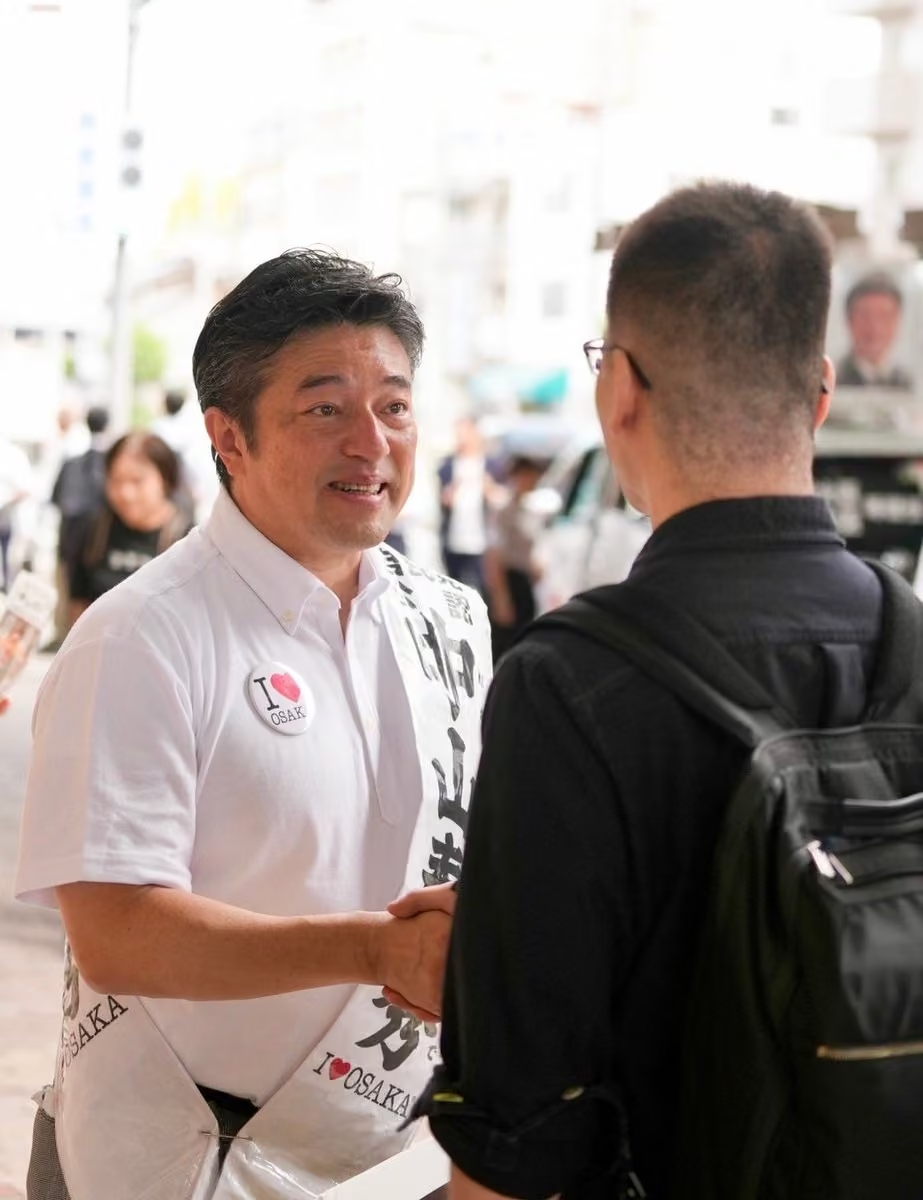
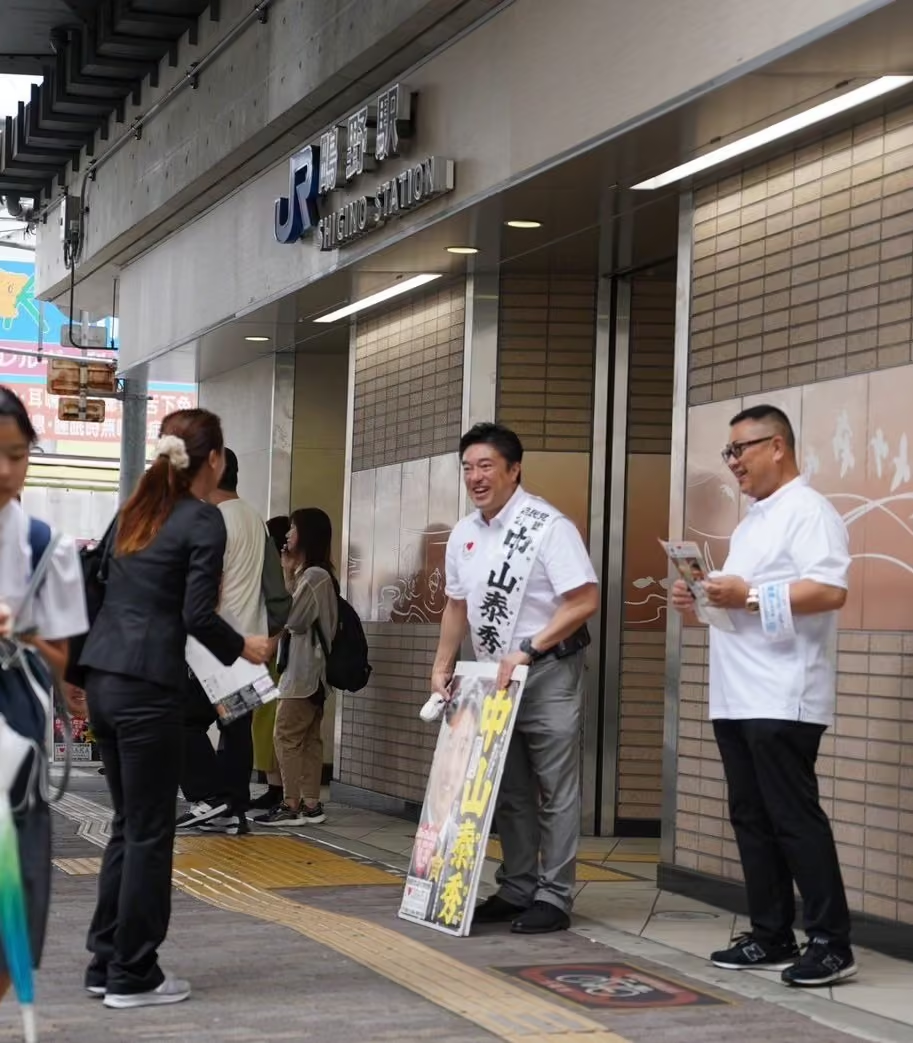
Politicians, athletes, journalists, NGOs, companies... They all use
corporation-owned social networks to communicate with us. Citizens
shouldn't have to hand over their data to companies to read content
published by public entities. Public Feeds changes that by making posts
of popular accounts freely available.
Read more.
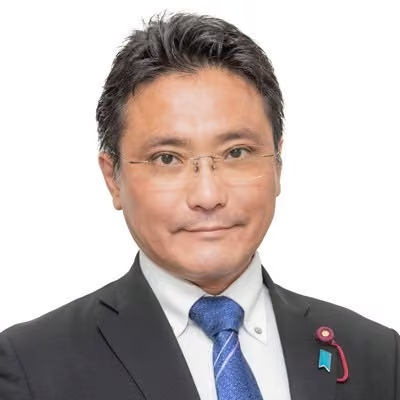
Yasuhide Nakayama
Yasuhide Nakayama (中山 泰秀, Nakayama Yasuhide; born 14 October 1970) is a Japanese politician who served as the Senior Vice Minister of Defense of Japan. A member of the Liberal Democratic Party (LDP), he was elected in December 2012 as a member of the House of Representatives of Japan and re-elected in the December 2015 and 2017 elections. After the snap elections in October 2017, Nakayama was appointed the Chairman of the Foreign Affairs Committee. More on Wikipedia
衆議院議員🇯🇵6期,防衛,内閣府,外務各副大臣|外務委員長歴任|元FFRIセキュリティ取締役,Ex-State Minister (Defense/Foreign Affairs/Cabinet),Head of CT task force (IS, Jordan),Ex-FFRI (Cybersecurity)
I thanked Prime Minister Sanae Takaichi @takaichi_sanae during our meeting for Japan’s strong support throughout all these years of Russia’s war – energy support packages, sanctions decisions, and humanitarian projects. It was also very important to hear that this assistance will continue. We discussed areas where we can help each other. Of course, Ukraine is ready to share its experience and technologies on a mutually beneficial basis. Japan also has advanced technologies for protecting lives, particularly in air defense, that could help Ukraine get through next winter if Russia once again spurns negotiations. I invited the Prime Minister to visit Ukraine, including the Kyiv-Pechersk Lavra, which Japan helped restore after a brutal Russian drone strike. I’m grateful for Japan’s leadership in helping protect lives in Ukraine. Thank you, Japan!
I am deeply saddened by the passing of Senator Lindsey Graham.🇺🇸@LindseyGrahamSC
It was my great honor to share the stage with him at the 2015 Milken Institute Global Conference, together with former Prime Minister Tony Blair and General Wesley Clark.
Senator Graham possessed a rare combination of conviction, wisdom, and humor. His ability to inspire thoughtful discussion while bringing people together with grace and wit was truly remarkable.
He devoted his life to the cause of freedom, democracy, and the enduring strength of the U.S.-Japan alliance. His legacy will continue to inspire many around the world.
From Japan, I extend my deepest condolences and heartfelt prayers.
Rest in peace, Senator Lindsey Graham.
House of Representatives 🇯🇵Japan Yasuhide NAKAYAMA MP
WATCH: A massive drone show celebrating President Trump and Japanese Prime Minister Sanae Takaichi lit up the sky over Tokyo as Japan honored America's 250th birthday, highlighting the close ties between the two nations.
Today, I am delighted to join millions around the world in celebrating the 250th anniversary of the founding of the United States of America.
The principles proclaimed in 1776—liberty, democracy, the rule of law, and respect for human dignity—have inspired generations across the globe and continue to light the path toward a better future.
This anniversary is also deeply personal for me.
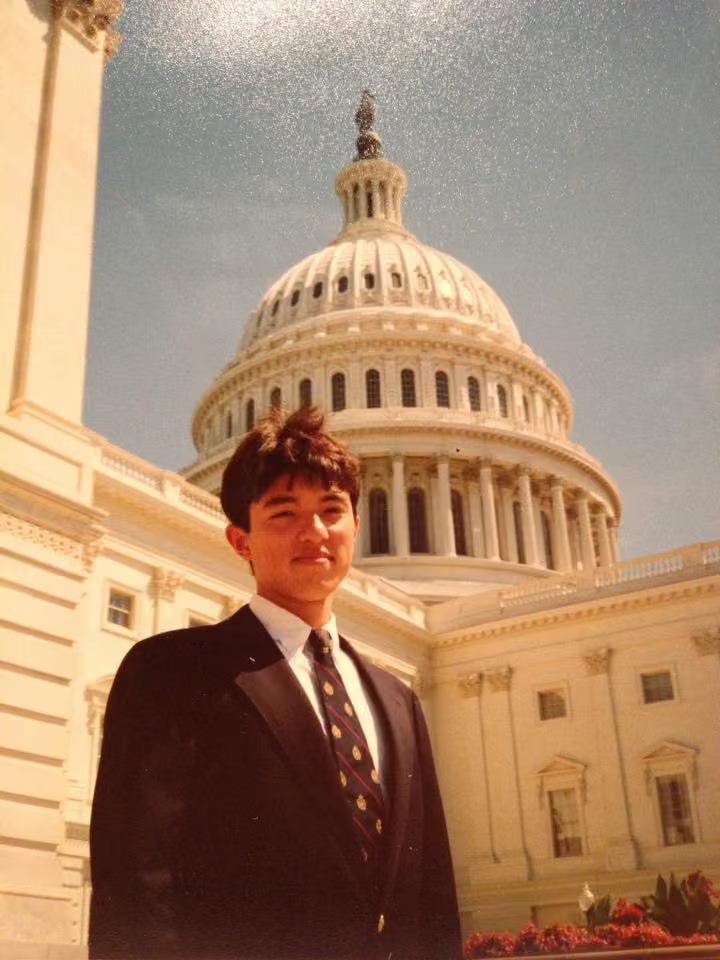
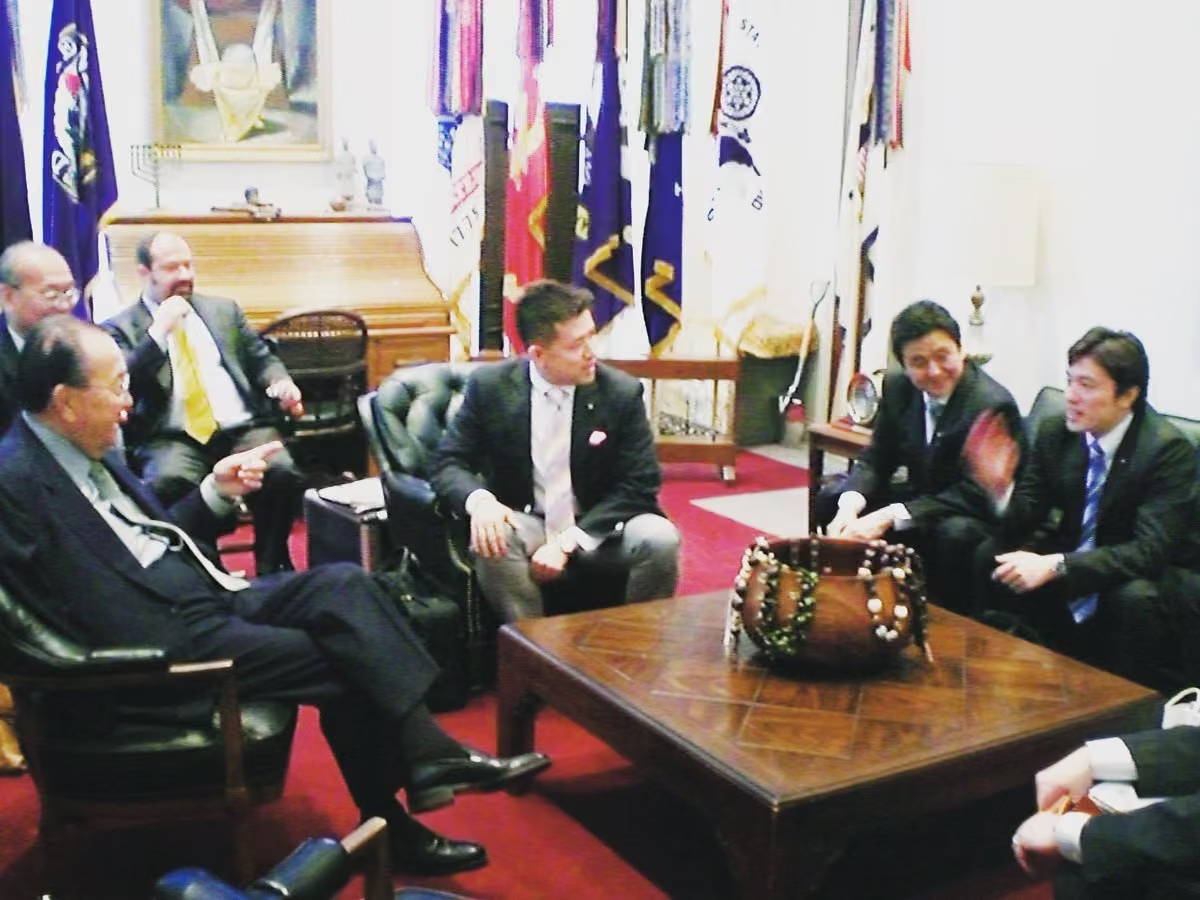
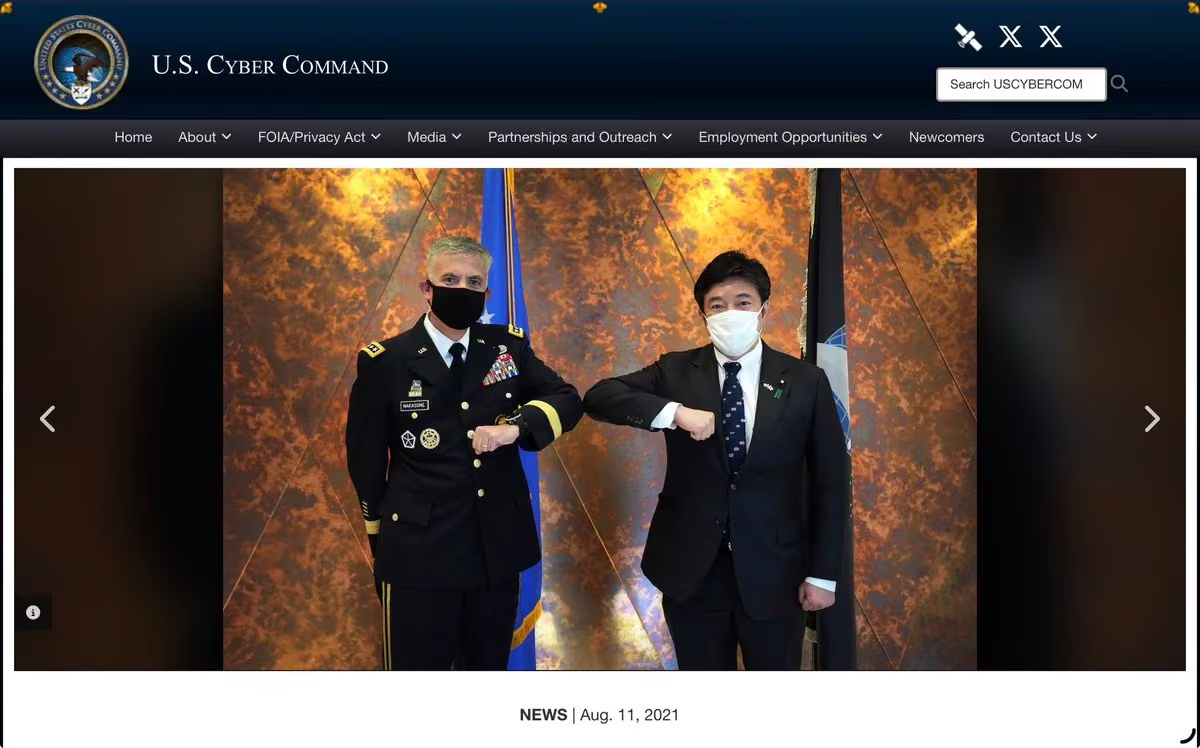
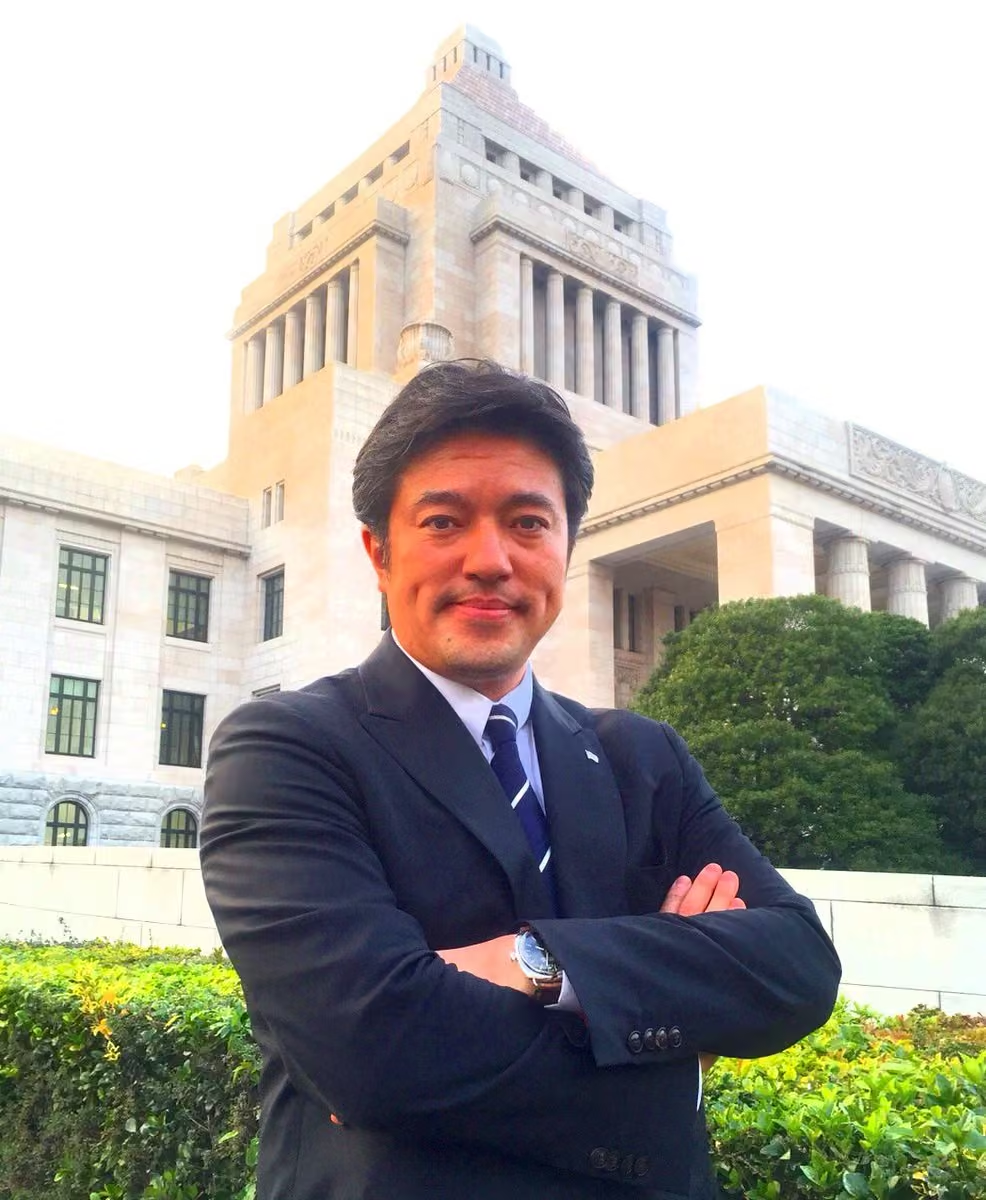
The accompanying photos reflect part of my own journey with America—from visiting the U.S. Capitol as a high school student, to meeting the late Senator Daniel K. Inouye, to serving as Japan’s State Minister of Defense and strengthening the Japan–U.S. Alliance, including a visit to U.S. Cyber Command at Fort Meade, and to continuing that commitment today as a member of Japan’s National Diet.
Over the years, I have also been fortunate to build many treasured friendships across the United States. On this historic occasion, I would like to extend my heartfelt congratulations not only to the American people, but also to my many dear friends throughout America.
May Japan and the United States continue to stand together in defending freedom, advancing peace, and building prosperity for future generations.
Congratulations on America’s 250th Birthday!
May the friendship between Japan and the United States continue to grow ever stronger.
🇯🇵Economic security under the Takaiichi administration is built on two pillars: autonomy and resilience.
FOIP has moved beyond vision — it is now in the stage of implementation.
🇻🇳Vietnam, in particular, is a vital partner, playing a key role in critical minerals and manufacturing capacity, both essential for diversifying supply chains.
That is precisely why Japan must take responsibility as a stabilizing force in the region.
Relieved to hear that President Trump is safe. Violence can never be tolerated for any reason. I strongly hope that the facts will be thoroughly clarified. Democracy must be upheld through the rule of law and calm dialogue.
This visit marked an important step forward in further strengthening the Japan–U.S. alliance across a wide range of areas, including security, economic cooperation, and advanced technologies.
In particular, it is highly significant that the U.S. Senate unanimously adopted a resolution welcoming the Prime Minister’s visit and reaffirming “a strong and enduring alliance rooted in a shared commitment to peace, security, and prosperity in the Indo-Pacific region and beyond.”
The resolution also clearly stated that the Senkaku Islands fall under Article V of the Japan–U.S. Security Treaty, and emphasized the importance of peace and stability across the Taiwan Strait, opposing any unilateral attempts to change the status quo by force or coercion.
The summit took place amid extremely challenging circumstances, with tensions rising in the Middle East. In this context, Japan carefully explained its position based on its national interests and legal framework, demonstrating a realistic and responsible approach, while maintaining and further strengthening trust within the alliance.
At the same time, the worsening situation in the Middle East directly affects people’s lives through energy prices and inflation.
As global uncertainty continues to grow, Japan’s responsibilities are also increasing.
This is precisely why it is now essential to ensure the timely passage of the new fiscal year budget.
We will continue to engage in responsible discussions and steadily work to translate the outcomes of diplomacy into greater security and stability for our people.
ありがとうございます&Thank you, Anees Reis さん@AneesReisu, for your thoughtful message.
Holocaust Remembrance Day reminds us of the devastating consequences of hatred and the enduring importance of safeguarding human dignity.
Japan’s strength lies in harmony — rooted in respect for law, culture, and shared responsibility.
Beyond nations and differences of faith, we are bound by universal values — freedom, dignity, and a rules-based order that protects humanity from hatred and extremism.
Let us stand firm in safeguarding these principles for the future.
It was a pleasure meeting @iloveyatchan on #holocaustremembranceday. We must work together to promote interfaith harmony in Japan. Muslims living in Japan will also play their part in making Japan a great nation. Our prayers are with you.
@nagystephen1 Stephen Nagy先生には、私がブログに記した論考を丁寧にお読みいただき、その内容を深く分析されたうえで、本論考としておまとめになられたものと拝察いたします。心より感謝申し上げます。 ウクライナ戦争、米中対立など、国際秩序が大きく揺らぐ中で、日本がどのように存在感を示し、何を果たすべきかを考える上で、多くの示唆を与えてくれる論考です。 ぜひ皆さまにもお読みいただきたく、シェアいたします。
@nagystephen1 Stephen Nagy先生には、私がブログに記した論考を丁寧にお読みいただき、その内容を深く分析されたうえで、本論考としておまとめになられたものと拝察いたします。心より感謝申し上げます。 ウクライナ戦争、米中対立など、国際秩序が大きく揺らぐ中で、日本がどのように存在感を示し、何を果たすべきかを考える上で、多くの示唆を与えてくれる論考です。 ぜひ皆さまにもお読みいただきたく、シェアいたします。
① 米国政府は「軍事行動」という言葉をどう使っているか? 国防総省(DoD)やホワイトハウスは、今回の行為を “war” や “military action against Venezuela” とは呼んでいません。 用いられているのは “operation”、“targeted operation”、 “counter-narcotics operation” といった表現です。 👉 国家間戦争を意味する言葉は意図的に避けています。
② 司法省(DoJ)・法執行側の説明。 米司法当局の論理は一貫しています。 「麻薬テロ組織の首謀者は、国家元首であっても犯罪容疑者である」。 これはノリエガ事件など、過去の前例と同型です。 👉 国際麻薬犯罪に対する法執行(law enforcement)の国外適用という整理です。
③ では、なぜ米軍が出てくるのか。 目的は逮捕・身柄確保(arrest / apprehension)。 通常の警察力では不可能なため、軍を支援要素として用いた。 👉 “military support to law enforcement” 👉 “law enforcement operation with military assets” 「軍を使った=戦争」という単純な図式ではありません。
④ なぜマスコミは「軍事行動」と呼ぶのか? a. 見た目が特殊部隊・艦艇・制空を伴うため b. 国際法フレームでは「武力行使」に見えるため c.「逮捕」と言うと法的議論が複雑になるため 👉 分かりやすさの結果ですが、正確さとは一致しません。
Hinoe-uma (丙午). In the year of Fire Horse, a real horse ran through the streets of Kawasaki and returned safely on its own. No injuries. Calm response mattered.
Decisions made in the 1970s are confronting us today. I’ve published an updated English essay reflecting on Taiwan, the One China policy, strategic ambiguity, the lessons of Hong Kong, and the U.S.–Japan alliance — incorporating recent developments, including U.S. government statements and regional diplomacy. Taiwan is not a regional issue. It is a test of the international order. ▶︎ Full essay: ameblo.jp/nakayamayasuhide/entry-12952152390.html #taiwan#internationalorder#democracy#usjapanalliance#strategicambiguity
🎍🌅 Wishing you a very Happy New Year from Japan! 🌅🎍 2026 is the Year of the Fire Horse (Hinoe-Uma). With the dynamic spirit of “fire” and “horse,” I’m ready to charge ahead with purpose and conviction.
On New Year’s Eve, I bit into an all-American hamburger 🇺🇸🍔— a little “boost of spirit” so I won’t fall behind President Trump! 😄
Later that evening, under the watchful eyes of my furry companion 🐶, I quietly welcomed the new year with a bowl of classic Donbei soba noodles 🍜.
Thank you as always for your continued support and kindness. Wishing you health, peace, and meaningful connections in 2026!
This post by China’s ambassador is a repost and translation of an official statement issued in Beijing.
What deserves attention is not how often Japan’s defense budget is mentioned,but how the comparison is framed.
Per-capita figures may sound precise,yet they avoid the larger picture:the overall scale, the speed of expansion, and the lack of transparency.
Japan’s defense spending is debated openly in parliament and published in full. China’s military spending, by contrast, continues to expand rapidly with limited disclosure.
In security discussions, context matters more than selective numbers.
Defense budgets are rarely the starting point. They are usually the consequence.
I believe China’s latest actions are no longer driven by human political instinct. They reflect a new logic—precisely calculated, emotionless, non-reactive. Take the radar lock incident on 🇯🇵 F-15J fighters: Not a single word from 🇨🇳 President Xi. In my view, China’s leadership is now deferring to AI-generated scenario scripts. The silence is not strategy—it’s a signal. ▶️ “The era of ‘AI geopolitics’ is not coming. It has already begun.” #aigeopolitics#china#pla#f15j#radarlock#cognitivewarfare#bushido #🇯🇵Japan #japan
The attack near Palmyra is a reminder — once again — that ISIS is not something of the past. 🔗 Reuters www.reuters.com/world/middle-east/us-syrian-military-patr… After the collapse of the Assad regime, the United States has continued its efforts to help stabilize security in Syria. What happened this time shows that ISIS was not eliminated. It changed its shape, went underground, and spread out.
I served as Head of the Jordan Field Response Headquarters during the ISIS-related abduction of Japanese nationals in Syria. From that experience, it is clear to me that ISIS today is embedded along refugee routes and within local networks. This is no longer speculation — it is the reality we are dealing with in parts of Europe and the Middle East.
What stands out in recent years is not large-scale attacks, but small, symbolic strikes against carefully chosen targets. This incident appears to fit that pattern.
In counterterrorism, the most dangerous moment is when we convince ourselves that the threat is already behind us. Japan is no exception.
My thoughts are with those who lost their lives while engaged in counterterrorism efforts, and with all who were injured. I offer my deepest condolences, and I hold great respect for those who work — often quietly and unseen — to keep our societies safe.
To all around the world, As Japan’s 🇯🇵former State Minister of Defense,I ask you to listen — and understand what 🇨🇳China is doing. 🎧 This is a real radar warning recorded by a Japanese aircraft, when it was locked onto by a fire🔥- control radar. 🔗 youtu.be/KqPQXhWS2GI
📽️ The video was officially released by Japan’s Ministry of Defense in 2018,with full security protections in place.
🔊 From 0:21, you’ll hear the unmistakable sound of fire-control radar.Before that,Just a standard search radar.
Now, imagine you’re the pilot. In the cockpit. In the sky. Can you feel the difference? It’s not just a sound. It’s a signal. A threat. A message.
In 2025, 🇨🇳 a Chinese J-15 fighter jet targeted 🇯🇵 a Japanese F-15J fighter jet with radar. China admits radar use,but denies it was fire-control.
“We pointed, but didn’t aim” that’s their claim.
But this isn’t semantics. This is how accidents — and wars — begin.
🎥 Watch the video. Hear the truth.If you believe the world should know,please share this.
🇯🇵 Japan has upheld peace for 80 years.But peace must not mean silence in the face of deliberate danger. 🇨🇳 A Chinese J-15 fighter locked its fire-control radar on a 🇯🇵 Japanese F-15J over international waters southeast of Okinawa.This is not “routine.” In global military doctrine, a radar lock is not a signal — it’s a prelude to firing.From the U.S. to Israel, every professional armed force knows:You never lock on unless you're ready to shoot. China now calls Japan’s reaction “slander.” But radar locks are provable facts, not narratives. And facts carry weight. 🇯🇵 Japan will not provoke.But Japan will not ignore. Deterrence means being prepared — in the air, in diplomacy, and in the eyes of the world. 🔗 Reuters: www.reuters.com/world/china/chinese-fighter-jets-directed… 🔗 MOFA Statement: www.mofa.go.jp/press/release/pressite_000001_01899.html #f15j#j15#radarlock#pla#china#japan #militarycommonsense#indopacific#deterrence#peacethroughstrength#rulesbasedorder
🌏 With the utmost respect to UN Secretary-General @antonioguterres,I would like to share this simple question with the world.
Q1. Which country is polluting the ocean,destroying natural ecosystems,burying beautiful atolls under concrete,and turning them into military bases? A) 🇯🇵 Japan B) 🇵🇭 Philippines C) 🇻🇳 Vietnam D) 🇨🇳 China
Hint: The photos speak for themselves.
❗Bonus Question
Which country interferes in other nations’ domestic affairs, yet demands silence regarding its own actions in the South China Sea? A) 🇯🇵 B) 🇵🇭 C) 🇻🇳 D) 🇨🇳
🛰️ In an age where satellites can see everything,trying to hide the truth or push political fakery simply no longer works. 🌐 For the sake of the international order the UN stands for,the world must share an accurate understanding of this reality. #southchinasea#environment#ruleoflaw#un#indopacific#security
The fire that should have been put out was not the voices of the people. It was the fire that tore through Hong Kong 🇭🇰. When a government protects its power more than its people, it loses something greater than authority. It loses trust.
A blaze in Tai Po has taken 146 lives, and more than 40 people are still missing. My deepest condolences go to every family and every person facing this terrible loss.
At the memorial site, people stand in line for nearly two kilometers. Flowers. Notes. Messages such as: “Investigate the truth.” “Tell us what happened.” “Take responsibility.” These are honest voices asking for dignity and answers.
Yet many of these voices are now being silenced.
Hong Kong’s journey since the handover on July 1, 1997 began with a solemn promise. Under the Sino–British Joint Declaration signed on December 19, 1984, China 🇨🇳 and the United Kingdom 🇬🇧 committed to preserving Hong Kong’s freedoms, rule of law, way of life, and a high degree of autonomy for 50 years, until 2047.
But the National Security Law imposed on June 30, 2020 changed the city almost overnight. The British Government later described it as a clear and serious breach of the Joint Declaration.
Reports now say that flammable materials were used during building repairs, and residents had already warned authorities about fire risks last year. A young man who helped organize a petition for support and accountability has been detained for “incitement”. Even volunteer aid stations have been told to stop.
China’s security office has also warned that anyone who “uses the disaster to create chaos” will be punished.
Here is something simple and true.
You can put out a fire. You cannot put out the human spirit. You cannot silence grief or love. No government should ever criminalize the desire to protect one’s community.
Whatever political system a country has, human life must always come first. When a government puts its own power above the lives of its people, it loses the trust of the world.
As I look at what is happening in Hong Kong, one principle becomes clear. No democracy anywhere should be threatened or pressured to change by an authoritarian power.
This principle applies to Taiwan 🇹🇼 as well. Taiwan is a free and democratic society, and its future must never be taken by force.
We have already seen what happens when powerful states try to change borders by force. In 2014, Russia seized Crimea through military pressure and cyber blockade, cutting off communication and creating a fait accompli. Then on February 24, 2022, Russia launched a full-scale invasion of Ukraine 🇺🇦. These events show that attempts to alter the status quo by force carry the risk of breaking the foundations of global peace.
China’s actions in the South China Sea and the East China Sea remind us that freedom is never guaranteed. It must be protected.
Protecting Taiwan’s freedom means protecting the future of Asia, and the stability of the world.
I do not blame the people of Hong Kong or China. They grieve, they suffer, they hope. My heart is with every family who has lost someone.
But I must speak clearly. A government that breaks its promises, silences its citizens, and places ideology above human life cannot earn the trust of the world.
As a Japanese citizen 🇯🇵 who believes in democracy, I will continue to oppose any change made by force and stand for the dignity and freedom of people in Hong Kong, Taiwan, and across Asia.
May peace and healing return soon to everyone affected by this tragedy.
Thank you for the comment shown in the screenshot below.
Some argue that X is only “blocked, not banned,” in China 🇨🇳 as if that distinction made a meaningful difference.
In reality, ordinary Chinese citizens cannot access X at all without bypassing state controls. That is the practical effect. And the key issue is not “data storage” or “content moderation.” It is that X does not agree to implement political censorship requirements that restrict free expression.
This reflects the essential difference between our systems: • In democracies, platforms are free to operate without aligning themselves to government censorship demands. • In authoritarian systems, platforms must submit to political control before they are allowed to exist.
Understanding this distinction matters — especially when discussing freedom, the information space, and political influence.
I often notice that people who strongly support 🇨🇳the Chinese Communist Party freely use X to attack 🇯🇵Japan or other democracies — even though X is banned inside China. It is a striking contradiction. Freedom of speech exists because democratic societies protect it. Authoritarian systems do not. Some of these users also try to weaponize history. But history is a mirror. We must learn from it, not weaponize it. Its purpose is to help us prevent the next conflict — especially now, 80 years after the war. Most of us were born long after that tragedy. Our responsibility is not to refight the past, but to protect peace for the next generation. There is another fact largely unknown outside Japan: modern China was built, in no small part, with Japanese ODA. For nearly four decades, Japan supported China’s development sincerely and without political conditions. Japan funded or helped build Pudong International Airport, the Shanghai Metro, Tianjin’s waterworks, major port upgrades in Dalian and Qingdao, and even early optical-fibre networks in Shanghai and Tianjin. And one example is particularly symbolic: Beijing Capital International Airport — modernised with Japanese ODA — later created a listed company on the Hong Kong Stock Exchange. Japan financed much of the airport’s development, yet does not hold a single share in the listed company. Japan helped build the infrastructure, but took no equity. This fact speaks for itself. And yet today, some choose to use the freedom of democratic platforms to attack the very country that helped them rise. That contradiction deserves to be recognised. But beyond contradictions, one principle must remain absolutely clear: no country should ever be allowed to change the status quo by force. This is a shared value across responsible democracies — and a cornerstone of peace in the Indo-Pacific. Japan will never start a war. That has never changed, and never will. But we must be able to protect our people, our democracy, and the rules-based order that prevents coercion and preserves peace. Our generation’s duty is clear: to make sure that freedom, truth, and responsible leadership prevail over intimidation. And together with all nations that believe in a Free and Open Indo-Pacific, we must keep this region peaceful, stable, and open.
I’ve received several comments like the one shown in the screenshot. And it reminded me how often 🇯🇵Japan’s security laws are still misunderstood outside our country, sometimes even by those who speak with great confidence.
A common misconception is that Article 9 prevents Japan from protecting U.S. forces or responding to a serious crisis that could directly threaten Japan’s survival. That may have been true decades ago, but Japan’s legal reality today is not the same.
Let me explain this clearly, because accuracy matters — especially for those who care about stability and the rule of law in the Indo-Pacific.
①Japan still cannot start a war or invade another country. That has not changed, and it will not change.
②But since the 2015 Security Legislation, Japan can exercise limited collective self-defense in strictly defined situations. If an attack on U.S. forces creates a real and immediate danger to Japan’s survival, and if there is no other way to protect the Japanese people, Japan can defend U.S. ships and aircraft — including in a Taiwan contingency.
③Even in peacetime, Japan already protects U.S. assets under “asset-protection operations.” These missions have been carried out many times. This is not theory — it is current policy and practice.
Prime Minister Sanae Takaichi’s statement that a major conflict over Taiwan could become an existential threat to Japan is not provocative. It is simply an honest recognition of geography, strategy, and Japanese law. Most of Japan’s vital sea lanes pass near Taiwan. A blockade or major conflict there would have immediate consequences for Japan’s security.
There is nothing extreme about acknowledging this reality. Any responsible government would do the same.
Democratic nations must be able to decide their own security policy. Intimidation, misinformation, or online threats must not be allowed to shape a nation’s decisions. Japan is no exception.
My hope is that people around the world will rely on facts rather than outdated assumptions, and that we can approach these issues calmly and constructively. A clearer understanding helps everyone who values the stability of a Free and Open Indo-Pacific.
Japan🇯🇵must never lose the ability to decide its own security policy. That future must be prevented at all costs.
NHK reported this morning that the Japan–China Director-General–level talks ended in a complete stalemate. Based on my experience as Japan’s State Minister for Foreign Affairs and Defense, and as Special Advisor to PM Sanae Takaichi when she chaired the LDP Policy Research Council (Foreign Affairs, Defense, and the Game-Changer field), I would like to offer a clear view of the situation.
⸻
1️⃣ Japan will not accept China’s demand for a “retraction.”
PM Takaichi’s Diet statement was a standard, legally grounded assessment under Japan’s existing security laws. Japan rightly rejected Beijing’s demand for a withdrawal, while affirming that dialogue will continue. This is a calm and responsible stance for a sovereign nation. There is no need for unnecessary fear or panic. Japan is responding with composure.
⸻
2️⃣ The trigger for this escalation was the post by the Chinese Consul-General in Osaka.
This is where the situation began.
● The Consul-General’s post on X did not name PM Takaichi, but was unmistakably directed at her,containing extremely unsettling language that many interpreted as alluding to beheading.
● Such wording is unacceptable for any diplomat,and many regarded it as a de facto threat.
● It was, quite literally, an attempt to “set off a firecracker to stir chaos,” far outside normal diplomatic conduct.
From there, China escalated step by step:
(1) Urging Chinese citizens to avoid travel to or study in Japan (2) Delaying Japanese film releases (3) Canceling Japan-related cultural events (4) Expanding economic pressure—including a ban on Japanese seafood imports
→ These are not isolated incidents. They form a coordinated political warfare package aimed at pressuring Japan and shaping public perception.
3️⃣ China is targeting the “person,” not the argument.
Beijing stayed restrained when President Trump used far stronger language toward China. Yet it overreacted to PM Takaichi’s measured and legally grounded statement.
Why? Because China seeks to target “Sanae Takaichi as a symbol,” attempting to unsettle Japan’s domestic security debate.
⸻
4️⃣ The core issue: Can Japan continue to decide its own security policy?
This is not merely a diplomatic dispute. It goes to the heart of Japan’s sovereignty:
Can Japan continue to make its own security decisions—free from foreign pressure and influence operations?
Attempts to shape or distort Japan’s security debate from outside violate the fundamental Principle of Non-Interference in international law.
Japan must retain the sovereign right to determine its own future.
⸻
5️⃣ In closing
Speaking truthfully about security realities is not provocation. Refusing coercion is not escalation.
Japan must continue to discuss its security calmly, responsibly, and with confidence.
And together with the nations committed to a Free and Open Indo-Pacific, I strongly hope Japan will remain a country that decides its own future with clarity and sovereignty.
As Japan’s former State Minister for Foreign Affairs, Defense, and the Cabinet Office—and as Special Policy Advisor to PM Sanae Takaichi when she served as Chair of the LDP Policy Research Council (responsible for Foreign Affairs, National Defense, and the Game-Changing Field)—I’ve had the rare opportunity to witness how geopolitical narratives are shaped, distorted, and weaponized.
Today, I feel a quiet responsibility to speak.
There is a stark asymmetry in how China responds to global leaders:
🔹 When U.S. President Donald Trump referred to China as an “enemy,” labeled COVID-19 the “China Virus,” and called Xi Jinping a “dictator,” Beijing remained largely restrained.
🔹 When PM Takaichi made a measured, law-based comment—consistent with Japan’s existing security framework—stating that a military blockade of Taiwan could constitute a “situation threatening Japan’s survival,” China launched a targeted and disproportionate response.
Beijing avoids provoking actors like Trump because of risk. But it sees an opportunity in discrediting principled, strategic voices like Takaichi— to fracture Japan’s internal cohesion and weaken policy continuity.
This is not traditional diplomacy. This is political warfare—designed to manipulate perception, sow doubt, and undermine confidence within democratic societies.
Having worked at the core of Japan’s foreign and defense policymaking, I believe we must respond with clarity.
Democracies must never allow their national security conversations to be hijacked by authoritarian outrage. We must not shrink from truth because it offends those who fear transparency.
Speaking about security realities is not provocation. It is deterrence. It is responsibility.
I write not in anger—but in conviction. Out of respect for democratic leadership, and for those who choose to lead with both clarity and courage.
I deeply appreciate Ambassador Glass’s clear and reassuring message.
Ambassador George Glass of the United States 🇺🇸 made a strong and unambiguous statement reaffirming America’s unwavering commitment to the defense of Japan 🇯🇵, including the Senkaku Islands.
On the other hand, the recent post on X made by the Chinese Consul General in Osaka 🇨🇳 is, in my view, nothing less than a de facto death threat directed at Prime Minister Sanae Takaichi. When viewed together with the series of political actions taken by the Chinese government before and after that post, the pattern appears coordinated and cannot, under any circumstances, be tolerated.
In this tense environment, Ambassador Glass’s message carries profound meaning for the people of Japan. It clearly reaffirms the irreplaceable value of the U.S.–Japan Alliance as the foundation for protecting the lives and livelihoods of our citizens.
As the Japan–Taiwan Representative of the Boston Global Forum (BGF), I continue to work across the fields of diplomacy, defense and national security, AI, cybersecurity, defense DX, drones, and what the world now calls deep tech—the frontier technologies that will shape the future.
Last week I was in Boston attending the BGF meetings. This week, marking the 80th year since the end of World War II, I led memorial ceremonies in Hawaii to honor the fallen heroes of both Japan and the United States. I returned to Japan the night before last.
Because I witness global realities firsthand and engage directly with international partners, I feel even more deeply the weight and importance of Ambassador Glass’s statement.
And in whatever capacity I may serve, guided by the unwavering conviction of “politics that protect lives,” I will continue—though my abilities may be modest—to work sincerely for Japan’s peace and security.
Time to cut through the fog. In case anyone was in doubt, the United States is fully committed to the defense of Japan, which includes the Senkaku Islands. And formations of Chinese coast guard ships won’t change that. Earlier this year, @POTUS reiterated America’s position and our “strong opposition to any action that seeks to undermine Japan’s longstanding and peaceful administration of the Senkaku Islands.”
I was very pleased to receive such warm words of congratulations from @realDonaldTrump. Truly hoping to work together with President Trump to make our 🇯🇵🇺🇸 Alliance even stronger & more prosperous, and to advance a Free and Open Indo-Pacific.
Freddie is looking down and giving y'all a standing ovation. That's spectacular!😍💗 The most INSANE Bohemian Rhapsody Flashmob you will ever see!! With 30 musicians and singers in the STREET of Paris 😍 Cre : Julien Cohen Pianist
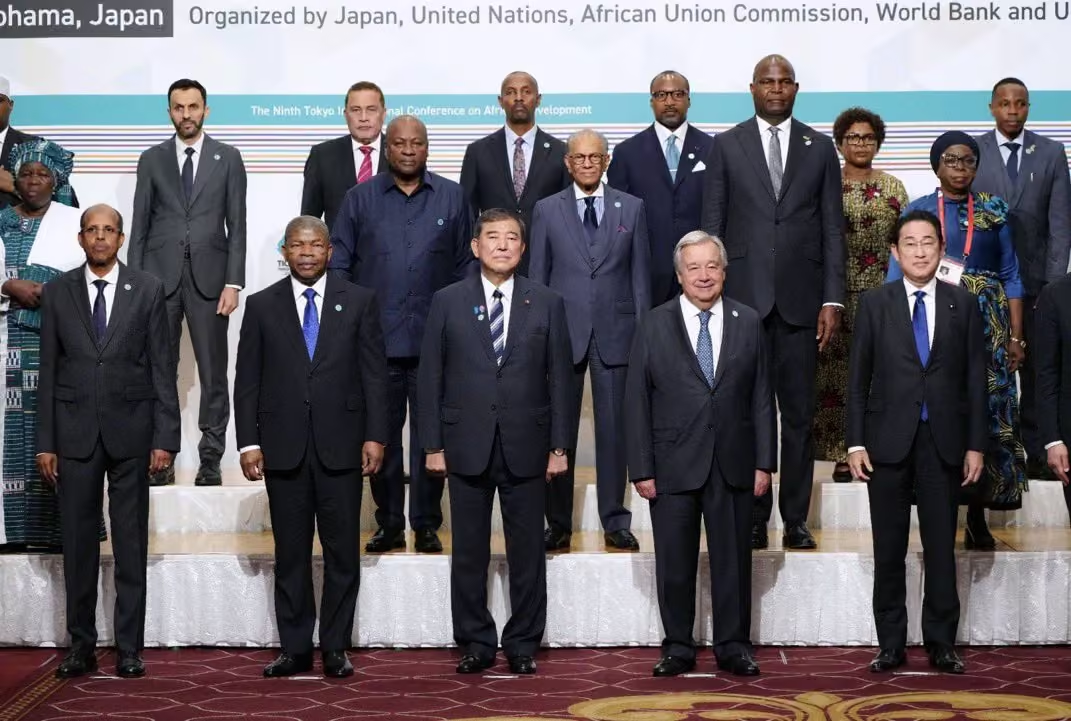
I would like to clarify some recent news reports you may have seen regarding Japan’s new initiative announced at TICAD 9.
What is true: Japan (through JICA) launched the “Africa Hometown Initiative” to deepen ties with African countries. Four Japanese cities were symbolically partnered with four African nations: •Kisarazu ⇄ Nigeria •Nagai ⇄ Tanzania •Sanjo ⇄ Ghana •Imabari ⇄ Mozambique
The aim is to promote cultural exchange, people-to-people interaction, and local revitalization in Japan’s regions.
What is NOT true: Some media wrongly reported that Japan would introduce a special visa program to resettle African migrants in these cities. This is false. •The Ministry of Foreign Affairs of Japan has officially denied such claims, stating there is no plan for special visas or immigration programs under this initiative. •JICA and the local governments involved have also clearly said the program is about exchange, not migration.
So, to summarize: •True: Cities were partnered with African nations as part of a symbolic exchange program. •False: There is no visa or immigration settlement program.
I sincerely thank Ambassador George Glass @USAmbJapan for his heartfelt words. I extend my deepest respect and gratitude to the two brave firefighters of @Osaka_Fire_Dept who gave their lives in the Dotonbori fire, and I pray for their eternal rest. I also wish to express my heartfelt sympathy to all who have been affected by this tragedy.
Their noble mission and spirit must be carried on not only by our courageous firefighters but by all of us, the citizens of Osaka. With sincerity and determination, we must do our utmost in our daily lives to prevent such tragedies, through disaster preparedness, risk reduction, and fire safety.
My thoughts and prayers are with the families of the two brave firefighters from the @Osaka_Fire_Dept who died in the line of duty in Dotonbori. We owe a debt of gratitude to our first responders, who put themselves in harm’s way every day to protect and save lives.
My thoughts and prayers are with the families of the two brave firefighters from the @Osaka_Fire_Dept who died in the line of duty in Dotonbori. We owe a debt of gratitude to our first responders, who put themselves in harm’s way every day to protect and save lives.
It’s been five years since China enacted its national security law in Hong Kong, denying people their fundamental freedoms. This summer, U.S. Embassy Tokyo held an event to call for the release of all individuals unjustly detained for exercising their rights, and to promote democracy and freedom in Hong Kong.
ステージで演奏されていたのは、ソフトボールを通じて日頃から親しくさせていただいている方。 思いがけない再会にも関わらず、笑顔で温かく迎えてくださり、私もステージに上げていただきました。 その流れで、思い切ってボン・ジョヴィの『Livin’ on a Prayer』を一曲サビのところだけ歌わせていただきました🎤
Tackling the fentanyl crisis that is killing more than 200 Americans a day takes determination and teamwork. We need to be as committed to ending this illicit and deadly trade as the drug cartels and corrupt Chinese officials are to profit from it. Japan’s recent guidance to local authorities to investigate any suspicious transactions of fentanyl precursor chemicals is an important step in thwarting their transshipment through Japan.
BREAKING: The Islamic Republic in Iran is attacking American bases in Qatar and Iraq, at least seven ballistic missiles launched from Iran moments ago.
In the mission to eliminate destabilizing factors in the Middle East, I place my trust in the decision of the President of the United States, and I express my sincere respect for the success of the operation carried out by the brave warriors of the U.S. armed forces. As a member of the democratic community of nations, and as someone who lives in a democracy, I welcome this outcome with a sense of relief and gratitude.
That said, this success marks merely a milestone—a passing point on a much longer road. The reality is that various consequences and ripple effects from this operation are inevitable, and our next challenge lies in how we manage the associated risks with precision and responsibility.
We must therefore maintain an even greater sense of vigilance and responsibility as we continue to closely monitor global political developments. It is essential that we consistently gather, analyze, and scrutinize information with clarity and urgency, and respond accordingly.
Above all, I believe that a fundamental shift in awareness among the Japanese people—and Japan as a nation—is indispensable. For years now, I have held the conviction that it is time for Japan to reassess its role and responsibilities within the international community.
Just recently, the student newspaper at BYU–Hawaii featured my lecture in a beautifully written article. And now, I am deeply moved once again to see this powerful and heartfelt video, which captures the spirit of that day so vividly. m.facebook.com/story.php?story_fbid=pfbid02Et8CsBXawZHKCi… My sincere thanks go to everyone who made this video possible—especially Brigham Robert Busania, who filmed and edited the footage, the students who participated with such sincerity and enthusiasm, and all those who supported the event behind the scenes.
I would like to express my deepest appreciation in particular to President John S.K. Kauwe III and Vice President Laura Tevaga for their generous support and leadership.
I also wish to extend special thanks to Dean Nate Stephens of the Faculty of Business & Government and to Professor Jennifer Kajiyama Tinkham, whose warm guidance and personal engagement made this experience all the more meaningful.
Meeting the students of BYUH and speaking about the principle of wakai—reconciliation—was a truly unforgettable experience. I believe your generation holds the power to mend divisions, not only among nations, but also within families, communities, and society as a whole.
Thank you once again for your gracious hospitality and for sharing this special moment with the world.
Sincere appreciation to the U.S. House of Representatives for passing the Taiwan Assurance Implementation Act (H.R.1512), which strengthens 🇺🇸🇹🇼 relations, and the Taiwan International Solidarity Act (H.R.2416), which counters the PRC’s distortion of UN Resolution 2758 aimed at undermining Taiwan’s international participation.
I had the opportunity to share a breakfast with Elisabeth Moreno during her visit to Japan. Ms. Moreno is a powerful leader who has served as France’s Minister for Gender Equality, Diversity, and Equal Opportunities, and has also held executive roles at global tech giants such as Dell, Lenovo, and Hewlett Packard (HP). We work together under the Boston Global Forum, a U.S.-based think tank where leaders from around the world in politics, business, and technology come together to tackle global challenges. I represent Japan and Taiwan, while Ms. Moreno represents France and Africa, as we collaborate on initiatives focused on building a better future — especially in areas like AI and finance. By sharing our experiences and aspirations, we are taking steady steps toward achieving greater goals. I look forward to continuing this journey together.
I, Yasuhide Nakayama, categorically deny the recent false statements made in Taiwan’s media and social networks. These claims are entirely fabricated, and I reserve the right to take appropriate legal action if necessary.
Regarding the statement circulated on social media on April 25, 2025, in which Mr. Tsai Cheng-yuan alleges that “Yasuhide Nakayama conveyed that President Lai Ching-te intended to target certain individuals” — I, Yasuhide Nakayama, categorically and unequivocally deny these allegations.
There is absolutely no truth to this claim. I have never made such a statement, nor have I instructed any third party to relay any such message. This is a blatant piece of fake news and a reprehensible act of defamation that cannot be tolerated.
I hereby express my strongest protest to all individuals and parties involved in the creation and dissemination of this false information. Legal actions will be considered if necessary.
I will not allow my name to be used in any false narrative, and I intend to make it explicitly clear — both domestically and internationally — that these claims are entirely baseless.
Nippon Steel has proposed an acquisition of US Steel at $55 per share. On the other hand, Cleveland-Cliffs, a major U.S. steel manufacturer, in collaboration with Nucor, is considering a bid priced in the high $30-per-share range.
From the perspective of US Steel’s shareholders, it is evident that a higher offer is more appealing. Nippon Steel’s proposal significantly surpasses Cleveland-Cliffs’ offer, making it more advantageous for shareholders seeking to maximize their returns.
Remarks by CEO Goncalves
Cleveland-Cliffs CEO Lourenco Goncalves recently made controversial remarks, stating, “China is bad. China is terrifying. But Japan is worse. Japan taught China how to dump products and overproduce.”
These statements, however, can be characterized as unfounded biases. Japan’s steel industry is globally recognized for its high-quality products and technological excellence. Comparing Japan to China in terms of overproduction and dumping practices is both inappropriate and inaccurate.
China’s Steel Industry: Current Challenges • Excess Production Capacity: As of the end of 2022, China’s crude steel production capacity reached approximately 1.1 billion tons, contributing significantly to global overproduction. • Anti-Dumping Measures: In 2024, over 40 anti-dumping investigations targeting steel products were launched globally, with approximately 30 of these cases directed at Chinese products.
Japan’s Steel Industry: Strengths and Global Contributions • High Quality and Technology: Nippon Steel ranks fourth globally in crude steel production and is internationally respected for its high-quality products and advanced technology. • International Cooperation: Japan’s steel industry has actively worked to address issues related to China’s overproduction by sharing expertise and fostering collaboration.
Goncalves’ Criticism of China
CEO Goncalves has consistently taken a critical stance against China’s steel industry. He has pointed out how China’s overproduction and dumping practices negatively impact the global steel market and has urged the U.S. government to impose stricter tariffs on Chinese steel products.
His latest remarks regarding Japan, however, appear to stem from frustration over the ongoing competition to acquire US Steel, where Nippon Steel’s offer outshines that of Cleveland-Cliffs. Resorting to emotional criticism rather than engaging in a fact-based discussion undermines efforts to find constructive solutions.
The Need for Rational Discourse
Goncalves’ assertion that “Japan is worse than China” lacks substantive evidence. Instead of relying on emotional rhetoric, the current situation calls for calm and factual dialogue. Ensuring the healthy development of the U.S. steel industry and prioritizing shareholder interests should take precedence over divisive and counterproductive statements.
As we navigate this critical juncture, it is essential to focus on rational discussions and collaborative efforts to foster growth and stability in the global steel industry.
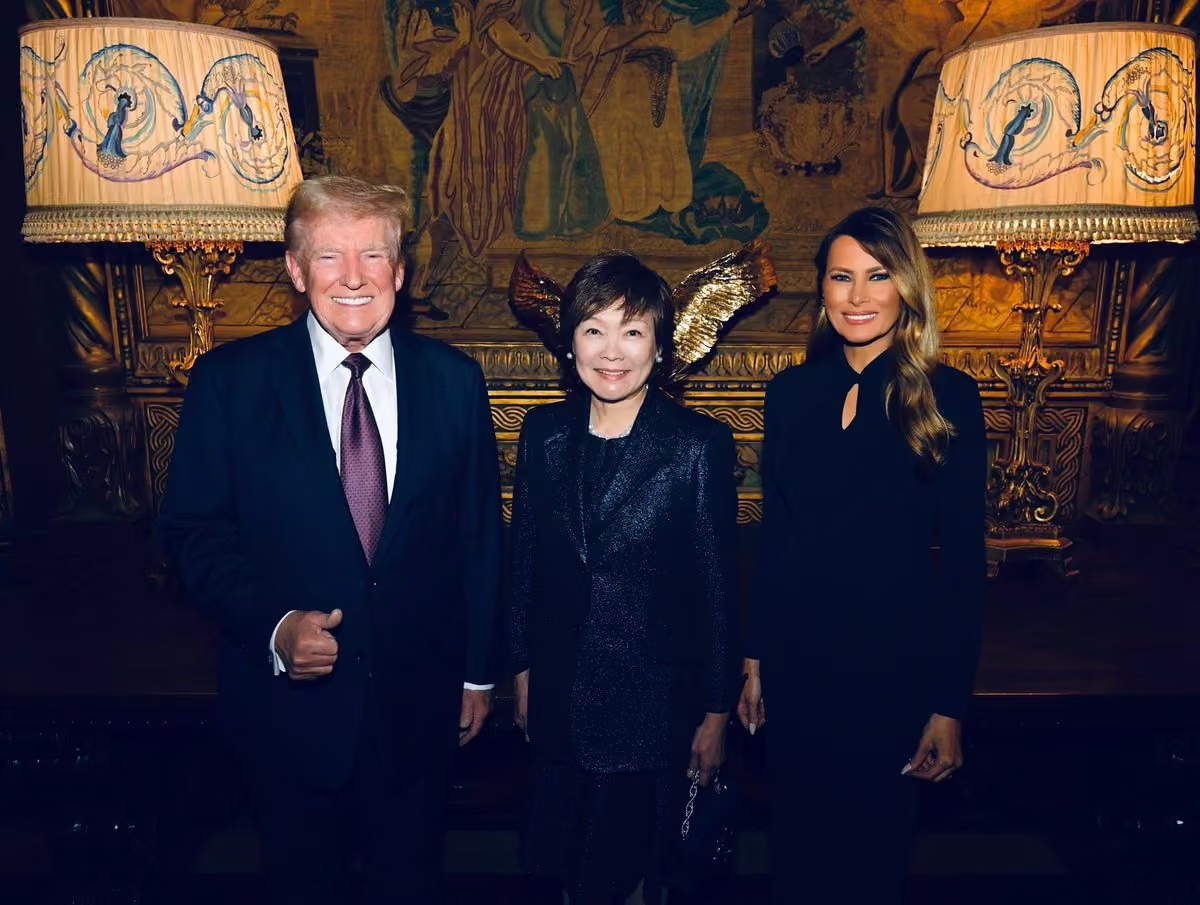
I extend my heartfelt gratitude to President Trump and Mrs. Melania Trump for their warm and thoughtful actions. Their deep respect for the spirit of the late Prime Minister Shinzo Abe and their kind consideration toward Mrs. Akie Abe have deeply touched our hearts, bringing a sense of comfort and reassurance to us as Japanese citizens.
At the same time, we must not forget that President Trump, like Prime Minister Abe, has faced the threat of an assassin. Though saved in the nick of time, the danger has not been entirely eliminated, and I can only imagine the gravity of such circumstances. Yet, in the face of violence against democracy, President Trump stands strong, confronting such threats with courage and determination. His leadership gives hope not only to America but also to the world.
The Japan-U.S. alliance, a cornerstone of peace and prosperity, was a vision deeply cherished by Prime Minister Abe. I sincerely hope that President Trump will continue to deepen this vital bond, honoring the legacy of Prime Minister Abe, and lead us toward a future of global peace and cooperation.
As the year draws to a close, I wish President Trump, Mrs. Melania Trump, and your entire family a joyous Christmas and a wonderful New Year filled with happiness and blessings.
It was a privilege to host Mrs. Akie Abe at Mar-a-Lago once again. We fondly remembered her late husband, former Prime Minister Abe, and honored his remarkable legacy.


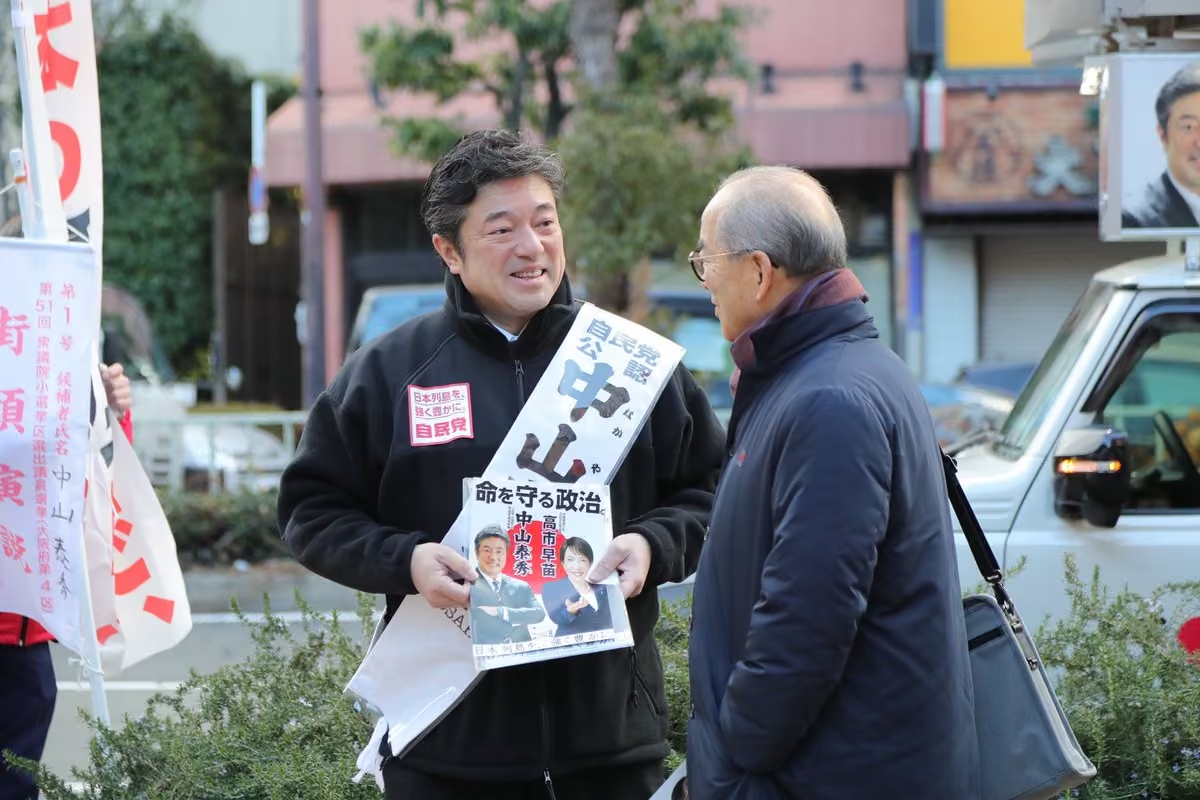
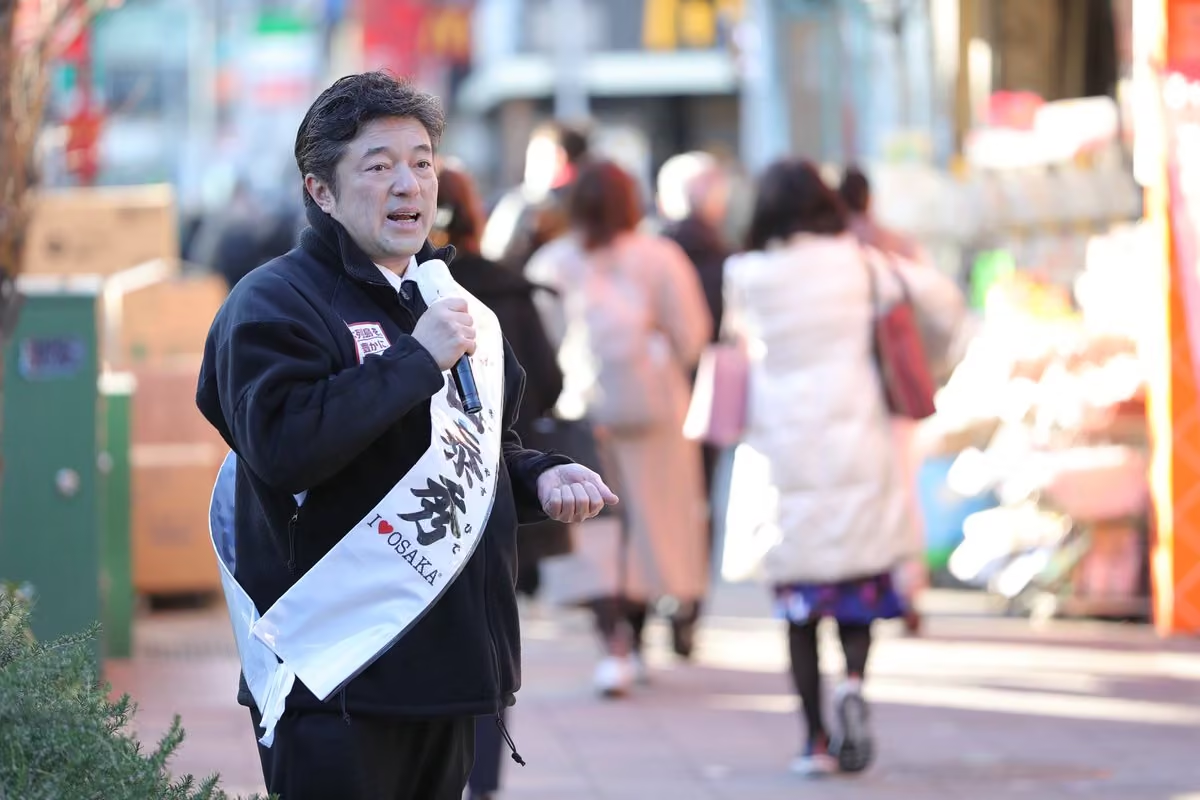
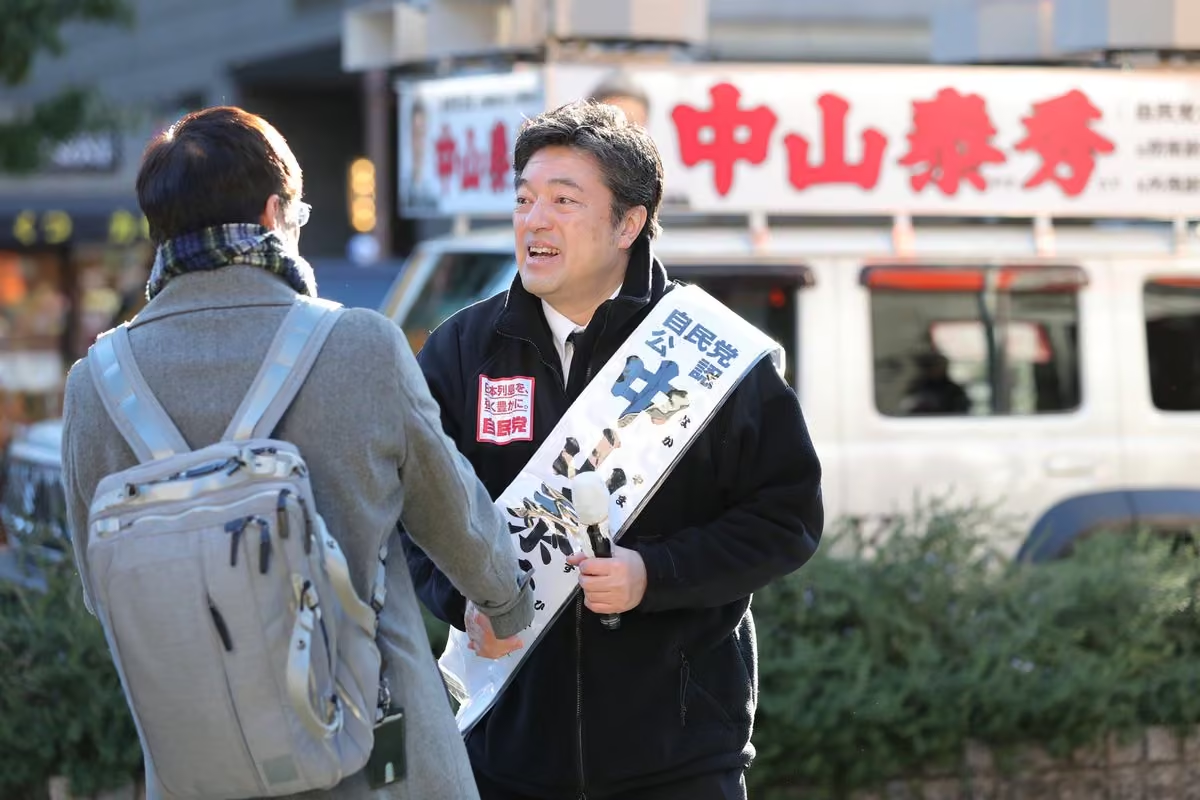
 中山泰秀🇯🇵Yasuhide NAKAYAMA 大阪4区=大阪市北区,福島区,都島区,城東区
@iloveyatchan


 報道ステーション+サタステ
@hst_tvasahi


 茂原英仁(しげはらひでひと)


 السفارة السعودية في اليابان


 Emmanuel Navon | エマニュエル・ナヴォン 🇮🇱

 Moto 🖕(´・ω・`)🖕Vespa

 防衛省・自衛隊(災害対策)

 内閣広報官/Cabinet Secretary for Public Affairs, Japan






 三枝 玄太郎
 フォックス・コン


 仁科健吾(テレビ朝日アナウンサー)


 大阪府警察安まち情報

 霊主 アニース


 飯山陽 最新刊『アメリカの正義・イランの論理 イラン戦争180日』




 石川博紀 =東淀川区= 大阪市会議員・ 自民党


 グレンコ アンドリー(新刊「ロシア・ウクライナ戦争の行方 世界の運命の分岐点」発売中)



 Stephen Nagy




 闇のクマさん世界のネットニュース


 小坪慎也🎌行橋市議(トレンド1位)


 ドンマイおじさん


 吴江浩WuJianghao


 世界四季報




 門田隆将


 なにわ早志会


 もへもへ


 一色正春


 デーブ・スペクター


 ティムラズ・レジャバ駐日ジョージア大使

 Love Music


 tenki.jp地震情報
 一木広治


 すぎうら 美香


 フチ子

 柳本 あきら【自民党・衆議院大阪3区支部長】


 渡辺康平(福島県議会議員)


 自民党大阪府連




 #ゆる自民 (非公式 自由民主党応援アカウント)

 Gohey 🎤👑 🍡🍶🍺
 鈴木理恵(大阪市会議員中央区/薬剤師)


 共同通信・大阪支社


 Commentary Trump Daily Posts


 矢板明夫


 太田勝己(大阪市会議員)


 Kダブシャイン

 陸上自衛隊 板妻駐屯地【公式】


 気象庁防災情報


 エハラマサヒロ


 阿比留瑠比
 自民党大阪府連学生部


 国家サイバー統括室(注意・警戒情報)
 三菱重工業株式会社


 maku



 長尾たかし・元衆議院議員